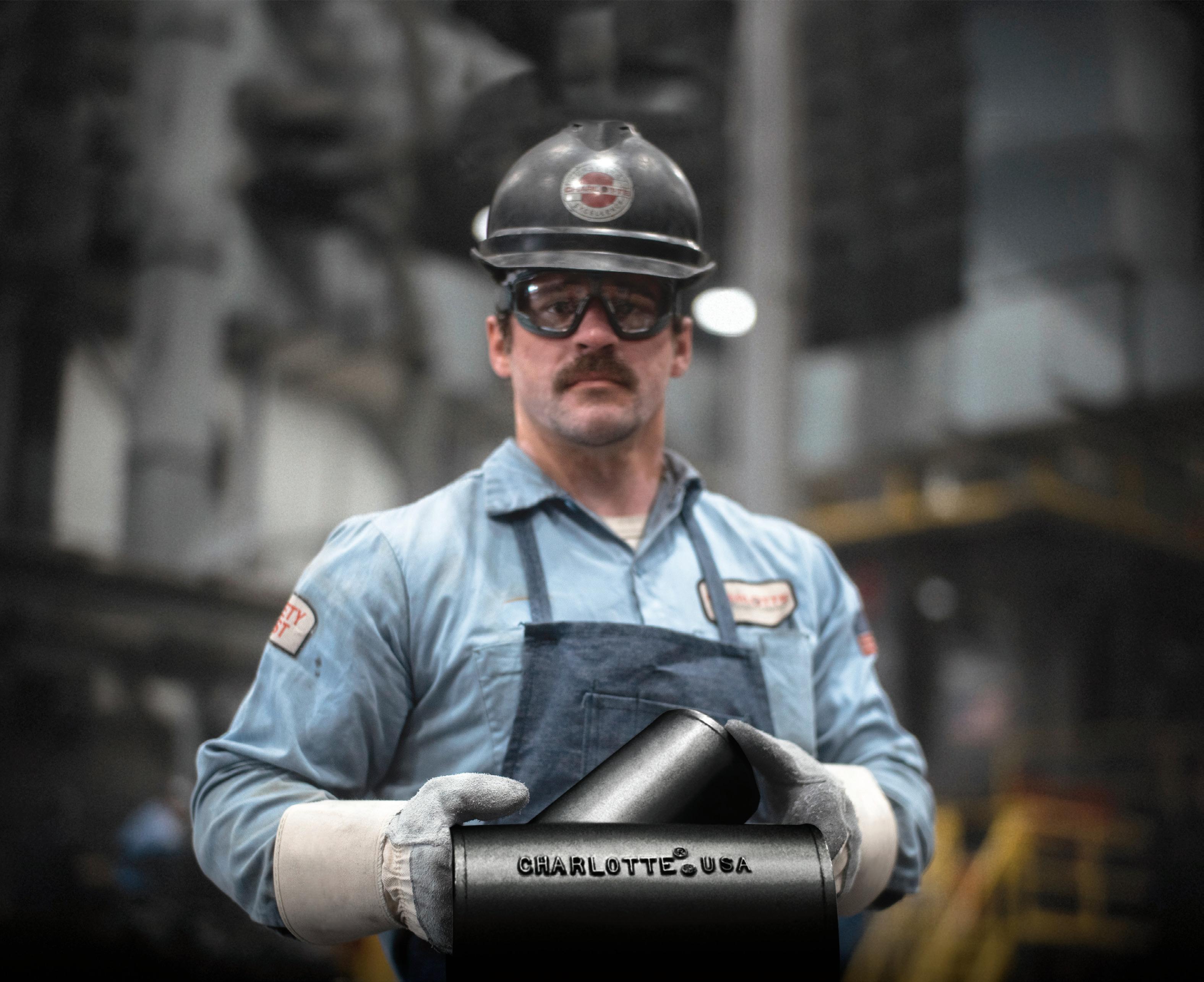
IRVING, TX — A specialized industry training program is helping utilities reduce water loss, prevent emergency main breaks and strengthen the local infrastructure workforce by teaching proper fusion and electrofusion techniques for high-density polyethylene (HDPE) water piping systems.
➤ Turn to Hands-On, page 8
Taco Honors Kang Ho Lee With 2026 Dan Holohan Award
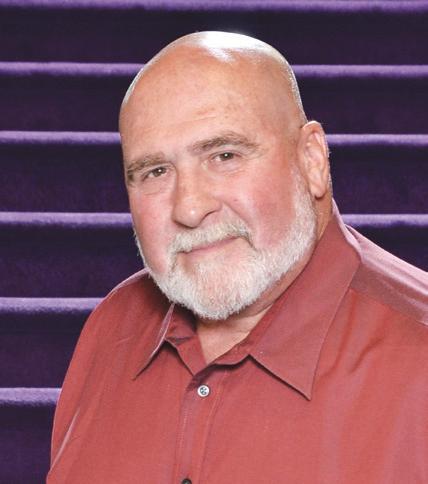
LAS VEGAS, NV — Taco honored Kang Ho Lee , Chairman of Taejin Fluid Technology (TJFT), with the 2026 Dan Holohan Lifetime Contribution to Comfort Award during the AHR Expo, recognizing more than four decades of leadership in hydronics, fluid technology, and professional education. The award is presented annually to individuals or organizations that have made a lasting contribution to com➤ Turn to Taco, page 12
Builders Brace for Headwinds as Rates Ease Slightly in 2026
ORLANDO, FL — The housing market enters 2026 navigating affordability challenges, labor constraints and policy uncertainty, but modest relief on the financing side could help stabilize production and sales, according to economists speaking at the International Builders’ Show.
tainty, while builders and buyers alike should benefit from anticipated fiscal and monetary easing that will moderate housing finance costs and mortgage rates,” said Robert Dietz,
“The housing outlook in 2026 is one of cautious optimism as builders contend with rising material and labor prices and policy uncer - ➤ Turn to Builders, page 10
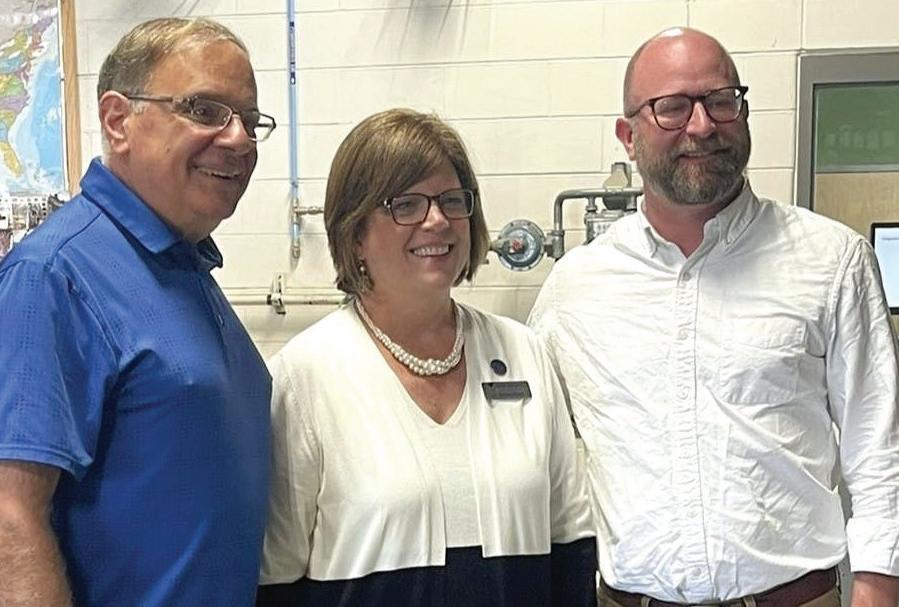
Green Bay Mayor Eric Genrich (right) with the president of NWTC, the college hosting the training classes, Dr. Kristen Raney and PPI’s Camille George Rubeiz (left).
Kang Ho Lee
“
“
Carl Helt
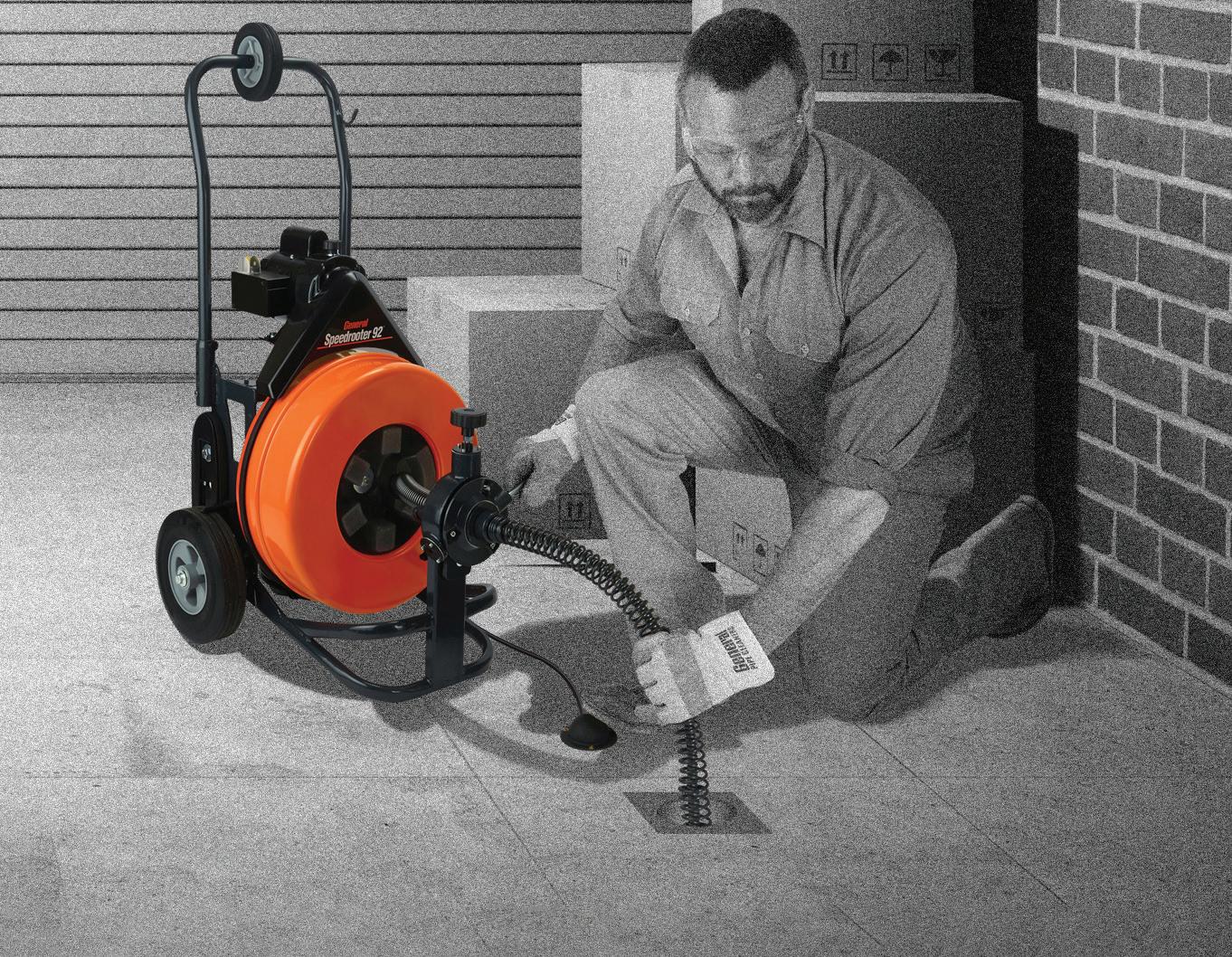
Helt Plumbing I call it my ‘workhorse’... Speedrooter 92 means service with a capital ‘S’!”
“ James Capelli, California plumber
Smoother, cleaner, quieter and more reliable.”
Speedrooter 92®
Larry Linn, Linn’s Plumbing ...rugged reliability, optimal control and ease-of-use.”
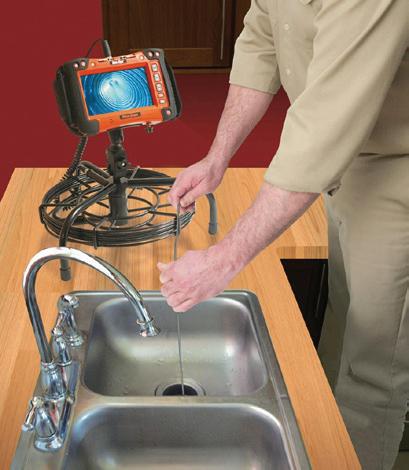
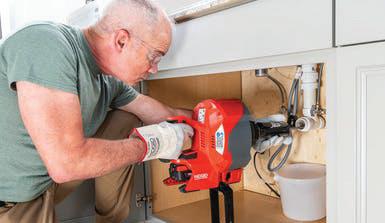
You’ll be amazed at the performance gains from Flexicore® Cable, rugged “real” steel drums and the convenient V-Belt Stair Climbers amongst other time-tested features. The General Speedrooter 92—you’ll swear by it, not at it.
For more information, call the Drain Brains at 800-245-6200, or visit drainbrain.com/speedrooter-92
2026 MEP Conference Drives, Celebrates Industry Progress
BY STEVE SPAULDING of CONTRACTOR’S staff
AUSTIN, TX – The 2026 MEP Conference was held January 26-28 in Austin. Sponsoring organizations included the Mechanical Contractors Association of America (MCAA), the National Electrical Contractors Association (NECA) and the Sheet Metal and Air Conditioning Contractors’ National ➤ Turn to MEP, page 36
PHCC Outlook Flags Labor, Tech, Consolidation as Key Forces in 2026
The Plumbing-Heating-Cooling Contractors Association (PHCC) has released its Environmental Scan: 2026 Outlook for the P-H-C Industry, providing plumbing, heating, and cooling contractors with a strategic look at the economic, workforce, and technology trends expected to shape the year ahead.
➤ Turn to PHCC, page 36
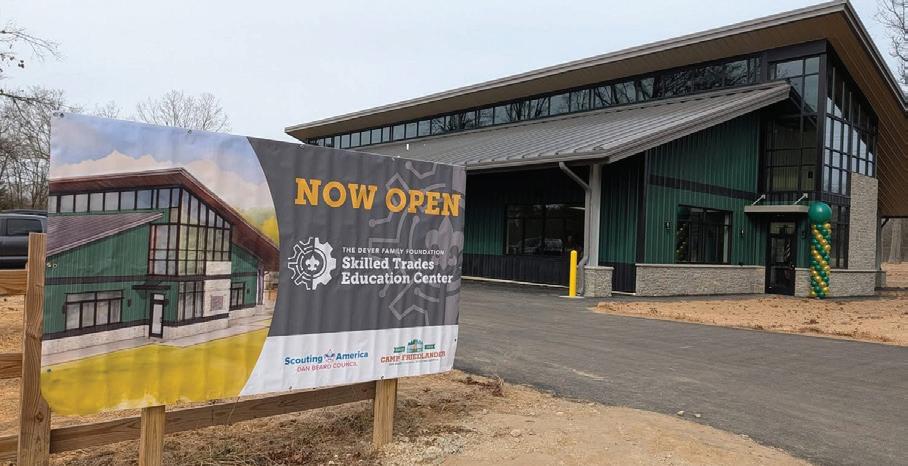
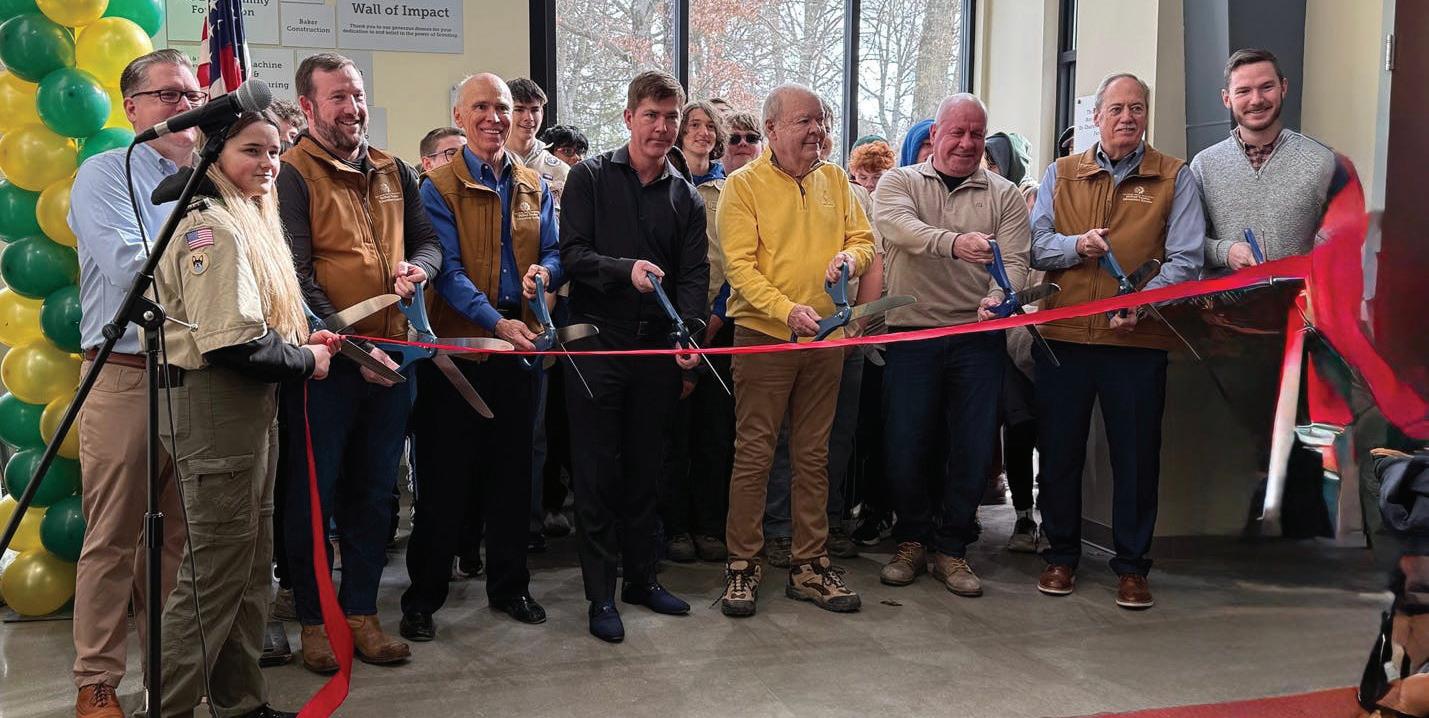
Dan Beard Council Unveils Skilled Trades Education Center in Loveland
CONTRACTOR
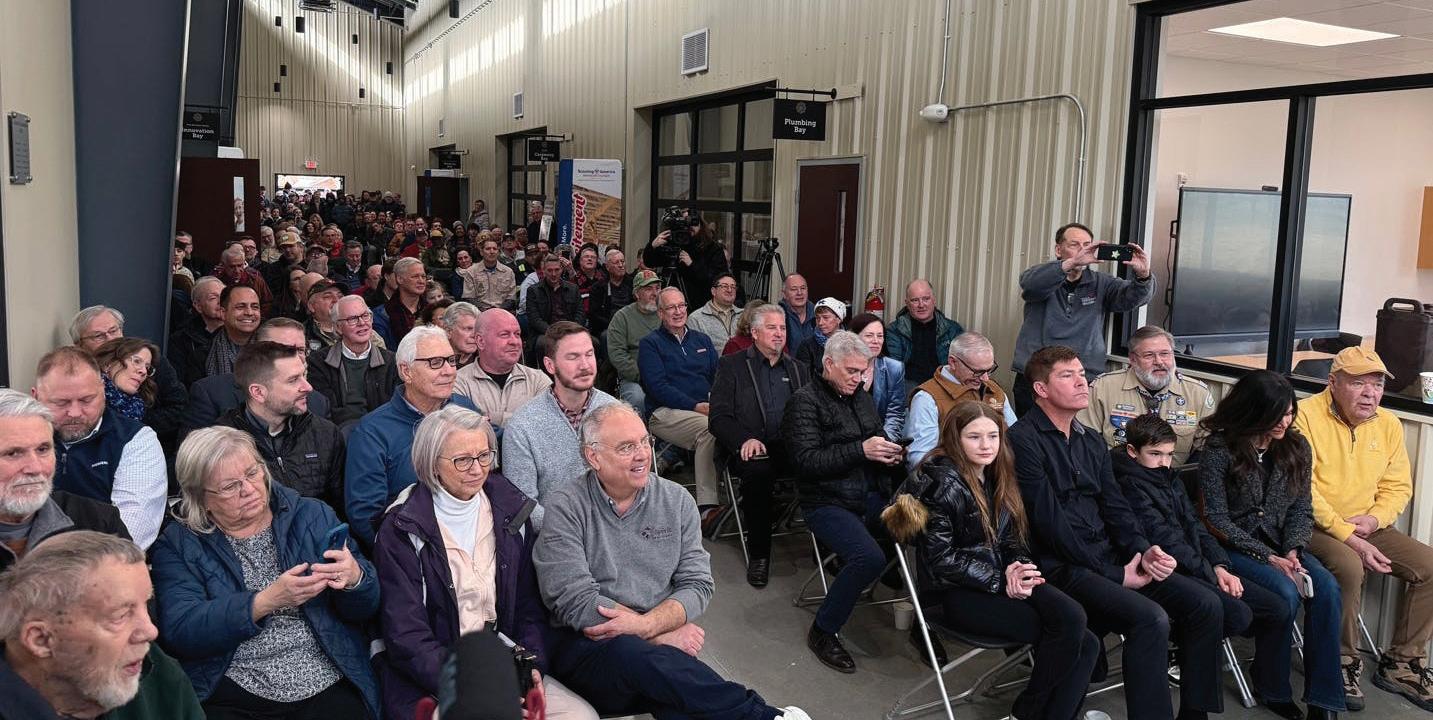
LOVELAND, OH –Dan Beard Council, Scouting America officially opened the Dever Family Foundation Skilled Trades Education Center, located at Camp Friedlander, 581 Ibold Road, Loveland, OH 45140, with a ribbon-cutting ceremony on ➤ Turn to Dan, page 38
Editorial Offices
EDITORIAL STAFF
VP/Market Leader-Buildings & Construction
Mike Hellmann, mhellmann@endeavorb2b.com
Editor-In-Chief
Steve Spaulding, sspaulding@endeavorb2b.com
Editor-At-Large
John Mesenbrink, jmesenbrink@endeavorb2b.com
Contributing Writer Kelly Faloon
COLUMNISTS
Al Schwartz, Management
Pat Linhardt, Hydronics & Radiant Patti Feldman, Technology Matt Michel, Marketing
Art Director, David Eckhart
Ad Services Manager, Deanna O’Byrne
Production Manager, Sam Schulenberg
Audience Development Manager, James Marinaccio Endeavor Business Media, LLC CEO, Chris Ferrell COO, Patrick Rains CRO, Paul Andrews CDO, Jacquie Niemiec CALO, Tracy Kane CMO, Amanda Landsaw
In Brief
One of the Mid-South’s oldest family-owned firms has created a photographic and narrative volume. John Bouchard & Sons – Since 1900, is a richly illustrated chronicle, published by Grandin Hood, capturing 125 years of industrial craftsmanship. The book depicts the company’s evolution from a small machine shop on Nashville’s Harrison Street to a fifth-generation, diversified enterprise serving thousands of customers.
Clayco has announced the firm’s participation in a multidisciplinary consortium proposing to build America’s first fully integrated nuclearpowered AI data center facility for the US Department of Energy. Led by Swiss-American energy company Deep Atomic, the consortium has submitted proposals to the DOE to develop nuclear-powered AI data center campuses.
Jobber has announced the promotion of Matt Kaplan to Chief Product Officer (CPO). The appointment reflects Jobber’s continued evolution as a product-led company. In this role, Kaplan will lead Jobber’s global product and design function, shaping the company’s long-term product strategy.
Trane Technologies, a global climate innovator, has announced that it has entered into a definitive agreement to acquire LiquidStack, a global leader in liquid cooling technology for data centers, headquartered in Carrollton, Texas. LiquidStack solutions are engineered to meet the unprecedented demands of generative AI and hyperscale computing.
UMC has announced that David (DC) Carroll II is joining the company’s project executive team. Carroll brings a combination of field experience, engineering expertise, and leadership across the full life cycle of complex projects. At UMC, Carroll’s primary focus will be ensuring an excellent client experience from the first meetand-greet through project completion.
Ripley PR has been named the public relations agency of record for ServiceForge, a provider of customer service software for home service businesses. ServiceForge equips home service contractors with a robust set of tools to enhance customer experience, including 24/7 answering services, scheduling and lead qualification.
Videos & Media Galleries
Cracking the Code
BOOST RECRUITMENT AND RETENTION WITH CARHARTT®
An Apparel+ workwear program gives your business an edge in attracting and keeping top talent with quality Carhartt® gear that makes your team feel valued. Plus world class service at a convenience you never knew existed.
Weekly laundry, repairs and delivery included
No upfront cost required
Five Best Practices for Fabrication-Ready Piping Design
Although most of today’s contractors have BIM tools that make fabrication possible, many haven’t fully adapted their design processes to leverage these capabilities.
BY RALPH SCHOCH, SPECIAL TO CONTRACTOR
According to Autodesk and FMI, nearly 52% of all rework in construction stems from insufficient project data and poor communication. As schedules tighten and margins face increasing pressure, contractors are searching for better ways to control their operations.
Fabrication-ready design offers a solution by enabling mechanical contractors to cut material waste, speed installations and free up their workforce to take on more projects. This approach involves planning piping systems in the office using standardized components, consistent measurements and shop-friendly assembly sequences that translate directly into efficient fabrication workflows. Although most of today’s contractors have BIM tools that make fabrication possible, many haven’t fully adapted their design processes to leverage these capabilities. The following five practices bridge the gap between engineering specifications and day-to-day fabrication shop operations.
Best Practice #1: Standardize Pipe Lengths and Spool Sizes
The first step toward fabrication efficiency is rounding measurements to establish standard sizes that reduce assembly variation in the shop. While most mechanical drawings specify pipe to the nearest 1/16th of an inch, this level of precision creates unnecessary complexity. A 10foot-3 9/16-inch spool and a 10-foot-3 1/2-inch spool require separate processing. Round both to 10 feet in the design and the fabrication process creates half as many unique parts. BIM add-ins such as Victaulic Tools for Revit® (VTFR) can help automate this process by standardizing lengths and suggesting appropriate fittings during the modeling phase. Beyond simplifying individual cuts, organizing spool fabrication schedules by size allows shop teams to work with one size at a time. When cutting three-
inch pipe all morning, workers set up the cutting station once and run through 50 pieces without interruption. Switching to six-inch pipe means reconfiguring the station, a changeover that takes 30 to 60 minutes. Batching by size eliminates these interruptions.
The benefits extend beyond the shop floor as well. Standard-length spools stack efficiently in delivery trucks, maximizing space and reducing transportation costs.
Best Practice #2: Create Repeatable Connection Details
Moving beyond individual pipe lengths, contractors should develop standardized approaches for common connections like pump hookups, equipment installations and valve assemblies. A typical pump hookup includes isolation valves on both sides, a check valve, pressure gauge, flexible connector, drain valve and multiple supports. Creating each connection from scratch wastes design time and complicates fabrication. Transform these common connection types into documented “products” that can be replicated across multiple projects. Specify the exact sequence—for example: isolation valve, flexible connector, check valve, isolation valve—and define support locations relative to the pump
centerline. That pump connection becomes a product the shop can fabricate identically, whether it’s going into a hospital chiller plant, office building mechanical room or school boiler room. Standardized details reduce fabrication time and eliminate field guesswork about proper assembly. Train both fab shop workers and field crews on these standard connections to ensure consistent quality.
Best Practice #3: Use Technology to Bridge Mechanical Design and Fabrication
By leveraging BIM software and mechanical manufacturer libraries, construction teams can streamline the design-to-shop transition. Certain manufacturer-specific BIM tools such as VTFR integrate component libraries to ensure designers work with parts shops can actually procure and fabricate. For example, with VTFR, when selecting a grooved coupling from a digital library, the software automatically accounts for exact dimensions, installation requirements and compatible pipe schedules, eliminating scenarios where designers specify incompatible connection types or fittings the shop doesn’t stock. Technology also enables flexibility through automated conversion tools that
quickly switch between piping connection types without requiring designers to redraw connections. When a section of welded pipe needs to change to grooved connections because of space constraints, conversion tools allow designers to select the affected segments and replace all connections while maintaining routing and overall dimensions.
Taking integration further, contractors can connect design software directly with mechanical fabrication equipment to eliminate manual handoffs where errors occur. When cutting and grooving machines read directly from the BIM model, contractors eliminate manual transcription of measurements, removing a common source of fabrication errors— provided designers model with the detail fabrication requires. Digital libraries of standard mechanical components further ensure consistency across piping projects. When designers can access documented pump connections rather than recreating them, they use the standards and everyone works from the same information.
Best Practice #4: Structure Production Cycles to Balance Efficiency and Flexibility
Once standardization and technology integration are in place, contractors optimize their production scheduling by establishing structured production cycles that match their operational needs. The challenge is balancing two competing demands: long production runs maximize shop efficiency but lock contractors into single projects, while short runs maintain flexibility but reduce productivity with constant changeovers.
The solution lies in determining the right cycle length for your operation. Calculate how much material your field crews consume in a typical week, then structure production cycles that keep them supplied while maintaining the ability to
Victaulic
Hands-On HDPE Fusion Training Targets Leaks, Breaks and Workforce Gaps
The Fusion/Electrofusion of HDPE Water Piping Systems Program provides hands-on instruction for utility technicians, operators, inspectors and engineers responsible for potable water and wastewater infrastructure. The training focuses on heat fusion methods that create seamless, leak-free joints—eliminating the joint failures commonly associated with traditional piping materials.
Training Focuses on Leak-Free, Corrosion-Resistant Systems
HDPE piping systems offer significant advantages for municipal water and wastewater applications. Unlike metallic piping, HDPE is corrosion-proof, eliminating rust-related failures. Heatfused joints create a continuous pipeline that prevents leaks and reduces non-revenue water—treated water lost before it reaches customers.
The material’s flexibility also supports both open-cut and trenchless installation methods, helping utilities minimize road disruption, surface restoration and property damage during infrastructure upgrades.
Nationwide Program Reaches Utility Crews and Students
Sponsored by the Municipal Advisory Board (MAB)—an independent, non-commercial adviser to the Municipal & Industrial Division of the Plastics Pipe Institute, Inc.—the program has graduated nearly 150 utility professionals and college students representing 22 cities across the United States.
“Our first training session was in 2021,” explained Camille George Rubeiz , P.E., Co-Chair of the MAB and Vice President of PPI’s Municipal & Industrial Division. “The program has grown rapidly, with attendees now traveling from Maine to California, and we’ve expanded to four training sessions per year.”
Expanding Workforce Development Through Hands-On Learning
The program has also broadened its reach to include college students preparing for infrastructure careers.
Participants emphasize the value of hands-on instruction and teambased learning.
“The best way to learn was through hands-on experiences,” said Carly Wilkerson, a construction engineering student at Purdue University, Class of 2026. “The team aspect of the training was extremely vital in our continuous improvement throughout the process.”
Hosted at NWTC With Industry and Community Support
Training sessions are held at Northeast Wisconsin Technical College (NWTC) in Green Bay, Wisconsin, and led by NWTC instructors with extensive field experience. The 11th training class took place during the summer of 2025 and included participation from the City of Green Bay.
Mayor Eric Genrich accepted a certificate of appreciation recognizing the city’s support of workforce development programs serving water utility professionals nationwide.
High Marks From Participants
“Not only is this program training a community’s infrastructure workforce, but it is also gratifying to hear feedback from participants that consistently reconfirms the program’s high quality,” Rubeiz said. “Trainees regularly cite hands-on instruction from instructors with more than 25 years of experience and describe the curriculum as both informational and engaging.”
When asked how the class could be improved, participants consistently responded that no changes were needed.
“MAB and our members will continue
this initiative to help communities save water, reduce main breaks, grow the local workforce and build resilient water systems,” Rubeiz added. “We are proud to provide technical information, field experience and expertise from cities across the country to support the design and installation of sustainable HDPE water piping systems.”
Utility operators, inspectors, and engineers interested in the 2026 training schedule for the Fusion/Electrofusion of HDPE Water Piping Systems Program can find additional information at www.plasticpipe.org/mabpubs
Purdue University engineering students
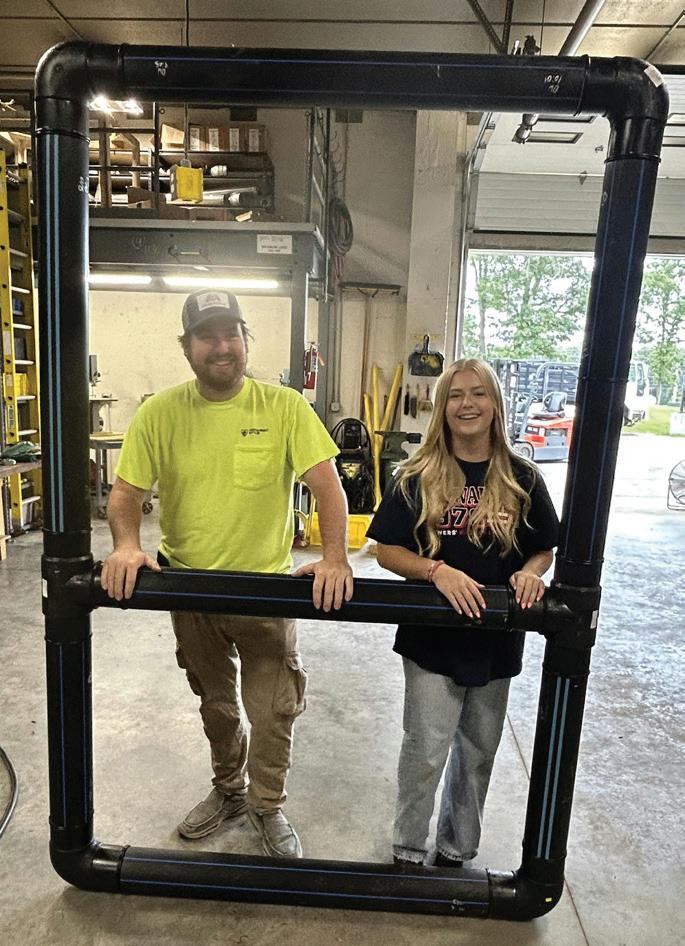
Dylan Wyatt and Carly Wilkerson with a completed HDPE final project.
➤ Continued from page 1
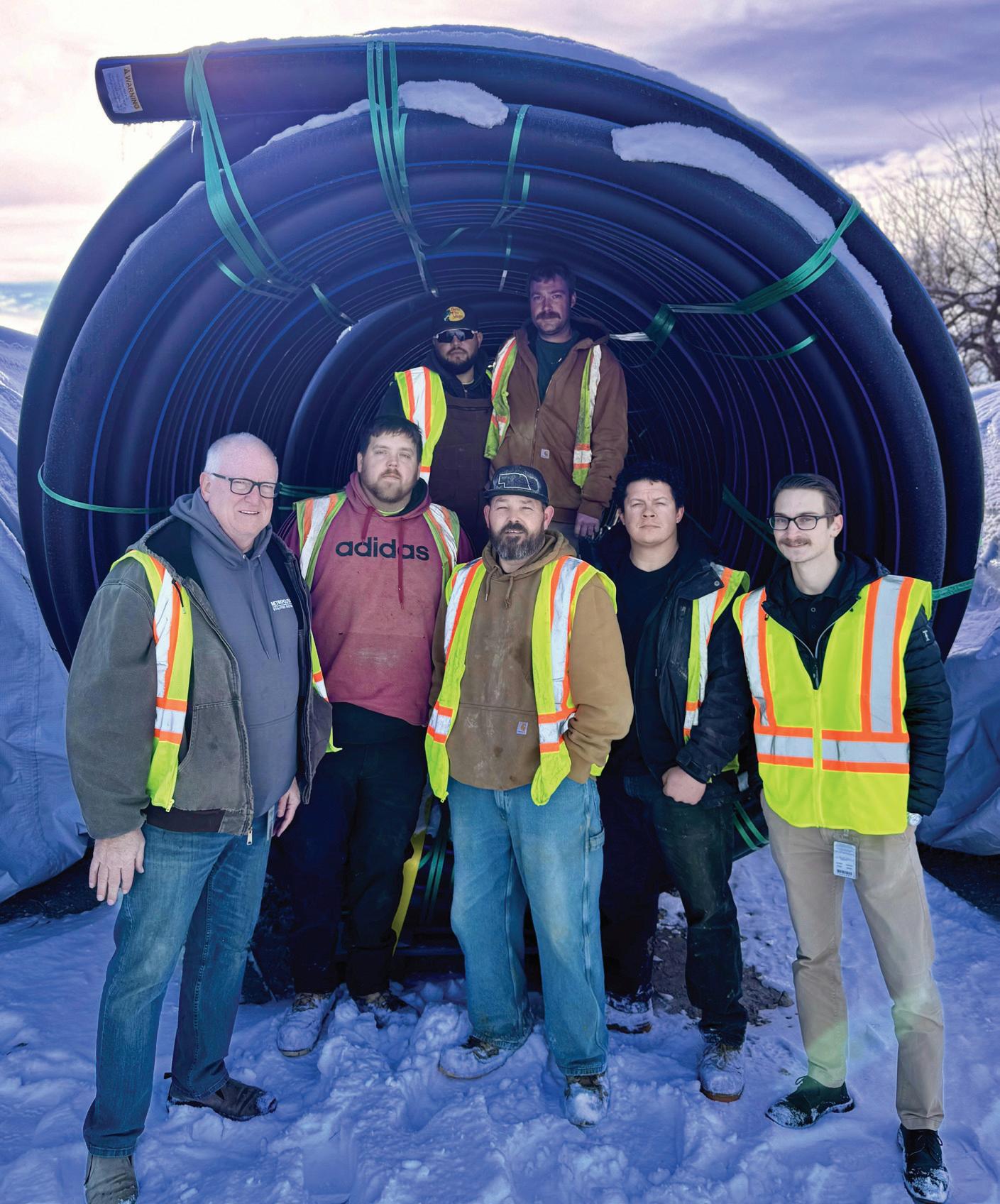
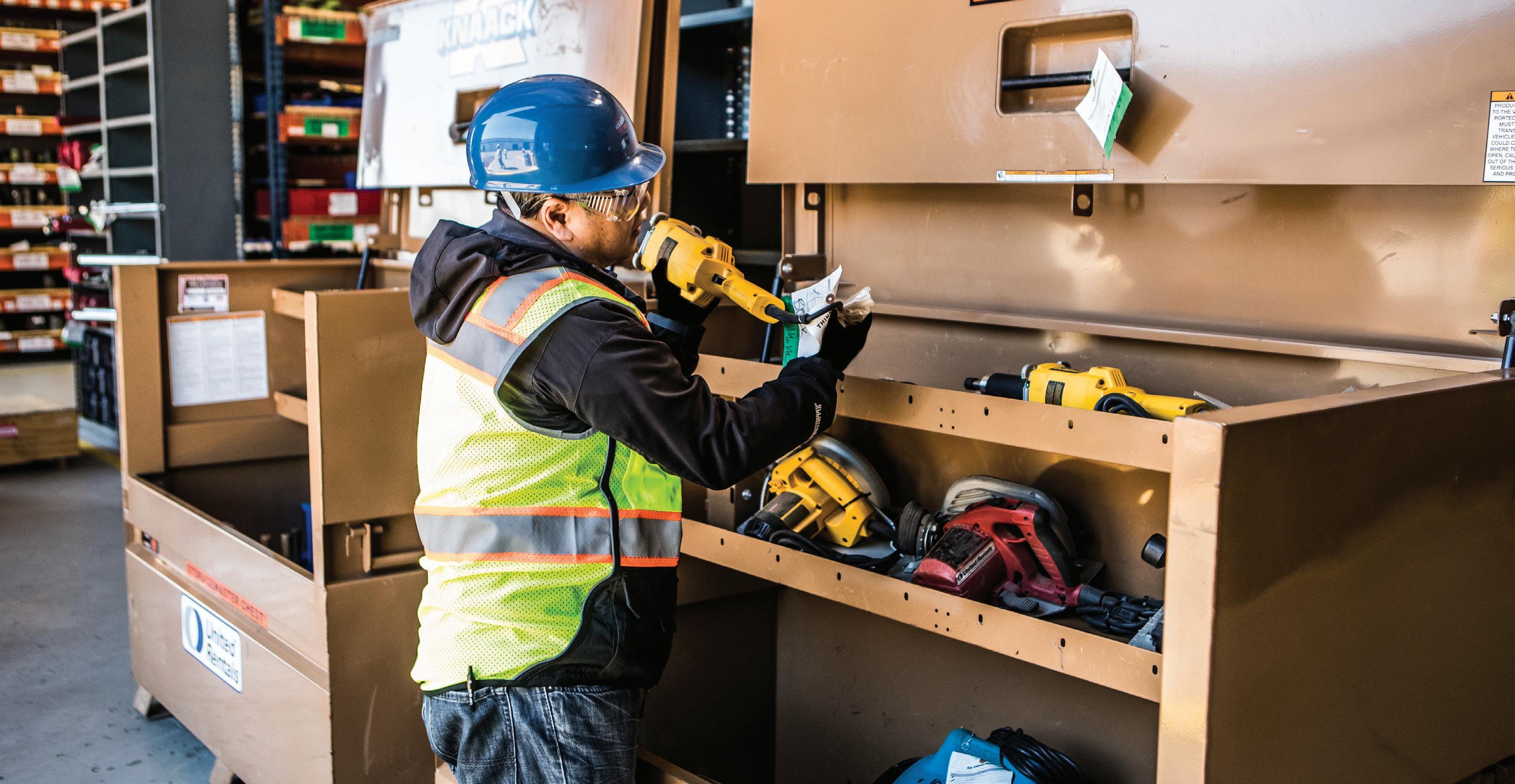
Omaha utility team members trained in HDPE fusion techniques. The city is replacing 3,200 miles of deteriorating cast iron water mains using 450-foot reels of HDPE pipe and trenchless installation methods.
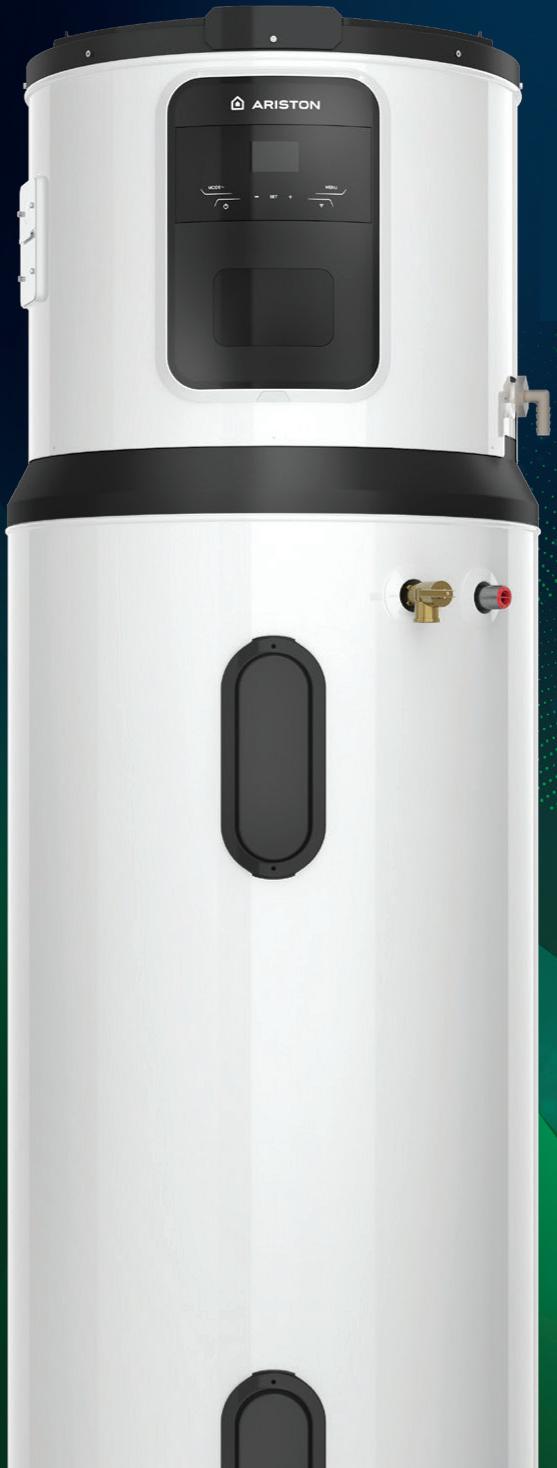
Multi-Port Configuration
Easier to Install. Easier to Maintain.
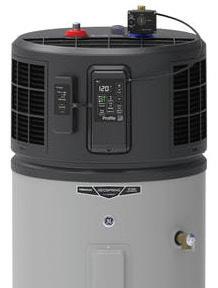
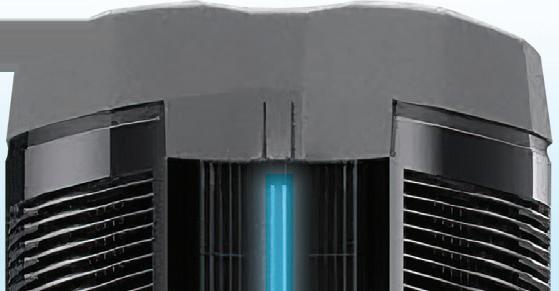
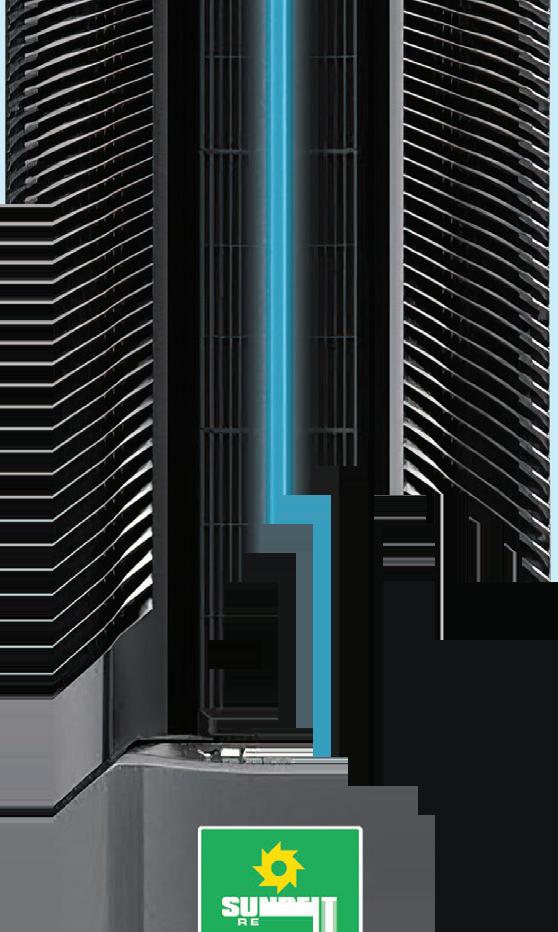
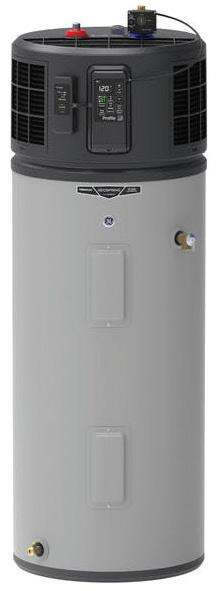
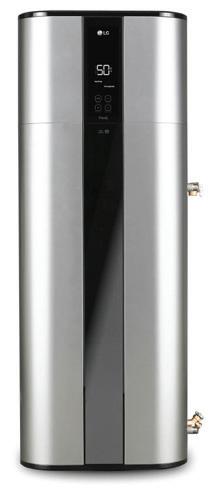
Patented Top Cap with 2.5x larger filter* for quieter operation and easier maintenance. Dual anode performance: powered anode maintains itself and allows longer tank life, even after traditional anode is depleted.
Tech that Puts Control Right into Your Customers’ Hands Wi-Fi enables smartphone control, while i-Memory proprietary algorithm learns usage patterns for smarter energy efficiency.
Builders Brace for Headwinds Even as Interest Rates to Ease Slightly in 2026
➤ Continued from page 1
Chief Economist of the National Association of Home Builders (NAHB).
Mortgage Rates Provide Limited Relief
After several years of elevated borrowing costs, financial conditions are expected to ease modestly. The 30-year fixed mortgage rate recently dropped to 6.2% following $200 billion in mortgage-backed securities buybacks by Fannie Mae and Freddie Mac. NAHB projects mortgage rates will remain slightly above 6% in 2026 and trend unevenly lower as the Federal Reserve is expected to implement two 25-basis-point rate cuts, reaching a 3.25% terminal federal funds rate by the end of 2026.
“A sustained sub-6% mortgage rate will likely wait until 2027,” said Dietz. For contractors, that means financing conditions may improve enough to keep projects moving—but not enough to trigger a rapid surge in new construction.
Supply Shortage and Cost Pressures Persist
Inflation remains a challenge, particularly in shelter costs, which are running at a 3.6% annual rate and continue to outpace broader consumer prices. With a nationwide shortage estimated at roughly 1.2 million housing units, economists emphasized that increasing supply remains critical to easing affordability pressures.
Builders, however, continue to face nearly 300,000 open construction jobs, underscoring ongoing labor shortages. NAHB estimates residential construction will need to add approximately 740,000 workers annually to keep pace with growth, retirements and turnover.
Material pricing also remains elevated, with building product costs rising above 3% growth rates since mid-2025 despite weaker residential construction activity. For mechanical contractors and trades, that combination of labor scarcity and material volatility continues to pressure project timelines and margins.
Single-Family Growth Modest; Multifamily Pulls Back
Single-family construction is expected to post slim gains in 2026, increasing 1% to an annual pace of 940,000 units, with a projected 5% gain in 2027. Townhouse construction continues to capture a growing share of the market, now exceeding 18%—a multidecade high.
In contrast, multifamily starts are forecast to decline 5% in 2026 to 392,000 units and fall another 6% in 2027. The slowdown follows pandemic-era highs that peaked at 547,000 units in 2022. Tighter financing conditions and higher construction costs are moving the apartment sector into a more constrained development cycle.
For plumbing and hydronic contractors, that signals steadier opportunity in single-family and attached housing, while large-scale multifamily work may remain softer in the near term.
Remodeling Remains a Bright Spot
The remodeling sector continues to outperform new construction. Home improvement spending now represents 45% of total residential construction activity, up from 33% in 2007.
Remodeling activity is projected to grow 3% in 2026 and an additional 2% in 2027 in inflation-adjusted terms. Long term, NAHB forecasts overall remodeling expenditures will be 19% higher by 2030 and 32% higher by 2035.
“The surge in home equity has allowed more home owners to finance remodeling projects that meet their needs, which include growth for aging-in-place remodeling projects,” said Dietz. “NAHB expects robust long-term remodeling growth, and projects overall remodeling expenditures will be 19% higher in 2030 and 32% higher by 2035.”
For contractors specializing in plumbing retrofits, hydronic upgrades and aging-in-place modifications, remodeling remains one of the strongest and most stable segments of the residential market.
Inventory Levels Shift Toward Balance
Existing home inventory has steadily climbed from a 2.3-month supply in 2021 to 4.1 months in 2025 — signaling movement away from an extreme seller’s market.
“We expect this rate to rise to a 4.6-months’ pace in 2026, which is in
line with a balanced market range of between four and six months,” said Danielle Hale , Chief Economist at Realtor.com.
Realtor.com projects existing inventory rose 15.2% in 2025 and will increase another 8.9% this year. The median listing price in January 2026 was $399,900, down 0.1% year over year, reflecting moderating price growth.
The mortgage rate “lock-in effect” remains a drag, though it is gradually easing as a growing share of outstanding mortgages carry rates above 6%.
Buyer Confidence Hinges on Stability
Despite rates settling into the low-6% range, many prospective buyers remain cautious.
Zonda Chief Economist Ali Wolf pointed to policy uncertainty, job security concerns, insurance and maintenance costs as ongoing pressure points. Demographic trends show younger buyers—particularly Gen Z— are enthusiastic but constrained by affordability and student loan debt. Millennials are split between renters and equity-rich owners considering move-up purchases, while Gen X and baby boomers hold comparatively favorable existing mortgage rates and stronger balance sheets.
Wolf summarized the path forward in one word: stability.
“Stability from policymakers,” said Wolf. “Stability in the labor market so that people are confident that their job is safe and/or they can find a new one easy enough. Stability that interest rates will stay steady and won’t move lower, which would keep buyers on the sidelines. And stability in home prices so that a home will be a steadily appreciating asset. These are the market conditions that will move hesitant buyers off the sidelines.”
For contractors, that stability—in rates, pricing and labor—will ultimately determine how quickly sidelined demand converts into signed contracts.
Taco Honors Global Hydronics Leader Kang Ho Lee With 2026 Dan Holohan Award
➤ Continued from page 1 fort technology, industry advancement, or training—while embodying the generosity, humor, and passion for people that defined Dan Holohan’s career.
Global Leadership Advancing Hydronic Systems
Over a global career spanning Asia, Europe, and North America, Lee has played a key role in advancing fluid-handling technologies, improving system efficiency, and strengthening professional leadership across the HVAC and hydronics industries.
As Chairman of TJFT and Predictive Management Group (PMG), and former CEO of Grundfos Pumps Korea, Lee has focused on operational excellence, innovation, and long-term organizational strength—principles that resonate strongly with today’s hydronic contractors navigating workforce, efficiency, and system performance challenges.
Commitment to Education and People-First Leadership
“Kang Ho Lee represents everything the Dan Holohan Award stands for,”
said John Hazen White, Jr., Chairman, Taco Family of Companies. “His commitment to education, his influ -
ence on global hydronics, and his belief that strong organizations are built by investing in people align perfectly
with Dan’s legacy and Taco’s values.”
Beyond corporate leadership, Lee has served as an adjunct professor at several leading universities in South Korea, mentoring future business and engineering professionals. He is also the author and co-author of multiple books on leadership, global management, and personal development, including Think People, reflecting his belief that people are the foundation of sustainable success.
International Recognition for Industry Impact
Lee’s contributions have been recognized internationally, including the Order of Industrial Service Merit from the Korean government, the Republic of Korea Presidential Award for Energy Conservation, and Denmark’s Prince Henrik’s Medal of Honor.
Past recipients of the Dan Holohan Lifetime Contribution to Comfort Award include Dan Holohan, Robert Bean, Bruce Marshall, Dan Foley, John Barba , Bob Barbour , Rich Medairos , Rick Mayo , and John Hazen White III.
PHCC Expands Online Training Courses
FALLS CHURCH, VA — The Plumbing-Heating-Cooling Contractors—National Association (PHCC) Educational Foundation has expanded its online training catalog to include new communication and sales-focused courses designed to help contractors develop high-performing teams and support long-term business growth. The new offerings are available through the PHCC Academy® and are delivered in partnership with ServiceSkills and the Quality Service Contractors (QSC) group.
Role-Specific Training for the Entire Team
The PHCC Educational Foundation has licensed a series of ServiceSkills courses built around short, focused lessons with interactive video and real-world jobsite applications. The ServiceSkills courses are organized by role and require no prerequisites:
• Technicians and Apprentices
Designed for field staff who interact directly
with customers and coworkers, these courses focus on customer service, workplace communication, and professional relationship skills critical to day-to-day success.
• Human Resources and Leadership
Geared toward managers, HR professionals, and team leaders, this track emphasizes building high-performing teams, fostering respectful workplaces, and strengthening internal communication.
• Administrative and Office Staff
Intended for office employees who want to improve professional communication and deliver a more consistent customer experience.
Field Sales Conversations
In addition to the ServiceSkills content, the Foundation has adapted QSC’s in-person “Seal the Deal” program into a self-paced, online course. The training is designed specifically for HVAC technicians
and plumbers working in the field.
The course focuses on practical sales conversations, including how to present solutions, respond to budget pushback, and explain the necessity of recommended work.
Technical Skill and Customer Trust
The training addresses a key gap many contractors see in the field: strong technical competence paired with uncertainty in customer communication.
“Educating and training technicians, apprentices, and office professionals for industry-focused work is incredibly important. But, if they don’t possess the confidence to communicate and negotiate effectively, they risk falling behind in their careers,” said Dan Quinonez , Executive Director of the PHCC Educational Foundation.
More information and course enrollment details are available at phccacademy.org/courses
John Hazen White (center) presenting the Dan Holohan Award to Kang Ho Lee (left), Chairman of Taejin Fluid Technology.
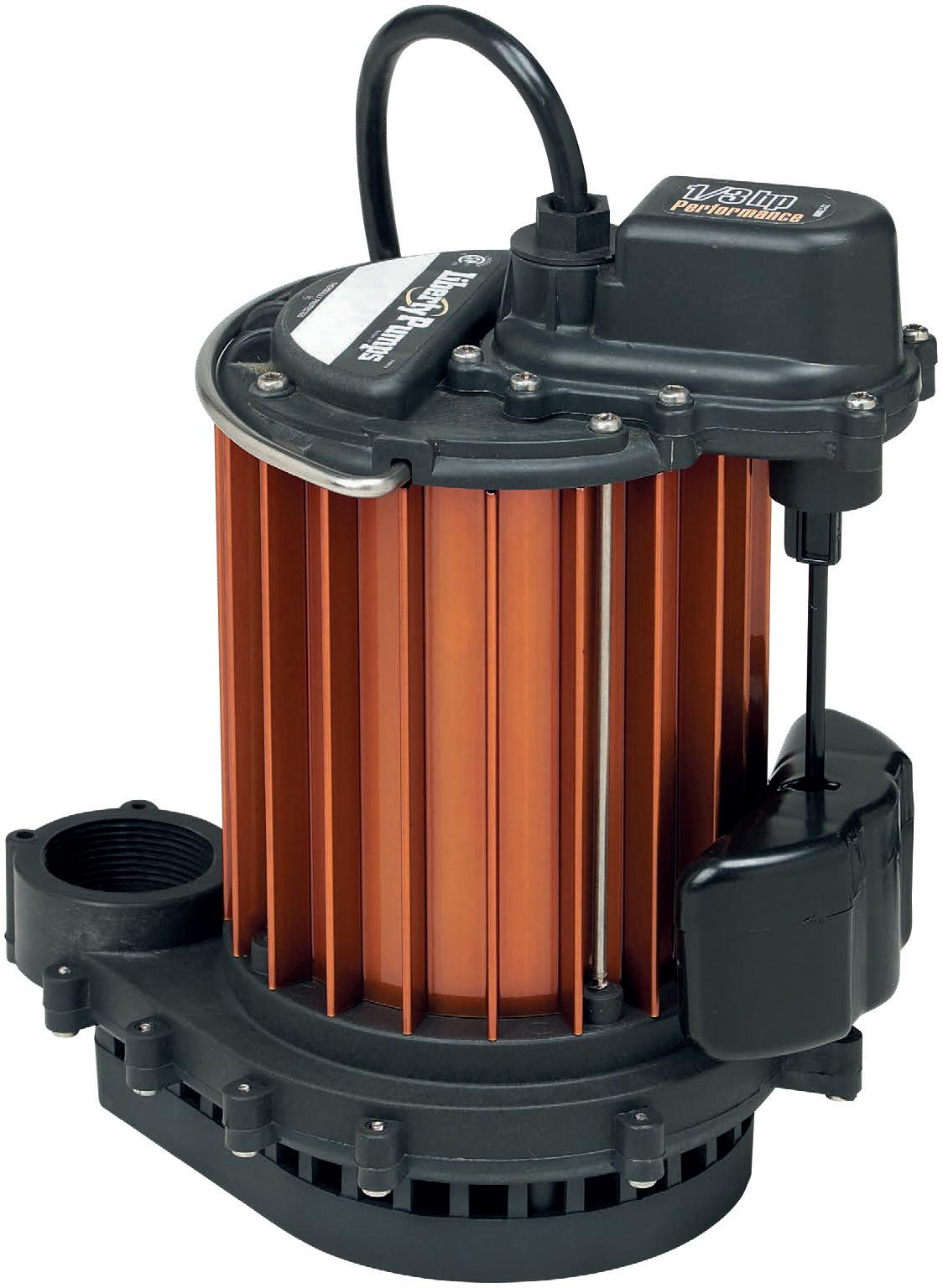
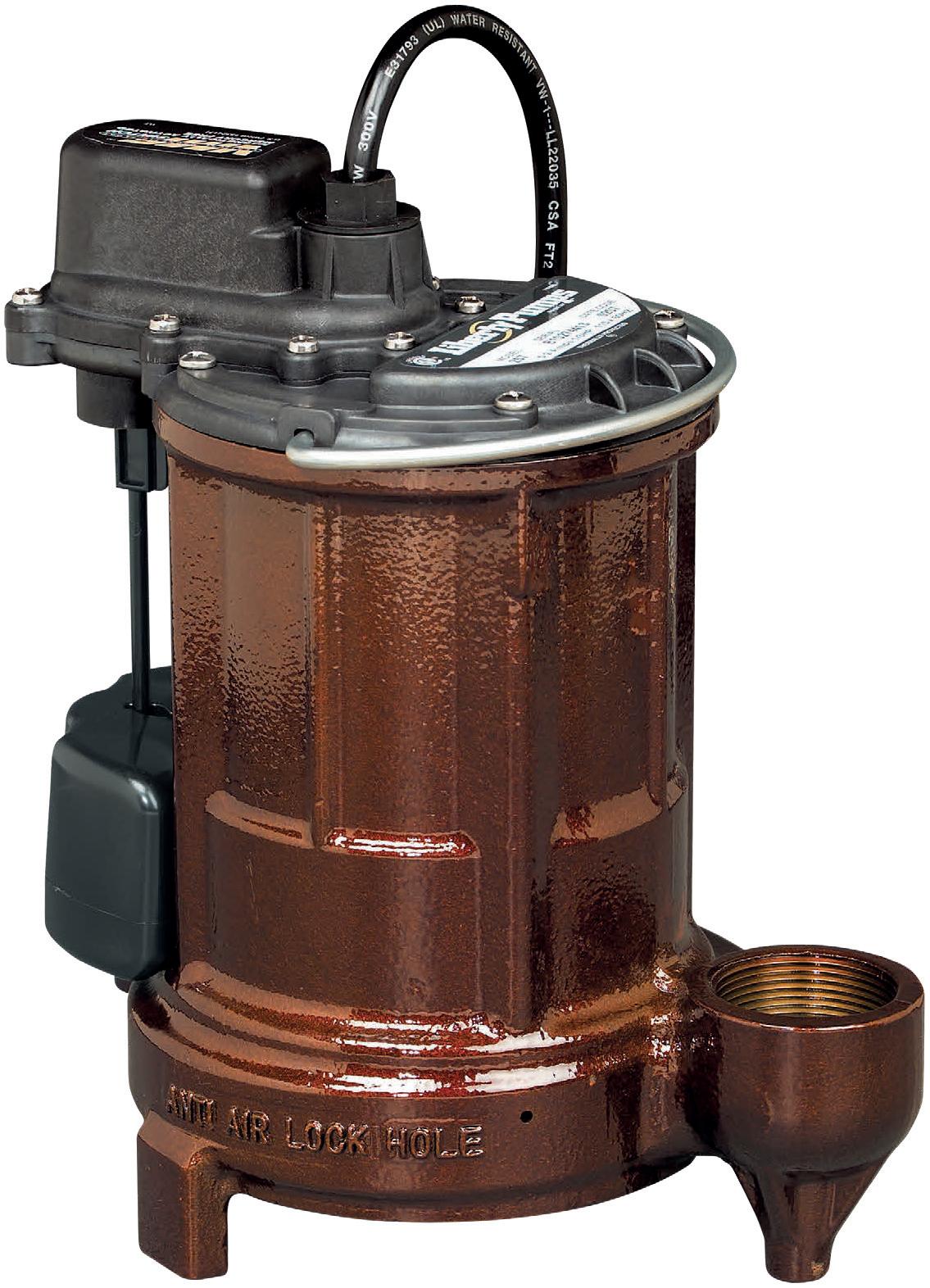
COOL RUNNING CLASSIC CAST IRON?
The choice is yours. Whether you prefer sleek finned motor housings with superior cooling efficiency, or the traditional solid weight of heavy cast iron, Liberty Pumps proudly builds the most reliable sump pumps for the plumbing professional.
225% Better cooling efficiency than cast iron!
∞ 1/3 hp performance
∞ Quick-connect power cords
∞ Quiet operation ∞ Energy efficient designs
∞ Magnetically activated float switches
by Al Schwartz
Keeping Your Focus: Estimating
We are already one quarter of the way through the New Year and, hopefully, you have gotten a handle on some of the things that we covered which can spell more $$$ for your business and streamline your operation. We’ve looked at inventory management and communications as things that can be better controlled to give you better results.
Bringing it in the Door
Estimating, for any project or job, is another area that needs to be looked at. If you are a small shop and do the estimating yourself, or of you are a mid-size to large shop and have estimator(s) on staff, tightening up your bids is a really good way to improve not only your bottom line, but also to increase the amount of work you bring in the door.
On the small scale, estimating repair work and residential remodels can be challenging, especially when you have one or two people other than yourself who are doing the work. I recently read an article by a guy who couldn’t understand why his bids on jobs were constantly coming in over budget. He finally figured out that he had been estimating the work on what he could do, not what his employee could do. That is a significant realization, and one which we should take a moment to dissect.
Who is Doing the Job?
If you started your company as a one man show, and worked at it for any length of time, you probably had your estimating tasks incorporated into your sales pitch. That is, you bid a project on the spot or on the fly using rough figures that approximated your costs and your labor, profit and overhead. You sometimes made a lot of money and sometimes you didn’t. Hopefully, you didn’t lose too much money in the process. Over time, you learned a little bit more about business in general, your business in particular, and your own estimating ability. You became a better estimator based upon past experience, and your estimates began to get sharper.
Fast forward to your first hired journeyman. You bid a small residential project and figure all of your material
By taking the time to do a good, accurate, material estimate you will have a much greater opportunity to increase your bottom line and make every asset count.
costs and labor. The labor figure you use (unless you are using a flat rate manual, which usually requires local or regional adjustments) are based upon how long it would take you to do the job not, necessarily, on how long the job should take. Your hired guy takes a day longer than you estimated and you are left trying to figure out why.
In a perfect world, you’d talk to your guy, realize your mistake and make adjustments. In the real world it takes a bit longer, but the idea finally hits home and you make the appropriate changes to your estimating. The real result of the issue is that you realize (or you should) that nobody takes care of your business the way you do. Since labor is the most fluid component in estimating, getting it under control should be your primary concern.
Now, Who Will Figure Material?
Once you have a good bead on the labor estimating, focus hard on your material costs. We all know that there are many different ways to build a project, and you
want to install the systems in the most economical fashion possible, material and labor-wise.
In small residential and commercial remodel projects, it is often difficult to estimate material costs with great accuracy due simply to the nature of working with existing systems and structures. Putting together an accurate material list for such a job might seem like a daunting task, but it is one that you need to do if you want to maximize your profit and minimize your material costs.
In large commercial projects, one usually has complete blueprints to use in doing material takeoffs. In that case, field personnel will use the same blueprints to do the installation, so the need for extensive feedback and explanations to your people is lessened somewhat, but not completely eliminated.
Back to Communication
Conveying your estimate to your employees is another area that you could tighten up (see last month’s column on communications). If you figured the piping to run a certain way and your
people install it a different way that uses 20% more pipe plus hangers and fittings, you’ve got a problem. You must share your estimate and estimating style with the people who are going to do the installing, if for no other reason than that you can tell them, in a face-to-face meeting, exactly how you saw the project and how you want it done.
Don’t be pedantic, either. If your foreman or field superintendent see the job a different way, by all means discuss the differences. You might learn something and even save a buck or two.
By taking the time to do a good, accurate, material estimate and using realistic labor figures based upon your known people AND going over the estimating strategy with those people, you will have a much greater opportunity to increase your bottom line and make every asset count. Focusing on tight estimating and getting your labor force moving in the same direction is invaluable in improving your bottom line while eliminating unnecessary headaches and costly errors.
The Brooklyn, N.Y.-born author is a retired third generation master plumber. He founded Sunflower Plumbing & Heating in Shirley, N.Y., in 1975 and A Professional Commercial Plumbing Inc. in Phoenix in 1980. He holds residential, commercial, industrial and solar plumbing licenses and is certified in welding, clean rooms, polypropylene gas fusion and medical gas piping. He can be reached at omeletman01@gmail.com.
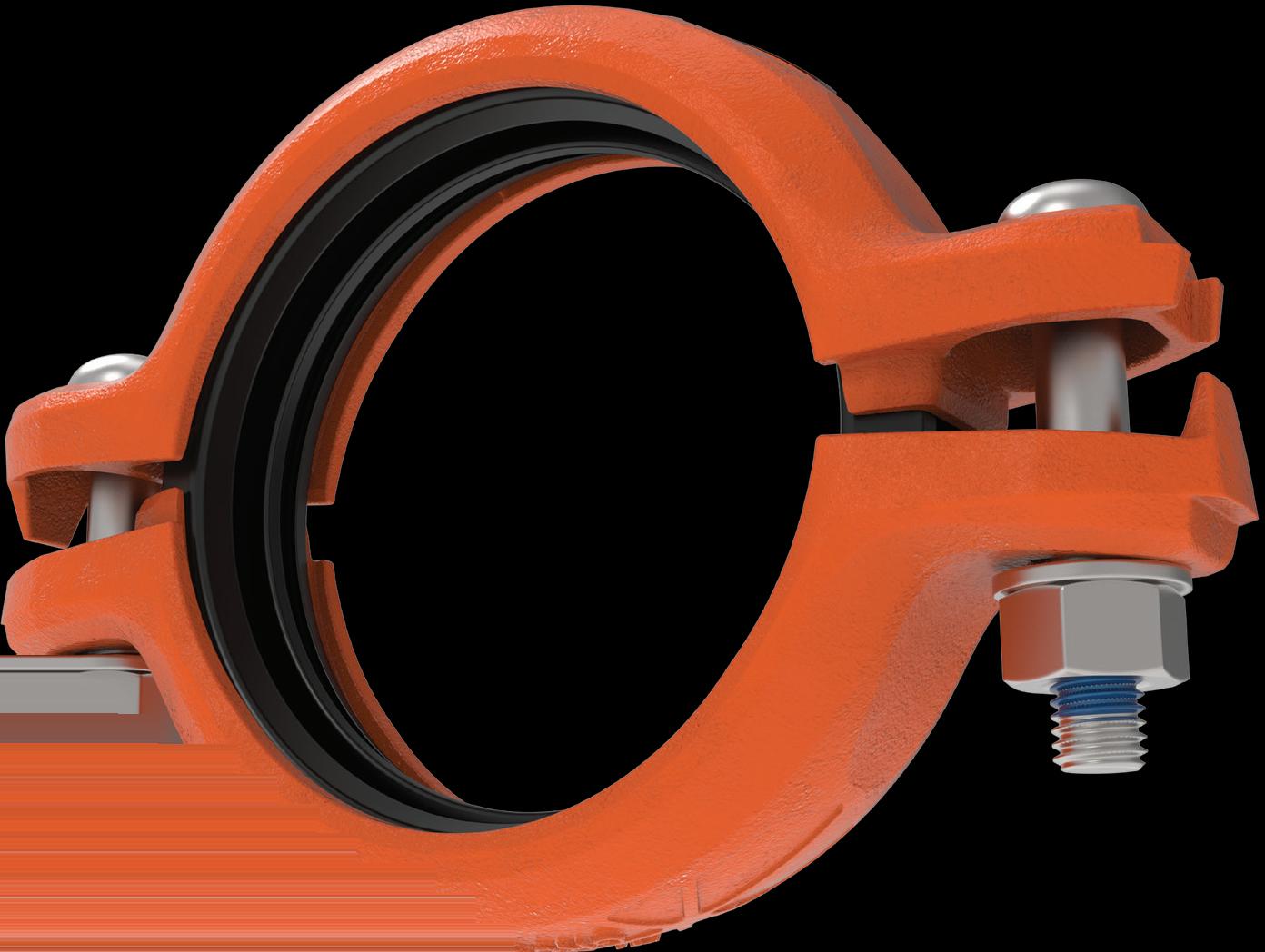
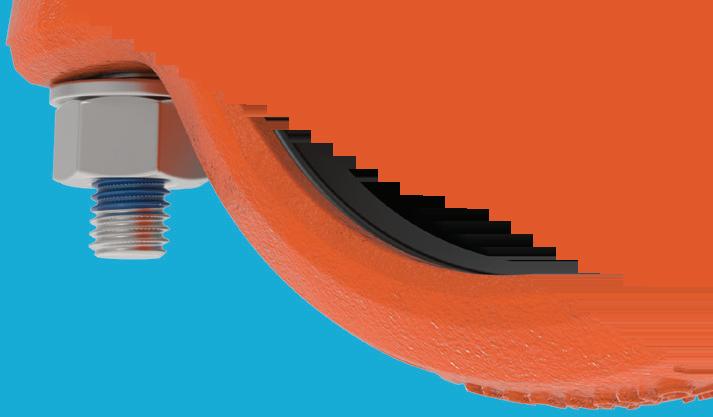
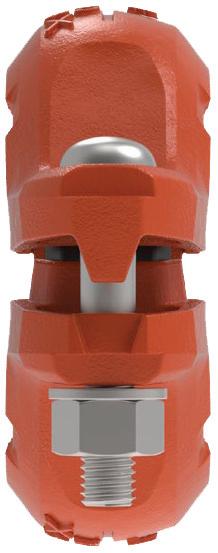
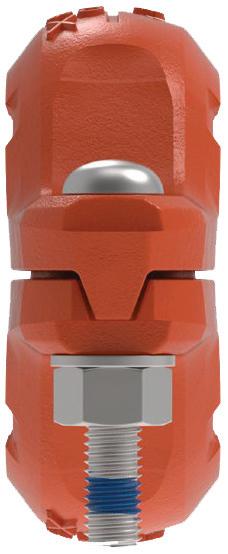
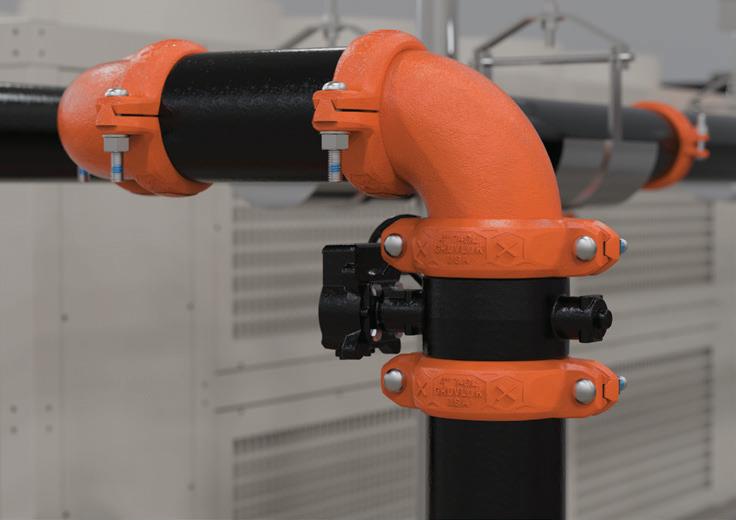
Introducing figure 74-CL for Mechanical Systems
The Fastest, Easiest to Verify Rigid Coupling Available
• Visual and Tactile Installation Verification
• All-new Patent-pending Design Features Coated Hardware for Corrosion Resistance
From the AHR Expo Hall — Our Q&A with A. O. Smith CEO Stephen Shafer
We talk about managing uncertainty, the opportunities of 2026, and what the company’s main message is to contractors at the big show.
BY STEVE SPAULDING OF CONTRACTOR’S
STAFF
LAS VEGAS, NV – The Air Conditioning, Heating, and Refrigeration Expo is famous for offering the opportunity to get hands-on with the latest products and innovations. But equally valuable is the chance to meet and hear the latest insights from industry leaders.
Stephen Shafer is CEO of A. O. Smith, a Milwaukee-based provider of water-heating and water-treatment solutions, and the largest manufacturer of water heaters in North America.
Shafer came to the top job after serving as A. O. Smith’s President and Chief Operating Officer. Previously, he held a series of executive-level jobs for 3M, leading strategy, business development, marketing, and sales globally.
Shafer spoke to CONTRACTOR from the top of the A. O. Smith booth while the Expo was in progress.
CONTRACTOR: Thanks for talking to us today. What is A. O. Smith’s main message to the contractors visiting the booth today?
Shafer: In a word, gratitude. We want to express our gratitude to the contractor community for what they do for us. We have decade-long relationships with many of our contractor partners, and we want to spread the message that A. O. Smith is investing to maintain our leadership position in the industry, and they can count on us. We are committed to bringing the best products—the highest efficiency products—to market, working hand-in-hand with the contractor community.
We want to make products that are easier for them to install, maintain, and service. So, we’re out here making sure that we continue to learn from them and also spread the message that we are ready to invest in those innovations.
Another important topic is changes around shifts in technology and in the regulatory environment, and we want to be out here supporting the industry, helping to navigate those changes, and being prepared with the right products, and being able to get those products in the hands of consumers.
CONTRACTOR: What do you see as the big challenge for A. O. Smith as a manufacturer in 2026?
Shafer: A big challenge for us is uncertainty. We work on a long timeline. It takes us years to develop a new product, add the production lines to make that product, and make sure we launch those products with the quality and reliability our customers expect from A. O. Smith. It takes time to do those things.
To make sure we’re working on the right things, certainty always helps. But we’re living in a less certain world now more than ever. Tariffs, geopolitics, consumer confidence, and economic uncertainty, and potential supply chain disruptions—those are only a few of the things you need to keep in mind as a manufacturer.
What I am certain about is that we’re remaining flexible and agile to move quickly when things change. A key strategy at A. O. Smith is that we are able to invest broadly enough that we can take advantage of favorable developments in the market. We manufacture in multiple locations to mitigate risk. We have very sophisticated supply chain teams to help manage those uncertainties.
We work closely with policy makers and regulators, advocating for the industry and helping the industry adapt when those changes happen. It’s an uncertain world. As a business leader, you do what you can to prepare your organization, to support your customers, and to be ready when changes happen.
To tell the truth, I abandoned the hope for normalcy a while ago. You have to embrace change as a part of
life and a part of business. And as a business opportunity, when opportunities come along.
We’ve already had to adjust to face serious changes during my time at A. O. Smith, and regardless of what may come, we will be ready.
CONTRACTOR: So, A. O. Smith is prepared for the regulatory changes coming in October of 2026 and later in 2029?
Shafer: Absolutely. We are investing in the products and the manufacturing capacity to be ready for the regulatory changes ahead, including commercial gas products for this year and heat pump technologies for the residential market in 2029.
CONTRACTOR: One of the big news stories in the industry last year was the Leonard Valve acquisition. How is the integration going?
Shafer: We are very excited about the acquisition. It moves us into broader water management categories. It means an extension of the products already in our portfolio, and naturally, we already have in common a lot of the same contractors, specifiers, and system designers.
Having Leonard Valve as a part of the company represents a longer-term opportunity to better serve our customers. More than that, they are a great fit culturally. It’s a great brand dedicated to quality products. A lot of the Leonard people are (like we are) passionate about serving our customers, and excited about the future. It’s still early in the integration, but we’re all working with delivering value to our customers top-of-mind.
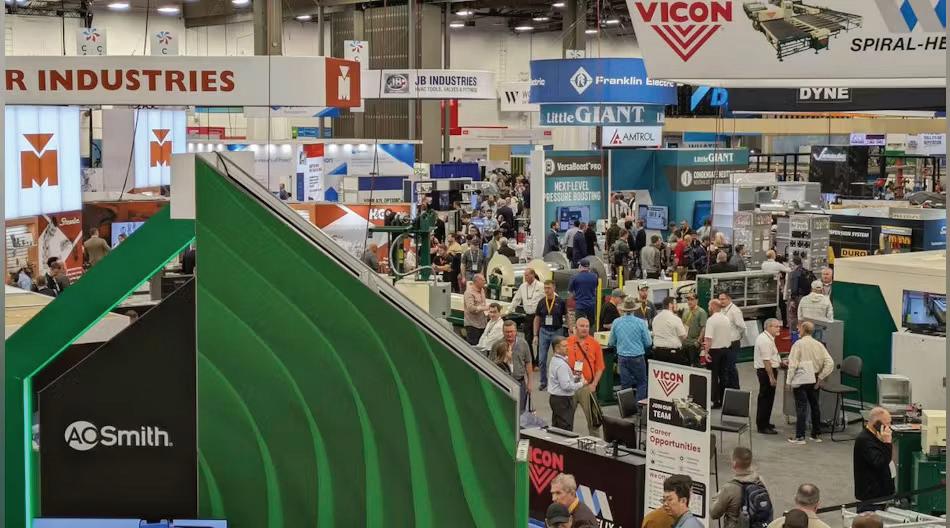
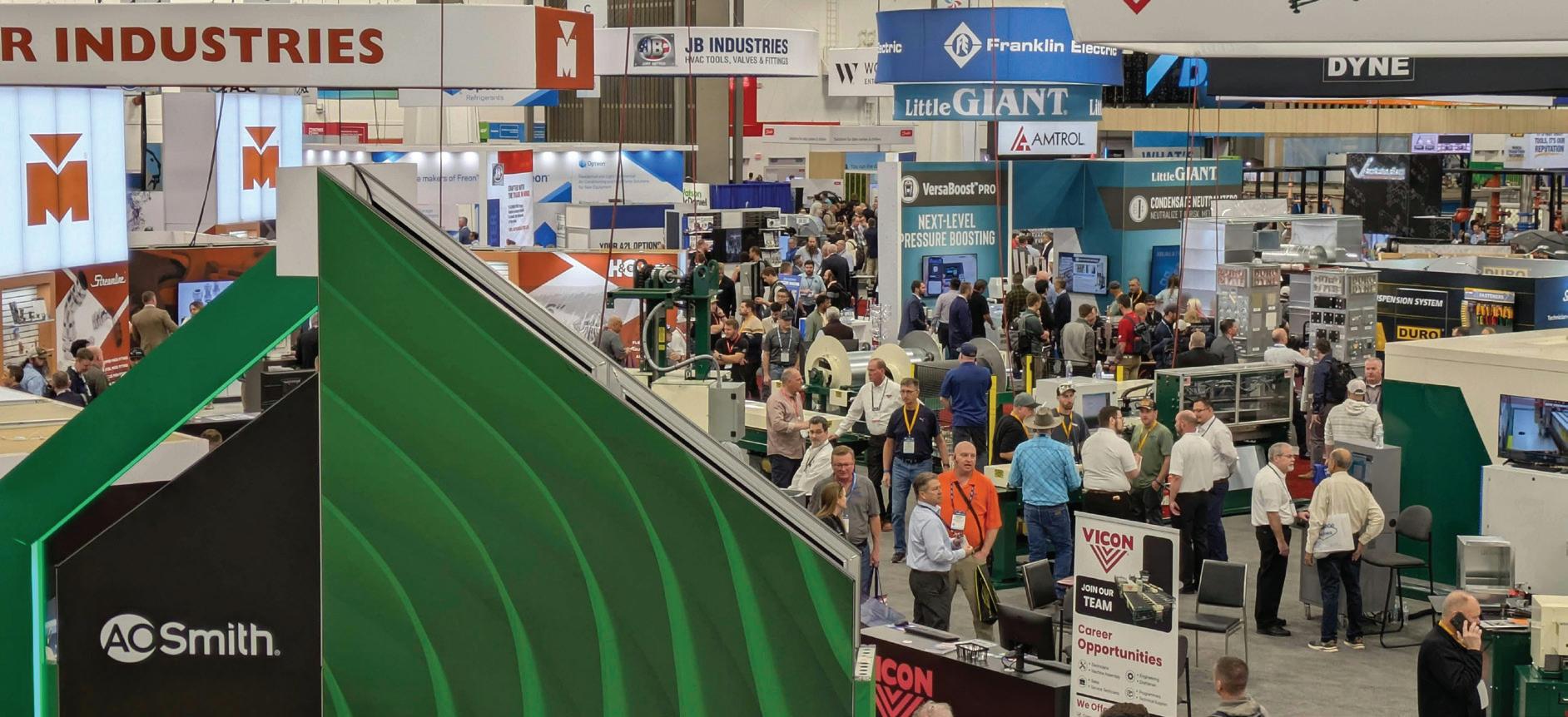
The view from the top of the A. O. Smith booth at AHR Expo 2026.
Stephen Shafer.
A. O. Smith
SCOPE. SELECT. SUCCEED.
AHR EXPO 2026 DRAWS
MORE THAN 53,000 ATTENDEES
Standing-room-only panels, product launches and Innovation Awards highlighted the industry’s push toward efficiency, electrification and smarter building systems.
LAS VEGAS, NV — AHR Expo (Air-Conditioning, Heating, Refrigerating Exposition) wrapped a milestone week at the Las Vegas Convention Center Feb. 2–4, drawing 53,315 professionals to nearly 579,000 square feet of exhibits across the Central and South Halls.
A total of 1,956 exhibitors showcased equipment, controls, software, tools and services spanning commercial, residential and industrial applications across the plumbing, HVAC/R and electrical trades. Attendees included contractors, engineers, OEMs, distributors, sales partners and facility owners—all focused on technologies that improve performance, efficiency and jobsite execution.
“This industry just keeps getting more exciting,” said Show Manager, Jeff Stevens. “We’re proud to
serve as the place where HVACR professionals come together to tackle emerging challenges and discover new opportunities. As the pace of change continues to accelerate, our work together is more important than ever in shaping a built environment that is comfortable, safe, and efficient. AHR gives our industry the opportunity to connect with the technologies, ideas, and partnerships that move us forward.”
Refrigerants, Data Centers and Workforce Development
Education sessions and show-floor conversations reflected the pressures contractors are navigating now: supply stability, evolving regulations, and the rapid growth of data center cooling demand.
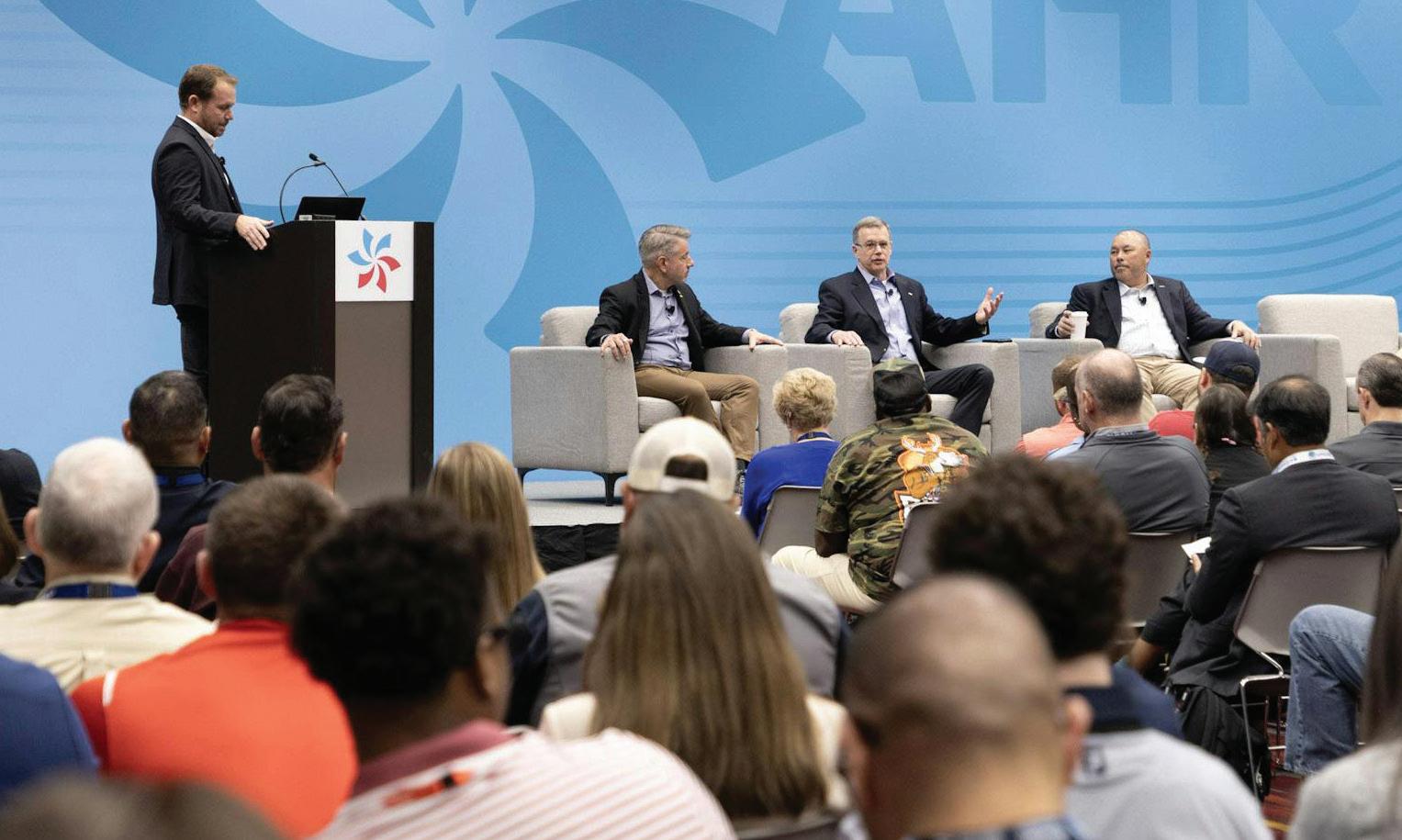
Standing-room-only panels covered refrigerants, heat pumps, ERV systems, building automation, workforce development and the annual State of the Industry outlook.
Ryan Sen, who moderated the panel Data Center Demands: Cooling Solutions, BMS Advancement and the Next Generation of HVAC, said of the session, “Standing room only! Yes, you heard me right—our Data Center Demands panel was certainly one of the most heavily attended sessions at AHR Expo 2026, and with good reason. Given the speed, scale, and investment being made in this vertical, it was timely for the engineering, HVAC, and BAS communities to come together to hear from real subject matter experts helping to shape standards and technology adoption. These included
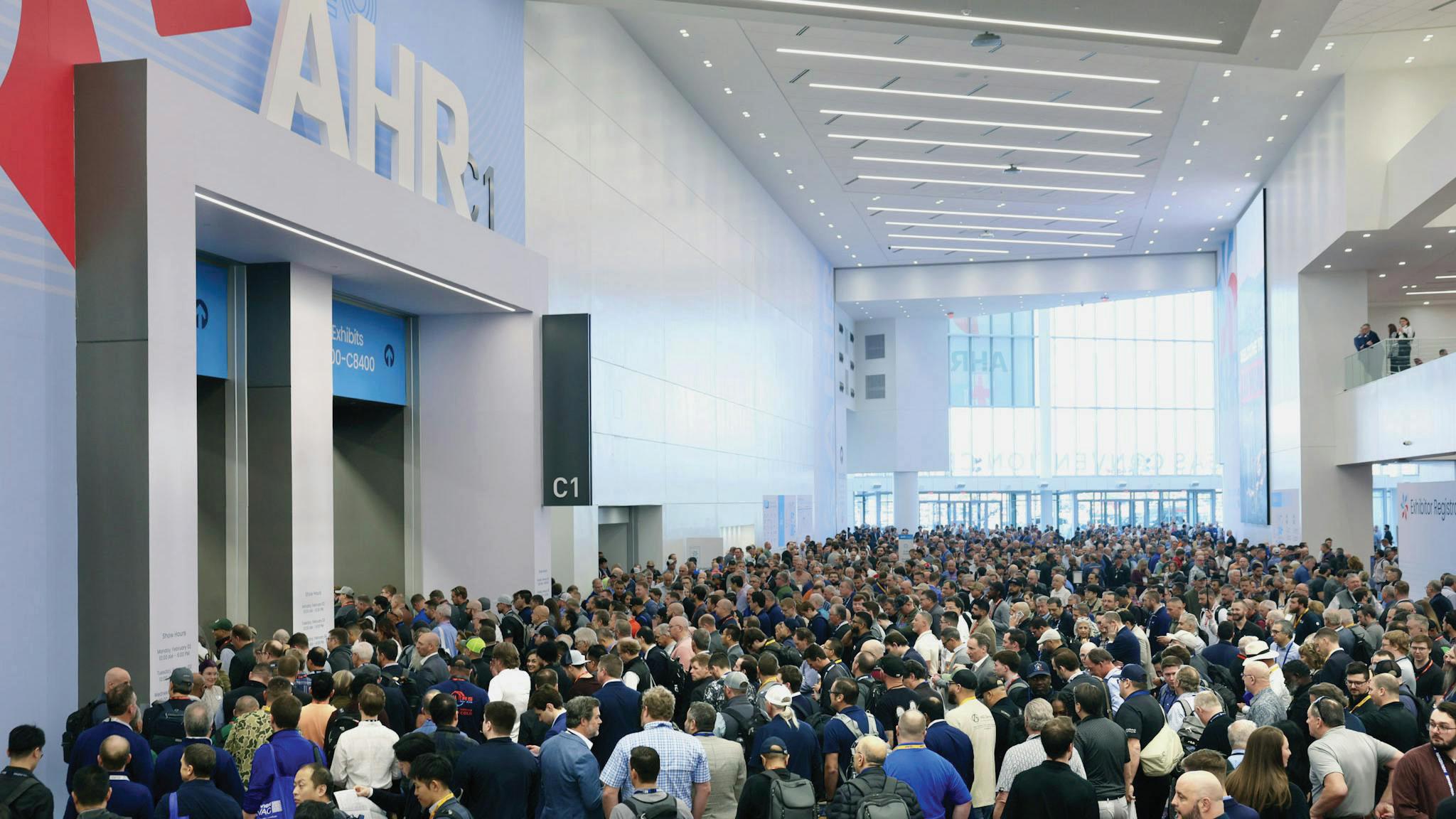
Massive crowds line up for the first day of the AHR Expo.
none other than David Quirk, Justin Seter, Ken Duncan, and Davin Sandhu.”
Full-length videos from the 2026 Panel Series are available at ahrexpo.com.
Contractors Emphasize Real-World Solutions and Efficiency Gains
For contractors and engineers, the value of AHR Expo continues to center on practical takeaways—from smarter controls and next-generation HVAC systems to tools that improve retrofit and commissioning performance.
“Still buzzing from AHR Expo 2026! An incredible experience packed with innovation that directly fuels my work in energy efficiency, building retrofits, and retro-commissioning across NYC,” said Mechanical Engineer Marina Rezkalla with Carlton Energy. “From next-gen HVAC systems to smarter controls and efficiency strategies, the expo delivered real, actionable ideas for improving existing buildings and meeting today’s performance demands.”
First-time attendee Steve Doring, Owner of Paradise Heating & Cooling Ltd., added, “WOW, what an amazing experience. As a first-time attendee, I was blown away by the number of vendors and HVAC professionals visiting from all over the world. Truly inspired by the seminars, the hands-on tool demos, and great conversations with industry professionals.”
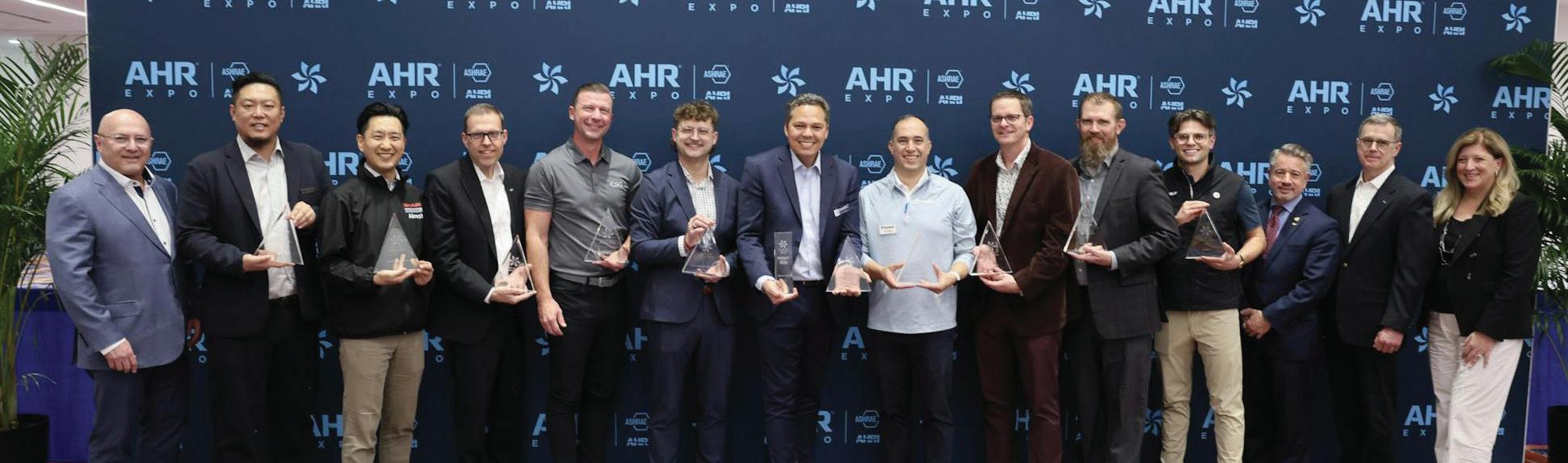
Innovation Awards Spotlight Next-Gen HVACR Equipment and Controls
• During a closed ceremony, AHR Expo honored the 2026 Innovation Awards winners across multiple categories. Highlights included:
• Building Automation: Honeywell Connected Solutions
• Ventilation: ABB Motors and Drives, ACH580 Variable Frequency Drives
Blue Frontier earned the 2026 Innovation Product of the Year Award.
“When it was announced that we won Product of the Year, I could only think of the audacity of my team at Blue Frontier. A tiny group of people with the seemingly naive conviction that we can do things better and without compromises. This award marks a recognition and an encouragement for us to continue to find ways to align people, science, engineering, product, and customer experience to create products that seem magical,” Dr. Daniel Betts, CEO of Blue Frontier, Inc.
Students Gain Hands-On Exposure to HVACR Careers
Workforce development remained a visible priority throughout the show.
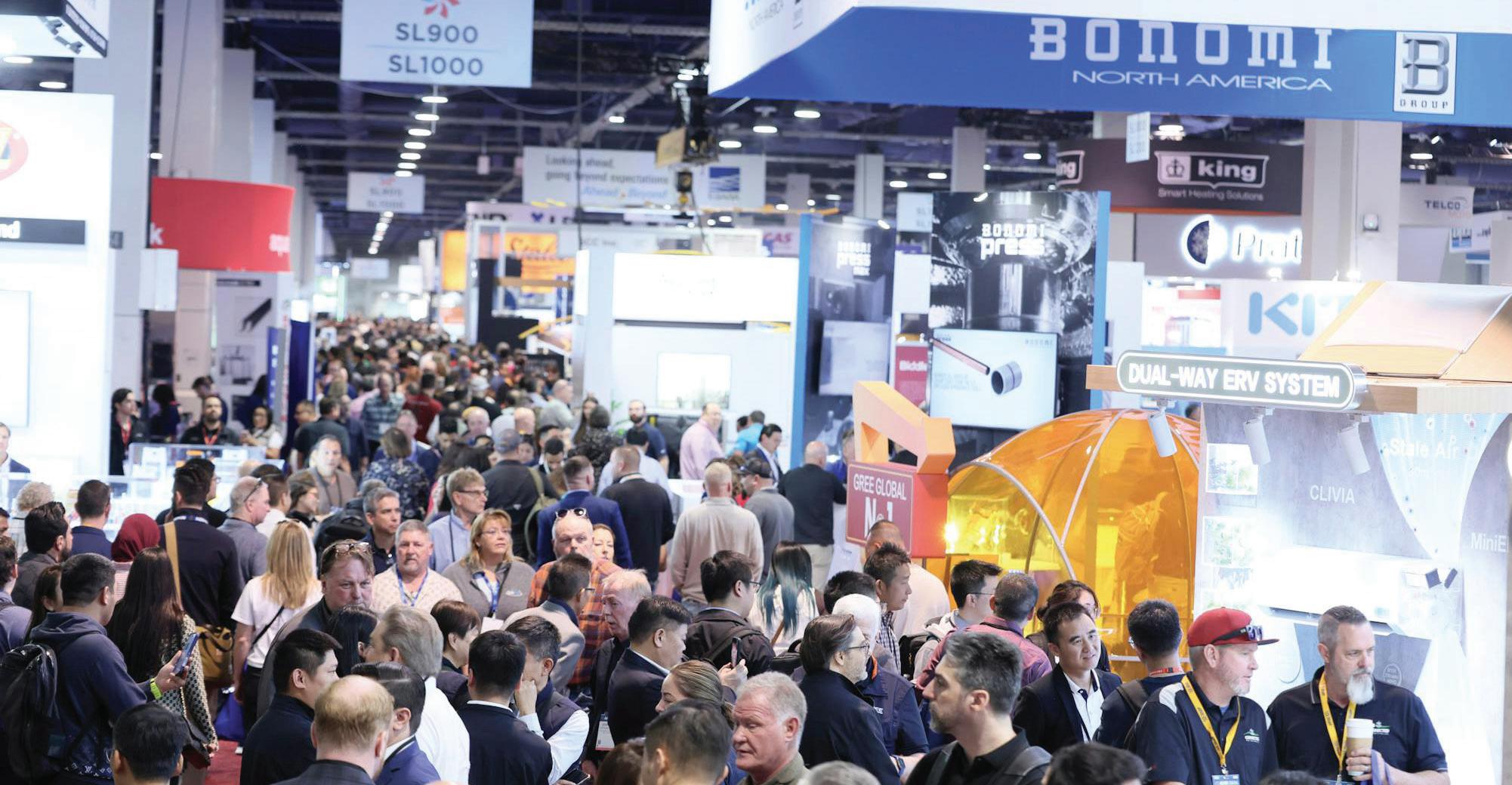
Crowded aisles at the 2026 AHR Expo.
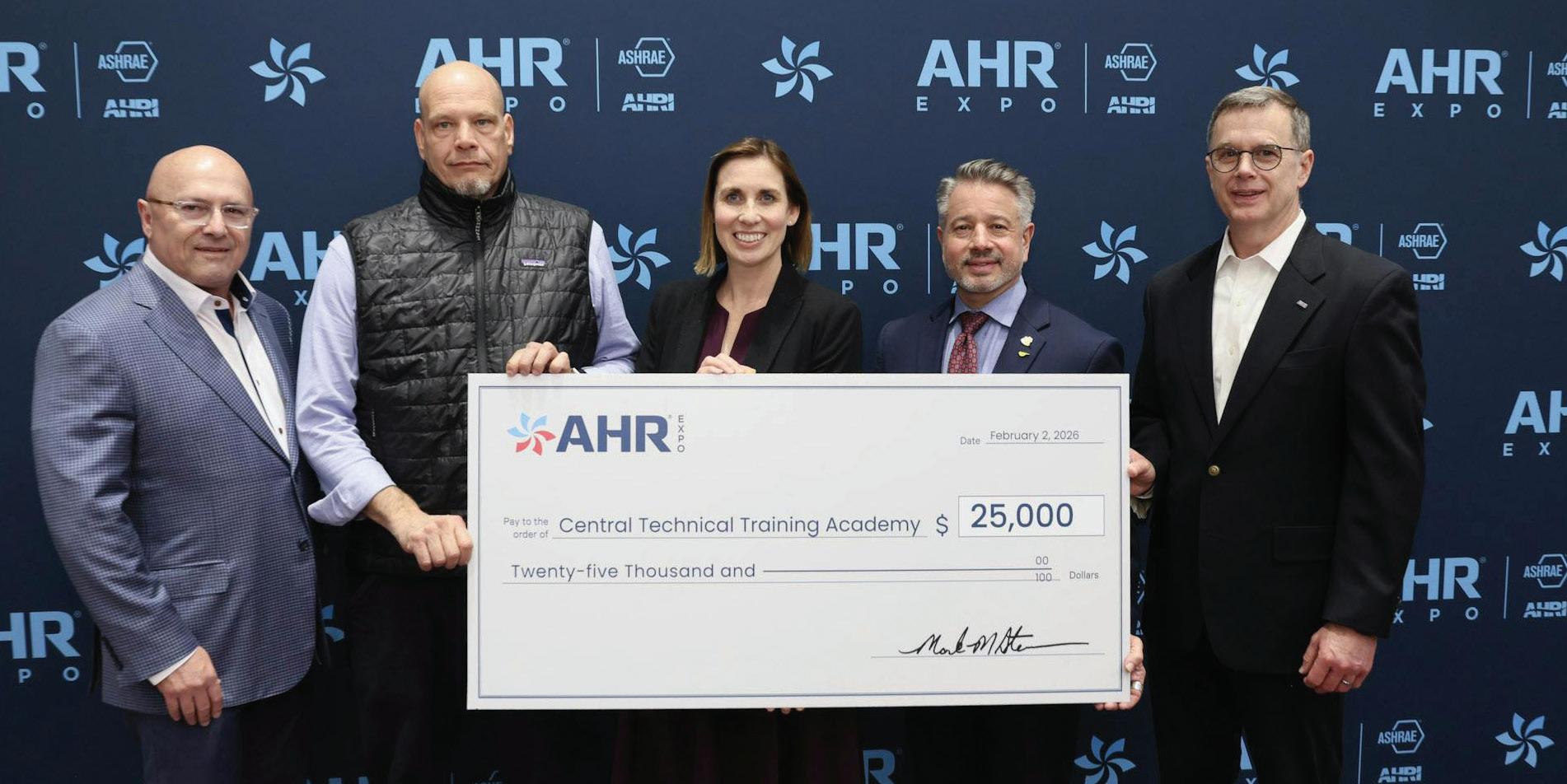
The Expo is also a time for giving back to the industry, as in this check presentation to the Central Technical Training Academy of Las Vegas.
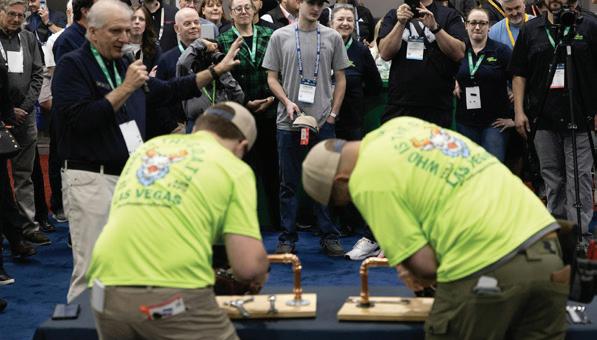
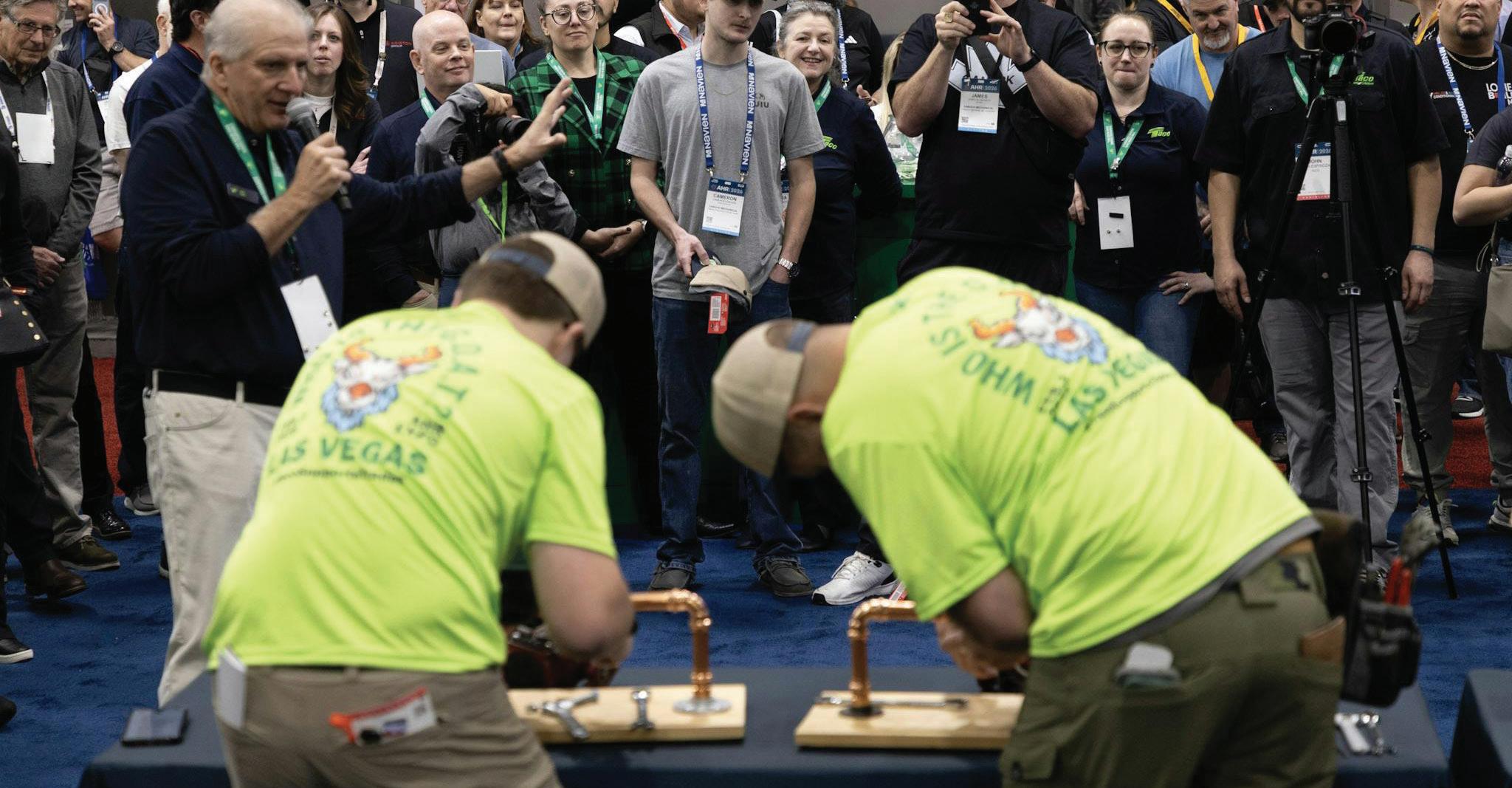
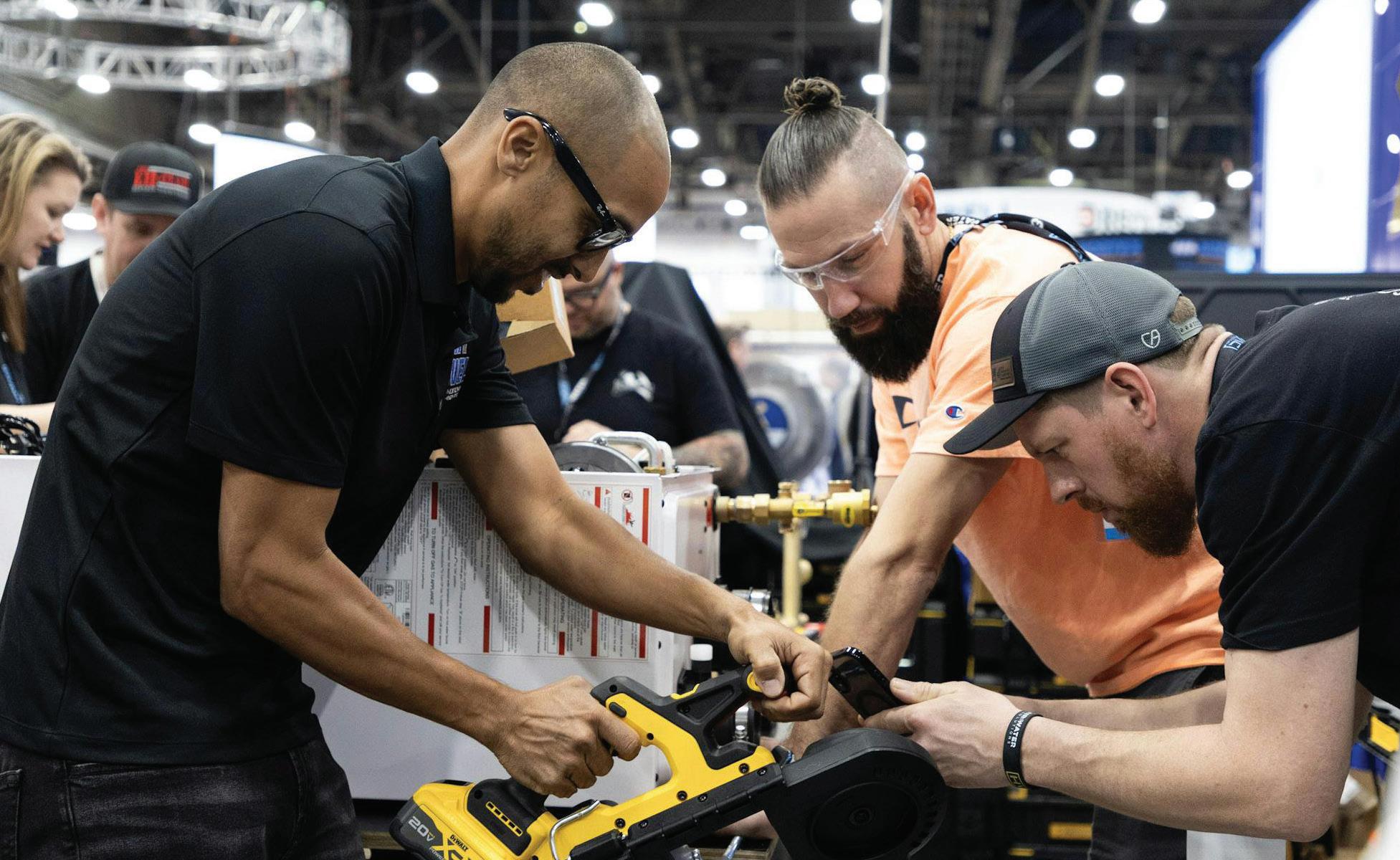
Product demos (and product competitions, such as this pipe-assembly contest) were a common sight out on the expo floor.
AHR Expo
AHR Expo
AHR Expo
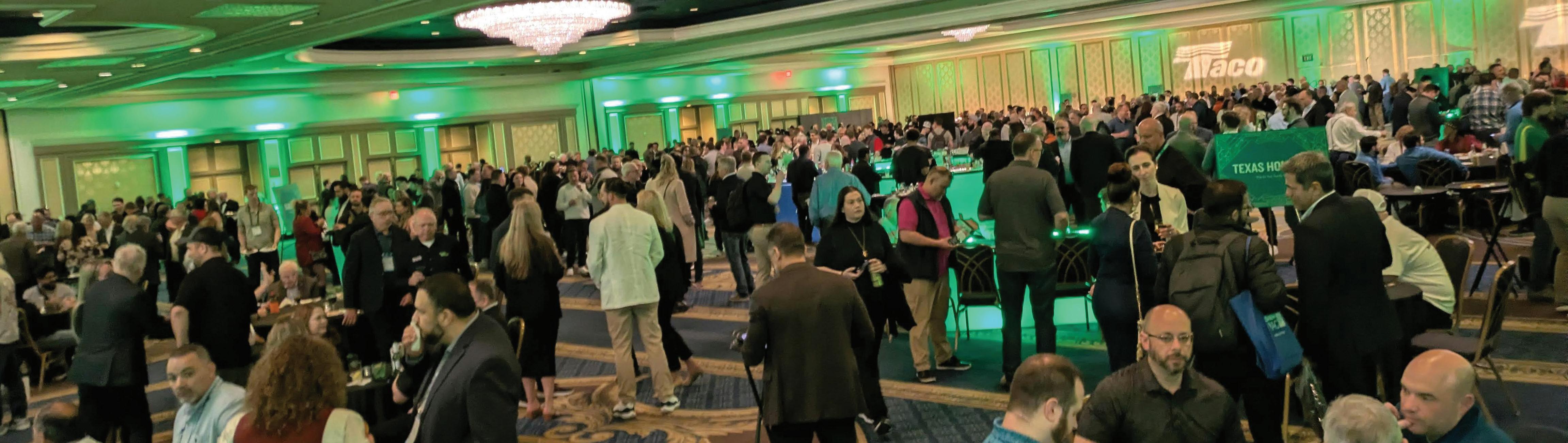
Sponsored events—like the Taco Comfort Solutions party—gave attendees a chance to relax after a long day at the big show and network with other industry pros.
Student engineers participating in ASHRAE youth programming attended curated tours and panel discussions focused on career pathways, field experience and long-term industry growth.
High school students from Clark County Public Schools also participated in hands-on programming, connecting
with manufacturers and contractors to explore career options in HVACR.
“We are so incredibly grateful for our time at the AHR Expo this week. I’ve attended a lot of trade shows, but this one blew my mind. The size, the innovation, the community. I can’t stop telling people about what an exceptional expe-
rience it was. I appreciate the thought that went into the programming for our students; it was relevant, meaningful, and engaging. I left feeling inspired, and I know that our staff and students did as well,” said Lilianna Bonderov, Principal at Central Technical Training Academy.
AHR Expo Heads to Chicago in 2027
AHR Expo will return to Chicago Jan. 25–27, 2027. Registration is expected to open this summer.
This piece was created with the help of generative AI tools and edited by our content team for clarity and accuracy.
Industry pros had the chance to get hands-on with the latest tools and technology.
A group shot of the 2026 Innovation Award Winners.
Panel discussions brought different viewpoints to bear on the hot industry topics.
Taco Comfort
AHR Expo
AHR Expo
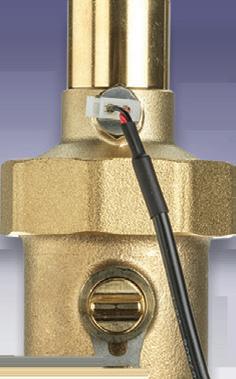
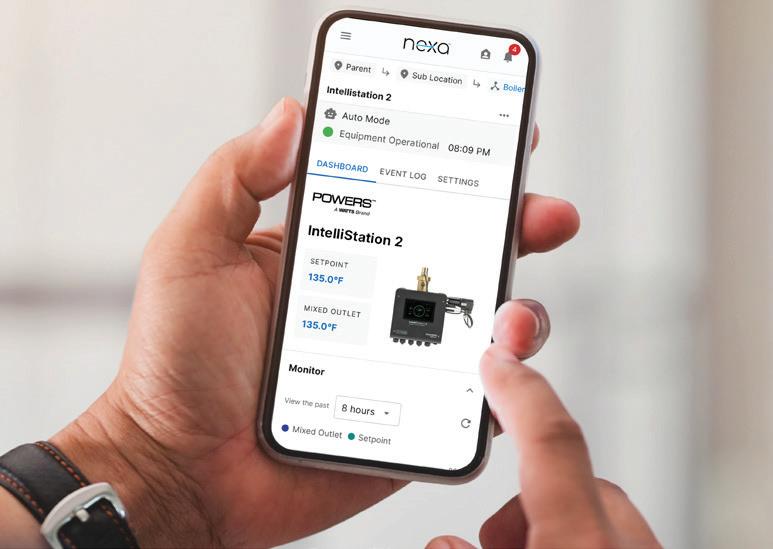
Temper Water. Not Expectations. Temper Water. Not Expectations.
Unmatched Versatility. Effortless Efficiency. Experience the Next Generation of Digital Mixing.
CONSISTENT TEMPS IN
AUTOMATIC BALANCING FOR EFFORTLESS COMMISSIONING
Presented in partnership with Radiant Professionals Alliance
by Thomas Renner
WRITER, JOURNALIST
PA Contractor Slams a Hydronic Home Run
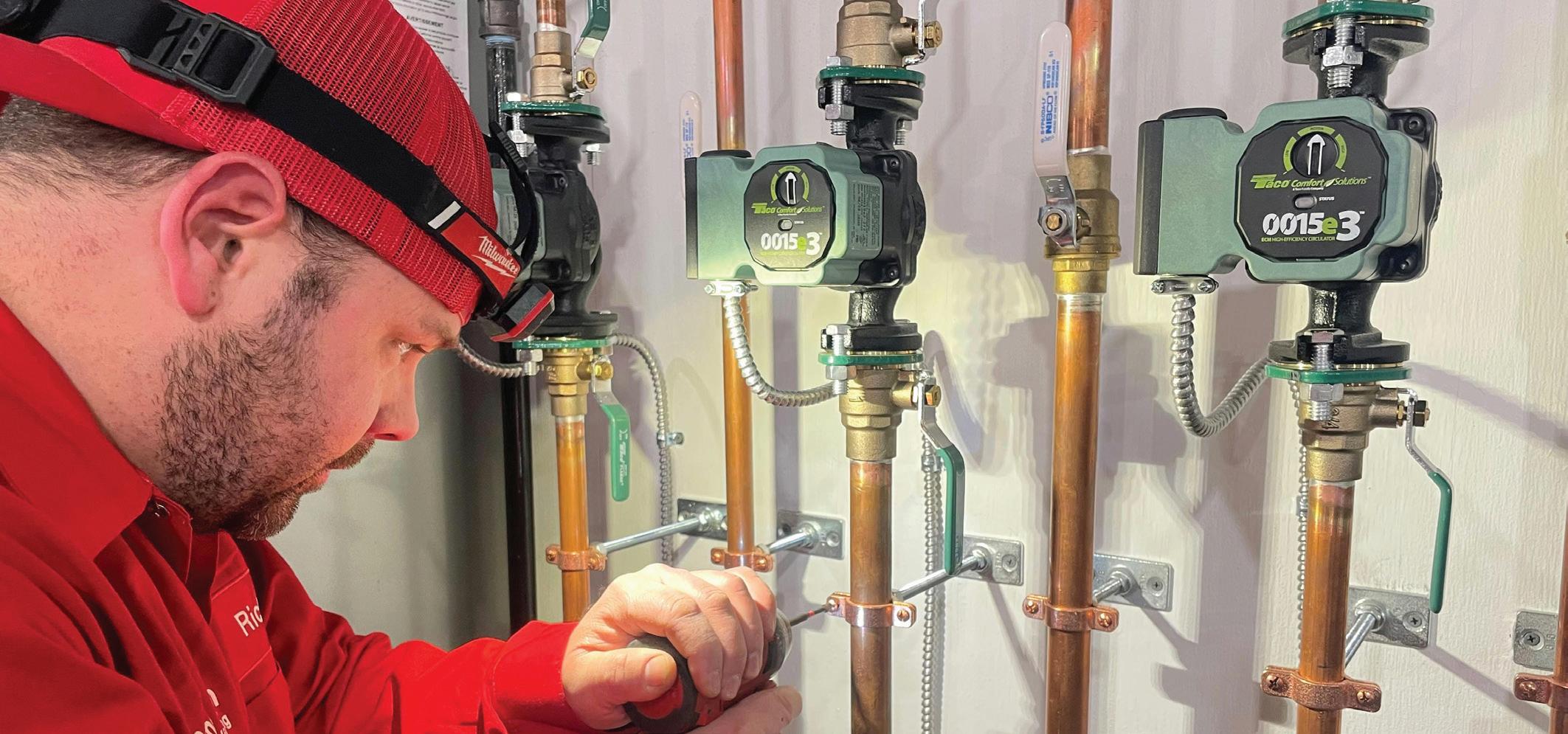
Many plumbing and heating contractors spend “busman holidays” working on projects for family, friends and even their own homes. Rich Romea’s work on his house was more like an extended vacation, requiring nearly a month to replace a boiler, add zones and retrofit piping throughout the three-story structure.
“The first floor of the house was the only one that was comfortable with the old system,’’ says Romea, the proprietor of Romea & Son Heating & Air Conditioning in Pittsburgh, along with his father, Richard Sr. “That’s where the only thermostat was with the old system. The basement was always chilly, and the second floor was always hot.”
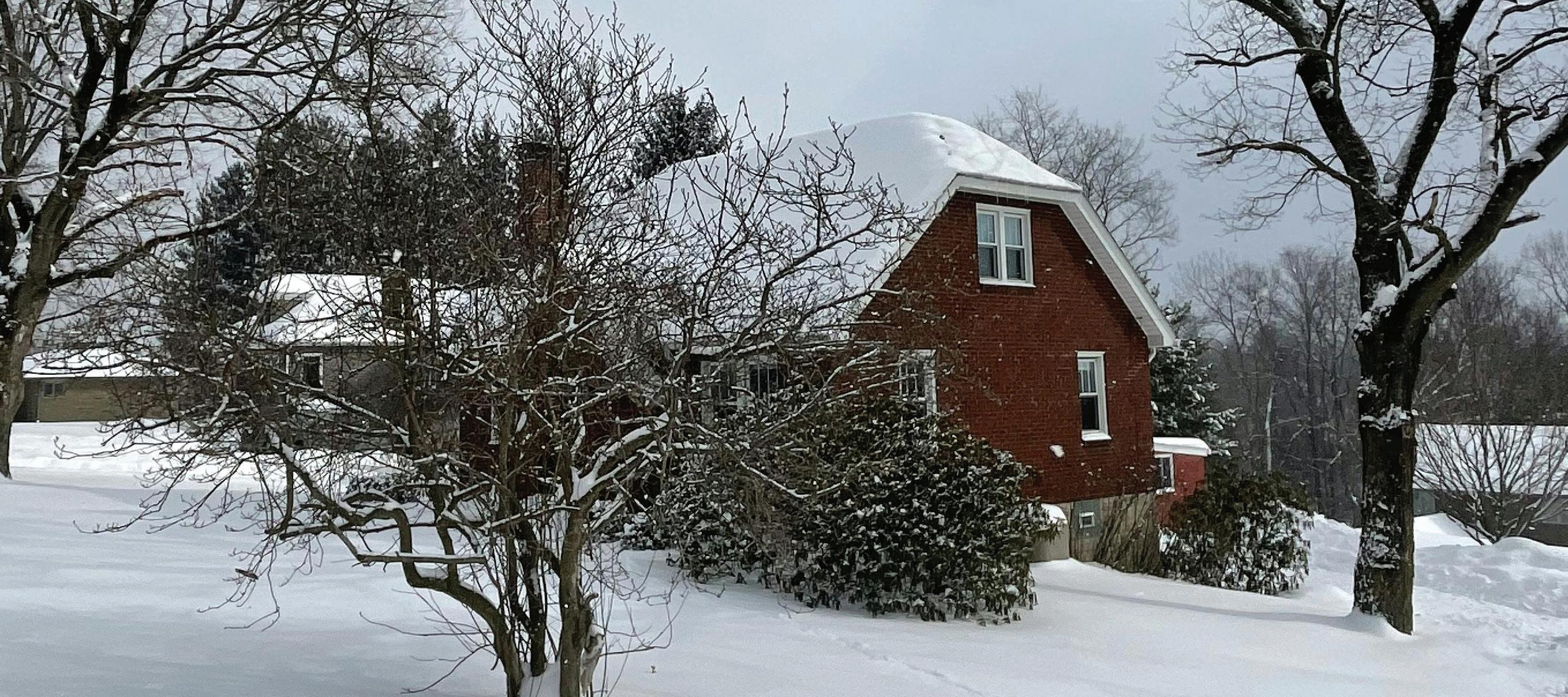
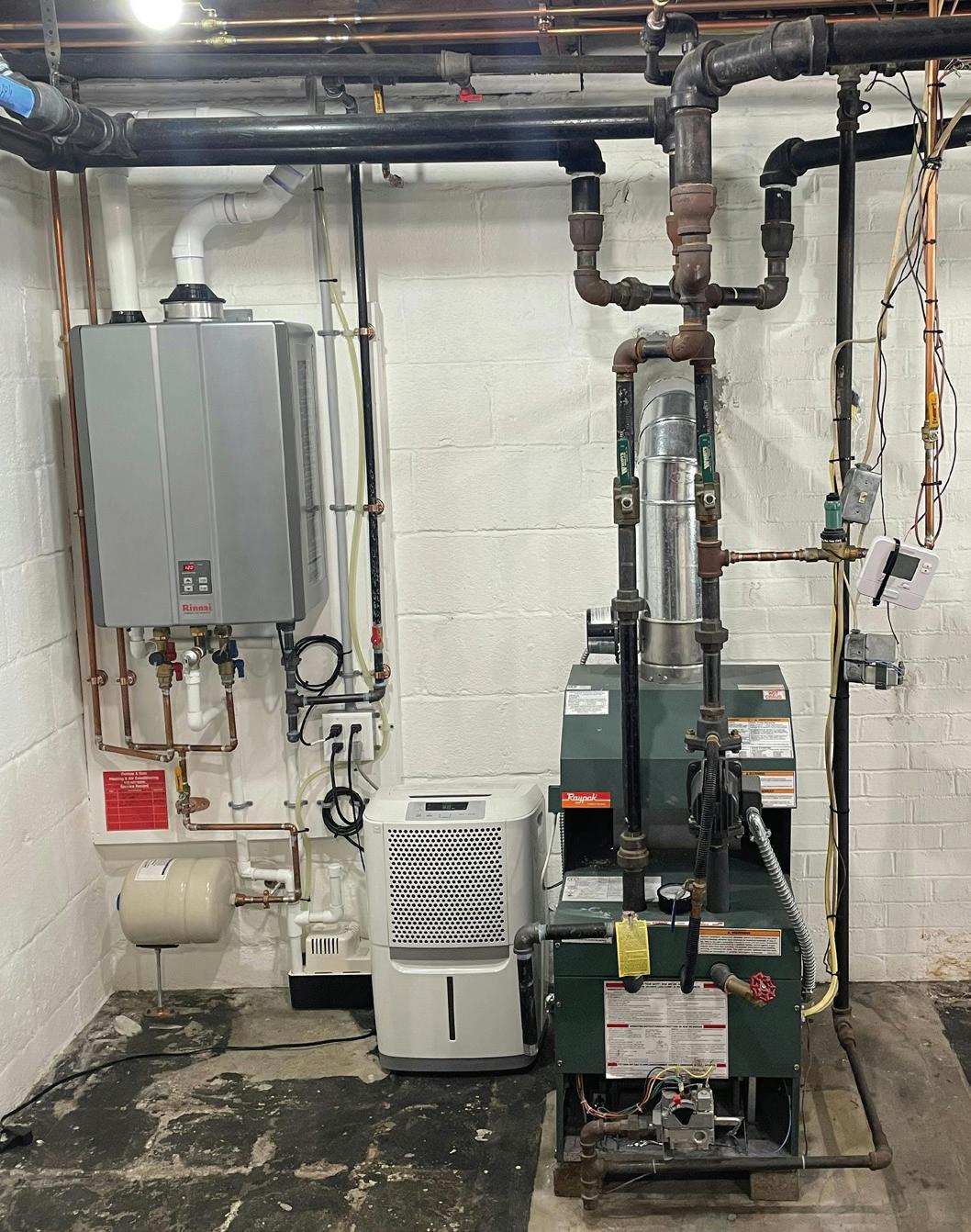
The Cape Cod style house, built in the 1950s, includes 1,600 square feet and three bedrooms. The 30-year-old cast iron gas boiler was inefficient, resulting in high energy bills, and infringed dramatically on basement space.
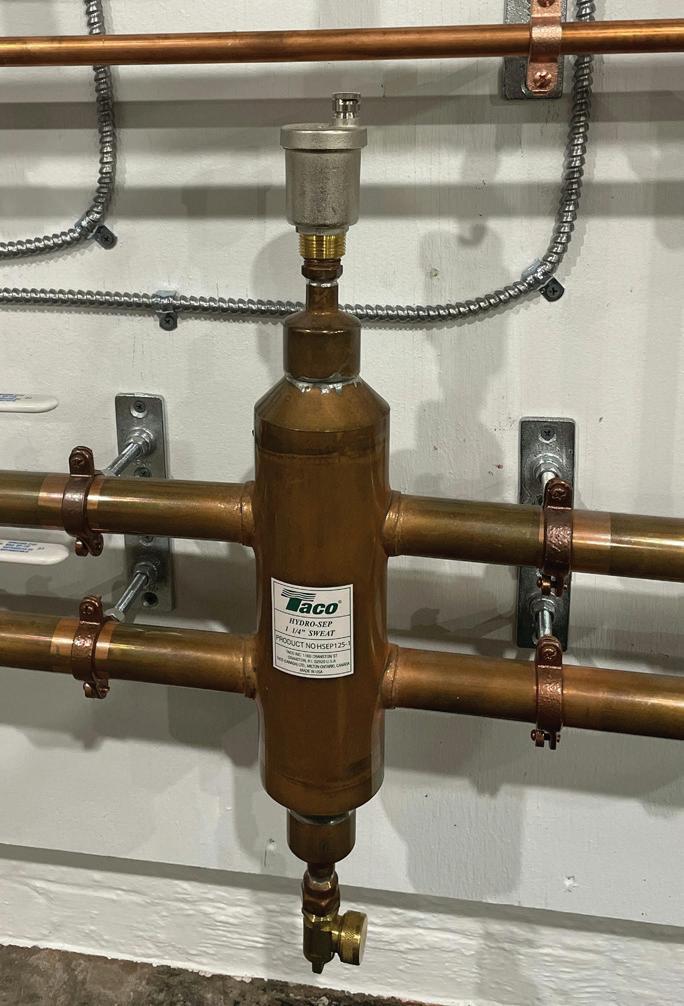
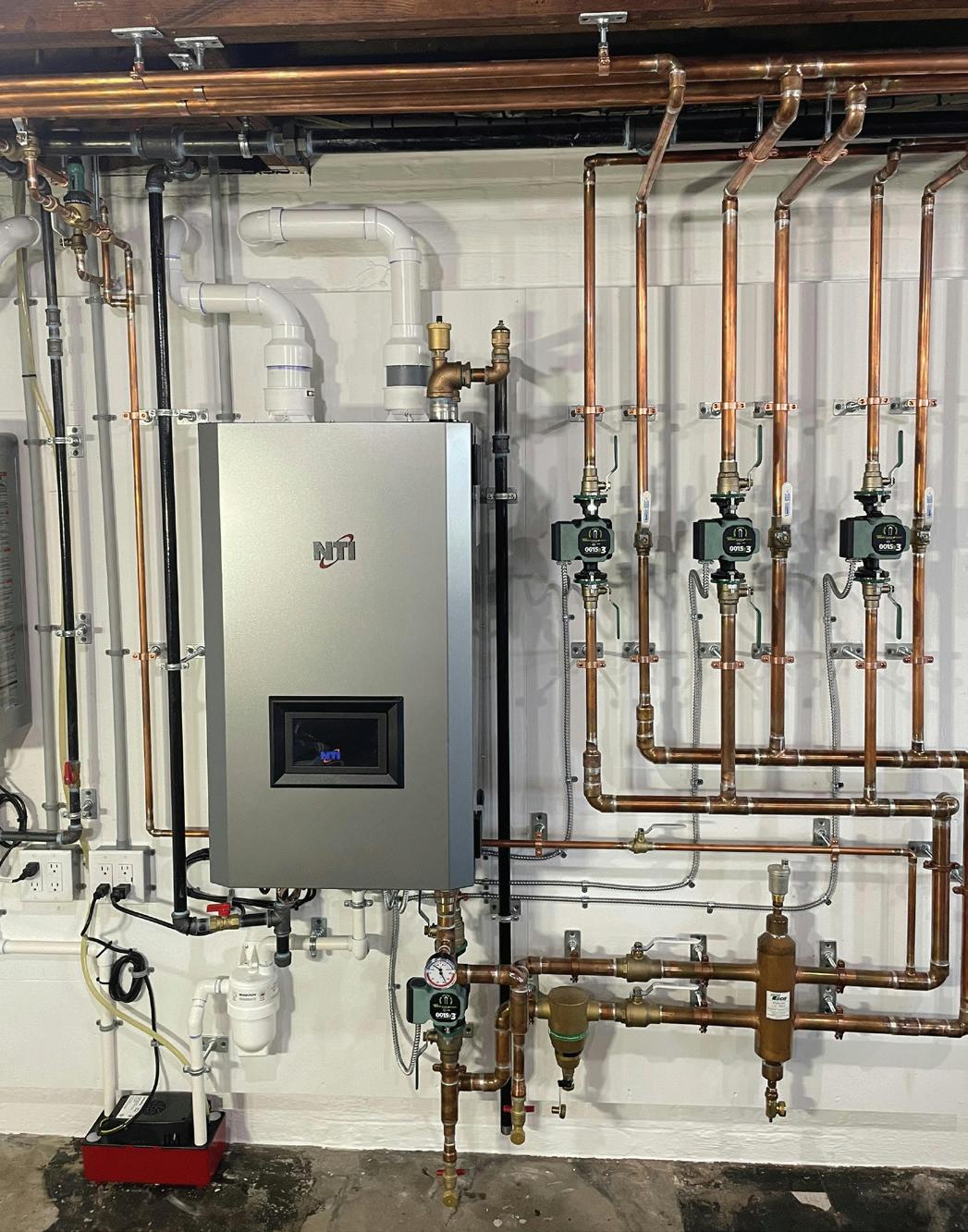
Romea replaced the unit with a wall hung unit from NTI’s flagship line of TFTN boilers. He also installed a Taco magnetic dirt separator to help preserve cast iron radiators and a Taco hydraulic separator, which helps maintain proper water flow. Both components also improve operational efficiency.
Home Sweet Home
Major retrofit brings thermal comfort to multiple levels of Cape Style house.
“I think for Rich the primary advantages from this project will be independent zone control with three zones,’’ explains Mike Mazzarese, who assisted Romea with the
project. “I think it was mostly a comfort factor. He’ll also get some energy savings, clear up some space in the basement and he likes the features of the boiler.”
Romea wrestled with the inefficient cast iron boiler since he purchased the home in 2018. The aging unit pushed energy costs higher, and thermal comfort differed from floor to floor.
“It also took up a lot of space,’’ Romea says. “The basement is a decent size, but it’s not huge. Having a wall mounted boiler gave us a lot more room. If we want to renovate at some point, we’ll have some more space.”
The most challenging part of Romea’s project involved reconfiguring the piping throughout the house—and finding the time to do it. The window for HVAC contractors to work on side projects is frustratingly short. Heating problems in the Northeast can arise any time between October and May, at which point air conditioning systems require attention. With a small team, there is rarely time to devote attention to projects that don’t boost the bottom line.
“There was a little bit of a lull in between seasons around September,’’ Romea says. “We worked on it for four days in a row, which is rare in this business. Then we spent time in additional time getting it done whenever
Rich Romea installed a new boiler, additional zones and new piping throughout his 1,600 square foot house in Pittsburgh to create even heat distribution throughout the home.
An exterior view of the Cape Cod style house.
Rich Romea
Rich Romea
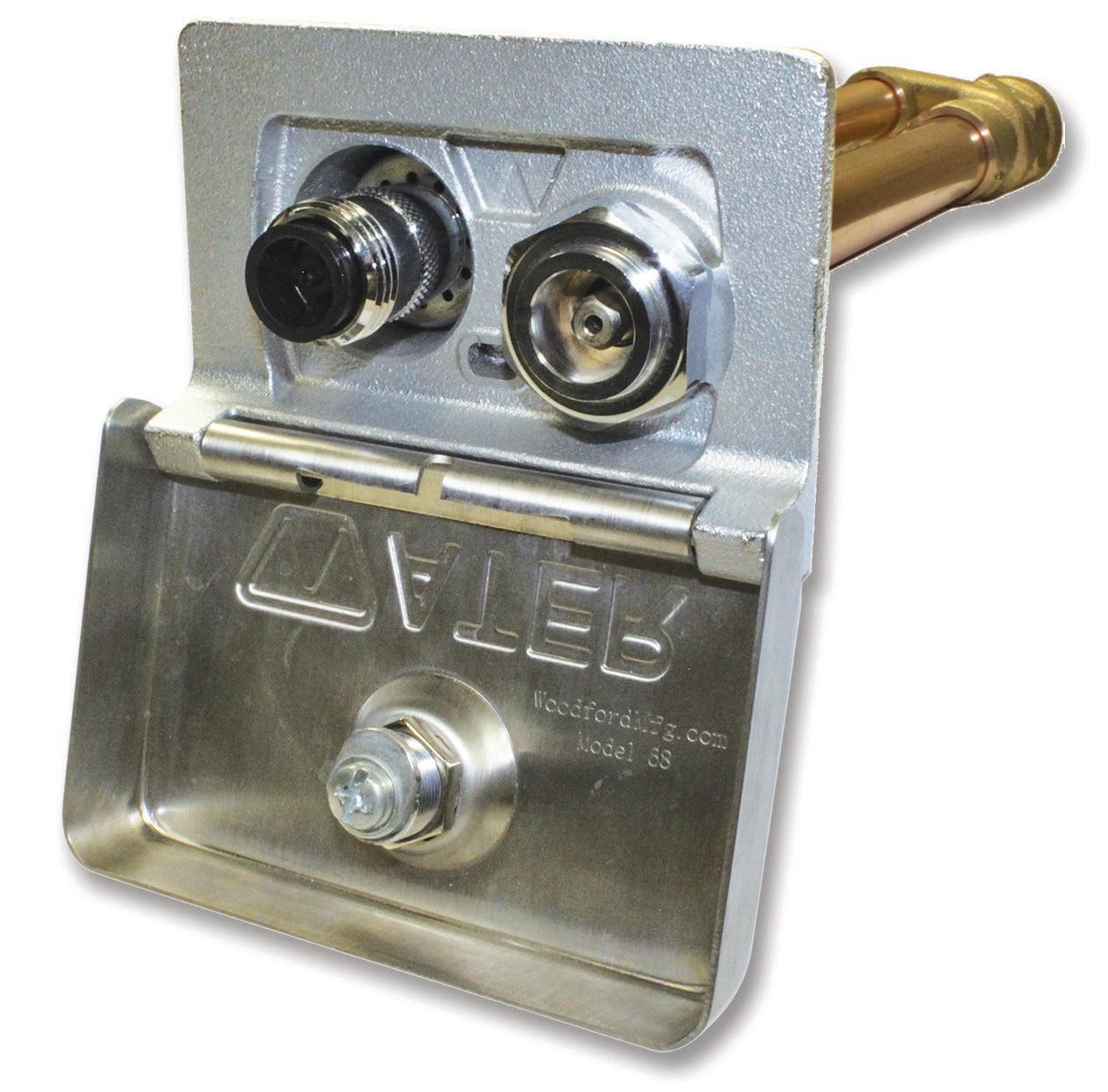
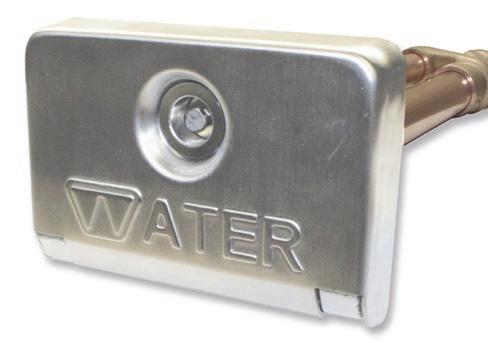
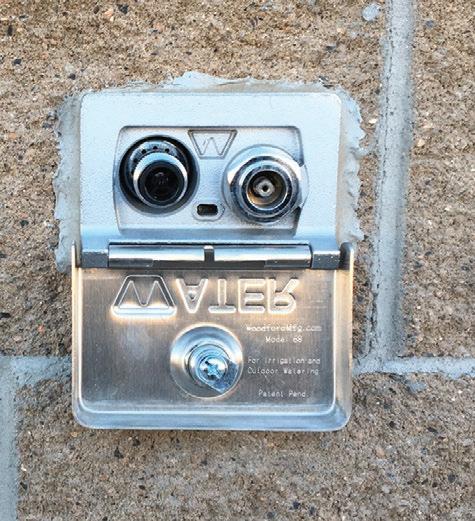
■ Includes high-flow, double-check, field-testable 50HA backflow preventer
■ 16-gauge steel, locking, flip-down cover
■ Sleek profile; protrudes one inch
■ Easier to install than recessed box hydrants
■ ASSE 1053 listed
in with Radiant Professionals Alliance
Presented in partnership with Radiant Professionals Alliance
Hybrid Radiant Tackles Cold, Damp Basements in Indigenous Communities
GF-funded project combines helioPEX™ pipe and Fast Trak™ mats with forced-air systems to stabilize temperatures and create healthier homes.
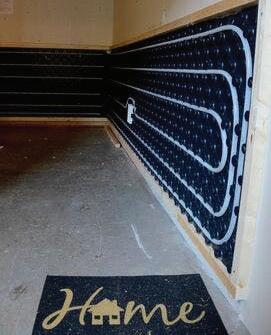
APPLE VALLEY, MN — GF Water Foundation, through its OneGF Impact Fund, has expanded its Blanket of Warmth initiative in Saskatchewan, bringing Uponor radiant heating systems to more than a dozen First Nations homes. The project integrates hydronic radiant floor heating with existing forced-air furnaces to stabilize basement temperatures, reduce moisture, and address chronic mold issues.
Originally launched in 2018 with two homes, the program now serves communities including Cree Nation, Pasqua Cree Nation, Muscowpetung Saulteaux Nation, and Standing Buffalo Cree Nation.
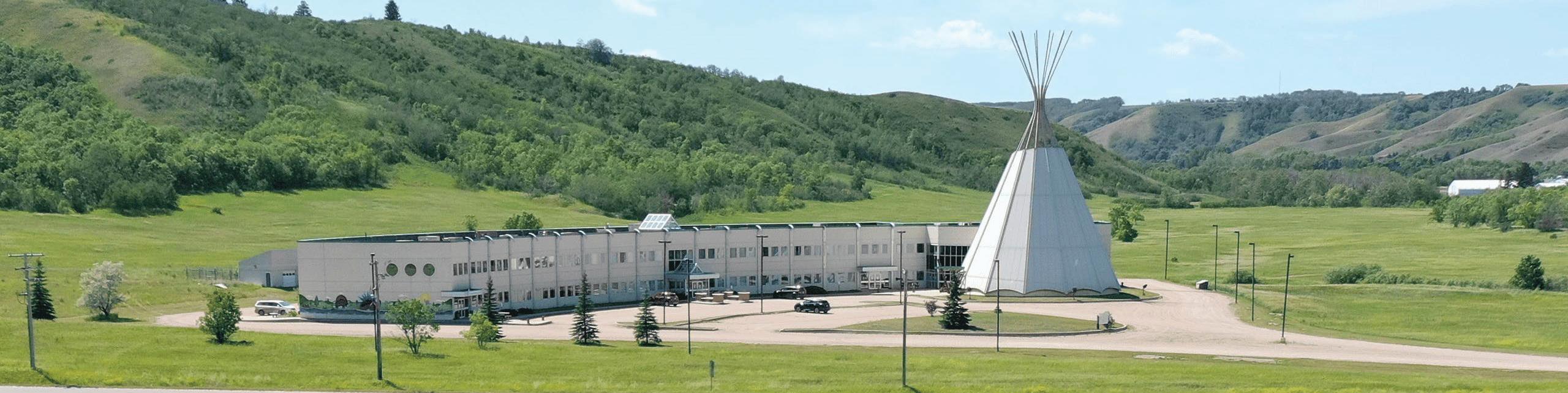
The File Hills Qu’Appelle Tribal Council (FHQTC) is the regional advisory, program, and service organization for the 11 member First Nations affiliated under the File Hills Agency and the Qu’Appelle Agency located in southern Saskatchewan, in Treaty 4 territory.
Radiant Retrofit Stabilizes Temperatures and Controls Moisture
Many homes in the region experienced unstable basement temperatures and persistent dampness, creating conditions conducive to black mold growth. The radiant retrofit introduces consistent, low-temperature heat at the floor level, helping eliminate cold surfaces where condensation can occur.
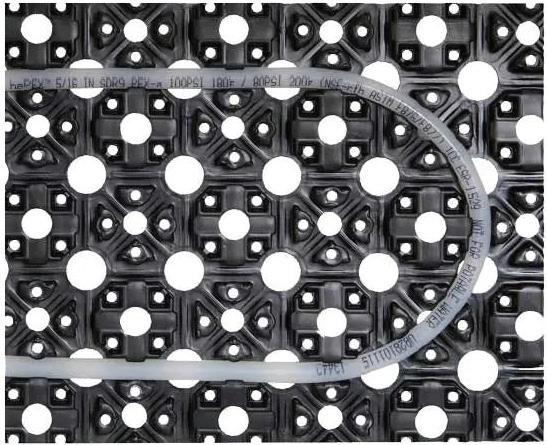
The system uses Uponor helioPEX™ pipe paired with Fast Trak™ radiant
mats, designed for efficient installation and compatibility with existing heating equipment. By integrating with the home’s furnace rather than replacing it, the solution offers a practical upgrade path for improving indoor environmental conditions without a full HVAC overhaul.
Healthier Living Conditions With Lower Operating Costs
Beyond improving comfort, stabilizing basement temperatures reduces longterm health risks associated with mold exposure. The hydronic system also lowers energy consumption compared to electric space heaters previously used to offset cold basement conditions. By removing the need for portable elec-
tric heaters, the retrofit reduces both utility costs and potential fire hazards. The result is a safer, more energy-efficient living space with improved year-round usability.
“In the previous conditions, our basement was far too cold to occupy comfortably,“ says Fred Starblanket of Star Blanket Cree Nation. “Not only has that problem been solved but we also gained peace of mind that we are living in a safer and healthier environment. This project represents healing and providing a good life for our people.”
Grant Funding Expands Community Impact
Funding from the GF Water Foundation enabled the expansion of the program
beyond its original pilot homes. The initiative demonstrates how targeted hydronic retrofits can address both building performance and public health challenges in underserved housing stock.
“I was beyond thrilled to receive this grant from the OneGF Impact Fund to not only expand our work across four reservations but also to raise awareness of this critical issue,” says Nicole Miller, Canada Sales Manager at GF Building Flow Solutions Americas. “Seeing how Uponor product is directly improving people’s lives is a highlight of my career.”
Contractors and hydronic professionals can view additional project details and learn more about Uponor radiant systems at uponor.com
The project integrates hydronic radiant floor heating with existing forced-air furnaces.
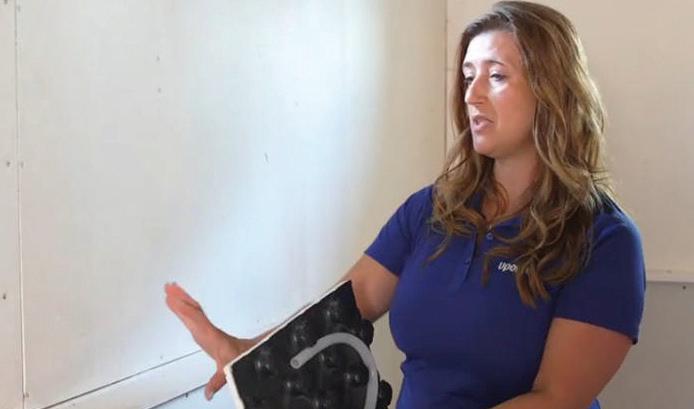
Nicole Miller.
The File Hills Qu’Appelle Tribal Council building.
Fast Trak 0.5 is only 1⁄2” thick, eliminating the need to alter baseboards, moldings or doors.
Presented in partnership with Radiant Professionals Alliance
Hydrosense Warns Closed-Loop Systems May Harbor Hidden Legionella Risks
Design choices and material selection can create conditions for biofilm growth, despite low-aerosol assumptions.
Hydrosense is urging system designers, specifiers and building operators to reassess how closed-loop water systems are designed and managed, warning that common design practices and material choices can unintentionally create favorable conditions for biofilm formation and Legionella growth.
Closed-Loop Systems Often
Assumed Low Risk
Closed-loop water systems are widely used in building heating systems, air-conditioning and cooling applications, and some heat pump installations. Because these systems typically do not aerosolize water, they are often considered to pose a lower risk for Legionella compared to domestic hot water systems.
Hydrosense cautions, however, that this long-held assumption can obscure a range of hidden risk factors— particularly as Legionella counts continue to rise across the United States and water systems grow more complex.
Design and Materials Can Enable Bacterial Growth
Greg Rankin, CEO at Hydrosense comments: “The reality is that modern closed-loop systems are designed to move heat efficiently, not to stop bacteria growing. Some common pipe materials such as PEX, PVC and EPDM can actually give bacteria an early foothold while oversized pipes, dead legs and low-flow areas create
warm, stagnant zones where bacteria like Legionella can thrive.
“Temperature control is a critical factor too. Many low-temperature closed-loop systems operate between an ideal range for Legionella growth. The scope for intermittent use or standby periods makes matters worse, giving the bacteria even more chance to multiply.”
Hydrosense notes that oversized pipework, limited circulation and intermittent operation can all undermine water quality over time, particularly in systems operating at lower temperatures intended to improve energy efficiency.
Greater Focus Needed During Design and Commissioning
In response to these risks, Hydrosense is calling for increased attention to microbiological safety during the design and commissioning stages. Recommended measures include minimizing dead legs, avoiding oversized piping, selecting low-leach materials, improving filtration, and implementing robust flushing and monitoring programs.
The company also highlights the value of rapid, onsite Legionella testing to provide immediate visibility into system conditions and identify potential issues that traditional laboratory culture methods may fail to detect.
Shared Responsibility Across the System Lifecycle
“Legionella rates are rising fast worldwide as global temperatures climb and water systems become more complex,” adds Greg. “That makes it more important than ever to dispel the old assumption that closed-loop systems aren’t at risk.
“Of course, Legionella prevention isn’t the responsibility of one party. It starts with manufacturers and designers, continues through installation and commissioning, and ultimately relies on operators having the right insight and tools to manage systems safely throughout their lifespan. By taking due diligence at every stage, we can reduce risks and protect building occupants from preventable exposure.”
For more information, visit Hydrosense at hydrosense-legionella.com.
GF Flow Symposium Unites Contractors and Engineers to Solve Flow Challenges
Hands-on education and system-level insights for housing, data centers, infrastructure, and industry.
APPLE VALLEY, MN — GF has announced the launch of GF Flow Symposium, a new flagship customer event. The inaugural GF Flow Symposium will take place May 3–6, 2026 in Nashville, TN. Built around the theme “One vision. One future. One flow.”, the event will bring together customers, technical experts, and industry leaders.
Markets That Matter Most
Programming will span a range of markets, including housing, multifamily
construction, data centers and infrastructure. Attendees will explore best practices that support reliability, scalability, and system performance.
Hands-On Learning
The symposium agenda will include educational sessions, panel discussions, and interactive product experiences aimed at helping attendees better understand system integration and installation efficiencies. Planned features include:
• A VIP keynote speaker
• Technical and educational sessions
• Panel discussions with industry experts
• Interactive product showcases
• Hands-on demonstrations and workshops
Contractors, engineers, and project decision-makers interested in attending can learn more and register at georgfischer. com/symposium2026
“We look forward to bringing together leading experts in engineering, construction and Flow Solutions to address the most pressing challenges in our customer industries,” said James Jackson, Head of Business Unit Americas at GF Industry and Infrastructure Flow Solutions.
Legionella bacterium.
Hydrosense
Presented in partnership with Radiant Professionals Alliance
CMS Expands Hydronics Capabilities With Acquisition of Hurley Engineering
Longtime Tacoma firm adds deep mechanical room and system-level expertise across the Pacific Northwest.
TACOMA, WA — CMS, a Meriton operating company and HVAC manufacturer representative serving the Pacific Northwest, announced the acquisition of Hurley Engineering, a Tacoma-based firm known for its deep hydronics and engineered mechanical room expertise. Hurley will operate under the CMS name and continue under the leadership of Craig Center, President of CMS.
The acquisition expands CMS’s hydronics capabilities, adding system-level design knowledge and hands-on troubleshooting experience that supports more complex, performance-driven HVAC applications. By integrating Hurley’s expertise, CMS is better positioned to help contractors and facility owners address high-efficiency and mission-critical hydronic system requirements throughout the region.
Expanded Mechanical Room and SystemLevel Expertise
Founded in 1936, Hurley Engineering brings nearly nine decades of experience supporting hydronic systems across healthcare, higher education, industrial, and other demanding facility types. Its portfolio includes boilers, pumps, heat exchangers, and integrated mechanical room solutions, with a reputation for technical depth and field-level problem solving.
Hurley’s capabilities strengthen CMS’s ability to support complete hydronic systems rather than individual components, helping contractors navigate increasingly complex mechanical rooms driven by electrification, energy codes, and performance mandates.
Supporting More Sophisticated, Performance-Driven Projects
“With the addition of Hurley Engineering, CMS is meaningfully expanding the scope and sophistication of what we deliver,” said Craig Center, President of CMS. “Hurley’s deep hydronics expertise allows us to support more complex, performance-driven projects and provide more complete mechanical solutions. Bringing Hurley into CMS strengthens our leadership in the Pacific Northwest and better positions us to serve our customers and manufacturing partners.”
Backed by Meriton’s National Resources
As a Meriton operating company, CMS is part of a national alliance of HVAC manufacturer representa-
tives focused on strengthening local firms through shared resources, technical expertise, and long-term investment. Meriton includes 20 operating companies across 25 states and a network of more than 2,000 professionals operating with local leadership and established regional relationships.
Hurley Engineering also joins this broader Meriton network, gaining access to national-scale infrastructure while maintaining its local presence and customer focus.
Continued Investment in Talent and System Expertise
Hurley Engineering will continue serving its markets with the same teams and customer relationships, now supported by CMS’s platform and Meriton’s resources. CMS plans to continue investing in technical talent and hydronic system expertise to meet growing regional demand.
The acquisition comes as demand accelerates for high-efficiency, hydronic, and system-level HVAC solutions across the Pacific Northwest, driven by electrification initiatives, aging infrastructure, and stringent performance requirements in healthcare, higher education, and industrial facilities.
Financial terms of the transaction were not disclosed.
To learn more visit www.hurleyengineering.com
Cerro Rebrand Signals Long-Term Investment in US-Made Copper Tubing
New logo and website underscore customer-driven improvements, knowledgeable teams and a more responsive contractor experience.
SAUGET, IL — Cerro Flow Products LLC® has introduced a comprehensive brand refresh designed to reflect the company’s strategic direction and reinforce its commitment to US-manufactured copper tubing for the plumbing, refrigeration, HVAC and industrial OEM markets.
With more than 100 years of domestic manufacturing experience, Cerro’s updated brand underscores its long-term investment in delivering high-quality copper products made in the USA.
The new identity was shaped by feedback from customers, partners and employees. The company’s new logo and redesigned website, cerro.com , are designed to make it easier for contractors, wholesalers and OEM partners to access product information,
connect with knowledgeable teams and do business efficiently.
Built on Innovation, Quality and Partnership
Cerro’s refreshed brand highlights the attributes that differentiate the manufacturer:
• Ongoing product innovation and quality control across copper tubing lines
• Partner-driven support to help customers make informed decision
• Empowered, knowledgeable teams focused on solving problems
• A strong foundation built on more than a century of US manufacturing
• A seamless, easy-to-do-business approach at every customer touchpoint
US-Made Copper Solutions
“Our refreshed brand represents who we are today and the direction we’re headed,” said Buddy Dailey, President of Cerro Flow Products LLC. “Our customers rely on us for consistency, partnership, and US-made copper solutions they can trust.”
To learn more visit cerro.com
Four for Efficiency in Office and Field
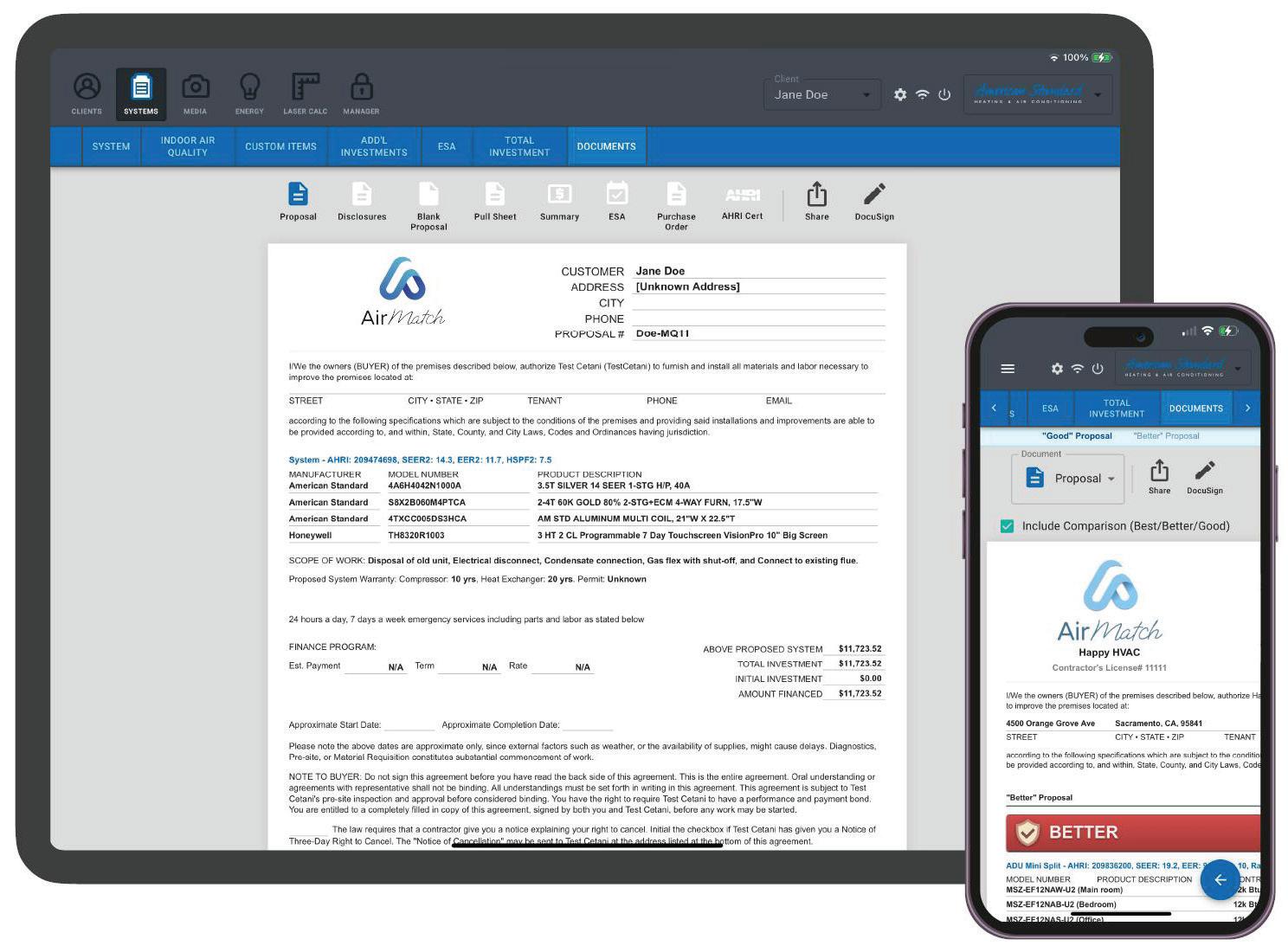
AirMatch ( www.airmatch.com 916/877-8170) is an online platform for generating professional proposals in real time, on the fly ready to be DocuSigned or printed, for building AHRI rated systems for unitary and ductless, providing accurate industry standard load calculations.
Maintaining your company pricing and gross margin, the software performs accurate room-by-room load calculations allowing compliance with building codes and proper equipment sizing for various types of structures and provides an energy savings analysis with the customer’s utility bills. In addition, it offers live real-time financing options from a range of partners and automatically provides the homeowner with necessary documentation for rebates. Sales data is exportable to QuickBooks for financial management.
Pricing: monthly and annual plans scaled by number of users.
Clearstory
Clearstory ( www.clearstory.build ) is a Change Order communication and workflow platform purpose-built for commercial construction. GCs, Specialty Contractors (including plumbing and HVAC contractors) and Owners use Clearstory to streamline T&M Tag and COR (Change Order Request) workflows, align in real time, and get Change Orders closed faster.
Clearstory is available in three tiered plans. The Basic plan is free and offers teams a simple way to get started, with up to five T&M Tags and five Change Order Requests each month. The Standard plan unlocks unlimited Change Orders and adds powerful tools for pricing, sharing, and tracking change events across projects. The Professional plan is built for enterprises managing projects across multiple offices and includes advanced features.
All plans provide a live COR log that links to every COR PDF, version history, and documentation trail, helping teams move faster on approvals, protect revenue at risk, and build trust with project stakeholders. The Standard plan adds change notifications, analytics and reporting, and tools to manage company
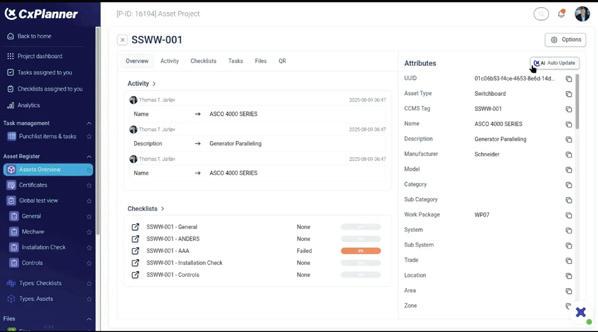
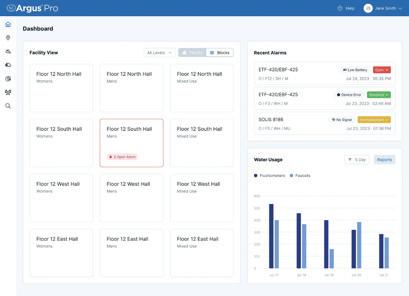
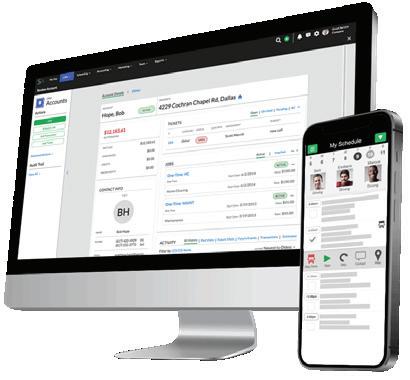
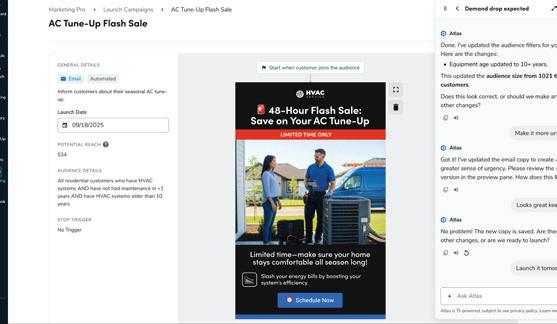
Reviews of the AirMatch sales and design platform, the Clearstory change order platform, the Corfix compliance and accident reporting platform, and the Crew Console scheduling app.
labor, material, and equipment rates. The Professional plan includes everything in Standard, plus features built for scale like multi-office management, API access, integrations, and configurable allowances.
Clearstory’s mobile app and cloudbased T&M log allow field teams to capture photo documentation and digital signatures for field-directed work. T&M Tags can be linked to CORs using pre-approved rates or created from scratch. The platform’s reporting tools provide insights such as days aging, read receipts, and contract summaries to support billing and project reviews.
Pricing: the Basic plan is free. The Standard and Professional plans, which include training, custom reporting, API access, and single sign-on, are billed annually.
Corfix
Corfix (www.corfix.com) is a platform for the construction industry, including
subcontractors, that offers compliance and accident reporting from the field, time tracking, and the ability to track compliance in real time.
The software has numerous fully integrated features including dozens of pre-built templates along with the ability to generate custom safety forms tailored to your workflows, real-time certification grading, and QR code binders with version control. Certifications are stored, tracked, and accessible in the field, and supervisors can verify compliance instantly, and receive expiration alerts.
The software provides digital job hazard analyses, fall protection checklists, and refrigerant handling logs. Crew members can fill out reports onsite from their phones, complete with photos, signatures, and GPS location. Incident information fields include data & time; address; name of employee; job title; and
incident description. As soon as a form is submitted, it appears in the dashboard, with flagging for high priority issues. Dozens of pre-built form templates. You can require safety documentation from crew before punching out.
Crew Console mobile app is a platform configured to manage crews and projects in the field on any web-connected device. Designed for teams that meet at a central shop, it handles crew scheduling utilizing a simple drag-anddrop interface, time keeping, and job tracking. Capabilities include SMS notifications, a “big screen” view, and centralized documentation.
With SMS Notifications, once you assign personnel and equipment to a job on the whiteboard-style calendar, a single click sends a text notification to the entire crew.
While field employees can use the app to view their schedules (employees can scan a QR code next to their name and have their weekly schedule texted to them instantly) , according to the developer the text option is often preferred, enabling crew members to know directly from the text what they are doing and who is going with them, and can navigate to the project location. With centralized documentation, schedulers can attach photos, notes, plans, and videos to specific jobs. Field employees can access these documents in one place and upload their own files or photos directly from the job site. Included advanced scheduling tools enable schedulers to easily track availability and receive alerts for double booking. If a project runs over, “downstream” jobs can be pushed back without rebuilding the entire schedule. A labor forecasting tool helps visualizing upcoming workloads to determine if you need to adjust staffing levels.
Pricing: fee per month/person. Free trial available.
Patti Feldman writes articles and web content for trade magazines and manufacturers of building products.
by Rich Sanger
The 10-Minute Credibility Check That Decides Who Gets the Call
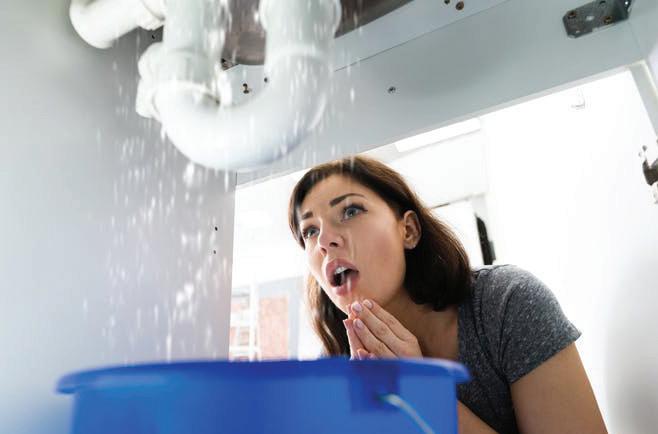
It’s 7:12 p.m. A homeowner is standing in the kitchen with a leak under the sink. They do what people do when something breaks fast: they text someone they trust.
“Do you know a good plumber?” Their neighbor replies: “Call my guy Mike. He’s great.”
That referral still matters. But here’s what happens in many cases: before they tap “call,” they search you up. Right there in the kitchen. In under 10 minutes they decide, “This looks legit,” or “Something feels off.”
If it feels off, they often do not call Mike. They call the next option.
This “referred, then researched” moment is where good shops lose easy jobs. Referrals get you in the conversation. Research decides who gets the call. When relationship trust is strong but research trust looks sloppy, the homeowner feels uncertainty. Uncertainty sends them to the next name, and your office never even knows the call was lost.
Try running your own 10 minute credibility check. Open an incognito browser on your phone and search your business name. Don’t grade yourself on marketing. Grade yourself on “real, current, reachable.”
Google Business Profile Basics
This is usually the first stop. First, confirm you actually have a Google Business Profile and that you control it. If a homeowner searches your name and nothing shows up, or the listing looks unclaimed or incomplete, that alone can stop the call. Make sure the basics match reality:
• You have an active Google Business Profile and it is claimed by your company
• Primary category matches your trade
• Service areas list towns you truly serve
• Hours are correct
• Phone number is correct and rings where it should
• Website link goes to the right site
• Services list includes your core work If any of that looks wrong, homeowners wonder what else is wrong.
Photos: Proof Beats Promises
Homeowners want to see a real local operation that takes pride in the job. Keep it simple:
• Truck with your logo
• You or your team on site
• Clean finished installs
• Before-and-after photos when it helps
• Protected work areas and tidy cleanup
Avoid stock photos and do not use AI-generated photos. A good baseline is 15 to 25 real photos on your Google profile.
Reviews: Patterns Matter
Homeowners skim. They are looking for patterns, not a perfect score.
• Recency: reviews in the last few months
• Specifics: what you did and how you handled it
• Owner responses: short, professional replies Red flags include a long gap with no reviews, reviews that all sound the same, or negative reviews with no response.
Website
Most contractor sites lose calls because their website is unclear on mobile. A homeowner wants three answers fast:
• What do you do?
• Where do you work?
• Website is vague or confusing on mobile
• Broken contact form
• No clear service area listed
• Duplicate listings with different info
• They can’t reach anyone when they try
A Simple Fix Plan
Days 1 and 2: Run the check. Search your business on your phone. Tap your number. Confirm it works. Fix Google basics: category, hours, service area, website link, services list.
Days 3 and 4: Add proof. Upload 15 to 25 real photos to your Google profile. Focus on truck, team, clean installs, and professional jobsite shots.
• How do I reach you right now?
To ensure your contractor website gets calls, make sure the home page states your trade and service area, includes tap to call, and uses a mobile-friendly contact form.
Wrong Numbers And Duplicate Listings
This is a quiet revenue leak. Old phone numbers floating around online can steal calls. Duplicate listings confuse people. Mismatched business details can look sketchy even when you’re legitimate. Homeowners may not explain it. They just move on.
Missed Calls Lose Jobs
Even with a clean online footprint, you lose if nobody answers. Homeowners call while stressed and short on time. If they hit voicemail twice, they start dialing down the list.
At minimum: clear voicemail, fast callbacks, and, if possible, a simple text-back option. Setting expectations helps too: “We call back within 15 minutes during business hours.”
Red Flags That Kill The Call
These are common “nope” signals:
• Wrong phone number or it routes somewhere strange
• No real photos, or mostly stock
• No recent reviews
Days 5 to 7: Restart review momentum. Ask three recent happy customers for reviews. Then respond to every review with short, professional replies.
Optional week 2: Clean up obvious wrong numbers and duplicates you find online. If your website is thin, add a couple clear service pages for your biggest jobs, and make sure each page states your service area and has an easy contact path.
Keep It Running In 30 Minutes A Week
This is the maintenance that keeps the credibility check from drifting:
• Add three job photos
• Ask one customer for a review
• Respond to reviews
• Quick search for wrong listings or old numbers
Don’t Let A Strong Referral Die Online
Referrals still win. They get your name mentioned. But the phone rings when the online credibility check makes that referral feel safe.
Run the check on your business from your phone. Fix the handful of issues that create doubt, and you’ll keep more referred jobs from slipping away.
Rich Sanger owns Streetlight Local and works with contractors and home-service trades, including plumbers and landscapers.
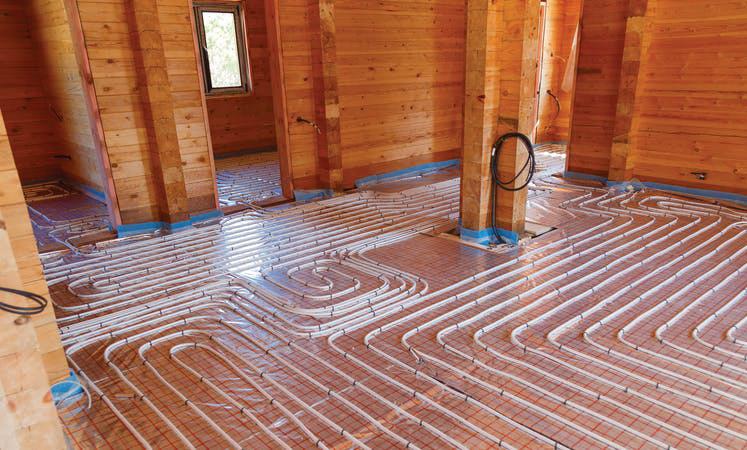
Integrating Hydronic Heating Into Timber-Frame Construction
Contractors who want to integrate hydronic heating into timber-frame construction should be aware that these projects demand more front-end coordination than a typical stick-built project. However, the payoff is a quiet, even, high-comfort system that matches the premium aesthetics of exposed wood structures. When contractors plan for cross-linked polyethylene (PEX) routing, structural constraints, and thermal movement together with the frame and floor system, they can deliver systems that perform flawlessly without compromising the look or integrity of the timber frame.
Why Timber Frames Change the Game
Timber-frame construction puts gravity and lateral loads into fewer, larger members. It relies on exposed beams and open spans as defining architectural features. That differs from conventional wood framing, which distributes loads across many repetitive members, burying most of the structure behind finishes.
Hydronic systems in timber-frame homes often serve large volumes, tall ceilings, and extensive glazing, making radiant floors or panels a natural fit for comfort and efficiency. At the same time, those big timbers and long spans reduce framing “real estate” for mechanicals and increase the risk that a poorly drilled hole or poorly placed manifold will be visible forever.
Plan Hydronics Alongside the Frame
Start hydronic designs for a timber frame during the schematic layout, prior to submitting the drawings to an architect or structural engineer for the stamp.
Coordinating the design early allows the mechanical designer and timber framer to align post locations, bay spacing, stair openings, and chase locations with manifold placement, tube routing, and zone breaks.
At a minimum, a contractor should request:
• Reflected ceiling and framing plans that show beam sizes, directions, and bearing points
Learn how to plan, route, and install hydronic radiant systems in timber-frame structures to deliver quiet, efficient, and visually unobtrusive heating solutions.
• Flooring details, including any structural insulated panels (SIPs), nail-base panels, or overbuild subfloor packages that will receive radiant tubing
• Proposed furniture layouts and traffic patterns to help refine radiant zoning and surface temperature expectations in large open rooms
Coordinating these pieces early also makes it easy to incorporate neutral language references to resources like timber frame home floor plans without being locked into one specific design.
Routing PEX Through Big Timbers and Heavy Floors
Running PEX through a timber frame is a lot different than drilling standard joists. The stakes are higher because each timber carries more load, and many connections remain exposed. Structural engineers and timber framers typically impose strict limits on hole size and placement, especially near bearing points and joinery.
Some things you should consider include:
• Avoid drilling primary frame members whenever possible. Instead, route supply and return mains through framed service chases, partition walls, or dropped ceilings
• Where structural designs allow for drilling, follow engineered hole charts and keep penetrations in the middle third of the member depth and clear of mortise-and-tenon joinery or steel knife plates
• In wood-framed radiant floors, consistently space tubes and carefully plan staple-up or panel layouts to maintain coverage without forcing tubing into structurally sensitive locations In some projects, a hybrid floor build-up above structural decking, such as grooved panels or over-pour systems, allows tubing to sit in a sacrificial layer, leaving heavy timber or SIP structure intact. That approach can simplify drilling patterns and help when coordinating with hardwood flooring installers.
Managing Thermal Expansion in Wood Structures
Hydronic systems change temperature daily and seasonally, and timber structures change dimensionally with both moisture and temperature; thus, expansion management must account for both systems. Uncontrolled expansion and contraction of materials can cause issues such as squeaks, seasonal gaps, loosened fasteners, and stress in tubing at penetrations.
Key tactics include:
• Use appropriate expansion loops or offsets whenever PEX goes through tight holes in thick members or passes between conditioned and less-conditioned spaces
• Keep operating temperatures within the manufacturer and flooring limits. Lower-temperature radiant designs with good output area reduce stress on the tubing and wood
The Vascular Home: Why the Future of Hydronics Has No Straight Lines
Every veteran hydronic professional is familiar with the sensation of entering a true “masterpiece” of a mechanical room. It is a triumph of industrial geometry: rigid copper lines running in perfect parallel, laser-straight runs of PEX being clipped to unistrut, and the gleaming repetition of 90-degree elbows. We consider this symmetry to be a badge of craftsmanship. We take photos of it. We post it on social media. We judge our peers by the straightness of their lines.
But physics has another perspective on it. Physics does not perceive that wall of right angles to be art but sees it as a “parasitic load.”
For decades, the hydronics industry has been battling a war against friction, and the way it typically resolves this is with more horsepower. We accept that all hard turns in a piping system lead to turbulence, pressure drop (head loss), and noise. We have designed our systems according to the limitations of manufacturing—because it is easier to extrude straight pipe and cast T-fittings—not according to the laws of fluid dynamics. We make water go around corners it doesn’t want to go around.
But nature has been moving fluids for 400 million years (blood in veins, sap in trees, water in river deltas), and not once has it employed a 90-degree turn.
We have hit the limit of what is possible in terms of combustion efficiency; modern condensing boilers are pushing 98% AFUE. We are following dwindling returns on the heat source. The next major step in hydronic efficiency will not be from a superior fire. It will come from giving up “industrial geometry” in favor of the physics of life.
The Tyranny of the Right Angle
In order to understand why the future is curved, we must first understand the violence of the right angle. When water flowing at 4 feet per second hits the hard 90-degree elbow, it doesn’t just turn; rather, it crashes.
The liquid moves away from the inside wall, forming a low-pressure eddy, a “dead zone” of swirling turbulence. This limits
Historically, mechanical contractors could not pipe like this. You can’t so easily cast a bronchial tube-like or root system-like bronze fitting. We were stuck with the T-fitting, the elbow, and the manifold bar because they were buildable, and not because they were efficient.
But that manufacturing barrier has finally been broken.
When Piping Mimics Biology
The advent of Topology Optimization (AI-driven design software) and Additive Manufacturing (3D printing) has brought biomimetic design from the fields of theoretical physics to the supply house. We can now print manifolds, heat exchangers, and impellers with a reduced resemblance to industrial machinery and more like coral reefs.
The efficiency gains are not marginal, but exponential.
the effective diameter of the pipe, thereby increasing the velocity of the remaining water and resulting in an increase of the friction head. This is why we are forced to do complicated “equivalent length” calculations when sizing pumps. A single elbow isn’t just an elbow; in terms of friction, it’s actually 2 to 5 feet of straight pipe.
We have been dealing with this friction with electricity for a century. We install huge pumps called circulators to push the water around the obstacles that we put in their path. But what if there was no obstacle?
The Science of Flow: The Concept of Constructal Law
The roadmap for this transition is in the work of Professor Adrian Bejan at Duke University, who is the father of Constructal Law.
While the concept sounds academic, the principle is intuitive to anyone that has seen rain run down a windshield. Bejan’s law states, “For a finite-size system to persist in time (to live), it must evolve in
such a way that it provides easier access to the imposed currents that flow through it.”
In trade terms, nature is always evolving towards the path of least resistance. A river doesn’t strike a hard 90-degree turn; it branches into a delta in order to slow down and spread water efficiently across a plain. A human lung branches out into progressively smaller and smaller airways (bronchioles) in order to provide as much surface area as possible without compromising on the pressure. This is not accidental. It is the mathematical optimization of flow.
Researchers at the University of Illinois Grainger College of Engineering recently used 3D printing to fabricate “power-dense” heat exchangers using these organic geometries. By simply letting the shape of the structure emulate biological forms, they maximized the flow channels inside the structure to minimize drag and maximize heat transfer.
The result? They gained a 2000% increase in performance density when compared to traditional shell-andtube designs.
Let that number sink in. This isn’t a 5% gain in AFUE. This is a basic recasting of the question of the amount of heat we are able to move through a given volume of space.
According to in-depth reviews by the
Institutes of Health (PMC): Review on drag reduction in nature-inspired flow structures. Link: pmc.ncbi.nlm.nih.gov/articles/PMC8227078/
by Mike Fleschner and Michael Richter MANAGING DIRECTORS AT GLC ADVISORS
Key Drivers to a Successful MEP Sale — from Bankers that Advise Them
Not all M&A markets are created equal, and right now MEP owners are operating in a uniquely powerful one. Every week, we speak with founders who can feel it happening in real time: projects are expanding, customers are investing, and buyers are circling with a level of interest that would have been hard to imagine even a few years ago. The opportunity for MEP owners is clear; the more important question is what separates the MEPs that simply participate in today’s market from those that command the strongest buyer interest and outcomes.
Mechanical, electrical, and plumbing (“MEP”) companies are already demonstrating strong momentum in 2026. Demand for essential infrastructure—both new construction and renovation—energy-efficiency investment, and a surge in data center development are fueling growth across the sector. As a result, many MEPs are delivering resilient performance and attracting strong interest from both strategic and private equity acquirers.
At GLC Advisors, we see these dynamics play out regularly in our conversations with MEP owners. There is no single formula for success, and valuation outcomes can vary dramatically based on preparation, positioning and execution. The transaction journey for an MEP is never one size fits all—it requires pre-transaction planning and preparation, thoughtful market positioning, and clear, actionable growth opportunities for each MEP. For MEPs that are planning to strategically grow or are starting to plan for an exit, the following drivers consistently separate good outcomes from great ones.
Project-Based Margin Profile
High-performing MEPs demonstrate a consistent track record of meeting or exceeding estimated contribution margins. Buyers pay close attention to whether a company consistently delivers what it promises—a signal of disciplined bidding, strong project controls, and high-quality leadership. In recent transactions, we’ve seen steady margin outper-
For MEPs that are planning to strategically grow or are starting to plan for an exit, the following drivers consistently separate good outcomes from great ones.
formance quickly rise to the top of buyer diligence priorities. These attributes give buyers confidence in the predictability and quality of future performance which often translates into stronger valuations and a more competitive process.
Services, Services, Services!
Recurring maintenance and services work play a critical role in supporting predictable, high-margin revenue alongside project-based revenue streams. Acquirers consistently favor MEPs with established service divisions (greater than 20% of revenue) capable of generating steady demand through preventative maintenance programs, 24/7 emergency response capabilities, long-term service contracts, and embedded or on-site technicians and support models. In recent MEP transactions, longstanding service operations—including maintenance, retrofit, and building systems work—stood out to buyers by deepening customer relationships and positioning these businesses as scalable, recurring-revenue platforms.
present a low risk profile and greater du rability through economic cycles. Expo sure to high-growth sectors such as life sciences, healthcare, data centers, power and utilities and advanced manufactur ing adds confidence to support growth projections. Additionally, MEPs that blend renovation and retrofit work with opportunistic new construction projects often deliver more predictable results across changing market conditions.
Leading Indicators
Operational Excellence: Built to Scale
Leading MEPs have created operational platforms that support growth without sacrificing execution or customer experience. Intentional geographic expansion through satellite offices allows MEPs to grow beyond their local markets while maintaining centralized oversight, standardized processes, and a cohesive culture.
Vertical integration across design, fabrication, installation, and service capabilities further enhance project control and margin performance. Just as importantly, a single point of contact for customers improves coordination, reduces friction on complex projects, and strengthens long-term relationships. Together, these traits signal scalability, discipline, and repeatability—key values buyers look for through the M&A process.
End Markets: Diversified… with Upside
MEPs serving a well-balanced mix of resilient, non-cyclical, or expanding sectors
Beyond historical and projected growth, buyers look closely at what’s driving future revenue. A clear, credible pipeline matters. MEPs are evaluated by the underlying drivers of revenue—specifically the reliability and convertibility of the pipeline. A transparent, well-documented pipeline gives acquirers confidence during due diligence in both near-term revenue realization and long-term growth durability. Attractive companies demonstrate a high percentage of repeat customers, a well-organized pipeline with realistic probability weighting, and a proven ability to convert backlog into awarded work. Minimizing concentration risk is equally important, with ideally no single customer or project representing more than 20% of total annual revenue.
It’s a (Good!) People Business
Labor remains one of the biggest challenges—and differentiators—for MEPs today. As a result, people and culture are often the most valuable (and scrutinized) aspects of a transaction. MEPs that invest in labor pipelines through union relationships, trade schools, apprenticeship programs, and internal training efforts demonstrate greater capacity to scale. Buyers also take note of reliable subcontractor relationships that help maintain momentum and continuity during tight labor markets. Strong field leadership, low turnover, and a clear commitment to safety further distinguish attractive MEPs.
The emphasis on culture and workforce readiness has been evident in our more recent MEP client mandates, where a longstanding commitment to talent develop-
Best Practices for Fabrication-Ready Piping
Continued from page 6
switch between projects. Many fabrication shops find cycles of three to five days strike this balance, but the optimal length depends on shop capacity, crew size and the number of active projects.
Regardless of specific timeframe, structure each cycle with distinct production phases. Group similar operations together: cutting and grooving in one phase, assembly and supports in another and final inspection and staging in a third. This allows supervisors to catch issues while they’re still in process rather than discovering problems after an entire cycle is complete.
This structured approach also provides natural decision points. When projects encounter delays or design changes, contractors can adjust a single production cycle rather than unraveling weeks of committed work. Spool tracking systems such as the Victaulic SpoolTracker App can help shops monitor component status through each phase and maintain visibility across multiple projects, making
it easier to coordinate production with field demand.
Best Practice #5: Design Mechanical Systems for Shop Advantages
With standardization, technology and scheduling optimized, the next step is to leverage controlled shop environments where maintaining consistent work quality is easier than under field conditions. Shop floors offer consistent lighting, climate control and bench-height work surfaces that improve both speed and accuracy. A pipe assembly that takes 45 minutes to fabricate on site with multiple interruptions can often be completed in 20 minutes in a shop. Pre-fabricated spools arrive at the job site ready for installation, with components designed to fit into allocated space, reducing conflicts and minimizing field adjustments. Shop fabrication helps preserve the coordination established during the design phase. Pre-fabricated assemblies reduce the number of connections that
must be made in the field. A mechanical room that would require 80 connections with stick-built pipe might need only 30 with shop-fabricated spools. Fewer field connections mean faster installation and more consistent joint quality since shop-controlled conditions enable more precise assembly work.
Avoiding Common Pitfalls
While these five practices provide a roadmap, implementation requires careful attention to avoid common missteps. Don’t jump into fabrication without proper training. Assess current BIM skills and coordination experience before beginning. If designers don’t understand how to coordinate mechanical, electrical and plumbing systems in 3D, fabricating from those models will produce field conflicts. Rather than trying to standardize everything at once, start with the most common connection types: pump hookups and valve assemblies. Get those right and documented before expanding to more complex scenarios.
Success also requires training design teams, fabricators and field crews together so they understand each other’s challenges and capabilities. When a designer understands that a routing decision adds fabrication time, they route differently.
Establish metrics to track progress. Measure material waste percentages, installation hours per ton of equipment and rework incidents to identify which standards are performing and which need refinement.
Ralph Schoch is the Revit, Technology and Internal Support Manager at Victaulic, where he leads BIM implementation and fabrication-ready design initiatives for mechanical contractors. With more than two decades of experience in construction technology, Schoch has developed standardized approaches that help contractors bridge the gap between engineering specifications and shop fabrication. He regularly trains contractor teams on leveraging BIM tools for improved project outcomes.
Why the Future Has No Straight Lines
➤ Continued from page 30
National Institutes of Health (NIH) on structures inspired by nature, the secret lies in the maintenance of laminar flow. In a standard hydronic loop, a circulator pump works against the “minor losses” of each and every single fitting in the loop, creating a flow that is turbulent and chaotic. In a biomimetic system, the water flows through gradual curves and tapering diameters. It maintains velocity with a fraction of the input energy, which helps to neutralize the friction, which is the bane of traditional piping.
The “Vascular Node”: Reshaping the Mechanical Room
What does this then mean for the physical installation? It means that it is the end of the manifold as we know it. Presently, a radiant floor manifold consists of a heavy copper or stainless steel bar with welded tees. The water enters at high speed and slams into the end cap and is distributed into the loops
in a turbulent manner. It is functional but crude.
In the not-so-distant future, this will be replaced by a single, 3D-printed “vascular node.”
Imagine a component that enters as a 1-inch pipe and splits into ten ½-inch loops, not by hard tees, but through smooth organic branches that look like the arteries leaving the human heart. The branching angles are designed by the computer algorithm specifically to equalize the pressure across all the zones without having to balance valves.
The implications for system components are huge. Because of the extremely reduced “head loss” (resistance) in these designs, the massive circulator pumps that we currently install are overkill. We may be able to watch the transition to tiny, low-voltage smart pumps that move water silently so there’s no turbulence noise to create the callbacks that we all know in high-end residential work.
The Install Revolution
For the contractor, this is not merely high-minded physics—it is a pragmatic labor solution.
The trade is currently suffering an enormous shortage of skilled labor. We simply do not have enough apprentices learning the art of soldering perfect, plumb, near-boiler piping. A workaround is in biomimetic hydronics.
Consider the amount of time that it takes to construct a complex primary/secondary piping array: measuring, cutting, reaming, fluxing, and soldering 50+ joints. Now, imagine that we can install one preprinted “vascular block” to connect the boiler with the distribution loops.
The result is a drastic reduction in labor hours—it can be 75% faster install times and a 90% reduction of leak points. The less of the cutting and soldering we do, the less we leak.
Furthermore, this shifts the process of design. We are heading towards Generative Design. Instead of a human drawing lines on a blueprint, a contractor will plug
the heat load and the room dimensions into a software platform. The software will “grow” the piping layout, optimizing the curves for the particular flow rate required, and send the file to a printer.
The Organic Plumber
We have spent the last century perfecting the machine. We have made the flame as efficient as it is possible physically. We have made the envelope airtight by insulation. The only waste left that needs to be reduced is the friction in the pipe.
The 90-degree elbow had a decent run. It built the modern world. But if we want to develop the efficient world of tomorrow, it’s time to go with the flow.
Steven Onofua is a mechanical and construction trades technical writer and researcher. With an emphasis on the intersection of building codes, public safety, and business strategy, he turns complex regulatory data into actionable insights for contractors. Contact him at mktg1875@gmail.com.
Integrating Hydronic Heating Into Timber-Frame Construction
with the HVAC designer so interior relative humidity stays in the range recommended for timber and finished flooring, which minimizes seasonal movement
When installing radiant floors under hardwood, allow the flooring to acclimate and then bring the system up to temperature gradually on a reset curve to help avoid rapid expansion or cupping.
Contractors need to document operating limits for the owners and set control lockouts to prevent damaging thermostat overrides.
Working With Open Concepts and Exposed Aesthetics
Timber-frame homes often have an open-concept layout, cathedral ceilings, and a lot of glass, all of which affect radiant performance. Large spaces, such as those with cathedral ceilings, increase heat demand and can change stratification patterns, while window walls can create localized loads that challenge uniform floor temperatures.
Hydronic pros can use:
• Thoughtful zoning in individual rooms or functional areas, as seen in large farmhouse and custom-home case studies, where nearly every major space receives its own thermostat
• Manifold locations, accessible yet visually unobtrusive, tucked into closets, mudrooms, or mechanical cabinets and align them with post bays so short branch runs serve adjacent rooms cleanly
• Supplemental emitters in areas that require more load, such as radiant walls or panel radiators near large glass areas, to maintain comfort without driving floor surface temperatures beyond the limits wood will handle
Because beams and ceilings remain exposed, surface-mounted distribution is rarely acceptable. Careful pre-planning of chases and wall cavities preserves the clean timber aesthetic while giving hydronic piping the space it needs.
Protecting Finish Quality During Rough-In
Timber-frame projects often involve high-end finishes, from wide-plank hardwood to custom stone, which makes damage during rough-in costly. Hydronic contractors need to treat the structure more like a finished cabinet than a conventional shell once timbers and interior decking are in place.
They should:
• Use tubing layout drawings and printed panel systems or templates to minimize guesswork during fastening
• Mark tubing paths near the future fastening zones and advise contractors or installers of nail and/or screw limits to avoid punctures
• Protect exposed posts, beams, and subfloors at work areas with padding and clean drop cloths
• Coordinate drilling and manifold work to minimize repeated setup in finished spaces
Pressure testing before you cover any tubing is essential, but you should also
synchronize the testing schedule with contractors and subcontractors to find leaks prior to the finish work, as it makes it difficult to access the tubing.
Long-Term Performance
Once contractors install the system in a timber-frame home, they should confirm hydronic performance and that wood movement and finishes stay within expectations through the initial heat-up.
Slow ramp-up, careful observation of flooring and trim, and verification of zone balance are essential steps.
Contractors should:
• Verify design flows, delta-Ts, and surface temperatures in representative zones, huge great rooms and high-glass areas
• Review controls with the owner and builder, emphasizing temperature limits, humidity control, and seasonal adjustments that keep both the system and structure in their comfort zone
A short follow-up visit can catch minor issues, such as air pockets, noisy components, or unexpected cold spots, before
they become callbacks in a complex, high-visibility project.
Deliver Quiet, Reliable Radiant Systems
Timber-frame construction raises the bar for hydronic installations because structure, systems, and aesthetics are all on display. When contractors plan PEX routing, expansion management, and zoning with the timber frame and floor assemblies, they can deliver quiet, durable radiant systems that feel as good as these homes look.
To learn more about the advantages of timber frame construction, visit www. riverbendtf.com/blog/timber-framing-advantages
Matt Franklin is the Lead Architect at Riverbend Timber Framing, which produces beautiful, energy-efficient timber frame homes across North America. With 30 years of experience designing the finest custom timber homes, Matt brings deep expertise and a passion for creating homes that reflect both the land and the lifestyle of each client. His thoughtful approach has helped his homes win nearly 100 national design awards.
➤ Continued from page 29
& R
Presented in partnership with Radiant Professionals Alliance
PA Contractor Slams a Hydronic Home Run
Continued from page 22
we found we had a little extra time.”
Romea explains that re-piping the house required the most time and helped establish zone heat for each floor. “I had to get water flow to the basement level for that thermostat,’’ Romea explains. “The same with the second floor. The house was never set up to be zoned. I had to take out all the pipes and make sure that we got hot water to the second floor. That required a lot of time.”
Boiler Selection
Contractors find a wide range of boilers to choose from for their projects, and Romea and Mazzarese collaborated before deciding on the NTI TFTN unit.
“We went through all of the different options,’’ Mazzarese says. “I think what we both liked about this unit is the technology to do the zoning and set-up, which was quite easy. We were able to set it up in a few minutes.”
One of the main features of the TFTN is built-in zone control for up to three heating zones plus domestic hot water. Built-in zone control optimizes boiler performance by synchronizing multiple areas and allowing the boiler to run more efficiently while managing and distributing heat. Zone controls also offer system protection and enhance longevity.
“This unit has zone controls and the electronics built into it,’’ Romea says.
“The boiler is saying when it’s time for the first-floor zone to kick on, and when it’s time for the second floor to kick on.
That’s a nice time saver.”
Romea explains that without zone controls on a boiler, the remedy is to purchase and install an external zone board. “It’s nice that we have all of that control directly on the unit,’’ he says.
The TFTN model operates at 95 percent thermal efficiency rating and remote monitoring and diagnostics, which allows contractors remote access for programming and troubleshooting. Contractors also appreciate easy-to-read full color graphics. It also includes an EZ Setup Wizard, which guides users through initial setup, making it easy to configure backup settings and allows for setting up automatic, scheduled backups for consistent data security.
Additional Efficiency
Romea also installed products from Taco to maximize system efficiency. A
dirt separator and a hydraulic separator will help ensure the system maintains peak performance.
The dirt separator increases system life and efficiency by removing ferrous material and other harmful particles from closed loop hydronic systems. Removing contaminants prevents premature failure of pumps, valves and heat exchangers, and also protects against corrosion, which is the primary enemy of a hydronic system.
The hydraulic separator manages flow rates within the system, improving stability and efficiency. Systems with multiple zones can create issues with hydraulic balance, water quality and air removal, and can lead to noise, component wear and inefficiency. The separator allows primary and secondary circuits to operate independently.
“There’s a lot going on with three zones,’’ Romea said. “It’s important to keep proper water flow, and this is the most convenient way to keep the system operating at peak efficiency.”
Comforts of Home
Since purchasing the home eight years ago, maintaining thermal comfort throughout the weather extremes challenged Romea and his family. With a new system and comfort throughout the house, Romea made a major upgrade that should solve heating challenges for the next few decades and save substantially on heating costs.
“I’ve been considering it for a long time, but I’m happy I did it,’’ Romea noted. “Now, you can set it so that whatever floor of the house we’re at, we can set it to the temperature we want. It’s a big improvement and we’ll be comfortable all year-round.”
Thomas Renner has produced award-winning journalism for more than 40 years. After a long career in the newspaper industry, Mr. Renner now writes on architecture, building, engineering and other trade industry topics for publications throughout the United States.
Before: the cast iron boiler that was servicing the house had been in place for 30 years, was inefficient and took up significant basement space.
After: the new boiler from NTI operates at 95 percent efficiency and includes built-in zone control for up to three heating zones plus domestic hot water.
Magnetic dirt separator from Taco.
Rich Romea
Rich Romea
Rich Romea
Key Drivers to a Successful MEP Sale from Bankers
ment contributed meaningfully to acquirers’ enthusiasm. While not always the most talked about factor, a strong labor foundation often becomes one of the most decisive differentiators in the final stages of diligence.
An ‘A-Team’ for the Future MEPs that are not overly dependent on current ownership—and that demonstrate leadership continuity—are especially attractive to acquirers. This typically includes a credible next-generation executive leaders, supported by experienced project managers, service managers and field supervisors. MEPs prioritizing well-established training, development, and retention programs signal organizational maturity, long-term leadership stability, and a mentality of continuous improvement. Across the most successful MEP transactions we’ve supported, a capable and tenured management team—with room to run—has been a key driver of outsized outcomes.
The GLC Experience
At GLC Advisors & Company, we are passionate about
working alongside founder-owners of MEPs to chart their ideal transition pathway. Informed by extensive experience advising construction services and specialty trades contractors, we help owners evaluate strategic alternatives, position their businesses for enduring success, and execute transactions aligned with their long-term goals.
Mike Fleschner is a Managing Director at GLC Advisors, where he provides senior-level expertise for sell-side and buy-side M&A, capital raising, and strategic advice within the Business Services and Industrials sector. Fleschner has been the recipient of numerous industry recognition and achievement honors including the 14th Annual Emerging Leaders Award by The M&A Advisor, and the GenXYZ –Colorado Top 5 Professionals Award
Michael Richter is a Managing Director and Co-Head of the Business Services and Industrials Team at GLC Advisors. He has dedicated his career to advising business owners across a wide range of industries on mergers, acquisitions, debt and equity financings and strategic advisory assignments. ➤ Continued from page 31
ASSE Seeks Experts to Help Update Qualification Standard
MOKENA, IL — ASSE International is seeking industry professionals to serve on a working group supporting the update of ASSE 19000, Hydronic Systems Professional Qualifications Standard, which establishes minimum requirements for qualified installers and designers of hydronic heating and cooling systems, as well as installers of solar water heaters.
Working group members will assist ASSE’s Professional Qualifications Standards Committee (PQSC) with the continued development of this American National Standard. The group will operate under ASSE’s accredited consensus procedures for standards development, IAPMO/ASSE PP-1 ( Policies and Procedures for Consensus Development of American National Standards ).ASSE 19000 is intended to provide consistent, industry-recognized qualification requirements for professionals working on hydronic heating and cooling systems and solar water heating installations.
qualified installers of solar water heaters,” said Terry Burger, Senior Director of Standards Development at IAPMO.
Meeting Schedule and Participation
The first working group meeting will be held virtually on Feb. 3, with additional meetings scheduled approximately every three to four weeks
ASSE encourages participation from a broad range of industry stakeholders, including installers, manufacturers, plumbing professionals, engineers, authorities having jurisdiction (AHJs), building owners and managers, and members of the general public.
Application Details
Interested individuals can apply online at asse-plumbing.org/membership/committees/working-group-application. The application deadline is Feb. 26.
“The subject standard provides uniform minimum requirements for qualified installers and designers of hydronic heating and cooling systems, as well as for
After submitting an application, interested parties should contact ASSE Standards at standards@iapmostandards.org and include a copy of their résumé by the Feb. 26 deadline.
2026 MEP Conference Drives, Celebrates Industry Progress
Association (SMACNA). Sponsoring manufacturers included Trimble, Milwaukee Tool and Procore. The event featured 28 breakout education sessions intended to foster collaboration, facilitate the sharing of best practices, and drive collective progress towards the future of the Mechanical-Electrical-Plumbing industry.
Program
The opening general session: Pulse of Innovation, was given by Johnathan Marsh, CEO of and Technology Strategist at Steel Toe Consulting and Jeff Sample, Senior Industry Development Manager – Trades at Bluebeam. The speakers provided a dynamic look at current industry practices using live polling of the audience to capture what’s really happening on the ground. Several sessions discussed Virtual Design and Construction:
· Right Sizing VDC for your Project-A Back to Basics Approach from Mark Deschenes, Operations Manager – McKinstry
· Creating Fabrication Without VDC, from Adam Davis, Director of Fabrication and Modularization –Miller Electric Co., and Chris Hronek, Construction Technology Manager, Tweet Garot Mechanical
· Fabrication Flow: From VDC to Final Installation— What’s Working? From Adam Rude, VP of Construction Support – Operations, ERMCO, Inc., Zach Piercy,
VP of Sales, Poynter Sheet Metal, and Nathan Wood, Founder & Chief Enabling Officer, SpectrumAEC.
Other big topics at the conference included prefabrication, estimation, the evolving role of AI, teaching soft skills, and the opportunities presented by the boom in data center construction.
Networking, Awards and More
The event offered several networking sessions, including a working breakfast, a reception, and an after party sponsored by Milwaukee Tool.
The conference was also an opportunity for the MEP
➤ Continued from page 3 ➤ Continued from page 3
“This report helps PHCC and our partners stay ahead of trends affecting our industry,” said PHCC President Jason Pritchard. “We rely on insights like these to guide our education and workforce initiatives and help our contractor members succeed.”
Labor Constraints Continue to Pressure Contractors
The report underscores that labor availability remains one of the most significant challenges facing P-H-C contractors. While overall employment growth is projected to slow in 2026, demand for skilled trades professionals is expected to remain high due to retirements and an already-tight talent pipeline. PHCC notes that workforce development, training, and retention strategies will continue to be critical for contractors looking to sustain growth.
Construction Activity Shows Uneven Growth
According to the Environmental Scan, construction activity is forecast to grow modestly and inconsistently across sectors. Strength is expected in data centers, infrastructure programs, and residential remodeling, while broader new construction is anticipated to remain cautious. Contractors may see opportunities in specialized and renovation-driven work, even as large-scale projects vary by region and market segment.
Technology Adoption Accelerates Across the Trades
Technology continues to gain traction throughout the P-H-C industry, with more contractors exploring AI-driven tools to improve marketing, scheduling, customer engagement, and operational efficiency.
industry to recognize its own break-out performers. 2026 MCAA Innovator of the Year, NECA Innovator of the Year, and SMACNA Innovator of the Year Awards were all presented during lunch on the first day of the conference.
The awards ceremony was also an opportunity to look ahead through the Industry Advocate Award, honoring individuals whose ideas, leadership, and impact are shaping the future of the MEP industry.
The 2027 MEP Innovation Conference is scheduled for January 25-27th in Tampa, FL. To learn more visit mepconference.com
PHCC Outlook Flags Labor, Tech, and Consolidation as Key Forces in 2026
PHCC identifies digital adoption as a key lever for contractors seeking to offset labor shortages, manage costs, and streamline workflows in a competitive environment.
Consolidation and Strategic Planning Remain in Focus
The report also points to continued market consolidation, fueled by private equity investment and strategic buyers. As interest rates ease, acquisition activity is expected to persist. PHCC emphasizes that resilience, forward planning, and thoughtful engagement with emerging technologies will be essential as contractors navigate cost pressures, supply volatility, and uneven demand.
To view the full report visit www.phccweb.org/news/ environmental-scan-2026-outlook-for-the-p-h-c-industry
Attendees line up at registration.
At one of the 28 breakout education sessions.
MEP26
MEP26
WHERE FACILITY CHALLENGES FIND SOLUTIONS
CENTRAL VALLEY
March 18-19, 2026
Lodi, CA
RENO
August 19-20, 2026
Reno, NV
SOUTHERN CALIFORNIA
April 8-9, 2026
Anaheim, CA
NORTHERN CALIFORNIA
September 2026
Santa Clara, CA
NORTHWEST
April 29-30, 2026
Portland, OR
NORTH TEXAS
October 14-15, 2026
Irving, TX
Dan Beard Council Unveils Skilled Trades Education Center in Loveland
Saturday, Jan. 24. The new 10,000-square-foot facility represents a significant investment in youth workforce development across Greater Cincinnati and Northern Kentucky.
The Dever Family Foundation Skilled Trades Education Center is designed to inspire and prepare young people for careers in construction trades, engineering, and hands-on technical fields through immersive, age-appropriate learning experiences. Over 200 supporters of the project attended to celebrate the ribbon cutting.
The Evolving Mission of Scouting
The facility includes hands-on workstations for carpentry, electrical wiring, plumbing, and fabrication, all designed with safety-first features that mirror professional shop environments. The first class of 60 students attended on Saturday, being taught by volunteer instructors who are masters in their respective trade.
“This Dever Family Foundation Skilled Trades Education Center reflects the evolving mission of
Scouting to prepare young people for life,” said Andy Zahn , Scout Executive, President & CEO of Dan Beard Council, Scouting America. “By connecting Scouting experiences with real-world skills and career pathways, we are helping youth explore high-demand professions while building confidence, leadership, and practical knowledge. We expect the center will serve more than 1,000 Scouts and community participants annually”.
Sponsors, Partners and Generous Supporters
The project is made possible through a partnership between Dan Beard Council, Scouting America and the Dever Family Foundation, along with dozens of individual and organizational supporters whose generosity helped bring the vision to life.
In addition to Scouting merit badge instruction, the center is designed to host community programs, workforce partner demonstrations, corporate volunteer days, and industry-led learning sessions. The curriculum integrates career exploration with Scouting advance-
ment, introducing youth to skilled trades fields facing critical workforce shortages nationwide.
Scouting America
The Dan Beard Council is the administrative body of Scouting America in the Greater Cincinnati and Northern Kentucky area. With a geographic area of 12 counties in Southwestern Ohio and Northern Kentucky and an average annual membership of 10,000 families, the Dan Beard Council is one of the larger metropolitan councils in the country and the largest youth organization in the Cincinnati area.
The Council administers the Scouting program through seven districts, providing volunteer support, training, program opportunities, and administrative services such as membership and advancement records, new unit development, and unit fundraising opportunities.
A 501(c)(3) non-profit organization, council operations are completely funded by the Friends of Scouting annual giving campaign, corporate sponsorships, and activity revenue such as the annual popcorn sale.
➤ Continued from page 3
The first class of 60 students attended on Saturday, being taught by volunteer instructors.
At the ribbon cutting ceremony.
More than 200 supporters were in attendance for the opening.
Dan Beard Council
Dan Beard Council
Dan Beard Council
Software Showcase software spotlight
QUANTIFY CLOUD-BASED PLUMBING ESTIMATING
SOFTWARE from Patabid delivers estimate standardization, predictable bidding and risk reduction across multiregion teams. Transform estimates into professional proposals instantly with integrated estimate details and scope of work. Rapid Count automated takeoff can search your drawings and complete takeoff for you in seconds. A customizable items database with 60,000-plus items and prebuilt assemblies ensures that all items on your job are accounted for. Access built-in labor units for plumbing projects across residential, commercial, industrial and institutional projects through multiple labor manuals. Draft designbuild directly in the platform with the manual drafting feature. Patabid WWW.PATABID.COM/PLUMBING-ESTIMATING-SOFTWARE
TELEMATICS WITH ASSET
▲ INSIGHTS AGENT CONSTRUCTION INTELLIGENCE enables users to interrogate schedules, understand differences between plans and uncover optimization opportunities—with clear explanations that make decisions easier to validate. Powered by the latest generative AI models, it is built as a conversational interface in the ALICE platform.
ALICE Technologies
WWW.ALICETECHNOLOGIES.COM
TRACKING from Ford Pro is designed to bring high-value, nonvehicle equipment—from excavators and specialized trailers to generators and power tools— into the same integrated view as trucks and vans. Offers realtime visibility via live GPS maps, trip history, geotracking notifications, sensor readouts and battery status to help reduce loss and save time. Ford Pro WWW.FORDPRO.COM
▲ NFPA LINK 3.0 from the NFPA is a digital platform that provides access to the organization’s vast codes and standards library and related resources. CASI (Codes and Standards Intelligence), NFPA’s new AI-powered assistant, enables users to engage in interactive conversations, receive summarized responses and more.
National Fire Protection Association WWW.NFPA.ORG/LINK
▲ COMMISSIONING AI AGENTS (CXAI) are a new way to deliver commissioning work. An agent is equipped with tools, with the range of tools differing from agent to agent. If, for example, you need to find a model number on a name plate, the agent will use the camera tool to take a picture of the name plate and then use either an OCR tool or an LLM model to extract the model number.
CXPlanner
CXPLANNER.COM
▲ THE NEXT-GENERATION CONSTRUCTION MARKETPLACE from Builder Pipeline is purposebuilt to modernize the way installers and suppliers connect, collaborate and conduct business. Designed by building-industry veterans, the platform consolidates the entire quoting and ordering lifecycle into one streamlined, connected environment. Users can receive and compare multiple supplier quotes in a single view; turn accepted quotes into purchase orders instantly; store plans, revisions, communication and documents per job; and interact within the same structured workflow.
Builder Pipeline WWW.BUILDERPIPELINE.COM
THE SC ARGUS PRO SMART RESTROOM PLATFORM from Sloan now integrates with all DropSpotBottle Filler models as well as additional batterypowered and above-deck BASYS and Optima faucet models. This integration allows facility teams to remotely monitor filter status, receive alerts, analyze usage and schedule line flushes directly from the platform’s dashboard.
Sloan WWW.SLOAN.COM
THIS GPS-POWERED FUEL MANAGEMENT SOLUTION was developed via partnership between service software solutions FieldEdge and Service Autopilot with Coast. Fleet managers can automatically block unauthorized purchases at the fuel pump, identify fuel discrepancies as they occur, and eliminate manual mileage entry. Field Edge FIELDEDGE.COM/COAST
▲ THE ATLAS INTERFACE from ServiceTitan is an advanced AI tool representing the next evolution of Titan Intelligence. Contractors can interact directly with the interface in the ServiceTitan platform, typing or speaking in plain English, and ask it to run reports, find jobs, dispatch technicians or guide them through workflows. The interface can also take direct action for businesses.
ServiceTitan
WWW.SERVICETITAN.COM
AI-POWERED, VOICEACTIVATED INVOICING from Housecall Pro allows field technicians in plumbing, electrical, HVAC and other skilled trades to generate and send invoices with simple voice commands. Features include voice-activated AI invoicing to capture job details and send bills on the go; field-ready functionality for use during “gloves-on” moments, without returning to the office; a complete payment solution accepting credit cards, Apple Pay and Google Pay; and automated follow-ups and digital tipping to increase cash flow. Housecall Pro
WWW.HOUSECALLPRO.COM
editor’s choice
THE GE PROFILE GEOSPRING SMART HYBRID HEAT PUMP WATER HEATER
from GE Appliances features a built-in wireless leak detection system with an automatic shut-off valve to prevent water damage. A Bluetooth-enabled sensor, which can be placed near the unit or elsewhere, triggers the shut-off valve to stop the hot water supply if a leak is detected. Users receive instant alerts via the SmartHQ app. This 50-gal, 240V model includes FlexCAPACITY. The electronic mixing valve delivers precise temperature control by blending hot and cold water at the point of exit. Get up to 60% more hot water—a 50-gal. unit performs like an 80-gal. model. GE Appliances
WWW.GEAPPLIANCES.COM
THE GEN-EYE MICRO-SCOPE3 features a stronger pushrod to inspect 1½" to 4" drain lines up to 100' long. With the addition of a sonde to the pushrod, users can locate the camera with the Hot Spot locator. Wi-Fi has been added to the Command Module to enable viewing and recording inspections on a smartphone or tablet. The Command Module allows users to watch the action on a 7" LCD color monitor.
General Pipe Cleaners
▲ THE OPEN-TOP CARGO BASKET is engineered for universal use on concrete bodies, service bodies, flatbeds and equipment trailers with a heavy-duty diamond tread aluminum design, combining lightweight durability with corrosion resistance. A single drop-down door provides easy access to gear. Stored items are secured with stainless-steel spring latches.
THE EF SERIES TURBO COMMERCIAL WATER HEATER from Bradford White Water Heaters employs Turbo flues to deliver thermal efficiencies of 97% at 399 kBTU/hr and 96% at 499 kBTU/ hr. The down-fired premix power burner is paired with an advanced smart control system that ensures burner modulation with turndown ratios of up to 6:1. Additional features include protective powered anodes, designed for optimal tank protection; BMS integration for Modbus and BACnet via gateway kit; and Vitraglas tank lining with Microban antimicrobial technology. Bradford White Water Heaters
WWW.BRADFORDWHITE.COM
▲ THE ATOMIC 20V MAX* BRUSHLESS CORDLESS 1/4 IN. RATCHET (DCF514B) from DeWalt removes stubborn fasteners for a wide range of professional applications. This tool features a variable-speed trigger, an easy-to-access forward/reverse switch and a trigger lock that helps prevent accidental activations. Ideal for harsh environments, it features a glass-filled nylon tool housing engineered to help resist damage from harsh chemicals and solvents.
DeWalt
WWW.DEWALT.COM
THE
TOUCHSCREEN INSULATED ABRASION SAFETY GLOVE from RefrigiWear blends fiberfill and full foam insulation with a snug, dexterityfocused fit so users can handle tools without overheating.
Built with a neoprene and spandex back, grain leather palm and PVC abrasion pads on the fingertips and palm, it protects hands from scrapes and wear while maintaining grip. Touchscreen capability on the index, thumb and middle fingers allows the use of devices without removing the gloves.
RefrigiWear
WWW.REFRIGIWEAR.COM
▲ CUSTOM HVAC SKID PACKAGES from Taco are preengineered, pre-assembled and customized mechanical solutions for light commercial and industrial applications, including pumps, circulators, heat exchangers, tanks, hydroseparators and domestic water pressure boosting. They offer factory quality and reliability, reduced installation time and cost, decreased engineering involvement and are modular scalable and safety compliant. Taco Comfort Solutions
WWW.TACOCOMFORT.COM
WWW.DRAINBRAIN.COM
▲ THE POLYTAC 1X TACTICAL FLASHLIGHT from Streamlight features a rugged polymer body, designed with a rocky stipple grip texture for secure handling, delivering dependable illumination in conditions where metal lights are less desirable. It is powered by a SL-B9 USBrechargeable battery pack, a CR123A lithium battery or an AA alkaline or lithium battery.
Streamlight
WWW.STREAMLIGHT.COM
THE HEAT 2O HEAT PUMP
Buyers Products
WWW.BUYERSPRODUCTS.COM
THE INVERTER HEAT PUMP WATER HEATER from LG is an efficient option for residential water heating. Available in 58and 80-gal. capacities, it offers quiet operation as low as 42 dBA, LG ThinQ connectivity for remote control and scheduling, and smart features such as self-diagnosis, optional demand response capability on select models and leak detection on select models. Now available in black stainless. LG
WWW.LG.COM
WATER HEATER is an all-electric, zero-emissions heat pump water heater designed to produce high volume domestic hot water for any size commercial application in any climate. It uses a natural CO2 refrigerant with a global warming potential of one and an ozone depletion potential of zero. The twisted spiral gas cooler features three connected refrigerant pipes are wound around a twisted water pipe, maximizing heat transfer.
METUS
▲ THE K-46 CORDLESS SINKSNAKE is a handheld drain cleaner that clears tough blockages in sinks, tubs and showers. It includes a multi-position kickstand that allows it to be rested on a flat surface, angled upward toward a drain opening for working in a sink vanity, or rested vertically in a tub without exposing the battery to water.
RIDGID
WWW.MITSUBISHICOMFORT.COM
WWW.RIDGID.COM
by Steve Spaulding
The Converging Skilled Trades
Before I get into some of the fascinating things I learned at AHR Expo—and its implications for the skilled trades—I owe a few words of explanation to our regular readers about our lineup of columnists.
First, Marketing Columnist Matt Michel (who last wrote for us in January) had been recovering from some health issues affecting his mobility. He was no sooner up and walking than he decided he owed himself and his wife a vacation. The Michels are currently kayaking off the coast of Antarctica (!) and we hope they’re having the time of their lives.
Hydronics Columnist Pat Linhardt is also on a much-deserved break. It has taken us no less than three guest columnists to fill his hydronic shoes this month: Thomas Renner with a case study from Pennsylvania (pg. 22), Matt Franklin, discussing hydronics in timber-frame construction (pg. 29), and Stephen Onofua, exploring the future of “biomimetic” hydronics (pg. 30).
Now, the feature story this month (pg. 18) is all about the big AHR Expo in Las Vegas—and big it was with more than
53,000 attendees, close to 2,000 exhibitors and heavy foot traffic all three days.
In years past I’ve had time to attend various education sessions at the show; this time I was almost constantly on the move trying to touch base with all the major players in the plumbing industry.
Bradford White with Bock Water Heaters. Manufacturers want to expand their product offering while leveraging the strength of their well-known brands to become one-stop shops for all their customers’ needs. But there are other forces driving diversification.
Hybrid systems are uniting the plumbing side and the HVAC side in ways never seen before.
Even so, my time at the expo gave me an education on how business is changing for the key manufacturers, and how, as a result, contractors will be seeing some amazing new opportunities, and possible challenges.
The big manufacturers all seem to be in acquisition mode or working to integrate recent acquisitions. Examples include A. O. Smith with Leonard Valve (you can read my Q&A with A. O. Smith CEO Stephen Shafer on pg. 16), Rheem with Groupe Altantic and Fujistu General, and
The first is a push into new markets, which a wider offering makes possible. Bradford White, known for its residential water heaters, was debuting its new commercial heater at AHR. Likewise, Rinnai, known for its residential tankless units, was promoting a new 1M Btuh commercial offering.
The next is regulation. DOE standards in 2029 will require most electric water heaters to include heat pump technology. That’s a lot of technology and expertise, and for some manufacturers it
makes more sense to acquire it than to develop it in-house.
But the last is a new generation of hybrid systems. Since most major manufacturers are now offering heat pumps, hybrid systems have become the next logical step. Combine a heat pump with a water heater—or a boiler, or a tankless unit—and a smart control set up and get the best capacity, efficiency and reliability all in one system.
Some of these hybrid systems come in a single appliance, but some are being developed as package systems, with all the piping ready to hook up.
For all these systems can offer the enduser, they come with challenges for the contractor. Heat pumps contain a refrigerant circuit, and that means servicing them requires HVAC certification. That means hybrid system sales and service will tend to favor larger contracting companies that employ plumbing, HVAC and electric technicians (or that rare industry savant that collects certifications like bottle caps).
Either way, it looks like the job isn’t getting less complicated anytime soon.
HIGH
WALL HUNG CONDENSING GAS FIRED BOILERS
CH & CO
8 Residential Models: 80 - 200 MBH (Combi mod ls also off r DHW)