The Bridge
A Magazine for Alumni, Friends and Supporters of UCC | 2026
180 Years of UCC
• Alumni Voices: Then & Now
• Echoes of La Retraite
• The Ocean is Calling
180 Years of UCC
• Alumni Voices: Then & Now
• Echoes of La Retraite
• The Ocean is Calling
This publication marks a milestone: 180 years of UCC. As we honour the University’s rich history, we look to the future through the voices and memories of our alumni.
Whether you’re reflecting on your student days or drawing inspiration from a new research breakthrough, The Bridge is your link back to a campus that continues to grow, evolve and connect. We hope you are proud to be a member of the UCC family and will want a lifelong connection to the University.
Office,
Western Gateway Buildingm, Western Road, Cork, Ireland, T12 XF62. Editorial Board: Aideen Hogan, Molly Tynan, Kate McSweeney, Deirdre O’Shea and Kerry Bryson.
Photography: University College Cork; UCC University Archives (p.6,7,8,9,22,23,25,42); Irish Examiner (p.20); Cork University Press (p.19); Emma Armshaw (p.10); Google DeepMind (p.14); Monstera (p.16); John Kirby (p.24).
For nearly two centuries, UCC has been a place where curiosity and ambition thrive.
As we continue to mark 180 years of excellence in teaching, discovery and the pursuit of knowledge, we reflect on the extraordinary legacy built by generations of students, staff and alumni who go on to make a positive impact in their communities and across the world.
As graduates, you are part of that enduring story. Your journey with UCC did not end at your conferring; rather, it entered a new chapter. You are part of a proud
global network of more than 225,000 alumni whose achievements shape society locally and globally.
Every day, UCC alumni give back in countless ways: serving on advisory boards, supporting the UCC Alumni Fund, mentoring students, volunteering with sports clubs and even helping to welcome the next cohort of new alumni at conferring ceremonies.
Wherever life leads you, UCC will always be your home. We encourage you to stay connected through the Advancement Office and to remain part of this vibrant and distinguished alumni community.
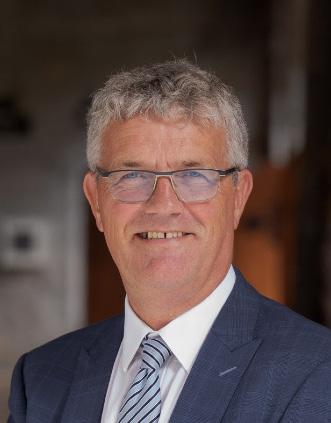
Prof John O’Halloran, MRIA President, UCC
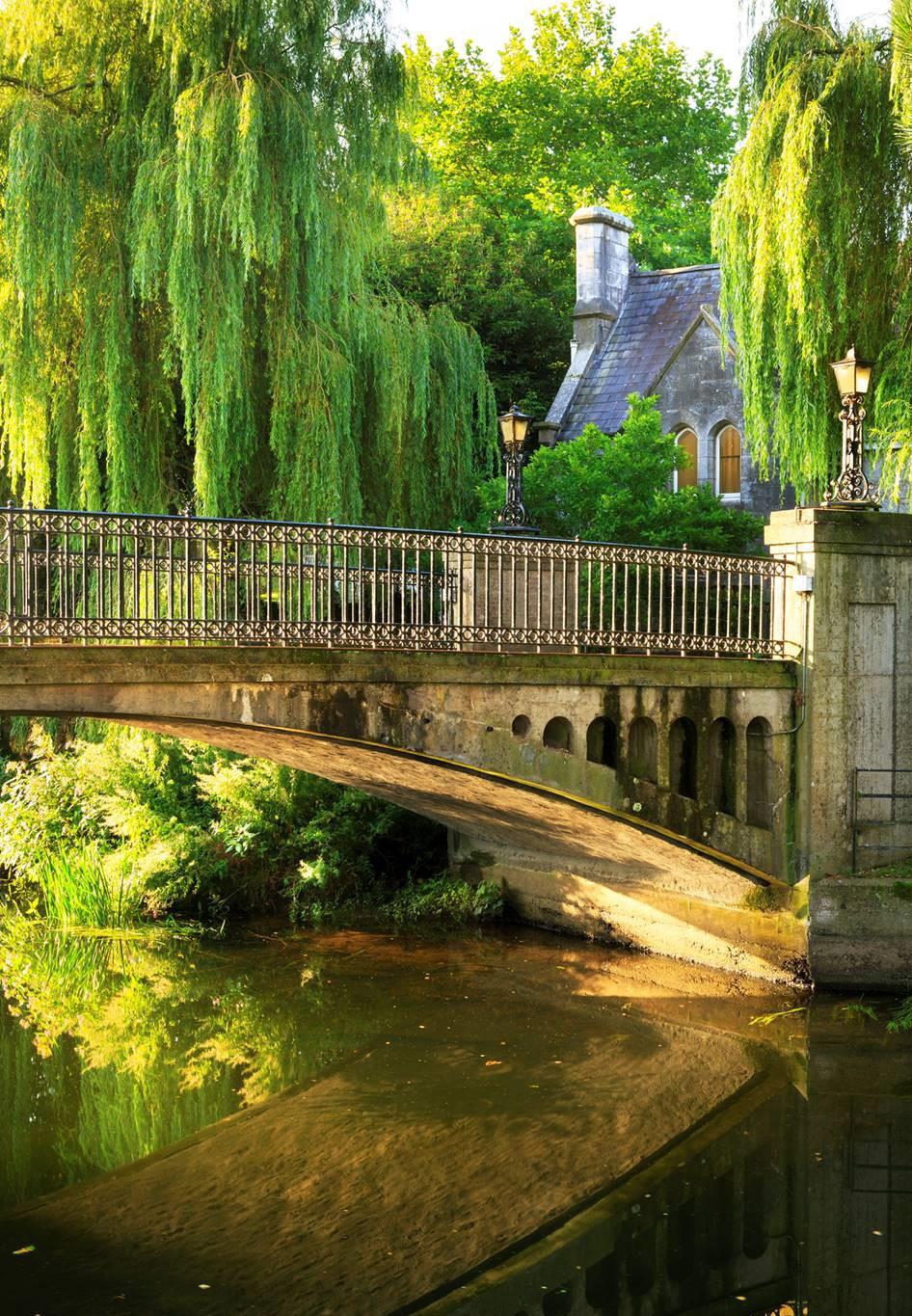
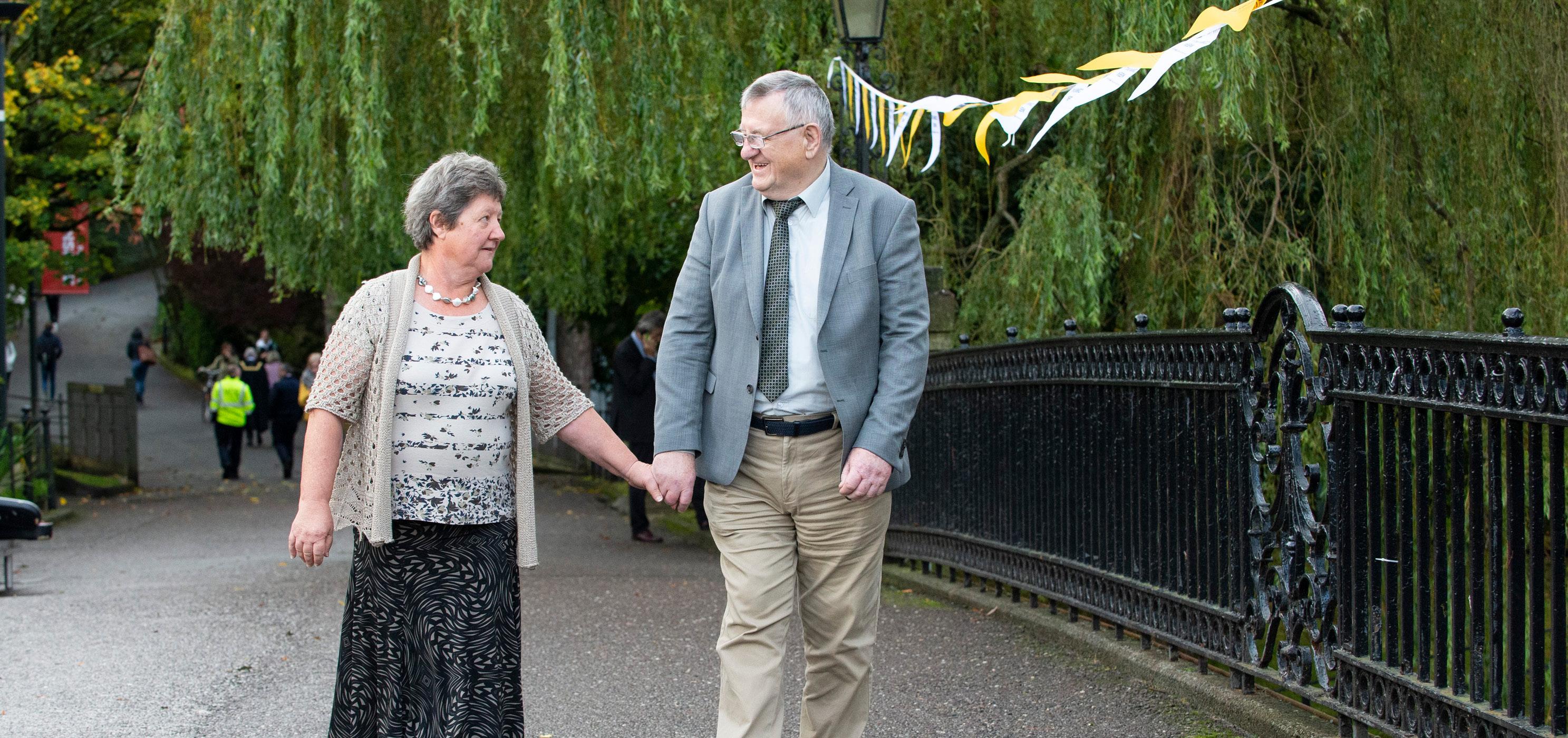
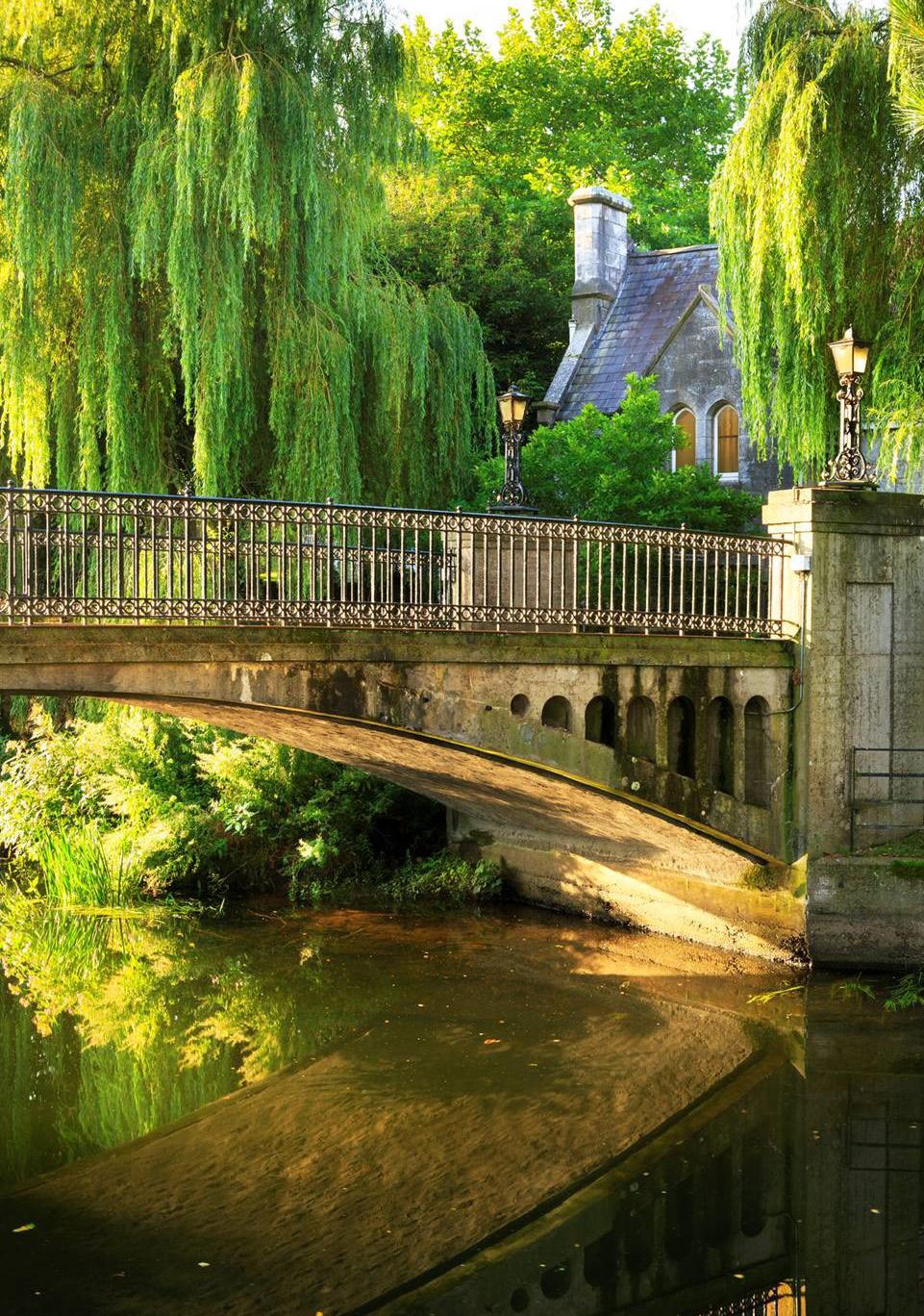
The Alumni Bridge is a reminder of the footsteps linking us forever to UCC.
Our alumni community is also a bridge: connecting past to present, Cork to the wider world and one generation of graduates to the next.
Our story is not written by the University alone, but by all of you, our alumni, whose achievements, generosity and connection keep UCC’s spirit alive across the globe. From pioneering research to inspiring careers, your work continues to shape our university and society in ways both seen and unseen.
This magazine is for you and about you. It celebrates our connections, then and now, filled with pride in belonging to this extraordinary community. If you like The Bridge, or have a suggestion for a future issue please email me at alumni@ucc.ie.
We have over 225,000 alumni worldwide but have lost touch with many former students as we do not hold their email address. If you don’t receive the e-newsletter please see page 42 for how to reconnect or email alumni@ucc.ie. Whether through attending events, supporting initiatives or simply staying in touch, our alumni and supporters play a vital role in shaping our future. Reconnect today and help shape the next 180 years.
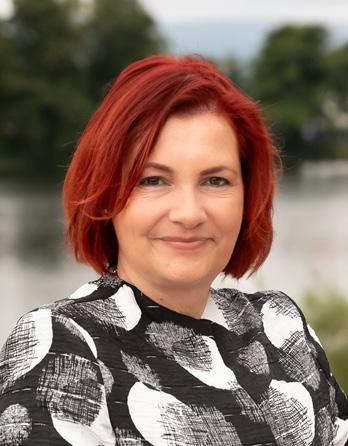
Kerry Bryson Director, Business Development & Advancement, UCC
94.6% of graduates in employment or further education after nine months

More than

2nd most sustainable university in the world
[2024 UI Green Metric World University Rankings]
93% student rentention [First Year students]
225,000 alumni worldwide Ranked in the top


€132m in direct research income [2024]
250 universities worldwide [QS World University Rankings 2026]
24% of students use Access pathways to enter UCC


26,988 registered students

Over
3,700 academic, research and support staff
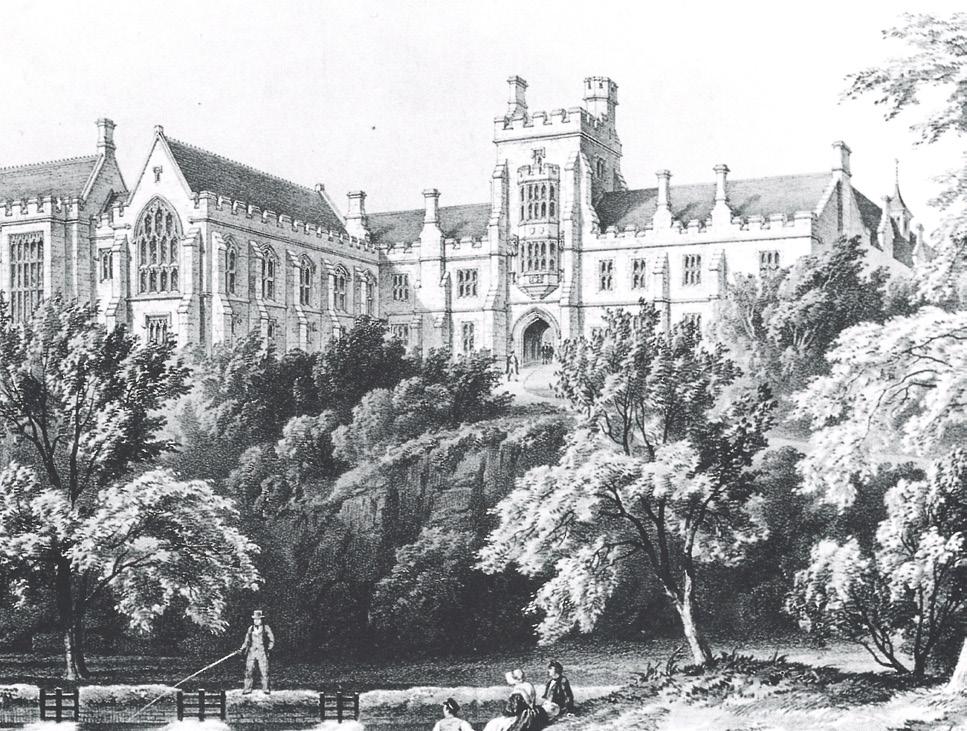
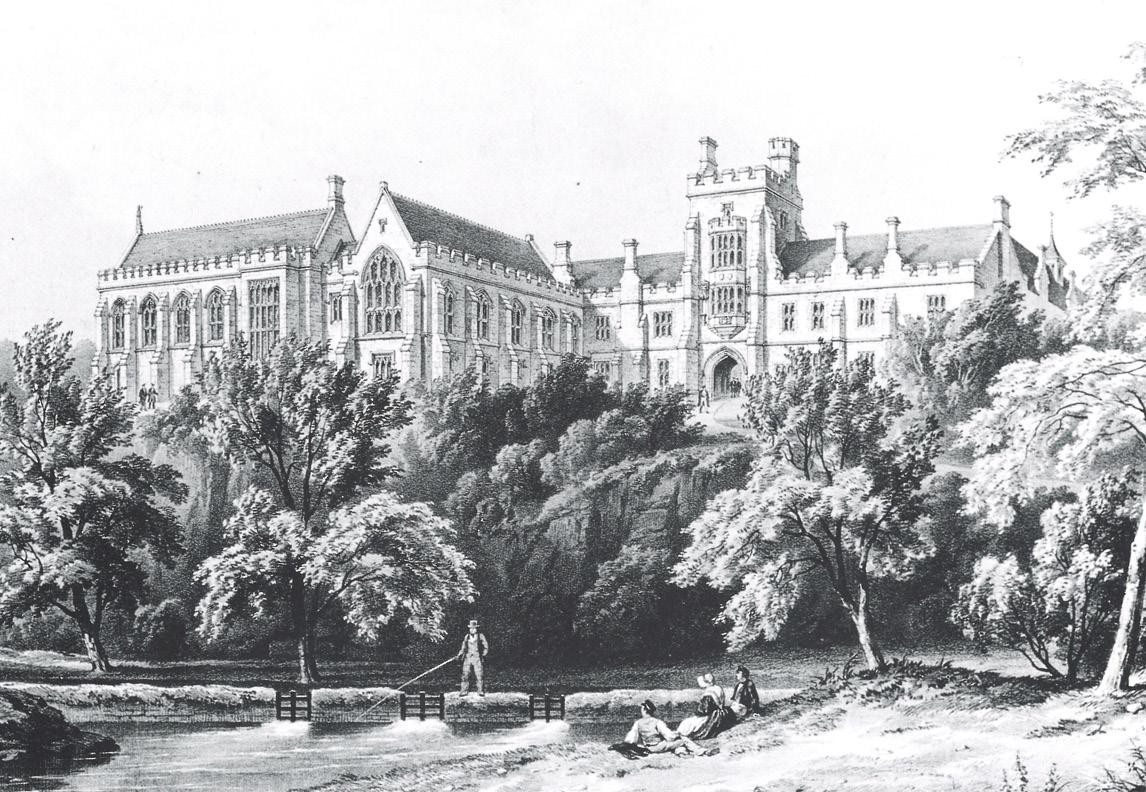
Founded in 1845 as one of Ireland’s three secular Queen’s Colleges, UCC has undergone significant transformation in the last 180 years.
Once governed from Dublin Castle and known as a ‘godless college’ by the Catholic Church, the University we know today gradually broke free of its early limits.
The replacement of the Queen’s University of Ireland with the Royal University of Ireland in 1880 widened access to university degrees and paved the way for the Irish Universities Act of 1908, which brought in newfound autonomy, expanded faculties and introduced a vibrant campus culture.
Further modernisation in the late 20th century, culminating in the 1997 Universities Act, granted UCC full autonomy as a university. Today, UCC has embraced a strategic and global outlook.
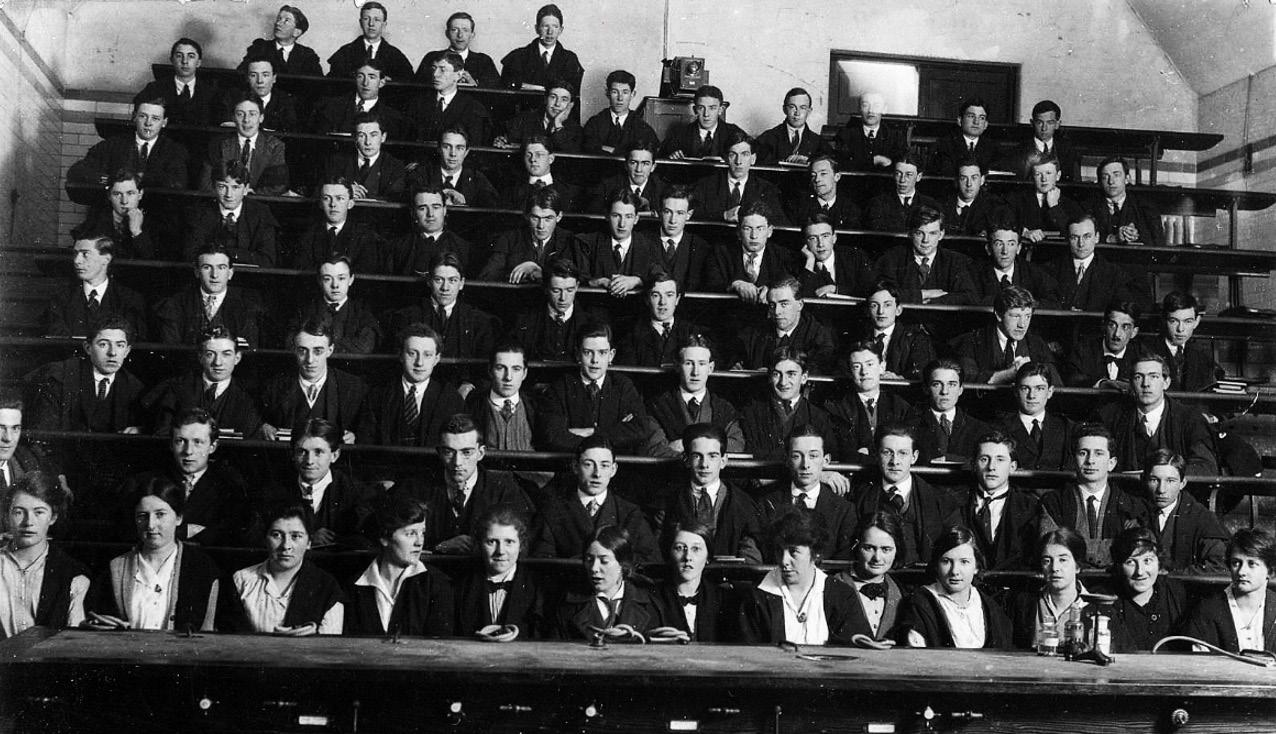
The University opened its gates to just 115 students in 1849. Since then, the student body has grown into a diverse community of over 26,000. Through the decades, their
vitality has been expressed in countless ways: in the campaigns, marches and protests mirroring national change, in the exuberance of early conferrings, in Rag Week traditions and in the thriving ecosystem of clubs and societies that remains central to student culture.
“Today, UCC has embraced a strategic and global outlook.”

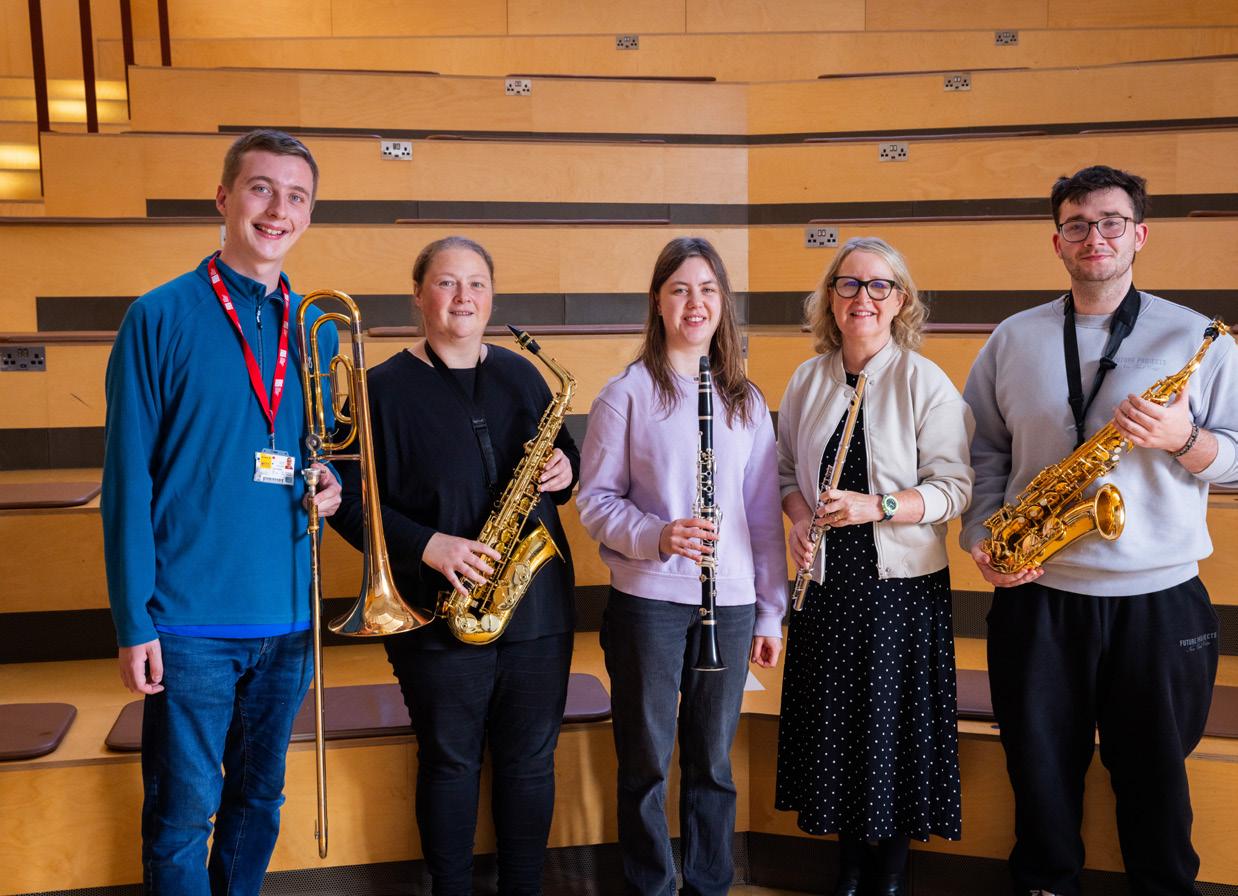
In 1886–87, UCC broke new ground as one of the first universities to admit women. Today, women form the majority of students. Globalisation has shaped the campus further with international students now making up 20% of the population, including over 1,000 postgraduates from outside the EU. UCC offered sanctuary to those fleeing conflict long before becoming an official University of Sanctuary in 2018. In 1945, thenPresident Alfred O’Rahilly offered places to Polish refugees in the aftermath of WWII. This pioneering initiative supported over 40 of these students in their pursuit of higher education in Ireland.
Access has broadened, too. The introduction of state grants in the 1960s brought higher education within reach for students across Ireland, ensuring the campus reflected the country’s changing social fabric. In recent years, expanded support for students with disabilities has widened participation even further.
UCC’s research story spans 180 years of steady ambition and major breakthroughs. Early limitations in staffing and facilities didn’t stop pioneering figures like George Boole, Robert Kane and Mary Ryan from shaping the University’s academic identity. In 1928, the University awarded its first two PhDs, both in Applied Chemistry. The creation of Cork University Press in 1925 gave researchers access to a broad audience beyond Cork and Ireland.
From the 1960s onwards, expanded education, EU membership and new facilities, such as the University Hospital, Dental Research Centre and the Kane Building, fuelled rapid growth in postgraduate research.
A pivotal moment came in 1998 with the launch of the Programme for Research in ThirdLevel Institutions (PRTLI), which enabled the establishment of world-class centres including the Environmental Research Institute, APC Microbiome Ireland and the expanded Tyndall National Institute.
Today, UCC is a research-intensive university with thousands of active researchers, hundreds of postgraduates qualifying each year and more than €600 million in funding secured in the last five years. The UCC Futures initiative now drives interdisciplinary work on global challenges, ensuring the University’s research legacy continues to evolve and lead.
Today, UCC is an economic engine locally and nationally, producing more than €1 billion in economic impact each year and creating a return of €6 to the Irish economy for every euro of state investment. ∎

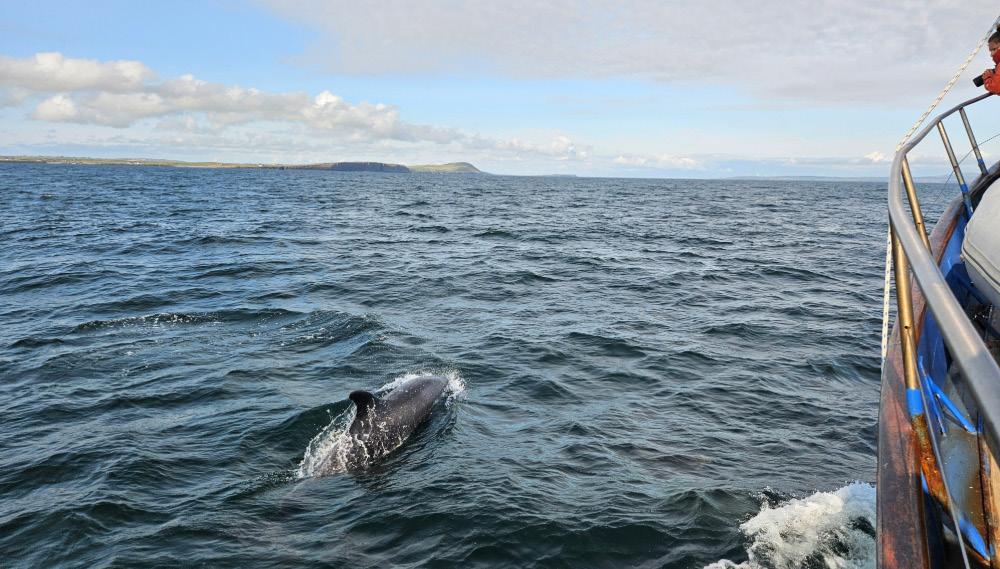
With world leaders pledging to protect 30% of the ocean by 2030, the spotlight turns to those working on the frontlines of marine conservation.
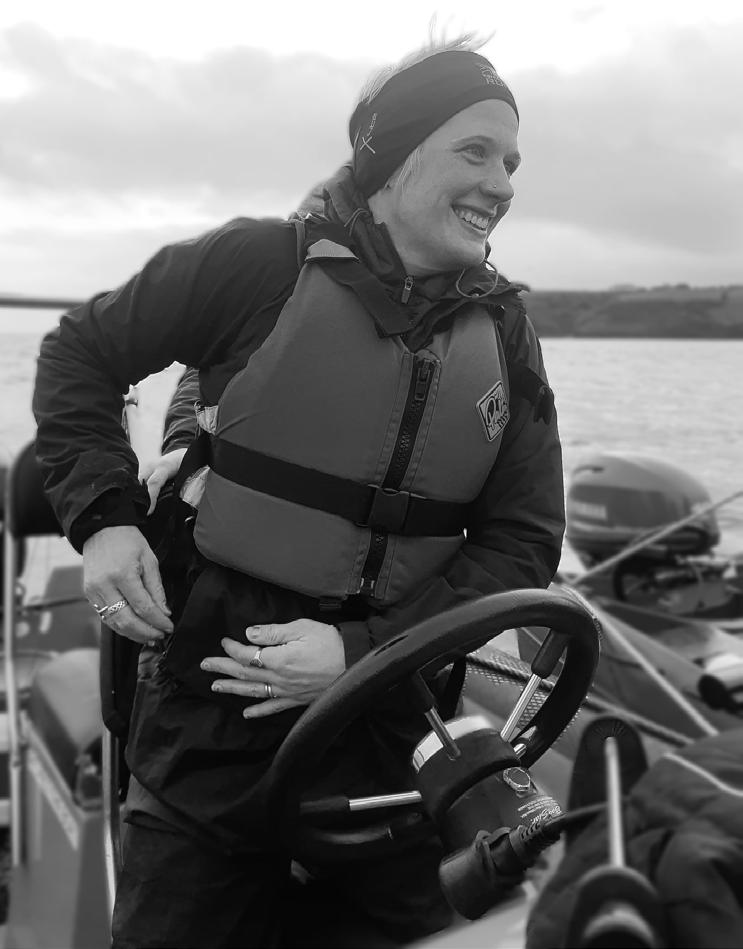
Emma Armshaw (MSc 2023) is the Marine & Coastal Policy Officer at the Sustainable Water Network (SWAN). She previously worked in the UK Parliament, leading international democracy strengthening projects on inclusive and accountable politics around the world.
We asked Emma about her work
with Fair Seas and SWAN and how now, more than ever, we must engage in ocean protection efforts.
What first sparked your interest in marine biology?
I started SCUBA diving in 2002 and have been in love with life under the water ever since. But it was through reading The World is Blue
by Dr Sylvia Earle five years ago that I understood the need for urgent ocean conservation, inspiring a career change to play my part in saving the seas.
How did your degree at UCC help you get to where you are today?
I can’t emphasise enough how vital UCC was for getting here! With a
growing awareness of the triple planetary crises, I felt the need to transition my career to focus on marine conservation. I wanted to learn the “hard science” aspect of it, but without a degree in a related field, most postgraduate programmes were closed to me. Then I discovered that UCC offers a Postgraduate Certificate in Marine Biology to a few students a year without a science degree, as a route into the MSc. I’m not ashamed to say I didn’t even know what a plankton was when I began the course, so it was a very steep learning curve, but less than two months after submitting my thesis, I was offered my dream job in marine policy.
Without this unique opportunity offered by UCC, it would not have been possible to gain the necessary background in marine biology to take on this role. I still refer back to my lecture and revision notes when working on policy development now.
Can you tell us about the work you’re doing with Fair Seas and SWAN?
SWAN is a network of 25 of Ireland’s leading environmental NGOs working to protect, enhance and restore Ireland’s water environment. I work closely with our members on issues affecting Ireland’s seas, such as Marine Protected Areas (MPAs), offshore renewable energy and aquaculture.
As a network, SWAN understands the power of collaboration, and we’re also one of the founding partners of Fair Seas, a campaign group advocating for Ireland to effectively protect 30% of our ocean by 2030. “30 x 30” is a global goal, backed up by UN and EU commitments. However, despite the Irish Government formally pledging to reach this target, less than 10% of our maritime area is currently designated as protected.
Ireland has one of the biggest marine areas in the EU - ten times our land mass. We have a duty to protect this rich area of
biodiversity which forms a vital role in climate mitigation and carbon sequestration. These areas must be more than lines on a map thoughlocal communities must be engaged in participating in their designation and management. We are also calling for Ireland to fulfil the EU commitment of 10% of our waters to be under strict protection.
“I understood the need for urgent ocean conservation, inspiring a career change to play my part in saving the seas”
Any advice for students or graduates who might like to get involved more in marine conservation and advocacy?
Use your skills! The ocean needs all of us - not just scientists. Whether you’re a filmmaker, programmer, economist, social media whizz, storyteller or policy-developer, your skills can be used for ocean conservation.
Don’t let being land-locked stop you from learning and volunteering. Many charities need desk-based volunteers to do important work like manage their social media, conduct research, write blogs or run webinars. Look for organisations that interest you and reach out to discuss how your skills can support them.
It’s not too late for you to make a change. I was 34 when I left an amazing career and moved countries to start studying something I knew very little about. If that’s too dramatic, there are many other ways to keep learning. Look for free online or subsidised
programmes, like the Springboard courses offered to Irish residents. Watch documentaries like David Attenborough’s Ocean or Sylvia Earle’s Mission Blue
Advocate! Use your voice - email your TD to demand action on ocean conservation, follow organisations like SWAN and Fair Seas on social media for actions you can take and join others who share your values. ∎
Hidden beneath the calm waters of Lough Hyne in West Cork lies one of Ireland’s richest marine habitats.
Europe’s first statutory Marine Nature Reserve, Lough Hyne supports more than 1,850 species in just half a square kilometre. Its sheltered, saltwater conditions create a rare ecosystem where deep-sea species thrive just metres below the surface, making it a living laboratory for marine researchers.
UCC’s nearby research facilities support ongoing international studies here, while the annual Lough Hyne Touch Tanks event for National Heritage Week invites visitors to meet starfish, crabs, sponges and other hidden marine life up close.
Cancer researcher Dr Yensi Flores Bueso’s story is one of determination, curiosity and breaking barriers.
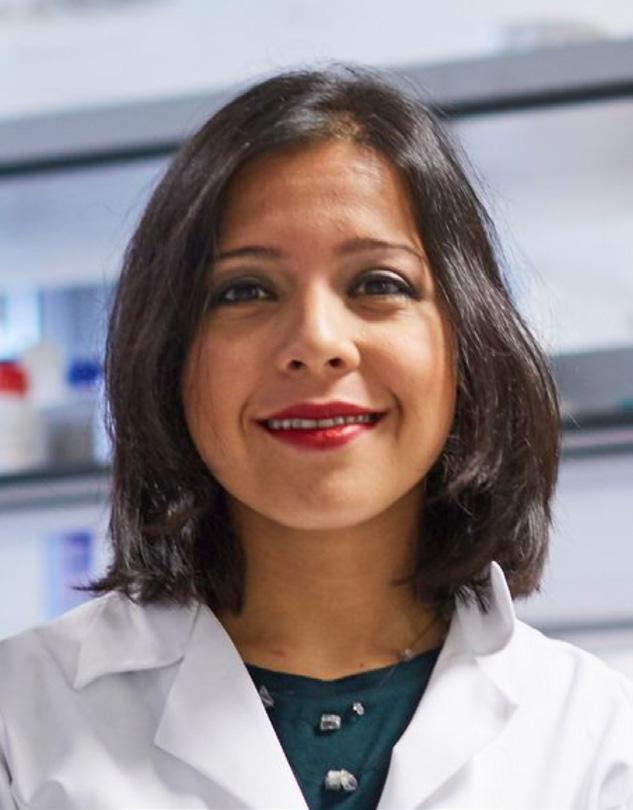
Born in Honduras, a country rich in biodiversity but limited in research infrastructure, Dr Yensi Flores Bueso (MSc, 2015; PhD, 2020) turned early challenges into a springboard for a remarkable career in cancer research, synthetic biology and global science advocacy.
“Science became my refuge,” she reflects. “Growing up, society felt chaotic, but in the lab, logic and order prevailed. It was a place where curiosity could thrive.”
Yensi’s early career was remarkable. She established the first clinical molecular diagnostics laboratory at the Honduran reference firm Laboratorios Médicos, co-founded the molecular diagnostics startup GlowDx in Ireland during her MSc with fellow UCC alum Blaine Doyle, and launched Honduras’s first private diabetes center, CIAD. Together, these ventures reflected her unique blend of science, community service and entrepreneurship.
“Creating opportunities where they didn’t exist was just as important as the science itself,” she says.
Her breakthrough into Irish research came after many applications and rejections. She was accepted into the MSc in Molecular Cell Biology with Bioinnovation at UCC, thanks to Dr Kellie Dean recognising her potential. Graduating top of her class, she went on to secure an Irish Research Council scholarship for her PhD with Professor Mark Tangney in Cancer Research @UCC.
Today, Yensi leads BacStar, a Marie Skłodowska-Curie funded project exploring bacteria as vehicles for delivering cancer therapeutics. Her work combines expertise from Cork and the Institute for Protein Design in Seattle.
“Proteins are the workforce of the cell,” she explains. “Computational protein design lets us create entirely
new proteins tailored for specific applications. It is like designing the perfect key for any lock.”
Her research tackles the natural limitations of bacteria as delivery systems, which is crucial for safe and efficient cancer therapies.
“Creating opportunities where they didn’t exist was just as important as the science itself”
Beyond the lab, Yensi is a passionate advocate for fair and inclusive research practices. She co-chairs the Global Young Academy (GYA) and served on
the inaugural steering board of CoARA, representing early-career researchers worldwide. Today she continues that advocacy as a member of the International Science Council Steering Group for the Forum on Publishing and Research Assessment.
Her landmark study in Nature analysed academic promotion systems in 121 countries, highlighting systemic barriers and the over-reliance on metrics.
Yensi also co-leads GYA initiatives on biodiversity and sustainability, connecting science with education and the arts. She has coordinated global studies, organised workshops and presented at high-profile forums including the UN Scientific Advisory Board and the World Science Forum. In September 2025, she was appointed by UN Secretary-
General António Guterres as one of just 14 independent scientists worldwide to draft the 2027 Global Sustainable Development Report.
“Research should solve societal challenges, not just exist in journals,” she says.
Yensi’s experience spans academia, entrepreneurship and policy. She has founded labs, clinics and startups, worked as a business analyst for UN and World Bank projects, and mentored science leaders globally. “Every researcher has the potential to make an impact. With the right support and opportunities, we can solve problems across medicine, agriculture and sustainability.” ∎
Cancer Research @ UCC is contributing to transformational advances that will make a difference for patients in Cork, Ireland and beyond. The next stage will be to expand these efforts by training more specialists and running more clinical trials here.
Scan the QR code if you want to make a gift to Cork University Foundation’s Cancer Research fund:

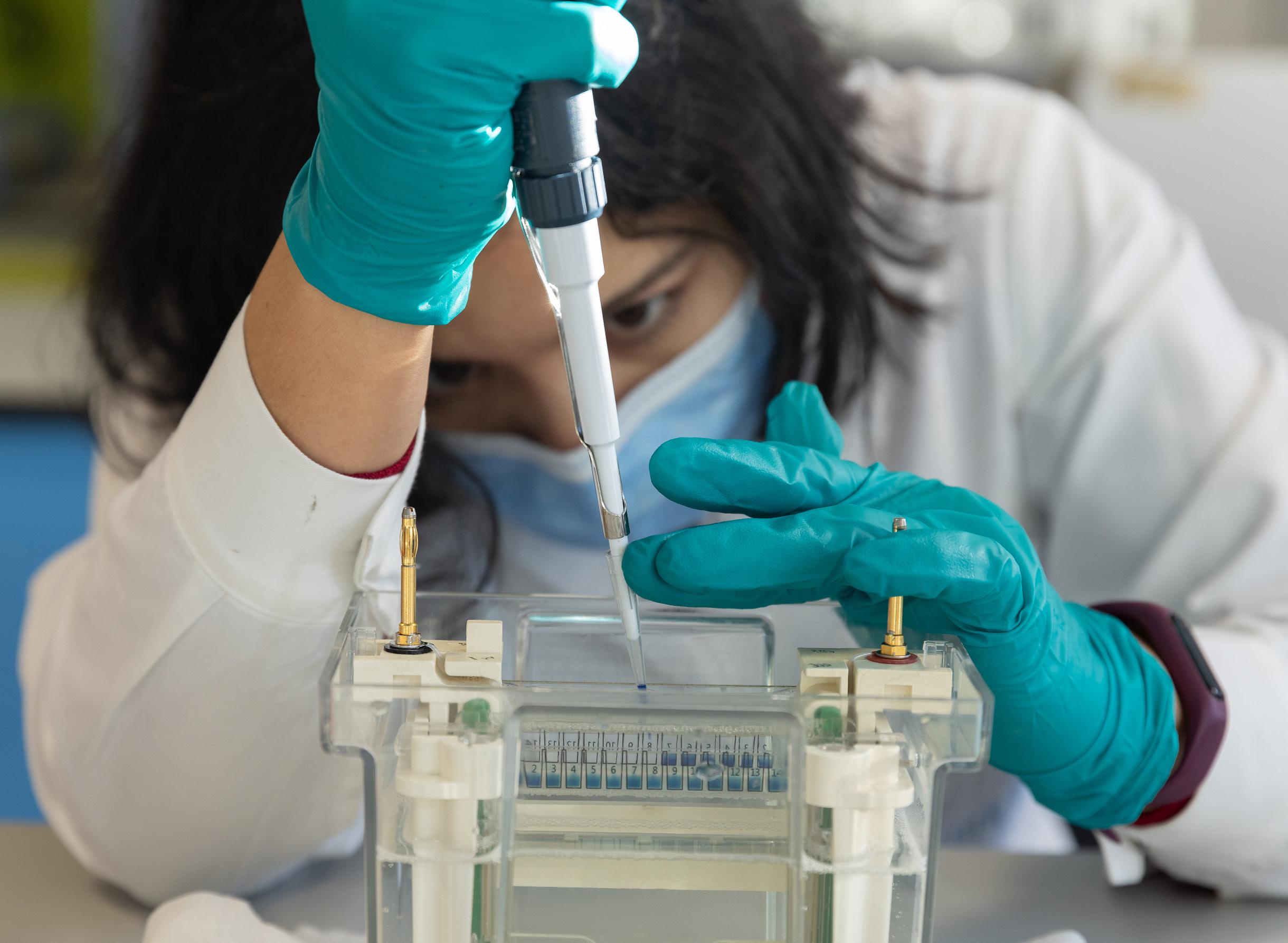
Artificial intelligence is changing how we solve problems, make decisions and deliver complex work. Its impact will likely be comparable to the arrival of the personal computer and the internet.
When Conor Twomey (BSc 2008) talks about AI, he starts with something practical: responsibility. “There’s a lot of hype,” he says, “but the near-term reality is simple. People who learn to use AI will outpace those who don’t.”
Conor, a UCC graduate and AI operator, has seen this pattern before. “The shift feels like the 70s and 80s with the personal computer. Early adopters gained an edge, then the tools became normal. We’re at that point again.”

“It shouldn’t replace your thinking. It should amplify your voice”
What changes now is the amount of routine work we can automate. “There’s a real chance to remove a lot of pencil-pushing with largescale automation,” he says. “It sounds scary, but with the right guardrails it’s just another tool that helps you do better work.”
Upskilling in AI is relevant to every profession and every age. Conor offers two simple ways to start using it in your day-to-day work. “First, use role prompting. Tell the AI to act as a careers advisor, project manager, or editor, then give it your context and constraints. You still bring the ideas. The AI helps structure, challenge and polish them. It shouldn’t replace your thinking. It should amplify your voice.”
“Second, use AI as a second set of eyes. Before sending a delicate or complex email, share the background and ask it to identify risks, unclear lines and tone mismatches, then suggest edits while preserving your style. You’re not asking it to write the email for you. You’re asking it to help you send a better version of yours.”
For Conor, this isn’t just a technology story. It’s about how people and organisations learn. “Start small. Practice regularly. It’s like training a new muscle. After a few weeks, the hesitation fades and you begin to see where it helps most.”
As AI becomes embedded in everyday tools, the label itself starts to blur. “We talk about AI the way people once talked about electricity. Soon it will be everywhere and mostly invisible,” he says. “There’s a term for when a word is used so often it loses its impact: semantic satiation. That’s happening with
‘AI,’ and it’s a sign the technology is maturing.”
His advice is steady: get curious, get hands-on and keep yourself accountable. Use approved tools, don’t paste sensitive information into public systems and remember that you sign off on the final decision. The sooner you start, the faster you’ll find the tasks where AI makes you measurably better.
“We talk about AI the way people once talked about electricity. Soon it will be everywhere and mostly invisible”
Try role prompting: ask the AI to act as a careers advisor, project manager or editor, then give it your goals, constraints and examples of your tone.
Feed it your context: the AI should structure and sharpen your ideas, not replace them.
Use it as a second set of eyes: ask for risks, clarity fixes and tone tweaks, not for it to write from scratch.
Practice little and often: 10–15 minutes a day builds confidence quickly.
Stay safe: use organisationapproved tools and keep confidential data out of public models. ∎
Watch: A lively discussion ‘AI: The Unstoppable Force Redefining the Future of Business’ featured Conor and Professor Thia Hennessy in conversation with Graham Healy for the UCC Global Speaker Series.
Scan the QR code to watch the recording from this event:

Conor is a member of the International Alumni Advisory Board in UCC and is working to set up the UCC Alumni Club in New York. Please get in touch with alumni@ucc.ie if you are interested in finding out more.
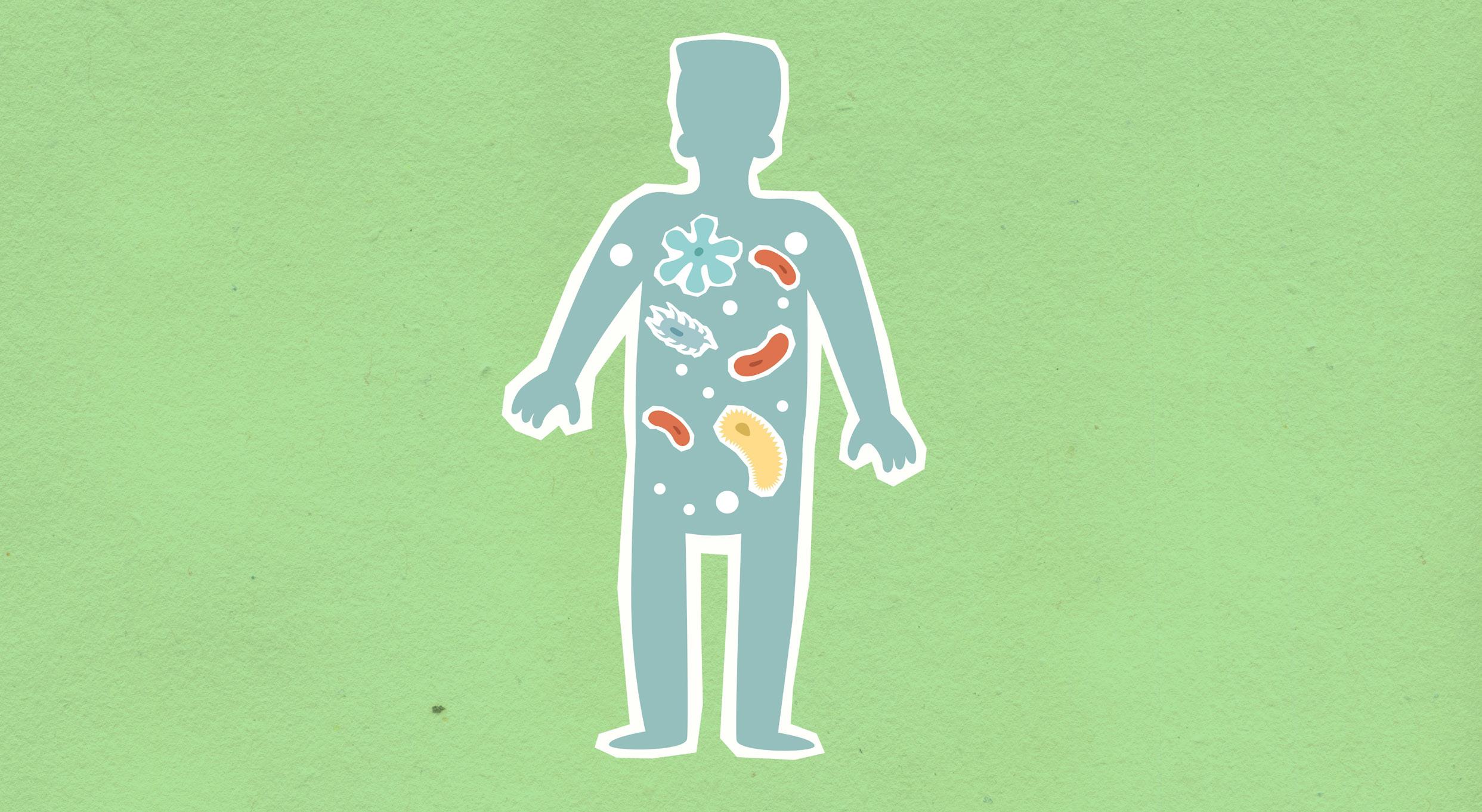
How Professor Ted Dinan changed the way we think about mental health.
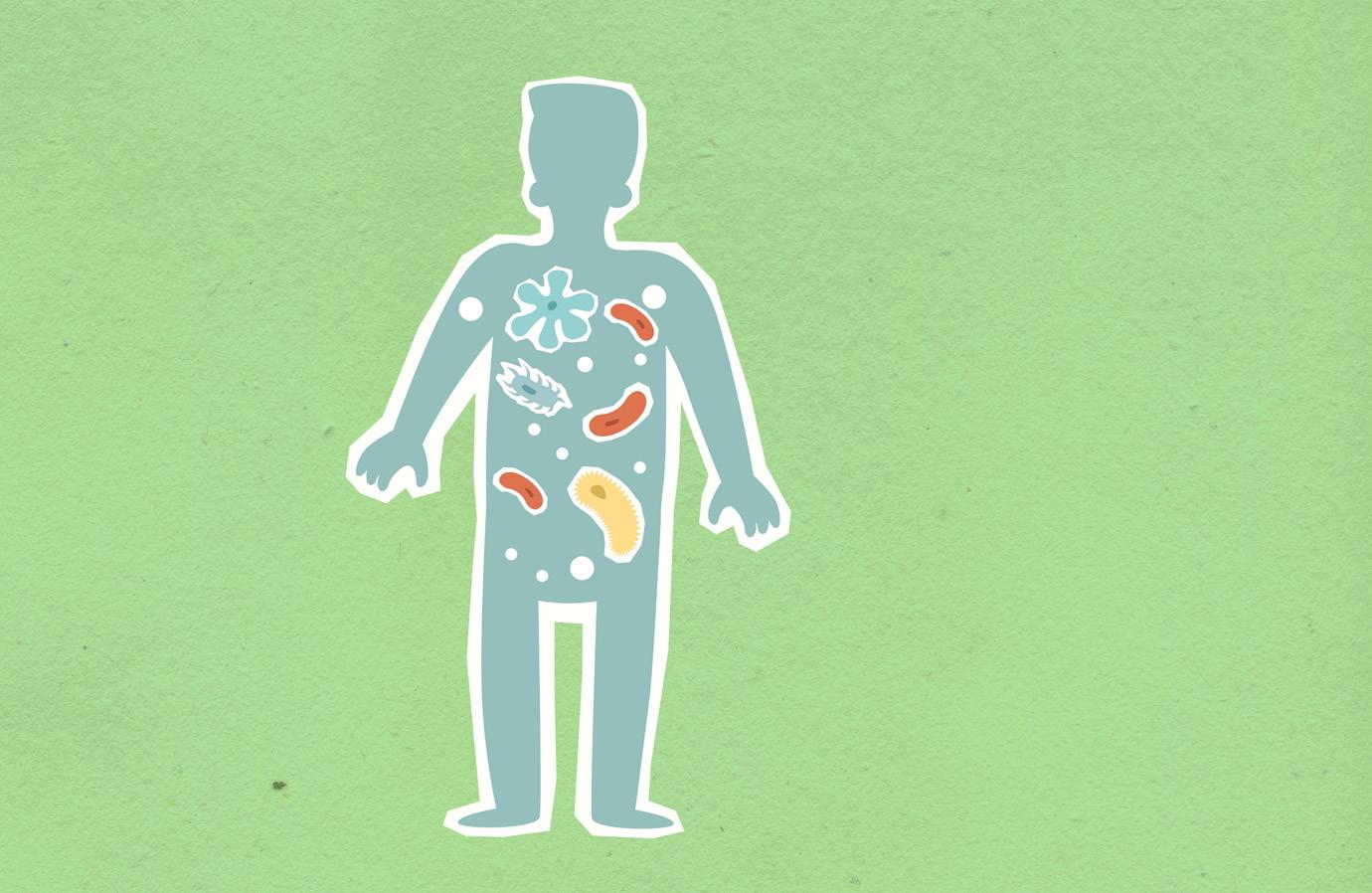
As a professor of psychiatry and a principal investigator at the worldrenowned APC Microbiome Ireland at UCC, Ted Dinan (Medicine 1979), has collaborated closely with UCC neuroscientist Professor John Cryan. Together, they helped coin and popularise a term now central to modern psychiatry and nutrition: psychobiotics, in other words, live organisms that, when consumed in adequate amounts, can benefit mental health.
“It came to me just before a lecture one morning in 2012,” says Ted. “I needed a term for the
mood-altering effects of certain gut bacteria. And just like that, psychobiotic.”
Having previously held senior academic roles in London, Ted spent his career at UCC blending psychiatry with biology. His work has shown that the gut microbiota, the trillions of microbes in our digestive systems, play a vital role in stress regulation, mood, memory and even sleep.
Before the turn of the millennium, most bacteria were seen as harmful. But today, researchers
know that maintaining a diverse, healthy microbiome is essential, not just for digestion, but for mental resilience.
According to Ted, our guts and brains are in constant conversation via complex pathways. He speaks of three of the most important routes of communication between gut microbes and the brain.
Microbes can communicate with the brain through the vagus nerve, a long and winding pathway that connects the brain to internal organs such as the gut, making it a key channel in the gut-brain connection. Secondly, certain gut microbes produce short-chain fatty acids, such as butyrate, which can have a profound effect on the function of multiple organs throughout the body, including the brain.
Additionally, tryptophan, an essential amino acid, produced both by certain bacteria in the body and diet, enables the body to produce serotonin, a chemical that helps regulate mood, sleep and appetite. “If you don’t have enough serotonin, you simply don’t function well”, says Ted.
“The gut and brain are deeply intertwined. The good news is, we can influence that connection”
Real-world results demonstrate the practical impact of integrating lifestyle interventions into mental health treatment.
In his clinic at Cork University Hospital, Ted has seen patients with treatment-resistant depression improve dramatically by combining traditional therapies with lifestyle changes. One mother of two, he recalls, had tried medications and counselling without success. Her mood transformed, however, within weeks after adopting a healthier diet and starting daily jogging. His research also showed that transferring gut microbes from depressed humans to rats caused
the animals to show signs of depression, powerful evidence for the gut-brain connection.
While psychobiotic medicine is still in its early stages of research, Ted believes targeted bacteria may one day be used to treat mild depression and anxiety, offering natural alternatives to medication.
One promising candidate, he says, is Bifidobacterium Longum, a bacterium shown to reduce cortisol levels, improve sleep and ease anxiety in trials. “The gut and brain are deeply intertwined. The good news is, we can influence that connection, with what we eat and how we live.”
1. Eat more natural, colourful food
Choose a Mediterranean-style diet that includes plenty of vegetables, fruit, legumes, whole grains, nuts and oily fish. Steer clear of ultraprocessed foods, which harm gut bacteria and can negatively affect your mood.
2. Feed your gut bacteria
Add fibre-rich prebiotics like garlic, onions, leeks, bananas and celery. These help nourish the good microbes that support brain health.
3. Include fermented foods
Eat natural probiotics such as yogurt, kefir, sauerkraut or kimchi. These foods introduce helpful bacteria to your gut and support mental well-being.
4. Vigorous Exercise
Regular, intense aerobic activity such as running, swimming or cycling improves your microbiome and is proven to lift your mood.
5. Be careful with antibiotics
Ted cautions about overuse of antibiotics, which can severely damage gut flora. “Each course can wipe out good bacteria and have long-lasting effects,” he warns. ∎
Read: The Psychobiotic Revolution: Mood, Food, and the New Science of the Gut-Brain Connection by Scott C. Anderson, John F. Cryan and Ted Dinan.
Watch: Hack your Health: Secrets of Your Gut (2024, Netflix), featuring Professor John Cryan, renowned UCC expert in the area of gut health.
Listen: ‘The Gut Brain Connection’ (Season 1, Ep. 398), The Blindboy Podcast featuring Professor Dinan.
Make: Kefir
Put 1 tbsp kefir grains in a jar. Cover with 2 cups of milk. Let the mixture sit at room temperature for 24 hrs until it thickens. Strain the grains (save them for the next batch). Keep the kefir in the fridge.
In
2025, Cork University Press (CUP), Ireland’s oldest university press, celebrated
it’s centenary.
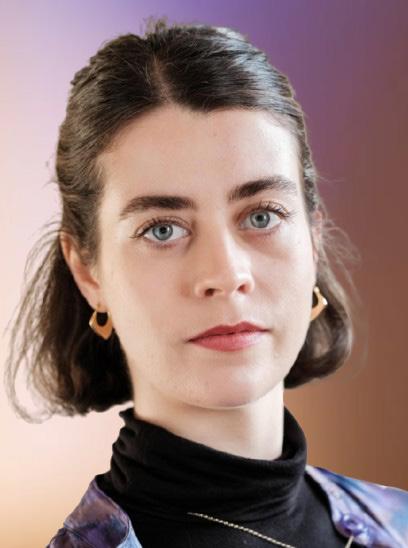
Sinéad Neville (BA 2012; MA 2013) is now Head of Publishing at CUP. She shares her career story along with the publishing house’s remarkable legacy and global reach.
Founded in 1925 by the then University registrar Alfred O’Rahilly, who would later become UCC President, Cork University Press was born out of a desire to shape Ireland’s intellectual voice in the early years of the Free State.
Reflecting on its evolution, Sinéad notes, “Today the Press still engages with Ireland’s intellectual identity whilst the key strengths of our list rests in embracing our regional roots and in making scholarship accessible to a broad readership.”
In its early years, the Press mirrored UCC’s academic strengths, publishing across a wide range of disciplines. Today, it is a global leader in Irish Studies, with
contributors from the US, Hong Kong, Australia and New Zealand.
Sinéad’s own path to publishing began at UCC. “I graduated with a joint BA in English and Philosophy and furthered my studies with an MA in English. It was during my MA that I decided to seek a role in academic publishing.”
“My passion for publishing brought me back to my alma mater.”
She credits her MA supervisor, Dr Clíona Ó Gallchoir, for helping her get a foot in the door. “From there I found my first internship role and went on to spend eight years working in academic and professional publishing in London.”
After returning to Cork to lead marketing and communications at The Everyman theatre, Sinéad found herself drawn back to publishing. “My passion for publishing brought
▲
Sinéad Neville
me back to my alma mater when the role at the Press came up.”
“Looking back across 100 years, it’s difficult to pinpoint the Press’s greatest contributions to scholarship and culture,” reflects Sinéad. “Some of our earliest works include Dánta Grádha (1926), and it’s heartening to see a revival in Irish-language publishing with GlórónSceilg (2025) shortlisted for the Gradam Uí Shúilleabháin award. This marks our first recognition in An tOireachtas’ Gradaim Fhoilsitheoireachta, and my ambition is to grow our Irishlanguage offering.”
A centenary symposium in 2025 brought together leading voices in Irish public scholarship, culture and academia. Speakers included Professor Claire Connolly, Professor Linda Connolly, Feargal Keane, Professor Cormac Ó Gráda, Iarla Ó Lionáird, Eoin Reardon and Virginia Teehan and explored the Press’s role in shaping Irish intellectual and cultural life. The symposium showcased landmark publications from early to modern works reflecting the breadth and depth of
the Press’s contributions to Irish studies.
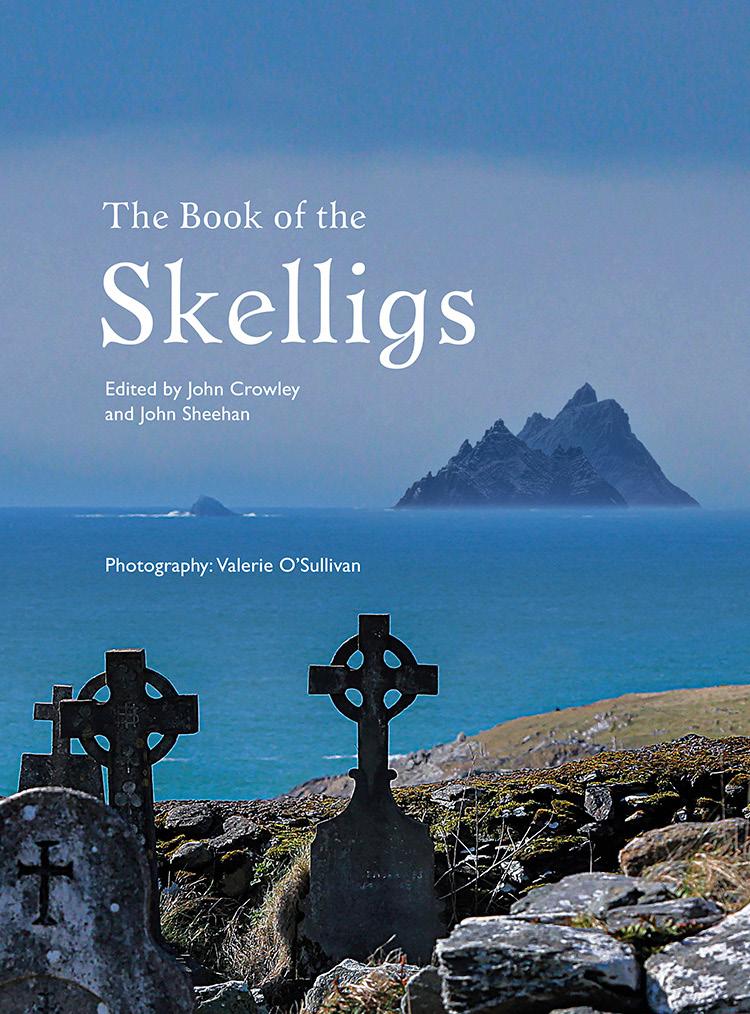
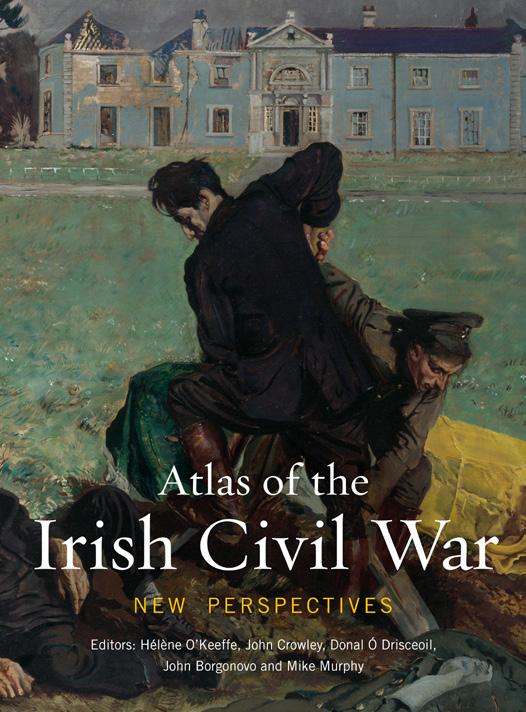
The Press’s award-winning Atlas Series has brought academic research to a wide public, inspiring documentaries, radio programmes and educational materials. As Sinéad noted, “These works have strengthened connections with international alumni and the Irish diaspora, with launches held in the UK, US and Australia.”
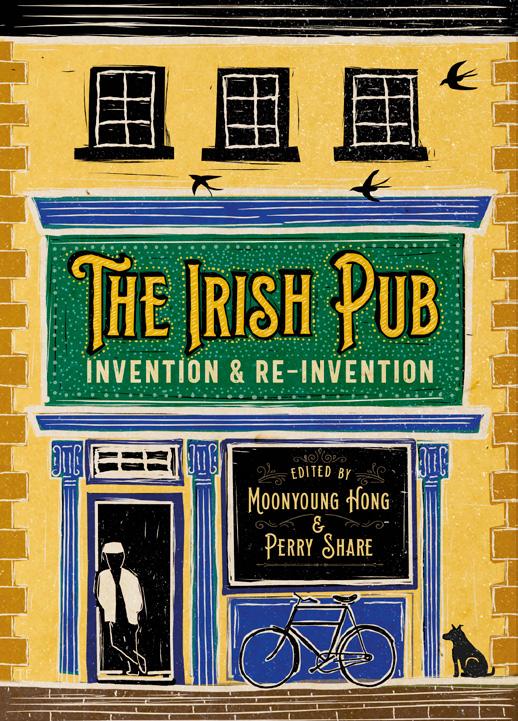
Ireland’s love for books and homegrown authors runs deep. That’s why Sinéad is especially excited about The Irish Pub: Invention and Re-invention , as it will be “the first comprehensive examination of the Irish pub written by experts from history,
sociology, architecture, interior design, psychology, literature, music, performing arts, business and more.”
“In an age of misinformation and shrinking attention spans, university presses offer a vital counterbalance, providing peer-reviewed, evidencebased knowledge that informs public discourse and policy” says Sinéad
As Cork University Press enters its second century, it continues to amplify regional voices, preserve cultural heritage and publish with purpose, rooted in Cork, but resonating far beyond. ∎
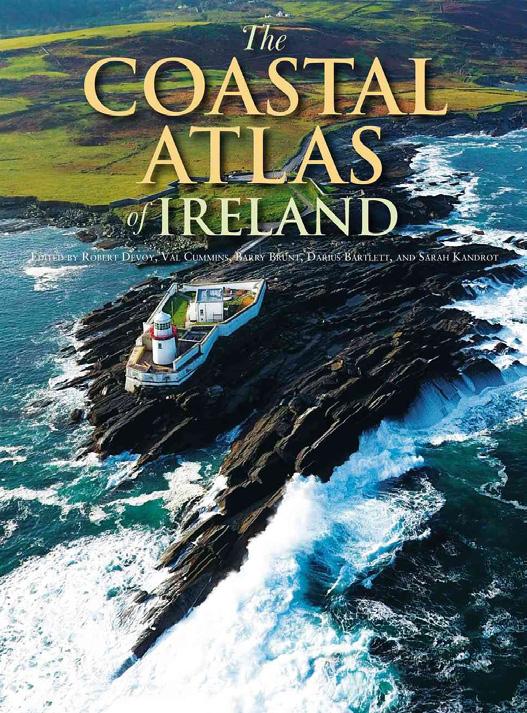
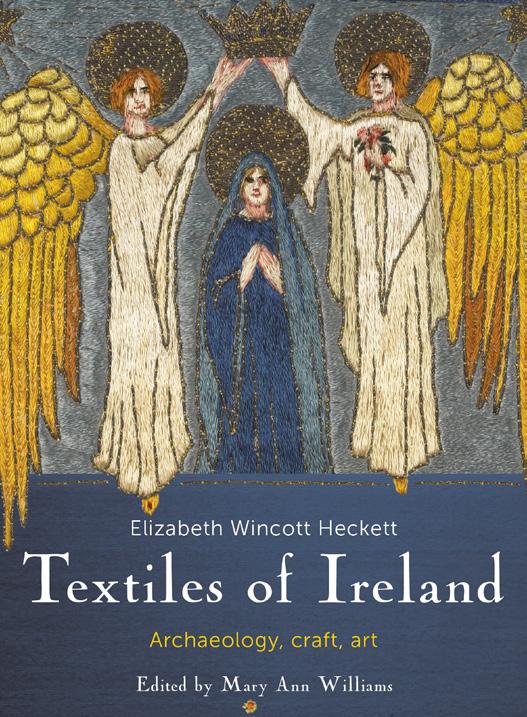
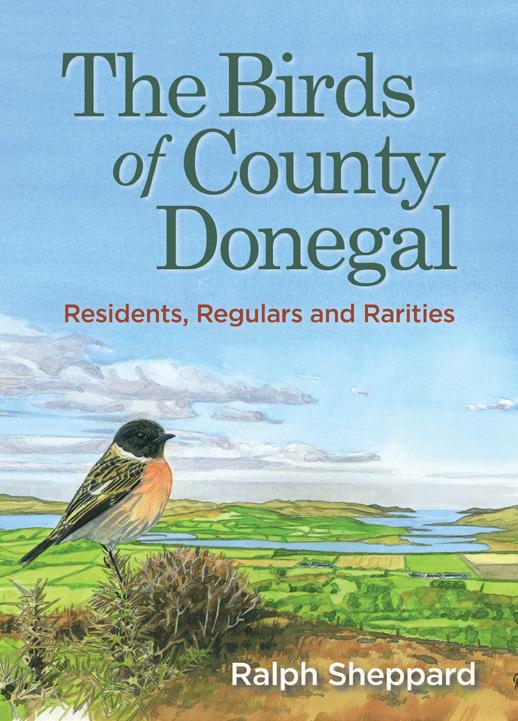
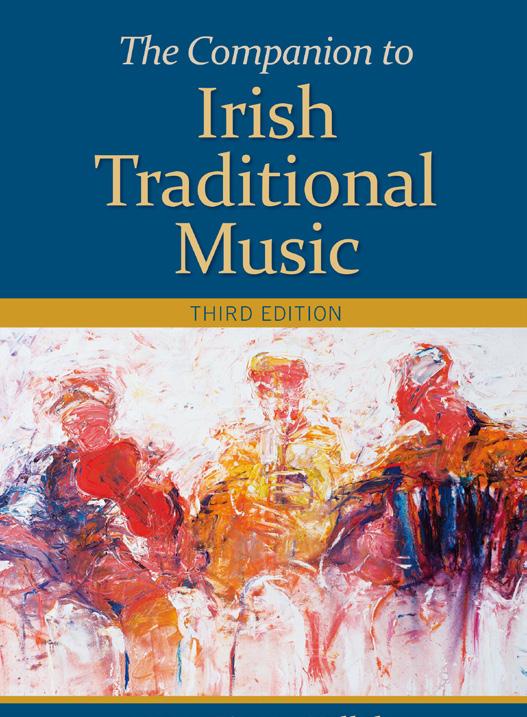
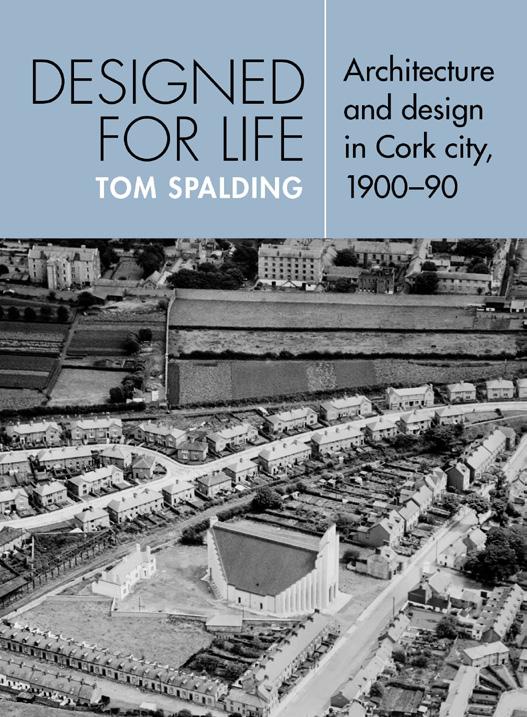
Since publishing the Atlas of the Irish Rural Landscape in 1997, Cork University Press has made a distinctive mark with its award-winning atlas series. The Atlas of the Irish Revolution was named ‘Irish Book of the Year’ in 2017, while The Atlas of the Great Irish Famine (2012) and The Coastal Atlas of Ireland (2021) were both named ‘Best Irish-Published Books’ of the Year.
Scan the QR code or visit corkuniversitypress.com to discover the full range:

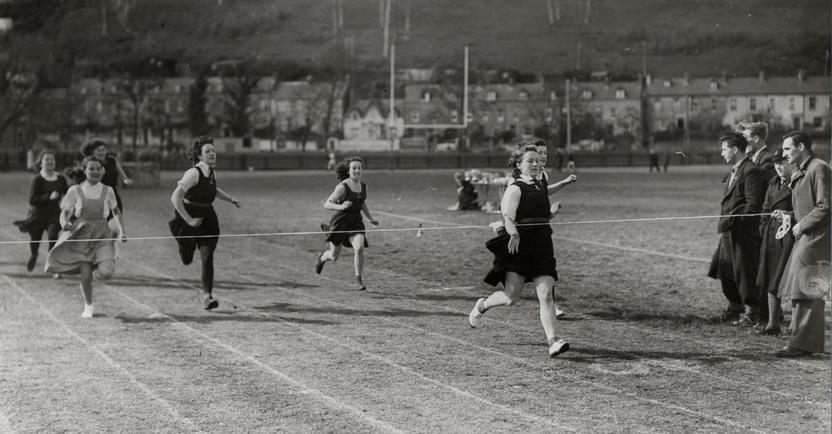
Sport has long been a cornerstone of campus life at UCC, fostering a proud tradition of athletic achievement, iconic facilities and a vibrant sporting culture that continues to thrive.
One of the most defining moments in UCC’s sporting history came in 1911, when the University established the Mardyke Sports Grounds as its home, a venue that has since built a rich legacy, including hosting world-renowned teams like the All Blacks, who first played there over 70 years ago.
Today, the Mardyke serves as the central hub for UCC’s sporting life, home to rugby, soccer, hockey, GAA, athletics and many other activities.
Complementing the outdoor grounds, the Mardyke Arena, which opened in 2001, stands as a world-class fitness and indoor sports facility. With elite amenities for students and athletes alike,
it represents UCC’s enduring commitment to sport, health and wellbeing.
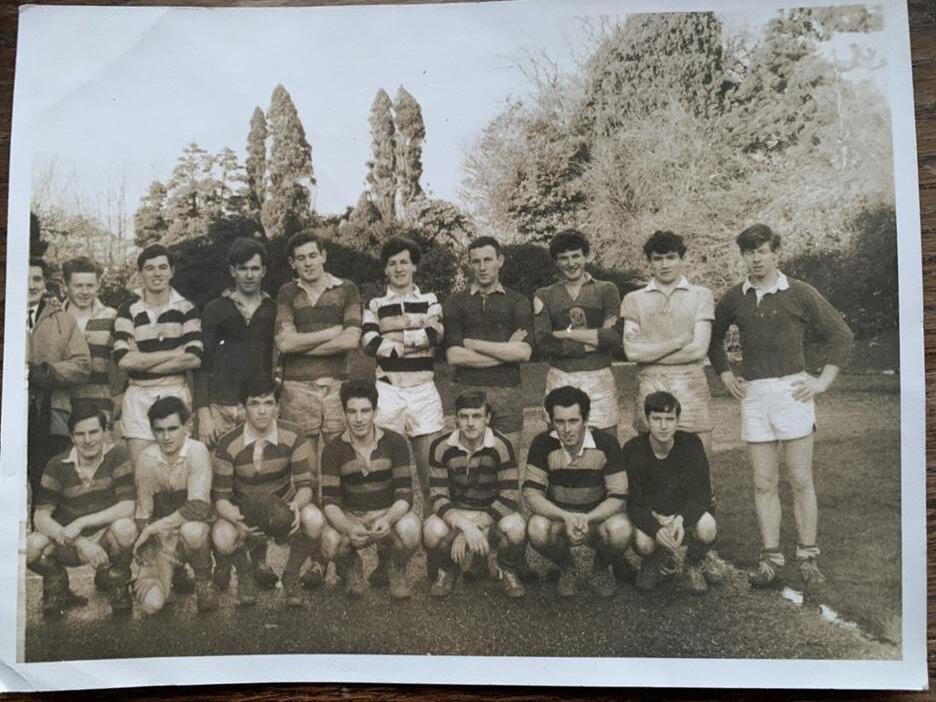
Sport at UCC began informally, with rugby played among students as early as 1872. Early clubs like this helped shape a culture of participation and pride.
UCC Rugby has produced legends
including: Tom Kiernan, Donal Lenihan, Peter Stringer, Ronan O’Gara and more recently Alex Kendellen.
UCC Women’s Rugby was established in the early 1990s, reflecting the evolving student community and has seen several players represent Ireland while still at UCC, among them Geraldine Rea, Alison Miller and Zoe Grattage. Audrey O’Flynn holds the unique distinction of representing Ireland at senior level in both hockey and rugby. She initially played international hockey before switching codes to compete in rugby 7s.
UCC has long been a powerhouse in Gaelic games, producing athletes who have gone on to represent their province, their country and compete on the global stage.
Fitzgibbon Cup: UCC’s dominance in senior hurling is unmatched, holding a record 42 titles in this prestigious intervarsity competition, first contested in 1912.
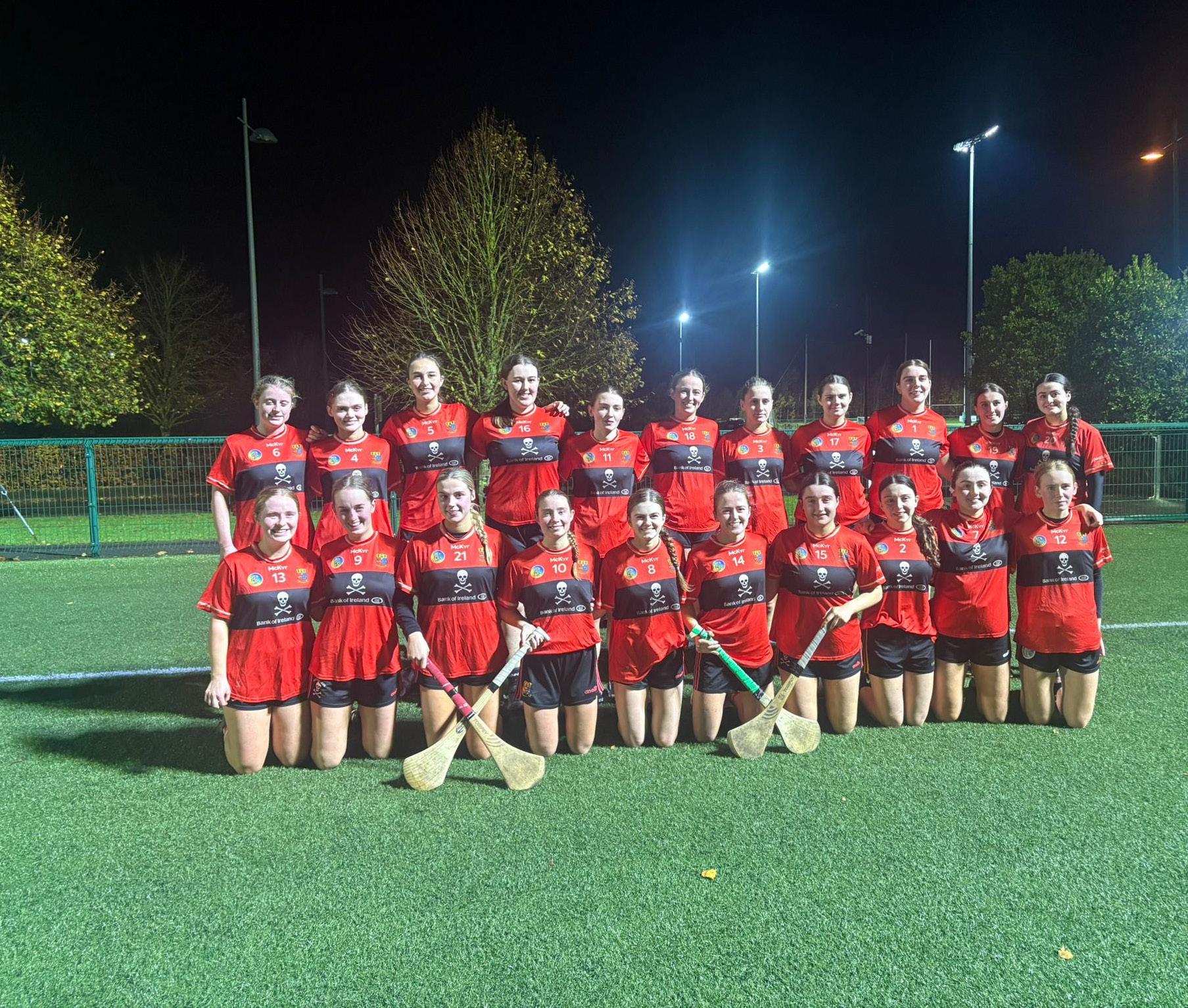
Camogie: UCC has won the Ashbourne Cup, the premier intervarsity camogie competition, 32 times, underlining its dominance in women’s Gaelic games.
Sigerson Cup: With 24 wins, UCC has been a major force in university Gaelic football since the tournament began in 1911, consistently producing top-level players.
O’Connor Cup: UCC has claimed three titles in the Ladies Gaelic Football intervarsity championship, which began in 1987 and is the newest of the senior third-level GAA competitions.
In rowing, Olympic glory has come through. UCC alumni Paul O’Donovan and Fintan McCarthy are Olympic Gold medal winners (Tokyo 2020 & Paris 2024), winning Ireland’s first Olympic gold in rowing and dominating the lightweight men’s double sculls since 2019. UCC alumni Emily Hegarty and
Aifric Keogh took Olympic Bronze at Tokyo 2020. Part of Ireland’s women’s coxless four, they earned the country’s first Olympic medal in women’s rowing.
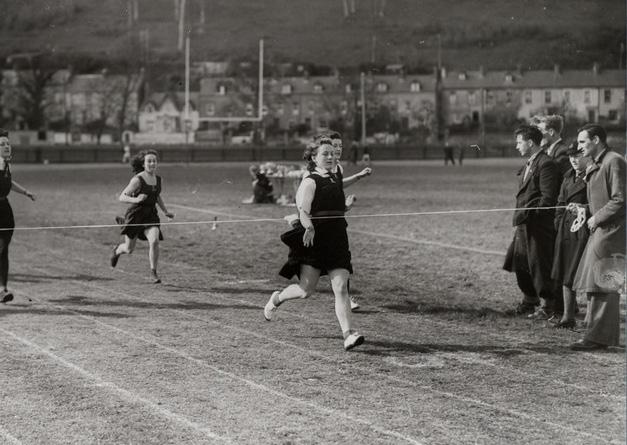
The UCC Ladies Hockey Club was officially sanctioned in 1909, making it one of the oldest women’s clubs in Munster. The women’s team has achieved 13 Chilean Cup victories and participated in the first intercollegiate camogie match in 1915. The Chilean Cup is a prestigious intervarsity women’s hockey tournament in Ireland, first awarded in the 1950s by the Chilean ambassador.
The men’s hockey team earned the honour of securing the University’s first national senior club title in sport by winning the Irish Trophy Cup in 2012 and also claimed two victories in the prestigious Mauritius Cup, the Men’s Intervarsity Championship.
Founded in 1952, UCC A.F.C. has built a proud tradition in Irish soccer, competing in the League of Ireland Cup and winning the Munster Senior League Premier Division on three occasions. The club has also claimed the prestigious Collingwood Cup 14 times, showcasing its competitive grit and producing memorable matchups against League of Ireland sides such as Cork City, Cobh Ramblers and Dundalk.
UCC Women’s Soccer competes in third-level leagues and the Kelly Cup intervarsity competitions, having won the Kelly Cup six times. The programme has also produced players who have gone on to represent national university squads.
Today, UCC sport is more inclusive and diverse than ever, with student clubs ranging from fencing to ultimate frisbee, and a renewed emphasis on mental health, community and holistic development. The University
continues to invest in elite facilities, scholarships and support systems that empower athletes to thrive both on and off the field.
Whether on the pitch, in the boat, or across the arena, UCC athletes have consistently reflected the University’s motto: “Where Finbarr Taught, Let Munster Learn,” demonstrating skill, dedication and a passion for sport across generations.
In 2026, UCC announced its new five year capital development plan which includes €17 million towards enhancing outdoor sports facilities, including plans for a new sports park at Curraheen. ∎
The UCC Rugby Club, founded in 1872, introduced the skull and crossbones emblem that later became

180 Years of UCC
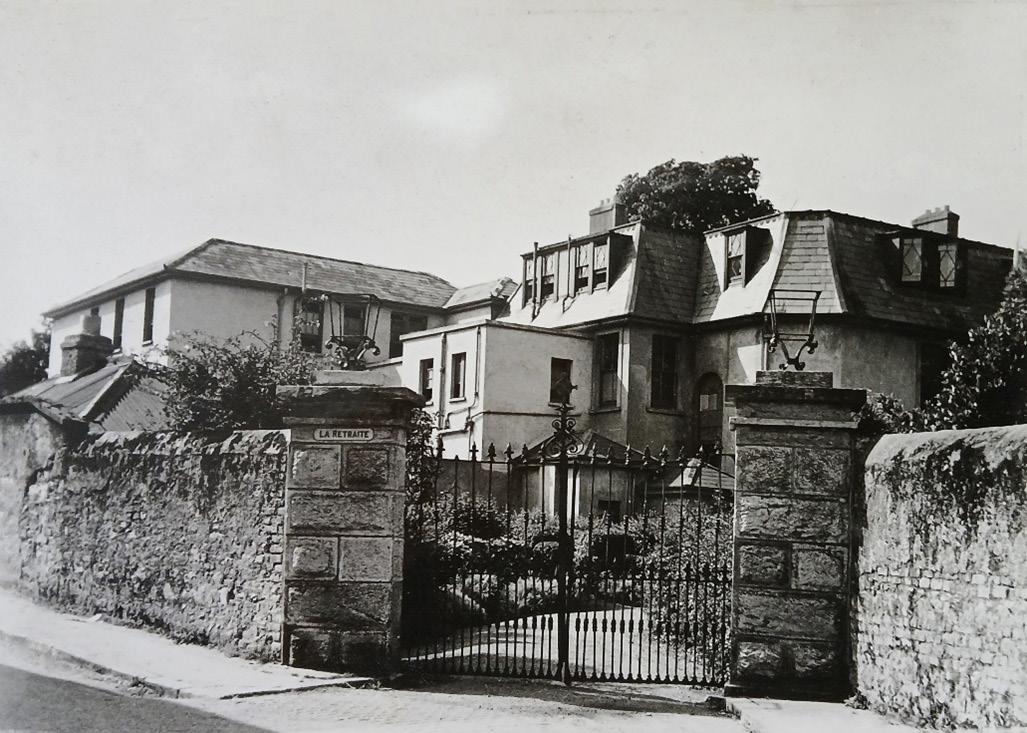
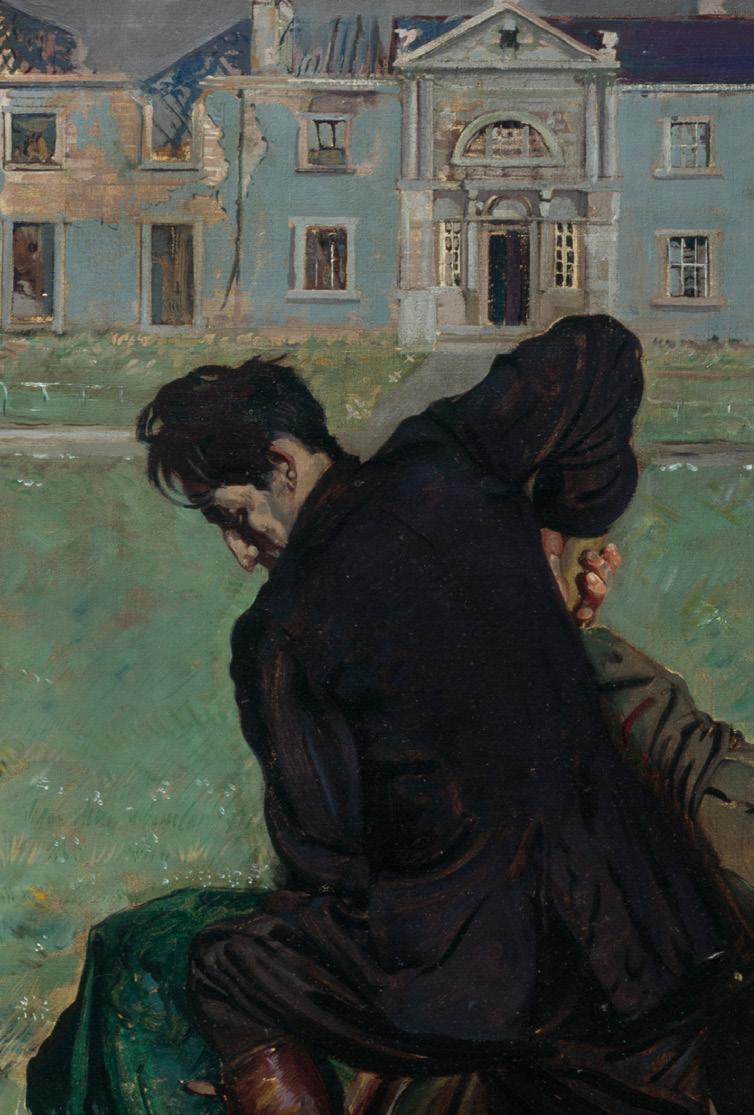
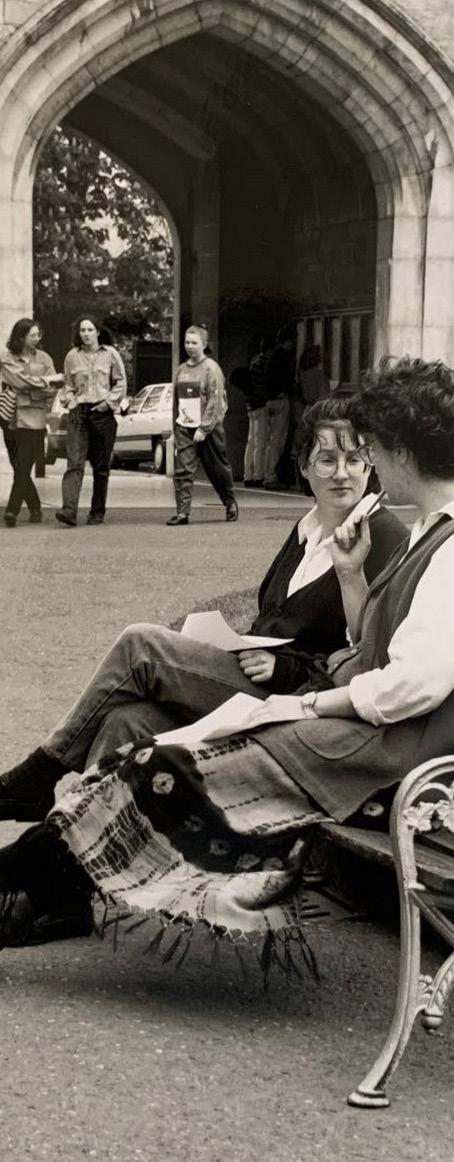
At the bend of Gaol Walk, stands Áras na Laoi. Today, it houses the School of Law, but for more than fifty years, this site was home to La Retraite, a residence and social hub for generations of young women starting college life at UCC.
La Retraite opened its doors in 1923 after Bishop Daniel Coholan invited the Sisters of La Retraite du Sacré Coeur to Cork to provide accommodation for female students. When the first fourteen boarders arrived that October, the house, then known as Lee Cottage, had just been expanded with a second storey. Over time, the building continued to grow, eventually housing up to ninety students.
Among the many who passed through its doors was Anna O’Callaghan (BA 1975; HDE 1976; MA 1993) from Mallow, North Cork, who arrived in October 1972. Her family was already familiar with La Retraite, her aunt, Irene
O’Callaghan, had stayed there in the 1940s while studying medicine. Irene later married fellow UCC student Dr Leo Leader. The couple ran a GP practice in Boherbue for many years.
Anna was part of a new wave of students, shaped by Minister Donogh O’Malley’s 1967 introduction of free secondary education. “We were among the first beneficiaries of the new policy,” she recalls. “Suddenly, university was
“Suddenly, university was open to many more people, women especially”
open to many more people, women especially.”
Many of Anna’s fellow boarders in 1972 came from rural towns; Bantry, Castleisland, Nenagh, Kenmare, Boherbue and Kiskeam, often following sisters who had gone before them. The hostel had a reputation for being strict, an impression that reassured many cautious parents, but as Anna remembers it, the reality was far more relaxed. “There were rules, of course, you had to sign out for the night and collect a pass key. But otherwise, the nuns gave us freedom and were remarkably tolerant of our youthful behaviour.”
It was a place where students balanced study and social life. Come exam season, girls sunbathed on upstairs windowsills in shorts and tank tops, textbooks in hand. “It was the summer of 1975,” Anna recalls. “A scorcher. I can still picture the building, the heat, the tension and us girls trying to catch a tan and cram for finals at the same time.”
By the mid-1970s, UCC’s physical expansion had made the hostel’s site strategically valuable. The University purchased the surrounding land for development and on 19 December 1977, the community moved to Fernhurst House on College Road, a larger, more modern hostel.
Among those who came to La Retraite at Fernhurst in later years was Evelyn McLoughlin (BMus 1988) from Galway, who arrived in 1985. Like so many others before her, Evelyn found a place to make friends and settle
into student life.
“Living away from home for the first time was exciting”, says Evelyn, “at first, I couldn’t understand what people were saying, since I wasn’t from Cork! La Retraite was a safe and comfortable base from which to explore Cork and get settled in college. We could take all our meals there, although the food was not great.”
“The nuns did their ‘patrols’ around the building”, Evelyn remembers, “but there was always a fair bit of rule-breaking! Boyfriends were snuck in, some staying several days at a time, cigarettes were smoked out windows and the smell of air freshener was strong at times. The stairwell just inside the night-time entrance was a great gathering place after a night out, where we made as little noise as possible but exchanged our stories about the evening”.
From 1923 through the early 1990s, La Retraite, first at Gaol Walk and later at Fernhurst, was a central part of student life for over three thousand women. Today, Fernhurst is known as Cnoc Mhuire and is owned by the Bons Secours Sisters.
While the days of religious-run hostels are now part of UCC’s history, La Retraite’s legacy lives on in a new era of student accommodation. Purpose-built housing, shared apartments, and university-managed residences now offer private en-suite rooms, modern self-catering kitchens and shared social spaces, reflecting the evolving needs and expectations of 21st-century student life. ∎
From guineas and punts to today’s euro, here’s what a room, meals and a hot tap would have set you back then...
1955/56: 80 guineas, equivalent to €2,966 today.
1965/66: £150, equivalent to €3,957 today.
1975/76: £270, equivalent to €2,962 today.
180 Years of UCC
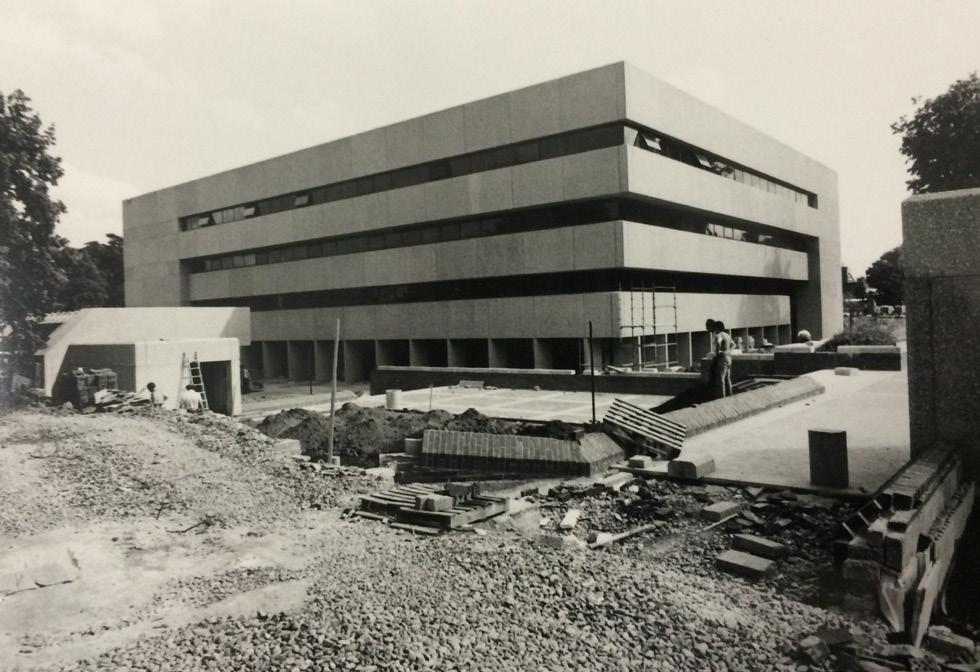
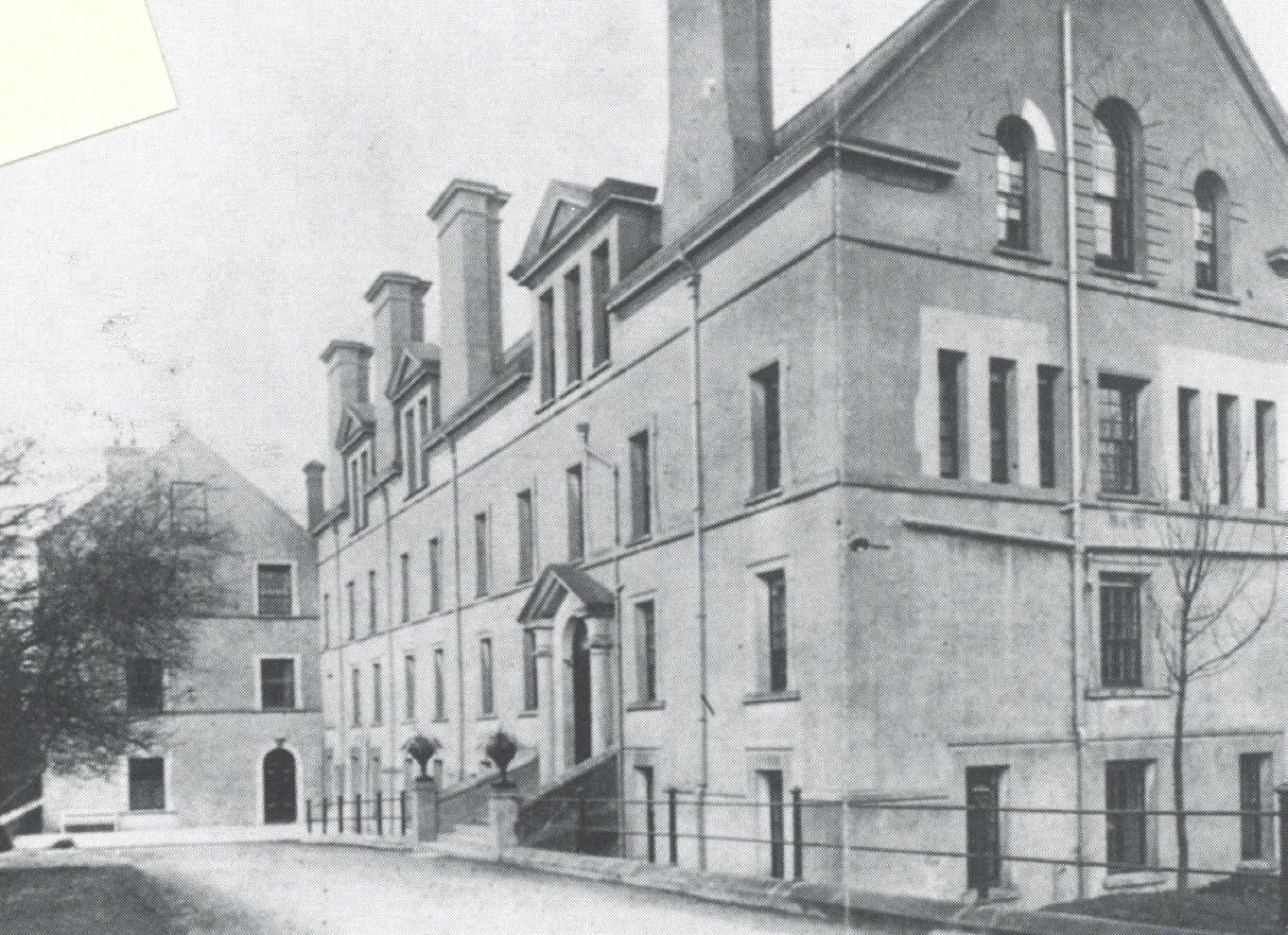
For much of the 20th century, the Honan Hostel stood at the corner of College Road and Donovan’s Road, providing a unique sense of community for male students attending UCC.
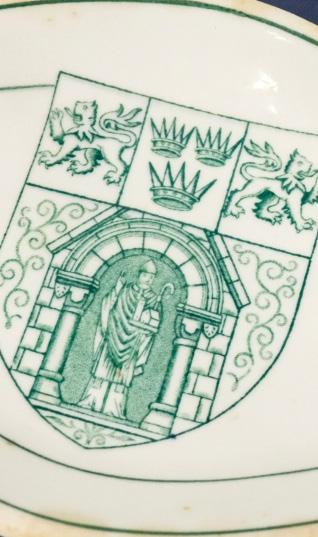
Established in 1915 through the Honan Trust, the hostel was part of a larger philanthropic legacy initiated by Isabella Honan.
John Kirby (BE 1968), who resided there from 1964 to 1967, offers a window into life at the hostel during a time of national and global transition. “Ireland was a different place then,” he says, “De Valera was President, Seán Lemass
“It was really more like a good hotel of the time”
was Taoiseach, and the Vietnam War filled the headlines. The Troubles had yet to begin, and UCC had fewer than 2,000 students.”
With third-level education still feebased, scholarships, like the one John received from Kerry County Council, were essential for many students. Scholarship recipients were often given priority placement at the Honan, a tradition stretching back decades. John describes the Honan as something far more generous than the word “hostel” suggests. “By the standards of the
day, life there was very comfortable for the 40 residents. It really was more like a good hotel of the time.”
Entertainment was simple but wellloved. There were table tennis and billiards tournaments, a communal TV room and even a tennis court that eventually doubled as a mini football pitch. A few students owned basic crystal radios that caught the faintest of signals. “There were no mobile phones, no gadgets, just good company and clever conversation.” he says.
Sunday night debates were a highlight. “They tackled and solved many of the burning issues of the day,” John recalls. “They were a bit mad, of course, but well organised
with a chair and secretary. Minutes were kept, though I doubt they still exist. There were also Saturday night Philosoph debates, where figures like Eoghan Harris reigned supreme and there were weekly Sunday dances in The Rest.”
Since the hostel was subsidised through the generous Isabella Honan bequest, the cost to students was reasonable. John estimates the cost was around £130 a year which was covered fully by his £250 scholarship, which also paid for tuition and books. “There was even a couple of bob left over for pocket money.” he says.
A decade later, in the 1970s, Aidan O’Carroll (BMus 1976, MA 1979) arrived at UCC to study music under the renowned Professor Aloys Fleischmann. He spent his first year at the Honan Hostel, then still very much a hub of student life. “For me, the hostel was a safe harbour, a home from home,”
he reflects. “It gave structure to the new and often overwhelming experience of university life, while also creating a strong sense of belonging.”
Aidan, says that for him, “the hostel was a place where lifelong friendships were formed, where Cork became home, and where young students took their first independent steps into the world”.
After graduation, John built a lifelong career with the ESB, rising from technical roles to engineering management and working on consultancy projects in the Middle East, while Aidan founded the Kerry School of Music.
By the 1990s, times had changed and students began seeking more independence. The ageing hostel had become too expensive to maintain and it closed its doors to residents 1991. It was then demolished in 1995 to make way
for the O’Rahilly Building.
“It was an institution of its time”, John reflects, ”and probably wouldn’t suit today’s student. For myself, I have nothing but good memories of my time there.” ∎
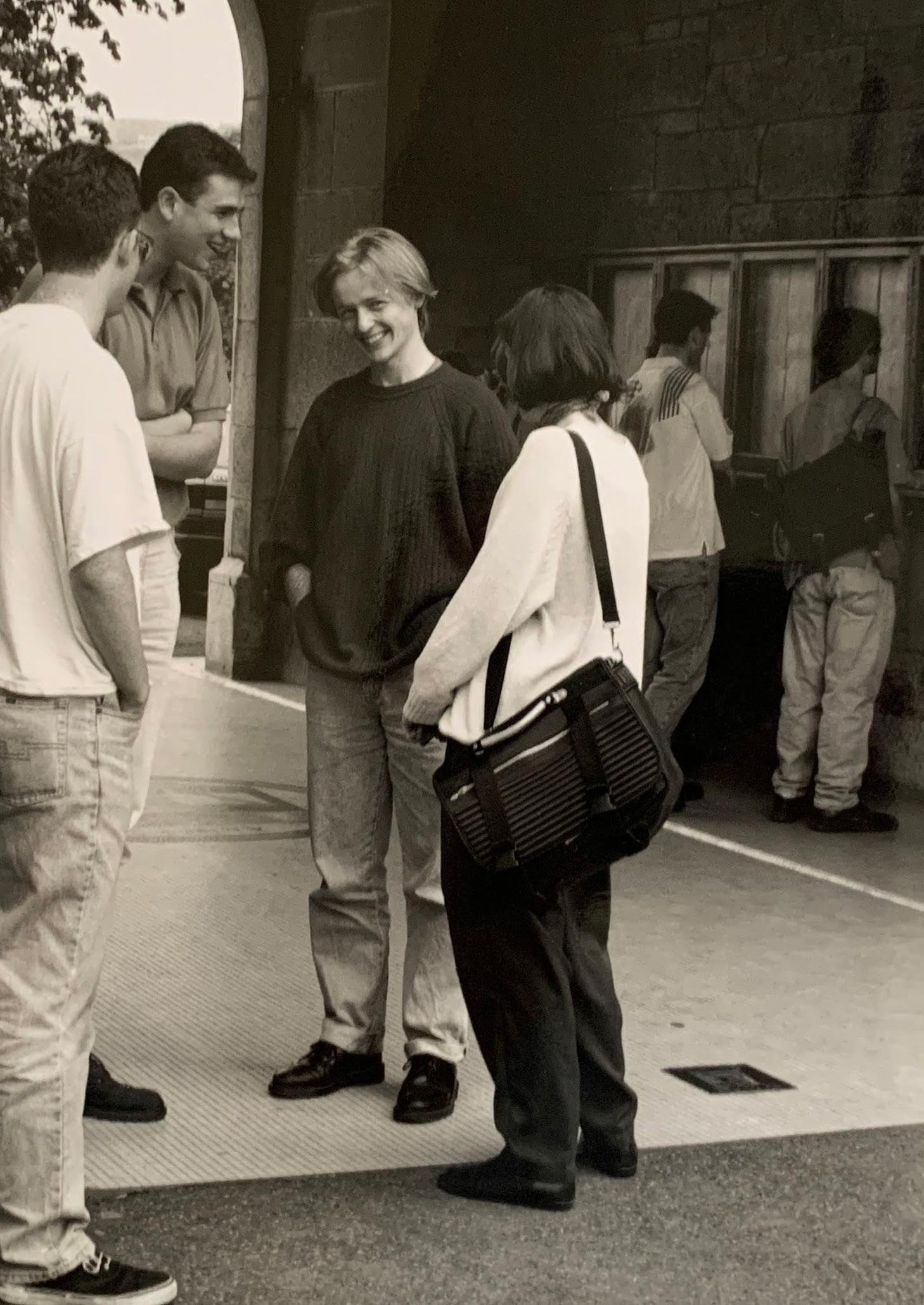
Do you remember this era of UCC’s history? Share your memories and let us know where life took you after graduation.
alumni@ucc.ie
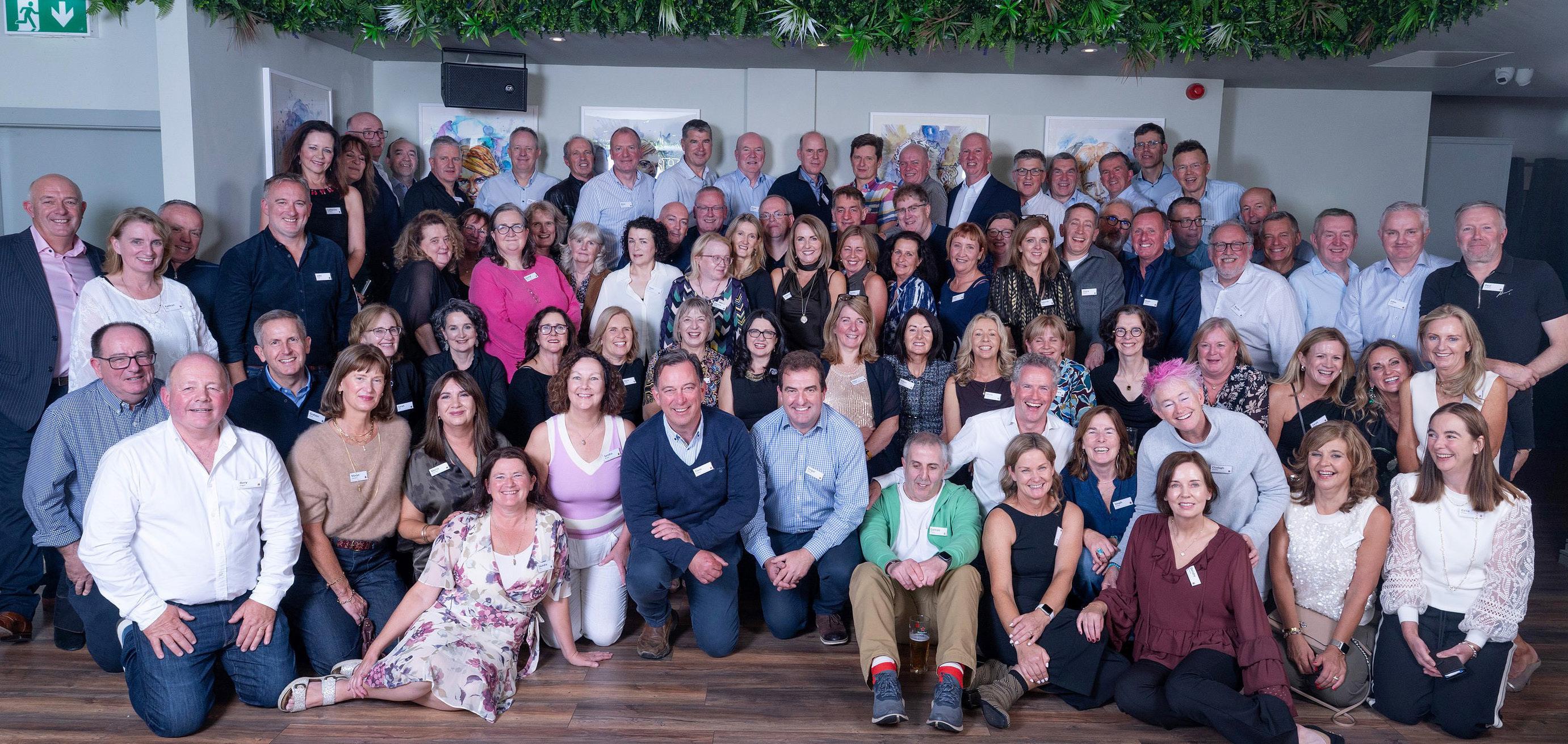
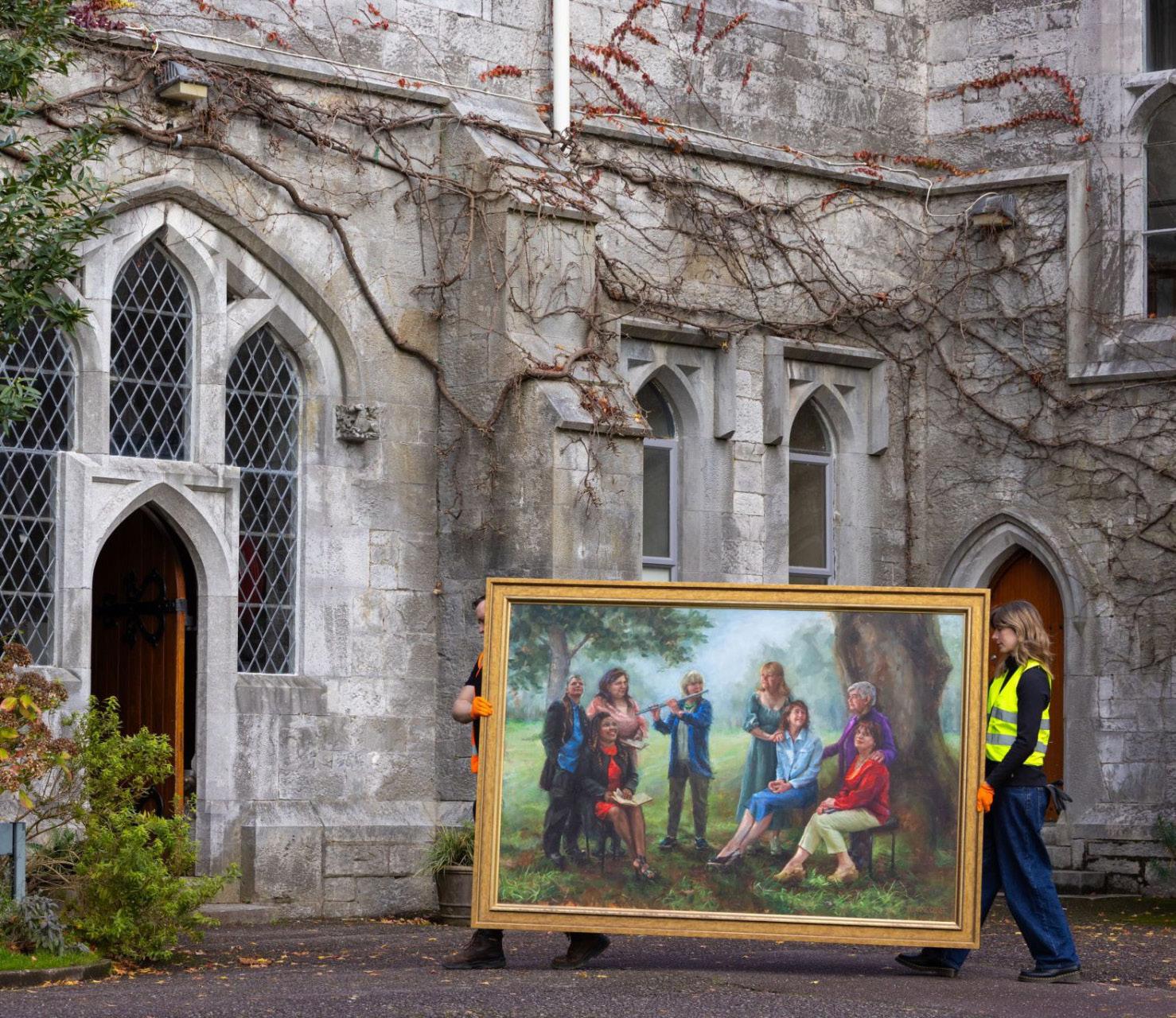
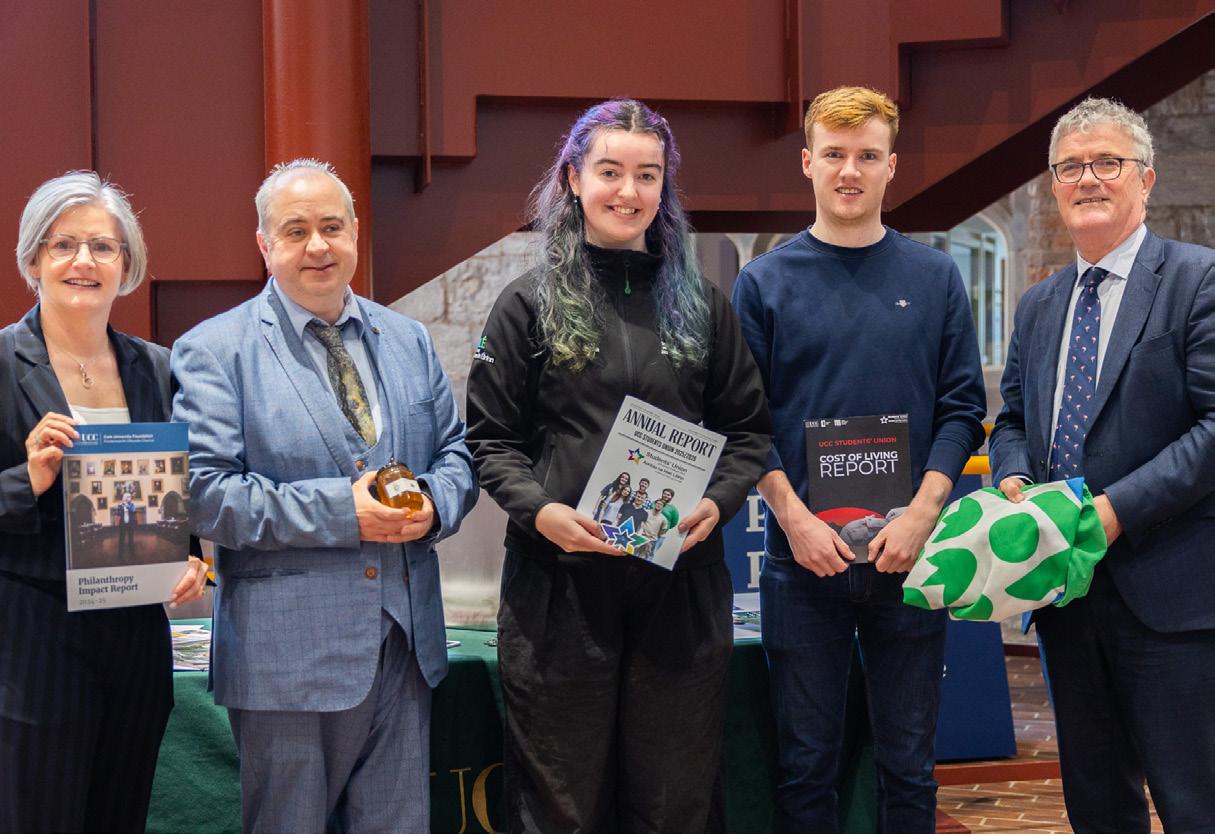
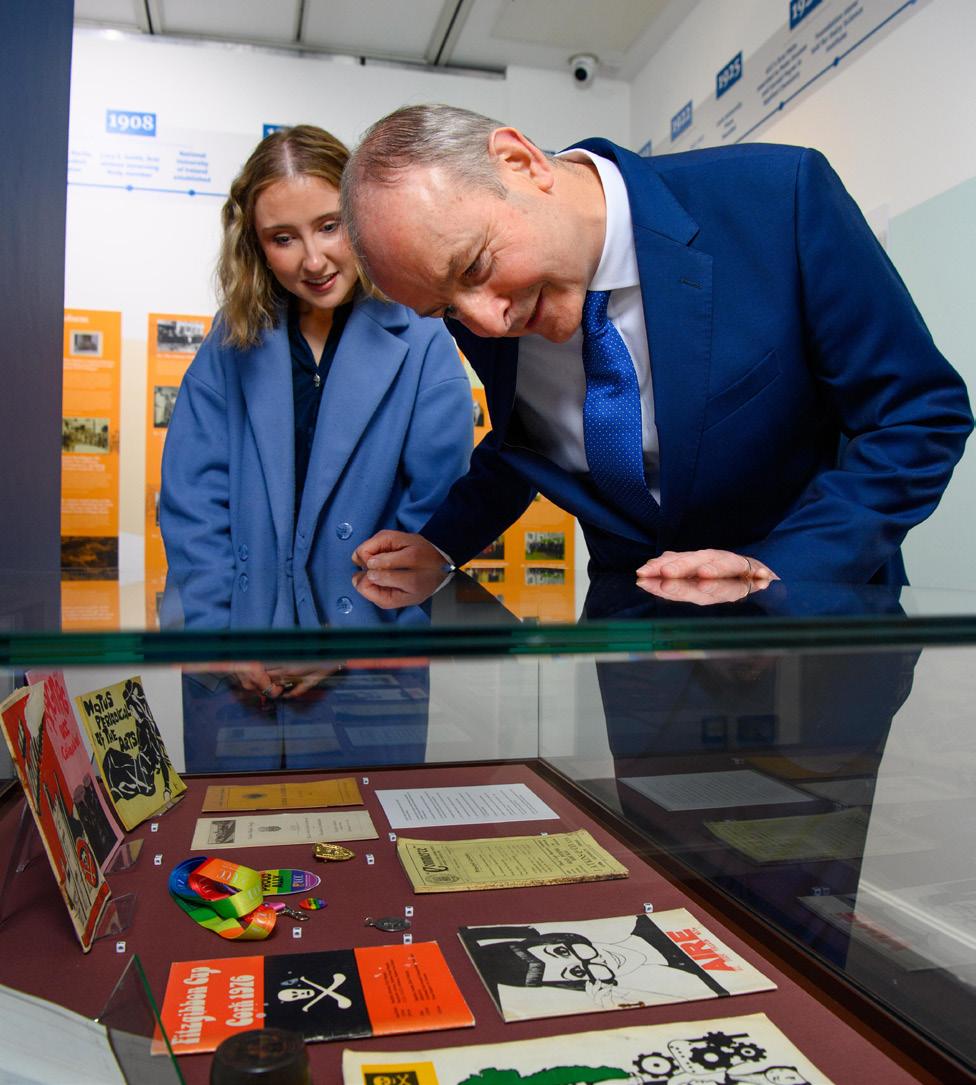
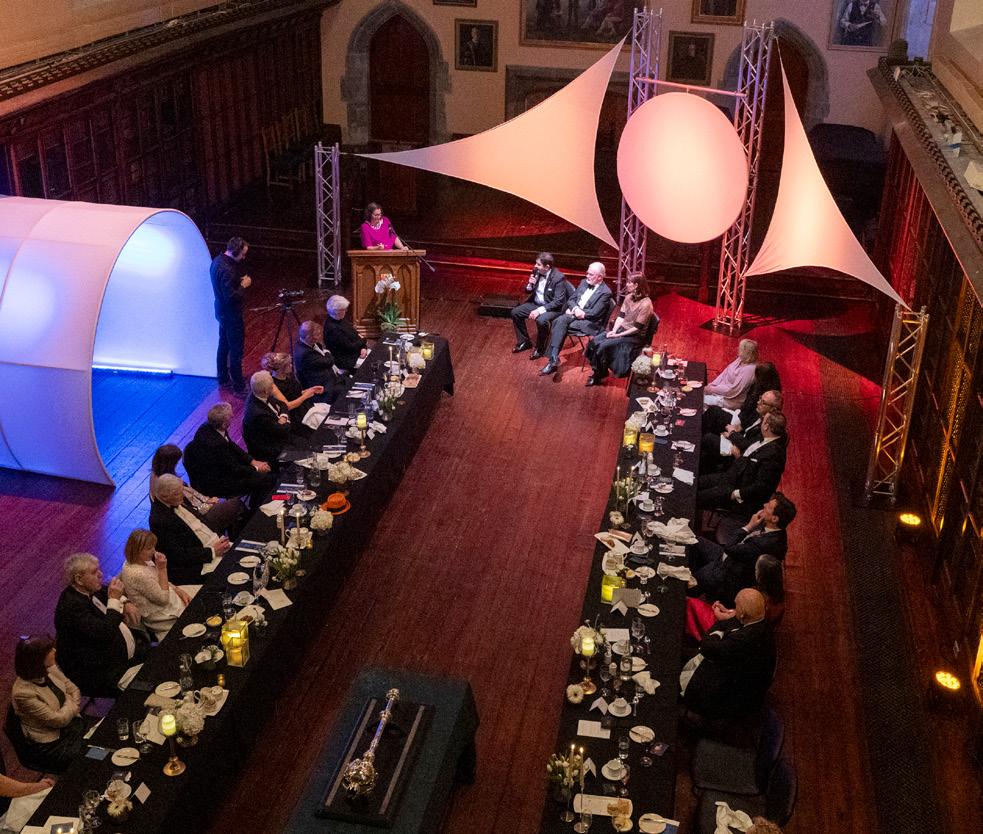
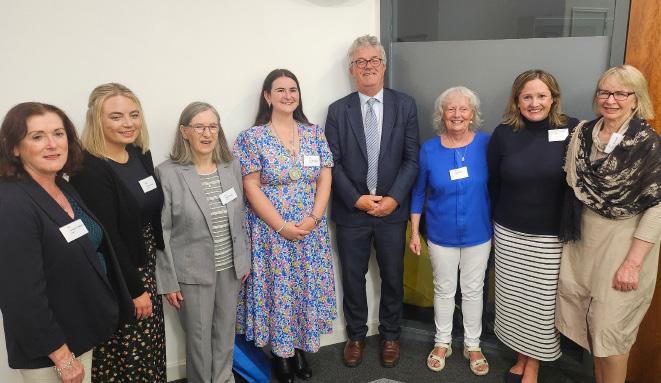
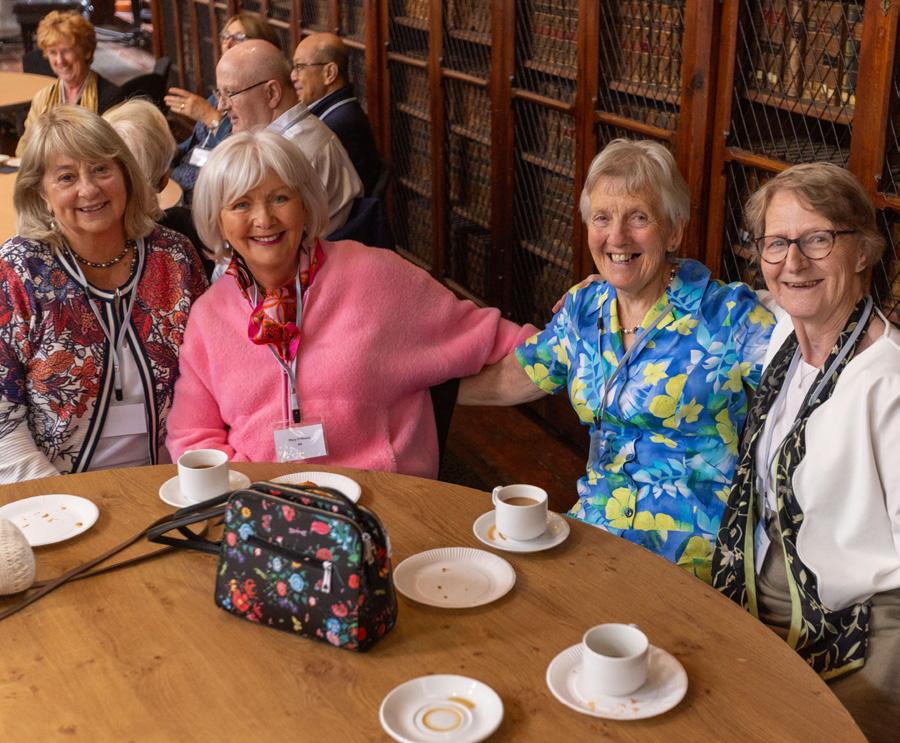
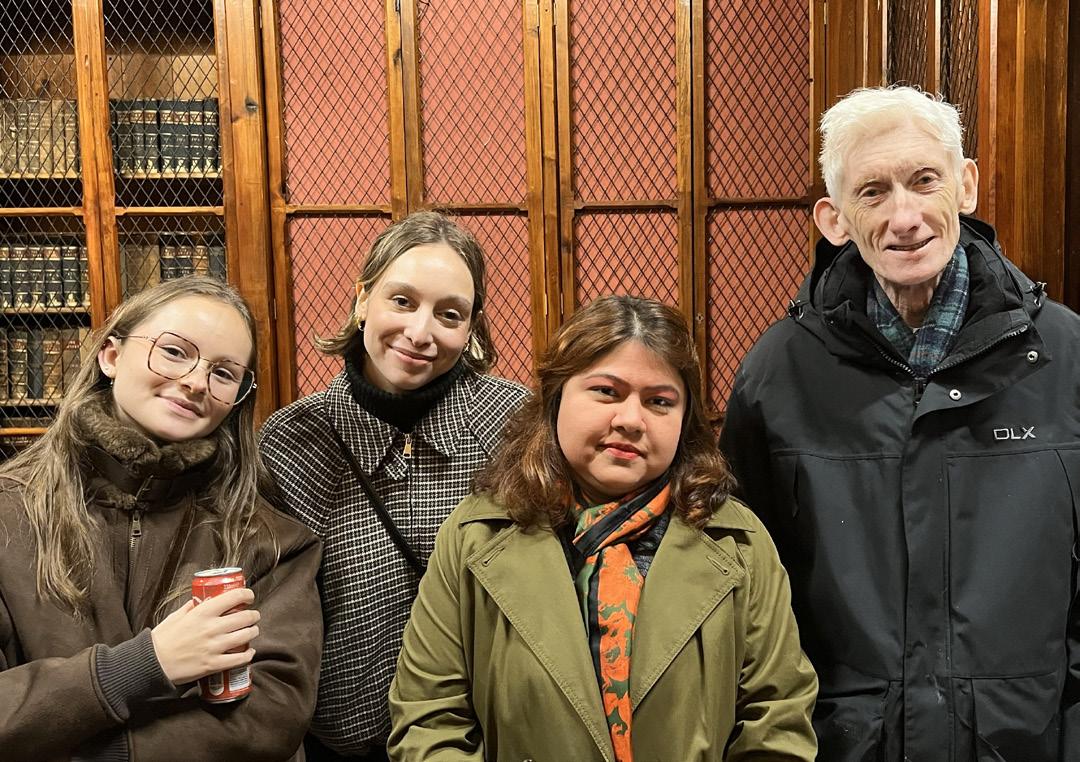
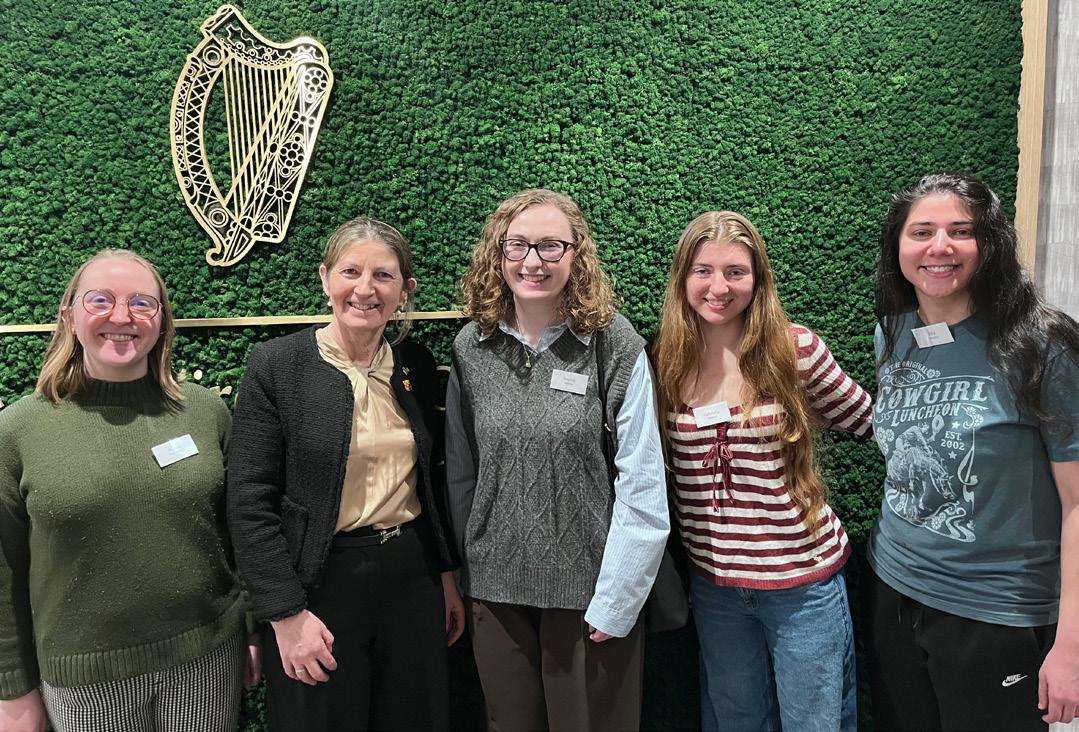
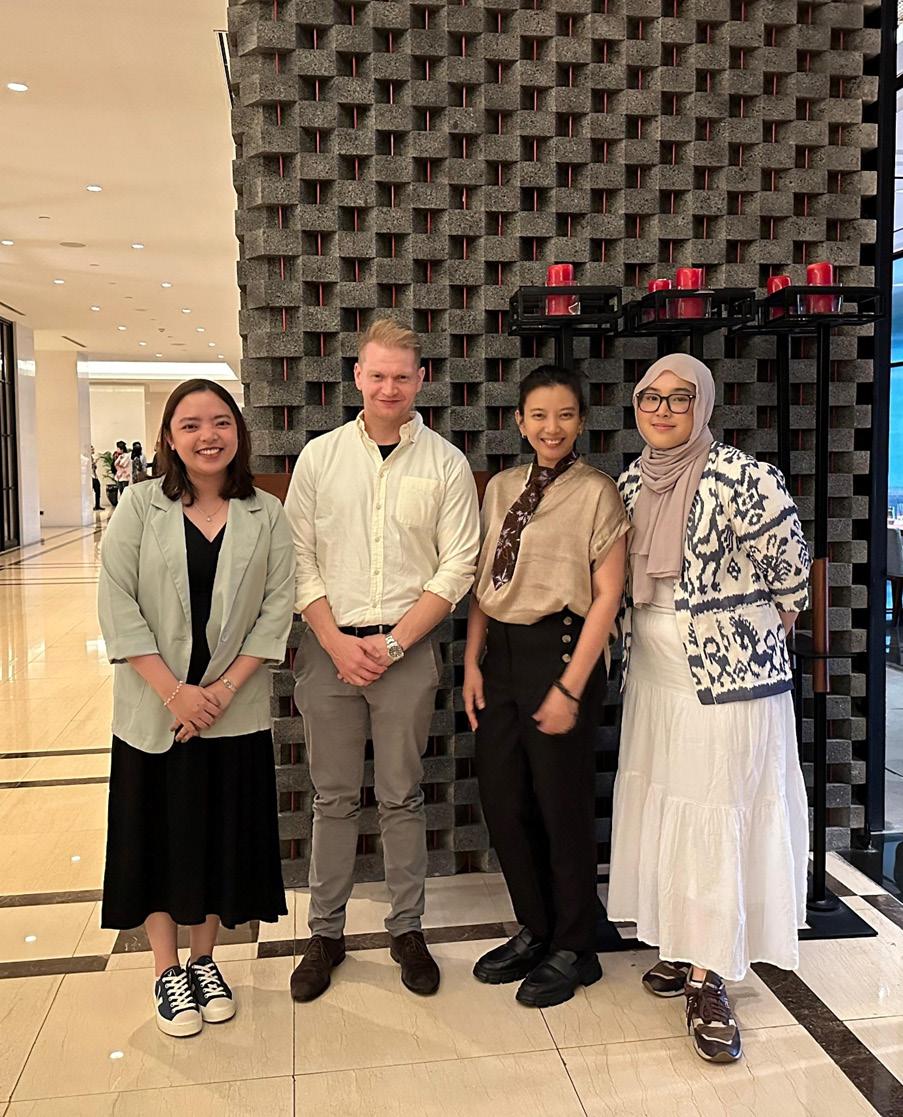
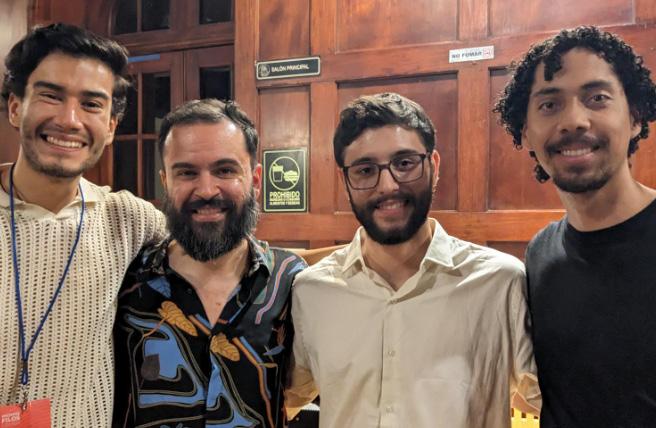
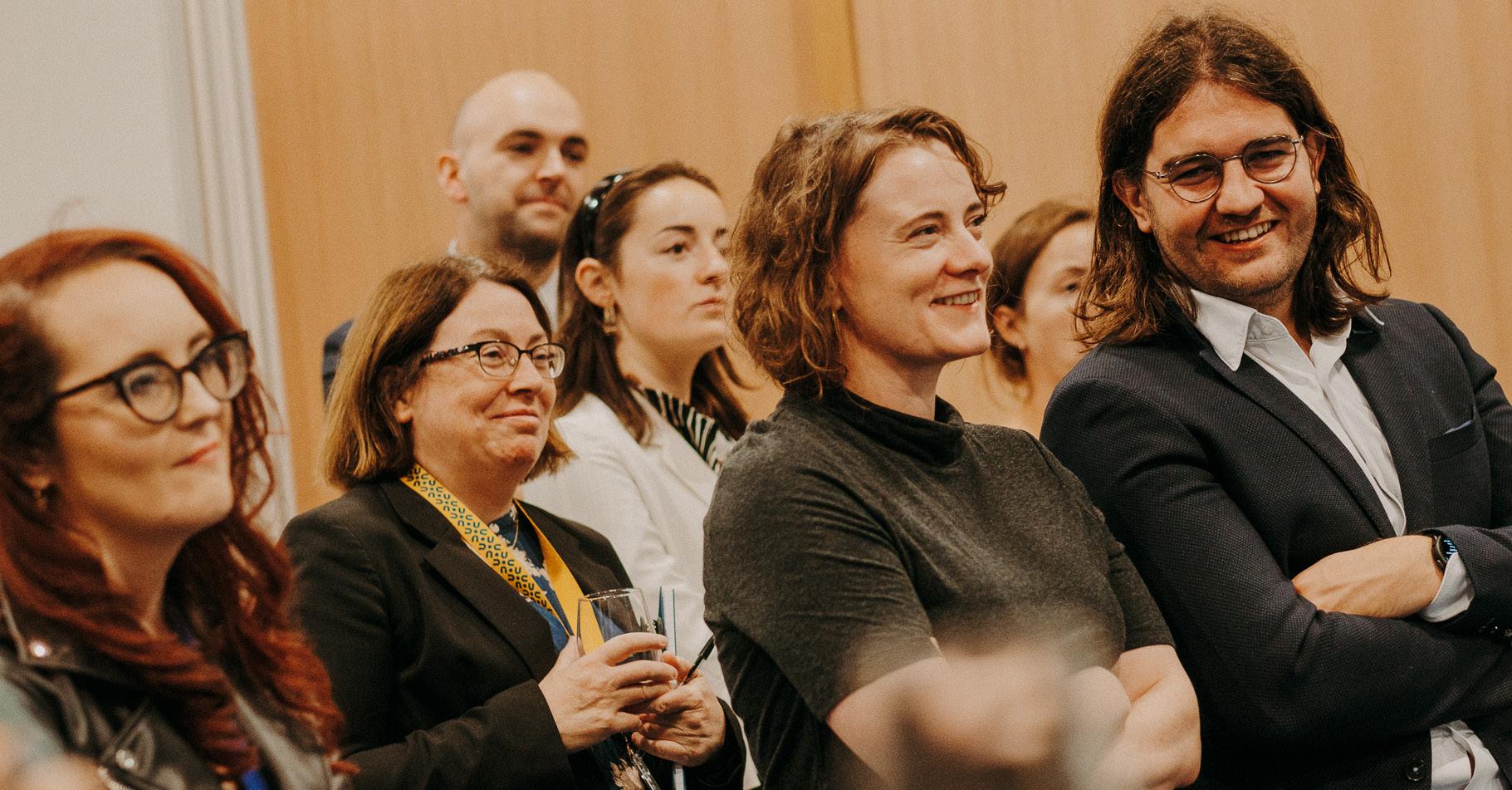
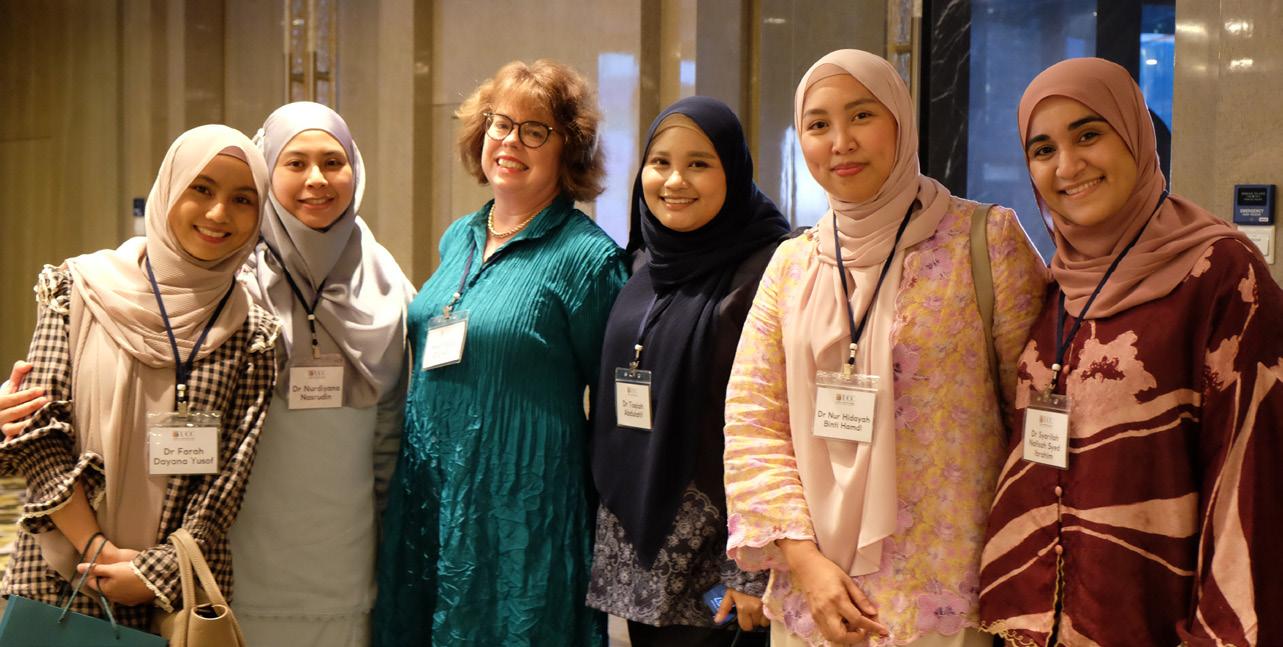
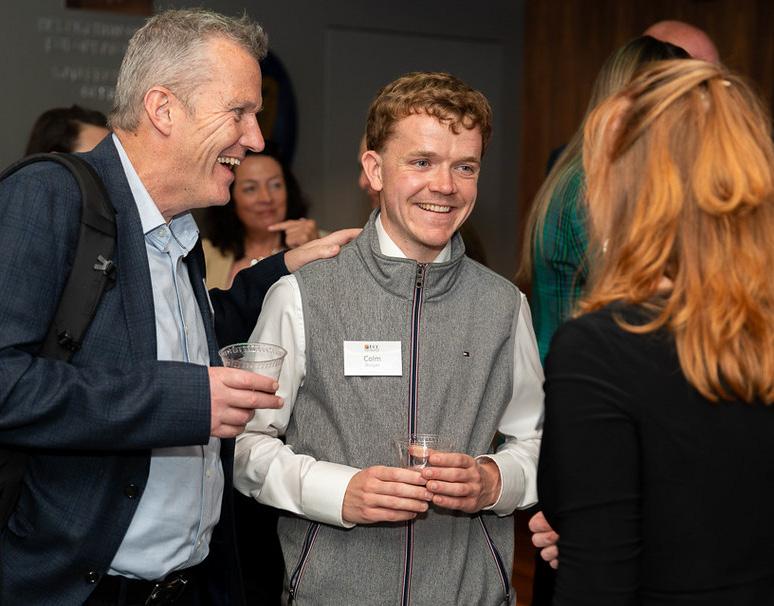
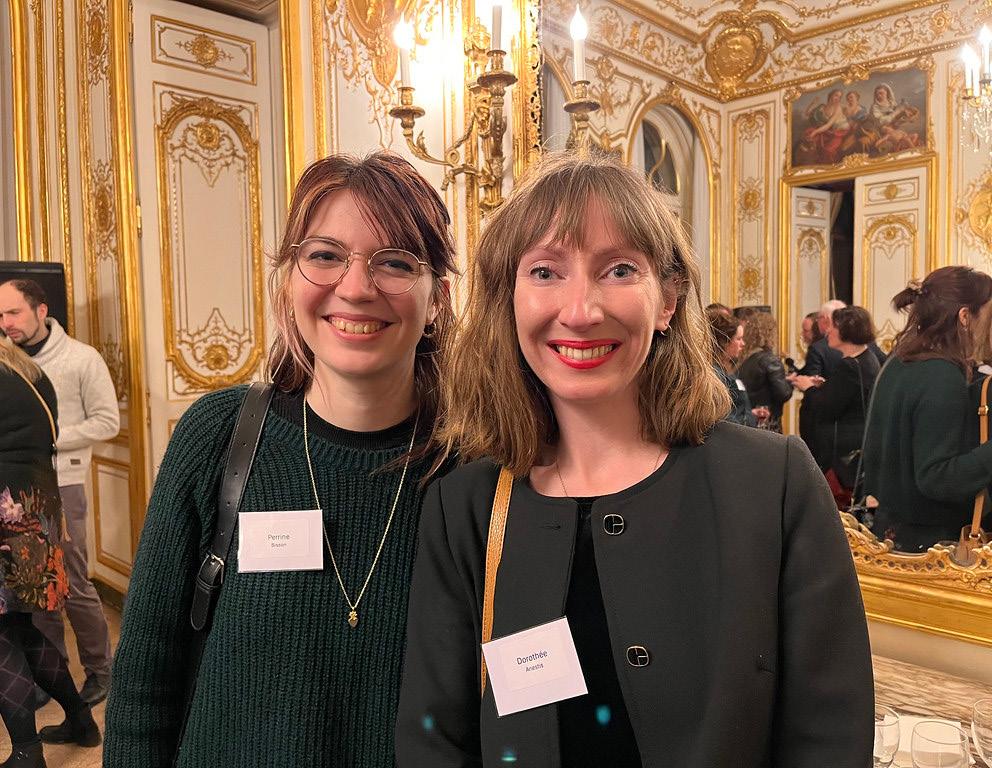
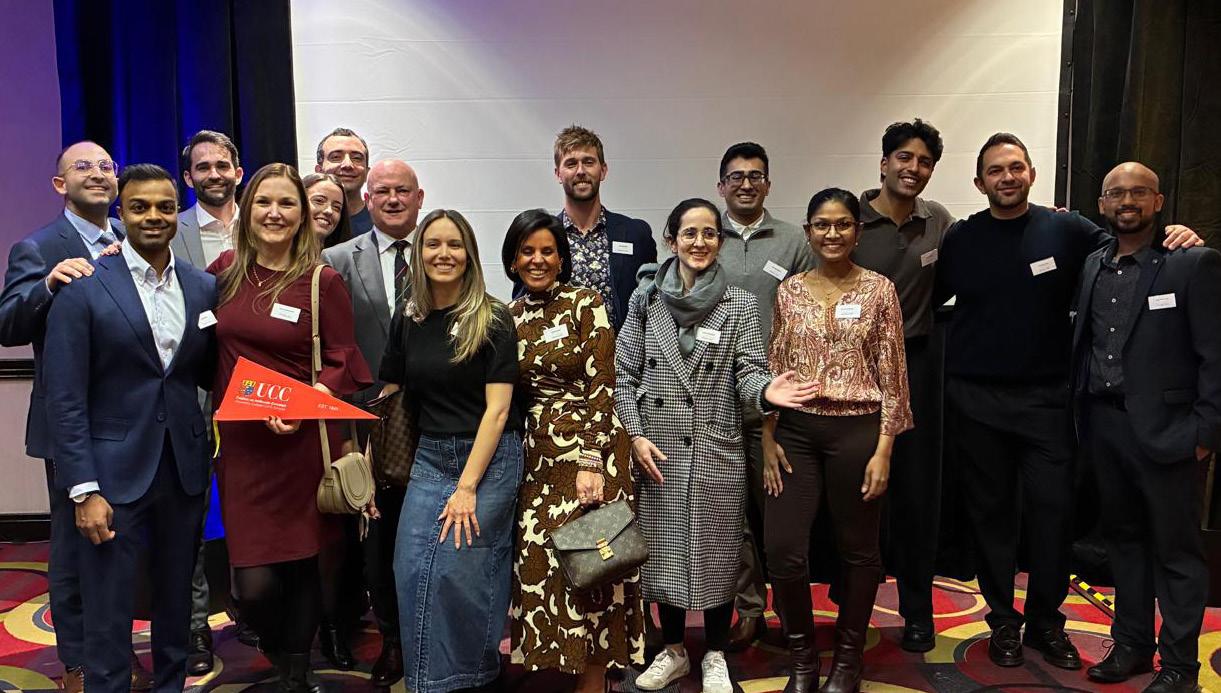
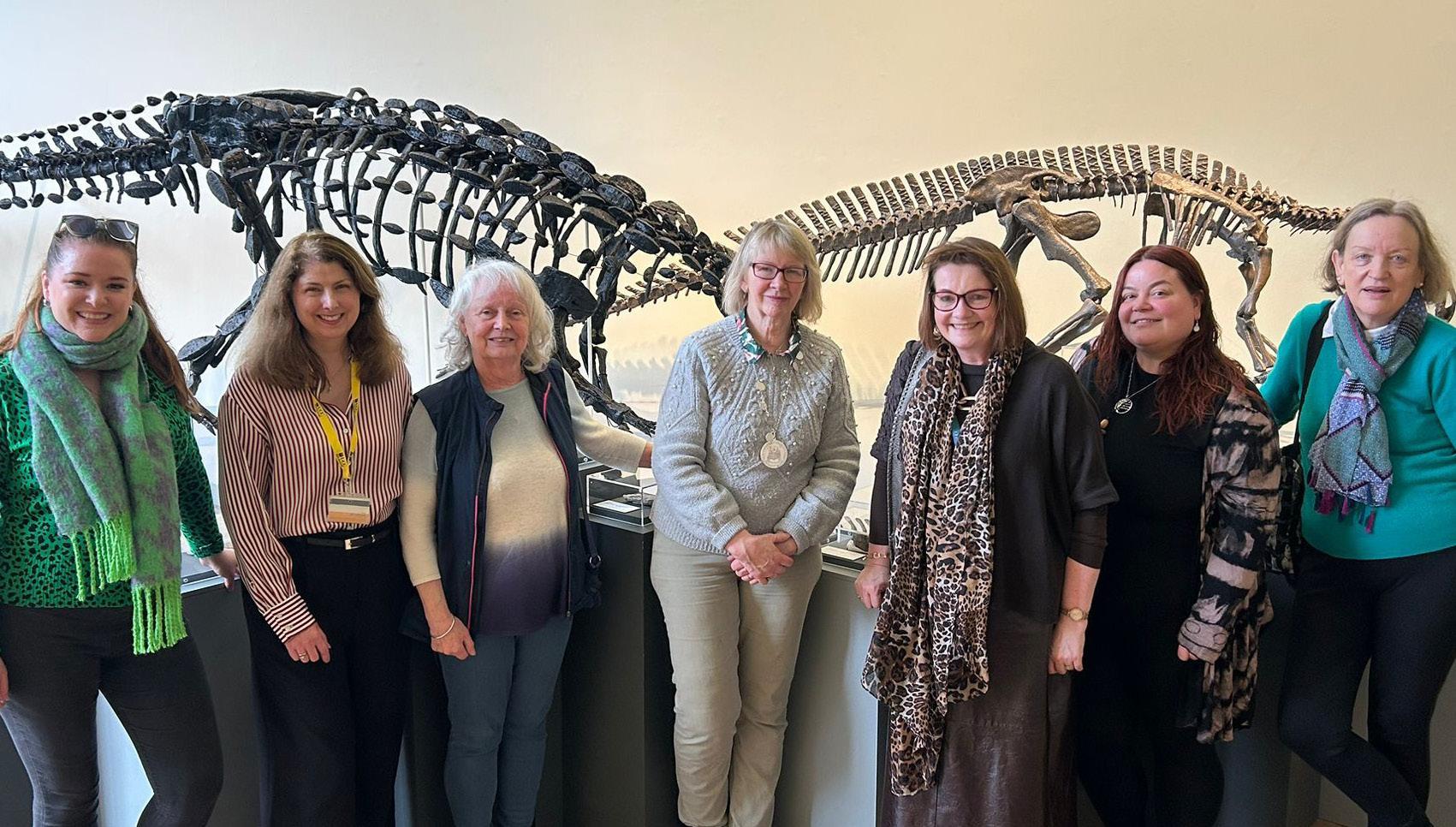
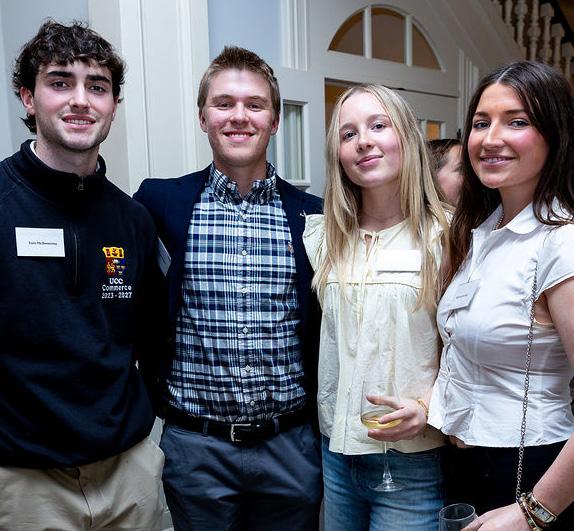
UCC alumni return to campus for their class reunions, reminiscing, reconnecting and creating new memories together.
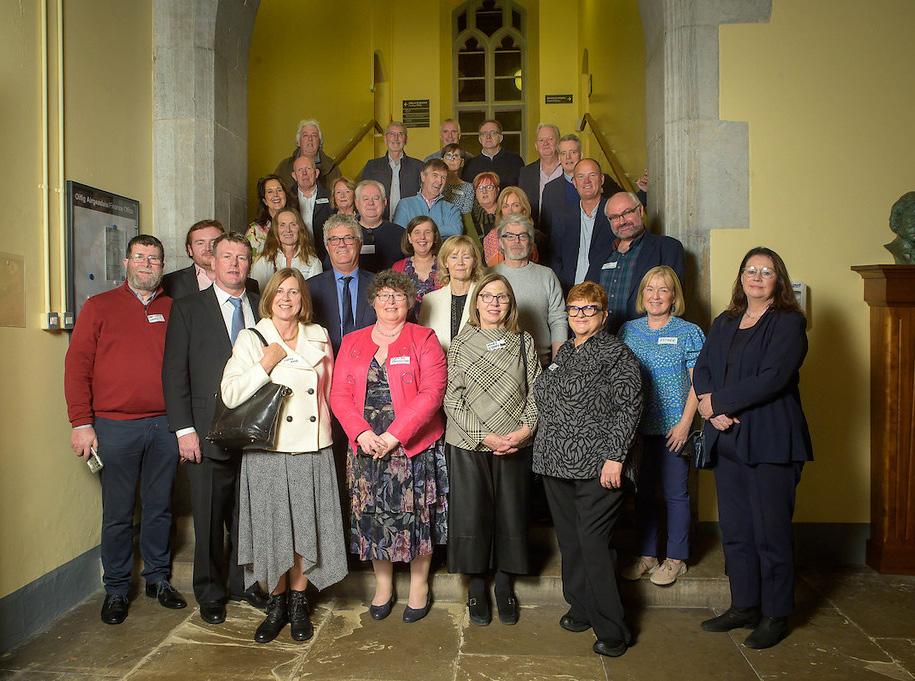
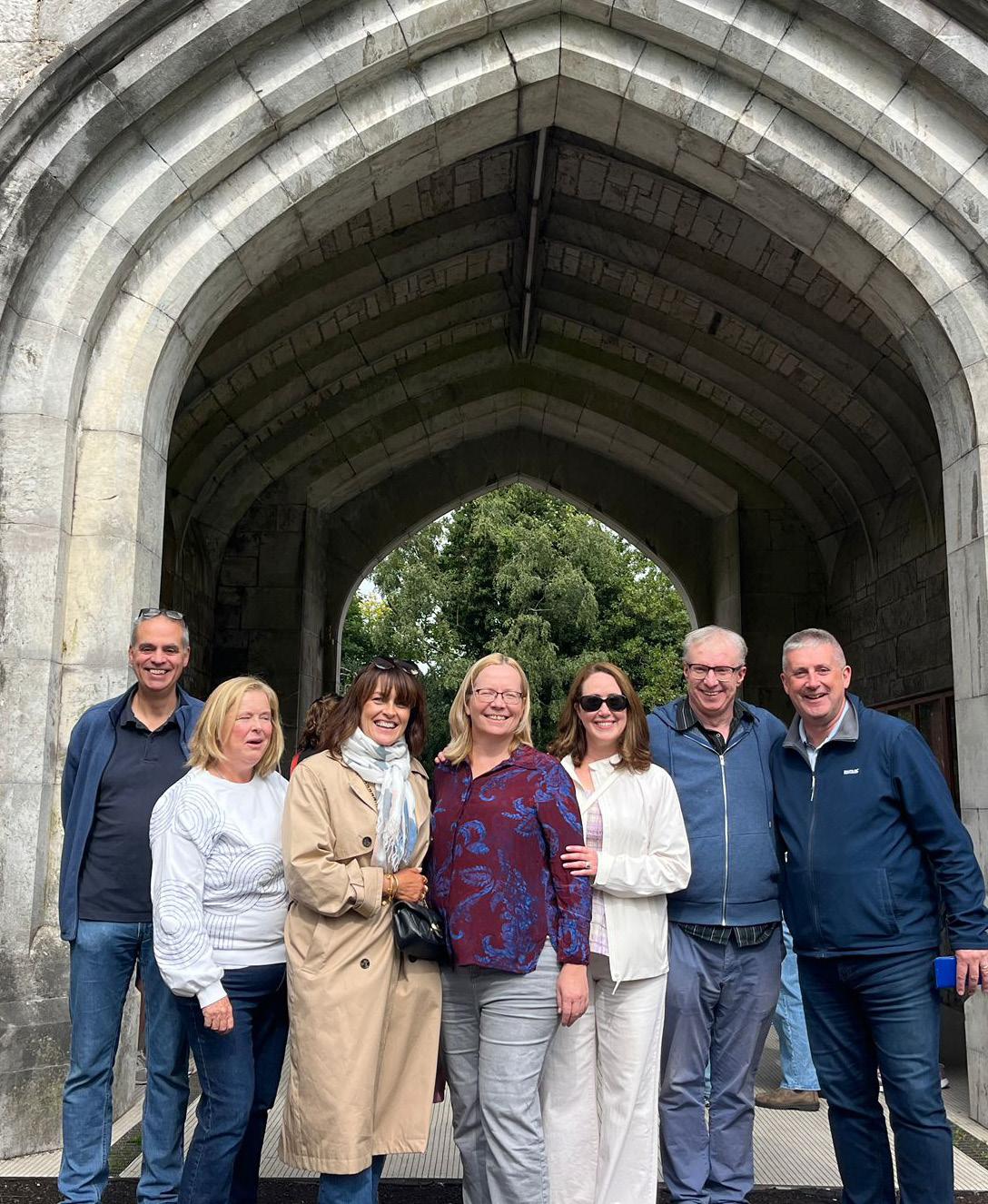
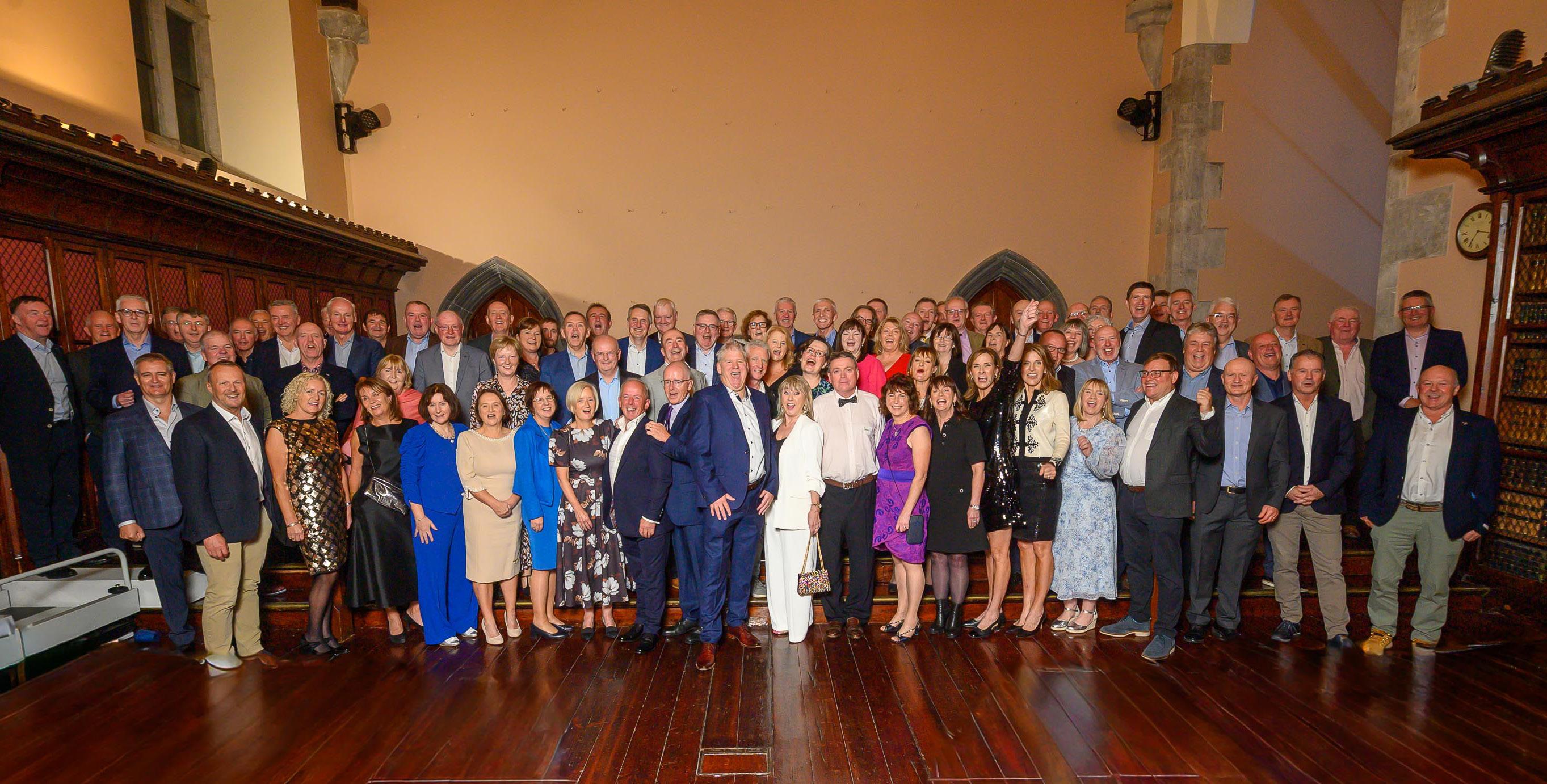
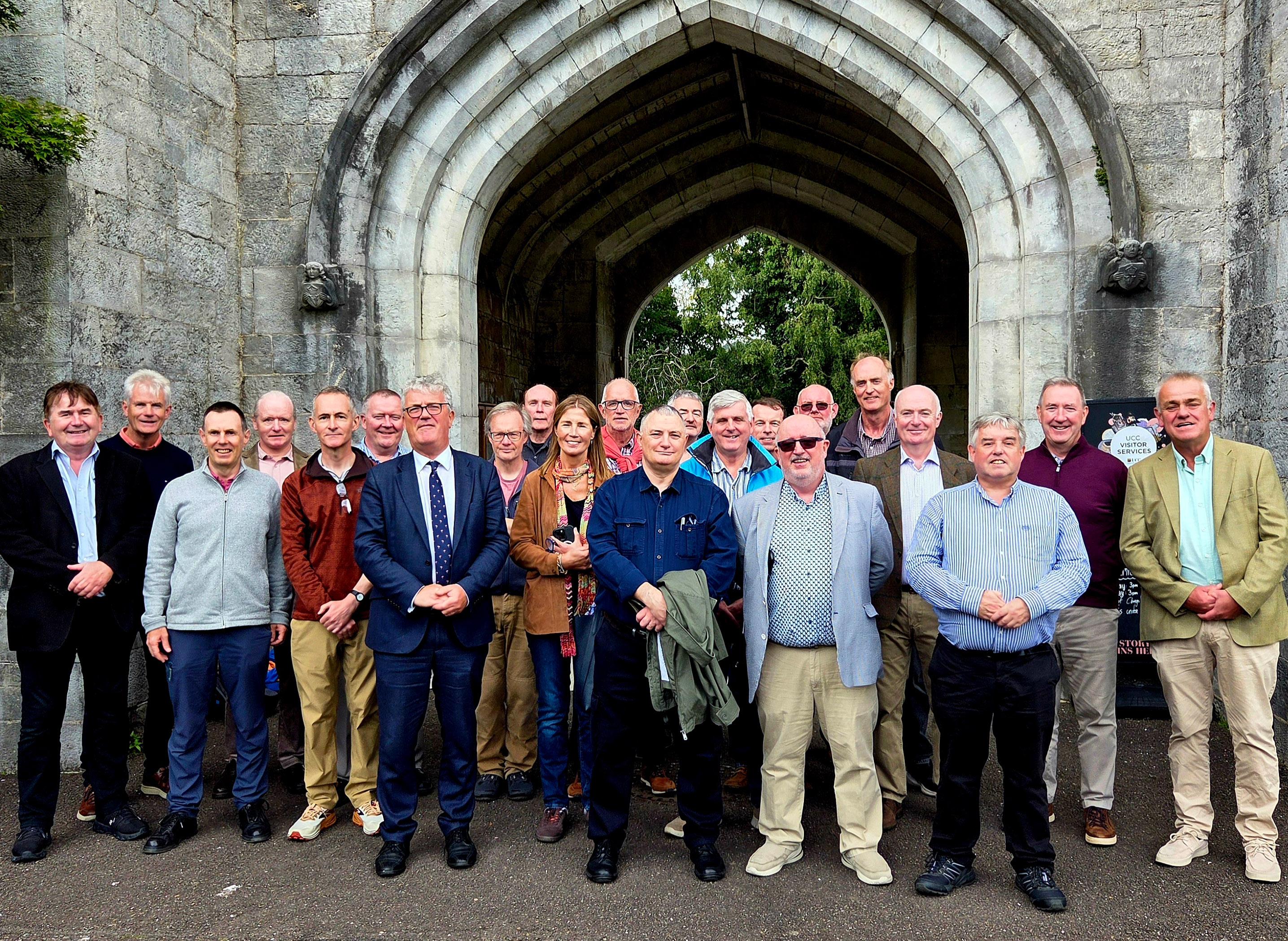
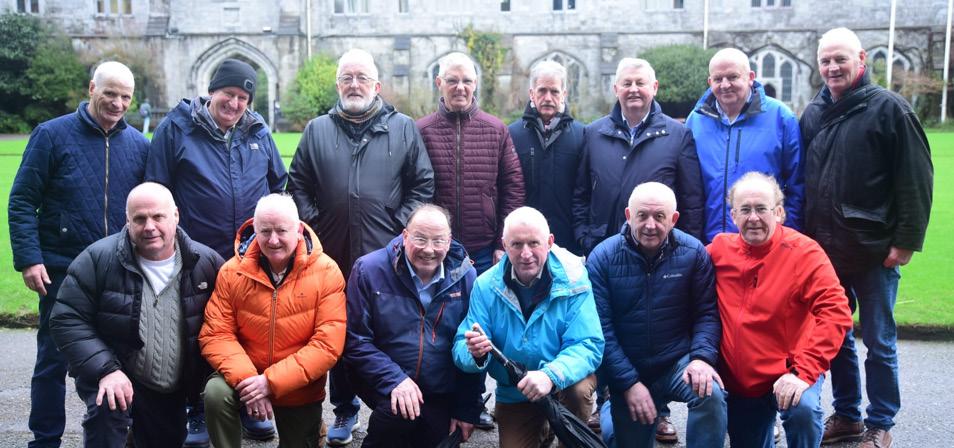
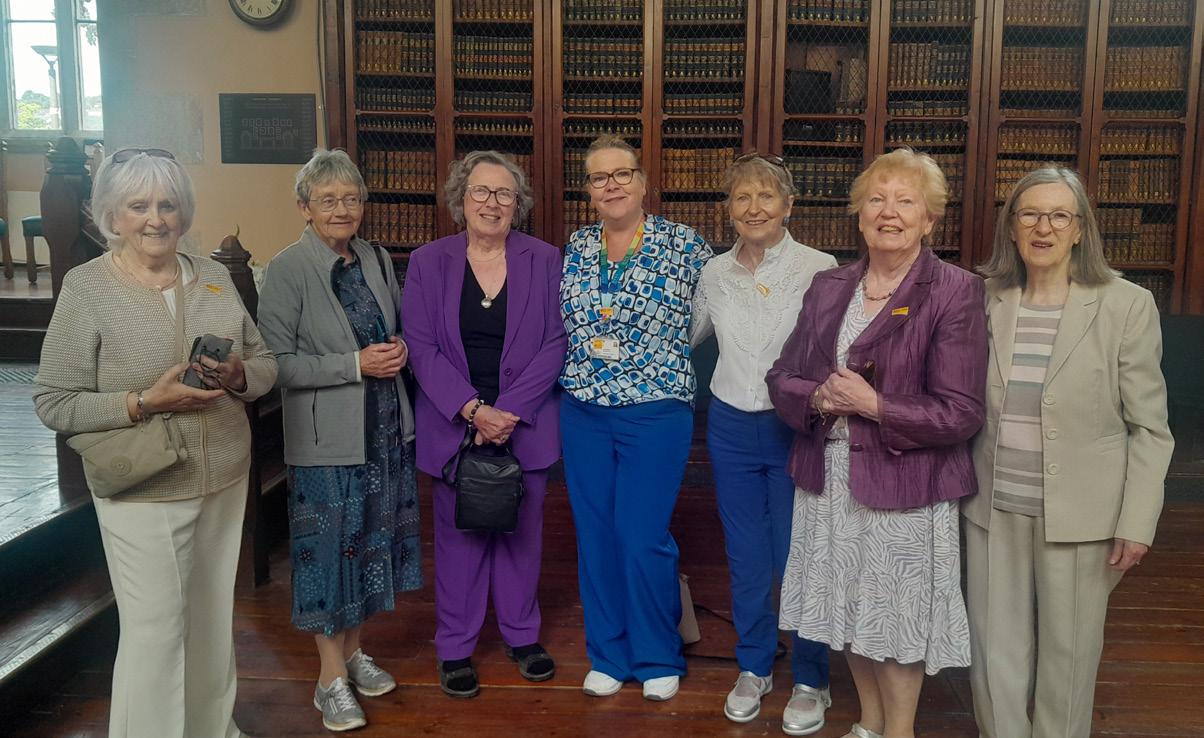
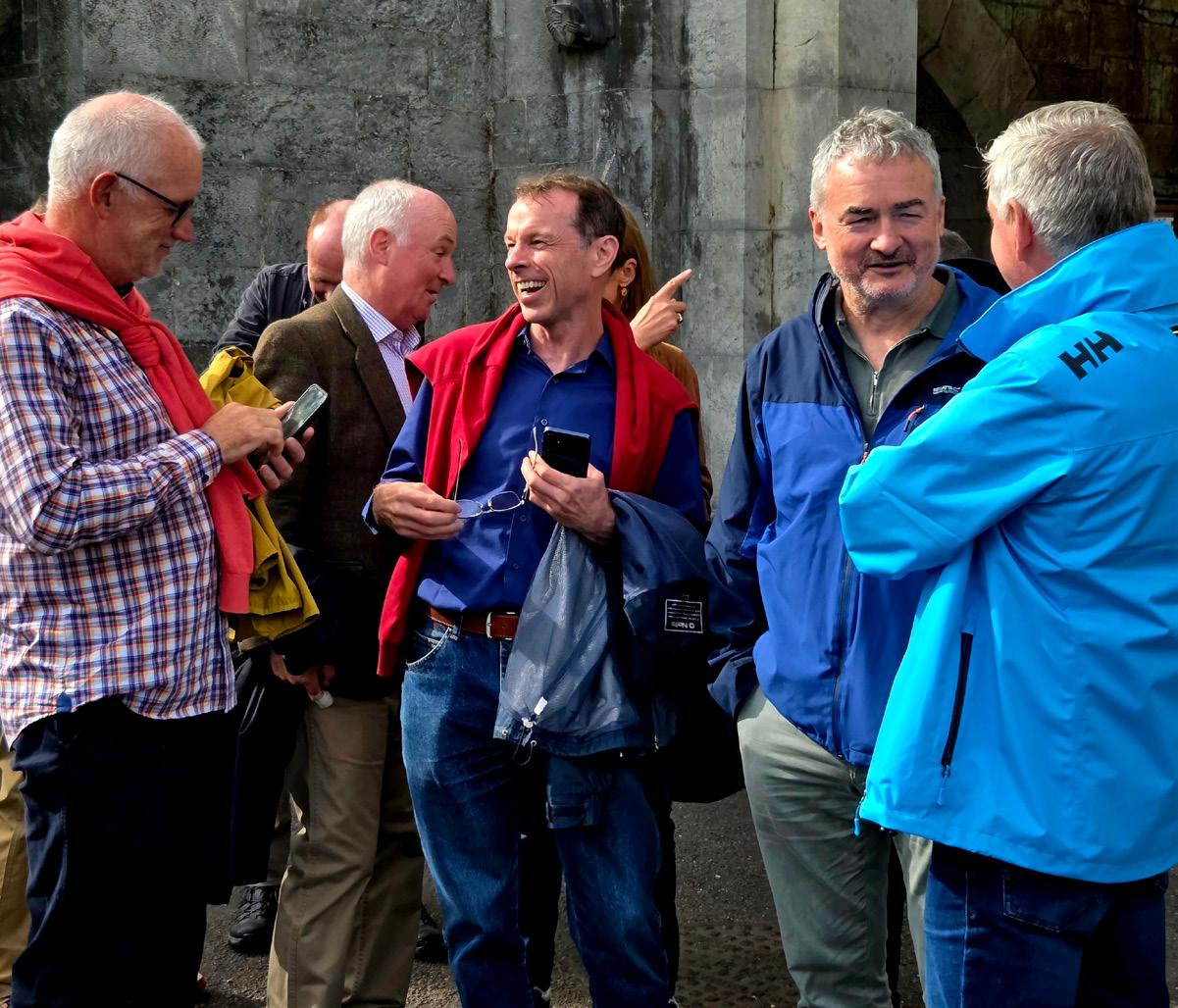
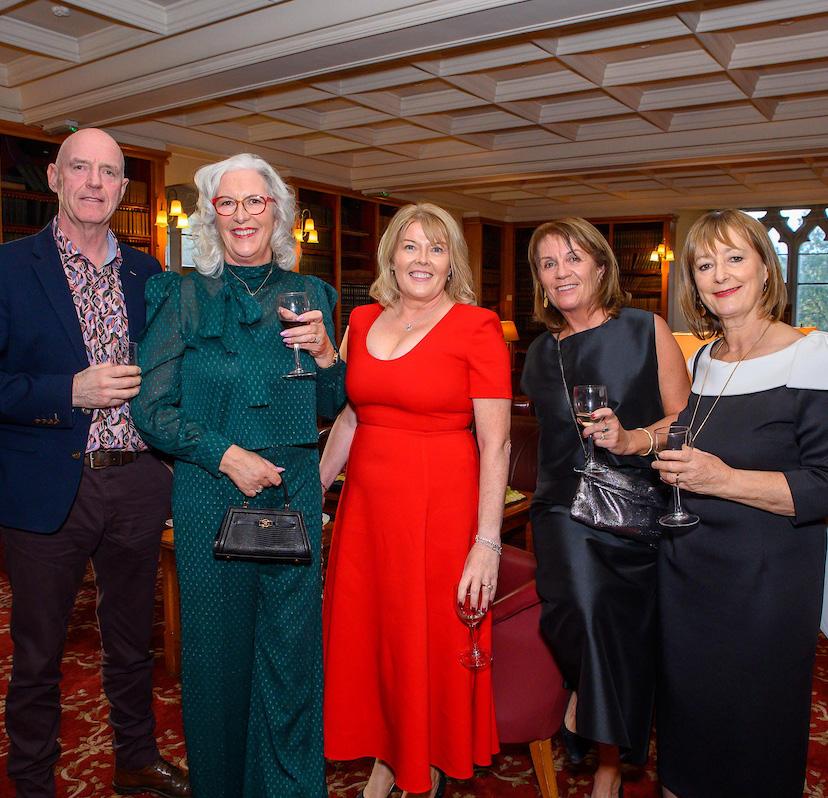
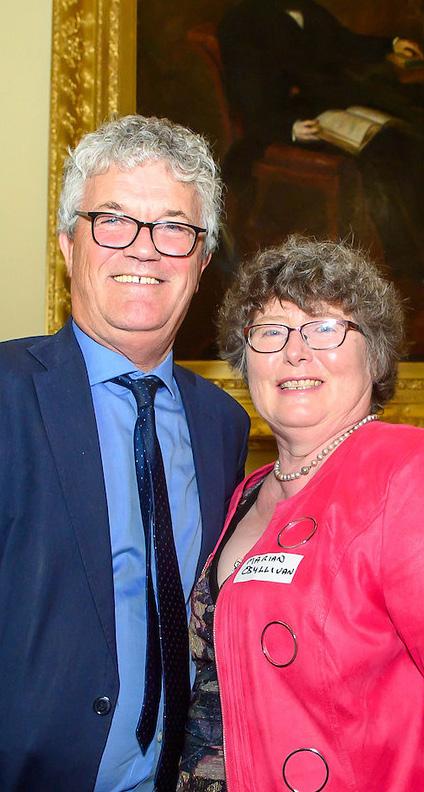
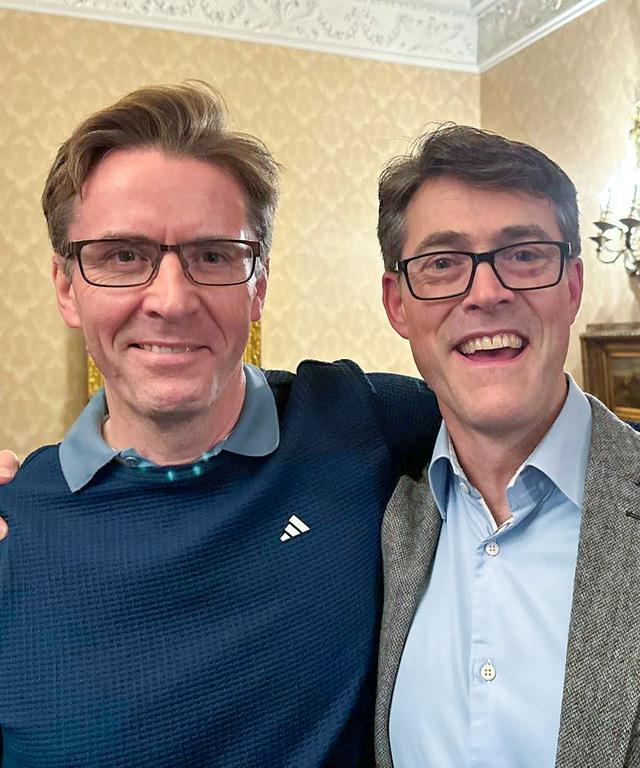
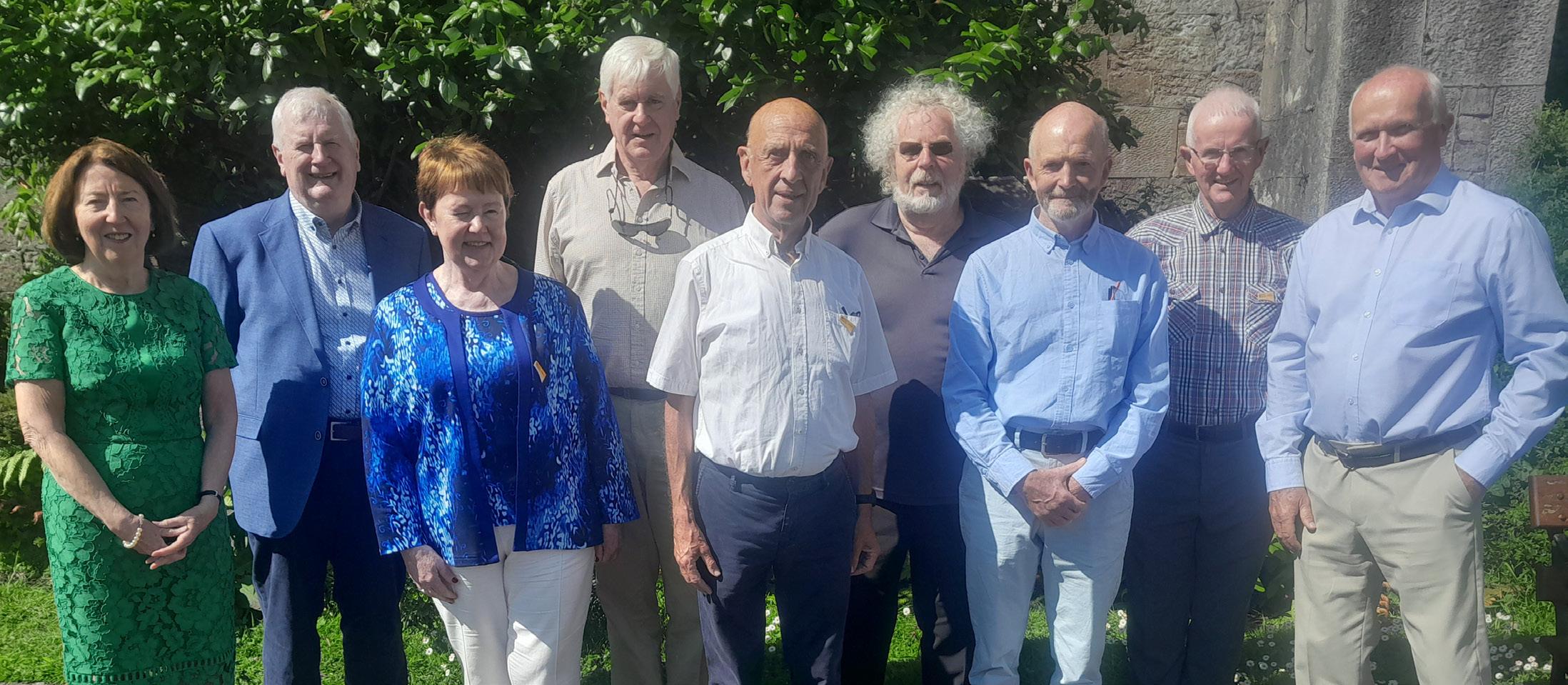
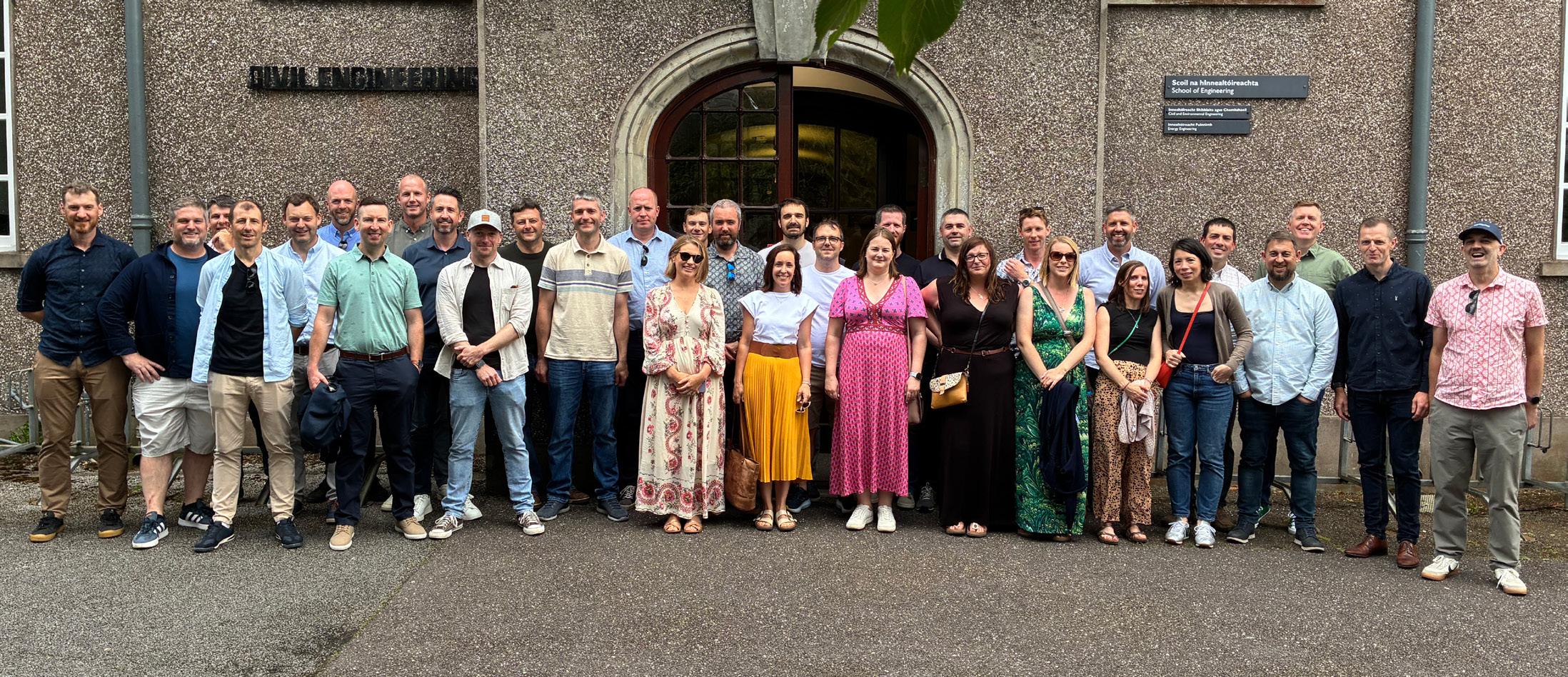
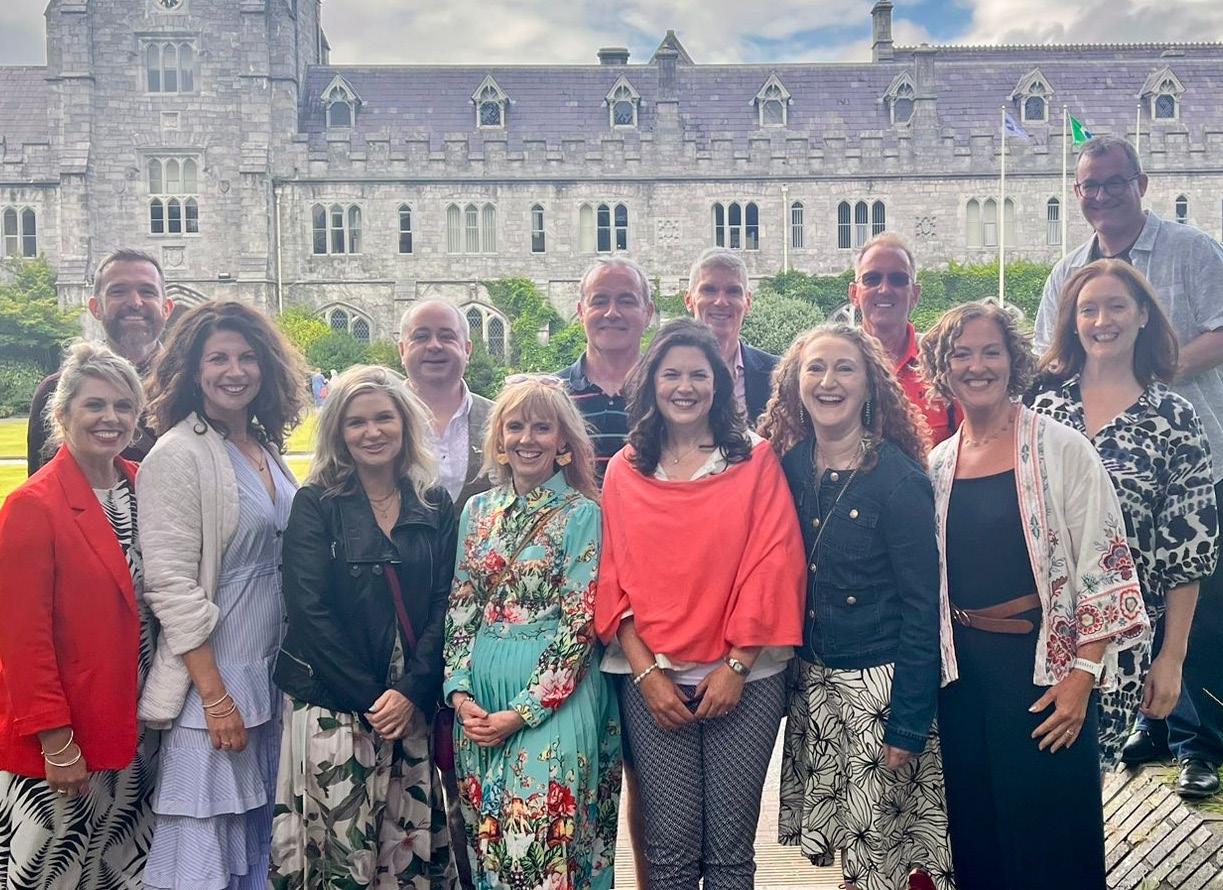
Social calendars were full to mark UCC’s 180th year with plenty of events taking place on and off campus.
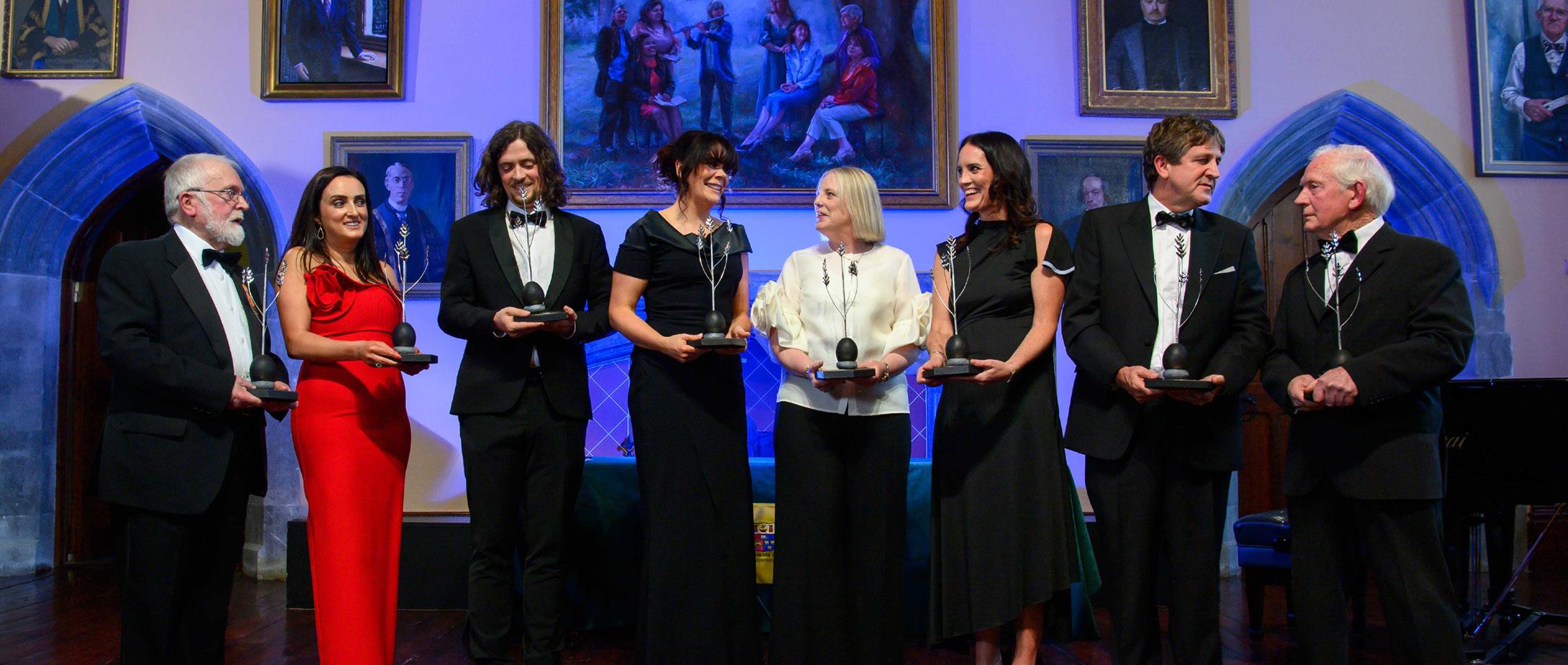
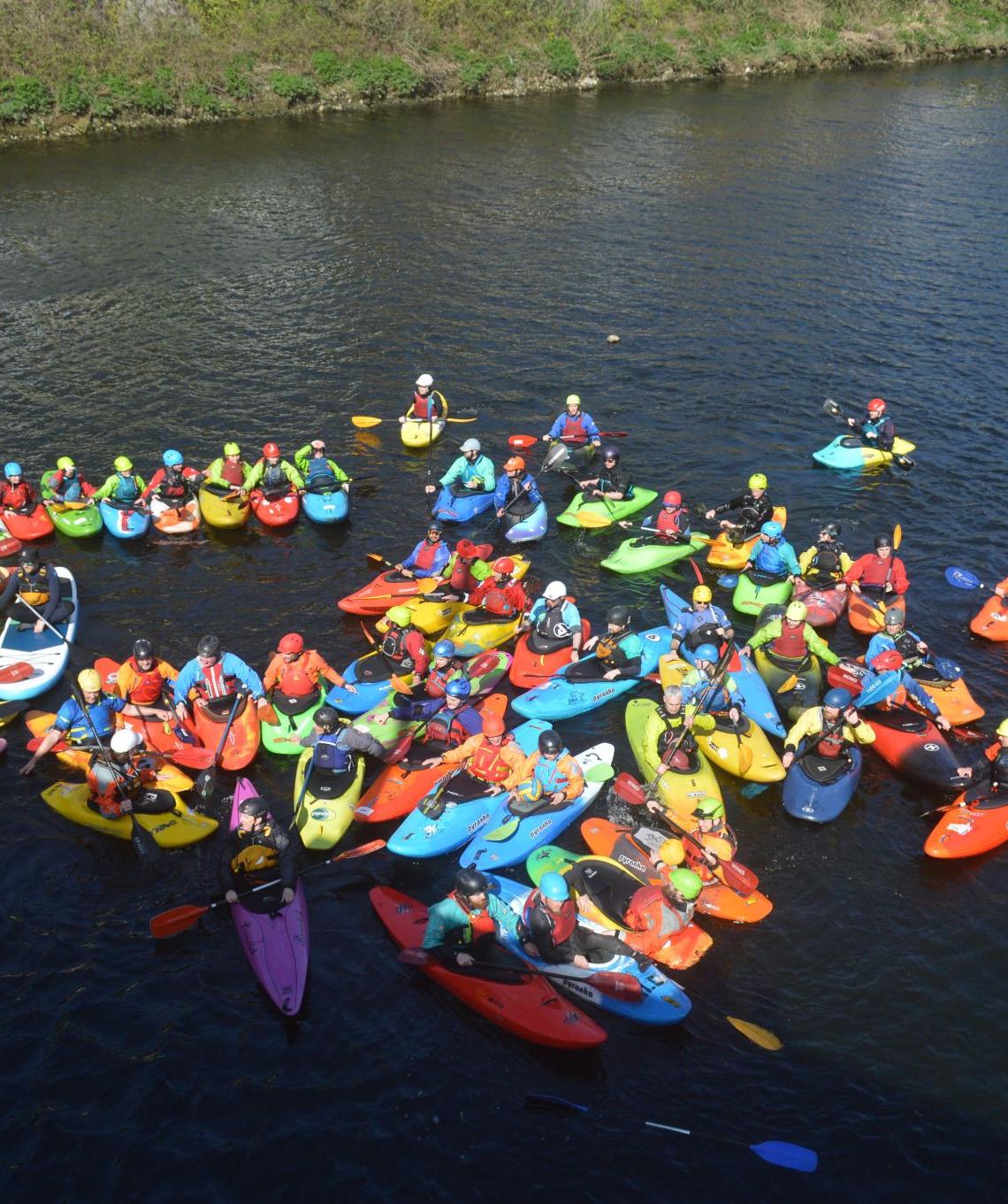
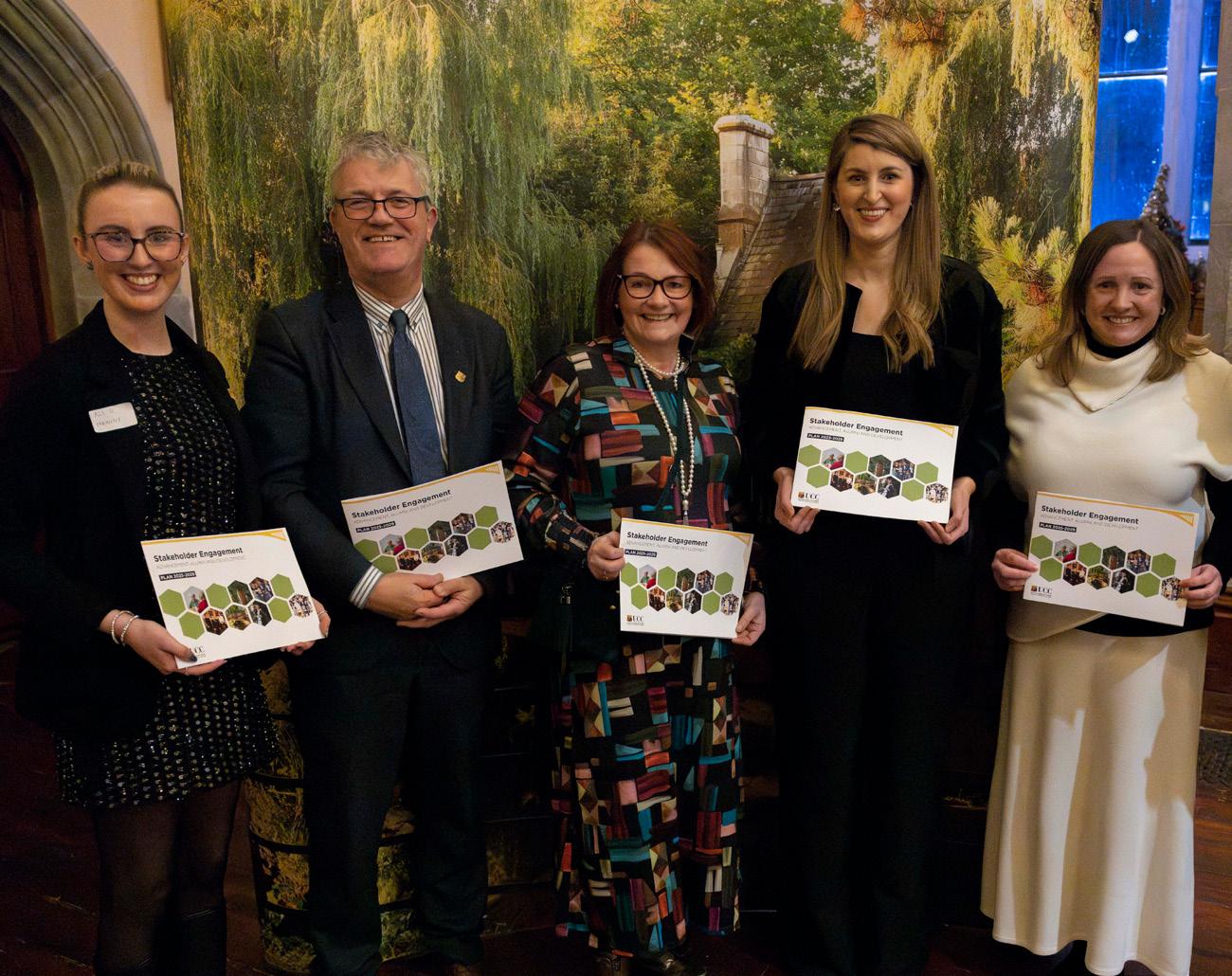
See you there!
These are only a flavour of the events on offer throughout the year; between class reunions, networking, expert discussions, webinars and global meet-ups, there is something for eveyone.
Scan the QR code to view the full event listing:

The launch of the UCC Cork Alumni Club brought graduates from across the decades together for a warm and vibrant evening celebrating connection, community and the future of alumni engagement in Cork.
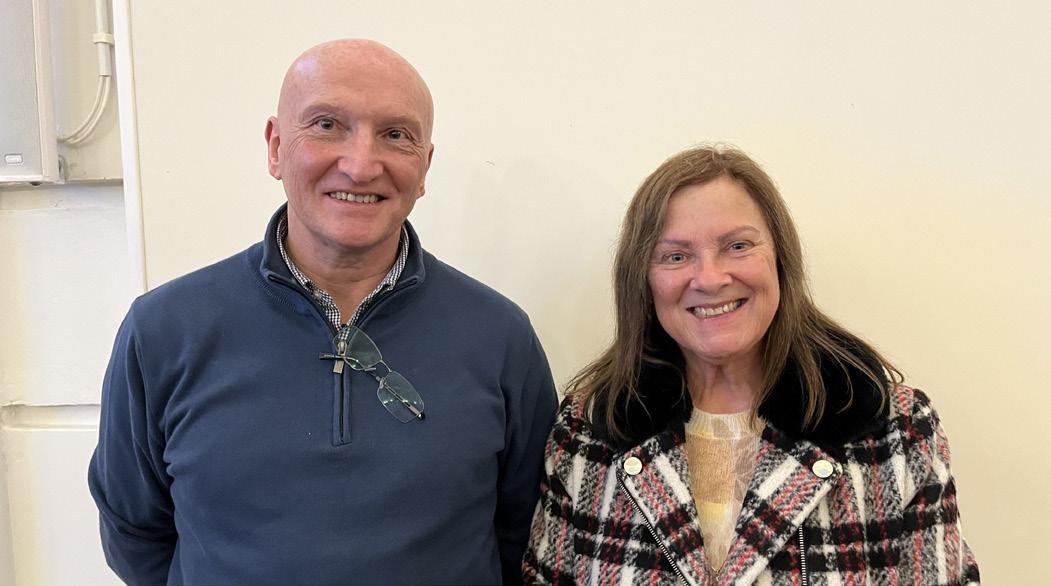
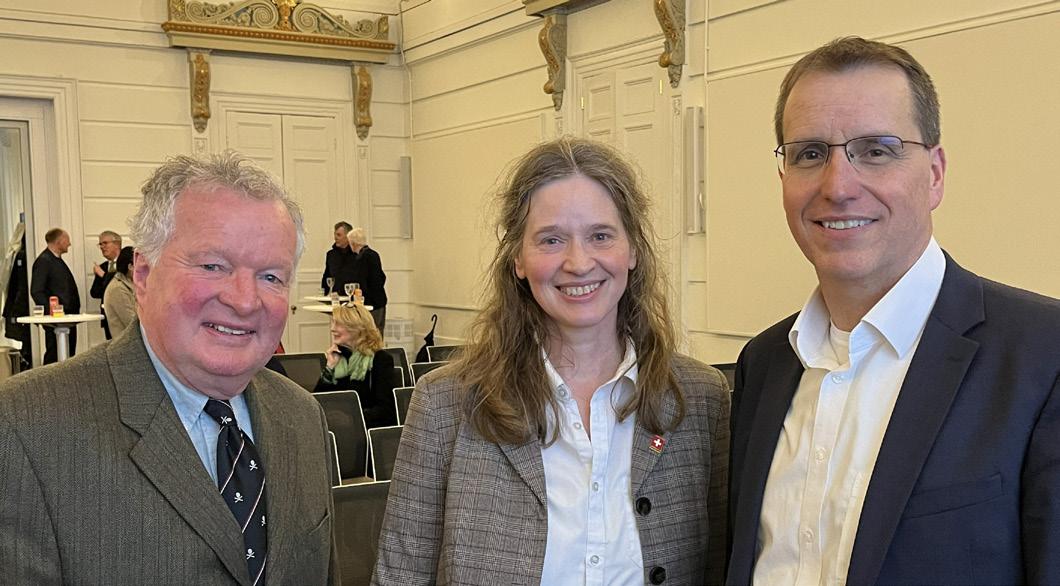
From inspiring insights from President John O’Halloran, powerful alumni stories shared by our featured alum Raphael Olympio (BSc 2024) and Cork Alumni Club Chair Anthony Gaffney (BComm 2002, MSc 2004), to live performances from UCC School of Film, Music and Theatre students, Colleen Bennett and McKenzie Yazan. The energy in the room truly reflected the strength of our alumni community.
The event marks the beginning of a renewed alumni presence in Cork
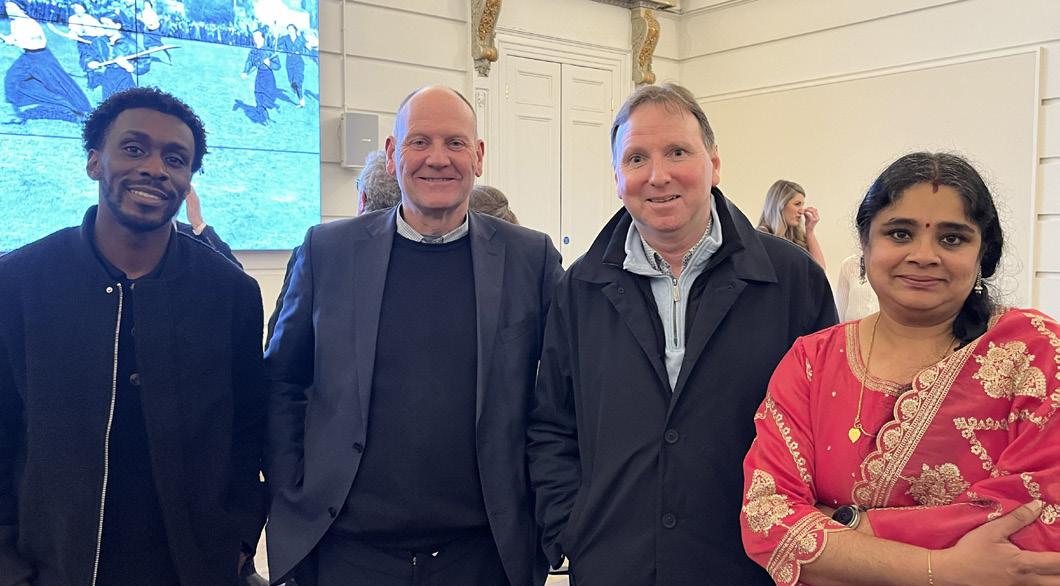
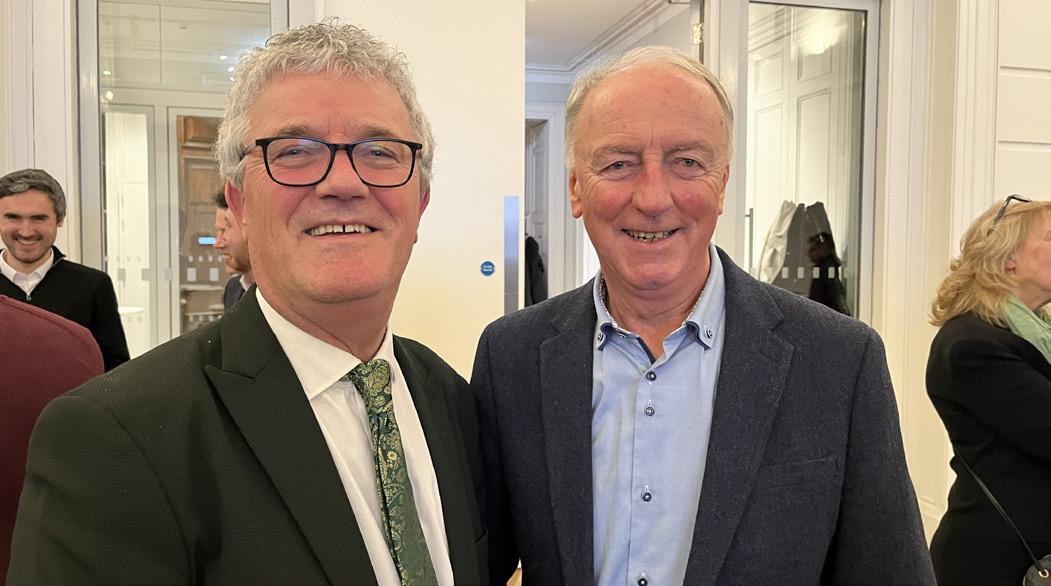
and an exciting step in building locally rooted, globally connected UCC alumni clubs.
Thank you to everyone who joined us, to our speakers and performers, and to Gate One for kindly sponsoring the event.
If you’d like to hear about future Cork Alumni Club events and initiatives, be sure to update your details and stay connected with the UCC alumni community. ∎
Your Local Network
UCC alumni are establishing clubs in cities around the globe. Updating your details means you will hear about upcoming events that are relevant to you.
Scan the QR code to update your details:

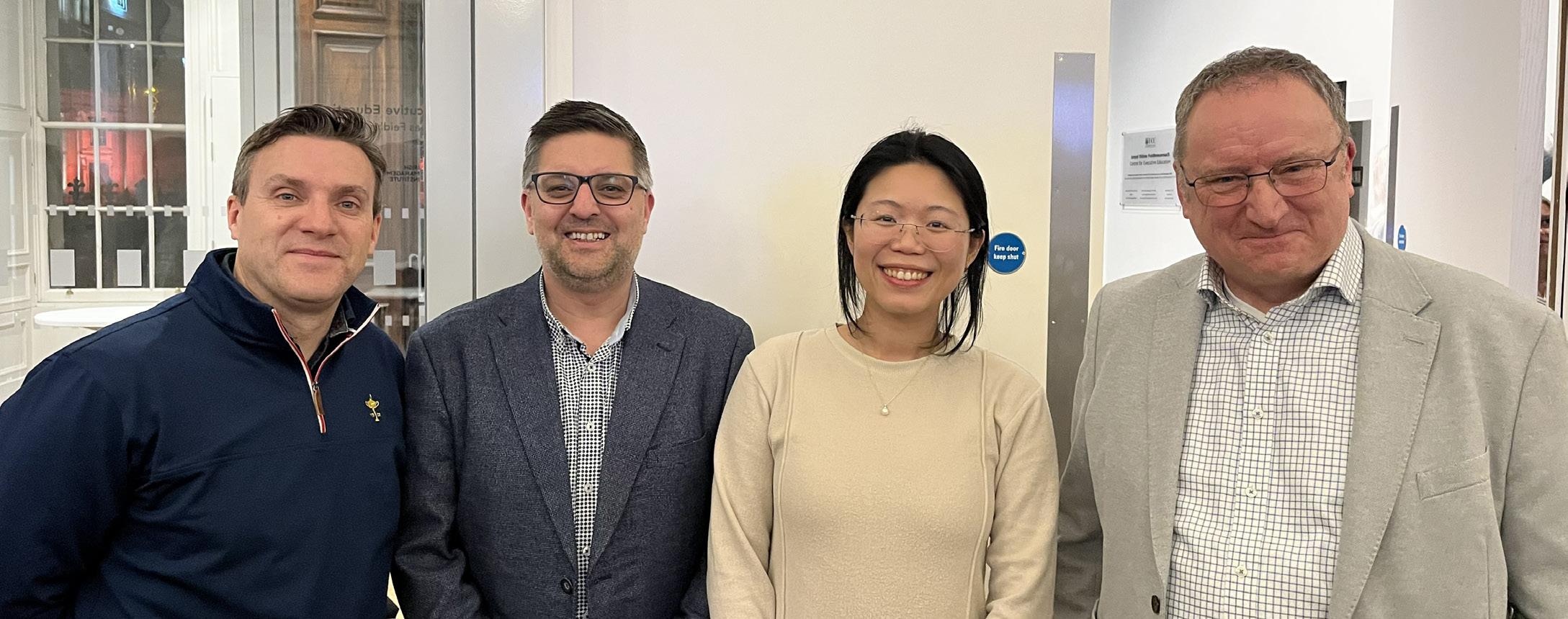
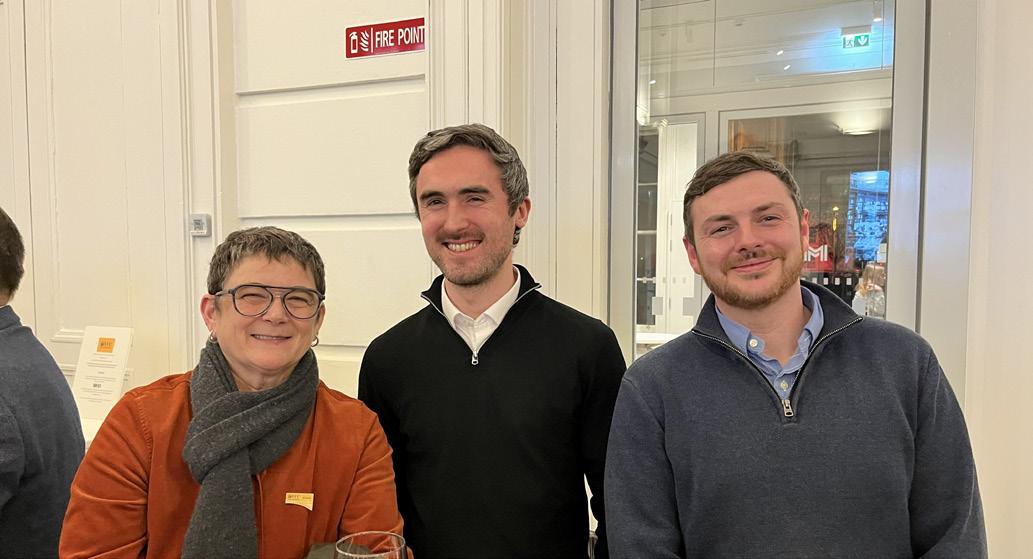
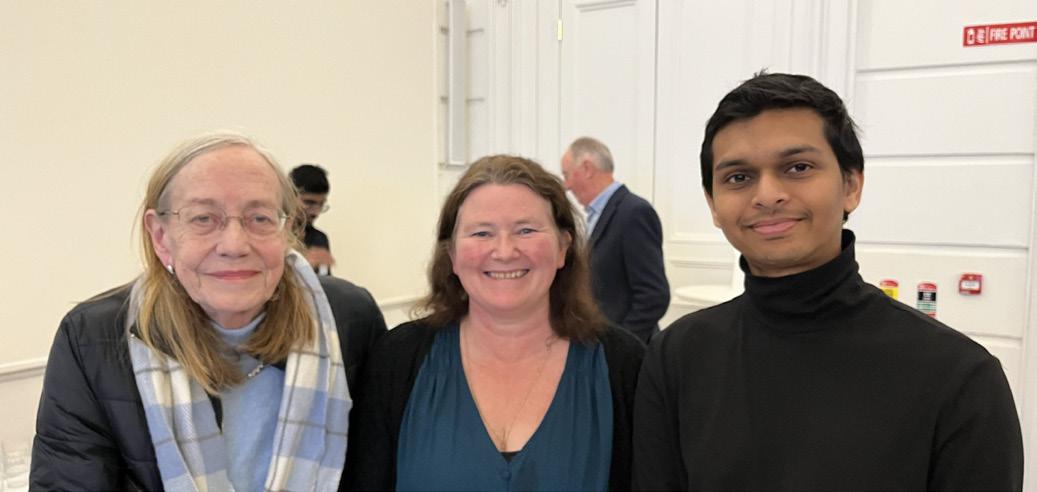
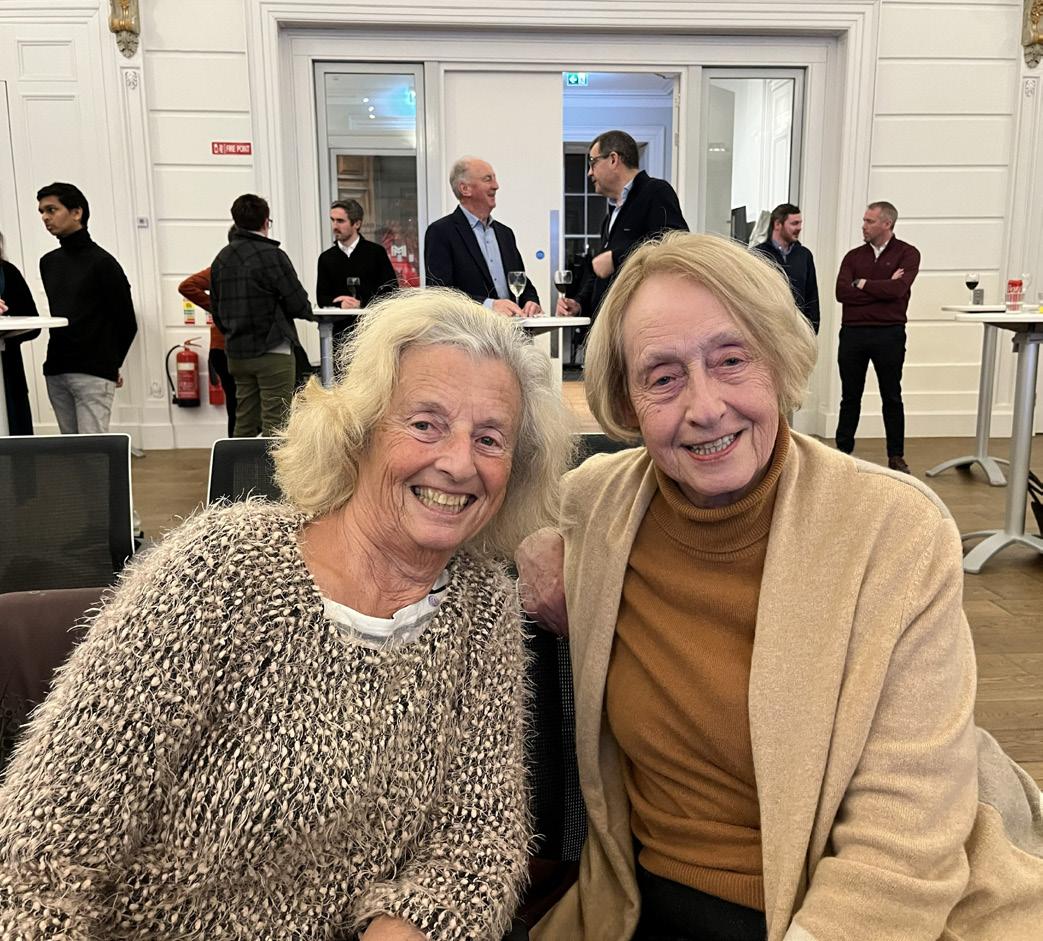
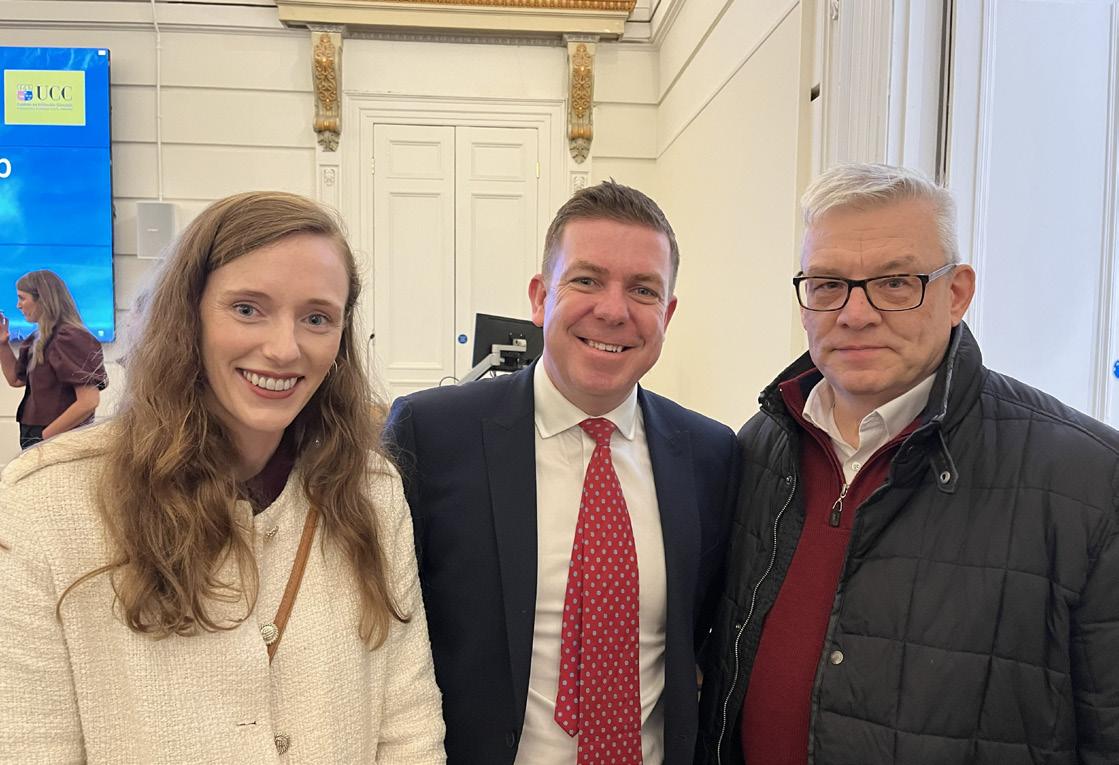
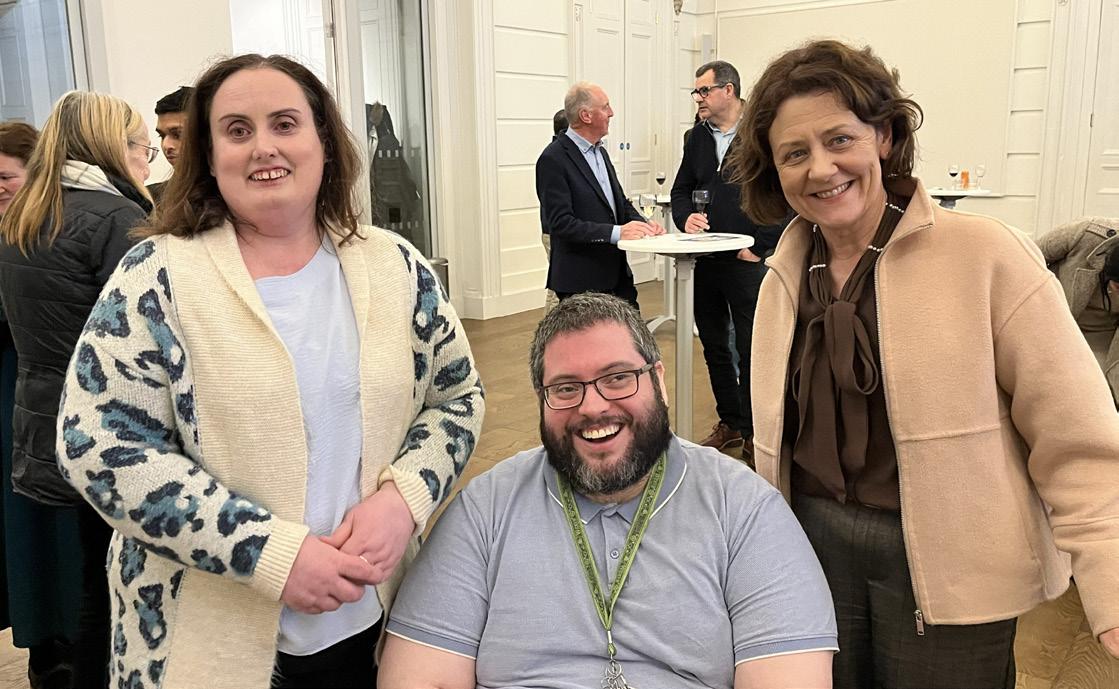
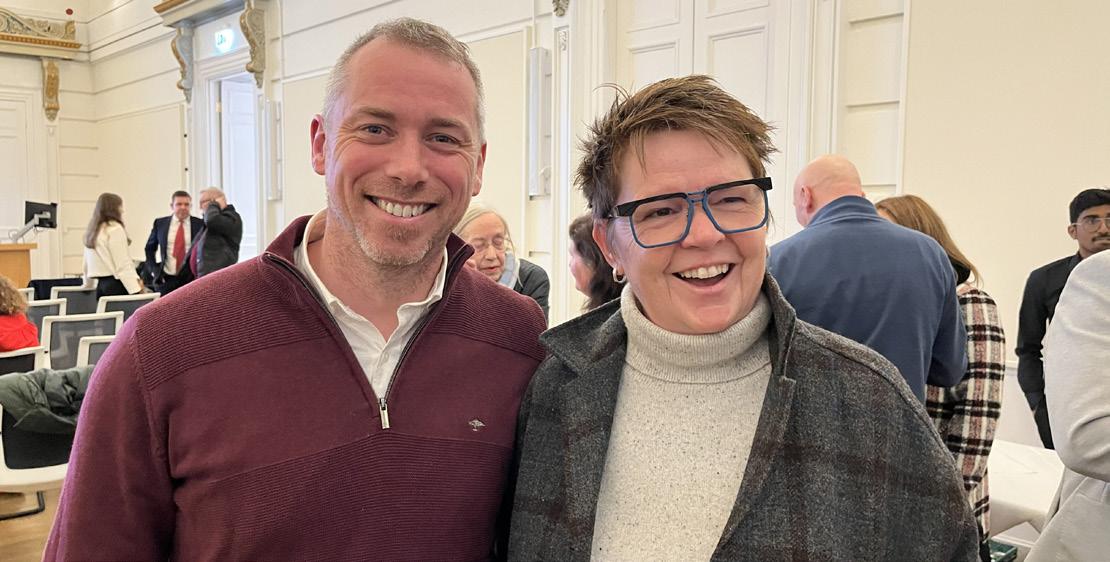
Alumni volunteers are the heartbeat of UCC’s global network. From mentoring students to leading class campaigns and supporting international connections, here’s how some alumni are making a difference.
Speaking to alumni volunteer Paul O’Dwyer (BDS 1997), he says: “I am delighted to volunteer as part of the mentorship programme which uses the value of graduate insight to help the undergraduate journey.”
Paul stays engaged with UCC for many reasons and finds that he also feels the benefit of staying connected; “I hope to contribute to strengthening the bonds that make UCC such a special place. Reconnecting with old college friends and seeing the next generation’s achievements is what being an alumni volunteer is all about”.
Rowan Heaphy (BA 2011) actively volunteers as an international representative in Shanghai where he organises events to connect Irish and Chinese alumni based in China.
“We’re very lucky that Cork is twinned with Shanghai! It really allows UCC to have a foothold in the city, with the vast majority of Irish exchange students coming from UCC. I’m frequently put in contact with someone who is moving here to study, or to work, often looking for information on life in China.”
Chloe Griffin (BA 2019, MSc 2022) also volunteers as an international representative in Berlin where she
organises informal gatherings and provides a useful contact point to fellow alumni moving to Berlin who might need advice or contacts.
In addition to giving back time as a guest speaker at the Global Speaker Series and as a board member, Conor Twomey (BSc 2008) also finds time to mentor; “Being a mentor felt like returning a favour that shaped my own career. The students bring energy and curiosity; I try to add perspective and confidence. It’s a modest commitment with real value and I’d encourage fellow alumni to get involved.”
Lekha Menon Margassery (PhD 2013, PG Cert 2021, PGDip 2024) is President of the UCC Indian Alumni Community and since 2017 has been building a network of UCC Indian alumni and expanding the alumni network in India. She organises events and workshops throughout the year for students, alumni, UCC staff and the public.
Alumni volunteering doesn’t need to equate to a large commitment of time. Conferrings are a huge touchpoint and alumni support on the day allows us to do so much more. Volunteers like Ruth Kelleher (BA 1985) give the welcome address to graduands or help to distribute class pins before the ceremony. These moments are meaningful to
both graduand and graduate.
Whether you’re based in Ireland or abroad, your time and talents can make a real difference. Volunteering is a rewarding way to build relationships, support students and stay engaged with the UCC community. ∎
Looking for a meaningful way to stay connected with UCC?
• Become a local alumni representative or join a club committee.
• Mentor current students. Lead or support class reunion funding campaigns. Help organise alumni events and activities in your city or region. Serve as an ambassador, fostering connections and pride in our university.
alumni@ucc.ie
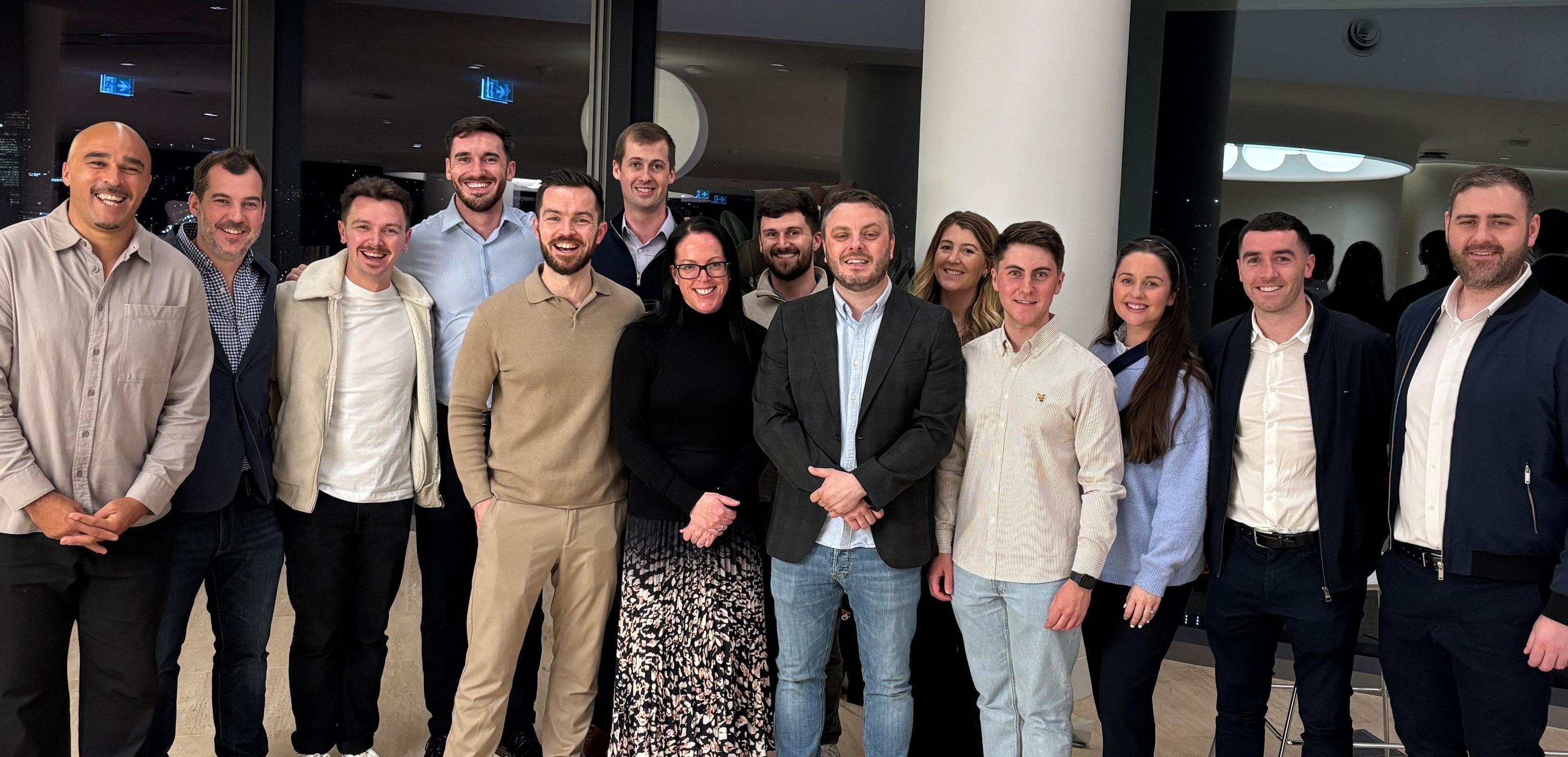
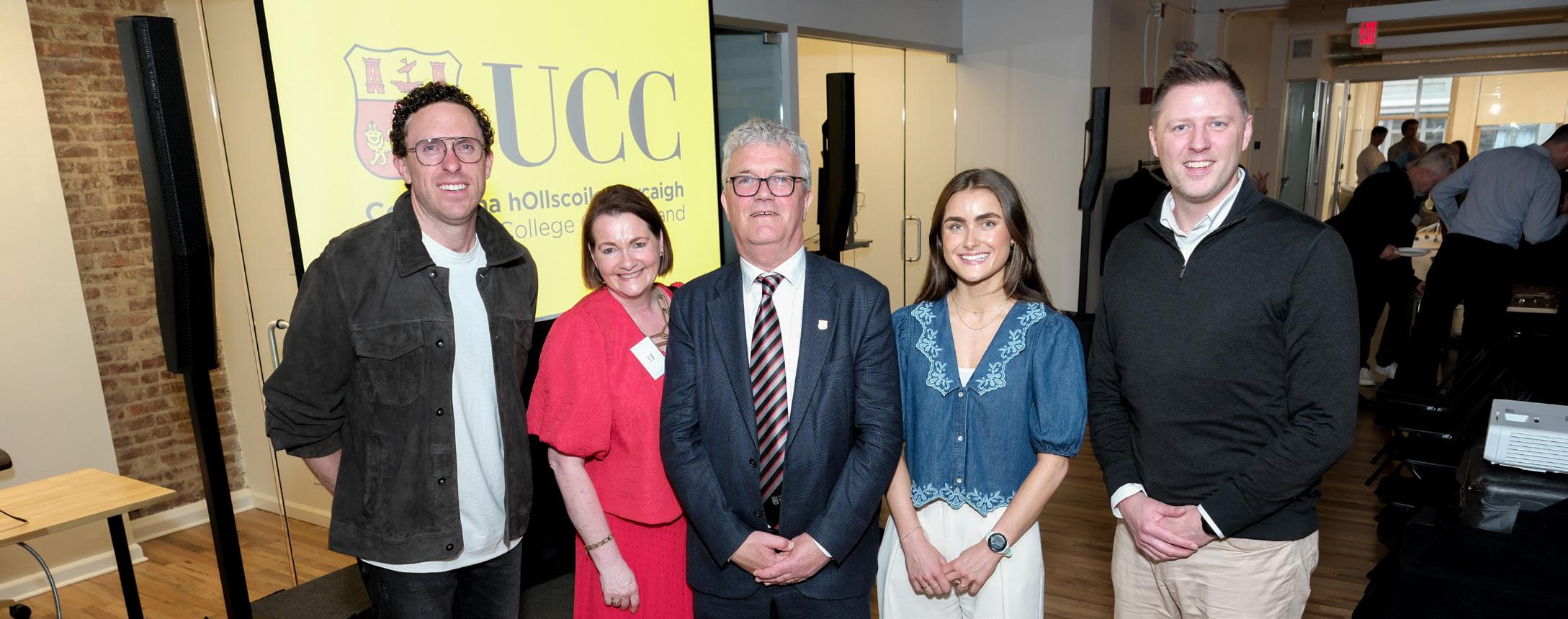
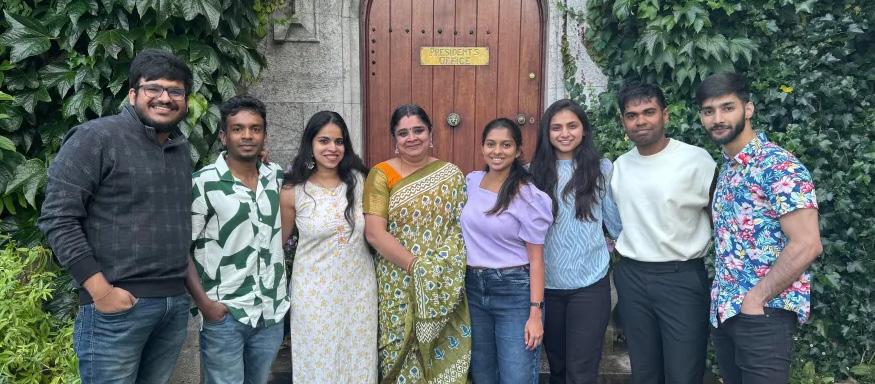
▼ Conor Twomey (far left) kindly hosted an alumni reception wtih President O’Halloran in New York, May 2026.
Clever solutions to real life problems: examples of entrepreneurial spirit that were nurtured by the University’s IGNITE programme.
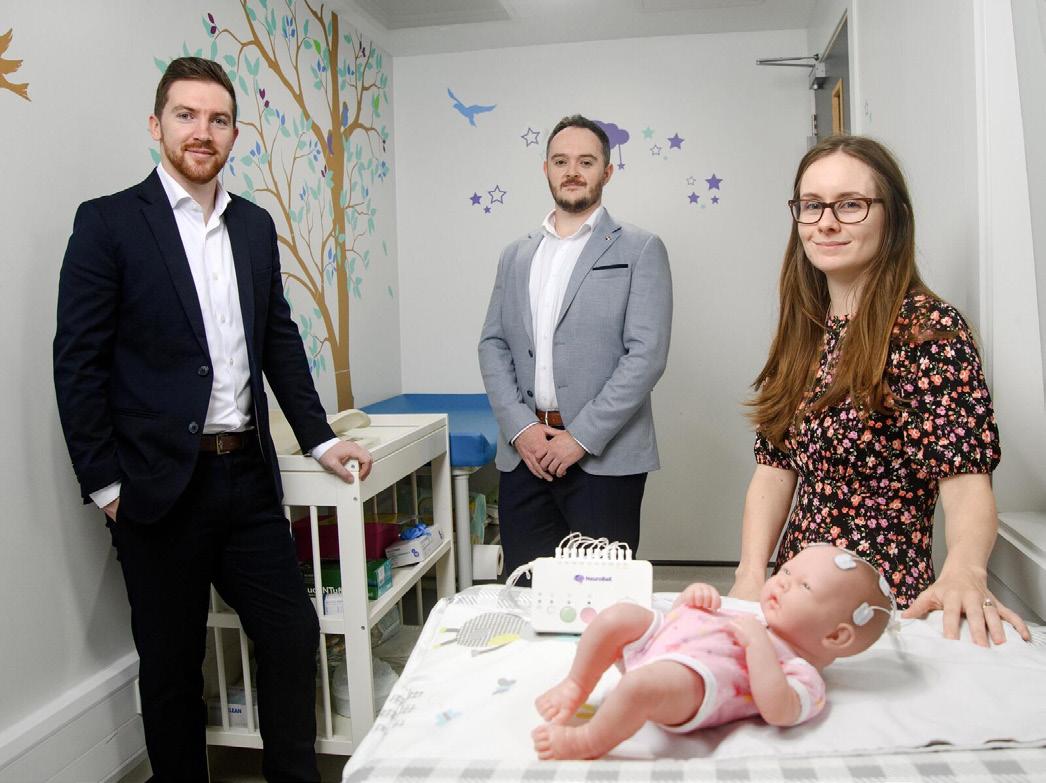
Approximately two million babies worldwide suffer from brain injuries at birth. In response, NeuroBell has developed an AI-powered medical device to accurately detect seizures in newborns, which can reduce the risk of long-term brain injury. Seizures are the most common sign of brain injury, signalling the need for urgent treatment that can prevent further seizures and improve outcomes. Neurobell was co-founded by three alumni; Dr Mark O’Sullivan (BE 2015; PhD 2022), Dr Alison O’Shea (BE 2014; PhD 2022) and Colm Murphy (BE 2015, ME 2018) The trio secured €2.1 million in funding to take Neurobell to the next level.
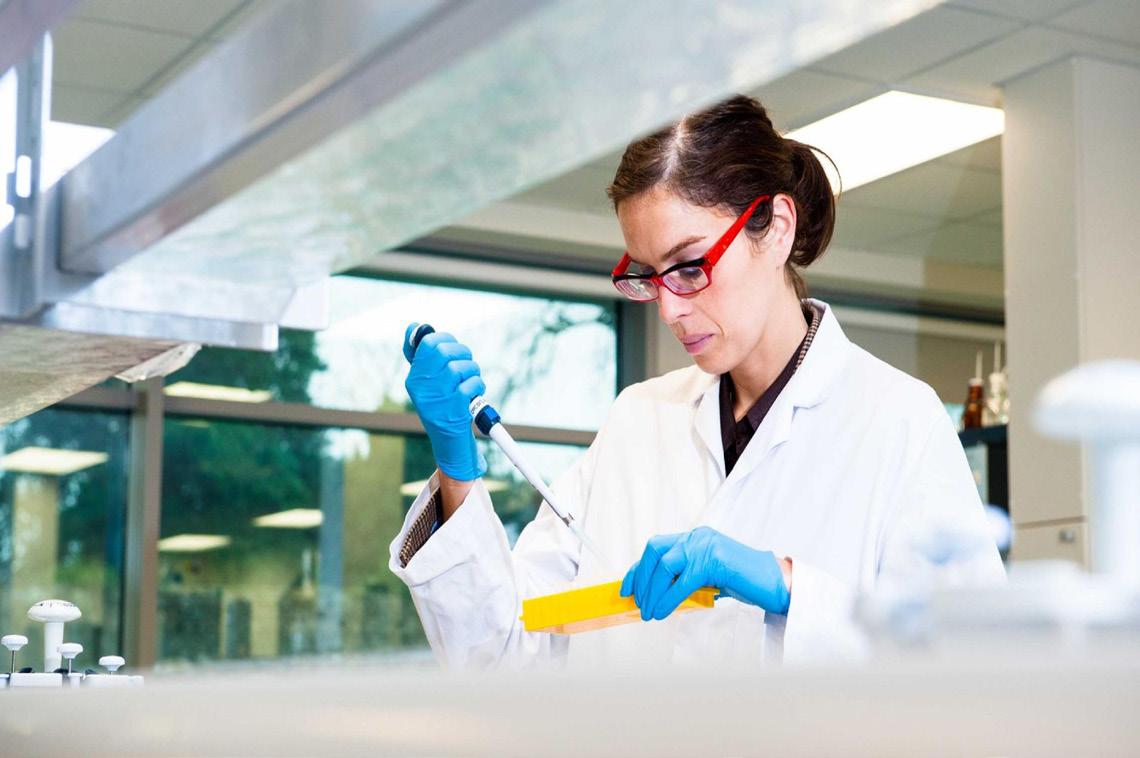
AnaBio Technologies is a leading Irish microencapsulation company that provides solutions for keeping health ingredients effective from production all the way to the body. Founded by Sinead Bleiel (PhD 2012), the company specialises in protecting sensitive ingredients like probiotics and other health compounds so they can survive heat, moisture and processing. The company’s patented technology creates a protective coating around these ingredients to help preserve their benefits, mask unpleasant tastes and control when and where they are released in the body. Used in a range of consumer products today, the company grew out of Sinead’s PhD research at UCC and Teagasc.
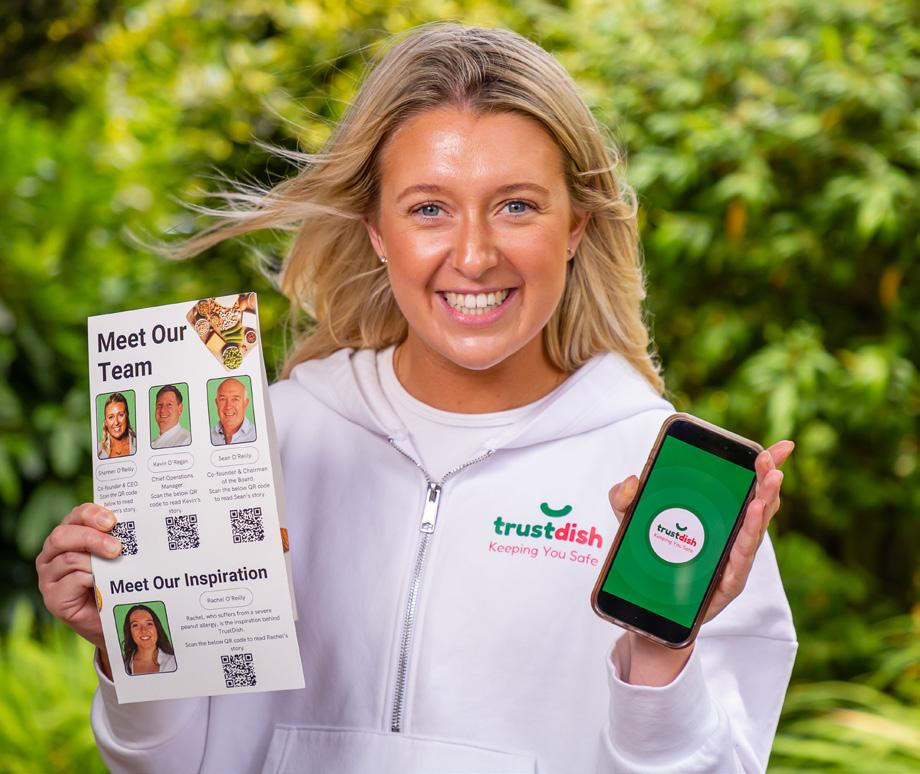
Shannen O’Reilly (BA 2021; MSc 2023) is co-founder and CEO of TrustDish, a userfriendly app that allows people with food allergies and intolerances to dine out without stress.
Inspired by the challenges her sister faces with a severe peanut allergy and recognising the struggles food businesses encounter in providing accurate allergen information, Shannen developed TrustDish. The app is aimed both at those with allergies and the businesses preparing and serving food. TrustDish identifies safe food options at participating establishments, connecting the customer directly with the kitchen for ultimate control and peace of mind.
Ever hesitated before a big online purchase or worried whether a payment was truly secure?
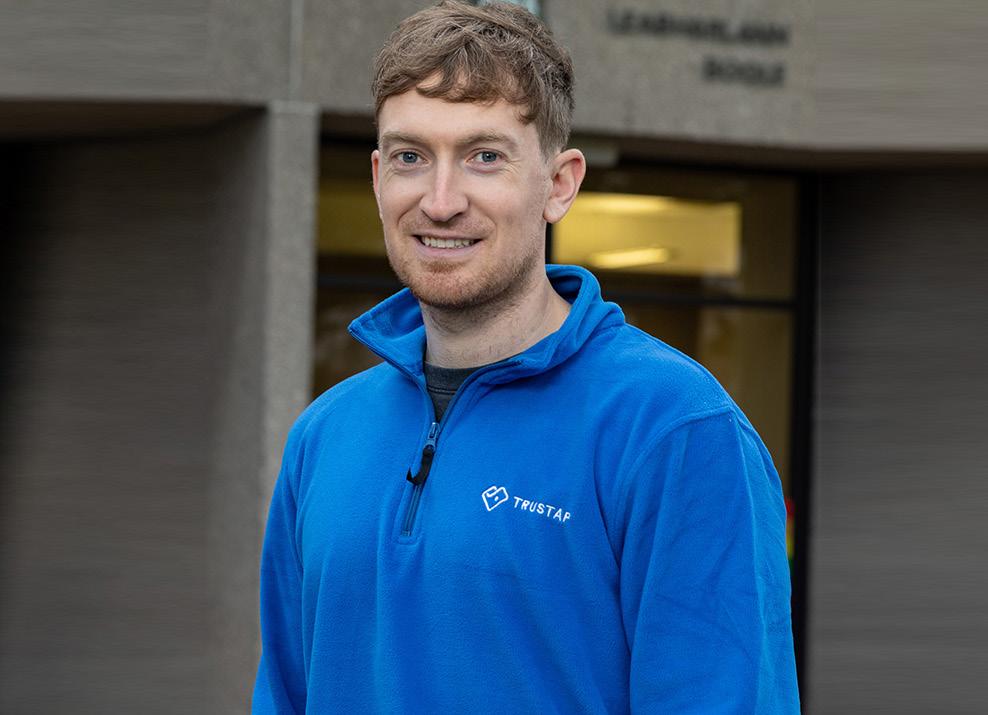
Founded by Conor Lyden (BE 2016), Trustap makes online buying and selling safer. The platform protects buyers and sellers by holding funds securely until all transaction conditions are met, reducing fraud and chargeback risk.
Already partnered with online marketplaces and ecommerce brands in more than 27 countries, Trustap brings together payments, delivery tracking and dispute resolution in one simple tool, all sparked by an idea Conor developed in his final year at UCC.
LegitFit is a Cork based fitness technology company co-founded by Ryan O’Neill (BSc 2016; MSc 2018) that help gyms, studios and independent fitness professionals to run their businesses more smoothly. The platform streamlines day to day operations including class scheduling, memberships, payments, client communications and analytics, helping fitness businesses save time and reduce cancellations.
Backed by Techstars and venture capital investors, LegitFit is active in multiple international markets including Ireland, the UK and the US.
IGNITE is Ireland’s leading full-time, in-person startup programme for recent graduates ready to build something significant. Bring your business idea and turn it into a real company with expert support, dedicated resources and no equity taken. Open to all disciplines and all thirdlevel institutions in Ireland.
ucc.ie/en/ignite
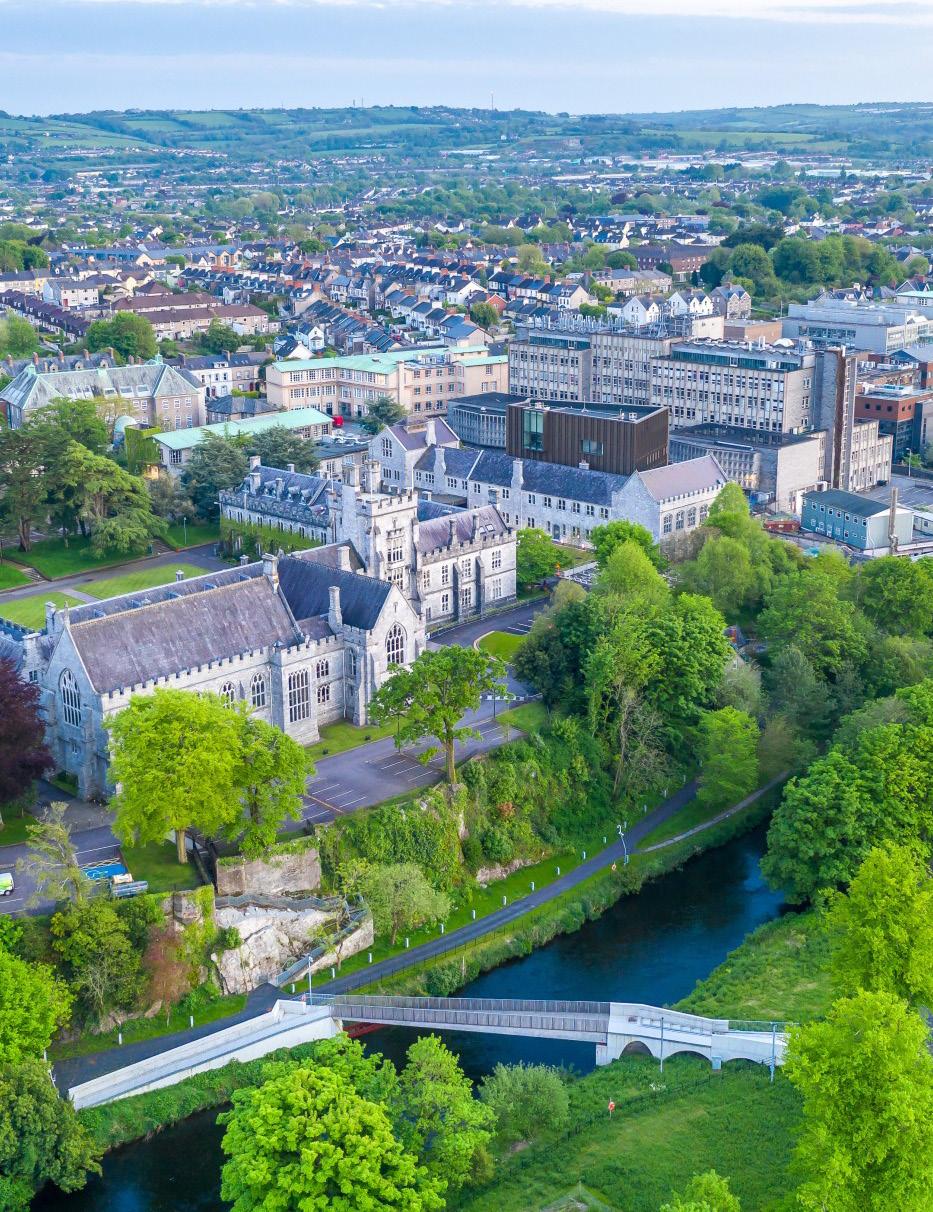
It’s a matter of institutional pride that UCC leads the way in sustainability. Our Sustainability and Climate Action Plan commits to achieving net zero carbon by 2040 and becoming a zero-waste campus by 2030.
1
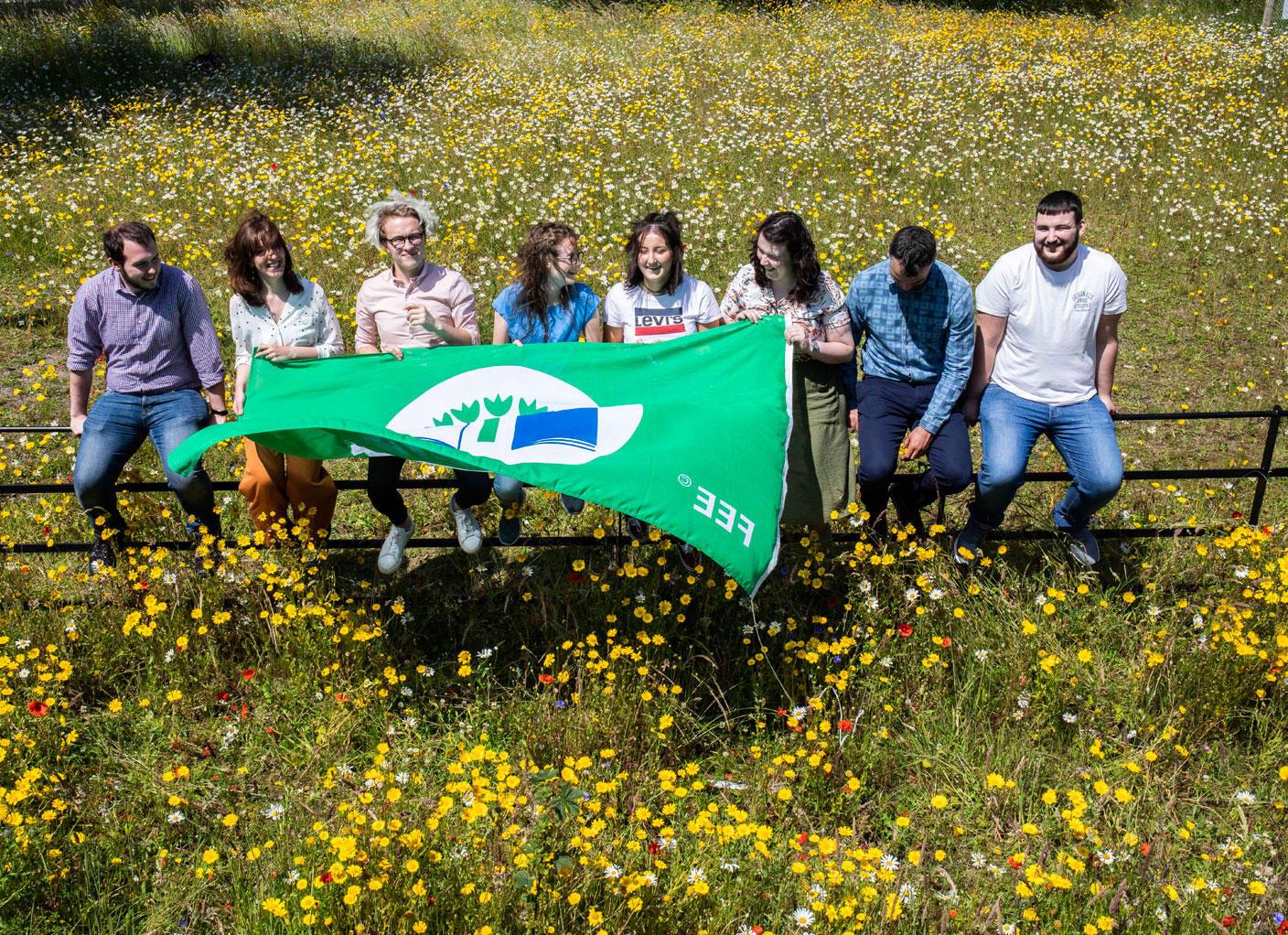
UCC is the first university in the world to secure five Green Flags, recognising transformative changes to campus operations. Green Flags are awarded to institutions that meet strict criteria in environmental management and biodiversity. Since launching its student-led, research-informed Green Campus programme in 2010, UCC has reduced disposable cup use by over one million, cut food waste in campus restaurants by 18%, lowered printing from 19 million pages in 2018 to under 5 million in 2024, reduced overall waste by more than 40% and cut energy use by over 21% in its most intensive buildings.
UCC hosted Digital Clean Up Week this Spring. The initiative aims to draw attention to the environmental implications of daily digital behaviours such as storing emails, backing up files and managing large volumes of data. Throughout this week, staff and students are encouraged to participate in a coordinated digital decluttering effort using guidance and tools.
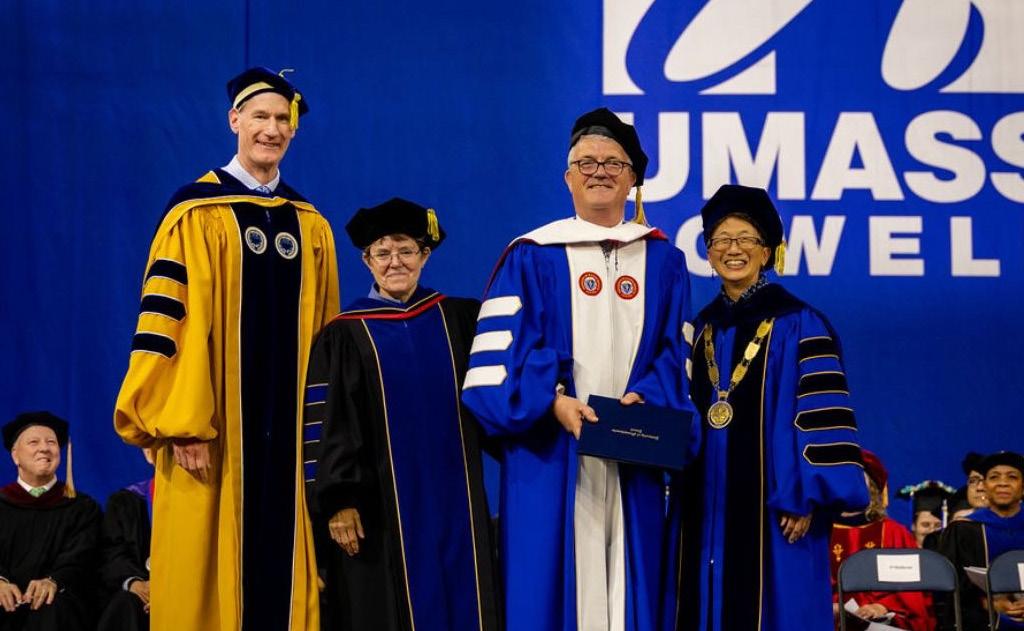
UCC’s President was awarded an honorary doctorate of Humane Letters by the University of Massachusetts Lowell in the US. The accolade recognised outstanding leadership in advancing sustainability in higher education and embedding sustainability across all aspects of campus, from research and teaching, to operations and civic engagement. “Sustainability is not just a priority for UCC, it is a responsibility that defines our values, shapes our actions and connects us to our communities locally and globally” said Professor John O’Halloran.
4
UCC’s Bio Green Café is Ireland’s first singleuse plastic free café. It is a case study in how green procurement; stakeholder engagement and environmental education can contribute to bringing about a complete redesign in the provision of a service. Single-use plastic has been eliminated from all frontand back-of-house activities.
An interactive biodiversity trail now spans the length of the Cavanagh Way along UCC’s riverside, highlighting the variety of habitats and commonly found species who are often overlooked or misunderstood. Other nature-friendly initiatives on campus include a native and companion planting scheme as well as multiple bird and bat boxes. Grounds personnel maintain green areas through reduced- and no-mowing areas. No pesticides are used and nature is factored sensitively into plans and practices administered by the University’s gardening team.
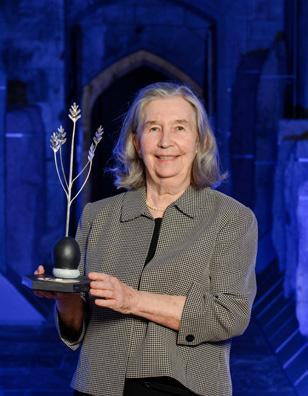
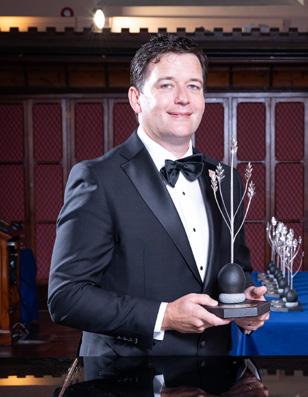
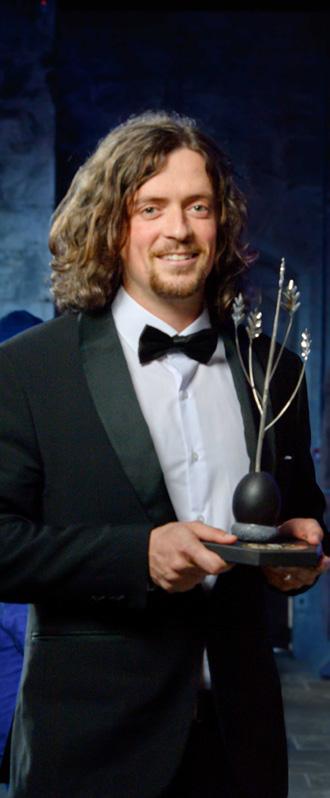
A new category for sustainability at UCC’s Alumni Achievement Awards recognises changemakers and innovators in the field. In 2023, botanist and author Diana Beresford-Kroeger was honoured for her dedication to the preservation and protection of rare and native trees. 2024 saw sustainability and climate expert Ruairí O’Mahony (BA 2006; MPlan 2008) honoured for his support of closer research, innovation, and economic partnerships between Ireland and the US. In 2026, Ornithologist and wildlife sound-recordist Seán Ronayne was recognised for his ambitious project to record the birds of Ireland.
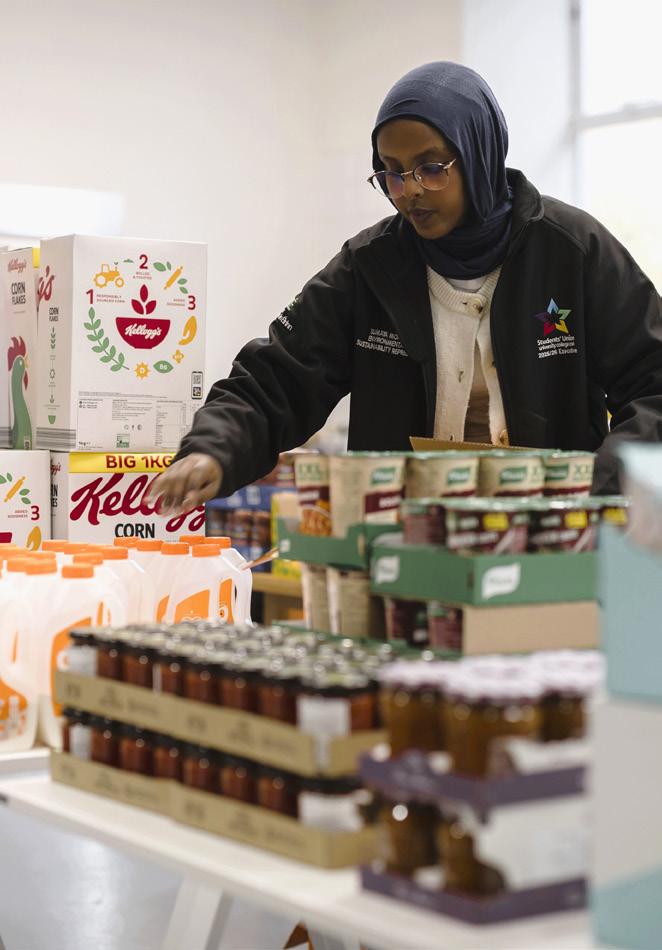
The UCC Students’ Union Food Pantry is delivered in partnership with FoodCloud, an Irish social entreprise dedicated to reducing food wastethrough the redistribution of surplus food from businesses to charities nationwide. Operating weekly throughout the academic year, the pantry provides students with essential ambient and fresh food. While helping students to thrive, the pantry is also making a tangible difference to the planet. To date, it has saved an estimated 7,290 kg of surplus food from landfill - the equivalent of 16,913 kg of CO2 emissions. The UCCSU Food Pantry was supported by a UCC Alumni Fund grant. Read more about the UCC Alumni Fund on page 44.
2000: Environmental Research Institute establised.
2005: First Masters in Sustainable Energy in Ireland.
2007: The Green Campus programme is piloted in response to student concerns about waste management.
2010: First university in the world to be awarded a Green Flag.
2013: MaREI, the Research Ireland Centre for Energy, Climate and Marine, is established.
2013: UCC launches its first sustainability strategy.
2017: The Green Library campaign launches in an effort to reduce energy consumption in the Boole.
2018: Plastic Free UCC campaign begins.
2019: Living Laboratory Seed Fund is established to research and address reallife problems, using UCC itself as a testbed.
2022: UCC establishes the Office of Climate Action and Sustainability.
2024: Sustainability and Climate Action Plan launched.
2025: Sustainability Institute launched.
2025: UCC launches The Arch, a digital magazine showcasing UCC’s commitment to sustainability through storytelling.
2025: 400 alumni take part in UCC’s Sustainability and Climate Action survey, informing sustainability initiatives across campus.
“We never hear from you” is a resounding cry from graduates we meet in Cork, London, Paris, US, Asia.
UCC has over 225,000 graduates around the world and the Advancement Office has email addresses for around 78,000 alumni. As Oscar Wilde might say “to lose one alumnus may be regarded as a misfortune, but to lose close to 150,000 is…”
It’s a common scenario: graduation photos are taken, a new career takes off, and the mail and emails slowly stop arriving. Life moves on, you move house and don’t tell UCC (why would you?) and before you know it, five, ten, or twenty years have passed without a word from your alma mater. No news does not mean we have forgotten you, just we have outdated contact details.
Keeping in touch with our alumni and friends is our role. We take pride in your lives and careers and want you always think of UCC as home. The more we know the better we can tailor our benefits, news and events.
Many of our “lost” alumni are probably right under our noses: either members of staff or graduates who are in regular contact with their former lecturers. Unfortunately our database is not a crystal ball, and it’s difficult to match lost graduate lists with real people.
The ask is simple! If you are an alum, or are in contact with an alum, who is not in receipt of our e-news, please don’t wait to be found - get in touch at alumni@ucc.ie or scan the QR code below. It only takes a few minutes!
To update your details, scan the QR code to register or visit almabase.ucc.ie

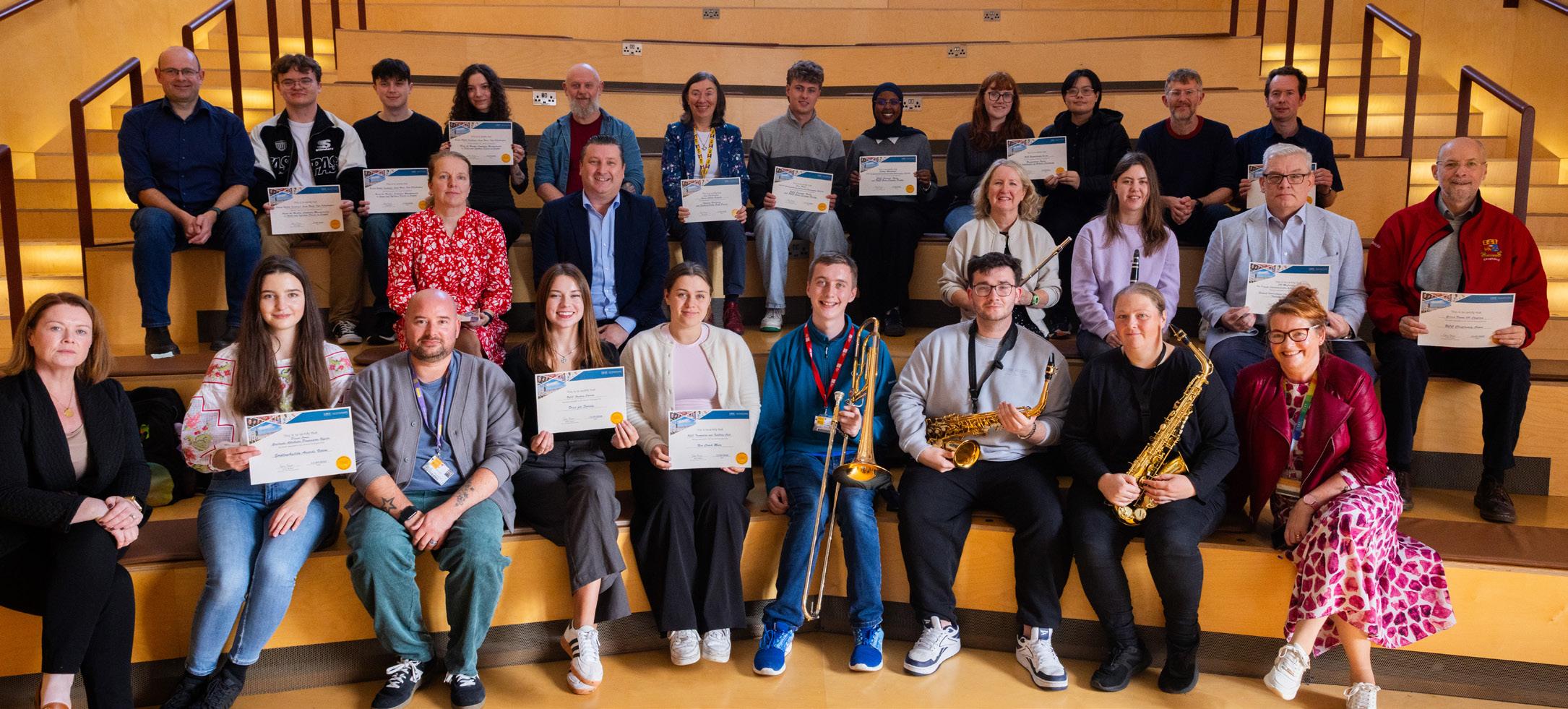
The student experience is shaped by far more than just academics. Its lifelong friendships formed on campus, societies and clubs that create belonging, and support services that help students thrive personally and academically.
Yet much of what makes this experience so meaningful, unfortunately, cannot be funded through the state grant alone. This is where the UCC Alumni Fund, through your generosity, makes a lasting difference.
With support from alumni and friends, the Fund helps bring these opportunities to life by providing project grants directly to students and staff who are working to make UCC a better place to live and study. Every donation, no matter the amount, supports initiatives that enhance campus life, promote wellbeing, foster inclusion and create lasting opportunities for students.
Around the world, alumni are giving back to the University that shaped them, and students are feeling the impact every day.
Thanks to your donations, the UCC Alumni Fund has supported dozens of projects that are improving student life right now:
· The UCC Students’ Union greatly expanded its Food Pantry, tackling both surplus food waste and student food insecurity
· A CUBS professor and PhD student collaborated to launch free online financial wellness modules to help students manage money-related issues
· The Neurodiversity Society started a new series of art workshops and events that help give voice and create belonging among neurodiverse students
· Boole Library created a new collection of wellbeing- and sustainability-focused books for students
These are just a few examples of the difference made by you, UCC’s global community of alumni and friends. In 2024–25, twelve projects were supported through grants, with a new round of initiatives to be funded annually. From student engagement and events to sustainability and wellbeing, each programme demonstrates the immediate and tangible impact of alumni giving.
Thank you to all our donors for making these projects possible. Your generosity enhances the student experience at UCC. ∎
Would you like to give back and support the student experience by helping to fund projects like these? Here are three ways you can!
The easiest way to support the UCC Alumni Fund is by making a gift online.
Complete your details below along with the the SEPA Direct Debit form overleaf. 1 2 3
Visit ucc.ie/en/advancement or scan the QR Code below to donate:

Title *
Full Name * (please include middle name/s)
Maiden Name or Former Name
Address *
Complete your details below and enclose a cheque made payable to either;
€ - Cork University Foundation
$ - Chapel & York US Foundation
£ - Chapel & York UK Foundation
City * Country * Eircode/Postcode *
Email Address * Job Title Telephone * Company
Did you study at UCC? If yes, please complete the below section with details of your first degree from UCC:
Student ID (if known)
Faculty/College *
Degree *
Year of Graduation *
Date of Birth *
Legacy Giving: Many alumni choose to leave a gift in their will or estate plans, making a lasting difference in the area at UCC most meaningful to them. Notifying Cork University Foundation of a legacy gift helps us ensure the impact is realised in the way you intend.
I have included UCC in my will or estate plan. I would like to learn more about leaving a legacy gift to UCC.
Post your completed form, including either a cheque (made payable to one of the above payees) or a completed SEPA Direct Debit form (overleaf) to:
Cork University Foundation c/o UCC Advancement Office 2.12 Western Gateway Building, Western Road, Cork T12 XF62, Ireland
UCC can reclaim tax on gifts of €250 and over made in a calendar year (i.e. €21 a month and over) in the Republic of Ireland.
Tax-efficient giving can increase the value of your gift at no extra cost to you. If you donate €250 or more in a calendar year we will contact you to request your support in claiming tax relief on your gift.
By signing this mandate form, you authorise (A) Cork University Foundation (CUF) (Charity No. 11831) to send instructions to your bank to debit your account and (B) your bank to debit your account in accordance with the instructions from Cork University Foundation. As part of your rights, you are entitled to a refund from your bank under the terms and conditions of your agreement with your bank. A refund must be claimed within 8 weeks, starting from the date on which your account was debited. Your rights are explained in a statement that you can obtain from your bank.
Creditor’s Name CORK UNIVERSITY FOUNDATION
Creditor’s Identifier 306542
Creditor’s Address 2.12 WESTERN GATEWAY BUILDING
WESTERN ROAD, CORK
IRELAND, T12XF62
Please complete all fields marked *
Name of account holder(s) *
Account Number IBAN *
Bank Identifier Code BIC *
I wish to make the following donation * Mark your preference with an X
To be completed by Cork University Foundation:
Unique Mandate Reference
€21 €50 €100
One time Yearly Monthly €
€250 €500
Specify an amount of your choice:
Is this an anonymous gift? * If yes, your name will not be displayed on the donor roll of honour
Yes
No
The Direct Debit Guarantee
This is a guarantee provided by your own bank as a member of the Direct Debit Scheme, in which all banks and originators of direct debits participate. If you authorise payment by direct debit, then your direct debit originator will notify you in advance of the amounts to be debited to your account. Your bank will accept and pay such debits, provided that your account has sufficient available funds. If it is established that an unauthorised direct debit was charged to your account, you are guaranteed a prompt refund by your bank of the amount so charged. You can cancel the direct debit in good time by writing to your bank.
Signature(s) *
Date * If the bank account is held jointly, this form must be signed by both account holders.
D D M M Y Y Y Y
Data Protection
The UCC Advancement Office is collecting and recording the above information for the purposes of processing your gift and notifying you of future alumni activities. The data will be held securely and confidentially as per the terms outlined in the Alumni Data Protection Notice available at: ucc.ie/en/gdpr/dataprotectionnotices/alumniandsupportersdataprotectionnotice
Contact Us
If you have any questions about making a donation, please contact the UCC Advancement Office: foundation@ucc.ie
Post your completed form to:
Cork University Foundation c/o UCC Advancement Office 2.12 Western Gateway Building, Western Road, Cork T12 XF62, Ireland
Bridge
Where alumni meet across and down, thanks to puzzlemaster Armani and Dior (Law 1988) - yes, that’s an anagram.
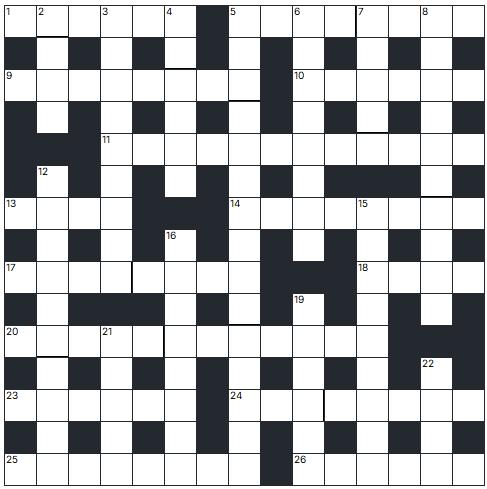
Across
1 Kitchen where it used to be possible to get kakes and koffee and play kards (6)
5 Sandy sport of Owens and Lewis (4,4)
9 Exam concerning politics briefly, in the nicest possible way (8)
10 Head of a man, body of a lion (6)
11 Manic costume change gets the message across (12)
13 Small gust (4)
14 Account of hanging? (8)
17, 2d The simplest way to win a rowing race, apparently (4,4,1,3)
18 Cut away gradually at silicon, maybe? (4)
20 Undo a seat belt with this official media statement (5,7)
2 See 17a
3 Sounds like main teacher in a school (but not here) (9)
4 Patron saint of sailors - known for a type of fire (2,4)
5 Where Finbarr taught..... (3,7,5)
6 Italian wine kept in a cosy home is the most horrible (8)
7, 26a UCC man, historian, senator (4,1,6)
8 Does the cheeky boy wear this to a formal occasion (6,4)
12 Drink rules! (6,4)
15 Government accounting process and fund (9)
16 Day (not night) people, like dogs or elephants (8)
19 A person’s act and deed (6)
21 Hindu deity (5)
22 Hyperbolic function (4)
23 Aula (not small) (6)
24 High brow sounds from Sunday’s Well Road perhaps (3,5)
25 Ruby or Ray or Booth (8)
26 See 7d
Would you like to tackle the greatest challenges of our time and support talented students in achieving a world-class education?
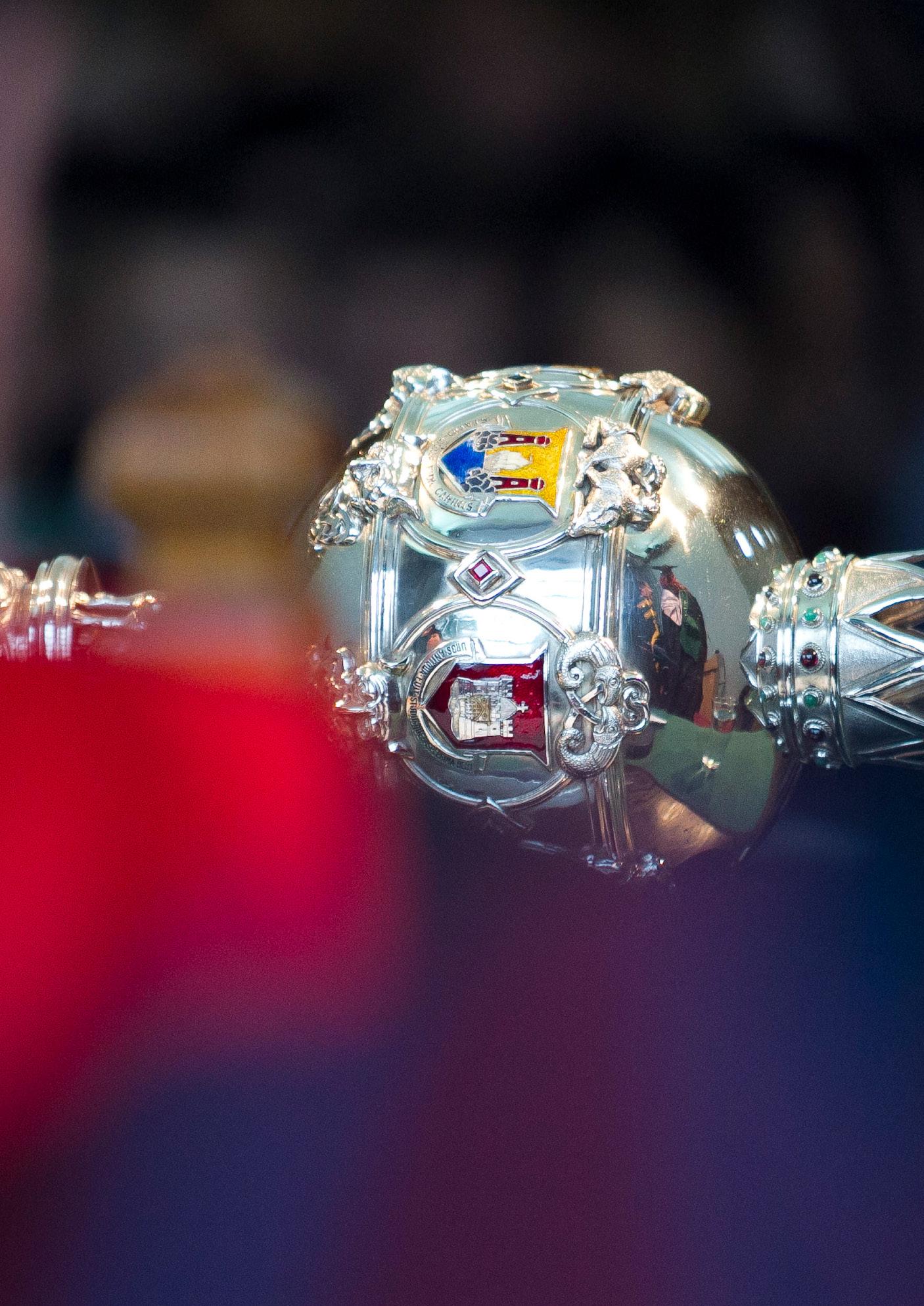
When you leave a legacy to UCC, you invest in pioneering research, you inspire future generations, and you help find solutions to secure the future of our planet.