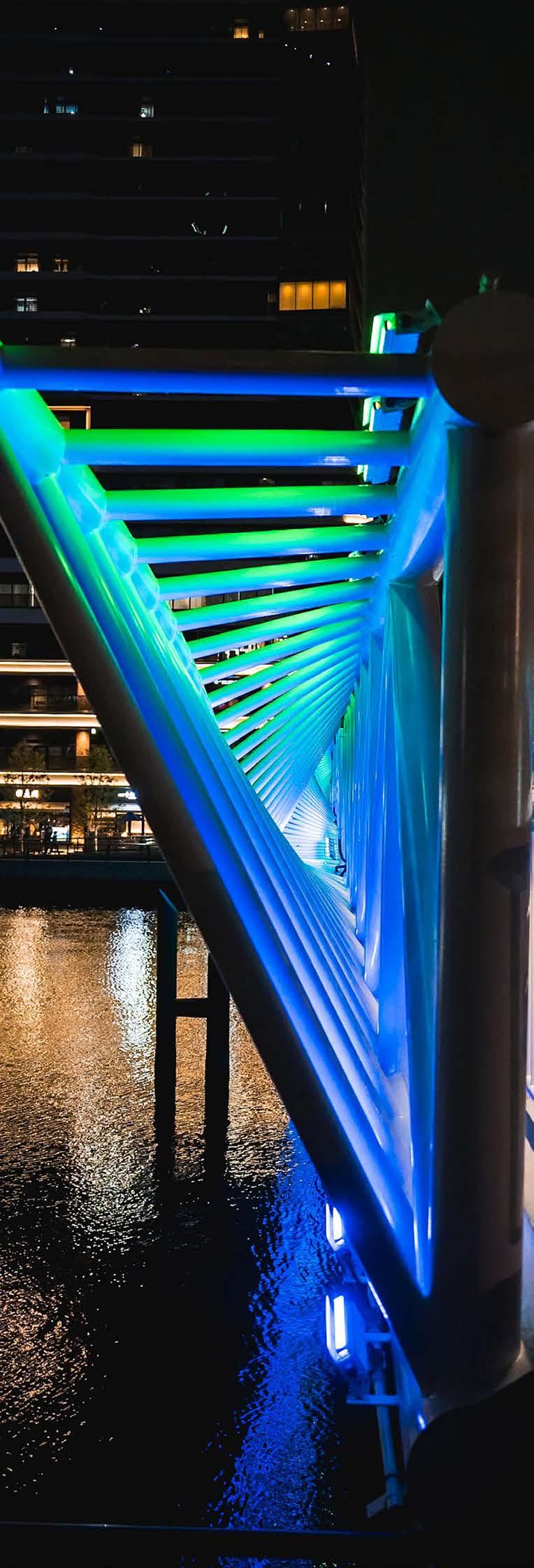
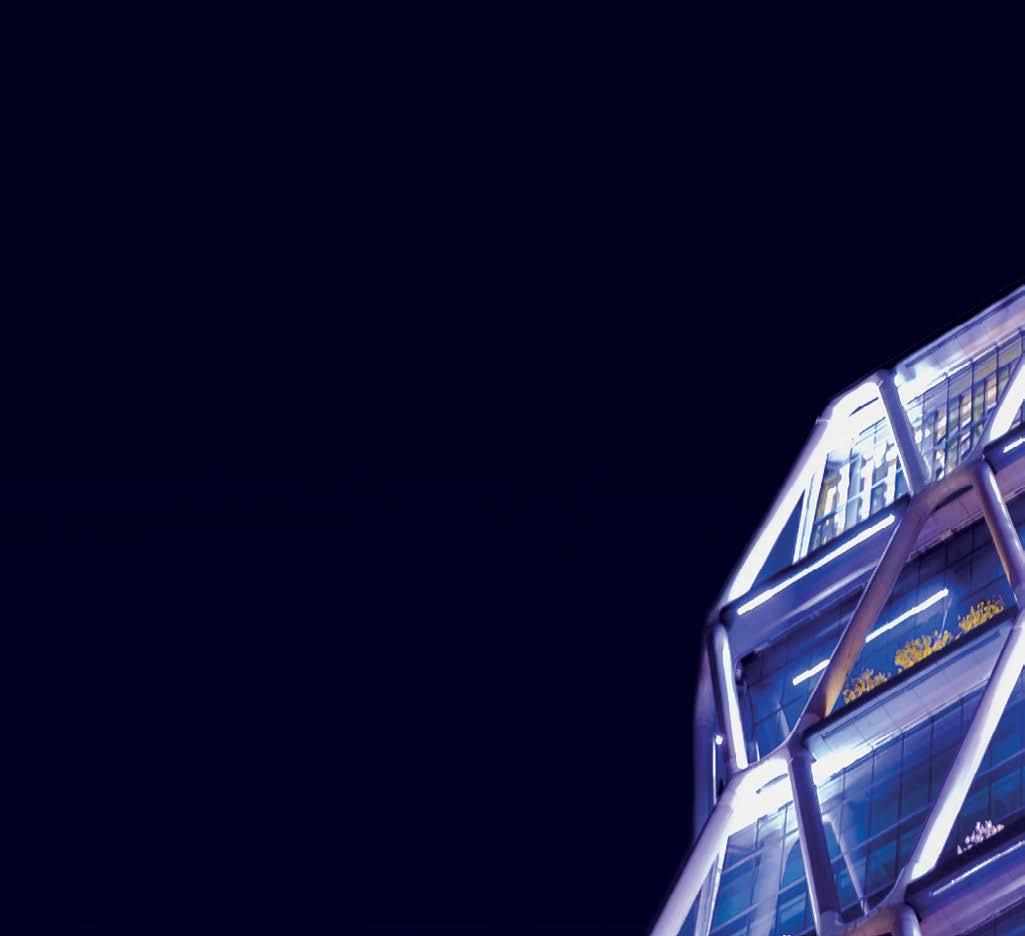
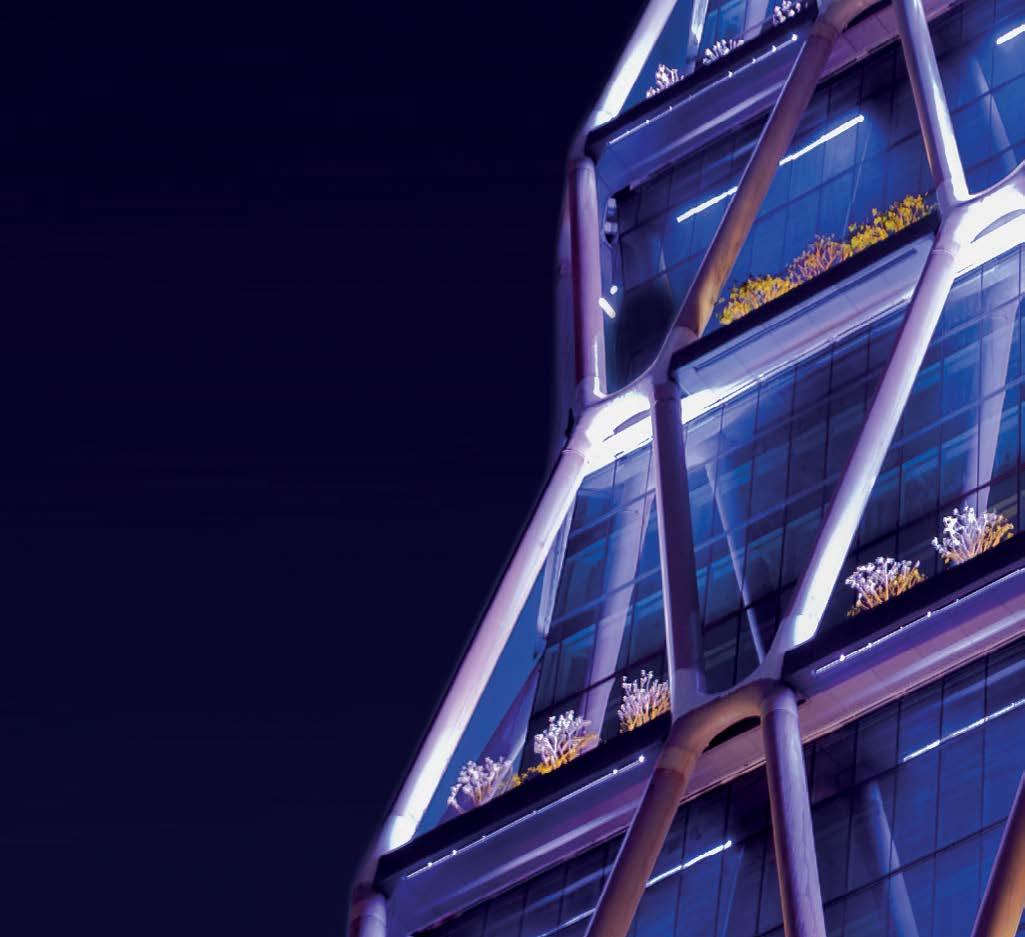
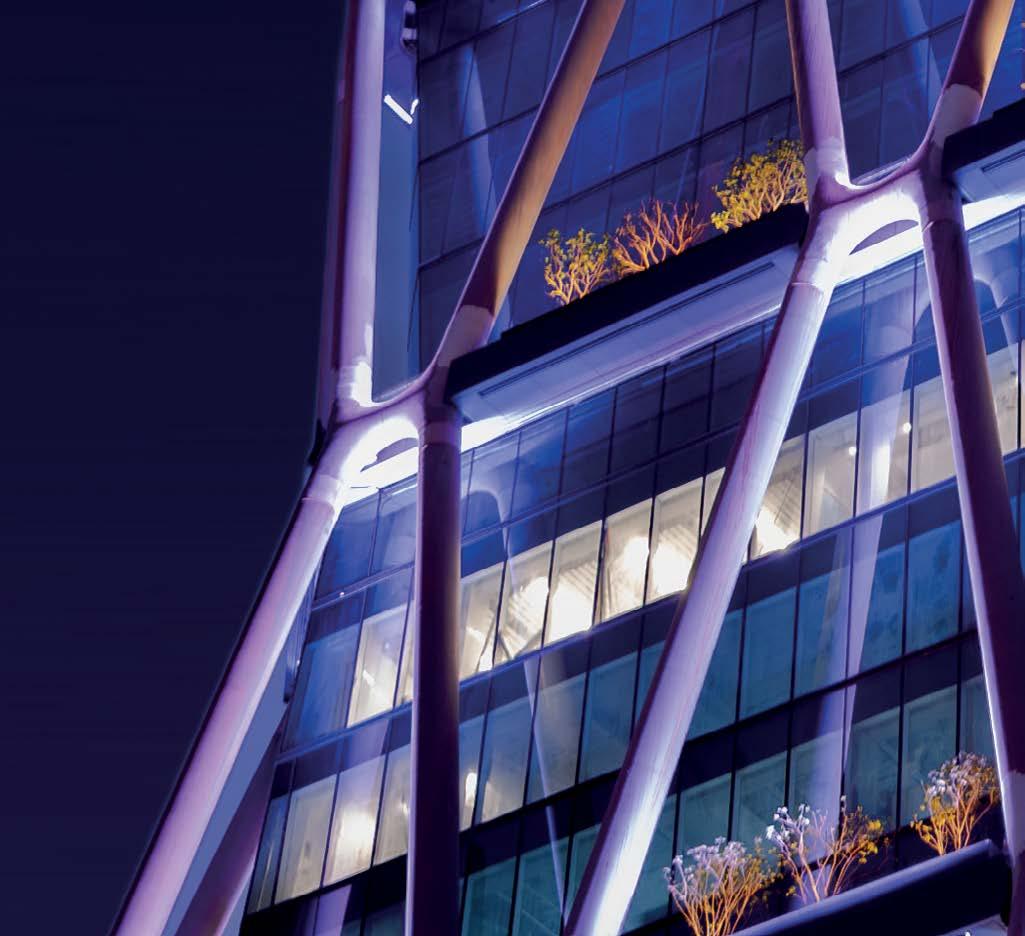
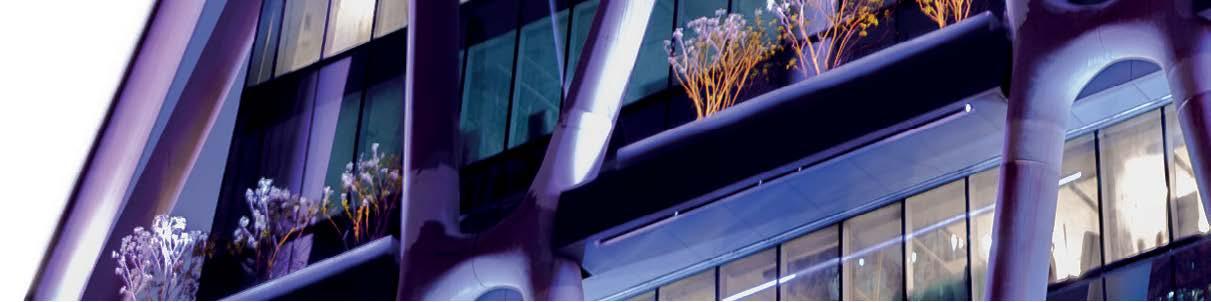
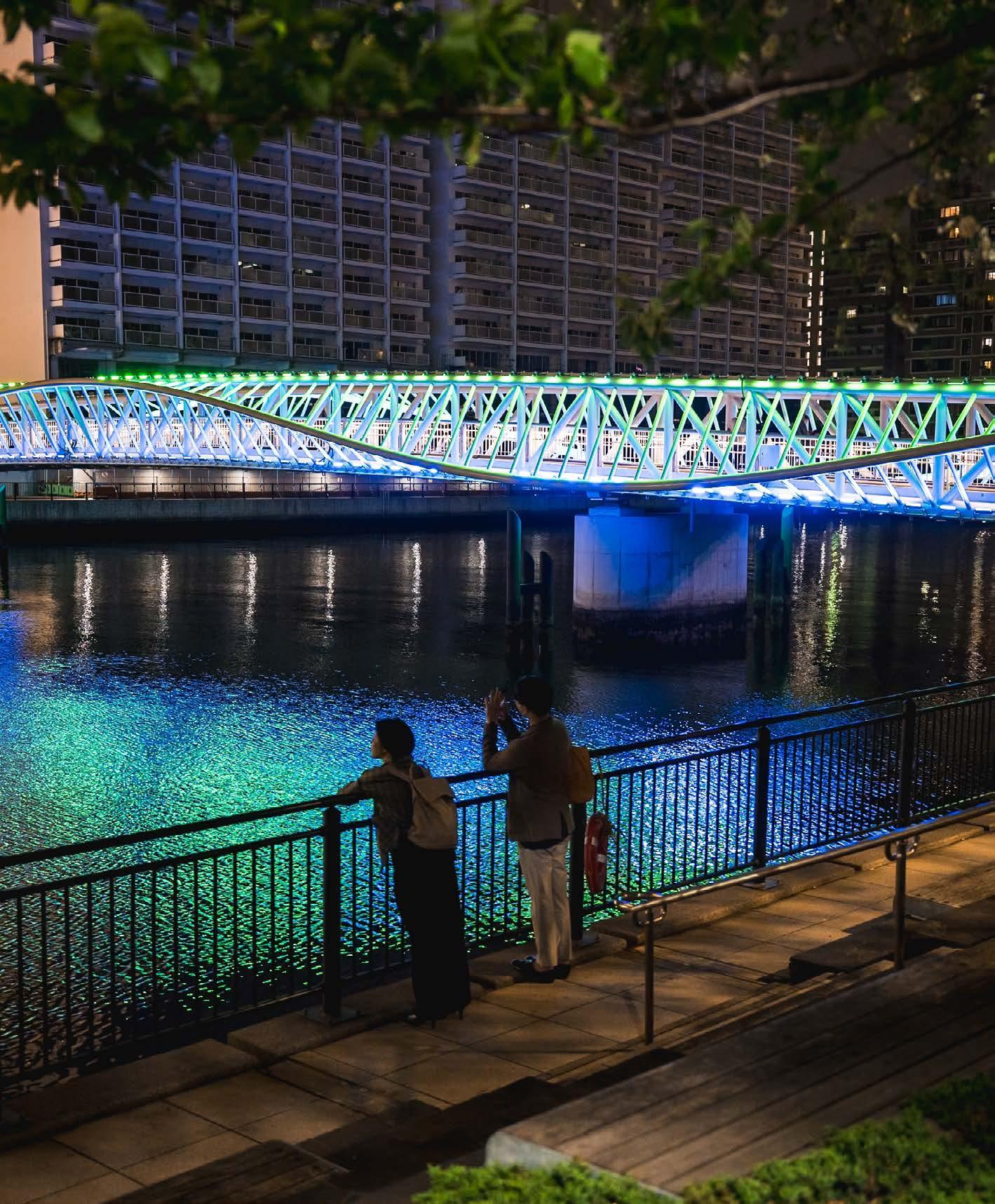
The Lighting Design Office has given a colourful and dynamic treatment to a pedestrian bridge in Tokyo.
16 PROJECT: Bonus tracks
A thoughtful, layered lighting scheme by dpa lighting consultants celebrates the railway heritage of the Station Hill commercial development in Reading, UK.
22 HOSPITALITY: Oasis of light
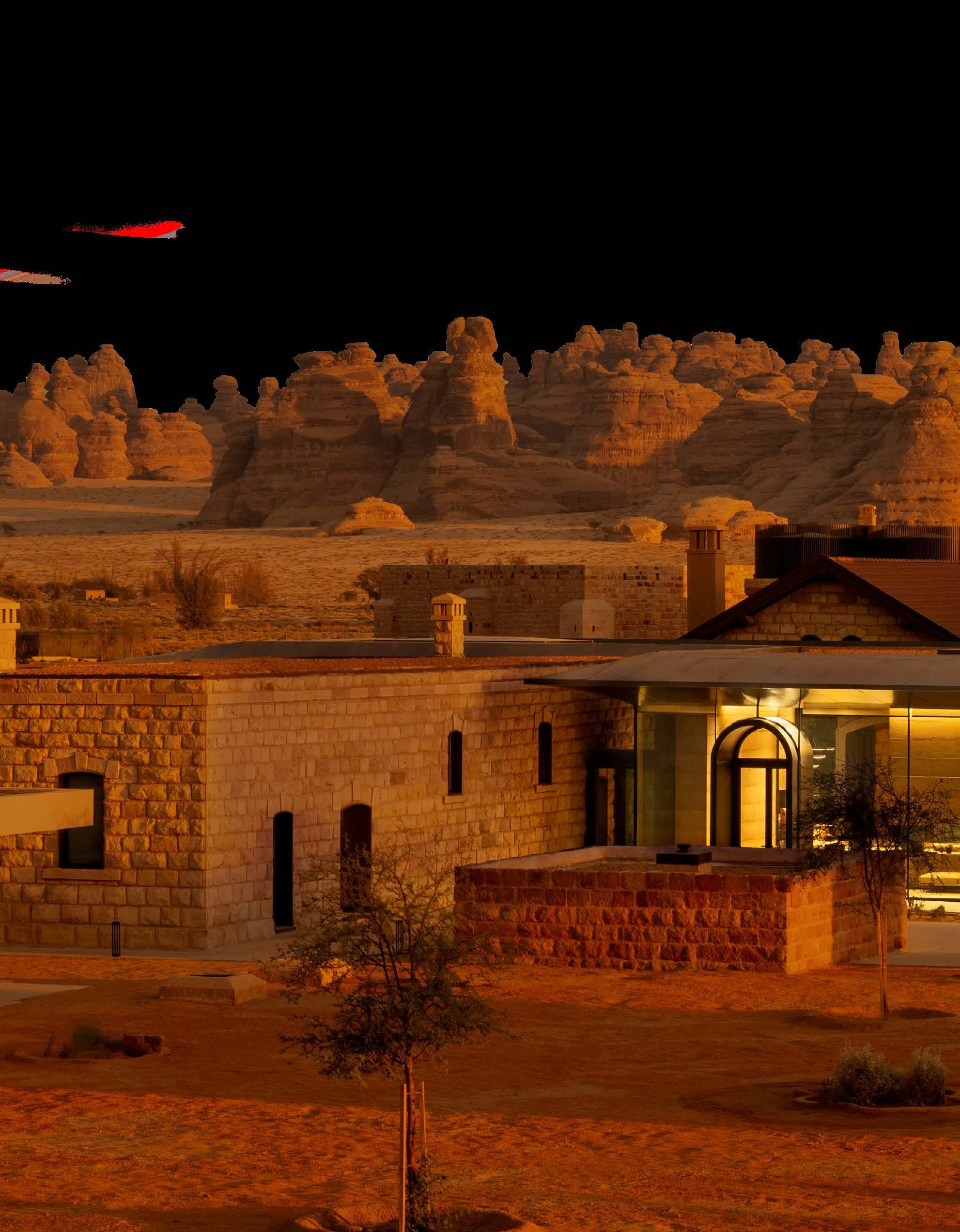
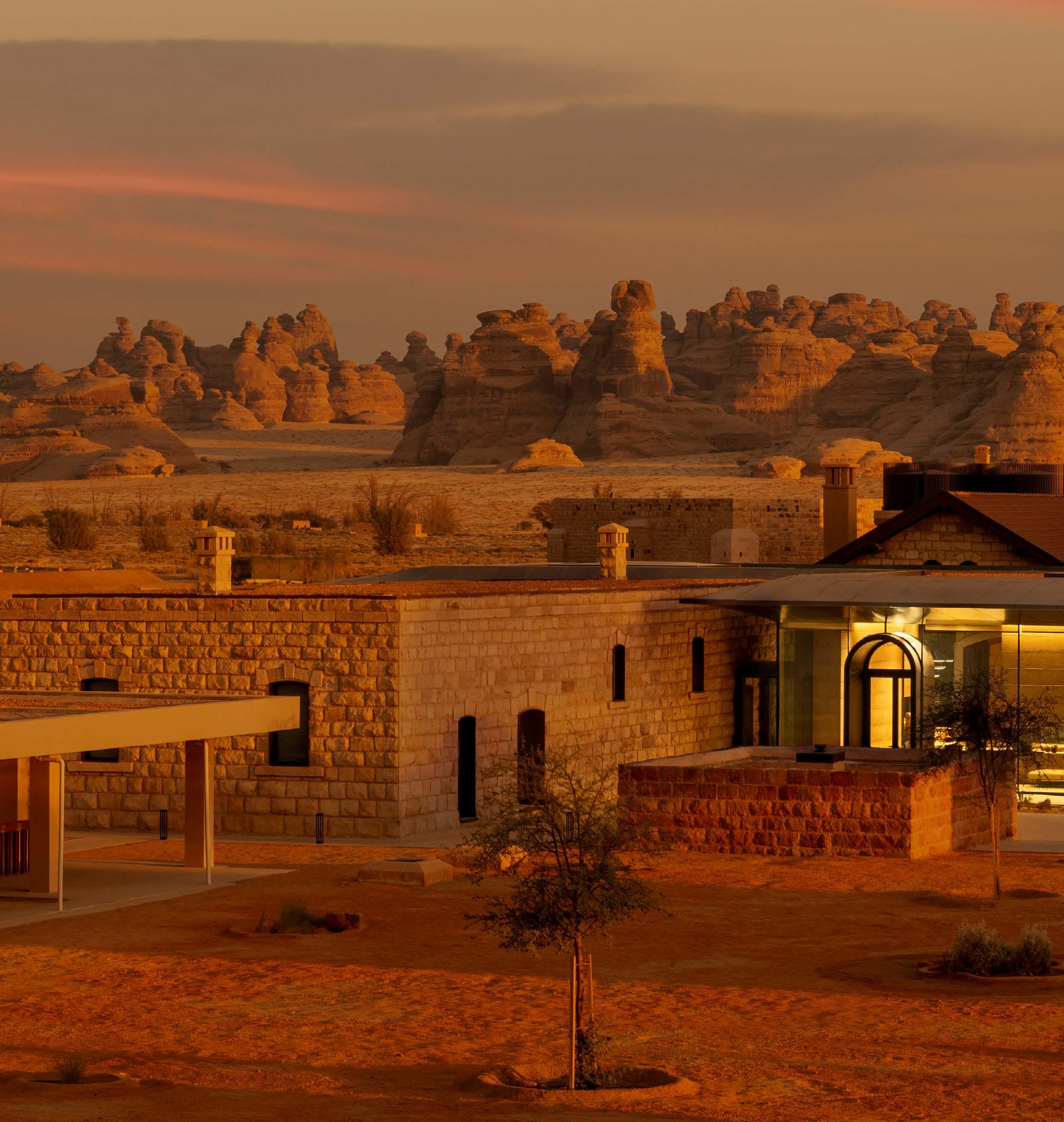
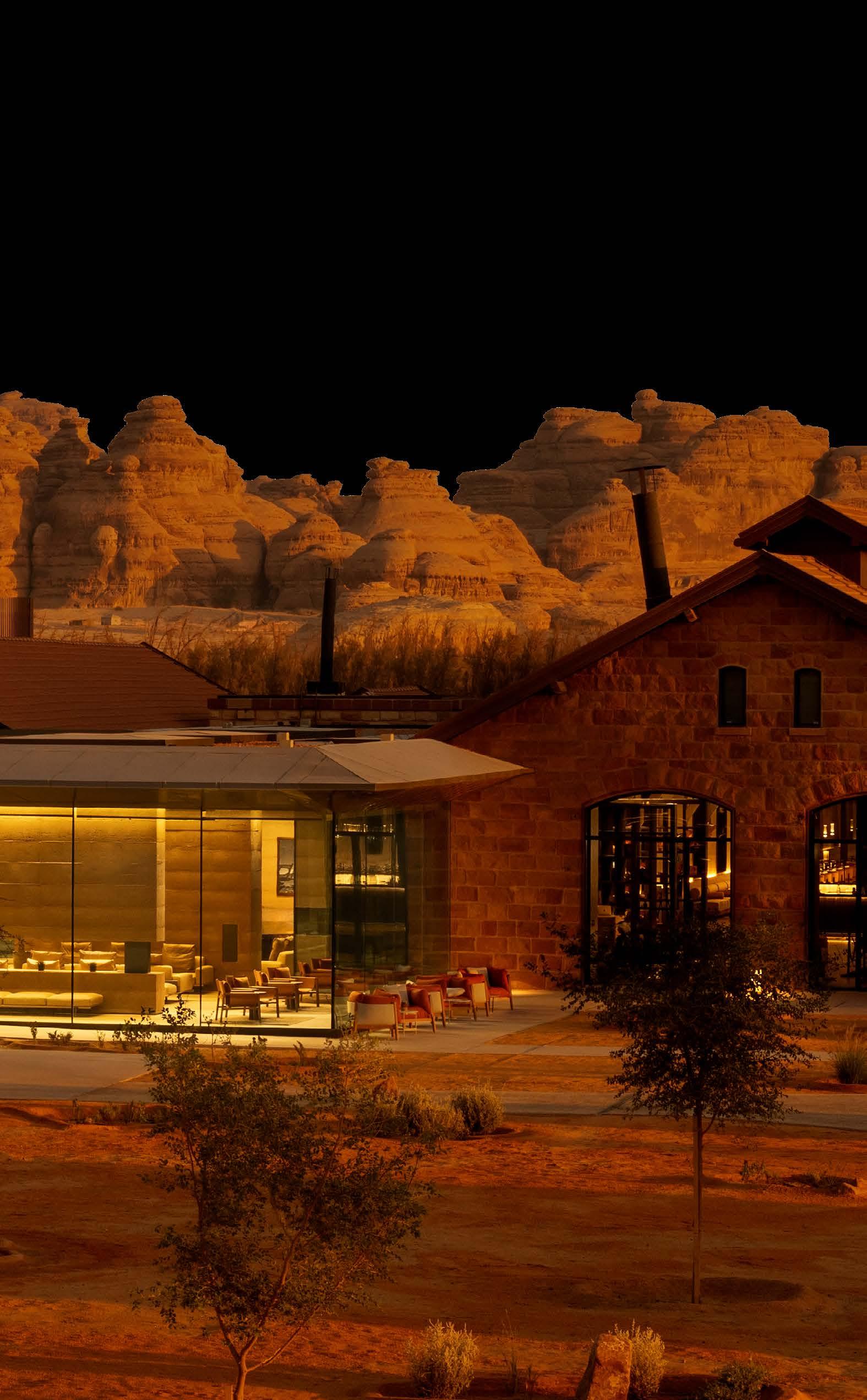
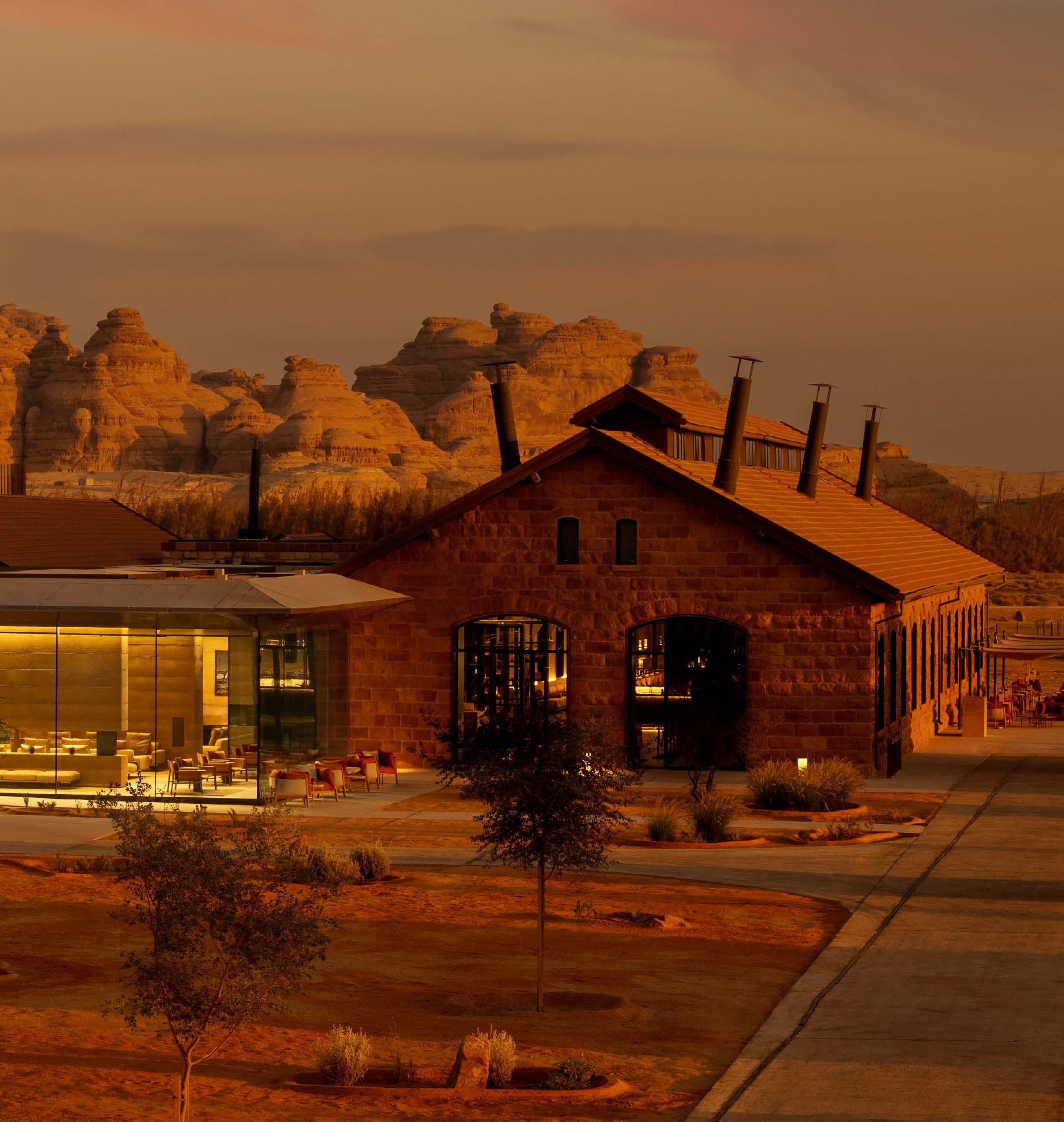
Global lighting design consultancy Nulty collaborated has sensitively illuminated a landmark hospitality destination in an ancient oasis town in Saudi Arabia.
26 EDUCATION: Beams of light
At an expansion project for the College of Architecture at the University of Nebraska, the warmth of wood is enhanced with a thoughtful lighting scheme by HDR emphasising visual comfort.
28 EDUCATION: How light shapes learning
As teaching methods evolve but many classrooms remain unchanged, designers are turning to neuroarchitecture and healthy lighting principles to create educational spaces that support wellbeing, attention and creativity. Light is not just functional—it’s a driver of cognitive and emotional development, writes Raquel Quevedo.
32 EDUCATION: The ‘light shower’ for students
Bergen University has started offering students morning light therapy sessions to counter Seasonal Affective Disorder. Martin Tomlinson reports.
34 HUMAN CENTRIC LIGHTING: Getting in the rhythm
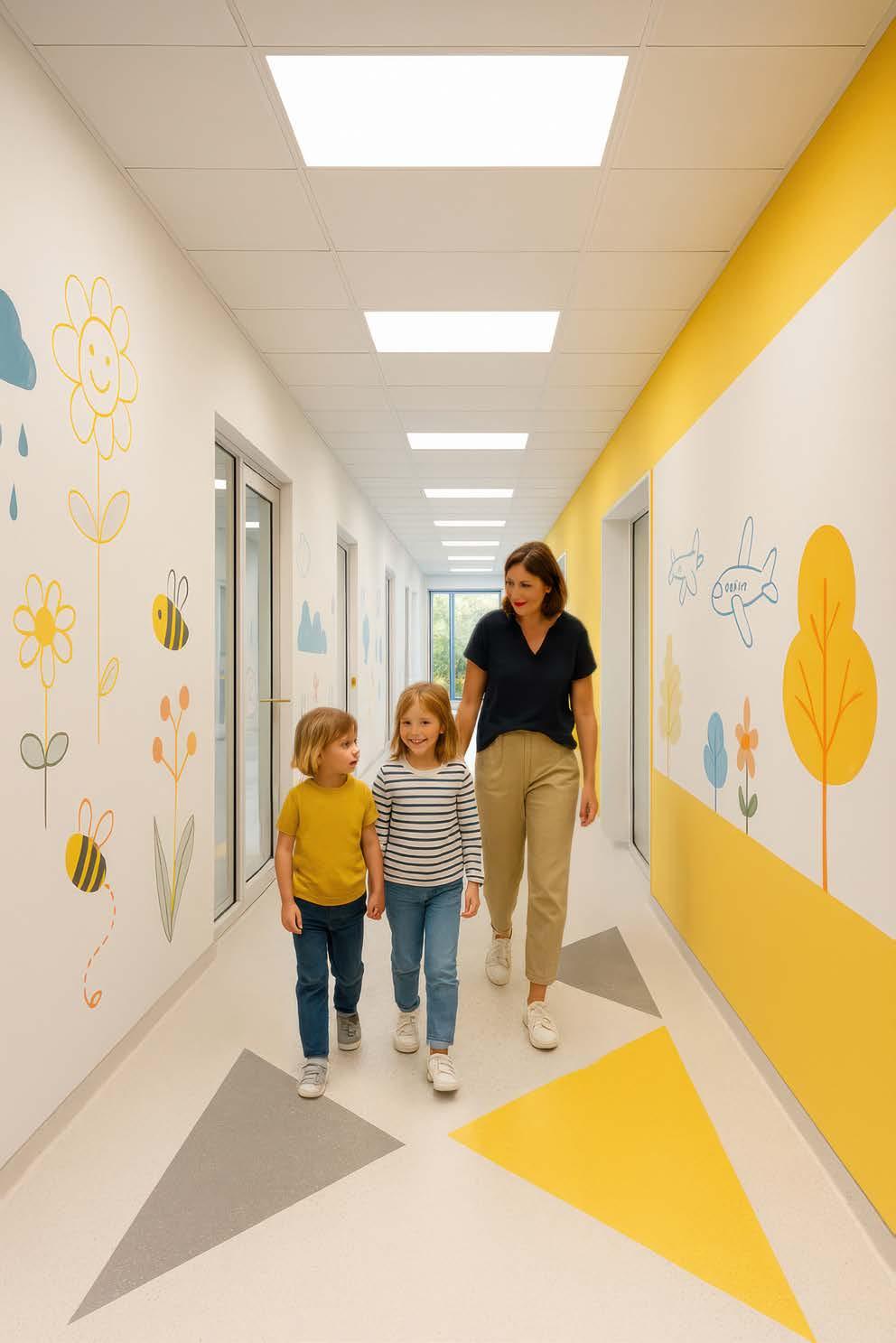
At the Sint-Pietersmolenwijk Care Campus in Bruges, an intergenerational model of care is supported by a sophisticated lighting strategy that aligns daily routines, enhances safety, and strengthens community life through human-centric design.
VOLUME 4 ISSUE 1 2026
36 THE LIGHTING ECONOMIST: When the lights go out
Lighting designers traditionally see emergency lighting as a grudge addition to their schemes, but by engaging with the technology rather than leaving it to others they can ensure a better outcome, says Dave Tilley.
38 THE BUSINESS OF LIGHTING DESIGN: Nulty’s apprentice scheme
Global lighting design practice Nulty has unveiled an innovative programme for newcomers to the industry in London. Martin Tomlinson reports.
40 LUMINAIRE DESIGN: Solving the Puzzle
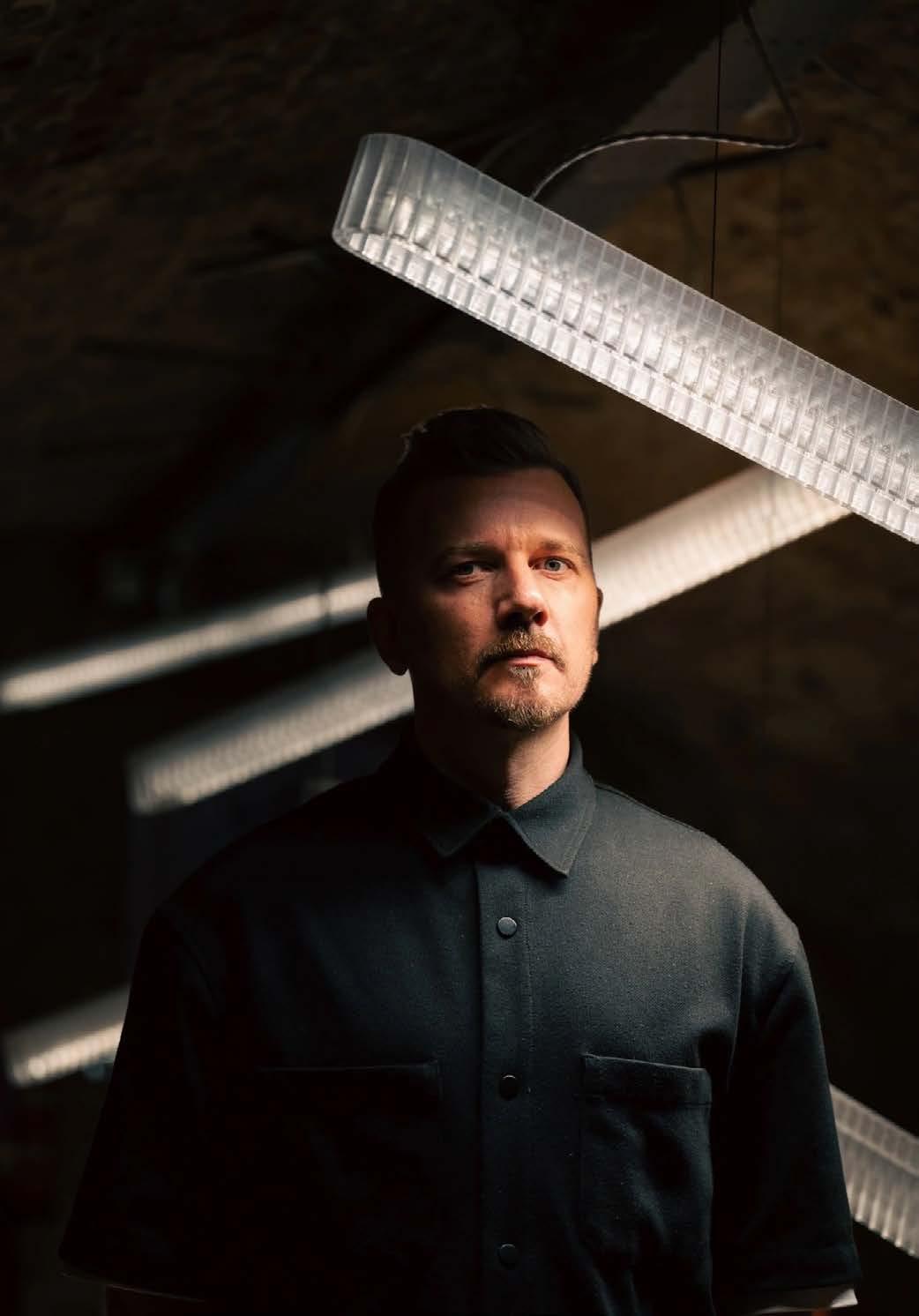
The product designer behind Signify extraordinary Puzzle luminaire says he was inspired by the pieces of a jigsaw.
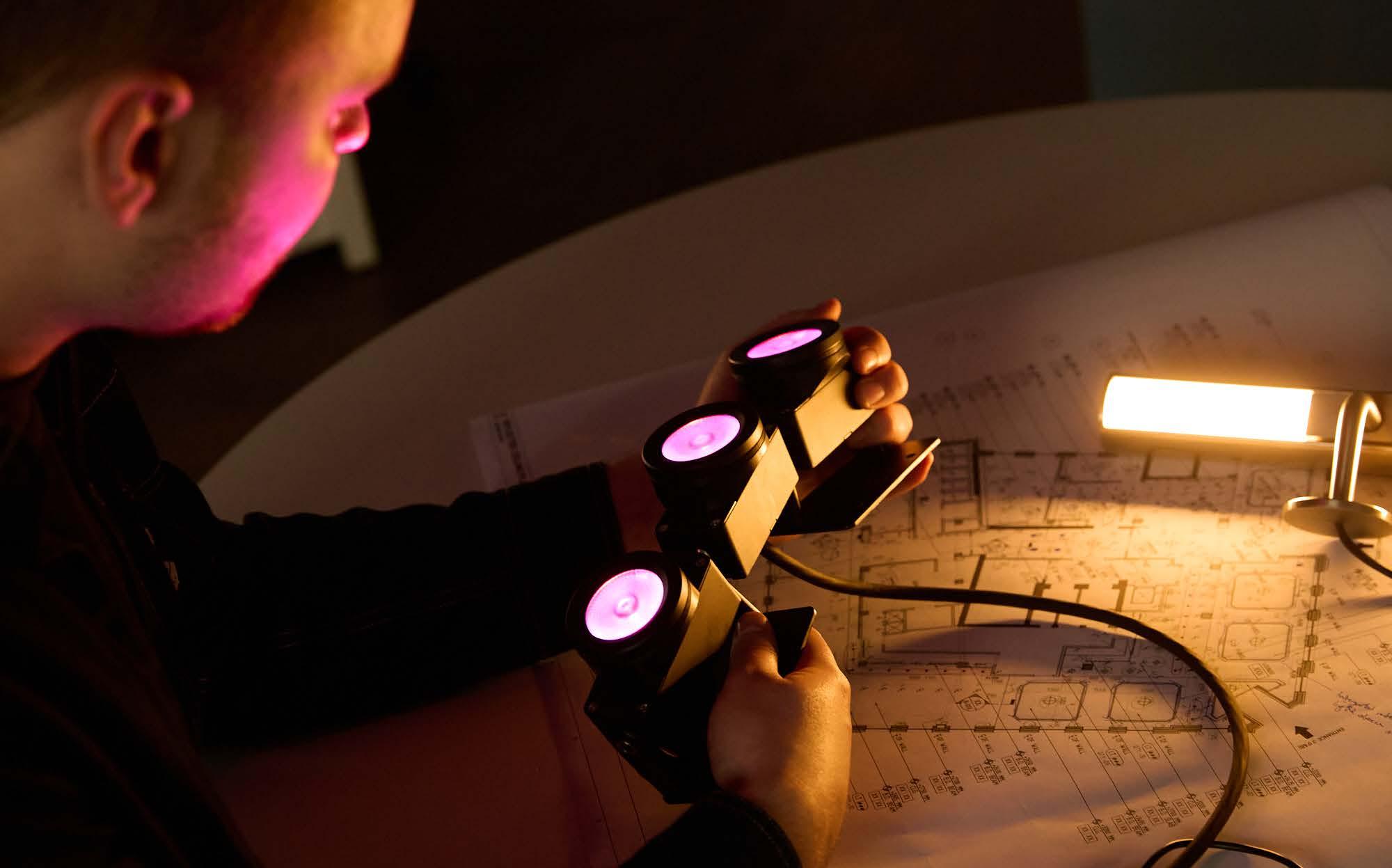
42 3D PRINTING: Eruption of creativity
3D lighting specialist LumiAdd has announced the successful conclusion of its first-ever 3D Unleashed luminaire design competition, an ambitious initiative created to give lighting designers, architects, and interior designers unconstrained creative freedom.
44 INNOVATIONS
We curate the stand-out designs this quarter.
46 2025 Build Back Better Awards: Winners in full
No fewer than 18 entries took trophies in the 2025 lighting category of the Build Back Better Awards, including two projects, six products and three industry initiatives. The judges awarded one Platinum, their ultimate accolade, as well as eight Green awards to recognise investment in sustainability by the lighting industry in recent years.
56 TRADE SHOW CALENDAR
We mark your diary with all the big events in lighting design right into 2024.
57 NEXT ISSUE
We give you a heads up on what you can look forward to the next issue of designing lighting global.
58 ORGANISATION NEWS
The latest reports from the lighting design community and its representative bodies.
59 ADVERTISERS INDEX
60 UP CLOSE
We meet James Poore, Regional Lighting Director at Aecom in London.
The lighting plan focused on the practicality of the lights as well as creating a landmark in this area of urban development.
Photo credit: ebi_times
ON THE COVER:
The College of Architecture at the University of Nebraska, where the warmth of wood is enhanced with a thoughtful lighting scheme by HDR
VOLUME 2 ISSUE 2 2024
At last! A real human-centric project
This month, we unveil that rare thing: a real world human centric project!
Editor: Ray
Molony
Editor: Ray Molony
Editor: Ray Molony
Publisher: Randy Reid
Publisher: Randy Reid
Publisher: Randy Reid
Associate Publisher, Advertising: Cliff Smith
BIGGER, STRONGER DESIGN PRACTICES CAN ONLY BENEFIT CLIENTS
BIGGER, STRONGER DESIGN PRACTICES CAN ONLY BENEFIT CLIENTS
Associate Publisher, Advertising: Cliff Smith
Associate Publisher, Advertising: Cliff Smith
Director of Audience Development: Angie Hullfish
Director of Audience Development: Angie Hullfish
Staff
Writers: Parker Allen
Staff Writers: Parker Allen
Published by EdisonReport
Staff Writers: Parker Allen
For more than a decade, humancentric lighting has occupied an uneasy space between scientific promise and practical hesitation. While research into non-visual effects of light has advanced, widespread adoption has been slowed by scepticism from industry bodies, lack of consensus among scientists, unclear guidance, energy concerns, cost, and—perhaps most damaging—the dilution of the term itself through overambitious marketing. Against this backdrop, the Sint-Pietersmolenwijk Care Campus in Bruges stands out as a rare project where human-centric lighting is applied with clarity, restraint, and purpose.
The lighting design profession has come a long way, philosophically speaking, in recent years. First it came to an accommodation of sorts with those practices who create lighting designs and also supply the equipment. This manifested itself in the change of membership rules for the International Association of Lighting Designers to allow socalled design-and-supply members. Personally, I’ve always thought that their exclusion was a harsh rule, a purist view doesn’t take into account the real world, especially in those territories which don’t have a culture of paying design fees. Additionally, there are some design-and-supply outfits which do superb lighting schemes. In my view, there’s good lighting and there’s bad lighting. It’s not about who’s supplying it.
1726C General George Patton Drive Brentwood, TN 37027
Published by EdisonReport
Published by EdisonReport
1726C General George Patton Drive Brentwood, TN 37027
Phone: +1 615 371 0961
1726C General George Patton Drive
Phone: +1 615 371 0961
www.designinglightingglobal.com
Brentwood, TN 37027
Phone: +1 615 371 0961
www.designinglightingglobal.com
www.designinglightingglobal.com
designing lighting global is focused on the Business of Lighting Design™ and provides business information to the lighting design community across the world. In addition to the website, designing lighting publishes bi-monthly online magazines featuring original content, interviews within the community and highlights successful and awardwinning lighting designs.
ISSN 2837-2360
designing lighting global is focused on the Business of Lighting Design™ and provides business information to the lighting design community across the world. In addition to the website, designing lighting publishes bi-monthly online magazines featuring original content, interviews within the community and highlights successful and awardwinning lighting designs.
What makes this care home convincing is that light is not treated as a wellness accessory, but as an integrated part of care delivery. The HCL strategy is grounded in healthcare realities: residents spend long periods indoors, often with limited daylight access, and maintaining circadian stability directly affects sleep, mood, and cognitive orientation.
The lighting design profession has come a long way, philosophically speaking, in recent years. First it came to an accommodation of sorts with those practices who create lighting designs and also supply the equipment. This manifested itself in the change of membership rules for the International Association of Lighting Designers to allow socalled design-and-supply members. Personally, I’ve always thought that their exclusion was a harsh rule, a purist view that doesn’t take into account the real world, especially in those territories which don’t have a culture of paying design fees. Additionally, there are some design-and-supply outfits which do superb lighting schemes. In my view, there’s good lighting and there’s bad lighting. It’s not about who’s supplying it.
By focusing on vertical, melanopically effective illumination in communal living rooms—rather than blanket brightness everywhere—the project avoids many of the energy and ethical concerns that have hindered HCL elsewhere.
Another IALD rule change that has just been the written into the code of ethics is that members should give sufficient weight to sustainability in their designs. This should be less controversial than the previous rule change. While it is an aspiration, it’s a laudable one and it does give designers some ammunition to protect their designs in the face of pressure to compromise.
designing lighting global is focused on the Business of Lighting Design™ and provides business information to the lighting design community across the world. In addition to the website, designing lighting publishes bi-monthly online magazines featuring original content, interviews within the community and highlights successful and awardwinning lighting designs.
Equally important is the way lighting is linked to measurable operational benefits. The system demonstrates that non-visual lighting effects can coexist with clear functional value.
Another IALD rule change that has just been the written into the code of ethics is that members should give sufficient weight to sustainability in their designs. This should be less controversial than the previous rule change. While it is an aspiration, it’s a laudable one and it does give designers some ammunition to protect their designs in the face of pressure compromise.
Further in these pages I talk to the IALD’s CEO Christopher Knowlton about how lighting design practices can grow. Knowlton is no slouch at lighting design and has a roster of great projects to prove it. But he also has an MBA and business minded, and he’s given a lot of thought to this topic. His diagnosis of the problem and his proposed remedies interesting reading.
Silent, light-based alerts reduce stress for residents, support staff efficiency, and enhance safety without resorting to intrusive acoustic alarms. This pragmatic pairing of wellbeing and risk management helps justify investment and sidesteps the criticism that HCL lacks real-world evidence.
Further in these pages I talk to the IALD’s CEO Christopher Knowlton about how lighting design practices can grow. Knowlton is no slouch at lighting design and has a roster of great projects to prove it. But he also has an MBA and is business minded, and he’s given a lot of thought to this topic. His diagnosis of the problem and his proposed remedies make interesting reading.
Reproduction of the material contained in this publication may only be made with the written permission of designing lighting global.
Reproduction of the material contained in this publication may only be made with the written permission of designing lighting global.
Rather than claiming to “hack” biology, the care home uses light to gently structure daily routines and support social interaction—an approach that feels proportionate, humane, and ethically sound.
The lighting design profession has never lacked for creativity, or indeed the tools to create stunning projects. Rather, its weakness has traditionally been on the business side. For, Knowlton points out, it is well financed and managed practices which can invest in its staff, its knowledge and its resources. And that can only be good for our clients.
The lighting design profession has never lacked for creativity, or indeed the tools to create stunning projects. Rather, its weakness has traditionally been on the business side. For, as Knowlton points out, it is well financed and managed practices which can invest in its staff, its knowledge and its resources. And that can only be good for our clients.
In doing so, the care home offers something the HCL debate has long lacked: a credible, built example that moves beyond theory. It suggests that in healthcare settings, where benefits are tangible and users are medically informed, human-centric—or perhaps simply biologically responsible—lighting can finally overcome its barriers and earn its place as a standard design tool.
Reproduction of the material contained in this publication may only be made with the written permission of designing lighting global.
Ray Molony EDITOR
Ray Molony EDITOR
Ray Molony
EDITOR
Bill Middleton
A BRIDGE FOR
The Lighting Design Office has given a colourful and dynamic treatment to a pedestrian bridge in Tokyo
The opportunity to paint with light on the surface of water is a bonus of bridge projects like the
and
of the Lighting Design Office made the most of opportunity.
ALL SEASONS
Reimei Kobashi footbridge,
Izumi Okayasu
PROJECT FOCUS
For lighting designers, bridges rightly have a special place in the pantheon of project commissions.
They’re highly visible, frequently genuinely ‘iconic’, structurally challenging and often boast the added bonus of the light being reflected in water. One can assume therefore that Izumi Okayasu of the Lighting Design Office approached the Reimei Kobashi footbridge job with some relish.
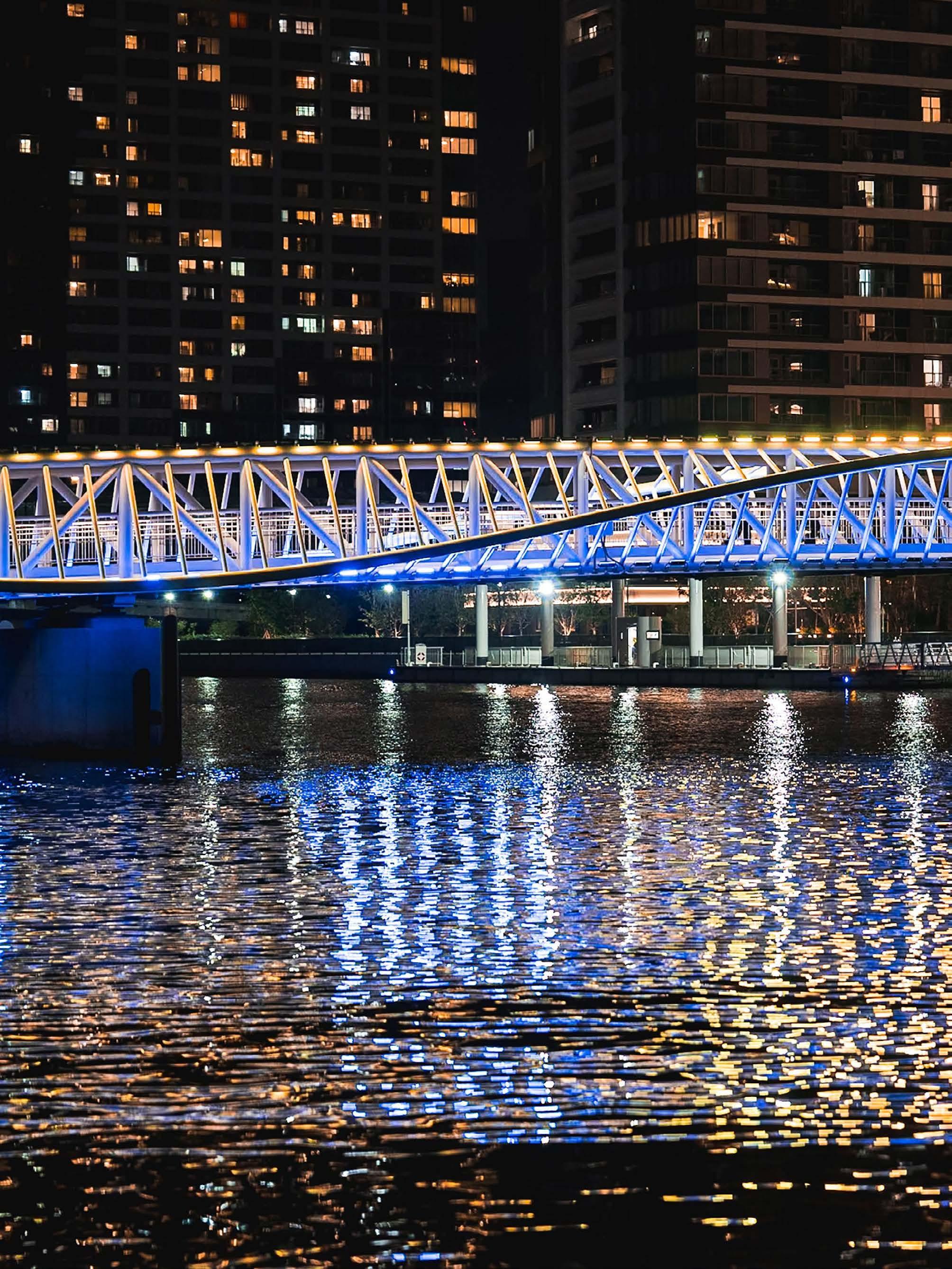
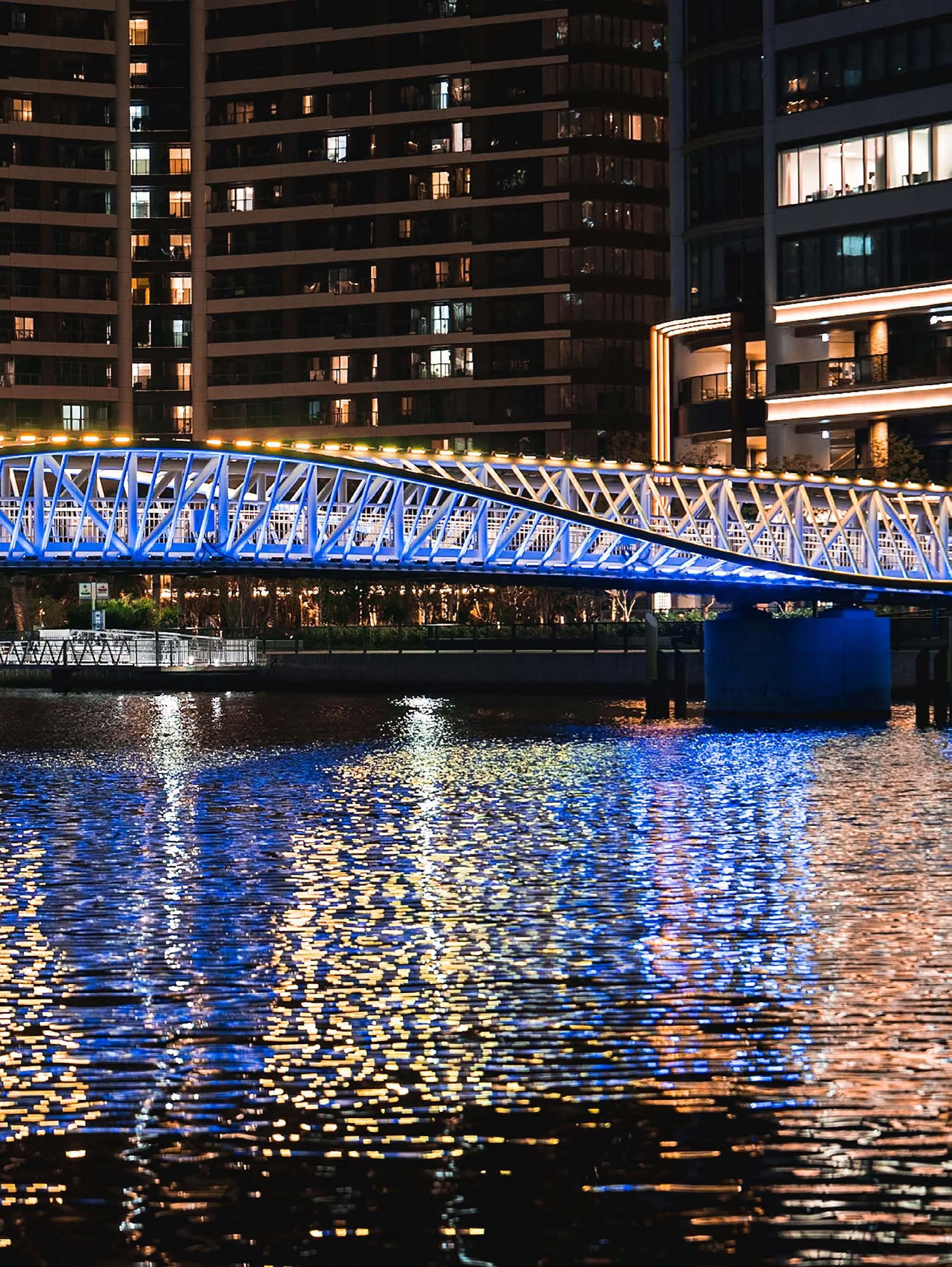
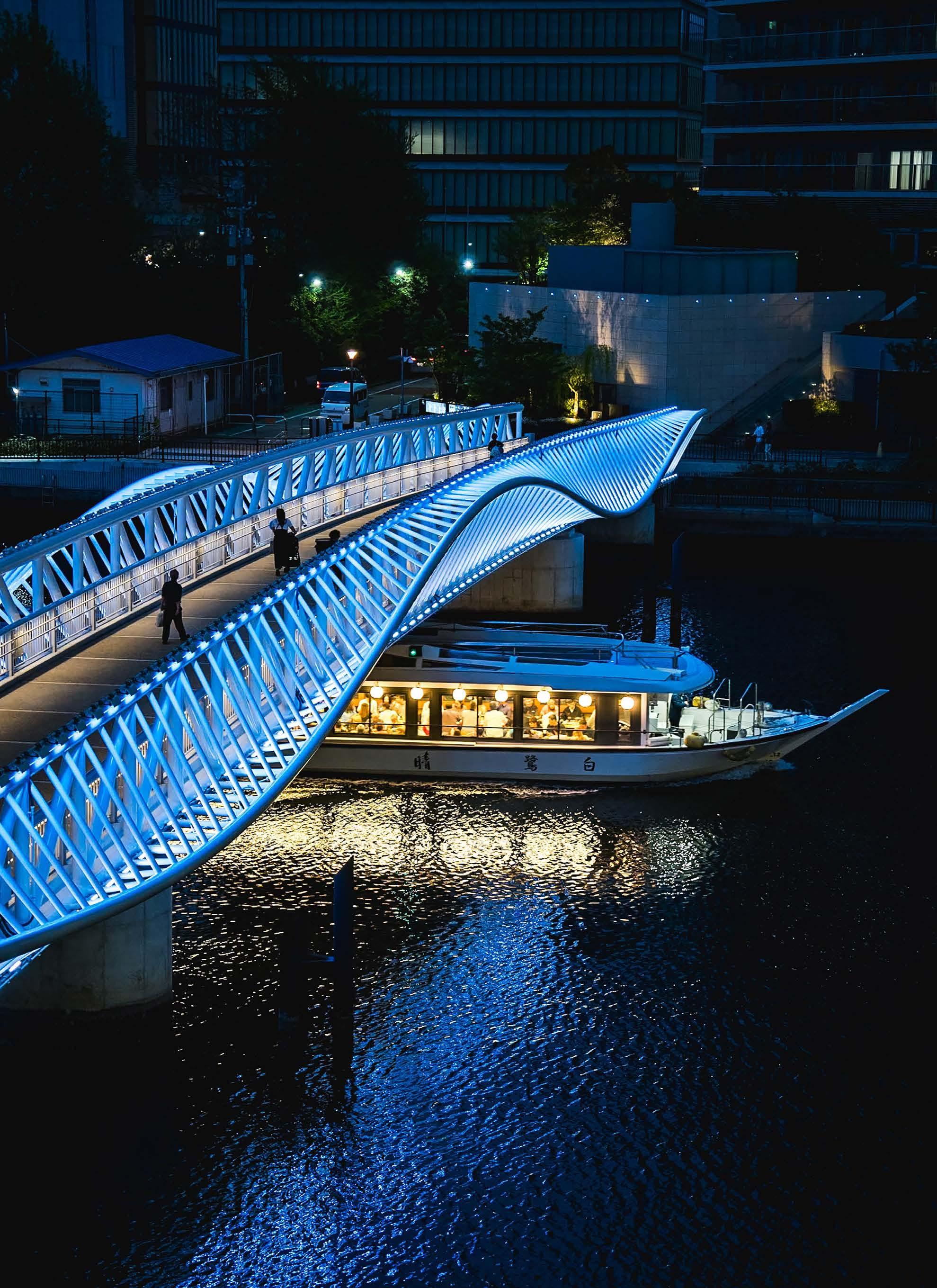
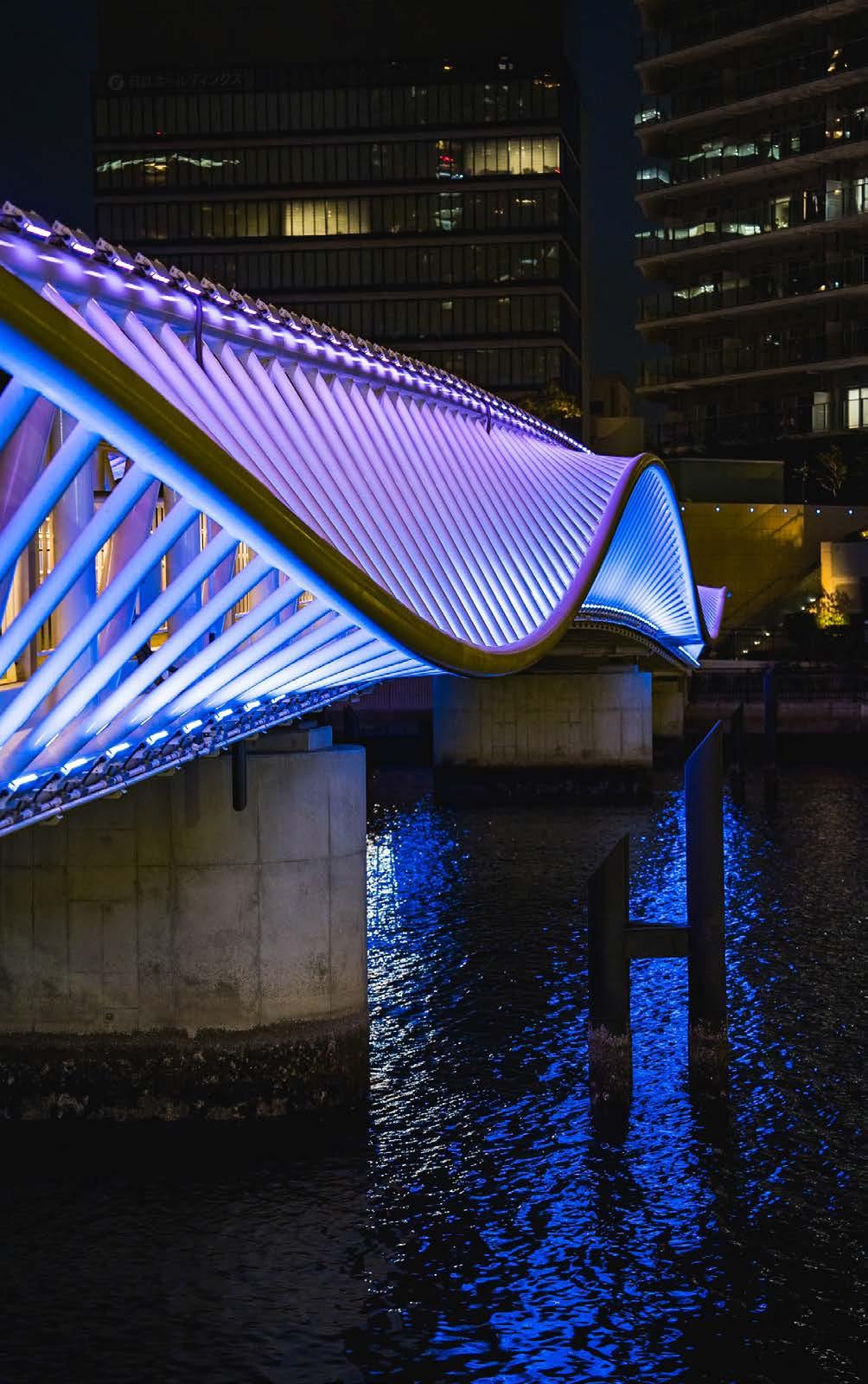
The bridge, which connects Kachidoki Station and Harumi 3-chome in Tokyo’s waterfront district, crosses the Asashio Canal to Grand Marina Tokyo, with a soft arching design reminiscent of gentle waves rolling over the water's surface.
The continuous white structure of the bridge hovering above emphasises the rhythm of the water's surface through its subtle, undulating form.
The shadow of the bridge, cast onto the water's surface, enhances the imagination even more with a congregation of waves seeming to wash over one another.
‘The lighting is an integral element of architect Hiroaki Hoshino’s vision for the project’
The shadow of the bridge, cast onto the water's surface, enhances the imagination even more with a congregation of waves seeming to wash over one another.
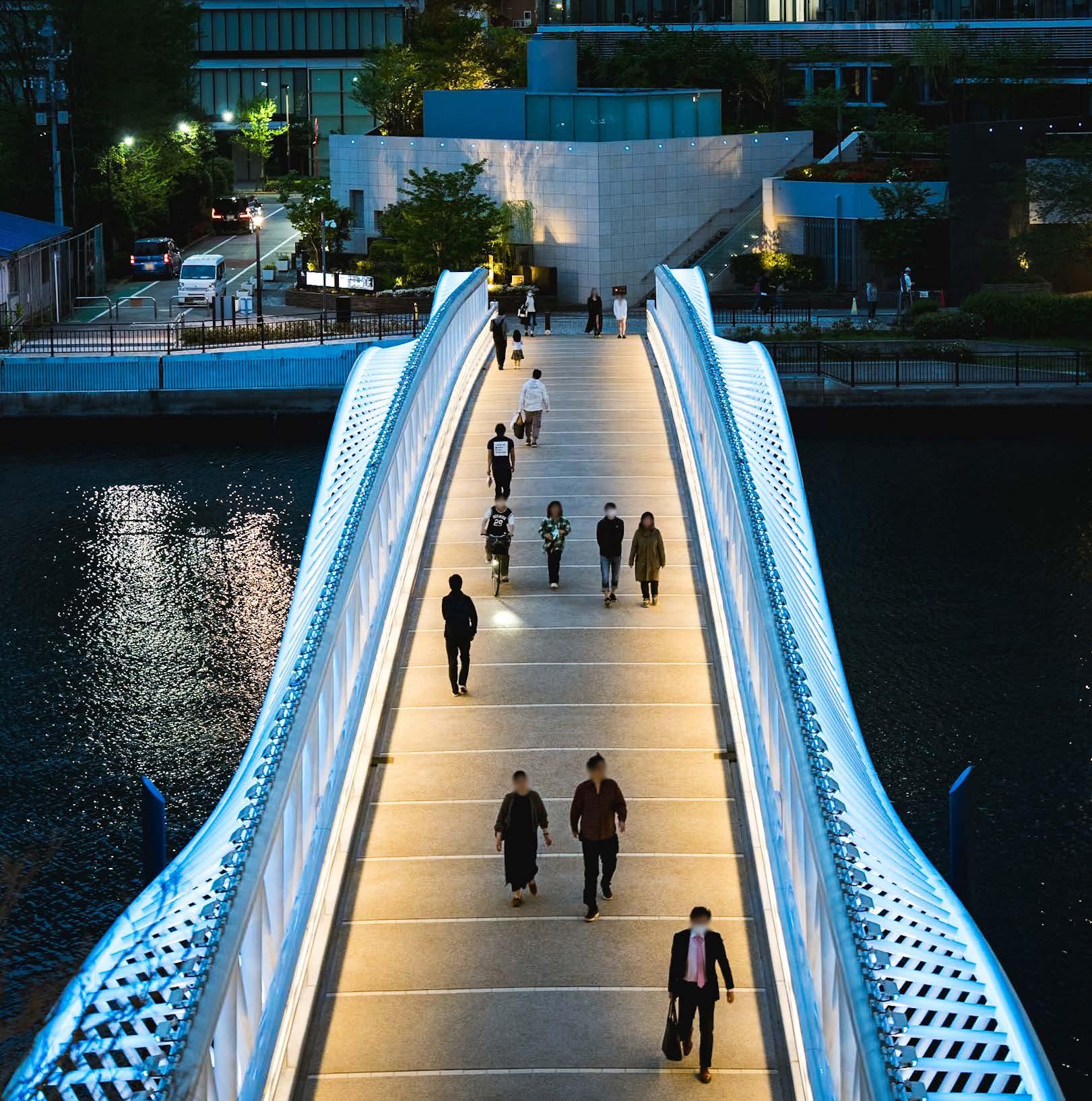
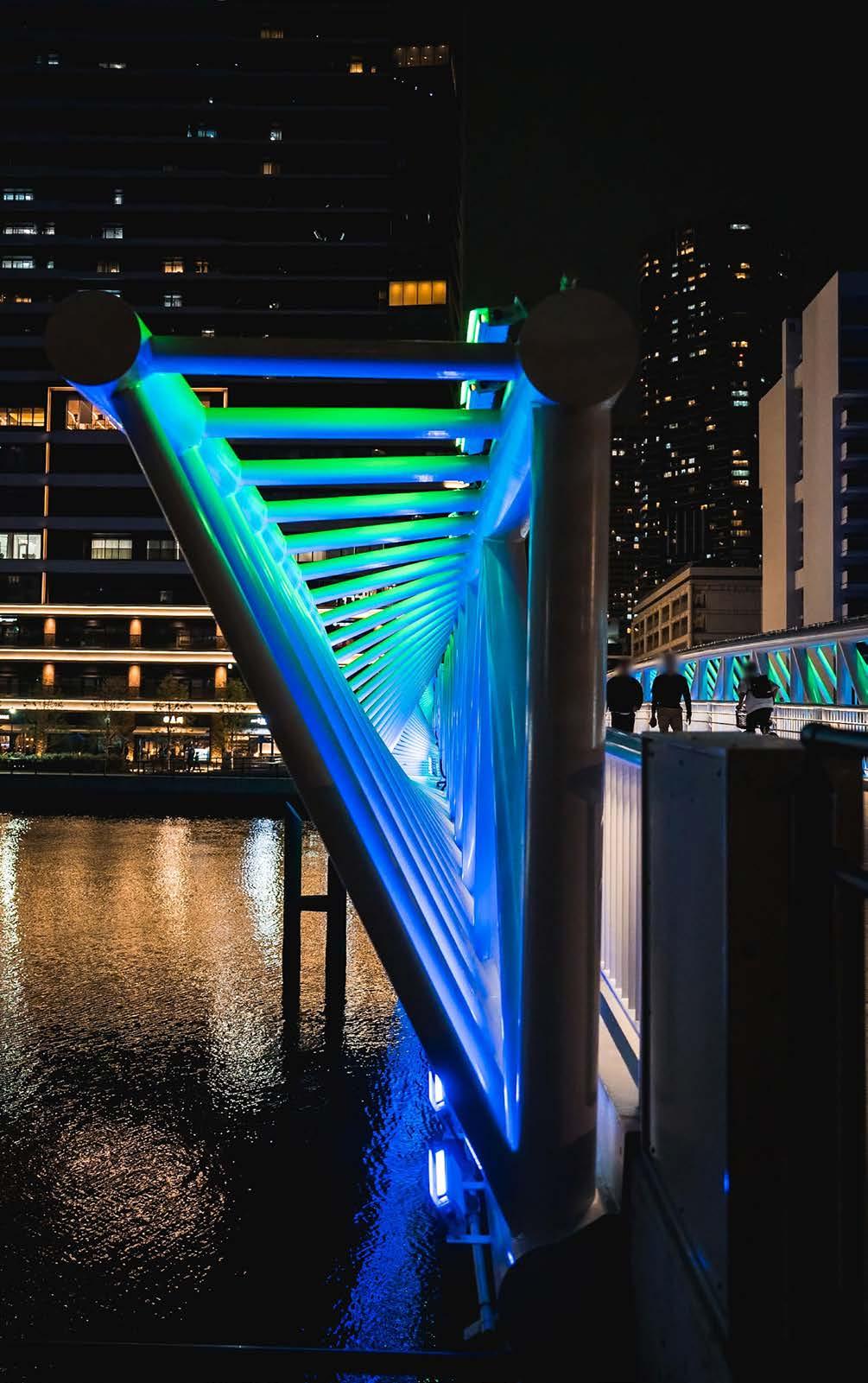
The lighting plan focused on the practicality of the lights as well as creating a landmark in this area of urban development, not only for people crossing the bridge but also for people from different points of view.
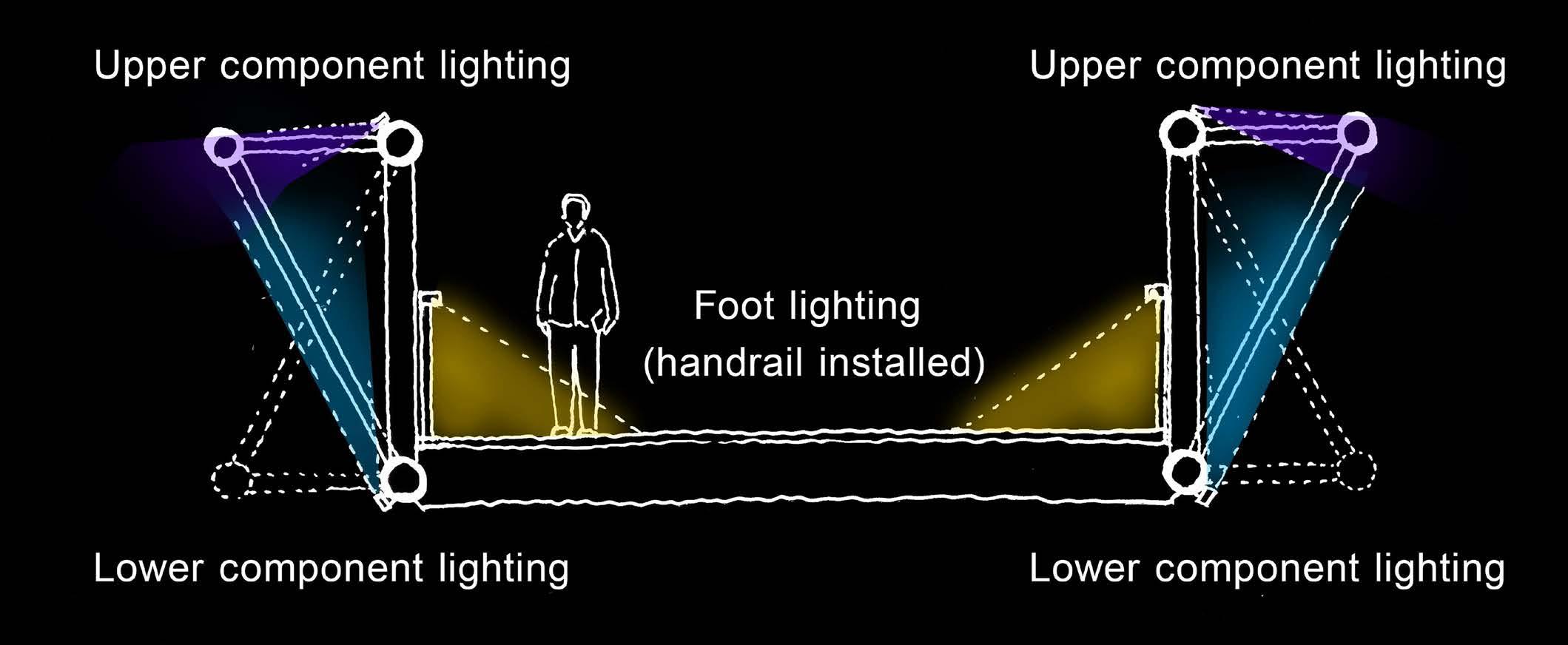
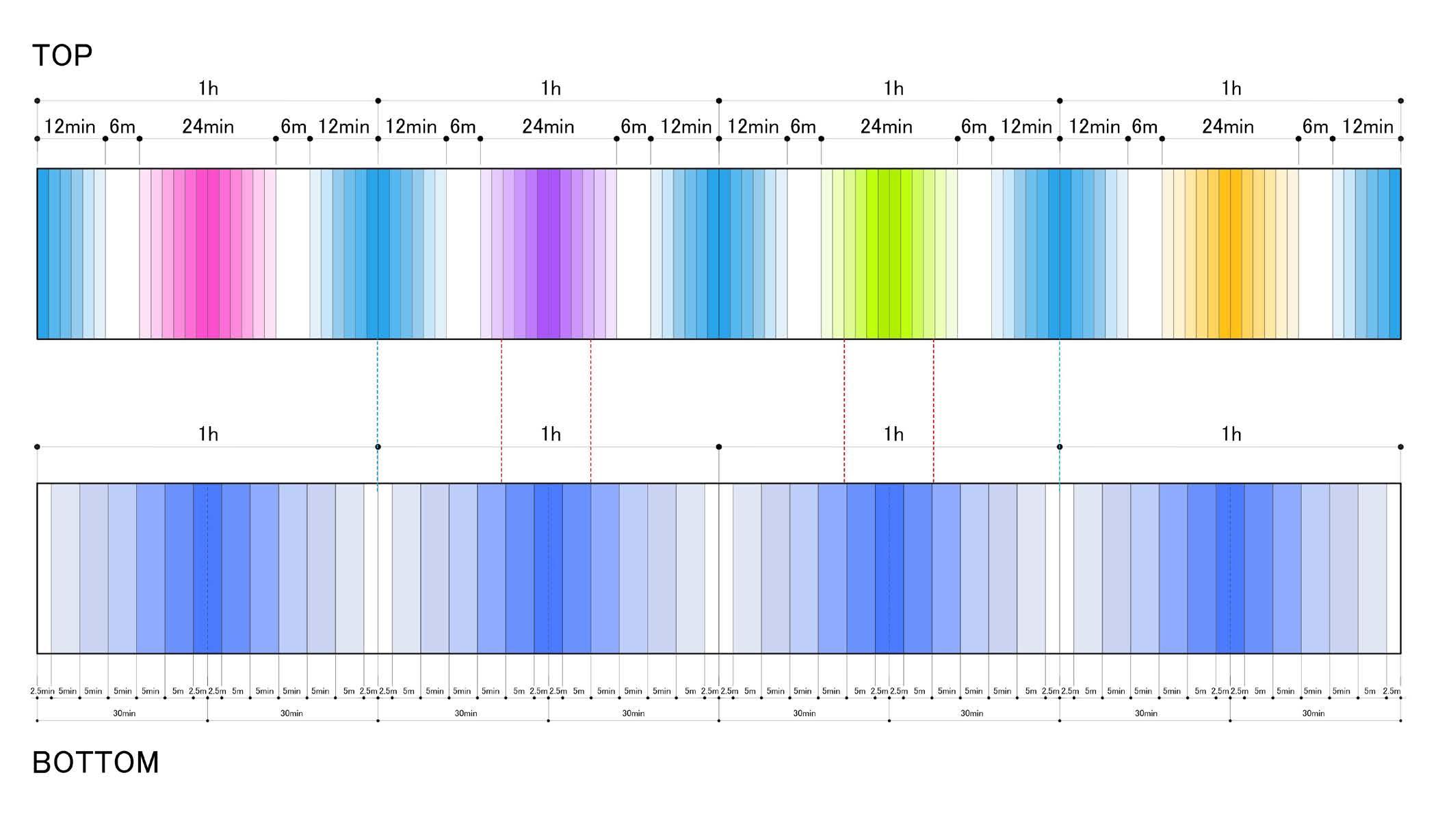
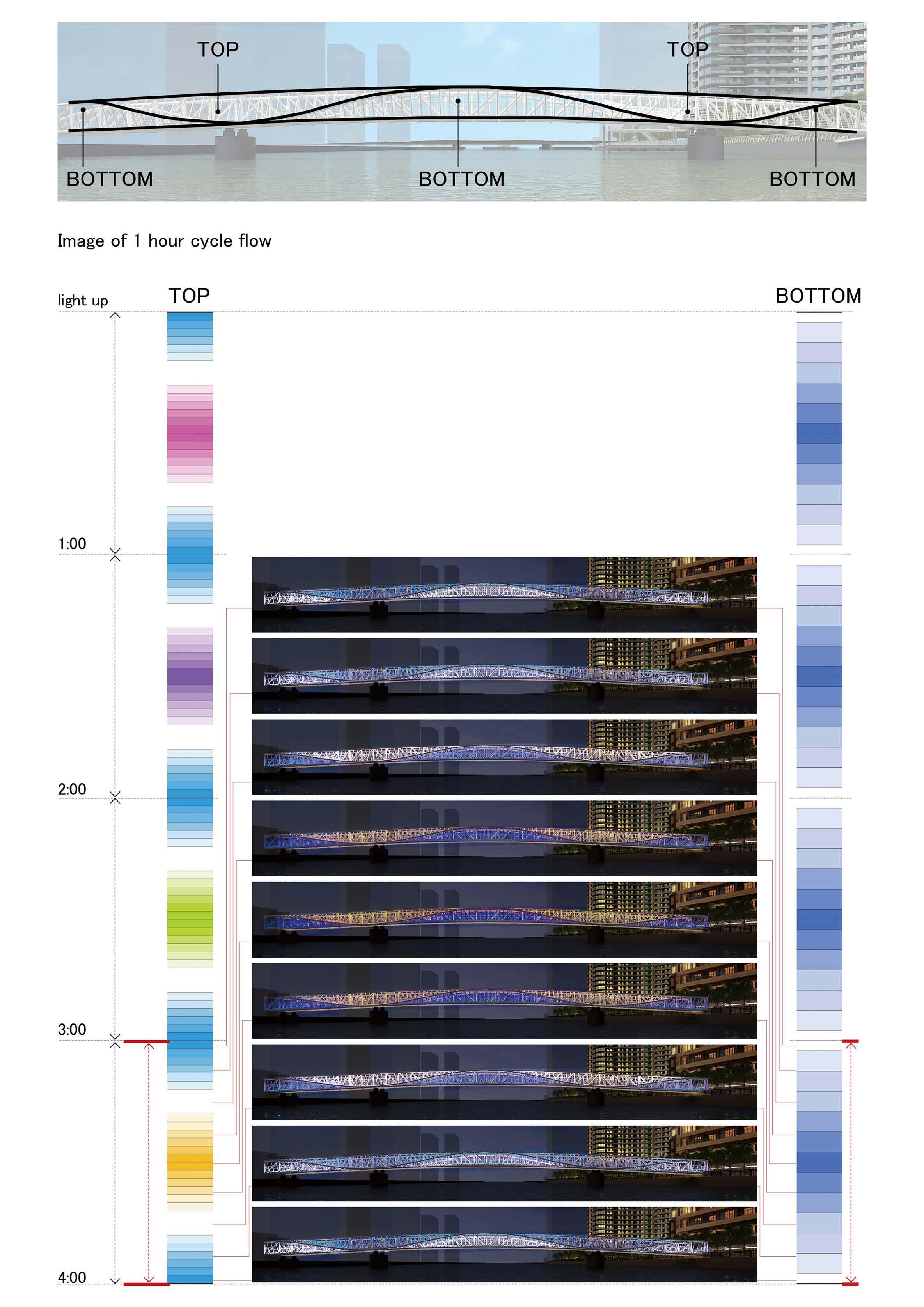
The lighting fixtures installed in each of the components on both sides of the bridge are programmed to change colours slowly and gradually according to the season and the day of the week.
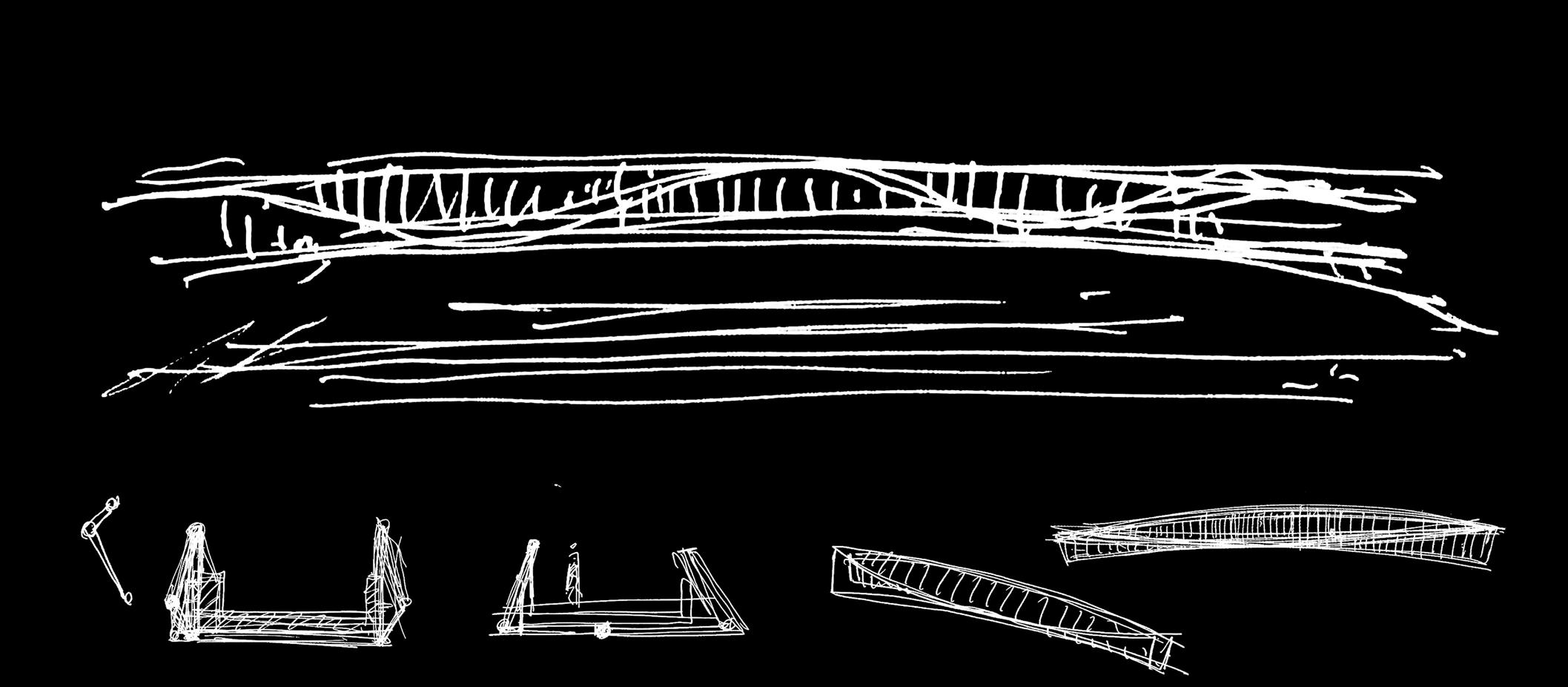
The design, presenting one fluid motion from three-dimensional geometric changes, provides pedestrians walking across with that feel of movement.
The bridge, which connects Kachidoki Station and Harumi 3-chome in Tokyo’s waterfront district, crosses the Asashio Canal to Grand Marina Tokyo.
‘Through layering and abstraction, Hoshino Architects communicates its ideas to express the urban atmosphere, amplifying the history, culture, and geographical context of each place’
By changing the rhythm of the lighting program for the top and bottom of the three-dimensional rippled shape, the different colour combinations are designed to create a variety of impressions.
In this way, the nightscape of this newly developed area, where the number of residents is increasing, can be enjoyed daily for its momentary colourful combinations and movements.
The lighting is of course an integral element of architect Hiroaki Hoshino’s vision for the project. His practice, Hoshino Architects, is an architectural and urban design practice based in Tokyo with extensive international experience.
The firm is dedicated to designing cities, spaces, and experiences that are loved by people, bringing together a diverse team of architects and designers from around the world.
The firm captures the many faces of each site and extracts the elements that shape the surface of the city — from light and colour to landscape.
Through layering and abstraction, Hoshino Architects communicates these ideas to express the urban atmosphere, amplifying the history, culture, and geographical context of each place.
This approach invites people to rediscover their surroundings, and to engage with the unique character of every environment.
Hoshino has practiced architectural design in London, Dubai and Tokyo, and is qualified as an architect in both the UK and Japan.
He joined Hopkins Architects’ London office in 2000 and was appointed 'Representative in Japan’ in 2012. He currently oversees the British firm’s projects in Japan as project director.
Since setting up his own design office, Hoshino Architects, in Tokyo in 2012, he has been working on residential, hotel, resort, retail and office projects across Japan, Taiwan and Singapore, as well as in other Asian countries. ■
The lighting fixtures installed in each of the components on both sides of the bridge are programmed to change colours slowly and gradually according to the season and the day of the week.
The lighting plan focused on the practicality of the lights as well as creating a landmark in this area of urban development.
Project Credits
MASTER DESIGN ARCHITECT
Hoshino Architects
CONTRACTOR
Shimizu Corporation
LIGHTING DESIGNER
Izumi Okayasu, Lighting Design Office
CLIENT
Kachidoki East District
Urban Redevelopment Association
PHOTOGRAPHS
ebi_times
AWARDS
Architecture MasterPrize for Tokyo Pedestrian Bridge
The bridge features a soft arching design reminiscent of gentle waves rolling over the water's surface.
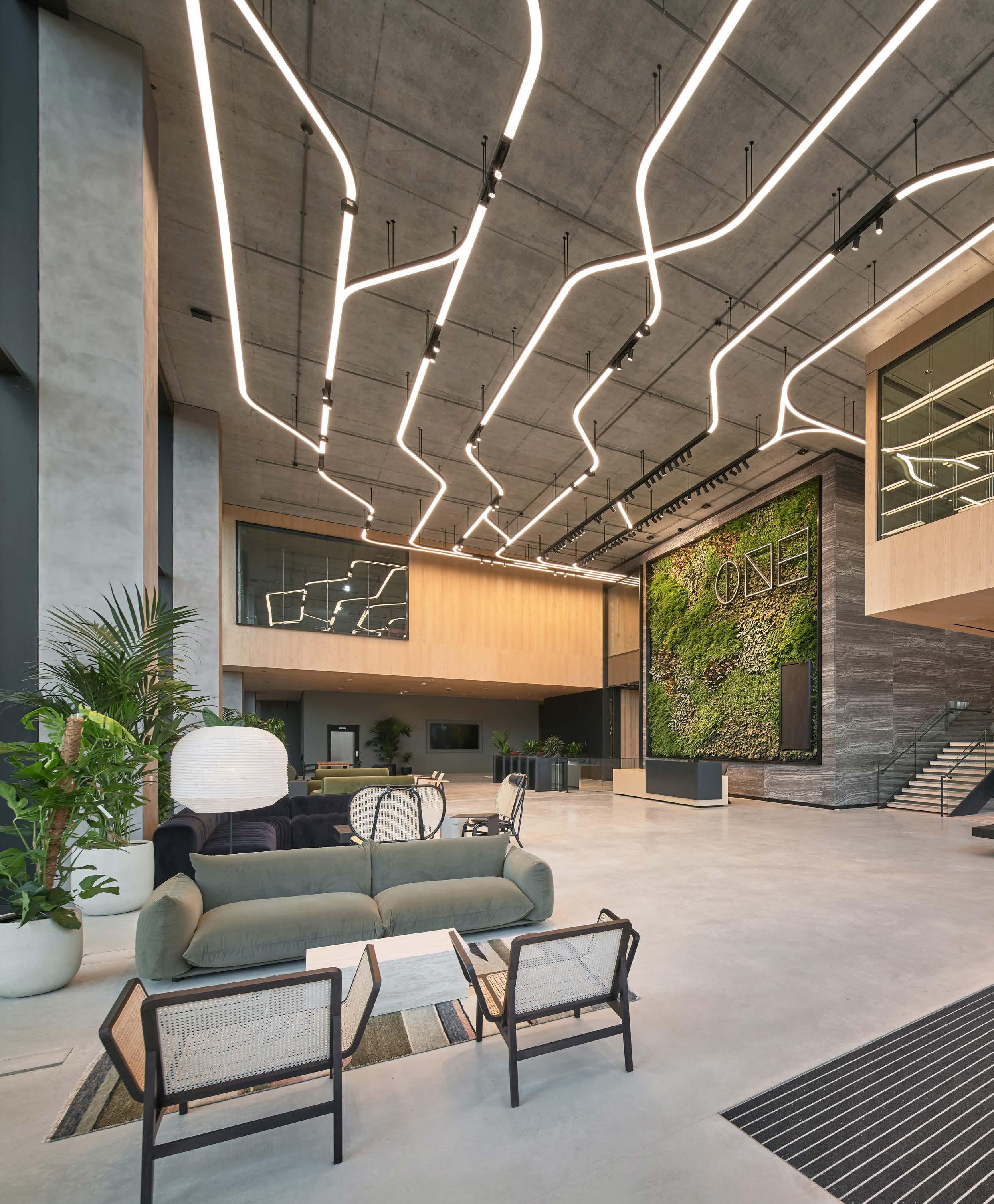
The distinctive track draws direct inspiration from Reading’s rich railway heritage.
A thoughtful, layered lighting scheme by dpa lighting consultants celebrates the railway heritage of a commercial development in Reading, UK
Located between Reading railway station and town centre, the Station Hill development transformed an old car-park, shopping centre and unused land into a new destination, consisting of residential properties, retail, food & beverage outlets, and at its centre, One Station Hill, a new commercial tower and landmark making a gateway for persons arriving by rail and the recently opened Elizabeth Line.
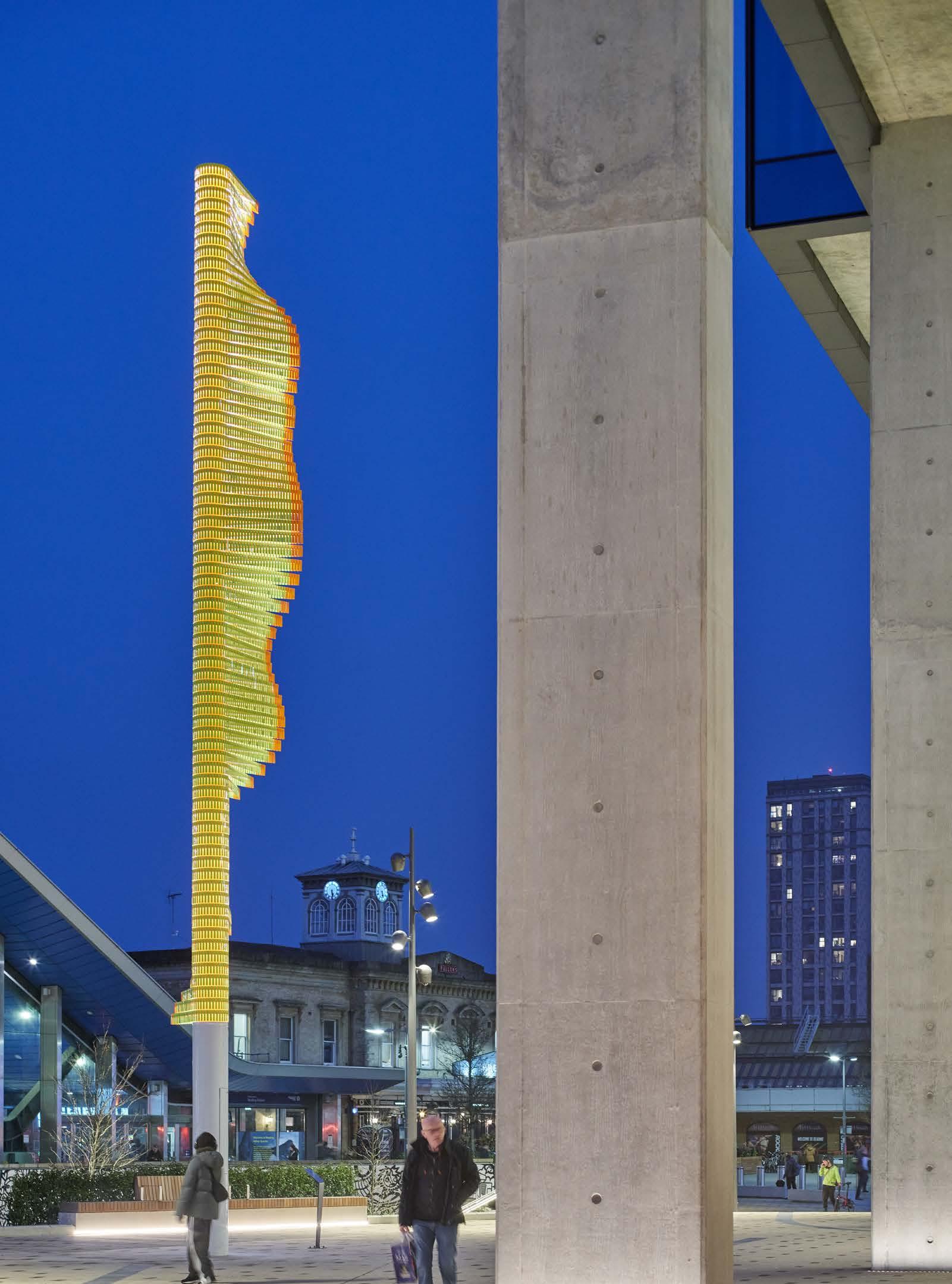
The lighting of the public realm, not only helps to create a comfortable and visually interesting space at night, it also supports the varied programme of events, festivals and artworks celebrated within the public realm for the enjoyment of residents, workers and visitors alike, encouraging them all to come together in one place, creating a new community in the heart of Reading.
The lighting design for both the soft and hard landscaping of the public realm was developed in close collaboration with the landscape architects. Through subtle, layered illumination, dpa aimed to create a welcoming, enjoyable, and secure environment. High-level projectors—
BONUS TRACKS
discreetly positioned on building façades or integrated into elegant, multi-headed feature columns—provide ambient lighting. These are complemented by localised lighting integrated into benches, architectural details, artworks, and planters. Also integrated within the landscape are a number of artworks and a water feature with integral illumination.
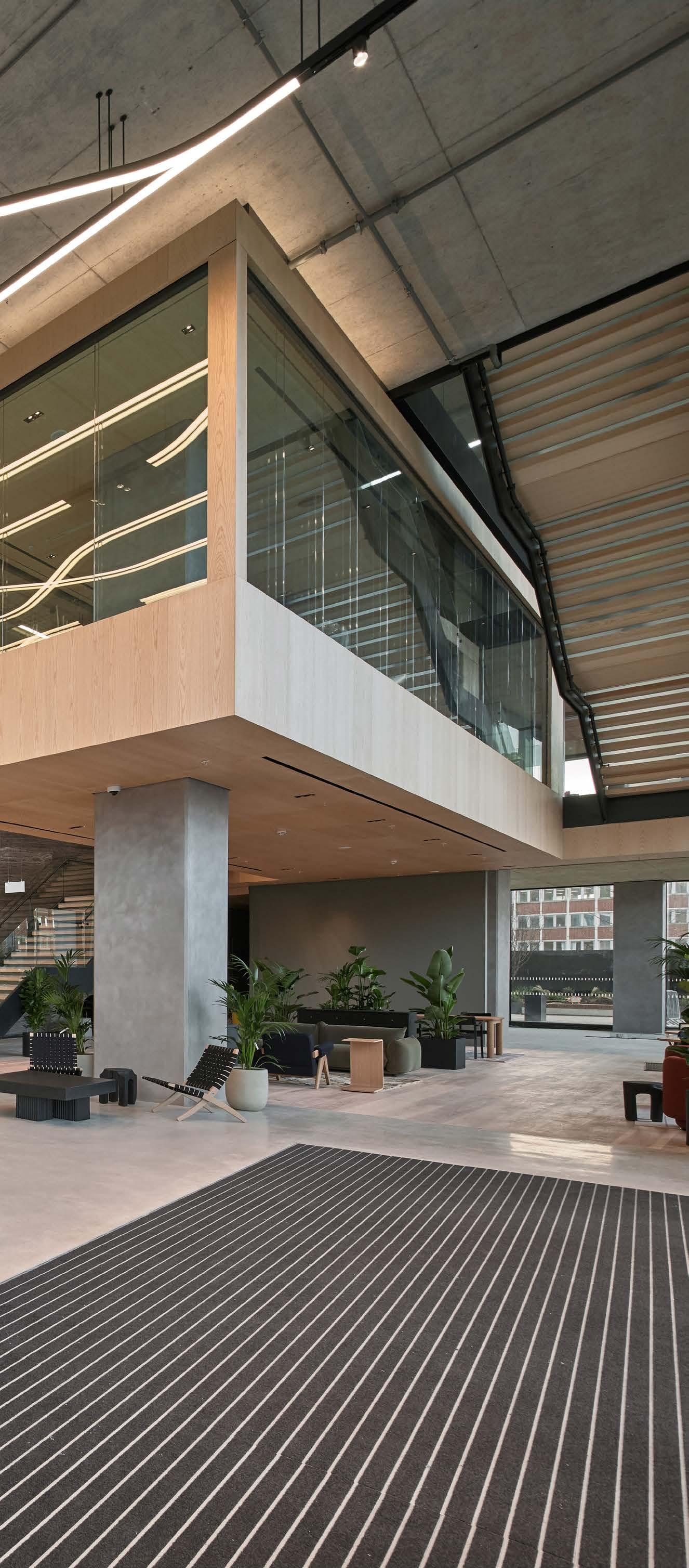
The intent for the One Station Hill lobby was to create a welcoming space, that had good visibility from the exterior, as such dpa considered the journey of both workers and visitors.
The double-height main lobby and entrance to the building faces towards Reading Railway Station, and therefore had to be visible as you cross the station’s pedestrian bridge, even before you exit the station. Other key arrival routes are from the pedestrian tunnel under the railway lines and the station taxi-rank.
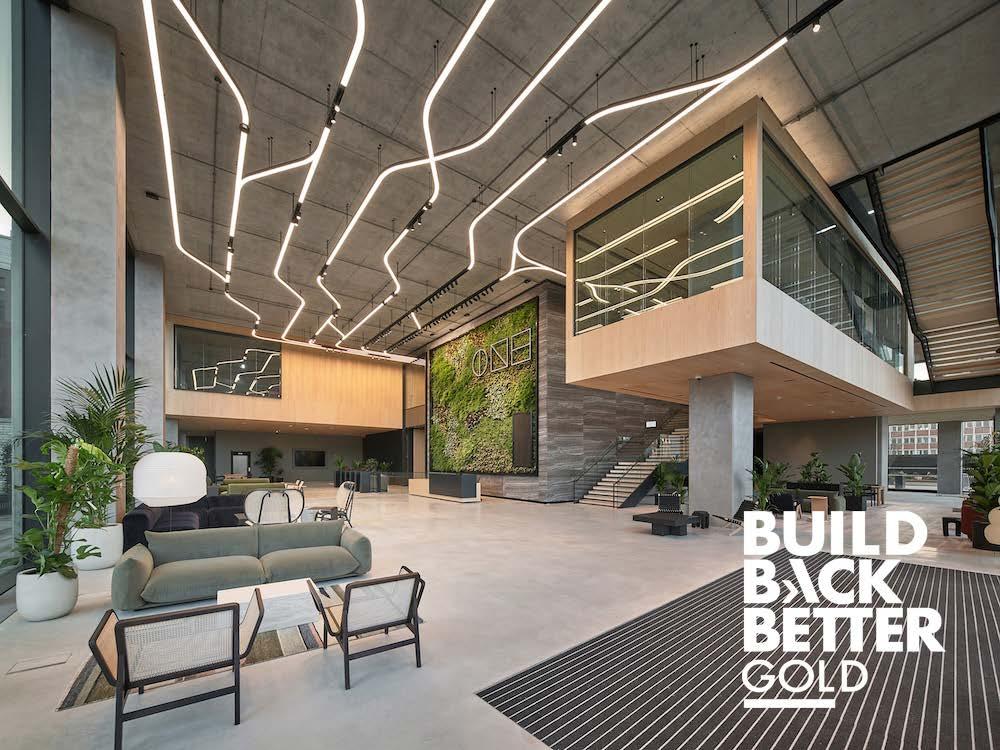
Given the building is very transparent, the lighting of the interior surfaces helps to form the external expression of the building. In order to ensure the space was visible to all from the exterior, dpa lighting consultants carefully illuminated the large interior vertical surface of the feature green wall, and worked with the architect to develop a bespoke feature ceiling lighting system, both of which are visible as you approach the entrance to One Station Hill.
At night, the entrance is further enhanced by subtle, but impactful lighting centred around the building’s triple height monumental entrance colonnade.
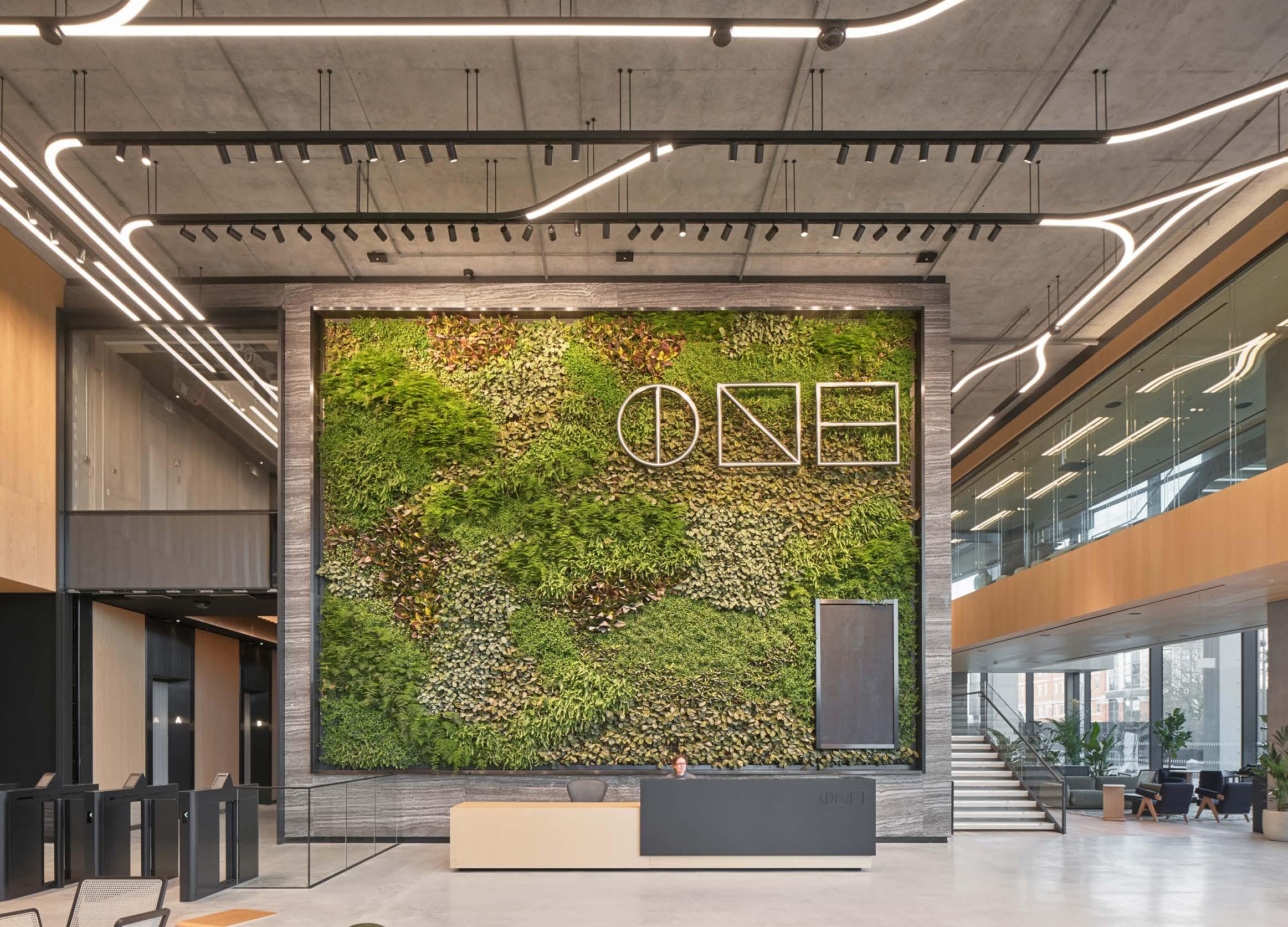
Before even entering the double-height entrance lobby of One Station Hill, the eye is immediately drawn to the lush, full-height green wall positioned behind the reception desk.
Challenges
Illuminating a living wall presents unique challenges and can often feel counterintuitive, yet when executed well, it brings the space vividly to life. Close coordination with the green wall specialist ensured that the lighting not only enhanced its visual presence within the wider lobby but also delivered appropriate light levels and spectral power distribution to support plant health.
The green wall is lit by a series of adjustable spotlights, each set to varying beam angles to achieve the desired effect. These luminaires are precisely aimed, locked into position, and seamlessly integrated into the customdesigned feature lighting track to provide the most even illumination across the wall’s surface. Because the intensity and duration of light are as vital to a plant’s light–dark cycle as they are to human comfort, the lighting controls were programmed to vary illumination throughout the day
The
wall
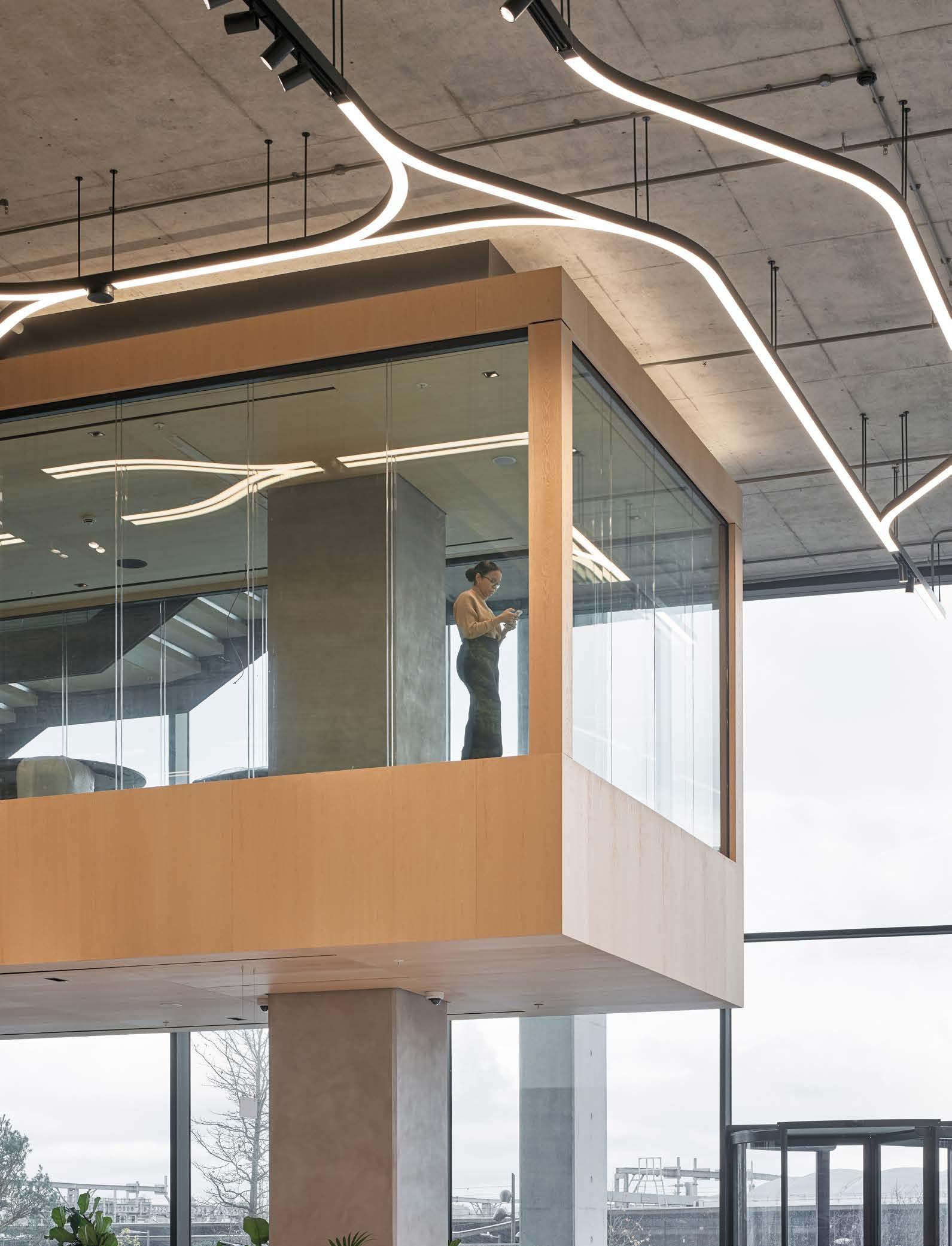
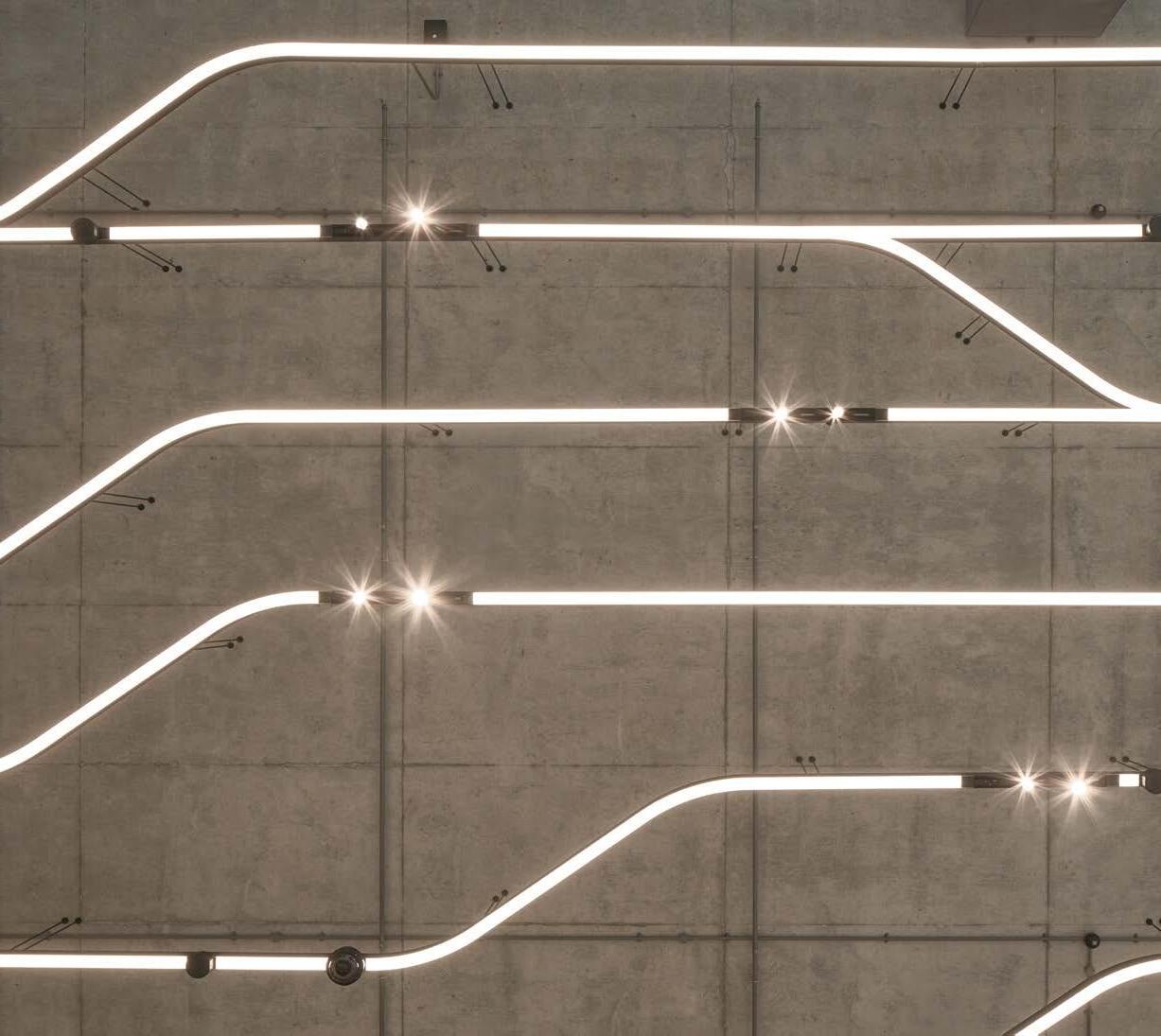
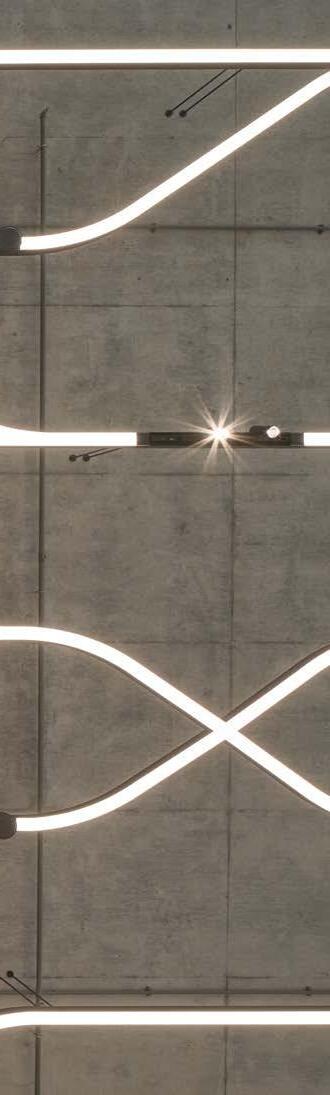
The form echoes the interconnecting, branching paths of train tracks, points and sidings, continuing around the corner and disappearing into the lift lobby.
The design of the feature track was a collaborative process taking the architect’s conceptual ideas and developing into a fully customised working solution.
and provide essential dark periods overnight, when the lighting directed at the wall is fully switched off.
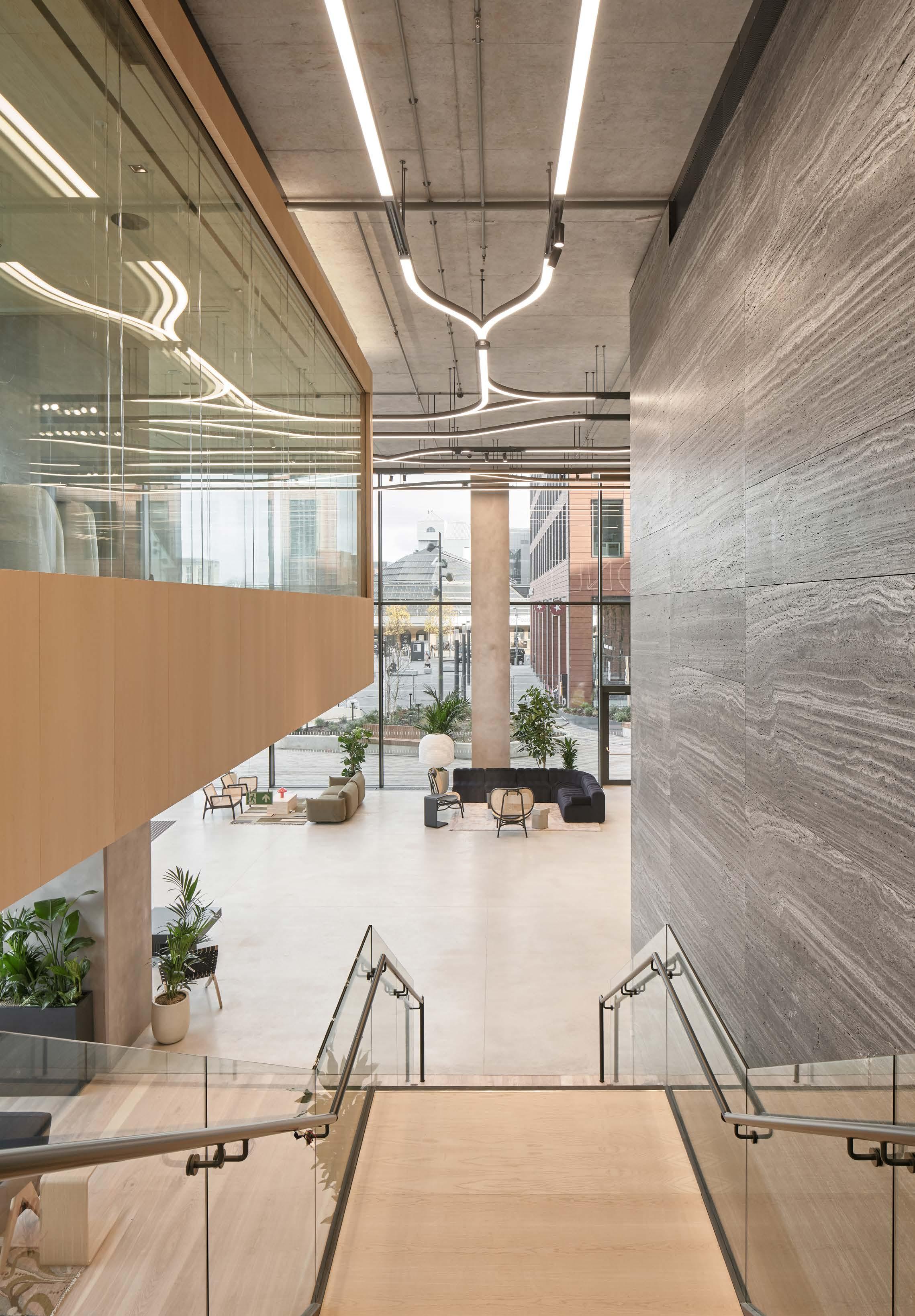
The feature lighting track system itself was developed to preserve the exposed concrete ceiling soffit. As a result, recessed fixtures were ruled out early in the design process, leading to a fully integrated and visually cohesive solution. The track draws direct inspiration from Reading’s rich railway heritage. Its form echoes the interconnecting, branching paths of train tracks, points and sidings, continuing around the corner and disappearing into the lift lobby or directing people up the stairs to the first floor, bringing the spirit of the town’s rail legacy into the very fabric of the building.
The design of the feature track was a collaborative process taking the architect’s conceptual ideas and developing into a fully customised working solution. The track features two main integrated lighting elements, firstly a diffuse linear luminaire, creating a visual feature of illuminated “rails” and providing general base level ambient illumination, and secondly a number of adjustable spotlights utilised to provide visual interest through focused accent lighting to seating, displays,
thresholds and transitions, performance area, and the aforementioned green wall. In addition to the lighting elements, the track also integrated emergency lighting, speaker systems and CCTV cameras, all helping to minimise elements on the ceiling and allowing the exposed ceiling soffit to remain clean.
All lighting, both interior and exterior, is controlled via a fully automated lighting control system, automatically selecting appropriate lighting scenes for the time of day and current function of the space, automatically adjusting for the daily change in sunrise and sunset times.
The aim of the lighting design throughout the project considered the needs of the human in the space, ensuring a comfortably visual environment, revealing architectural features, elements, materials and finishes, while providing appropriate illumination for the prevalent task, all of which entices people to explore and enjoy the Station Hill development. ■
Project Credits
CLIENT: Lincoln MGT
PROJECT MANAGER: Cast
ARCHITECT: Arcadis UK & Gensler
LANDSCAPE ARCHITECT: LDA Design
LIGHTING DESIGN: dpa lighting consultants
BUILDING SERVICES ENGINEER: Hoare Lea
STRUCTURAL ENGINEER: Rambol
MAIN CONTRACTOR: Sir Robert McAlpine
ELECTRICAL CONTRACTOR: Dornan
ARTWORKS: NEON; Kev Munday & Stuart Melrose; Rachael Champion & Jonathan TraytE
PHOTOGRAPHY: Andy Stagg
Integrated within the landscape were a number of artworks and a water feature with integral illumination.
The track features two main elements, a diffuse linear luminaire and a number of adjustable spotlights to provide visual interest through focused accent lighting.
OASIS OF
Global lighting design consultancy Nulty has sensitively illuminated a landmark hospitality destination in an ancient oasis town in Saudi Arabia.
OF LIGHT
Global lighting design consultancy Nulty collaborated with architect Dar Al Handasah, design lead Giò Forma, Voltaire and Black Engineering to illuminate The Chedi Hegra – a landmark hospitality destination from The Royal Commission of AlUla, situated at the heart of the ancient oasis town. As the only hotel in Saudi Arabia’s first Unesco World Heritage site, The Chedi Hegra offers a rare opportunity to visit an area of outstanding natural beauty.
The hotel has been sensitively embedded into the landscape by Dar Al Handasah and Giò Forma, allowing guests to be fully immersed in the awe-inspiring red rock formations and endless starry skies to deepen their connection to nature.
Guided by Giò Forma and Voltaire’s original design concept for the lighting, Nulty delivered the technical lighting design and brought it to life on site.
The final scheme is an elegantly layered composition of light, which is respectful its surroundings and subtly enhances the experience by injecting warmth and character into each space.
Across the exterior areas, the lighting has been thoughtfully curated. The team balanced the natural glow of the moon and stars with strategically placed light fixtures, using a warm colour temperature of 2700K to create a gentle, golden hue that complements the mud-toned structures and surrounding terrain.
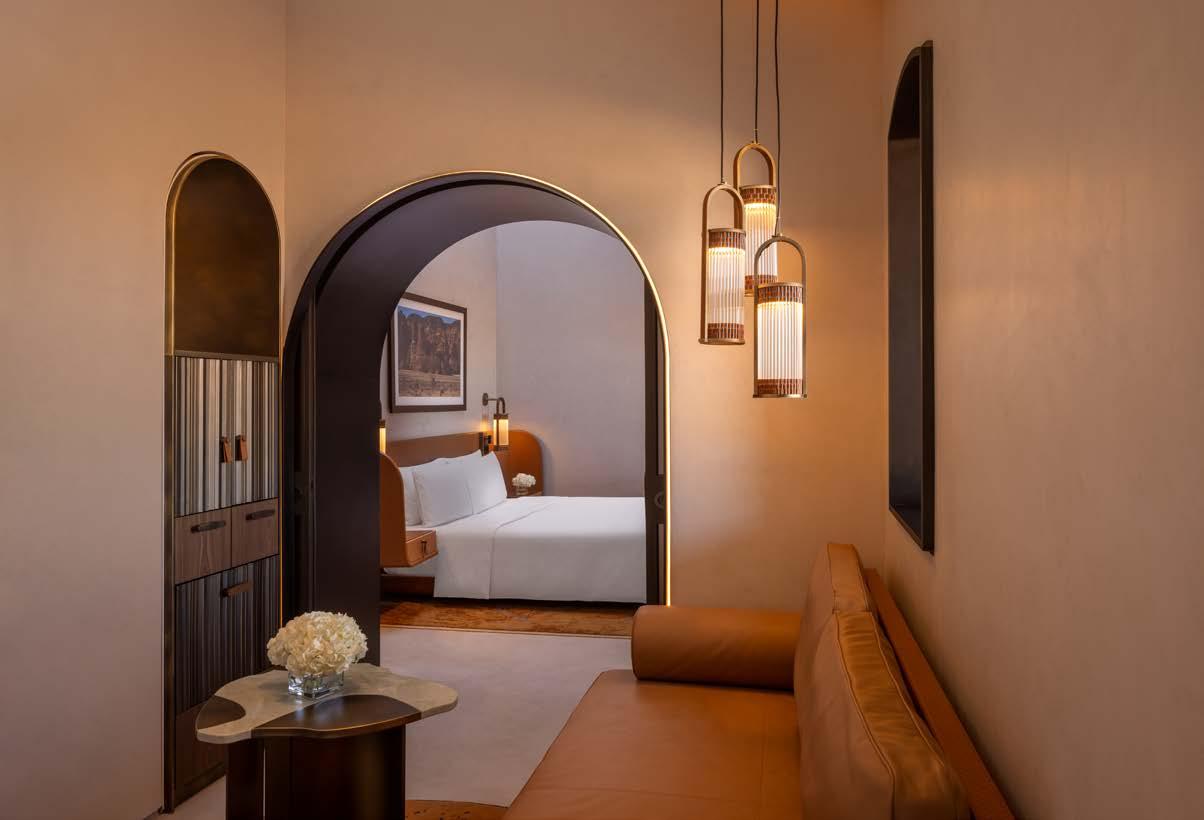
In the guest rooms, soothing lines of light emanate from the ceiling coves, archways, and joinery pieces, adding warmth and intimacy to the
Every lighting intervention was meticulously considered, with a strict adherence to low-glare fittings that are carefully shielded and directed downward to minimise light spill and protect the clarity of the night sky.
As the hotel is poised to become a globally renowned destination for astrotourism, achieving DarkSky certification
is a fundamental goal. This aspiration shaped the lighting design approach across the roads, pathways and designated stargazing areas, where light levels are darker than industry standards to ensure optimal night sky visibility.
A DALI control system allows light levels to be dimmed to their absolute minimum during the evening hours,
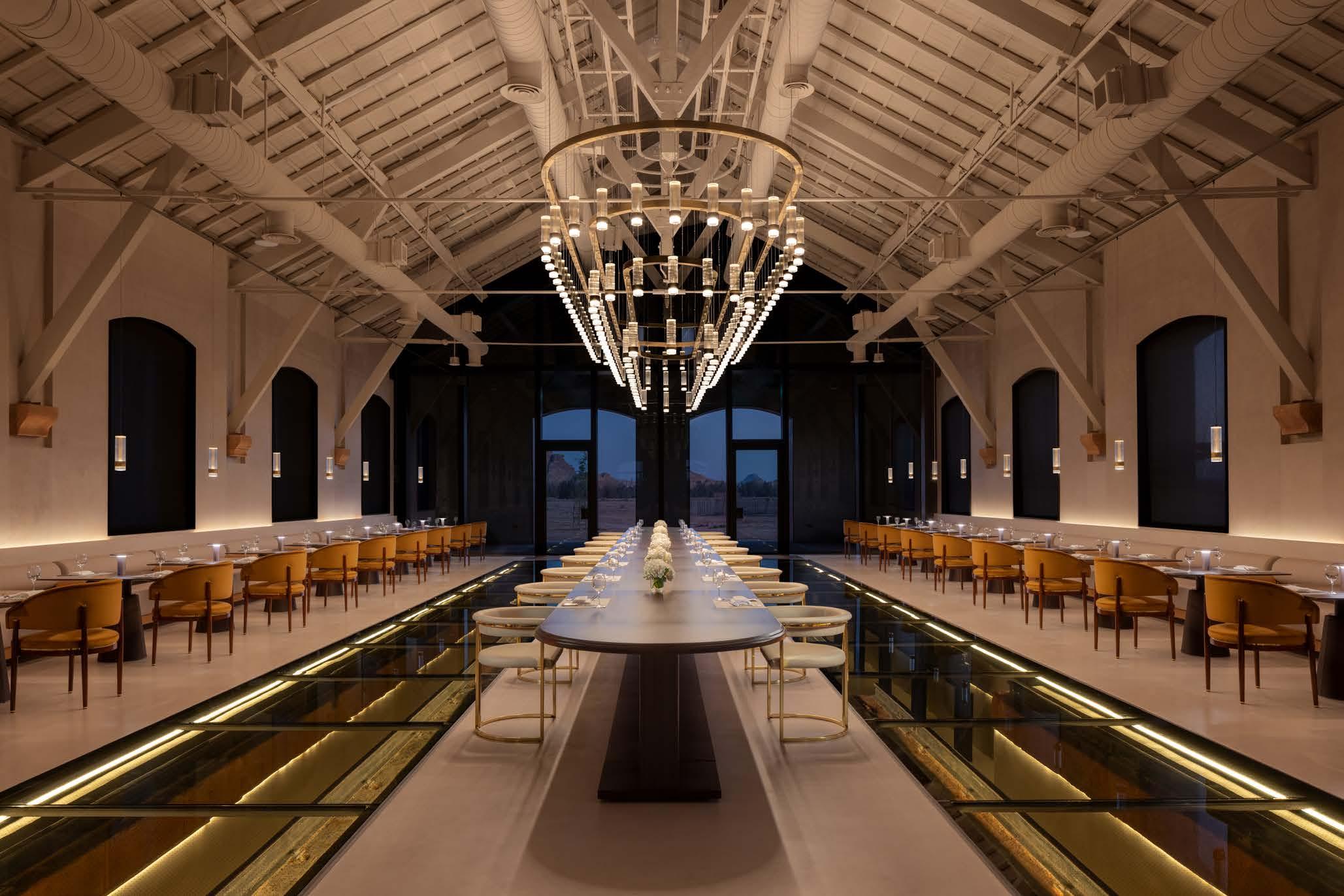
In the Prima Classe Restaurant, diffuse lines of light theatrically villuminate the floor, framing a series of glass viewing panels and drawing the gaze to the original train tracks.
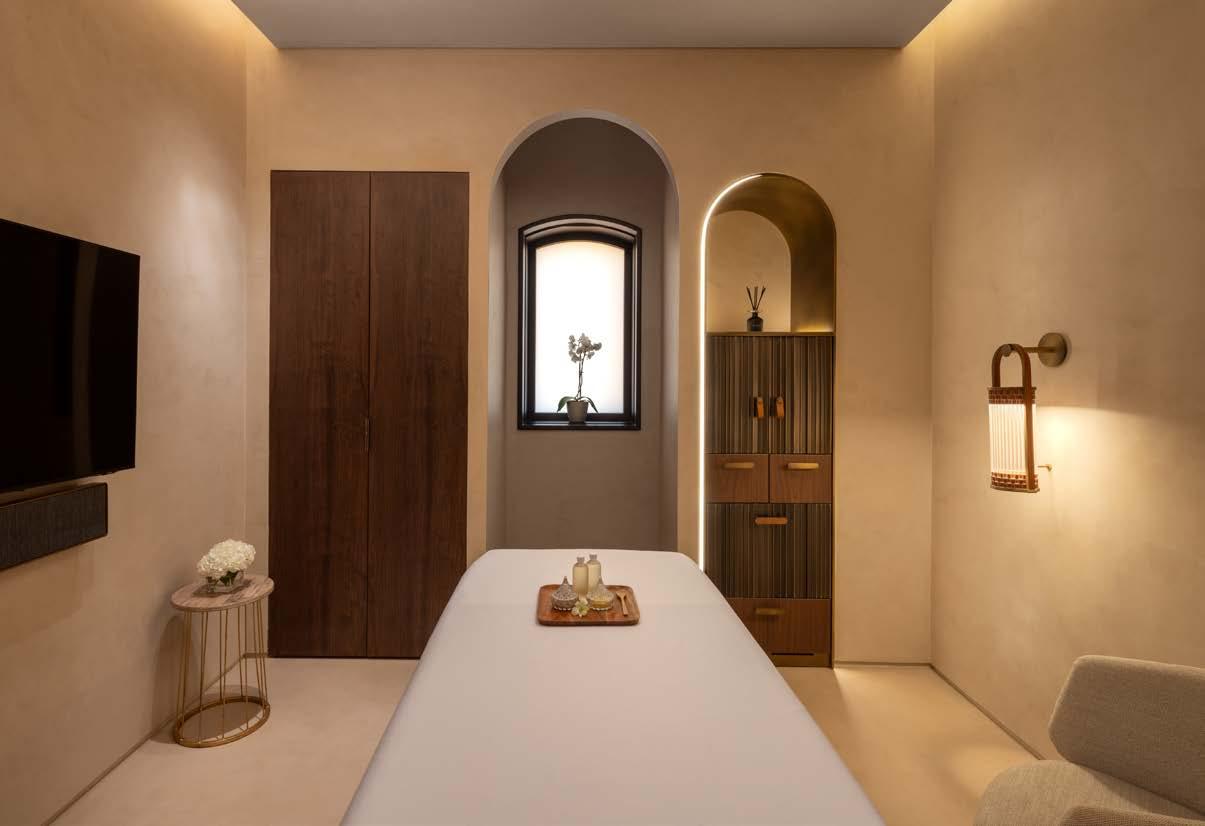
In the spa, there is an elegantly layered composition of light, which is respectful its surroundings and which subtly enhances the experience by injecting warmth and character into each space.
simplicity of the architecture.
As the hotel is poised to become a globally renowned destination for astrotourism, achieving DarkSky certification is a fundamental goal.
preserving the site's natural darkness.
Within the hotel itself, skilful use of layering and integration defines the tone and ambience of each space. Inside the sculptural glass centrepiece that forms the central spine of the hotel, diffuse lines of light graze the vertical surfaces in the reception and Al Mahatta café to highlight the rustic tones and finishes of the locally sourced materials. This focus on indirect illumination forms a cocooning glow, which is contained within the building after dark when the café’s stargazing terrace is in use.
Tucked away in the original Mud House, the spa is a multisensory sanctuary that honours Arabian healing traditions. Here, light was washed onto the perforated mashrabiya walls to produce a delicate interplay of light and dark. Skylights in the ceiling enhance the ambience further, creating the illusion of daylight rays penetrating the space.
The lighting is equally mood-enhancing in the guest rooms, inviting guests to slow down and enjoy their surroundings. Soothing lines of light emanate from the ceiling coves, archways, and joinery pieces, adding warmth and intimacy to the beautiful simplicity of the architecture.
In the Prima Classe Restaurant, the architectural lighting plays a supportive role to a heritage-driven design narrative. Diffuse lines of light theatrically illuminate the floor, framing a series of glass viewing panels and drawing the gaze to the original train tracks that were once the lifeblood of the site.
Paul Nulty, founder, Nulty told dlg magazine: ‘Nulty is proud to have been a part of this extraordinary development. The success of Chedi Hegra is testament to the collaborative spirt of everyone involved with the project and a shared desire to honour the spirit and legacy of AlUla.’ ■
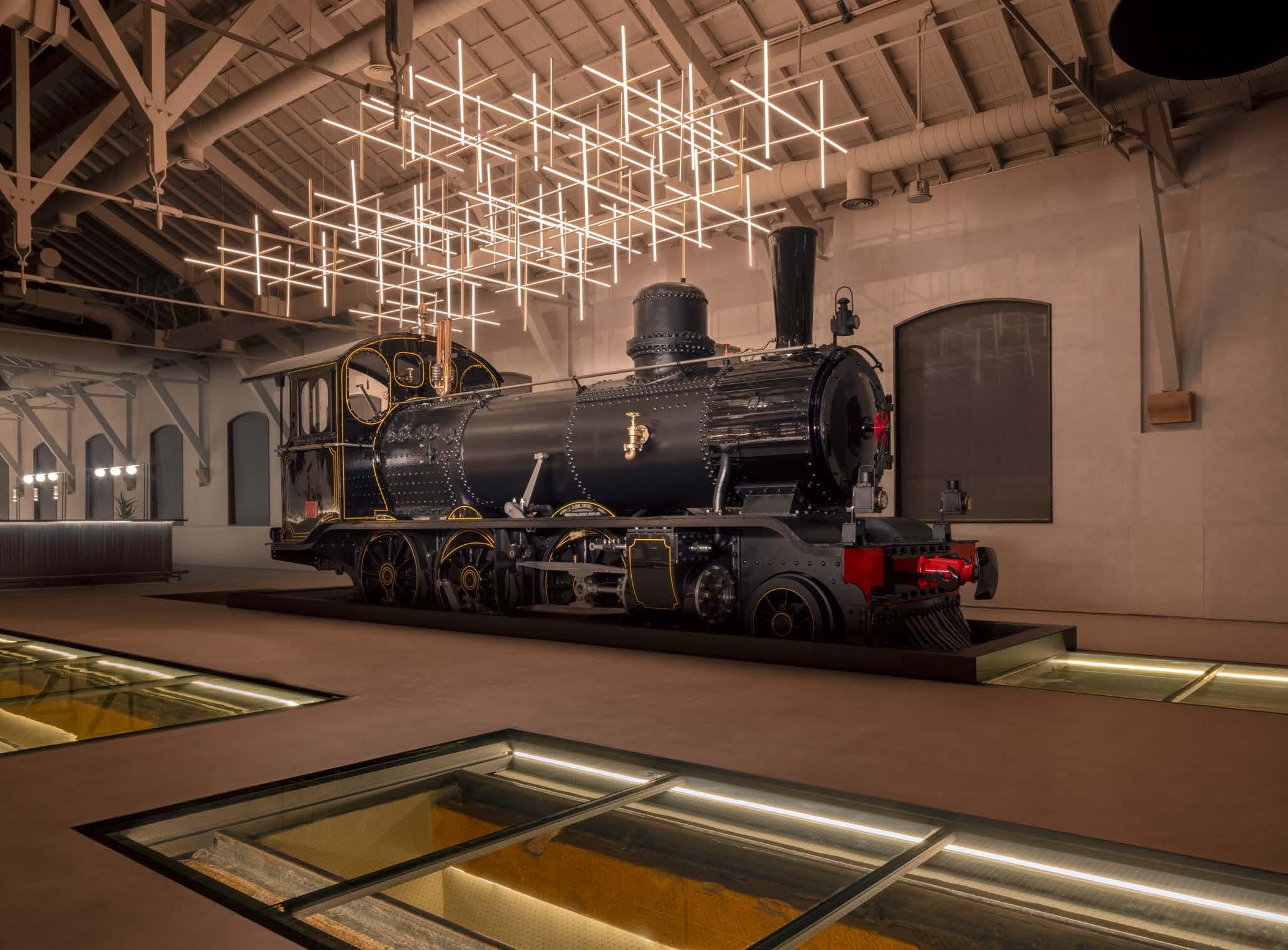
A lattice of light sits atop an original steam train, adding to the drama of the scene.
BEAMS OF LIGHT
At an expansion project for the College of Architecture at the University of Nebraska, the warmth of wood is enhanced with a thoughtful lighting scheme by HDR emphasising visual comfort.
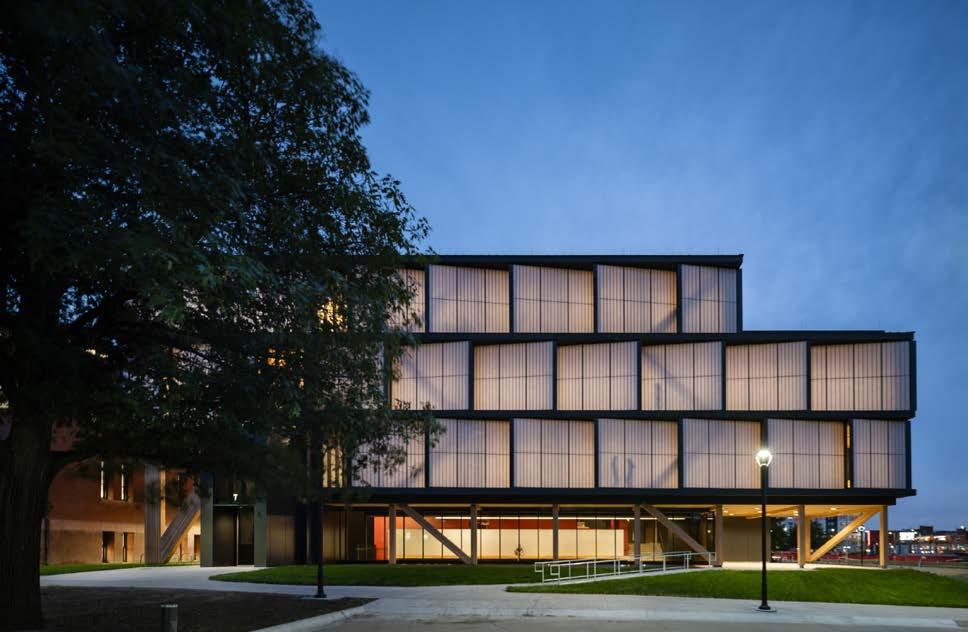
As the only 19th-century building on the University of Nebraska-Lincoln’s city campus, Architecture Hall is an emblem of the university’s Victorian history. To maintain the original architecture while expanding to accommodate an increasing student body, HDR partnered with NADAAA to provide UNL’s College of Architecture with the second phase of renovations and a four-story addition, the HDR Pavilion, the campus’ newest space in nearly 40 years.
The HDR Pavilion, a mass timber structure, features 14 new studios, a student lounge and an additional crit space on the second, third and fourth floors.
Design elements such as exposed wood and long-span timber beams create a flexible
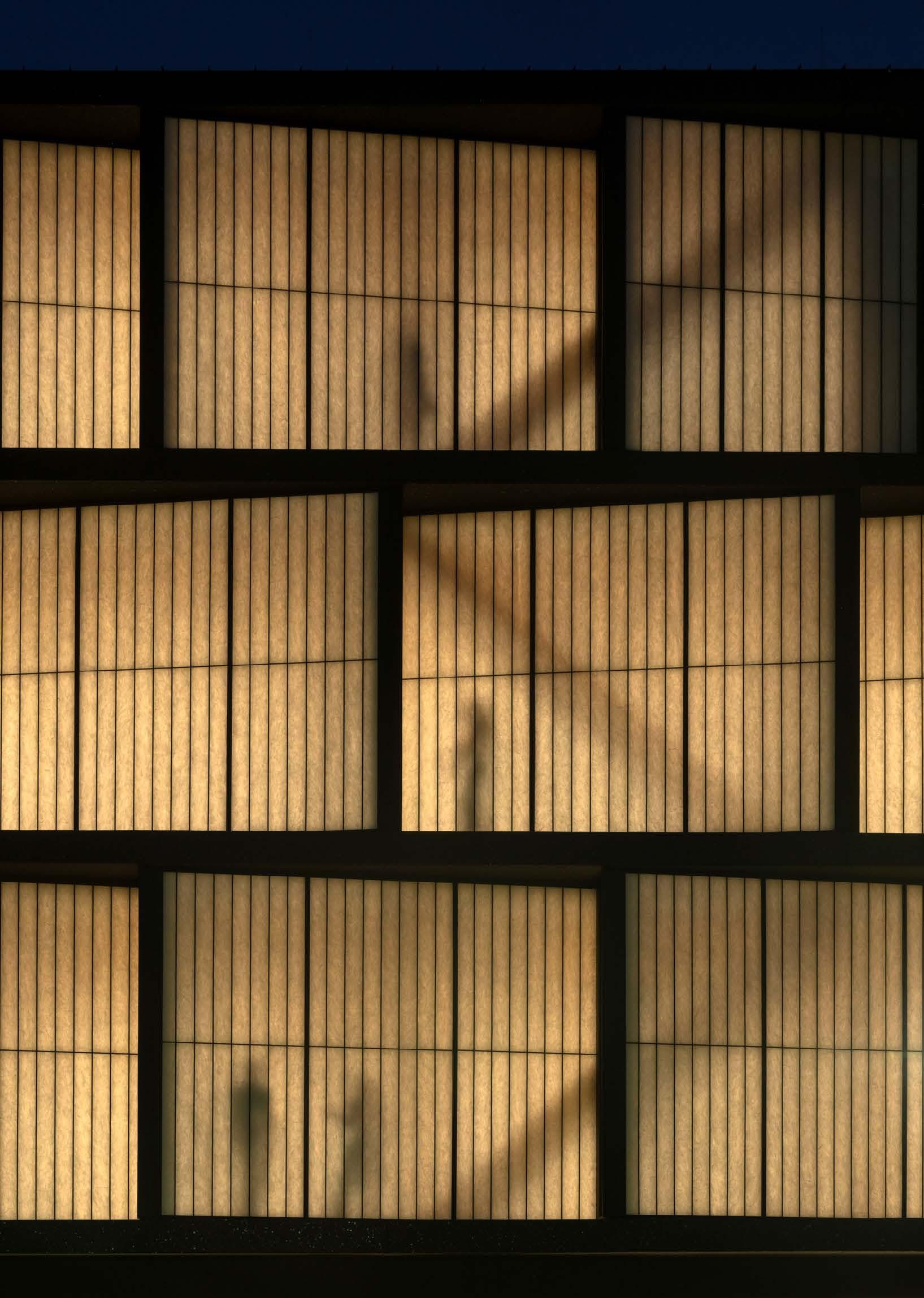
and environmentally conscious learning environment, while drafting tables and studio bleachers for crit spaces create a dynamic space. The Kalwall panels comprising the Pavilion’s north façade are arranged staggered, allowing natural daylight to illuminate the space.
To establish renovation and addition plans that would benefit all college members, HDR and NADAAA hosted a series of faculty and student workshops, giving University members the opportunity to participate in the design process.
This community-based and transparent approach yielded a process that prioritised student and faculty engagement and produced a scheme that put their wants and needs at the forefront of the design.
Visually comfortable
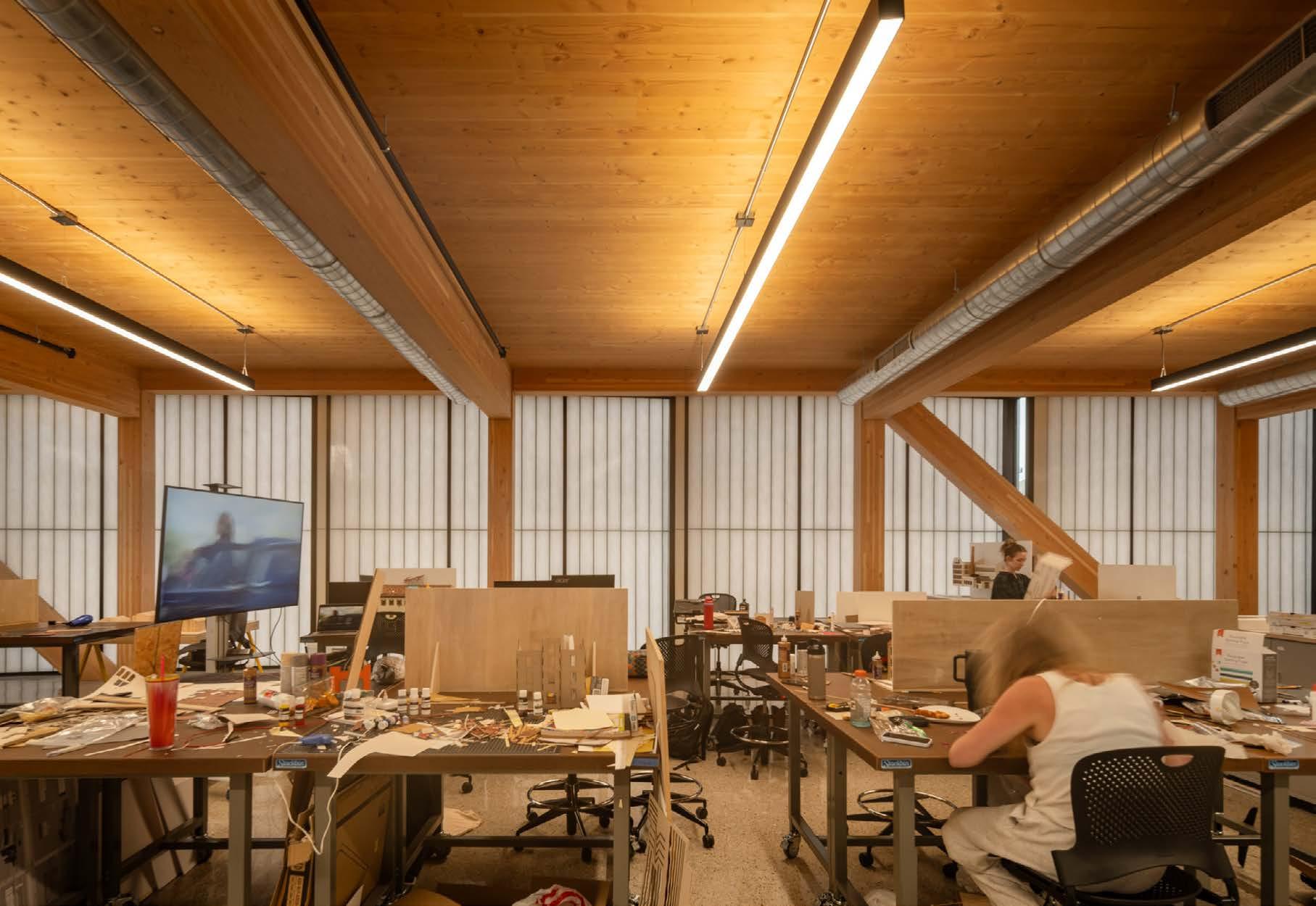
The lighting design for the project supports learning through a simple, flexible, and visually comfortable solution that enhances both historic and new architecture. The new pavilion, a four-story mass timber expansion, connects directly to the 19th-century Architecture Hall and the College of Law. Suspended linear LED luminaires with square profiles and dual circuit direct/indirect distribution are coordinated between structural bays, mechanical systems, and sprinklers to maintain even, glare-free illumination.
These fixtures highlight the warmth of the timber structure and support visual comfort for individual and group work.
A concealed continuous luminaire illuminates a felt pinup wall for student work, while modular track lighting in critique spaces adapts to various display needs. A twostory vertical lighting feature marks the intersection of mass timber, steel, and glazing. Adjustable track heads along this feature wall are designed to spotlight student projects or artwork, turning a key architectural moment into a functional and engaging display.
The lighting strategy supports sustainability through careful coordination with daylight and energy performance. Translucent insulating panels on the north façade diffuse
Suspended linear LED luminaires with square profiles and dual circuit direct/indirect distribution are coordinated between structural bays, mechanical systems, and sprinklers to maintain even, glare-free illumination.
daylight into studio spaces, reducing the need for artificial lighting. A daylight harvesting control system adjusts light levels in real time, improving energy efficiency and visual comfort.
The lighting power density is 20 per cent better than required by code. Dual circuit luminaires allow separate control of direct and indirect light for flexibility and efficiency. Networked controls empower users to adjust lighting to suit tasks, reducing energy and increasing comfort. Together, these strategies create an adaptive, energy-conscious learning environment. ■
PROJECT CREDITS
CLIENT: University of Nebraska
LIGHTING DESIGN/PRODUCT COMPANY: HDR
LEAD DESIGNERS: Jeff Thompson, Lisa Lyons, Randy Niehaus
OTHER DESIGNERA: Tom Trenolone, Bill DeRoin, Laura Franzluebbers, Nader Tehrani, Richard Lee, Matthew Mayberry
ARCHITECTURE: HDR, NADAAA
INTERIOR DESIGN: HDR, NADAAA
PHOTOS: Nic Lehoux
The new pavilion, a four-story mass timber expansion, connects directly to the 19th-century Architecture Hall and the College of Law.
HOW LIGHT SHAPES LEARNING
As teaching methods evolve but many classrooms remain unchanged, designers are turning to neuroarchitecture and healthy lighting principles to create educational spaces that support wellbeing, attention and creativity. Light is not just functional—it’s a driver of cognitive and emotional development, writes Raquel Quevedo.
Combining daylight with biodynamic lighting systems is one of the cornerstones of applied neuroarchitecture.
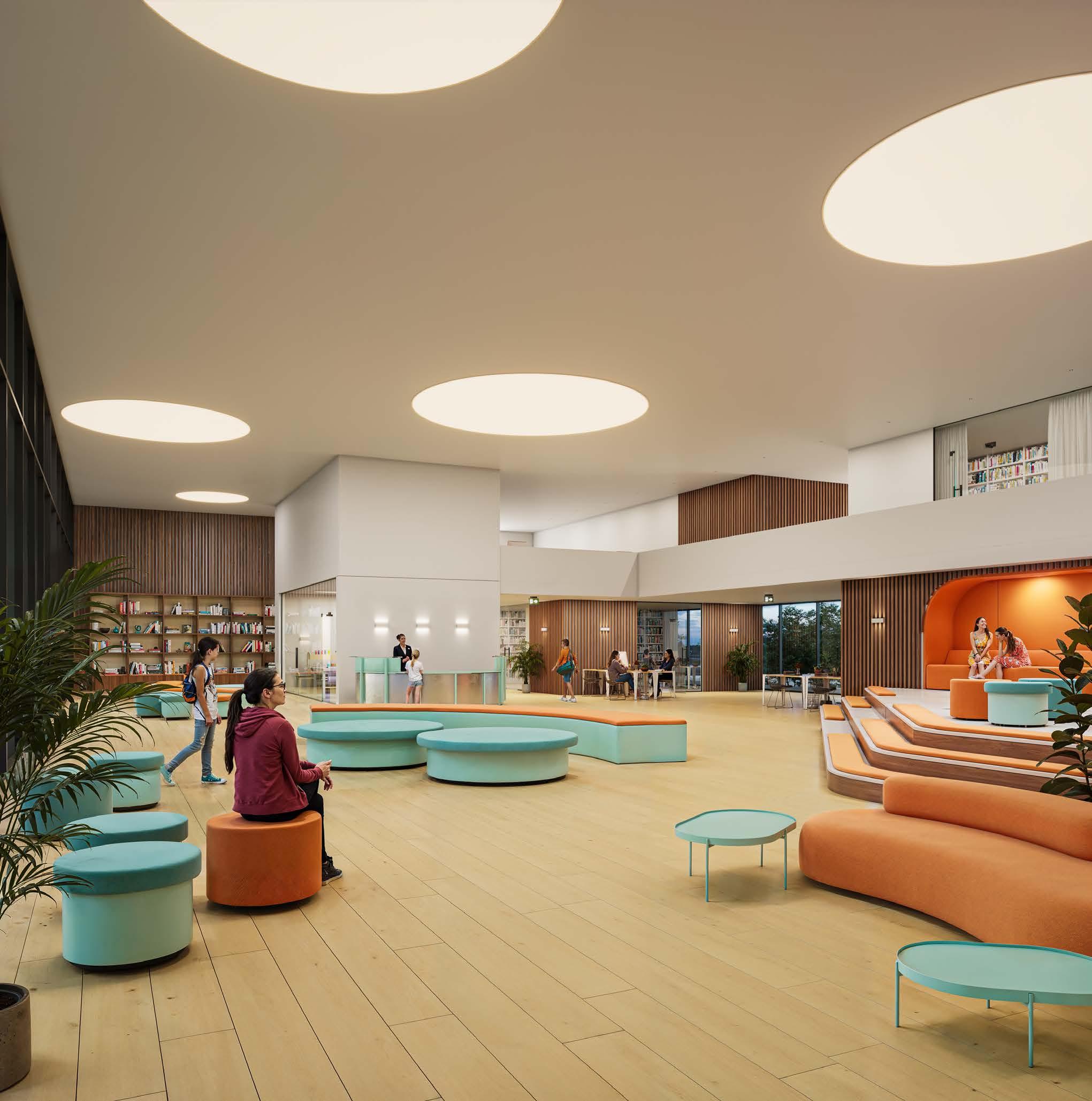
In recent years, the design of educational spaces has come under scrutiny. Teaching methodologies have evolved toward experimental, adaptive and two-way learning, yet many classrooms remain rigid and uniform, failing to reflect this shift.
Neuroarchitecture—a discipline that applies neuroscience to architectural design—explores how to shape environments based on the way the brain perceives, processes and responds to stimuli. Its aim is to create enriched spaces that support wellbeing, active learning, creativity and social interaction.
Normagrup’s newly published Lighting Guide for Educational Spaces seeks to help schools understand how to approach lighting not only from a functional and regulatory standpoint but through strategies that enrich and make learning environments more inclusive.
Cognitive processes are strongly influenced by emotional state, and lighting plays a significant role in shaping it.
The interplay of light levels and colour temperature can spark curiosity, encourage calm or support collaboration. Research shows that high light levels paired with cool colour temperatures enhance cognitive performance, boosting attention and working memory. However, prolonged exposure to these conditions can lead to sensory overload, undermining focus and causing stress and visual fatigue.
A deliberate lighting strategy is therefore essential—one that improves the usability of spaces, adapts to diverse learning needs and offers the flexibility to support different modes of study.
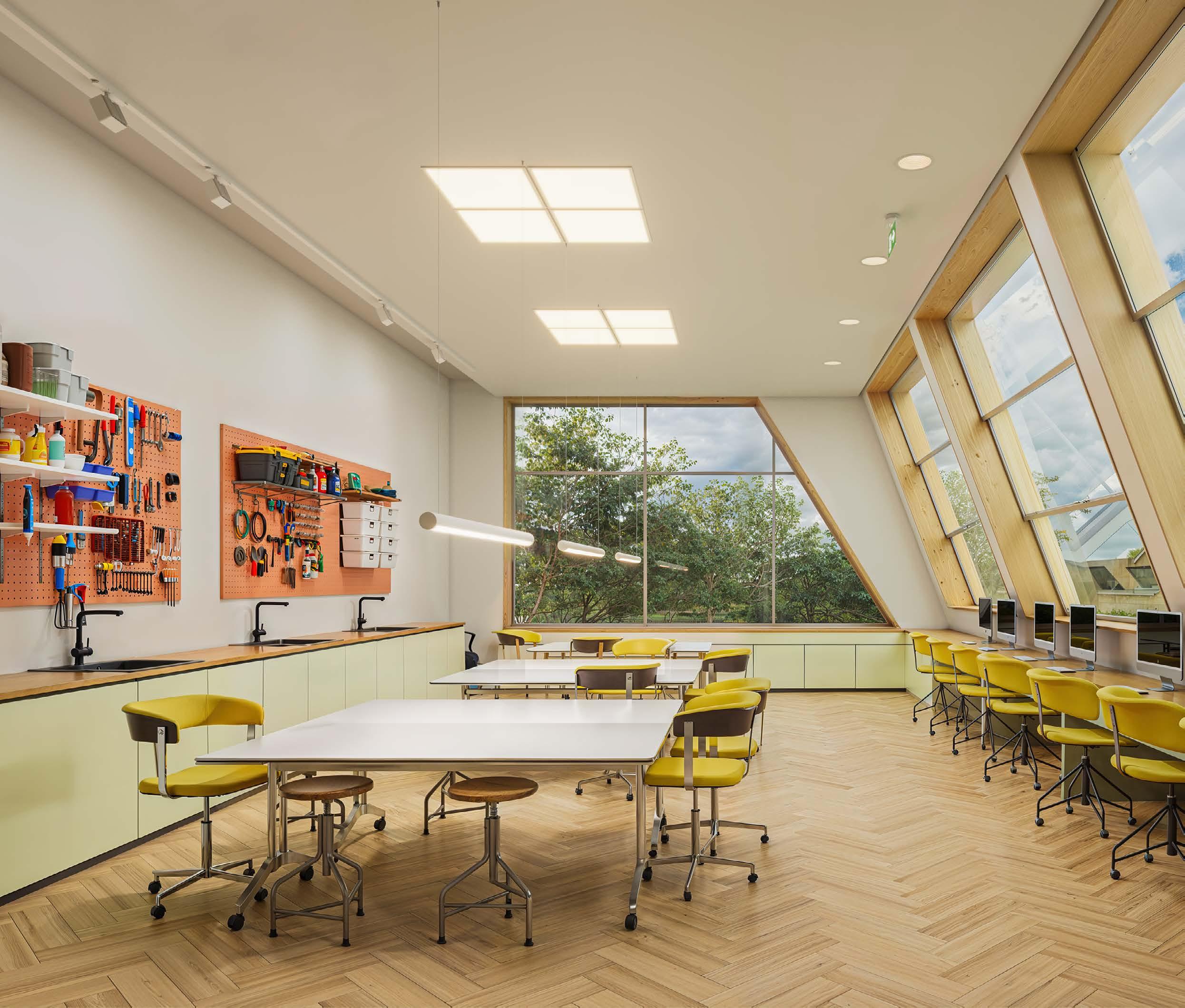
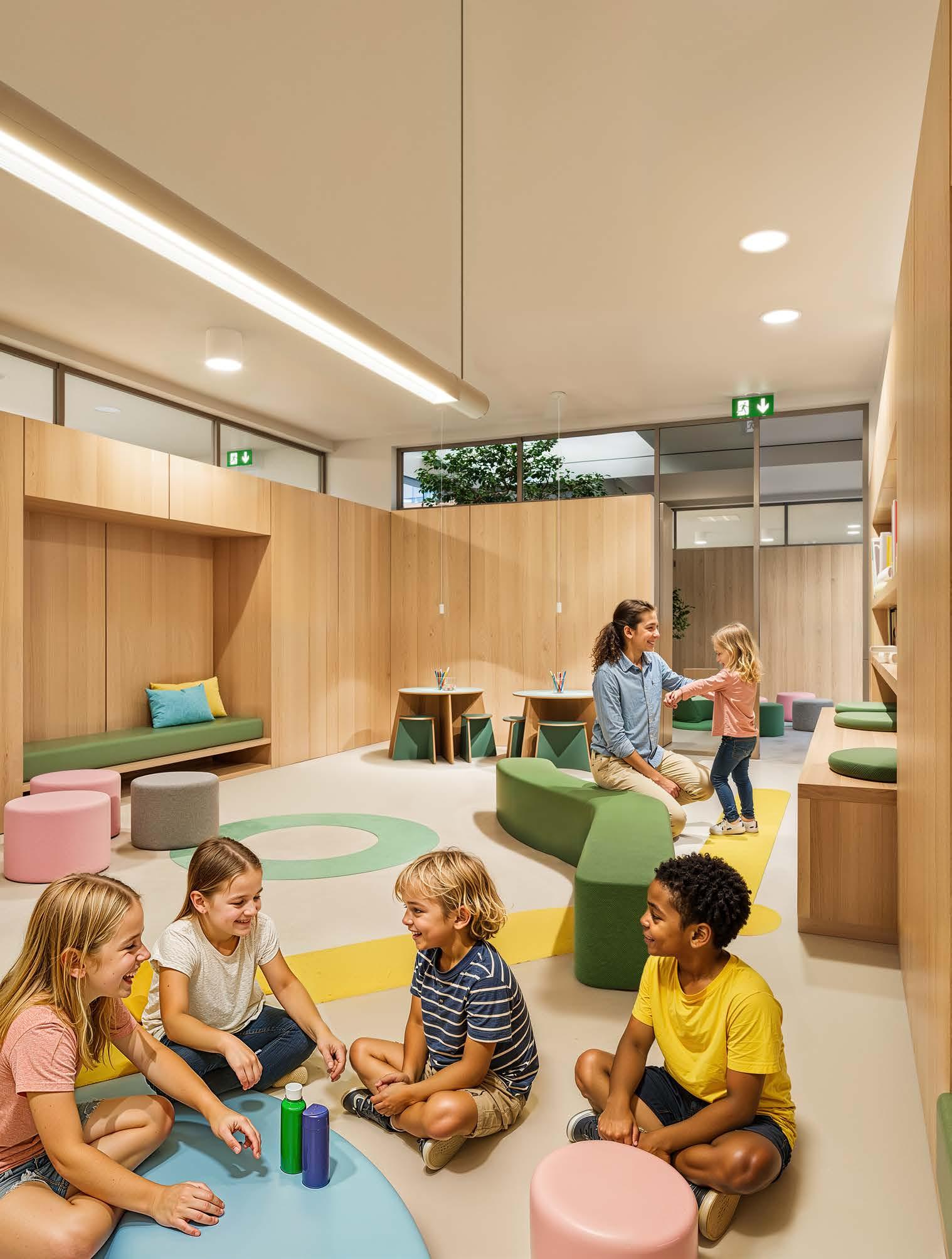
Understanding how each area of a modern learning environment is used makes it possible to define a specific lighting identity and design smooth transitions between zones requiring different sensory cues.
Neutral, diffuse light for workshops and hands-on activities prevent shadows that hinder manipulation.
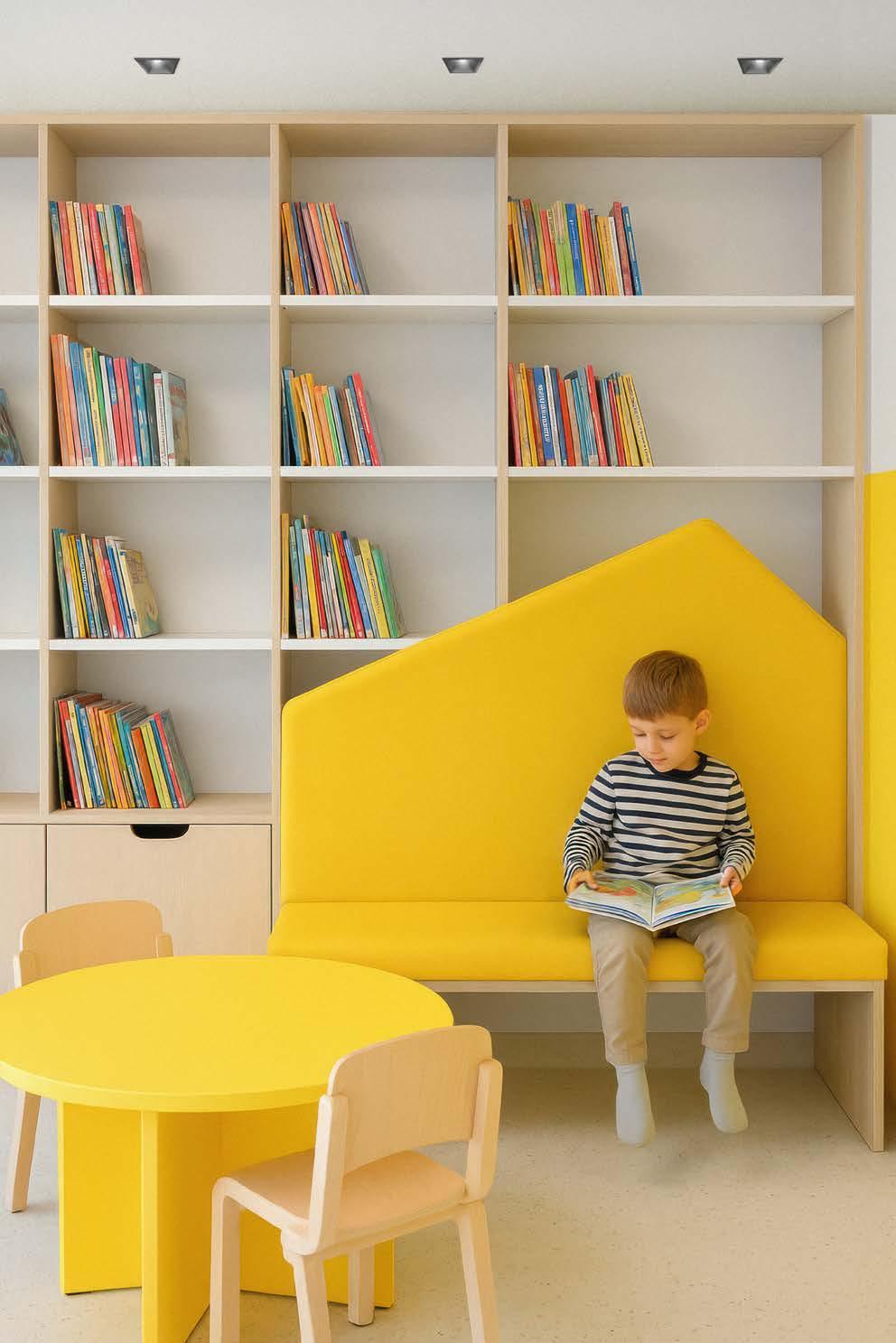
Glare is especially critical in spaces for younger children, who are more sensitive to direct light sources within their field of vision.
Meanwhile, warm, indirect lighting in reading or reflection zones create calm and privacy.
Accent lighting and visual hierarchies in auditoriums or exhibition areas strengthen visual and verbal communication.
Healthy lighting—considering both visual and non-visual effects—improves environmental conditions and supports the wellbeing of the entire educational community, from students and teachers to families and support staff. Reducing glare is essential, as it contributes to fatigue, lack of concentration and heightened stress.
High-performance optical shielding and multi-reflector systems help maintain low glare ratings (UGR). Glare is especially critical in spaces for younger children, who are more sensitive to direct light sources within their field of vision.
After glare comes protection from photobiological risks. Blue-light hazards—linked to eyestrain, retinal damage and cataracts—pose a greater risk to children, whose visual systems are still developing. Using luminaires that comply
with European safety standard EN 62471 is crucial to reducing these risks.
Invisible flicker in artificial lighting can cause headaches, fatigue and stress, and affects sensitive users particularly strongly. Standards call for a short-term flicker indicator (Pst LM) below 1.00 and a stroboscopic effect metric (SVM) below 0.4.
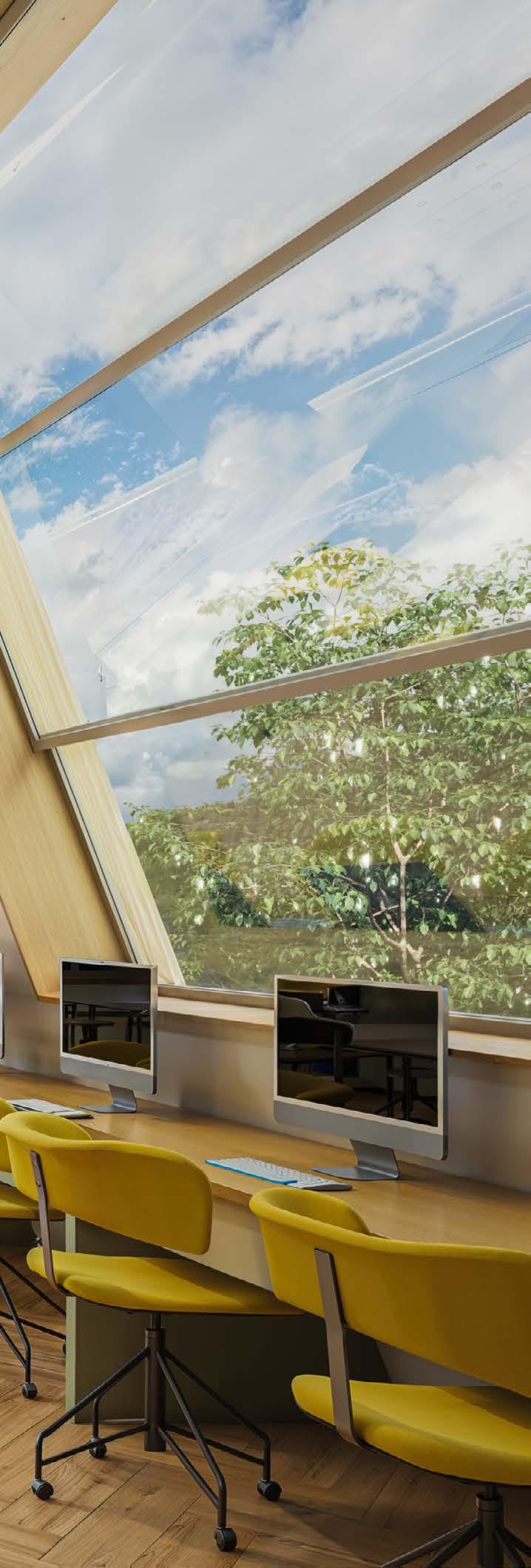
In biophilic design, daylight and electric light help ‘naturalise’ indoor spaces. Strategies include maximising natural light, using sensors to balance it with electric light, and adopting diffuse, dynamic lighting that changes intensity and colour temperature, mimicking the natural solar cycle.
Because circadian rhythms are closely tied to natural light, disrupting them can affect concentration, rest and hormone regulation.
Combining daylight with biodynamic lighting systems is therefore one of the cornerstones of applied neuroarchitecture. These systems automatically adjust intensity and colour temperature to support biological synchronisation.
Normagrup incorporates Saluz®, a patented technology developed through research with the Fernández-Vega Ophthalmology Institute. Saluz® reproduces the qualities of natural light and aligns artificial lighting with students’ biological rhythms, supporting the production of hormones such as cortisol, dopamine and serotonin.
In educational settings, lighting also plays a vital safety role. Emergency lighting—whether for anti-panic use, evacuation or signage—must be integrated into architectural planning with the same care as the main lighting system.
Normagrup designs luminaires that combine technology, autonomy and easy maintenance to guarantee safe, reliable environments.
Lighting is deeply intertwined with the learning experience. It can foster student autonomy and support sensory, emotional and cognitive development, while contributing to safe, healthy and sustainable schools. Achieving this requires integrated, professional planning that strikes the right balance between stimulation and comfort, flexibility and efficiency—adjusting lighting parameters to the experience each space aims to deliver. ■
Healthy lighting—considering both visual and non-visual effects—improves environmental conditions and supports the wellbeing of the entire educational community, from students and teachers to families and support staff.
The interplay of light levels and colour temperature can spark curiosity, encourage calm or support collaboration.
THE ‘LIGHT SHOWER’ FOR STUDENTS
Bergen University has started offering students morning light therapy sessions to counter Seasonal Affective Disorder. Martin Tomlinson reports.
Falling asleep in lectures may be a thing of the past thanks to a new lighting system at the University of Bergen in Norway.
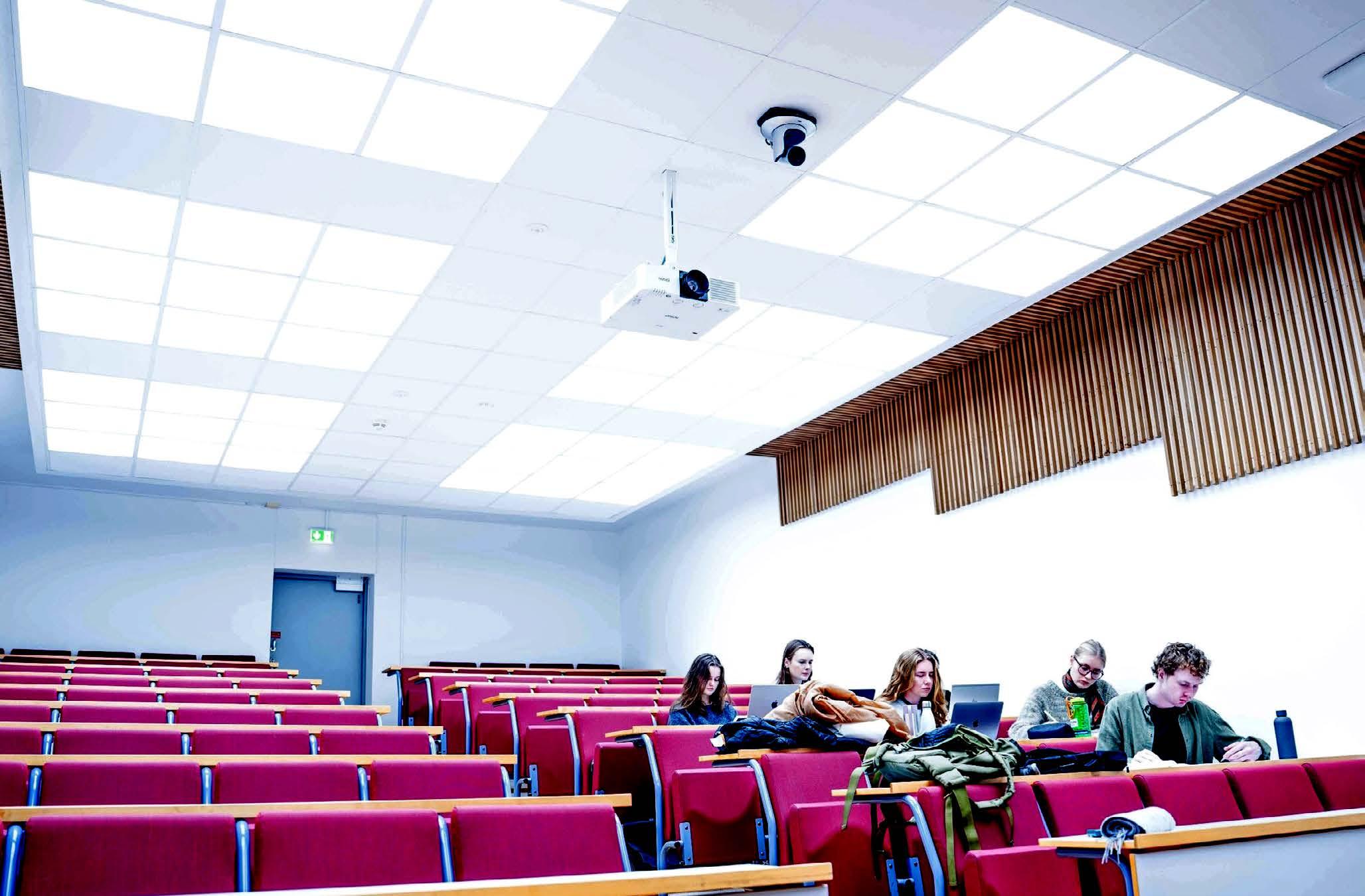
The college has begun offering a unique energising light therapy service for students in a recently opened lecture hall at the Department of Psychology. The room is Norway's – and perhaps one of the world's – best-lit lecture halls, equipped with a Human Centric Lighting (HCL) system from lighting company, Glamox.
In the mornings, as part of a welfare initiative, students and teachers can visit the hall to enjoy a summerlike experience of daylight, which helps energise them and counters the effects of Seasonal Affective Disorder (SAD).
The lighting installation is centred around the Glamox C90-R series of tuneable luminaires controlled by a Glamox DALI-based Light Management System. The lecture hall is unique in that it can scale from 7,000K to 1,800K.
In the mornings, students and teachers can visit the hall to enjoy a summer-like experience of daylight, which helps energise them.
Researchers will use the hall to explore how different colour temperatures, along with variations in light intensity and exposure times, stimulate natural hormones linked with alertness, improved performance, and wellbeing.
‘While the light therapy has the potential to transform students into morning larks, our goal is first and foremost to offer relief to people suffering from Seasonal Affective Disorder (SAD),’ says Ståle Pallesen, Professor at the Department of Psychosocial Science, at the University of Bergen.
‘SAD can be a serious condition and affect up to 19 per cent of people living in Norway. So, when open, from 8am to 10am until Christmas, students and teachers can visit our new lecture hall for energising light therapy. Think of it like a rejuvenating light shower,’ added Pallesen.
At other times, the hall will function as a normal lecture hall and serve as a controlled environment for researchers to determine optimal lighting conditions for students and staff.
Researchers will use the hall to explore how different colour temperatures, along with variations in light intensity and exposure times, stimulate natural hormones linked with alertness, improved performance, and wellbeing.
‘The studies, which are completely safe for students and staff, will build on the existing evidence of how light can provide a better learning environment for students,’ says Pallesen.
Groundbreaking
Scientists at the Research Centre for Sleep, Work and Health (FoSAH), at the University of Bergen, are researching sleep, performance (daytime functioning) and work-related health topics. The centre involves several of Norway's most prominent researchers on sleep, health, and performance.
All living beings have an inner clock called the circadian rhythm, and humans are no exception. In short, this means that people are hard-wired to rise with the sun and go to sleep when it sets.
By stimulating hormones in the body, such as cortisol and melatonin, the right light at the right time can influence everything from our sleep to how we feel and perform. Glamox has extensive experience in tailoring HCL in cooperation with clients and has supplied lighting for more than 650 HCL projects.
‘The unique thing about this lecture hall is that the lighting system can operate across wide ranges of intensity and
colour temperature, which allows for various experiments on light and performance,’ says Anders Bru, concept manager for human centric lighting at Glamox.
‘The research will provide valuable insights that are becoming more and more important in designing new healthcare institutions, offices, educational and industrial buildings.’
The installation was undertaken in collaboration with Glamox FoSAH and Glamox have collaborated on similar studies for several years, and the company has now sponsored parts of the lighting in the lecture hall. ■
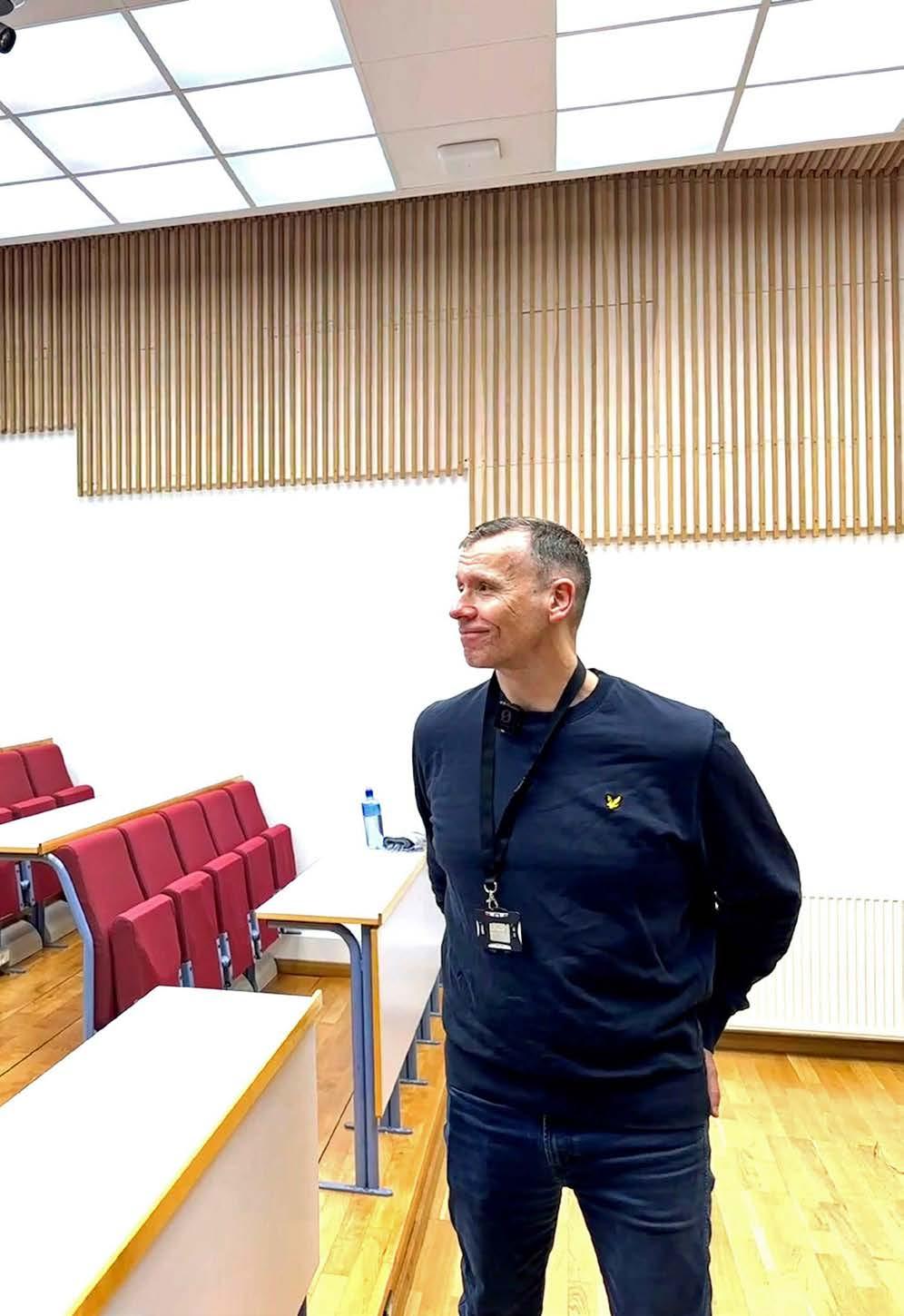
Professor Pallesen at the Department of Psychosocial Science, University of Bergen under the lights. The lecture hall is unique in that it can scale from 7,000K to 1,800K.
in the
GETTING RHYTHM
At the Sint-Pietersmolenwijk Care Campus in Bruges, an intergenerational model of care is supported by a sophisticated lighting strategy that aligns daily routines, enhances safety, and strengthens community life through human-centric design.
As Europe’s population ages, care environments are under growing pressure to deliver not only safety and efficiency, but also dignity, wellbeing, and social connection.
The Sint-Pietersmolenwijk Care Campus in Bruges, developed by Belgian welfare association Mintus, responds to this challenge with an integrated, forward-looking concept. Under one roof, inpatient and day care for older people coexist with childcare and after-school facilities, encouraging interaction across generations and reducing social isolation.
A key enabler of this approach is lighting. Zumtobel’s human-centric lighting (HCL) solution plays an active role in structuring daily life and supporting residents’ natural circadian rhythms.
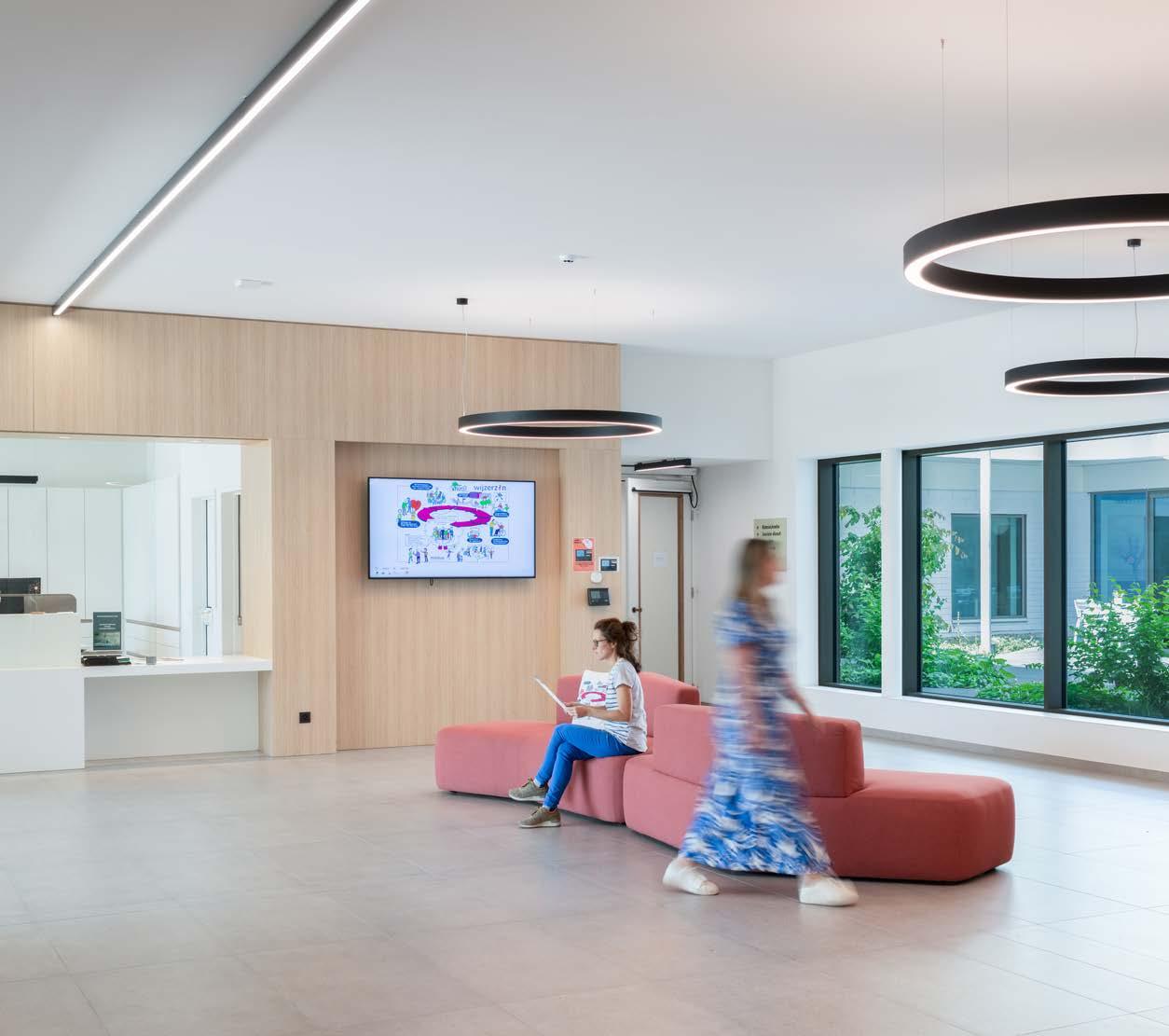
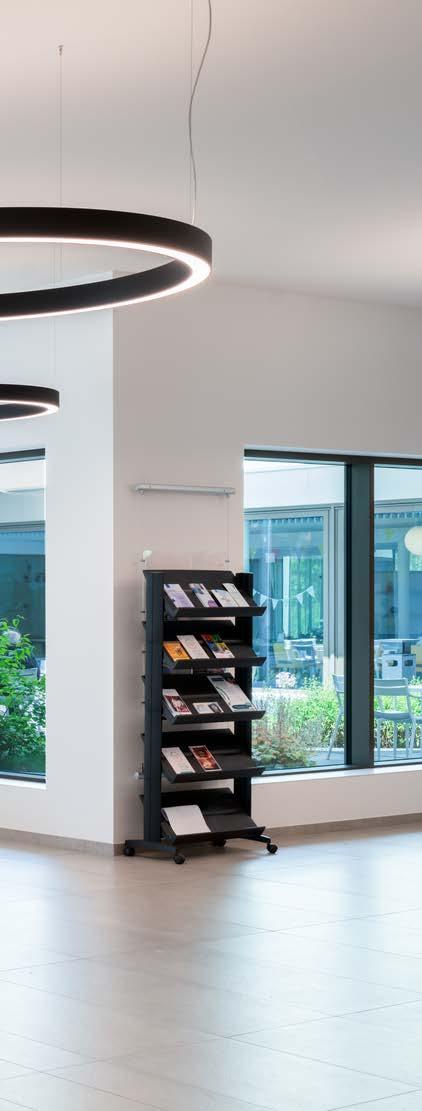
Eleven communal ‘living rooms’ are illuminated with circular Ondaria luminaires featuring Spectrum technology. By delivering a carefully balanced mix of direct, indirect, and vertical light with melanopic effect, the system shifts in intensity and colour temperature over the course of the day—stimulating and cool in the morning, warmer and calming towards evening. This helps residents remain oriented, engaged, and better prepared for rest.
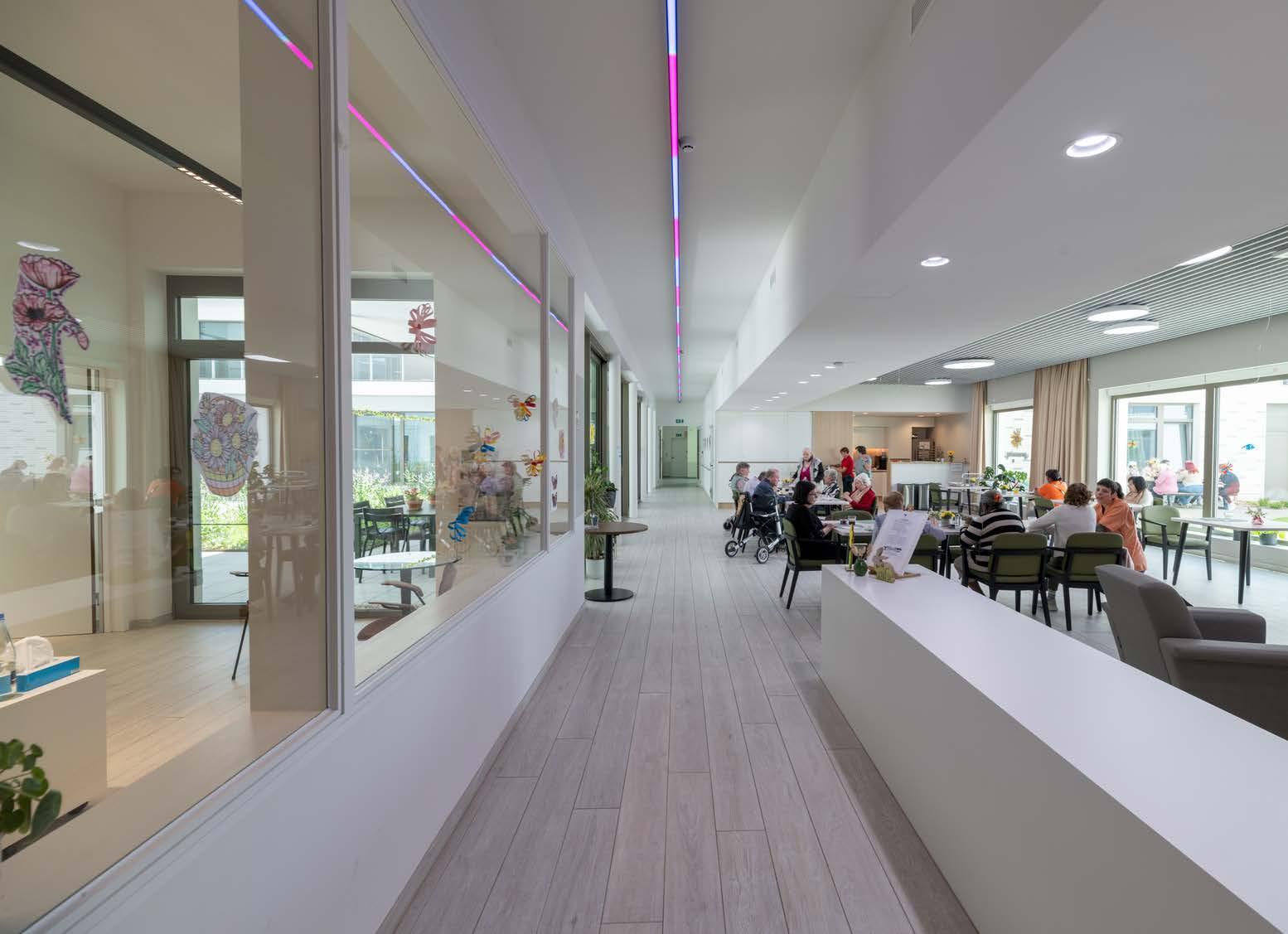
Beyond wellbeing, lighting also underpins safety and operational efficiency. The networked Slotlight LynX activated system replaces conventional acoustic alarms with clear, visual signals distributed through linear luminaires. In emergencies, or when bed sensors detect unusual night-time movement, corridor lighting changes colour to alert staff silently and precisely. This reduces stress for residents while allowing carers to respond more quickly and avoid unnecessary routine checks.
The flexibility of the system also supports everyday social life. Light colours can be adapted for celebrations, seasonal events, or shared experiences such as football matches, reinforcing a sense of community. Together, these elements position Sint-Pietersmolenwijk as a model for how thoughtful lighting can contribute to safer, more humane, and more socially connected elderly care. ■
The Sint-Pietersmolenwijk Care Campus in Bruges brings elderly care, childcare, and shared community spaces together within a single intergenerational complex.
SlotlightLynX® activated uses programmable coloured light to deliver clear visual alerts and adaptable atmospheres without acoustic alarms.
When the lights go out
Lighting designers traditionally see emergency lighting as a grudge addition to their schemes, but by engaging with the technology rather than leaving it to others they can ensure a better outcome, says Dave Tilley.
When the lights go out how important is the lighting design, visual impact and client concept when the occupants are trying to leave the affected area safely?
Emergency lighting is not really considered as a primary element of the lighting design process as it does not contribute to the visual appearance and user impact and can often be considered as a distraction to the design features.
A visit to a number of new commercial buildings provides startling evidence relating to the low level of compliance.
In some cases, the emergency lighting does not exist, even in the best cases there are elements of codes such as the British Standard BS5266 that have not been specified and installed, for example points of emphasis not illuminated.
Why not? I believe there are three main reasons.
First, the lighting designer focus is on the primary lighting leaving the emergency lighting to the contractor and may also prescribe restrictions to maintain the impact of their design.
Second, lighting manufacturers provide extremely good emergency lighting designs for main areas but rarely include points of emphasis and special area lighting, particularly large buildings with extended construction timeframes where the building internal structure can change. Lighting manufacturers will say the information is not provided by the client to deliver a fully compliant BS5266, lighting design.
Third, occasionally the emergency lighting element of the design falls between the cracks of, who is responsible for what, and it is simply missed off.
Note that if an emergency lighting design does not provide all the required information, for whatever reason, it should be clearly stated on the design.
The latest Fire Safety Regulations are very clear that
responsibility for the emergency lighting design is with all those involved in the process: the client, the designer, the consultant and the contractor.
This means that each group must take responsibility for BS5266. The contractor cannot say the emergency lighting design was installed as instructed by the designer if the design is non-compliant.
Why is the level of emergency lighting system compliance so low in the countries like the UK?
The level of building inspections, especially those targeting emergency lighting, is low which means end-users do not think they will be caught and even if they are the penalties are not often punitive.
Australia has a simple system to support compliance, If the emergency lighting system does not have supportive design and test evidence, insurance companies will not provide building insurance.
Designers, independent and manufacturers, must understand the importance of emergency lighting and accept they are responsible for compliance not just some elements of the design.
They also have to accept that emergency luminaires are designed to provide adequate lux levels and visuals to support escape in the event of a loss of power.
Emergency luminaires have evolved significantly since the introduction of LED, smaller and improved lumens per watt. These improvements reduce the number of emergency luminaires required, to provide compliant minimum lux levels, and luminaire miniaturisation reduces the visual impact on the overall design.
In addition, specialist emergency luminaires have been designed, for example black-body versions for use in cinemas and theatres. Also, there is the option of converting specified luminaires to deliver emergency function.
These innovations in luminaire design enable emergency lighting to blend more easily in the overall design concept, even in historic buildings and those with intricate architectural features.
Lighting designers must take responsibility for the emergency lighting design. If lighting designers want to provide the design concept then responsibility must be taken for the complete design not just a part of it.
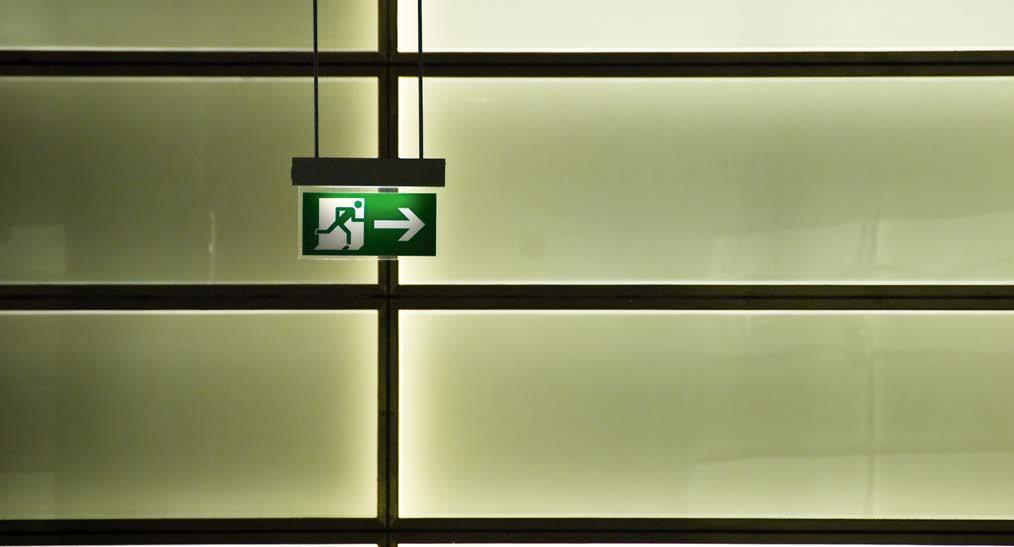
While an exit box may look out of place in some spaces, when the lights go out the ability for the occupants to escape safely is paramount. ■
Designers and manufacturers must understand the importance of emergency lighting and accept they are responsible for compliance not just some elements of the design. Pic: Pexels/Jakub Zerdzicki 2025
Nulty unveils pioneering APPRENTICE SCHEME
Global lighting design practice Nulty has unveiled an innovative programme for newcomers to the industry in London. Martin Tomlinson reports.
Global lighting design consultancy Nulty has launched an apprenticeship programme at its London studio, creating what it terms ‘a supported pathway into the lighting design profession’.
The pioneering scheme will offer aspiring creatives the chance to train amongst one of the industry’s largest lighting design practices, through a two-year placement with Nulty’s award-winning London team. Apprentices will gain hands-on experience working on live projects while studying for an Advanced Diploma in Illumination Engineering.
Structured to provide a comprehensive introduction to architectural lighting design, the programme will see apprentices spend four days a week engaged in practical learning, working under the mentorship of designers at every level.
Participants will be immersed in the day-to-day realities of project work and gain firsthand knowledge of how to develop imaginative lighting design concepts and master technical skills in CAD drawing, 3D modelling and photometric calculations.
One day a week will be dedicated to academic study, supplementing practical learning with a foundation in lighting design theory and illumination engineering.
Delivered by academics, the industry-backed qualification offers an introduction to the principles of architectural lighting design.
‘Nulty’s apprenticeship scheme is part of our ongoing educational movement,’ Paul Nulty, founder of Nulty told designing lighting global magazine. ‘Seasoned lighting designers know that theory will only get you so far –especially when it comes to the intangible medium of light.
‘True learning comes from tackling creative challenges on real projects. To help bridge that gap, we’ve developed a holistic learning programme that blends theoretical knowledge with on-the-job expertise.
‘This approach feels especially important at a time when entering the job market is more challenging than ever. Graduates face fierce competition for roles, alongside wider industry shifts driven by factors such as Brexit, AI adoption and global economic pressures.
‘We feel strongly that it’s our responsibility to support the next generation of talent by providing an experience-led path into practice.’
Ellie Combs, managing partner at Nulty echoed the sentiments: ‘Most designers can point to an inspirational mentor or team who shaped their career.
‘Our apprenticeship initiative is about giving the next wave of designers that same head start, within a nurturing environment with strong opportunities for both professional and personal growth. We look forward to welcoming the first intake of Nulty apprentices to our London team.’
Nulty’s apprenticeship programme is open to school and college leavers, or anyone looking for a new career path in lighting design. Applicants must be eligible to live and work in the UK, and demonstrate a genuine passion for design, creativity and the built environment. ■
‘True learning comes from tackling creative challenges on real projects’
― Paul Nulty, founder, Nulty
SOLVING THE PUZZLE
The introduction of Signify’s Puzzle, a first-of-itskind linear and modular lighting for the workplace, created waves in the industry.
This innovative glowing and continuous task lighting meets standards and regulations1 to ensure a safe, comfortable, and productive work environment.
It’s printed with 75 per cent recycled PET material and extensions of the product family are set to launch this year
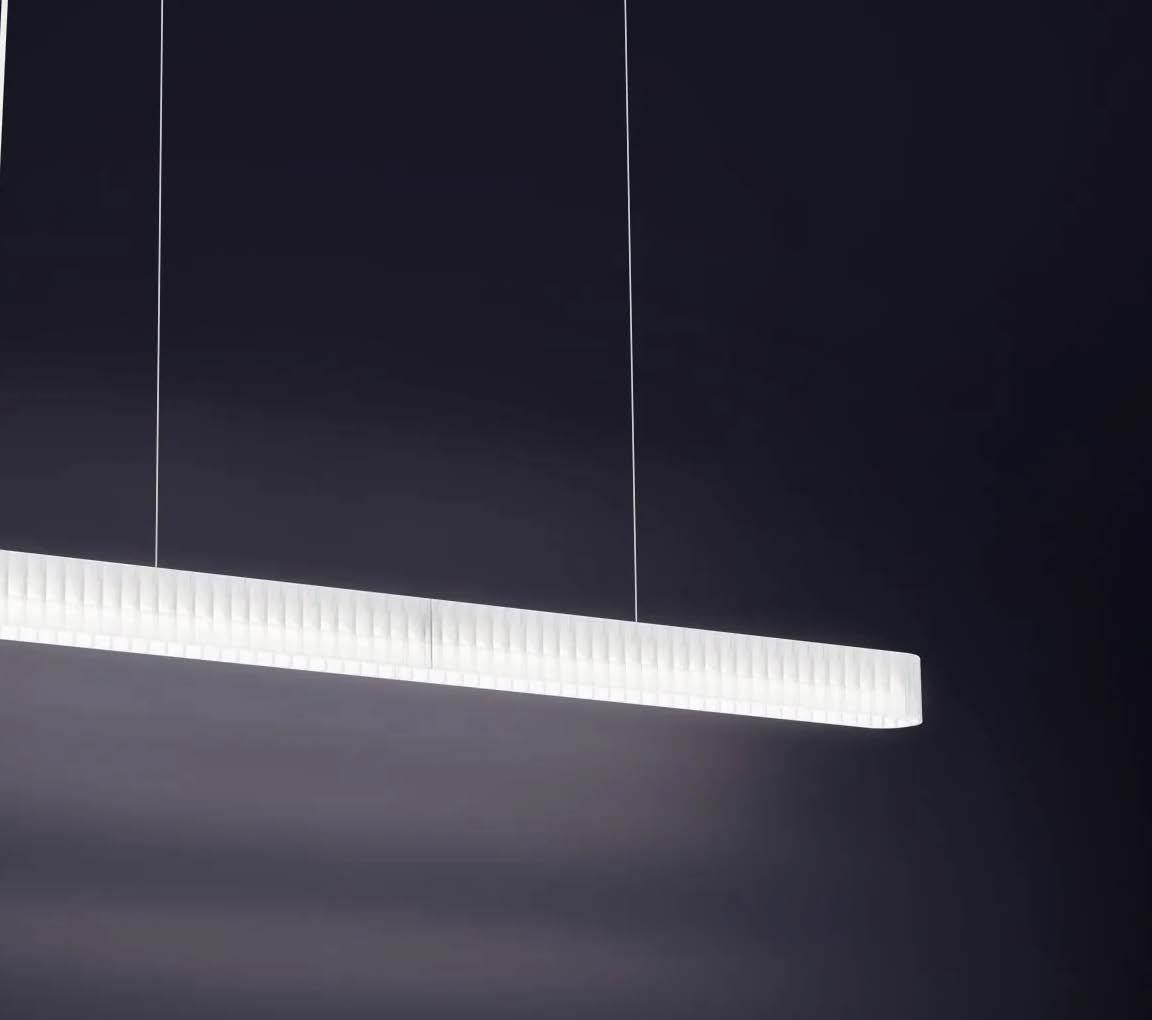
Signify says the Puzzle is the first luminaire of its kind to combine striking, continuous light with office compliance, task-ready performance and a breakthrough in sustainable design using 75 per cent recycled PET material.
This first Puzzle was tailored to provide task lighting at desks, meeting rooms and other office environments.
Available in a 4 and 5 feet linear pendant size, Puzzle is designed with a soft seamless glow that helps to improve focus while working2 and elevate and enrich workspace design.
It integrates seamlessly with smart systems, such as Signify’s Interact, providing access to energy-saving features, including occupancy detection and daylight harvesting.
‘My design inspiration was the way pieces fit together in a jigsaw puzzle, where individual components integrate seamlessly to form one cohesive whole’, says French industrial designer Florent Coirier
The product designer behind Signify's extraordinary Puzzle luminaire says he was inspired by the pieces of a jigsaw
Puzzle allows for sensors to be integrated or external, allowing flexibility depending on the ceiling design.
Pendants are available in different lumen outputs with wired and wireless control options. The linear components are designed to fit together like puzzle pieces.
Designed by French industrial designer Florent Coirier and brought to life through Signify’s cutting-edge 3D-printing technology, Puzzle also sets a benchmark for circular lighting design.
All printed parts are made from 75 per cent recycled PET, drawn from a range of materials including bottles, carpet, polyester clothing and eye glasses. The use of 3D printing also helps minimise waste, resulting in a more efficient production process.
The Puzzle range is currently available for customers in Europe only. Further extensions will be launched this year, and are designed to create bold, layered ceiling compositions in different environments, including hospitality spaces with height and character.
‘At Signify myCreation, we focus on creating spaces where people want to be and love to work, while living our
own purpose: leading in sustainability on the journey and designing our lighting solutions to be truly circular,’ says Bart Maeyens, Head of Signify myCreation.
‘Office requirements in terms of functionality, performance, and smart operating systems in lighting have become a standard.
'We sought to push the performance boundaries and, in parallel, create a new aesthetic language in the functional office category. That is what we did with Puzzle. We puzzled together function, performance, sustainability and aesthetic elegance.’
Florent Coirier, Designer of Puzzle said: ‘My design inspiration was the way pieces fit together in a jigsaw puzzle, where individual components integrate seamlessly to form one cohesive whole.
‘The Puzzle range features clear, elegant shapes and a structure composed of square cells, reflecting the interplay of light and structure.
‘Working with Signify technology has enabled us to create a piece of art that is functional and helps to create a welcoming environment in which to work.’ ■
Designed by French industrial designer Florent Coirier and brought to life through Signify’s cutting-edge 3D-printing technology, Puzzle also sets a benchmark for circular lighting design.
ERUPTION OF CREATIVITY
A volcano-inspired luminaire has taken top prize in a competition to design an innovative 3D printed luminaire
3D lighting specialist LumiAdd has announced the successful conclusion of its first-ever 3D Unleashed luminaire design competition, an ambitious initiative created to give lighting designers, architects, and interior designers unconstrained creative freedom.
Taking top spot is Effie Polydouli, a Greek lighting designer with an artistic and sustainable thinking. Inspired by nature, art, history and ancient architecture.
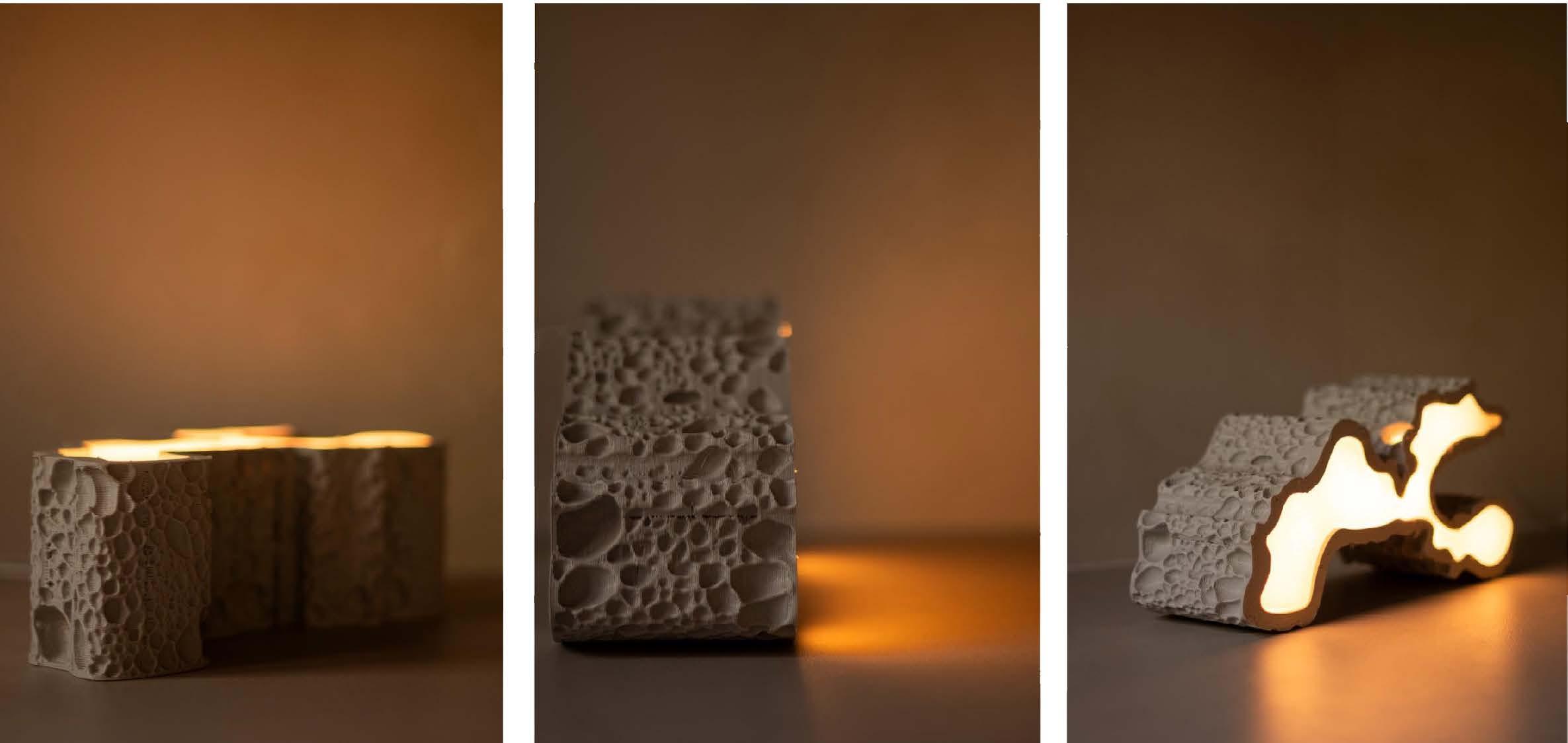
Her creation, Flames of Aegean, takes its inspiration from Greek volcanoes.
In the initial sketches for the visual output of the luminaires, the sign of the volcano was connected with the geographical history of the Greek volcanoes, and more particularly, the Greek islands Milos, Santorini and Nisyros, which were created in prehistoric times by corresponding volcanic eruptions.
All the designs for this lighting series
were designed, step by step, with the Adobe Illustrator, Photoshop, 3D studio max and Sketch-up, in order to avoid mistakes in the production and follow the sustainability principles.
The designer’s idea was to simulate the texture of the material ‘slag’, which exists in volcanic areas. The texture and the peculiarity of the category of slags are interesting, as they have a porous form with small cavities and thicker walls.
Polydouli designed the texture on the 3D software, and from the 3D model created a printed prototype and then a mould.
The sustainable materials that she decided to use would be seaweed, paper pulp and shell concrete combined with chalk.
Then, the materials would be placed by the injection process into the mould and thus, the luminaire would take its final shape.
‘The destruction of our natural resources sparked a volcano of despair and led to this family of luminaires’
― Effie Polydouli
‘We launched 3D Unleashed to spread the word about the design freedom we offer and to see what designers could create,’ said Jamie Norris Green, co-founder of LumiAdd.
‘We believe 3D printing is having a transformative effect on the lighting industry - it supports local manufacturing, speeds up innovation, and minimises creative constraints.’
LumiAdd is now turning its attention to bringing the winning concept to life. The company’s ultimate goal is to develop the design into a commercially available product range. ■
INNOVATIONS
New architectural lighting products available for specification
PROPELLER BLOOM
Duncan Meerding
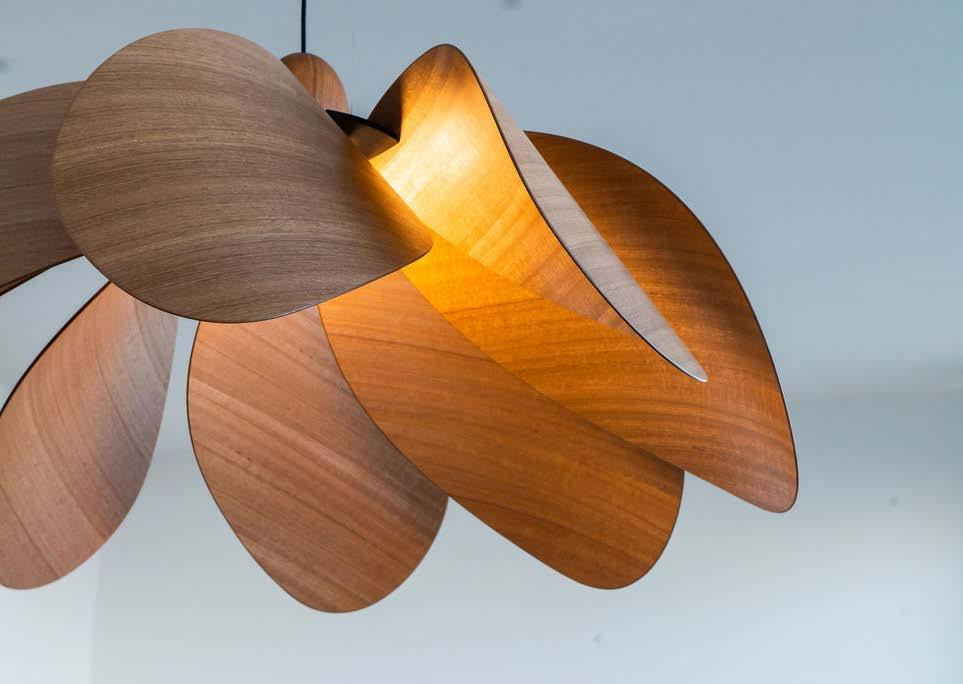
Designed by Duncan Meerding, the Propeller Bloom, a 1.5m pendant light made from sustainable Tasmanian Eucalypt, features eight petal-inspired blades which slot into a custom made black anodised aluminium central disk, gently curving out and down around a single central bulb, with a large hand-turned blackwood nose cone. Each blade has been hand pressed and formed, with multiple layers and cross laminating grain structures for strength.
SOMMET 2
Allumer Solutions
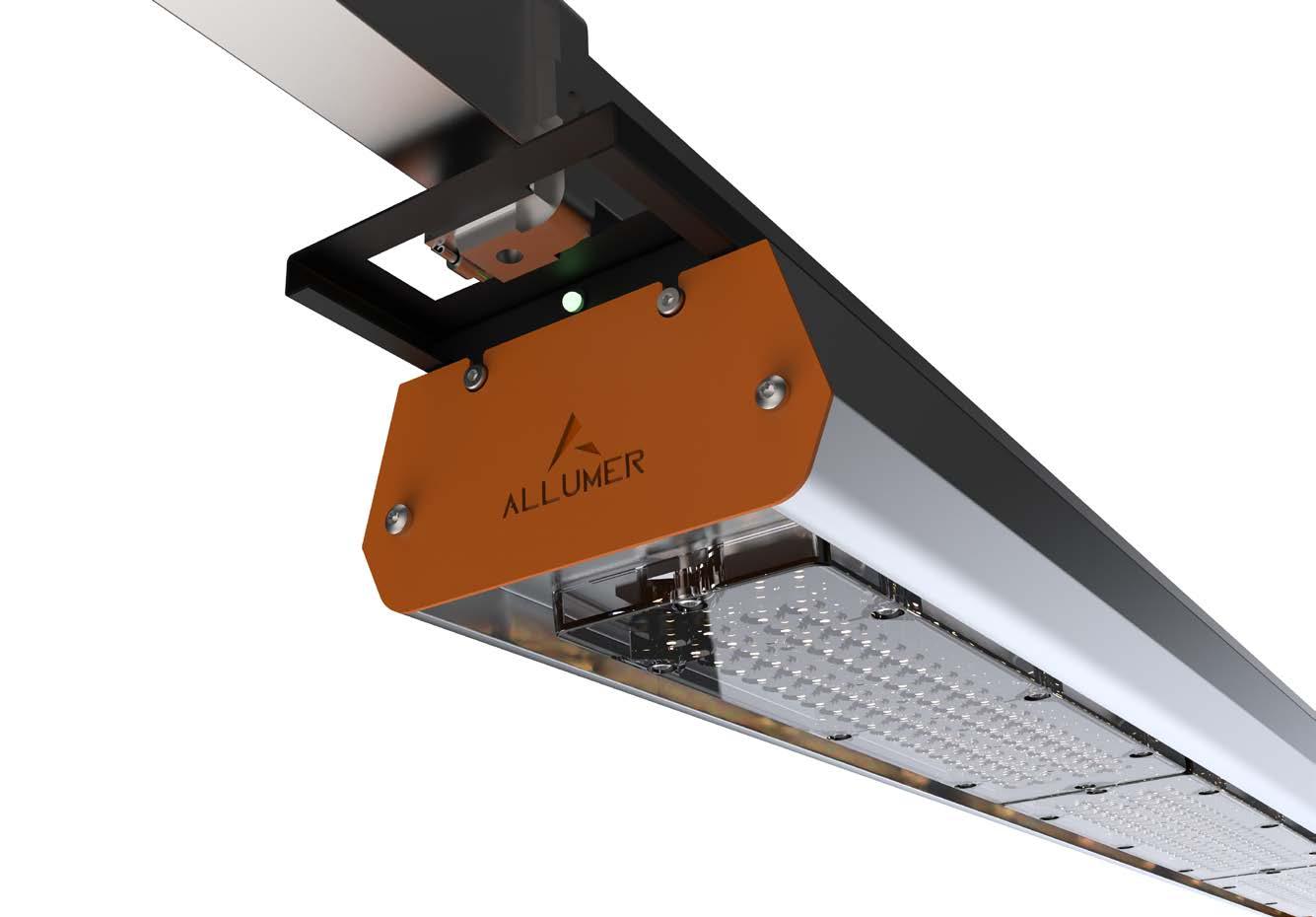
The Sommet 2 LED Highbay is designed to redefine performance, intelligence and sustainability in warehouse and industrial lighting.
Integrated smart controls — including occupancy sensing, daylight harvesting, and IoT compatibility — ensure further operational savings and future readiness. The luminaire uses components from Vossloh Schwabe, Tridonic and Osram/ Inventronics. F Mark was a consultant in its design.
QUADRATA LumiAdd
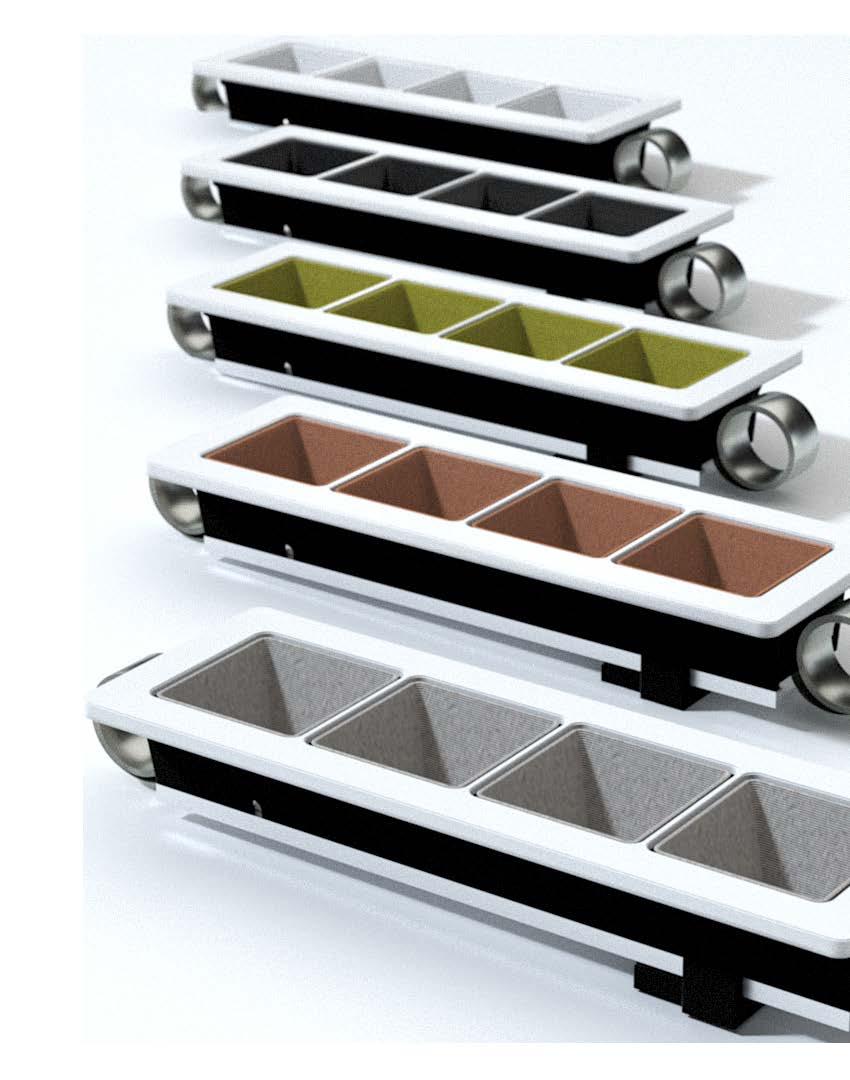
The Quadrata is a linear modular recessed downlight 3D printed in plant polymers. Available in two lengths and with a wide choice of optics, including precise wallwash versions, Quadrata is supplied as standard in Ra90 and with system efficacies exceeding 120 llm/cW. The material choice dramatically reduces embodied carbon and eliminates waste associated with traditional manufacturing, whilst also enabling freedom of design.
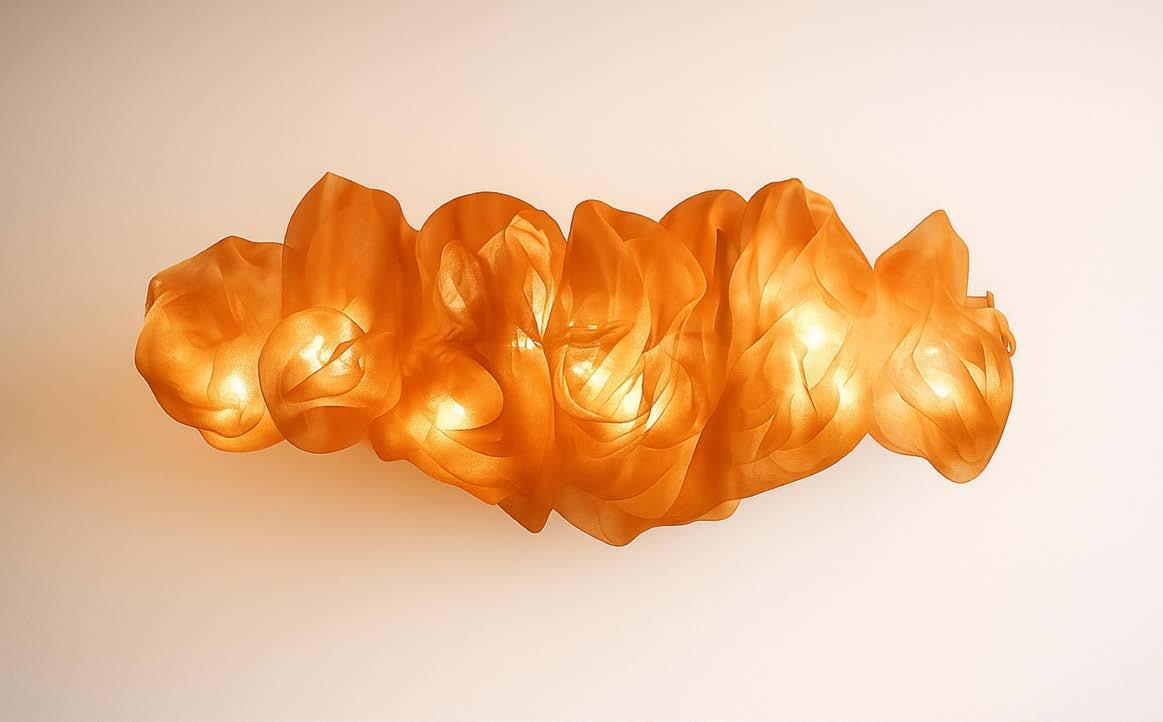
This signature fixture is a dramatic study in industrial wire mesh transformed into a fluid, organic form, embodying the beauty of a supernova. It uses a simple wire mesh to achieve an ethereal, organic fluidity. The design features layered, hand-formed mesh panels saturated in a vibrant, molten-orange hue, allowing light to filter through with a warm, textured intensity. The result is a sculptural piece that evokes a suspended nebula or a stellar explosion.
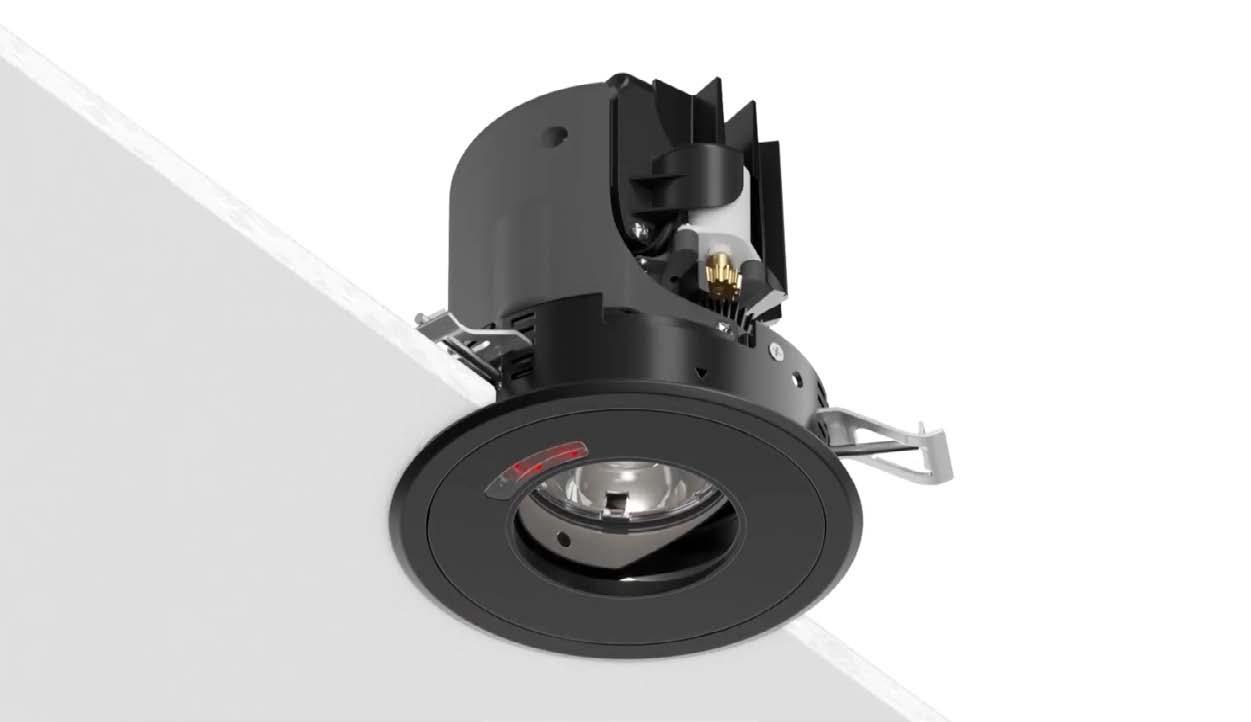
The Nova 1 light from Remote Controlled Lighting (RCL) is a remote-controlled recessed downlight designed for flexible architectural lighting. It’s the company’s most compact motorised luminaire, offering precision beam control, adjustable optics and powerful output in a discreet 100 mm form factor. Wireless control lets you adjust lighting from the ground without ladders, making it suitable for accent, gallery and hospitality applications.
NOVA Rastrullo
NOVA 1 RCL
WIRELESS DRIVER
Helvar Components
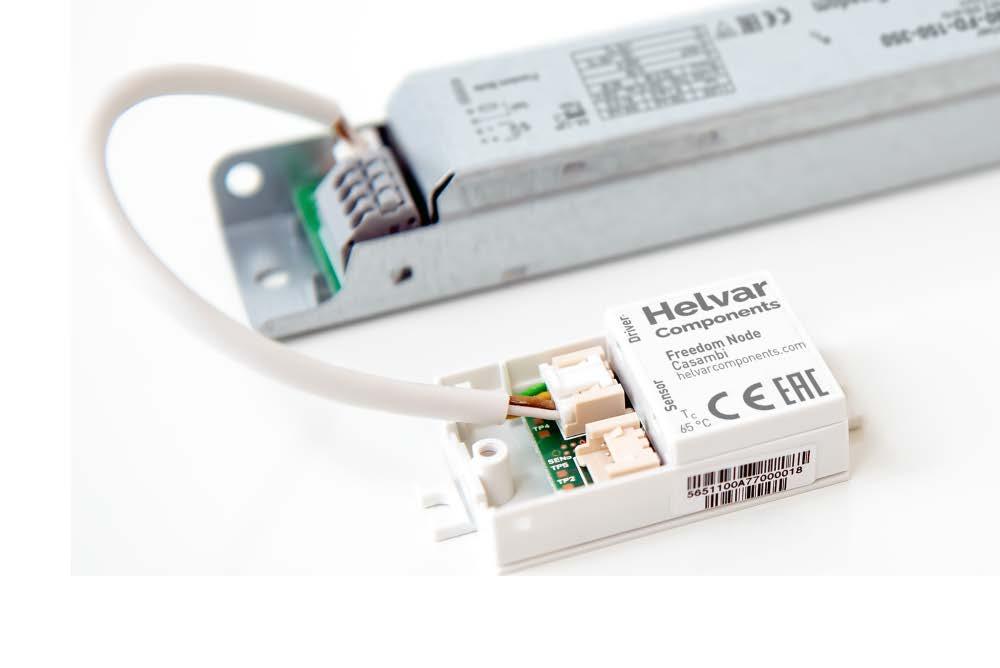
Helvar Components has launched the 42 W MINI-sized radiointegrated LED driver with sensor connector. Designed for wireless luminaires in space-constrained applications, this compact unit gives customers a complete radio-integrated control solution with sensor input, without the need for external control units or thirdparty components. It simplifies the design and sourcing and offers competitive pricing compared to traditional D4i/Powered DALI tech.
NEW POLLUX
Erco
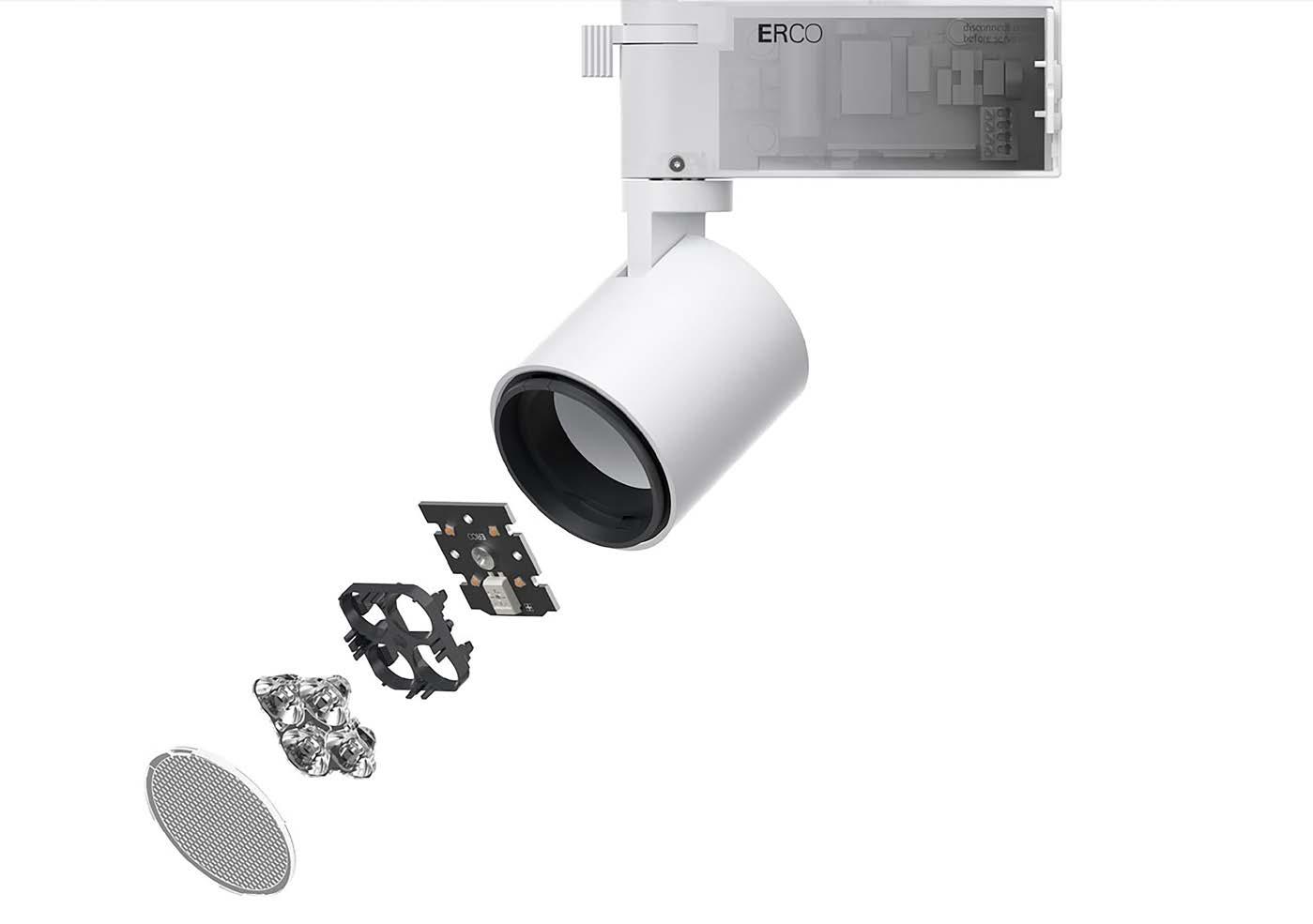
Pollux spotlights are regarded as an entry point into sophisticated accent lighting They combine a compact, cylindrical luminaire head with an adapter for the Erco track, which also houses the control gear. Pollux New gives these spotlights a performance upgrade thanks to newly in-house manufactured control gear. This allows one more LED to be added to the board in the same compact 66 mm diameter housing, which results in 33 per cent more light.
MINI Lucent Lighting
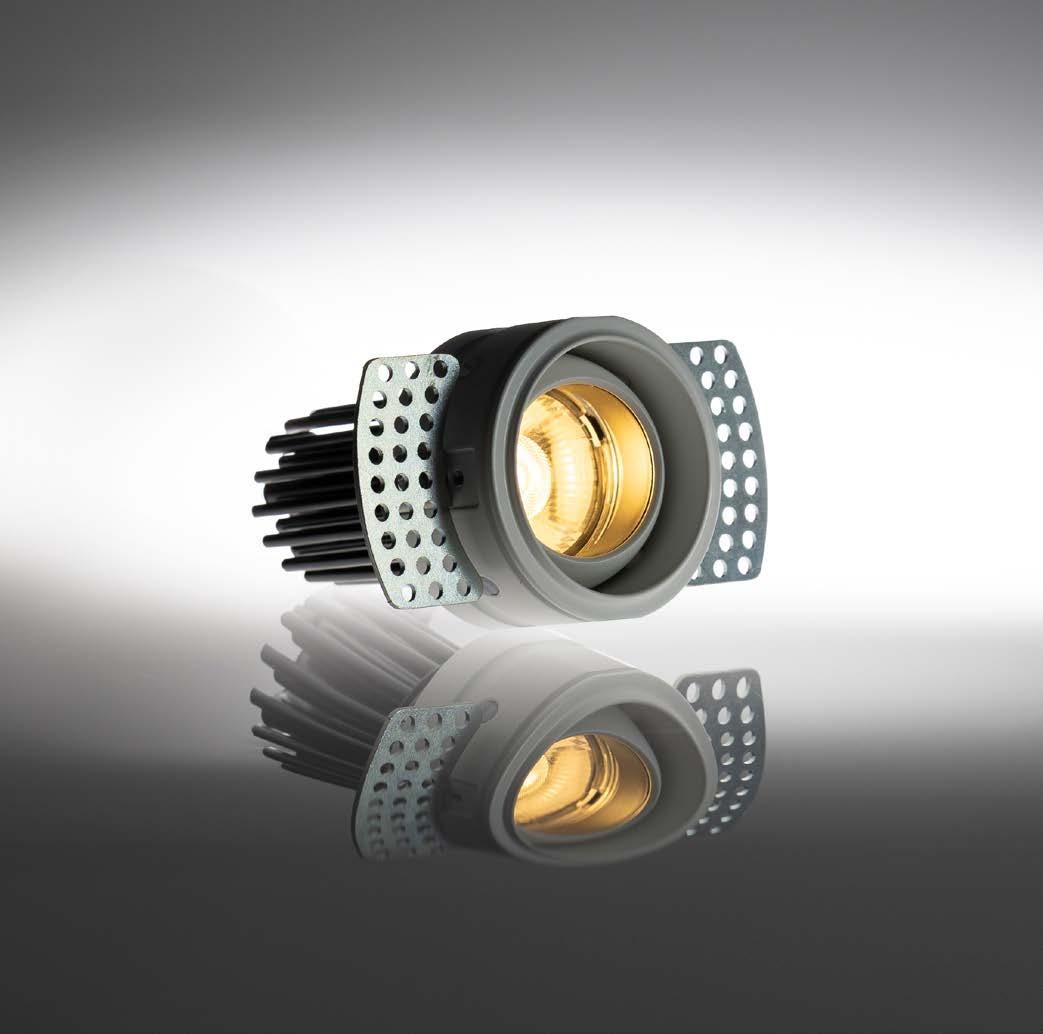
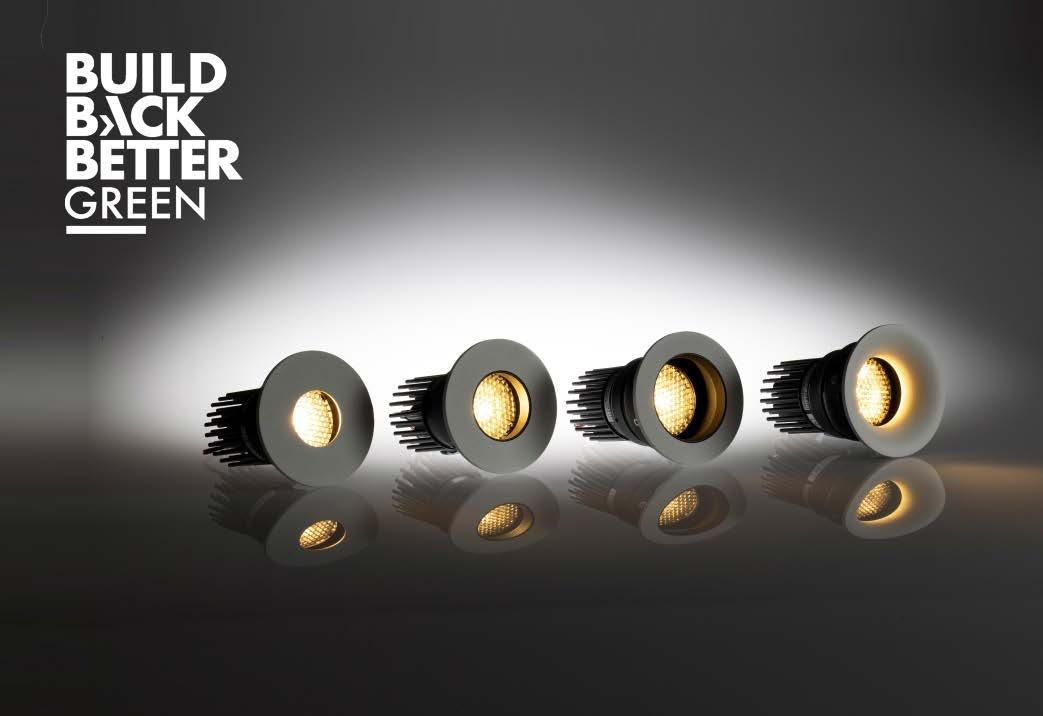
The Mini Series featuring the Mix60, Oculus50, and Soft50 Gen2, bring smaller and smarter variants of the iconic Mix85, Oculus, and Soft70 Gen2 ranges, offering designers more flexibility without compromising performance.
By offering smaller, high-performance variants of its flagship ranges with luminous efficacies that far exceed the requirements for Part L 2 General lighting designers now have more flexibility and more aesthetic options.
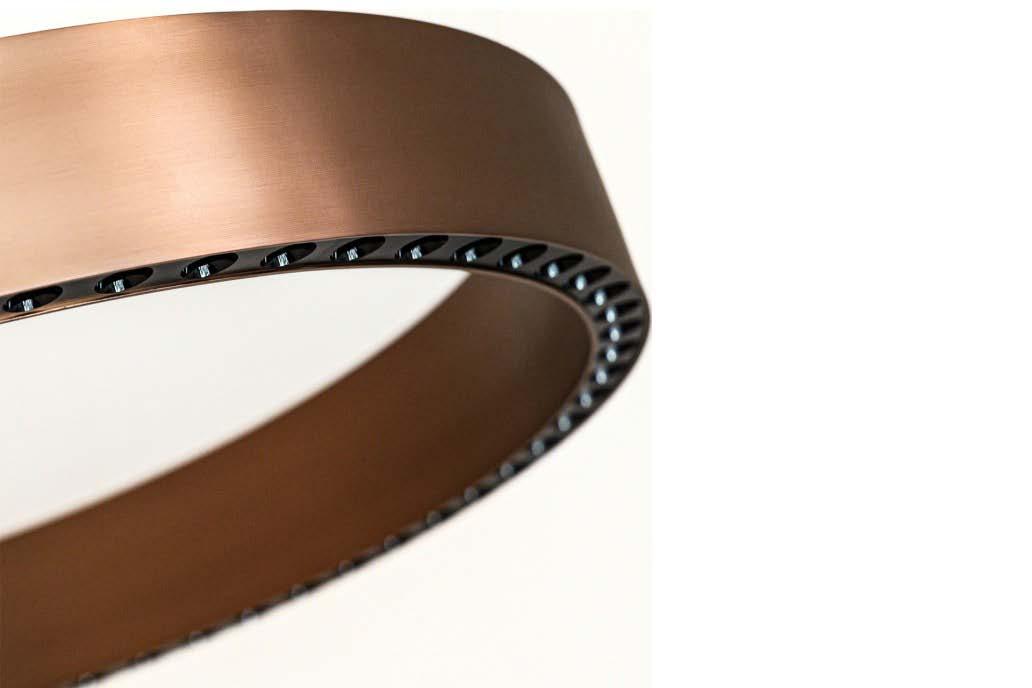
Space 16 Ring combines ambient and accent lighting in one pendant. Featuring upward and downward illumination, electroplated finishes in refined metal tones, and an adjustable concealed lifter, it delivers both design flexibility and contemporary elegance for dining, lounge, or reception applications. It has a standard colour temperature of 3000K, a CRI of 90 and a lumen package of 2,400lm. Control is via the Dali driver.
LUXO ALIGN Glamox
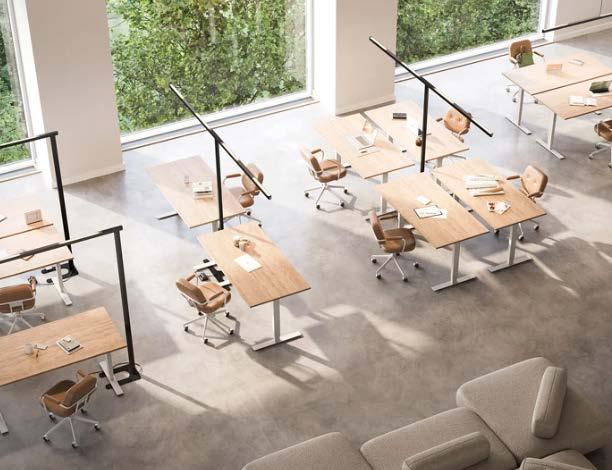
Luxo Align is a range of free-standing and pendant designer office lights that combine Scandinavian minimalist design with adjustable, personalisable light levels and colours. The office light received the Best Industrial Design award at the IDC.25 Awards in Ålesund, Norway. The environmentally friendly lights use recycled aluminium, and the free-standing versions feature a specially developed sensor for presence detection and daylight harvesting.
SPACE 16 Neko
SCOTTISH ABBEY TRIUMPHS IN 2025 BUILD BACK BETTER AWARDS
No fewer than 18 entries took trophies in the 2025 lighting category of the Build Back Better Awards, including two projects, six products and three industry initiatives. The judges awarded one Platinum, their ultimate accolade, as well as eight Green awards to recognise investment in sustainability by the lighting industry in recent years.
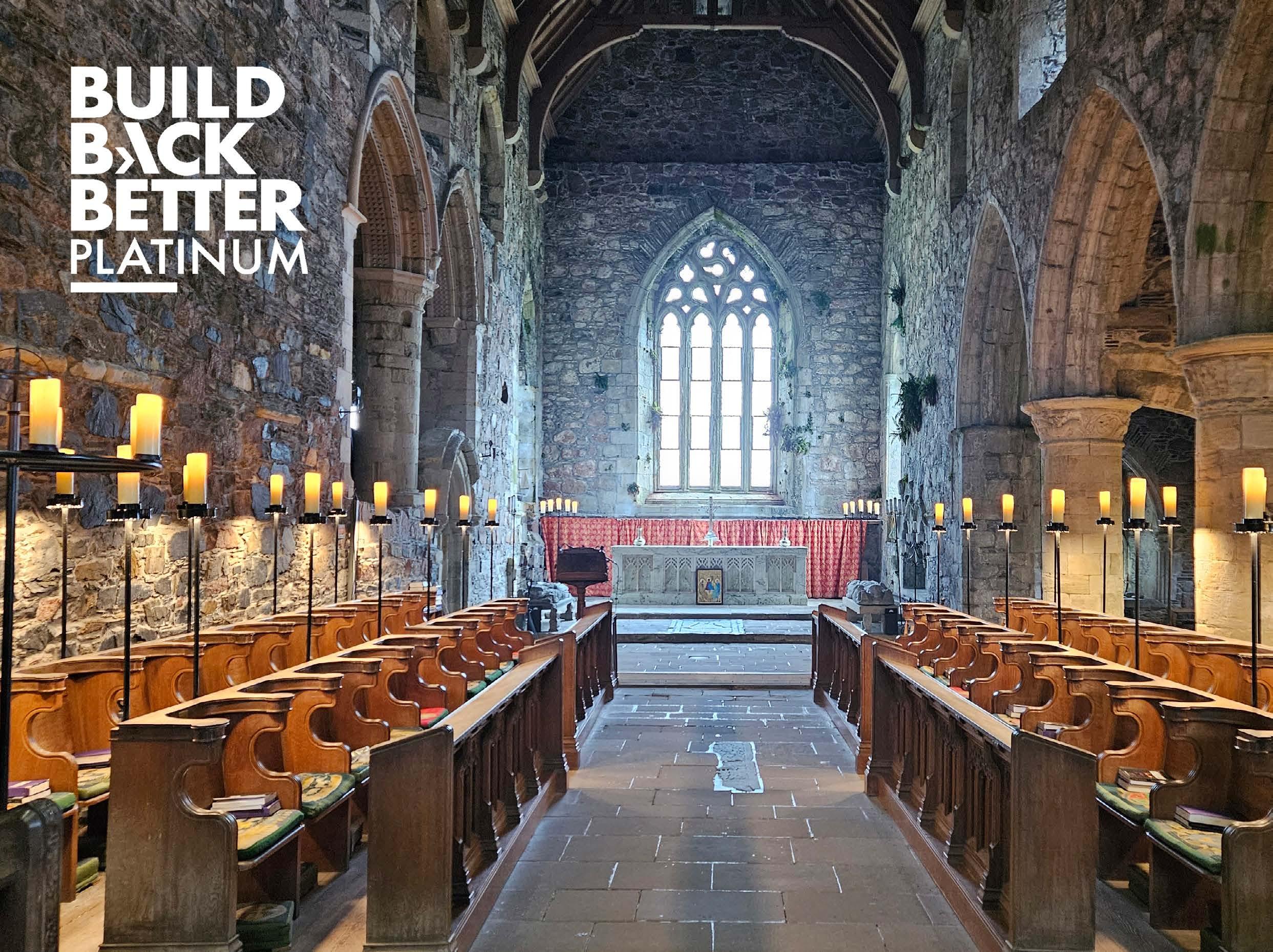
The replacement of paraffin candles at Iona Abbey in Scotland with a thoughtful and considered LED scheme by Nich Smith Lighting Design took the only
Build Back Better PLATINUM award.
The project involved the insertion of flame-effect LED modules into real wax candles and the 3D printing of reading lights for insertion into the candelabras. Judges praised it as a scheme of ‘remarkable attention to detail and precision’ whose results are ‘astounding and beautiful’.
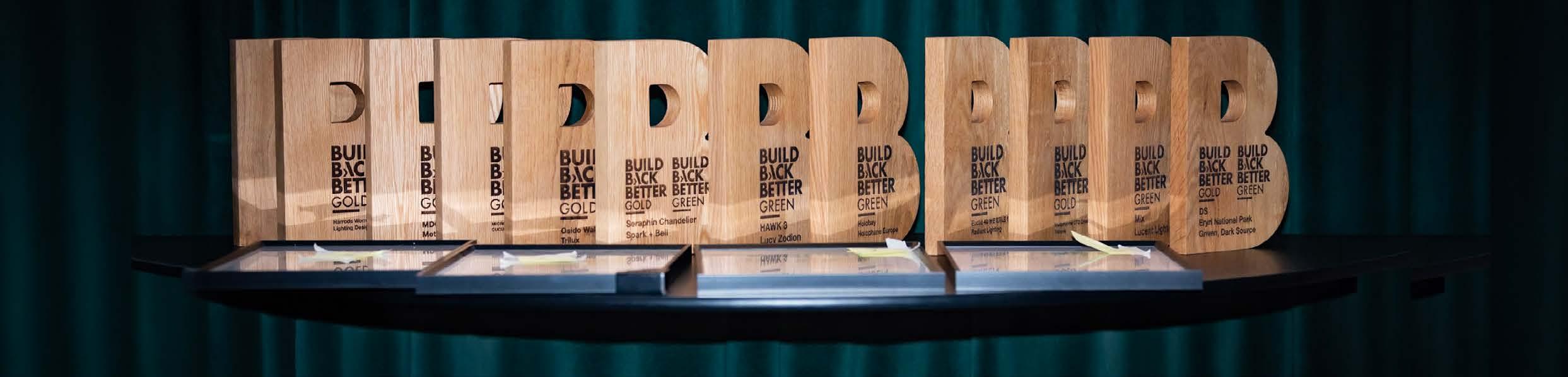
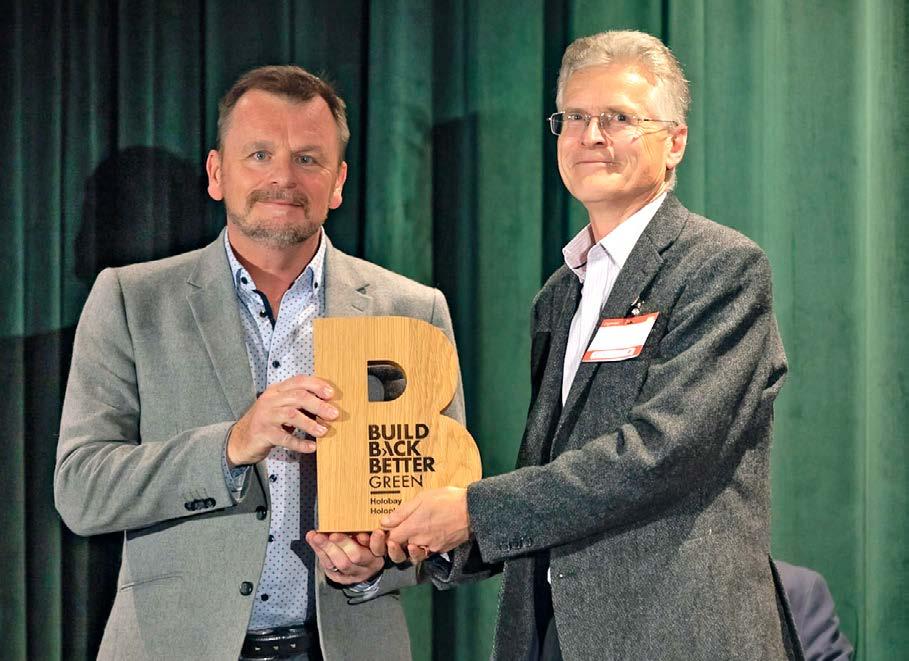
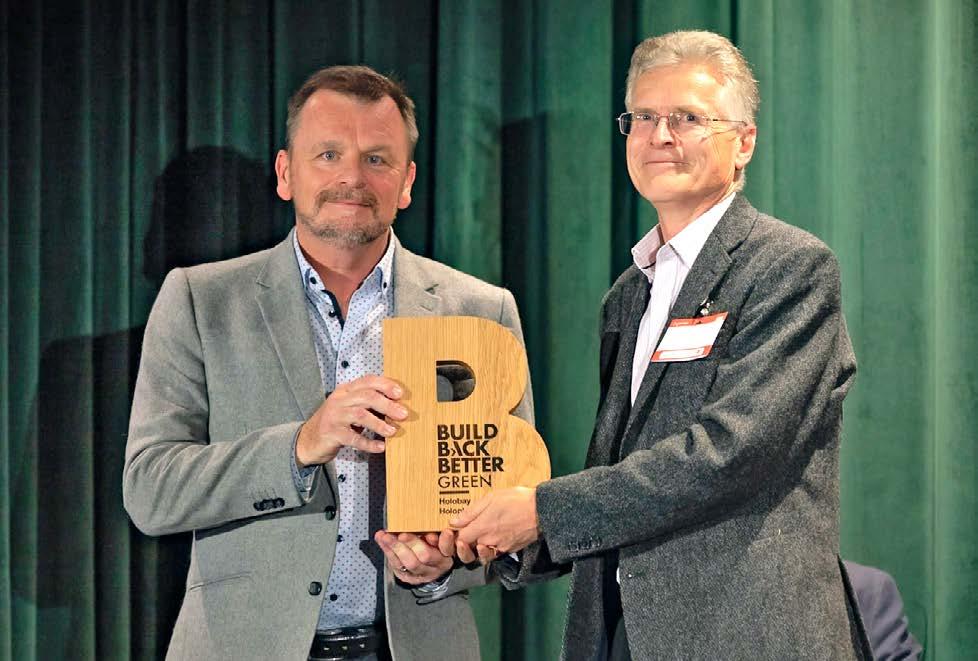
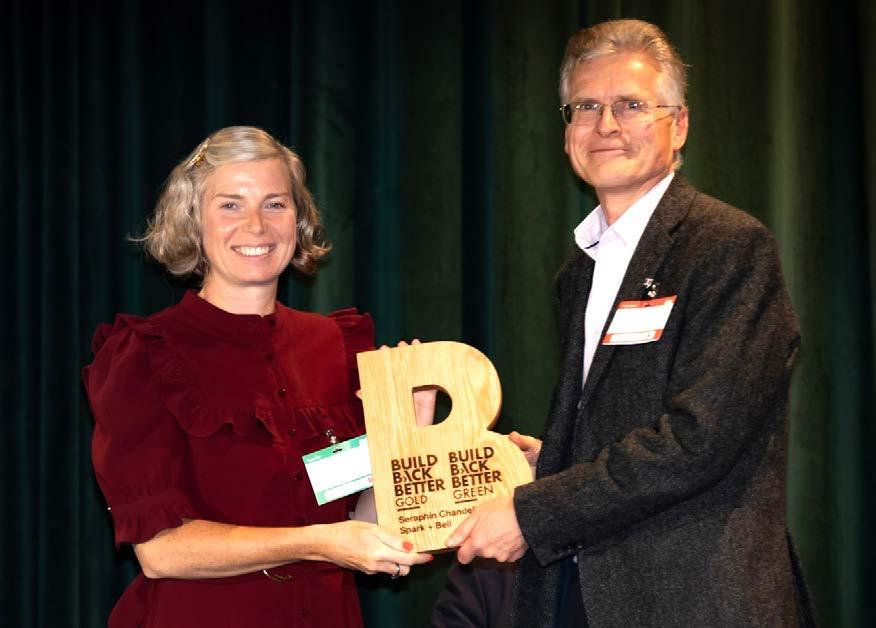
The winners were presented with their iconic ‘B’ trophies at a glittering ceremony at the Minster Building in London on Thursday 25 September 2025.
LIGHTING PROJECTS
PLATINUM
Iona Abbey Candle Replacement
GOLD Harrods Women's Designer Wear
GOLD Reading Station Hill, dpa lighting consultants
The replacement of paraffin candles at Iona Abbey in Scotland with a thoughtful and considered LED scheme by Nich Smith Lighting Design has won a Build Back Better PLATINUM award.
Although candlelight from naked flames has a beautiful aesthetic and visual appeal, the use of real wax candles has many of the unwanted effects.
Additionally, reading in the Abbey choir stalls was difficult due to low light levels.
A comprehensive review of the original installation and cultural needs of the Abbey bu Nich Smith resulted in new LED candles being installed. They are handmade real wax altar candles which are lit and burnt to create unique melting patterns. The candles are then extinguished, cored and fitted with a special LED insert to produce a realistic candlelight effect.
Light levels, colour temperature variation, and the location based random flicker of real candles are faithfully reproduced.
New freestanding candelabra replaced the original seven types to enable wiring. Their design reflects the originals in scale and candle quantities, with details drawn from motifs within the church.
Choir stall candelabras were refurbished with LED candles and new reading lights 3D printed to exactly fit the underside of the candle tray, as well as accommodate electronics.
Electrical infrastructure was sensitively installed, keeping cabling and complexity to a minimum.
Copper MICC cable was selected for its small diameter and natural patina through aging, carefully clipped to mortar joins using low profile clips with hidden fixings.
Accurate coring through 965mm thick stone walls was required to get cables exactly where needed. The electrical infrastructure fades perfectly into the existing building fabric.
Harrods Women's Designer Wear
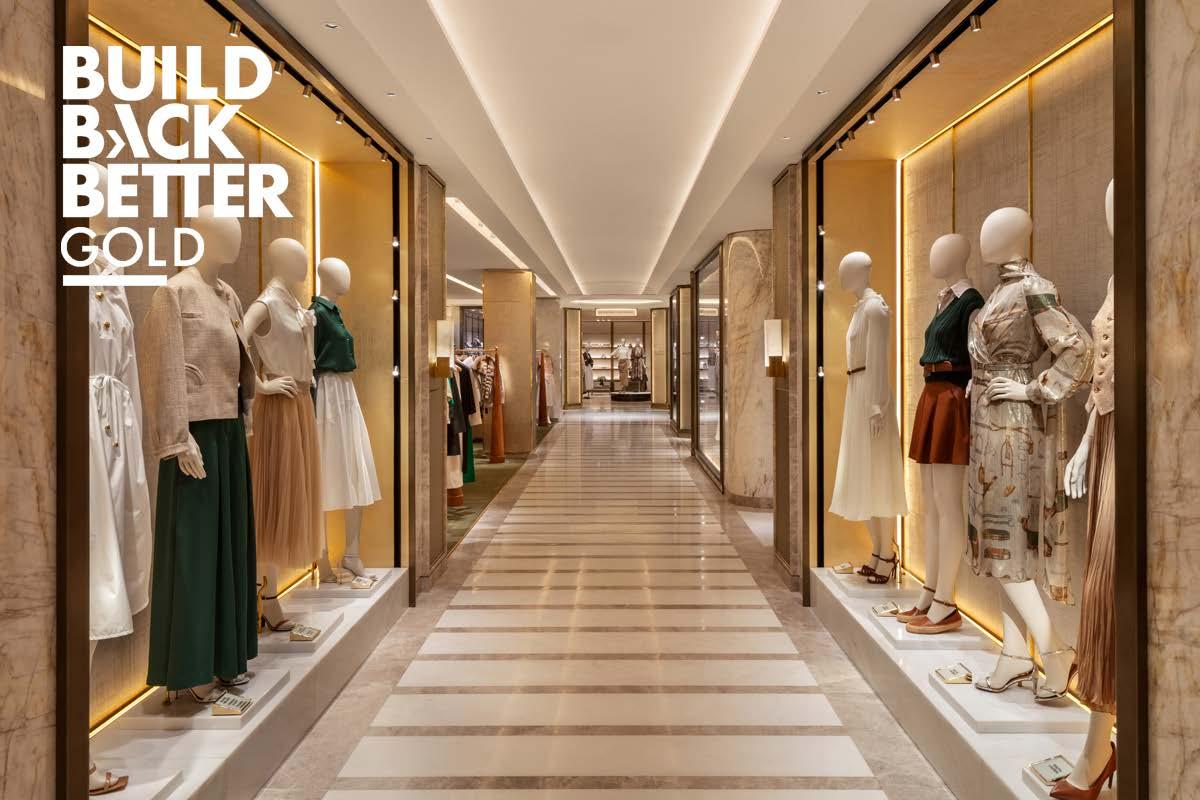
The women’s designer wear department at Harrods has won a 2025 Build Back Better GOLD Award for a lighting scheme that balances luxury, heritage and sustainability. Designed by Lighting Design International, the project uses track luminaires selected for strong circularity (TM66) and low embodied carbon (TM65). A bespoke suspended track system was developed to avoid disturbing the listed historic ceiling, enabling flexible spotlighting
of displays while respecting the architecture. Warm 2400K indirect lighting and 2700K high colourrendering spotlights create a hospitality-style ambience that enhances fabrics and colour accuracy. Minimal floor illumination keeps focus on products, while concealed lighting highlights architectural details. Energy use is reduced through productfocused lighting, limited suppliers for consistency, and careful fixture selection.
LIGHTING INITIATIVES
FIS Project Reuse
FIS Project Reuse has won a 2025 Build Back Better GREEN Award for addressing waste and embodied carbon in the fit-out sector. Developed by the Finishes and Interiors Sector (FIS), the initiative enables the business-to-business reuse of products removed during strip-outs, particularly luminaires. Frequent refurbishments generate vast waste and carbon emissions, often discarding nearly new products. Project Reuse tackles logistical, commercial and risk barriers by providing storage, logistics and guidance to make reuse standard practice. A pilot project successfully refurbished 500 nearly new luminaires for reuse across multiple fit-outs. Funded initially through industry crowdfunding, the initiative will publish open-source standards and guidance, aiming to normalise reuse, reduce landfill, cut carbon and make circularity “business as usual”.
Reading Station Hill, dpa lighting consultants
Reading Station Hill has received a 2025 Build Back Better GOLD Award for a public realm lighting scheme inspired by the town’s railway heritage. Designed by dpa lighting consultants, the project transforms a former car park and shopping centre into a vibrant mixed-use destination linking the railway station and town centre. Layered lighting supports safety, events and community activity while creating a welcoming nighttime environment.
High-level projectors provide ambient light, complemented by integrated lighting in benches, planters and artworks. A bespoke feature track in One Station Hill’s lobby references branching rail lines while accommodating accent, ambient, emergency and technical services without disturbing exposed concrete soffits. The result is a cohesive, flexible lighting design that enhances identity, usability and place-making.
LIGHTING INITIATIVES
Future Designs – Return to Reuse
Future Designs’ return to reuse scheme has won a 2025 Build Back Better GREEN Award for advancing circularity in lighting. The initiative offers a fully traceable end-of-life service for luminaires, prioritising reuse under the carbon careful™ initiative or certified recycling of all components. Eligible VANE luminaires installed within the last 12 years can be refurbished or reconfigured thanks to their modular design. Embedded QR codes enable long-term tracking, while adaptable systems extend product life rather than requiring replacement. Aluminium and steel components are reused or recycled through certified partners, with full documentation provided. With over 730km of VANE luminaires installed across the UK, the scheme has significant environmental potential, helping clients reduce waste, meet sustainability targets and close the loop responsibly.
LIGHTING INITIATIVES
Donate-A-Light
Donate-A-Light has won a 2025 Build Back Better GREEN Award for its not-for-profit model redistributing surplus LED lighting to charities, hospices and community spaces across the UK. The initiative diverts unused or slow-moving stock from landfill and provides it free of charge to organisations that could not otherwise afford high-quality lighting. By improving safety, comfort and wellbeing while reducing running costs and energy use, DonateA-Light delivers immediate social and environmental benefits. The scheme promotes circular economy principles, reduces emissions and supports net-zero ambitions. Funded through sponsorship, donations and surplus sales, it is industry-led, scalable and proven. Donate-A-Light reframes surplus stock as a valuable resource, turning waste into lasting social impact.
TRILUX
Osido Wall Luminaire
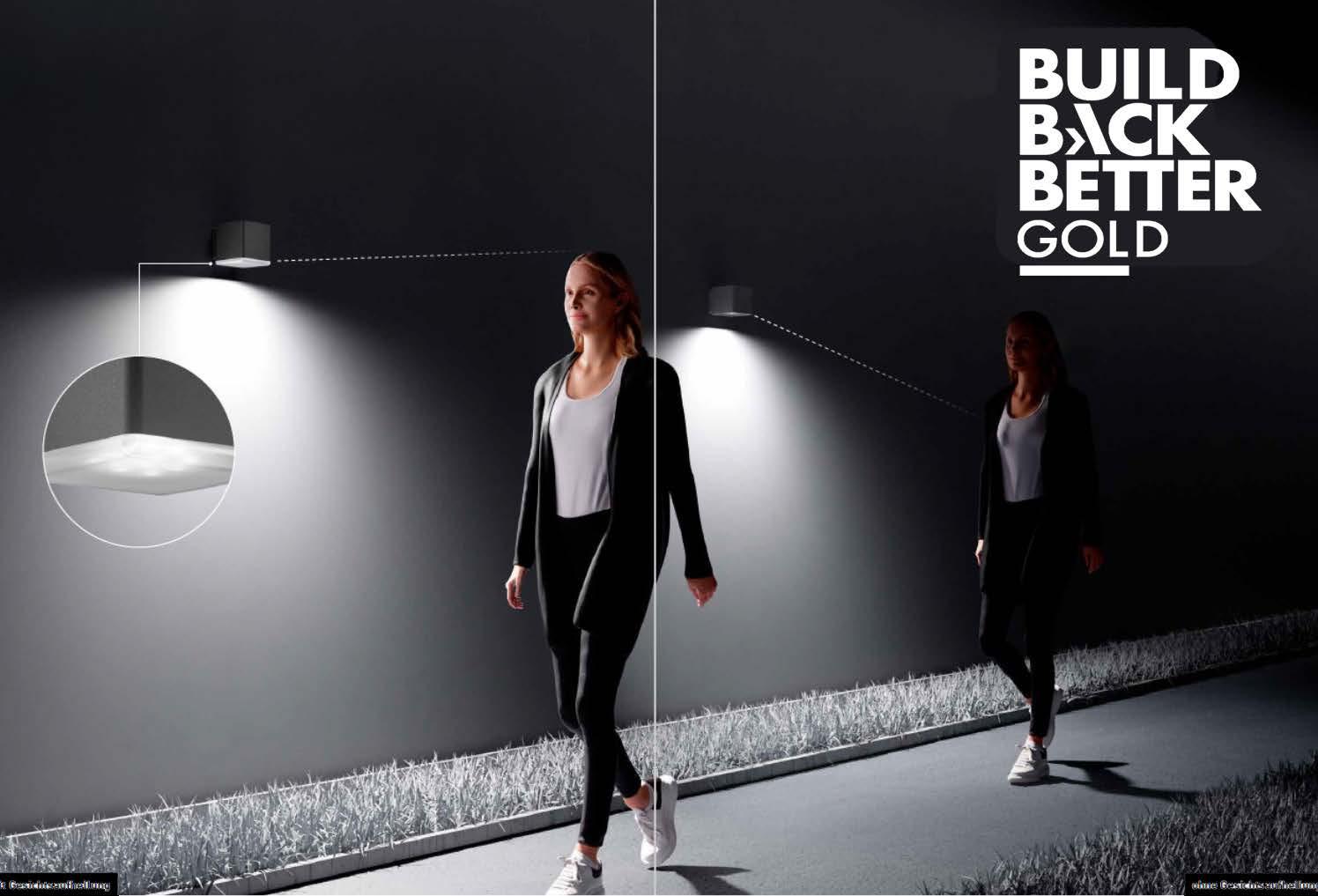
The Osido exterior wall luminaire from Trilux has won a 2025 Build Back Better GOLD Award for delivering architectural impact while minimising light pollution. Designed to meet Dark Sky principles, Osido integrates light control directly into the luminaire rather than relying on external shields. In indirect versions, the LED board is angled inward by six degrees, significantly reducing upward light and sky glow. The installation concept simplifies mounting with tool-free attachment and generous cable space. Multi-layered optics, optional facial illumination and smart control compatibility enhance flexibility and safety. With clean lines, hidden fixings and multiple forms, Osido suits both modern and traditional architecture and supports a unified approach to exterior lighting design.
Tridonic Multichannel OTD Driver
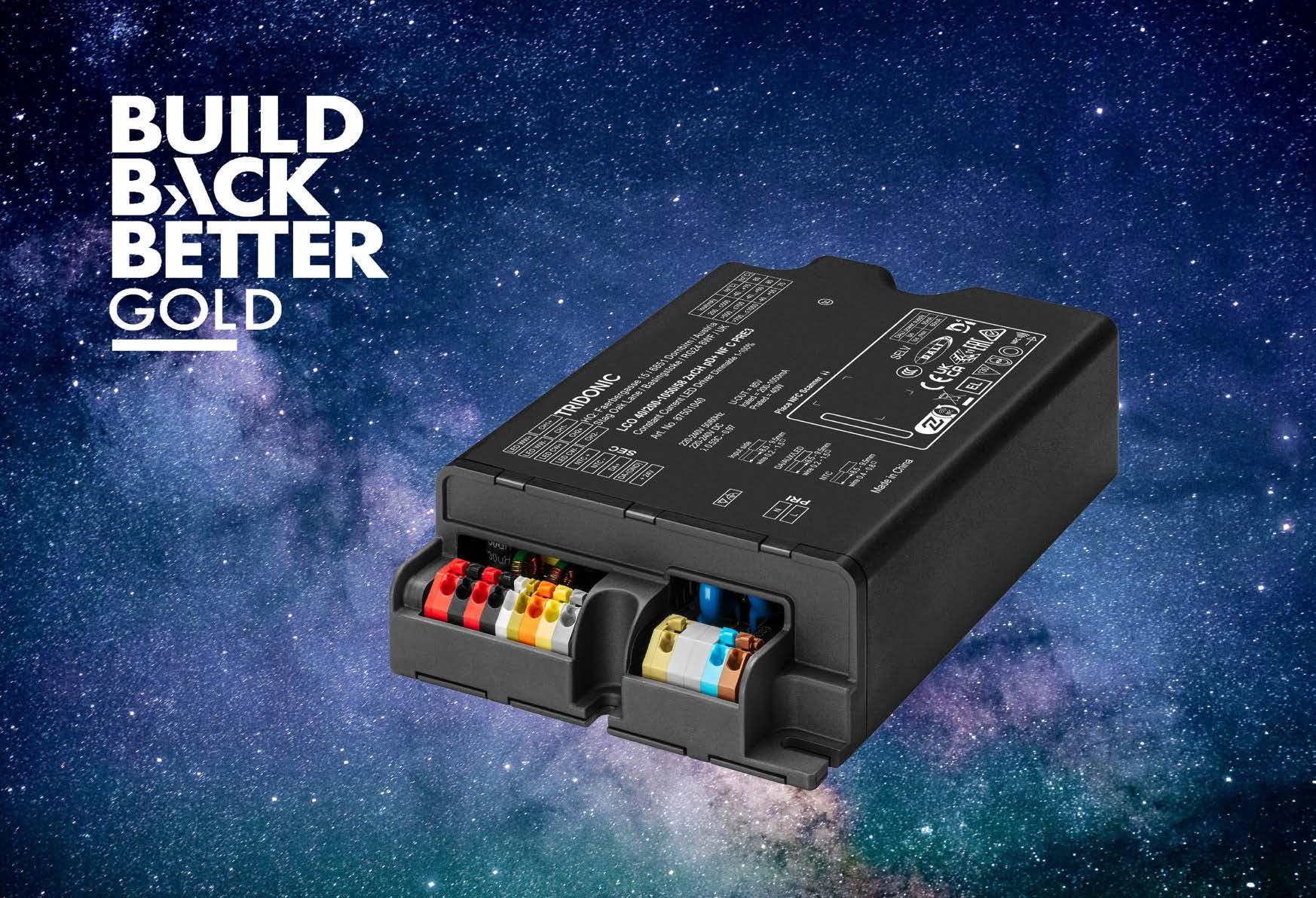
The Tridonic Multichannel Outdoor (OTD) driver has won a 2025 Build Back Better GOLD Award for reducing light pollution through adaptive outdoor lighting. The dual-channel driver enables dynamic control of light intensity and colour temperature, ranging from 2000K to 4000K and dimming from 100% to 1% or off. This allows lighting to respond to time, occupancy and context, reducing unnecessary brightness while maintaining safety. Separate channels can illuminate different zones, such as footpaths and streets, at appropriate levels. Tunable white lighting supports circadian rhythms and wildlife protection. Compact integration of two drivers reduces cost and complexity, while compatibility with sensors and controls further enhances efficiency and environmental performance.
DS LUMINAIRE
Dark Source / Griven
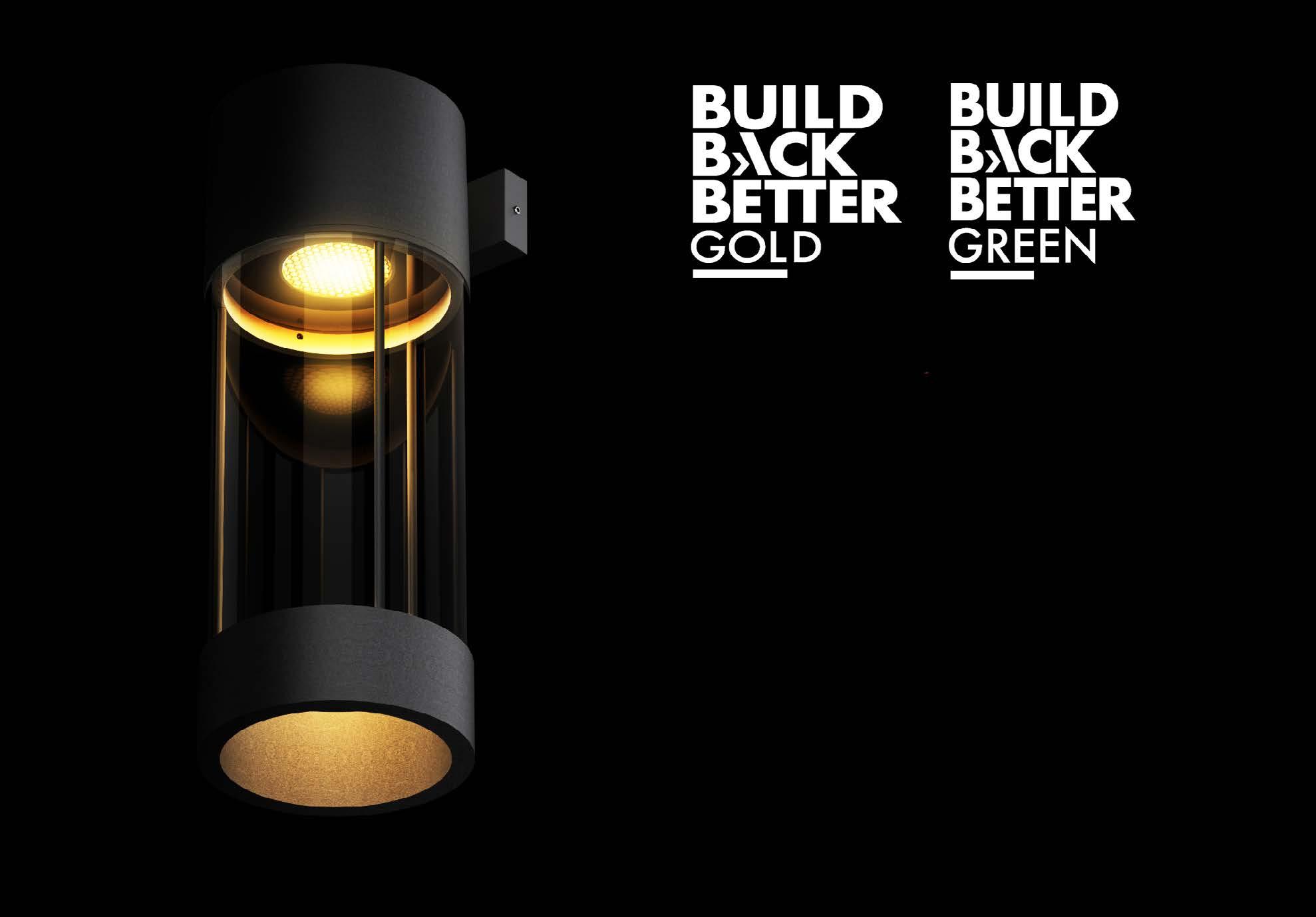
The DS outdoor luminaire by Dark Source, manufactured by Griven, has won both GOLD and GREEN Build Back Better Awards for its dark-sky-friendly design. Developed through a project in North Wales with support from Eryri National Park, DS addresses the lack of affordable, sustainable outdoor lighting that meets dark-sky principles. Unlike typical domestic exterior lights, DS is engineered for durability, adaptability and long-term use. It limits upward light through glare accessories, a maximum 25-degree tilt and colour temperatures below 2700K. Constructed mainly from recycled and locally sourced die-cast aluminium, DS achieves a TM66 score of 3.0 and is fully disassemblable for maintenance, supporting longevity, reduced waste and protection of night skies.
HOLOPHANE Holobay Industrial Luminaire
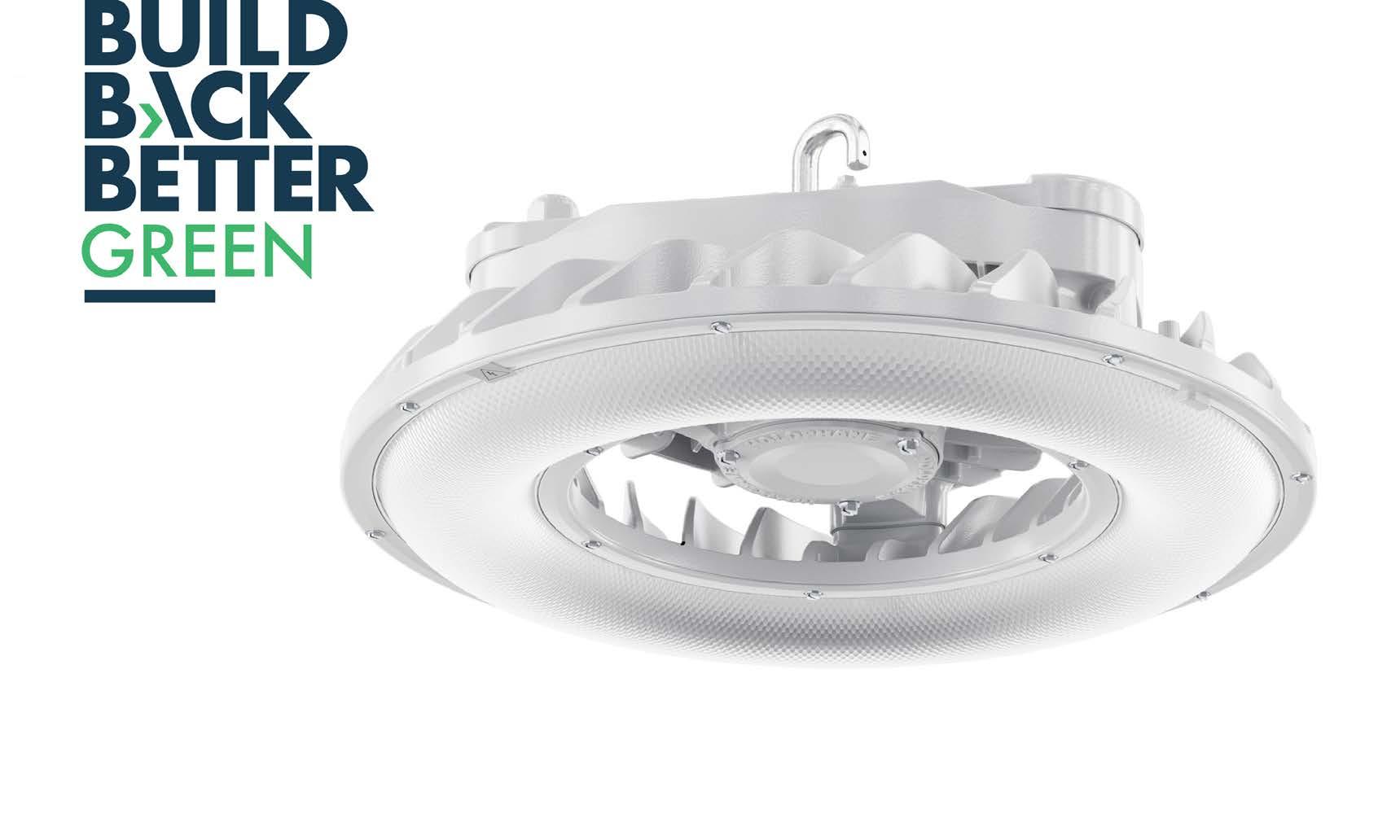
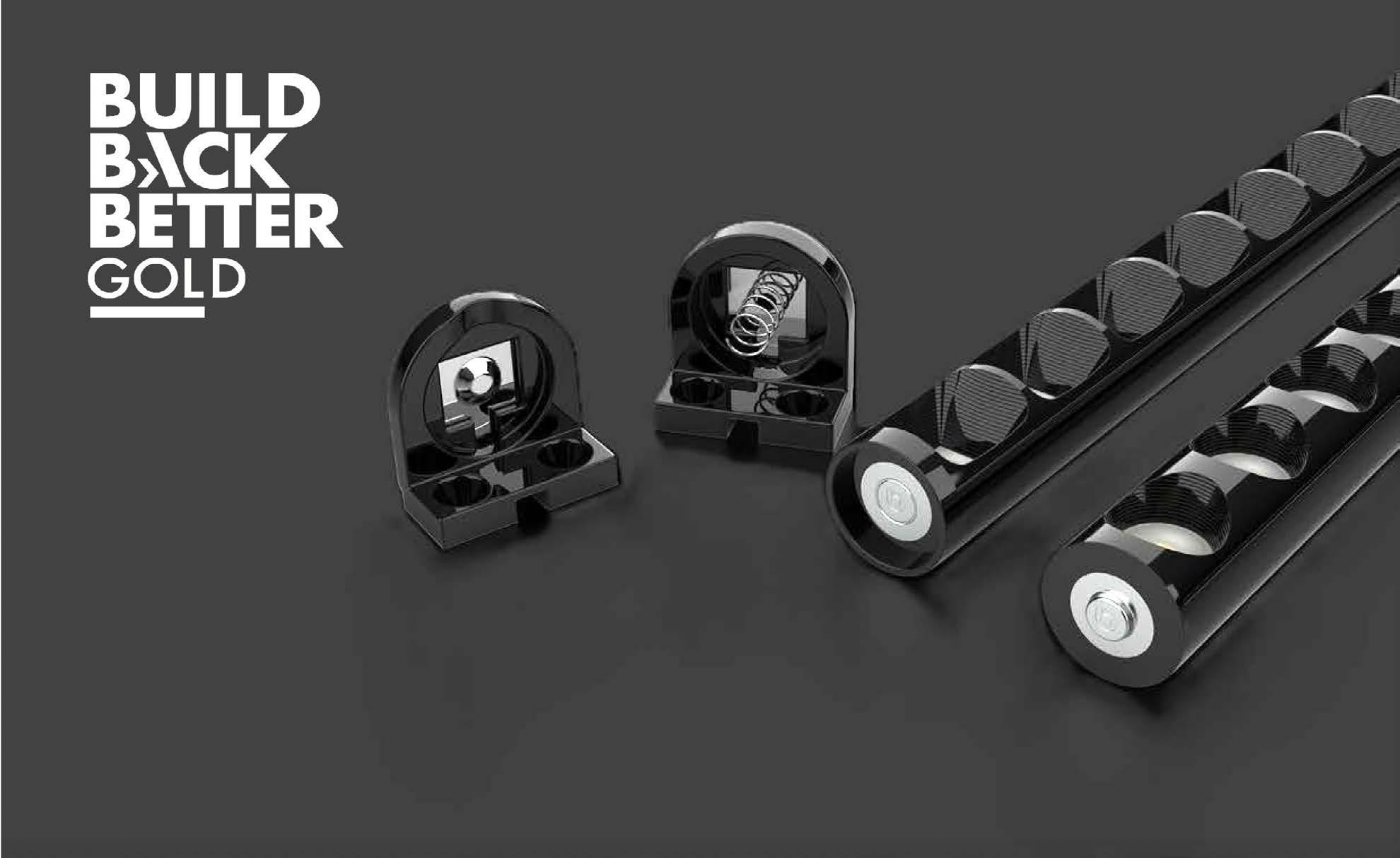
Holophane’s Holobay industrial luminaire has won a 2025 Build Back Better GREEN Award for combining performance, durability and circular design. Using PrismaLED optics and borosilicate glass refractors, Holobay delivers uniform, low-glare illumination with excellent vertical light distribution. The glass refractor resists UV degradation, dust and yellowing, while a self-cleaning venturi effect reduces maintenance. Designed for a 100,000-hour lifespan, the modular luminaire allows easy replacement of drivers and emergency gear. Manufactured in Britain using renewable energy, Holobay follows Holophane’s EcoDesign principles and achieves an “excellent” TM66 score of 2.6. Its efficient optics improve safety, reduce eye strain and support net-zero goals in demanding industrial environments.
LTwo® Battery Luminaire
The LTwo® battery luminaire from Architectural FX has won a 2025 Build Back Better GOLD Award for its flexible, future-proof design. Using nano optic technology, the 16.4mm fixture delivers high output with glare control up to UGR 16. The battery version clips into place without rewiring, enabling easy replacement, repurposing or upgrades to optics, colour temperature or wattage. Independently TM66 certified, the luminaire supports reuse and circularity with minimal disruption or cost. Operating at safe 48V DC (SELV), it can be replaced without specialist electricians. Its slim 22mm depth allows integration into furniture and architecture, offering sustainable, adaptable lighting for Cat A fit-outs and beyond. ARCHITECTURAL FX
SPARK & BELL Seraphín Chandelier
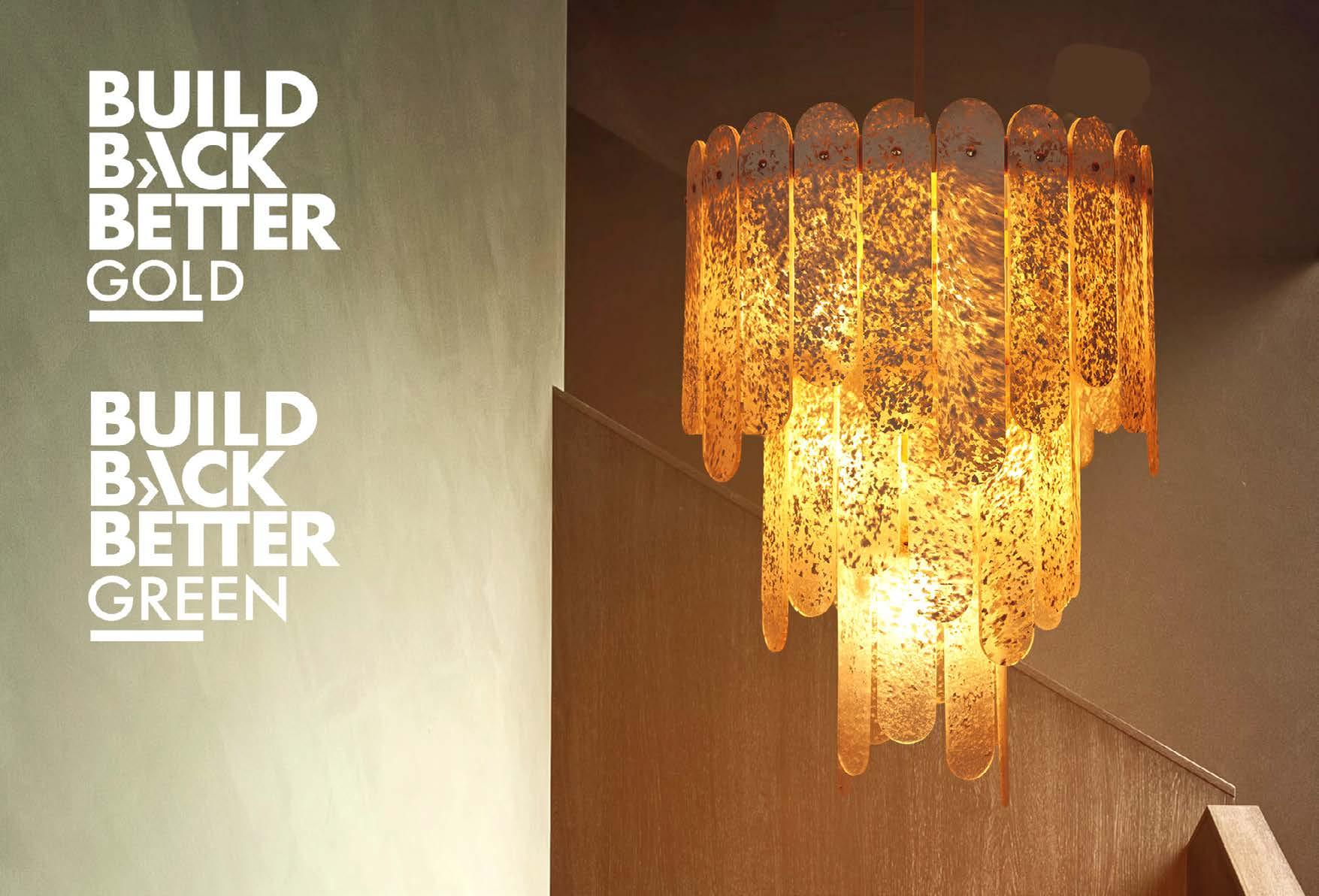
Seraphín by Spark & Bell has won both GOLD and GREEN Build Back Better Awards for transforming recycled CD cases into a statement chandelier. Each three-tier fixture reuses over 120 CD cases, diverting more than eight kilograms of plastic from landfill. Designed by founder Emer Gillespie, Seraphín features hand-formed crystalline drops made from the studio’s proprietary recycled “Jewel” plastic, creating a luminous, ethereal effect. Available in one-, two- or three-tier configurations, the made-to-order chandelier adapts to different spaces. Manufactured in Brighton, Seraphín is fully repairable through a lifetime service, combining craftsmanship, circular material use and commercial-scale design while staying true to Spark & Bell’s responsible, purpose-driven ethos.
LUCY ZODION HAWK 3 Photocell
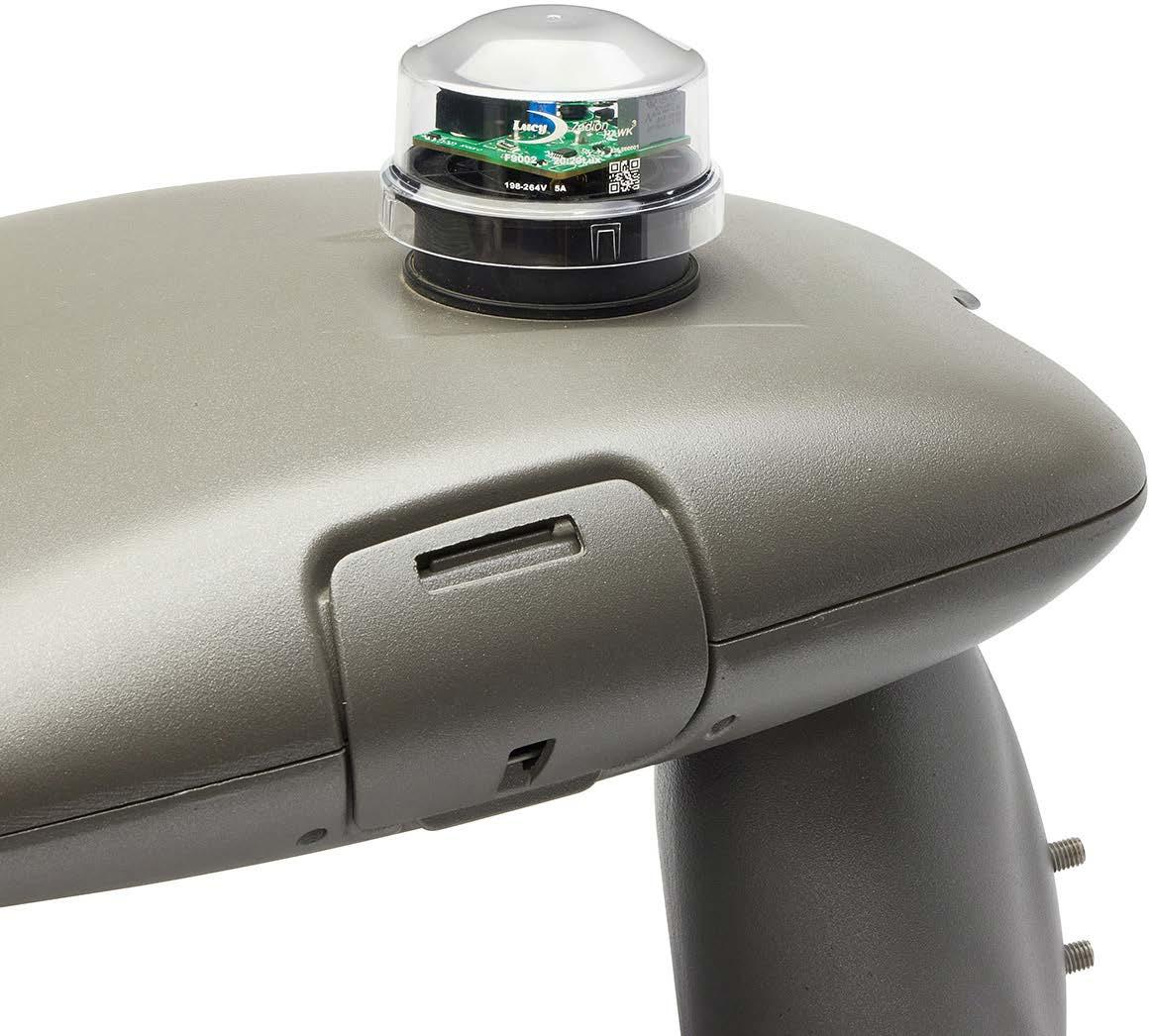
The HAWK3 photocell from Lucy Zodion has won a 2025 Build Back Better GREEN Award for rethinking street lighting control. Developed through consultation with local authorities and contractors, it delivers high switching accuracy, consistent lux performance and energy consumption as low as 0.1W. Designed to modernise outdated standards, HAWK3 supports LED lifecycles, smart cities and net-zero targets. Its frosted cone reduces false switching and shadowing, while simplified architecture uses fewer materials and supports easier disassembly. Laser marking replaces labels to reduce waste, and compatibility with multiple NEMA sockets ensures easy integration. Built for longevity and recyclability, HAWK3 reduces unnecessary burn hours and landfill waste while improving reliability and sustainability.
LUCENT LIGHTING Mix Range
CUCUMBER LIGHTING CONTROLS
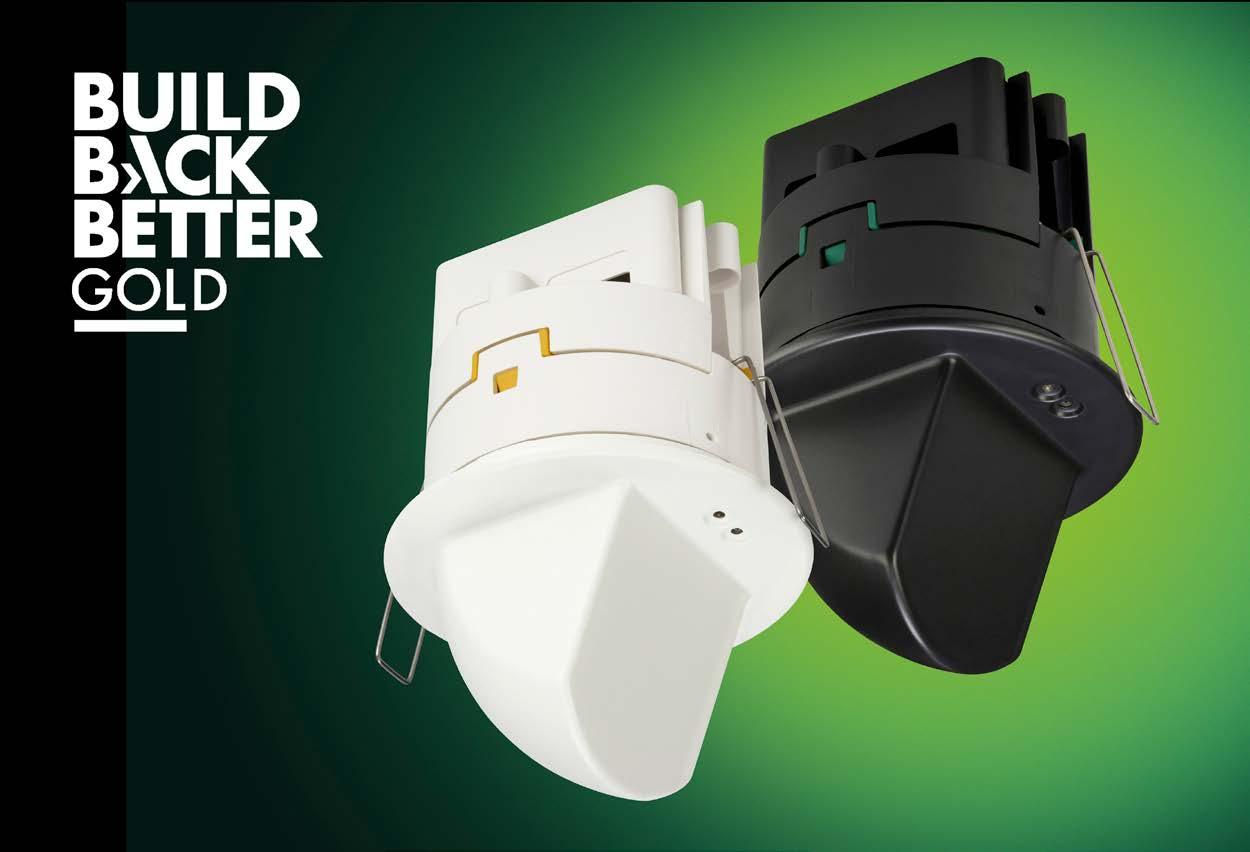
Microwave Detectors
Cucumber Lighting Controls’ microwave sensors have won a 2025 Build Back Better GOLD Award for performance, reliability and sustainability. Operating in the K Band (24GHz), the sensors avoid Wi-Fi interference, delivering high sensitivity, long detection ranges and reduced false triggering. With coverage up to 34m x 6m, fewer sensors are required, particularly in corridors. An intelligent learning mode filters repetitive background movement, improving comfort and energy efficiency. The fixed-head design prevents tampering and achieves IP65 protection from below. Modular construction allows separate replacement of sensor heads or power units, supporting circular economy principles. British-made and backed by a seven-year warranty, the sensors combine durability, efficiency and reduced waste.
Euclid 40 WE ERLE System
Lucent Lighting’s Mix range has won a 2025 Build Back Better GREEN Award for its circular, low-carbon design. Available as Mix85 and Mix60, the range uses 89% recycled materials and is 99% recyclable, with embodied carbon as low as 3 kgCO₂e. Both products achieve an “excellent” TM66 circularity score of 2.5. Designed for ease of installation and maintenance, Mix features tool-less fitting, quickrelease LED engines and compatibility with multiple ceiling types. Interchangeable trims, finishes and adjustable optics offer flexibility for designers and specifiers. High efficiency, strong beam control and modular compatibility across Lucent’s LED modules make Mix a practical, adaptable solution supporting long-term reuse, reduced waste and rapid project delivery.
The Euclid 40 WE ERLE System by Radiant Architectural Lighting has won a 2025 Build Back Better GREEN Award for extending lighting system life to up to 30 years. Designed for interior cove and dynamic lighting applications, the system features Easily Replaceable Light Engines (ERLE) that can be swapped on site without specialist tools. A hinged clamshell design provides excellent thermal management while allowing fast access for upgrades or repairs. The system supports straight and curved configurations and produces dynamic “water effect” lighting through DMX control and textured glass. By enabling on-site upgrades to light engines, optics and drivers, the system reduces waste, lowers embodied carbon and allows lighting effects to evolve over time.
MDCC12C Lighting Control Module
The MDCC12C lighting control module from Metway has won a 2025 Build Back Better GOLD Award for its hybrid wired and wireless control solution. Integrating Casambi DALI components via an onboard Salvador 1016, the unit offers 12 DALI luminaire outputs and two mains outputs for powered sensors or switches. Dual latching on luminaire outputs enhances safety, while plug-and-play installation reduces on-site time. Manufactured in Britain from flameretardant UL V0 material, the MDCC12C combines robust power distribution with wireless flexibility in a compact unit. Drawing on Metway’s 87-year heritage, the product delivers contractor-friendly installation, reduced complexity and reliable performance for modern lighting control systems.
EDITOR’S NOTE:
The Build Back Better Awards celebrates innovation, creativity, environmental leadership and social purpose in the built environment. The programme is a non-aligned organisation focused on innovation and independent of any commercial enterprise or government.
8-13 MAR 2026
20-23 APR 2026
21-26 APR 2026
9-12 JUN 2026
FRANKFURT AM MAIN 8 OCT 2026
HONG
KONG
6-8 SEP 2026
NOV 2026
GUANGZHOU
SAO PAULO
In your next issue of designing lighting global…
THE SCIENCE OF LIGHT: CASINOS
There’s a reason that casinos rarely have windows or clocks, they’re engineered to make you lose track of time. But what if it’s not just time you’re losing? New research suggests that the lighting used in gambling environments could be quietly altering how we make decisions, making us more prone to take risks. The colour of the lights surrounding us can do more than just set the mood. It can shape our behaviour.
CONCEPT LUMINAIRES
Concept luminaires sit at the intersection of imagination and engineering, offering a glimpse into the future of light before it reaches mainstream specification. Often unveiled at events such as Euroluce during Salone del Mobile or at Light + Building, these experimental fixtures are less about immediate commercial viability and more about provoking dialogue. They challenge assumptions around form, function, sustainability and interaction.
Today’s concept luminaires increasingly explore advanced materials—bio-based polymers, mycelium composites, recycled ocean plastics—and integrate cutting-edge technologies such as OLED panels, micro-LED arrays and embedded sensors. Many prototypes investigate human-centric lighting, dynamically tuning spectrum and intensity to align with circadian rhythms, or responding intuitively to occupancy and environmental data.
LUNAR LIGHTING
Most animals, including humans, carry an internal lunar clock, tuned to the 29.5-day rhythm of the Moon. It guides sleep, reproduction and migration of many species. But in the age of artificial light, that ancient signal is fading – washed out by the glow of cities, screens and satellites.
Just as the circadian rhythm keeps time with the 24-hour rotation of the Earth, many organisms also track the slower rhythm of the Moon. Both systems rely on light cues, and a recent study analysing women’s menstrual cycles shows that as the planet brightens from artificial light, the natural contrasts that once structured biological time are being blurred.
ORG NEWS
Solving Cat A waste: Executives gather in London
An event by the End Cat A Lighting Waste campaign group saw over 120 executives from the built environment gather in London to discuss how we can collectively make commercial fit-outs more sustainable.
Architect John McRae of London architectural practice
Lighting initiative receives donation of 4,000 downlights
Lighting design practice 18 Degrees has donated £40,000 worth of downlights to industry reuse initiative Donate-A-Light.
The contribution is the biggest to date for the recently-formed organisation which says it could help re-light hundreds of hospices, care homes and community projects.
Whitecroft lighting helped collect all 4,000 downlights, using its reusable Geopak packaging platform, pictured, to safely transport them to Donate-A-Light’s facility in Manchester.
Donate-A-Light is an initiative by lighting executive Dave Fear
Orms told the audience that just 7 per cent were recycled appropriately.
McRae said the construction industry needed to ‘change its addiction to the new and the bespoke’ if it was to be truly sustainable.
The group was set up to highlight and challenge the scandal, as it sees it, of Cat A fit-outs which are typically installed in speculative offices to attract a tenant. These are often ripped out to be replaced by a bespoke ‘Cat B’ installation to the client’s specification, with new lights, ceilings and floors removed.
McRae said there was no silver bullet solution to the issue of waste from Cat A installations. Instead, a mixture of measures are needed. These could include the reuse and remanufacturing of luminaires, ceiling tiles and flooring.
However many real estate developers feel a form of Cat A is needed to achieve the desired rents. One said: ‘It’s really tough to take a building all the way through the planning and construction process, and then for it not to get a tenant would be a terrible outcome’.
As well as John McRae, speakers included Paul Beale, founder, 18 Circular, an innovative business model which supplies Cat A Lighting as a service, Charlie Green, co-founder of The Office Group and Tina Paillet FRICS, chief executive officer of Circotrade, a trading platform unlocking the future value of building materials.
who set it up earlier this year to match surplus lighting stock from manufacturers, suppliers and contractors with recipients. The latter includes organisations that can’t afford to purchase new lighting.
The organisation conducts site surveys, builds asset registers and forecasts potential energy-savings.
Donate-A-Light is looking for corporate funding to fuel its growth and allow it to roll out nationally.
It also wants 12 months’ free warehousing, preferably in the northwest of the UK, to that it can accept larger donations, including CAT A fit-out returns.
Finally it is requesting transport and logistics support to assist with product collections from donors and deliveries to charities across the UK.
Reuse of used luminaires is also under consideration. ‘Ideally, we want to re-purpose, refurbish and upcycle any luminaires that are currently installed,’ says the organisation. ‘But to do this we’ll need help from lighting companies who can help refurbish products free of charge or donate retrofit gear trays, or components.
‘Inevitably there will be some waste items that need recycling. If there’s a waste or re-cycling firm who can help us for free, with one of our projects in your local area, then we’d love to hear from them.’
Dave Fear is a former technical director at Siteco and Selux UK. Fear has also worked for Thorn, Osram, GE and Current. Trustees of Donate-A-Light include former Moorlite executives Phil Myles and John Hartman and former Osram and GE manager Gary Ingham.
The End Cat A Lighting Waste group was set up to highlight and challenge the scandal, as it sees it, of Cat A fit-outs being ripped out to be replaced by a ‘Cat B’ installation.
Whitecroft lighting helped collect all 4,000 downlights, using its reusable Geopak packaging platform to ORtransport them to Donate-A-Light’s facility in Manchester.
salutes and thanks its advertisers for their support.
salutes and thanks its advertisers for their support. We applaud the achievements of lighting practitioners and recognize the importance of their work in architecture and design.
We applaud the achievements of lighting practitioners and recognize the importance of their work in architecture and design.
JAMES POORE UP CLOSE WITH
James Poore is Regional Lighting Director at Aecom in London
Design has been a lifelong passion of mine, and so has lighting—though it wasn’t until I was asked, “How did you get into lighting?” that I realised just how deeply rooted that fascination was. There was no single moment; rather, a persistent curiosity about light—its power, mystery, and emotional impact—has followed me since childhood.
I have worked in events and production since 1997 and in architectural and built-environment lighting design since 2000. My interest in light can be traced back to school, where art, design, electronics, science, and physics projects all seemed to orbit around it. By A-levels, the focus became unmistakable. My final Design project transformed music into dancing beams of light using mirrors, motors, circuitry, and a homemade smoke machine. My Electronics project converted audio into rhythmic light pulses, exploring light as both a technical and emotional medium.
Art college intensified this obsession. Light featured in almost everything I produced—from photography exploring shadow and silhouette to installations using backlit screens and live performance. My final degree show revealed an entirely different exhibition under ultraviolet light. Further study in Interior Architecture clarified the relationship between light and space.
Seeking part-time work, I joined a firework company, choreographing
pyrotechnics for concerts, orchestras, and large-scale events across the UK and abroad. Downtime on site drew me to lighting rigs, learning through observation and conversation. This led to full-time production and stage lighting work, including the £10 million opening ceremony of the King Faisal Foundation’s Faisaliah Tower in Riyadh—a multimedia spectacle blending light, music, and pyrotechnics.
Back at university, I organised the end-of-year degree show, flooding the atrium with theatrical colour using hired stage lighting. One visitor, Steve Edge, was far more interested in the lighting than my portfolio; the following Monday, I was offered a role as a lighting designer in London.
Joining Lighting Design House felt natural. I rose to Senior Designer, leading projects including the Platform for Art exhibitions with London Underground, balancing artistic sensitivity with technical constraints and earning multiple industry commendations. In 2002, I joined Sutton Vane Associates, delivering major public realm, heritage, and landmark projects worldwide, earning RIBA and Landscape Institute awards.
By 2005, I founded JPLD, delivering nearly 20 years of award-winning lighting projects globally—from museums, airports, and public spaces to palaces, festivals, and private residences. The practice remained
small, intimate, and defined by trust, craft, and curiosity.
After reflection, I decided to make port for the final time. In April 2025, I joined Lee, Patricia, and the exceptional lighting team at AECOM as Regional Director, bringing a lifelong journey with light into its next chapter.
.If you’re starting out in lighting design, stay curious and experiment with light in every way you can. If you can attend art college, do it, it will help open your mind to a wider world, and look for apprenticeships or graduate programmes with reputable companies.
Seek hands-on experience, volunteer as a technician, go on project visits to gain invaluable onsite live experience to understand issues and challenges first hand, especially during the construction phase.. Collect and study light samples, and make mock-ups to test ideas.
Build your network of contacts and talk to mentors and senior professionals, the lighting community is small, friendly, and full of passionate people.
Above all, grab every opportunity with both hands and immerse yourself in real-world learning. A good lighting designer is a unique individual and has a blend of artistic vision, technical precision, and scientific understanding, all while remaining a pragmatic realist. ■
EdisonReport.tv serves as a hub for all digital content in the lighting industry. A premier source for critical information surrounding lighting, EdisonReport.tv is dedicated to delivering industry news by way of video and serving its audience by spotlighting product launches and up-to-date educational videos, as well as information about upcoming webinars.
Paul Beale | Waste luminaires: My journey to connect the dots
designing lighting (dl) magazine launches a global issue
Bastiaan de Groot, founder of INGY, discusses Smart Buildings