5 minute read
Lighting Reps and Education: The Importance of Learning and Teaching

from Oct/Nov 2025
By Mariel Acevedo, LC
By the nature of our work, out of everyone in the lighting industry, lighting representatives touch base with the most diverse group of people.
On any given day, I interact with lighting designers, architects, owners, distributors, engineers, general and electrical contractors. This range puts the lighting rep in a unique position to offer critical education to our construction community, as well as to learn from them.
There are two important dimensions to continued education—the education we are given, and the knowledge and wisdom we ought to share with others in the industry.
To better serve our clients, we reps are constantly attending training sessions on all aspects of lighting. We take IES courses on lighting best practices, AIA courses on materials that integrate with lighting, like acoustics, and technical courses from our controls manufacturers on code updates, emergency, and dimming.
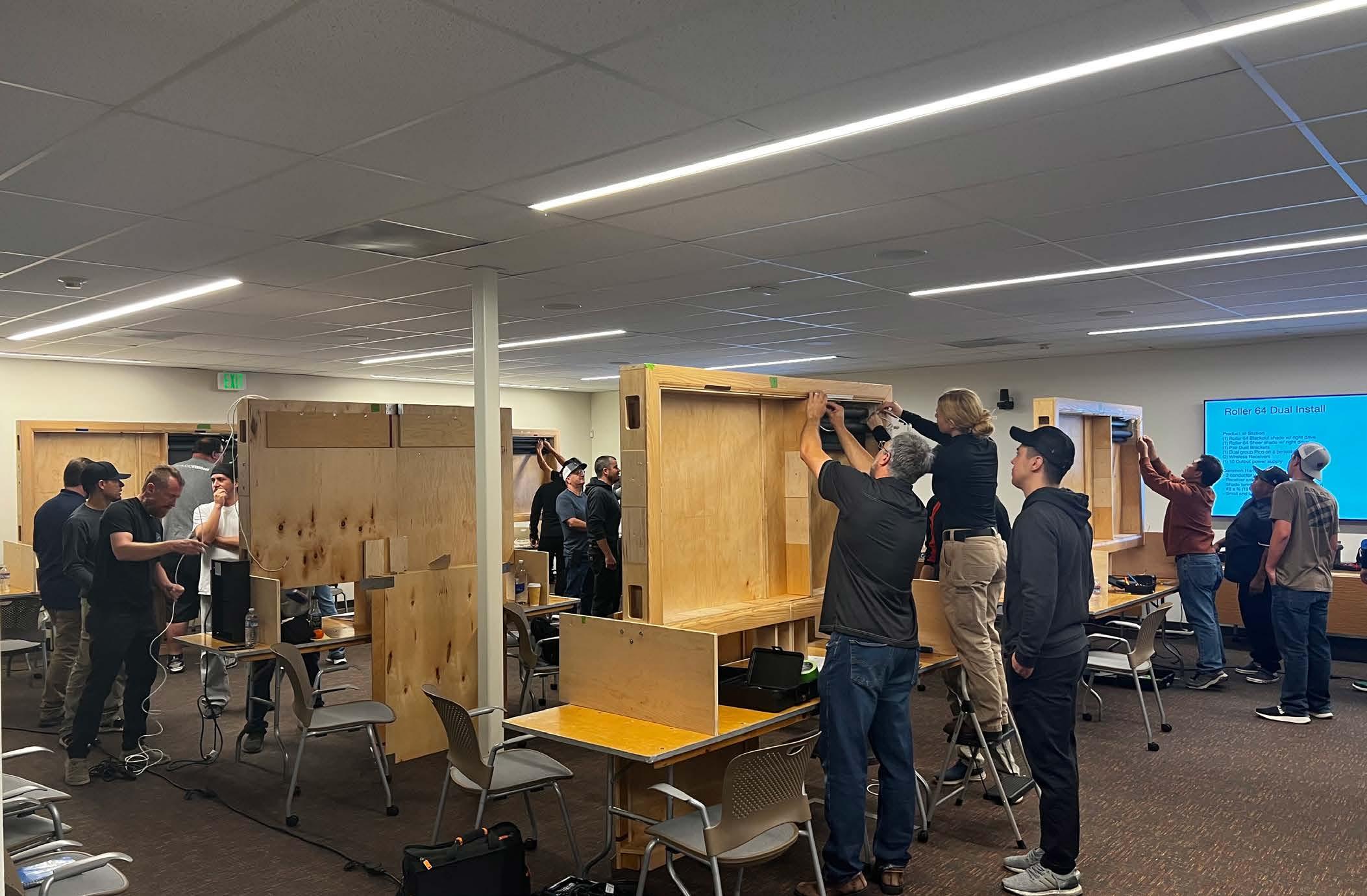
It is also our job to stay up to date on all the technical innovations that the factories achieve with LEDs, optics, drivers and more, as well as the latest and greatest products.
With ever-changing technologies and codes, it’s important for lighting design and engineering firms to allow their designers to attend rep product presentations and trainings.
Lack of education in new product technologies, such as mounting techniques, ceiling applications, and optics, can cause costly issues on site during installations. Likewise for code updates: missing a code change, or the proper way to specify controls on a job to cover code updates, can lead to large change orders and big job problems.
Lighting and controls training are necessary for everyone, from an intern to a firm principal. It is important that we teach emerging professionals about how our industry works and all the different types of lights, but it is also imperative for those of us who have been doing this for decades to stay up to date on the newest changes and not just rely on incoming talent.
Our industry is ever changing and fortunate to be on the edge of technical innovations. But that requires constant learning on our part.
I teach Lighting 101 to architects as a way to introduce myself to their office. Sometimes an electrical engineering firm with a large new crop of associates will invite me to teach them this class. Yearly, I get invited to several Interior Design programs at local universities and do a longer, more advanced version of this class as a way to introduce them to lighting and its importance in the design process. I visit owners and owner’s reps and walk them through the often confusing world of lighting organigrams and why it’s important for them to be engaged with their designers.
It’s imperative that designers engage in these educational tours as well.
How often, as a designer, have you had to explain the difference between a wall wash and a wall graze? Or why your fixture needs to be 24-36” from the wall, even though that is where the HVAC duct is going? How many times have you done your lighting calculations and found they were off because the selected finishes were not relayed to you? Or you have finished your luminaire schedule to then find out your selected light won’t fit because they changed the ceiling height or material?
These are some of the examples I give architects and interior designers during my intro class on why it’s so important to not only bring in your lighting designer early, but to keep them informed and part of the collaboration through the entire process.
With the expansion of lighting points into systems like WELL, Living Building Challenge and revisions to LEED, it is now more important than ever for us to be out there educating other designers of the implications of these requirements.
We need to explain why UGR is an imperfect metric, and why we prefer to use candela/m2, even though it’s more challenging. Owners must understand the controls required to properly administer tunable lighting for wellness, and what that actually means.
Architects will often look at sustainability in terms of the materials installed and processes used during construction. While teaching my Sustainability class, which focuses on human sustainability as well as manufacturing, maintenance, and longevity of fixtures, architects and interior designers often are surprised by the complexity of lighting.
We talk often about how much lighting is under-appreciated by the other design trades. The best way to mitigate this under-appreciation is to educate and instill the importance of illumination in our fellow constructors.
And let’s not forget the importance of continuing to educate ourselves— both our young professionals and our seasoned designers.
Lighting reps are uniquely positioned to carry out this mission with access to education, the local lighting designers, and the other design trades. We need to partner with allied organizations such as AIA, ASLA, IWBI, NALMCO and co-present with their members to reach a broader audience.
I encourage you all to reach out to your local lighting reps: They can help keep you and your designers updated. Through our collaboration we can increase lighting’s visibility and educate others in the construction industry.