designing lighting
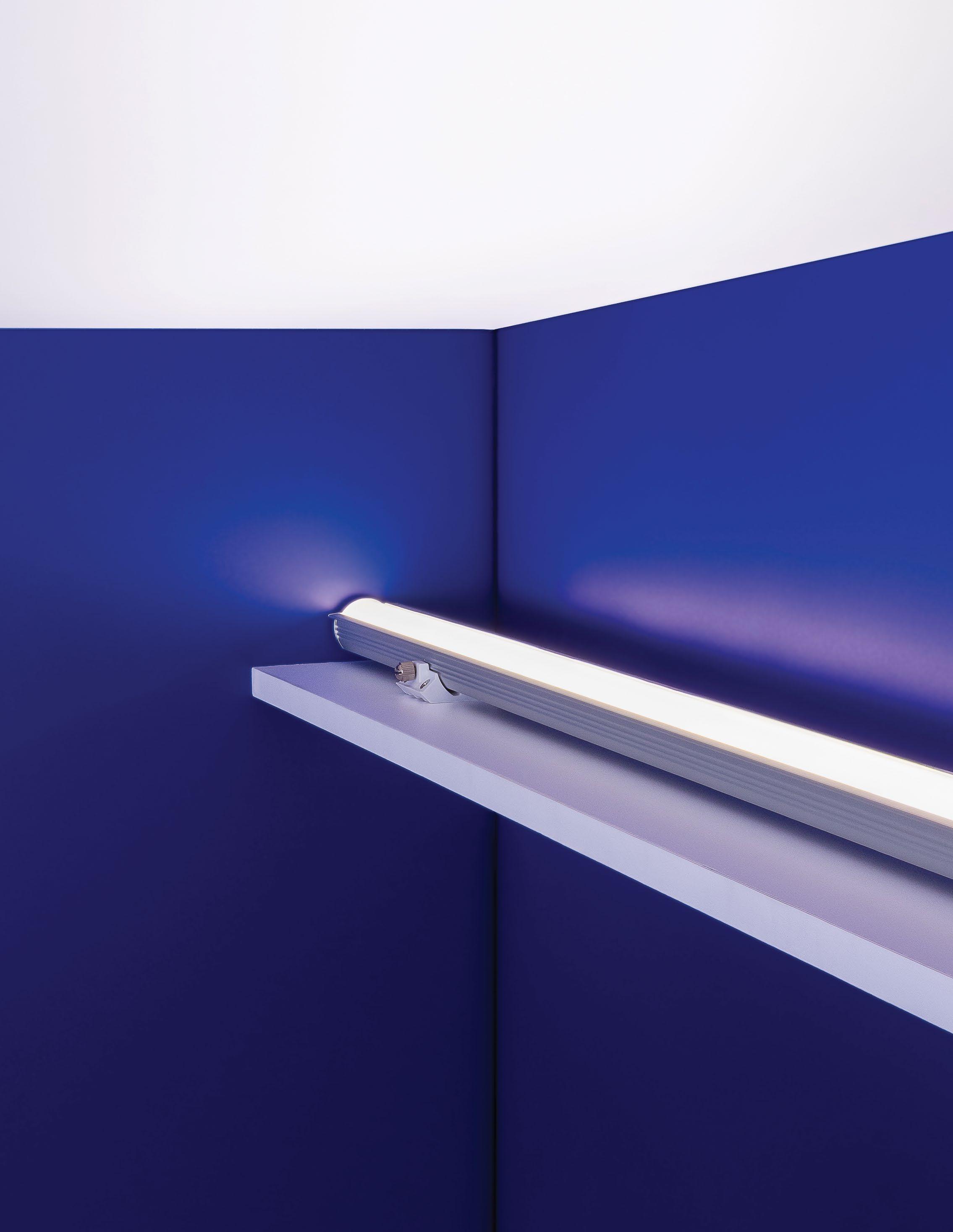
QUOVA PERFORMANCE boasts up to 900 lm/ft of output and 450 cd peak intensity at CRI 98, making it best in class. Its proprietary, asymmetric optic focuses light with high peak intensity, ensuring uniform illumination across ceilings, even from shallow coves.

Synchronised audio and lighting output programmed on the same timeline for a perfectly orchestrated show.
• Audio output via stereo balanced line level analogue and SPDIF ports
• Two audio playback layers provide a background layer for main audio and a high-priority override
• LPC X Series 3 supports two channels of on-board linear timecode input for ultimate synchronised show control
of


Tools for educational lighting
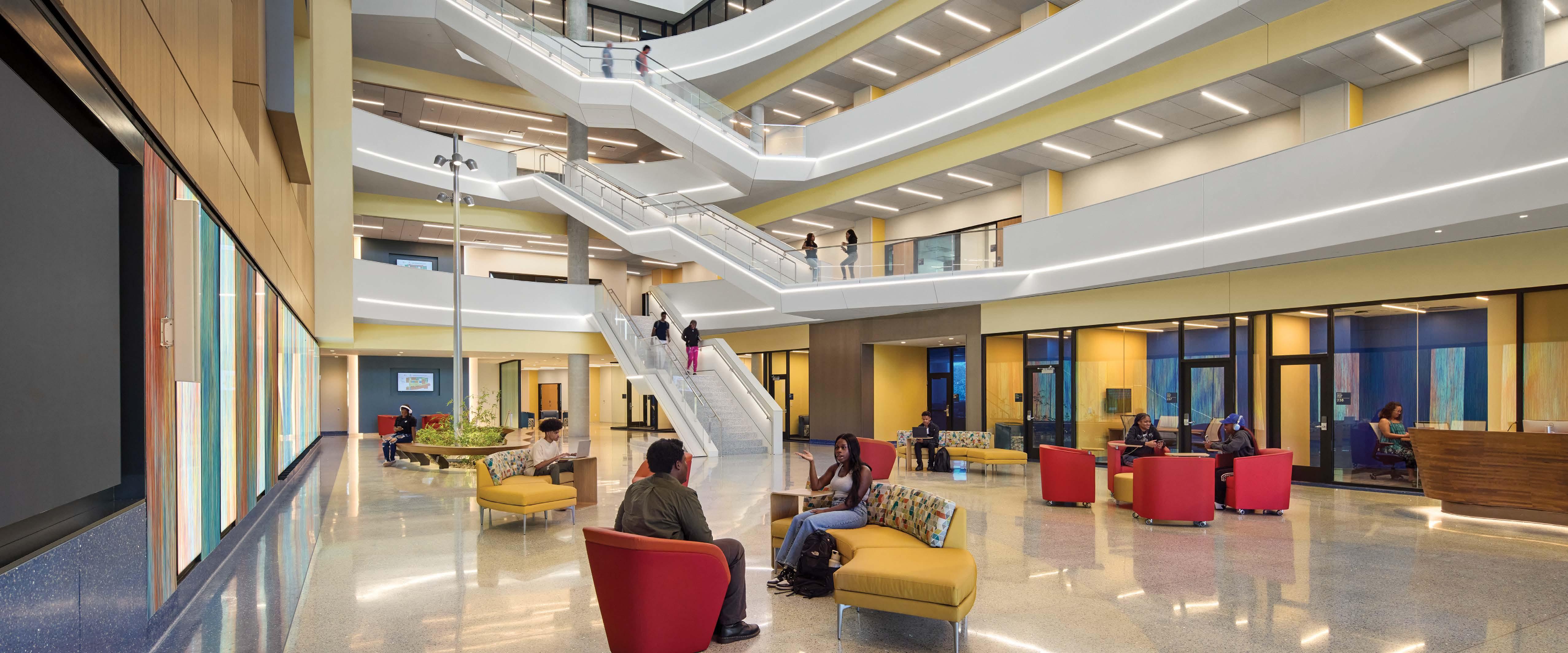
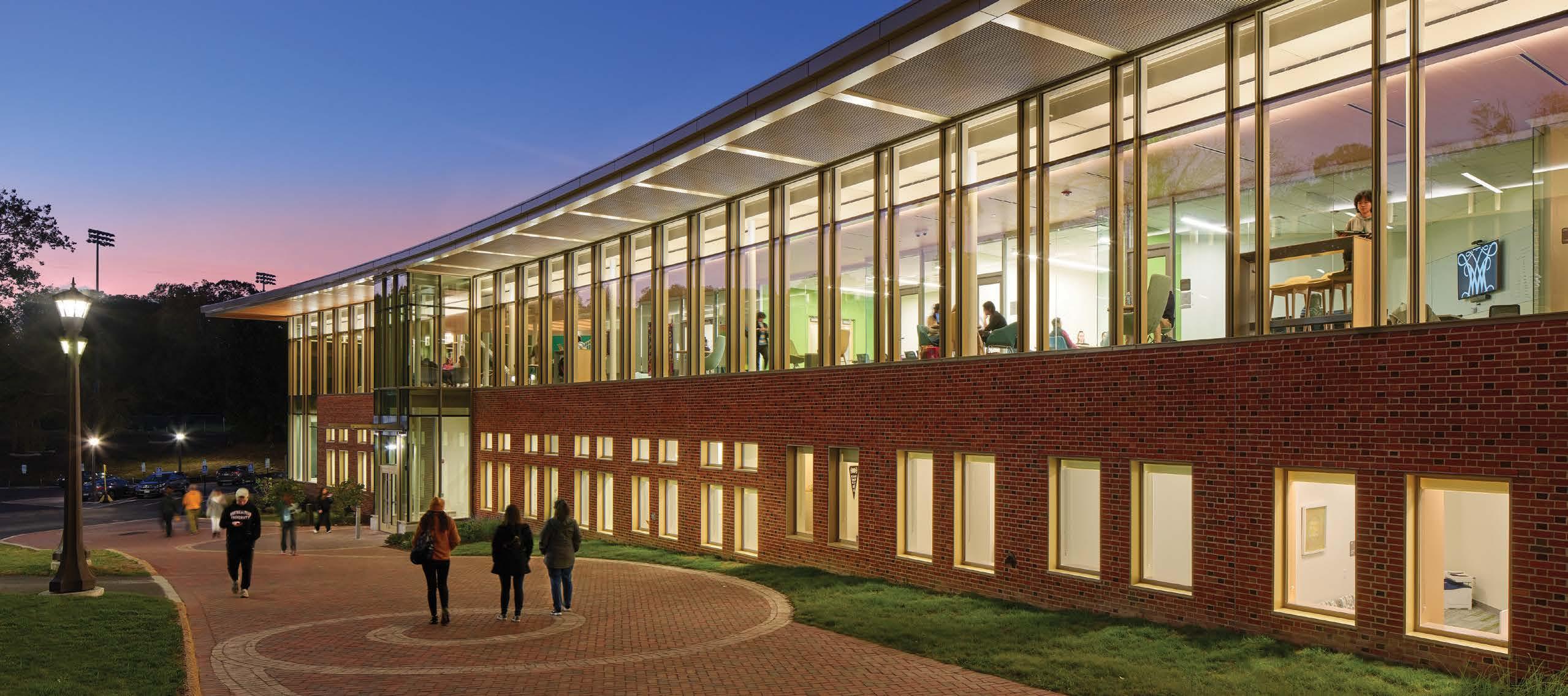
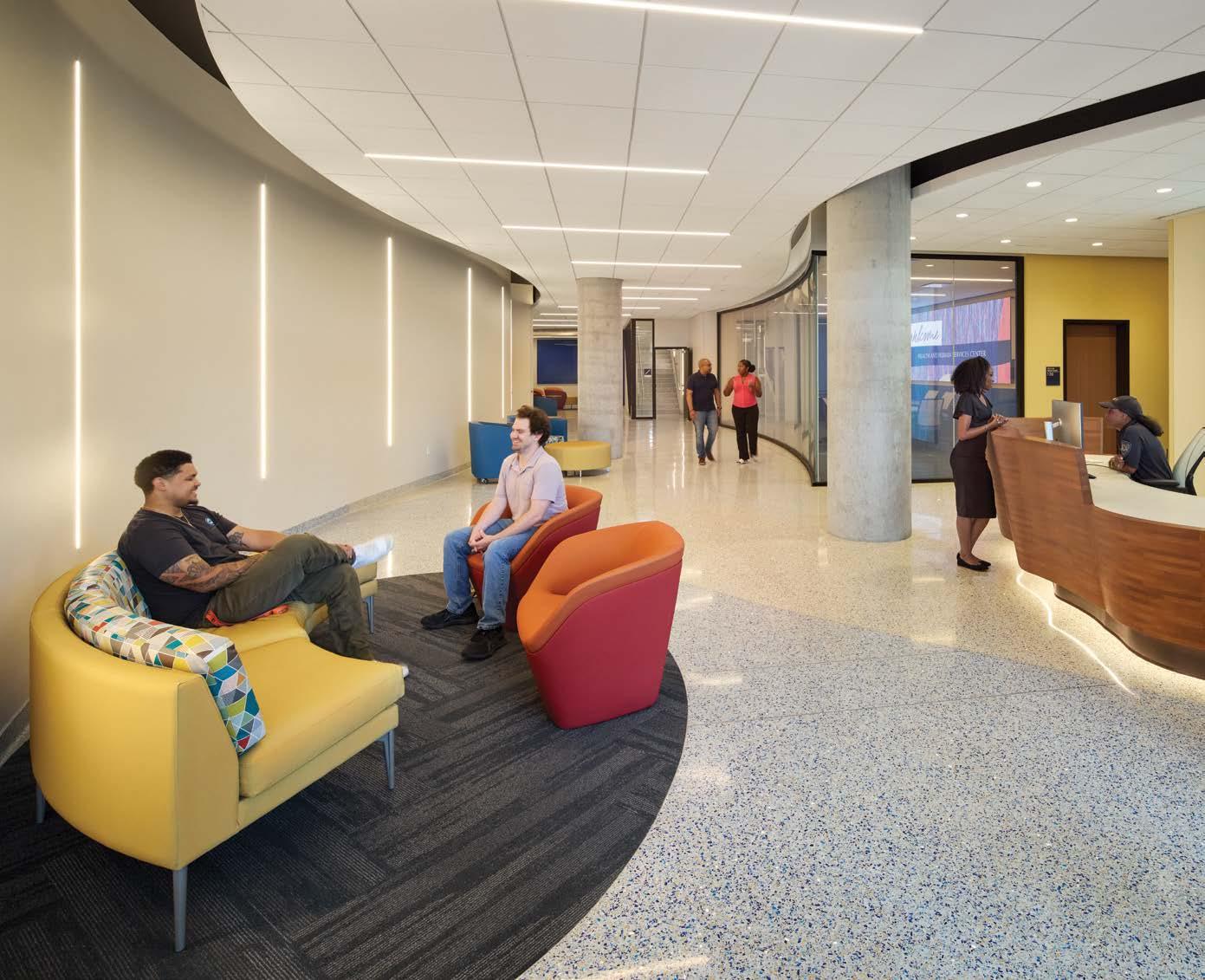
Inter-lux understands that lighting is more than illumination—it’s a tool for learning. Our expertly designed educational lighting solutions create environments that inspire focus, enhance well-being, and support the diverse needs of students and educators.
This is Inter-lux!
inter-lux.com/education
by the lighting quotient
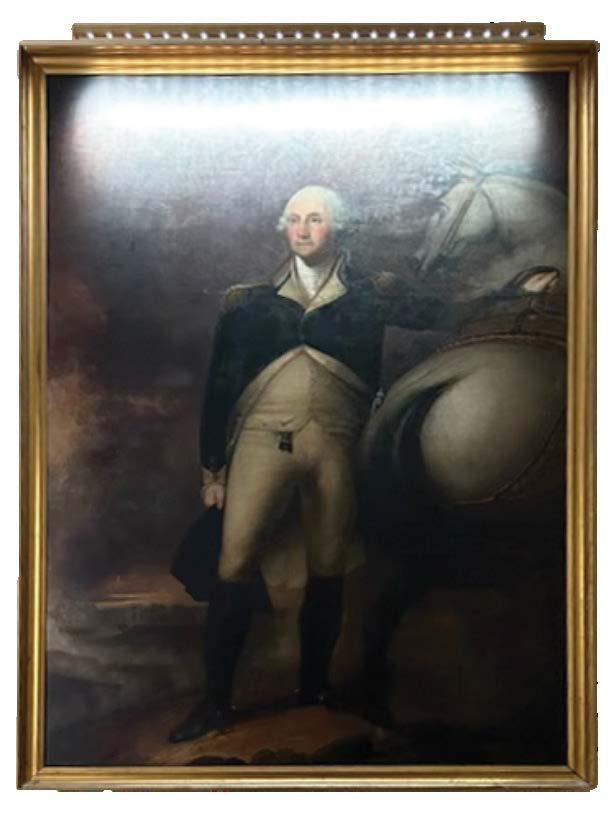
art speaks. good lighting for art is quiet and glare free with even illumination overall.
sizes, distributions, and lumen packages up to 77k lumens. indoor. outdoor. natatorium. submersible. marine grade finish.
nath and

Merging the art of metal and the science of light
New from VoksLyte!
TA N GE NT Grazer
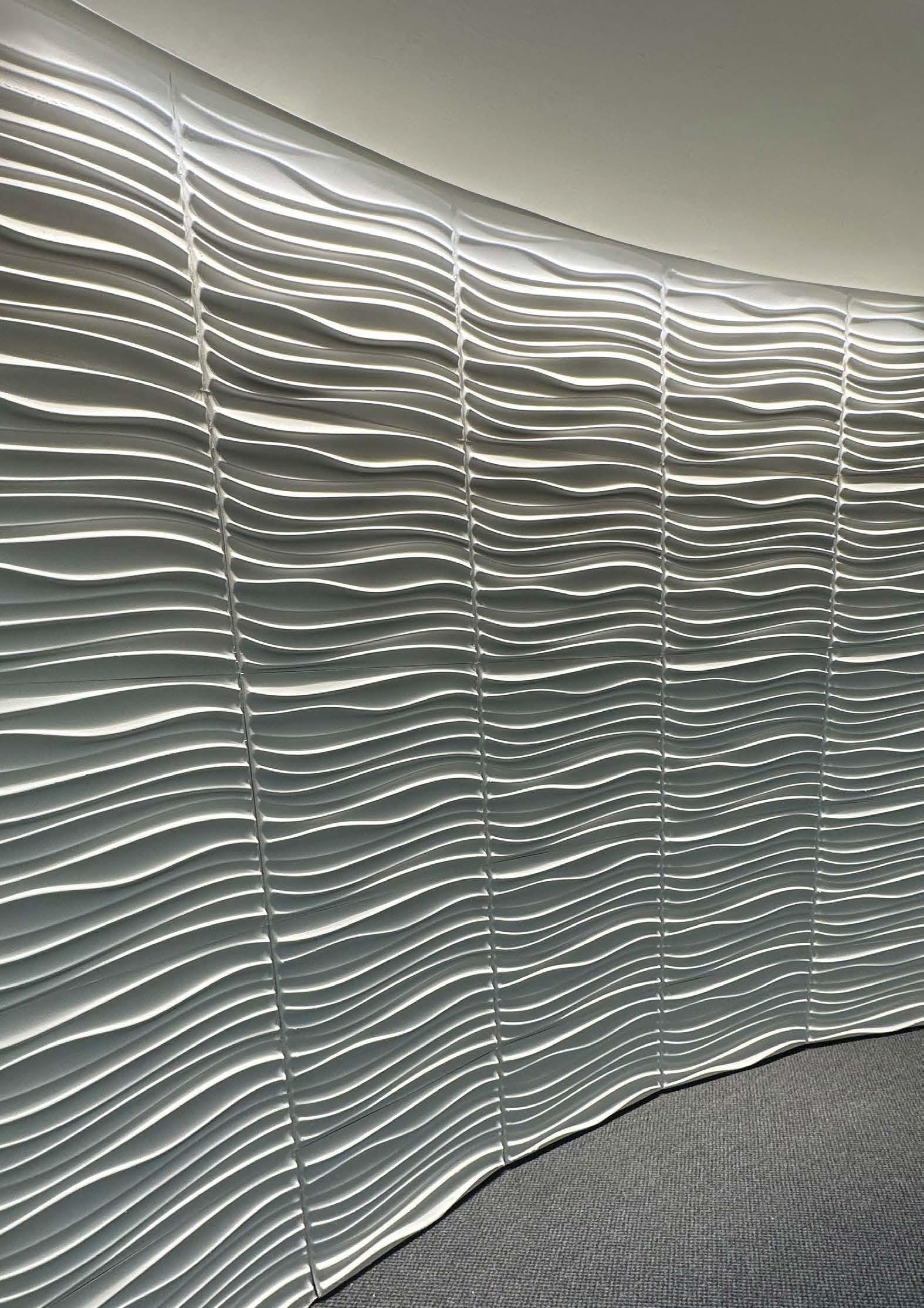
Custom-Curved Wall Grazer
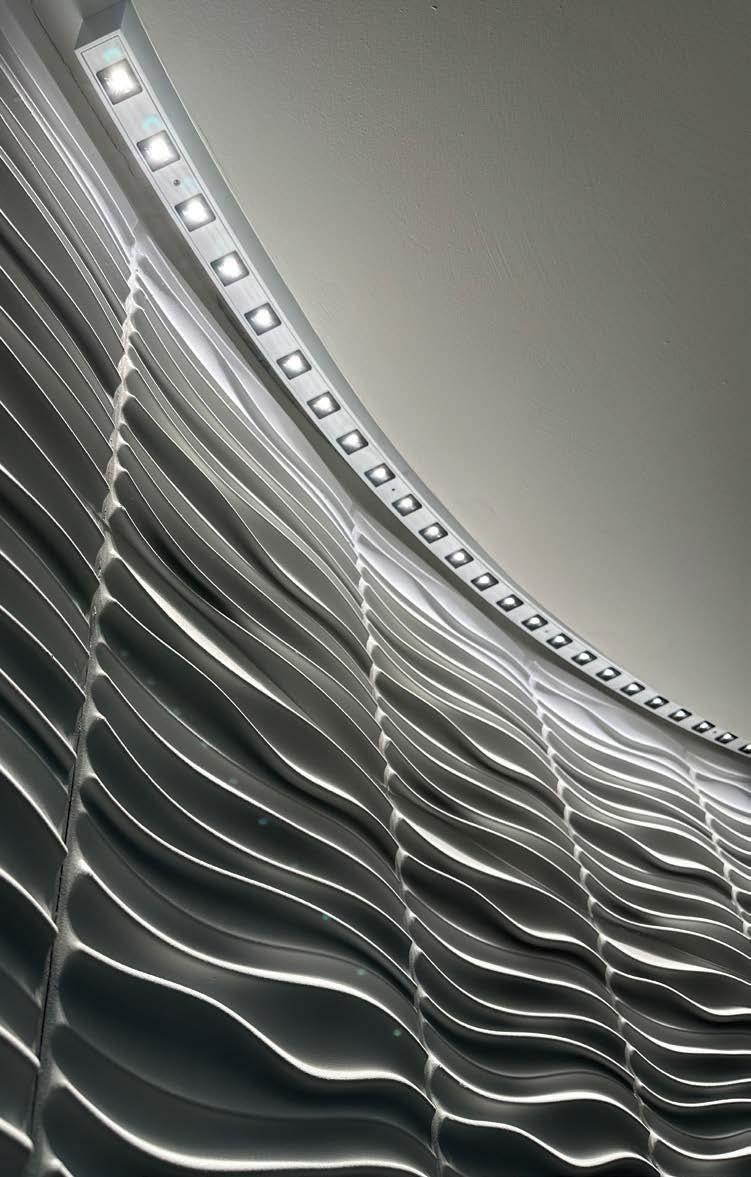
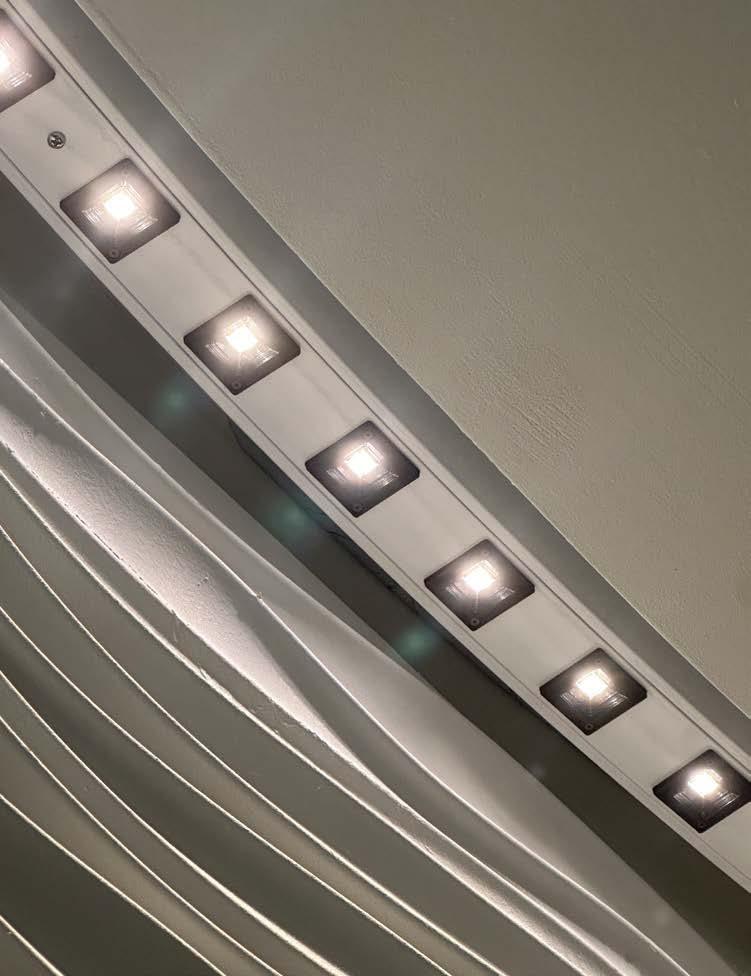
At last, a masterful solution to grazing curved walls. Tangent Grazer is factory-manufactured to any curvature or shape, in static or compound raddii, or any rectilinear or curvilinear application. Made to fit your application perfectly, in both curvature and length. VoksLyte can provide overall lengths to the nearest 1/16” assuring that our curvatures and lengths will match your architectural requirements exactly.

As always, made entirely in the USA in our Gaithersburg, MD factory.
Merging the art of metal and the science of light
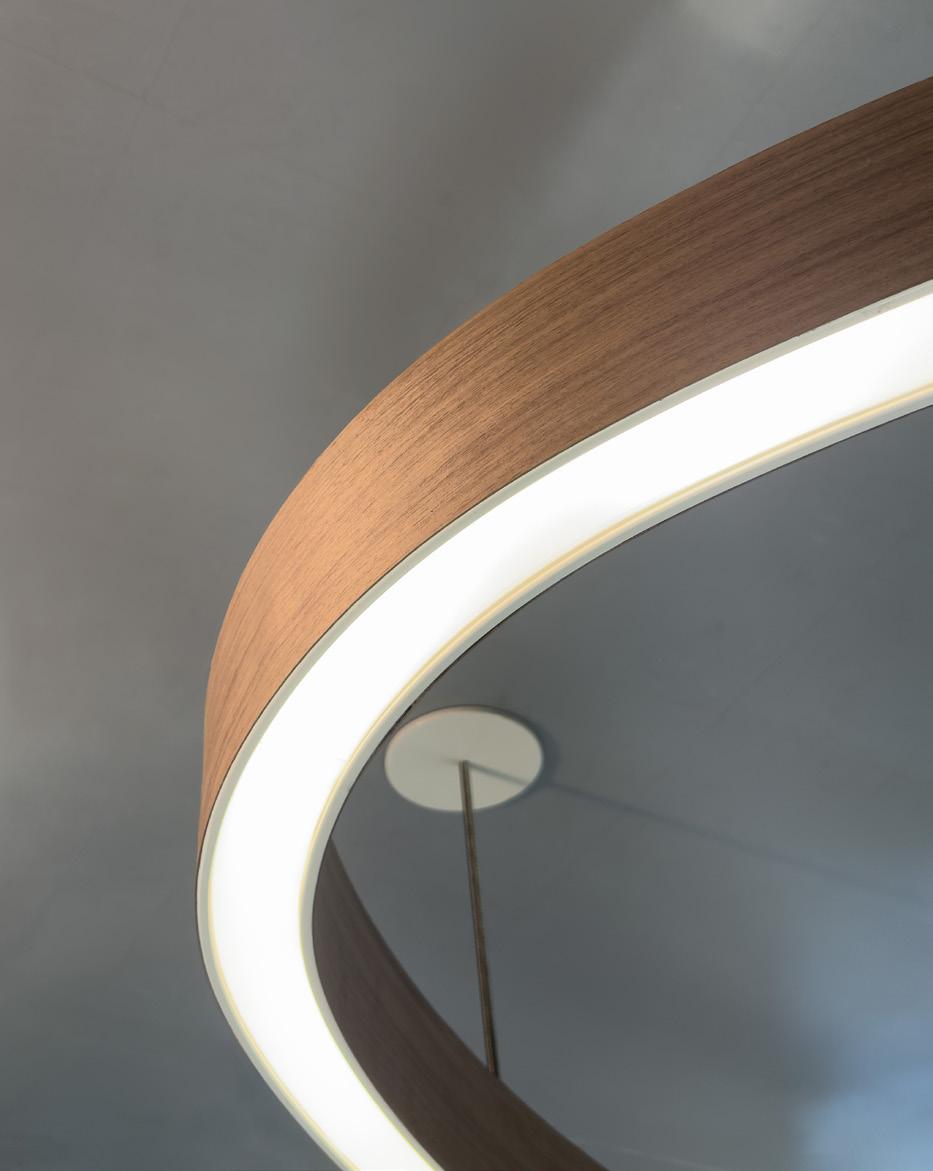
Genuine wood veneer is now available for any VoksLyte Tangent product. Over 50 species from which to choose. Please contact factory for further information. (Shown: Tangent Down with American Walnut veneer).
At VoksLyte, meticulous craftsmanship and attention to details have always been our hallmark. Each project is uniquely different, and demands not only our 38 years of manufacturing expertise, but also outstanding collaboration with the designer and ongoing communication with site personnel, from the design phase until the final lens s snapped into place. It’s what we have always done. It’s not always easy, but we like the challenge and we think you’ll agree that the results are just breathtaking.


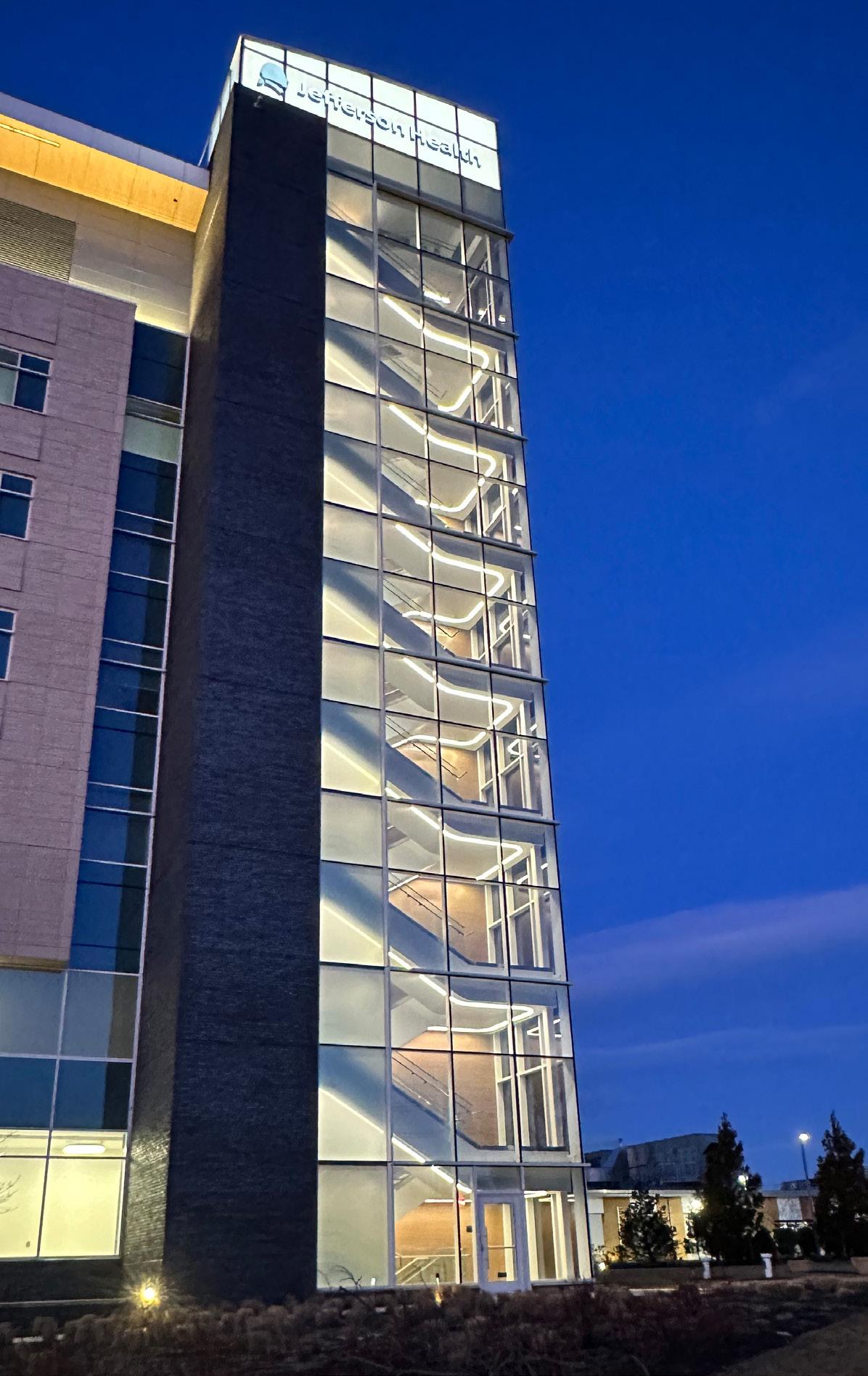
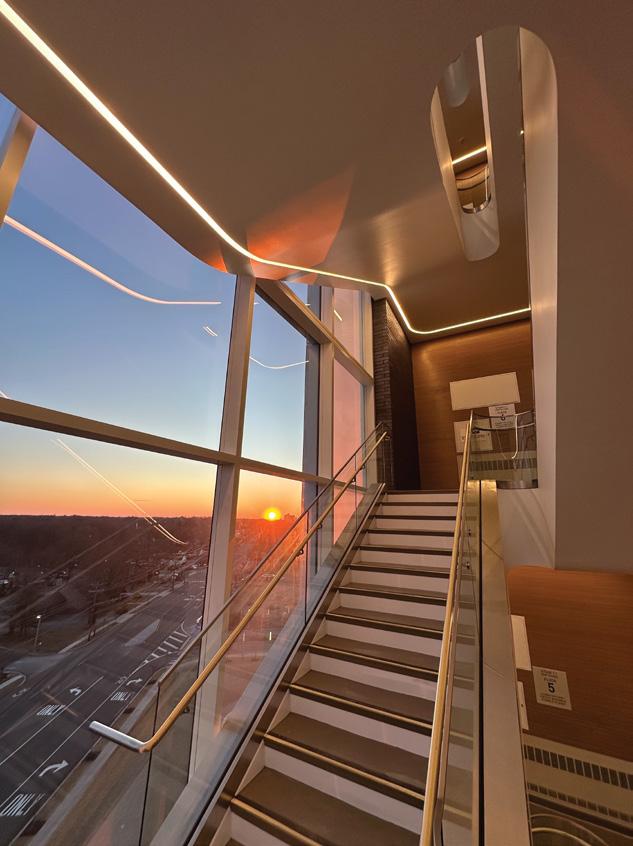
Jefferson Health • Cherry Hill NJ Designer: Gensler
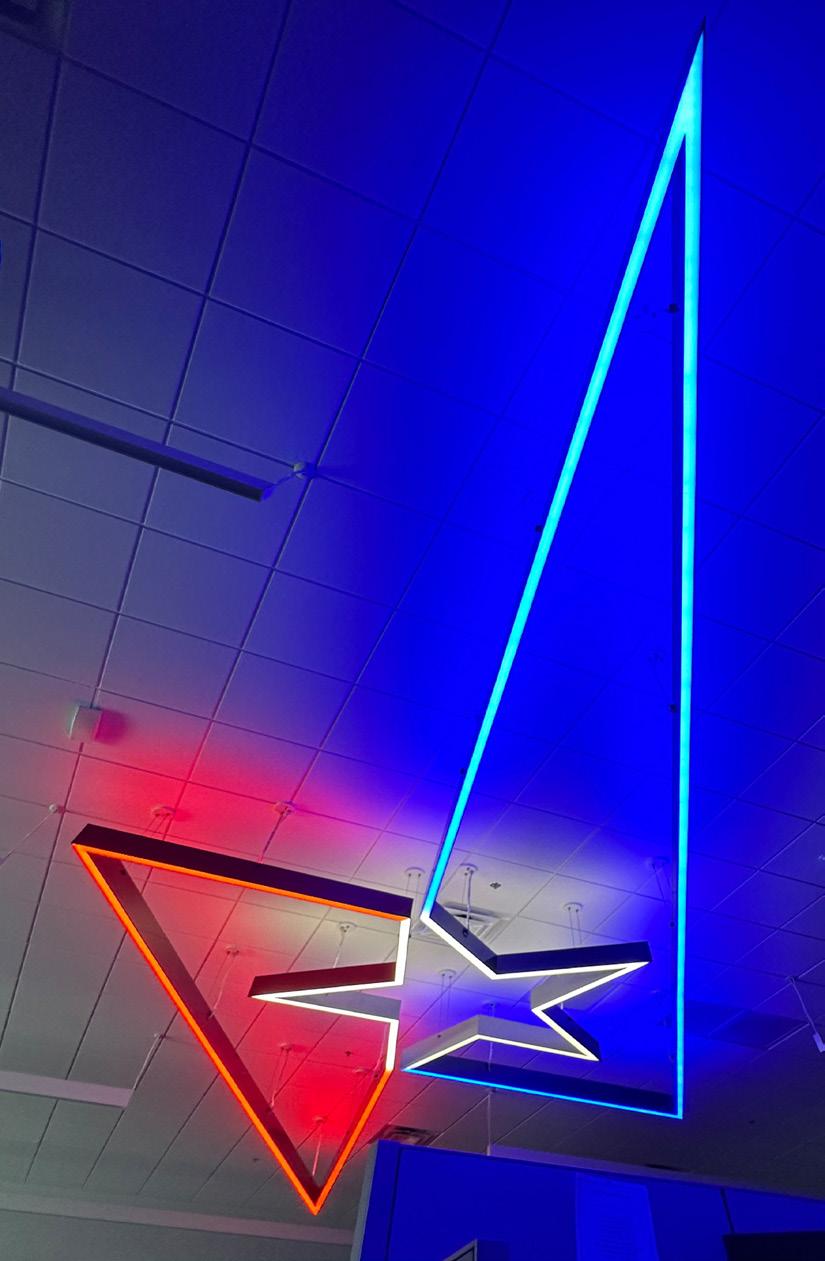
Lonestar Electric • Austin, TX
James R. Benya,
By Jennifer Brons
Randy Reid





Randy Reid
Randy Reid



James Benya, PE, FIES, FIALD
Stacie Dinwiddy, CLD, IALD, LC, LEED BD+C
Shirley Coyle, LC
Craig DiLouie, LC, CLCP
Jeremy Ludyjan
Gary Meshberg, LC, CLCP
Mariel Acevedo, LC, MIES
Jennifer Brons
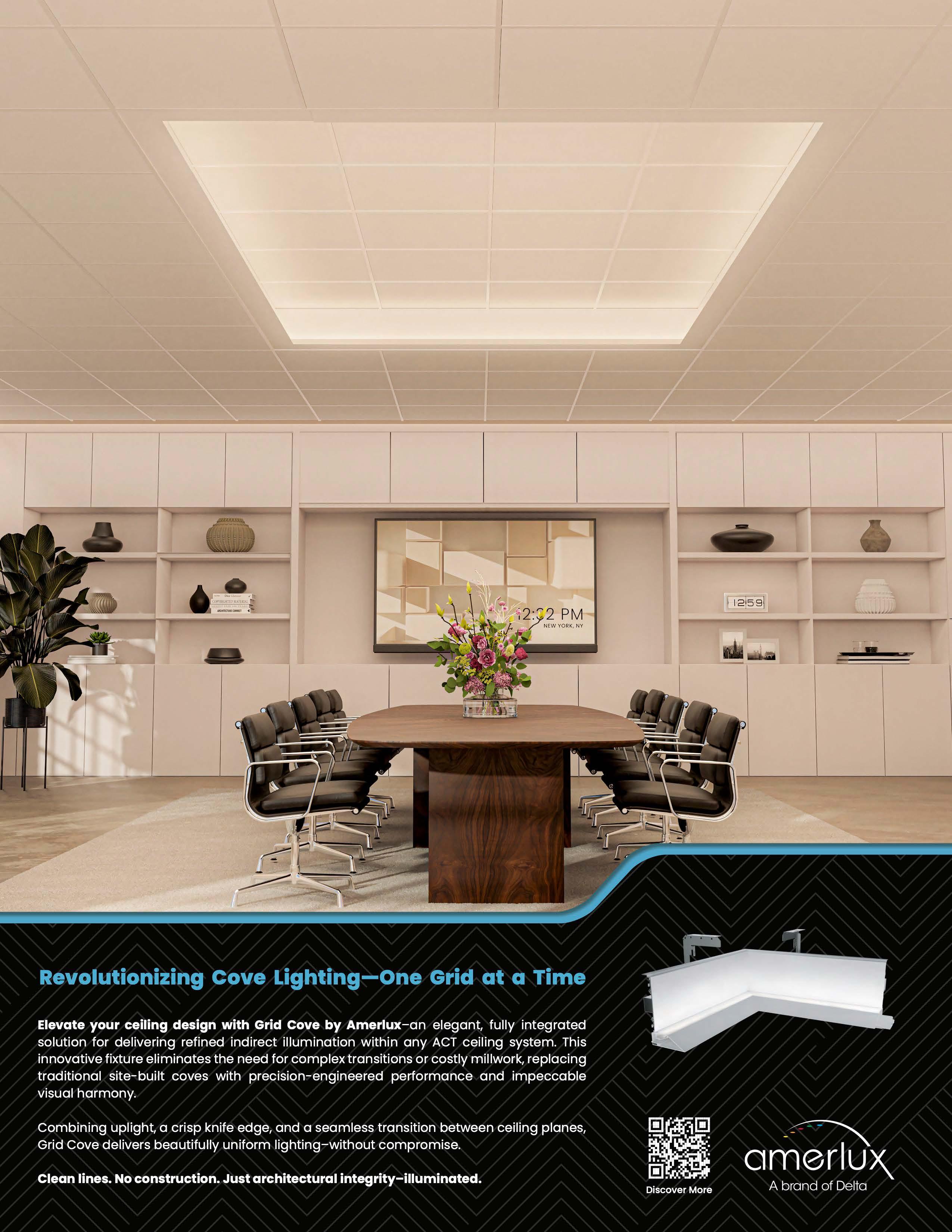
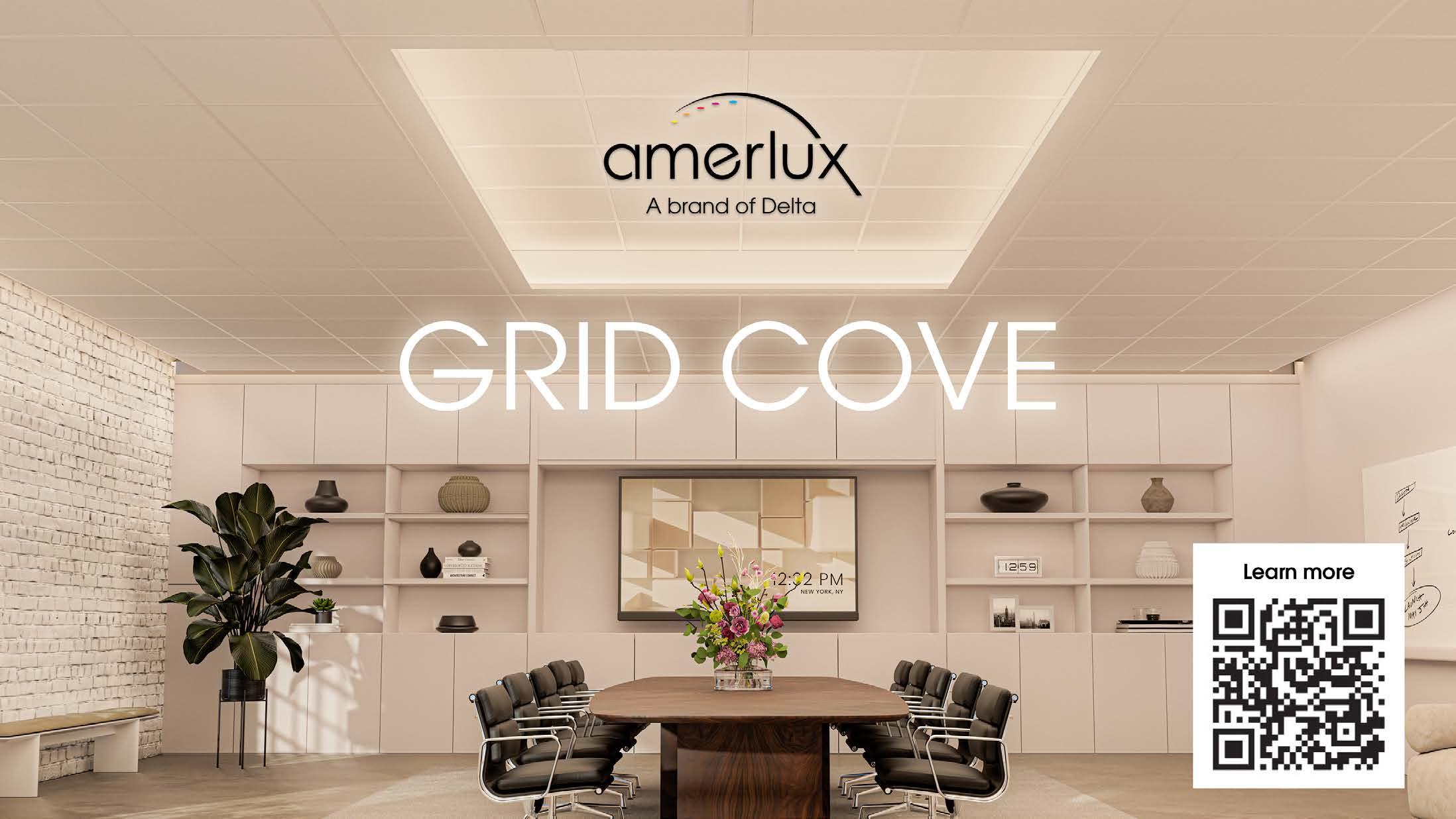
Elevating Office Design with Amerlux Grid Cove
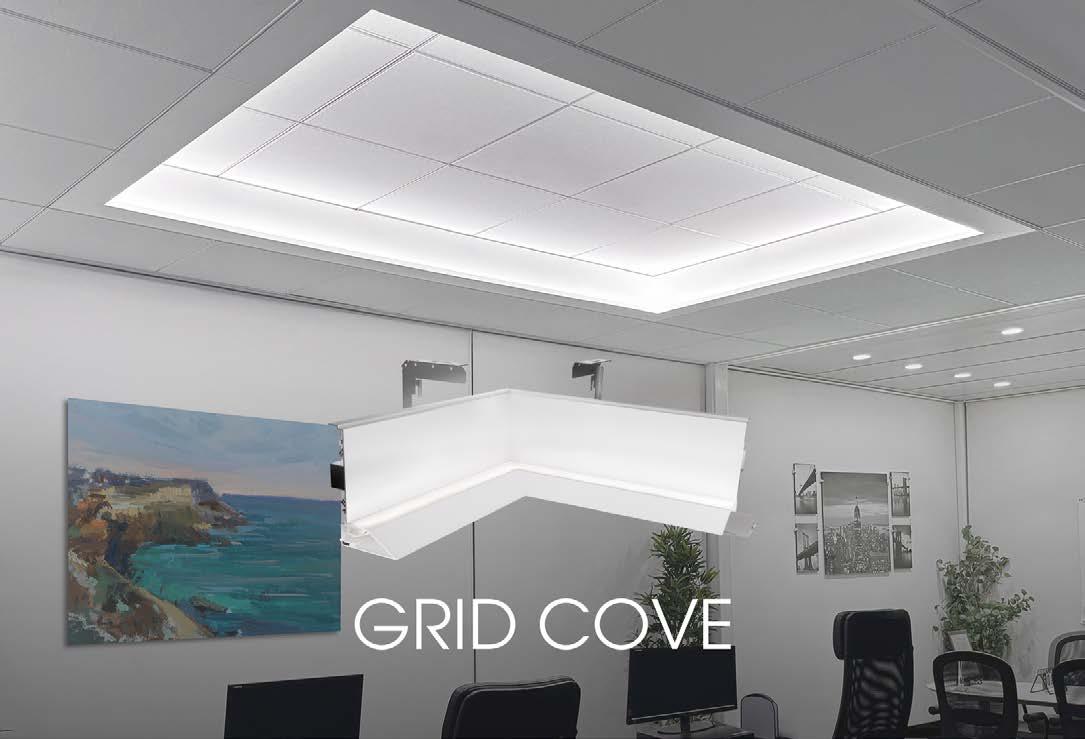
CHALLENGE
A rapidly growing tech company set out to design a new open-plan office that felt refined and modern, despite being built around a standard grid ceiling. The team wanted the clean, upscale visual appeal typically achieved with hard ceilings and architectural coves, but without the cost or construction complexity. Achieving high-end lighting aesthetics, glare reduction, and overall visual comfort within a modular ceiling system became the central design challenge.
SOLUTION
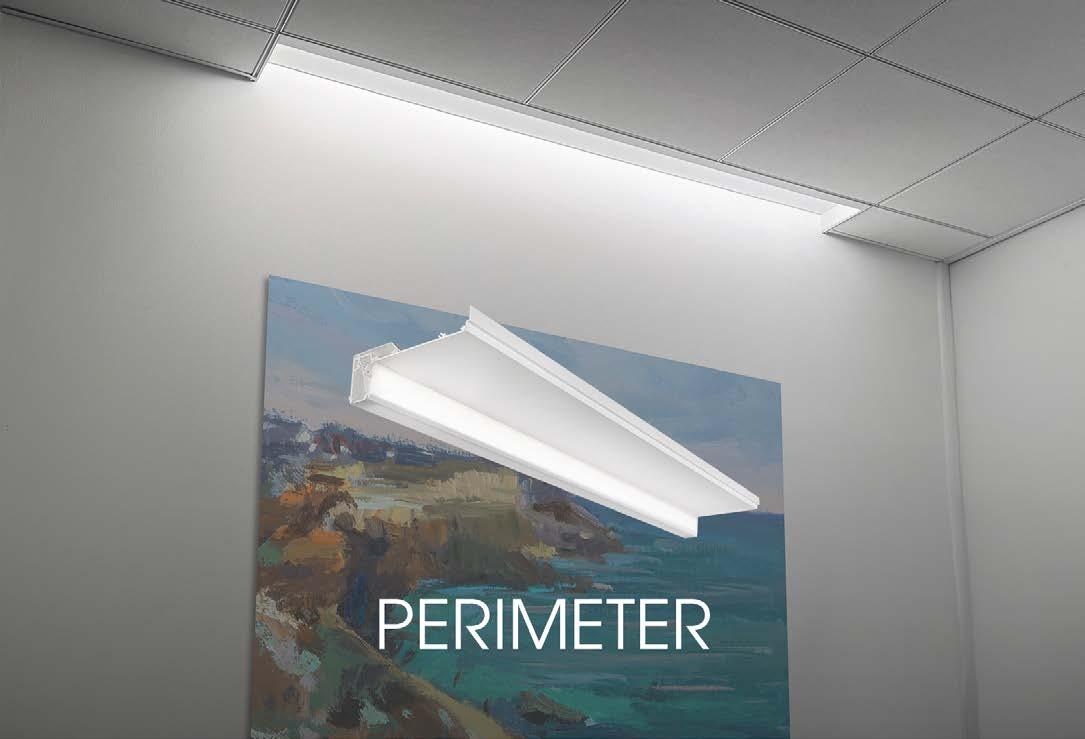
The design team selected Amerlux’s Grid Cove, a lighting solution tailored for grid ceilings. Unlike traditional grid lighting, which distributes light directly into the space, Grid Cove delivers it indirectly, reducing glare while creating a calm, comfortable, and inviting atmosphere. Fully illuminated corners and uninterrupted run lengths gave the space a polished finish, without architectural modifications.
RESULT
Grid Cove elevated the office’s look and feel while supporting employee comfort and focus. With quick installation and advanced control compatibility, the system delivered high-end lighting minus the high-end cost.
lighting controls (dlc)
A new special section dedicated to the fast-evolving world of lighting controls, featuring practical guidance, emerging technologies, real-world case studies, and expert insights on how controls are shaping energy savings, integration, and human experience.
By Stacie Dinwiddy, CLD, IALD, LC, LEED BD+C
By Mariel Acevedo, LC, MIES
By Randy Reid
By Jeremy Ludyjan
Randy Reid
Randy Reid
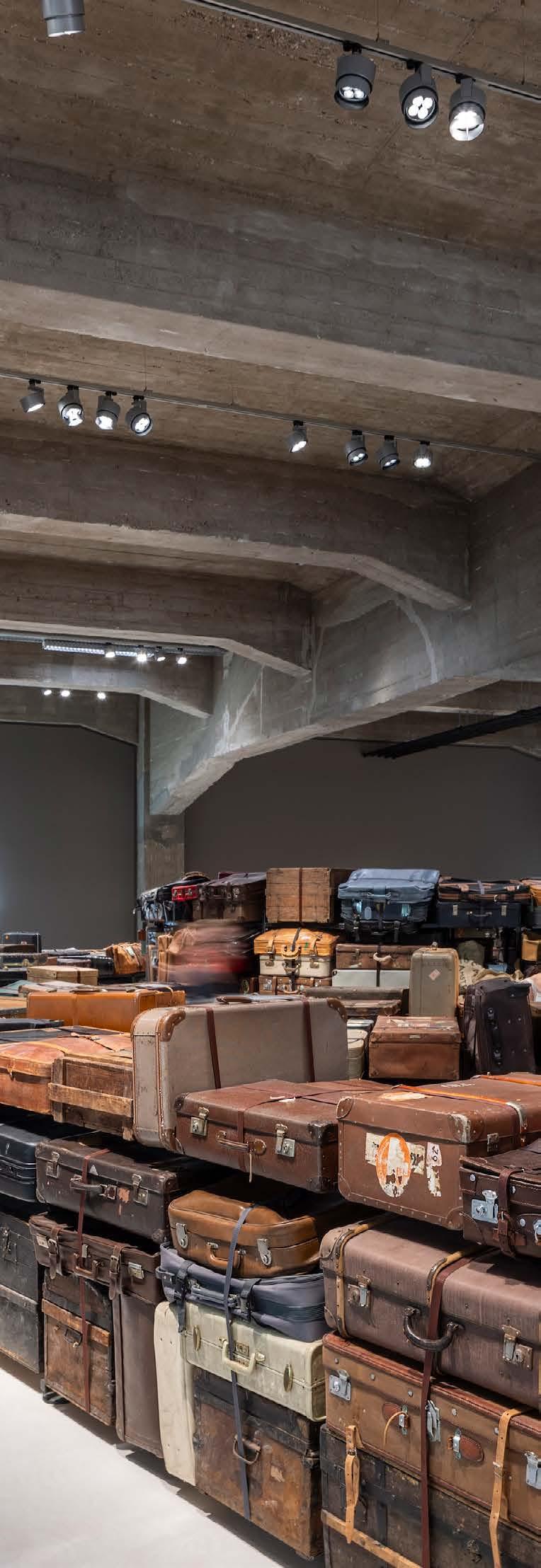
Fenix Museum
Photo credit: © ERCO GmbH, www.erco.com, photography: Lukas Palik
Editorial Director: Randy Reid
Publisher: Cliff Smith
Contributing Writers:
James Benya PE, FIES, FIALD
Benya's Art & Science Contributor Principal at Design Services, Inc. and The Benya Burnett Consultancy
Shirley Coyle
Up Close Contributor President, Cree Lighting Canada Principal, RELEVANT LIGHT Consulting Inc.
Staff Writers: Parker Allen
Bridget Leary
Published by EdisonReport
1726C General George Patton Dr. Brentwood, TN 37027
Phone: 615-371-0961
designinglighting.com
The October/November edition of designing lighting (dl) is our annual Museums issue.

This annual tradition began in 2021 when Steven Rosen of Available Light invited me to the grand opening of the Academy Museum of Motion Pictures in Los Angeles.
As we walked through its 50,000 square feet, Stephen pointed out how light and color create that unmistakable “Academy” atmosphere. We turned a corner, and there were Dorothy’s ruby red slippers. I was hooked.
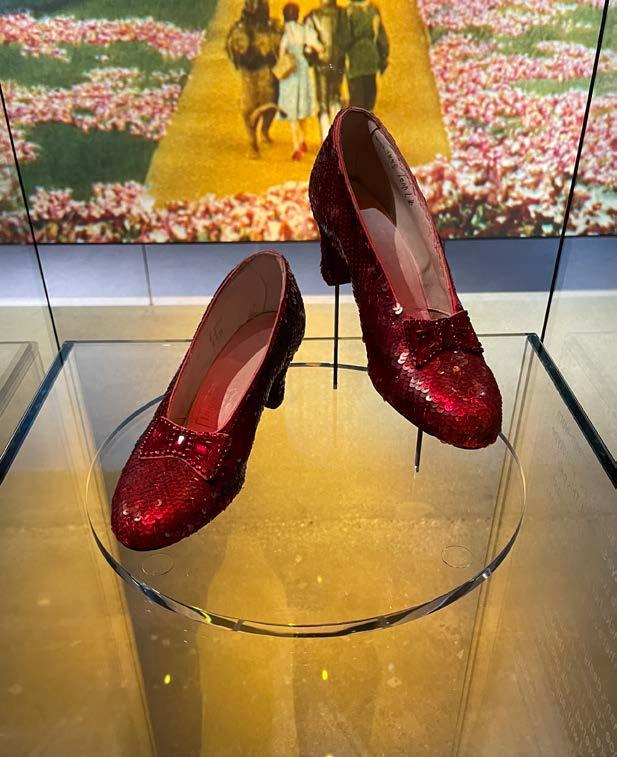
Museums are a joy to cover because each one poses a new design puzzle—and lighting ties the story, the object, and the visitor all together.
Showcased are six museums: Beersnielsen Lichtontwerpers leads Rotterdam’s FENIX Museum; HLB Lighting Design elevates Seattle Aquarium’s Ocean Pavilion; Abernathy Lighting Design, with Eos Lightmedia, shapes Cairo’s Grand Egyptian Museum; Buro Happold reimagines the Museum of Nebraska Art; Morlights refreshes the Museum of the Rockies; and Focus Lighting refines Liberty Science Center.
Six world-class museums with six constraints and design opportunities. One shared lesson: When designers tune hue, intensity, direction, and contrast with care, light becomes the curator’s best collaborator protecting priceless collections, guiding visitors, and giving each museum its voice.
designing lighting is focused on the Business of Lighting Design™ and provides business information to the lighting design community. In addition to the website, designing lighting publishes bi-monthly online magazines featuring original content, interviews within the community and highlights successful award winning lighting designs. While designing lighting is based in the U.S., it has contributors from Europe and is developing a global presence. ISSN: 3066-9111.
Statements and opinions expressed in articles and editorials in dl are the expressions of contributors and do not necessarily represent the policies or opinions of the EdisonReport. Advertisements appearing in the publication are the sole responsibility of the advertiser.
And, a twist for 2025: At IES25 The Lighting Conference in Anaheim, the spotlight fell on an emerging voice in optics: Kai-Di Peng, a graduate student at RPI’s Lighting Research Center.
Peng’s master’s work—a 3D-printed secondary lens that confines light precisely on museum objects—pushes conservation and presentation forward. We are pleased to share this research in our 2025 museums issue!
Oct/Nov also debuts designing lighting controls (dlc), a joint project with Lighting Controls Academy (LCA). This content offers practical guidance and fresh points of view to support lighting specifiers as they navigate the complicated world of controls.
Craig DiLouie, LCA education director, translates complex control strategies into clear takeaways. LCA chair Gary Meshberg sets the stage with “The Bright Future of Lighting Controls,” making the case for controls at the center of project conversations.
I hope you enjoy this issue as much as we have! ■

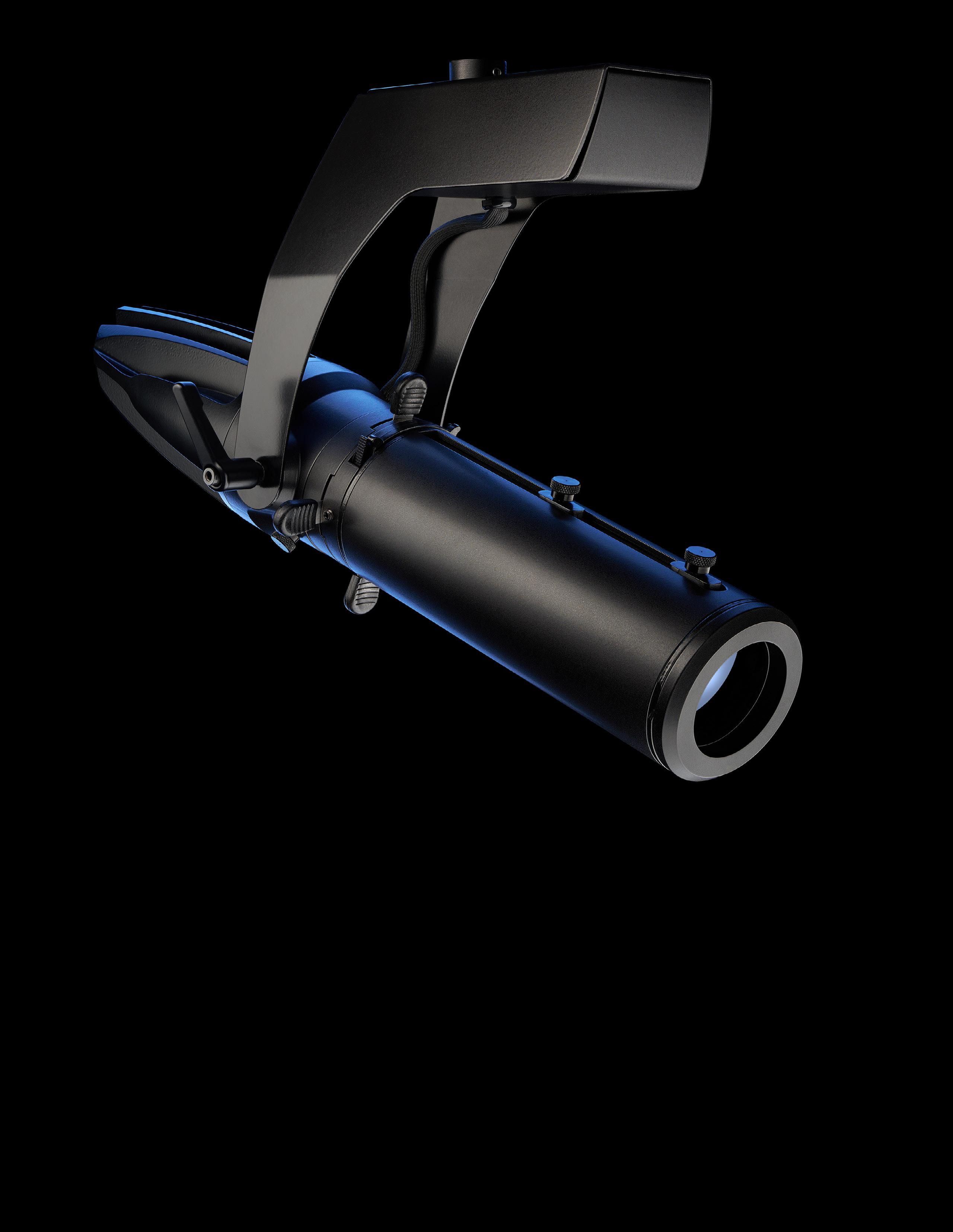
HIGH-OUTPUT IMAGE & FRAMING PROJECTOR
Narrow Beam Lens: 15º to 30º Framing Shutters Create Unlimited Shapes
Wide Beam Lens: 30º to 50º 25,000+ CBCP, Up to 3180 Lumens, 38 Watts
The BPH Series sets a new standard as the brightest image projector in its class, delivering uncompromising optical performance in a sleek design. Powered by an advanced high-output LED, the BPH achieves an impressive 25,000+ CBCP at 38 watts.
Discover the full power of the BPH Series—visit our website or scan the QR code below.

The Dark Sky Challenge and Dilemma
By
JAMES R. BENYA, PE, FIES, FIALD
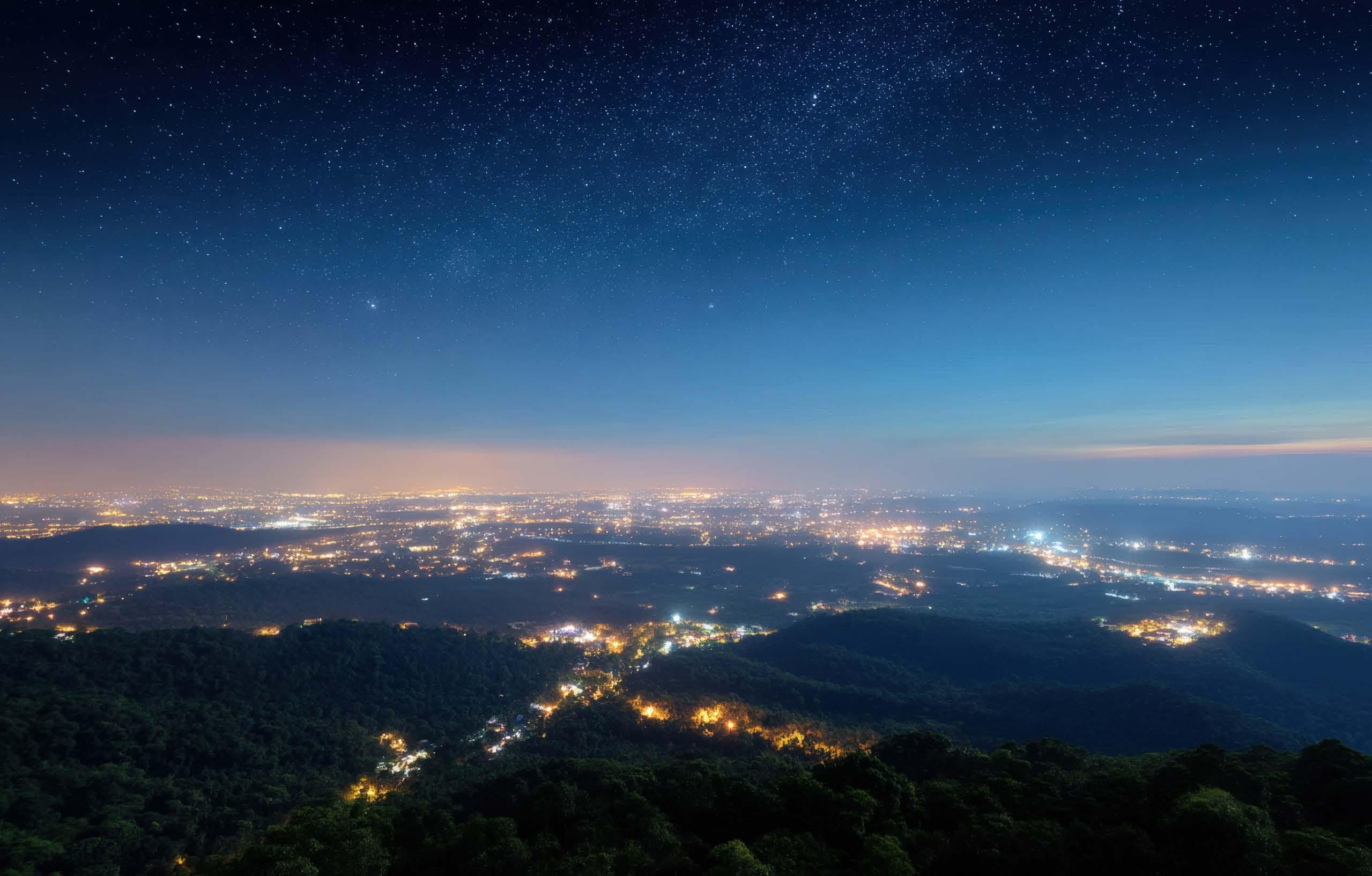
Among the many challenges facing lighting designers today is the light pollution caused by outdoor lighting. Mitigating light pollution is promoted by most environmentalresponsibility standards like LEED and is required by code in particularly sensitive locations.
In California, Title 24 restricts the amount and type of lighting in the entire state in a manner similar to zones described in the Model Lighting Ordinance (MLO), jointly developed by the IES and DarkSky International 13 years ago. Restrictions are also emerging throughout much of the world now, and many use the BUG rating system first introduced by the MLO or similar concepts.
The first concerns about light pollution were raised by astronomers. They found their work impacted by anthropogenic1 sky glow which was increasing over time, and action was required to preserve the viability of the observatories.
Leading them was Dr. David Crawford (1931- 2024), a worldclass astronomer who, in the 1970s, was the Director of Kitt Peak National Observatory. “Due to his life-long efforts advocating for dark skies and against light pollution, he is regarded as one of the greatest environmentalists of the late 20th and early 21st centuries.”2
Dave and Dr. Tim Hunter founded DarkSky International (née the International Dark Sky Association, aka IDA) in 1988. Retiring from Kitt Peak, Dave devoted the rest of his
career to IDA and taking action to fight off light pollution.
Like most people in the early years of the dark sky movement, Dave was first a world class astronomer who, like many of his colleagues, was frustrated with light pollution and its effects on astronomy.
He originally focused on the lack of clarity of the night sky for astronomy caused by anthropogenic light. Turn off all the electric lights and, weather permitting, behold! A pristine night sky. This reinforced the start of the “fully shielded” street lighting movement, made ever easier by LED lighting.
Starting in the early 1980s, Dave set out to fix the problem. He was a resourceful person to whom it was hard to say no. He engaged a number of “lighting people” in the 1990s to help, both by bringing expertise and by doing work of which Dave and other astronomers were not sufficiently knowledgeable. It was called “getting Daved”.
Among lighting industry persons, it appeared to have started with Chris Monrad and Nancy Clanton, if I recall correctly. But soon enough, I was among several lighting professionals lassoed into serving as an IDA Board Member and, in my case, co-chairman of the committee for a lighting ordinance.
Dave believed that a model code was critically important. I posited that a model code needed the official support of the IES, and in 2005, Nancy Clanton and I convinced the
IES Board that an MLO should be co-developed by IES and IDA.
There were concerns from the Roadway Lighting Committee and quite a few individual members and outdoor lighting companies, but in the end, the Model Lighting Ordinance task force was created and the document published in 2012, with equal representation of IDA advocates, technical representatives, IES member roadway lighting experts, and lighting manufacturers.
It was written to be adopted by communities and modified with their own specific concerns and considerations. A good example is the Malibu Dark Sky Ordinance,3 where the community leaders and members worked to simplify the MLO to Malibu’s specific issues.
Of course, there are thousands of different types and styles of outdoor luminaires, many having unique characteristics well suited for protecting the night sky. But there are significant differences in photometry among candidate luminaires, even those that are marketed as “dark sky” lighting products.
Because the MLO was written by lighting professionals, fluency in photometry was not a problem for them, and a system for rating and restricting luminaires was devised that includes:
• Limits to backlight (B), uplight (U), and glare (G) based on photometry using the “BUG” system4
• Spectral limits to prevent short wavelength emissions
• Limits to total site illumination-based area of tasks
In the MLO, there were originally four lighting zones (LZ1, LZ2, LZ3 and LZ4, in order from most stringent to least stringent) based on evolving lighting technology and appropriate lumen output to coincide with energy codes that would limit the lighting power density (LPD) based on task and lighting zone.
Lighting Zone zero (LZ0) was added to describe a location where lighting is inappropriate with exceptions for human safety, security and wellness. For example, a restroom or trailhead in a wilderness area (LZ0) can be lighted if the BUG rating of the luminaire is for LZ1 (B1, U1, G1 or better) and there is no other lighting unless equally necessary for safety.
The biggest challenge in designing lighting to comply occurs at the boundary between areas being lighted and those not being lighted. A good example is where lighting for a building façade or entrance canopy “trespasses” onto the street or an adjacent property, especially if the adjacent property has a lower illuminance allowance or is in a different lighting zone.
Because lighting design professionals were instrumental in developing the MLO, it has exceptions, provisions, and clear language about how to achieve the end goal of outdoor lighting being just enough with mitigated off-site impacts and little or no uplight.
With practice and patience, most lighting professionals can conquer the challenges of most sites.
However, special allowances and interpretations may still be needed. For example, California integrated the MLO into its building code, Title 24, and it is used statewide every day. In my practice, working with communities along the California coast where the entire community wants to be Lighting Zone 1 and the beaches are Lighting Zone Zero (no anthropogenic lighting except at trailheads and restrooms and aid stations), so some additional exceptions are needed.
In Malibu, exceptions were developed to permit gas station canopy lighting along Highway 1 to trespass onto the curb and outer lane of the road and to allow for increased parking lot, driveway, and street light trespass for safety situations such as crosswalks.
Most recently, my dark sky work involved digital signs and billboards. Digital signs employ clusters of RGB or RGBW

The first concerns about light pollution were raised by astronom ers. They found their work impacted by anthropogenic sky glow which was increasing over time, and action was required to preserve t he viability of the observatories.
LED emitter arrays into display modules that produce light aimed outwards and slightly downwards, like a matrix of computer displays without apparent joints. In several instances, I have measured the luminance of commercial arrays to be as high as 10,000 cd/m2 perpendicular to the plane of the sign or billboard panel, capable of producing measurable illumination levels in the vertical plane hundreds of feet away.
I measured the luminance of one outdoor video billboard at 8,000 cd/m2 peak at night, many times more than an
Light pollution is not just about astronomy and star gazing. Environmental biologists were also concerned, having discovered impacts of anthropogenic light on a whole host of living beings, from plants and insects to turtles and birds. Dr. Travis Longcore5 wrote a landmark article entitled “Ecological Light Pollution” (Longcore and Rich 2004), and in 2006, published Ecological Consequences of Artificial Night Lighting (Island Press).
Both the article and subsequent book came to define another dimension in the new and rapidly growing research area in ecology. Travis documented the impacts of light pollution on terrestrial and waterborne beings. A good example was a major bridge lighting project in Southern California that was stopped when Dr. Longcore challenged the environmental impact statement.
Since then, research has identified significant impacts on many species and resulted in a number of specific regulations for the primary benefit of endangered species, notably the State of Florida where the Department of Environmental Protection6 requires communities to adopt and enforce an ordinance restricting light on or near beaches to protect sea turtle beach habitats.
References
1 Man-made
appropriate amount of luminance. Needless to say, the light trespass onto adjacent properties was exceptionally high. If it were a light, it would never have been permitted by that community’s lighting ordinance.
Likewise, LED artistic and commercial lighting effects, especially bridges and building facades, need to addressed, and I think we as an industry need to work closely with the sign industry now and in the future because, like in most environmental matters, I think we still have a lot to do in the field of lighting. ■
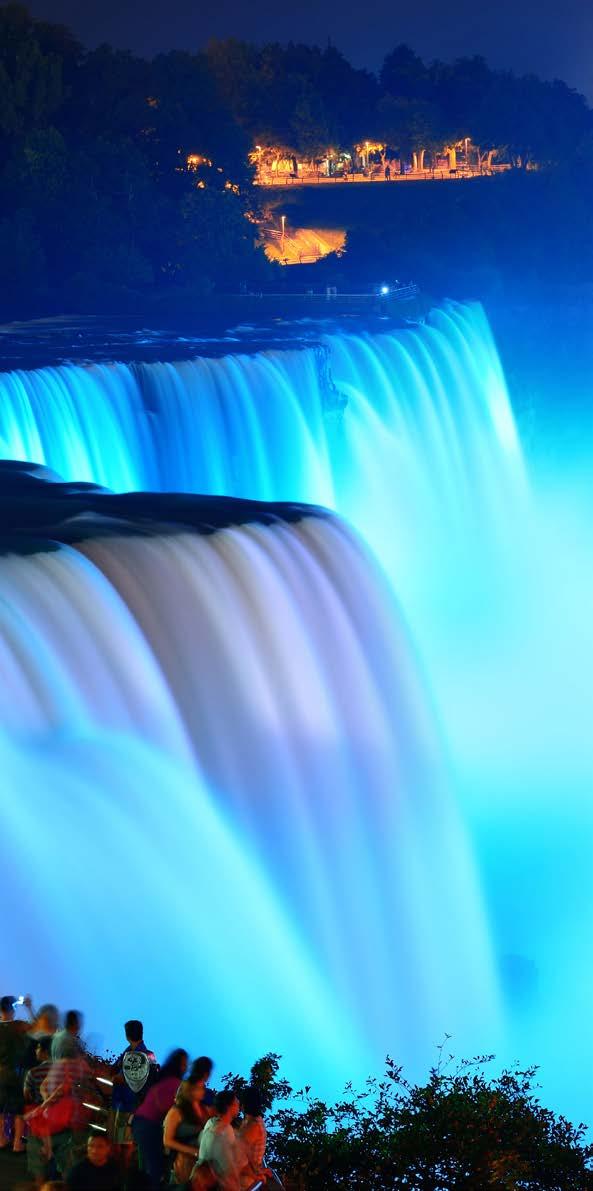
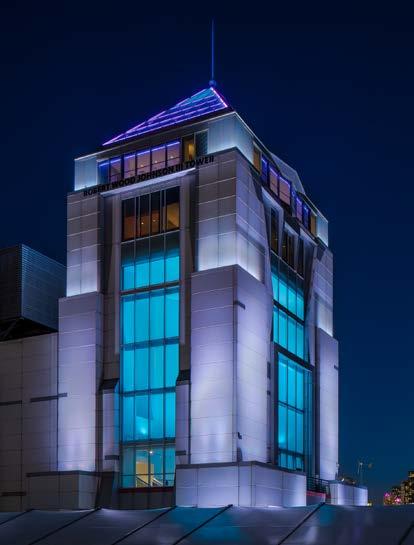
The Towers of Light in New York is one of the most powerful memorials ever made using only light. I freely admit to being overwhelmed when I first saw it.
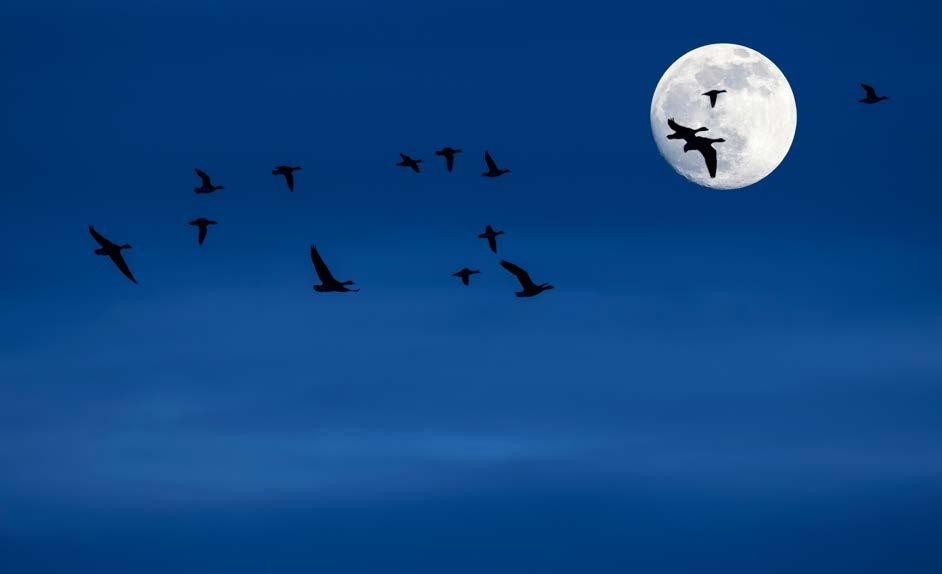
But, I was not surprised when, due to periodic mass deaths of migratory birds, the memorial was limited to the night of September 11. According to FLAP,7 the Fatal Light Awareness Program, “Hundreds of species of birds migrate at night. If the skies are clear and their path is moonlit, these migrants will often fly at high altitudes avoiding any possible obstructions. But the lights of 20th century society can be confusing to them, especially on foggy, rainy nights or when cloud cover is low. Then they may fly directly into tall lighted structures such as skyscrapers, transmission towers, monuments, lighthouses and the like. Where spotlights are shone into the night sky the birds fly "into" the light and become "entrapped", unable or unwilling to fly out again. Eventually, exhausted, they fall to the ground.”8
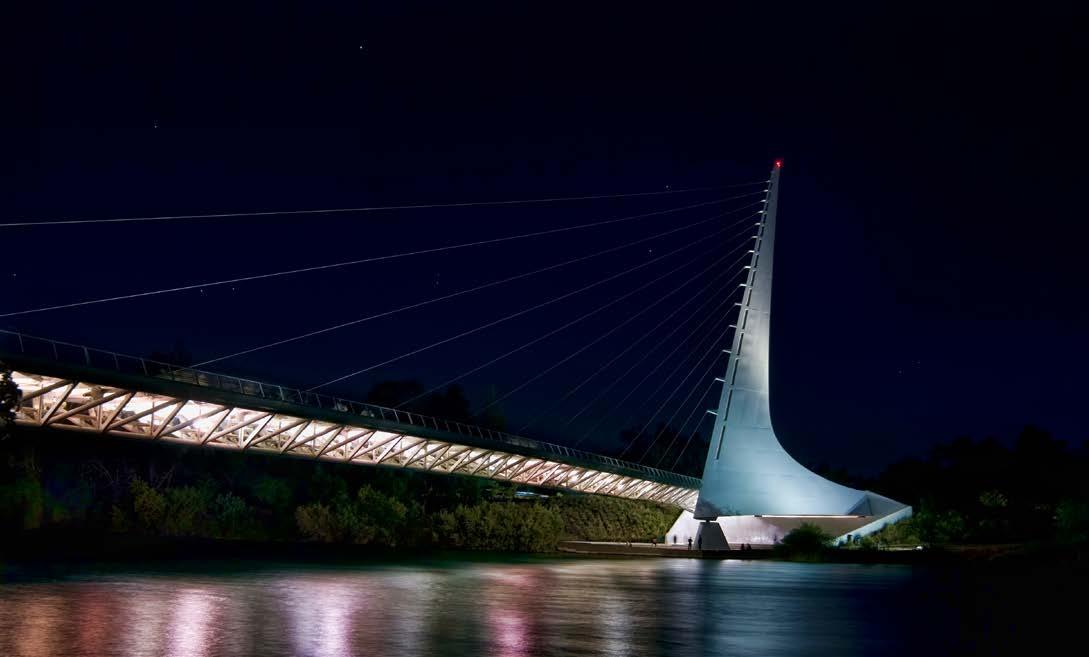
A related problem occurred in Redding, California. The Sundial Bridge over the Sacramento River by Santiago Calatrava was illuminated by artistic LED lighting postcompletion. After several years of low chinook salmon runs following the lighting installation, environmentalists undertook to determine the reason.9
The culprit proved to be under-bridge lighting that dramatically increased predation and decreased the chinook population. Reducing or eliminating bridge lighting during runs and reducing lighting in general allowed the river’s ecology to recover.
2 "How legendary dark-sky advocate David Crawford sparked the fight against light pollution". Astronomy.com. August 5, 2024 from Wikipedia
3 https://www.malibucity.org/705/Dark-Sky-Ordinance
4 Backlight, uplight and glare (BUG) with specific limits on zonal photometry of the luminaire determine acceptable luminaires. Lighting power density (LPD) is then used to determine whether recommended illuminance levels are met.
5 Adjunct Professor, UCLA Institute of the Environment and Sustainability
6 MODEL LIGHTING ORDINANCE FOR SEA TURTLE PROTECTION
7 https://flap.org/
8 https://digitalcommons.unl.edu/flap/2/
9 https://www.cafishpassageforum.org/wp-content/uploads/2023/09/Fish-Passage-Effects-of-Artificial-Light-A.-Jensen.pdf
POP
A LITTLE POP FOR A BIG HIT OF LIGHT
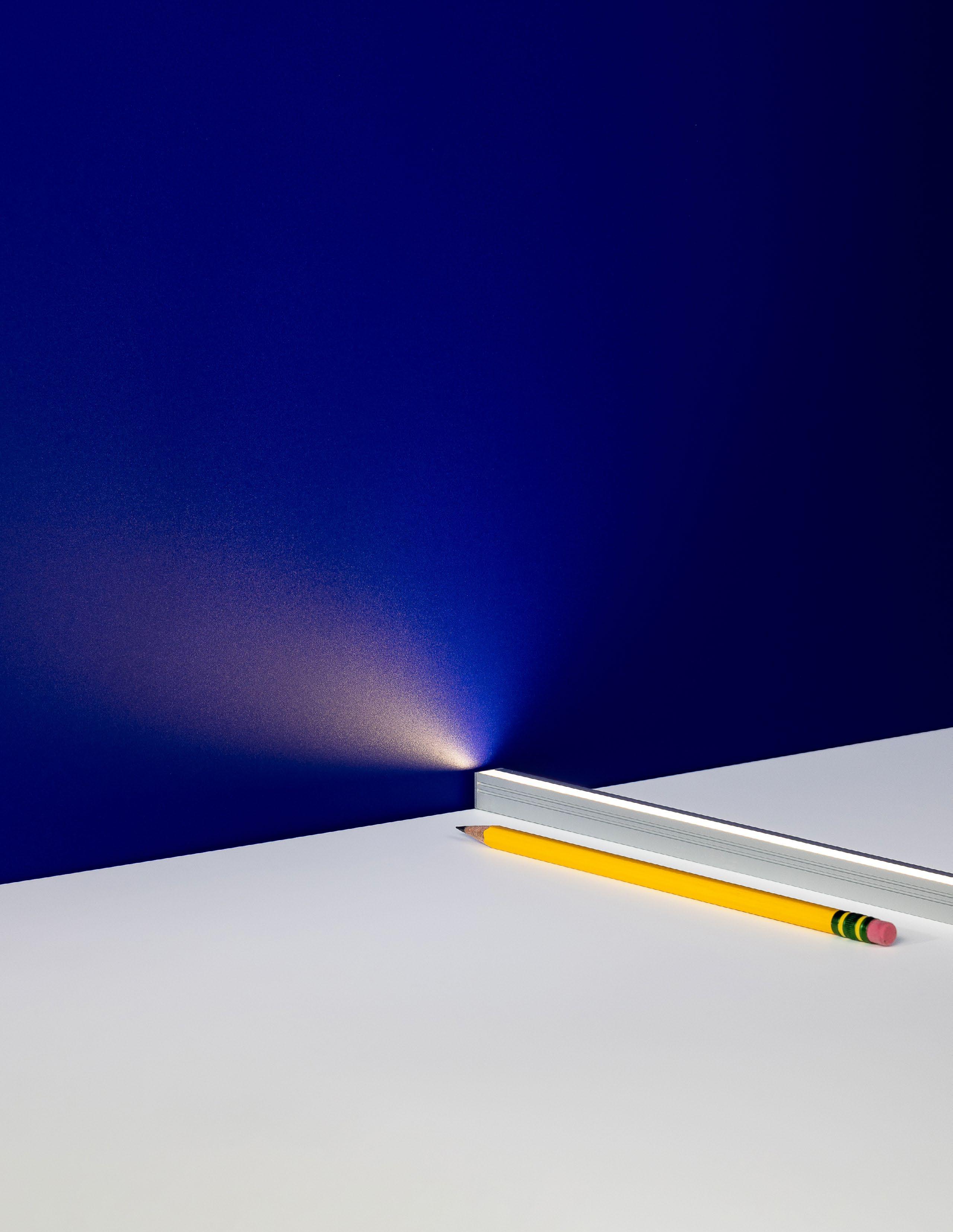
POP light where you need it with our newest recessable MICRO 5 fixture. The asymmetric fixture allows for light to be thrown at an angle with a 75° or 80° focused beam 20° off-nadir, without having to install the light at an angle. Profiles include flangeless, flanged, and mud-in, allowing POP to be incorporated in millwork, displays, drywall, and undercabinet.

Product: COB TivoTape
Location: Fogo de Chão / Huntington Beach, California OVER 55 YEARS OF INNOVATION &
LINEAR LIGHTING LEADERSHIP
Tivoli provides solutions for your projects, from customized vision to large-scope designs that produce the right amount of light where needed. Tivoli has maintained a customer-first approach, with quality products and uncompromising service year after year. Follow Us!
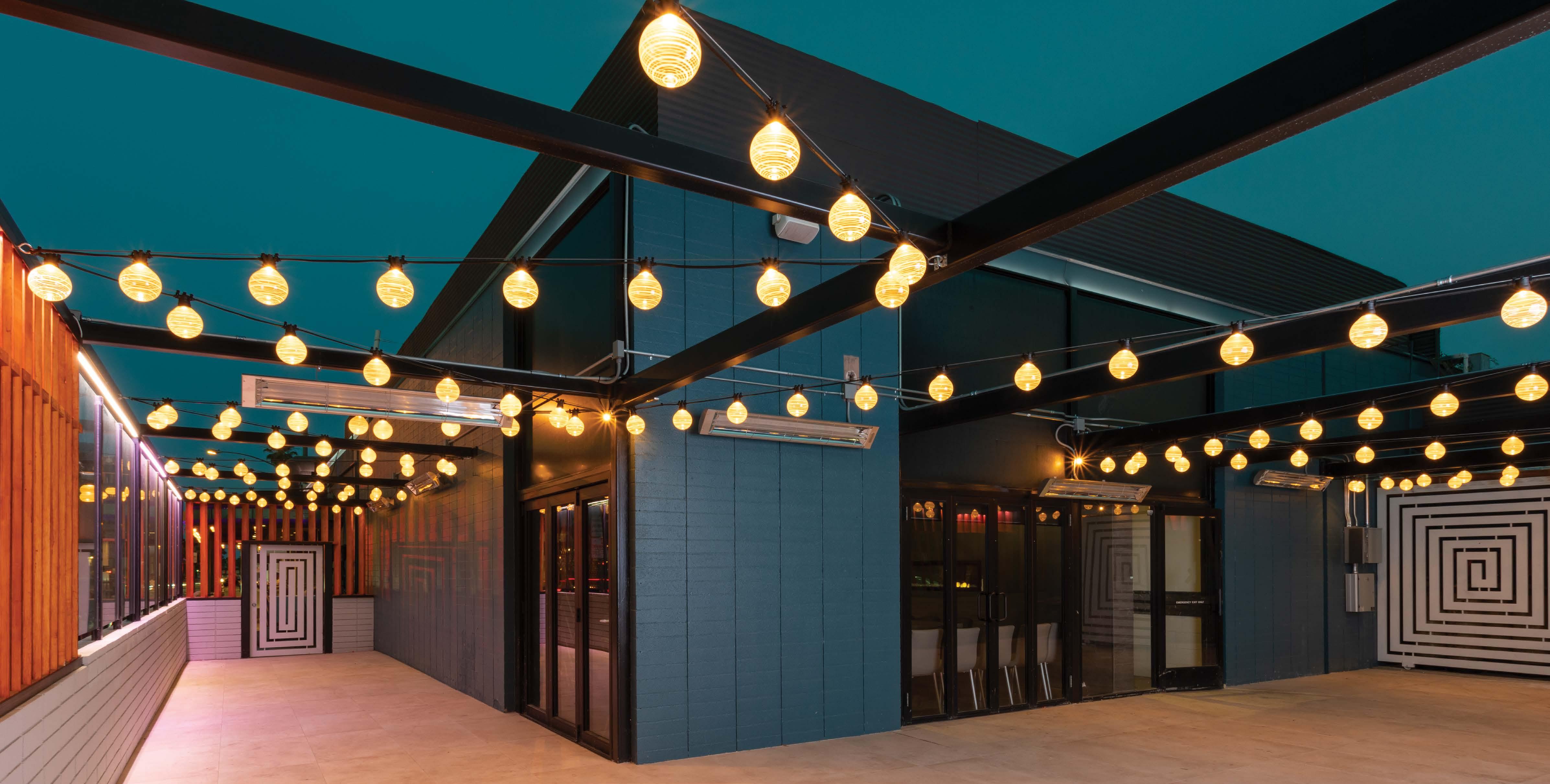
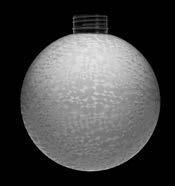
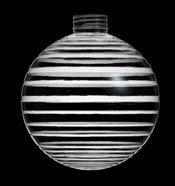
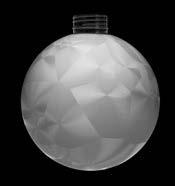
Tivoli’s ADAPT 2.0 strand-lighting systems now feature PET globe designs, blending shatter-proof durability with a clean, contemporary look. From classic forms to fresh finishes, the new globes expand design flexibility for architectural and outdoor applications. Built to perform and styled for modern spaces, Tivoli ADAPT 2.0 systems bring lasting quality to every strand-lighting installation.
www.tivolilighting.com
www.tivolilighting.com
Location: Kaiser Grille / Palm Springs, California
DURABILITY MEETS DESIGN
Tivoli’s new PET globes bring strength and style with 100% shatter-proof performance and consistent clarity. With distinctive designs and finishes, they offer architects and designers expanded flexibility for both interior accents and exterior environments. ADAPT 2.0 PET globes combine lasting durability with modern aesthetics - an evolution made for inspired lighting installations.


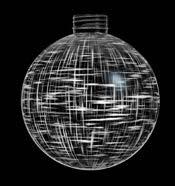
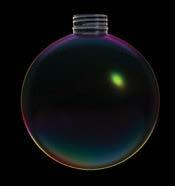

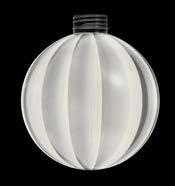
Product: ADAPT 2.0
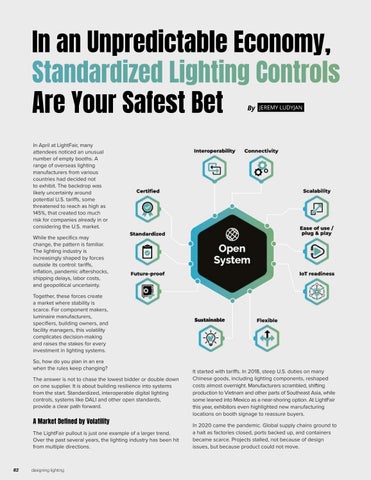
OUTDOOR LIGHTING OFFERS OPPORTUNITY TO PROMOTE GRID STABILITY
By JENNIFER BRONS Light and Health Research Center at Mount Sinai
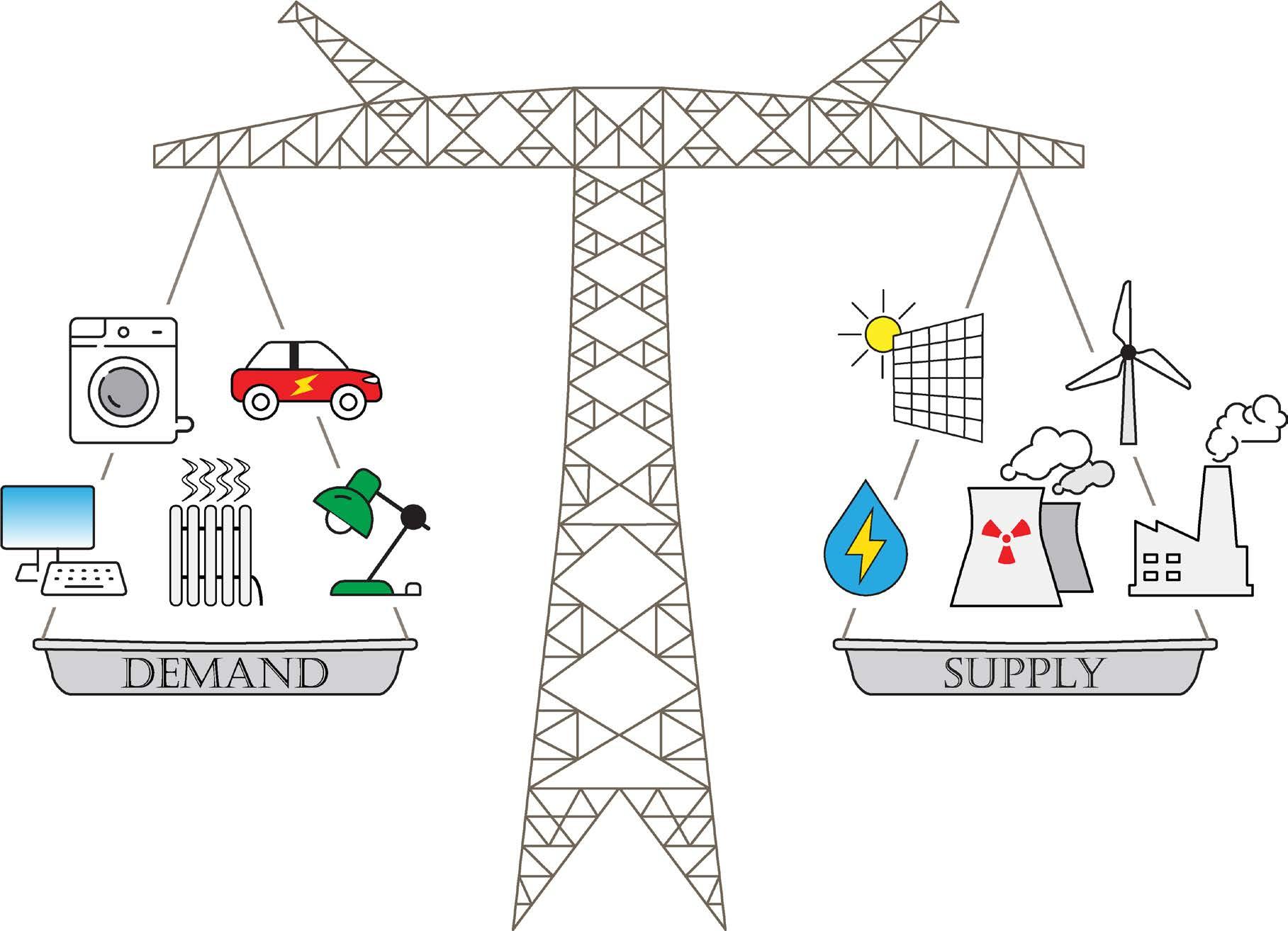
Utility companies are facing increasing challenges in balancing electric supply and customer demand. For over a century, electrical generation has been accomplished with a limited number of power plants that are carefully designed to meet maximum electrical needs.
As electrical demand continues to rise, solar and other renewable power generation have helped to offset construction of more nuclear or fossil fuel power plants.
Managing this balancing act efficiently while maintaining grid stability is a key concern (Figure 1). Demand for electricity has
always varied by time of day, season, and region. But, with the growth of renewables, power generation itself has been added as a time-dependent variable. This can be a particular problem when the timing of demand does not match generation schedules.
When electrical demand exceeds supply, utilities must purchase electricity or use inefficient plants, which can create logarithmic price increases. Conversely, when electrical supply from renewables exceeds demand, efficient plants must be taken offline to balance supply and demand. This, too, is costly for utilities.
Figure 1. Utilities must balance electrical demand with supply.
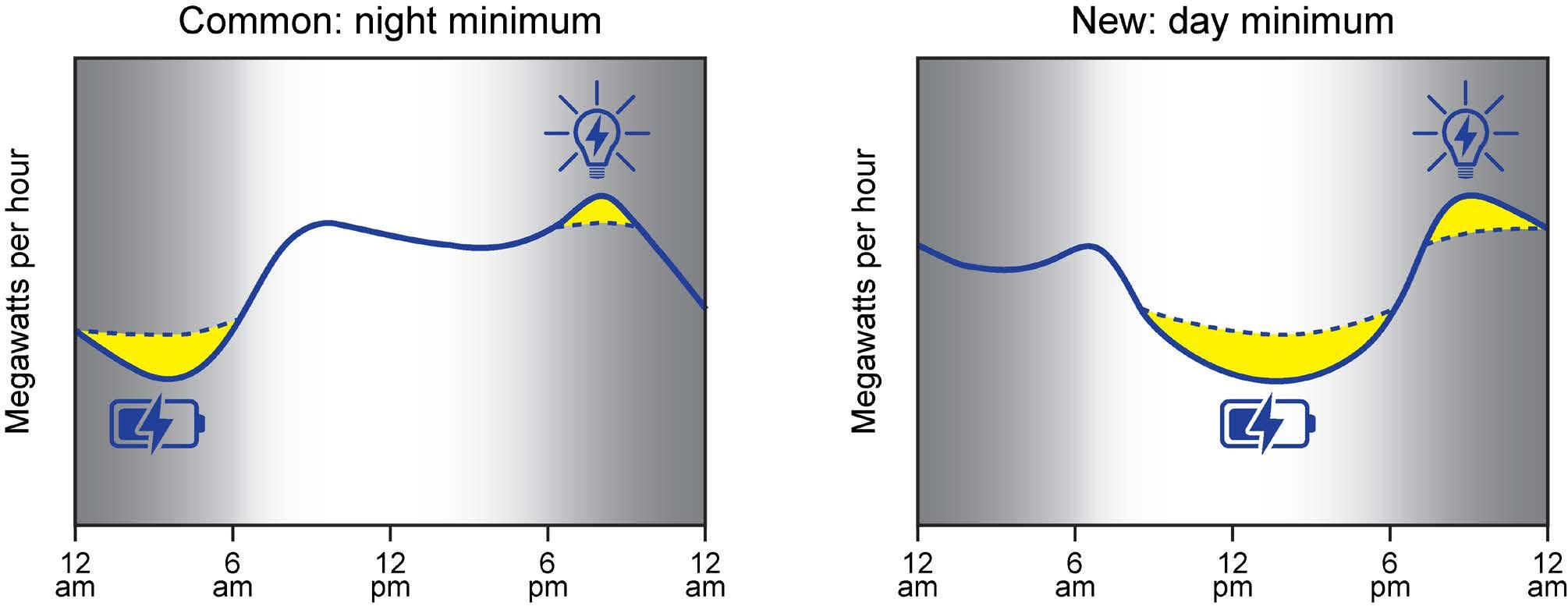
To achieve this balance of supply and demand, utilities are looking for alternatives to “shave” the demand peaks and “fill” the supply valleys. Figure 2 illustrates how this would work with a common and a new type of load profile. By charging batteries during times of low demand and using that power in times of high demand, the utility goal of “flattening” the load is closer to being reached.
Parking lot lighting presents an ideal opportunity for load flattening because as the sun sets, photovoltaic production decreases, and demand for electric outdoor illumination increases.
Switching between battery charging (when demand is low) to battery use (when demand is high) for parking lot and other forms of outdoor lighting can help to keep utility costs down and grid reliability high.
Here we present the results of a study where parking lot lighting used battery storage in this manner.
Prototype Development
Funded by the Northwest Energy Efficiency Alliance, the Light and Health Research Center recently developed a simple prototype referred to as a “load shed” system. While there are numerous potential uses for this technology, we focused on a proof-of-concept design for lighting a small to mediumsized parking lot adjacent to our laboratory in Menands, NY, between September 2024 and June 2025.
Testing Results
The load shed prototype performed well and successfully demonstrated non-emergency nightly shifting for multiple operating parameters. The battery charged and discharged properly, both in the depths of a Northeastern winter and during a summer heatwave.
When the length of the winter evening exceeded the battery’s capacity, the system automatically switched to mains electricity as designed. The system also powered the luminaire during a simulated power failure, providing functionality not commonly available in parking lots.
The prototype’s battery was positioned in a pole-mounted enclosure (Figure 3) along with other energy storage equipment (charger/monitor), electrical equipment (ac/dc inverter, relays), controls (photocell, timer, clock, cellular
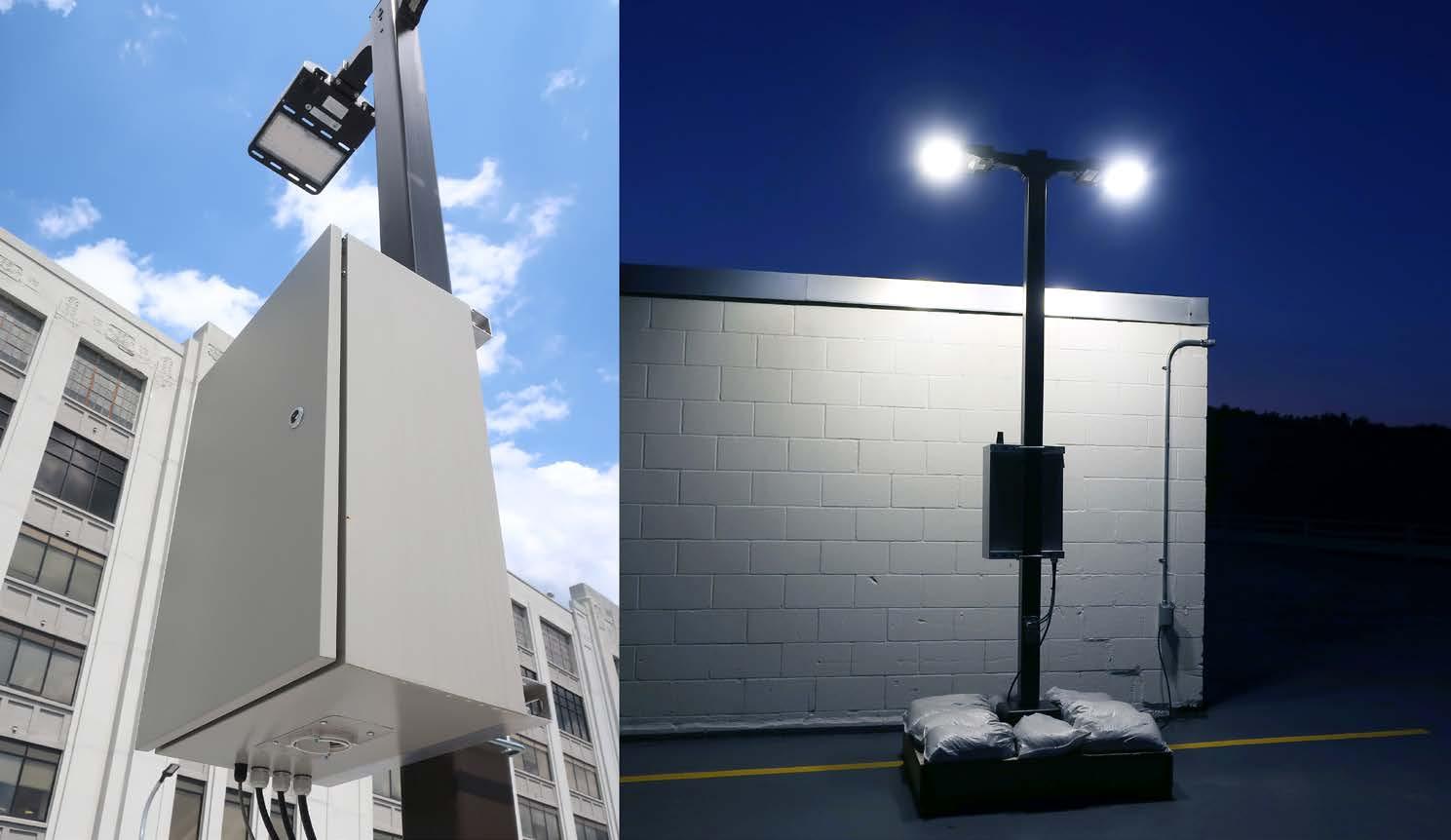
Figure 3. The load shed prototype (left) powered a pole-mounted luminaire (right) in the study’s parking lot location in Menands, NY.
Figure 2. To dampen swings in electricity demand, batteries should be charged when electrical demand is low and discharged in the early evening during peak demand. In a common load profile, battery charging occurs overnight (left). In regions with ample photovoltaic generation, charging would occur during the day (right). (Adapted from the U.S. Energy Information Administration.1)
interface), and monitoring equipment. (Detailed schematics of the design are available from the author on request.)
We designed the system to maintain the same light output regardless of power source.
We also tested demand emergencies that simulated a utility company sending an automated demand response signal to override the system’s scheduled programming and operate the luminaire via battery beyond the system’s nightly flex load shed parameters.
While the cellular communication we used for the test showed minimal lag time, there were a few instances when wireless commands were not getting through to the system due to a spontaneous disconnection from our cellular network. Fortunately, the system continued to operate with the previous program settings, allowing nightly flex load to shift to a less expensive time of day as designed.
Business Opportunities
Based on data from the U.S. Department of Energy,2, 3 we estimate that 53–83 million parking lot lights were operating in the US as of 2020. Assuming an average power demand of about 155 watts per light, this translates to a nationwide parking lot lighting demand of 8,220 to 12,870 megawatts that could be shifted to off-peak demand times.
Our calculations show that shifting this demand would variably reduce energy costs, depending on market factors. A similar system installed in Idaho, for example, would see a payback period of 37 months whereas one installed in Southern California would yield a payback in only 18 months. Incentives offered by utilities to encourage the adoption of load shed systems could further enhance the proven economic benefits.
A principal limitation to adopting load shed technology is the significant impact of season on electrical demand. During autumn through spring in much of the US, daily peak demand occurs a couple of hours after parking lot lighting turns on. Summertime peak demand, on the other hand, occurs before the lighting turns on, potentially making demand management less useful for electrical utilities.
In fact, because annual demand for electricity peaks during the summer in some regions, some utilities incentivize demand management efforts during the summer only, for limited hours of the day. But demand profiles are changing, especially with increasing electrification (e.g., vehicle charging at night).
Future Considerations
Our research revealed several considerations for effectively
bringing load shed technology to market.
• Maintaining a load shed system’s wireless connectivity is important for its capability to respond to grid emergency signals.
• Battery capacity should be based not only on the size of the load, but also on intended duration of operation. A smaller battery could be used for a few hours of nightly flex load. A larger battery may be needed for grid emergencies.
• Consider integration of load shed technology in luminaire heads. This may reduce AC/DC conversions but will limit physical size/form factor of battery and duration of operation. While integration would avoid an ungainly enclosure connected to a pole, it would add complication to luminaire housing design. Luminaire integration might also offer opportunities to expand load shed technology to street lighting.
• Pole-mounted load shed technology would be suitable for small to medium-sized parking lots with about 1 kilowatt of outdoor lighting. For lighting larger sites, we calculated that a centralized battery system would be more practical for load management.
• While many utilities in North America already publish special rates to encourage demand management, many have minimum loads (e.g., ≥ 50 kilowatts) for eligibility, which most potential end-users of this load shed technology would not meet.
• To accommodate minimum load requirements, a “curtailment service provider” could be used to aggregate load shed savings from a client portfolio in the utility’s territory as part of a suite of solutions that aggregators could offer their clients.
Outdoor lighting presents opportunities for commercialization and aggregation of simple load shed technology for sites across the country. We expect this technology to offer nightly opportunities for electrical flex load management that will help utilities balance supply and demand in the future.
Acknowledgments
The author wishes to acknowledge Chris Wolgamott of the Northwest Energy Efficiency Alliance for providing inspiration and support for this research. The project was also made possible by the design and fabrication efforts of Light and Health Research Center staff and Namreiba LLC of Albany, NY. To learn more about this load shed technology, contact us for detailed schematics. ■
References
1 U.S. Energy Information Administration. Hourly Electricity Consumption Varies Throughout the Day and Across Seasons. Washington, DC: U.S. Energy Information Administration, 2020. [Available from https://www.eia.gov/todayinenergy/detail.php?id=42915].
2 Buccitelli N., Elliott C., Schober S., Yamada M. 2015 U.S. Lighting Market Characterization. Washington, DC: U.S. Department of Energy, 2017. [Available from https://www. energy.gov/sites/default/files/2017/12/f46/lmc2015_nov17.pdf].
3 Elliott C., Lee K. Adoption of Light-Emitting Diodes in Common Lighting Applications. Washington, DC: U.S. Department of Energy, 2020. [Available from https://www.energy. gov/eere/ssl/articles/2020-led-adoption-report?nrg_redirect=453978].









Lighting Past Precision the with
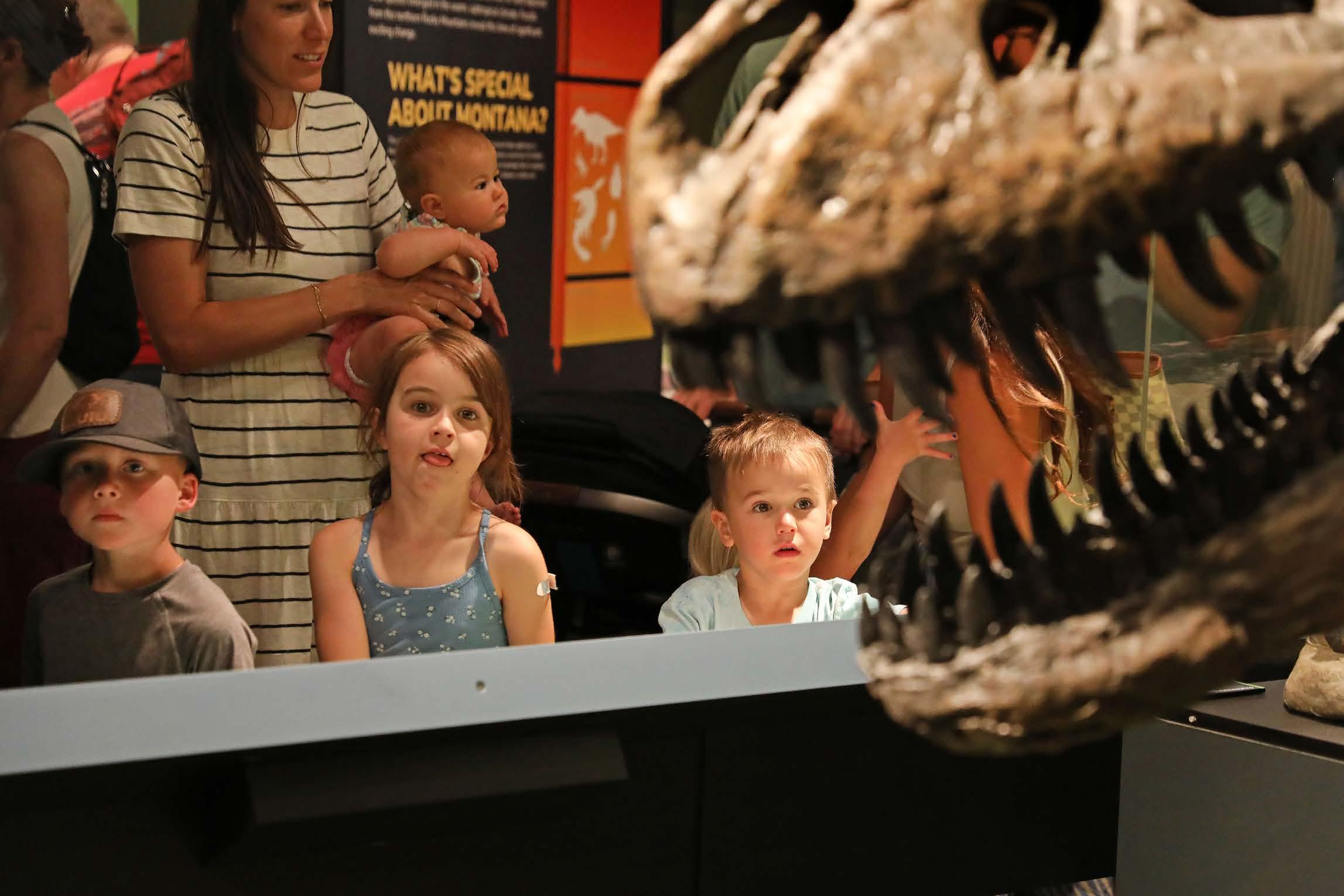
The Museum of the Rockies in Bozeman, Montana, recently unveiled a new permanent dinosaur exhibit designed in collaboration with Blue Water Studios. Behind the scenes, lighting played a critical role in bringing the prehistoric story to life. Casey Diers, Senior Designer with Morlights, led the lighting design, balancing modest budgets with the need for precision and drama.
Designing with Constraints
Unlike blockbuster museum projects with high-end fixtures and unlimited resources, this exhibit relied on modest track lighting and creative problem-solving. “When you’re working with tight budgets, you can’t just add another light,” Casey explained. “You have a light or two to cover a case, and you have to make it count.”
To comply with the museum’s track standard, the team relied on Con-Tech track and economical track heads, paired with
RANDY REID By
high-quality Soraa lamps with a 95 CRI. Accessories such as snap lenses, louvers, and barn doors provided beam control, allowing adjustments from a native nine-degree spot up to wider distributions. “We convinced the museum to splurge a little on the lamps. That way, we had good optics and color quality even with budget-friendly fixtures.”
Creating an Underwater World
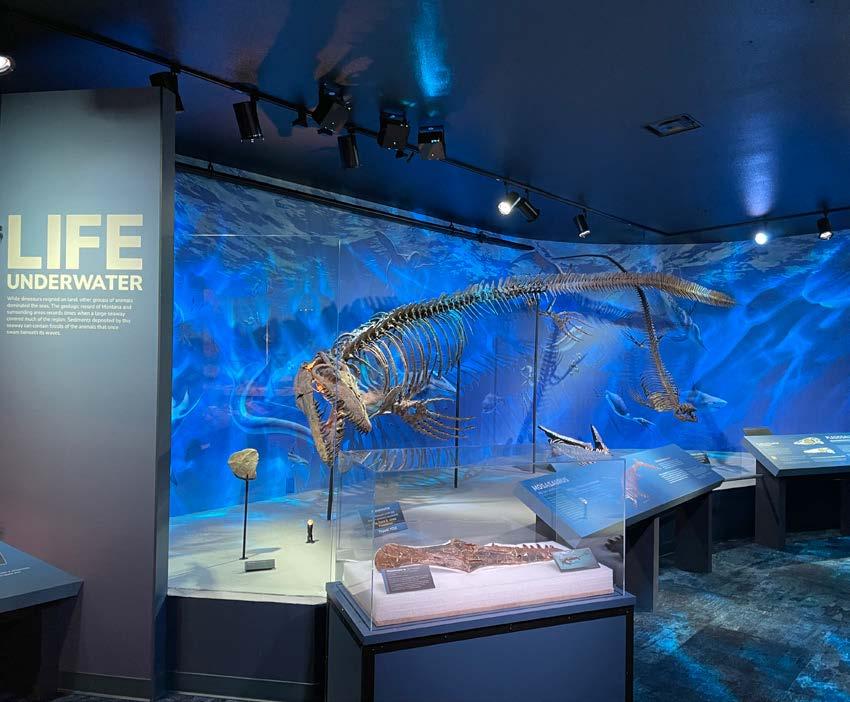
One of the highlights is the Mosasaurs, an ancient aquatic dinosaur featured as the centerpiece. To evoke the sense of being underwater, Casey used PSS WaveLight projectors. “They’re bulletproof—plug them in and they just work,” he said. The subtle movement of projected light gave the room the ambiance of an underwater landscape while also helping to soften harsh shadows.
Lighting angles were carefully chosen to highlight unique features of the skeleton, such as its teeth. But because
Morlights Shapes the Museum of the
Photo credit: Museum of the Rockies
artifacts often arrive at slightly different angles than drawings suggest, on-site adjustments were crucial. “We spend time repositioning track heads until the light falls exactly where it needs to—like on the teeth or the hand— whatever detail the curators tell us is most important.”
Warmth, Color, and Control
Although one might expect a cooler color temperature to support the underwater theme, the team used 3000K throughout the exhibit. Casey explained, “Color is relative. Even 5000K would look warm next to blue light. We prefer warmer tones in exhibits—it feels more comfortable.”
Dimming controls were not in the budget, so Morlights turned to an old museum trick: screens and gels. By layering mesh screens of varying densities in front of lamps, they reduced light output without the expense of a dimming system. “You just put the whole thing on a relay—on in the morning, off at night—and you’re good to go.”
Tackling Challenges
The design faced multiple challenges:
• Brown on brown: Lighting a brown skeleton against a brown background required careful contrast. Warm gels helped key elements pop.
• Shadow management: Artifacts mounted away from walls created unavoidable shadows. Infinite budgets might allow wall-mounted shuttered fixtures, but here, Casey relied on careful aiming and fill light strictly from the ceiling.
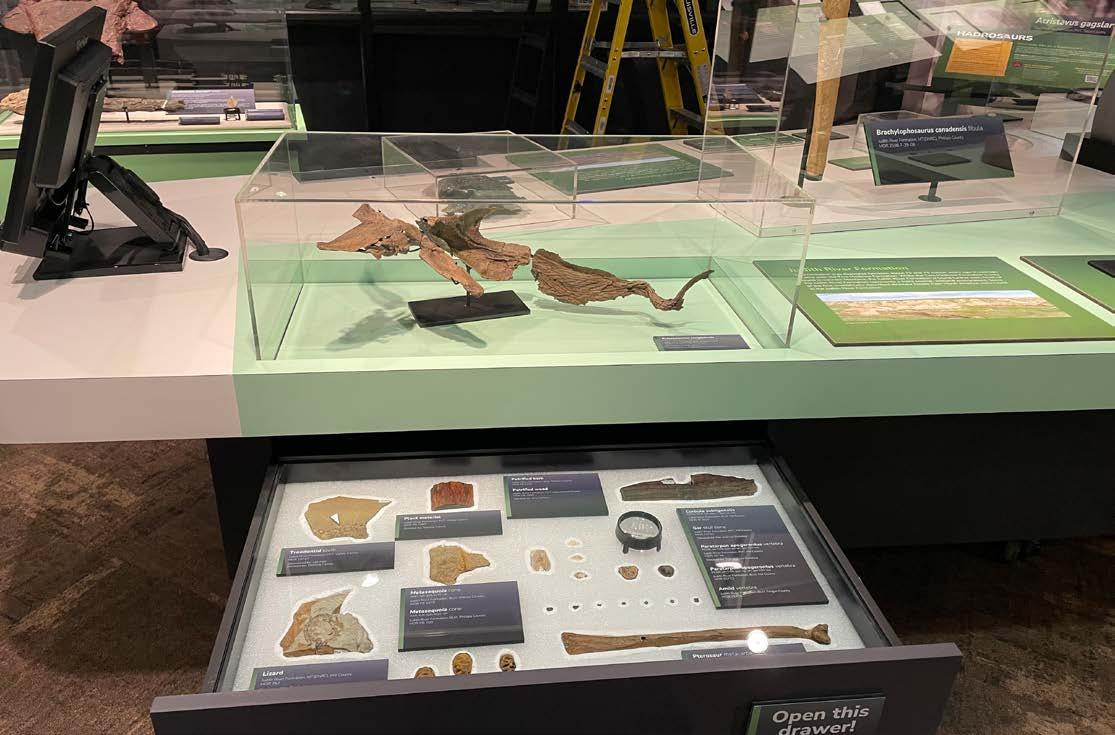
• Interactive displays: A projection wall paired with a scroll-wheel control required a practical solution. “The room was dark to make the projection pop, but we had to light the button on the plinth. Otherwise, visitors wouldn’t see it—and wouldn’t use it.
Cases and Details
Some exhibit cases were internally illuminated by the fabricator, while others used budget-conscious solutions. For higher-end applications, designers might specify displaycase fixtures with precision shutters—but this project kept costs in check. This project was about smart, simple choices, so the cases were lit from above” Casey noted.
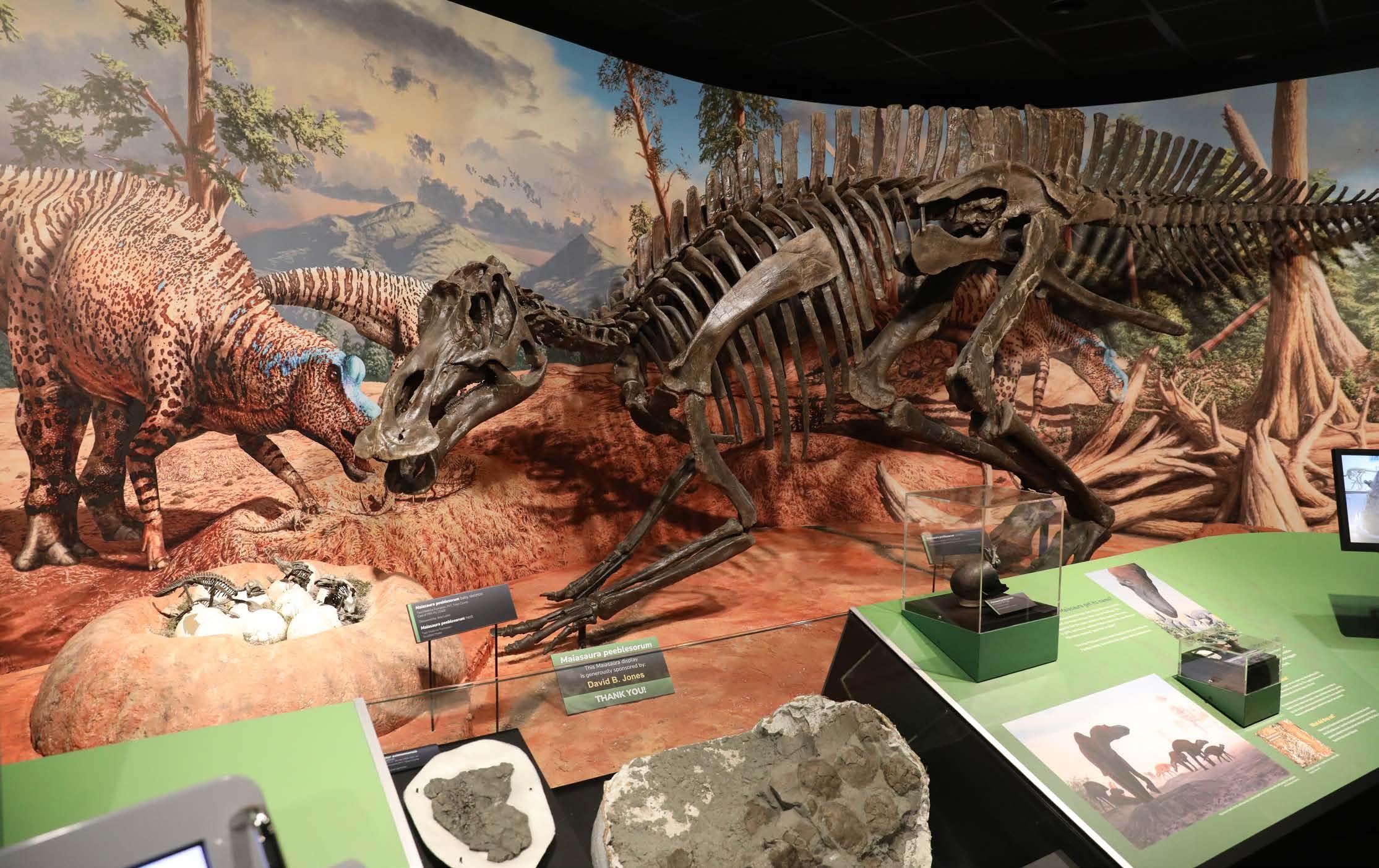
Photo credit: Bluewater Studio
Careful aiming highlights the dinosaur skeleton against its immersive backdrop. Photo credit: Bluewater Studio
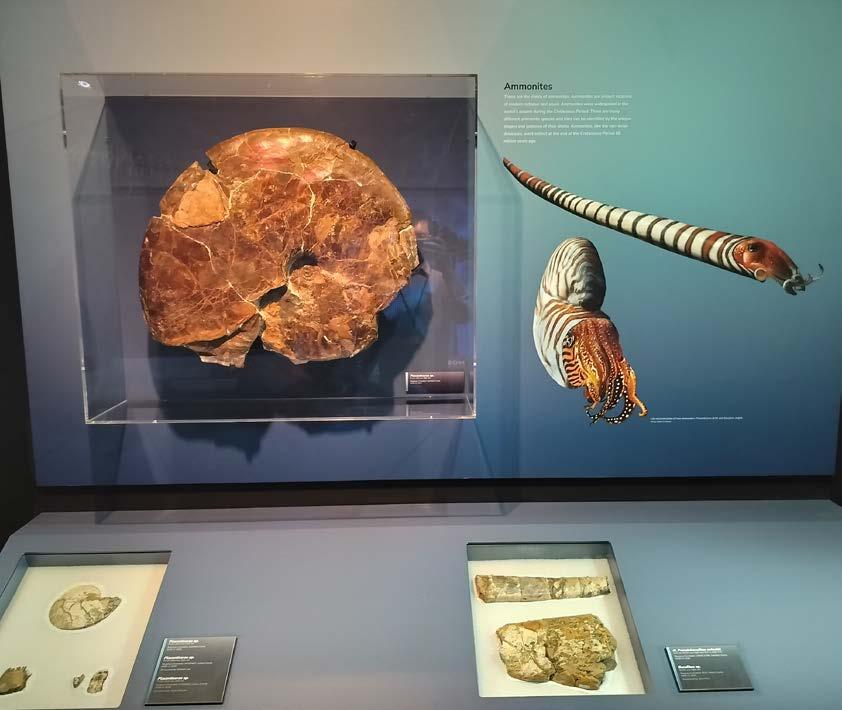
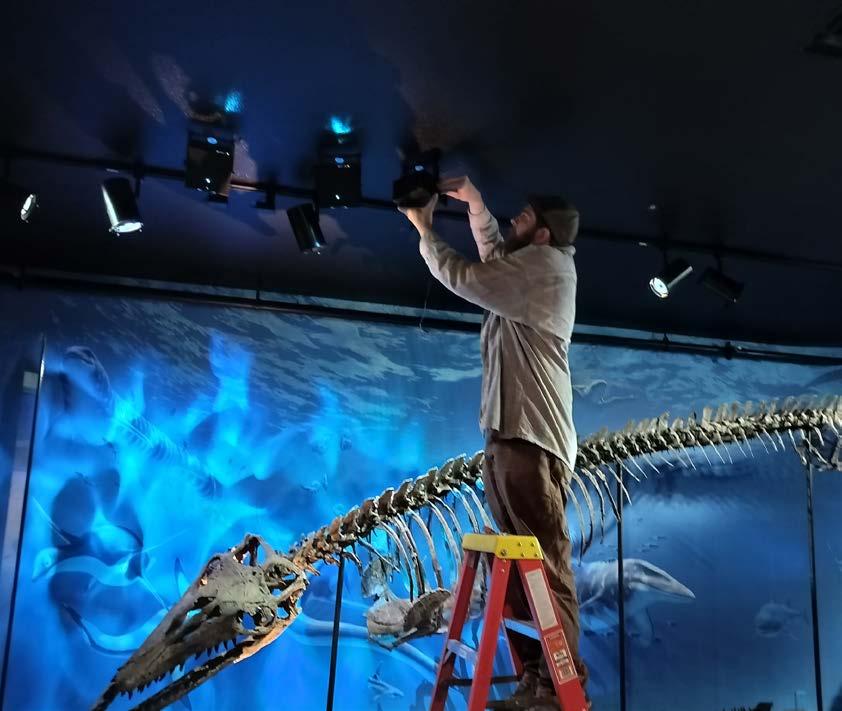
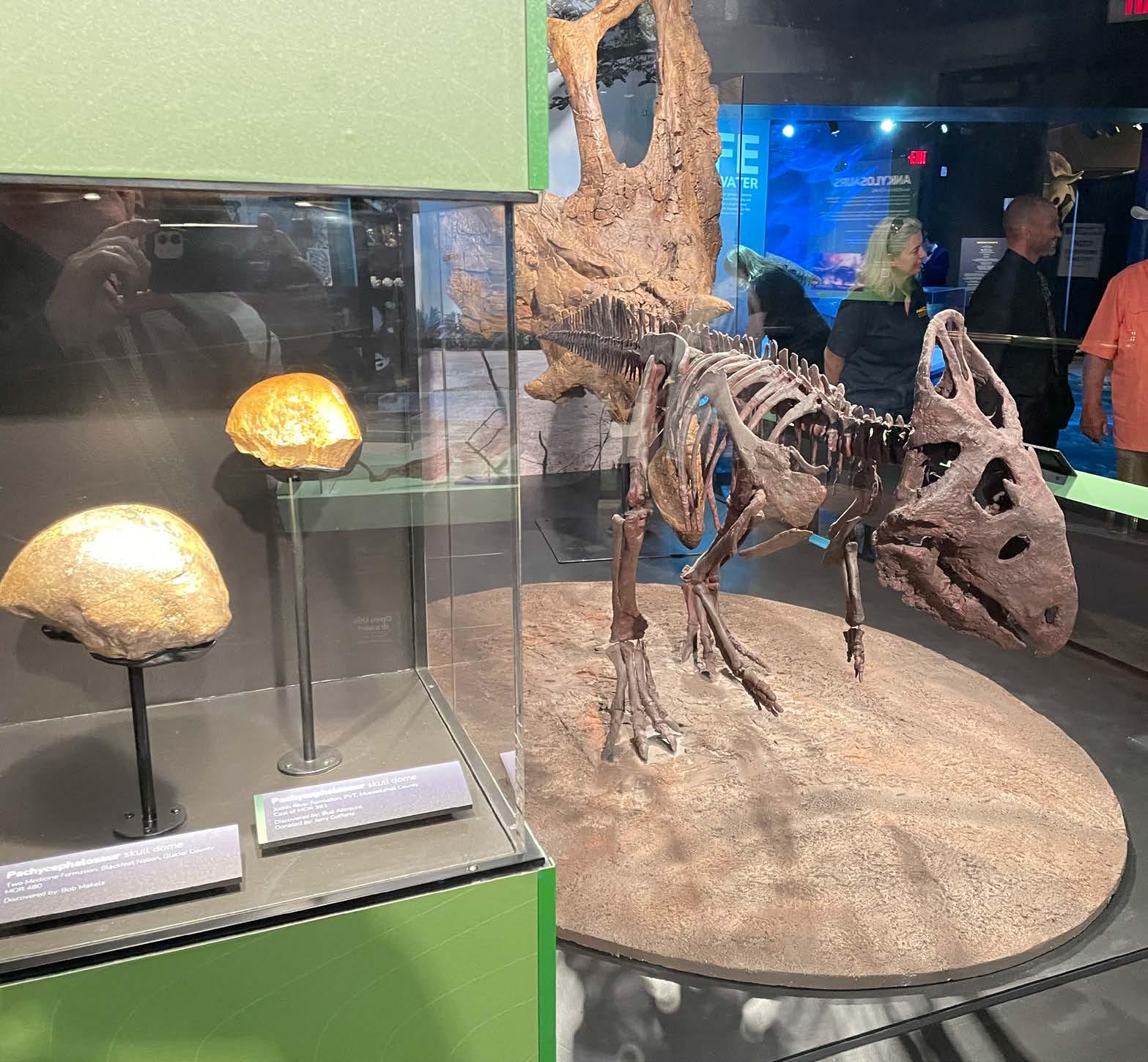
Casey spent three days on-site aiming and level setting, working closely with museum staff. “We’ll make a pass, and it looks good to my eye. But I know very little about skeletons. So I walk through with staff and they’ll say, ‘That hand is really important.’ Then we’ll shift light from the torso to the hand.” This collaboration ensured that scientific priorities were aligned with design intent.
The Business of Lighting Design
Morlights logged 79.5 hours on the project, including 21.5 hours on-site aiming and level setting. For Casey, these hours highlight the hands-on nature of museum lighting: climbing ladders, adjusting optics, and responding to lastminute exhibit changes.
He is quick to point out that while projects like this may not win design awards, they represent the bulk of museum work.
“Trade publications often feature big, flashy projects. But 90% of museum work in North America is like this—good, quality design on modest budgets. This is what it looks like to be a lighting designer.”
A Lasting Impression
The new exhibit at the Museum of the Rockies demonstrates how thoughtful design can elevate modest resources. With creativity, attention to detail, and collaboration, Casey and the Morlights team created an immersive experience that highlights both artifacts and replicas while telling a compelling story about life 74 million years ago.
“It’s not glamorous,” Casey reflected. “But it’s the work that matters. Lighting shapes how people see, learn, and connect with history. That’s why we do it.” ■
LIGHTING TOOLKIT: MUSEUM OF THE ROCKIES
• Track & Fixtures: Con-Tech track and budget-friendly track heads
• Lamps: Soraa LED lamps, 95 CRI, with snap lenses for beam control
• Beam Accessories: Louvers, barn doors, and lenses (spot to wide)
• Projectors: PS WaveLight projectors for underwater movement effect
• Color Temperature: 3000K throughout
• Light Control: Screens and gels used for dimming where needed
• Special Details: Warm gels to offset “brown on brown” skeleton/ background contrast
Focused beams bring the Pachycephalosaurus skull domes and juvenile skeleton to life. Photo credit: Bluewater Studio
Photo Credit: Morlights
Photo Credit: Morlights
Photo credit: Bluewater Studio
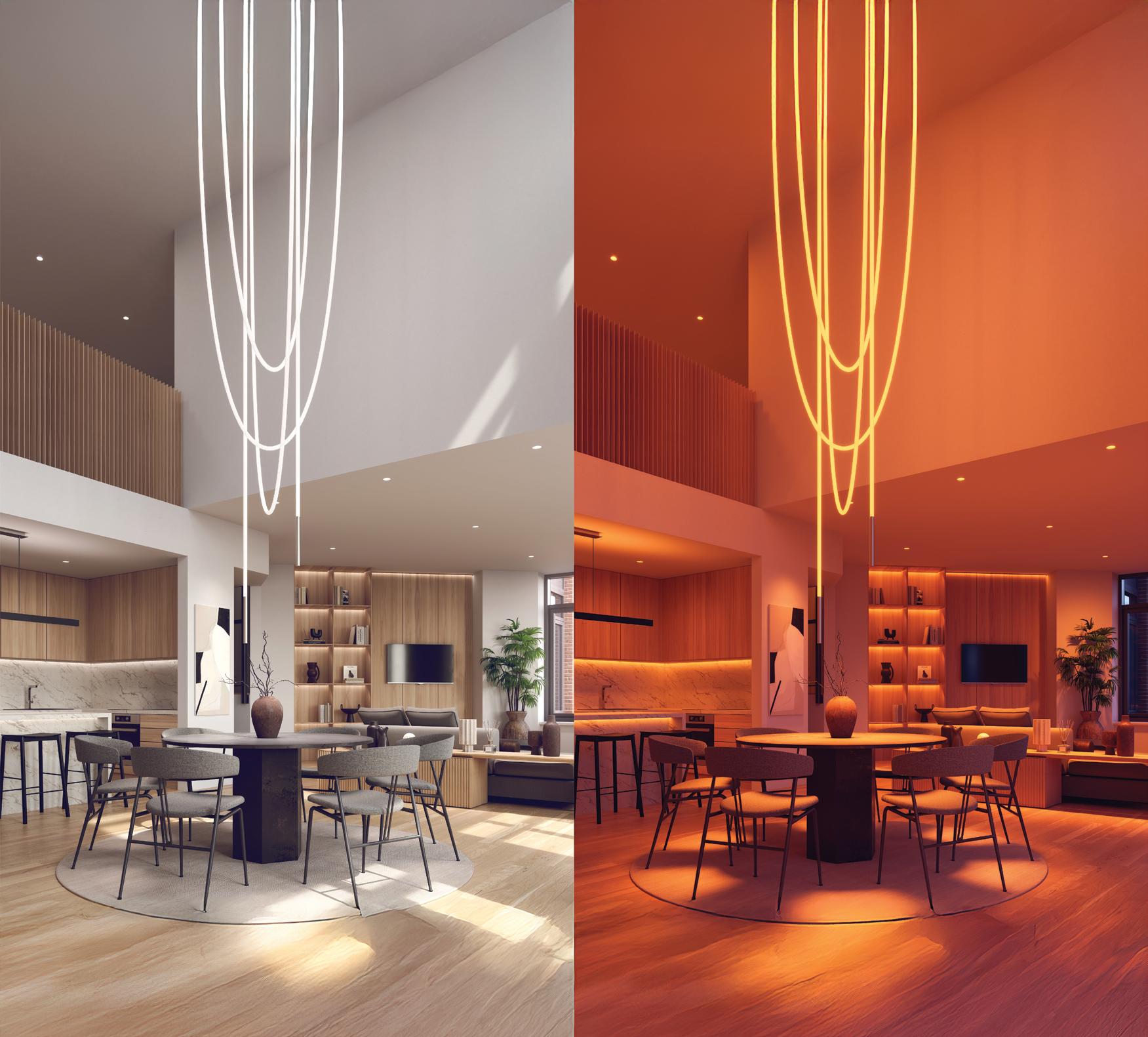
Flowing Ropes of Illumination Trapeze 360
• Flexible, sculptural form available in diffused or woven finishes
• Modular design in 2.4" or 3" increments, up to 40 feet continuous
• Best-in-Class TruColor™ RGBTW for rich, dynamic color rendering (97+ CRI) at 1500K – 6500K and .004 DUV on the Black Body Curve
• Smart control ready via DMX and WiZ Pro
• Low-profile hardware with hidden canopy and trimless mounting options
• Accessories including concealed clips, standoffs, and canopies for creative installations

A BEACON OF LEARNING
By RANDY REID
Focus Lighting Transforms Liberty Science Center into a Luminous Landmark on the Hudson
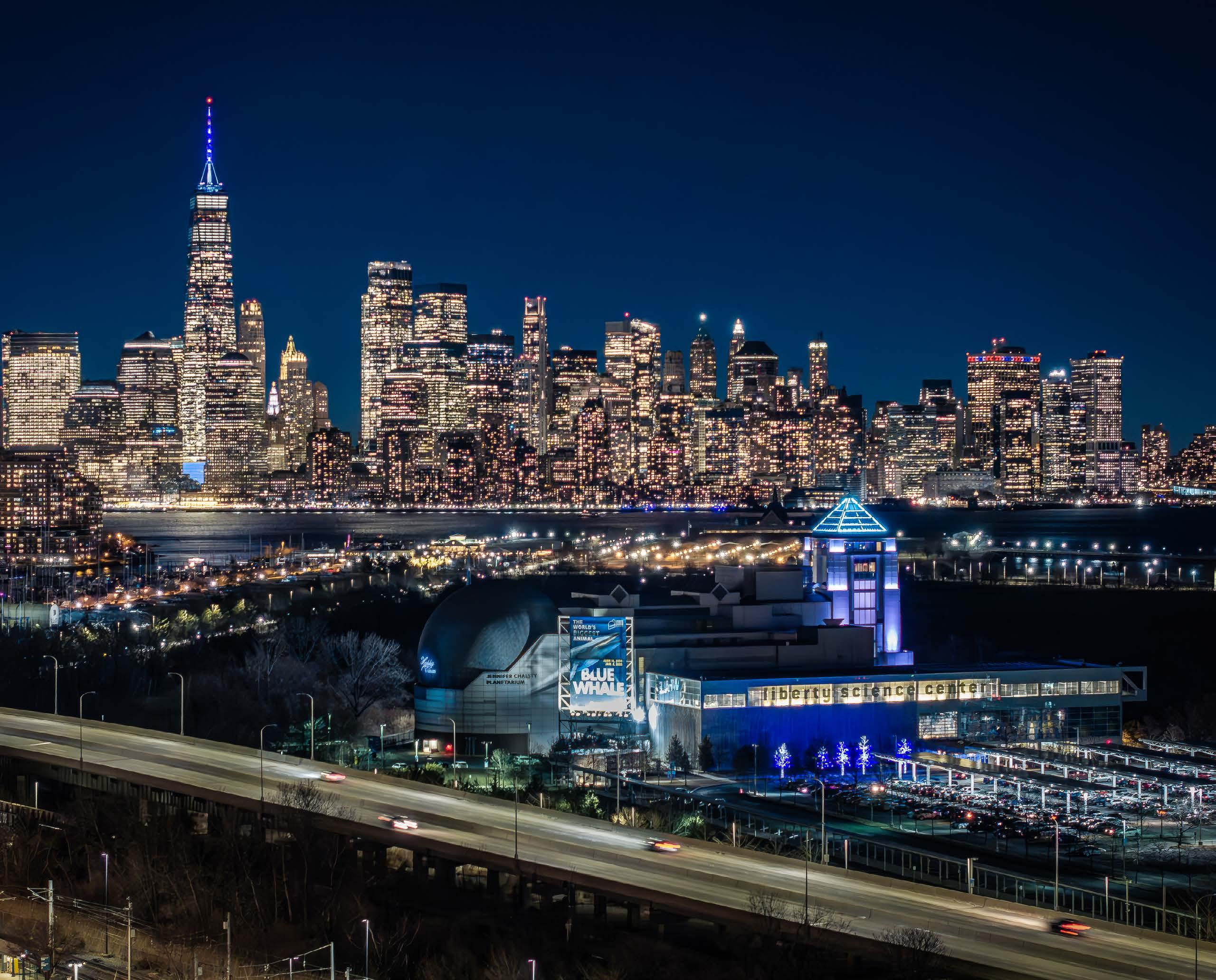
When the Liberty Science Center (LSC) in Jersey City began planning renovations to their aging event space, they weren't intending to create a beacon.
Brett Andersen, principal at Focus Lighting, saw an opportunity. The LSC renovation gave the center the chance to achieve a long-time goal of President and CEO Paul Hoffman: making the science center more visible at night.
“Paul and I had spoken in the past about his desire to make LSC more visible to the millions of people in Lower Manhattan and Brooklyn, as well as the hundred-thousand people that drive by every night on the nearby New Jersey Turnpike. I knew this was our opportunity to create the luminous landmark on the skyline that Paul always wanted, a true “Beacon of Learning.”
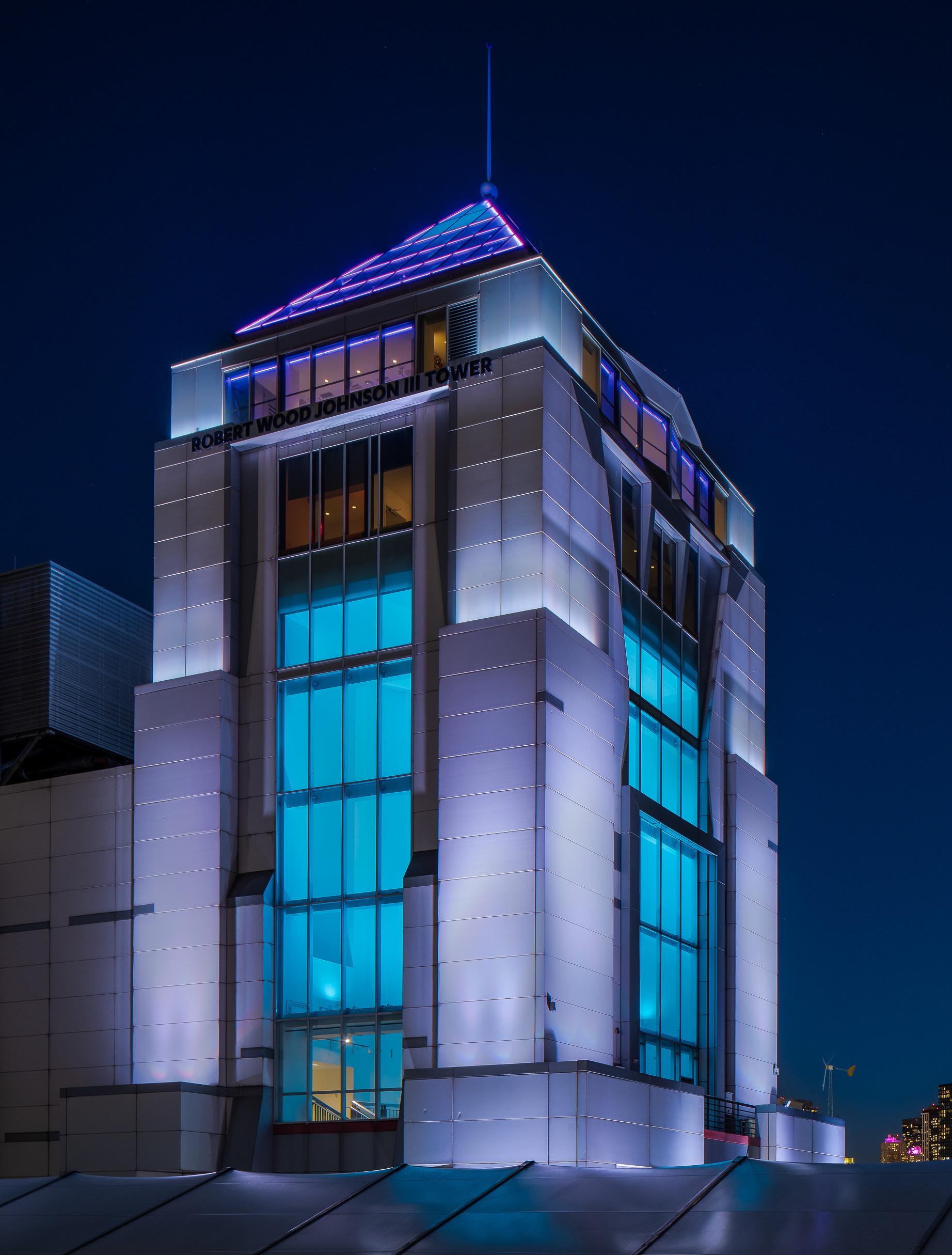
Hoffman raised the funds to expand the project’s scope to include the tower’s exterior lighting, allowing Focus Lighting to execute their holistic vision for the nighttime lighting of the future Robert Wood Johnson III Tower and its renovated event facility.
Designing the Arrival
Focus Lighting choreographed the visitor’s journey from the ground up. Guests enter a glass elevator rising through a five-story atrium, where RGBW LED strips outline each window and cast light onto silverpainted elevator shaft walls.
“We tested a lot of paints in our lab and landed on a reflective metallic silver so the light bounces in an interesting way,” Brett said. As the elevator ascends, riders pass luminous frames before emerging into the glass-walled event space with sweeping views of Manhattan and the Statue of Liberty.
Cracking the Pinnacle Puzzle
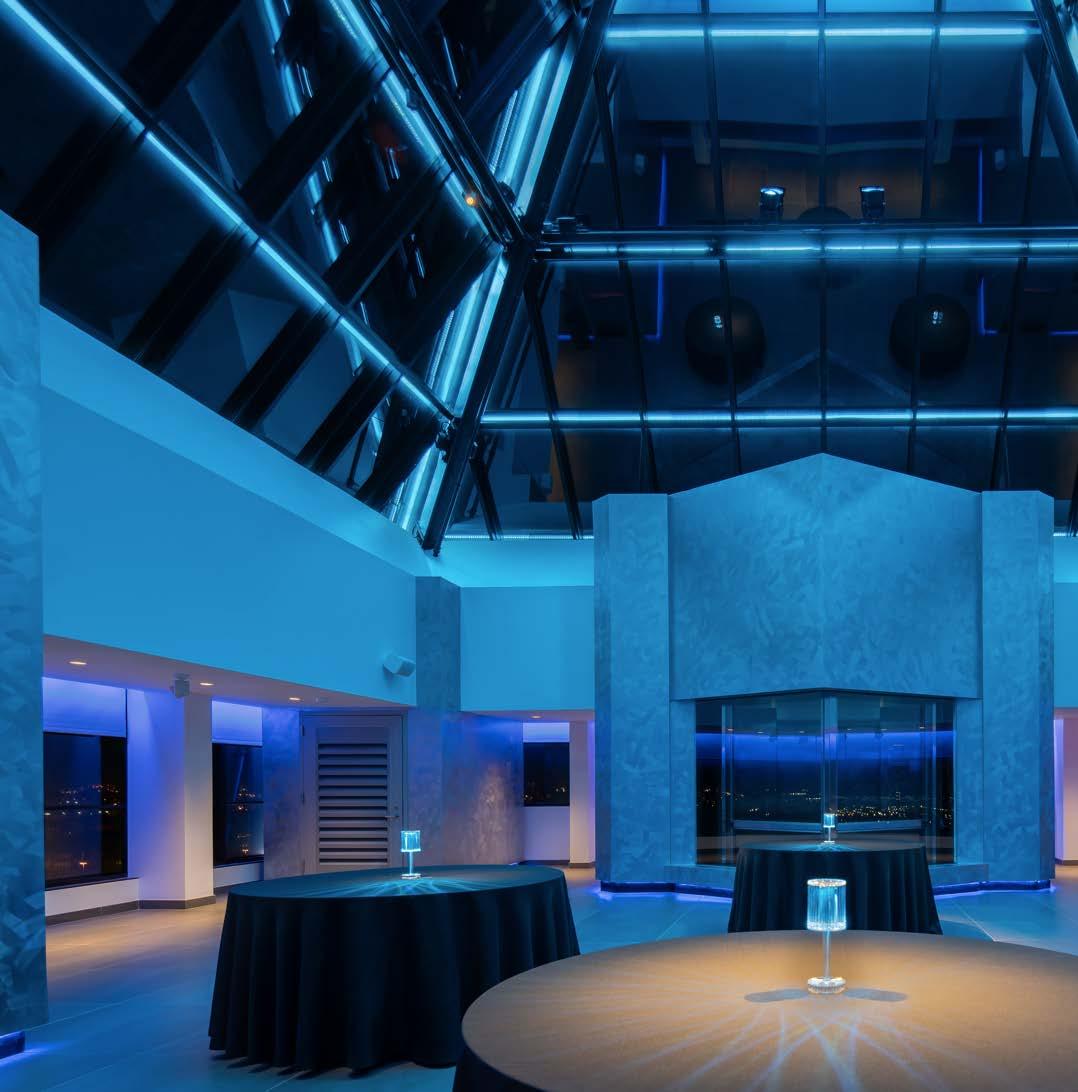
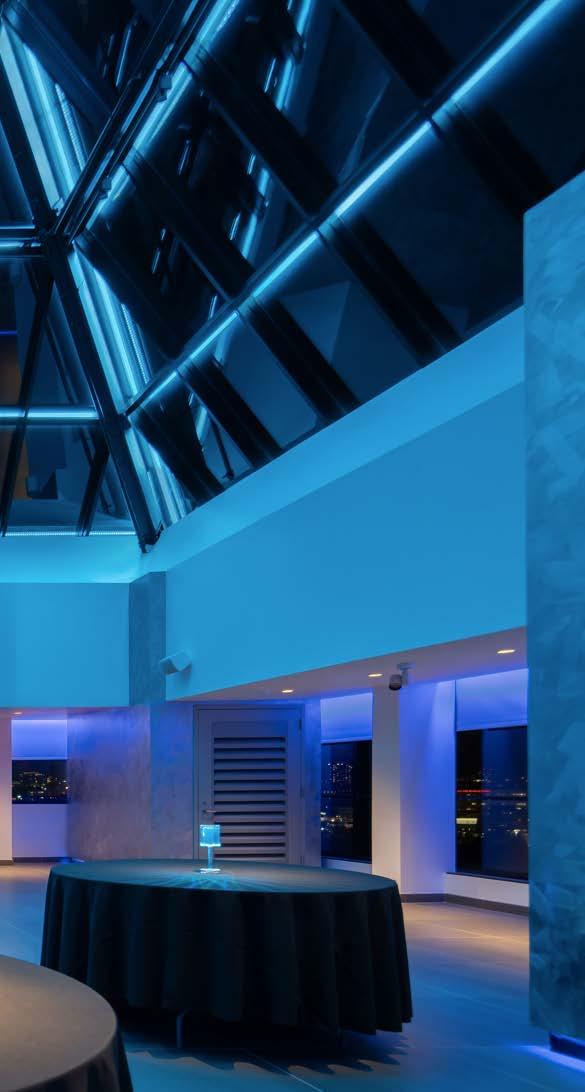
The greatest challenge was lighting the 50-foot-tall glass pinnacle—the Tower’s crown and event space ceiling. Originally built in 2007, the space became plagued by poor HVAC and intense solar gain. “It would roast up there,” Brett recalled.
Solar film was added to cut heat gain, but it reduced light transmission. Exterior mounting promised brightness but would have been impossible to maintain. Interior mounting was practical but cluttered the view.
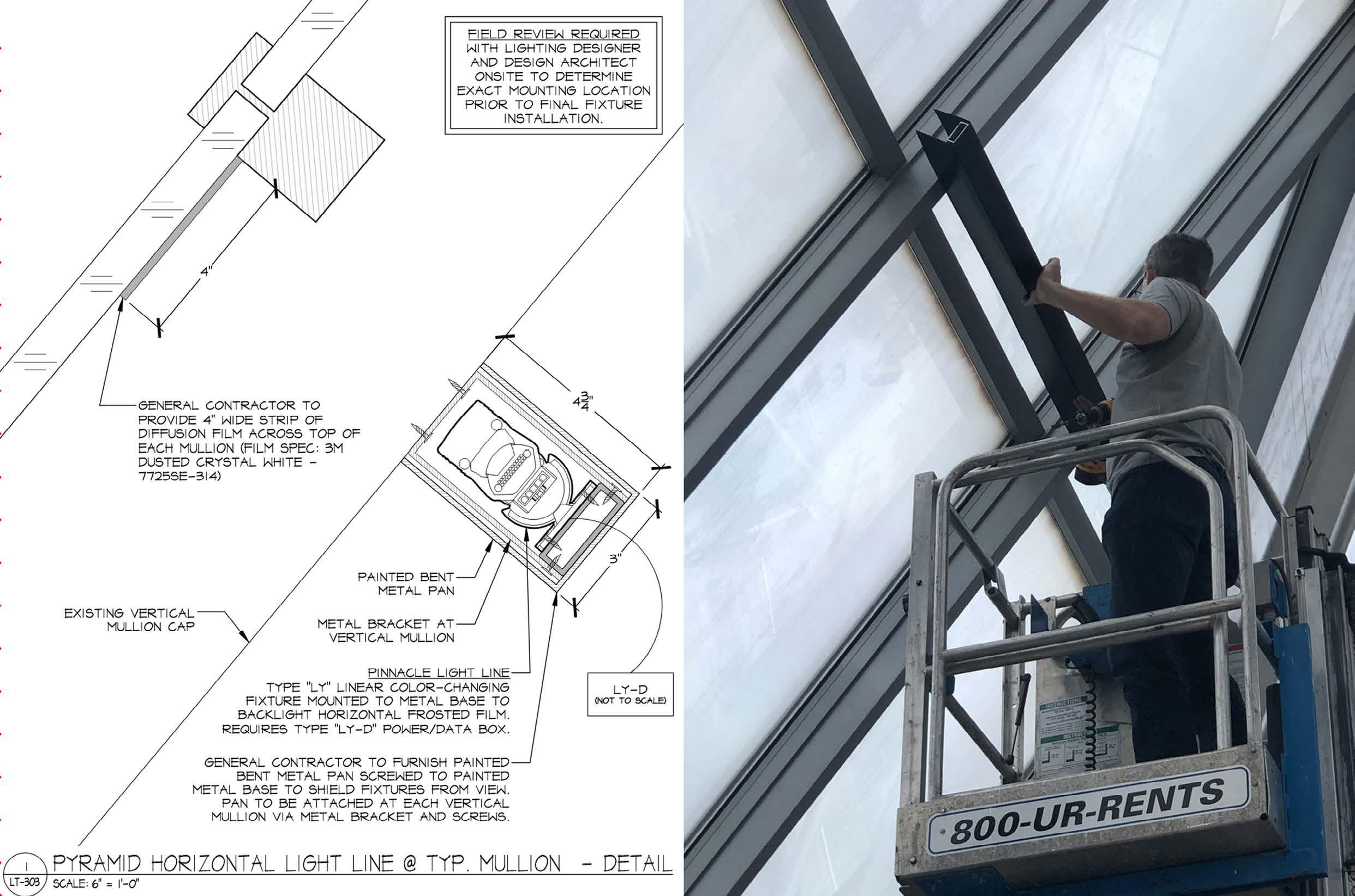
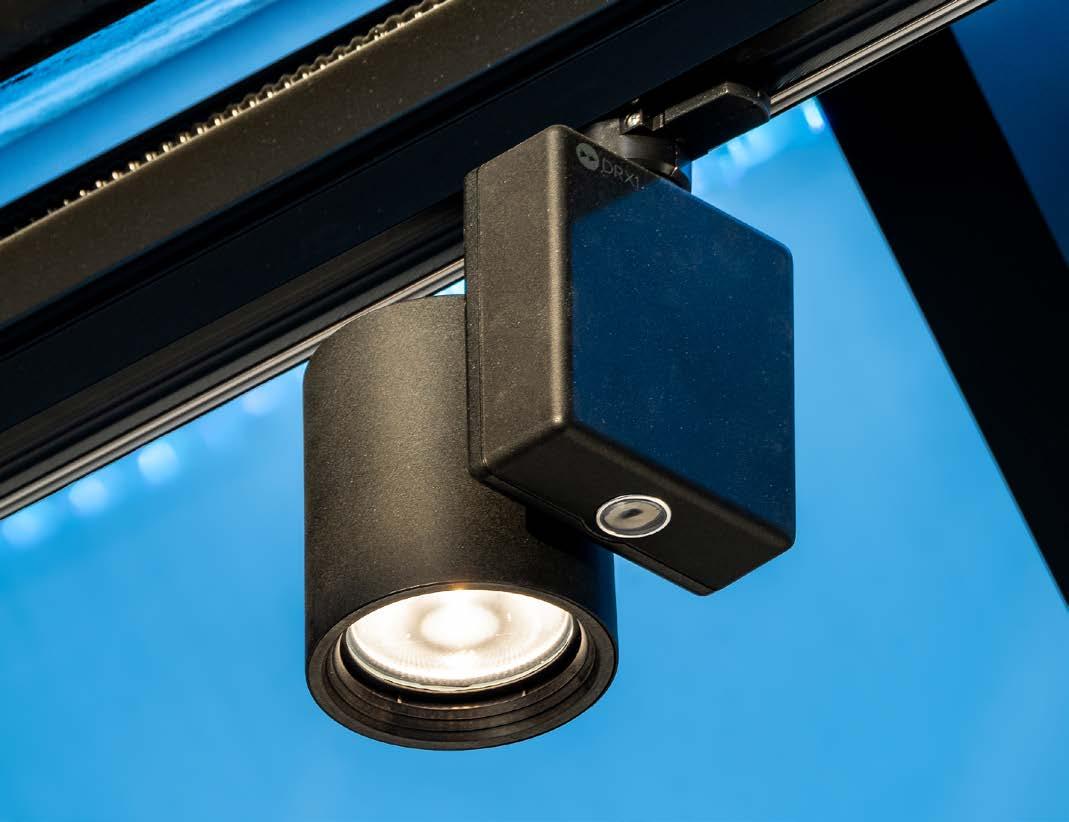
Focus designed and prototyped a custom bracket and tube steel system that tied into mullions, with a bent metal shroud concealing SSL linear RGBW fixtures.
“The beauty is that guests never see the fixture—it’s tilted up and completely hidden,” Brett said. But the setup left gaps, producing a “broken tooth” effect where fixture lengths didn’t match mullion spacing.
The breakthrough came through collaboration with the glazing team: Diffusion film was layered alongside the solar film. “The diffusion film mounted on the inside of the glass gave us a surface to light, creating a
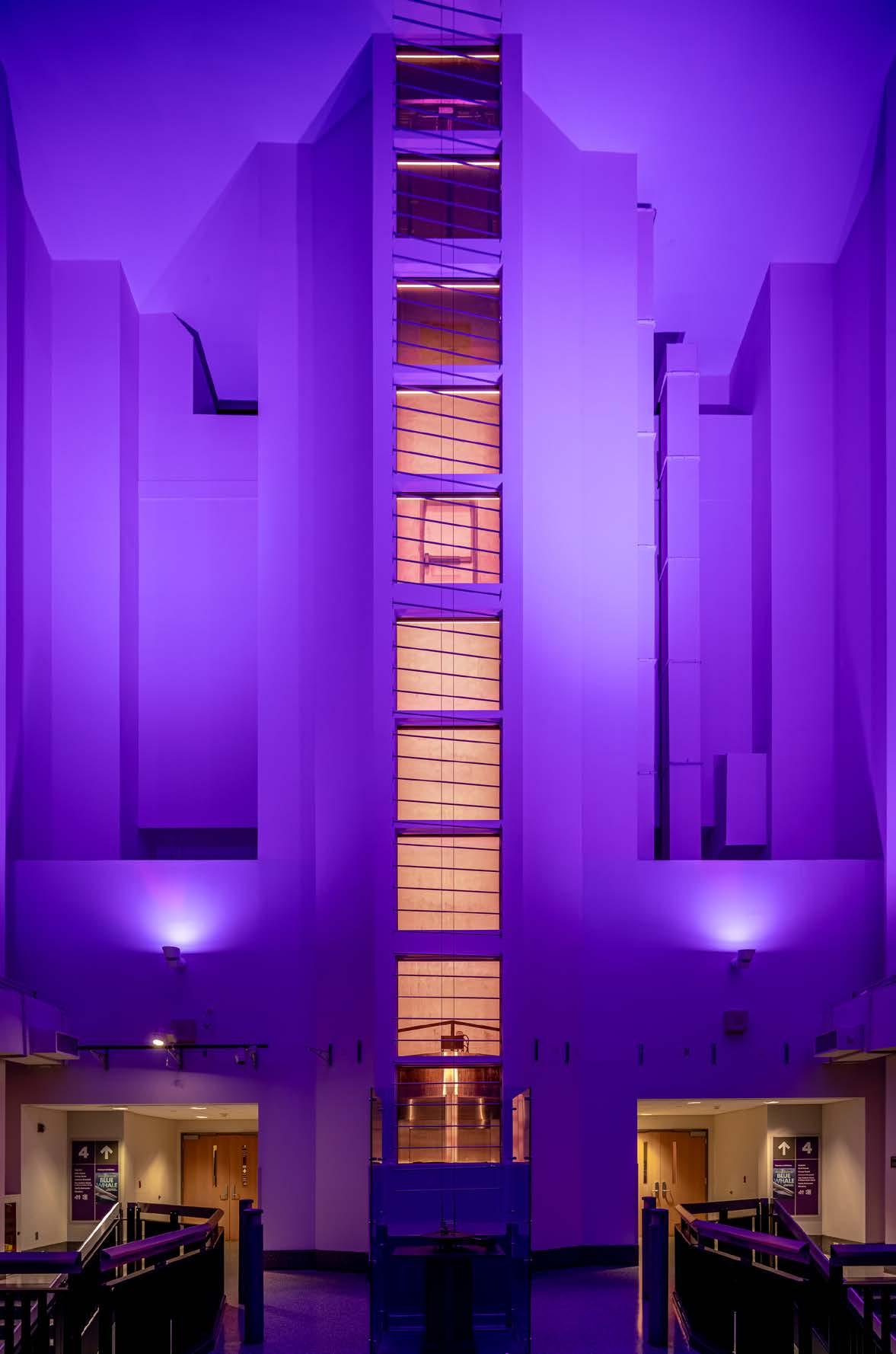
RGBW LED strips outline the glass elevator shaft, creating a glowing ascent through the atrium. Photo credit: Ryan Fischer
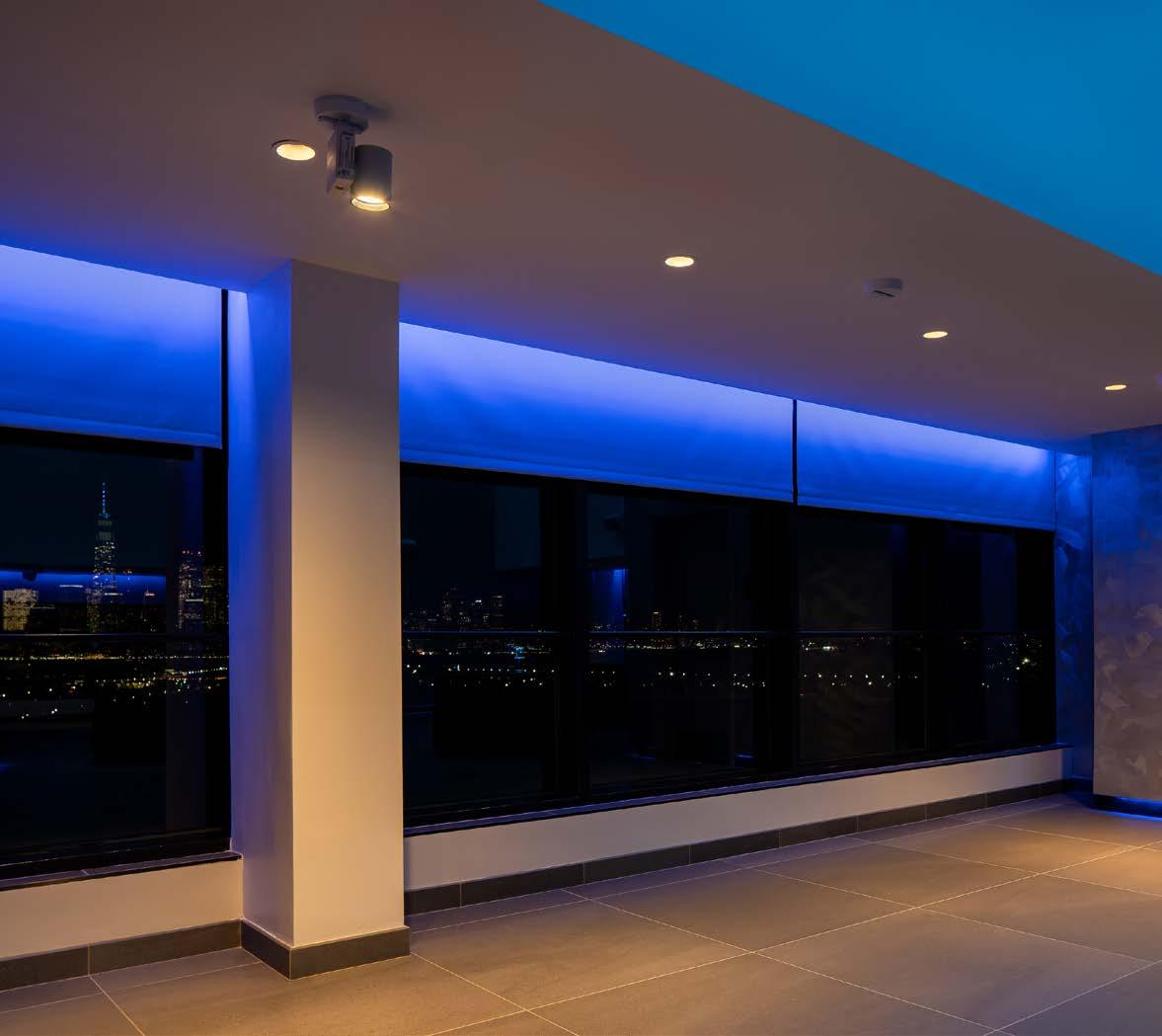
Color-changing perimeter and ceiling lighting bring flexibility and atmosphere to the observation deck. Photo credit: Ryan Fischer
continuous line when viewed from the outside while also eliminating direct reflections of the LEDs in the glass,” Brett said.
Interior Flexibility
Inside the ninth-floor event space, flexibility was critical. Fixtures mounted 25 feet above the floor were impossible to re-aim for each event. Remote-controlled 2700K accents from RCL solved the problem.
“They’re wonderful,” Brett said. “We preprogrammed them for the most common table layouts, making it easy to set up the space. The staff just puts tables where the light is.”
Additional layers included RGBW tape light from Acolyte integrated into toe kicks and soffits, grazing roller shades with color. DMXcontrolled battery-operated table lamps from Vondom synced wirelessly with the entire system, offering playful accents. Amerlux downlights and CSL miniature recessed fixtures provided general illumination, while Times Square Lighting supplied emergency floods.
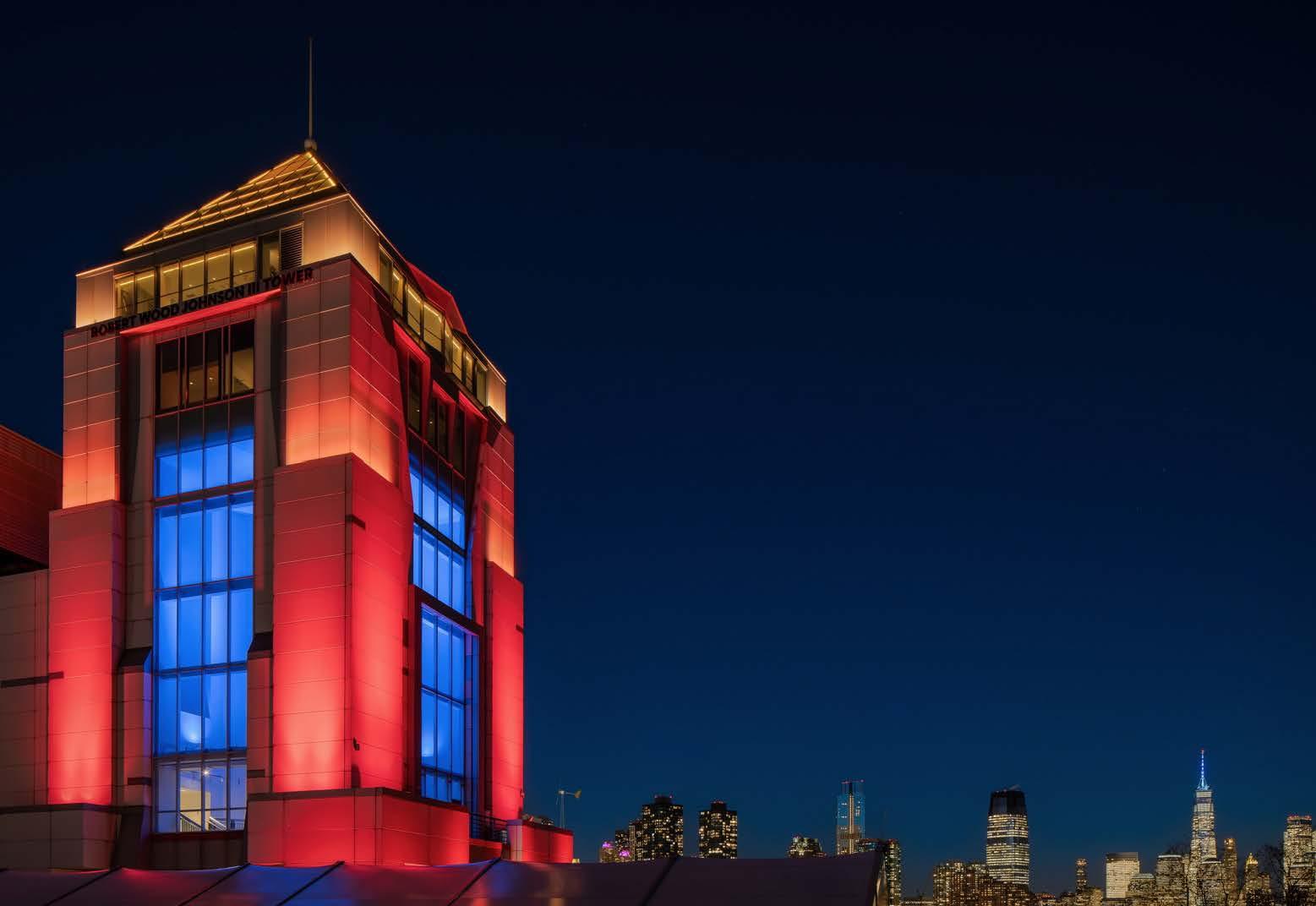
Programmable façade lighting supports special themes, holidays, and events. Photo credit: Ryan Fischer
Custom-designed pinnacle lighting creates a seamless crown effect for the event space. Photo credit: Ryan Fischer
Lighting the Skyline
Outside, RGBW floodlights wash up the lower facade, while linear fixtures highlight the towers upper setbacks. Together with the pinnacle lighting, these layers of light combine to create the luminous beacon on the skyline Hoffman had long sought.
Focus Lighting even reprogrammed the nearby Dino Dig pavilion, (an earlier project of theirs), so its colors harmonize with the tower, creating a unified composition visible from across the Hudson.
A Control System with Confidence
At the heart of the design is ETC’s Mosaic control system. “It runs on a time clock,” Brett explained. “If there’s no event, the tower defaults to LSC’s brand colors. But for events, they just hit a button on a custom touchscreen control.”
Focus composed over two dozen ‘light paintings’, each inspired by the beauty of nature, holiday hues, or special-event themes. “The goal was to give the Science Center different looks that were all beautiful, and handle 95% of their needs, so the event staff didn’t have to play lighting designer,” Brett added.
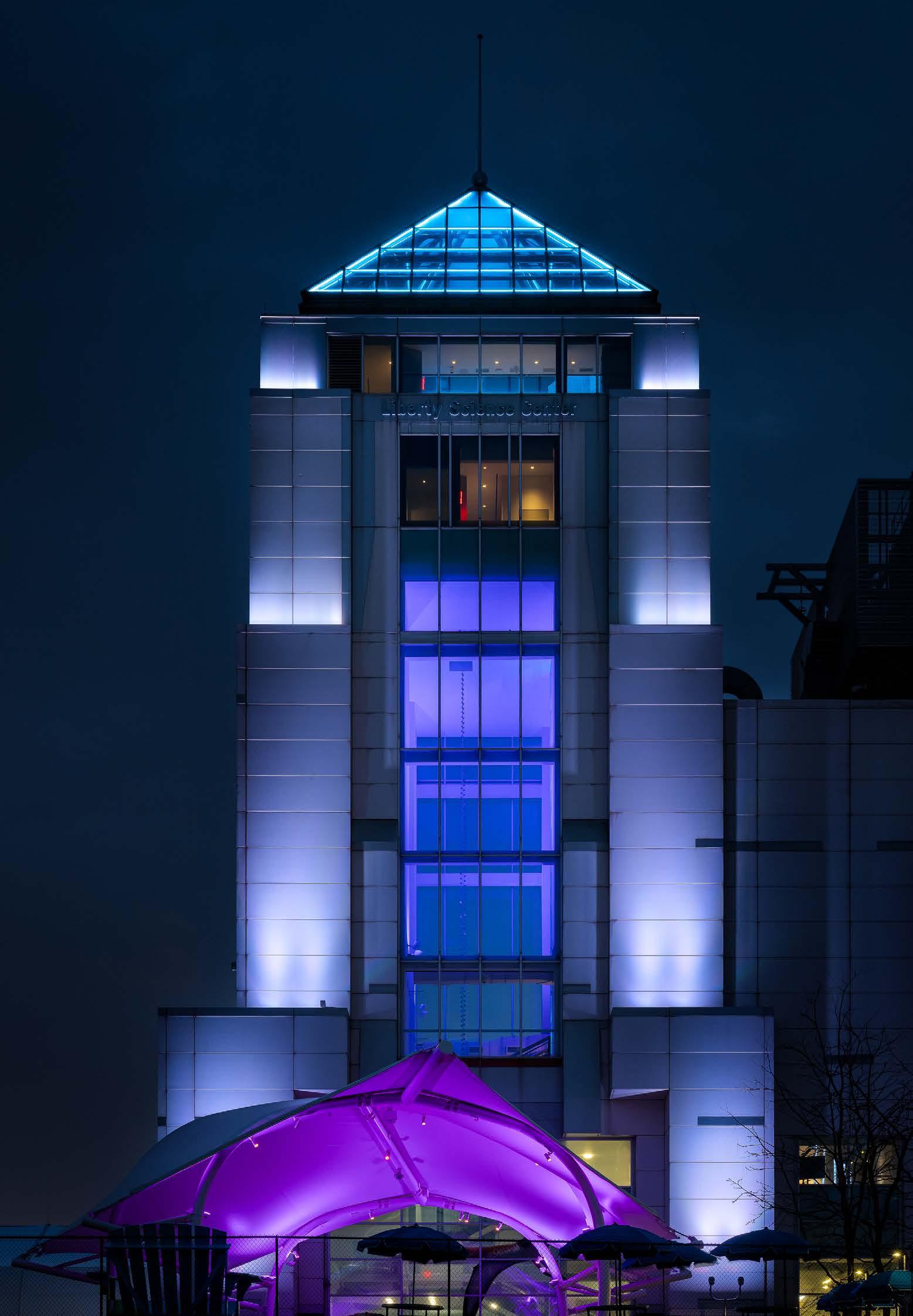
The Robert Wood Johnson III Tower illuminated in bold color layers, transforming into a beacon on the Hudson.
Photo credit: Ryan Fischer
Custom-designed pinnacle lighting creates a seamless crown effect for the event space.
Photo credit: Ryan Fischer COVER STORY
The Robert Wood Johnson III Tower is now both a functional event space and a luminous landmark.
A Trusted Partnership
Focus Lighting’s partnership with LSC spans nearly a decade, from Science on a Sphere to the “Our Hudson Home” exhibit. That trust carried into the tower project, where the design team handled not just design but programming and commissioning.
“From the beginning, LSC has appreciated Focus Lighting’s ability to find opportunities and solutions beyond just the lighting. For this project, it was also about paint, window film, and some creative engineering. That’s what makes it special,” noted Brett.
Legacy of Illumination
The Robert Wood Johnson III Tower is now both a functional event space and a luminous landmark. From programmable façades to flexible interiors, it demonstrates the power of lighting to shape experiences at every scale.
“We really value our relationship with Liberty Science Center and are so happy to help them achieve this long-standing goal” Brett reflected. ■
FIXTURE SCHEDULE
• SSL Lighting – RGBW Flood Lights, Linear Wall Grazers, Linear Glass Backlighting
• Acolyte – RGBW Tapelight and Channel
• RCL Lighting – Remote-Controlled 2700K Accents
• Amerlux – Recessed Downlights
• CSL – Miniature Recessed Downlights
• Vondom – Battery-operated RGBW Table Lamps
• Times Square Lighting – Emergency Flood Lighting
• ETC – Mosaic Dimmers and Controls
ORBIT
REVERSO
C1-NANO
R-SL-16 CUBE CONNECTOR
Illuminating Egypt’s Past, One Luminaire at a Time
Editorial correction: Lighting Services Inc was the track and accent lighting manufacturer for the Grand Egyptian Museum and was omitted in error from the fixture schedule accompanying this article.
The one-billion-dollar Grand Egyptian Museum is not merely the world’s largest museum dedicated to one civilization. It is a symbol of light in layers.
Covering nearly 500,000 m² of floor area and showcasing more than 100,000 artifacts, including the complete Tutankhamun collection, it was designed for both scale and sustainability.
Leading up to the Grand Opening, information has been scarce. Press kits are nonexistent, and the original glimpses came from a brief video clip provided by Lighting Services Inc.
Kathy Abernathy, Principal of Abernathy Lighting Design, an Eos Lightmedia Studio, and Jason Rainone, Senior Lighting Designer have been kept in the dark. Jason recalled that even he discovered the museum’s soft opening almost by accident. “I was at IALD’s
By RANDY REID
Enlighten Americas conference in San Diego when Ken Kane of Lighting Services Inc leaned over, showed me his phone and said, ‘Hey, did you know GEM opened?’”
That exchange set the tone for our conversation. This would not be a technical review, but a personal journey through light—crafted, negotiated, and executed over years, across continents, and in countless design meetings.
Three Bills of Quantities, One Cohesive Strategy
Early in design, the team organized the project into three Bills of Quantities.
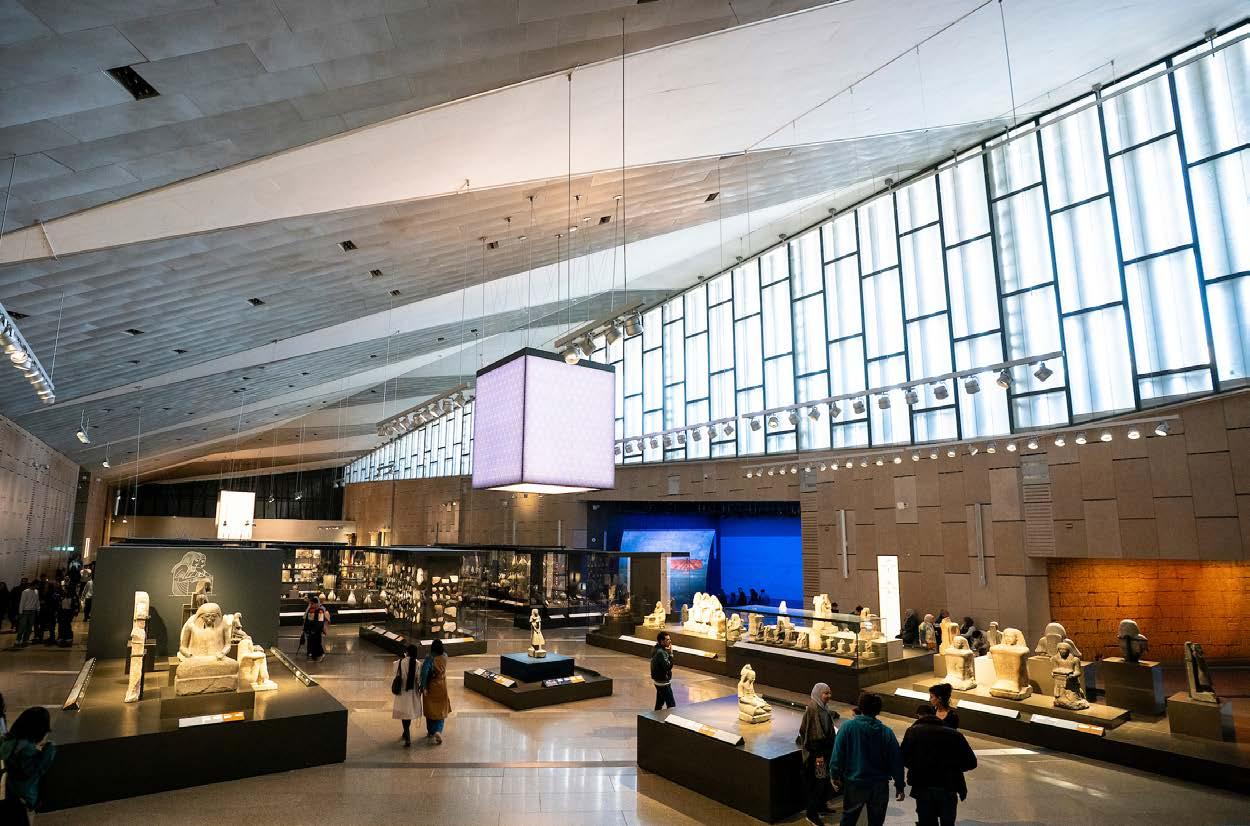
The exhibit lighting package covered everything integrated into cases and reader-rail structures. A second package addressed the suspended lighting structures— large overhead “light boxes” positioned above key
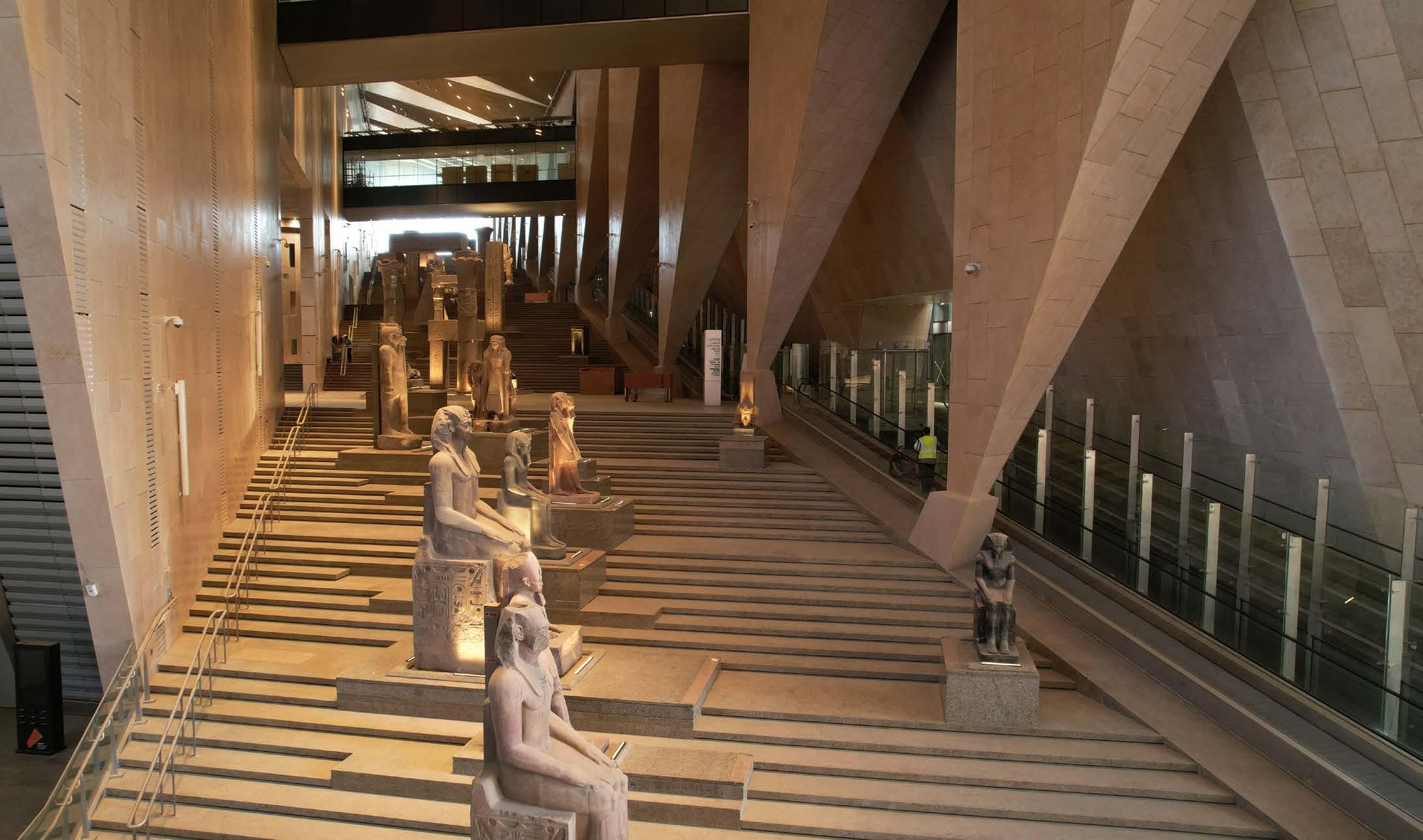

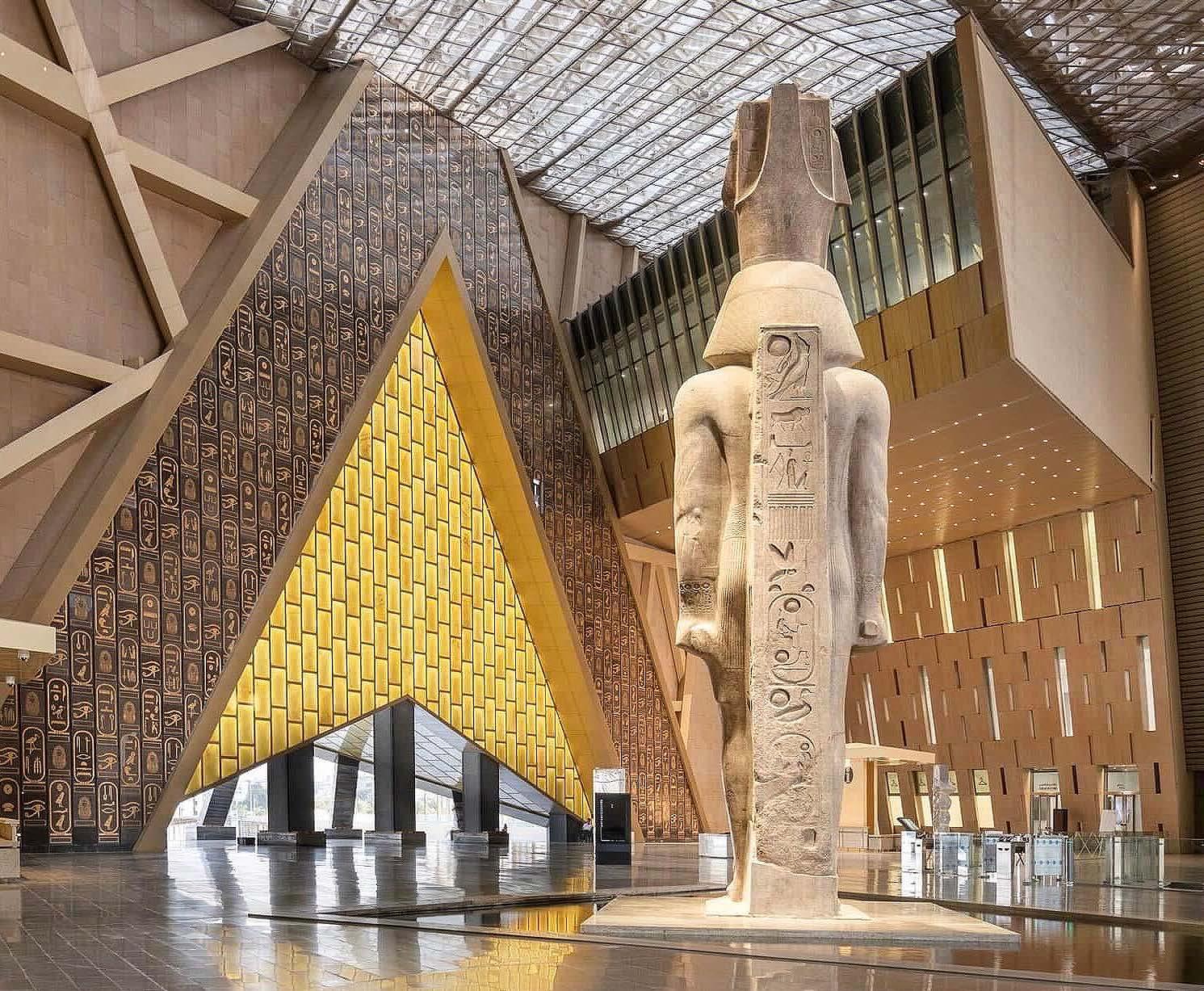
A monumental procession of pharaonic statues lines the Grand Staircase, guiding visitors upward through the museum’s vast atrium. © Grand Egyptian Museum
platforms. The third detailed the in-field lighting using highlevel track throughout the expansive galleries.
This framework gave the designers a way to manage a vast, interconnected building while keeping each toolset optimized for its role.
The Suspended Structures: Architectural Lighting Elevated
The sheer size of the galleries demanded punctuation. Exhibit designers Haley Sharpe Design, in partnership with Cultural Innovations, proposed large fabric-clad translucent volumes suspended over major platforms.
Kathy and Jason devised ways to light these volumes so they would internally glow, accentuate key displays, and avoid blocking platform illumination.
Jason’s solution was a series of light boxes, each built with three integrated systems. Along the underside, mini recessed downlights from Luminii delivered tight,
Hieroglyphic walls and golden panels create a striking entrance in the Grand Atrium. © Grand Egyptian Museum
Fabric-clad light boxes softly illuminate key displays while maintaining harmony with the museum’s wedge-shaped architecture and daylight-driven design.
Photo credit: Robin Jerstad, Jerstad Photographics
controllable beams onto artifacts. The vertical faces came alive with color-changing linear grazers from Lumenpulse, mounted at the top and bottom edges to internally backlight the translucent double-sided panels. Concealed around the upper edge, a low-voltage miniature track system from Luminii ensured light reached the center of the platforms, areas otherwise shadowed by the box itself.
“It was one of the most collaborative parts of the design,” Jason recalled. “We had to balance architecture, lighting, and conservation within a single suspended structure. Every element was designed to do its part without distracting from the story the objects needed to tell.”
Hidden Gems: Illumination in the Plinths
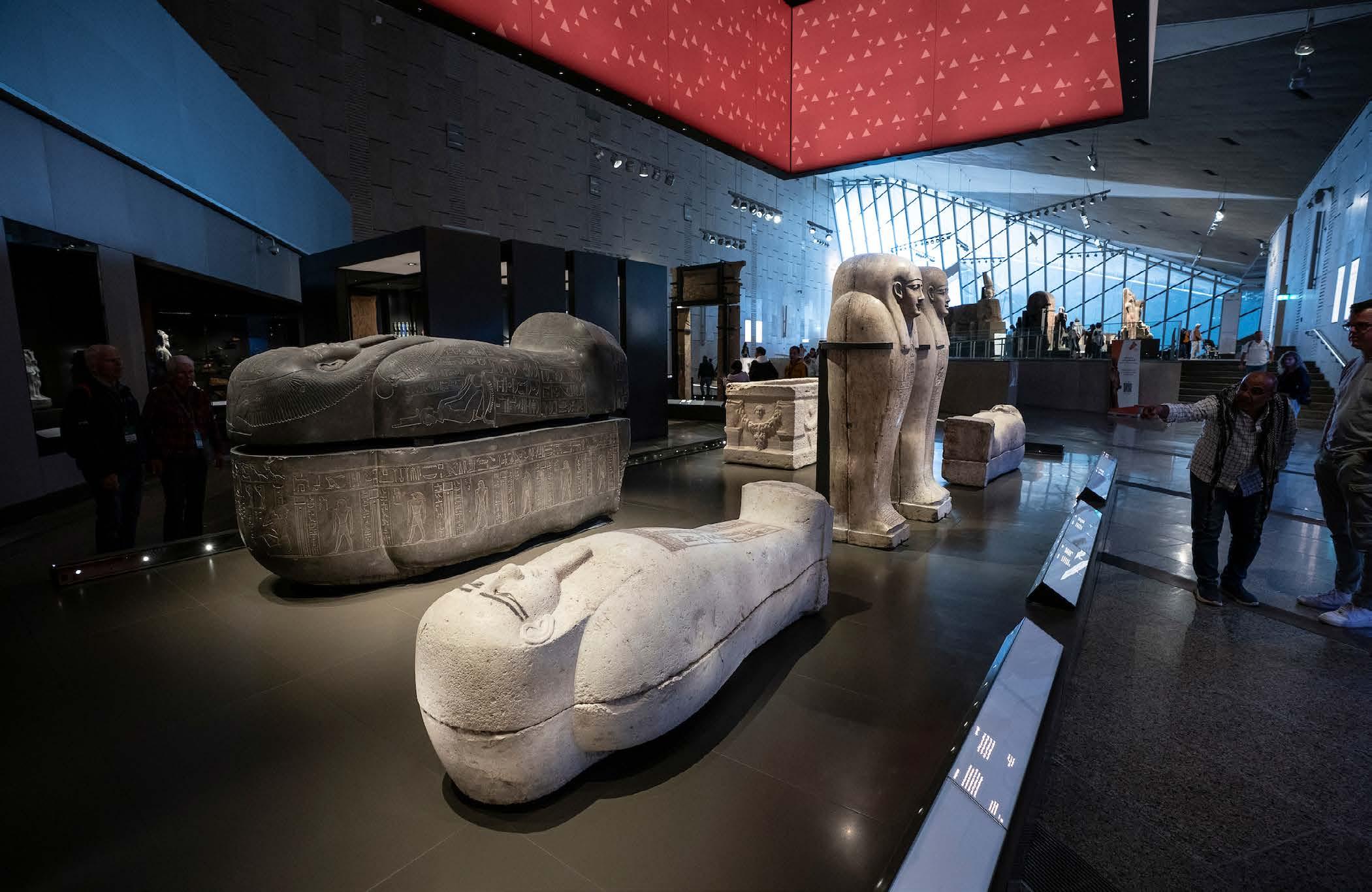
Fixtures from Precision by Luminii, measuring about the size of a chess piece, are hidden beneath 30-inchhigh plinths and tucked behind reader rails, invisible to the casual visitor. The light rises softly to reveal artifacts without intruding on the viewing experience.
“The reader rail sits in front of you,” Jason said. “We worked out the angle and depth, so the fixtures are hidden from sight when you’re standing there
looking at the object.”
This interplay, where the light source is concealed so the object shines unencumbered, is one of the project’s quiet triumphs. Together with the high-level Lighting Services Inc track system, these discreet fixtures became the project’s workhorses.
“With the collaborative integration of lighting into exhibit structures, creating alcoves to hide light sources, very small
Carefully angled light, hidden beneath reader rails, reveals the detail of millennia-old sarcophagi while ensuring the focus stays on the artifact, not the fixture.
Photo credit: Robin Jerstad, Jerstad Photographics
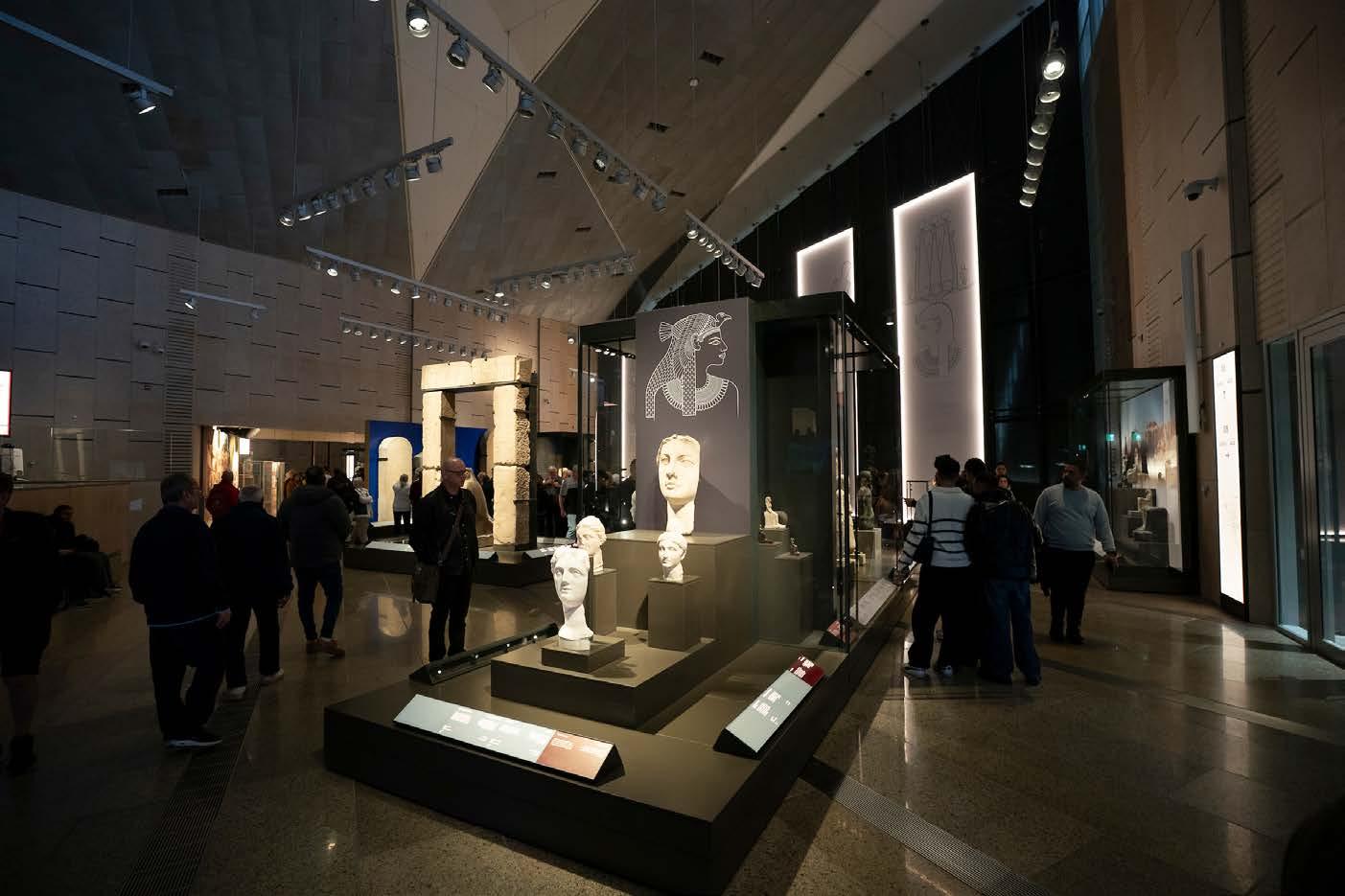
Discreet case lighting systems from Luxam reveal facial features and fine detail while protecting against degradation. Photo credit: Robin Jerstad, Jerstad Photographics
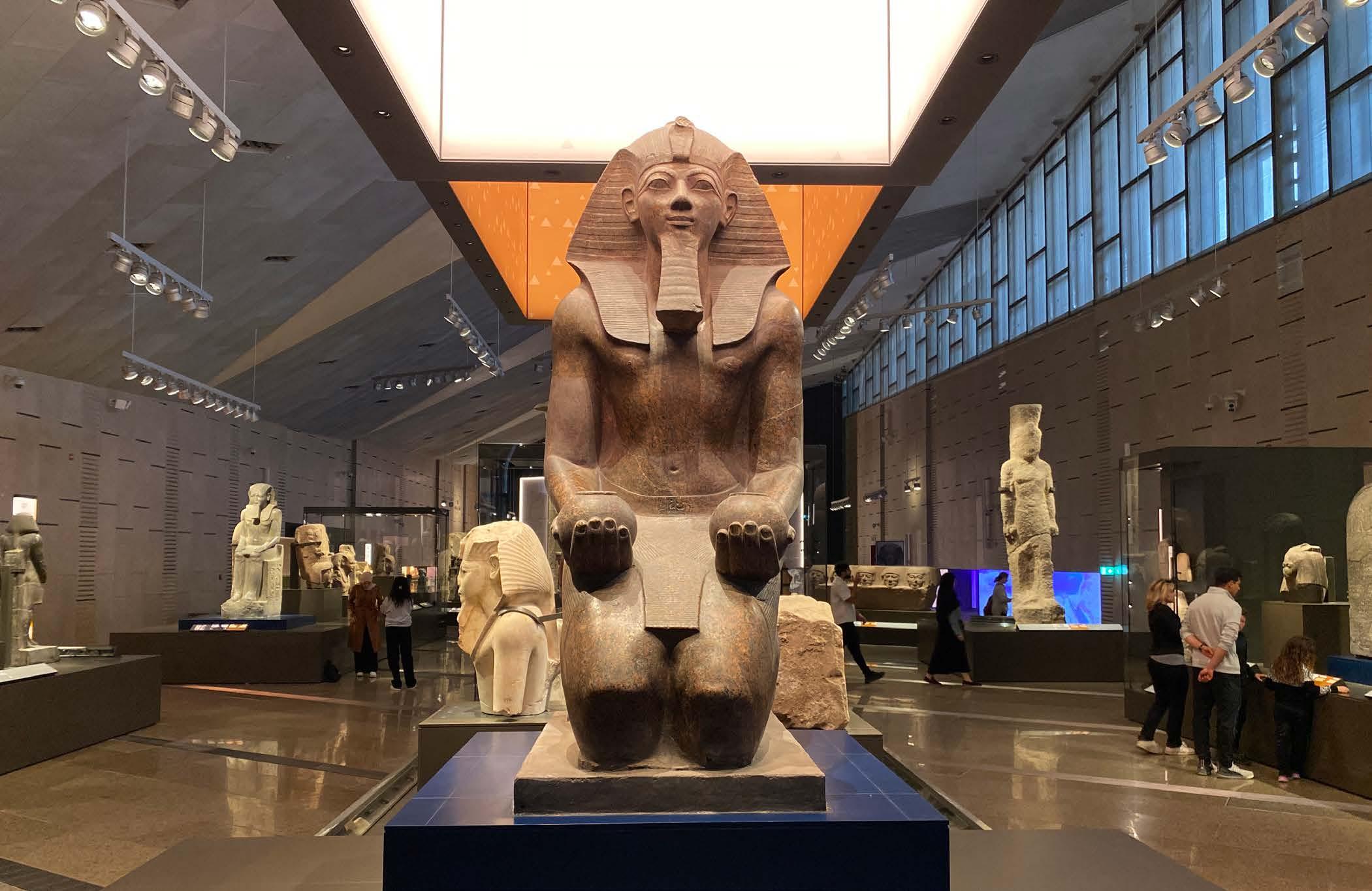
objects did not need to be lit from 20 feet in the air,” Kathy explained. By blending the two systems, the team was able to cover 95 to 99 percent of the display scenarios, no matter how the tens of thousands of artifacts might be arranged.
Exhibit and Case Lighting: Protecting the Past
Jason described how Luxam handled the display cases. “They’ve been on site for a very long time, and as far as I
know, they’re in every single case in the project.”
Two distinct systems were specified. For durable objects— stone carvings, metal pieces, and items resistant to degradation—Luxam integrated a low-voltage LED track system into the case structures.
For fragile artifacts, especially the mummies, fiber optics were essential.
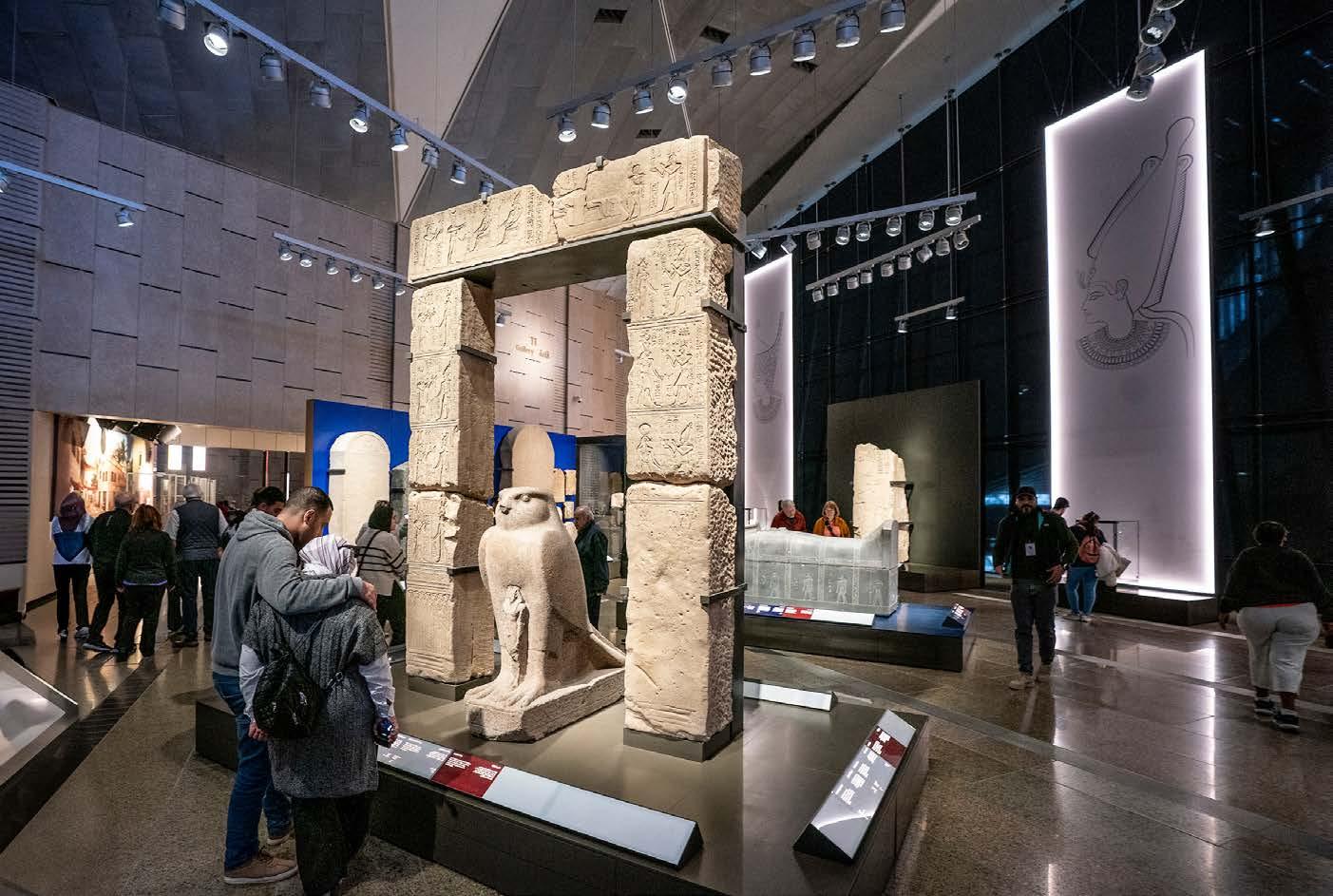
“Anything degradable is lit with fiber optics,” Jason said. “The fiber filters out most UV, so the light reaching the object is as minimally damaging as possible.” The design also kept illuminators outside the cases. “If anything shorts or overheats, there’s no risk of smoke or fire inside the enclosure.”
Some mummy cases took preservation further, employing nitrogen-rich, positive-pressure environments. “It’s not ordinary air inside those enclosures,” Jason noted. “It’s a special nitrogen mix that helps keep the mummies from degrading. That meant we had to be very careful to not add anything extra that might compromise the environment.”
For these pieces, preservation clearly outweighed lighting. As Jason put it,
Durable stone artifacts are illuminated with low-voltage LED track systems.
Photo credit: Robin Jerstad, Jerstad Photographics
A monumental statue of Queen Hatshepsut stands at the center of Gallery 8, detailing rulers from Egypt’s New Kingdom. © Grand Egyptian Museum
“The priority was never in doubt: preservation came first. Climate safeguarded the artifacts, and lighting was designed to support that goal.”
Natural Light as a Scripted Partner
Daylight was an equally intentional part of the museum’s design. Heneghan Peng Architects aligned the building’s visual axes with the Pyramids, modulating natural light with folded roofs and expansive glazing.
Jason described the orientation vividly, saying “If you were to look at the museum from overhead, it’s shaped like a giant wedge. There’s a central point about fifteen kilometers away, and from there all the lines radiate directly toward the Pyramids of Giza and the Sphinx.”
As visitors ascend through the main galleries, the orientation reveals itself. “Eventually you come to a set of windows,” Jason said, “and from there, you’re looking straight out over the plains of Giza, with the Great Pyramids framed in view. It’s unforgettable.”
The building uses daylight as both backdrop and narrative device. At the atrium, the colossal Ramses II statue is bathed in natural sun. Extensive onsite confirmation of early architectural daylight modeling informed both exhibit design and placement choices along with lighting equipment specifications throughout the Phase 2 gallery spaces.
The Human Story: Collaboration, Time, and Scale
From early 2019 to final revision in July 2020, the design
GEM FIXTURE SCHEDULE
process spanned about 18 months. But the building itself had been under construction since 2005 and was only completed in 2023, with a full public opening now scheduled for November 2025.
What stood out in our conversation was not only the technical precision of the luminaires is of the highest quality, as is their placement: hidden in plinths, folded into translucent boxes, integrated into nitrogen-sealed cases, merged with projection. Always serving the objects and their stories.
In its galleries, light is used with precision and restraint, bringing ancient artifacts forward without overwhelming them. Whether through daylight, fiber optics, or carefully placed downlights, GEM’s lighting strategy reflects both respect for heritage and mastery of the craft.
Epilogue: A Lightness of Being
GEM’s galleries, plinths, digital streams, and suspended structures are illuminated not only by technology, but also by the vision and collaboration of designers like Kathy and Jason.
They did not simply light a museum. They created a dialogue—between Egypt’s past and our present. Between shadow and revelation. Between conservation and spectacle.
It is a conversation that will unfold for decades, radiating outward, much like the museum itself, toward a future defined in light. ■
Erco 25332 Framing Projector, recessed LED, 4000K 6°–40° Zoom
Erco 25334 Framing Projector, surface mount LED, 4000K
Erco 25330 Accent Spotlight, trackmounted LED, 4000K 6°–40° Zoom DALI
Erco 25331 Accent Spotlight, recessed LED, 4000K 6°–40° Zoom DALI Lighting Services Inc LP2 SuperSPOT Series Accent Spotlight, CONTROLTrack mounted LED Array, 3000K
throw spotlight
Lucent Edge Compact Linear Grazer, recessed LED, 4000K Wall graze DALI Diffuse lens
Luxam Micro Fiber Optic Custom Fiber optics and Fiber lightsticks Fiber optic, 4000K Multiple fiber DMX With driver box
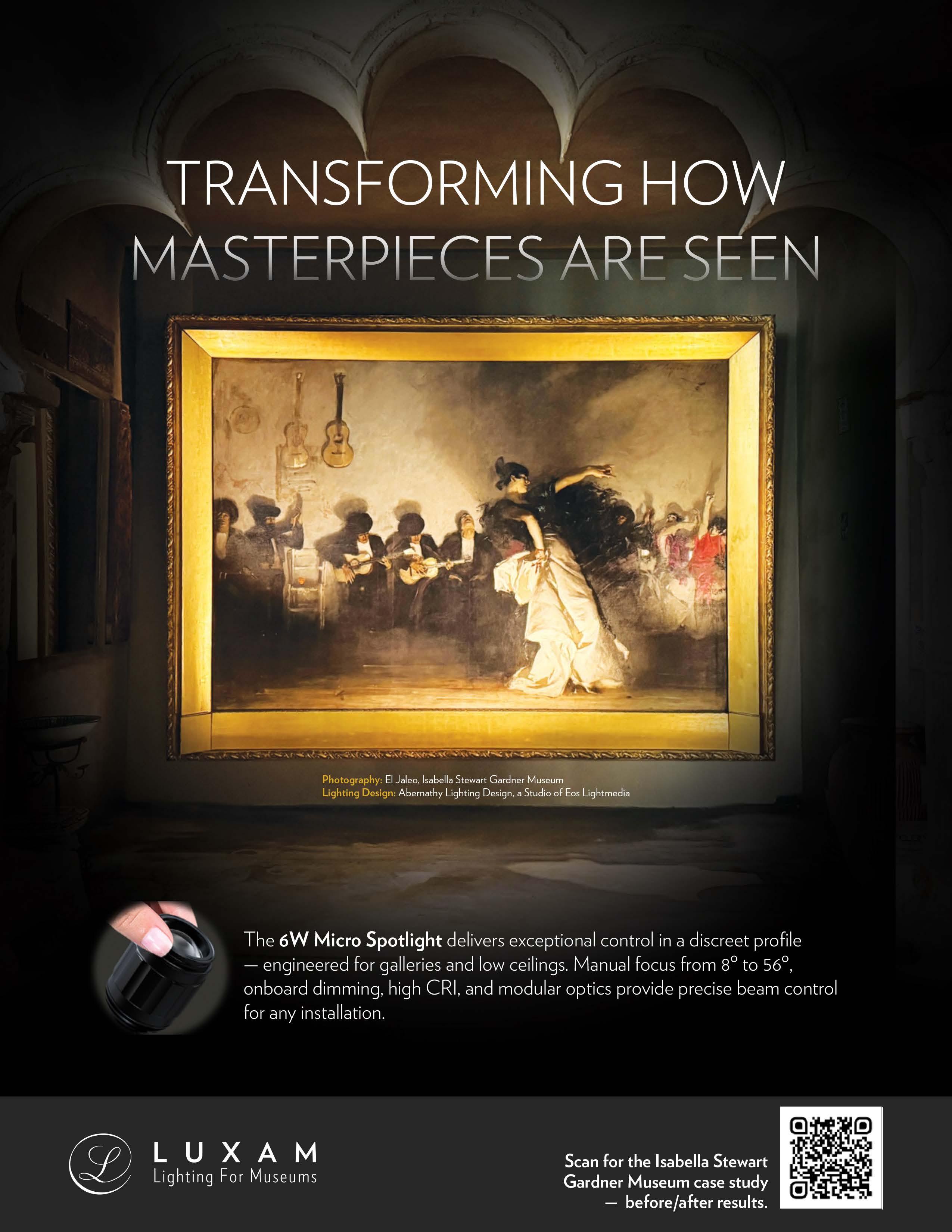
Luxam L-MTSP-12 2W Micro Spotlight, dimming 0-10, 12V 3000K and 4000K 8°-60° Zoom Onboard
Luxam L-MTSP-02 4W Micro Spotlight, dimming 0-10, 12V 3000K and 4000K 8°-60° Zoom Onboard Fiberstars L200 Display Case Linear Fiber optic Line
By RANDY REID
Photo
photography: Lukas Palik
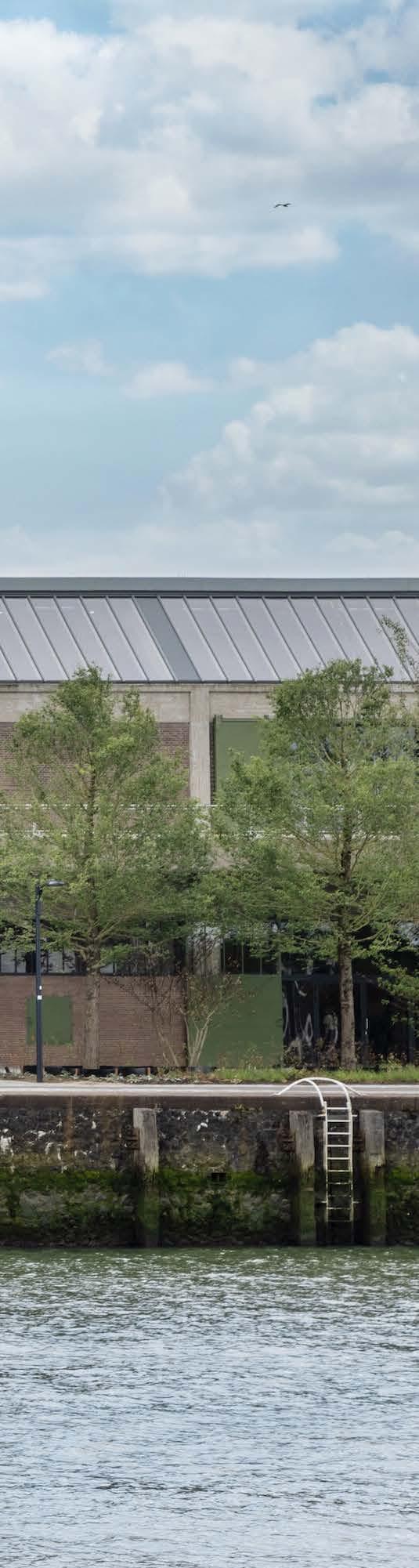
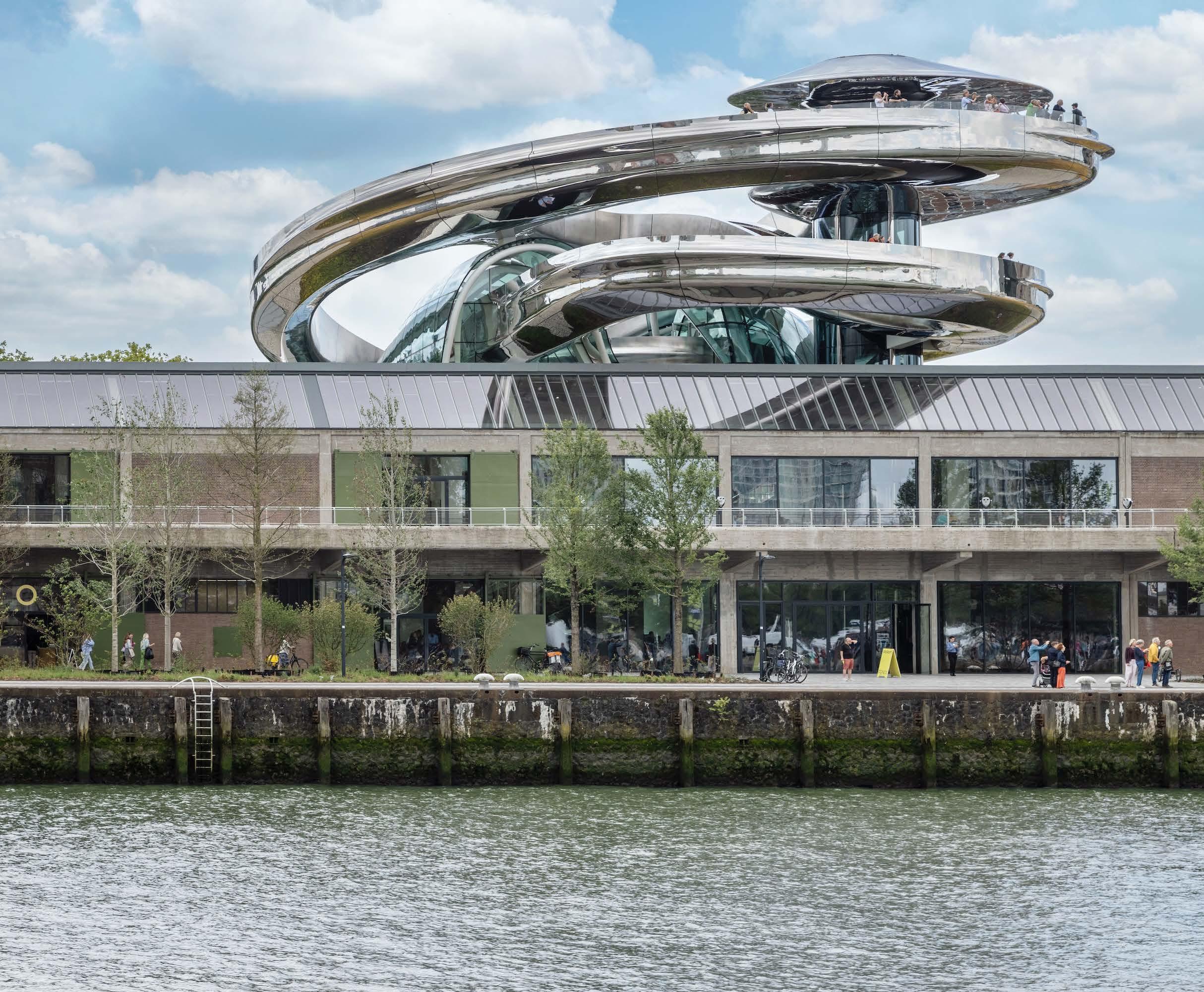
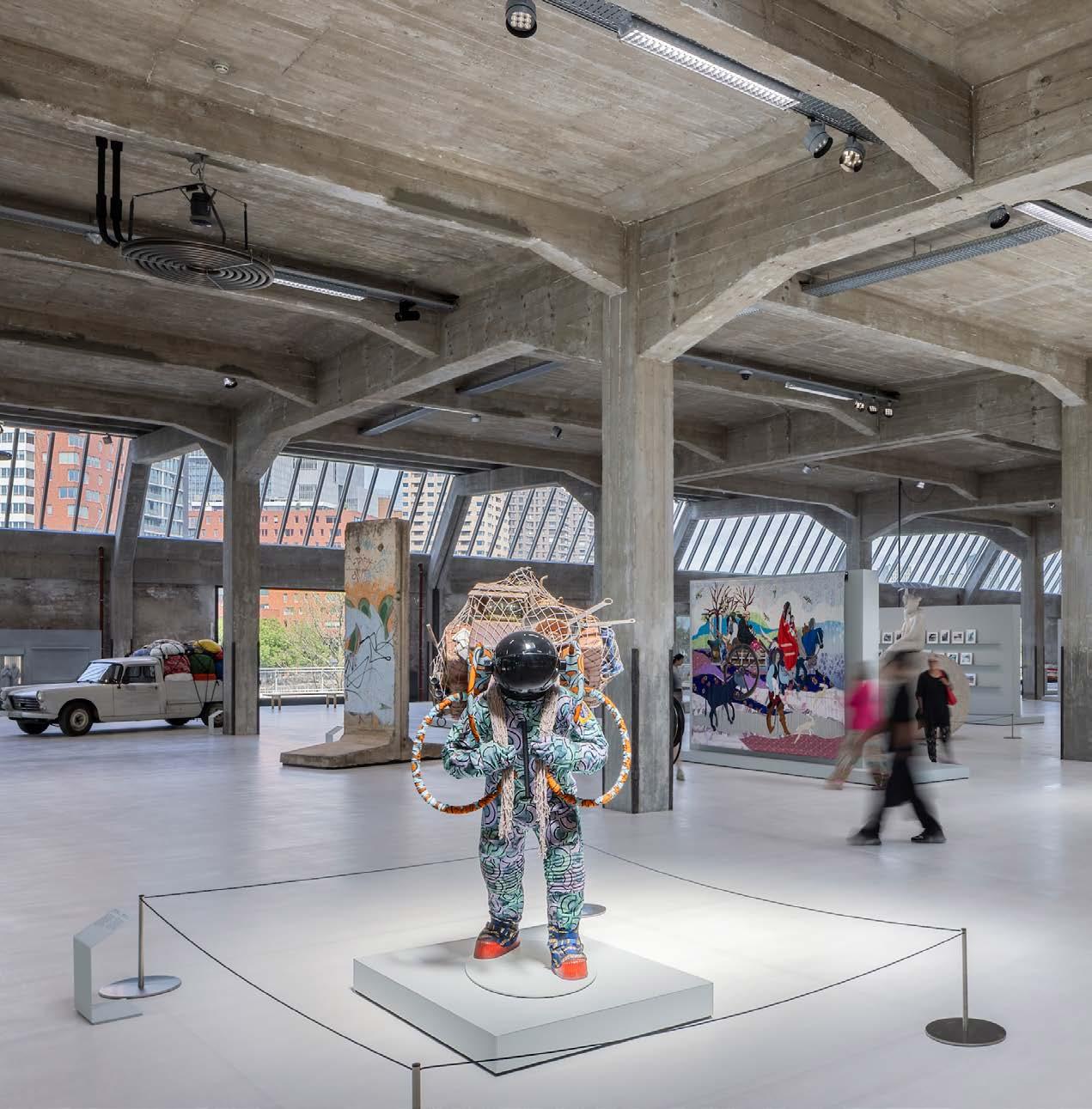
When the Fenix Museum opened in 2025, Rotterdam gained more than another cultural landmark. The restored 1923 HollandAmerica Line warehouse on the Katendrecht peninsula was transformed into a migration museum, with Chinese architecture firm MAD Architects adding the striking mirrored “Tornado” staircase. Rising in a double-helix, the Tornado offers panoramic views over the city and the river—symbolically the same vantage point from which many migrants once departed. Inside, lighting designer Juliette Nielsen and her firm Beersnielsen Lichtontwerpers shaped a scheme that is as much about storytelling as illumination. Every fixture and every control strategy was chosen not only for technical performance but also to honor the deeply human stories of migration told through the museum’s collections.
The Fenix building stretches 172 meters and covers more than 16,000 square meters, of which 7,000 are exhibition space, retaining much of its raw industrial character. Instead of concealing this heritage, the design team worked to reveal it. Juliette explained that one of the most important directives from the client was to minimize the number of installations in the building. This applied to climate systems, sound, and especially lighting. The approach allowed visitors to experience the building itself while reducing visual clutter. Existing openings in the reinforced concrete beams were reused for cable trays carrying lighting, sound,
Wi-Fi, security and emergency systems. In this way, the museum preserved its rugged architecture while seamlessly integrating modern utilities.
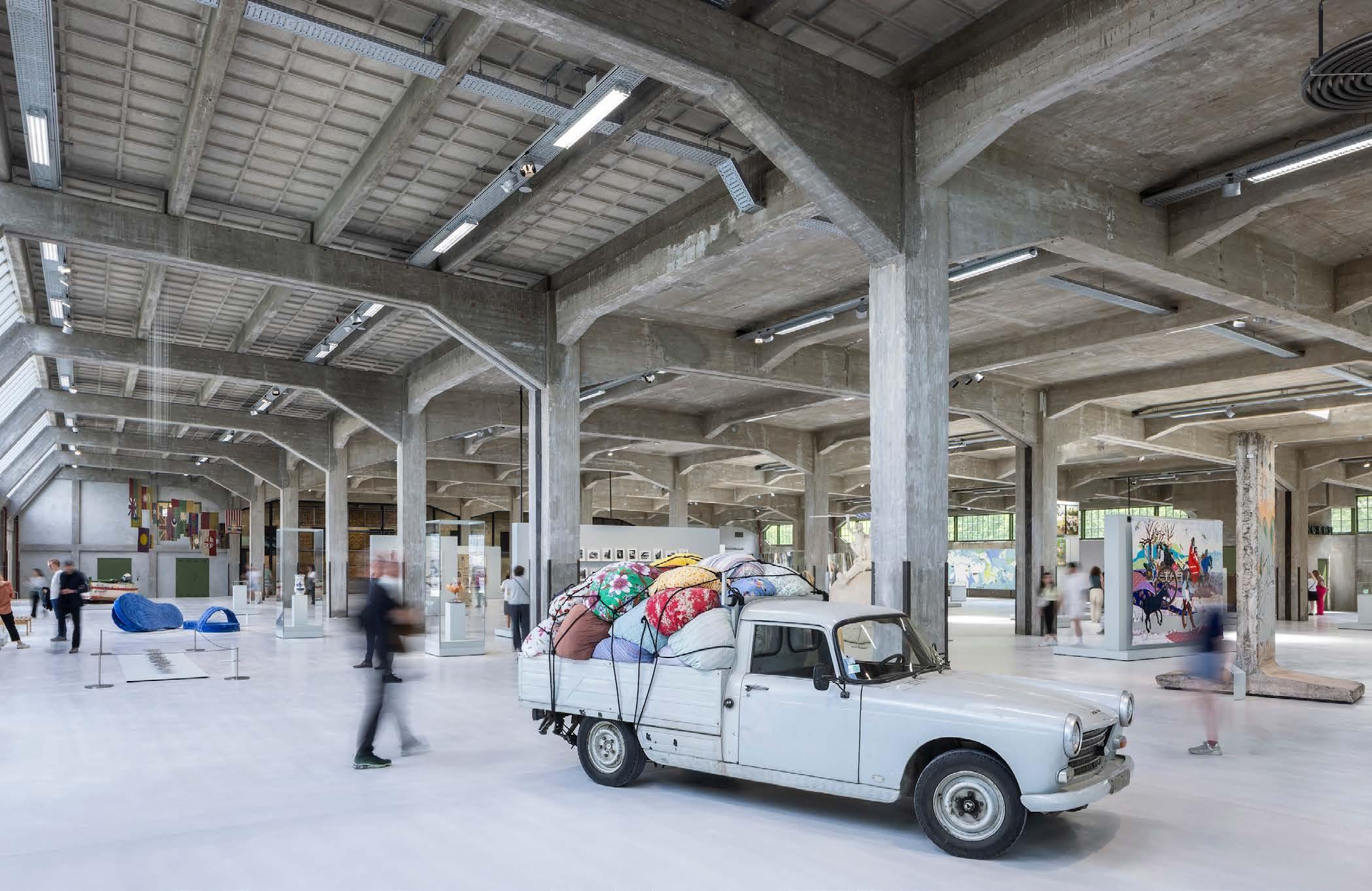
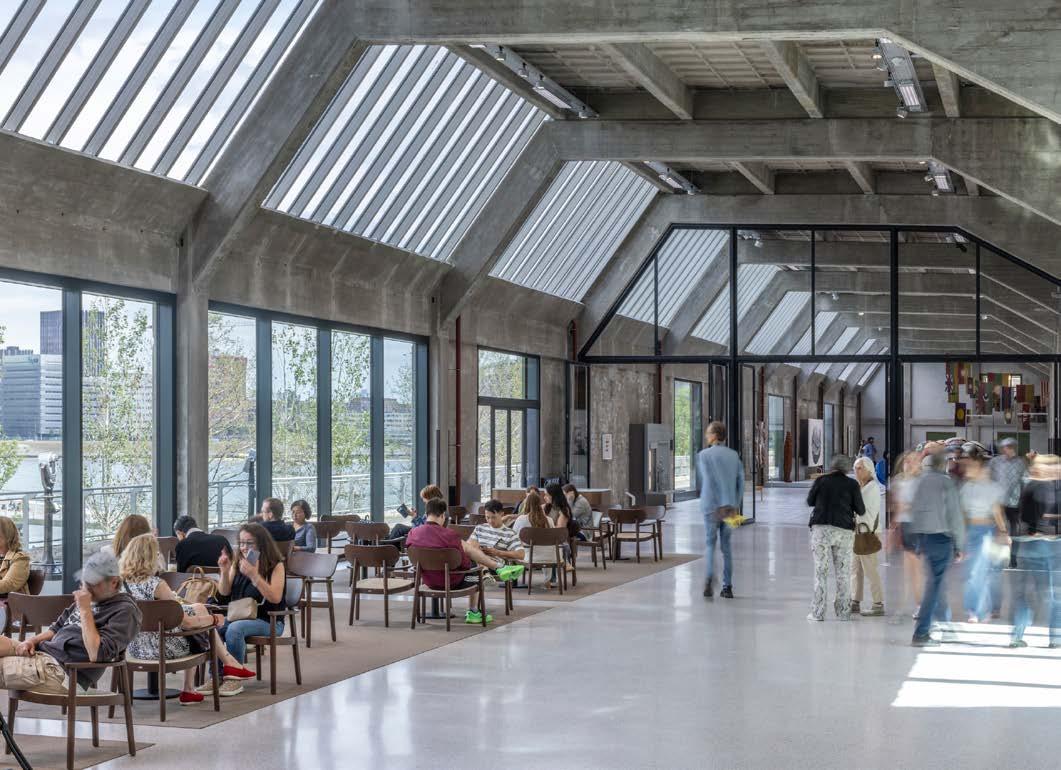
Because the curatorial program of the exhibition spaces was not fully defined during design, the lighting scheme had to be extraordinarily flexible. Beersnielsen’s solution was to create two layers of light. The first was diffuse ambient illumination using industrial linear fixtures mounted underneath the cable trays. These fittings, normally seen in warehouses, were adapted to include tunable white technology ranging from 3000K to 6000K. The tunability allowed them to follow the pace of natural daylight. At midday, the fixtures produced a crisp 5000K
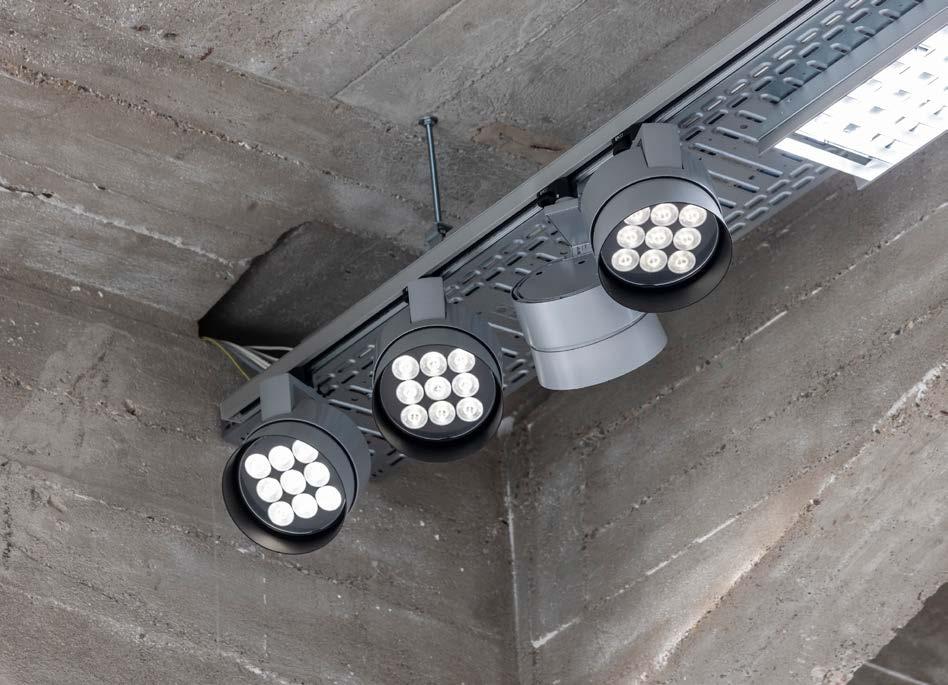
ERCO Parscan spotlights mounted along cable trays provide flexible accent lighting throughout the museum.
atmosphere that matched the skylight above, while in the evening they shifted toward 3000K, creating a warmer and more intimate environment.
The second layer was accent lighting provided by ERCO’s Parscan LED spotlights. Approximately one thousand of these fixtures were installed across the two floors, mounted to tracks fixed along one side of the cable trays. On the ground floor, where the ceilings are lower, 24-watt Parscans were used, while the upper floor with its soaring six-meter heights required 48-watt versions. The Parscans came in a variety of beam angles, from narrow six-degree spotlights to wider distributions, with additional lenses available for linear effects. This flexibility meant that objects as varied as a Rembrandt painting, a small passport behind glass, and an entire section of the Berlin Wall could all be lit effectively within one consistent design language.
At Juliette’s request, ERCO customized the Parscan luminaires for higher color fidelity, boosting them from the standard CRI 92 to CRI 97, while maintaining a 4000K color temperature. The museum’s private collection did not face the lux restrictions common in other institutions. Juliette described this as an opportunity, allowing her to “show objects more like in daylight” without concern for preservation limits. The result is a unified accent layer that harmonizes with the tunable diffuse system and with the abundant daylight pouring through skylights and expansive windows.
The industrial luminaires, chosen to echo the warehouse’s history, set the tone for the atmosphere. Their tunable white capability ensured that they worked seamlessly with

daylight, creating a base layer that felt natural and responsive. Above that, the Parscans handled the precision work. Juliette emphasized that she and her team spent weeks on lifts during commissioning, fine-tuning each fixture’s angle and output. “Every millimeter you’re off, you’re going to see it,” she said, particularly when framing small objects from as far as ten meters away. For the passport display, framers were used to highlight the small without casting distracting shadows from the protective glass.
While the fixtures themselves are advanced, the controls were designed to be simple. The system is built on DALI infrastructure but presented to staff through a straightforward UT Control panel, programmed by the Dutch integrator Helvar. At the entrance, ticketing staff can select scenarios from a touch screen with icons for a sunny day, a rainy day, nighttime, cleaning and events. A single click changes the lighting for the entire museum. For more special events, advanced users with access codes can adjust individual zones, but for day-to-day use the simplicity is intentional. As Nielsen noted, the goal was to avoid sensors and constant measurements, opting instead for intuitive scenarios.
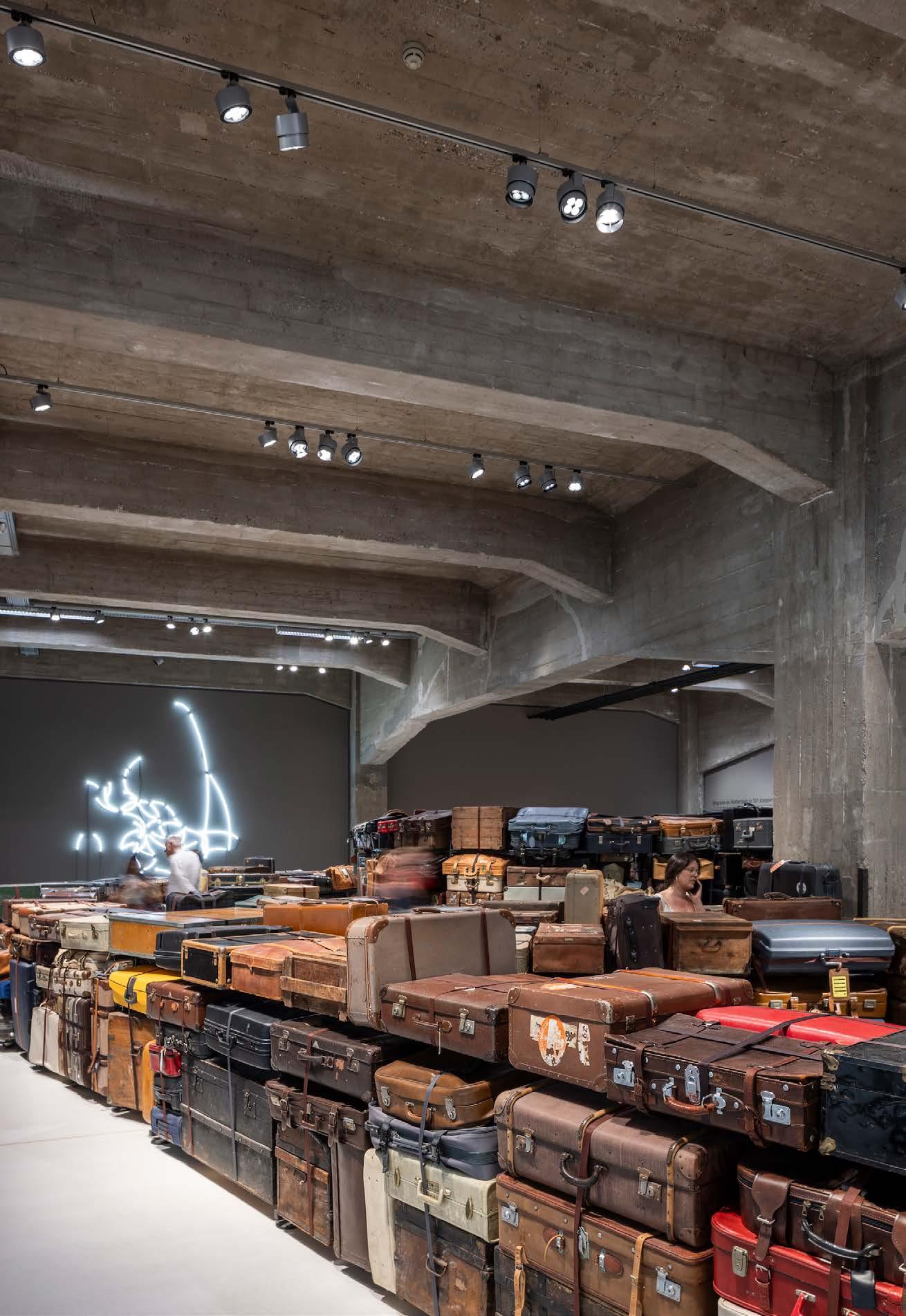
A labyrinth of suitcases represents generations of migration stories.
The Tornado staircase, a double-helix of reflective steel, offers panoramic views over Rotterdam.
Beyond the exhibition spaces, several areas required unique solutions. The Tornado staircase posed one of the greatest challenges. With its tight curves and mirrored surfaces, integrating fixtures without disrupting the design was critical. Flexible 3D light lines from Linea Light, installed in a cove above the handrails, proved the solution. At 3000K, these continuous lines bend smoothly with the geometry, guiding visitors as they ascend while also creating a warm glow that plays against the reflective metal. The Tornado’s surfaces capture daylight by day and city lights by night, scattering shimmering reflections across floors and columns in an ever-changing display. Juliette described it as “never flat,” with the sun’s movement sparking dynamic patterns across the interior.
In the entrance, café, and shop areas, the designers paired diffuse light lines with iGuzzini’s Robin fixtures. These small, flexible spots are mounted above the linear elements, maintaining a clean graphic rhythm while providing accent illumination. The combination creates an inviting arrival sequence that feels both industrial and refined. Outside, subtle uplighting in warm 3000K tones brightens the loading platforms, ensuring safe pathways without overwhelming the historic character.
The museum’s mission is to tell migration stories, and the lighting reinforces that narrative at every turn. On the ground floor, a labyrinth of suitcases donated by families represents journeys across generations. Each suitcase is
Flexible spotlights highlight diverse exhibits, from contemporary art to historic artifacts.
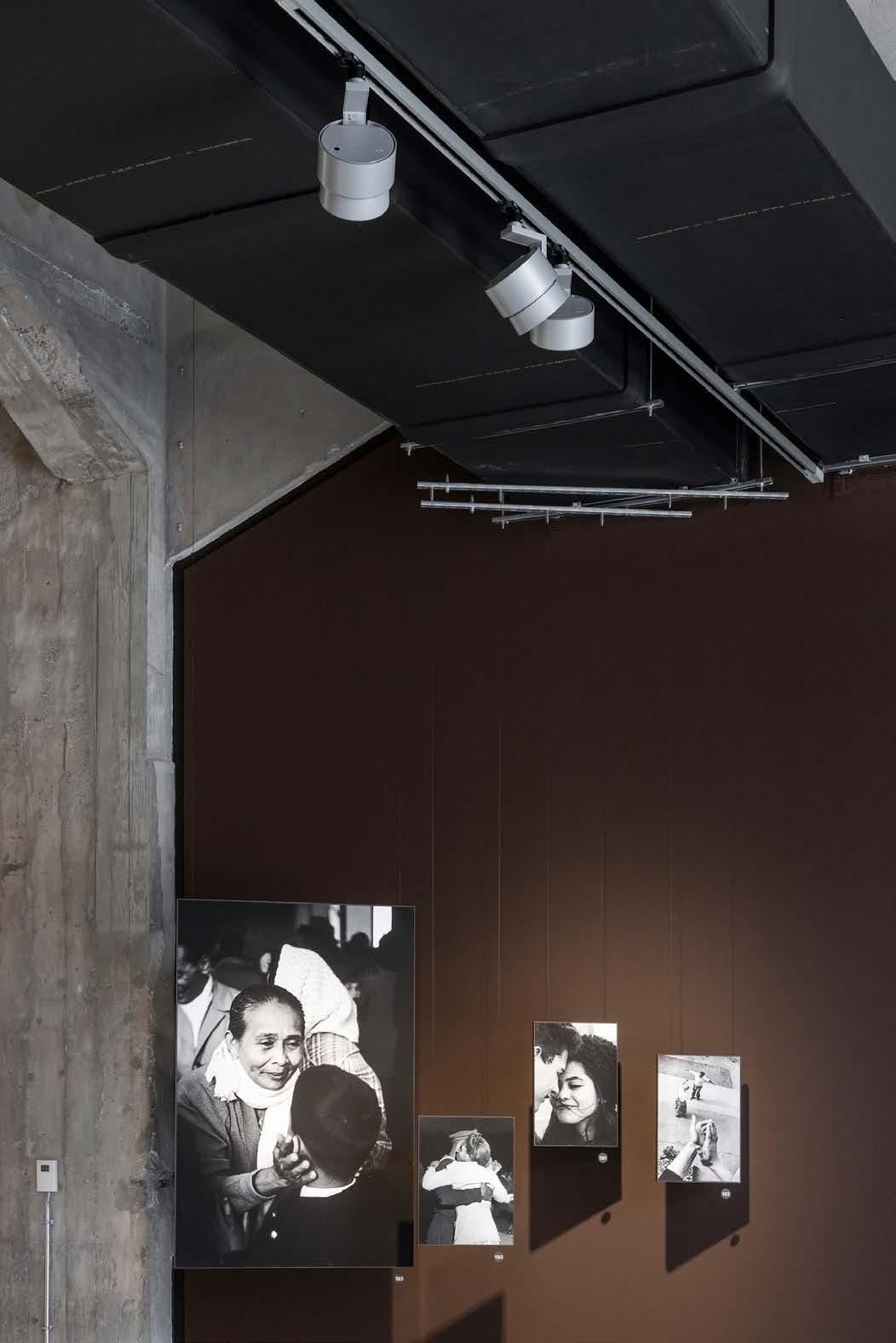
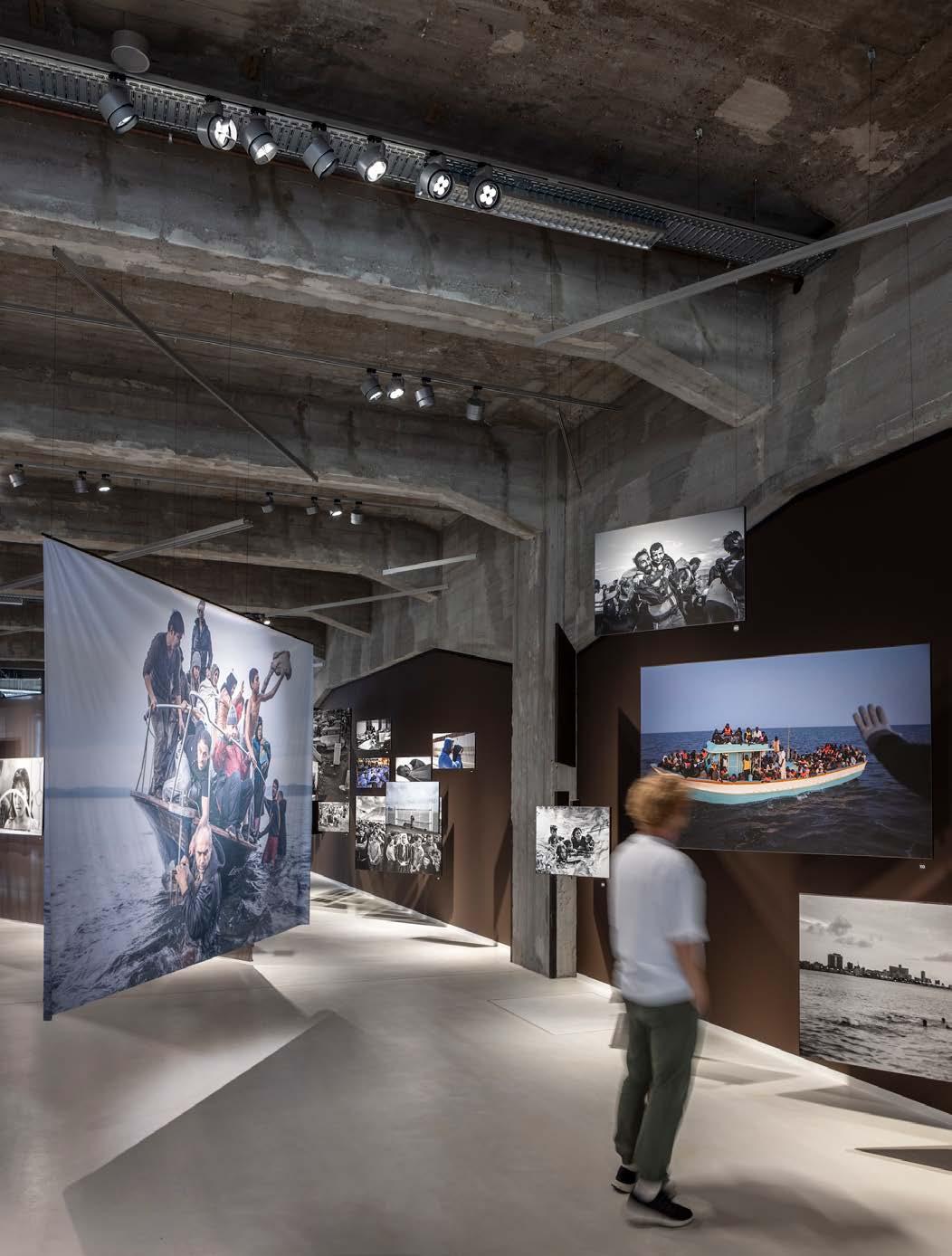
tagged with personal stories that visitors can access through audio guides, hearing the voices of refugees who left Europe during World War II or Ukrainians fleeing contemporary conflict. In these spaces, diffuse lighting is often dimmed or turned off, allowing accent lighting to sharpen the focus on photographs and artifacts. The contrast creates intensity, enhancing the emotional weight of the stories.
Another powerful exhibit on the first floor, is the Lampedusa boat, a fishing vessel once used by African migrants attempting to reach Italy. It is dramatically lit with Parscans, its modest scale stark against the cavernous room. Nearby, an art installation of an overstuffed car reflects the chaos and hope of displacement. The lighting renders both pieces with clarity and dignity, ensuring that visitors grasp their significance.
The project spanned seven years from concept through commissioning. Beersnielsen worked directly for the museum’s foundation, progressing in phases: concept, preliminary design, construction documents, commissioning, and fine-tuning. This approach allowed the design to evolve alongside the building’s transformation and the development of the collection. Juliette acknowledged that exhibits were often relocated even after commissioning, requiring additional adjustments
and hours of work on site.
The lighting of the Fenix Museum is remarkable not for overwhelming spectacle but for its integration and sensitivity. Industrial warehouse lights were adapted for poetic effect. Museum-grade spotlights were customized for color fidelity. Controls were simplified to a push of a button, making sophisticated systems accessible to everyday staff. Most importantly, the lighting was designed to support the museum’s mission—to tell migration stories with clarity, dignity, and resonance. Whether illuminating a centuries-old painting, a fragile passport, a labyrinth of suitcases, or the symbolic Tornado staircase, the design ensures that every object carries the weight of its history.
In Rotterdam’s Fenix Museum, light itself becomes a migrant. It moves, adapts, blends with its surroundings, and always carries forward the essence of human stories. ■
Focused spotlights give dignity and presence to intimate portraits of migration stories.
Accent lighting sharpens focus on images of migration, enhancing the emotional impact.
Daylight floods the café and lobby, where lighting integrates seamlessly with the industrial architecture.
JUST IN...
New architectural lighting products available for specification
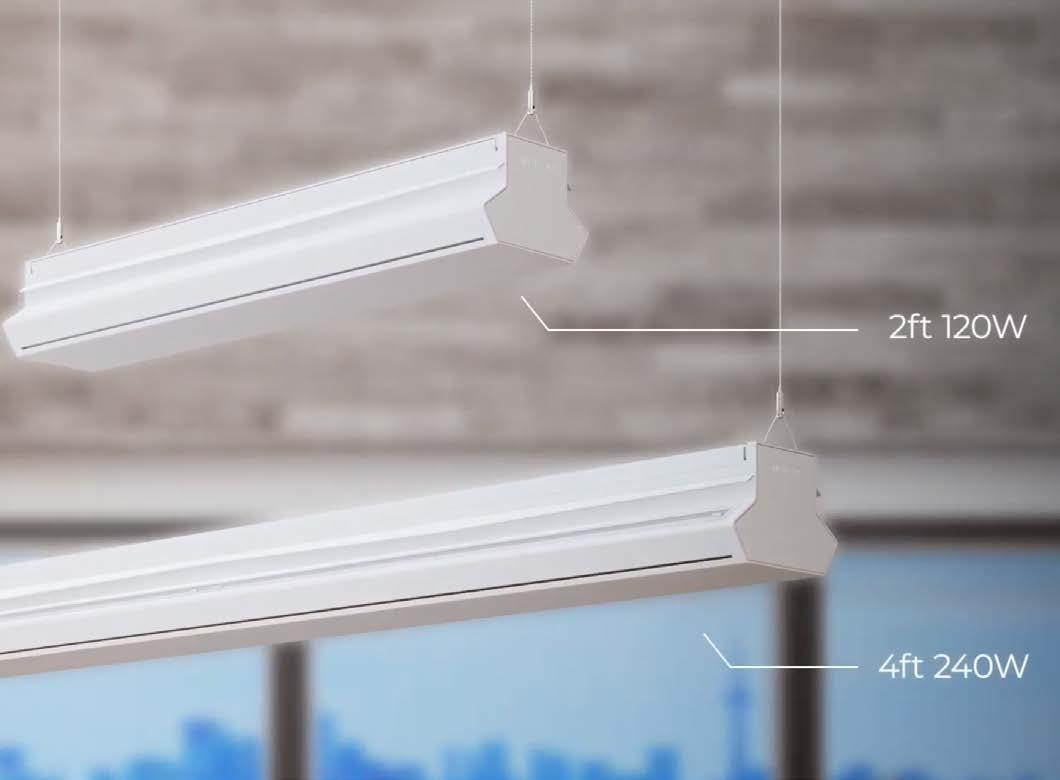
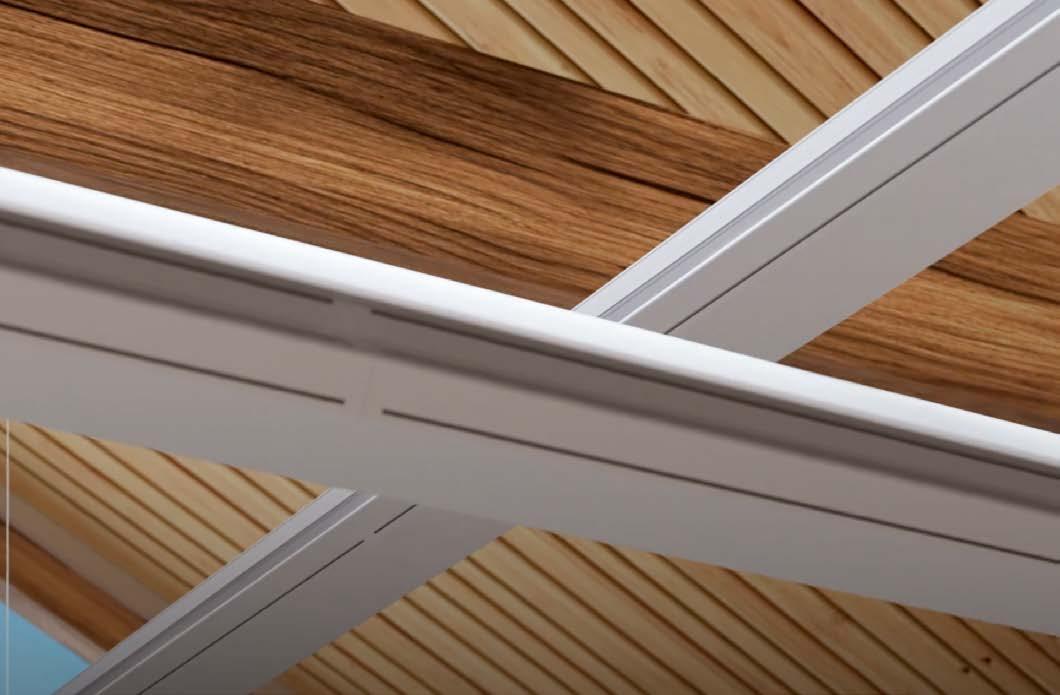
Meteor Lighting unveils NovaLink, a modular suspended truss system recognized in the 2025 IES Progress Report for redefining high-ceiling illumination. With outputs up to 8,400 lumens per foot, optional downlight blades, and seamless integration with Bolt Nova floodlights, NovaLink empowers designers to achieve innovative, tailored solutions for the world’s most complex high-ceiling environments.
ETC expands its architectural line with three new Plus fixtures— the Irideon FPZ Plus, Irideon WLZ Plus, and Source Four Mini LED Plus—each delivering significantly higher lumen output and enhanced control options. With DMX or DALI compatibility, F-Drive integration, and versatile mounting, these luminaires bring brighter, more flexible solutions to museums, lobbies, and retail spaces.

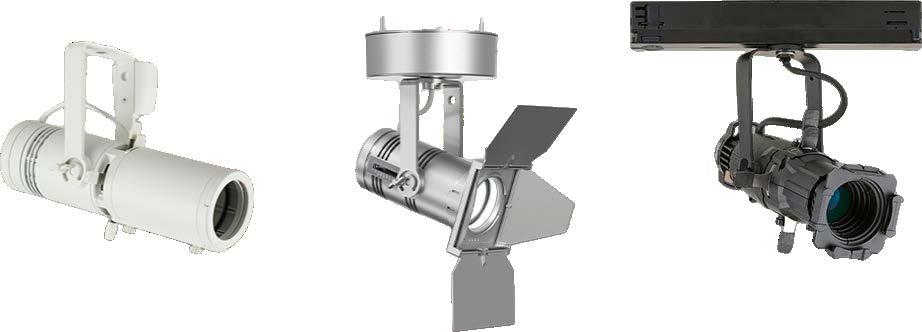
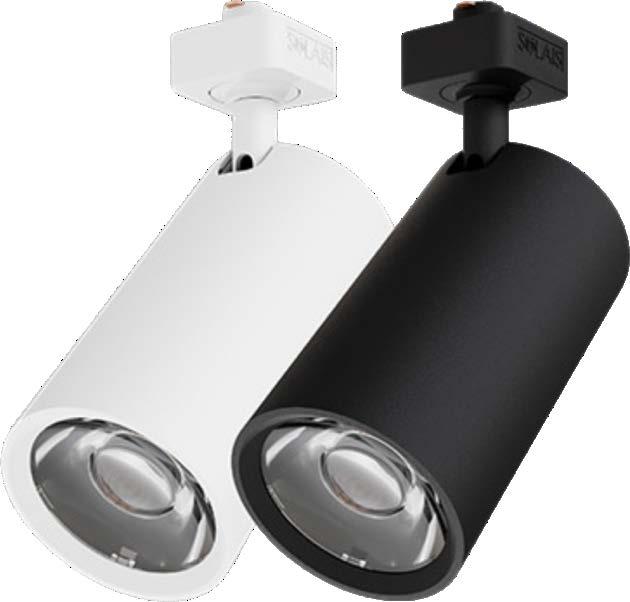
The new Pixora™ Trackhead from Solais features patentpending Digital Zoom™ Technology that delivers precise, repeatable beam spreads without lens swaps or mechanical rotation. Pixora™ empowers designers and installers with on-site control of beam angle and lumen output through simple slider adjustments, combining flexibility with architectural-grade performance.

Optique Lighting introduces Lavino, a compact wall wash luminaire with LEDiL® advanced optics that delivers precise control and output of over 1500 lumens per foot. Featuring a paintable, patent-pending fixture cover for seamless continuous runs and pivoting mount hardware for optimal distribution, Lavino combines architectural elegance with powerful performance.

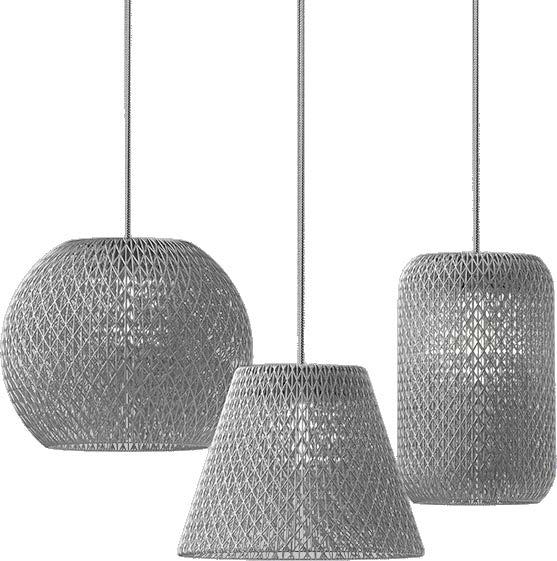

Lattice by Eureka is a family of 3D metal-printed luminaires that double as sculptural focal points. Available in sphere, cone, and cylinder forms, Lattice’s layered structure filters light into a subtle, ambient glow while showcasing the artistry of advanced metal printing.
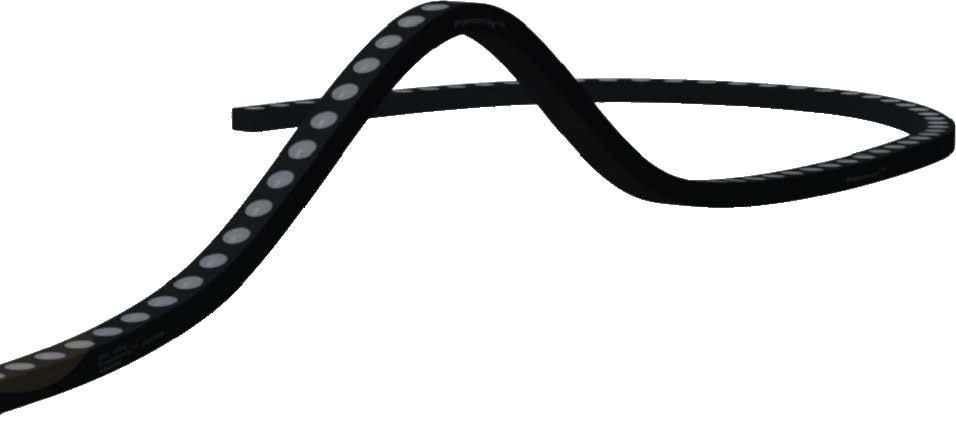

Acclaim Lighting’s Flex Graze HO SC™ is a new linear fixture engineered to bend both horizontally and vertically for seamless integration into complex profiles. With precise color consistency, multiple control options, and a 10-year limited warranty, the Flex Graze delivers reliable performance and design flexibility for architectural applications.
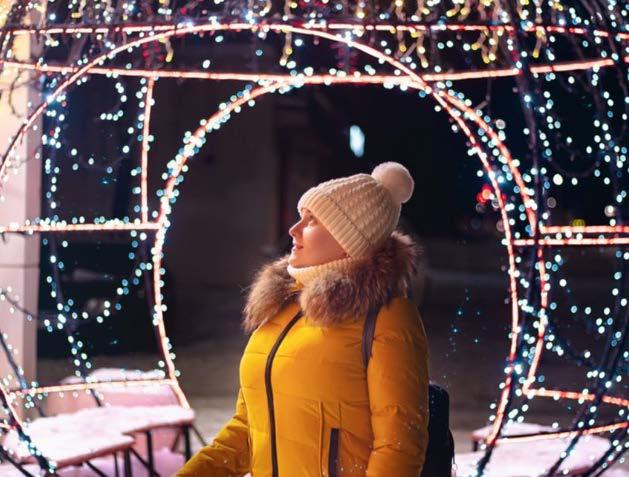
American Lighting has launched TINSL, a new line of seasonal and holiday lighting designed to bring year-round sparkle to residential, commercial, and specialty spaces. The collection spans decorative string lights, smart Spektrum+ solutions, and linear and architectural options, all supported with design guides and tutorials for professionals and enthusiasts alike.
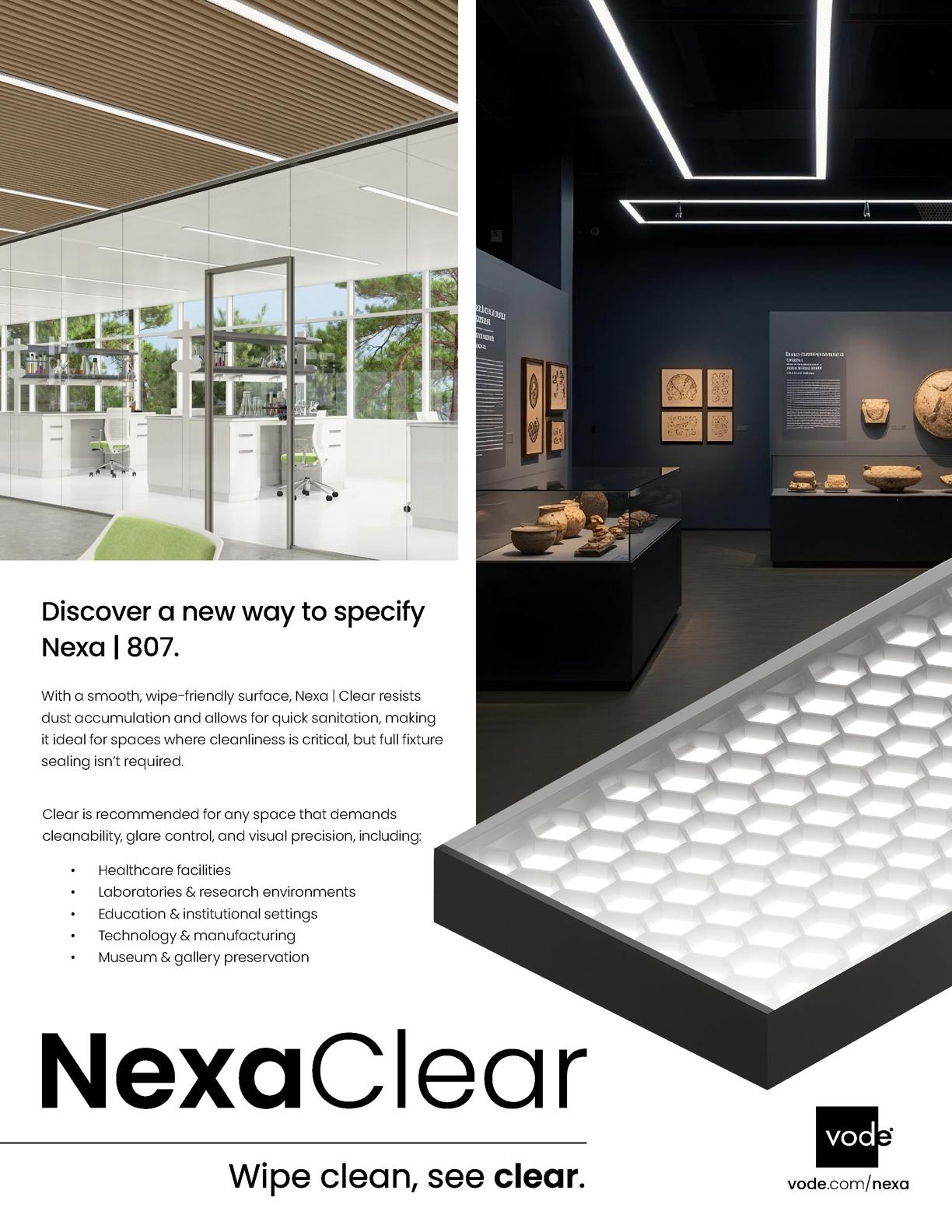
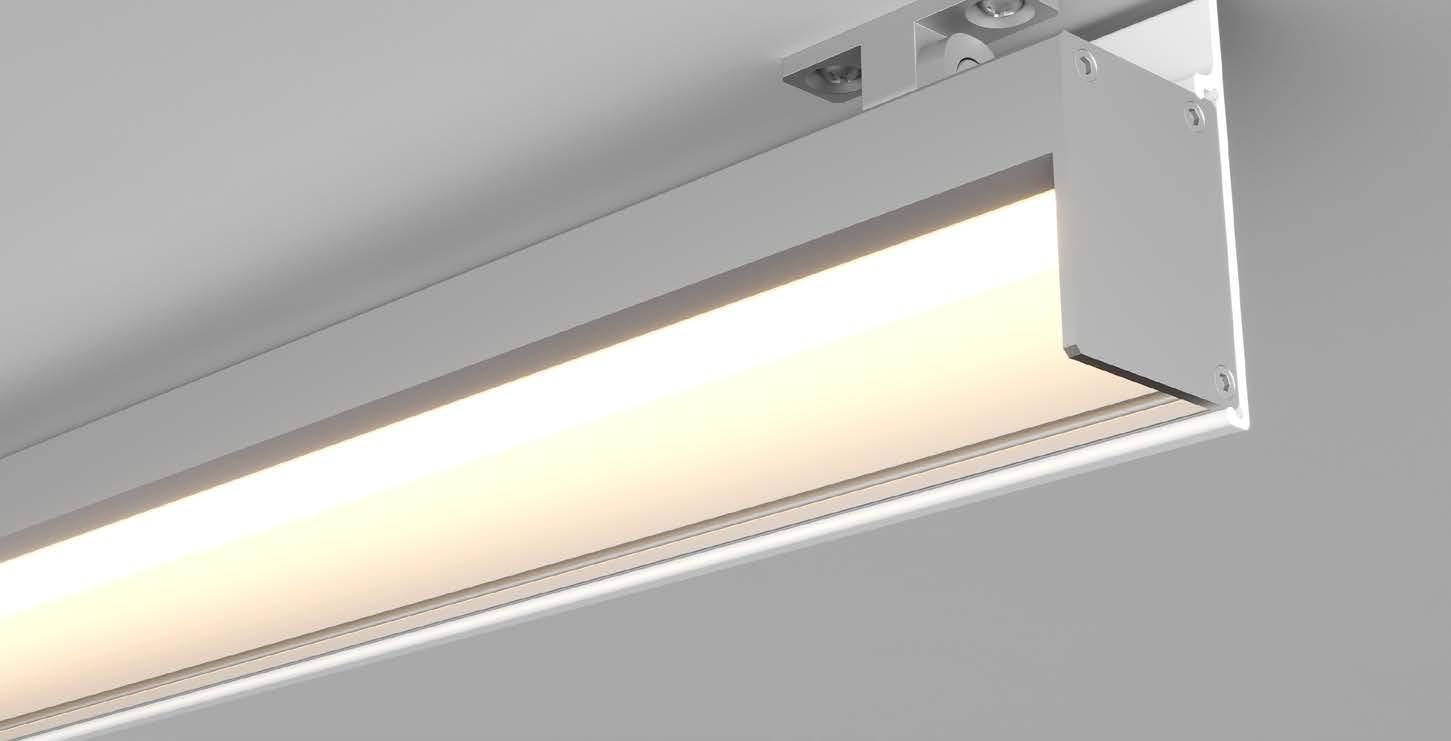
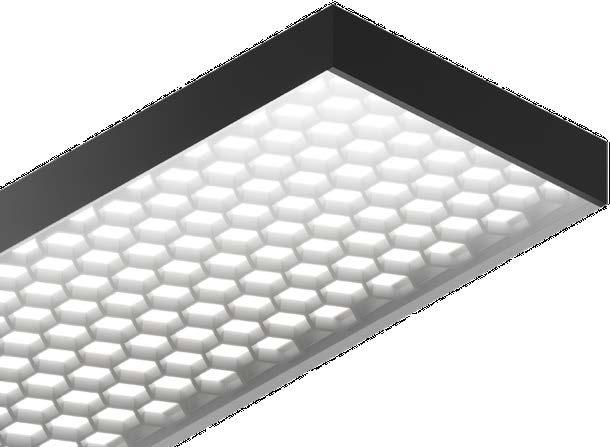
Vode now equips architects and designers with a new way to specify Nexa | 807. Purpose-built to resist dust and create a clean, wipeable surface, Nexa now features Clear, available with their new Honeycomb Louver optic. Clear allows Nexa’s high-performing optics to achieve ocular clarity and minimal glare alongside advanced dust control.
Casting Nebraskan Art

RANDY REID By
Photo credit: © Nic Lehoux
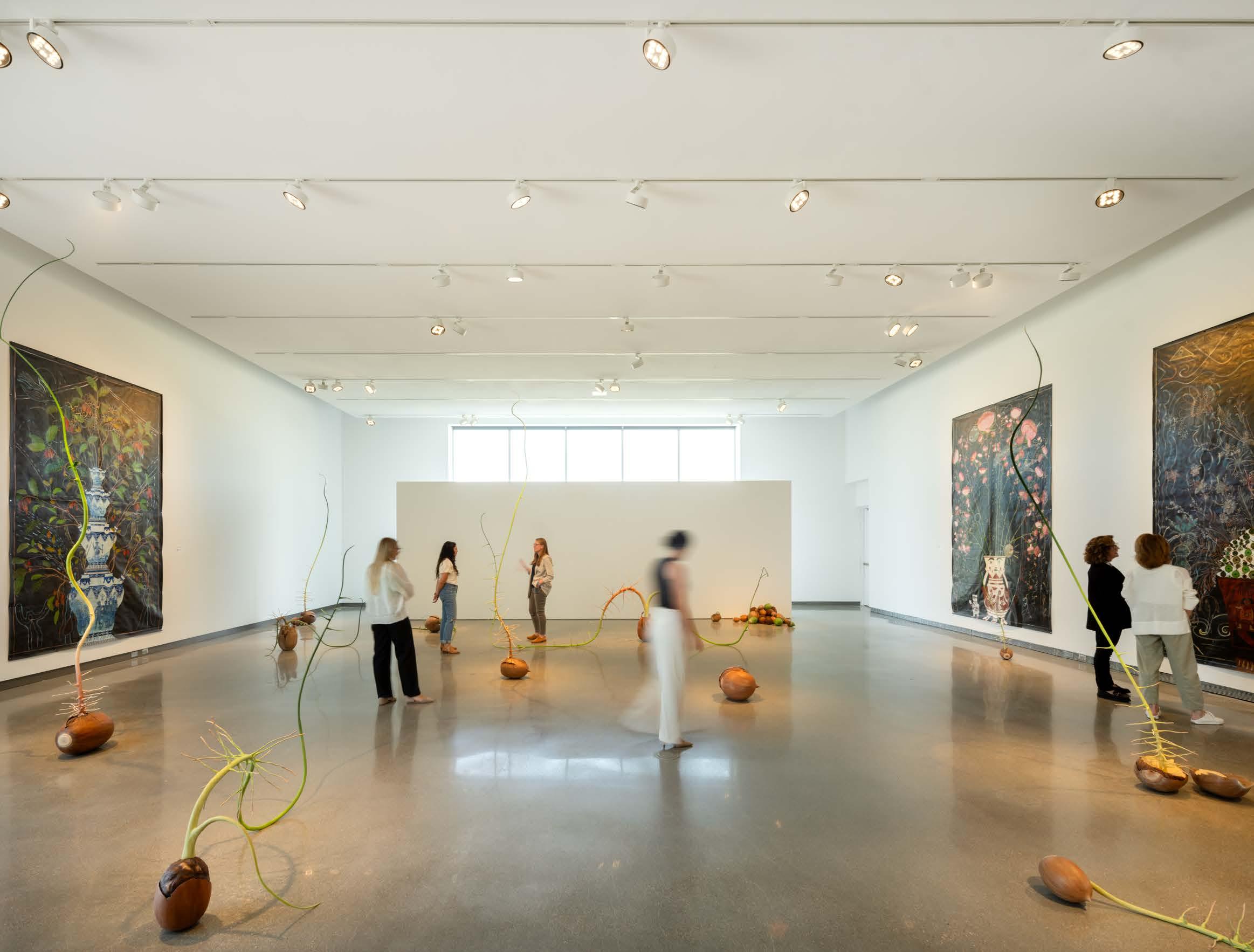
When the Museum of Nebraska Art (MONA) embarked on its expansion, the mission was both ambitious and clear: Expand gallery space, introduce visible art storage, and knit together three distinct buildings into one seamless visitor experience.
Buro Happold, led by lighting designers John Sloane and Gabe Guilliams, provided the lighting design and consultancy that shaped the project into an adaptable, welcoming, and highly functional environment.
Founded in the mid-1970s by visionary educators at Kearney State College, MONA opened in 1986 in the former Kearney Post Office building, itself a historic structure dating back to 1911 and listed on the National Register of Historic Places. A 1993 addition expanded the museum, but with its collection now exceeding 5,000
works, space remained tight.
The latest expansion, supported by a $36.5 million capital campaign, included renovation of both existing buildings and a new 23,800 sq. ft. addition by BVH Architecture
At the heart of the expansion is “The Link,” a central circulation space connecting the historic post office, the 1993 addition, and the new building. The architectural highlight is an origami-inspired ceiling of mass timber, a reference to Nebraska’s migratory cranes.
Lighting above the coffers combines randomized arrays of GE Current A19 LED lamps—arranged in controllable zones to shift from uniform brightness during the day to dramatic contrast at night—with iGuzzini Laser Blade downlights providing task-level illumination. Vode linear uplights frame the perimeter.
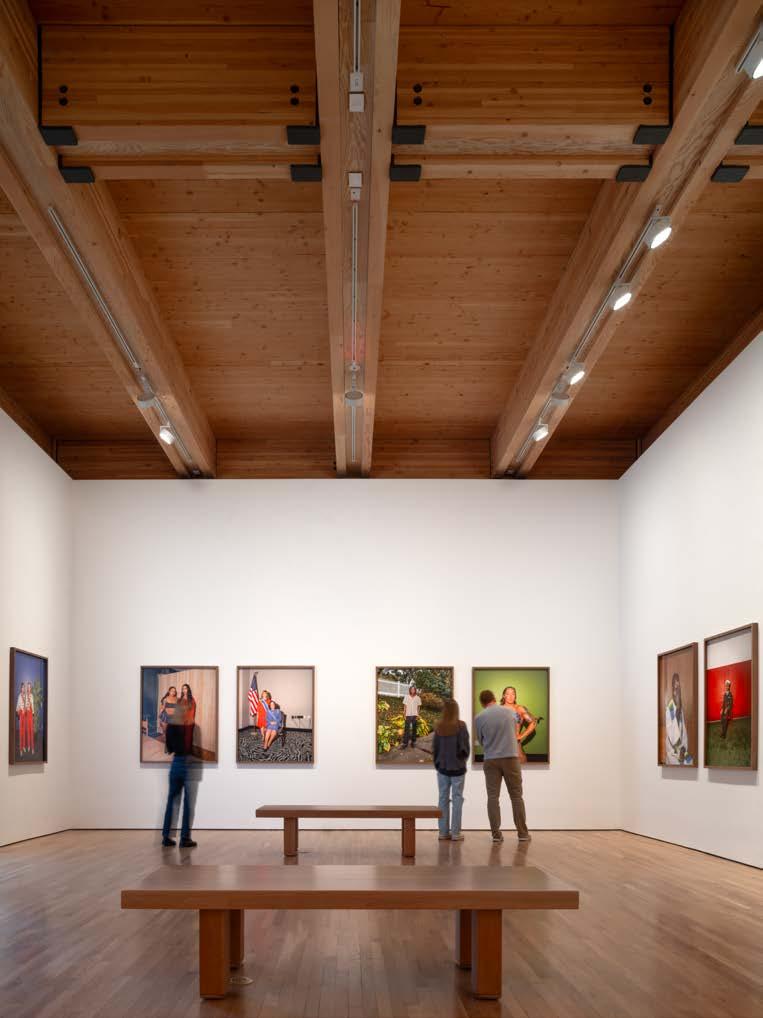
Flexible ERCO track lighting highlights rotating exhibitions with precision and control.
Swappable lenses and Bluetooth control let curators tailor scenes for each show.
HD-2 Suspended Direct/Indirect Pendants
HD-2 Suspended Direct/Indirect Pendants
Steel housing around
Together, these elements create both texture and mood, reinforcing The Link as a welcoming lantern-like beacon visible from the street.
Suspended within the space, DMF Lighting pendants were customized so their stems disappear seamlessly
Wood Flooring
Conc. Topping
Wood Flooring
Conduit
Conc. Topping
Conduit
Plywood CLT
Steel sleeve
Steel sleeve
Plywood CLT
Junction Box
Junction Box
Magnets in Coverplate
Magnets in Coverplate
Custom cover plate to be made from matching lamstock and provided to lighting manufacturer for fabrication of cover plate
Custom cover plate to be made from matching lamstock and provided to lighting manufacturer for fabrication of cover plate
into the timber without canopy plates. The collaboration with DMF produced a detail that feels delicate, almost candlelit, enhancing the warmth of the wood.
The galleries rely on ERCO Parscan track fixtures, selected after a lifecycle cost analysis comparing halogen and LED options. ERCO’s superior optics and efficiency justified the higher initial investment by reducing fixture counts and long-term operating costs.
Flexibility was paramount. Swappable lenses, Casambi Bluetooth controls, and integration with the Crestron system allow curators to reprogram lighting directly from phones or tablets. Digital scene settings create tailored moods for rotating exhibitions and special events, eliminating the need for ladders or manual adjustments. Museum staff were trained by ERCO to master aiming, spacing, and lens swaps, giving them full control of their environment.
Upstairs, glulam beams were paired to conceal tracks, sensors, fire protection, and wiring within cavities. This coordinated detail kept the ceiling visually clean and emphasized the art at eye level—a solution born from
Luminaire Stem
Steel housing around CLT coverplate
Driver located in cylinder
Luminaire Stem
CLT coverplate
Driver located in cylinder
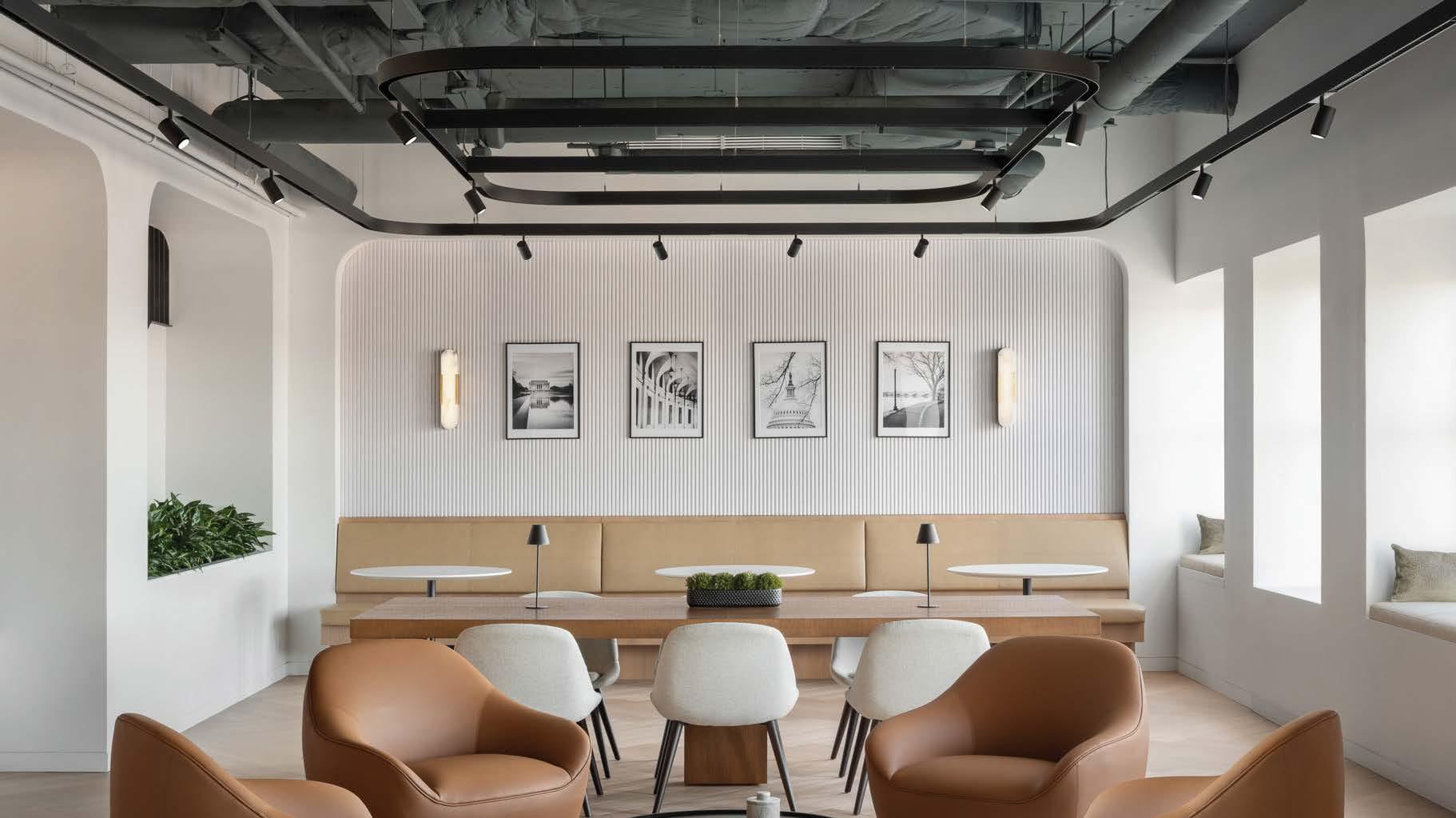
Mix and match with Magneto. Your track. Your rules.
Magnetic 3-circuit track system allows precision placement of high-performance spot, ambient, and decorative light modules.
collaboration between lighting designers, engineers, and architects.
Circulation spaces on the gallery level were also a focus. Bright thresholds between galleries introduce daylight, aiding orientation without risking UV damage to artworks. Visitors can always see an illuminated path forward, reducing the disorientation often associated with windowless museums.
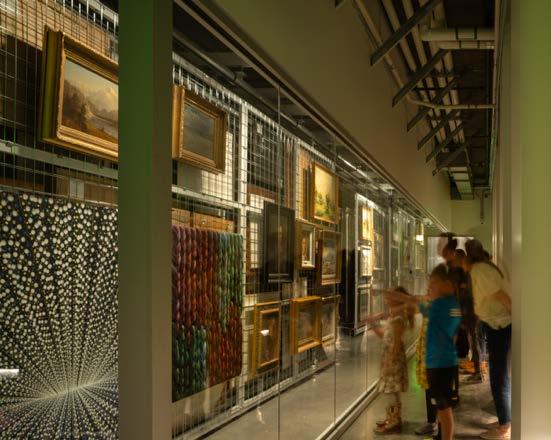
One of the most striking features is the visible art storage, a trend gaining traction among museums. John explained that most art in any collection typically remains unseen in storage, so why not use light to bring those hidden works into view?
Behind a glazed wall in the basement, visitors now stand just feet away from artworks not on display. Lighting is deliberately understated: a soft ambient glow with carefully
1300 Connecticut | Sarah Richter Design | OTJ Architects | ©Trent Bell
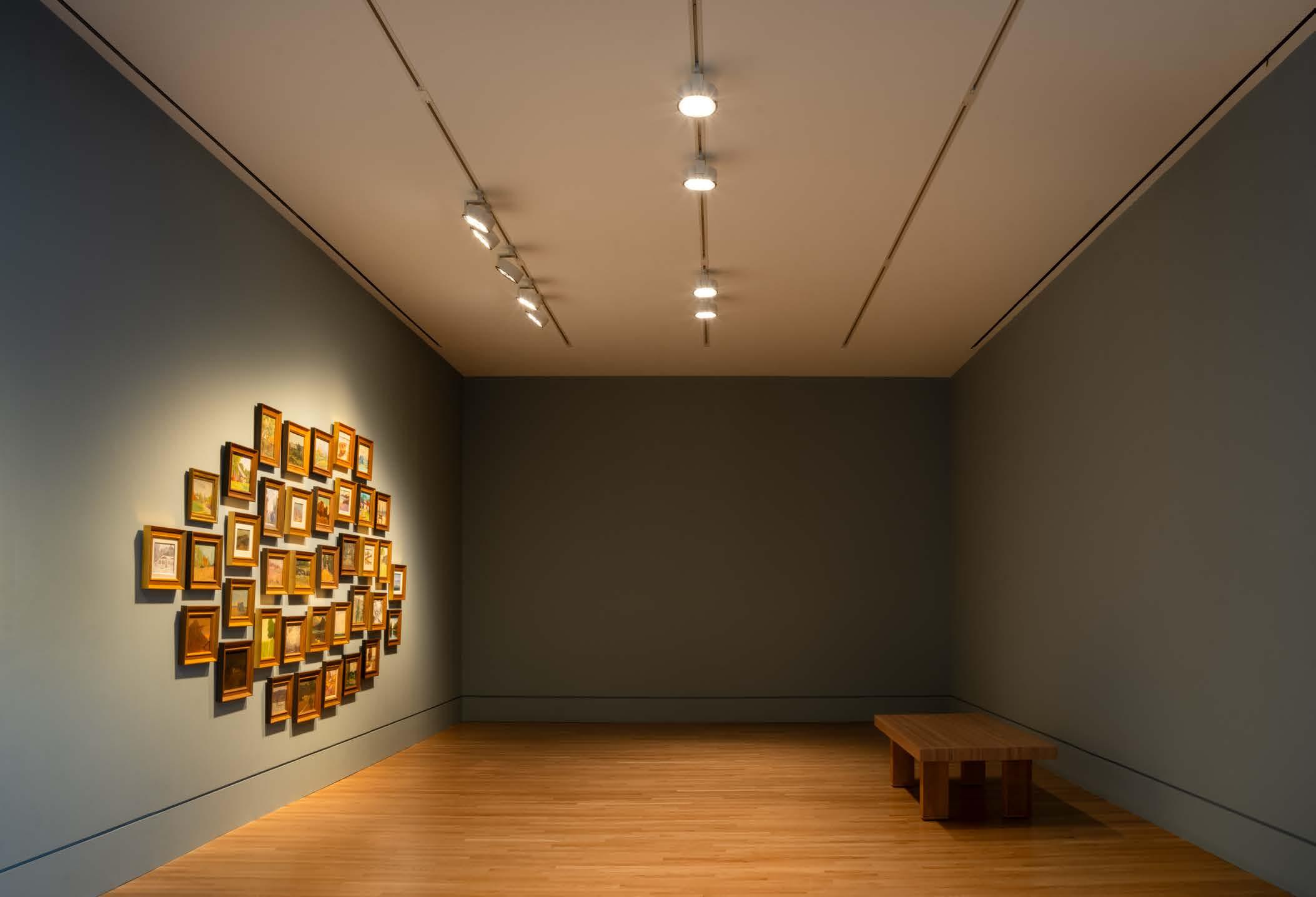
Lighting scenes adapt to intimate displays and changing exhibitions.
aimed ERCO track fixtures to eliminate glare and reflections. Step lights direct light to the floor only, maintaining transparency into the environmentally controlled art storage room while respecting conservation needs. The effect is intimate, giving visitors the sense of privileged access to treasures usually locked away.
Exterior lighting underscores MONA’s welcoming presence. Wooden canopies are softly uplit by in-ground fixtures, continuing inside the vestibules to create seamless transitions. Handrail-integrated lights guide visitors, while sculptures are highlighted with precisely mocked-up placements. Together, these strategies extend the museum’s
identity outward into the surrounding community.
The new lighting design is adaptable, sustainable, and deeply integrated with the architecture. Its layered systems provide curatorial flexibility while enhancing circulation and wayfinding. Digitally set scenes support everything from daily gallery use to evening receptions, enabling MONA to diversify its programming and strengthen its role as Nebraska’s cultural hub.
Completed in 2025, the expansion ensures that MONA’s mission—to celebrate Nebraskan artists and connect the public with their work—will shine brightly for decades to come. ■
FIXTURE MANUFACTURERS FEATURED
• ERCO – Parscan track fixtures (Bluetooth Casambi controlled)
• GE Current – A19 LED lamps (ambient ceiling layer)
• iGuzzini – Laser Blade downlights
• Vode – Linear perimeter uplights
• DMF Lighting – Custom pendants with CLT-integrated canopies
• Crestron – Architectural lighting control backbone
• Casambi – Bluetooth-enabled wireless control system
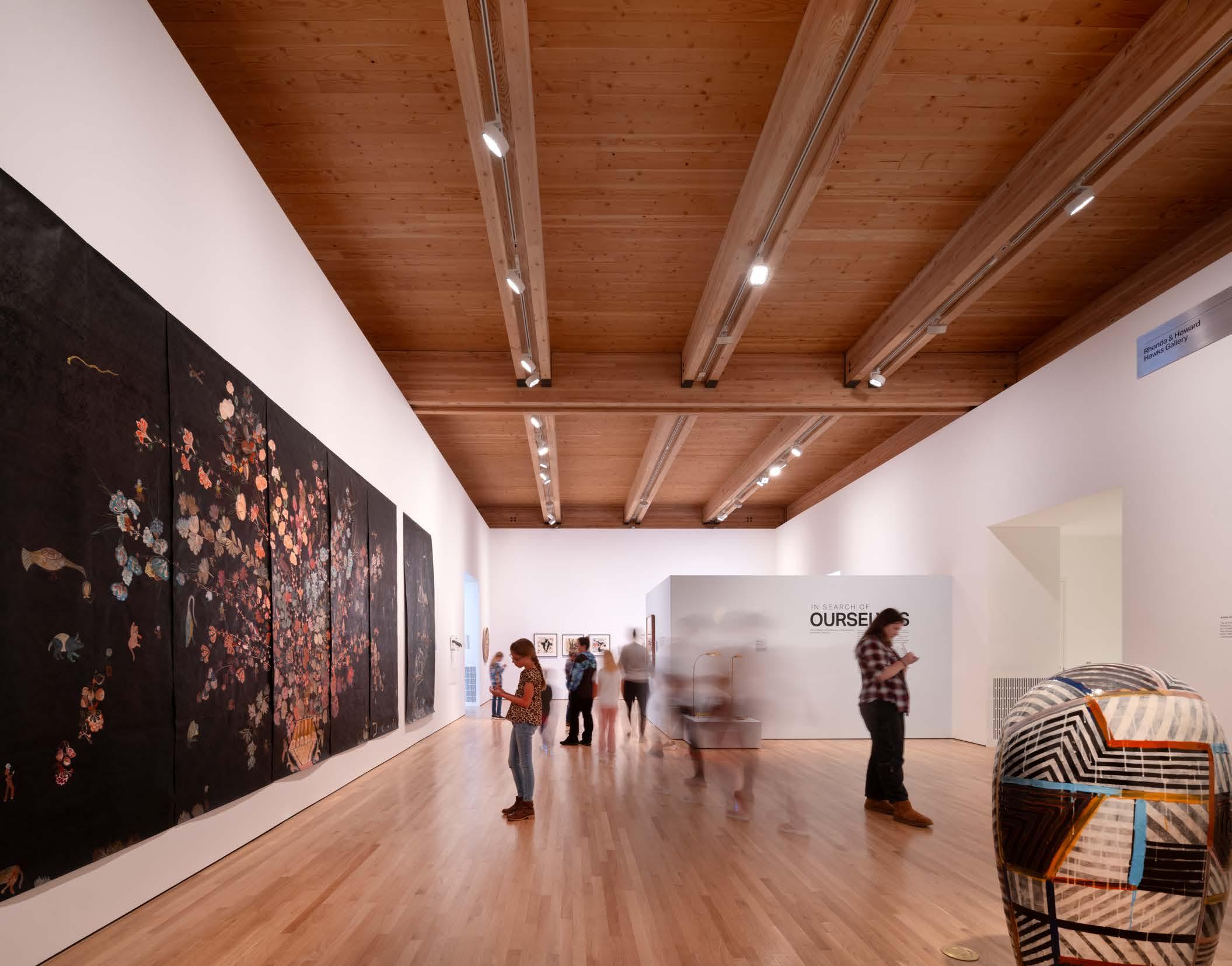
Glulam beams conceal tracks and wiring, keeping focus on the art below.
Glazed visible storage brings hidden works into view with soft, conservation-friendly light.


RANDY REID By
Photo Credit: Lara Swimmer / Esto
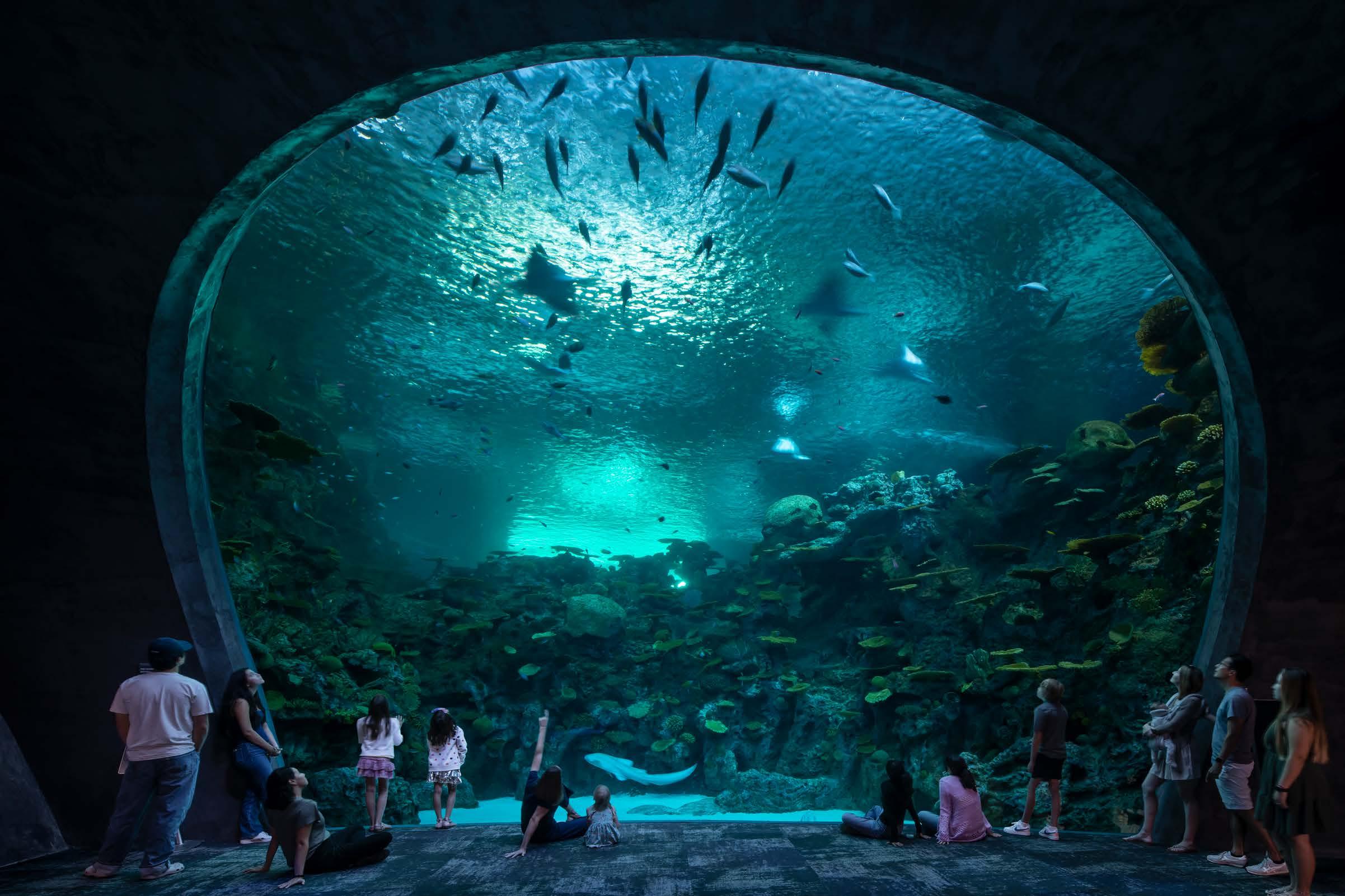
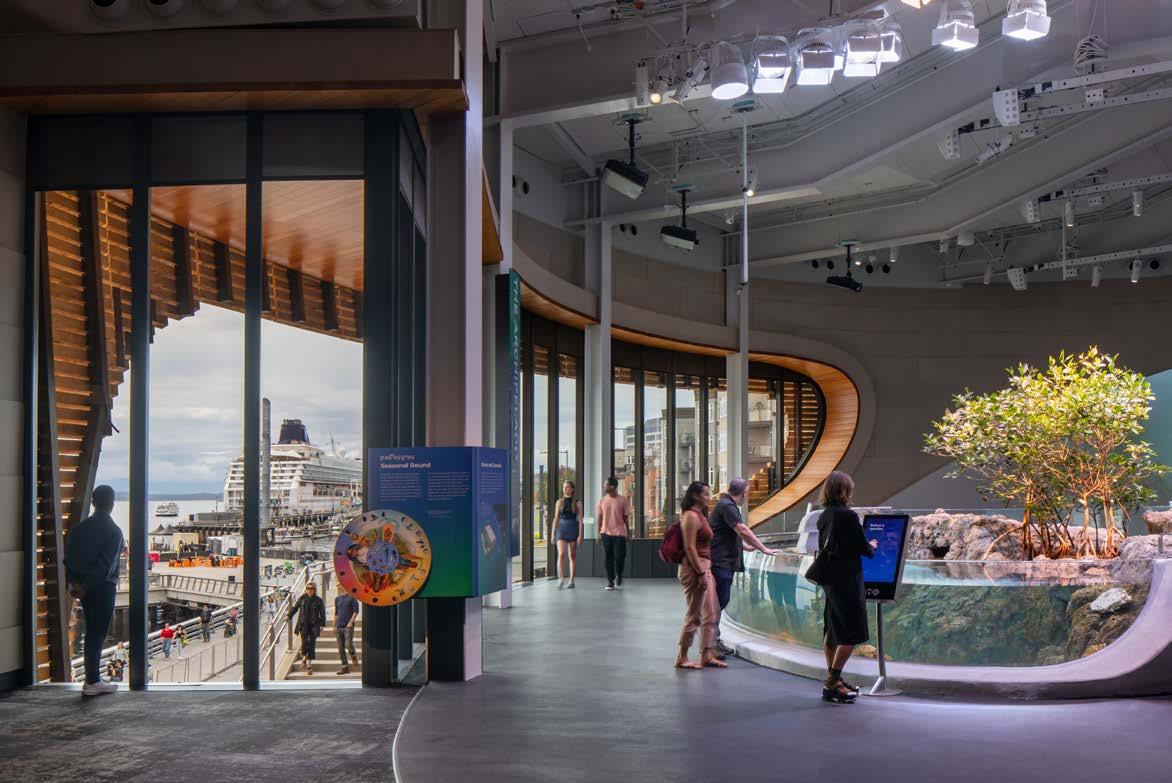
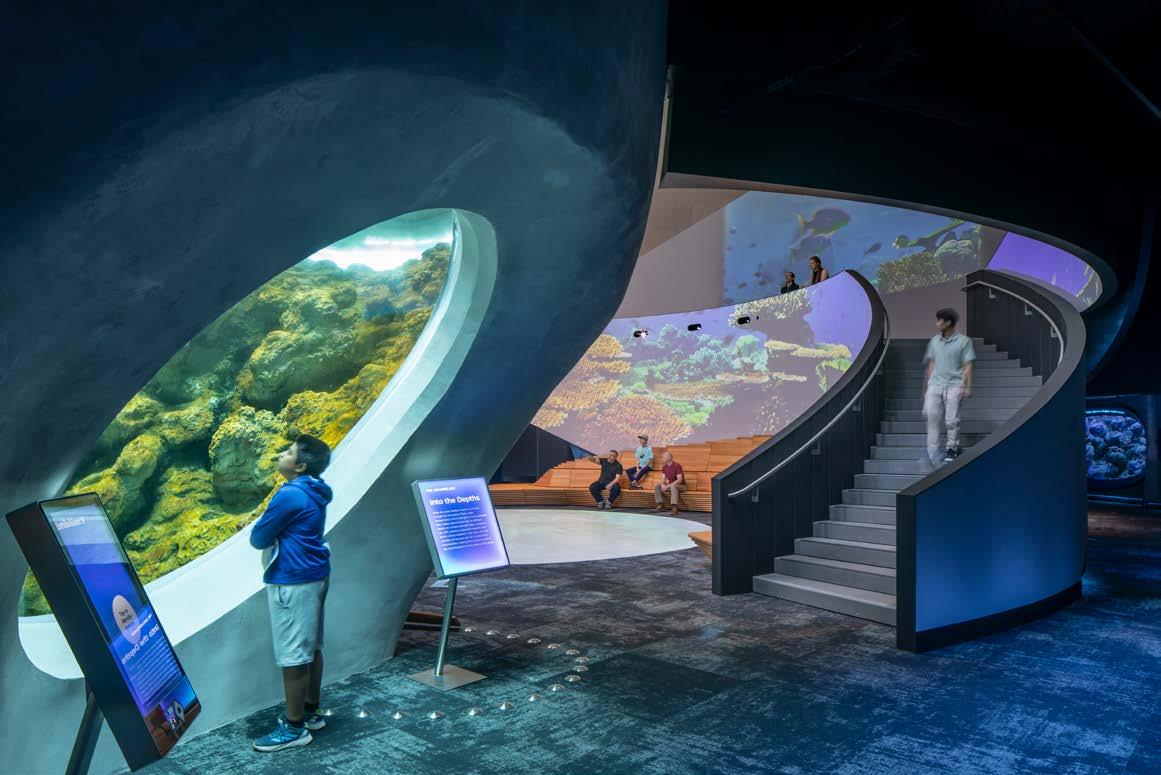
Daylight and custom grow lights sustain mangroves while wide windows frame Elliot Bay. Reef habitat viewing window with precise stair lighting that preserves projection contrast.

Lighting the Seattle Aquarium’s Ocean Pavilion
The Seattle Aquarium’s new Ocean Pavilion anchors the city’s revitalized waterfront. Just steps from Pike Place Market and overlooking Elliott Bay, the Pavilion reimagines the role of an aquarium—transparent, welcoming, and deeply connected to its urban surroundings.
Gone are the dark, windowless corridors typical of such institutions. Instead, the Pavilion is filled with daylight, where habitats, art, and architecture converge into a single narrative of conservation.
At the core of that story is a rare collaboration: LMN Architects, Thinc Design and HLB Lighting Design working in lockstep, shaping both space and light with equal intention.
Most of our coverage focuses on lighting designers, yet this project is different. Teal Brogden, principal at HLB Lighting Design, insisted that architect Hanna Kato, Associate at LMN Architects, join the conversation.
The reason is simple: LMN and HLB have forged a partnership spanning three decades. “Our longstanding relationship with LMN is rooted in a shared reverence for light and its impact within the built environment,” Teal explained. “That partnership empowers us to think about light not as an accessory, but as an integral part of the human and animal experience.”
The demolition of Seattle’s elevated viaduct opened the door for one of the most significant civic transformations in the city’s history. Today, the waterfront promenade flows seamlessly from the cruise ship terminal to Pike Place Market. Ocean Pavilion contributes to this reconnection with a rooftop park and fully public elevator that connect the shoreline and city core.
“It was about restitching the city back together,” said Hanna. “From an urban point of view, the connections are remarkable.”
Even before buying a ticket, passersby encounter the Pavilion’s mission. A monumental Oculus window provides views into Indo-Pacific habitats, which Hanna described as “an equitable gift back to the city.” The Pavilion’s broader story is one of unity, linking the Salish Sea and the IndoPacific Coral Triangle as “two corners of the same ocean.”
Most aquariums shut visitors into black-box galleries. The Ocean Pavilion breaks that rule, introducing large windows and daylight-filled spaces. The challenge was to harness natural light without overexposing the habitats.
Teal explained that daylight played a central role in the Pavilion’s design, but it required careful balance. Too much daylight could create problems—glare for visitors, algae growth within the habitats, and unwanted solar heat gain.
To prevent these issues, LMN and HLB conducted extensive daylighting studies, modeling geometries and testing conditions to ensure the building welcomed daylight without compromising the health of marine life or visitor comfort.
Hanna added that the team went beyond computer models
to prove that the custom fixtures could meet their needs. “We actually took mock-up fixtures into the existing aquarium and found a habitat with a similar water depth to replicate the conditions,” she explained.
To simulate the final geometry, they used mirrors above the water to match the light’s travel distance. Divers equipped with light meters then tested the levels at the bottom, confirming the spectrum and intensity needed to support coral growth. The exercise gave confidence that the new habitat would thrive under carefully tuned lighting.
“The animals are client number one,” Hanna emphasized. “Every design decision began with their well-being, then moved to the guest experience and storytelling.”
Sustainability threads through the building systems: central air heat pumps, a semi-closed water system, low-carbon materials, high-performance glazing, and planted roofs that reduce stormwater pollution.
Seattle Aquarium Vice President of Facilities and Operations
Jesse Phillips-Kress worked with PAE Engineers to choose a long-lasting corridor solution. Ben Kuritz of Washingtonbased rep firm PLSWA recommended 42 of Kenall Manufacturing’s SenScape 18-inch ceiling-mounted luminaires for the back-of-house corridors—selected for durability, easy maintenance, and reliable performance in a corrosive, salt-rich environment while meeting the Pavilion’s energy goals.
The Reef habitat by itself houses a total system of 500,000
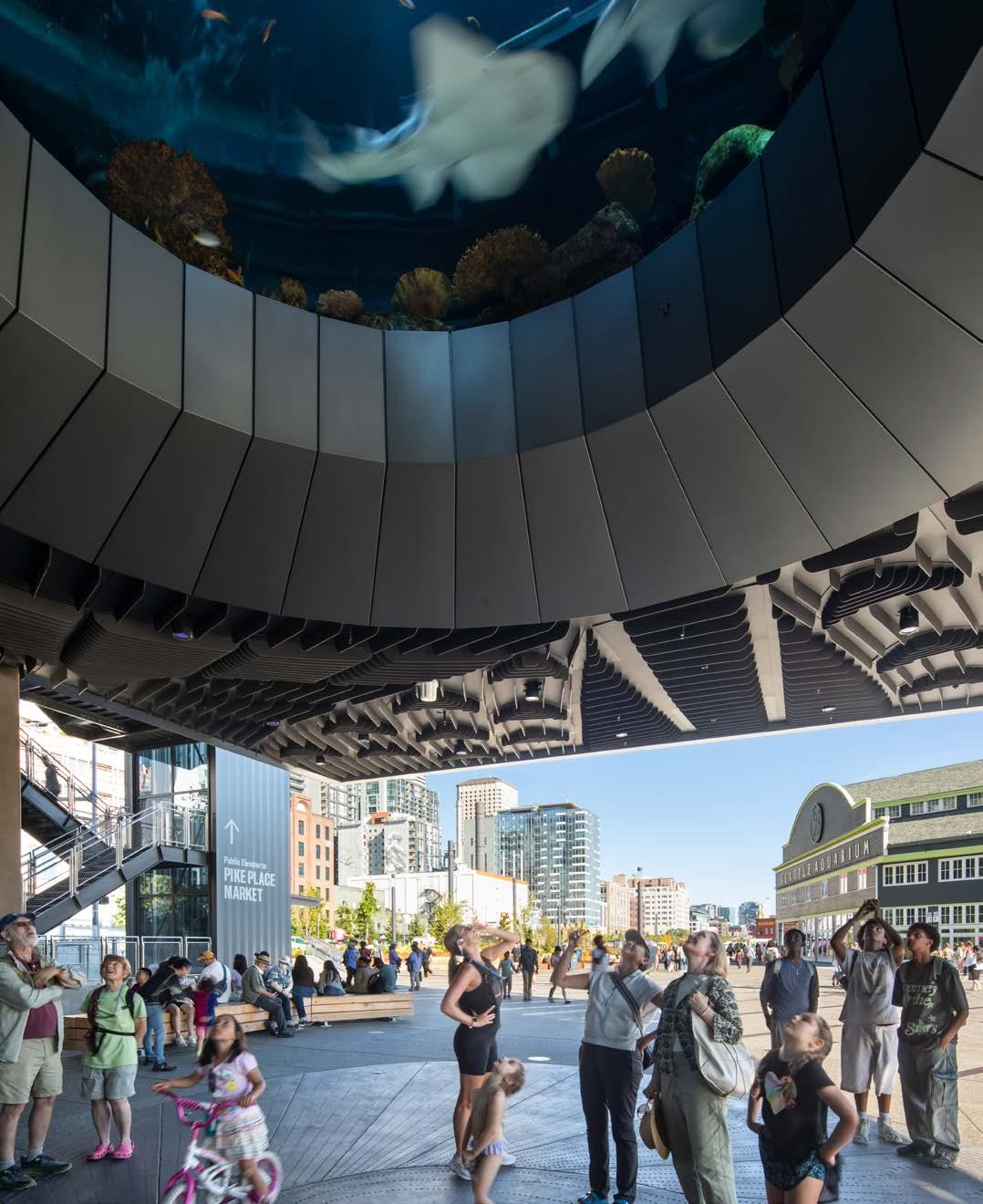
Passersby gaze up into the shark habitat from the street level below.
gallons of water, but two habitats carry the most complex lighting demands. The Archipelago habitat contains live coral and mangrove trees, requiring grow-light levels calibrated for photosynthesis.
Lighting the habitats demanded a careful balancing act. “We both wanted a lot of light and no light,” recalled Teal. Coral and other species required specific spectra to grow, while projections in the same space needed minimal spill light.
The solution was a pair of custom luminaire types, each tuned to the spectral characteristics of its environment—blue spikes for coral growth, amber-rich tones for above-water plantings. HLB modeled the spectral performance, then validated it with light meters both in air and underwater to confirm accuracy. This rigorous process ensured that the light nourished life without overwhelming the visual storytelling.
In addition to the grow lights tuned for plants and coral, the Pavilion also employs a layer of theatrical-style luminaires. These architectural fixtures were used to illuminate the stairs with extreme precision. By relying on shutter framing, the design team ensured the beams remained tightly controlled, preventing any spill light from interfering with projection walls.
The larger Reef habitat, with artificial corals, demanded equal care. Lighting had to reveal the scene to visitors while balancing against projections and reflections.
Electric light in the Pavilion follows circadian patterns. At dawn, habitat lights slowly fade up, emulating sunrise. At night, the system shifts to subtle blue tones akin to moonlight transmitted through water. Over the Reef, indirect uplighting colors the ceiling to mirror the sky dome—crisp whites at noon, ambers at sunset.
“What’s magical,” Teal said, “is that the real environment outside the windows is doing the same thing at the same time.” Visitors experience both the natural Seattle sky and its luminous echo above the habitats.
Beyond technical precision, the Pavilion’s lighting also embraces a sense of theatricality. Palazzo Lighting Design, collaborating with the exhibit designer Thinc Design, played a central role in shaping the interpretive and exhibit experience.
Their contributions included carefully crafted lighting for displays, signage, and cultural objects, as well as dynamic effects such as wave projectors and toe-kick glows that brought the environment to life.
HLB provided architectural clarity, from shutterframed theatrical fixtures lighting stairs to carefully balanced façade illumination. The result is a blended authorship where special effects and functional lighting merge without hierarchy.
The rooftop park demanded another kind of balance. Lighting had to ensure safety while preserving darkness for stargazing and waterfront views. Handrail lights, bollards, and carefully feathered stair lighting create a subtle glow without washing out the bay.
Coast Salish Voices: Dan Friday
Art anchors the Pavilion as firmly as concrete and steel. The Aquarium committed early to selecting an Indigenous artist through a committee made up entirely of Indigenous leaders. Their choice was Dan Friday, a glass artist of the Lummi Nation. Dan created three integrated pieces for the entrance: a ceiling installation, an etched floor oval, and a series of glass fish.
The ceiling design, fabricated in-house by LMN, translates Dan’s sketches into a parametric pattern, called Richlite, cut from FSC-certified paper composite panels. Inspired by Coast Salish weaving and fishing traditions, the design radiates from the central Oculus. Dan drew specifically on the practice of leaving intentional holes in salmon nets— allowing the strongest fish to escape and continue the lineage. This symbolism, etched into the ceiling, becomes a message of resilience and continuity.
On the floor below, Dan’s etched oval tells the Lummi story of Grandmother Rock, who shelters sea creatures and warns them of the tides. His great-grandfather, Joseph Hillaire, was a renowned story pole carver; recordings of him telling the tale are preserved in the Library of Congress. By embedding these narratives into the building, Friday ensures that the Coast Salish presence is not an add-on but part of the Pavilion’s DNA.
For visitors, the Ocean Pavilion is both a spectacle and a lesson. The habitats draw the eye. The light reveals and conceals. The art roots the building in place. For animals, the design simulates natural rhythms, supporting life and growth. For the city, the Pavilion is a civic gift, with its rooftop and Oculus open to all.
Teal ended by noting that the project was “a standout in so many ways: the deeply meaningful mission and goals, stunning architectural and artistic expression, and collaborative team spirit, starting with the Aquarium leadership embracing the value of each and every team member’s expertise. We all worked together towards the common good.”
And as Hanna added, “The building constantly reminds you that what happens here affects the Indo-Pacific, and what happens there affects us. It’s all one ocean.” ■
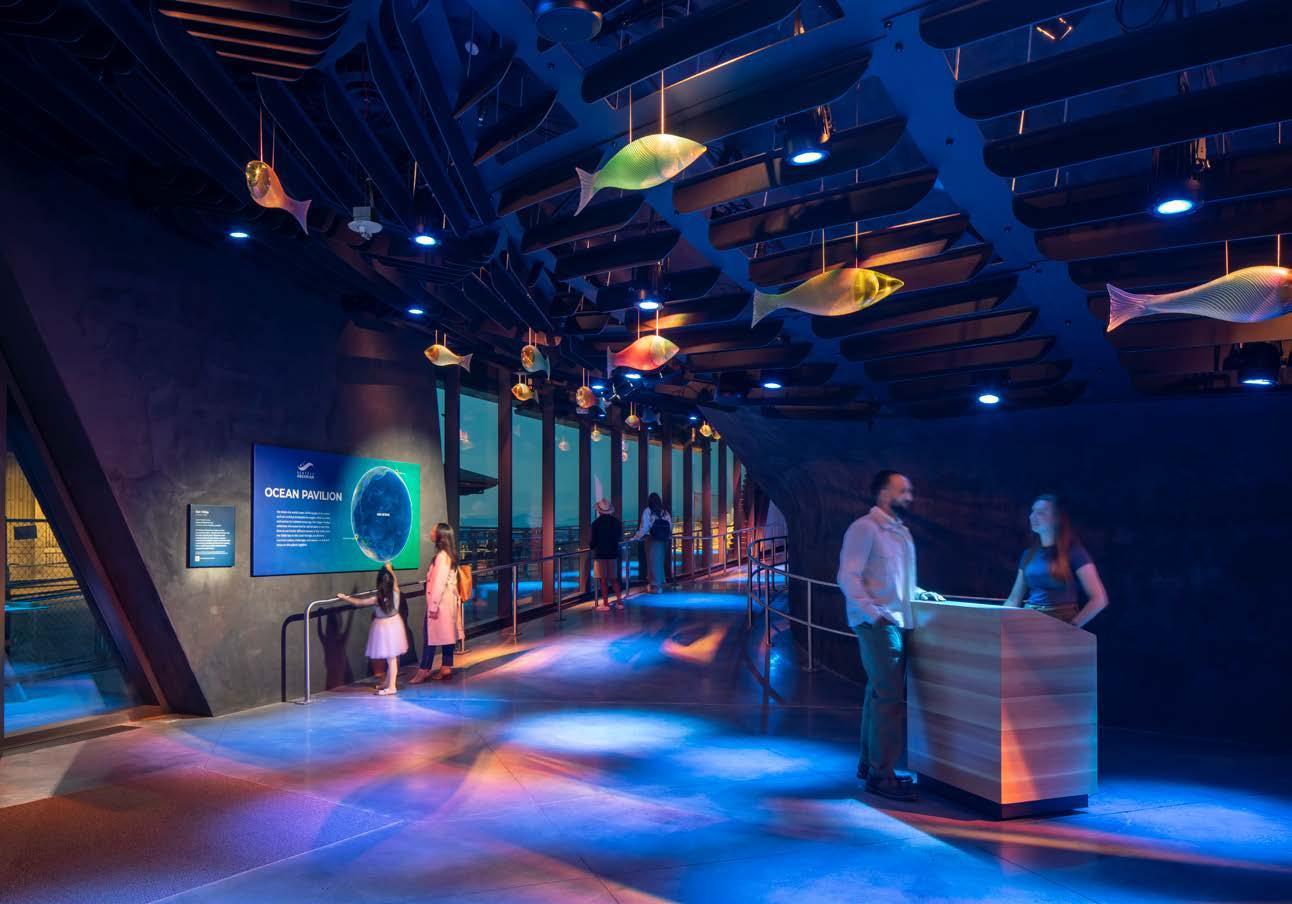
Dan Friday’s glass fish glow within the theatrical lighting environment.


BOSTON’ S BIGGEST LIGHTING EVENT
WILL YOU BE THERE?
TUESDAY, OCTOBER 28
OMNI BOSTON HOTEL AT THE SEAPORT

ATTEND BOSTON LIGHTS EXPO TO...

Explore the latest in lighting innovation, design, and technology from 140+ manufacturers

Learn from industry-leading experts during 12 insightful seminars that include 7 CEU credit opportunities


Gain unparalleled inspiration to bring back to your teams and projects
One event. Countless opportunities.

Network with colleagues, clients, and collaborators in a dynamic, modern venue @Bostonlightsexpoandconference


Connect with top manufacturers, reps, & solution providers in the expo hall and during happy hour
designing lighting controls
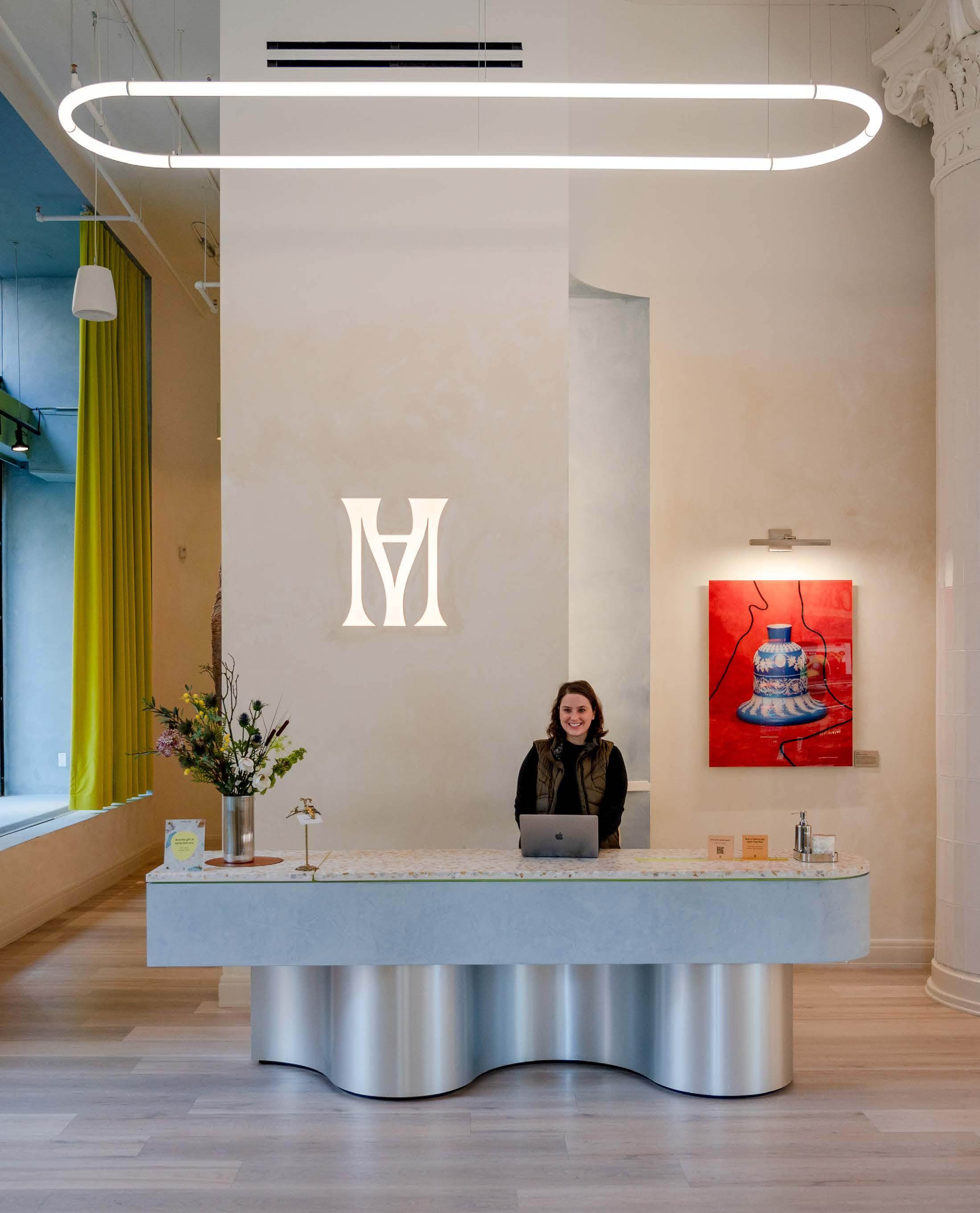

The Bright Future of Lighting Controls
GARY MESHBERG By Gary Meshberg is chair of the Lighting Controls Academy.
The LED revolution that swept the lighting industry coincided with another, quieter revolution in lighting controls.
While LEDs dominate new construction and have gained a majority share of the existing building stock, lighting controls enjoy plenty of room for growth, enabling the LED revolution to complete its promise of transforming lighting from a costbearing utility into a powerful business asset.
In the past, most spaces were controlled with manual switches, and dimming was considered a premium feature for spaces such as conference rooms. Automation, if present, was largely implemented on a time schedule for very large spaces such as floors.
Over the years, lighting controls have evolved to offer intelligent, integrated, and capable solutions that provide a more comfortable and efficient workspace. Wired and wireless communication, distributed intelligence, and LEDs’ inherent dimmability quickly changed the game.
Today’s lighting control systems offer intuitive decisionmaking, ease of installation and commissioning, scalable control zoning, and capabilities such as color tuning and data collection.
Integration is the next frontier of decarbonization. Commercial building energy codes have evolved to a point where they largely capture potential energy savings from lighting control. Decarbonization demands even deeper energy savings. Integrating controls and luminaires as well as lighting control and HVAC systems creates new opportunities.
Networked lighting control systems continue to strengthen as a platform for intelligent buildings that yield business insights. Integration with HVAC and other building systems enables intelligent, highly responsive buildings. Parallel to this trend, NLCs can generate data that can be used to improve building operation and organizational efficiency while producing other valuable insights.
The existing buildings market represents an enormous opportunity. NLCs can be installed seamlessly without the need for cumbersome wiring. Many building owners have
not installed the latest LED technology; these buildings present a significant opportunity to pair lighting controls with the latest LED lighting, fully realizing the technology’s advantages and capabilities as part of a high-quality design.
As commercial lighting rebate programs come to grips with diminishing energy savings from traditional-to-LED conversions, a growing number are incentivizing LED-to-LED upgrades—and requiring lighting controls play a role in the installation.
Lighting control is about value, not just energy. Lighting practitioners understand that quality lighting offers far more value to buildings and their users than minimizing energy costs. Lighting controls have evolved in capability to become an integral part of quality lighting’s value proposition. Dimming, color tuning, circadian lighting, integration, and data can all enhance the role of lighting in a building.
Education is key to adding value. The technological advancement of LED lighting and lighting controls has dramatically increased demand for expertise in effectively selecting, designing, installing, commissioning, and maintaining lighting systems.
This is why the mission of the Lighting Controls Academy (LCA, formerly the Lighting Controls Association) remains so important. Founded 25 years ago, the LCA today offers comprehensive education through our parent organization’s learning platform, NEMA Academy, in addition to a website that is loaded with valuable information and resources. From articles (such as this special supplement), courses, sponsored design awards, and a hands-on NYControlled workshop to a new series of sequence of operations templates, the LCA plays a pivotal role in leveling up lighting practitioners through education.
The LED revolution remains loaded with potential for high-quality design and advanced lighting controls. Overall, the LED lighting revolution appears to have won, but I’d argue that it’s only entering its next exciting phase—one in which lighting quality and the occupant experience is on par or eclipses energy savings in the technology’s value equation and features an even more prominent role for advanced lighting controls. ■
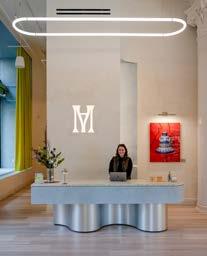
Cover Photo: Modern Age Wellness Studio Controls solution provided by Casambi. Photo courtesy of Casambi. Photo credit: Adam Lenio designing lighting controls
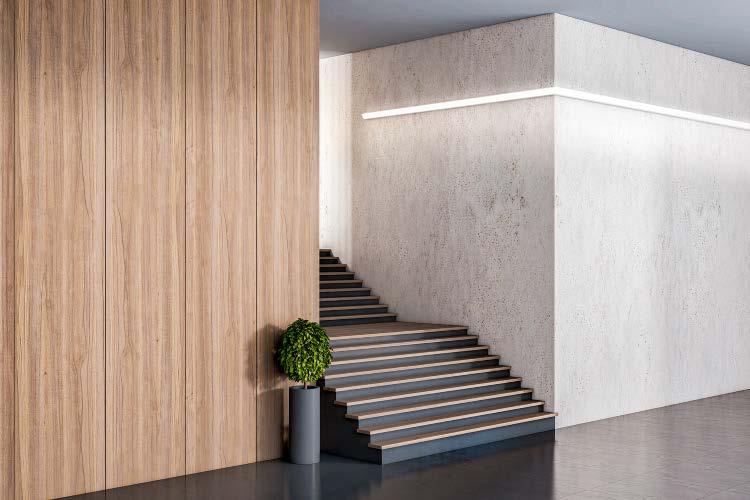

Simplifying Sequence of Operations

A good lighting design requires a good lighting controls design. As lighting control systems become more sophisticated to meet energy codes and offer significantly greater value in today’s lighting solutions, best practices become increasingly essential.
These include the Control Intent Narrative (CIN) and Sequence of Operations (SOO). Let’s examine why these are so important, along with a new free resource from the Lighting Controls Academy that can help lighting practitioners adopt them.
Modern lighting control systems offer a great deal of capabilities, while building projects subject to energy codes require detailed solutions. More requirements and capabilities in turn demand heightened diligence, ensuring the right solution is selected, and verifying the system performs according to intent.
Communicating the design intent to the team is essential, and the Illuminating Engineering Society’s LP-16 defines two best-practice documents for this: the CIN and SOO. Using both can guide design teams, installers, and programmers, especially on complex projects.
The CIN generally outlines the project goals and control strategies to express design intent. The CIN is a non-technical document written
for the owner and design team. Once approved, it becomes the basis for the SOO.
The SOO takes the CIN to the level of actionable detail. Where the CIN is general, the sequence of operations provides detail—specific, measurable, and enforceable, refining the CIN into measurable outcomes. It translates intent into defined triggers (inputs) and functions (outputs), including details such as how devices are organized and connected (architecture/topology), setpoints (e.g., brightness, timeouts), and scenes. For example, if a sensor no longer detects occupancy in an office, the lights switch off after 20 minutes. Advanced SOOs may combine multiple triggers and sequences for various control points.
Because SOOs can involve extensive data, a matrix often makes sense to express the sequence of operations. While there is no gold standard for documenting an SOO, a matrix can often be useful. This matrix juxtaposes general space types and/or specific spaces against control strategies and other parameters. ANSI/IES LP-16 discusses this approach and provides an example aligning spaces with control strategies and system requirements.
Adhering to best practices requires a time investment. As energy codes steadily raise baselines and make minimally compliant control solutions more sophisticated, clear control
operation descriptions are needed. Designers, however, need to be able to create them efficiently. Otherwise, there is an inhibition to adopt them and then to explore more advanced control capabilities and solutions.
The Lighting Controls Academy developed templates to help lighting practitioners describe CIN and SOO more efficiently. Produced by lighting designer C. Webster Marsh with extensive manufacturer input, these free Excel-based, editable templates cover 10 common building types with prepopulated fields reflecting compliance with the 2024 International Energy Conservation Code. These requirements are presented in clear, quick-reference matrices that double as CIN and SOO documents.
Overall, these templates—dubbed Design Express and available at LightingControlsAcademy.org under the “Learn” tab—remove the heavy lifting of starting from scratch with CIN/SOO documentation. They are published for educational use but can be adapted for real projects.
Try it out. Using CIN and SOO best practices ensures that control systems are properly selected, installed, and programmed to meet both energy codes and owner needs. While developing these documents can be time-consuming, standardized templates can make the process faster and easier. ■
CRAIG DILOUIE, LC, CLCP By
Craig DiLouie is education director for the Lighting Controls Academy.
An Approach to Lighting-HVAC Integration
Lighting-HVAC integration is considered a major building block in smart, efficient, and responsive buildings—and the next frontier for networked lighting control (NLC) systems. To support the adoption of this advanced control approach, the DesignLights Consortium (DLC) introduced the NLC-HVAC Integration Toolkit in February 2025.
This free resource is designed to help integrate NLC with HVAC systems. Aimed at both new construction and retrofit projects, the toolkit provides guidance and tools to maximize energy savings through clear communication and coordination among project teams.
Many commercial buildings waste energy by conditioning unoccupied spaces. Lighting upgrades that include NLCs offer an opportunity to address this inefficiency by sharing occupancy data with HVAC systems. Research shows NLCs deliver an average of 48 percent lighting energy savings, while integration with HVAC systems can add up to 30 percent in HVAC savings. This combined impact strengthens the case for investing in NLCs.
Occupancy sensors can play a role in saving HVAC energy. HVAC systems regulate indoor temperature and air quality, often operating whether or not spaces are occupied. Constant air volume (CAV) systems run fans at fixed speeds, while variable air volume (VAV) systems adjust airflow through variable fan speeds or louvered VAV boxes.
Lighting occupancy sensors can save energy by sharing occupancy data with the HVAC system. This signal can cause zones to shift into “occupied-standby” mode, reducing airflow and adjusting temperature setpoints (setback) in unoccupied areas. Communication can occur through low-voltage contact closure or digitally via a building automation system (BAS).
NLCs are particularly well-suited for this role. Their architecture often includes a communication layer capable of integrating with BAS platforms. If luminaire-level lighting controls (LLLC) are deployed, each luminaire includes an embedded sensor, providing highly detailed occupancy data that can further optimize HVAC response.
Integration works best on large BAS projects with VAV HVAC and aligned lighting zones. Smaller buildings can also benefit, especially with newer wireless thermostat technologies. In new construction, integration should be incorporated (and initiated) early in the design process. For existing buildings, projects often begin with an LED upgrade that includes NLCs, which can reduce costs and qualify for incentives. The additional savings from HVAC integration can further improve payback.
Successful integration requires owners, managers, lighting, electrical, and HVAC working together. Because each system carries its own complexity, combining
them demands careful planning, clearly defined responsibilities, and consistent communication throughout design, installation, and programming. The DLC’s NLC-HVAC Integration Toolkit helps overcome integration challenges by offering:
• Decision Tree: Guidance on identifying suitable projects and available incentives.
• Handbook: Roles, responsibilities, relevant standards, and a glossary.
• Responsibility Matrix: A task and accountability spreadsheet for integration projects.
• Case Studies: Eighteen successful examples across seven building types.
• Project Template: A sample integration specification aligned with CSI Division 25.
By providing these resources, the DLC supports better collaboration between the lighting and HVAC industries. The result is more projects that save energy by conditioning and lighting spaces only when needed.
Access the free toolkit here.
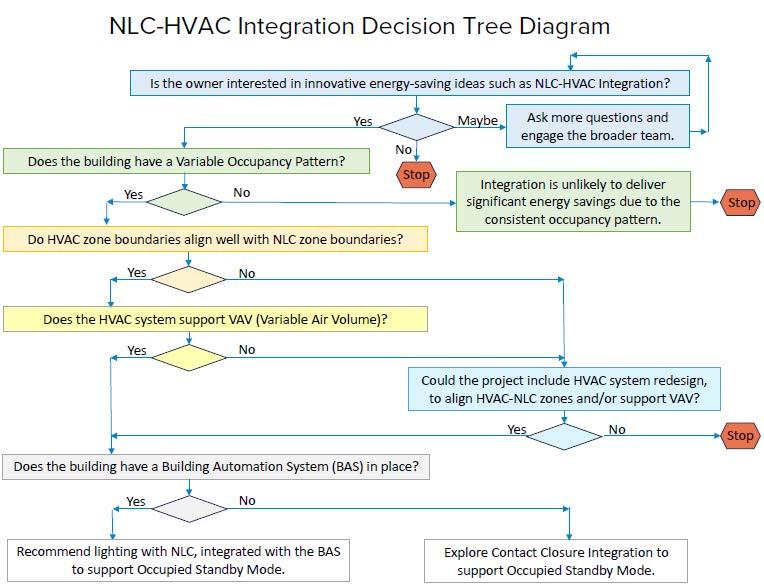
CRAIG DILOUIE, LC, CLCP By Craig DiLouie is education director for the Lighting Controls Academy
SOMETIMES, A NAME SAYS IT ALL
LightingOS ™
Casambi’s LightingOS is the smart platform that connects all Casambi ready hardware—fixtures, sensors, controls—with the software that makes it work. No matter the protocol, LightingOS translates everything into one seamless, easy-to-use system.
casambi.us/LightingOS
What’s New in Lighting Controls


Barron Lighting Group’s Exitronix Guardian G3 has earned a 2025 FacilitiesNet Vision Award for innovation in life safety and security. Featuring remote monitoring, a scalable Zigbee mesh network, and automated compliance testing, the system streamlines emergency lighting management while ensuring NFPA compliance and operational reliability.
Salvador delivers DALI simply and easily without the need for complex programming. By integrating DALI into Casambi's LightingOS, start-ups become a breeze because the work can be completed in our Casambi’s App alongside wireless devices. There is no need to learn a new protocol or stress about implementations. Salvador is smart, clean, easy and U.S.-ready.
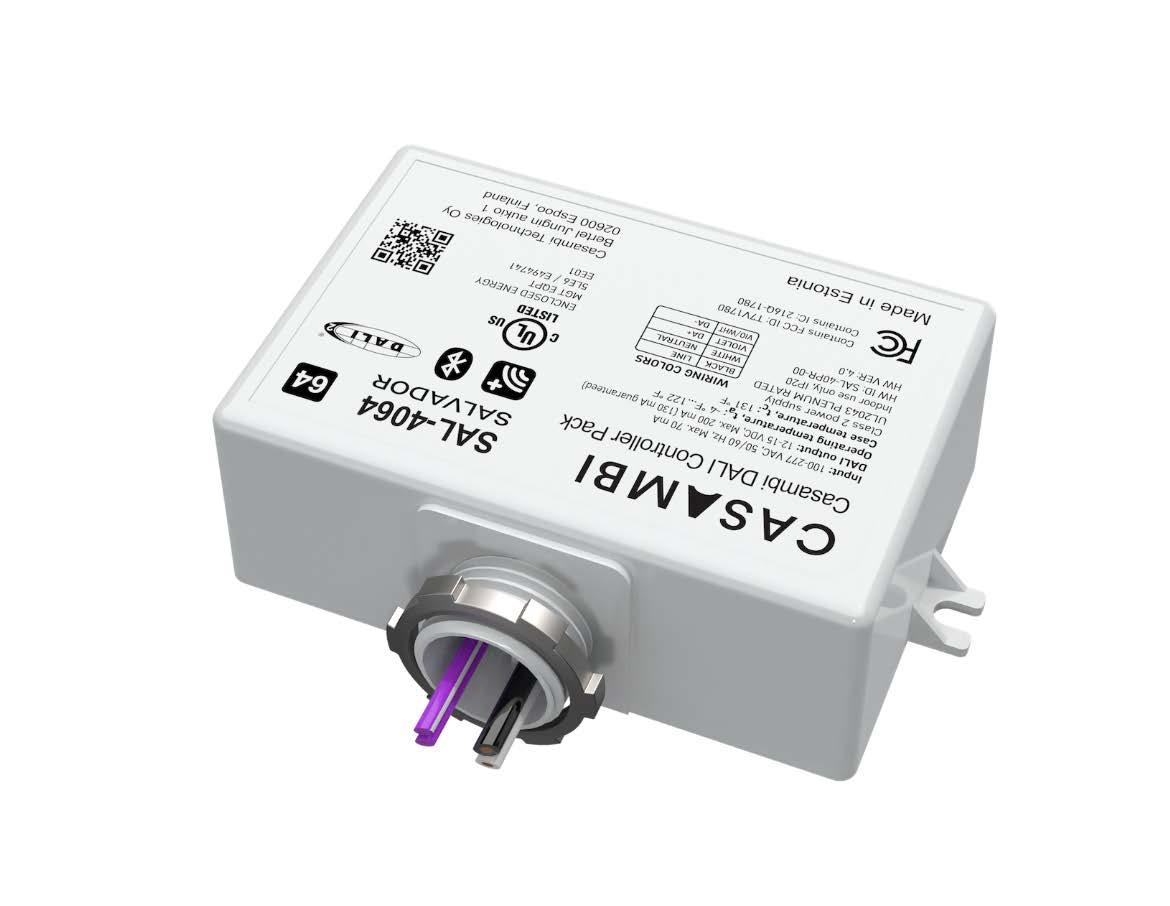
The emergency lighting testing market is growing from $1.2B in 2025 to $2.5B by 2033. EmerLite, the new Bluetooth system from LiteTrace Brands, automates NFPA 101-mandated monthly and annual tests via smartphone, eliminating manual labor and generating compliant documentation. Manufacturers integrate BLE modules into emergency drivers and exit signs.
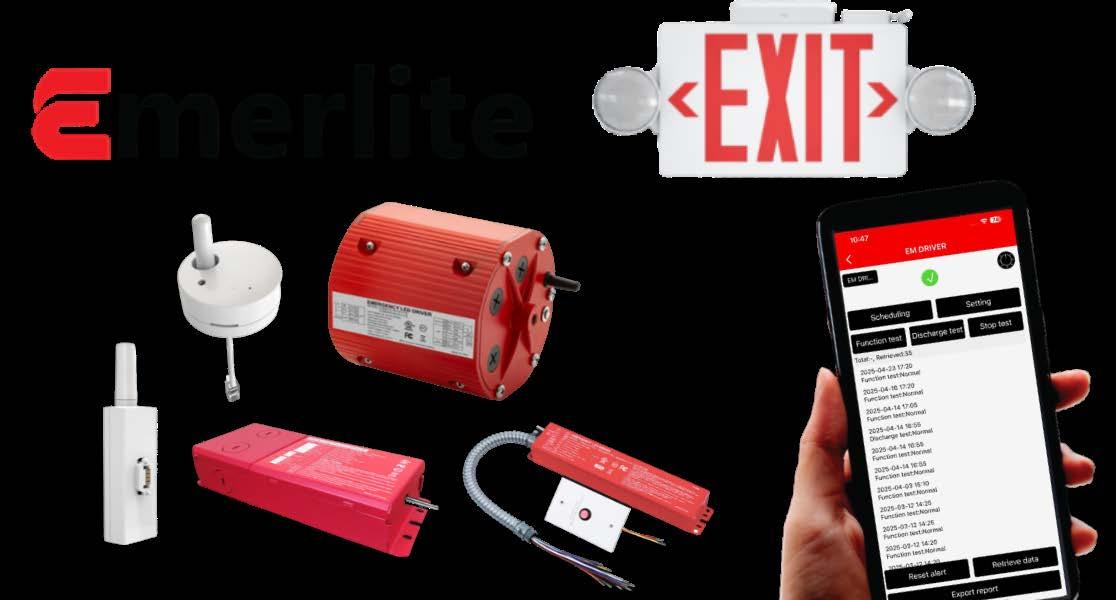
LED-to-LED Upgrades: An Emerging Opportunity
CRAIG DILOUIE, LC, CLCP By Craig DiLouie
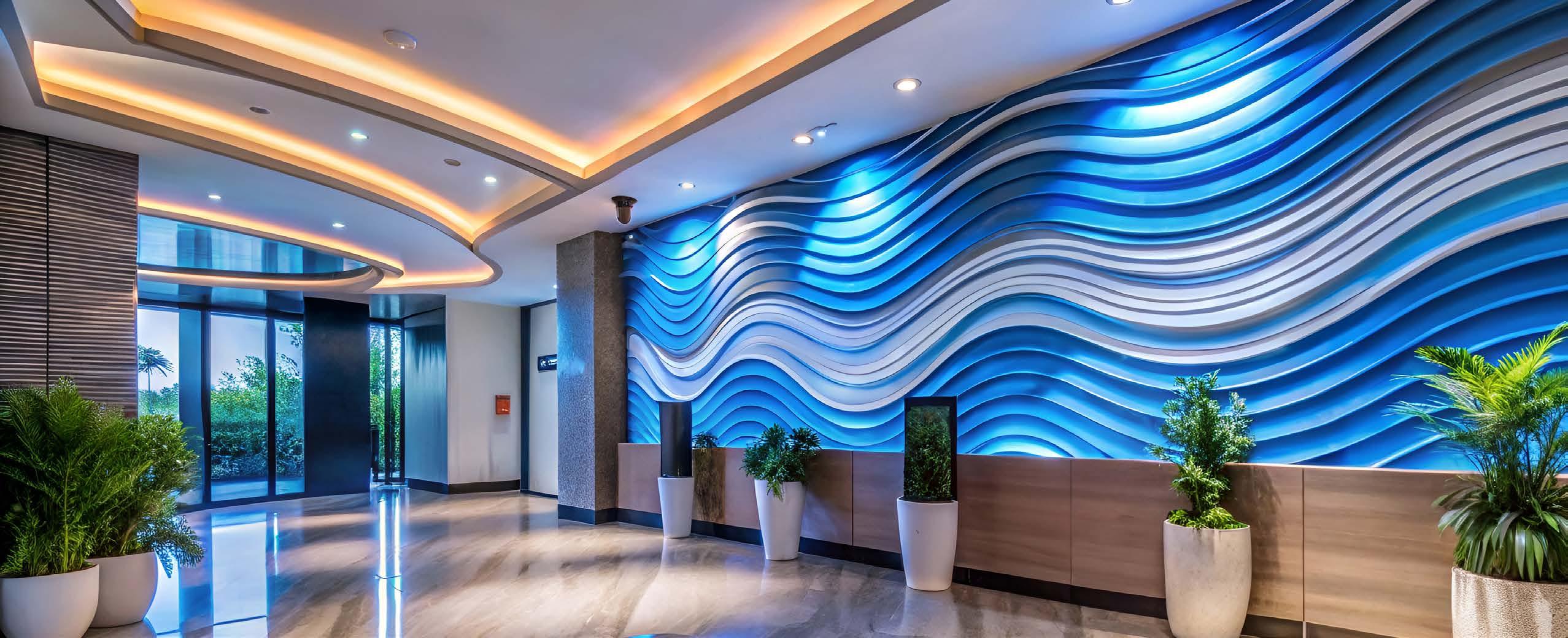
As the replacement of traditional light sources with LEDs slows with market saturation, a new market is emerging— upgrading early-generation LED installations. This shift offers opportunities to achieve higher energy savings, improve lighting quality, and add advanced controls.
With some utilities beginning to offer rebates for these projects, the trend is poised to grow.
The market for upgrading legacy systems to LED has entered the late majority phase. The installed base of LEDs already reached virtual parity with traditional lighting in the commercial sector as early as 2020. In the past five years, LED adoption continued to advance. The remaining market represents the late majority and laggards, which are more difficult to capture.
Upgrading existing LED installations offers a new opportunity. Early LED products were groundbreaking but often limited in quality, controllability, and efficiency compared to what is available today. Modern LEDs deliver better color rendering and consistency, higher efficacy, improved optical distribution, and longer life. Many also include built-in dimming and are designed for compatibility with external controls.
For owners, an LED-to-LED upgrade means improved efficiency, flexibility, and light quality, often with a faster payback when paired with utility rebates. For contractors and distributors, it provides a new opportunity to revisit early adopters and offer solutions as systems approach end-of-life.
Significant energy savings are available. The DesignLights Consortium’s (DLC) 2015 and 2020 Technical Requirements reveal performance improvements during that period. Efficacy requirements increased by 20 percent for 4-ft. TLED products, 29 percent for 2x4 troffers, and 50 percent for high-bay luminaires. Replacing older models with newer ones can deliver substantial savings, especially for facilities with long operating hours or high energy costs.
Early adopters in markets such as outdoor lighting, parking garages, downlights, high-bays, and linear systems are now prime candidates for upgrades. Products installed prior
to 2018 are especially relevant, as many are approaching end-of-life and beginning to exhibit failures such as lumen depreciation, color shift, or outright failure.
LED-to-LED upgrades are an ideal time to add lighting controls. Modern luminaires are more likely to be controlsready or equipped with integrated sensors. Options range from basic occupancy sensors to luminaire-level controls and networked systems capable of managing entire buildings or campuses. Pairing upgrades with controls maximizes energy savings, enhances comfort, and future-proofs the system. In many cases, rebate values increase significantly when controls are added.
Utility programs are beginning to recognize LED-to-LED retrofits as a new energy-saving category. In 2025, 27 programs specifically addressed these projects, representing about 6 percent of all incentive offerings. Examples include rebates for TLED-to-TLED conversions, troffer replacements, and high-bay upgrades, often with additional incentives for controls.
Size up the potential in your served markets. When assessing opportunities, key questions include:
• Was the facility’s LED upgrade completed before 2018?
• Are there signs of system degradation such as low light levels or inconsistent color?
• What are the building’s operating hours and energy costs?
• What is the wattage of the current system, and how much could be saved with replacements?
• Are rebates available to help reduce costs?
• Can lighting controls be added to maximize performance?
As first-generation LEDs reach the end of their useful life, LED-to-LED upgrades represent a growing market. These projects can deliver better lighting quality, significant energy savings, and new opportunities for controls integration, supported by a pool of rebates that is likely to expand. For building owners, contractors, and distributors alike, this opportunity is just beginning. ■
is education director for the Lighting Controls Academy.
Their Space. Their Personal Lighting Experience.
When it made the decision to relocate its Washington D.C. office, Michael Best LLC mapped out a laundry list of both critical and aspirational items it wanted to incorporate into the design of its new space. Being a firm that was growing its intellectual property book of business, it had first-hand knowledge of new and emerging technologies that could make the new space one of the most innovative, comfortable and appealing in the entire city.
LED lighting controlled by color temperature tuning capabilities was at the top of the list. What began as an item on the wish list is now one of the first commercial office environments where SpectraSync™ Color Tuning Technology from Current Control Solutions is being used.
The Location and Design
Michael Best is a full-service global law firm with clients ranging in size from small start-up ventures to global Fortune 500 companies. The firm has a long history of serving clients in the consumer and industrial products sectors. As those sectors evolve, its practice has grown to encompass a diverse range of technology and software clients.
Previously, Michael Best had lawyers based at 602 Pennsylvania Avenue, and the Strategies division operated at 801 Pennsylvania Avenue. The firm decided to consolidate operations at the new District Wharf development along the southwest waterfront.
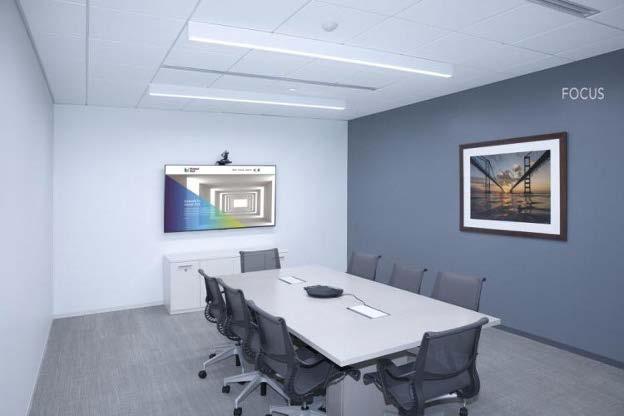
To attract and retain the best employees, Michael Best decided it would base its new office in 31,000 square feet of Class A office space at 1000 Maine, one of the first commercial office facilities built at The Wharf. Featuring impressive natural light and ten-foot floor-to-ceiling windows, the spaces within this commercial facility offer some of the best views of the city, the Potomac River and the nation’s landmarks.
Designing a Destination, Not Just an Office
In commercial environments, good design has become synonymous with talent hiring and retention. Being a design build, Michael Best realized it had a significant opportunity to incorporate many of the items from its wish list. With a keen understanding of the LED lighting marketplace, the firm decided it would integrate more than just cuttingedge luminaires into the design, adding color temperature tunability to the spec list.
After evaluating solid-state lighting products and control systems from several vendors, the general contractor, Harvey-Cleary Builders, and Michael Best selected Current Lighting as the luminaire and controls supplier. Current’s local agent, One Source Associates, was tapped to develop a tunable system that would provide employees ideal light while also meeting LEED requirements for energy efficiency.
Research shows that occupants see real value in being able to control the lighting temperature in their spaces. By strategically integrating this technology into its design, the firm understood it would then be able to add to its already impressive list of perks for current and prospective employees.
These areas were targeted to benefit substantially with the SpectraSync solution.
The SpectraSync Experience and the Human Impact
In the private offices, occupants can adjust both intensity and color temperature of the Litecontrol MOD™ 2L Surface Direct fixtures with integrated SpectraSync technology based on need or preference. NX Distributed Intelligence™
The Michael Best Law Firm Is Using Lighting To Retain and Recruit the Best Legal Minds
Tunable LED lighting elevates the firm’s Washington, D.C. lobby.
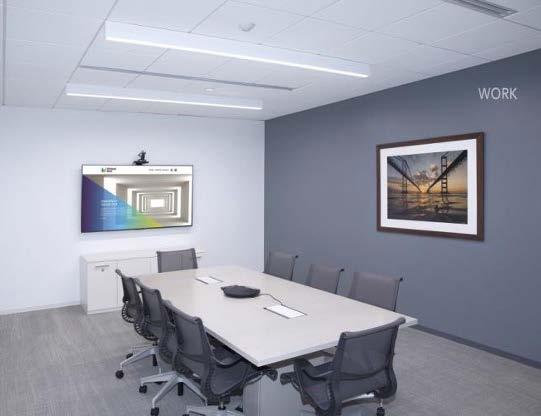
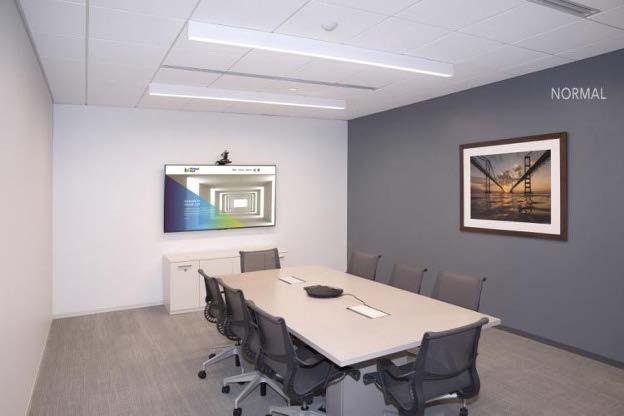
CCT Switch Stations are equipped with four presets that can be customized in the field or utilized with default programming from the factory. The presets provide the occupant with the proper color and intensity of light rather than an average light level or high CCT, without compromise to vertical illuminance.
Michael Best elected to use the following presets:
• “Focus” – 5000K
• “Work” – 4200K
• “Normal” – 3500K
• “Calm” – 2700K
Additionally, the NX Specialty Switch Station provides employees with the ability to raise and lower the brightness of the lighting, as well as turn the lights on and off in a room or designated zone. This can be used in conjunction with the color tuning wall station and operates independently from the color control, offering employees another level of dimming control they can select based on their mood, the requirements of work to be done in the space, and daylighting conditions.
Kevin Barner, managing partner of firm’s D.C. office, can set meeting spaces to cool lighting during business hours and warm lighting during a special social event. In addition to the Litecontrol MOD fixtures, Prescolite's LiteFrame family downlights and Kurt Versen’s 5″ Round Xicato are used in common areas, conference rooms and the lobby.
Employees have the ability to adjust the SpectraSyncenabled luminaires in their offices, workspaces, and conference rooms with the simple touch of a button. Employees can adjust the lighting to meet their personal preferences, enhance visibility, materials and colors or the aesthetics of the space.
Because the SpectraSync system runs on the NX Distributed
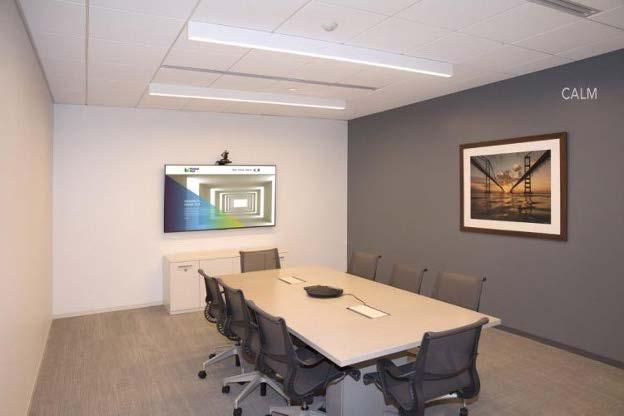
Intelligence backbone, there’s opportunity for Michael Best to tweak the system and make updates as needed.
Ongoing research is being facilitated to understand how light can affect human sleep cycles, health and productivity. The integral NX sensors allow Michael Best to automatically adjust brightness levels to account for incoming natural light. Vacancy sensors are already being used to override control of all fixtures, enhancing the project’s efficiency.
It has been proven that adjusting office lighting to simulate changes in outdoor sunlight levels, based on the time of day, can enhance worker productivity. Both daylight, courtesy of Earth’s 24-hour light–dark cycle, and electric light can drive the human circadian system, internal clocks that regulate daily behaviors and the timing of biological processes, such as the release of the hormones melatonin and cortisol, which help control blood sugar and affect energy levels.
In August 2019, the University of Oregon published a whitepaper, “The Impact of Lighting and Views in the Workplace of the Future.” The paper concludes that daylighted spaces with controlled lighting and views can improve occupant well-being, workplace productivity, and satisfaction by positively influencing various physiological and psychological processes. The researchers concluded, “Lighting and views also impact property value and employee recruitment and retention.”
However intangible, the lighting solution that supports this office is seen as an advantage for Michael Best, since happier employees are more productive and more likely to stay in an organization. Anecdotal evidence shows employees are more comfortable based on their personal preferences.
Light impacts people, and office space that is designed around the users of the space, rather than the space itself, can be a strategic asset. By getting the lighting right, it has become an environment everyone wants to spend time in. ■
“Adjusting office lighting to simulate changes in outdoor sunlight levels, based on the time of day, can enhance employee productivity. Happier employees are more productive and more likely to stay with us. Bottom line: this technology helps make people more comfortable, based on their personal preferences.”
Kevin Barner, Managing Partner, Washington D.C. Office, Michael Best
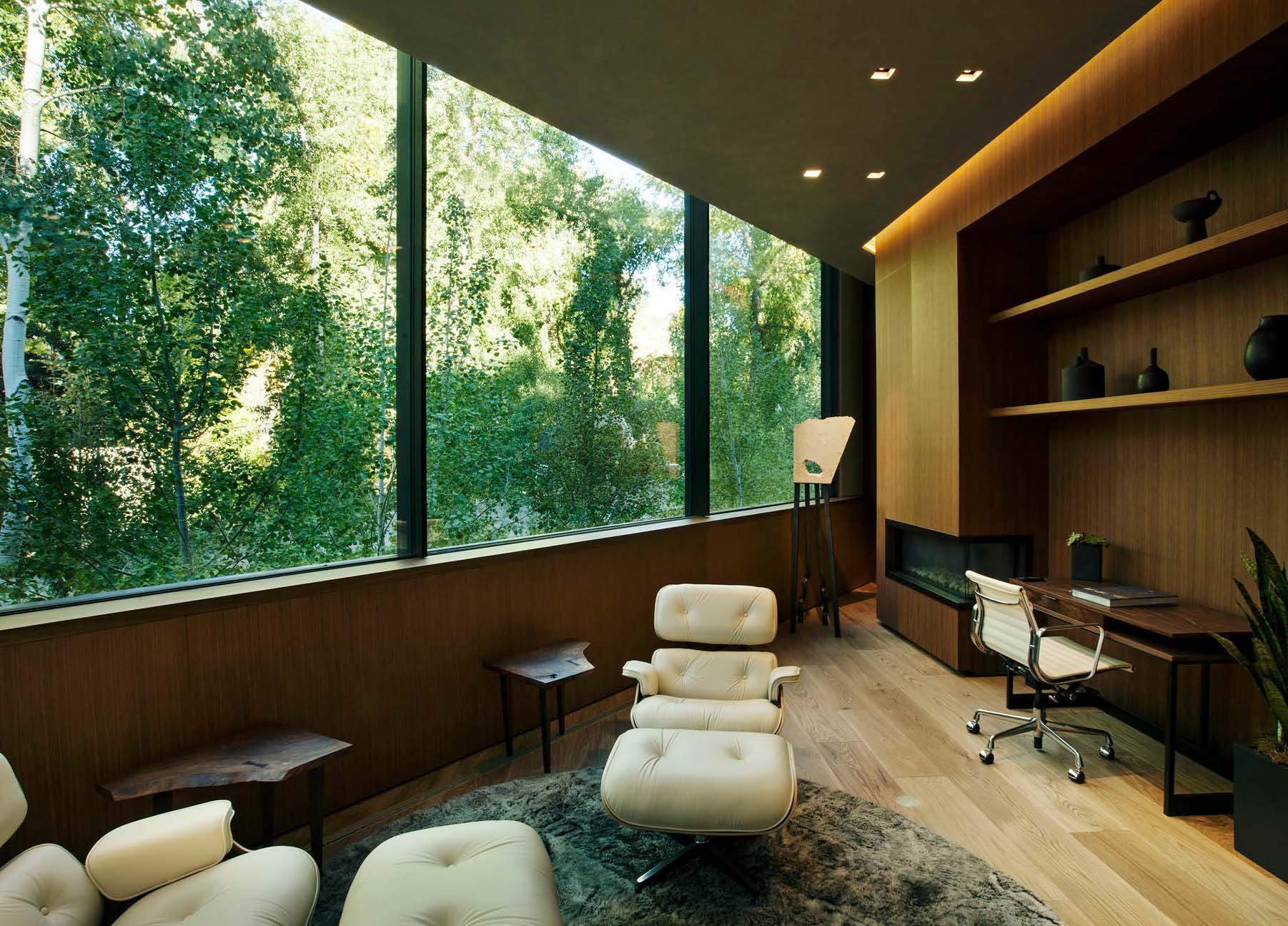
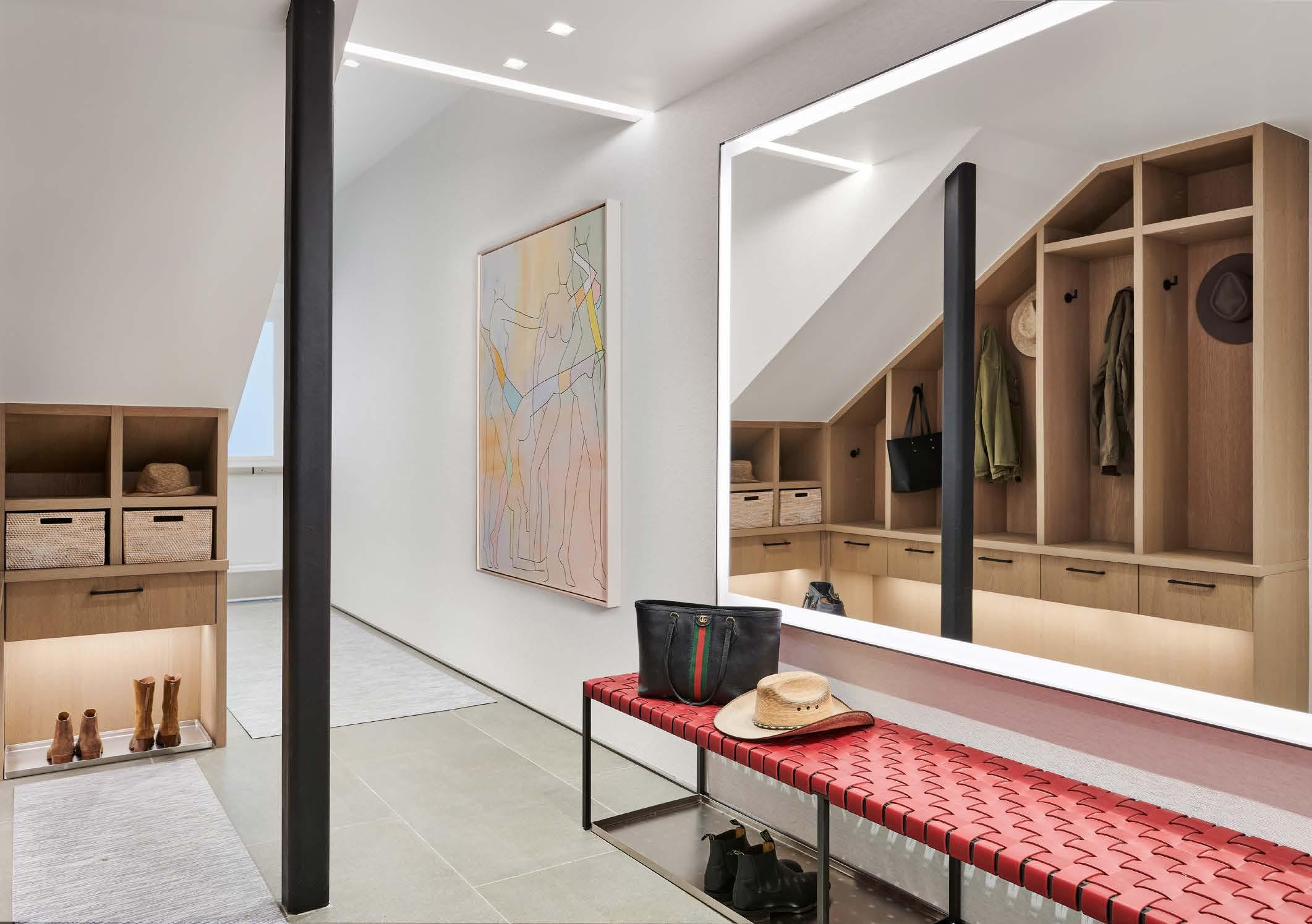
Photo credit: Derek Skalko and 1 Friday Design Derek Skalko, LLC
Photo credit: Dallas & Harris Photography
DESIGNING IN THE AGE OF DIY
How Media Has Shaped Homeowners' Views on Professional Lighting Design
By STACIE DINWIDDY, CLD, IALD, LC, LEED BD+C Associate Director, HLB Lighting, NY
With today’s unprecedented access to media and online content, a question arises: How do professional designers compete with the rise of the DIY mindset?
I studied architecture and earned my BArch, but I built my career as a lighting designer, with over a decade of handson experience managing projects and helping bring spaces to life through light. I've always been fascinated by how buildings are made, but what really excites me is how lighting transforms them. Like many homeowners, I’m constantly dreaming up ways to refresh and rework our home.
During a recent lighting upgrade, I was reminded that even with years in the industry, there are limits when you step outside your specialty.
What should have been a quick retrofit—swapping out incandescent recessed downlights for modern LED lensed lights—turned into a voided online order and two last-minute trips to Lowe’s to find the right fit. Thankfully, an experienced electrical contractor helped me navigate the structural and electrical factors I had overlooked above the original 1970s soffits.
It was a humbling reminder that knowing the product inside and out doesn’t mean you’re equipped to handle every element around it.
That experience came to mind at a recent networking event, where a contractor asked how I advocate for including a lighting designer on a residential project team. My response? “Would you want the person selecting your furniture to also engineer your foundation?”
The Influence of Media on Design Expectations
Stores like Lowe’s and Target are catnip for the modern DIYer. You walk in for a light bulb and come out ready to transform a room. It’s no surprise, given how many HGTV and Netflix shows inspire homeowners to take design matters into their own hands.
This movement isn’t entirely new. It traces back to the 1979 premiere of This Old House on PBS and HGTV’s Room by Room in the 1990s. These shows offered relatable hosts, real-world scenarios, and empowered viewers to take charge of their homes.
But what started as motivation has morphed into something
different. The rise of the “Insta-expert,” who appears credible through media presence but may lack formal training, has changed public perception of design expertise. Blogs, YouTube channels, and Instagram reels offer step-bystep guides and product links, making it feel like anyone can redesign a kitchen or install a lighting system.
And while it’s amazing that information is so accessible, the tradeoff is that it often downplays just how much knowledge, coordination, and craftsmanship are involved in quality residential design.
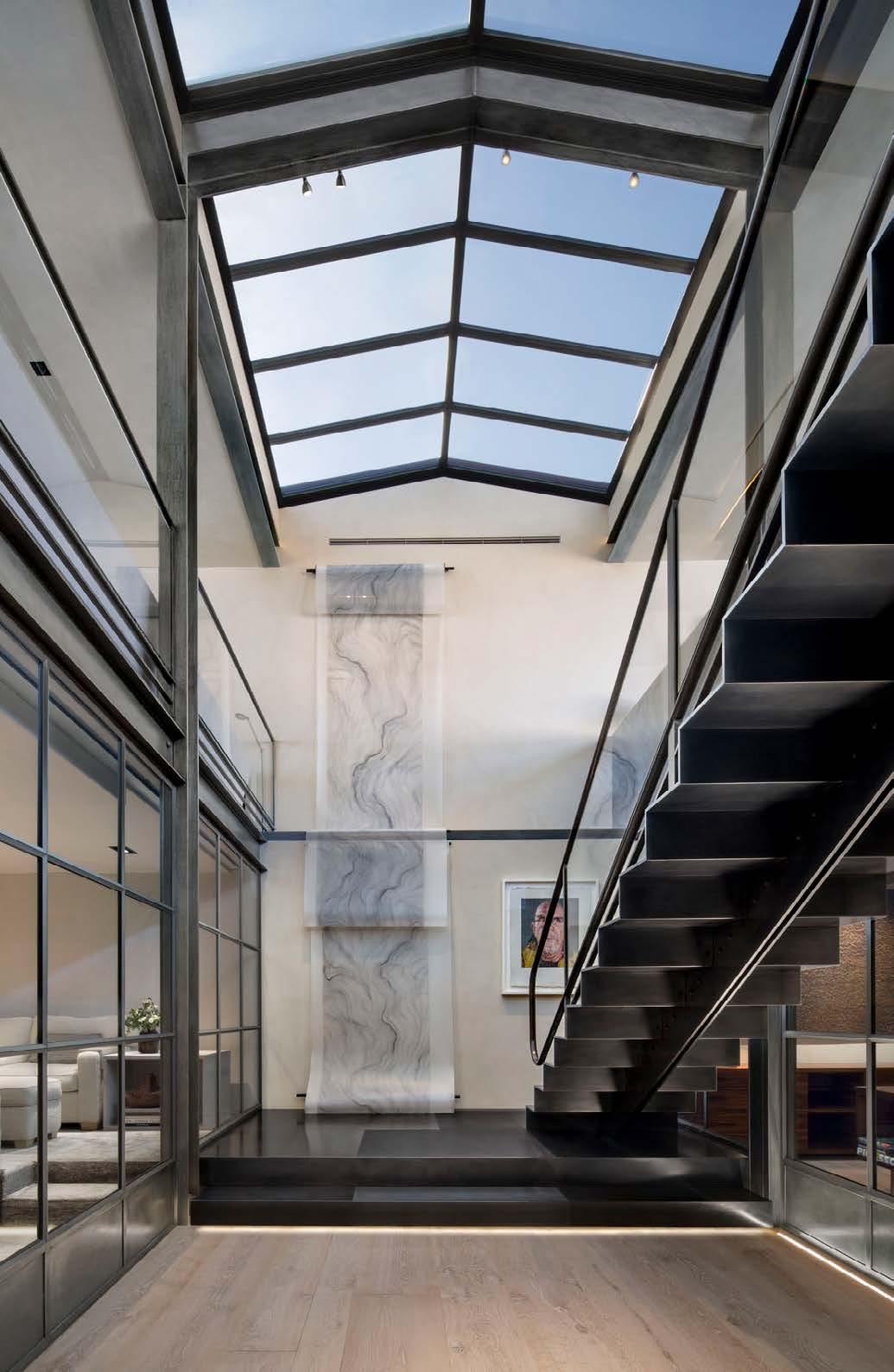
Photo credit: David Wakely Photography
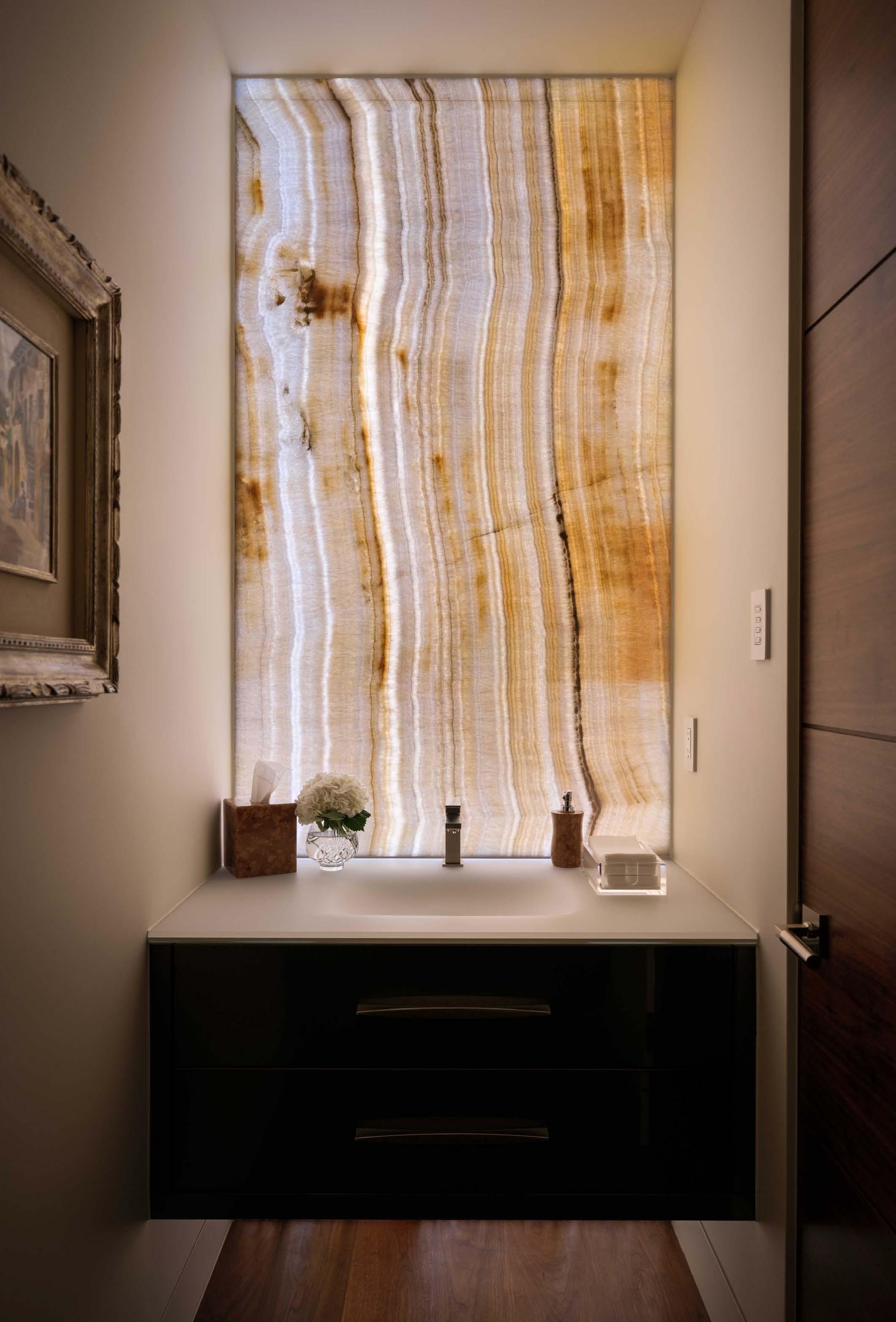
Photo credit: David Lauer Photography Inc.
The Reality Behind "Made-for-TV" Makeovers
As design media became more popular, so did the national home renovation market. Home improvement stores thrived, and professional tradespeople were brought in to execute what enthusiastic homeowners had started.
These shows often portray renovations happening in weeks. They skip over planning delays, permitting, and coordination issues that take months (sometimes years) in real life. That disconnect can put pressure on builders and designers to deliver unrealistic timelines, often with limited budgets.
Professional designers have seen the shift. Prospective clients now compare seasoned design firms to gig-based platforms where credentials are secondary to online reviews. This can result in miscommunication, lack of design cohesion, unexpected costs, and in some cases, project failure.
That’s not to say design marketplaces don’t have their place. They can work well for small-scale or cosmetic upgrades.
For more complex or integrated projects, though, the value of working with a trained, experienced design team becomes clear—in both the process and the final result.
Pandemic Shifts and the Rise of Digital Design
During the pandemic, home became everything: office, school, gym, and sanctuary. My family, like many others, had to carve out functional spaces for work and learning, all under one roof. The importance of intentional design skyrocketed.
Platforms like Pinterest and Instagram became go-to resources, not just for homeowners but for professionals, too. They enabled designers to share ideas, showcase work, and connect with clients worldwide. Inspiration boards, livestream Q&As, and even AI-generated mood boards opened new doors. But, they also raised new challenges.
Today, many professionals struggle to distinguish between real, feasible design and content created purely for clicks. The line between inspiration and imitation has blurred. AI tools, while useful, can promote concepts that are structurally or materially unrealistic, something a trained eye can quickly identify and adapt.
The digital era also shifted communication habits. Virtual meetings, for all their convenience, have made it easier for people to multitask and harder to hold focused, productive conversations. And with so many apps, messages, and platforms in play, meeting notes and decisions can easily get lost in the shuffle.
Still, this era of instant feedback and fast-moving trends has had its upside: Homeowners are more design-savvy, and project teams can evolve more quickly to meet changing tastes and needs.
So, How Do We Compete?
We don’t compete by mimicking media trends. We compete by doing what media can’t: bringing depth, originality, and professional insight to every detail.
That means using online inspiration wisely—as a starting point, not a destination.
It means leading clients with experience and empathy, helping them understand the why behind each decision.
And it means protecting the integrity of our work by staying grounded in our education, field training, and project experience.
Most importantly, we show up as collaborators. Whether a homeowner found us through a well-designed website or a quick scroll on Instagram, we’re here to help them realize their vision and bring it to life in its best light.
So, yes, we’re always happy to meet over coffee, talk ideas, and explore what’s possible. And unless we truly believe a marketplace solution better fits your project, we’re ready to bring a professional touch to your home in a way that no algorithm or episode can replicate. ■
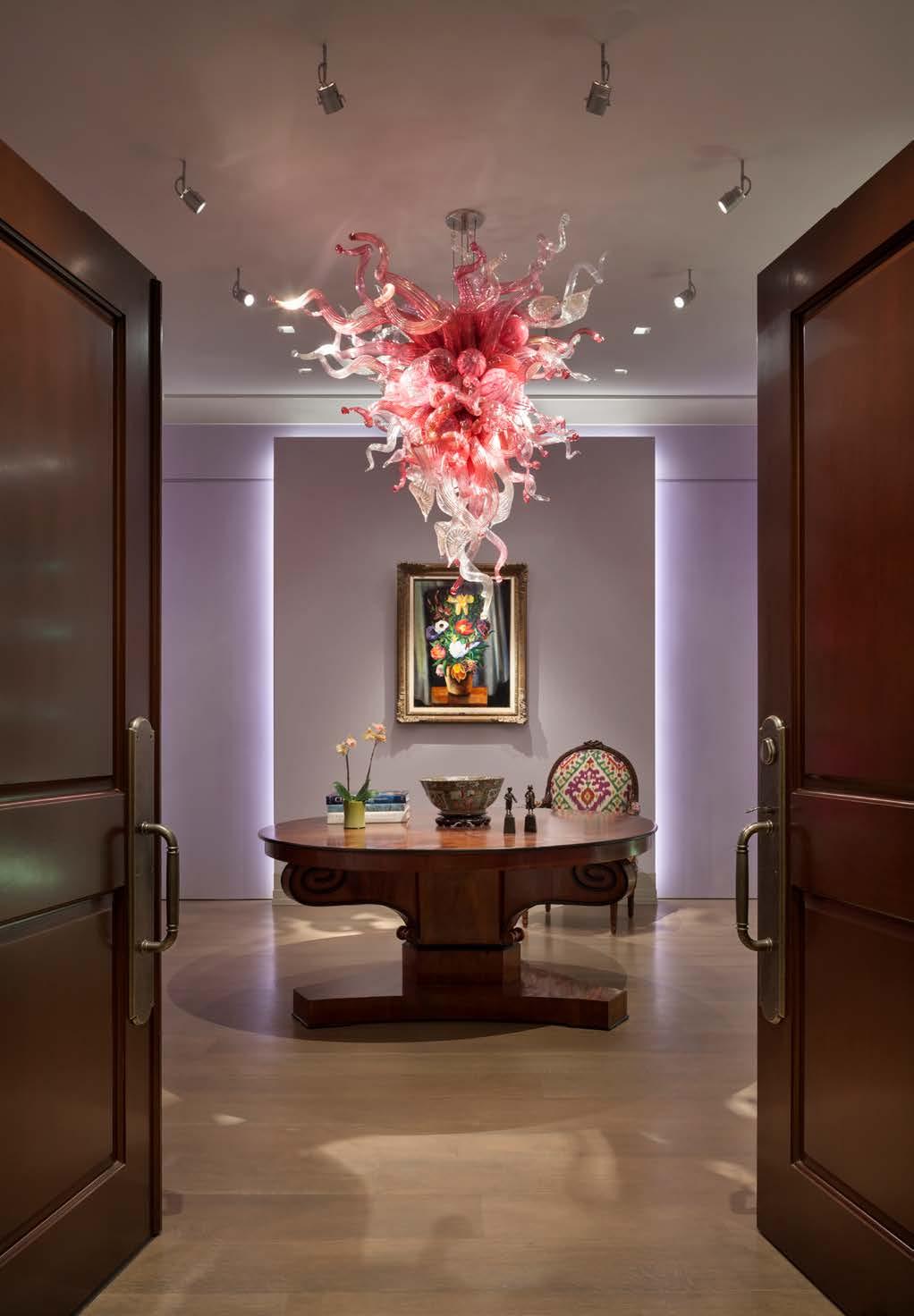
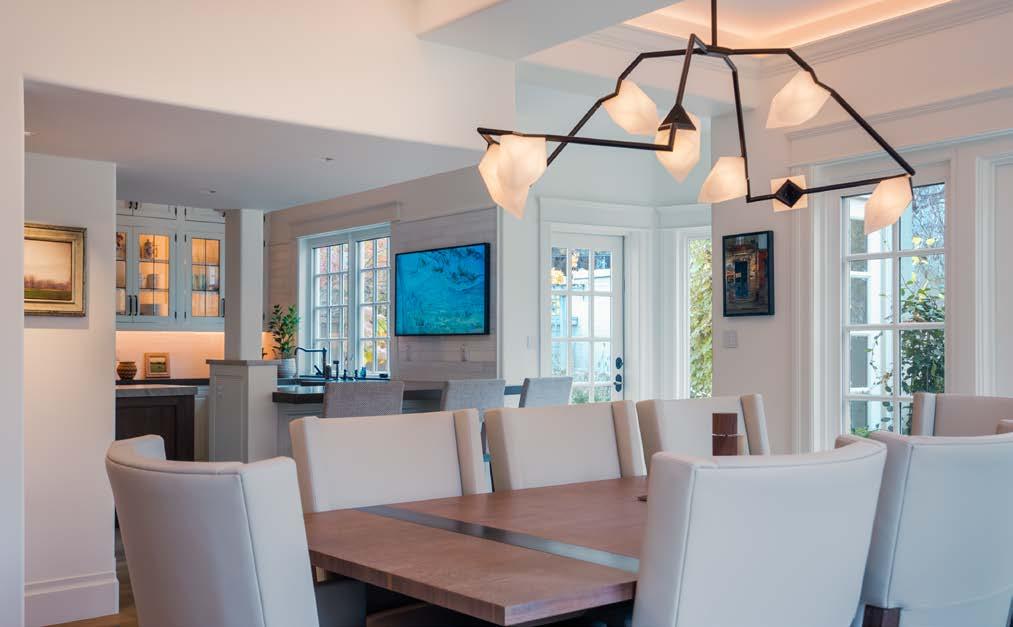
Photo credit: Raul J. Garcia Photography
Photo credit: Sam Koerbel
Lighting Reps and Education: The Importance of Learning and Teaching
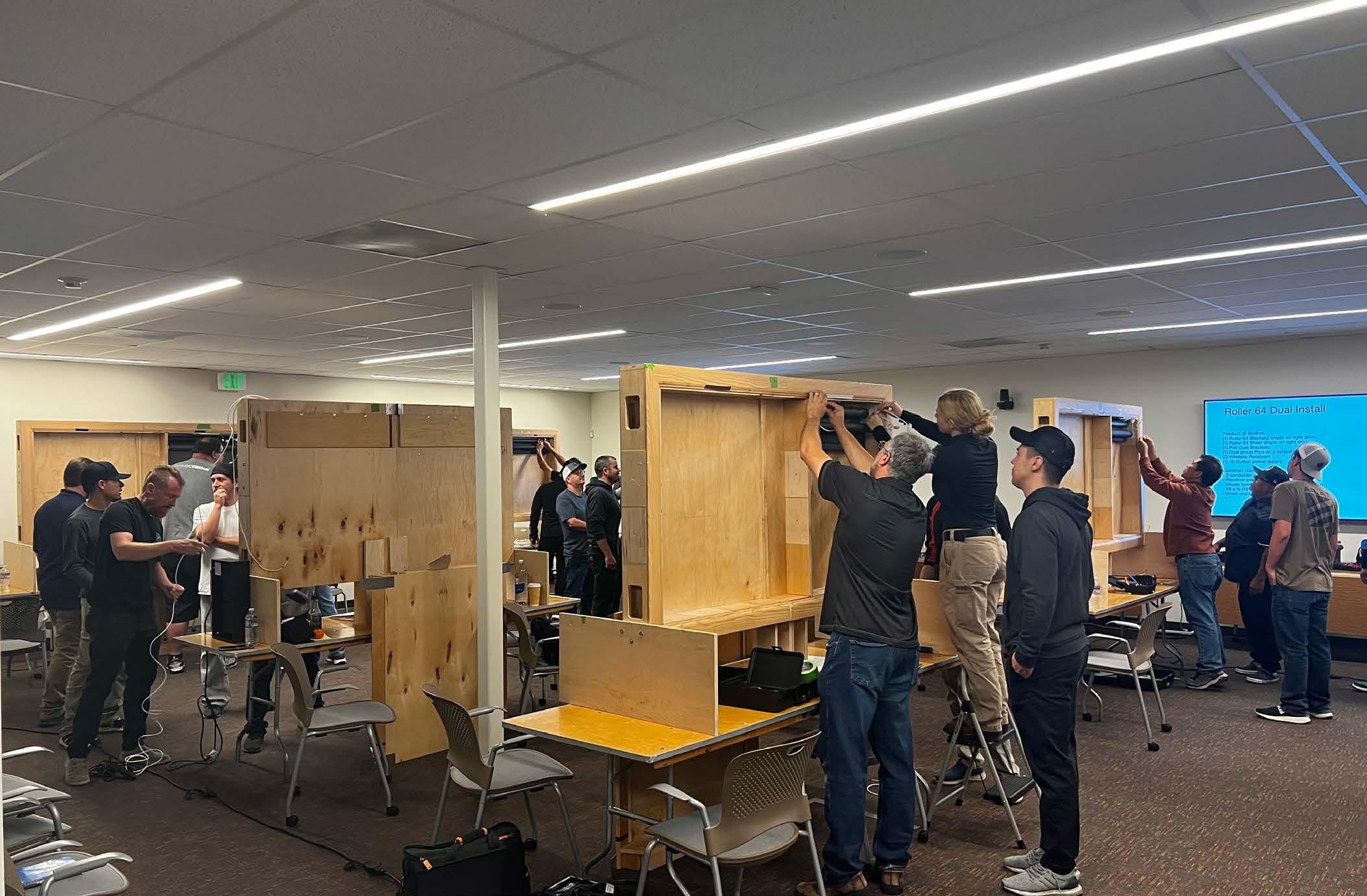
By the nature of our work, out of everyone in the lighting industry, lighting representatives touch base with the most diverse group of people.
On any given day, I interact with lighting designers, architects, owners, distributors, engineers, general and electrical contractors. This range puts the lighting rep in a unique position to offer critical education to our construction community, as well as to learn from them.
There are two important dimensions to continued education—the education we are given, and the knowledge and wisdom we ought to share with others in the industry.
To better serve our clients, we reps are constantly attending training sessions on all aspects of lighting. We take IES
courses on lighting best practices, AIA courses on materials that integrate with lighting, like acoustics, and technical courses from our controls manufacturers on code updates, emergency, and dimming.
It is also our job to stay up to date on all the technical innovations that the factories achieve with LEDs, optics, drivers and more, as well as the latest and greatest products.
With ever-changing technologies and codes, it’s important for lighting design and engineering firms to allow their designers to attend rep product presentations and trainings.
Lack of education in new product technologies, such as mounting techniques, ceiling applications, and optics, can cause costly issues on site during installations. Likewise for
By MARIEL ACEVEDO, LC
Shade installer training at ALR Oakland East Training Room
code updates: missing a code change, or the proper way to specify controls on a job to cover code updates, can lead to large change orders and big job problems.
Lighting and controls training are necessary for everyone, from an intern to a firm principal. It is important that we teach emerging professionals about how our industry works and all the different types of lights, but it is also imperative for those of us who have been doing this for decades to stay up to date on the newest changes and not just rely on incoming talent.
Our industry is ever changing and fortunate to be on the edge of technical innovations. But that requires constant learning on our part.
I teach Lighting 101 to architects as a way to introduce myself to their office. Sometimes an electrical engineering firm with a large new crop of associates will invite me to teach them this class. Yearly, I get invited to several Interior Design programs at local universities and do a longer, more advanced version of this class as a way to introduce them to lighting and its importance in the design process. I visit owners and owner’s reps and walk them through the often confusing world of lighting organigrams and why it’s important for them to be engaged with their designers.
It’s imperative that designers engage in these educational tours as well.
How often, as a designer, have you had to explain the difference between a wall wash and a wall graze? Or why your fixture needs to be 24-36” from the wall, even though that is where the HVAC duct is going? How many times have you done your lighting calculations and found they were
off because the selected finishes were not relayed to you? Or you have finished your luminaire schedule to then find out your selected light won’t fit because they changed the ceiling height or material?
These are some of the examples I give architects and interior designers during my intro class on why it’s so important to not only bring in your lighting designer early, but to keep them informed and part of the collaboration through the entire process.
With the expansion of lighting points into systems like WELL, Living Building Challenge and revisions to LEED, it is now more important than ever for us to be out there educating other designers of the implications of these requirements.
We need to explain why UGR is an imperfect metric, and why we prefer to use candela/m2, even though it’s more challenging. Owners must understand the controls required to properly administer tunable lighting for wellness, and what that actually means.
Architects will often look at sustainability in terms of the materials installed and processes used during construction. While teaching my Sustainability class, which focuses on human sustainability as well as manufacturing, maintenance, and longevity of fixtures, architects and interior designers often are surprised by the complexity of lighting.
We talk often about how much lighting is underappreciated by the other design trades. The best way to mitigate this underappreciation is to educate and instill the importance of illumination in our fellow constructors.
And let’s not forget the importance of continuing to educate ourselves— both our young professionals and our seasoned designers.
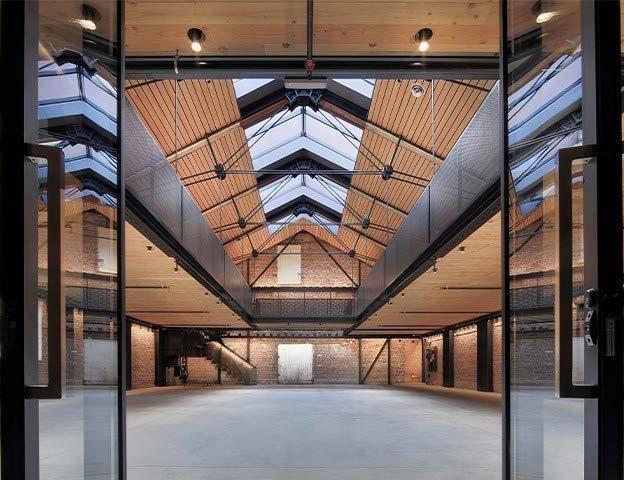
Lighting reps are uniquely positioned to carry out this mission with access to education, the local lighting designers, and the other design trades. We need to partner with allied organizations such as AIA, ASLA, IWBI, NALMCO and copresent with their members to reach a broader audience.
I encourage you all to reach out to your local lighting reps: They can help keep you and your designers updated. Through our collaboration we can increase lighting’s visibility and educate others in the construction industry. ■
Illuminating the City: Leni Schwendinger’s Vision for Urban Nightscapes
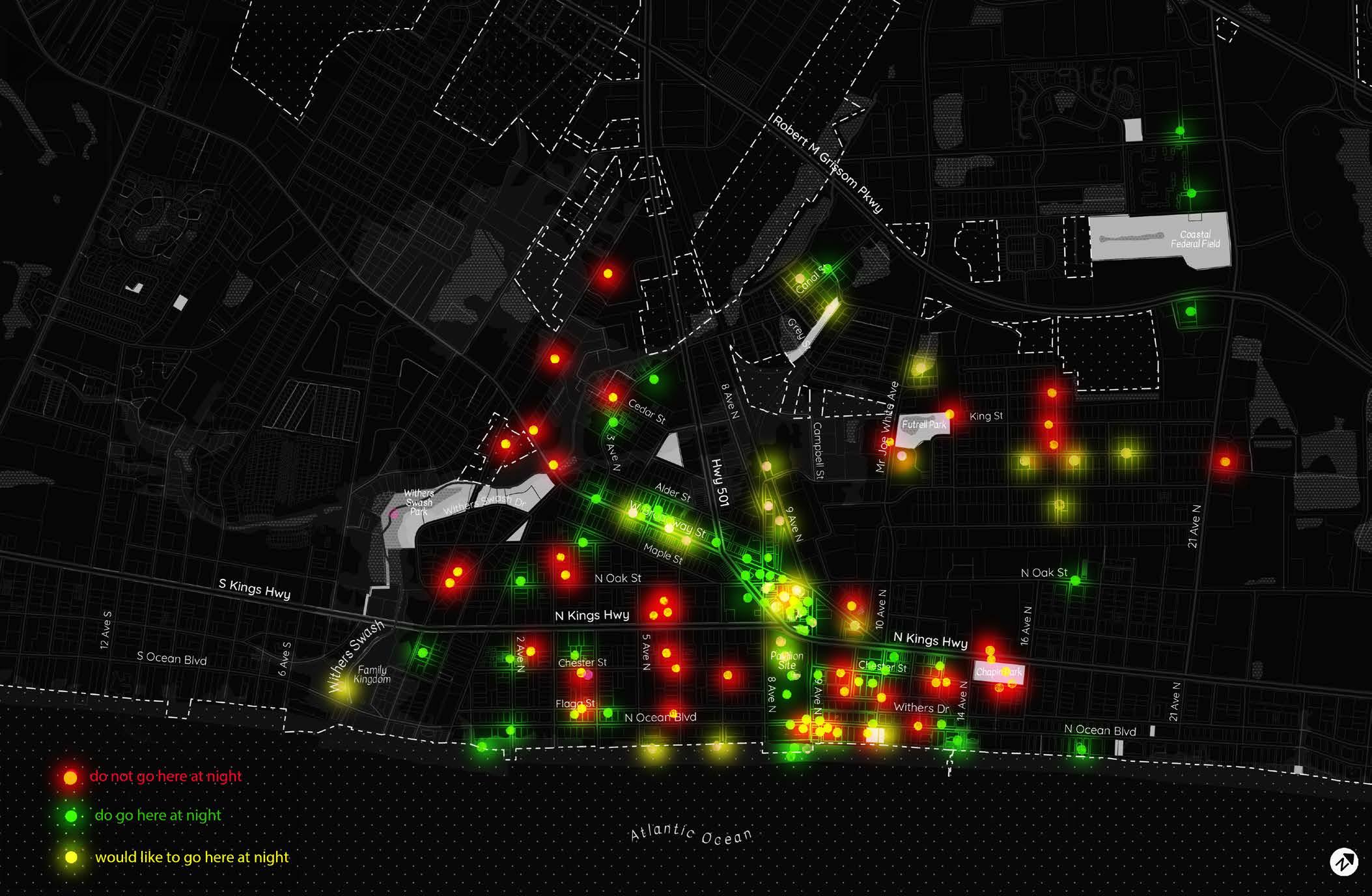
Leni Schwendinger has dedicated more than two decades to reshaping the way cities look and feel after dark. A published, award-winning authority on urban lighting, she has built an international reputation for her innovative practice of nighttime design urbanism—a discipline that brings together infrastructure, art, safety, and community engagement.
Through projects around the world, she has demonstrated how light can transform not just the appearance of a city but the way people use and experience it.
At the core of Leni’s work is her NightSeeing™, Navigate Your Luminous City program. Trademarked more than 20 years ago, NightSeeing™ is a rigorously planned nighttime walk where participants explore the city at civil twilight—when
daylight fades and the character of artificial light takes over.
These walks, which take an hour to cover what would normally be a 10-minute route, are designed to make participants acutely aware of lighting conditions, safety, and ambience. “Walking and talking is so productive,” she explained. “I point out every phenomenon, and I elicit feedback and questions from people on the walk to get them involved.”
This participatory method was central to the Myrtle Beach NightSeeing™ and Night Lighting Masterplan. The project was coordinated by the Business Improvement District of the Myrtle Beach Downtown Alliance, which sought to integrate lighting into a larger vision of housing, zoning, economic development, and public art.
RANDY REID By
A “heat map” of downtown Myrtle Beach illustrating community feedback on nighttime locales.
Photo credit: Emily Dufner
Leni and her team worked with residents, businesses, and utility providers to develop recommendations for safer and more engaging nights. Although adoption of the plan depends on municipal decision-makers, it has already raised awareness and spurred smaller projects and peer reviews.
“One of the differences between lighting design as we’ve known it and urban lighting design is the client,” she said. “If the client is the city or a public-private partnership, the timelines are longer, the approvals are more difficult, and there’s a lot of convincing and teaching.”
In New York, her collaboration with the Department of Transportation produced the Sunset Park “Elevated” Underpass Pilot. This project explored how to transform neglected and often intimidating spaces under elevated highways.
The pilot used striking white light to replace sodium fixtures, incorporated the angled bridge columns, canted posts and curving beams, and even tested horticultural lighting to see if greenery could thrive under the structure. The planting experiment was not successful due to maintenance challenges, but Leni views that as part of the process: “Here we are, lighting designers as scientific investigators—lessons learned. Welcome to the real world.”
Her artistic sensibility is also evident in Dreaming in Color, a public art commission that transformed light into a storytelling medium, and in the Queens Garage and Community Space project, which elevated a utilitarian structure into a safer, more welcoming public amenity. These projects demonstrate her ability to balance technical function with poetic impact—a theme she often expresses as “replacing fear with poetry.”
On the West Coast, the North Embarcadero Vision Plan in San Diego showcases the role of lighting in shaping civic identity. Leni designed custom spiral poles, 30 feet tall, that cast light both upward into palm fronds and downward onto the street. Initially, she doubted the radical design would be approved, but the community embraced it. Since domestic manufacturers declined to produce the poles, they were fabricated in Poland and shipped to California.
Installed along the waterfront, the poles have since become recognizable features of the district. “The city wanted something that would speak of identity,” she recalled. “And if you ask people who know the Embarcadero, they will recall these poles.”
Beyond her projects, Leni plays a significant role in advancing urban lighting as a discipline. She draws careful distinctions between outdoor, public, and urban lighting, arguing that the latter reflects a holistic understanding of city life: people, sidewalks, storefronts, and
cultural behaviors all shaped by illumination. “Urban lighting encompasses the bigger picture of how citizens can get around at night without fear,” she explained.
Her influence extends internationally through LUCI—Lighting Urban Community International—where she serves as U.S. Ambassador. LUCI is a global network of cities and lighting professionals promoting sustainable urban development through light. With members across Europe, Asia, Africa, and the Middle East, LUCI fosters what she calls a “crosspollination of ideas and outlooks.”
American cities have been slower to join, but she believes that light festivals and public art projects are helping shift perspectives, bringing the U.S. closer to valuing light as a civic and cultural tool.
Leni also maintains ties to academia and policy. She was a visiting Research Fellow at the London School of Economics, where she works with boroughs to audit nighttime conditions and recommend strategies. In New York, as a Design Trust for Public Space Fellow, she continues to influence planning and policy, ensuring that lighting is not an afterthought but an integral part of urban design.
Her commitment to research extends to exploring the links between lighting and safety. She notes that while studies are inconclusive, what often matters most is whether a community shows visible signs of care—well-maintained sidewalks, upright poles, and clean façades—rather than simply the brightness of the lighting.
Through all of this, Leni demonstrates that urban lighting is both art and infrastructure. It is about creating identity, safety, and delight in the darkened hours of the city. From Myrtle Beach to San Diego, from New York to London, her work continues to prove that when the sun sets, cities don’t have to go dark.
With thoughtful design, they can shine. ■
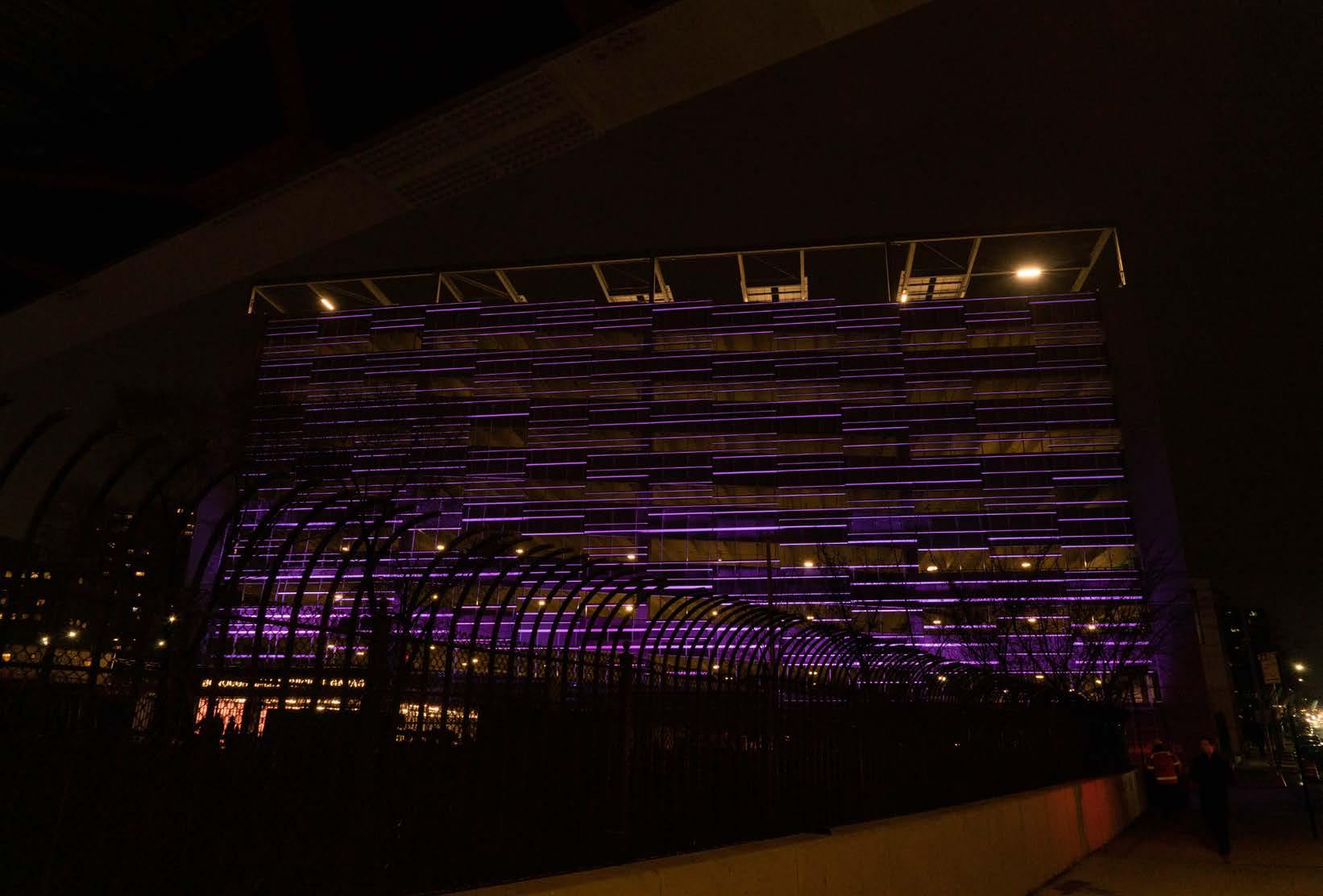
This concrete parking garage is clad with Triangular fins designed by Marvel, illuminated to create iridescent waves. Leni Schwendinger Light Projects, Lighting Design; Urbahn Architects; Hunter Roberts, Contractor. Photo credit: Mikaela Baird
In an Unpredictable Economy, Standardized Lighting Controls Are Your Safest Bet
By JEREMY LUDYJAN
In April at LightFair, many attendees noticed an unusual number of empty booths. A range of overseas lighting manufacturers from various countries had decided not to exhibit. The backdrop was likely uncertainty around potential U.S. tariffs, some threatened to reach as high as 145%, that created too much risk for companies already in or considering the U.S. market.
While the specifics may change, the pattern is familiar. The lighting industry is increasingly shaped by forces outside its control: tariffs, inflation, pandemic aftershocks, shipping delays, labor costs, and geopolitical uncertainty.
Together, these forces create a market where stability is scarce. For component makers, luminaire manufacturers, specifiers, building owners, and facility managers, this volatility complicates decision-making and raises the stakes for every investment in lighting systems.
So, how do you plan in an era when the rules keep changing?
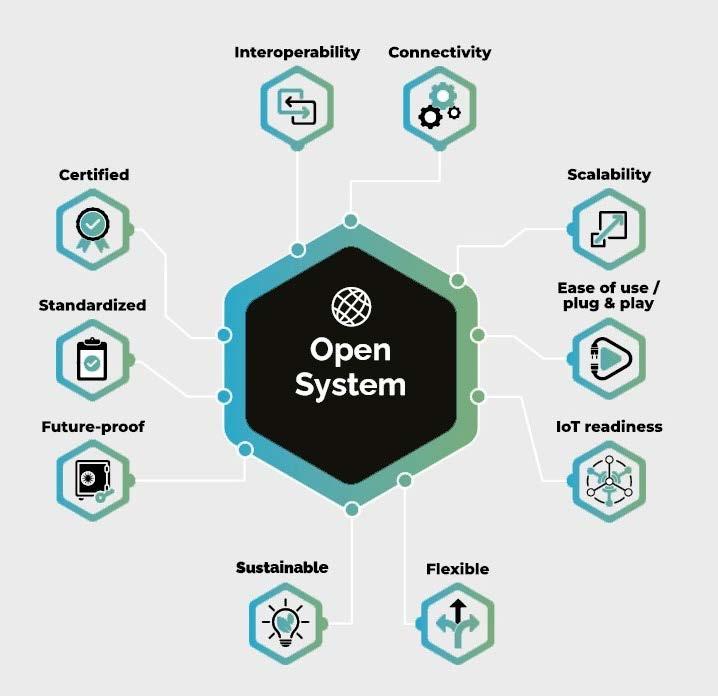
The answer is not to chase the lowest bidder or double down on one supplier. It is about building resilience into systems from the start. Standardized, interoperable digital lighting controls, systems like DALI and other open standards, provide a clear path forward.
A Market Defined by Volatility
The LightFair pullout is just one example of a larger trend. Over the past several years, the lighting industry has been hit from multiple directions.
It started with tariffs. In 2018, steep U.S. duties on many Chinese goods, including lighting components, reshaped costs almost overnight. Manufacturers scrambled, shifting production to Vietnam and other parts of Southeast Asia, while some leaned into Mexico as a near-shoring option. At LightFair this year, exhibitors even highlighted new manufacturing locations on booth signage to reassure buyers.
In 2020 came the pandemic. Global supply chains ground to a halt as factories closed, ports backed up, and containers became scarce. Projects stalled, not because of design issues, but because product could not move.
As the world reopened, material costs climbed, freight charges spiked, and labor shortages added pressure.
More recently, the industry has faced renewed tariff threats, with some rates proposed at well over 100%.
The Limits of Proprietary Systems
This volatility exposes the risks of proprietary ecosystems. Many lighting projects are still built around single-vendor systems where fixtures, drivers, and controls are locked together.
On paper, it looks neat and simple. In practice, it leaves stakeholders vulnerable.
Relying on a single vendor is always a risk, no matter how established that manufacturer may seem. Economic pressures often drive companies to phase out aging product lines. In a proprietary system, once a product is discontinued, there is no alternative source for compatible components, leaving projects stranded.
Open, standardized systems minimize that risk by allowing multiple manufacturers to support the same functions.
Proprietary systems also magnify the risks tied to component availability. Many luminaire manufacturers depend on a small pool of suppliers for critical drivers, sensors, or chips. When a component maker decides not to sell into the U.S. market, because of tariffs, compliance hurdles, or uncertainty, entire product lines can be at risk. In a proprietary ecosystem, projects are stuck until that supplier resumes shipments.
Open, standardized systems offer a different path. By ensuring interoperability across brands, they give manufacturers, specifiers, and building owners the ability to pivot. If one supplier exits or is delayed, another certified product can take its place. That flexibility is what keeps projects moving even when supply chains do not.
Why Open Standards Matter
Open standards—whether DALI, BACnet, DMX, or others—are designed to provide interoperability across manufacturers. Instead of being tied to a single supplier’s ecosystem, specifiers and facility teams can mix and match components from different brands, confident they will communicate using a common protocol.
The benefits are straightforward. Fixtures, drivers, sensors, and controllers from multiple vendors can be integrated into one system. That means projects are not tied to the fortunes of a single vendor. And it means replacements and upgrades remain available well into the future.
Modern open protocols have also evolved to support advanced features. In lighting, today’s systems support tunable white, color control, integrated sensors, energy monitoring, and asset data reporting. Standards continue to expand to meet the needs of smart buildings and IoT integration.
In practical terms, an open-standard control backbone installed today will support both current needs and tomorrow’s innovations.
Benefits Across the Value Chain
The advantages of open standards extend across the industry:
• Component manufacturers can continue serving the market without forcing customers into one channel, giving them flexibility when regional rules shift.
• Luminaire manufacturers who integrate open protocols into their products can reach a broader market, not just customers tied to one ecosystem.
• Specifiers and designers can plan with confidence, knowing that alternative suppliers will be available if disruptions hit.
• Building owners and facility managers protect their long-term investment, ensuring that upgrades or retrofits can be accomplished without tearing out the backbone.
In short, open standards give every stakeholder something they need most in today’s climate: options.
Designing for Uncertainty
Lighting systems are long-lived assets. While fixtures may last a decade or more, the building itself is expected to serve for many decades, and the lighting control backbone should be expected to last the life of the building, supporting retrofits, expansions, and new features.
Today’s proprietary systems are tied to short product lifecycles. Open, standardized controls provide the continuity needed to bridge that gap. DALI, for example, has supported buildings worldwide for more than 30 years without requiring rewiring or wholesale system replacements. The backbone remains, while products and functions evolve around it.
In the past, the main concern was whether a system could keep up with advancing technology. Now the bigger concern is whether it can adapt to unpredictable economic shifts. Standardized, interoperable controls provide a vendorneutral foundation that allows a system to evolve gracefully, regardless of market turbulence.
They are not just about interoperability today; they are about ensuring flexibility tomorrow.
When specifiers, owners, and manufacturers choose open systems, they are investing in resilience.
Plan Ahead, Future-Proof, Specify Open
The empty booths at LightFair were a reminder of how quickly circumstances can change. Tariffs, inflation, supply chain shocks, and political uncertainty are not anomalies anymore—they’re the environment we live in.
The right response is resilience: avoiding lock-in, keeping sourcing options open, and choosing technologies that last. Open standards deliver exactly that. Systems like DALI, along with other open protocols, ensure flexibility, vendor choice, and long-term stability.
Turbulence will continue, but your lighting systems don’t have to suffer. Plan ahead. Future-proof. Specify open. ■
The Powers of Nature: Illuminating the Universe at NYCxDESIGN 2026
By RANDY REID
In May 2026, Battery Park in Lower Manhattan will host a landmark public art installation that blends science, light, and culture in ways never seen before. Titled The Powers of Nature, the project is the vision of Dr. Sandra Piesik— an artist, architect, and scientist—who seeks to connect audiences with the first light of the universe through design and lighting. This extraordinary installation will debut during NYCxDESIGN 2026, New York City’s official design festival, led by CEO and Executive Director Ilene Shaw.
Light as the Storyteller
At the heart of The Powers of Nature is light—both as physical energy and as a metaphor for human knowledge. Visitors to Battery Park will encounter a 60-foot-long steel installation set in the Woodlands area of the park. The structure will be more than a striking piece of public art: it will reveal patterns of the first light of the universe, generated moments after the Big Bang.
Photo Credit: Mr. Jim Price, Ms. Warrie Price, Founder and President, The Battery Conservancy, and Dr. Sandra Piesik @ Abbi Jackson
The Powers of Nature and The Beginning of Light initiative team was brought together at the Explorers Club, New York, event on June 27th @ Abbi Jackson
Dr. Piesik explains, “Through steel and carefully designed arrangements, the installation will make visible the earliest patterns of cosmic microwave background radiation. These are the fingerprints of light that still exist today and that science has allowed us to see from Earth and satellites.” The project transforms abstract astrophysical data into a tangible, aesthetic experience—an act of translation where light becomes a universal language.
The installation will be free and open to the public from 14 May to 1 November 2026, offering both daytime and nighttime encounters. While the structure itself embodies light through its steel forms, Dr. Piesik and her team are inviting lighting partners to illuminate the work after dark. This collaboration opens opportunities for companies like Signify and Acuity to showcase how contemporary lighting technology can merge with public art and science.
A Festival of Design and Discovery
Ilene Shaw, who has steered NYCxDESIGN as CEO and Executive Director, has emphasized the festival’s mission: to elevate New York as a center of design excellence and to foster community, collaboration, and cultural impact. The Powers of Nature embodies these values by uniting art, science, and technology in a civic space.
The project’s timing is deliberate. NYCxDESIGN is one of the world’s premier design events, drawing more than 300,000 attendees annually, including architects, designers, manufacturers, and cultural leaders. The festival celebrates every discipline of design, from interiors and fashion to lighting and technology. By anchoring The Powers of Nature within this international platform, the installation ensures visibility to a global audience while highlighting the critical role of lighting in shaping urban experiences.
Science Meets Art
Opening day at Battery Park will bring together an extraordinary roster of scientific voices. Nobel Prize Laureates Dr. Robert Woodrow Wilson (Physics, 1978) and Dr. John Cromwell Mather of NASA (Physics, 2006) will attend, joined by other leading astrophysicists. Dr. Wilson is renowned for his discovery of cosmic microwave background radiation—the very “first light” that inspires the project. Dr. Mather led the COBE satellite team, which provided definitive measurements of that radiation and reshaped our understanding of the universe.
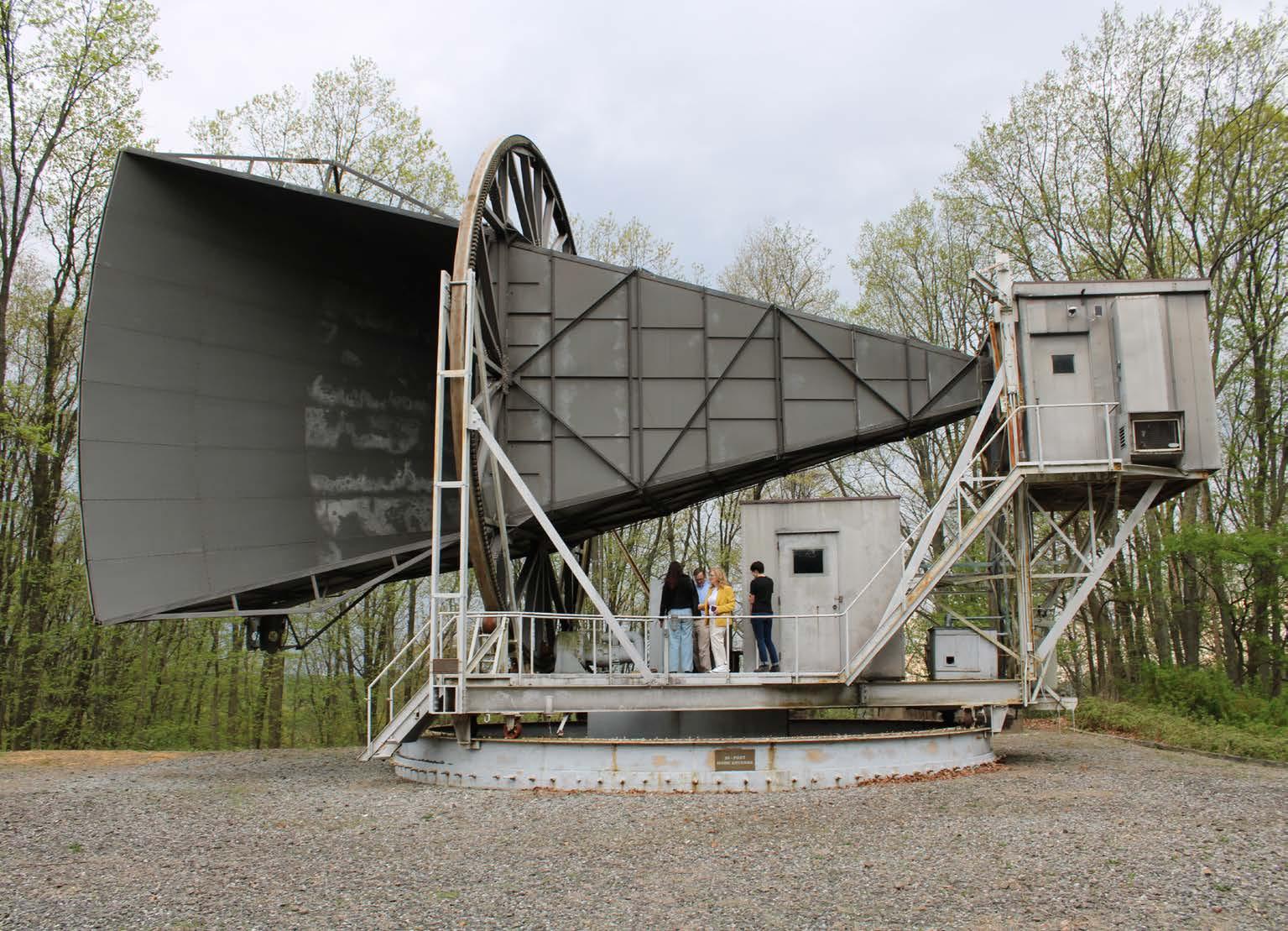
Their presence underscores the scientific gravity behind the art. Podcasts and QR-linked audio guides will allow visitors to hear directly from these luminaries, blending rigorous science with public engagement. As Dr. Piesik notes, “This is not only a sculpture but a cultural landmark, one that connects people with discovery itself.”
Collaboration and Legacy
The project is supported by a network of partners, including the Carnegie Institution for Science, which adds credibility and resources to the initiative. U.S. Steel is contributing materials for the sculpture,
Dr. Robert Woodrow Wilson, 1978 Nobel Prize Laureate in Physics, for the discovery of the Cosmic Microwave Background Radiation, together with Dr. Arno Penzias.
linking the built environment of New York—from the Empire State Building to the United Nations headquarters—to this new symbol of scientific and artistic collaboration.
The sculpture will be brought to life by Milgo Bufkin, a renowned Brooklyn-based steel fabricator with over a century of expertise in transforming steel into extraordinary works of art. Their legacy of precision, innovation, and collaboration with world-class artists ensures that the piece will embody both technical excellence and artistic vision.
Dr. Piesik envisions the project as more than a one-time installation. The Powers of Nature is the opening chapter in a broader initiative to explore multiple scales of the universe—from the vastness of cosmic structures to the intricacies of atomic matter—through the spectrum of light. “Different wavelengths allow us to see different aspects of nature,” she explains. “Microwave light reveals galaxies, x-rays show us the human body. This installation begins with the visible universe, but future projects will explore other scales.”
Engaging Millions
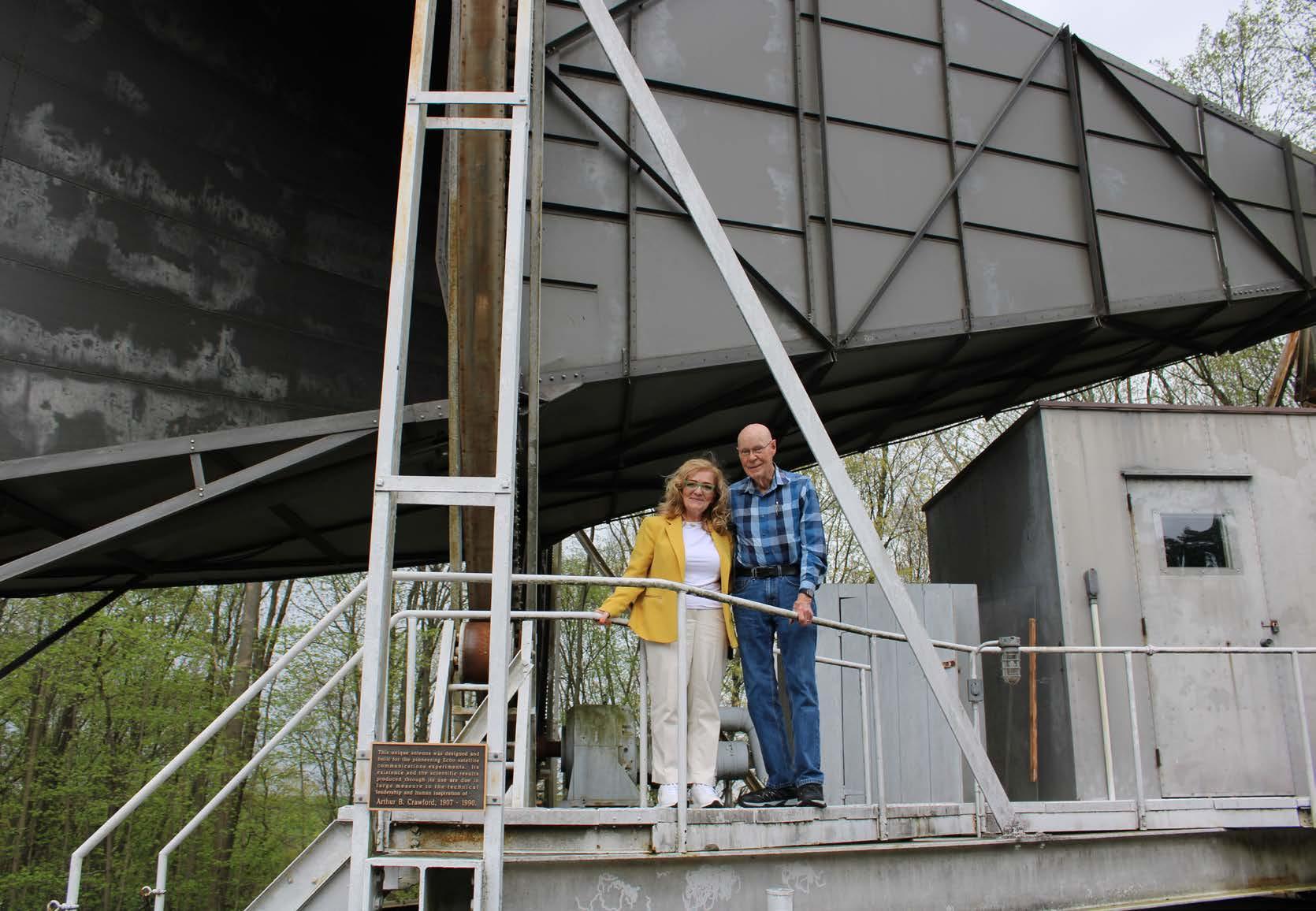
immense: from casual encounters by tourists to educational programs that bring students face-to-face with science and design.
STEM education is central to the project’s mission. By linking light, discovery, and creativity, The Powers of Nature encourages younger generations to see science not as abstract theory but as a lived, visible experience. In this way, the installation contributes not only to cultural enrichment but also to science education and civic identity.
Battery Park is one of New York’s most visited public spaces, with more than 40 million people passing through annually on their way to the Statue of Liberty and Ellis Island. Dr. Piesik estimates that as many as 22 million people will see the installation during its six-month residency. The opportunity for public engagement is
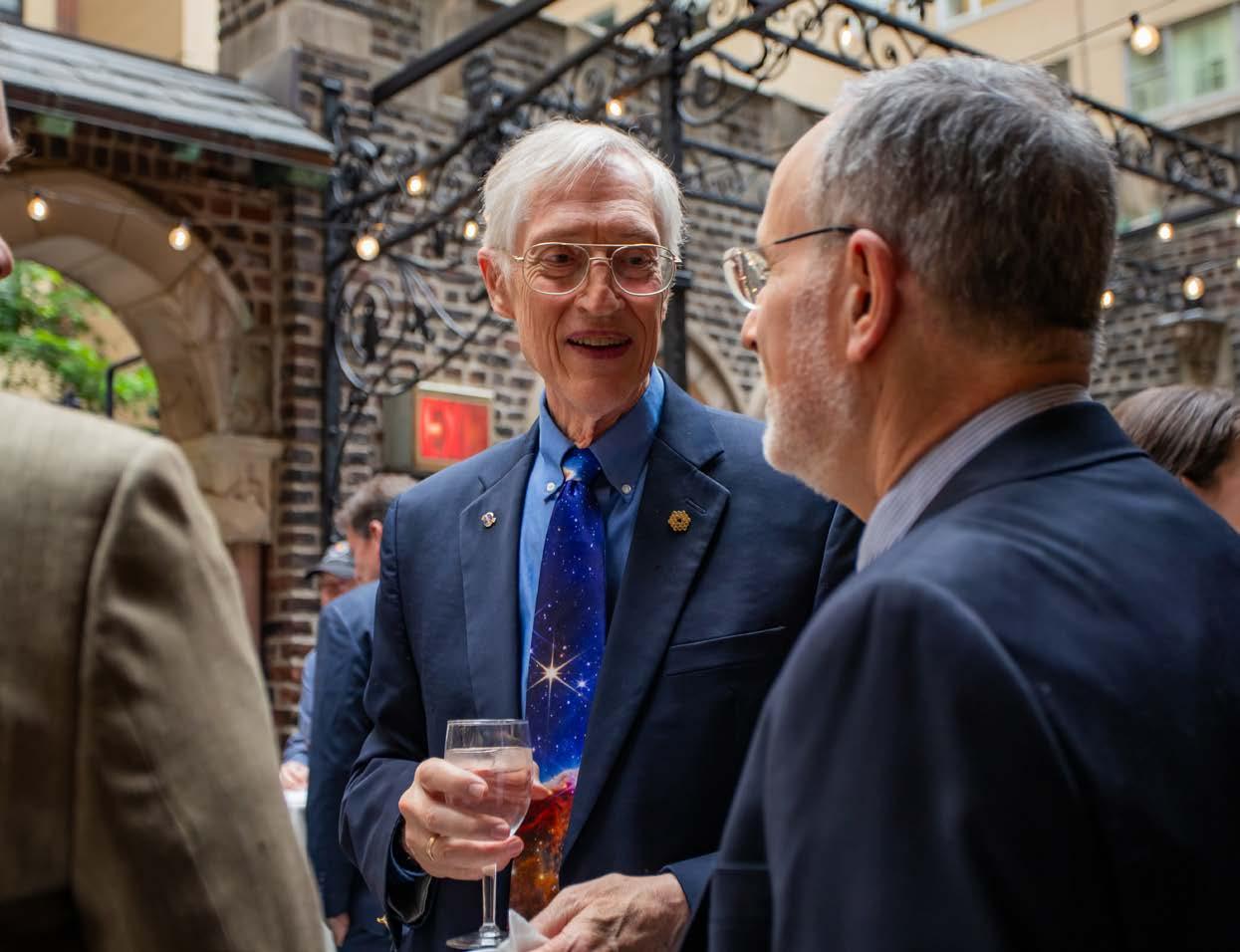
Why Lighting Matters
For the lighting community, the project is a reminder of the profound role light plays in shaping human perception. It is not simply about visibility or efficiency but about meaning
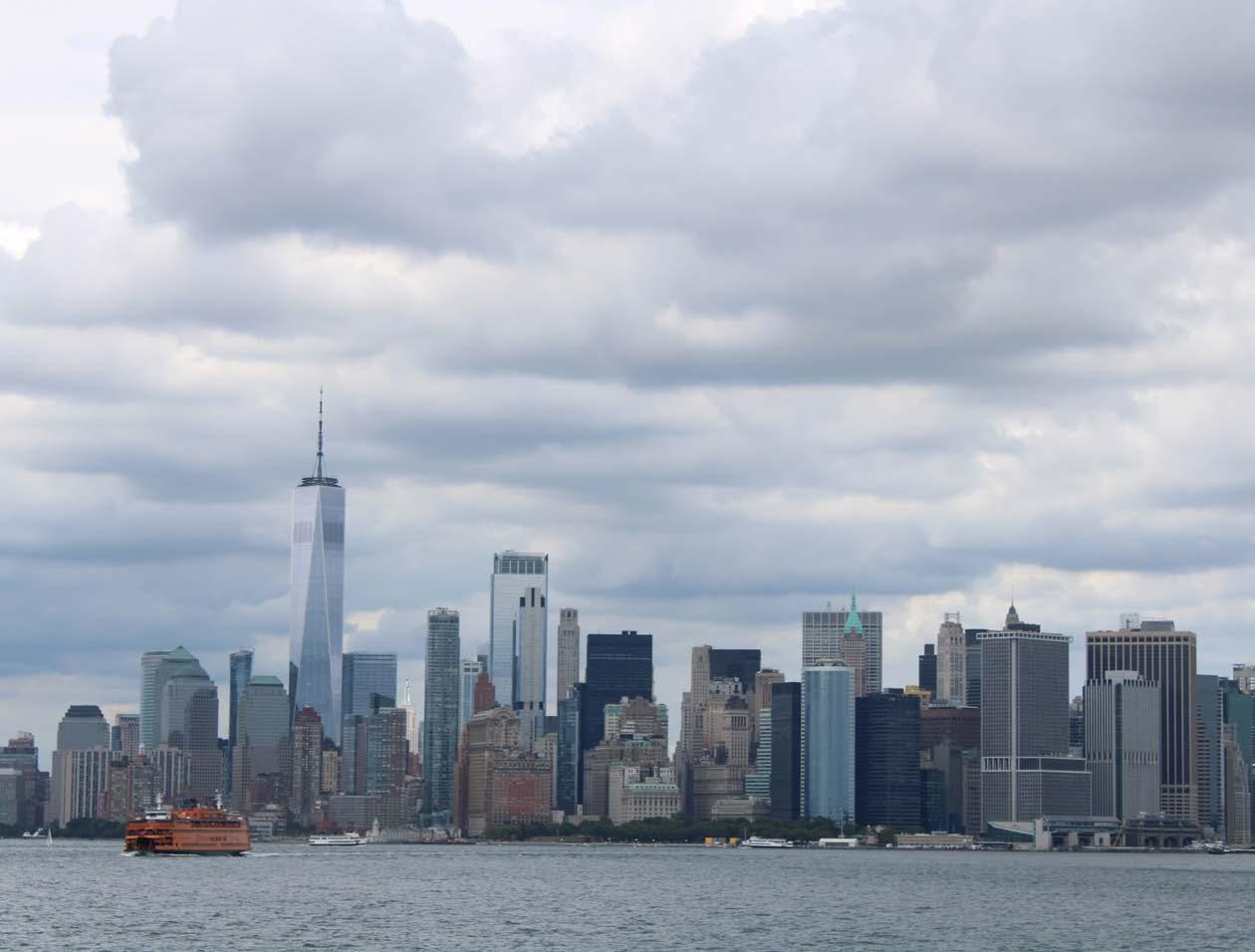
Dr. Robert Woodrow Wilson and Dr Sandra Piesik at the Holmdel Horn Antenna in New Jersey — the site of the Nobel Prize–winning 1964 discovery of the Cosmic Microwave Background Radiation.
The Beginning of Light event center Dr. John Cromwell Mather, Nobel Prize Laureate in Physics 2006 and right Dr. Charles L. Bennett Bloomberg Distinguished Professor and Alumni Centennial Professor of Physics and Astronomy at Johns Hopkins University
Abbi Jackson
Sandra Piesik
and connection. As Dr. Piesik reflects, “Light was the first energy of the universe. It is a symbol of knowledge and inspiration. By working with light, we are connecting people to nature, to discovery, and to each other.”
The installation will demonstrate how lighting design can translate the unseen into the seen, the cosmic into the human. It challenges manufacturers, designers, and technologists to consider how their innovations might serve not only practical needs but also cultural, scientific, and emotional ones.
Looking Ahead
As 2026 approaches, The Powers of Nature is gathering momentum. Press materials, digital content, and a
forthcoming Google Arts & Culture platform will broaden its reach beyond New York.
Ultimately, The Powers of Nature embodies the spirit of NYCxDESIGN itself: bold, interdisciplinary, and transformative. With support from institutions like Carnegie Science, U.S. Steel, Milgo Bufkin, leadership from Ilene Shaw, and the presence of Nobel Prize–winning scientists, the installation promises to be a milestone not only in public art but also in the story of light.
In May 2026, visitors to Battery Park will see more than a sculpture. They will encounter the universe’s first light— translated through design, science, and imagination— reminding us that discovery, like light, is a force that unites us all. ■
Sponsorship opportunities remain open, offering lighting companies and other partners the chance to associate with a project that fuses global visibility with civic impact.
The Battery View © Dr Sandra Piesik
Shaping Light for Museums
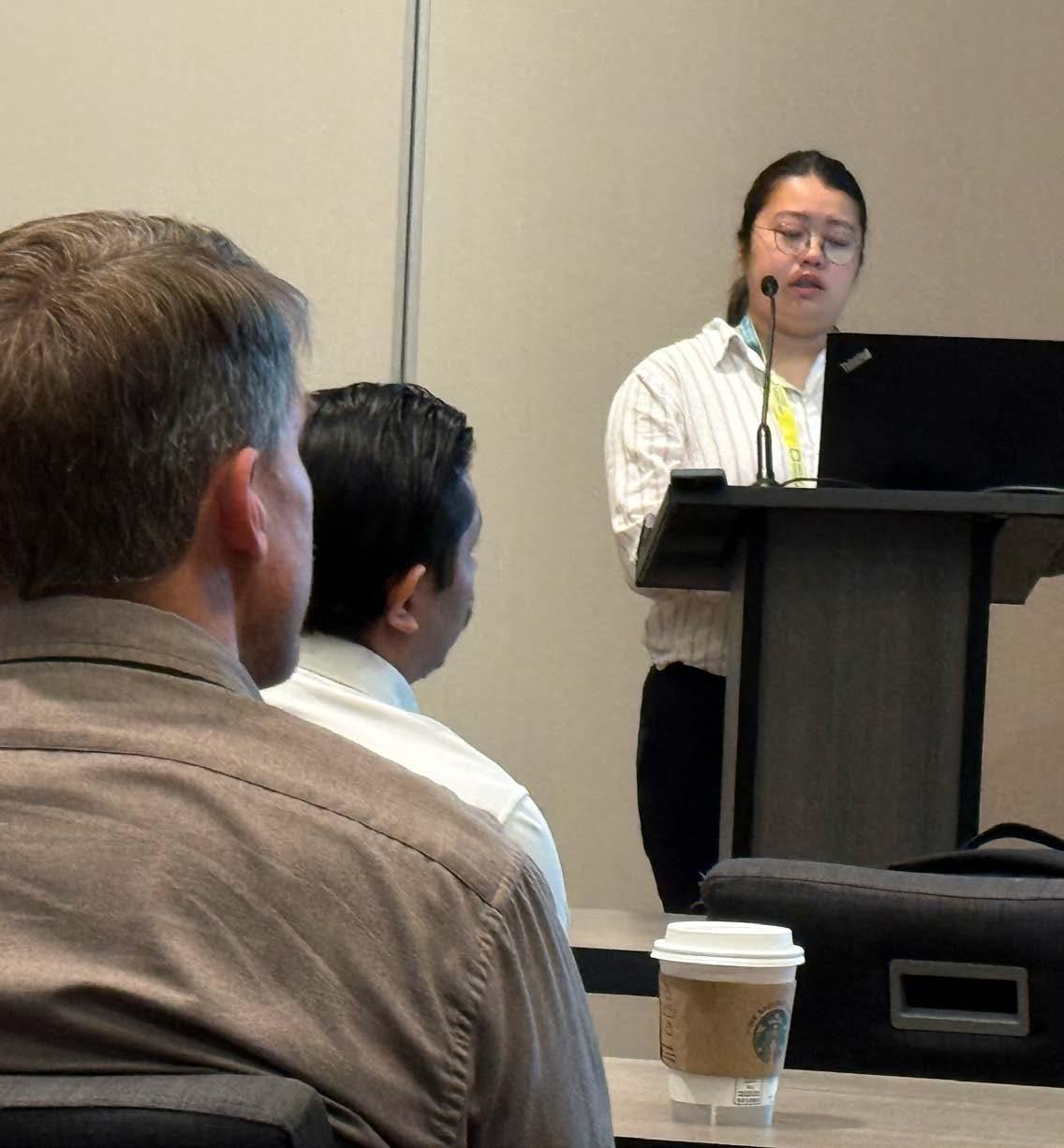
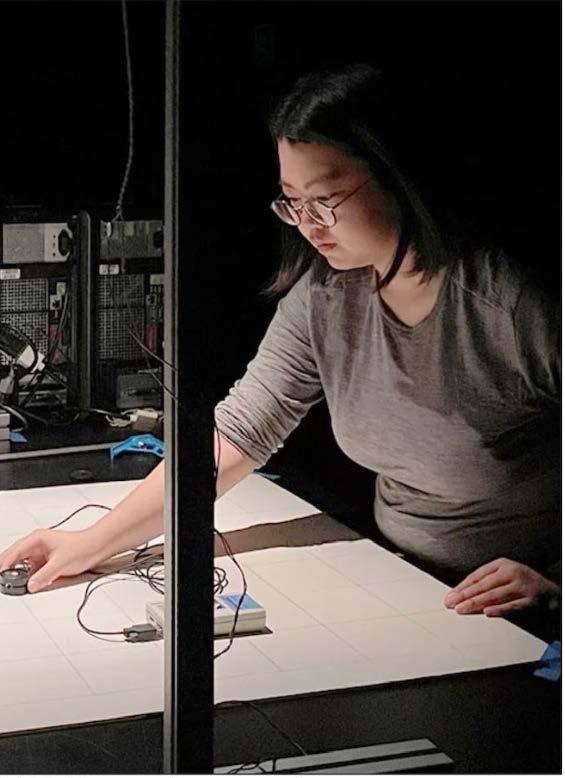
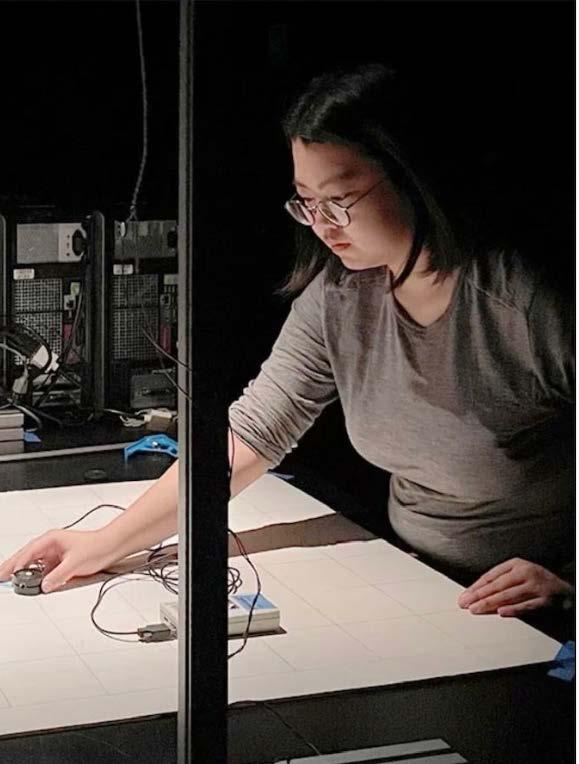
When lighting designers think of innovation, they often picture breakthroughs in LED sources, controls, or materials. At this year’s IES25 The Annual Conference in Anaheim, attention turned to an emerging professional and her pioneering work in optics. Kai-Di Peng, a graduate student at Rensselaer Polytechnic Institute’s Lighting
Kai-Di Peng’s 3D-Printed Optics
Research Center (LRC), presented her master’s thesis: a 3D-printed secondary lens designed to confine light precisely to art objects in museums. The project not only demonstrated technical ingenuity but also suggested a new path for how lighting design can serve conservation, aesthetics, and efficiency.
RANDY REID By
Testing the prototype lens at Rensselaer’s Lighting Research Center. Photo Credit: Kai-Di Peng
Kai-Di Peng presents her research on 3D-printed optics at IES25. Photo credit: Randy Reid
The Problem with Wasted Light
Museum lighting is a delicate balance. As I have learned from my many interviews with lighting designers, conservators demand strict limits on illuminance to protect artworks, while curators want accurate color rendering, and designers seek visual impact. Traditional framing projectors help by shaping light to the contours of an artwork, but they do so inefficiently. As Kai-Di explained, “At first I thought the framing projector must just block off light—and I was right. But that means you’re wasting a lot of it.” In fact, her estimates showed 36% of flux is typically lost when trying to confine a circular beam into a square frame.
Kai-Di and her advisor, Professor Nadarajah Narendran, posed a simple but powerful question: Could optics redirect light instead of wasting it? With the advent of advanced 3D printing and available ray tracing software, they saw an opportunity to test the idea quickly and affordably.
Designing a New Lens
Kai-Di’s concept was to use a custom 3D-printed optic that bends light rays into a square or rectangular distribution, aligning with the square or rectangular shapes of most paintings. She turned to LightTools, a ray-tracing software package, to simulate designs. “Our education program included physics of light, including photometry and optics, combined with lighting design and human factors,” Kai-Di said. “That gave me the foundation to attempt the novel optic design for a light fixture that can cater to a lighting application, and help the viewers to see the displayed object clearly without negative effects, even though my own background is in architecture prior to joining the lighting program at the LRC.”
The final lens was anything but flat. Kai-Di described it as “pyramid-shaped, but curved,” with a thickness approaching two inches. Printed in a clear photopolymer resin called VeroClear, it required painstaking
hand-polishing to achieve clarity. She crafted jigs lined with sandpaper to ensure the curvature wasn’t distorted, moving through finer grits before applying a clear spray coating for reducing the light scatter and improving transparency.
From Prototype to Proof
Mounted to a test fixture with a compatible LED module, the lens successfully reshaped a round beam from an LED source into a square with even distribution. LightTools ray tracing showed an application efficiency greater than 70%, light within the target area compared to the flux emitted by the LED, an improvement over the waste typical of framing projectors. When the total flux on the target was measured, the efficiency was much less. On further analysis, Kai, found the light loss was much greater due the material. Kai’s hope is with better materials for 3D printing optics becoming available in the near future it is possible to achieve the higher application efficiency.
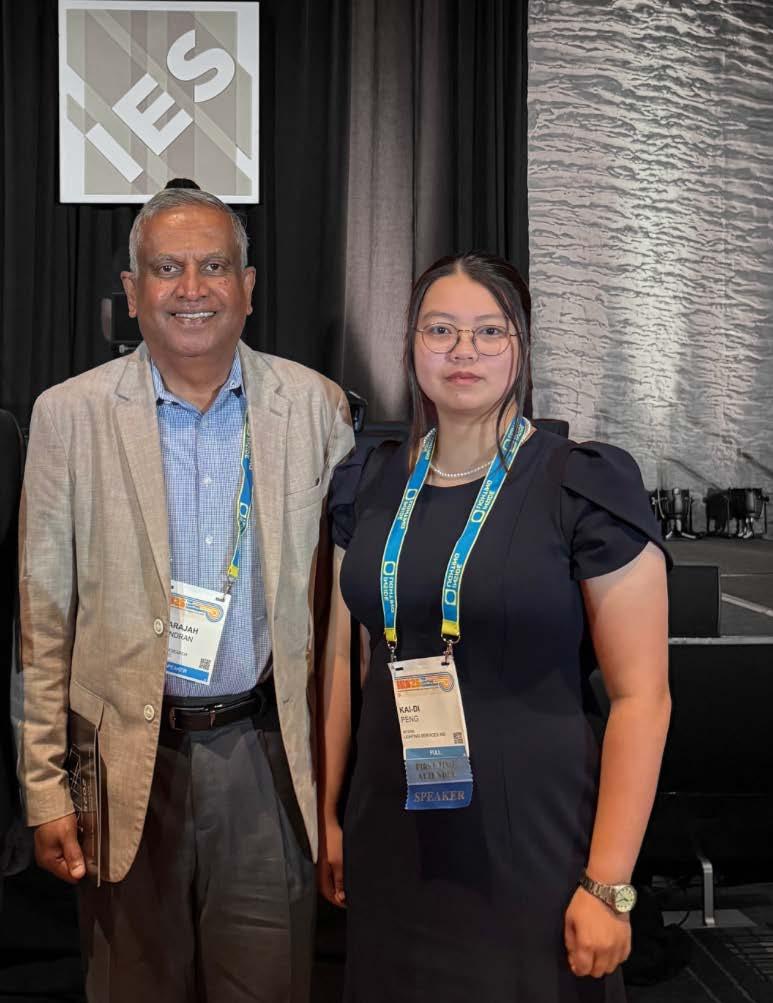
Kai-Di Peng with her advisor, Professor Nadarajah Narendran, at the IES conference. Photo Credit: Randy Reid
The audience at the IES conference responded with enthusiasm. Despite being presented on the final day of the conference—often a quieter time—the room was full. Experts from institutions like NIST praised the clarity of KaiDi’s work and the professionalism of her answers. “For a student project, it did very well,” said Narendran. “She went out there, got everything across, answered questions well, and people understood.”
A Path Toward Application
While the current lenses are prototypes, the work has already been recognized. RPI has filed a patent on Kai-Di’s behalf, with the aim of licensing the technology if manufacturers show interest. The potential goes beyond museums. Any application requiring tailored light distributions—retail displays, architectural accent lighting, even outdoor environments—could benefit.
For museums, however, the implications are immediate. By shaping beams with higher efficiency, designers can meet conservation limits without over-lighting surroundings. The approach also aligns with sustainability goals by reducing wasted energy.
The Role of 3D Printing
One of the striking aspects of Kai-Di’s project is the way 3D printing enabled innovation. “You wouldn’t build this for mass production with a 3D printer, unless the quantity
required is small” she acknowledged. “But if you want to prototype and test something quickly before committing to molding, it’s ideal.” Instead of months-long tooling and high upfront costs, Kai-Di could design one evening and hold a working optic the next morning.
This agility makes advanced optics more accessible, especially for smaller manufacturers or niche applications. It also empowers designers and researchers to test bold ideas that might otherwise never leave the sketchbook.
Looking Ahead
Kai-Di has since joined Tillotson Design Associates in New York, after a 3-month internship at LSI (Lighting Services Inc in NY), bringing her architectural and technical background into practice. Her Master’s degree project, however, stands as a reminder of the creativity emerging from the next generation of lighting professionals.
Rensselaer’s Lighting Research Center (LRC) now offers a new opportunity within its MS in Lighting degree, a threemonth paid internship with a leading lighting design firm or lighting manufacturer so that the students get the needed experience before serving the lighting industry.
It also points to a larger truth: In lighting, innovation doesn’t always come from reinventing the source. Sometimes it comes from rethinking how we shape the light we already have. As Kai-Di put it, “Instead of wasting light, we’re rearranging it.” ■

“Instead of wasting light, we’re rearranging it.”
― Kai-Di Peng



McEachron started a new position as Lighting Designer.

Jess Krometis started a new position as Senior Designer.

ON THE

John Delfino was promoted to Studio Administrator.

FOCUS LIGHTING
Charnikarn Vatakapaibool started a new position as Senior Lighting Designer.
Kristen
Gavin Cantrell started a new position as Lighting Designer.

IA INTERIOR ARCHITECTS
Xiaoneng Tang started a new position as Intermediate Lighting Designer.
Riley Johnson was promoted to Lighting Team Lead.


POWER DESIGN, INC.
Dakota Williams was promoted to Lighting Designer I.
SCHULER SHOOK
Travis Shupe started a new position as Principal in Chicago, Illinois.


THE LIGHTING PRACTICE
Xingying Peng was promoted to Senior Lighting Designer.
KJ Semone started a new position as Lighting Designer in the New York Office.

Pattie Cagle started a new position as Director of Lighting.




IES Illumination Awards 2025
The Illumination Awards ceremony was held at IES25: The Lighting Conference on Friday, August 22, 2025. See the winners here.
DLFNY Beacon Awards 2025
FINAL SUBMITTAL DATE
Closed
AWARDS PRESENTATION
29 October 2025
Sony Hall, NYC
Casambi Awards 2025
SUBMITTAL DATE
Closed ANNOUNCEMENT DATE
TBD
IESNYC Lumen Awards 2025
The Lumen Gala was held Wednesday, June 18, 2025. See the winners here
Light Middle East Awards 2026
EARLY BIRD SUBMITTAL DATE
Closed
ANNOUNCEMENT DATE
14 January 2026
Dubai World Trade Centre
NLB Tesla Awards™ 2026
FINAL SUBMITTAL DATE Mid-January 2026
ANNOUNCEMENT DATE 14 April 2026
LEDucation, NYC
LIT Lighting Design Awards 2025
SUBMITTAL DATE
19 October 2025
CEREMONY Spring 2026
The IALD International Lighting Design Awards 2026
FINAL SUBMITTAL DATE
Closed
AWARDS PRESENTATION 10 March 2026
Light + Building, Frankfurt, Germany

salutes and thanks its advertisers for their support. We applaud the achievements of lighting practitioners and recognize the importance of their work in architecture and design.












UP CLOSE WITH
Concept Lighting Lab in 2013, building her own team out to seven people. “I had already worked throughout the years with former project architects and partners who pulled me in, and I had a really good go of it.”
“Everything went smoothly—until COVID. I had my first big awakening where some clients started to not pay or live up to our agreement. I find it intriguing to engage with challenges and find solutions to them. It’s not so much the design challenges— they’re fun, more creative, exciting. But there’s other pressures that have to do with business, and if you haven’t been educated in that aspect of it, you learn the hard way.”
“Luckily, I’ve had great mentors, like my former boss Kai Piippo, Paul Traynor (former Light Bureau/UK) and Rick (Studio Rick Joy). Now I enjoy open dialogue and exchanges with international colleagues, many of them female trailblazers and strong voices in the fields of education, design and architecture, who share from their experiences in meaningful ways.”
CLAUDIA KAPPL
SHIRLEY COYLE, LC By
JOY
Growing up in Austria, Claudia Kappl Joy’s first job was ski instructor. At age15, she was the youngest ski instructor in her home region. “It’s a really serious thing in Austria, including snow profiling and avalanche training–an actual career path!”
Claudia’s path into lighting was more accidental. It came into view thanks to Claudia’s final thesis project while studying architecture at the University of Technology in Graz (TU Graz).
“It was an exploration of the topic of white, inspired by nature and snow, and aspects of light and how they make their way into architecture. It led me to an exploration of perception and human experience ... and to an understanding that if I wanted to create atmospheric space, I needed to learn about lighting.”
Claudia moved to Stockholm, Sweden, for a Master of Science, Architectural Lighting, at KTH Royal Institute of Technology
“It was an international program that explored lighting’s broader history, human aspects and was heavily linked to the health department then. Very forward thinking at that time.”
Next Claudia started to learn the practice of architectural lighting design working under Kai Piippo & Niklas Odman at Ljusarkitektur (now part of AFRY) in Stockholm. She recalled, “It was a fantastic studio, learning under their leadership...I got hooked and never was unhooked.”
Fate intervened again when Claudia met her future partner— in life and design work—Rick Joy. Rick was in Stockholm for work, but had chosen Tucson, Arizona to base his architectural practice and life. He managed to convince Claudia to join him in Tucson in 2007.
Claudia would eventually establish her own design studio, CLL-
Reflecting on current issues in the lighting community, Claudia noted that “the design community has always been quite friendly and open-minded, embracing technology, bouncing things off each other. It’s an appealing side of lighting. There was always a place for us in the conversation.”
“Now, there seems to be a trend toward integrators taking over huge aspects of the lighting design scope of work … our part of the conversation seems to be highjacked by systems in a way that overrules the lighting design. I get it from the end users’ perspective—one party providing the service is probably helpful.”
“But I also feel sometimes the integrity of an experience goes a bit to the wayside because it all becomes just system driven. It feels different to me than in previous years, when people who appreciate qualitative lighting would stay with someone who knows about lighting, perceptions, and experience-based aspects.”
Asked how she looks at her success, Claudia offered, “Success might be relative … I feel something is really successful when the client is really happy with the outcome, and we manage to maintain project integrity and our philosophy.”
What is Claudia’s advice for new people coming into our industry?
“For the past seven years, I have been teaching a lighting class at the University of Arizona. Several people on my team have come from there. I do give them some texts to read, encourage them to put hands on, get active. Try to light something, learn from peers, become part of a theater company. Experiment and make observations. Lots of things with lighting are sometimes surprisingly different than you anticipate. Have fun but also fail— and don’t be intimidated by electricity.
She spoke about her excitement for the upcoming IALD Enlighten Americas conference in Tuscon, saying, “There’s so much about DarkSky in Tucson, so much sky to observe. It has such a distinct look. By embracing the dark and loving the shadow, mitigating the daylight … a lot of what we do is literally looking into ‘Where’s your shade structure?’ which is the opposite to the Northeast!”
When Claudia is not designing, teaching, and managing her business, she “longs to get to the cold … I am a skier. I head to my hometown in Austria, spending few days with my family first. Last year, I went after the fair in Milan (Euroluce / Salone del Mobile). My sister and I spent a day together skiing—it made my whole spring!” ■


EdisonReport.tv serves as a hub for all digital content in the lighting industry. A premier source for critical information surrounding lighting, EdisonReport.tv is dedicated to delivering industry news by way of video and serving its audience by spotlighting product launches and up-to-date educational videos, as well as information about upcoming webinars.
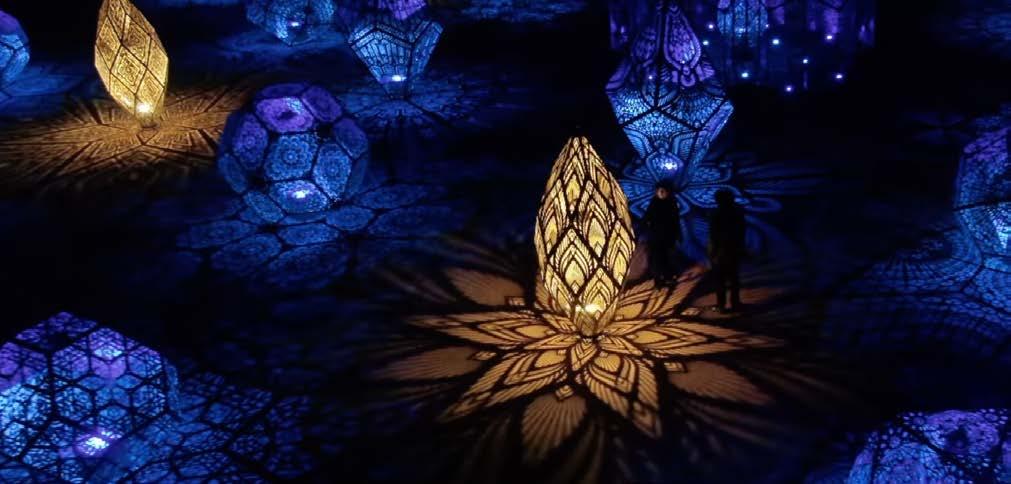
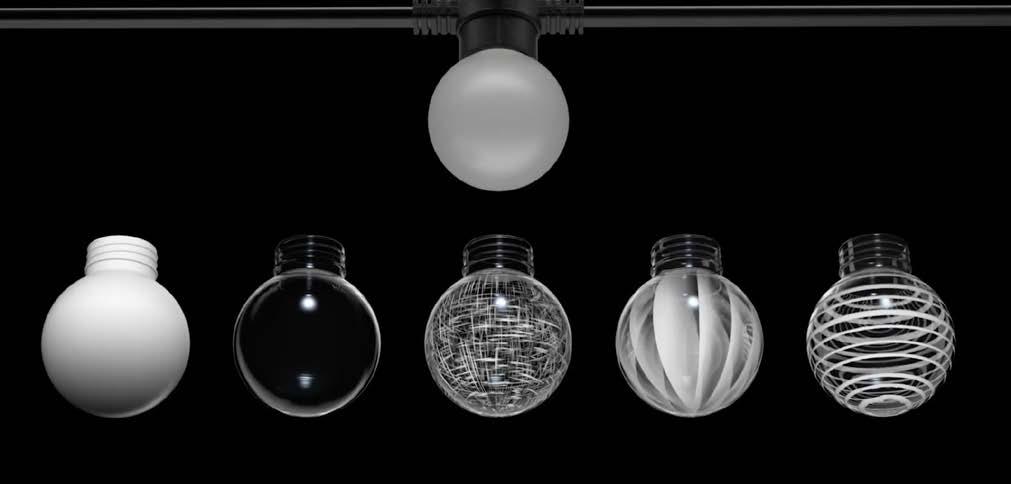
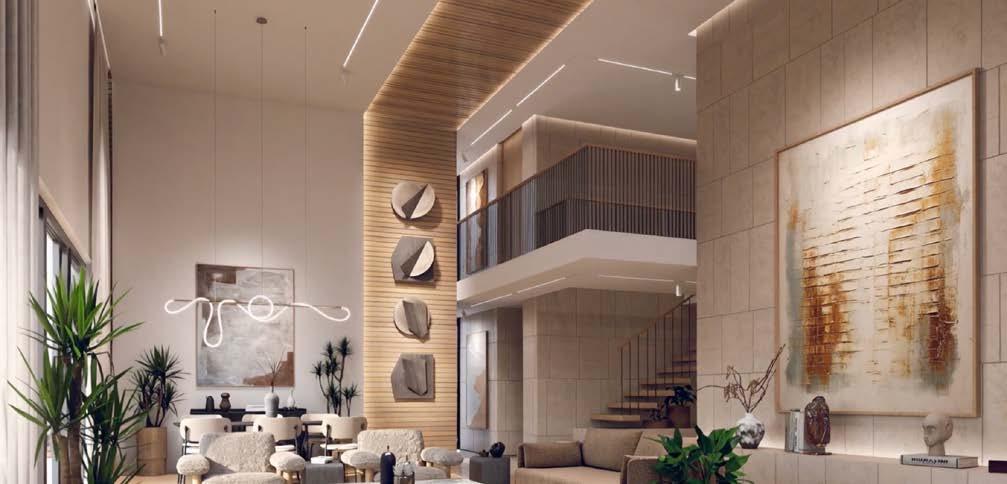
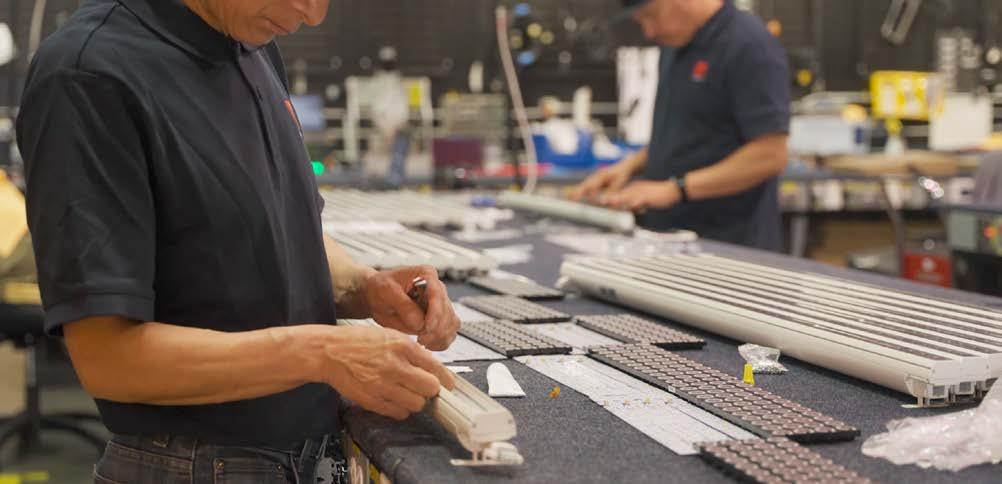
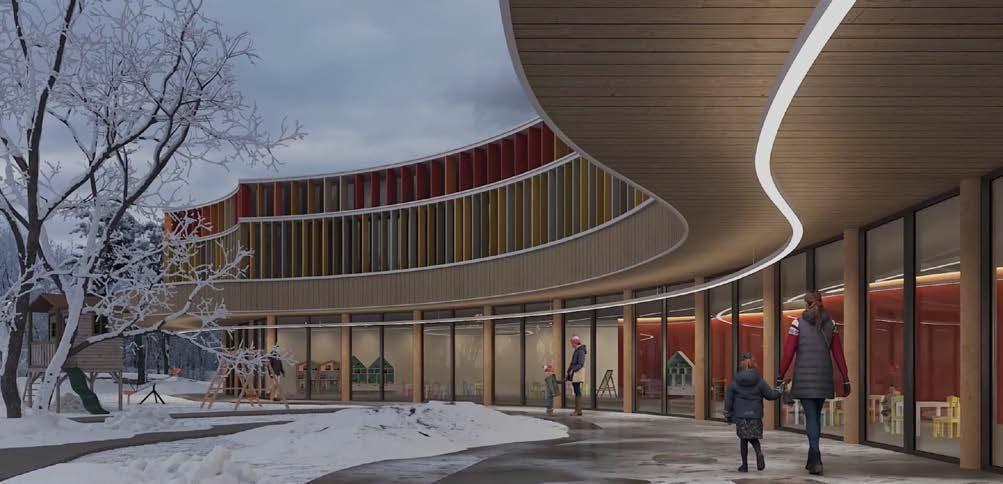
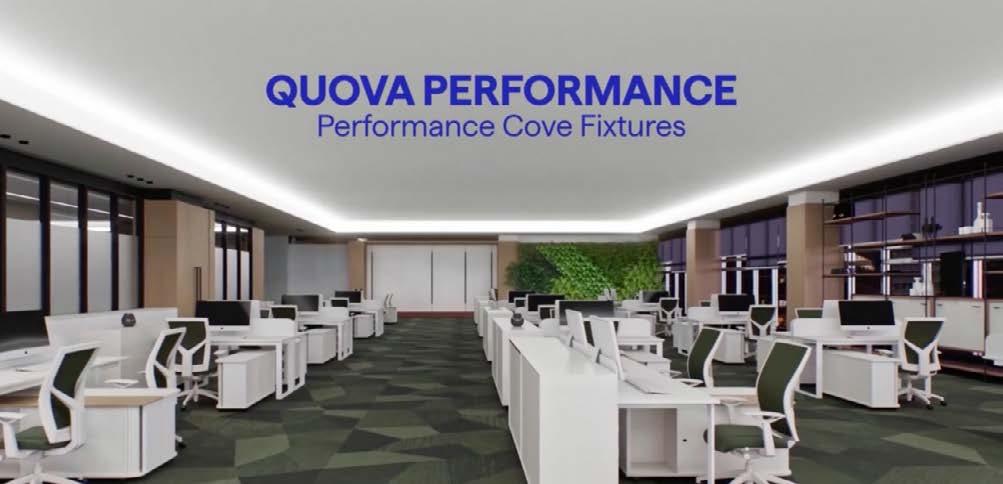
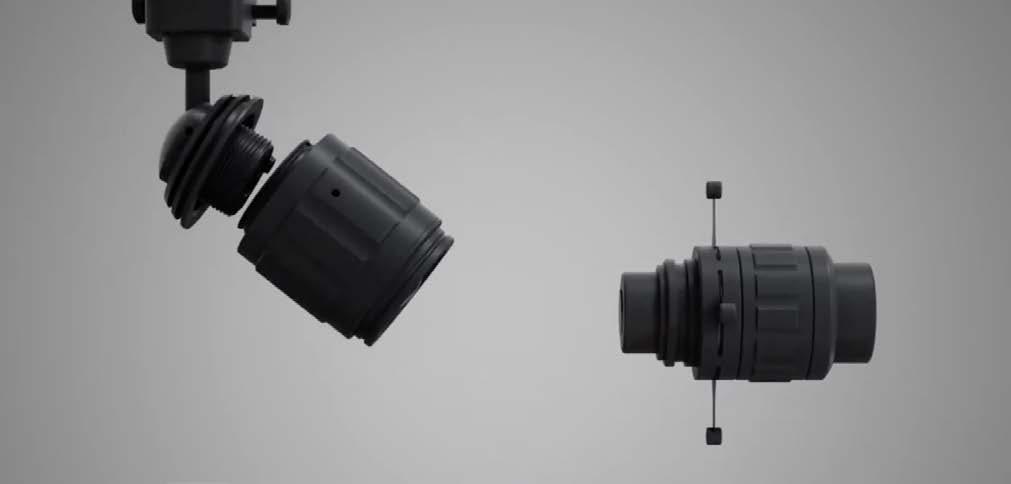

Tivoli | ADAPT 2.0 PET Globe Inter-lux | HYBYCOZO
PureEdge Lighting | Linea
Acclaim Lighting | Hello, again.