designing lighting

CLOSET LIGHTING POSH
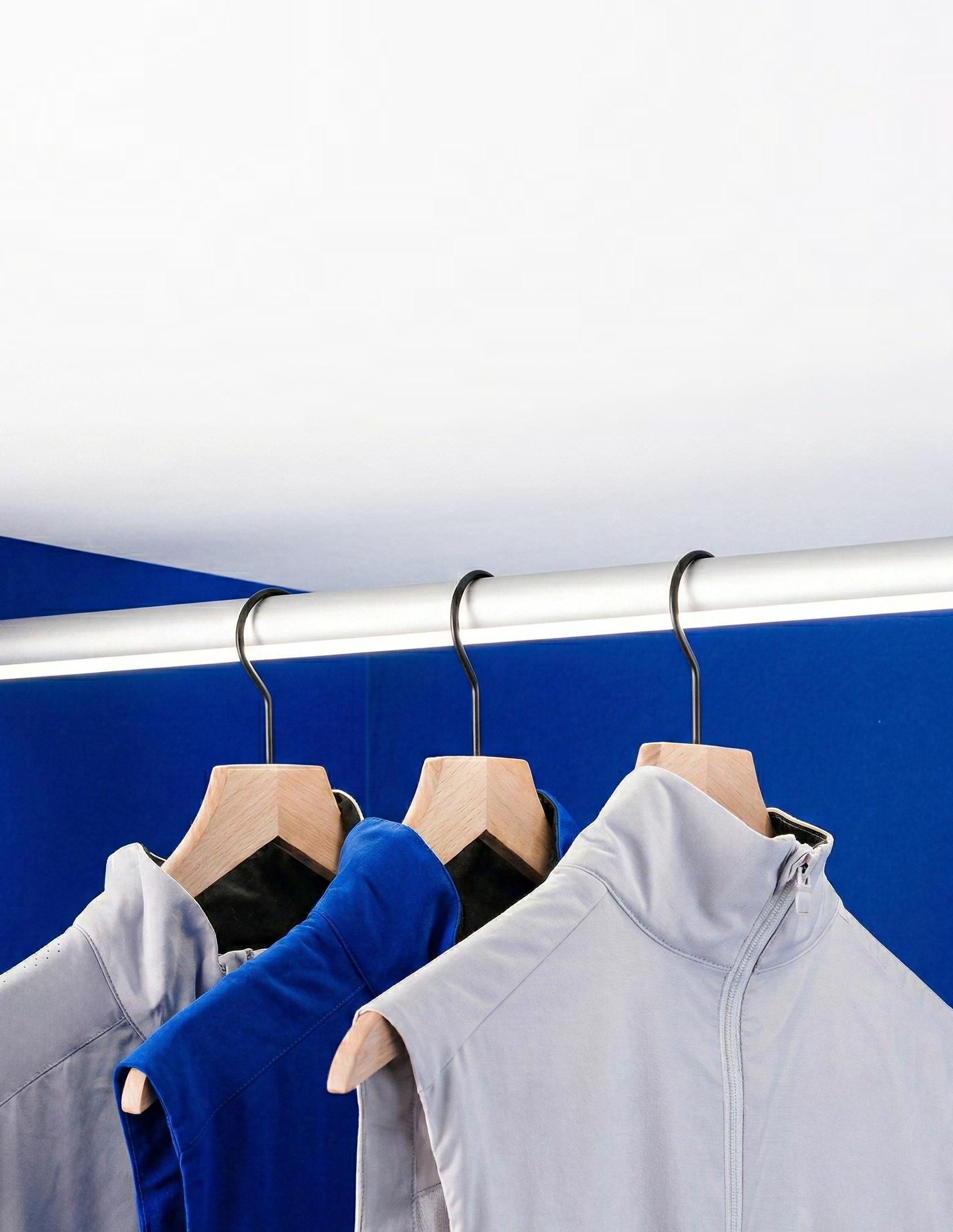
Meet POSH: the illuminated closet rod, reimagined.
Built with premium QTL light quality and color accuracy, POSH is available in Wall-to-Wall and Float options, with advanced features including Type Ill hardcoat anodized aluminum to resist scratches, leading load capacity, and hidden wireways for a clean architectural finish.
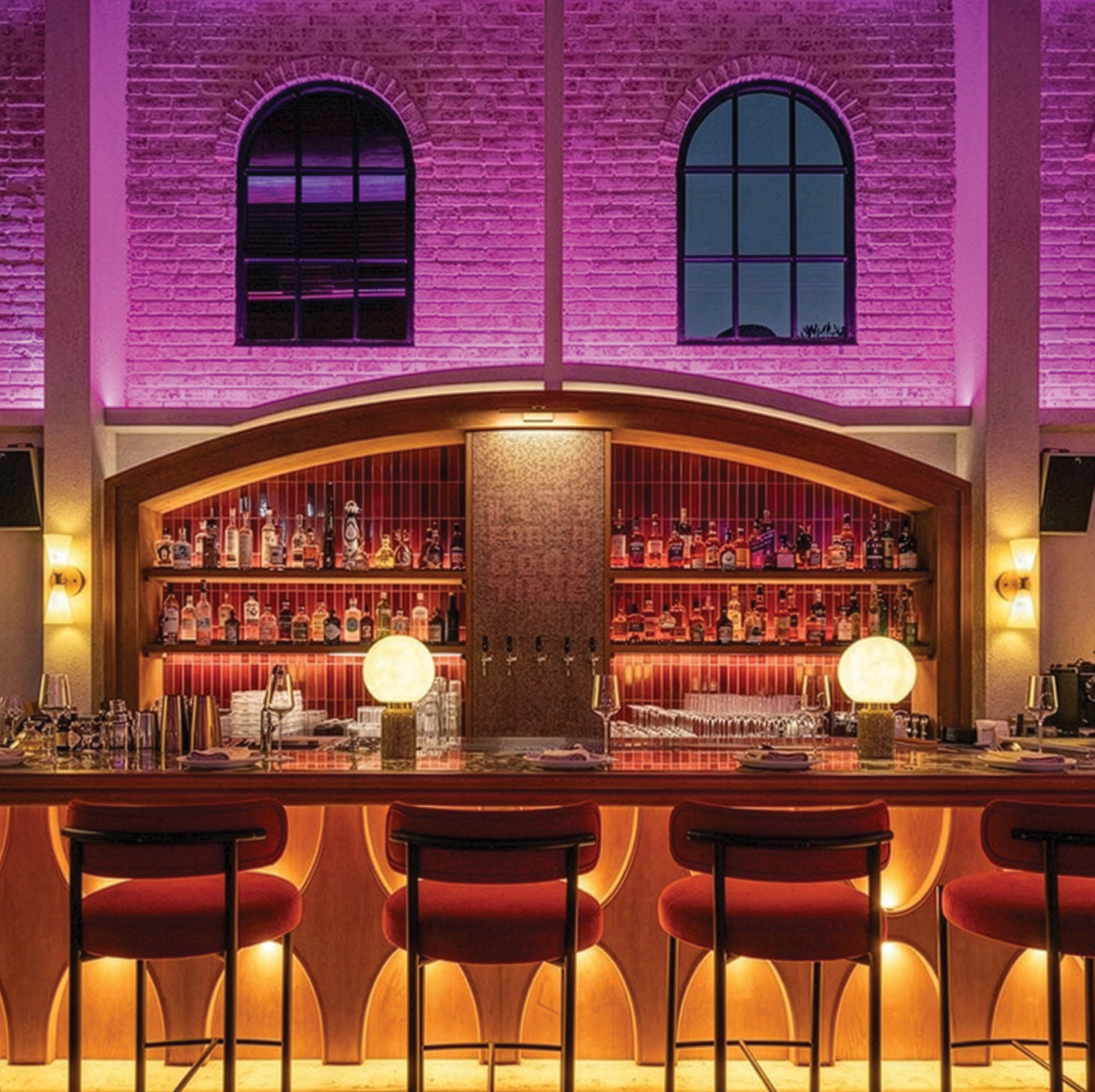
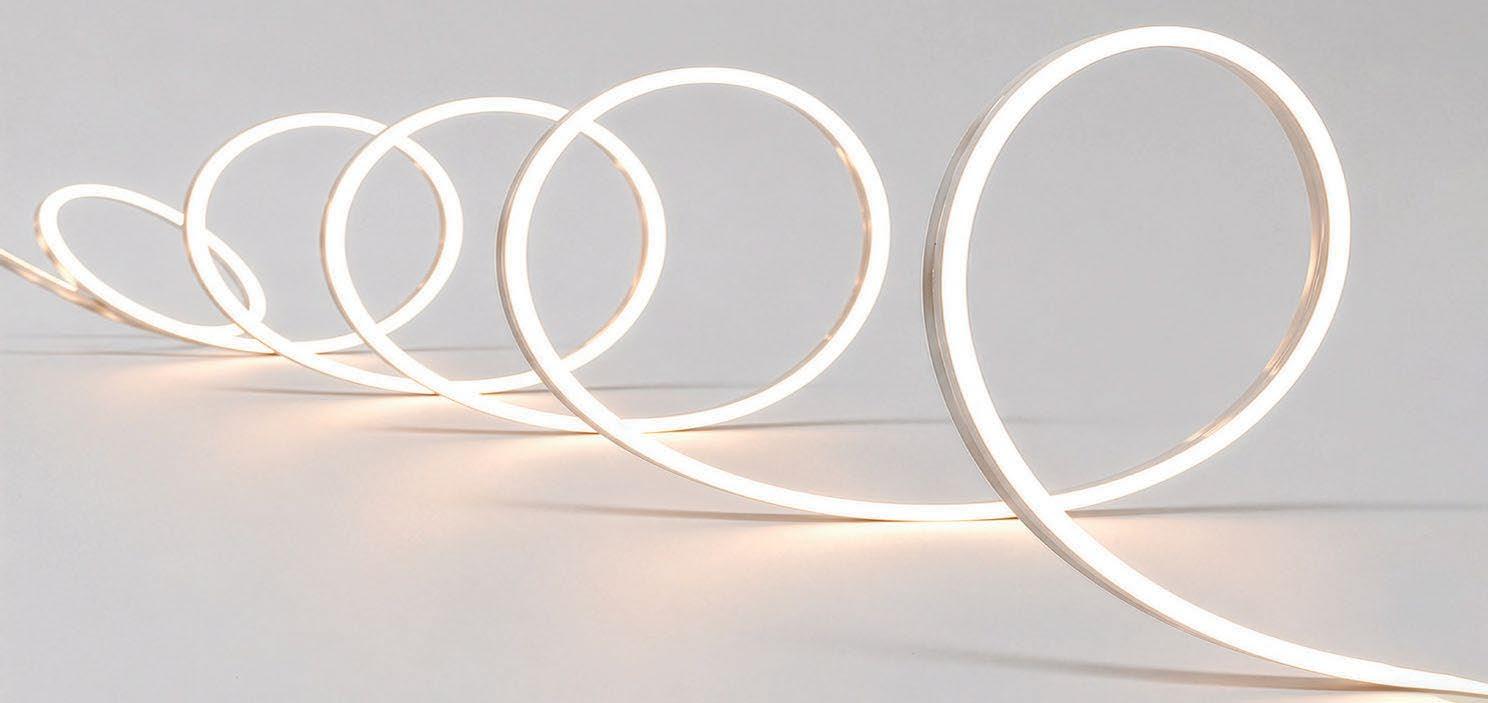
Meet Inter-lux Flexible Lighting
A premium flexible linear lighting solution engineered to contour seamlessly to any shape or surface, delivering consistent, uniform illumination with a clean, polished aesthetic. This is Flexible Lighting!
IES Emerging Professionals: Building the Next Generation
By Mark Roush, FIES, LC, M.Arch.
The IES Emerging Professionals Program introduces young lighting professionals to the relationships, experiences, and mentorship that can shape an entire career. Mark Roush explains why investing in emerging professionals is one of the industry's most important responsibilities.
Light + Health Out of Control? Lessons Learned about Circadian-Effective Lighting in a Correctional Facility
By Jennifer Brons, MSc and Jay Farbstein, PhD, FAIA
Circadian-effective lighting has gained traction in institutional settings because of its potential to improve sleep, mood, and behavior.1, 2 These benefits are particularly compelling in correctional environments, where both residents and staff may be vulnerable to disrupted light-dark cycles.
The
Women Leading Fisher Marantz Stone
By Randy Reid
When Fisher Marantz Stone President Paula Martinez-Nobles talks about leadership, she prefers to focus on the people around her. In this profile, Paula and Senior Associates Katie Czub, Kristina Jajalla, and Amy Leder share their unique approaches to mentorship, design, and leadership.
The Measure of a Mentor: Lighting Leaders Reflect on Jim Benya's Legacy
For more than five decades, Jim Benya has shaped the lighting profession as a designer, educator, author, mentor, and industry advocate. During a special tribute, some of lighting's most respected voices shared personal stories about the man who influenced their careers and lives.
CONTRIBUTORS




By Randy Reid
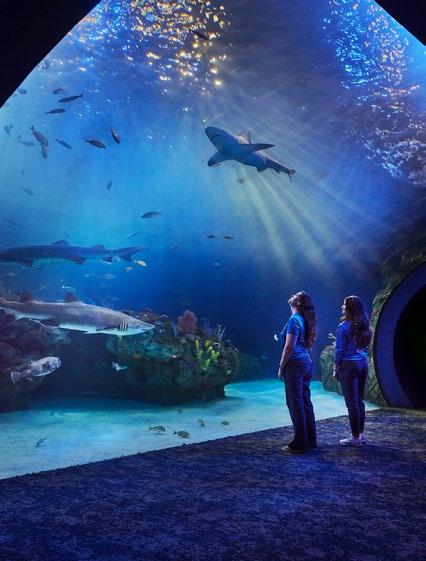
At Mote Marine Laboratory & Aquarium in Sarasota, lighting serves far more than an architectural function. Designers at EXP created environments that support marine life, regulate biological rhythms, and enhance visitor experiences across a 146,000-squarefoot facility.

By Randy Reid
James Hall has spent a lifetime
and
some of Britain's most prestigious
including royal
luxury
and historic landmarks. During a walk through in London ,he shared stories of craftsmanship, conservation, and the responsibility that comes with holding a Royal Warrant.

Stacie Dinwiddy, CLD, IALD, LC, LEED BD+C
MARK ROUSH, FIES, LC, M.Arch.
Shirley Coyle, LC
Megan Carroll
Vilma Barr
Jennifer Brons
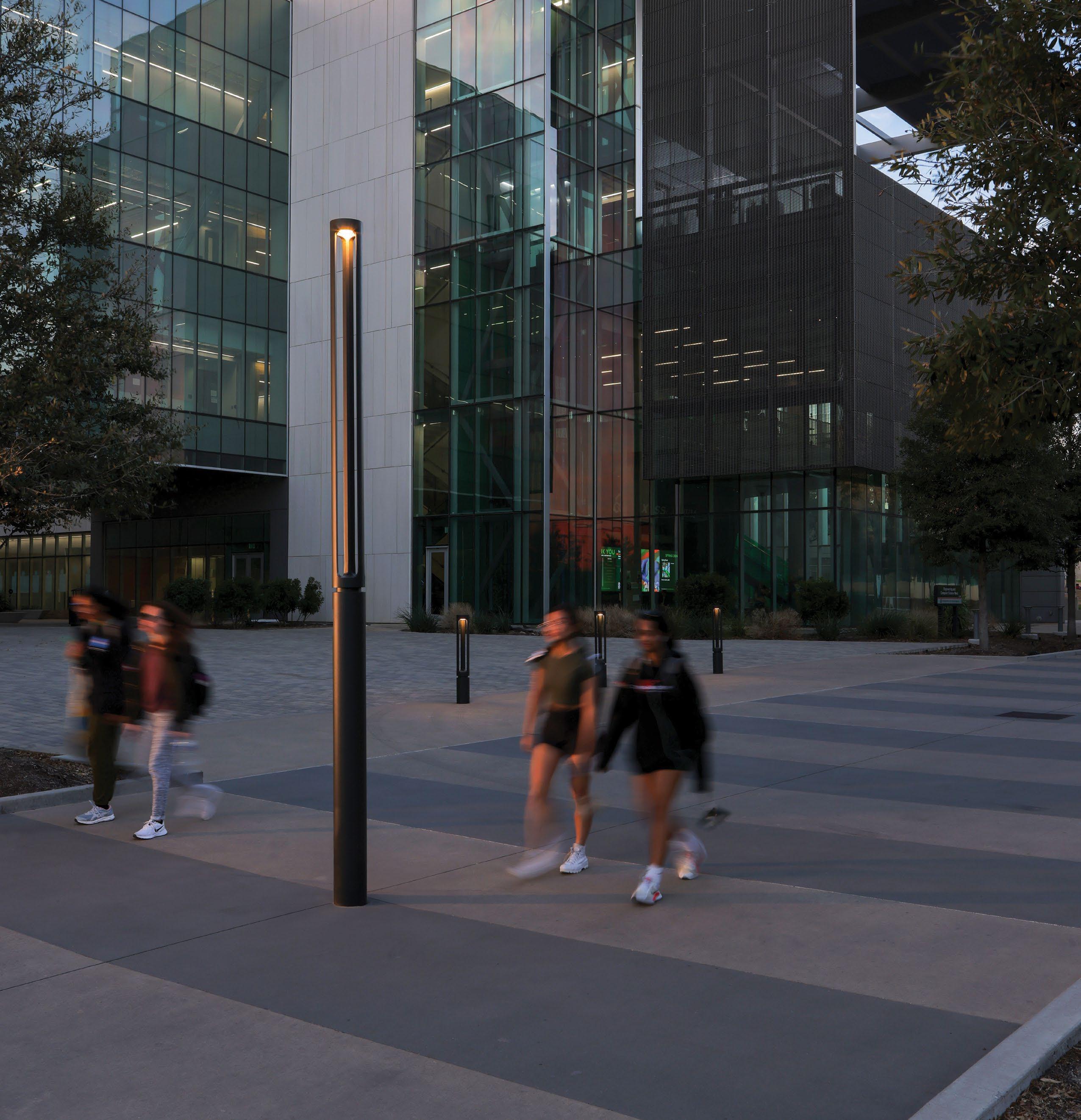
Redefine the Ordinary.
A modern light column where form, function, and craftsmanship come together to shape meaningful outdoor experiences.
Landscape Forms | A Modern Craft Manufacturer

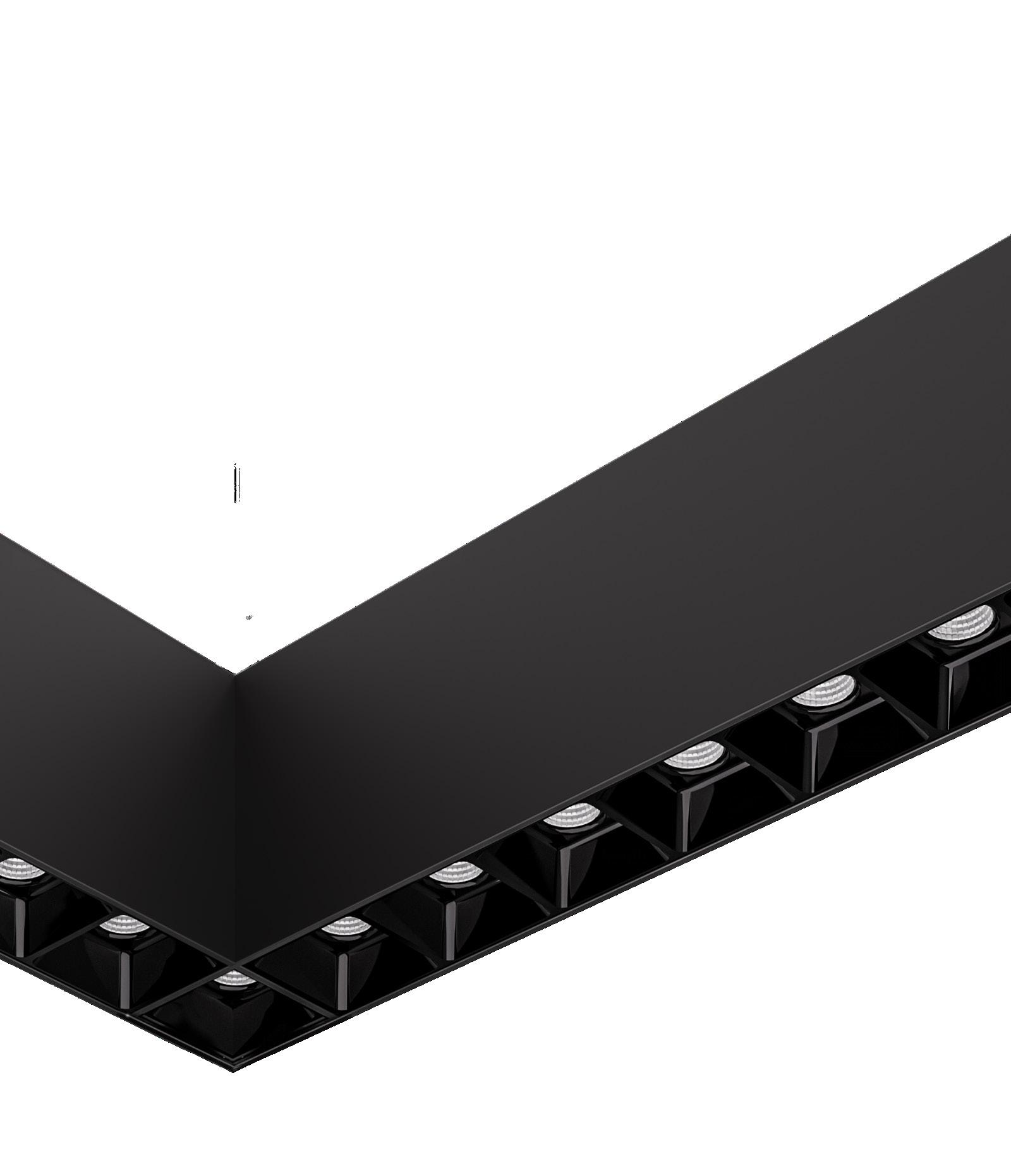


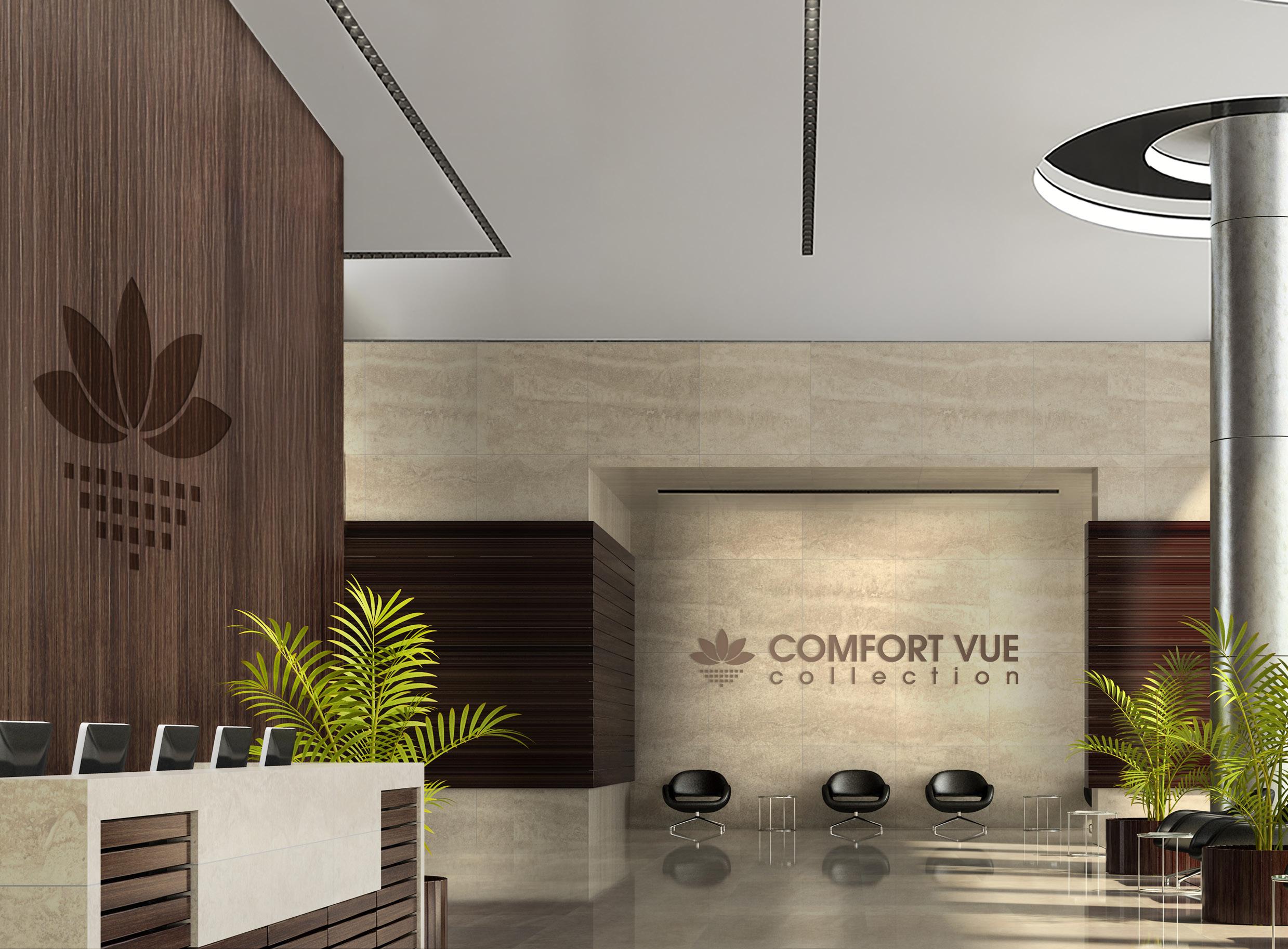
Unbeatable Comfort. Uncompromising Performance.
Comfort Vue helps lighting designers confidently justify their professional fees, demonstrating that great design is not only about aesthetics, but also about delivering value-driven results that meet both client and environmental goals.
Setting a new standard for linear lighting, delivering industry-best visual comfort without sacrificing performance. By virtually eliminating glare, it creates visually quiet, sophisticated spaces where the architecture and its occupants are the focus not the light source.
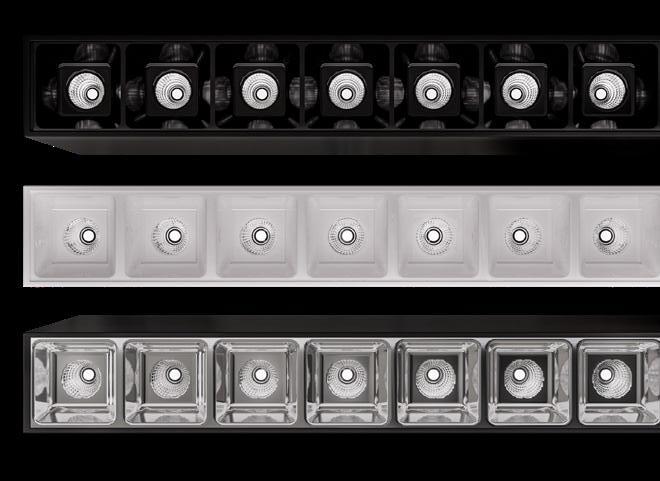
Louver Color Selection
Piano Black
Glossy White
Polished
Chrome
Designing with PoE: Lighting a $25,000-Per-Night Villa
Inside Resorts World Las Vegas, Villa 66 represents a new approach to luxury hospitality lighting. PoE technology gives designers unprecedented control over every fixture, scene, and experience throughout the suite.
Sundance
Resort: Designing Light That Feels Un-Designed
At Sundance Resort in Utah, the lighting design brief was deceptively simple: make it look like no lighting designer was involved. Granville McAnear achieved that goal through restraint, warmth, and meticulous attention to detail.
Glittering Steakhouse
By Vilma Barr
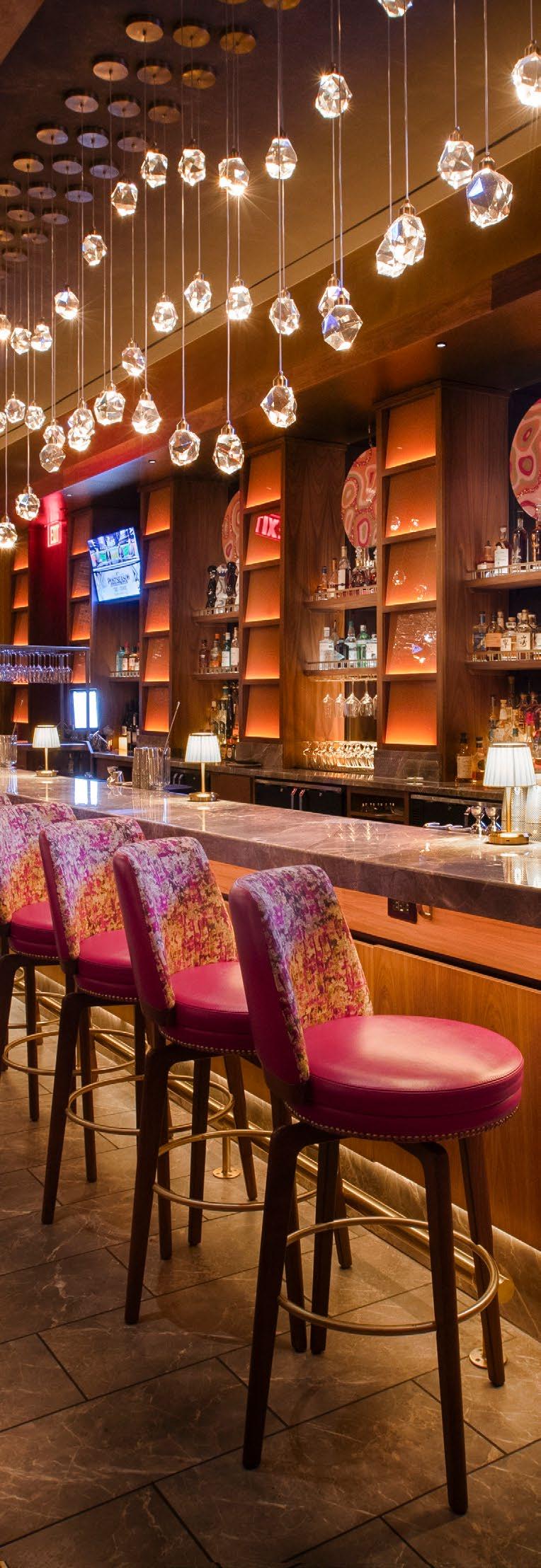
Butcher & Rose in Columbus, Ohio transformed the typically dark, male-oriented steakhouse interior into a space that is dramatic and visually distinctive. Lighting plays a central role in enhancing the owner’s vision of welcoming a broad spectrum of visitors to experience a unique dining experience in an elegant modern setting.
A Balancing Act: Using AI as a Tool to Make Room for Human
By Stacie Dinwiddy, CLD, IALD, LC, LEED BD+C
Artificial intelligence is changing how designers work, communicate, and engage with clients. Yet in luxury residential lighting design, where relationships and trust are paramount, technology can only go so far. Stacie Dinwiddy explores how AI can enhance efficiency and storytelling while reinforcing the enduring value of human insight, creativity, and connection.
In the lighting industry, products rarely sell on specifications alone. Success depends on market understanding, trusted connections, technical expertise, and the ability to manage a project from design through installation. This is why lighting manufacturers rely on rep agencies as the pathway between factories and specifiers or end-use customers. Rep agencies help expand the factories’ sales force more effectively.
Shirley Coyle,
Butcher & Rose Columbus, Ohio
Photos: Courtesy, Cameron Mitchell Restaurants
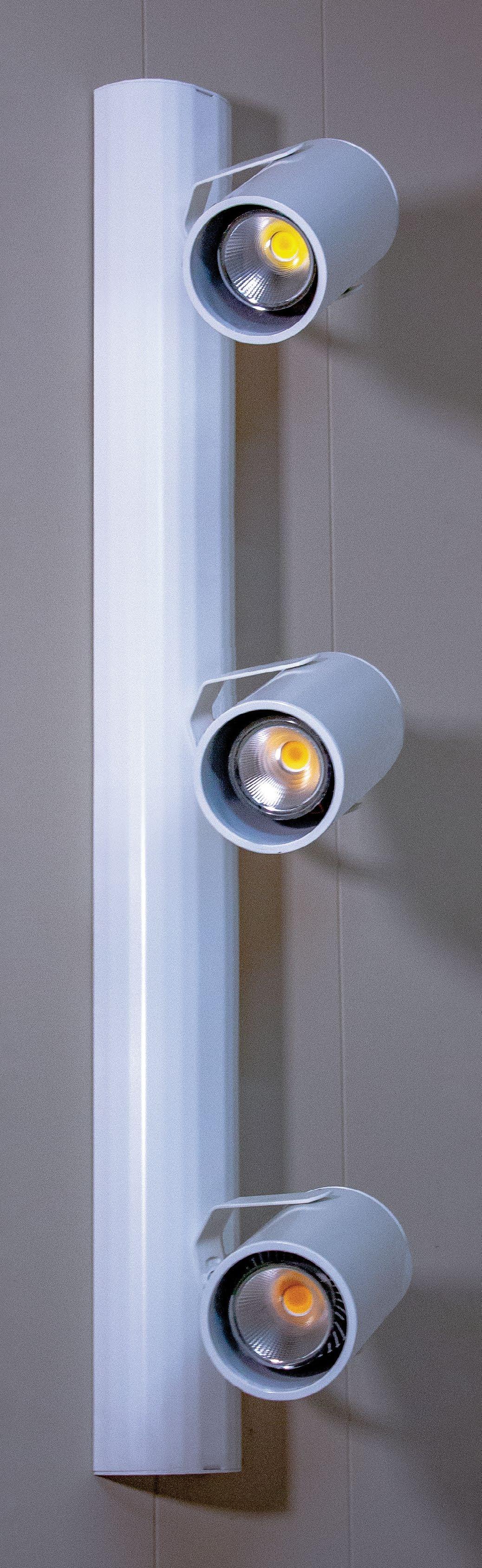
The ACRL installs on a ceiling or wall, fits any standard 5” outlet box, and scales from a 12” single head up to 39” with four heads. Each head aims and dims independently, delivering up to 8,000 lumens across medium to long throw applications.
One fixture family, built for the spaces that demand both flexibility and performance.
• Auditoriums
• Houses of Worship
• Convention Centers • Museums • Retail • Hospitality

Editorial Director:
Randy Reid
Publisher:
Cliff Smith
Contributing Writers:
Shirley Coyle
Lead Contributing Editor
President, Cree Lighting Canada
Some issues come together. Others seem to capture a moment.
This edition of designing lighting (dl) feels very much like the latter.

Principal, RELEVANT LIGHT Consulting Inc.
Vilma Barr
Contributing Editor
Staff Writers:
Bridget Leary
Ellie Noblin
Smita Shanbhag
Published by EdisonReport 1726C General George Patton Dr. Brentwood, TN 37027
Phone: 615-371-0961 designinglighting.com
designing lighting is focused on the Business of Lighting Design™ and provides business information to the lighting design community. In addition to the website, designing lighting publishes bi-monthly online magazines featuring original content, interviews within the community and highlights successful award winning lighting designs. While designing lighting is based in the U.S., it has contributors from Europe and is developing a global presence. ISSN: 3066-9111.
Statements and opinions expressed in articles and editorials in dl are the expressions of contributors and do not necessarily represent the policies or opinions of the EdisonReport. Advertisements appearing in the publication are the sole responsibility of the advertiser.
Within these pages, we celebrate the people, projects, and achievements that continue to move the lighting profession forward. We feature the National Lighting Bureau Tesla Awards, the IESNYC Lumen Awards, and a tribute to industry icon Jim Benya, honoring more than five decades of contributions to the lighting community. In addition, we focus on the Women Leading FMS. Alongside those stories, readers will find an exceptional collection of projects from around the world—many of them the kind of work that reminds us why lighting remains one of the most powerful design tools available.
The timing of this issue could not be more fitting.
We plan to publish on 22 June, a few days after the IES Lumen Gala in New York, and the LIT Lighting Design Awards celebration in Paris, and immediately after the IALD Enlighten Europe Conference, which also took place in Paris. While our publisher, Cliff Smith, attended the festivities in New York, I had the privilege of spending time with lighting professionals in Paris. The energy surrounding the profession right now is unmistakable.
Earlier this month, the successful launch of Illuminate at NeoCon demonstrated the growing appetite for meaningful engagement between manufacturers, architects, interior designers, and lighting professionals. Looking ahead, anticipation is already building for the ArchLIGHT Summit this September. Both events recognize an important truth: our industry thrives when lighting is part of the broader design conversation.
That momentum is reflected throughout this issue.
At 108 pages, this is one of the largest editions we have produced. Interestingly, it also marks a small milestone behind the scenes. For six years, our production process relied on a carefully maintained spreadsheet to manage page planning. For this issue, we introduced an automated workflow that generated the entire page plan, replacing a process that had remained largely unchanged for years. The result allowed our team to focus more attention on what matters most—the stories themselves.
Most important, however, is the optimism that runs through every page.
From award-winning projects to industry gatherings, from emerging talent to celebrated veterans, there is a remarkable amount of positive activity taking place across the lighting profession today. We at designing lighting (dl) remain both humbled and grateful to document it. And if this issue is any indication, the future of lighting design looks exceptionally bright. ■

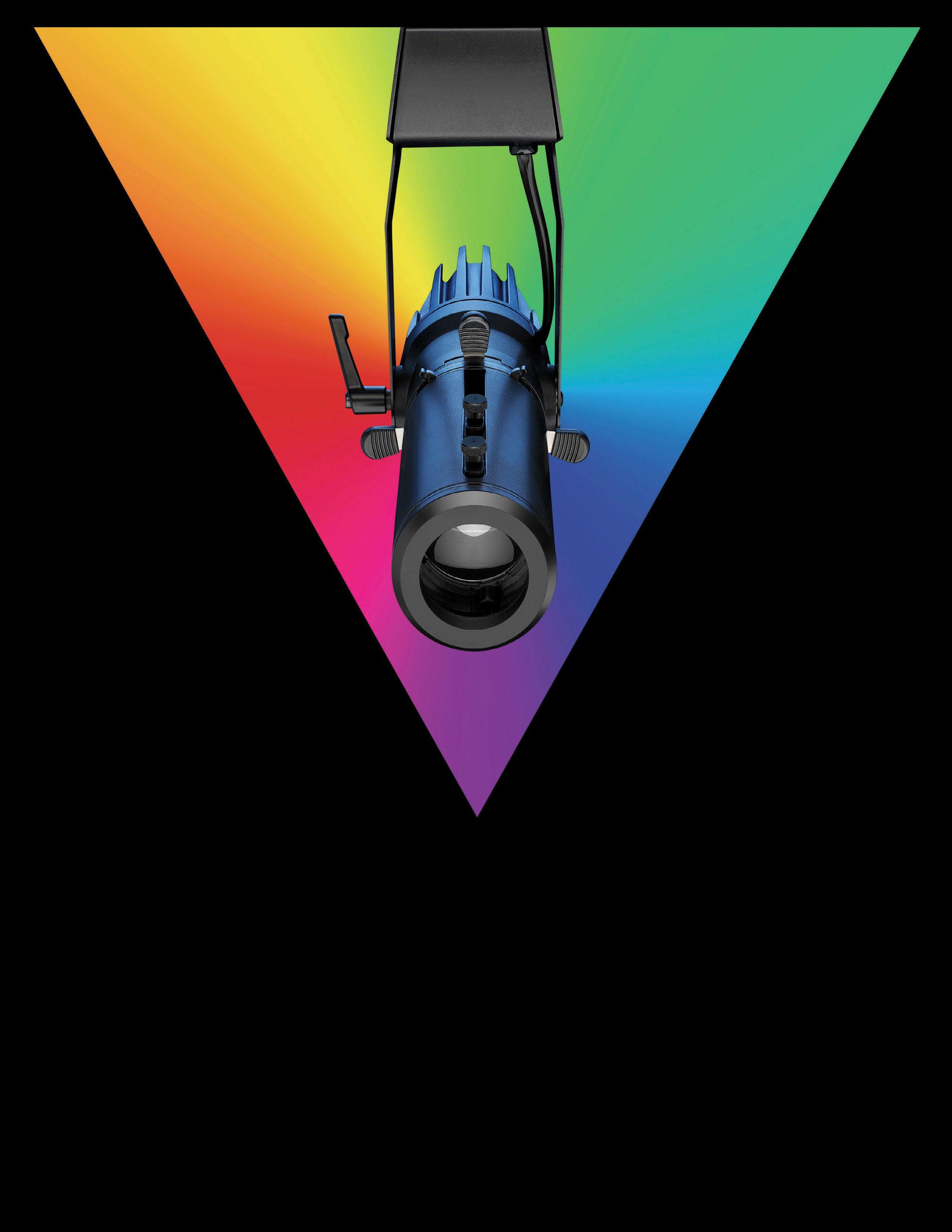
B P F C
FULL COLOR FRAMING PROJECTOR
Red/Green/Blue/Lime LED Wide Gamut of Highly Saturated Colors
Locking Zoom Lens (15°-30°)Framing Shutters Create Unlimited Shapes
Integrating Full Color
Inject vibrant color into your next project with the BPFC Full Color Framing Projector. Designed for exceptional optical performance, BPFC delivers stunning full-color imagery and precise framing in a sleek, modern design. Color your world!
Discover the art of lighting — visit our website or scan the QR code below.


Profiles: IES Emerging Professionals Committee
By
The EP Committee has been around now for a couple of decades. EPs are Emerging Professionals with 5 years or less experience to which we also encourage advanced university lighting program students.
To me, the primary purpose is to kick start a lifetime of professional interaction that we established veterans take for granted. Fostering their interaction with peers, introducing them to the lighting industry (far beyond and faster than happened for most of us), providing them with early informal mentoring, and exposing them to industry active individuals of multiple backgrounds. All told, through EP programs both nationally and locally, they emerge exposed to volunteerism,
the IES, the industry, and role models of success to broaden their place in lighting.
Through the one-day EP Day program the day before the IES Annual Conference, we endeavor to build their sense of community through formal discussions/presentations, facilitated Q&A sessions, intermingling curated events, and tours of significant lighting projects(s) with the design team’s leadership.
The EP Committee is a group of volunteers who work to make this happen while leveraging our own networks to engage other professionals to enrich these experiences.
MARK ROUSH, FIES, LC, M.ARCH.



















The EP Program is funded entirely by donations. $2500 covers travel, lodging & registration for EPs to participate in this transformative experience. Donations come from IES Sections, from manufacturers, from individuals. To donate any amount, click here: https://ies.org/membership/donate/
Help build the industry pipeline; contribute to sustain the circle of mentorship; make a difference.
Chair
Alexandra Christiana
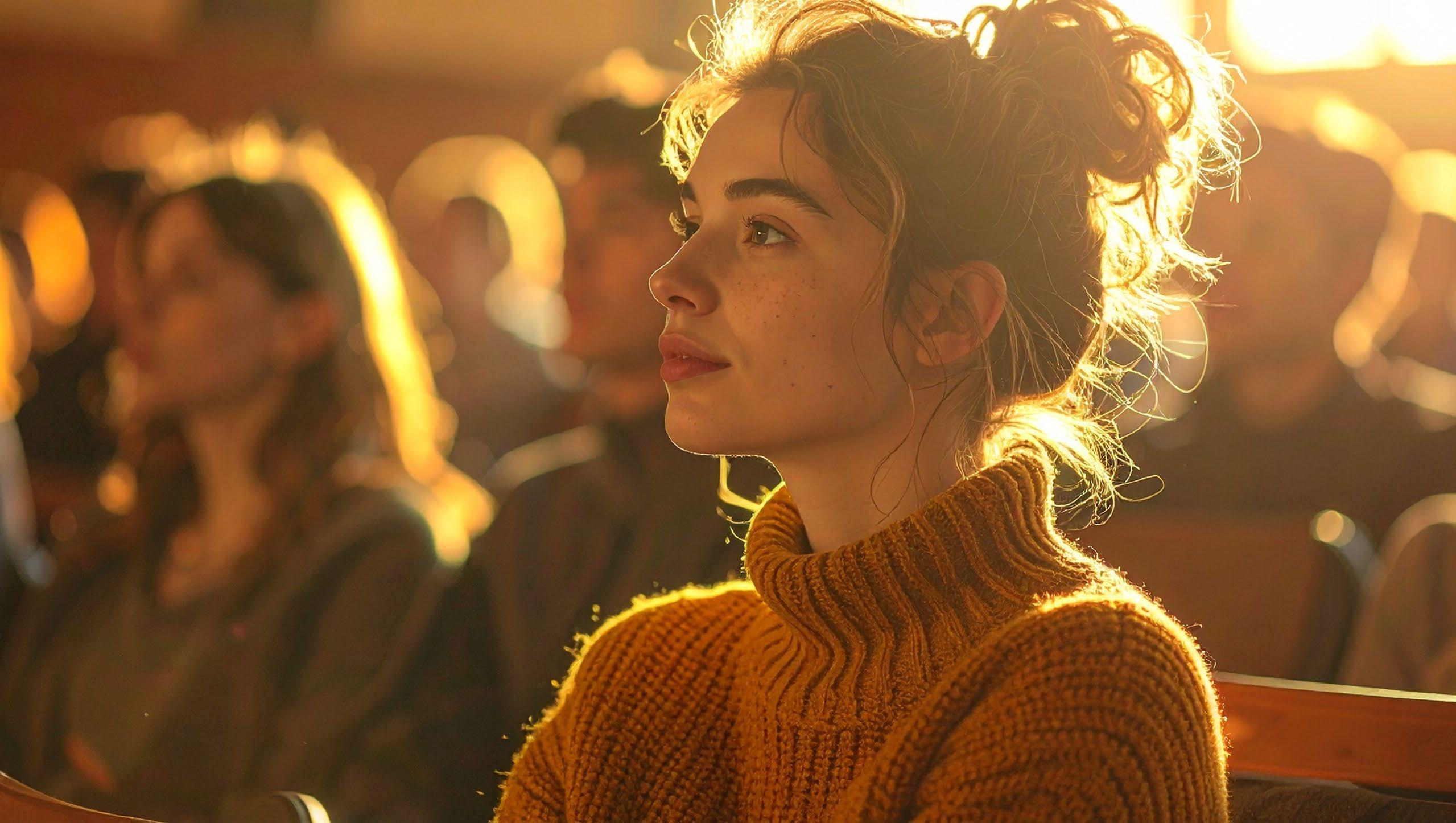
This year we will be featuring “Icons in Lighting” (A Gold Medal and a Louis B. Marks recipient – the IES highest awards – one for technical achievement and the other for pinnacle service to the industry.) Our Icons share their struggles and successes as they made a path of significance and impact, while opening a rich Q&A opportunity for our EPs to explore, engage, and digest how success happens. A formal presentation will also transpire on the latest trends in AI technology as it relates to enabling and advancing change in our industry. Bringing real life examples of cutting-edge technology to our audience of those most likely to embrace and enable such change is a gift to ambition and drive feeding this endeavor. This old dog may not be AI ready, but our EPs will soak this up!
We will be touring a manufacturing facility nearby which is often the first such experience for our EPs and students. We will also tour an Award-winning lighting installation guided by the project architect, lighting designer, and quite likely a project owner executive. The insider’s view of these projects is priceless, and the immediate appreciation for collaboration that drives success in design.
All told, the Committee strives to create a rich inclusive experience as a foundation and model for how one’s career goes well beyond “the office” and expands to a lifetime of peer and colleagues - networked through events and involvement - while making a difference and driving meaning for one’s community and self. Our EPs will become involved members. They will drive change. And they will benefit from this oneday experience to come to know their peers, collaborate with colleagues, and lead the future of our industry. ■ To
Members
Craig Bernecker
Ira Rothman
Bernadette Boudreaux
Mark Roush
Chip Israel
Ryan Seffinger
Lisa Reed
Dani Senne
Ryan Stewart
Geoffrey Wright
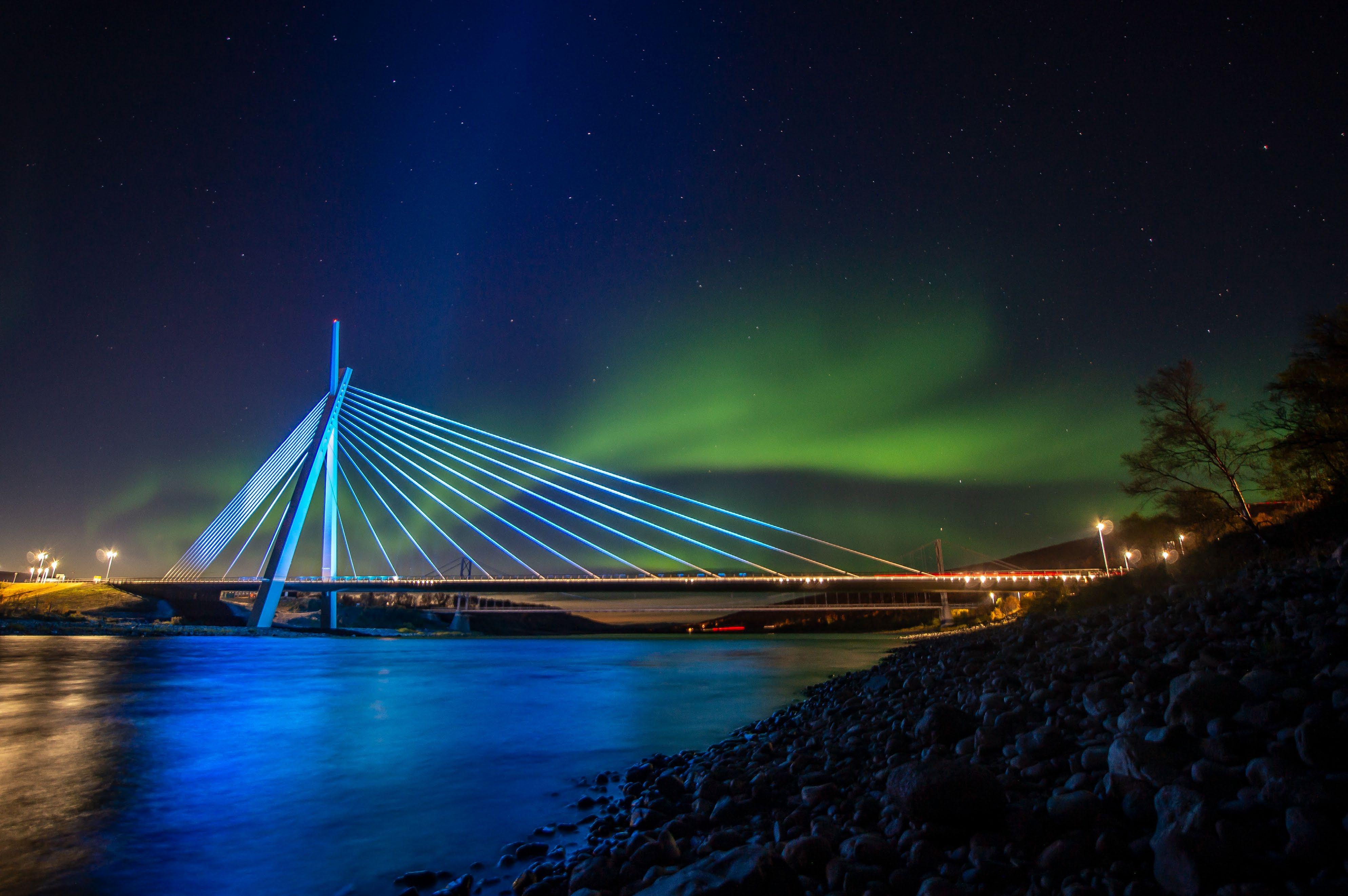
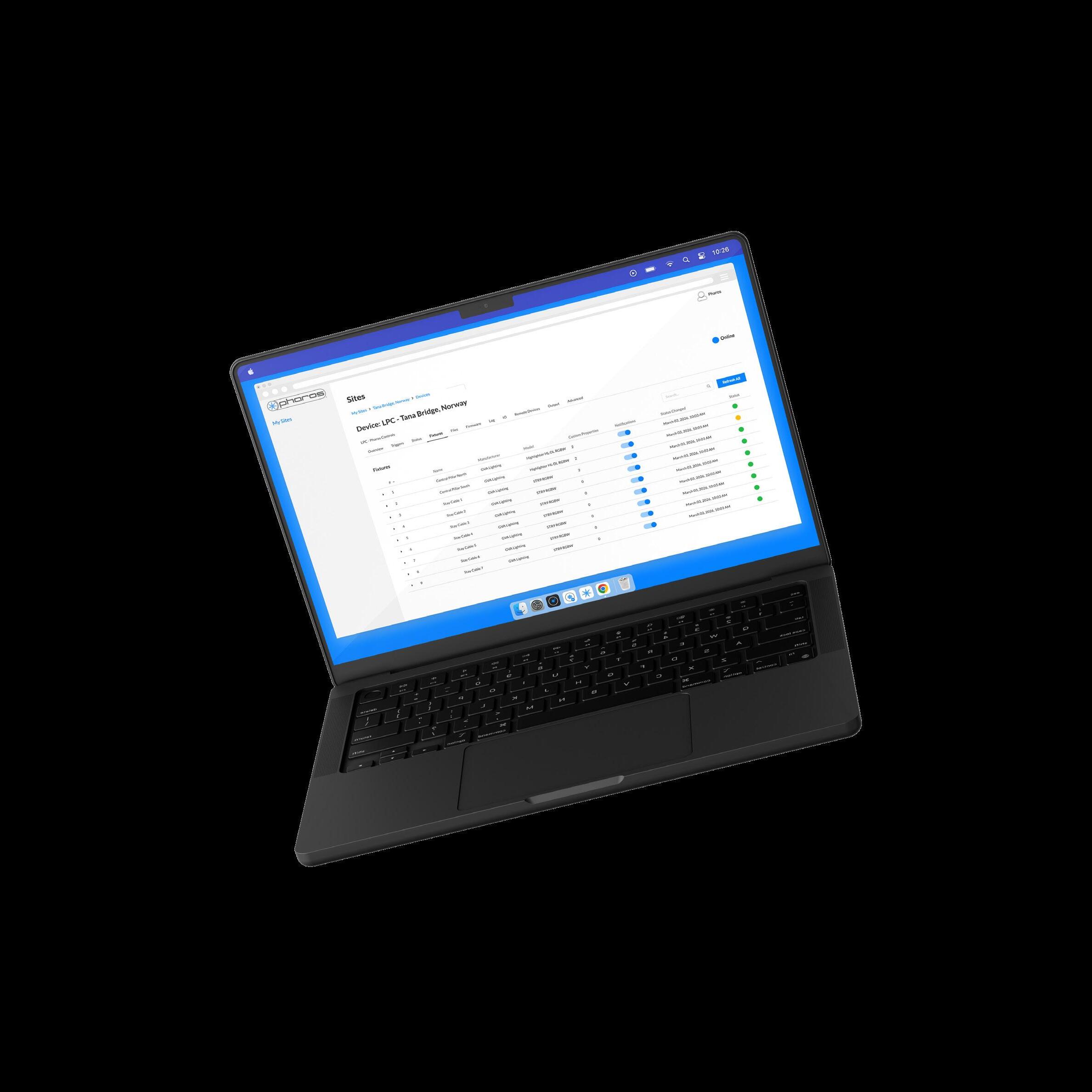
Comprehensive, secure remote lighting control and management, from any Internet-connected device, anytime, anywhere in the world, even in the Arctic Circle.
Coming soon: Fixture Status Monitoring
Remotely monitor RDM fixture status and receive notifications when a fixture's
Tana Bridge, Norway
Lighting in a Correctional Facility OUT OF CONTROL? LESSONS LEARNED ABOUT
By Jennifer Brons, MSc,
Research
Program Director,
Light and Health Research Center, Mount Sinai Icahn School of Medicine, New York, NY.
Jay Farbstein, PhD, FAIA, President, Jay Farbstein & Associates, Inc., Los Angeles, CA (former chair of the AIA Academy of Architecture for Justice’s Research Committee).
Circadian-effective lighting has gained traction in institutional settings because of its potential to improve sleep, mood, and behavior.1, 2 These benefits are particularly compelling in correctional environments, where both residents and staff may be vulnerable to disrupted light-dark cycles.
In this project, a new mental health housing unit within a correctional facility incorporated a color-tunable lighting system designed by the project engineers to support
circadian entrainment. The Light and Health Research Center was later asked to evaluate whether the installed system delivered meaningful circadian and human benefits.
What follows is not a study of outcomes, but a lesson in implementation. Despite a thoughtful design intent, technical and control system failures unfortunately prevented the system from delivering predictable, verifiable light exposure. Those failures ultimately made the research infeasible.
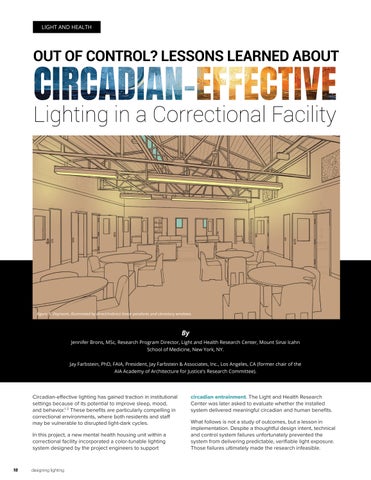
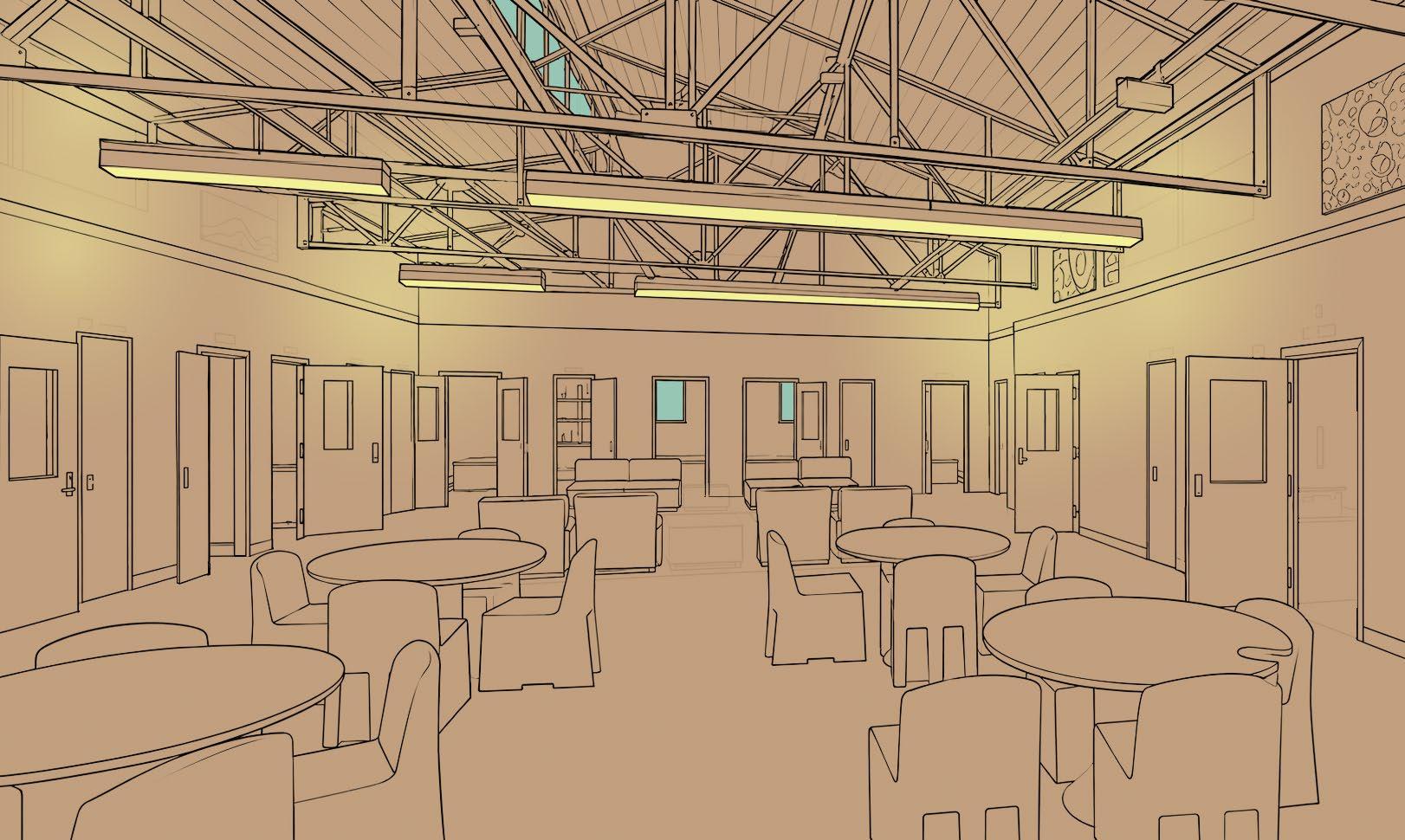
Figure 1. Dayroom, illuminated by direct/indirect linear pendants and clerestory windows.
Project Description
The design of the facility reflected a progressive approach that featured access to exterior views and included dayrooms (Figure 1) with daylight and high ceilings and “sleeping rooms” (cells, Figure 2) arranged to support a more therapeutic environment. Incarcerated occupants are referred to as “residents.” Staff consisted of both correctional officers and psychiatric nurses.
In keeping with the aesthetic and circadian design goals, the electrical engineers specified lighting with color tuning with either high color temperature (4000 K) or low color temperature (2700 K) illumination. The engineers also specified a lighting scene controller to adjust light output and color temperature by time of day.
For dayrooms, the engineers specified long rows of pendant luminaires 12 feet above the floor with direct/indirect distribution. In a few locations, T-bar ceilings allowed the use of vandal-resistant, recessed, basket-type troffers. In sleeping rooms, vandal-resistant surface-mounted 2 × 4 and 1 × 4 troffers were specified. Because residents must be visible to corrections officers day and night, luminaires in sleeping rooms included a separate nightlight feature with a fixed color temperature (2700 K), controlled on a separate channel. The nightlights could be turned on and off from the lighting scene controller, but the light level was not adjustable because the dimming setpoint was established at installation. In addition to the automated controls, officers could override the program to control lighting in each sleeping room for security purposes.
Research
The research was designed following a “before and after” methodology, where the same measures of health and behavioral outcomes would be applied before circadian features of the system were implemented and then after they had been operated for two months.
We intended to measure the impact of changing color and intensity over the 24-hour cycle, using stress and sleep questionnaires with volunteering staff (nurses and corrections officers) and residents, and to measure the staff’s 24-hour light exposure through battery-powered Daysimeters.3, 4
Lighting controls were critically important for delivering the desired lighting at the correct time of day. In our proposed schedule (Figure 3), from sunrise until 19:45, luminaires would operate at full output. In Condition 1, occupants would have experienced only the static color, warm (2700 K) light. Condition 2 was designed to maintain the dimming by time of day, with the addition of high color temperature light during the day. (Figure 3).
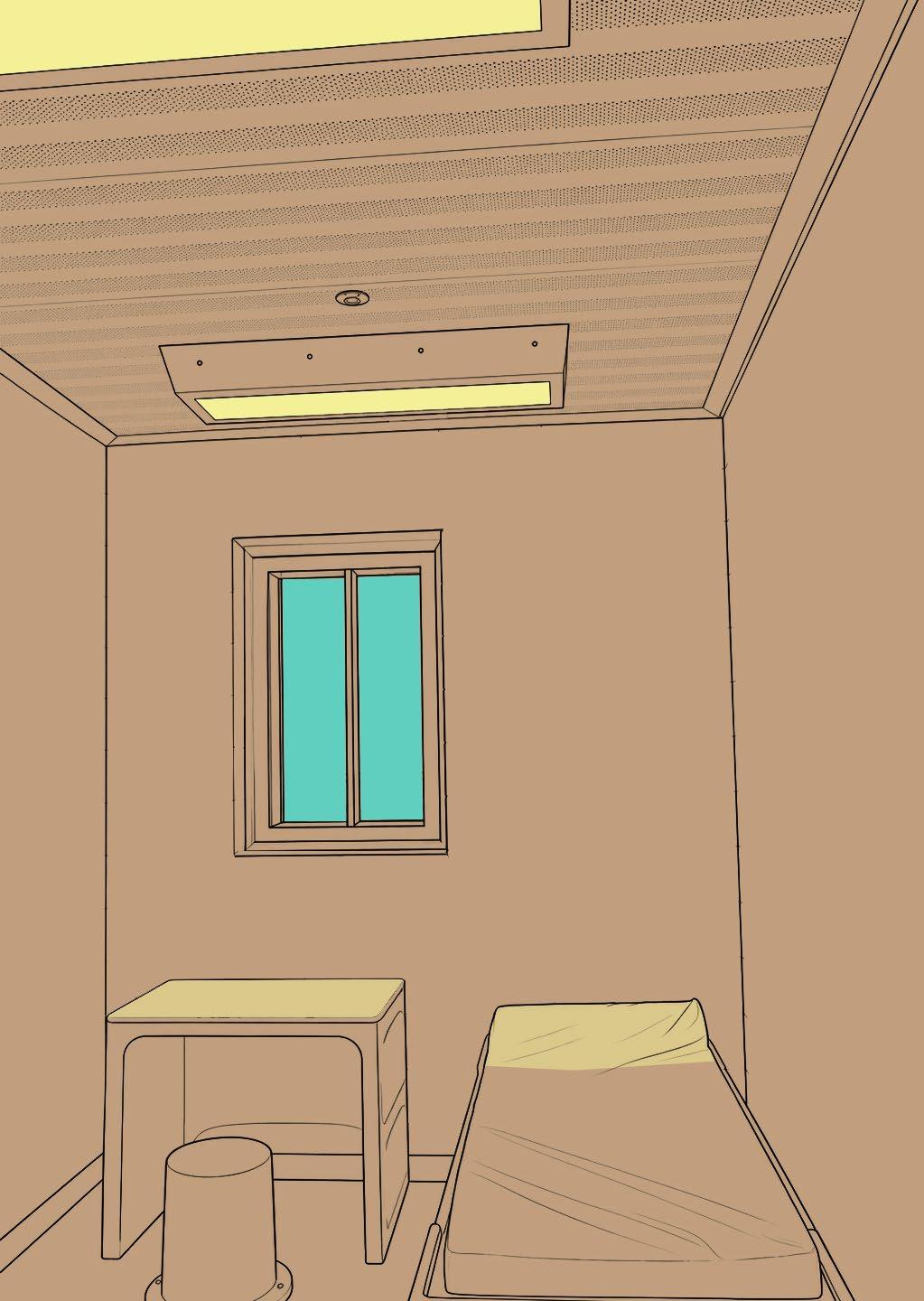
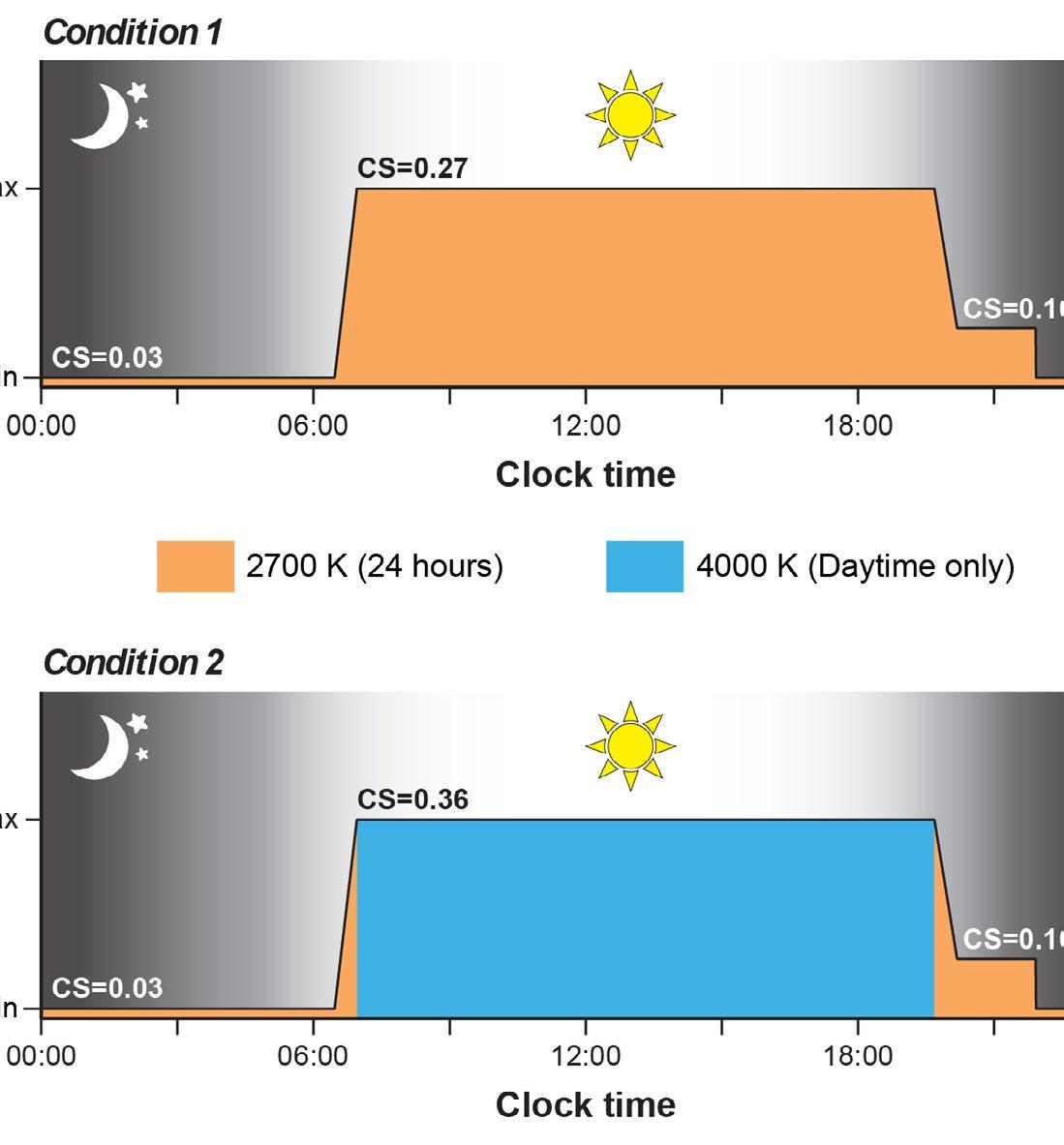
Figure 2. Typical single-bed sleeping room.
Figure 3. Proposed lighting control conditions and estimated circadian stimulus (CS) values
Based on the engineer’s calculations and luminaire spectral data, we performed circadian stimulus (CS) calculations to estimate the optimal dim levels for each time of day and each layer of light. Shortly after move-in, we visited the site with a spectroradiometer to confirm light exposure and assist in finalizing programming the controls.
Challenges
During a multi-day visit, several lighting control issues became apparent. For example, some luminaires did not respond to dimming commands. The lighting in some adjacent sleeping rooms appeared to be linked rather than individually controlled. The nightlight mode in sleeping rooms was inconsistent between luminaires. Though unfortunate for certain residents, we could work around these issues by studying other areas.
But the primary controls challenge appeared when the programmed modes were operated by the scene controller’s timeclock. Instead of dimming the lights in evening mode, for example, the system switched to full output and high color
temperature. We also noted that the clock drifted gradually later from day to day.
Following the visit, we communicated with the lighting controls manufacturer’s representative, who visited several times to troubleshoot the system. We also learned that dimming consistently between adjacent spaces required overriding the luminaires’ integrated self-learning control features. To achieve this, the representative reprogrammed the luminaires to briefly operate at high color temperature mode once per day (Figure 4).
Even after reprogramming, there were reports that luminaires sometimes turned on to high output in some sleeping rooms overnight. Because nightlight output was inconsistent in sleeping rooms, the representative disabled nightlights and reprogrammed the main sleeping room lighting to be energized at a minimum level overnight.
However, even a year after our visit, our on-site contact still received reports of high light levels overnight in some cells. It is unclear whether this was due to a malfunction in
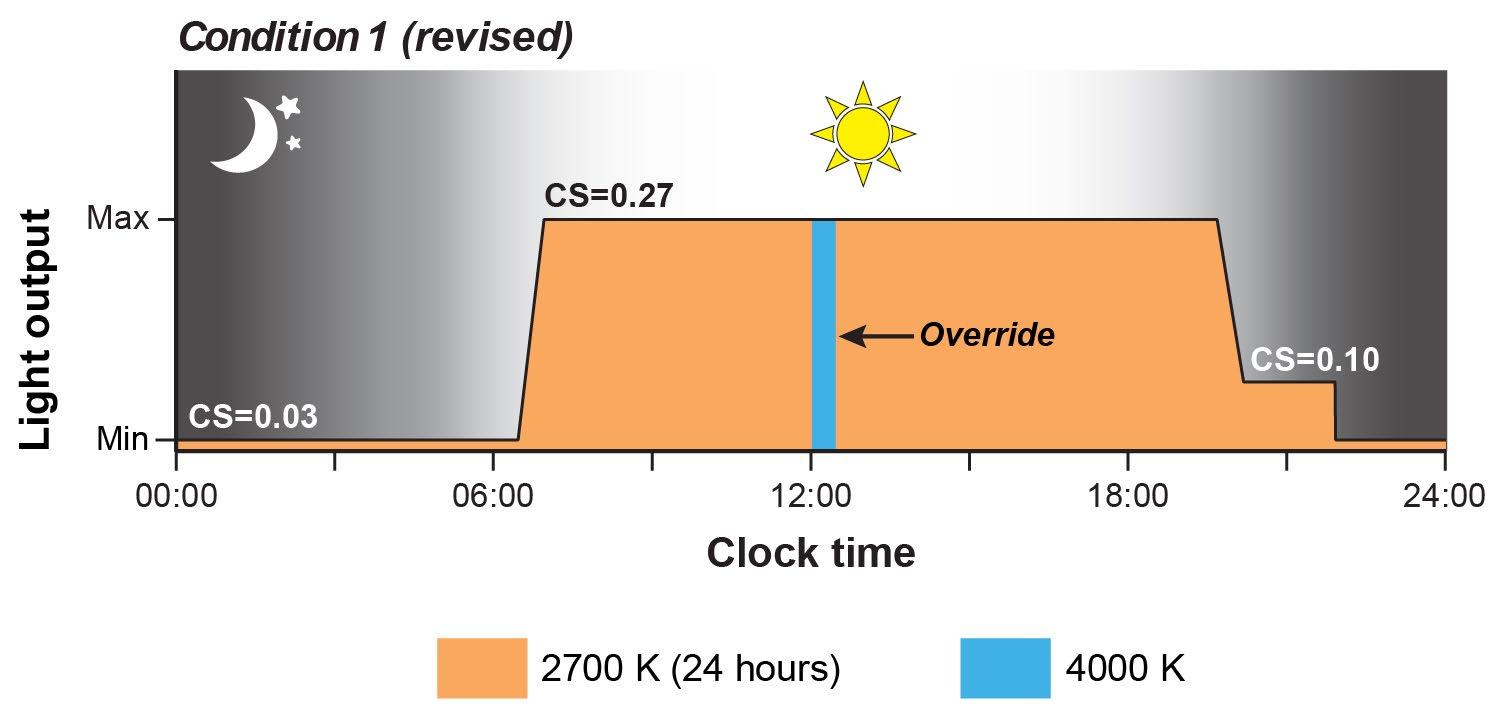
Figure

the luminaires, the lighting controls, manual override by the officers, or other causes.
While the lighting controls system did not generate behavior logs, the officers’ security system did have a logging feature that confirmed that officers frequently override the lighting controls. The only way we might have been able to launch the study was if the scene controller was working to the satisfaction of the officers. However, even on nights when the data showed that the officers were not overriding the scene controller, video surveillance footage indicated that some luminaires were still on at high output overnight.
Although several parties (security contractor, general contractor, electrician, systems integrator, and lighting controls representative) investigated the situation, the client was unable to control (or even determine) precisely what the luminaires were doing overnight. In the end, we were therefore unable to collect the desired data and the research project was cancelled. The current status of overnight lighting remains unknown to the research team.
Lessons Learned
For those considering circadian-effective lighting in correctional facilities, adjusting light output by time of day remains imperative. However, static-color lighting may reduce troubleshooting challenges.
For lighting to be circadian-effective, the scene controller’s timeclock must remain “entrained”; at our site, because it was not synchronized with the outside world, the timeclock
References
continually drifted later. Ironically, this is similar to the drift experienced by humans without regular exposure to light/ dark cycles.5
At the commissioning stage, we recommend testing over several days to confirm that timeclock-controlled dimming occurs as designed. At our site, this would have permitted troubleshooting prior to move-in, while contractors were still on the job, and might have avoided the system’s compromised performance.
In addition to ensuring proper timeclock operation, commissioning agents should use an illuminance meter, ideally a spectroradiometer, to confirm that target circadian stimulus has been achieved during the day, while avoiding excessive light at night and maintaining officers’ ability to perform overnight bed checks.
For security, safety, and operational needs, it is important to provide the facility’s staff with the means to occasionally override the lighting system. But if they cannot trust the scene controller to meet these needs, it is reasonable to assume they would be more likely to more frequently override the system and perhaps defeat the purpose of the circadian-effective lighting entirely.
Takeaway
To realize their potential for positive behavioral and health outcomes in correctional settings, circadian-effective lighting systems must be designed, installed, and commissioned in a manner that ensures that they will function properly.
1. Figueiro MG, Sahin L, Kalsher M, Plitnick B, Rea MS. Long-term, all-day exposure to circadian-effective light improves sleep, mood, and behavior in persons with dementia. Journal of Alzheimer's Disease Reports 2020; 4: 297-312.
2. Walker WH, 2nd, Walton JC, DeVries AC, Nelson RJ. Circadian rhythm disruption and mental health. Translational Psychiatry 2020; 10: 28.
3. Bierman A, Klein TR, Rea MS. The Daysimeter: A device for measuring optical radiation as a stimulus for the human circadian system. Measurement Science and Technology 2005; 16: 2292-2299.
4. Figueiro MG, Hamner R, Bierman A, Rea MS. Comparisons of three practical field devices used to measure personal light exposures and activity levels. Lighting Research and Technology 2013; 45: 421-434.
5. Figueiro MG. Disruption of circadian rhythms by light during day and night. Current Sleep Medicine Reports 2017; 3: 76-84.
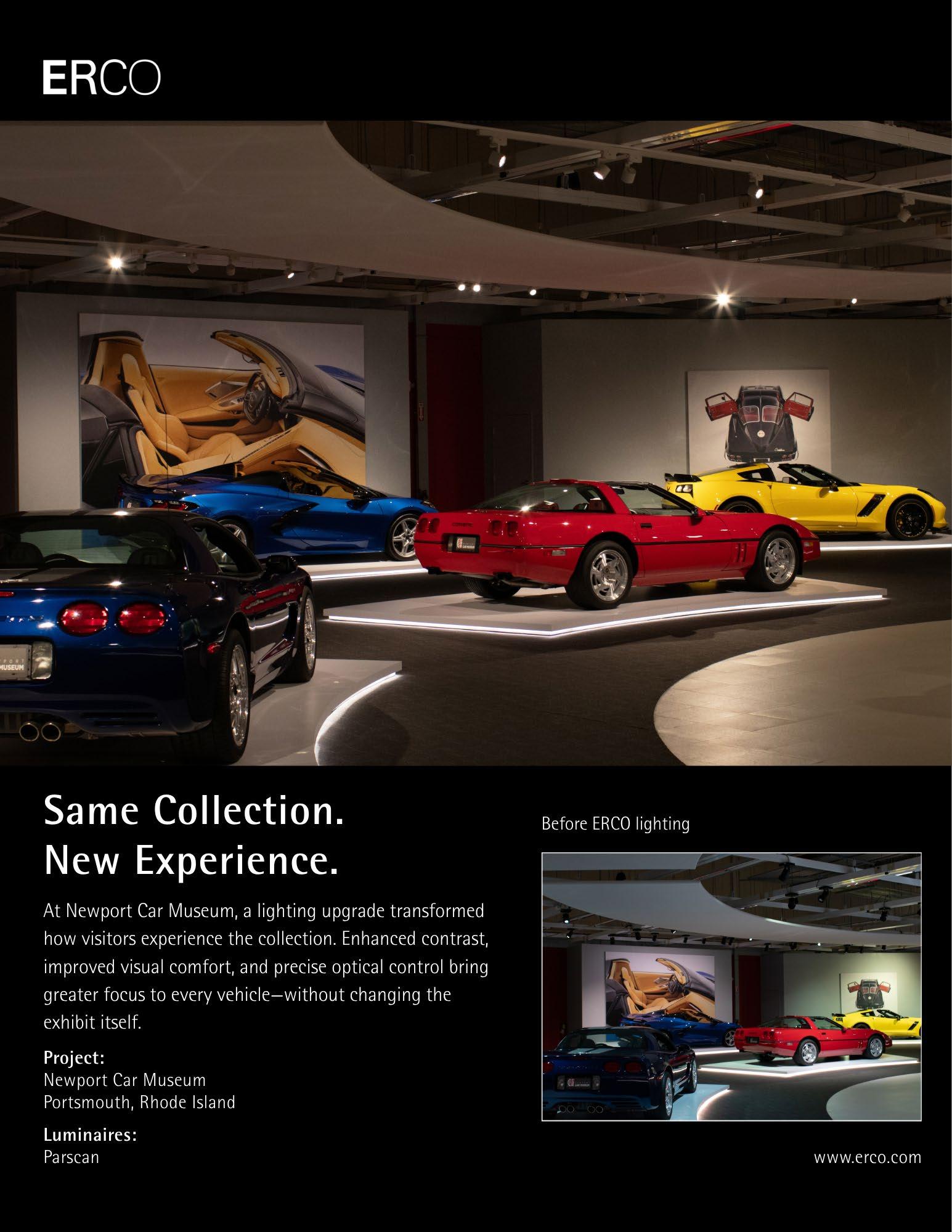
THE WOMEN LEADING FISHER MARANTZ STONE
RANDY REID By
At first, Charles Stone didn't want to talk about himself.
Sitting in the EdisonReport studio during Light + Building in Frankfurt, the longtime Fisher Marantz Stone principal repeatedly redirected questions away from his own remarkable career and toward the people he believes will define the firm's future.
Again and again, the conversation returned to the same subject.
The women of Fisher Marantz Stone.
By the time our interview ended, it was clear there was a larger story to tell. A few weeks later, I scheduled a Zoom call with Paula Martinez-Nobles and three of the firm's Senior Associates Katie Czub, Kristina Jajalla, and Amy Leder.
That conversation revealed something Charles already understood.
The future of Fisher Marantz Stone is being shaped by a remarkable group of women, each bringing a different leadership style, perspective, and path to one of the world's most respected lighting design firms.
At the center of that story is Paula Martinez-Nobles.
When Paula became president of Fisher Marantz Stone in January 2025, the title felt both significant and entirely natural. For years, newer designers had already been looking to her for guidance. Clients relied on her judgment. Colleagues sought her counsel. Leadership, in many ways, had arrived long before the title.
Yet what became most apparent during our recent conversation was not Paula's achievement, but her instinct to promote and advocate for her team.


She pointed toward the women sitting beside her on a video call spanning three cities and three time zones.
Katie Czub in Austin.
Kristina Jajalla in Seattle.
Amy Leder in New York.
Together, they represent a generation of emerging leaders helping guide one of the world's most respected lighting design firms into its next chapter.
What makes their story compelling is not that they share the same background.
It's that they don't.
Each approaches leadership differently. Each brings unique strengths. Yet together they reflect a culture of mentorship that has quietly become one of Fisher Marantz Stone's greatest assets.
And perhaps most importantly, every one of them started under Paula's guidance.
"I just want to reiterate that the three of us all started with Paula," Katie said in our conversation. "I think that is a testament to the leadership of our company and what she instilled in us when we were very young."
FMS's strength comes from a deep bench of leaders and mentors across multiple generations. In many ways, it reflects an unwritten mission that has guided the firm for decades: creating magic through collaboration, design excellence, lighting education, and accountability.
The Mentor
When Paula talks about leadership, she rarely talks about herself.
Instead, she talks about helping people grow.
The daughter of Colombian immigrants and now the mother of four daughters herself, Paula developed a leadership style rooted in observation, curiosity, accountability, and a deep commitment to helping people identify and reach their potential.
That instinct appears to serve her well both at home and in the office.
"I like to see people succeed," Paula said. " When I have found things to be unnecessarily difficult, I want the people coming behind me to get there faster."
One example stands out.
Early in her own career, it took years before she was regularly exposed to construction sites and field conditions. Today, she intentionally pushes newer designers toward

"If it took me way too many years to get to a job site at the beginning of my career, I don't want anybody that I'm training to take as long," she explained. "I want them to get


protecting both the business and the people it serves.
Just as important, she believes the next generation must learn not only design, but also the operational and financial disciplines required to sustain a practice for decades to come.
The Technician
If Paula is the mentor, Katie Czub is the strategist.
Based in Austin, Katie leads Fisher Marantz Stone's newest office while also serving as one of the firm's most technically minded designers. Her colleagues describe her as analytical, rigorous, and endlessly curious.
"It's all about making sure that we're actually thinking about the problem," she said.
That philosophy has helped make her one of the firm's technical leaders, involved in everything from dark-sky considerations and code development to airport projects and educational facilities.
Yet despite the technical focus, Katie remains deeply creative.
Her recent personal project involved transforming constellations into handmade pasta dishes inspired by celestial bodies. She has already completed interpretations of the zodiac and recently created one inspired by Orion.
The combination feels uniquely appropriate. Technical precision. Creative exploration.
And an endless curiosity about how things fit together.
The Community Builder
For Kristina Jajalla, leadership began with saying yes.
Born from a background in architecture and community design, Kristina describes her own career path as a series of opportunities she chose to explore.
might never have considered.
"I never knew there were so many options out there," she reflected. That realization continues to shape her approach to mentorship.
When she speaks about interns and new designers, she returns repeatedly to the idea of exploration. Try new things. Ask questions. Remain open. Be present.
Much like her own journey, the next opportunity may come from somewhere unexpected.
The Coach
She often says she "fell into" lighting, eventually finding her way into leadership before relocating from Southern California to Seattle to lead Fisher Marantz Stone's Pacific Northwest office.
"One of the big themes that I learned was to be fearless and to be okay with change," Kristina said.
Today she leads a growing office while balancing design work, business development, mentoring, recruiting, and community outreach.
Much of her passion centers on introducing developing designers to possibilities they may not know exist.
Amy Leder sees leadership through the lens of sports.
A senior associate in New York for the last ten years, Amy also has coached Ultimate Frisbee at Columbia University. What began as a personal passion evolved into something more meaningful: a laboratory for understanding how teams succeed.
The lessons translate directly into design practice.
"You have to accept that you might lose," Amy explained. "Then you can play without the fear of losing." The insight applies equally well to project teams.


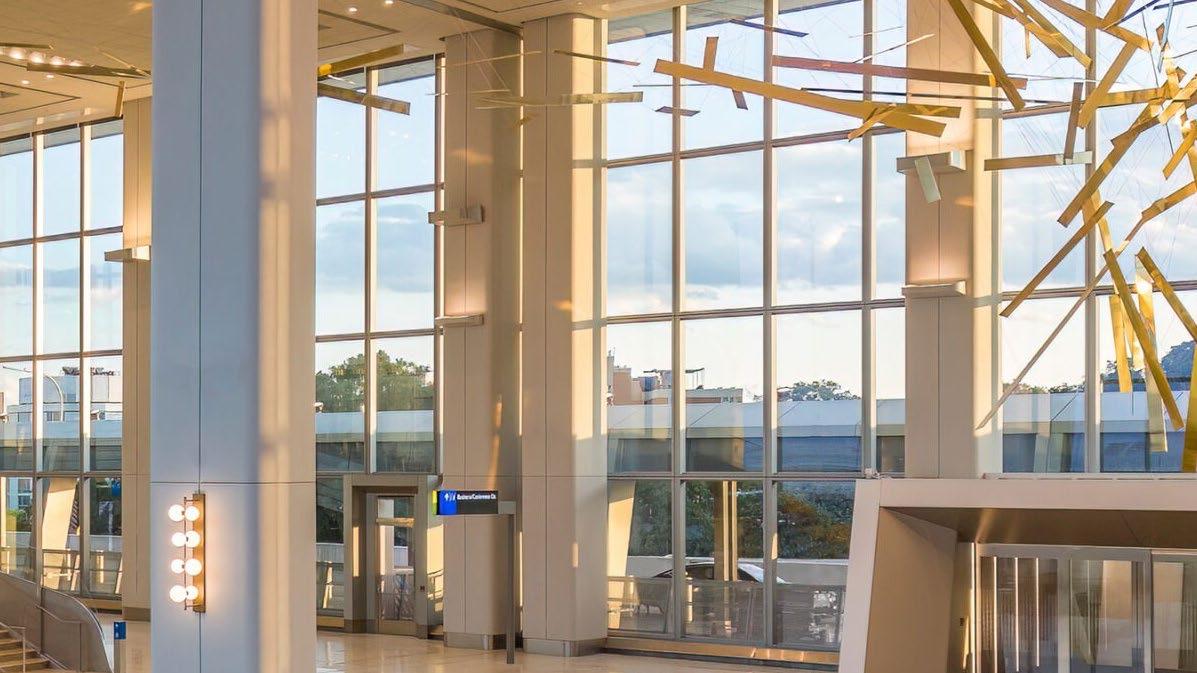
Through her work with the National Organization of Minority Architects (NOMA), Kristina helped create handson educational experiences for students ranging from elementary school through high school. The programs introduced concepts such as daylighting, façade lighting, and color theory while exposing students to careers they
Design requires experimentation. Innovation requires risk. Neither can happen if people are afraid to fail and try.
Amy's role within the firm reflects that philosophy. She spends much of her time mentoring designers, leading

— Paula Martinez-Nobles
project teams, maintaining client relationships, and helping newer staff members discover what excites them professionally.
She also remains intensely hands-on.
Whether climbing ladders on project sites or gathering around a designer's desk to sketch ideas together, Amy believes people learn best through experience.
The approach mirrors her coaching style. You cannot play the game for someone else. You can only help them become better players.
"We cannot solve the problem for the designers," she said. "They have to do the work themselves."
For Amy, leadership is not about directing from a distance. It is frequent, in action feedback, just like in her ultimate games, she watches a player struggle and points out how to course correct to improve their plays and build the confidence needed for the next round.
The Next Generation
Near the end of our conversation, Paula reflected on the generations of Fisher Marantz Stone leaders who helped shape her own career. She learned from Charles Stone, Paul Marantz, Jules Fisher, Hank Forest, Zack Zanolli and many others who helped shape both her career and her understanding of leadership."
Paula notes “FMS has always been a highly collaborative environment and one that invests deeply in the development of its people. Many of our team members have spent decades with the firm, building careers that span multiple generations. That continuity has created a deep bench of talent and a culture where mentorship, knowledge, and responsibility are passed from one generation to the next. This is what drew me into taking
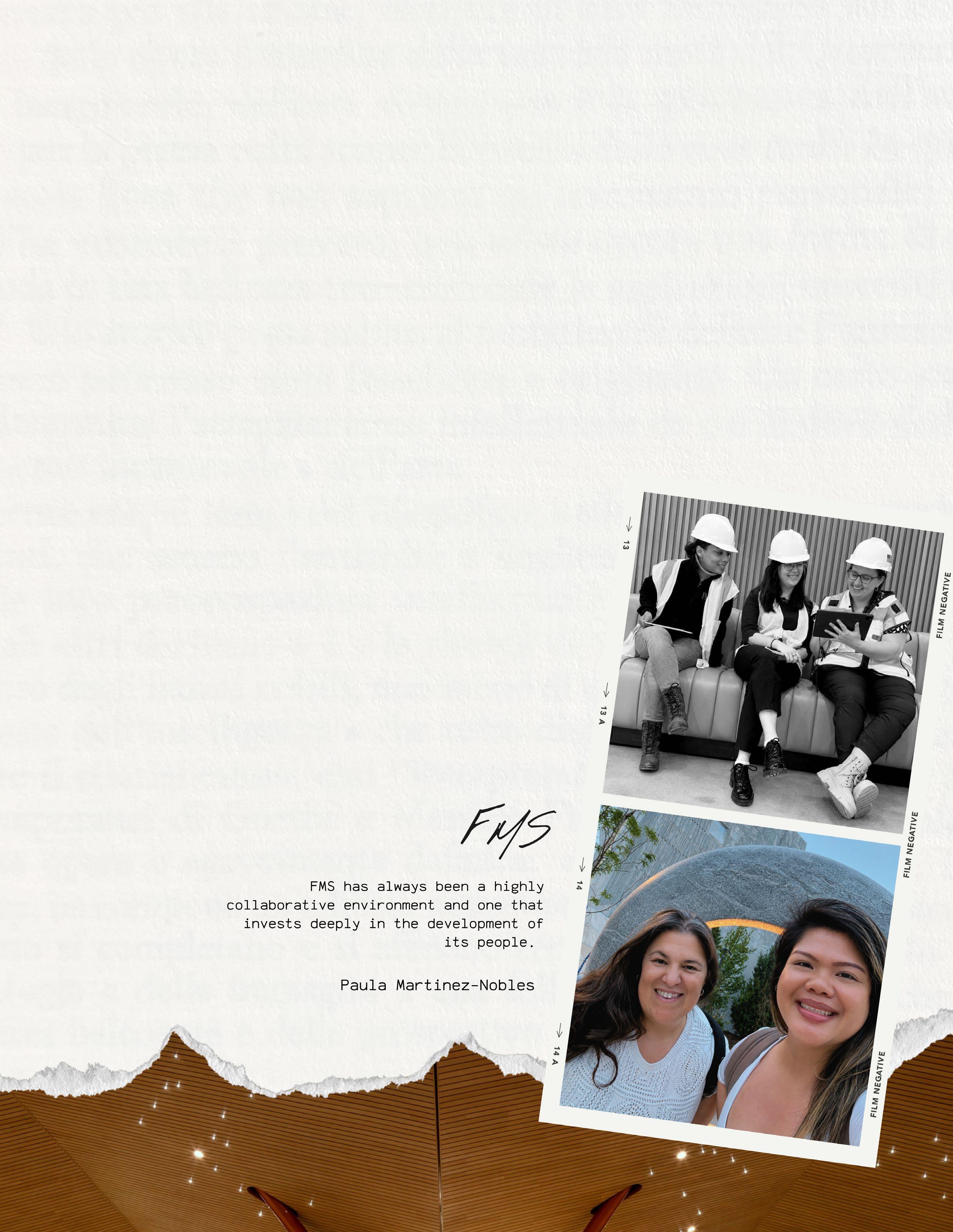
on ownership of FMS. A deep sense of loyalty and responsibility to continue this enormous design legacy not just for us but whoever comes next.
The same mentorship culture that shaped today's principals will ultimately determine who carries Fisher Marantz Stone forward. What emerged from our discussion was not a story about women in lighting, although it is certainly that.
It was a story about generational leadership. About knowledge being passed from one generation to the next. About a culture where mentorship is not a program but an expectation. And about four women who have each found their own way to lead.
The methods differ. The personalities differ. The paths differ. But the goal remains remarkably consistent.
Embody the FMS mission to continue to create magic through collaboration, design excellence, mentorship and accountability. ■
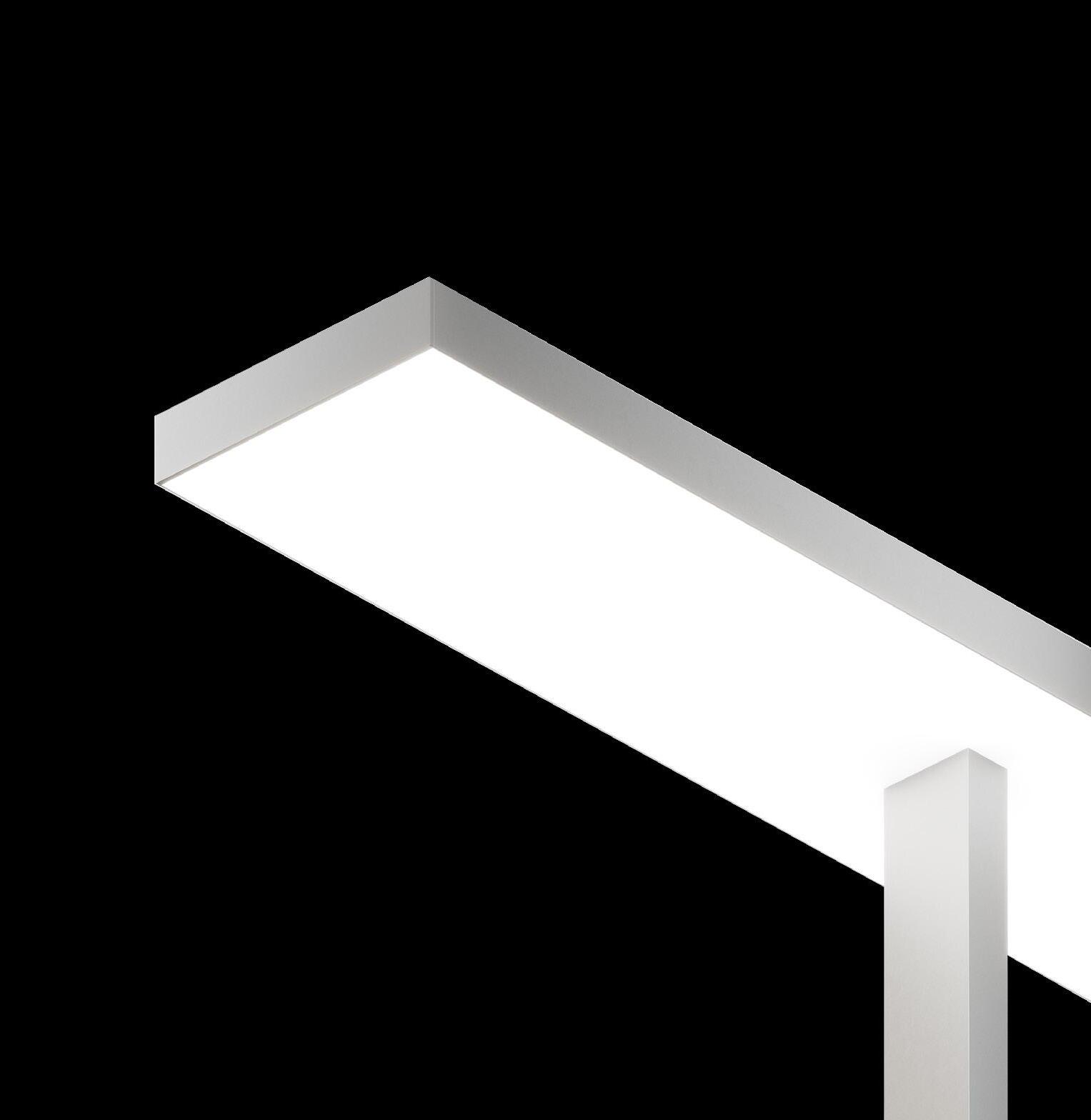
Nexa | Table Arm | 807
Same system. New Plane.
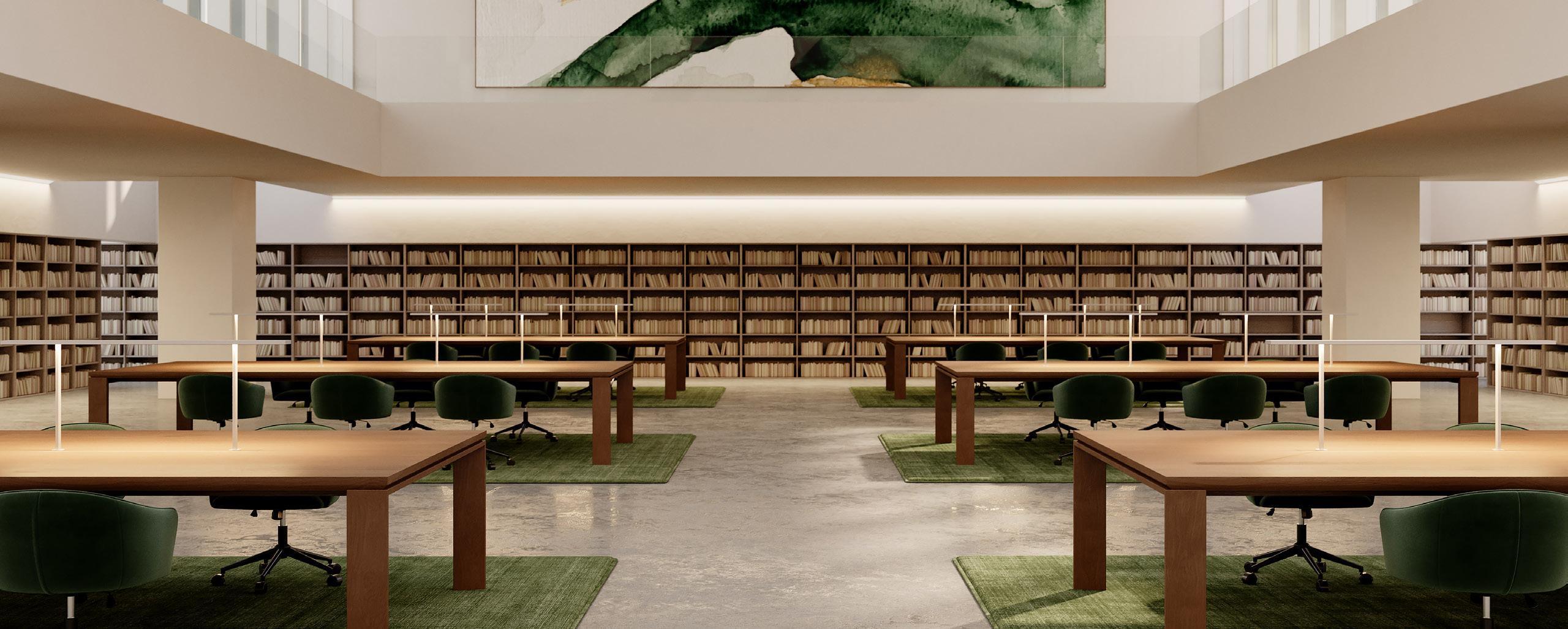
Minimal illumination, thoughtfully shaped for the modern workspace.
Nexa | Table Arm brings the modular performance of the Nexa family directly to the task, delivering precise, comfortable illumination in a clean, minimal form.
Its bezel-less design and seamless integration support focused work while maintaining architectural continuity across workplace, education, and airport environments.
Benefits of Nexa | Table Mount:
Minimal Profile, Seamless Design
Thin plane of light, 3.25 in x 0.66 in.
Thoughtful Engineering. Clean Sightlines. With only two mounting points, Nexa | Table Arm delivers remarkable linear stability up to 60 in.
Superior Light Quality & Performance
Output up to 1578 lm/ft (HO), 161 lm/W (HO).
ON/OFF Switch Offering Available
Optional On/Off switch integration provides simple, convenient control directly at the task surface.















TRIBUTE JIM BENYA to
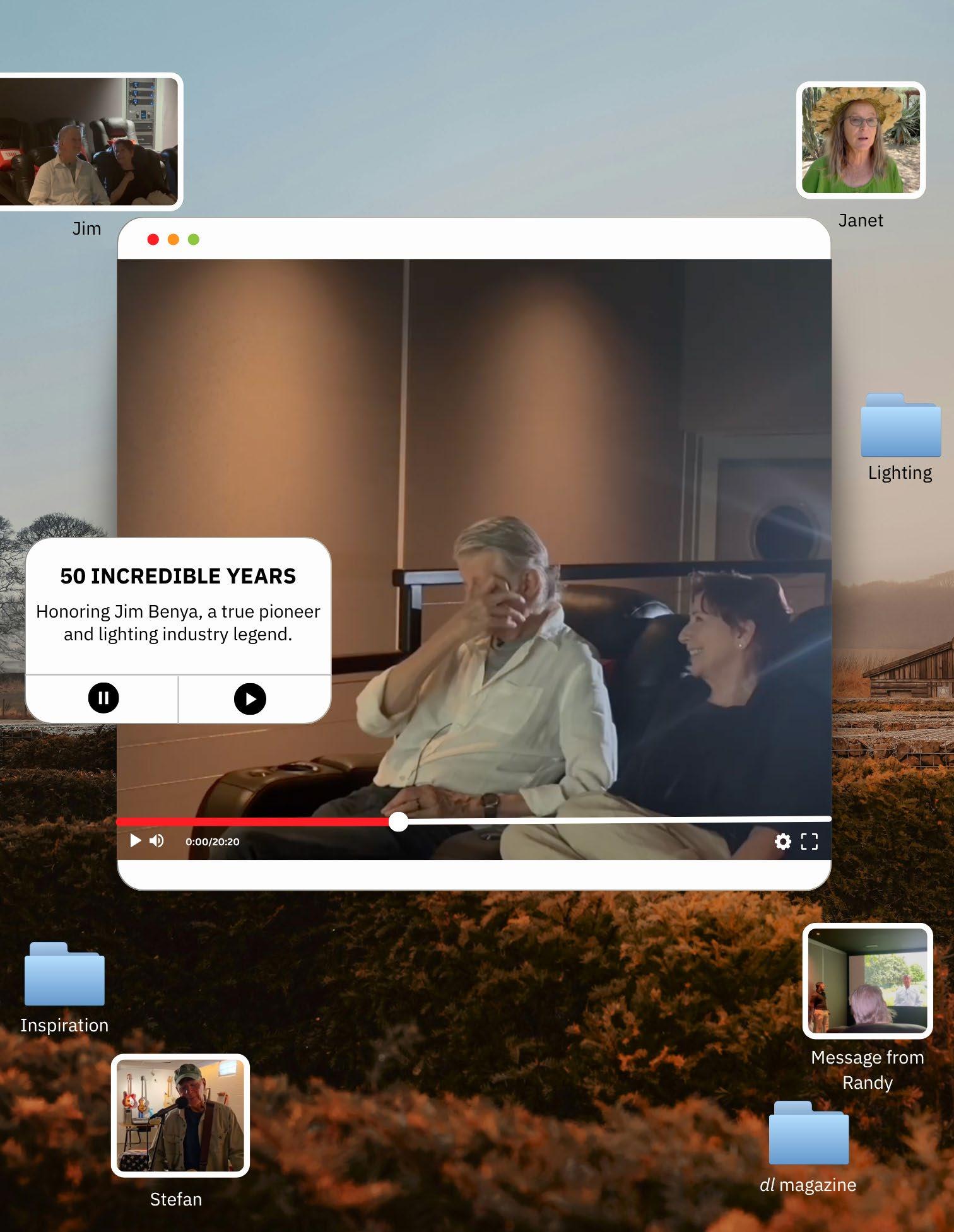
After more than 50 incredible years, Jim Benya has decided to retire. We, at designing lighting (dl) magazine were honored to have him as a writer for the Art & Science of Lighting Column since our inception in 2020.
One of the greatest honors of my career was having the privilege of making this video tribute to Jim. We have never attempted anything like this before, and we appreciate Jim being the Guinea pig.
We want to thank our sponsor DMF Lighting and Audio Advice in Raleigh for allowing us to use their beautiful theater.
Sit back, get some popcorn and watch this video tribute to one of the greatest lighting minds in our generation.
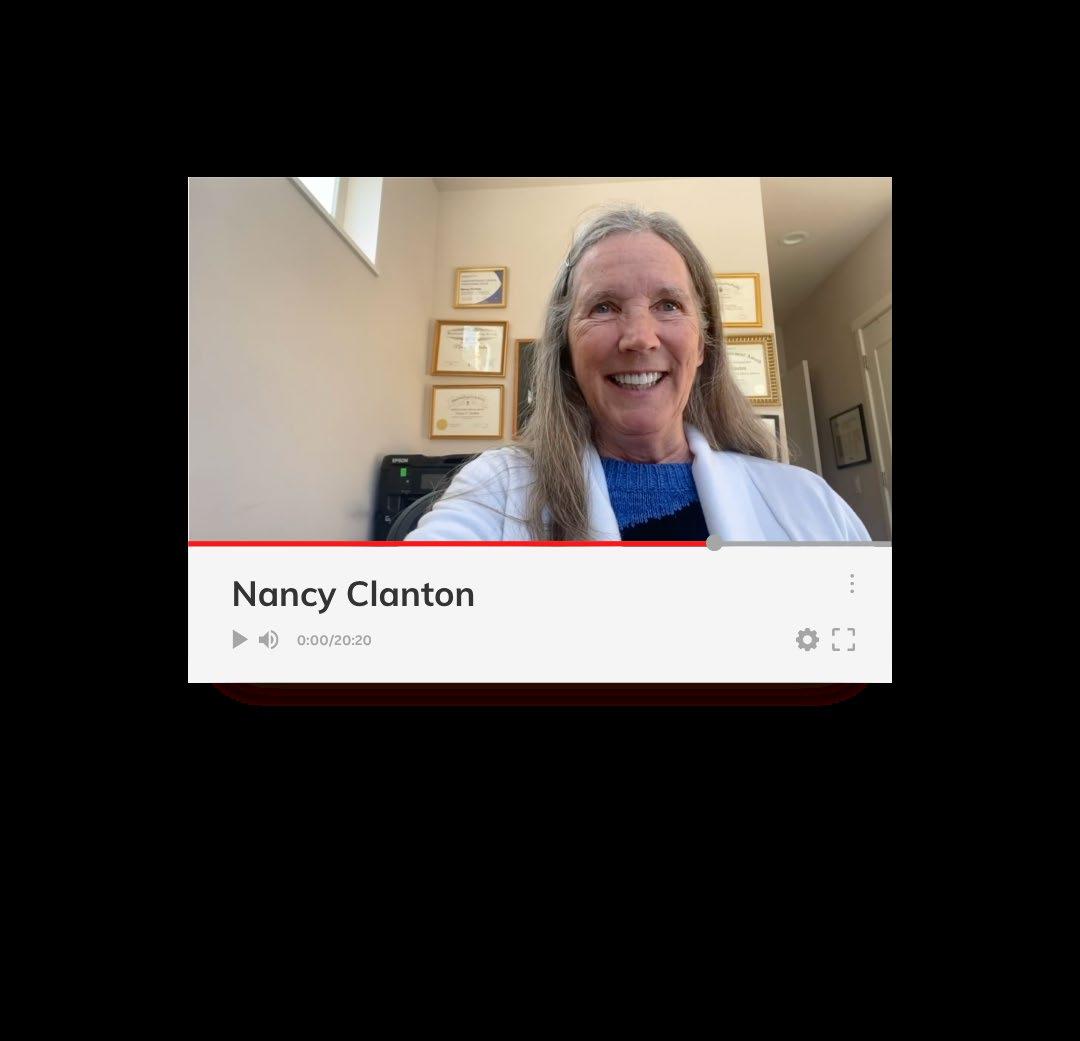
NANCY CLANTON: “I remember going to an IES board meeting unannounced with you and asking to be put on the agenda, we then presented the importance of IES joining IDA and developing a model lighting ordinance together, which the IES board approved at that meeting. Wow!”

NAOMI MILLER: “Jim you've been a terrific friend I've always admired you.”
BOB WHITE: “My first impressions of Jim or who is this this sort of mythical person my second impression is I got to know him was a friendly colleague always willing to share his thoughts and insights…”
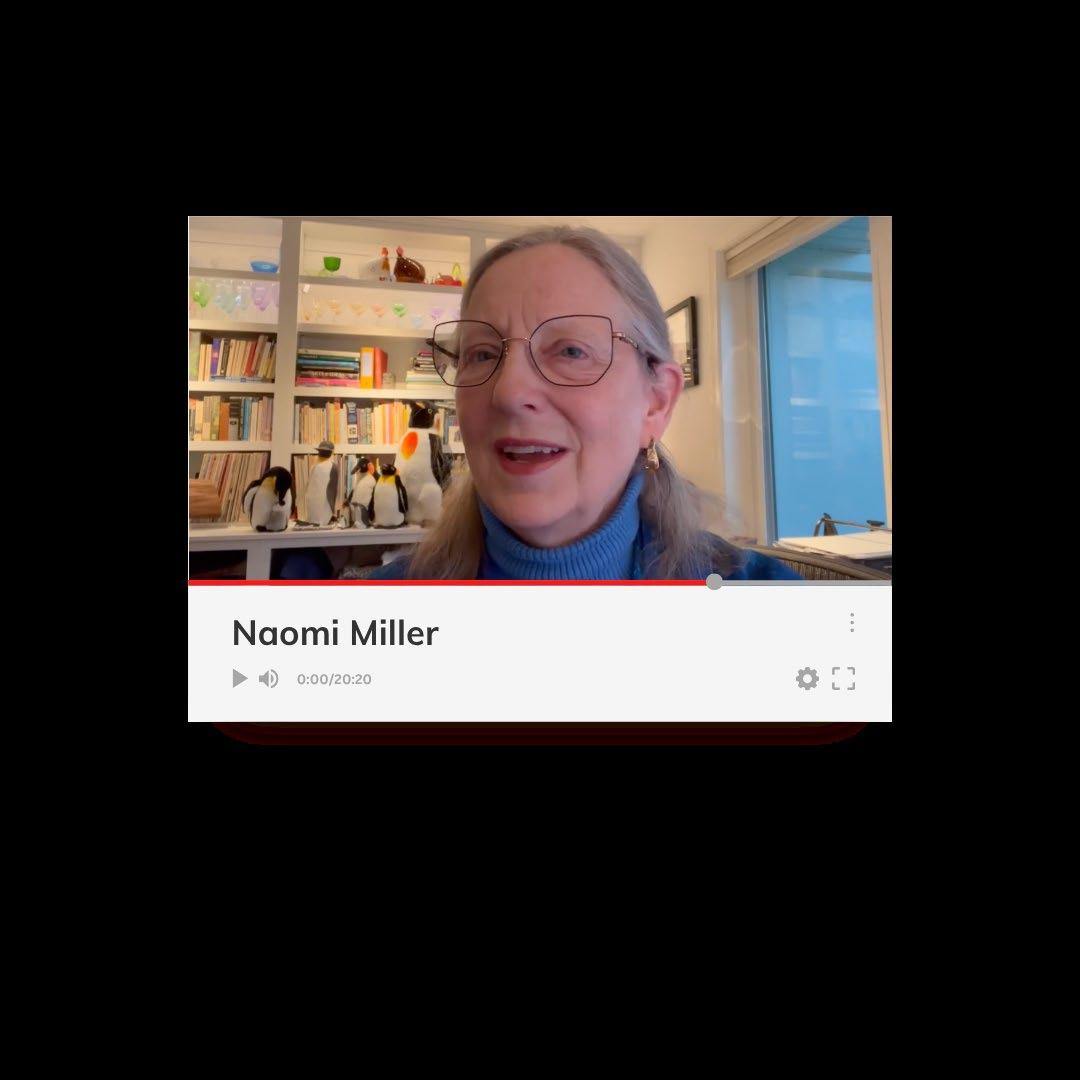
CAROL JONES: “We met up at a meeting in Seattle at the Lighting Design Lab. It was a change the world meeting… and you blew me away you blew me away. At that meeting your life force, your passion, your commitment, your knowledge…it rocked my world and I joined the tribe.”
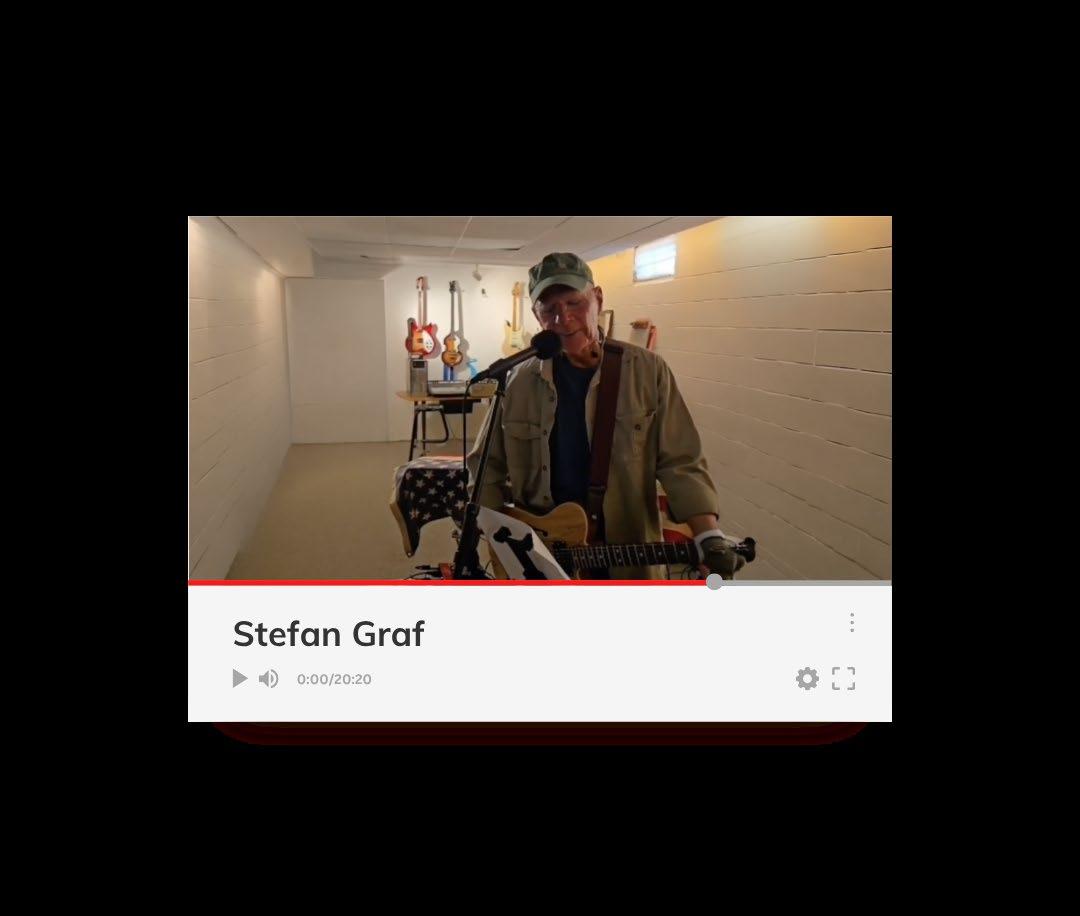
STEFAN GRAF created a custom rendering of the song “Simply the Best.”

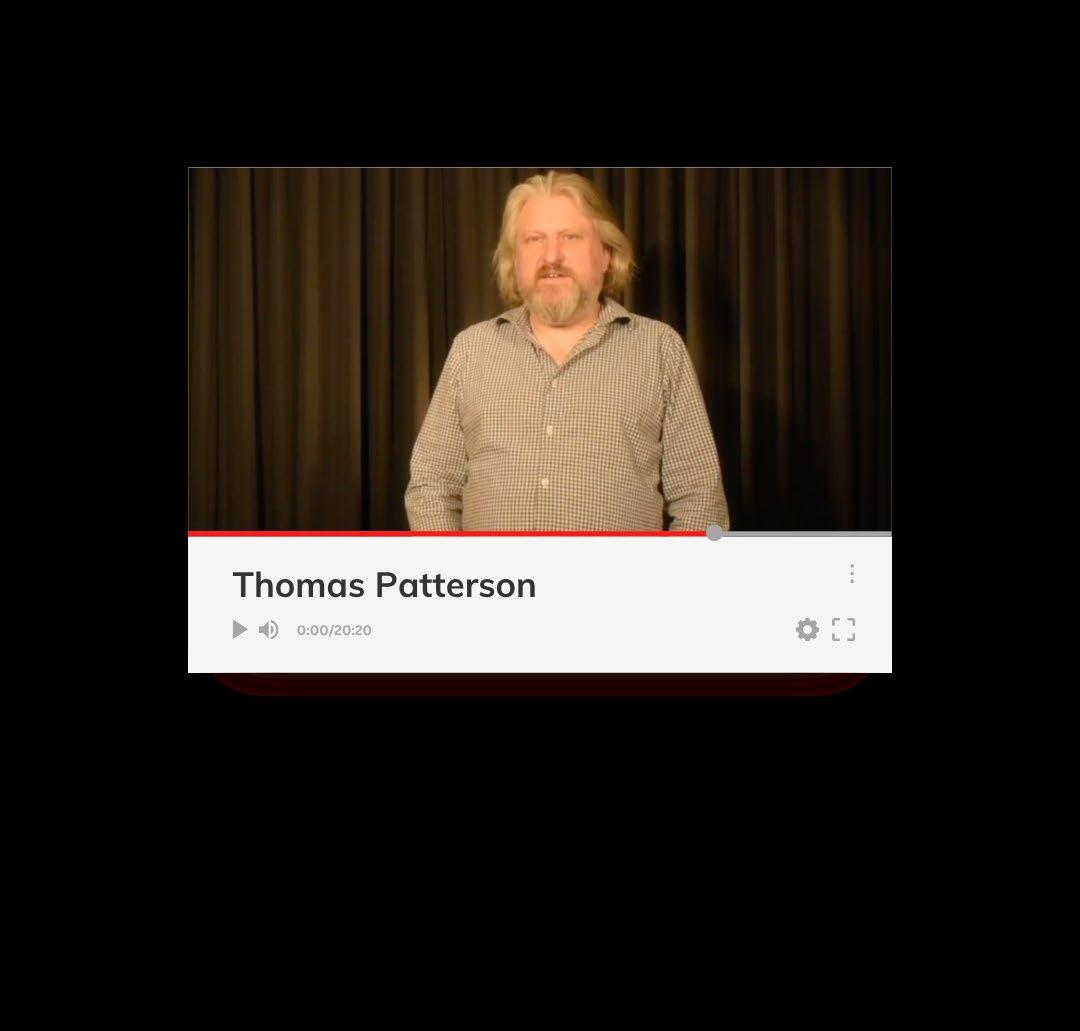
THOMAS PATTERSON: to miss the really detailed attention to the technology that makes the vision work. That craft is a loss for the industry…we'll probably abduct you if we need to.”

BRIENNE WILLCOX: “Jim's ability to look at lighting through so many lenses at once and communicate the responsibility that we have to one another and communicate the value of design to the public is truly inspirational.”

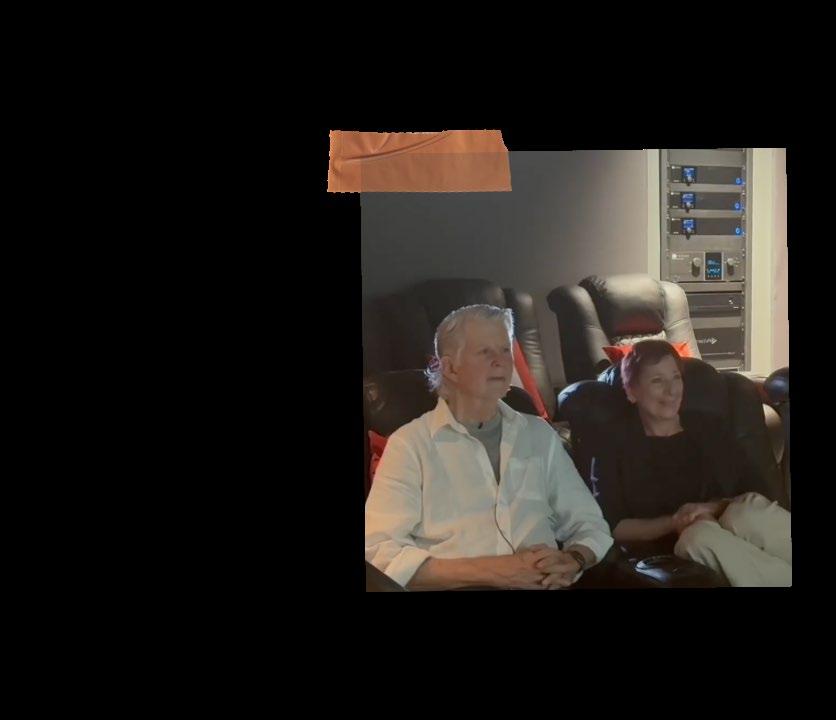

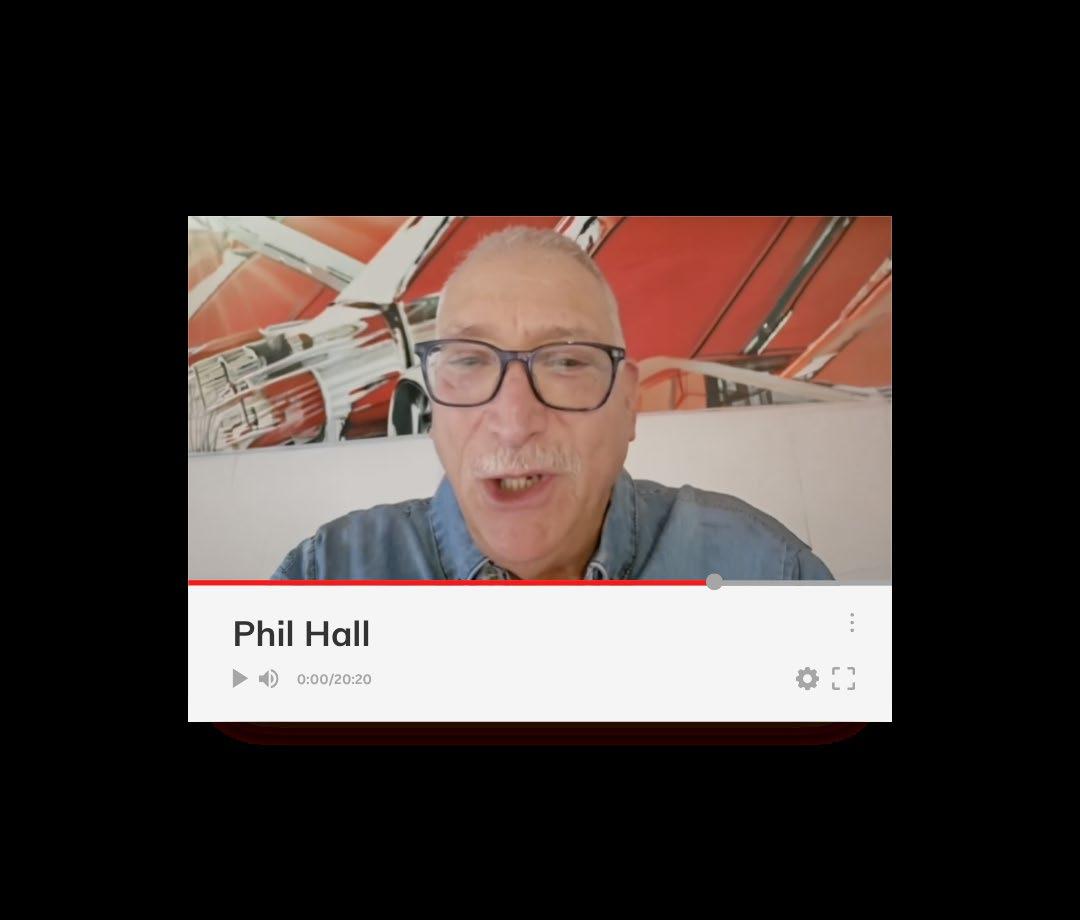
PHIL HALL: “I hope that your new move is successful and everything you want it to be hope.”


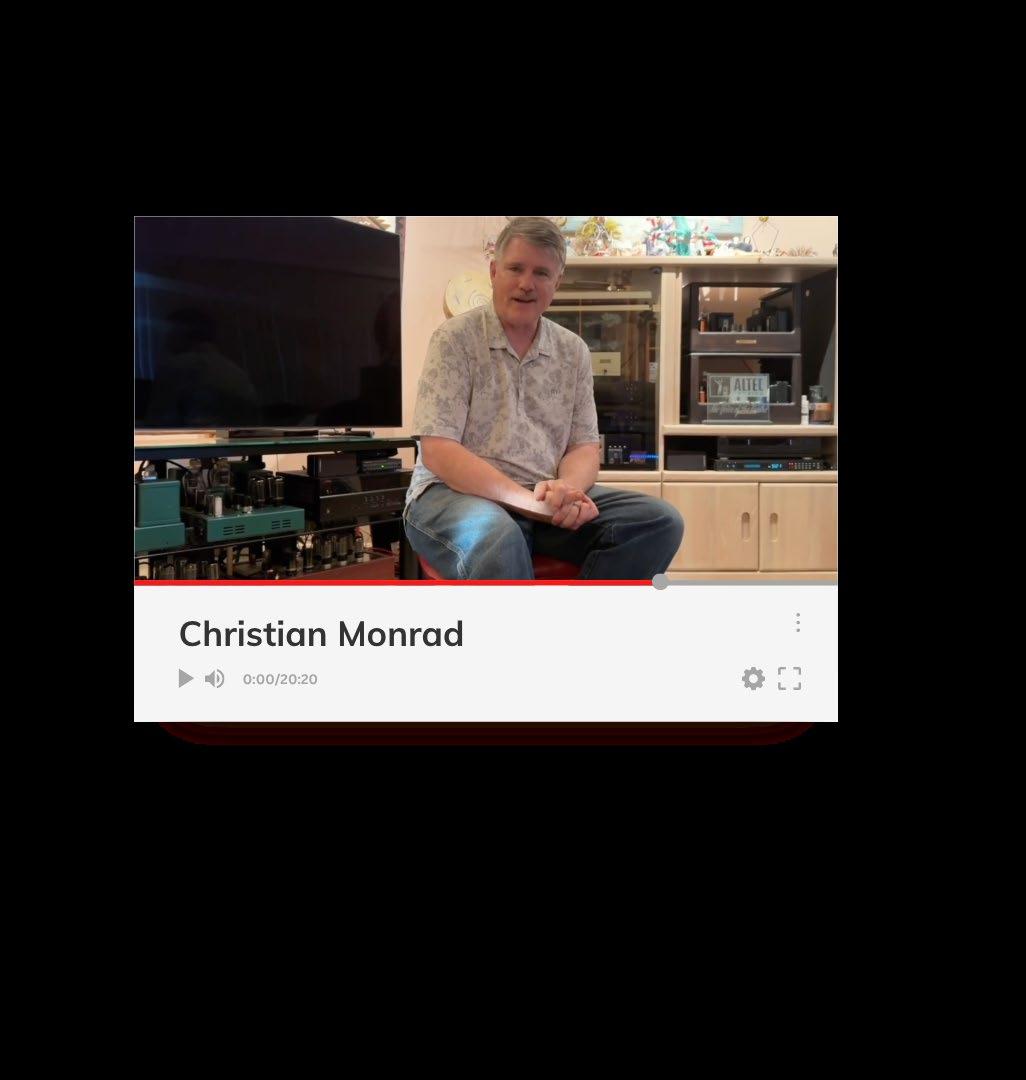
CHRISTIAN MONRAD: true blessing to my life to know you and to learn so much from you I can wish nothing but the best for you and Deborah.”
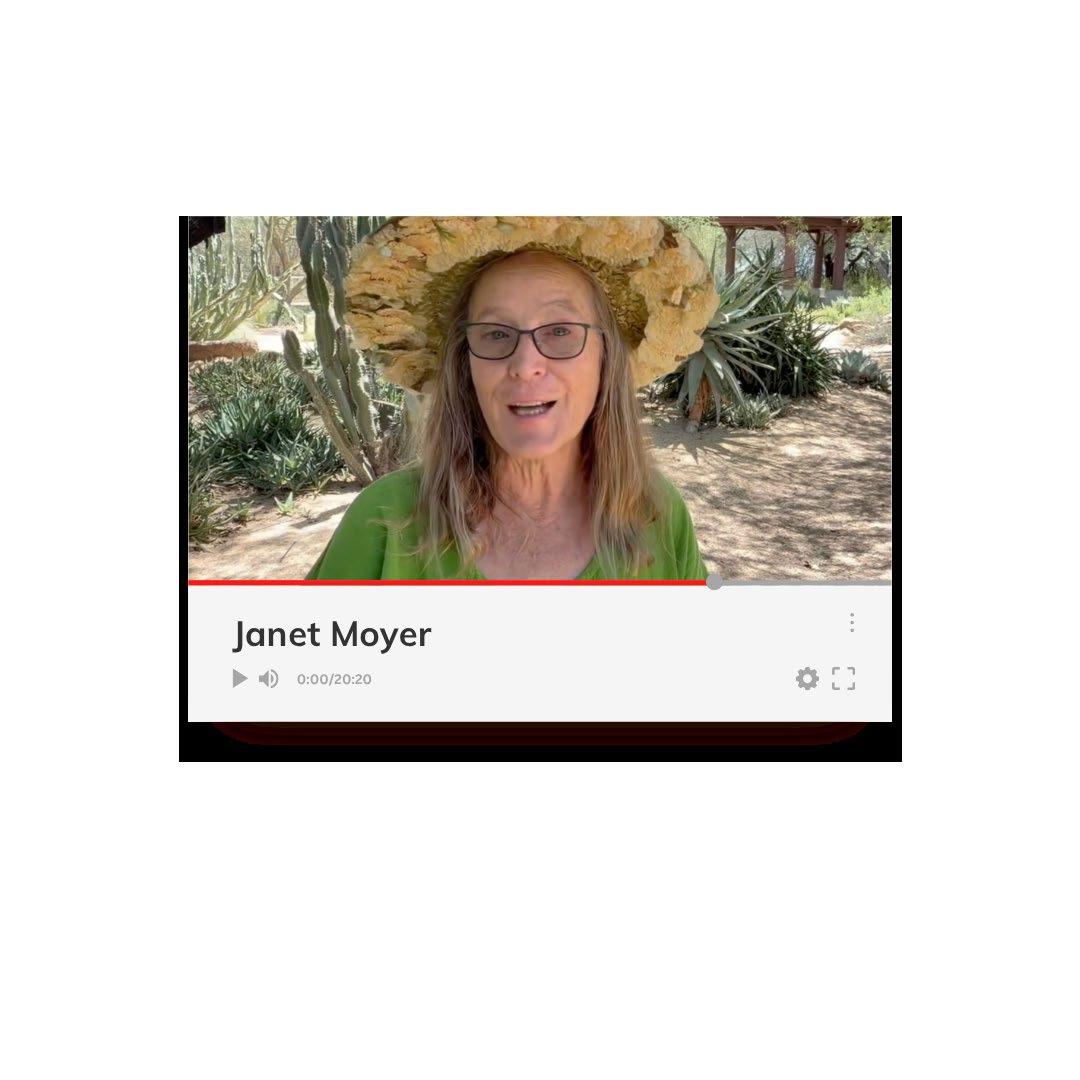
JANET MOYER: “You discovered me and coached me on planning and executing engineering studies…I could never thank you enough for shepherding me through the beginnings of a lifelong career at a regional IES conference where we gave a lively debate on engineering versus design you with your pencil tie and me with my bow peep hat.”
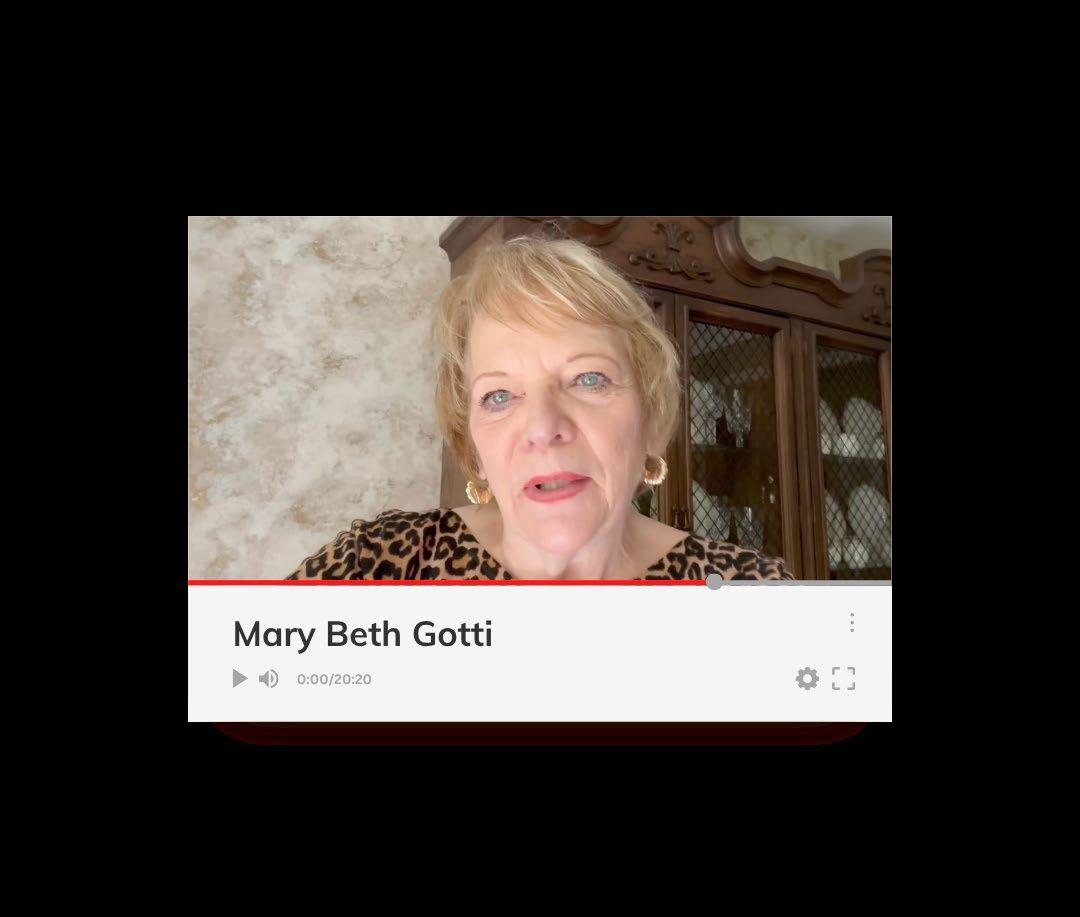
MARY BETH GOTTI: “Thank you so much for all your support over the years and your willingness to share all the knowledge that you have.”
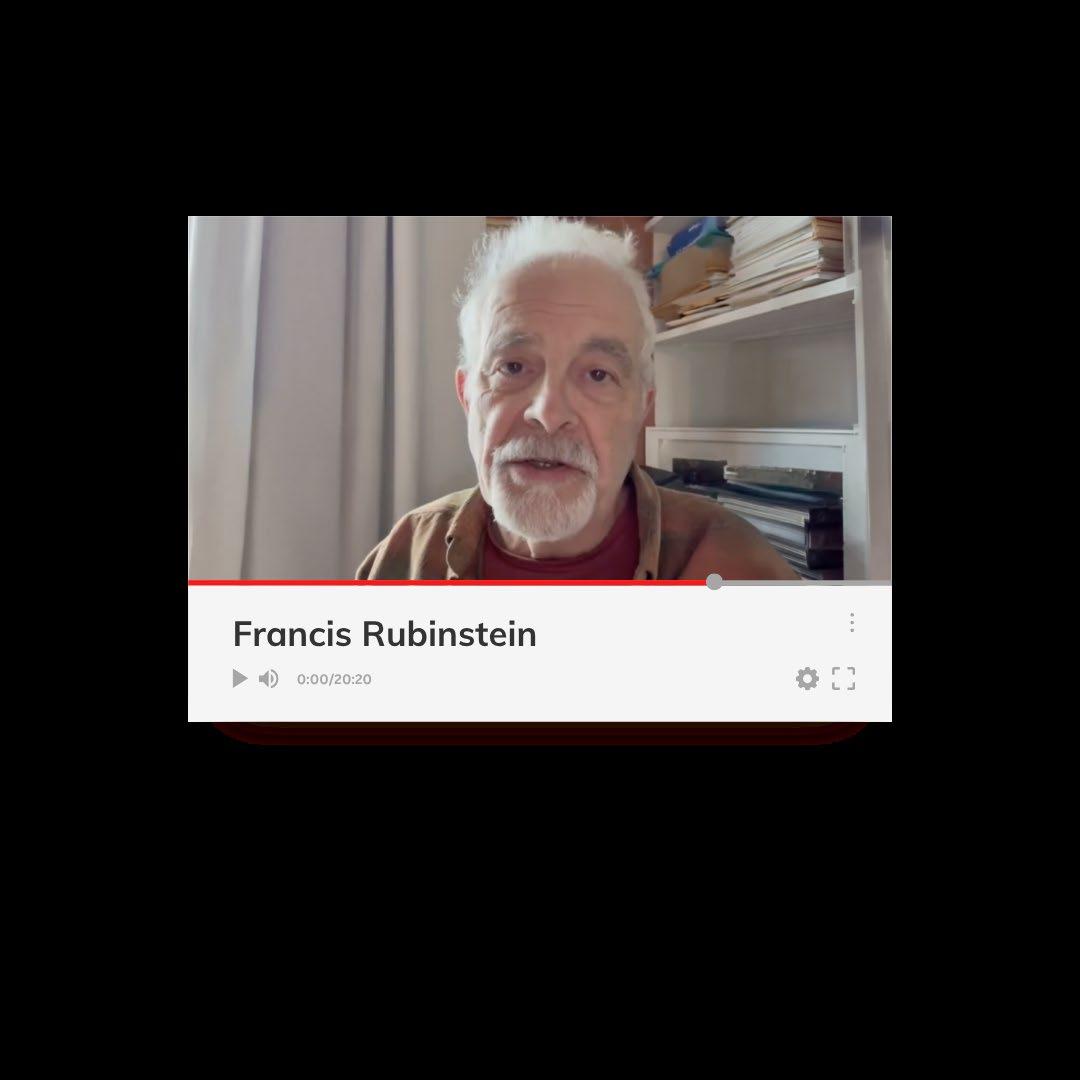
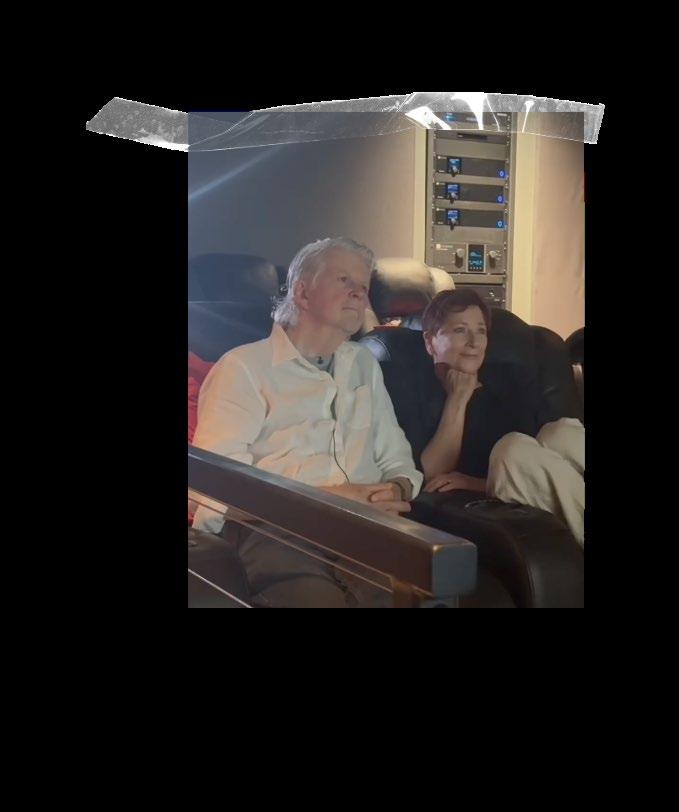
LISA HESCHONG AND DOUG MAHONE:
“We're here to wish you a happy retirement and thank you for all the good times we had together making good trouble in the lighting and energy efficiency worlds.”
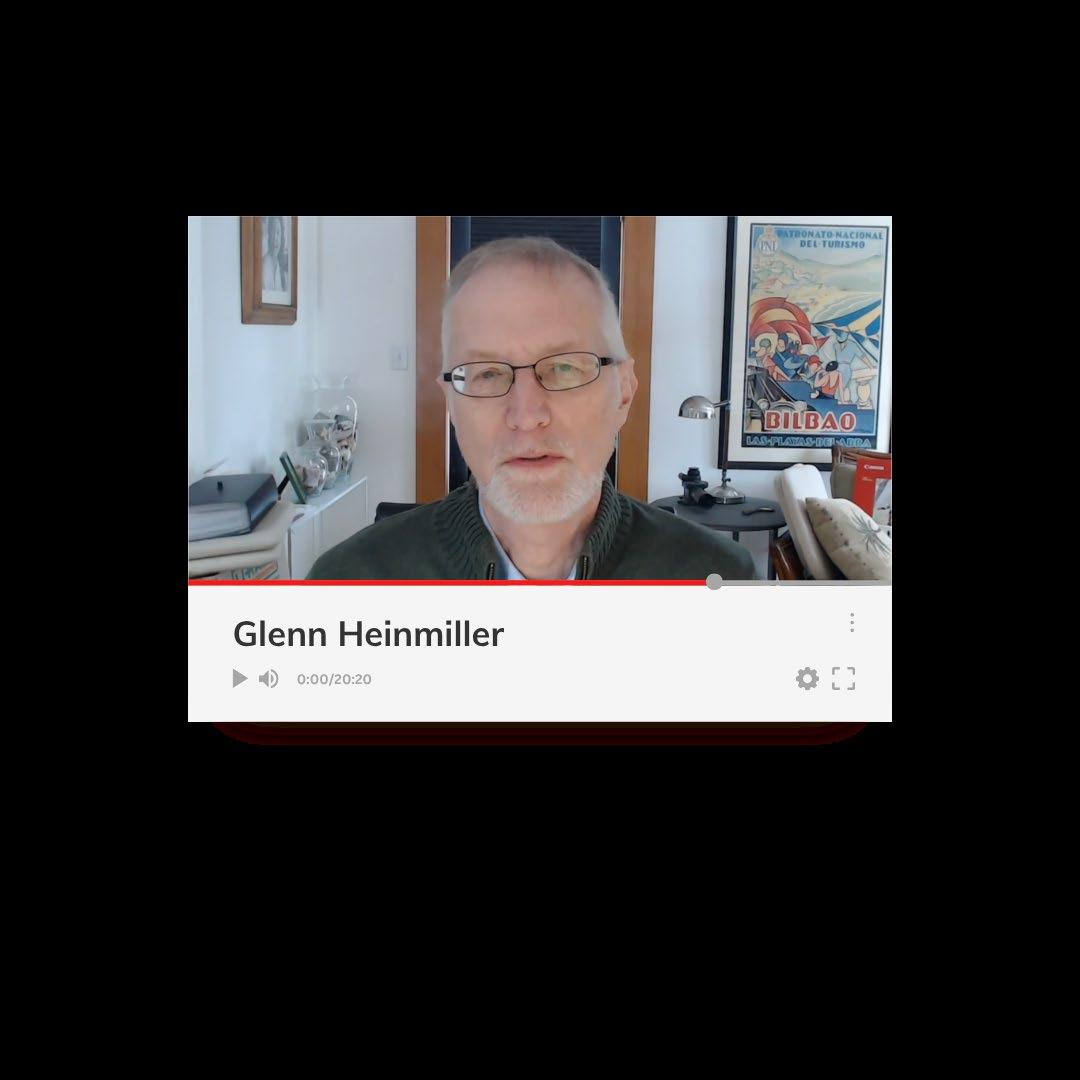
GLENN HEINMILLER: I wanted to tell you…how influential you've been on my career. I think those initial influences from you really showed me the way.”

JIM YORGEY: “On the fun side, for five or six years we put bands together; we did the Blue Tron brothers and of course you're one of the great guitarists that would join in all those all those bands.”



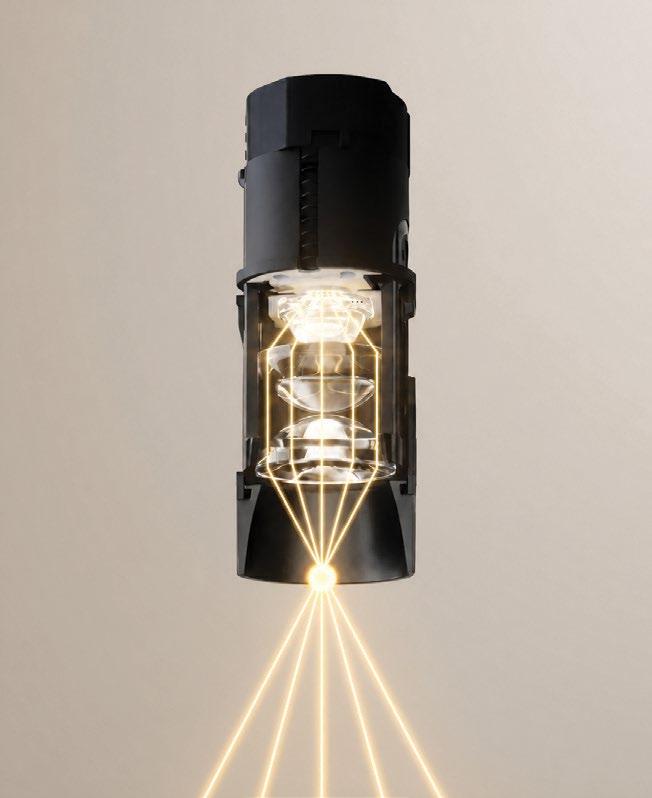
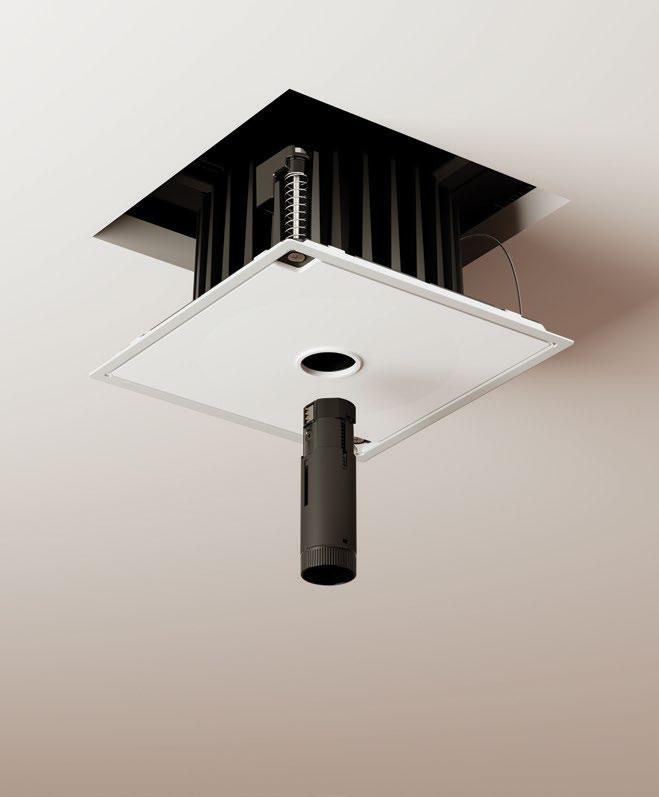
Why choose between output and comfort? True 1 delivers over 1,000 lumens out of a True 1" aperture with a sophisticated optical design that minimizes glare better than any other 1-inch fixture. It’s the primary light source the industry has been waiting for. 1"
LIGHTING LIFE
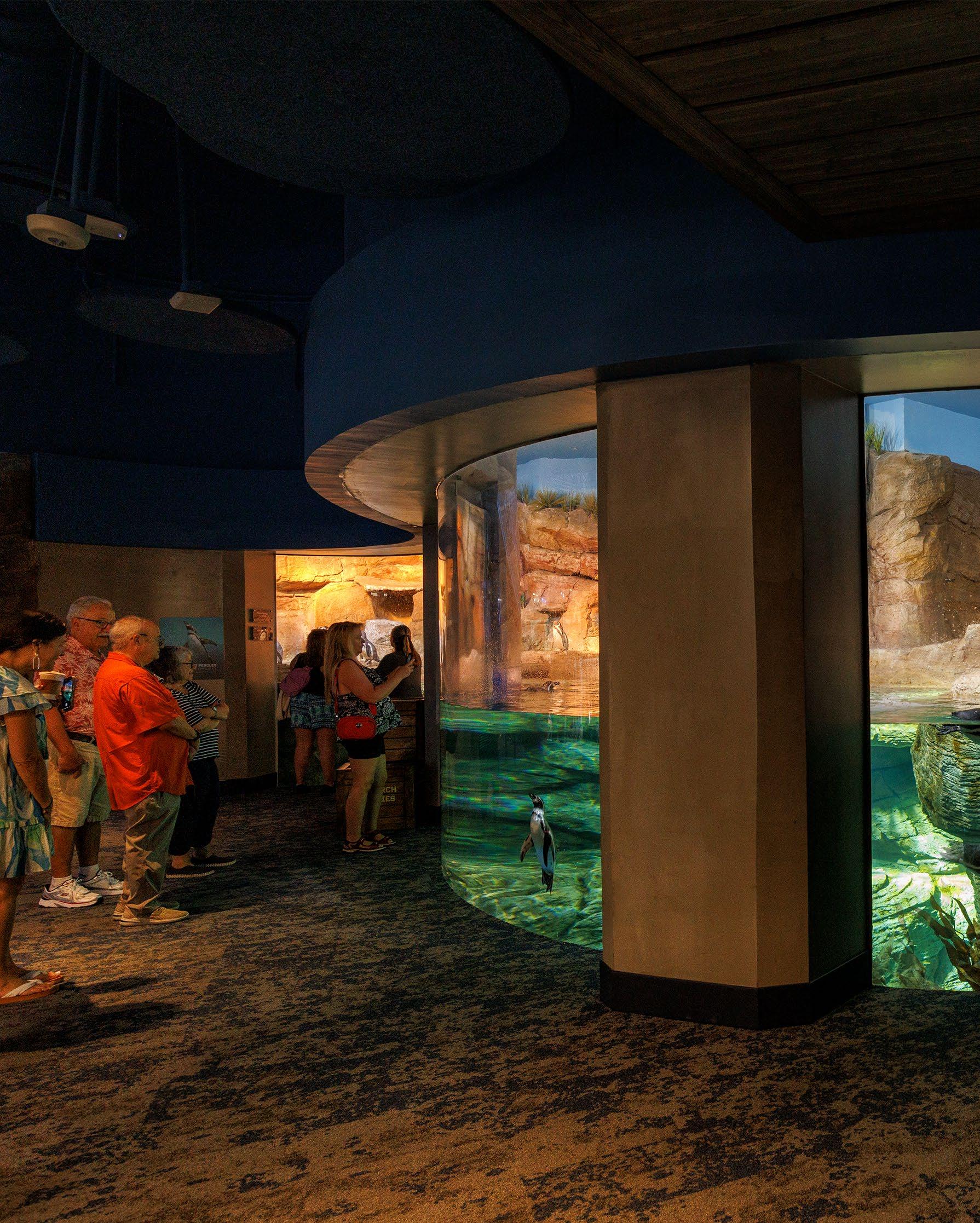
The first challenge wasn't illuminating the building. It was illuminating the penguins.
RANDY REID By
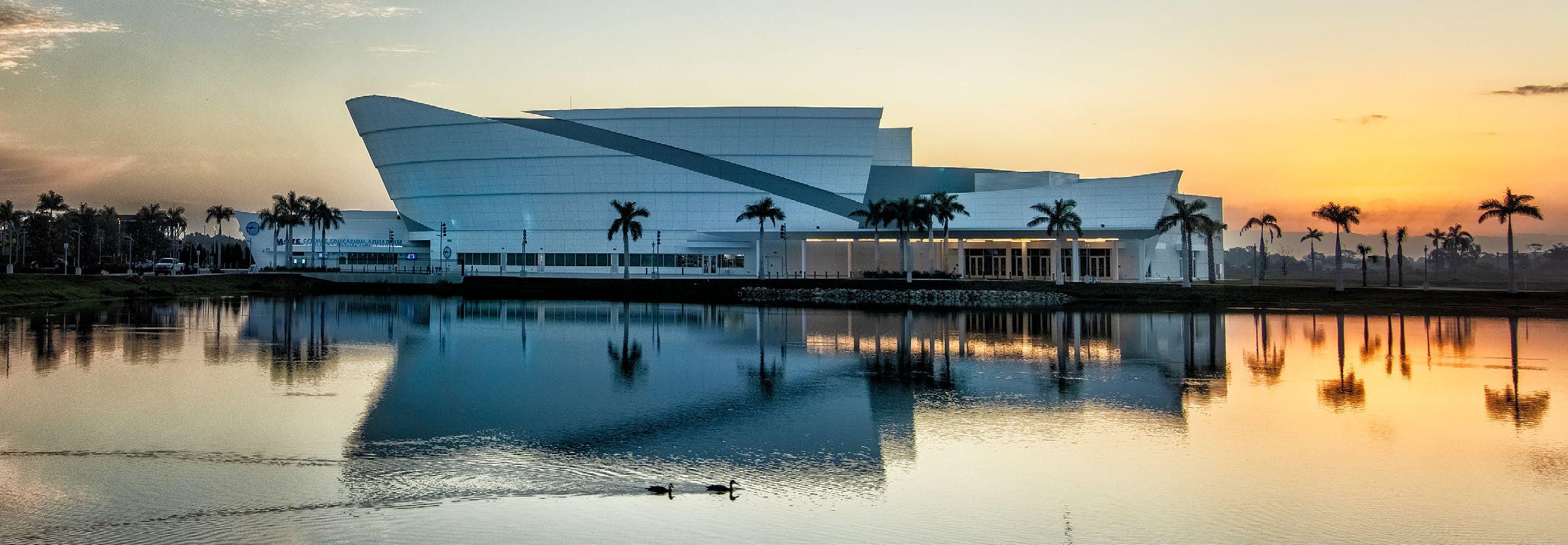
Inside Mote Marine Laboratory & Aquarium's new 146,000-square-foot facility in Sarasota, Florida, light serves a purpose far beyond helping visitors see exhibits. It helps regulate biological rhythms, supports animal health, shapes educational experiences, and quietly guides more than 70,000 K-12 students expected to visit each year. For the lighting designers at EXP, that reality transformed what might otherwise have been a traditional architectural project into something far more complex.
"We don't want the animals to simply survive," explains EXP’s Lighting Director Kate Sanoke. "We want them to thrive."
That philosophy influenced nearly every lighting decision inside Mote's new facility.
Completed in October 2025 after nearly five years of design and construction, the aquarium and research center represents a new chapter for the Sarasota-based marine science organization. Rather than expanding its existing campus, Mote elected to create an entirely new destination— one that functions simultaneously as an aquarium, research institution, educational center, and public gathering place.
The architecture reflects that ambition. Inspired by the form of a vessel moving through water, the building rises above
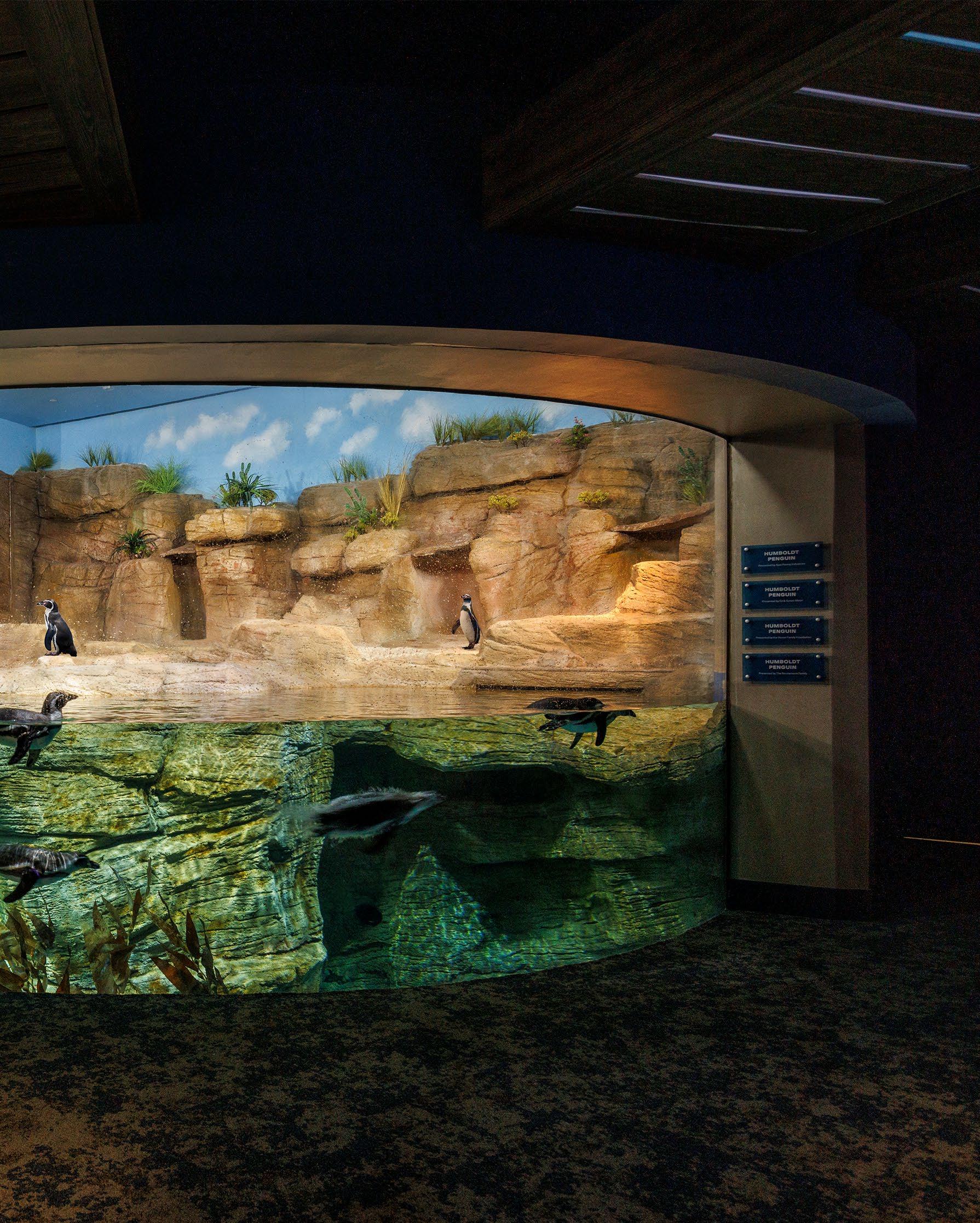
BENEATH THE SURFACE
the surrounding landscape as a gleaming presence visible from nearby highways and across the adjacent lake. During the day, the structure appears crisp and futuristic. At night, it becomes something else entirely.
EXP collaborated with Lumenpulse and Lumec to create a custom pole-mounted floodlighting system capable of washing the entire façade with color-changing light. Rather than relying on building-mounted luminaires, the design team developed a custom solution that integrated multiple floodlights onto specially modified sitelighting poles.
The result is remarkably uniform. Given the relatively close pole spacing, achieving that consistency required extensive studies and nighttime renderings before construction ever began.
"We studied the façade illumination extensively," Kate recalls. "Our goal was for it to glow evenly from every vantage point."
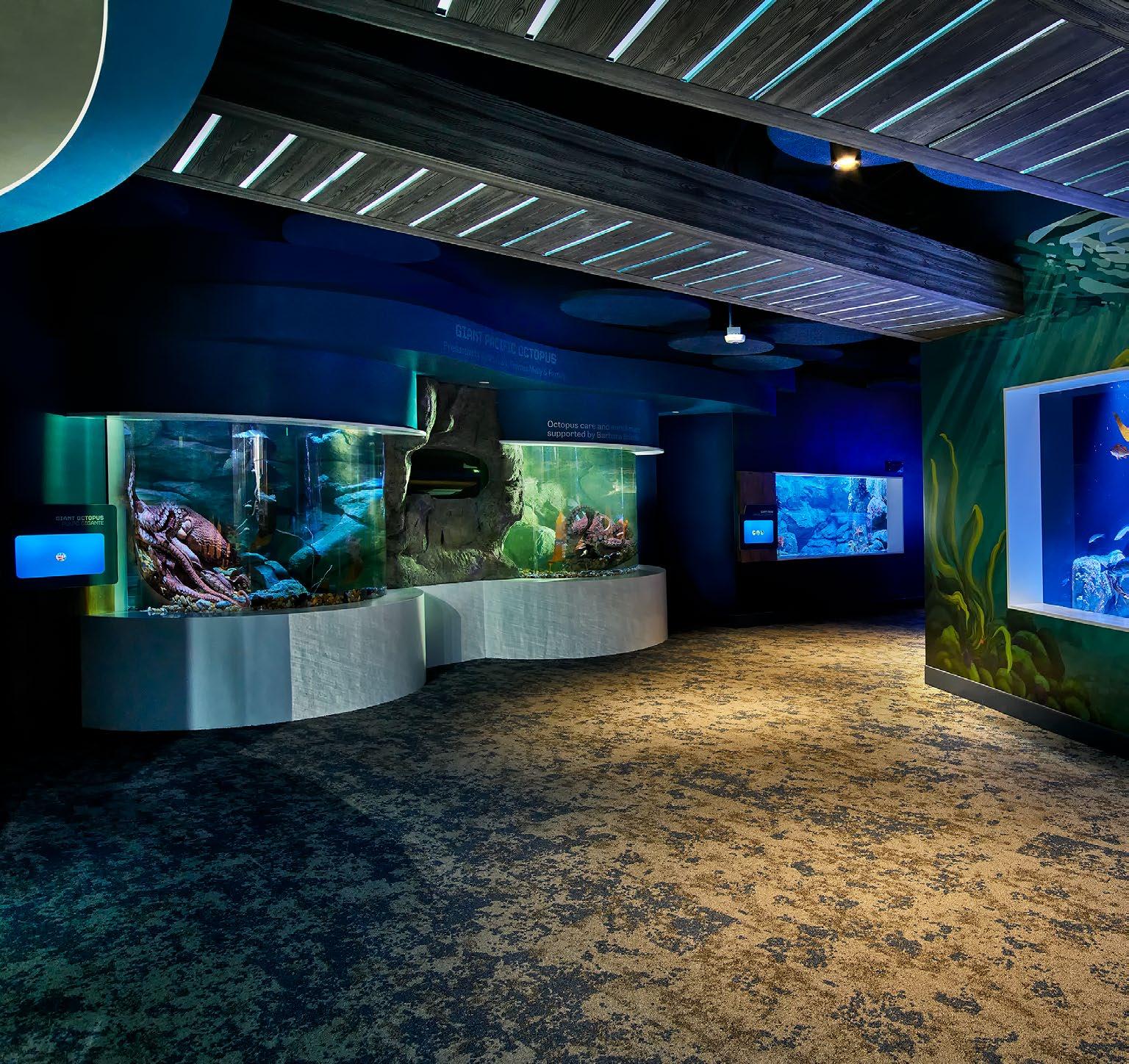
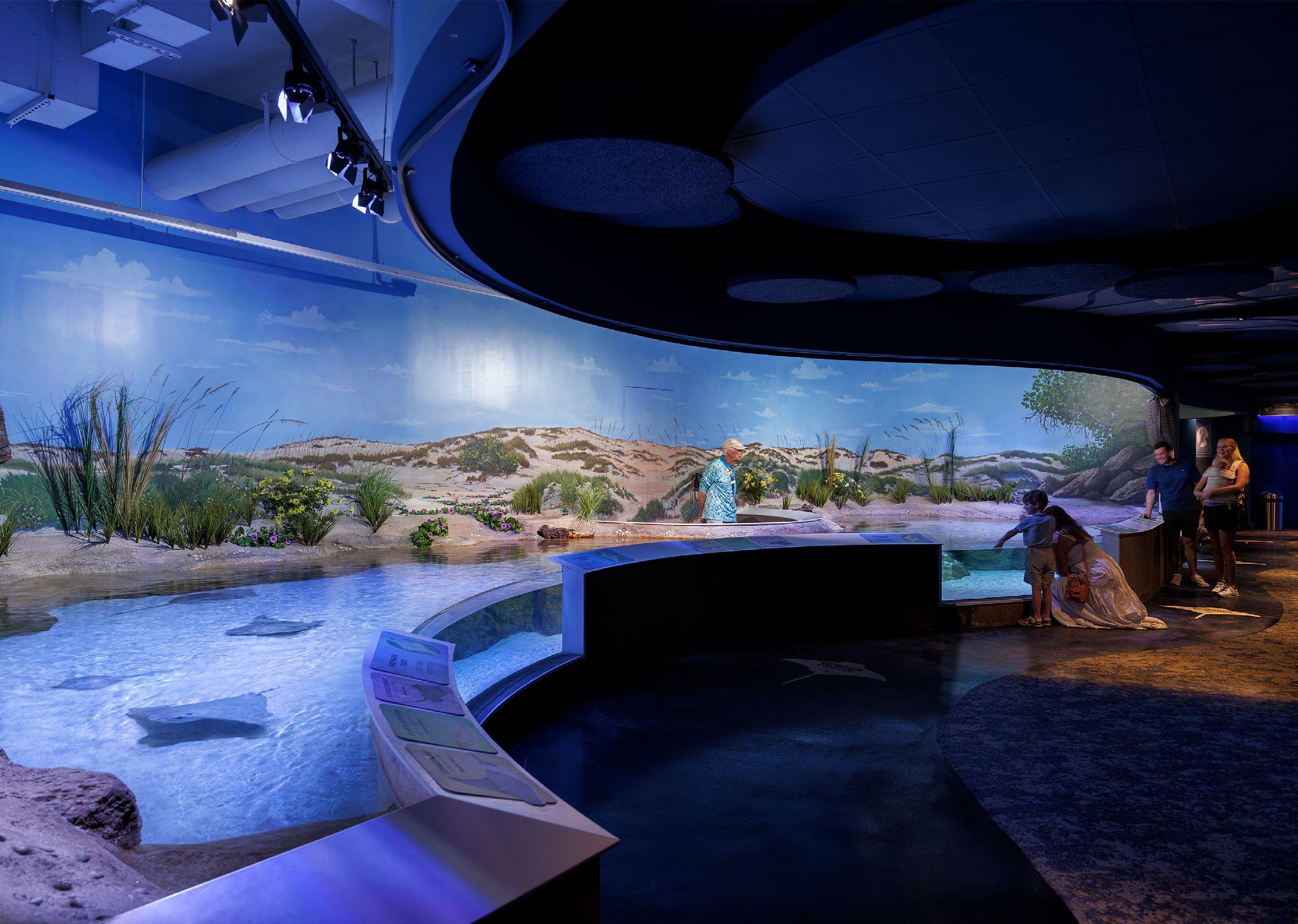
Our goal was for it to glow evenly from every vantage point.
The lighting can shift through a variety of programmed scenes, though Mote typically favors a palette of blues and cyans that reinforce the building's connection to water and marine exploration. Controlled through ETC's Mosaic platform, the façade slowly transitions across the architecture, creating the impression of movement without becoming theatrical.
The real story, however, begins inside.
A Laboratory Disguised as an Aquarium
Most aquariums offer visitors occasional glimpses behind the scenes. Mote reverses that relationship.
"This is a laboratory first," explains Aram Ebben, Vice President of Lighting at EXP. "Most aquariums charge extra for backstage tours. Here, the science is part of the experience."
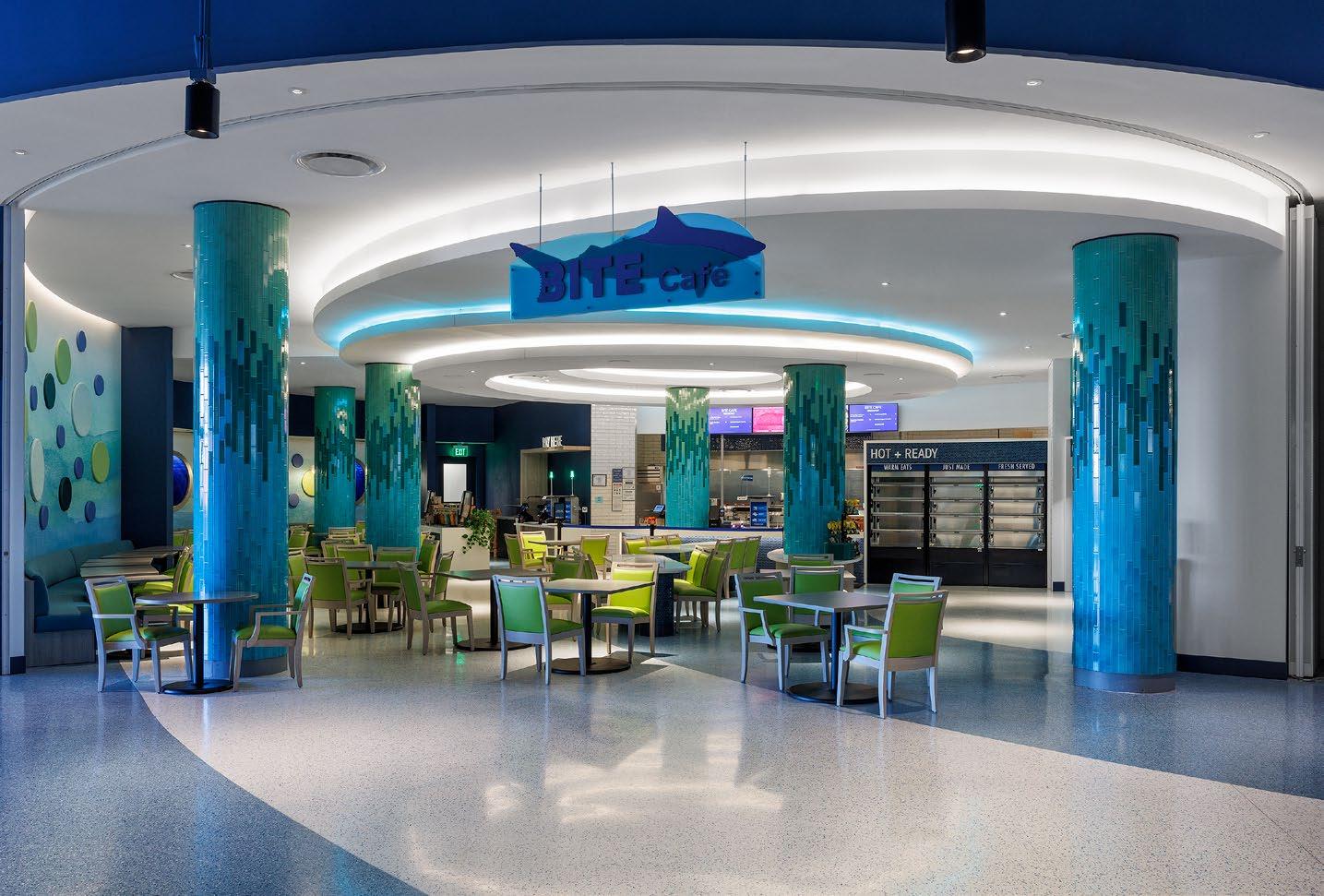
Visitors encounter active research laboratories, educational classrooms, STEM teaching spaces, and working scientific environments woven throughout the public journey. The lighting had to support all of them.
Classrooms feature clean architectural ceilings punctuated by large-scale decorative fixtures and carefully integrated ambient lighting. Daylight pours through expansive windows, creating significant contrast challenges that required careful balancing between natural and electric light. Throughout the facility, the design team maintained a consistent 3000K approach for front-of-house architectural lighting.
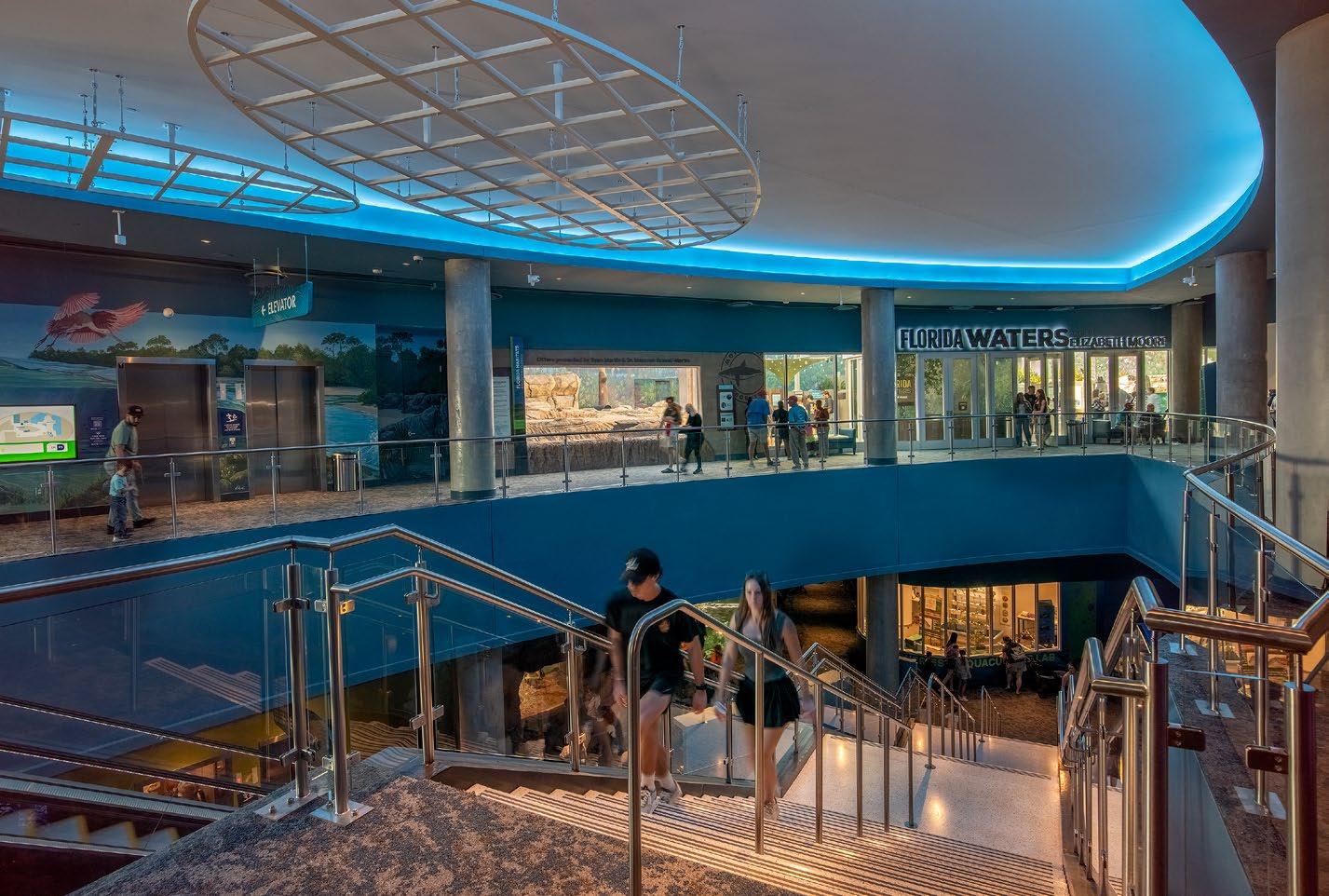
The central atrium serves as the project's organizing space. A three-story volume anchored by a dramatic stair connects visitors to the aquarium's various levels and exhibits. Curving coves introduce subtle color-changing elements that echo the ocean-inspired palette found elsewhere throughout the building.
Even the stair lighting required careful consideration. Rather than relying on highmounted downlights, the design team integrated illumination directly into the handrails to achieve required egress levels while minimizing glare for visitors ascending and descending the grand stair.
"We wanted to ensure that viewers naturally focused on the architecture and features of the space," Kate says. "The handrail solution gave us the cleanest aesthetic while keeping light exactly where we needed it."
The project demanded constant collaboration between the lighting designers, architects, interior designers, exhibit designers, animal care experts, and control-system specialists. Nothing existed in isolation. Every decision affected something else.
That level of coordination became especially important because Mote is not simply an aquarium. It is a working scientific facility where visitors regularly encounter active research spaces. Laboratories focused on biomedical research, marine and coastal ecology, and ocean engineering sit alongside public exhibits. Students observe science happening in real time.
For EXP’s Senior Lighting Designer Madison DiAddezio, the project carried additional significance. It was the first project she worked on after entering the profession.
"This was my first project when I started my career," she recalls. "Seeing this come to life was really incredible."
The lighting strategy helps visitors experience the exhibit as a reef environment rather than simply a tank full of water.
The project would remain part of her professional life for nearly five years.
Lighting as Animal Care
The deeper visitors travel into the aquarium, the more the design priorities begin to shift. Architectural lighting becomes secondary. Animal welfare becomes paramount.
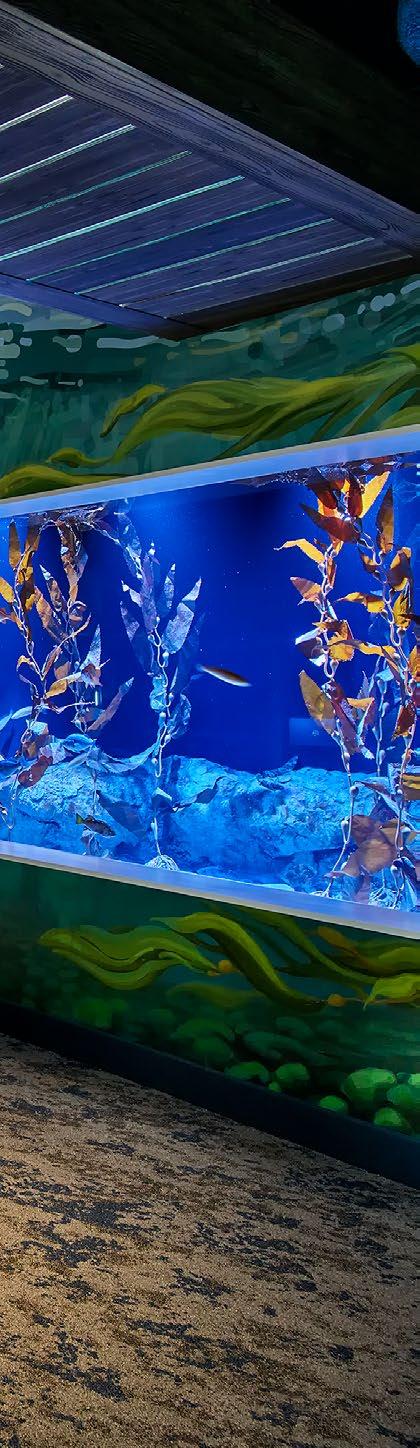
Large exhibit tanks are illuminated using carefully positioned luminaires mounted above viewing windows and concealed behind parapets. The strategy minimizes glare while allowing visitors to focus on aquatic life rather than the lighting itself.
"We start by studying each guest viewing location," Kate explains. "Then we tried to position fixtures as discreetly as possible, so the light source is not visible.”
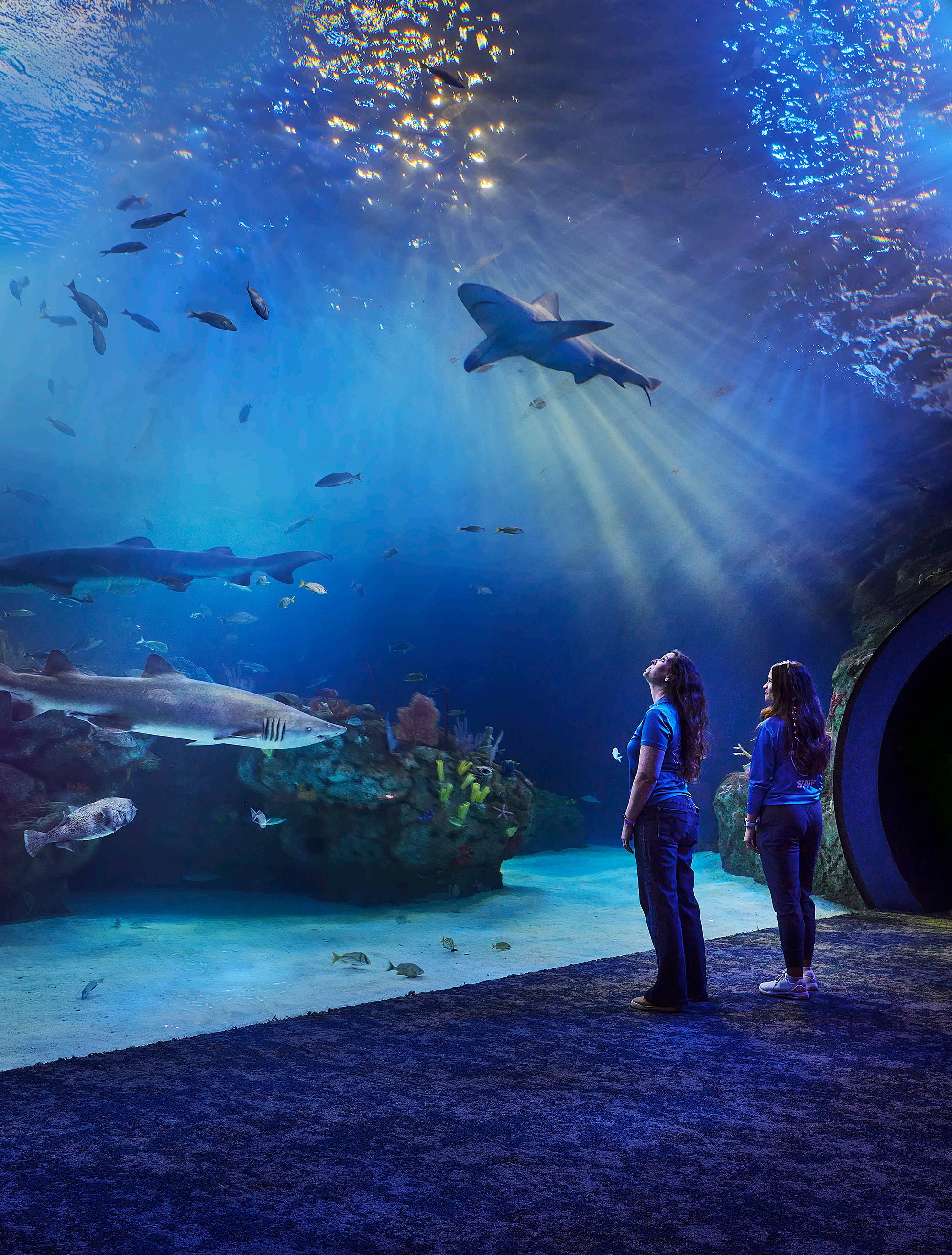
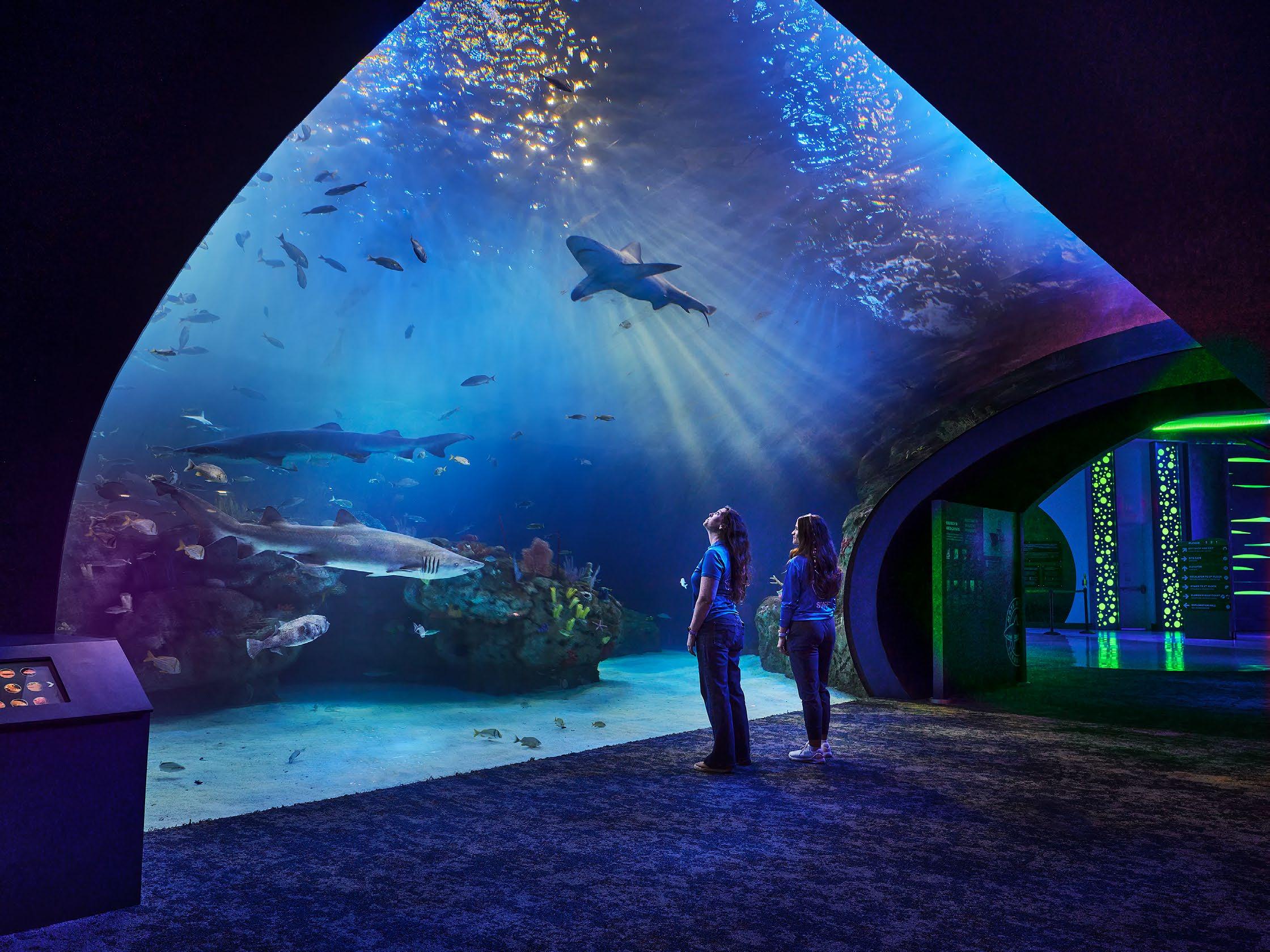
In the Gulf of Mexico habitat—a 400,000-gallon saltwater exhibit—white floodlighting is combined with carefully aimed blue beams that create shafts of light through the water column. Fish appear to swim through sunlight.
The effect feels natural because it mimics nature.
"We wanted the fish to move through different beams and colors of light the way they would in the ocean," Kate explains.
The team utilized cool white sources alongside blue accent beams, carefully balancing spot and flood distributions to create visual depth within the water. Rather than simply
illuminating the tank, the lighting creates an environment where fish move through layers of light much as they would encounter in the natural world.
Of course, nature brings its own challenges.
Algae growth is an unavoidable reality in aquarium environments. While natural sunlight often accelerates the problem, artificial lighting systems still require constant management and maintenance.
"It's a constant problem," Aram says with a laugh. "Eventually, somebody has to get in there with a brush."
The reality is surprisingly low-tech. Divers and maintenance staff routinely enter exhibits to clean surfaces, scrub rocks, and maintain viewing windows. Sophisticated lighting systems may help create stunning experiences, but nature always finds a way to leave its mark.
The Indo-Pacific Reef
Other habitats required entirely different approaches.
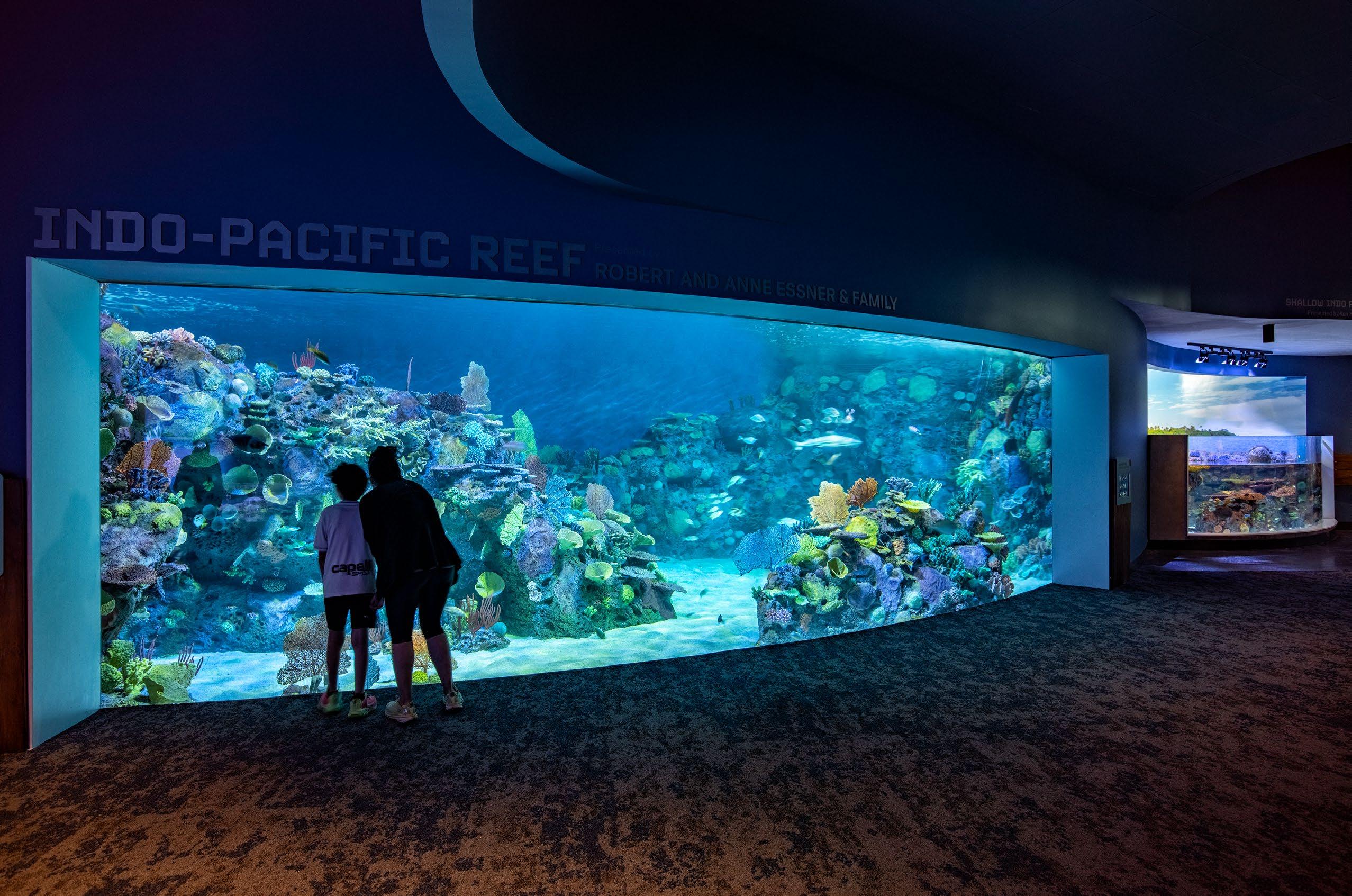
The Indo-Pacific exhibits utilize specialized aquarium luminaires from Kessil, a manufacturer better known in marine and animal-care circles than traditional architectural lighting. Tuned to approximately 12,000 Kelvin, the fixtures create the blue-rich appearance associated with tropical reef environments while helping coral and marine life appear vibrant and authentic.
"We really wanted those bluer tones filling out the water," Kate explains. "When we used lower color temperatures, the water started to feel muddier and less authentic."
The lighting strategy helps visitors experience the exhibit as a reef environment rather than simply a tank full of water. Coral formations glow with vibrant color. Fish move through rich blue backgrounds. The overall effect feels immersive without appearing theatrical.
The same philosophy extends to touch tanks and educational exhibits, where visitors can interact more directly with marine life. Light must support visibility while remaining comfortable for both guests and animals.
Throughout the project, authenticity remained a guiding principle.
The goal was never to create dramatic entertainment lighting. The goal was to recreate habitats as faithfully as possible.
Illuminating Jellyfish
Moon jellyfish presented another challenge altogether.
Unlike fish or coral, jellyfish are largely translucent. Light passes through them rather than reflecting from their
surfaces. That meant the design team had to illuminate them from multiple directions simultaneously.
The result is striking.
Visitors encounter glowing forms suspended within the water, their delicate structures appearing almost weightless as they drift through the exhibit.
"Our objective was to make the jellies glow evenly within the tank," Kate explains.
Achieving that effect required careful positioning of luminaires around the exhibit, ensuring the animals remained visible from multiple viewing angles without revealing the lighting systems themselves.
The challenge highlights one of the realities of aquarium lighting. Every species demands a different approach. Techniques that work beautifully for coral reefs may fail completely for jellyfish. Solutions that support fish habitats may not work for birds.
And nowhere was that more apparent than the penguin exhibit.
Designing for Penguins
Humboldt penguins are extraordinarily sensitive to light.
Unlike humans, many bird species possess an additional photoreceptor that allows them to perceive ultraviolet wavelengths. Recent research has shown that UV light plays a critical role in communication, mating behaviors, and overall health.
That meant lighting the exhibit required far more than creating an attractive environment for visitors.
"We're really trying to recreate sunlight," Kate says.
The system incorporates full-spectrum LED sources, UV-A, UVB, and carefully programmed lighting sequences that replicate natural daylight conditions. Lights gradually ramp up and down throughout the day, simulating sunrise and sunset rather than abruptly switching on and off.
For the design team, this was where lighting moved beyond architecture and entered biology.
Kate has worked on numerous penguin habitats throughout her career and has watched the evolution from traditional light sources to LED technology. Early LED systems often lacked portions of the spectrum required to support animal health. Designers compensated by combining metal halide, fluorescent, and halogen sources.
Today's technology allows a more sophisticated approach.
"We're starting to see mostly full-LED penguin exhibits," Kate says.
Aram points to one of the more fascinating discoveries that has emerged from animal-lighting research.
"Birds actually have an additional photoreceptor that allows them to see ultraviolet light," he explains. "Some species will fluoresce under UV, showing that they're healthy and sexually mature."
In other words, the birds experience the exhibit differently than human visitors do.
The lighting is designed for both audiences simultaneously.
Behind the scenes, ETC controls manage an extraordinary amount of programming. Time-of-day sequences, seasonal changes, intensity adjustments, and spectral tuning all work together to create a habitat that supports long-term animal health.
Looking at the programming screens feels less like examining a lighting control system and more like observing mission control.
Every fixture. Every scene. Every transition.
All designed around the biological needs of the animals.
Invisible Light
One of the most impressive aspects of Mote Marine Laboratory & Aquarium is how rarely visitors notice the lighting itself.
That invisibility is intentional.
Throughout the project, EXP worked closely with architects and interior designers to conceal sources, minimize glare, and integrate luminaires into the architecture wherever possible. Fixtures disappear into handrails, hide behind parapets, tuck into architectural coves, and blend into exhibit structures.
The best example may be the exhibit tanks themselves.
Visitors experience glowing coral, luminous jellyfish, schools of fish moving through shafts of light, and penguins thriving beneath carefully calibrated daylight simulations. What they rarely see are the fixtures creating those effects.
In many ways, that restraint defines the project. The lighting does not compete with the architecture. It does not compete with the exhibits. And it certainly does not compete with the animals.
Instead, it supports all three.
For a project that began during the uncertainty of 2020 and opened five years later, that achievement is significant. The result is more than a new aquarium. It is a demonstration that lighting can be both architectural and biological, both experiential and scientific.
And perhaps most importantly, it proves that sometimes the most successful lighting design is not measured by what people see.
It is measured by how well life itself responds to the light. ■
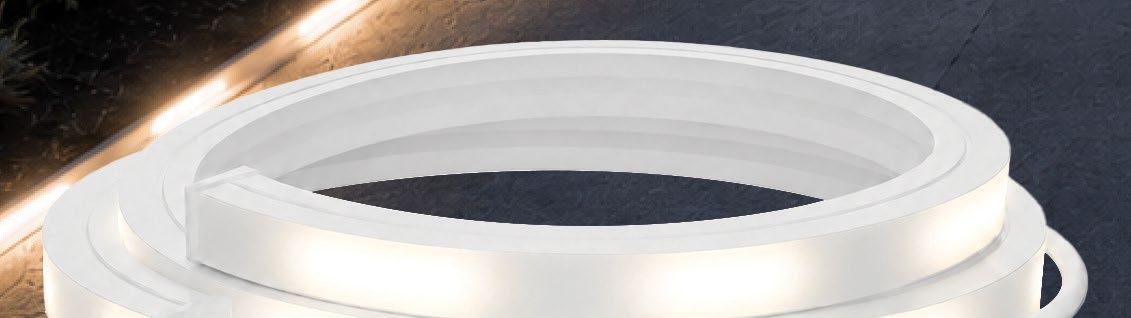
Trace Pro Pixel White
• New 16mm x 17mm profile for both Horizontal and Vertical applications
• Pixel mapping and advanced chasing with DMX512
• 2.4 pixels/ft - 5” cutting increments
• Standard 3000K output with 1.5W, 3W, and 4.5W options
• 45’ Maximum electrical run

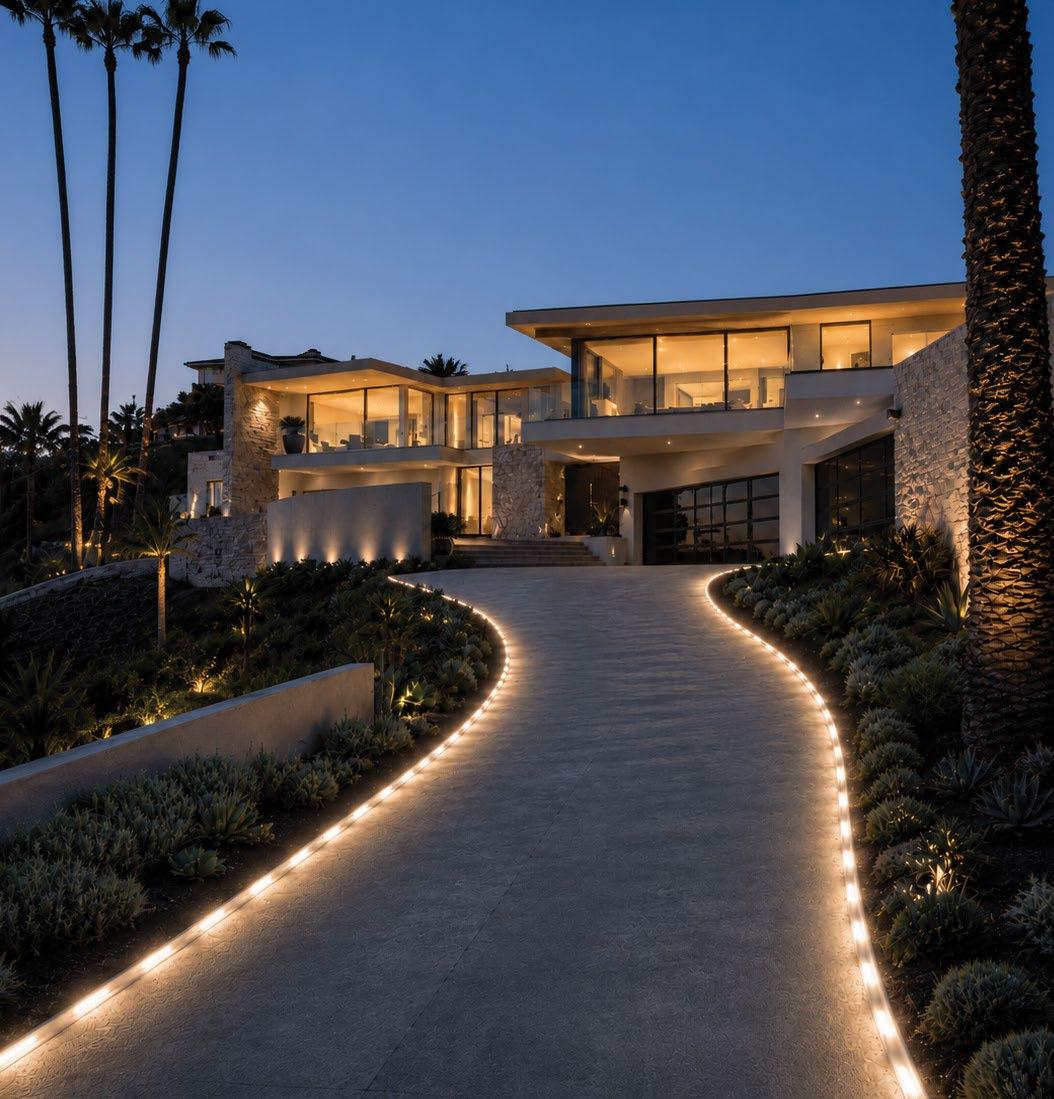
ENHANCED DURABILITY, GREATER VERSATILITY, UNIVERSAL MOUNTING HARDWARE
TRACE Pro is a flexible, low-voltage architectural lighting series built with durable silicone construction, IP67 rated, factory-prepped reliability, and control options ranging from static white to full pixel animation. Available options: Static White, Integrated Louver, Dynamic White, RGB, RGBW, Pixel RGBW, Pixel White (shown)

NLB ANNOUNCES THE
7TH ANNUAL TESLA AWARD™ WINNERS
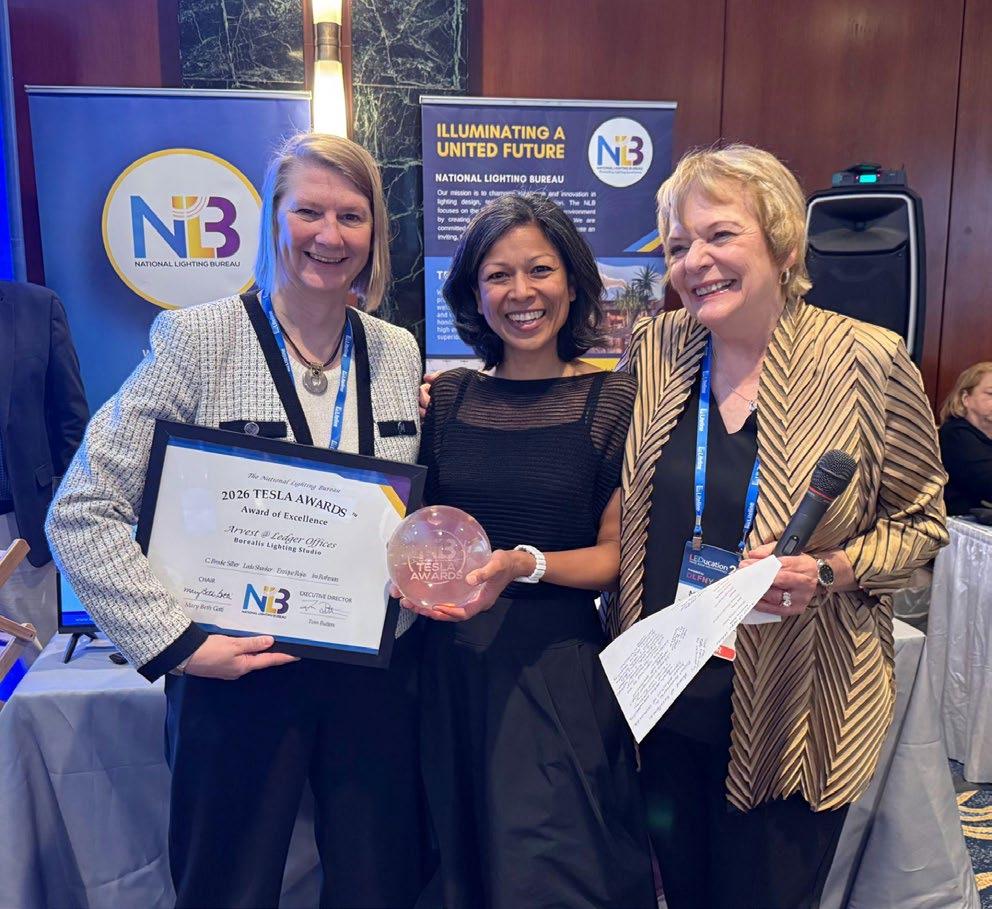
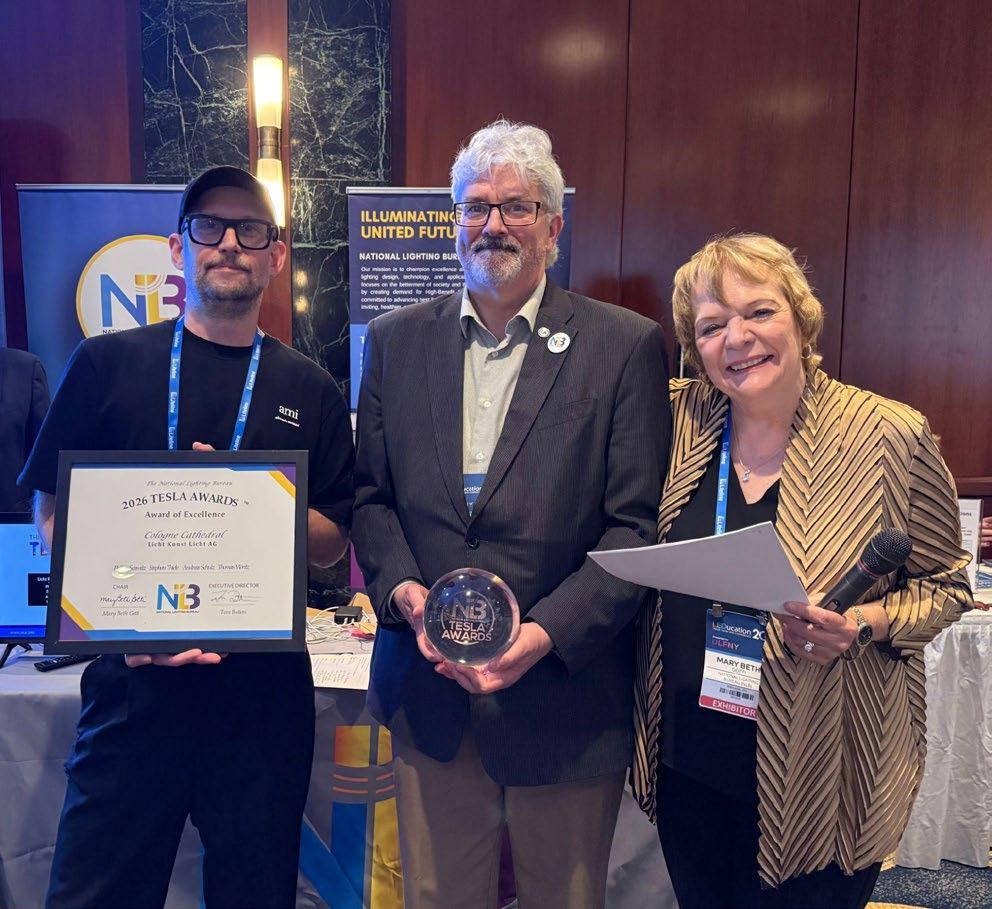
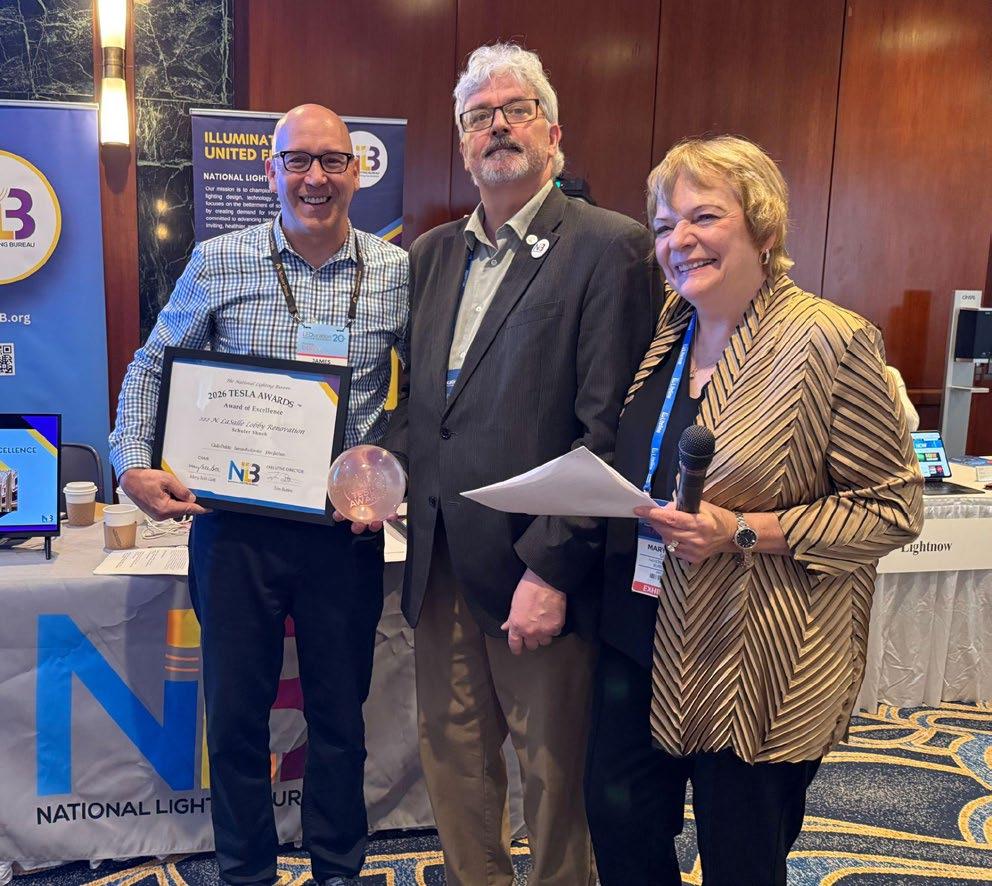
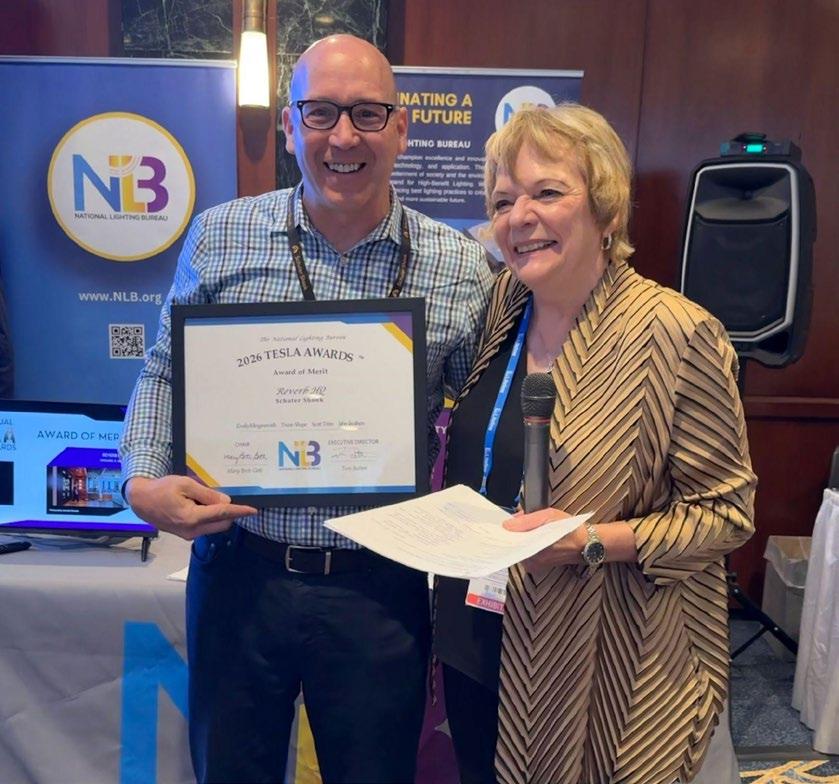
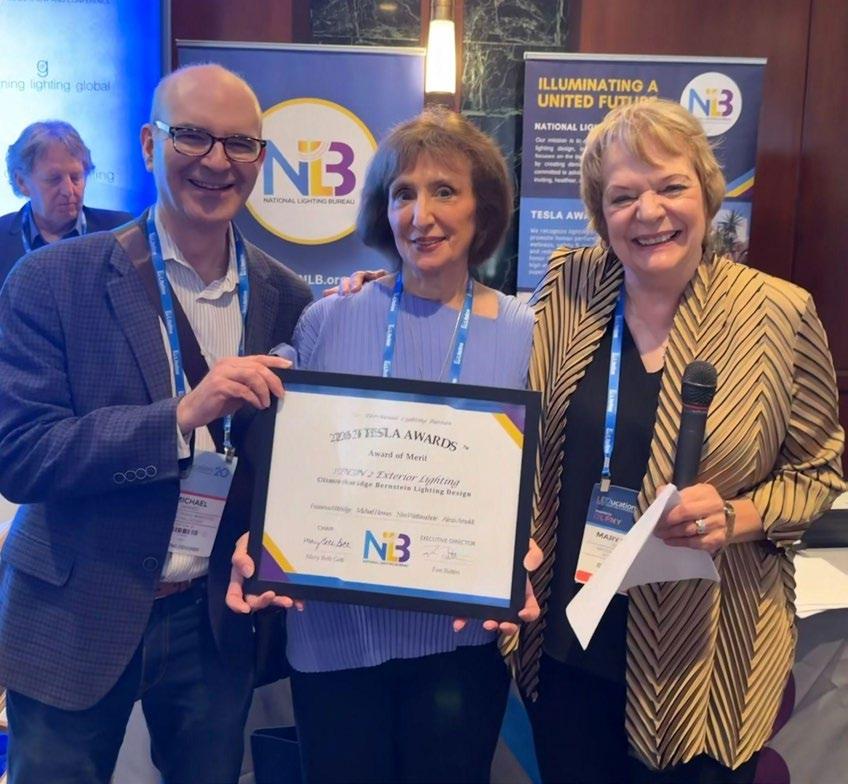
The National Lighting Bureau is pleased to announce the winners in the 7th Annual Tesla Awards. The projects being recognized support the organization’s mission of advancing lighting excellence and innovation in lighting design, and promoting best lighting practices to create an inviting, healthier and more sustainable future. The awards ceremony took place on April 14th at 11 am Eastern time
during LEDucation 2026 in New York City, booth PF4. The ceremony was hosted by NLB chairperson Mary Beth Gotti and NLB Executive Director Tom Butters. Judges for this year’s program were: Dawn DeGrazio, LC; Terry McGowan, LC, FIES, Director-at-Large NLB; Naomi Miller, FIES, FIALD; Mark Roush, FIES, LC, MArch; and James Yorgey, PE, LC, Director-at-Large NLB.

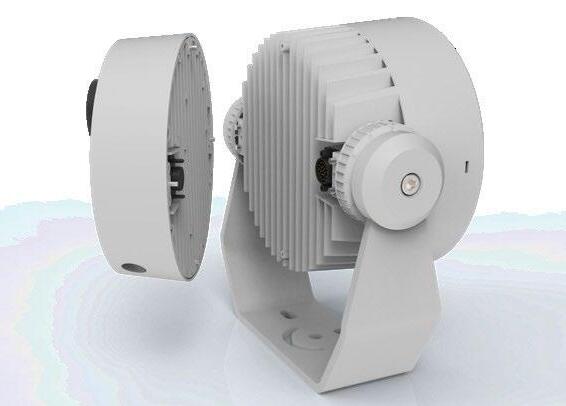
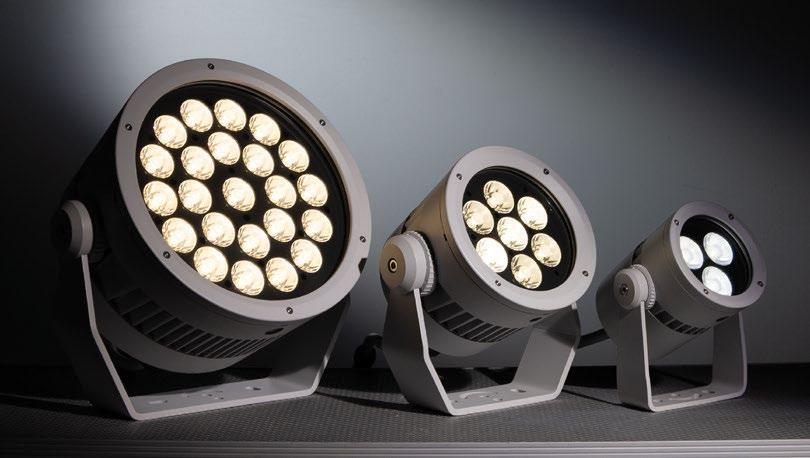
Patent-pending CoreSwap™ technology allows all fixture electronics to be removable and replaceable with just a few screws, driving sustainability.

The very first area floodlights on the Acclaim Modular Systems platform, proudly assembled at our Los Angeles headquarters.
and Aria Wireless technologies.
Fully IP67-rated, delivering up to 26,000 lumens, achieving an output increase of up to 80%.

Scan the to experience Elevated Illumination.
ARVEST @ LEDGER OFFICES
Bentonville, AR
Designers
C. Brooke Silber, Leela Shanker, Enrique Rojas, Ira Rothman
Firm
Borealis Lighting Studio
PHOTOGRAPHY
Todd Mason of Halkin Mason
Photography
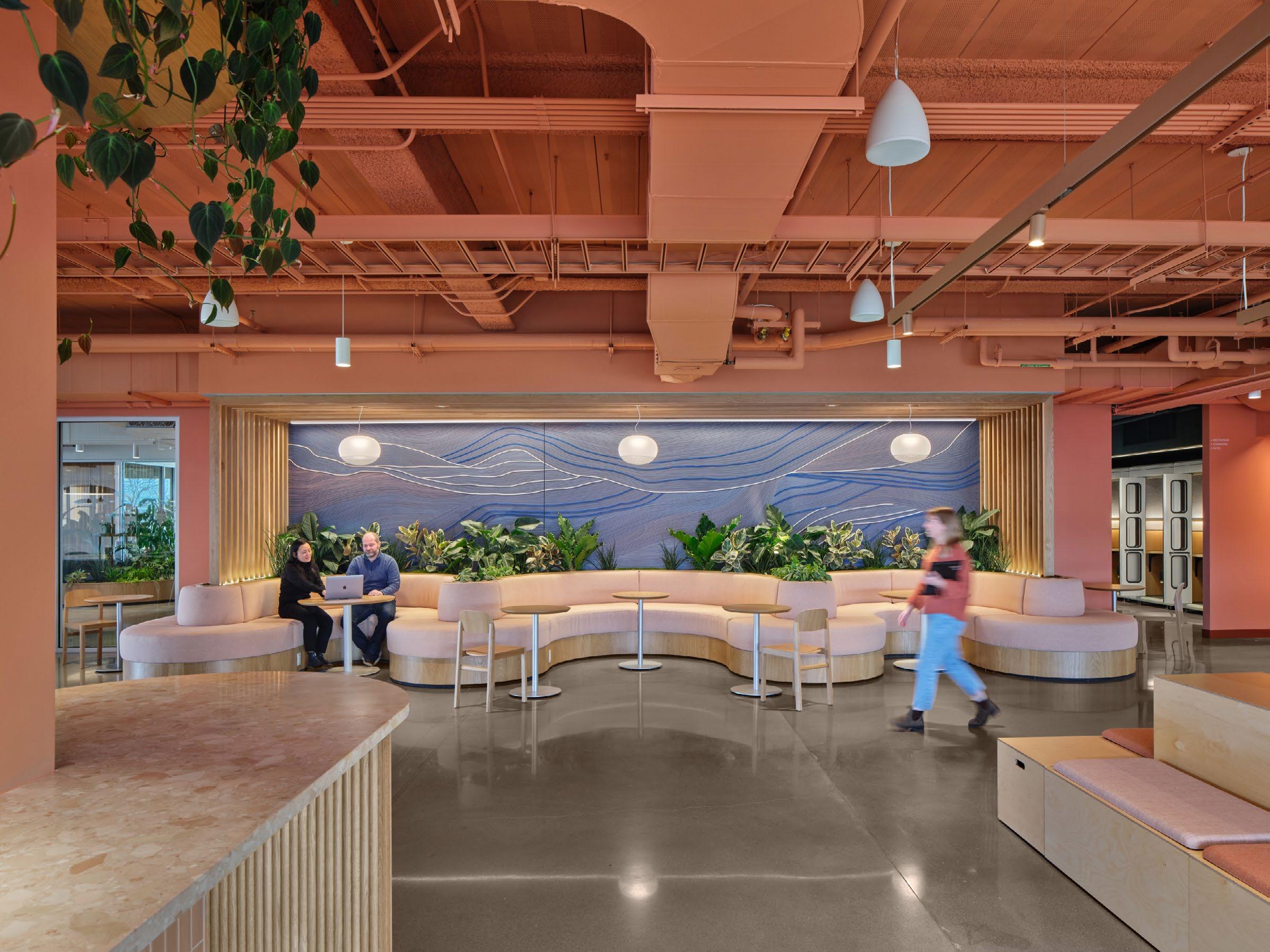
This project benchmarks a broader definition of sustainable lighting. Carbon becomes a design input instead of a closeout calculation. Carbon accountability, material transparency and human well-being are all integrated into the design. The workplace is organized as an interior/exterior loop with terraces, bikeable and walkable circulation paths and integrated planting to encourage daily movement and connection with nature.
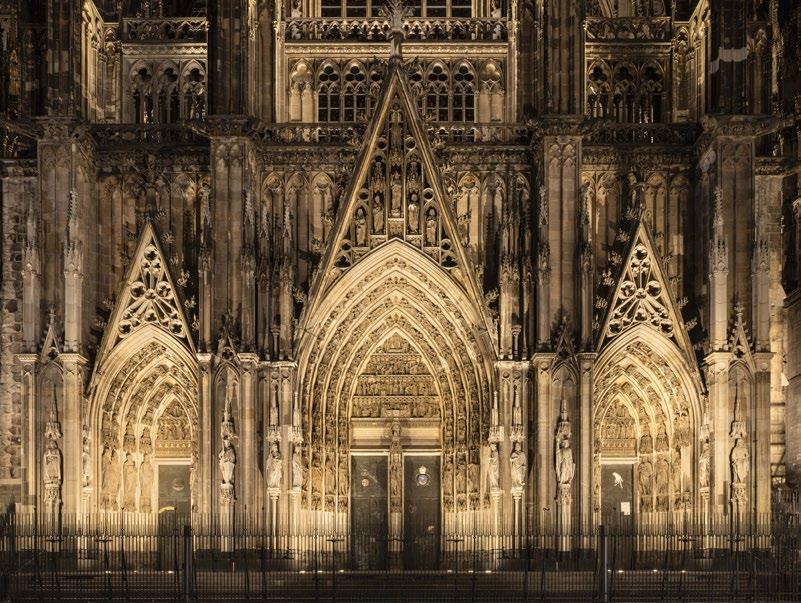
COLOGNE CATHEDRAL
Cologne, Germany
Designers
Philipp Schmitz, Stephan Thiele, Andreas Schulz, Thomas Möritz
Firm
Licht Kunst Licht AG
PHOTOGRAPHY
HGEsch Photography
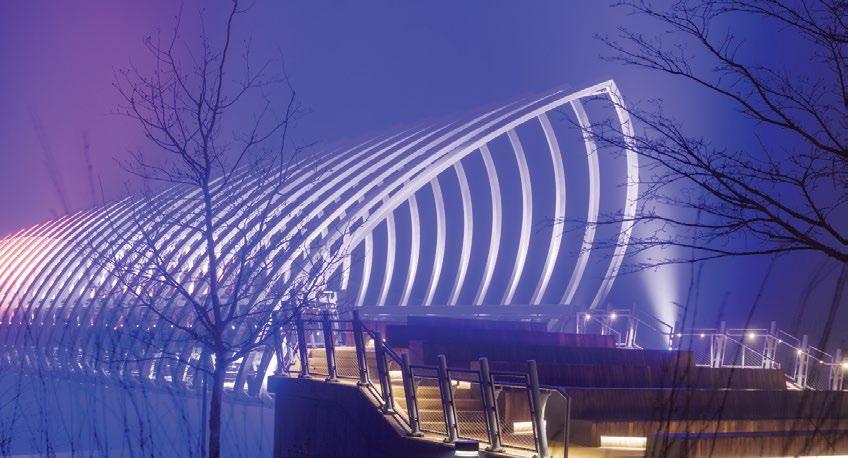
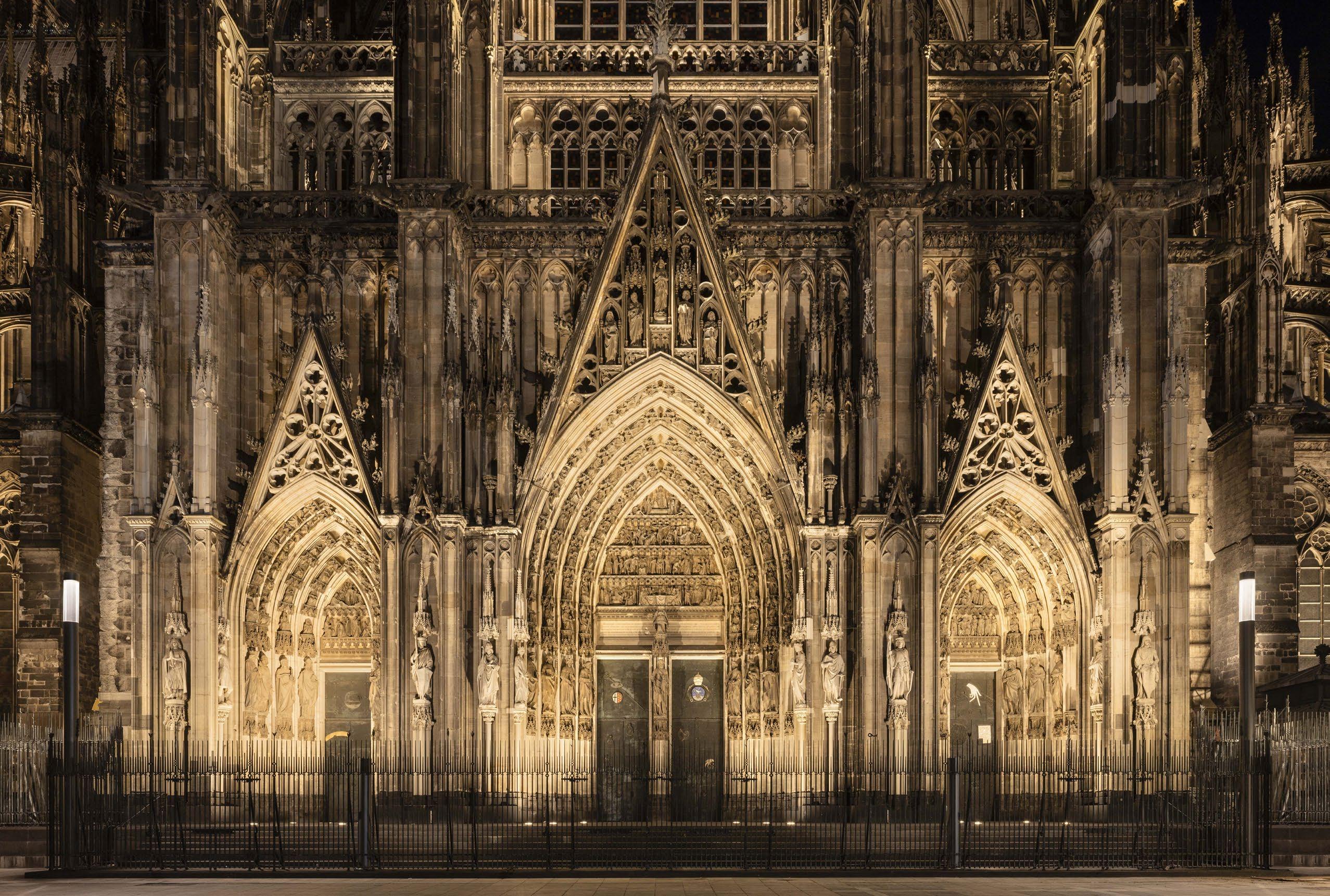
The lighting design for Cologne Cathedral beautifully illustrates the lighting design approach “light follows architecture.” Indiscriminate floodlighting is artfully replaced with targeted illumination. The original architectural plans for this magnificent gothic cathedral were missing, requiring the need for extensive empirical façade studies and onsite testing of optics and luminaire positioning. Over 700 compact LED luminaires with custom clamp and bracket systems protect the heritage stonework.
AWARDS OF EXCELLENCE
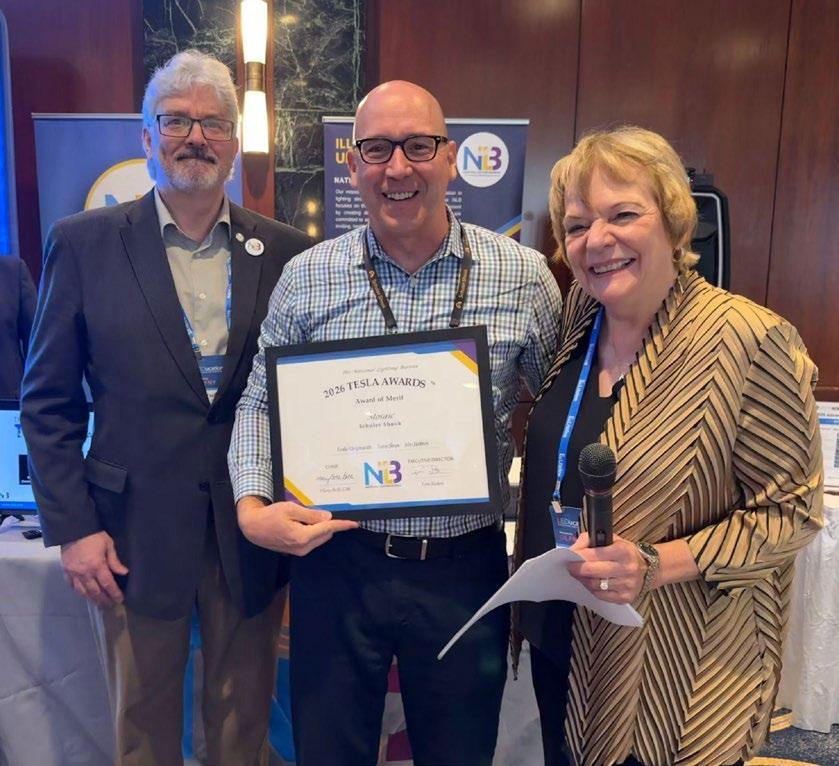
222 N. LASALLE LOBBY RENOVATION
Chicago, IL
Designers Giulio Pedota, Samantha Komber, John Jacobsen
Firm Schuler Shook
PHOTOGRAPHY
DANIEL KELLEGHAN
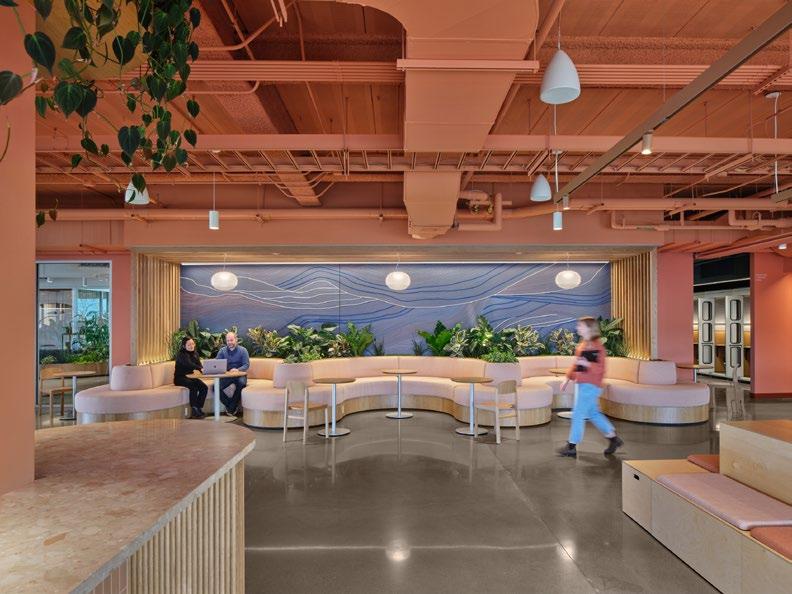
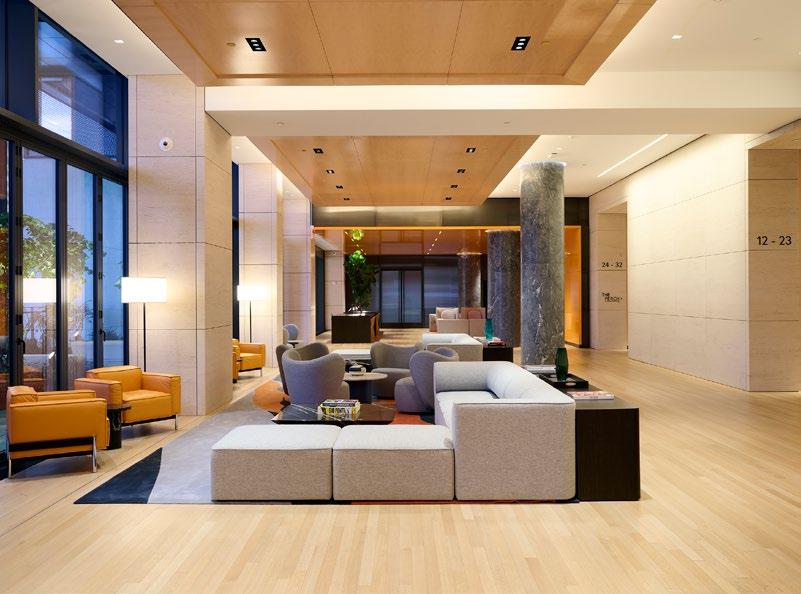
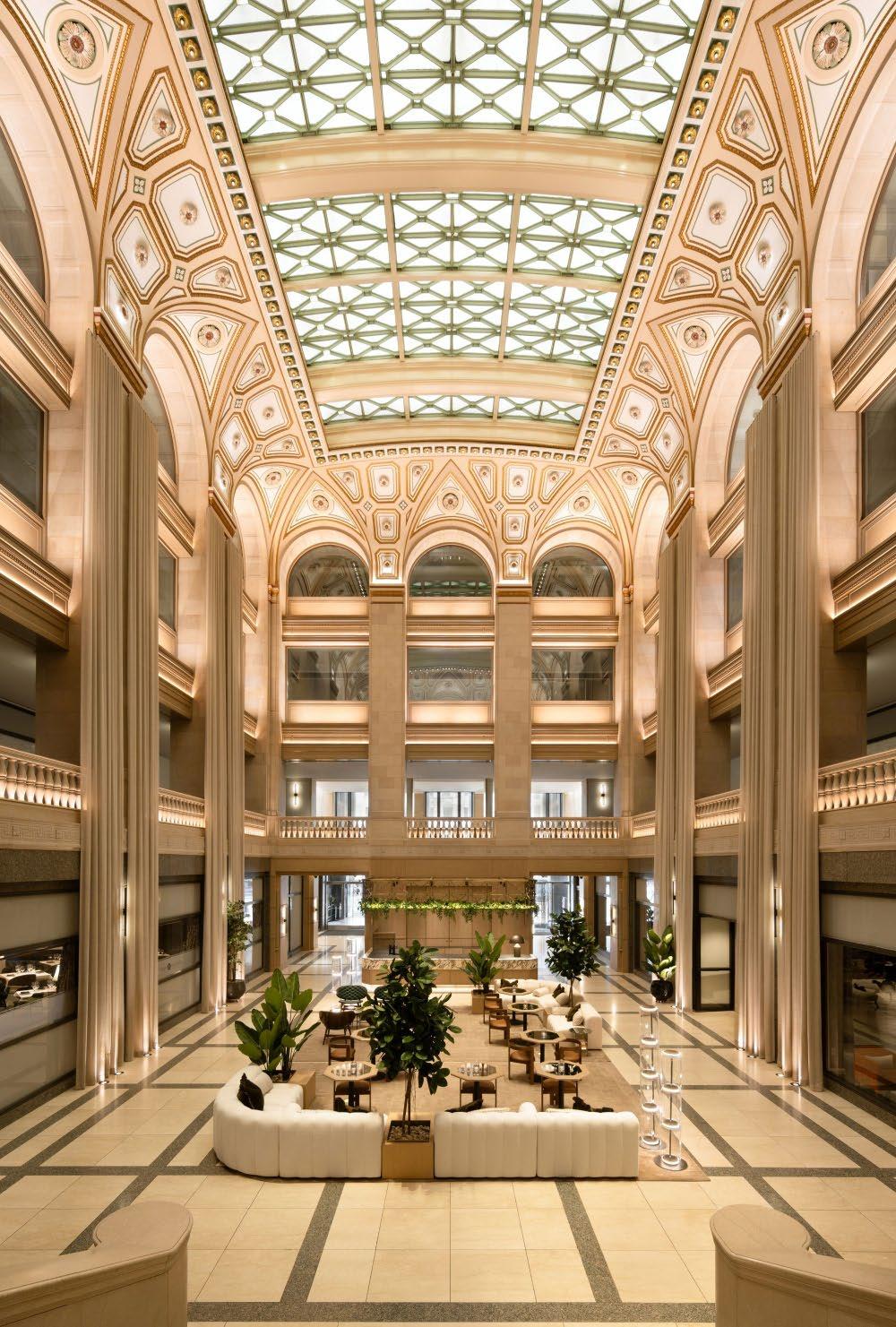
The lobby of this building is repositioned as a striking amenity for a discerning tenant base. Small profile 2700 K luminaires are seamlessly integrated into the architecture. Soft lighting emanates from the floor, balustrades, pilasters and millwork to create a cohesive immersive experience that elevates the atrium. Close collaboration between the client and design team brought into focus the vision of a sophisticated European lounge-like environment.
MOSAIC
San Francisco, CA
Designers
Emily Klingensmith, Travis Shupe, John Jacobsen, Katelyn Le-Thompson (formerly with Schuler Shook)
Firm
Schuler Shook
PHOTOGRAPHY
Jason O’Rear
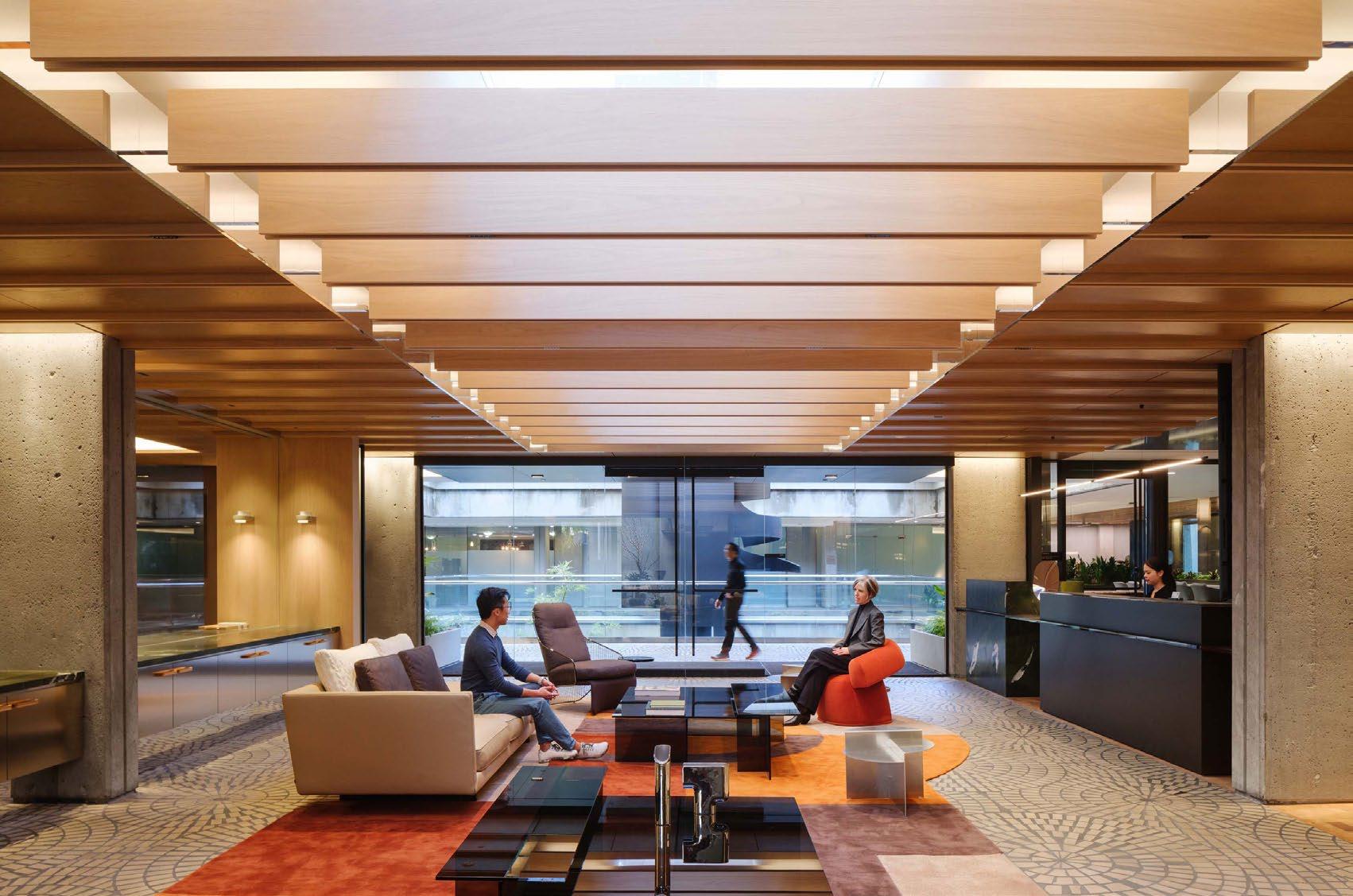
AWARDS OF MERIT
The retail podium of this urban high-rise is transformed into a vibrant amenity suite that hosts conferences and other events. Indoor and outdoor areas are seamlessly integrated to create an inviting and flexible destination for both daytime and nighttime gatherings. Carefully integrated electric lighting highlights the refined material palette and brings balance to spaces with daylight from windows and skylights.
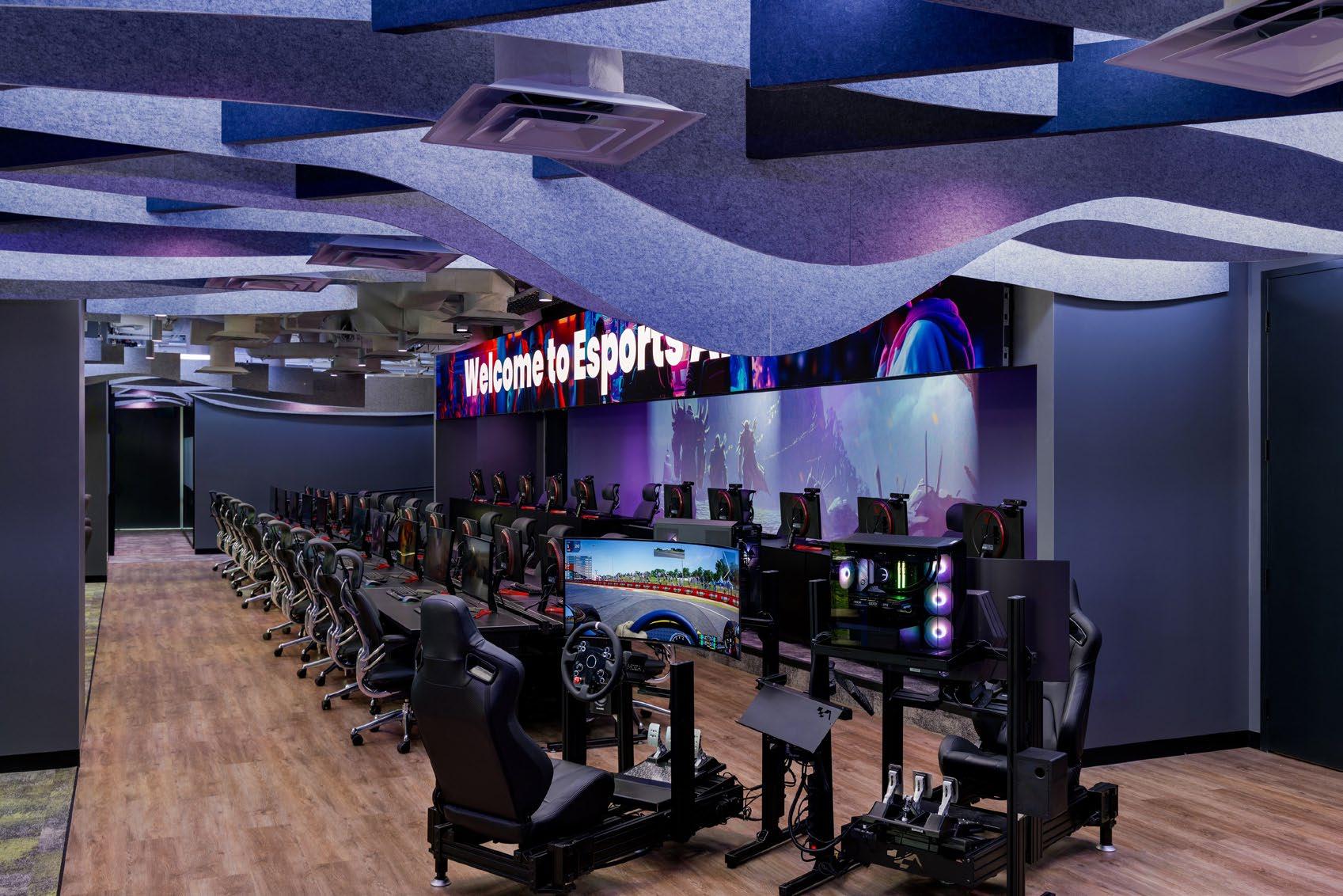
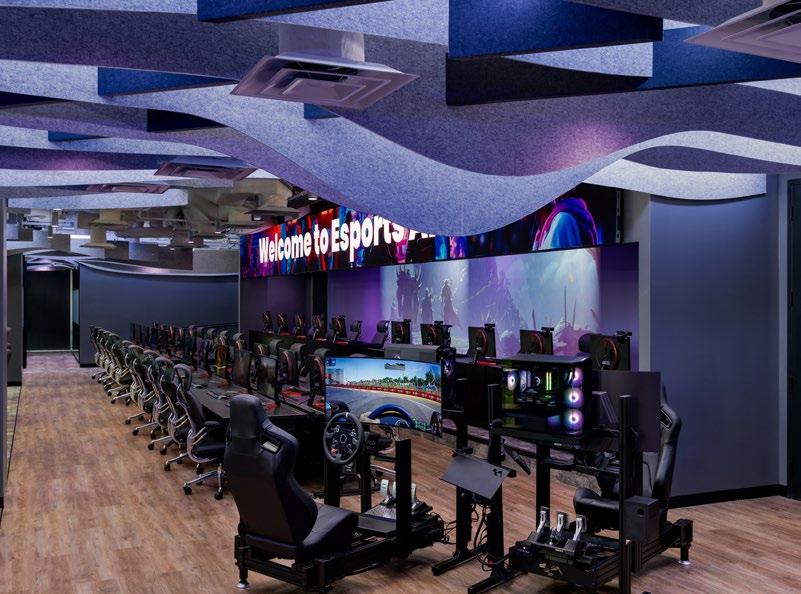
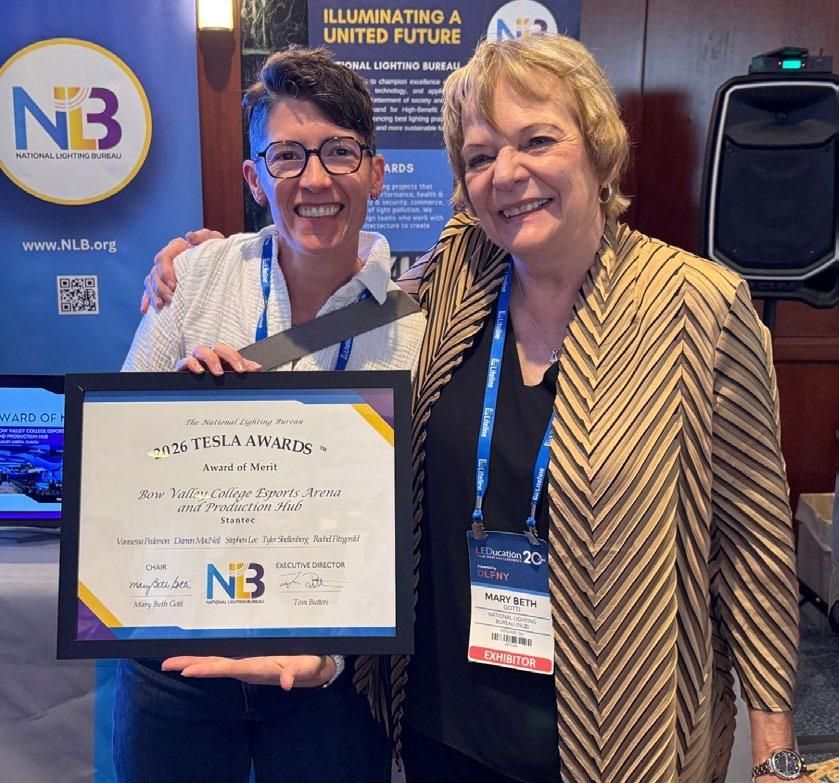
BOW VALLEY COLLEGE ESPORTS ARENA AND PRODUCTION HUB
Calgary, Alberta Canada
This project reimagines existing classrooms as high performance environments that support emerging academic programs. A multi-layered, dynamic lighting control strategy elevates operational flexibility. The lighting design prioritizes performance, visual comfort and emotional impact.
Designers
Vannessa Pederson, Darren MacNeil, Stephen Lee, Tyler Shellenberg, Rachel Fitzgerald
Firm
Stantec
PHOTOGRAPHY
Joel Klassen
Designers
Vannessa Pederson,
Shannon Glover, Anna Zuercher, Chloe Dye
Firm Stantec
PHOTOGRAPHY
Jeffrey Totaro
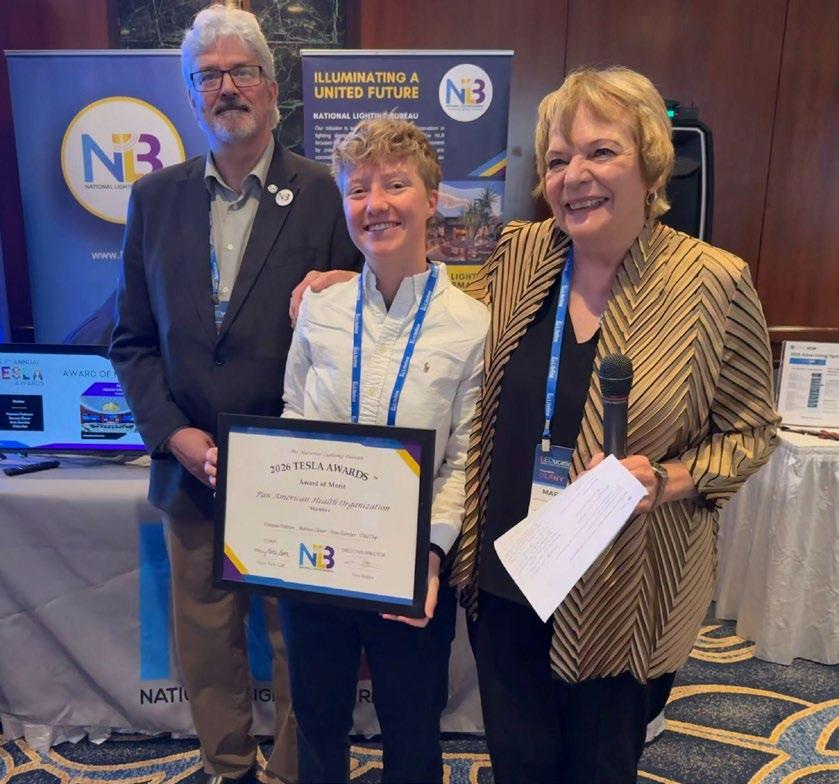
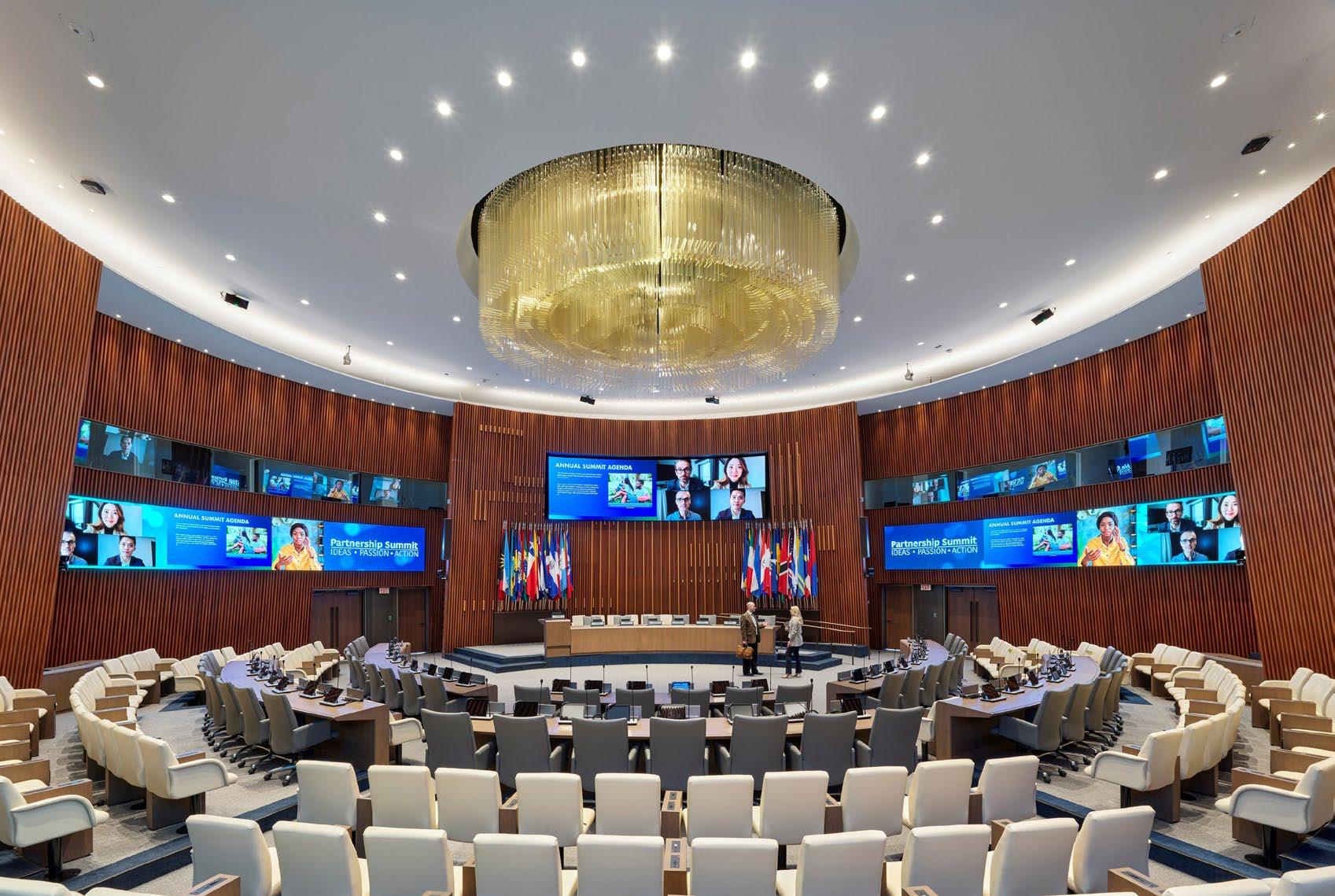
PAN AMERICAN HEALTH ORGANIZATION
Washington, DC
This project transforms an historic 1965 building with contemporary functionality without disturbing sensitive historic ceilings. The lighting design features a revitalized chandelier and flexible lighting systems that elevate both in-person and remote communication.
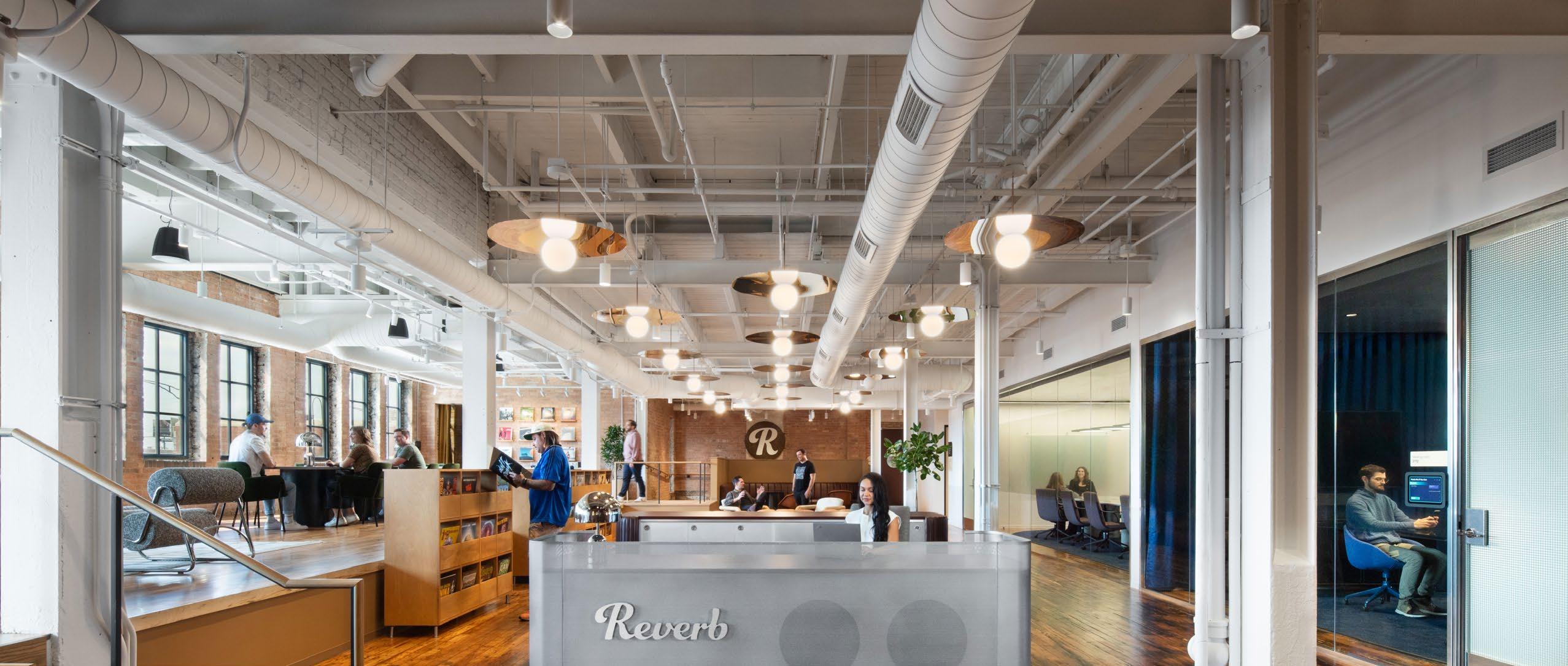
REVERB HQ
Chicago, IL
Designers
Emily Klingensmith, Travis Shupe, Scott Tobin, John Jacobsen
Firm
PHOTOGRAPHY
Schuler Shook Amanda Glandon
A repurposed historic Morton Salt building now houses the largest online marketplace for musical instruments. Materials, shapes and textures were carefully considered to support their brand while creating inviting, hospitality-like spaces for their staff and visitors. Visually interesting sconces and pendants work with downlights, track and linear grazers to help deliver a fun, creative environment.
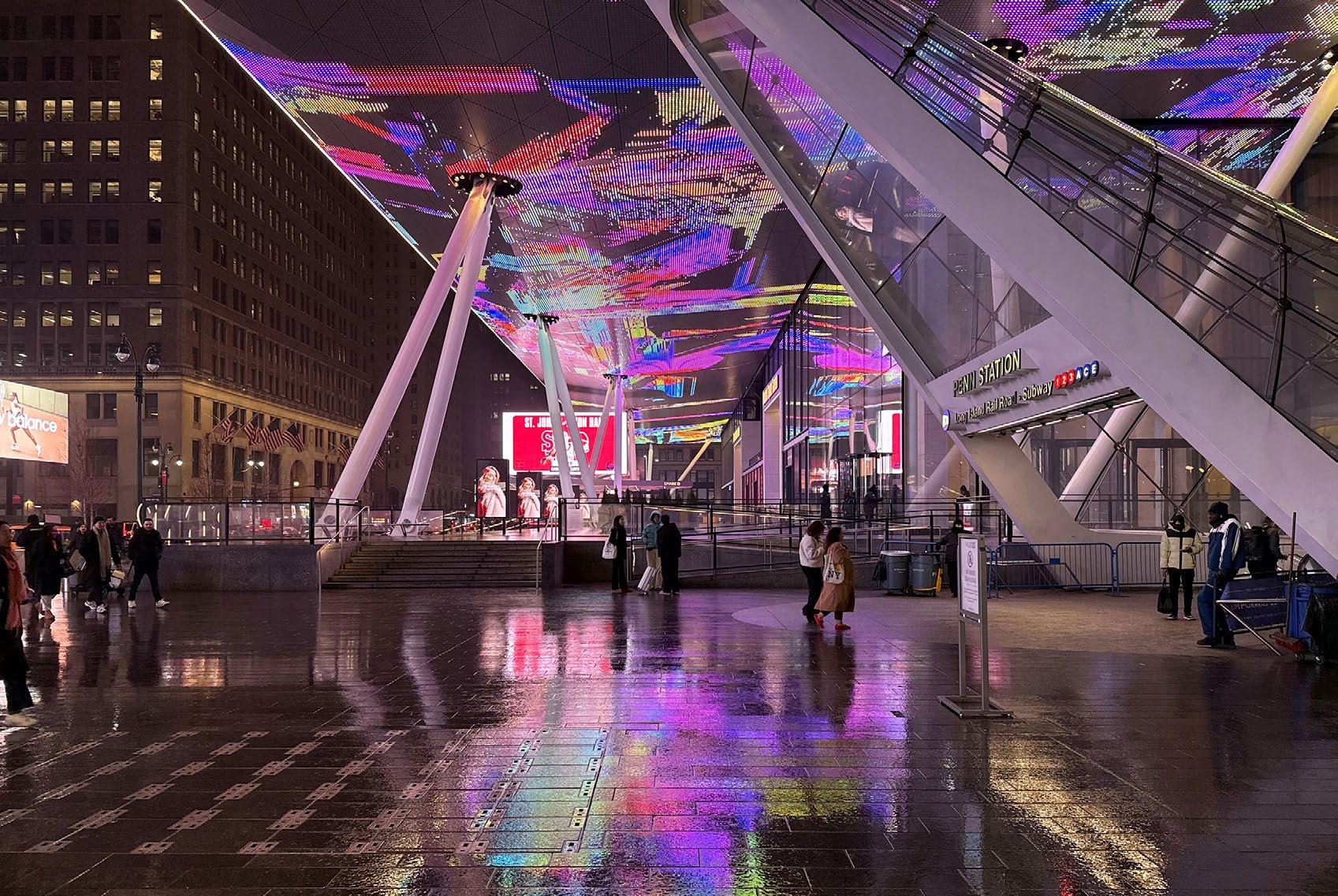
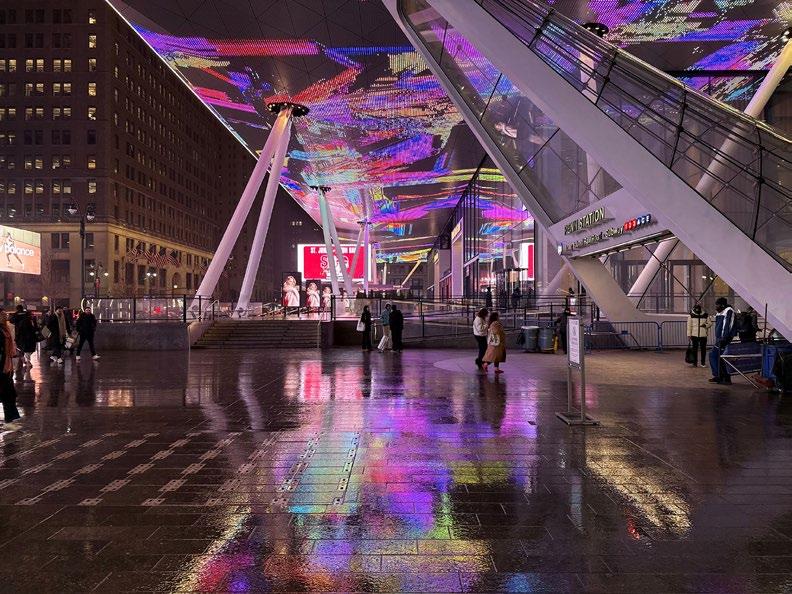
This renovated office tower, situated at the threshold of the nation’s busiest train station and New York City’s premier arena, defines a major urban gateway with much stronger visual identity. The lighting design reimagines the vast underside of the two-block building addition that shelters the entrance plaza, clearly distinguishing and announcing the numerous entry points.
Designers
Firm
Cline Bettridge Bernstein
Lighting Design
PHOTOGRAPHY
Matthew Cohn
New York, NY
Designers
Francesca Bettridge, Michael Hennes, Nira Wattanachote, Alexis Arnoldi
Firm
Cline Bettridge Bernstein
Lighting Design
PHOTOGRAPHY
Matthew Cohn
New York, NY
Francesca Bettridge, Michael Hennes, Nira Wattanachote, Alexis Arnoldi
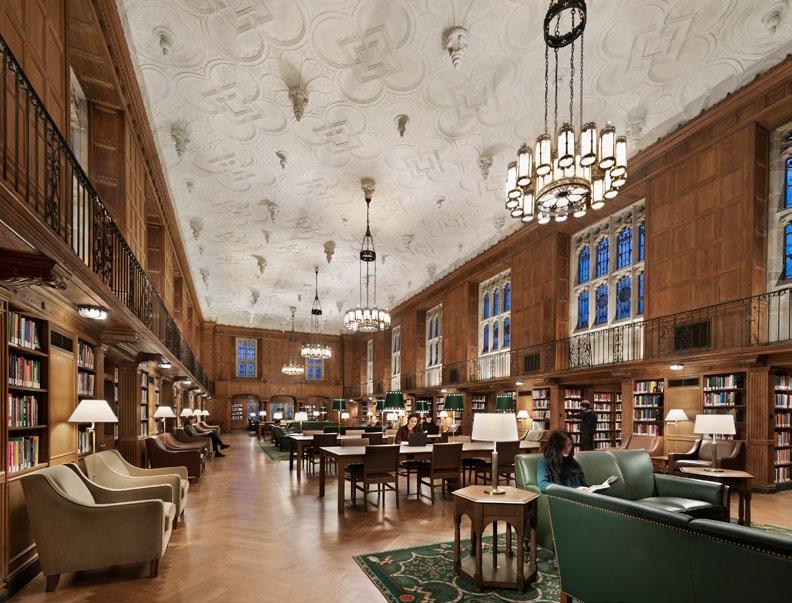
YALE LINONIA & BROTHERS
READING ROOM RENOVATION
New Haven, CT
Designers
Francesca Bettridge, Nicole Y. Kim, Clara Samudio
Firm
Cline Bettridge
Bernstein Lighting Design
PHOTOGRAPHY
© Frederick Charles
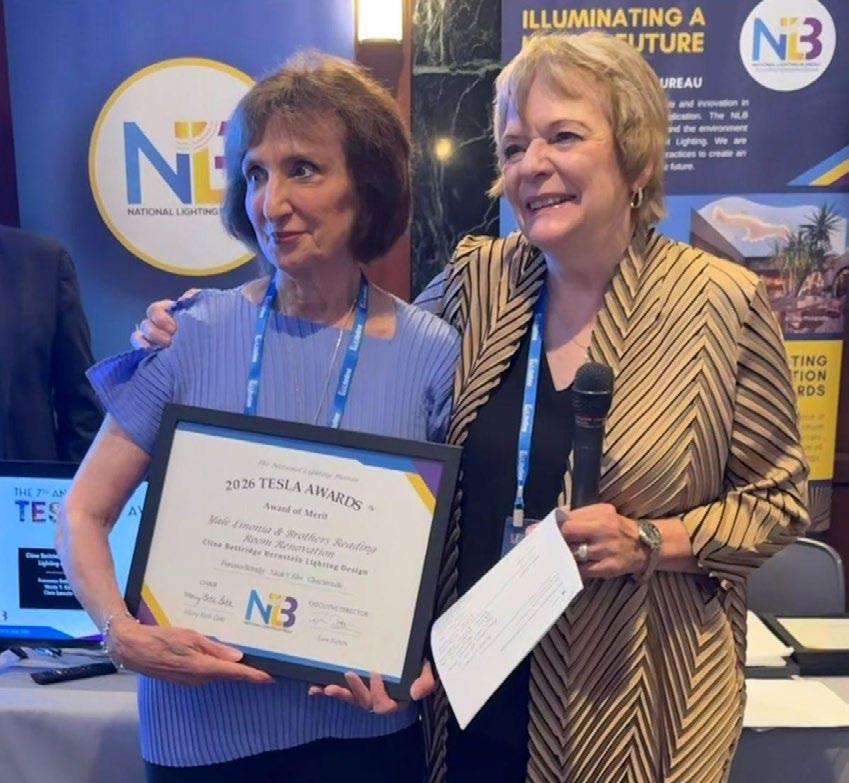
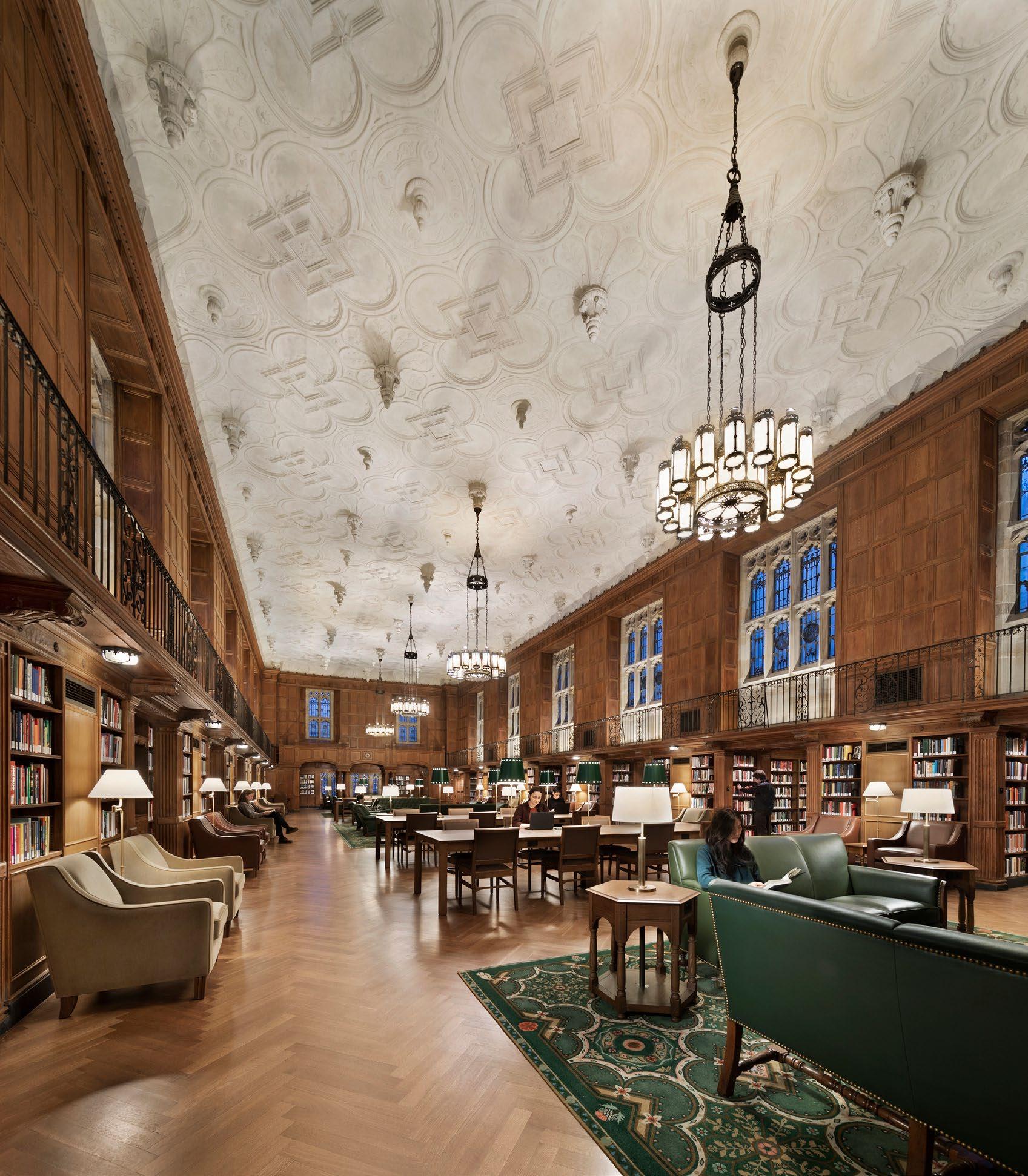
The renovation of one of Yale’s most beloved study spaces thoughtfully blends sustainability with historic preservation. Through careful restoration of original ceiling fixtures, the addition of table and floor lamps, and the discreet integration of other LED luminaires, the library retains its historical feel but with a much brighter mood.
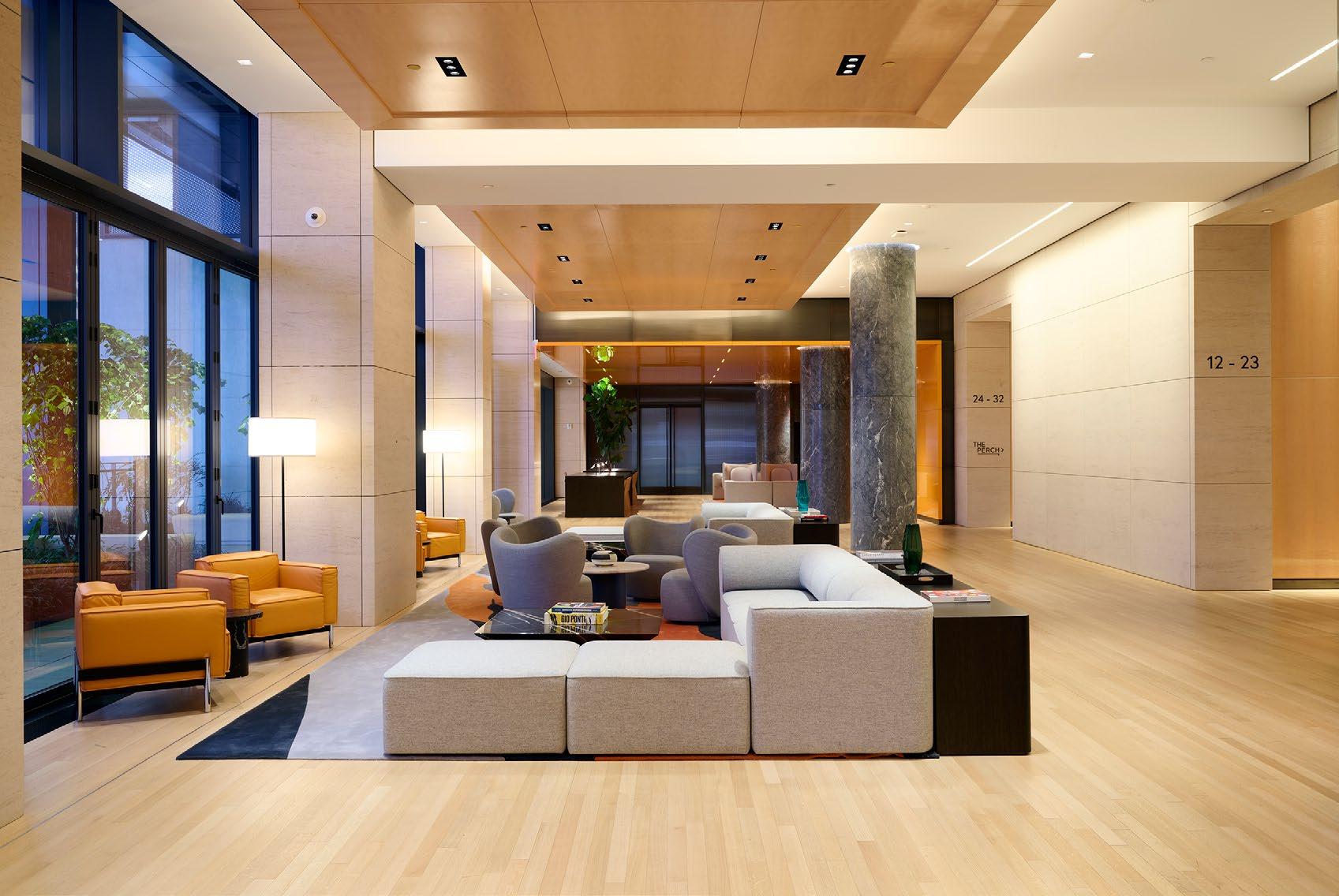
The relocated triple-height lobby for this renovated office tower serves as a civic-scale beacon and establishes the building’s new identity. Accent lighting integrated within the ceiling slots delivers flexible illumination. Along with concealed perimeter lighting that grazes the stone walls, the result is a dramatic contemporary entry that reveals the building’s renewed vision to those viewing it from the street.
(sponsored by the Lighting Controls Academy)
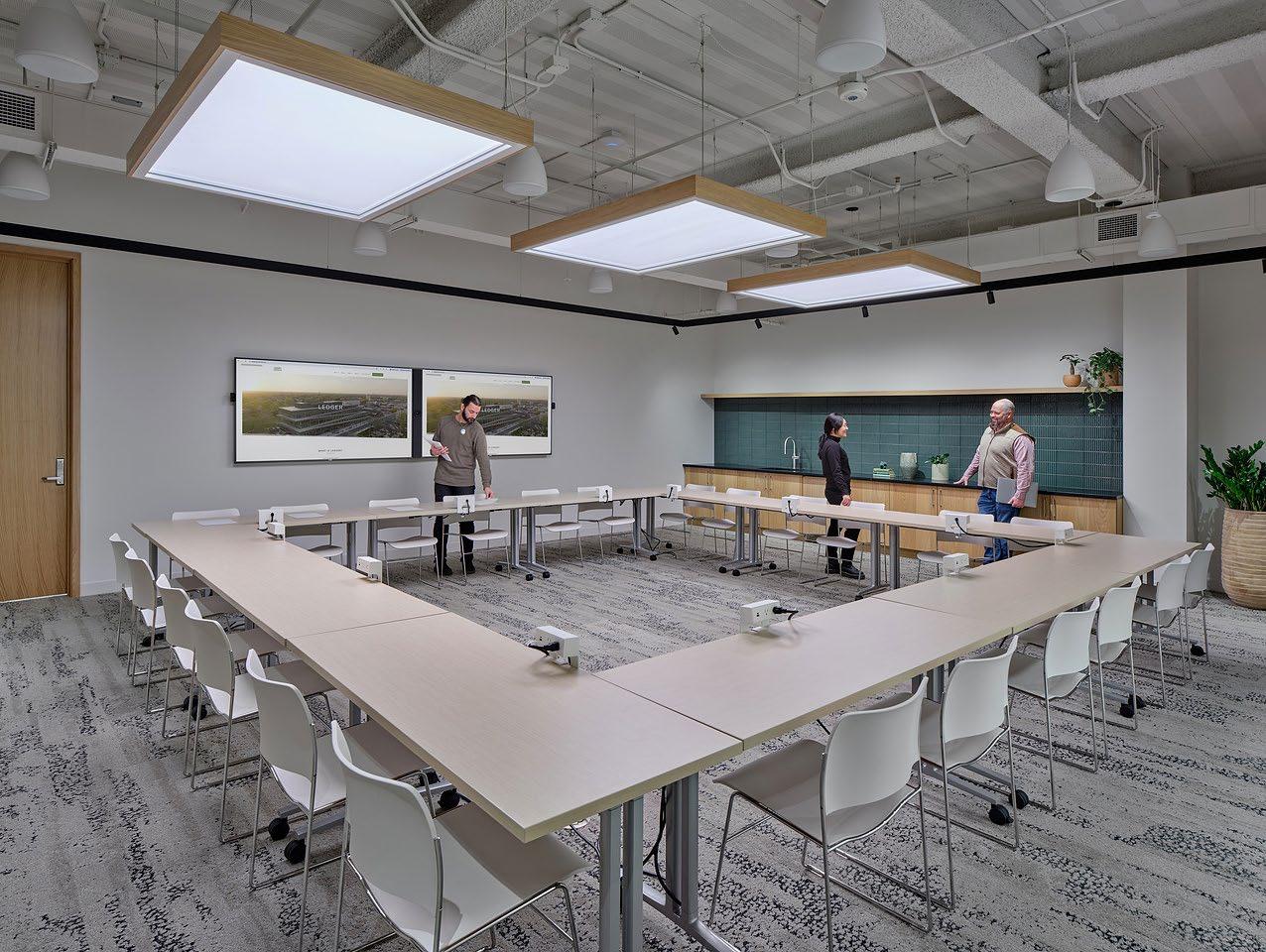
In this project, controls operate as both efficiency engine and experiential tool: daylight harvesting trims perimeter loads, high-end trim and granular zoning secure peak-hour savings, and occupancy/vacancy strategies limit off-hours use. Circadian-aligned, scheduling modulates spectrum and melanopic stimulus, particularly in windowless rooms where skylight-simulated fixtures deliver WELLaligned cures. Commissioning and post-occupancy tuning maintain performance while supporting individual preference through task-level dimming.
ARVEST @ LEDGER OFFICES
Bentonville, AR
Designers
C. Brooke Silber, Leela Shanker, Enrique Rojas, Ira Rothman
Firm
Borealis Lighting Studio
PHOTOGRAPHY
Todd Mason of Halkin Mason Photography
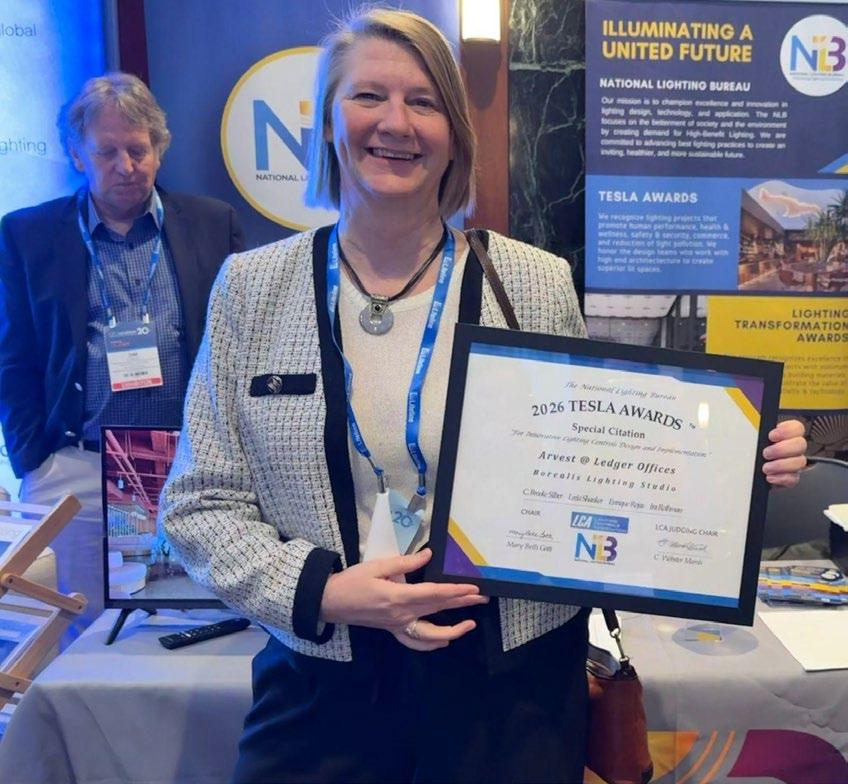
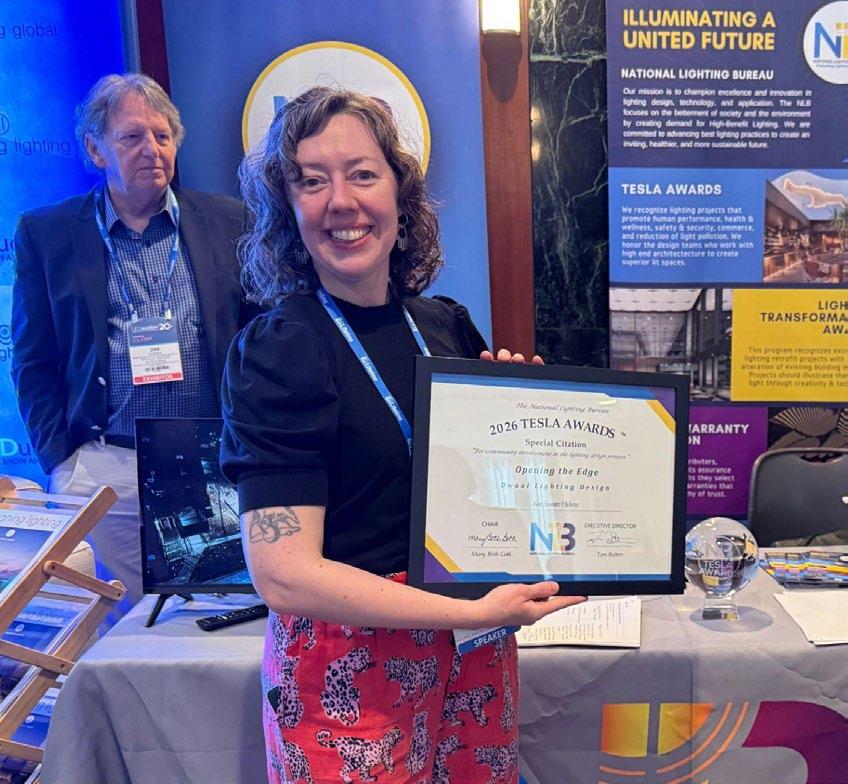
SPECIAL CITATION “FOR COMMUNITY INVOLVEMENT IN THE LIGHTING DESIGN PROCESS”
Designers
Kate Sweater Hickcox
Firm
Dwaal Lighting Design
PHOTOGRAPHY
OPENING THE EDGE
New York, NY
Tameek Williams for Design Trust for Public Space
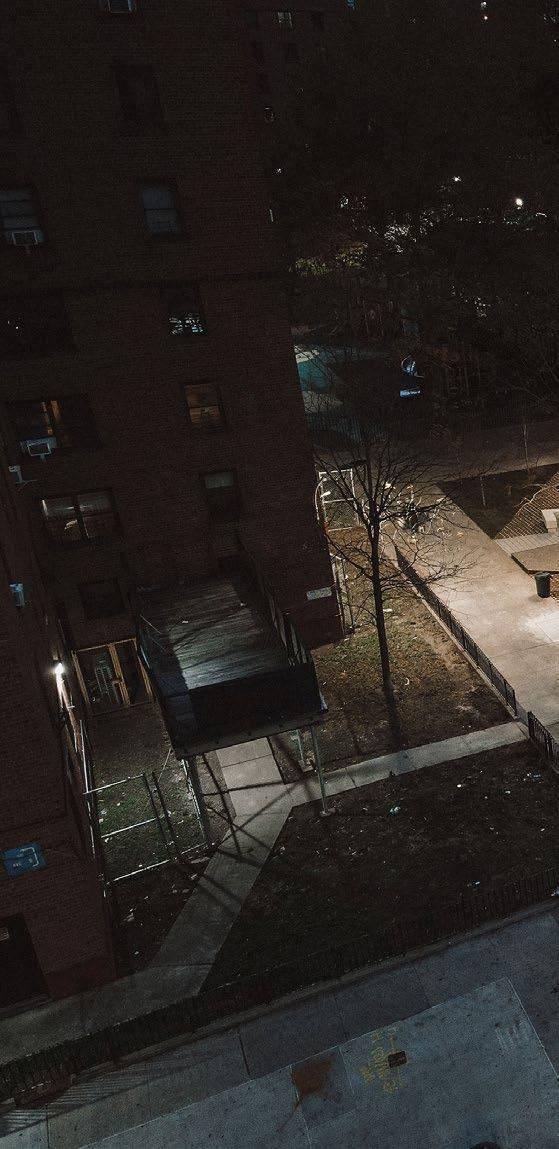
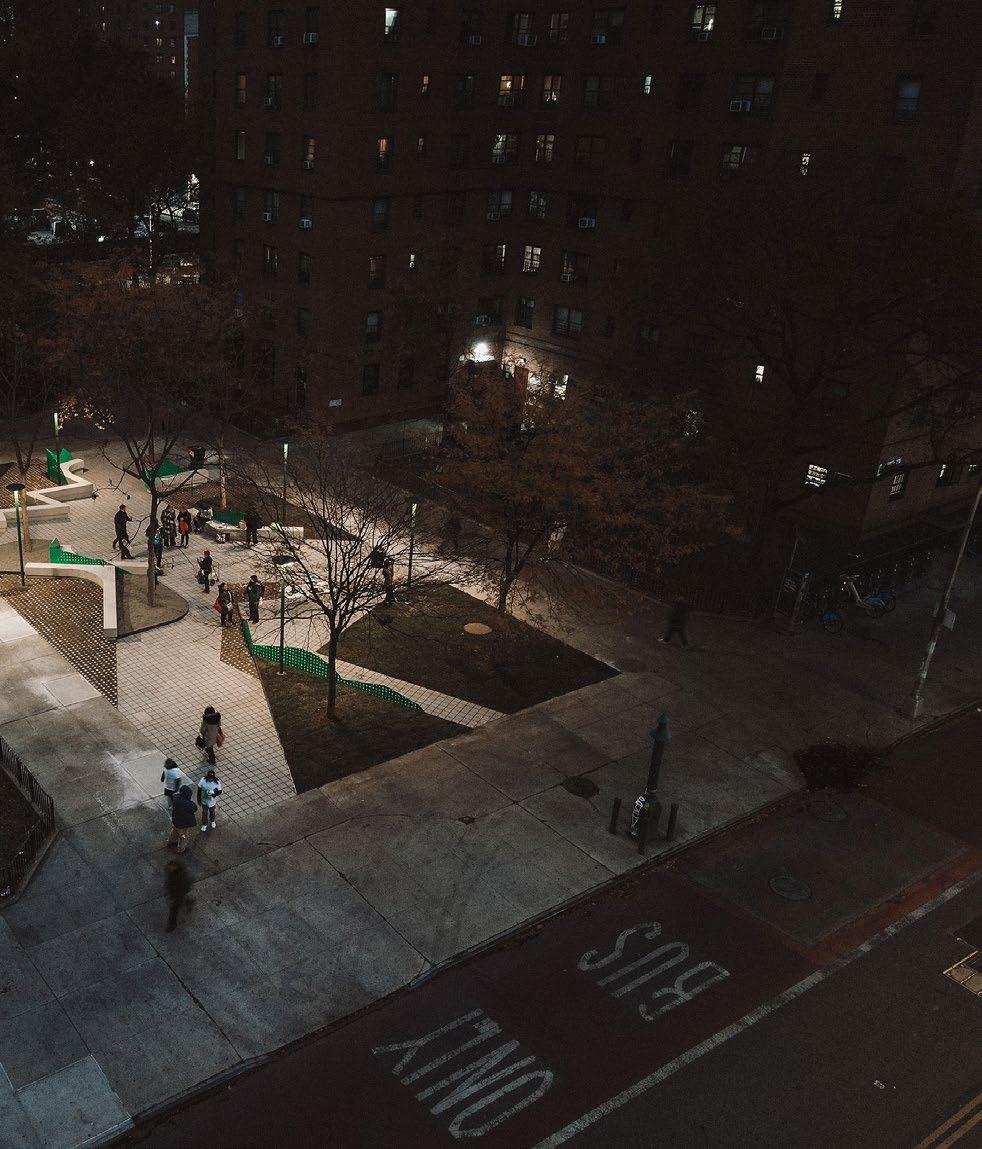
The project transforms a fenced, unused green space in a public housing campus into a warm welcoming public plaza. Volunteer residents became co-designers, shaping priorities and reviewing design iterations over nearly a decade.
Designers
Giulio Pedota, Laura Roman, Jackson Pattermann, Samantha Komber, John Jacobsen
Firm Schuler Shook
PHOTOGRAPHY
Angie McMonigal Photography
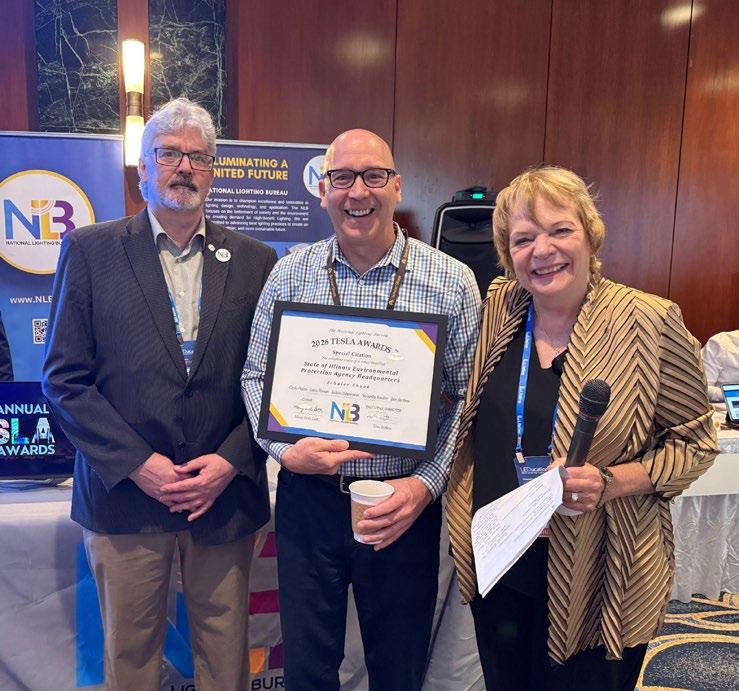
STATE OF ILLINOIS ENVIRONMENTAL PROTECTION AGENCY HEADQUARTERS
Springfield, IL
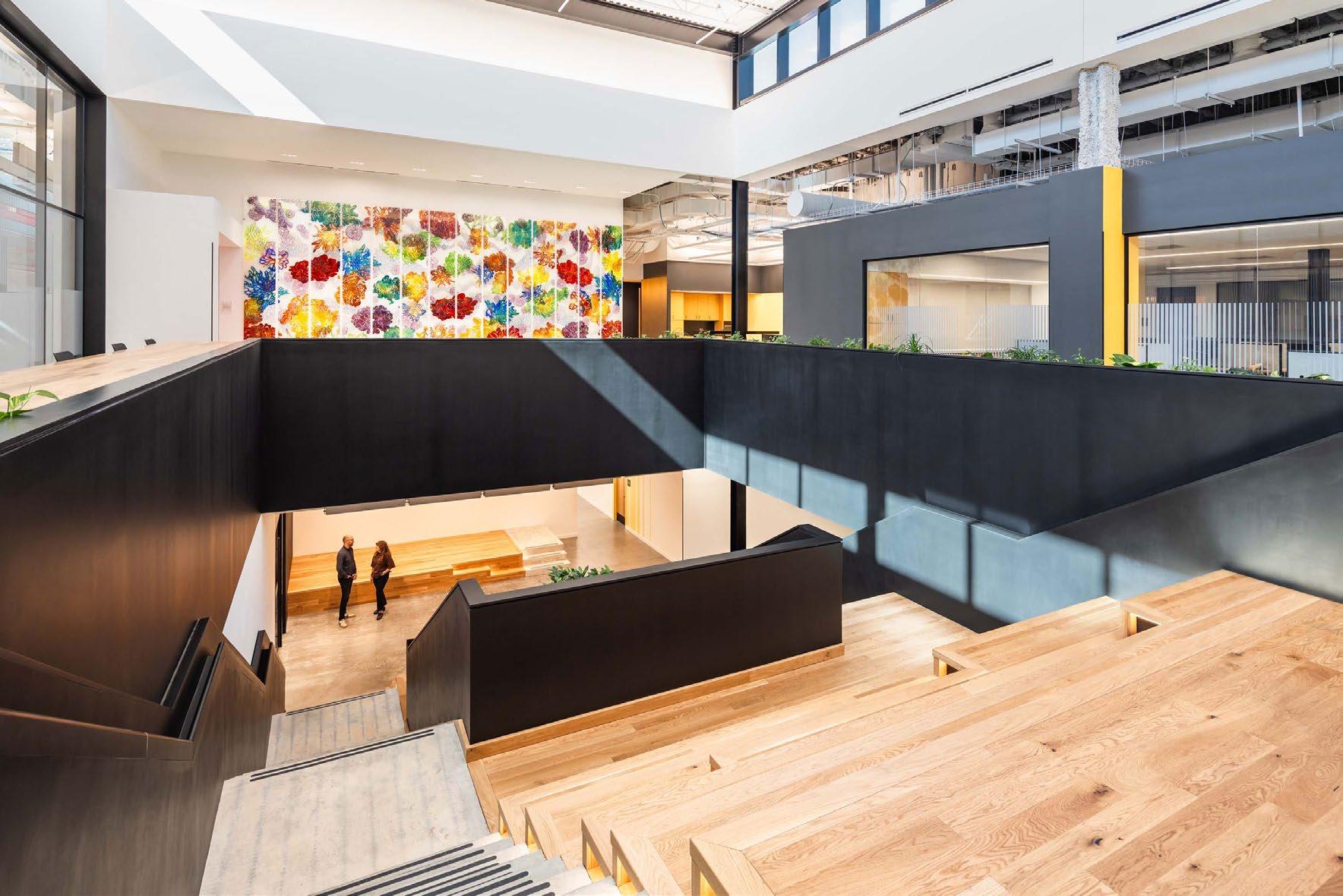
Once a vacant Sears store, this new EPA headquarters stands as testament to environmental stewardship and urban reinvention. The design team retained much of the existing structure while introducing bold new interventions that flood
the once-enclosed building with natural light. Daylight and integrated architectural LED linear lighting enhance the sense of openness, highlight the clean geometry, and support the office’s organized, efficient layout.
With great appreciation, the National Lighting Bureau acknowledges all participants of the 7th Annual Tesla Awards. Congratulations to all Tesla Award winners for their commitment to promoting excellence in lighting.
ABOUT THE NLB
The National Lighting Bureau is an independent, IRS-recognized notfor-profit, educational foundation that has served as a trusted lighting information source. The Bureau provides its services to the public free of charge, thanks to the generous funding of the organization’s sponsors which include professional societies, trade associations, labor unions, manufacturers, and agencies of the U.S. government.
LIGHT FIT KING for a
My own introduction to James happened by chance.
RANDY REID By
I knew of James Hall largely through his reputation. He was a longtime friend of our publisher, Cliff Smith, and his name surfaced frequently whenever conversations turned to exceptional decorative lighting and restoration work.
At Light + Building 2024, James happened to walk past the EdisonReport studio and noticed a photograph of Cliff prominently displayed. He stopped, introduced himself, and we spent a few minutes talking. It was one of those brief trade-show encounters that linger in your memory. Ever since, I had wanted to sit down and hear his story.
The interview began beneath a chandelier.
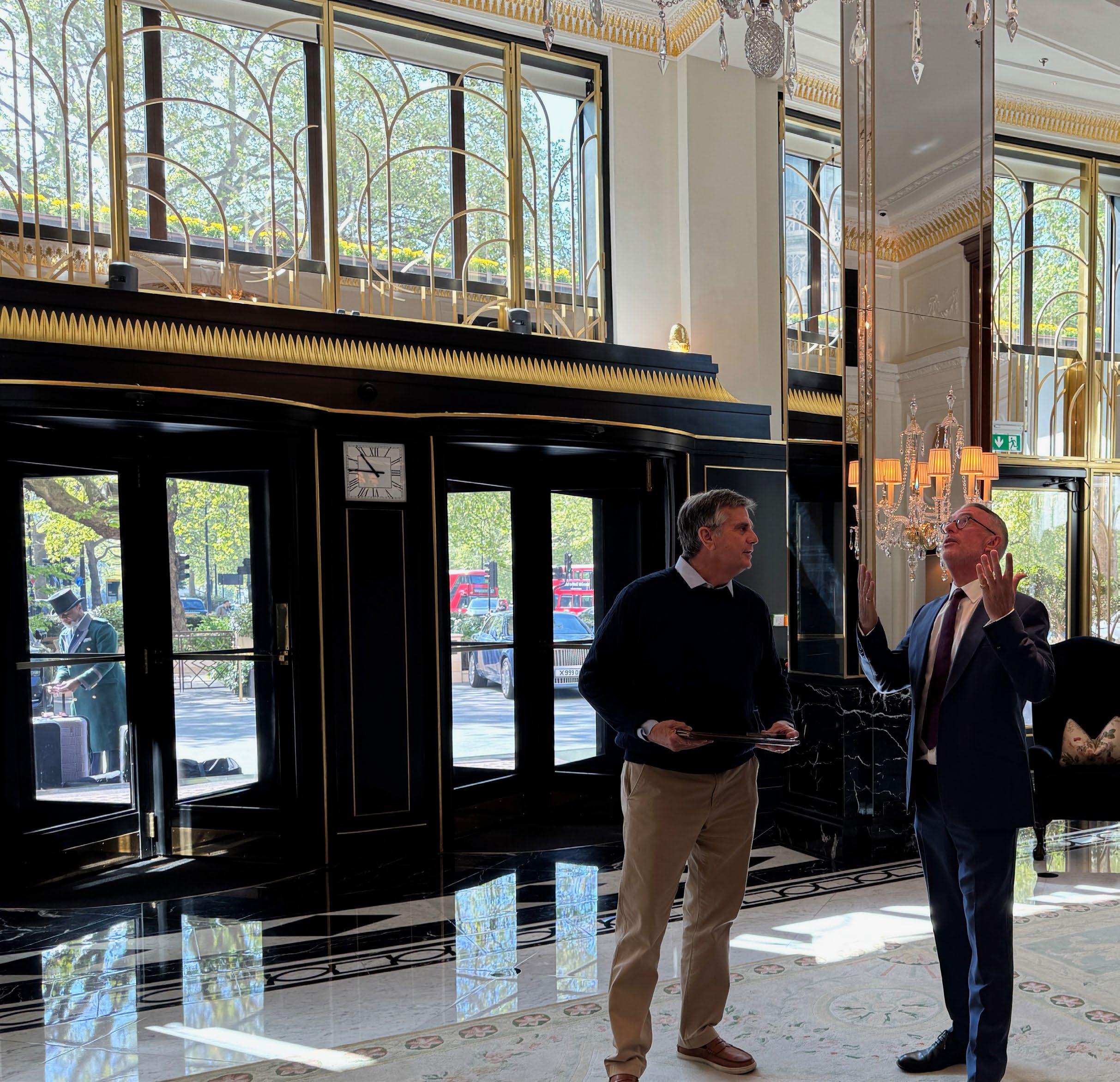
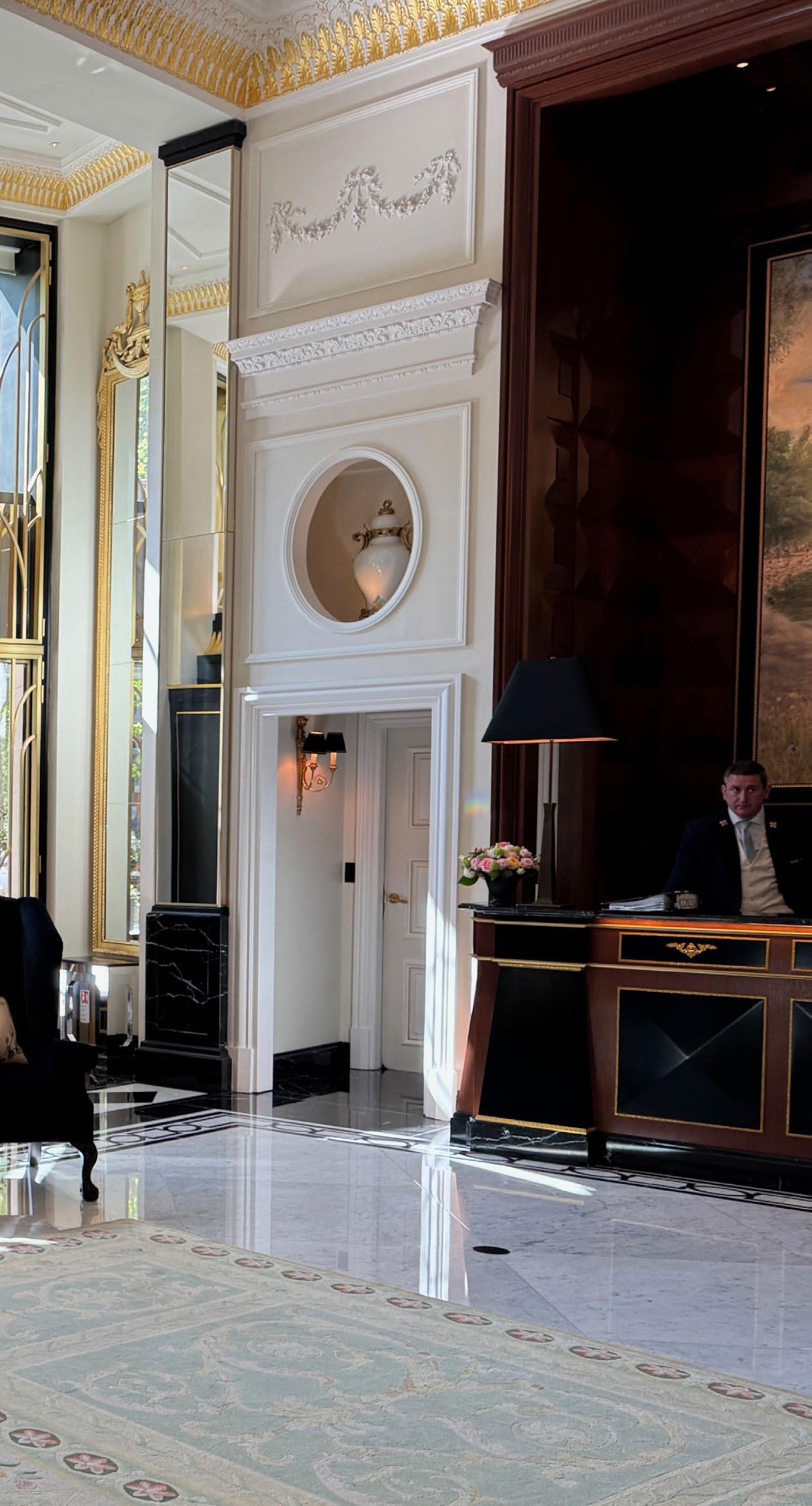
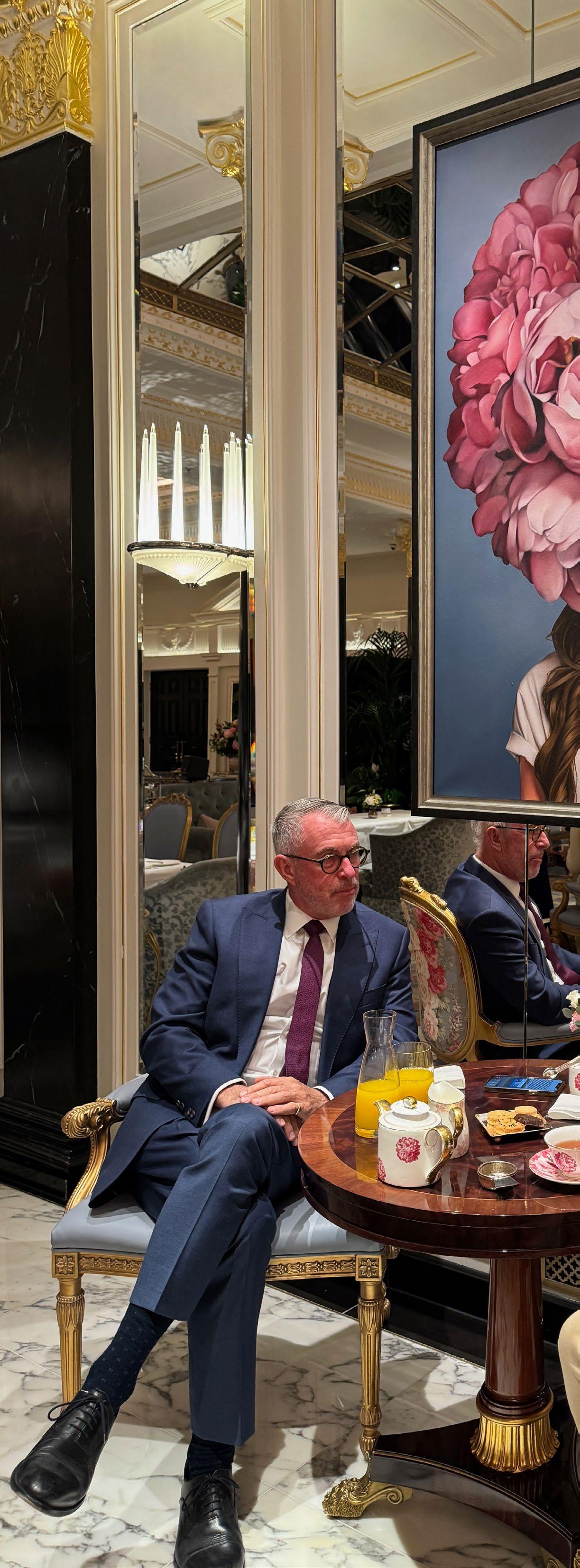
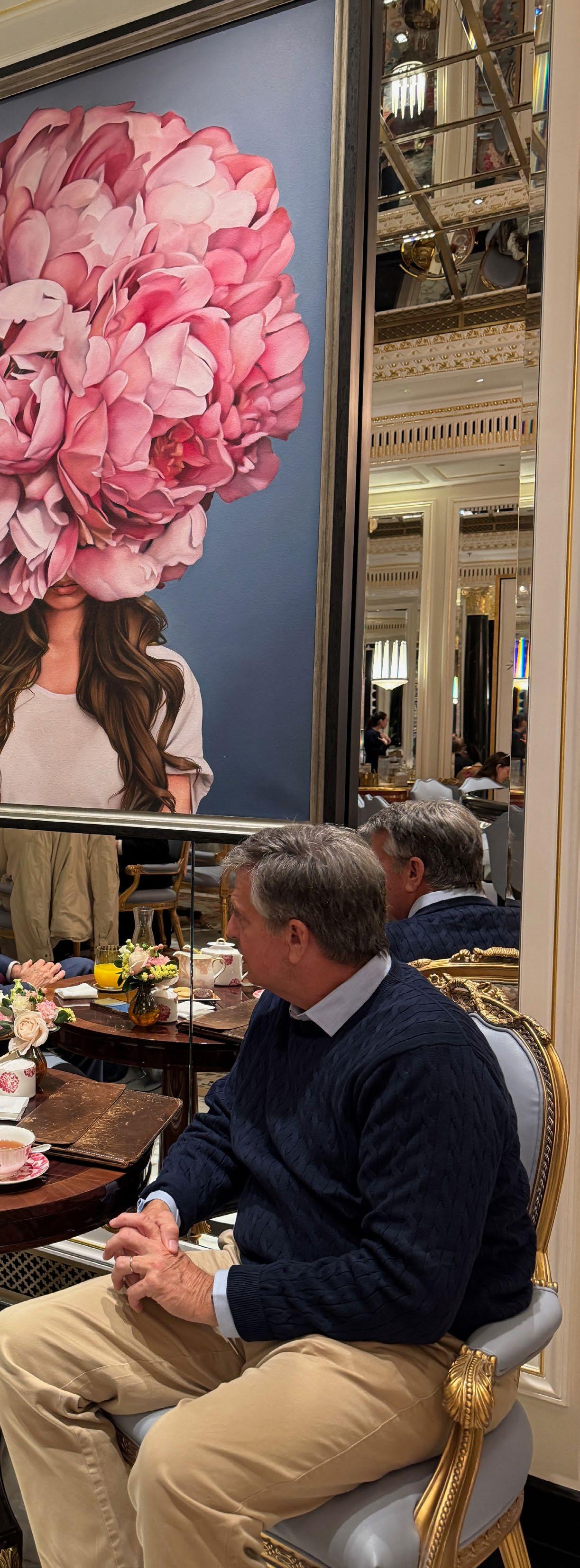
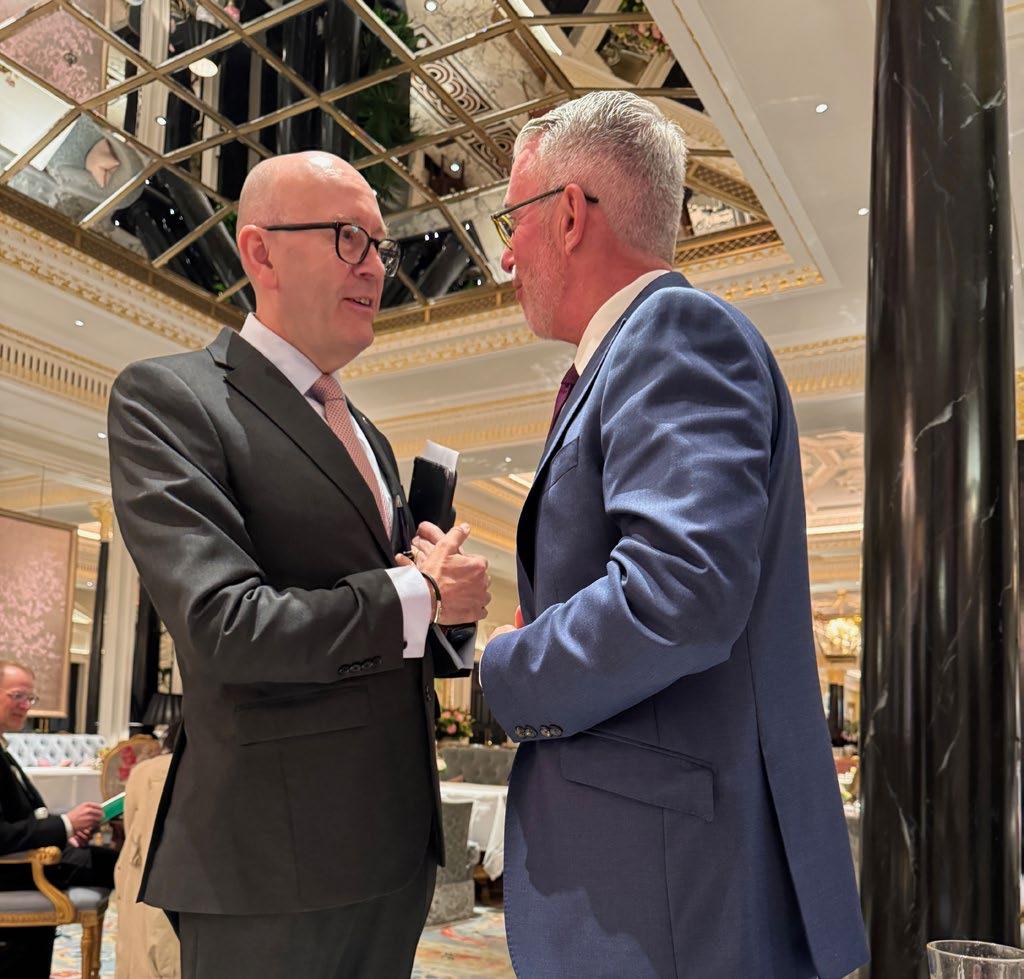
Standing in the grand entrance of The Dorchester in London, James paused to look upward at a sparkling cascade of crystal that welcomes guests to one of the world's most celebrated hotels. Porters moved luggage across the marble floor. Afternoon tea preparations quietly unfolded nearby. Above it all hung a chandelier that James had designed and built.
For the next ninety minutes, James guided me through some of London's most prestigious interiors, sharing stories that stretched from Buckingham Palace and Windsor Castle to luxury hotels, embassies, and private residences. Along the way, he revealed a world few people ever see— one where decorative lighting is part craftsmanship, part conservation, and part history.
Few people outside the world of decorative lighting know James Hall's name. Yet millions have stood beneath his work.
As Managing Director of Madson Black, James oversees the design, manufacture, restoration, and conservation of some of Britain's most important decorative lighting installations. He is also the holder of a Royal Warrant from King Charles III, one of the highest recognitions granted to companies serving the Royal Household.
Obtaining a Royal Warrant requires years of service, extensive vetting, and increasingly rigorous sustainability standards. For James, however, the warrant is less an achievement than a reflection of work already underway. For the past nine years, he has served as the principal decorative lighting specialist to the Royal Household.
In Britain, few endorsements carry greater weight.
His connection to lighting began almost from birth. "I was a few days old when my mother took me to the factory," James told me with a smile.
"My father worked there. My mother worked there. Lighting was always around me. I genuinely can't remember a time when it wasn't part of my life."
James Hall
For most people, that would sound like an exaggeration. For James, it is simply family history.
"My father worked there. My mother worked there. Lighting was always around me. I genuinely can't remember a time when it wasn't part of my life."
His father was a draughtsman, artist, and designer whose career became intertwined with some of Britain's most prestigious buildings, while his mother designed lampshades. The family business revolved around light, craftsmanship, and the artisans who transformed sketches into objects destined for palaces and hotels.
James grew up surrounded by watercolor renderings of chandeliers. Long before computer-generated images and AI-assisted design, his father spent days creating detailed paintings that allowed clients to visualize a finished piece. Thousands of those watercolors still exist.
Today, software can create similar images in minutes. Back then, it required patience, talent, and an artist's hand.
As we walked through Mayfair, James pointed toward buildings that contained his family's work. Some were hotels. Others were government buildings. Many were places the public would never see. Nearly every block seemed to hold a chapter of his family's history. Red double-deckers rolled past. Black cabs slipped through traffic. The city felt every bit the London visitors imagine.
His father eventually acquired the decorative lighting company where he had apprenticed as a young draughtsman. The firm went on to illuminate some of Britain's most iconic buildings, including portions of the Houses of Parliament, Downing Street, luxury hotels, and countless public spaces.
When his father passed away, James stepped into a leadership role and eventually acquired the business himself.
In September 2008, James sold the company and stepped away just days before the global financial crisis erupted. While markets collapsed around the world, he found himself with the freedom to start again.
And he did.
Madson Black emerged from that period as a company unlike almost any other in the decorative lighting industry. Today, the firm designs and manufactures bespoke chandeliers, restores historic fixtures, conserves decorative lighting collections, and advises owners of some of the world's most significant buildings. The scale is intimate, but the projects are monumental.
Custodian of Royal Chandeliers
Royal projects are rarely discussed publicly. That discretion is one reason James is careful about what he shares. Still, the scope of his work is extraordinary.
Over many years, James and his team have surveyed, restored, rewired, conserved, cleaned, and maintained hundreds of chandeliers and historic lighting installations across the Royal Residences. Continuing a family legacy established by his late father, Peter Hall—who received a personal letter of thanks from Her late Majesty Queen
Elizabeth II following the restoration works undertaken after the Windsor Castle fire—James has developed an enduring passion for preserving the nation's most significant decorative lighting. Today, work for the Royal Household remains a source of immense pride, with Buckingham Palace alone containing hundreds of lighting fixtures that require specialist care, conservation, and ongoing maintenance.
The work extends far beyond changing lamps. Fixtures are dismantled piece by piece. Crystal is cleaned and repaired. Historic finishes are restored. Wiring is modernized. Structural supports are upgraded. LED technology is discreetly integrated into fixtures that were designed centuries before electricity existed.
"The best compliment we can receive is that nobody notices we've been there," James said. "If visitors walk into Windsor Castle and everything feels exactly as it should, then we've done our job."
The objective is not to make them look new. The objective is to make them look unchanged. Visitors should never know the work happened.
In many ways, that quiet stewardship is a very British notion— preservation over reinvention.
James described projects ranging from the restoration of historic chandeliers to the conversion of royal lanterns from gas illumination to modern LED technology. In some cases, his team creates entirely new fixtures that seamlessly blend into historic settings.
One commission held particular meaning.
Shortly before Queen Elizabeth II passed away, James was commissioned to create a pair of bespoke wall lanterns and a main lantern for Windsor Castle's Sovereign's Entrance. He personally presented the project as part of a gift to the Queen. Only months later, she was gone, making the commission one of the most memorable moments of his career.
His responsibilities extend beyond the royal residences themselves. James also advises government buildings and diplomatic properties, including 10 Downing Street and British embassies around the world. For someone who entered a lighting factory before he was four days old, it seems a fitting progression.
Art, Technology, and Trust
What makes James unusual is that he occupies several worlds simultaneously.
He is a designer.
He is a conservator.
He is a manufacturer.
He is also a technologist.
As we stood beneath the Dorchester chandelier, our conversation turned to LEDs, dimming systems, controls, and lamp consistency.
Many lighting designers understand the challenge. A
lamp purchased today may not perform identically to one purchased six months later, even when carrying the same specification. For someone responsible for royal residences and luxury hotels, that inconsistency can become a significant problem.
Warm light matters deeply to James. So does dimming performance. So does color consistency. A chandelier may be centuries old, but the experience it creates must still feel perfect. The technology is modern, but the atmosphere remains timeless.
A Chandelier Above Park Lane
The chandelier hanging in The Dorchester's entrance may be the project James speaks about with the greatest affection.
Inspired by traditional English forms and the grand countryhouse chandeliers that once illuminated Britain's stately homes, it serves as both sculpture and lighting fixture. Guests pass beneath it every day without realizing they are walking under one of London's newest decorative landmarks.
As we stood below it, James pointed upward like a satisfied parent.
"I'm probably most proud of this one," he admitted.
The fixture represents everything he values: traditional craftsmanship, modern engineering, historic references, and contemporary performance. Most importantly, it belongs perfectly to its surroundings. It feels as though it has always been there.
That illusion is one of the highest compliments a decorative lighting designer can receive.
Yet the Dorchester chandelier is only one example of the unusual commissions that find their way to Madson Black.
One current project involves sourcing 180 vintage trumpets from around the world to create a twelve-meter chandelier for a luxury London development. Integrated lighting, hidden controls, and precisely aimed accent fixtures will transform
the instruments into a dramatic architectural centerpiece.
"When other people run away from a difficult project, we tend to run toward it," James said.
That mindset has become one of the company's defining characteristics.
Looking West
Although James' work is deeply rooted in Britain, his attention is increasingly focused across the Atlantic.
Madson Black recently secured UL certification, allowing the company to manufacture and restore fixtures specifically for the American market.
The timing feels appropriate. Luxury hospitality projects continue to expand. Historic properties are being restored. Private clubs, estates, and high-end residential developments increasingly seek one-of-a-kind decorative lighting rather than catalog products.
James sees opportunity.
Not in a rush, mind you, but with the measured confidence of someone who has spent a lifetime building relationships one project at a time.
"We're not trying to become a volume manufacturer," he said. "We're high quality, low volume, high value. We do things other companies won't touch, and that's exactly where we like to be."
Not because Madson Black is British. Not because it holds a Royal Warrant. But because genuine craftsmanship remains rare.
That craftsmanship recently found its way into projects such as Casa Cipriani in New York and several ultra-luxury residential developments. For James, America represents the next chapter rather than a departure from the past.
The philosophy remains unchanged: create exceptional work, protect historic treasures, and build relationships that last decades.
As our conversation concluded and guests continued arriving at The Dorchester, James glanced upward one final time toward the chandelier above us.
For most guests, it is simply part of The Dorchester.
For James, it is part of a lifetime spent shaping light.
Outside, London carried on as it always has.
And after hearing the stories behind the work, it became clear that decorative lighting is about far more than illumination.
It is about craftsmanship.
It is about heritage.
It is about creating objects that quietly become part of history.
And in James Hall's case, it is about creating lighting fit for a king. ■

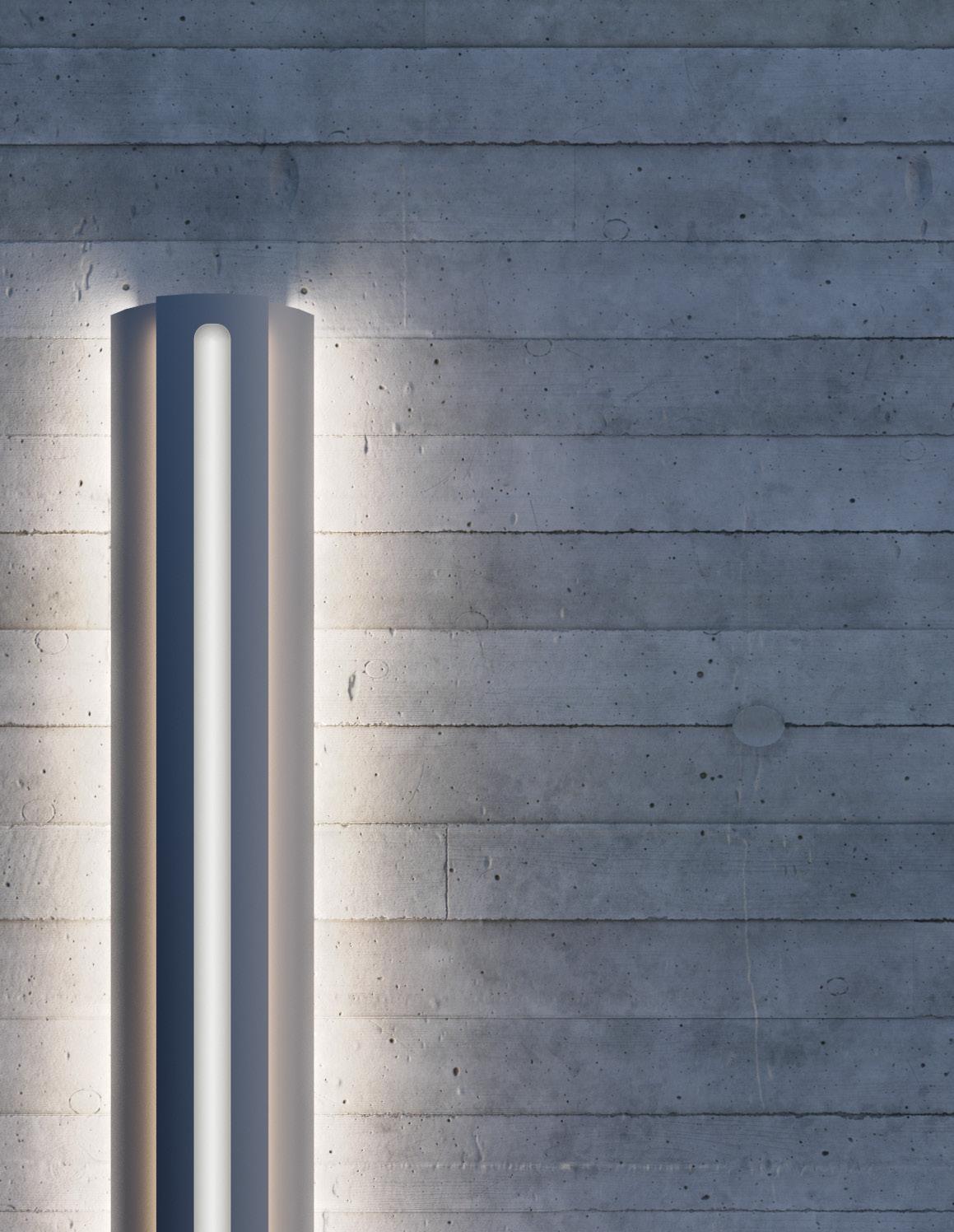
Durability, elevated to an art form.
ALVA represents the intersection of architectural design and craftsmanship with exterior wall sconces engineered and manufactured in North America.

PICTURED: TESSIE SLOTTED
Exterior wall sconce, 7” wide profile
Designing with PoE: Lighting a $25,000-Per-Night Villa
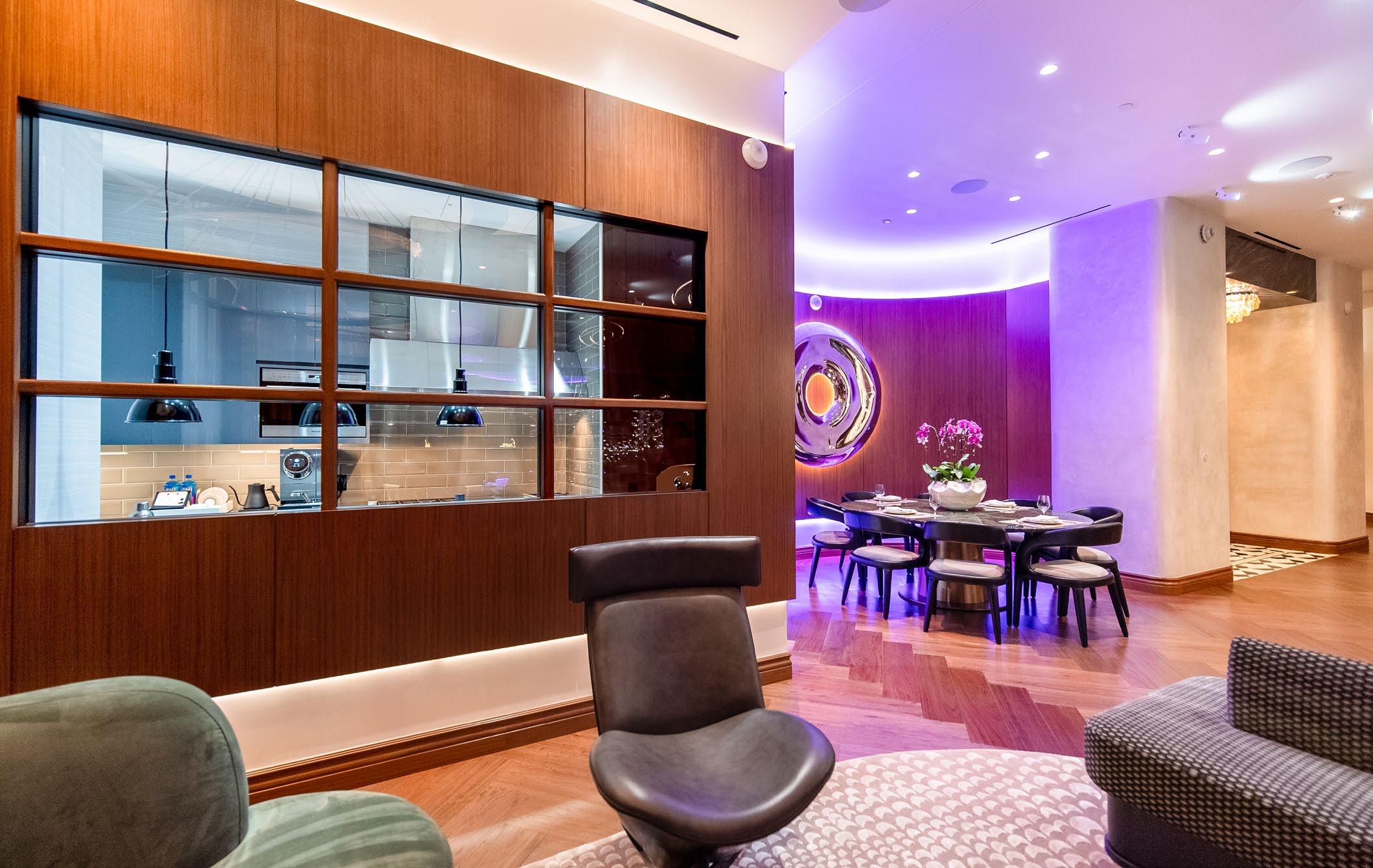
The first impression of Villa 66 is not its scale—though at this level of hospitality, scale is expected. It is the quiet precision of light.
At Resorts World Las Vegas, within the Crockfords collection, Villa 66 represents the highest tier of accommodation. At roughly $25,000 a night, it is designed for a very specific guest. The lighting reflects that expectation—not just luxury, but control, flexibility, and atmosphere on demand.
Mark Simpson, lighting designer with Celano Design Studio Co., was involved from the earliest stages, embedded within the interior design team. That proximity changed everything.
"Because I'm part of the team from the start, I can chime in much earlier," Mark explains. "Instead of reacting to decisions after they're made, I'm able to ask questions like, 'What if we pushed that panel off the wall so we could create a glow behind it?'"
The result is a project where light is not layered onto the architecture—it is inseparable from it.
Precision from Above
In the main living areas, the ceiling plane is deliberately quiet. The lighting is there, but it never calls attention to itself.
That restraint is achieved through small-aperture downlights from USAI. Originally conceived as full circadian fixtures, the design evolved into a tunable white solution—balancing performance, flexibility, and budget.
“They ended up as tunable white,” Mark says. “Two-circuit downlights that can shift throughout the day.”
These fixtures provide the backbone of the ambient lighting strategy, ranging from crisp, cooler tones in active areas like the kitchen to warmer, more intimate settings in the lounge and bedrooms. Their precision optics and minimal aperture allow them to disappear into the ceiling while delivering controlled, high-quality light exactly where it’s needed.
Linear Layers
If the downlights establish the foundation, the linear lighting—largely from Luminii—builds the architecture.
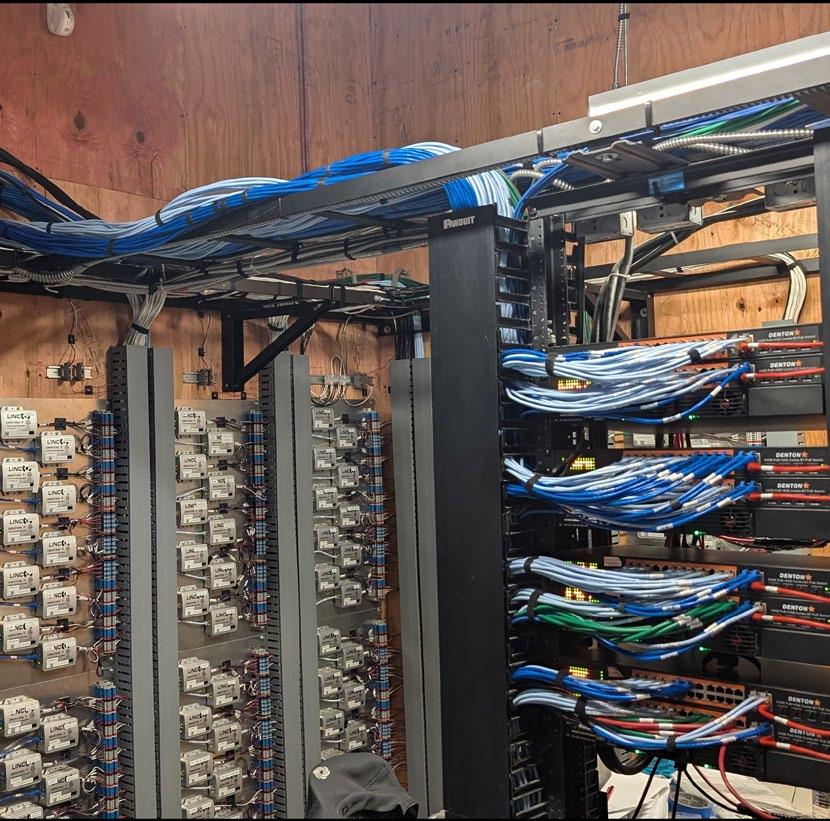
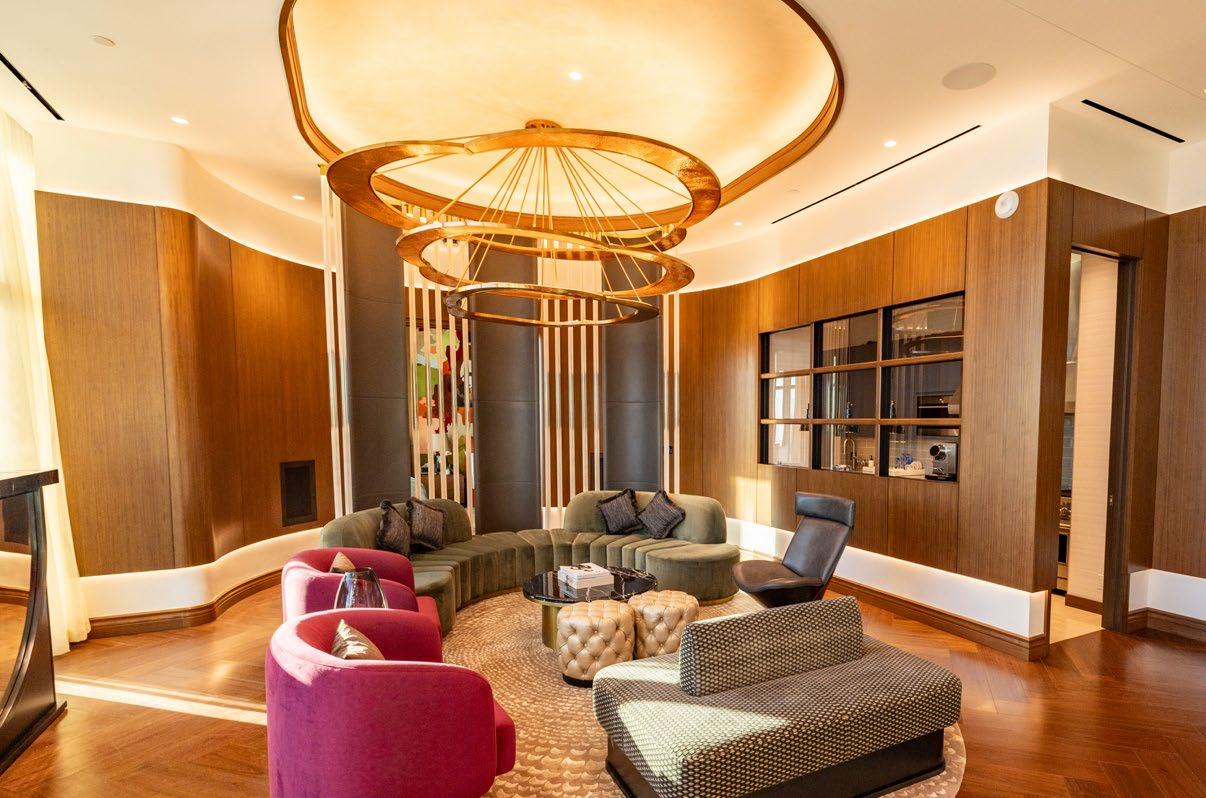
Throughout the suite, walls are subtly pulled off their surfaces, creating concealed cavities for light. Within these spaces, Luminii linear systems deliver both white and colorchanging illumination, grazing surfaces and creating depth without revealing their source.
In the bedrooms, thin bands of magenta or amber trace the edges of panels. “That color stripe is color-changing light,” Mark explains, describing how these integrated elements add dimension to otherwise quiet materials.
In public spaces, Luminii’s linear fixtures are used in coves— washing ceilings and floors from hidden positions. These layers are not decorative in the traditional sense. They are atmospheric, shaping perception rather than drawing attention.
The Bar: Where Light Becomes Object
At the center of Villa 66 is the bar—a luminous installation that combines multiple lighting systems into a single composition.
Vertical acrylic tubes form the back bar, each internally lit with color-changing LEDs. Light enters from both ends, diffusing through the frosted material to create a soft gradient.
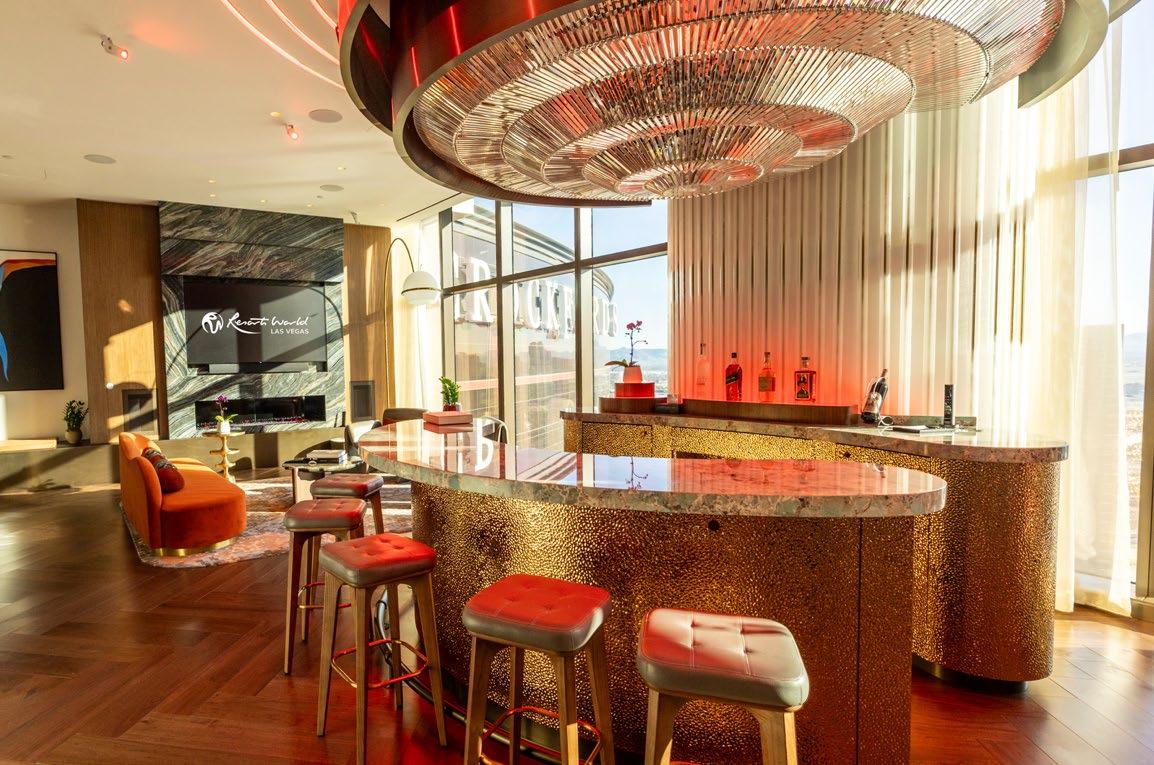
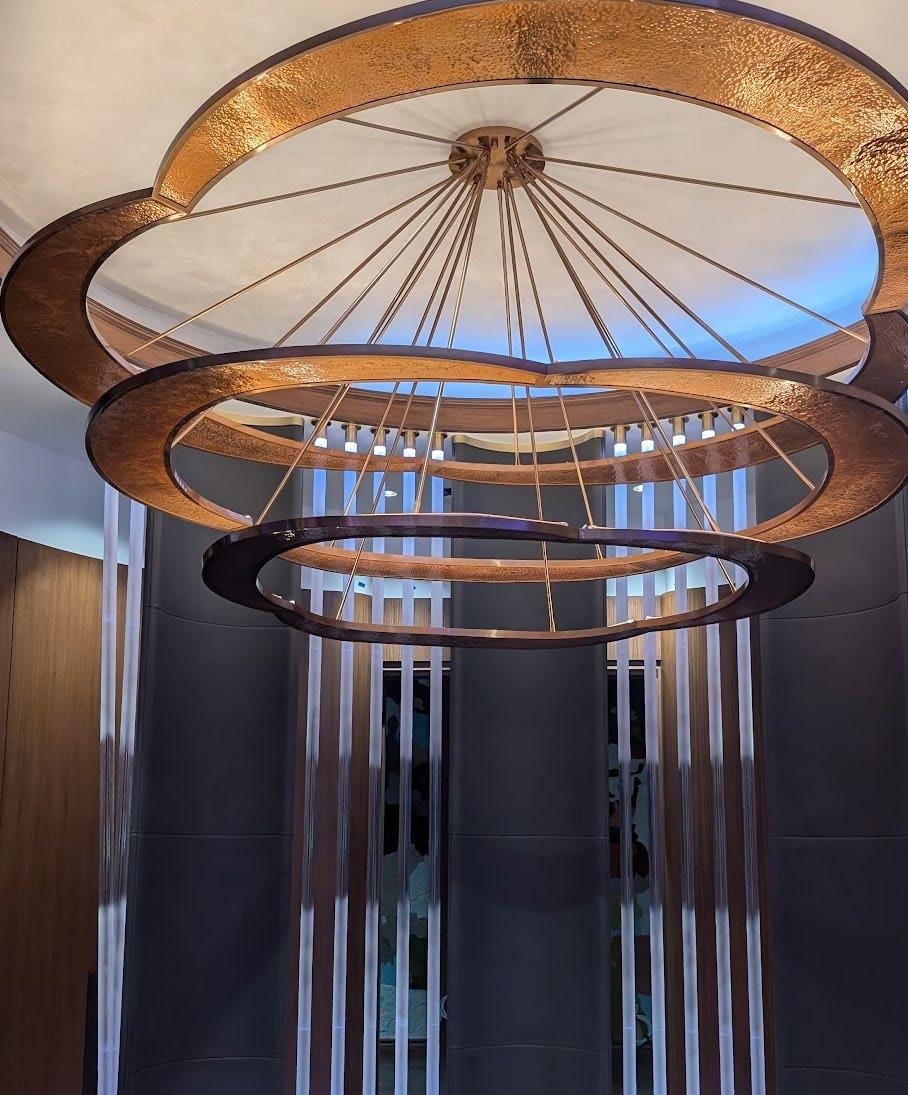
“It was actually built as a light fixture,” Mark says. “There’s a circular color-changing LED at the top and bottom of each tube.”
The effect is layered. Behind the bottles, within the tubes, and across the bar surface itself, light operates at multiple depths.
Above, a custom chandelier by CADLume introduces a more familiar language—exposed filament bulbs—but with a technical twist. These are 48-volt lamps, integrated into a Power over Ethernet (PoE) system.
“That was the biggest relief,” Mark recalls. “When I heard we could get those in 48 volts, with warm dimming… that was the moment I was totally on board.”
The chandelier looks conventional. Its behavior is anything but.
Power Over Ethernet: A Different Infrastructure
Behind the scenes, Villa 66 operates on a radically different lighting infrastructure. Nearly every fixture—USAI downlights, Luminii linear systems, decorative lamps—is powered and controlled through PoE.
“All of the fixtures run back to an IT closet,” explains Joe Herbst from PoE Texas. “From there, the server takes any input and executes the corresponding scene.”
This centralized system eliminates traditional drivers at the fixture level. Instead, intelligent drivers in the network determine how much power each fixture requires, even when integrating third-party products like USAI.
“It auto-senses,” Joe says. “If I know how much power it’s supposed to be, it figures out how to deliver it.”
For Mark, this changed the design process entirely. Instead of handing off intent to a separate controls contractor, he collaborated directly with the system designer from the beginning.
“In another system, I wouldn’t meet the programmer until the end,” he says. “Here, we were working together the whole time.”
Control as Experience
Control in Villa 66 is both sophisticated and invisible.
Sleek panels from Black Nova provide the user interface— minimal, tactile, and intuitive. Behind them, the system allows each fixture to be individually addressed, grouped, and programmed into scenes.
“We start with every fixture individually controllable,” Joe explains. “Then we group them and build scenes based on how the space is used.”
Main Living Areas USAI
Kitchen USAI
Lounge Areas USAI
Bedrooms USAI
Bedrooms Luminii
This level of control extends to color. During commissioning, the team calibrated lighting scenes against the natural sunset visible from the suite.
“A little more red, a little more green,” Mark recalls.
The final palette is not arbitrary—it is environmental, tied to the rhythms of the outside world.
Invisible Decisions
Some of the most important design choices are the least visible.
Table lamps, for example, are not plugged into standard outlets. To avoid confusion with low-voltage systems, the team eliminated conventional receptacles, instead using concealed connectors that allow quick maintenance without electrical work.
“We didn’t want something that looks like a normal outlet but isn’t,” Mark explains.
Elsewhere, artwork doubles as illumination. A sculptural circular piece in the dining area—also by CADLume—is backlit, functioning as both focal point and light source.
These decisions reinforce a consistent idea: light should feel inevitable.
A New Standard for Integration
Villa 66 is not just a luxury suite. It is a case study in integration. Each element plays a role. None dominates.
The takeaway is clear: the future of high-end hospitality lighting is not about more fixtures or more spectacle. It is about deeper integration—between disciplines, between systems, and between light and experience.
At Villa 66, that integration is complete. ■
Small-Aperture Tunable White Downlights
Small-Aperture Tunable White Downlights
Small-Aperture Tunable White Downlights
Small-Aperture Tunable White Downlights
Color-Changing Linear LED
Public Spaces Luminii Linear LED Cove Lighting
Throughout Suite Luminii
Bar Feature
Bar Area
Dining Area
Table Lamps
CADLume
CADLume
CADLume
Various/CADLume
Control System PoE Texas
User Interface Black Nova
Concealed White and RGB Linear LED
Acrylic Tube Light Sculpture
Decorative Chandelier
Backlit Illuminated Artwork
Decorative Table Lamps
PoE Lighting Infrastructure
Lighting Control Panels

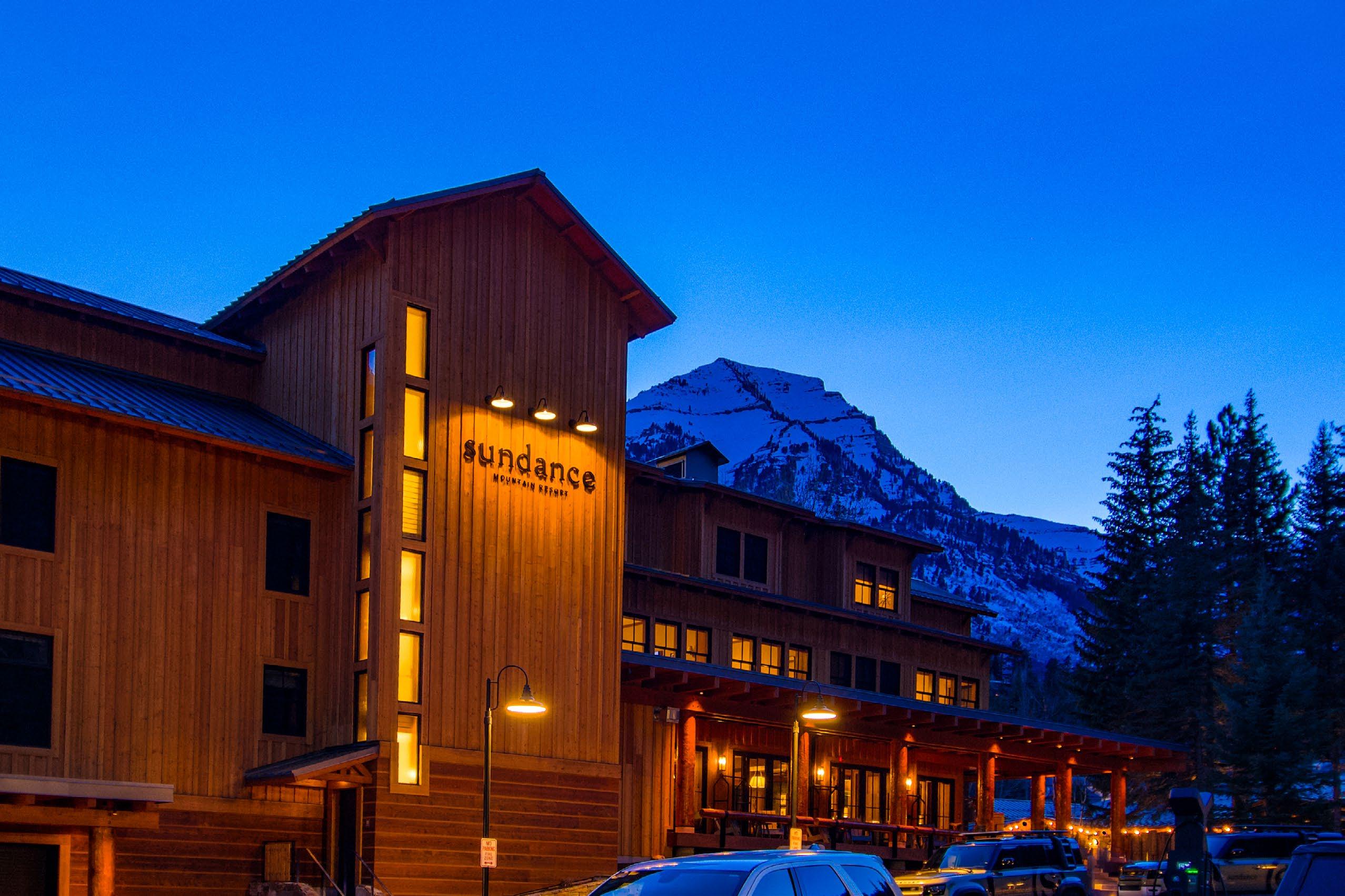
Sundance Resort: Designing Light That Feels
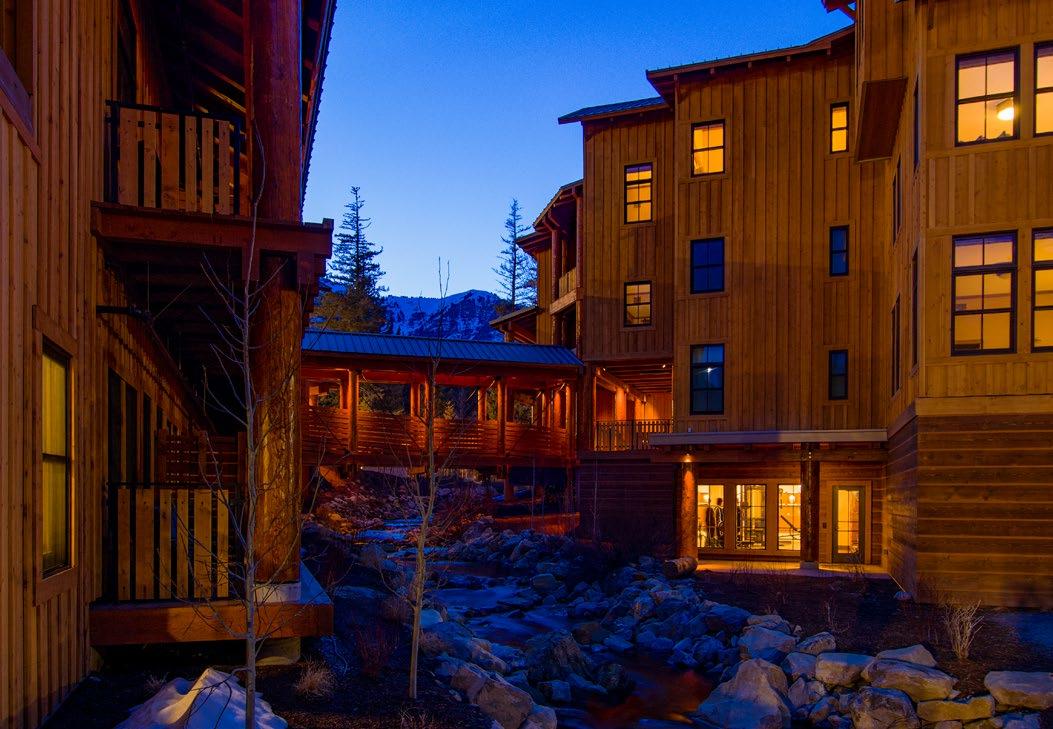
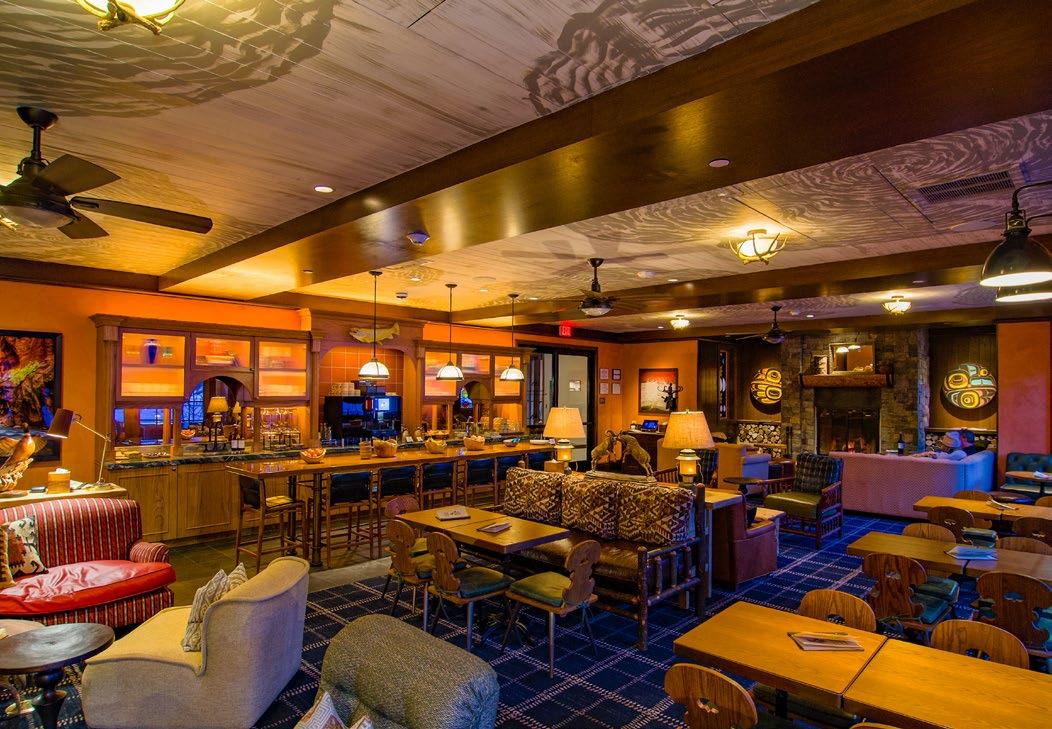
Photo credits: Granville McAnear
The bridge arrives quietly. A narrow span between two buildings, hovering above a mountain creek, its structure expressed in timber and shadow. At night, the beams glow softly, as if lit from memory rather than electricity. Below, water catches a flicker of amber—part firelight, part illusion. Nothing calls attention to itself. And yet everything has been considered.
This is Sundance Resort in Sundance, Utah, recently reimagined with a new inn—two buildings connected by that understated bridge—and lighting design by Granville McAnear of Granville McAnear Lighting Design. The project is not about spectacle. It is about restraint. Or, as Granville describes the directive from the owner: “Make this look like we didn’t hire a lighting designer.”
That deceptively simple instruction shaped every decision.
A Resort with a Memory
Sundance is not a blank slate. Founded and long stewarded by Robert Redford, the property carries decades of emotional equity. Guests return year after year. They expect continuity— of atmosphere, of warmth, of experience.
The new ownership, longtime collaborators with Granville’s team, understood that any addition had to feel inevitable, not imposed. The inn—approximately 60 rooms across two buildings—was conceived to sit comfortably within the existing fabric. A creek runs between the structures, crossed by a bridge that becomes both circulation and moment.
“They wanted it to match the existing buildings, the feel, the vibe,” Granville explains. “That’s not easy. It’s new construction, but it has to feel like it’s always been there.”
Interior design was led by Fettle, the Los Angeles- and London-based studio known for layered, narrative-rich spaces. Their palette—honey-toned woods, leather, stone, and textured glass—set the stage. The lighting had to disappear into it.
Lighting Without Evidence
The central paradox of the project is that it is highly designed, yet must not appear so.
Granville’s approach avoids the typical hierarchy of general illumination. “We don’t use general downlights unless we
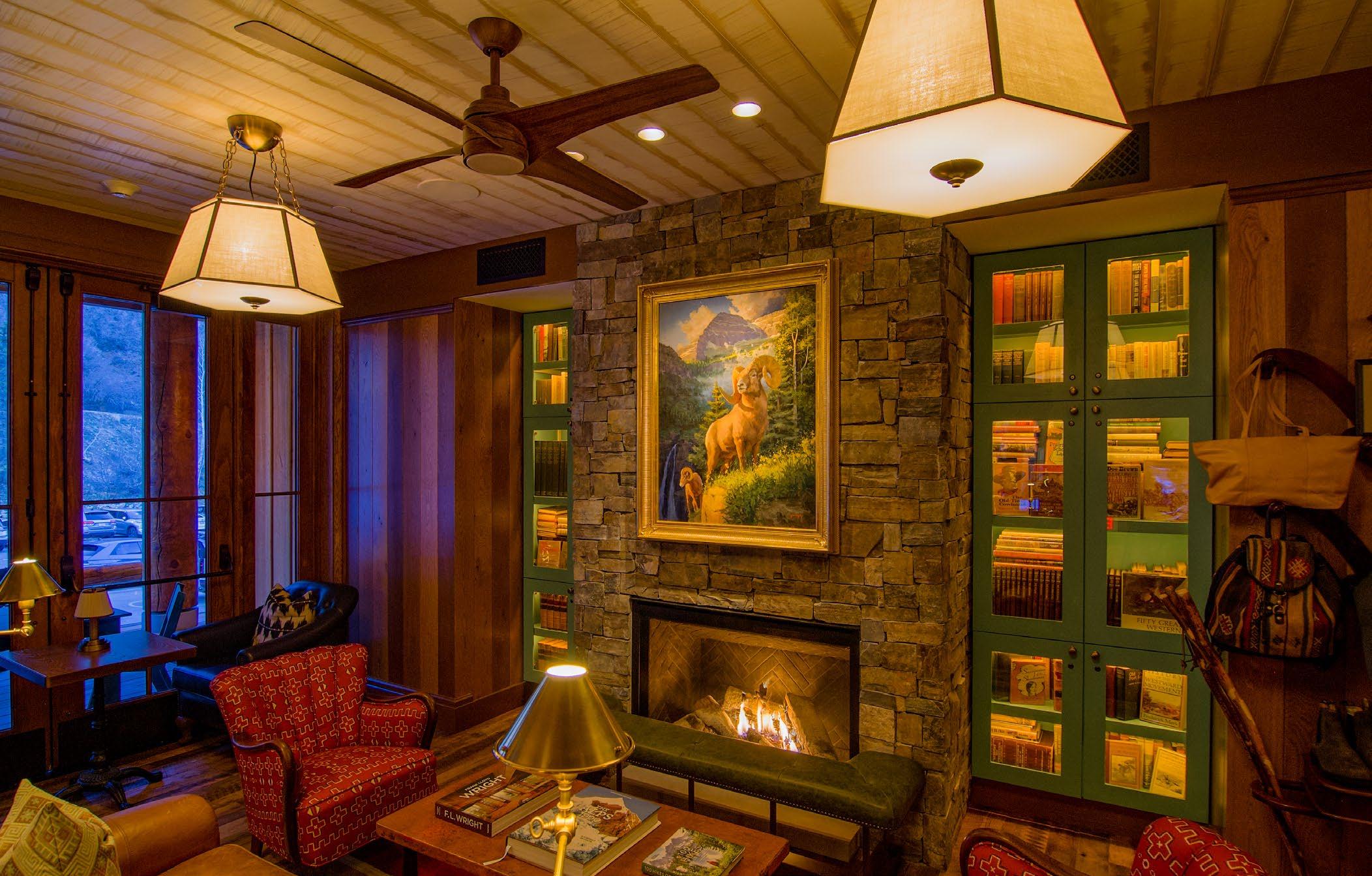
“Every fixture has a purpose. It lights something— artwork, a table, a surface.”
Granville McAnear
absolutely have to,” he says. “Every fixture has a purpose. It lights something—artwork, a table, a surface.” On this project, the downlights—carefully selected from Specialty Lighting—are used sparingly and precisely, reinforcing that philosophy rather than serving as ambient fill.
This philosophy plays out in the main living spaces. Above the fireplace, three carefully aimed accent downlights—by Specialty Lighting—draw attention to artwork rather than the ceiling plane. Shelving glows from within, illuminated by concealed linear systems from Luminii, their output tuned to match the warmth of adjacent sources.
Table lamps, floor lamps, pendants, and sconces carry much of the ambient load. These decorative fixtures are not afterthoughts; they are essential. Their lamps—Philips Warm Glow—provide a consistent dimming curve and color shift, ensuring that every visible source behaves as part of a unified system.
“We worked really closely with Fettle,” Granville says. “We needed enough of these interesting light sources so it wouldn’t feel like cans everywhere. It had to feel natural.”
Even picture lights and reading sconces participate in this orchestration, each specified with warm-dimming lamps to maintain continuity across the space
The Warmth of Fire, Electrically Matched
At Sundance, fire is not metaphor—it is literal. Fireplaces anchor interiors. Fire pits define exterior gathering spaces. Skiers arrive from the slope directly into a warming plaza where flames are the primary light source.
The electric lighting had to align with this elemental presence
“All the fixtures are warm dim, typically 2700K down to 1800K,” Granville notes. “The idea was to match the color and quality of fire and carry that through the lighting.”
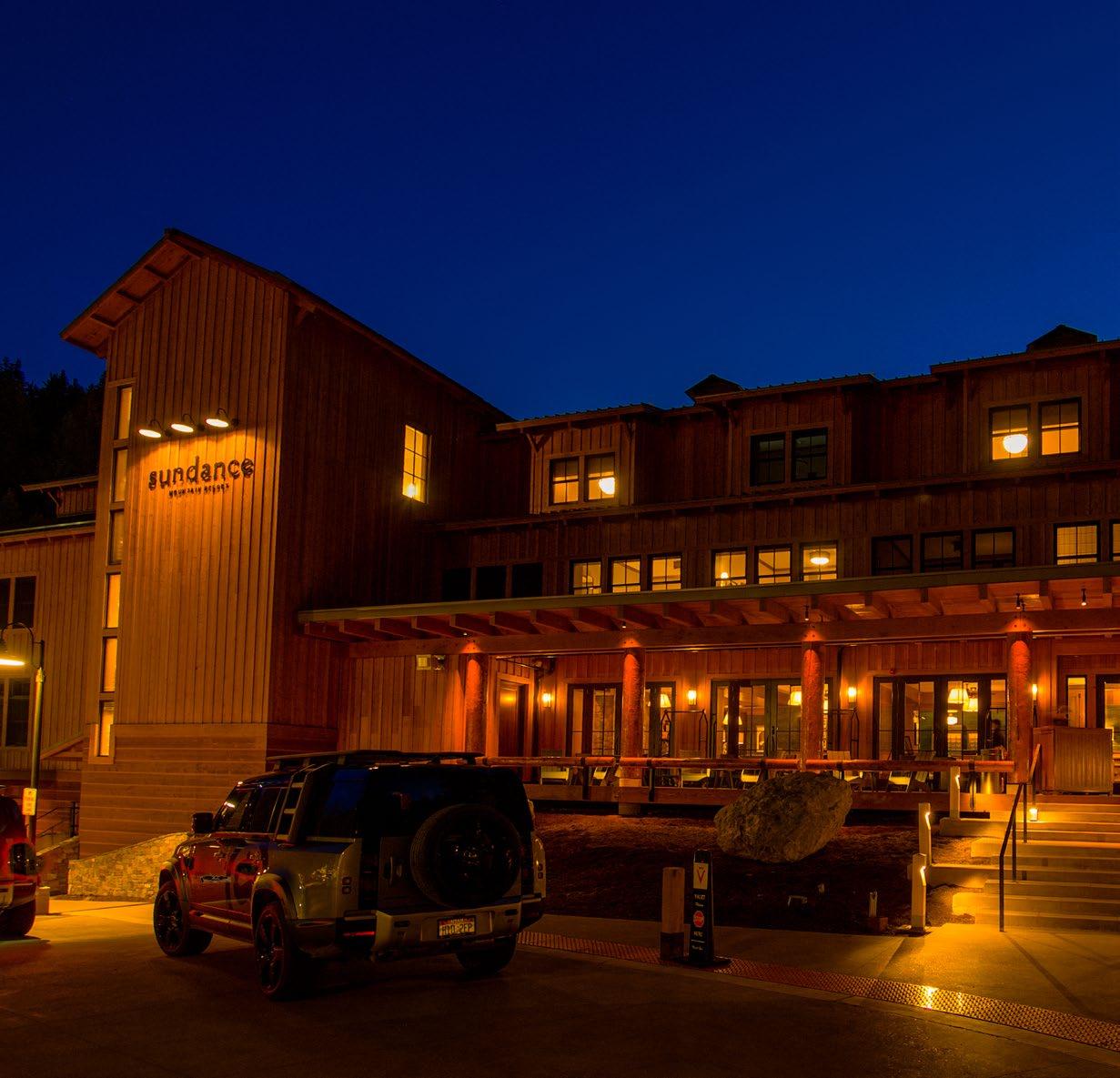
Inside, the effect is immersive. As evening falls, the space does not simply dim; it warms. Wood surfaces deepen in tone. Leather softens. Shadows lengthen.
Outside, the strategy continues. Column accents and landscape lighting from SPJ Lighting provide gentle structure without glare. These fixtures were developed in close coordination with the manufacturer to achieve precise shielding and beam control—critical in a setting where darkness is as important as light.
“We worked really closely with SPJ,” Granville says. “Getting the shielding right, the glare control—it was all about subtlety.”
Even the smallest gestures contribute. Beneath the bridge, a discreet “jelly jar” fixture introduces a shimmer to the creek—meant to be felt more than seen.
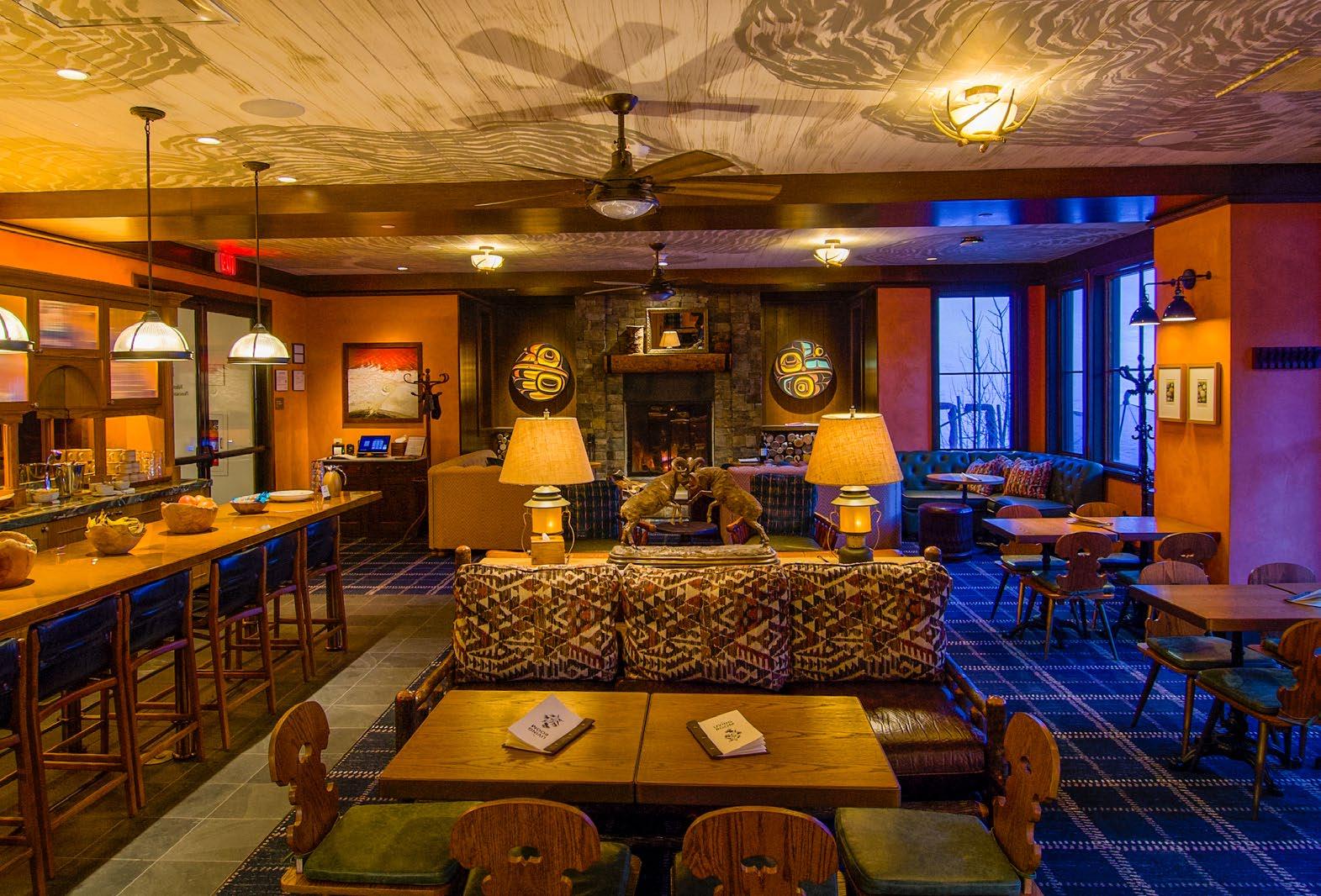
The Bridge as Threshold
The bridge is the project’s most distilled expression of the lighting philosophy.
There are no visible fixtures. Instead, concealed linear systems from Luminii are mounted atop beams, grazing upward to reveal the structure. Downlights—again from Specialty Lighting—provide minimal task illumination along the path.
“That’s it,” Granville says. “Uplight the beams, downlight the columns. No more than that.”
The result is a space that invites pause. Guests stop, listen to the creek, look toward the mountains. The lighting supports this behavior without dictating it.
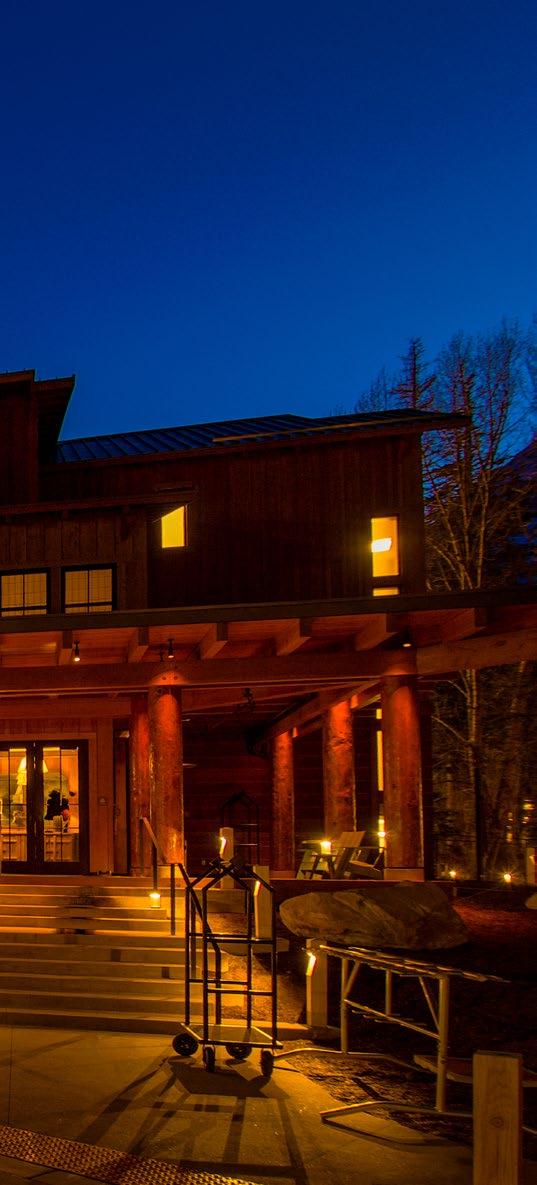
Control as Choreography
If the fixtures disappear, the control system becomes the hidden conductor.
The entire project is managed through the Lutron Athena system, chosen for its flexibility and precision. Rather than complex scene programming, the design relies on two primary states: day and evening.
“We set the daytime levels during the day, balance everything,” Granville explains. “Then we set the evening levels at night. And the system transitions between them automatically.”
This transition is not abrupt. It unfolds over approximately one hour, beginning 30 minutes before sunset and concluding 30 minutes after. In the mountains, where light lingers unevenly, this extended fade is essential.
“As the sun drops behind the mountains, it can take a while to get dark,” he says. “The lighting follows that. It’s all on an astronomical time clock, so nobody has to touch anything.”
Manual overrides exist, but only for management, accessed via key switches. For guests, the experience is seamless— light evolving in parallel with the natural environment.
Layers Within Layers
In the lounge, the layering becomes more intricate. Uplighting atop cabinetry, internal illumination behind fluted glass panels, under-counter lighting, and decorative pendants all operate on separate circuits. Each layer can be tuned independently, yet all remain within the same warm-dimming ecosystem.
“It’s a lot of layers,” Granville acknowledges. “But they all have to feel like one.”
This is where the discipline of specification matters. By standardizing on compatible warm-dim sources—both in architectural fixtures and decorative lamps—the team ensured consistency across manufacturers and applications.
Process and Presence
The project began in 2023, with approximately a year of design followed by an extended construction period—challenged, as expected, by the realities of building in a mountain environment. Commissioning required multiple site visits through winter conditions.
Granville credits project manager Grace Ungarean as central to execution. “It was a lot of her,” he says. “And a small team supporting during key phases.”
Commissioning, in particular, was hands-on. Aiming fixtures, refining levels, and calibrating the Athena system required time on site—especially to achieve the nuanced balance between electric light and firelight.
The Illusion Achieved
Walk through the completed spaces, and the directive becomes clear. There is no signature gesture, no moment where lighting announces itself. Instead, there is comfort. Warmth. A sense that the space has always been this way.
It is, in fact, the result of careful orchestration:
• SPJ provided the precision downlights and accent fixtures that quietly define focal points.
• Luminii delivered the concealed linear systems that shape architecture and cabinetry from within.
• SPJ Lighting handled exterior accents, columns, and landscape elements with meticulous glare control.
• Philips Warm Glow lamps unified the decorative layer with consistent warm-dimming performance.
• Lutron Athena system orchestrated the entire experience through time-based transitions.
Each plays a distinct role. None dominates.
For Granville, that balance is the point. “It’s hard to make something look like it wasn’t designed,” he says. “That’s actually the challenge.”
At Sundance, the challenge has been met. The lighting does not declare itself. It belongs. ■
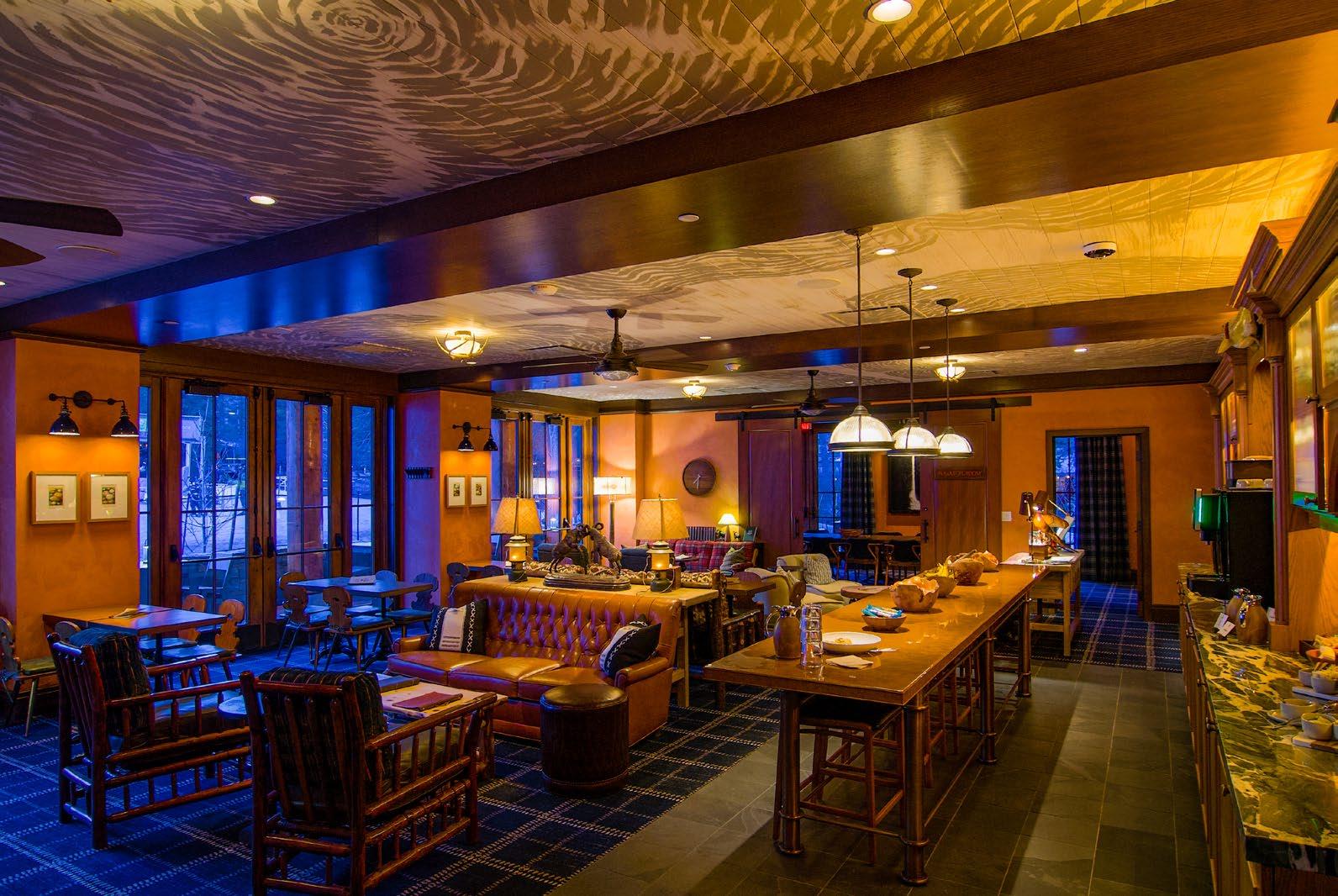
JUST IN
New architectural lighting products available for specification
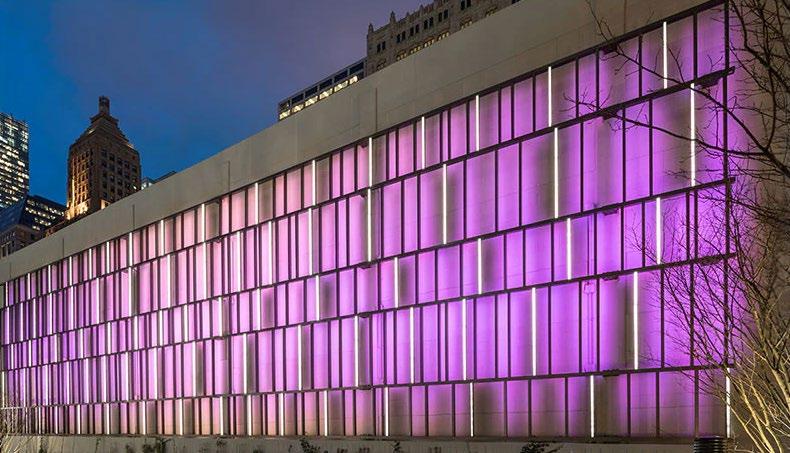
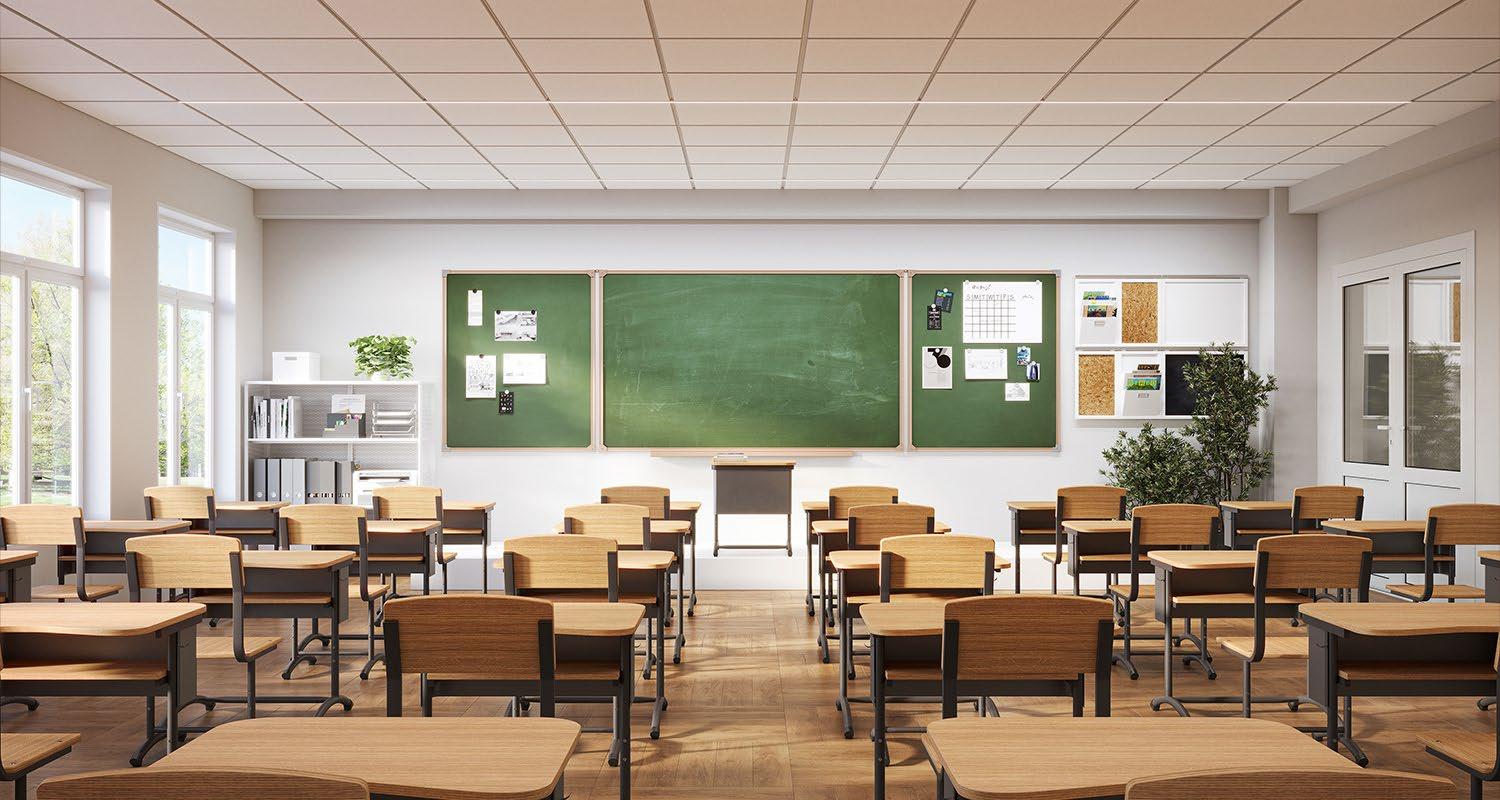
Velino.0

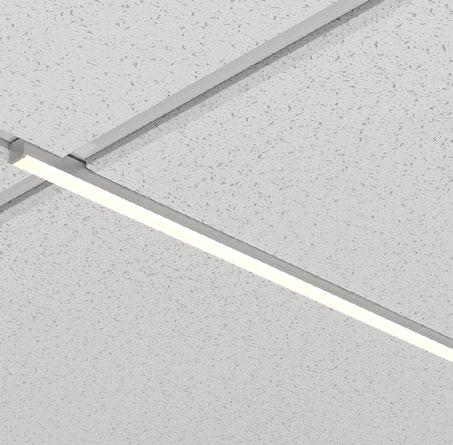


Flex Compact Pro
Color Kinetics, a Signify brand, presents the Flex Compact Pro— a flexible, node-based lighting strand for architectural applications. It delivers rich color and high-quality white light with individually controllable nodes and customizable lengths. Designed for façades, bridges, tunnels, and immersive environments, it supports complex lighting designs. Optional marquee lenses add a classic theatrical look to the system.
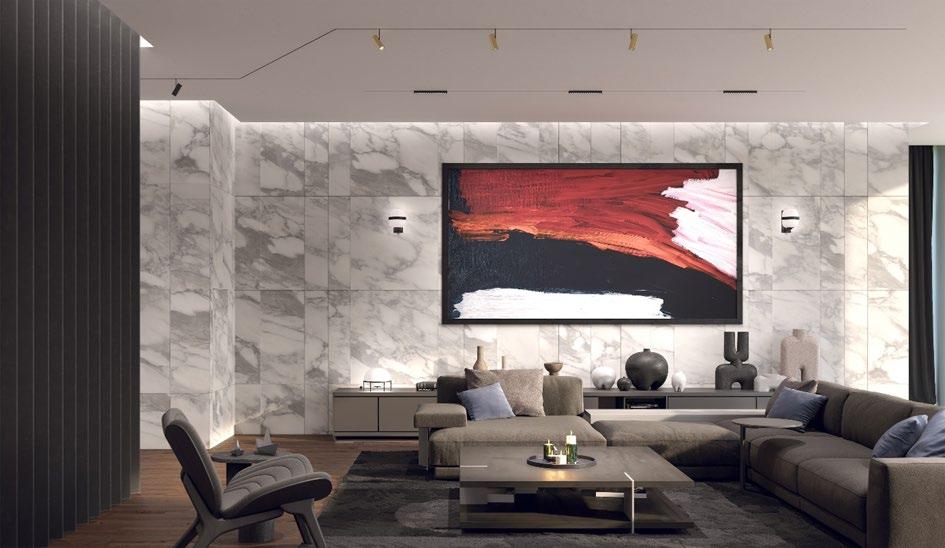

MicroTrack Recessed
PureEdge Lighting introduces the MTR48 MicroTrack Recessed, a 48VDC plaster-in recessed track system designed to sit flush within 1/2" drywall ceilings or walls. Its patented MicroTrack™ design enables seamless integration without requiring any joist modification. To maintain a clean, architectural appearance, each track in black or white includes a matching slot cover that conceals the channel, leaving only the track heads visible after installation.
Optique Lighting expands its Velino.0 family; an ultra-slim architectural luminaire designed for seamless integration and high-end performance. Featuring a ½-inch aperture, it offers advanced optics including glare control and dark-optic technology for visual comfort. A universal mounting system supports recessed, surface, suspended, and T-grid installations. Available in multiple LED options, it delivers precise, low-UGR lighting for architectural environments.
Dyna Drum™ Gen 3
Acclaim Lighting introduces Dyna Drum™ Gen 3, a high-performance exterior floodlight platform for architectural applications. The H3, E3, and S3 models feature a modular design with CoreSwap™ technology for easy field serviceability. Delivering up to 26,000 lumens, it provides powerful, precise, and consistent illumination. Built for durability, it is IP67 and IK10 rated for demanding outdoor environments.
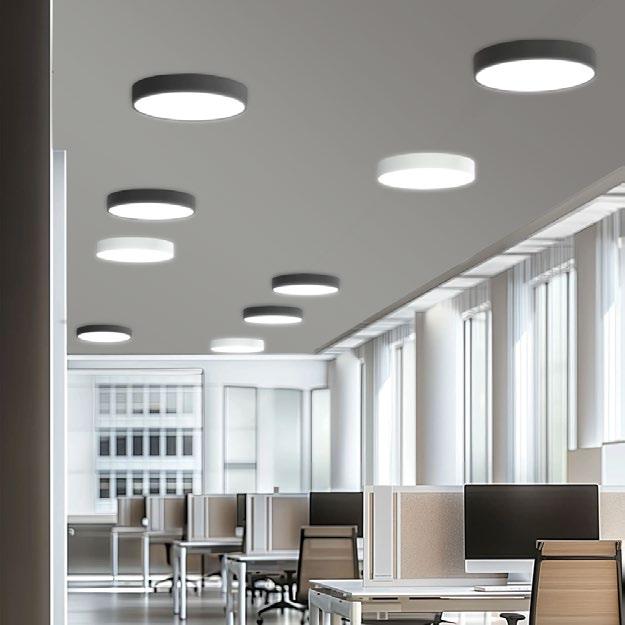
Skylum and Buzzer

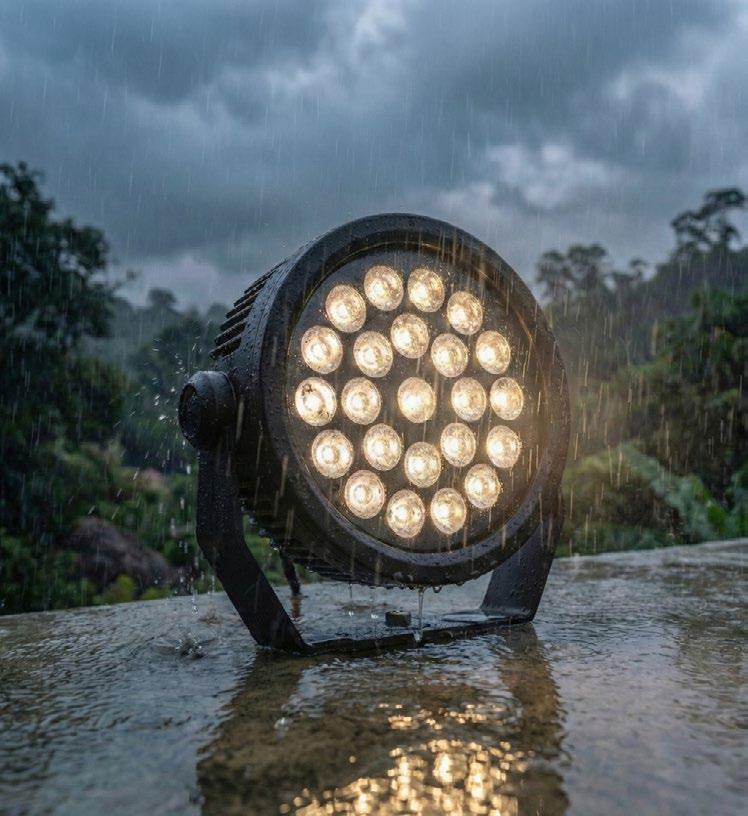

Inter-lux has introduced two new lighting systems, Skylum and Buzzer, designed for interior and exterior applications. Skylum delivers uniform, highperformance lighting for commercial interiors with a clean, modern design. Buzzer provides Dark Sky compliant outdoor illumination for walkways, parks, and public spaces. Both systems combine advanced optics with versatile design options.
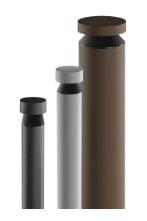
SKYLUM
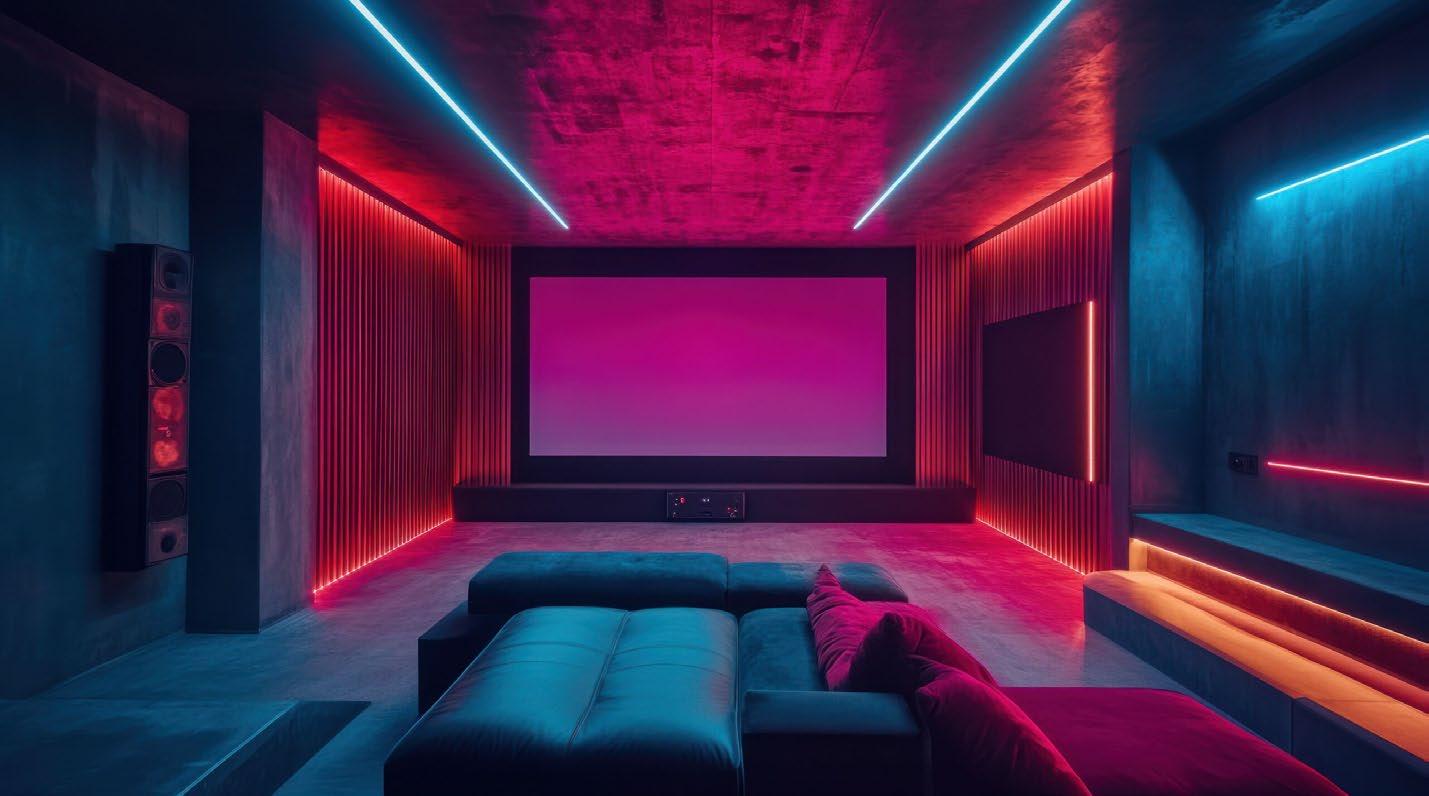
Spec Grade RGB + Wide Range Tunable White Tape Light
American Lighting, Inc., a leading manufacturer, announces the launch of its Spec Grade RGB + Wide Range Tunable White tape light. RGBTWR offers unlimited RGB color options along with adjustable white light from 1800K to 6000K. It delivers rich color saturation, smooth transitions, and fade-to-white lighting effects for versatile linear lighting applications.
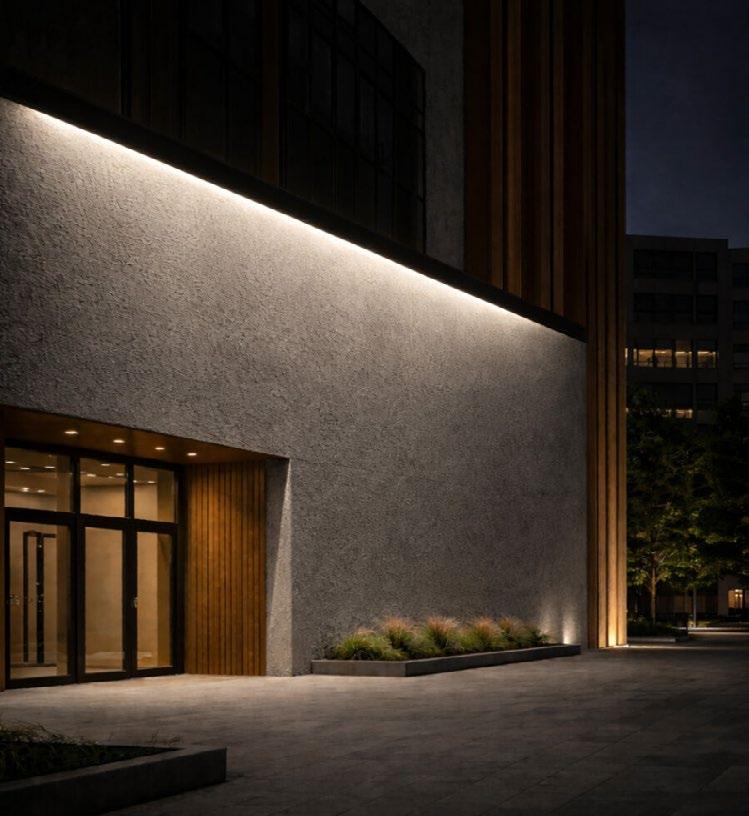

VAST EX Grazer
Tivoli Lighting introduces VAST EX Grazer, a high-output exterior linear lighting system built for precise architectural illumination. Available in Static White and RGB+White Pixel options, it features a patented Z-bracket system with up to 230° beam adjustment. Designed for flexible installation, it supports long fixture runs and operates on selfballasted 100–277V AC power with dimming compatibility.

Akeso™
Focal Point introduces Akeso™, a multifunction healthcare lighting family for patient rooms and clinical environments. Inspired by the Greek goddess of healing, it integrates ambient, exam, and reading light in a seamless, glarefree design. Available in Peak and Pitch lens profiles, it supports both single and tandem overbed applications while delivering up to 100 foot-candles for exam tasks. Akeso maintains soft, comfortable ambient illumination for recovery and is designed for modern, hospitality-inspired healthcare interiors that unify performance with patient comfort.
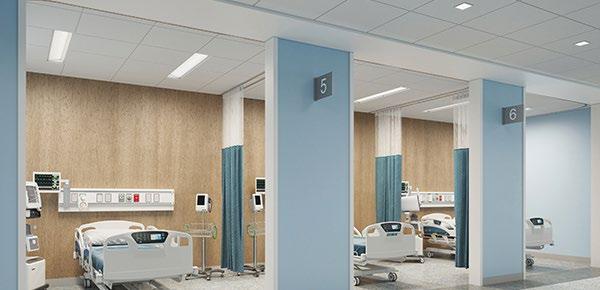
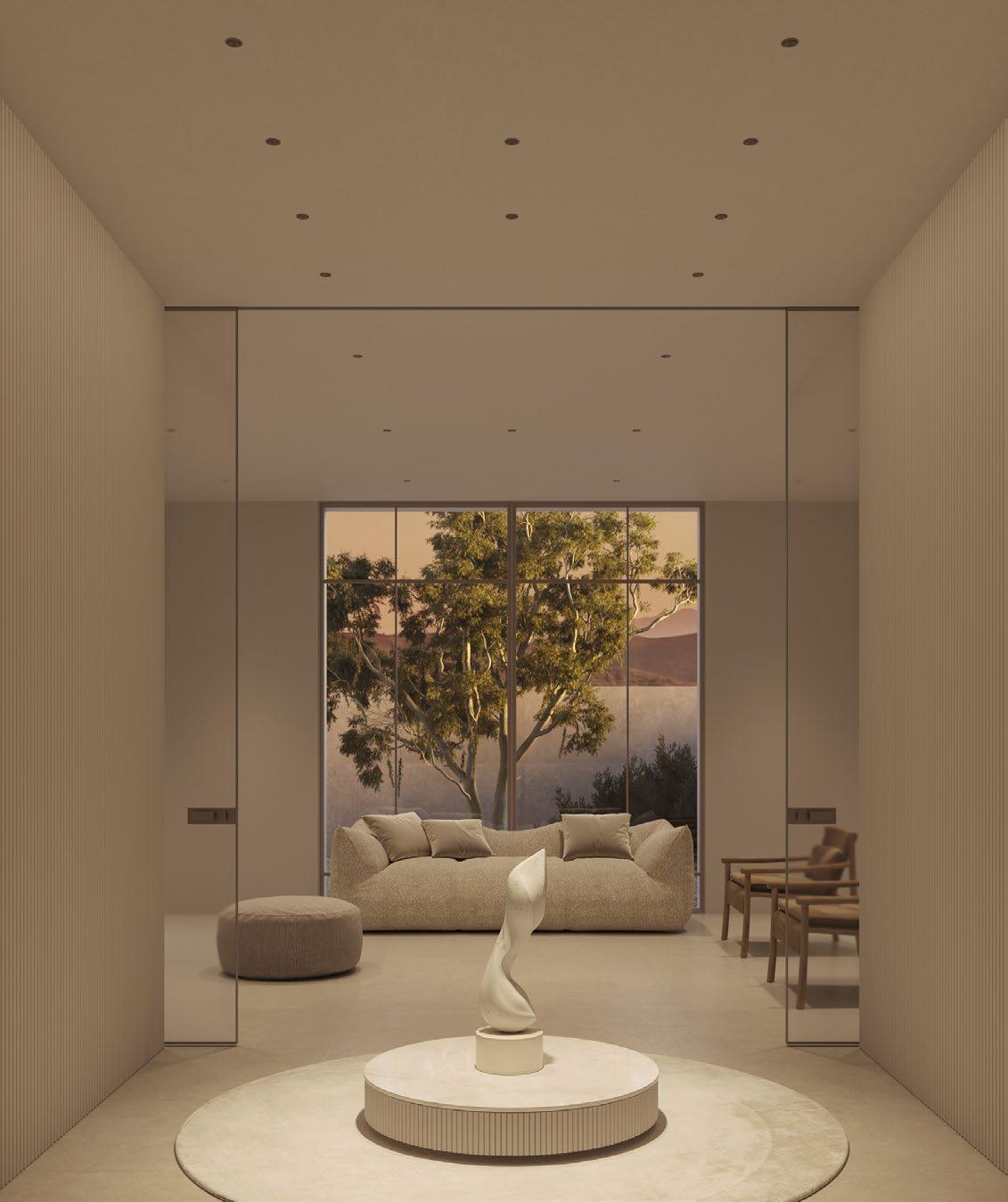
Laser Evo

iGuzzini introduces Laser Evo, an evolution of its Laser Blade downlight system. The LED light source is completely hidden, delivering high visual comfort and a seamless architectural integration. Highly flexible and modular, it offers over a million design possibilities for retail, hospitality, and residential spaces. The system features 8 sizes, 5 versions, efficiency up to 145 lm/W, and integrated smart sensing technology.
The Glowing Track
Designed by Flos Architectural, The Glowing Track is a revolutionary modular system that combines innovation, high performance, versatility, and sophisticated design into a single solution. The system offers immersive ambient lighting that integrates harmoniously into the environment. Available in a variety of profile models with both suspended and surfacemounted editions, The Glowing Track is an ideal solution for projects that require versatile and scalable systems.


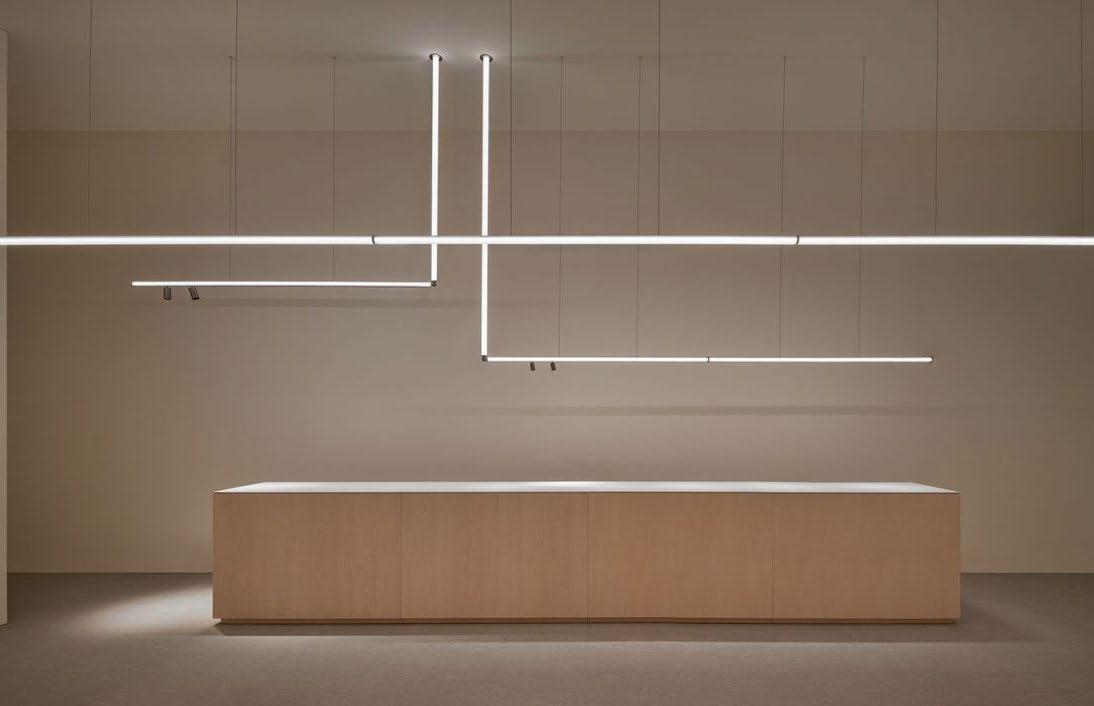
The 2026 IESNYC Lumen Awards
Reveal the Power of Restraint
Every year, the IESNYC Lumen Awards provide a snapshot of where architectural lighting design is headed. The 2026 winners suggest a profession increasingly focused on integration, restraint, and experience rather than spectacle.
Before diving into a few highlights, designing lighting would like to thank the IESNYC for providing the project layouts and supporting materials. The spreads published in this issue were supplied by IESNYC, allowing readers to experience the projects as they were presented at the IESNYC Lumen Gala on 18 JUN 2026.
One theme emerged repeatedly among this year's honorees: lighting that feels inseparable from architecture.
Consider Arup's Award of Merit-winning Museum of Modern Art in Warsaw. Rather than treating daylight and electric light as competing systems, the design team created a unified luminous environment. Skylights, clerestories, custom optics, and carefully calibrated electric illumination work together to create galleries that feel naturally lit regardless of the hour. The judges praised the project's restraint and its ability to support architecture without calling attention to itself.
A similar discipline appears in the Princeton University Art Museum by Tillotson Design Associates. The museum's challenging architecture demanded multiple lighting strategies, from façade illumination to gallery lighting and
daylight integration. Yet the visitor experiences a cohesive visual journey. The project demonstrates the increasing sophistication with which lighting designers are blending architectural expression, conservation requirements, and user experience.
At the opposite end of the design spectrum sits Limusina, the Award of Excellence recipient from Focus Lighting. Here, lighting becomes part of the theatrical identity of the space. Layers of amber light, custom-coated glass elements, decorative fixtures, and saturated accents create an immersive hospitality environment. Yet even amid the visual richness, the lighting remains carefully controlled. Nothing feels arbitrary. Every glow contributes to the narrative.
The diversity of this year's winners is striking. Museums, public gardens, restaurants, bridges, public art installations, and corporate campuses all earned recognition. Yet despite their differences, the projects share a common thread: light is no longer an applied layer added after the architecture is complete. Instead, it is increasingly conceived as part of the architectural idea itself.
That may be the most important takeaway from the 2026 IESNYC Lumen Awards. The strongest projects are not those that simply illuminate buildings. They are the projects where lighting helps define how a place is experienced, remembered, and understood.
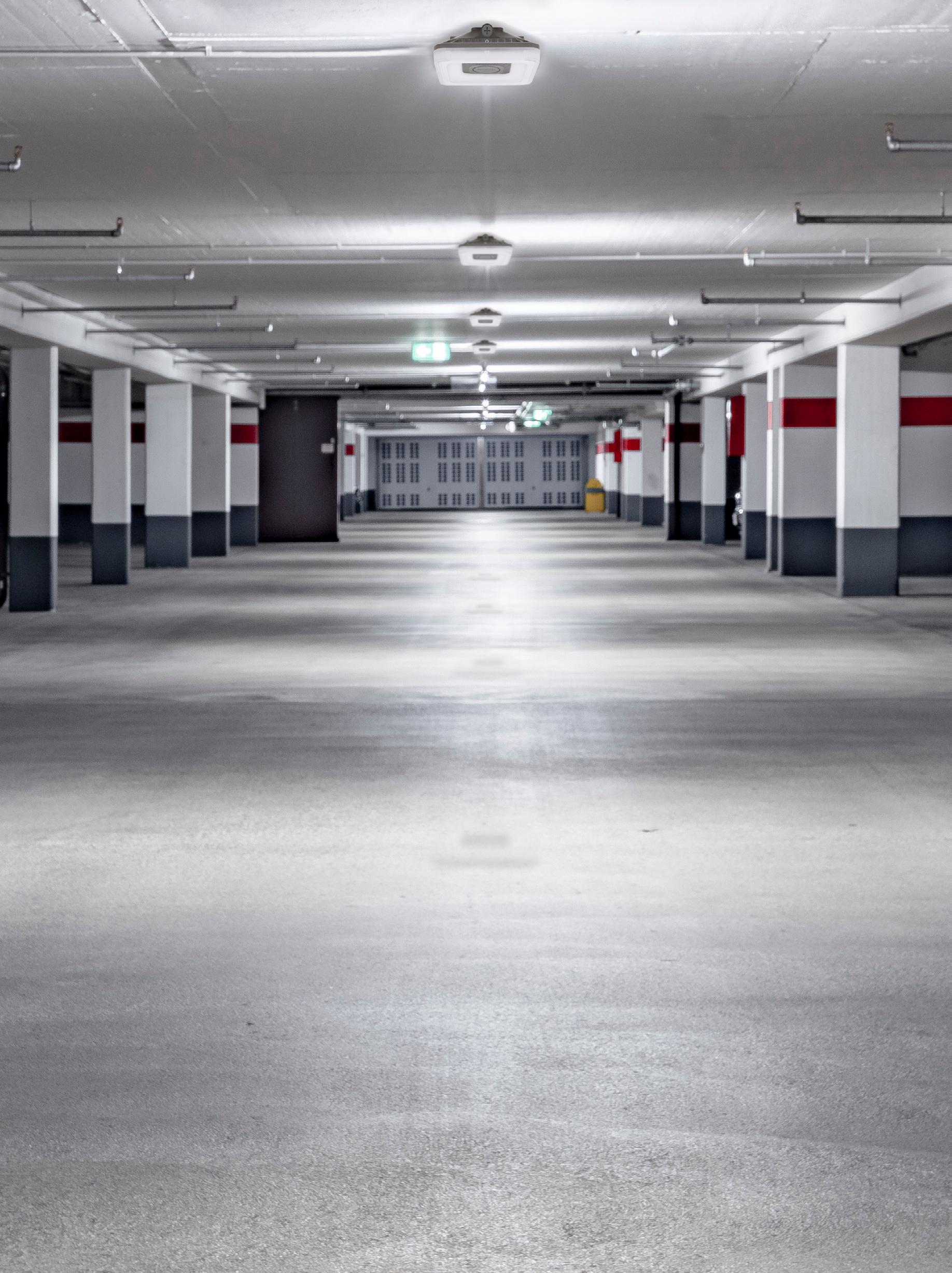
CANOPY/GARAGE
DUAL BEAM LUMINAIRES
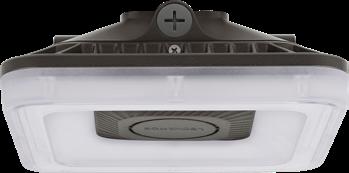
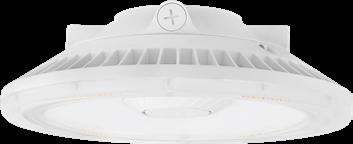
UNMATCHED VERSATILITY
Single optic for both garage and canopy applications
In these innovative dual beam luminaires, a single optic balances light across both parking garage and canopy applications—no switches or lens swap required. They feature on-site CCT/wattage selectability and an integral photocell, and they’re 100% controls-ready.
– Available in Round and Square options to match the job and decor
– Embedded uplight helps reduce “cave effect”
– Designed for quick, easy installation
– Optional emergency battery backup available
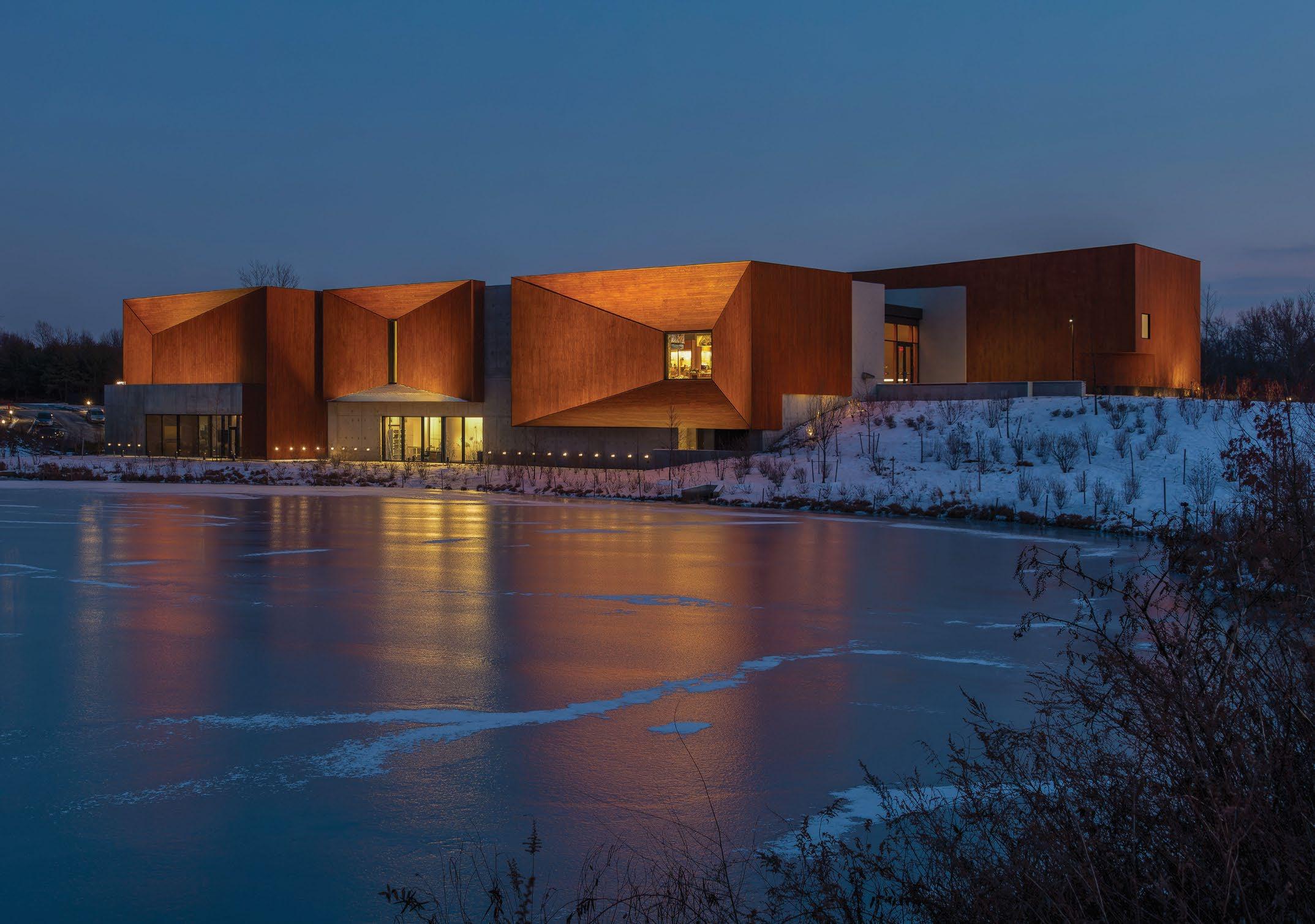
CITATION
for Exterior Lighting
Buro Happold
Gabe Guilliams, Wei Liu, Nick Mykulak, and Julia Aijkens
Edelman Fossil Park & Museum of Rowan University Mantua, NJ
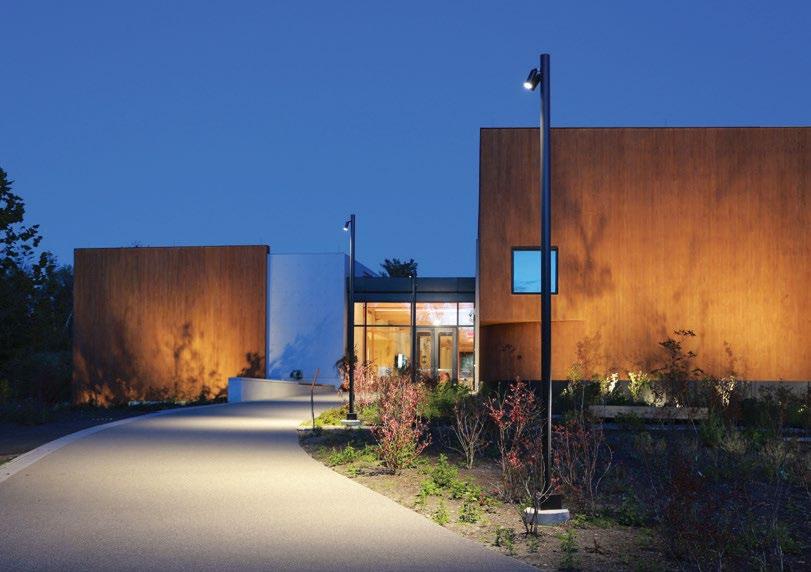
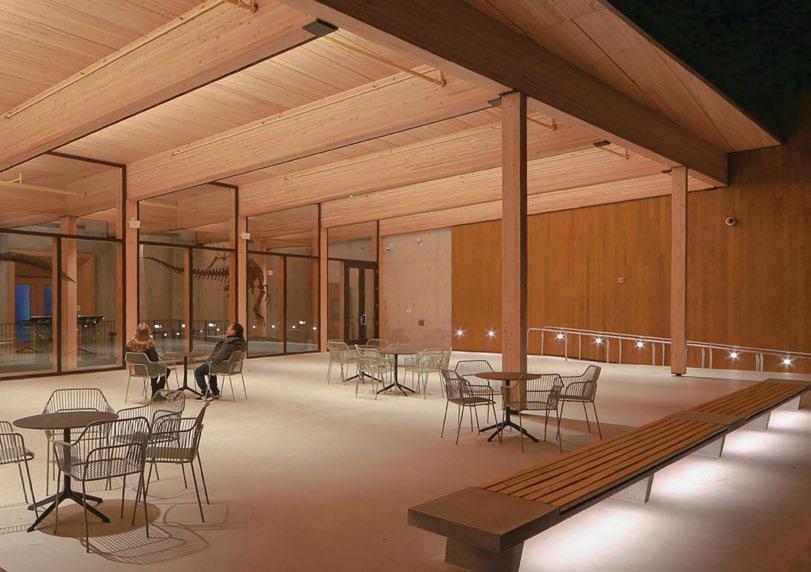
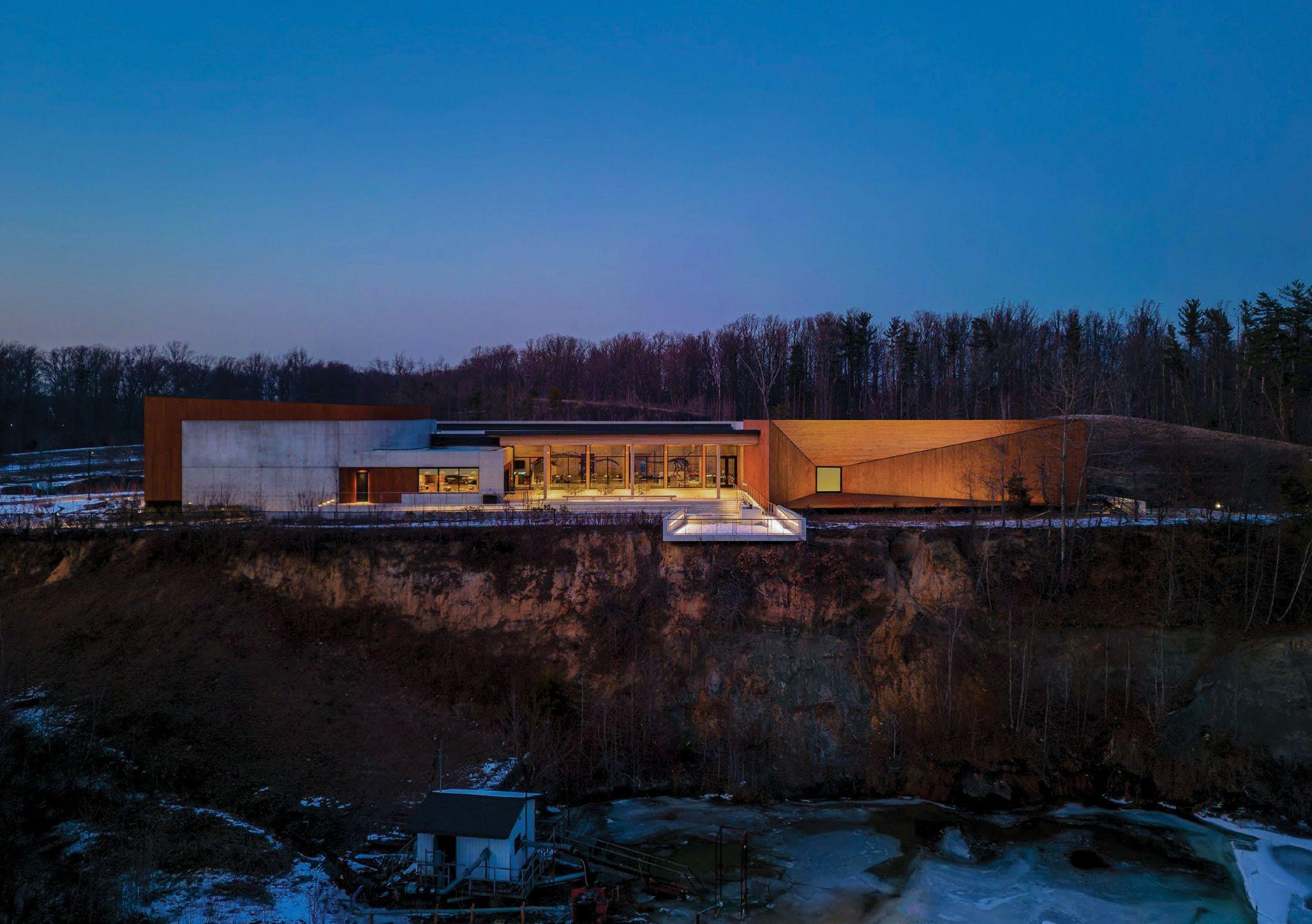

Emerging at the ridge of the site, the pavilion-style museum becomes a destination, providing apertures that frame views to both the lake and an active dinosaur fossil dig site.
Buro Happold embraced the architect’s minimalist aesthetic, concealing linear fixtures at the base of each aperture. The geometries and natural materials shine through, without visual clutter.
Reinforcing this narrative, continuous illumination along the base of the wood cladding radiates a warm, subterranean glow that connects visually with landscape. At the entry, low-brightness pole-mounted luminaires quietly trace the pedestrian path leading to the luminous lobby. Light and landscaping add texture to the warm wood of the façade adjacent.
Concealed indirect illumination of the mass timber ceiling continues uninterrupted from interior to exterior, guiding visitors to the terrace with its expansive view of the active dig site. The museum warmly welcomes evening visitors to explore the grounds and inspires them to return for the famous hands-on dig for the wonders that lie below: Cretaceous Era fossils that they can take home!
DESIGN ARCHITECT
Ennead Architects
Thomas Wong, Marissa Sweig Trigger, Ursula Trost
ARCHITECT OF RECORD
KSS Architects
Andrew Sniderman
PROJECT OWNER
Rowan University
LANDSCAPE ARCHITECT
SEED Design
Yaki Miodovnik
PHOTOGRAPHY
Ennead Architects
Aislinn Weidele
Elizabeth Duffy
Wei Liu
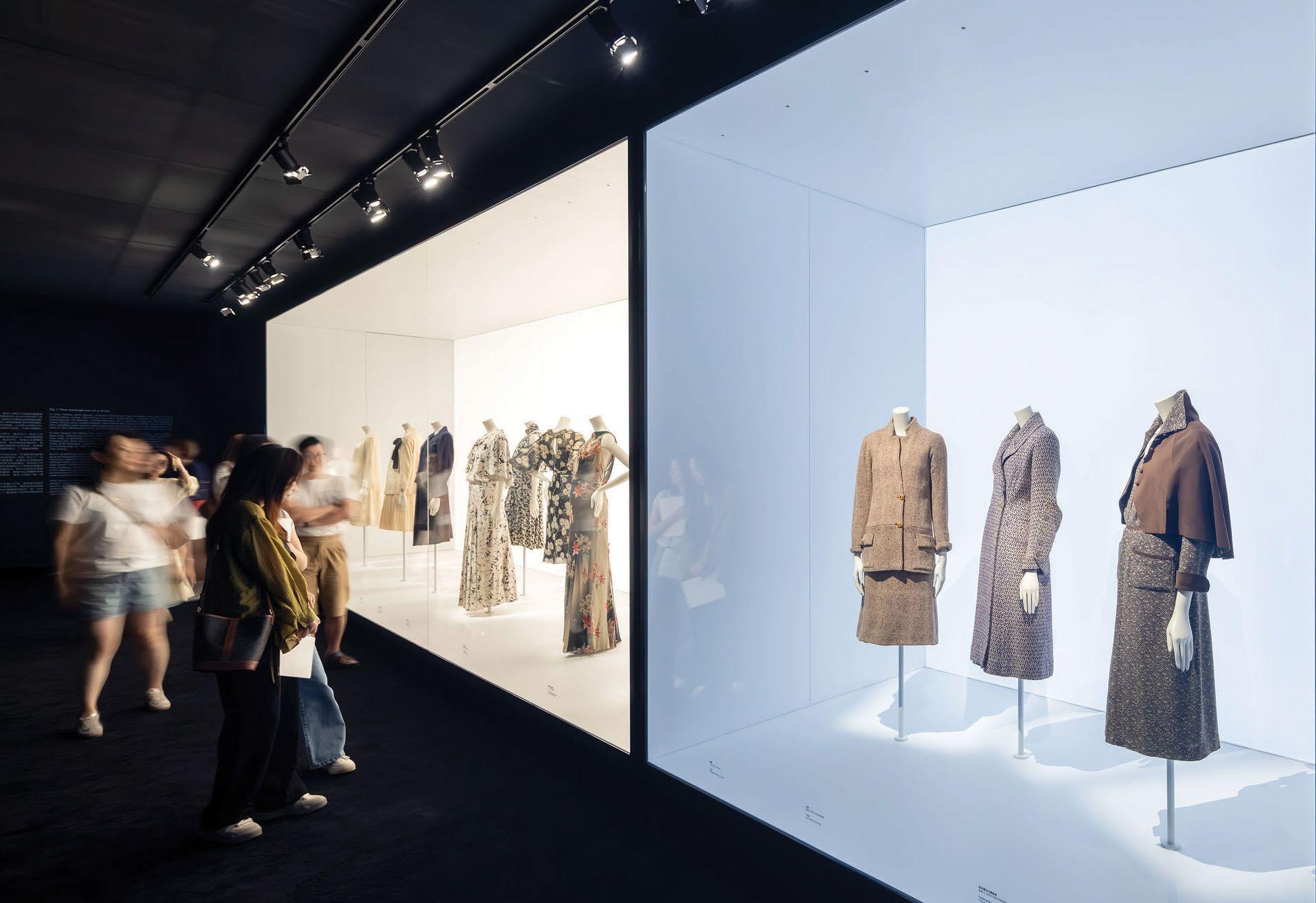
CITATION
for Exhibit Lighting
Tillotson Design Associates
Suzan Tillotson, Amanda Arikol, and Marta Seoane Buiza
Gabrielle Chanel. Fashion Manifesto
Shanghai, China
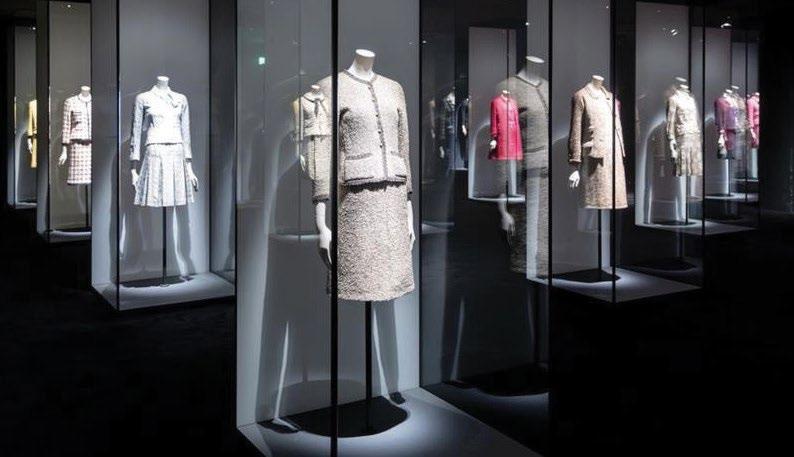
“This exhibit demonstrates a clear understanding of how lighting and visual composition can tell a story while working within strict constraints for light-sensitive materials. It reflects a thoughtful approach, where technical discipline and storytelling come together seamlessly.”
— 2026 Lumen Award Judge
Burr Rutledge, Kugler Ning Lighting
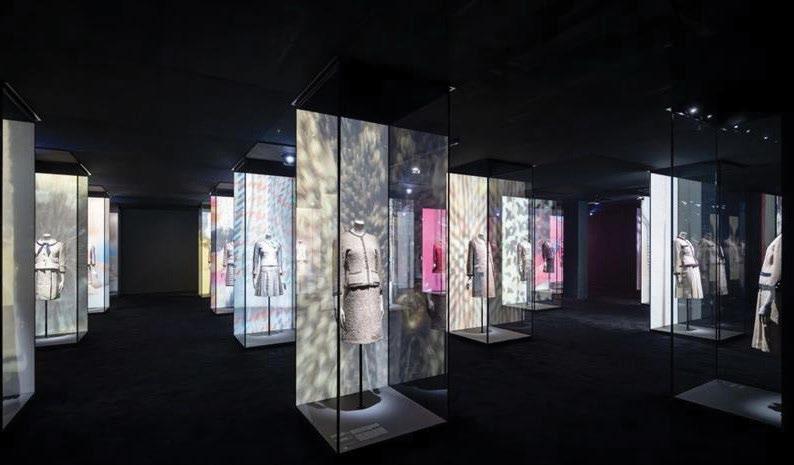
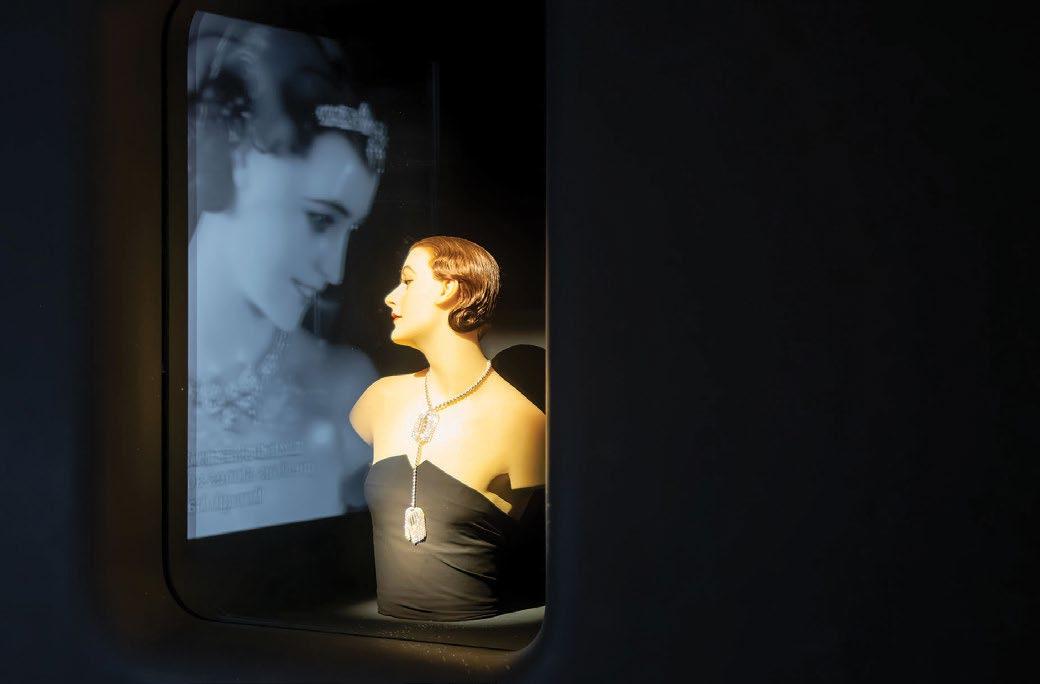
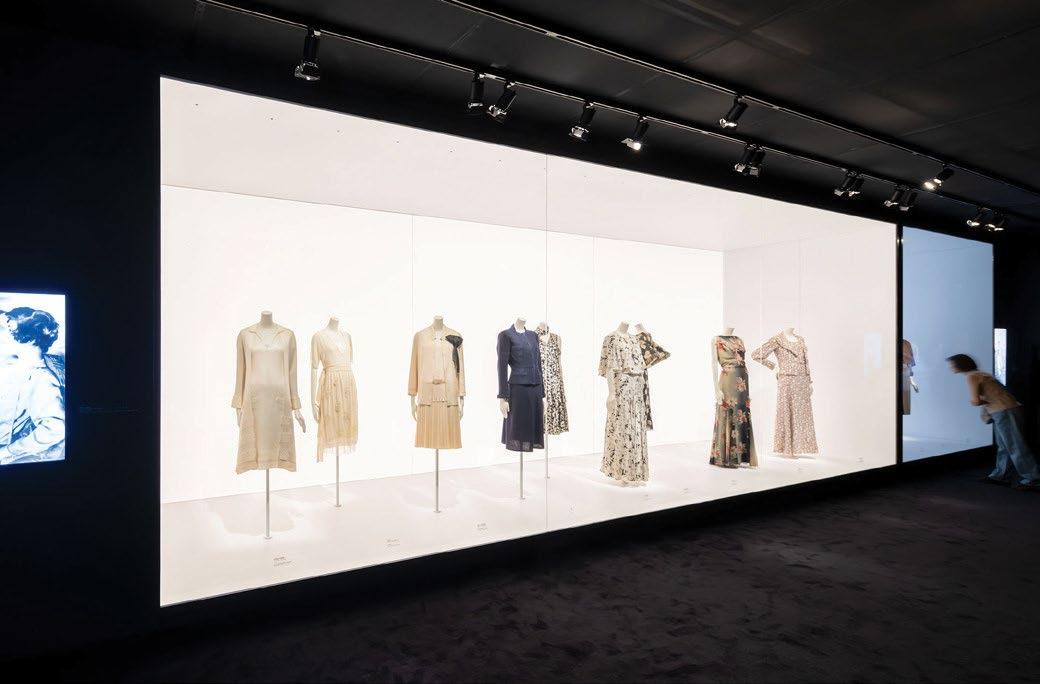
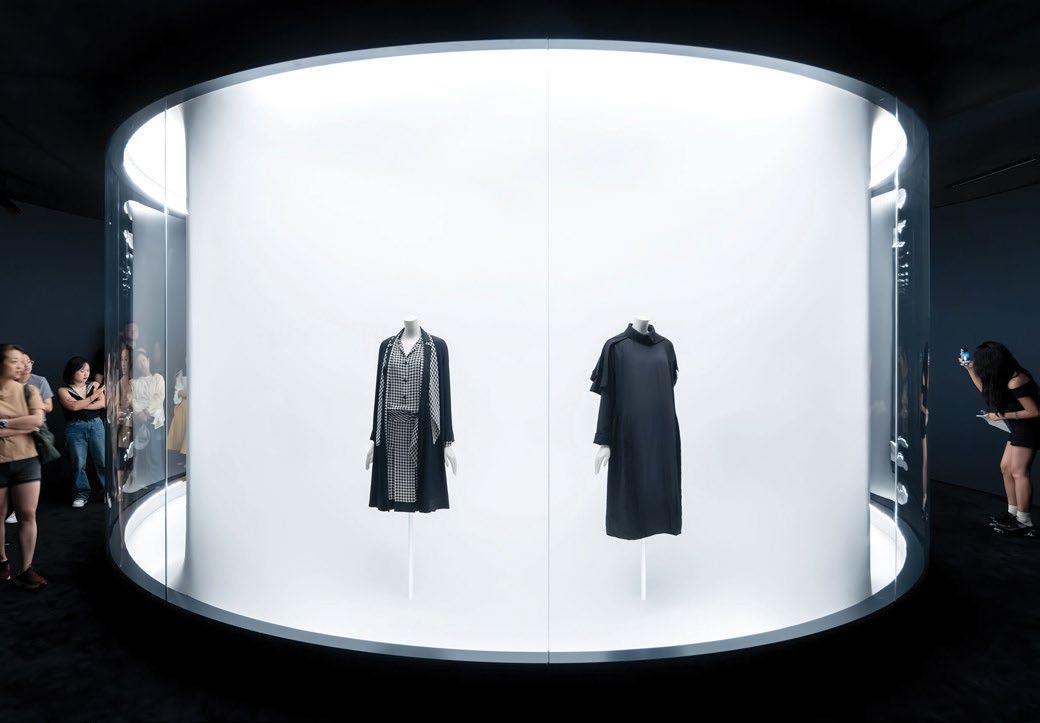
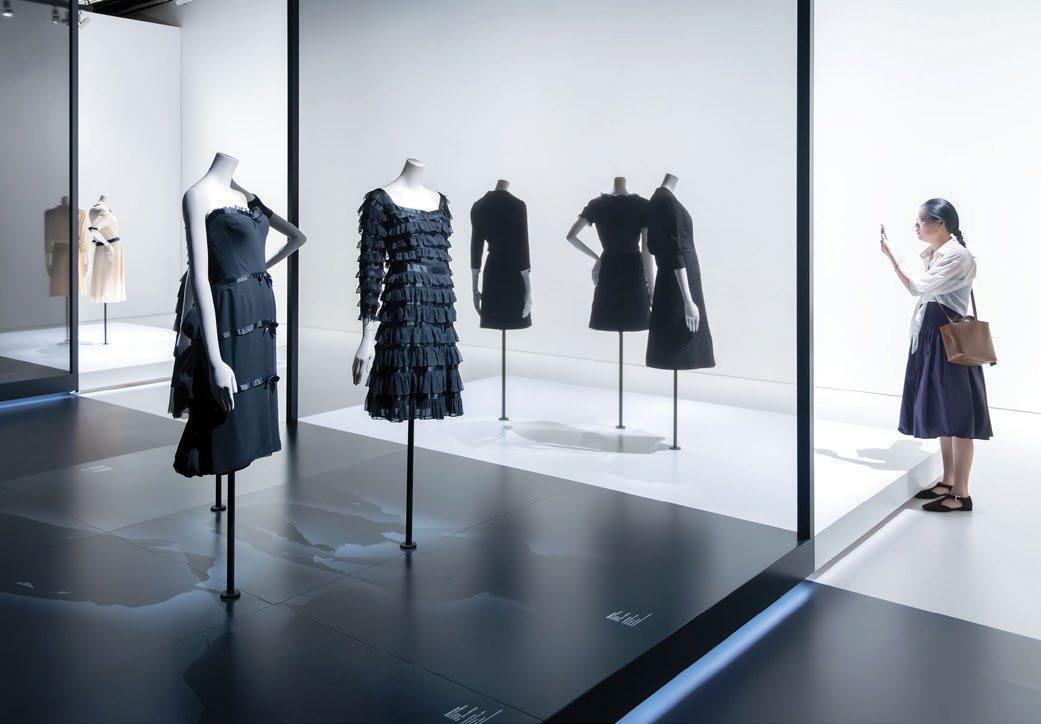
Precision, elegance, and minimal visual intrusion maintain Diller Scofidio + Renfro’s spatial clarity while highlighting the unique features of each meticulously crafted garment on display. Tunable white sources offer distinct scrims in “Summer” and “Winter” cases, and framing projectors sculpt light around the textures and silhouettes. From outside the cases, adjustable trackheads provide this focused illumination.
Dimmable LEDs throughout minimize energy consumption while ensuring excellent color rendering and light levels of 5 fc or less to meet strict preservation requirements. Wherever possible, the museum’s existing track infrastructure and fixtures were reused.
The “Suits” gallery with its standalone vitrines showcases dynamic projections and discreet interior case lighting. Concealed coves uniformly illuminate the solid backdrop in the iconic “Little Black Dress” display. Ambient brightness reveals the dark fabrics, and precise framing projectors avoid reflections off the curved glass.
Another example of meticulous fashioning, a special gobo highlights a delicate diamond star pin balanced against a projected image. The Chanel Fontaine diamond necklace is featured using a gradient optic.
ARCHITECTS
Diller Scofidio + Renfro
Cooper Robertson (Corgan)
PROJECT OWNER
Chanel
CURATORS
Miren Arzalluz
Veronique Belloir
GRAPHIC DESIGNER
He Jumping
PHOTOGRAPHY
Iwan Baan Studio
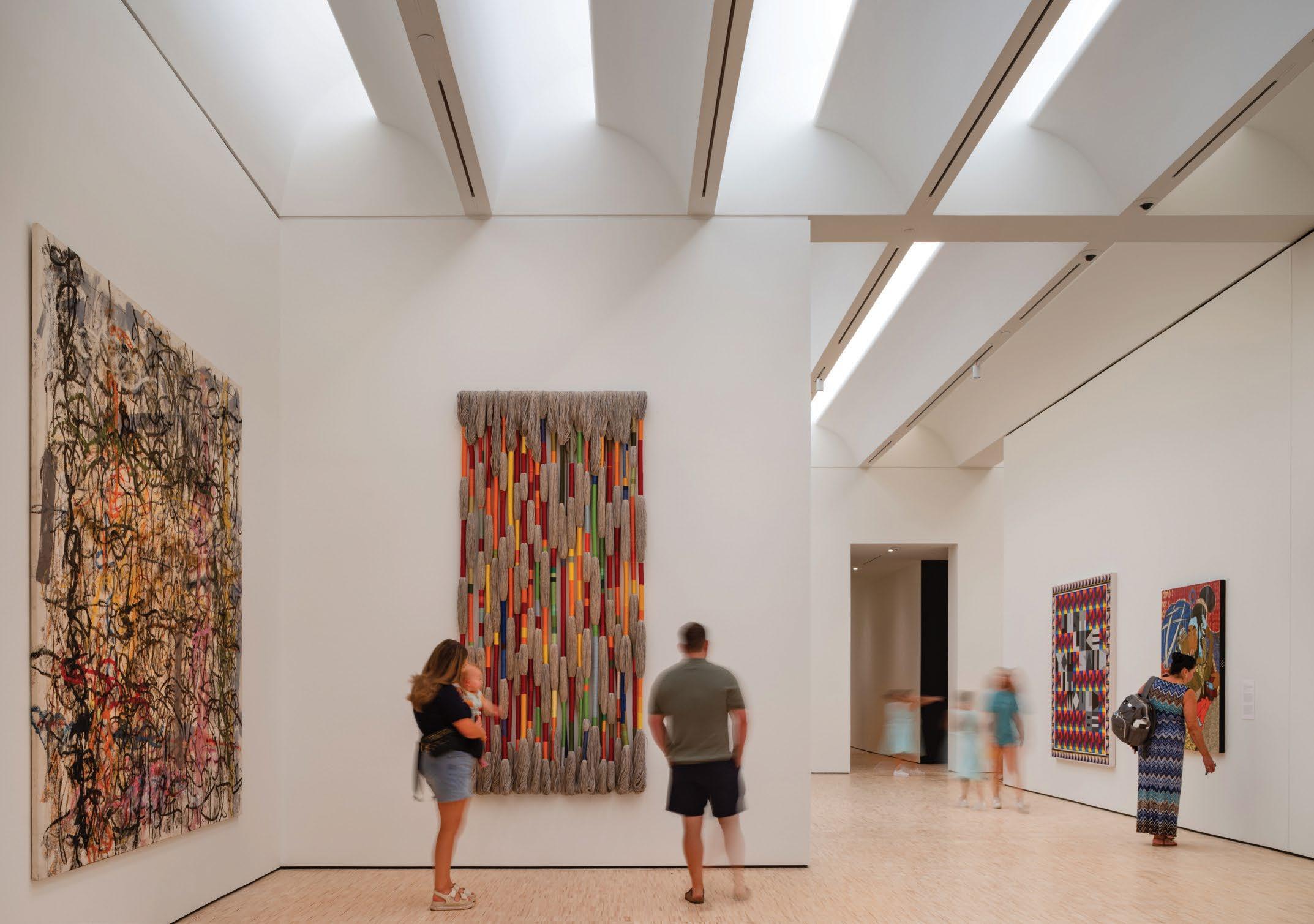
CITATION
for Daylight Integration in a Museum Arup
Brian Stacy, Kristen Garibaldi, and Stephanie Hillegas
Joslyn Art Museum Expansion Omaha, NE
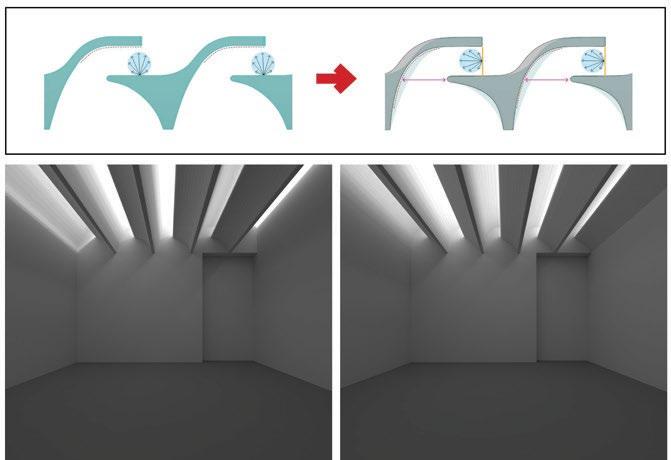
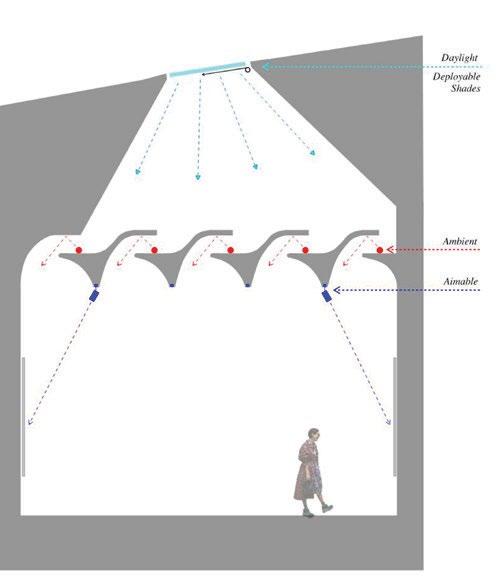
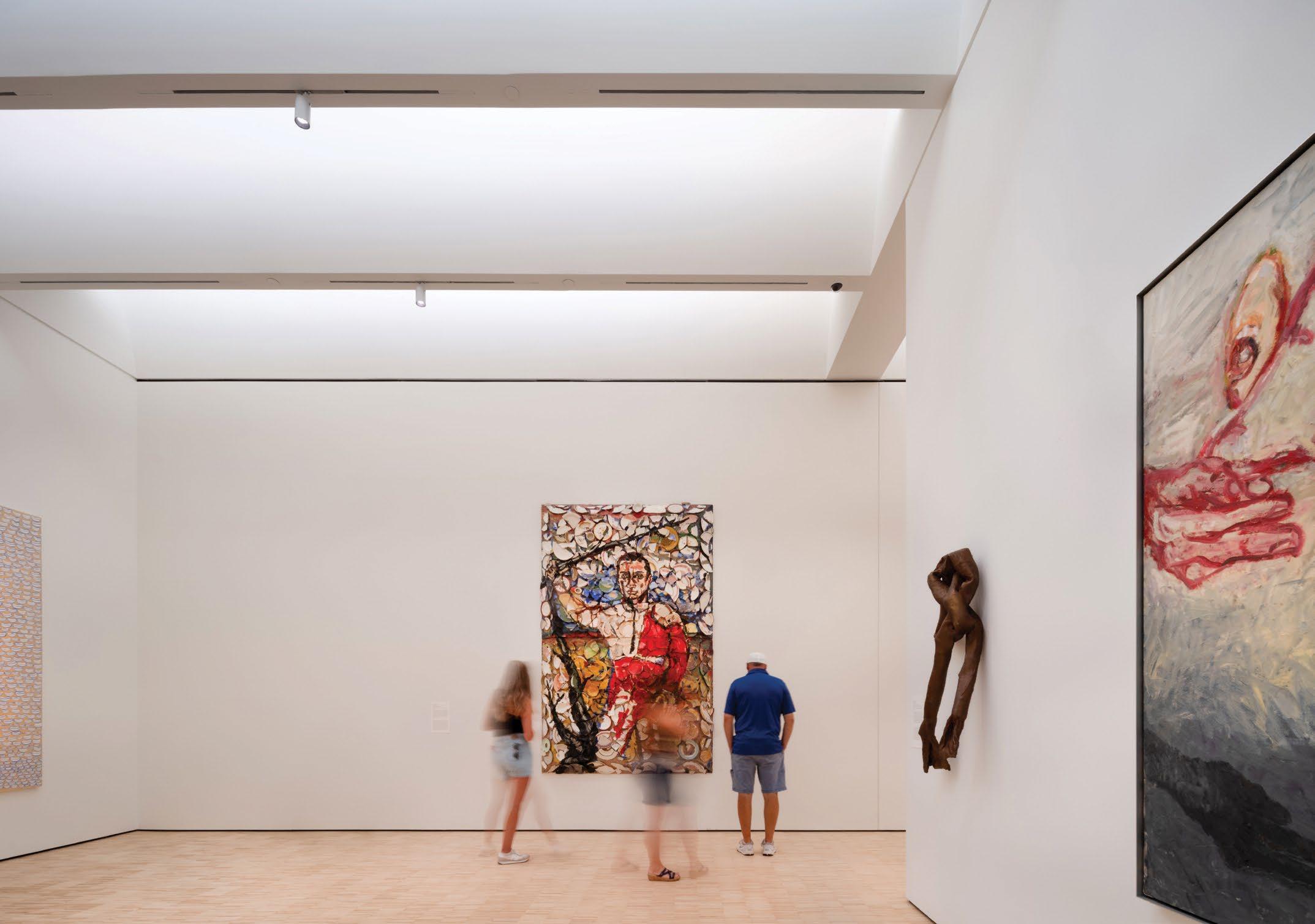
Arup conceived the gallery lighting for the Joslyn’s new, 42,000 sqft expansion as interdependent daylight and electric lighting within a unified architectural framework. Shaped by rigorous analysis, reflected light from sculpted baffles replaces traditional skylight expressions, concealing both daylighting infrastructure and electric cove luminaires.
The pavilion’s sloped roofline incorporates a series of diffusing apertures. These skylights set the foundation for the layered strategy. The attic plenum serves as a controlled and calibrated mixing chamber.
Through daylight simulations, electric lighting mock-ups, and iterative baffle refinement, the design was tuned to widen profiles and refine curvatures for optimal contributions from both electric sources and the seasonal changes in daylight. Further study introduced a secondary vertical diffuser at each ceiling aperture, to wash light smoothly across the baffle’s interior curve. The design achieves consistent distribution and balanced intensity throughout.
Deployable shades and dimmable luminaires facilitate smooth transitions from daylit to 3500K electric-only conditions. Recessed track and building devices coordinated within the geometry maintain a cohesive architectural expression.
ARCHITECTS
Snøhetta
Alley Poyner Macchietto Architecture
PROJECT OWNER
Joslyn Art Museum
PHOTOGRAPHY
Nic Lehoux
Brian Stacy
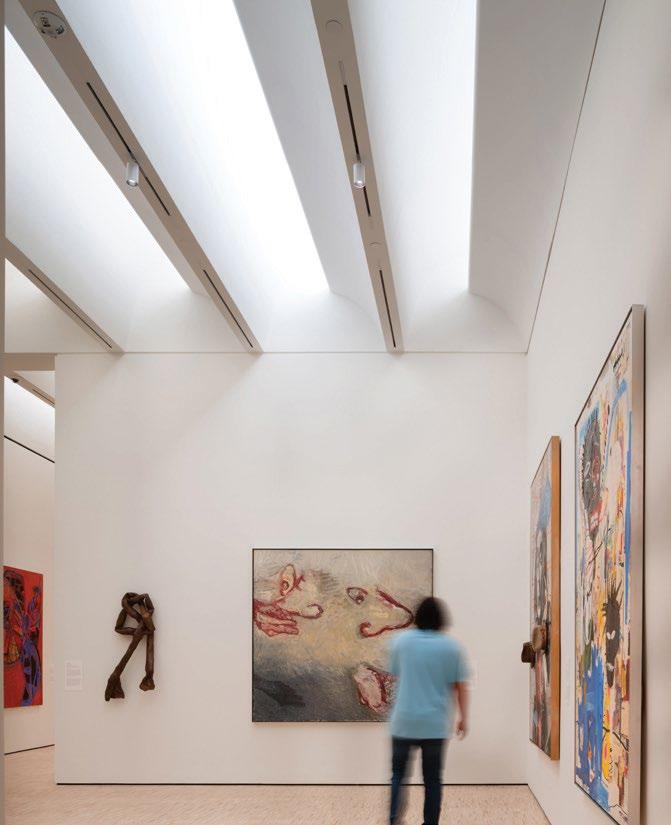
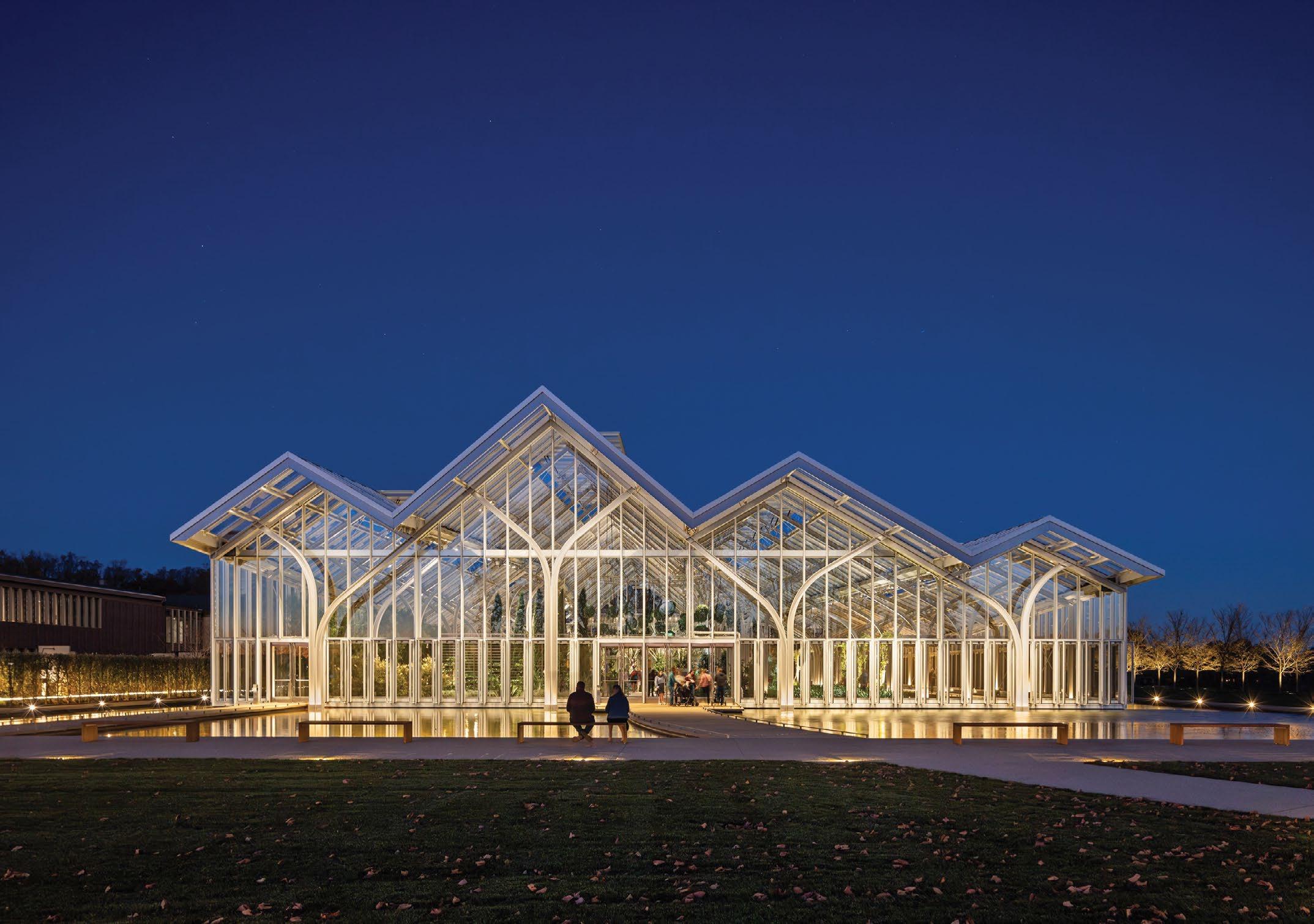
CITATION
for Public Garden Lighting
Tillotson Design Associates
Suzan Tillotson, Gabriela Grullon, Zoe Grosshandler, and Trinetra Manickavsagam
Longwood Reimagined
Kennett Square, PA
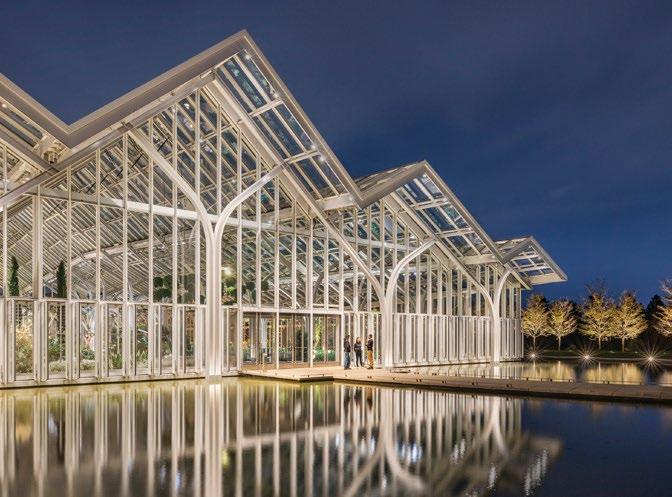
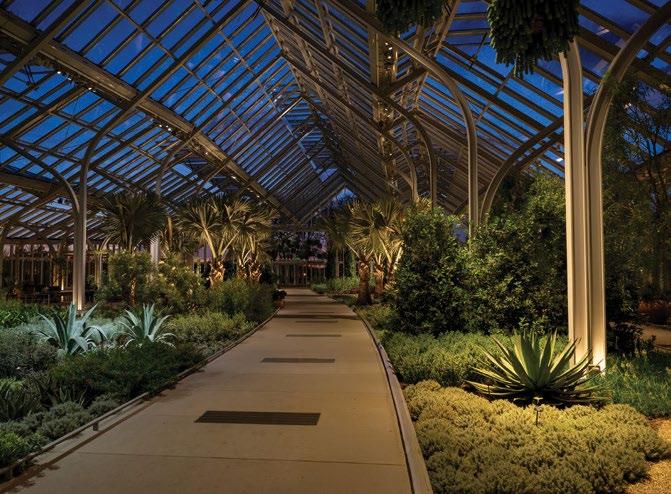
“ The day-to-night transition of such beautifully lush landscapes required a considerable degree of restraint. The primary goal was to let the plants on display take center stage, with lighting carefully shielded to remain soft and glare-free.”
— Gabriela Grullon
Tillotson Design Associates
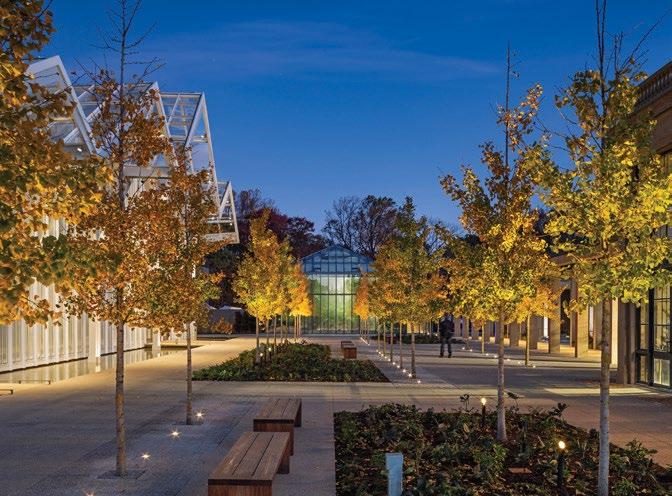
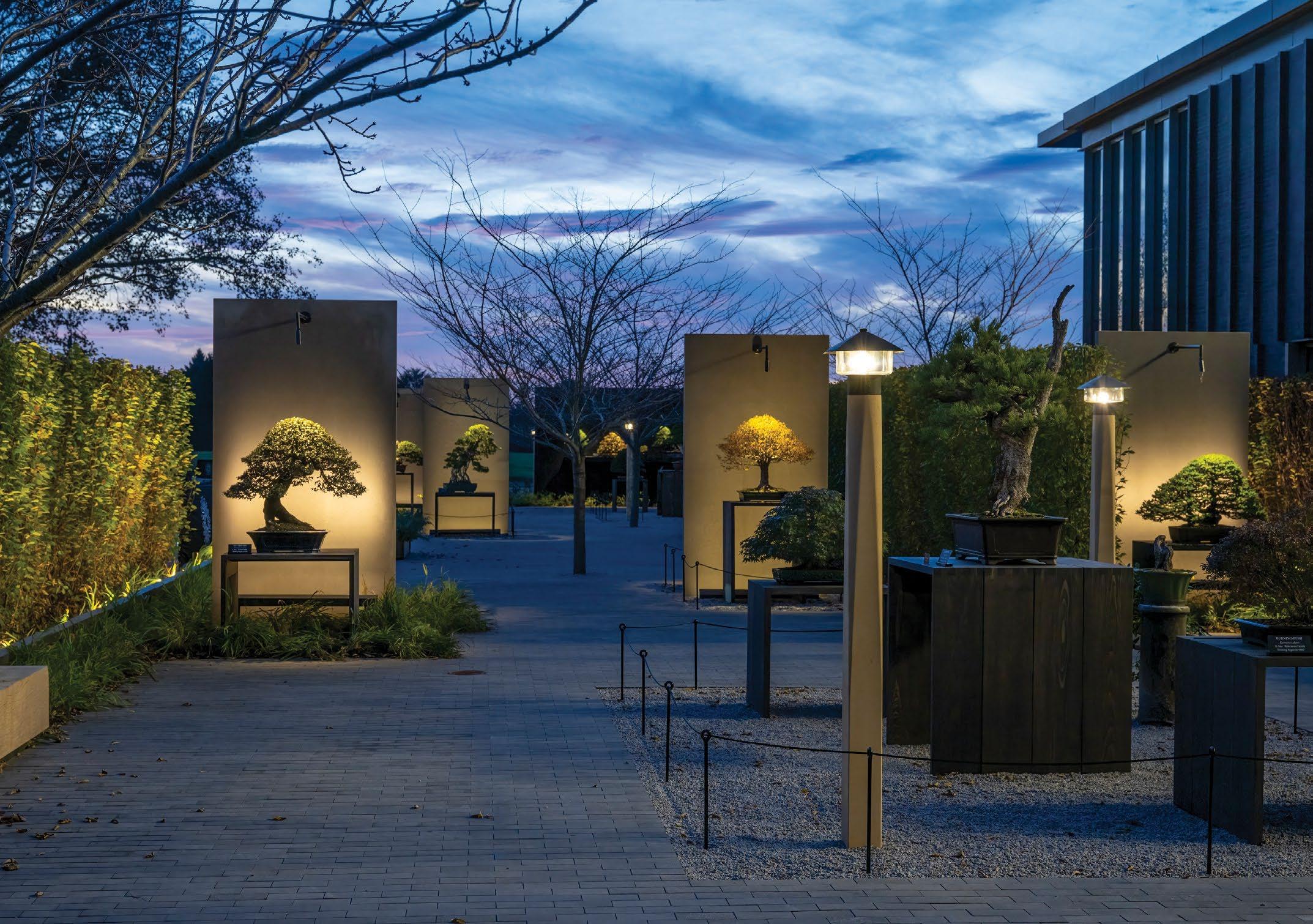
The West Conservatory centers this 17-acre reimagining of Longwood Gardens, its transparent form and asymmetric crystalline arches concealing eave-mounted spotlights. Arching steel columns and beams reflect elegantly in the surrounding pool.
To support the conservatory’s several transformations per year, addressable track fixtures inside can change CCT, vibrancy, and intensity to provide pops of color and tune white light to each plant specimen. Precise optics tailored to the various mounting heights highlight specific plantings in a sculptural manner. The main paths through the exhibits are lighted indirectly by the garden illumination spill.
Outside, bonsai show against the softly illuminated backdrops, each accented by a cantilevered fixture above. Lanterns mounted on faceted wood posts provide ambient lighting. Follow the courtyard of uplit trees to the green glow of the historic Cascade Garden, which now also uses dynamic tunable lighting.
ARCHITECTS
Weiss/Manfredi
Reed Hilderbrand
John Milner Architects
LANDSCAPE ARCHITECTS
JBC Landscape Architects
Larry Weaner Landscape Associates
PROJECT OWNER
Longwood Gardens
IRRIGATION CONSULTANT
Irrigation Consulting, Inc.
WATER ARCHITECT
Dan Euser Waterarchitecture
ENGINEERS
Jaros, Baum & Bolles
Pennoni
Buro Happold
STRUCTURAL AND CIVIL ENGINEER
Magnusson Klemencic Associates
CONCRETE CONSULTANT
Reg Hough Associates
SUSTAINABILITY CONSULTANT
Atelier Ten
PHOTOGRAPHY
Albert Vecerka/Esto
Hank Davis
Sahar Coston-Hardy/Esto
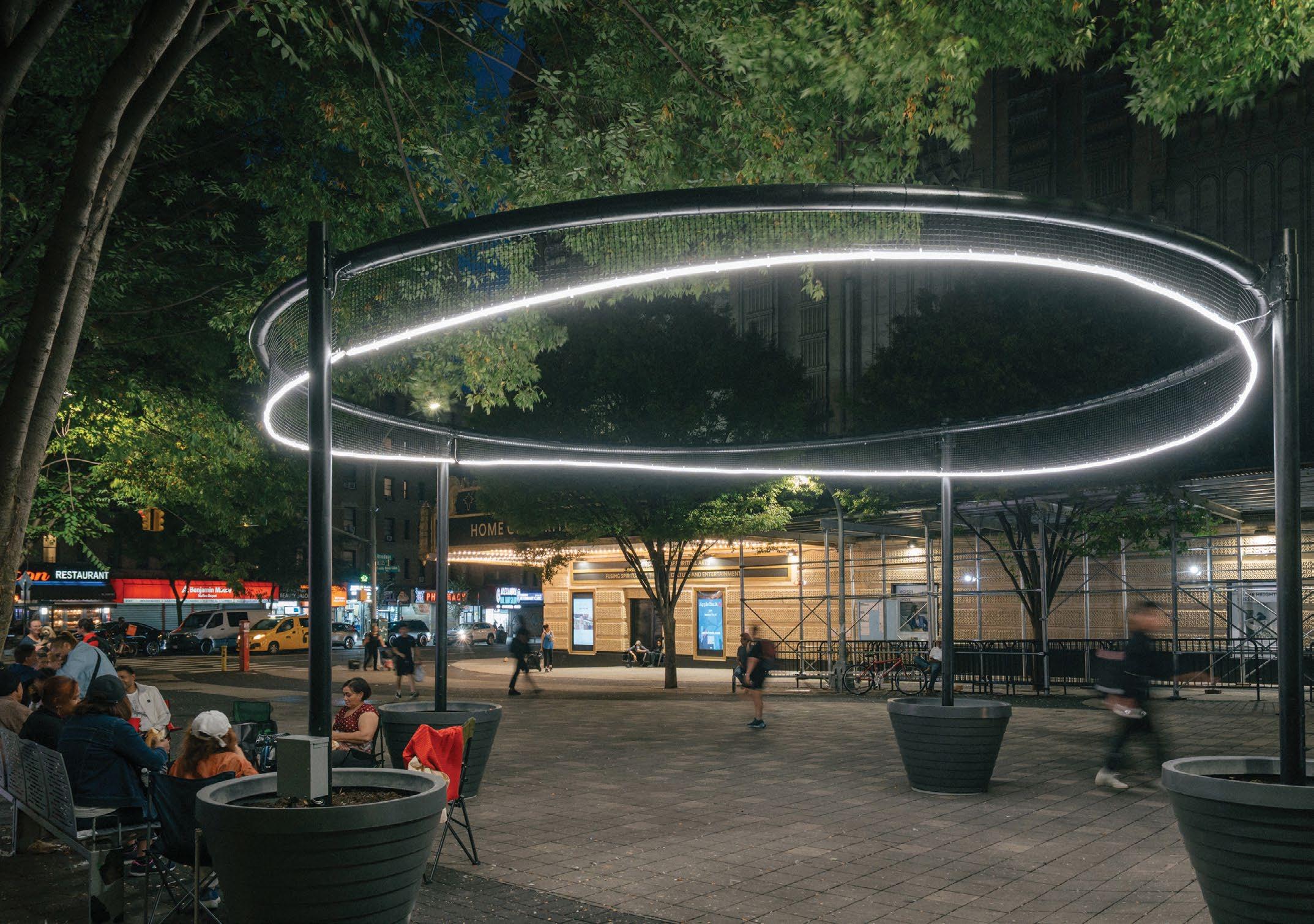
CITATION
for Public Space Activation
Buro Happold and Marvel
New York, NY
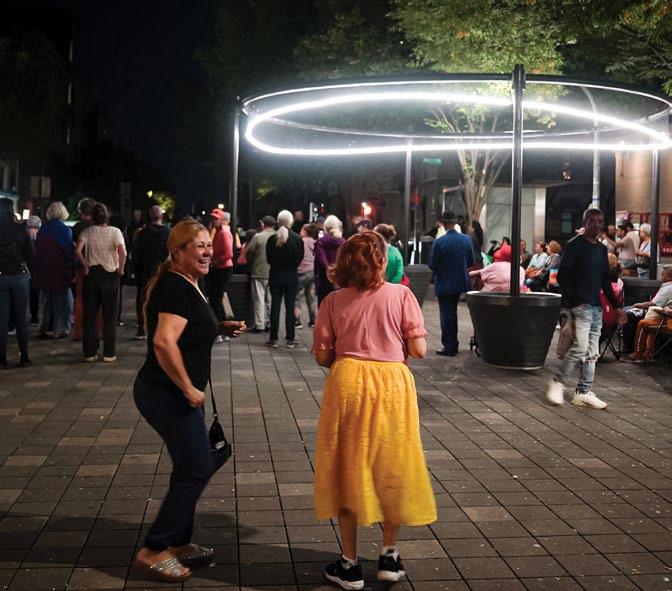
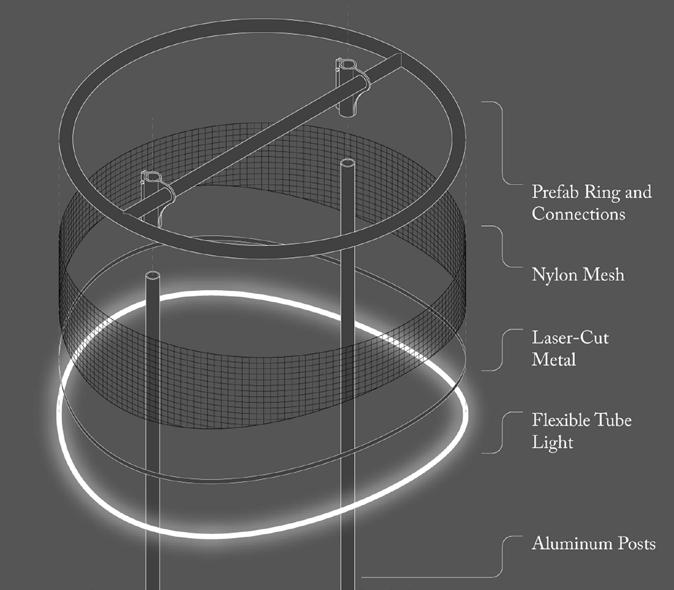
John Sloane, Jonathan Marvel, Tim Fryatt, and Jeremy Iannucci
Los Círculos
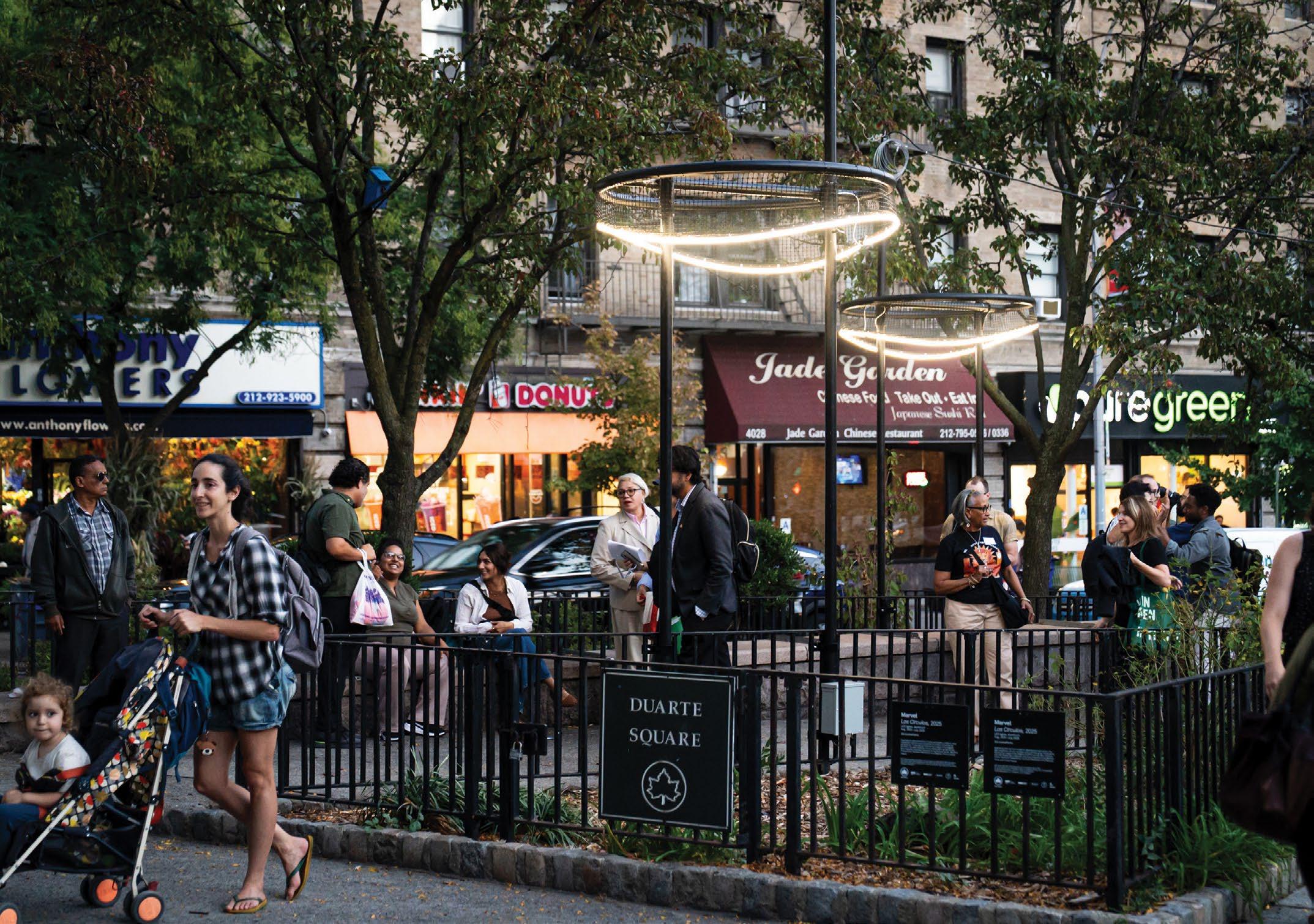
Inspired by a cultural tradition deeply embedded in the neighborhood’s Latin American diaspora, Los Círculos reflects communal celebration in the public square. Circles for dancing, gathering, and celebration are the primary mode of fostering interaction and promoting a sense of belonging. In Washington Heights, floating luminous rings, almost like 4000K neon, were inspired by the shape of a dancer’s dress.
At Plaza de las Américas, the single undulating form is a large, civic-scale gesture that supports communal gathering. The movement of passersby gives the undulating shape its dynamism. Five blocks to the south, two smaller rings at Duarte Triangle (Friedland Square at 170th and Broadway) add perceived brightness and a soft glow to an underlit public thoroughfare.
Glossy black mesh suspends the source, absorbing reflected light to give that floating effect. This technique allowed the design team to play with double curvatures while keeping a standard modularized structure. The installations are demountable and reusable, becoming a seasonal identifier for the neighborhood and local businesses. The lack of permanent connections facilitates free vehicular and pedestrian circulation.
The twirling forms and soft illumination from Los Círculos bring light and joy to the neighborhood. Add a little mariachi and, ¡Vamos a bailar!
PROJECT OWNERS
Van Alen Institute
Shiloah Symone Coley
Community League of the Heights (CLOTH)
Jackie Tesman
STRUCTURAL ENGINEER
TYLin
Maya Stuhlbarg
FABRICATOR
A05 Studio
Brian Chu
PHOTOGRAPHY
Cameron Blaylock
Marvel

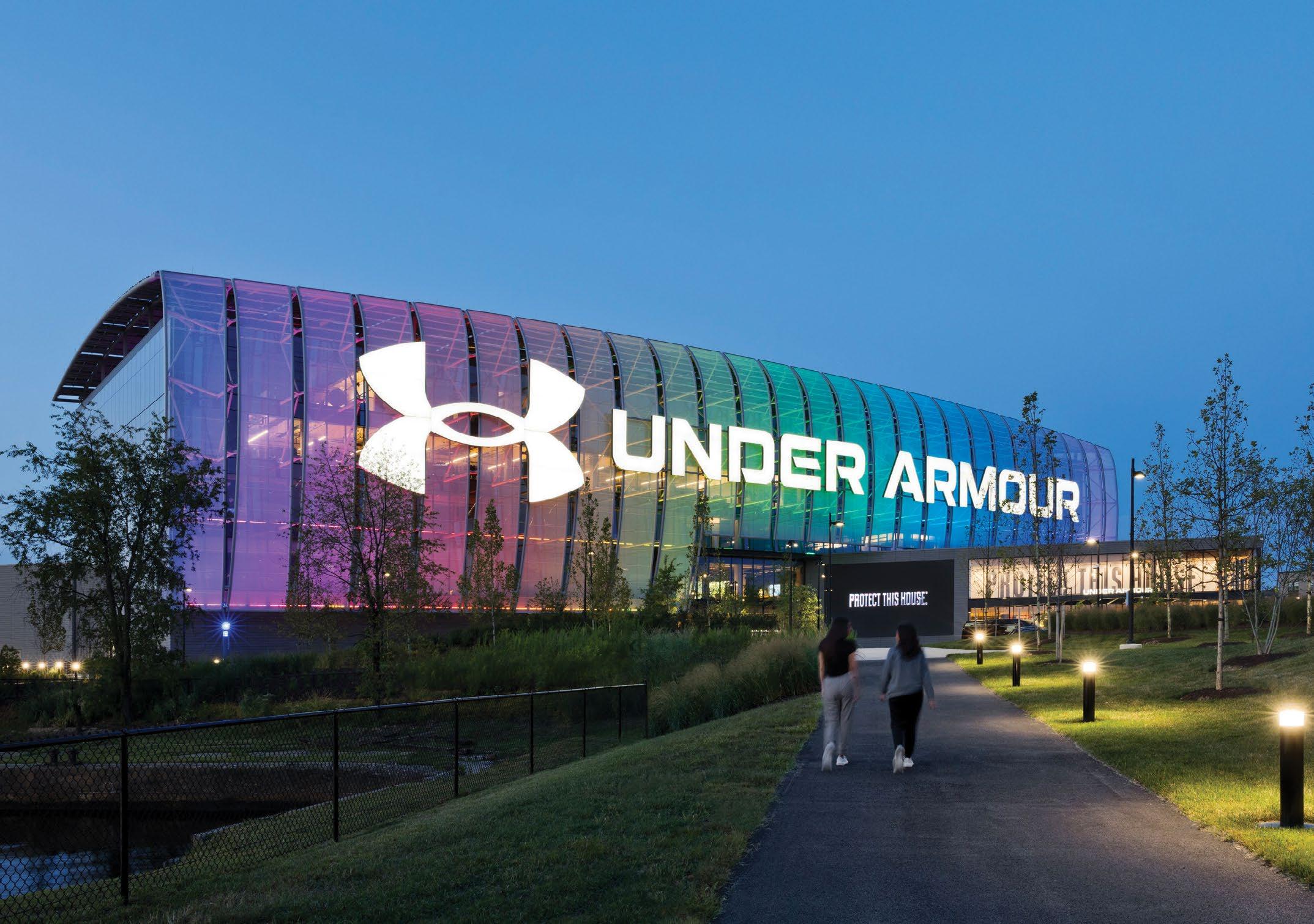
CITATION
for Facade Illumination
Lighting Workshop
Doug Russell, Amy Ruffles, and Jun Kim
Under Armour Headquarters
Baltimore, MD
“The level of precision behind this project is evident, particularly in the careful calibration required to achieve a consistent, even illumination across the height of each facade panel. Combined with the bold signage element, the overall expression is clean, yet impactful. The facade lighting showcases the brand’s identity and is executed with a high level of precision and care.”
—2026 Lumen Awards Judge
Shashank Singal, Lumen Architecture
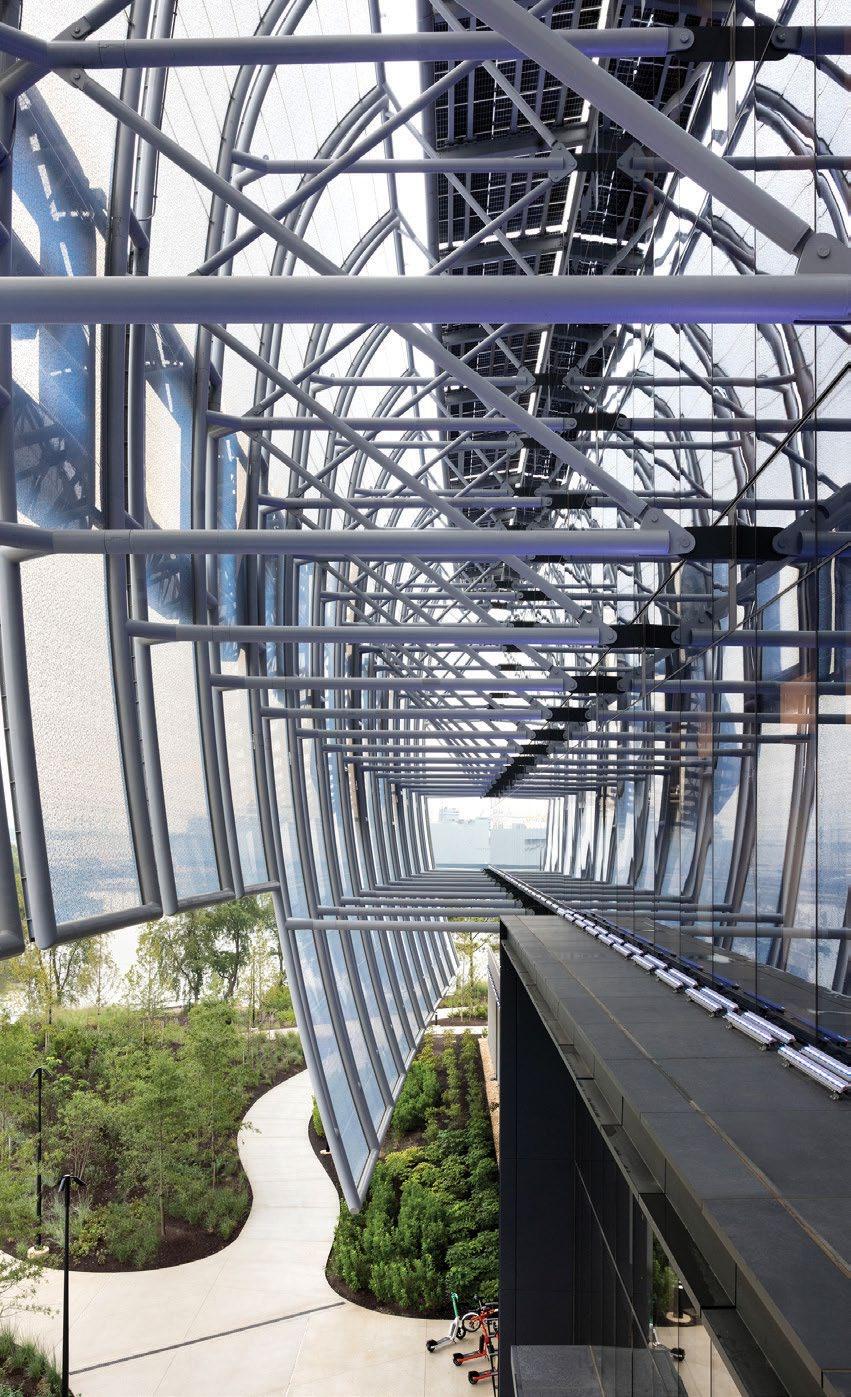
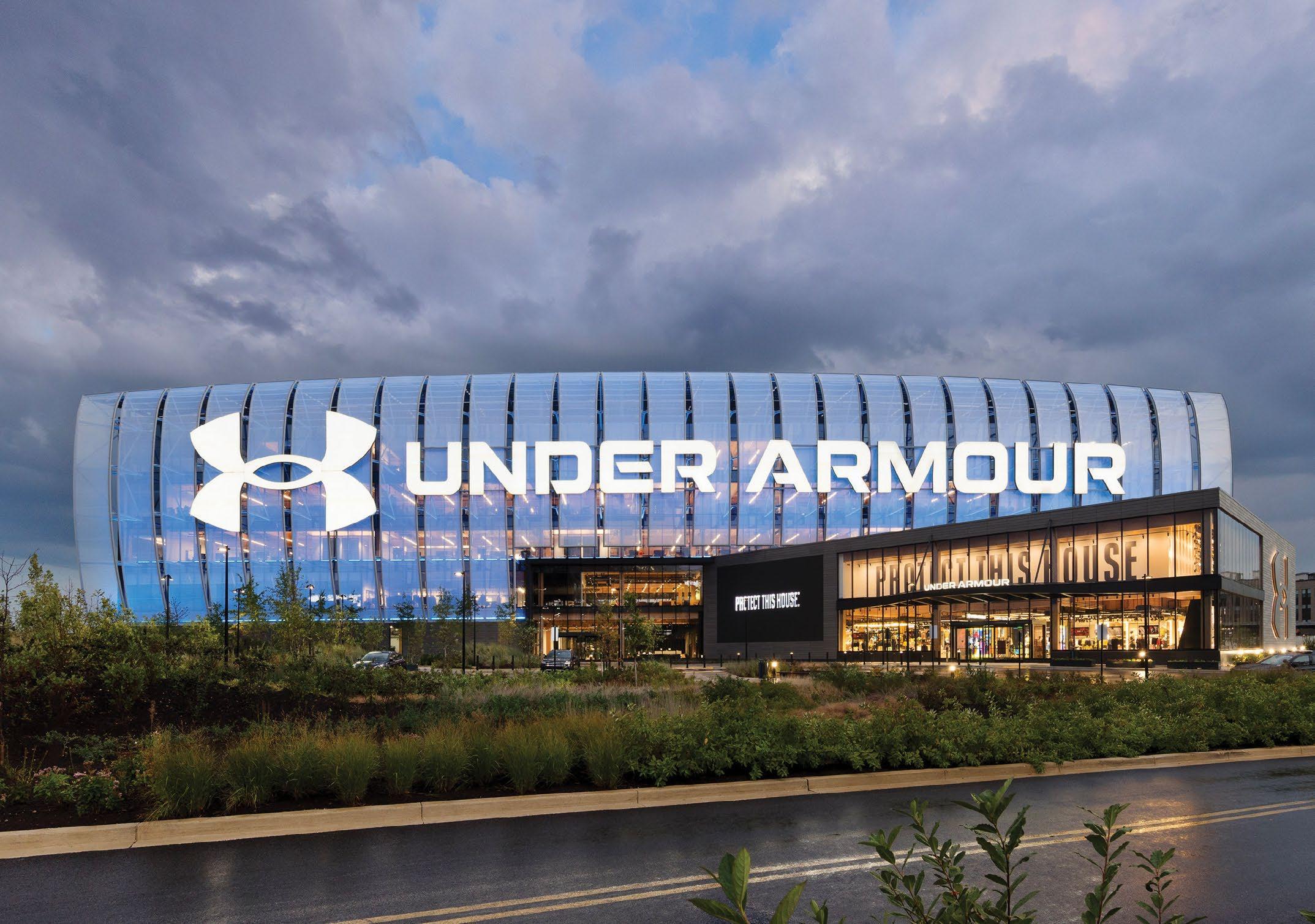
Innovation drives the design for this waterfront campus that functions as a workplace, retail environment, athletic training facility, and an authentic expression of the Under Armour identity. Dynamic facade illumination helps create a destination that fosters athletic excellence.
The striking 21,000 sqft tensile facade became a powerful canvas for brand expression and acts as a beacon for visitors. At night, multiple rows of colorchanging linear floodlights gently wash the membranes, creating a soft, uniform glow behind the logo. In addition to detailed section studies and AGI calculations, on-site mock-ups tested the specified light fixtures with various polymer membranes, informing the optimal shape and density of the frit pattern.
The lighting was carefully detailed to reduce light spill into workplace interiors. Glare shields and custom mounting brackets eliminate unwanted glare, even though the luminaires abut the curtainwall.
The facade comes alive at night, and is programmed to respond to special events, emphasizing connection with the local community.
ARCHITECTS
Gensler Washington D.C.
Dana Verbosh, Ariana Parrish, Robert Blabolil, JJ Rivers
Gensler Baltimore
Peter Stubb and Vaki Mawema
PROJECT OWNER
Under Armour
PHOTOGRAPHY
Connie Zhou
Amy Ruffles
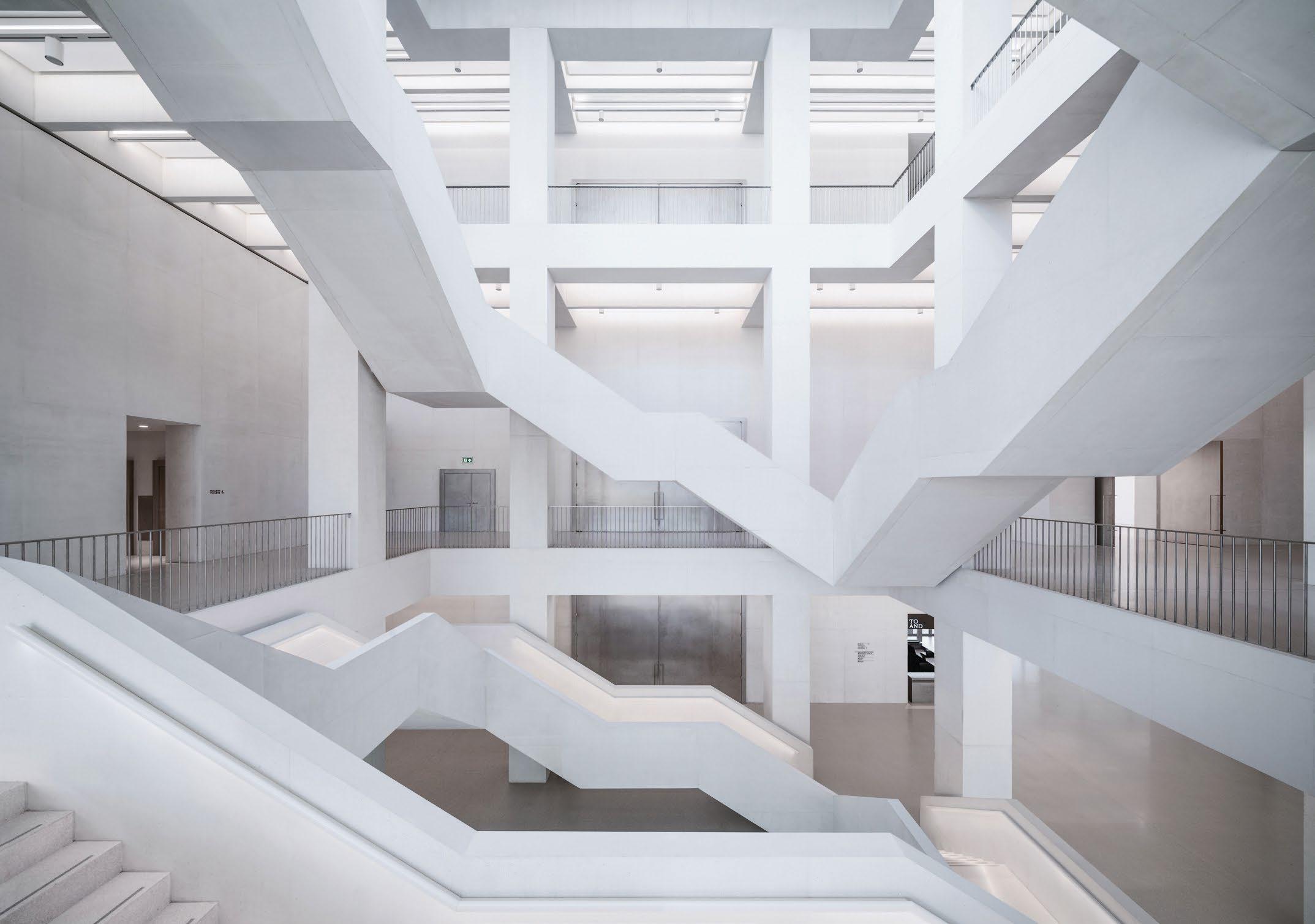
AWARD OF
MERIT
Arup
Matt Franks and Kristen Garibaldi
Museum of Modern Art in Warsaw
Warsaw, Poland
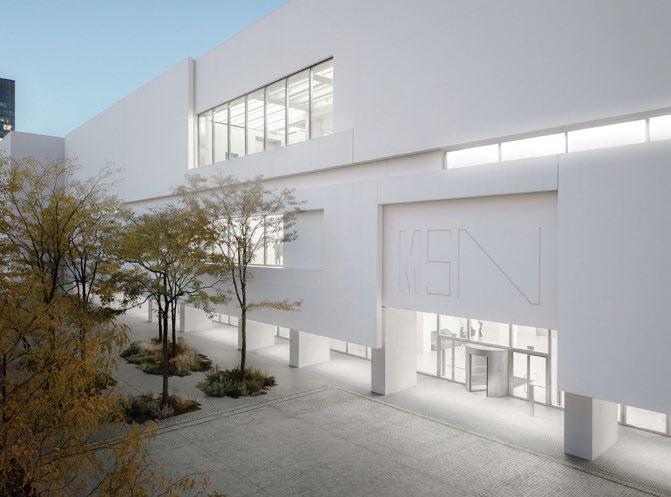
“The project’s strength lies in its restraint and careful calibration. In the atrium, rather than competing with the architecture, the lighting clarifies scale, rhythm, and vertical movement, allowing the space to register as both monumental and calm. Throughout the museum, electric light and daylight read as one continuous luminous system.”
— 2026 Lumen Award Judge Robyn Bohn, Sighte Studio
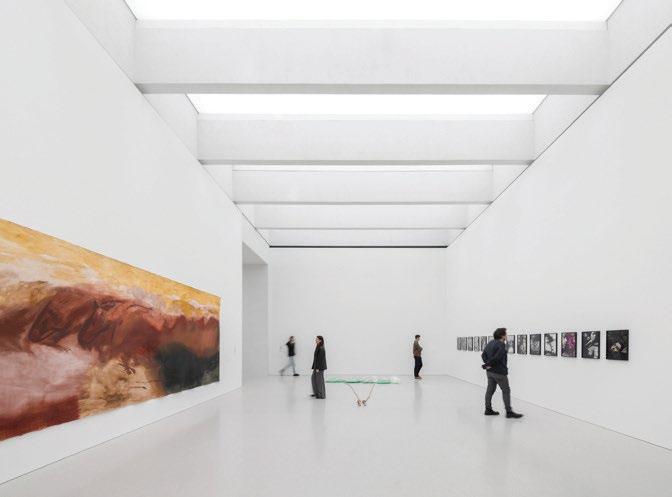
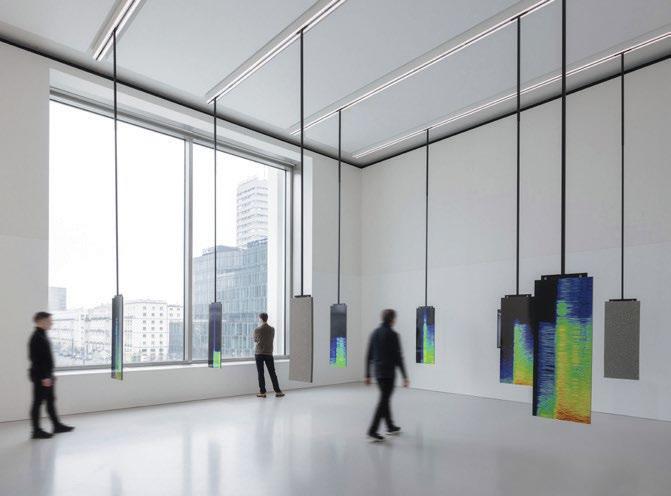
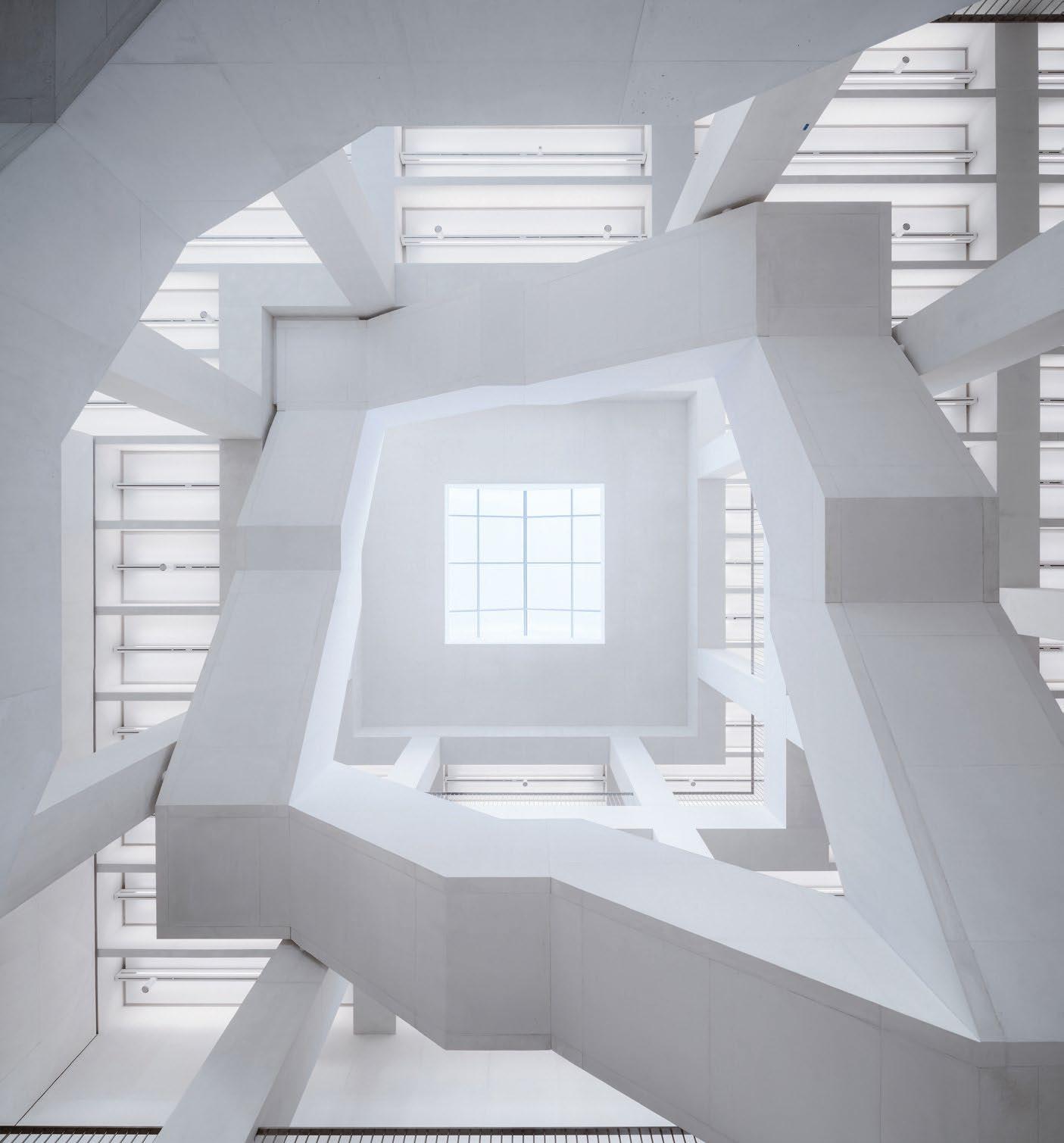
Daylight, admitted through skylights, clerestories, and deep-set windows, animates austere galleries with subtle dynamism – all softened by carefully modulated electric lighting. Monumental stairs anchor the central public space, guiding visitors upward toward a rhythmic field of illuminated coffers and skylights.
In coffered ceilings, dimmable 4000K linears with custom-designed asymmetric optics are side-mounted, prioritizing vertical illumination and delivering diffuse light below. The cool, light-toned concrete glows, creating visual depth and contrast in the luminous composition.
In galleries with flat concrete ceilings, diffuse lenses are repositioned to the bottom face of the bespoke modular extrusion, providing soft illumination. Track lighting, art hanging systems, and life safety devices (including emergency lighting) integrate into different arrangements of the same basic components. Configured in linear or patterned arrangements, the system ensures cohesion, rhythm, and consistent illumination for varied exhibits.
In skylight galleries, profiles atop beams support stretched-fabric panels that diffuse both the daylight and electric lighting above. Iterative simulations and mock-ups of exterior gratings, diffusing glass skylights, and translucent fabric helped achieve balanced illumination and reduced reliance on electric light.
Linear luminaires attached to skylight mullions shine downward to evenly backlight the fabric panels. The resulting quality and distribution mimics daylight’s softness.
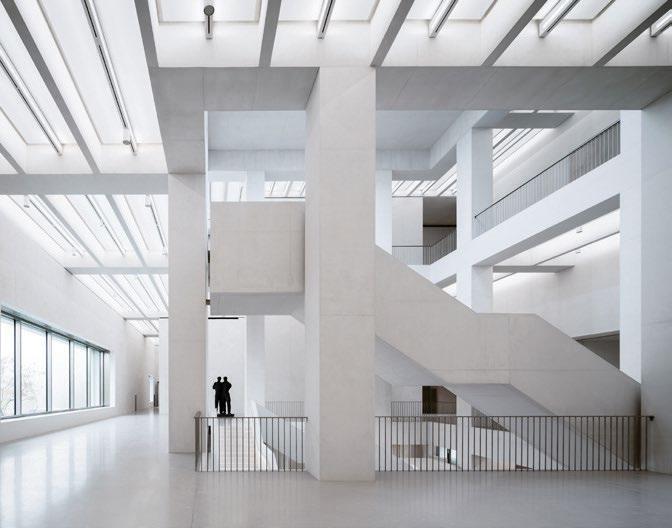
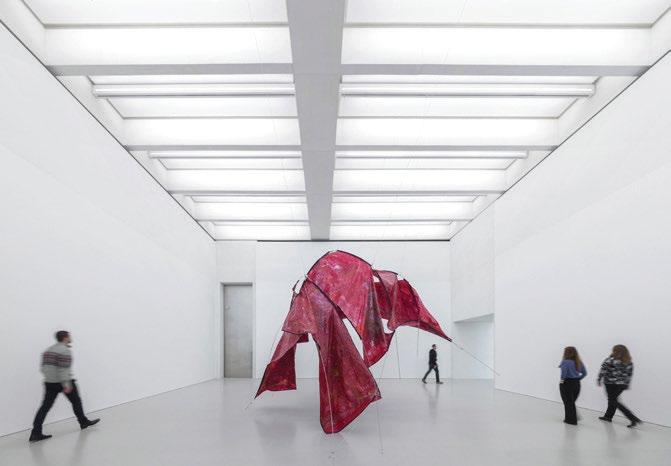
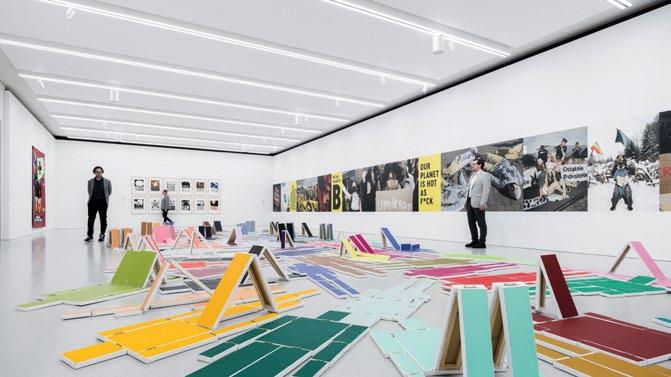
ARCHITECT
Thomas Phifer and Partners
Thomas Phifer and Katie Bennett
APA Wojciechowski Architects
PROJECT OWNER
Museum of Modern Art in Warsaw
PHOTOGRAPHY
Filip Bramorski
Nate Cook Photography
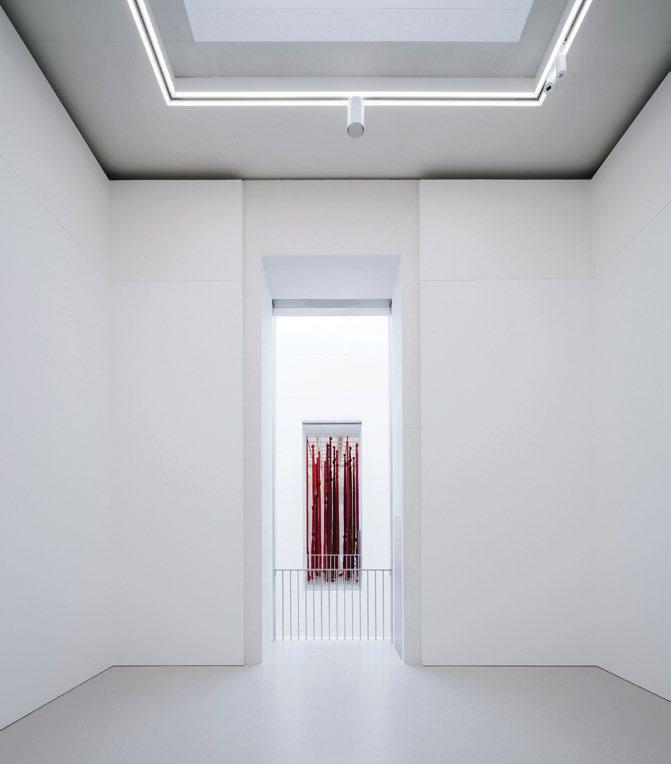
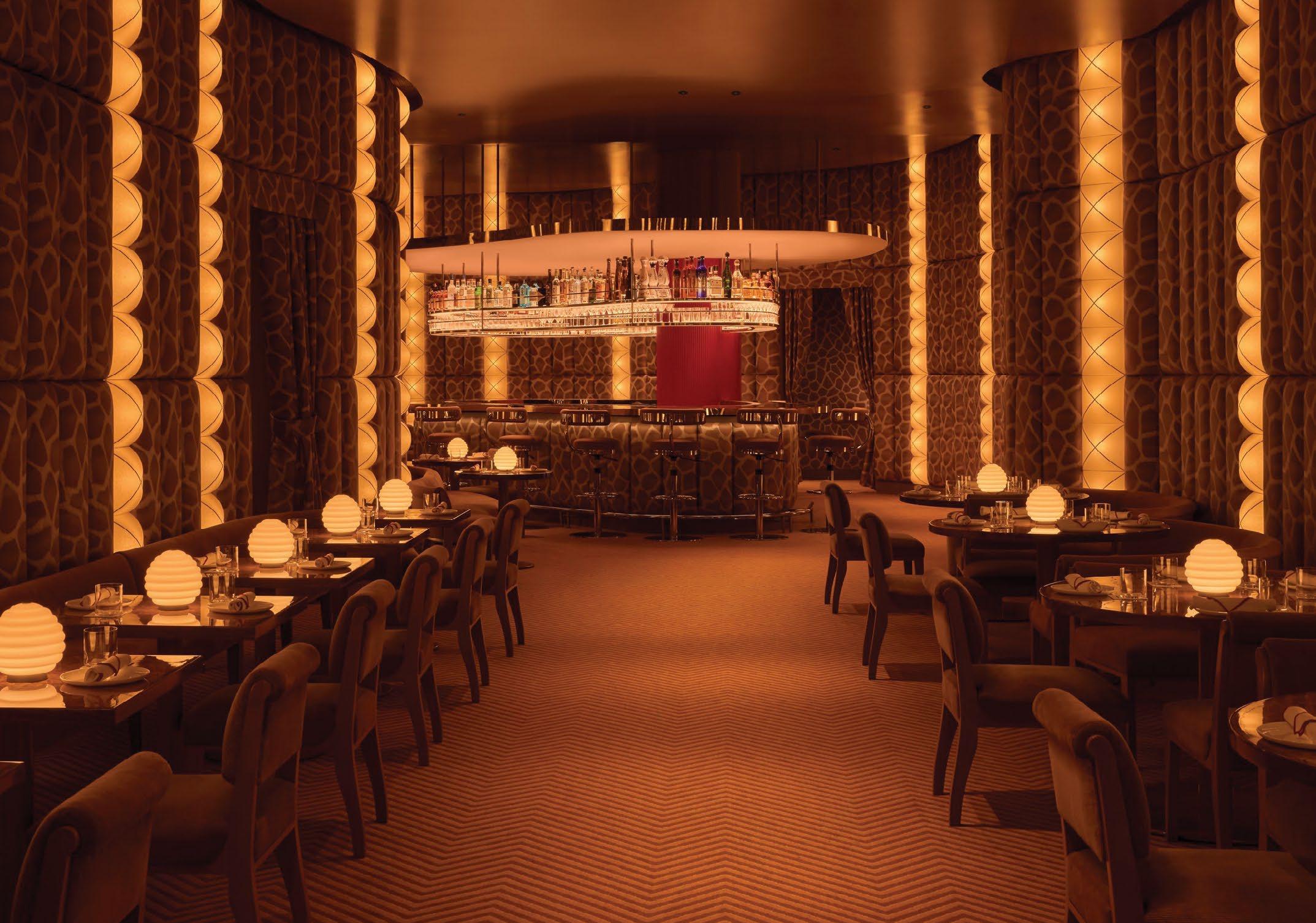
AWARD OF
MERIT
Focus Lighting
Jenny Ruter, Juan Pablo Lira, Andrew Stewart, and Hilary Manners
Obvio
New York, NY
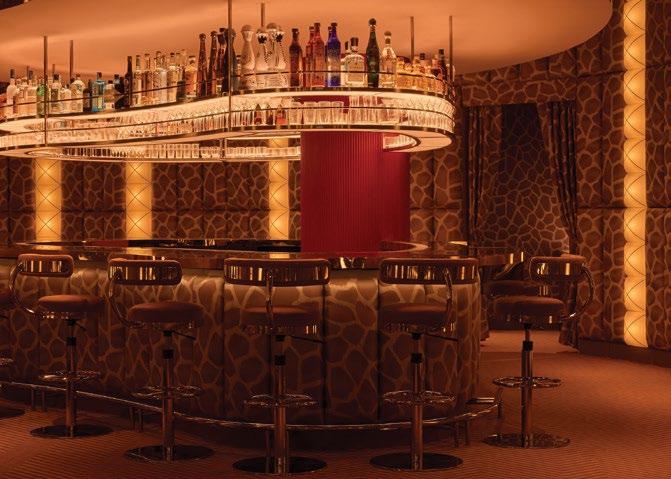
“What’s impressive here is how refined the project feels. The custom fixture elements are thoughtfully integrated, almost becoming part of the architecture, while the table lights introduce a unique form that ties into the overall palette. The bar is especially well resolved—the softly glowing, edge-lit shelving creates an even, shadow-free quality that feels calm and inviting from every angle. It’s a simple idea, but one that is exceptionally well tuned and executed.”
— 2026 Lumen Award Judge Brian Belluomini, Shimstone Design Studio
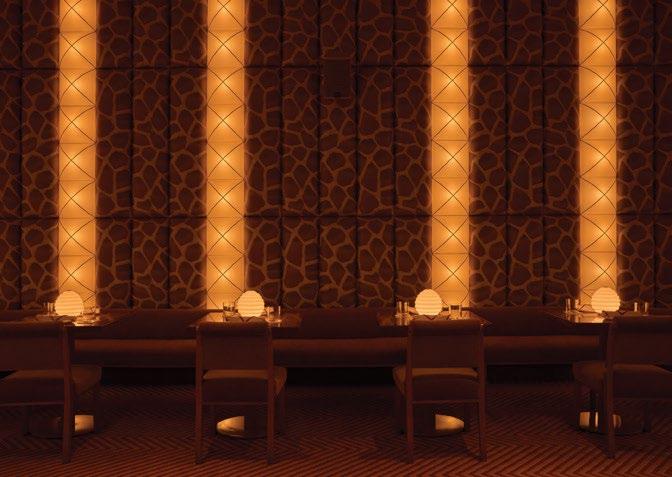
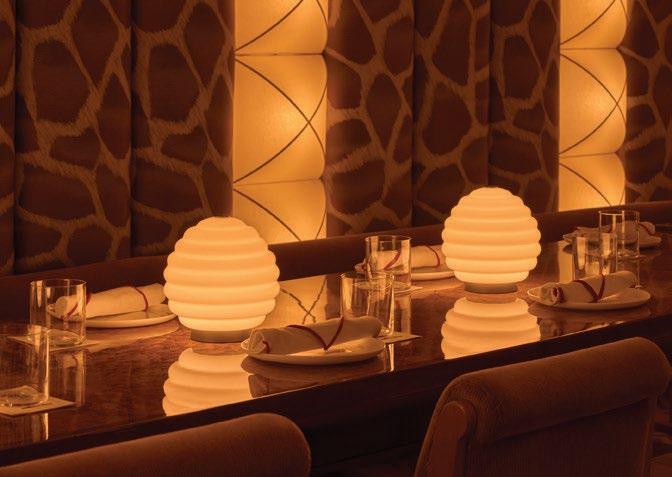
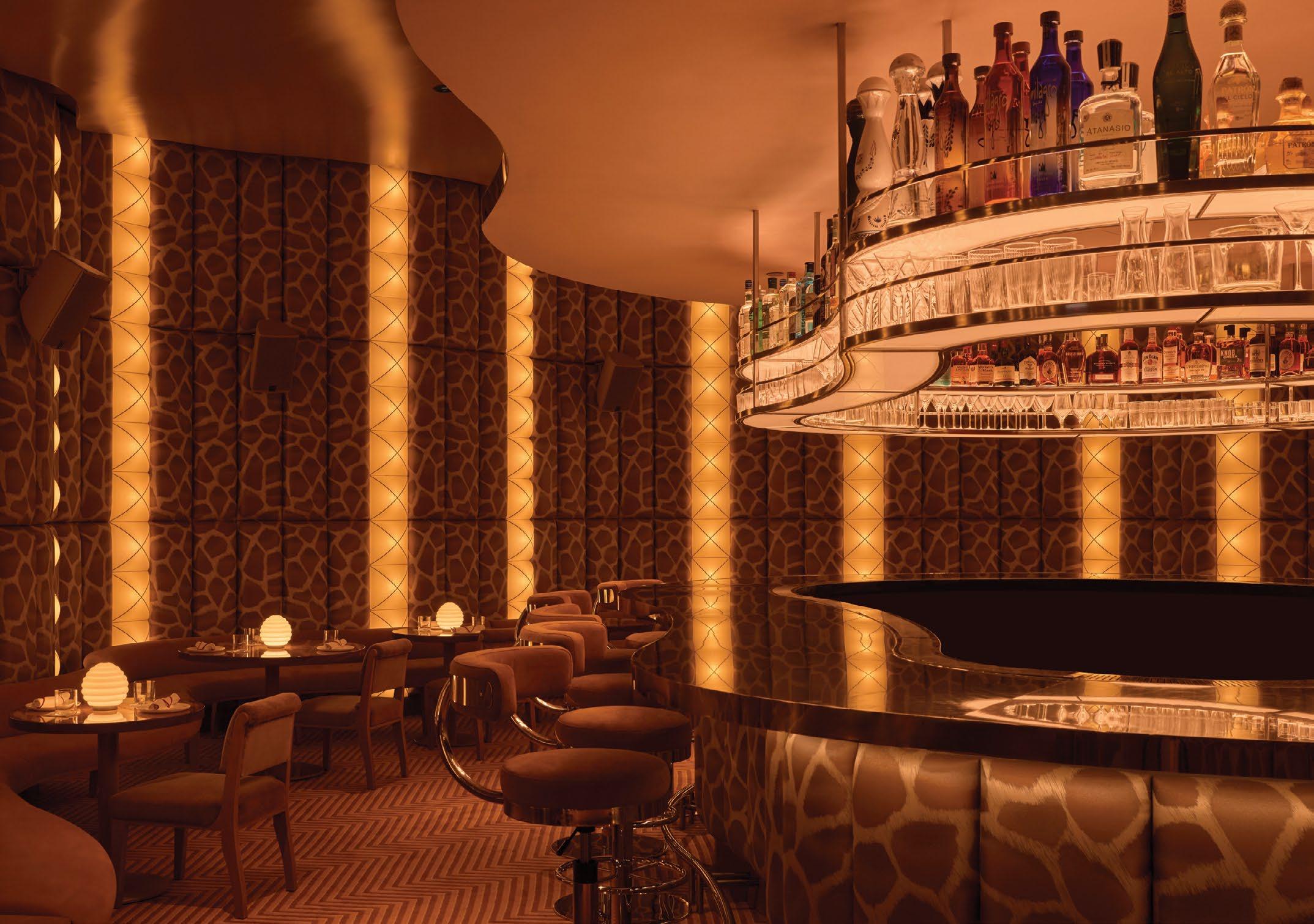
One repeating backlight detail, a layer of downlights, and a table lamp work in harmony to create an avant-garde yet still warm and beautiful nightclub experience. The design team used mock-ups to ensure color and alignment, because when there are only a handful of lighting treatments, every detail counts.
Pools of downlight create a path from the front door to the bar, giving the diners and red-uniformed servers a touch of “performance” walking through the space. The marching columns of light are comprised of custom fabric shades (mounted with magnets for easy maintenance), each backlit by a single, warm white LED node. The shape of the shade was inspired by metal stud detailing on a designer handbag. DMX controls allow animation around the room when the space is functioning as a dance club.
The multilayered, curvaceous bar serves as the centerpoint. Edgelit acrylic sheets, custom-cut to match the bar shelves, do triple-duty: they highlight the bottle display, throw subtly onto the bar-top, and cast ambient light upwards onto the floating ceiling.
Finally, the glamorous, owner-provided table lamps create a focal point for each conversation. They needed their color-temperature adjusted: three different gel coatings match the columns precisely.
ARCHITECT
CBRE
PROJECT OWNER
Santa Cruz Co.
PHOTOGRAPHY
Jason Varney
Juan Pablo Lira
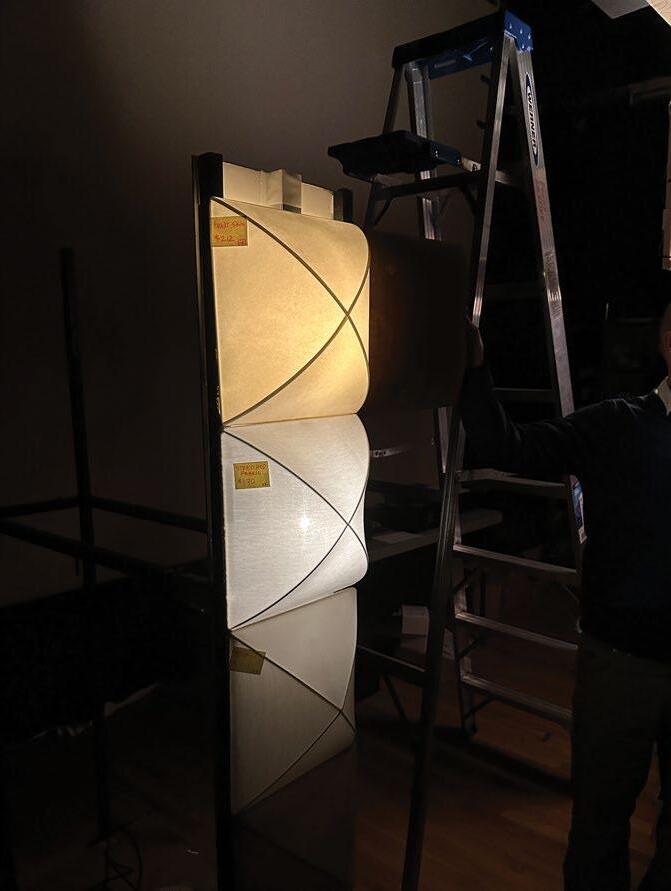
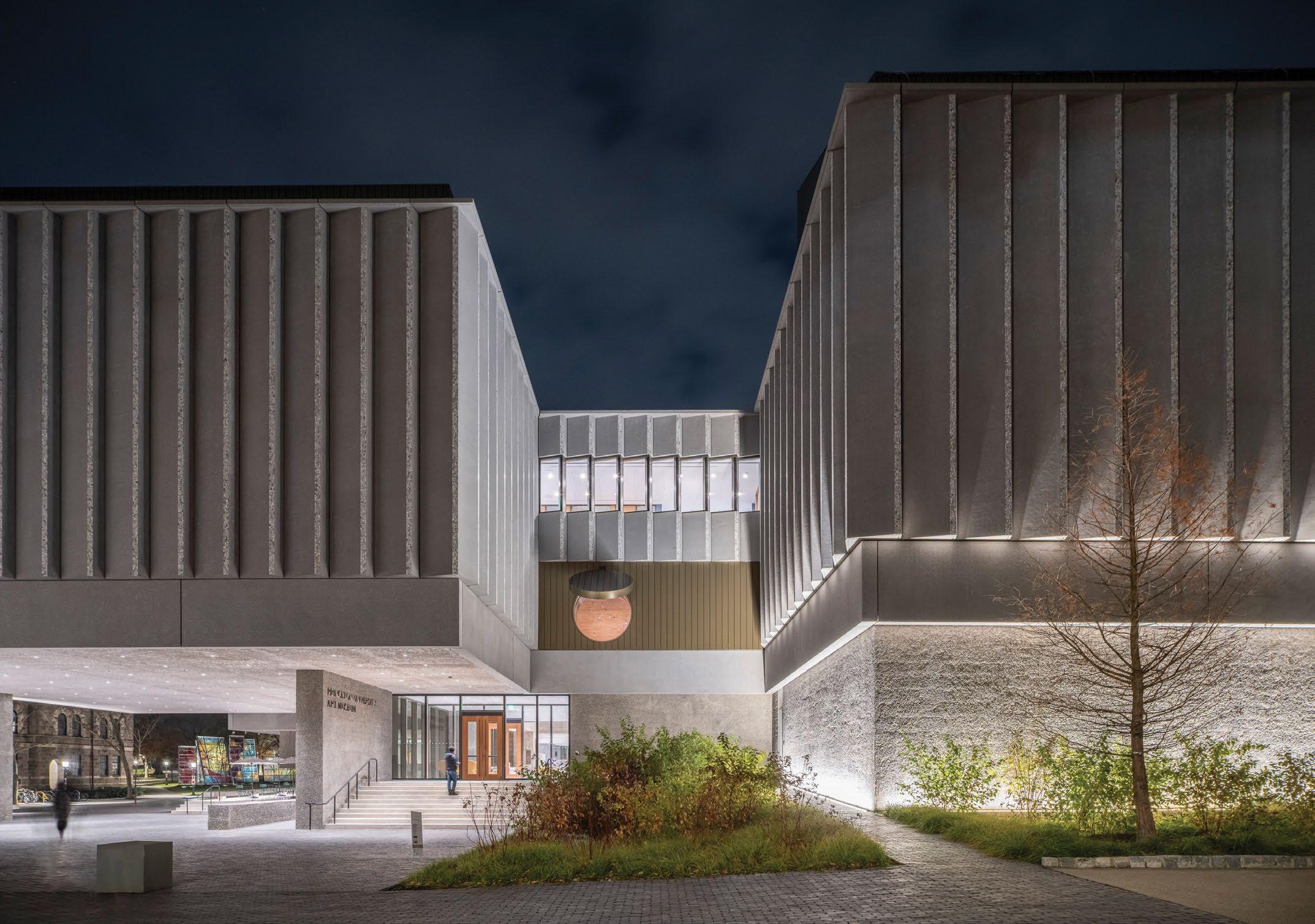
AWARD OF
MERIT
Tillotson Design Associates
Suzan Tillotson, Liyi Pan, and Yeon Soo Cha
Princeton University Art Museum
Princeton, NJ
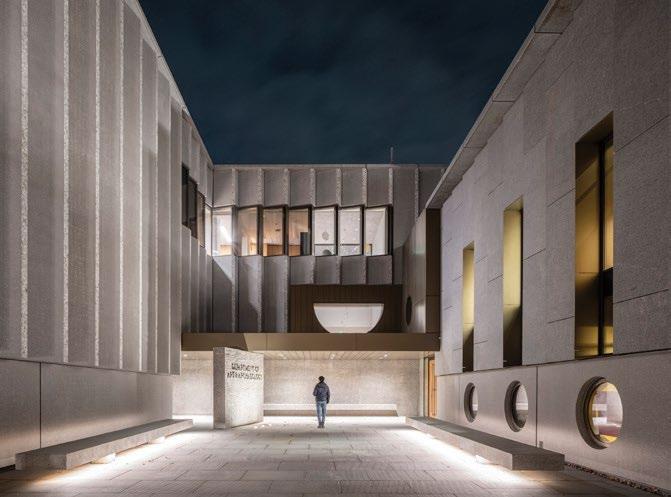
“A wide range of lighting styles and techniques are brought together in this project, across a large and varied space. As you move through, there’s a clear sense of progression—each area feels distinct, yet part of a cohesive whole. While the result appears simple, it reflects a high level of precision, particularly in how the light is calibrated to both the architecture and the objects on display.”
— 2026 Lumen Award Judge Tim Rooney, Jeffrey Beers International
A complex design by Adjaye Associates – deep overhangs and vertical, concrete facets – presented steep lighting challenges. In-grade linear lighting minimizes uplight while still highlighting the angled facets and textures of the facade. At the side passage, large concrete benches seem to float, while downlighting on the plaza practically levitates the structure above.
The 2-½ story entry passage draws patrons in. Minimal outdoor spotlights reveal the bold patterns and colors. Once inside, directional, deep-coffered ceilings are grazed with light. Monopoint-mounted framing projectors delineate special freestanding objects.
The rear-entry lobby allows visitors to walk over an internally illuminated Roman mosaic, while the brightly illuminated retail shop on the right beckons.
Inside the galleries, translucent membranes glow ambiently. Inexpensive solartubes admit natural light, supplemented by tunable-white linears. Tracklighting along the sides requires careful shielding and aiming. A fullscale mock-up helped ensure that all of the miniatures in one display case are illuminated.
Selective lighting and dimming, as well as low-carbon design principles, helped ensure LEED Gold certification.
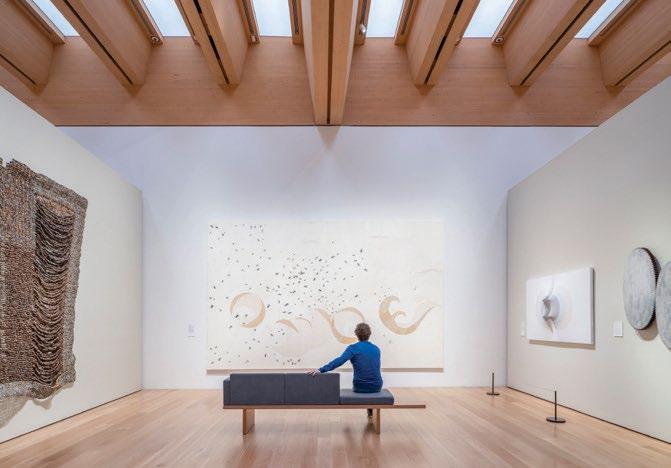
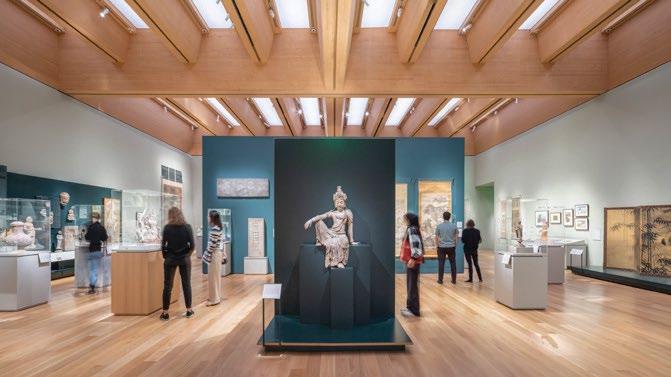
ARCHITECTS
Adjaye Associates
Cooper Robertson (Corgan)
LANDSCAPE ARCHITECT
Field Operations
PROJECT OWNER
Princeton University
MECHANICAL/ELECTRICAL ENGINEER
Kohler Ronan
CONSTRUCTION MANAGER
LF Driscoll
STRUCTURAL ENGINEER
Silman (TYLin)
CIVIL ENGINEER
Nitsch Engineering
AV / IT CONSULTANT
Harvey Marshall Berling Associates
SECURITY CONSULTANT
Layne Consultants International
SUSTAINABILITY CONSULTANT
Vidaris
PHOTOGRAPHY
Alex Fradkin
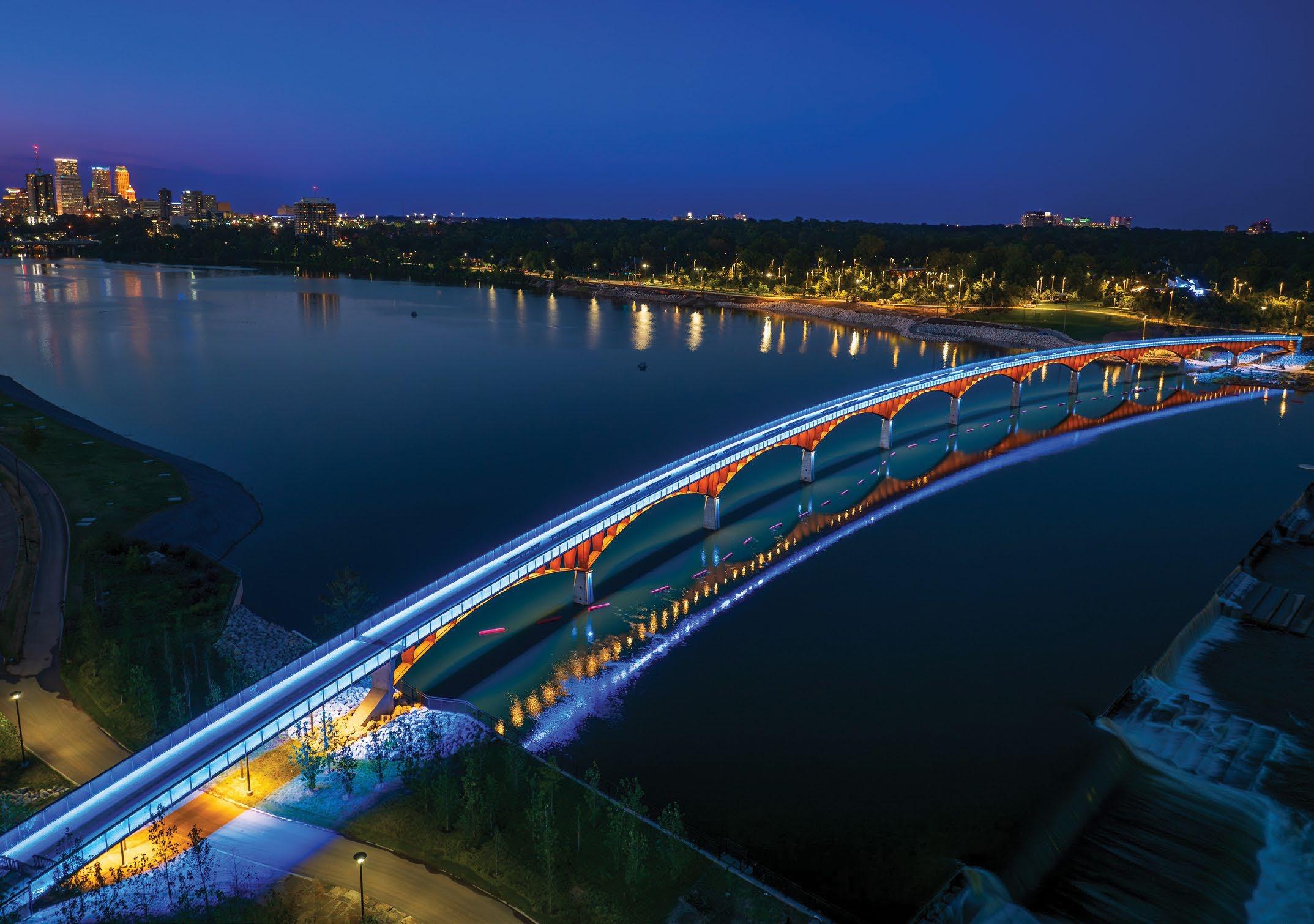
AWARD OF
MERIT
Domingo González Associates
Domingo González, Phat Quach, Matthew Hangad, Karina Philippi, Damian Armstrong, Akshat Mehta, and Yisi Rao
Williams Crossing Bridge
Tulsa, OK
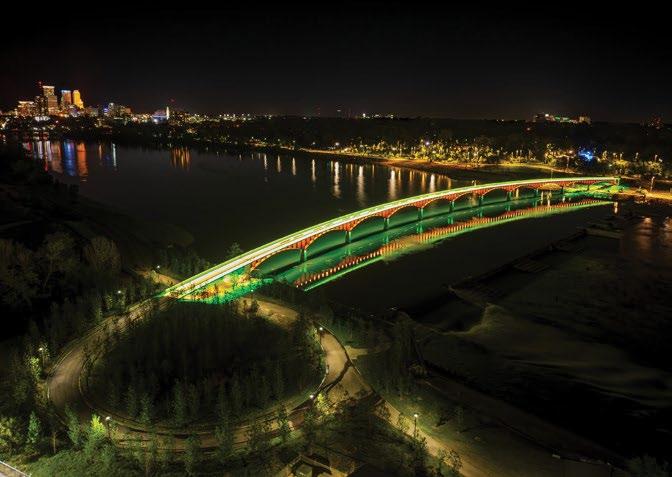
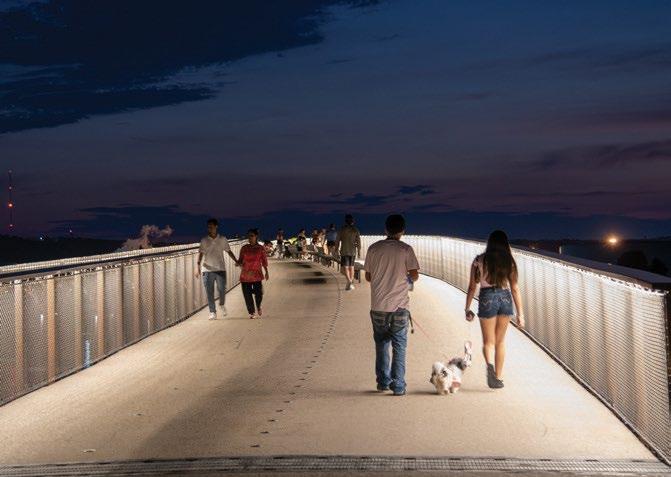
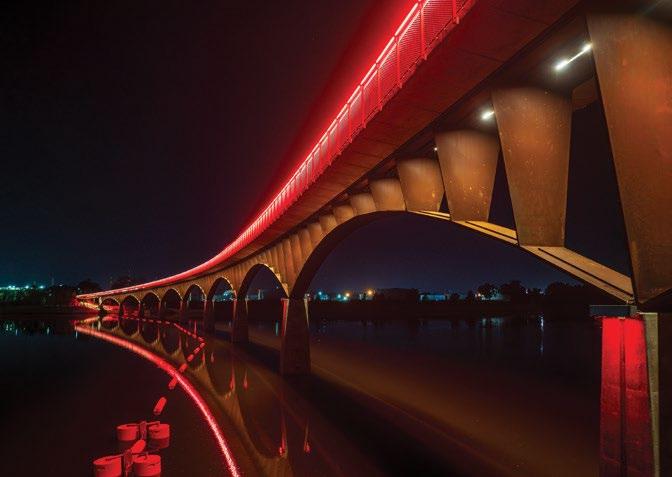
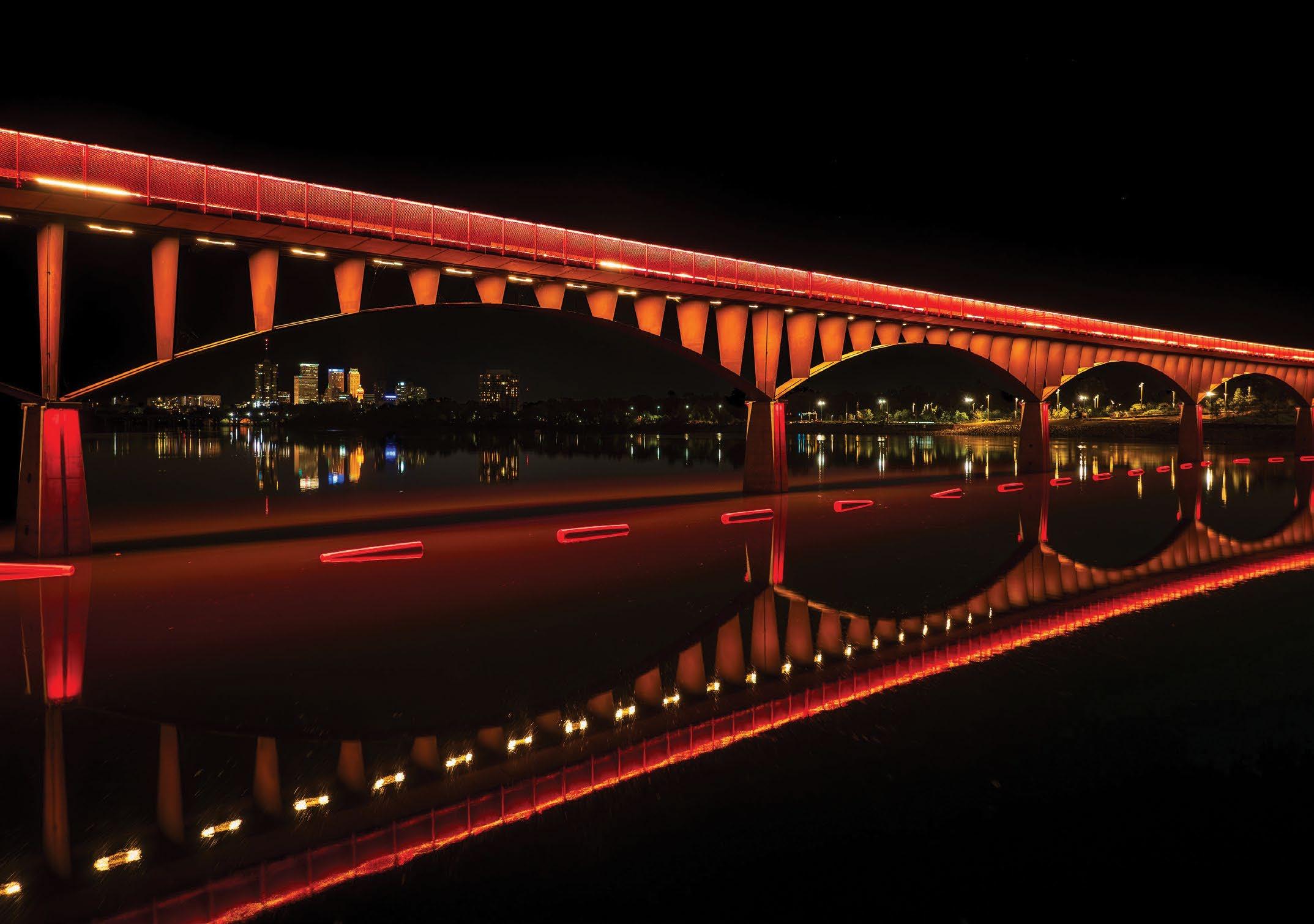
A new bridge sweeps across the Arkansas River. Its dramatic presence at night results from integrated lighting and the river’s typically still, shallow waters.
Discreet handrail lighting along the bridge deck creates a uniform path and maintains the delightful vista. Opposite, the guardrail cap incorporates RGBW grazers. Despite value-engineering, their surprising visual punch defines the bridge’s form from near and far.
Adding to the guardrail, downlighting on the piers presents color effects programmed for special events and holidays – though most nights feature static-white lighting. DMX control combined with photosensors, dimming at curfew, and de-energization via astronomical timeclock (at dawn) ensures that the bridge is a good nighttime neighbor.
For the spandrels, 3000K downlighting keeps the appearance of weathering steel honest. In addition to renderings, the designers built a full-size mockup in their conference room to achieve an even wash that expresses the structure’s rhythm.
After months of study, options development, and interdisciplinary coordination, the simple, resilient, and maintainable lighting system achieves the dual goals of nighttime visual comfort and structural articulation.
LANDSCAPE ARCHITECT
Michael Van Valkenburgh Associates
PROJECT OWNER
City of Tulsa
BRIDGE ENGINEER
sbp
ELECTRICAL ENGINEER
Phillips+Gomez
GENERAL CONTRACTOR
Crossland Construction Company Inc.
PHOTOGRAPHY
High Caliber Captures
Domingo González Associates
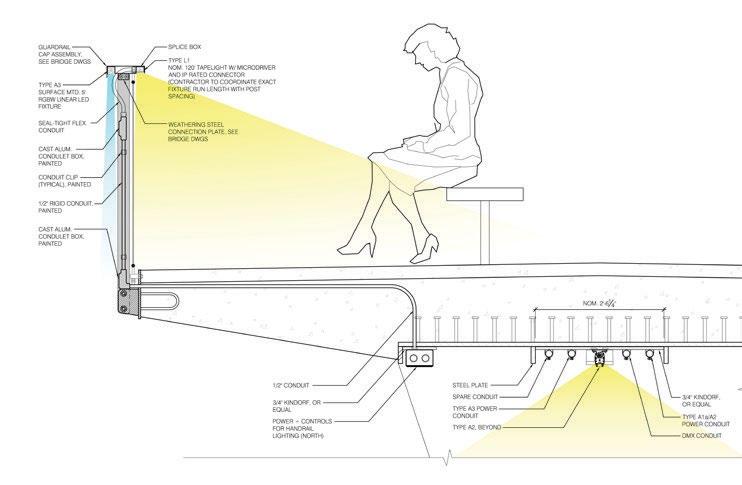
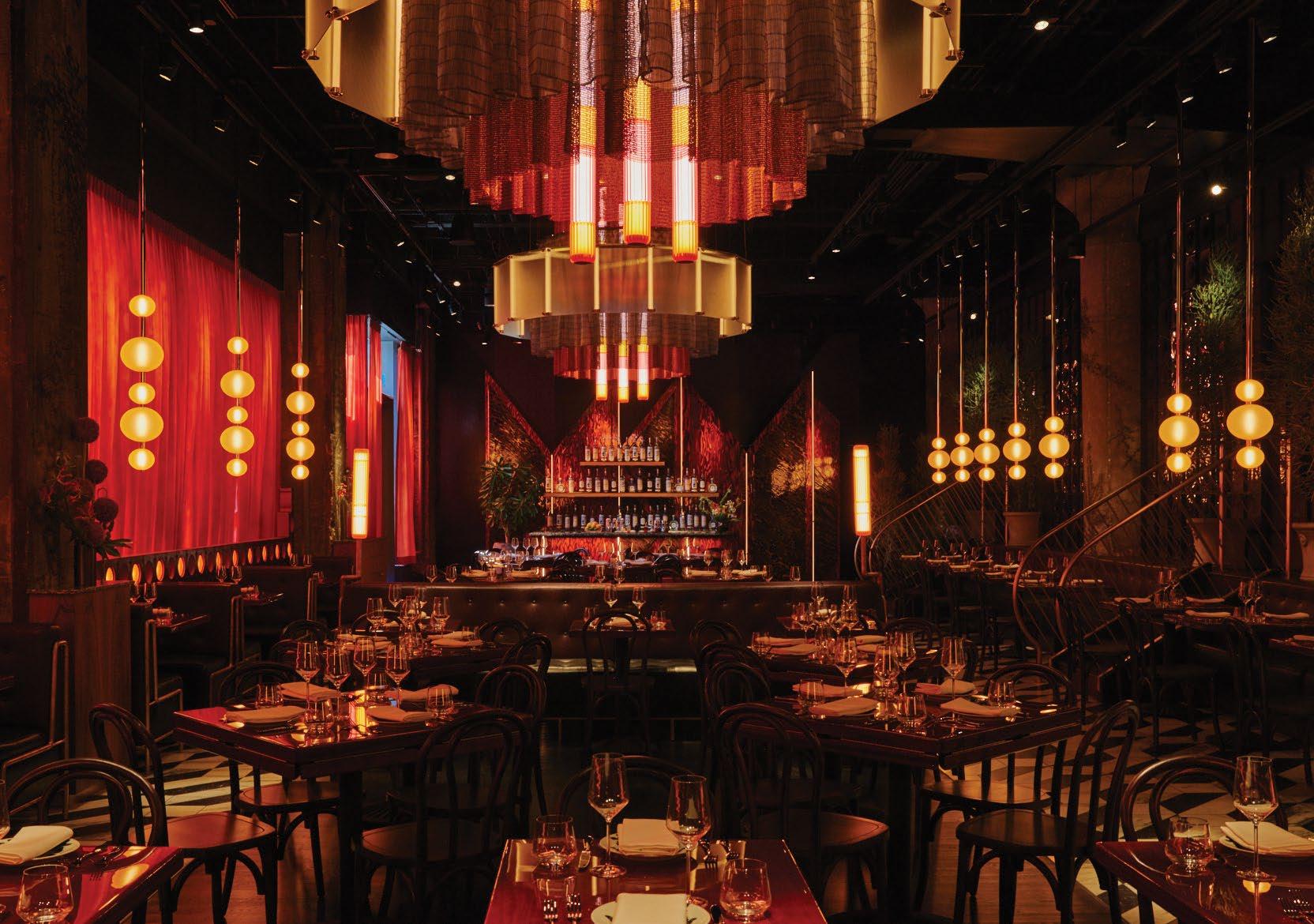
AWARD OF
EXCELLENCE
Focus Lighting
Jenny Ruter, Juan Pablo Lira, Andrew Stewart,
Hilary Manners, and David Bull
Limusina
New York, NY
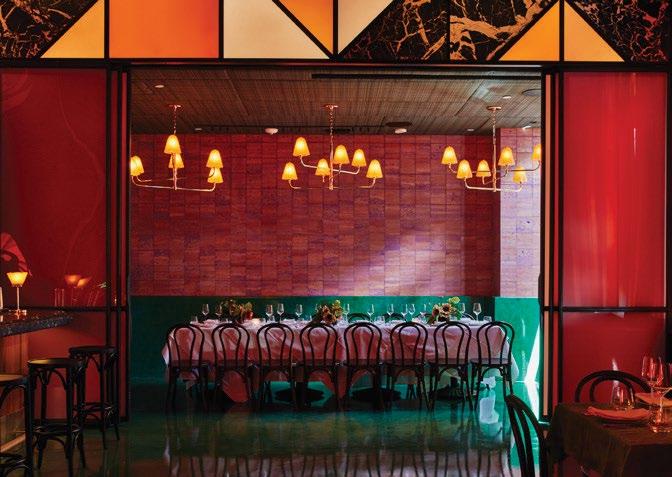
“What stands out is how well the juxtaposition of architecture, interiors, and lighting works together—it feels as though they were conceived as one. Nothing feels overpowering, even with so much happening texturally.”
— 2026 Lumen Award Judge Gabriele Negro, Studio Atomic
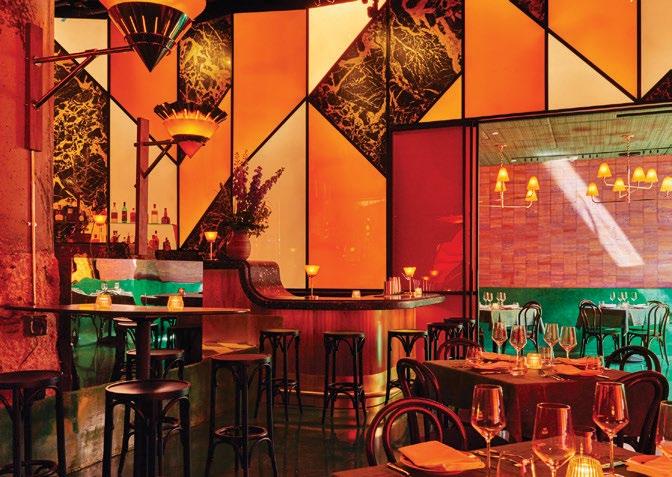
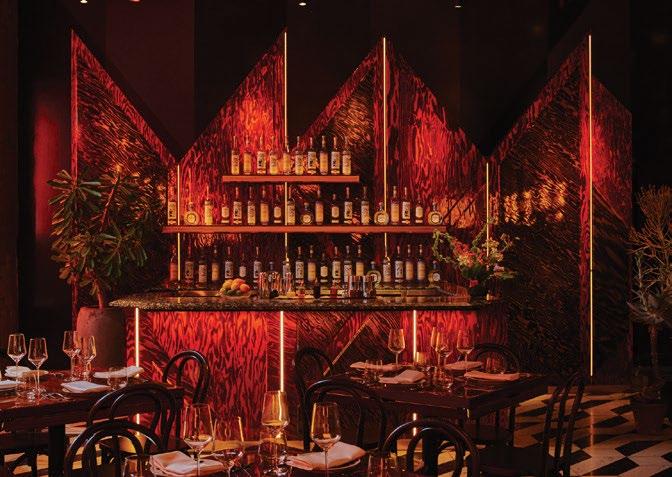
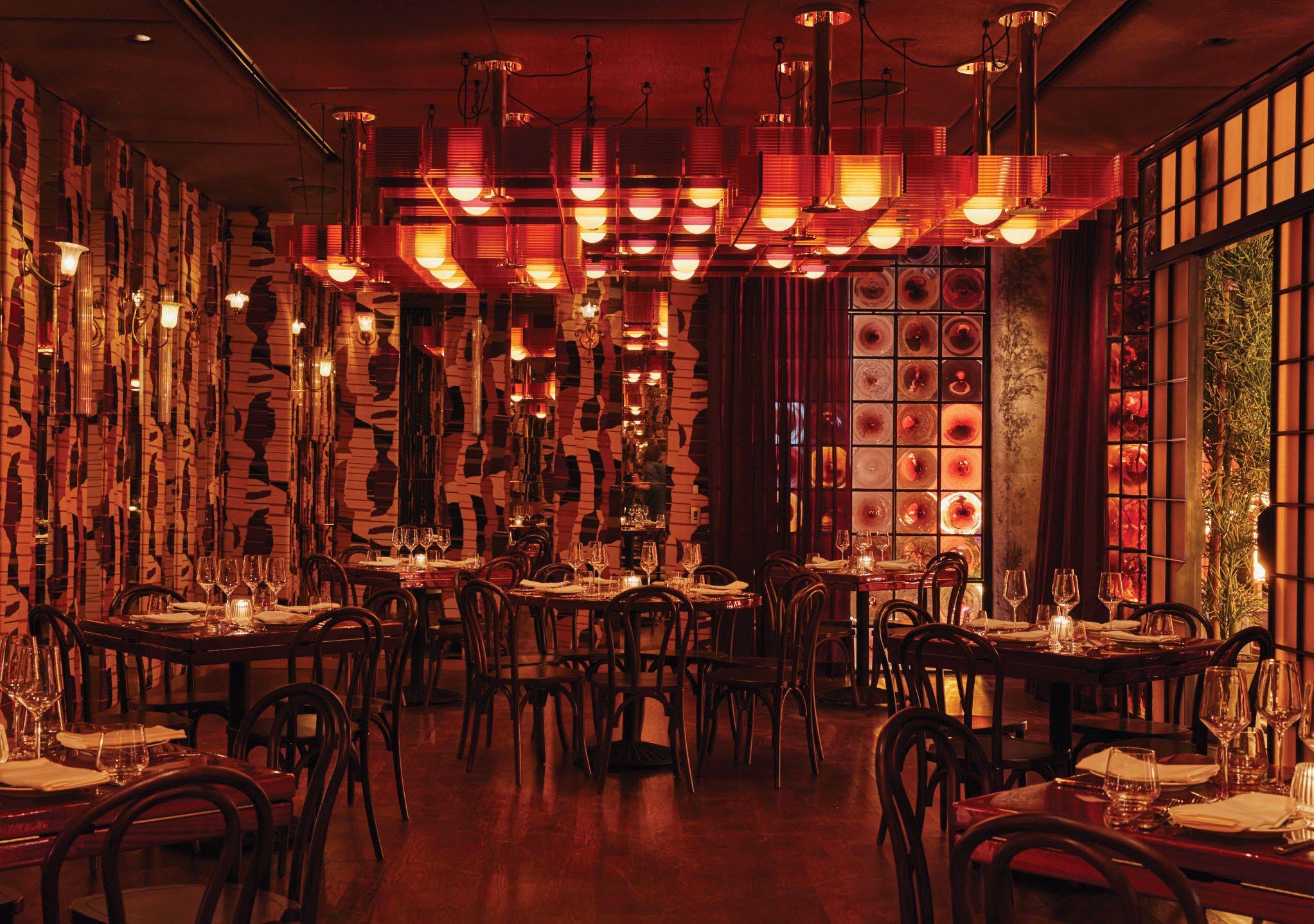
More! The maximalist design energy of Limusina doesn’t stop at interior finishes and furnishings.
Faced with the challenge to show every light in a different color, the Focus Lighting team tested materials, built mock-ups, tuned whites, and tested gels like never before. The resulting symphony of amber and rosy hues blankets this chaotic space and its guests in warmth.
Surprising lighting details and contrasts stand out. The “pool” room’s turquoise finish pops against the warm tones, but a line of tiny adjustables on track center the table. A geometric feature light glows in the main dining room. Its four different shade colors are custom-coated with amber gel.
For the adjacent higher ceiling, mod pendants provide ambient light, while narrow-beam trackheads highlight tabletops. The spectacular central chandelier drew shade colors from the fabricator’s inventory, then again took it next-level by coating each piece of glass in a custom amber color. Glass rondels at the perimeter are backlit by warm-white LED A-lamps.
At the bar, pinnacles of the burned wood screen integrate bold direct-view LED strips. Saturated accent lighting makes the material sing.
Even when sunlight infiltrates the space, glowing artglass walls and warm decorative chandeliers and sconces transport diners somewhere special.
ARCHITECTS
GRT Architects
NuZine
PROJECT OWNER
Quality Branded
PHOTOGRAPHY
Christian Harder
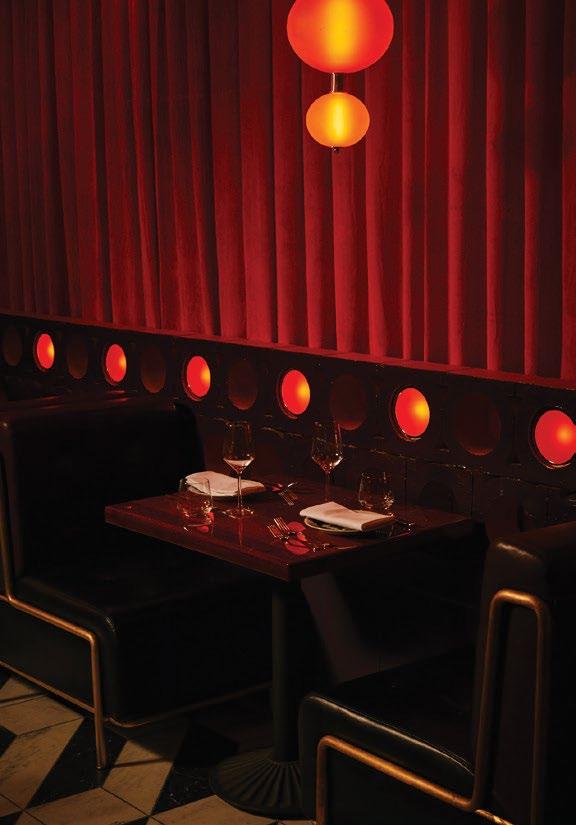



TRADE SHOW AND CONFERENCE




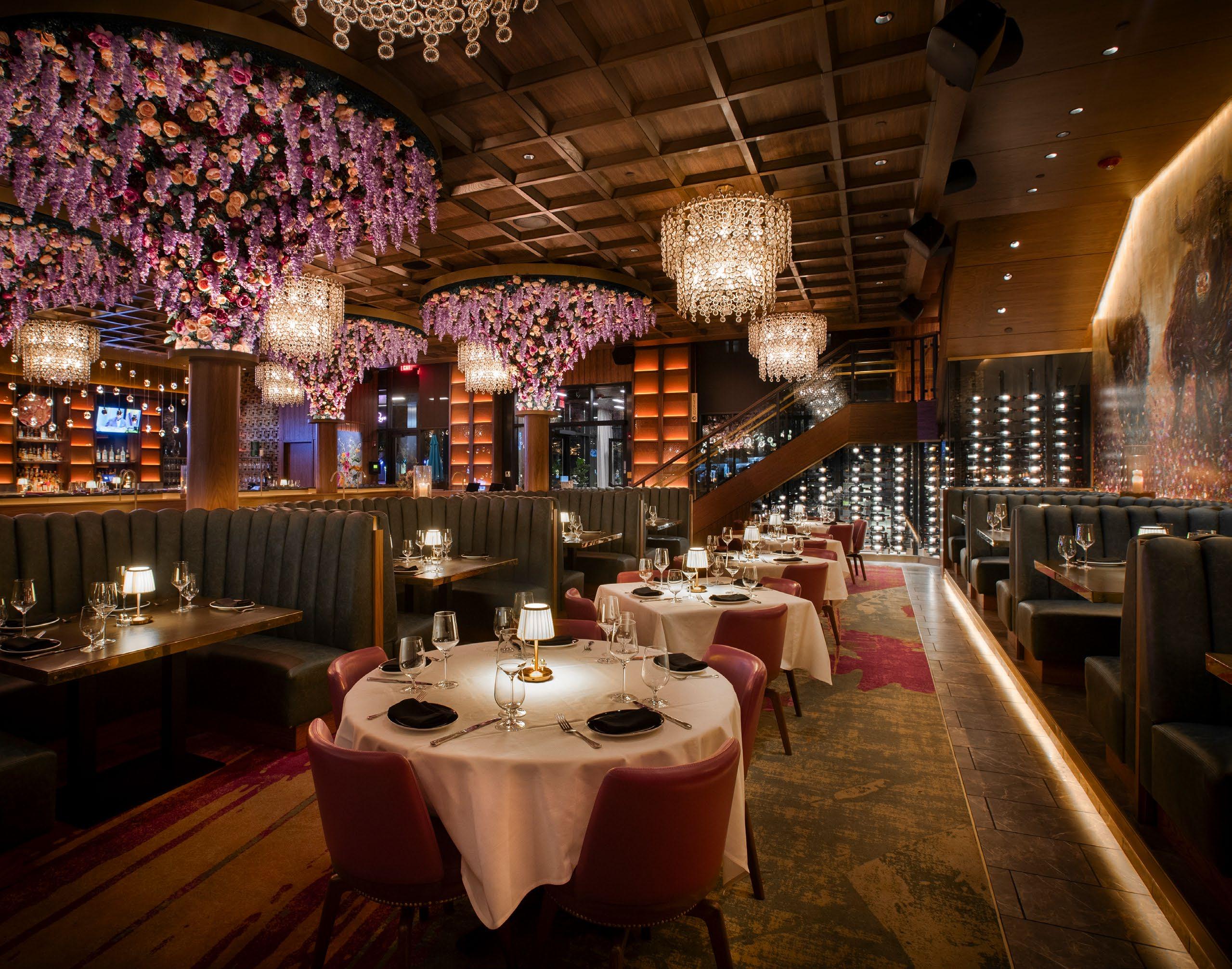
A Glittering Steakhouse
By
Butcher & Rose in Columbus, Ohio transformed the typically dark, male-oriented steakhouse interior into a space that is dramatic and visually distinctive. Lighting plays a central role in enhancing the owner’s vision of welcoming a broad spectrum of visitors to experience a unique dining experience in an elegant modern setting.
The restaurant opened in the summer of 2024 on the ground floor of the renovated Preston Centre on Broad Street in the city’s downtown section. The former bank building was converted to apartments, while the street-level entrance was renovated as a sunken plaza with ponds, greenery, and waterfalls.
Columbus is the biggest city in Ohio and the state’s capital, with a metro population exceeding two million people, making it a significant urban center in the Midwest, known for education, government, and diverse industries like tech and fashion. It is the home to Ohio State University’s undergraduate and graduate student population of over 65,000.
Butcher & Rose transforms the traditional steakhouse with innovative illumination.
VILMA BARR
Photo Credit: Cameron Mitchell Restaurants
Banquette in foreground, bar in background, floral ceiling, chandelier.
“The space was a dark shell when we started on the project,” says Michael Barber, president of The Lighting Practice and principal in charge. “The lighting concept layers sculptural statement pieces, such as oversized chandeliers. Much of the fixturing was custom produced. Overall, for the main dining room, we planned for a 3-5 footcandle range,” Barber notes. Custom floral installations with subtle, integrated architectural lighting complement the rich interior palette.
The designers were challenged to blend decorative and architectural lighting, managing reflections on layered finishes, and achieving energy efficiency without compromising warmth. The Lighting Practice coordinated with Knauer Incorporated’s architects for the 8,400-sq-ft facility to reflect the objective of its owners, Cameron Mitchell Restaurants. “We set our sights to create an unparalleled steakhouse experience,” said Mark Knauer, founder of the hospitality design specialty firm based in Highwood, Ill. “For this signature location on Broad Street in downtown Columbus, we blended beauty and brawn with a playful, modern flair,” he states.
Eve Quellman led The Lighting Practice design program, and was the primary contact with Knauer. “Together, we brought fresh character and romantic charm to the dining experience,” says Quellman. “Feminine color palettes, florals, and jewelry-like design elements are softly lit. We are delighted to see the photos patrons share on Instagram. It is very gratifying and a sign of its success to see how much fun patrons are having, enjoying the dynamics of the chandeliers,” Quellman observes.
“From various vantage points within the space, Butcher & Rose features striking vertical architectural elements that occupy the visual foreground in the space,” points out The Lighting Practice designer Kevin Smolkis. “This includes the major columns with decorative floral capitals and special feature millwork panels at the perimeter of the space. Our team was able to integrate lighting elements into these features throughout the space and to emphasize the unique architecture,” explains Smolkis.
TESTING FOR IMPACT
“We conducted several rounds of calculations for both the decorative lighting and supplemental downlighting to fine-tune the optimal dimming levels required across the entire space to test visual and experiential impact,” Smolkis says. Together with Illume Global, decorative lighting supplier, Smolkis and Barber developed the visual drama of the scheme, examining light output, color temperature, control protocol, and dimming range of light
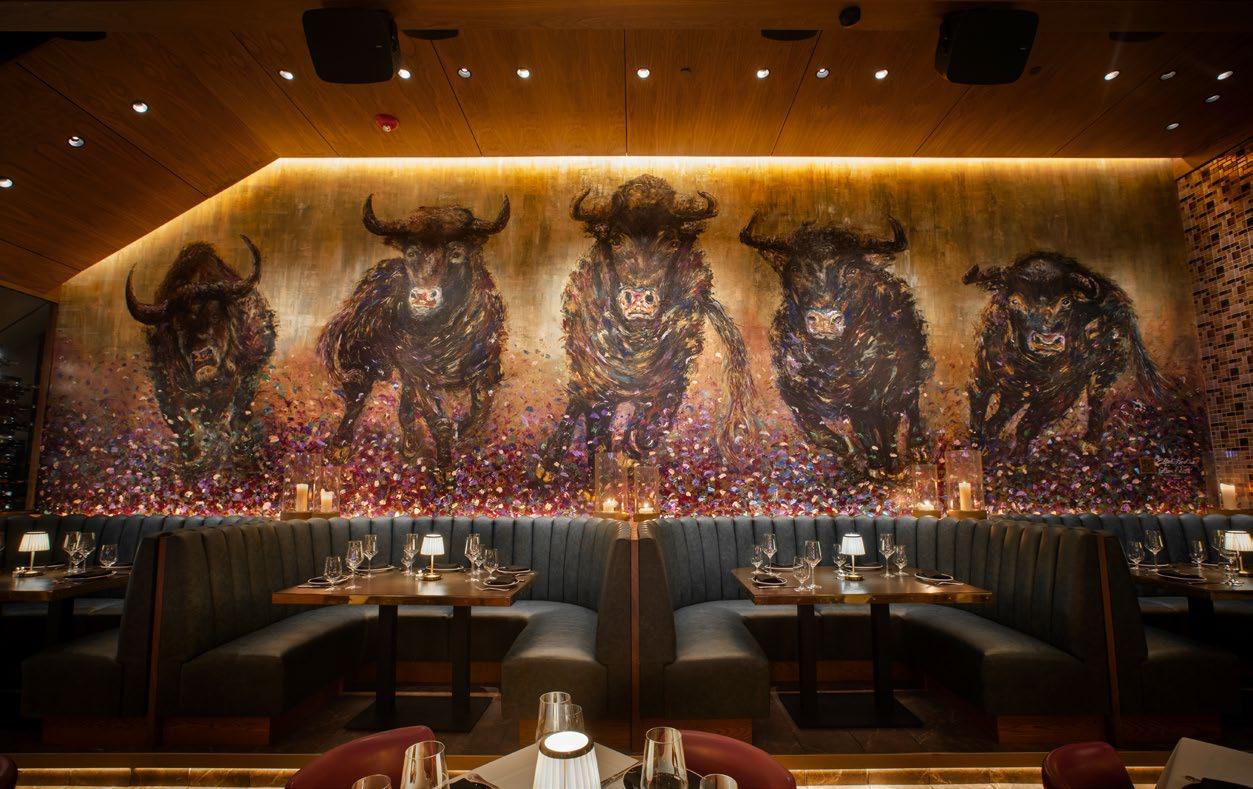
sources. Results of the coordinated shop drawing reviews were approved by both The Lighting Practice and Illume Global.
On perimeter walls throughout the restaurant, amber-hued translucent millwork panels are backlit, accentuating their textural qualities and the restaurant’s color palette. The lighting design is carefully calibrated to create the distinctive ambiance, using primarily LED 2400K sources for accent and millwork and 2700K recessed adjustable lighting for functional task lighting on table and bar tops.
At the main bar area, layers of light identify the handsomely lit space. Pendants, SFT die lighting, and integrated shelf lighting combine to establish its appeal. Shadows, glow, and contrast are composed to create intimacy without sacrificing visibility, supporting both ambiance and usability.
Controls for the lighting system are integrated into the architectural detailing, allowing flexible dimming to accommodate time-of-day shifts, utilization changes, and operational needs. Multiple rounds of lighting calculations and dimming coordination met standards set for high-performance, low-glare, and ease of maintenance.
RELATING TO THE COMMUNITY
Butcher & Rose specified that the restaurant have a transparent street front relationship with the city’s urban scene. The result is the Pavilion, an adjoining glass box-enclosed dining space, its sparkle and activity clearly visible from passing pedestrian and vehicular traffic. Ceiling-hung fixtures with polished metal wire frame shades contain a single lamp that express an intimate environment. Tiny lights embedded in the wood ceiling and surrounding millwork accent overhead foliage.
All artwork was created by Columbus-based artists, including the giant bulls mural by Ellen Knolls, a focal point in the dining room, highlighted by recessed accent lighting, framed with linear LED accents at the base and top of the work. Private dining rooms are available for business gatherings and special events.
The restaurant’s illumination operates at 1.37 W/SF, 10 percent under energy code requirements. Decorative lighting fixtures have low-wattage LED retrofit lamping.
Butcher & Rose’s signature architecture and lighting unite elegance and sustainability, a lively portrait of a dazzling contemporary steakhouse destination. ■
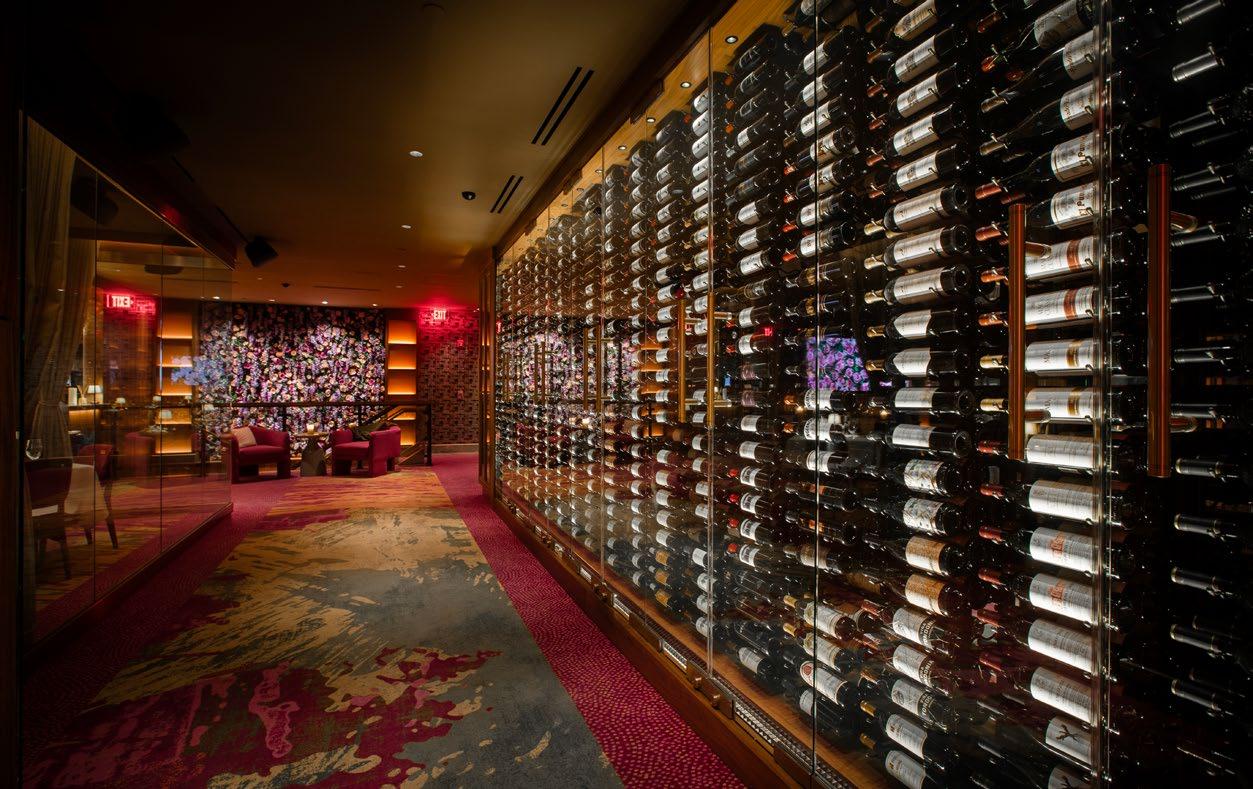
A dramatic focal point in the dining room is a mural portrait of a pair of bulls by Columbus artist Ellen Knolls. It is highlighted by recessed linear LED accent lighting at the base and top.
A BALANCING ACT:
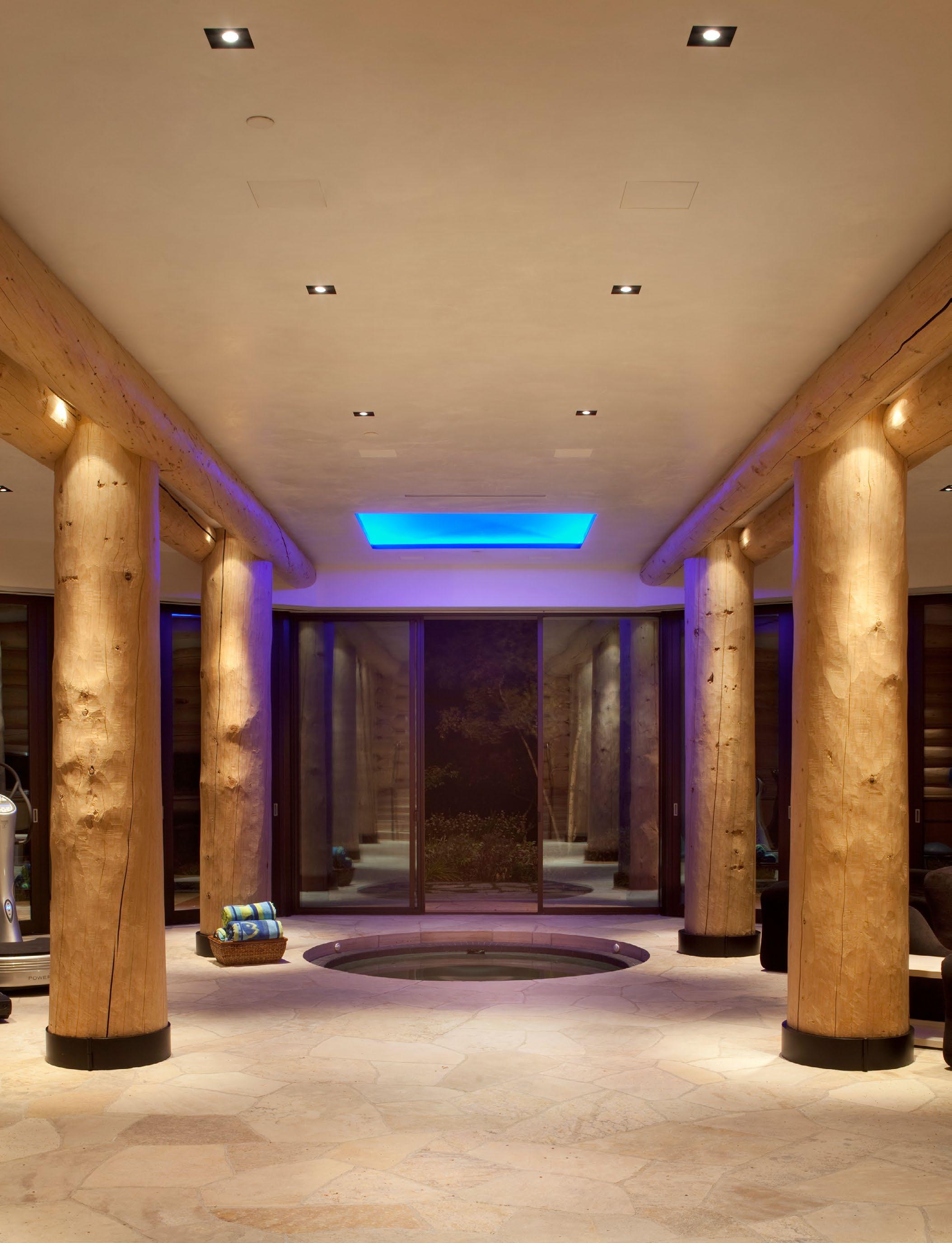
Using AI as a Tool to Make Room for Human Connection
By STACIE DINWIDDY, CLD, IALD, LC, LEED BD+C Associate Director, HLB Lighting Design, New York
Photo credit: Brent Moss Photography
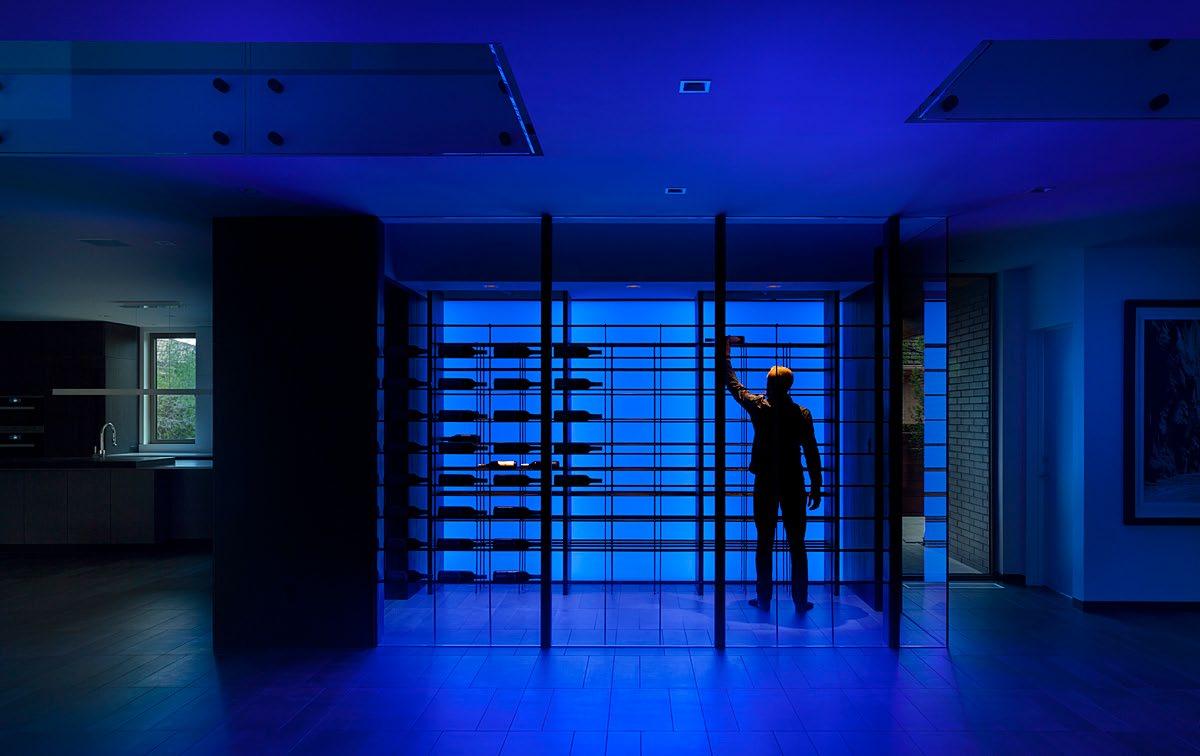
Artificial intelligence is no longer a distant concept. It has quickly become part of our workflows, conversations, and even our clients’ expectations. In luxury residential design, however, where projects are deeply personal and relationships are central, its role is less straightforward than in more standardized sectors.
With this in mind, we find ourselves asking questions that don't always have straightforward answers. Where does AI belong in residential lighting design? Is it a threat, a transformative tool, or simply another evolution in how we work?
For me, and the team at HLB, the answer is clear: AI is a powerful addition to our toolkit, but it is not a replacement for the human experience that defines our work.
AI as an Enabler, Not a Replacement
Perhaps AI's most meaningful contribution to our industry is efficiency. In a field shaped by complex coordination and demanding schedules, it allows designers to redirect energy toward what matters most: design thinking and client care.
Administrative tasks like drafting emails, organizing information, and synthesizing notes can be streamlined. Time saved becomes time invested in refining concepts, understanding a client’s lifestyle, or resolving nuanced architectural conditions.
AI is also expanding how we explore and communicate ideas. Image generation and rendering tools enable rapid iteration, allowing designers to test atmospheres and visual narratives in a fraction of the time traditional methods require. For luxury residential projects, particularly renovations constrained by existing architecture, this speed can be invaluable, helping teams and clients better visualize possibilities within real limitations.
However, these tools are only as strong as the intent behind them. The designer’s role in framing the problem, defining the prompt, and critically evaluating the output remains essential.
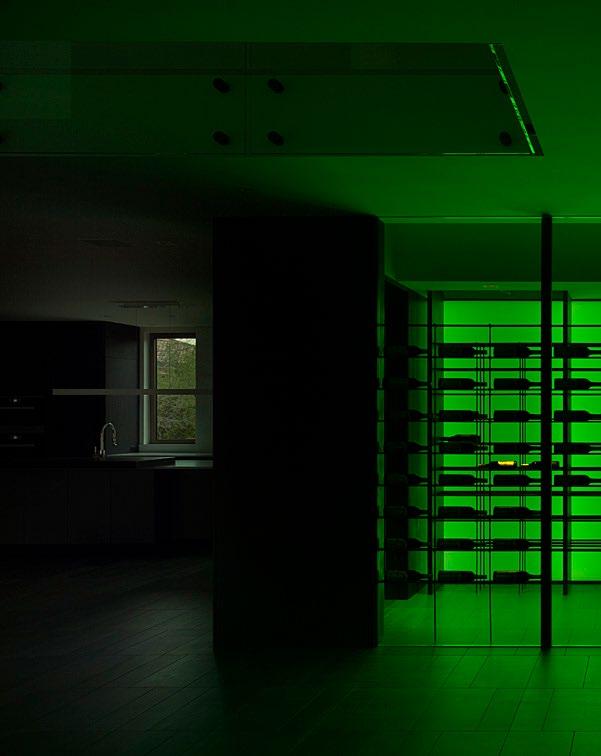
How Clients Are Using AI—and What It Means for Designers
AI is reshaping not only design workflows, but also how clients engage with the process.
Homeowners are increasingly using AI-powered tools as a form of search engine to identify designers and consultants. As a result, visibility, reputation, and digital presence are becoming more influential in how teams are discovered and evaluated. AI is also entering conversations around fees and value. While the reliability of this information is often unclear, it signals a growing perception that design services can be benchmarked digitally. This reinforces the need for designers to clearly articulate the value of expertise, process, and experience, elements that are not easily quantified or replicated.
Notably, clients are turning to AI for inspiration. Image-based tools allow them to upload photos of their homes and generate reimagined versions of their spaces. While this can foster excitement, it also introduces new challenges: lighting effects may be exaggerated, materials behave unrealistically, and architectural limitations are often ignored.
In a recent early-stage discussion for a high-end residential project, a client shared several AI-generated images. The compositions were compelling: atmospheric, dramatic, and aligned with their aspirations. But much of what they responded to could not be directly translated within the existing architecture.
The value of the exercise, however, was not in the images themselves, but in the conversation they enabled. What the client was truly drawn to was a sense of intimacy, contrast, and control. Once defined, the design dialogue became more focused and grounded in what could be achieved.
AI can accelerate ideas, but without interpretation, it can also mislead. Increasingly, it is shaping the starting point of client conversations, raising both awareness and misconception.
Photo credit: Astula Raul J. Garcia
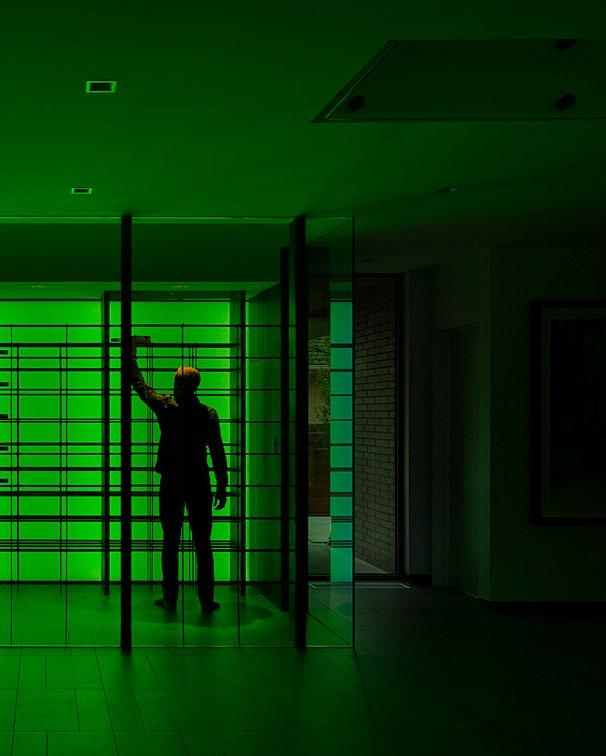
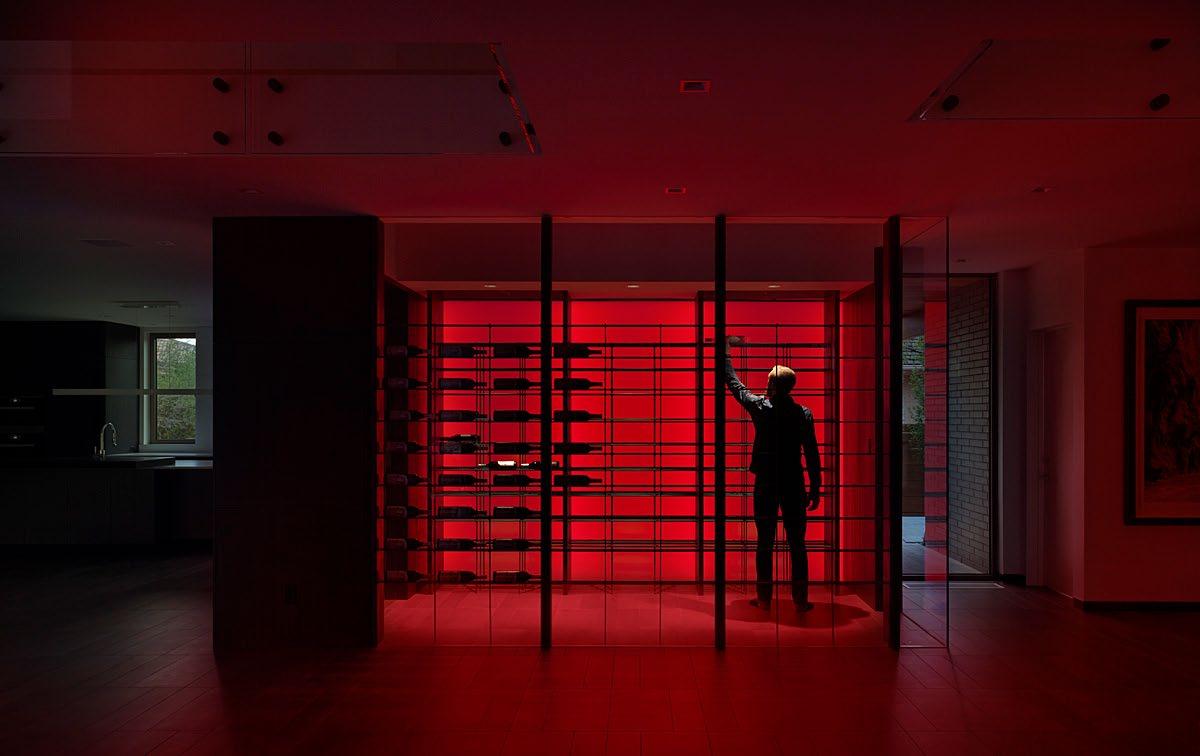
AI and the Evolution of Design Storytelling
When harnessed correctly, designers can use AI to support storytelling in their ideas, helping the client grasp onto ideas and understand intent.
Lighting design is not simply about illumination. It is about atmosphere, sequence, and emotion. AI offers new ways to visualize and communicate these qualities, pairing conceptual imagery with narrative language to convey intent more effectively. This can help clients understand not just what a design will look like, but how it will feel.
Yet storytelling in residential design is inherently personal. It depends on understanding a client’s routines, preferences, and aspirations, and translating those into a cohesive environment. AI can support this process, but it cannot originate it.
Understanding the Risks
As is the case with any emerging technology, AI introduces a new set of challenges.
One is the proliferation of platforms. With multiple tools offering varying levels of quality and reliability, consistency can be
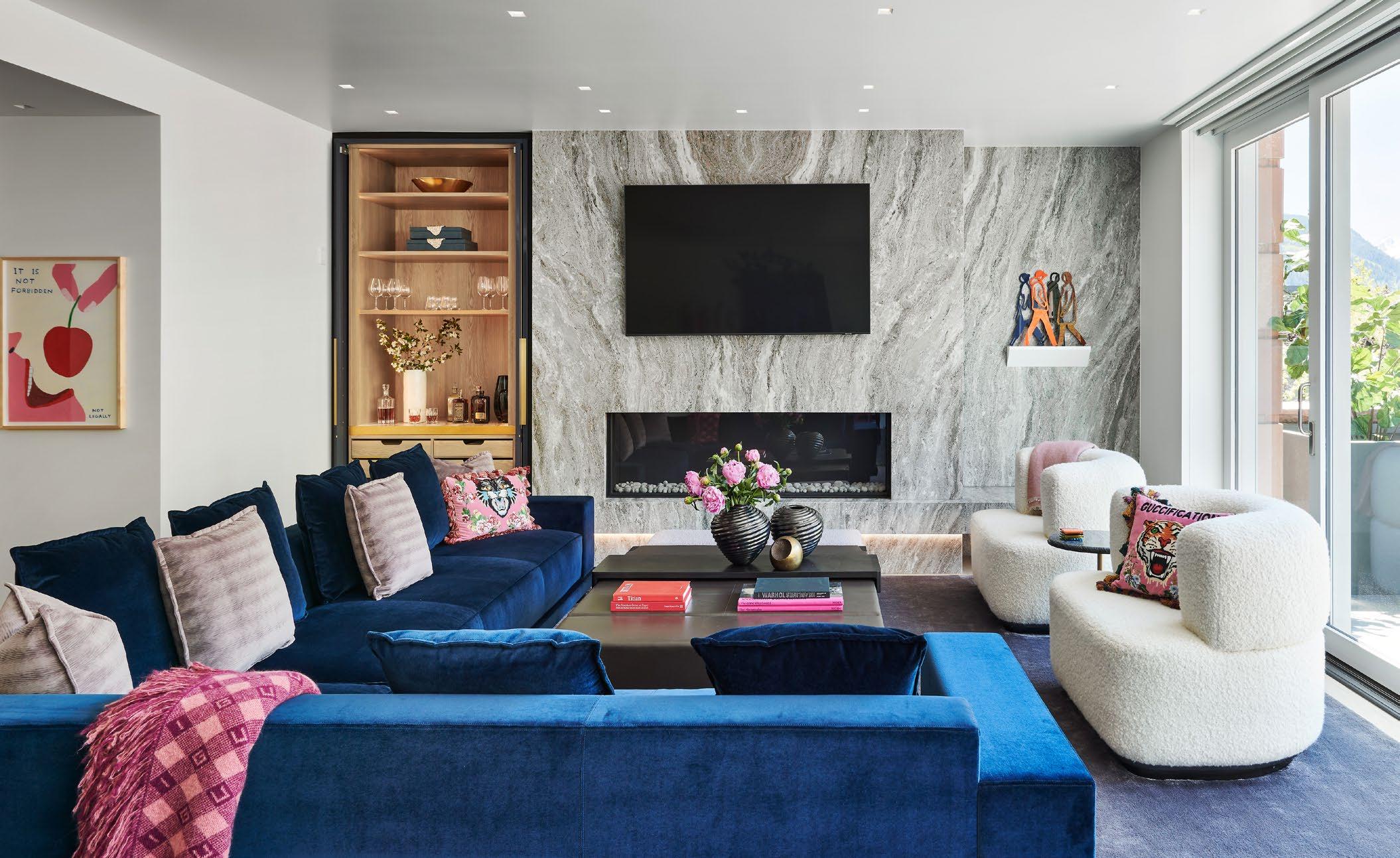
Photo credit: Astula Raul J. Garcia
Photo credit: Dallas & Harris Photography
difficult to maintain. Designers must not only learn how to use these platforms, but also how to evaluate their outputs critically. Input quality is equally important. AI operates on prompts, and poorly structured prompts yield poor results. Without a clear understanding of design intent, spatial constraints, and technical requirements, outputs can quickly become misleading.
Visual platforms present a particular challenge. Even when AIgenerated content is disclosed, it is often difficult, especially for non-designers, to distinguish between realistic and unbuildable conditions. Lighting that defies physics, materials that perform inconsistently, and architectural elements that ignore structural logic can all be misinterpreted as achievable solutions.
Privacy is another consideration. Residential projects are inherently personal, often involving sensitive information about clients and their homes. Uploading drawings or images into open platforms introduces risks that must be managed with clear guidelines.
Finally, AI can distort expectations. Much like home improvement shows that compress months of work into short episodes, AI can suggest immediacy where there is none. What is often overlooked is the extensive process behind a finished design: coordination, detailing, procurement, installation, and commissioning. Without visibility into this process, clients may underestimate the time and expertise required.
The Enduring Value of the Human Factor
At its core, luxury residential design is about people.
It is about trust built through relationships. It is about intuition, reading between what a client says and what they mean. It is about experience, understanding how light interacts with materials, architecture, and time.
AI cannot replicate these qualities. It does not possess empathy or lived experience. It cannot walk through a space, observe how light shifts at dusk, or understand the meaning a home holds for its occupants. In this context, AI is best understood as an assistant. It can streamline processes, expand exploration, and enhance communication, but it cannot replace the human connection that defines our work.
The Future Is Not Artificial—It’s Augmented
As AI continues to evolve, its role in residential lighting design will grow. The challenge, and opportunity, lies in how thoughtfully it is integrated.
For firms like HLB, we will continue exploring how to use AI to enhance efficiency, improve communication, and expand creative possibilities, while maintaining an unwavering commitment to the human experience.
Luxury is not defined by speed or automation. It is defined by care, craftsmanship, and attention to detail. AI can support that process, but it is the designer who ultimately defines the outcome. ■
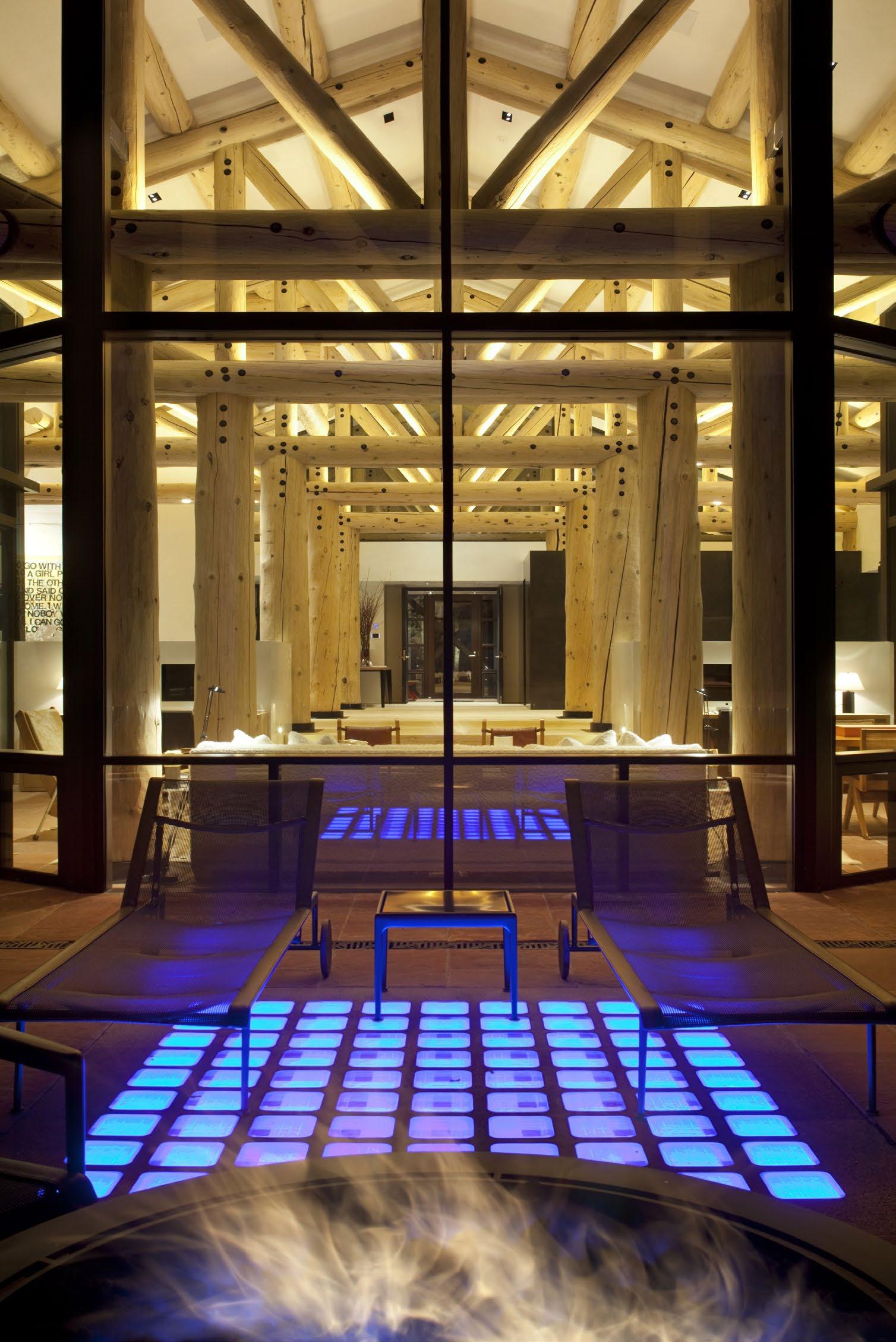
Photo credit: Brent Moss Photography


Community A COMMUNITY FOR ALL
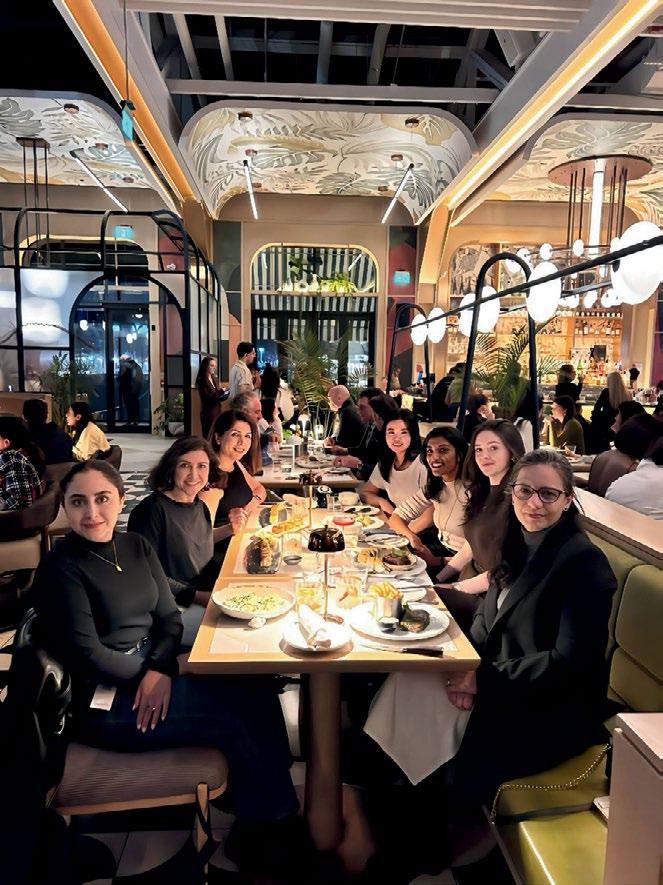
We are a community of women and allies in the architectural lighting industry, using the power of collected experience and action to drive change. Come be a part of our community!
Advocacy Networking Leadership

AREWILD?YOUjoinus joinus






Why Lighting Manufacturers Use Regional Representation
By DAWN DOBERENZ, LC, COLUMBIA PACIFIC SALES
In the lighting industry, products rarely sell on specifications alone. Success depends on market understanding, trusted connections, technical expertise, and the ability to manage a project from design through installation. This is why lighting manufacturers rely on rep agencies as the pathway between factories and specifiers or end-use customers. Rep agencies help expand the factories’ sales force more effectively.
Local Connections
One of the biggest reasons manufacturers need agencies is their exposure to the region. Developing a direct sales team in every territory would be costly. Local Agencies already have established relationships with distributors, contractors, specifiers, and end users in their regions. This gives manufacturers access without the overhead. Industry groups such as NEMRA Lighting Division describe lighting representatives as a key part of the channel because of the strong partnerships & connections.
Technical Expertise
Agents are much more than just a messenger between involved parties on the project. Agent partners often include Lighting Certified specialists on staff that are educated and obtain specific expertise.
Lighting has become far more technical than it used to be: today’s projects typically involve controls, commissioning, and sometimes integration with building management systems. Most of the large agents employ controls experts
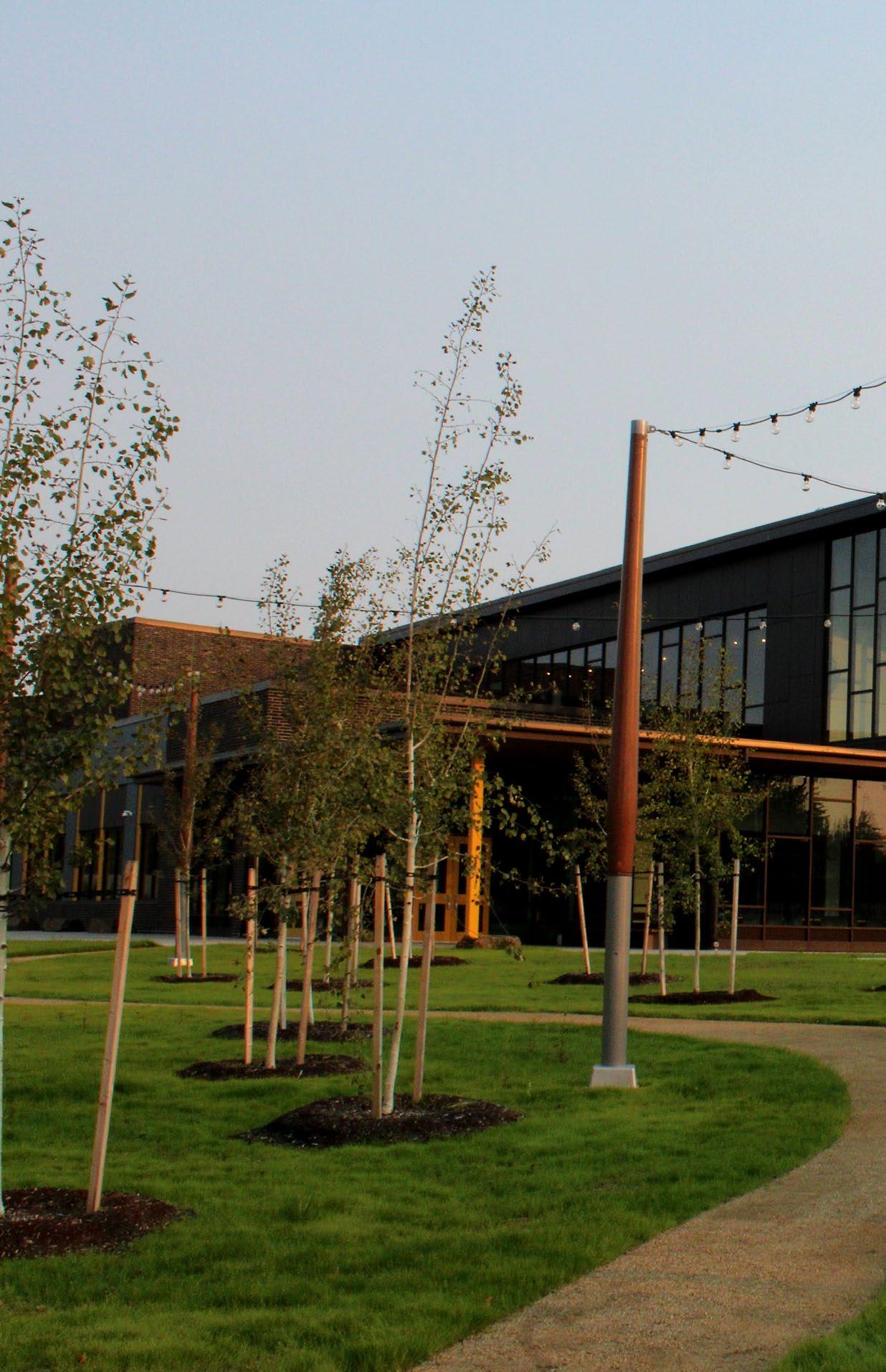
that complete field commissioning for the controls projects in the region.
Agents are known to have ongoing updates with their factories, so they stay aware of what is new. This training allows for expertise in a variety of technologies which is extended to the market on a day-to-day basis. It’s hard to find an agent partner who doesn’t want to share the knowledge they have obtained! Just a cup of coffee or a lunch date can establish a specification when lighting people get together!
Education
Rep agencies are known for their education efforts. Agents spend time and money keeping their distributors, contractors and specifiers educated on all represented factory lines to assist with proper specifications and installations. This typically comes in the format of sales calls where the agent will show their products in person. Since COVID of course, there are lots of virtual product presentations as well. But
Photo Credit: Columbia Pacific Sales
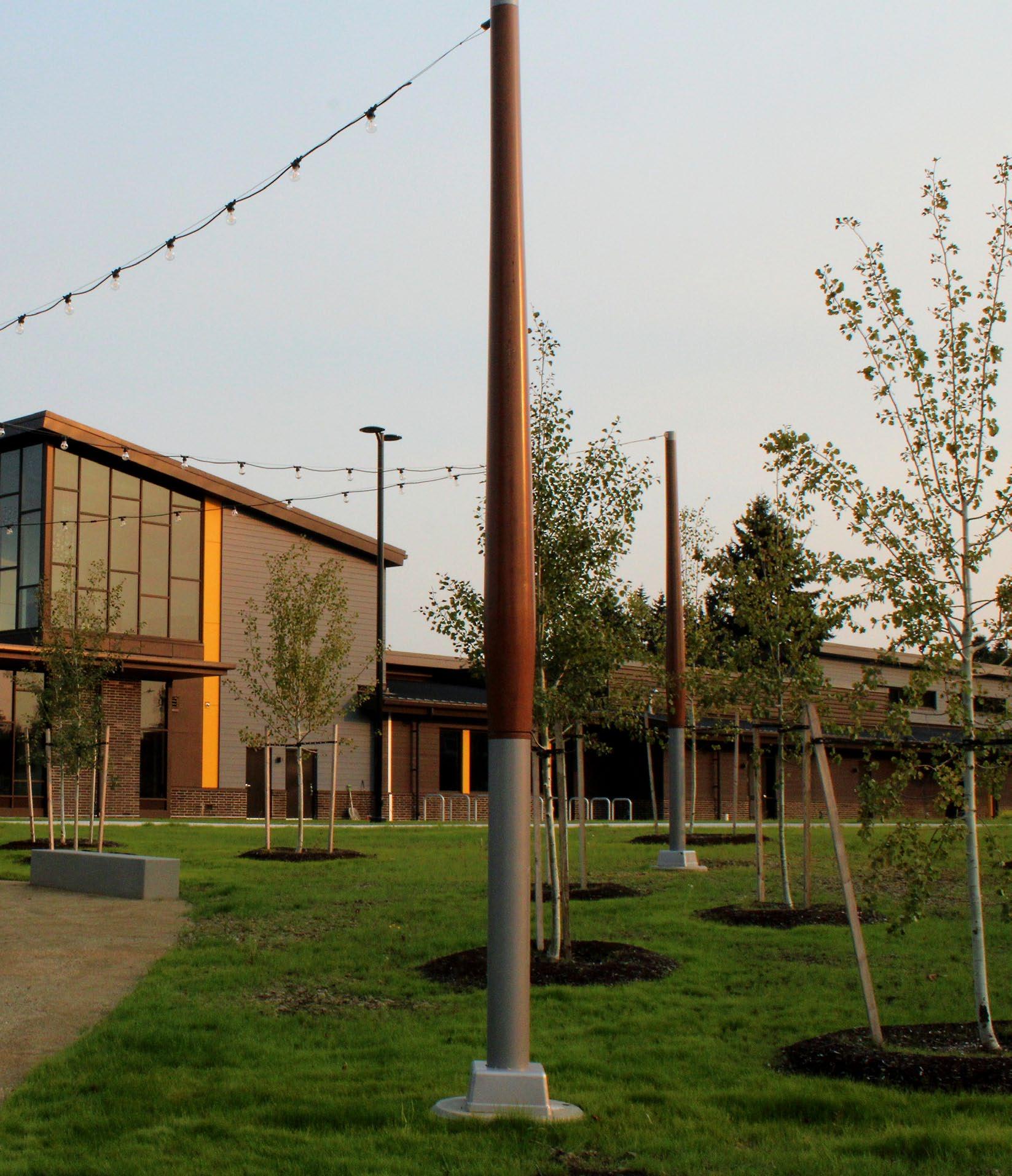
for the old school folks, we like to knock on doors and visit people in person, finding this much more effective in maintaining relationships.
Education also often comes in the form of trade shows and workshops, sometimes offering CEU credits to the industry.
Strong Relationships
Rep agencies don’t just sell products; they spend a lot of time building trust. In the lighting industry, buying decisions are often prompted by the confidence that specifiers, distributors, and contractors have in the people that represent the product. One rep salesperson spent an entire year calling on a specifier every month continuing to show product each time. Just as she was ready to throw in the towel, the specifier invited her team to help create a specification for an entire project. Sometimes it takes a year to build trust; that same specifier said he specifies because of relationships, not product.
Based on this trust, agencies are the first call when questions
arise. Communication is key and factories are often too far removed to have that kind of relationship. Agents also become great coordinators among all the entities involved in a project. They help keep the momentum of a project beginning with design all the way to installation. This approach can improve customer loyalty and make it more likely for repeat business.
Support
Agents assist with design development, luminaire selection, project submittals, quotations, and sometimes field coordination. They often can help protect the original specification by emphasizing the value of the product and avoiding substitutions. In a market where most sales are project-based, this kind of support is significant.
Choosing a Rep
Since the lighting industry has such a long sales cycle from design to installation, choosing the right agency is imperative.
Lighting manufacturers need agencies because customers want more than just product availability. They want expertise, interactions, responsiveness, and local support. Customers want to know who they are buying from, personally.
Agencies help manufacturers get specified, get the project and stay supported throughout the project span. This work is essential for the growth of a factory’s business in that region.
Partners
Most agents and factories act as partners. This partner relationship is essential to succeed. If either party is unresponsive or slow to respond, the partnership degrades rapidly and the specifications decrease along with it. Just like in a marriage partnership, compatibility and communication are key factors in the rep/factory relationship. Some factories have maintained these relationships with agencies for many years without interruption. This is fantastic and typically results in successful regional growth and market share.
The design community and the local rep have a similar partnership which also requires communication and compatibility. These relationships are built over time and create amazing projects in the territory. And they sometimes involve homemade cookies - not required, but typically appreciated! ■


Congratulations to Suzan Tillotson,
and
President of
Founder
Tillotson Design Associates, who received the LIT 2025 Lifetime Achievement Award for her outstanding contribution to the industry.
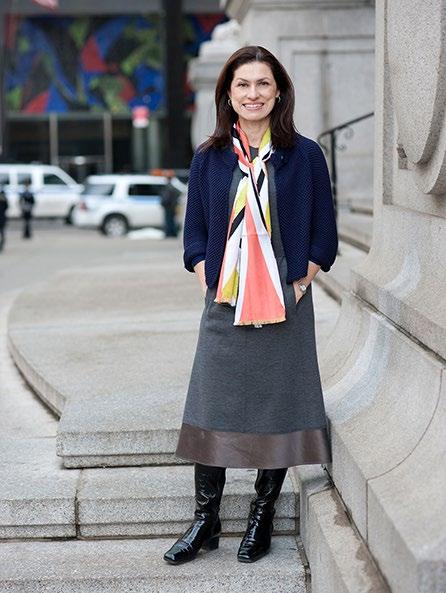

salutes and thanks its advertisers for their support. We applaud the achievements of lighting practitioners and recognize the importance of their work in architecture and design.


















Light Justice NOW Awards
FINAL SUBMITTAL DATE
Closed
AWARDS PRESENTATION
13 - 15 August 2026
IES 26: The lighting Conference, Denver CO
Women in Lighting Leadership Award
NOMINATIONS
Closed
ANNOUNCEMENT DATE
TBD
LIT Lighting Design Awards 2026
FINAL SUBMITTAL DATE 18 October 2026
ANNOUNCEMENT DATE November 2026
Beacon Awards
FINAL SUBMITTAL DATE 16 September 2026
ANNOUNCEMENT DATE 14 October 2026
IES Illumination Awards 2026
FINAL SUBMITTAL DATE
Closed
AWARDS PRESENTATION 14 August 2026
IES 26: The Lighting Conference, Denver, CO
iF Design Award
EARLY BIRD REGISTRATION DATE 26 June 2026
FINAL SUBMITTAL DATE 4 November 2026
AWARDS PRESENTATION 26 April 2027
NLB Lighting Transformation Awards
FINAL SUBMITTAL DATE 24 July 2026
AWARDS PRESENTATION
NALMCO Annual Convention and Trade Show, 11-14 October 2026 Glendale, AZ

Fisher Marantz Stone (FMS) is thrilled to celebrate the announcement that our founder, Jules Fisher, received the 2026 Special Tony Award for Lifetime Achievement in the Theatre. Lighting Designer JulesFisher is long considered the “gold standard” of the art form, conceiving and designing concurrently forBroadway, film, the music industry, and digital animation. His Broadway career spans more than 60 years,during which he has designed more than a hundred plays and musicals. He has also been nominated 25 timesand honored with nine Tony Awards (three solo honors and an additional six in collaboration with his long-time lighting design partner, Peggy Eisenhauer). Among his celebrated Broadway designs are the originalversions of Hair, Jesus Christ Superstar, Pippin, Ragtime, Bring In ‘Da Noise, Bring In ‘Da Funk, and Angels inAmerica. Beyond Broadway, his innovations have illuminated rock-and-roll tours for legends like the RollingStones, David Bowie, Parliament Funkadelic, and Whitney Houston—and helped bring over half a dozenmovie musicals to life.
In addition to entertainment lighting, Jules Fisher together with Paul Marantz, in 1971, founded the award- winning architectural lighting design firm, Jules Fisher & Paul Marantz
TONY AWARD FOR LIFETIME ACHIEVEMENT • TONY AWARD FOR LIFETIME ACHIEVEMENT JULES FISHER
(now FMS), designing lighting for notable projects that include Studio 54, the Washington Monument, The Park Avenue Armory, The National Gallery of London, David Geffen Hall at Lincoln Center, Carnegie Hall and Radio City Music Hall, and most recently, the Obama Presidential Center. Perhaps more notably, Jules and his Fisher Marantz Stone partners helped realize the iconic annual “Tribute in Light” at the National September 11th Memorial & Museum at the World Trade Center.
“We are deeply honored to celebrate Jules and this remarkable recognition of his life’s work. His vision helped shape the way we understand light — as something that gives depth to architecture, emotion to space, and a sense of magic to the built environment. His enduring curiosity and lifelong commitment to invention and experimentation established a culture of craft, care, and innovation that continues to guide our work today.” – Fisher Marantz Stone
Please join all of FMS in congratulating Jules on this momentous honor and achievement. We are so proud to celebrate this extraordinary moment with him and grateful to be part of the enduring legacy he has created.
Image and content courtesy of FMS
AUG 2026
2 OCT - 1 NOV 2026

ALINGSÅS
NOV 2026










GOLDSTICK STUDIO
Karina Lysenko started a new position as Lighting Designer II

LUMA LIGHTING DESIGN
John Conley started a new position as Senior Lighting Designer
Aram Ebben promoted to Vice President of Lighting Design
Sarah Duckett promoted to Senior Lighting Designer
ON THE


HARTRANFT LIGHTING STUDIOS

Buehlmann started a new position as Lighting Designer

started a new position as Senior Designer
Holly
Adrienne Bixler

POWER DESIGN, INC.
Jessica Susin promoted to Lighting Consultant
Kanzie Pike started a new position as Senior Lighting Designer STANTEC


THE LIGHTING PRACTICE
Matthew Hanson started a new position as Lighting Designer II
THE SEED
Simon Schadler promoted to Senior Lighting Designer I BIM Manager
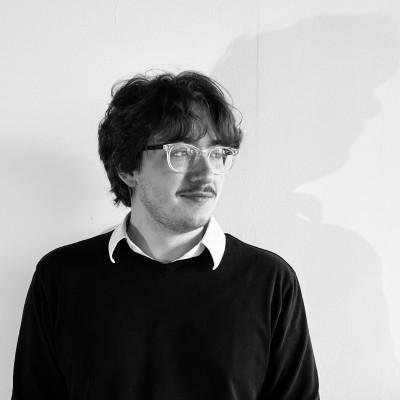
TUCCI LIGHTING
Haley Laurecne started a new position as Senior Lighting Designer + Project Manager

Durga Kranti Sala started a new position as Associate

Russell Cook started a new position as Assistant Vice President, Orange County/ San Diego Studio Lead
By
CAREER PATHS ARE NOT RUNNING TO A SINGLE FINISH LINE; EVERYONE
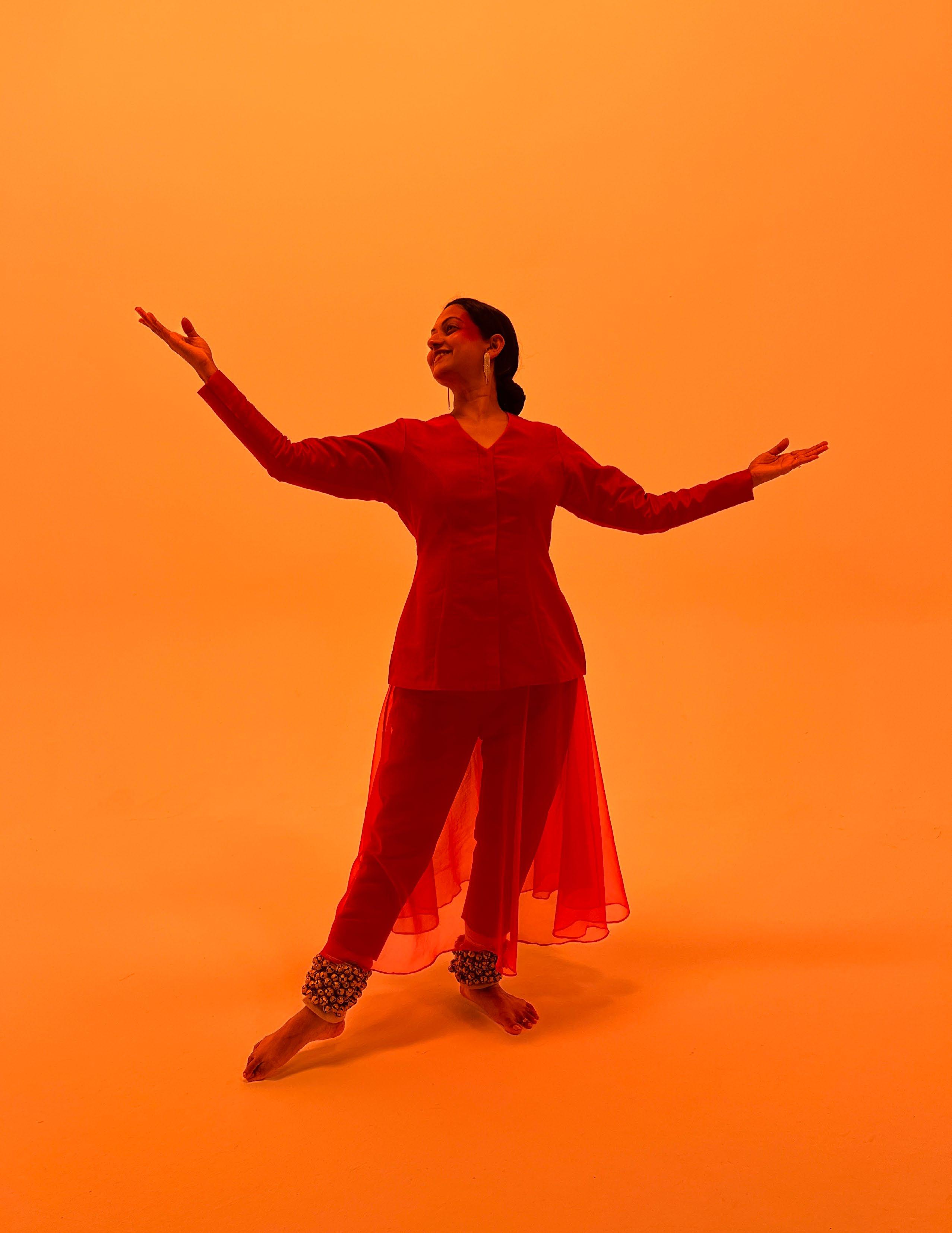
UP CLOSE WI TH Neha Sivaprasad
SHIRLEY COYLE, LC
When Neha Sivaprasad describes her path into lighting, she doesn’t begin with technology or titles. She begins with feelings. Neha recalls that as a quiet, observant child, she was aware of how spaces made her feel. “I didn’t articulate it then…but I think I was always intrigued by how space made you feel, and so I wanted to design spaces!”
Neha’s formal journey started in a demanding five-year bachelor’s program in architecture at University of Mumbai, where students studied architecture from the first day, culminating in a major thesis project. Her project required the design of a full campus with multiple buildings, landscape, lighting, stormwater management, etc. Deciding to learn more about the technology behind buildings, she applied to several Masters programs in the US.
In the Building Science program at the University of Southern California in L.A. Neha’s “amazing” lighting professor, Marc Schiler, opened her eyes to lighting design as a dedicated field: “I said, there are people designing just lighting?” Noting her interest in lighting, Program Chair Doug Noble suggested she take electives in the theater school and learn theatrical lighting. “It was fantastic – our assignments were to light plays …that’s where I learned you can manipulate light to create an emotion…that light is a really powerful medium.”
Over the years, Neha has taken multiple leaps into entrepreneurship. The first during architecture school, co-founding an interior design turnkey business with two classmates, designing small apartments and retail shops. “We didn’t earn much” says Neha, “but we learned a lot!"
In 2010, Neha opened her second business – returning to India to set up an independent lighting design practice, rare in India at the time. With only five years of professional lighting experience, she shuttled between India and the U.S., building relationships... Neha laughs: “that was fun. I coldcalled architects, said ‘I love your buildings, I want to light them.’ From some of them I got good responses, from others ‘what do you mean? We light them - we do lighting design’.” For three years, Neha won work, completed rewarding projects, and proved her concept.
Family decisions brought her back to the U.S. full-time, but the experience reinforced both her resilience and her appetite for building something of her own. Neha’s biggest challenge was starting her third business, launching Sol Light Studio in 2021—seemingly with the highest personal and professional stakes. She had chosen to leave a successful role at a large firm, a great boss and meaningful project responsibilities. Neha realized she wanted creative autonomy, varied project types, aligning her work with her values. With encouragement from her husband, Neha took the leap.
Sol Light Studio reflects several principles that matter deeply to Neha. First is the diversity of the work. She resists specialization, designing all kinds of projects.
Equally important to Neha is working with people who are passionate about what they do, whether it’s cuttingedge design or deeply community-oriented work. In San Francisco, Neha has worked in neighborhoods heavily
impacted by drug activity, collaborating with community members to use light as a tool for enhancement rather than surveillance. Neha’s work there led her to meet Edward Bartholomew of Light Justice. After some of her projects received recognition through the Light Justice Now Awards, she was invited onto their Board, and Neha also now serves as Associate Director and Chair of the awards.
Neha stresses the need for awareness of the politics of lighting: “most of our time, energy, resources, technology, as an industry, is geared towards high-profile clients, highprofile projects. How do we bring awareness within industry and beyond that we can use our skills to impact people that don’t have the benefit of good lighting? Lighting is an infrastructure that is not distributed equally over the world.” She notes that in some wealthy neighborhoods, darkness and carefully regulated lighting are treated as a privilege, while elsewhere communities struggle for basic illumination.
When asked about advice for those coming into the industry, Neha offers: “Lighting touches everything and the industry is rich with people entering from architecture, theatre, engineering, art, and more… listen, absorb, and build relationships—create a rich, personal knowledge base not just from books, but from people.”
Neha also stresses the importance of defining one’s own success, especially in an era of curated online lives and constant comparison. Career paths are not running to a single finish line; everyone starts in a different place; remember to enjoy the process.
Volunteering, Neha believes, is one of the most powerful ways for emerging professionals to grow. Organizations such as IES, IALD, Light Justice, WILD, and others offer opportunities to contribute, meet people across the industry, and gain exposure to a wide range of perspectives. Seasoned designers who may seem like distant “titans” are, in her experience, remarkably generous with their time when approached through these channels.
Outside of lighting, Neha’s life is deeply enriched by art and dance. She spends time drawing—pen on paper—and maintains a separate, low-key Instagram presence for her artwork. And a lot of Neha’s “time and discipline” is spent on Kathak, the Indian classical dance form Neha has studied for 19 years.
Neha was surprised to find the largest Kathak school outside India, right in the San Francisco Bay Area. Today, Neha is a company member at her guru’s school, and Kathak is part of her daily life. She describes solo storytelling on stage as both an act of self-connection and selfforgetting—an exhilarating, transformative experience. As the official lighting designer for her Kathak school, lighting performances for her guru and fellow dancers, Neha runs between the lighting console and the stage, embodying her dual identities as lighting designer and performer. Her younger daughter now studies Kathak at the same school.
Across architecture, lighting, community work, family and classical dance, Neha’s story is ultimately about using light—literal and metaphorical—to support human experience with depth and care. ■
SOL LIGHT STUDIO
EdisonReport.tv serves as a hub for all digital content in the lighting industry. A premier source for critical information surrounding lighting, EdisonReport.tv is dedicated to delivering industry news by way of video and serving its audience by spotlighting product launches and up-to-date educational videos, as well as information about upcoming webinars.
ArchLIGHT Summit
The Hub for Education and Innovation
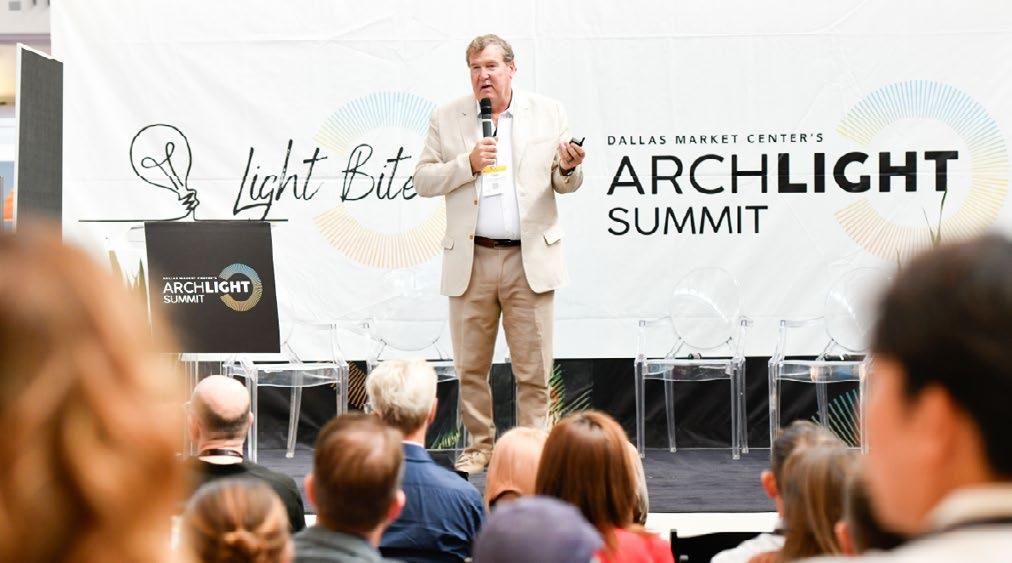
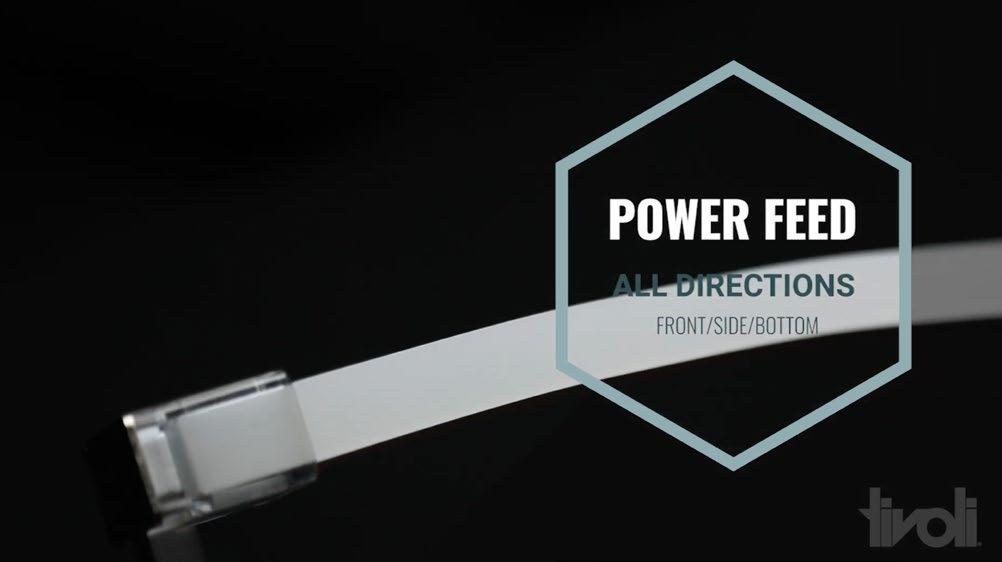


QTL Case Study
Jellyfish Playground at Pier 58
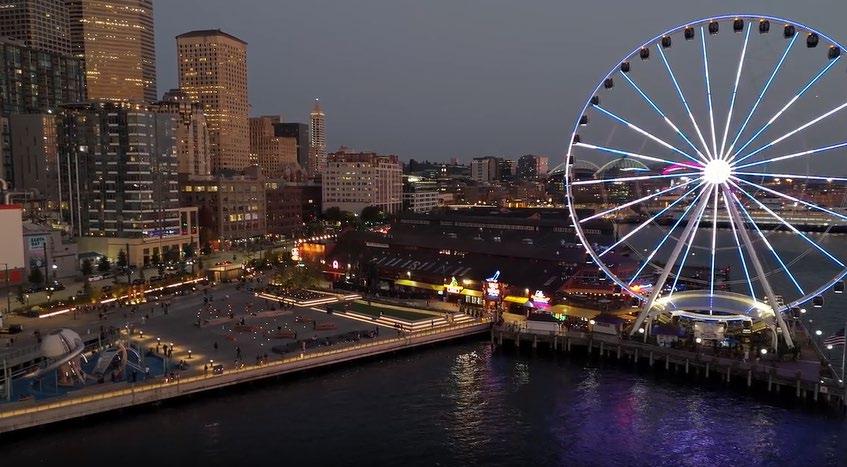
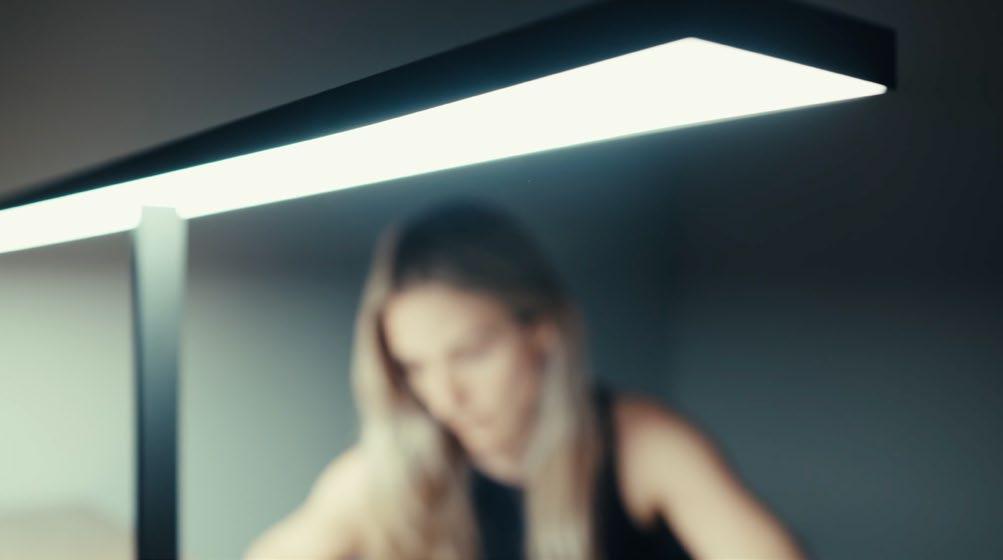
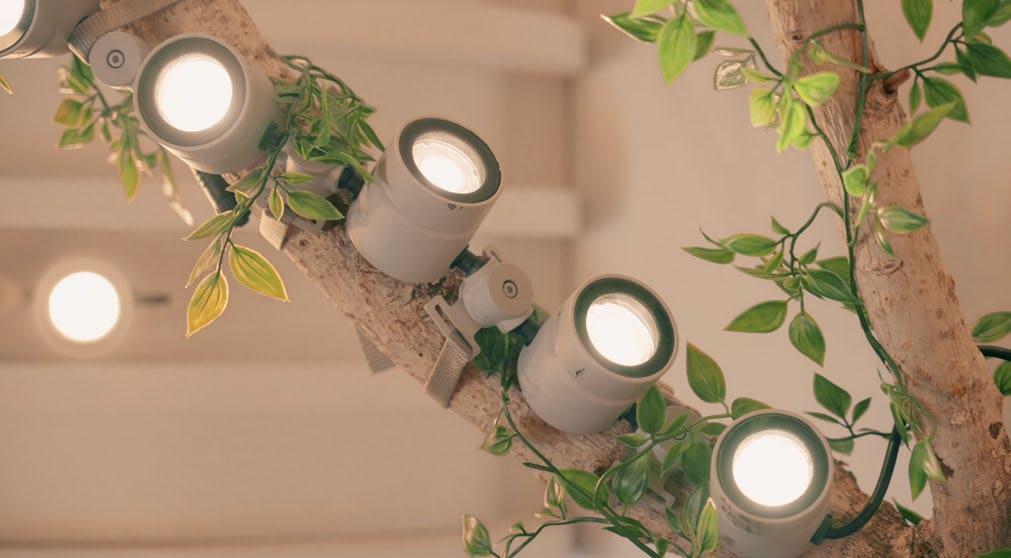
Tivoli | Trace
Vode Nexa | Table Arm | 807
Acclaim Lighting | Dyna Drum Series
Targetti | Lighting isn’t just seen, it’s felt!