Denver Urban Spectrum is a monthly publication dedicated to spreading the news about people of color. Contents of Denver Urban Spectrum are copyright 2025 by Bizzy Bee Enterprise. No portion may be reproduced without written permission of the publisher.
Denver Urban Spectrum circulates 10,000 copies throughout Colorado. Denver Urban Spectrum welcomes all letters, but reserves the right to edit for space, libelous material, grammar, and length. All letters must include name, address, and phone number. We will withhold author's name on request. Unsolicited articles are accepted without guarantee of publication or payment.
Write to Denver Urban Spectrum at P.O. Box 31001, Aurora, CO 80041. For advertising, subscriptions, or other information, call 303-292-6446, email publisher@urbanspectrum or visit the Website at www. denverurbanspectrum.com.
MESSAGE FROM THE EDITOR
The gift of life
As we close out another unforgettable year, I’m reflecting on the extraordinary ways the gift of life reveals itself through stories, through courage, and through the people who choose to uplift others. This month, we begin with Mark McIntosh, founder of the Transplant Games, who reminds us of the urgent need for organ donors in minority communities. His message is a powerful testament that one decision can save a life, change a family, and strengthen an entire community.
In that same spirit, we share the inspiring story of Athena, a young woman awaiting a kidney transplant. Her strength and optimism remind us that the gift of life is real, immediate, and something we all have the power to influence. Her journey calls us to action, compassion, and awareness.
December is a season of giving and gratitude. It’s a time to recognize that the greatest gifts rarely come wrapped instead they come through people who use their voice, talent, and purpose to make a difference.
This issue is filled with such gifts.
Our cover story, “The Gift of Life,” shows how everyday people bring hope to those around them.
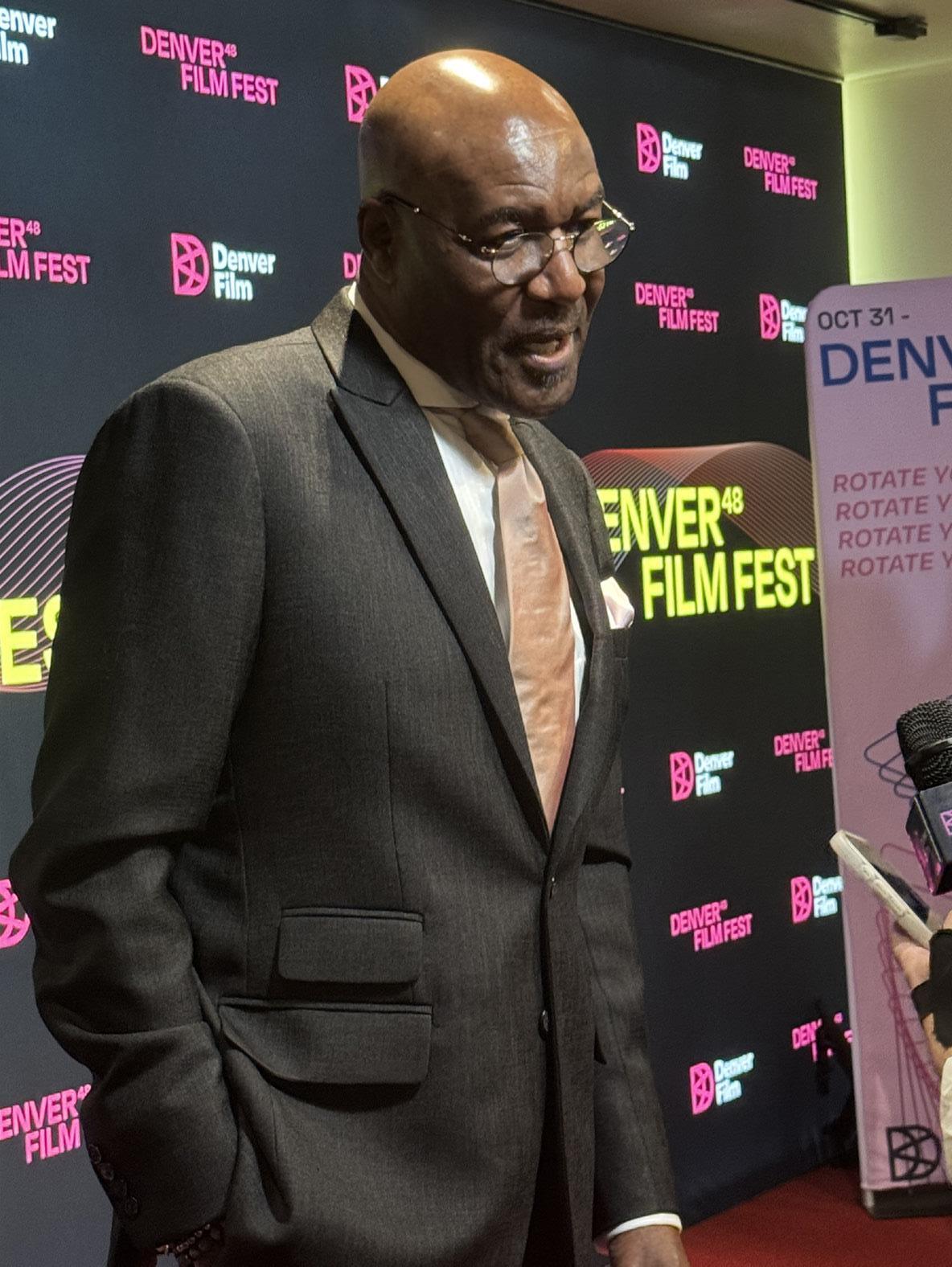
We celebrate the incomparable Delroy Lindo, whose decades of artistry have enriched film, culture, and generations of upcoming actors. His talent continues to be a gift to audiences everywhere.
We highlight the empowering Brunch of Champions, where Dr. Farrah Gray inspires the next generation with wisdom and motivation, offering tools and mindset shifts that create lasting legacies.
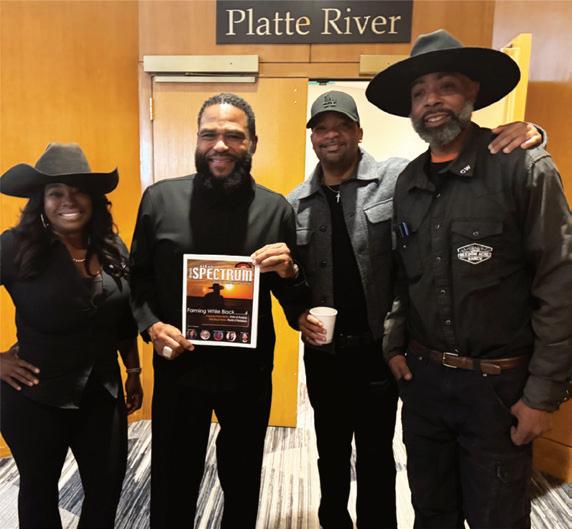
We also uplift Anthony Anderson, whose presence and generosity helped strengthen Black resilience through community fundraising. His commitment shows that philanthropy is its own gift, one that supports futures and fuels possibility.
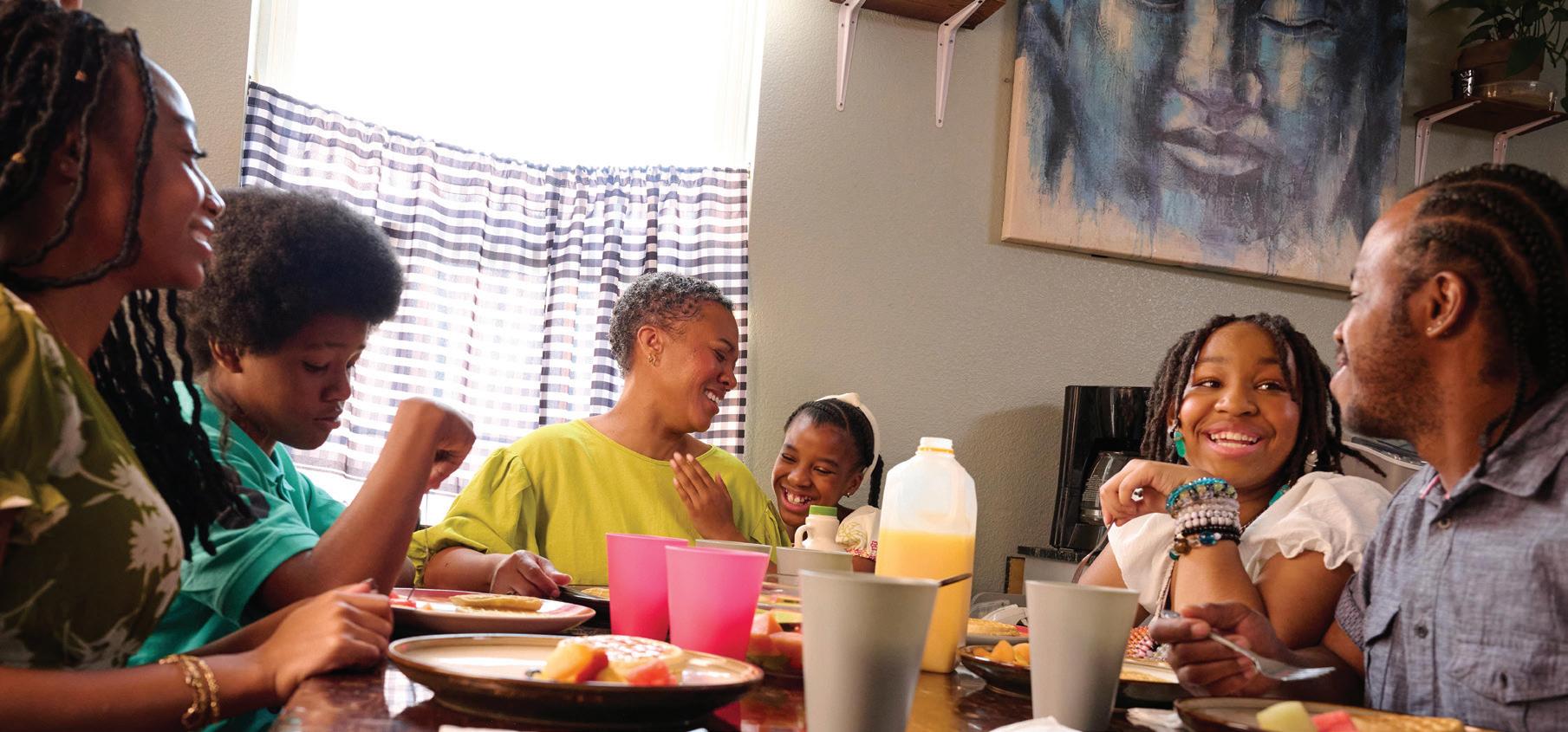
This month’s Opening Act shines on two remarkable young girls, lovingly raised by their grandmother. Their story reminds us that love–steady, patient, and unconditional–is one of life’s greatest gifts.
I’m also proud to share our continuing fundraiser with #NewsCOneeds and our Color of Change campaign, supporting local journalism and youth media literacy. Your investment helps keep our stories vibrant and our community informed.
Before I close, we honor Rosa Parks, the Mother of the Civil Rights Movement. December 1 marks 70 years since her quiet refusal sparked a nationwide movement and gifted our country a new era of dignity and justice. Rosa Parks remains a gift to the nation: a reminder that courage can reshape history.
As you read this issue, which is dedicated to the generous and talented jazz ambassador Purnell Steen who we lost in November, may you be reminded that life is a gift and the greatest joy is to share it.
Managing Editor, Denver Urban Spectrum
2025 #NEWSCONEEDS YEAR-END CHALLENGE IS UNDERWAY
Denver Urban Spectrum — The Color of Change — Needs Your Support This Month
For 38 years, Denver Urban Spectrum has been a lifeline for community-centered journalism, illuminating the stories and experiences that shape Denver’s vibrant and diverse neighborhoods. We highlight the people, places, and issues often overlooked by mainstream media and provide a trusted platform rooted in truth, culture, and community power.
Across the country, independent Black media outlets are shrinking — not because our stories lack value, but because the funding needed to sustain them continues to erode. Communitybased, culturally grounded journalism thrives only when the community it serves stands strongly behind it. And right now, we truly need that strength.
If you believe our stories matter — if you want Denver’s diverse voices to remain visible, valued, and heard — we are asking you to stand with us. A onetime gift or a monthly contribution of any amount makes a meaningful difference. Your generosity fuels the reporting,
storytelling, and community engagement that uplift our neighborhoods.
Why Your Donation Matters
Now through December 31, your support will directly sustain:
• Community journalism that reflects lived experience and preserves the voices of Denver’s multicultural communities,
• Media literacy and youth storytelling programs that help young people identify misinformation and become ethical truth tellers,
• Opportunities for emerging Black and Brown writers to bring fresh and necessary perspectives, and
• Cultural preservation that documents our history — ensuring our stories are never erased.
As we close out the year, we’re inviting you to be part of something bigger. Please consider making a gift today. Your support strengthens our mission, fuels our storytelling, and ensures
Denver Urban Spectrum continues to lift and celebrate community voices for generations to come.
Let’s rally, let’s rise, and let’s embrace the joy of giving this holiday season — knowing that every contribution, large or small, makes a real difference.
Scan the QR code to make your gift and help us spread the word. Make your contribution now: https:// www.coloradogives.org/story/DUS2025
Happy Holidays, Karen Davis
Voices Raised for Survival, Community and Health
Donors urgently needed for kidney transplants for people of color
By Gabrielle West
When you’re in the hustle and bustle of life, working hard to provide for yourself and others, grabbing whatever food you can in the moment, and constantly pouring into everyone except yourself, it’s easy to slip into survival mode. One day you look up and realize years have passed, burnout has become a way of life, and putting yourself last feels like second nature. It’s a familiar cycle that can lead to high stress, lack of sleep, weight gain, and serious health issues.
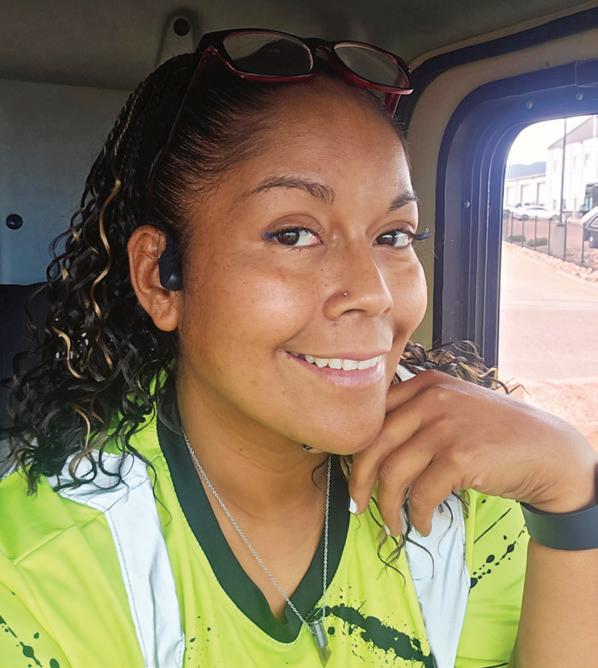
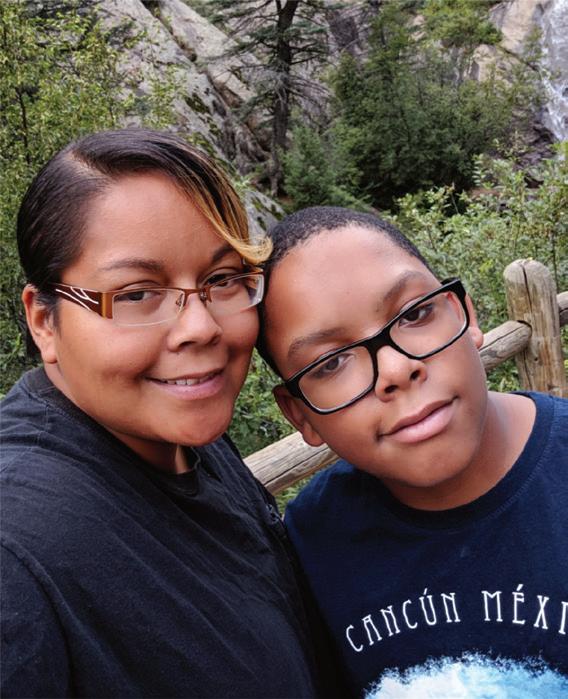
For 40-year-old truck driver and single mother Athena Latson, that cycle nearly cost her life.
Latson worked seven days a week, often more than 60 hours, living on energy drinks, caffeine pills, and convenience store food. “I lived at work and visited the house,” she said. But on the morning that changed everything, she knew something was wrong. Driving to work, she struggled to stay in her lane and felt something was off. When she told her supervisor what was happening, the response
was merely, “You want this promotion, don’t you?”
Driven by obligation, fear, and the pressure to provide, Latson ignored her symptoms and got behind the wheel anyway. She can’t remember the last 10 miles she drove before blacking out and crashing into a pole. She only recalls waking up to the sound of the light pole hitting the truck she was driving.
She was rushed to the hospital by ambulance and received life-altering news that she couldn’t outrun – her kidneys were failing. They were functioning at just 18%. Additionally, she had high blood pressure and needed urgent intervention.
A nephrologist, a specialist in kidney health, later diagnosed her with stage 3 kidney disease and warned she would soon require dialysis. Doctors placed her on a blood pressure patch at twice the typical dose. When she developed severe itching, she alerted her care team and was mistakenly
told to remove it. Within a week, her kidney function plummeted from 18% to 4%. This sent her body into shock and she was forced onto dialysis in order to live.
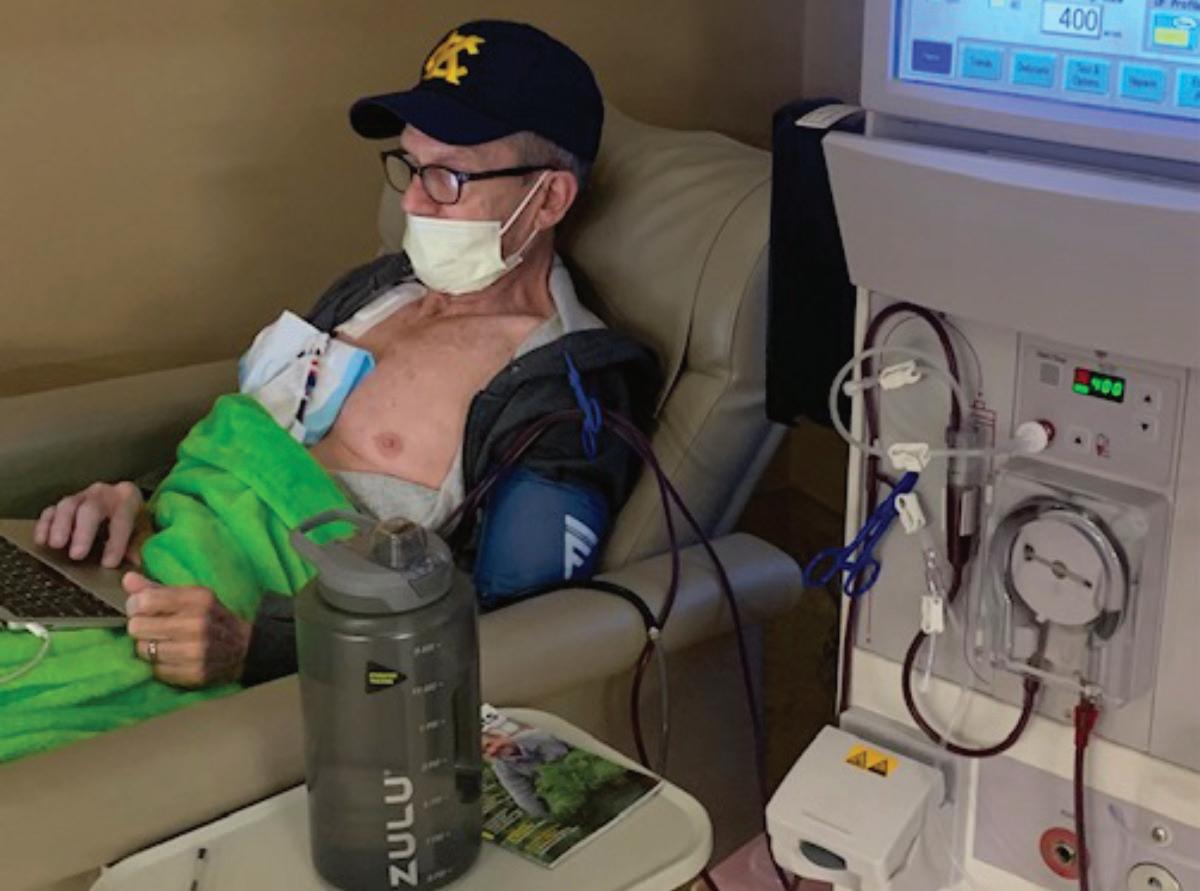
Two years later, her condition has worsened and she still undergoes three-hour, life-saving dialysis treatments every Monday, Wednesday, and Friday.
Despite now being in stage 5 chronic kidney disease, she remains motivated by the love of her spouse and her 19-year-old son. Hopeful, she’s now at the top of the transplant list and believes she may receive her life-saving call in the first half of 2026. She continues to work as a truck driver and has transformed her story into advocacy, especially for other young women facing kidney disease.
A recent turning point came when she attended her first Kidney Convo, a community-centered event hosted by the National Kidney Donation Organization. The gathering connected her with others living with kidney disease and gave her the courage to share her journey publicly. She’s since begun mentoring others and using her social media platforms to spread awareness and search for a donor. Offers have come from her spouse, mother, and coworkers, though none met the strict donor requirements.
According to the National Kidney Foundation (NKF), living kidney donors must generally be at least 18 years old, though age requirements can vary. Conditions such as uncontrolled high blood pressure, diabetes, or cancer can disqualify a donor, and smokers are typically required to quit before approval.
The need is urgent. NKF reports that 33% of American adults are at risk for kidney disease, and Black Americans are more than three times as likely to develop kidney failure as white Americans. Structural inequities—economic, medical, and social— in Black communities lead to higher rates of blood pressure, diabetes, obesity, and heart disease, all of which drive kidney disease.
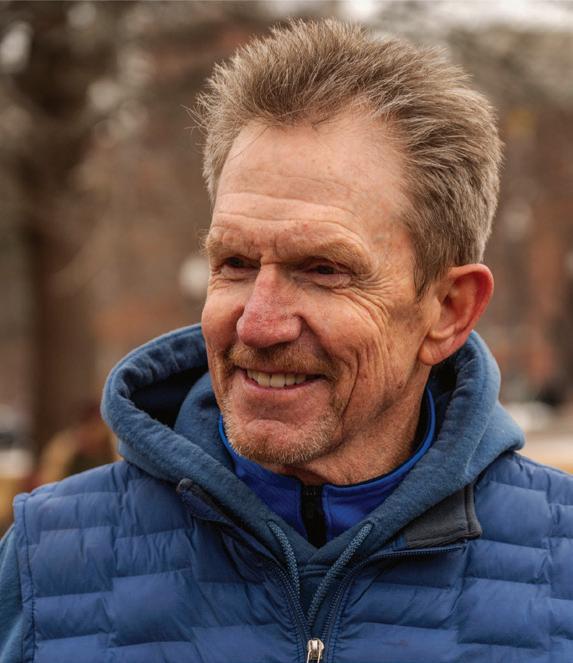
These disparities are what drive health advocate and kidney transplant recipient Mark McIntosh to raise his voice. McIntosh, a white male who lived an active lifestyle,
developed amyloidosis—a rare blood cancer that attacked his kidneys and liver. This led him to 15 months of chemotherapy and dialysis to protect his organs. During that time, he was struck most by those who joined him in the waiting room.
Every Tuesday, Thursday, and Saturday, he sat with the same group: Amber, Jackie, John, Elizabeth, Joyce, and Maria. Four were Black, two were Hispanic or Latino, and he was the only white person. As a journalist and community member, he’d long been in proximity to Black and Brown communities, but seeing the disparity with his own eyes changed him.
“At the end of the day, you realize it does not matter if we’re Black, Brown, white, live in a mission, live in a mansion, live on Main Street, or behind it,” he said. “We need each other… We need to support each other to try to be as healthy as possible because kidney disease is bad and it’s getting worse.”
Today, McIntosh is helping shine a light on one of the most hopeful moments ahead of the 2026 Transplant Games, which will bring an estimated 12,000 participants and supporters to Denver for what organizers call “the largest celebration of life in the world.”
The six-day event will feature an Olympic-style opening ceremony and more than 4,000 transplant recipients, living donors, and donor families competing in events ranging from cycling to singing. “The Games bring together thousands of transplant recipients, living donors, donor families, caregivers, and supporters… to honor the legacy of donors, raise awareness about the importance of donation, and promote healthy living after transplant,” according to the Transplant Life Foundation.
For Latson and thousands like her, the Games are more than an event—they’re a symbol of survival, community, and hope.
For more information or to register, visit transplantgamesofamerica.org.
To see if you could be a match for Athena or others, and begin the screening process, visit uchealth. donorscreen.org. ♦
AFRICAN AMERICAN HISTORY PRESERVED THROUGH HIGH SCHOOL FELLOWSHIP
By Gabrielle West
With the blatant erasure of American history happening before our eyes at museums, colleges, and other institutions, there is no better time for our youth to learn and truly experience their roots. This is the premise of the Hancock Heritage Fellowship (HHF), founded by former Denver Mayor Michael B. Hancock.
From March to November, 12 scholars from diverse states from Colorado to Florida gathered with community mentors, educators, business leaders, and genealogy experts for a deep dive into cultural history and experiential learning centered on the Black experience. Over months of travel, study, and discovery, they became like family. Journeying through Louisiana, Georgia, South Carolina, Alabama, Mississippi, and Colorado, they visited historical monuments, plantations, Lincoln Hills in the mountains northwest of Denver, and even toured Tyler Perry Studios.
Thanks to program sponsorships, each student received a $3,450 stipend, allowing them to participate fully without sacrificing summer employment income.
“The most memorable part of the HHF program was to see holograms at the Legacy Museum in Montgomery, Alabama, illustrating the stories of enslaved people who were trafficked and sold away from loved ones and their homes,” said fellow NyImah Bryant-West. “These animations were placed in dungeons to represent the real lives of families who were torn apart. Their cries are stained in my memory.”
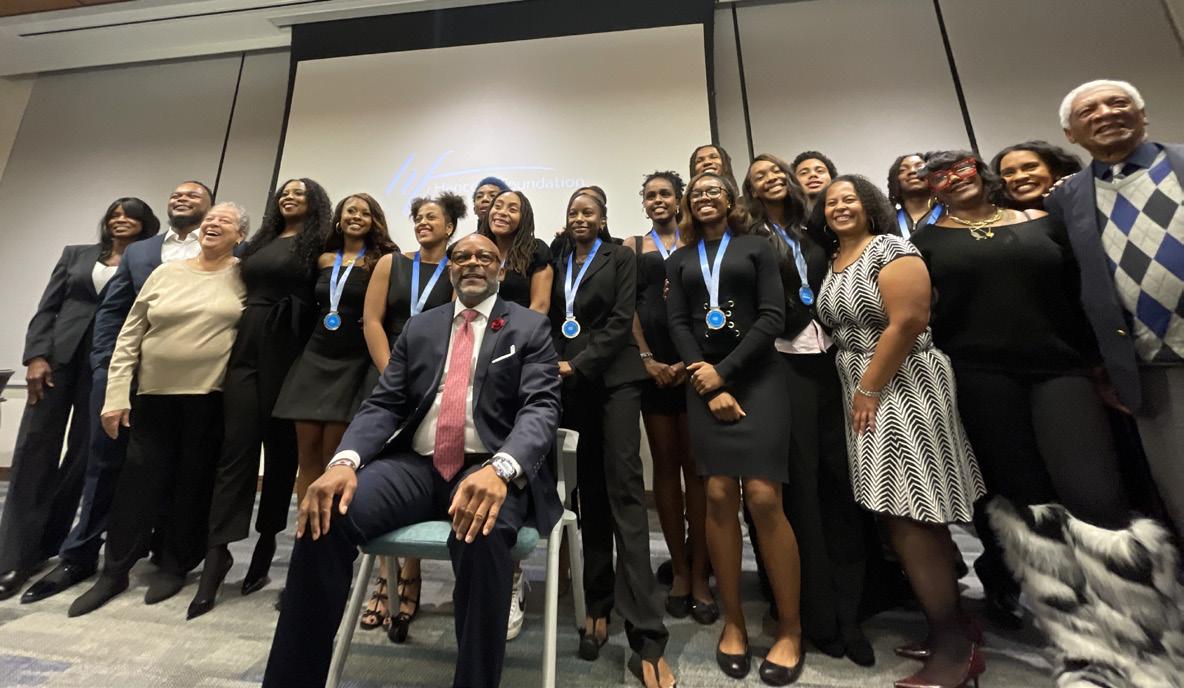
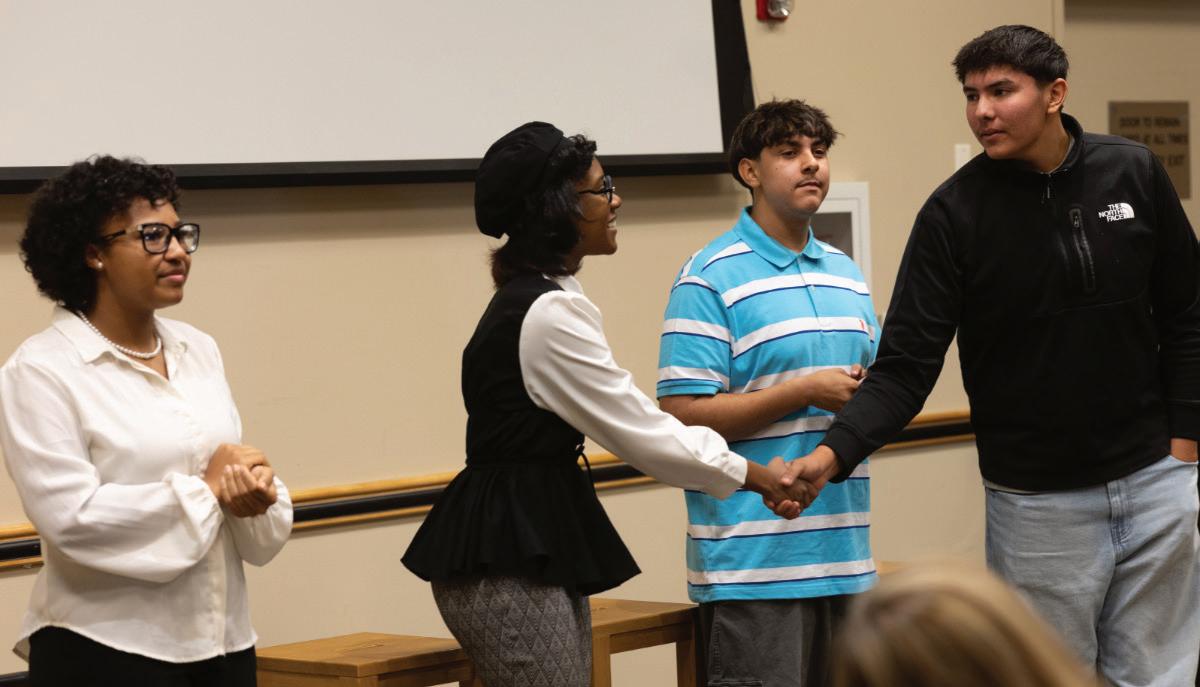
On November 20, the twelve scholars were officially inducted as minted fellows during a graduation ceremony at the Colorado Health Foundation (CHF), one of the HHF’s sponsors. Notable attendees included CHF President and CEO Karen McNeilMiller; Hall of Famer and former Denver Bronco Steve Atwater; keynote speaker Jessica Hardaway, Director of Communications and Engagement at Tyler Perry Studios; and KCNC anchor and reporter Justin Adams, who served as emcee. The love and support in the room felt like a big hug and you could sense the community and Black excellence that these young people exemplify.
Congratulations to the inaugural 2025 Hancock Heritage Fellowship class: NyImah Bryant-West, Colorado Academy, 11th grade; Amari Green, East High School, 12th grade; Milen Haile, Northfield High School, 11th grade; Jordan Hill, Liberty High School, 12th grade; Edward Holmes, George Washington High School, 12th grade; Jaaziah Hurt, Denver School of the Arts, 12th grade; Laila Lavizzo, Northfield High School, 11th grade; Hannah Rhodes, DSST Cedar High School, 12th grade; Shania Semujju, Overland High School, 12th grade; Imani Shannon, Colorado Academy, 11th grade; Ariyah Venerable, Cherokee Trail High School, 12th grade; and Treyce Vinson, Lake Nona High School, 12th grade.
The Hancock Heritage Fellowship Program is now accepting applications for 2026. Scholars may apply at www. hancock-foundation.org. ♦
DELROY LINDO:
The Power of Humanity in Every Role
Niecy Nash-Betts Recognized with the CinemaQ LaBahn Ikon Award
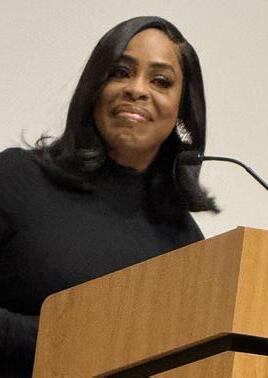
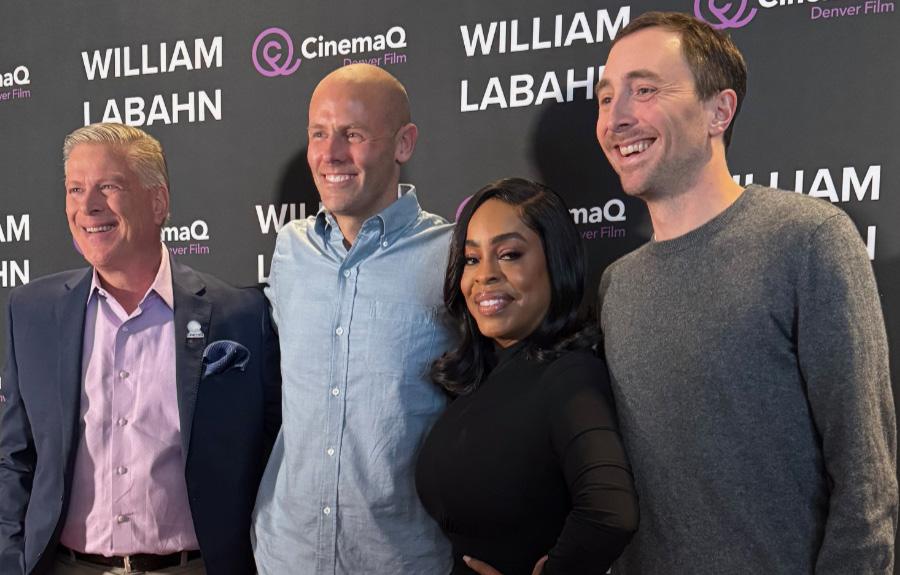
One of the standout moments of DFF48 came when Niecy Nash-Betts was honored with the fourth annual CinemaQ LaBahn Ikon Award, a distinction reserved for LGBTQIA+ creatives whose work leaves a lasting cultural imprint. The tribute, held Nov. 2 at the Denver Botanic Gardens, drew an enthusiastic crowd. Nash-Betts arrived with her spouse, Jessica Betts, radiating the confidence and joy that have made the couple beloved public figures.
Onstage, she delivered exactly what audiences came for — a candid,
unapologetic, and often hilarious conversation guided by radio personality Nikki Swarn. Nash-Betts spoke openly about her evolution in Hollywood, the power of authenticity, and the shifting landscape for underrepresented talent fighting for space and visibility.
The CinemaQ LaBahn Ikon Award underscored her influence far beyond her screen roles. It recognized her as a cultural force — an artist, advocate, and truth-teller whose presence pushes the industry forward. And for Nash-Betts, the moment felt like a fullcircle acknowledgment of her journey, from scene-stealing comedic roles to acclaimed dramatic performances and a position of undeniable leadership in entertainment.
By LaTerrell Bradford DUS Art Contributor
Denver Film Festival 2025: A Celebration of Storytelling and Cinema
The 48th annual Denver Film Festival, held from October 31 to November 9, 2025, once again transformed the Mile High City into a vibrant hub of global cinema. More than 200 films — from bold premieres to powerful documentaries — captivated audiences and sparked conversations that bridged cultures and generations.
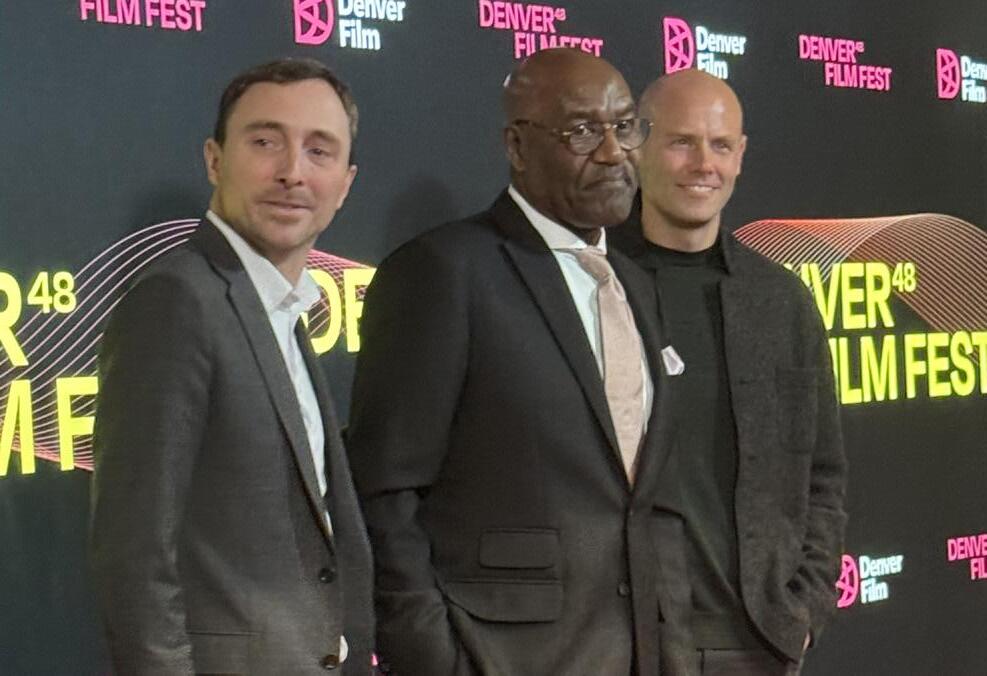
Set against Denver’s thriving artsscene backdrop, this year’s festival celebrated diverse voices, compelling stories, and the power of film to connect and inspire. Among its many highlights was a special appearance by acclaimed actor Delroy Lindo, whose insights and artistry added depth and distinction to an unforgettable cinematic showcase.
In Conversation with Delroy Lindo
In an exclusive interview during the festival, Denver Urban Spectrum art contributor LaTerrell Bradford sat down with the legendary actor to discuss his remarkable journey from the United Kingdom to Hollywood — and how his passion for storytelling continues to illuminate the human spirit.
Bradford: I’m LaTerrell Bradford, an art contributor with the Denver Urban Spectrum. We’re looking forward to meeting you here at the Denver Film
Festival in a couple of weeks. Thank you for taking the time to speak with us. To begin, can you tell us a little about your background — growing up in the UK, moving to Canada, and eventually landing in the United States?
Lindo: That’s quite a journey! I actually have a book coming out next year where I delve into all of that in depth. Central to my story is my mother — a Jamaican immigrant whose strength and vision gave me the passport to my life. Without her, I doubt I’d have experienced the opportunities that shaped my career.
Bradford: When did you first realize that acting was your calling?
Lindo: My first performance was in a school nativity play, playing one of the kings. My teacher’s encouragement during that experience was profoundly affirming. That moment planted the seed — I wanted to become an actor, even though I had no idea what that truly meant at the time.
Bradford: You’ve had an impressive career, inacluding a Tony Award nomination for Joe Turner’s Come and Gone. What’s the difference between performing on stage and acting in film — and do you have a preference?
Lindo: There’s really no difference in how I approach the work. On stage, the immediacy of connecting with a live audience is incomparable — nothing beats that energy. But film has its own power. It can reach people across the world. I once had someone in
Rome recognize me by name despite not speaking English. That’s the magic of cinema — its ability to cross boundaries.
Bradford: You’re known for your natural charm on screen. Where does that come from?
Lindo: (laughs) You’ll have to ask my wife! I don’t set out to be charming; I focus on finding the humanity in every character I play. Maybe that humanity reads as charm.
Bradford: One of my favorite roles is West Indian Archie in Malcolm X. My granddaughter loves This Christmas — we watch it every year. Where do you pull from to portray such complex characters?
Lindo: I don’t think in terms of complexity. I think in terms of humanity. Playing West Indian Archie was special to me — as someone of Jamaican descent, it was an homage to my mother. It meant a lot to bring a Jamaican man to the screen with intelligence, depth, and dignity.
Bradford: What draws you to a particular role?
Lindo: The story. If the story doesn’t resonate with me, I can’t bring truth to the character. I also consider who’s directing and who I’ll be working with. The strength of the story and the collaboration are what make me say yes.
Bradford: Which role has pushed you furthest outside your comfort zone?
Lindo: Satchel Paige in Soul of the Game stretched me — his humor and outlook were the opposite of mine. Clockers was another challenge; I had to immerse myself in a world that wasn’t my own. Each time I’ve stepped into those uncomfortable spaces, I’ve grown as an actor and as a person.
Bradford: Some actors say they carry a part of their character’s home. Has that ever happened to you?
Lindo: My wife would say yes. When I was playing Rodney in Clockers, she said she didn’t like him — and apparently, I brought some of that energy home. (laughs) I try to separate my work from my personal life, but sometimes the lines blur a bit.
Bradford: Finally, do you have a favorite role — or one you still dream of playing?
Lindo: I’d love to portray a Marcus Garvey-like character. He’s one of the most fascinating and important figures
of the 20th century. As for past roles, West Indian Archie, Satchel Paige, Mr. Rose in The Cider House Rules, and Paul in Da 5 Bloods are all meaningful to me. I’m proud of how those performances resonated with audiences.
Bradford: And my last question for you Mr. Lindo is what do you want viewers to take away from this film?
Lindo: The vampire genre is a conduit for a much larger story.
Bradford: Thank you so much, Mr. Lindo. We look forward to seeing you at the Denver Film Festival.
Lindo: Thank you. It’s been a pleasure. God bless. ♦
Scan the QR code to get started!
THE NBA’S NOT THE PROBLEM.
WE ARE
Editor’s note: This article was first published by Word In Black –Black America’s Digital Daily (https://wordinblack.com/)
By John Celestand
October 27, 2025
The NBA’s opening week was supposed to be about highlights, not handcuffs.
But on Thursday, Oct. 23, the league found itself at the center of one of the biggest scandals in modern sports: more than 30 people indicted in a nationwide illegal gambling ring that allegedly involved current and former
NBA players — and members of New York’s organized crime families.
America’s obsession with gambling didn’t ruin basketball –it revealed who we’ve become.
from the seedy characters that lurk in the dark alleys and crevices of the gambling underworld.
Among the accused are Portland Trail Blazers coach Chauncey Billups, former NBA player Damon Jones, and Miami Heat guard Terry Rozier — names once associated with game-winning plays, not the FBI. The three were arrested alongside alleged members of the Bonanno, Gambino, Genovese, and Lucchese New York crime families after a years-long investigation into a sprawling underground illegal gambling network.
The indictments put a major dent in the NBA’s reputation — yet the league has only itself to blame. The NBA rushed to embrace legalized gambling, arrogantly thinking it could maneuver its way through the industry, take the money, and run, all while shielding itself
A Scandal Years in the Making
As a league, the NBA never quite understood its own children. Did it really not see that for many athletes, gambling could serve as another extension of their own competitive streak? That drive — the same one that fuels greatness — could also make them easy prey for organized crime figures who know exactly how to exploit it. For athletes today, gambling access is everywhere. Sportsbooks are inside
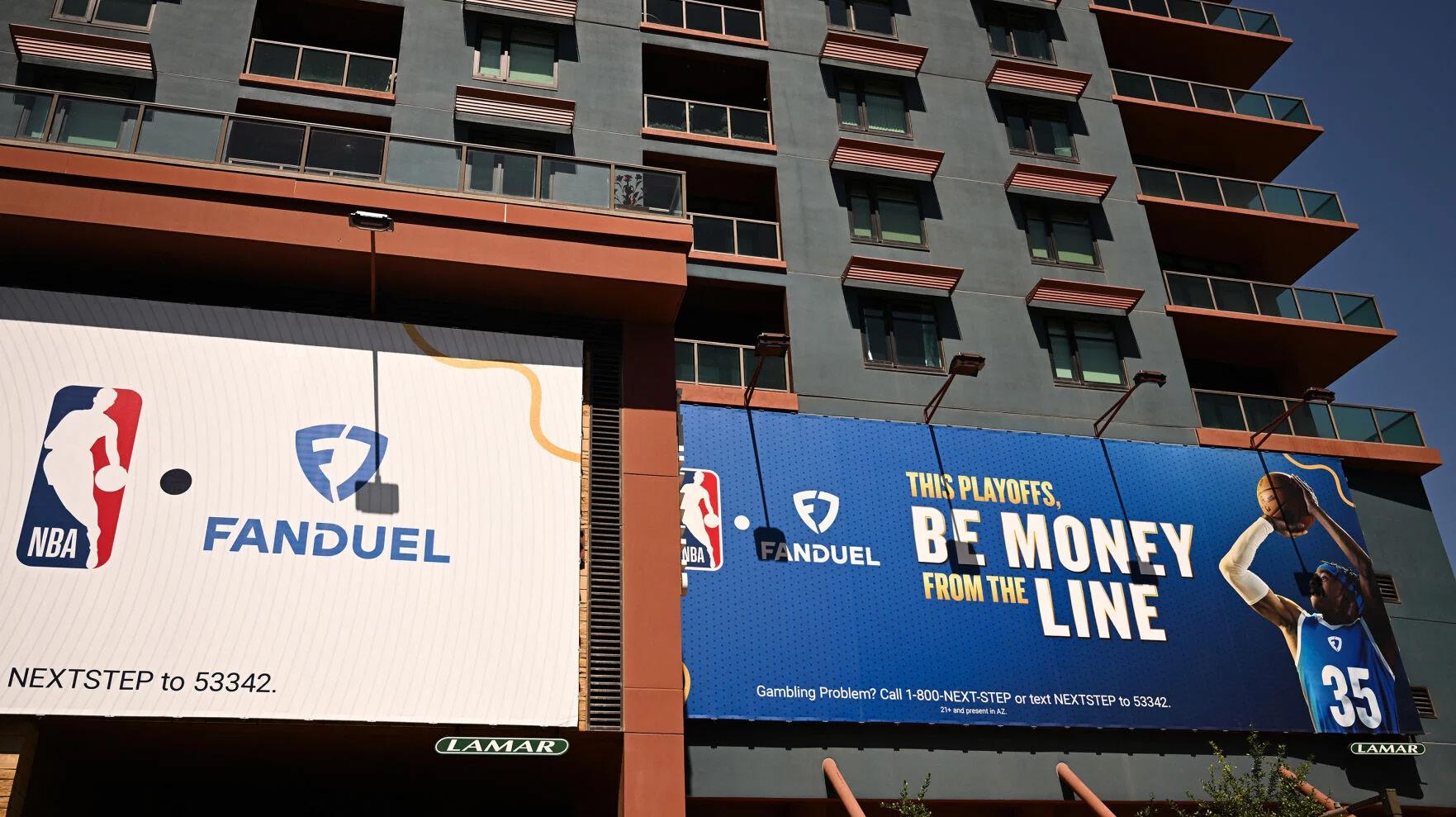
arenas. DraftKings promotions tie directly to NBA League Pass. Gambling isn’t just around the game anymore; it’s inside it. What did the NBA think would happen?
Gambling, point-shaving, and game-fixing are nothing new.
Billups was charged for his connection to an illegal poker operation that used advanced technology to steal millions from players in games run by the mafia. Rozier is accused of manipulating his performance during an NBA game to assist illegal betting. Jones faces charges for both participating in the poker scheme and providing inside information to help bettors. There are
Pissarro’s Impressionism
THROUGH FEBRUARY 8, 2026
The Honest Eye: Camille Pissarro’s Impressionism is co-organized by the Denver Art Museum and the Museum Barberini, Potsdam. It is presented by Barbara Bridges, Bridget and John Grier, the Kristin and Charles Lohmiller Exhibitions Fund, and Craig Ponzio. The exhibition is also supported by the Tom Taplin Jr. and Ted Taplin Endowment, Adolph Coors Exhibition Endowment Fund, Birnbaum Social Discourse Project, Lori and Grady Durham, Kathie and Keith Finger, Sally Cooper Murray, Ellen and Morris Susman, Lisë Gander and Andy Main, Mary Pat and Richard McCormick, Kent Thiry and Denise O’Leary, Robert Lehman Foundation, Christie’s, the donors to the Annual Fund Leadership Campaign, and the residents who support the Scientific and Cultural Facilities District (SCFD). Indemnity is awarded by the Federal Council on the Arts and the Humanities. Promotional support is provided by 5280 Magazine and CBS Colorado.
Camille Pissarro, The Garden of Les Mathurins, property of the Deraismes Sisters, Pontoise (Le Jardin des Mathurins, Pontoise, propriete des soeurs Deraismes) (detail), 1876. Oil on canvas;
The Nelson-Atkins Museum of Art, Kansas City, Missouri: Purchase: William Rockhill Nelson Trust. Image courtesy akg-images / De Agostini Picture Lib. / J. E. Bulloz
even reports of Jones providing injury information to associates about NBA superstar LeBron James.
Still, it would be disingenuous of me to lay the blame on the league entirely. The basketball purist in me, the former NBA player in me who bled for teammates in high school, college, and the pros, finds Rozier’s alleged actions the most egregious. Manipulating a game, faking an injury, or taking yourself out to influence a bet violates everything the game stands for. Those are among the most disrespectful things you can do to your teammates and the fans who believe in you.
Rozier was set to earn $26.6 million for the 2025-26 season. To risk it all for “a few extra coins” is beyond comprehension.
Fallen Heroes
Billups, meanwhile, was always seen as one of the class acts of the league — polished, respected, and known as Mr. Big Shot for his clutch play. A five-time All-Star and 2004 Finals MVP, he was inducted into the Basketball Hall of Fame in 2024 and later became Portland’s head coach after a stint at ESPN.
Billups also played a pivotal role in my own basketball journey. Back in
1994, after playing well against him in an AAU matchup at the Boo Williams Tournament in Hampton, Virginia, a Villanova assistant coach approached me. That encounter led me to a full scholarship to Villanova, four years there, and eventually being drafted by the Los Angeles Lakers in the 1999 NBA draft.
Chauncey was also close friends with my former Lakers teammate Tyronn Lue, now the Clippers’ coach. Whenever I saw Chauncey, I’d remind him that if not for that game against him in high school, I might never have made it to Villanova or the NBA. So to see his name mentioned alongside mobsters nicknamed “Spooky,” “Tommy Juice,” and “The Wrestler” was surreal.
A Game of Misdirection
We’re living in strange times. While this story is a bombshell — with athletes, coaches, legends, and the Mafia all entangled — what struck me most was seeing FBI Director Kash Patel hold a press conference to announce the indictments on the second day of the NBA season. It felt calculated — perfectly timed to dominate headlines and grab public attention by spotlighting the
athletes rather than the mobsters who orchestrated the scheme.
In truth, Billups, Rozier, and Jones are merely the corner boys — distractions from the real distributors and kingpins behind the operation. But we live in a clickbait world, one that prizes entertainment over truth, and this current administration has mastered the art of misdirection.
The House Always Wins
America loves gambling. It’s always been the Mafia’s bread and butter — too tempting and too profitable to disappear. Even if some of these crime family members go down, they will be replaced by the next mafioso in line. So what happens now? What does this mean for the NBA — and for all professional sports? What safeguards or education can protect players from themselves? I wish I had those answers.
Gambling, point-shaving, and game-fixing are nothing new. What is new is the level of access, visibility, and money involved. It’s no secret that illegal gambling and players’ connection to organized crime families are bad for sports; the real question is how bad can this really get?
We wanted to believe the games were real. That the dunks, the threes, and the buzzer-beaters were pure. Surely, we wanted to believe that in the end, usually the best team always wins.
But with contracts skyrocketing and athletes earning more than ever, you have to wonder: why would players and coaches — some with nine-figure deals — risk everything to dance with the Mafia?
I can only shrug and remember the words of The Notorious B.I.G.: “Mo Money, Mo Problems.” ♦
Editor’s note: John Celestand is the program director of the Knight x LMA BloomLab, a $3.2 million initiative that supports the advancement and sustainability of local Black-owned news publications. He is a former freelance sports broadcaster and writer who covered the NBA and college basketball for multiple networks such as ESPN Regional Television, SNY, and Comcast Sportsnet Philadelphia. John was a member of the 2000 Los Angeles Lakers NBA Championship Team, playing alongside the late great Kobe Bryant and Shaquille O’Neal. He currently resides in Silver Spring, Maryland, with his wife and son.
NBA and FanDuel online sports betting signage is displayed on the side of a building in Phoenix, Arizona, on June 5, 2024. (Photo by Patrick T. Fallon / AFP)
(Photo by PATRICK T. FALLON/AFP via Getty Images)
BRUNCH OF CHAMPIONS
Inspires Youth to Dream Big
By LaTerrel Bradford and Luciana
“My job is to fund your dream; your job is to find your dream.”
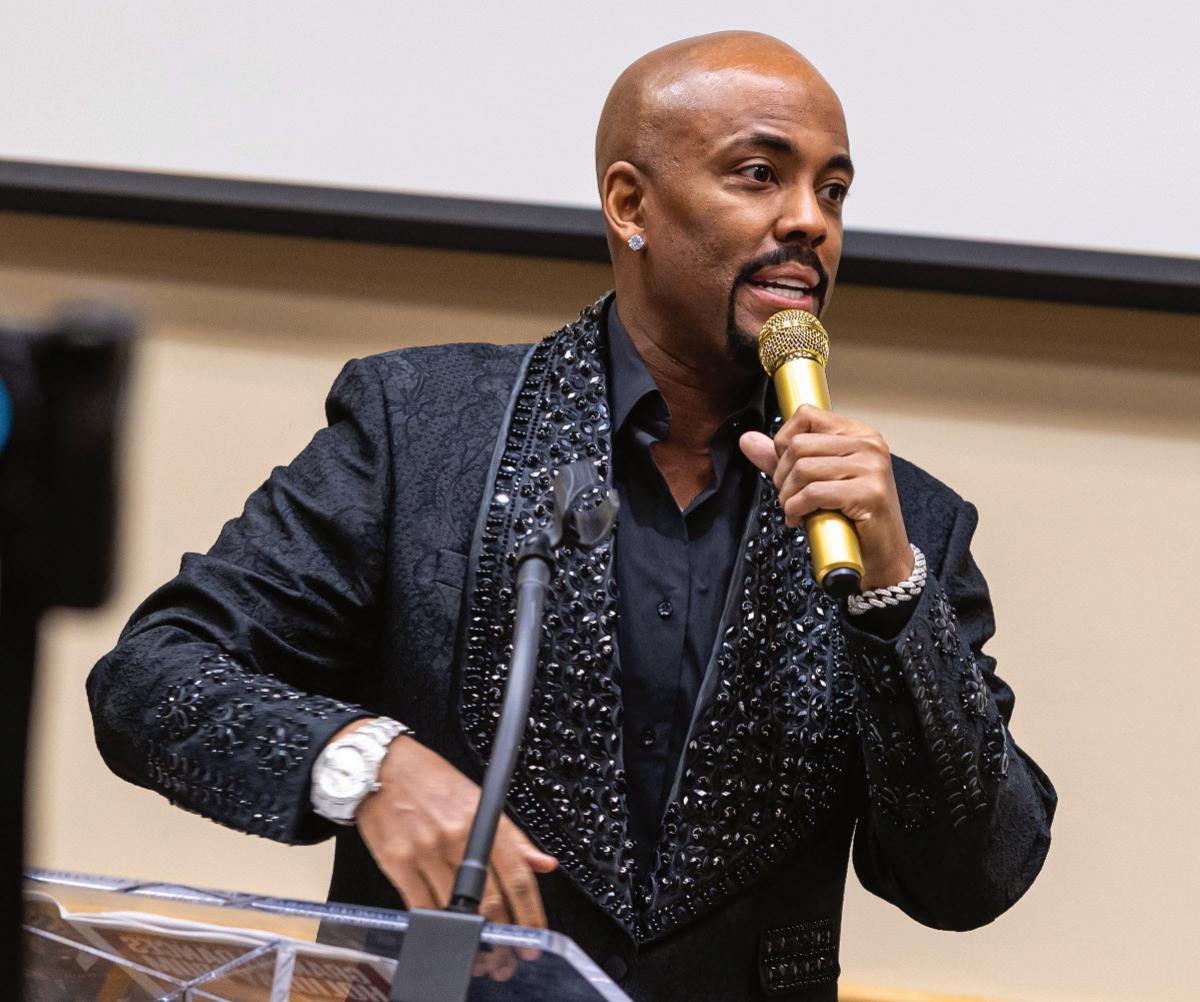
With that powerful message, two-time Super Bowl Champion and former Denver Bronco Rod Smith set the tone for a day centered on ambition, purpose, and community unity.
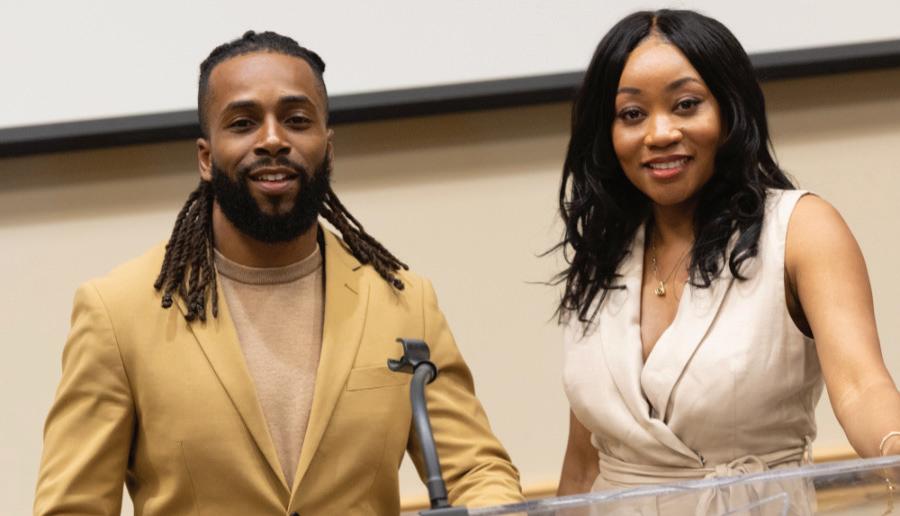
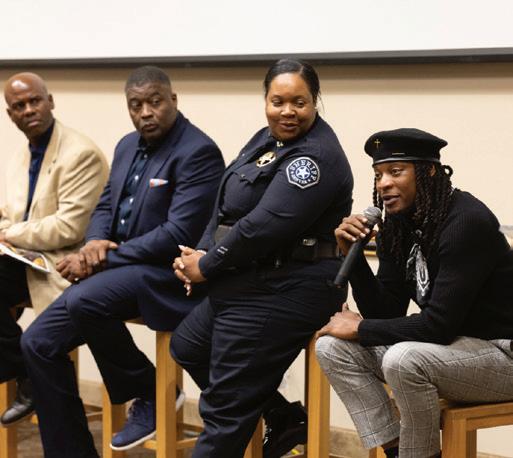
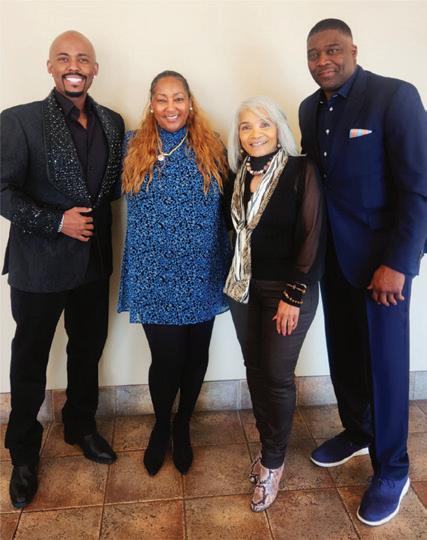
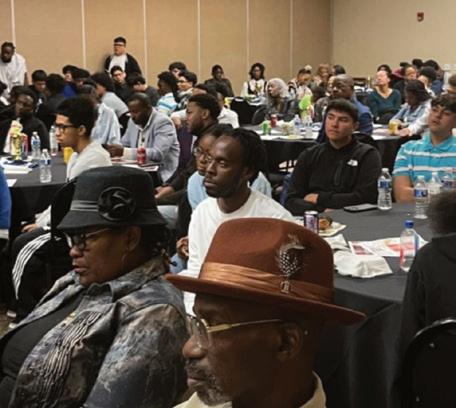
Last month, the Colorado Beautillion-Cotillion, in partnership with Denver Urban Spectrum, hosted the Brunch of Champions—an uplifting, full-capacity event dedicated to empowering young people. While the mission focused on youth, the audience reflected a full village of adults committed to supporting the next generation.
For 15 years, Beautillion-Cotillion founder Cheryl Carter has cultivated a transformative environment for Colorado youth. Her longstanding program equips young men and women with skills in etiquette, financial literacy, personal development, and, most importantly, the confidence to pursue their dreams.
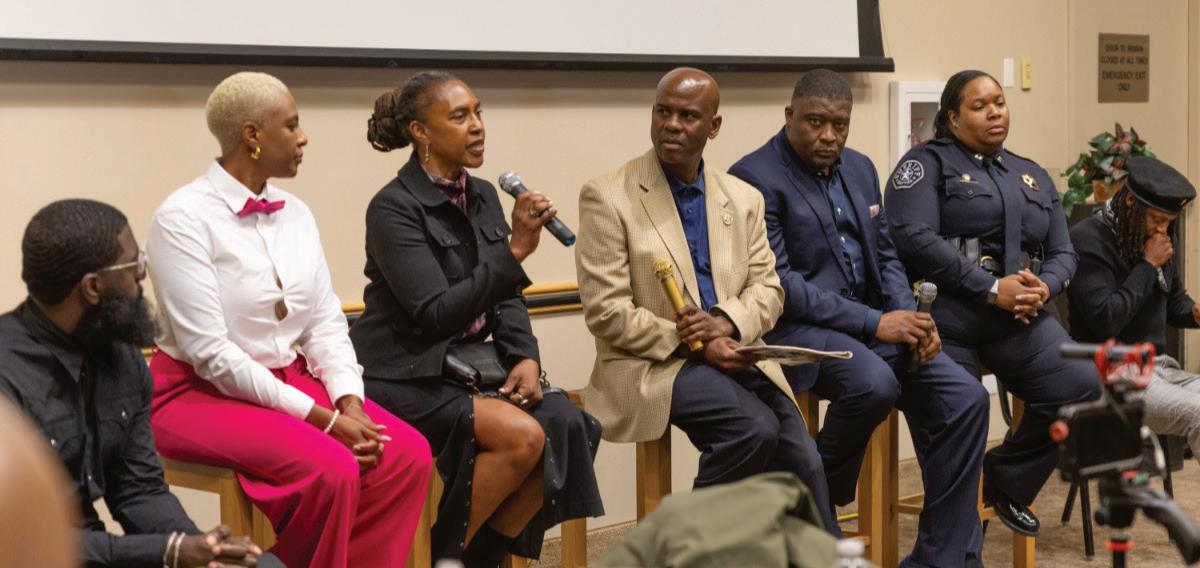
This year’s panel brought together an impressive roster of “Champions,” each offering hard-earned wisdom and candid insights. Alongside Smith, panelists included Dr. Anne Garrett Mills, Coach Sydney Price, Captain Stephanie Lang, Drew Davis, and Squizzy Taylor. Their collective advice — rooted in lived experience — provided attendees with practical tools and lifechanging guidance.
Special guest Dr. Farrah Gray, a renowned entrepreneur and best-selling
author, delivered one of the event’s most heartfelt messages. Gray, who began selling painted rocks at age six in his Chicago neighborhood, became the nation’s youngest self-made millionaire by age 14. Sharing his journey from humble beginnings on Chicago’s South Side to national acclaim, he urged youth to “live aloud” and believe in their capacity to rise as high as their ambitions will take them.
A highlight of the afternoon was the Student Shark Tank competition, where young entrepreneurs pitched their business ideas with confidence and creativity. Winners received cash prizes ranging from $250 to $500, reinforcing the program’s commitment not just to inspiration, but to real opportunity.
The event’s vibrant atmosphere was sustained by a dedicated team:
Recommended for kids ages 4+
The songs you love, plus new ones!
Fall under the spell of Disney’s worldwide phenomenon, reimagined for the stage!
Ivan Gaskin energized the crowd, Phoenix Jackson kept the audience engaged, Brother Jeff uplifted spirits, and DJ Fedorah kept the music flowing. The brunch featured dishes from Maggiano’s Italian Restaurant, Smokehouse Meats, Grill Mama’s Eatery, King Mama Joy’s Creole Catering, and The Cake Bar.
The Brunch of Champions succeeded in bringing the community together to celebrate the greatness within each young person — and to remind them that with support, encouragement, and perseverance, they can soar as high as their dreams will take them. ♦
Editor’s note: The Brunch of Champions was supported by The Denver Foundation.
GROWING the Voices of Kwanzaa
By Brother Jeff
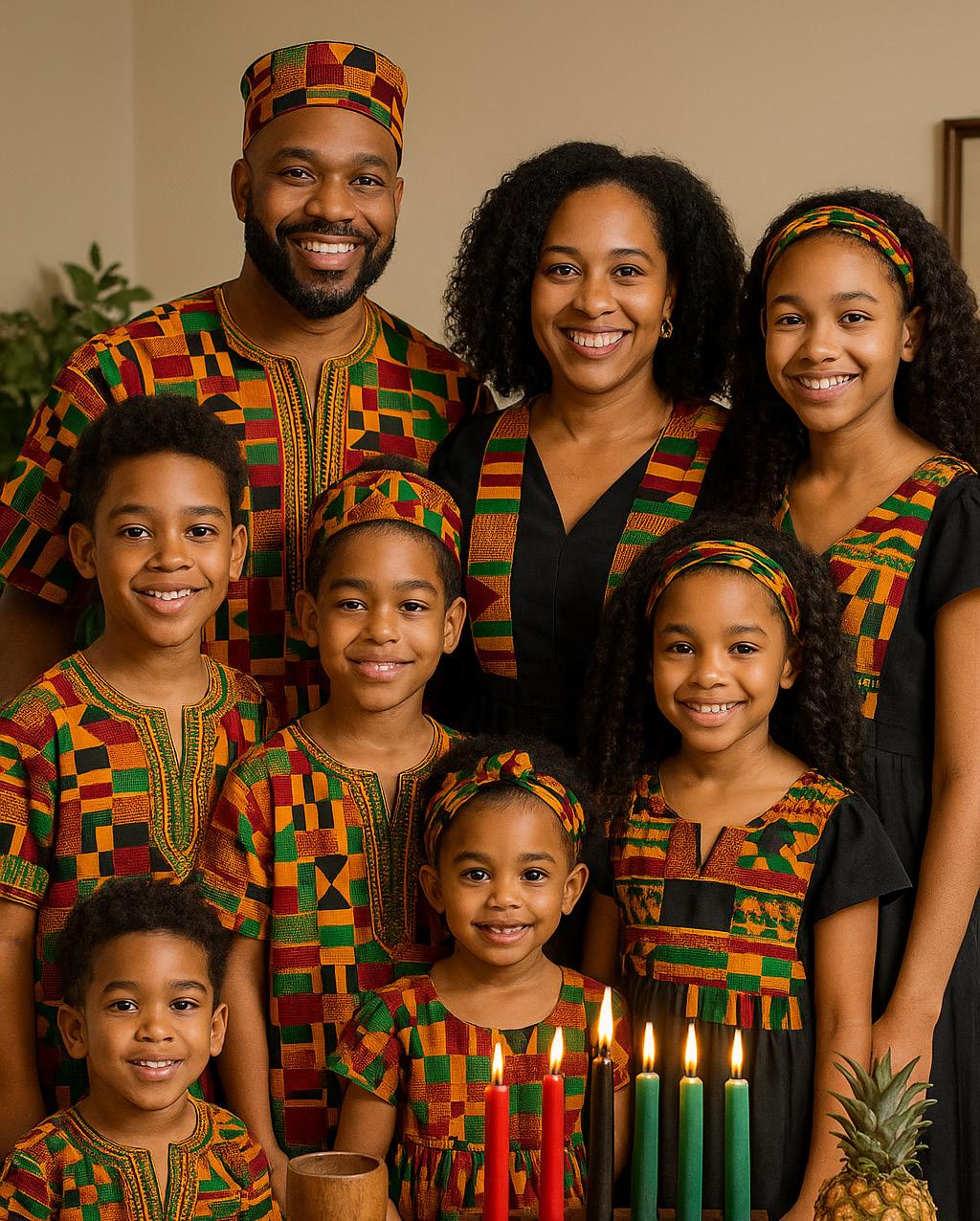
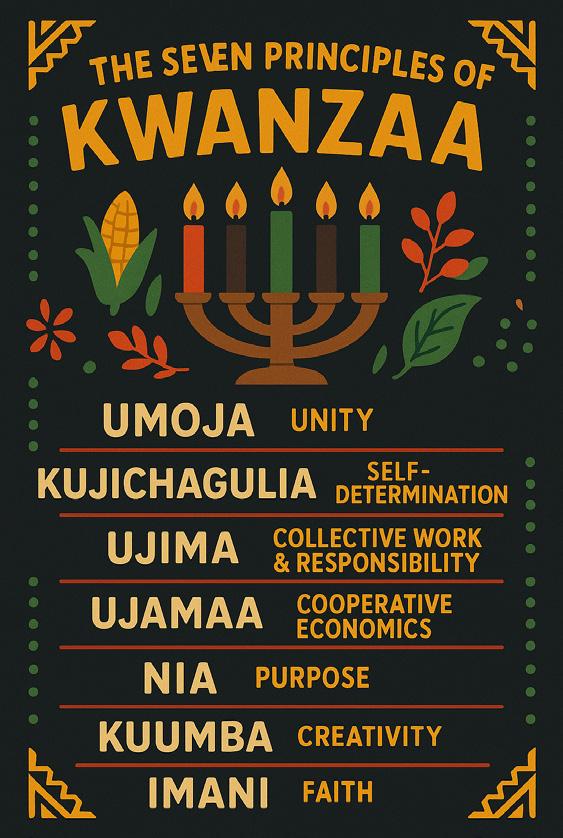
Each year, Denver gathers in unity, joy, and cultural pride as the Kwanzaa Committee of Denver leads one of the largest and longestrunning Kwanzaa celebrations in the United States. Rooted in Black history and guided by the Nguzo Saba — the Seven Principles — Kwanzaa is a time when families, organizations, elders, and youth come together to celebrate community, culture, and shared purpose.
Created in 1966 by Dr. Maulana Karenga, Kwanzaa is observed from December 26 through January 1, honoring family, history, creativity, cooperative economics, and the collective work needed to strengthen and uplift the community.
For many who grew up with Kwanzaa as a family tradition or participating for the first time, this season is far more than an annual celebration. It is a guiding philosophy. “Kwanzaa has been a transformative celebration in my life and has helped shape who I am today,” said
Arianna Scott, Secretary of the Kwanzaa Committee. “I encourage everyone to take the time to reflect on all seven of the Nguzo Saba principles. It is not just about the days that transpire at the end of each year, but should be an integral part of your daily life year-round.”
A signature element of Denver’s celebration is the nightly lighting of the Grand Kinara, held at 5 p.m. each evening from December 26 through January 1 on the historic corner of 2401 Welton, Denver, CO 80205 — the Heart of Five Points. While the Kwanzaa Committee organizes the week as a whole, this sacred ceremony is coordinated by The Epitome of Black Excellence and Partnership. The nightly lightings are powerful and grounding, as families, elders, community and organizations gather to honor ancestors, uplift the Seven Principles, and reflect on unity and purpose.
This year’s theme, Growing the Voices of Kwanzaa, invites the community to uplift the next generation while
respecting the deep roots planted by elders and ancestors. It is a call to carry the Seven Principles into daily life, to listen deeply, and to build the future together. “Kwanzaa has always been about bringing our entire community together—elders, young people, families, and future leaders,” said Deborah Sims Fard, Director of the Kwanzaa Committee of Denver. “Intergenerational activities
are at the heart of our work because culture is strengthened when every voice is included. When we celebrate Kwanzaa, we honor our heritage, uplift our children, and build the unity needed to move forward together.”
The week unfolds through a series of intergenerational programs across the city—cultural gatherings, youth events, senior celebrations, storytelling, dance,
and community learning. Opening Night at Cleo Parker Robinson Dance Theater honors the Circle of Wisdom, celebrating elders whose lives embody the Seven Principles. Community Kwanzaa programs invite new learners and longtime participants alike to experience Kwanzaa 101. Children’s Kwanzaa offers youth-centered engagement steeped in joy, creativity, and heritage, while the Senior Luncheon — hosted by Dr. Claudette Sweet — creates a space for elders to share wisdom during powerful table-talk discussions. Brotherhood Haven invites you to join them in growing
the voices of Kwanzaa through a special pairing of Kwanzaa 101, entertainment and interactive gaming. Opalanga’s Big Dance fills the room with rhythm, movement, and storytelling in honor of the late Opalanga Pugh’s legacy, while Ujima Game Night brings families and neighbors together through laughter, play, and collective energy.
In addition to the public celebrations, January 1 concludes the week with a final Grand Kinara lighting and moments of in-home family reflection—an opportunity to welcome the New Year grounded in culture, purpose, and unity.
The Kwanzaa Committee of Denver also provides year-round cultural education, including Lunch & Learn programs for those wishing to deepen their understanding of Kwanzaa. Students are encouraged to apply for the $1,200 Ansar El Muhammad Impact Scholarship, which uplifts youth leadership and academic excellence in the spirit of the Nguzo Saba.
As Denver prepares for another year of celebration, reflection, and cultural pride, the Kwanzaa Committee of Denver invites the entire community to join in honoring the past, celebrating the present, and strengthening the future— one principle, one story, one gathering at a time. ♦
2025 DENVER KWANZAA EVENTS
Nightly Grand Kinara Lightings
Dec. 26 – Jan. 1 • 5 PM
2401 Welton Street, Denver CO 80205
Coordinated by The Epitome of Black Excellence and Partnerships
Opening Celebration & Circle of Wisdom Inductees
Friday, Dec. 26 • 6 to 8:30 PM
Cleo Parker Robinson Dance Theater 119 Park Avenue West, Denver CO 80205
Hosted by brother jeff’s Cultural Center
Community Kwanzaa – “Growing the Voices of Kwanzaa”
Saturday, Dec. 27 • Noon to 2 PM
Ford-Warren Library, 2825 High Street, Denver CO 80205
Come join us in growing the voices of Kwanzaa through a special pairing of Kwanzaa 101 entertainment and interactive gaming.
Children’s Kwanzaa
Sunday, Dec. 28 • 2 to 4 PM
Hosted by Grace Stiles African American Heritage Center featuring Brotherhood Haven 2607 Glenarm Place, Denver CO 80205
Ujima Game Night
Sunday, Dec. 28 • 6 to 8 PM 2900 Welton Street, Denver CO 80205
Hosted by The Epitome of Black Excellence
Senior Kwanzaa Luncheon
Monday, Dec. 29 • 10 AM to 2 PM 5151 E 33rd Ave, Denver CO 80207
Hosted by Dr. Claudette Sweet Features table-talk discussions led by elders and youth.
Opalanga’s Big Dance
Tuesday, Dec. 30 • 6 to 8 PM CrossPurpose, 3050 Richard Allen Court, Denver CO 80205
Wednesday, Dec. 31, To Be Determined Visit www.brotherjeff.com for update
Families are invited to close the season with personal reflection on the Nguzo Saba.
CELEBRATING FIVE YEARS OF IMPACT:
BRIC Fund Marks Milestone Anniversary with Inspiration, Reflection, and Community Strength
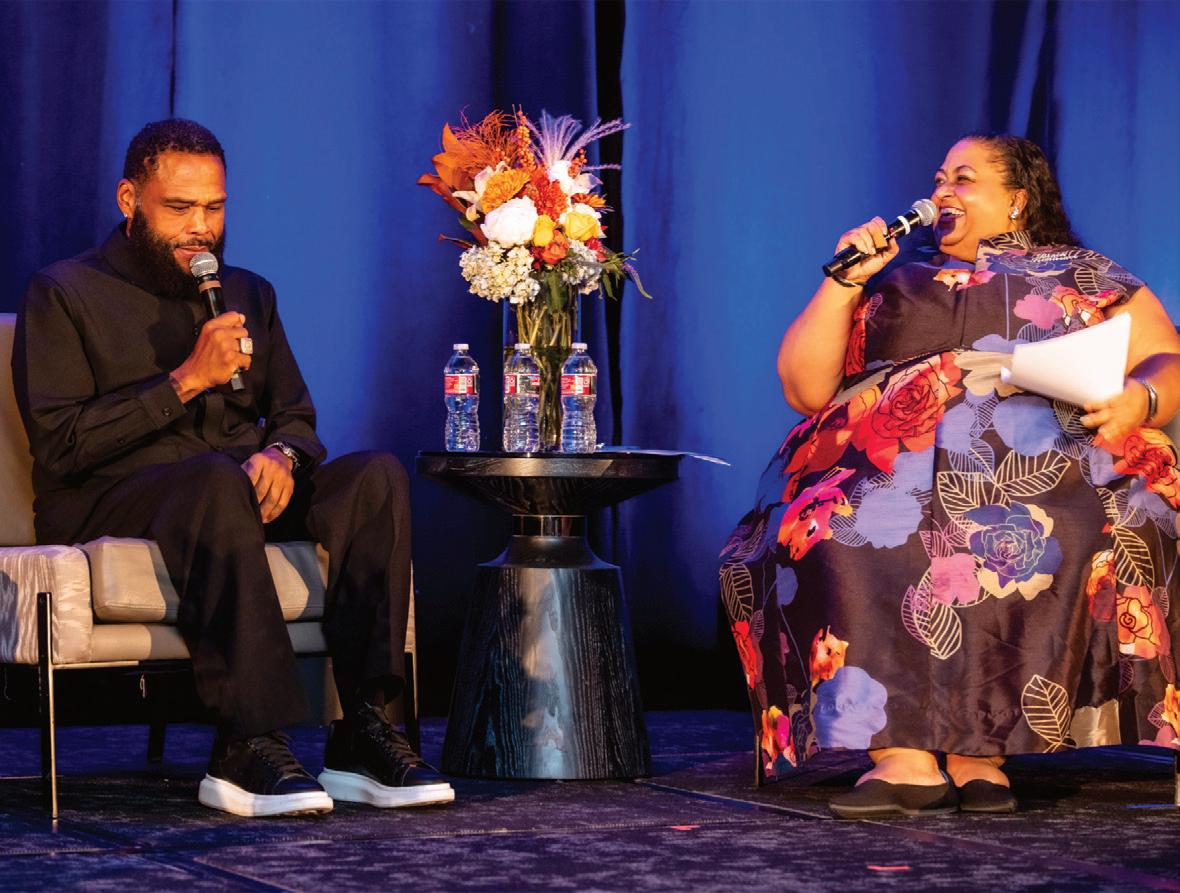
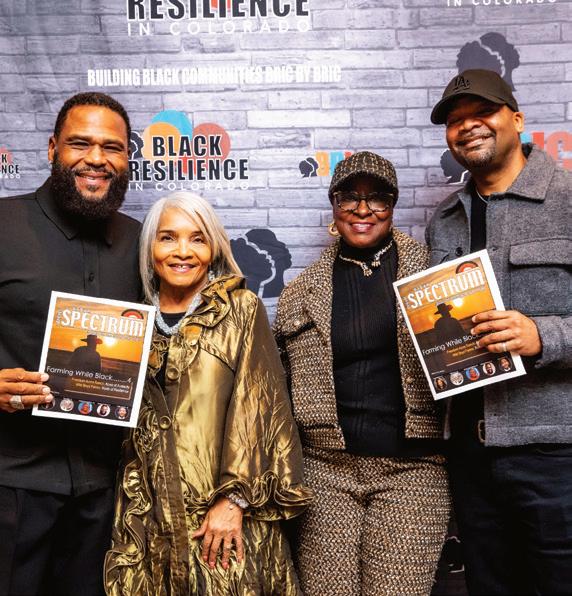
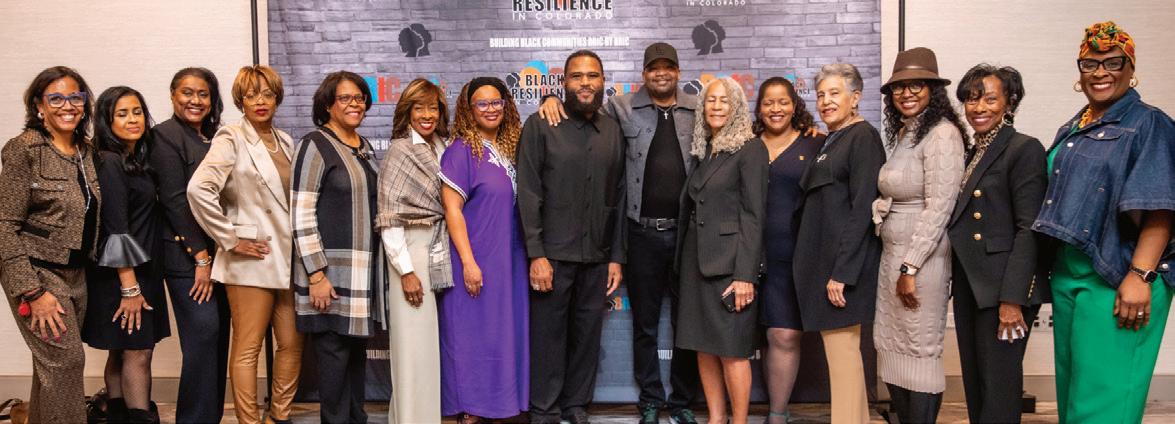
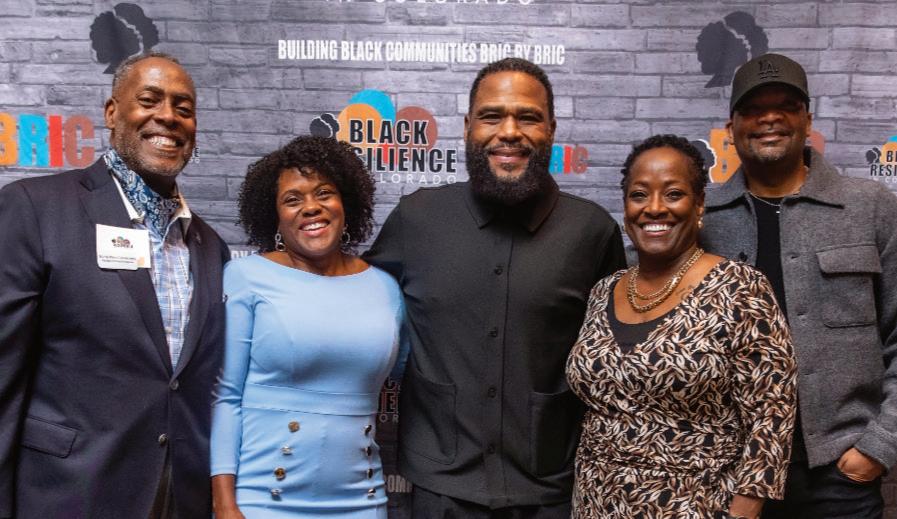
The Black Resilience in Colorado (BRIC) Fund celebrated a powerful milestone this fall—its 5th Anniversary—bringing together donors, grantees, partners, and community members for an afternoon filled with laughter, purpose, and heartfelt reflection. What unfolded was more than an anniversary celebration; it was a reaffirmation of the collective commitment to strengthening Black-led and Black-serving organizations across the state.
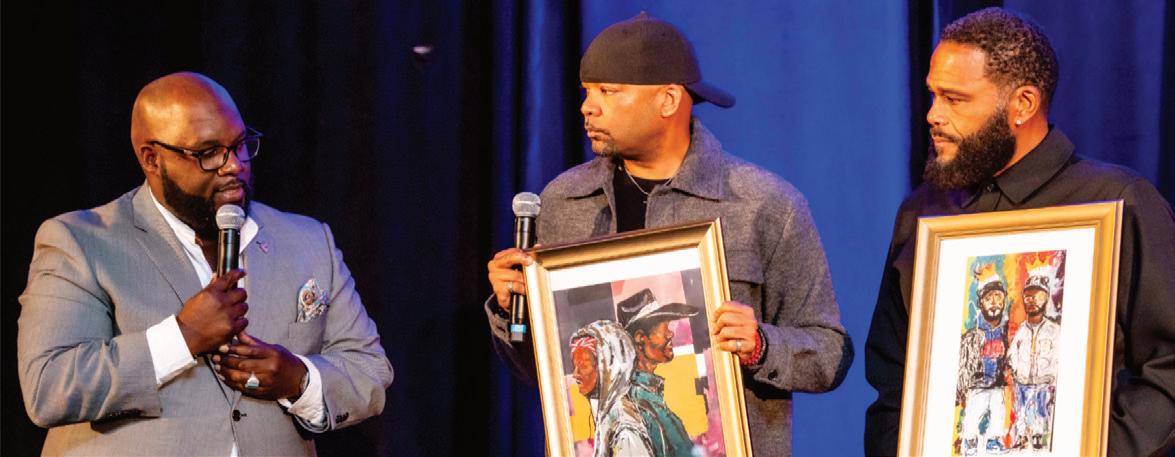
The event featured a dynamic fireside chat with two special guests: award-winning actor, comedian, and producer Anthony Anderson, and Denver native and acclaimed writer/
director Dallas Jackson. Their conversation, moderated by BRIC founder and executive director LaDawn Sullivan, served as an energizing reminder that passion, persistence, and collective action remain essential ingredients for building thriving Black communities.
Throughout the afternoon, Anderson and Jackson shared personal stories, lessons learned, and energized the audience with calls to invest deeply—in ourselves, in each other, and in the work that strengthens our communities.
“I’m a firm believer that I have willed everything into my life; I’ve manifested it … and we all have that power, so tap
into it, believe in it and spread it, then it will come back to you tenfold,” shared Anderson.
Jackson echoed this spirit, reminding attendees that following a dream requires courage and consistency. His own path began in Denver, continued through Los Angeles mailrooms, and eventually led to writing and producing films and TV series. “Listen to the dream in your heart,” he urged. “It’s never too late to start working on that dream, so take things one step at a time, put one foot in front of the other and go do it.”
In addition to storytelling and inspiration, guests were encouraged to prioritize wellness, protect their peace, and hold one another accountable for health and prevention—an affirmation that resilient communities begin with resilient individuals.
The anniversary offered space to reflect on BRIC’s extraordinary growth and influence since its founding on Juneteenth 2020. In just five years, BRIC has become one of the most
significant philanthropic initiatives supporting Black-led and Black-serving organizations in Colorado.
• $6 million invested in more than 400 organizations across housing, education, health, cultural preservation, economic justice, and more.
• Over $200,000 in low-interest capital improvement loans for Black-led nonprofits.
• Leadership and organizational development delivered to 300+ leaders of color.
• Support in helping historically marginalized organizations secure $33 million in capacity grants statewide.
Board chair Javon Brame underscored the meaning behind the Fund’s name: “Black resilience is the force that continues to drive us forward. It’s a story of unbreakable strength.” He added, “BRIC was built by us, for us, and with us. It ensures that Black voices will continue to be heard.”
Sullivan reflected on her vision for the Fund—conceived seven years before its launch—and the power of what the community can build when resources are moved where they matter most. “As we enter our next chapter,” she said, “we will continue to build pathways for equity, ownership and opportunity— BRIC by BRIC—so that our past and our present are never forgotten.”
With sponsorship support led by The Colorado Health Foundation, the 5th Anniversary Celebration honored the achievements of BRIC’s first chapter while rallying the community for what comes next. The stories shared, the wisdom offered, and the commitments reaffirmed all pointed toward a collective vision: a future where Black communities throughout Colorado thrive through investment, advocacy, and unwavering resilience.
As BRIC looks toward the years ahead, the celebration served as a reminder that while much has been accomplished, the work continues—and the strength of the community will continue to fuel the journey forward. Visit bricfund.org to find out how you can help strengthen Colorado’s Black communities, BRIC by BRIC, through the power of your 5T’s - time, talent, treasure, testimony, and social ties. ♦
Sisters Who Roar LUNA & MADISON:
By Benny Samuels
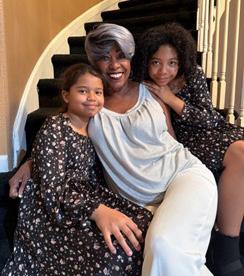
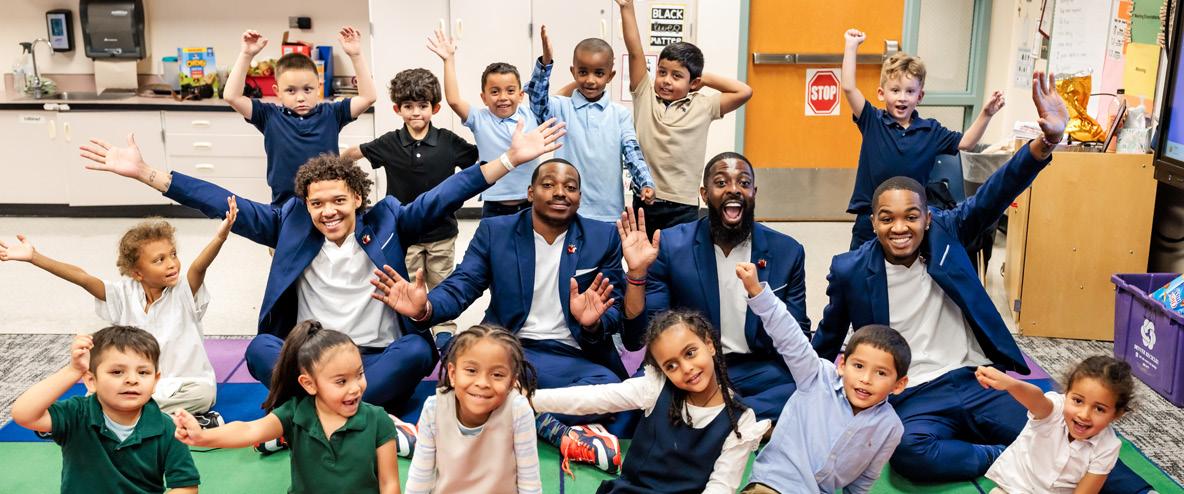
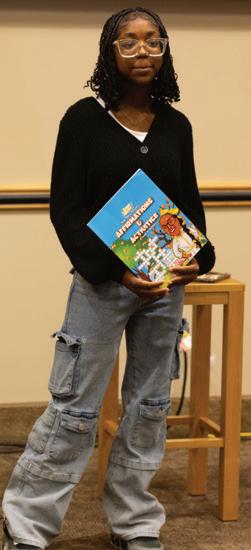
Some stories don’t just walk into a room — they roar in. That’s Luna (9) and Madison (10), two sisters being raised with love, discipline, and joy by their grandmother, Sandrena “Mom” Brockman Robinson. A retired Commercial Real Estate Executive Manager and Building Owners and Managers Association (BOMA) International Fellow, Sandrena has turned strength into a family tradition, and these girls are carrying it forward in powerful ways.
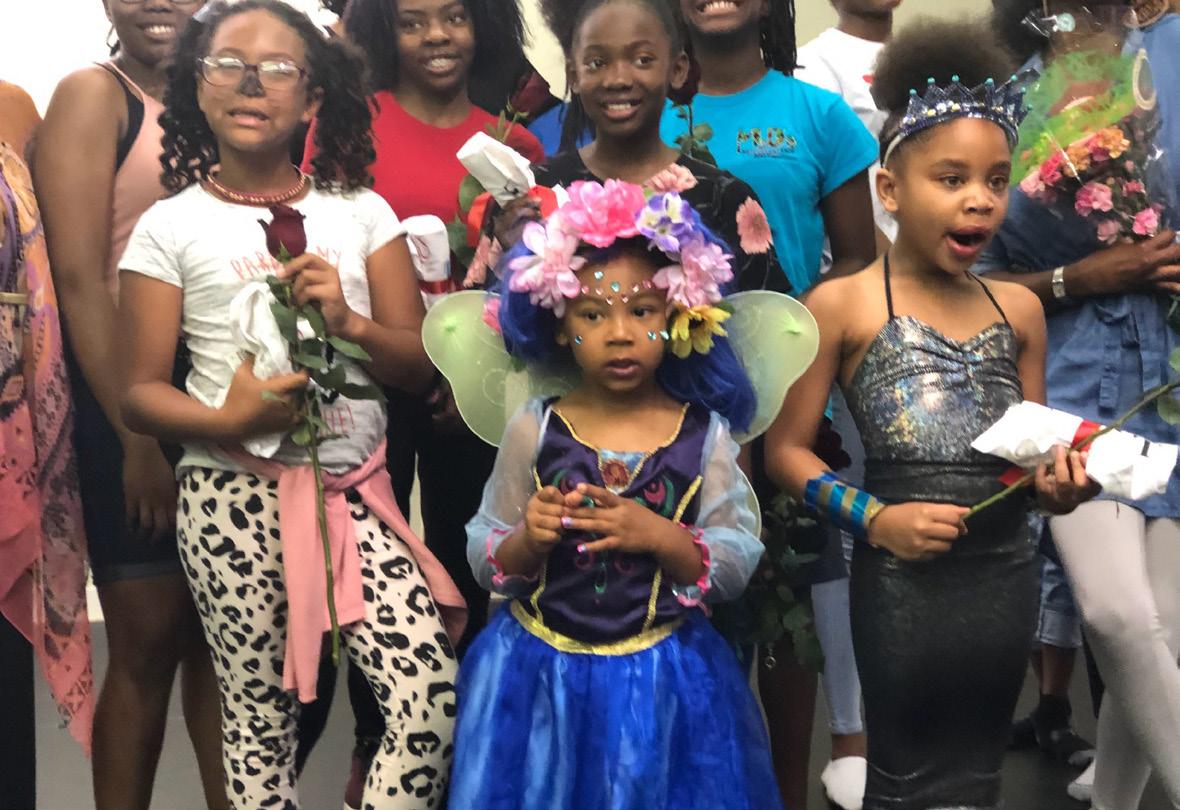
Recently, Luna and Madison had a chance to experience The Lion King at the Denver Center for the Performing Arts. Thanks to Opening Act’s partnership, they also stepped behind the curtain for a technical theatre workshop with members of the cast. Costumes, lighting, sound, stagecraft — a whole new world opened up right in front of them.
When I ask how they feel about their time at Opening Act, their answers say
it all. Madison grins and says, “I like that it’s for young Black girls.” Luna shyly giggles, “I like it because it’s fun.”
And then, as only sisters can, they shout in unison about their favorite part: the dance battles before rehearsal.
These two have now appeared in more than four Opening Act productions, each performance pulling out new courage and new skills. Madison loves to dance and has a beautiful singing voice. Luna also loves
to sing. Madison admits, “A bunch of people looking at you makes me nervous, but I love to sing… so I do it anyway.”
That kind of courage doesn’t stay on the stage. Grandma sees it at home and at school — in their class presentations, their eloquence, their confidence, their poise. “They present projects at school often,” Sandrena shares, “and Opening Act gives them the tools to stand tall, speak clearly, and shine.”
They aren’t just performers; they are scholars. Both are earning A’s and B’s and taking on each school year with determination. Their dreams are as distinct as their personalities. Madison wants to be a second-grade teacher. Her favorite class is P.E., and she loves drawing — especially eyes, because she sees emotion in every line she sketches. Luna dreams of following in her grandmother’s footsteps as a BOMA Fellow. She’s already talking about attending Grandview High School and flying “business class” when she’s a Fellow (say what? A girl who knows exactly what she deserves). Her favorite subjects are writing and grammar, and together they dabble in Latin, German, and Spanish.
Thanks to Opening Act, Madison’s voice now carries farther than she ever imagined. She recently sang a cappella in the new version of Annie, and then sang the same piece again at Scott United Methodist Church for the church anniversary — this time with Luna by her side. Luna is also known in her community as a “prayer warrior” and recently delivered an
These girls are talent, tenderness, and tenacity wrapped in sisterhood. They are rising because someone believes in them and sees every ounce of their potential. Opening Act believes in them and stands ready — with your help — to keep nurturing that promise.
This Colorado Gives Day, your gift keeps the lights shining for sisters like Luna and Madison — girls who are discovering their power, their voices, and their futures, one spotlight at a time.
Your gift fuels transformation:
• $50 provides costumes and props for a full cast.
• $100 sponsors a week of rehearsals led by teaching artists.
• $250 helps one girl join the program for an entire season.
Every dollar builds confidence, community, and opportunity. Together, we’re not just funding a theatre program — we’re investing in young women who will shape Colorado’s future and, we dare say, the world’s.
Join us this Colorado Gives Day. Give joy. Give voice. Give her an opening act.
Editor’s note: For more information, email Sylvia Cordy at scordy@openingacttheatre. org
eloquent invocation at the Gospel Train Awards.
Homeownership? IS A 50-YEAR
Why Ultra-Long Mortgages Are Gaining Attention—And What Buyers Should Know
By Barry Overton
The conversation about homeownership in America is changing. As prices continue to rise faster than incomes, more buyers are questioning whether traditional financing structures still make sense in today’s market. Among the ideas resurfacing is the concept of a 50-year mortgage—a loan that stretches payments across five decades in exchange for a lower monthly bill.
Though not yet common in the United States, the mere discussion of a 50-year product highlights the urgency surrounding affordability. It raises an important question: Does extending a mortgage truly improve access to homeownership, or does it simply increase long-term financial burden?
A comparison of a standard 30-year mortgage and a hypothetical 50-year loan offers clarity.
A 30-year mortgage on a $500,000 loan at a fixed 6.1 percent interest rate results in a monthly principal and interest payment of $3,029.97. Over three decades, the borrower ultimately pays $1,090,790.61, including more than $590,000 in interest. By contrast, the same loan stretched over 50 years reduces the monthly payment to $2,669.05—a difference of approximately $360 per month. That lower monthly obligation feels like a welcome relief for buyers pressed by rising costs. Yet the total amount paid over fifty years climbs to $1,601,430.23. More than $1.1 million of that total is interest, meaning the homeowner spends an additional half-million dollars simply for the benefit of lower monthly payments.
Still, the appeal of the 50-year mortgage is undeniable, especially for buyers in high-priced markets where affordability remains out of reach for many working families. Lowering the monthly payment can make the difference between being able to qualify for a home and being shut out of ownership altogether. For first-time buyers or households navigating tight
budgets, a reduced payment can provide crucial breathing room, freeing additional funds for savings, emergencies, or daily living expenses.
The extended term also appeals to buyers who anticipate rising income in the coming years. The flexibility to begin homeownership at a lower monthly obligation, then increase payments as financial circumstances improve, can be an attractive path forward. Investors— particularly those focused on monthly cash flow rather than long-term equity— may also find value in the reduced obligation that a longer mortgage provides.
However, the trade-offs are equally significant. A 50-year mortgage substantially slows the pace at which equity accumulates. Because payments are spread over a longer period, much of the early repayment goes toward interest rather than principal. Homeowners remain more leveraged for a longer time, and their ability to refinance or sell may be affected, especially if market conditions shift. Long-term wealth building through equity—the cornerstone of traditional homeownership—takes far longer under this structure. And perhaps the largest drawback is the simple reality of the long-term cost: paying more than one million dollars in interest on a $500,000 loan challenges the idea of homeownership as a wealth-building tool.
The renewed interest in ultra-long mortgages is rooted in a broader economic reality. Home prices have risen steadily for more than a decade, far outpacing income growth. Higher
interest rates have also played a significant role, pushing monthly payments even higher and prompting buyers to explore alternative ways to make financing more manageable. These conditions have widened the homeownership gap among demographic groups and heightened the need for innovative financing strategies. Whether or not 50-year mortgages become a widespread option, the discussion reflects an industry grappling with how to make ownership accessible without sacrificing long-term stability.
Because of the trade-offs, the suitability of a 50-year mortgage depends heavily on a buyer’s goals. For some, immediate affordability is the priority. For others, minimizing interest exposure or building equity rapidly may outweigh the benefit of a lower monthly payment. Buyers nearing retirement may find the extended term misaligned with long-range financial planning, while younger households with evolving income potential may view the structure more favorably.
Sidebar Strategy: When a 50-Year Mortgage Becomes a Smart Short-Term Tool
Although many discussions focus on the long-term cost of a 50-year mortgage, there is a lesser-known strategy that can benefit buyers who do not intend to keep the property for decades. For these buyers, the reduced monthly payment can serve as a short-term affordability tool without committing to a half-century repayment plan.
The key advantage is flexibility. By entering the market with the lower monthly cost of a 50-year loan, buyers gain immediate relief while retaining the freedom to pay more toward the principal whenever their budget allows. An additional $100 or $200 per month applied directly to the principal can meaningfully accelerate equity growth, effectively counteracting the slow amortization schedule. This creates a balance: a lower required payment when finances are tight, paired with the option to build equity more aggressively when possible.
This approach works especially well for buyers planning to sell within five to eight years. In that timeframe, the combination of lower payments, optional principal contributions, and potential market appreciation can position the homeowner far better than the loan term might suggest. And it is important to remember that the 50-year mortgage does not lock borrowers in for life. If income increases or interest rates become more favorable, refinancing into a 30-year loan—or even a shorter product—remains an option. In this way, the 50-year mortgage can act as a steppingstone into homeownership rather than a permanent financial commitment.
In the broader landscape of housing, the debate around 50-year mortgages underscores how rapidly the market is changing. Affordability challenges are prompting new conversations about how best to balance accessibility and financial responsibility. While a 50-year mortgage is not a universal solution, it provides an alternative path for buyers who need flexibility now and have a plan to adjust later. For some households, it may serve as a bridge to homeownership in an era where traditional options feel increasingly out of reach. ♦
Editor’s note: Barry Overton is a Denverbased real estate advisor, veteran, and mentor. He helps investors, homeowners, and agents unlock wealth-building opportunities across the country. Follow him for more insights on market trends, AI in real estate, and personal development for entrepreneurs. Contact him at 303-6685433
ALL THINGS
Boys
What Boys Really Need for the Holidays
By Dr. Dedrick Sims, CEO, Sims-Fayola Foundation
Tthey receive. If they get more, they feel valuable. If they get less, they feel overlooked. Adults might believe boys grow out of this mindset, but many men still carry these childhood messages into adulthood.
Research shows that material gifts create a temporary spike in happiness that fades quickly. What lasts are the emotional experiences attached to the moment. When a boy remembers a holiday years later, he rarely remembers the exact item he opened. He remembers who was in the room, who laughed with him, who sat beside him, and how safe or loved he felt. This is the heart of belonging and belonging matters more than any wrapped box.
What Boys Actually Need
Boys need four gifts that cannot be purchased but can be given every day.
• The gift of presence
• The gift of affirmation
• The gift of attention
• The gift of shared experiences
he holiday season arrives with lights, music, sales, and the constant pressure to find the perfect gift. Parents and caregivers feel pulled in every direction, trying to create joy, meet expectations, and make memories that last. But when it comes to boys, what they truly need during this season rarely comes wrapped in a box. It is not the newest gadget or the most expensive clothes. It is connection, presence, and affirmation.
For many boys, the holidays feel overwhelming. Their schedules change, routines disappear, and emotions they do not always know how to name start to bubble up. Boys often mask this with withdrawal, irritability, or distraction. More stuff does not solve that. What does is being seen, heard, and grounded by the people who matter most to them.
Why Gifts Do Not Fill the Gaps
There is nothing wrong with giving gifts. Surprises create joy, and boys deserve to feel celebrated. The challenge comes when gifts take the place of relationship. Many boys have been taught to measure their worth by what
Presence is more than being in the same room. It is putting the phone down, turning off the television, and giving a boy the message that he is worth your time. Boys watch everything. When adults pause and focus on them, boys feel valued in ways that words alone cannot accomplish.
Affirmation is the reminder that who they are matters more than what they do. Many boys receive praise only when they perform or achieve. They become conditioned to believe that love is earned. They need to hear that they are appreciated simply for being themselves. A simple sentence like, “I am proud of the young man you are becoming,” can stay with a boy for years.
Attention is noticing what is beneath the behavior. If a boy seems distant, ask how he is doing. If he is quiet, sit next to him. If he is frustrated, give him space and then invite conversation. Boys often do not know how to start emotional conversations, but they respond when adults open the door.
Shared experiences are what deepen trust. Boys do not always want to talk, but they do want to do. Take a walk, cook a meal together, play a game, decorate the house, visit the barbershop, or drive around looking at holiday lights. These moments create stories that shape identity and strengthen connection.
Why This Matters for Boys of Color
For boys of color, the holidays can be a complex emotional landscape. They
often navigate family expectations, cultural traditions, and the realities of the world around them. Many live in communities where joy and struggle sit side by side. The holidays may bring reminders of who is missing, what has been lost, or what has not been healed. Giving boys presence, affirmation, and connection becomes even more important in these moments. It teaches them that their identity is not defined by scarcity or societal narratives. It affirms that joy belongs to them too. It helps them see that the people around them have not only high expectations, but also deep love.
When boys of color experience consistent connection, it strengthens their resilience. They learn to handle disappointment without shutting down. They learn that they can ask for help without feeling weak. They learn that belonging is not something to earn but something they are worthy of.
Creating Healing Holiday Moments
Families do not need elaborate plans to create meaningful experiences. Small shifts make a big impact.
• Ask boys what they want this season that cannot be bought.
• Invite them to help cook, decorate, or plan a family tradition.
• Give them quiet time when the holidays feel overstimulating.
• Create a moment to reflect on the year with them.
• Share something meaningful about your own childhood or your journey into adulthood.
• Encourage gratitude not as a chore, but as a way to see the good that is already present.
These practices build emotional literacy. They help boys understand that their feelings matter. They also help them anchor themselves when the world feels unpredictable or demanding.
The Long-Term Impact
A boy who receives emotional presence during the holidays grows into a man who understands connection. He will be more likely to express appreciation, show empathy, and value relationships over status. He will have a stronger sense of identity because someone took the time to invest in who he was becoming, not just what he received.
My Final Thought
This season, I encourage every parent, mentor, and caregiver to shift the focus from presents to presence. The gifts will be opened and forgotten, but the emotional moments will last long after the tree is taken down. Boys need connection, affirmation, and intentional time. They need to know that they matter outside of what they have or what they achieve.
Give them the gift of being seen. Give them the gift of being heard. Give them the gift of being loved in ways no store
can ever sell. These are the gifts that shape boyhood. These are the gifts that strengthen manhood. ♦
Editor’s note: The Sims Fayola Foundation is a Denver-based nonprofit dedicated to improving the life outcomes of young men of color through direct programming and systems change. We envision a world where every boy is affirmed, challenged, and equipped to fulfill his potential. Learn more at www.sffoundation.org or contact us at 720-557-8443 or dedrick@ sffoundation.org.
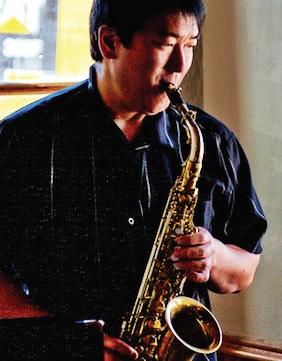
Jazz by Yaz
Straight-ahead jazz on alto and tenor sax for events and recordings.
www.riverstonejazz.com
yasuo@riverstonejazz.com
He will also pass these lessons down. Boys who learn emotional generosity often become men who give back to their families, their communities, and the next generation. They understand that real love shows up in actions, not purchases.
RISING TOGETHER: How Visionary Leaders
The Denver Metro Area Are Transforming Higher Education for the Greater Good
By Dr. Fernando M. Branch, Principal, Robert F. Smith STEAM Academy Executive Director, Colorado Men of Color Collaborative (CMOCC)
As the Principal of Robert F. Smith STEAM Academy and Executive Director of the Colorado Men of Color Collaborative (CMOCC), I’ve witnessed firsthand the power of partnership between K–12 and higher education. Authentic connection — not transactional collaboration — is what drives true progress. When higher education institutions meaningfully engage with their surrounding communities, they become more than centers of academic learning; they evolve into engines of opportunity, equity, and transformation. In Denver, we are seeing this truth
in action. Colleges and universities across the metro area are stepping beyond their walls to build bridges of mentorship, innovation, and access — particularly for historically underserved communities. The leaders driving this movement understand that education must not only inform minds but also uplift lives, families, and neighborhoods. I have had the honor of working alongside and observing several of these visionary leaders — individuals whose collective work represents a shared pursuit of excellence, impact, and community engagement. Together, they are reimagining what higher
education can mean for Colorado’s future.
In the vibrant landscape of higher education across the Denver metropolitan area, a remarkable cadre of leaders is working collaboratively behind the scenes — transforming institutions, uplifting historically underserved populations, and forging new pathways that connect education to economic opportunity. Among them stand four trailblazing figures whose work transcends traditional academic boundaries: Mordecai Brownlee, Rashad Anderson, Marvin Lynn, and Christina Alston. Each is leading bold initiatives within their respective institutions, while the intersections between their work — ranging from workforce development to equity in teacher preparation — are creating a new, dynamic ecosystem of collaborative impact for the Denver and Colorado community.
Dr. Mordecai Brownlee: Bridging Education and Economic Opportunity
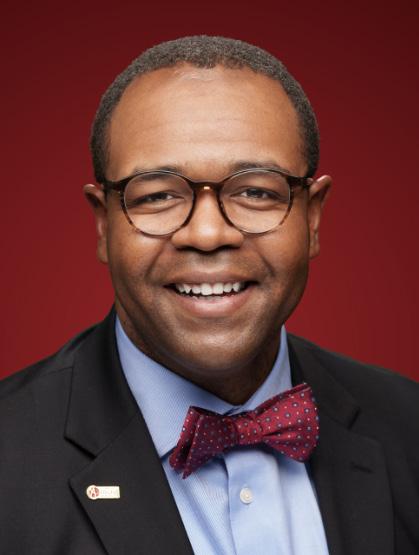
Since taking the helm of Community College of Aurora (CCA) in 2021,
President
Dr. Mordecai Brownlee has transformed his institution into a powerhouse of equity, opportunity, and workforcereadiness.
Under his leadership, enrollment and student success metrics are at historic highs — with completion rates rising more than 20%, and decades-long enrollment declines reversed.
Beyond enrollment and outcomes, Dr. Brownlee has engineered a broader approach to community transformation. His push to pioneer the center for STEM and Applied Technologies and Health Sciences and First Responder training facilities highlights CCA’s growing focus on workforce alignment, helping students translate their education directly into employment. As a member of the board of Education Design Lab, he now plays a national leadership role in designing innovative pathways that connect learners to high-demand careers — a work that has ripple effects across Colorado’s economy.
Equally significant is Dr. Brownlee’s collaboration with partners in Denver and across the state. Through initiatives with the Arapahoe/Douglas Workforce Development Board and alliances with regional K–12 institutions, he’s expanding CCA’s impact well beyond its campuses — crafting inter-institutional pathways, and strengthening the education-to-work pipeline that fuels the region’s future.
At Metropolitan State University of Denver (MSU Denver), Associate Professor Dr. Rashad Anderson is redefining what it means to cultivate equitable teacher leadership. As director of the Western expansion of the Call Me MiSTER program — a national initiative focused on recruiting, mentoring, and placing Black male educators — Anderson is addressing a pressing need: less than 2% of U.S. teachers are Black men.
But his work goes beyond demographics. Dr. Anderson’s research and practice sit at the intersection of teacher development and school transformation, exploring how schools can disrupt old systems of development to foster belonging, excellence, and achievement. Through his leadership, MSU Denver is launching one of the program’s most geographically expansive cohorts, partnering with K–12 districts to build mentorship pipelines, and embedding equity training into teacher preparation. His collaboration with colleagues across Denver-area colleges strengthens pathways for students from college to classroom, ensuring that future educators remain rooted in community and equity-focused leadership.
Dr. Marvin Lynn: Advancing Equity and Collaboration in Teacher Education
At University of Colorado Denver, Dr. Marvin Lynn is leading significant paradigm shifts as Dean of the School of Education and Human Development (SEHD). A renowned scholar of education, and teacher diversity, Lynn’s leadership is rooted in the principle that access and equity are inseparable from excellence in schools. His research, particularly on Black male educators, is among the most cited in the field — influencing state policy and national discourse.
Dr. Lynn’s ability to bring diverse stakeholders together is particularly impactful. As chair of the Colorado Educator Preparation Advisory Council, he is shaping statewide educator preparation policy, fostering partnerships between universities,
Dr. Rashad Anderson: Mentoring the Next Generation of Breakthrough Educators
school districts, and workforce organizations. His collaboration with the Colorado Department of Education and advocacy for culturally responsive pedagogical practices are breaking down institutional silos — ensuring that teacher preparation is responsive to the students and communities educators will serve.
These collaborative efforts align closely with Dr. Anderson’s work at MSU Denver, creating increasingly cohesive systems for teacher support across Colorado’s institutions — from recruitment to classroom practice.
Dr. Christina Alston: Transforming the STEM Graduate Experience
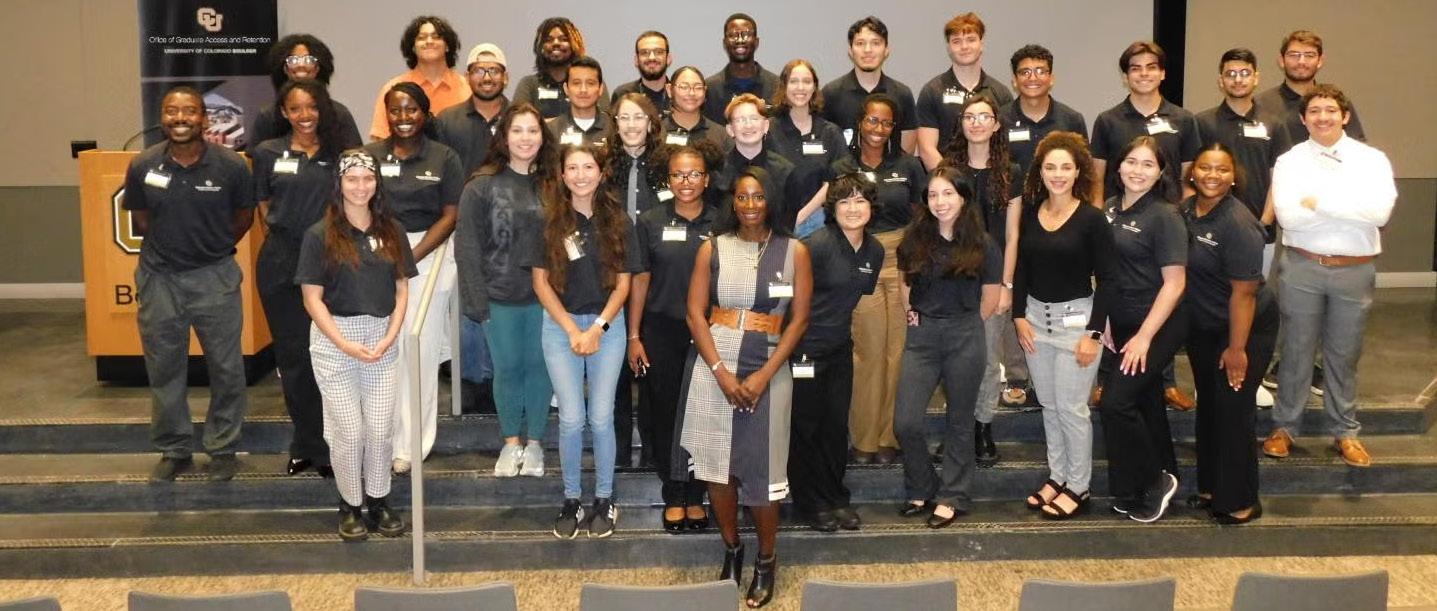
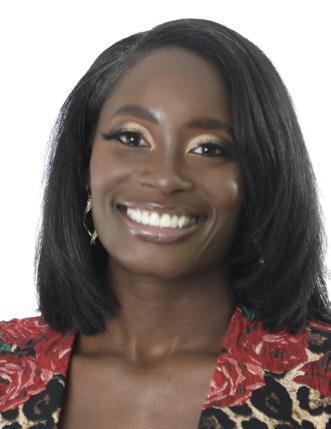
At University of Colorado Boulder, Dr. Christina Alston is redefining the graduate student experience in STEM through her leadership of the Office of Graduate Access and Retention. Her work focuses on fostering belonging among historically marginalized graduate students and addressing the “Racial Battle Fatigue” many Black women in science experience.
Dr. Alston’s work is transformative in several ways. By leveraging mentoring programs like SMART and the Colorado Advantage, she is strengthening pathways for students from underrepresented backgrounds to pursue advanced STEM degrees. Her collaborative approach extends beyond CU Boulder — connecting graduate programs with local K–12 schools, research labs, and industry
partners. These partnerships expand opportunities not only for students but also for the Colorado workforce, ensuring the next generation of scientists, engineers, and innovators reflect the state’s diversity.
The Power of Uncommon Intersections
The collective impact of these four leaders is rooted in collaboration at often-overlooked intersections: workforce development and educational access (Brownlee); community-driven teacher leadership pathways (Anderson and Lynn); and diversity-driven innovation in STEM education (Alston).
Their collaborations are reshaping Denver’s educational landscape in several profound ways:
• Workforce-focused education pipelines: Brownlee’s industryaligned programs complement Alston’s research pathways, creating seamless transitions from STEM education to high-demand careers.
• Diverse educator training ecosystems: Guidelines and approaches developed
collaboratively by Lynn and Anderson are strengthening educator diversity and cultural responsiveness statewide.
• Community-centered student support: All four leaders emphasize belonging and equity — from mentorship and retention strategies to institutional policies that prioritize student success across demographics.
Together, these initiatives are enhancing in-state access, fostering economic mobility, and helping Colorado become a national leader in K-16, high-quality higher education.
A Future Built by Collaboration
The trajectories of Community College of Aurora, Metropolitan State University of Denver, University of Colorado Denver, and University of Colorado Boulder are increasingly intertwined — not by happenstance, but by visionaries who understand that the challenges of education are bigger than any one campus.
In their shared commitment to educational justice, accountability, and community empowerment, Dr. Mordecai Brownlee, Dr. Rashad Anderson, Dr. Marvin Lynn, and Dr. Christina Alston are redefining what it means to lead in higher education. Their collaborative work is building a powerful ecosystem where students across Colorado — regardless of background — can access education, thrive in their chosen fields, and shape the future of their communities.
As Denver continues to grow, expand, and diversify, the leadership and partnerships of these four will be essential — not just to the success of their institutions, but to the city itself. They’re not just leading schools; they’re leading communities into a future where higher education is the foundation of inclusive prosperity and social mobility. ♦
Dr Janice Jarrett O D
HATS OFF TO Struggle COLORADO
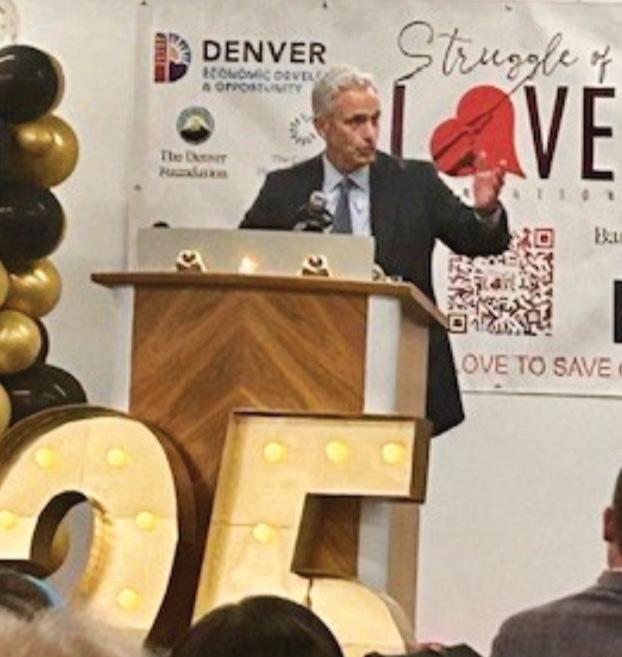
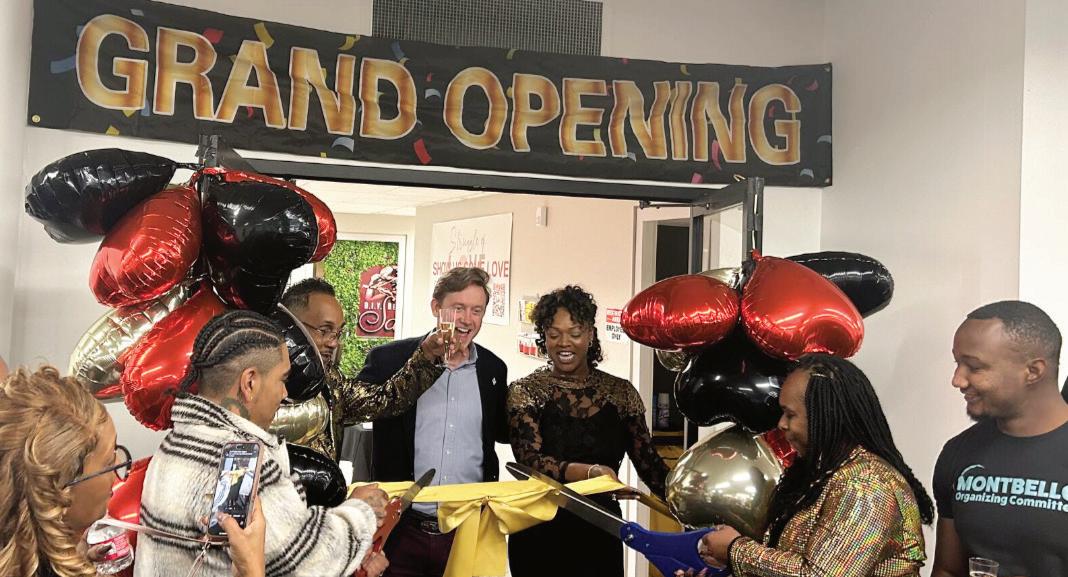
Twenty five years ago, Lakeshia and Joel Hodge founded Struggle Of Love Foundation in Denver’s Montbello neighborhood, focused on giving young people a wide range of programs, services and most importantly, hope and love — and dedicated to working in the community, with the community and through the community to reduce violence.
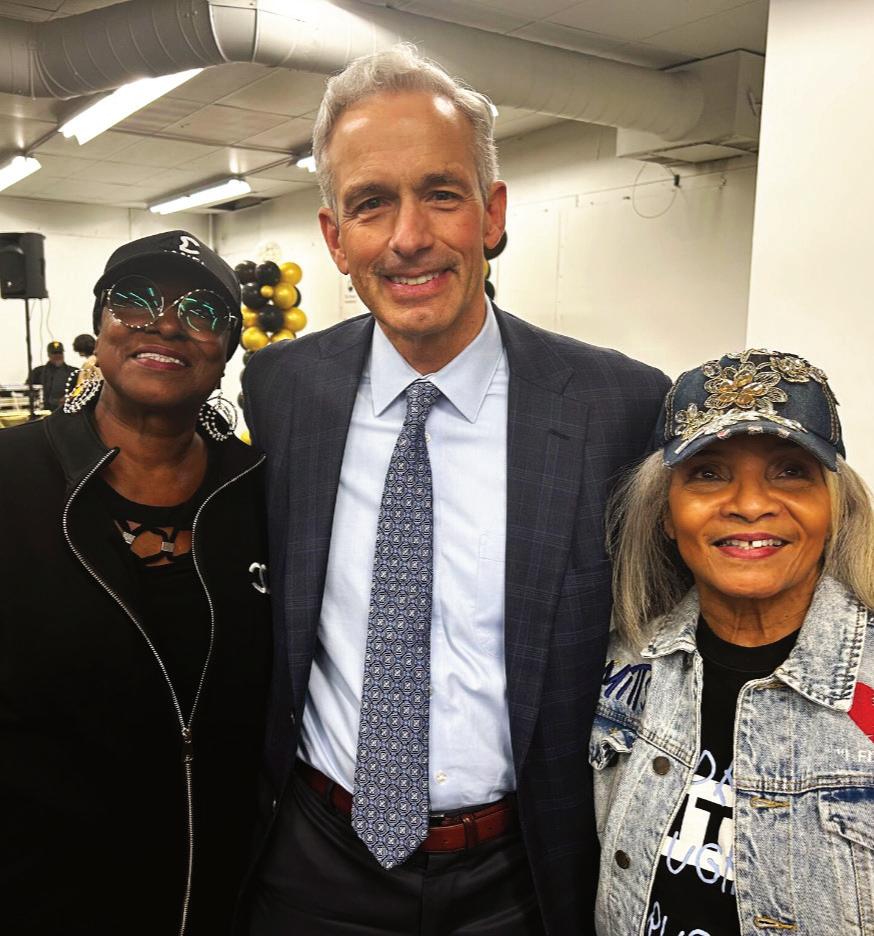
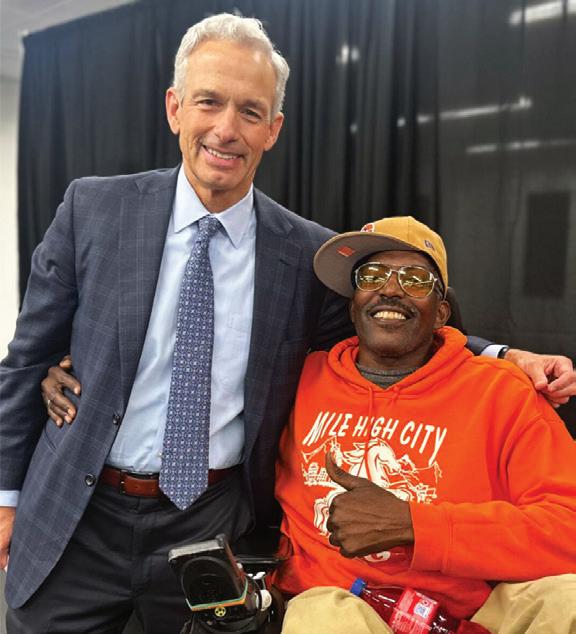
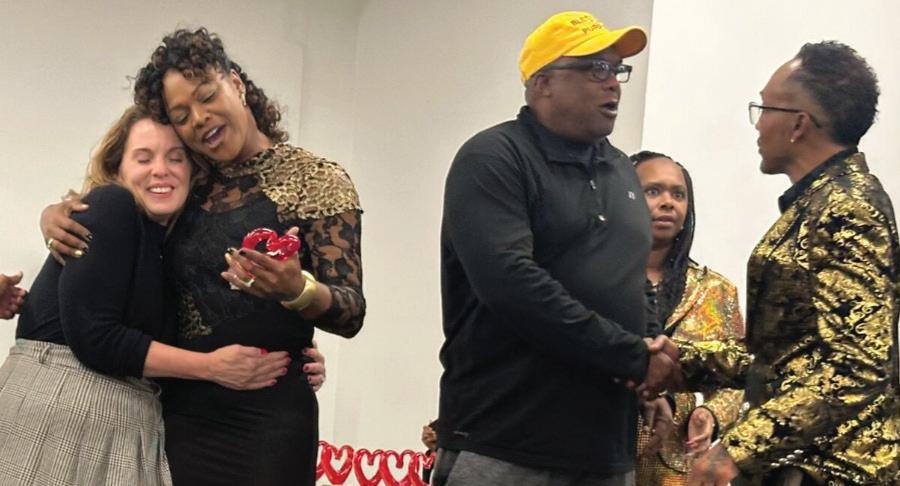
Last month, with a hugely successful capital campaign (https:// lnkd.in/gbDWP7Yp) and with the support of a wonderful array of funders and supporters, Struggle of Love officially “cut the ribbon” on their new building in Montbello. I was so honored to attend this incredible milestone, along with so many Montbello and Denver community leaders.
Congratulations, Lakeshia, Joel and the entire Struggle of Love team! ♦
Women’s Hall of Fame Seeks
Volunteers
The Colorado Women’s Hall of Fame is gearing up for several exciting upcoming events, and we’re looking for dedicated volunteers who want to help celebrate, preserve, and share the stories of Colorado’s remarkable women.
Whether you can lend a few hours at an event or take on a more ongoing role, we’d be thrilled to have you on our team.
Interested in playing a larger role? We also have various committee openings dedicated specifically to supporting our participation in the America 250 - Colorado 150 Commemoration. These committees will help with planning, programming, communications, partnerships, and community engagement tied to the celebration.
These roles are also an excellent pathway for those who may be interested in future board service with the Colorado Women’s Hall of Fame. If you’re looking to expand your leadership, support women’s history, and help grow our statewide reach, this is a wonderful place to start.
Submit your interest online at https://www.cogreatwomen.org/ empower-her/ and we’ll connect you with volunteer or committee opportunities that match your skills, time, and passion. No prior experience required — just enthusiasm and a commitment to uplifting women’s stories. ♦
Struggle of Love Celebrates 25 Years
John Walsh, Denver District Attorney LinkedIn Post
ANDREWS AND JACKSON
Elected At-Large, Signaling New Direction for Aurora
By Denver Urban Spectrum
Aurora voters have ushered in a new era at City Hall, electing Rob Andrews and Alli Jackson to the city’s two at-large council seats and flipping what had been a solidly conservative body toward a progressive, Democratic-leaning majority.
In the November 4 coordinated election, Andrews and Jackson emerged as the top vote-getters in a five-candidate field that included conservative incumbents Danielle Jurinsky and Amsalu Kassaw, as well as challenger Watson Gomes. According to unofficial combined results from Adams, Arapahoe, and Douglas counties, Jackson received about 36,394 votes and Andrews about 36,477 votes, outpacing Jurinsky (29,151 votes), Kassaw (23,816), and Gomes (11,489). The sweep helped transform the council from a 7–3 conservative majority to an anticipated 6–4 progressive majority.
Although Aurora’s municipal elections are officially nonpartisan, both Andrews and Jackson campaigned as progressive, Democratic-aligned candidates and were backed by labor, community, and environmental organizations, as well as prominent Democratic elected officials. Their victories are widely viewed as a rebuke of the hard-right politics that have dominated recent council debates on immigration, public safety, and homelessness.
For Andrews, a Colorado native and nonprofit executive, the win is an extension of long-standing work on
economic mobility and workforce development. A former professional football player who now leads One Voice Coalition, Andrews has focused his career on helping people facing barriers—such as poor health or prior justice involvement—get back into the workforce. His campaign emphasized a vision of an Aurora where every resident can feel safe, find stable housing, and access real economic opportunity, with priorities that include affordable housing, communitybased public safety, good jobs, and environmental stewardship. Jackson, a lifelong Auroran, social worker, and foster mom, brought a “community first” platform rooted in wellness, family support, and youth empowerment. Her issue agenda includes expanding after-school and recreation programs, investing in mental health and social services, and strengthening supports for working families through more affordable childcare and housing. As the daughter of a Black veteran and a Russian immigrant, Jackson has also been vocal about protecting Aurora’s immigrant communities—who make up roughly 21% of the city’s population—opposing
fear-based rhetoric and pushing for policies that keep families together and ensure all residents feel welcome.
On environmental issues, Jackson campaigned on a pledge to ban fracking in and near Aurora, create a communityled environmental commission, and strengthen protections for clean air and water. Andrews, endorsed by conservation and progressive groups, has likewise framed climate and public health as core economic and equity issues. Together, their approach suggests future policy battles over oil and gas development, sustainability, and land use will look very different than in recent years.
Because Andrews and Jackson hold at-large seats, they are accountable to the entire city rather than a single ward—positioning them as key voices on citywide questions like housing, policing, transportation, and how Aurora responds to growth. Their wins came alongside victories by fellow progressives Gianina
Horton (Ward I), Amy Wiles (Ward II), and Ruben Medina (Ward III), forming a new majority that has already signaled interest in changing the tone and direction of council meetings, including how the body handles public comment, the city’s consent decree on policing, and overall decorum.
For Aurora residents, the Andrews–Jackson duo represents a significant shift: from a council often dominated by sharp ideological clashes to one where two citywide representatives are explicitly centering economic fairness, immigrant inclusion, youth, and community wellness. How quickly that vision translates into ordinances, budget priorities, and on-the-ground change will be the next chapter in Aurora’s story — but voters have clearly handed them a mandate to try. ♦
Editor’s note: This story was produced in part with the Colorado Capitol News Alliance and ChatGPT. The Capitol News Alliance is a collaboration between KUNC News, Colorado Public Radio, Rocky Mountain PBS and The Colorado Sun. Stories produced by the alliance are also shared with Rocky Mountain Community Radio and other news organizations across the state.
Purnell Steen, ‘the elder statesman of jazz music in Denver,’ has died
By John Moore and in part by Rachel Eastabrook
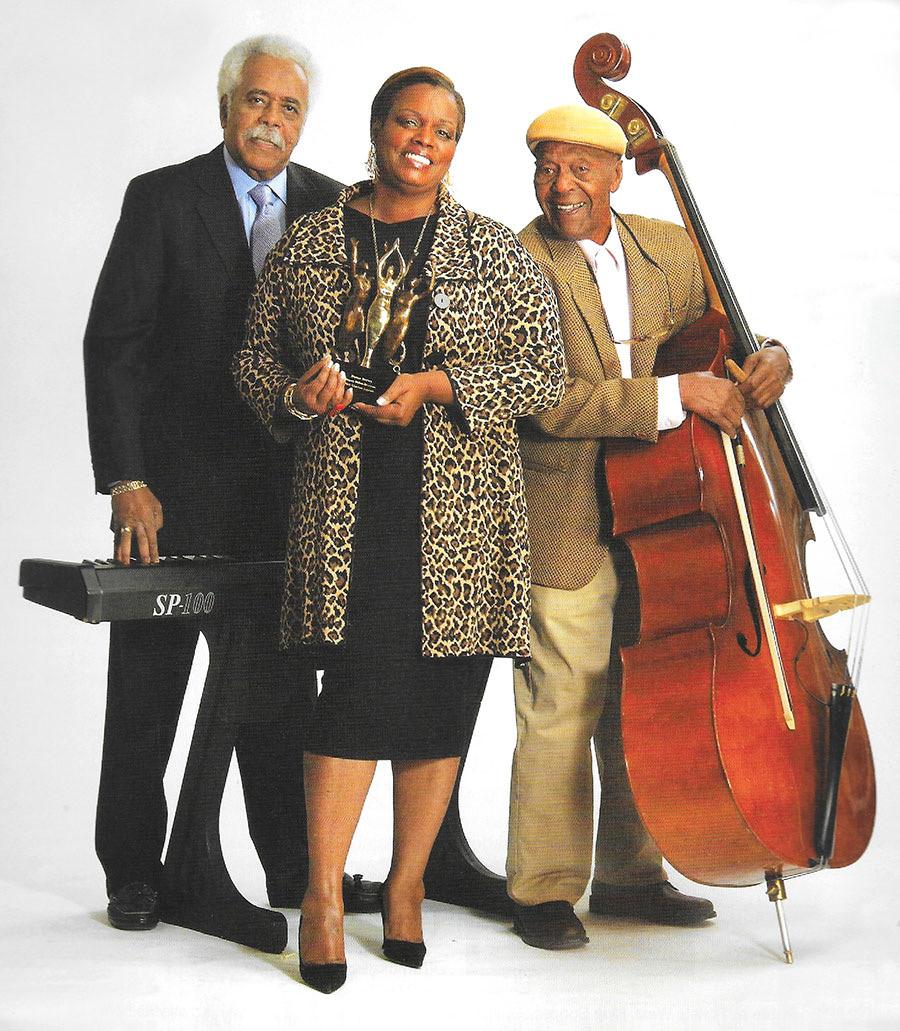
Storied piano player Purnell Steen, a member of Denver’s first family of jazz, died Tuesday November 18. Steen, 84, was a first cousin to legendary bassist Charles Burrell, who died on June 17 at age 104. Five-time Grammy Award winner Dianne Reeves, pianist George Duke and saxophonist Eddie “Cleanhead” Vinson were relatives as well.
Steen was considered a cultural ambassador for the city of Denver and the main keeper of the flame for the Five Points sound.
Steen simply loved jazz. “It is the only art form created in the Western
Hemisphere,” he told the Denver Gazette at the promotional launch of the city’s Denver Arts Week on Nov. 1, 2024, at Dazzle Denver. “And it came out of the African American church. It is ours. We created it, and this is the best cultural export the United States has.”
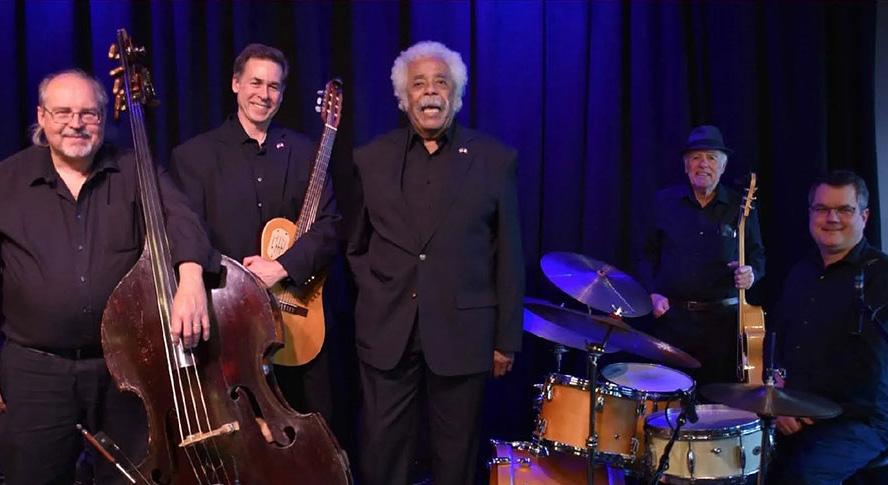
Steen was the founder and frontman for The Five Points Ambassadors, a band that played its regular gig at Dazzle Denver’s Friday Lunch Brunch as recently as Nov. 7. They were also frequent performers at annual summer outdoor traditions like the Five Points Jazz Festival and the summer City Park Jazz series.
In 2021, the Ambassadors brought a memorial for Colorado Gov. Richard Lamm to a close with a rousing performance of John Denver’s “Rocky Mountain High.”
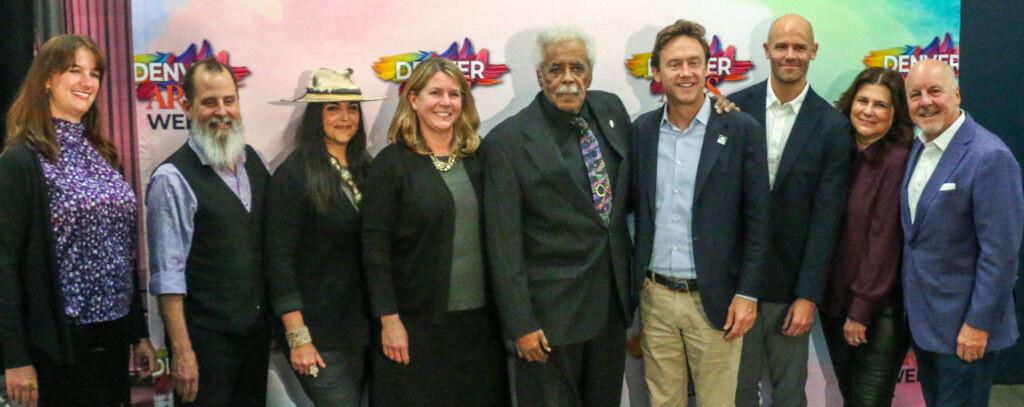
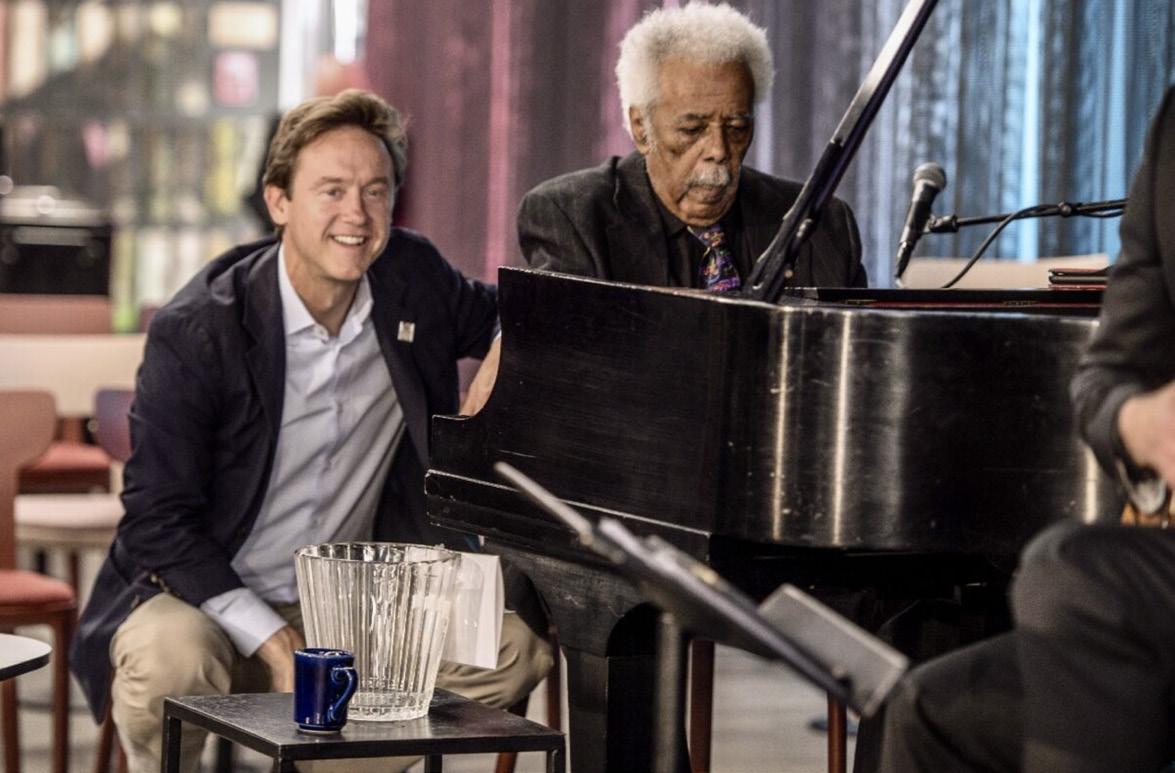
At that 2024 Denver Arts Week launch, Ambassadors drummer Bill Larson briefly ceded the sticks to Mayor Mike Johnston for one smooth song. Afterward, Steen said, “We’re making the mayor an honorary Ambassador.”
Today, Johnston told The Denver Gazette: “Purnell Steen inviting me to sit in and play with the Five Points Ambassadors is a moment I will cherish forever. Purnell was a legend in Denver’s jazz community and a titan of the Civil Rights movement. My thoughts are with his family, his bandmates, and all who knew him during his amazing life. He will be deeply missed.”
Rodger Hara of KGNU called Steen “the elder statesman of jazz music in Denver.”
Steen was “hatched,” as he put it, at Mercy Hospital on April 15, 1941. In an
interview with Hara, he called his life in music divine providence.
“I started studying the piano two weeks shy of my fourth birthday,” said Steen, who claimed to have cognition back to age 3, with America at war in 1944. “My parents gave me, believe it or not, the little classic toy grand piano popularized by (cartoonist) Charles Schultz.” Steen remembered trying to tap out the melodies he heard on radio programs like “The Bell Telephone Hour” and “The Lucky Strike Hit Parade.”
Steen graduated from Denver East High School, taking great pride in being part of a remarkable roster of student musical artists there that now includes Ron Miles, Judy Collins, Don Cheadle (then a high-school sax player) and most of the East Angels who would go on to form the legendary band Earth, Wind & Fire. “I played with Philip Bailey
Purnell Steen poses with Denver Mayor Mike Johnston and other area arts leaders at the promotional launch of Denver Arts Week on Nov. 1, 2024, at Dazzle Denver. (John Moore, Denver Gazette)
Denver Mayor Mike Johnston sits with Purnell Steen on piano at the promotional launch of Denver Arts Week on Nov. 1, 2024, at Dazzle Denver. (John Moore, Denver Gazette)
in church when he was 9,” Steen told me last year.
That church was Zion Baptist, located at 24th Avenue and Ogden Street, where he was introduced to Bach and Mozart before turning 8. “It was founded in November 1865 by 10 recently Black Freedmen,” Steen said, making it Denver’s oldest Black church. He knew this, he said, “because I have been a member of Zion since 1946.”
Steen performed all over the world after having been mentored by Burrell as a child.
“Charlie could take the complex and simplify it and break it down to very simple language that a child could learn to understand,” Steen said after Burrell’s death. He called his cousin the Jackie Robinson of local music after he became the first Black member of the Denver Symphony Orchestra in 1949. “He was a lone eagle,” Steen said of his cousin. “Eagles fly where nobody else dares to fly.”
Mostly, when you’re with Steen, “you sit there listening in awe,” Denver7 anchor Shannon Ogden said in a recent profile on Steen.
Music was not Steen’s only passion.
In college, he lost out on opportunities because of his race. He was told he couldn’t play classical music as a Black man. That helped spur him to get involved in civil rights activism.
He became a youth leader with the NAACP and CORE, and traveled to Washington, D.C., to meet with then-
“I wrestled with God, wanting to know why I was put on this Earth, and what my mission on this Earth is, and someone finally said, ‘It’s your gift of music,’” Steen told NBC. He liked how it built bridges.
“I’ve been in places where I couldn’t speak the language but where music brought everybody together as kindred spirits. And you know, when I leave this Earth, I just want to have somebody put on my headstone, ‘Here was a man who loved music and who loved people.’” ♦
The Five Points Ambassadors described their music this way: “Imagine Count Basie’s swing combined with Duke Ellington’s ‘love you madly’ charm, topped off with a healthy dollop of Wild West spirit.” The other band members were Larson on drums, Ed Stephen on acoustic guitar, Ron Bland on bass, Vohn Regensburger on Brazilian guitar and, occasionally, Greg Gisbert on trumpet.
Steen was also a history and music educator who gave frequent lectures on the history of Denver and the significance of the Five Points community.
General Robert F. Kennedy. Steen also participated in nonviolent protests in Denver and attended the famed March on Washington.
“With every fiber in my body, I will make sure that freedom for all people is a reality in the United States,” Steen told NBC’s project “Voices of the Civil Rights Movement.”
In recent years, Steen focused closer to home: He told Denverite in 2022 that he thought there should be more landmarks to Black musicians in Denver.
Editor’s note: John Moore is the Denver Gazette’s Senior Arts Journalist. Email him at john.moore@denvergazette.com. Rachel Estabrook is an executive producer, editor, senior editor, news editor and podcast producer.
Editor’s note: This story was produced in part with the Colorado Capitol News Alliance, a collaboration between KUNC News, Colorado Public Radio, Rocky Mountain PBS and The Colorado Sun. Stories produced by the alliance are also shared with Rocky Mountain Community Radio and other news organizations across the state.
Tantiana “LadyMay” Mayfield performs at CJRO’s tribute to Nancy Wilson at Dazzles
Connect & Collaborate with Robert Walker-Smith at the Rocky Mountain Buell Media Center and Spangalang’s‘
BRIC Fund Celebrating the Cornerstones of Resilience, Creativity and Wellness
The Brunch of Champions
Portrait of a Postman Film Screening
CBWPA Annual Tribute to Black Women Luncheon
Struggle of Love 25th Anniversary
Sip some holiday cheer and spread it, too
This holiday season, warm up – or cool down – with McDonald’s Hot French Vanilla Latte or Iced Caramel Macchiato. And when you treat your kids to a Happy Meal, we’ll donate a penny to local Ronald McDonald House Charities® Chapters. Over the past five years, more than $449,774 has been donated to RMHC® Denver through Happy Meals. That’s worth celebrating!