
Go wild for Front Range air quality.
Turn off the engine when you’re parked to reduce ground-level ozone.
Created from pollutants like car exhaust, ozone is the Front Range’s biggest air quality issue and a leading cause of respiratory problems.


Know when it matters most: text “BETTERAIRCO” to 21000 to sign up for summer ozone alerts.

Volume 39 Number 5 August 2025
PUBLISHER
Rosalind J. Harris
CHIEF OPERATING OFFICER
MANAGING and COPY EDITOR
Ruby Jones
COLUMNISTS
Barry Overton
Dr. Dedrick Sims
CONTRIBUTING WRITERS
Khaleigh Reed
Ruby Jones
SPECIAL PROJECTS ASSISTANT
Tanya Ishikawa
ART DIRECTOR
Bee Harris
GRAPHIC DESIGNERS
Jody Gilbert - Kolor Graphix
Marion Boston
Sekar Uthayasuriyan
PHOTOGRAPHER
On The Mark Images -
Mark Walton
DISTRIBUTION
Lawrence A. James

Denver Urban Spectrum is a monthly publication dedicated to spreading the news about people of color. Contents of Denver Urban Spectrum are copyright 2024 by Bizzy Bee Enterprise. No portion may be reproduced without written permission of the publisher.
Denver Urban Spectrum circulates 10,000 copies throughout Colorado. Denver Urban Spectrum welcomes all letters, but reserves the right to edit for space, libelous material, grammar, and length. All letters must include name, address, and phone number. We will withhold author's name on request. Unsolicited articles are accepted without guarantee of publication or payment.
Write to Denver Urban Spectrum at P.O. Box 31001, Aurora, CO 80041. For advertising, subscriptions, or other information, call 303-292-6446, email publisher@urbanspectrum or visit the Website at www.denverurbanspectrum. com.
MESSAGE From The editor
It’s Back-to-School season in the Mile High City, and as the rhythm of summer slowly gives way to sharpened pencils and packed lunches, Colorado stands at a crossroads of transformation. It’s a time of new beginnings, renewed focus and real conversations about what it means to invest in our communities – economically, emotionally and culturally.
In this issue, we spotlight a gamechanging moment for Colorado as the National Women’s Soccer League moves ahead with its expansion to Denver.
With the country’s first Black-owned mutual fund company, Ariel Investments LLC, and its Project Level venture leading the charge, Colorado’s communities are excited for the economic opportunity that lies ahead. Investors Mellody Hobson and Jason Wright are making history, and we welcome the team with enthusiasm and hometown pride.
Also making waves is longtime radio personality Nikki Swarn, whose “Therapy
Thursday” podcast has redefined how we talk about mental health.
What started as a personal love letter has grown into a community experience that invites listeners to be vulnerable, with a reminder that healing doesn’t have to happen in isolation. This month’s article provides inspiration and encourages you to stay tuned to exciting developments ahead.
After much controversy and months of discourse, we’ve provided an update on the censure of CU Regent Wanda James, unraveling a story with deep implications for higher education, public leadership and racial politics in Colorado. As questions of accountability and bias continue to surface, we remain committed to covering this issue with clarity, context and care.
Celebration is in order, as we recognize the Colorado Women’s Chamber of Commerce 2025 Top 25 Most Powerful Women in Business. This year’s honorees are builders and boundary-breakers,
paving the way across industries and lifting others as they rise.
August marks the official return to the classroom, and this month’s content dives into the shifting landscape of education, from youth programming to local efforts making sure every student has the tools they need to thrive now and into the future.

My personal hope is that this and every issue of Denver Urban Spectrum reflects the city’s heartbeat – its tensions and triumphs, setbacks and steps forward.
Thank you for reading, and for being part of the conversation.
Editor Ruby Jones
As Corporate DEI Programs Are Cut, Community Partnerships Are Stepping In CORPORATE
An op-ed by Amanda Blaurock
Corporate America once broadcast its commitment to Diversity, Equity and Inclusion (DEI) loudly and proudly. Today, in some cases, that message is fading.
Political backlash, legal scrutiny and cultural pushback have led many companies to scale back their DEI efforts. Entire departments have been dismantled; budgets are shrinking; roles are disappearing; and initiatives that once signaled progress are now being quietly sidelined.
Amid this retreat, new commitments rooted in community partnerships have emerged.
At Village Exchange Center (VEC), we’re seeing this shift up close. Based in Aurora, VEC is a multicultural community center that serves immigrants, refugees and other historically
DEI PROGRAM
marginalized groups. Our work spans food security, health access, youth empowerment and cultural integration.
Recently, we welcomed volunteers from Liberty Global to our urban farm and food pantry. What began as a onetime volunteer day evolved into something more meaningful as employees connected directly with the individuals and families we serve. They got their hands in the soil, helping to plant seedlings for a harvest of fresh produce later this year.
The experience reframed what corporate social responsibility can look like in practice.
As DEI programs are scaled back in offices, we’re seeing companies redirect their energy to where it can still make an impact – into communities, where real people, real needs and real engagement are the focus and capacity for
non-profits is built in a meaningful way.
To be effective, these partnerships must be thoughtful instead of transactional.

Nonprofits like VEC are stretched thin. As government grants become harder to secure and foundational funding fluctuates, we increasingly rely on support from the private sector, both in the form of dollars and hands-on help. We welcome the involvement, but only when it’s rooted in respect and reciprocity.
A great example of reciprocal corporate social responsibility is with Citywide Banks (recently acquired by UMB Bank). They provided a $10,000 donation and
Tending the G AL & Leveling the Field

Colorado prepares for Denver Summit FC as Black investors champion equity and economic growth.
by Ruby Jones

Colorado is poised to welcome its first major women’s professional sports team as the National Women’s Soccer League (NWSL) rolls out the Denver expansion franchise.
The Denver Summit Football Club (FC) represents NWSL’s 16th franchise, and with statewide-wide activations preceding the inaugural 2026 season, the team already has thousands of fans rallying behind it.
Backed by a diverse, star-studded ownership group, the new team is led by controlling owner, Rob Cohen, and a robust list of local and national investors, including Project Level, a subsidiary of Ariel Investments, LLC — the first Black-owned mutual fund company in the United States.
With organizational support from some of the state’s largest economic contributors, local officials and fans alike are hailing the club’s arrival as a historic moment that will inspire

young athletes and deliver significant economic impact.
For Project Level and Ariel Investments, delivering the new NWSL team represents a generational shift in women’s sports, and the perfect opportunity to “level the playing field.”
Leveling Up
Ariel Investments was founded as Ariel Capital Management in 1983, by John Washington Rogers Jr., who continues to serve as chairman, chief investment officer and co-CEO. With Rogers employing financial expertise from his studies at Princeton and previous employment with the multinational William Blair & Company, the Chicago-based firm initially launched with a small-cap value mutual fund known as Ariel Fund.
Supported by a $10,000 investment from friends and family, the fund went public in November 1986. In 2008, its name was changed to Ariel Investments LLC.
Mellody Hobson, a prominent Black businesswoman and one of Forbes’ “World’s 100 Most Powerful Women,” was appointed co-CEO of the firm in 2019. In 2021, the firm launched a private equity subsidiary called

a deep understanding of sports and sports operations.”

Ariel Alternatives. Its inaugural fund, Project Black, has a mission to scale businesses to serve as suppliers-ofchoice to Fortune 500 companies to close the wealth gap through the generation of jobs and economic growth within underepresented communities.
Today, Ariel Investments operates with over $13 billion in assets under management; its employees and board own 95% of the company.
In January, the firm announced the launch of Project Level, a venture that harnesses the “exploding talent, fandom, viewership and media interest in women’s sports by working to accelerate growth through diversified investments and significant ownership stakes.”
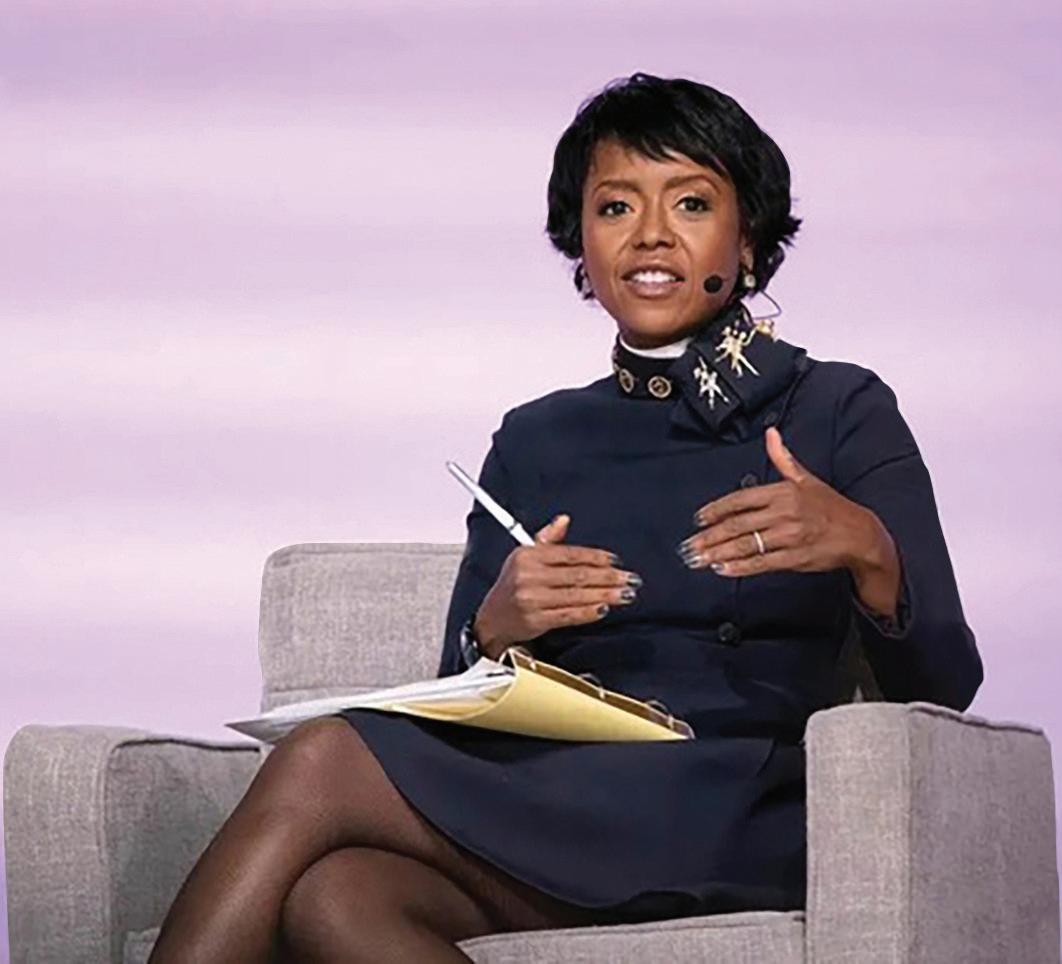
In a memorandum issued by Hobson, Jason Wright was named Project Level’s Managing Partner and Head of Investments, or the ventures “starting quarterback” as the dynamic corporate director affectionately wrote.
The Wright Pick
Wright grew up in the Los Angeles suburb of Pomona, lettering in varsity football and track before earning an athletic scholarship from Northwestern University.
He was named co-MVP of the Motor City Bowl in 2003, and finished his career at Northwestern as the school’s fourth all-time leading rusher and an Academic All-American, graduating with a bachelor’s degree in psychology. He later signed with the San Francisco 49ers, Atlanta Falcons, Cleveland Browns and finally, the Arizona Cardinals.
After the wide receiver-turnedrunning back finished his professional football career, he enrolled at the University of Chicago Booth School of Business, earning an MBA, with concentrations in operations and finance, with honors. He joined the management consulting firm, McKinsey & Company, but in 2020, returned his gaze to the NFL.
Wright made history as the first Black president of an NFL team in the leagues’ 105-year history when he was hired by the Washington Football Team. In addition to being the youngest active president, he was the fourth former player to level up to the executive suite. He helped usher in the team’s new brand identity as the Washington Commanders before stepping down in July 2024.
When Hobson announced the creation of Project Level, Wright was identified as an “outstanding leader who combines business expertise with
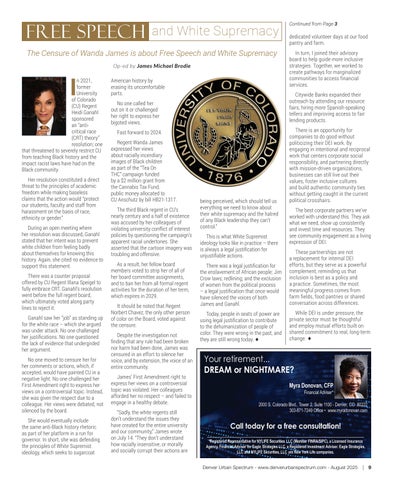
“Jason is a unicorn whose background combines significant business acumen with inarguable sports bona fides,” says Hobson, explaining that he will take a hands-on approach to leadership.
“He brings the real-life experiences that can help professionalize business operations, grow revenues and closely manage expenses in women’s sports organizations eager for our strategic partnership.”
Calling the Shots
Hobson is a Chicago native and the youngest of six siblings. She attended Princeton University, and joined Ariel Investments as an intern shortly thereafter.
In less than a decade, she worked her way up to roles as the firm’s senior vice president and director of marketing; after assuming the top management role, she extended her financial acumen to corporate leadership roles.
In 2017, she made history as the first Black woman to head the Economic Club of Chicago. When Starbucks Corporation’s former CEO, Howard Schultz, invited her to join the company’s board of directors she happily agreed.
“I could barely contain my enthusiasm at the prospect of helping to govern one of the world’s most admired companies,” she wrote in
January 2025, in a letter explaining her departure after nearly 20 years of service.
The powerhouse executive also served on the board of the Estée Lauder Companies Inc., DreamWorks Animation, JPMorgan Chase & Co and the Lucas Museum of Narrative Art –an art institution she co-founded with her husband, filmmaker George Lucas, expected to open in 2026.
Hobson is specially suited for the NWSL franchise expansion in Colorado, with close connections to the Colorado community.
A member of the Walton-Penner Family Ownership Group, she and former U.S. Secretary of State Condoleezza Rice became the first Black women to partially own an NFL team in 2022, when the group purchased the Denver Broncos.
“This moment is humbling, and it’s historical. And yet, I feel at home. I’m very excited to be here,” she remarked. “As someone once wrote, if you are going to exceed your wildest expectations, your wildest dreams, you have to start with some pretty wild dreams. And this is certainly in that category.”
After the Broncos deal, Hobson says she was inundated with requests for sports expansion teams.
“It was just fortuitous,” she admits. “We looked at the demographics of the market, which seemed to be very, very favorable to women.”
Continued on Page 6

Continued from Page 5
“We also looked at the socioeconomics – the average income in the city – that was favorable to season ticket sales. …There was a lot there that was just adding up,” she says.
Next Level Leadership
Denver’s new NWSL team is Project Level’s first investment, activating the vehicle for future portfolio growth ranging from “professional and emerging sports teams and leagues, to junior and college sports opportunities, along with related businesses that contribute to and directly benefit from the global expansion of women’s sports.”
The venture is guided by an advisory team including seven-time Formula One Champion, Lewis Hamilton; Grammy-award winning rapper, singer and actress, Queen Latifah; the first Black woman CEO in the NBA, Cynt Marshall; renowned fashion designer, Stella McCartney; and former New York Knicks President and MSG Sports CEO, Steve Mills.
Ariel Investments’ current sports portfolio includes ownership positions in Madison Square Garden Sports Corporation and Manchester United. Hobson’s portfolio includes the Denver Broncos, Chicago White Sox, League One Volleyball (LOVB) and the WNBA.
After seeing Wright speak on a panel at a conference, she approached him with this “game changer.”
“Within a very short amount of time, he signed on and I told him, ‘I can’t tell you how committed I am to this, and I can’t tell you how hard I’m going to work.”
“I’m our chief cheerleader,” Hobson shared during an interview with Bloomberg Originals. “And [Wright] is our quarterback.”
Starting
with Equity
Equity was at the forefront of Hobson’s decision to launch Project Black in 2021. After the murder of George Floyd, she received a phone call from JP Morgan Chase & Co CEO, Jamie Dimon, who expressed a desire to generate Black business support.
“The idea was, could we scale sustainable minority businesses by bringing two things together – capital and customers?” Hobson shared with Forbes in 2023.
The initiative created an impetus for scaling impact and narrowing the wealth gap.
Project Level’s industry-specific strategy will further support investment across asset classes, while highlighting excellence on and off the field.
“Our endgame is to elevate women’s sports by fostering strong and sustainable businesses that compete at the highest level,” says Hobson.
Acknowledging that the performance of women athletes on the field, court and pitch has always been high, Wright says, “The businesses around [women’s athletics] have not always been at the same level that allows them to have the infrastructure and support – or that allows the whole industry around women’s sports – to have the
economics that are commensurate with the level of play.”
Differentiated by its investment scale and diversity, Project Level offers commercial terms instead of long-term returns on investment, with a focus on the pipeline that leads to the next generation of leagues.
With abundant opportunities for workforce growth and small business support, the new NWSL team is expected to stimulate the local economy.
“We’re going to invest in professional services businesses and the vendors that support those teams –data analytics companies; health, wellness and recovery companies; the live, work, play real estate developments that surround the venues that women play in,” he says.
“Project level is about leveling up the entire ecosystem and the entire industry of women’s sports to match the phenomenal performance that has always been on the court, pitch and field.”
Showing up for Women’s Soccer
Situated in the Santa Fe Yards area near Broadway and Interstate 25, the new 14,500-seat NWSL stadium is expected to open in Spring 2028.
On June 7, team officials and city leaders broke ground at the temporary 43-acre site in Centennial, which will provide a short-term, 12,000-seat stadium home



and performance center with soccer fields, recovery facilities, strength and conditioning spaces and a video analysis theater.
With years ahead, none of the team’s stakeholders are waiting to show their excitement – or their support.
Fans shattered records, selling 10,000 season ticket deposits in less than two months, and the club identity was fueled by an interactive fan vote, giving supporters an opportunity to choose its new name.
On July 26, an exclusive Brand Launch Block Party at McGregor Square welcomed the community to the next exciting phase of the Denver Summit FC’s development, with the team’s name and colors showcased for the first time.
After initially recognizing Colorado’s inclusive landscape, Hobson believes that Ariel Investments and Project Level have a distinct advantage.
“The leagues want gender and racial diversity and ownership. Notwithstanding the mood of some of the conversation that is going on in our country,” she points out.
“If you’re starting womens’ teams and leagues, it would be great to have some women and people of color involved. That’s a priority.”
Winning All Around
Local leaders say the impact of the Denver

Summit FC will extend far beyond wins and losses.
“Despite producing some of the world’s greatest players and being home to the best sports fans in the country, Denver has been deprived of its own professional women’s team,” Denver Mayor Mike Johnston said at the expansion announcement. “That changes today.”
Colorado Governor Jared Polis also cheered the news, saying he “can’t wait to catch [his] first match” when the team takes the field.
Perhaps none is more invested than the women and girls who have played and watched women’s soccer for decades and can now call this team their own.
“We couldn’t be more excited,” says Jasmine Rollins, a Denver youth soccer coach and mother of two daughters.
Rollins, 34, believes that having a women’s pro team in town will be “a game-changer for my girls and the girls I coach.” She shares plans to bring her under-15 team to matches and is looking forward to potential opportunities to partner with the league.
“Finally, our girls will have local








2025 CWCC TOP 25 HONOREES COLORADO Women’s Chamber of Commerce
By Ruby Jones
Last month, the Colorado Women’s Chamber of Commerce (CWCC) announced its 2025 class of the “Top 25 Most Powerful Women in Business,” honoring a diverse group of female leaders from across the state. The annual gala, scheduled for Aug. 21 at the Denver Performing Arts Complex’s Seawell Ballroom, will once again shine a spotlight on women whose leadership is shaping Colorado’s economic, social and civic life.
Exemplifying Excellence
Since 2013, the Top 25 event has celebrated outstanding women across public and private sectors for their vision, leadership and commitment to advancing other women. Each year, finalists are selected by a peer panel of past honorees, and recipients are chosen based on demonstrated civic engagement, perseverance, commitment to women’s advancement and proven leadership within communities across the state.
This year’s cohort represents a cross-section of industries and roles, from executives and entrepreneurs to policymakers and educators.
2025 CWCC Top 25 Women in Business Honorees:
Sarah Allen: Chief of Staff, Colorado State Patrol
Dr. Isabelle Amigues: CEO/Founder, UnabridgedMD
Tiffany Anderson: Vice President of Grants & Programs, Boettcher Foundation
Amanda Blaurock: CEO & Co-Founder, Village Exchange Center
McCall Fen: Partner, Growth Suite
Consulting
Karrie Fletcher: Market President, Alpine Bank
Lacey Golonka: Community Affairs Manager, Molson Coors
Maria Gonzalez: Founder & CEO, Adelante Community Development
Rebecca Holmes: President & CEO, Colorado Education Initiative
Rep. Jamie Jackson: State Representative, Colorado General
Assembly
Dr. Sandy Jones: Chief Engagement Officer, CSU Global
Zaneta Kelsey: Co-Founder & CEO, Access Mode, Inc.
Mary Ann Littler: CEO, Peak to Peak Business Strategies
Trena A Marsal: Chief of Operations, Denver Public Schools
Lorez Meinhold: Executive Director, Caring for Denver Foundation
Yevgenya Muchnik: Founding Partner, Launch Legal
Vanessa Ortiz: Sr. Director of Business Operations, Bespoke
Dr. Lisa Roy: Executive Director, Colorado Department of Early Childhood
Patty Salazar: Executive Director, Colorado Department of Regulatory Agencies (DORA)
Amanada Sandoval: President, Denver City Council District 1
Kate Strauss: Founding Members, Galvanize Law Group
Ana Temu Otting: President & CEO, Corazon Printing

Angie Voigt: Division Chief Nursing Officer, HCA Healthcare
Dace West: Chief Impact Officer, The Denver Foundation
Alexandria Wise: Executive Director, CEDS Finance
CWCC also will present its top honor of the night – the CWCC Top 25 Legacy Award – to Dr. Donna Lynne, CEO of Denver Health and Hospital Authority.
Lynne’s extensive leadership spans public service and business. She is credited for transforming healthcare access and promoting inclusion across Colorado with a career marked by innovation, operational excellence and community impact.
A former lieutenant governor of Colorado, she was lauded for her efforts to bolster healthcare infrastructure and elevate Colorado’s standing in medical innovation, as well as her dedication to leading inclusive initiatives that support underserved populations.
“This impressive class of Top 25 winners from across the state is committed to advancing women in business and actively promotes equity in the workplace,” says CWCC CEO, Simone D. Ross.
“We have a truly balanced representation of women leaders from a wide variety of backgrounds, industries, ages and titles, who represent the force and growth of female progress and influence in our community.”
Putting Colorado Women in the Spotlight
CWCC is one of the nation’s largest women’s chambers, serving more than 400 member businesses and 1,600 individual members. Founded in 1988, the organization is dedicated to supporting women’s business success through education, advocacy, leadership development and networking opportunities.
Its mission “to provide women opportunities that better our community and economy, promote equity in the workplace and help women grow their businesses and their careers” drives a calendar full of

programs, including The Top 25 gala, leadership labs, mentorship programs and year-round peer-networking events.
The Top 25 gala, presented by KeyBank, is the chamber’s marquee event of the year.
On Aug. 21, it will bring together more than 750 business leaders, executives, sponsors and community allies for an evening of recognition, networking and inspiration. Attendees can expect a cocktail reception, plated dinner, an awards presentation and a lively after-party at a secret downtown location.
In recent years, the event has highlighted women who exemplify leadership with purpose, including past recipients from business, public policy and nonprofit sectors.
With tables and tickets historically selling out, this event, themed “I Am Legendary,” will mark the 13-year anniversary of the award ceremony, with approximately 325 female executives honored. As CWCC continues to grow, its vision to make Colorado the number-one state for women in business is advancing through high-impact events and leadership development programs that bring people together in support of an equitable economy. ♦
Editor’s note: For more information, including tickets, sponsorship details and nominee submissions for future years, visit cwcc.org/top25.
FREE SPEECH and White Supremacy
The Censure of Wanda James is about Free Speech and White Supremacy
Op-ed by James Michael Brodie

In 2021, former University of Colorado (CU) Regent Heidi Ganahl sponsored an “anticritical race (CRT) theory” resolution; one that threatened to severely restrict CU from teaching Black history and the impact racist laws have had on the Black community.
Her resolution constituted a direct threat to the principles of academic freedom while making baseless claims that the action would “protect our students, faculty and staff from harassment on the basis of race, ethnicity or gender.”
During an open meeting where her resolution was discussed, Ganahl stated that her intent was to prevent white children from feeling badly about themselves for knowing this history. Again, she cited no evidence to support this statement.
There was a counter proposal offered by CU Regent Illana Speigel to fully embrace CRT. Ganahl’s resolution went before the full regent board, which ultimately voted along party lines to reject it.
Ganahl saw her “job” as standing up for the white race – which she argued was under attack. No one challenged her justifications. No one questioned the lack of evidence that undergirded her argument.
No one moved to censure her for her comments or actions, which, if accepted, would have painted CU in a negative light. No one challenged her First Amendment right to express her views on a controversial topic. Instead, she was given the respect due to a colleague. Her views were debated, not silenced by the board.
She would eventually include the same anti-Black history rhetoric as part of her platform in a run for governor. In short, she was defending the principles of White Supremist ideology, which seeks to sugarcoat
American history by erasing its uncomfortable parts.
No one called her out on it or challenged her right to express her bigoted views.
Fast forward to 2024.
Regent Wanda James expressed her views about racially incendiary images of Black children as part of the “Tea On THC” campaign funded by a $2 million grant from the Cannabis Tax Fund, public money allocated to CU Anschutz by bill HB21-1317.

The third Black regent in CU’s nearly century and a half of existence was accused by her colleagues of violating university conflict of interest policies by questioning the campaign’s apparent racial undertones. She asserted that the cartoon imagery was troubling and offensive.
As a result, her fellow board members voted to strip her of all of her board committee assignments, and to ban her from all formal regent activities for the duration of her term, which expires in 2029.
It should be noted that Regent Norbert Chavez, the only other person of color on the Board, voted against the censure.
Despite the investigation not finding that any rule had been broken nor harm had been done, James was censured in an effort to silence her voice, and by extension, the voice of an entire community.
James’ First Amendment right to express her views on a controversial topic was violated. Her colleagues afforded her no respect – and failed to engage in a healthy debate.
“Sadly, the white regents still don’t understand the issues they have created for the entire university and our community,” James wrote on July 14. “They don’t understand how racially insensitive, or morally and socially corrupt their actions are
Continued from Page 3
dedicated volunteer days at our food pantry and farm.
In turn, I joined their advisory board to help guide more inclusive strategies. Together, we worked to create pathways for marginalized communities to access financial services.
Citywide Banks expanded their outreach by attending our resource fairs, hiring more Spanish-speaking tellers and improving access to fair lending products.
being perceived, which should tell us everything we need to know about their white supremacy and the hatred of any Black leadership they can’t control.”
This is what White Supremist ideology looks like in practice – there is always a legal justification for unjustifiable actions.
There was a legal justification for the enslavement of African people; Jim Crow laws; redlining; and the exclusion of women from the political process – a legal justification that once would have silenced the voices of both James and Ganahl.
Today, people in seats of power are using legal justification to contribute to the dehumanization of people of color. They were wrong in the past, and they are still wrong today. ♦
There is an opportunity for companies to do good without politicizing their DEI work. By engaging in intentional and reciprocal work that centers corporate social responsibility, and partnering directly with mission-driven organizations, businesses can still live out their values, foster inclusive cultures and build authentic community ties without getting caught in the current political crosshairs.
The best corporate partners we’ve worked with understand this. They ask what we need, show up consistently and invest time and resources. They see community engagement as a living expression of DEI.
These partnerships are not a replacement for internal DEI efforts, but they serve as a powerful complement, reminding us that inclusion is best as a policy and a practice. Sometimes, the most meaningful progress comes from farm fields, food pantries or shared conversation across differences.
While DEI is under pressure, the private sector must be thoughtful and employ mutual efforts built on shared commitment to real, long-term change.

THERAPY Thursday
How Nikki Swarn Is Reimagining Mental Health Conversations for Black Women
By Khaleigh Reed & Ruby Jones
When Nikki Swarn launched the “Therapy Thursday” radio segment nearly a decade ago, she had no way of knowing the integral role it would play in her personal development, or that it would grow into a full-scale wellness movement.
What began as an outlet for her inner thoughts and creativity is now a powerful nonprofit and podcast series rooted in vulnerability, accessibility and healing – especially for Black women who, like her, have spent years holding space for others while often being denied space for themselves.
“Therapy Thursday started as a love letter to myself,” Swarn says. “There’s only about three to five percent of Black women in radio management. I was often the only one in the room, and I needed somewhere to put all those experiences.”
A Fearless Voice
Swarn is one of the few Black women in the country to hold executive positions in media, most recently serving as general manager at Rocky Mountain Public Media (RMPM). After years of navigating underrepresentation and systemic barriers, she leaned into something more personal.
She adopted the pen name “Amerykah Jones,” and began blogging about her struggles, triumphs and reflections. The cathartic online journaling eventually gave birth to “Therapy Thursday;” first as a radio feature, and later as a multimedia, community-centered initiative.
When she left RMPM, she took “Therapy Thursday” with her, transforming it into a 501(c)(3) nonprofit and launching its first season as a live-recorded podcast.
“It keeps evolving, which is brilliant and I love it,” she beams. “And what a gift, right? What a gift from God.”
The unique format features episodes
taped before a live audience, often in welcoming spaces like the Museum for Black Girls, where attendees are treated to snacks, conversations with licensed therapists and open dialogue that centers the lived experiences of BIPOC women.
A Different Approach
feeling their best selves, manifesting and working to the best of their ability to be holistically healthy.”
A Community Vibe
“Therapy Thursday” features an impressive rotation of Black and Brown mental health professionals, each offering their expertise on topics ranging from generational trauma and career pivots to political disappointment and family dynamics. With a bombardment of news and information from social and digital media, Swarn is proud to have created a tool that uplifts and promotes wellness, especially for those who share her experiences.


Recognizing that a live podcast somebody holding a notebook, because that’s what it’s been perceived to be or how it’s shown on television.”
She and other innovators have intentionally created a supportive community environment, and she says the stigma around mental health is better now than it’s ever been.
While traditional one-to-one engagement works best for some, she points to the “cool, dynamic facets” involved in approaches that incorporate art, movement, color and journaling.

“There are so many different spaces for people to start to identify with
“I really focus on Black women because we carry so many things, and we forget that we can reflect each other’s experiences –not just locally, but globally.”
Prioritizing collaboration, she partners with Queenlyfe Inc., Black Pride Colorado, Youth Seen, the Black Mental Health Collaborative and the Therapist of Color Collaborative. She is excited to be working with other nonprofits, like Colorado Black Women for Political Action (CBWPA), as a member of the Black Resilience in Colorado (BRIC) Fund’s Executive Directors of Color Institute cohort.
Guests like CBWPA President, Bianka Emerson, have helped shape the show’s programming based on community needs. After the 2024 election, she and Swarn facilitated a pop-up event where women gathered to vent, process and heal.
Additionally, service providers like Michelle Simmons, Robert Franklin, Jason Vitello and Sheila Hughes discuss real-life applications of mental wellness technique while teaching audiences how to advocate for themselves in therapeutic settings.
“Our material isn’t sourced by me or my materials – it’s sourced by the
community,” she emphasizes. “People tell us what they’re feeling, and we build the conversation around that.”
A model built around participatory storytelling has transformed “Therapy Thursday” into a cultural touchpoint, with over 40 episodes produced in the first season. Swarn describes the podcast as a “hug,” a response to a society in crisis and an alternative to a mental health care system that too often excludes marginalized voices.
A Pivot to Purpose
Swarn’s own journey with therapy has also been integral to the project. She candidly recalls the experience of having her mental health weaponized by a former employer, reinforcing the need for support.
“I needed somebody who could help me unlock the possibility within me,” she recalls. “It’s a really lonely feeling when you’re being gas lit or feeling like you did something wrong. Leaning into the experience helped me find a great therapist. I wanted people to understand that journey.”
With the first season of “Therapy Thursday” now complete, Swarn is turning her attention to efforts that expand the brand’s reach, with hopes to secure syndicated distribution.
Additionally, the media maven is thrilled about another developing project: Solar Radio, an all-Blackwoman radio station focused on wellness, music and mental health dialogue on a global scale. The project, presented by her Solar Wellness Network brand, is the next iteration of innovation.
Solar Wellness
In every aspect of her work and future plans, Swarn is pushing back against systems that exclude or misrepresent Black voices in healthcare, journalism and now, artificial intelligence (AI).
In the process of developing the framework for the Solar Wellness Network, her encounters with AI alerted her to the troubling effects of technological inequity.
A number of lawsuits were recently filed after AI technology prevented people of color from receiving major life saving healthcare procedures due to race-based framework archetypes. Similar lawsuits have been initiated due to discriminatory hiring practices.
“That’s why this is the next evolution of where I take “Therapy Thursday,” she says. “It’s in policy, being a part of governance and being a part of understanding how these tools work and where this implicit bias exists.”
She sees the potential of AI as a therapeutic tool for people within the criminal justice system, and is committed to being part of its evolution to ensure that new technologies are being used ethically.
On-Air
As Swarn works to get Solar Radio on air, the next official season of “Therapy Thursday” is expected to go live in 2026. In the meantime, she and her team are still deeply active in the community, hosting events and preparing for broader distribution.
Having built a safe, supported and healing community through her podcast, she credits mentors Becky Taylor, Tracy Williams and Andrena
McGuire Collier, for helping her chart a path with integrity.
Embodying grace and leaving ego at the door, she continues to hold space for healing through conversation, community and “meeting people where they are.”
Editor’s note: To learn more about “Therapy Thursday,” follow the organization on social media at @trytherapythursday or visit www.therapythursday.org.



Bianca and Patrick, CHFA homeowners
CU REGENTS Censure Wanda James
Heated Debate Over Antiracist Advocacy, Cannabis Imagery
By Ruby Jones
In a shocking 7-1 vote, the University of Colorado (CU) Board of Regents voted on July 2 to censure Regent Wanda James, the board’s first and only Black member, following a monthslong investigation into her criticism of a university-affiliated anti-cannabis campaign that she called racist. The move, widely viewed as unprecedented and politically charged, has sparked outrage among civil rights advocates and public officials, while renewing questions about the treatment of Black leadership in higher education.
What’s Tea?
At the center of the ongoing controversy is the “Tea on THC” public health campaign launched by the Colorado School of Public Health Funded by the Marijuana Tax Cash Fund, the campaign warned of the effects of cannabis use during pregnancy.
The imagery and messaging drew criticism from James, who claimed that it perpetuated anti-Black stereotypes with its portrayal of Black children as cognitively impaired and behaviorally challenged resulting from marijuana use in utero.
James, who owns a cannabis business and has advocated for equity within the industry for years, spoke out against the imagery publicly and privately.
In January, she contacted CU President Todd Saliman and Anschutz Chancellor Don Elliman to raise concerns, urging them to remove the offensive content and seek accountability from the campaign’s creators. According to James and her legal team, the images were removed from social media and she received an apology, but she says that she received little support from university leadership.
Instead of addressing her concerns, the CU Board of Regents commissioned an outside investigation, spending over $300,000 in taxpayer dollars by May, with costs expected to exceed $500,000.
Standing Strong
The censure vote, while symbolic and without legal consequence, marks
a public rebuke of James’ actions after an investigation into whether her actions breached Regent Policies 2.A (Conflicts of Interest), 2.J (Fiduciary Obligations), 2.I (Political and Social Expression by Regents), 5.B.1(B) (Academic Freedom) and C.R.S. 24-18-108.5 (Rules of Conduct for Members of Boards).
In a written response submitted by her attorneys at Rathod Mohamedbhai LLC, James laid out a point-by-point rebuttal.
“This entire process is a reaction to my refusal to remain silent in the face of racism,” she wrote in a public invitation ahead of the vote.
“They could have said ‘we hear you,’ apologized and used those funds to support more students. Instead, they spent public dollars to send a message: ‘Know your place.’ I assure you: Message not received.”
The investigation’s most contentious moment came during James’ interview, when the lead investigator reportedly asked whether she “smokes a joint every day” – a question she and her supporters say was racially charged and irrelevant.
“Does the Coors family drink beer?” she wrote in her public statement, pointing to what she described as a discriminatory process.
James’s legal team further emphasized that the decision to cut funding for the Tea on THC campaign had already been made by Colorado Governor Jared Polis due to budget constraints and concerns about duplicative research.
“By the time Regent James even became aware of the campaign’s imagery, the decision to pull funding had already been made,” the letter stated. “She did not, and could not have, influenced that outcome.”
Still, her public statements in support of the funding cut and suggestions that the money would be better spent on equity programs became the basis for the Regents’ action. Though they recognized her “individual right…to express opinions on matters of social and political concern,” James was found to have violated Regent Policies 2.J.1 (Duty of Care) and 2.J.2 (Duty of Loyalty).

The Bigger Issue
On July 14, James alerted the public to yet another turn of events, writing that Callie Rennison, Chair of the CU Board of Regents, informed her that the resolution to censure her includes sanctions banning her from university functions in her official role – essentially stripping her of basic duties.
“With respect to university events, the Board’s adoption of the resolution rescinded any invitations previously extended to [you] to any internal or external university events that regents attend in their official representational capacity and precludes any such future invitations,” Rennison wrote in a statement shared by the incensed regent.
James’s supporters say the vote reflects a pattern of institutional resistance to racial justice advocacy.
“Censuring the only Black member of the Board for condemning racist imagery is not only ironic, it’s appalling,” says former CU student Aaliyah Green, who watched the censure hearing via Zoom.
“We expect our leaders to call out harm, not be punished for it.”
Colorado Attorney General Phil Wieser issued a public warning about the entire ordeal on social media, writing, “The First Amendment protects the right to free expression. Neither a White House Executive order nor a public university policy can override this fundamental right. I am concerned that the CU Board of Regents action
sanctioning Regent Wanda James did just that.”
“The CU Board of Regents’ policy as applied to the speech of elected regents must be consistent with the protection of the right to free expression. If CU Regent Policy 2.J can be applied in a way that silences a Regent’s voice, then the policy is on shaky legal ground.”
He continued his statement with a recommendation that the board reconsider its action against her, while making efforts to de-escalate rhetoric and elevate listening instead.
Not Backing Down
James, who has served on numerous national and state boards, including the Colorado Tourism Board and the Obama for America National Finance Committee, was honored in 2023 as one of the Colorado Women’s Chamber of Commerce’s Top 25 Most Powerful Women in Business. She says she has no intention of resigning.
“This is about what institutions do to Black leadership when we refuse to be silent,” she says.
“This isn’t just about me. It’s about every student, faculty member, and community leader who’s been told to sit down when they stood up.”
With national debates over academic freedom, institutional racism and the politics of public health, the case exposes the need for ongoing conversation about race, representation and resistance in higher education. ♦
Credit: Hart Van Denburg/CPR News

ALL THINGS BOYS
Submitted by Dr. Dedrick Sims

The word testosterone carries a lot of weight. People tend to associate it with aggression, muscle mass and competitiveness. In truth, testosterone is far more complex and deserves a second look, especially in order to understand the emotional experiences of boys and young men. Beneath the surface, it plays a huge role in emotional processing, decisionmaking, attention span and the ways in which males relate.
The Daily Rollercoaster
Testosterone levels in males fluctuate throughout the day, with levels typically peaking in the morning and
Cracking
the
Code: Understanding the Emotional Rollercoaster of Testosterone
again in the early evening. The peaks can shape energy level, confidence, focus and even mood regulation. This means that one moment, a young man may be on top of the world; the next, distracted, irritable or withdrawn.
For teachers and parents, restless behavior might seem disrespectful or defiant, but it might just be biology.
Testosterone contributes to a natural urge for stimulation and physical activity. So, when a young man is tapping his pencil or bouncing his leg, it could be his body’s way of saying, “I need movement.”
Emotions Under the Surface
One of the most enduring stereotypes about boys is that they’re emotionally shut down or less sensitive than girls.

Boys feel deeply, but testosterone influences the expression of their feelings. Research shows that the hormone impacts the neural circuits responsible for emotional processing, leading boys to prioritize action over introspection.
When a young man seems to brush off his feelings or go quiet when something emotional happens, it’s not because he doesn’t feel; it’s because his hormonal wiring is nudging him toward solving problems, moving on or shutting down.
In essence, testosterone doesn’t mute emotions; it just redirects them.
Heartbreak Hits Different
Breakups, rejection and emotional disappointment can hit males hard, and sometimes even harder than perceived.
Testosterone interacts with the parts of the brain that govern attachment and stress responses. When those bonds are broken, boys often respond with confusion, anger or withdrawal; not because they don’t care, but because they don’t have a clear emotional map for how to process what they’re feeling.
As adults, it’s important that boys are not pressured to “tough it out.” Boys need outlets where they can be vulnerable, and relationships where they can fall apart, ask questions and rebuild themselves without shame.
Reframing Support at Home and School
Testosterone thrives on movement, and so do the emotions it carries.
Instead of waiting for young men to initiate emotional conversations, parents should take an action-oriented approach, such as talking while driving, walking the dog or shooting hoops. The response will likely be more hearty when boys are moving than when they are locked into sedentary heart-to-heart conversations.
Teachers should strive to create environments that lean into biological realities instead of punishing them. By integrating movement breaks, interactive lessons or project-based
learning, educators can help boys stay engaged without sacrificing structure.
Additionally, many young men who are constantly reprimanded for behavior are really asking for help in the only language they’ve been taught: movement and noise. Understanding how testosterone affects regulation and self-control helps meet their needs without crushing their spirit.
The Self-Esteem Equation
Boys deal with self-esteem issues, too. During adolescence, testosterone levels spike, and so does self-awareness. Boys start comparing themselves, physically, socially and academically, and these comparisons can tank their confidence.
This, combined with unrealistic societal expectations about masculinity, create a recipe for silence, shame and bravado.
Encouraging positive self-talk, promoting a growth mindset and praising effort over perfection can work wonders and flip the script. Likewise, so can making space for boys to fail, reflect and try again, without judgment.
Science + Empathy = A New Way Forward
When caregivers, teachers and mentors learn how male hormones shape behavior, young men are seen as more than their outbursts or silence.
Instead of punishing boys for behaviors shaped by hormones, science-backed understanding lays the groundwork for emotionally healthy young men who can communicate, lead and love deeply.
A Key to Understanding
If we want to raise strong, thoughtful and emotionally grounded young men, we need to start by understanding the currents that shape their world.
Testosterone is a key to understanding that allows us to crack the code.
By ditching the stereotypes and shame, we can engage in real conversations about what’s going on inside our boys chemically, emotionally and behaviorally. Understanding unlocks new possibilities for male emotional wellness. ♦
Is the Housing Market Crashing Correcting? or
Understanding What’s Really Happening in 2025
Submitted by Barry Overton

If you’ve turned on the news or scrolled through social media lately, you’ve probably seen the warnings: “Housing Crash Incoming!”
Is the market really on the verge of collapse, or are we simply experiencing a long-overdue correction?
Separating fear from fact could help clarify what’s truly happening in the 2025 real estate market – both nationally and right here in Denver.
A Look Back: The Boom Before
the Breather
To understand where the market is now, we have to rewind to the real estate frenzy of 2020 to 2022.
Fueled by record-low interest rates, remote work trends and fierce buyer demand, home prices skyrocketed across the country. In cities like Denver, values rose 30 to 38 percent in just two years – a rate of appreciation far above historical norms.
At the time, homes were often appraised for less than what people were actually paying. The demand was so intense that buyers regularly offered well over appraised value just to win bidding wars. Sellers held all the power, and urgency trumped logic.
Now, in 2025, the roles have reversed.
Correction vs. Crash: What’s the Difference?
A correction is a natural and often necessary adjustment in the market, with a 5 to 10 percent drop or stabilization in prices following a period of rapid growth. It helps bring pricing back in line with fundamentals like income levels, affordability and demand.
A crash, by contrast, is a dramatic and sudden drop in home values of 20percent or more. It’s usually triggered by widespread economic distress, massive foreclosures or a housing bubble burst, similar to the 2008 financial crisis.
Why Prices Are Softening
High mortgage rates hovering between 6.5 and 7 percent have significantly reduced buying power. The monthly payment on an average home has risen substantially, causing many buyers to pause or lower their budgets.
Unlike in peak years, today’s buyers are far less willing to overpay. The market is now seeing appraisals come in higher than what buyers are actually willing to offer.
Instead of buyers chasing homes and offering tens of thousands over asking, sellers are now the ones making concessions, offering price cuts, covering closing costs and even buying down interest rates to attract cautious buyers. In many cases, even well-priced homes are sitting longer, as buyers have more options and more leverage.
This reversal reflects a psychological and economic shift; buyers are patient, inventory is building and for the first time in years, negotiation has returned to the table.
Denver’s Market: From Hot to Healthy
The housing market in the Metro Denver area offers an example of a housing correction.
From 2020 to 2022, Denver experienced a massive surge in values; but in 2025, things are leveling out. The median home price sits at about $612,000, a small 1.4 percent decline from this time last year.
Inventory has grown substantially with some reports claiming that active
listings in Denver are now twice as high than they were during the pandemic peak. Homes are taking longer to sell, and price reductions have become common.
One national real estate data firm recently ranked Denver as the city with the largest excess supply compared to buyer demand. This reflects a return to a market where buyers have breathing room.
Economists like Nick Gerli of Reventure Consulting forecast a correction of up to 9 percent in Denver home values over the next year. Still, that would only give back a portion of the gains made during the pandemic frenzy.
Homeowners Are Still in a Strong Position
Even as prices adjust, most homeowners are still in a solid position. Many purchased years ago at lower prices with historically low mortgage rates. Their homes have appreciated significantly over time, giving them substantial equity cushions.
Foreclosure rates remain low, with tighter lending standards than in recent years. Another big difference from 2008,
is that most homeowners aren’t under financial pressure to sell.
What This Means for Buyers, Sellers & Investors
Buyers now have more negotiating power, less competition and time to make informed decisions – a far cry from the panic-buying of two years ago.
Homes are still selling, but sellers need to meet the market where it is, with realistic pricing and expectations
The correction phase may create opportunities for investors to buy below peak pricing, especially in overvalued or highly competitive submarkets.
A Market Reset
The real estate market in 2025 is simply catching its breath.
We’re coming off one of the most aggressive growth periods in modern housing history, and a slowdown was both expected and necessary.
Prices are adjusting and the days of bidding wars are largely behind us, but with this correction comes opportunity, clarity and long-term sustainability for the real estate market. ♦
Editor’s note: Barry Overton is a licensed Real Estate Agent with eXp Realty. For more information, call 303-668-5433 or email barrysellsdenver@msn.com

WHAT CAN YOUR $5 Do?
Think MoreThan You
An Op-ed by LaDawn
Iknow some of y’all are thinking, “What can my little $5 do besides buy me a lukewarm latte or an order of fries that disappear before I even get home?”
Let me tell you: that $5, when added to my $5, your cousin’s $5, Big Mama’s $5 and all our collective coins becomes something powerful. Something ancestral. Something liberating.
That’s the heart of Black Philanthropy Month, founded in 2011 by Dr. Jackie Bouvier Copeland, who called us to celebrate and elevate the legacy of Black giving worldwide. I took up that call in 2012 by seeding Colorado’s first Black giving circles, laying a foundation that has since grown into the Black Resilience in Colorado (BRIC) Fund.
Black Philanthropy Month is about collective liberation, and it’s an opportunity to restore and circulate resources in a way that builds strong, thriving communities in Colorado and beyond, BRIC by BRIC. This year’s theme, “Sankofa Now! Remember, Reclaim, Rise,” is a reminder that our giving is a connection to remembering who we are; it allows us to reclaim what is ours while fueling our collective liberation.
Giving is in our bones, our traditions and our freedom strategies. It’s what kept us fed when we couldn’t eat at the lunch counter and what kept us safe when we had no place to stay. It’s
what built schools, churches, mutual aid societies, burial circles, HBCUs, civil rights movements and freedom funds – all with coins gathered at kitchen tables and folded dollar bills passed hand to hand. Black Philanthropy Month is different, because our philanthropy is different.
We don’t just write checks to get our names on plaques, receive tax deductions or sleep better at night. No. Our giving is about survival, dignity and creating the thriving futures we deserve. It is giving from what we have – time, talent, treasure, testimony and (social) ties (yes, those 5Ts we
keep talking about). Because, when the traditional, white-centered safety nets fail – and let’s be real, they have and they will – we are the net that catches each other.
That’s why so many Black giving circles - Denver African American Philanthropists (DAAP), Sisterhood of Philanthropists Impacting Needs (SPIN) and Women of Color Making a Difference (WOCMAD) use the simple yet powerful strategy of asking each member to give $1 a day, $365 a year. When pooled together, just like five fingers become a mighty fist, our collective giving builds unstoppable impact.
That’s exactly how Black Resilience in Colorado (BRIC) Fund was built – $5 at a time. The BRIC Fund is OURS. Built by us, for us, to invest in us. Every dollar, every story, every volunteer hour and every connection fuels Blackled change in Colorado. BRIC is the evidence that our giving – no matter the amount – builds something lasting for our children and our children’s children.
We are creating our own foundation, BRIC by BRIC, ensuring our communities don’t just survive these times, but thrive despite them.
So, the next time you think your $5 can’t do much, remember: Harriet Tubman freed hundreds with less. Our grandmothers made miracle meals with even less. And our ancestors built entire communities with pennies, dimes and relentless faith. Your $5 is not just a bill in your wallet – it’s a seed of collective power. Together, we can grow it into freedom and thriving for us all.
About the Founder
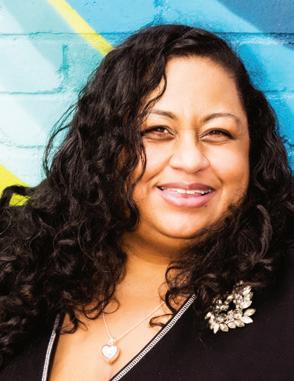
LaDawn Sullivan is the creator and director of the BRIC Fund, the first Blackfocused community fund established in Colorado, explicitly providing financial resources and support to Black-led and serving organizations. As an influencer, innovator and coalition builder for almost 30 years, LaDawn has strengthened and expanded the pipeline of BIPOC leadership, addressed social injustice and created racially equitable communities. She uses her expertise in community engagement and inclusive emerging leadership practices in her internal and external work. ♦
Editor’s note: To learn more, visit bricfund. org/build-bric.

Sullivan






ANNUAL Dancing With the Denver Stars Gala
Cleo Parker Robinson Dance Announces 15th Annual Dancing With the Denver Stars Gala
Cleo Parker Robinson Dance (CPRD) will host its 15th Annual Dancing With the Denver Stars Gala on Aug. 23, marking a milestone year for the beloved cultural celebration.
This year’s event will take place in a new location at the Sheraton Downtown Denver Hotel, and will spotlight the theme “From Doo-Wop to Hip-Hop: Celebrating Girl Groups.”
The signature fundraising gala supports CPRD’s Arts-In-Education outreach, which expands access to dance and global cultural experiences for metro-area students. Each year, local leaders known as “Dancing Stars” are paired with professional dancers from the CPRD Ensemble and Cleo II. With guidance from CPRD Founder and Artistic Director Cleo Parker Robinson, each pair selects a song aligned with the annual theme, learns choreography and rehearses multiple times to create an original performance that reflects their personal style and storytelling vision.
“We designed Dancing With the Denver Stars to demonstrate the level of dedication it takes to learn and present dance – it’s a complex pairing of mind and body,” says Gwen
Brewer, CPRD Board Chair and retired educator. “What better way than to have our community leaders learn and share the value of dance with their peers.”
Brewer, one of the original creators of the event in 2009, continues to serve as its director each year.
The 2025 gala also introduces a meaningful new tradition: the Cleo Parker Robinson Legacy Award, recognizing visionary leaders who embody CPRD’s core values of artistic excellence, cultural integrity and community transformation.
The very first recipient of the Cleo Parker Robinson Legacy Award will be Anna Jo Garcia Haynes, a widely respected advocate and community leader. Organizers say the gala provides the perfect platform to honor Haynes’ enduring impact on Denver’s cultural and civic life.
“As one of Denver’s most visible celebrations of creativity and community, Dancing with the Denver Stars is the ideal platform to present this honor” the organization shares.
“We are thrilled to announce that the incomparable Anna Jo Garcia Haynes will be the inaugural recipient.”
The 2025 Dancing Stars cast includes:
• Councilman Darrell Watson, City Council District 9
• Paul Adkins, CoBank
• Debbie Brown, Colorado Business Roundtable
• Nicole Dorsey, PNC
• Brian Flores, CBS4

• Loren Furman, Colorado Chamber of Commerce
• Mayor Mike Johnston, City and County of Denver
• Dr. Andre Mansion, Big Haus Consulting, LLC
• Dianne Myles, Human Focused Media

• Kelli Ogunsanya, Delta Dental
• Chad Oliver, Lean On Me Consulting Services LLC
• Michael Sapp, Xcel
• Juan Suarez, Southwest
• Jeronimo Villa, US Bank
Now entering its 55th season, CPRD has long been a pillar of Denver’s Historic Five Points neighborhood since its founding in 1970. As a multicultural nonprofit performing arts organization, the organization facilitates an internationally acclaimed ensemble, youth programs, an affiliated Bachelors of Arts Degree in Dance with Metropolitan State University of Denver and outreach that serves more than 20,000 students across 80 schools.
In addition to its educational work, the CPRD Theatre is home to nearly 30 resident arts organizations and supports wellness initiatives through its Arts-in-Wellness programs.
Editor’s note: For tickets, class schedules, or information on supporting school outreach efforts, visit www. cleoparkerdance.org

Darrell Watson
Mayor Mike Johnston

Denver Sheriff Department Graduation Ceremony
Celebrating Twenty-Nine New Deputies
On July 11, Sheriff Elias Diggins, along with members of the department’s leadership team and city officials, welcomed 29 new deputies to the Denver Sheriff Department (DSD) at a graduation ceremony. The event was broadcast live and shared on Facebook, allowing the community to join in celebrating this significant achievement.
“The graduation of these 29 deputies is a testament to our ongoing dedication to public safety. Each graduate has demonstrated exceptional commitment and resilience, and we are confident they will make a positive impact in our community,” says Safety Executive Director Armando Saldate.
The new deputy sheriffs have completed a rigorous eighteen-week academy, preparing them to join a dedicated team of public servants committed to maintaining the safety and security of the individuals in their
care within Denver’s jails. These new deputies will begin their assignments at the Downtown Detention Center and the Denver County Jail, where they will play a crucial role in ensuring the safety and security of individuals in custody.
“I am incredibly proud of our new deputies. Their hard work and determination have prepared them to meet the challenges of law enforcement,” says Sheriff Elias Diggins. “As they step into their roles, they carry with them the values of integrity, service, and excellence that define the Denver Sheriff Department.”
The next DSD Training Academy will begin on Sept. 22, 2025. DSD is actively recruiting and encourages interested individuals to learn more about the DSD and the application process

About the Denver Sheriff Department
DSD is the largest sheriff department in the state of Colorado, established in 1902. The department operates two jail facilities: The Denver Downtown Detention Center and the Denver County Jail, and provides security for the district and county court systems, state inmate transportation, extradition duties, fugitive and K-9 units and manages the detainment of inmates receiving services at Denver Health Medical Center.

Recognized by the National Sheriff’s Association with the Triple Crown Award, for achieving simultaneous accreditation from the Commission on Accreditation for Law Enforcement Agencies, the American Correctional Association and the National Commission on Correctional Health Care, the agency is committed to employing best practices. ♦
Editor’s note: To learn more about the department, visit www.www.denvergov. org/Government/Agencies-DepartmentsOffices






Black Students Are Being Watched Under
AINew technologies are quietly reshaping K-12 education and potentially amplifying racial bias.
By Quintessa Williams
In the classic sci-fi movie “Minority Report,” Tom Cruise plays a cop whose “Precrime” unit uses surveillance and behavior patterns to arrest murderers before they kill. Set in the future, the movie raised tough questions about privacy, due process and how predicting criminal behavior can destroy innocent lives.
What once seemed like an action fantasy is now creeping into American classrooms
Today, across the country, public schools are adopting artificial intelligence tools including facial recognition cameras, vape detectors and predictive analytics software

Surveillance in the Name of School Safety?
The rise of school surveillance didn’t begin with AI, but the advancing technology has taken it to a new scale.
According to the National Center of Education Statistics, 91% of public schools use security cameras, while more than 80% monitor students’ online activity. Yet there is little evidence that these tools improve safety, and even less to show they’ve been tested for bias.
In fact, a 2023 Journal of Criminal Justice study found that students in “high-surveillance” schools had lower math scores, fewer college admissions and higher suspension rates, with Black students bearing the greatest impact. These systems include facial recognition, social media monitoring and location tracking, as well as vape and gun detection sensors.
“The line between school and jail is being erased. Not metaphorically, but digitally,” Okoh says.
In Pasco County, Florida, for example, an AI program secretly used school records to flag children for future criminal behavior based on grades, attendance and discipline, leading to home visits, interrogations and harassment.
designed to flag students considered “high risk” – all in the name of safety. Civil rights advocates warn that these technologies are being disproportionately deployed in Black and low-income schools, without public oversight or legal accountability.
A recent report from the Center for Law and Social Policy (CLASP) argues that AI programs and mass surveillance aren’t making schools any safer, but rather quietly expanding the schoolto-prison pipeline. According to author Clarence Okoh, the tools criminalize students instead of simply monitoring them.
“The most insidious aspect of youth surveillance in schools is how it deepens and expands the presence of law enforcement in ways that were previously impossible,” says Okoh, a senior associate at the Georgetown Law Center on Privacy and Technology. “Black students are being watched before they even act.”
“It wasn’t hypothetical,” Okoh adds. “Kids were being watched, tracked and punished; and families were being pushed out.”
Okoh also states that the incident in Pasco wasn’t isolated. “These tools are being marketed across the country, and the schools most likely to say yes are the ones serving Black and low-income students.”
Funded by Fear, Backed by Public Dollars
One of the report’s most alarming revelations was that schools paid for much of this AI surveillance with federal money meant to support students during the COVID-19 pandemic. Okoh’s report found that districts spent CARES Act and American Rescue Plan funds to purchase un-vetted AI tools. Some vendors even advertised their products as eligible expenses under COVIDera guidelines, including predictive policing tools and vape sensors.
Yet, according to Okoh, most districts fail to assess whether
these tools meet federal civil rights obligations before implementation. Okoh warns that this oversight is a violation of federal funding laws.
“Title VI, disability rights and data privacy laws are supposed to apply to any district that receives federal funds,” he says. “But there isn’t a single school I know of that has actually tested these technologies for civil rights compliance before buying them.”
The Cost of Being Watched
As school surveillance grows, students are increasingly aware they’re being watched, and Okoh says it’s affecting their well-being.
“Surveillance is easier than care,” he recalls one youth saying in a recent focus group. “And that’s the problem. These tools replace trusted relationships with punishment, and they do so under the guise of safety.”
Experts say the threat of surveillance isolates and criminalizes students. The more schools invest in these technologies, the fewer dollars go toward counselors, therapists and restorative justice programs – the very things known to improve student outcomes.
“There’s this assumption that tech is neutral,” Okoh says. “But it’s not. These systems are built on data that already reflect bias, and then they turn that bias into decisions about who to monitor, who to discipline and who to exclude.”
Even when the technology fails, the damage is already done: “Young people are saying, ‘If you truly cared about us, you wouldn’t be watching us – you’d be investing in us,’” he says.
A Youth-Led Vision of Safety
Okoh and the coalition he co-founded, NOTICE, or NoTech
Criminalization in Education, are working to create a safe environment without relying on surveillance. Their vision centers on mental health supports, youth-led crisis response teams, peer mentorship and restorative justice.
“Black students deserve schools that trust them, not track them,” he says. “They’re not asking for a world without accountability. They’re asking for one where they’re not criminalized just for being who they are.”
He’s also calling on policymakers to ban surveillance tech in schools outright – particularly tools that monitor biometric data, social media or behavior without transparency or due process. He urges the Black community to stay engaged and vigilant on the issue.
“These contracts pass quietly through school board meetings,” Okoh says. “We need parents, educators and students to all show up for our kids and say, ‘Our schools are not testing labs for private tech companies.’” ♦
Editor’s note:
This article was originally published by WordinBlack




We Make a Great Team
Dr. Janice Jarrett. O.D
THE CHANGING Village

Executive order on school discipline sparks debate on equity and safety in the classroom.
By Megan Sayles , originally published by Afro News


In a move that has sparked divided reactions across the education community, President Donald Trump’s latest executive order on school discipline aims to reverse federal guidelines intended to address racial disparities in school suspensions and expulsions.
The order, signed on April 23, is titled, “Reinstating Common Sense School Discipline Policies.” It promotes protocols that are based on student behavior, and prohibits policies that are grounded in “discriminatory equity ideology.”
Supporters argue that it can restore safety and fairness in classrooms. Opponents warn that it will undermine efforts to address systemic racism in schools and exacerbate inequities.
Intensified Injustice
“This order ignores decades of evidence showing that equitable discipline policies reduce harm and
promote accountability,” says a Maryland principal who asked to remain anonymous.
“Rolling back protections under the guise of ‘common sense’ risks returning us to an era where bias goes unchecked and students pay the price.”
He asserts that Black and Brown students are already over-policed in schools, and believes the executive order disguises itself as neutral when, really, it could intensify injustice in schools.
For him, a fair school discipline system pairs accountability with compassion. It includes tiered interventions, restorative practices and the transparent analysis of student disparities.
“Education is about dignity. When we weaponize discipline to silence equity, we fail every child,” he says. “The true ‘common sense’ is addressing root causes, not masking them.”
Restoration & Repercussions
Danielle Blocker, founder of Young People for Progress, also believes that the 47th president’s executive order will have repercussions for Black and Brown students. Her organization focuses on promoting restorative justice practice, which includes repairing harm and relationship-building over traditional punishment.
“This will certainly harm students of color, and it will probably harm special education students too, who are also disproportionately disciplined and pushed out of school,” says Blocker.
“Having less scrutiny on school discipline policies, whether it be around racial disparities or
otherwise, is going to lead to harsher policies.”
If harsher policies result in removing students from school, whether in the form of suspension or expulsion, Blocker believes this could jeopardize student outcomes.
“They miss class time, learning time, tests and more,” she notes. “It can hurt their grades and overall education, whether they’re removed temporarily or permanently.”
She also believes the order could lead to more students being funneled into the criminal justice system.
“The school-to-prison pipeline is already something that is bad in the United States, including in Maryland. We know that having police in schools increases the number of students who are arrested and put into the pipeline. In addition to removing students from schools, if that harsh discipline includes more policing of students and more police in schools that could be really harmful.”
Dear Colleague Rescission
Annette Albright is a former employee of the Charlotte Mecklenburg Schools system in North Carolina. She was a part of President Trump’s executive order signing, which reverses a federal guideline to address racial disparities in school discipline policies.
The use of racial disparity data to guide school discipline policies traces back to the Obama administration.
In 2014, the Department of the “Dear Colleague” could be in danger of violating the Civil disproportionately harsh outcomes

During President Trump’s first term, he rescinded the “Dear Colleague” letter, arguing that it led to schools ignoring or covering up student misconduct.
Under the Biden administration, it was reinstated. Now, President Trump has chosen to reverse it again with his April executive order.
This, combined with daily violence in the school, led Albright to advocate for school districts to be more accountable in disciplining students.
“You have to base school discipline on behaviors, not race, gender or because a child is living in poverty,” says Albright. “The reason is because you have to keep those school environments safe, and a lot of school environments are not safe.”
She opposes the use of restorative justice in schools, arguing that young people may not yet have the maturity or understanding necessary to fully benefit from or engage in the process. For her, “common sense” policies center on deterring behavior by applying discipline that matches the severity of the misconduct.
“The discipline has to be harsh enough that it deters the behavior, but it also has to be fair and specified,” she says. “Students and parents should know that if certain things happen, there will be consequences. It has to be written out and followed by each school.”
The Future of School Discipline
Albright suggests that schools leverage virtual education for students with a history of behavior problems that threaten the safety of their peers and teachers. She also acknowledges that local public school systems are the backbones of cities.
Though she believes it’s crucial for students to stay in school, she urges parents to have confidence in the process outlined by the new executive order, citing that students must be safe in their classrooms. She notes that any further actions will be assessed by the Office of Civil Rights.
“Being a Black woman, I want to see Black kids educated. I want to keep Black kids in schools. It’s the most available resource to lifting yourself out of poverty,” she says. “But, what we’re experiencing now is what happens when our youth are not in schools, not engaged and feel hopeless.” ♦
APPLICATIONS OPEN:
Colorado Program Offers Up To $10,000 to Aspiring Teachers
As rural districts in Colorado work to fill educator shortages, a program offering financial aid to aspiring teachers sees high applications.
The Colorado Department of Education (CDE) is accepting applications for the 2025-2026 Educator Recruitment and Retention program. Available slots are expected to fill up quickly as aspiring educators line up to fill the state’s teacher shortages
Educator shortages are not a new problem for Colorado. Of the almost 2,800 teaching positions still left to hire before the 20242025 school year, the majority were filled by long-term substitutes, retired teachers and alternative candidates. Nearly 600 positions remained unfilled, and three schools in the state were left without a principal.
commit to serving in those positions for at least three years.
Some of the state’s ongoing educator shortage areas include special education, early childhood education, secondary math and science, and rural communities, according to a report from the Colorado Department of Education.

More than 2,000 future teachers have already benefited from the program since its launch in 2022, according to Colorado Education Commissioner Susana Córdova. The department reports that roughly 88 percent of grant recipients remain in Colorado public school classrooms
a year or more after receiving assistance, and nearly half say they would not have become teachers without it.
The legislature appropriates $5 million annually to the Colorado Department of Education for tuition assistance of up to $10,000 per qualified applicant. Last year, demand for the program was nearly double the available funding, according to the release.
Applications for the 2025-2026 school year close on Sept. 30, 2025 ♦
Editor’s note: For more information about the program and eligibility, visit CDE.state. co.us/EducatorTalent/ERRProgram
While these shortages are smaller than what Colorado schools saw during the 2023-24 school year, educator shortages on the Western Slope and rural districts continue to outpace shortages in urban districts.
The Educator Recruitment and Retention program was subsequently created through Senate Bill 21-285 as a way to address these gaps. The program offers up to $10,000 in financial assistance per applicant to help aspiring educators cover the cost of educator preparation program fees , particularly those pursuing teaching careers in shortage areas and who


WE RETURNED: Reclaiming Strength and Story from the Door of No Return
By Dr. Ryan Ross, President & CEO, Urban Leadership Foundation of Colorado
Ten days. Twenty leaders. Two continents. One purpose: return, reclaim and remember.
As part of the International Leadership Experience (ILE) through the Urban Leadership Foundation of Colorado, I had the honor of leading 20 powerful leaders through Ghana and Senegal.
The pilgrimage took us from the slave dungeons of Cape Coast and Elmina to the Door of No Return on Gorée Island. We stood in the same spaces where millions of our ancestors were held captive, brutalized and shipped across oceans. Then, we did what they thought we never would: we returned.
Cape Coast and Elmina castles are haunting. The air in the dungeons is thick with grief. Stone walls soaked in blood, sweat and tears bear silent testimony to the horrors that took place in that space.
We stood in the women’s dungeon and learned how they were chosen and abused by governors who looked down from balconies and treated human beings as property and worse. I entered the condemned cells, where those who resisted – usually African males – were locked away to die in darkness, suffocating within 72 hours.
Continued on Page 25








We saw the Door of No Return; small and unassuming, but symbolically monstrous. It represented the end – the point of no coming back. We stood in that same doorway, facing the Atlantic not as cargo, but as survivors. We returned. We reclaimed. We remembered.
We wept. We trembled. We prayed.
I saw the pain in the eyes of my colleagues; silent sobs, tight embraces and shaken spirits, and yet, I also saw our strength rise up.
Like the gold flakes floating in the Assin Manso Garden River in Ghana –the river where captured Africans took their last bath – we are still beautiful, brilliant and bound together. We are still here. We are still rising.
In Senegal, we visited Gorée Island and the Museum of Black Civilizations in Dakar. We saw scientific, cultural and spiritual proof that life began in Africa, with remnants of innovation, math, medicine, and civilization.
What we saw at the slave castles cannot be softened; the evil was intentional and the murder was systematic. Only 30 percent of those



taken made it past the dungeons, which means 70 percent of our ancestors –an entire continent’s worth of brilliance, culture and potential – was wiped out in genocide.
While I am proud of our resilience, the sentiment alone is not enough. We cannot simply be proud that we survived; we must reclaim what was stolen – our history, our narrative and our connection to the land and to each other.
The hypocrisy was undeniable, with churches built above slave dungeons, leaving wounds that still bleed today in systems, institutions and statistics.
Even now, we remain overrepresented in every negative social indicator, such as poverty, incarceration and health disparities. Nevertheless, we rise; despite the trauma passed down in our DNA and because our ancestors are with us.
I often quote the poem “Invictus” to young leaders: “My head is bloody, but unbowed. I am the master of my fate. I am the captain of my soul.”
These words took on new power as I stood in those dungeons. They weren’t just lines, but prophecies. Our people






were not defeated, they endured; and because of them, we lead.
Our shared tears made sense in those moments when our souls recognized home, and I encourage those reading to come home – not just physically, but emotionally, spiritually and intentionally.
Come home to reclaim what’s yours. Come home to remember. Come home to lead.
This journey lit a fire in all of us. We will not be silent and allow the hunter to tell the story of the lion. Our ancestors’ stories are not horror tales, they are epics of resistance, faith and royalty.
As Maya Angelou reminded us: “Bringing the gifts that my ancestors gave, I am the dream and the hope of the slave. I rise.”
And rise we will; together. ♦



Daily Specials
Grilled Chicken & Sausage Gumbo Grilled Catfish Poboy Shrimp & Grits
DENVER PUBLIC SCHOOLS FOUNDATION
This Summer, the Denver Public Schools (DPS) Foundation received a $150,000 grant from Google.org to support the advancement of district-wide STEM and quantum computing education. The investment lays a foundation for long-term innovation and workforce readiness in Colorado’s largest school district, opening doors for student exploration of emerging technologies.
The funding helped launch Quantum Camp (QCaMP), a pioneering program that brought together a cohort of 9th-grade students and educators for immersive, hands-on experiences in quantum science. The camp introduced foundational concepts of quantum computing – an emerging field with the potential to revolutionize industries from healthcare to cybersecurity – and offered a rare opportunity for early engagement in the quickly growing sector.
“Introducing students and educators to quantum computing early matters,” says Sara Hazel, President & CEO of the DPS Foundation. “Thanks to Google.org, we are building a foundation for lifelong curiosity, innovation, and success in STEM careers. We want to ensure DPS students have the opportunities they need to be at the forefront of this industry.”
The student session of QCaMP kicked off on July 21, followed by a professional development week for educators and instructional coaches. Ten educators and two instructional coaches have since committed to integrating quantum education into their classrooms, using resources and lesson plans developed during the camp. These educators will serve as leaders in a growing movement to introduce complex STEM concepts in engaging and accessible ways.
“The quantum revolution is here. We need curious young minds to unlock its full potential,” says U.S. Senator John Hickenlooper. “This funding will help position Colorado, and our students, at the front of the next scientific era of innovation.”
Colorado has emerged as a national leader in quantum science and technology, and this grant positions DPS students and teachers to contribute to the innovative new landscape. The initiative aligns with state-level goals to bolster Colorado’s innovation economy and ensures that public school students have access to the tools and knowledge necessary to participate in cutting-edge careers.
“As a former principal, I’ve seen firsthand the impact investments like
Receives Google.org Grant to Expand Quantum and STEM Education

these can make in a student’s life,” says Denver Mayor Mike Johnston. “Thank you to Google.org and the DPS Foundation for opening new doors and creating new pathways for our future innovators and dreamers here in Denver.”
Beyond the summer camp, the long-term benefits of the grant are already taking shape. Educators trained through QCaMP are actively implementing quantum-related content in classrooms throughout the district. Lesson plans developed during the professional development week are
Traillionaires Foundation
Host Met Gala-Inspired Event Celebrating Black Excellence and Youth Empowerment
On Aug. 23, the Traillionaires Foundation will host an event honoring the artistry, excellence and legacy of Black fashion, while celebrating youth empowerment. The Met-Gala inspired affair, themed “Superfine: Tailoring Black Style,” will take place at Denver’s historic mayoral residence, Cableland.
Blending fashion-forward elegance with community impact, the event will gather Denver’s philanthropic and creative communities for a night of live entertainment, custom experiences and a bold celebration of identity and style. Guests will enjoy curated performances and an immersive hat-making activation led by designer Justin Great, founder of the Out West fashion collection.
This year’s theme draws inspiration from Black dandyism, Harlem Renaissance glamour and modern Black couture, encouraging attendees to don tailored looks, luxe fabrics and standout accessories that reflect cultural pride and personal expression.
Proceeds from the evening will benefit the foundation’s signature programs.
Individual tickets begin at $175, with a limited number of $100 flash-sale tickets available. ♦
Editor’s note: For additional information, email traillionairesfoundation@ themlhagency.com.

being used to inspire students with real-world applications from quantum encryption to sustainable technologies, demystifying the emerging field.
“Colorado is leading the way in quantum technology, and as the largest school district in the state, it’s crucial that Denver Public Schools educators have the resources they need to bring these groundbreaking concepts directly to students,” says DPS Superintendent Dr. Alex Marrero. “Our mission is to ensure that every DPS student has the skills and knowledge to thrive in the industries of tomorrow. A big thank you to Google.org for their support in making this vision a reality.”
Focused on equity, innovation and impact, the DPS Foundation partners with the community to remove barriers and remains committed to unlocking opportunities for every student. Through investments like the Google. org grant, the foundation ensures that education in Denver evolves alongside the industries shaping our future. ♦
Editor’s note: To learn more, visit dpsfoundation.org.

Inaugural EV Academy
Women Who Charge Fuels Future Green Careers with Inaugural EV Academy
Women Who Charge (WWC), a non-profit dedicated to educating the public about electric vehicle (EV) technology and infrastructure, launched a groundbreaking EV Academy for high school students in June, furthering its mission to foster a diverse workforce in the clean energy sector.
The immersive, six-day program exposed sophomores and juniors to the rapidly expanding world of clean transportation, with an innovative introduction to diverse, environmentally-focused career opportunities.

The academy was a first-of-itskind offering for students at Denver Public Schools and its popularity revealed enthusiasm for careers in EV technology and sustainability. WWC received an influx of interest and overwhelming demand, with students quickly filling limited and waitlist spots.
“It’s been truly rewarding to coordinate with our extensive network of industry partners to craft a robust curriculum and secure speakers who are leaders in their fields,” said LaSheita Sayer, Executive Director of Women Who Charge.
“Our goal is to engage these bright young minds in exploring electric vehicle technology, sustainable transportation, and the emerging career landscape within the EV industry.”
Over 16 leading industry partners collaborated to bring the academy to life, including General Motors, RTD, Rivian, Tesla and Lime. Students gained hands-on experience and insights into a wide array of career paths, including those in rail operations, electric motorcycles, e-bikes, scooters, cars, dealership sales, vehicle maintenance, EV charging station network management, car-sharing programs and energy management.
Raymond Joseph Rountree
Born June 6, 1940 – Alexandria, Louisiana
Transitioned Peacefully – June 12, 2025 – Denver, Colorado

Raymond Joseph Rountree was born on June 6, 1940, in Alexandria, Louisiana. He peacefully transitioned home on June 12, 2025, in Denver, surrounded by love and light.
Known for his warm heart, generous spirit and unwavering faith in God, Raymond lived a life filled with joy, purpose and a deep passion for his family and community.
He moved with his family to Denver in 1944, where they made
their home at 2222 Williams Street. He attended Cathedral High School, and later pursued higher education at Northeastern Junior College in Sterling, and at Michigan State University.
After completing his studies, he returned to Denver to work alongside his father in the family plumbing business. In 1963, he married Beatrice Copeland. Together, they raised three children: Laneze, Lorraine and Raymond Jr..
In 1971, Raymond stepped out on his own and founded Artistic Plumbing, a name he chose in part because starting with “A” meant it would always be listed first. He later purchased a commercial property at 2655 Downing Street, where

The EV Academy directly aligned with WWC’s mission to educate the public about EV technology and infrastructure, fostering the next generation of professionals to build a sustainable future.
Proudly sponsored by Xcel Energy, the organization provides EV outreach, participates in local environmental conferences, supports small businesses in fleet conversions and provides ongoing workforce development training for Electric Vehicle Supply Equipment (EVSE) careers.
By encouraging the promotion of women innovators in the EV and EV charging industry, WWC is creating new pathways for people of all ages while keeping Colorado electrified. ♦
Editor’s note:
To learn more about Women Who Charge, visit www.womenwhocharge.com.
from home to office and back again –symbolized his patience, attentiveness and enduring spirit.
Artistic Plumbing thrived for over 45 years.
He took immense pride in his work and in the business he built from the ground up. His projects included work with the Denver Housing Authority, Fitzsimmons Army Hospital, Civic Center and numerous residential developments. He opened doors for many young professionals and led with integrity, kindness and excellence.
Beyond his business success, Raymond was a devoted father, grandfather, brother and friend. He was preceded in death by his parents, James Rountree Sr. and Gertrude Rountree, as well as his beloved son, Raymond Jr..
He leaves to cherish his memory his children, Laneze Cooper (Henry) and Lorraine Hoover (David); grandchildren Brittany Cooper, Henry Cooper IV, Xavier Cooper, Kalli Hoover, Dasan Hoover, Lailah Hoover, Malek Jackson, Raymond Rountree III and Zyron Rountree; great grandchildren Tehani Hoover and Henry Cooper V; and a host of nieces, nephews and cousins.
Raymond’s love for nature was evident in his deep connection to Lincoln Hills, Colorado, where he found peace among the trees and mountains. His homes were always filled with thriving houseplants. His meticulous care of his beloved fish tank – moved
Raymond will be remembered for his quick wit, warm smile, deep laughter and an unwavering devotion to those he loved. Though he may be physically gone, his legacy lives on in the lives he touched and the family he nurtured.
May his memory be a blessing, and may his life continue to inspire us all. ♦
Editor’s note: Rountree’s service is available for viewing at https://www.pipkinbraswell. com/obituaries/raymond-roundtree. In honor of his life and legacy, donations to the SOS Raymond Rountree Jr. Foundation, an organization dedicated to supporting individuals and families impacted by addiction and recovery, may be sent to: https://sosrrjrfoundation.org/donate/




REFLECTIONS of Vincent Clayton Robinson
January 23, 1950 – July 8, 2025
In the age-old traditions of Africa and the Diaspora, it is the griot who carries the stories of the people for present and future generations through song, music and spoken word. For those of us here at Cleo Parker

Robinson Dance, Vincent C. Robinson was our honored storyteller for over 24 years, from 1991 to 2016.
Vincent portrayed both the griot and the preacher in our annual holiday production Granny Dances to a Holiday Drum. Those familiar with the traditions of the Black church in America can well understand how the role of the preacher was, in fact, another incarnation of the griot.
“Vince,” as we all called him, was a highly respected actor in the Denver theatre community. He was a veteran of more than one-hundred comedic, musical and dramatic productions, including Bourbon at the Border, Day of Absence, The American Theater Company presents Richard the III, Street Corner Symphony, Little Tommy Parker’s Celebrated Colored Minstrel Show and Two Trains Running.


An original member of Shadow Theatre Company, he performed with the company for over twelve seasons in numerous productions, including Soul Survivor, written and directed by Ted Lange.
Vince’s work in Granny was timeless – filled with wisdom, joy, incredible energy and a level of professionalism that set the standard for the entire cast, including the multitude of children performers. He exhibited respect and compassion to everyone in the production and brought the warmth of his spirit to his fellow actors, dancers, musicians and technicians. He even served as Santa for the entire cast, ensuring that everyone received a gift chosen specifically for them at the closing night party.
Demonstrating the highest tradition of both theatre and the griot legacy,
after 24 years with the production, he passed on the role to Cedric D. Hall. He shared his insight into the role and offered his blessing to his successor, much as an African griot would do with the person chosen to carry the legacy and stories of the village to share with future generations.

Vince was not only my valued colleague in Denver’s artistic community, but also a dearly treasured friend who was always there to offer his guidance and support, showing his love for the work of Cleo Parker Robinson Dance. I will miss him deeply, but I know his spirit will be with us for all time. Whenever we take the stage, we will feel his hand on our shoulders and will hear his voice, guiding us to excellence. Axe’ Axe’, dear griot as you journey to the ancestors.
– Cleo Parker Robinson


