
We Are Better Together
DDSmatch Practice Transitions


We Are Better Together

Backed by more than 140 years of experience supporting dental practices, the Patterson Dental team is ready to partner with your woman-owned practice.
We o er more than 150,000 solutions so that you have access to whatever you need to run and grow a practice –from infection control products to the latest software and technology to dental o ce design and new building services.
Better yet, our expert team takes a consultative approach to understanding your needs and goals, guiding you to the right solutions and supporting your ongoing success.





Winter 2025
Editor and Publisher
Anne M. Duffy, RDH
Assistant Editor
Clare Yeo
Project Manager
Tari Sixpence
Director of Strategy and Growth
Karla Moreno
Creative Consultant
Beth Linesch
Design and Layout
Brian Rummel
Cover Photo
Michael BurgosBurgos Stone
Productions Production [CURAtive]
James B. Kennedy
Web Management
Bhakti Kulmala
Winter Contributors
Christie Bailey
Nancy Coy
DDSmatch
Ann-Marie DePalma
Machell Hudson
JJ Littrell
Dr. Parul Dua Makkar
Lynn Peneck
Dr. Maria Sokolina
Crystal Spring
Jennifer de St. Georges
Diana Thompson
Charter Sponsors A-dec Crest
Mary Fisher-Day
Inspired Hygiene Patterson D5
Patterson Fuse
Shofu
Advisory Board Emeritus
Linda Miles
Advisors to the Board
Victoria Peterson
Katherine Eitel-Belt
Advisory Board
Malika Azargoon
Christie Bailey
Dr. Brittany Bergeron
Kristie Boltz
Debora Carrier
Angela Davis-Sullivan
Dee Fisher
Dr. Hazel Glasper
Brandi Hooker Evans
JJ Litrell
Suzanne Kump
JoAn Majors
Jamie Marboe
Minal Sampat
Joanna Scott
Tari Sixpence
Crystal Spring
Samantha Strain
Aimee Vail
Vanessa Vitagliano
Beverly Wilburn
Editorial Office
8334 Pineville Matthews Rd Ste. 103-201 Charlotte, NC 28226
704-953-0261
Fax 704-847-3315
anneduffy@dew.life
Guidelines go to dew.life
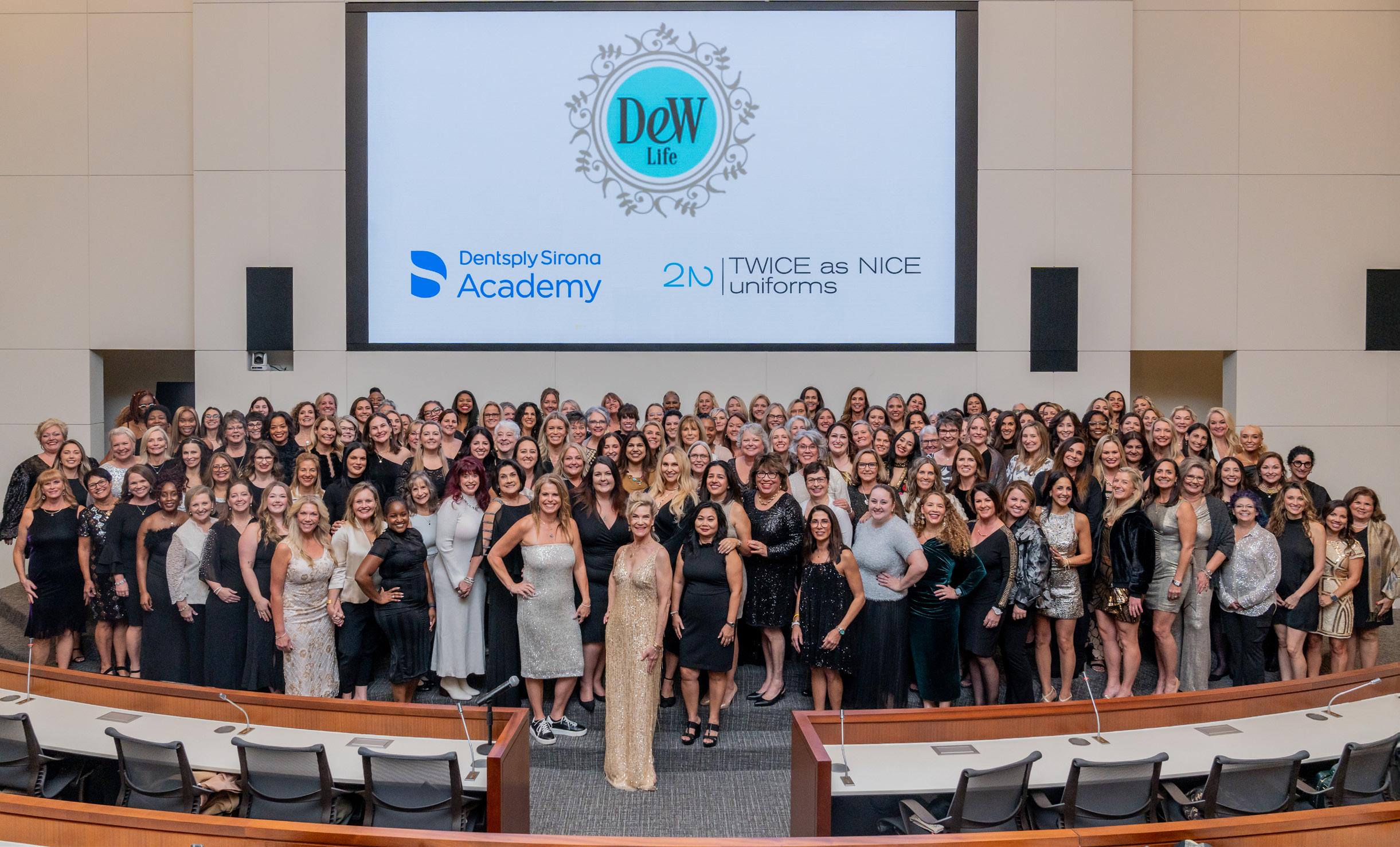
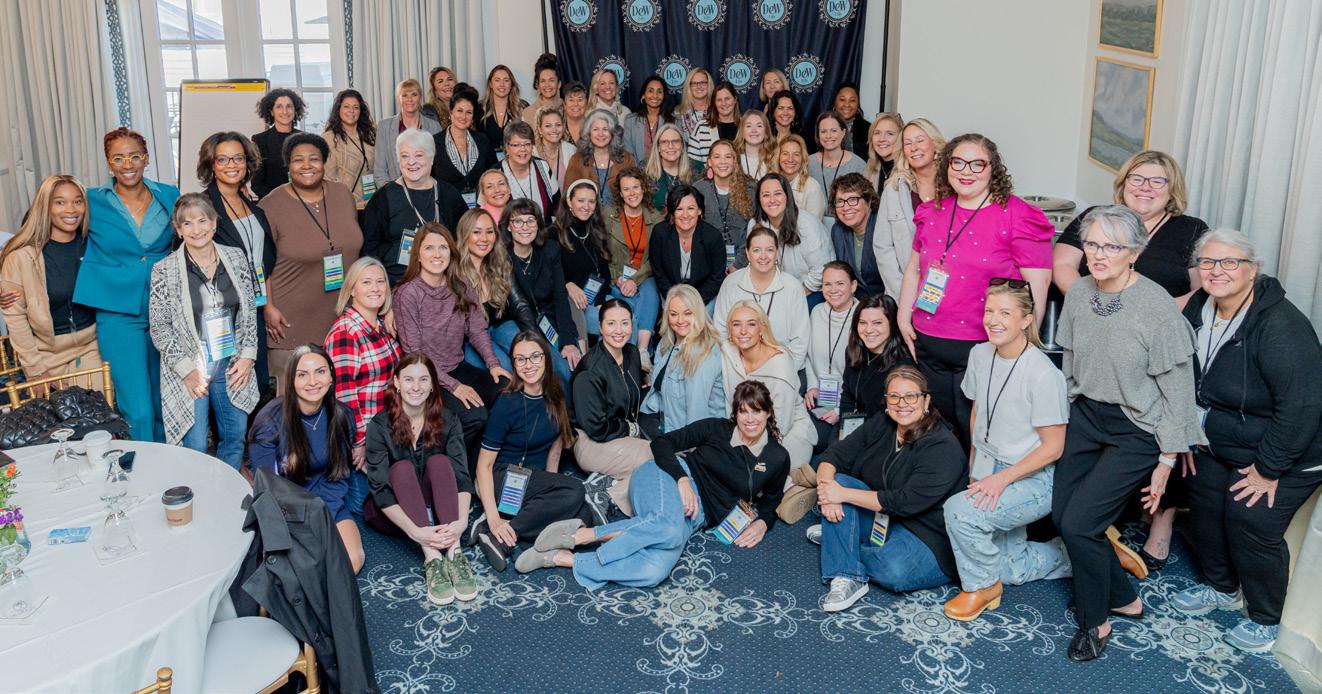
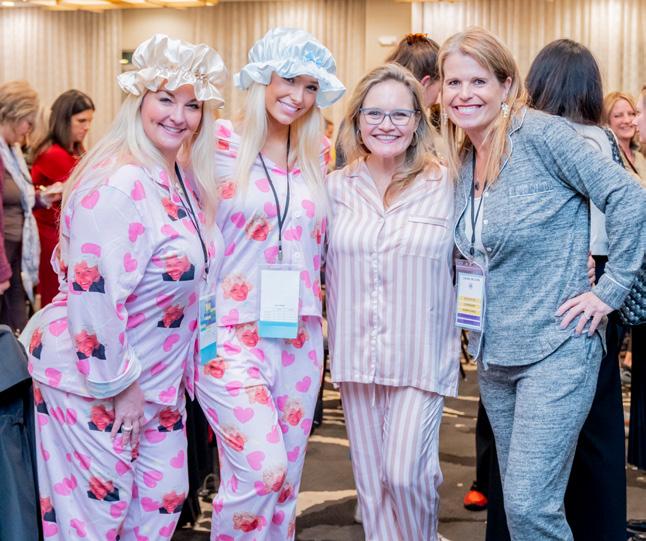
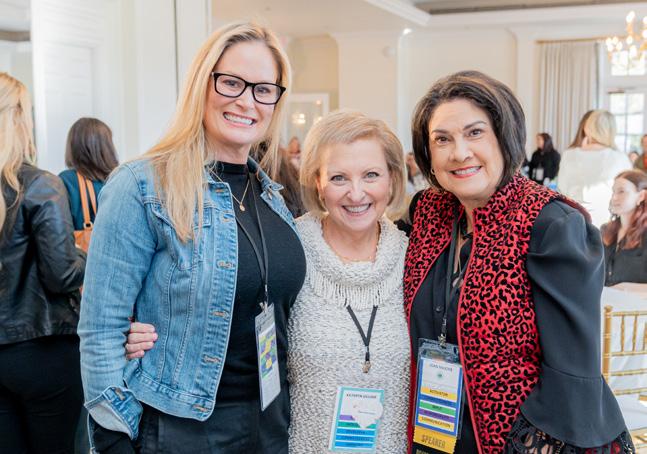
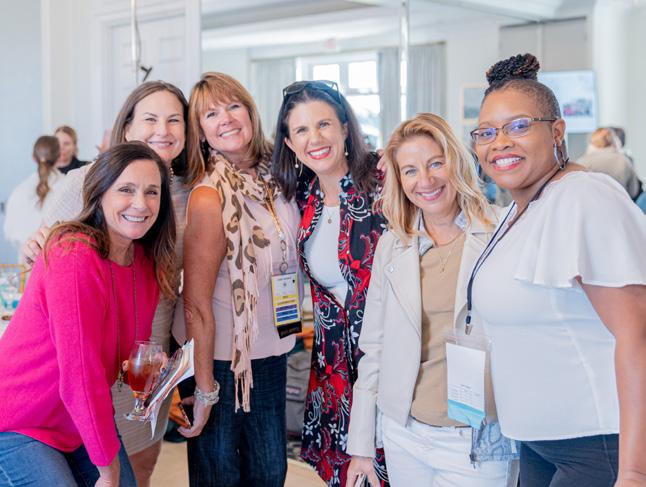
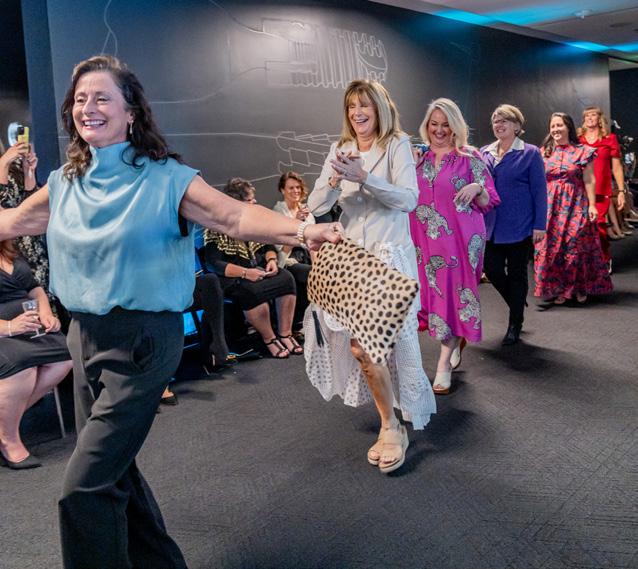
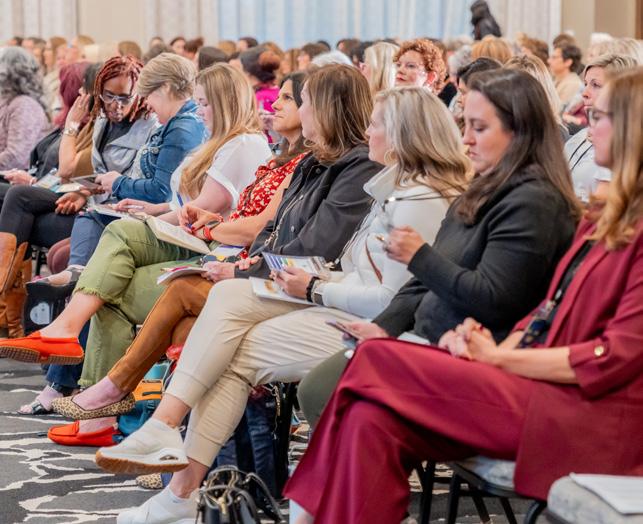
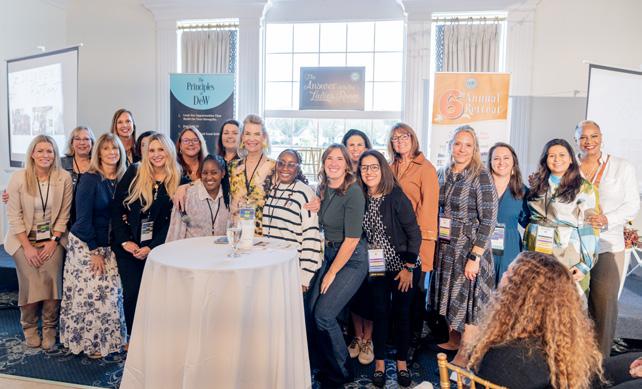
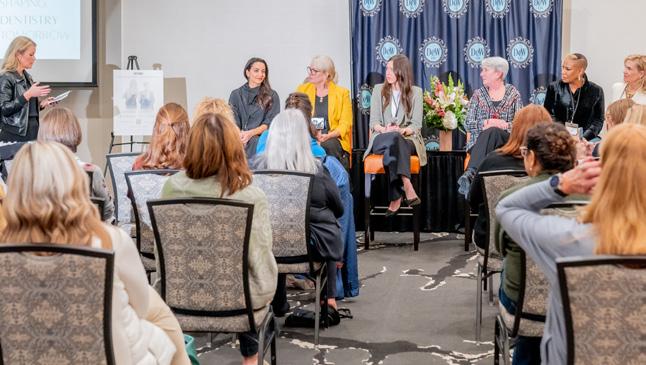
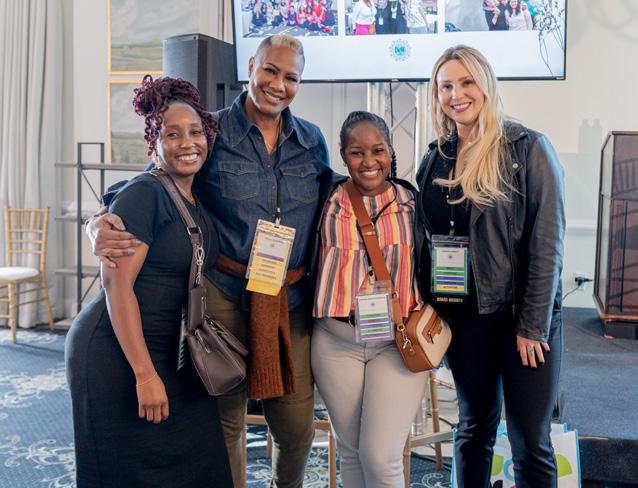
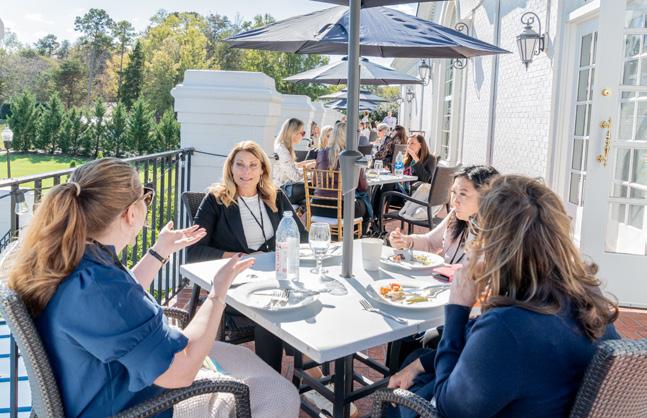
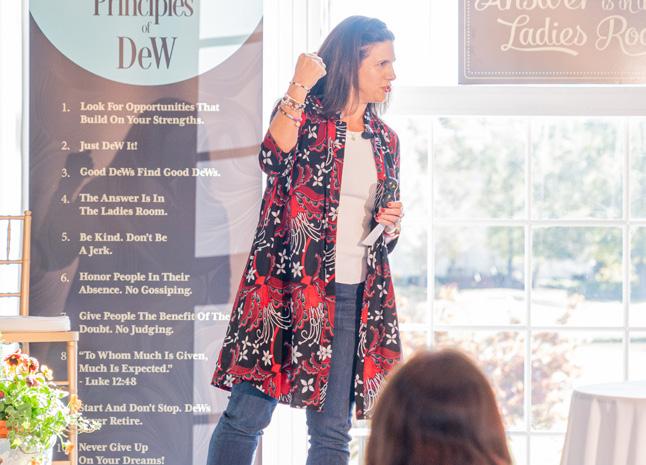
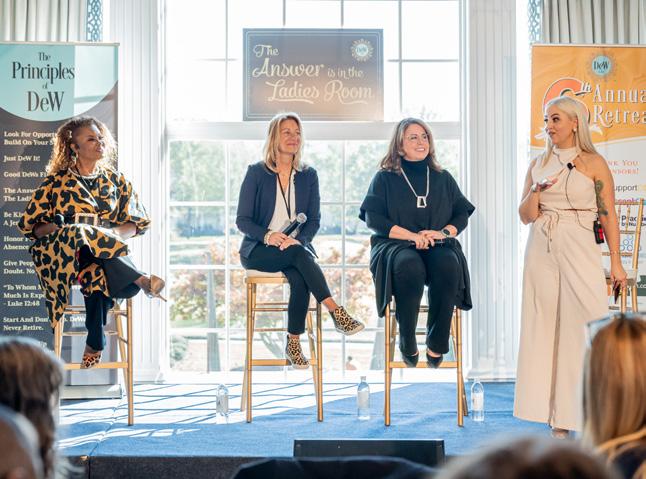
I am still basking in the love and connection from our sixth annual DeW Life Retreat. What a joy it was to gather with the talented, thoughtful, and impactful women in dentistry who are shaping the future of our industry. I’m beyond grateful to everyone who contributed to the planning and to those who attended. This year, we welcomed 178 women in dentistry—an incredible milestone—and we are already making room for 250 attendees in 2025. You are invited to join us!
This retreat served as the perfect springboard to feature the extraordinary women of DDSmatch. These leaders bring their feminine leadership, collaborative spirit, and cultural insights to every deal they negotiate. There is something truly special about harnessing these skills and think tanks to help guide some of the most important decisions you—or your colleagues—will ever make. Decisions that will leave a lasting mark on your future. With this heartfelt mission in mind, we wanted to spotlight them as our cover authors. I encourage you to read their article and share their remarkable community with those who are ready for change.
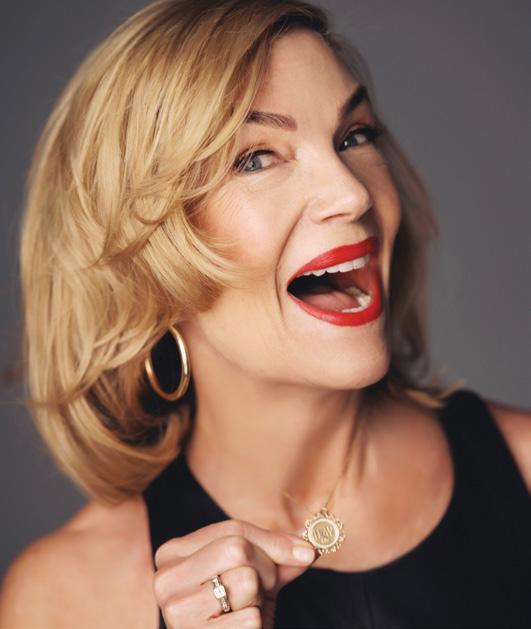
As we move forward into 2025, staring down our goals and milestones ahead, it’s important to remember that you don’t have to work towards them alone. Success comes in many shapes and sizes. There are also multiple routes towards the same prize. But there are cornerstones, such as alignment in your team, cultivating confidence, and the neverending pursuit of knowledge – all of which Dr. Maria Sokolina outlines in her article – that play a pivotal role in the journey. Then, there’s perfectionism, which many seek out but instead acts as a tool for procrastination, something Jennifer de St. Georges offers practical tips for overcoming.
Nancy Coy sends you off for a fruitful year but revealing her human-centered approach to improving case acceptance. And Lynn Peneck shares a personal anecdote that serves as a prominent reminder that you can do difficult things. No matter who you are, what your dreams are, and what you aspire to be – we’re all uniquely different. Ann-Marie DePalma gets down to the ways we are all different as seen in our health.
Because no year will be without its challenges, Dr. Parul Dua shares an intimate story of her journey with grief. It’s a truly inspirational look at how we have the strength to push forward even in our darkest times. And for the woman wearing many hats, which I know is most of us, Machell Hoover shares a familiar journey of juggling all the moving parts of her life, while doing it all with grace.
Finally, Christie Bailey, our DeW Life Advisory Board President, shares a heartfelt letter to our community along with her dedication to our collective growth. From our DeW Dishes, featuring Diana Thompson, Crystal Spring, and JJ Littrell, to the incredible DDSmatch ladies, I can’t think of a better way to ring in the new year than with these stories–sure to inspire, comfort, and encourage you for the year ahead.
Together, let’s continue to elevate, empower, and support one another as we shape the future of dentistry.
Love,


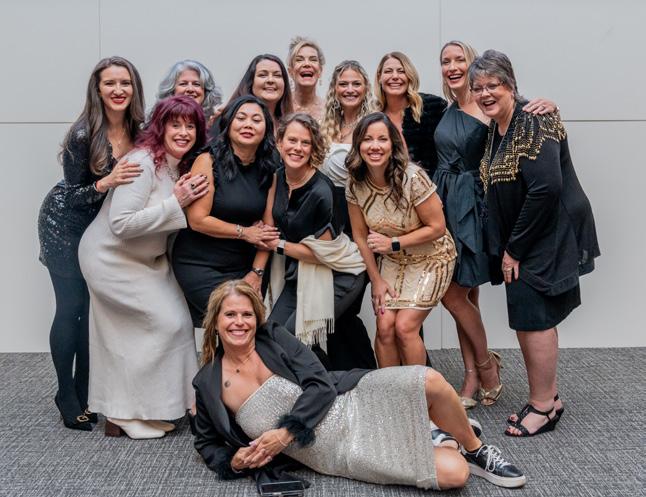
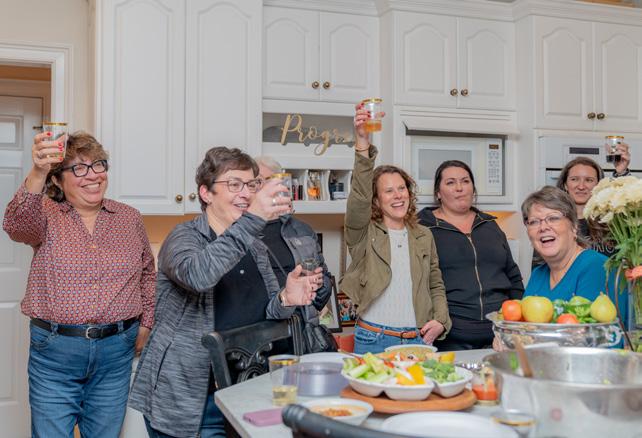
Agroup of women has emerged as a powerful force within DDSmatch, offering invaluable insights into business ownership, women in dentistry, and the nuances of dental transitions. These women are passionate about sharing how collaboration, communication, culture, and circles of influence can aid your practice now and when it’s time to transition—even if it’s several years away.
DDSmatch is a dental transition company known for its proven processes, independent third-party valuations, robust database, and relationship-driven connections. These are all designed to help dentists better navigate the often complex world of practice transitions.
The biggest lesson that these women have learned? We are better together!
YOU WORK WITH DENTAL PRACTICE OWNERS EVERY DAY, AND YOU ARE BUSINESS OWNERS YOURSELVES. WHAT DOES OWNERSHIP MEAN TO YOU IN A WORD (OR TWO!)?
Jessica DeMichiel: Autonomy. Michele Gabriel: Purpose. Legacy. Mara Saucedo: Courage. Responsibility. Sheryl Garfinkel: Independence. Responsibility. Power. Success. Meaningful. Jamie Gialanella: Freedom Betsy Krekling: Pride. Success.
THE POWER OF COLLABORATION FOR WOMEN IN DENTISTRY
Whether practicing dentistry, selling a practice, adding an associate, forming a partnership, or evaluating a DSO offer, the stakes are high and involve many moving parts. It can feel overwhelming and emotional. Working together through cooperation and collaboration can make all the difference.
WHAT DO YOU VALUE MOST ABOUT WOMEN IN DENTISTRY?
Jessica: We think that women bring a different perspective to dentistry and show that you can be successful both working at or owning a practice, despite the challenges that often come with balancing your professional life with your personal life.
Sheryl: Women in dentistry are an increasingly influential and growing presence, helping to raise awareness and break down barriers in the profession. Their contributions are vital in ensuring that women are recognized and celebrated as successful leaders and professionals in the field–inspiring future generations to pursue dentistry with confidence and ambition.
HOW DOES COLLABORATION FACTOR INTO THE WORK YOU DO?
Mara: From a business owner perspective, the level of collaboration we share ensures I am giving my dental


practice transition clients the most comprehensive guidance possible. With just a phone call, I can tap into a wealth of collective wisdom, where my colleagues share insights, resources, and solutions.
Jamie: From my experience, full engagement with the client and buyer and their respective attorneys and CPAs makes for a smooth transition.
For business owners effective communication is critical. Dentistry requires attention to detail and adheres to a specific work flow, similar to a dental transition. Communication is essential for ensuring that all parties are on the same page.
WHAT IS YOUR PERSPECTIVE ON COMMUNICATION AS A DENTAL BUSINESS OWNER?
Betsy: Open and timely communication is the backbone of how I do my best work. I look forward to connecting with my clients and am committed to guiding them any time of day.
Sheryl: To add to that, it’s about more than just conveying information—it’s about fostering understanding, especially when delivering tough messages or
navigating differences. With open dialogue and skilled communication, even the most challenging situations can be worked through, leading to better outcomes for everyone involved.
As dentistry changes, so does the culture of transitions. A transition that focuses on the entire process rather than just the final transaction is essential to finding the right fit when selling your practice, adding an associate, or creating a partnership.
Michele: Culture plays a pivotal role in every aspect of practice ownership and its eventual transition. A dental practice is more than just a business; it’s a community built on relationships with patients, staff, and the local area. The culture defines how care is delivered, how the team interacts, and the values that guide daily operations. When transitioning ownership, preserving and aligning this culture is essential to ensure continuity, patient trust, and staff retention.
Jessica: Although financials are certainly important, I think culture is the linchpin of a great practice. It drives your staff and in turn, leads to a good experience for your
patients. Finding a buyer who has a similar idea of culture is absolutely key to a successful transition of your legacy, staff, and patients to ensure quality care.
Betsy: Professionalism, consistency, and a solid network are at the forefront of guaranteed success. The rest is in the details, which vary from client to client. Whatever they need, we make it happen.
Sheryl: A successful match requires time, patience, open communication, and careful attention to detail. These elements ensure that both parties are aligned and that the transition or transaction is as smooth and beneficial as possible.
By building strong professional networks and leveraging collective knowledge, women in dentistry learn the power of connection and shared influence—we are better together.
TELL US HOW YOU CULTIVATE CIRCLES OF INFLUENCE. HOW DO YOU HELP DOCTORS EXPAND THEIRS?
Jessica: You have to put yourself out there in all sorts of different ways: in-person events, video conference events, check-in phone calls, social media. Sometimes we are tired or the thought of networking can be stressful, overwhelming, etc. But you have to go into it with a positive mindset and realize you are building a professional (and even personal) support system. You should think of cultivating circles of influence as a longterm endeavor to become part of the dental community–not just something you do when you are looking for a job or to purchase/sell a practice.
Michele: To add to that, to help doctors expand their circles of influence, we provide access to our extensive network, including buyers, sellers, advisors, and industry leaders. We facilitate introductions to specialists in legal, financial, and operational areas, ensuring doctors are equipped with the right resources and connections for every stage of their journey. This in turn helps doctors feel as though they are supported, fosters the necessary assistance they need, and helps to keep their success top of mind.
WHAT IS YOUR TOP TIP FOR A DENTIST THINKING ABOUT A DENTAL TRANSITION NOW OR EVEN IN A FEW YEARS?
Mara: Plan to succeed. Engage an accountant to optimize tax strategies. Streamline operational processes. Focus
on maintaining impeccable patient records and billing systems. Sustain strong patient retention and consistent revenue.
Jamie: Start early! Being prepared to sell with the right mindset creates the most optimal transition experience for the doctor, staff, and patients.
There are so many more lessons to be shared, from making sure you have an independent business valuation before you sell so you know the true value of your practice, to seeking counsel from professionals like attorneys, financial advisors, and accountants in advance of selling so you have a team in place, and knowing how to interpret the terms and conditions of a DSO offer. It can feel onerous, but we are in it together—and we are better together!
ANY FINAL TAKEAWAYS TO SHARE WITH YOUR FELLOW DENTAL ENTREPRENEURS?
Michele: Being a woman in dentistry, I have had the fortunate circumstance to partner, lead, and collaborate with so many entrepreneurs throughout my career. It has been a tremendous gift to be able to give back and to learn from so many strong women. As someone who has been in dentistry for almost 30 years, it is of great value to me to see how the industry has evolved. I value the collaborative efforts of each individual who continues to grow their clinical, technical, and entrepreneurial skills while continuing to elevate patient care, drive innovation, and support one another’s growth.
Mara: Owning a dental practice is a profound act of courage—from the initial bold decision to buy, through years of dedicated building, to the ultimately selfless moment of passing the torch. It’s about understanding that true success isn’t just measured in financial terms, but in the commitment to serve patients and nurture a team’s legacy. Our role is to honor that journey, connecting practitioners who share a deep passion for compassionate care and professional excellence.
Founded in 2009, DDSmatch was envisioned as a better way for dentists to make dental practice transitions. DDSmatch’s Transition Professionals are active in 48 states, and use their dental-specific expertise, proven processes and deep industry relationships to create the perfect match for the dentists they serve. DDSmatch has one goal: to connect a dentist’s present with their future, while maintaining the trust and confidentiality that are essential to a successful transition.
Photo credits: Michael Burgos- Burgos Stone Productions

By
Happy 2025!
I am overwhelmed with gratitude and excitement for the opportunity to serve as the first-ever President of the DeW Life Board of Directors. It is an honor to step into this role and carry forward the extraordinary legacy that Anne Duffy has created.
I recognize this role is a significant responsibility, and I embrace it with humility and enthusiasm. My goal is to bring value to this amazing community by building on our strong foundation and inspiring new heights for DeW Life. Together, we can continue to advance our mission of inspiring, empowering, and connecting women in dentistry across all career paths - whether you’re a clinician, educator, entrepreneur, or industry professional.
DeW Life has always been more than a community for professional growth; it’s a movement. It’s a space where women can thrive, collaborate, and uplift one another, creating amplified effects of positive change in our industry and beyond. For me personally, this mission resonates deeply.
I’ve experienced firsthand the power of connection and mentorship in transforming careers and lives. As President, I am committed to ensuring that DeW Life remains a place where every member feels seen, valued, and equipped to achieve her goals; while expanding our organization to better serve your business development and growth needs.
One of our most exciting developments is the incredible Board of Directors we have strategically assembled. This dynamic group of leaders brings diverse perspectives and expertise, all united by a shared commitment to supporting women in dentistry. Their energy, ideas, and passion are already propelling us forward, and I am confident that their contributions will strengthen our community in meaningful ways, and in many ways that tactically support you, your career, and your business growth.
As we look ahead to 2025, I am thrilled to share a few key elements of our vision for the year:
We want DeW Life to continue being the leading platform for women in dentistry by emphasizing collaboration and inclusivity. By listening to our members, we’ve learned that there is a strong desire for more tools and resources to support professional development and business growth. In response, we are curating partnerships and creating new opportunities to meet these needs intentionally and effectively. More details to follow soon!
This year, we’re launching three membership tiers: Core, Premium, and Platinum. Designed to meet members where you are and help you achieve your unique goals. Our Platinum Membership stands out with exclusive Mastermind Sessions, VIP networking opportunities, and access to specialized benefits.
Held at the beautiful Ballantyne Resort in Charlotte, NC, this year’s retreat will welcome 250 women, our largest yet! We are thrilled to offer elevated programming that includes leadership sessions, personal development workshops, business growth courses, and expanded networking opportunities.
We envision DeW to be a place for all women in dentistry to have community, mentorship, and a resource for applicable tools to sharpen your business skills and help support your growing business; whether you are an entrepreneur, a clinician, or work in the dental industry. We are here for you, we are here with you, and we are honored to continue being your resource for community and growth.
As we embark on this exciting journey together, I want to emphasize my commitment to listening. Your feedback, ideas, and aspirations are invaluable to shaping the future of DeW Life. I encourage you to share your thoughts with us so that we can continue to evolve and serve you.
If you haven’t already, I invite you to explore our new membership options and consider signing up for the 2025 retreat soon. The Platinum Membership + Retreat Bundle offers exceptional value and serves as a powerful way to invest in yourself and your future.
2025 is poised to be a transformational year for DeW Life. Together, we have the opportunity to elevate women in dentistry like never before. I am honored to help lead this community and can’t wait to see all that we will accomplish together.
With gratitude and excitement,
Christie Christie Bailey - President, DeW Life Board of Directors Director of PR & International Business, PULPDENT christie.bailey@dew.life
| IG: @thechristiereport


DIANA THOMPSON
Vice President of Operations - Central Region
Website: www.icondentalpartners.com

WHAT IS THE BEST PART OF YOUR JOB?
Leadership/Support Team, Partner Dentists and their teams, Remote Work Environment, Being an integral part of building an ICONIC DSO company.
HOW DO YOU MEASURE YOUR SUCCESS?
By my personal journey to be the best version of myselfImproving? Personal growth? Genuinely Happy? At peace!
WHAT DO YOU DO TO TURN AROUND A BAD DAY?
Breathe, evaluate the situation, create a few solutions, move on.
WHAT IS YOUR GUILTY PLEASURE?
Chocolate and singing on stage.
WHAT ADVICE DO YOU HAVE FOR THE NEW PERSON IN YOUR OFFICE?
Observe and actively listen to learn. Like a sponge, absorb what is important to advance your skills and experience. Be careful not to overload yourself with anything you cannot control.
WHAT “DEW” LEADERS DO?
Lead by example, genuinely care about others, empathize, and have fun.
WHAT IS YOUR FAVORITE INDOOR/OUTDOOR ACTIVITY?
Relaxing by singing with my friend's cover bands and playing with my German Shepherd Shadow and my loving Chihuahua Peanut.
WHAT FAMOUS PERSON, LIVING OR PASSED, WOULD YOU LIKE TO HAVE LUNCH WITH AND WHAT WOULD YOU ASK THEM?
Jesus. I'd ask Jesus, "Are my Mom, Dad, and Brother Adam genuinely happy and living a cohesive family life?"
WHAT OBSTACLES HAVE YOU OVERCOME IN YOUR CAREER? "
Creating the business plan to launch, then sustain a national dental practice management consulting firm for 10 years. Success!"
WHO HAS BEEN THE MOST INFLUENTIAL PERSON IN YOUR LIFE?
My BFF Sally. We've known each other for 20 years. We are each other's sounding board about anything 'LIFE'.
WHAT IS THE BEST GIFT YOU EVER GAVE?
Giving my time and undivided attention to anyone that asks me.

CRYSTAL SPRING, RDH, BS
Executive Director, onDiem Relationship Development Manager
Social Media: crystallovesdental | Crystal Nelsen Spring Website: smilesacrossmontana.com
The best part of my job? Helping others, it’s what fuels me. I’ve created roles I love, and I thrive on making change. While it might intimidate some, I’m just crazy enough to think it’s fun! Growth and change are where life gets exciting for me, and I love inspiring others to take bold leaps.
I am going to say my mom. She has been gone 17 years now. She was nowhere near perfect, she battled with depression and alcoholism but she loved stronger than anyone I have ever met. She loved me enough to expect more out of me. She pushed me when I wanted to give up and she held me when I failed, but just for a minute before she pushed me to get back up. My mom’s friends send me messages often telling me how proud she would be of me and that is it.
I measure success at this point if you’re still standing and have a smile on your face. You hear so many people say that you’ll regret working so much. I can see this but I won’t regret it all. I love the work I am doing right now. I have created jobs that fill my soul. I am doing things that I want to be doing. I know this might not always be the case but for now, I am enjoying creating, connecting, and building programs that make people’s lives better. Today is a success.
Starting a nonprofit as a woman, as an RDH, it has been a rough road. I have had a misinformed complaint against my license that had no merit but it really sucked to go through. I have had people lie about our nonprofit and try to have it shut down and last year was one of the hardest when the nonprofit struggled financially to stay open. But, at this point, the organization is doing better than ever with a very bright future.
WHAT DO YOU DO TO TURN AROUND A BAD DAY?
If I am spiraling out of control, I had a coach teach me to write down if the catastrophic things I was imagining were a truth or a thought. Man, I can think of some bad ***t! I will also call a friend. It has to be one of my people who will be there, listen, and help me move on, not someone who will feel sorry for me necessarily just someone who loves me enough to listen and it’s always nice if they can make me laugh.
I don’t feel guilty about it at all. I love popcorn. I love melting cheese on it, you have to try it.
Find your why. If you know why you are here you’re gonna enjoy your work a lot more. Mission is important to me and it is how I make so many of my daily decisions. If it doesn’t align, I don’t do it. I truly believe that whatever is mine will come to me without me compromising who I am and what I believe to get it.
I love to connect with people. I feel like it is my superpower. I may not always know where I am going or where I should focus but I can see it clearly for others. Being a leader I have learned to be selfless and put the needs of my team and their growth ahead of my own. I have finally grown my nonprofit to the size that I can give away some of my workload to people who can focus on those tasks but it isn’t easy when you are used to having all the control.

JJ LITTRELL, CPA
Co-Founder, COO
Website: GrowWithTuatara.com
Helping doctors feel at peace with their decisions because they are confident in the process of making the choice and being comfortable with the underlying data that got them there.
WHO HAS BEEN THE MOST INFLUENTIAL WOMAN IN YOUR LIFE?
I’m going to go with an unconventional answer here, while my family is full of amazing women who have helped me be who I am today, the most influence came through a life coach turned friend. Her name is Lauren, and she opened my eyes to what the possibilities of my life could be through owning my own business, and it led to me Tuatara.
HOW DO YOU MEASURE SUCCESS?
Success for me is how high the quality of my life ismeaning, do I end more days than not feeling warm and delicious about the impact I made, the experiences I had, and the people I got to be around? If that answer is a HECK YES, that is a success.
WHAT OBSTACLES HAVE YOU OVERCOME IN YOUR CAREER?
Whew, this was a hard one! While there have been many highs and lows, I think the greatest obstacle I’ve had to overcome was feeling good about taking a road less traveled - finance is a career with a pretty defined growth ladder. Deciding to jump off that ladder and build my own through Tuatara was a major mindset obstacle I had to overcome.
I play REALLY loud music and sing at the top of my lungs, maybe even dance or power pose too. I also use Voxer and Marco Polo to verbally process my feelings with friends and that helps me get out the big feelings, gain perspective, and decide how to move forward.
IS YOUR GUILTY PLEASURE?
Travel! I love new experiences and seeing new places, especially with people I love. I judge how good my year is going to be based on how many flights I have booked in my airline app! I started traveling no less than once a month in 2023 and I haven’t missed a month since! My favorite place in the world is the US Virgin Islands, but anywhere with water (pool, lake, ocean, river!) makes my heart so happy.
WHAT ADVICE DO YOU HAVE FOR THE NEW PERSON IN YOUR OFFICE?
Read The One Thing! Too often we get overwhelmed by trying to move too many things forward, we end up making 1 inch of progress in 1 million directions. But when we can focus that energy on moving 1 inch a million times - that results in real progress!
Leaders listen first. It’s so easy to run the room with all of your energy and ideas and take it over, but if you listen first, you will have wildly better outcomes with your team, clients, patients, etc.
By Lynn Peneck
Iwanted to share a story of a moment that changed my life.
I met up with my friend Carl after working at a dental conference in Washington, DC. Before I got married, Carl and I traveled with friends on ski trips and skating races hosted by athletic clubs.
Carl congratulated me on running the Broad Street Run. He said ten miles is quite the accomplishment. Carl knew running was new to me. He then asked, “Do you want to run a marathon?”
I said, “You are crazy; I could never run a marathon.” We ordered another beer. As the evening went on, he shared that if you can run ten today, you can run a marathon; if you add one extra mile a week to your training, you can run a 26.2-mile race in 16 weeks.
In that moment, I thought to myself, “If you put it this way, it sounds obtainable.” After a second beer, I said, “OK, I’m in!”
He then asked, “If you could run just one marathon, which one would you do?” My answer was obvious: New York, of course.
We both applied to run the New York Marathon and started our training program. I bought John Galloway’s book “Marathon Running for Women.”
We trained in our respective cities, with me in Philly and Carl in Washington, DC. I loved the discipline and structure of the program. It includes running three miles a
day, three to five days a week, rest, and LSD.
LSD stands for Long Slow Distance; you increase your long slow run by one mile each week and rest a day afterward.
My long runs were on Sunday. I would then spend Sunday afternoon on the couch, exhausted, indulging in a televised game of football. This was a great time in my marriage because my husband just wanted me to watch Eagles games with him.
Each week, Carl and I reported to one another about how we felt after short runs during the week and our long runs on the weekends. The training was going well, and then we received the acceptance letters for our race applications.
Getting into the NY Marathon is like getting into Harvard; it’s more like a lottery, but only a small percentage of applicants get into the NY Marathon, and you never hear of a first-time applicant getting in.
I called Carl to share that I beat the odds and got in the NY marathon on a first-time application!
Carl shared that he did not get into the marathon with the lottery.
At this point, I was comfortably running eighteen miles. I shared that I was committed and would complete this goal together. We changed plans and registered to run the Baltimore Marathon instead.
Baltimore is halfway between Philly and DC, which is
equally inconvenient, as it is the location of my Alma mater, the University of Maryland.
I have been told that only 2% of the world’s population has run a marathon. At the Baltimore registration, I was introduced to the usual suspects at these events. Marathon runners are high achievers, have a good sense of humor, and are extroverts. I met a man who juggles the entire run, a man who wears his blue polyester ruffled tuxedo, and many women (and a few men) in tutus. I saw friends I knew from skating and skiing who also ran distances.
People wear signs on their clothing: “1st marathon,” “It’s my birthday,” “This seemed like a good idea three months ago,” or “Dear God, please let there be someone behind me to read this”.
The race went well; our time was 5 hours 20 minutes, and we finished without injury, sunburned and hungry. I’m not sure if I would have finished this without Carl there to encourage me.
The story is not about running the distance; the story is about how running a marathon taught me I could do anything. You can’t take that accomplishment from me.
How often have you talked yourself out of something because you did not think you could do it?
But wait, there is more!
I was not going to pass on the opportunity to run the NY Marathon. Three weeks later, my husband and I headed to New York City and stayed at a friend’s apartment. At 4:00 a.m., along with thousands of strangers, I took the designated bus over the Verrazzano Bridge to the start line on Staten Island. This was a completely different experience. It was 45 degrees colder, and it snowed during the race.
Carl came up to NY on race day to cheer on his friends. He wore his inline skates, skated the route, and was there with water, energy gel packs, and kind words of encouragement.
EVERYONE NEEDS A FRIEND LIKE CARL.
I ran a mile with a man wearing a shirt that said, “73 today! -30 marathons.” This made me think: I’m 45 and running my first; I’m not doing something right, but I can correct it.
Then, next year, I set the Marine Corps Marathon as my target goal. Carl asked me to reach out to our friend Karen, who was registered and going through a tough
time. Karen’s husband, Marshall, recently died from cancer. Marshall was an exceptional athlete and a driving force in our network of friends. We all love and miss him.
I learned from watching my dad after my mom passed that when you lose a spouse, you need your friends, a routine, and a lot of distractions. Karen and I agreed to connect weekly, compare our training, and run the Marine Corps Marathon together.
We meet up on race day at the start line. We saw the usual suspects: the juggler, the tuxedo, the tutus, and a guy in a hot dog costume with a sign that said “SingleGayMarathoner@gmail.com.” Brilliant! If you want to attract like-minded people, this is how to do it!
My top 5 Gallup strengths include discipline and belief. With proper preparation, anything is possible.
To finish this story, I want to share the words of a great philosopher, Ted Lasso, “Believe – If you Believe, you can achieve.”
I ran my first marathon in 2006 at 45.
Carl and I have run more marathons together, including Scranton, PA, and the Ocean Drive at the Jersey Shore. We both still skate and communicate regularly on social media. Carl still runs marathons and continues to outdo his previous personal bests. He is now married to a lovely woman, and together, they have a beautiful baby girl who rides in a roller stroller as Carl does his LSD.
Karen is remarried with two beautiful children.
We all still miss Marshall terribly.
I have been on crutches twice in the past two years. My training is called the “Couch to the 5K” program. I still know I can do anything, and I try to contain my superpowers.
About the author:
Lynn Pencek’s strengths include responsibility, restorative, empathy, belief, and discipline. As the first-born grandchild, she embodied the responsibility common in firstborns. At six, she decided to become a dental hygienist and later thrived as an award-winning dental loupe salesperson, using her restorative strength to help others succeed. Lynn enjoyed outdoor activities and embraced a marathon challenge, showcasing her discipline and belief. She lives in Philadelphia with her husband and two Bassett Hounds, enjoying cooking and park walks.
As women, our bodies are constantly changing. From the moment we get our first period to menopause and beyond, our bodies are undergoing constant evolution. Whether for better or worse, hormones and other factors play a role in how we experience daily life. Let’s examine a few of these.
We know a lot about the effects of estrogen and progesterone on our reproductive system, but did you know that there are estrogen receptors in the temporomandibular joint? Numerous studies, particularly the OPPERA study, have shown that estrogen can influence the inflammatory response and pain modulation for TMD patients. Since many TMD patients are women in their childbearing years, this sheds light on a previously unknown connection.
As a TMD myself, I can attest to estrogen’s role – I often experience a “TMJ headache” prior to my period as well as during pregnancy when my symptoms decreased. The OPPERA study (Orofacial Pain: Prospective Evaluation and Risk Assessment) funded by the National Institute of Dental and Craniofacial Research set out to identify risk factors for the development of Temporomandibular Disorders (TMD). Beyond the findings on estrogen and its role in TMD, OPPERA opened the door to many other investigations that are still ongoing in the TMJ/TMD research arena.
Women also experience several autoimmune disorders ranging from rheumatoid arthritis to multiple sclerosis, to inflammatory bowel diseases to psoriasis. A recent study from Stanford University found that somewhere between 24 – 50 million Americans are affected by autoimmune disorders with as many as 4 out of 5 patients being women. There are an estimated 100 different types
By Ann-Marie DePalma
of autoimmune disorders. Autoimmune diseases are a result of the body’s immune system overreacting, attacking and damaging the body’s own tissues. The exact causes of autoimmune disorders are unknown but there are theories as to what triggers them. Medications, genetics, and infections along with risk factors such as smoking, environment, or obesity are all indicated in the autoimmune disease development.
Depending on the autoimmune disorder the symptoms can be varied but common symptoms include fatigue, joint and muscle pain and/or swelling, and dermatological or digestive issues. One of the common antidotally found autoimmune disorders in women in dentistry is Hashimoto’s Thyroiditis or other thyroid disorders (hypo or hyperthyroidism or thyroid nodules). For example, with Hashimoto’s, patients can experience fatigue, constipation, weight gain, depression, dry skin, and sensitivity to cold. I have heard from several women in dentistry who have or are experiencing issues with their thyroid.
Another type of autoimmune disorder that I had never heard of until my own experience is polymyalgia rheumatica (PMR). PMR is an autoimmune, inflammatory disorder that can cause muscle pain and stiffness. This pain and stiffness is primarily seen in the larger muscle groups such as the shoulders or hips and appears on both sides of the body. The predominant patient population is Caucasian females after the age of 50. I began with shoulder and hip pain that didn’t resolve even with physical therapy. There were days when I had difficulty going up and down stairs or getting up from a seated position!
PMR symptoms can occur suddenly or come on
slowly, mine were sudden onset with nothing definitive precipitating the pain. Like other PMR patients, the pain and stiffness were worse in the morning or after periods of inactivity although different than the pain of arthritis which has a similar appearance but involves the joints rather than the muscles. The physical therapist I saw felt it was more muscular than joint-related and therefore felt it wasn’t an arthritic situation. She advised contacting my primary care physician who ordered several blood tests including C-Reactive Protein (CRP – an inflammatory marker). This showed elevated inflammation, but CRP is only an indication that inflammation is occurring in the body and is not a specific diagnosis.
My PCP recommended a consult with a rheumatologist who also found an additional increase in CRP several weeks after the initial blood work. Inflammation was a problem, and he had several theories. One proved to be incorrect while another was PMR. There is no test for PMR however when a patient is given a dose of steroid, usually prednisone, the symptoms are reduced almost immediately. He started me on a dose of prednisone and sure enough, the symptoms subsided. Prednisone is a great medication for inflammation but also has numerous side effects. With PMR the patient is advised to remain on the initial dose for about a month and then a slow tapering process is begun. During the taper process symptoms of PMR can return and I experienced some recurrence and therefore had to increase the dosage again for a short time. I am still in the taper process but this time, symptoms seem to be less. PMR usually has an excellent prognosis for patients following treatment but sometimes can relapse if tapering has happened too quickly or at some point in the future if there is a trigger of some type.
Raynaud’s Syndrome or Raynaud’s Phenomenon causes spasms of the small arteries of the fingers or toes with fingers/toes turning white and eventually blue. Numbness and pain can also occur with pain, tingling, throbbing, and redness following the return of blood flow to the area. An episode of Raynaud’s vasoconstriction can last a few minutes or several hours. Women are prone to Raynaud’s more than men, with the age of onset between 15 and 30 years old.
There are two types of Raynaud’s, primary and secondary. Primary’s cause is idiopathic and not associated with another disease or condition other than a younger patient, climate, and genetics. Secondary Raynaud’s is usually associated with older patients, a connective tissue disorder such as lupus, an injury to the hand, prolonged use of vibration tools (think ultrasonic scaler), thyroid issues, smoking, and estrogen. Secondary Raynaud’s can cause severe tissue damage, but it is rare for ulcers to form.
Treatment involves keeping hands and feet warm in colder weather, even to the point of wearing mittens or gloves when taking food from the refrigerator or freezer or wearing socks to bed. Medications such as vasodilators (calcium channel blockers) or other blood pressure medications (angiotensin receptor blockers) and statins can be prescribed. Avoiding smoking/nicotine products, exercising regularly, acupuncture, biofeedback, and managing stress are also helping patients.
Vertigo is the sensation that objects around you or your surroundings are moving when no movement is occurring. Vertigo often feels like a spinning or swaying movement sometimes associated with nausea, vomiting, or difficulty walking. It often worsens when the head is moved. Vertigo can affect any individual, yet women experience vertigo attacks more frequently and more severely than men. It is theorized that hormonal fluctuations especially during perimenopause or menopause can increase the susceptibility to vertigo. There are also several other causes of vertigo including inner ear infections, head injuries, migraines, and even stress. A common cause of vertigo is benign paroxysmal positional vertigo (BPPV). BPPV has been shown to be caused by the crystals in the inner ear becoming dislodged and a movement, DixHallpike Maneuver, can alleviate the symptoms. The DixHallpike is considered controversial where the patient is moved from a sitting position to a supine position with the head turned 45 degrees to the right. After 20-30 seconds the patient is returned to the sitting position, and then the procedure is repeated to the left. Patients can experience vertigo during the procedure but often this helps realign the crystals within the inner ear. A physical therapist noted that BPPV is the one issue in physical therapy that can be resolved in only a few sessions!
Osteoporosis and its precursor osteopenia are bone diseases where the bone mineral density and bone mass decrease. Osteoporosis affects both men and women and is more common in non-Hispanic Caucasian women and Asian women. It usually begins to develop a year or two before menopause. Osteoporosis in men is more common in non-Hispanic Caucasian men, especially over age 70. Diet, medications such as corticosteroids, cancer medications, selective serotonin reuptake inhibitors (SSRIs), or proton pump inhibitors, certain medical conditions such as rheumatoid arthritis, gastrointestinal diseases, endocrine and other hormonal diseases, and lifestyle with a low level of physical activity all contribute to osteoporosis or osteopenia development. A DXA scan (Dual-energy X-ray Absorptiometry) is a non-invasive way of measuring bone mineral density to diagnose and follow the progression of osteoporosis/osteopenia. DXA scans are recommended for all women age 65 and older and for younger women at a higher risk of fractures due to risk factors. Men are advised to begin screening
after age 70 or who have any of the high-risk factors. In dentistry, year-to-year comparisons of dental radiographs can provide an indication of low mineral bone density. Changes in the width of the inferior mandibular cortex and the texture of trabecular bone are early signs of low bone density and if found, a referral to a medical professional is recommended.
Nothing is constant in life except change. As women, we are constantly changing. Understanding and appreciating change at whatever stage of life you are in allows one to live her life to the fullest.
About the author:
Ann-Marie C. DePalma, CDA, RDH, MEd, FADIA, FAADH, FADHA is a graduate of the Forsyth School for Dental Hygienists, Northeastern University and the University of Massachusetts Boston. Ann-Marie is a Fellow and member of numerous professional organizations. She is an Esther Wilkins Distinguished Alumni of Forsyth Award recipient. Ann-Marie has been published in dental and dental hygiene publications and textbooks. She is a consultant dental hygiene examiner for CDCA/WREB/CITA.
Ann-Marie presents a diverse line-up of CE programs for dental teams after being employed in a variety of roles in dentistry/ dental hygiene.

Mark your calendars:
2025 Midwinter Meeting McCormick Place West Feb. 20 - 22, 2025 Chicago, IL
The Denobi Awards Feb. 27 - March 1, 2025 Portland, OR
Women in DSO Annual Conference March 6 - 8, 2025 Las Vegas, NV
American Dental Education Association Annual Session & Exhibition
March 8 - 15, 2025
New Orleans, LA
Productive Dentist Academy (PDA) Productivity Workshop March 13 - 15, 2025 Frisco, TX
Association of Dental Support Organization Summit March 7 - 19, 2025 Orlando, FL
November 13-15, 2025
Thomas P. Hinman Dental Meeting March 2 - 22, 2025 Atlanta, GA
Smiles at Sea April 25 - 28, 2025 smilesatsea.com
Ce on the Beach June 26 - 28, 2025 Cayman Islands
If you want to arrange a meetup, please email anneduffy@dew.life for a complete updated list of dew dates go to the private FB DeW Life crew page.
Balancing work, travel, family, and a committed partnership has proven to be an adventure filled with challenges, growth, and immeasurable rewards. Embracing this lifestyle, for those of us who choose to discover it is a journey that requires love, resilience, and an unwavering dedication to our personal and professional lives. With God’s guidance and the support of a strong partner, this path can transform from a series of tasks into a profoundly fulfilling and purposeful way of life.
Work-related travel isn’t just part of the job; it’s a lifestyle. It demands sacrifice but also offers growth opportunities, both professionally and personally. Before traveling for work, I didn’t fully understand the emotional toll or the profound fulfillment it could bring. Missing out on family dinners, bedtime prayers, and daily routines is difficult, but each return home becomes a celebration of love and connection.
This lifestyle has taught me to cherish the time I spend with my family and to find joy in the small but significant moments that unite us. It has also deepened my gratitude for my husband’s strength and support in navigating this journey.
I was fiercely independent before I was introduced to my husband. As many of us are now, I was a single mother carrying the full weight of life’s many responsibilities on my shoulders. By my mid-forties, my independence
By Machell Hoover, RDH, FAAOSH, CHC
had become a source of pride and a testament to my resilience. However, when I met my husband, everything changed. For the first time, I experienced a love that allowed me to relinquish some of that weight. Trusting someone enough to share life’s responsibilities wasn’t easy; it required time, patience, and vulnerability. Yet, in trusting him, I discovered a new kind of strength rooted in partnership.
I remain proud of what I accomplished alone, but with my husband’s love and wisdom, particularly in business, I’ve found even greater success and purpose. Together, we approach life as a team, turning what was once a solo endeavor into a shared journey. The rewards are more remarkable because they are experienced together, and the challenges feel lighter because they are shouldered side by side. By allowing these blessings, this partnership has profoundly influenced our family dynamic, which has statistically shown to be more challenging within blended family homes. Still, they also demonstrate that, despite the pain of a previous divorce, we can discover beauty in working together, building trust, and fostering mutual respect.
Travel often means temporary separation of family routine, but if strategically and compassionately done, it’s only the physical part of the separation that cannot be navigated. Travel can, in fact, strengthen bonds and our experience in unique ways. My husband and I prioritize our connection, even when we are apart. Daily communication begins with morning calls and texts
during the day and ends the night with connection, whether a call or a text message. We work to ensure our first and last connection is with the one that holds our heart. This keeps us close, and where it may seem small, these intentional acts remind us that our marriage is the foundation of our family.
Our partnership thrives because we intentionally keep our relationship at the forefront. This statement may ruffle some feathers, but given our Christian beliefs, we strive to ensure our children are deeply loved; they understand the importance of a strong, healthy marriage and one that requires the spouse to come second only to God. This clarity provides stability and teaches them the value of nurturing their relationships with their future partners. I once believed that putting children first was my most important priority, seeing it as essential. However, after meeting a partner who shares my values, I now realize that prioritizing our relationship enables us to love and support others even more profoundly. Becoming a united front empowers us to care for those around us with greater effectiveness. This journey isn’t instantaneous; it unfolds gradually. Our growth in faith as a couple has been a deliberate process, one that intertwines our core beliefs and embraces the power of grace. We are committed to evolving as individuals and as partners, striving to become the best versions of ourselves together. Each step we take reinforces our bond and deepens our understanding of one another.
The undeniable challenges of work-related travel cannot be ignored. Missing meals, shared laughter, and those quiet, ordinary moments can be painful. Yet, these sacrifices are met with even more gratitude for the sense of purpose work brings and the perspective it offers on what truly matters. At home, family meals are a sacred tradition of connection where we share stories, laughter, gratitude, and struggles for that day. Traveling means we miss these times, and on longer trips, this is met with deep sadness but also with the comfort and excitement that they will resume with greater intention when returning home.
Children are incredibly perceptive; they absorb not only our words but also our actions. By tackling the many challenges of work-related travel with a sense of resilience and gratitude, we prioritize core values of perseverance and purpose for our children. They observe a biological and a stepparent who cherishes their faith, family, and career, understanding the significance of balancing these essential priorities. My husband, as a Christian leader,
exemplifies these values wonderfully. His dedication to our faith, our family, and his work inspires me, and even if his children do not know now, they will also be filled with gratitude as they become parents one day. He is an example of approaching life with integrity, passion, and grace.
By tackling challenges and supporting one another’s endeavors, we show our children that strength comes from independence and partnership. They see that life’s hurdles are opportunities for growth and that love and collaboration can create something far greater than the sum of its parts. This is even more important given we are a blended family. Being a child of divorce, I know the insecurity that comes from separation and the lack of trust in long-term success is even more difficult to believe in. Divorce is not the desired outcome, yet half of American homes face it. Building strength and trust between my husband and I, and creating an environment where our children can learn to believe in the joys of relationship through resilience, love, and grace is something we take very seriously.
In a blended family, love must be intentional and abundant. Our children see two parents who prioritize their relationship and are committed to raising them with love, faith, and purpose. This dynamic requires effort, but it is enriching.
Living our values teaches our children what a healthy marriage and family look like. They witness our love for them and our love and respect for one another. Our family functions as a cohesive unit, collaborating to tackle life’s challenges while cherishing its joyful moments.
Balancing work, travel, relationships, and family life has its fair share of challenges, but the rewards are immense. It demands purpose, perseverance, and a strong dedication to our loved ones and core values. Amidst the ups and downs, we discover joy in the journey, cherishing the combination of career and family as a wonderful blessing.
This path has taught me that independence and partnership are not mutually exclusive but complementary. I have remained the strong and independent person I’ve always been, but now I’m part of a team that helps make every challenge easier to face and every success even more significant.
With God’s guidance, my husband’s unwavering support, and the love of our family, we navigate this journey with
grace and gratitude. We celebrate the blessings of work, travel, and family life together, knowing that the joy and fulfillment we find in this balance are worth every effort.
About the author:
Machell Hudson-Hoover, FAAOSH, CHC, blends her deep clinical knowledge with heartfelt compassion in her contributions to overall wellness through clinical experience, speaking, and consulting. With nearly two decades in integrative hygiene, she is devoted to educating and mentoring dental professionals, enhancing patient care by bridging dental and medical disciplines. Her recognition as the DrBicuspid’s Most Influential Hygiene Educator for 2021 is a testament to her authority in the field. Machell is a respected international speaker and a leading authority on Oral Systemic Connections. Her compassionate approach is evident in her service on the boards of the American Academy for Oral & Systemic Health and RDH Magazine, where she influences integrative dental care practices. For professional guidance in the field of integrative hygiene and oral systemic connections, contact Machell at machell@ rdhhealth.com.




As an industry-leading cloudbased dental practice management software, Curve is proud to support and empower women in dentistry.






When I lost my younger and only sibling, Dr. Manu Dua, I did not have a village of grief protecting me, acting as a buffer. My parents resided in another country, and they had each other to rely on with the same loss. Losing a sibling is a unique loss, it strips you of your identity and a promised future. It was March 2021, the worst of conditions in the worst of times with no handbook amid COVID. Like most of you, I wear the many hats of life as a mom, dentist, practice owner, wife, daughter, daughter-in-law, and sister. I wanted the world to stop so I could get off and process the reality of what just happened.
Unknowing to me, a day before his death, I remember being told by my parents how Manu was being moved to hospice and they were meeting with the palliative team. I was at work seeing patients. I was not told more and I could not stop mid-day of a full day of patients. I had to switch off my lingering thoughts of my brother’s illness and soon demise, and refocus on patient care.
The next day I had to tell Manu, on a video call, to not wait for me and let go, to stop hurting as I watched him struggling to take his last breaths as he was on a morphine drip. That his fight was over but not his journey. I struggled to get the necessary PCR test to cross the border from the US to Canada with the compassion release documentation from the Government of Canada. I was a day late.
I spent the next two weeks in Canada helping my parents plan the funeral and a week in quarantine as per requirements at the time. Then I had to get back to patients, my young family, my start-up practice, and my

By
dwindling bank balance. I had to relearn to focus without my village acting like a buffer. I had severe anxiety. Sleep became a stranger at times, I learned how to live with grief. It is a burden you carry, some days a bit heavier than others. Grief would hit me like a tsunami at times taking my breath away, at times in gentle tears, and at times as happy memories.
I discovered that grief is a concept to be learned. Be grateful for the people who are there after the tears have stopped, the flowers have withered, and the phone calls have ceased–those who call you and check in on you, on your loved one’s birthdays or special moments, who are there when you feel the loneliness. You see when a loss happens, your body is on autopilot, doing not thinking. When the mind processes what truly transpired, what you just did, grief hits you. There is no time frame for grief, it can happen when you least expect it.
I learned how to cope better and how to live with it. To learn how to say no when I knew I did not have it in me to show up in my best self. To learn how to share my journey with others, to form new bonds, and to build a village to help guide. I lost faith in God but found divinity in the universe. My experience has taught me that there is a certain magic in the universe, energy is neither created nor destroyed but simply transformed/transferred. When a person crosses over, are they really gone just because our 5 senses cannot sense them? If you pay attention, there are signs all around us. I cried into the universe, whispered into it, yelled into it and it answered back. I learned to recognize the signs.
After Manu’s initial surgery, we planned a family trip to

Maui for April 2020. Unfortunately, COVID hit and our trip was canceled. Manu’s cancer also returned in April 2020 and he had to have a second surgery followed by chemo/ radiation. After his death in 2021 and COVID restrictions had lifted, my husband and I, along with our kids, took that trip that Manu and I had planned in April 2022, 2 years after our initial plan. We followed the same itinerary that Manu and I had planned.
On the road to Hana through its windy roads, we went past the paved road into it’s namesake town. It wasn’t a planned part, and the four of us decided to explore more of this tiny town in the middle of the Pacific. A town of only a 1000 people. There on a beautiful clear day, we drove past houses and I saw something, telling my husband to back up on this narrow street with no shoulder. I had
seen something and I had to make sure I saw what I saw. And there I saw a board in front of the house saying “Hale Manu” (House of Manu in Hawaiian). I then whispered to the universe, that’s where you disappeared Manu, you are okay. It was Manu showing me he was always near me. Since then, I have had several signs, learning to heal with them.
My hope for all of you is that when the life you planned is different from the life that transpires; when you don’t have a say in the cards that life deals you and you have to play your best hand– know that people are in your life for a reason or a season. Know that as long as you keep doing good and your part, you will be guided in mysterious and wonderful ways. That you are not alone and to trust the divinity in the universe. I also hope to share my journey and help the healers. We as healthcare providers give up so much of ourselves and put our patients ahead of us even as we may be grieving and suffering internally. From my journey, I aim to help those of you who are grieving; and know that you are not alone in your grief. As a grief coach, I’m here to travel along with you as I have traveled this path myself, aware of its unique challenges. To help channel my energy into something good. To tell you I see you, and you are not alone, you have a sister in grief.
About the author:
Dr. Parul Dua Makkar completed her Bachelor of Science from University of Central Oklahoma 1999, Magna Cum Laude and then DDS from University of Oklahoma College of Dentistry, in 2003. She practiced in Alberta, CA before moving to NY. Currently she is the owner of PDM Family Dental in Long Island, NY, a place she resides in with her husband and 2 boys. Dr. Makkar’s life took a different trajectory when she lost her only and younger sibling, Dr. Manu Dua, to Oral Cancer last year. He was a Dentist as well. Since his death, she has devoted her time to educating doctors and patients alike about risk factors, prevention, and advocating for early diagnosis of Oral cancer. Today, she serves as a Wellness Ambassador to the American Dental Association and is a Fellow of the American College of Dentists. She is on the board for her local county Syosset Chamber of Commerce and the American Academy of Oral Systemic Health. She can be reached at Parul@ parulduamakkar.com or Instagram @pdmfamilydental or @duagoodjob. www.parulduamakkar.com

By Dr. Maria Sokolina
One of the main reasons I became a dentist was to run my own business, where I could make independent decisions about patient care based on my values. I came from Russia in the 90s, a time of rapid and unpredictable change, marked by the rise of capitalism, gangsters, and a lack of law and order.
After moving to the U.S., I had to repeat my dental education at NYU College of Dentistry, despite already having a medical degree from St. Petersburg. During school, I visited many of my attendings’ offices, curious about how they ran their practices. I was relatively new to the United States, and I had to learn how to live in a different reality and understand the definitions of simple terms like insurance, coding, taxes, and social security benefits. But the dream of one day having my own practice was always there.
I remember searching for a dental office to buy, even placing an ad in the NY Times. I only got one response. My son Matt was just two months old, and I thought owning a business would allow me more flexibility to spend time with him while slowly growing the practice. A man in his early 50s called, saying he had a practice in Clifton, NJ, but wanted to explore new paths. I carried my son, bundled in his winter suit, through the messy office he called his dental practice. Despite the chaos, I saw potential and an entrepreneurial challenge.
Over two decades of running my business, I experienced so much wisdom from the sweat on my back, tears of unfairness, and the cold in my stomach caused by unexpected troubles. I also believe in learning from others, as collective wisdom outweighs individual insight. To share and learn from others’ experiences, I created a
Facebook and YouTube channel where I interviewed great thinkers who have walked similar paths, wrote books, and made world-changing discoveries. These are the secrets I learned on my journey.
A practice reflects its leader, so your mission and vision must be genuine. Developing clarity takes time, but it starts with knowing your values and goals. Visiting colleagues, discussing practice-building with peers, and observing what resonates helps refine your vision. If something stands out, record it in your phone or diary, and reflect on it later. As Dan Brulé, author of the book “Just Breathe ” and guest on my channel says: “If you want change, breathe into it.”
Leadership often varies by gender. While my predecessor prioritized numbers, I focused on aesthetics, cleanliness, and patient experience. Soft skills like empathy and nurturing can set women leaders apart in patient care. As Dr. Jill Bolte Taylor, author of “My Stroke of Insight” and “Whole Brain Living,” said: “We have the power to choose, moment by moment, who and how we want to be in the world.” When staff left due to my leadership shift, I found new team members who aligned better with my vision.
Aligning your team with your vision takes time and
consistent effort. When I inherited my team, I didn’t fully realize the importance of leadership alignment. My focus on aesthetics and detail, such as keeping scrubs ironed and the front desk tidy, clashed with their previous work habits. To build a successful team, you need to communicate your vision clearly and ensure your staff aligns with those values. I strive to reflect my values and vision in my daily behavior while also verbalizing them regularly. This occurs during morning huddles, bi-weekly management meetings with department heads, and bi-annual celebrations where I highlight individual and team achievements. I prepare speeches that emphasize our practice’s vision and celebrate team wins, such as positive reviews, referrals, and new initiatives like incorporating technology or starting new services. As the Japanese proverb says: “ Vision without action is a daydream. Action without vision is a nightmare.”
You can’t manage every detail of your practice. Trusting your team is key to growth. Dividing the practice into departments and letting team members take ownership fosters accountability and eases your workload. When I started, I tried doing everything myself, which led to burnout. Alisa Cohn, author of “ From Start-Up to GrownUp”, said it best: “Structure is sexy. You have to create a hierarchy.” Even in small practices, with just an assistant and a front desk employee, you have two departments: clinical and administrative. Clear responsibilities and accountabilities at all levels are vital for success.
There have been times when I felt embarrassed or dissatisfied with my work. Redoing a case once felt like a failure, but I learned it’s part of growth. Each challenge offers insights that improve patient care and management. While starting over is uncomfortable, it allows for critical thinking and growth. As breathwork master Dan Brulé says, “Every breath is a new opportunity to let go and begin again.” This applies to both life and work—embracing discomfort is key to continuous improvement.
As an immigrant with a strong accent, I initially faced skepticism, with patients often asking, “ Where are you from? Where did you go to school? ” I realized these questions weren’t meant to undermine my credibility but were part of the bridge-building process with my patients. Over time, I learned that success isn’t defined by accents,
gender, or background—it’s driven by confidence, competence, and the ability to build trust through genuine care.
By giving dedicated attention and empathy, I formed strong relationships with my patients, who came to appreciate the sincerity of my efforts. In a diverse country like America, where accents can create barriers, showing interest in my patients’ lives improved trust and credibility.
Orthodontist Sandra Kahn, author of “Jaws and Gopex ”, once shared, “It takes a lot of discipline and focus for a woman to run her business. I used to set my alarm for 5 AM before my family woke up to devote quiet time to solving practice problems and writing my books.” This resonated with me—maintaining composure, empathy, and calmness, no matter the challenge, is crucial. It’s about solving problems while enjoying the journey.
Reflecting on my journey, I wish I had pursued advanced courses more actively after dental school, especially before starting a family. I’ve thought about hiring a dental consultant for years and regret not doing it sooner. While a coach isn’t a magic solution, having someone provide a fresh perspective can be transformative, helping you grow as an entrepreneur. As executive coach Alisa Cohn, who has worked with companies like Google, Apple, and Uber, puts it in her rap, “If you’re going to step up, all the work is in you.”
The key to success is embracing change. Life and business are never permanent, so learning to tackle problems with a positive attitude makes a significant difference. Your response to challenges shapes your journey. Over time, you’ll discover more solutions to everyday problems, simplifying life. For me, adapting to change as an immigrant and female leader has been essential in building a resilient, thriving practice.
About Dr. Maria Sokolina
Dr. Maria Sokolina, founder of Harmony Dental Arts and Diplomat of the AADSM, specializes in Dental Sleep Medicine, using dental appliances, orthodontics, and myofunctional therapy to treat sleep apnea. She educates via her Facebook, YouTube channel, and “Sleep apnea; breathing, snoring help.” To learn more, visit drmariasokolina.com. You can also take a Self-Assessment on Myofunctional Therapy and Sleep Quality, which will help you determine your level of facial and sleep fitness and provide personalized exercises to improve your overall well-being.
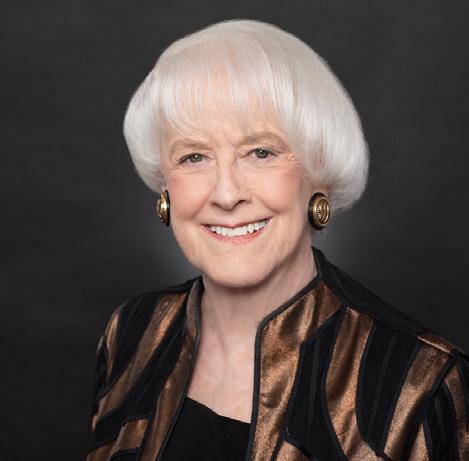
Imarried into dentistry! Edmond, my late husband, and I opened our scratch practice shortly after he graduated from dental school. For me, it was a whole new world. As I became acquainted with the local dentists, I found that Edmond’s perfectionism and management style were very similar to those of other dentists I met. As I transitioned from running our practice full-time to sharing my dental practice management expertise on the speaking circuit, my audiences confirmed dentistry attracts a certain type.
A psychologist attending one of my management programs shared with me that, in his opinion, dentistry attracts the most individualistic people of all professions. Dentists want/need to be their own boss and, unlike physicians, are happiest when not in a large group, like a hospital. Globally, psychologist Joseph Ferrari’s research shows around 20% of adults worldwide are considered “chronic procrastinators,” meaning they consistently put off tasks across various areas of their lives, signifying a significant global issue with procrastination affecting a substantial portion of the population.
I am a recovering perfectionist! I am frequently asked what I mean when I use the term. My interpretation of my self-diagnosis is that I acknowledge I have perfectionist traits and characteristics. ‘Recovering’ clearly shows that I am not denying this fact! I acknowledge I will never be cured. However, I work daily on utilizing the upside of perfectionism while reducing the limitations and frustrations perfectionism has brought into both my personal and professional life.
By
de St. Georges
I have always believed we are born with specific characteristics and tendencies, with one’s childhood experiences having the ability to influence how these traits develop, both positively and negatively. Research in the medical profession tells us that perfectionism, while not directly ‘coded’ in our DNA, has a significant genetic component, with environmental factors playing a major role in how perfectionism manifests in a person.
My father was a perfectionist par excellence, which made for an interesting childhood and explains much of how I am wired today.
As perfectionists, we are seen by others of having a negative bent. When working with others, we tend to note the mistakes before acknowledging the positives. We do not consciously do this. We do not seek to find the shortcoming. They just jump out at us! We set very high standards for ourselves, and we transfer these standards to the rest of the world. I share with my audiences that I go through life with a lot of ‘unmet expectations.’
Over the years, I have learned to temper my approach to communicating as a manager/owner and to people in general. I have not changed my personality, but I have changed my management/communication style. For instance, the old Jenny, on receiving a completed project from a staff member, could be counted on to note any error before thanking them for completing the project. The current Jenny shows appreciation first for them returning the project on time and then adds ‘By the way I note a couple of errors. Can these be taken care of
today?’ You will note the absence of the pronoun YOU, as in ‘You have made a couple of errors, you need to correct them.’ The word You is emotional and makes feedback very personal.
Focusing on the process, not the person, is nonjudgmental and factual.
When we apply ourselves to a project, our perfectionism standard and output are elevated on many levels, often way above what is practically required or needed. Life can be very black-and-white if we don’t learn to recognize it. When I lived in London, I trained to be a professional dancer: perfectionism is paramount when learning these skills and techniques. I thrived on the structure, discipline, and minute attention to detail. It became a 24/7 way of life. On entering the business world, I needed to learn to balance such a focused approach with a broader scope and acceptance.
Lists: Perfectionists have a love/hate relationship with lists. We keep too many of them. We find it easier to add an item to a list rather than stop and take care of the issue. We overload our To-Do List. At the end of the day, we berate ourselves for not accomplishing everything on Today’s List! We rarely congratulate ourselves on what we accomplished. We are so fond of our lists that when we complete a task NOT on our list, we have a deep need to write that undocumented action on the list for the pure satisfaction of crossing it off as ‘Done’! I read how a top CEO paid a consultant $25,000 to learn how to maintain effective To-Do lists. It cost him $25,000 to learn the answer was just to maintain ONE list.
Delegation: We did it once, but the completed project did not meet our standards. This makes it easier for perfectionists to justify that we stop delegating and handle projects that should be delegated. I realized one day my desk was piled high with stuff, and everyone else in the practice had desks devoid of any piles. I developed a different strategy. When an employee returns a project as impossible, I ask, ‘If I were not here today, what would be your next step?’ I then either confirm their approach as a good one or offer a suggestion to move the project forward. Additionally, with delegation, always remember to reconfirm both the priority and deadline.
Multi-tasking can be a cross to bear for perfectionists. Years ago, before I realized this, I hired an experienced administrative person for our practice’s administrative team. After the first two days, I found her in tears in the parking lot. She told me she couldn’t handle more than one patient or one phone call at a time. For years, I have shared my recommendation to hire non-dental staff for administrative responsibilities in dentistry, with my audiences. Hotels, airlines, banks, restaurants, and travel
agencies are my primary resources. At one point, six of my seven corporate staff for JdSG International Inc. were from banking. Stanford released a white paper some years ago that showed multitasking reduced efficiency by 25%. That is in the academic world. In real life, we need to learn to multi-task. The challenge? How a perfectionist adapts to this need.
Leadership: Perfectionists do not have a great record for offering leadership, whether it be a CEO, business owner, entrepreneur, or doctor. I cover this subject in my programs with three phrases: 1-deliver it, 2-delegate it, 3-ignore it at one’s peril.
Procrastination is a by-product of perfectionism. How procrastinators choose to address their procrastination characteristics dramatically impacts their quality of life and relationships. Psychologists tell us that ‘procrastination is a self-defeating behavior pattern, but it can also serve a psychological purpose, especially for people with perfectionist tendencies. It protects the individual against fear of failure, judgment by others, and self-condemnation.’ Speaking only for myself, as a nonmedical person, I find this explanation a little simplistic! My ability to meet my goals and deadlines was solved when I addressed three specific areas.
Feeling overfaced? Create a list of small steps needed to allow one to progress in increments towards the larger goal.
Getting started is hard? A school of thought suggests that when a few minor tasks are first completed, a sense of accomplishment motivates us to then be able to address the important task of the day. I am unable to agree with this line of thinking. When I start with an ‘A’ or ‘B’ item on my list, I get sidetracked. I enjoy the sense of completion, so I continue with my less critical items. By the end of the day, I have run out of time and energy. My #1 priority has not been addressed. This does not work for me. My solution? The night before, I visualize myself starting the project the following day. On waking, I continue the process as I get up and brush my teeth. I continue the process by actively starting the project as the first item on my list. A dentist who does not want to know the patients coming in the next day because he/ she will dream about the dentistry all night, learns quickly NOT to visualize the night before. If this describes you, start your visualization lying in bed in the morning. For a larger project, I often begin my visualization some days ahead of my deadline.
Only start when almost at the deadline? We tell ourselves we work better and are more creative when pressured by a looming deadline. I was in denial. It only adds pressure, stress, guilt, and sleepless nights. Nothing brings one
more satisfaction than delivering a quality outcome within the deadline. So often, I hear myself saying, ‘Well, if I had known how easy it was going to be, I would have started it long ago!’
Summary
These are just some thoughts, tips, and ideas that work for me. In this strange world of perfectionism and procrastination, addressing and not ignoring these characteristics can make life easier. The role perfectionism and procrastination play in our relationships, marriages, families, and raising children is another story. When a perfectionist is married to a perfectionist, there is a whole set of new guidelines. A subject perhaps we could cover another time.
About Jennifer de St. Georges
Jennifer de St. Georges delivers practical, proven, and logical solutions for today’s practice management frustrations and problems. Known for her wit, honesty, and bottom-line approach, Jenny has built a global following. Her strong communication skills, delivered with her unique sense of humor, ensure learning is both effective and fun! Attendees leave with a passion to implement needed change and enjoy the benefits. Jenny offers her programs from live on stage, to virtual and on demand.











REVENUE CYCLE MANAGEMENT
BILINGUAL SPANISH SPEAKING TEAMS
HYGIENE RECARE
REACTIVATION OF PATIENTS
EXECUTIVE/PERSONAL ASSISTANT
A/P AND PAYROLL SUPPORT
DIRECTOR OF FIRST IMPRESSIONS
APPOINTMENT CONFIRMATION
UNSCHEDULED TREATMENT
MARKETING
BOOKKEEPER/CONTROLLER
IT SUPPORT TEAMS
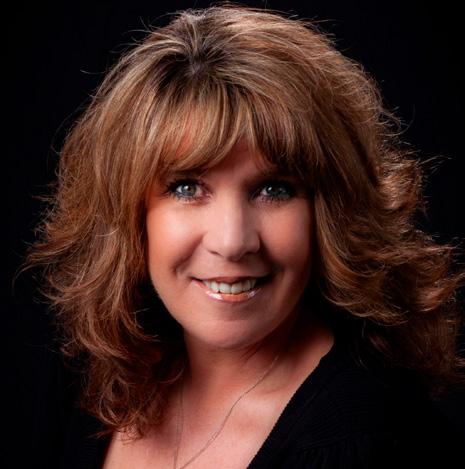
By Nancy Coy
As dental professionals, one of the biggest challenges we face is getting patients to accept the treatment plans we recommend. Studies show that anywhere between 50% to 80% of patients don’t proceed with treatment, even when it’s clinically necessary. However, this doesn’t have to be the norm. By focusing on clear communication, building trust, addressing financial concerns, and making treatments more accessible, you can significantly improve your case acceptance rate and, in turn, help more patients get the care they need.
In this article, we’ll explore practical strategies you can use to boost case acceptance in your practice.
One of the main reasons patients hesitate to move forward with treatment is that they don’t fully understand what’s happening or why it’s necessary. To overcome this barrier:
• Speak in Layman’s Terms: Avoid technical jargon. Break down complex procedures into simple explanations that resonate with patients. For example, instead of saying “You need an amalgam restoration,” explain, “We’ll fill this cavity to protect the tooth and stop decay from spreading.”
• Use Visuals: Incorporate tools like intraoral cameras, digital X-rays, and diagrams to visually demonstrate what’s going on in their mouths. Seeing the issue firsthand often motivates patients to act.
• Leverage Before-and-After Photos: Show examples of successful treatments to help patients visualize
the benefits and outcomes of moving forward. Visual proof can make the difference between indecision and commitment.
When patients understand the “why” behind the treatment, they’re more likely to trust your recommendations and say yes.
Building trust isn’t just about explaining treatment, it’s about showing patients that you genuinely care about their well-being.
• Listen to Their Concerns: Whether it’s fear of pain, financial worries, or previous bad experiences, acknowledge and empathize with their anxieties. A simple, “I understand dental visits can feel overwhelming; let’s take it step by step,” can go a long way.
• Address Concerns Directly: Be proactive in alleviating fears. For example, discuss sedation options for anxious patients or clearly outline what to expect during a procedure. Transparency and reassurance help demystify the process.
• Be Personable: Simple acts like remembering a patient’s name, preferences, or previous conversations can make a world of difference. These small gestures build rapport and make patients feel valued.
A patient who feels heard and respected is far more likely to trust your expertise and follow through with your recommendations.
For many patients, cost is the single largest obstacle to accepting treatment. Here’s how to address it effectively:
• Offer Flexible Payment Options: Partner with third-party financing companies to provide monthly payment plans. This makes treatments, especially larger cases, more financially accessible, easing the initial financial burden.
• Be Transparent About Costs: Discuss the financial aspect early in the process, including what insurance will and won’t cover. Transparency builds trust and prevents misunderstandings later on. For example, “Your insurance covers 70% of this treatment; here’s what your out-of-pocket cost would look like with our payment plan.”
• Show Long-Term Value: Help patients see the return on investment (ROI) of timely treatment. For instance, a preventive crown now can save them from the expense and discomfort of a root canal or extraction in the future. Reframing treatment as a proactive step can shift their mindset.
By addressing financial concerns directly and offering solutions, you can remove one of the biggest barriers to case acceptance.
Your dental team plays a crucial role in patient care and treatment acceptance.
• Train Your Front Desk Staff: Equip them to present treatment plans and patient lending programs effectively so that they can answer financial questions with confidence and empathy. A warm and informed first impression can set the tone for the patient’s visit.
• Engage Your Hygienists: Hygienists often spend the most time with patients. Encourage them to highlight the importance of treatment in a conversational and non-intimidating way. For example, “I noticed this area of concern; Dr. Smith will want to take a closer look.”
• Foster a Unified Message: Ensure that every team member is aligned in how they communicate the value of recommended treatments. Consistency reinforces trust and helps avoid confusion.
When the entire team works together, patients experience a seamless and consistent message that reinforces the importance of moving forward with care.
BREAK DOWN LARGE TREATMENT PLANS
Large treatment plans can feel overwhelming for patients. To make them more approachable:
• Prioritize Urgent Needs: Start with the most critical aspects of the plan and address additional treatments over time. For instance, “Let’s focus on this tooth first since it’s causing discomfort.”
• Celebrate Small Wins: Once patients see the positive results of initial treatments, they’re more likely to proceed with additional procedures. Positive reinforcement builds confidence in your care.
• Offer Incremental Options: Present treatments as a phased approach, breaking them into smaller, budget-friendly steps. This approach not only simplifies decision-making but also feels less daunting.
This incremental approach makes treatment plans feel more manageable and builds trust in your abilities.
Today’s patients expect convenience and clarity, and technology can play a key role in meeting these expectations:
• Visual Tools: Use intraoral cameras, digital X-rays, and 3D imaging to give patients a clear view of their oral health. When patients see the problem, they’re more likely to accept the solution.
• Educational Videos: Create or share short videos that explain procedures in an easy-to-understand format. These can be shown in the waiting room or sent to patients ahead of their appointments, helping them feel informed and prepared.
• Patient Portals: Allow patients to review their treatment plans, costs, and appointment details online. This gives them time to consider their options without feeling pressured, empowering them to make informed decisions.
Technology not only enhances understanding but also builds confidence in your practice’s expertise and transparency.
Fear of judgment is a significant barrier for some patients, especially those who haven’t visited a dentist in years.
• Focus on Solutions, Not the Past: Emphasize what can be done now to improve their oral health rather than dwelling on past neglect. For example, “The good news is we can start fresh and get things back on track.”
• Create a Welcoming Atmosphere: Ensure your office
feels inviting and supportive, with team members trained to approach patients with kindness and understanding. A smile and a reassuring tone can make all the difference.
Patients who feel safe and respected are more likely to open up and accept the care they need.
A single conversation isn’t always enough to get a patient to move forward with a treatment plan. Follow-up is key:
• Send Reminders: Use phone calls, texts, or emails to check in with patients about their treatment plans. A simple, “Just checking in to see if you have any questions about your recommended treatment,” can keep the conversation going.
• Answer Lingering Questions: Be available to address any concerns or uncertainties they may have thought of after leaving the office.
• Reaffirm Your Commitment: Show that you’re genuinely invested in their health by providing ongoing support and encouragement. For instance, “We’re here to help you every step of the way—don’t hesitate to reach out.”
Helping patients say yes to treatment isn’t about high-pressure tactics, it’s about trust, education, and accessibility. When you focus on clear communication, empathetic care, and financial flexibility, you’re not just improving case acceptance, you’re making a real difference in your patients’ lives.
By creating a patient-centered practice, you can increase case acceptance rates while building stronger relationships and delivering exceptional care. When you show patients the value of treatment and make it easy for them to say yes, everyone wins.
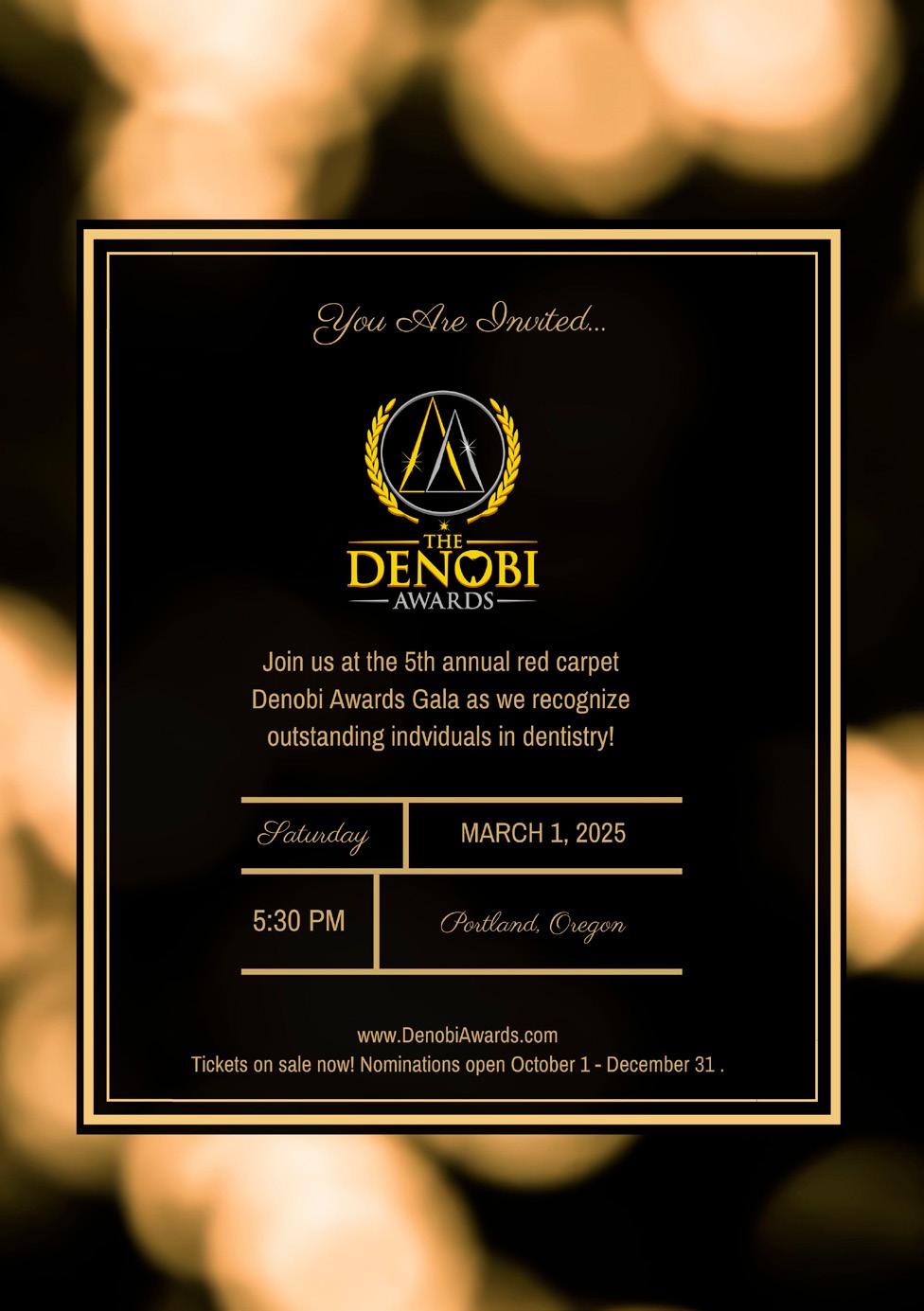

About the author:
Nancy Coy has over 25 years of experience in patient lending, specializing in innovative, revenue-driving payment solutions that empower providers and enhance patient experiences. As the visionary behind Choice Payment Services and Managing Member of Finance RX Venture Studio, she creates scalable, compliant financial solutions that drive growth. Nancy cofounded and designed the original program at Healthcare Finance Direct (HFD), selling her interest in 2016, and now serves as a Venture Partner and Advisory Board Member for CanaGlobal.
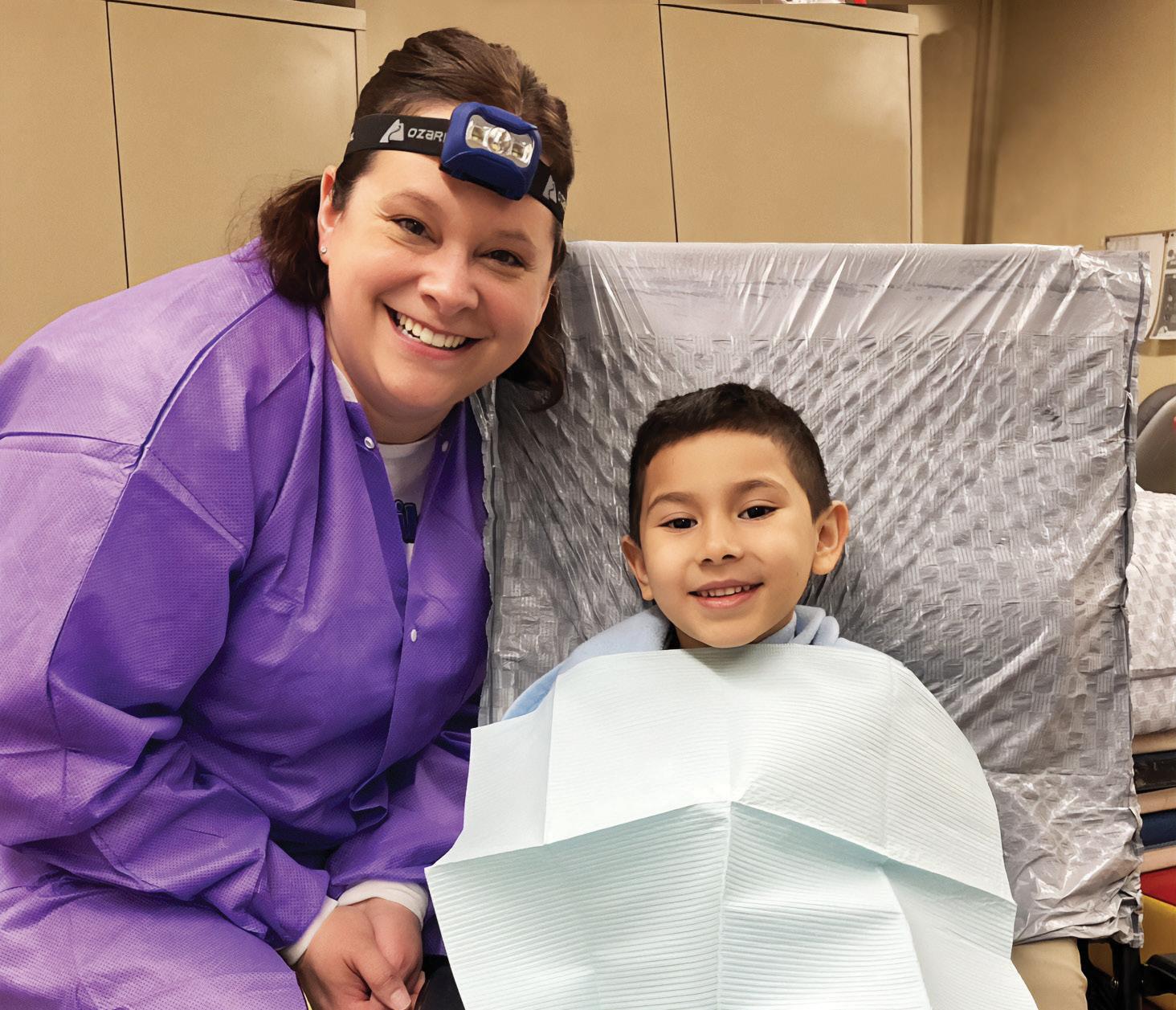
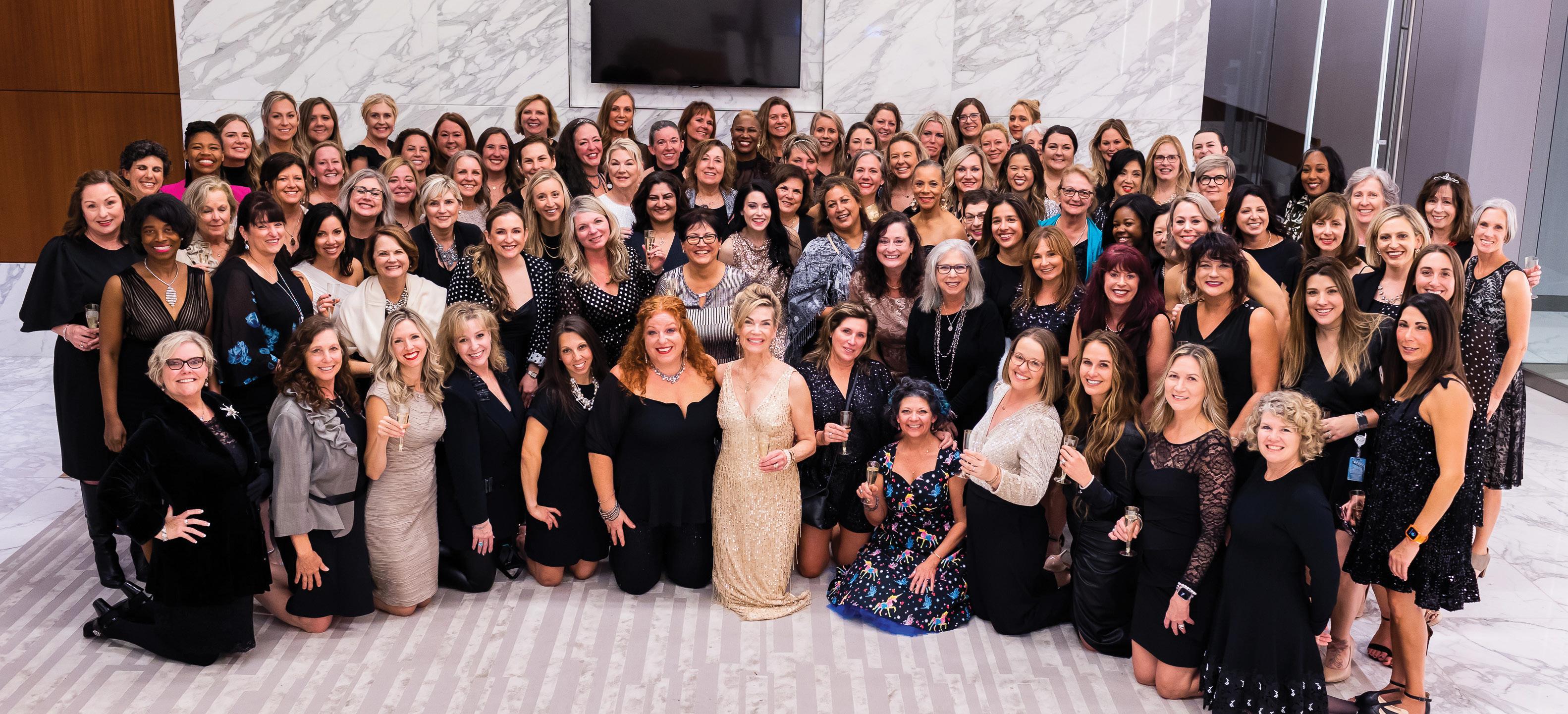
For You, About You, By You!
DeW Life Magazine is both a digital and a print publication devoted to highlighting and empowering all women in dentistry. Our goal is to inspire women to connect and move each other forward lifting one another up to heights we only dreamed possible. We are delighted to receive general submissions from you, women in dentistry. What is your story? How can you inspire us? What are some of your ‘top of mind’ questions or comments about the dental profession? Is there a topic you would like to explore that could be introduced on our website as a blog or as a feature in our print edition? We want to hear from you and share your narratives.
How can you contribute to Dental entrepreneur Woman? Just DeW it.
Please send photographs and narratives to:






Support the mission to inspire, highlight, empower and connect all women in dentistry
dew.life