GUARDIAN
Volume 29, Issue 4 4th Quarter 2022 A Supportive Approach to Fatigue Management Guidance for Shippers, Receivers and Brokers U.S. DOT Brings Together Trucking Community to Help Expand Truck Parking CVSA Creates Two New Inspection Bulletins, Updates One Existing Bulletin North Dakota Improves Commercial Motor Vehicle Safety Through Partnerships
A Publication of the Commercial Vehicle Safety Alliance
GUARDIAN
Fourth Quarter Volume 29, Issue 4 www.cvsa.org
IN THIS ISSUE
n Insight
President’s Message 1
Executive Director’s Message 2
n Regional News
North Carolina State Highway Patrol Commercial Vehicle Enforcement Updates 3


North Dakota Improves Commercial Motor Vehicle Safety Through Partnerships 5
Wisconsin State Patrol Creates Chrome Chamber Award for International Roadcheck 5 Updates from Mexico 6
CMV Inspections Conducted by Fox Creek Protective Services Peace Officers 8
n Inspector’s Corner
My Journey to NAIC 9
n Cover Story
A Supportive Approach to Fatigue Management Guidance for Shippers, Receivers and Brokers 10
n RAD Inspection News
Farewell “RAD Inspection News” 24 U.S. DOE’s New Environmental Management Program Plan Guides Progress, Opportunities to Accelerate Cleanup 24 Level VI Roadside Inspections (2022 - Fiscal) 25 Level VI Roadside Inspection Violations (2022 - Fiscal). 25 2023 CVSA Level VI Inspection Program Training Dates 26 U.S. DOE Awards Waste Isolation Pilot Plant Transportation Services Contract 26
GUARDIAN
“Guardian” is published quarterly by the Commercial Vehicle Safety Alliance with support from the Federal Motor Carrier Safety Administration. CVSA and FMCSA are dedicated to the government and industry working together to promote commercial motor vehicle safety on North American highways.
n
CVSA Committee and Program News
CVSA Creates Two New Inspection Bulletins, Updates One Existing Bulletin 12
The Most Important Takeaways from the 2022 Annual Conference Session on Driver Fatigue 12 COHMED – Hazardous Materials Resources at Their Finest 13
n
Government News
The Legislative and Regulatory Rundown 14
U.S. DOT Updates Its National Roadway Safety Strategy 15 Canada Announces Incentives for Medium- and Heavy-Duty Zero-Emission Vehicles Program 16
U.S. DOT Brings Together Trucking Community to Help Expand Truck Parking 17
FMCSA Takes Steps to Bring More Women Into Trucking 18
n From the Driver’s Seat
Female Truck Driver? No Big Deal 19
CVSA Staff: Collin B. Mooney, MPA, CAE, Executive Director • Adrienne Gildea, CAE, Deputy Executive Director • Shoshana Riley, Director of Administration and Finance • Nicole Leandro, Director of Communications • Jake Elovirta, Director of Enforcement Programs • Bill Reese, Director of Hazardous Materials Programs • Kerri Wirachowsky, Director of Inspection Programs • Ken Albrecht, Director of Multimedia Development • Terry Kummer, Crash Investigation Specialist • Rodolfo Giacoman, Fatigue Management Specialist • Katie Morton, Hazardous Materials Specialist • Wendy Smith, Learning Management System Specialist • Carlisle Smith, Level VI Inspection Specialist • Mark Mills, Multimedia Specialist • Dan Parks, Manager of Contracts and Grants • Cassy Dafin, Manager of Meetings and Events • Wendy Hall, Administrative Coordinator • Iris Leonard, Membership Coordinator • Amy Molina, Training Coordinator • Moni Adewoyin, MA, Senior Accountant
Copyright 2022, CVSA. All rights reserved. No part of this issue may be reproduced without written permission from the publisher.
For comments, suggestions or information, email communications@cvsa.org.
n
Industry Perspectives
2023 Enforcement Initiatives 20
A Balanced View 20
Highway Heroes Combat Human Trafficking Crimes 21 The Benefits of a Driver Safety Incentive Program 22
This material is based upon work supported by the Federal Motor Carrier Safety Administration under a grant/cooperative agreement/subaward. Any opinions, findings, conclusions or recommendations expressed in this publication are those of the authors and do not necessarily reflect the view of the Federal Motor Carrier Safety Administration and/or the U.S. Department of Transportation.
the
Alliance
GUARDIAN A Publication of
Commercial Vehicle Safety
@CVSA
Commercial Vehicle Safety Alliance
PRESIDENT’S MESSAGE
Heritage and Continuity
By Maj. Chris Nordloh, Texas Department of Public Safety; CVSA President

Heritage. Whether realized or not, it’s the basis of who we are. At a recent family gathering, I was reminded again of the reason why I became a peace officer. It’s the same reason I hunt, fish and travel. My enthusiasm for my career and these hobbies is related to experiences and traditions shared with family, friends and colleagues in my youth and into adulthood. I am sure each of you has a similar reflection on what got you where you are and where you want to go.
As it relates to CVSA, heritage offers continuity. How do we get to a point in our career where we tackle voluntary extra duties? Much of it comes with time and whether your career path takes you to the point where you are prepared to represent a larger group. The willingness to volunteer can also be sparked by people within the Alliance or at the organization who influenced you.
As our organization continues to develop, it is important to remember that we are working with something that was built over time, by dedicated volunteers. We’ve had some Alliance members who have participated for more than two decades. At our meetings, there are many examples of those who hold influence, lead and share their history and experience. We enjoy the framework that was built before us. At the same time, it’s also necessary that we encourage others to step into leadership roles so that this continuity, this heritage, is passed along.

Like with any organization, retirements, promotions and changes in employment can affect the makeup of the Alliance — sometimes, quite significantly. As time goes by, there are a lot of discussions about “Who’s next?” The answer to that question must represent the diversity of our membership.
Public safety, consistency within the industry, and partnerships with related government and private sectors are bedrocks of the greater good we are striving for through our work with CVSA. It’s imperative for us to promote future growth within our respective spans of control and ensure that participation in the Alliance is encouraged now so we may pass our legacy on to its future leaders.
I encourage you to consider a leadership position within CVSA and to champion colleagues to step into influential roles. If you are already serving in the Alliance, I encourage you to invite others to follow your lead.
I look forward to working with each of you, and I will rely on your experience and expertise over the next year as I seek to uphold the heritage and traditions of CVSA as your new board president. n
FOURTH QUARTER 2022 1
INSIGHT
We are working with something that was built over time, by dedicated volunteers.
EXECUTIVE DIRECTOR’S MESSAGE
Who or What Is the Commercial Vehicle Safety Alliance?
By Collin B. Mooney, MPA, CAE, Executive Director, Commercial Vehicle Safety Alliance

Purpose
[We believe] Collaboration between government and industry improves road safety and saves lives.
Mission
[So we] Improve commercial motor vehicle safety and enforcement by providing guidance, education and advocacy for enforcement and industry across North America.
and confusing, so here is a quick synopsis of the central characteristics of a nonprofit.
If you are reading this article, you may be pondering the same question: who or what is the Commercial Vehicle Safety Alliance (CVSA)? In a nutshell, it’s you.
Our member organizations reflect the broad coalition of industry representatives and local, state, provincial, territorial and federal commercial motor vehicle safety officials –we count 13,000 officers among our ranks – needed to make our roadways safer. At the organizational and individual levels, our members are dedicated to transportation safety and to helping the Alliance achieve its goals of uniformity, compatibility and reciprocity of commercial motor vehicle inspections throughout North America.
It was with considerable input and work from you, our members, that the Alliance launched its new strategic plan, approved by the CVSA Board of Directors in June 2022. The strategic plan sets the priorities and future direction of the organization. It also helps us to focus energy and resources, strengthen operations and ensure that leadership, staff, members, industry and other stakeholders are working toward common goals. The goals and objectives outlined in the strategic plan aid in guiding the decisions and actions that shape this organization and give us the metrics we need to assess success and progress.
The new plan reflects the Alliance’s aim to prevent commercial motor vehicle crashes, injuries and fatalities. Our leadership and members believe that collaboration between government and industry improves road safety and saves lives. In this plan, you will find the following guiding principles defined:
Vision
[In order] To be recognized as the North American leader in commercial motor vehicle safety and enforcement.
Goals
• Prevent commercial motor vehicle crashes, injuries and fatalities throughout North America.
• Increase the credibility and reputation of CVSA as the leader on commercial motor vehicle safety and enforcement.
• Realize the synergy between commercial motor vehicle enforcement/government agencies and the motor carrier industry.
Values
• Integrity – Providing our members and partners with the basis for trust, accountability, transparency and respect.
• Professionalism – Consistently developing the highest level of competence, work ethic, responsiveness, openness to new ideas, efficiency and continuous self-improvement.
• Leadership – To inspire, influence, guide and support our members and partners in the pursuit of our mission.

• Teamwork – Valuing people working together to achieve common goals and partnerships to achieve uniformity and enhance our effectiveness.
The Alliance’s nonprofit designation as a membership association provides the most efficient – and people-powered – structure for achieving the above. The operation of nonprofit organizations can be rather complex
A nonprofit organization is a legal entity organized and operated for a collective (public or social) benefit, in contrast with an entity that operates as a business aiming to generate a profit for its owners. A nonprofit is subject to the non-distribution constraint: any revenues that exceed expenses must be committed to the organization’s purpose, not distributed to private parties such as owners or shareholders.
Key aspects of nonprofits are accountability, trustworthiness, honesty and openness to every person who has invested time, money and faith into the organization. Nonprofit organizations are accountable to their founders, membership, supporters, volunteers, program recipients and the public community.
Even though the chief staff executive position is tasked with leading the dayto-day administrative activities by hiring professional staff to implement the wishes of the membership, it is vital that everyone recognizes and understands that it is the elected officials of the organization – the CVSA Board of Directors – who work on behalf of the entire membership to set the organizational priorities and direction of the Alliance. Additionally, there are a number of opportunities for members to get involved, such as attending training courses and conferences, providing input that helps shape our work, and joining committees or work groups. I encourage you to participate in any way you are able. After all, there is no Alliance without you.
To view CVSA’s latest strategic plan, visit www.cvsa.org/about-cvsa/strategic-plan. To view a listing of the members of the CVSA Board of Directors, check out www. cvsa.org/about-cvsa/current-leadership. n
INSIGHT
2 GUARDIAN
REGION II
North Carolina State Highway Patrol Commercial Vehicle Enforcement Updates
 By Monica Y. Greiss, Staff Development Specialist II, Commercial Vehicle Enforcement Section, North Carolina State Highway Patrol, North Carolina Department of Public Safety
Morehead City Port Check
Members of the North Carolina State Highway Patrol (NCSHP) Commercial Vehicle Enforcement (CVE) Section participated in the annual port check in Morehead City. The port check took place on Sept. 6-9. Joint operations were also conducted throughout the week alongside the U.S. Coast Guard, N.C. Department of Revenue (Fuel Division), and the N.C. License and Theft Bureau.
Assigned CVE members concentrated on Commercial Motor Vehicle (CMV) driver/ vehicle inspections, with an emphasis on hazardous materials being transported

to and from the state port. A total of 292 inspections were conducted, including 37 Level I Inspections, 175 Level II Inspections and 80 Level III Inspections. Twenty-two driver out-of-service violations were discovered, and 18 drivers were placed out of service. A total of 190 equipment violations were discovered, and 57 CMVs were placed out of service. In addition, members assessed 581,620 overweight pounds. The annual port check serves as one of many special projects conducted throughout the year that aims to ensure the safety of CMVs traveling within our state.
Continued on next page
REGIONAL MAP
Region I
Connecticut, Delaware, District of Columbia, Maine, Maryland, Massachusetts, New Hampshire, New Jersey, New York, Pennsylvania, Puerto Rico, Rhode Island, U.S. Virgin Islands and Vermont
Region II
Alabama, American Samoa, Arkansas, Florida, Georgia, Kentucky, Louisiana, Mississippi, North Carolina, Oklahoma, South Carolina, Tennessee, Texas, Virginia and West Virginia
Region III
Colorado, Illinois, Indiana, Iowa, Kansas, Michigan, Minnesota, Missouri, Nebraska, North Dakota, Northern Mariana Islands, Ohio, South Dakota and Wisconsin
Region IV
Alaska, Arizona, California, Guam, Hawaii, Idaho, Mexico, Montana, Nevada, New Mexico, Oregon, Utah, Washington and Wyoming
Region V
Alberta, British Columbia, Manitoba, New Brunswick, Newfoundland and Labrador, Northwest Territories, Nova Scotia, Nunavut, Ontario, Prince Edward Island, Quebec, Saskatchewan and Yukon
FOURTH QUARTER 2022 3
REGIONAL NEWS
Multi-Agency Project

On July 28, members of the NCSHP CVE Section partnered with the Virginia State Police in a multi-agency project that took place on US-29 in Caswell County. The following agencies partnered in the North Carolina/Virginia project: Virginia Department of Motor Vehicles, Virginia State Police, North Carolina Motor Carrier Safety Assistance Program, and Size and Weight members.


Portable scales and mobile weigh stations were utilized during this event. Virginia utilized a mobile weight van that included an infrared camera to detect defective brake systems. A total of 85 inspections were conducted with 56 violations discovered. Three drivers and six CMVs were placed out of service. Ten overweight citations and one permit violation were issued. Seventy-six CMVs were checked for dyed diesel.
The time spent working alongside the Virginia State Police allowed for the exchange of invaluable CMV enforcementrelated information and ideas. The NCSHP is appreciative of the partnership with Virginia agencies and our continued work to collectively ensure the safety of the motoring public on our highways. n
REGION II Continued from page 3 GUARDIAN 4 REGIONAL NEWS
North Dakota Improves Commercial Motor Vehicle Safety Through Partnerships
By Lt. Adam Dvorak and
The North Dakota Highway Patrol (NDHP) has a long-term partnership with the North Dakota State University Upper Great Plains Transportation Institute (NDSU-UGPTI). Each year, NDSU-UGPTI assists the NDHP with its commercial vehicle safety plan (CVSP) by compiling data and conducting analyses to identify trends to report in the CVSP. The team works together to locate problem areas for various education and enforcement activities in the upcoming year.
NDSU-UGPTI also prepares issue briefs, which are short summaries of the analyses conducted. These are available at www.ugpti. org/rtssc/briefs. In particular, the “Truck Crash Facts” brief includes a summary of truck-involved crashes versus crashes without truck involvement. It also identifies the types of citations issued and common contributing factors in crashes.
In one of the regular meetings between the NDHP and NDSU-UGPTI, the NDHP representatives noted they were having difficulty obtaining up-to-date commercial motor vehicle crash data that they could use to quickly respond to any new problem areas. NDSU-UGPTI had recently completed another project for the North Dakota Department of Transportation (NDDOT) to build a traffic volume dashboard using automatic traffic recorder data and suggested a project to add commercial motor vehicle crash and inspection data to this dashboard.
Working with the NDHP, NDSU-UGPTI submitted a Federal Motor Carrier Safety Administration grant proposal that was awarded earlier this year. In addition to crashes and inspections, the project is also examining incorporating weigh-in-motion data and weather data.
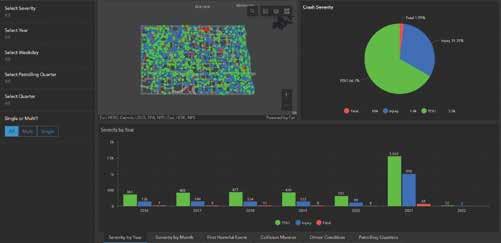
Kim Vachal, the NDSU-UGPTI principal investigator for the project, describes the dashboard as “a customizable tool dedicated to truck crash prevention, designed to harness multiple data sources that support timely NDHP resource decisions.” Each type of data has a different owner and a different method to obtain the data that needs to be identified.
NDSU-UGPTI recently met with the NDHP to demonstrate an initial prototype of the dashboard and seek feedback regarding the filters and information that will be most useful for their efforts. The initial project is anticipated to be completed in the fall of 2023.
“The partnerships between the NDHP, NDSUUGPTI and the NDDOT are critical to safety on our roadways,” said Lt. Adam Dvorak with the NDHP. “The three entities all share the same goal — to reduce serious injury and fatal crashes on all of North Dakota’s roadways. The data gathered, analyzed and presented is a valuable piece of the puzzle to move us toward zero serious-injury and fatal crashes.” n
Wisconsin State Patrol Creates Chrome Chamber Award for International Roadcheck
 By Sgt. Joseph Stephens, Wisconsin State Patrol
International Roadcheck is a detail that involves multiple enforcement agencies within Canada, Mexico and the U.S., all focused on improving highway safety through commercial motor vehicle and driver inspections. This three-day detail promotes teamwork and educational opportunities for all involved stakeholders. International Roadcheck highlights the common elements of safety and provides an opportunity to work with the industry and motor carriers on safe driving and maintenance of their commercial motor vehicles.
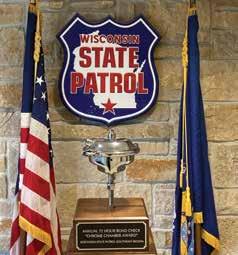
The Wisconsin State Patrol has created a Chrome Chamber Award that coincides with International Roadcheck. The trophy is a type 20 air brake chamber that has been overlaid with chrome and is mounted on a wooden stand, with engraved nameplates displaying the names of winning troop members. Inspector sergeants present the Chrome Chamber Award to their personnel for their efforts during International Roadcheck, recognizing teamwork and dedication to highway safety.
Inspectors find that the recognition helps build teamwork while keeping a focus on the overarching goals for the International Roadcheck detail. The uniqueness of the trophy and the yearly presentation add a dynamic element to the International Roadcheck detail for inspectors with the Wisconsin State Patrol. n
FOURTH QUARTER 2022 5
REGION III
Lt. David Wolf with the North Dakota Highway Patrol; and Kim Vachal and Brenda Lantz with the North Dakota State University Upper Great Plains Transportation Institute
Dashboard tool developed by NDSU-UGPTI for the NDHP that compiles multiple data sources to support NDHP resource decisions.
REGION III REGIONAL NEWS
UPDATES FROM
Mexican Inspectors Participate in CVSA’s 2022 North American Inspectors Championship
The CVSA North American Inspectors Championship (NAIC) recognizes and awards commercial motor vehicle inspector excellence in North America. After being cancelled the last two years due to the pandemic, this year the championship took place Aug. 15-19 in Indianapolis, Indiana.

On behalf of Mexico, Inspector Luis Leon Merino Gomez and Inspector Jacobo Alejandro Garcia Arias — both experts in specialized cargo verification of hazardous materials, general cargo, passenger and tourism and verification units — had the opportunity to participate in NAIC, representing the General Directorate of Federal Motor Transport (DGAF) of the Ministry of Infrastructure, Communications and Transportation (SICT).
During the championship, Inspector Merino obtained the highest score for Mexico. CVSA Mexico Liaison Rodolfo Giacoman said about the Mexican competitors: “Both stood out during the competition with their knowledge of the regulations, professionalism in carrying out inspections, first-class equipment, punctuality, teamwork and social intelligence that exceeded cultural and language boundaries.”

Mexico Participates in CVSA’s Brake Safety Week
On Aug. 21-27, Mexico participated in CVSA’s annual Brake Safety Week campaign, which focuses on the inspection, compliance and training of drivers of commercial motor vehicles on federal highways.

During the campaign, 209 federal inspectors, distributed in 43 fixed size and weight centers and one passenger terminal, reviewed the brake systems in commercial motor vehicles in accordance with the provisions of the Official Mexican Standard NOM-068-SCT-2-2014.

This initiative helps identify the most recurrent problems in commercial motor vehicles in an effort to promote road safety and crash prevention.
Government Officials Gather for North American Strategy on Sustainable Transportation: Zero-Emission Vehicle Deployment Meeting
On Aug. 24, the North American Strategy on Sustainable Transportation: Zero-Emission Vehicle Deployment meeting brought together government officials from Mexico, the United States and Canada to discuss the best practices and initiatives in the North American region regarding the production of electric vehicles. The meeting resulted in:
• Concluding that there is a need to convene bi-monthly meetings to discuss progress in the adaptation of zero-emission vehicles (ZEV)
• Identifying government agencies, offices and points of contact for all aspects of the ZEV ecosystem in each country
• Sharing of experiences and best practices in the adoption and transit of zero-emission buses for cities and provinces
• Designing of a practical guide for companies willing to adopt light- and medium-duty ZEVs called ZEV toolkits
The initiatives discussed at this meeting seek to address future trends, applications and developments in ZEV technologies in North America.
REGION IV
GUARDIAN 6 REGIONAL NEWS
Collaborative Agreement Signed for the Prevention of Human Trafficking on Roadways
On Sept. 8, a collaborative agreement for the prevention of human trafficking on Mexican roads and highways was signed in Cancún, Quintana Roo, during the 22nd National Convention of the National Chamber of Cargo Transportation (CANACAR).


Signatories were El Pozo de Vida President Iliana Ruvalcaba; Citizen Council for Security and Justice of Mexico City President José Salvador Guerrero; Truckers Against Trafficking Deputy Director Kylla Lanier; CANACAR Vice President José Refugio Muñoz; and DGAF International Affairs Director Salvador Monroy Andrade (on behalf of SICT).
This collaboration seeks to raise awareness among cargo and passenger operators, cargo companies, public officials and organizations in the transportation sector, with the goal of preventing the crime of human trafficking on Mexican highways.
With this collaborative agreement, the agencies involved will undertake training activities for cargo and passenger vehicle operators, citizens, public officials and companies and will establish policies and protocols focused on reporting instances of human trafficking and promoting the “Guardians of the Asphalt” initiative and the national hotline.
This agreement is expected to promote a civic culture and respect for human rights and highlight the professionalism and dignity of commercial motor vehicle drivers in federal transportation. n
FOURTH QUARTER 2022 7
REGIONAL NEWS
CMV Inspections Conducted by Fox Creek Protective Services Peace Officers
By Wes Kardash, Peace Officer, Fox Creek Protective Services, Town of Fox Creek, Alberta
Fox Creek Protective Services conducts regular CVSA North American Standard Inspections throughout the year to ensure public safety and commercial motor vehicle compliance.
During a joint-force operation with surrounding agencies, Peace Officer Wes Kardash completed a Level I Inspection on a seven-axle gravel truck and pup unit, noting 29 violations. These included that the unit was 5,000 kg overweight on the drive axle group, 2,000 kg overweight on the trailer axle group and 7,000 kg overweight on its allowable gross vehicle weight. One of the major defects found was a main u-joint nut that had backed off and was loose within the u-joint, and the


yoke had started to move out of the rear differential, causing an oil leak.
As of October 2022, Fox Creek Protective Services completed 49 North American Standard Inspections. One passed, five required attention and 43 were placed out-ofservice (88% non-compliance rate).
With an alarming increase of non-compliant and out-of-service commercial motor vehicles, Fox Creek Protective Services is more committed than ever to monitoring public safety, protecting infrastructure and dedicating its time to ensure safety and compliance for all motorists. n
Fox Creek Protective Services is more committed than ever to monitoring public safety, protecting infrastructure and dedicating its time to ensure safety and compliance for all motorists.
REGION V
GUARDIAN 8 REGIONAL NEWS
INSPECTOR’S CORNER
My Journey to NAIC
By
I am Senior Police Officer Michael Trautwein from the Houston Police Department, the 2022 North American Inspectors Championship (NAIC) Grand Champion. I am the second local member to win NAIC and am honored to be a part of CVSA. I want to talk about the journey I took to win NAIC and all the people who helped me along the way.


First and foremost, I want to thank all the event volunteers and industry partners who make NAIC possible. The trucking industry has always stepped up to donate equipment, manpower and funding to help these competitions be successful. Additionally, I am grateful for the relationship the professional trucking industry has with law enforcement.
In 2017, I competed in the regional competition for the first time. Having had no prior competition experience, I did not advance to the state level. During the competition, however, I realized how much knowledge I gained in such a short amount of time. Over the course of the next year, I studied and, in the 2018 competition, I advanced to the state level.
I went on to place first against the other Houston area agency competitors for the next four state competitions in a row. I competed at NAIC three times leading up to the top spot of Grand Champion in 2022.
In 2017, Senior Police Officer Rommel Garcia, also from the Houston Police Department, won NAIC. He was the first local member to win NAIC and was instrumental in helping me achieve my goal of becoming NAIC Grand Champion. He spent countless hours helping me improve my knowledge and inspection skills.
Each year, the Texas Department of Public Safety (DPS) puts on the Commercial Vehicle Enforcement Texas Challenge, which is effectively a “mini NAIC.” The Texas training unit has worked hard to make the Texas Challenge as similar as possible to the national competition. Each year, Texas selects a DPS champion and a local member champion. Both winning inspectors advance to compete at NAIC.
During my years competing in the Texas Challenge, my department supported me in improving my skills, and the Texas DPS training unit staff also proved invaluable in assisting me with the training needed to be successful. Maj. Chris Nordloh (now CVSA president), Sgt. Brad Gibson and Belinda Garcia are just a few of those who have supported me throughout my journey.


I became a certified truck inspector in 1999. For the 20-plus years I have been inspecting trucks, the Texas DPS training unit has always been available to me when questions arise. Now, it is my turn to give back. I am looking forward to returning next year to the Texas Challenge and NAIC as a volunteer.
Once again, I am honored to be a part of this great organization and to help the trucking industry be safer. We all have the same goal of reducing commercial motor vehicle crashes and the associated injuries and deaths. These competitions make us better inspectors by challenging our knowledge and skills. And as better inspectors, we should be able to accomplish our goals more effectively. n
INSPECTOR’S CORNER FOURTH QUARTER 2022 9
Michael Trautwein, Senior Police Officer, Houston Police Department; North American Inspectors Championship Jimmy K. Ammons Grand Champion
A Supportive Approach to Fatigue Management Guidance for Shippers, Receivers and Brokers
By Rodolfo Giacoman, Fatigue Management Specialist, Commercial Vehicle Safety Alliance
The burden of managing fatigue should not solely fall on drivers and carriers. Unfortunately, far too often, drivers are treated as the elastic band holding together many of the links in the supply chain. In reality, every professional in this industry has a role to play in supporting drivers so that they, and their passengers and cargo, arrive safely to their destinations.
The North American Fatigue Management Program (NAFMP) recommends enlisting the support of shippers, receivers and brokers to foster a team approach to drivers’ hours-ofservice compliance and improved alertness, offering an online course to teach them how to achieve this. The NAFMP Module 6 course includes the following shipper and receiver best practices:
Realistic Trip Schedules
Start with better communication among all parties. Set standard and acceptable delivery times in advance when possible. Cut some slack; unplanned delays should be expected. If loading is delayed, delivery will likely be delayed too — perhaps by more than 10 hours. Planning should also maximize the use of interstate and other freeways in setting travel routes.
Reduced Loading and Unloading Delays
All parties should respect appointment times and plan accordingly. Embrace two hours as the expected loading and unloading time. Consider physical upgrades to facilities to make the process more efficient.
Driver-Friendly Queuing Practices
Queues that require drivers to physically wait in line, continuously ready to move without knowing when their turn will come, are demoralizing and waste time. Instead, turn the wait into downtime for drivers. When possible,
assign time slots so drivers may take sleeperberth periods, nap or just rest rather than waiting in line. Don’t disturb drivers who are taking mandatory off-duty or sleeper-berth periods. Allow drivers access to comfort facilities. Set and maintain loading and unloading standards.
Off-Hour Parking Access
Understand the difficulties drivers face in finding places to park and sleep. Consider allowing off-hour parking access to yard areas. This may require upgraded building security.

On July 6, J.J. Keller’s Senior Editor of Transport Management Mark Schedler and CVSA Hazardous Materials Specialist Katie Morton joined me to present the CVSA webinar “Supporting Driver Hours-of-Service Compliance, Alertness and Productivity Through a Mutually Beneficial Partnership with Shippers, Receivers and Brokers.”
During the webinar, we conducted an informal poll asking motor carriers if they, as recommended by the NAFMP, had incorporated into their contracts the voluntary
COVER STORY GUARDIAN 10
guidelines established by the Truckload Carriers Association (TCA) and the National Industrial Transportation League (NITL) on Good Business Relations for Shippers, Receivers, Carriers and Drivers. Very few had.

The following week, TCA and NITL issued a press release titled “TCA, NITL Places Renewed Focus on Voluntary Guide to Business Relations for Shippers, Receivers, Carriers and Drivers to Retain Workforce.”
While these guidelines may not be the silver bullet to managing driver fatigue, they do foster the mutual understanding and cooperation required to facilitate driver alertness and hours-of-service compliance. These voluntary guidelines should be incorporated by reference in your carriershipper contracts.
Here’s a sample of the TCA/NITL guidelines.
Shippers/Receivers Will:
• Collaborate to confirm that transit times meet realistically achieved driver hours-of-service regulations and prevailing speed limits.
• Promptly load/unload trucks that arrive within the scheduled time. Accommodate or reschedule pickups/deliveries when unforeseeable events intervene. Make reasonable effort to be flexible in loading/ unloading trucks that arrive early or late or without an appointment.
• Maintain reasonable hours for loading and unloading according to volume of shipments, with appropriate consideration for offering evening and weekend hours. Provide carriers/drivers with 24-hour access to facility contacts to facilitate resolution of loading/unloading issues.
• Treat drivers with courtesy and respect. Provide drivers with access to safe, clean and well-lit restrooms, water and other comfort facilities where available.
Carriers Will:
• Quote transit times that can clearly be achieved within driver hours-of-service regulations and prevailing speed limits.
• Communicate in a timely manner to shipping and receiving personnel all significant delays or problems with pickup or delivery specifications prior to failure.
• Comply with all shipper and receiver safety and security protocols and requirements.
• Give clear instructions to drivers on their responsibilities for service and contract requirements expected by shippers and receivers.
Download the complete TCA/NITL guide at www.nitl.org/wp-content/uploads/2019/08/ Voluntary-Guide-June-2022-Final-1.pdf.
If you haven’t already done so, watch the July 6 webinar at www.nafmp.org/webinars. The NAFMP and all of its courses are available for free at www.nafmp.org. n
COVER STORY
FOURTH QUARTER 2022 11
If you have any questions or feedback about managing fatigue or the NAFMP, please contact me at rodolfo.giacoman@cvsa.org
CVSA Creates Two New Inspection Bulletins, Updates One Existing Bulletin
The CVSA Board of Directors approved the creation of two new inspection bulletins and an update to one existing bulletin, during the 2022 CVSA Annual Conference and Exhibition in Rapid City, South Dakota.
One of the new inspection bulletins is for the Federal Motor Carrier Safety Administration’s Safe Driver Apprenticeship Pilot Program. It summarizes the pilot program and provides information on enhancements the agency made to Query Central to allow roadside enforcement personnel to verify a carrier’s and/or driver’s participation in or removal from the pilot program. The bulletin is also available in Spanish.
CVSA also created a new inspection bulletin providing guidance on the inspection of emergency exits in passenger carrier vehicles. French Canadian and Spanish versions are available.
Additionally, the Alliance updated its inspection bulletin on Antilock Brake System Inspections. This inspection bulletin provides roadside guidance for inspecting the antilock brake system (ABS) on a bus, truck, truck tractor, trailer or dolly during a roadside inspection and for identifying when a vehicle is in violation. Changes were made regarding vehicle air pressure when conducting the ABS test, which resulted in moving the ABS inspection procedure to step 13, as well as clarification for hydraulic vehicles and other minor modifications. French Canadian and Spanish versions are available.
CVSA reminds all certified roadside inspectors to visit the CVSA website for the latest versions of all inspection bulletins, which can be found at www.cvsa.org/inspections/inspection-bulletins. Inspection bulletins are also available in the CVSA Operations Manual in the CVSA member portal (www.cvsa.org/memberportal). The website and the operations manual will always contain the current version of each bulletin to be used by CVSA-certified roadside enforcement personnel.
You may direct questions about inspection bulletins to CVSA Director of Inspection Programs Kerri Wirachowsky at 202-998-1650 or kerri.wirachowsky@cvsa.org. n
CVSA INSPECTOR FOCUS
Videos Provide Additional Inspection Bulletin Instruction
You may access video tutorials on the three inspection bulletins mentioned above through the CVSA Learning online portal. To access the tutorials, log in at www.cvsa.org/memberportal and click on the “CVSA Learning” tab. Select “Roadside,” then click on the “CVSA Inspector Focus” icon on the left. Each tutorial features a video presentation along with audio direction, followed by a quick quiz.
The Most Important Takeaways from the 2022 Annual Conference Session on Driver Fatigue
 By Rodolfo Giacoman, Fatigue Management Specialist, Commercial Vehicle Safety Alliance
During the 2022 CVSA Annual Conference and Exhibition in Rapid City, South Dakota, I conducted a two-hour information session titled “Don’t Know Much About Driver Fatigue.” At the end of the session, some attendees were so kind as to share their most important takeaways. There were some truly insightful observations. Below is a summary of their insightful observations:
• Good and enough sleep is key. Chances are that you need more of it. We need to go through four to six sleep cycles (seven to nine hours) to get the full benefits of light, deep and REM sleep.
• You can develop habits to increase the quantity and quality of your sleep. These include not drinking alcohol or caffeine in the hours leading up to bedtime, quitting smoking and eating minimally processed foods.
• Napping and sleeping in are not signs of laziness. Listening to our bodies and resting as needed is a healthy and responsible choice. Allow yourself to sleep in on your days off to reduce your sleep deficit.
• Power naps of 10 to 20 minutes allow you to awaken refreshed after a light sleep, while 90-minute naps are long enough to go through one full light-deep-light-REM sleep cycle. Waking up from a 30- to 80-minute nap will probably catch you during deep sleep, which will leave you groggy for a while.
• Set the alarm for the time when you need start winding down to sleep. Maintaining a regular sleep schedule will align your sleep with your circadian rhythm, allowing you to wake up when you are fully rested without an alarm.
• Fatigue is not just about sleep; many factors affect how alert we are. Sleep and fatigue management need a holistic response.
• Positive behaviors, positive relationships, sleep, nutrition and exercise all contribute to your state of alertness. These are the five keys to wellness.
• You can learn to recognize when you’re fatigued along with identifying tools to better manage it. The North American Fatigue Management Program has great resources.
• Fatigue management should not be a priority but a principle.
You can get the entire slide deck from the information session, including the full results of the post-session survey, at www.nafmp. org/webinars. Thank you to all who participated and to those who contributed to the above observations. n
CVSA COMMITTEE AND PROGRAM NEWS GUARDIAN 12
COHMED – Hazardous Materials Resources at Their
 By Katie Morton, Hazardous Materials Specialist, Commercial Vehicle Safety Alliance
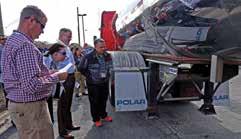
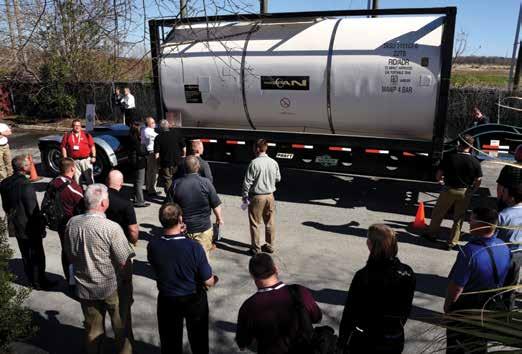
Are you involved in the regulation, enforcement or safety of transporting hazardous materials (HM) and dangerous goods (DG)? Regardless of whether you work for industry or enforcement, the annual Cooperative Hazardous Materials Enforcement Development (COHMED) Conference is a must for you!
The COHMED Conference has been around since 1986 and its popularity has grown substantially over the years. It provides one-of-a-kind networking opportunities for enforcement and industry to discuss HM/DG regulatory applicability and processes. Unique training opportunities provide valuable insight into industry and enforcement perspectives, allowing for more well-rounded understanding of the applicability and application of the regulations. Furthermore, the training sessions cover topics of significant interest to the HM/DG transportation industry.
Those responsible for in-house training, refresher/recurrent training or in-service training at their workplace can access the materials and content from each COHMED Conference to incorporate into training for staff who were unable to attend.
Have a competitive bone? Be sure to attend our Hazmat Olympics at the conference. Participants are divided into teams to compete in several rounds of Q and A, accumulating points by giving correct answers to challenging HM questions. Winners walk
away not only with bragging rights but also with coveted HM Olympic medals.
Finest
Resources:
Does leadership interest you? There are opportunities for individuals in industry and enforcement to join COHMED leadership and assist with organizing and planning our annual conference and represent interests in your area and field.
Training:
• Learn from some of the best in the business.
• Grow your HM/DG knowledge by attending a diverse selection of training topics.
• Build your HM/DG subject-matter confidence by attending refreshers and reviews of common materials being transported and inspected.
• Get your questions answered by subject matter experts in industry and enforcement.
Networking:
• Present concerns and perspectives about enforcement of regulations.
• Build better working relationships between industry and enforcement partners.
• Provide input into future changes and regulations.
• Meet leaders of various government agencies and organizations responsible for HM/DG safety.
• Utilize essential contact information from lead agencies, inspectors and industry leaders for assistance beyond the scope of the COHMED Conference.
• Gain access to training materials and continuing education from quality content shared from conference presentations.
• Meet a variety of subject matter experts whose services can continue to grow your HM/DG program.
• Discover the full potential of the CVSA Learning platform, which is an online learning management system available to CVSA members, and how to navigate our HM course options in CVSA Learning.
Don’t miss out on meeting the who’s who of the hazmat industry, top leaders in safety agencies, HM/DG inspectors and subject matter experts within all levels of enforcement.
The next COHMED Conference is scheduled for Jan. 23-27, 2023, in San Antonio, Texas.
To learn more and to register, visit www.cvsa.org/events/cohmed-conference. n
CVSA COMMITTEE AND PROGRAM NEWS FOURTH QUARTER 2022 13
THE LEGISLATIVE AND REGULATORY RUNDOWN
 By Adrienne Gildea, CAE, Deputy Executive Director, Commercial Vehicle Safety Alliance
FMCSA Moves Forward with Several Significant Rulemakings
The second half of 2022 saw the Federal Motor Carrier Safety Administration (FMCSA) move forward with several significant and encouraging developments impacting the commercial motor vehicle safety community.
On Sept. 22, the U.S. Senate confirmed the nomination of Robin Hutcheson as the new FMCSA administrator. Prior to her confirmation, Hutcheson served as FMCSA’s deputy administrator. She previously served as the department’s deputy assistant secretary for safety policy, leading the development of the National Roadway Safety Strategy. Administrator Hutcheson is the agency’s first confirmed administrator since Raymond Martinez left the position in October 2019.
In addition, FMCSA’s rulemaking department became more active over the course of the year. The agency signaled its intent to move ahead with several significant rulemakings, including:
• Speed limiters
• Motor carrier safety fitness
• Electronic logging devices
• Automatic emergency braking systems
• Automated driving systems-equipped commercial motor vehicles
• Universal electronic vehicle identifier concept (more on that below)
This uptick in rulemaking and petition responses is encouraging. CVSA and our partners will look for opportunities to support the agency as it tackles each of these critical issues and many others. However, the results of the midterm elections and the coming presidential election cycle could potentially stall some of that activity.

Impact of Election Cycles on Leadership and Rulemakings
At the time of submission, several congressional races were still too close to call and the Georgia Senate race was headed for a runoff in December. Regardless of the outcome of the runoff, Democrats will retain control of the Senate, though by the slimmest of margins.
Democrats were not able to retain control of the House of Representatives, however. By mid-November, all but a handful of races had been called and Republicans had achieved the 218 seats necessary to win a majority in the chamber. But it will be a slim majority, and the House will be fairly evenly divided between Democrats and Republicans next Congress. Once the dust from the elections settles, members of Congress will play a round of musical chairs, as they shift committees and leadership roles. Both the House Committee on Transportation and Infrastructure (T&I) and the Senate Committee on Commerce, Science and Transportation (CST) will see new leadership, with CST Chairman Senator Roger Wicker moving to chair a different committee and T&I Chairman Congressman Peter DeFazio retiring.
While transportation, in general, and commercial motor vehicle safety issues, more specifically, have not historically been highly politicized issues, there is no doubt that the balance of power in Congress and the political dialogue leading into a presidential election cycle will have an impact on FMCSA. Regulatory activity tends to slow down as a presidential election approaches; agencies can become wary of publishing or announcing rules that may potentially be seen as controversial. FMCSA has a better chance of moving important rules forward by getting the ball rolling now, allowing them to move forward before things start to slow down.
Universal Electronic Vehicle Identifier ANPRM
In September, FMCSA published an advance notice of proposed rulemaking (ANPRM) in response to CVSA’s universal electronic vehicle identifier petition. This is a significant step forward for one of CVSA’s top and longeststanding priorities. The ANPRM asks a series of questions to gather initial information and feedback for the agency that can inform a future notice of proposed rulemaking.
CVSA has long advocated for the establishment of a universal electronic vehicle identifier requirement on all commercial motor vehicles. A universal electronic vehicle identifier requirement would revolutionize commercial motor vehicle enforcement and significantly improve commercial motor vehicle (CMV) safety. Electronic identification of commercial motor vehicles would allow inspectors to better identify and prioritize vehicles with safety concerns, removing more unsafe vehicles, drivers and motor carriers from the nation’s roadways and expanding enforcement capabilities by better equipping officers to identify the vehicles most in need of intervention. Additionally, this technology would allow for more efficient, automated completion of some administrative inspection tasks, reducing the time spent on the side of the road for both the driver and the inspector.
The concept had been gaining support in the months leading up to the ANPRM’s publication. Unfortunately, the scope of the ANPRM goes well beyond CVSA’s universal electronic vehicle identifier concept. In the ANPRM, FMCSA asks a number of questions which are more related to the Level VIII electronic inspection concept, rather than limiting the document to the simple vehicle identification technology CVSA petitioned the agency to require. This blurring of two related, but distinctly separate, concepts resulted in concern and opposition from some in CMV industry. However, CVSA remains confident that once the agency focuses on the universal electronic vehicle identifier concept and sets aside the Level VIII discussion for another forum, many in the industry will come to support the concept. Once a universal electronic vehicle identifier requirement is established, the improvements to unsafe vehicle identification and selection, as well as improved enforcement and reporting efficiencies, will have a significant, positive impact on safety. n
GOVERNMENT NEWS
GUARDIAN 14
U.S. DOT Updates Its National Roadway Safety Strategy
In October, the U.S. Department of Transportation (DOT) released an update to its National Roadway Safety Strategy (NRSS), which was first released in January 2022, and shared a new online dashboard that allows stakeholders and the general public to track the department’s progress on commitments made as part of the NRSS, which was released as U.S. traffic fatalities are at a 16-year high.
As the result of effective safety interventions and the adoption of new technologies, for many years traffic fatalities had been on the decline in the U.S. Alarmingly, progress has stalled in the last decade, and starting with the pandemic, it has been moving in the wrong direction. Recent data released by the National Highway Traffic Safety Administration (NHTSA) projects that an estimated 42,915 people died in motor vehicle traffic crashes in 2021, a 10.5% increase from the 38,824 fatalities in 2020. The projection is the highest number of fatalities since 2005 and the largest annual percentage increase in the Fatality Analysis Reporting System’s history. Behind each of these numbers is a life tragically lost and a family left behind.
The NRSS lays out a roadmap for addressing this national crisis, outlining concrete steps the department is taking to address this problem systemically, to prevent these tragic and avoidable deaths and serious injuries. Bolstered by historic funding included in the Bipartisan Infrastructure Law, the NRSS is the first step in working toward an ambitious long-term goal of reaching zero roadway fatalities.
“We must all act to address the crisis on our nation’s roadways,” said U.S. Transportation Secretary Pete Buttigieg. “With new resources from President Biden’s Bipartisan Infrastructure Law, we are taking critical steps to save lives on our roadways.”
Notable accomplishments since the January release of the NRSS include:
• The U.S. DOT issued a call for applications for the new Safe Streets and Roads for All grant program, which will provide $1 billion in roadway safety funding for regional, tribal and local governments. The deadline for applications was Sept. 15 and the department received more than 700 applications from all 50 states and Puerto Rico.
• The department adopted a Safe System Approach, which provides a framework to proactively create a safer transportation
system and lower risks for people by building multiple layers of protection through safer roads, people, vehicles and speeds, and better post-crash care.
• The Federal Highway Administration submitted a Complete Streets report to Congress and encouraged states and communities to adopt and implement Complete Streets policies that prioritize the safety of all users in transportation network planning, design, construction and operations.

• NHTSA enhanced safety monitoring of new technologies in motor vehicles through a Standing General Order on crash reporting.
• NHTSA also issued a request for comment on the 5-Star Safety Rating Program, proposing to add four more technologies to the ratings including blind-spot detection, blind-spot intervention, lane-keeping support and pedestrian automatic emergency braking.
The department’s NRSS gives the nation a framework to address the roadway safety crisis. It includes specific actions that the U.S. DOT is taking and also acknowledges that no one level of government or sector can address this crisis alone. As part of the strategy, the department calls on government at all levels, law enforcement, industry, nonprofit and advocacy organizations, researchers, and individuals to do their part to implement the Safe System Approach to make our roadways safer and to work toward a future where no one dies in a traffic crash.
Visit www.transportation.gov/NRSS/ Implementation to view the new NRSS dashboard. Learn more about the National Roadway Safety Strategy at www.transportation.gov/NRSS. n
GOVERNMENT NEWS FOURTH QUARTER 2022 15
Streets should feel safe for all users.
Canada Announces Incentives for Medium- and Heavy-Duty Zero-Emission Vehicles Program
This summer, Canada’s Minister of Transport, the Honorable Omar Alghabra, announced new incentives for the Medium- and HeavyDuty Zero-Emission Vehicles (iMHZEV) Program. This four-year, nearly $550 million program will help businesses and communities across Canada make the switch to zero-emission vehicles.
The iMHZEV Program will provide purchase incentives worth approximately 50% of the price difference between an electric vehicle and a traditional vehicle. These incentives will be:
• Available for the purchase or lease of commercial medium- and heavy-duty zeroemission vehicles
• Available to provinces and territories, municipal and local governments, organizations and businesses
• Worth up to $200,000 per vehicle
• Able to be combined with provincial or territorial incentives to make these vehicles even more affordable
With this new program, the federal government will help commercial purchasers of electric vehicles save money, reduce pollution and support Canada’s target of having 100% of the sales of medium- and heavy-duty vehicles be zero-emission vehicles by 2040, where feasible.
“Helping Canadian businesses and communities make the switch to a zeroemission vehicle is win-win-win: it keeps our air clean and helps people save money on fuel, all while positioning Canada as a leader on building and powering these vehicles,” said Alghabra. “This announcement is about making sure that Canadian businesses and leaders of our communities have the options they need to transform their fleets to zeroemission vehicles.”
The transportation sector is Canada’s second largest source of pollution. Moving to zeroemission vehicles through regulations and investments is a significant part of Canada’s $9.1 billion Emissions Reduction Plan to meet Canada’s Paris Agreement target for 2030 and get on track for net-zero emissions by 2050.
“Helping people and businesses make the switch to electric vehicles is central to our Emissions Reduction Plan,” said Minister of Environment and Climate Change, the Honorable Steven Guilbeault. “More and more, electric vehicles are becoming the affordable option, and our incentives can help tip the scales for anyone considering making the switch. It is both fair and good policy for businesses to also get purchase incentives for medium- and heavy-duty vehicles, many of which are being produced right here in Canada.”
The iMHZEV Program is expected to result in annual greenhouse gas emission reductions of up to 200,000 tons per year in 2026, growing to 3 million tons per year by 2030.
Budget 2022 also proposes to provide close to $75.8 million over five years, starting in fiscal year 2022-2023, to work with provinces and territories to develop and harmonize regulations and to conduct safety testing for long-haul zero-emission trucks.
For more information, visit https://tc.canada.ca/en/roadtransportation/innovative-technologies/ zero-emission-vehicles/medium-heavyduty-zero-emission-vehicles. n

GOVERNMENT NEWS GUARDIAN 16
U.S. DOT Brings Together Trucking Community to Help Expand Truck Parking

At the end of September, the U.S. Department of Transportation (DOT) convened state, industry and federal leaders at a meeting of the National Coalition of Truck Parking to share resources in the Bipartisan Infrastructure Law meant to address the nation’s truck parking shortage, which puts all road users at risk and is costing truck drivers time and money.
At the meeting, the U.S. DOT shared a new handbook for states that details strategies for developing truck parking and best practices on designing and constructing new truck parking. Officials also discussed the new and expanded funding resources that are eligible for truck parking projects to make the U.S. freight system safer and more efficient. This meeting built on the commitments of the administration’s Trucking Action Plan, focusing on creating a stable and safe trucking workforce that offers good-paying jobs to millions of truck drivers.
U.S. Transportation Secretary Pete Buttigieg has heard directly from truck drivers and industry partners that the availability of truck parking is a top concern for drivers. The American Trucking Associations and OwnerOperator Independent Drivers Association wrote a letter to the U.S. DOT in early 2022 citing that 98% of drivers report problems finding safe parking. This can force drivers to
violate hours-of-service rules because they cannot find a place to stop, or to park prior to exhausting available drive time, causing them to lose an average of 56 minutes a day. Additionally, the time spent searching for parking causes the average driver a $5,500 loss in annual compensation — roughly a 12% pay cut.
“I’ve heard from countless truckers across the country about how the shortage of truck parking costs them time and money — not to mention making our roads less safe and weakening our supply chains,” said Transportation Secretary Buttigieg. “We’re using funds from President Biden’s Bipartisan Infrastructure Law to help address truck parking shortages, and we’re working with state and industry leaders to develop more parking that will improve safety and quality of life for our nation’s truck drivers.”
This fall, for the first time ever, the U.S. DOT announced significant investments to expand the nation’s truck parking capacity on the interstate system through the Infrastructure for Rebuilding America Program. These firstof-its-kind investments included $15 million to add approximately 120 new truck parking spaces along the critical I-4 corridor in Florida between Tampa and Orlando and a $22.6 million investment to add approximately 125 spaces along I-40 east of Nashville,
Tennessee. These projects will improve safety and freight operations and make freight transportation more sustainable. The Federal Motor Carrier Safety Administration (FMCSA) also awarded $1.4 million in grant funding to Montana and Kentucky to improve truck parking through its High Priority Innovative Technology Deployment grants.
“One of the leading causes of truck crashes is driver fatigue. It is clear that adequate rest for drivers is foundational for safe operations. We have heard loud and clear from drivers — they need more places to rest, and they need to be safe and secure while doing so,” said FMCSA Administrator Robin Hutcheson. “We are proactively working at the local and regional level to point to the numerous resources across DOT for truck parking construction, expansion, and technology solutions, and we will continue to work collaboratively with agencies within DOT and with all of our partners in the industry.”
Additionally, the U.S. DOT has updated guidance on the sources of federal funding that are eligible for states interested in making further investments in truck parking. States and other government entities can apply for grants or prioritize formula funding for capacity projects from over $47.4 billion in eight programs. n
GOVERNMENT NEWS FOURTH QUARTER 2022 17
“We have heard loud and clear from drivers — they need more places to rest, and they need to be safe and secure while doing so.”
- FMCSA ADMINISTRATOR ROBIN HUTCHESON
FMCSA Takes Steps to Bring More Women Into Trucking

This fall, the Federal Motor Carrier Safety Administration (FMCSA) announced the appointment of members to the Women of Trucking Advisory Board (WOTAB) to recruit, retain, support and ensure the safety of women commercial motor vehicle (CMV) drivers and strengthen the trucking industry as a whole.
The board includes 16 founding members, all women, with diverse backgrounds and experiences to provide balanced points of view on addressing the challenges facing women in the industry. Of these members, five are current CMV drivers and four are former CMV drivers; others are trainers, executives and authors. WOTAB’s members hail from 11 states and work for small, medium and large trucking companies and as independent owneroperators, for non-profit organizations, trucking business associations and institutions of higher education. Collectively, WOTAB members have more than 80 years of driving experience with trucks, motorcoaches and ports and more than 275 years in trucking and other modes of transportation.
WOTAB’s launch is another key initiative mandated by the Bipartisan Infrastructure Law and is part of the Biden-Harris Trucking Action Plan that is focused on improving job quality and recruiting more people into the truck driving profession.
“America needs truck drivers like never before, yet women – half the American people – have long been underestimated and underrepresented behind the wheel and in jobs across this sector. Getting to know women in trucking, I have heard about their passion for the job as well as the challenges they face, and this experienced Women of Trucking Advisory Board will help us address these issues
directly,” said U.S. Transportation Secretary Pete Buttigieg. “We thank the members for serving and look forward to working together to bring more women into trucking and to enhance job quality in this important career.”
Recruiting and supporting women in transportation is a key priority for the BidenHarris administration. “Women are significantly underrepresented in the trucking industry, holding only 24% of all transportation jobs,” said FMCSA Administrator Robin Hutcheson. “We anticipate many great ideas from the advisory board that will help expand equity and safely provide access to careers in trucking for women across the industry.” In March, Hutcheson discussed truck driver challenges firsthand in a ride-along with an experienced driver.
WOTAB will coordinate with trucking companies, nonprofit organizations and trucking associations to support women in trucking. The board will provide recommendations to both Hutcheson and Buttigieg, as well as tackle many issues, including:
• Evaluating barriers and trends that impact women in trucking across the country and ways to support women pursuing careers in trucking
• Identifying opportunities to expand roles for women and increase the number of women in the trucking industry
• Advising on policies that provide education, training, mentorship or outreach to women in the trucking industry
• Reviewing opportunities to enhance safety, training, mentorship and education for women in the trucking industry. n
WOMEN OF TRUCKING
ADVISORY BOARD MEMBERS
• Anne Balay, Organizer, Service Employees International Union; Visiting Associate Professor, Haverford College
• Jerri Banks, Chief Executive Officer, Life on the Road Recruiting and Transportation Services
• Elisabeth Barna, Executive Vice President, American Trucking Associations
• Joyce Sauer Brenny, Founder and President, Brenny Transportation Inc. and Brenny Specialized Inc.
• Enjoli DeGrasse, Deputy Director, International Brotherhood of Teamsters
• Marie Druckenmiller, Director of Transportation, Amazon
• Erin Ducharme, CFO, H&L Bloom/Bloom’s Bus Lines
• Laura Duryea, Manager of Recruiting, Retention and Driver Development, Boyle Transportation
• Marquita Jones, Autonomous Vehicle Operations Test Driver, TuSimple
• Kellylynn McLaughlin, Professional Driver, Prime Transport LTD
• Dianne McNair-Smith, CEO, 3 Girls Trucking Academy
• Sharae Moore, Founder/President, SHE Trucking Foundation
• O’Sheauna Parker, Professional Driver, Haul
• Emily Plummer, Professional Driver, Prime Inc.
• Soledad Munoz Smith, Vice President of Operations, Munoz Trucking
• Nicole Ward, Co-owner, African American Women in Trucking Association
GOVERNMENT NEWS
GUARDIAN 18
For more information, visit www.fmcsa.dot.gov/wotab
FROM THE DRIVER’S SEAT
Female Truck Driver? No Big Deal.
By April Coolidge, Professional Driver, Walmart Transportation; America’s Road Team Captain
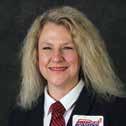
I am April Coolidge, a professional truck driver with Walmart Transportation. I am entering my 11th year as a professional driver and have accumulated more than 1.2 million accidentfree safe driving miles.
As a young girl, my parents raised me with the mindset that I could accomplish anything I wanted to do if I just set my mind to it. I started my career as a real estate agent. After the 2008 economic crisis, I decided it was time to find a more reliable profession. This meant that I had to reinvent myself in my early 40s, which I knew was going to be difficult. Wanting to find an industry that never stopped and would keep me financially afloat, I turned to trucking.
Seeing the kind of life my father was able to provide our family as a professional driver gave me the determination to go to truck driving school and become a professional driver myself. I am now a second-generation truck driver, following in my father’s footsteps, making an exceptionally good living for myself.
When I entered this industry, only about 3% of the driving force were women. Now, that percentage has increased to about 7%. I absolutely love what I do, and I am immensely proud to be a woman in this industry. As an America’s Road Team Captain, I am honored to be a role model to women who are thinking about entering this industry. I attend safety demonstrations and events across the country, talking to people of all ages about the opportunities the trucking industry can provide them. If a woman truck driver had come to my high school to discuss her career,
I likely would have entered this industry much earlier in my life.
However, being a woman in this industry does come with its challenges. In many households, women are typically the caregivers, tasked with raising the children. My son was 18 and graduating high school when I entered the industry, which made the decision easier. At that time, there were not as many opportunities to be a professional truck driver close to home. Drivers were on the road for two weeks at a time, with only two days at home.
For almost any parent, that is not enough time to spend with the family. Over time, the industry has recognized the need for flexibility that allows drivers greater stability. Many companies are now creating runs that allow drivers to be home every night and stay close to home on a regular basis. I am home every week and get to spend a minimum of two days there. This shift makes it easier for either parent to balance family time with professional driving and makes the industry more welcoming to all.
Safety is another universal priority for the truck driving industry. It is not gender specific. Both men and women face challenges and risks on America’s roadways, and all of us take steps to reduce those risks and arrive home safely.
To be a great — and safe — driver, both men and women must be aware of their surroundings. When behind the wheel, that means looking ahead, to the sides and behind, and being aware of blind spots. I must know
what is going on around me to react in a timely and safe manner to construction zones, crashes and other hazards on the road. This awareness extends to load drop-off/pick-up locations and truck stops, too.
With my routes, I can be pulling into a Walmart at late hours or stopping for a quick bite in remote areas. Additionally, with the lack of designated truck parking locations across the country, professional truck drivers are often forced to park in areas that may have inadequate lighting and no security. By being aware of my surroundings, I can reduce my risk and stay safe when doing my job or taking my breaks.
That being said, we all deserve access to safe and reliable overnight parking, truck stops and load drop-off/pick-up locations. The more we work together to protect these areas that are vital to drivers and the nation’s supply chain, the more appealing the industry will be to new drivers — both men and women.

As drivers, our relationships with highway safety professionals are also essential to staying safe on our highways. Obeying traffic laws and cooperating with roadside inspectors and enforcement officials is another hallmark of all great truck drivers.
Jobs all over the country are reliant, either directly or indirectly, on professional truck drivers behind the wheel, delivering the goods needed for our way of life. Woman or man, your presence as a truck driver is welcomed and appreciated so that we can ensure all of America can continue to move forward in a safe and timely manner. n
FROM THE DRIVER’S SEAT FOURTH QUARTER 2022 19
A Balanced View
By Dave Elniski, Industry Advisor, Safety and Compliance, Alberta Motor Transportation Association


I find it interesting how quickly I can focus on one part of the industry. Focus is good for my job, especially when I have to write a bulletin or research a topic. However, another thing that can happen to me when I focus on a particular task is narrowed vision. This is when the thing I’m working on becomes disproportionately large compared to other things that may also be important.
While safety was a value I held when I was a flatbed truck driver, safety and compliance weren’t as much a part of my work as they are today. I had many other things to consider, too. Customer service. Tracking my mileage. Planning my trips. Figuring out my pay. And driving the truck, which was, for me, a twohanded, two-legged, all-five-senses activity. Now, my whole job is about occupational health and safety, National Safety Code, and helping employers manage hazards.
Working in fleet safety management gave me a new perspective on trucking. I learned more about the different roles in the office and grew a greater appreciation for safety and compliance. I continued to occasionally drive and, when I did, saw things like delays and paperwork differently and with greater patience.
In this new role, I sometimes lost my sense of balance. Safety and compliance overshadowed all else. At times, I made mountains out of molehills while failing to see what was going on in the peripheries.
Maintaining safety and compliance is, in my opinion, the most important value a carrier should embrace. But here’s the thing: people who appear to disagree with this opinion are not necessarily unsafe. For example, we can’t
say someone who appears disengaged during hours-of-service training but becomes attentive when the topic shifts to pay is more at risk from driving while fatigued.
There were times when I had a hard time making a distinction in a situation like the example above. I would be so concerned with the training I was about to deliver, all the research I did to prepare, and my interest in the material, that I’d forget others were not nearly as invested in it as I was. And that this was ok. Upon reflection, I’d remind myself that any one regulation is only a single, small part of a driver’s job. Important, yes. But the only important thing? No.
It’s easy to get caught up in a topic and see it with greater intensity than others. It can also be disappointing to realize others are far less interested. I think it’s natural to get a little out of balance like this; but it’s important to try to restore this balance.
While issues regarding safety and compliance need to be addressed, the many different pressures and realities facing drivers and other carrier staff shouldn’t be ignored. Trying to understand those we work with, including that they may have different responsibilities or priorities, can help temper our responses to what we perceive as big problems. Since drivers control trucks, carriers have no choice but to ultimately trust them to do it safely. Micromanaging some things and overemphasizing others isn’t good for that trust.
Our work and immediate concerns are somewhere in the big picture. It’s good to know where our part lies, and then step back to take it all in, and let others do their part. n
INDUSTRY PERSPECTIVES
Enforcement
MARK YOUR CALENDAR INTERNATIONAL ROADCHECK May 16-18, 2023 ROADCHECK INTERNATIONAL OPERATION SAFE DRIVER WEEK
9-15, 2023 BRAKE SAFETY WEEK
20-26, 2023 HUMAN TRAFFICKING AWARENESS INITIATIVE
2023 — U.S.
2023 — Canada
2023 — Mexico GUARDIAN 20
2023
Initiatives
July
August
January 9-13,
February 20-24,
March 13-17,
Highway Heroes Combat Human Trafficking Crimes
By Fred Fakkema, Vice President of Safety and Compliance, Zonar
Why do airports, train stations, bus stops and ports continue to blare out automated announcements about unattended baggage, suspicious activities or people possessing threatening items? It’s because “See something, say something” works.
This approach to safety and security, which implores everyone to participate, not only increases the size of an alert and informed public, but it also saves lives.
An estimated 50 million people worldwide are living as human slaves, and the U.S. is not immune. Within the past five years, California, Nebraska, Nevada, Ohio and Washington, D.C. had among the highest reported rates of human trafficking within U.S. borders. And the transient nature of truck stops, rest stops, warehouses and weigh stations provide an ideal setting for traffickers looking to profit off their victims.
There’s a huge untapped potential to bring attention and visibility to an issue that’s often hiding in plain sight. More than 14.9 million people work in the U.S. transportation and warehousing sectors. Their sharp eyes can save lives.
From local government up to the federal level, law enforcement, criminal prosecution, advocacy groups, public health organizations and private industry leaders are stepping up to lead anti-trafficking efforts. Organizations like Transportation Leaders Against Human Trafficking and Truckers Against Trafficking are actively engaging members of the transportation and trucking industries through partnerships with private companies. Private industry leaders can help regain momentum where public staffing and government funding, information sharing and weak monitoring systems might slow progress.
The American Trucking Associations’ Law Enforcement Advisory Board, of which I am a member, is among those organizations focused on partnering with private industry to combat human trafficking. And at Zonar, where I’ve overseen safety and compliance for the past 12 years, we’re trying to be part of the solution too.
We know that technology is key to capturing suspicious activity in real-time. There are tools already in place to make reporting incidents easier than ever. And while the instinct might be to confront suspected traffickers directly, the best way to take action is by staying vigilant and notifying law enforcement if you see something concerning. That’s why we’ve partnered with
Truckers Against Trafficking to enable their eTAT app to run on in-cab tablets. Thousands of truck drivers will gain the tools to identify and report labor and sex trafficking.
The app is connected to the National Human Trafficking Hotline. All reports are confidential and there are built-in measures to keep reporters anonymous. Almost immediately after reports are submitted, law enforcement and emergency workers are contacted. A representative may reach out to collect more details about location, timing and any identifying qualities, so reporters should try to observe as much as possible about the scene while maintaining personal safety.
The impact of Truckers Against Trafficking’s app is already adding up in just the past year. One man’s reported sighting helped save a 20-year-old woman who had been abducted and tortured for 18 days. Another relayed information regarding a 19-year-old woman who had just escaped from her would-be trafficker.
The big picture here is that at the most basic level of decency, we all agree human safety matters. And those of us in commercial transportation have the power to impact that sentiment directly – if you see something, say something. Victims of human trafficking are counting on us to be the eyes and ears of the highway.
To learn more about the partnership between Truckers Against Trafficking and Zonar, visit our website at www.zonarsystems.com/resources/ truckers-against-trafficking. n
KEEP AN EYE OUT FOR THESEPOTENTIALSIGNSOF TRAFFICKING
• A passenger vehicle in the truck parking area of a rest area or truck stop, especially if multiple people (usually female) exit the vehicle and begin going from truck to truck

• Someone who may appear to be under the control of a pimp, regardless of the age or gender of the victim
• Minors engaging in a commercial sex act
• Any mention from a suspected victim about making a quota
• People who seem to have a lack of knowledge of their surroundings or area
CVSA’s Human Trafficking Prevention Program seeks to reduce human trafficking throughout North America through coordinated enforcement, investigative and educational awareness measures within the commercial motor vehicle industry.
To learn more, visit www.cvsa.org/programs/humantrafficking-prevention.
• Someone who appears to have restricted or controlled communication or is unable to speak for her/himself
• Suspected victims who have signs of branding (tattooing that would indicate ownership of a particular trafficker)
Source: Truckers Against Trafficking
INDUSTRY PERSPECTIVES FOURTH QUARTER 2022 21
The Benefits of a Driver Safety Incentive Program
By Bailey James, Tenstreet
Highways are a vital logistical component of the economy. However, they pose a real and tangible risk to the people who make the open roads their occupation.
This risk is shared with the fleets that employ the drivers. While these companies may not be affected by the physical aspects of an accident, they will suffer the financial, and possibly legal, ramifications.
Collisions on the road are becoming a more frequent occurrence as the number of distracted, tired and intoxicated drivers increases. According to the Occupational Safety and Health Administration motor vehicle guide, the monetary expenses associated with a crash involving a commercial motor vehicle start at an average of $16,500 and exceed more than $500,000 if a fatality occurs.
One way fleet managers can prevent their drivers from adding to these numbers is by incorporating a driver safety program. However, simply including a new ruleset in and of itself may not be enough to change driver behavior. Some employees may even resent the idea that they need additional safety training and subsequently may not be responsive to the new guidance.
By integrating a safety rewards program alongside the new safety rules, employees are still held accountable for their mistakes, but their achievements are also recognized. Many fleets have found that including a driver safety incentive program alongside new protocols dramatically increases the efficacy of their safety program, helps mitigate employee resentment and encourages widespread adoption of new policies.
A safety incentive rewards system can gain traction by acknowledging outstanding safe practices. Let’s take a look at how to create a driver safety incentive program and how it can help a business’s bottom line.
What Is a Driver Safety Incentive Program?
Safety incentive plans for truck drivers are a method of formally recognizing and rewarding a driver for maintaining safe-driving practices and keeping a clean driving record. Through positive reinforcement with a safety bonus, managers and supervisors provide a tangible reward for adherence to safety guidelines instead of only doling out punishment for breaking them.
By instituting a written driver safety incentive program, fleets make drivers aware of what’s expected of them and how they will be evaluated. It reduces any ambiguity. Workplace safety incentive programs should be, in their purest form, a meritocratic system that is fair and unbiased when awarding drivers.
Scorecards are the most frequently used method to determine who’s granted a safety incentive. Programs can utilize various data to determine what constitutes good behavior. Clean driving records are usually part of the equation, but many companies will also include telematics data. However, rewarding behaviors like the highest number of deliveries can be counterproductive as it can cause drivers to exceed speed limits to reach the target numbers.
Types of Incentive Programs
There are various types of truck driver safety incentive programs that a fleet company can adopt. Determining the right one requires fleet managers to identify company goals. The program should also coincide with what drivers will perceive as valuable to encourage compliance.
Once a company has decided what it hopes to achieve by implementing a driver safety incentive program, such as reducing minor accidents, tardiness or driver vacancies, it then needs to decide how to measure driver behavior.
Using telematics data has proven to be an effective method to motivate drivers to operate their motor vehicles more defensively. Telematics data can easily track and trace data to individual drivers and vehicles while providing concrete and unbiased evidence. This tracking method also alleviates the additional burden of having the supervisor maintain records and evaluate the drivers, without letting personal feelings affect the results.
The correct driver safety incentive program for a company doesn’t need to include convoluted pieces of data that must be weighed against each other. The initial launch needs only to address desired driving practices and mitigate actions that can lead to accidents, injuries and lawsuits.
Most fleets already have some form of automated record-keeping that provides a wealth of information. The company only needs to decide which metrics to reward. Everyday items that should be factored into the equation include:

• Speed
• Attendance
• Schedule adherence
• Near misses
• Safety equipment utilization (such as wearing a seatbelt)
• Time spent idling
• Driving record
After determining which metrics to use for evaluation, the next step is to determine which incentives will best motivate drivers to comply with safety regulations. Keep in mind that while a driver safety incentive program should be a significant aspect of providing drivers with positive reinforcement and recognition, it shouldn’t be the only source.
INDUSTRY PERSPECTIVES
GUARDIAN 22
Driver Safety
Incentive
Program Reward Ideas
The most frequent reward that fleets offer is a cash incentive. However, a purely economic boon hasn’t proven to provide lasting changes in behavior. If money is the only reward, drivers won’t create a lasting emotional connection, which is necessary to foster a long-term behavioral change. Companies that choose to incorporate merchandise, trophies, public acknowledgment and perks alongside a small monetary safety bonus create more successful driver safety incentive programs.
Choosing which rewards to offer shouldn’t be left to one individual, as specific bonuses may be appropriate for only a portion of the drivers while alienating others. Also, a large bonus may affect a driver’s income tax bracket, nullifying the benefit they would derive from it. Rewards need to be valuable enough to incentivize drivers properly while also keeping in mind that different drivers may value some incentives over others. Here are a few options to consider:
• Gift cards for local businesses
• Company apparel
• Certificates or a letter of recognition
• Plaques or trophies
• Electronics
• Tickets to an event
• Bonus checks
The size of the prize should correlate to the frequency of the rewards. If a company holds an annual picnic, more elaborate rewards may be necessary to motivate drivers successfully than if recognition is given monthly. For companies that have a meeting once a quarter, awarding points that drivers can later cash in may be more appropriate.
However, supervisors should discuss all incentives with operational managers before implementing them. Since both the safety
officer and the operations manager have specific duties and responsibilities, the desired results can at times be opposing. A driver safety incentive program should not neglect productivity. By working as a team, fleets can develop programs that support safety and efficiency.
Driver Safety Incentive Program Benefits
In addition to promoting safer roadways, developing a driver safety incentive program protects the company from nuclear verdicts, bad U.S. DOT inspections and other regulatory issues that can result from having a poor safety record. It also helps the company build rapport and loyalty with its drivers. If delivered correctly, the program shows that the company cares about its drivers’ wellbeing, which can reduce driver turnover. In an environment where merit is rewarded, employees also feel as if their efforts are valued, outside of receiving a base salary.
This resulting increase in driver retention means that a company saves on training and onboarding costs and doesn’t have to rely on new hires, who are statistically known to be involved in more accidents. A small investment into a driver safety incentive program can yield an unprecedented return on investment.
Driver Safety Incentivization Implementation
Once a fleet has sorted out the objectives it hopes to achieve, the metrics used to evaluate drivers and the driver safety incentive program’s rewards, it needs to organize the program launch.

As with any new program, a little planning goes a long way toward successful implementation. A driver safety incentive program has many parts that need to be overseen, which could be challenging for a single supervisor.
call 877-219-9283 or email sales@tenstreet.com.
Here are a few items that should be addressed when deciding how to integrate a new program into the fleet’s operations. The company will need to identify:
• What is the program’s budget?
• What timeframe will be used to track progress?
• Who will oversee program supervision?
• How will the relevant information be conveyed to the drivers?
• How will drivers know where they stand?
Coordinating these details with upper management is vital to ensuring the program’s launch isn’t met with reservations.
Communicating the Program with Drivers
For a driver safety incentive program to benefit a fleet, employees must be aware that it exists and how it works. The incentives, metrics and goals need to be clearly stated and posted in areas that are easily accessible to employees.
Tracking and evaluations shouldn’t be used to negate or demean any underperforming drivers. Communicating the rules and how the standards are set, using unbiased datagathering techniques, will assuage feelings that favoritism is a factor in award decisions.
Truck drivers should be updated as to their current standing. They should also be able to access their standings by request. Those performing exceptionally well between awards can be further motivated with public acknowledgment in company press releases or internal memos. Keeping the communication lines open is critical to integrating a driver safety incentive program into employees’ minds. n
INDUSTRY PERSPECTIVES FOURTH QUARTER 2022 23
To learn more about how a driver safety incentive program can impact your fleet,
Farewell “RAD Inspection News”
CVSA has made the decision to discontinue the dedicated “RAD Inspection News” section from “Guardian” magazine. We thank our readers for their support of this section over the years; however, don’t worry, you’ll still find news and other stories pertaining to the North American Standard Level VI Inspection Program in this magazine. They will be located in the “CVSA Committee and Program News” section of this magazine, starting with the first quarter 2023 edition of “Guardian.”
To learn more about the Level VI Inspection Program, visit www.cvsa.org/inspections/northamerican-standard-level-vi-inspectionprogram.
If you’re a roadside inspector interested in becoming certified to conduct Level VI Inspections, visit www.cvsa.org/ inspections/north-american-standard-levelvi-inspection-program/level-vi-training to view the dates and locations of upcoming certification courses.
If you have any questions about the Level VI Inspection Program, contact CVSA Level VI Inspection Specialist Carlisle Smith at 202-998-1808 or carlisle.smith@cvsa.org. n
U.S. DOE’s New Environmental Management Program Plan Guides Progress, Opportunities to Accelerate Cleanup
In September, the U.S. Department of Energy (DOE) Office of Environmental Management (EM) released its EM Program Plan, a 2022 priority outlining a decision roadmap which the cleanup program will use as a guide over the next two decades.
“Cleanup progress has now reached a level that lets us focus on clearing the decks and tackling remaining hurdles to sustained success,” EM Senior Advisor William “Ike” White said at the September National Cleanup Workshop. “As the cleanup mission approaches a crossroads, we’re down to some of the toughest and most difficult challenges.”
White noted that the EM Program Plan completes a trio of outward-facing planning documents, joining EM’s calendar year priorities list and its 10-year strategic vision. “This new program plan provides us with a long-range planning baseline for the entire cleanup program that we’ll use to identify longterm opportunities and the challenges that we need to face well in advance,” White said.
In addition to providing a decision roadmap, the EM Program Plan describes the scope of the remaining cleanup and identifies key opportunities to better address challenges and complete cleanup earlier.
EM undertakes a variety of enabling activities to support successful completion of site cleanup across all mission areas. These multifaceted activities, outlined in the EM Program Plan, include strategic planning; program
and project management and acquisition strategies; technology development and innovation; workforce strategy; infrastructure management; and regulatory and legislative initiatives.
“The EM Program Plan is a new tool to guide continuous evaluation of the status quo against viable alternatives to accelerate cleanup in key mission areas like tank waste, spent nuclear fuel, and soil and groundwater remediation,” said EM Associate Principal Deputy Assistant Secretary Dae Chung, who led the development of the plan. “By adding another layer of discipline and transparency to EM decision making, the plan will help inform our work with communities, tribal nations, regulators and others to drive to completion.”
EM will work with local communities, tribal nations, regulators and other stakeholders to evaluate these opportunities and identify others to support the completion of the EM mission in a safe, effective manner.
The EM Program Plan’s summary roadmap highlights decisions and associated timelines that are critical when it comes to reducing costs and accelerating schedules.
EM is committed to effectively minimizing risks through the efficiencies and innovation generated by the strategies and opportunities described in the EM Program Plan.
To learn more, visit www.energy.gov/em/ office-environmental-management. n
An aerial view of the X-326 uranium process building site following demolition of the
The debris will be downsized before compaction and disposal.
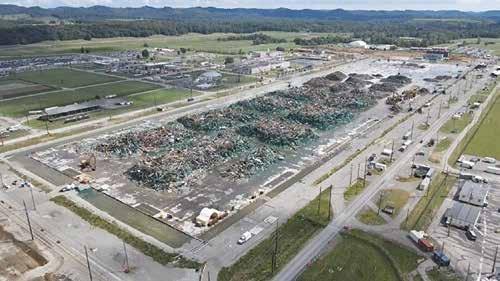
RAD INSPECTION NEWS
GUARDIAN 24
Ohio facility earlier this year.
Level
Level
RAD INSPECTION NEWS
Level VI Inspections with No Violations 0 657 657 97.69% Level VI Inspections with Violations 0 13 13 2.31% Level VI Inspections with Out-of-Service Conditions 0 5 5 1.05%
Violation Description # of Inspections #
%
VI Roadside Inspection Violations (2022 - Fiscal) Violation Code
of Violations % of Total Violations # of OOS Violations OOS
393.45B2 Brake Hose or Tubing Chafing and/or Kinking 3 5 29.41% 2 40% 393.207A Axle positioning parts defective/missing 1 2 11.76% 2 100% 395.24D ELD cannot transfer ELD records electronically 1 1 5.88% 0 0% 396.3A1 Inspection, repair and maintenance of parts and accessories 1 1 5.88% 1 100% 393.55D3 No or Defective ABS Malfunction Indicator for towed vehicles on vehicles manufactured after February 2001 1 1 5.88% 0 0% 177.817A No or improper shipping papers (carrier) 1 1 5.88% 0 0% 397.101D No or incomplete route plan for radioactive materials 1 1 5.88% 0 0% 177.817E Shipping paper accessibility 1 1 5.88% 0 0% 172.402D Subsidiary labeling for RAM 1 1 5.88% 0 0% 393.75C Tire-other tread depth less than 2/32 of inch measured in a major tread groove 1 1 5.88% 0 0% 172.310D Type B, B(U), B(H) Package Not Marked with Radiation Symbol 1 1 5.88% 0 0% 393.9A 393.9A 1 1 5.88% 1 100%
VI Roadside Inspections (2022 - Fiscal)
LEVEL VI INSPECTIONS Federal State Total % of Total
FOURTH QUARTER 2022 25
Number of Level VI Inspections 0 670 670 100% Point of Origin 0 375 375 57.02% En Route 0 293 293 42.77% Point of Destination 0 2 2 0.21% Unknown Location 0 0 0 0%
2023 CVSA Level VI
Inspection Program Training Dates
U.S. DOE Awards Waste Isolation Pilot Plant Transportation Services Contract

The U.S. Department of Energy (DOE) Office of Environmental Management (OEM) awarded a contract to CAST Specialty Transportation Inc. for Waste Isolation Pilot Plant (WIPP) Transportation Services.
The contract is a single award indefinitedelivery/indefinite-quantity (IDIQ) contract, utilizing firm-fixed-price task orders that may include separate contract line-item numbers (within task orders) for specified cost reimbursable items, such as state permits and use fees, New Mexico Gross Receipts Tax, fuel and a safe-driving bonus.

The WIPP Transportation Services acquisition was conducted as a competitive total small business set-aside. The IDIQ contract will have a maximum ordering value of $100 million over the five-year ordering period. EM received proposals from four offerors.

The WIPP Transportation Services contract provides facilities, personnel and equipment to operate a local terminal within a 10-mile perimeter of Carlsbad, New Mexico, as well as the transportation and maintenance services necessary to support the DOE’s National Transuranic Program. This program provides safe, compliant and efficient characterization, transportation and disposal of defense-related transuranic (TRU) waste. This includes, but is not limited to, carrier services for the safe transport of contact-handled and remote-
handled TRU wastes and mixed hazardous constituents, including polychlorinated biphenyls and asbestos, from DOE and other defense-related TRU waste generator sites to the WIPP site.
CAST Transportation specializes in the safe and timely transport of difficult commodities. CAST has been transporting hazardous materials and oversized shipments for over 40 years. To learn more about CAST Transportation, visit www.casttrans.com
The Office of Environmental Management’s mission is to address the nation’s Cold War environmental legacy resulting from five decades of nuclear weapons production and government-sponsored nuclear energy research. This legacy includes some of the world’s most dangerous radioactive sites with large amounts of radioactive wastes, spent nuclear fuel, excess plutonium and uranium, thousands of contaminated facilities, and contaminated soil and groundwater. To learn more about the OEM, visit www.energy.gov/ em/office-environmental-management
WIPP is the nation’s only repository for the disposal of TRU waste. Disposal of transuranic waste is critical to the cleanup of Cold War nuclear production sites. Waste from DOE sites around the country is sent to WIPP for permanent disposal. To learn more about WIPP, visit www.wipp.energy.gov. n
RAD INSPECTION NEWS
MARK YOUR CALENDAR EIGHT-HOUR LEVEL VI INSPECTION CERTIFICATION REFRESHER COURSE (at the COHMED Conference) JANUARY 23, 2023 SAN ANTONIO, TEXAS LEVEL VI INSPECTION CERTIFICATION COURSE MAY 8-11, 2023 SPRINGFIELD, ILLINOIS LEVEL VI INSPECTION CERTIFICATION COURSE JUNE 5-8, 2023 ALBUQUERQUE, NEW MEXICO GUARDIAN 26
CVSA LEADERSHIP
BOARD OF DIRECTORS
PRESIDENT
Maj. Jeremy “Chris” Nordloh Texas Department of Public Safety
VICE PRESIDENT
Col. Russ Christoferson Montana Department of Transportation
SECRETARY
Capt. John Hahn Colorado State Patrol
PAST PRESIDENT Sgt. John Samis Delaware State Police
Capt. John Broers South Dakota Highway Patrol
REGION PRESIDENTS
Region I
Tpr. William Alarcon New Jersey State Police
Region II Lt. Ronald Jenkins Oklahoma Highway Patrol Region III Maj. Jon E. Smithers Indiana State Police
Region IV Cory Ayon New Mexico Department of Public Safety
Region V Richard Roberts British Columbia Ministry of Transportation and Infrastructure
REGION VICE PRESIDENTS
Region I
Tpr. James Thomas Rhode Island State Police
Region II
F/Sgt. Travis Ingold North Carolina State Highway Patrol Region III Lt. Mike Maytum Nebraska State Patrol
Region IV
Tpr. Chase Livingston Arizona Department of Public Safety Region V Krista Cull
Newfoundland and Labrador Transportation Regulation Enforcement
LOCAL PRESIDENT
Ofc. Lincoln Sweeney Cedar Hill (Texas) Police Department
LOCAL VICE PRESIDENT Ofc. Christopher Vinson Midlothian (Texas) Police Department
NON-VOTING LEADERSHIP
ASSOCIATE MEMBER PRESIDENT
Derek Barrs
HNTB Corporation
ASSOCIATE MEMBER VICE PRESIDENT
Brett Graves, CDS Maverick Transportation, LLC
COMMITTEE CHAIRS
Crash Data and Investigation Standards Committee
Capt. Bryant Gay Florida Highway Patrol
Driver-Traffic Enforcement Committee
Capt. Chris Barr Indiana State Police
Enforcement and Industry Modernization Committee
Capt. Bart Teeter Texas Department of Public Safety
Hazardous Materials Committee Tpr. Joshua Anderson North Dakota Highway Patrol
Information Systems Committee
Holly Skaar Idaho State Police
Passenger Carrier Committee Tpr. William Alarcon New Jersey State Police
Policy and Regulatory Affairs Committee
Capt. Jon Olsen Minnesota State Patrol
Size and Weight Committee
Brad Marten Montana Department of Transportation
Training Committee
Lt. Ronald Jenkins Oklahoma Highway Patrol
Vehicle Committee
Tpr. John Sova North Dakota Highway Patrol
PROGRAM CHAIRS
Commercial Vehicle Brake Manufacturers Council Dave Engelbert Haldex Commercial Vehicle Systems
Cooperative Hazardous Materials Enforcement Development Sgt. Kevin Hogan Michigan State Police
Human Trafficking Prevention Lt. Christopher Keller Michigan State Police
International Driver Excellence Award Brett Graves Maverick Transportation, LLC
International Roadcheck Maj. Michael Forman Mississippi Department of Transportation
Level VI Inspection
M/Sgt. Todd Armstrong Illinois State Police
North American Cargo Securement Harmonization Public Forum
Tpr. Jeremy Disbrow Arizona Department of Public Safety
North American Inspectors Championship Richard Roberts British Columbia Ministry of Transportation and Infrastructure
Operation Airbrake Lt. Aaron Hayden Maine State Police
Operation Safe Driver
Jonathan Nicastro New York State Department of Transportation
PBBT Users
Lt. Joseph Greene Kansas Highway Patrol
FOURTH QUARTER 2022 27







GUARDIAN 28
PREMIER GOLD DIAMOND PLATINUM Black Pantone 109
CVSA SPONSORS
FRIENDS OF CVSA
29 FOURTH QUARTER 2022 CVSA SPONSORS
American Bus Association Austin Powder Company Brake Tech Tools Cargo Transporters Inc. Coach USA Inc. EROAD Inc. FoxFury LLC Grammer Logistics Kenan Advantage Group Inc. MANCOMM Inc. Techni-Com Inc. United Motorcoach Association US Ecology Usher Transport Vehicle Inspection Systems Inc. Zonar Systems
American Pyrotechnics Association DATTCO Inc. Direct ChassisLink Inc. Greyhound Lines Inc. J.E.B. Environmental Services LLC NIC Federal LLC Oak Harbor Freight Lines Inc.
SILVER
BRONZE
Linde Gas & Equipment Inc. Price Benowitz Injury Lawyers LLP Railsback HazMat Safety Professionals LLC Washington Trucking Associations Welcome TO OUR NEW ASSOCIATE MEMBERS As of November 2, 2022 Certarus Ltd. Crane Cartage LLC Pilot Company Zepto LLC
99 M Street, SE, Suite 1025 Washington, DC 20003
CVSA WORKSHOP
APRIL 23-27, 2023 | MEMPHIS, TENNESSEE
Join us April 23-27, 2023, in Memphis, Tennessee, for the CVSA Workshop. To learn more and to register, visit www.cvsa.org/events/cvsa-workshop.

MARK YOUR CALENDAR