A Publication of the Commercial Vehicle Safety Alliance

GUARDIAN Third Quarter Volume 29, Issue 3 www.cvsa.org
n Insight
President’s Message
Executive Director’s Message
Letter to the Editor
Kentucky Transportation Cabinet Implements New Weigh Station
Driver Camera System
Florida Utilizes Automated Tire Screening System During Three-Hour Detail
Students Learn About Highway Safety During Construction Career Days
Trooper Kevin Nelms Wins 2022 Florida Inspectors Championship
Troopers Inform Truck Drivers How to Fight Human Trafficking
During Operation Just Cause
Updates from North Carolina
Updates from Mexico
Hawaii Participates in International Roadcheck
Updates from Nevada
Manitoba Photos
n Cover Story
Use It If You Have It: Maintaining Advanced Safety Systems is Essential
The Legislative and Regulatory Rundown


Does the Benefit of Fatigue Management Technologies Outweigh Driver Privacy Concerns?
The End Is Never the End
Delivering Children to School Safely: School Bus Maintenance Tips
Learning Before It’s Lost
Attend the Western CMV Safety Summit in November
How Reefer Telematics Support a Safer Food Supply Chain
National CDL Program Assessment and CDL Resource Guide
n From the Driver’s Seat Safety Tips for Safely Sharing the Road with Recreational Vehicle Drivers
Justice for Fleets: A Look at Truck Crash Litigation Reform
Knowing You’re Operating Safely
Final TRUPACT-III Shipment Arrives at Waste Isolation Pilot Plant ` from Savannah River Site 31
CVSA Holds Three Level VI Certification Classes, Certifies 39 New Level VI Inspectors 32
CVSA’s Level VI Inspection Program Public Outreach Stops in Baltimore and Philadelphia 33 2022-2023 CVSA Level VI Inspection Program Training Dates 34 Level VI Roadside Inspections (2022 - Fiscal) 34 Level VI Roadside Inspection Violations (2022 - Fiscal). 34
“Guardian” is published quarterly by the Commercial Vehicle Safety Alliance with support from the Federal Motor Carrier Safety Administration. CVSA and FMCSA are dedicated to the government and industry working together to promote commercial motor vehicle safety on North American highways.
CVSA Staff: Collin B. Mooney, MPA, CAE, Executive Director • Adrienne Gildea, CAE, Deputy Executive Director • Carlisle Smith, Director of Level VI Inspection Program • William Schaefer, Director of Safety Programs • Ken Albrecht, Director of Multimedia Development • Bill Reese, Director of Hazardous Materials Programs • Kerri Wirachowsky, Director of Roadside Inspection Program • Christopher Turner, Esq., Director of Enforcement Data and Judicial Outreach • Terry Kummer, Director of Crash Data and Investigation Standards • Jake Elovirta, Director of Enforcement Programs • Nicole Leandro, Senior Manager of Communications • Iris Leonard, Manager of Member Services • Amanda Wagner, CMP, Senior Manager of Conference and Event Services • Mark Mills, Multimedia Specialist • Wendy Smith, Learning Management System Specialist • Katie Morton, Hazardous Materials Specialist • Rodolfo Giacoman, Fatigue Management Specialist • Amy Molina, Training and Event Coordinator • Moniladae Adewoyin, Accountant • Wendy Hall, Administrative Coordinator
Copyright 2022, CVSA. All rights reserved. No part of this issue may be reproduced without written permission from the publisher.
For comments, suggestions or information, email communications@cvsa.org.

When I decided to run for the elected position of CVSA secretary almost five years ago, I announced that I had no single major issue I wanted to pursue, no agenda for or against a specific policy or course of action. I had no soapbox to stand on to rally everyone behind me for a charge up the hill. I just wanted to be part of the solution, part of the effort, a member of the team. I wanted to work for all of us in the Alliance to make our organization even better.
Little did I know that a pandemic, an historic transportation bill, new grants, the CVSA strategic plan, automated vehicle inspections and a move to a new CVSA headquarters would all hit during my time on the board. Even though some of these changes were predictable, all came with surprises and challenges. While my primary goal remains helping our organization be the best it can be, these experiences have left me with a greater appreciation for a solid plan to get us there.
The new strategic plan should guide the decisions of the Alliance for the next five years, just as the last one brought us to where we are today. We were able to implement most of the priorities laid out in the previous strategic plan and our organization is better for it. I look forward to the same outcome this time around.
The previous plan looked ahead to the coming federal transportation bill renewal, so that CVSA was ready to serve as a critical resource as lawmakers weighed decisions on commercial motor vehicle (CMV) safety. Another priority outlined in that strategic plan was relocating CVSA headquarters to allow for coming growth and to better position the Alliance for its important advocacy work.
We met this goal, and our new office in Washington, D.C., is outstanding. Our
office neighbors are now the American Trucking Associations, the Owner-Operator Independent Drivers Association and the U.S. Department of Transportation. We reached another plan objective by holding an industry class on automated vehicle inspections last year and broke ground on automated commercial vehicle regulation. There is still much to do in keeping up with this gamechanging technology, but the leadership we are providing in that arena is moving things forward.
And then there’s the pandemic. No matter how you have experienced it individually, from an industry perspective, COVID-19 changed how we operate probably more than even the advent of the commercial driver’s license. Some people now work from home, we hold virtual meetings and conferences, sometimes we wear masks, and drivers of certain commodities are still exempt from hours-of-service regulations. But, at least there is toilet paper on the shelves again. Our industry partners took on more than their share of the load in order to keep America moving as product availability and consumer demand shifted. More than two years later, we are emerging stronger than before.
The thing about all of these accomplishments is that they are not my accomplishments as president of CVSA, nor are they the accomplishments of the board. These successes belong to all of us, collectively, as the Alliance. The lead agency representatives and CVSA committee members set the agenda and direction and then Alliance leadership chooses the best path to get us there. CVSA staff facilitate our journey on this path, based on what the committees and board want to achieve.
The outstanding work that committees do is impressive to say the least. I don’t know
who said it originally, but you don’t have to be the smartest person in the room, you just need to surround yourself with those who are. In CVSA, we have accomplished that. The expertise and leadership demonstrated at every conference still amazes me. We meet with and hear from thought leaders in every aspect of CMV safety, such as regulatory, inspection, equipment, and emerging technologies, and produce results based on these discussions.
Still, nearly all of us committee members serve CVSA in a part-time capacity, doing most of our work leading up to and during the conferences, with some done at various times in between. Meanwhile, CVSA staff work nonstop to help us get where we want to go. Think of staff as the engine and members as the pilots. The CVSA team is a well-oiled, finely tuned, turbo-charged, high-performance machine that puts out a lot of horsepower.
Knowing that staff will keep things moving along gives committee members the ability to focus on the priorities at hand, create a plan and then to return to our day jobs confident that our plans will be put into action.
I am honored to lead this amazing team of membership and volunteers and to collaborate with our many industry and agency partners. The dedication of the entire group ensures our success for the next five years, and far into the future. Speaking to a group of commercial motor vehicle enforcement officials this summer, I said that I wasn’t special and suggested that maybe they were not special either. I then added that, together, we are special. Together, we do an essential job –promoting safer and more efficient transport of people, goods and services on our roadways – and we do it especially well. I look forward to what we do next. n

Over the past 40 years, many of the faces and personalities that conceived the Alliance, along with multitudes of other dedicated commercial motor vehicle (CMV) safety professionals, have come and gone. Whether you are currently active within the programs and activities of the Alliance or are new to our organization or the CMV enforcement community, it can be helpful to take a moment to look back to our roots.
I will briefly touch on the history, evolution and building blocks of the successful roadside inspection program and related enforcement activities of CMVs in Canada, Mexico and the U.S., which grew into the CVSA North American Standard Inspection Program.
Prior to the early 1980s, the transportation industry in Canada and the U.S. was subject to a variety of compliance and enforcement activities as its drivers traveled from one jurisdiction to another. At the same time, the trucking industry experienced economic deregulation. In both cases, there was much concern about the potential consequences of not having a coordinated and comprehensive approach to CMV safety across North America.
As a result, members of the various levels of government, transportation safety organizations and the motor carrier industry came together to create an organization to assist with the implementation and coordination of roadside truck and motorcoach inspection activities. This began as an informal gathering of state agencies in the western U.S. and Canadian provinces and evolved into CVSA.
CVSA developed over the next several years in conjunction and collaboration with a number of federal agencies, associations and a variety of additional stakeholders throughout the transportation industry. Together they determined the details of inspection, training and certification programs for government officials who conduct roadside safety inspections, and enforcement-related activities on commercial motor vehicles and commercial motor vehicle drivers. In 1991, Mexico joined this partnership.
These stakeholders continue to collectively maintain and execute the building blocks of the CVSA North American Standard Inspection Program through a combination of agreements with all member jurisdictions that have CMV enforcement authority, such as bylaws, policies, memorandums of understanding, and legislative and regulatory authority.
In the U.S., various elements of the roadside inspection program have been formally recognized by Congress and incorporated by reference in federal statute and federal and state safety regulations. In previous rulemaking initiatives, the Federal Motor Carrier Safety Administration (FMCSA) stated that it is in the public’s interest that these enforcement tolerances be managed through a partnership among the federal, state, provincial, territorial and local governments from the U.S., Canada and Mexico, with participation by the industry, motor vehicle and equipment manufacturers, researchers and other related parties. The development and use of uniform international enforcement tolerances ensure highway safety and facilitate the efficient transportation of passengers and freight among states, provinces and countries in North America.
In Canada, the roadside inspection program has also been adopted by reference in the National Safety Code (NSC) Standard 12 — CVSA On-Road Inspections and has been successfully implemented by all 13 provinces and territories. To the south, the Ministry of Infrastructure, Communications and Transportation (Secretaría de Infraestructura, Comunicaciones y Transportes [SICT]) in Mexico has the delegated authority to implement an internationally recognized roadside inspection and enforcement program, which has been successfully carried out through a combination of efforts.
A critical development for this inspection program occurred in the late 1980s — the creation of enforcement guidelines and tolerances for uniform out-of-service standards and procedures for CMVs conducting intra/ interstate or intra/interprovincial operations.
To fully appreciate the roadside inspection program and the intent of the North American Standard Out-of-Service Criteria (OOSC), one must recognize and fully understand the three separate and distinct types of CMV inspections within the U.S. and Canada:
Annual/periodic and preventative maintenance requirements for all commercial motor vehicles
Driver trip inspection requirements
The CVSA North American Standard Inspection Program conducted by CVSAcertified government/law enforcement officials
All three types of mechanical and driver fitness inspections are intended to complement and build upon each other, and any one inspection is not more important than another. The roadside inspection program provides insight on a motor carrier’s operational performance and is viewed by many as the “last line of defense” for highway safety. For example, when a vehicle is placed out of service during a roadside inspection due to poor mechanical condition, it may be indicative that the motor carrier has a failing or defective preventative maintenance and/or driver trip inspection program.
During a roadside inspection, all CMVs are inspected to jurisdictional-specific highway safety regulations while following the applicable CVSA North American Standard Inspection Procedures. Any identified regulatory violation(s) are cross-referenced to the OOSC to determine whether they are likely to cause or contribute to a crash or breakdown if the driver, vehicle and/or motor carrier is allowed to proceed. This is defined as an “imminent hazard” and is further referred to as “critical vehicle inspection items,” which are outlined in Operational Policy 5 and Part II of the OOSC. The critical vehicle inspection items identified in the OOSC provide the basis for CVSA decal applicability.
In multiple instances, the OOSC clarifies a regulatory requirement. However, it does not supersede any federal, state, provincial or territorial safety regulation; original equipment manufacturing design; or trade association
performance standard. Although the OOSC was developed with the assistance of a variety of industry-applicable trade associations, it does not reflect their recommended manufacturing or performance standards. The roadside inspection program and the OOSC are not designed to be equivalent to a governmentmandated maintenance standard for annual or periodic inspections.
Far too many drivers, roadside inspectors, mechanics, company safety professionals and owner-operators reference the OOSC as “the DOT standard.” In the judgment of the Alliance, this is misguided and a misuse of the intent of the OOSC. As mentioned, the OOSC serves as a uniform set of guidelines for law enforcement officials when determining whether a driver, vehicle and/or motor carrier is an imminent hazard to the traveling public. The Policy Statement under Part II of the OOSC states, “These criteria are neither suited nor intended to serve as vehicle maintenance or performance standards.”
The OOSC represents enforcement tolerances and should not be construed to be regulations. The safety regulations require compliance with all applicable requirements at all times. There is nothing in the safety regulations that makes operating a CMV in commerce, while violating any of the requirements contained therein, an acceptable practice. Regulatory officials recognize that violations do occur and do not expect that motor carrier operations cease completely until 100% compliance is achieved. However, certain violations represent such serious safety risks to the motoring public that they must be corrected immediately.
The Alliance shares the stance incorporated into previous FMCSA regulatory initiatives –and the initiatives of its predecessor agency, the Federal Highway Administration – that all non-regulatory elements that make up the foundation for a successful roadside inspection program should only continue to be incorporated by reference and not specifically be rewritten into CMV safety regulations. Since we live in an ever-changing environment, this allows for flexibility within the CVSA North American Standard Inspection Program when updates to the roadside inspection and enforcement processes are required. n
Operational Policies 4 and 6 establish a quality control and certification standard

Challenges the inspector to ensure they understand the building blocks of a successful roadside inspection program.
Provides a structure on how to interpret and enforce the CMV safety regulations and capture a carrier's CMV safety data for compliance
Published annually,
on April 1
How to properly document a violation and the development and implementation of inspection software business rules (e.g., hardcoding of violations and smart logic).


Operational Policy 5 and OOSC Part II establish CVSA decal eligibility
U.S. Federal Motor Vehicle Safety Standards (National Highway Traffic Safety Administration)


Canadian Motor Vehicle Safety Standards (Transport Canada)
Manufacturing Standards
Eight inspection levels; Levels I and V impact CVSA decal eligibility


Establish a framework to conduct a uniform roadside safety inspection and enforcement program

Canadian National Safety Code Standards (Canadian Council of Motor Transport Administrators)

U.S. Federal Motor Carrier Safety Regulations, Includes Appendix A (Federal Motor Carrier Safety Administration)
Mexico NOM-068 (Direccion General de Autotranspor te Federal, Secretaría de Infraestructura, Comunicaciones y Transpor tes)

Over the past five decades, speeding continues to be the leading cause of harm to all roadway users. Many in the highway safety community, including those advocating for a safe system approach, have emphasized the need to create a system tolerant of human driving errors. While on the surface this is a good approach, it does make a distinction between driving errors that are true mistakes and driving behaviors that are willful (whether consciously or unconsciously so).
In determining a strategy for preventing any unsafe behavior, it is critical first to understand what drives the behavior. Willful behaviors are deeply rooted in behavioral consequences. When we don’t inquire into and understand the influences that drive a behavior, we deprive ourselves of an effective roadmap to a preventative solution. Behavioral factors underpin the risk-taking we have seen worsen on our roadways over the last two years, including speeding, distracted and impaired driving, and failure to wear a seat belt.
Overlooking the science of behavior has left speeding unchecked for decades and enables the continued worsening of its deadly impact. To create effective approaches to the prevention of these behaviors, we must forensically apply behavioral science and then evaluate our approach options to deliver consequences in the most effective way.
The science of behavior demonstrates how speeding is both additive and addictive. The more it occurs, the more likely is it to continue and to worsen. Speeding results in positive, immediate and certain reinforcement for the driver — the most powerful consequence of all, according to the science. It can create a natural high as blood pressure rises and adrenaline spikes, giving drivers a sense of control over their circumstances. Failing to understand these neurochemical rewards fully results in prevention approaches destined to
have little impact on changing the behavior. Consequently, the harmful outcomes caused by speeding will continue to claim thousands of lives and injure hundreds of thousands more.
The safety community has recently voiced frustration with the discussion surrounding behavior and perhaps misunderstood the differences in behavioral science approaches as they relate to speeding and other risktaking behaviors. While there are many influences on a driver’s decision to speed, we need to recognize how these influences can guide and inform our injury prevention efforts. Exploring this further leads to the realization that some well-intended preventative approaches will have little or no impact on speeding behavior and, therefore, should be eliminated from our injury prevention strategies. Meanwhile, there are some solutions that work.
Let’s take a closer look at the possible approaches currently under consideration and their merits. Traffic enforcement, both roadside and via photo-enforcement, can have an impact by providing a negative consequence for speeding behavior. However, it has limitations, and while it continues to play an important role, enforcement alone won’t get us to where we need to be.
We have also seen recognition of the role infrastructure can and should play in slowing vehicles through traffic calming measures. This is a longer-term piece of the solution, as it calls for significant money and time to implement the needed changes. These engineering solutions will take years to accomplish and do not provide a complete solution. Even combined with law enforcement measures, these strategies will not fully deter speeding behavior and its rising toll on human lives. In view of this, it is important to reconsider the U.S. Department of Transportation’s (DOT) National Roadway Safety Strategy (NRSS) and
its preventative approaches. The real solution to the speeding problem requires a triad framework based on these areas:
1. Forensic application of behavioral science to the problem and the creation of sciencebased preventative strategies
2. Usage of available speed-limiting technology to prevent and eliminate speeding behavior and/or limit a vehicle’s speed
3. Fast-tracking the implementation of regulatory and policy changes needed to support the new approach and plan elements (such as the setting of speed limits) in a more appropriate way to better factor in safety
This triad approach and framework would provide injury prevention benefits and significantly shorten the amount of time required to make significant progress. This allows us to have a more immediate impact on lowering traffic harm by preventing speedrelated crashes and the tens of thousands of fatalities and millions of injuries stemming from them. Rather than waiting for 20 years to make a difference, if we start by first understanding the “why” of this dangerous behavior, we can begin to deter speeding now. Lives are at stake and time is not on our side. Let’s urge the U.S. DOT to reconsider and revise the NRSS approach for the prevention of speeding by applying the framework outlined above.
Let’s connect. I may be reached at gcatapano@safeoperatingspeed.org or gcatapano@magtec.com. n
The Kentucky Transportation Cabinet (KYTC) recently implemented a driver camera system at its Laurel County I-75 northbound weigh station to help Kentucky State Police (KSP) commercial motor vehicle enforcement officers gather data on commercial truck drivers as they approach the weigh station. KYTC asked Perceptics — which provides the license plate reader, USDOT number reader and overview camera at the facility — to install its Driver Focus Camera to capture a high-resolution image of the inside of commercial motor vehicles so KSP can observe potential safety issues, such the use of cell phones or not using necessary corrective lenses or seat belts.
Technologies such as this can enhance the mix of education, awareness and enforcement that KYTC and KSP use to keep Kentucky’s roadways safe. While driver behavior continues to be a major factor in the cause and severity of crashes throughout the U.S., reliable data on such behavior can be difficult for authorities to collect. With the addition of the driver camera system, KSP officers now have real-time actionable intelligence on what’s happening in the cab instead of having only binoculars to rely on.
As the vehicle approaches the weigh station, Perceptics cameras capture images of the vehicle: the license plate, the USDOT and KYU numbers, and the inside of the cab. These images are fed to the Kentucky Automated Truck Screening (KATS) system where officers
can quickly identify the vehicle and decide whether to send it for inspection. With the addition of the Driver Focus Camera, the officer can now see the image of the driver in KATS along with all the vehicle’s information, providing important safety data that they could not capture before. The officer can also use the image to flag the driver for further inspection or as evidence of a violation during a regular inspection.
The camera has proven to be a useful tool in collecting data that can be used to deter unsafe driving practices. In the first six months of operation, officers issued violations for 137 seat belt infractions and several for illegal cell phone use and for drivers not wearing their required corrective lenses.
Additionally, the new camera also allows the officer to confirm the identity of the driver to ensure he or she is not exceeding driving time limits. KYTC is planning to install the cameras at its 13 other locations across the state to provide visual evidence that was previously unavailable to corroborate drivers’ logged times.

While collecting more data on vehicles increases efficiency and safety, the new Driver Focus Camera gives KYTC and KSP more information on one of the most widespread causes of vehicle crashes: driver behavior. This information can lead to new ways of encouraging safe driving practices to enhance their mission of improving highway safety. n
Connecticut, Delaware, District of Columbia, Maine, Maryland, Massachusetts, New Hampshire, New Jersey, New York, Pennsylvania, Puerto Rico, Rhode Island, U.S. Virgin Islands and Vermont
Alabama, American Samoa, Arkansas, Florida, Georgia, Kentucky, Louisiana, Mississippi, North Carolina, Oklahoma, South Carolina, Tennessee, Texas, Virginia and West Virginia
Colorado, Illinois, Indiana, Iowa, Kansas, Michigan, Minnesota, Missouri, Nebraska, North Dakota, Northern Mariana Islands, Ohio, South Dakota and Wisconsin
Alaska, Arizona, California, Guam, Hawaii, Idaho, Mexico, Montana, Nevada, New Mexico, Oregon, Utah, Washington and Wyoming
Alberta, British Columbia, Manitoba, New Brunswick, Newfoundland and Labrador, Northwest Territories, Nova Scotia, Nunavut, Ontario, Prince Edward Island, Quebec, Saskatchewan and Yukon
The camera has proven to be a useful tool in collecting data that can be used to deter unsafe driving practices.
 By Chief Jeffrey S. Dixon, Office of Commercial Vehicle Enforcement, Florida Highway Patrol
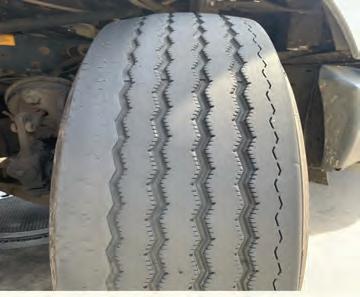
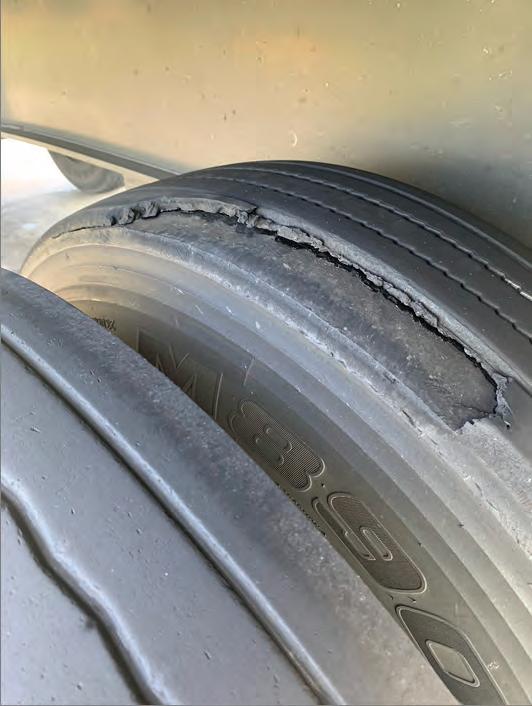
On April 13, the Florida Department of Transportation’s (FDOT) Motor Carrier Size and Weight Program, in conjunction with the Florida Highway Patrol’s Office of Commercial Vehicle Enforcement, performed a three-hour detail utilizing the automated tire screening (ATS) commercial motor vehicle enforcement solution developed by Mettler Toledo and Kistler. FDOT has integrated the ATS system into the scale manager software employed at all of its scale facilities, in an effort to reduce the risk of accident and injury resulting from poor tire conditions.
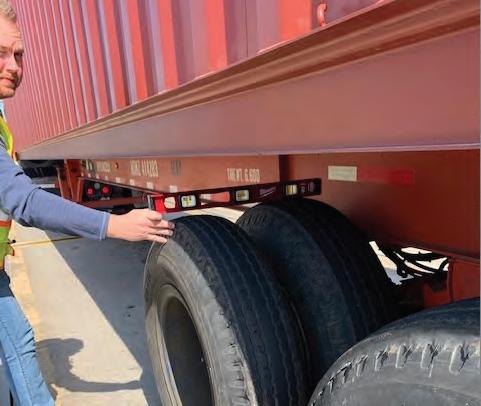
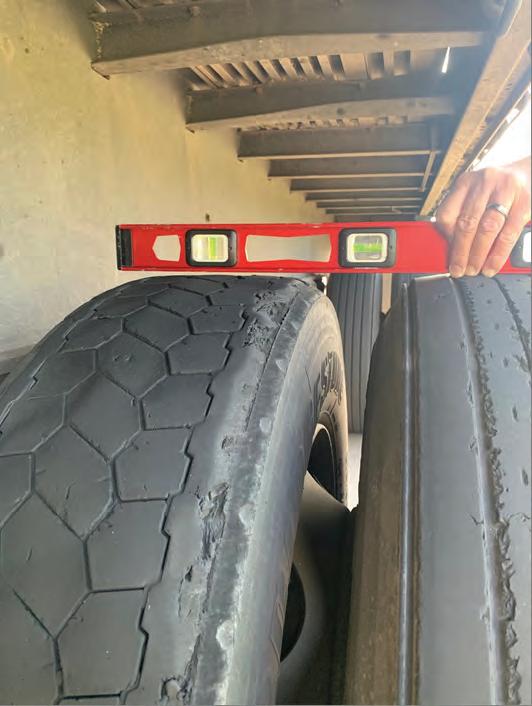
Incorrect tire pressure causes damage to roads and can lead to serious accidents. The ATS system offers a reliable solution to this issue as it identifies unsafe, damaged, under inflated or flat tires using Lineas® quartz sensors in conjunction with scale manager software. The sensors are installed in the road pavement in a specific layout which allows them to identify irregularities in the vehicle’s tires, delivering the required data for a full analysis of the condition of commercial motor vehicle tires. This system was integrated into the existing Madison westbound weigh-in-motion (WIM) screening site.
During the detail on Interstate 10, east of Tallahassee, 962 commercial motor vehicles were screened; the ATS system detected tire anomalies in 28 of them. Seventeen were placed out of service for under inflated or flat tires, removing potential safety hazards from the roadway and enhancing safety. North American Standard Level I Inspections were conducted on all commercial motor vehicles that were identified as having an anomaly, and all violations observed during inspection were documented on a driver/vehicle examination report.
The following violations were also noted with the trucks that had confirmed tire issues:
• Electronic logging device violations
• Lighting requirement violations
• ABS brake lamp malfunction
• No annual inspections
• Fire extinguisher violations
• Non-compliance with USDOT number requirements
• Damaged windshields
• Retroreflective sheeting missing, as required
• No CDL when required n
 By Sgt. Denise Meredith, Commercial Vehicle Enforcement, Florida Highway Patrol – Troop J
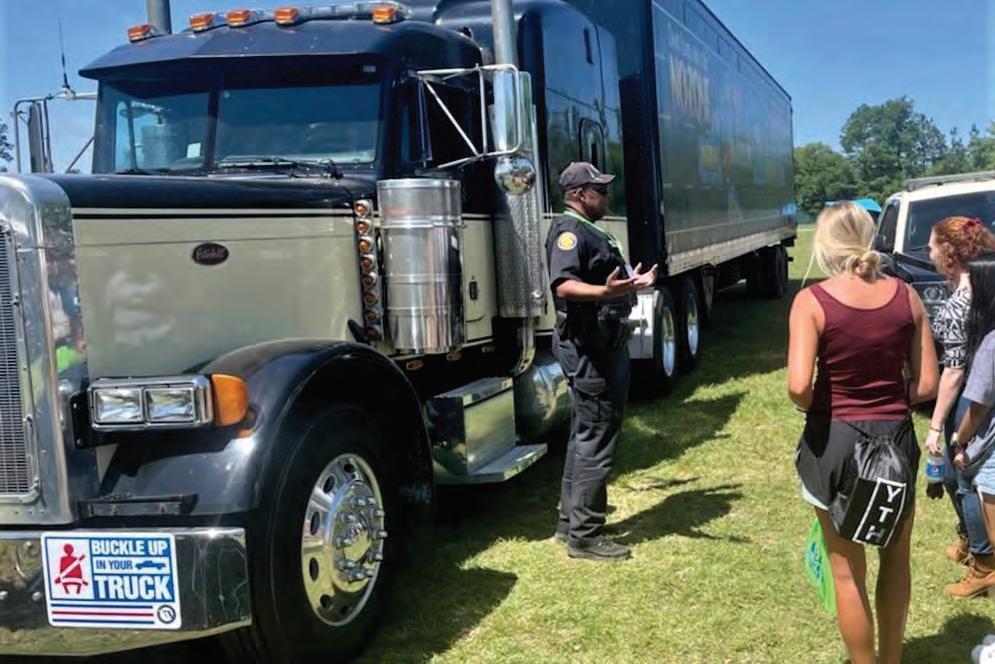
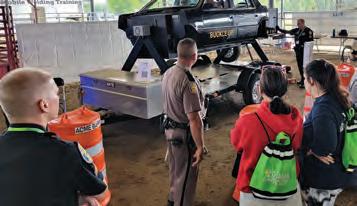
On April 26–27, the Pensacola Commercial Vehicle Enforcement District had the pleasure of assisting the Florida Department of Transportation (FDOT) with the second annual Northwest Florida Construction Career Day. The event was designed to expose high school students to real-world career opportunities through small group learning labs. In total, 601 students and 56 teachers attended from Santa Rosa, Okaloosa and Escambia counties, with the assistance of 435 volunteers and 81 industry partners.
The outreach consisted of 27 learning labs, which included three from the Florida Highway Patrol — the no-zone truck, a size and weight display, and the roll-over simulator. Topics discussed emphasized our mission of highway safety, including teaching attendees about the importance of seat belt use, the perils of cell phone use and overall tips about driving safely around commercial motor vehicles. The event was a great success; 15 scholarships totaling $20,000 will be awarded this summer through this program. n
The 21st Annual Florida Highway Patrol Inspectors Championship was held June 7–11 in Daytona Beach. The Florida Inspectors Championship (FIC) promotes education, uniformity and performance. Eleven troopers from across the state competed to demonstrate their knowledge and skills in commercial motor vehicle safety.
Tpr. Kevin Nelms was the Grand Champion of the FIC and went on to represent the Florida Highway Patrol (FHP) at the North American Inspectors Championship in Indianapolis,


Indiana, in August. The Grand Champion Award is the highest honor bestowed upon a commercial vehicle enforcement trooper in the state of Florida. Tpr. Nelms demonstrated unrivaled knowledge and skills of commercial motor vehicle enforcement during the championship. The FIC runner-up was Tpr. Jacob McMahan.
FIC is not only an opportunity for troopers to compete and have a chance to move on to NAIC, but it is also an opportunity to attend training, enhance inspection skills and work
closely with the Florida Truckers Association (FTA), encouraging a partnership toward highway safety.
After FHP troopers finished competing, they assisted the FTA with its annual Truck Driving Championship by judging the driving course and the pre-trip inspection portions of the competition.
We are proud of each of our competitors and the work they do every day to make Florida a safer place to travel. n

Human trafficking (both labor and sex trafficking) is a global crime that impacts more than 40 million people worldwide and is the second largest criminal industry in the world today. Traffickers are motivated by greed, exploiting the most vulnerable among us to the tune of $150 billion annually.
This horrendous crime is happening throughout Virginia. Human traffickers sell their victims in cities and rural areas, along our nation’s roadways and at other locations and events. Because traffickers use our transportation systems — including commercial motor vehicles — to transport victims, it is imperative that the law enforcement community and its partners, such as the Port of Virginia, be involved in fighting this crime. Specifically, they need to know the indicators associated with human trafficking and what they can do to properly report it.

To teach these skills, the Virginia State Police partnered with the Port of Virginia, the fastestgrowing port in the country, for Operation Just Cause. During this five-day project, troopers assigned to the Virginia State Police’s Motor Carrier Safety Section conducted 679 roadside inspections where they engaged truck drivers in conversations about the prevalence of human trafficking in the Commonwealth.
Drivers were also given pamphlets and other quick-reference materials that identify possible indicators displayed by a victim of human trafficking. Finally, troopers told drivers how they can report instances of human trafficking.
Troopers also removed 15 unsafe drivers and 186 intermodal carriers from Virginia’s roadways during the operation. In addition, they cited 1,590 safety violations.
Operation Just Cause is a public outreach initiative aimed at raising Virginians’ awareness about the prevalence of human trafficking in the Commonwealth along with providing a clear picture regarding what human trafficking is, what it looks like, and what action should be taken if one encounters this heinous crime. n
Troopers also removed 15 unsafe drivers and 186 intermodal carriers from Virginia’s roadways during the operation.
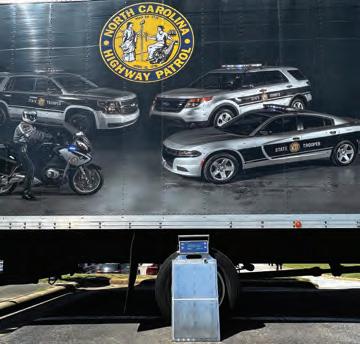
The North Carolina State Highway Patrol (NCSHP) Commercial Vehicle Enforcement Section has introduced the LTR788™ Dual Wheel Load Scales. The LTR788 is a solarpowered, low-profile scale created for direct measurement of individual tire loading in a dual-tire configuration. The newly introduced scales will provide inspectors with individual tire weights, allowing for tire rating compliance verification. Tire loading and tire conditions impact fuel economy and braking distance, and tire failure can lead to accidents and debris on roads.
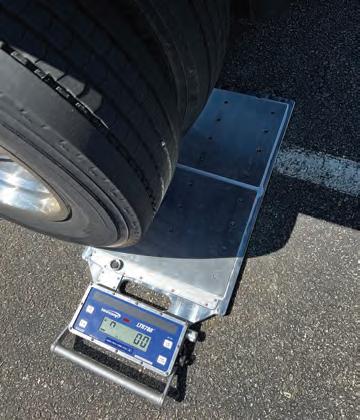
First Sgt. Kendell E. Jackson approached Intercomp, a weighing and measurement solutions company, to create the LTR788 Dual Wheel Load Scales after determining there was no scale capable of weighing dual tires. NCSHP tested the scales in Hillsborough, North Carolina, in May 2021, becoming the first agency to utilize the LTR788. NCSHP deployed four additional systems in June 2022.
The Commercial Vehicle Enforcement (CVE) Section of the North Carolina State Highway Patrol (NCSHP) participated in the 2022 North Carolina Trucking Association’s (NCTA) Truck Driving Championship (TDC), which took place June 10–11 at the North Carolina State Fairgrounds.
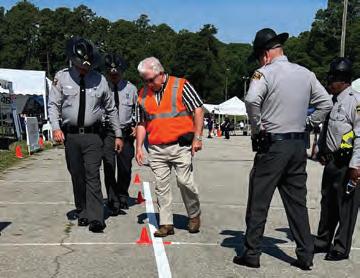

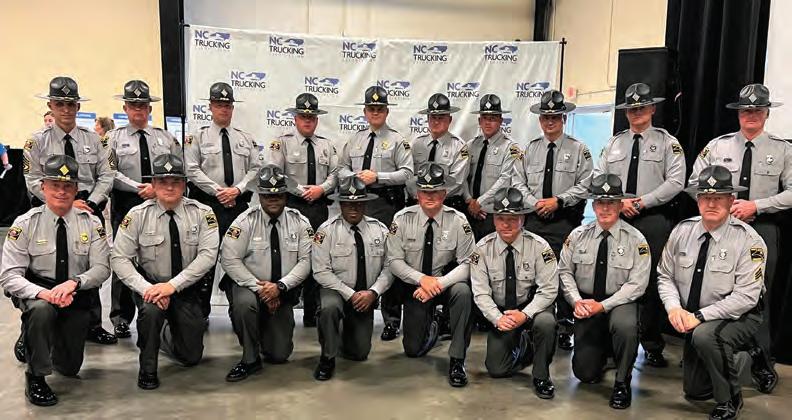
The NCTA hosted CMV drivers from across North Carolina to compete in the TDC. The competition included a written examination that focused on safety rules and regulations, a pre-trip inspection, and a driving-skills test. Members of the CVE Section served as judges during the competition.
Competitors and their families participated in an awards luncheon on the last day of the event. NCSHP Col. Freddy L. Johnson Jr. presented the awards for first, second and third place in each of the following categories: Pre-Trip Inspection, Rookie of the Year and TDC Grand Champion. The TDC Grand Champion represented North Carolina at the American Trucking Associations’ National Truck and Step Van Driving Championships. The TDC awards ceremony also allowed NCTA to recognize the Driver of the Month and Driver of the Year winners. These awards recognize and celebrate North Carolina truck drivers for their commitment to safety and professionalism.
The NCSHP was invited to present the “Just Drive: Deliver Distraction-Free” presentation, created by the University of California’s Training, Research and Education for Driving Safety. Tpr. Christopher S. Baker was selected to provide this valuable training to
an audience of more than 300 CMV drivers and their families. The Just Drive Program is designed to increase driving-safety awareness and decrease distracted driving behaviors among commercial motor vehicle drivers. The presentation addressed the scope of the distracted and fatigued driving problem, the risks and consequences, and practical strategies to promote safe driving.
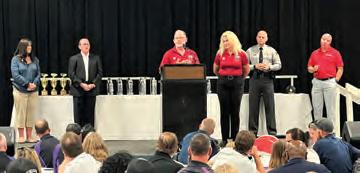
Members of the Commercial Vehicle Enforcement Section of the North Carolina State Highway Patrol (NCSHP) participated in the 2022 Southeast Commercial Vehicle Safety (CMV) Research Summit, hosted by the Center for Advanced Public Safety and the Alabama Transportation Institute. The event took place May 17–18 in Tuscaloosa, Alabama.
The CMV Safety Summit brought together government, industry and university researchers to exchange traffic safety information and new research, including safety technologies and rural road safety. The summit allowed participants to discuss emerging technologies that would benefit CMV enforcement operations and enhance efforts to improve CMV safety. Data analytics and data analysis, provided by university research personnel, assist law enforcement and the private industry to further optimize and advance CMV safety.
First Sgt. Kendell E. Jackson (NCSHP) and Mr. Greg Ferrara (program manager at the Commercial Vehicle Enforcement Resource Lab [COVERLAB], Institute for Transportation Research and Education [ITRE] at North Carolina State University) shared a presentation titled “North Carolina’s Approach for Reducing Crashes in Work Zones.”
The presentation showcased a collective approach to reducing work zone crashes in North Carolina, highlighting how the NCSHP partners with COVERLAB to identify problem areas, develop strategies and utilize a variety of practical approaches to address the growing numbers of, and crash risks associated with, work zones in North Carolina.
Ferrara provided an overview of the causes of work zone crashes in North Carolina. He explained that risky driving behaviors account for more than 90% of crash-causal factors. Together, inattention and speeding account for more than half of all work zone wrecks, and 30% of work zone fatal crashes involved at least one large truck.
First Sgt. Jackson presented the approach and strategies being used to reduce CMV crashes in North Carolina. Our partnerships with the North Carolina Department of Transportation, ITRE, and traditional (non-CVSA inspection certified) NCSHP troopers have contributed to the overall goal of crash reduction. COVERLAB, our university partner, has identified problem areas and provides analysis to prioritize, measure outcomes and change strategies, when necessary.
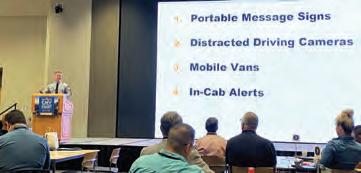
One of the strategies the NCSHP has adopted is the use of portable message signs. These broadcast safety and enforcement messages directly to high-risk drivers along high CMVcrash corridors tied to Operation Safe DRIVE (interstates) and Saving Lives on North Carolina’s Rural Roads (rural roads).
A secondary objective is to measure the effectiveness of deployed boards on reducing speed and CMV crashes during times of increased enforcement. Other strategies presented during the CMV Safety Summit were high-visibility enforcement and the use of various technologies, such as distracteddriving cameras, mobile vans and in-cab alerts that provide CMV drivers with in-cab messaging as they approach work zones.

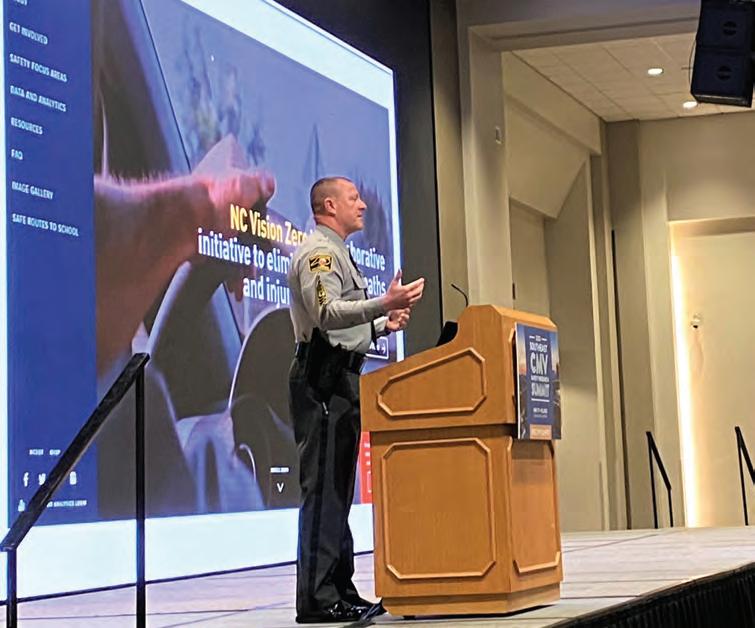
Colleen Lippert (research associate and GIS developer with the Geospatial Analytics and Decision Management Group, ITRE at North Carolina State University) provided a demonstration of a work zone tracking system. The current challenges of the systems are a lack of work zone deployment, laborintensive manual updates and the need for work zone data exchange. n

The General Law of Mobility and Road Safety, promoted by civil society organizations and developed in Congress, was published on May 17 in the Official Gazette of the Federation. It was passed by Congress on April 5 and signed by President Andrés Manuel López Obrador on May 10.
The purpose of the law is to establish the basis and principles that guarantee the right to mobility, including the principles of road safety, accessibility, efficiency, sustainability, quality, inclusion and equality. To implement the law, mobility and road safety authorities from the three levels of government will work together to form the National System of Mobility and Road Safety, whose leadership will guide the planning, operation, function and evaluation of policies.
In addition, this law will include the opinions of civil society groups, indigenous peoples and communities, Afro-Mexicans, organizations of people with disabilities and the population in insular municipalities for the formation of national policy. This general law will make a significant contribution to road regulations that will address system vulnerabilities in Mexico. It includes 10 explicit objectives:
1. Lay the foundations for mobility and road safety policy using a systemic approach and safe systems through the National System of Mobility and Road Safety and the information provided by the Territorial and Urban Information System to prioritize the movement of people (particularly groups in situations of vulnerability), goods and merchandise based on the hierarchy of mobility indicated in the law, which reduces negative social, inequality, economic, health and environmental impacts in order to reduce deaths and serious injuries caused by road accidents for which order and road safety must be preserved.
2. Define coordination mechanisms for the authorities of the three levels of government and society in the field of mobility and road safety.
3. Establish concurrence among the federation, states, municipalities and territorial demarcations of Mexico City within the scope of their respective competences in matters of mobility and road safety, as well as the mechanisms for their due coordination, in accordance with the provisions of article 73, section XXIX-C, of the Political Constitution of the United Mexican States.
4. Establish the basis for coordination between members of the National System of Mobility and Road Safety through development plans, mobility policy and road safety with a comprehensive approach to urban development policy and territorial planning, which is transversal with the applicable sectoral policies.
5. Determine mechanisms and actions that promote and encourage awareness, training and culture of mobility and road safety, which allow the full exercise of the right to safe mobility.
6. Link the mobility and road safety policy with a comprehensive approach to territorial planning and urban development in a way that intersects with the applicable sectoral policies.
7. Define the hierarchy of mobility and the guiding principles to which the competent authorities must be subject in the implementation of this law; in the issuance of regulatory provisions; and in the formulation and application of policies, programs and actions in the matter.
8. Establish the basis for prioritizing modes of transport of people and goods with lower environmental and social costs, nonmotorized mobility, non-polluting vehicles and intermodality.
9. Establish mechanisms and actions for the management of risk factors to reduce deaths and serious injuries caused by road accidents, as well as safeguard the lives and physical integrity of users of the mobility system under a safe systems approach.
10. Promote decision-making based on scientific and territorial evidence on mobility and road safety.
The new general law establishes the following implementation schedule provisions:
• The Congress of the Union and the Legislatures of the federative entities within a period not exceeding 180 days from the entry into force of this law shall approve the necessary reforms to the laws of their competence to harmonize them with the provisions of this law.
• The National System of Mobility and Road Safety must issue the National Mobility and Road Safety Strategy within a period not exceeding 365 calendar days from the entry into force of this law.
• The National System of Mobility and Road Safety must be integrated and issue the guidelines for its organization and operation within a period not exceeding 180 calendar days from the entry into force of this law.
• Within a period not exceeding 365 calendar days from the entry into force of this law, the secretariats of the National System of Mobility and Road Safety, the states and the municipalities must integrate the registries, indicators and databases on mobility and road safety as part of the Territorial and Urban Information System.
The expenditures that are generated as a result of the entry into force of this law will be covered by the authorized budget for the executors of the expenditure responsible for the present fiscal year and subsequent ones. In case any modification is made to the organizational structure of the agencies and entities of the Federal Public Administration, these must be carried out through compensated movements in accordance with the applicable legal provisions so that their standard budget will not be increased nor will extensions to the budget of the same be authorized for the current fiscal year or subsequent as a result of the entry into force of this law.



The Secretariat of Infrastructure, Communications and Transportation (SICT), through the General Directorate of Federal Motor Transport (DGAF), had the opportunity to collaborate during the annual virtual meeting of the Canadian Council of Motor Transport Administrators (CCMTA) during the week of June 6–10.
In the welcoming ceremonies, the SICT-DGAF shared its work and progress from 2021, including the appointment of Laura Nohémi Muñoz Benítez as the new director general of the SICT-DGAF; its 2021 safety campaigns; an update on Mexican regulations; electronic invoice reporting requirements; smart enforcement initiatives; and the regulation of parking and truck stops.
As in every year, the SICT-DGAF attends the meetings sponsored by the council to learn and share good practices, observations, progress and prospects in matters of motor transportation. This virtual meeting was very productive, proving to be a success.
The United States–Mexico Working Group is the result of an agreement reached at the recent North American Leaders Summit. The project includes the participation of stakeholders in three sectors: government, industry and academia from both countries.
The objective of this initiative is to generate solutions that guarantee the coordinated transition toward electromobility from a strategic perspective, including intersectoral and multipronged initiatives in five main areas:
1. Innovation
2. Human capital
3. Supplier development
4. Infrastructure development
5. Governance structures
On June 6, the SICT attended the working group on infrastructure development. The group addressed relevant aspects of electric vehicle innovations, the sociotechnical barriers for its development in Mexico
and priority considerations. Given the multidisciplinary nature of its tasks, the SICT provided a leadership vision for the regulation of the federal motor transportation sector. This sector requires appropriate investments in the electric network and the development of Mexican industries in the electric mobility value chain. It also requires developing plans in advance of the deployment of electrification of freight transportation.
A second meeting of the infrastructure development group took place on Sept. 2, continuing this collaborative work.
At the June 22 governance structures meeting, industry and academia discussed optimal strategies to guide and coordinate the actions of stakeholders (industry, government and academia) in the electrification of transportation in Mexico. The group also addressed the economic, fiscal and public policy instruments that should be included in a governance strategy for electric vehicles. n
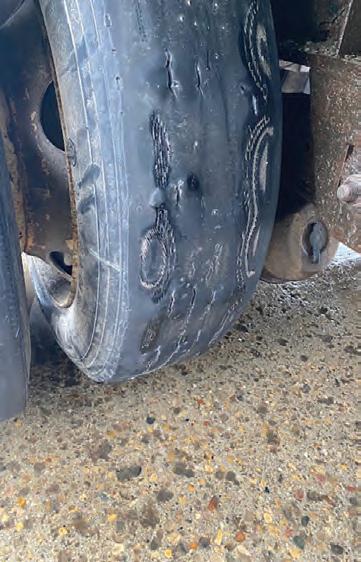
The Hawaii Department of Transportation continues to be active in supporting CVSA’s and the Federal Motor Carrier Safety Administration’s mission to improve commercial motor vehicle safety and reduce the number of crashes, injuries and fatalities involving large trucks and buses. Motor carrier safety officers participated in this year’s CVSA International Roadcheck, May 17–19. Commercial motor vehicle inspections were conducted at various locations on Oahu and Maui, with the aim of enhancing commercial motor vehicle safety. This year, CVSA’s focus was on tire violations. A total of 22% of vehicles were placed out of service due to tire violations. n
The Nevada Department of Transportation and the Nevada Highway Patrol have implemented an additional virtual weigh station (VWS) for the weighing and e-screening of commercial motor vehicles entering the state. The new VWS is located on I-80 in Elko County near the Osino check sites.
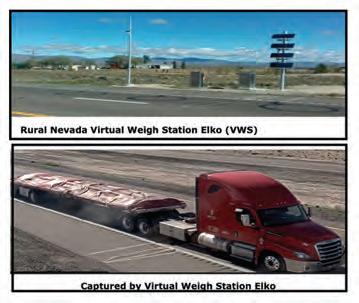
The VWS assists in improving safety by identifying potentially overweight vehicles as well as out-of-service vehicles and carriers through an expansion of the state’s electronic screening network. The addition of the VWS will advance the mission of removing unsafe vehicles from Nevada’s highways.
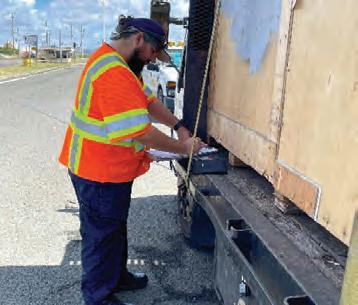
Commercial motor vehicles in both lanes are weighed by weigh-in-motion scales to determine their compliance with weight restrictions for the vehicle’s type and class.
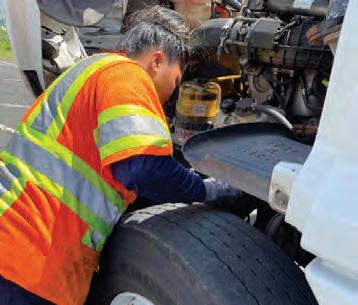
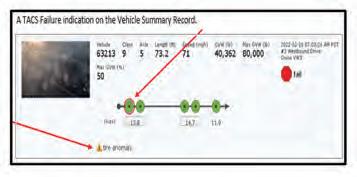
The Tire Anomaly and Classification System (TACS) has been integrated with our VWS program and will identify tire anomalies, such as flat or missing tires on an axle, mismatch on dual tire configurations or severely underinflated single tires.
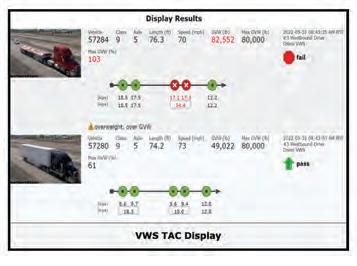
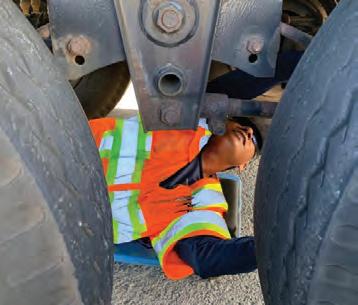
Through a web-based interface (VWS and TACS), mobile enforcement personnel can identify and select vehicles for weight enforcement. Officers can pull flagged vehicles off the road to a designated area for secondary weighing and thorough safety inspections. n
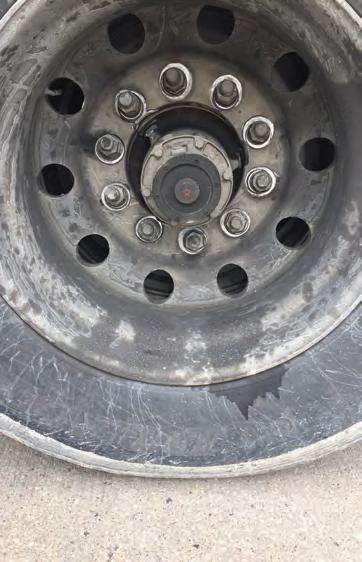
Nevada conducted its 72-hour International Roadcheck operations in northern and southern parts of the state. The efforts of all the Nevada Highway Patrol commercial troopers and commercial vehicle safety inspector personnel resulted in 685 commercial motor vehicle safety inspections. Their efforts led to 69 vehicles and 37 drivers being placed out of service. These officers identified and enforced mechanical violations such as loose wheel lug nuts, frayed hoses and cracked brake pads, and many other types of safety violations were also identified and enforced. n
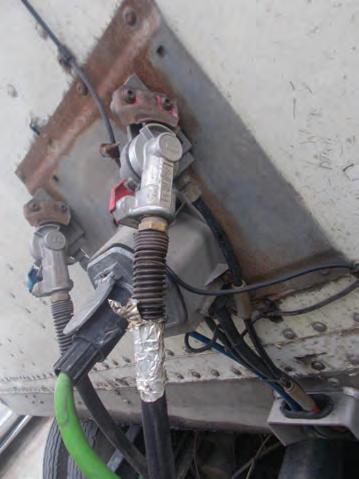
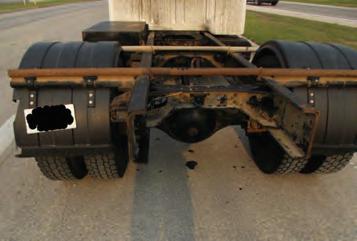
Submitted by Cpl. Williment: The driver put tin foil over a leaking air hose. It was still leaking air during the Level II Inspection. The vehicle was placed out of service.
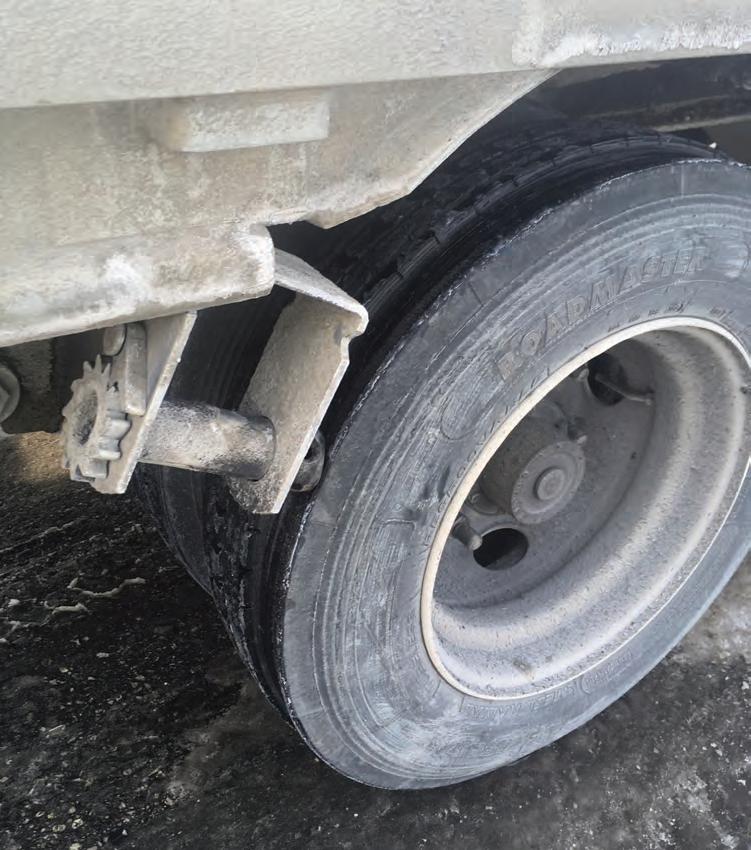
Submitted by Cpl. Denisuik: The wheel was visibly wobbling as the truck drove in for inspection - loose wheel fasteners.
Submitted by Cpl. Williment: This truck tractor had no rear lights.
Submitted by Cpl. Rogalski: While weighing this unit, an officer noticed the brake chamber was not sitting properly. Upon brake application, the chamber moved instead of the pushrod. After the Level I Inspection was conducted, the vehicle was placed out of service for multiple brake violations.
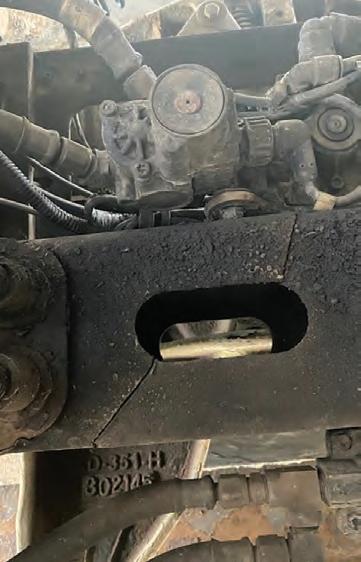
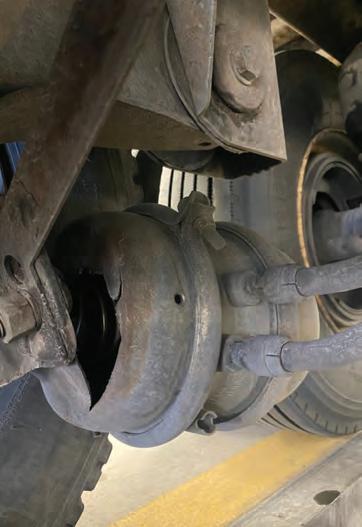
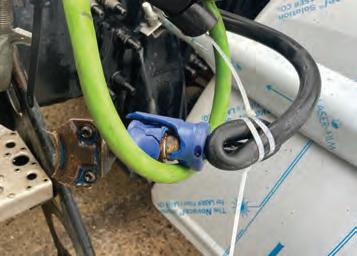
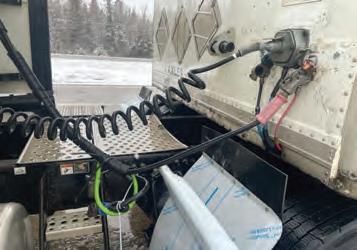
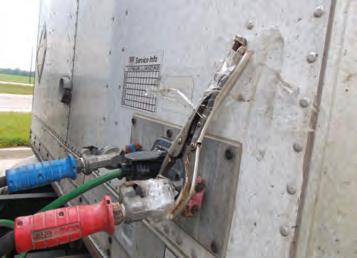
Submitted by Cpl. Finnen: When this unit came over the scale, the officer noticed the service glad hand was not attached and was broken. The hose was crimped, not allowing airflow when brakes were applied. The trailer also had no operational service brakes. The driver was told by his boss to bring the truck from Dryden, Ontario, to Winnipeg, Manitoba, for repairs.

The importance of maintaining vehicles does not stop at engines, transmissions, tires and brakes. While not necessarily required equipment, advanced driver assistance systems (ADAS), including collision avoidance technologies, need to be part of driver and carrier inspections, along with repair and maintenance programs to remain effective in preventing or reducing severity of crashes in light-duty vehicles. Depending on vehicle operation, ADAS technologies can help reduce the severity of crashes – or even prevent them altogether. But that can only happen if the systems are well maintained and operative.
ADAS encompass a range of technologies seizing on advances in sensors and computer processing to enhance driver performance. Many ADAS are built upon the antilock
braking system (ABS), which has been required on nearly every truck, truck-tractor or bus sold in the U.S. or Canada for the past two decades. ABS can help the driver maintain control and optimize braking on lowfriction surfaces (especially wet and/or icy conditions) as well as provide the architecture for roll and yaw stability systems and other systems relying on automated service brake applications. Since ABS is required equipment, CVSA inspectors check ABS during roadside inspections.
Driving trucks and motorcoaches includes risk. The weight of these vehicles increases the odds of injury or death should a crash occur. However, ADAS are shown to lower the risk inherent to this profession, reducing the severity of or even preventing crashes.
The U.S. National Transportation Safety Board (NTSB) and the National Highway Traffic Safety Administration (NHTSA) have been vocal about the benefits of forward collision avoidance.
As researchers, suppliers, manufacturers, regulators and the traffic safety community shared growing evidence of the effectiveness of forward collision-avoidance systems in preventing or reducing severity of crashes in light-duty vehicles, manufacturers began voluntary efforts to equip vehicles with ADAS. In 2015, 10 automakers committed to making these systems standard equipment in most vehicles in the coming years. Additional automakers have since joined this commitment, and the industry is delivering on its promise.
With widespread voluntary adoption underway, NHTSA is establishing performance
criteria for automatic emergency braking (AEB), a collision-avoidance technology that applies the brakes based on input from sensors, for both light and heavy vehicles. NHTSA estimates that if AEB were implemented on all heavy-duty vehicles, more than 5,000 crashes could be avoided annually.
In its investigation of the Jan. 5, 2020, fatal multivehicle crash in Mt. Pleasant Township, Pennsylvania, NTSB concluded that ADAS could have helped to prevent the crash or reduce its severity. The incident involved a series of collisions that began when a motorcoach lost control, striking a guardrail and rolling over, followed by two trucks and a car striking the overturned motorcoach. Additional vehicles also ran off the road to avoid collisions.
NTSB found that the second truck’s collision avoidance system was not operational and also concluded that speed-limiting technology in the involved commercial vehicles as well as variable speed limit signs could have either prevented the crash or limited its severity. NTSB recommends that ADAS be included in commercial driver vehicle inspection reporting forms. Full details on NTSB’s findings and recommendations related to this crash are available at NTSB.gov by searching “HIR2201” or at www.ntsb.gov/ investigations/AccidentReports/Reports/ HIR2201.pdf.
Other safety agencies recognize the potential safety benefits of ADAS as well. In February 2020 the Federal Motor Carrier Safety Administration (FMCSA) and industry partners, including the American Transportation Research Institute (ATRI),

the American Trucking Associations (ATA), ATA’s Technology and Maintenance Council (TMC) and the Owner-Operator Independent Drivers Association (OOIDA), launched the Tech-Celerate Now campaign to promote voluntary adoption of ADAS in the commercial motor vehicle industry. The campaign outlines four ADAS performance categories, including braking, steering, warning and monitoring systems. Understanding that the effectiveness of any ADAS depends on proper use, the campaign includes a return-on-investments calculator and informational flyers and videos. These are available at https://fmcsa.dot.gov/ Tech-CelerateNow. The National Safety Council and the University of Iowa also developed a campaign to educate consumers about ADAS, called MyCarDoesWhat.org.
In its Standing Policy Guide, CVSA affirms its commitment to supporting policies that encourage deployment of proven safety technologies such as ADAS to prevent or mitigate the severity of crashes. Still, it’s important to emphasize that ADAS need to be maintained.
For ADAS that a motor carrier chooses to deploy, this could include adding ADAS to periodic maintenance and driver pre-trip / post-trip inspection reports. The devices may also be monitored on a more continuous basis through a fleet’s telematics and preventive maintenance practices — in which case, the carrier would detect, diagnose and immediately schedule repairs proactively rather than waiting for a driver to report an issue. For some required devices, like ABS, a driver should routinely check the ABS
indicator lamp to confirm whether there are any faults.
From 2016 to 2019, CVSA’s Operation Airbrake brake safety campaigns asked member enforcement agencies to conduct North American Standard Level I or Level IV Inspections and to count ABS violations. CVSA found 10% of tractors and 15% of trailers chosen for inspection had ABS violations: either the ABS lamp did not function at all or the ABS indicator displayed a malfunction code. The ABS indicator lamp should turn on and then off to indicate no faults (and no violations). An ABS indicator that stays on tells the driver the system is not functioning properly. An ABS indicator that does not illuminate when power is supplied may be burned out or is otherwise not functioning. ABS violations are not an out-of-service condition but do count against a carrier’s safety score. An ABS with a malfunction indicated may result in losing the safety performance benefit of ABS, as well as the benefits of the other systems that depend on it.
CVSA supports advanced safety technologies shown by research and implementation to improve safety and encourages the purchase of ADAS that are proven to help reduce crash risk. Once ADAS are adopted, it is essential to inspect and maintain them over time.
To learn more about CVSA’s position on advanced safety technologies, check out the CVSA Standing Policy Guide at www.cvsa.org/policy/policy-positions. n
 By Adrienne Gildea, CAE, Deputy Executive Director, Commercial Vehicle Safety Alliance
With the Alliance’s new strategic plan finalized, our policy direction is clear: CVSA must prioritize leveraging safety technology and collaboration with our stakeholder partners as we embark on the next chapter in our efforts to reach zero fatalities on our roadways. Luckily, CVSA has a long history of facilitating collaboration among industry, enforcement and regulators, as well as supporting deployment of proven safety technology.
Over the past few months, CVSA has been focused on moving forward on multiple related safety technology initiatives.
CVSA has long advocated for the establishment of a universal electronic vehicle identifier requirement on all commercial motor vehicles (CMV). This requirement would revolutionize roadside enforcement and significantly improve CMV safety by expanding the footprint of enforcement and better equipping inspectors to identify the vehicles most in need of intervention, removing unsafe vehicles, drivers and motor carriers from our roadways.
Additionally, this technology would allow for more efficient, automated completion of some administrative inspection tasks, reducing the time spent on the side of the road for the driver and the inspector.
The concept continues to gain support and CVSA will continue its outreach and collaboration with industry and regulatory stakeholders to refine and improve the proposal, with the hopes that we will see regulatory action soon.
• Level VIII Electronic Inspection
CVSA continues to work with our industry partners, the states and the Federal Motor Carrier Safety Administration (FMCSA) to develop the Level VIII Electronic Inspection concept, where an inspection is conducted
electronically or wirelessly while a commercial motor vehicle is in motion without direct interaction with a roadside inspector/enforcement official.
As with universal electronic identifier concepts, full implementation of the Level VIII Inspection concept would dramatically improve the efficacy of commercial motor vehicle enforcement. The jurisdictions would be able to do more inspections, with less interruption to the motor carrier community. This also means more data upon which to build our roadside safety programs and better data to inform enforcement prioritization decisions.
• Automated Driving Systems (ADS)
The Alliance is working diligently with our stakeholder partners to prepare for the deployment of CMVs with varying levels of automation.
Most recently, the CVSA Enforcement and Industry Modernization Committee has been exploring the challenges associated with, and solutions for, ensuring that ADS-equipped CMVs operate safely on our roadways. This includes preparing inspectors for how to respond when they encounter these CMVs roadside. The potential safety benefits of ADS technology is exciting, and CVSA continues to facilitate discussions to prepare regulators, enforcement and industry to harness that potential.
While CVSA is very much focused on how best to leverage technology to reduce the number of CMV-related roadway fatalities and injuries in North America, our membership also recognizes the many other ways that we can come together to amplify safety messages and build on the power of our unique community to make the roads safer for all who use them.
• CVSA’s Human Trafficking Prevention Program seeks to reduce human trafficking
throughout North America through coordinated enforcement, investigative and educational measures within the commercial motor vehicle industry. Through this program, CVSA partners with organizations, like Truckers Against Trafficking, to raise awareness among the enforcement communities about how to identify signs of human trafficking and support the victims.
In addition, CVSA has initiatives in place to:
• Improve the judicial branch’s understanding of its impact on commercial motor vehicle safety, particularly when it comes to masking of violations.
• Equip law enforcement officials who are not CVSA-certified with the tools and information they need to properly stop and take enforcement action on commercial motor vehicles.
With all of this, CVSA continues to monitor potential regulatory developments that could impact the membership and road safety. Earlier this year, FMCSA announced its intent to move forward with regulatory actions related to speed limiters and the safety fitness determination process. Over the summer, CVSA’s Driver-Traffic Enforcement Committee and Policy and Regulatory Affairs Committee met to discuss the Alliance’s response to this potential speed-limiter proposal. We anticipate more meetings to revisit the organization’s position on how best to determine a motor carrier’s safety fitness.
As we look ahead to the future of the Alliance, it is reassuring to see that our path forward relies on the very things that helped bring this organization together – gathering all relevant stakeholders and leveraging technology to further our mission to improve CMV safety across North America. n
 By Rodolfo Giacoman, Fatigue Management Specialist, Commercial Vehicle Safety Alliance
Does the benefit of fatigue management technologies (FMTs) outweigh driver privacy concerns? The safety manager of a major motor carrier asked me that question during a webinar I conducted on June 9, “The Alertness Toolkit — A Motor Carrier’s Guide to Fatigue Management Technologies.” My answer then and today is an unequivocal yes. FMTs are effective at preventing fatigue-related crashes, and we know that fatigue-related crashes tend to be dangerous and are often lethal. Privacy has little value to somebody who dies in a crash, especially when the incident could have been prevented.
This does not mean that driver privacy is trivial or should not be protected. As a safety-conscious motor carrier, you should be aware of the types of FMTs available and which ones have higher intrinsic privacy and legal considerations. Keep reading to learn where to find privacy principles and best practices when incorporating FMTs into motor carrier operations as part of a comprehensive Fatigue Management Program (FMP).
Implementing a comprehensive FMP reduces your medical and retention costs, lowers exposure to legal liabilities, decreases overall risk of fatal crashes and makes for a more productive, healthier and happier workforce.
The 2020 report “Review of Commercially Available Devices to Detect Fatigue and Distraction in Drivers,” published by the Institute for Road Safety Research in The Hague, Netherlands, rated approximately 100 fatigue management devices based on eight criteria:
1. Validity
Intrusiveness
Availability
Robustness
Sustainability
Acceptability
Cost
Compatibility with other devices in the vehicle or otherwise used by the driver
The report reviewed the following types of devices: heart rate measurements, headnodding indicators, camera systems (with or without computer vision and with road and/or driver monitoring), activity trackers, fatigue models, temperature monitoring, electroencephalography (EEG) systems, skin conductance tests, steering movement monitors, eye tracking and percentage of eyelid closure (PERCLOS) systems.
These devices may be grouped into three categories, each with different levels of privacy concerns:
1. Fitness-for-duty tests
2. Driving performance
3. Driver monitoring
These tests help determine if a driver is sufficiently alert before starting duties. While these FMTs do not monitor fatigue in realtime on a continuous basis, they have high acceptability, have been thoroughly evaluated and have a high return on investment (ROI).
These FMTs are expected to remain on the market for a long time, do not require
high maintenance, do not interfere with driving, work for most drivers and can be used in combination with other types of FMTs. Weaknesses include the fact that they concentrate on the beginning of the work shift, do not detect driving risks and do not flag distractions on the road.
Fitness-for-duty tests may measure several types of signals, such as pupillary responses, reaction time, accuracy, past sleep, caffeine intake, time spent on the job and so on. These FMTs have low privacy concerns because drivers are not monitored while on duty and there is no equipment to wear nor install inside the vehicle.
Driving performance measures may track braking, lane crossing, corrective or erratic steering, pedal movements, driving lower than the speed limit, position variability within the lane and the like. Such performance deviations may indicate fatigue and/or distraction. Some of the FMTs tracking these measures have become ubiquitous in four-wheelers.
The strength of these FMTs is that the measurements are not as intrusive as driver monitoring systems (see next column), do not require the driver to wear sensors and may tap into already existing internal sensors in the vehicle. The weakness is that these measures are the last line of defense because the intervention occurs at the latest stage of driver fatigue or distraction.
Drivers report mid-level privacy concerns with these FMTs, as they focus on vehicle performance rather than directly on the driver.
“North American Fatigue Management Program” www.nafmp.org
“The Alertness Toolkit –A Motor Carrier’s Guide to Fatigue Management Technologies” www.nafmp.org/webinars
“Review of Commercially Available Devices to Detect Fatigue and Distraction in Drivers” https://swov.nl/en/publicatie/ fatigue-and-distraction-detection
“Privacy Principles for Vehicle Technologies and Services” www.autosinnovate.org/privacy
These FMTs use sensors to deduce information about the driver’s state of fatigue and distraction. The information gathered triggers a warning when the estimated level of fatigue/ distraction exceeds a particular threshold. Such FMTs may analyze driver images and/or measure alpha/theta brain wave activity, heart rate, muscle strength, tremors, pupil dilation, blink duration, eyelid movement speed, head nodding and yawning.
The strength of these FMTs is that they may monitor drivers’ fatigue and distraction in real time and may predict incidents before they happen. The weakness of these FMTs is that they may be too intrusive and may require wearing equipment.
These FMTs have high privacy concerns because of the constant, in-depth monitoring of the driver while driving and/or on duty.
Drivers may misconstrue FMTs as surveillance tools and be afraid that their every move is being tracked. They may also worry that all of their tracked data may be visible to anyone at the company or beyond. Drivers are unsure who has access to their personal data and have understandable concerns about the potential negative consequences of how the collected data could be used.

The most significant effort to regulate data privacy is the European Union’s General Data Protection Regulation (GDPR), which became effective on May 25, 2018. However, the GDPR applies only to European Union residents and citizens. While the U.S. does not yet have
equivalent federal regulations, some states like California and Illinois have statutes that protect certain data privacy rights. These do not explicitly refer to data collection within vehicles.
Several of the largest car manufacturers signed into the Automotive Consumer Privacy Protection Principles that were established by the Alliance of Automobile Manufacturers and the Association of Global Automakers in November 2014 and were reviewed in May 2018 and in March 2022.
While these principles are voluntary and do not hold the manufacturers liable for privacy breaches, they offer a good starting guide for motor carriers and FMT providers. Here are the seven principles signed by the 20 participating members:
Transparency: Commit to providing users with ready access to clear, meaningful notices about the collection, use and sharing of covered information.
Choice: Commit to offering users certain choices regarding the collection, use and sharing of covered information.
Respect for Context: Commit to using and sharing covered information in ways that are consistent within the context in which the covered information was collected, taking account of the impact on users.
Data Minimization, De-identification and Retention: Commit to collecting covered information only as needed for legitimate business purposes. Commit to retaining covered information no longer than determined necessary for legitimate business purposes.
Data Security: Commit to implementing reasonable measures to protect covered
Please let me know if you have a specific FMT challenge or any questions about implementing a comprehensive FMP by emailing me at rodolfo.giacoman@cvsa.org. I look forward to learning from you and sharing NAFMP resources that may be of assistance.
information against loss and unauthorized access or use.
Integrity and Access: Commit to implementing reasonable measures to maintain the accuracy of covered information and commit to giving users reasonable means to review and correct personal information.
Accountability: Commit to taking reasonable steps to ensure that they and other entities that receive covered information adhere to the principles.
Module 10 of the North American Fatigue Management Program (NAFMP) provides an excellent overview of FMTs, their classifications and definitions, and how to make sense of so many options. The implementation considerations covered by the NAFMP include:
• ROI and legal implications
• Driver behavior, compliance, performance, acceptance and training
For details about operational protocols, problems and evaluation, check out Module 10 or the recording of the webinar “The Alertness Toolkit.” An organization’s comprehensive FMP should integrate FMTs with the establishment of a safety culture, fatigue risk management program, sleep disorder management program and fatigue management education and training. The NAFMP recommends taking full advantage of FMT capabilities, developing well-defined protocols for their use, openly explaining the role of the FMTs to drivers, creating meaningful driver expectations, presenting consistent and detailed feedback to drivers, maintaining a positive attitude toward FMTs and reinforcing the idea that safety is everyone’s responsibility. n

It’s been a long road, but we’ve finally made it. By the time you read this, we will have a new North American Inspector Championship (NAIC) Grand Champion – and I will be even older news than I am as I write this! So, the half-dozen of you who are still reading this can spread the word that this is it: my last article for this column. Self-deprecating humor aside, this article has truly made me reflect on the experience of holding this title.
Being the NAIC Grand Champion can be a mixed bag. As I’ve talked about before, the week of NAIC is a big deal. It’s kind of like the Super Bowl for commercial motor vehicle inspectors. Just going and participating makes you feel fairly special. Being there for the week and interacting with the other inspectors, though, you get a feeling of how good everyone is. So, ending the week anywhere near the top, let alone winning one of the categories and getting a trophy, is a very big deal. Earning the title of Grand Champion is a level all on its own. It was truly overwhelming to walk up on that stage and get the big trophy, even after having won some of the categories in prior years. Seeing my picture on the cover of the CVSA North American Standard Out-of-Service Criteria Handbook and Pictorial, something that is published and distributed to most inspectors in North America, is also pretty surreal.
On the other hand, there is some letdown that comes with the championship as well. I received a lot of congratulations when I got home, but it was over pretty quickly – and time to go back to work. There are a lot of people in the world, even in law enforcement and trucking, who don’t know that NAIC exists. I’m sure Super Bowl champions go through a similar experience. I don’t know if Tom Brady buys his own groceries, but if he did, he would probably run into some people in the store who don’t know who he is despite his football fame. Not that I’m trying to compare myself to Tom Brady.
I don’t have enough hubris to be too disappointed at not having celebrity status walking down the street. What is disappointing, though, is the many commercial motor vehicle inspectors who
don’t have a clue about NAIC. I had one experience – with one of my guys, no less –that really drove this home. This was shortly after we had gotten our new copies of the outof-service criteria handbook. We were in my office, with my trophies on the shelf behind me, and I was explaining a violation to him. I grabbed my copy of the handbook, and I guess that was the first time he had looked at the cover because he asked if that was me in the picture. I doubt there are any football players who don’t know about the Super Bowl or without an idea of who won the last one.
I know that the NAIC/Super Bowl comparison is not completely fair. Ours is not a competitive profession and our work isn’t televised. Our success is not determined by how many inspections we do or trucks we put out of service. What truly determines our success is if we can have an impact on reducing the number of crashes on our roadways. As far as I know, there is no way of determining that on an individual basis. All we can do is keep up our daily efforts to reduce the risk of crashes – and know that if we do this well, we are having an impact.
This is why NAIC is so important. This is our opportunity to let our guys compete against each other and show off their skills, motivating each other to do their best. It is our opportunity to celebrate the inspectors who come out on top and make them feel like celebrities, even if only for a short time. It is much the same for the American Trucking Associations’ National Truck Driving and Step Van Driving Championships. The winners of that competition don’t end up there by accident either. So, this is my call to you all out there. Compete if you are in that position. If you are not in that position anymore, do what you can to support NAIC and those who do compete.
I can assure you there is no bitterness as I face the need to move on. I’m happy to be where I am with the experiences I’ve had. I am honored to have the opportunities I’ve had and the recognition that has been given to me. I am also glad that I’ve had the chance to write these articles. I don’t know that I’ve given anyone any new information, but I
hope that my writing has inspired someone to contemplate my thoughts on the part we all play in making our roads safer.
I am a bit sad though. As we’ve been preparing to go to Indianapolis for NAIC this year, one of my girls asked me if I’m going to be inspecting trucks when we get there. I had to explain that I don’t get to compete anymore. This made me realize that it’s been 12 years since my first try at NAIC in Columbus, Ohio. My oldest daughter was born just after that. So all my kids don’t know anything different – I always go to compete. This realization made it sink in for me too, finally. My youngest daughter won’t even get the chance to see me compete.
Now, don’t get me wrong, this is definitely a mixed bag as well. There is a lot less pressure for me now, knowing that I don’t have to defend the title and put together that performance again. However, I’m a competitive person at heart, and I think most people who go to NAIC are. It’s not like I retired and am not doing inspections anymore. It’s not even that I don’t have to try to get any better because I won NAIC. Until the day I give up my creeper, I will always be striving to improve.
My first NAIC without competing also puts things in perspective a bit. I won NAIC in 2019. That was the 27th NAIC. That means there were 26 other inspectors before me who won the title of Grand Champion. I had a chance at least four of those times to beat the winner and didn’t. If any of those 26 previous winners had been competing in 2019, I may not have won. Not to take away from my accomplishment, but it does make you think.
I enjoyed helping out at NAIC this year and hope that I get the opportunity to do so in the future as well. If you had a chance to attend NAIC, you likely saw a lot of prior Grand Champions helping out. Their involvement may have something to do with why the competition is as challenging as it is.
Thank you again for allowing me to have this opportunity. Thank you also to all the people who make NAIC possible. There are
far too many to name, but you know who you are. Thank you as well to the CVSA staff. You have all been very supportive and helpful. Thank you to CVSA Senior Manager of Communications Nicole Leandro, who helps me polish these articles. Your patience is much greater than I deserved. Thank you to Kerri Wirachowsky, CVSA Roadside Inspection Programs Director. Writing articles for a magazine feels kind of like throwing your work into a void sometimes. Your words of encouragement were always very nice to hear.
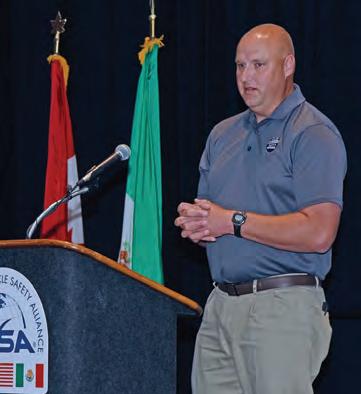
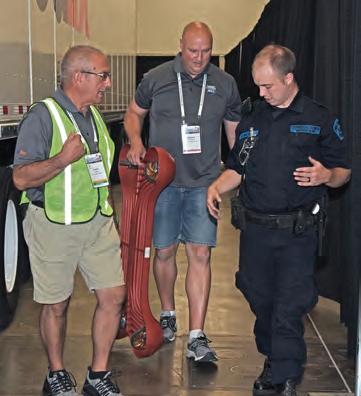
So, this is my big farewell. But as the title suggests, it’s not really a goodbye. Someone else will have the title of NAIC Grand Champion and write these articles, and I will still be around doing what I do every day.
I may even have the chance to see many of you, whether at a future NAIC or at a training course. We all know there is no end to training in our industry. I’ll still be teaching in Nebraska, and we’re always happy to have extra attendees.

So, farewell for now, and I will see you around. n
Our success is not determined by how many inspections we do or trucks we put out of service.
What truly determines our success is if we can have an impact on reducing the number of crashes on our roadways.2019 NAIC Grand Champion Sgt. Schropfer served as a volunteer at the 2022 North American Inspectors Championship in Indianapolis, Indiana.
 By Jennifer Smith, e-Commerce Digital Content Specialist, JIT Truck Parts
According to the American School Bus Council, school buses transport more than 25 million children to and from school annually. As parents, when we put our children on the school bus, we expect them to reach their destination safely. While the school bus is the safest mode of transportation according to the National Highway Traffic Safety Administration (NHTSA), the agency also reports that four to six students die in school bus crashes each year. As we approach School Bus Safety Week in October, fleet drivers should inspect school buses for any parts that may need to be repaired or replaced, helping to ensure kids have a safe ride this school year.
The iconic yellow/orange school bus has certainly changed in design since its inception in 1915. The original specifications contained features inspired by wagons, with wood construction and perimeter bench seating. In the 1930s, bus entry doors moved from the rear to the front curbside, while preserving the vehicle’s bright color.
Today, school buses remain highly visible in color and carry numerous safety features, including flashing red lights, cross-view mirrors and stop-sign arms. The one safety component most still lack is the seat belt. Like other buses, school buses instead feature a compartmentalized design, which, NHSTA explains, “provides crash protection through strong, closely-spaced seats that have energyabsorbing seat backs.” For this reason, although all U.S. states (with the exception of New Hampshire) require seat belts to be worn in passenger vehicles, only eight states require the installation of seat belts in school buses: Arkansas, California, Florida, Louisiana, Nevada, New Jersey, New York and Texas.
Taking a walk around the school bus is a good first safety step, looking for any dents or scratches that could harm the performance of the vehicle. From there, check the following:
• Mirrors: Bus drivers will want to assess mirrors for any minor or major damage. Even if there is no damage, if the mirrors are older, drivers may want to consider upgrading. Recent advancements in mirrors include heating elements — appreciated in the winter season to melt away snow — and built-in lights.
• Headlights: With the days getting shorter and the nights longer, now is a good time to replace headlights with brighter technology. LED and halogen lights are the most popular types of lighting equipment on the market, and each have unique features. LED lights offer a wide scope, making it easy to detect road signs, roaming wildlife and children at school bus stops in a variety of landscapes. While they are more expensive than halogen lights, LED lights can be used even with burned-out diodes, extending their lifespan. On the other hand, halogen lights save upfront costs and offer vivid front lighting, even though they do not have an open sideby-side view.
• Reflectors: Reflectors are critical to help passing vehicles see the bus in low-light conditions. Check that all reflectors are securely attached and visible.
• Horns: Ensure the horn is adequately loud. If unsure, test it with a voltmeter. Drivers may need to upgrade to a new horn with the correct voltage rating for their application.
• Window Glass: Laminated glass is a specialty glass that is UV-protected, offering privacy and insulation with heating and cooling capabilities.
• Windshield Wipers: These cab chassis accessories take less than 10 minutes to install and are essential safety items. A general rule
of thumb is to change wiper blades every six months. School bus drivers may want to start each school year off with a fresh pair, since thunderstorms are common during the fall.
Once these external elements have been inspected, drivers and fleet managers should then check brakes, gears, clutches and suspension components. Be sure to test these essential systems:
• Parking Brakes: All school buses are equipped with a mechanical parking brake system near the driver’s feet to prevent the bus from rolling away while kids are being picked up or dropped off. When drivers press down on the pedal, they will hear a clicking sound that means it’s engaged. Pulling the lever above the foot pedal will release the emergency brake. Test both of these actions to see if replacement of the part is needed.
• Gears and Clutches: Buses that have trouble staying in gear or make a grinding noise when shifting gears may be due for a new clutch. These are common warning signs that the clutch is about to fail.
• Shock Absorbers: Without seat belts to hold kids in place, school buses rely on steady shock absorbers to prevent kids from bouncing out of their seats. These components keep vehicles grounded and are easy to inspect with a “bounce test.” Shock absorbers that bounce quickly are usually worn out and require replacement.
Finally, school bus drivers will want to confirm that there are no cracked seals, broken gaskets, leaking valves, strange noises or vibrations coming from the engine area.
There is no better time to begin school bus maintenance work than the start of a new school year. We all want our children to get to and from school safely. Safety begins with the proper care of fleet vehicles. n
Research is interesting. With the exception of discoveries that are completely new to humankind, there are two ways we research: working independently to repeat someone else’s discovery or asking questions of those who already know the topic.
Most of the day-to-day research pursued by a carrier has to do with the company seeking to learn what someone else already knows. For example, a safety professional may be looking for a solution to reduce the rate of falls that occur in the yard when the ground is icy. Other safety professionals who have faced this problem before have developed ways to address this concern, likely with a list of best practices that others can follow. In this example, the safety professional in need of answers simply needs to find the right person to ask.
Similarly, carriers don’t need to figure out all the answers for themselves, as if they’re the first to encounter a certain issue. Answers are out there. Professional networks and industry events are great resources for this reason: they connect different people who, together, probably do know just about everything there is to know about the industry — but they can only access this knowledge by leaning on each other.
However, carriers may not always need to look to external contacts for the information they seek. It is common in company founder biographies for the founders to reflect, perhaps as they plan to leave the business, on what they learned during times of change, increasing corporate knowledge as a result. Corporate knowledge runs deeper than the sum of what is known by all current staff members. If properly recorded and organized, it encompasses all of the lessons learned along the way.
Trucking has an aging workforce, a fact frequently used to sound the alarm over future labor shortages. While often framed negatively, carriers and individuals need to see an aging workforce as a tremendous strength. People with long tenures in the industry have amassed great personal knowledge, a valuable industry resource that should be guarded with care. Other industries would be so lucky to have as much accumulated wisdom as we do. But this resource is non-renewable because of two main factors: attrition and disrespect.
Attrition, the slow diminishment of an experienced workforce through retirement, removes fountains of knowledge from the industry every day. Chances are you, the
reader, can think of an example of someone who has spent a long time in an industry and become extremely knowledgeable about it.
Think of the tips, tricks and solutions a 30-year highway professional possesses as a result of facing countless challenges head-on. There’s a good chance they’ve personally experienced solutions to problems that they faced during their career. This type of professional is a consultant on retainer — if the carrier knows how to appreciate them.
It’s probably easy to understand how attrition is a factor in knowledge loss. What is just as critical to understand, but is much more insidious, is disrespect. Does the experienced professional mentioned in the previous paragraph feel their input is welcomed? Do they believe they will be shown respect for proposing a solution to a problem? If they do not, why would they help?
It may be arguable that North America’s trucking industry needs more new drivers. But at the same time, it is overflowing with experienced professionals willing to step into the role of mentor to guide tomorrow’s drivers and today’s leaders. All that’s needed is to ask and listen. n

Think of the tips, tricks and solutions a 30-year highway professional possesses...
The North Dakota State University Upper Great Plains Transportation Institute (NDSU-UGPTI) is hosting the third Western Regional Commercial Vehicle Safety Summit, scheduled for Nov. 29-30 in downtown Denver, Colorado. The summit will be co-hosted with the Colorado State Patrol, and funding is provided through a cooperative agreement with the Federal Motor Carrier Safety Administration (FMCSA).
This summit will focus on efforts to reduce distracted driving by commercial motor vehicle (CMV) drivers and others operating around CMVs as well as to improve CMV safety in work zones. It will bring together representatives from law enforcement, driver’s licensing agencies, universities and industry to share state best practices, resources and partnerships. It will also include FMCSA updates, discussions of hot topics and emerging trends.
Each state and territory in the FMCSA Western Service Center region has been contacted to determine current projects and partnerships, topics of interest and innovative approaches they have implemented. The agenda is being developed based on these inputs.
The first Western Summit was held in November 2018 with a focus on commercial driver’s license compliance. The second Western Summit was held in May 2021 with a focus on data quality. All the presentations from these summits are available from the NDSU-UGPTI Commercial Vehicle Safety Center site at www.ugpti.org/outreach/cvsc.
Similar summits have been held in the eastern, southern and midwestern regions, hosted by the University of Massachusetts, the University of Alabama and Kansas State University, respectively. Each of these universities have also established centers to continue to promote partnerships.
Full details regarding the upcoming 2022 Western CMV Safety Summit are available at www.ugpti.org/outreach/cvsc. If you would like more information, are interested in learning more about forming a partnership, or if you have a presentation or topic idea for the 2022 summit, please contact Brenda Lantz at brenda.lantz@ndsu.edu. n
Telematics have been responsible for many game-changing — and safety boosting — innovations in the transportation industry. For cold-chain logistics, the ability to monitor and control a refrigeration unit (reefer) from a central or remote location has been a huge development at the intersection of transportation and food safety.
Being able to monitor and change temperature set points and turn units on and off from anywhere — and easily sharing information about loads with stakeholders — are just some of the ways this technology has helped organizations carrying perishable items to reduce claims and minimize the risk of spoiled goods.
Food safety is serious business. Every year, more than 48 million people become sick as a result of foodborne illness in the U.S., resulting in 128,000 hospitalizations and some 3,000 deaths, according to the U.S. Centers for Disease Control and Prevention. That’s why governments at all levels have put regulations in place to improve food safety.
The most significant of these regulations is the Food Safety Modernization Act of 2011 (FSMA). FSMA’s main purpose was to standardize food safety practices, with parts of it affecting every aspect of the food and beverage supply chain, from producers of food to transporters of food.
Reefer telematics help motor carriers stay in compliance with regulations like FSMA.
Receiving continuous, accurate, real-time temperature data from trailers, and even specific compartments in a trailer, streamlines compliance with FSMA and makes operations more efficient overall. Data is automatically recorded, eliminating the need for someone to be onsite reporting temperature history for a trip and reducing the amount of paperwork for each trip. Additionally, having the ability to remotely adjust reefer settings, such as reefer on/off (in the case of shutdowns), the temperature set point and more ensures that wherever loads are going, they can be kept safe, healthy and FSMA compliant. These remote commands, combined with texts and email alerts about potential problems, help further ensure compliance and minimize the occurrence of lost or spoiled goods.
The ability to share information with customers, such as trailer location and temperature history, bolsters their confidence that their shipment was at the correct temperature throughout the trip and allows them to prepare for its arrival. This transparency with customers not only acts as a record of compliance, but it also builds trust with clients.
Remote pre-cooling is another feature that has changed the way cold-chain logistics operate. Time and money are saved by not having a driver or operator onsite who must manually turn on a refrigeration unit before a trip to achieve the temperature needed.
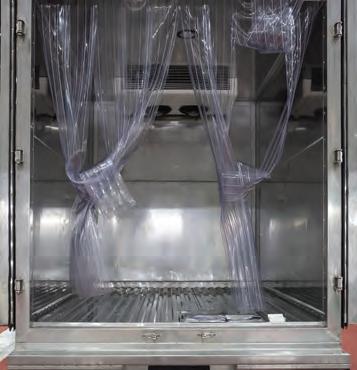
By remotely pre-configuring settings, the chance of driver input error is also reduced, helping avoid issues with compliance. When this data is taken from across a fleet over time, it can be used to manage the success rate and costs of pre-cooling procedures, allowing for more informed business decisions to increase efficiencies and cut costs going forward.
Remote telematics for refrigeration units also help to prevent theft. Door sensors trigger alerts for unexpected door openings to indicate potential product theft, as well as sudden and unanticipated fuel losses that can indicate vehicle theft. In the unfortunate event that a reefer unit is stolen, alerts tied to geolocation data make it much easier for carriers and the authorities to track and recover stolen units. n
The University of Cincinnati, in partnership with the University of California, Los Angeles; eScience and Technology Solutions (eSTS); and the Upper Great Plains Transportation Institute at North Dakota State University, is currently undertaking a National Commercial Driver’s License (CDL) Program Assessment. The goal of the assessment, funded through the Federal Motor Carrier Safety Administration (FMCSA) Commercial Driver’s License Program Implementation (CDLPI) grant, is to enhance the ability of states to maintain compliance with Title 49 Code of Federal Regulations (CFR) 383 (CDL Standards) and 49 CFR 384 (State Compliance with CDL).
The research team has developed a comprehensive CDL Resource Guide that includes all resources available from FMCSA, CVSA, American Association of Motor Vehicle Administrators, National District Attorney’s Association, National Center for State Courts and National Judicial College. The resources address the entire traffic citation lifecycle, from the initial citation through to the conviction being posted to the driver’s Commercial Driver’s License Information System (CDLIS) record.
The CDL Resource Guide includes active links to each identified resource and is
available online at www.cdlresourceguide. org. In addition, the website includes a crossreference of the available resources to each applicable section within 49 CFR 383 and 384, with active links to each reference.
The next research phase underway is a stakeholder survey to identify challenges and issues, conduct a needs assessment and assess the current use of available resources. Additional research activities will include working with stakeholders to identify and develop potential program enhancements and then pilot testing these proposed enhancements. n
For more information, please contact Dr. Kelly Cohen with the University of Cincinnati at cohenky@ucmail.uc.edu or Nick Owens with eSTS at nick.owens@estsi.com
 By Ron Round, Professional Driver, Pottle’s Transportation; America’s Road Team Captain
I am Ron Round, America’s Road Team Captain and professional driver for Pottle’s Transportation in northern Maine. In my 34 years as a driver, I have accumulated 2.8 million safe miles.

Warm weather and fall foliage bring tourists looking to enjoy the different sights and areas of our great country. Many of these tourists will travel in recreational vehicles (RVs) — either motorhomes, fifth wheels or travel trailers. This is a fantastic way to travel; you always know how comfortable your bed will be, and you can enjoy the convenience of having your own kitchen and amenities at your disposal. During my time off from professional truck driving, I enjoy taking my travel trailer out to explore New England.
While some RV operators have logged many miles on the highway with these units, every year more people enjoy the RV lifestyle for the first time. Many may not be accustomed to the challenges of moving these larger vehicles across our highways. Since there is no special licensing requirement for driving an RV, that means that someone who has never driven anything larger than a passenger car could be driving a vehicle that is longer, wider and heavier than what they are used to.
In southern states, the tourist season is yearround, so it is common to see campers on the road all the time. Due to the climate in my home state of Maine, our tourist season is short, peaking in the summer months and again when the leaves turn color. However, living up to our slogan of “Vacationland,” we
get many tourists in a short amount of time. We are happy to see these travelers enjoying our state, but they create some challenges that we, as professional drivers, need to be aware of.
To start, this may be the first trip out for the driver of an RV. Watch for signs of lane placement issues, not allowing enough room on corners to allow for off track, or other signs of inexperience. This does not mean they are poor drivers. We were all inexperienced drivers of a large vehicle once. Remember that their first few times out in an RV can be incredibly stressful. Do not crowd these drivers. Be courteous and give them plenty of room.
We especially need to pay close attention to RVs on the open highway. Wide-open areas bring the possibility of crosswinds, which can be an unexpected and terrifying ordeal for new RV operators. The wind can catch these high-profile vehicles like nothing the drivers are accustomed to, pushing them around, much like an empty van trailer. This can happen due to natural winds or as a result of the turbulent air or “wash” coming from our trucks. Pay close attention when passing or being passed by an RV and remember to give them plenty of room.
Most of the travelers you see in RVs are on vacation from other parts of the country. There is a good chance the vacationers do not know their way around the area. Do not tailgate them. We, as professionals, should not be doing this at any time regardless, but this is particularly important for non-local travelers who may not know where they are going or what is just around the corner. Always be
prepared for sudden stops or lane changes by RV drivers, especially around points of interest. They may be unaware of the beautiful scenic overlook ahead, resulting in a sudden reduction in speed to check out the view. You may also find an RV going well under the speed limit to take in the sights. Try not to get frustrated, do not crowd them, and pass safely. When possible, routing your trip to bypass any tourist-congested areas during the height of the vacation season might be your best bet for safe driving conditions.
Much of what it takes to stay safe during tourist season are the same steps you take year-round. Pre-trip yourself and your truck. Check tires, brakes, lights and everything else you check daily. Be well rested and mentally prepared to take on whatever the day may throw your way.
The lure of seeing the country is what brings RV travelers out on the highways and byways of this country — the same thing that brought a lot of us to the career we enjoy as truck drivers. We all know the challenges of this career, and we are likely more prepared than our RVdriving friends for the challenges of driving a large vehicle. Be the professional we all want to be and lead by example. There is room for all of us out here, so be courteous, share the road and know that the driver of that RV could very well be a retired or vacationing trucker who is out to see the sights on their own schedule.
See you down the road and be safe. n
For years, the trucking industry has experienced the abuse of our justice system as it relates to truck accident litigation. What was originally intended as a fair arrangement for holding responsible parties accountable has turned into a profit-making business due to the increase in staged accidents, third-party litigation financing and a disproportionate number of nuclear verdicts.
According to the American Transportation Research Institute’s (ATRI) 2021 Critical Issues in the Trucking Industry report, lawsuit abuse was ranked within the top five industry issues.
Making our roads safer means holding motor carriers and their drivers accountable for at-fault accidents. However, recent statistics show that they’re often the target of lawsuits even when authorities declare them not at-fault at the scene of the accident. Why? Personal injury lawyers know that truck organizations have the resources to pay substantial payouts for injury and damage. Combined with an inconsistent enforcement of rules that sometimes prevents important evidence from being admitted at trial, truck organizations are left with little opportunity to defend themselves. Ultimately, this abuse of the system results in skyrocketing insurance rates that only the largest fleets can afford.
While there are legitimate insurance claims for accidents, there are many that stand to abuse the system — hurting fleets and the consumer themselves.

Today, staged accident scammers do their research on a truck’s make and model to understand how a trucking accident can be staged in a way that makes the biggest crash impact with the least amount of serious injury. They even investigate a carrier’s financial situation to estimate which carriers would be best to target if they have higher insurance policies or are more willing to settle.
Truck crash litigation verdicts are not cheap, especially considering the rise of phantom damages, third-party litigation financing and nuclear verdicts, as explained below:
• Phantom Damages: Often, when recoveries for injured patients are calculated using billed charges rather than actual reimbursement, “phantom damages” are created that neither the patient nor the insurer ever paid. According to ATRI, 45.1% of respondents in their 2021 survey of top industry concerns believe that elimination of phantom damages is the top approach for lawsuit abuse reform.
• Third-Party Litigation Financing: This is a controversial practice of financial firms funding litigation for attorneys who sue trucking companies. Finances are backed by loans or even direct-payment doctors for treatment of individuals injured in accidents. These funds are often made in secret, and while it helps the person(s) seeking a settlement, it puts the defense (fleet
carriers) at a great disadvantage as these financial backers can effectively take control of a case.
• Nuclear Verdicts: ATRI defines a nuclear verdict as a verdict in excess of $10 million. Alarmingly, ATRI saw a 967% increase in the average verdict size from 2010–2020. According to ATRI research, to reduce the amount of fraudulent claims, or excessive verdicts, successful implementation of post-crash and pre-trial tasks — such as case evaluation, mediation and pretrial preparation — plays a critical role in successful litigation results.
Currently, the Highway Accident Fairness Act of 2021 is in review with the House of Representatives. This bill intends to ease the financial burdens of defending against or settling fraudulent insurance claims.
Additional local legislation, such as Texas House Bill 19, which was just signed into law in September 2021, is also helping to curb the growing trend of lawsuit abuse targeting commercial motor vehicles in some states.
While this is a big step in the right direction, it will take time before the law becomes fully enforced. In the meantime, fleets must leverage the resources they currently have to prevent fraudulent claims while remaining safe and fully compliant.
Today, the Federal Motor Carrier Administration (FMCSA) has enforced a Compliance, Safety, Accountability (CSA) system to improve — and enforce — safety among commercial motor vehicle carriers. Under this data-driven system, FMCSA issues each carrier a CSA score based on its drivers’ individual performances and its fleet vehicles’ conditions. By continuing to monitor unsafe driving, crash indicators, hours of service, vehicle maintenance and more, fleets can ensure they maintain a high CSA score, which can be critical evidence in the event of a trial.
Smart mobility technologies, such as in-cab coaching, intelligently track, alert and prevent unsafe driving behaviors in real time, including distracted driving, fatigue, speed limit variances, lane drifting, braking and more. This is made possible with the integration of connected dashcams that record what is always happening inside and outside the vehicle. The increased awareness is critical to encouraging safe driving habits, in turn mitigating accidents and keeping truck drivers and other motorists safe.
Since these technologies record every event, the data can also be used to exonerate falsely accused drivers and help reduce false truck accident litigation issues. Carriers should have written policy that allows drivers to show video from these in-cab coaching devices to law enforcement at the site of the collision on the road or shortly after. A review of the video evidence at the roadside can help absolve the driver and carrier from the start if there is a false accusation. It may also help with crash investigations and litigation evidence to ensure the evidence can be admitted during a trial.
Together, fleets, citizen drivers, new legislation and technology can help encourage safe driving, reduce false accusations, lessen the impact of expensive truck crash lawsuits, and ensure justice if an accident does occur. n

In my career in trucking and safety, I have had the opportunity to work with hundreds of transportation companies. From small fleets to carriers with more than a thousand vehicles, one thing is constant: almost every carrier believes it is a safe company. Yet the numbers do not bear this out. Still, I believe that these companies are confident that they are doing everything they can to be as safe as possible. Here are a couple of examples:
Ever hear a dispatcher give a load to a driver who is tight with their hours of service, telling them, “Do the best you can”? That puts the driver in a situation where they must push themselves to the limit — or fail. What will they do to make up for being stuck in unforeseen construction delays or when slowed by bad weather? Most drivers will speed or drive through a needed break to make up time and meet the delivery appointment. In their mind, they are “doing the best they can.”
I hear this one quite often: “Bill is a great driver. He is never late.” The reality is Bill has had a couple of minor incidents in the past three years and several recent violations. But he delivers on time, so he is considered a good driver. No one wants to lose a driver. Retention is paramount right now. Still, there is a time when the cost to retain becomes too high. While the first steps for a driver like Bill should be intervention and retraining, if the behavior continues, your options may be limited. Safety must come first.
I visited a carrier that had multiple alerts in the Safety Measurement System (SMS). When discussing this with the owner of the company, they told me they fixed their issues and were now only getting “good violations.” Good violations? I’ve never heard of a good violation. The owner explained that he considered violations with low point values, such as issues with lights, “good.”
Carriers tell me all the time how safety permeates their organization. When I call their office and go through the phone menu, almost always the safety department selection is past option four. What message would it send to prospective drivers and customers if safety was the first option?
I have plenty of additional examples of carriers who thought they were doing the right things with their safety programs despite cutting corners. Of course, there are good examples out there, too. In my experience, the best safety programs are top down, ever evolving and embraced throughout the organization. The responsibility should not be a singular department or person but a holistic effort from each member of the team.
A great way to evaluate your safety program is to have it reviewed by an unbiased third party. There are multiple options with varied cost. Any investment you make in safety, whether with time or money, will pay dividends. n
A great way to evaluate your safety program is to have it reviewed by an unbiased third party.
It has been a long road for TRUPACT-IIIs traveling between the Savannah River Site (SRS) and the Waste Isolation Pilot Plant (WIPP), and the journey is now complete. On April 14, the final TRUPACT-III shipment from SRS arrived at WIPP.
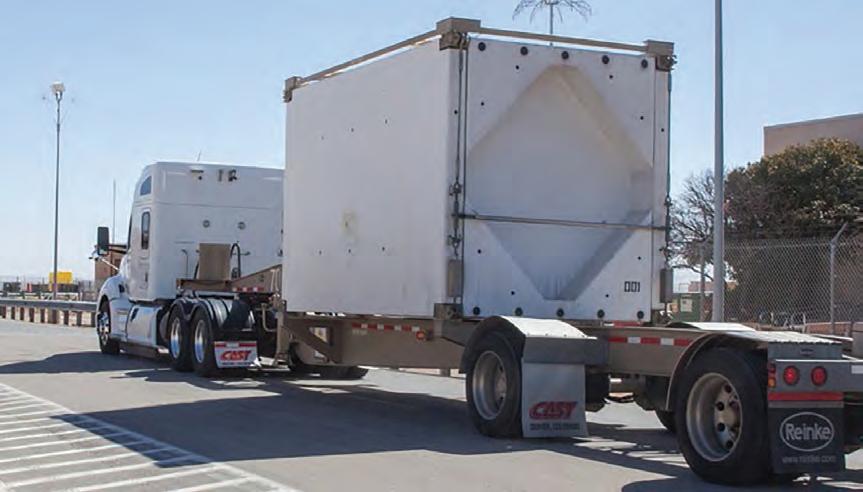
The first TRUPACT-III from SRS had arrived at WIPP on Aug. 25, 2011. In total, 239 shipments made the 1,400-mile journey from South Carolina to New Mexico for a total of 347,028 loaded miles and 11,401,897 pounds of payload.
“Each milestone reached gets us closer to completing DOE’s mission of environmental remediation,” said Ken Princen, Carlsbad field office assistant manager for the National TRU Program. “The DOE Carlsbad Field Office looks to build on the success of this campaign.”
TRUPACT-IIIs allow Department of Energy (DOE) sites to ship large waste – glove boxes,
motors, large-scale analytical equipment, etc. – in a single box rather than having to break it down to fit into smaller containers. This accelerates the pace of cleanup and reduces risk to workers by eliminating the need for size reduction. Each TRUPACT-III carries a standard large box 2 (SLB2) to WIPP for emplacement.
“We are pleased to see the last of the legacy transuranic waste SLB2s safely in their final disposition location,” said SRS Site Management Representative Kerri Crawford. “This effort has involved a lot of time, effort and coordination between SRS and WIPP representatives and couldn’t have happened without the great teamwork between the two sites.”
SRS is the only site that has made TRUPACT-III shipments to WIPP. With the completion of the SRS SLB2 mission, the TRUPACT-IIIs are now freed up for use by other DOE sites. n
‘RAD Inspection News’ features news and other stories pertaining to the North American Standard Level VI Inspection Program for transuranic waste and highway route controlled quantities (HRCQ) of radioactive material. This inspection is for select radiological shipments that include enhancements to the North American Standard Level I Inspection Program and the North American Standard Out-ofService Criteria with added radiological requirements for transuranic waste and HRCQ of radioactive material.
Learn more about the Level VI Inspection Program at www.cvsa.org.
‘RAD Inspection News’ is made possible under a cooperative agreement with the U.S. Department of Energy. Since January 2007, it has run as a section inside CVSA’s “Guardian.” n
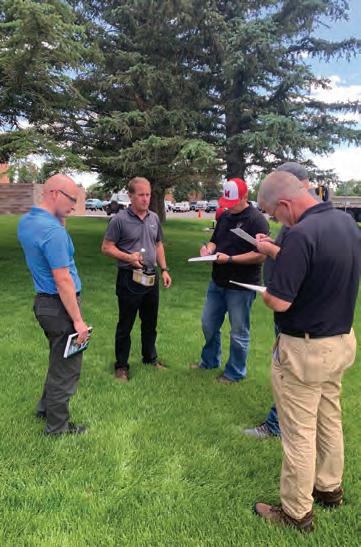
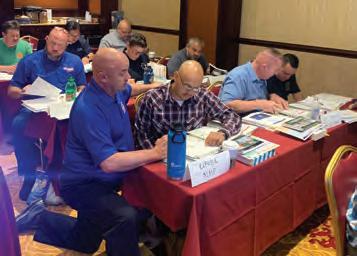
CVSA’s Level VI Inspection Program held its 184th certification class in Sacramento, California, April 25–28. Hosted by the California Highway Patrol, Class 184 was comprised of students from the California Highway Patrol, New York State Police and the Federal Motor Carrier Safety Administration (FMCSA).
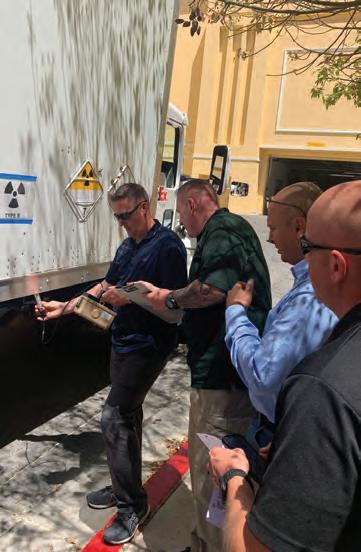
Certification Class 185 was hosted by the Nevada Highway Patrol and held in Las Vegas, Nevada, May 23–26. Students came from the Nevada Highway Patrol, Idaho State Police, Mississippi Department of Public Safety and Texas Department of Public Safety.
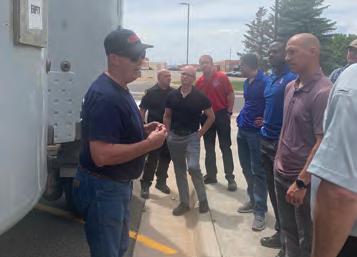
Lastly, Class 186 was hosted by the Wyoming Highway Patrol in Cheyenne, Wyoming, June 21–24. The class was made up of officers from the Wyoming Highway Patrol, Colorado State Patrol, Idaho State Police, Nebraska State Patrol, Mississippi Department of Public Safety and Utah Department of Transportation. These three classes resulted in 39 newly certified Level VI Inspectors.
Instruction for the three classes was provided by CVSA consultants Scott Maguire and Tom Fuller with assistance from CVSA national instructors Artez Lester of the Florida Highway Patrol, Juel Leuis of FMCSA, Rob Kidder of the New York State Police, CVSA Director of Level VI Inspection Program Carlisle Smith, Jim Farley of the Nevada Highway Patrol and Robert Daniels of the California Highway Patrol. n
Members of the CVSA Level VI Inspection Program helped to increase awareness of the program by participating in conferences in Maryland and Pennsylvania this summer.
Level VI Inspection Program Public Outreach Coordinator Larry Stern promoted the program with a display booth at the International Association of Fire Chiefs’ International Hazardous Materials Response Teams Conference in Baltimore, Maryland, June 9–12. The conference hosted more than 1,100 attendees with approximately 200 interested
individuals stopping by the Level VI Inspection Program booth. Stern fielded questions regarding the Level VI Inspection Program, the enhanced inspection process and Level VI inspection carrier safety records as well as questions about membership in CVSA.
Carlisle Smith attended the U.S. Department of Energy’s National Transportation Stakeholders Forum in Philadelphia, Pennsylvania, June 6–9. There, Smith addressed the Southern States Energy Board’s Radioactive Materials
Transportation Committee, providing an update on CVSA’s Level VI Inspection Program activities. He also met with representatives from the Council of State Governments’ Midwestern Radioactive Materials Transportation Committee and the Northeast High-Level Radioactive Waste Transportation Task Force.
CVSA’s Level VI Inspection Program continues to garner much interest with the regional transportation groups. n
Registration is now open for the Cooperative Hazardous Materials Enforcement Development (COHMED) Conference, a weeklong one-of-a-kind event for individuals and organizations involved in the regulation, enforcement and safety of transporting hazardous materials and dangerous goods.

Location

Brake Hose or Tubing Chafing and/ or Kinking
Axle positioning parts defective/ missing
ELD cannot transfer ELD records electronically



Inspection, repair and maintenance of parts and accessories
No or Defective ABS Malfunction Indicator for towed vehicles on vehicles manufactured after February 2001
No or improper shipping papers (carrier)
No or incomplete route plan for radioactive materials
Shipping paper accessibility
Package Not Marked with Radiation Symbol
393.9A393.9A
PRESIDENT
Capt. John Broers
South Dakota Highway Patrol
VICE PRESIDENT Maj. Jeremy “Chris” Nordloh Texas Department of Public Safety
SECRETARY Col. Russ Christoferson Montana Department of Transportation
PAST PRESIDENT Sgt. John Samis Delaware State Police
Region I
Tpr. William Alarcon New Jersey State Police
Region II
Capt. Bart Teeter Texas Department of Public Safety
Region III Maj. Jon E. Smithers Indiana State Police
Region IV Brad Marten Montana Department of Transportation Region V
Richard Roberts
British Columbia Ministry of Transportation and Infrastructure
REGION VICE PRESIDENTS
Region I
Tpr. James Thomas Rhode Island State Police
Region II Lt. Ronald Jenkins Oklahoma Highway Patrol
Region III Lt. Mike Maytum Nebraska State Patrol
Region IV
Tpr. Jeremy Disbrow Arizona Department of Public Safety
Region V Krista Cull
Newfoundland and Labrador Transportation Regulation Enforcement
LOCAL PRESIDENT
Ofc. Thomas Mrozinski, Jr. Frisco (Texas) Police Department
LOCAL VICE PRESIDENT
Ofc. Lincoln Sweeney Cedar Hill (Texas) Police Department
ASSOCIATE MEMBER PRESIDENT Andrea Sequin Schneider
ASSOCIATE MEMBER VICE PRESIDENT
Derek Barrs HNTB Corporation
COMMITTEE CHAIRS
Crash Data and Investigation Standards Committee
Capt. Bryant Gay Florida Highway Patrol
Driver-Traffic Enforcement Committee
Capt. Chris Barr Indiana State Police
Enforcement and Industry Modernization Committee
Capt. Leonard Dittman Colorado State Patrol
Hazardous Materials Committee Sgt. Brad Wagner Nebraska State Patrol
Information Systems Committee Holly Skaar Idaho State Police
Passenger Carrier Committee Tpr. William Alarcon New Jersey State Police
Policy and Regulatory Affairs Committee Capt. John Hahn Colorado State Patrol
Size and Weight Committee Brad Marten Montana Department of Transportation
Training Committee
Lt. Ronald Jenkins Oklahoma Highway Patrol
Vehicle Committee Tpr. John Sova North Dakota Highway Patrol
PROGRAM CHAIRS Commercial Vehicle Brake Manufacturers Council Dave Engelbert Haldex Commercial Vehicle Systems
Cooperative Hazardous Materials Enforcement Development Sgt. Kevin Hogan Michigan State Police
Human Trafficking Prevention Lt. Col. Michael Krumm Michigan State Police
International Driver Excellence Award Brett Graves Maverick Transportation, LLC
International Roadcheck Maj. Michael Forman Mississippi Department of Transportation
Level VI Inspection
M/Sgt. Todd Armstrong Illinois State Police
North American Cargo Securement Harmonization Public Forum
Tpr. Jeremy Disbrow
Arizona Department of Public Safety
North American Inspectors Championship
Richard Roberts British Columbia Ministry of Transportation and Infrastructure
Operation Airbrake Lt. Aaron Hayden Maine State Police
Operation Safe Driver Capt. Jon Olsen Minnesota State Patrol
PBBT Users Lt. Joseph Greene Kansas Highway Patrol






99 M Street, SE, Suite 1025 Washington, DC 20003
After more than a decade in Greenbelt, Maryland, CVSA has relocated its headquarters to Washington, D.C. In addition to the new address, staff members have new contact information, which can be found at www.cvsa.org/cvsa-contacts/cvsa-headquarter-staff.