Universal Electronic Vehicle Identifier: FACT OR FICTION? GUARDIAN A Publication of the Commercial Vehicle Safety Alliance
29, Issue 2 2nd Quarter 2022 A Global Crisis in Sleep Health and Its Impact on Safety-Sensitive Jobs ATA’s Law Enforcement Advisory Board: Shared Vision and Goals with CVSA California Highway Patrol Conducts Multi-County Enforcement Operation Along 84 Miles of Interstate
Volume
n Insight
n Regional News
GUARDIAN
Second Quarter Volume 29, Issue 2 www.cvsa.org
IN THIS ISSUE GUARDIAN
n Industry Perspectives
President’s Message 1 Executive Director’s Message 2
Florida Trooper Toni Schuck Receives Back the Blue Award for Her Bravery and Service 3
Florida’s Commercial Vehicle Enforcement Unit Assists with Publix Orlando’s Truck Drivers’ Challenge 4 Collaboration Between CVSA and P.S.I. Offers Better Insights into Tire Safety 5
North Carolina State Highway Patrol Commercial Vehicle Enforcement Updates 6


The End of an Era – Ron Douglas Retires After 48 Years of Service 8 New Owner-Operator and His Family Experience Level I Inspection and Pass 9
California Highway Patrol Conducts Multi-County Enforcement Operation Along 84 Miles of Interstate 10 Updates from Mexico 11
Manitoba Motor Carrier Enforcement Making Progress in Its Modernization 12
n Cover Story
Universal Electronic Vehicle Identifier: Fact or Fiction? 13
n CVSA Committee and Program News
CVSA Launches Revitalized Emergency Declarations Site 16 Military Driver Programs Aim to Ease Commercial Driver Shortage 17 Meet Capt. John Hahn, Nominee for CVSA Secretary 18
n Inspector’s Corner
Find Work That Matters and Never Work a Day in Your Life 19
n Government News
The Legislative and Regulatory Rundown 20
n Knowledge Matters
A Global Crisis in Sleep Health and Its Impact on Safety-Sensitive Jobs 21 The Recipe for a Successful Fatigue Management Program 21 ATA’s Law Enforcement Advisory Board: Shared Vision and Goals with CVSA 24
Working Alone, Intersectionality and the Caring-Person Test for Safe Work Practices 26
n From the Driver’s Seat
Safe Driving Starts with Preparing for Your Trip 28
n
Prepare For Brake Safety Week 29 CVSA Training Provides Renewed Zeal 30
RAD Inspection News
Texas Recertifies Level VI Inspectors 31 Students Attend This Year’s Level VI Train the Trainer Course in North Carolina 31 Way Cleared for Emplacement in Final Panel 7 Room 32 Long-time WIPP Driver Randy Anderson Passes Away 33 CVSA Level VI Inspection Public Outreach Program to Attend 2022 IACP Annual Conference 33 New Hampshire Hosts Level VI Inspection Certification Course 34 Level VI Roadside Inspections (2022 - Fiscal) 34 Level VI Roadside Inspection Violations (2022 - Fiscal). 34
GUARDIAN
“Guardian” is published quarterly by the Commercial Vehicle Safety Alliance with support from the Federal Motor Carrier Safety Administration. CVSA and FMCSA are dedicated to the government and industry working together to promote commercial motor vehicle safety on North American highways.
CVSA Staff: Collin B. Mooney, MPA, CAE, Executive Director • Adrienne Gildea, CAE, Deputy Executive Director • Carlisle Smith, Director of Level VI Inspection Program • William Schaefer, Director of Safety Programs • Ken Albrecht, Director of Multimedia Development • Bill Reese, Director of Hazardous Materials Programs • Kerri Wirachowsky, Director of Roadside Inspection Program • Christopher Turner, Esq., Director of Enforcement Data and Judicial Outreach • Terry Kummer, Director of Crash Data and Investigation Standards • Jake Elovirta, Director of Enforcement Programs • Nicole Leandro, Senior Manager of Communications • Iris Leonard, Manager of Member Services • Daniel Zimmerman, Senior Manager of Government Affairs • Amanda Wagner, CMP, Senior Manager of Conference and Event Services • Mark Mills, Multimedia Specialist • Wendy Smith, Learning Management System Specialist • Katie Morton, Hazardous Materials Specialist • Rodolfo Giacoman, Fatigue Management System Specialist • Ariel Carter, Grants Management Specialist • Amy Molina, Training and Event Coordinator • Moniladae Adewoyin, Accountant • Wendy Hall, Administrative Coordinator
Copyright 2022, CVSA. All rights reserved. No part of this issue may be reproduced without written permission from the publisher.
For comments, suggestions or information, email communications@cvsa.org.
Commercial Vehicle Safety Alliance
This material is based upon work supported by the Federal Motor Carrier Safety Administration under a grant/cooperative agreement/subaward. Any opinions, findings, conclusions or recommendations expressed in this publication are those of the authors and do not necessarily reflect the view of the Federal Motor Carrier Safety Administration and/or the U.S. Department of Transportation.
Publication of the Commercial Vehicle Safety Alliance
A
@CVSA
PRESIDENT’S MESSAGE
Like Trooper Recruit School, Autonomous Vehicles Have Us Anxiously Waiting to See What’s Next
By Capt. John Broers, South Dakota Highway Patrol, CVSA President
For most of us, a trooper recruit school session began in earnest when we saw that round, broad-brimmed hat (usually brown) enter the room. Most state law enforcement agencies favor the campaign hat — the same style often seen on military drill sergeants. This makes sense since most law enforcement instructors run their academy like military basic training.
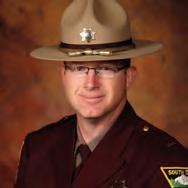
Some days the sight of that round hat may have struck fear into the hearts of trainees; other days, relief. It became something you could count on, even if it sometimes felt like counting on a hurricane to make landfall. It represented a force to be reckoned with, commanding respect and attention. As the training proceeded, the instant anxiety that recruits felt at the sight of that round hat and its wearer began to subside. You realized the muscled mass of excessive volume under the wide brim was trying to help you reach your full capabilities, to be a safe and effective trooper.
New vehicle technology has left us again with the feeling of waiting for that round hat to turn the corner. We don’t know exactly what to expect as we embark on something new. It gives us nervous energy and a bit of fear of the unknown. But like the infamous round hat, in this case, it brings the possibility of making our roads safer.
Electric vehicle (EV) and automated vehicle (AV) technology, for passenger and commercial class vehicles, continues to grow exponentially. Automakers release new vehicles and technology daily. It’s no longer just specialized manufacturers; mainstream automakers are banking their future on these vehicles as well. Light commercial class companies are deploying fleets of electric and automated vehicles to deliver everything from packages to pizza.
Automated vehicle technology has the potential to improve highway safety more than any safety device or program since the invention of the automobile. The technology can take human error — the most prevalent crash causation — out of driving. Most estimates show that when widely adopted, autonomous vehicles could reduce traffic fatalities by more than 90%. Still, early deployment could save lives in the meantime.
Even a 25% reduction in the traffic fatality rate would save 10,000-12,000 lives annually. However, these highly automated vehicles are still mechanical devices. Parts can and will fail. What can we do to find and fix mechanical issues before they cause harm?
Like our friend in the round hat, CVSA is calling the room to attention on the benefits and considerations of this new technology. We have been watching the advent of EV and AV vehicles, preparing and planning for it. The highways should not be testing grounds until the new technology is found to be safe and effective.
Creating an inspection process to ensure these mechanical devices are operating correctly will also be critical. The technology and the longevity of these systems must be tested over time. Critical safety problems won’t be identified immediately. Will the battery weight cause a component to wear faster than its diesel equivalent? Will the widget that senses braking hold up to 80,000 gross weight? Does a part need to be checked or serviced daily, weekly or annually?
Through the CVSA Enforcement and Industry Modernization Committee, the Automated Commercial Motor Vehicle Working Group is developing a training and inspection process for automated vehicles. The Federal Motor Carrier Safety Administration, manufacturers and enforcement members have also been working to detail a process to ensure automated vehicles are mechanically ready and capable of operating safely and efficiently before they hit the road.
These boots-on-the-ground efforts will prepare us for the ensuing mass deployment of automated vehicles, laying the foundation for the future of vehicle inspection. Time will tell if we will be doing fewer inspections or simply inspecting different components at the same frequency. Tires are still round and made of rubber whether a driver is there to sense a blowout or not, but will onboard sensors inspect the rest of the vehicle?
While there are still many unanswered questions and much work to be completed, the involvement of carriers, regulators and manufacturers helps ensure we are all on
the same page. The rules for deeming an autonomous vehicle safe in Alaska should follow the same criteria as in Florida. Other groups are closely watching what CVSA and our partners are doing. I’m not saying that a manufacturer will create a system specifically to meet our criteria, but knowing that the new vehicles will be inspected using the standards we help set may induce them to include features or interfaces that are compatible with our process.
The inspection process we create now may look completely different a decade into the future due to ever-changing technology. These automated systems will get better every day, requiring change in the manufacturers’ systems and the inspection process. While entertaining and perhaps inspiring, it would be pointless to guess what we will be looking at roadside in 15 years.
Waiting for someone to tell us how the transportation of goods and services will be conducted in 2035 is not effective, nor wise. Automated vehicles are here. You may be excited for them, you may not trust them, or you may want no more technology than what is available in a classic hot rod. Regardless, more fleets are deploying them every day. Being able to safely comingle very different machines (traditional and autonomous vehicles) on the same road network is a complicated yet rewarding and necessary endeavor.
The safety potential is yet untold. Acting now will help us to fulfill it. Our goals and mission remain the same: ensuring safe and effective transportation. The potential lifesaving capabilities of this technology are not measured by dollars; they are measured in human life. We cannot put a price on the value of our family, our friends and the thousands we have yet to meet who count on us to keep our roadways safe.
I applaud the CVSA members and everyone involved in developing our automated vehicle inspection programs, as well as the manufacturers and engineers developing this technology. It has commanded respect and certainly our attention. This future-changing technology will undoubtedly take us places— let’s make sure it does so safely. n
SECOND QUARTER 2022 1
INSIGHT
EXECUTIVE DIRECTOR’S MESSAGE
The Evolution of a Strategic Framework for Solving Complex Transportation Safety Challenges
 By Collin B. Mooney, MPA, CAE, Executive Director, Commercial Vehicle Safety Alliance

Since our founding in the early 1980s, the Commercial Vehicle Safety Alliance (CVSA) has been a leader in the development of safety standards and practices for the motor carrier industry. Through our committees and programs, the Alliance provides a structured approach to facilitating discussions that lead to the design and implementation of effective safety practices and programs, all in pursuit of a safer transportation network for all of North America.
The construction of the United States interstate highway system in the 1950s opened the door to trucking as a primary means for moving cargo throughout the country. Similar national highway networks in Canada and Mexico have made trucking and bus transportation a top mode for moving goods and people throughout North America. As a result of this interconnected reliance on the commercial motor vehicle (CMV) industry, ensuring transportation safety is paramount and can pose complex challenges requiring international cooperation. Enter the Alliance.
When I reflect on where we have been, where we are today and where we are heading, I see an organization that continues to be the go-to for addressing the most challenging truck and bus safety issues. The Alliance is recognized by government agencies, law enforcement and industry across North America as a catalyst for bringing together the various parties needed to establish, enforce and adopt commercial motor vehicle safety laws, regulations, standards and practices. CVSA serves as the
focal point for bringing together key players from Canada, Mexico and the U.S. to address the major issues that affect commercial motor vehicle safety – a unique and sometimes challenging partnership of the regulators and the regulated.
In part, the success of our efforts can be attributed to a shared commitment to ongoing self-evaluation and growth. At the February 2016 CVSA Executive Committee (now referred to as the CVSA Board of Directors) Meeting, the elected leadership of the Alliance met in Washington, D.C. to discuss the development of a renewed strategic plan. The group reaffirmed the organization’s mission and vision while also outlining new priorities and the future direction of the Alliance. Each new goal was evaluated and each new objective was discussed, along with the associated implementation strategies. Staff began the implementation process immediately after this planning was complete.
During this same meeting, the elected leadership created the Enforcement and Industry Modernization Committee. They had the foresight to consolidate a handful of ad hoc working groups into a unified forum for exploring opportunities to embrace and incorporate technological advancements into the commercial motor vehicle inspection fabric of the Alliance.
As evidenced by the Alliance’s progress over the decades, strategic planning should not be viewed as a one-time event. It is a continual
process that allows organizations to respond to ever-changing internal and external conditions, such as the rapid advancements in autonomous vehicle technology.
In fact, over the last few years, the nonprofit association industry has moved toward more flexible strategic “frameworks,” as opposed to strategic plans. Like the world itself, nonprofit communities are forever changing, so nonprofit organizations need to be nimble and not lock themselves into a specific goal or objective that may become obsolete overnight. Additionally, in my experience, the strategic planning process can be an exercise in futility if the organizational leaders, membership and staff do not buy into a shared mission, vision and set of goals. Without complete organizational buy-in, the Alliance would struggle to effectively incorporate its implementation strategies into our culture and structure.
This more agile framework approach will serve the Alliance well as we forge ahead into the next big evolution within commercial motor vehicle transportation: the deployment of autonomous vehicles within our existing transportation infrastructure. Building on the success of our roadside North American Standard Inspection program and the expertise of our diverse membership, the Alliance is well-positioned to lead the CMV governing agencies, enforcement community and motor carrier industry in developing autonomous vehicle inspection standards, operating procedures, training programs, data quality and uniformity initiatives, and applicable laws and regulations to ensure that this new method for the efficient movement of people and commercial goods on our roadways operates safely.
Over the last four decades, the Alliance has developed a variety of programs and services that are rooted in our history and evolution. All of our program activities, new and old, are and will continue to be specifically designed to elevate the importance of CMV safety throughout North America. These efforts require continuous maintenance and innovation. A new program focused on autonomous vehicle safety will be no different. n
INSIGHT
2 GUARDIAN
REGION
Florida Trooper Toni Schuck Receives Back the Blue Award for Her Bravery and Service
By Chief Jeffrey S. Dixon, Office of Commercial Vehicle Enforcement, Florida Highway Patrol
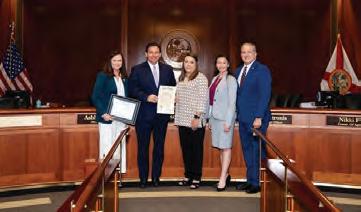
On March 29, the Florida Cabinet, chaired by Governor Ron DeSantis, presented Trooper Toni Schuck with a resolution thanking her for her bravery and service. Attorney General Ashley Moody also presented Trooper Schuck with the Back the Blue Award for going above and beyond the call of duty to protect the lives of Floridians.
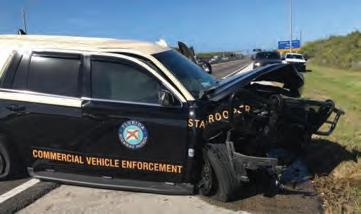
On March 6, the Sunshine Skyway Bridge in St. Petersburg, Florida was closed to vehicular traffic to allow approximately 8,000 pedestrians/racers to safely participate in the annual Skyway 10k race over the lower Tampa Bay. That morning, an impaired driver recklessly drove their vehicle around barricades and law enforcement officials onto the closed section of the roadway, heading toward the crowd of participants.
Trooper Schuck, who was working at a post further up the roadway, heard reports of the reckless driver and immediately responded toward the area to intercept the vehicle. Trooper Schuck knew that she was the last law enforcement officer in the area who could stop the vehicle before it reached the crowd of runners. When Trooper Schuck observed the vehicle approaching rapidly, she swerved her patrol vehicle in the roadway to force the driver to yield. The approaching vehicle struck her vehicle head-on, causing injuries to both Trooper Schuck and the impaired driver, as well as significant damage to both vehicles.
Trooper Schuck’s actions that morning were exceptionally brave. She placed herself in great peril to prevent a terrible tragedy and protect the lives of so many others. Trooper Schuck has rightfully been hailed as a hero, and she certainly exemplifies the Florida Highway Patrol’s motto of courtesy, service and protection. n
REGIONAL MAP
Region I
Connecticut, Delaware, District of Columbia, Maine, Maryland, Massachusetts, New Hampshire, New Jersey, New York, Pennsylvania, Puerto Rico, Rhode Island, U.S. Virgin Islands and Vermont
Region II
Alabama, American Samoa, Arkansas, Florida, Georgia, Kentucky, Louisiana, Mississippi, North Carolina, Oklahoma, South Carolina, Tennessee, Texas, Virginia and West Virginia
Region III
Colorado, Illinois, Indiana, Iowa, Kansas, Michigan, Minnesota, Missouri, Nebraska, North Dakota, Northern Mariana Islands, Ohio, South Dakota and Wisconsin
Region IV
Alaska, Arizona, California, Guam, Hawaii, Idaho, Mexico, Montana, Nevada, New Mexico, Oregon, Utah, Washington and Wyoming
Region V
Alberta, British Columbia, Manitoba, New Brunswick, Newfoundland and Labrador, Northwest Territories, Nova Scotia, Nunavut, Ontario, Prince Edward Island, Quebec, Saskatchewan and Yukon
SECOND QUARTER 2022 3
II
Pictured left to right: Attorney General Ashley Moody, Governor Ron DeSantis, Trooper Toni Schuck, Commissioner of Agriculture Nikki Fried, Chief Financial Officer Jimmy Patronis
REGIONAL NEWS
Trooper Schuck’s patrol car after the collision.
Florida’s Commercial Vehicle Enforcement Unit Assists with Publix Orlando’s Truck Drivers’ Challenge
 By Chief Jeffrey S. Dixon, Office of Commercial Vehicle Enforcement, Florida Highway Patrol
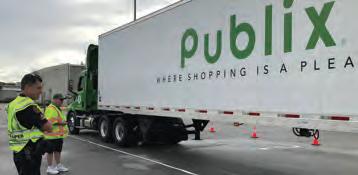
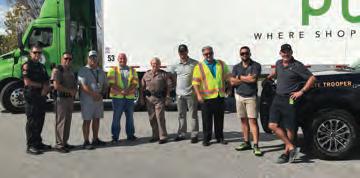
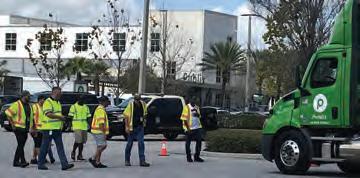
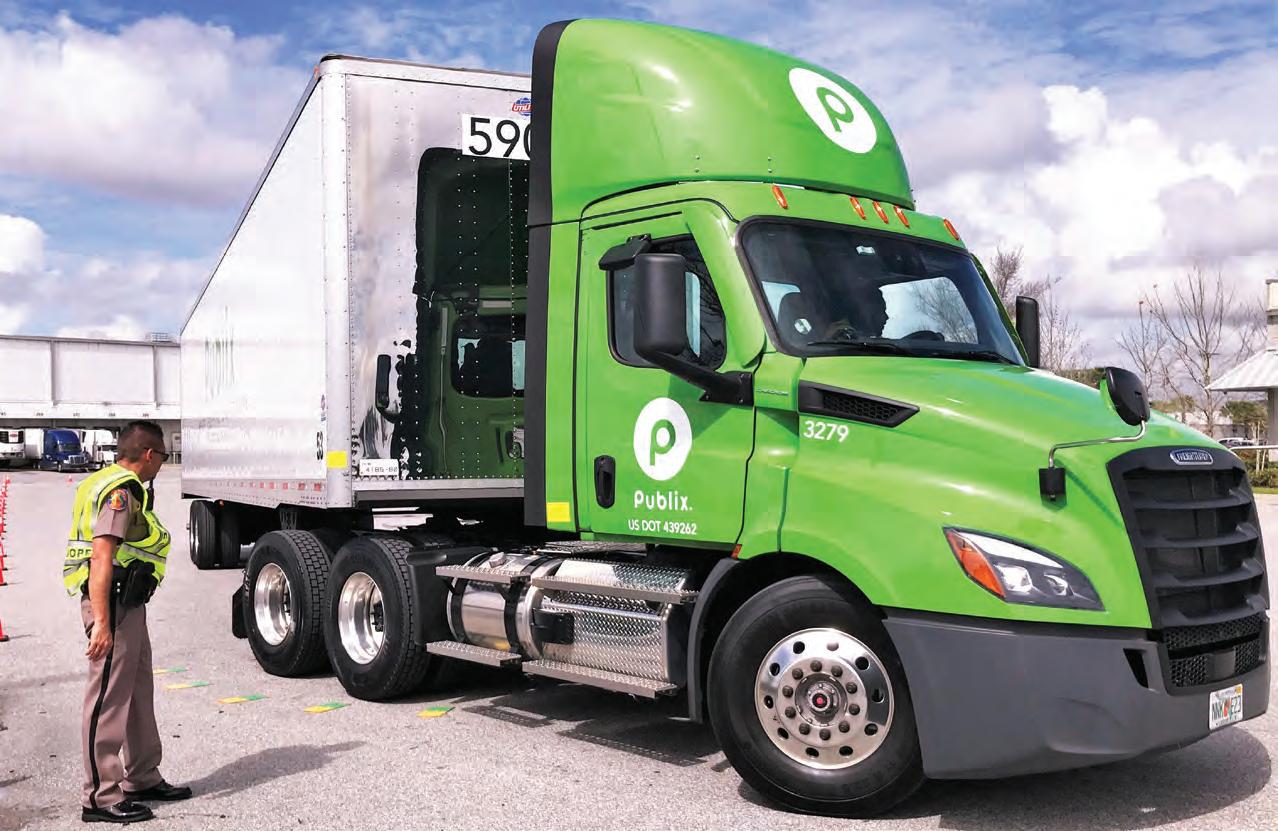
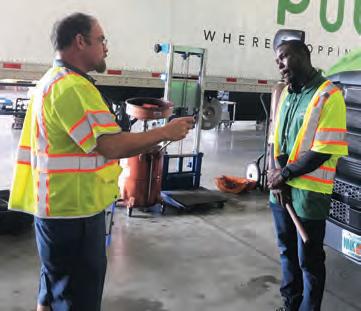
In March, members of the Florida Highway Patrol Office of Commercial Vehicle Enforcement (CVE), including Capt. Amos Santiago, Sgt. Denise Meredith and Tpr. Kevin Nelms, assisted Publix Orlando with its annual truck drivers’ challenge competition, ahead of the Florida Trucking Association’s annual championship which will be held later this year. More than 30 Publix drivers participated in the challenge. Drivers were judged on their pre-trip inspection and truck-driving skills.
It was a great opportunity for members of the Florida Highway Patrol CVE Unit to build
relationships with industry partners and conduct outreach. Sgt. Meredith and Tpr. Nelms also got the chance to take a semi-truck and 53foot trailer for a run around the course, giving them perspective on the challenges commercial motor vehicle drivers face every day.
The Florida Highway Patrol Office of Commercial Vehicle Enforcement has a great relationship with our commercial industry partners, and this event is just one example of how we interact with companies and drivers in a positive way outside of normal roadside inspection and enforcement activities. n
REGION II
GUARDIAN 4 REGIONAL NEWS
Collaboration Between CVSA and P.S.I. Offers Better Insights into Tire Safety
 By Craig Smith, Marketing Manager, Pressure Systems International
Pressure Systems International (P.S.I.)® was pleased to host the Texas Department of Public Services (DPS) Commercial Vehicle Enforcement (CVE) Training Unit. These are the officers and inspectors directly involved in roadside inspections, and with tires being the second-most cited violation at checkpoints, the learning experience proved beneficial to all who visited.
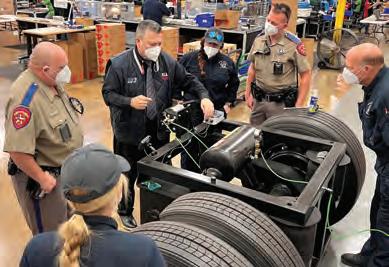
Our team shared knowledge on automatic tire inflation systems (ATIS), proper tire inflation and how to inspect tire pressures and conditions with the aid of check port tire hoses and tire pressure monitoring systems (TPMS).
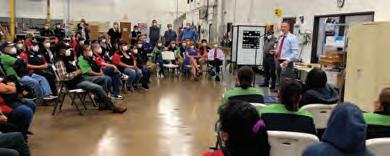
After touring the facility, the CVE Unit shared a “day in the life” of a roadside inspection officer, answered questions and offered safe driving awareness pointers and recommendations to P.S.I. employees.
P.S.I. is an associate member of CVSA and closely monitors violation trends and statistics,
allowing us to design a better product for trucking fleets. Properly inflated tires can increase fuel economy, extend tire life, reduce vehicle downtime in the case of a roadside inspection and, most importantly, improve safety.
All in all, it was a useful learning experience for everyone in attendance and a great way for P.S.I. to share our knowledge of tires with an organization that looks out for everybody on the road.
P.S.I. is also a supporting member of the American Trucking Association (ATA) and our own regional sales manager Jim Herzog is in the 2022 LEAD ATA class. He coordinated the CVE Unit visit as part of the LEAD ATA program. We are excited to be part of the trucking industry and offer ways to face the transportation safety challenges of today and tomorrow. n
For
www.psitireinflation.com.
SECOND QUARTER 2022 5
more information on Pressure Systems International, visit
Mike McIver explains the ATIS, TPMS and telematics systems on the test display.
The Texas DPS CVE Training Unit visited P.S.I. to learn more about its automatic tire inflation system.
REGION II REGIONAL NEWS
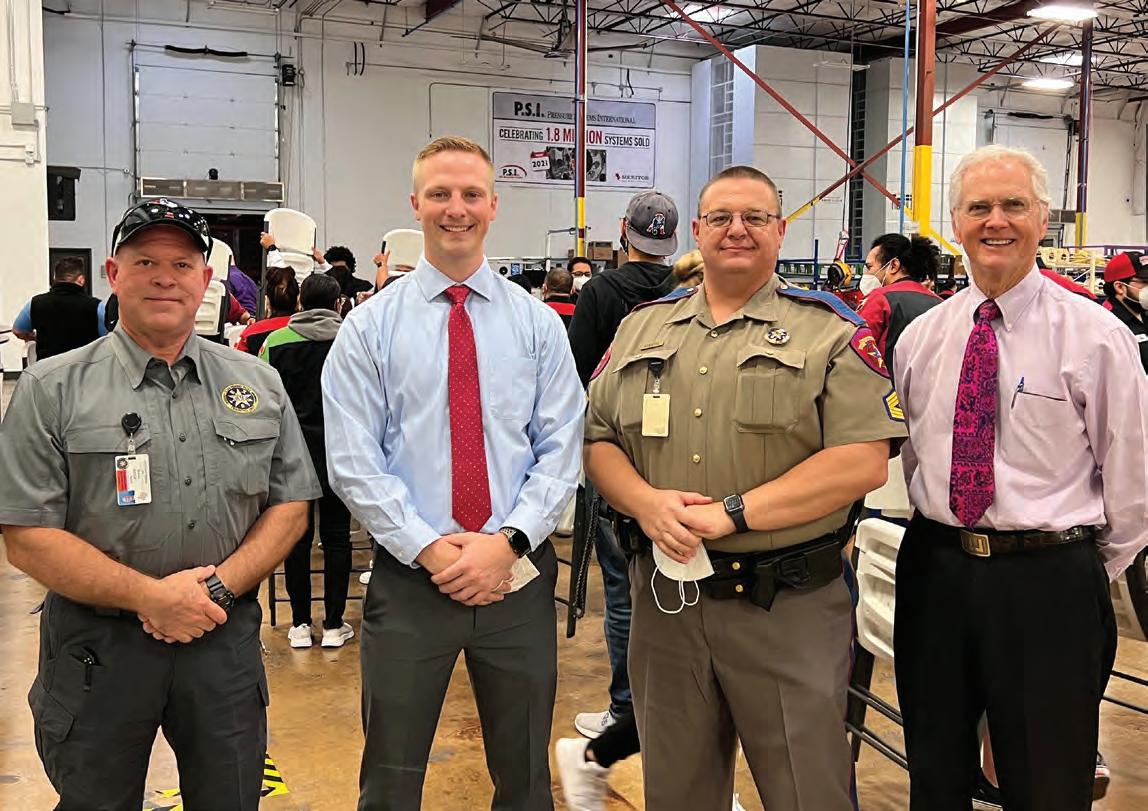
Pictured from left to right: Jessie Tippie, Jim Herzog, Brad Gibson and Tim Musgrave.
North Carolina State Highway Patrol Commercial Vehicle Enforcement Updates
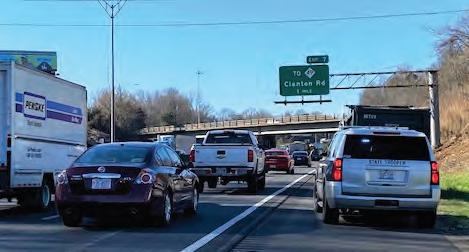
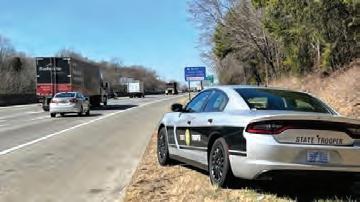
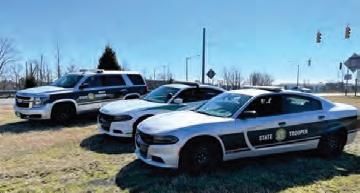 By Monica Y. Greiss, Staff Development Specialist II, Commercial Vehicle Enforcement Section, North Carolina State Highway Patrol, North Carolina Department of Public Safety
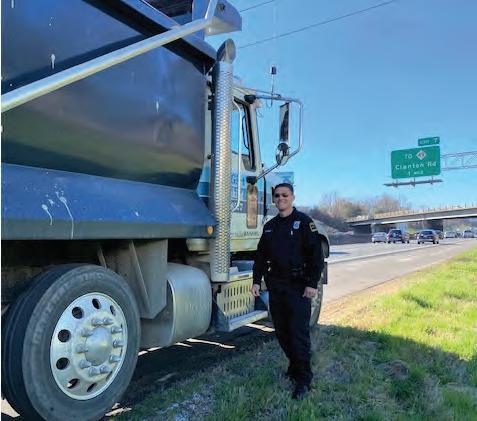
Operation DRIVE
The Commercial Vehicle Enforcement Section completed Wave #1 of Operation DRIVE (Distracted, Reckless, Impaired, high Visibility, Enforcement), a high-visibility, multi-state traffic enforcement operation on interstate corridors, spanning from North Carolina to Florida. This operation is designed to eliminate traffic fatalities by reducing crashes involving large trucks, buses and passenger vehicles.
The North Carolina State Highway Patrol participates in Operation DRIVE during selected time periods, in collaboration with its Region II partners which include the South Carolina State Transport Police, Georgia Department of Public Safety Motor Carrier Compliance Division, Florida Highway Patrol and the Federal Motor Carrier Safety Administration. Officers are assigned to high-crash interstate corridors based on commercial motor vehicle crash trends. The primary goal of Operation DRIVE is to change unsafe driver behavior through highvisibility enforcement. The operation allows participating states to collectively work together to move toward the goal of collision reduction and, ultimately, saving lives.
Post-Crash Brake Inspection Courses
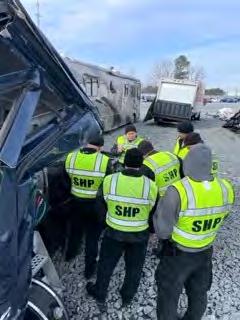
The Commercial Vehicle Enforcement Section successfully completed two Post-Crash Brake Inspection Courses (PCBI) in January. Each course provides students with the knowledge and skills to accurately and effectively measure air brakes post-collision. The PCBI Course consists of in-class and practical portions.
Collision reconstructionist Sgt. Anthony Barnes served as the lead instructor for this course. The in-class curriculum provides training to properly identify braking systems and components on commercial motor vehicles. This portion of the course explains the proper procedures to conduct when re-airing brake systems during post-crash inspections. Sgt. Barnes also reviewed and explained the proper procedure for documenting evidence collected during post-crash investigations. A complete postcrash air brake kit is provided to students to utilize during the course and in the field. The practical portion of the PCBI Course took place at a salvage yard in Dunn, North Carolina. Access to the salvage yard allows instructors and trainers to identify and simulate various post-crash scenarios. The hands-on exercises allow students to demonstrate the topics learned during the class in a practical field setting.
REGION II GUARDIAN 6 REGIONAL NEWS
Safe DRIVE Conference
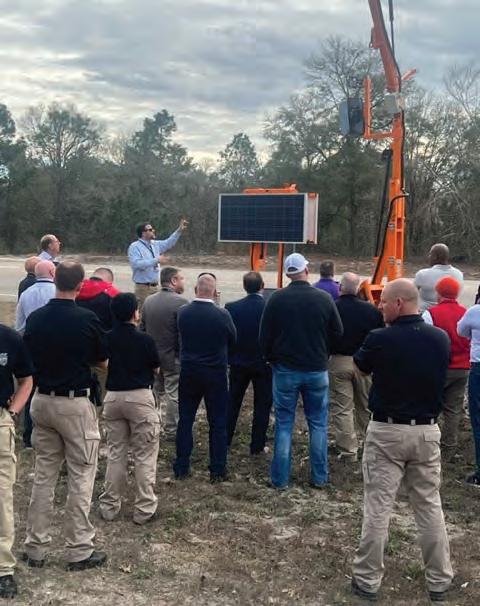
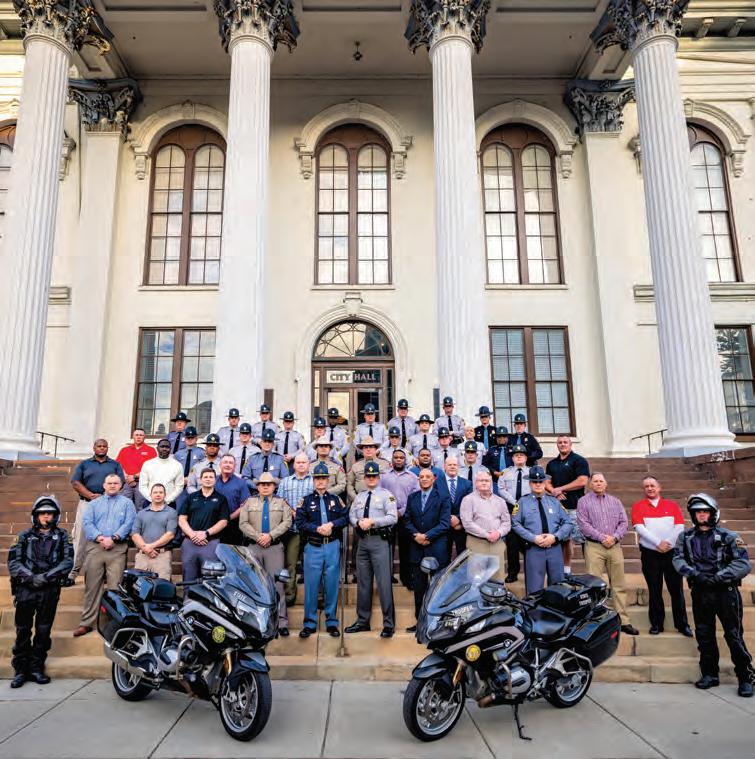
The North Carolina State Highway Patrol hosted the 2022 Safe DRIVE Conference. The conference took place in February in Wilmington, hosting the southeastern states’ Region II members and the Federal Motor Carrier Safety Administration Southern Service Center. The Safe DRIVE Program began in 2013 as a coordinated, multijurisdictional effort to change unsafe driver behavior in and around commercial motor vehicles. The guiding principles of this program allow the partnerships to grow and flourish. The principles of Safe DRIVE include enforcement, education/outreach, technology, sustainability, partnerships and resource sharing.
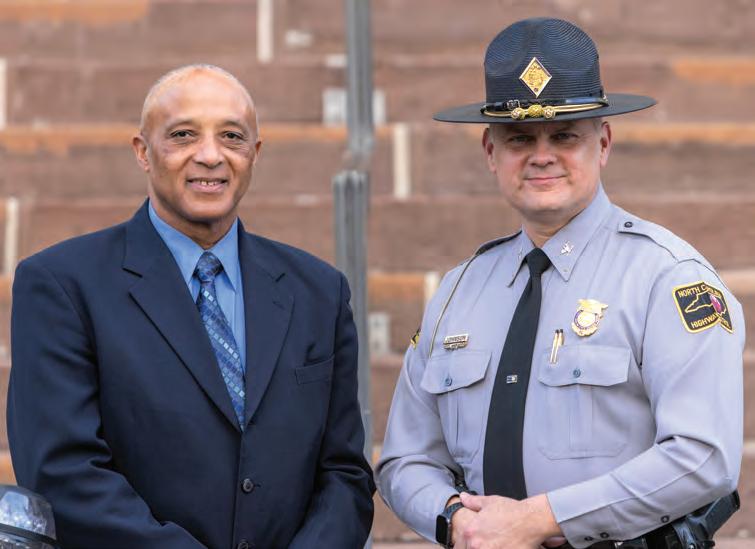
This year’s conference allowed members to collaborate and discuss current trends and introduce new concepts to implement within each respective state. Various technological solutions were introduced and demonstrated. One of the presentations consisted of a distracted-driving camera demonstration. The camera features a heads-up real-time distracted driving enforcement system. Another presentation introduced a system that measures and classifies vehicles in real time and captures the data retrieved onto a dashboard.
The conference allowed Safe DRIVE partners an opportunity to reflect on current methods and ways of incorporating proven concepts into future planning with the collective goal of enhancing commercial motor vehicle safety on our roadways and highways. n
SECOND QUARTER 2022 7
REGIONAL NEWS
The End of an Era – Ron Douglas Retires After 48 Years of Service
By Major Jon E. Smithers, Commander, Commercial Vehicle Enforcement Division, Indiana State Police
It’s the end of an era for the Indiana State Police (ISP) Commercial Vehicle Enforcement Division (CVED). Ronald K. Douglas, an Indiana legend in the world of commercial motor vehicle enforcement, retired on April 1, 2022, after 48 years of dedicated service with the ISP. The length of Ron’s career may be impressive, but it is surpassed by the distinction with which he served the State of Indiana, her citizens and the commercial motor vehicle safety community.
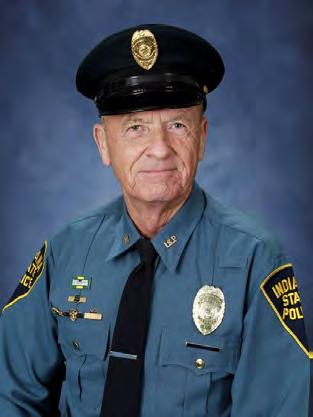
For those outside his home state, many are familiar with Ron through his involvement with CVSA over the years, but probably not much beyond that. However, it’s worth knowing his history because the trucking industry, along with our agency and division, will never be able to replace the institutional knowledge, wisdom and experience Ron holds.
Following is just a glimpse of Ron’s decades as an ISP motor carrier inspector.
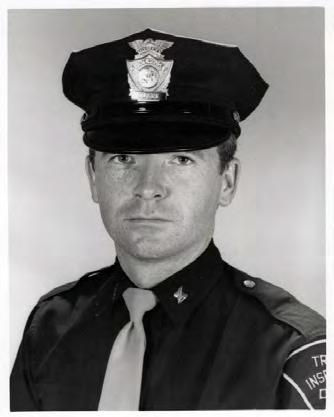
In the Beginning
As a Bloomington, Indiana, native and 1969 Bloomington High School graduate, Ron came to the ISP on Feb. 11, 1974, after serving in the United States Army. At the time of his appointment as a weigh clerk, he was 23 years old. In those days, there was little oversight of interstate commerce by the federal government. The Federal Motor Carrier Safety Administration (FMCSA), and its massive book of regulations, did not yet exist, nor did ISP CVED. The main federal role in governing the trucking industry dealt with operating authority. Ron and his fellow ISP weigh clerks and weigh masters — a title earned after one year of successful service as a weigh
clerk — attended a two-week training school before going to work for a local ISP district commander in a group known as the Truck Inspection Detail. In the field, they worked under the supervision of a sworn officer, known as an MCI (motor carrier inspection) trooper or MCI sergeant, because they did not have law enforcement authority. All their activities were performed under the direction and authority of their sworn supervisor.
A Weigh Master’s Ride
At that time, weigh masters or clerks were assigned two to a vehicle, so Ron shared his vehicle with his partner. They took turns driving home each night. By day, they would follow the MCI trooper or sergeant and assist him with weighing trucks, checking equipment and monitoring Indiana Public Service Commission (IPSC) regulations. The IPSC regulations covered state vehicle registrations (remember the days of bingo cards and multiple license plates?), fuel tax, dyed fuel Interstate Commerce Commission numbers, and the like.
The first vehicle Ron and his partner were issued was a 1974 four-wheel drive Jeep with no air conditioning and a manual, four-speed transmission. In 1976, Ron felt like he hit the vehicle jackpot when he and his partner were issued a 1976 Chevrolet van with air conditioning and an automatic transmission.
“We spent so much time together, we often saw each other more than we saw our wives,” Ron said. “Sometimes we would get so tired of each other, especially after a difference of opinion, we would work for a couple days in total silence.”
REGION III GUARDIAN 8 REGIONAL NEWS
From Weigh Master to Motor Carrier Inspector
During his long career, Ron has seen the commercial motor vehicle industry evolve and ISP’s enforcement evolve with it. In 1975, weigh masters were legislatively granted limited law enforcement powers and could begin enforcing some laws on their own. In the early 1980s, the Truck Inspection Detail command was centralized in the Motor Carrier Section of the ISP Field Operations or Enforcement Division. Ron and his fellow weigh masters were retitled motor carrier inspectors in 1987 and the Motor Carrier Section became its own division soon after, in the early 1990s. A major was assigned to command what was then the Motor Carrier Enforcement Division and is now the Commercial Vehicle Enforcement Division. Ron has seen a lot of changes over his 48 years in commercial motor vehicle enforcement and without hesitation, he said the biggest change was the deregulation of the industry in 1980.
“Prior to the establishment of the Motor Carrier Act of 1980 [which deregulated the industry], purchasing the authority to operate a trucking company was so costly and restrictive that only a few large carriers were able to succeed,” Ron said. “Deregulation slashed the costs associated with operating authority and made it possible for even the smallest companies to operate profitably.” He also said that he feels the overall improvement in the quality of equipment and maintenance has had a big impact on the trucking industry, as has the advancement in technology on both the industry and enforcement sides.
Accomplishments
Ron’s career has not only been long, but also quite distinguished. At the time of his retirement, Ron was the motor carrier inspector assistant administrator, the second highest rank an MCI can hold. Ron was a three-time competitor in the North American Inspectors Championships and he was the motorcoach phase champion in 1998. In 1995, Ron was recognized by his agency as the Ralph R. Reed Motor Carrier Inspector of the Year. Additionally, Ron has been awarded an ISP Meritorious Service Award, an ISP Commendation Award and an ISP Lifesaving Award. In 1979, then-Governor Otis Bowen recognized Ron with a Sagamore of the Wabash, the highest distinction the governor of Indiana can bestow upon an individual.
The People
Ron said he will always remember the people he worked with and served. He has spent most of his life in the service of his country, state and community and has built some longlasting relationships along the way. Now he looks forward to enjoying working around his house and doing all the odd jobs he’s put off because of work commitments. Ron is a talented woodworker and loves working in his home shop. He plans to become more involved in that hobby and hopes to be able to do it all week, rather than just on the weekends.
Everyone at CVED, and many across ISP, have known Ronald Douglas since our first days with the agency. Ron’s retirement truly represents the end of an era for the Indiana State Police. He is a mentor and a friend, and he will be missed. n
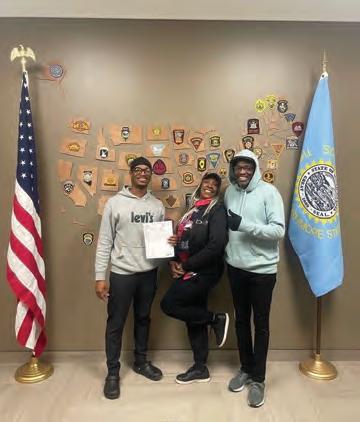
New Owner-Operator and His Family Experience Level I Inspection and Pass
By Sgt. Matt Koll, South Dakota Highway Patrol
In April, the gentleman pictured on the left started his own trucking company and was excited to share a journey with his parents. They had never traveled the country before. Upon entering the Sioux Falls port of entry, the driver received a full Level I Inspection and passed. The driver and his parents really enjoyed the entire experience and couldn’t wait to take a picture in front of our flags and highway patrol patch display with their “clean” vehicle examination report. South Dakota Highway Patrol Motor Carrier Services would like to thank all the drivers out there that move our much-needed products safely across our great state and country. n
SECOND QUARTER 2022 9
REGION III REGIONAL NEWS
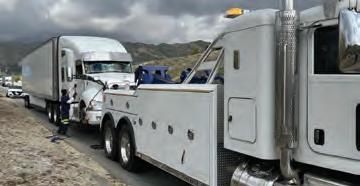
California Highway Patrol Conducts Multi-County Enforcement Operation Along 84 Miles of Interstate
 By Sgt. Robert J. Daniels, Hazardous Material Specialist, Commercial Vehicle Section, California Highway Patrol
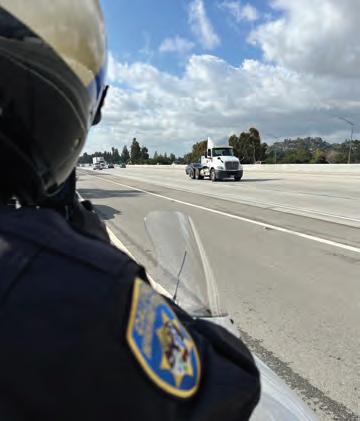
On Feb. 22, California Highway Patrol officers from the Altadena, Baldwin Park and Newhall offices of the Southern Division Commercial Unit, as well as Inland Division Commercial Unit officers, conducted a commercial motor vehicle enforcement operation. The operation was conducted along 84 miles of Interstate 210, involving two counties. During the operation, officers made more than 517 commercial motor vehicle enforcement contacts. This resulted in 467 citations being issued, 14 drivers placed out of service, 49 vehicles placed out of service and 50 warnings being issued.
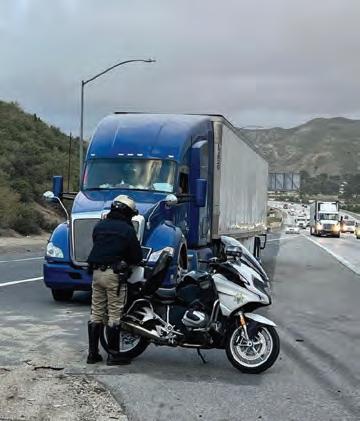
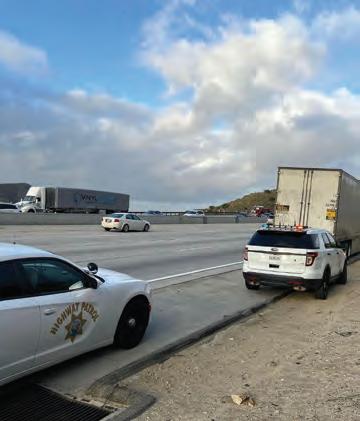
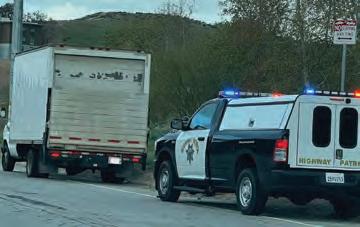
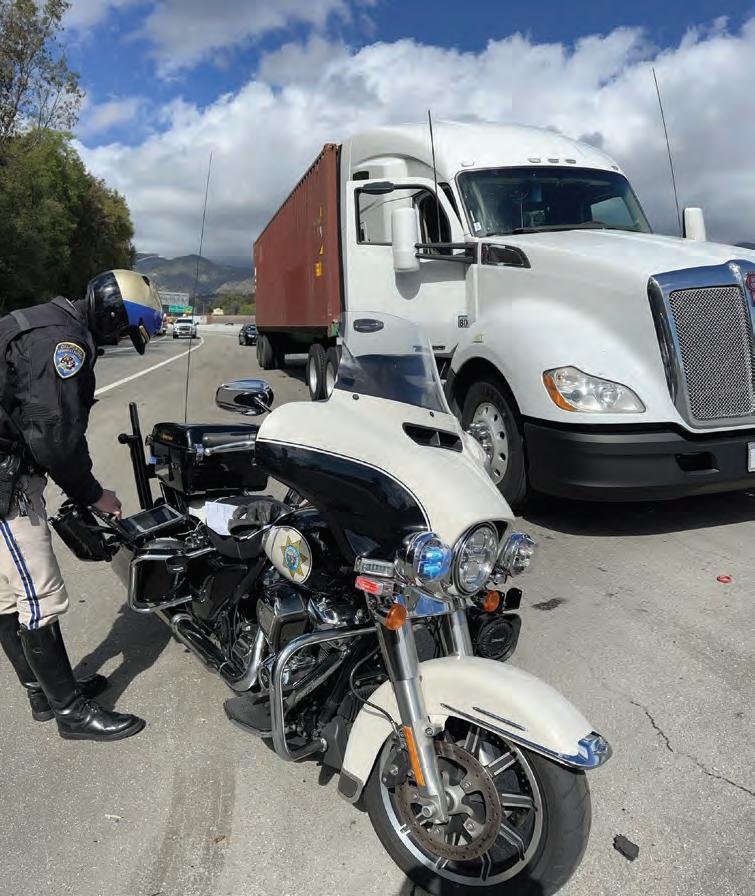
This operation maximized public safety and improved traffic conditions, demonstrating the California Highway Patrol’s commitment to provide the highest level of safety, service and security. n
REGION IV GUARDIAN 10 REGIONAL NEWS
UPDATES FROM
Asphalt Guardians Training for CVSA Human Trafficking Awareness Initiative
On March 1, in coordination with nonprofit organizations Well of Life, the Citizen Council for Security and Justice of Mexico City, and Truckers Against Trafficking, the Ministry of Infrastructure, Communications and Transportation (SICT, its Spanish acronym) conducted the “Asphalt Guardians” virtual training course on human trafficking awareness for the Specialized Transportation Attention Group (GAET, its Spanish acronym) of the National Guard (GN, its Spanish acronym). Officers from 20 states’ NG field offices and Chief Inspector Fernando Cadena Berzába participated.

The training course helped prepare SICT-DGAF and the GN to participate in CVSA’s Human Trafficking Awareness Initiative, from March 15 to 17.
The training was led by Alondra Chavez of the Citizen Council for Security and Justice of Mexico City and Nicole Gallego of the Well of Life. The speakers educated attendees on the presence of human trafficking in the road transportation system and highlighted the valuable role that motor carrier enforcement authorities can play in fighting this crime.
It should be noted that of the many issues that the GAET-GN addresses in its training programs, the issue of human trafficking is a priority. SICT’s General Directorship of Federal Motor Carrier Transportation (DGAF, its Spanish acronym) and GAET-GN were proud to join CVSA’s inaugural initiative focused on reducing the crime of human trafficking in North America. For Mexico, this represents a valuable opportunity for cooperation and shared best practices.
Mexico Establishes Minimum Standards for Trailers, Semi-trailers and Dollies
The SICT released the Official Mexican Standard NOM-035-SCT-2-2022 “Trailers, Semi-trailers and Dollies — Safety Specifications and Test Methods,” with the goal of increasing road safety on all roads under federal jurisdiction.
The development of the Official Standard was made possible through the expertise and involvement of educational and research institutions, representatives of the national industry and other government agencies. The objective of the standard is to establish the minimum safety and operation specifications for new and used trailers, semi-trailers and converters (dollies) that are operating in the Mexican territory. The safety and operation specifications are applicable to manufacturers and importers of trailers and/or semi-trailers and/or converters (dollies).
The standard regulates trailers and semitrailers with gross vehicle design weight over 14,000 kg, and converters with gross vehicle design weight over 9,000 kg, except for trailers, semi-trailers and dollies recognized as having a specific application for the transportation of non-divisible oversize and overweight loads as described in Mexican Official Standard NOM-040-SCT-2-2012.
The new standard also identifies the differences established in the Traffic Regulations for Highways and Bridges of Federal Jurisdiction and it updates regulations for the quantity, color and position of warning lamps.
This Official Standard was published on March 1 in the Official Gazette of the Federation and states that the proper observance and compliance with its provisions will contribute to safety in the motor carrier sector.
Changes in the SICT-DGAF
SECOND QUARTER 2022 11
REGION IV
Continued on next page
REGIONAL NEWS
On April 15, Laura Nohémi Muñoz Benítez was appointed as general director of the SICT-DGAF. Muñoz Benítez has a degree in territorial planning from the Autonomous Metropolitan University (UAM). She has extensive experience in public administration, most recently as director of development at the National Fund for the Promotion of Tourism (Fonatur).
Publication of Aptitude Standards for Driver Training
The SICT’s General Directorship of Federal Motor Carrier Transportation (DGAF, its Spanish acronym) seeks to standardize federal truck drivers under a certification process based on aptitude standards that would safeguard the integrity of all road users.
These standards were developed through working groups comprised of experts in the field. Their objective is to determine the skills that drivers must demonstrate to be declared functionally competent. The development of these standards corresponds to each federal license class with the purpose of specializing the driver in the vehicle in which he/she works. Standards for five vehicle types have been published so far.
During 2021, two standards were published in the Official Gazette of the Federation, which correspond to the operation of cranes:
1. EC1441 Driving and operation of type A and B cranes for towing and transporting light vehicles, published on Dec. 15, 2021. This can be found at www.conocer.gob.mx/contenido/publicaciones_dof/2021/ cuarta/EC1441.pdf.
2. EC1442 Driving and operation of type C and D cranes for towing and transporting heavy and semi-heavy vehicles, published on Dec. 15, 2021. This can be found at www.conocer.gob.mx/contenido/publicaciones_ dof/2021/cuarta/EC1442.pdf. n
Manitoba Motor Carrier Enforcement Making Progress in Its Modernization
By Roxane Hutcheson, Director, Issues Management, Corporate Services, Manitoba Transportation and Infrastructure
In January 2022, Manitoba Motor Carrier Enforcement (MMCE) embarked on a major project to address officer safety concerns by increasing training capacity, add organizational stability by increasing the complement of MMCE officers and modernize the service through technological advancement.
The project has involved adaptation to a virtual learning environment, the acquisition of use-of-force tools and the introduction of additional enforcement training to bring MMCE personnel training up to provincial law enforcement standards. MMCE has also implemented a physical abilities test for new motor carrier recruits to ensure they can carry out all the duties of a uniformed officer.
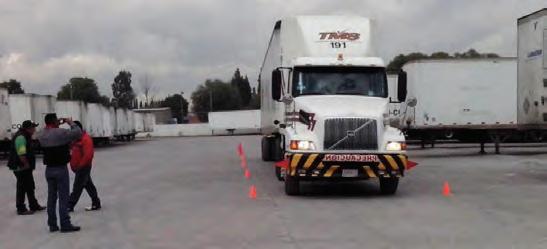

The modernization project requires strong administrative support, an analytical approach to the systems of relationships between internal and external stakeholders, and a functional analysis of existing and future tasks and duties. The work has been made possible through the dedication and participation of all MMCE personnel, from rank-and-file officers to senior leadership, including a new chief inspector.
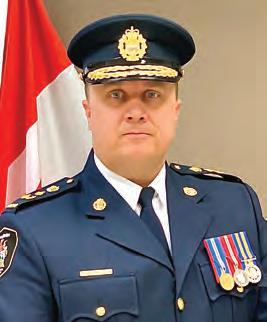
Manitoba Transportation and Infrastructure welcomed Kevin Mantie to the role of chief inspector for the province in September 2021, prior to the launch of the modernization project. Chief Inspector Mantie comes to MMCE with more than 25 years of experience in various law enforcement roles, including federal, municipal and private policing. Prior to joining Manitoba Transportation and Infrastructure, Mantie was the director of safety, compliance and claims at a Winnipeg-based transport company.
Mantie, who trained as a CVSA inspector during his early days with the Royal Canadian Mounted Police and spent many years working closely with MMCE on a variety of investigations and projects, will ensure that MMCE stands well poised to directly meet challenges and improve road safety outcomes for all roadway users.
MMCE will continue to explore how it can take advantage of technological advancements to further modernize the service to better meet future challenges. n
REGION V
Continued from page 11
REGION IV GUARDIAN 12 REGIONAL NEWS
Kevin Mantie, Chief Inspector.
Universal Electronic Vehicle Identifier:
FACT OR FICTION?
CVSA has long advocated for the next evolution in the roadside enforcement program – the ability for inspectors to identify an individual commercial motor vehicle electronically, at highway speeds, for the purposes of intervention and inspection. This capability would revolutionize roadside enforcement, dramatically expanding law enforcement’s footprint and allowing inspectors to more effectively identify the vehicles and motor carriers most in need of inspection and intervention. Inspectors would be able to better target their enforcement activities, improving safety and efficiency.
With that goal in mind, in 2010 the Alliance petitioned the Federal Motor Carrier Safety Administration to require every interstate commercial motor vehicle (as defined in Title 49 Code of Federal Regulation §390.5) to be equipped with an electronic device capable of communicating a unique identification number when queried by a roadside system.
As technology evolved, however, so did CVSA’s thinking on this concept. In 2018, CVSA sent a new petition to the National Highway Traffic Safety Administration, asking the agency to consider establishing a new federal motor vehicle safety standard for the remote
electronic identification of commercial motor vehicles.
After sending that petition, CVSA formed an informal working group consisting of enforcement and industry to resolve some of the questions surrounding the universal electronic identifier concept. With the concept gaining support, now is a good time to take a look at what the universal electronic vehicle identifier is – and isn’t – intended to do. Let’s tackle some of the most common statements and misunderstandings about the universal electronic identifier for commercial motor vehicles.

COVER STORY
Continued on next page SECOND QUARTER 2022 13
What the Universal Electronic Vehicle Identifier Is – and Isn’t – Intended to Do
Deploying a universal electronic vehicle identifier will share personal information about the driver.
FICTION: From CVSA’s perspective, the only data point this technology would include is the unique electronic vehicle identifier itself. What form that ID takes still has to be determined. It could be the vehicle identification number (VIN), for example, or even just a random string of numbers, letters or emojis. The point is that whatever form the universal electronic identifier takes, all it will do is help enforcement identify the specific commercial motor vehicle. From that point, the inspector can utilize (or leverage) current data screening and selection systems used today to better prioritize which vehicles need intervention.
If implemented, the universal electronic vehicle identifier will eliminate the need for roadside inspections.
FICTION: The universal electronic vehicle identifier won’t replace a roadside inspection – it will simply help inspectors more quickly
identify which vehicles are most in need of an inspection, saving time for industry and enforcement alike and improving safety by pointing enforcement personnel to the less safe vehicles and motor carriers.
If implemented, the universal electronic vehicle identifier will lead to many more inspections, disrupting and delaying the transportation of goods, products and supplies.
FICTION: On the contrary, implementing the universal electronic vehicle identifier won’t lead to more inspections, but rather to better inspections, because enforcement will be better equipped to identify which vehicles need to be stopped for inspection, without slowing down the other vehicles that do not need intervention.
A universal electronic vehicle identifier will make it possible for enforcement and others to track a vehicle’s location/route.
FICTION: While the specific technology has not yet been identified, the purpose of the
universal electronic vehicle identifier is simply to allow inspectors to identify vehicles in their vicinity. Only enforcement will have access to the system that links the identifier with the specific vehicle information, and inspectors will only receive identifiers for commercial motor vehicles that are nearby. The identifier won’t tell the inspector where the vehicle has been.
Additional tools and data systems will be necessary to make this work.
FACT: There are several technologies that exist today that can identify individual commercial motor vehicles electronically, at highway speeds. Once the required technology is selected, enforcement will need to be given the tools to recognize and ‘receive’ the identifier which will then be plugged into the existing data screening and selection systems used today to make this concept work. The safety benefits from requiring a universal electronic vehicle identifier are absolutely worth the work and investment that will be required to put this system in place.

COVER STORY Continued from page 13
There’s a lot we don’t know about how a universal electronic vehicle identifier would work.
FACT: This is 100% true. Even though CVSA has been advocating for this type of technology for more than a decade, we still don’t have answers to all the questions. That’s due, in part, to the fact that, until recently, it has been difficult to get stakeholders to focus on answering those questions. However, in recent years, the idea has gained traction among our industry partners and with Congress and the U.S. Department of Transportation (DOT). In light of this growing momentum, CVSA assembled an informal working group of stakeholders from industry to try to tackle some of the big questions surrounding how a universal ID might work. We’re hopeful that we’ll be able to provide the DOT with some well-vetted and supported recommendations when (and if) the department initiates a rulemaking on the universal ID concept.
The DOT should not move forward until the questions surrounding the universal electronic vehicle identifier have been resolved.
FICTION: Not all of the questions on how the technology would work and be implemented need to be addressed before a rulemaking can begin. The rulemaking process is in fact designed to allow for stakeholder input and provide the necessary information for federal agencies to create standards, like this one.
Technology and the motor carrier industry are growing and evolving faster than ever. We need to ensure that the inspector community has the tools necessary to meet that growth and evolution. By leveraging these new technologies and resources, we can better prioritize inspections and focus on at-risk vehicles, transforming roadside enforcement and making our roads safer and our system more efficient in the process. Establishing a universal electronic vehicle identification standard for commercial motor vehicles is key to moving our enforcement program into the future. n

COVER STORY
SECOND QUARTER 2022 15
Establishing a universal electronic vehicle identification standard for commercial motor vehicles is key to moving our enforcement program into the future.
NAIC Returns in August
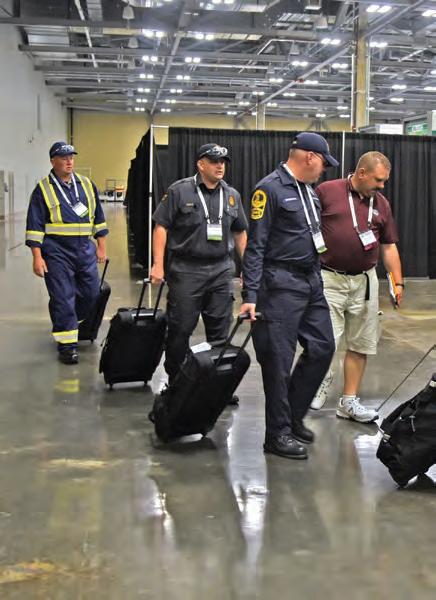
After two years off due to the pandemic, CVSA is excited to resume its North American Inspectors Championship, the only event that tests, recognizes and awards commercial motor vehicle inspector excellence. This year’s championship is scheduled for Aug. 15-19 in Indianapolis, Indiana.
Visit www.cvsa.org/events/north-americaninspectors-championship for more information.
CVSA Launches Revitalized Emergency Declarations Site
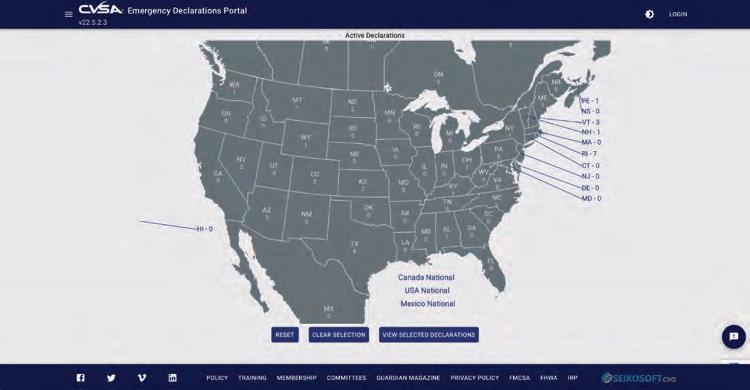
CVSA, working with the U.S. Department of Transportation’s Federal Highway Administration and the American Association of State Highway and Transportation Officials, has updated, improved and re-released its emergency declarations website.
In addition to the reliable, up-to-date content previously available on the site, the emergency declarations website now also provides:
• Information on changes to allowable weights through a standard set of pertinent information, which includes contact information for each state’s overweight permitting office
• An interactive map of declarations throughout Canada, Mexico and the U.S.
• The ability to subscribe to notices of new declarations
• Information on the issuer of the relief, the type of relief granted, and emergency declarations’ beginning and end dates
• Comprehensive exemption details, including all relevant information for vehicle permits for size, overweight restrictions on interstates, waivers for overweight restrictions on state roads, and marking and lighting relief
• Contact information for the jurisdiction’s issuer
Previously, the emergency declarations website focused solely on emergency relief of
the Federal Motor Carrier Safety Regulations Title 49 Code of Federal Regulations § 390399 provided to motor carriers through the states or the Federal Motor Carrier Safety Administration. CVSA has expanded the site’s offerings and capabilities and improved the user experience.
During an emergency, moving relief supplies efficiently to an affected area may require shippers to route through multiple jurisdictions. To facilitate speedy delivery of such supplies, jurisdictions may use emergency declarations to temporarily alter certain requirements for shippers and motor carriers. There may be multiple sources of information about waivers, amendments, extensions, exemptions, executive orders, etc., as well as changes to allowable vehicle weights issued during emergencies, which results in confusion among drivers, shippers, motor carriers and state departments of transportation. The emergency declarations website aims to eliminate that confusion by offering one easy-to-access, up-to-date public online repository that the commercial motor vehicle enforcement community and the motor carrier industry may reference at any time.
Check out the CVSA emergency declarations website at www.cvsaemergencydeclarations. org. Bookmark it for quick and easy access to the site whenever you need it. n
CVSA COMMITTEE AND PROGRAM NEWS GUARDIAN 16
Military Driver Programs Aim to Ease Commercial Driver Shortage
By Katie Morton, Hazardous Materials Specialist, Commercial Vehicle Safety Alliance
Commercial driver shortages are at an all-time high, leaving motor carriers unable to put enough wheels on the road or to meet supply chain demands. Many companies are seeking guidance on how to attract qualified drivers, particularly those with experience. The Federal Motor Carrier Safety Administration (FMCSA) offers an innovative solution to this problem: three-tiered military driver programs.
The Military Skills Test Waiver Program allows drivers, if eligible, to waive the skills test portion of the commercial driver’s license (CDL) examination. To be eligible, a driver must:
• Have held a military driver’s license
• Have at least two years of experience safely driving a military vehicle equivalent to a commercial motor vehicle (CMV), with a record free of suspensions, revocations, or disqualifications
• Apply within one year of leaving the position for which they drove a heavy military motor vehicle
The Even Exchange Program allows for the waiver of the knowledge and skills testing required to obtain a CDL when used in
conjunction with the military skills test waiver. To be eligible, a driver must:
• Have at least two years of safe driving experience with heavy military vehicles, free of suspensions, revocations, or disqualifications
• Apply within one year of leaving the position in the military in which operating a heavy military motor vehicle was required
• Have occupational specialties or classifications in one of the following:
U.S. Army
88M – Motor Transport Operator
92F – Petroleum Supply Specialist
14T – PATRIOT Launching Station Enhanced Operator
U.S. Marine Corps
3531 – Motor Vehicle Operator
U.S. Navy
EO – Equipment Operator
U.S. Air Force
2T1 – Vehicle Operator
2F0 – Fueler
3E2 – Pavement and Construction Equipment Operator
The existing CDL regulations require interstate CMV drivers to be at least 21 years of age. The Under 21 Military CDL Pilot Program lowers that age to 18 for drivers who meet the following eligibility criteria:

• Age 18, 19, or 20
• Have heavy military vehicle driver training and experience that meets approved job skills and ratings determined by FMCSA and the American Association of Motor Vehicle Administrators (AAMVA)
• Be hired by an approved motor carrier
Over the three-year pilot program period, FMCSA will collect data on the under-21 military drivers and on drivers in the existing CDL entry-level program operating interstate (ages 21–26) and intrastate (under 21). To be considered an eligible employer, motor carriers must operate primarily in interstate commerce and have drivers in the entry-level program to act as a control group for data collection.
Visit www.fmcsa.dot.gov/ militarydriverprograms for further details on how to become involved and registered. n
CVSA COMMITTEE AND PROGRAM NEWS SECOND QUARTER 2022 17
Meet Capt. John Hahn, Nominee for CVSA Secretary
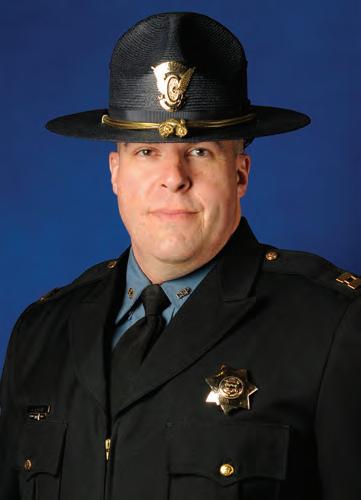
During the CVSA Workshop this April in Bellevue, Washington, Alliance members nominated Capt. John Hahn of the Colorado State Patrol to run for the international leadership position of CVSA secretary. He is running unopposed.
The secretary position is a one-year term, which then transitions to a year as vice president followed by a year serving as president, after which comes three years serving as past president. The election for the secretary position will take place at the CVSA Annual Conference and Exhibition this September in Rapid City, South Dakota.
Although there is no challenger, it is important for CVSA’s voting membership to get to know this year’s nominee. Capt. Hahn has provided some information on his career, philosophy on commercial motor vehicle safety and qualifications for serving as the next secretary of CVSA.
CAPT. JOHN HAHN
Colorado State Patrol, Region III
When engaging with members of CVSA, I find myself in the company of respected colleagues who I also consider friends. For those members I have yet to meet, I want to tell you about myself and where I see us meeting the challenges ahead as an Alliance.
I am a captain with the Colorado State Patrol and have been with the agency for nearly 23 years. I serve as the commander of our hazmat section, with responsibilities for commercial vehicle enforcement and hazardous materials response across Colorado. With responsibilities ranging from state-level rulemaking to overseeing a unit of dedicated men and women spread throughout the state, my role provides me with opportunities to engage extensively with industry, enforcement and other professionals dedicated to ensuring safer roadways.
I was born and raised in Colorado and my wife, Brenda, and I are the proud parents of three kids ages 20, 17 and 15. I hold a Bachelor of Science in Aviation Science from Metropolitan State University of Denver and am a graduate of the 267th session of the Northwestern School of Police Staff and Command.
I have had the great opportunity to be actively involved in the Alliance in a variety of capacities for nearly a decade. I am the immediate Region III past president and currently serve as the Policy and Regulatory Affairs Committee chair. I am fortunate to have also led several working groups and to serve as the secretary for the Level VI Inspection program. At present, I am a part of the working group that is leading our strategic plan development process.
As with many of you, I spend a considerable amount of time looking at where CVSA has been and what lies ahead. From the prospect of the Alliance taking on the training role for all inspectors to planning for the
technological advancements that will bring fully autonomous commercial vehicles to our roadways, our organization is poised to meet each challenge head-on, and to turn each into an opportunity to grow and evolve while staying true to our core mission. I believe the keys to meeting those challenges are pursuing organizational growth and development, embracing technology, and continuing to cultivate and maintain partnerships.
Throughout my career, I have had the chance to be a part of numerous organizations, none of which match what we have within CVSA. Nowhere else do enforcement and regulators at all levels engage so closely and meaningfully with such talented staff and the regulated community to solve the problems of the day and of the future.
I find myself in the position of running a race unopposed. It would perhaps be easy to rest on that reality. This is not the case for me. In fact, I believe this makes it even more incumbent upon me to demonstrate that I deserve your vote in September.
I took the step of running for secretary after a great deal of consideration. I am running for this position because I have a deep, abiding appreciation for the work that each and every one of our 13,000 members do to make the roadways of North America safer for all who use them. From the government administrators who work tirelessly to manage safety programs to the commercial motor vehicle professionals who ensure that goods and services move safely and efficiently, to the men and women who find themselves enforcing regulations at roadside or a weight station — your work matters. Lives have been saved because of you. Humbly, I would be honored to help lead our organization through the hurdles and the opportunities that are on the horizon and to further support your incredible efforts. n
CVSA COMMITTEE AND PROGRAM NEWS
GUARDIAN 18
INSPECTOR’S CORNER
Find Work That Matters and Never Work a Day in Your Life
By Sgt. Benjamin Schropfer, Nebraska State Patrol; 2019 North American Inspectors Championship Grand Champion
I should clarify that this is not going to be an article about how to get rich while eating potato chips on your mother’s couch. If I knew how to do that, I probably wouldn’t be working for the government. What I can speak to is finding work that you love because, as the old saying goes, “If you find a job that you love, you’ll never work a day in your life.” I think everyone has that goal. But what does it actually mean?
Unless you’re lucky enough to be born into wealth or buy the winning lotto ticket, you will need some type of job. While having a job you love is not the sole factor to living a happy life, it is a large step in the right direction.
So, what does it mean to be happy with your job? Many factors can play into it, but I think the most significant is how meaningful you find your work. It doesn’t matter what you are doing, as long as you feel a sense of accomplishment when you do it. You could be working in fast food. This is an important job that tends to be undervalued. Yet, everyone has to eat and the job itself requires many skills, from customer service to handling money. There will always be those who look down their noses at certain types of work. Don’t buy into this unfair judgment. See the value in what you do and ignore the naysayers.
Jobs in transportation provide great meaning. The work is essential to how our society functions – we count on trucks to deliver the food and goods on which we all rely. This makes it easy to see that all jobs in transportation are important – everyone from drivers to dispatchers to safety officials and mechanics.
Still, even within this industry, there will be those who minimize the work done by their coworkers. Drivers get upset with dispatchers, forgetting that they are the ones who line up their next load. Mechanics may belittle drivers for not properly maintaining their trucks, forgetting that their jobs wouldn’t exist if nobody was out running the trucks. Ultimately, everything we accomplish relies on others in the industry. We need each other. Regardless of what anybody else thinks, remember that what you do is important.
Law enforcement has a similar problem right now. With calls to defund the police or regulations that stop officers from making certain traffic stops, it’s hard avoid feeling like your job isn’t valued.
Even different groups within law enforcement can look down on the work of their colleagues, such as judging commercial vehicle enforcement. Crawling under a truck on a
creeper, looking through a record of duty status or weighing a truck may not seem as flashy as wearing a Hawaiian shirt while doing an undercover drug buy “Miami Vice” style, but don’t let anyone tell you it’s not important. Promoting high safety standards for motor carriers and taking unsafe vehicles and drivers off our roadways saves lives.

Of course, there are factors beyond a sense of purpose that influence how happy your job makes you. You may be wondering why I didn’t mention compensation. It is an important consideration, but, while you have to make enough to support yourself, beyond that, it doesn’t make much difference to your happiness. Money can buy you many things, but it can’t buy true happiness. It doesn’t matter how much money you make; if you don’t think what you do is important, you won’t be happy.
So, if you find a job where you feel like it is meaningful, it shouldn’t feel like going to work at all. This doesn’t mean that you’ll never have a bad day, but those should be rare. I can honestly say that I’m excited to go to work each day. I hope you can say the same. n
INSPECTOR’S CORNER
If you find a job where you feel like it is meaningful, it shouldn’t feel like going to work at all.
THE LEGISLATIVE AND REGULATORY RUNDOWN
 By Daniel Zimmerman, Senior Manager of Government Affairs, Commercial Vehicle Safety Alliance
The last legislative hurdle for the Federal Motor Carrier Safety Administration (FMCSA) to access the significant increases to funding for commercial motor vehicle safety programs included in the Infrastructure Investment and Jobs Act (IIJA) was the passage of a fiscal 2022 federal funding bill. Congress finally passed the bill on March 18, after a series of continuing resolutions that kept extending funding at the fiscal 2021 levels. Although this method of approving federal funding has become common practice for Congress, this year’s delay has been particularly impactful, leaving FMCSA and states unable to fully utilize the large funding increases included in IIJA.
Progress has also been made on the appointment of an administrator to lead FMCSA. On April 6, President Biden nominated Robin Hutcheson to become the next FMCSA administrator. She has been leading the agency on an interim basis since being appointed as deputy administrator in January. She previously served as deputy assistant secretary for safety policy at the U.S. Department of Transportation, where she led the development of the National Roadway Safety Strategy. Prior to that, she served as the director of public works for the city of Minneapolis, overseeing a team of 1,100 people across nine divisions. She also served as the transportation director for Salt Lake City, Utah, working to improve all modes of transportation. Hutcheson spent seven years on the board of directors for the National Association of City Transportation Officials, most recently as its president.
The Senate Committee on Commerce, Science, and Transportation held a nomination hearing for Deputy Administrator Hutcheson on June 8. During the hearing, Hutcheson emphasized the importance of FMCSA’s safety mission and the need to reverse the trend of increasing roadway fatalities. To accomplish this, she shared a vision of increasing investigations of high-risk carriers, making investments into technology and closing registration loopholes to prevent unsafe drivers from being on the road.
She also touted her history of working collaboratively to solve safety challenges and expressed the value she places on stakeholder engagement. In addition to improvements to safety, Deputy Administrator Hutcheson highlighted the supply chain challenges and the importance of the trucking industry and its drivers to resolving those issues. She also emphasized the value of the motorcoach industry and recognized the need to support its recovery from the impact of the COVID-19 pandemic.
During the hearing, the senators on the committee asked Deputy Administrator Hutcheson about a variety of topics, including strategies for reducing roadway fatalities; supply chain bottlenecks; promoting women in trucking; the Compliance, Safety, Accountability program; truck driver workforce development; commercial driver’s license testing and requirements; automated driving system equipped–commercial motor vehicles; human trafficking prevention; and drug testing requirements.
For Hutcheson to become the FMCSA administrator, the Senate Committee on Commerce, Science, and Transportation and then the full Senate will need to vote to confirm her nomination. As of press time, those two votes had not been scheduled.
Since her appointment in January, the Alliance has had a great working relationship with Deputy Administrator Hutcheson and appreciates her continued commitment to commercial motor vehicle safety and collaborative spirit.
CVSA issued a press release on June 8 supporting Deputy Administrator Hutcheson’s nomination to lead FMCSA as its administrator and encouraging the Senate Committee to swiftly advance her nomination. The press release is available at www.cvsa.org/news/ cvsa-supports-fmcsa-nominee-hutcheson
In other FMCSA news, the agency has announced its intent to move ahead with several significant rulemakings, including a requirement for speed-limiting devices on commercial motor vehicles and changes to the safety fitness determination rating system. FMCSA hasn’t given a specific timeline for these initiatives, or the content of the rulemakings, but has indicated that changes are likely on the horizon. The Alliance will continue to work with FMCSA on these and other regulatory issues to improve commercial motor vehicle safety. n
GOVERNMENT NEWS
GUARDIAN 20
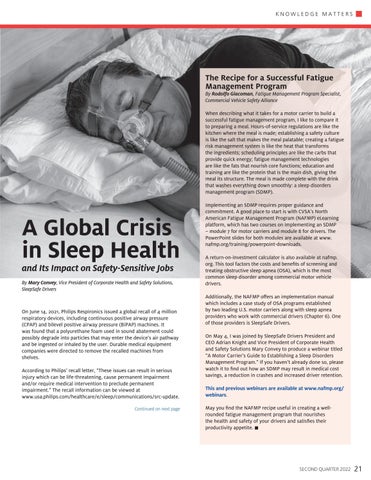
A Global Crisis in Sleep Health and Its Impact on Safety-Sensitive Jobs
 By Mary Convey, Vice President of Corporate Health and Safety Solutions, SleepSafe Drivers
On June 14, 2021, Philips Respironics issued a global recall of 4 million respiratory devices, including continuous positive airway pressure (CPAP) and bilevel positive airway pressure (BiPAP) machines. It was found that a polyurethane foam used in sound abatement could possibly degrade into particles that may enter the device’s air pathway and be ingested or inhaled by the user. Durable medical equipment companies were directed to remove the recalled machines from shelves.
According to Philips’ recall letter, “These issues can result in serious injury which can be life-threatening, cause permanent impairment and/or require medical intervention to preclude permanent impairment.” The recall information can be viewed at www.usa.philips.com/healthcare/e/sleep/communications/src-update. Continued on next page
The Recipe for a Successful Fatigue Management Program
By Rodolfo Giacoman, Fatigue Management Program Specialist, Commercial Vehicle Safety Alliance
When describing what it takes for a motor carrier to build a successful fatigue management program, I like to compare it to preparing a meal. Hours-of-service regulations are like the kitchen where the meal is made; establishing a safety culture is like the salt that makes the meal palatable; creating a fatigue risk management system is like the heat that transforms the ingredients; scheduling principles are like the carbs that provide quick energy; fatigue management technologies are like the fats that nourish core functions; education and training are like the protein that is the main dish, giving the meal its structure. The meal is made complete with the drink that washes everything down smoothly: a sleep disorders management program (SDMP).
Implementing an SDMP requires proper guidance and commitment. A good place to start is with CVSA’s North American Fatigue Management Program (NAFMP) eLearning platform, which has two courses on implementing an SDMP – module 7 for motor carriers and module 8 for drivers. The PowerPoint slides for both modules are available at www. nafmp.org/training/powerpoint-downloads.
A return-on-investment calculator is also available at nafmp. org. This tool factors the costs and benefits of screening and treating obstructive sleep apnea (OSA), which is the most common sleep disorder among commercial motor vehicle drivers.
Additionally, the NAFMP offers an implementation manual which includes a case study of OSA programs established by two leading U.S. motor carriers along with sleep apnea providers who work with commercial drivers (Chapter 6). One of those providers is SleepSafe Drivers.
On May 4, I was joined by SleepSafe Drivers President and CEO Adrian Knight and Vice President of Corporate Health and Safety Solutions Mary Convey to produce a webinar titled “A Motor Carrier’s Guide to Establishing a Sleep Disorders Management Program.” If you haven’t already done so, please watch it to find out how an SDMP may result in medical cost savings, a reduction in crashes and increased driver retention.
This and previous webinars are available at www.nafmp.org/ webinars.
May you find the NAFMP recipe useful in creating a wellrounded fatigue management program that nourishes the health and safety of your drivers and satisfies their productivity appetite. n
KNOWLEDGE MATTERS
21 SECOND QUARTER 2022
Cumbersome Recall Process
The issue with Philips’ CPAP and BiPAP recall is that it put the responsibility on the patient to learn about the recall via news, friends, physicians or their durable medical equipment providers. Assuming the patient did find out about the recall, the next step would be to log in to a website and enter their device’s serial number to see if it was included in the recall. Once confirmed, the patient would receive a confirmation number and the waiting game would begin. Patients could wait for one year, or even two, to get a replacement device.
In November 2021, Philips broadened its registration website to include questions around occupations that may be considered safety sensitive. Checkboxes now identify if the end user is a commercial driver’s license holder, pilot, crane operator, etc. Philips also added questions around comorbid health conditions and previous drowsy driving episodes.
Philips has now been ordered by the U.S. Food and Drug Administration (FDA) to have better and more regular communication with its end users about the recall. Providers, such as SleepSafe Drivers, joined with organizations, such as the American Trucking Associations, to appeal to Philips to prioritize those whose jobs require CPAP/BiPAP adherence, asking that they be placed at the front of the line for device replacement.
Safety-Sensitive Employees
Left in a Lurch
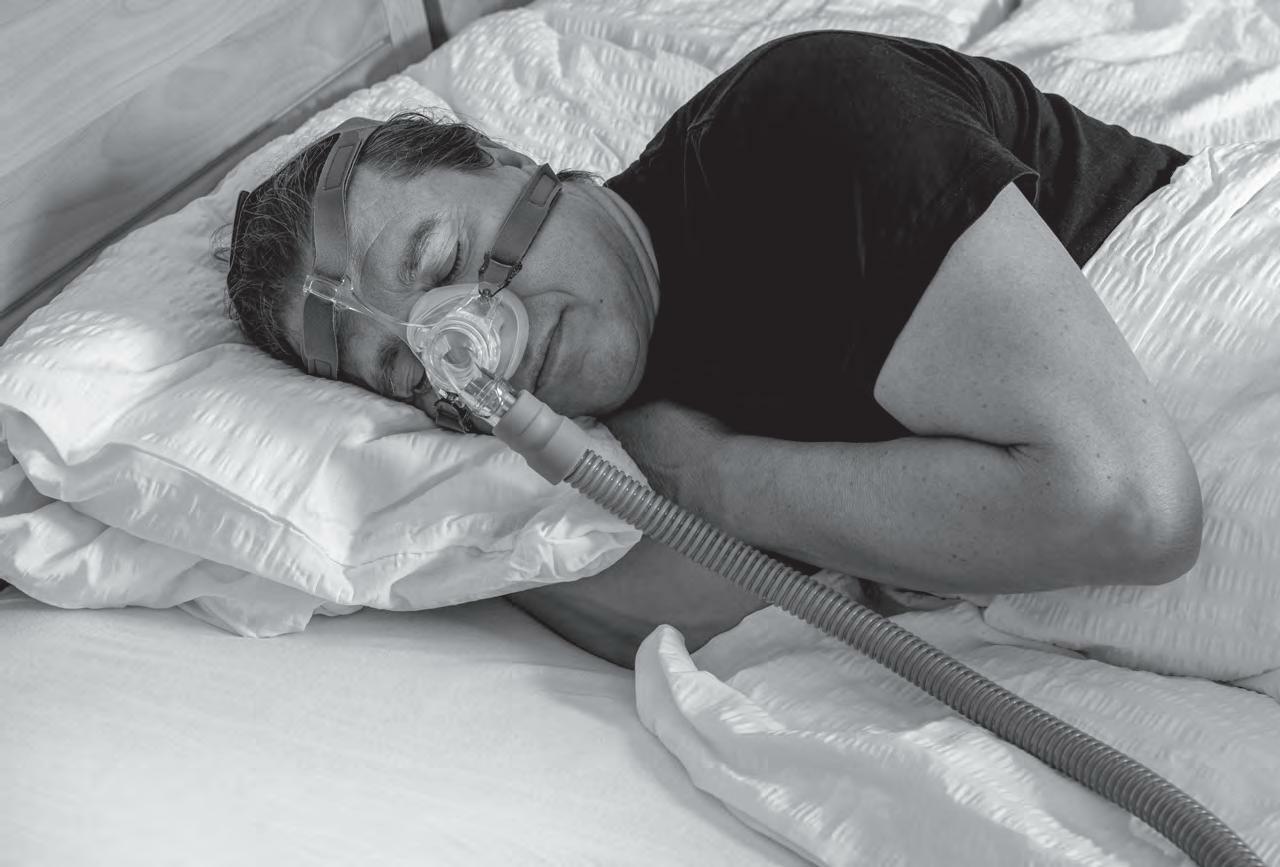
Folks in safety-sensitive roles depend not only on a full night’s sleep, but also on healthy, restorative sleep. This can be a struggle for those who suffer from a medical condition where their airway closes and obstructs during the night, causing snoring, breathing cessation and a drop in oxygen levels, not to mention disrupted sleep from the body’s natural arousal to initiate breathing again. This recall put the restorative rest of many on hold if not on high alert.
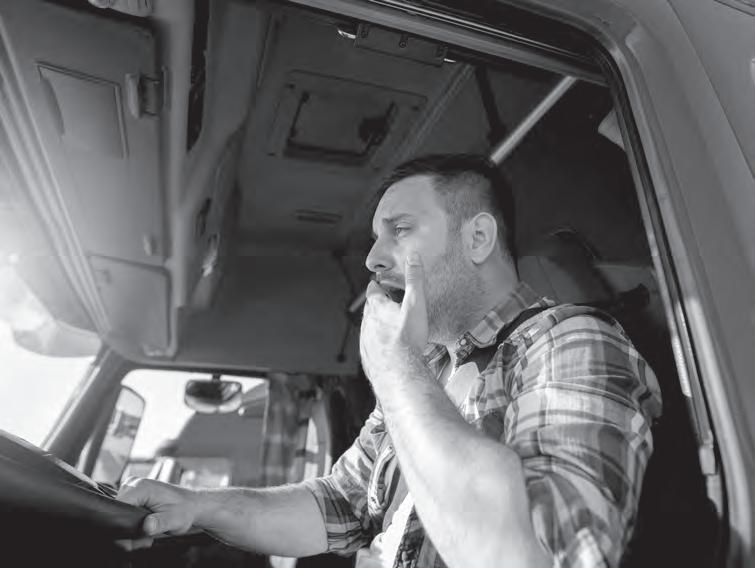
Lack of quality sleep is a huge safety indicator for many involved in driving, mining, flying, heavy construction, railways and operation of heavy equipment, where being fatigued can be a game-changer that increases the risk of crashes or mishaps.

Supply Chain Interruption, Again
With pandemic-related computer chip shortages and supply chain issues continuing, the other top CPAP manufacturers have been unable to increase production enough to fill a 4-million-device void. Providers have been scrambling to find replacement sources with the quality of manufacturing expected from the top historical makers of the devices. Some, of course, are better than others and the supply and demand equation is reflected in higher prices.
Fit for Duty Requires Adherence and Efficacy
In the workplace, some employees may be required to complete a fit-for-duty physical exam. If an employee is found to have sleep apnea, they may be required to show compliance and/or therapy adherence. With the recall, what will happen to them? As an employer, do you know if your employees have sleep apnea? Do you know if they are on a recalled device or a non-recalled device? Do you know if they have heard of the recall and registered their recalled devices? Do you know if they have received a replacement device? These are some of the many factors to be considered. In the trucking industry, we have all heard about the driver shortage. This device shortage may compound that crisis. Are there drivers being “pulled from the road” because they were unable to produce a CPAP/ BiPAP compliance report since June 2021?
Another question facing drivers who rely on these breathing aids: Will their health insurance pay for them to get a new PAP? Most health plans do not pay for a new machine. As a result, many fleet safety teams are offering to pay for drivers to get a new device.
KNOWLEDGE MATTERS GUARDIAN 22
It is always wise to address fatigue management and sleep issues before crashes happen.
Continued
from page 21
Alternatives to PAP Therapy
Remain Slim
On Sept 29, 2021, the Federal Motor Carrier Safety Administration (FMCSA) held a threehour call with its medical review board to discuss if there could be substitute devices and/ or waivers for drivers who were affected by the CPAP/BiPAP recall. Despite several discussions around allowing oral appliances to replace requirements for the recalled devices, FMCSA never made a final statement or position other than offering the possibility of giving DOTcertified medical examiners the discretion to issue 90-day medical card waivers.
Makers of oral appliances have long awaited a clear FMCSA position on their devices. The challenge lies in the lack of an easy and economical standard for measuring the compliance or efficacy of oral appliances. Advancement in technology is helping, and a new device that meets compliance requirements is on the horizon for FDA approval and a 2023 release. New implantable devices are hitting the market but with stringent criteria for qualification and a high private-pay cost. In addition, some oral appliances cost far more than PAP machines.
Getting Sleep Right
How can we know who is or is not getting restorative sleep? A tank truck driver, your child’s school bus driver, a passenger train
engineer or the crane operator hoisting concrete barricades above a busy highway: all may be at advanced risk for fatigue crashes due to the PAP device shortage.
If you have employees in safety-sensitive roles, it might be time to address this issue. Offer assistance to help pay or fully reimburse for new devices, if your employees can source one. Find a specialized company that works in your industry field providing sleep and fatigue policy resources.
It is always wise to address fatigue management and sleep issues before crashes happen or health declines. The North American Fatigue Management Program is a solid resource for those wanting to gain practical guidance and policy suggestions around fatigue management, sleep and shift work. It is a comprehensive resource for employers and the public sector as well: www.nafmp.org.
As things stand, many folks who rely on a CPAP or BiPAP are facing a choice between the dangers of using a recalled device versus the risks associated with missing out on restorative sleep. Meanwhile, it might be time for all of us to apply the adage of “don’t put all your eggs in one basket” towards a market shift in the manufacturing and distribution of CPAP and BiPAP therapy devices. n
CVSA/FMCSA Data Quality and Systems Training
August 16-18, 2022 Indianapolis, Indiana

CVSA and the Federal Motor Carrier Safety Administration (FMCSA) are proud to offer data quality and systems training to state partners who report inspection and crash records to support FMCSA and state safety programs. This will be the first in-person CVSA/FMCSA Data Quality and Systems Training event since 2019. Scheduled for Aug. 16-18, in Indianapolis, concurrent with NAIC, registration is now open for this three-day training event.
Learn more and register at www.cvsa.org/events/data-quality.
KNOWLEDGE MATTERS MARK YOUR CALENDAR
SECOND QUARTER 2022 23
ATA’s Law Enforcement Advisory Board: Shared Vision and Goals with CVSA
By Fred Fakkema, Vice President of Safety and Compliance, Zonar Systems; Chairman, Law Enforcement Advisory Board, American Trucking Associations
Without question, the two groups with the strongest and most consistent presence on our nation’s highways are law enforcement officers and American truckers. Therein lies a strategic opportunity for greater collaboration, increased communication and new bonds.
Ensuring the freedom of travel and the safe passage of vehicles is of paramount importance to both the law enforcement community and the trucking industry. It is the basis for a natural partnership between the two groups. Each year, truckers drive upwards of 305 billion miles across the U.S., delivering essential goods to each community in every pocket of the country. The safe and efficient delivery of every load is made possible, in large part, by the professionalism of America’s law enforcement officers who protect commercial drivers and the motoring public from harm.
In partnering, trucking and law enforcement are uniquely positioned to enhance highway safety and the security of freight transportation across the country. To that end, the American Trucking Associations (ATA) has established a Law Enforcement Advisory Board (LEAB) to help strengthen the ties between these two vital communities.
By building bridges between the trucking community and law enforcement, we can combine our resources and align them in service of our common goal to increase safety across America’s highways. These individuals have deep, shared experiences across industry
and law enforcement, and the LEAB has created a platform where their expertise can be applied in a constructive and purposeful way – with benefits for the entire motoring public.
Our board is comprised of ATA members who have previous experience in federal, state and local law enforcement, as well as current and retired law enforcement officials who have contributed positively to the partnership between both groups. The 2022 LEAB has 37 members in total with more than 900 years of combined law enforcement experience. This includes coast-to-coast representation from state highway patrols, public safety agencies, local police departments and more. The LEAB includes 10 current and former CVSA members, including past Presidents Steve Dowling (2010-2011), Mark Savage (20122013), and Tom Fuller (2013-2014); former Executive Director Steve Keppler; current CVSA Director of Enforcement Programs Jake Elovirta; and current CVSA Associate Member Vice President Derek Barrs.

Members of the LEAB convene bi-monthly to identify areas of opportunity and provide recommendations on priority issues, including many that are also of importance to the CVSA:
Combatting Human Trafficking:
The LEAB is committed to leading an industrywide effort to help put an end to human trafficking, which is modern-day slavery and one of the greatest human rights violations of our time. Tens of thousands of people
every year are illegally trafficked into and within the U.S. Many of these victims are minors, often young females, who are brutally forced to perform commercial acts of sex or labor against their will. Since 2012, ATA has encouraged and worked with its membership and organizations in the trucking industry to help combat human trafficking in the U.S.
Increasing Truck Parking Capacity:
The scarcity of truck parking spaces across the country decreases safety for all highway users, exacerbates the industry’s longstanding workforce challenges, contributes negatively to driver health and well-being, diminishes trucking productivity and results in unnecessary greenhouse gas emissions. We need investments in projects that address this critical, growing and long-neglected obstacle to the safe and efficient delivery of the 72% of domestic freight that is moved by truck drivers.
Distracted Driving: We have long known that distracted driving is a threat to the goal of zero highway fatalities, and we believe that enhancing driver education and enforcement is a great way to reduce this high-risk behavior. The trucking industry has been subject to a handheld device ban for some time and has seen the benefits such measures can yield for highway safety. Given data showing that most car-truck collisions are the result of passenger vehicle driver behavior, extending those bans to all drivers— and not just truck drivers—will have a positive impact on safety.
KNOWLEDGE MATTERS GUARDIAN 24
“Since the formation of the ATA’s LEAB just one year ago, we have started to see more collaboration in the relationship between law enforcement and the trucking industry as the two industries continue to collaborate on shared goals and values. This year the LEAB added an impressive 14 new industry veteran members to the board, representing diverse organizations from both sides, including the Iowa Department of Transportation, Texas Trucking Association, Louisiana State Police, Old Dominion Freight Line and Walmart. We hope to leverage the new board’s expertise to improve CMV safety and security, reduce distracted driving and human trafficking, increase truck parking and training accessibility, and create stronger enforcement standardizations - ultimately to help truck drivers do their job safely, and make our roads safer for all.”
-Fred Fakkema, Vice President, Safety and Compliance, Zonar Systems
Training Accessibility: Just as the number of active motor carriers has grown exponentially over the past few years, the number of registered vehicles has also increased significantly. Relatedly, the millions of vehicle miles traveled in the U.S. continue to grow in tandem with the rise of e-commerce and continued demand for consumer goods. The ever-growing demand for the timely delivery of goods highlights the ongoing need for collaboration to ensure that new and established motor carriers have the necessary tools and knowledge to comply with roadside safety regulations and a better understanding of the relationship between regulatory requirements and out-of-service conditions.
Enforcement Standardization:
Roadside enforcement is conducted by 13,000 local, state, provincial, territorial and federal commercial motor vehicle (CMV) safety officials on an annual basis. With the proliferation of advanced safety technologies and newer, safer trucking equipment, the transportation sector is constantly evolving and innovating to achieve greater productivity and enhanced driver and vehicle safety. This rapid evolution further underscores the importance of collaboration between motor carriers and roadside enforcement officials because such coordination lends to the uniformity, compatibility and reciprocity of commercial motor vehicle inspections and enforcement. Enforcement actions are critical because they encourage robust safety management programs and promote accountability across the industry. In that
vein, we see opportunities for improved consistency in terms of documenting violations and the DataQ process. Lapses in consistency have dynamic and lasting impacts on motor carriers, and we would welcome the opportunity to partner with CVSA to continue to refine and improve these processes.
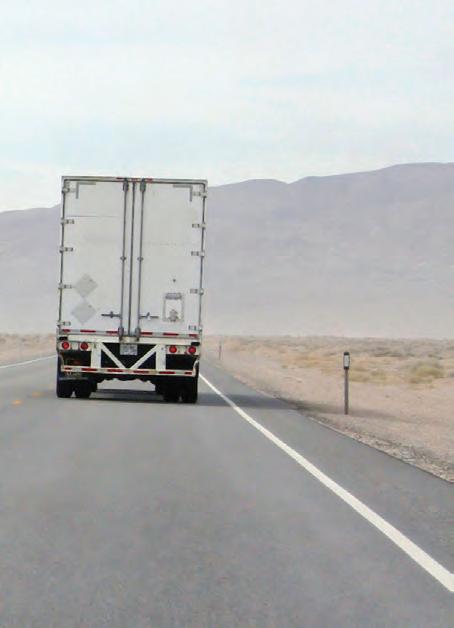
Commercial Motor Vehicle Safety and Security: As technology and data increasingly influence trucking operations, the ways in which data is used and evaluated become even more important with respect to CMV safety and security. To better understand and mitigate the uptick in the rates of truck-involved crashes, the trucking industry needs accurate information that can direct our efforts to deploy appropriate countermeasures and invest in the most effective safety technologies. Similarly, real-time data allows law enforcement and transportation safety professionals to respond more quickly to escalating trends and “hot spots,” and helps ensure limited resources are allocated to areas with the greatest need. The trucking industry invests approximately $10 billion annually in safety initiatives, and while some of these investments are made to comply with a myriad of regulatory requirements, many of them are voluntary, progressive safety initiatives that are paying dividends in highway safety. The safety and integrity of our transportation network are paramount, and we
can achieve the highest levels of CMV safety and security when investments are safetycentric rather than merely compliance-centric.
At ATA, we feel that the incredible depth and breadth of experience represented on this board will be an invaluable asset for our industry, the law enforcement community and the safety of the motoring public alike. One of the many reasons for the success of the LEAB is our partnership and shared priorities with CVSA, as many of our current members have held or still hold leadership roles within the organization. Moreover, we look forward to continued collaboration with CVSA and hope to find ways to leverage the new board’s expertise to improve CMV safety and security, and help truck drivers – the eyes and ears of the highways – do their job safely, making our roads safer for all. n
“CVSA’s mission is to improve commercial motor vehicle safety and uniformity by providing guidance and education to enforcement, industry and policy makers. ATA’s LEAB represents an incredible opportunity for CVSA to leverage our experience and reach with these three audiences to help further these tenets.”
-Steve Keppler, Co-Director, Scopelitis Transportation Consulting LLC
KNOWLEDGE MATTERS
SECOND QUARTER 2022 25
“The trucking industry and law enforcement both have a vested interest in improving highway safety. The LEAB will serve as a catalyst to not only leverage past relationships but also build future partnerships to accomplish shared goals. Members of the LEAB are committed to safety and see the group as a unique opportunity to work in collaboration with our partners at CVSA to improve commercial vehicle safety and security.”
-Mark Savage, Director, Connected Truck Solutions, Drivewyze
Working Alone, Intersectionality and the Caring-Person Test for Safe Work Practices
By Dave Elniski, Industry Advisor, Safety and Compliance, Alberta Motor Transport Association
I was recently having coffee with some work friends and we were discussing safety in the workplace. Somebody shared a story of a construction job they had in high school.
My friend said he was working on the roof of a complex one day without fall protection, an illegal but common practice at this job site. When he got home that evening, his mom told him she had seen him working at height, that it didn’t look safe and that she had called the employer and threatened to call the authorities if they ever sent her son to work without proper safety protection again. I don’t know if the authorities were ever involved, but my friend ended up finishing the project with a fall restraint harness and lanyard.
At that time, my friend lacked the experience and knowledge necessary to make the safe decision despite working alongside others. If he had been working unsafely while alone, the risk of a negative outcome would have been even higher due to the lack of witnesses to summon first responders should something go wrong. He also didn’t recognize the risk posed by a lack of workplace oversight – which was ultimately provided by a concerned mother instead of a regulator. Unfortunately, many people in the trucking industry also perform hazardous work on a regular basis in near or complete isolation and with no oversight; they are the only ones to monitor their safety performance.
Two factors make working alone extra hazardous: first, a complete reliance on the
individual’s adherence to safe work practices, and second, the reduced ability of others to offer assistance. The second factor is the most obvious. When someone gets hurt while alone, no one is there to give first aid or to call for help.
There is more to unpack with the factor of self-oversight. A call to 911 reduces the impact a bad thing has on someone, but working safely prevents the bad thing from happening in the first place. I am deeply grateful for the modern emergency response system available to me throughout North America, but my confidence in, and gratitude for, emergency workers doesn’t mean I take extra risks while driving or working alone.
KNOWLEDGE MATTERS GUARDIAN 26
A major challenge lone workers face is that their employer is primarily relying on them to ensure safe outcomes. People face different pressures and have different inclinations that affect their willingness to follow certain rules. I’ve known flatbed truckers who have elected to bypass a lumber mill’s automatic tarping station in favor of tarping alone on the side of the road. Why? Reasons cited have included time-related pressures, frustration with the tarping station’s design and pride in their ability to perform the work without “all the hand-holding” — a real quote, minus some expletives.
These decisions to make riskier choices come at the intersection of multiple factors defining the person at that moment. This is intersectionality, a term described by Kimberlé Crenshaw in the early 1990s as the way a person’s multiple identities are experienced when they intersect. Crenshaw same up with the term when she was studying an employment case where an African-American woman was not hired at an industrial facility.
The woman believed it was a result of her identity as an African-American woman, but the case was dismissed in court on the basis that the industrial facility did indeed hire African Americans and women. However, what was also true was that those in industrial positions were primarily African-American men, and those in front-office positions were primarily white women. African-American women lacked the specific combination of identities favored by this particular employer, but this complexity was not acknowledged in the judge’s decision. Crenshaw saw how the subtleties of the industrial facility’s hiring practices reduced opportunities for people who were both African American and women.
Intersectionality, while not a commonly used term in the trucking industry, is deeply important in safety management. While eliminating hazards or controlling them through engineering solutions are best in terms of reducing risk, not all hazards can be managed this way. Safe work practices, rules and personal protective equipment (PPE) become the next best way to control hazards, and these require active participation in the safety program by the worker. Any time participation is required for a process to be effective, we need to consider the intersecting identities and factors involved.
This is easier said than done. I’ve heard many managers and safety professionals describe their ideal world, a world where everyone just follows the company’s rules. In such a world, they imagine, safe work practices will offer
better protection than they do now because no one will deviate from them. However, this is fantasy; every truck driver, enforcement officer, manager, dockworker and every other person has their own, unique reasons for why they come to work. These reasons will certainly center around common themes like a need to earn an income and a preference for certain working environments, but additional individual motivations differ, which impacts each person’s willingness and ability to follow rules.
So, what is the “caring-person test?” It’s an exercise that asks a person to view a situation through the eyes of someone who cares deeply about them. How would that caring person feel about the situation and the choices the worker is making? In the story I opened with, my friend’s mom was concerned for his safety and did not approve of how the work was being done. An individual worker can ask themselves, “Would my [insert person who cares deeply about them like a parent, partner, child, friend] think I’m doing this safely?” If the response is negative, the worker can alter their behavior accordingly.
Are the caring-person test and similar thought processes worth using? I see great value in them. I am fortunate enough to have people in my life who, despite standing to benefit from a life insurance pay out, do not want to see any harm come to me. Considering what they would think about my risk-level helps me make safer choices. So, I would personally recommend that people working alone consider this test before starting a task.
But I would not suggest a company add this saying to their list of slogans in the hopes that their workers will start working more safely. Instead, I suggest employers use this test by asking themselves the following question: How do our safety and management teams empower solo workers to use the “caringperson test”?
This question can’t really be answered without considering intersectionality. In terms of a safety program’s safe work procedures, intersectionality means considering what factors contribute to why somebody may not follow a rule when they should. The moment the rule is needed is likely not the same as the moment when the rule is taught or reinforced at a safety meeting.
When a truck driver must perform a challenging and hazardous task while they are alone and out on the road, what else is going on for this person? This is the question
that leads to intersectional thinking in safety. My ability and willingness to follow a safe work procedure will change from situation to situation as a function of my unique identities and constantly changing external forces. A driver may be able to flawlessly demonstrate the chaining-up procedure and answer the safety-related questions during an in-yard orientation. But what about when the weather is bad, traffic is heavy, the frustration of nearby drivers shows in their driving and the truck driver’s pay is dropping every minute they spend stopped at the chain-up?
Additionally, motor carrier companies often have contradictory practices when it comes to operations and safety. While perhaps, reasonably speaking, this is unavoidable, increasing the degree to which workers follow safe work procedures requires more than writing a robust set of rules. What barriers do employers create to the safety of their own workers, such as paying drivers by the mile rather than by hours on the job?
Intersectional safety is deeper and more complicated than compliance. It’s like hoursof-service (HOS) regulations versus fatigue management: simply ensuring drivers are HOS compliant is not the same as ensuring they are not fatigued. Similarly, merely asking people to follow rules and use the “caring-person test” is much easier than addressing internal safety practices and barriers. However, if the goal is to increase safety performance (especially for solo workers), those in a position of influence need to consider the multiple pressures produced by themselves, others at their company and the external environment. This requires examining the intersectional position of their workers to see if policies and procedures are equitable for those with different and intertwined identities (such as race, gender, culture, physical ability and economic means) across the range of circumstances seen in operations.
I feel bad introducing such a complicated and heavy topic and then immediately wrapping up the article, but the goal here isn’t to provide a roadmap to intersectionality for safety managers. Instead, the primary purpose is to raise awareness. The commercial transportation industry needs to talk about intersectionality in safety while maintaining our grip on existing safety and compliance practices. n
KNOWLEDGE MATTERS
SECOND QUARTER 2022 27
FROM THE DRIVER’S SEAT
Safe Driving Starts with Preparing for Your Trip
By Dean Key, Professional Truck Driver, Ruan Transportation; America’s Road Team Captain
I have been a professional truck driver for 37 years. Twenty-six of those years have been with Ruan Transportation, which operates under the principle that the driver is the captain of the ship. As a team safety instructor for Ruan, I promote that philosophy. I have also learned that being prepared is a big part of getting that ship to its destination safely.
Being aware of the weather conditions is an important step in this preparation. I stay prepared for all seasons, all the time, and encourage other drivers to do the same. Are you ready for the next season? How about the conditions where you are heading and along the route there? We all know how quickly the weather can change.
Even warmer temperatures can bring traffic-related challenges, such as rain, thunderstorms, hail, lightning, flooding, tornados or harsh straight-line winds. How will you react to each? I suggest putting a little thought into a reaction plan for the different scenarios you might encounter, starting with checking forecasted conditions for the area in which you will be traveling to and through.
There are a great many apps and other resources to help us learn about what conditions might lie ahead. Download a weather app. Check it before heading out as well as during stops. Also, keep an eye out for weather and traffic-related announcements on overhead or roadside signs. You might even be able to phone a colleague or friend who is ahead of you on the same route to ask for updates.

Once you know what to expect, how do you know whether you should go, park or reroute? Say there is a bad storm up ahead. It could be well worth your time to stop and let it pass. State officials may have put commercial motor vehicle restrictions in place or even closed the road. A reroute may also be in order. Being prepared and researching the route before embarking on your trip will save time and will help keep you and everyone around you safe.
What else does it mean to be prepared, beyond keeping an eye on forecasts and making weather-related contingency plans? Only you can really answer that question, but here are a few suggestions:
• Pre-trip yourself. Be rested, feeling well and alert.
• Pre-trip your vehicle. Is it roadworthy?
• Pack supplies: water, snacks and extra clothing.
• Know your route, potential problems and where to stop if needed.
• Leave yourself extra time for issues that might arise.
• Time distractions, such as snacking or checking your phone, for when you are stopped.
Additionally, no one should drive beyond their comfort level. Keep in mind that you may need to adjust your comfort level if it is greater than the conditions warrant. Your comfort level may also be higher than the driver(s) in front of you. Be respectful of that. Give them room. Don’t
tailgate and add to their stress. Pushing is not going to get you there any faster. You do you and let them do them, with space. Also, never be afraid to stop when you hit the edge of your comfort level. Stopping for an hour or two may make all the difference in certain conditions. It doesn’t matter what type of vehicle you are driving; every condition has limits.
Our highways and byways are getting busier with summer traffic. Unfortunately, more traffic leads to more chances for incidents that can slow you down or stop you altogether. Occasionally, these roadblocks can’t be avoided. However, they often can be if you are monitoring conditions along the route.
We all often find ourselves racing the clock, especially after having had to slow down or stop for a while. In a misguided effort to make up the time, we allow ourselves to drive uncomfortably which translates into unsafe driving. We all know that when we are in a hurry, bad things can happen. Don’t fall into this trap. Keep it safe.
Weather and traffic conditions can change very quickly. We drivers must keep alert and pay attention to the road at all times. Remember, you are the person driving your vehicle, you are in charge of doing so safely and you are the captain of the ship. Plan ahead, slow down, leave space and stay safe. n
GUARDIAN 28 FROM THE DRIVER’S SEAT
The driver is the captain of the ship.
Prepare For Brake Safety Week
By Jennifer Smith, e-Commerce Digital Content Specialist, JIT Truck Parts
Brake Safety Week Is Weeks
Away
CVSA’s (CVSA) Operation Airbrake Program announced its next safety initiative – Brake Safety Week, which is scheduled for Aug. 21-27 this year. This annual brake-safety inspection and enforcement initiative aims to shine light on the importance of maintaining brake systems.
To prepare for Brake Safety Week, truck drivers and motor carriers should know what inspectors will check for, which truck parts to repair prior to the inspections and the risks involved in not repairing these parts. Checking brake adjustment and tractor protection systems, building air pressure, and testing low air pressure are all part of the roadside inspection process.
Types Of Air Brake System
Air brakes on big rigs use compressed air instead of hydraulic fluid and can be drum or disc brakes – each with its own unique set of components. For drum brake systems, these include a backing plate, wheel cylinder, shoes, pads and springs, whereas air disc brakes use calipers, rotors, pads, slack adjusters and brake chambers. Most large commercial motor vehicles today use air disc brakes since they are more efficient and may still be used even with minor air leaks (versus hydraulic brakes that require fluid refills). They also offer better stopping abilities than drum brakes. For these reasons, this article will focus on air disc brakes.
When To Replace Air Brakes on Trucks?
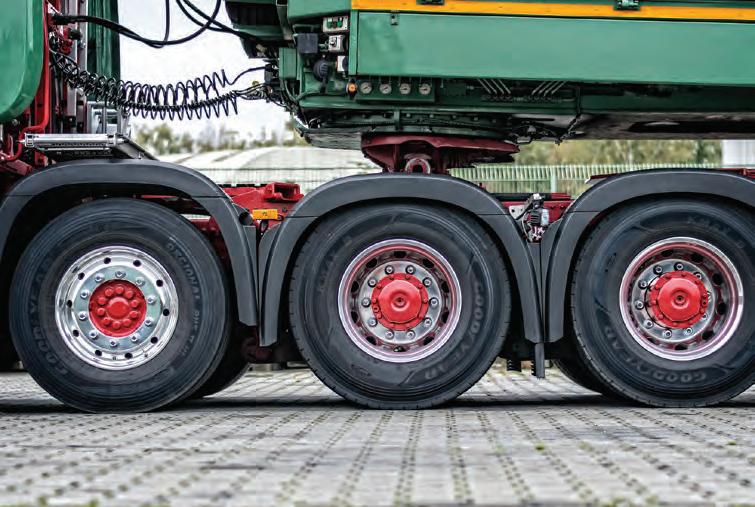
Driving with failing air brakes is never a good idea and can lead to crashes. Do not ignore an illuminating ABS warning light on the dash, loud squealing or grinding sounds when applying the brake pedal, steering wheel vibrations or a “soft” brake pedal. These are clear signs that brake pads, rotors and calipers need to be replaced in disc brake systems.
Air Disc Brake Repairs
There are three components of disc brake systems that may require more immediate attention than others: brake pads, rotors and calipers.
If brake rotors are generating a lot of heat along with loud squealing noises, chances are it is because of worn brake pads. These parts, made from steel, ceramic or synthetic materials, are used to create friction on brake rotors and are essential components for stopping vehicles. While these parts are located on the outermost area of the brake system, they usually cannot be seen without removing the hubcap from the wheel end. Brake pads are an easy fix and should be replaced every 30,000 to 50,000 miles on semi-trucks and other large commercial motor vehicles.
The brake rotor is the heart of the braking system and can be responsible for steering wheel vibrations, brake overheating and brake pulsation if not properly maintained. Brake rotors can be either solid or vented.
The differences between the two types are largely the rotor’s thickness and ability to dismiss heat. Rotor thickness is one of the safety concerns that can negatively affect the performance of the part. If rotors have been machined more than once, the thickness may be compromised. It is advised to use a brake rotor micrometer to check the thickness of the rotor during maintenance work. If it is under the minimum recommendations stamped on the rotor and cannot be re-surfaced, then
replacement is necessary. Drivers will also want to check for rust or grime on the wheel hub that can keep the rotor from sitting correctly upon installation. Rotors should be checked every 10,000 miles, along with brake linings, and replaced every 50,000 to 70,000 miles on heavy-duty applications.
Worn brake calipers may be to blame when vehicles begin to pull to one side. While brake calipers can last 100,000 miles, the way one drives and the environment can affect the part’s longevity. Damage to calipers is possible if a driver cruises down the road with bad brake pads or warped rotors. Moisture in the air plus road debris can also lead to corrosion build-up damaging the caliper pistons. Brake calipers are tough, durable and long lasting if they stay lubricated and should be checked when replacing brake pads and rotors.
Final Thought
Not replacing brake system parts as needed can lead to uneven tire wear, brake failure and accidents. CVSA is giving truckers plenty of notice about Brake Safety Week and what they need to do to pass inspections — and keep the motoring public safe. Now, it is up to truckers to make a break for brake safety, with proper maintenance. n
INDUSTRY PERSPECTIVES SECOND QUARTER 2022 29
MARK YOUR CALENDAR
Brake Safety Week is August 21-27
CVSA Training Provides Renewed Zeal
By Jeremy Woolward, Fleet Safety Officer, Chariot Express
On Feb. 28, it felt like I had stepped into a whole new world. The person who came out on the other end a week later was someone who had rediscovered their passion for why they do what they do and why they love it. This transformation was made possible when CVSA offered its industry roadside inspection courses in Canada for the first time. It was phenomenal that they were able to hold Parts A (driver) and B (vehicle) in Calgary, where I am based.
Thirty-four other participants and I walked into a conference room eager to learn and be a part of history. The event, which was hosted by the Alberta Motor Transport Association, did not disappoint.
Part A – Driver Requirements was facilitated by CVSA Director of Roadside Inspection Programs Kerri Wirachowsky. She was supported by Alf Brown, vice president of western operations for Frontline Commercial Vehicle Solutions, and Brian Davyduke, district sergeant for the Alberta Sheriff Highway Patrol.
During the week, the three instructors took us through what is expected of our commercial motor vehicle drivers when they are stopped by an enforcement official. We did a deep-dive into driver’s license requirements in Canada (of which there are many, since each province governs their licenses independently). We also talked about trip envelopes and the required supporting documentation, interviews and how to gather data about a driver’s trip, and determining whether the information presented by a driver is true and accurate. Additionally, we went through drivers’ record of duty status (RODS) and learned what roadside inspectors will look for and evaluate to determine whether violations exist.
What made the event special for me was not just the theory (for the record, I am a safety nerd, a legislation nerd and I love my textbooks); rather, it was about the instructors’ passion and commitment to an operator’s safety and a carrier’s success that made this week so memorable. Wirachowsky, Brown and Davyduke, by virtue of knowing each other and having worked together over the years, made this type of learning fun.
When answering questions, the instructors put us in the shoes of the inspector and/or the driver, depending on the circumstance. They
required us to defend our position and if we were unclear, there was no speculation, no “in my opinion,” no rhetoric. We stuck with the legislation, the manual and the CVSA North American Standard Out-of-Service Criteria.
The week was also made enjoyable by allowing for differing perspectives and mindsets to work as one. We had owneroperators, industry leaders, driver trainers, safety officers and service providers in attendance. We talked about what makes a roadside inspection different from a compliance audit. In Alberta, our transportation safety legislation is at arm’s length from our occupational health and safety legislation. As someone who works in both worlds, the nice thing for me is how easy it was to take this data and apply it to our occupational health and safety management systems.
From RODS to trip inspections to licensing requirements to dangerous goods training, as well as ensuring a good standing with the Drug and Alcohol Clearinghouse, this segment was all about hazard management, the most critical component of any safety system. Part A was all about the application of administrative hazard controls to manage driver fatigue, the operation of a commercial motor vehicle and protecting the public and infrastructure from motor vehicle incidents.
Concerning compliance audits, Brown took us through his perspective as a compliance auditor and how an audit captures data after an event occurs, but at the roadside, it’s happening now and there’s no time to really evaluate the program. It is “what you see is what you get.” Davyduke elaborated on that further while sharing anecdotes from his time on the road and performing inspections at scale houses.
Finally, Wirachowsky was the glue that held us all together and kept us on the journey. She created a learning environment that motivated me to go back to our office and sign up for a CVSA associate membership. Wirachowsky said from the beginning, “Once you leave here, you will not have the authority to perform Level III Inspections, but you will know how. You might know how to do them better than inspectors because you are industry. This is what you do.”
The week ended with the three instructors playing the roles of commercial drivers and putting the class in groups, with each group assigned a driver. This was where it all had to come together. Here we were, as a class, performing the driver interviews and verifying the RODS. The three instructors made fantastic drivers who wouldn’t give us the answers but rather forced us to work for them. They also allowed for some levity and fun with the process, which only heightened the experience. It really was an amazing way to cap off a week of learning.
At the beginning of this piece, I mentioned how this course was pivotal for me in rediscovering my passion for what I do. That was not hyperbole. I have been in my current role for three years. Compared to others, I’m still a relative newcomer. I had never driven a commercial motor vehicle, but rather came into the industry as a health and safety administrator. Yet I’ve had the opportunity to grow and to transform our company’s safety and compliance culture. I had not lost sight of this, but it had lost a bit of its energy recently. Being an active participant in this course changed all that. I returned to work with a bounce in my step and a recommitment to provide my drivers and our fleet with the best support possible. It has meant upgrading training materials and manuals, having more in-person conversations, and sharing the information from this course with drivers so that when they are stopped, they do not become an out-of-service statistic. My hope is they feel that same empowerment from me that I received from Wirachowsky, Brown and Davyduke and my colleagues. I want them to know that their success, their safety and livelihood are important to me.
CVSA has made a profound impact on how I see my role and how I see my drivers.
The hope is that we can bring this amazing program back to Canada for round two, to further strengthen and grow our amazing industry. I look forward to meeting my next group of classmates so I can experience this again soon.
Drive safe, work safe. Compliance is a culture. n
INDUSTRY PERSPECTIVES
GUARDIAN 30
Texas Recertifies Level VI Inspectors
In March, the Texas Department of Public Safety held three Level VI Inspection recertification courses in Austin. In all, 42 Level VI certified inspectors from the Texas Department of Public Safety, Harris County Sheriff’s Office, Houston Police Department, La Porte Police Department, Pasadena Police Department and Federal Motor Carrier Safety Administration satisfied their biennial certification requirements, per CVSA’s Operational Policy 4.
Sgt. Brad Gibson, Sgt. Timothy Davis and Cpl. Michael Neal instructed the courses, which covered a review of modules two through six of the Level VI Inspection course and a discussion of state-level radioactive activities. Furthermore, the Texas Department of State Health Services recertified survey meters for the inspectors.
Every March, the Texas Department of Public Safety holds at least three Level VI Inspection recertification courses. n
About ‘RAD Inspection News’
‘RAD Inspection News’ features news and other stories pertaining to the North American Standard Level VI Inspection Program for transuranic waste and highway route controlled quantities (HRCQ) of radioactive material. This inspection is for select radiological shipments that include enhancements to the North American Standard Level I Inspection Program and the North American Standard Out-ofService Criteria with added radiological requirements for transuranic waste and HRCQ of radioactive material.
Learn more about the Level VI Inspection Program at www.cvsa.org.
‘RAD Inspection News’ is made possible under a cooperative agreement with the U.S. Department of Energy. Since January 2007, it has run as a section inside CVSA’s “Guardian.” n
Students Attend This Year’s Level VI Train the Trainer Course in North Carolina
Nineteen students attended this year’s Level VI Train the Trainer Course, which was held in Raleigh, North Carolina, March 1-3. The course was offered to state agency representatives who are responsible for providing Level VI refresher training to their state’s Level VI CVSA-certified inspectors so those inspectors may maintain their Level VI Inspection certification.
The 24-hour course included an overview of the Level VI Inspection, instructordevelopment activities, and module instruction taught by each student, along with a final exam.
Students who passed the Train the Trainer Course are now certified by CVSA to conduct
eight-hour Level VI Inspector refresher training in their home state. All Level VI refresher trainers must attend the approved Level VI Train the Trainer Course every two years as noted in CVSA’s operational policies.
Students in the course were from the Arkansas State Police, California Highway Patrol, Georgia Department of Public Safety, Indiana State Police, Kentucky State Police, Louisiana State Police, Maryland State Police, Massachusetts State Police, Mississippi Department of Public Safety, New Mexico Department of Public Safety, North Carolina State Highway Patrol, Nebraska State Patrol and Virginia State Police. n
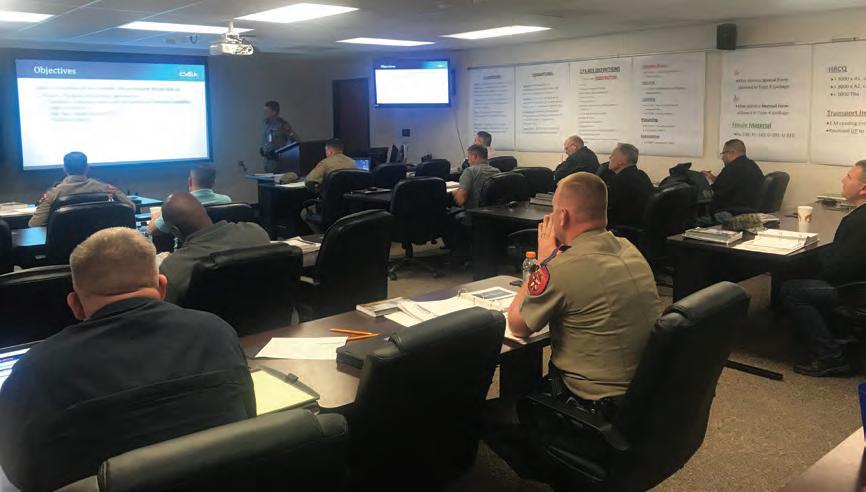
RAD INSPECTION NEWS
SECOND QUARTER 2022 31
Way Cleared
One more room to go.
Way cleared for emplacement in final Panel 7 room
for Emplacement
in Final Panel 7 Room
Way cleared for emplacement in final Panel 7 room
The Waste Isolation Pilot Plant (WIPP) moved one step closer to a milestone in late January when the next-to-last room of Panel 7 was filled.
Crews carefully stacked the last column of waste containers in Panel 7’s Room 2, leaving only one of the cavernous rooms to fill before Panel 7 can be sealed and emplacement moved to newly mined Panel 8.
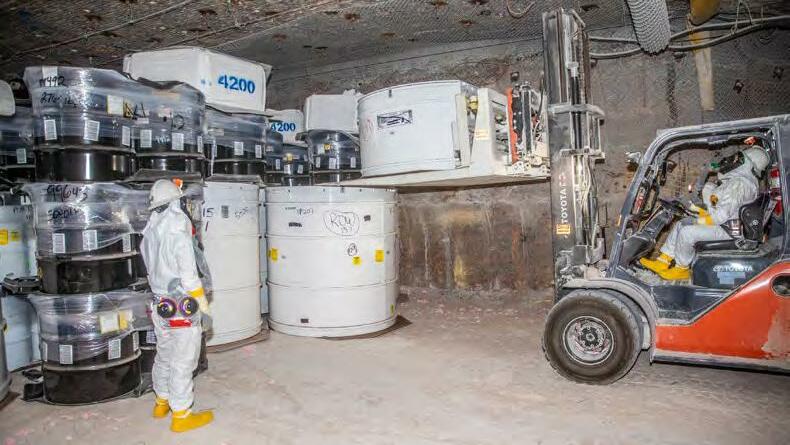
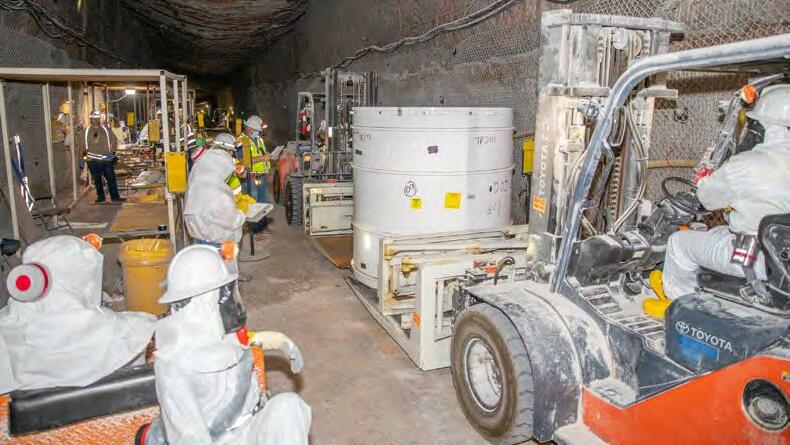
Carved from a thick layer of salt, a panel room is 33 feet wide, 13 feet high and 300 feet long, the length of a football field minus the end zones. The seven rooms in the panel are filled from back (7) to front (1). Creating a panel requires mining nearly 160,000 tons of salt.
A total of 5,661 containers were emplaced in Room 2, ranging in size from stacks of 55-gallon drums (3,042 drums total) to a single 11,000-pound Standard Large Box (SLB), which is shipped in WIPP’s largest shipping cask, the TRUPACT-III. Waste is stacked three high and then topped with bags of magnesium oxide (MgO).
It is anticipated that Room 1 will be filled in late spring or early summer. The panel will then be sealed, and emplacement will move to Panel 8, which is being outfitted with power, lighting, air monitors and chain link on the ceiling (back) and walls (ribs) to capture any rock that sluffs off.
Closure of Panel 7 will include a bulkhead, 100 feet of floor to ceiling salt and then another bulkhead.
Panels are designed to be created and filled within approximately five years, but Panel 7 has taken much longer due to a radiological event in Room 7 that occurred in February 2014, shortly after emplacement began. That delayed emplacement until January 2017, as well as maintenance in the form of rock bolting. So, in addition to the closure of Room 7, Rooms 6 and 4 had to be abandoned due to excessive salt movement.
After being transported underground, the final containers for Panel 7, Room 2, traveled through the transition zone, where they were handed off to workers in protective equipment who emplaced them in Panel 7.
After being transported underground, the final containers for Panel 7, Room 2, traveled through the transition zone, where they were handed off to workers in protective equipment who emplaced them in Panel 7.
Carved from a thick layer of salt, a panel room is 33 feet wide, 13 feet high and 300 feet long, the length of a football field minus the end zones. The seven rooms in the panel are filled from back (7) to front (1). Creating a panel requires mining nearly 160,000 tons of salt.
Because of the extra time needed to emplace waste in Panel 7, crews have had to do extra bolting, as well as using machinery to level the floor, as salt movement has created heaves. n
Carved from a thick layer of salt, a panel room is 33 feet wide, 13 feet high and 300 feet long, the length of a football field minus the end zones. The seven rooms in the panel are filled from back (7) to front (1). Creating a panel requires mining nearly 160,000 tons of salt.
Due to the resulting contamination, out of an abundance of caution, workers in Panel 7’s rooms wear protective equipment, including respirators. One of the bonuses of moving to Panel 8 will be that WIPP workers will no longer need to wear the extra protective gear because they will be working in a freshly mined area.
A total of 5,661 containers were emplaced in Room 2, ranging in size from stacks of 55gallon drums (3,042 drums total) to a single 11,000-pound Standard Large Box (SLB),
https://wipp.energy.gov/wipp_news_20220310.asp[3/22/2022 2:01:40 PM]
A total of 5,661 containers were emplaced in Room 2, ranging in size from stacks of 55gallon drums (3,042 drums total) to a single 11,000-pound Standard Large Box (SLB),
https://wipp.energy.gov/wipp_news_20220310.asp[3/22/2022 2:01:40 PM]
RAD INSPECTION NEWS GUARDIAN 32
After being transported underground, the final containers for Panel 7, Room 2, traveled through
Long-time WIPP Driver Randy Anderson Passes Away
Randy Anderson, a long-time Waste Isolation Pilot Plant (WIPP) driver with CAST Specialty Transportation, passed away on Feb. 14.
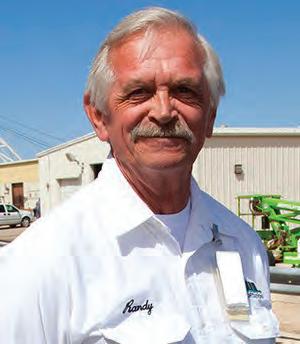
Anderson logged more than four million miles in a professional driving career that began in 1967, when he was fresh out of high school. He drove many of those miles transporting transuranic (TRU) waste to the Waste Isolation Pilot Plant (WIPP).
On March 26, 1999, Anderson was one of two drivers to deliver the first TRU waste shipment to WIPP, coming from the U.S. Department of Energy’s Los Alamos National Laboratory. Anderson transported the first waste shipment to WIPP from the Hanford Site in Washington state and helped deliver to WIPP the first
remote-handled waste shipment and the first shipment using a TRUPACT-III shipping container. Anderson was also part of the team to transport the final TRU waste shipment from the now-closed Rocky Flats Plant in Colorado to WIPP.
“Randy will be missed by the CVSA national instructor team,” said CVSA Director of Level VI Inspection Program Carlisle Smith. “Over the years, he was more than happy to assist us by allowing students to ask him questions regarding the vehicle, shipping containers and safety devices and by sharing his experiences over the years working for the WIPP carriers. We will remember his gruff voice, warm smile, generosity and most importantly, his friendship.” n
CVSA Level VI Inspection Public Outreach Program to Attend 2022 IACP Annual Conference
On Oct. 15-18, the CVSA Level VI Inspection Public Outreach Program will be at the International Association of Chiefs of Police Annual Conference and Exposition in Dallas, Texas.

Visit www.theiacpconference.org to learn more about the IACP Annual Conference and Exposition. Visit www.cvsa.org/inspections/ north-american-standard-level-vi-inspection-
program/level-vi-public-outreach to learn more about the CVSA Level VI Inspection Public Outreach Program and view the schedule for the year.
CVSA has cooperative agreements with the U.S. Department of Energy (DOE) on Level VI Inspections of transuranic waste, spent nuclear fuel and high-level radioactive waste
shipments throughout the U.S. The Level VI Inspection Public Outreach Program consists of brochures, videos, a conference/trade show display, trained speakers and a quarterly newsletter. In addition, representatives of CVSA travel throughout the U.S. to promote the Level VI Inspection Program, including participating with DOE stakeholders at various local and national meetings. n
RAD INSPECTION NEWS SECOND QUARTER 2022 33
Randy Anderson
for more
Visit www.theiacpconference.org
information.
New Hampshire Hosts Level VI Inspection Certification Course
Level VI Inspection Certification Class 183 was hosted by the New Hampshire State Police in Gilford, New Hampshire, March 14-17. Nineteen students – representing Connecticut, Maine, Vermont, New York, Massachusetts and the host state of New Hampshire –attended the certification course.
To view a listing of upcoming Level VI Inspection certification courses, visit www.cvsa.org/training. n
LEVEL
Number of Level VI Inspections 0 242 242 100%
Point of Origin 0 143 143 59.09%
En Route 0 99 99 40.91%
Point of Destination 0 0 0 0%
Unknown Location 0 0 0 0%
Level
Level VI Inspections with Out-of-Service Conditions 0 2 2 0.83%
393.45B2
Brake Hose or Tubing Chafing and/ or Kinking 2 2 50% 2 66.67% 177.817A
No or Improper Shipping Papers (Carrier) 1 1 16.67% 0 0% 397.101D
No or Incomplete Route Plan for Radioactive Materials 1 1 16.67% 0 0% 172.310D
Type B, B(U), B(H) Package Not Marked with Radiation Symbol 1 1 16.67% 0 0%
RAD INSPECTION NEWS GUARDIAN 34
VI Inspections with No Violations 0 238 238 98.35%
Level VI Inspections with Violations 0 4 4 1.65%
Level VI Roadside Inspections (2022 - Fiscal)
of Inspections # of Violations % of Total Violations # of OOS Violations OOS %
Level VI Roadside Inspection Violations (2022 - Fiscal) Violation Code Violation Description #
VI INSPECTIONS Federal State Total % of Total
CVSA LEADERSHIP
BOARD OF DIRECTORS
PRESIDENT
Capt. John Broers
South Dakota Highway Patrol
VICE PRESIDENT
Maj. Jeremy “Chris” Nordloh Texas Department of Public Safety
SECRETARY Col. Russ Christoferson Montana Department of Transportation
PAST PRESIDENTS
Sgt. John Samis Delaware State Police
Lt. Donald Bridge Jr. Connecticut Department of Motor Vehicles
REGION PRESIDENTS
Region I
Tpr. William Alarcon New Jersey State Police
Region II Capt. Bart Teeter Texas Department of Public Safety
Region III
Maj. Jon E. Smithers Indiana State Police
Region IV Brad Marten Montana Department of Transportation Region V Richard Roberts British Columbia Ministry of Transportation and Infrastructure
REGION VICE PRESIDENTS
Region I
Tpr. James Thomas Rhode Island State Police
Region II
Lt. Ronald Jenkins Oklahoma Highway Patrol Region III Lt. Mike Maytum Nebraska State Patrol
Region IV Tpr. Jeremy Disbrow Arizona Department of Public Safety Region V Krista Cull
Newfoundland and Labrador Transportation Regulation Enforcement
LOCAL PRESIDENT
Ofc. Thomas Mrozinski, Jr. Frisco (Texas) Police Department
LOCAL VICE PRESIDENT Ofc. Lincoln Sweeney Cedar Hill (Texas) Police Department
NON-VOTING LEADERSHIP
ASSOCIATE MEMBER PRESIDENT
Andrea Sequin Schneider
ASSOCIATE MEMBER VICE PRESIDENT
Derek Barrs
HNTB Corporation
COMMITTEE CHAIRS
Crash Data and Investigation Standards Committee
Capt. Bryant Gay Florida Highway Patrol
Driver-Traffic Enforcement Committee
Capt. Chris Barr Indiana State Police
Enforcement and Industry Modernization Committee
Capt. Leonard Dittman Colorado State Patrol
Hazardous Materials Committee Sgt. Brad Wagner Nebraska State Patrol
Information Systems Committee Holly Skaar Idaho State Police
Passenger Carrier Committee Tpr. William Alarcon New Jersey State Police
Policy and Regulatory Affairs Committee
Capt. John Hahn Colorado State Patrol
Size and Weight Committee
Brad Marten Montana Department of Transportation
Training Committee
Lt. Ronald Jenkins Oklahoma Highway Patrol
Vehicle Committee
Tpr. John Sova North Dakota Highway Patrol
PROGRAM CHAIRS
Cooperative Hazardous Materials Enforcement Development Sgt. Kevin Hogan Michigan State Police
Human Trafficking Prevention Lt. Col. Michael Krumm Michigan State Police
International Driver Excellence Award Brett Graves Maverick Transportation, LLC
International Roadcheck Maj. Michael Forman Mississippi Department of Transportation
Level VI Inspection M/Sgt. Todd Armstrong Illinois State Police
North American Cargo Securement Harmonization Public Forum
Tpr. Jeremy Disbrow Arizona Department of Public Safety
North American Inspectors Championship Richard Roberts British Columbia Ministry of Transportation and Infrastructure
Operation Airbrake Lt. Aaron Hayden Maine State Police
Operation Safe Driver
Capt. Jon Olsen Minnesota State Patrol
PBBT Users Lt. Joseph Greene Kansas Highway Patrol
SECOND QUARTER 2022 35









GUARDIAN 36
PREMIER PLATINUM DIAMOND GOLD Black Pantone 109
CVSA SPONSORS
SILVER
BRONZE
FRIENDS OF CVSA
37 SECOND QUARTER 2022
CVSA SPONSORS
American Bus Association Austin Powder Company Brake Tech Tools Cargo Transporters Inc. Coach USA Inc. EROAD Inc. FoxFury LLC Great West Casualty Company Kenan Advantage Group Inc. MANCOMM Inc. Techni-Com Inc United Motorcoach Association US Ecology Usher Transport Zonar Systems
American Pyrotechnics Association DATTCO Inc. Direct ChassisLink Inc. Greyhound Independent Carrier Safety Association Oak Harbor Freight Lines Inc. Vehicle Inspection Systems Inc.
J.E.B. Environmental Services LLC Linde Gas & Equipment Inc. Lytx PITT OHIO Price Benowitz Injury Lawyers LLP Railsback HazMat Safety Professionals LLC Washington Trucking Associations Welcome TO OUR NEW ASSOCIATE MEMBERS As of June 10, 2022 Battle Logistics LLC / Blue Scorpion Carrier Services / C&S Wholesale Grocers Inc. / C3 Consulting LLC / Carmacks Enterprises Ltd. / Chancer LLC Chariot Express Ltd. / Chick-fil-A Supply / Chobani LLC / City of Calgary / East West Express 2015 Inc. / eCred LLC / GES / GMH Transportation Services LLC Gordon Food Service / Grammer Logistics / JAG Logistics Inc. / Keeley Construction / Koons Trucking LLC / Ledcor Equipment Group / Lisk Trucking Inc. Mears Group Inc. / Meraz Safety Coaching / North Carolina Forestry Association / Pilot Water Solutions LLC / Purcell Tire and Service Center / Sacral Solutions Sam’s Transport Solution / Select Energy Services LLC / Sunbelt Rentals / The Truss Company and Building Supply / Transtar Insurance Brokers Inc. Veritiv / Vikings LLC
99 M Street, SE, Suite 1025 Washington, DC 20003
After more than a decade in Greenbelt, Maryland, CVSA has relocated its headquarters to Washington, D.C. This new location puts us right at the center of business — closer to the U.S. Capitol, the U.S. Department of Transportation and other related federal agencies, and fellow associations and organizations, such as the American Trucking Associations, American Association of State Highway and Transportation Officials, Governors Highway Safety Association, etc. In addition to the new address, staff members have new contact information, which can be found at www.cvsa.org/cvsa-contacts/cvsa-headquarter-staff.