ESSENTIALS



Our primary purpose in writing this workbook is to develop essential English skills. However, we also aim to motivate students to engage with the way our language works and to build confidence in their own ability to communicate effectively.
English Essentials Workbook 3 is divided into four key sections for maximum accessibility and flexibility:
• Part 1: Language
• Part 2: Spelling & Vocabulary
• Part 3: Literature
• Part 4: Writing
The Language section is designed to extend students’ understanding and control of language. The basics of grammar and punctuation are presented in a relevant and meaningful sequence so that students gain confidence as they improve their language skills.
The Spelling & Vocabulary section will enable students to improve their basic literacy skills. All the list words have been chosen because of their relevance to real-life experiences. Students will often encounter these words and will need to be familiar with both the spelling and meaning. A good number have been specially chosen to help students expand their vocabulary.
The Literature section aims to develop comprehension skills through a wide range of high-interest literary, personal and everyday texts. These include stories, poems, newspaper articles, information reports, cartoons, speeches and posters, as well as extracts from novels, autobiographies and non-fiction.
The Writing section has been created to enable students to become better writers. Each writing topic examines a different writing skill, genre or technique. Writing styles such as narrative, descriptive, persuasive, informative and personal are featured. The use of writing models and photographs helps target and improve specific writing skills.
A separate Teacher Book provides answers to all the comprehension, language, spelling and vocabulary questions in the student workbook. It has been designed as a tool for assessing student progress.
Rex Sadler, Sandra Sadler and Viv Winter

Nouns are naming words. There are four main kinds of nouns: common, proper, collective and abstract nouns. Most nouns are common nouns.
• A common noun is a word that names a person, animal, place or thing. It does not begin with a capital letter unless it begins a sentence. student zebra computer river boy kitchen
• A proper noun is the name of a specific person, place or thing. Proper nouns can be identified easily because they always start with a capital letter.
Darwin Honda Rebecca October Italy
• A collective noun is used to name a collection or group of similar people, animals or things.
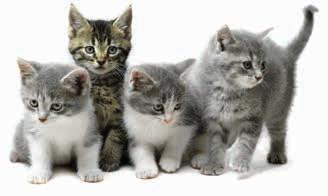
a gaggle of geese a herd of elephants a litter of kittens
• An abstract noun names qualities, feelings, ideas or actions. beauty friendship liberty sadness warmth chaos
Use the definitions and first-letter clues to identify the common nouns.
1 a person who writes for newspapers and magazines
2 a person who studies rocks and earth formations
3 a very large African animal once called a ‘river horse’
4 the official residence of an ambassador
5 a person who travels in search of new lands, etc.
6 a wild, dog-like African animal that makes a noise similar to a laugh or a scream h
7 a person who has been shipwrecked c
8 a piece of land where a lot of fruit trees are grown o
9 a person whose job it is to ride horses in races j 10 soldiers trained to fight on foot
11 a dense forest in a tropical country
12 a boat with two parallel hulls
13 waterlogged land, a bog or marsh
14 a tall tower used to store grain
15 a cruel, unjust and unkind ruler
16 a special seat used by a king or queen on special occasions
17 a person who has great love for their country
Find two proper nouns in the list that go with each common noun below.
rivers:
Choose the appropriate people, animals or things from the brackets to complete the sentences.
1 In the barn there were a litter of , a brood of and a sheaf of . (chickens, corn, kittens)
2 A squad of ran up the flight of to arrest the gang of . (stairs, thieves, police)
3 A bunch of , an album of and a cluster of lay on the millionaire’s desk. (photos, grapes, diamonds)
4 The board of agreed to purchase a new fleet of and a gallery of . (paintings, directors, cars)
Change each of the following words into abstract nouns. For example: true—truth curious—curiosity fertile—fertility
Adjectives help to provide insights about the world around us. They convey shape, size, strength, colour or any other attribute that describes a noun or pronoun. As the following examples show, writers often use adjectives to make their characters memorable and their writing come alive for their readers.
Miss Barkley was quite tall. She wore what seemed to be a nurse’s uniform, was blonde and had a tawny skin and grey eyes. I thought she was very beautiful from A Farewell to Arms by Ernest Hemingway
His hair was long and tangled and greasy and hung down, and you could see his eyes shining through like he was behind vines. It was all black, no grey; so was his long, mixed-up whiskers.
from Huckleberry Finn by Mark Twain

Identifying adjectives
Read the description and identify all the adjectives. Hint: There are thirteen adjectives, and a few are hyphenated.
My sister was not a good-looking woman. She was tall and bony, with black hair and piercing eyes, and almost always wore a coarse apron. Joe was a fair man with curls of flaxen hair on each side of his smooth face. He was a mild, good-natured, easy-going fellow.
adapted from Great Expectations by Charles Dickens

Find two adjectives in the list that are similar in meaning to each group of adjectives below.
1 happy, cheerful, jubilant
2 scared, afraid, terrified
3 angry, irate, vexed
4 brave, valiant, plucky
5 sad, unhappy, miserable
6 clever, smart, astute
7 funny, amusing, comical
8 pleasant, agreeable, genial
9 beautiful, attractive, lovely
10 dishonest, deceitful, devious
Adjectives have three degrees of comparison:
• Positive (one person or thing)
• Comparative (comparing two)
• Superlative (comparing more than two)
10 Sarah is the person I know. polite glad fraudulent ecstatic sorrowful pretty frightened handsome horrified intelligent scheming annoyed friendly irritated despondent hilarious courageous humorous fearless ingenious
tall Amy is tall taller Amy is taller than Jessica. tallest Amy is the tallest girl in the class.
Complete each sentence by inserting either the correct comparative or superlative form of the adjective in brackets.
1 Of the three sisters, Chloe is the . (young)
2 That was the pizza I had ever tasted. (good)
3 David is than Jed. (lazy)
4 Japanese is to learn than French. (difficult)
5 In the southern hemisphere it is in January than in June. (hot)
6 It was the exam I had ever done. (easy)
7 She is the student in the class. (conscientious)
8 The Pacific Ocean is than the Arctic Ocean. (deep)
9 He played the game of tennis of his career. (bad)
Verbs are action words that express doing, having and being. Sometimes a verb consists of one word only, but at other times it may consist of a group of words. For example: She walks. He is running. They have been camping.
The verbs in the following passage have been removed and are listed below. Your task is to restore the verbs to complete the graphic description of the vehemence of an avalanche. had collapsed was rushing were running were toppling were engulfed was startled had swept blotted was


An hour later I by a tremendous roar. An enormous portion of the ice wall . Huge masses of ice as high as cathedrals to destruction; billowing clouds of snow spray upwards and outwards in front of a monstrous avalanche. On the slope below the party, mere black dots. They , but how slowly, how uselessly, before the reeling clouds of death. The next moment the avalanche down upon them; they and out like insects beneath a tidal wave.
Certain verbs are often used with particular nouns. Choose verbs from the list to complete the following phrases.
from The Kangchenjunga Adventure by Frank Smythe inherit solve narrate quench writhe survive exonerate navigate recuperate forecast celebrate formulate correct apply intervene extinguish
1 to one’s thirst
2 to an error
3 to after an illness
4 to a ship
5 to an ordeal
6 to the weather
7 to from blame
8 to a fire 9 to a plan
to a birthday
to for a job
to a problem
to a story
to in agony
to in a dispute
to a fortune
• A synonym is a word that is similar in meaning to another word. Attempt is a synonym for try
• An antonym is a word that is opposite in meaning to another word. Stop is an antonym of start.
Place the synonyms and antonyms from the ‘Choices’ column in the appropriate column for each verb. Verb Synonym
1 diminish increase, lessen 2 deter iorate worsen, improve
3 hur ry hasten, linger
4 conclude f inish, begin
5 purchase sell, buy
6 build demolish, construct
7 shor ten abbreviate, lengthen
8 excavate dig, fill 9 remember forget, recollect
shut close, open
retreat withdraw, advance
waste conserve, squander
leave return, depart
per mit forbid, allow
help hinder, aid
conceal reveal, hide
unite join, separate
refuse reject, accept
As their name suggests, adverbs add meaning to verbs. However, adverbs may also add meaning to adjectives and other adverbs. He spoke angrily. The adverb angrily modifies the verb spoke. I am very happy. The adverb very modifies the adjective happy You are talking too softly. The adverb too modifies the adverb softly.
Adverbs tell how, when, where or to what extent the action of the verb takes place. Very often they end in ‘-ly’. The following examples give you some idea of the types of adverb you might encounter.
• Many adverbs tell how the action happens. silently angrily fast politely rudely
• Some adverbs tell when the action happens. today later previously now usually
• Other adverbs tell where something happens. here outside near everywhere
• Adverbs may also tell how much or to what extent completely ruined quite often very slowly extremely clever
Identify the adverbs in each sentence below.
1 Suddenly, frantically, the pilot struggled with the controls of the diving helicopter.
2 The frogs are extremely noisy now that it is raining heavily.
3 Driving on the highway today we nearly hit a kangaroo.
4 The goods train was often travelling very slowly.
5 They unexpectedly perceived a flock of birds flying south.
6 They were then financially secure.
7 The hikers drank thirstily and wearily from the mountain stream.
8 The fans cheered wildly as our captain nimbly kicked the winning goal.
9 The baby was sleeping safely upstairs during the flash flood yesterday.

Change the phrases in italics into adverbs. The first one is done as an example.
1 She played tennis with skill
2 The soldier fought with defiance
3 The swimmer won with ease.
4 The soprano sang with melody.
5 He arrived on time
6 They searched in every possible place
7 The student replied with indignation
8 There will be an audit once a year
9 The class was working without any noise.
10 He worked hard at all times.
11 Help will come in the near future
12 He drew the map with accuracy
13 She listened to her patient with sympathy
14 He banged on the door with anger.
15 The winner raised his arm in triumph.
16 The army proceeded with caution.
17 The taxi driver waited without patience
18 The student spoke without respect
skilfully
As with nouns, verbs and adjectives, it is important to use suitable adverbs, especially in combination with words like said, yelled, exclaimed, etc. when writing dialogue. Complete the sentences by choosing the most suitable adverb from the ones in brackets.
1 ‘I’m by far the best player,’ he exclaimed . (efficiently, proudly, patiently)
2 ‘I’m leaving you for good,’ Angela said . (safely, emphatically, rarely)
3 ‘Let’s get out of here before it explodes,’ said Tim . (fearfully, slowly, sadly)
4 ‘Hands up!’ yelled the robber . (lazily, jealously, aggressively)
5 ‘You’re going to be in trouble,’ Amy said . (spitefully, clumsily, easily)
6 ‘I’ll help you when you need me,’ Dad said . (hugely, keenly, supportively)
7 ‘Please go now,’ she cried . (tearfully, badly, carefully)
8 ‘You must watch out for sharks,’ the guide said . (politely, warningly, exactly)
As well as naming people, places, things and qualities, well-chosen nouns give the audience additional specific information. The following examples show how this can be achieved. The car braked. The hatchback braked. (The kind of vehicle is revealed.) The dog is barking. The dachshund is barking. (The breed of dog is given.) He grabbed a tool. He grabbed a hammer. (The kind of tool is specified.)
Replace each noun in italics with a more specific noun from the list. Use each noun once only.
ballerina novel duke yacht brawl eagle inferno safari limousine backpack beret pony revelry mansion whimper panorama banquet troupe emergency bouquet
1 At the party there was a fight between two of the guests.
2 The business executive was driven in a black car .
3 The film star’s multi-level house was advertised for sale.
4 A towering fire engulfed the hotel.
5 The boat skimmed over the waves.
6 There was an unexpected traffic problem on the highway.
7 The young horse galloped around the paddock.
8 There was a magnificent view of the hills surrounding the lake.
9 The tourists went on a trip to view elephants and lions.
10 The book Watership Down is the story of a group of rabbits.
11 The famous nobleman was wearing diamond cufflinks.
12 The hiker was carrying a heavy bag
13 The woman was wearing a woollen hat .
14 The accomplished dancer pirouetted exquisitely.
15 The bird was soaring high in the sky.
16 A wonderful meal was served in the dining room.
17 A group of dancers entered the theatre.
18 We could hear the sounds of celebration in the street below.
19 The sick child’s cry woke his parents.
20 The speaker was presented with a bunch of flowers.
Carefully chosen adjectives enable us to see people, objects and experiences in new ways. Consider the following examples where a stronger adjective is more effective and gives an extra dimension to the noun it describes. a bad queen a sinister queen a good novel an engrossing novel a hidden passage a secret passage a large boulder a massive boulder
Replace each adjective in italics with a stronger one from the list. Use each adjective once only. The first letter is given to help you.

vigilant ancient obnoxious amiable contemporary gloomy avaricious exemplary zealous charismatic lacerated scrumptious parched prudent exquisite meandering
1 The dry p land was drought stricken.
2 The explorer came upon old a Egyptian ruins.
3 The student was eating a tasty s apple pie.
4 The politician is a popular c member of parliament.
5 He was asked to leave the restaurant because of his bad o behaviour.
6 She was suffering from a badly torn l arm.
7 The new manager is a very friendly a team leader.
8 The retired school principal was an excellent e educator.
9 It was a rare and beautiful e sculpture.
10 The greedy a lawyer charges excessive fees.
11 The coach made a very wise p decision.
12 In the distance, we could see the dark g walls of the castle.
13 She is a keen z supporter of education for all the world’s children.
14 The students enjoyed viewing the modern c paintings.
15 The driver had to stay watchful v for animals on the road.
16 The winding m stream made its way slowly through the hills.
Verbs provide action and vitality to a sentence. Ordinary verbs give the basic form of an action, but strong verbs add an extra dimension and create a bigger impact on the audience. This is demonstrated in the following examples.
He ate his food. He gobbled his food. (ate hurriedly and noisily)
The glass broke. The glass shattered. (broke suddenly into pieces)
She walked home. She trudged home. (walked slowly with heavy steps)
I laughed a lot. I giggled a lot. (laughed lightly in a silly way)
Replace each verb in italics with a stronger verb from the list. Use each verb once only.
snatched strutted trickled jostled drooped chattered toiled surged sneaked hauled gazed hurtled plummeted slumped deliberated scorched
1 The helicopter fell into the sea.
2 The seagull took the biscuit from the child’s hand.
3 The champion walked across the stage with her trophy.
4 The drops of rain ran down the back of his neck.
5 The guests spoke politely with each other.
6 The farmers worked in the rice fields.
7 The fishers pulled their boat up the beach.
8 The pirates looked intently at the unearthed treasure.
9 A long black cloak hung from the shoulders of the wicked queen.
10 The judge thought over the evidence before giving her verdict.
11 The exhausted climber sat on a pile of rocks.
12 The burglar went into the house through the back entrance.
13 The celebrity was pushed by the throng of admirers.
14 The crowd moved forward when the theatre doors were opened.
15 The rocket flew across the sky.
16 The ripening crops were burnt by the intense summer heat.

Some words are used so frequently that they become overused. Examples of overused words are:
nice bad terrible got awful good dreadful fabulous nasty went It is often better to use more specific and livelier words than these to make your writing more interesting and exciting.
Choose a better word from the list to replace each overused word in italics in the sentences below. Use each word once only.
retrieved stormy stylish limped achieved migrated purchased unpleasant panoramic received luxurious tedious illegible rough borrowed colourful graceful thrilling caught indigestible
1 I've just read a good short story.
2 That lookout will give us a nice view of the valley.
3 She got a science book from the library.
4 The teacher complained that my writing was dreadful
5 The weather in the mountains is terrible
6 The new car’s upholstery is fabulous
7 I got an email from my friend overseas.
8 That restaurant serves terrible food.
9 He got a high mark in his exam.
10 We saw nice dancing at the ballet.
11 The company got a new software system.
12 I like your nice haircut.
13 This cabbage has an awful smell.
14 The road to the farm has a nasty surface.
15 The student got her phone from her locker.
16 We got the last train home from the city.
17 The nice painting brightens the room.
18 The worker went to another country to live.
19 I start to yawn whenever I try to read that awful textbook.
20 The boy with the injured leg went to the bus stop.
A clause is a group of words containing a subject and a verb that tells what the subject is doing. All sentences have at least one clause and often have two or more. There are two types of clauses: main (independent) clause and subordinate (dependent) clause.
• A main clause is independent and able to stand alone because it makes sense by itself. main clause
We enjoyed the movie. (simple sentence – one main clause)
• Sometimes two main clauses are joined together by a coordinating conjunction. This is called a compound sentence. The following main clauses are joined by the conjunction but. main clause main clause
We enjoyed the movie, but we disliked the ending. The coordinating conjunctions used to join main clauses are: and but yet or so nor for
• A main clause may combine with one or more subordinate clauses to form a complex sentence main clause subordinate clause I saw dolphins frolicking in the waves while I was surfing near the beach.
Unlike a main clause, a subordinate (dependent) clause cannot stand alone. It is dependent on a main clause to make sense and it usually begins with a conjunction or relative pronoun. The following subordinate clause begins with the subordinate conjunction because and does not make sense by itself. because I was sick with the flu (subordinate clause)
However, when it is attached to a main clause the meaning becomes clear. I could not go to school because I was sick with the flu. There are three types of subordinate clauses: adverbial, adjectival and noun.
An adverbial clause is a subordinate clause that does the work of an adverb. It tells how, when, where and why. It begins with a conjunction. For example: main clause adverbial clause They arrived at the theatre after the play had started. Here are some important subordinate conjunctions that begin adverbial clauses. because unless after if until before since when than while
Write down the adverbial clause in each sentence and then underline the conjunction.
1 The pirates found the treasure, although it had been buried for years.
2 Unless you train harder, you will not win the competition.
3 We left the caravan park before the sun rose.
4 If it is raining, the game will be cancelled.
5 He wants to visit the Eiffel Tower when he is in France.
6 She listened to music while she was studying.

An adjectival clause does the work of an adjective and is placed immediately after the noun it describes. For example:
They gazed at the mountains that stood in the distance. (adjectival clause)
An adjectival clause is usually introduced by one of the following relative pronouns: who whom whose which that
For each sentence, write down the adjectival clause beginning with a relative pronoun and then identify the noun it is describing.
1 This is a class novel that you will really enjoy reading.
2 Harry Potter is a character whom most readers admire.
3 Cate Blanchett is an actor who won an Academy Award.
4 The driver, whose car was damaged, was not injured.
5 Have you seen the new sci-fi movie, which has amazing special effects?
6 The player who had been injured left the field.
A noun clause is a clause that does the work of a noun. This means that it stands in place of a person, creature, thing, place, feeling, quality or idea. A noun clause may be the subject or object of a verb.
What happened next surprised the audience. (noun clause subject) Nobody knew why the accident occurred. (noun clause object)
A noun clause often begins with one of the following conjunctions: what that how why whatever which where
Read the following sentences and write down the noun clauses.
1 The mountaineers believed that crossing the crevasse was perilous.
2 Our teacher asked which of the two novels we preferred.
3 How the fire started is a mystery.
4 What you will view is a gallery of famous paintings.
5 Tell us where the beach is.
6 I was wondering why you were late.

A complex sentence usually has a main clause and one or more subordinate clauses. For example: main clause subordinate clause We met a friend who will be travelling to Rome (adjectival clause) subordinate clause because he wants to visit the Colosseum. (adverbial clause)
For each complex sentence, identify the types of clauses and write them down as indicated.
1 After the floodwaters receded, the rescue party found the hikers, who had been trapped on a rock ledge.
Main clause:
Adverbial clause: Adjectival clause:
2 As the train had been stationary for ten minutes, my father asked what had happened.
Main clause:
Noun clause:
Adverbial clause:
3 Although the wind had dropped, great masses of black cloud warned us that a storm was rapidly approaching.
Main clause:
Adverbial clause:
Noun clause:
4 When the rider failed to control her horse, which had been startled by a snake, the horse did not stop until they reached the dam.
Main clause:
Adjectival clause:
Adverbial clause:
Adverbial clause:
When two main clauses are joined together by a coordinating conjunction, a compound sentence is formed.
main clause main clause We went snorkelling but we did not see any coral.
Using the coordinating conjunction in the brackets, combine each pair of main sentences to form a compound sentence.
1 My brother loves playing netball. He dislikes playing hockey. (but)
2 I’ll need a holiday after my exams. I’ll be stressed out. (or)
3 You refuse to eat spinach. You will eat peas. (but)
4 Sarah is poorly paid. She spends money like a millionaire. (yet)
5 Malia wanted to be an engineer. She studied physics. (so)
6 Snow is predicted in a few days. We may go skiing. (so)
Pronouns are used instead of nouns. Pronouns are essential in speaking and writing because they save us from having to keep repeating many of the nouns we use. In this unit we will look at three types of pronoun: personal, reflexive and interrogative pronouns.
Personal pronouns are so called because their forms vary for the first, second and third person.
• The first person is the person speaking: I have forgotten my English folder.
• The second person is the person spoken to: You must bring your class novel.
• The third person is the person spoken about: She read her story to the class.

This table shows how the form of pronouns changes as they are used in different ways.
First person singular
Second person singular
Third person singular I you he, she, it me you him, her, it my your his, her, its
First person plural
Second person plural
Third person plural we you they us you them our your their
Identify the personal pronouns in the sentences and arrange them in the correct categories (subject, object or possessive). You may wish to refer to the table above. The first one is done as an example.
1 I was very young when my father taught me how to swim.
Subject: Object: Possessive:
2 Watch out for your clothes or you might tear them on the wire fence.
Subject: Object: Possessive:
3 Did you leave your phone at their house?
Subject: Possessive: Possessive:
4 They spoke to us before he arrived.
Subject: Subject: Object: I me my
5 Our quarrel is strictly between you and me.
Possessive: Object: Object:
6 She has invited us to her party.
Subject: Object: Possessive:
7 We discovered that the dog had lost its collar after it got out through the fence.
Subject: Subject: Possessive:
8 I praised him for his innovative artwork.
Subject: Object: Possessive:
Reflexive pronouns are so called because they refer back to the subject of the sentence. For example: She (subject) has injured herself (reflexive pronoun) We enjoyed ourselves at the movies.
The reflexive pronouns are: myself yourself himself herself itself ourselves yourselves themselves
Using reflexive pronouns
Write the missing reflexive pronoun in each sentence.
1 I surprised by winning the guessing competition.
2 The soldiers washed in the stream.
3 The injured postal worker took to the hospital.
4 A good idea presented
5 We introduced to the rest of the staff.
Interrogative pronouns are used to ask questions. They usually begin a sentence. For example: Who sent the email? Whom did you tell? Whose are these? What is wrong? Which did you select?
The interrogative pronouns are: who whom whose what which
Using interrogative pronouns
Complete each sentence by inserting an interrogative pronoun.
1 wants to go to the movies?
2 of these books is yours?
3 car is parked in our drive way?
4 did you speak to?
5 is the right time?
6 did you want to see?
7 is coming to dinner?
8 would you like to eat?