ASK THE EXPERTS
What's Your Backup Plan?

What's So Special Nuturing Futures: The Port of Hueneme’s Global Trade and Logistics Class
Page 29
Interview CSDA Legislators of the Year

Member


A Publication of the California Special Districts Association SPECIAL DISTRICTS california Volume 19, Issue 2 • March-April 2024
PAGE
11
Senator ANNA CABALLERO Chair, Appropriations Committee
Senator MARIE ALVARADO-GIL Vice-Chair, Rural Caucus
Page 20
Assembly
GREGG HART Chair, Joint Legislative Audit Committee
California Special Districts Alliance
The California Special Districts Alliance is a collaborative partnership between the California Special Districts Association (CSDA), the CSDA Finance Corporation (CSDAFC), and the Special District Risk Management Authority (SDRMA). These three highly respected statewide organizations join forces to help special districts in California better serve their communities.

CSDA Board and Staff
OFFICERS
ELAINE MAGNER, PRESIDENT, Pleasant Valley Recreation and Park District
PETE KAMPA, CSDM, VICE PRESIDENT, Groveland Community Services District
LORENZO RIOS, SECRETARY, Clovis Veterans Memorial District
DON BARTZ, CSDM, TREASURER, Phelan Pinon Hills Community Service District
RYAN CLAUSNITZER, CSDM, PAST PRESIDENT, Alameda County Mosquito Abatement District
MEMBERS OF THE BOARD
CHAD DAVISSON, CSDM, Ironhouse Sanitary District
VINCENT FERRANTE, Moss Landing Harbor District
JERRY L. GILMORE, Truckee Sanitary District
CURTIS JORRISTMA, Hilmar County Water District
JO MACKENZIE, Vista Irrigation District
ANTONIO MARTINEZ, Contra Costa Water District
NOELLE MATTOCK, El Dorado Hills Community Services District
GREG ORSINI, McKinleyville Community Service District
PATRICK OSTLY, North of River Sanitary District #1
FRED RYNESS, Burney Water District
ARLENE SCHAFER, Costa Mesa Sanitary District
KIMBERLEE SENEY, Gold Mountain Community Services District
STAFF
NEIL MCCORMICK, Chief Executive Officer
MEGAN HEMMING, Chief Professional Development Officer
KYLE PACKHAM, Chief Advocacy & External Affairs Officer
CASSANDRA STRAWN, Chief Member Services & Communications Officer
RICK WOOD, Chief Finance & Operations Officer
TOMICKO ABELLA, Member Services Representative
AARON AVERY, Director of State Legislative Affairs
ANNA CALLAHAN, Legislative Assistant
EMILY CHA, Database & Online Communities Specialist
MARCUS DETWILER, Legislative Representative
BRENT FARRAR, Design & Websites Manager
AUBREY GOHL, Member Services Representative
VANESSA GONZALES, Communications Specialist
JOSE GUERRERO, Graphic Design/Video Specialist
COLLEEN HALEY, Public Affairs Field Coordinator
CASSIE HASKINS, Member Services Representative
LILIA M. HERNANDEZ, Associate Legislative Analyst
MUSTAFA HESSABI, Chief Counsel
MICHAEL MEYER, Member Services Specialist
CHRIS NORDEN, Public Affairs Field Coordinator
RICHELLE NOROYAN, Public Affairs Field Coordinator
CHRIS PALMER, Senior Public Affairs Field Coordinator
AMBER PHELEN, Management Analyst
RACHAEL POPPINO, Professional Development Coordinator
JENNIFER SMITH, Professional Development Coordinator
OPHELIA SZIGETI, Legislative Analyst
ANTHONY TANNEHILL, Legislative Representative
ERASMO VIVEROS, Public Affairs Field Coordinator
DANE WADLÉ, Senior Public Affairs Field Coordinator
KRISTIN WITHROW, Communications Specialist
SDRMA Board and Staff OFFICERS
SANDY SEIFERT-RAFFELSON, PRESIDENT, Herlong Public Utility District
ROBERT SWAN, VICE PRESIDENT, Groveland Community Services District
JESSE CLAYPOOL, SECRETARY, Honey Lake Valley Resource Conservation District
MIKE SCHEAFER, Costa Mesa Sanitary District
TIM UNRUH, CSDM, Kern County Mosquito & Vector Control District
THOMAS WRIGHT, Clovis Veterans Memorial District
CONSULTANTS
LAUREN BRANT, Public Financial Management
DEREK BURKHALTER, Bickmore Actuarial
CHARICE HUNTLEY, River City Bank
FRANK ONO, iFish Group, Inc.
ANN SIPRELLE, Best Best & Krieger, LLP
KARL SNEARER, Apex Insurance Agency
DOUG WOZNIAK, Alliant Insurance Services, Inc.
STAFF
BRIAN KELLEY, MBA, ARM, Chief Executive Officer
DEBBIE YOKOTA, AIC, Chief Risk Officer
MATT CLUTTERBUCK, Chief Financial Officer
WENDY TUCKER, Claims Manager
ALANA LITTLE, Health Benefits Manager
ENRIQUETA (HENRI) CASTRO, Risk Control Manager
ROBERTO LOZANO, Claims Manager
ALLISON BATEMAN, PHR, HR/Office Manager
PETR KOVALCHUK, Finance Manager
MARGARITO CRUZ, Senior Accountant
DANNY PENA, Senior Claims Examiner
ERIC LUCERO, Senior Risk Control Specialist
TERESA GUILLEN, Member Services Specialist II
MICHELLE BROWN, Health Benefits Specialist II
CANDICE RICHARDSON, Management Analyst
KEITH IKAMI, Claims Examiner I
LISA SANDOVAL, Member Services Specialist I
LILLI VINN, Accounting Technician
Special District Risk Management Authority
1112 I Street, Suite 300
Sacramento, CA 95814
tel: 800.537.7790
www.sdrma.org
CSDAFC Board and Staff
OFFICERS
JO MACKENZIE, PRESIDENT, Vista Irrigation District
VINCE FERRANTE, VICE PRESIDENT, Moss Landing Harbor District
ARLENE SCHAFER, SECRETARY, Costa Mesa Sanitary District
GLENN LAZOF, TREASURER, Regional Government Services Authority
MEMBERS OF THE BOARD
JULIE JOHNSON, Rainbow Municipal Water District
MATTHEW MCCUE, Coachella Valley Cemetery District
GREG ORSINI, McKinleyville Community Service District
CONSULTANTS
RICK BRANDIS, Brandis Tallman, a Division of Oppenheimer & Co. Inc.
JEFF LAND Brandis Tallman, a Division of Oppenheimer & Co. Inc.
DAVID MCMURCHIE, CSDAFC Legal Counsel
WILLIAM MORTON, Municipal Finance Corporation
STEFAN MORTON, Municipal Finance Corporation
ALBERT REYES, Kutak Rock LLP
NICOLE TALLMAN, Brandis Tallman, a Division of Oppenheimer & Co. Inc.
STAFF
NEIL MCCORMICK, Chief Executive Officer
CATHRINE LEMAIRE, Coordinator
AMBER PHELEN, Management Analyst
RICK WOOD, Chief Finance & Operations Officer
CSDA Finance Corporation
1112 I Street, Suite 200, Sacramento, CA 95814
tel: 877.924.2732
www.csdafinance.net
California Special Districts Association
1112 I Street, Suite 200
Sacramento, CA 95814
toll-free: 877.924.2732
www.csda.net


1 | CALIFORNIA SPECIAL DISTRICTS March-April 2024 *No annual fee. Subject to credit approval. For additional information about terms, costs, and conditions, contact 866-486-7782 or mail to 2998 Douglas Blvd., Ste 145 Roseville, CA 95678. Member FDIC Equal Housing Lender Contact us to learn how our partnership with California Special Districts Association can benefit you. Lauren Vlahandreas VP, Commercial Card Consultant 707-322-9758 LaurenVlahandreas @UmpquaBank.com Anastasia Efstathiu VP, Relationship Manager 916-774-3923 AnastasiaEfstathiu @UmpquaBank.com Purchasing, Travel, and Fleet in One Card. Manage expenses and payables without the need for multiple card programs or personal card reimbursements. Our highly customized One Card program is backed by VISA® and designed for your district. Earn a 1% rebate. *


2 3 CEO's Message Empowering Special Districts: CSDA’s New IT and Cybersecurity Member Benefit 4 Professional Development 6 You Ask We Answer District-Issued Cell Phones 7 CSDA News 8 Dates & Deadlines 11 Ask the Experts What's Your Backup Plan? Building a Strong Data Backup Strategy Step by Step 12 Tech Tips Unlock Top Talent with CSDA's Career Center: Your Gateway to Skilled Candidates in Special Districts and Local Government 14 Manager's Corner Let’s Be Candid: How to Get the Most out of Your Attorney-Client Relationship with Your General Counsel 16 In Review Special District Leadership Academy 18 Movers & Shakers 20 Interview 24 Feature Buzz Killers Unite! How Mosquito Abatement Districts are Waging War Against the World's Deadliest Animal 26 Community Connections Breathing Easy: The Evolution of San Joaquin Valley’s Healthy Air Living Schools Program 29 What's So Special Nurturing Futures: The Port of Hueneme’s Global Trade and Logistics (GTL) Class 32 Legal Brief Keeping Up with the Brown Act: Latest Trends on Teleconference Meetings and Public Participation 35 Districts Make The Difference California Special Districts Drive Green Energy Goals with Innovative Initiatives 37 Managing Risk SB 553 – New Workplace Violence Prevention Requirements for California Employers 40 Solutions and Innovations Goleta Sanitary District Boosts Sustainability with Innovative Biosolids Management 42 Money Matters Tax-Exempt or Taxable: Which One is Your Project? 45 National Special Districts Coalition NSDC’s Online Presence Transformed with New Streamline Website 48 Got Governance Optimizing New Board Member Orientations: A Necessity for Effective Governance 51 Business Affilitate Highlights GovDeals CONTENTS 24 Feature Buzz Killers Unite! 37 Managing Risk New Workplace Violence Prevention Requirements for California Employers 14 Manager's Corner Let's Be Candid
Empowering Special Districts: CSDA’s New IT and Cybersecurity Member Benefit
In a world where digital threats loom large and technological advancements are ever-accelerating, staying ahead of the curve is crucial for any organization, especially public agencies. Recognizing this imperative, I am proud to unveil CSDA’s newest member benefit: a partnership with VC3 to provide exclusive IT and cybersecurity services at preferred rates to CSDA members.
As technology continues to reshape the landscape of public service delivery, ensuring the reliability, security, and efficiency of IT infrastructure has become a top priority for special districts. Through this strategic partnership with VC3, CSDA members gain access to a comprehensive suite of IT and cybersecurity solutions tailored to the unique needs of special districts including:
1. IT Managed Services: From network infrastructure management to help desk support, VC3 will provide comprehensive IT solutions to optimize your operations and enhance productivity. Options are available for all sizes of districts, from one employee to hundreds.
cybersecurity services, including risk assessments, threat monitoring, and incident response.
3. Preferred Rates: As valued members of CSDA, districts will benefit from exclusive pricing on VC3’s services, maximizing IT budget dollars without compromising on quality.
2. Cybersecurity Solutions: Safeguard your data and systems against potential threats with VC3’s robust
VC3 was selected as a CSDA Endorsed Affiliate because they are a highly reputable provider of comprehensive technology solutions across North America that specializes in supporting public agencies of all sizes. Through their proven track record supporting more than 1,100 local government clients and their commitment to excellence, VC3 has established itself as a trusted partner for public sector organizations seeking technology solutions that meet their needs.
This new value-added member benefit and partnership not only enhances the capabilities of special districts, but also underscores CSDA’s commitment to supporting the success and resilience of its members. To learn more about this exciting new member benefit and how it can support your district’s IT needs, visit www.vc3. com or contact David Surfas at (909) 203-7589.
3 | CALIFORNIA SPECIAL DISTRICTS March-April 2024
CEO'S MESSAGE
Neil McCormick, Chief Executive Officer
ProDev
Register Now for These Upcoming Events!
Special Districts Resilience Summit
Friday, April 12, 2024, 9:00 a.m. - 1:00 p.m.
• Virtual Event
• FREE to CSDA Members
Join renowned industry experts to bridge the gap between theoretical learning and real-life experience. The key topics covered during the summit will include Energy Financing, ZEV Funding Resources, The Advanced Clean Fleets, and Hazard Mitigation Plans.
CSDA Special Districts Legislative Days
May 21 – 22, 2024 – Sacramento, CA
With special districts facing existential threats to the funding they rely on to deliver essential services as well as major new costly mandates, this year’s Special Districts Legislative Days is a must attend event. Don’t miss this opportunity to hear from California’s top decision-makers, build partnerships and strengthen the voice of local control. Bonus! Legislative Office Visits are back this yearmust be registered to attend.
CSDA General Manager Leadership Summit
June 23 – 25, 2024 – Anaheim, CA
Your job as a general manager or emerging leader of a special district demands you stay current on governance best practices, state laws, human resources, operations, pensions, budgeting, risk management, policies, procedures, and more! The General Manager Leadership Summit is a way for you to come together with other special district leaders from throughout the state to network and learn more about your specific job responsibilities and emerging trends. Return to your district after two days of specialized training and education, ready to take your board relationship, staff, and district to the next level.
June 23 – 25, 2024 | Anaheim, CA
Advance in your role as a general manager or emerging leader of a special district with education and networking tailored to you!

www.csda.net/gmsummit
4
CSDA’s 2024

SPECIAL DISTRICT LEADERSHIP FOUNDATION Contact SDLF at info@sdlf.org for details. Phone: 916-231-2909 Fax: 916-442-7889 sdlf.org
You Ask We Answer
Questions Appear in CSDA Online Communities
District-Issued Cell Phones
Q: Anonymous
Should special districts issue cell phones to staff for work purposes? Are there districts that provide a monetary stipend for employees’ personal cell phones that are used for work?

A: Cynthia Allen, PhD, CSDM, General Manager, Vandenberg Village Community Services District
We used to have a district cell phone that was passed onto the on-call person each Friday. Over time, we phased out the two-way radios in our service vehicles and started to exclusively use our personal cell phones to contact the field staff. We have a very small staff (nine employees) so all of our employees have the occasion to contact a member of the field crew. Due to this increased use of personal cell phones, we eliminated the district-issued cell phone, and we pay all employees $25 per pay period (every two weeks with applicable taxes withheld) to compensate for the use of their personal cell phone for district business. Our policy can be found in our Employee Handbook on our website.


Engage with your peers and ask questions on CSDA’s Open Forum community!
https://www.csda.net/communities-home
A: Tomas Mattusch, Board President, San Mateo County Harbor District Remind folks their personal phones and personal laptops become searchable if there is a PRA or similar request. Keep Brown Act issues in mind for communications. Having a district phone and district issued laptop is a layer of protection, along with a policy and procedure on when to return it to the district.
A: Laura Durban, Administrative Services Manager, Los Osos Community Services District
We mostly offer district cell phones, as they are supposed to only be used for district purposes. We provide cell phones to avoid use of their personal phone and not have their personal phone subjected to the PRA. We do have two employees that asked for a stipend instead. One higher level employee receives $90 a month, and one regular level employee receives $40 a month. It’s what was agreed upon in their contracts. They also signed a notice stating that they understood if there was a PRA/or similar that they know it can be searchable.
CSDA Disclaimer: This section is not intended to be legal advice. Members should always seek legal counsel. The information contained here is for general reference purposes only.
6
Q&A
CSDA News
CSDA Board of Directors Seat A Voting for 2025-2027 Term
The leadership of the California Special Districts Association is elected from its six geographical networks. Each of the six networks has three seats on the board with staggered 3-year terms. CSDA is currently conducting the election of Seat A of the CSDA Board of Directors to lead the direction of CSDA for the 2025 - 2027 term.
CSDA will again be using a web-based electronic voting system allowing your district to cast your vote easily and securely. Electronic ballots will be emailed to the main


contact in your district on June 10, 2024. All votes must be received through the system no later than 5:00 p.m. July 26, 2024.
Districts can opt to cast a paper ballot instead; but you must contact Amber Phelen by e-mail amberp@csda.net by April 10, 2024 to ensure you will receive a paper ballot in time. CSDA will mail paper ballots on June 10, 2024, per district request only.


7 | CALIFORNIA SPECIAL DISTRICTS March-April 2024
Special Districts Have Special Needs Stifel, Nicolaus & Company, Incorporated | Member SIPC & NYSE | www.stifel.com Sandra Hedstrom Wheeler Vice President/Investments (805) 903-1065 direct (877) 816-1231 toll-free sandra.wheeler@stifel.com www.sandrahedstromwheeler.com 4460 Broad Street, Suite 210 San Luis Obispo, California 93401 For the past 28 years, I have developed a niche market, providing advisory services and customizing investment management strategies for 38 special districts in California. Call me today for a complimentary consultation. 2024 CSDA Award Nominations Open! DEADLINE: MAY 1, 2024 • Board Member of the Year • General Manager of the Year • Staff Member of the Year • Ralph Heim Exceptional Outreach & Advocacy • William Hollingsworth Award of Excellence • Chapter of the Year • Innovative Program/Project of the Year (Large and Small District categories) • Exceptional Public Outreach & Advocacy (Large and Small District categories) • Excellence in Technology csda.net/awards Submit Online
Meetings & Events
Awards
2024 CSDA Annual Award Nominations
Submission Deadline: May 1, 2024
Elections
CSDA Board of Directors (Seat A for 2025-2027 Term)
Voting Deadline: July 26, 2024
2024 CSDA Conferences
Special District Leadership Academy Conference (South)
San Diego, April 14 – 17
Special Districts Legislative Days
Sacramento, May 21 - 22
General Manager Leadership Summit Anaheim, June 23 – June 25
CSDA Annual Conference & Exhibitor Showcase
Palm Springs area, September 9 – 12
Board Secretary/Clerk Conference San Diego, October 21 – 23
Special District Leadership Academy Conference (North)
San Rafael, November 3 – 6
2024 CSDA Workshops
Go Beyond Managing Safety, Manage Risk Clovis, April 11
Virtual: Special Districts Resilience Summit
April 12
Virtual: Prevailing Wage: Basics and Beyond
April 16 - 17
Financial Management for Special Districts Sacramento, April 24
Go Beyond Managing Safety, Manage Risk Mill Valley, April 25
Human Resources Boot Camp for Special Districts Sacramento, April 25
Supervisory Skills for the Public Sector Sacramento, May 1

Send articles or ideas to membership@csda.net for consideration in the California Special Districts magazine, CSDA eNews, the CSDA website, or on our social media channels.
Virtual Quarterly Leadership Book Club: “Conversations Worth Having”
May 3
Virtual Workshop: Organizational Development
May 8 - 9
Virtual Workshop: Overview of Special District Laws
June 5 - 6
So, You Want to Be a General Manager? Anaheim, June 23
2024 CSDA Webinars
A Legislative, Legal & Local Response to PFAS 2024 April 23
The Do’s & Don’ts of Payroll, Taxes, and CalPERS
April 30
Fundamentals of Tax-Exempt Financing
May 14
“But It’s Our Standard Contract:” Sign This Not That May 16
Running for Office - How to Get Started
June 4
Using “The Cloud” to Increase Efficiency
June 11
8
Breaking
Send Your
News to Us
DATES & DEADLINES

Building strong communities.
For more than 80 years, we have partnered with public, private and government agencies in California to help their communities thrive.


District of Distinction Accreditation
This accreditation is designed as a way for districts to highlight their prudent fiscal practices along with other areas important to effectively operate and govern a special district. Districts will be recognized for three full years.
Complete multiple SDLF programs and obtain various levels of this accreditation.

https://qrco.de/be7udv LEARN MORE
Get a Hold of Us
We are always on the lookout for articles and topic ideas.
For editorial inquiries, contact CSDA Communications Specialist Vanessa Gonzales, at 877.924.2732 or membership@csda.net
For advertising inquiries, contact CSDA at 877.924.2732 or advertising@csda.net
California Special Districts Association
1112 I Street, Suite 200 Sacramento, CA 95814 toll-free: 877.924.2732 www.csda.net
Where do I find my certificates?
How do I log in?

www.csda.net/support
How do I register for....?
How do I subscribe or unsubscribe for news channels?

Unlock Top Talent with CSDA's Career Center: Your Gateway to Skilled Candidates in Special Districts and Local Government
The job market is competitive and CSDA knows you need a selection of the best candidates for your open roles. Our Career Center is a premier membership feature that enables you to reach a skilled special district audience to fill your candidate pool. Our expanded job board for special districts and local government offers the capability to post jobs, post and download resumes, and offers discounts for multiple postings. CSDA Members receive a 50% discount on job posts. Simply visit csda.net/member-resources/career-center to get started on filling your team's roster today.
10
CSDA Support Page
Ask the Experts
What's Your Backup Plan? Building a Strong Data Backup Strategy Step by Step


VC3 General Manager Corey Kaufman presented “Building a Strong Data Backup Strategy Step by Step” at the CSDA Board Secretary/Clerk conference in 2023. The presentation detailed the risk of cyberattacks, ransomware, or system failures that can make data inaccessible and cripple an agency’s ability to function. The presentation walked through how to assess an existing backup system, the pitfalls of some backup options that agencies may currently use, and a checklist of data backup essentials to ensure your agency is not an easy target.
Identify Critical vs Non-critical Data
Take the time to identify all critical records, documents, databases, payroll, accounting, financial databases, public safety data, court data, utility billing, 911, and any other mission critical systems. Secondly, understand where the critical data is housed. Is it on local servers in the office, on individual computers, on thumb drives or external drives, or accessed over the internet? These are all critical questions to answer. Lastly, identify who has access to the data.
Assess Your Backup Methods
There are many options for backing up data, and understanding the vulnerabilities associated with various methods will help you select the right one for your situation.
Synchronization: An example of synchronization would be relying on systems like OneDrive or Google Drive. Synchronization allows files to be saved to the cloud in seconds, users can retrieve files if the local hard drive is damaged, versioning can (and should) be enabled, and a suitable retention period should be selected. Challenges arise that make solely using this method inadvisable, including the potential to have data encrypted (such as during a ransomware attack) and then synchronized to the cloud (thus overwriting good data), making restoration all but impossible.
Frequency: How often is your data backed up? The frequency will affect how much critical data can be recovered after an incident.
continued on page 12...
11 | CALIFORNIA SPECIAL DISTRICTS March-April 2024
Recovery Speed: How long can your district operate without access to critical data? Bear in mind that restoration time is not the same as backup time. Create a list of priority services and determine a recovery time objective for the critical data that keeps your operations running.
Recovery Point Objective: The recovery point objective (RPO) describes loss tolerance and how much data an agency can afford to lose. If an incident occurs, what’s the most recent data backup needed so that an agency can pick up as if nothing happened? Yesterday? A week or two ago? Three months ago?
Local Data Is Critical: If you have data backup servers onsite that replicate data from your primary servers, they should take over quickly if a server fails. Onsite backup servers should back up throughout the day without manual effort. Additionally, local backup servers don’t require internet access to retrieve data.
Offsite Data – Far But Not Hard to Reach: In the event of a natural disaster, ransomware, or other incident that
destroys local data, it is important to have a secondary option stored far enough away that it would be unlikely to encounter the same failure. You should be able to access your data within hours after a disaster.
Other Backup and Data Considerations
Incident Response Planning: It’s important to develop a written response plan detailing how to respond to a cyberattack. Then, practice the plan regularly like a fire drill. The plan should include who responds, how to respond, and a timeline of response along with a prioritized hierarchy to address the most critical data first. Run the Drill: Run through tabletop scenarios with the response team, document the results, and identify areas of concern to address. Recognize that each failure in the response drill is an opportunity to improve the plan. For more information on data backup strategies, or to schedule a “checkup” of your district’s current process, contact Corey
Kaufman at Corey.Kaufman@vc3.com

12
ASK THE EXPERTS
•
•
•
•
•
•


13 | CALIFORNIA SPECIAL DISTRICTS March-April 2024 Representing California public agencies for 70 years. Construction Eminent Domain Energy Environmental General Counsel L abor & Employment Litigation Public Agency Law Public Finance Real Estate Special Districts Telecommunications Transportation Waste Management LOS ANGELES SAN FRANCISCO ORANGE COUNTY TEMECULA CENTRAL COAST SACRAMENTO Water Law Jim Markman
Diaz
Giovinco
Steele
Fleishman 888.479.4529 Essential Leadership Skills Certificate To earn the Essential Leadership Skills Certificate (ELSC), participants must complete the following six modules:
Roxanne
Ginetta
Craig
Dave
Effective Communication (5 hours)
Organizational Development (6 hours)
Financial Management (6 hours)
Human Resources Management (6 hours)
Leadership (6 hours)
Special District Laws (6 hours) Find CSDA eligible courses for 2024
https://qrco.de/bdmgv7
Manager's Corner
Let’s Be Candid: How to Get the Most out of Your Attorney-Client Relationship with Your General Counsel
By Steven L. Flower1 and Lori S. Liu2 - Richards Watson & Gershon


Candor is central to your agency’s attorney-client relationship with its general counsel. It allows them to provide accurate legal advice based on complete information and leads to more effective representation and better outcomes for your agency. Candor in this sense does not mean informality or overfamiliarity, but rather a foundation of open and clear communication that helps your agency get the most of its attorney-client relationship with your general counsel.
Tell Your Attorney What’s Important to You
As an agency director or manager, you can help foster an effective attorney-client relationship by being candid with your general counsel about what is most important to you and your agency.
This includes sharing such basic information as to the day-to-day operations of the public services you provide. Local government attorneys tend to be generalists by both nature and necessity, and this is especially true for general
counsels. You are the subject matter experts, and sharing your expertise with your attorney will put them in a better position to understand the specific context of your legal questions and anticipate how the outcomes might impact your operations.
More broadly, it is important to be candid with your general counsel about your agency’s policy priorities. Every good local government attorney takes care to not substitute their own policy preferences for those of the agency’s duly elected or appointed public officials. If left in the dark about your priorities, however, they might not realize that what seems like a relatively minor legal issue to them could have larger impacts for the agency in light of your policy goals.
Another thing to consider if your agency contracts with a firm or solo practitioner to be your general counsel, is familiarizing them with the agency’s organizational structure, workflow, and policies (including purchasing and budgetary policies). Doing so puts them in a better position to help you when a legal issue comes up because they will already know which departments might be involved and who within the agency should be consulted to address the matter. Similarly, if you are candid about timing needs and deadlines, your attorney will be able to more effectively budget their time.
14
MANAGER'S CORNER
On an even more granular level, when you have a specific legal question for your general counsel to review and analyze, candidly disclose all of the relevant information you have, especially facts that might seem unfavorable to the agency.
Communications with your general counsel will generally be protected by the attorney-client privilege because candor is so important to effective legal representation. As discussed more below, your attorney also has a professional ethical duty to keep communications with people within the agency confidential subject to certain limitations.
The advice you receive from your general counsel will only be as good as the information they are provided. Your attorney will be able to more effectively advise your agency if they are apprised of all relevant facts on an issue, as opposed to merely providing a hypothetical scenario.
The next most important thing to any public agency attorney is ensuring that everyone within the agency understands that their client is the agency itself and not an individual director, officer, or employee of the agency. This matters because all attorneys owe certain fundamental duties to their clients—such as loyalty, confidentiality, and competency— under the California Rules of Professional Conduct. In the case of your general counsel, their duties are
Finding a workable balance between the candor required for an effective attorney-client relationship and the limits of a general counsel’s ethical duties is challenging but not insurmountable. What is important for everyone is that you and your general counsel approach these issues together, candidly.
Find Out What’s Important to Your Attorney
Candor is a two-way street, so it’s also important to ask your general counsel what is important to them. At the most basic level, they want to employ their legal expertise and experience in service to the best interests of their client (which they will now understand since you’ve already candidly explained what is important to you).
not owed to any individual persons in their individual capacity. They owe such duties to the agency as a whole. Generally, this means your general counsel will take direction from the agency official or body legally authorized to speak on behalf of your agency under the circumstances. In many cases this will be your agency’s board, but in others it will be your general manager or another authorized official. This is another reason why it is important for your general counsel to understand your agency’s organizational structure.
It also means there are limitations to the general counsel’s duty of confidentiality to any individual person within your agency. As mentioned above, all attorneys owe clients a duty of confidentiality so clients can be candid with their attorneys. Because your general counsel represents the agency as a whole, however, they cannot necessarily promise to always keep communications confidential from others within the organization. In fact, your general counsel has an obligation to report matters to persons of higher authority in the agency if they learn about conduct likely to result in substantial injury to the agency because it violates the law and could be reasonably attributable to the agency as a whole.
Finding a workable balance between the candor required for an effective attorneyclient relationship and the limits of a general counsel’s ethical duties is challenging but not insurmountable. What is important for everyone is that you and your general counsel approach these issues together, candidly.
Footnotes
1 Shareholder, Richards Watson & Gershon and General Counsel, Tri-City Mental Health Authority
2 Senior Attorney, Richards Watson & Gershon and General Counsel, Belvedere Tiburon Library Agency and San Franciscquito Creek Joint Powers Authority
15 | CALIFORNIA SPECIAL DISTRICTS March-April 2024
In Review
Special District Leadership Academy
Our first SDLA conference of the year kicked off in beautiful San Luis Obispo! This one was solely for first-time SDLA attendees. They completed all four modules of the Special District Leadership Academy:
• Governance Foundations
• Setting Direction/Community Leadership
• Board’s Role in Human Resources
• Board’s Role in Finance and Fiscal Accountability
This conference content is based on CSDA’s Special District Leadership Academy (SDLA) groundbreaking, curriculumbased continuing education program, which recognizes the necessity for the board and general manager to work closely toward a common goal.
If you missed this, the next SDLA conference is April 14 - 17 in San Diego!


16
1 Staff from Lost Hills Utility District posed for a picture.
2 SDLA attendees from Oceano Community Services District, Central Fire District of Santa Cruz County, and Castroville Community Services District also received Certificates of Recognition for the completion of the Special District Leadership Academy from their district representative, Senator John Laird at the graduation in San Luis Obispo.
3 CSDA staff excited to work their first conference of the year!
1 2 2
4
4 Attendees from Hilmar Cemetery District graduate from the Special District Leadership Academy.
3




17 | CALIFORNIA SPECIAL DISTRICTS March-April 2024

The Municipal Water District of Orange County Board of Directors is pleased to announce the appointment of Harvey F. De La Torre as the District’s new General Manager. Mr. De La Torre, who has been serving MWDOC as the interim General Manager and Assistant General Manager, brings a wealth of experience to the position and a deep commitment to water resource management and sustainability.

Shelli Lamb of Riverside-Corona Resource Conservation District received the 2023 NACD Distinguished Service Award from the National Association of Conservation Districts. Shelli was recognized for her 47-year career helping to conserve natural resources. She has led the development of award-winning, multifaceted programs in stewardship education and habitat conservation services, which are especially critical for densely urbanized Southern California.
Shelli has been the district manager of the Riverside-Corona Resource Conservation District (RCRCD) for nearly 40 years, and also serves as
the CEO of the Southwest Resource Management Association (SRMA), a partnering regional non-profit. Shelli’s programs have led to endowments of $20 million (mostly from nongovernmental sources) for RCRCD and $25 million for SRMA, which fund the staff, management, and care of 22,000 acres, many of which provide essential corridors for wildlife movement between urban areas.

The Cambria Community Services District is delighted to announce the appointment of Michael Burkey as the new Fire Chief. With over 13 years of dedicated service to the community of Cambria, Michael Burkey has a proven track record of commitment to excellence in fire safety and emergency services. Chief Burkey has been instrumental in developing innovative firefighting techniques and community safety programs that have significantly contributed to the well-being of the community residents.

Karla Romero
Coachella Valley Water District (CVWD) introduced a new member of the District’s Executive team. Karla Romero, who served as CVWD Controller for a year, has accepted the post of Director of Finance. She has more than 14 years of government finance experience, most recently as Finance Director/City Treasurer for Brawley, where she also stepped in as Acting City Manager in the absence of the City Manager.

Cynthia Allen
Vandenberg Village Community Services District is proud to announce that Cynthia Allen was appointed as their new General Manager succeeding Joe Barget who has held the position since 2004. Joe was honored with a resolution detailing his faithful service to the community of Vandenberg Village.
Cynthia has been employed by VVCSD since 1993 and has worked her way up from Customer Service Representative to Accounts Payable/Payroll Clerk to Administrative Services Manager and, now, General Manager.
While working for the District, Cynthia received four Associates degrees
18
Harvey F. De La Torre
Shelli Lamb
Michael Burkey
from Allan Hancock College, her Bachelor’s degree in Interdisciplinary Studies from California Polytechnic State University (Cal Poly), her Master’s degree in Public Policy from Cal Poly, and, in 2014, she completed her Ph.D. in Public Policy and Administration from Walden University. Her dissertation is entitled “A Quantitative Analysis of the Effect of Cash-4-Grass Programs on Water Consumption.” Cynthia obtained her State of California D2 Drinking Water Distribution Operator Certificate in October 2015 and her T1 Drinking Water Treatment Operator Certificate in January 2017.

Congratulations to the new Board President at Elsinore Valley Municipal Water District, Chance Edmondson. This marks Edmondson’s first time serving as Board President.
“I appreciate the opportunity to contribute further to EVMWD in the role of Board President. I look forward to working collaboratively with the board members to ensure the continued success of our water services for the community,” stated Edmondson.


The Vista Irrigation District (VID) board of directors elected Richard Vásquez as its president and Patrick Sanchez as its vice-president for 2024 at its annual organizational meeting.
Vásquez has served on the board of directors since December 2008; this will be the fourth time he has led the board since being elected in 2008.
Sanchez is a retired director of parks, recreation, and community services, and has served on the board since 2017. He has served as the chair of the district’s fiscal policy, public affairs and water sustainability committees and has been actively involved with CSDA’s professional development committee and ACWA’s federal affairs committee.


Municipal Water District of Orange County appointed Robert McVicker as the new President of the Board. He
MOVERS & SHAKERS
previously served as Vice President beginning in 2019 and has over 40 years of industry experience. His moved also enabled the appointment of Jeffery M. Thomas as Vice President, who has served on the board since 2009.

The Oxnard Harbor District elected Celina Zacarias as the President of the Board of Harbor Commissioners. Zacarias is the first Latina woman to hold this top post and brings a unique perspective of community engagement, workforce development, and education with her extensive experience serving as Executive Director of Community & Government Relations at California State University Channel Islands.

Jenyffer Vasquez will be starting as the new Principal Water Resources Specialist with Calleguas Municipal Water District. Vasquez is moving from West Basin Municipal Water District where she was a Water Policy and Resource Analyst and was awarded an Emerging Leader Award from the Waternow Alliance.
19 | CALIFORNIA SPECIAL DISTRICTS March-April 2024
Chance Edmondson
Richard Vásquez Patrick Sanchez
Robert McVicker Jeffery M. Thomas
Celina Zacarias
Jenyffer Vasquez
Interview
Each year, CSDA presents the Legislator of the Year Award to lawmakers that championed special districts and the communities they serve. This year, CSDA is recognizing three legislators who stood out for their commitment and support: Assembly Member Gregg Hart, State Senator Marie AlvaradoGil and State Senator Anna Caballaro.
Assembly Member Hart (Santa Barbara):
Assembly Member Hart is the Assistant Majority Leader, elected to the State Assembly in 2022. Prior to office, he has served as a Planning Commissioner, City Council Member, California Coastal Commissioner and Santa Barbara County Supervisor. These experiences provide a deep understanding of many layers of local government and provide context to the unique services and challenges faced by special districts.
Highlights of Special District Engagement:
• Author of CSDA-sponsored AB 557 to empower special districts and other local agencies to conduct emergency remote Brown Act meetings when appropriate.
• Voted in favor of ACA 13 (Ward), a crucial measure to protect the majority vote.
• Office participated in a tour of the Mosquito and Vector Control Management District of Santa Barbara, Montecito Water District, and Montecito Fire Protection District.

“I am very grateful to be recognized as the California Special District Association’s Legislator of the Year. Special districts provide critical services that directly impact Californians. From maintaining water systems to providing fire services, special districts honor their commitment to meeting the needs of the public every single
day. I have worked closely with special districts in my region for years and I am excited to be a champion for special districts in the Legislature.”
Assembly Member Gregg Hart


20
Isla Vista Recreation and Park District Assistant General Manager Luis Valerio (left) and General Manager Kimberly Kiefer (right) with Assembly Member Gregg Hart at the March 1 event in Santa Barbara.
Assembly Member Gregg Hart accepting CSDA's Legislator of the Year award at Montecito Fire Protection District..
State Senator Marie Alvarado-Gil (Amador):
Elected in 2022, Senator Alvarado-Gil made it an early priority in her campaign to gain a deeper understanding of the essential services provided by special districts. She serves as Vice-Chair of the Rural Caucus and is active in the Problem Solvers Caucus; both common-sense coalitions for bipartisan and bicameral policymaking.
Highlights of Special District Engagement:
• Following a CSDA tour of special districts in the Lake Tahoe region, authored Senate Bill 470, which would have established a funding program for projects that reduce the risk of wildfire through water infrastructure improvements in high or very high fire hazard severity zone communities.
• Secured $450,000 in the 2023-2024 state budget for the Grizzly Flats Community Services District. These operational funds will enable the district to maintain water operations to the Grizzly Flats community after the 2021 Caldor Fire.

“I thank the California Special Districts Association for this humbling award. Special districts are the unsung heroes of local governance, and they embody the essence of community-driven decision-making. As we continue to work hard to shape California's energy and water policies, it’s important that we remember special districts as the guardians of our local voice. My commitment to championing resources wisely to ensure a thriving California is unwavering.”
Senator Marie Alvarado-Gil
• Secured $250,000 in the 2023-2024 state budget for the Georgetown Divide Public Utility District to supply back-up generators, along with wildfire prevention and drought resilience.
• Helped to secure $5 million through CAL FIRE for the Placer Resource Conservation District for recovery and reforestation in the aftermath of the Mosquito Fire in 2022.
• Helped secure $6.9 million in funding for the Upper Mokelumne River Watershed Authority, which includes representatives from the Calaveras County Water District, the Calaveras Public Utility District, the East Bay Municipal Utility District, and the Jackson Valley Irrigation District on its Board. These funds will be utilized for a forest project plan in Amador and El Dorado counties.
• The Senator is an active presence with special districts. Her engagement started during her 2022 State Senate campaign when she attended CSDA’s Gold Country Chapter meeting.
continued on page 23...

21 | CALIFORNIA SPECIAL DISTRICTS March-April 2024
INTERVIEW
Senator Marie Alvarado-Gill pictured with constituents after she received the Legislator of the Year award at the February 15 event at El Dorado Irrigation District.


22 Providing HR and management consulting services: Recruitment & Executive Search Testing & Selection Classification & Compensation Training & Development HR Outsourcing Employee Engagement Workforce Planning Diversity, Equity, & Inclusion Contact us today to explore tailored solutions for your organization 800.822.4277 cpshr.us Special Districts are Our Specialty List any equipment or inventory, in any condition Sell to millions of registered buyers Higher returns on your surplus assets Portable Kitchen 29 Bids Sold For: $453,000 in Santa Ana Solar Panels 35 Bids Sold For: $42,500 in Milpitas Recently Sold in California 08 Chevy 77 Bids Sold For: $33,500 in Huntington Beach IPads 81 Bids Sold For: $27,343 in Cupertino Discover the GovDeals Difference Today! Contact your local rep to learn more: Samarra Dalrymple: 909-238-1067 | sdalrymple@govdeals com govdeals com/becomeaseller Strategic Planning Board Governance Public Outreach Web Development Accessibility SUPPORTING PUBLIC AGENCIES FOR 50 YEARS rauchcc.com • 408-374-0977
INTERVIEW
State Senator Anna Caballero (Fresno):
Senator Caballero was the first female Mayor elected in the city of Salinas and first Latina elected to represent the 28th Assembly District in 2006. She was appointed to serve in the cabinet of Governor Jerry Brown as the Secretary of the Business, Consumer Services and Housing Agency. A graduate of UCLA Law School, she practiced with colleagues as a principle of Caballero, Matcham & McCarthy in Salinas and Hollister. She has served as State Senator since 2018.
Highlights of Special District Engagement:
• Protected and advanced special districts’ and other local agencies’ operations by authoring SB 747, which served as the primary legislative vehicle in 2023 for defining real property disposals subject to the Surplus Land Act (SLA). This language was amended into AB 480 (Ting), with both bills later signed by the Governor.
• Authored several important pieces of legislation attempting to streamline permitting and public works projects, including:
» SB 149 (chaptered): California Environmental Quality Act: administrative and judicial procedures: record of proceedings: judicial streamlining (a part of the Governor’s Infrastructure Streamlining Package supported by CSDA);
» SB 706 (chaptered): Public contracts: progressive design-build: local agencies;
» SB 366 (2-year bill): The California Water Plan: long-term supply targets.
» SB 23 (held on suspense file): Water supply and flood risk reduction projects: expedited permitting; and,
• Voted in favor of ACA 13 (Ward), a crucial measure to protect the majority vote.

• Office actively participated in CSDA events, including annual Special Districts Tour and Special Districts Legislative Days.

“Having served as Chair of the Senate Governance and Finance Committee and Assembly Local Government Committee, I’ve had the privilege of helping bridge the important work of our local governments with that of the State of California. In doing so, I’ve worked extensively with the California Special Districts Association who well represents all types of special districts and share this mission of helping our local leaders to best serve their communities. In many ways, special districts are the backbone for much of our infrastructure that supports our economy. I’m honored to be the first twotime recipient of CSDA’s Legislator of the Year recognition. I’m proud of what it symbolizes, which is a partnership between our State and the local service specialists on the frontlines providing essential services, like water, sanitation, fire protection, healthcare, parks, among many more services to our communities.”
Senator Anna Caballero

23 | CALIFORNIA SPECIAL DISTRICTS March-April 2024
From left to right: Clovis Mayor Pro Tem Vong Mouanoutoua, Clovis Mayor Lynne Ashbeck, Senator Anna Caballero, and Clovis Councilman Drew Bessinger at the March 1 event in Clovis.
Senator Anna Caballero accepting CSDA's Legislator of the Year award at Clovis Veterans Memorial District.
Feature

Buzz Killers Unite! How Mosquito Abatement Districts are Waging War Against the World's Deadliest Animal
By Kristin Withrow, CSDA Communications Specialist
Mosquito abatement goes far beyond ensuring your backyard barbecue isn't spoiled by mosquitoes as the sun goes down. Mosquito abatement districts canvas their territories trapping, testing and mitigating blooms of mosquitos across the state. The risks posed by mosquitoes are real and can have significant impact on people's lives. Broadly, some of the diseases mosquitos are capable of spreading, and that are present in California, include dengue, chikungunya, Zika, yellow fever, St. Louis encephalitis. While rare, these diseases are a threat to human populations. West Nile Virus was first noted in California in the early 2000's and recently spiked in 2023 with 7,500 cases reported and 300 deaths. Beyond that, approximately 80% of cases will be asymptomatic, making it harder to detect until patients report illness. In 2023, cases surpassed the five-year average in California. West Nile Virus does not spread between humans and is more deadly to other animals, including birds and horses. In service to the public health, mosquito abatement districts coordinate with the Department of Public Health (CDPH).
"California is fortunate to have over 60 local mosquito and vector control districts. These special districts are the front
line in protecting California residents and visitors from mosquito-borne diseases, such as West Nile virus," stated Dr. Vicki Kramer, Chief of Vector-Borne Disease Section at CDPH. "In collaboration with the California Department of Public Health, districts use sophisticated surveillance and control methods to quickly target mosquito populations, reduce disease transmission risk, and protect public health."
Somewhat new to California is the non-native Aedes mosquito that can spread yellow fever, dengue, chikungunya, and Zika to humans. The Aedes aegypti was first detected in 2013 in Clovis and Madera, and now has been detected in 24 counties up to the Oregon border. Aedes albopictus was first detected in southern California in 2011 and was found as far north as Shasta County in 2020. These mosquitoes require very little water to lay their eggs. Aedes aegypti is an aggressive daytime biter and thrives in residential areas where its preferred food source (humans) and abundant egg-laying habitat make survival easy. Additionally, their eggs resist drying out and can lay dormant in dry conditions for up to nine months. In addition to the nuisance pressure from these invasive mosquitoes, they are also capable of
24


transmitting imported diseases such as chikungunya, Zika, yellow fever, and dengue. In 2023, to much alarm, the first two cases of locally-acquired dengue were reported in the Los Angeles area.
Wide area larviciding is deployed to cascade microdroplets down in residential areas. This enables products specifically targeted to Aedes aegypti to reach small surface areas such as gutters and accumulated sprinkler runoff. This technique is used in a targeted manner in areas where these aggressive daytime biters have been reported. There are also several sterile insect strategies that are currently being evaluated, including releasing irradiated male mosquitoes incapable of reproducing but still compete with other male mosquitoes to drive down the population. Mosquito abatement districts continue to explore a number of innovative technologies and control strategies, hoping to turn the tide on this rising public health threat. With the wave of floodwaters that poured down on California in 2023, mosquito abatement districts have had their hands full trying to suppress the populations of mosquitoes that had abundant waters in which to reproduce. In addition to the reemergence of Tulare Lake, fields, orchards and pasture lands were flooded to divert water away from the communities in the region. The subsequent wet conditions provided perfect breeding grounds for mosquitoes.
Aerial Larviciding, a technique used to cover expansive areas like Tulare Lake, has been utilized at a massive scale to stop reproduction. Mosquito abatement districts target different life stages of mosquitoes with an overall goal to prevent as many immature mosquitoes as possible from becoming biting adults and reduce the risk of transmission of mosquito borne diseases.
Districts have seen their budgets blown out of the water, with some reporting expenditures of over $500,000. Intensive techniques have been deployed, new equipment, technology and innovation has been required to combat the bloodthirsty threat. Mosquito abatement districts are funded by set sources, such as property taxes, and do not have a rate payer structure to increase billing based on demand in an area. Yet the Mosquito and Vector Control Association of California (MVCAC) is tackling some of the same issues that the National Special Districts Coalition has addressed -- without a formally adopted definition of special districts, mosquito abatement districts often struggle to be included in emergency funding. Additionally, the vector threat lingers beyond the initial disaster declaration and cleanup of debris. Districts are seeking relief from the Federal Emergency Management Agency and CalOES, but the road to funding is fraught with unknowns.
“Extreme flood events or local transmission of imported diseases, both of which occurred in the last year, have the potential to financially devastate a vector control district. It is vital that we establish a clear path to support before these emergencies arise and ensure sufficient funds are dedicated to promote an immediate, effective, and sustainable response," stated MVCAC President Conlin Reis.
As these districts continue to grapple with evolving threats, a collaborative effort involving government support, regulatory clarity, and innovative solutions is essential to protect public health and ensure the success of mosquito abatement endeavors. Our health, and the fate of backyard barbecues everywhere, is in the hands of mosquito abatement district professionals deploying strategic biological science to protect us all.
25 | CALIFORNIA SPECIAL DISTRICTS March-April 2024
FEATURE

Breathing Easy: The Evolution of San Joaquin Valley’s Healthy Air Living Schools Program
By Kristin Withrow, CSDA Communications Specialist
The San Joaquin Valley’s unique geographical and meteorological conditions contribute to a persistent risk of air pollution. Since its formation in 1992, the San Joaquin Valley Air Pollution Control District (Valley Air District) has been taking proactive steps to safeguard the health of its residents, especially vulnerable populations. At the forefront of this initiative is the Healthy Air Living Schools Program, a dynamic effort that has evolved over the last two decades to become a beacon of community outreach and education.
The San Joaquin Valley’s topography, nestled amid mountains with minimal consistent wind, creates a scenario where air pollution gets trapped, and particulates tend to linger. This, coupled with mobile sources, industrial activities, and a growing population, poses a significant threat to air quality. Monitoring and managing this situation while educating residents and businesses on pollution prevention is the primary focus of the Valley Air District.
Residents with respiratory conditions, such as asthma, COPD, or cardiovascular illnesses, bear the brunt of air pollution’s adverse effects. Children, in particular, are more susceptible due to their smaller airways, higher respiratory rates, and increased vulnerability to respiratory infections. Recognizing these risks, the Valley Air District’s program targets a multi-faceted approach involving schools, parents, and students.
Nzong Xiong, Valley Air Outreach and Communications Representative, explains the three-pronged strategy: “First, we include the school administrators, principals, and teachers; second, the parents to help them learn about air quality and where to find resources; and then the students to teach them about air quality.” This comprehensive approach ensures the entire community is engaged in understanding and addressing air quality concerns.
The Healthy Air Living Schools Program has transitioned from a basic Air Quality Flag Program to a sophisticated,
26

real-time, data-driven communication initiative. With 1,026 participating schools actively monitoring air quality throughout the day, decisions can be made promptly to protect students when poor air quality is detected. In addition, information from 297 of these schools is made publicly available on school websites.
The Valley Air District provides schools with tools like widgets for their websites and a mobile app delivering realtime information on ozone and particulate matter. Jaime Holt, Valley Air Chief Communications Officer, emphasizes the flexibility of these resources. “By developing highly customizable digital and physical resources, we are able to respond to the individual demands of any school’s situation while still maintaining a consistent approach,” she stated.
The California Department of Education’s Clear Guidelines for Schools and Wildfire Smoke was developed in conjunction with the Valley Air District’s guidelines and incorporates activity levels from short recesses to sports practices. The guidelines help schools make informed decisions based on air quality levels, ensuring the protection of all students, particularly sensitive populations.
Parents are equipped with tools and information to make decisions for their children, not only during the school year but also over the summer. The Valley Air District aims

for consistent protection for children when air quality deteriorates, emphasizing the importance of communitywide awareness and collaboration.
Students are not left out of the equation. The Valley Air District provides age-appropriate materials and education about the causes and effects of air pollution. By instilling this knowledge from an early age, the program is shaping future generations to make informed lifestyle choices that positively impact air quality.
Maricela Velasquez, Valley Air Bilingual Outreach and Communications Supervisor, highlights the district’s inclusive efforts. “We make sure our materials are easy to understand without too much technical terminology that might not translate well into Spanish.” The district actively participates in coffee hours and parent-teacher association meetings, fostering engagement within diverse communities, including Spanish and Hmong-speaking populations.
The Valley Air District’s Healthy Air Living Schools Program is a testament to the power of community-driven initiatives. By educating, engaging, and empowering schools, parents, and students, the program not only addresses immediate air quality concerns but lays the foundation for a healthier, more informed community for generations to come.
27 | CALIFORNIA SPECIAL DISTRICTS March-April 2024
COMMUNITY CONNECTIONS


A Community Partner for 86 Years

What's So Special
Nurturing Futures: The Port of Hueneme’s Global Trade and Logistics (GTL) Class
By Drew Rodriguez, Public and Community Relations Senior Representative, The Port of Hueneme
In the heart of Ventura County, a groundbreaking educational initiative is shaping the future of local youth, providing them with a unique gateway to the dynamic realm of global trade and logistics. Every year for the past decade, The Port of Hueneme, in collaboration with the Oxnard Union High School District, has presented the Global Trade and Logistics (GTL) class, an innovative program that not only imparts knowledge about the intricacies of global supply chains but also opens doors to exciting career opportunities.
At the forefront of this educational endeavor is the realization that preparing the next generation for success in the global and local economy requires more than
traditional classroom learning. It requires an innovative hybrid approach whereby students directly interact with Port partners, practitioners, and industry leaders. The Port’s GTL class stands out as a testament to this philosophy, engaging students in a comprehensive exploration of the world of trade and logistics. Twice a year, in the Fall and Spring semesters, local students from nine high schools in Oxnard have the opportunity to enroll in this transformative program.
What sets the GTL class apart is its unique experiential curriculum, delivered by instructors who are not only wellversed in theory but are actively involved in the day-to-day continued on page 30...
29 | CALIFORNIA SPECIAL DISTRICTS March-April 2024
operations of global trade at the Port of Hueneme. Students have the privilege of being taught by key players in the maritime industry, including representatives from Del Monte Fresh Produce North America, Yara North America, Inc., Mission Produce, Inc., and various departments within the Port of Hueneme, such as Operations, Business Development, Engineering, and Environment.
A distinctive feature of the GTL class is its commitment to recognizing and rewarding excellence. Hundreds of local students have successfully completed the program, earning a certificate of completion that signifies their dedication and achievement. The culmination of their hard work is celebrated through a graduation ceremony, where family, friends, and educators support this momentous occasion that marks the beginning of their journey into the possible world of global trade and logistics. However, the GTL class goes beyond traditional education outcomes. It identifies and nurtures future leaders within its cohorts, selecting one outstanding student from each graduating class for a fully paid internship. These internships serve as a bridge between education and industry, allowing students to apply their newfound
knowledge in real-world settings. The GTL studentinterns don’t just observe; they actively contribute to the daily operations of the Port, gaining invaluable hands-on experience. This immersive approach not only solidifies their understanding of the industry but also enhances their employability.
The success stories of GTL graduates are a testament to the program’s efficacy. Former students who have completed the GTL Class and subsequent internships have not only pursued undergraduate degrees in global trade or logistics but have also gone on to excel in graduate programs. Moreover, they have secured employment opportunities within the diverse array of fields under the expansive umbrella of the Port of Hueneme.

As the program continues to grow and evolve, it is clear the Port of Hueneme’s Global Trade and Logistics class is not just an educational initiative; it is a catalyst for transforming lives and building a skilled workforce for the future. By imparting practical knowledge, fostering leadership qualities, and facilitating direct industry engagement, the GTL class is preparing students to navigate the complexities of the global economy and contribute meaningfully to the world of trade and logistics.
30
WHAT'S SO SPECIAL


31 | CALIFORNIA SPECIAL DISTRICTS March-April 2024 VISIT CSDA’S ONLINE COMMUNITIES Connect Communicate Engage csda.net/communities-home Litigation. Negotiations. Labor Relations. Preventative Training. Business & Construction. Personnel Evaluation. Employment Law. Wage & Hour. Retirement. The Legal Advisor California Special Districts Want On Speed Dial. www.lcwlegal.com
Legal Brief

Keeping
Up with the
Brown Act: Latest Trends on Teleconference Meetings and Public Participation
By Oliver Lee and Anthony Co, Liebert Cassidy Whitmore
In 1953, the Ralph M. Brown Act, commonly known as the “Brown Act,” established rules that promoted greater transparency in government. The Brown Act is codified under Government Code section 54950, et seq. The main genesis of the Brown Act is that the meetings of “legislative bodies” of “local agencies” be open and public.
Teleconferencing and the Brown Act
The COVID-19 pandemic forced special districts to adopt teleconferencing as an alternative to in-person governing body/board meetings. But teleconference meetings actually came of age in the 1980s, when the Brown Act allowed for teleconference meetings. Under pre-pandemic aka “traditional” teleconferencing rules, districts can conduct teleconferenced meetings “for all purposes in connection with any meeting within the subject matter jurisdiction of the legislative body.” Board members can appear virtually but must post their teleconference location on the meeting agenda and allow public access to that location.
During the pandemic, there were two key pieces of legislation that impacted teleconference meetings. The first
legislation, AB 361, loosened restrictions on teleconference meetings by allowing for the entire meeting be held virtually, and also allowing teleconference participation of board members without the posting of the teleconference location or public access to the teleconference location requirements. AB 361 was operative through the end of 2023 and is no longer in effect.
The second legislation, AB 2449, allows for individual teleconference participation of board members should there be “just cause” and under “emergency circumstances.” For a board member to appear virtually with “just cause,” they must be (a) caregiving a family member; (b) suffering a contagious illness; (c) required to appear virtually due to a physical or mental disability; or (d) prevented from attending in-person while traveling for official public business purposes. A board member cannot use “just cause” or more than two meetings per calendar year. “Emergency circumstances” means a physical or family medical emergency that prevents the member from attending in person. The board member
32

cannot use “emergency circumstances” more than three consecutive months or 20% of the regular meetings within a calendar year. AB 2449 remains in effect until December 31, 2025. Therefore, at this time (until the end of 2025), board members may continue to participate virtually in meetings pursuant the AB 2449 requirements. They may also participate virtually pursuant to the more restrictive “traditional” pre-pandemic teleconferencing rules as described above.
Public Participation and Disruption at Virtual Meetings
When there is teleconference participation by individual board members under AB 2449, AB 2449 also requires that there be the ability for the public to also participate virtually, including the ability to “remotely address the legislative body.” Agendas must include a meeting link in the agenda, and participants are not required to register before participating in the meeting. Using AB 2449 teleconference meetings, many districts have continued to experience virtual public participation at board meetings post-pandemic. Note that if all participating board members are participating in-person only, and there is not teleconference meeting, then AB 2449 does not apply and these additional requirements regarding virtual participation by members of the public likewise do not apply.
One trend of disruptive activity that emerged from virtual public participation at governing body meetings is “Zoombombing.” Zoombombing often refers to the interruption of virtual meetings using highly distracting gimmicks, profanity, slurs, or vulgarity. Many California
continued on page 34...
We experienced Zoombombing during a board meeting this past summer that was a sudden onslaught of over a dozen different individuals. One was playing a screaming electric guitar blasting the sound and there were a couple of naked, self-gratifying males! I was the technical control and when I couldn’t figure out how to block the offensive feeds within a few seconds just shut the whole Zoom meeting down. I realized there were some controls we could have put into place beforehand, but the virtual meeting Brown Act rules make that difficult.
Karin Freese, MBA, Chief Executive Officer, Del Puerto Health Care District
33 | CALIFORNIA SPECIAL DISTRICTS March-April 2024
LEGAL BRIEF
agencies have unfortunately experienced highly inflammatory and outward racist statements or hate speech by Zoombomber public participants- statements too vulgar to state here. This trend is not surprising given the relative anonymity of these participants in a virtual setting as compared to being present in-person.
The Brown Act allows districts to adopt reasonable regulations to facilitate meetings, such as imposing time limits on public comment, and preventing members of the public from commenting on topics outside the body’s jurisdiction. SB 1100, which came into effect in 2023, provides districts with additional tools and clearer guidance for dealing with meeting disruptions. SB 1100 specifically allows the presiding board member, or their designee, to remove an individual for disrupting the meeting. Unless there is threat of force, however, the presiding board member or designee must first warn the disruptor that their behavior is disrupting the meeting, and that failure to stop the behavior may result in their removal. “Disruption” is defined as behavior that actually disrupts, disturbs, impedes, or renders infeasible the orderly conduct of the meeting. (See Government Code section 54957.95.)
More and more agencies are allowing for virtual public participation in governing body meetings via YouTube, Zoom or Facebook, even if the meeting is not a teleconference meeting and AB 2449 is not applicable. It is important now more than ever for agencies to know their options when faced with a Zoombomber who is disrupting the meeting.
What Can You Do?
1. Be prepared for the possibility of Zoombombing by members of the public if the meeting has virtual public participation.
2. Designate a person to actively monitor the virtual meeting participation. This person should have the ability to immediately mute all participants or remove them from the virtual meeting room should disruption occur.
3. Enable waiting rooms. Waiting rooms can prevent disruptors from automatically rejoining.
4. Ahead of the meeting, include a message to participants joining the virtual meeting that disruptions may cause the individual to be muted or removed from the virtual meeting room.
We use Zoom Webinars and not meetings for this reason. This way the only person that sees it is the person (host and panelists) on the computer through the Q & A section in Webinars. Our Board members are in person, and we offer zoom only as a hybrid for members of the public, and for an outside agency giving a report. We feel there is limited exposure going this route.
With Webinars, the attendees are not allowed to speak or share their screen unless the host allows them. All they did for us was post a lot of nasty comments in the Q&A section. That person (host) removed them from the meeting. Once they were removed from the webinar they are not allowed back in for that session (at least that seems to be what Zooms' rules are). The cost is $55 a month for Zoom Webinars, and if you have someone monitoring Zoom, it's well worth it. We have been doing Zoom Webinars for about 4 years now, and we have only had the issue happen to us once. Luckily it didn't cause any issues, and in our interpretation, it followed our rules saying a person can be removed from a meeting for harassment which this falls under.
Laura Durban, Administrative Services Manager, Los Osos Community Services District
34
LEGAL BRIEF

California Special Districts Drive Green Energy Goals with Innovative Initiatives
California has ambitious green energy goals that include discontinuing the sale of new gas-powered cars as of 2035, along with electrifying commercial trucks and other parts of the transportation system. The green movement has profound impacts to utilities that are actively shifting from natural gas toward wind, solar and other carbon-friendly power sources.
Special districts such as Modesto Irrigation District (MID) and Turlock Irrigation district (TID) have begun promoting the shift among consumers by providing clear information to allow consumers to make informed buying decisions when it comes to electric vehicles (EVs) or gasoline powered vehicles. As with other utilities in the state, both districts are providing their own financial incentives to consumers who choose EVs. In addition to federal rebates for EV purchases, customers of these districts can take advantage of rebates such as MID’s $350 rebate for installing an EV charger to TID’s rebates of $500-$1,200 for
an EV purchase and $300-$400 rebate for installing an EV charger.
Both districts also offer specific EV-charger electricity plans that leverage a time-of-use cost structure to incentivize EV owners to charge vehicles during off-peak hours, typically overnight when there is less demand on the grid overall. MID offers an online calculator that uses several factors to estimate charging costs that include the EV price, federal tax credit as well as driving habits such as average weekly mileage, balanced against the average cost per gallon in the area to predict operating cost of an EV versus gas-powered vehicle so consumers can make choices based on their specific circumstances.
California’s special districts play an integral role in helping the state achieve its ambitious goals. These are just two examples of districts making a difference in their community for their customers, and ultimately, for the entire state.
35 | CALIFORNIA SPECIAL DISTRICTS March-April 2024


Protected From the Unexpected

As trusted risk management advisor, SDRMA makes it easy for you to proceed with confidence. Our team is like one of your own, delivering service and expertise you won’t find anywhere else. For everything from Workers’ Compensation and Property/Liability coverages to Health Benefits options available throughout California, we are here to help. For more information, visit sdrma.org
36
Maximizing Protection. Minimizing Risk. ✷ 800.537.7790 ✷ sdrma.org
Managing Risk

SB 553 – New Workplace Violence Prevention Requirements for California Employers
By Enriqueta Castro, CSP, Risk Control Manager, Special District Risk Management Authority
Senate Bill (SB 553) was signed into law on September 20, 2023. The legislation addresses two primary areas: workplace violence prevention requirements and expanded temporary restraining orders (TRO). The following is a brief summary of the legislation.
WORKPLACE VIOLENCE PREVENTION REQUIREMENTS
Effective July 1, 2024, most California employers will be required to develop and implement a Workplace Violence Prevention Plan (WVPP). The legislation places a strong emphasis on the employer to actively involve employees and employee representatives in the process. The primary components include developing and implementing a written plan, logging all workplace violence incidents, and conducting employee training.
Written WVPP – The plan can be included in the Injury & Illness Prevention Program or stand alone. In addition to
identifying the person(s) responsible for implementing the plan, the plan must include the following procedures: How employees and employee representatives will be involved in the development and implementation of the plan.
• Methods to coordinate the plan with other employers, where applicable.
• Accepting and responding to reports of workplace violence and prohibiting retaliation against the reporting employee.
• Plan compliance.
• Employee communication that includes how to report an incident without fear of reprisal, the investigation process, and how findings are shared.
• Response to actual or potential workplace violence emergencies.
• Training requirements.
continued on page 38...
37 | CALIFORNIA SPECIAL DISTRICTS March-April 2024
• Hazard assessments to identify and evaluate workplace violence hazards.
• Workplace violence hazard correction.
• Post incident response and investigation.
• Plan effectiveness review at least annually.
Violent Incident Log – Employers must record every workplace violence incident in a violent incident log. The information must include:
• Date, time, and location of the incident.
• The workplace violence type(s), such as physical attack, threat, sexual assault, etc.
• Detailed description of the incident, without including any personal information from any person involved in a violent incident.
• Classification of who committed the violence, such as client, family, coworker, etc.
• Consequences of the incident including whether security or law enforcement was contacted and actions taken to protect the employee.
• The log must be reviewed at least annually and retained for five years.
Employee Training – Employes must receive initial training when the plan is first established and annually thereafter. Employees must have an opportunity for interactive questions and answers with a person knowledgeable about the plan. The training must include:
• How to participate in the development and implementation of the plan and location of the written plan.
• Important definitions of workplace violence.
• How to report workplace violence incidents and concerns.
• Specific workplace violence hazards and corrective measures the employer has implemented.
• How to seek assistance to prevent or respond to violence.
• Strategies to avoid physical harm.
• Information about the Violent Incident Log.
• Additional training is provided when a new or previously unrecognized workplace violence hazard has been identified and when changes are made to the plan.
• Training records must be maintained for a minimum of one year as required by CCR3203, Injury & Illness Prevention Program.
Please note the following employers, employees, and places of employment are exempt from these requirements:
• Those who are required to comply with CCR 3342, Violence Prevention in Healthcare.
• POST participating law enforcement agencies and facilities operated by the Department of Corrections.
• Places of employment with less than 10 employees and no public access.
• Employees teleworking from a location of the employee’s choice, which is not under the control of the employer.
TEMPORARY RESTRAINING ORDERS (TRO)
Effective January 1, 2025, California’s Code of Civil Procedure Section 527.8, will be expanded to not only allow employers, but also collective bargaining representatives, to petition for a TRO on behalf of employees. The legislation also allows employees to remain anonymous when seeking a TRO for violence, threats of violence, and now harassment.
38
MANAGING RISK
May

Legislative OfficeVisits areBack!

Lawmakers in Sacramento are making critical decisions that will impact the budget and operations of your district and your community. Special Districts Legislative Days is your opportunity to join with all types of special districts, large and small, north and south, rural and urban to strengthen our voice.
Don’t miss...
• State Legislative Update
• Advocacy Briefing
• Briefing on Critical Supreme Court Case Impacting Local Revenues & Government Functions

Legislators of the Year will be attendance!in wow
39 | CALIFORNIA SPECIAL DISTRICTS March-April 2024
California Special Districts Association Districts Stronger Together
2024 SPECIAL DISTRICTS
21-22, 2024
@CSDADISTRICTS FACEBOOK.COM/CSDADISTRICTS #DISTRICTSADVOCATE
SHERATON GRAND SACRAMENTO HOTEL
Senator ANNA CABALLERO Chair, Appropriations Committee
Senator MARIE ALVARADO-GIL Vice-Chair, Rural Caucus
Assembly Member GREGG HART Chair, Joint Legislative Audit Committee
Solutions & Innovations

Goleta Sanitary District Boosts Sustainability with Innovative Biosolids Management
By Reese Wilson, Senior Project Engineer, Goleta Sanitary District
Located along southern California’s central coast, the Goleta Sanitary District (GSD) provides wastewater treatment for approximately 80,000 people within the City of Goleta, University of California Santa Barbara, the Santa Barbara Municipal Airport, and parts of unincorporated Santa Barbara County. Like many other Water Resource Recovery Facilities (WRRFs), GSD has been subject to recent challenges in the management of residual biosolids due to a shortage of local use options and increasing transportation and disposal costs. In an effort to ease this burden, GSD partnered with Lystek International, Ltd. (Lystek) to explore means of utilizing Thermal Hydrolysis Process (THP) technology to enhance the processing of district biosolids.
Funding was acquired through a 2019 California Energy Commission grant for a joint project exploring the receiving and processing of food waste into Lystek’s Lystemize fertilizer product. While the project was
successful, permanent incorporation of food waste receiving at GSD was not feasible at that time. GSD and Lystek subsequently sought out innovative applications of the THP technology to treat existing waste streams onsite.
The system was already adequately sized to process an existing GSD solid waste stream which is converted into biogas in digesters. GSD rerouted its digester feedstock to be treated by the THP system. The THP effluent is then pumped back into the existing pipeline and is ultimately conveyed to the digesters. After initial testing and validation, GSD was able to use the Lystek system to treat a significant portion of its solid waste stream, which resulted in a 20% increase in biogas generation above baseline quantities.
Building on the initial success of this effort, the Lystek equipment was subjected to sensitivity and optimization testing to test its performance under a variety of
40
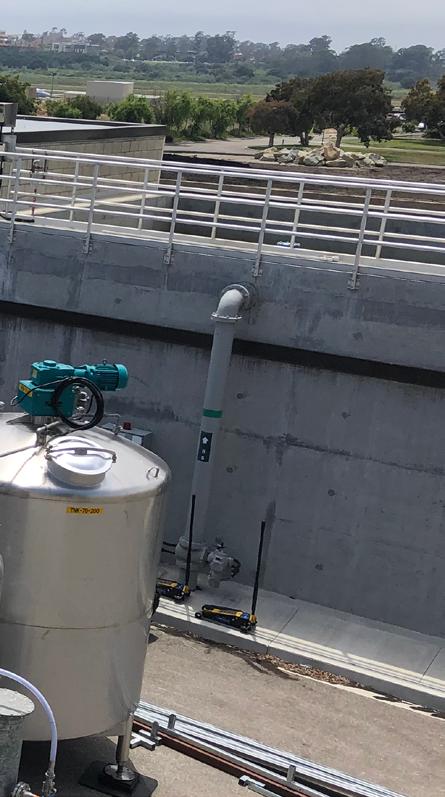

conditions. At each stage of testing, the same parameters were analyzed and the results provided a clear picture of the optimum set-points for effective and efficient operation. The testing results also gave GSD the flexibility to adjust operational inputs in the future as costs of chemicals, natural gas, and biosolids handling evolve.
The project was operated from Spring to Fall of 2022, and a net positive cash flow was maintained throughout the project duration. Based on the project’s success and a 20year proforma cost analysis, GSD and Lystek entered into a purchase sale agreement on the system. The equipment is being prepared for permanent integration into GSD’s operations. This project demonstrates an innovative application of advanced technology to reduce solid waste generation and emissions while improving resiliency through increased biogas generation for energy production.
Lystek THP technology is readily available for
implementation at other locations seeking innovative ways to reduce biosolids disposal costs, decrease greenhouse gas emissions, and increase resiliency through increased biogas production for energy capture. GSD and Lystek were able to repurpose the Lystek equipment to process a new feedstock, and in doing so, developed a sustainable means of enhanced digester performance with minimal changes to existing infrastructure. This project marks another success in GSD’s ambitious plan for cost-efficient sustainability and environmental resource stewardship through innovation and excellence.
41 | CALIFORNIA SPECIAL DISTRICTS March-April 2024
SOLUTIONS & INNOVATIONS
Money Matters

Tax-Exempt or Taxable: Which One is Your Project?
By Jillian L. Christiansen, Kutak Rock LLP
Special districts in California are authorized by various state statutes to issue tax-exempt bonds1 to finance certain governmental projects. This means the interest paid on the tax-exempt bonds to the bondholders will be excludable from gross income for federal income tax purposes and for California personal income taxes.
Special districts can finance the acquisition, construction, and improvements of a variety of facilities using taxexempt bonds. Examples of recent projects that have been financed with tax-exempt bonds by California special districts include (a) a water district entering into a taxexempt loan to finance improvements to the district’s water system, which consisted of demolishing and removing an existing concrete reservoir and furnishing and installing a new steel tank reservoir, (b) a recreation and park district leasing and energy efficient improvements for various district buildings, which consisted of solar and electric vehicle chargers, lighting, and HVAC improvements, (c) a public utility district entered into an
1 The term “tax-exempt bonds” is used in this article for ease of reading, but tax-exempt debt can be issued or executed in various forms, including but not limited to bonds, bank loans, certificates of participation, installment purchase contracts, lease agreements, and notes.
installment purchase contract to finance solar and energy efficient improvements to district property and to the district’s water system, (d) a community service district executed a lease to finance a portion of its administrative facility, and (e) a water district executed an installment purchase contract to finance the construction, acquisition, and improvements of the district’s water and wastewater facilities, which consisted of constructing two retention basins to retain water flow. Even though many projects can be financed with tax-exempt bonds, it is important to remember that tax-exempt bonds are generally used to finance capital improvements and cannot be used to pay working capital of a project (such as current operating expenses).
Tax-exempt bonds provide a beneficial financing tool to special districts because tax-exempt bonds usually offer a lower interest rate than their taxable counterparts and are relatively low-risk investments.
Because the interest payments received by the bondholders are not subject to federal and California personal income taxes, the bondholders are willing to accept a lower return on their investment. Additionally, by issuing tax-exempt
42
bonds, the money that would have otherwise been used to pay for the tax-exempt bond financed facility can now be used elsewhere.
Generally, for bonds to be considered “tax-exempt,” they must be issued for a public purpose and not for private activity. Bonds will be considered private activity bonds when they meet both the private business use test and the private payment or security test, or they meet the private loan financing test. The private business use test is met when more than five percent of the property financed with the bonds is used by a nongovernmental unit in an unrelated trade or business.
For example, if a special district issues tax-exempt bonds to improve its water system but allows a car wash to purchase thirty percent of the water output for its business, the private business use test will be met because a nongovernmental entity is using the financed facility. However, there are certain exceptions to this rule for use of a tax-exempt financed facility by the general public. The private security or payment test is met when more than five percent of the payment of principal and interest on the bonds is secured by private payments or property than is, or will be, used for private business. The private loan financing test is met when the proceeds of the bonds are used to make a loan to a nongovernmental person or unit in an amount that exceeds the lesser of five percent of the bond proceeds or $5,000,000.
MONEY MATTERS
Some types of projects might appear to qualify for taxexempt financing but actually must be financed on a taxable basis. For example, if a water district wants to improve the delivery capability of its surface water system, the district can issue tax-exempt bonds to finance this improvement and use revenue from a generally applicable tax or special assessment imposed on residents of the district to repay the bonds. However, the district is not allowed to issue the tax-exempt bonds and then repay the bonds using revenue from a special assessment that is only imposed on the landowners who are receiving the increased delivery of surface water. For tax purposes, this structure is treated as the district loaning the proceeds of the bonds to private individuals, i.e., the benefiting landowners. Loaning the proceeds of tax-exempt bonds to private individuals results in the private loan financing test described above to be met and will result in the bonds being classified as private activity bonds and therefore taxable. This is not to say that tax-exempt bonds cannot be repaid from special assessments imposed on residents of a special district, just that the special assessment cannot be imposed solely on those who will directly benefit from the project.
The complexity of the rules and regulations governing tax-exempt bonds makes it advisable for special districts to consult their bond counsel before borrowing or issuing debt.
MONEY MATTERS by CSDA Finance Corporation
Over the past 35 years, hundreds of special districts have turned to the CSDA Finance Corporation for streamlined processes, competitive interest rates, and access to a team of consultants who understand the nuances of special district financing. With decades of experience in structuring and executing financings for districts of all types and sizes, our team is ready to assist you every step of the way.
Recently the Greater Los Angeles County Vector Control District closed a $12 million real estate transaction through CSDA Finance Corporation. Here’s what general manager Susanne Kluh had to say about the experience:
“Everyone involved with the financing was amazing. The consultant was by my side the entire time - I so much appreciated him!”
Whether your district’s needs include a $50,000 equipment lease or a $20,000,000 bond issuance, we’re here to help. Call 877.924.2732 for more information or visit www.csdafinance.net .

43 | CALIFORNIA SPECIAL DISTRICTS March-April 2024
Get A Quote!

44 The CSDA Finance Corporation is part of the California Special Districts Alliance which is a collaborative partnership between the California Special Districts Association (CSDA), CSDA Finance Corporation, and Special District Risk Management Authority (SDRMA). Contact us at (916) 442-7887 THE TIME IS NOW... GET A QUOTE FOR YOUR NEXT FINANCING NEED. The CSDA Finance Corporation is part of the California Special Districts Alliance which is a collaborative partnership between the California Special Districts Association, the CSDA Finance Corporation, and the Special District Risk Management Authority. Contact us at (916) 442-7887 www.csdafinance.net
NSDC

NSDC’s Online Presence Transformed with New Streamline Website
The National Special Districts Coalition is excited to announce the re-launch of its website on the Streamline webhosting platform.
The National Special Districts Coalition, of which CSDA is a founding member, recently re-launched their website with Streamline, a trusted CSDA Endorsed Affiliate. Streamline is the nation’s leading innovator of easy-to-use technology made just for special districts. Solutions offered through the organization go well beyond simply hosting a website – A Streamline site guides special district administrators to ensure their public webpages are compliant with the American with Disabilities Act (ADA), meet state sunshine/ open meetings law requirements, provide a platform for direct community engagement, coordinate employee communications and documents, collect payments for services, and more.
“Streamline has long-been an amazing partner to our Coalition members, and we are thrilled to continue
strengthening this bond and partnership,” said Ann Terry, NSDC Chair and Special Districts Association of Colorado Chief Executive Officer. “Our members will benefit from added engagement tools to bring our members closer together, a new ability to directly call our members to easily act on priority federal initiatives, and a membersonly portal to enhance the value of Coalition benefits. We are grateful for the Streamline Team, their commitment to NSDC, and their dedication to the nation’s special districts.”
The powerful communication and engagement tools offered in Streamline’s suite of services will not only effectively transform NSDC’s advocacy and grants capabilities and enhance member-only services, but also serve an example for the gold standard of a complaint local government website.
“Through our partnership with NSDC, we celebrate the synergy of special districts uniting under a shared vision,”
continued on page 46...
45 | CALIFORNIA SPECIAL DISTRICTS March-April 2024
NATIONAL SPECIAL DISTRICTS COALITION
said Mac Clemmons, Streamline Chief Executive Officer. “Streamline is not just about simplifying operations; it’s about amplifying the collective strength of districts. Together, we can create a robust network that transcends geographical boundaries, fostering innovation and enhancing community impact. This collaboration is the cornerstone of empowering local governance and enriching the lives of those they serve.”
Streamline first affiliated with NSDC in 2023 and has since offered members a webinar covering ADA compliance measures, shared what’s next on .gov requirements for special districts, cosponsored events fostering statelevel coalition development outside of the NSDC Regular Member States, and more.
Since its beginning in Sacramento, California, in 2015, Streamline has grown to host more than 1,500 special districts’ websites on its cutting-edge, proprietary platform across 32 states. Streamline also partners in various ways with NSDC’s Regular Members in California, Colorado, Florida, Oregon, South Carolina, and Utah to meet association and their members’ needs.
Check out NSDC’s new Streamline-powered website at www.nationalspecialdistricts.org. For more information on Streamline’s services, including a 30% discount on monthly website subscriptions as a CSDA value added member benefit, visit http://www.getstreamline.com/csda.

46

bbklaw.com
Sharpen Your Skills
BBK offers a variety of courses and trainings to public agencies, institutions and business entities addressing topics required by law, as well as insight on preventative and educational legal issues and trends.
Scan here to learn more and register today!

47 | CALIFORNIA SPECIAL DISTRICTS March-April 2024


Optimizing New Board Member Orientations: A Necessity for Effective Governance
By Vanessa Gonzales, CSDA Communications Specialist
This article was adapted from content presented in CSDA's on-demand webinar "A Guide to Creating New Board Member Orientations" by presenters: David Aranda, CSDM; Tawnia Pett of Orange County Mosquito and Vector Control District; and Tina Knapp of Orange County Sanitation District. The significance of well-executed new board member orientations cannot be overstated. Providing comprehensive, strategic, and timely information is essential as board members embark on their service. This article delves into the importance of regular orientations, practical considerations in planning, and key topics to cover during orientation.
Pre-Orientation Communication and Materials
Establish a connection with new board members before the orientation. Send a welcome email that outlines upcoming agendas, meeting calendars, oath of office, and compensation forms. Provide educational tools, resources, and past meeting agendas to facilitate familiarity with the
organization. This proactive approach sets the stage for a smooth transition into board responsibilities.
Planning and Scheduling Considerations
Effective orientation starts with thoughtful planning. Schedule the orientation within the first two months of a board member's election. Considering their busy schedules, opt for virtual sessions to accommodate diverse priorities. Record these sessions for accessibility and keep them concise—around 60 to 90 minutes—to maintain engagement. Avoid overwhelming new members with information, prioritizing essential content while recognizing that ongoing training will complement their learning journey.
Topics for Orientation
Craft a well-rounded orientation agenda covering critical aspects of board service. An important best practice is to have the new board member read the government code specific to the district/agency.
48


GOT GOVERNANCE?
“Having a board member orientation packet simplifies the process of helping a new director learn about the district and understand their role. It also serves as a convenient reference for staff and elected officials when we need clarification on topics like the Brown Act, Board policy, and board meeting procedures.”
Steven Palmer, PE, General Manager, Donner Summit Public Utilities District
Emphasize the district's mission, core values, and governance structure. Educate new members on parliamentary procedures, organizational charts, and financial overviews. Orange County Mosquito and Vector Control District suggests covering topics like special district nuances, services provided, department descriptions, and trustee roles. Donner Summit Public Utilities District tailors their orientation packet to include essential documents like district maps, compliance manuals, and financial statements.
Two-Part Orientation Approach
Orange County Sanitary District recommends a comprehensive two-part orientation approach. Part 1 involves essential meetings with management, legal counsel, and board leadership, covering district overviews, board roles, and required trainings. In Part 2, the executive team delves deeper into divisional highlights, ensuring information remains accessible to all board members. Include tours and monthly education meetings to reinforce district knowledge, enabling board members to effectively address constituent inquiries.
Post-Orientation Evaluation and Collaboration
After the orientation, conduct a staff follow-up meeting to evaluate lessons learned and seek continuous improvement. Embrace open communication and be receptive to adapting the orientation process based on feedback. Orange County Mosquito Vector Control's Tanya Pett recommends constant review and adjustment, while Tina Knapp of Orange County Sanitation District emphasizes collaboration and idea-sharing through platforms like CSDA Open Forum.
Regular and well-structured board member orientations are indispensable for effective governance. By adhering to thoughtful planning, proactive communication, and comprehensive topic coverage, organizations can ensure their new board members are equipped with the knowledge and tools needed to contribute meaningfully to their roles. Ongoing evaluation and collaboration further enhance the effectiveness of the orientation process.
49 | CALIFORNIA SPECIAL DISTRICTS March-April 2024
BUSINESS AFFILIATE SPECIAL ACKNOWLEDGEMENTS


DIAMOND LEVEL


Actuarial Retirement Consulting, LLC www.awenarc.com
AllPaid www.AllPaid.com
California CAD Solutions (CALCAD) www.calcad.com
California CLASS www.californiaclass.com
CPS HR Consulting www.cpshr.us
CSDA Finance Corporation www.csdafinance.net


Enterprise Holdings www.enterpriseholdings.com
GovDeals www.govdeals.com
Special Districts Risk Management Authority www.sdrma.org

Streamline www.getstreamline.com
Umpqua Bank www.umpquabank.com
Utility Cost Management, LLC www.utilitycostmanagement.com
PLATINUM LEVEL

Atkinson, Andelson, Loya, Ruud & Romo www.aalrr.com

Best Best & Krieger www.bbklaw.com
California Bank of Commerce www.californiabankofcommerce.com/


Five Star Bank www.fivestarbank.com
Liebert Cassidy Whitmore www.lcwlegal.com
Richards Watson Gershon www.rwglaw.com
50
VC3 www.vc3.com
GovDeals
GovDeals recently announced their annual Govvies awards - a fun tradition spotlighting some of the strange and unusual (and marketable!) auction items they’ve handled in the past year. GovDeals is a CSDA Diamond Level Business Affiliate supporting the CSDA Surplus Marketplace that allows districts to transform surplus assets and inventory from a burden to an opportunity. Browse the Surplus Marketplace on our website under Member Resources>Member Benefits>Value Added Benefits or contact Samarra Dalrymple to set up a free seller’s account at sdalrymple@govdeals.com.
The
2023 Most-Applicable Govvies went to:


51 | CALIFORNIA SPECIAL DISTRICTS March-April 2024
The ‘Don’t Google That’ award for Granular Anaerobic Sludge - yes, the actual sludge is up for auction.
The ‘I’m Loving It’ award for this indoor play structure - no surprise that playground equipment is a great seller!
Brown Armstrong Accountancy Corporation www.bacpas.com CalTRUST www.caltrust.org Centrica Business Solutions www.centricabusinesssolutions.com Complete Paperless Solutions www.cps247.com Eide Bailly CPAs www.eidebailly.com Kosmont Financial Services www.KosmontFinancial.com NBS www.nbsgov.com Nossaman, LLP www.nossaman.com Slovak Baron Empey Murphy & Pinkney LLP www.sbemp.com Stifel Investment Services www.sandrahedstromwheeler.com Tyler Technologies, Inc. www.tylertech.com BUSINESS AFFILIATE HIGHLIGHT GOLD LEVEL BOOST YOUR BOTTOM LINE With CSDA Value Added Benefits Special programs or discounts offered by CSDA’s Endorsed Affiliates – tailored just for CSDA members! • Commercial Card • Digital Mapping Solutions • Financing • GASB Reporting Compliance • Human Resources • Investments • Merchant Services • Online Surplus Action • Risk Management • Utility Cost Control • Vehicle Rentals • Website Design Learn more online at csda.net/value-benefits
The ‘Water You Waiting For’ award for Amphibious Vehicle & Raft - unusual equipment and vehicles are great for auction!





52 BUSINESS DIRECTORY HR SERVICES MANAGEMENT CONSULTING EVALUATION & SELECTION EMPLOYEE EXPERIENCE LICENSING & CERTIFICATION Providing practical legal solutions tailored to the unique needs of California public agencies. Since 1954 rwglaw.com LOS ANGELES | SAN FRANCISCO | ORANGE COUNTY 888.479.4529 TEMECULA | CENTRAL COAST | SACRAMENTO SDRMA.ORG Support Strength Stability SDRMA, one-source for quality coverage and risk management services. Property/Liability Workers’ Compensation Health Benefits WE BANK ON BUILDING RELATIONSHIPS. Vanessa Ryan EVP, Director of Public Sector Banking vryan@bankcbc.com 916.547.8155 Stifel, Nicolaus & Company, Incorporated For the past 28 years, I have developed a niche market, providing advisory services and customizing investment management strategies for over 38 special districts in California. Sandra Hedstrom Wheeler Vice President/Investments (805) 903-1065 | (877) 816-1231 sandra.wheeler@stifel.com www.sandrahedstromwheeler.com


BUSINESS DIRECTORY 53 | CALIFORNIA SPECIAL DISTRICTS March-April 2024 Need assistance planning/implementing your facility project? Plan Execute Succeed Capital Program Management, Inc. info@capitalpm.com (916)553-4400 CSDA has several digital and print advertising opportunities. ADVERTISE WITH US! Looking for Next Level Visibility? www.csda.net/advertising 408/374-0977 info@rauchcc.com www.rauchcc.com Effective Public Outreach Practical Strategic Planning Serving Local Government and Public Agencies for Over Effective Public Outreach Practical Strategic Planning Big enough to have all the needed expertise. Small enough to focus on your needs. Contact us for a FREE consultation. 408/374-0977 info@rauchcc.com www.rauchcc.com Gov Deals For advertising inquiries, contact CSDA at 877.924.2732 or advertising@csda.net. Your ad here.

PRSRT STD U.S. Postage PAID Permit No. 316 Sacramento, CA California Special Districts Association 1112 I Street, Suite 200 Sacramento, CA 95814
