
TEARDROP CAMPING WHAT YOUR BLOOD SAYS ABOUT YOU FIRST RESPONDER HOROSCOPE A DECADE OF PROGRESS BURN X GAME-CHANGING FIREHOUSE LIFESTYLE HABITS 7 ERIC CAMPBELL A LEADER ON FIRE WINTER 2023 BEFORE YOU SAY I DO YOU'RE NOT WHAT YOU THINK FIREFIGHTING & INFERTILITY
FOCUSED ON COMFORT & DURABILITY SINCE 1948 First responders enjoy 20% off sitewide, year round DEVIL-DOG.COM








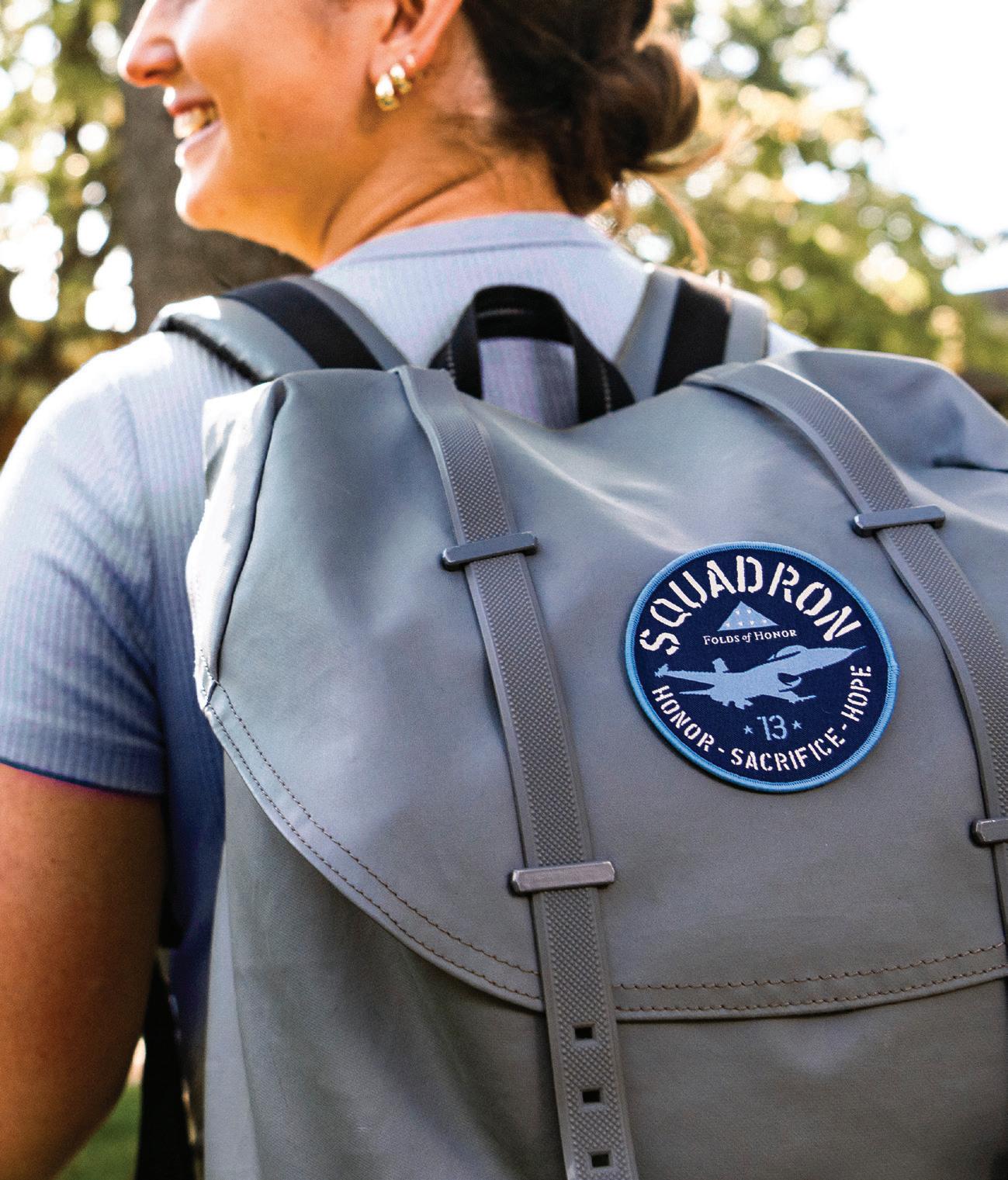









UNITED IN GIVING JOIN THOUSANDS OF LIFE-CHANGING SCHOLARSHIPS TO THE FAMILIES OF AMERICA’S FALLEN AND DISABLED HEROES. AMERICANS
Your $13 pledge becomes educational scholarships for the families of fallen or disabled military and first responders. foldsofhonor.org/squadron




24 30 DISCONNECT FROM THE JOB WITH TEARDROP CAMPING 36 THE FIRST RESPONDER HOROSCOPE SIX THINGS TO CONSIDER BEFORE SAYING "I DO" BURN X: A DECADE OF PROGRESS YOU’RE NOT WHAT YOU THINK 40 ERIC CAMPBELL: A LEADER ON FIRE 48 52 FEATURED in this issue 69 IS BEING A FIREFIGHTER ENDANGERING YOUR CHANCES OF BECOMING A PARENT?
CONTENTS 12 HORMETIC STRESSORS Stress 16 WHAT YOUR BLOOD SAYS ABOUT YOU Health 22 NOTICE, NAME & NIX: COMPASSION FATIGUE Stress 24 YOU’RE NOT WHAT YOU THINK Health 28 7 GAME-CHANGING FIREHOUSE LIFESTYLE HABITS Health 30 DISCONNECT FROM THE JOB WITH TEARDROP CAMPING Lifestyle 32 SIMPLE TOOLS FOR YOUR FIRE STATION GYM: THE KETTLEBELL Fitness 34 CUT YOUR CANCER RISK Health 36 THE FIRST RESPONDER HOROSCOPE 40 ERIC CAMPBELL: A LEADER ON FIRE Lifestyle 46 DOING IT RIGHT: CANCER PREVENTION FOR FIREFIGHTERS Health 48 SIX THINGS TO CONSIDER
DO" Relationships 50 THE BENEFITS
Fitness 52 BURN X:
56 STRUCK
59 JAKEBREAK
60 DO
63 BIOFIELD
64 3 TO
69 IS
Health 74
78
80
82
87 PUZZLED
88 SUPERBOWL
BEFORE SAYING "I
OF BAREFOOT TRAINING
A DECADE OF PROGRESS Lifestyle
BY FORD F-150 LIGHTNING Lifestyle
Comic
ESSENTIAL WORKERS NEED ESSENTIAL OILS? Health
BARRIERS
SKI Lifestyle
BEING A FIREFIGHTER ENDANGERING YOUR CHANCES OF BECOMING A PARENT?
PASSING ON GENERATIONAL TRAUMA Relationships
MORE THAN A MASCOT: DALMATIANS AND THE FIRE SERVICE
FEEL THE FLOW WITH YOGA Health
MONEY DOESN’T HAVE TO BE COMPLICATED Finance
BY HOW TO UNWIND? GAMING AND MORE
FAVES Recipe
A LETTER FROM THE PUBLISHER
I want to challenge you to speak out and share some of the progress your fire department is making in the area of health and wellness for your members and your organization.
The internet has made the world small, but even though it improves global communication, fire departments continue to be siloed when it comes to basic communication between members. We need to share information on critical topics such as buy-in from members into fitness programs and assessments, suicide education and prevention, firefighter psychology, peer support programs, and inclusion, to name just a few.
No fire department is exempt from these challenges, and there needs to be an open dialogue between our networks from top to bottom and bottom to top. Larger departments have more resources but may also have more hurdles to jump when it comes to implementing new practices and policies. Fire departments with smaller memberships could in fact be the best measuring stick and a compelling example when it comes to building programs and participation.
Sharing our individual successes inspires and encourages us all. Let’s protect our firefighters and first responders by sharing strategies for positive change!
Enjoy the read!
FOCUS ON FIREFIGHTER CANCER
January is Firefighter Cancer Awareness Month. Despite knowing the increased risk firefighters have for getting cancer, we're still losing the battle.
CRACKYL Magazine is proud to have partnered with the ground-breaking Detectogether, a company that provides firefighters with the necessary tools and guidance to detect cancer early and save lives.

Detecting cancer swiftly and acting on it immediately is the best way to save and improve lives for the 40 percent of us who will receive a cancer diagnosis in our lifetime. With Detectogether’s 3 Steps Detect system, it’s easy for you to recognize warning signs of cancer and have the right conversations with your doctor, at the right time, to ensure the best outcome.
WHY THE NAME CRACKYL?
The inspiration behind the name CRACKYL comes from a feeling firefighters experience in the middle of a structure fire when a sudden calm comes over you and you hear a fire crackling all around a smoke-filled room, but can’t see it. The sound of a fire crackling is imprinted on every firefighter’s mind, and it roots us in this exhilarating and unpredictable profession. We want CRACKYL to become a sounding board for firefighters throughout their careers.
Firefighters are notorious for sitting around the firehouse, discussing their problems and offering advice. But the truth is, many of us don’t have the answers. We don’t know why we all fight about the same problems with our partners, never seem to have enough money left at the end of the month and just can’t get along with the co-workers who are the most like us. At CRACKYL, we want to be the firefighter in the station who has a lot of those answers and provides accurate, practical, and life-changing solutions to the problems we all face.
PUBLISHER
Kory Pearn
EMERGENCY MEDICINE

EXERCISE SCIENCE
TRAINING
WELLNESS
EDITORIAL PUBLISHER / CEO KORY PEARN KPEARN@CRACKYLBUSINESSMEDIA.COM EDITOR-IN-CHIEF LIZ FLEMING DIGITAL EDITOR LEAH SOBON COPY EDITOR MARTHA CHAPMAN EDITOR@CRACKYLBUSINESSMEDIA.COM DESIGN EDITORIAL DESIGNER SARAH ROSS EDITORIAL DESIGNER NICOLE MANNELL BUSINESS DEVELOPMENT DIRECTOR OF BUSINESS DEVELOPMENT DYLAN LABELLE DLABELLE@CRACKYLBUSINESSMEDIA.COM SALES PUBLISHER / CEO KORY PEARN KPEARN@CRACKYLBUSINESSMEDIA.COM ACCOUNT & SOCIAL MEDIA MANAGER MARIA PELLETIER MPELLETIER@CRACKYLBUSINESSMEDIA.COM PARTNERSHIPS PARTNERSHIP MANAGER MATT RUMAS MRUMAS@CRACKYLBUSINESSMEDIA.COM CONTRIBUTORS NEIL BALDWIN, DANIELLE BASTIEN, TINA BONNETT MATTHEW BROOM. MARTHA CHAPMAN, CARRIE FLEETWOOD LIZ FLEMING, BRYAN FRIEDERS, NICK HALMASY, ALFRED HERNANDEZ, KEPRA JACK, JOE KOZIKOWSKI, RAE KRICK, RICK MARKLEY, RICK MAURO, JANEL NORTON, RYAN PROVENCHER, RACHAEL SAVOIE, SUNJYA SCHWEIG, RODNEY SLAUGHTER, LEAH SOBON, GERALYN ST. JOSEPH COMIC CARTOONIST JEFF MAKSUTA CRACKYL Magazine is published four times a year by CRACKYL Media Inc. with copies delivered to firefighters across North America and beyond. No part of the content, including but not limited to editorial, advertising or photography, may be copied or reprinted without the permission of the publisher. ISSN # 2563-612X PUBLISHED AND PRODUCED BY: CRACKYL MEDIA INC. SUBSCRIPTIONS ORDER A ONE-YEAR ($59.89 USD) OR A TWO-YEAR ($88.00 USD) BY VISITING: CRACKYLMAG.COM/SUBSCRIBE TO ORDER MULTIPLE SUBSCRIPTIONS CONTACT: INFO@CRACKYLBUSINESSMEDIA.COM SIGN UP FOR A DIGITAL SUBSCRIPTION CRACKYLMAG.COM The opinions presented in our magazine are those of the authors of the articles. We enjoy the opportunity to present a variety of viewpoints but do not necessarily endorse them. ON THE COVER: ERIC CAMPBELL
MICHAEL GUIRGUIS, M.D. BEN TANNER, EMERGENCY MEDICINE PA
TSAC-F
CPT JOE KOZIKOWSKI,
PPSC
ANTHONY DE BENEDICTIS, CAT(C), CSCS TODD CAMBIO, BS, BA, CSCS BRITTANY S. HOLLERBACH, PH.D. JIM MCDONALD, NSCA, CPT, CSCS,
HUSSIEN JABAI, MS, CSCS, TSAC-F,
NSCA-TSAC-F, PN2,
VAN
HEALTH
ANASTASIA MILLER,
SARA
SIMON MATTHEWS,
SC, NBC-HWC,
MEGAN LAUTZ,
DERMATOLOGY SANOBER PEZAD DOCTOR, PH.D SLEEP HEALTH BEVERLY DAVID, REGISTERED PSYCHOLOGIST PH.D., CLIN.PSY.D, CLIN.PSYCH STRESS WENDY LUND, BSCN, MSC DONNIE HUTCHINSON, MBA, PHD TINA BONNETT, ED.D, M.ECED., R.E.C.E., CERTIFIED TRAUMA INTEGRATION CLINICIAN
FINANCE TRISH
SICKLE, LLQP, CSC MATTHEW BROOM, BBA, CFP INTEGRATIVE
NOAH GENTNER, PH.D., NBC-HWC MENTAL HEALTH ASHWIN PATEL, PH.D
PH.D.
A. JAHNKE, PH.D.
FASLM DIPLLBLM, MHLTH
ICF-PCC NUTRITION MAUREEN STOECKLEIN, RD
MS, RD, TSAC-F PATRICK MCCARTHY, MS SEX & RELATIONSHIPS CARRIE FLEETWOOD, B.A., M.ED., R.P. O.A.M.H.P.
JOHN HOFMAN, CSCS-D, TSAC-F D, MS HUSSIEN JABAI, MS, CSCS JAKE PATTEN, SCCC, TSAC-F, USAW, PN-1 AARON ZAMZOW, BS-HEALTH AND WELLNESS, NSCA-CSCS, NASM-CPT, ACE-PEER FITNESS, PN1 DAVID VAUX, MSC
DANIELLE COOK KAWASH, MS, RD, NBC-HWC ALWYN WONG, BSC, DC, ART, MED. AC.
THANK YOU TO OUR PARTNERS @CRACKYLMAG
CRACKYL EXPERTS
Mental and physical health are intricately linked – every step you take for your physical health can also improve your mental health.
Build resilience and protect your overall wellness with resources and strategies specific to the challenges of a high-stress profession. Learn more at nami.org/FrontlinePublicSafety.
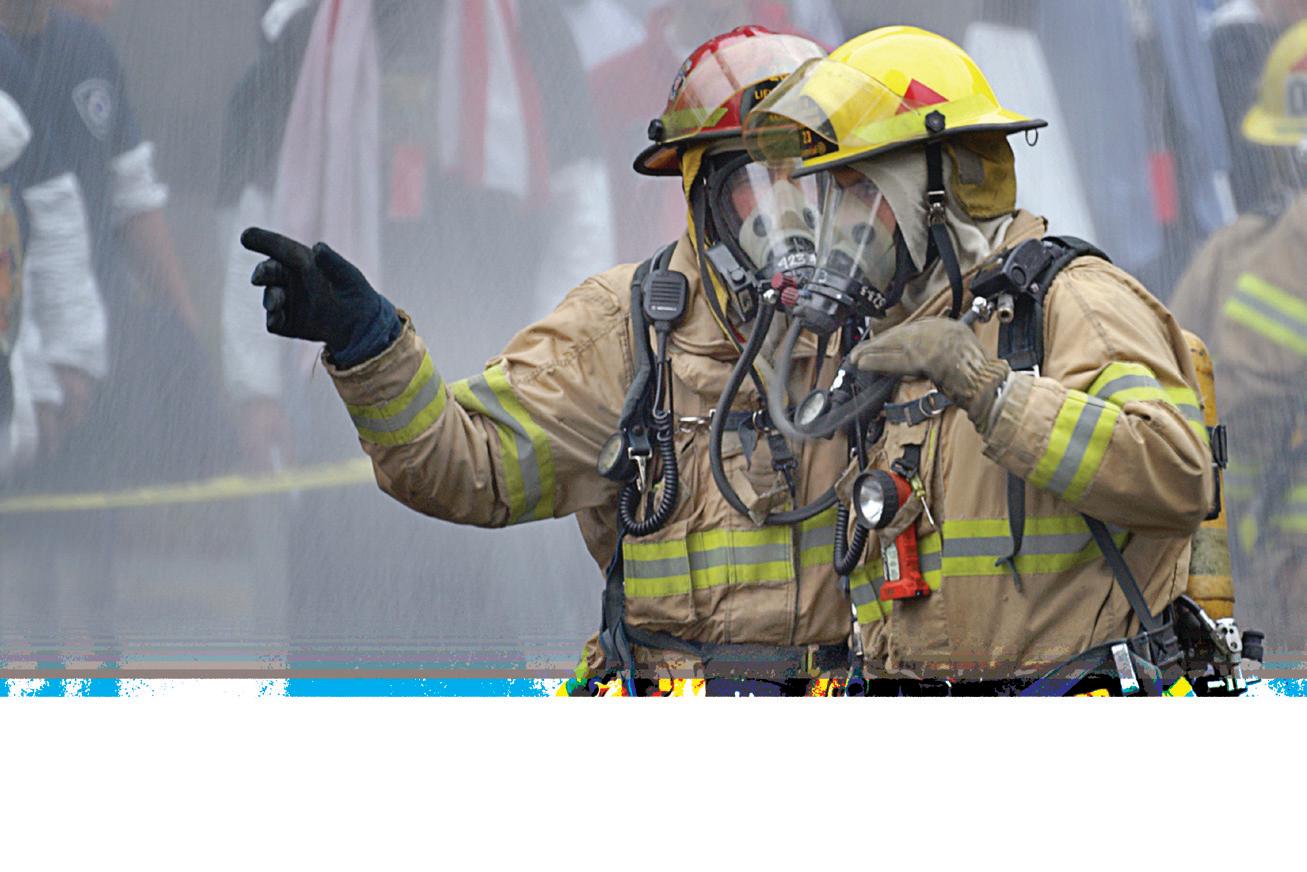
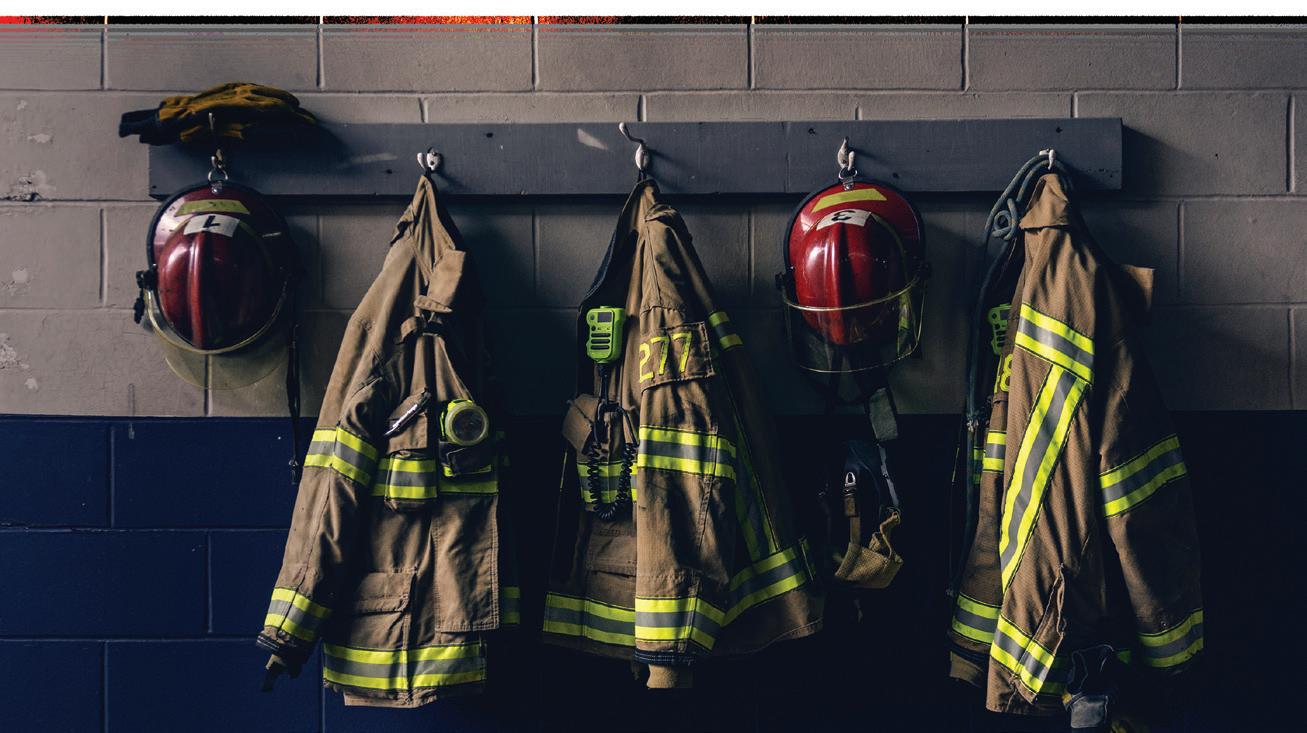
JANUARY Is Fire Fighter Cancer Awareness Month
Join us as we EXTINGUISH CANCER in the fire service.
IAFF.org/Cancer


Fire Fighter Cancer Awareness Month is brought to you through a partnership with the International Association of Fire Fighters and the Firefighter Cancer Support Network.
STRESS HORMETIC STRESSORS
By Rae Krick, MS, RDN, LD, Emergency Responder Research Center
Hang on: can stress actually extend a person’s life? If that’s the case, firefighters must be immortal.
Immortality may be a stretch, but did you know there’s a type of stress that can actually be beneficial to the body? It’s true – improvements in cognition and stress resilience are just a cold shower (or hot sauna) away. There are actually plenty of methods to induce healthy stress on the body and improve its capacity to respond to stressors in the future. It’s a concept called hormesis.
EXPAND YOUR HEALTHSPAN WITH GREAT
12 | CRACKYL MAGAZINE
HABITS
WHAT IS HORMETIC STRESS?
Hormesis is defined as “the adaptive response of biological systems to moderate environmental or self-imposed challenges, through which the system improves its functionality and/or tolerance to more severe challenges.” More simply put, hormetic stressors are brief, deliberate bouts of stress induced on a routine basis to produce greater physical and psychological resilience.
A good example of hormetic stress is vaccination, which is known to enhance immune function and predict future risk of disease. Another familiar hormetic intervention is exercise, long-understood to improve our physiology by enhancing mitochondrial health, glucose sensitivity, VO2 max, oxidative stress - essentially, aging - and regulation of stress resistance pathways such as autophagy - cell recycling - and production of heat shock proteins. These methods and many others benefit the body’s resilience to stress. Deliberate hormetic interventions may serve as an additional training technique to prepare the body for the routine hazards of working as a first responder.
WHAT ARE THE BENEFITS?
on
Our daily and weekly habits have the power to regulate our healthspan. Though we have little control over our lifespan, we can make an effort to regulate our healthspan, or “the period of life spent in good health, free from the chronic diseases and disabilities that commonly accompany aging.” Hormetic interventions offer many benefits in the pursuit of a longer, healthier life, especially for firefighters and other first responders. Some of those methods include:
USING SAUNAS has emerged as a healthy lifestyle behavior and primary prevention strategy that may reduce the risk of cardiovascular disease and related mortality. The Kuopio Ischemic Heart Disease (KIHD) Risk Factor Study revealed a 27 percent reduction in cardiovascular disease mortality risk among men who reported using a sauna two or three times per week, compared to those who used a sauna only once a week. It’s easy to guess the risk reduction comparison to those who never utilize a sauna. In addition, the risk of all-cause mortality was found to be 40 percent lower among frequent sauna users compared to infrequent users. File this one under cardiovascular protection.
ROUTINE COLD THERAPY
has been shown to improve mood and general brain function. In response to cold exposure, the brain releases a neurotransmitter which is shown to reduce symptoms of depression and anxiety. Exposure to cold is one method of stimulating the vagus nerve, resulting in both reduction in heart rate and increases in heart rate variability. Classify this as reduction in depression, anxiety and physiological stress, as well as improvements in heart rate and heart rate variability.

VAGUS NERVE STIMULATION AND HORMONE ALTERATION INDUCED BY HORMETIC STRESS
may also encourage weight loss. Brown fat, often referred to as “good” fat, modulates the body’s calorieburning capacity and is responsible for body thermoregulation: cold exposure necessitates an increase in brown fat stores, thus resulting in the lowering of white fat (“bad” fat) stores.
And in part through stimulation of the vagus nerve complex, hormetic interventions reduce inflammatory responses throughout the body, thus stimulating the body’s healing process and increasing positive immune response for fighting off future disease and infection.
WINTER 2023 | 13
effect
trait dose / intensity of stress positive effects sucessful aging / longevity normal / physiological aging Accelerated aging / age-associated diseases detrimental effects
STRESS
HOW DOES ONE ACTIVATE HORMETIC STRESS?
Think of hormetic interventions as short-term, manageable stressors to promote growth, learning and development, resulting in both physical and mental regulation. In order to reap the biggest benefit from any one hormetic stressor, each person must choose only the habit (or habits) that make the most sense for their current health status and their routine. If a new habit inflicts more stress than it effectively cures, that habit probably isn’t worth introducing. To view a hormetic stressor as a “beneficial challenge” ensures the best-possible physiological response.
Here are a few new daily/weekly habits to consider:
DIETARY RESTRICTION
Intermittent fasting tends to be one of the more mainstream ways of inducing hormetic stress, as dieting continues to be an element of North American culture.
In terms of hormesis, intermittent fasting has less to do with weight loss than with mimicking the lifestyle of our hunter-gatherer ancestors. Physiologically, our bodies continue to function much like those of our ancestors. It is our lifestyle that has accelerated significantly over the last few hundred years.
In the age of hunting and gathering, humans typically consumed one large meal per day but often went days without any food at all. In this way, the human body adapted to food restrictions and, as far as we can tell, protected itself from the modern ailments of chronic metabolic diseases. If you’re considering intermittent fasting, it’s best to take a staged approach. Begin first by ensuring a 12-hour fast overnight before expanding the fasting window to 16 hours (often eating between 10am and 6pm or noon and 8pm). If this seems effective, you might consider progressing to a 5:2 split – eating normally five days of the week and fasting/consuming fewer calories on the remaining two days.
COLD WATER IMMERSION
This type of hormesis is activated by physiologically shocking the body with cold water. Cold water exposure can be introduced in a number of ways, such as cold showers, swimming in cold water, or taking a plunge in an ice bath (check out the “Ice Bath & Cold Benefits” podcast by Huberman Lab on Apple or Spotify). This practice can be done daily by having cold showers, or incorporated into a weekly routine with access to a nearby lake, river, or manmade cold tank, such as those made by Ice Barrel. Your blood work is something best discussed with your medical practitioner.
REGULAR SAUNA USE
According to Jari Laukkanen, Ph.D., sauna use is characterized by short-term passive exposure to high temperatures, typically ranging from 113˚ F to 212˚ F (45˚ C to 100˚ C). According to Laukkanen’s KIHD study, using a sauna heated to a temperature of about 174˚ F for an average duration of approximately 15 minutes, three to five times per week can be beneficial for heart health and overall wellness.
There you have it – the proof is in the cold plunge or hot session. A daily drop in calories or a weekly waltz into the sauna can truly make a difference in the body’s ability to respond to and recover from stress. All it takes is some dedication to discomfort. So, which tactic will you try first?
14 | CRACKYL MAGAZINE
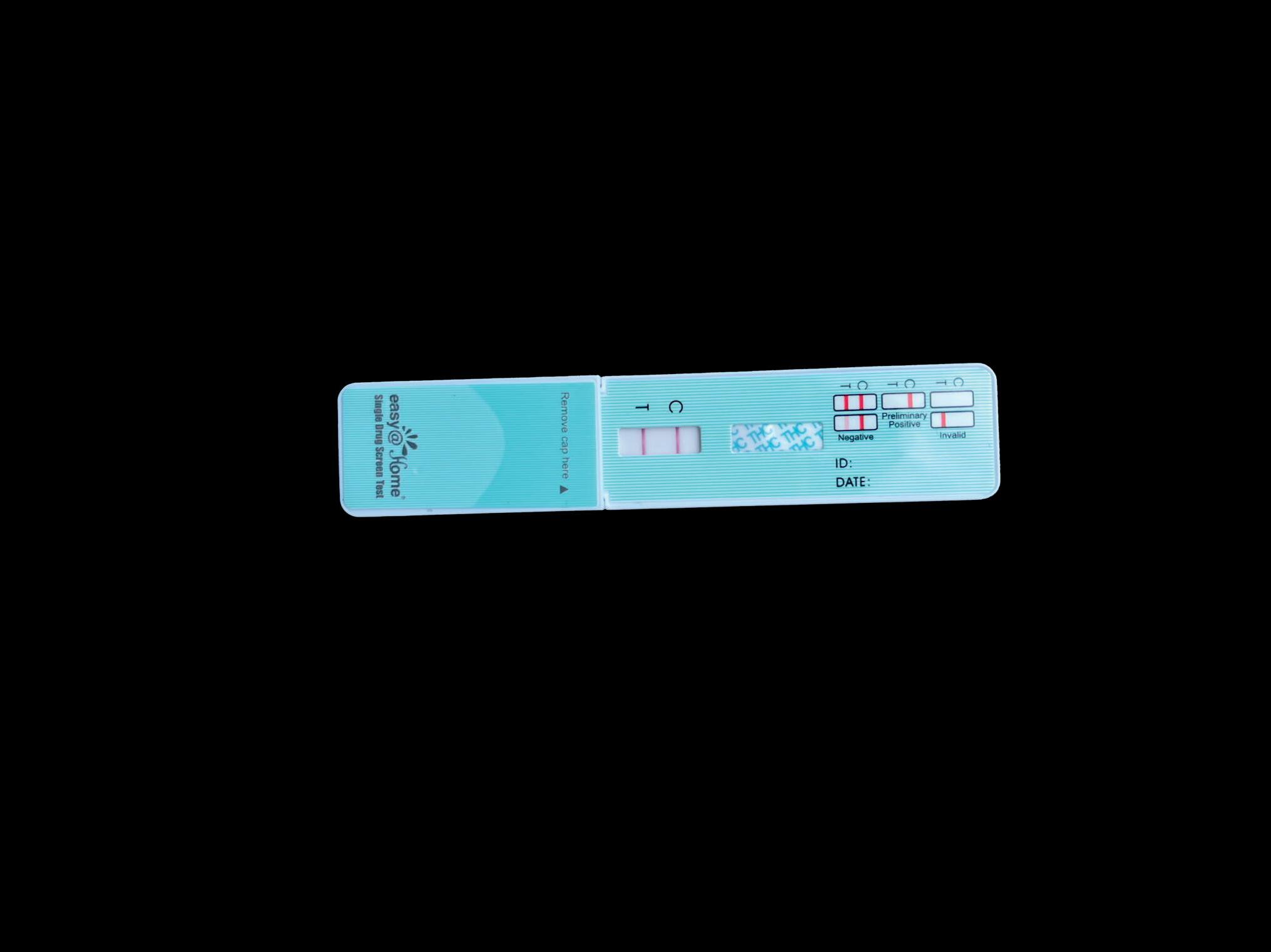



SLEEP BETTER (ESPECIALLY SINCE YOU'RE PASSING DRUG TESTS) At-home urinalysis included with every order
WHAT YOU R BLOOD SAYS ABOUT YOU
 By Kepra Jack COO, Co-founder, Owner HeartFit For Duty, LLC
Your career will fly by, we all know that. What we don’t all realize though, is that our “happy and healthy retirement” starts with what we do with our health at the beginning of our career. Tracking your health throughout your career is vitally important to make it to the healthy retirement phase.

It's amazing what can be learned about a person through their blood work: what they eat, how their body deals with their food choices, how many good guys and bad guys they have (see Types of Blood Tests on the following pages), and how well their internal army of blood cells can fight off an infection or disease.
Having a primary care physician you see every year for blood work and a wellness exam is the basis of a great model for monitoring your health and your goals. So why do some people never get around to an annual wellness exam?
HEALTH
16 | CRACKYL MAGAZINE
THE EXCUSES…
I DON’T HAVE TIME
The visit will take about 60 to 90 minutes and this will be time well invested, allowing your health care provider to track changes in your health. Many diseases are reversible if found early enough, so serial testing and monitoring is key.
I DON’T WANT TO FAST
Yes it’s a drag but fasting is important. The goal is to see what your levels are after 12 hours without food and to determine what is left circulating in your system. Are your cholesterol and sugars high, even after not eating? If so, there’s work to do.
NEVER EVEN SEE THE DOCTOR,
JUST A NURSE
Doctors can be great, but so are nurse practitioners and physician assistants. They are well-trained and often have more time to spend talking with you about health education and prevention. Find a health care provider you like and trust and don’t get caught up in their title.
TYPES OF BLOOD
TESTS
Blood work can reveal a lot about your health, pointing to things that can become issues, and tracking numbers that can promote a healthy future. Most insurance policies cover the following tests to be done annually:
BASIC CHOLESTEROL PANEL
Total cholesterol, HDL, LDL and Triglycerides. Your body creates 80 percent of your cholesterol every day. How much and what type you make is based on factors such as diet, genetics, sleep and stress, while the other 20 percent comes from the food that you eat.
HIGH DENSITY LIPOPROTEIN (HDL)
These are the good guys – your garbage trucks. They enter the bloodstream and help clean up as much bad cholesterol as they can. Having high HDL numbers can decrease cardiac risk, improve
hormone production, and help with immunity. Things that hinder HDL production and growth include: use of tobacco, poor dietary choices, poor quality sleep, lack of exercise, and stress.
LOW DENSITY LIPOPROTEIN (LDL)
These are the bad guys. They come in various sizes and can be both sticky and heavy. They can get together to create a group of fats that can cause a blockage. The goal is to keep these light and low in number. Things that help decrease LDL are: exercise, good quality food, healthy weight maintenance, and quality sleep.
TRIGLYCERIDES
These fats come from what we eat, particularly processed or highly refined foods. When we ingest more calories than our bodies can break down and use, they turn into triglycerides. Things that help decrease triglycerides include exercise, limiting refined and processed foods, maintaining a healthy weight, and limited alcohol consumption.
SEE MORE ABOUT BLOOD ON PAGE 17
WINTER 2023 | 17
I
RED BLOOD CELLS
These carry oxygen throughout your body, a very important job. A blood test can determine whether you’re making too many, or not enough red blood cells. Things that negatively affect RBCs include: diet, lack of Vitamin D, poor quality sleep, hormone replacement therapies, use of tobacco, and various medical conditions.
WHITE BLOOD CELLS
These are the fighters that protect your health by fighting infection. A blood test that shows high numbers of white blood cells can indicate an illness or infection, while numbers that are too low can point to poor immunity. Things that have an impact on WBCs are infections, diseases (primarily cancer), allergies, use of certain medicines, and poor quality sleep.
COMPREHENSIVE METABOLIC PANEL
Electrolytes, kidney function and liver function.
GLUCOSE
This number indicates your sugar levels after you have fasted for 12 hours. If the number is high, your body’s ability to process sugars will need to be assessed.
CALCIUM
Calcium is very important for nerve, muscle and heart function.
SODIUM/POTASSIUM/CARBON DIOXIDE/CHLORIDE
These electrolytes control the balance of fluids in your body. Their levels indicate the health of your kidneys.
BUN/CREATININE
These waste elements are also indicative of kidney function.
ALBUMIN
This protein is made in your liver. When high levels are present, it can be an indication that your liver isn’t working properly.
ALT/AST
These enzymes are also made in your liver and can help identify issues with the filtering of toxins out of your bloodstream. High levels of ALT/AST may point to liver dysfunction.
BILIRUBIN
A waste product made by the liver, high levels of bilirubin can indicate disease or diminished liver function.
HBA1C
This is a 90-day average of your blood sugars. If this number is high, you have more sugar in your system on a daily basis than you can use and diabetes is a risk. Things that affect HbA1c are poor diet, pancreatic function issues, use of certain medications, and disease processes.
TSH
This indicates how well your thyroid is working. If this number is high, you could be suffering from hyperthyroidism and if it’s low you could be suffering from hypothyroidism. The main job of your thyroid is to control your energy. It works with all systems and controls temperature, strength, mood and weight. Things that can affect TSH levels include use of tobacco, poor quality sleep, stress, use of certain medications, and disease processes.
COMPLETE BLOOD COUNT
Red and white blood cells.
PREVENTION IS KEY!
Your health care provider can go over your results with you and should provide you with homework to improve anything abnormal. Don’t finish your health provider conversation without knowing both your results and your goals.
Prevention is key to long-term health and wellness. In partnership with a quality health care provider, you can monitor your results annually, identify risk factors as they appear and stay healthy well into your retirement years. Time well invested indeed!
18 | CRACKYL MAGAZINE HEALTH
FOR THIS.
FR station wear that gets that you are IN THE HALL. IN YOUR COMMUNITY. bulwark.com/workrite-fire-service
MADE
Choose
WE ARE ONLY AS STRONG AS WE ARE UNITED, AS WEAK AS WE ARE DIVIDED
“ J.K ROWLING
 PHOTO BY KOURAGE FLORES
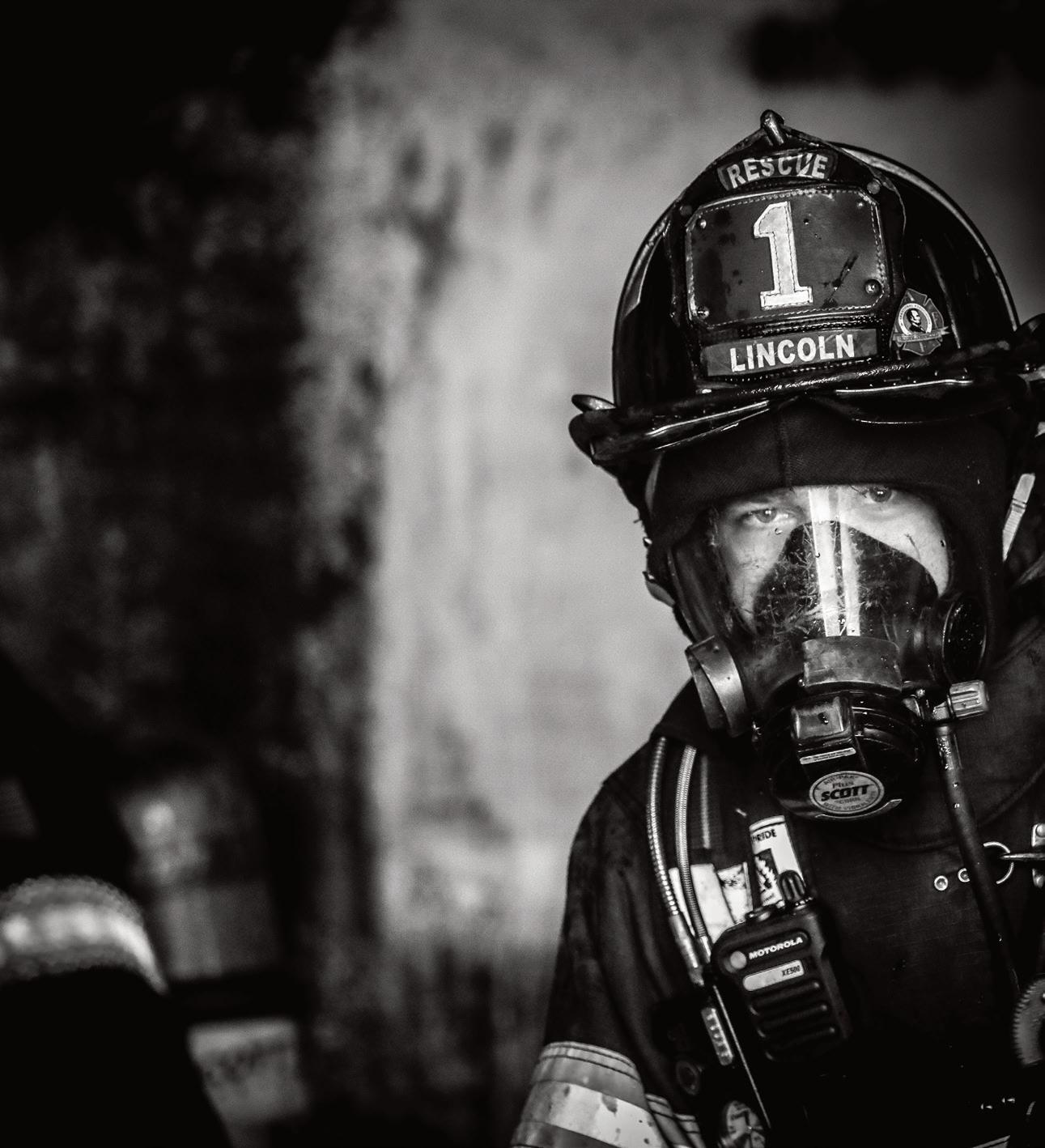
Most people who work as first responders do so because they want to care for and protect others. They enter the profession with a bright vision of offering support and empathy to those in need and they’re typically concerned and compassionate about the troubles others face.
First responders often ask “What can I do to help?” because they’re problem solvers who perform interventions that buffer trauma, reduce stress, promote healing, and instill hope.
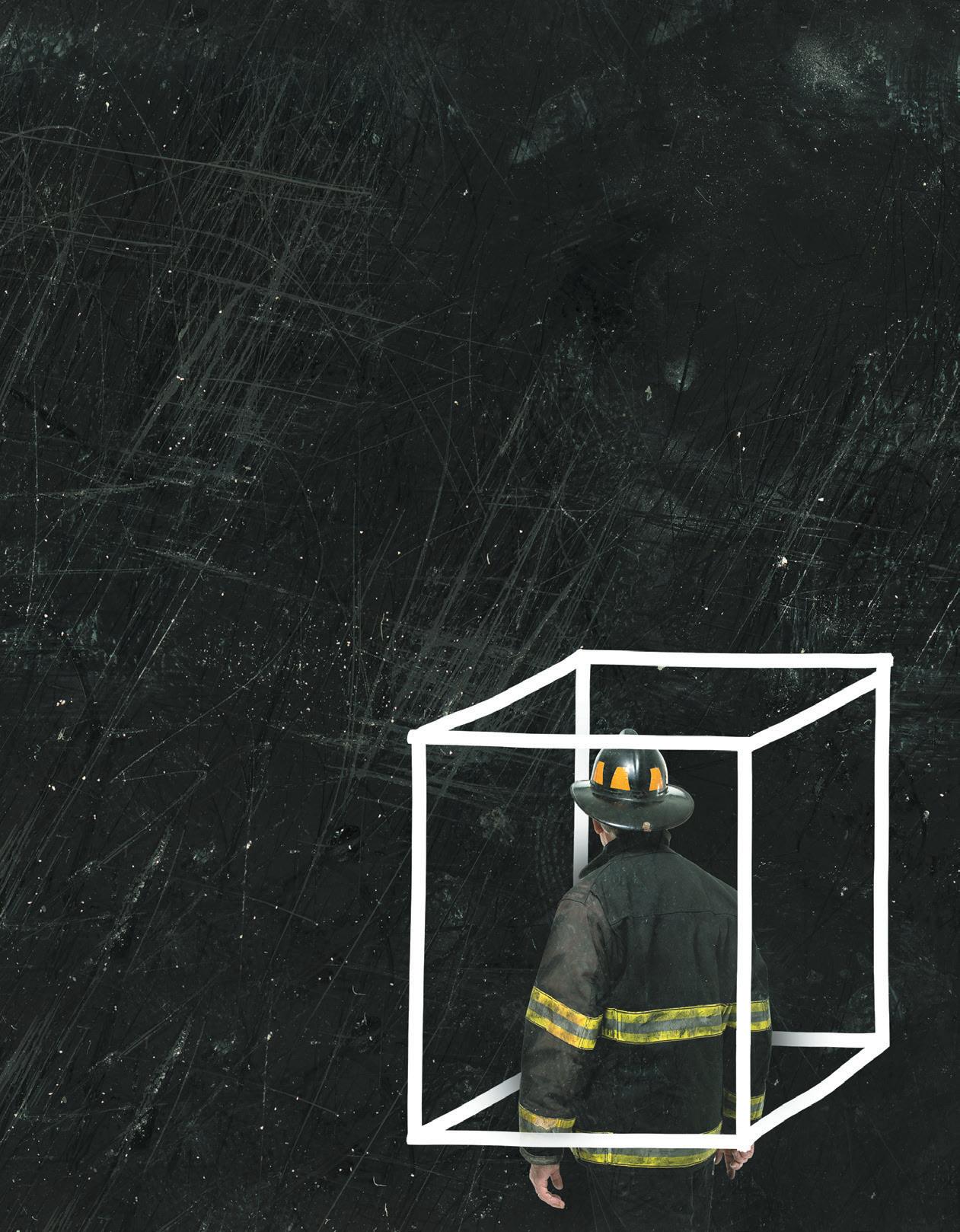
Unfortunately, all that caring and giving and problem-solving can lead to an occupational hazard called Compassion Fatigue. When it strikes, a first responder, who has previously “felt” the psychological and/or physical pain of others can suddenly no longer feel able to associate with and respond to those emotions. They may be perceived as dismissive, cold, removed, or not invested and this might ultimately impact their quality of work and the service they provide. It’s interesting to note that Compassion Fatigue is more pervasive in those who are highly empathetic and more readily feel the traumatic experience(s) and suffering of the people they care for.
Research is now showing that COVID-19 has significantly exacerbated stressors for first responders, resulting in an upsurge in Compassion Fatigue. Addressing this upsurge is vital for professionals who dedicate themselves to serving the public. We need to notice, name, and put into action the strategies that will nix the negative outcomes reflective of this stress-related condition.
By Tina Bonnett, ED.D, M.ECED., R.E.C.E., Certified Trauma Integration Clinician
STRESS Notice, Name & Nix ALL THAT CARING AND GIVING AND PROBLEMSOLVING CAN LEAD TO AN OCCUPATIONAL HAZARD CALLED COMPASSION FATIGUE.
Compassion Fatigue
22 | CRACKYL MAGAZINE
NOTICE
Do you feel irritated or angry when others express their distress? Do you feel disconnected or physically unwell?
If so, notice that you may be suffering from Compassion Fatigue. This doesn’t mean that you’re no longer fit to work in the profession, but rather illustrates that you may be subject to this common occupational hazard.
Pay attention to other symptoms such as feeling numb, detached, and emotionally disconnected. A sense of helplessness, withdrawal, isolation, reduced empathy, and poor self-care may all signify that you are operating with diminished compassion. Physical illness, a loss of interest in activities you typically enjoy, difficulties with concentrating and decision-making, struggling to get out of work mode, and an increase in conflict in your personal relationships may also be an indication that you’re struggling with Compassion Fatigue.
NAME
Is there someone you trust with whom you can candidly explore your feelings of decreased compassion? Instead of blaming and judging yourself or your colleagues, try to see this as an occupational stress injury that needs to be acknowledged and understood.
Asking “Why didn't I feel empathetic towards that person in distress?” or “Why do I feel so drained and detached from others?” may set the stage for open and meaningful conversations so Compassion Fatigue can be named and then tackled.
As you engage in this process, it’s essential that you avoid indulging in guilt or shame as this will keep you from moving forward. Instead, set your sights on pursuing remedies and recognize that what you’re wrestling with is reflective of the distress and the burdens of others you’re encountering in your work as a first responder.

NIX
Can you contribute to creating a transparent organizational culture that discusses Compassion Fatigue, with the aim of putting in place support measures and practices?
Formal debriefing processes that follow calls involving service to a community member in distress can help in dealing with Compassion Fatigue. Working teams need to give one another permission, respectfully and mindfully, to notice, name, and access resources when compassion does not accompany the care of those that you service. Readily available counseling and well-being resources that set the stage for good mental health can buffer the negative effects of Compassion Fatigue. Should you already be receiving counseling from a trained professional, don’t hesitate to share that you think you might be experiencing symptoms of Compassion Fatigue – that’s how you’ll get help.
Strategies That Work
Prioritize your self-care without guilt. Be intentional about planning for healthy meal preparation, exercising, and engaging in activities that promote your physical and psychological well-being.
GIVE YOURSELF PERMISSION TO SET HEALTHY RELATIONAL AND WORK BOUNDARIES.
An excellent way to start this is to set self-care goals in your phone notes and refer to them before taking on any “extra” responsibilities with extended family or in your first responder work setting.
PRACTICE MINDFULNESS.
Using apps such as Headspace can help you to develop the tools to feel grounded and can contribute to your ability to feel compassion for yourself and others.
BE MINDFUL OF YOUR BREATHING.
When you feel dysregulated as a result of working with distressed community members, your breathing patterns may be altered. This, in turn, may shut off the parts of your brain needed to access emotions, including compassion. Download the app Tactical Breather and use it daily.
LISTEN TO PODCASTS THAT ARE COMPASSION FATIGUE-FOCUSED.
Episode 23: Story of Compassion Fatigue (deltapolice.ca) tells a candid story about a first responder who faced and worked through this occupational challenge.
SEEK A PROFESSIONAL.
Invite mental health professionals to your organization so that your members can participate in professional learning experiences about Compassion Fatigue. Consider gathering and reviewing resources (e.g. firstrespondersfirst. ca, camh.echoontario.ca, samhsa. gov, IAFFrecoverycentre.com, behavioralhealth.com) so that your organization is well-equipped with the tools to Notice, Name, and Nix Compassion Fatigue.
WINTER 2023 | 23
YOU’RE NOT WHAT YOU THINK
By Nick Halmasy, MACP, Registered Psychotherapist
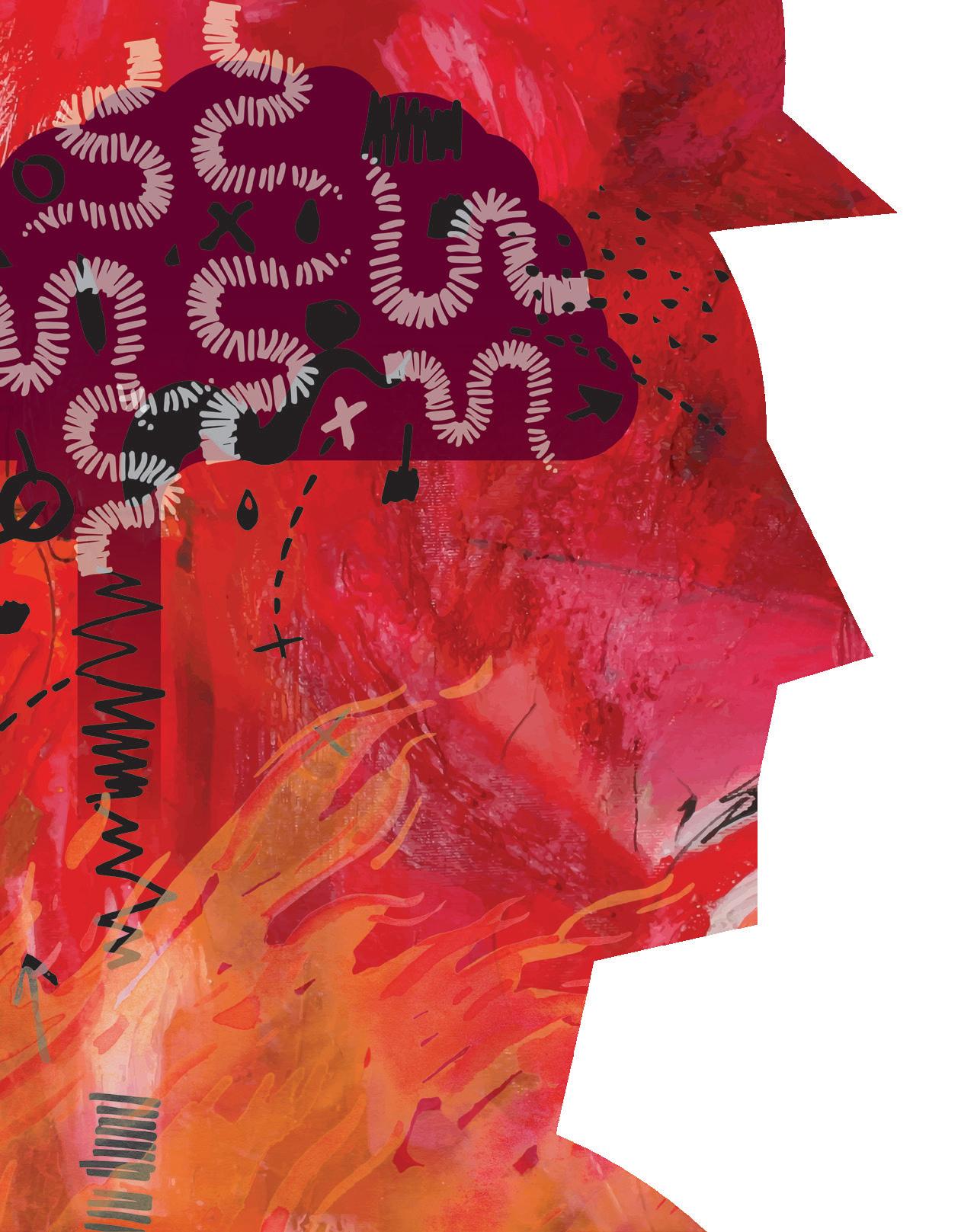
INTRUSIVE THOUGHTS CAN RUN THE GAMUT FROM BENIGN TO MORBID AND PERVERSE.
HEALTH
24 | CRACKYL MAGAZINE
That’s some lineup of negativity but it’s not necessarily an exhaustive list of the disturbing thoughts we can experience in our marriages, relationships, and on the job. What’s the thread that ties these together?
Thoughts.
Thinking is one of the most personal events we experience and it’s something that has puzzled mankind for centuries. As a psychotherapist, I deal with thinking a lot. In fact, every person I talk to is thinking. And I am too.

In various ways, I try to help people to think in more healthy ways. Sadly, “Stop thinking that way” just isn’t an effective strategy. Often the approach to overcoming these thoughts doesn’t involve thinking at all. In fact, often engaging in actions or involving our emotions can sometimes be more effective.
There are some not-so-small things we should consider about our thoughts.
You’re not what you think. I don’t mean this in some existential way – you are you, rest assured. But, the thoughts you have are not a reflection of the you that you are. Intrusive thinking is a major experience in multiple mental health issues – from PTSD to anxiety, and everything that lies in between and beyond. Intrusive thoughts (thoughts
we don’t want to have) can run the gamut from benign to morbid and perverse.
But – and it's important to emphasize this again – you are not what you think.
Follow this instruction: Don’t think of a pink elephant.
What did you think of? (For the small percentage of you keeners who thought of some other wildly colored animal, disregard this instruction!) The point is that most of you found yourself suddenly thinking about a pink elephant.

When you see a therapist, it’s usually because your thoughts aren’t benign. Often, you’re experiencing thoughts of traumatic calls – thoughts that occur at the worst possible times. Maybe you’re having thoughts of your partner cheating on you, despite having no real evidence. Occasionally, we even have suicidal thoughts. “I could never go through with it,” you might say.
“But I can’t stop thinking about it.” Thoughts can be disturbing, upsetting, frustrating, maddening and yet, they are utterly safe – as long as we don’t act on them.
We’ve all experienced this to some degree. We may have had intrusive thoughts about how a job interview went – hyperfocusing on where we
might have faltered. Perhaps when someone you love needs to drive somewhere during a bad storm, you’ve found yourself unable to stop thinking about whether or not they’ve been in an accident. Thoughts, after all, are a huge part of how you spend your day. That’s obvious, but what isn’t always obvious is that your intrusive thoughts may not be your fault. Something else may be going on.
Here's the problem: extensive research shows that fighting intrusive thoughts or attempting to push them away only makes the situation worse, creating something called the “rebound effect”. We feel driven to avoid some thoughts because we see them as almost too important – fear of failure is a great example of this. Trying not to think about failing can actually release unwanted chemicals into our system, amping us up, and making the very thoughts we’re trying to avoid come more rapidly and more intensely. A less important consideration, such as whether you like pineapple on your pizza, is far more easily dismissed.
Because failing is something you aren’t indifferent about, it might be necessary to employ other tactics to interrupt those intrusive thoughts. Clumping what I think of as “sticky” thoughts into two categories, current/real or hypotheticalis a good way to get there.
“WHAT IF I’M NOT GOOD ENOUGH?”
“WOW. DID I TANK THAT INTERVIEW!”
“I’LL NEVER PASS THIS TEST.”
WINTER 2023 | 25
“WHAT IF MY SHIFT JUDGES ME FOR STRUGGLING WITH THAT CALL?”
The Firefighter’s Essential Package

Essentials of Fire Fighting, 7th Edition, is the cornerstone of every re ghter’s training. This manual provides entry-level re ghter candidates with the necessary information to meet job requirements for Fire Fighter I and Fire Fighter II. Essentials 7 has an app, audiobook, workbook, curriculum, exam prep book and is available in Spanish!
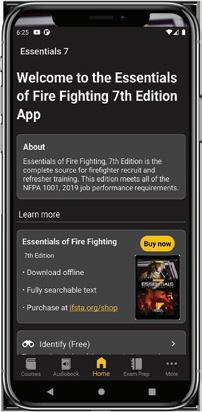
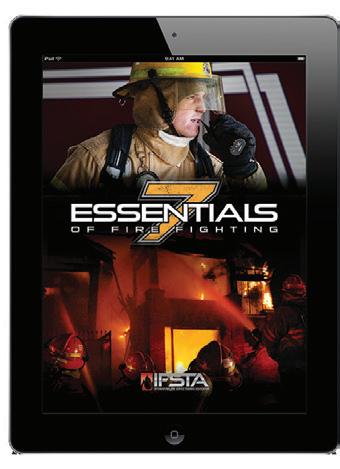
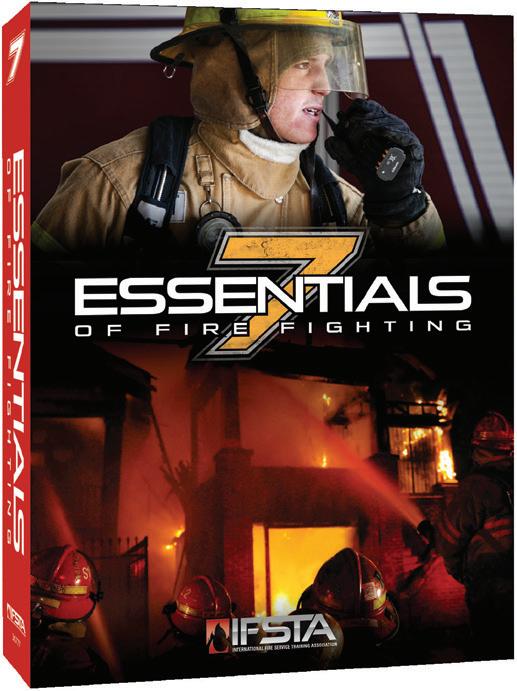
Item Number: 36777 eBook Item Number: 75168
FOLLOW THIS INSTRUCTION:
DON’T THINK OF A PINK ELEPHANT.

Try this for a day: each time a worrying thought arises, write it down and label it as either current/real or hypothetical. Then tally your list. Where does your mind like to spend the majority of its time? If you find that you’re not focused on current problems, you can join the majority of people who experience worrying thoughts! Shifting that focus on problem solving to current problems, if there are any, will help you to use that energy in a positive way.
It’s human nature to feel responsible for our thoughts and judge ourselves accordingly. For me, that process might sound like this: “A good person would never think of hurting anyone; I just thought about hurting the guy in the car ahead of me so I’m
a danger and I need to be locked up. And I can’t tell anyone about this.” Shame and guilt can now be added to the sensations of anxiety and worry and all because I’m assuming responsibility for having had an unwanted thought. But, remember: we’re not what we think.
Depending on the severity of the disruptions, perhaps you should talk to a professional. Any thoughts that involve hurting others or yourself, or anything that has an impact on you for hours on end is likely not going to be an easy, quick fix and will require professional expertise.
Remember, you are not responsible for your thoughts. Freedom comes only when we stop acting and feeling that we are.
SERIOUS SITUATIONS,
DON’T PUSH THEM AWAY. This only makes them worse
REMEMBER: THESE ARE JUST THOUGHTS
Painful, yes. But, thoughts nonetheless. Remind yourself that you didn’t ask to think this way.
PUT THE THOUGHT ON TRIAL.
If it’s sufficiently disruptive, it’s worth testing whether it’s worth your time. Is it a current problem or a hypothetical worry? Is the thought “true” or not? What’s the likelihood of the worst case scenario, and what will you do to cope with that should it occur?
ENGAGE ACTION AND/OR EMOTION TO CHALLENGE THE THOUGHT.
When we challenge our thinking, we can attend to the underlying emotion informing what we think. If we “feel” guilty, we might start to “think” we are guilty.
BE PATIENT WITH YOURSELF.
You’ve spent a lot of your life thinking one way so changing your habits is going to take more than a few attempts. It’s the beginning of a cognitive lifestyle change so you’ll need to keep practicing.
FOR LESS
THERE ARE SOME WAYS TO KEEP INTRUSIVE THOUGHTS FROM RUNNING THE SHOW:
HEALTH WINTER 2023 | 27
7
Firehouse Lifestyle Habits
By Joe Kozikowski, NSCA-TSAC-F, PN2, PPSC Firefighter Appleton Fire Dept., Appleton STATE Owner First Victory Coaching
What’s more important? Debating between smooth bore and fog nozzles, or simply remembering to open the bail all the way?
When it comes to nutrition and fitness many of us are lost in a debate over nuances when we might not even realize that we’re working at half capacity.
And before we know it, the job sneaks up on us. There are a few more aches and pains, turnouts fit a bit more snugly, and soon we’re groaning a little when we get up from the recliner. Without being aware of it, our daily habits – in combination with those delicious treats that are always being dropped off – are responsible for the “new you”.
There’s really no need to overcomplicate things: when it comes to most aspects of our health, we’re in the driver’s seat. Once we understand the basics, and stick to them consistently, we can turn things around.

Consider these seven lifestyle habits for use at the firehouse and at home to cultivate a healthy lifestyle and build towards an equally healthy retirement. These habits can become part of your daily routine without anyone even knowing you're on a “diet”. After all, you get harassed enough as it is!
Game-Changing Water Fruit
And here’s the kicker…C’s get degrees and that’s all I am asking of you here. Track these and shoot for five out of seven days for each habit and you’ll be winning your week!
1 2
DRINK HALF YOUR BODY WEIGHT IN OUNCES DAILY.
(Yup. That’s up to 100 oz or about 12 eight ounce cups.) And no, coffee doesn’t count. Non-caloric sweeteners in your water are fine if they help, but try real lemon or lime for a natural burst of flavor. And this may seem trivial, but your water bottle matters, so find one you like and carry it with you. Personally, I find I drink more when my bottle is clear so I can see how much is left.
3 4
EAT TWO PORTIONS DAILY.
Nutrients found in fruit enhance immunity and can even repair DNA damage caused by exposure to toxins (a big win for firefighters!). Delicious and simple to pack, fruits offer different nutrient profiles so try them all. And upgrade your meals by adding fruit to oats, smoothies, salads, and even dinners.

EAT FIVE TO SEVEN PALM-SIZED SERVINGS OF PROTEIN DAILY.

More protein means better recovery, more muscle, less fat, and a stronger, healthier body. All meals should be planned around your protein source so think “protein first”. Both plant and animal-based protein are fine – just know how much you’re consuming. For reference: one palm size equals 20 to 25 grams of protein. Note: shakes are good, but try to focus on whole food sources.
Protein VegGIES
FIVE
TO SEVEN FISTSIZED SERVINGS OF VEGETABLES DAILY.
No, tater tots and frozen fries do not count (nice try). Real vegetables are nutrient-dense and low in calories. When you consume the right amount and variety of vegetables, you'll feel the effects in your muscle coordination, appetite regulation, digestion, and mental clarity. Most of us do well with two fist-sizes per meal (yes, even breakfast) but even that will involve some planning, depending on who is cooking. Having some bags of frozen steamed-fresh veggies and fresh spinach on hand will help you boost those meals you don’t have control over.
28 | CRACKYL MAGAZINE
HEALTH
EVEN SMALL INCREMENTAL CHANGE HAS BEEN SHOWN TO BE LONG-LASTING.
15 MINUTES OF CONTINUOUS WALKING DAILY.
Let's be real here for a minute. We firefighters are much more sedentary than we would like to admit. There’s a big difference between being busy and being active. Between classroom time, riding to and from calls, writing reports, sitting around the kitchen table and taking safety naps, we can easily go 24 hours without walking even for a few minutes straight. Simple walking does wonders for low back pain and cardiovascular health, so make your 15 minute walking sessions separate from your normal workout to add additional movement. Bonus points if you can take it outside to get some fresh air and sunshine as well!
6
Walk Train
ON-DUTY WORKOUT EVERY SHIFT.
As we settle into firehouse culture, we often slide into unhealthy behaviors (including lack of physical activity, poor sleep habits, and unhealthy diet), leaving us physically unprepared for duty. Nobody plans to let themself go, but often a rest day taken after an injury leads to the avoidance of training for fear of aggravating the injury. This can then unintentionally become a sedentary daily routine.
Whenever possible, make your workout a priority. Do it first thing on shift when call volume is at its lowest and prepare your mind and body for the upcoming shift. Yes, we will absolutely have to regulate the intensity of a workout on duty when we’re sleep-deprived or physically taxed from a fire or training. However, we should never compromise consistency. New habits are fragile so we need to stay on the path.
Not sure what to do? Try reaching out to a peer fitness trainer and get on a progressive program. Much better than some insane instagram workout that will leave you overly sore and possibly broken.
7
Breathe
ON-DUTY WORKOUT EVERY SHIFT.
Call it meditation, visualization, box breathing or centering your chi… all that matters is that it works. Slowing our breathing taps into our parasympathetic nervous system (remember EMT class?). It enhances our body’s ability to recover from all stressors. Find a quiet place if possible and lie on your back with your feet elevated. Simply focus on taking deep belly breaths and slowing your exhales. Work to let your body relax a little more with each breath. A great time to do this is right after your daily workout as it will spark recovery. You may feel a little awkward or silly the first few times you do this but trust me, those that I’ve worked with start to look forward to this part of the training session.
These seven habits, practiced consistently, can absolutely be life changing. We don’t need to be 100 percent perfect. Miss your water goal one day – no big deal! Refocus the next day and hit your target. Do the same for all of the habits. By focusing on these foundational elements of health, you’ll find the effects will compound to make every aspect of your life better.
These habits are fairly simple on paper but the real challenge is putting them into action. So how do we do that?
Put a tracking sheet in your locker or somewhere you will see it throughout the day. Do this on your own and be accountable to yourself, or take it on as a crew and hold each other accountable. Either way, tracking is crucial at the start.
If adding all of these to your day seems a little daunting, simply pick one or two that are the easiest for you. Start there and track for two weeks or more until the new habits are consistent. After you feel confident with the first habits, add one more habit to track while keeping the originals. Even small incremental change has been shown to be long-lasting.
We have many uncontrollable factors working against our health as firefighters. Regardless, it’s time to stop blaming bad genetics and the strain of the job if we haven’t even “opened the bail” all the way. These habits offer you a way to control the controllable with your own health so you can enjoy your career and retirement.
WINTER 2023 | 29
5
Disconnect from the Job with teardrop Camping
By Neil Baldwin, Retired Counselor
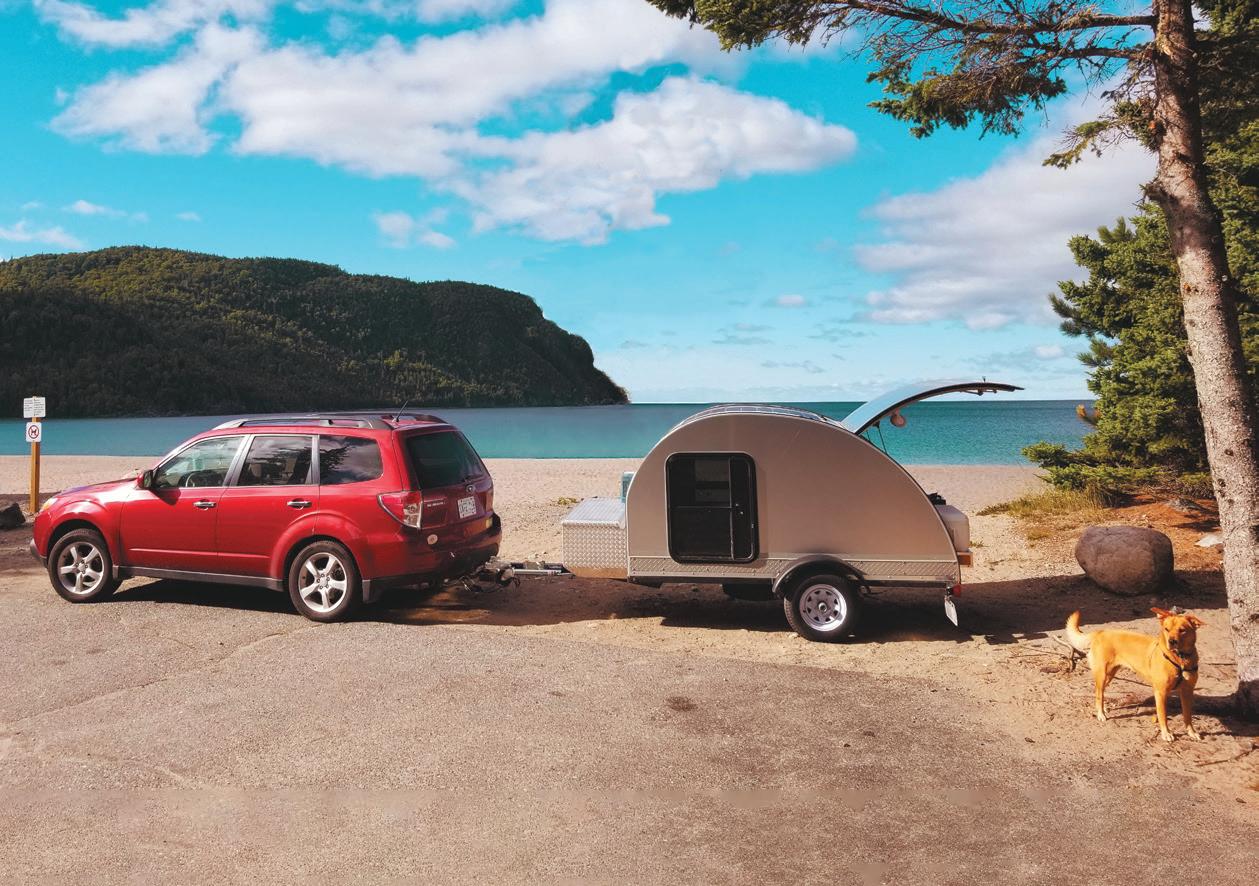
It’s not long past sunrise on the rugged southern coast of Ontario's Manitoulin Island, about 100 miles southeast of Sault Ste. Marie. The sun has just emerged from a band of clouds on the horizon and from my window I can see an expanse of rocky shore peppered with windbent conifers. Beyond that are the aquamarine waters of the vast lake, white-topped waves rolling in. The rhythmic sound of those waves lulled me to sleep last night and greeted me again as I woke.
What I don’t see is people. What I don’t hear is the noise of humanity. It’s just me, surrounded by nature, in bed under a cozy duvet with a fresh-brewed coffee in hand. And a very contented dog at my side. Luna, a Shar-pei/ Lab rescue and my faithful companion, not only loves getaways but also probably feels that our tiny camper trailer is like a den we both get to live in!
If you’ve ever felt the need to escape daily life and be away in a space and place of your own – and most first responders have or will – a little teardrop trailer like the one Luna and I travel in allows the freedom to get away from it all, without the challenge of leaving it all behind.
LIFESTYLE
IT’S JUST ME, SURROUNDED BY NATURE, IN BED UNDER A COZY DUVET WITH A FRESH-BREWED COFFEE IN HAND. AND A VERY CONTENTED DOG AT MY SIDE. 30 | CRACKYL MAGAZINE
No to boundaries, waiting, routine. Yes to selfsufficiency, variety and spontaneity. An expedient, minimalist escape.
Teardrop trailers are to RVs what tiny homes are to houses. In fact, “teardropping” is perhaps closer to camping than RVing. But in this version of camping, the bed is comfortable, the interior is dry, and the kitchen is always ready at hand. The entire thing can be on the move in short order.
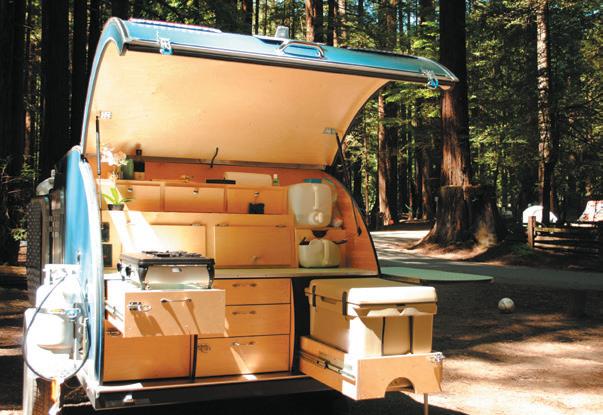
Most teardrops are essentially a bed on wheels, with a rear clamshell hatch that opens to access an external galley. They’re small, lightweight, and can be pulled by most types of vehicles. I have even seen one behind a hybrid car.
My particular rig is fairly true to type, weighing in at less than 1,000 lbs when loaded, and with a mere 4’ x 8’ footprint (not including the front box and trailer tongue). But that doesn’t mean bare bones.
There's a solar panel on the roof, two deep-cycle batteries, and an inverter to give me on-board power for lighting, multiple USB sockets, a 12 volt freezer, a little rice cooker, and even a mini space heater to take the edge off cool nights.
In the galley, a butane stove and everything else needed for simple reheating or complete meal preparation is immediately at hand. And of course, there’s a hand grinder and coffee apparatus for the perfect cup of java anytime, anywhere.
In the sleeper, a memory foam mattress is surprisingly comfortable even for multiple nights, and interior walls of
finished maple add to the cozy feel provided by my down duvet and pillows.
My favorite non-essential “essential” upgrade was a dimmable, color-changing LED up-light strip, so I can fine-tune the ambience to my mood. Clever storage and multiple wall hooks help keep things in their place in this compact space.
everything you might like. You must choose what is important and what your version of essential is.
And once you have tried dressing inside a teardrop, you may want to sign up for a yoga class to help that go more easily!
TO BOUNDARIES, WAITING, ROUTINE
Teardrops, despite the generic name, come in many shapes and sizes though most accommodate just one or two occupants. There are a variety of manufacturers, ranging from big-name RVs to a wide range of small-and hobby-business builders. For those who really dislike boundaries, there are even beefy teardrops suitable for “overlanding” rough terrain.
Also popular are plans and parts kits. Some of the doit-yourself teardrops are a gorgeous melding of form and function. As many firefighters are hands-on folks who balance their professional and personal lives through immersion in hobbies, building your own escape vehicle could be your ultimate practical leisure pursuit.
But…even I must admit that teardropping isn’t for everyone. While more comfortable and convenient than conventional camping, there are trade-offs and limitations to this minimalist RVing. You have much of what you need, but you can’t have
NOWhat’s more, with the possible exception of the fully-featured teardrops from big-name RV makers, there’s usually the potential for tinkering, upgrading and fixing with these tiny camper trailers. Teardrops are, therefore, ideally suited to resourceful, practical, problem-solver types who like to figure out how to make things work better and tweak their camper experience. Whether you order one or build your own from plans, winter is the perfect time to get moving on it.
responders, I know, grow weary of advice about cultivating balance in your life and marshaling mental and emotional energies beyond your shift. Teardropping is not another theoretical recommendation; it’s a concrete, action-oriented endeavor that can support your mental health.
A change is as good as a rest, the saying goes, and sometimes one can be even better. I love having all my essentials packed with a trailer at the ready, much like emergency vehicles at a station. I can pack a cooler, some clothes (and my canine buddy) and take off when I wish to change the scenery around me or inside me.
TO SELF-SUFFICIENCY, VARIETY AND SPONTANEITY.
As a retired counselor, I appreciate the importance of self-care. Professional firefighters and allied first
YesHumor the counselor in me when I suggest keeping a notebook in your little trailer to jot down thoughts, feelings and perspectives. Even for those who value action over words, writing is a form of thinking, and can be an ingenious way to untangle the swirl inside our heads.
Being in the here and now, settled in a teardrop away from the daily routine, you may find the perfect place to unwind.
WINTER 2023 | 31
FITNESS SIMPLE TOOLS FOR YOUR FIRE STATION GYM : THE KETTLEBELL
By Ryan Provencher, Firefighter Peak Performance Founder and Executive Fitness Advisor for CRACKYL Magazine
KETTLEBELLS TOP THE LIST OF MOST EFFECTIVE, EFFICIENT, AND ACCESSIBLE WORKOUT TOOLS FOR YOUR FIRE STATION GYM.
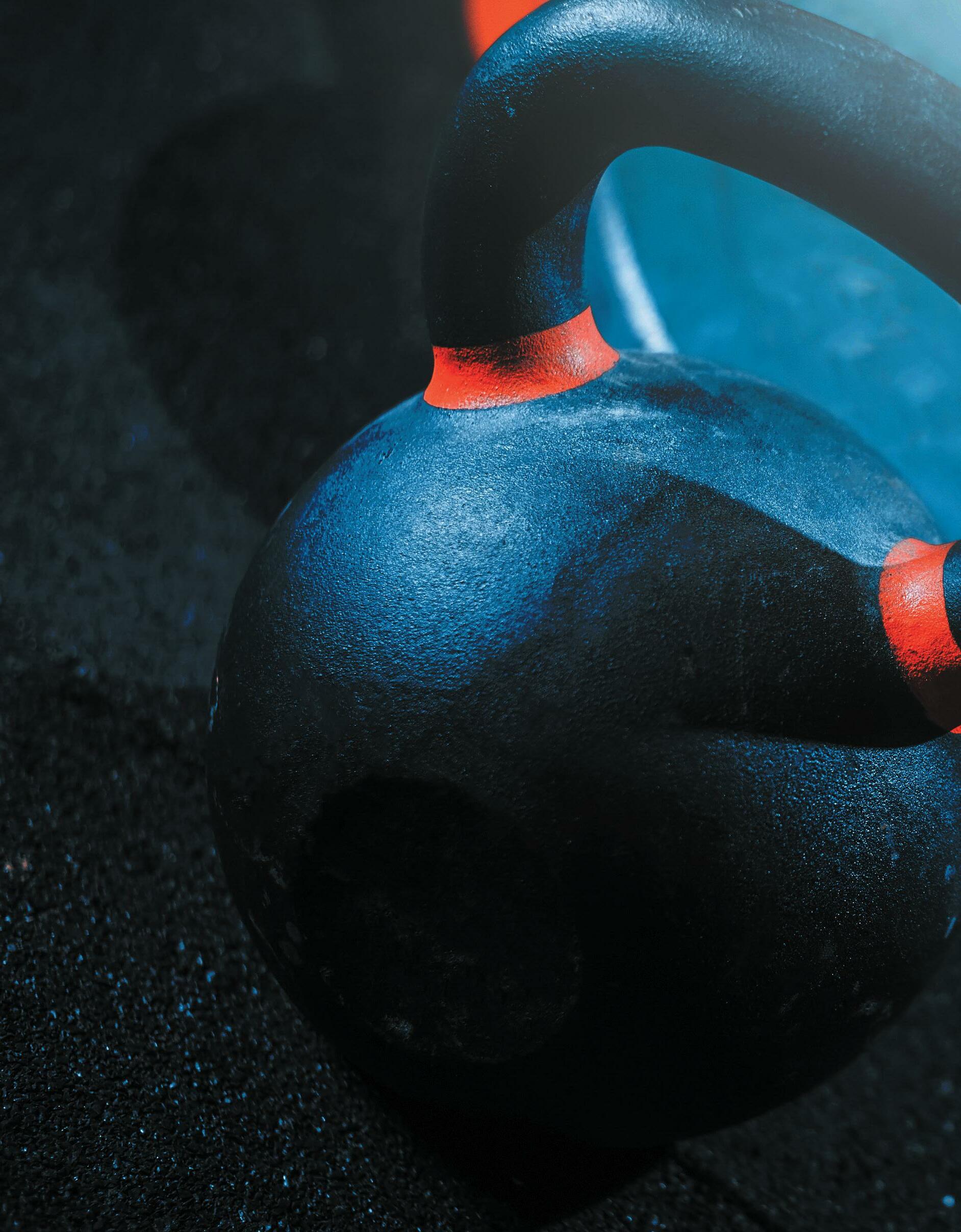
The unique shape and load distribution of kettlebells make them ideal for training movement patterns that mimic specific firefighting tasks. They require little exercise time or storage space. A comprehensive kettlebell workout can be completed in 30 minutes, addressing strength, power, mobility and flexibility in a single session. And, thanks to a variety of movement options and the ability to adjust load and tempo as needed, kettlebell exercises are accessible for people at all fitness levels.
NO.1 KB PRESS
A B C
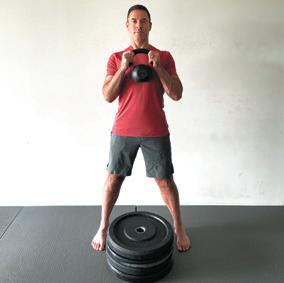
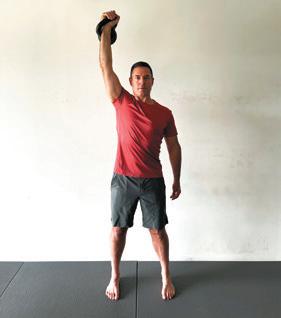
Stand with feet shoulder width apart, kettlebell in the front rack position.
Bend knees slightly and press the weight directly overhead. Move the weight with control to the starting position.
TACTICAL APPLICATION: VERTICAL PUSHING MOVEMENTS
SUCH AS LADDER RAISES AND CEILING BREACH.
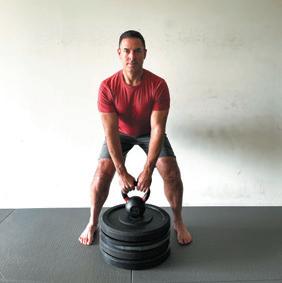
NO.2 KB CLEAN
A B C
Grip the kettlebell in a hip hinge position. Forcefully pull the kettlebell off the floor. Move the weight with control to the starting position.
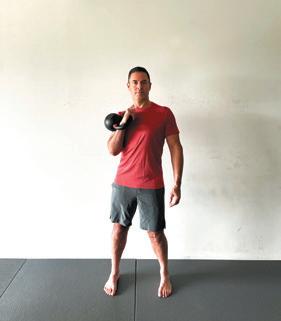
TACTICAL APPLICATION: HINGE/SQUAT MOVEMENTS
SUCH AS LIFTING TOOLS AND EQUIPMENT.
32 | CRACKYL MAGAZINE
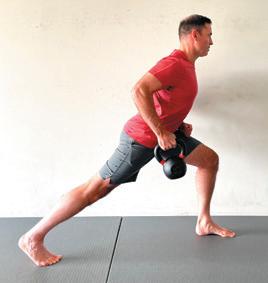
NO.3 SPLIT STANCE ROW
Begin in a split stance position.
Place elbow on the front knee while gripping the kettlebell with your opposite arm and pull the kettlebell off the floor bringing your elbow to ribs.
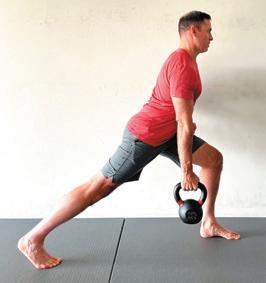
Move the weight with control to the starting position.
TACTICAL APPLICATION: HORIZONTAL PULLING MOVEMENTS SUCH AS PULLING HOSE AND HOISTING TOOLS.
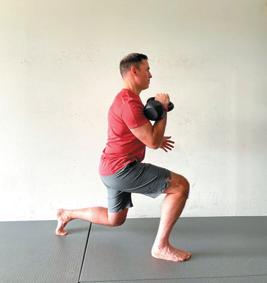
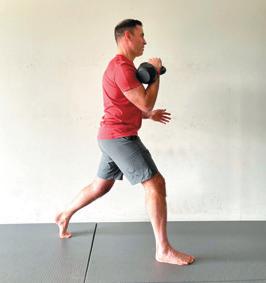
NO.4 FRONT RACK SPLIT SQUAT A B C
Begin in a split stance with the kettlebell in the front rack position on the forward leg side.
Pull your back knee down to 90 degrees while keeping the front leg stable at 90 degrees.
Return to the starting position.
TACTICAL APPLICATION: LOADED LUNGE MOVEMENTS SUCH AS HOSE DEPLOYMENT AND CLIMBING STAIRS.
WORKOUT TRAINING PROTOCOL: 20/10
WARM-UP Ten minute dynamic warm-up.
TRAINING 8 sets for each exercise: 20 seconds of work followed by 10 seconds of rapid recovery. For unilateral exercises, perform movements on the right side during odd rounds, and left side during even rounds.
COOL-DOWN 10 minute comprehensive cool-down.
SCORING Record total rounds completed and final Heart Rate.
MODERATE INTENSITY TRAINING
Maintain Rating of Perceived Exertion (RPE) between five and seven and heart rate between 60 percent and 80 percent of estimated maximum.
HIGH INTENSITY TRAINING
Maintain a Rating of Perceived Exertion (RPE) between seven and nine and a heart rate between 80 percent and 95 percent of estimated maximum.
A B C
WINTER 2023 | 33
C u T Y ou R
CANCER RISK
By Ryan Provencher and Sunjya Schweig, MDStrategies for Reducing Cancer Risk in Firefighters
January is Firefighter Cancer Awareness Month, and it’s important to acknowledge that...
o CC u PATI o NAL CANCER IS THE LEADING CA u SE o F LINE- o F-D u TY DEATHS IN THE FIRE SER v ICE.
The IAFF reports that more than 75 percent of the names added to the Fallen FireFighter Memorial Wall in 2019 were members who died from occupational cancer.
The fire service has made significant progress in implementing on the job strategies to help reduce the risk of cancer, such as source capture for diesel exhaust, issuing two sets of turnout gear, the consistent wearing of SCBA, first in/ first out procedures, proactive on-scene decontamination, clean cab initiatives, washing gear and showering within the hour after exposures to toxins, and more.
These improvements in our work environment are critical; however, it is also important for each of us to consider how we can be proactive away from work to further reduce our risk for cancer.
KEY LIFESTYLE CHANGES THAT CAN HELP Y ou LI v E AN ANTI-CANCER LIFESTYLE
A recent study from the American Cancer Society showed that exercise can help lower the risk of 13 different types of cancer. Exercise can help reduce the risk of cancer by decreasing inflammation, strengthening the immune system, balancing hormones, regulating insulin levels, and helping to prevent obesity, which is a risk factor for many cancers. Regular physical activity also promotes
lymphatic drainage, detoxification, stress resilience, and increases the production of important cancer-fighting antioxidants such as glutathione.
While regular physical activity is clearly important, it is also key to avoid overtraining as this can alter your microbiota, increase inflammation, elevate stress hormones, deplete glutathione, and weaken the immune system. Monitoring morning resting heart rate and overnight
heart rate variability (HRV) can be helpful for monitoring recovery and readiness for exercise, as well as determining your exercise intensity. You can use wearable technology such as an Oura ring, and phone apps such as HRV4Training or Elite HRV to monitor both resting heart rate and HRV. If you note a decrease in HRV or your resting HR trending up, make sure to rest that day.
HEALTH
EXERCISE & MOVE REGULARLY
6 34 | CRACKYL MAGAZINE
EAT A MINIMALLY PROCESSED DIET
Diets high in added sugars, inflammatory fats, processed foods and environmental toxins, but deficient in critical cancerprotective nutrients can contribute to cancer cell growth by increasing inflammation, disrupting your gut, reducing immune system function, and more. Eating a whole-foods, plant-based diet with real, unprocessed, or minimally processed foods is the foundation of an anti-cancer lifestyle. Plant-based foods are high in antioxidants which help to boost your immune system and protect against cancer. Fruits and vegetables contain more than 25,000 cancer-fighting nutrients called phytochemicals that work synergistically to protect your body. Multiple studies have shown that people who eat colorful fruits and vegetables are less likely to get cancer.
IMPROVE GUT HEALTH
Both good health and disease begin in the gut. An estimated 39 trillion microbial cells, including bacteria, viruses and fungi, live in and on us and it’s possible to identify between 500 to 1,000 different species of bacteria in the gut alone. Seventy to eighty percent of our immune system is located in the gut, and a well-balanced gut microbiome is critical to our body's natural defense systems.
Research suggests that colon cancer stems from an interaction between the microbiome, the immune system, and epithelial cells that line the colon. The first step towards improving whole-body health is improving
gut health by avoiding ultra-processed foods including sodas, sweetened breakfast cereal, white bread and fried chicken. We can heal the gut and improve all aspects of health through our food and nutrition choices.
MINIMIZE ALCOHOL, TOBACCO, & OTHER HARMFUL SUBSTANCES
The cumulative impact of toxic substances like alcohol, tobacco, and drugs can burden the body, increase inflammation, create an overwhelmed immune system and increase the risk of cancer. Alcohol is listed as a known carcinogen linked to head, neck, esophageal, liver, breast, and colorectal cancer. Most studies show moderate to heavy drinkers have the highest risk of alcohol-related cancers; therefore, minimizing alcohol consumption is an essential step towards reducing cancer risk.
Other harmful substances, such as tobacco, are sources of such toxic chemicals as arsenic and cadmium. Research shows that people who use both alcohol and tobacco have greater risks of developing cancer than those who use only one or the other.
FILTER DRINKING WATER
Drinking plenty of water helps with both detox and elimination, as well as mobilization of toxins through the body; however, most tap water contains harmful substances. Research has established that by ridding water of chlorine and chlorine by-products as well as other potential carcinogens and hormone-disrupting chemicals, water filters reduce the risk of cancers such as colon
cancer, rectal cancer, and bladder cancer. Use a high-quality water filter to decrease contaminants such as pesticides, heavy metals such as lead, mercury, arsenic, and cadmium and avoid using plastic water bottles since many contain carcinogenic contaminants like Bisphenol A (BPA) that can leach into your drinking water.
REDUCE TOXINS AT HOME
A large percentage of our toxic burden comes directly from the environment and the products we use every day. You can begin to reduce your exposure to cancer-causing chemicals by eliminating pesticides and herbicide sprays in your yard and gardens, avoiding amalgam (mercury) fillings in your teeth or having them removed safely, using natural home cleaning products, switching to clean personal care products and fragrances, and buying organic whenever possible (especially meat and dairy). It is also important to avoid using plastic reusable containers particularly if you are microwaving your food.
These recommendations and changes can feel overwhelming at first, so we recommend starting with one room in the house or one area of your life and slowly building from there. Implementing these strategies in addition to the strategies you have incorporated in your work environment will go a long way in mitigating drivers of cancer development.
Ryan Provencher is the Training Division Chief, Health/Safety Officer, and Wellness/ Fitness Coordinator in his Fire Department, founder of Firefighter Peak Performance, and Executive Fitness Advisor for CRACKYL Magazine.
Get in touch with Ryan by emailing
Sunjya Schweig, MD, is the Founder of the California Center for Functional Medicine (CCFM). CCFM provides functional medicine and wellness programs for first responders.
Learn more at

25,000 CCFMED.COM RPROVENCHER@CRACKYLBUSINESSMEDIA.COM FRUITS & VEGETABLES CONTAIN MORE THAN CANCER-FIGHTING NUTRIENTS CALLED PHYTOCHEMICALS WINTER 2023 | 35
You are the MacGyver of the crew. You're always thinking but your impulsiveness can get you into trouble when it comes to fridge clean-out day. Sometimes “best before” really means “don’t eat after”.
Your creativity and unpredictable nature help keep you in control of all calls but never at the foot-end of a stairchair lift, especially when there is poop involved.
Your unicorn bedsheets match your mystical nature and you’re always thinking of others…or are you? Your imagination tends to wander into even the darkest places at the worst times.
You are most likely to be found holding hands with a psychiatric patient or sharing tea with the elderly. There is also a high likelihood that you own cats. Multiple cats.
Your courageous and impulsive nature makes you most likely to smash in the front door instead of trying the handle to see if it’s unlocked. When others chuckle, it takes just one glare from you to scare them into silence.

You ask questions ten at a time and expect answers in chronological order. Patient history gathering is your forte - no one can remember details like you - and you like it that way.
You’re cool and calm - even when you find empty ice cream containers in the freezer. No firehouse prank ever gets your goat. And if it was a goat, you'd probably adopt it.
No patient can rouse you or make your blood boil - even the patients who wake you up at 0300 hrs to talk about their recent blood work results. Your “it’s not personal” mentality has your co-workers twitching with agitation and jealousy.
You are a natural-born leader and someone everyone can look up to and strive to be like. Your crew always votes to have you talk about issues with management because no one can match your sweet, soothing communicative tones.
You are the child whisperer of EMS. Your perceptive and intuitive nature makes you the best communicator – and this superpower can’t be taught— you lucky jerk. We still make kids cry.
You are the Care Bear of the firehouse – the den mother (or father) who’s always on the lookout to make sure nobody hurts your people. You’d love to start each shift with a group hug on the apparatus floor.
As the resident workplace psychologist, you offer your co-workers the benefits of your nurturing and empathetic nature. You should consider billing for all the divorce, relationship and parenting advice you dole out.
fire EMS
the first responder horoscope AQUARIUS ARIES
PISCES TAURUS CANCER aq uarius pisces aries scorpio sagittarius c a pricorn D e c 2 2 –Jan 19 Nov 22 –Dec 21 Oct 23 – Nov 2 1 J a n 2 0 –Feb 18 Feb 19 –Mar 20 Mar 21 – Apr 1 9 36 | CRACKYL MAGAZINE
GEMINI
If anyone has an idea, you’re the first person they want to tell. You’re very supportive and open minded. As long as you can be the boss, you’re in.
You walked onto the job knowing who you were and how you planned to get from point A to B. This probably pisses off your co-workers but hey! You can’t please everyone!
Easily spotted on duty, you’re the one wearing your white cleaning gloves to inspect dirt and grime along the firehouse baseboards and the tops of picture frames. Your toilet etiquette is unparalleled.
Your IV skills are coveted across the country, as are your first pass intubation stats. Your anal retentive nature might drive others nuts, but your house will never burn down from the stove being left on.
You are the shepherd of the flock creating a neutral shift environment. Now if you could only make a decision on how many handlines you want your crew to stretch. Everybody likes you, until they don’t.
Your go-with-the-flow nature, often disguised as indecisiveness, is your jive. Your coffee order at Starbucks likely drives people nuts.
No crossword puzzle is left undone at the firehouse when you’re on duty. You're a finisher in all things and no fire stands a chance against you. You spray copious amounts of water, even after the fire is out, just to be sure it's extinguished. You don't believe in candles.
You've probably married a co-worker - once or twice. All joking aside, no one knows about you because you’re so secretive. The rumor mill goes wild over you and you might just like it that way.
You’re a positive beacon of hope at the firehouse and can spin anything negative into a positive. Voted most likely to stay past retirement and work yourself out of work.
You have management written in your future. Your kind, openhearted personality coupled with your straight-laced nature are paving the way to becoming a supervisor. Please accept our condolences.
Any crew would be lucky to have you be their truck operator as you calmly navigate through traffic to an emergency, with your lights flashing and sirens blaring. You're often seen playing classical music and offering gum to your passengers.
You tackle the job like every call is being audited. Your fly-underthe-radar personality keeps patients happy and your medical director off your back. Just don’t spend too much time wondering where that headache came from.
It came from you.

LEO LIBRA SAGITTARIUS VIRGO SCORPIO CAPRICORN taurus gemini cance r leo virgo libra Sep 23 – Oct 22 Aug 23 –Sept 22 Jul 23 –Au g 2 2 A pr 20 – May 20 May 21 –Jun 21 Jun 22 –J u ly 2 2 WINTER 2023 | 37

YOU’RE
FIRST RESPONDER. NOT A LAST RESPONDER.
SPONSORED BY:
International Association of Fire Fighters The life you save could be your own. Learn how to detect cancer early at ResponseTimeMatters.org
A
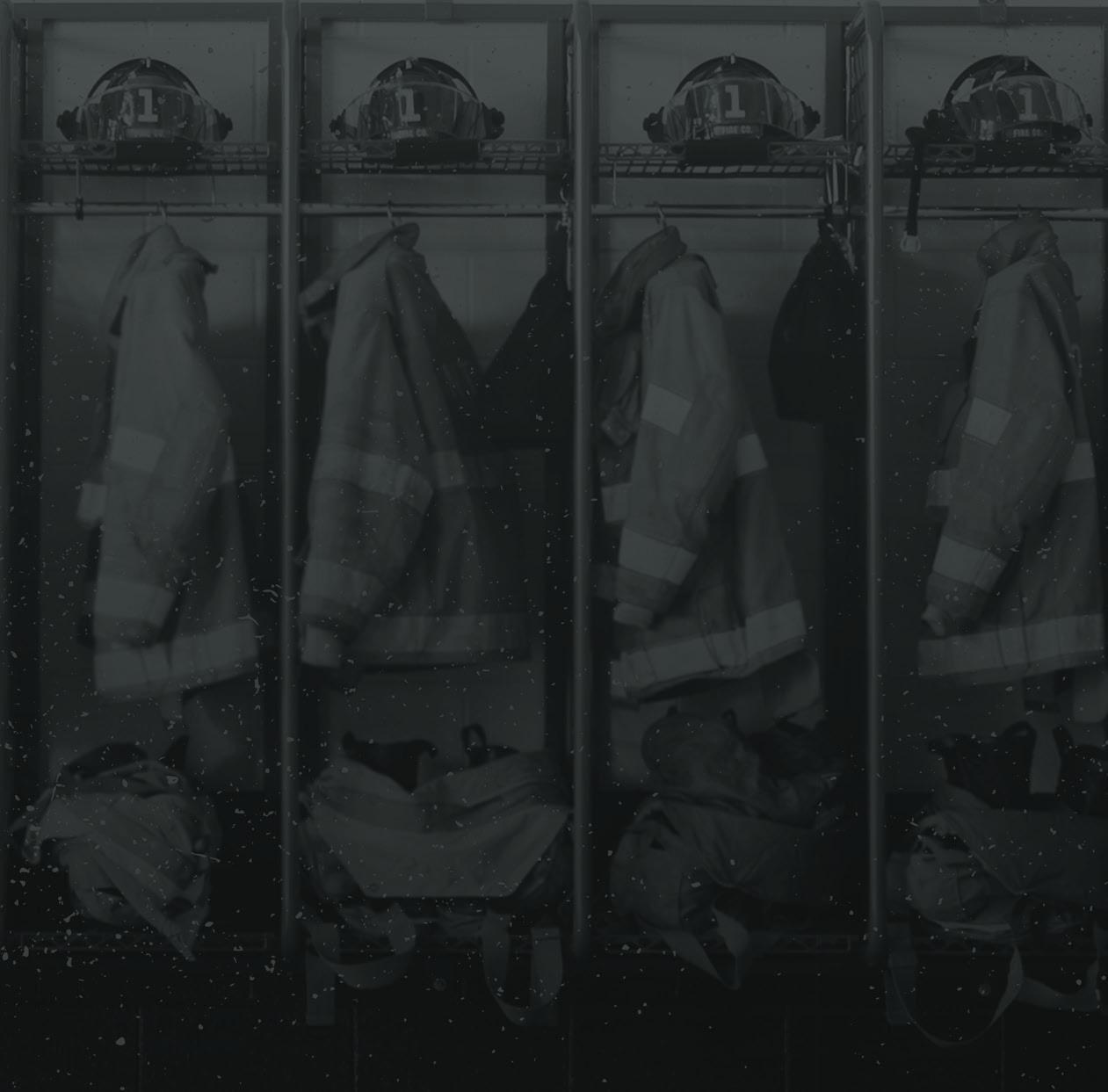
SIGN UP AND SAVE 40% ON A FIRE DEPARTMENT PRINT SUBSCRIPTION. SCANAND SAV E 40% TODAY CUSTOMIZE YOUR ORDER AND GET CRACKYL DELIVERED TO ALL OF YOUR FIRE STATIONS. BY SUBSCRIBING TO CRACKYL, YOU’RE GIVING YOUR FIREFIGHTERS ACCESS TO THE BEST TOOLS IN FITNESS, FINANCE AND MORE!
A LEADER ON FIRE
 By Martha Chapman
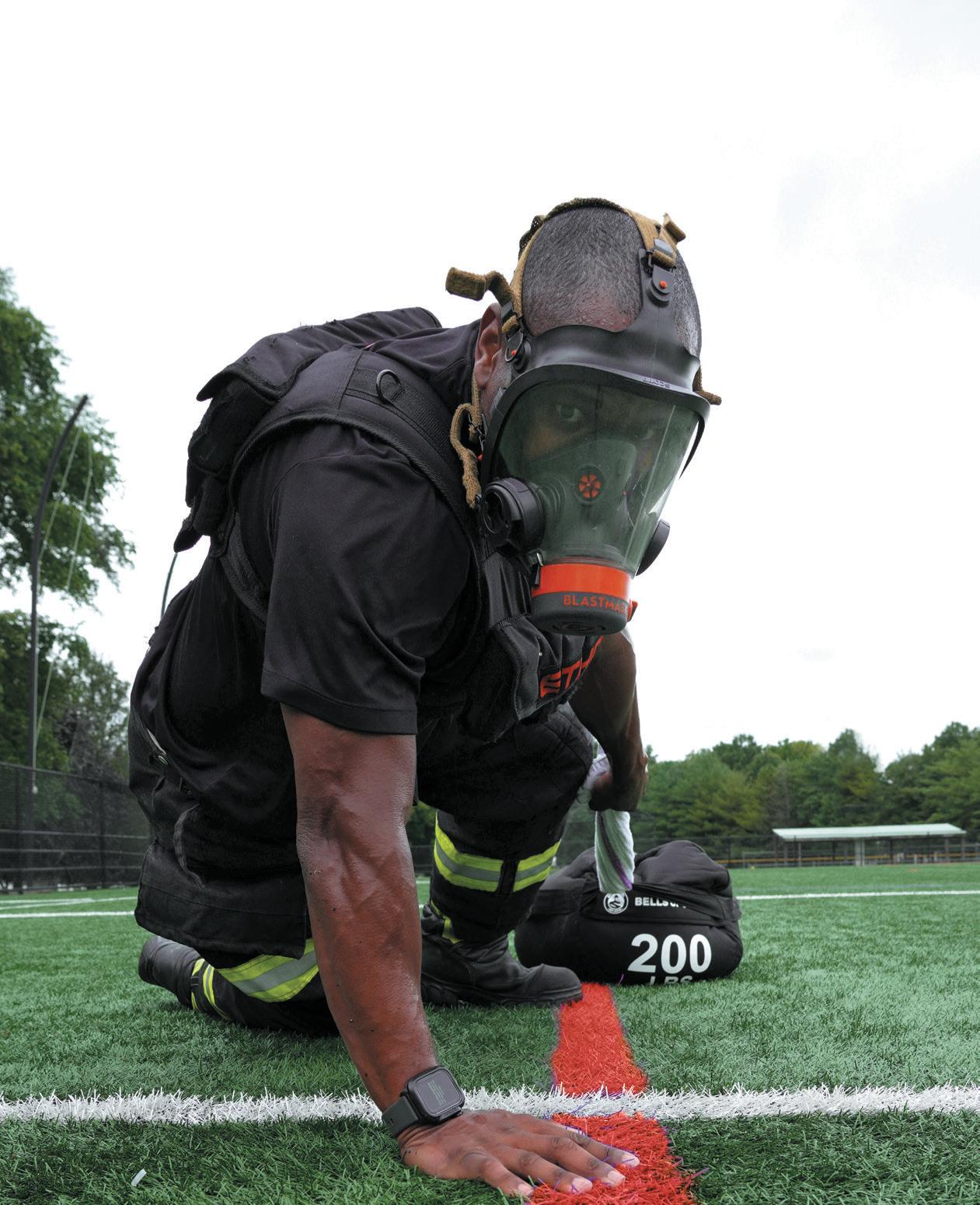
Ask Eric Campbell about his childhood and he’ll tell you a story of such sadness and brutality it might bring tears to your eyes. Yet today Campbell is a successful firefighter/ EMT in Montgomery County, Md., a former coach to Olympic athletes, and Instagram fitness guru with over 45,000 followers.
HIS IS A REMARKABLE LIFE.
LIFESTYLE
40 | CRACKYL MAGAZINE
FROM FIREBUG TO FIREFIGHTER
I STOPPED WANTING TO BURN THINGS DOWN BECAUSE OF THE PAIN
“I was born in Miami 1973 and never saw my parents in the same room until my college graduation. My father left my mother when she was pregnant with me – I’m an only child – and my mother had a boyfriend who was a drug user, maybe dealer. He was very abusive to us and that’s what I lived with, on a daily basis.”
Not knowing how to deal with his anger, when he was eight or so, Campbell began to find solace in starting fires . It started quite innocently, he recalls, with leaves and paper bags. “And the urge grew and grew. The more my mom was beaten on, and the more abuse I saw, the stronger the urge became.

“I SET A FIRE IN MY CLOSET. THEN I SET A PILE OF TRASH ALIGHT BESIDE OUR NEIGHBOR’S HOUSE, NEVER THINKING IT COULD HURT ANYONE.
"At one point, my mom tried to escape with me to Atlanta, but the boyfriend followed her. One time they had a huge fight and the next morning her face was not recognizable. That day I went to school crying and had to sit with the principal and counselors and eventually got brave enough to tell them what happened. The police came to our home and when they left both my mom and her boyfriend beat me for letting the authorities know what was going on.”
That made him an even angrier child, he recalls, and one day he went back to the school after classes were over and threw a rock to break a window and set the schoolroom on fire. Officials figured out who was responsible but knowing about the abuse at home, decided that instead of punishing him he should move back to Miami to be with his dad.
“And that’s when my life changed. It pulled me out of that environment. It’s not an exaggeration to say it saved my life.”
Campbell describes his father as a Vietnam veteran who was very strict, and the move back to Miami as “the best thing that could have happened to me. I stopped wanting to burn things down because of the pain, and
stopped wanting to be the bad kid skipping school. I never lit another match.”
Not only did Campbell successfully settle into his new life and new school, but he also discovered sports. Part of his motivation to succeed was thinking of his mother, wanting to make her proud and forget some of what he calls his “knucklehead behaviour”. Within a few years he was a top track and field athlete at the high school level, winning the national championship trophy for triple jump. Several universities wanted to recruit him, and Campbell accepted a full scholarship at the University of Miami, spending four years there before transferring to California Baptist University where he graduated with a degree in kinesiology.
I NEVER LIT
MATCH | 41
ANOTHER
LIFESTYLE YOU CAN’T BE FIT ENOUGH FOR A JOB THAT CAN KILL YOU.
After graduation, the University of Miami immediately hired Campbell as a track and field coach, and during his seven years there, he coached some remarkable athletes including football players such as Ed Reid, Santana Moss, Vince Wilfork and Sean Taylor.
All the while, he dreamed of being – of all things – a firefighter. After moving in with his father, he realized that he no longer needed to set fires because he was angry, and actually felt he was built for firefighting. Campbell laughs: “How many professions are there where you get to express so many facets of your personality in a single day? I get to break things, help people, think critically, and jump out of windows!”
Because he was nearly 40, Campbell assumed he was too old for the job and turned to the next best thing to mesh with his personal pledge to serve people: nursing. Having moved to the Washington D.C. area, he’d started the nursing training enrollment process when firefighting came up in a conversation with a friend. That friend encouraged him to give it a go. And that’s when Campbell’s life really changed.
He enrolled in an EMT program at Georgetown University, thinking that he should have that training before applying for a firefighter position. As luck would have it, Campbell’s lead instructor at Georgetown was a firefighter captain in Montgomery, Md., about 30 minutes outside Washington, and that captain encouraged him to apply. Within a year Campbell was in the service.
HE WAS 43.
42 | CRACKYL MAGAZINE
What does he love most about firefighting? “Pure and simple: the opportunity to serve my community. It’s about helping and protecting others and I’m willing to risk my life to do it.”
Campbell’s mother died of a heart attack in 2003, and he says that was a factor in motivating him to live a life of service to keep her legacy alive. He’d always wanted her to be proud of him. “I remember how much pain I was in as a child, setting fires – and here I am, fighting fires. It closes the circle, and I find that pretty poetic.”
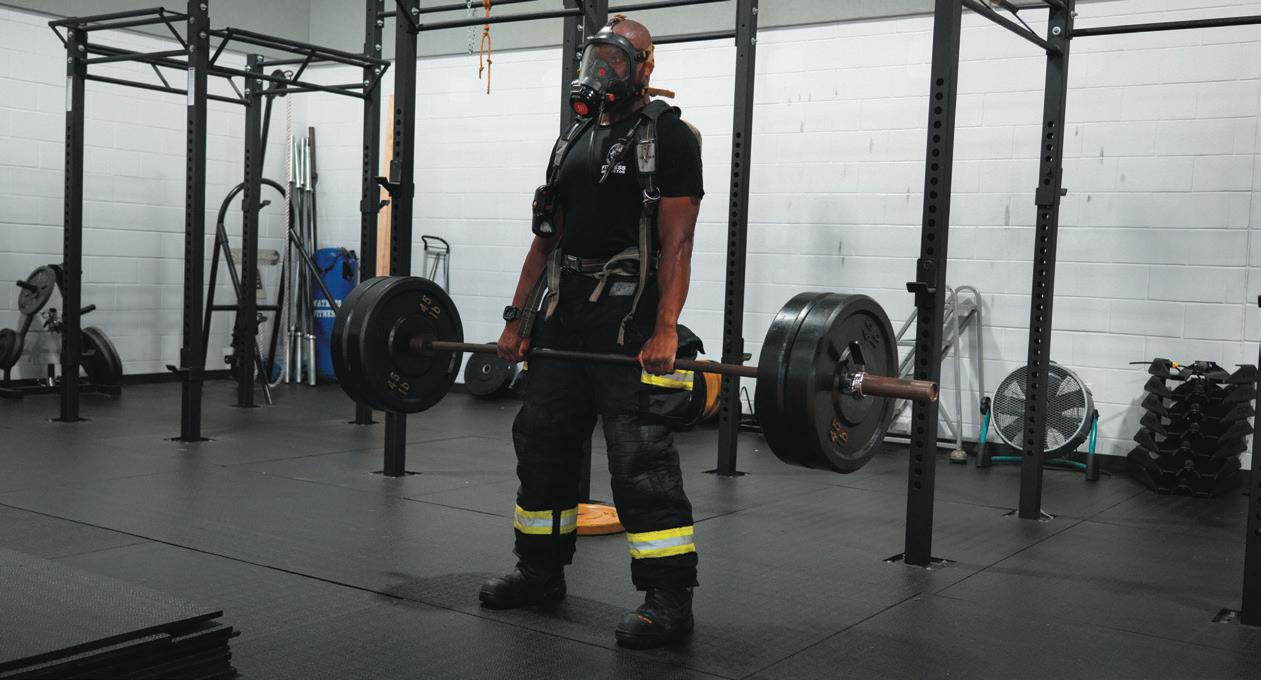
When it comes to the cliché of the firefighter calendar boys and girls, Campbell says even he had something to learn. Like a lot of people outside the service, he thought everyone would have a chiselled physique and be in top form. “But it was the complete opposite. One of the reasons I train now is because I realized the culture was not the hunky guys and gals, but a lot of people who do a very difficult job and don’t have a lot of time. They’re dealing with sleep deprivation, and poor diet. They don’t want to be unfit, but they find it hard to take care of themselves. And their health suffers as a result.” You can’t, as he puts it, be fit enough for a job that can kill you.
Campbell works shifts – four each week from 7 a.m. to 5 p.m. Monday, Tuesday, Thursday and Friday, with
Wednesdays and weekends off. He may no longer be coaching athletes, but he has, as he puts it, brought an athletic mentality to firefighting. And so rather than helping college and Olympic athletes reach their goals, Campbell coaches colleagues right at his own fire station as well as aspiring firefighters at a local fire academy.
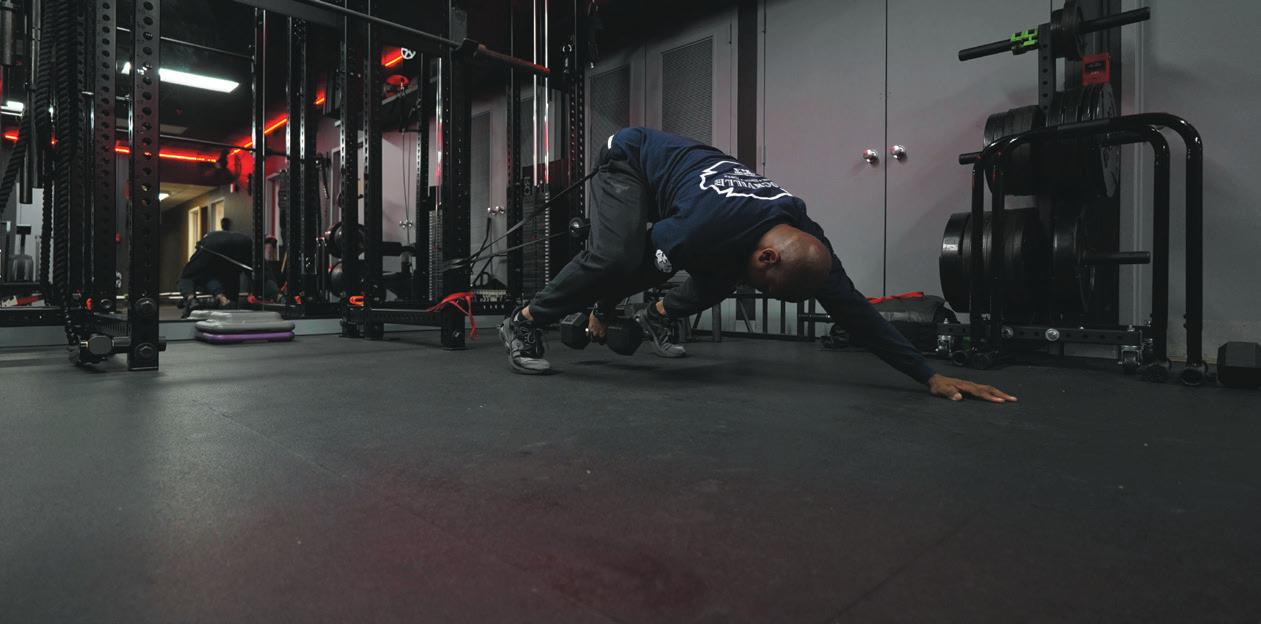
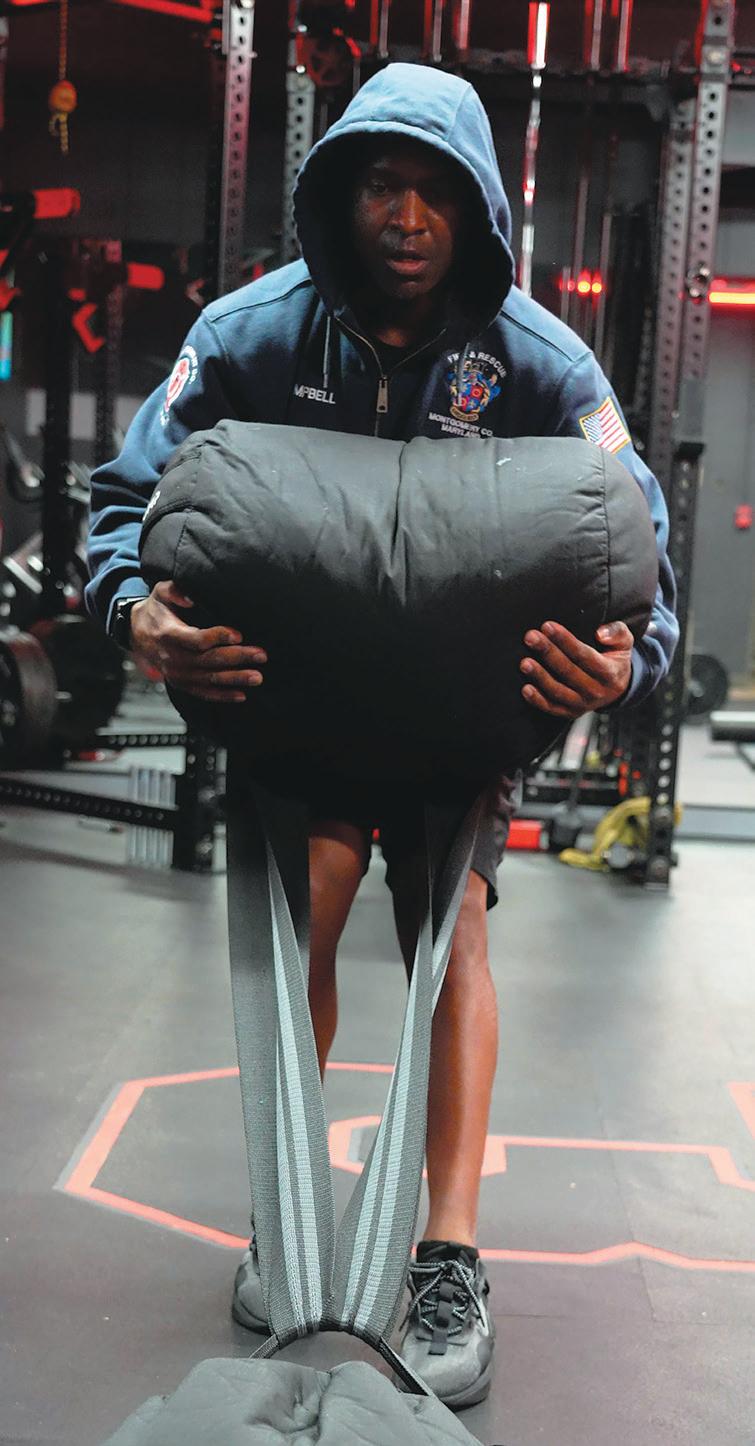
Campbell trains every day, though as he approaches 50 he says he’s changed his routine from super-heavy lifting to more functional firefighter fitness workouts including the “Big 8”. Designed to improve fireground task ability, reduce injuries, increase resilience and improve recovery, they comprise: push, pull, carry, lift, drag, core, capacity and flexibility.
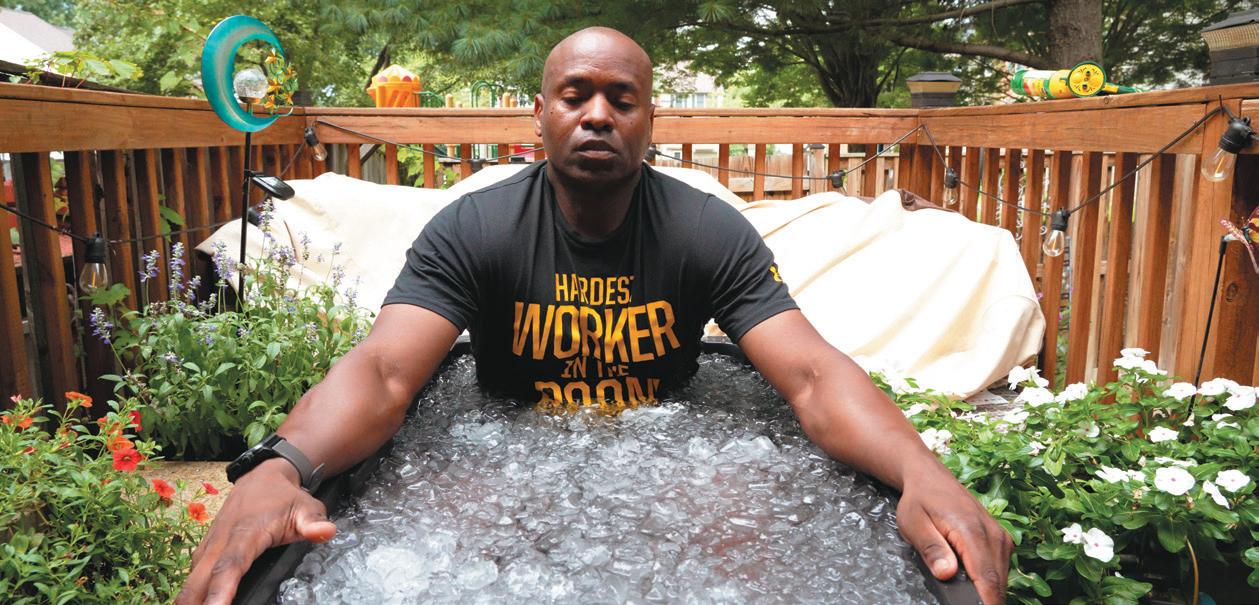
As well as working out, Campbell says that these days he focuses on swimming 1,000 meters a week. He works on his box breathing (see sidebar) and takes 10 minute ice baths three times a week. And at the other end of the thermostat, he visits a sauna once or twice a week.
Campbell also helps his fellow firefighters every shift by doing a 20 to 30 minute workout with them, incorporating Peleton bikes or cardio. “We’re lucky because Montgomery County Fire and Rescue do a tremendous job of ensuring we have all the resources. When they see my videos, most people think we’re in a gym!”
WHAT IS BOX BREATHING?
Recommended to help with anxiety, stress and even depression, box breathing can be done by almost anyone, anywhere. Eric Campbell says it can be hugely helpful to firefighters during incidents, as it gives them the ability to control their breathing, not only helping maximize air use but also calming them down. “Obviously I can’t do it all the time during an incident but when I find myself panting I try to control my breathing.”
Inhale through your nose for a slow count of four.
Hold for a slow count of four.
Exhale through your mouth for a slow count to four.
Hold for a slow count of four and inhale again.
HERE ARE THE BASICS:
1 2 3 4 43
When it comes to food, Campbell is mindful but not fanatical. “I don’t follow any fancy diet…I just try to stay wholesome. I stay away from sugars, processed food, and coffee. My plate is always two thirds fruit or veg.”
He acknowledges that shift work can be detrimental to anyone’s fitness regime. But he also points out that it’s a mindset, that you have to, as he says, make a decision and a commitment to yourself to set aside the time you need. Coming in an hour before your shift, or staying after you get off is one way to manage your routine. He suggests that not going to that game or out to the bar but instead, doing a workout can pay big dividends over time. Maybe you could find the time to meditate or even get therapy.
Campbell himself saw a firefighter therapist a couple of years ago. He had a sense of unhappiness and was smart enough to know something was wrong emotionally. “Sometimes it’s good to have someone to bounce things off.”
When asked if he could change one thing about the firefighter culture, Campbell takes a moment to reflect. “I’d always heard about this ‘firefighter brotherhood’ and when I became one, I didn’t get that. I got ‘every man for himself’.
I WOULD LOVE TO SEE US SUPPORT EACH OTHER MORE AND BECOME MORE TEAM-MINDED.
The system is broken in that it is not putting enough emphasis on self-care. And not enough firefighters have the means or resources or education to retire healthy and productive.”
Not surprisingly for such a thoughtful guy, when asked where he’d like to be in 10 years, Campbell takes a moment. He reflects on how he was struck, on first joining the service, by how much rank mattered. Today, he’d rather influence his colleagues not by flaunting his rank but rather by educating them about health and fitness, and showing them the rewards of a life of service.
You can bet his mom would be proud.
LIGHTNING ROUND
WHAT DO YOU DRIVE? A BMW 328
ANY GUILTY PLEASURES?
Chocolate chip cookies. I am a cookie monster.
ANYTHING YOU WON’T EAT?
I'll try anything but I just can’t do chicken feet.
SPORTS TEAM?
Miami Dolphins
FAVORITE MOVIE?
Interstellar. I am a total space geek. NICKNAME? “E”
FAVORITE CHARITY?
I like to do my own thing, helping feed inner city people.
IF YOU COULD MEET ANY CELEBRITY, WHO WOULD IT BE?
Barack Obama. Or Denzel Washington. Wait, can I meet both at once?
LIFESTYLE
FIND ERIC CAMPBELL’S WORKOUTS ON INSTAGRAM @LIV_1NCE 44 | CRACKYL MAGAZINE
6 lbs .......... Helmet 22 lbs .......... Turnout Gear 35 lbs .......... SCBA 42 lbs .......... Battering Ram 55 lbs .......... Steel Door 103 lbs ......... Full 13/4 Inch Attack Line 110 lbs ......... 14-year-old Boy 224 lbs ......... A Fellow Firefighter Hitting personal bests in the gym matters more when lives are on the line. It’s why we created the essential supplements firefighters need to stay fit for whatever the alarm bell brings. 15% off through March 31 with code CRACKYL15.
HEALTH
DOING IT RIGHT
CANCER PREVENTION FOR FIREFIGHTERS
By Bryan Frieders, President/ CEO Firefighter Cancer Support Network
HOW ONE CALIFORNIA CITY INVESTED THE TIME AND MONEY TO PROTECT ITS FIREFIGHTERS FROM OCCUPATIONAL CANCER
According to the International Association of Fire Fighters and the Firefighter Cancer Support Network, cancer is the leading cause of line of duty deaths amongst firefighters. Extraordinary efforts are being made to reduce the risk and provide insight into better ways of managing the cancer epidemic.
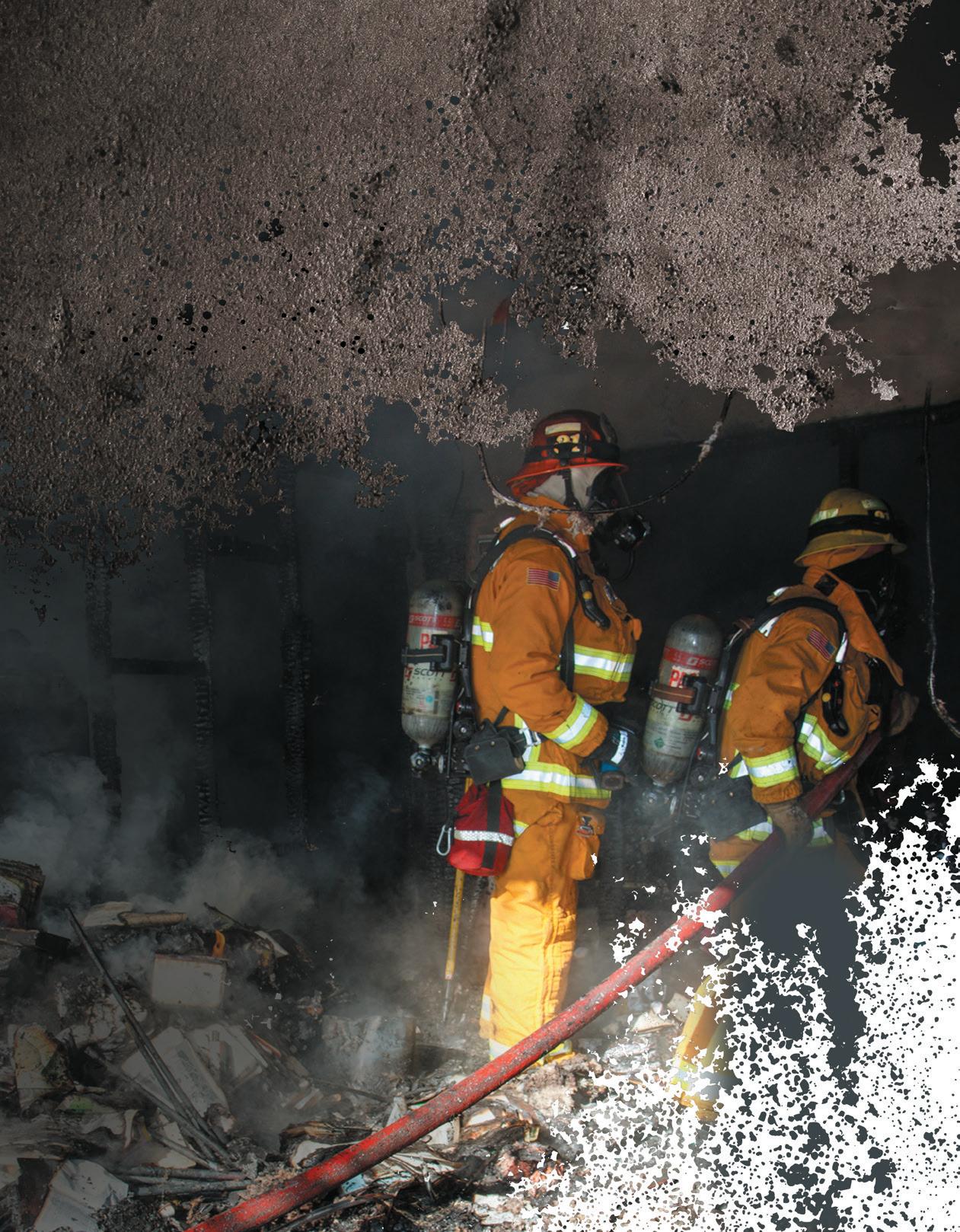
Take, for example, the fire department in Pasadena, Calif., which is making huge efforts to protect its membership. Under the leadership of Fire Chief Chad Augustin, the department has gained a reputation for outstanding dedication to providing the absolute best in the delivery of emergency services.
“As the Pasadena Fire Chief, I am committed to eliminating exposure to my members whenever possible,” he says, “And reducing exposure when elimination is not an option. My members and their families deserve every tool that is available to achieve this effort.”
46 | CRACKYL MAGAZINE
In 2018, the PFD transitioned from standard diesel to Renewable Diesel Fuel (RDF) for all fire apparatus. RDF is a clean-burning type of diesel fuel that eliminates many of the known carcinogenic compounds contained in standard diesel fuel. Pasadena Fire Captain Dave Marquez and his team conducted an in-depth analysis of the RDF and developed an implementation plan. His efforts enabled the fire department to not only transition to RDF, but also to have the entire city fleet use this cleaner fuel – significantly reducing the risk of exposure to firefighters.
Too often on social media or TV we see fire departments making preventable mistakes and behaving in a manner that puts them at risk for injury or illness. To reduce the risk of occupational cancer effectively, fire department leaders must assume full responsibility for the actions of their staff and ensure they are provided the requisite tools, equipment, and training to keep safe. They must also hold accountable those who refuse to comply with known risk reduction actions such as wearing the SCBA during overhaul or cleaning their gear after being contaminated by products of combustion.

To that end, in 2017, the Pasadena Fire Department embraced all eleven initiatives published by the Firefighter Cancer Support Network to reduce the risk of occupational cancer. Specifically, there was a
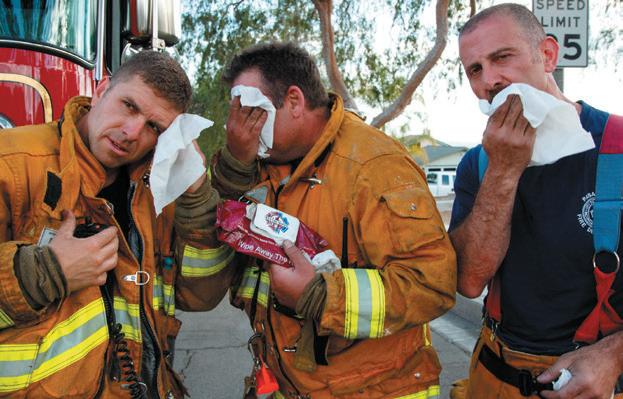
recommendation for a second set of turnout gear for all members, an SOP mandating the use of the SCBA during overhaul operations, and an industry-leading example for conducting gross decontamination of all members exposed to the products of combustion during fireground operations.

Additionally, the PFD implemented a robust gear cleaning and inspection program. Led by Captains Salim Haddad and Ben Sullivan, the PFD safety equipment procurement and maintenance program provides each member two sets of custom-fit turnout
Fortunately, that cohesive relationship has been in existence for a very long time, thanks to the leadership of Pasadena Firefighters’ IAFF Local 809 President Sean Timoney, who has been at the forefront of creating and implementing industry bestpractices to ensure the safety and well-being of the PFD members.
SAFETY
gear, two flash hoods, and all other necessary equipment to swap-out dirty gear for clean after a fire, without inhibiting the time an apparatus returns to service.
The Pasadena Fire Department is a fine example of a team which is doing it right. To accomplish this, there must be a commitment from both labor and management. They must collaboratively maintain a high awareness of the latest advances in gear, equipment, and best practices to maintain fireground safety.
During his tenure, the PFD was able to implement the programs mentioned above as well as maintain a comprehensive annual health and wellness program that includes cardiovascular evaluations, fitness and endurance evaluations, and blood screenings for each member of the department. The results of the screenings are given to each individual so they can be shared with their personal physician, and perhaps identify and mitigate early disease processes.
The members of the PFD are some of the best firefighters in the world. They maintain a constant pride of ownership in everything they do, both on and off the job. Their commitment to excellence and constant desire to provide the absolute best to the community makes them a model for other fire departments to emulate.
MAINTAIN A HIGH AWARENESS OF THE LATEST ADVANCES IN GEAR, EQUIPMENT, AND BEST PRACTICES TO MAINTAIN FIREGROUND
WINTER 2023 | 47
SPONSORED BY THE FIREFIGHTER CANCER SUPPORT NETWORK
SIX THINGS TO CONSIDER BEFORE SAYING
By Geralyn St. Joseph, Relationship Empowerment Coach
Love is grand when you find The One!
But how do you know who The One is?
One of the most important decisions you will ever make is choosing who to spend the (hopefully) rest of your life with. It’s not a decision to be made on emotion alone, so you’ll need to come down off Cloud 9 and be realistic about choosing and committing to a life partner.
There are six major conversations you two should have before deciding that a life together is right for you. These are questions that are not always considered. We all think we know what marriage entails, but many marriages fail because the partners have wildly incompatible expectations.
It’s best to divide these topics into separate conversations as they are each important and should be considered thoughtfully. Some work well over dinner, some during a long car drive. Just be sure you aren’t the couple who are so caught up in planning their wedding that they forgot to plan their marriage!
GREAT EXPECTATIONS
Discuss exactly what marriage means to you. It’s important for you both to consider how your lives and your relationship with each other will change over the years. What are your expectations of your partner and vice versa?
WHAT’S YOUR LOVE LANGUAGE? WHAT DO YOU NEED TO FEEL LOVED?
Many relationships –marriages especially – suffer due to resentment. And the longer the relationship, the more resentment can build. When we don’t express our true feelings and let our partners know what we truly need, we set ourselves up for disappointment. Resentment festers when there’s a lack of honest communication.
It is essential that we let our partners know exactly what we need to feel loved. There are many love languages and few of us are completely fluent in all of them. Don’t assume that your partner knows what you need, or that you know what they need. Talk about it. It can save years of resentment and heartache.
There are five love languages: words of affirmation; quality time; physical touch; acts of service; and receiving gifts. Do you know what your love language is? What means a lot to you, and what does your partner welcome most?
RELATIONSHIPS
1 2 48 | CRACKYL MAGAZINE
MONEY MATTERS
You bet money matters. It can often be the single biggest thorn in a marriage and the cause for anger, misunderstandings, dishonesty and divorce. Now is the time to put your cards – and perhaps credit cards – on the table and have a frank discussion.
How will the money be handled? There are a few options: the "yours, mine, our ours" approach. Agree on who will pay the bills and how you plan to handle big purchases such as a home or a car. If one of you has a costly hobby (golf, motorcycling) will that be a joint expense?
Decide who will be responsible for doing the taxes. Consider if you will be filing jointly and who will or should claim any dependents on a W-4. Perhaps both of you should claim them to ensure you don’t owe taxes at the end of the year.
Will you have savings? How much? What about investments? Retirement? Even though it may be a long way down the road, it’s never too early to honestly address how you foresee your retirement and even the potential for long-term care for one or both of you.
The money conversation probably won’t be a short or easy chat and may take more than one “session”. But by giving each of these topics your focused attention you may nip some financial misery in the bud. And don't forget to write down what you agree on.
LIVING YOUR LIFE
This can be a fun part of the conversation. Where do you see yourself living? City? Country? Suburbs? Detached versus townhouse versus condo? Would a small apartment do? Buy or rent?
Or maybe you want a piece of land that is yours to modify to your heart’s content. Or dream of a cottage or lakefront home as well as your city address.
Will you travel? Do you envision road trips, cruises, sunny resorts, camping or a romantic train journey? Perhaps family visits will be your greatest priority.
Speaking of family, are you close to them? Consider how integral your families are to your happiness, and if living near them – or even with them – is important. Are you happiest with constant communication or a cooler, more distant relationship? Have you thought about how you will deal with aging parents?
WHAT ABOUT KIDS?
Do you want children? Maybe you have some already. If so, are you the main caregiver? If not you, who? What about disciplining children? How important is religion? Education?
Being on the same or at least a similar page is essential for raising healthy children. If you are both heading in different directions, it creates emotional instability. This doesn’t mean that you can’t adjust your plans or beliefs. In fact, being flexible is also essential. Every child has challenges and different personality traits. As a parent, you need to adjust to the needs of your children.
What if both of you absolutely do not want children? How do you plan to prevent pregnancy? Long term contraception should be talked about, including permanent options, such as a vasectomy or a tubal ligation.
What if you find that you can’t have children? How would that feel? How do you both feel about adoption?
Having these conversations before marriage can save a great deal of heartache.
WORK ON YOUR WORK ETHIC
What are your typical work weeks like? Take the time to consider how much time you each allot for your careers versus your relationship. Discuss your free time away from work and how you might spend it, including the option of further education. As a firefighter, what kind of support do you want or need from your spouse regarding work? How does this affect their job? Time and attention are necessary to do well at work and at home.
In short, make sure that you and your partner have a good sense of what you are bringing into the relationship and your future together. Talk about your dreams, expectations, and requirements.
Conversation before commitment! You will never regret the effort you have made now, before you head to the altar, to ensure you are both on the same page. A happy marriage is a long one, starting with love. And honesty.
5 6 3 4 “ WINTER 2023 | 49
By Danielle Bastien
Maybe Cinderella had it all wrong. You don’t actually need a shoe to fit to get Prince Charming. And you certainly don’t need one to get a good workout.
Exercise shoes have become a staple in gym attire and we’re typically more than willing to drop significant cash on a good pair of runners. From padded foam Nikes to gel-cushioned Adidas, big brands seem to have thought of everything to protect our precious feet.
But what if we don’t need shoes to exercise? Maybe we don’t.
Meet the latest trend: barefoot training.
While humans have evolved into wearing all sorts of contraptions on their feet, we all walked and ran barefoot for thousands of years. The growing popularity of returning to our roots to work out has proven to have many benefits. Barefoot training has been shown to improve balance and reduce impact force on hips and knees. While lots of research shows the benefits of barefoot training, there are factors to consider before deciding to kick off your sneakers and hit the gym.
Foot Strike
Foot strike is defined as the way that our feet come into contact with the surface below us. In our everyday walking or running movements, we typically generate impact when our heels touch the ground before the balls of our feet. Studies have shown that those who run barefoot tend to have the balls of their feet land before their heels do, which doesn’t create nearly as strong an impact. This is commonly referred to as forefoot or midfoot strike. Barefoot runners land more gently and don’t necessarily require shoes to cushion the impact of their feet striking the hard surface. We’re used to the padding in our shoes cushioning our feet as we run, but without that extra protection our muscles are forced to do the work themselves. By practicing proper foot striking and using slower strides, barefoot runners can strengthen their foot muscles.
Incorporating barefoot running into our exercise routines offers many benefits for feet and leg muscles, but if we don’t apply the techniques properly, we can run into problems. Taking a look at some of the risks involved will help create perfect conditions for a proper barefoot training experience.
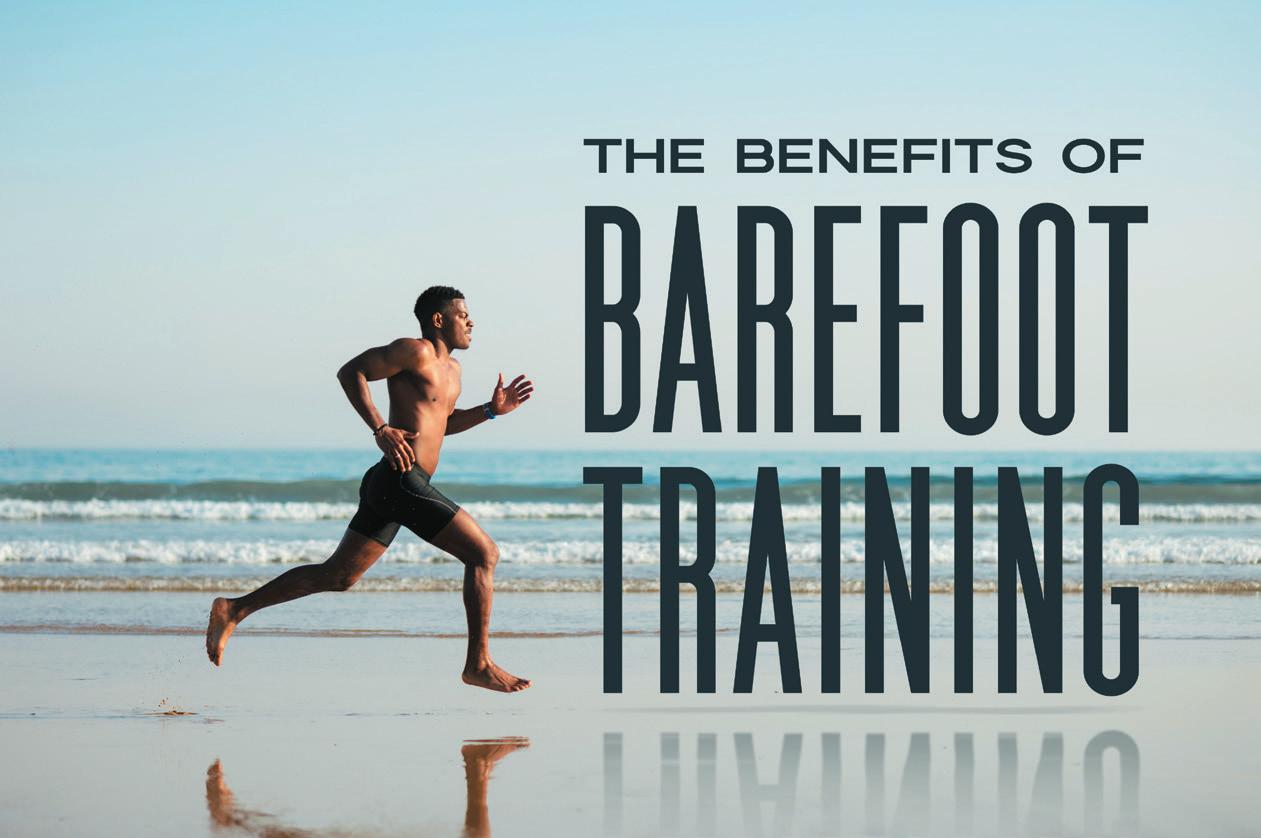
FITNESS
50 | CRACKYL MAGAZINE
Baring it All Comes With Risks
Avid barefoot training enthusiasts report that their feet-related issues have drastically changed. Knee pain is a common injury that trainers experience as a result of the way their feet strike the ground. Because runners who wear standard running shoes typically strike the ground with their heels first, all the impact is directed upwards towards their limbs, which can cause both short and long-term pain. Barefoot runners avoid this pain because the pressure is spread across their feet. An increase in leg stiffness is also a concern for runners who use shoes. The added weight of shoes and the tendency to collide with the ground using their heels first can cause painful injuries as motion increases. For barefoot runners, leg stiffness lessens as impact force is reduced, causing more energy to be spent on running instead of colliding.
Have you ever wondered why many yoga enthusiasts do practice barefoot? Barefoot yoga helps to strengthen our feet as they engage with the surface below us. Many yoga poses require us to have great balance and stability and the added weight of shoes decreases balance and stability, which can cause painful injuries in ankles and legs. Barefoot training allows energy to be spent on building stronger foot muscles instead of on colliding with the ground.
Olympic athlete Kara Goucher is one of the bestknown long-distance runners in America, and she is vocal about the positive effect minimalist running has made on her career. After experiencing various foot fractures, Goucher began experimenting with minimalist running shoes that helped her feet to operate without constricting materials or limitations. She noticed that the pain in her knee was reduced and her body felt healthier overall.
Goucher has helped design shoes for Altra, a shoe company dedicated to inspiring runners to find joy in training as naturally as possible.
Start Slow
When transitioning to a barefoot routine, start slow and don’t expect to go bare right away. Cutting back on the length of your workouts and using minimalist shoes will make the transition easier.
Self Care
Keep your feet happy with frequent massages. Your feet will feel sore as they get used to the new regimen, so indulging in foot massages will help.
Relax
Stay relaxed as you begin barefoot training. Your arms and shoulders should be loose as you adjust to your new training stance.
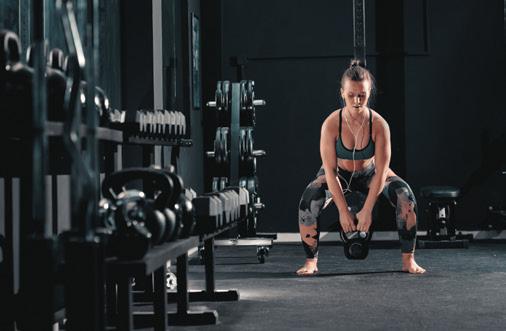
Form

Form and patterns are the most important aspects of proper barefoot training. Practice using a forefoot or midfoot strike technique and take shorter steps.
Find a Safe Space
Start your barefoot exercises in a safe and controlled environment. Be careful in choosing your exercise surface and inspect the area for tripping hazards and sharp objects before you begin.
Try these tips to safely incorporate barefoot training into your workout routine:
WINTER 2023 | 51
Barefoot training provides many benefits if practiced correctly and under the right circumstances.
A DECADE OF PROGRESS
By Leah Sobon
Ten years ago the world was introduced to a crisis on the front lines in the groundbreaking documentary "BURN". For many, this was closer to home than they knew. But for those living it, it was just another day at the firehouse.
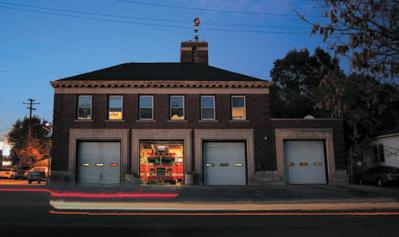

Detroit, a city that seems to teeter on the cusp of collapse, continues to be protected by first responders who give everything to their jobs, but get little beyond their salaries. Selfless, passionate, and resilient are a few words that describe first responders in Detroit, but sharing their story as an awareness piece was a mission that few would have taken on.
Director/producers Tom Putnam and Brenna Sanchez told this remarkable story in their original movie “BURN” - one of the highest-grossing
documentaries in history - and are now back with “BURN X”, which was released in December 2022.

BOTH MOVIES DEPICT THE STORIES OF FIREFIGHTERS IN DETROIT, WITH THE FIRST FOCUSING ON THE SOCIO-POLITICAL STRUGGLES AND PERSONAL EXPERIENCES OF THE MEN WHO WORK THE HOSES.
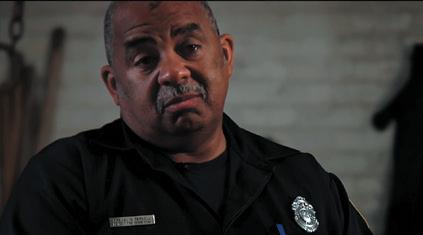
“BURN X” continues those stories and struggles, showcasing the retirements, the advancements and even the children who’ve grown up in the ensuing years to become members of the fire service themselves.

CRACKYL sat down with Tom Putnam, an award-winning director, producer and editor who specializes
in telling the stories of everyday people – like first responders.
Why first responders?
“When I was about five years old, growing up in rural Oregon, our house caught on fire,” says Putnam. “And because we lived in an unincorporated area, it took the fire department an hour to get there - they had to come from the other side of the county. It really left an impression on me. So from an early age, I knew what other people didn't: that responding to fire and medical calls doesn’t always work as you see it on TV. It's always been something that I've had an emotional connection to, though I didn't do anything with first responders until 2009 when I heard a news story about a firefighter named Walter Harris
LIFESTYLE
52 | CRACKYL MAGAZINE
who died in the collapse of an abandoned building. It’s a really tragic story. My first question was probably the same as most people's: what was this guy doing fighting a fire in an abandoned building?”
This question brought Putnam and Sanchez together to create “BURN” and began the journey of covering a decade-long story. They financed the first part of the film themselves, not even sure if there was an audience or a need. It turned out that there was an audience - a big one. “BURN” played 170 cities and as a result, Putnam and Sanchez heard 170 different stories.
Says Putnam, “Nobody had really made a realistic firefighting documentary before. We ultimately ended up able to fund the whole movie with charitable donations, many from firefighters. “Then, we fell in love with the fire service. I don't think there’s any other job like it in the world. As a journalist, it's important to me because it’s a subject that’s exciting, shows people parts of our society they aren't aware of, and gives them a call to action so they can be a part of the change. First responders are unique in that way. Theirs is an incredibly important job that sooner or later touches everyone's life.”
To the surprise of Putnam and Sanchez, and despite Denis Leary jumping on as an executive producer as well as a roaring success
with a premiere at The New York Film Festival, no one wanted to distribute the film. The producers were shocked. Screenings were sold out and the reviews were positive but Putnam began to realize that the problem might be that first responders were still taken for granted by the public. Some reactions received from the civilian audience showed there was still a belief that
job…why they do the job…and also showing the challenges they face.”
So why did Putnam and Sanchez feel the need to create a sequel to “BURN''?
firefighters and paramedics spent their days sitting in front of a big screen, with an occasional fire to manage at a safe distance. The reality of the job couldn’t be further from the truth.
“There is some sort of lack of transparency and the media has a lot to do with it. They get an unrealistic view of what the job is like,” Putnam explains. “It’s also one of the few documentary subjects that crosses many of the socio-political boundaries we have. The responses from people in the fire service have shown real excitement. Their story is being told in a daring and realistic way…showing the great parts of the
“The ten years since ‘BURN’ was made, coincidentally turned out to be an incredibly important time in the city of Detroit,” says Putnam. “On one hand, we continue telling stories about people like Dave Parnell, who people really responded to in the first film. There are firefighters like him who had small roles in the first film who have had some pretty huge things happen in their lives since. Then we wanted to do a deeper dive into many of the underlying issues. One of the notes we got back from ‘BURN’ was that people wanted to hear about why things were the way they were, why they worked the way they did and where things were headed for Detroit. It wasn’t just a deeper dive into how fire fighting works there, but also into deeper challenges like health care.”
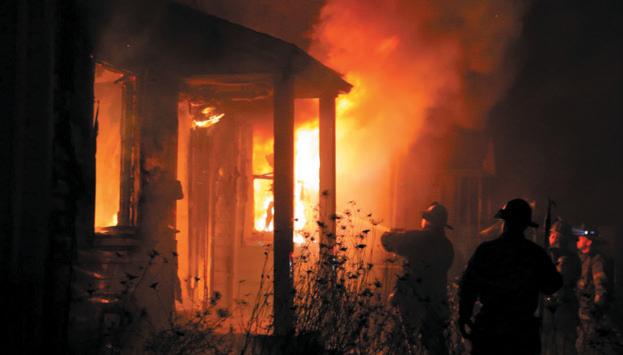
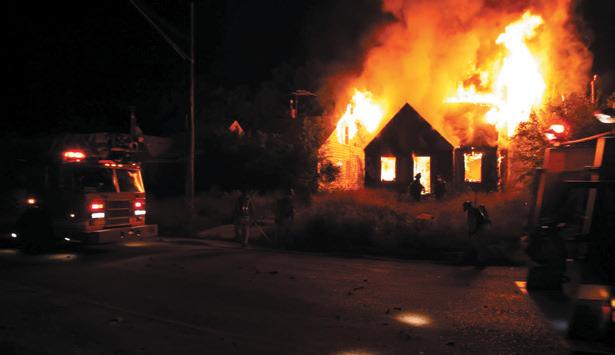
Putnam is confident that “BURN X” will be an eye opener for people, showing them many other aspects of the job that they couldn’t get into in the first film. “There were so many stories that went untold and so many issues. When we started ‘BURN’, we didn’t know who the main characters would be…and so now we get to see some of their stories.”
“It’s a great companion piece to ‘BURN’,” says Putnam. “ ‘BURN’ is

WINTER 2023 | 53
“ I WISH THAT WE UNDERSTOOD THAT THESE PEOPLE ARE SHOWING UP, TIME AFTER TIME, TO SEE SOMEONE ON THEIR WORST DAY. ”
Connecting both your worlds
FirstNet® and Family
With FirstNet and Family, first responders and those in public safety get the missioncritical wireless network and prioritized connectivity of FirstNet – never competing with commercial traffic. And your family can save 25% off your AT&T lines on the world-class connectivity of AT&T. All on one bill, with one point-of-purchase and U.S.-based service and support. Available only to verified FirstNet Subscriber Paid Users. Credits start w/in 3 bills. Verification req’d. Add’l fees, taxes, charges & other restr’s apply. Scan QR code for details.
* with a FirstNet Unlimited smartphone plan line of service (min $39.99/mo.) and an AT&T Unlimited plan line of service (min. $75/mo. before discounts).
Visit www.firstnet.com/ firstnetandfamily

FirstNet and Family Offer: Must confirm elig. at firstnet.com/eligibility. Req’s FirstNet-capable device provisioned with a FirstNet Trio SIM or eSIM card. Max of 4 lines (1 smartphone, 1 tablet, 1 wearable, 1 connected device). 25% off AT&T Unlimited plan offer includes Unlimited Starter, Unlimited Extra & Unlimited Premium. AT&T may temporarily slow data speeds if the network is busy. Eligible line(s) of service will receive a monthly discount of 25%. FirstNet line(s) of service do not qualify for 25% discount. Discount is after autopay or paperless bill discounts which start w/in 3 bill cycles. If FirstNet smartphone line of service loses eligibility or is cancelled, the AT&T Unlimited line(s) will lose monthly discount. LIMITS: Max of 20 lines of service per account.
©2022 AT&T Intellectual Property. All rights reserved. FirstNet and the FirstNet logo are registered trademarks and service marks of the First Responder Network Authority. All other marks are the property of their respective owners.
kicking the door in and ‘BURN X’ is moving through the complex nature of the city and what it means to be a firefighter.”
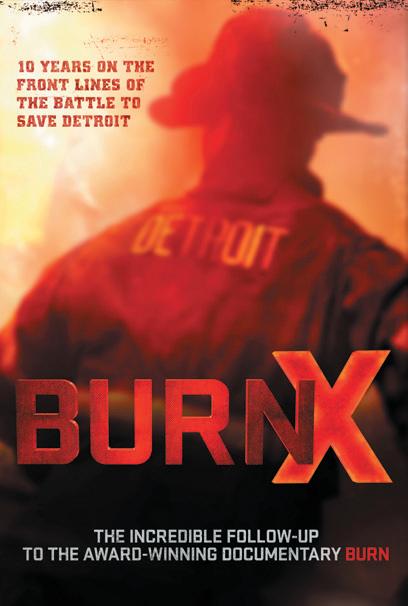
Putnam is thrilled with the personal relationships that have developed since “BURN” was made. He explains that in creating the sequel, they owe a great deal to the remarkable people who continue to tell their stories.
“Many of the first people who watched the show are now thinking of retirement. There was also a wave of people who became firefighters because of ‘BURN’. To be able to show them that life doesn’t end once you leave the firehouse is really important as well.”

Putnam has a powerful appreciation for first responders. “I think, in some ways, first responders have been punished for always doing their jobs. Firefighters and paramedics never leave without a fire being put out or an injured person being transported. No matter how many things get cut, they are always going to make sure the job gets done. As a result, people assume they’re also being taken care of.”
He continues, “In the United States, I feel that whenever people start calling a group of people heroes, it’s a huge red flag that they aren’t being properly taken care of – whether it be frontline medical workers or people bagging groceries at the grocery stores over the last
few years. There is some sort of lack of transparency and the media has a lot to do with it. The public gets an unrealistic view of what the job is like.”
Putnam and Sanchez have observed the differences between those who ran the firehouses ten years ago and those who are showing up to do the job now. But there is a common thread of resilience - it's a central characteristic of first responders.
“I think that reflects society as a whole. We’ve all had to learn to be more resilient. We see people getting into the job for different reasons now and many departments are having real problems retaining those employees. I was talking with an expert who explained that the amount of trauma a first responder would have faced in a 30 year career is now experienced in the first ten years. That takes a toll. I think the resilience is there – but it’s there because it’s more necessary than ever before.”
Putnam says it best, “When some people were watching ‘BURN’, they decided to make firefighting their career path. I think we’re all looking for something rewarding in our lives and there is really no other job in the world like being a first responder.”
LIFESTYLE
DIRECTED / PRODUCED BY:
ORDERS FOR DVD AND BLU-RAY ARE NOW ACTIVE AT BURNSTORE.COM LEARN ABOUT THE LEARY FIREFIGHTERS FOUNDATION AT LEARYFIREFIGHTERS.ORG WINTER 2023 | 55
TOM PUTNAM & BRENNA SANCHEZ
STRUCK BY FORD
F-150 LIGHTNING
By Rick Mauro
Country singer Rodney Carrington once said he was giving up on love and marrying his pickup truck. Well, truck-loving firefighters might be tempted to do the same once they explore the F-150 Lightning, Ford’s new all-electric truck.
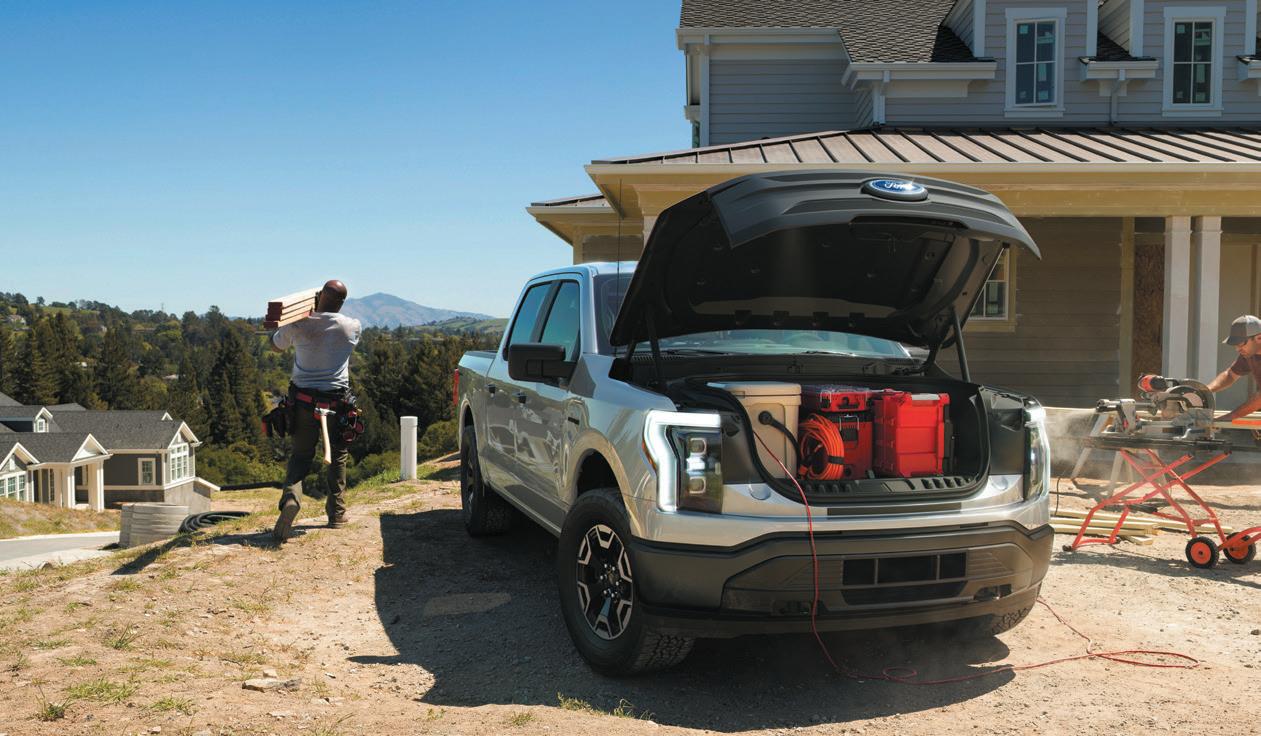
WITH UP TO 580 HORSEPOWER, 320 MILES OF RANGE, 10,000 POUNDS OF TOWING, AND A NECK-SNAPPING 775 FOOT-POUNDS OF TORQUE COULD YOU REALLY BLAME THEM?
And that’s just the start of a very long of list of features in this technologydriven vehicle. Introduced in 2022, the Ford F-150 Lightning has qualities that make it attractive to both on-duty and off-duty firefighters. Matthew Brown is one of them.
Deputy Fire Marshall for the city of Dover, Del., Matthew says the Lightning can be an ideal vehicle for firefighters. He should know: Matthew was among the first buyers.
“
BECAUSE THE LIGHTNING IS ELECTRIC THERE ARE NO EXHAUST FUMES OR FUEL PRESENT THAT COULD POTENTIALLY CONTAMINATE FIRE-SCENE EVIDENCE,”

In fact, Matthew and his volunteer fire department have applied to Energize Delaware for a grant to supply the department’s fleet with F-150 Lightnings.
AND AT A FIRE SCENE, THE TRUCK’S ONBOARD ENERGY SOURCES COULD BE USED TO POWER FIREFIGHTING EQUIPMENT, EXHAUST FANS & LIGHTS.
The Lightning has 11 electric power outlets: two 120-volt outlets in the cab and four in the “frunk” (the front trunk where an engine would typically reside) with USB-C and USB-A ports. The bed contains four 120-volt outlets plus an available 240-volt outlet.
Matthew, who has been a volunteer firefighter for 27 years, also says that the Lightning is perfect for his side gig as a landlord and house flipper. The pro-power option means he can charge and run tools at a jobsite without having to bring a generator. “I can even charge my tools in the frunk while I’m on the way to a job,” he added. There is no need to haul a generator or gasoline to fuel it.
The Lightning’s base price in U.S. dollars is $51,974, topping out at $96,874. This compares to a base price of $34,445 for a gasoline F-150, which tops out at $84,910.
FOR MATTHEW THE EXTRA COST TO GO ELECTRIC IS WORTH IT. HE CAN FULLY CHARGE HIS LIGHTNING FOR $15, COMPARED TO $150 TO BUY A TANK OF GASOLINE.
LIFESTYLE
56 | CRACKYL MAGAZINE
“If you’re on a payment plan and you consider those fuel savings, it makes the Lightning just about as affordable.” U.S. buyers may also qualify for a $7,500 tax credit.
This electric version of America’s bestselling vehicle for more than 40 years is propelled by dual electric motors, one for each axle. Buyers can opt for either a standard-range battery that provides an estimated 240 miles of range or an extended-range battery with an estimated 320 miles capacity. The extended range battery option adds as much as $20,500 to the purchase price depending on your selected trim level.
When it comes to battery charging there are multiple options, including home, work and on the road. For easy home charging, Ford is offering an 80-amp charging station as standard equipment on the extended-range truck. Drivers can add 30 miles of range per hour or go from a 15 percent charge to a full charge in about eight hours. At public stations with a 150-kilowatt DC fast charger, drivers can add 54 miles of range in 10 minutes. Lightning drivers can access more than 70,000 chargers across North America, all plotted out on the truck’s advanced navigation system.
THE TRUCK NOT ONLY RUNS ON ELECTRICITY, BUT IT ALSO PROVIDES ELECTRICITY. IT HAS BIDIRECTIONAL POWER FLOW AND CAN BE USED TO POWER YOUR HOUSE DURING AN OUTAGE FOR UP TO THREE DAYS, OR 10 DAYS WITH PROPER RATIONING.
This capability applies to models with the extended-range battery.
For those drivers who literally work from their vehicles, Ford has added a unique feature to the F-150 Lightning, a stow-away transmission shifter. The available interior work surface folds directly from the centre console turning the cab into a mobile office.
The Lightning is promoted for work and weekend duty. Imagine how the power source could fire up a slow cooker, a kettle, a blender and an electric can opener and turn your tent trip from camping to glamping.

Ford is also offering ongoing technology updates for the Lightning’s operating software —the same way your cell phone system is regularly updated.

But is the Lightning built “Ford Tough” like its internal combustion sibling? Can it haul and tow, or is the Lightning all show and no go? Well, the truck’s built-in technology can help answer that question

WHILE IT HAS AN ESTIMATED 2,000-POUND PAYLOAD FOR THE REGULAR BATTERY, IT ALSO HAS AN AVAILABLE BUILT-IN SCALE THAT WEIGHS WHAT YOU’VE PUT IN THE BED AND THEN CALCULATES YOUR RANGE.
Once you plot your route into the truck’s navigation system it will also predict when you’ll need to recharge your battery and display charging stations along the way. The same applies to towing. Just enter your trailer profile into
the truck’s “intelligent range” system and it will provide anticipated range.
The truck is so smart it knows if your route is mostly uphill or downhill and uses that to calculate your range and charging needs. Cloudconnected software compares your towing trip with other trucks that have taken similar trips and also considers weather temperature, speed and climate control use. The range software also remembers your trips and your driving habits and feeds that data into range calculations.
While there has been some social media criticism of the Lightning’s towing performance, Joel Bloch, vehicle integration engineer for the F-150 Lightning says that range degradation as a percentage is basically the same whether you’re towing with a gasoline or electric truck.
THE F-150 LIGHTNING WAS DESIGNED TO APPEAL TO GAS-POWERED F-150 DRIVERS WHO ARE TECH-FORWARD, EARLY ADOPTERS,
Bloch says. So: is it the right truck for you? You need to consider all your trucking needs, your budget, and things like availability of chargers and measure them against the Lightning’s performance. As Joel Bloch puts it, it’s like selecting any vehicle.
| 57
Share the Load™
Program
Being a firefighter or EMS provider is tough. Remember that you’re not alone.
Most people are aware of the physical demands that emergency responders face. But it’s important to realize the impact on your mental wellbeing, too.
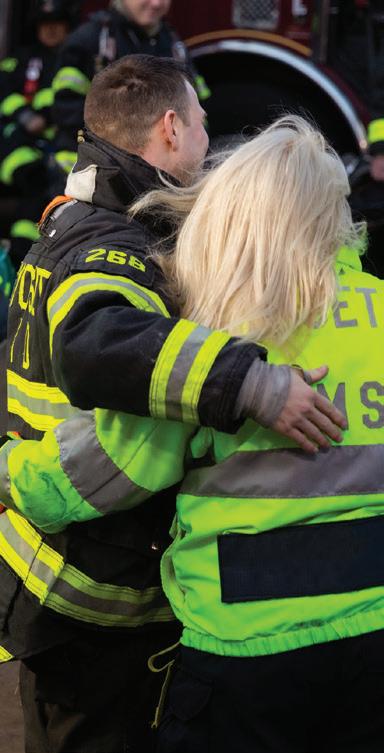
Taking care of your mental health is just as important as managing your physical health. The National Volunteer Fire Council is here to help with resources to Share the Load.
Directory of Behavioral Health Professionals
nvfc.org/help
A program that provides access to critical resources and information to help emergency responders and their families manage and overcome personal and workrelated behavioral health challenges.
nvfc.org/phfd
A listing of local providers who are equipped and ready to help emergency responders, rescue workers, dispatchers, and their families with their behavioral health needs.
Psychologically
Healthy Fire Departments Toolkit
nvfc.org/phfd
A comprehensive toolkit designed to help fire department leaders promote and support mental wellbeing among their members and create a successful, high-performing department.
NVFC First Responder
Helpline nvfc.org/helpline
NVFC members and their household family can call the helpline for assistance in a crisis moment as well as confidential counseling, resources, and referrals to assistance for a range of issues impacting their wellbeing. The helpline is offered through Provident by Business Health Services.
TM
COMICS
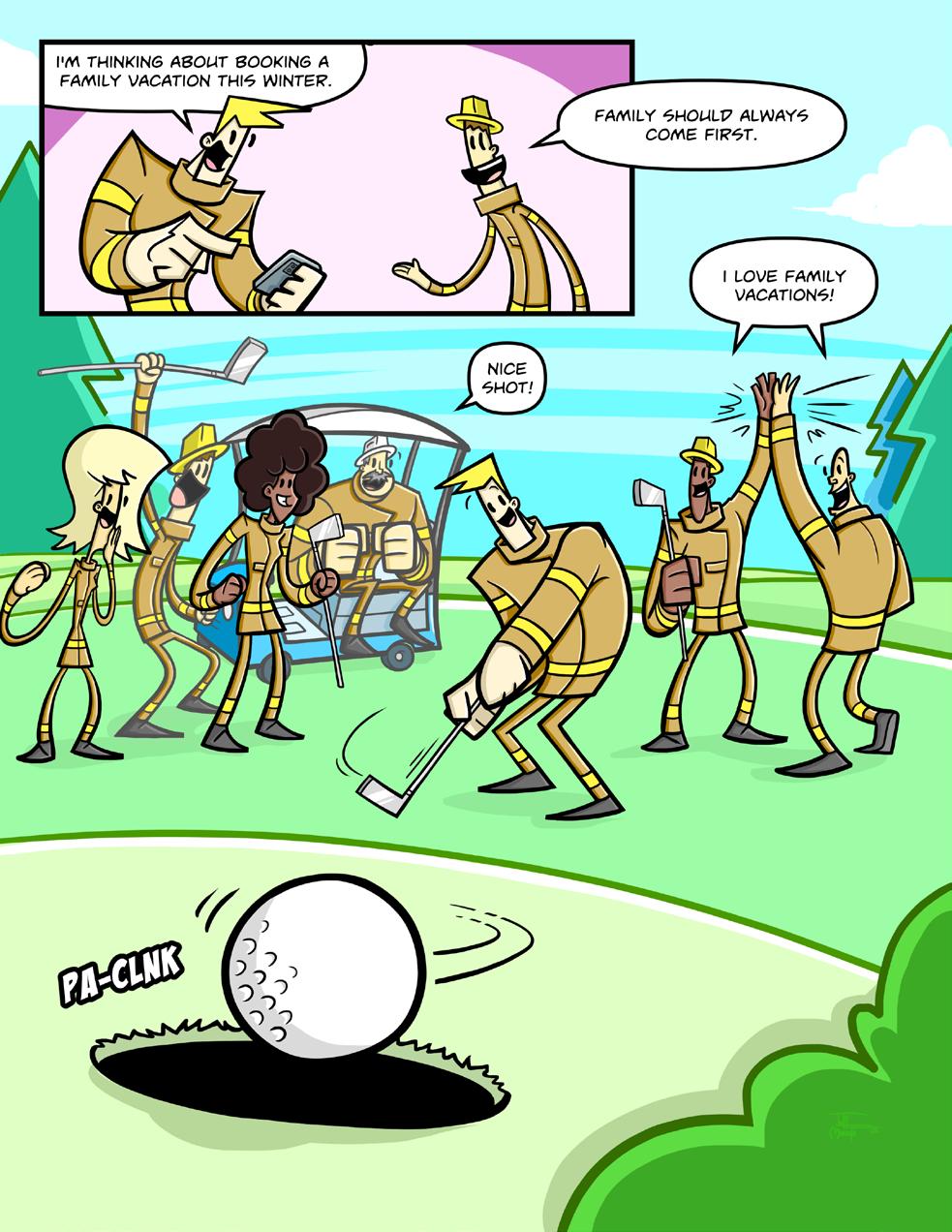
WINTER 2023 | 59
do essential workers EssentialneedOils?
Essential oils have gained huge popularity in the past few years – it seems you can’t go anywhere without seeing a diffuser or roller bottle. So… what’s the big deal? Is a $30 bottle of lavender oil really going to change your life?
Since ancient times, essential oils have been used in the making of traditional medicines and perfumes. In ancient Egypt, it was believed that oils such as frankincense and myrrh were necessary to prepare bodies for mummification, and today essential oils are widely used for aromatherapy, skincare products, and even scent-work training for dogs. From Costco to Walmart, big brands are cashing in on this billion-dollar industry, so choosing between all the different options can be quite difficult.
By Rachael Savoie
fragrances vs. essential oils
Knowing the difference between essential oils and fragrances is a great way to get the biggest bang for your buck and your health. They are processed in very different ways and knowing the difference between the two is an investment in your health.
Fragrances are lab-created scents used to imitate natural odors – think of a holiday-spice candle or eucalyptus-scented hand soap. Generally, when the word “fragrance” is listed on a product it serves as an umbrella term for a list of added chemicals. Companies can do this legally because the FDA empowers them to keep their formulas secret from other competing brands. Ever get a headache when you walk by a perfume store? Exposure to some fragrances over time can cause migraines and aggravate skin sensitivities, allergies and even cardiovascular issues.
Essential oils are created in many different ways, but the most common are steam distillation or cold pressing. Steam distillation involves
gathering plant material and placing it above boiling water. The steam pulls the oils from the plant material which then separates from the water.
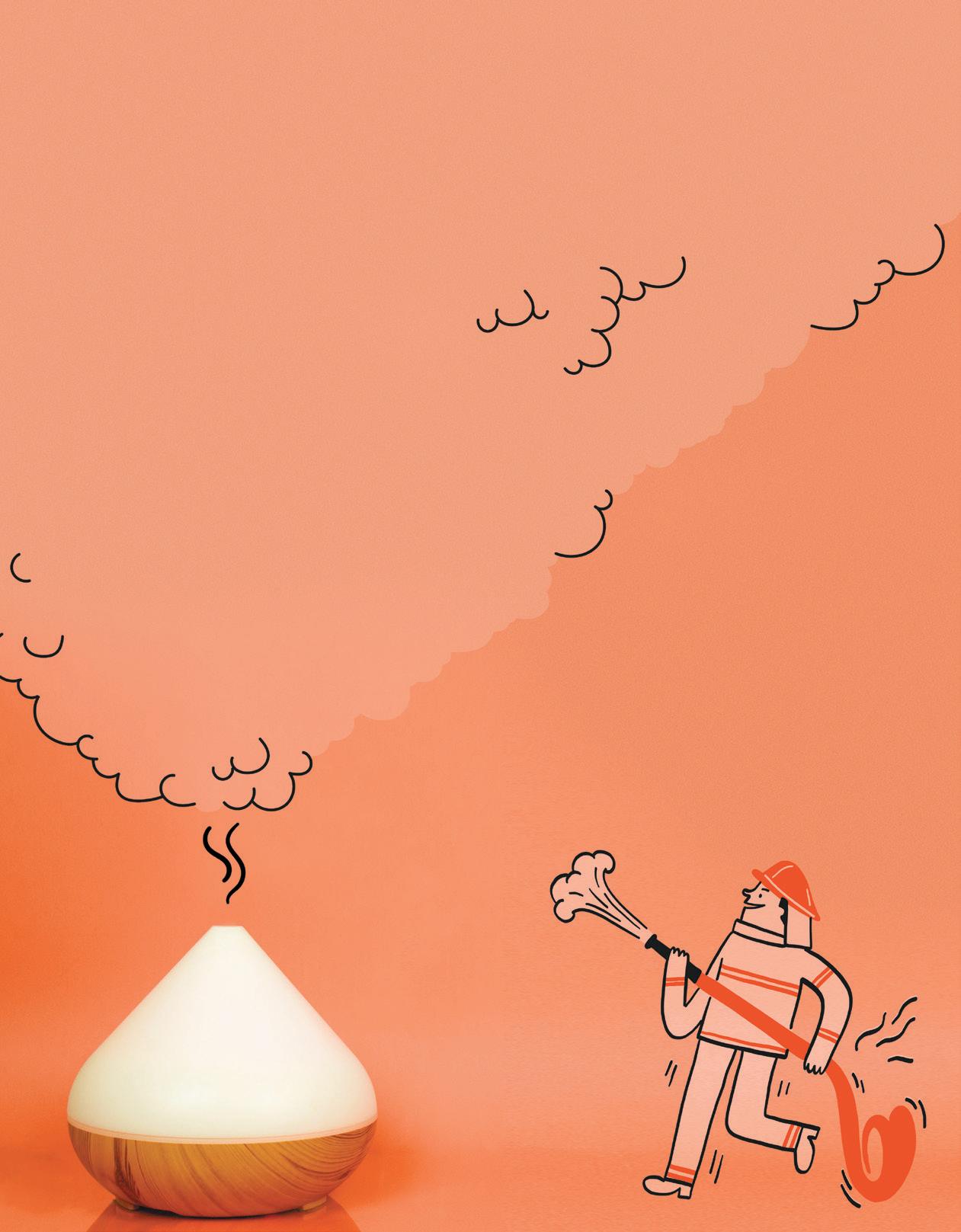
Cold pressing is generally used for citrus fruits such as oranges, limes, and lemons. The fruit is punctured with spikes to bring the oils to the surface. They’re then mixed with water which is later drained away to isolate the oil. Steam distillation and cold pressing both preserve the integrity of the plant, herb, or fruit used, making the process as natural as possible.
Regardless of which brand of essential oils you try, doing your research will help you make the most informed decision and avoid exposure to toxic chemicals. Knowing where your products come from and how they are made is the first step in beginning your health journey with essential oils.
HEALTH
60 | CRACKYL MAGAZINE
A Few Great Choices
peppermint
Feeling groggy after a late-night shift or needing an extra boost during a workout?
Peppermint essential oil will give you a burst of energy and leave you feeling refreshed. Try sniffing this one straight from the bottle or adding a drop to the back of your neck.

orange

Sunshine in a bottle, orange essential oil helps to lift your mood and create feelings of happiness. Adding a drop to your wrist will act as a natural perfume and can help combat anxiety or stress in challenging situations.
lavender

Tossing and turning all night? Lavender essential oil helps to promote a calm state of mind to achieve a better night's sleep. Adding a few drops on your pillow or in your diffuser before bedtime will put your body at ease.
bergamot
First responders deal with stressful situations that need to be managed both personally and professionally. If you often manage stress by indulging in your favorite sweets or simply by overeating in general, try bergamot essential oil instead. Bergamot has been shown to aid in the reduction of worry and stress, especially when used in combination with other stress management tools such as exercise and putting away our tech devices!
A yellowish-green citrus fruit about the size of an orange, bergamot is traditionally grown in the southern Italian region of Calabria. Unlike oranges, they’re typically sour when eaten fresh but their aroma is described as floral with notes of musk. According to a study conducted in 2017, patients in a mentalhealth treatment center who were exposed to bergamot essential oil for 15-minute periods showed more positive emotions and an overall improvement in their mood and well-being. Bergamot is used in Earl Grey Tea, giving the tea its unique flavor and aroma
the be all and end all?
While essential oils may not be the solution to the stress that life brings, using them as another tool to manage challenging moments may be an option. This guilt-free selfcare option offers the potential for high rewards.
As more research is conducted on essential oils, it is important to consult your doctor to ensure you are using essential oils correctly. Some can cause allergic reactions and headaches when used improperly, so it's always best to exercise caution and pay attention to how your body reacts to certain scents. Always read and follow the labels before adding essential oils directly to your skin. “Hot” oils such as cinnamon, peppermint, and oregano can cause irritations if not diluted properly.
WINTER 2023 | 61
BEHAVIORAL HEALTH





Firefighters


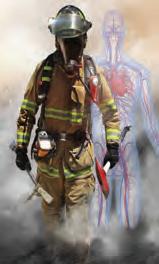
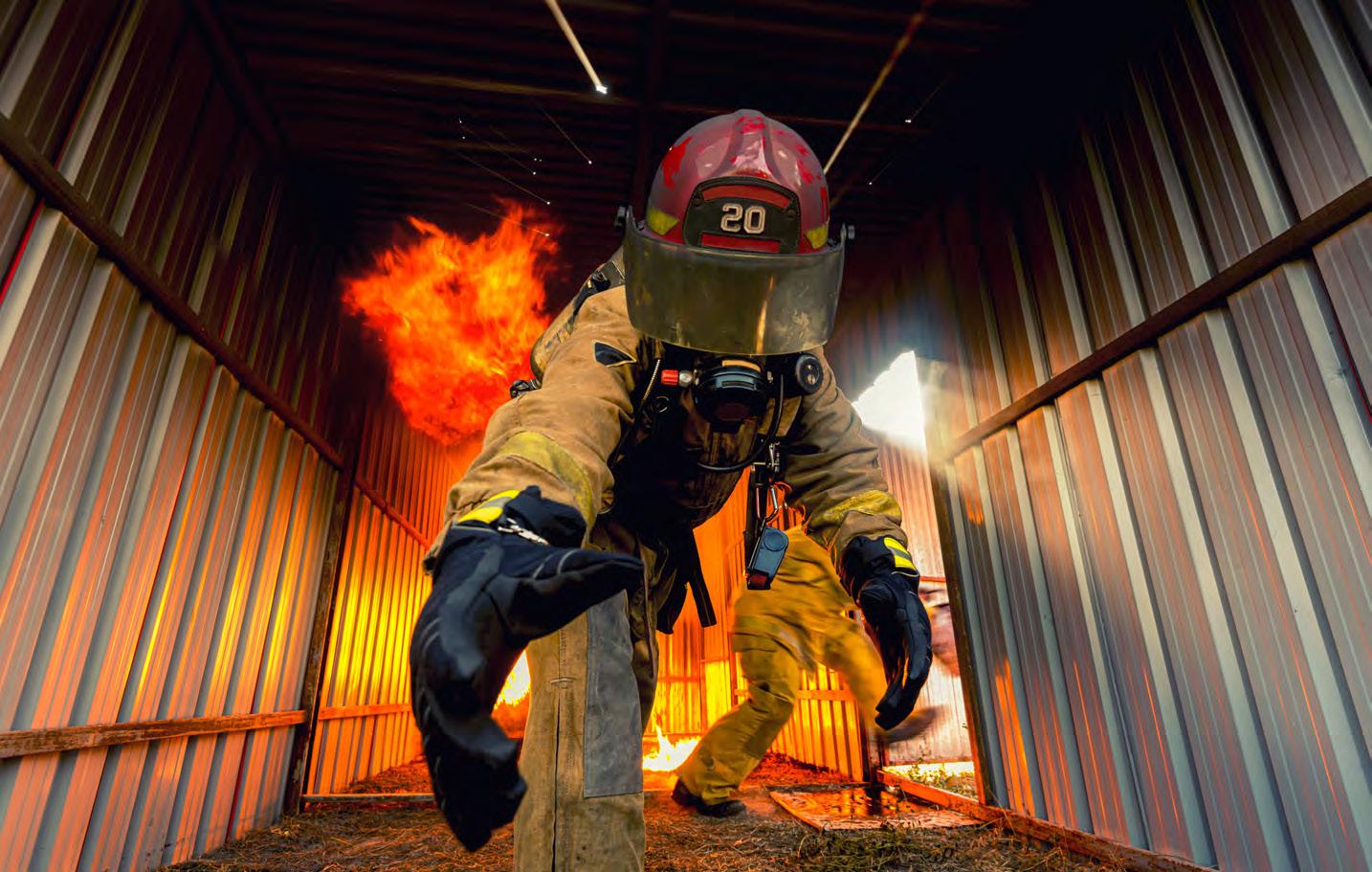
Consider
SLEEP DISORDERS
CT for screening of lung cancer in high-risk individuals Regular spirometry to include FEV1, FVC, and the absolute FEV1/FVC ratio if clinically indicated
Provider’s Guide to FIREFIGHTER MEDICAL EVALUATIONS Firefighting is a uniquely stressful and dangerous job that requires working in unpredictable and often toxic environments. Due to the demands, firefighters are at increased risk for job-related CANCER, MENTAL HEALTH CONCERNS, and CARDIOVASCULAR EVENTS. While the USPSTF recommendations should be used as a baseline, they are designed for the general population and not an occupational group with increased risk. Providers should be aware of the unique exposures and consider this in conjunction with personal and family risk factors when weighing timing and frequency of screenings.
AS TACTICAL ATHLETES CARDIOVASCULAR DISEASE (CVD) Sudden cardiac events account for ~50% of acute duty-related death among firefighters primarily by myocardial nfarction or cardiac arrest. Consider thoroughly screening and aggressively treating CVD risk factors. An ASCVD risk score can help identify firefighters who may need to initiate treatment for hypertension or dyslipidemia. A large-scale autopsy review found approximately 80% of firefighters who suffered a sudden cardiac event had evidence of both coronary heart disease (>50 % occlusion) and a structurally enlarged heart. Only about 20 % of autopsies had evidence of an intracoronary thrombus, suggesting ischemic heart disease and resultant complications may be responsible for a large percentage of cardiac line of duty deaths. Expert Panel Recommendation: Based on risk factors, evaluate firefighters for coronary heart disease (CHD) and structural heart changes, specifically consider:2 Coronary Artery Calcium (CAC) Scan at age 40 yrs., or earlier based on clinical judgment and risk profile Screening for structural heart disease includingleft ventricular hypertrophy, cardiac chamber enlargement, valvular abnormalities, or diastolic/systolic dysfunction using screening echocardiography in the presence of hypertension, obesity, Metabolic Syndrome or sleep apnea Cardiovascular Extreme physical work, >70 lb of gear, strain on cardiovascular system Hematological Dehydration (decreased plasma volume), hemoconcentration Thermoregulatory Elevated core temperature, dehydration, heat stress Respiratory Increased breathing rate and oxygen consumption Metabolic Oxygen cost (extreme physical work), increased lactate, fatigue Immune/Endocrine Increased leukocytes and hormones Nervous Sympathetic surge, increased adrenaline Muscular Increased oxygen use and heat production Psychological Repeated exposures to trauma, sleep disruption, increased mental and behavioral health concerns Click here bit.ly/3yX8lfA or Scan the QR code for Screening Tools, Resources & More CANCER Firefighters have been found to be diagnosed with cancer at earlier ages than the general population.4-8 While firefighters do wear PPE, their gear does not protect them from all carcinogenic exposures on the fire ground and modern fires burn hotter and dirtier than ever before.10 While studies are evolving to empirically validate screenings beyond those of the USPSTF for firefighters, experts working with this population strongly suggest considering: Discussing pros and cons of tracking PSA annually starting at age 40 Colorectal cancer screening beginning at age 40 Cervical cancer screening every 1-3 years based on risk factors Annual mammograms beginning at age 40 Annual testicular exam and instruction for self-examination Annual head-to-toe skin examination and appropriate dermatology follow-up Urinalysis annually for microscopic hematuria
found to be increased among Firefighters Multiple Myeloma4,7 CARCINOGENS found in smoke
FIREFIGHTERS
CANCERS
high rates
depression,
stress, acute stress reactions, anxiety, high rates of suicidal ideation and report frequent binge drinking.12-18
have
of
post-traumatic
screening for behavioral health issues, suicidal thoughts, and substance use/abuse such as binge drinking.
high risk
sleep
sleep apnea, insomnia, shift-work disorder, and restless leg syndrome).13,19
on the substantially high rate of s eep diso ders, experts in firefighter health recommend aggressive screening and treatment for sleep disorders.
Firefighters are often exposed to products of combustion that may lead to acute respiratory issues
Repeated exposure may cause chronic pulmonary disease and abnormal lung
on risk factors, experts in firefighter health recommend
Baseline Chest X-Ray and repeat imaging as clinically indicated
dose
Formaldehyde Sulfur Dioxide Styrene Chloroform Asbestos Hydrogen Chloride PCBBenzenePAH Carbon MonoxideHydrogen Cyanide Colon8,9 Prostate4,6-9 Testicular4,6,8,9 Cervical9 Stomach Thyroid6,8 Brain4,6,7 Non-Hodgkin’s Lymphoma4,8,9 Leukemia7 Melanoma6-9 Breast10 Kidney5,7 Bladder5,8,9 Mesothelioma4,8,9 Rectum4,5,8 Intestines5 Lung5 Esophagus5,7 Sponsored by: Click here bit.ly/3yX8lfA or Scan the QR code for Screening Tools, Resources & More “Firefighters are at increased risk for job-related cancer, mental health concerns, and cardiovascular events.”
Firefighters are at
for
disorders (e.g.
Based
LUNG DISEASE
(i.e.: hypoxemia, bronchoconstriction).20
function.21,22 Based
considering:
Low
BIOFIELD BARRIERS
By Alfred Hernandez, Founder of GIA Wellness
Did you know that firefighters are at risk from carcinogens secondary to Electromagnetic Radiation (EMR/ EMF) and Radio Frequency (RF) transmission?
According to the U.S. National Library of Medicine, members of the firefighter community are at greater risk for longterm disease simply because of the communication equipment and wireless technologies they use every day.
These findings are particularly alarming considering that more data has been transmitted (most of it wirelessly) in the past two years than in the entire history of the world. 4G, and now 5G, are powering everything we communicate with today: our cell phones, radios, computers, wi-fi, etc. In the first responder community in particular, these communication devices are designed to be kept as physically close to people as possible – for speed of response time, data transmission, and convenience.
Our bodies are constantly in the midst of a radiation “fog”, starting with our organism’s own first responder (aka its first line of defense) – the human biofield. What our
heart is to our circulatory system and what our lungs are to our respiratory system, our biofield is to our energy system. It is the body’s invisible energy organ, and it’s made up of the collective energy emanating from every human cell, tissue, and organ. The U.S. National Institutes of Health have referred to the importance of the human biofield as "a fast-emerging field of study that aims to provide a scientific foundation for the understanding of complex homeo-dynamic regulation of living systems”.
Our biofield is the energy and information that surrounds and penetrates the human body, and it affects our cellular, physical, and emotional health. But when exposed to harmful EMR/EMF/RFs, our biofield becomes disrupted and can actually work against us, creating a variety of health challenges, especially for high-stress professions such as first responders.
Here’s the good news: Over the past 10plus years, both patented and proprietary technologies have been developed, and successfully deployed, in a variety of science-backed wellness products designed to restore and maintain biofield health by successfully combatting EMR/ EMF/RF radiation and eliminating the
stressors that have adverse effects on our physical and emotional well-being. These radiation-fighting and biofield-strengthening technologies can be divided into three consumer-friendly and affordable categories:
Device specific products (plug-and-play attachments for cell phones, radios, tablets, etc.);

Personal environment products (frequency harmonizers for both homes, offices/stations, & vehicles),

Body-worn products, which emanate bio-friendly frequency blends designed to strengthen the wearer’s biofield.
The toxic domino effect that EMR/EMF/ RF exposure has on people determined to perform at their best, especially in the highly demanding first-responder profession, has wellness experts recommending a combination of the above three categories of technology. They suggest these be combined with fast-absorbing hydration products and targeted solutions designed to help nourish and protect the skin as the gold standard for thriving in today’s high tech age. It’s time to get smart about enjoying communication without the perils of the radiation!
RADIATION MITIGATION FOR CELL PHONES AND OTHER WIRED/ WIRELESS DEVICES (PATENTED) BODY-WORN RADIATION MITIGATION (PROPRIETARY) RADIATION MITIGATION FOR SPECIFIC ENVIRONMENTS (PROPRIETARY) CELL GUARD SLIVERS & UNIVERSAL GUARDS MEN'S/UNISEX HOME/OFFICE HARMONIZER 1 2 3
FIRST RESPONDER DISCOUNT RECEIVE 30% OFF YOUR ORDER: FIRE30 | 63
TO SKI
By Liz Fleming
When I was little, my goal was to fly…but not in a plane. I was convinced that if my parents would only let me jump off the garage roof with some wings I’d made from old sheets, I’d soar like a bird. My parents, for some reason, were never on board with that plan.
As I grew older, however, I did learn to fly – on skis.
Anyone who’s ever known the pure bliss of schussing down a mountainside in brilliant sunshine, carving a trail through fresh snow with the wind in your face, going far faster than is probably wise, has come close to flying. Maybe that’s why we love every minute on the slopes.
Where will you and your skis head this year? Will you make it a family holiday, a romantic getaway for two or a wild weekend with the guys….or girls? Here are three great, very different suggestions: Park City, Utah; Lake Tahoe, Nevada; and Whistler, British Columbia.
If you love skiing with the family but hate lugging the gear, Deer Valley resort in the charming ski town of Park City, Utah has the solution. It’s a bit pricey, but genius.
Check into the ultra-luxe Stein Eriksen Lodge and discover the joys of their “ski valet” service. In the morning, get the gang into their ski suits and stroll down to the slopeside locker area where you’ll not only find everyone’s gear waiting, but also a valet to set it all up. While you order your morning latte at the nearby coffee shop, that eager valet will produce your unbuckled boots, ready to slip into. The skis and poles will be waiting outside so all you’ll need to do is grab them and hop on the gondola to start your day.
You’ll then enjoy more groomed trails than you’ll probably ever see at any other resort, and when you pause for a moment to consider your surroundings, you’ll quickly notice what’s missing: snowboarders. The creators of Deer Valley wanted to design a five-star experience for their guests and that meant keeping those well-manicured slopes for skiers only. No worries if you’re a boarder yourself: you’ll have plenty of hills to enjoy at nearby Park City Mountain Resort.
PARK CITY, UTAH
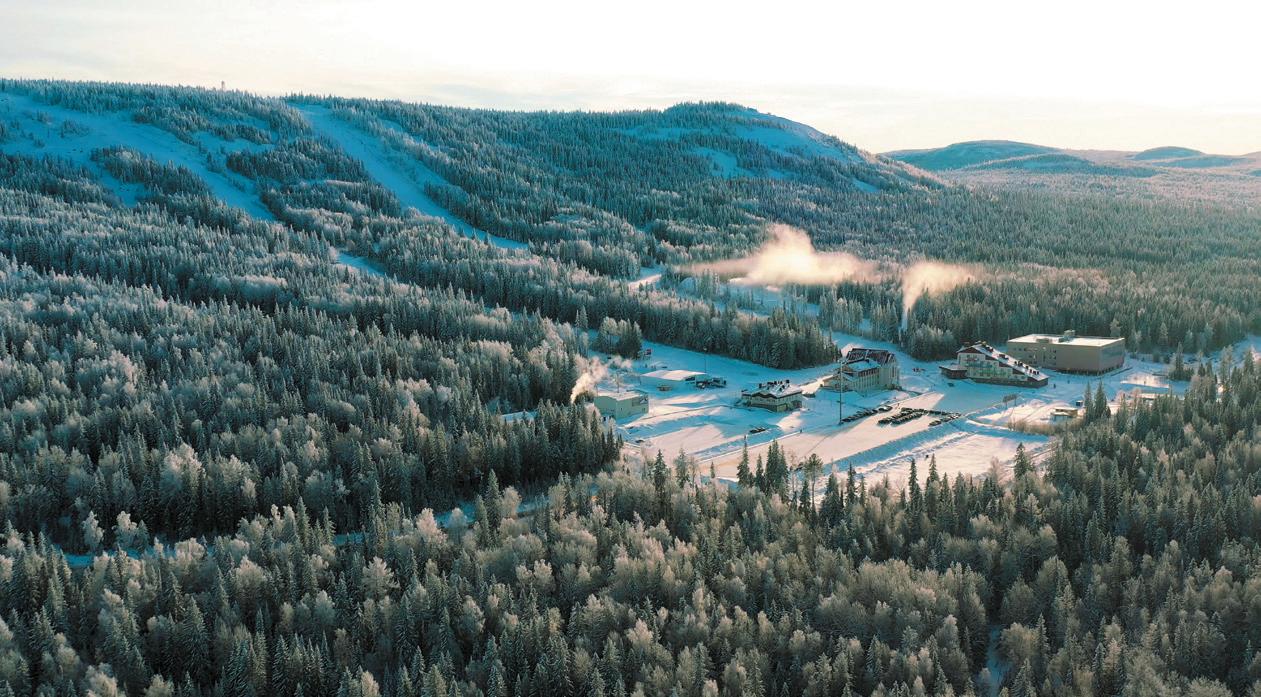
Equally first-class are the culinary offerings on the hills. You won’t find any sad, soggy burgers left sitting on a steam rack all day. The chefs at the Royal Street Café put a gourmet spin on hearty skier’s fare, serving deluxe burgers as well as spicy, delicious white bean chili and more – all of which will make it necessary to ski that much harder after lunch to work off the calories.
While you’ll love the whole experience, the true magic of the Deer Valley system comes at the end of the day when you and your tired kids ski up to the lodge and discover that wonderful valet system waiting to make your life perfect. Snap your boots out of their bindings and leave your skis right where they are. Yup. You don’t even have to pick them up off the snow. Your wonderful valet will bring them in, dry them off and store them in your locker. Your shoes will be delivered to you, so you can simply undo your wet ski boots and let them be spirited away too. And your kids will receive the same treatment, requiring absolutely no effort from you.
This is the way royalty skis – and really, shouldn’t we all?
LIFESTYLE
HITTING
THE HILLS
FOR A DELUXE FAMILY-STYLE HOLIDAY
PARK CITY , TAHOE AND WHISTLER: WHERE THE SNOW’S COLD AND THE APRÈS SKI IS HOT! 3
64 | CRACKYL MAGAZINE
LAKE TAHOE, NEVADA
BRING YOUR SKI BUDDIES!
The ski guides in Lake Tahoe will all tell you the same thing: “Remember, there are no friends on soft snow days.”
What they mean is that no one waits around if you go to the bathroom, stop to adjust your boots or are a bit slow getting down the slope. Nope. In Lake Tahoe, the joy of skiing on the kind of perfectly dry, white and famous “pow” is so addictive, no one’s willing to stop and wait for anything. When the conditions are perfect for powder skiing, passionate skiers dive in. Given the number of runs there are to explore – save the bathroom break for lunch!
Though the Lake Tahoe region has many resorts from which to choose, one of the best is Heavenly, the second largest in the area and a perfect choice for a get-away with a gang of ski buddies. At 10,000 feet, it’s by far the highest and it also boasts the biggest vertical drop, stretching 3,500 feet from top to bottom.

Best of all, Heavenly embodies its name, with a huge selection of the kind of perfectly-pitched, steep-enough-to-befast-but-broad-enough-for-giant-slalomturning, groomed hills that’ll keep you happy all day. What’s truly outstanding about Heavenly is the quality of snow – dry
and crisp. Lake Tahoe itself has a lot to do with that. Because Heavenly is located on the east side of the lake, the snow that falls is generally lighter and drier than the resorts on the west, tucked under the ridge of the Sierra Nevada.
Another unusual thing about skiing Lake Tahoe is the après ski. Even if you’re not a gambler by nature, it’s fun to glide off the hills and head straight into some of Tahoe’s biggest and most glitzy casinos. It’s a far cry from the usual beer and a bowl of chili in the lodge and it certainly requires you to rev up your engines for a different kind of fun, but it’s undeniably entertaining.
WINTER 2023 | 65
A Firefighter’s Fire Education
Instructed by faculty members who are also firefighters themselves, Columbia Southern University’s degree programs fit your budget and schedule. Our tuition is half the cost of other universities. Complete assignments at your own pace with no required login times. Enrollment is open 365 days a year.
ColumbiaSouthern.edu/Fire » 877.347.6050
Located in Orange Beach, AL. Source: U.S. Department of Education College Affordability and Transparency Center, National Center for Education Statistics, Integrated Postsecondary Education Data System (IPEDS), Fall 2018, Institutional Characteristics component and Winter 2018-2019, Student Financial Aid component. Please visit our website for the latest tuition information.
Always Forward. Always Online.
»
»
»
–
»
Associate in Fire Science
Bachelor’s in Fire Administration
Bachelor’s in Fire Administration
Fire Investigation
Master of Public Administration
Affordable Tuition. Schedules That Work.
only are we faculty, we’re also front-line professionals ourselves.”
“Not
Aaron
Rhone, Ph.D. Professor of EMS Administration
WHISTLER, BRITISH COLUMBIA
ROMANCE ON AND OFF THE SLOPES
There’s no denying that British Columbia’s Whistler Blackcomb is one of the world’s finest ski resorts. With over 8,100 acres of glorious mountain, an average annual snowfall of almost 40 feet, 5,278 vertical feet and more than 200 trails, it’s a skier’s dream filled with mile-long cruising runs, snowy glades and bowls filled with more powder than you can imagine. Ski it for a few days and both your legs and your resolve to spend absolutely every minute on the hills might begin to dissolve. Unless you’re an Olympian, you might need to give your body a little break. The great news is this: at Whistler, there’s as much fun to be had off the slopes as on.

Staying somewhere wonderful is key, and the Nita Lake Lodge offers that just-right blend of casually-elegant coziness, fab food and fantastic in-house spa that makes you want to nestle in with your special someone for the whole winter.
After a day on the slopes, drag your tired skiers’ bodies to the spa for a signature Kundalini treatment designed to release spinal energy, then treat yourselves to dinner at the lodge’s Lakeside Restaurant, where you’ll enjoy a feast of locally-grown veggies and BC salmon. Relaxed and full of fantastic
food, it might be all you can do to make your way to your suite afterwards.
There you’ll discover that not only do your lake-view accommodations feature a glowing gas fireplace, but also a soaker tub and piles of comfy pillows nestled on your bed, guaranteed to give you sweet dreams of the forest all night.
Next morning, if you can force yourselves out of that cozy nest, start your off-hill day with a helicopter adventure with Blackcomb Helicopters over Whistler Village and beyond. Your wakeup call will come painfully early, but every hour of sleep missed will be more than made up for by the glories of an early morning in the air. Soar over the holiday-card landscape, marvelling at how toy-like Whistler Village seems and how gorgeous the mountain peaks are from this new vantage point. If you’re really lucky, you might even see a bear trundling into the woods.
To top off your chilly ride, try the ultimate winter warm-up: an afternoon at Scandinave Spa, an indoor/outdoor wellness center.
You’ll relish the (mostly) mandatory silence rule as you bake in the sauna, bask in the steam room and bob in the jacuzzi, then
plunge under icy waterfalls and into frigid pools before reclining, swathed in warm robes, by the crackling outdoor fire. The heat, cool and repeat cycles will make you more relaxed than you’ve ever been on a ski holiday. But your day won’t be over yet.
Bundle up and head to Superfly, to try their special sunset zip lining tour.
Zip lining is always exhilarating - but try it at night and you’re in for a special experience.
Suit up in your harnesses and helmets, then head out to the course just as the sun is going down. Though the wind will be cold, zipping straight into the brilliance of the twilight sky is stunning. Don’t worry that there might be too many lines to finish before sunset finishes. As the darkness encroaches, a wonderful thing will happen. Suddenly, the trees at each platform will begin to shimmer with thousands of tiny white lights strung through the branches. You’ll leap into the shimmer, then soar through the darkness, into the welcoming embrace of the next collection of lights.
It’s magical and romantic and the perfect way to share winter with the one you love.
LIFESTYLE WINTER 2023 | 67
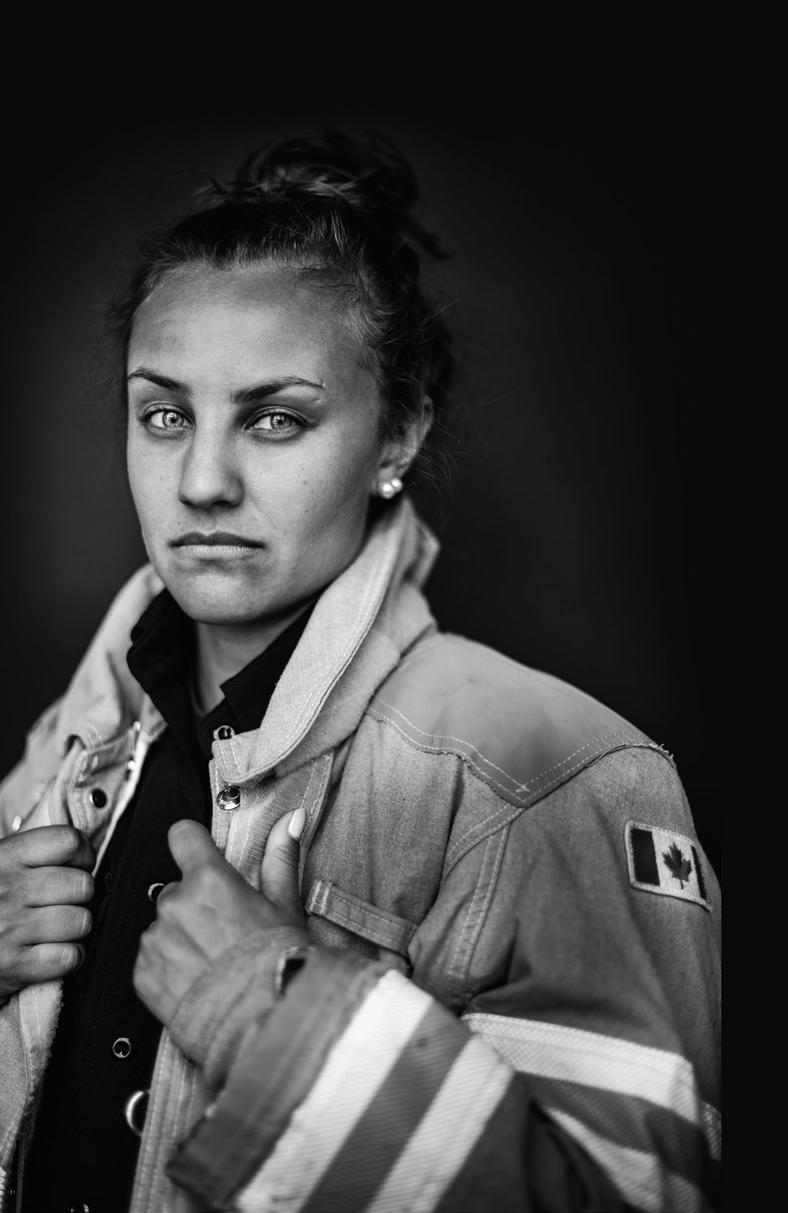

BECAUSE
Reduce the risk to yourself and your loved ones. SOOTSOAP is proven to remove cancer-causing contaminants associated with firefighting, and gets rid of that smoky smell in just one wash. As a proud supporting partner of the Firefighter Cancer Support Network, a portion of your purchase will go directly towards providing assistance and support to firefighters diagnosed with cancer and their families. Shop for the cause at sootsoap.ca/FCSN TM ALL NATURAL | 100% BIODEGRADABLE | CERTCLEAN CERTIFIED PROUDLY FIREFAMILY OWNED & OPERATED | MADE IN CANADA INFO@SOOTSOAP.CA WWW.SOOTSOAP.CA IG @SOOTSOAPSUPPLYCO DECON LIKE YOUR LIFE DEPENDS ON IT
IT DOES.
Over the course of human evolution, we have always been fascinated by fire and fertility. Without the former, we wouldn’t have become what we are today. And without the latter, we wouldn’t be at all.
It’s no surprise then that from our cavedwelling ancestors who painted fertility images on their walls to fertility cults and marriage rituals (some of which still exist) which invoked magic to thwart barrenness, to modern day scientists who learned to freeze and implant sperm and egg cells, we’ve always been obsessed with rituals, potions, spells, art and science to enhance our fertility.
Is Being a Firefighter Endangering Your Chances of Becoming a Parent?
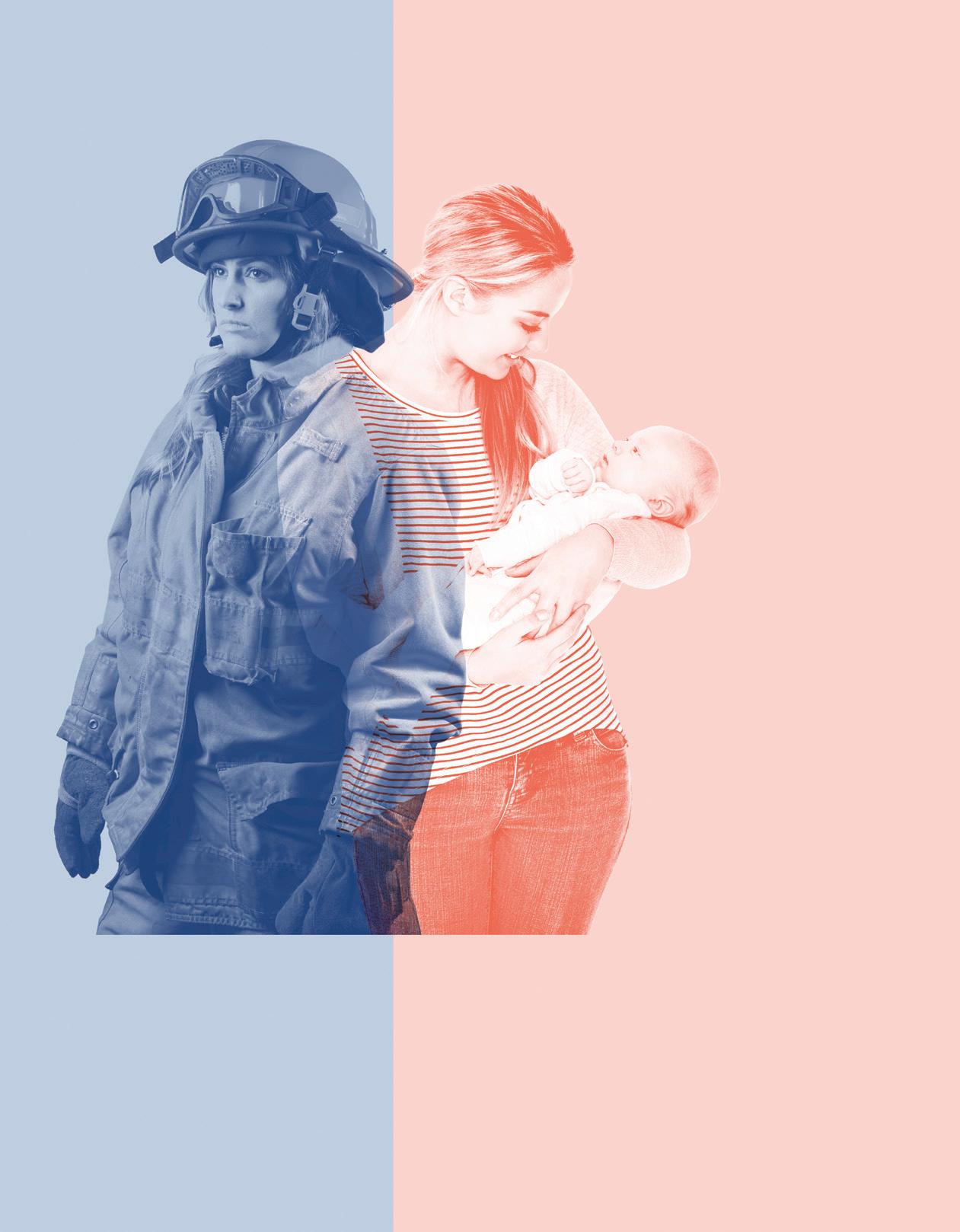 By Rick Markley, Science Alliance
WHILE RESEARCH ON FIREFIGHTING’S EFFECT ON FERTILITY IS IN ITS INFANCY, PATTERNS ARE EMERGING
When we talk about fertility, we are really talking about two things: getting pregnant and having a healthy child. A lot of good science has been done in both areas. Incense and incantations have been replaced with reliable recommendations based on tested and accepted scientific knowledge. For example, the renowned Mayo Clinic put together a list of risk factors and preventive measures for both men and women looking to have a baby.
Mayo pegs age as one of the important factors contributing to infertility in both men and women. Women's fertility gradually declines in their mid30s and drops rapidly after age 37, according to the clinic. This is likely due to the lower quantity and quality of eggs, and can also be due to health problems that affect fertility. Men may also become less fertile past age 40.
The list also points to tobacco and alcohol use as risk factors in both men and women. Of course, exercise plays a role in preventing excess weight, but not all exercise is good for promoting fertility. “Ovulation problems may be associated with frequent strenuous, intense exercise in women who are not overweight,” according to the clinic. “Regular exercise is important, but exercising so intensely that your periods are infrequent or absent can affect fertility.”
HEALTH SCIENCE ALLIANCE WINTER 2023 | 69
For women looking to become pregnant, the report also recommends limiting caffeine.
The recommendations obviously include avoiding those risk factors. For men, it also lists avoiding high heat and toxic chemicals. Both can inhibit sperm production and both are mainstays on the fireground.
Of course, intense exercise is necessary to maintain the physical condition needed to do the job, and it is part of most working emergency scenes.
Just like our ancestors who had limited knowledge of how fertility works, we are working to understand fertility in the context of firefighting. Unlike the (male) ancients who pinned all the infertility blame on women, science has proven men to be just as capable of infertility. It is intuitive to believe that female firefighters have a more difficult time becoming pregnant and carrying their babies to full term than women outside the fire service. The early science says this intuition has merit.
The science on firefighter fertility is at a stage that is both exciting and frustrating, says, says Sara Jahnke, a leading industry researcher who launched the Science to the Station: A Health & Wellness Alliance (or “Science Alliance” for short), a platform to bring important health and wellness science to firefighters. Jahnke has been at the forefront of much of that early research and she and her team are continuing to build and carry out new studies about firefighter fertility.
“It is exciting for us as researchers because we’re in the discovery stage,” she says. “There hasn’t been much work done in this field, and we get to chart the course for new research and build upon what earlier work exists. New discoveries are really new.”
Firefighters and fire department leaders need answers to set best practices and best policies, Jahnke says. “People need answers that we simply don’t have yet,”
she says. “When it comes to research, it’s easy to fall into the trap of thinking because the 5 o’clock news reported that one study shows eating celery will grow tails on humans, therefore nobody should eat celery. Except those who want tails.
“But science is a process, not an event. We have to make sure the data we collect is accurate, that it represents a large section of the population and that the findings are reproducible in other studies. That’s a long, sometimes frustrating process, but it also keeps us from wrongly eliminating celery from our diets.”
And that’s one of the common threads through much of the existing firefighter fertility research — that more research is needed. There are things, however, we can glean from the work that’s been done.
Way back in 1991, researchers led by Johns Hopkins University’s department of environmental health science looking at chemical exposure as a firefighter reproductive hazard reported:
“Reproductive risk to firefighters cannot be fully assessed because of the lack of adequate exposure data and the lack of adequate toxicity data to interpret it. Firefighters must be educated about the potential risks to reproductive health, as has occurred with other firefighting health hazards.
“Risk reduction through minimization of exposure is the primary prevention strategy. Vigilant use of SCBA, especially during overhaul when exposure to offgassing combustion products is high, takes on additional significance. Identifying potential hazards is the first step of a risk assessment determination. Worker education and administrative controls must be enacted in the short term to protect reproductive health while further studies are performed to assess more adequately the reproductive risk of firefighting.”
Fast forward to 2019 and Danish researchers who did some interesting work on male firefighters' infertility. Denmark is one of a few countries with nationwide registers on infertility.
That study looked at 17,134 Danish firefighters and used two other groups for comparison — 49,971 general Danish workers and 177,034 military men.
“We found a clear indication of increased risk of male-factor infertility in the Danish full-time firefighters as compared with a sample of male employees,” the researchers wrote. “When comparing the full-time firefighters with military employees, results were more ambiguous. Using part-time/volunteer firefighters as the reference group, the increase in risk among the full-time firefighters seemed to be confined to their employed time at risk. The part-time/volunteer workers, who were presumably less firefightingexposed, had no significant increase in risk of either male-factor infertility or overall infertility.”
In line with Mayo’s assessment, the Danish researchers pointed to heat stress as a leading cause of male firefighter infertility. They went on to identify chemical exposures as a second potential source.
SEVERAL CHEMICALS COMMONLY PRESENT DURING FIREFIGHTING OPERATIONS HAVE SHOWN REPRODUCTIVE TOXICITY IN MALES
“Several chemicals commonly present during firefighting operations have shown reproductive toxicity in males,” they wrote. “Among the exposures primarily relevant to firefighters, polychlorinated and polybrominated biphenyls, polycyclic aromatic hydrocarbons, benzene, trichloroethylene, vinyl chloride, perfluoroalkyl substances, cadmium and lead are either known for or suspected of impairing male fertility.

While more research has been done since then to accumulate exposure data and reproductive risks, much of the prevention advice from oh-so-long ago holds true today.
“In addition, emotional trauma or stress added through unpredictable rescue assignments may reduce male testosterone levels, weaken the libido, or ultimately cause impotence. Exposure to noise, physical exertion, and night work have also been suggested as contributing factors.”
HEALTH
70 | CRACKYL MAGAZINE
Science Alliance’s Jahnke was part of a team of researchers who published findings in 2022 that compared levels of Anti-Mullerian Hormones (AMH) in both female firefighters and female civilians with no firefighting background.
AMH levels typically increase until a woman reaches 25 years of age, after which they begin to steadily fall. AMH levels are one way doctors measure how responsive women are to fertility treatments.
This work, like much of the research into firefighter fertility, is in the early stages and had a relatively small sample of 106 firefighters and 58 civilian women; however the team found firefighters’ AMH to be 33 percent lower than nonfirefighters. More research will need to explore why these levels were lower.
When the team checked for things like number of live fires attended or ill-fitting PPE, they found nothing statistically significant.
that this could have been overlooked. But, we need to plan for a future with more female firefighters. There are plenty of template policies out there that can be adapted. This is low-hanging fruit for fire department leaders that will make their departments more attractive to female candidates, healthier for female firefighters and provide the departments with more protection from discrimination claims.”
Jahnke also uncovered some unsettling health concerns for pregnant firefighters.
in the mix. It reported that of 1,864 total pregnancies, 404 pregnancies resulted in miscarriages (22 percent).
Among most recent pregnancies, 138 resulted in miscarriage (13 percent).
Compared to a study of U.S. nurses, firefighters had 2.33 times greater agestandardized prevalence of miscarriage.
“Overall, we observed that volunteer firefighters had an increased risk of miscarriage, which varied by wildland status,” the authors wrote.
FIREFIGHTERS HAD 2.33 TIMES GREATER AGESTANDARDIZED PREVALENCE OF MISCARRIAGE
The rate of spontaneous abortions across pregnancies while in the fire service was 27 percent (29 percent when adjusted for age). This comes from a 2018 study that looked at data from 1,779 career female firefighters.
“Among structural firefighters, volunteer firefighters had 1.42 times the risk of miscarriage compared to career firefighters. Among wildland/ wildland-urban-interface firefighters, volunteer firefighters had 2.53 times the risk of miscarriage compared to career firefighters.”
The other risk is that the pregnant firefighter does not make it to full term before delivering her baby.
For female firefighters, arguably the biggest risk occurs once they’ve become pregnant. Firefighting poses risks to both their and the baby’s health. And this aspect of firefighter fertility has both administrative and occupational forces at work.
On the administrative side, Jahnke and her team found that many career female firefighters were unaware if their department had a pregnancy policy, or were aware that one definitely did not exist. Collectively, that came to 42 percent.
“We found that 24 percent of female firefighters said they know for sure there is no policy,” Jahnke says. “With many departments having few or no female firefighters, it is understandable
The American College of Obstetricians and Gynecologists, by comparison, estimates as many as 26 percent of all pregnancies in the U.S. end in miscarriage, and that it is the most common form of pregnancy loss. Another study puts the rate between 11 and 22 percent.

Jahnke’s research found that working night shifts and undertaking heavy lifting, both part of a firefighter’s job description, were related to increased risk of miscarriage. Environmental toxins present in the occupational environment also increase risk of miscarriage. In short, those things that can prevent you from becoming pregnant can also terminate your pregnancy.
Another study from Jahnke’s team in collaboration with researchers from the University of Arizona published in 2021 included volunteer firefighters
“One reported birth outcome that was higher when compared to the general population was preterm births,” Jahnke and her team wrote. “While reported rates of preterm (less than 37 weeks) birth ranged from 11.6 percent to 16.7 percent (second and fourth pregnancies respectively) for pregnancies occurring while in the fire service, the prevalence nationally is 9.6 percent across pregnancies.”
If we’re going to protect our firefighters, we’ll need continued research into our oldest fascination. And we’ll need to set aside old ways of thinking and adopt science-based best practices that will improve both male and female firefighters’ chances of conceiving and having healthy babies.

FOR MORE INFORMATION ON THE SCIENCE ALLIANCE AND TO ACCESS THIS AND OTHER FIREFIGHTER HEALTH AND WELLNESS RESEARCH FINDINGS, VISIT SCIENCE-ALLIANCE.ORG

SCIENCE ALLIANCE
71
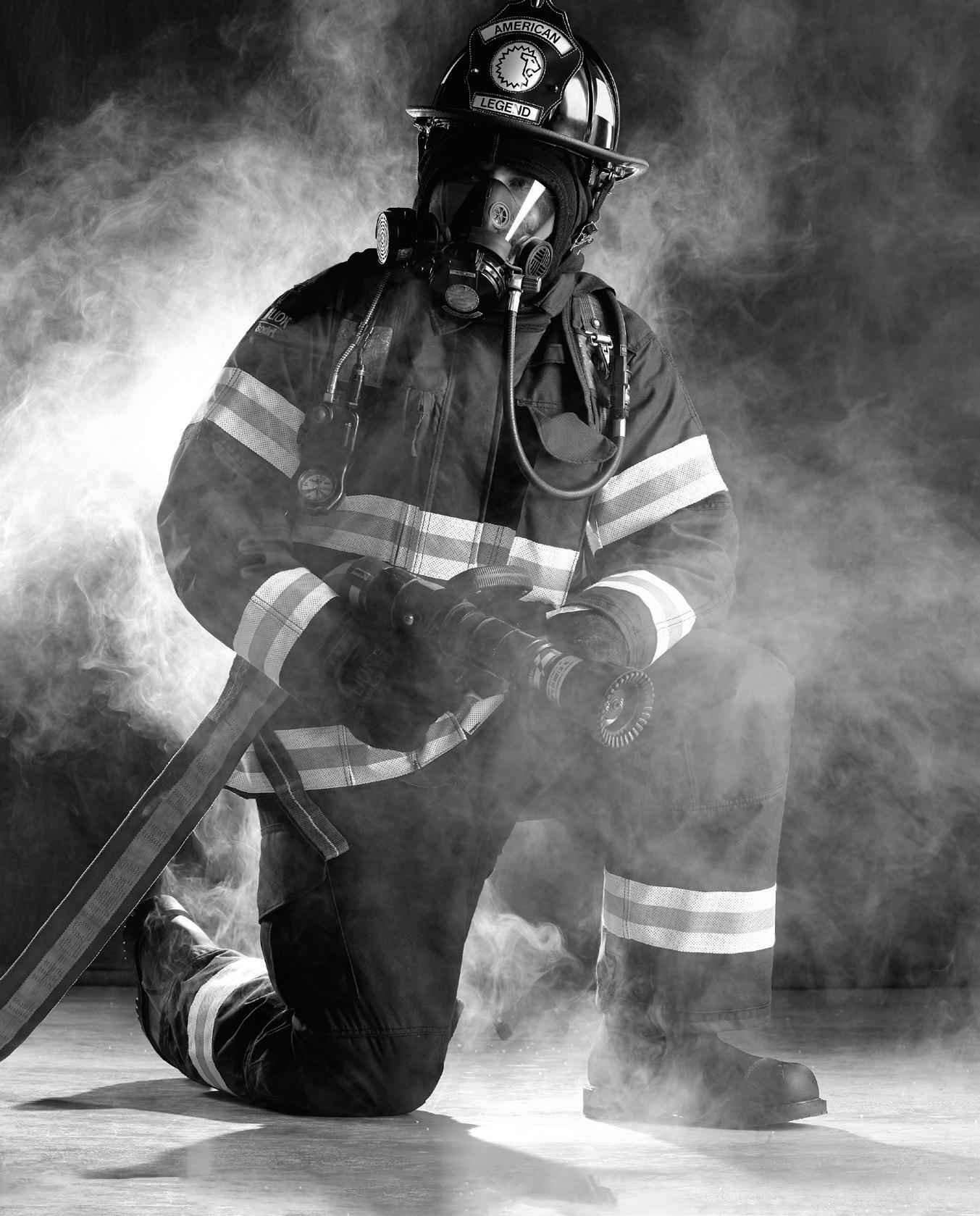

FACT FROM FICTION. TO LEARN MORE, VISIT
at turnout coat, pant, glove, boot interfaces and closures
SEPARATE
No ingress
LION RedZone™ V-Force® is the ONLY turnout gear tested, proven and verified by UL to block particulates.
CLOSURE GUARD
ARM GUARD
©
2023 LION Group, Inc. All rights reserved. RedZone™ is a trademark of LION Group, Inc. The DuPont Oval logo, DuPont™ and Nomex ® are trademarks or registered trademarks of E.I. du Pont de Nemours and Company or its affiliates.
CORE
GUARD LEG GUARD
WWW.LIONPROTECTS.COM/REDZONE
By Carrie Fleetwood, B.A., M.Ed., R.P. O.A.M.H.P.
PASSING ON GENERATIONAL TRAUMA
Chances are you were drawn to firefighting, at least in part, because you’re good in a crisis and want to help rescue people from danger. And I’ll bet your goal as a firefighter is to help strangers and comfort the devastated.
Yet, perhaps in your personal life you find yourself struggling to control intense emotions when you’re dealing with the ones you love the most.
YOU CAN’T UNDERSTAND WHY YOU HAVE ALL THE PATIENCE AND COMPASSION IN THE WORLD FOR THE PEOPLE YOU RESCUE - BUT SO LITTLE FOR YOUR OWN LOVED ONES.
You’re known as the nice guy or gal who’d give the shirt off your back to everyone in the community but you’re ashamed of the person you sometimes become at home.
WHEN YOU WERE A CHILD, MAYBE YOU VOWED THAT YOU WOULD NEVER PARENT THE WAY YOU WERE PARENTED AND WOULD NEVER MAKE THE SAME MISTAKES YOUR PARENTS MADE.
Perhaps your own story in your childhood included times of danger, perceived or real. Occasionally (or frequently) as a child you felt dangerous emotions were breaking out in your family or you and others around you were in actual danger. Maybe you flash back to these moments of terror when you get triggered to strong emotions by your spouse or your children.
Could you be passing down your own traumatic history to the next generation? To your own dearlyloved children?

RELATIONSHIPS
HOW YOU CAN STOP
A FAMILY TRADITION
74 | CRACKYL MAGAZINE
Childhood trauma takes many different forms, including: emotional abuse (such as overly-intense reactions to normal childish mistakes), putdowns, humiliation and yelling; physical abuse, frightening arguments with threats of or actual abandonment, harsh punishment and shaming, hitting, kicking, beatings, events where caregivers were not accessible or responsive (due to substance abuse or neglect), witnessing violence in or out of the home, viewing the aftermath of violence, witnessing severe suffering, experiencing war, hunger, poverty, refugee hardship, racism, sexual interference and assault, rape, abortion, youth pregnancy, etc. It’s quite a list.
ESSENTIALLY, CHILDHOOD TRAUMA IS ANYTHING THAT MAY HAVE CAUSED YOU TO FEEL TERROR OR NUMBNESS AND DISSOCIATION IN YOUR CHILDHOOD.
These events are experienced viscerally (not just emotionally) and the body stores the trauma and accompanying physical symptoms of panic, fear, impending doom, hyperarousal and vigilance or numbing and shut-down. These symptoms are also stored as automatic, reflex-like responses of the nervous system, including muscle tension, pounding heart, shallow breathing, heavy fatigue, racing thoughts and more. When you were growing up, when your family had a crisis or stressful situation, your body was triggered to respond in these ways. It was an uncontrollable reflex.
Fast forward to your adult life, to you as a spouse or parent today. When you experience tension in your home, you may harken back to the earlier trauma, to the feelings of helplessness and fear and the automatic physical symptoms that
accompany these. Helplessness and fear is now attributed to the spouse or child who just “caused” these emotions to be triggered, and you may feel angry.
You’re angry that your child has “made" you feel this way, that they “made" you react poorly and now they’ve “made" you feel ashamed. Sound all too familiar?
You never dreamed you would find yourself overreacting, freaking out, raising your voice, grabbing, pulling, shoving or looming over your child. Here’s the saddest part: after you’ve done this a few times, your child begins to feel rebellious and may become stubborn and difficult, oppositional and defiant. They are protesting and sometimes copying your rage, triggering you to frequent frustration and helplessness as the generational trauma continues.
FIRST, BECOME AWARE OF YOUR BODY SENSATIONS WHENEVER YOU FEEL STRESSED.
Your body tells you first, even before your mind, that danger is lurking. Your chest becomes tight, heat rises up your torso, your gut is churning and your mind becomes convinced that something bad is about to happen. It doesn’t have to, if you can learn to calm your body. Associate these body sensations with the original traumatic incident, not the current stressful family situation. Use your mind to tell your body that you are safe and your fight/flight/ freeze response is unnecessary. You’re not about to be hit, or screamed at or molested.
SLOW YOURSELF DOWN.
Think slo-mo! Slow down your body movement towards the “crisis”. Most situations do not require a millisecond response. Take a few deep breaths, look around you or out the window and notice that life goes on out there, let your feet move slowly to the “tense situation” (i.e. the spilled milk which isn’t going to be any less spilled because you run to it), focus on the body tension and let it go as you exhale. Remind your brain that this is actually not a crisis. This is normal family living.
CHANGE YOUR BELIEFS. Stop concluding that your child or spouse wants to hurt you or make your life difficult. Many trauma survivors believe their children are enjoying a “piece of cake” childhood vs the one they lived and that those children should comply and be grateful! Your child, on the other hand, feels shamed and shaken by your intensity and can’t possibly understand why Daddy or Mommy does this.
LET’S BREAK THIS DOWN WHAT TO DO WITH THIS VICIOUS CYCLE? WINTER 2023 | 75
STOP BELIEVING THAT EVERYONE IS GOING TO HURT YOU, THAT NO ONE CAN BE TRUSTED, THAT BAD THINGS ARE GOING TO HAPPEN TO YOU. Bad and good things happen to all of us. Stop thinking that you’re a bad person, undeserving of love, inadequate and weak. Start believing that you (and your family) don’t have to be held hostage to your intense emotions, that you can learn to make positive and healthy behavioural choices.
One such healthy choice is to realize that your spouse is not the enemy. She/he withdraws when you unleash your “dragon-fire” on them or on your children because they are traumatized, not because they don’t love you.
HAVE THE COURAGE TO TAKE RESPONSIBILITY FOR THE ANXIETY AND STRESS THAT YOU ADD TO YOUR FAMILY. This means never blaming others as if they “caused” your bad behaviour and never using shaming comments when speaking to your kids.

TELL YOUR STORY. Process your memories. Talk about them with someone you trust. Share your trauma and intense feelings with your spouse and turn to them for comfort. If you don’t feel comfortable enough to do this with your partner, fearing that they may not understand, or worse that they won’t believe you or think less of you, seek out an experienced trauma therapist and start there.
Your traumatic experience will be validated and you’ll find you can move on instead of being stuck spinning your wheels. Consider working towards the sometimes monumental task of forgiving those who caused your trauma. This does not necessarily mean restoring a relationship as that may never be safe.
CHOOSE YOUR HEALING TEAM AND SURROUND YOURSELF WITH NURTURING FRIENDS. Limit contact with people who bring you down – even if they are your relatives. Seek out a life coach who can help you set goals to become your best self. Join a support group for trauma survivors. Find a good therapist who will stay by your side and help you heal as you tell your Seek out wise spiritual leaders who show balance and openness in their own lives and who practice what HAVE HOPE.
You can change if you humble yourself and build a loving, encouraging but challenging team of supporters.
RELATIONSHIPS STOP A FAMILY TRADITION. MAKE THE INTERGENERATIONAL TRAUMA STOP WITH YOU!
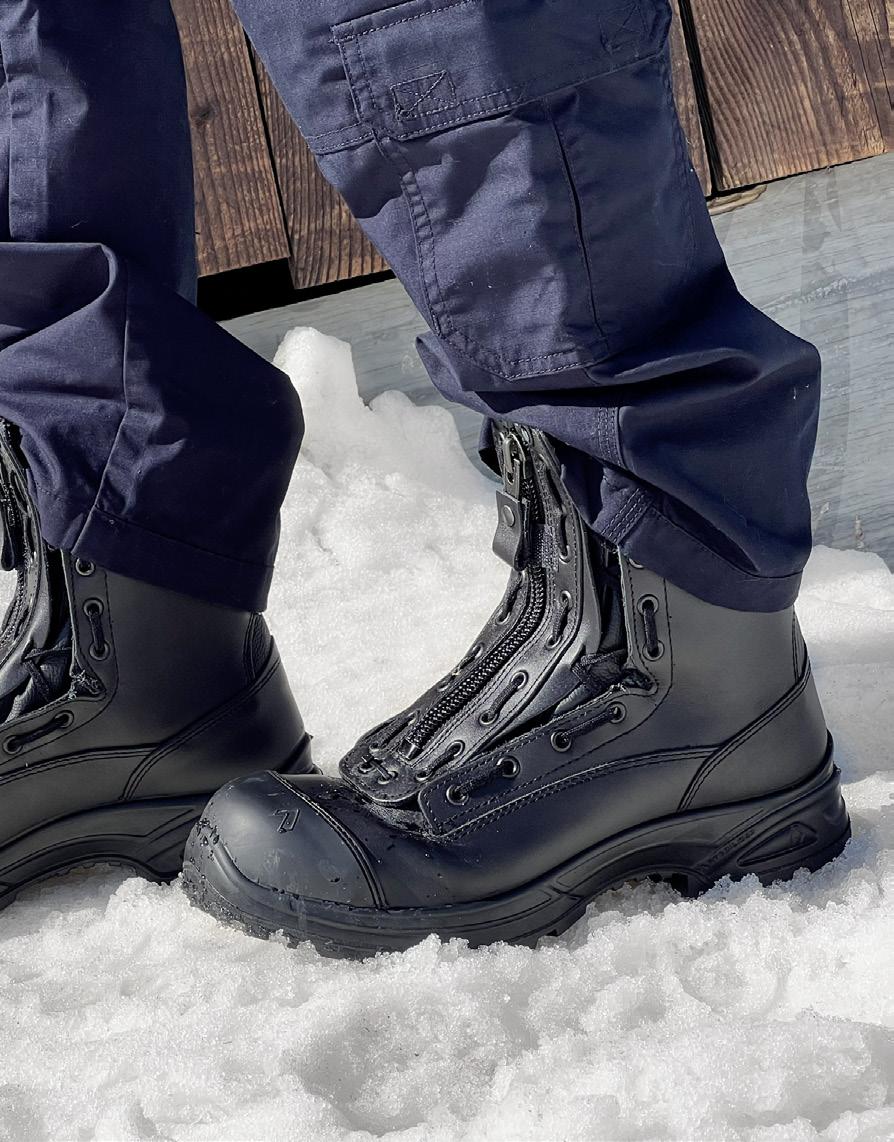
HEALTH LIFESTYLE FITNESS RELATIONSHIPS FINANCE STRESS FOLLOW US ON SOCIAL MEDIA Nº1 WE’RE HERE. WHERE ARE YOU? RESOURCE FOR FIREFIGHTERS @CRACKYLMAG You spend long hours on your feet. HAIX makes sure you don’t feel like it. AIRPOWER® XR2 WINTER > Our winter sole helps you keep your footing on snow and ice > Certified NFPA 1999, ASTM F2413, and CSA Z195 HAIX® North America Inc. 2320 Fortune Drive, Suite 120 Lexington KY 40509 Toll free 866-344-HAIX (4249) www.haixusa.com SNOW AND ICE GREAT ON
More than a Mascot More than a Mascot
By
More than any other breed of dog, Dalmatians link firefighters to their heritage and storied traditions. Just as German Shepherds are associated with law enforcement, the Dalmatian is associated with firefighters from North America to England. Not only has the breed become synonymous with fire service culture of the past, but more importantly, they continue to add value for firefighters today.
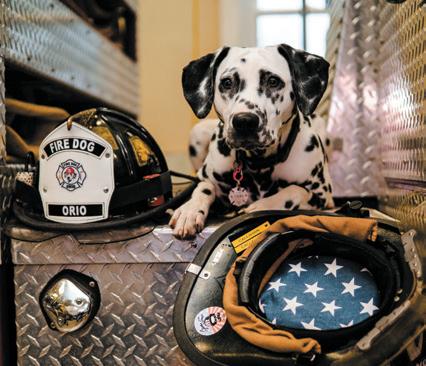
A very physical breed, with a strong muscular body that can run great distances without tiring, Dalmatians were better suited than other breeds to work with both horses and the firefighters who handled them. Since the mid-1700s, Dalmatians had been stable or carriage dogs for aristocrats in Europe, often running in pairs on either side of the carriage and horses.
Dalmatians are bred to work alongside humans and horses. Although it’s not been proven scientifically, Dalmatians seem to have an affinity for horses who, in turn, trust the dogs around

and under their feet and seem to accept their protection and companionship. According to Fire Historian Dave Hubert, “The reason for using Dalmatians in the Fire Service was to calm and protect the horses.” Horses have dichromatic vision, seeing colors in only two wavelengths, so spotted Dalmatians are easier for horses to distinguish from their surroundings.
Like horses, dogs are creatures of habit, so the same style of training can be used for both. Their expertise as carriage dogs made it logical that
Dalmatians would run well with fire carriages. That relationship between firefighters and canines began in the 1850s with the invention of horse-drawn steam fire engines, and lasted long after the last steamer engine was manufactured in 1917. Slowly adapting to the new steam engine technology, Fire Department New York (FDNY) began using steamer engines and Dalmatians, which helped keep everything orderly in the mid-1870s. At the sound of the alarm, the Dalmatians would alert pedestrians in front of the station that the horses and
steamer were coming. The horses pulled the steamer engines toward the scene of the fire with the Dalmatians running alongside the engine carriage, keeping pace even when sprinting long distances. The Dalmatians would defend the horses from other dogs or animals that could spook or attack them during the run and would stand guard to protect the engine and equipment as the emergency was dealt with.
With the introduction of internal combustion engines, the role of the Dalmatian diminished and the dogs were relegated
LEFT: DALMATIANS ARE KNOWN AS FIRE DOGS AROUND THE WORLD.
BELOW: FAST BY NATURE, DALMATIANS LOVED RUNNING BESIDE THE FIRE HORSES.
78 | CRACKYL MAGAZINE
Rodney Slaughter, President/CEO at National Fire Heritage Center
to the role of station mascots, often helping keep rats in check around the firehouse.
Today, new roles have emerged for the Dalmatian in the fire service.
Some have been trained to teach children fire safety, such as stop, drop, and roll, and have proved very valuable in fire safety education programs. In fact, a fire safety education Dalmatian named Molly and her owner were awarded the 2019 American Kennel Club’s Award in the Exemplary Companion category.
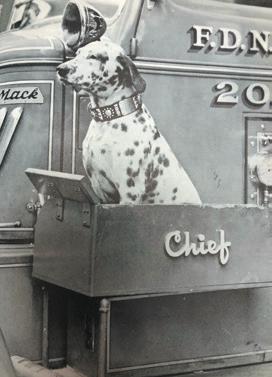
The role of the Dalmatian even extends to the world of mental
health. Recent studies indicate that, in comparison to 20 percent of the general population, 30 percent of first responders develop behavioral health conditions that can include depression and PTSD. Immediately following 9/11, two Sheriffs from Rochester NY gave the FDNY Ladder 20 Company a Dalmatian puppy. Fire Company 20 had lost seven members of their team on the 35th floor of the North Tower on 9/11 and were in need of comfort. The Fire Company named their puppy “Twenty,” and she soon became a local celebrity, who was often seen sticking her head out of the fire
truck window as the Department’s fire engine raced through Manhattan. Twenty was a powerful force for rebuilding morale in the years following 9/11. “I can’t say enough about what she did to help us,” said FDNY Lieutenant Gary Lorio on Facebook after Twenty’s passing in 2016.
Dalmatians also caught Memphis Fire Director Gina Sweat’s attention when she realized the bigger purpose they could serve. “There are things they could do for the firefighters and the city of Memphis,” she said, and soon Dalmatians became certified as therapy dogs.
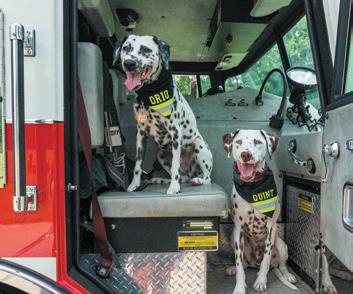
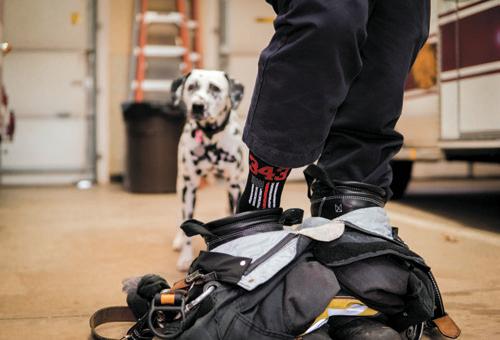
THE NATIONAL FIRE HERITAGE CENTER
Our Mission is to collect, preserve, and provide access to the historical records of the fire service and fire protection disciplines.
Our Vision is to become the largest on-line digital network of firerelated history and information.
Our Values are centered on dedication, commitment, and service to the industries, communities, and the people we humbly serve.
The firefighter mentality is “We are tough and we do not like to talk about things” so Dalmation pups travel to various fire stations after traumatic calls and work with those who were injured on the job and are suffering from posttraumatic stress. Therapy dogs return repeatedly to visit the paramedics and firefighters to provide them with extra comfort during behind-closeddoors sessions. Pleased with the success of this program, Chief Sweat has hired a team to investigate expanding the therapy dog program.
WINTER 2023 | 79
RIGHT: PHOTO TAKEN FROM “A PICTORIAL HISTORY OF FIRE FIGHTING” BY ROBERT V. MASTERS.
HEALTH feel flow
By Janel Norton, Yoga Specialist / O2X

No matter where you live, first responders
perform physically and mentally decisions daily can take a huge toll on our bodies and our minds. And when the nervous system experiences these traumatic events, it needs to process them.
In the groundbreaking book “The Body Keeps the Score,” Dr. Bessel van der Kolk explains how we record all of our experiences through our senses, and if we can’t fully process them, they can become “stuck” as issues in our tissues and cause all sorts of havoc later.
Thankfully, we have some tools that can help us mitigate and even thrive as first responders. We all know that exercise, a great regulator for the nervous system, is necessary in order for us to perform our jobs. And one form of exercise that can benefit first responders at any age and stage in their lives is yoga.
Yoga is unlike any other form of exercise in that it creates a profound awareness of the connections between breath, body, and mind. And it is an adaptable practice, meaning there are profound benefits to be reaped depending on what you need that day.
There are many styles of yoga, from a restorative stretch to a soul-crushing hot
power flow. Some days we need strength, some days we need peace. By knowing and listening to your body and taking into consideration the demands of the job, each practice can be tailored to correct imbalances, increase functional strength and flexibility, and make mental gains to keep you operating at your peak.
A good place to start is with our legs. They are inherently strong for mobility, but underusing them or being seated for long periods can lead to tight hip flexors, shortened muscles, and weak stabilizers. Yoga helps create functional leg strength and flexibility by training muscles to work together, reinforcing joint action to support the whole body.
There are 84 Asanas (postures) that help create awareness within the mind/body, including ones that focus on legs and hips. Find stillness and hold each pose for five to ten full breaths. As you breathe in and out using full diaphragmatic breaths (in through your nose, out through your mouth), notice where you are holding tension in the body. See if with each inhale you can create space in the tightness, and with each exhale try to soften and release tension. Find ease. Flow through the five-posture sequence on one side, then switch to the other. When finished, pause for 10 breaths in a standing position with eyes softened or closed, and notice sensations in the areas you just worked. Notice the open space and strength you created.
From a standing position, put your hands on your hips and step your right foot back and angle back toes about 60 degrees. Keeping hips squared, exhale and bend your left leg, knee over ankle. Inhale to extend your arms overhead, eye gaze follows.
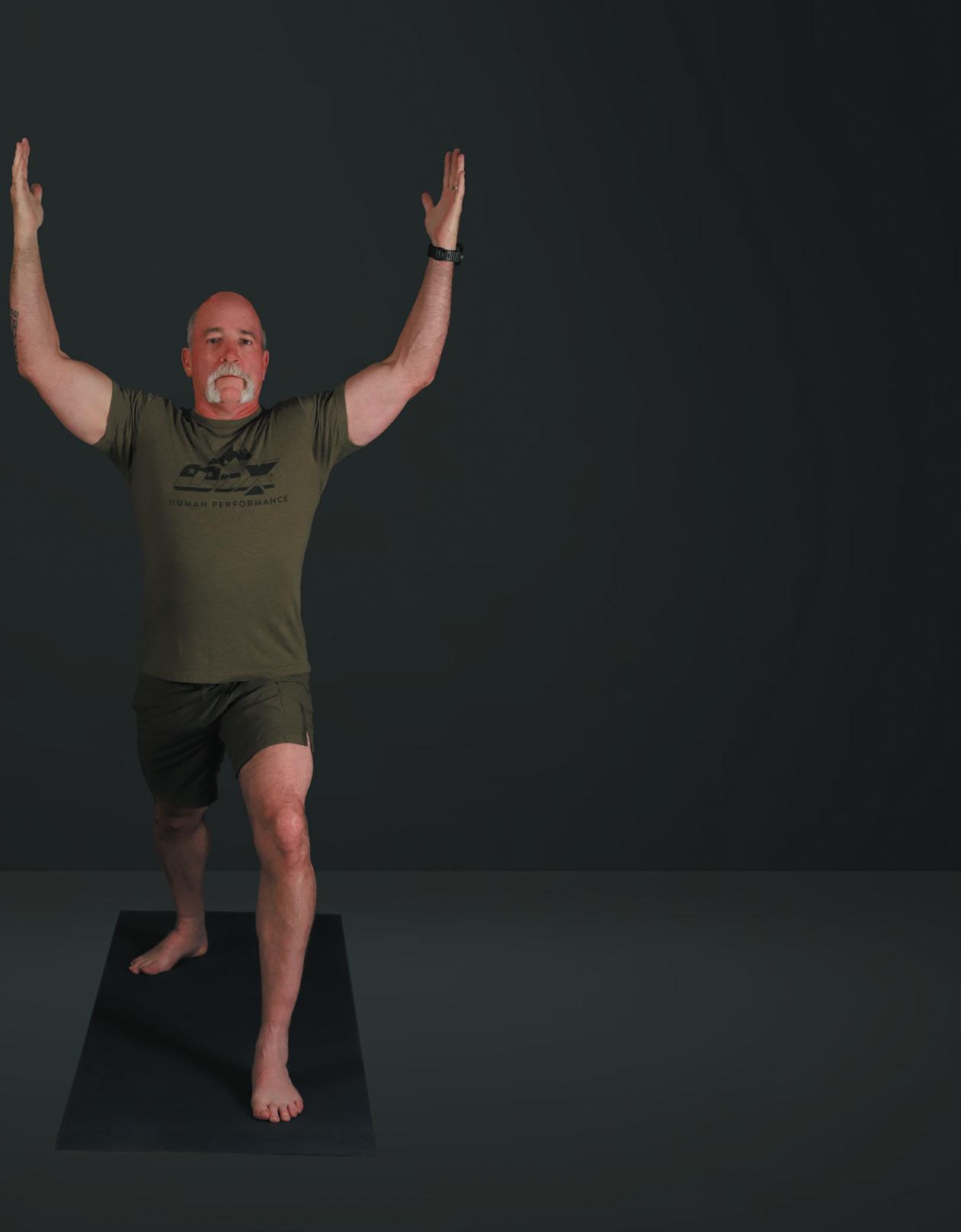
80 | CRACKYL MAGAZINE
warrior one OPENS HIPS, CHEST AND SHOULDERS, OPENS WHOLE FRONT AND SIDE BODY, IMPROVES CIRCULATION, CREATES STABILITY AND FOCUS.
tree pose
warrior two
From Warrior One position, take a deep inhale and exhale to open your shoulders and hips to the right as you extend your arms in opposite directions - front to back, parallel to the floor. Keep your knee tracking over your ankle (you should be able to see your big toe). Soft eye gaze focused on front middle finger.
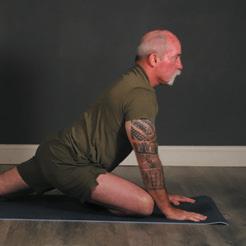
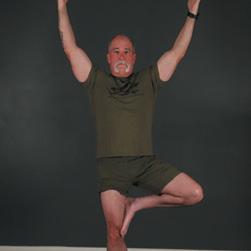
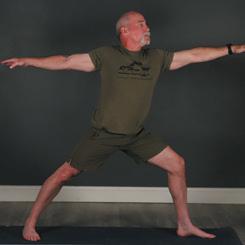
From a standing position, bring all your weight into your left leg and set your eye-gaze on something in front of you. Inhale and externally rotate your right knee and hip open. Exhale and place your right foot inside your left leg either above or below the knee. Feel the stability created by the opposing force of foot pressing into leg and leg pressing into foot. Inhale, arms overhead, and find stillness for five to ten breaths. Imagine you are a tree and think about growing your branches taller with each inhale and rooting down into each exhale.
downward-facing dog
From a standing position, feet hip width apart, exhale and bend knees deeply as you forward fold placing palms onto the floor. Press fingers and palms deeply into the floor, shoulders engaged. Inhale and exhale stepping back into an inverted V shape. Let heels sink toward the floor. Try to get as much weight out of your wrists as possible by pressing upper ribs back towards upper thighs. Inwardly rotate your elbows and feel the upper back broaden. Draw shoulder blades down your back and let your head hang heavy and loose.
pigeon

From Downward Dog, inhale and raise your right leg. Exhale and draw your leg under your body to place your right knee behind your right wrist. Work your shin towards a position parallel with the top of your mat. Keep flexion in your right foot to protect your knee joint. Let your left leg extend straight behind you. Inhale, lengthen your upper body, exhale, hold. If you feel comfortable, begin to bring the chest towards the floor. (Modification: if the right hip is high off the floor, place a pillow or blanket under it and soften into the pose.)
After your practice, take time to integrate the benefits into the mind. If possible, take a few minutes to find a comfortable seat or lie flat. Soften or close your eyes and focus on the surface that is supporting you. Feel the full weight of the body being completely supported. Now take your deepest inhale of the day and let it go. Let the body’s own natural breathing rhythm happen, no effort needed. Bring your awareness
to where you notice the breath entering and leaving your body. Focus on the cool sensation of the inhale in the nostrils, and the warmth of the exhale. It can be helpful to incorporate a silent mantra, such as “I am now breathing in…. I am now breathing out.” When the mind wanders off with a thought, that’s totally normal. Just gently bring your awareness back to your breathing. This is the practice of meditation.
WINTER 2023 | 81
STRETCHES GROIN, HIPS, SHOULDERS, TONES LEGS, CORE HELPS WITH BALANCE & STABILITY, CONCENTRATION & PROPRIOCEPTION LEADING TO INCREASED INTERNAL AWARENESS. TONES FEET, LEGS, & GLUTES DEEP HIP OPENING POSE, INCREASES HIP FLEXIBILITY, HELPS SCIATICA & LOWER BACK PAIN MILD INVERSION CREATES LENGTH & STRENGTH THROUGH THE ENTIRE SPINE, BUILDS SHOULDER STABILIZER STRENGTH, HELPS ALLEVIATE BACK PAIN, LENGTHENS HAMSTRINGS & CALVES, & BUILDS CONFIDENCE BY SEEING THE WORLD THROUGH A DIFFERENT PERSPECTIVE
By Matthew Broom, BBA, CFP
MONEY DOESN ’ T HAVE TO BE COMPLICATED
Building wealth is simple. But that doesn't mean it’s easy.

Buy-now-pay-later makes it appealing to consume goods we can’t afford, while the temptation of getting rich quickly can lure you into trading crypto on obscure Reddit tips. You may think complicated financial products and strategies will bring fast wealth and while that can occasionally be true, it certainly isn’t for most of us. Instead, follow a few simple rules that will guide you in making good decisions in the complex and uncertain environment of money and investing.
Economies, markets, and companies are complex. Successfully implementing investment strategies that predict and time the ebb and flow of markets is challenging, even for experts. Following a simple, understandable investment strategy keeps you from having to predict how monetary policy, geopolitics, and the balance sheets of
thousands of public companies will affect your investments.
All financial decisions occur in an uncertain environment. Talking heads in the media may speak as if their forecasts are a certainty but that’s an illusion. Only in hindsight do we have certainty. Simple, flexible plans that account for the most likely contingencies allow you to act and adjust accordingly as the uncertain future unfolds. These simple rules can serve as foundational principles to help you in your wealth-building journey.
FINANCE
WHY DO SIMPLE RULES WORK SO WELL? THEY PROVIDE CLEAR SOLUTIONS TO COMPLEX PROBLEMS, REDUCE THE NEED FOR PRECISE LOGIC AND CALCULATION, AND MAINTAIN A BIAS FOR ACTION.
82 | CRACKYL MAGAZINE
SAVE BEFORE SPENDING
Save and invest 15 to 20 percent of your earnings before you ever have a chance to spend it. Calculate what your monthly expenses are (everything from mortgage to food to car payments and more).
START BY SAVING THREE TO SIX MONTHS OF MONTHLY EXPENSES IN A LIQUID AND ACCESSIBLE EMERGENCY FUND.
You deal with emergencies every day so you know they happen. Not having enough cash on hand to deal quickly with stressful situations only compounds the amount of anxiety you feel.
With that emergency fund in place, you can then move on to investing. Investing at its simplest is laying out money today in the hope of receiving more in the future. You forego the benefit the money could bring now for the benefits it will provide later.
IF YOU LET YOUR LIZARD BRAIN RUN THE SHOW, DELAYED GRATIFICATION CAN BE A TOUGH PILL TO SWALLOW SO, DON'T GIVE YOUR INNER CAVE DWELLER THE CHANCE TO SQUANDER YOUR INCOME.
Automate your savings before it ever hits your bank account.
Your exact savings percentage will vary based on how much you have already saved, how long it will be until you need the money, and how you've invested it. But, generally speaking, the higher your savings percentage, the better. Never go lower than 15 percent and if you can go beyond 20 percent, you’ll be well on your way to a comfortable financial future.
INVEST IN A LOW-COST, DIVERSIFIED PORTFOLIO
Costs matter. Consider two investment portfolios with values of $100,000 that achieve an eight percent annual rate of return for 30 years. One has yearly fees that total one percent, and the other is half of that. If you invested in the one percent fee portfolio, you'd miss out on $100,000. As my favorite financial guru Benjamin Franklin once said, "Small leaks can sink great ships." How do you avoid this? Invest in broadly diversified low-cost index funds. Learn more about low-cost index fund investing by reading John Bogle's influential book, ”The Little Book of Common Sense Investing”.
DIVERSIFICATION MAY MAKE IT COMPLICATED, BUT IT IS NECESSARY.
Investment markets may be up or down, but you can be sure that not all industries will be affected equally. In 2022, during a bear market (when investors were selling rather than buying), tech stocks experienced much more significant declines relative to other sectors. If you invested heavily in tech, your net worth is now feeling it. Broad index funds allow you to spread your investment across many companies. For example, the S&P 500 (an index of 500 leading publicly-traded companies in the U.S.) is one of the most widely followed indexes. Suppose you invested in an S&P 500 index fund. In that case, you'd spread your investment proportionally across all 500 of the largest corporations in the United States.
AVOID DEBT
Building wealth is about earning interest, not paying it. An affordable mortgage is okay but if revolving credit card balances are a normal part of life, it will be tough to get ahead. If you've already dug yourself a hole, put down the shovel and create a plan to pay off your debts. Once your nonmortgage debts are gone, you can
focus on earning interest via your low-cost, diversified portfolio.
Ask anyone who has had financial troubles in the past if having debt was a major contributing factor. Odds are that a resounding “yes” will be their answer. Building wealth is not only about taking the right actions. It is equally important to avoid the wrong ones.
GET 10 TO 12 TIMES YOUR EARNINGS IN LIFE INSURANCE
If your family relies on your income, you need life insurance and you should maintain 10 to 12 times your earnings. Depending upon your situation, you may need more or less, but 10 to 12 is a good starting point.
Your department may provide some group life insurance, but you'll likely need more. A low-cost term policy is your best bet as it will cover you for a set period. When thinking about how long your term should be, ask yourself some questions: When will the house be paid off? When will the kids be out of college? When will we be financially independent?
IT'S SIMPLE, NOT EASY
It’s not easy to follow a disciplined financial plan of avoiding debt and regularly investing for your future. You'll see your friends and family mortgaging houses they can't afford and financing cars they don't need. Envy and jealousy are often our natural reactions but, remember, the ability to tolerate debt is what you don't see. Follow simple rules, adjust as life evolves, and allow compound interest to work its magic. Before you know it, you'll join the millionairenext-door club.
WINTER 2023 | 83


Natural Turbinado Sugar. Distinctive Flavour. The Original Zero Calorie Sweetener Brand. Zero Calories. Naturally Sourced. Explore more of our sweet solutions at www.smuckerawayfromhome.ca or contact your Smucker Away From Home Sales Representative. STEVIA IN THE RAW, SUGAR IN THE RAW and SWEET ‘N LOW & Design are trademarks of Cumberland Packing Corp., used under license. © The J.M. Smucker Company and its Subsidiaries

westbroadapparel.com hose hats | shield hats | Apparel |drinkware use code “crackyl10” for 10% off your next purchase. KEEP TRADiTION ALIVE

GET YOUR ANNUAL FIREFIGHTER PHYSICAL. You can’t rescue anyone if you don’t take care of yourself first. Getting your annual firefighter physical can help you be sure you’re there — to save others. For more information, visit firstrespondercente r.org. YOU CAN’T SAVE OTHERS IF YOU DON’T save yourself.
Psychologists often talk about the benefits of "flow", a state of mind in which you feel completely absorbed by the activity at hand.
Entirely focused on whatever it is that has you fascinated, you lose all sense of time and let go of the usual worries and stresses of your day. For some firefighters, what opens the door to flow is the world of puzzles.

Whether you choose sudoku, crosswords, cryptics or jigsaw puzzles, the effect is the same. When your mind is challenged by something totally unrelated to work or family responsibilities, it’s free to stretch and bend in different directions. Studies show that solving puzzles can help to reinforce the connections that exist between our brain cells and increase the creation of new ones. The end result? As your stress levels drop, your thought processes sharpen.
Maybe chess is your jam – if so, be sure to watch “The Queen’s Gambit” on Netflix! A great game for the firehouse, chess is the perfect way to stir up a little friendly competition among team members. It’s also a brilliant exercise for the brain, and one that can easily fill a long, empty shift, yet can be stopped and resumed if need be. Research into the benefits of chess playing has shown that it develops the ability to see a situation from someone else’s perspective. Skilled chess players learn to anticipate an opponent’s next moves. Behavioral scientists call this ability to see things from another viewpoint the “theory of mind” and suggest that it’s essential to exercising empathy and building healthy social relationships.
Maybe you’re a fan of crosswords, word search and jumble puzzles and always have one on the go. Perhaps you’ve joined the billions of WORDLE lovers whose routine isn’t complete until they have discovered the word of the day. You might be one of those who always has a string of friendly competitions happening on Words With Friends. And research shows that doing crossword puzzles regularly not only improves your ability to focus attention on a desired task but can also boost your executive function and working memory.
• Improves memory • Better problem solving abilities • Greater visual-spatial reasoning • Delays dementia and Alzheimer’s disease • Improves mood • Lowers stress levels • Increased attention to details • Better collaboration abilities puzzleD BY HOW TO unwind? SHIFT YOUR MINDSET WITH A BRAIN-BUILDING CHALLENGE! Brain Benefits for Puzzle Lovers WINTER 2023 | 87
SUPERBOWL FAVES
If you're watching the Superbowl from the firehouse this year, we have you covered with crowd favorites that will help keep hearts healthy and waistlines trimmed!

RECIPE
A CROWD! 88 | CRACKYL MAGAZINE
SERVES
PREP TIME: 30 min
COOKING TIME: 25-30 min
COOLING TIME: 10-15 min
INGREDIENTS DIRECTIONS
HEALTH(IER) BUFFALO CHICKEN DIP
2 cups of cooked shredded chicken (aim for white meat)
½ - ¾ cup of your favorite light-middle heat hot sauce (we find that the buffalo varieties are better suited for the creamy nature of this recipe!)

1 cup of cream cheese (healthy alternative: 1 cup of Greek yogurt)
¾ cup cottage cheese
2 cups of your favorite cheese, shredded
1. Preheat oven to 350 degrees.
2. Mix all the ingredients and then bake in a 9" x 9" glass pan for approximately 25 to 30 minutes (or until the top layer starts bubbling).
3. Let it cool for 10 to 15 minutes then enjoy!
HEALTHY DIPPER OPTIONS:
• Corn-based nacho chips
• Red or green peppers cut into perfect scoopers
• A spoon - because this will be fabulous on its own!
HEALTHY SWAP!
Using Greek yogurt instead of cream cheese will give the dip that classic tang, but will provide much more protein. That's a win!
AIR FRIED PICKLES

30 pickle spears or equivalent slices (we recommend sours) laid out on a paper towel
½ cup of flour
1 tsp garlic powder
½ tsp kosher salt
3 eggs beaten
1 tbsp of buffalo hot sauce
3 tbsp pickle juice (this is key!)
2 cups of your favorite bread crumbs
This restaurant appetizer is a win/win for your hungry firehouse - and the best part, by avoiding an oil bath, we are keeping this fan favorite as heart-healthy as it can be!
1. Set your air fryer to 400 degrees making sure to follow your model’s pre-heating instructions.
2. Get your three bowls ready for dipping and coating your pickle spears. In the first bowl mix your flour and salt. In the second bowl mix your pickle juice, hot sauce, garlic powder and eggs. And in the third bowl, place your breadcrumbs.
3. Coat in order of the bowls and then place on a tray in your air fryer for approximately 8 to 9 minutes per side - or until you see them turning a scrumptious golden brown. Dip into your favorite yogurt-based dip and enjoy!
WINTER 2023 | 89
Two Decades
LEBERT FITNESS has been providing simple, affordable and effective bodyweight training tools that excel in gyms and homes for many years.

The story started when, as a personal trainer, Marc Lebert saw the need for more effective tools that were affordable, durable, multi-functional, and would make personal training more fun.
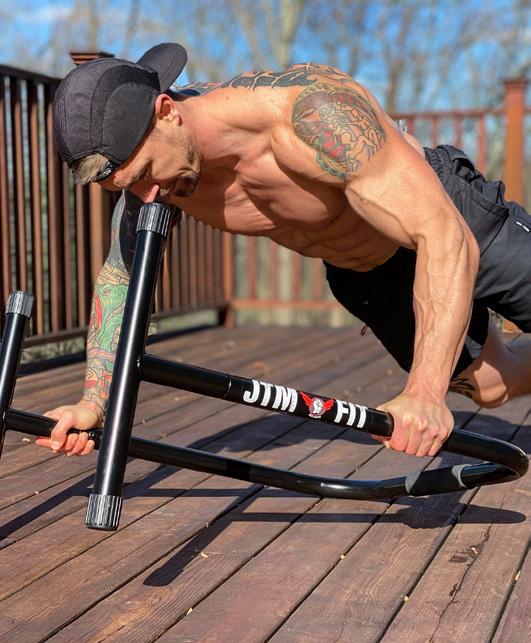
THE LEBERT DESIGN PHILOSOPHY
From the original Lebert EQualizer, Lebert Parallettes, Lebert HIIT System, and the recently launched Lebert Resistance Bar, a design philosophy connects them all - to create the simplest, most versatile, affordable and effective products that can be purchased and used by virtually anyone, anywhere.
“The real genius of these products lies in their simplicity.”
- LA Times -
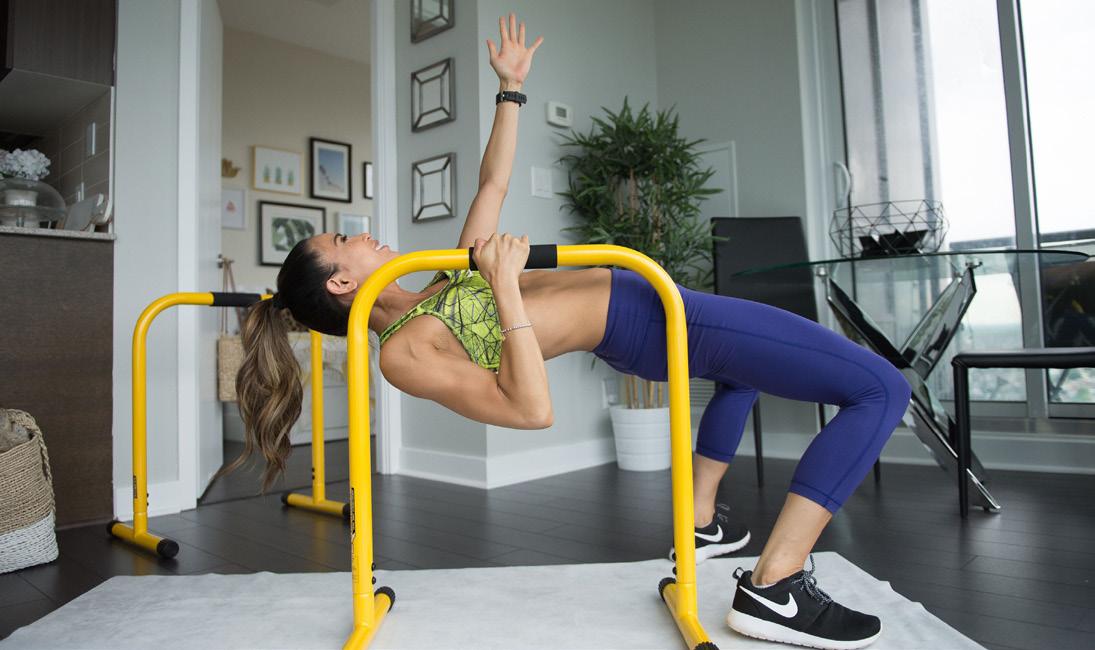
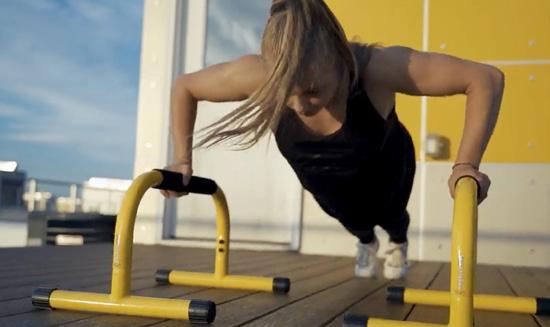

of Helping People Stay Fit *Exclusions apply. Cannot be used on bundles or combined with any other offer. For our entire lineup of fitness equipment, please visit Lebertfitness.com SAVE 15% use promo code CRACKYL
Decades
AMERICAN-MADE COFFEE THAT GIVES BACK
Founded in 2016 by firefighter/paramedic and U.S. Navy veteran Luke Schneider, Fire Department Coffee is a NaVOBA certified veteran-owned business that is dedicated to handcrafting great-tasting coffee with a mission of giving back to support sick and injured firefighters and first responders. Our growing assortment of ground, whole bean, coffee pods and ready-to-drink coffee is freshly roasted in the USA by a dedicated team of first responders, active military, veterans and coffee experts.

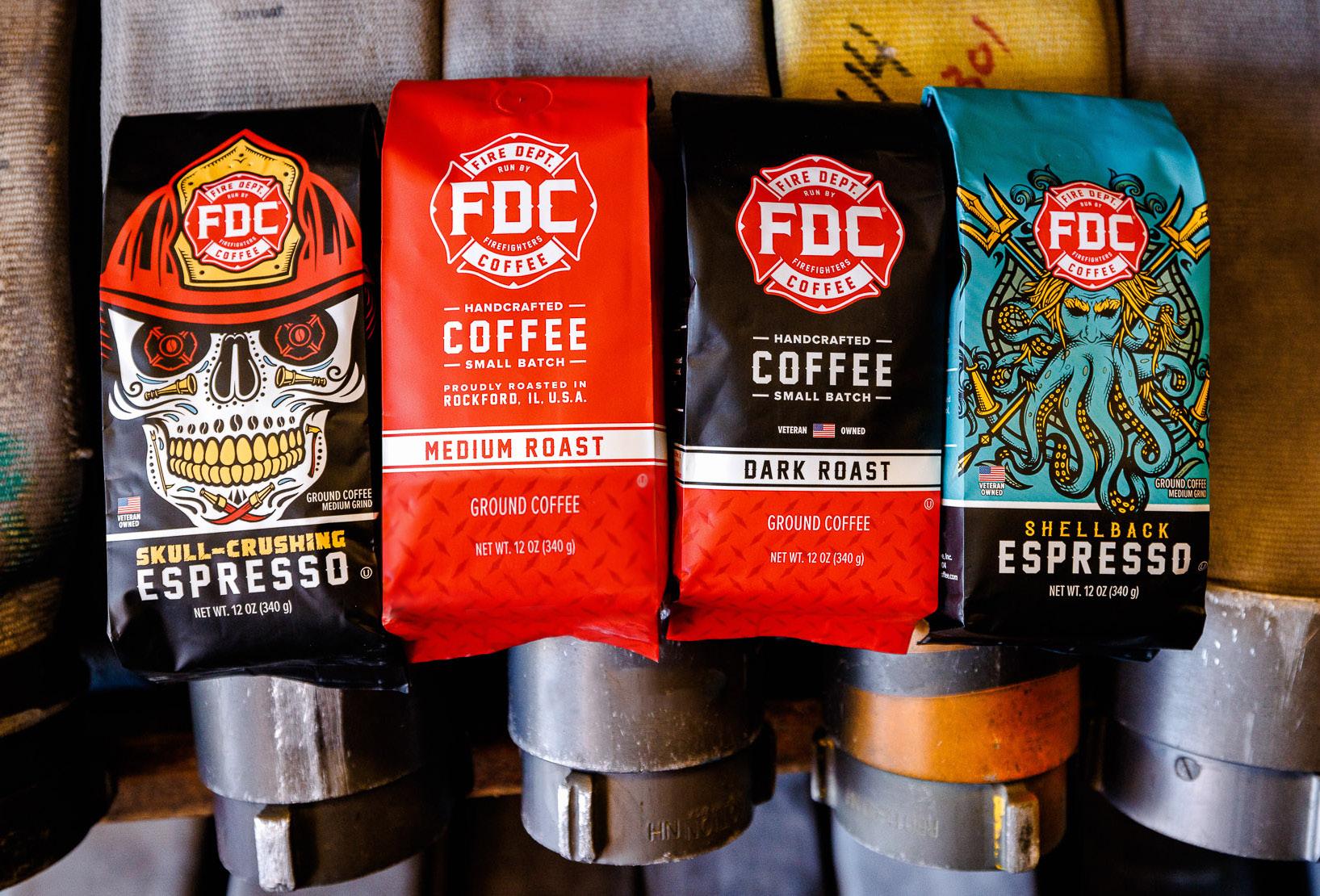
FIRST RESPONDERS ALWAYS SAVE 15% WITH CODE FR15 © 2023. Fire Department Coffee, Inc. All rights reserved. FIREDEPTCOFFEE.COM
