Twice as nice?
Are two heads better than one... ... or is sharing the CEO role a recipe for disaster? or
Twice as nice?
Are two heads better than one... ... or is sharing the CEO role a recipe for disaster? or
Join leadership professionals from across sectors for a powerful one-day conference and prestigious awards ceremony.
Book your ticket now Leadersh ip matters to everyone, not just those with titles.

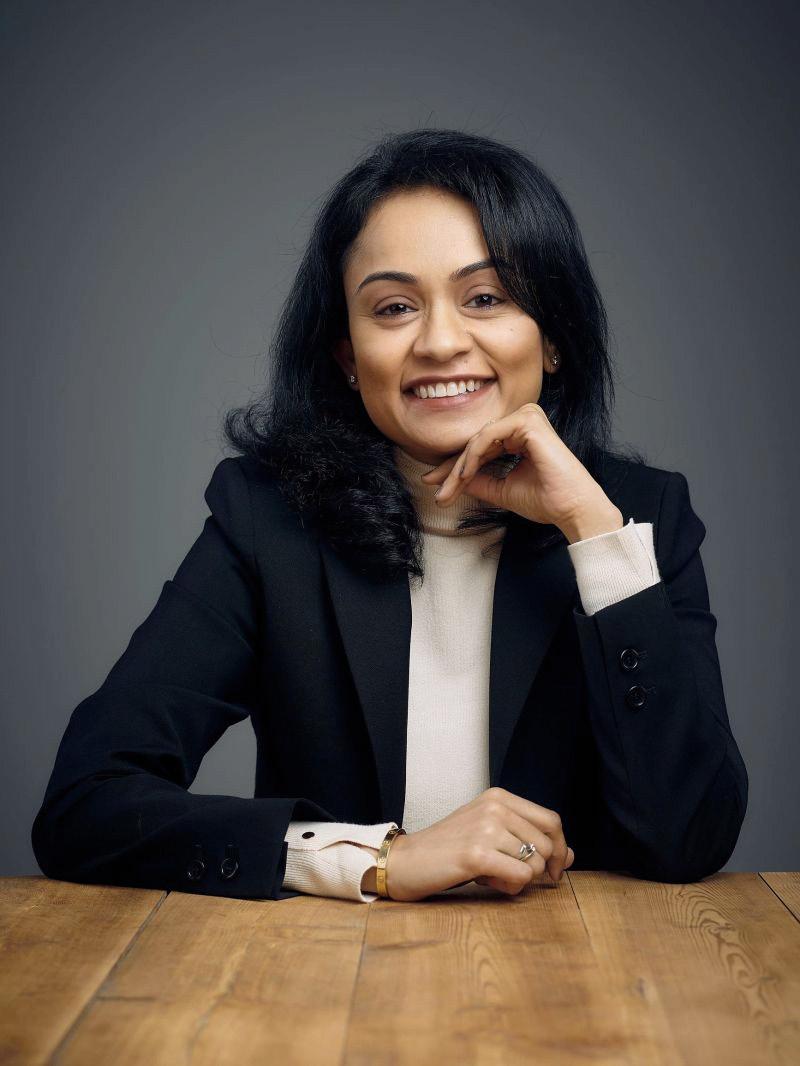
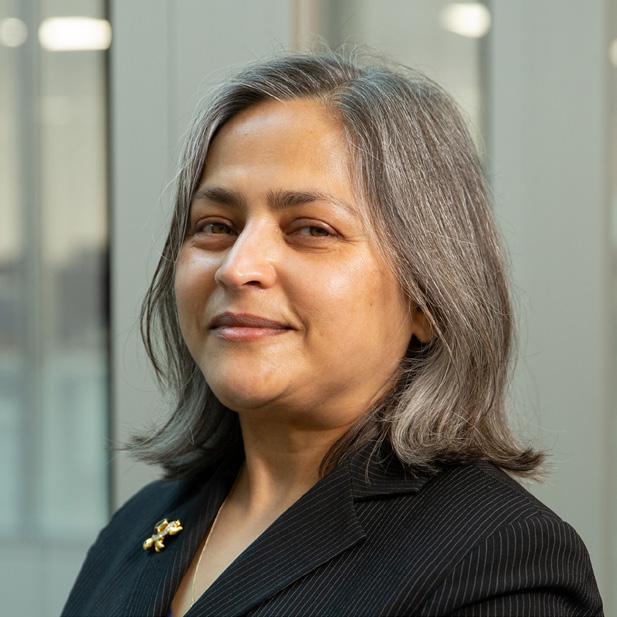
Dr. Poornima Luthra Princ ipal Lecturer, Imperial Business School


29th - 30th September I
SUMMER 2026

The English language has a plethora of phrases for saying more of something is good, but also that too much of something can be negative. Among our favourites are: ‘double the bang for your buck’; ‘too many cooks spoil the broth’; and Shakespeare’s Macbeth classic ‘double trouble’. But it was ‘two heads are better than one’ that provided the inspiration for the cover for this issue. Robyn, our designer, worked up a stock image to create a shadow concept of two heads overlapping to share one eye, inspired by the work of artist David Vanadia. We developed this into the idea of flipping the cover to show the other ‘face’ of the debate around sharing the leader role. What do you think? Are joint CEOs the face of the future – or does the role need the focus that comes from having just one head honcho?

By Louise Parfitt
In the past few months, my inbox has had an increase in news alerts on fractional leadership. In this model, the C-suite becomes more flexible in terms of size and skills as people join it for a set amount of time to provide their expertise when needed. This planted the seed of an idea that evolved into the theme for this issue: does the traditional C-suite need a revamp (see our lead feature on pages 15-19)?
This brought in so many interesting opinions and expanded into new areas, including a personal story of countering imposter syndrome and supporting each other’s growth when you are joint CEOs (pages 64-66).
As well as fractional leadership (page 20), we discuss Gen Z and the C-suite (page 21), and how new research is making CEOs question how they lead (pages 42-44).
We also take a deep dive into the challenges and joys of working in the retail sector. Shoe connoisseur and business leader
Daniel Rubin shares his learnings from 50 years in the business (pages 30-35). We also speak to Currys’ Matthew Speight about leadership in an industry that has to be responsive to constant change, (pages 58-61).
Alison Lowe MBE, also from the retail world but with a different experience altogether, talks about her role as a disruptor. She is on a mission to change an outdated system to enable better support for the next generation in the creative industry (see pages 45-49).
Meanwhile, emerging leader Rachel King has a frank conversation with her boss about learning how to navigate leadership when living with bi-polar disorder (pages 52-53).
And we invite you to share your honest feedback about Edge and the IoL, so we can continue to best support you: see bit.ly/ES26Survey
Thank you to everyone who contributed this issue. Please get in touch if you have an opinion or story to share.
louise.parfitt@cplone.co.uk
Edge is brought to you by CPL One cplone.co.uk
Editor Louise Parfitt louise.parfitt@cplone.co.uk
Art director Robyn McCurdy
Chief sub-editor Jo Halpin
Editorial director Helen King
Reporting team Martin Bewick, Cathy King
The Institute of Leadership c/o JW Hinks LLP, 19 Highfield Road, Edgbaston, Birmingham B15 3BH. ioledge.com
Chief executive John Mark Williams
Content strategist Ciara Conway
For advertising sales, please contact ciara.conway@leadership.global
Publishing Published in the United Kingdom by The Institute of Leadership.
Disclaimer Copyright 2026 The Institute of Leadership and CPL One. All rights reserved. Material may not be reproduced without permission of the publisher. While we take care to ensure that editorial is accurate, independent, objective and relevant for the readers, Edge accepts no liability for reader dissatisfaction arising from the content of this publication. The opinions expressed or advice given are the views of individual authors and do not necessarily represent the views of Edge, The Institute of Leadership or CPL One. Edge is printed on FSC-approved paper from responsible sources. Edge takes every effort to credit photographers but we cannot guarantee every published use of an image will have the contributor’s name. If you believe we have omitted a credit for your image, please email the editor.
ISSN 2515-7809
Printed by Paragon paragon.world

Doubt
Dune
Why
Louise

37 Cultural change
The stewardship shift you may not know your organisation needs
38 Death of the C-suite?
Are the leadership structures of the past still relevant for the workplace of the future
40 Bridging divides
Social unrest in the wider world can spill into the workplace, so how can leaders navigate this
42 Tomorrow’s world
Six steps to better leadership – and what this means for the evolution of the C-suite
51 Changing purpose
How you can adapt your role for the leadership journey ahead
52 Bossing it
Rachel King, from Riding for the Disabled Association, chats to her manager, Lee Heard, about leadership and mental health
54 The future you
Three experts offer their words of wisdom on the skills, development and ideas that emerging leaders may need
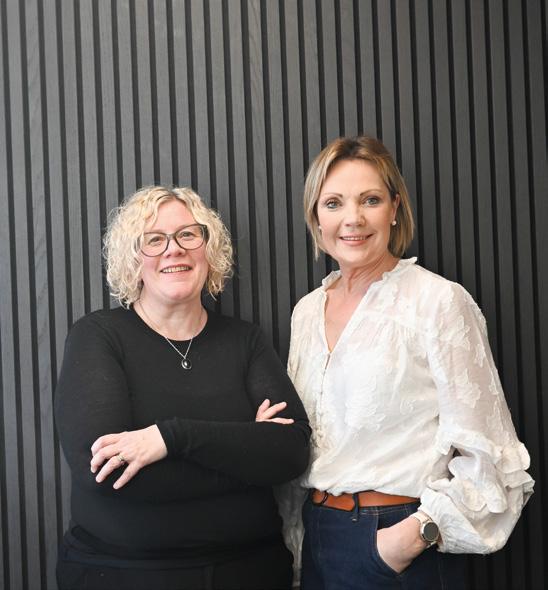
64 In it together
Embed’s co-founders offer insight on how to look out for each other when you share the CEO role
67 Lonely leaders
The isolation of life at the top –and what you can do about it
68 All too much
Why stress is an organisational problem, not an individual’s one
Focus on... retail
58 Leadership in action
Currys stores director Matthew Speight on leadership in the ever-changing world of retail
62 In numbers

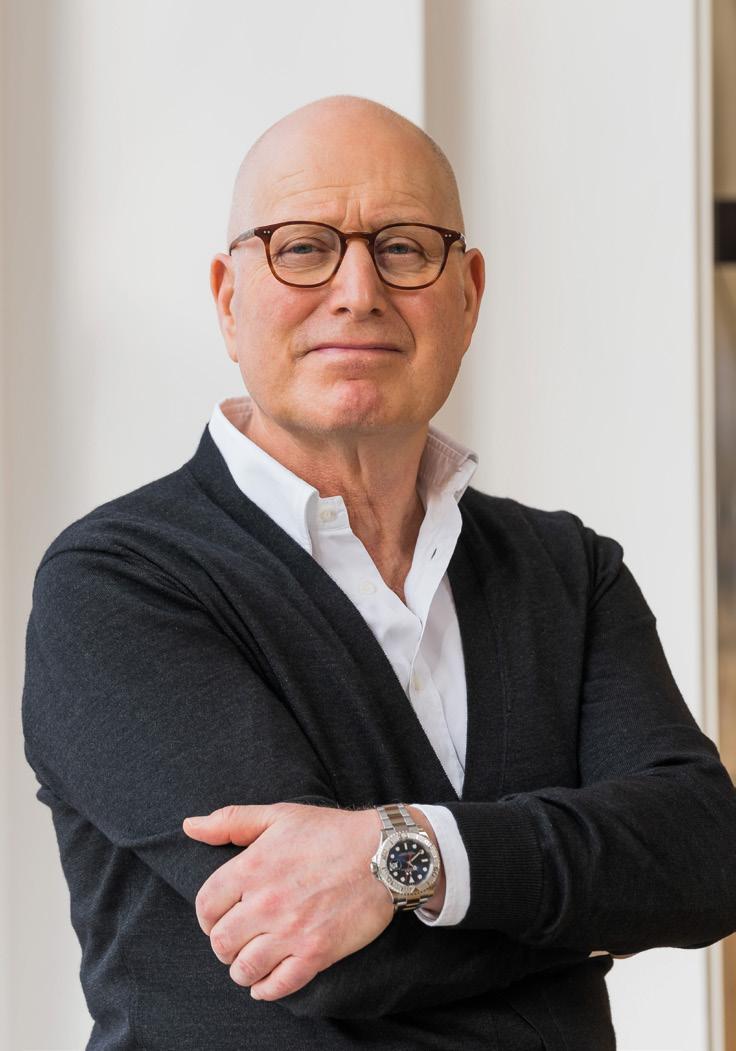
John Mark Williams
Driverless metro systems. Autonomous taxis. Mobile cleaning robots. Automated vehicle production lines. The list could go on. All have three things in common. First, they do not work without being given an instruction. Second, once instructed, they work without further direction. Third, they are systems.
Thinking about it, that latter point should really be the first – because being a system is a prerequisite of autonomous performance. A system is a set of parts that work together to achieve an outcome. Those parts may be physically connected or, increasingly, virtually interconnected. Modern cars, kitchen appliances and aero engines correspond with their manufacturers (and sometimes each other) all the time, and have done for years. We don’t manage that, we don’t watch it happening, and most of the time we are entirely oblivious to it.
Our homes are filled with heating, cooling and security systems that work continuously and invisibly. We know how to make things that do what we want, when we want, in ways that we want. We are surrounded by systems that just get on with the job. So why is leadership so difficult?
Our ‘three things in common’, mentioned above, can help. Unlike giving programmed instruction to autonomous equipment, leadership deals with people. People are not ‘autonomous’ in the same way as a machine that can operate without direct external control. People have an internal control that is self-actuating. They tend to think for themselves. Sometimes, they don’t wait for instructions. Once instructed, they don’t always work even when given further direction. And worst of all, from a systems perspective, people are unpredictably different from one another...! So far, so obvious. Well, maybe.
“Most C-suites still haven’t got it right To get the result we want, C-suites need to design the system that will deliver it. Which brings us right back to people”
Despite knowing that people are not objects, and despite the past 140-odd years of leadership and management development, from Taylorism* onwards, most C-suites still haven’t got it right. The very successes we see around us highlight the plethora of struggles ongoing in organisations everywhere. Some of our greatest minds have been bent towards solving the conundrum of leadership – to varying avail – and fortunes are spent (and earned) looking for ‘the answer’.
Maybe ‘the answer’ does not lie in tinkering around the edges (which is, frankly, what a lot of C-suites end up doing). Maybe – in spite of the vagueness of the terminology – it is in ‘the system’.
We know that context matters more than character. We know, as W. Edwards Deming tells us, that a bad system will defeat a good leader every time.** We know that outcome and output are not the same, and that focus on the latter is easier than focus on the former.
Well, even if we are going to steel ourselves to address the system, there is one thing C-suites need to understand. ‘Every system is perfectly designed to get the results it gets’, and whether it was Deming or Procter & Gamble’s Arthur Jones who first said that, it remains true. To get the result we want, C-suites need to design the system that will deliver it. Which brings us right back to people.
The purpose of leadership is to get a result. As people are not robots, that requires more than mere instruction; it requires thinking about appropriate systems. When applied to people, systems thinking does not say ‘this person is underperforming?’, it says, ‘what conditions in the system are causing this behaviour?’. And that’s the role of the C-suite. Not to pontificate about strategy. Not to have all the answers. Not to manage the operation. Its role is organisational design.
The brain cannot survive without the heart, lungs, blood vessels, musculature and skeleton. The C-suite cannot deliver results without the support of operations, marketing, people and finance. System design – organisational design – is the first responsibility of the CXOs, and they shirk that responsibility at their peril.
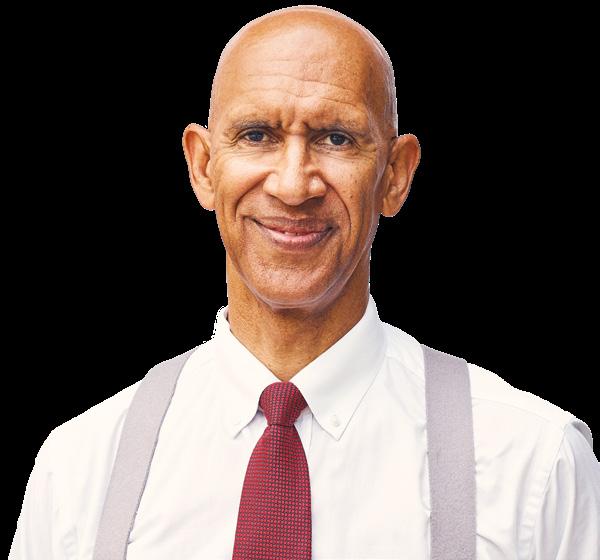
John Mark Williams is chief executive of The Institute of Leadership.
* ebsco.com/research-starters/business-andmanagement/taylorism ** deming.org/deming-the-man/

Two flagship events. One unforgettable leadership experience.
For the first time ever, the Institute of Leadership is bringing Leadership Live and the Leadership Awards together across one landmark two-day event, creating an experience to inspire, connect and celebrate the leadership community as never before.
Taking place at the DoubleTree by Hilton Milton Keynes on 29–30 September, the event will bring together leaders, managers, HR professionals and change-makers from across sectors for a packed programme of keynote speakers, interactive workshops, live debates, networking opportunities and an evening awards celebration recognising remarkable leadership and innovation.
Centred on this year’s theme, ‘Leading with
Scan QR code to book tickets

Humanity’, attendees can expect plenty of insight, honest conversations and takeaway leadership strategies, before swapping conference lanyards for black tie and posh frocks at the highly anticipated Leadership Awards ceremony and evening entertainment.
And the experience doesn’t end there. The following morning, members are invited to an exclusive Members’ Brunch, the perfect opportunity to continue conversations, build connections and hear from other inspiring voices in an intimate setting.
With early-bird tickets now available, this year’s event is shaping up to be one of the biggest dates on the leadership calendar.
Don’t miss out! Visit bit.ly/leadershiplive2026 to find out more and secure your tickets.
We want to make sure Edge continues to deliver the insight, inspiration and leadership content that matters most to our members – and that starts with hearing from you!
We’re inviting you to complete a short survey and tell us what you enjoy most about Edge, what you’d like to see more (or less) of, how you prefer to consume content and how valuable the magazine is as part of your IoL membership experience.
Complete the survey
The survey should take no more than five minutes to complete. Your feedback will help preserve and shape the future direction of the magazine and ensure it continues to evolve alongside the needs of our community.
Stop press!
Monday 6 July marks the launch of the IoL’s Lead & Learn Week – a new initiative shining a spotlight on the power of workplace learning and leadership development.
Head to leadership.global/ events for the full schedule, including podcasts, member masterclasses and live LinkedIn sessions.
If you’ve been planning a project that could make a big difference in your community, this could be your opportunity to bring it to life.
The IoL’s Leadership Project Grant Fund is now open for applications, offering members the chance to secure £10,000 in funding to turn innovative ideas into action.
This year, the Institute is awarding five £10,000 grants to support ambitious non-profit projects aligned with its
Senior leaders and aspiring Fellows are invited to join The Institute of Leadership on 14 July at 12.30pm for ‘Discover Membership: Your Journey to Fellowship’ – a free, 45-minute online session to help members better understand the Fellowship pathway and the professional recognition that comes with it.
The webinar, hosted by the Institute’s membership team alongside IoL Fellow Nicola Rylett-Jones, will offer practical guidance on the Fellowship application process, what the panel looks for and the first-hand benefits of becoming part of the Institute’s Fellowship.
The session will also include a live Q&A, giving members the chance to ask questions and gain tailored advice in an informal and welcoming setting.
Whether you’re ready to apply now or simply exploring your next leadership milestone, this is a fantastic opportunity to discover what Fellowship could mean for you.
To book your place, head to leadership.global/events
charitable objectives. Applications are exclusively open to Institute members applying on behalf of a UK-based nonprofit organisation.
The programme also includes ongoing support and accountability, with six- and 12-month progress reports, alongside Institute monitoring visits designed to track outcomes and celebrate the difference each project is making.
Applications close at midnight on 27 August, so members with an idea capable of creating lasting change in leadership development are encouraged to apply now.
Grant recipients will be announced at the upcoming Institute of Leadership Members’ Brunch on 30 September 2026 at the DoubleTree by Hilton Milton Keynes. The event is free for members to attend, with tickets available now (see opposite page).
Further details, eligibility criteria and application information can be found via the Institute’s website: leadership.global/what-we-do/leadership-grant-fund
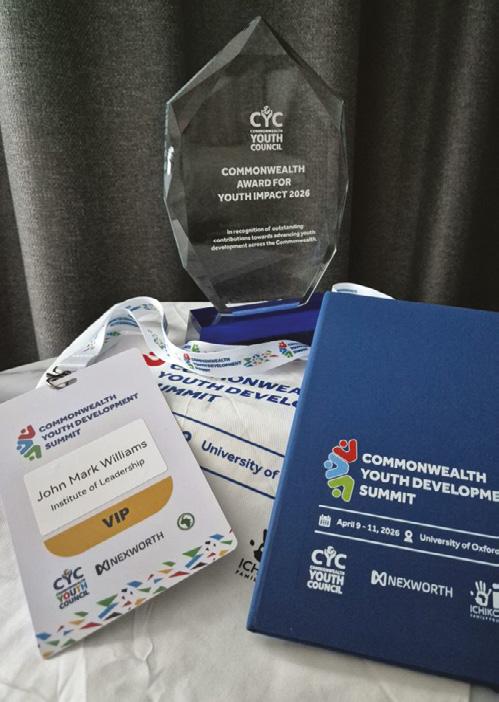
The Institute of Leadership has been recognised on the international stage by receiving the prestigious Commonwealth Award for Youth Impact.
The honour, presented by the Commonwealth Youth Council, celebrates organisations making an outstanding contribution to advancing youth development across the Commonwealth.
The recognition reflects the Institute’s ongoing commitment to shaping the future of leadership by supporting, developing and empowering the next generation of emerging leaders.
IoL CEO John Mark Williams, who received the award at the Commonwealth Youth Development Summit at the Blavatnik School
of Government, University of Oxford, described it as a “tremendous honour” and thanked the Council for recognising the Institute’s work and impact across the leadership community.
HomeServe has officially joined The Institute of Leadership as a new corporate member, reinforcing its commitment to building a culture where leadership development happens every day, not just in the classroom.
As part of the partnership, the home emergency repairs network is initially rolling out Institute membership to its heads of department, helping leaders strengthen strategic capability, gain fresh external insight and connect with a wider leadership community. But this is merely the beginning.
For HomeServe, leadership isn’t defined by job title, and the long-term ambition is to create more equitable and
A look at recent research on leadership and management from across the UK and internationally
Gallup’s State of the Global Workplace 2026 report highlights a growing challenge for organisations worldwide: leaders are under pressure, manager engagement is falling, and workplace disengagement is carrying a huge economic cost.
One of the report’s standout findings is the notable decline in manager engagement, which since 2022 has dropped by nine points globally to just 22% in 2025.
Meanwhile, low engagement from employees is now estimated to cost the global economy a staggering US$10tn in lost productivity, equivalent to 9% of global GDP.
However, the study also found that declining manager engagement is far from inevitable. In organisations identified as following leadership best practice, 79% of managers were engaged at work in 2025, almost four times the global average.
In 2025, global employee wellbeing improved for the first time in three years, although it still remains below prepandemic levels.
Leadership takeaway:
High-performing organisations aren’t just investing in systems and strategy; they’re investing in managers. Leaders who feel supported, empowered and connected are far more likely to create engaged, resilient and high-performing teams in return. Read more at bit.ly/ES26SGW
accessible development opportunities across the wider business. Amy Lowe, HomeServe’s head of talent and leadership development, said: “At HomeServe, we believe development isn’t an event, it’s a daily mindset.
“Our partnership with the IoL is a key piece of that puzzle, giving our leaders the space, tools and external perspective to keep growing in the flow of work.”
The partnership marks an exciting step forward in HomeServe’s continued investment in people, leadership capability and future-focused development.
To learn more about IoL corporate membership, visit leadership.global/ business-solutions/membership
The Leadership Divide: What employees really want from leaders
96%
97% of workers say leaders should communicate clearly and effectively want leaders who act with integrity
97% say accountability is one of the most important leadership traits
72% say emotional volatility undermines leadership effectiveness
59% believe arrogance and entitlement are leadership deal-breakers
Source: Hogan Assessments, The Leadership Divide Report
We invite you to challenge an assumption you hold about leadership. With flatter structures, fractional executives and shifting workforce expectations, are traditional leadership models fit for purpose?
All you need is a pen, paper and 15 uninterrupted minutes
One exercise 15 minutes One
1The inherited model
Think about the leadership behaviours or expectations you’ve absorbed throughout your career.
These may have come from:
• Previous bosses
• Organisational culture
• Industry norms
• Leadership training
• Your own assumptions about what ‘good leadership’ looks like.
2
The reality check
Leadership is evolving, but many organisations still operate with assumptions built around hierarchy, control and visibility.
Which of these statements feels most true in your environment? Tick any that apply.
• Leaders are expected to have all the answers
• Visibility matters more than impact
• Decision-making sits with a small group
• Leadership presence is confused with authority
• Flexibility is encouraged, but not always trusted
• Expertise increasingly matters more than job title
• Teams expect collaboration, not command/ control
• External or fractional leadership is becoming more accepted
• Traditional structures feel too slow for change.
3 The shift
Next, focus on one assumption you could challenge.
Complete the sentence: Leadership today needs less ____________ and more _______________.
Examples:
• ‘…less control and more trust.’
• ‘…less hierarchy and more expertise.’
• ‘…less visibility and more value.’
• ‘…less permanence and more adaptability.’
Now make it practical: ‘Over the next two weeks, I will intentionally…’
Briefly note:
• What behaviours have traditionally been rewarded in your workplace?
• What qualities are expected from senior leaders?
• Which leadership habits feel outdated, ineffective or performative today?
Now ask yourself: Which parts of leadership feel designed for a different era of work?
Consider: In today’s working world, how do your leadership instincts show up?
Behaviour Often Sometimes Rarely
I feel responsible for having the answers
I default to directing rather than facilitating I associate leadership with seniority or title
I involve the same voices in decision-making
I seek expertise regardless of hierarchy
I actively create space for challenge or dissent
I value adaptability as much as experience
The aim here isn’t to criticise; it’s to notice which assumptions still serve you and which may need some updating.
Examples:
• ‘… invite input from someone outside the usual decision-making circle.’
• ‘… delegate ownership instead of approving every detail.’
• ‘… seek expertise based on knowledge, not seniority.’
• ‘… challenge one process that exists purely because “that’s how we’ve always done it”.’
Finally, reflect:
• Who might benefit from this shift?
• What resistance could emerge?
• What might improve if this approach works?
4
Take it with you
Leadership has never stood still, but the pace of change is accelerating.
The question may no longer be whether leadership is changing, but whether our structures, habits and assumptions are changing with it.
The most effective leaders aren’t always the ones who protect the old model best. Sometimes, they’re the ones willing to rethink it first.



Or is the rising trend of co-CEOs a case of too many cooks spoiling the broth?
Peter Crush Writing
... better than one?
Joanna Jensen is confused. “To me, the very idea feels fraught with problems,” she declares passionately. “If any of the businesses I invested in told me they were following this model, I’d seriously want to know why.”
She adds: “Surely, the whole point of being a CEO is standing up to be counted.”
Jensen, the award-winning entrepreneur and angel investor, who founded baby and child skincare brand Childs Farm (then sold it to PZ Cussons in 2022 for nearly £40m), is ruminating over what she regards as a worrying new leadership trend – firms opting to have co-CEOs.
Businesses, it seems, are lining up to go Dutch on their leadership. Oracle and Comcast both announced co-CEO models in 2024, joining Netflix, which has had them since 2020. Arguably the most recent giant to join this list was music-streaming service Spotify, which also announced it would have two joint leaders from the start of this year. Salesforce, SAP and Marks & Spencer also all appointed co-CEOs in the early 2020s.
But rather than two heads being better than one, the gut reaction of Jensen and others is that it’s a case of double-trouble and too many cooks.
The wrong solution for leadership?
“Having co-CEOs doesn’t feel like the right solution for problems in leadership,” says Kevin Gaskell, former (and each time sole) managing director of Porsche, Lamborghini and BMW.
“Being a CEO – the leader at the top – is a big responsibility and I just don’t believe one person can, or should, carry only half of the load, split between two people. Where does the buck stop?”
“A leader needs to be passionate and determined, and be the only driver,” he adds. “They have a team around them if they really need to discuss things.”
Jensen concurs: “It feels like giving away responsibility and not wanting to be counted.”
But if co-CEO-ship really is such a bad idea to those who simply can’t see its merits, what are the companies that do choose it seeing that others are not? Surely, if there is no benefit, no one would want to do it?
Joseph Black and Oliver Jacobs are the co-CEOs of SHOUT, which operates one of


the world’s largest nano and micro-creator networks, and they argue there are plenty of reasons to double-up. The duo’s company was chosen as TikTok’s first UK agency partner and, today, they work with brands including Amazon, Adobe, H&M and, interestingly, Spotify. According to Jacobs, who has been friends with Black since 2015, the co-leader model is one they prefer because of a key issue that is shared by many of the co-CEOs to whom Edge spoke. “Today, the CEO role is too broad,” he explains. “It’s not about us escaping work, or responsibilities, but because the business needs different skill sets that are now too much for one person. The result is that we feel we take better, more considered decisions, and we don’t risk having the sort of blind spots that a sole CEO might slip into.”
Defining
Jacobs says the role he has stepped into is one of being the product builder, while Black is more the outward-looking marketing, sales and people-person. “It comes down to us realising that neither of us could be a COO, and that each person has their own skills to contribute,” he adds. “I see other single CEOs burning out. With us, someone else is there if we’re having a bad day.”
This desire to divide the role up, and for each co-CEO to lean into their strengths, is a common one.
“We’re co-CEOs,” says Stella Atherstone of herself and her right-hand woman, Jane Gurney, who together lead the Veterans’ Foundation, a grant-giving organisation for charities supporting the armed forces.
“We’ve chosen deliberately to organise things this way from when I was brought in last year to stabilise and bring in better governance. Although Jane had previously been a sole CEO [of Essex and Herts Air Ambulance] for 21 years before also joining last year, the dual leadership model works for us.”

Companies with two CEOs delivered an average annual shareholder return of 9.5% between 1996 and 2020. These firms outperformed the average 6.9% return achieved by singleleader companies.
Harvard Business Review 2022
In 2015 there were just 11 businesses with co-CEOs in the Russell 3000 group of the biggest public companies in the US. By 2024, however, this had more than doubled to 24.
MyLogIQ
According to Atherstone, their roles break down into “money in” (her – fundraising) and “money out” (Jane – outward-facing work). “The crux of it working is all about communication,” says Gurney. “The value of us both being able to discuss and challenge each other on an issue is immense.”
She continues: “Trust is everything. We’ve built a supporter relationship. If one is unavailable, the other makes the decision, and we back each other. Day to day though, having two brains really helps.”
It should be noted that M&S, Salesforce and SAP – all firms who did go co-CEO – reverted back to ‘normal’ structures within two years.
“Call me old-fashioned – and perhaps it’s because I’m a former captain in the Indian Army – but we operated with a firm ‘the buck stops here’ attitude,” says Karan Sonpar, professor and chair in organisational behaviour, and associate dean (global business engagement) on University College Dublin’s College of Business Leadership team.
“To me, leadership means unitary command, and it’s about delegation. So it’s flawed reasoning – to me – to have more than one top figure.”
He adds: “I hear people defend it by saying that it’s lonely at the top, and leaders have no one else to talk to, but if they’re leading properly they’re talking to the rest of the board. I think there’s a narrative, or at least an assumption, that having two people creates synergies and is a catalyst for collaboration. But my take is that it leads to compromise and obfuscation.”
Two have more value than one
However, co-CEOs are sure about the benefits they feel the arrangement brings to them. “We act as a twosome, where we really do play to our strengths,” argues Natalie Duvall, who, with Alison Burton, co-leads March
Muses, which creates inclusive/more diverse Christmas decorations and was featured on BBC TV programme Dragons’ Den . “We do, obviously, have occasional disagreements, but nine times out of 10 we work them out. Yes, delays might also happen in decision-making, but, at the same time, we know we don’t always have to have each other’s permission to do what we need to in our own area.”
According to Duvall, the fact that she and Burton do sometimes disagree is one of the beneficial outcomes of their dualleadership model.
“If you have someone that simply echoes what you’re saying, and has the same strengths and weaknesses, they’re basically the same person, and don’t add value,” she asserts.
“Difference is a virtue. Once you understand each other’s role, and accept that it’s not about big power clashes, it works. And it is lonely being a CEO if there’s just the one of you. No matter what people say, there are certain things you can’t talk about to those who are under you.”
Those who watch Dragons’ Den might recall that March Muses won investment from not just one Dragon, but two, Deborah Meaden and Peter Jones – a reinforcement, say the co-CEOs, that even top-level Dragons know the value of two heads rather than one. So, will we see more of the model, or is it just a quirky leadership fad that has momentum now, but could soon run out of steam?
Sara Daw is group CEO of Liberti Group, a global community redefining how businesses and leaders grow. She says: “What I would worry about is the internal messaging to staff – who really is the face of the business? – and where responsibilities lie when things start to not go as planned.”
Despite her scepticism, however, Daw says upsides can also clearly be seen. “I do get that the CEO role has become big, and if it can be split so people operate without stepping on each other’s toes, it’s a model that has legs. Having just one person – at a time of declining CEO tenure because of stress and overload – can be viewed as a business risk in and of itself.”
She adds: “As someone who works in the fractional leadership space, I certainly speak to CFOs who observe that CEOs are not coping. I also think the people who are coming into business right now are more attracted by a distributed leadership model.
“Having two leaders certainly gives each
“The CEO role is too broad. It’s not about us escaping work, or responsibilities, but because the business needs different skill sets that are now too much for one person”


“If a leader doesn’t want to be the sole leader, my question would be, ‘why; what are they afraid of?’’’

one the opportunity to be very good at what they know they’re good at, rather than having one who is mediocre at trying to be all things to everyone.”
Do old-school views need changing?
It looks as if those who are well established, and already have firm views on what leadership is, are the most circumspect about the appeal of co-CEOs, while younger entrants see it as something more normal. So, is what’s really needed a change of mindset among those who are more old-school?
“I would still need convincing,” says a dubious Gaskell. “You can have two heads, but not two CEOs. I think where you have co-founders, that’s different, because they have built a business together and both share the spoils.
“To me, though, two heads wouldn’t halve the risk, but multiply it. I’d be worrying about what happens if one person leaves, and whether the other could manage all of a sudden. If a leader doesn’t want to be the sole leader, my question would be, ‘why, what are they afraid of?’”
This view isn’t shared by others, however. Robert Schogger and David Cluer are co-founders of MetSpace, and firmly believe in the co-CEO model – they have done since the 1980s.
“I still struggle with the logic of having a single CEO,” says Schogger. “In our experience, its only ever been a good thing to have a mixture of strengths, weaknesses and experiences.
“We operate more as checks and balances. We both have the same aims, and that’s the underlying agreement we have. While we do things in different ways, it’s all for the future of the business.”
He continues: “For us, it just feels right testing things along the way. Together we reduce the load. Egos are left at the door; we’re just custodians of the business.
“We talk together for hours, whereas, if you’re on your own, I could imagine you’re doing all this with yourself in your own head, and that’s when you’d start to feel pressure.
“I think we all need to start to redefine who a CEO is and what a CEO does. I just don’t know why anyone would want to do this job on their own!”
Peter Crush is an award-winning HR-specialist journalist, writing about all aspects of leadership and the world of work.


Julia Payne
The traditional C-suite wasn’t built for motion. It may have provided much-needed stability back when markets moved slowly and leadership continuity meant strength, but today’s organisations operate in constant flow. Strategies evolve faster than hiring cycles and customer expectations shift more rapidly than ever.
Businesses must therefore ask themselves whether leadership structures built around permanence can really carry them through continuous change. Perhaps it’s time to replace the steadfast foundations that C-suite execs provided with fractional leaders whose proven experience converts motion into impact.
Expertise without the ownership
A primary benefit of fractional leadership is the access it gives to senior capability without organisations having to commit to permanent executive overheads. For scaleups and mid-market businesses especially, this is huge. Companies often need strategic leadership but cannot justify the cost – or risk – of a full-time hire at the wrong moment. Harvard Business Review has shown that 40% of executive hires fail within 18 months, proving that senior mis-hires are one of the most costly mistakes organisations can make.
Leadership no longer equals hierarchy
Then there’s the fact that fractional leadership challenges the increasingly outdated assumption that ‘serious leadership’ requires full-time presence. Many boards continue to measure leadership success in terms of visibility,
“Sitting at the helm doesn’t necessarily translate into delivering for the organisation”
rather than in growth-supporting outcomes. However, sitting at the helm doesn’t necessarily translate into delivering for the organisation – and the way in which modern workforces operate reflects this. Many experienced executives are now choosing portfolio careers over life with one company – and younger workforces expect flatter, more collaborative decision-making structures that aren’t dependent on rigid hierarchy.
Many worry that introducing fractional executives as temporary leaders could challenge authority and dilute accountability when it comes to results, when the reality is far from it. It’s the flexibility and open working structures fractional leaders bring that allow organisations to keep moving forward.
This is not to say the traditional C-suite is completely redundant. Despite all its benefits, fractional leadership is rarely a full substitute for core executive structures; it simply sharpens key abilities and perspectives.
To benefit fully from fractional leadership, companies will first need to establish clear goals and focus. They must know exactly what they want to achieve, and where they want to be positioned in the market, if they are to maintain clear ownership over the new hybrid leadership process. This forces sharper thinking across the entire board, shifting conversations away from mere role descriptions towards meaningful outcomes.
That’s what drives real motion. Strong organisations still need a permanent leadership spine to sustain direction and carry institutional knowledge forward, but it’s their collaboration with fractional professionals that creates critical momentum.
So, yes, the future C-suite will be smaller. The question is no longer ‘Who deserves a permanent seat at the table?’, but ‘What capability does the organisation need next?’ That’s what makes business fluid, capable of delivering outcomes beyond titles in a world that’s ever changing.
Julia Payne is an accomplished marketing strategist and leader, recognised for her contributions to business transformation and growth. With more 25 years of experience, she has a proven track record of increasing sales, reducing costs and improving client retention.
Shefaly M Yogendra, PhD
Boards of directors exist to enable the companies they oversee for longterm success. Given the interplay of technological change, geopolitical upheaval and climate challenges, it is vital that boards bring into the boardroom the perspectives of those whose lives are being most affected by these developments.
The ones with the longest life arcs ahead of them are Gen Z. Born between 1997 and 2012, they are, as of 2026, 14-29 years of age. They make up 30% of the world’s population and 27% of the workforce in 2026. They are entrepreneurs and managers. They use social media, but are building offline communities and product offerings that may not be on older generations’ radars.
Some business leaders are currently toying with the idea of appointing Gen Z to main boards, but the typical pathways still are advisory or next-generation boards. This needs to change rapidly.
Gen Z’s early lives were shaped by several impactful events, including the great financial crisis of 2008, the Covid-19 pandemic, and extreme events driven by climate change. Having grown up with smart devices, they understand the algorithmic version of reality that may baffle older generations, especially those who are not ‘extremely online’. All of these have shaped Gen Z’s view on financial stability and their scepticism towards corporate loyalty.
In other words, Gen Z is already
“A board that is not actively considering a Gen Z appointment has a blind spot”
and capital move, especially if your business offers products and services in these spaces.
With mental wellbeing and fluidity of identities and associations non-negotiables, boards could get a jolt of creativity and reality in how their business brands speak to this vast segment of the market.
The final word
A board that is not actively considering a Gen Z appointment has a considerable blind spot. As generational handovers happen, smart boards are building a bridge from those who remember the world before the web and those who are building the world with it. Gen Z directors help build that bridge.
immersed in the futures that they will live through, while boards are still grappling with these as ‘scenarios’.
How will your business benefit?
For Gen Z, purpose is not an afterthought but table stakes for an employer brand. Gen Z can act as the board’s radar; its early warning system for ethical and social faux pas.
Gen Z is a spending powerhouse and one that does not shy away from products such as buy now, pay later (BNPL), which may give older professionals the hives. Their choices can help boards understand how money
Shefaly Yogendra, PhD, is senior independent director of Temple Bar Investment Trust and non-executive director of Ampa Group in the UK, advisory board member of Harvard Data Science Review in the USA, professor of decision-making at the Vedica Scholars Programme for Women in India, and author of Uncharted Spaces: Reset the Agenda, Reimagine the Boardroom. She was appointed to her first board role at age 26.
Our next debate is looking at different leadership styles: is a ‘command and control’ approach more effective than ‘listen and enable’? If you have an opinion on this that you’d like to share, please email louise.parfitt@cplone.co.uk for more information.

Add credibility and recognition to your leadership programmes with our industry recognised kitemark. Only available with Institute Approved accreditation.





Jenny Williams
Leadership models have evolved to reflect greater complexity, yet they still struggle to account for one persistent reality: doubt. In today’s environment, where uncertainty is systemic, doubt is not an exception to leadership; it is part of it – and yet it remains poorly understood. Leadership has always involved holding tension, but the intensity and frequency of those tensions have increased. Leaders have always experienced doubt, but it has largely remained hidden. It has been treated as the shadow side of leadership, associated with hesitation, secondguessing and loss of momentum. Yet leaders continue to doubt. The issue is not the presence of doubt, but our interpretation of it.
There is a duality to doubt, and when we ignore it, we ignore its potential. The potential of challenge, creativity, and its invitation to collaborate. Doubt is a source of intelligence when used wisely, but that intelligence requires a language and a framework, something that has largely been absent from leadership models to date.
To harness the potential in doubt, leaders first need to locate it. What I call ‘professional doubt’ distinguishes between three sources of doubt. Self-doubt is internal, showing up as questions about capability, credibility or belonging. Situational doubt sits outside of us. It is shaped by context, incomplete data, competing priorities, stakeholder dynamics or unclear direction. Systemic doubt comes from the wider system, the structures,

“There is a duality to doubt, and when we ignore it, we ignore its potential”
incentives and hidden dynamics that influence what is seen, said and done. The problem is that leaders often collapse all doubt into one place: themselves. What may in fact be a signal about the situation or the system is misinterpreted as personal inadequacy. This misinterpretation leads to missed opportunity.
This is where ‘active doubt’ becomes critical. Active doubt is doubt with purpose, moving it from inaction to action. It is the capability to acknowledge its presence, understand its question and work with it to reach better outcomes. When leaders can locate doubt accurately, they can respond more intelligently. Self-doubt can prompt reflection and be a signal of growth. Situational doubt can sharpen
judgement and decision-making. Systemic doubt can surface hidden risks and institutional blind spots, and create the conditions for more responsive organisations. Without this, doubt overwhelms or gets suppressed. With it, doubt becomes usable and useful.
In a technologically advanced world, this becomes even more important. We need to redefine the human rule in leadership. The question is no longer just what leaders know, but how they apply challenge, judgement and ethical consideration to the situations they face.
The uniquely human contribution to leadership is not the ability to eliminate doubt, but the ability to work with it.
If leadership models have historically focused on building confidence, alignment and action, the next generation needs to go further. They must legitimise and develop the capability to work with doubt – not as something to overcome, but as a form of leadership intelligence. This is where doubt becomes not just necessary, but powerful.
The question is no longer whether leaders experience doubt; it is whether they know what to do with it.
Jenny Williams is a leading executive and systemic team coach, and author of Brilliant Doubt, who has lectured at the University of Cambridge on leadership and entrepreneurship. She has spent thousands of hours helping leaders harness the power of doubt as a catalyst for clarity, creativity and confidence. She has earned International Coaching Federation certification as a Master Coach
Julian Lighton identifies three kinds of CEO – and how to recognise which one you are working for
CEOs are the architects of an organisation. They determine culture – what is praised, what is promoted and what is punished; organisation structure – who gets what roles, projects and resources; and, most importantly, how strategy and decision-making is done. Because of this, it’s extremely important to identify the type of CEO for which you’re working – or that you are –because this affects the organisation and, in turn, your leadership role within it.
For leaders within an organisation, identifying how your CEO operates enables you to understand which of your abilities best complements this style, and the skills and values that will be prioritised within your role.
I’ve spent more than 20 years working as a chief strategy officer (CSO) for some of Silicon Valley’s biggest companies, including Cisco, Hitachi and TiVo. I’ve worked with a lot of CEOs and believe most fall within three distinct categories.
Types of CEO
Broadly speaking, the three categories are:
1
The iconoclasts
These are the Mark Zuckerbergs, Sam Altmans and Elon Musks of the world – founders, and very egocentric. The company and its success are their identity. They want to change the world and are prepared to break eggs to do so. It’s all about them, their view of the universe and their ability to act in an agentic way.
This type of CEO believes they have tremendous agency to change industries. They can be very charismatic, but this goes hand in hand with being intolerant, demanding and having a hands-on, direct approach to management. They want very talented leaders who will follow their vision and who are more individual and less team-focused. If they want to do something, they want to do
it tomorrow, which can have consequences for their management teams and for boards, as well as general company culture. Iconoclast CEOs can be found in high concentration in media and technology, as well as financial services, so Silicon Valley is their natural habitat.
The second type, which is by far the most popular in my experience, is the competitive CEO. These folks define themselves by winning. They just want to be number one and they don’t care how they do it – it’s all about beating the competition and being top of the hill. Think John Chambers (Cisco), Jamie Dimon (JPMorgan Chase), Larry Ellison (Oracle) and Marc Benioff (Salesforce).
While iconoclasts are often internally and product-focused, competitives are much more external market and customer-focused. They want highly competent people around them, especially strong positional players, which also makes them very team-focused. They prioritise growth, so you’ll often see them working in scale organisations.
Defensive CEOs want harmony, continuity, peace, order and stability. They are risk averse. They don’t want to rock the boat, they don’t want to get fired, they just want everything to be as it is. You tend to find them in businesses that are walled gardens – utilities, highly regulated industries such as healthcare, industries that have a lot of protective barriers, such as education, or those that are very slow moving. Defensive CEOs have typically been in the company for a long time and been promoted from within. They have very tight bonds and relationships with colleagues, and dislike disruptors or stars that make others look bad.
An organisation’s purpose, vision and mission will be radically different in the three models outlined above. This in turn affects who’s hired, who’s fired and who’s promoted. An iconoclast CEO wants builders. A competitive CEO wants operationally efficient and effective employees. A defensive CEO wants people who are very organised and reliable. When it comes to their senior executives,
“Identifying how your CEO operates enables you to understand which of your abilities best complements this style, and the skills and values that will be prioritised within your role”
iconoclast CEOs tend to have very small management teams, whereas defensive CEOs tend to have broad management teams that are long-term and stable.
A CEO’s style will also affect the industry in which they are successful and whether their organisation can scale. For example, an iconoclast CEO is only really successful in a few industries, such as technology, because of the way they operate. They’re often founders, so they tend to be very egotistical, controlling and detail-orientated, and they want people to follow them. So unless the technology scales, or they have a product that takes off incredibly quickly, this type of CEO doesn’t easily support scaling.
If you want to plot your next move in your leadership role, it’s important to know for which type of CEO you’re working. When considering your relationship with your company and your CEO, think about how things are run at your company and its prevailing culture. Which archetype is calling the shots there?
Once you understand this taxonomy, it’s time to think how this will affect you and your career progression. Your organisation will have a set of
rules to succeed within it – set by the CEO – so think about whether these match your skills and values. Is this the direction in which you want to go? Does the CEO’s style work with the attributes you can offer?
For example, as a CSO I often had to propose changes, but this caused clashes when I worked with type-three CEOs, who paid lip service to making changes but didn’t have the appetite to put them into practice. This was very frustrating and meant I didn’t see the strategy being successful, or myself progressing, in that company because the CEO’s mode was so different from mine.
Once you’ve recognised your CEO type and the company culture from the outside, you can reflect on the behaviour, skills, passions and values that will help you have the most impact (and be recognised for it), and whether it’s a match for you.
Julian Lighton is one of Silicon Valley’s leading strategy practitioners and business coaches, and is the author of Navigating Your Next: Discover the Career You Want and the Path to Get There. He is the former CSO at four separate billion-dollar-revenue technology companies and a chartered director of the Institute of Directors.

While workplaces are full of rules about what is allowed, expected or discouraged, leaders are seldom taught how to create, communicate or apply them effectively. Bobby Parmar asks how leaders can develop rules that promote thoughtful judgement and responsibility, rather than blind compliance
Leaders at every level create and enforce policies with varying scopes –everything from data protection and security protocols to dress codes and meeting norms.
A team leader sets rules for task coordination and communication. A division leader defines policies related to budgets or operational priorities. CEOs help set company-wide rules on pay or remote work. Across all levels, they rely on rules as vital tools to define what is permitted, expected and discouraged. Rules and policies do more than just address problems – they mirror an organisation’s values and signal how those should be lived day to day.
Even when rules are not stated explicitly, employees notice patterns and infer expectations
that guide future behaviour. No one needs to spell out whether a manager welcomes dissent in meetings – employees observe what happens when someone disagrees and draw their own conclusions.
Rules for excellence
Moral philosophy and legal scholarship over centuries point to clear benefits of rules:
1 Clear rules provide quick guidance for decisionmaking by defining what is allowed and what is not.
2 Rules standardise behaviour across individuals, teams and geographies, enabling alignment.
3 Effective rules can prevent harmful outcomes, such as discrimination or abuse.
4 Well-designed policies create precedents that support consistency; when a controversial proposal arises, employees can look to existing policies to determine whether and how it fits the organisation’s priorities.
5 Rules can serve as an impersonal way to correct behaviour, reducing the need for repeated or uncomfortable interpersonal confrontations. If culture is defined by the worst behaviour leaders tolerate, then rules are one essential mechanism for building and sustaining organisational excellence.
Beware of the weaknesses
Despite these advantages, rules also have welldocumented weaknesses. Policies can conflict with one another, creating confusion – for example, when leaders promote flexible work while enforcing rigid meeting schedules.
Rules can also stifle innovation when they are used as conversation stoppers rather than as guardrails. How many promising ideas have been dismissed with ‘we don’t do that here’?
Rules can become outdated or unfair when the conditions under which they were created no longer apply, such as dress codes that require women to wear high heels.
Finally, when leaders fail to clarify how rules are enforced or how exceptions are handled, ad hoc decisions emerge, fostering perceptions of favouritism and eroding trust.
These strengths and weaknesses underscore a central point: rules shape how people think and decide, not just how they behave. When used unreflectively, rules suppress judgement. When people disagree with a rule, they may ignore it. When used thoughtfully, rules convey an organisation’s values and guide employees in pursuing shared goals.
Powerful foundation
As rules are always more abstract than the situations they address, applying values in practice requires judgement and critical thinking. By clearly designing and communicating how rules are created, enforced and revised, leaders can increase the chances of
employees following not only the letter of the rule, but also its spirit.
For instance, a manager seeking to curb rising travel costs introduces a rule requiring employees to book the cheapest flight from the nearest airport. While seemingly efficient, this can backfire if low-cost flights involve long layovers that increase hotel and meal expenses. Enforcing the rule rigidly may therefore raise, rather than reduce, overall costs. By instead explaining the broader aim –controlling total travel spending – and allowing sensible exceptions, the manager encourages better judgement and may even prompt employees to suggest more cost-effective solutions.
Leaders cannot run organisations without rules; they are fundamental to collective action. By treating policies as tools to shape judgement rather than enforce compliance, leaders can reduce unintended consequences and encourage more thoughtful decision-making. When rules become ongoing conversations about shared values – not top-down commands – they become a powerful foundation for responsible leadership.
UVA Darden School of Business professor Bobby Parmar is the author of Radical Doubt: Turning Uncertainty Into Surefire Success.
The following questions can help leaders design and implement rules that encourage thoughtful judgement rather than blind compliance.
1. What specific problem are we trying to solve? Clarity is essential. There may be multiple ways to achieve your goal, and policies are not always the best tool. Understanding how much others care about the goal is important. If you cannot articulate your goal honestly, others are unlikely to support a policy.
2. What benefits do we expect if the policy works? Define the behaviours you want to change and how you will measure them. Without clear metrics, you cannot evaluate or improve the policy. Clear measures also make it easier to communicate impact.
3. How will the policy be enforced? Anticipate how people might
“If culture is defined by the worst behaviour leaders tolerate, then rules are one essential mechanism for building and sustaining organisational excellence”
comply superficially or work around the rule. Define consequences for noncompliance. If you are unwilling to enforce the policy in clear cases, it is not a policy – it is a request.
4. What exactly is the policy and when does it apply? Simplicity and precision matter. Avoid vague terms and consider alternative interpretations. Write policies to minimise ambiguity.
5. Who has the authority to revise the policy and how often will it be reviewed? Policies should evolve as conditions change. Define how updates will be made considering new information or experience.
6. Who can grant exceptions and based on what criteria? The authority to revise a policy often differs from the authority to grant exceptions. Clarifying this distinction reduces perceptions of unfairness and inconsistency.
Ren Kapur MBE
Good leadership never fails to encourage and fascinate me because it’s a skill that, like a muscle, must be continually worked. And in an era defined by constant change, global disruption and shifting expectations of work and purpose, the language of leadership must evolve with it.
For me, leadership learning has always been both personal and collective: from meeting peers in similar roles to formal vocational learning I undertook at Ashridge Business School and, now, through my membership of the IoL. It reinforces a simple truth: whether we are developing the young leaders of tomorrow or supporting adults at every stage of their career, we must always keep sharing insight and receiving perspective. That virtuous circle –learning, practising, refining – is where stronger leadership is forged.
For small businesses especially, leadership can no longer be confined to hierarchy or title. It must become a mindset; one that empowers people at every level to be curious, courageous and creative while safeguarding longterm sustainability. This is where entrepreneurial thinking intersects with modern leadership.
Entrepreneurship is too often reduced to the stereotype of the lone founder in a garage, or the myth that only a select few people are ‘born’ to build businesses.
Entrepreneurship is not a personality type; it is a universal leadership capability. It is a way of thinking and acting that can be nurtured across organisations, communities and careers. Intrapreneurship is acting like an
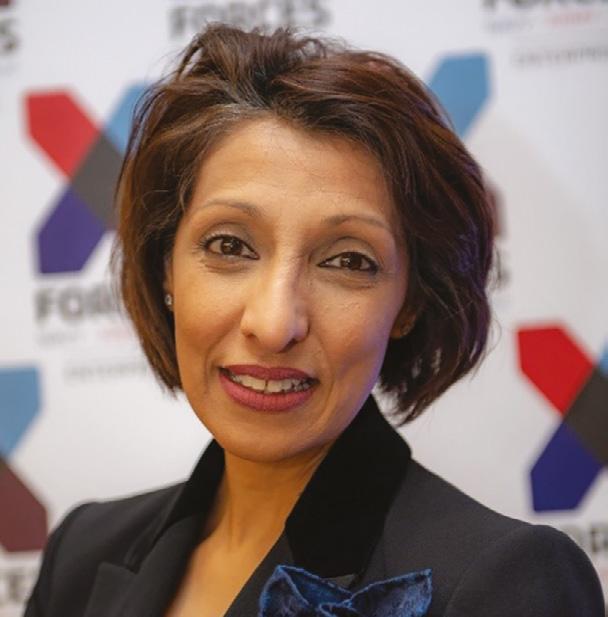
“Leadership can no longer be confined to hierarchy or title. It must become a mindset; one that empowers people at every level to be curious, courageous and creative”
entrepreneur in an established business. Entrepreneurs create new ventures; intrapreneurs create new value within existing ones. Both require the same core capability: seeing opportunity, acting despite uncertainty, and organising ideas into meaningful impact. These are not founder-only traits; they are the hallmarks of progress.
We have found that traditional leadership models that have been rooted in predictability and control
are increasingly ill-suited to today’s realities. Technological acceleration, market volatility and societal complexity demand leaders who can adapt quickly and decide confidently amid ambiguity. A well-known maxim reminds us that no plan survives first contact. Plans still matter, they give direction, but they do not guarantee outcomes. What distinguishes modern leaders is their ability to pivot with clarity and composure.
Being part of the IoL network is, at its best, a quiet advantage: a trusted professional community that reminds us we don’t have to lead in isolation. As members, we’re connected to a breadth of peers across sectors and career stages, people who are grappling with the same realities of change, complexity and expectation – not least those who provide leadership training.
We at X-Forces Enterprise are particularly proud to see more of our armed forces community founders and small business leaders now joining the IoL. Many have led under pressure, navigated transition and rebuilt careers with courage, yet still welcome the same thing every leader does: trusted peers, fresh perspective and a place to keep sharpening their craft.
We’re excited to welcome them into a community where we can all continue to learn from one another –not just through content, but through connection, exchange and shared standards of leadership practice.
Ren
Kapur MBE is the CEO of X-Forces Enterprise, which provides business support to past and present members of the armed forces.
Meet Louise Graham-Smith, director of customer services at Populo Homes

1
What does leadership mean to you?
Leadership is about shaping environments in which people can thrive and are happy, fulfilled and psychologically safe. A good leader builds meaning and motivation for the work we do as a team, as well as empowering and supporting the next generation of leaders.
2 What are your main leadership and management challenges?
Maintaining motivation, engagement and resilience among high-performing teams while operating in an increasingly complex and pressured environment. The social housing sector has faced sustained public and media scrutiny over the past decade. While some criticism has been justified and has rightly driven higher standards and accountability, the broader narrative has affected staff morale, sector reputation, and our ability to attract and retain talent. Against this backdrop, my challenge is twofold. First, to create an environment in which colleagues feel valued, supported and proud of the impact they make. Second, to build and sustain an inclusive leadership pipeline that reflects the communities we serve and ensures we have the capability, diversity and resilience needed for the future.
“Many colleagues don’t see clear, equitable routes into senior leadership, and that needs addressing”
3
How does the landscape of your sector affect those challenges?
The housing sector’s landscape amplifies these challenges in a number of ways. Ongoing reforms and consumer standards mean leaders must be technically sound and able to embed compliance without stifling innovation. We operate in a constrained funding environment while being asked to deliver more, from safety improvements to new supply. Finally, despite progress, the pathway into senior roles remains uneven. Many colleagues don’t see clear, equitable routes into senior leadership, and that’s something the sector must address.
4
What are you focusing on from a leadership perspective?
I am building leadership capacity at all levels, investing in training, mentoring and coaching for my team. I am also enhancing organisational resilience, including
strengthening strategic capability so we can adapt to change while continually improving performance. This focus also extends to wellbeing and creating psychologically safe environments in which people can speak up and innovate.
5
How do you develop your people?
I actively create exposure to senior leadership and governance. For example, I encourage colleagues to attend board meetings as observers or to present papers, helping them build strategic awareness and visibility. I also place strong emphasis on external exposure. I support team members to attend conferences, professional networks and sector events so they can build relationships, stay informed and develop their professional identity. I encourage learning beyond the housing sector because cross-sector insight can bring fresh ideas.
6
What is your biggest leadership lesson over the past year?
The importance of balance when building a team. As a leader moving into new environments, there can be a natural inclination to bring in people you have worked with before, because there is an established level of trust and a shared understanding of standards and pace. I’ve learned that it is equally important to create space for new talent to bring fresh perspectives, different experiences and constructive challenge.
This year has reinforced for me that context matters. People often perform and behave differently across organisations, cultures and leadership structures. Prior experience of working with someone does not remove the need to invest time in setting clear expectations, understanding motivations and building the relationship again within the new context.
Louise Graham-Smith is an executive director within the housing sector and holds trustee roles within the charity sector. Her career has spanned strategic leadership, organisational change, customer and resident focus, and navigating complexity in highly regulated environments.
We’re looking for members to feature in the Hot Seat! Email louise.parfitt@cplone.co.uk
When Daniel Rubin went to work for his father’s shoe-manufacturing business, it sparked a passion that has lasted more than 50 years and inspired him to create the highly regarded label Dune London, now an international brand. But the path to success has not been smooth – his leadership has encountered challenging market forces, Covid lockdown impacts and ever-changing consumer behaviour trends
Writing Louise Parfitt
Do we ever take the advice of our parents on board? Especially in our younger years, we tend to do the opposite – and, indeed, Daniel Rubin, founder of the Dune London footwear brand, was no different.
“I am a fourth-generation cobbler,” he tells me, as we sit in his office in the bright west London headquarters of Dune London. “My great-grandfather was a cobbler in Russia. My grandfather – who fled the pogroms in Russia to the UK in the late-19th century – established a shoe factory, M Rubin and Sons, in Bethnal Green, east London. That’s where my father and his brothers went to work, too. And my father’s advice to me was quite clear: do not become a shoe manufacturer!”
Rubin’s father wanted him to become a chartered accountant – which is what he did, at first. But he didn’t find it easy; maths had not been his strong point at school. Eventually, he qualified as an accountant with one of the big accountancy firms at the time, Touche Ross (which later merged with Deloitte).
“I quite enjoyed it,” he says. “I had a wide range of clients, and performed audits on businesses ranging from the huge General Electric Company to a small artificial flower maker in central London – so it was varied and gave me a good insight into running a business.”
Then two things happened: after a brief spell in the banking sector – which he found “uninspiring” – Rubin took a job as a commercial financial director for an entrepreneur who had taken over a demolition company and wanted to expand into other areas. “It all sounded rather good, but then there was an issue with the acquisition of the demolition company –and the guy running it seemed more interested in enjoying life outside the business than running it,” Rubin explains. “I ended up leaving because I didn’t see my future in demolition. However, it taught me an important lesson about conducting proper due diligence before accepting a job or contract.”
The second thing that happened was that his father needed help in his manufacturing business. It was the early 1970s – a great time for footwear fashion: high-leg boots, platform shoes and sandals. Rubin found he really enjoyed working in shoe manufacturing and he fell in love with the product. “It’s so interesting,” he tells me enthusiastically. “The manufacturing process in making a pair of shoes is complicated – there are around 150 processes. I still find it fascinating.”
When Rubin’s father died in 1976, the family was devastated. They decided to sell
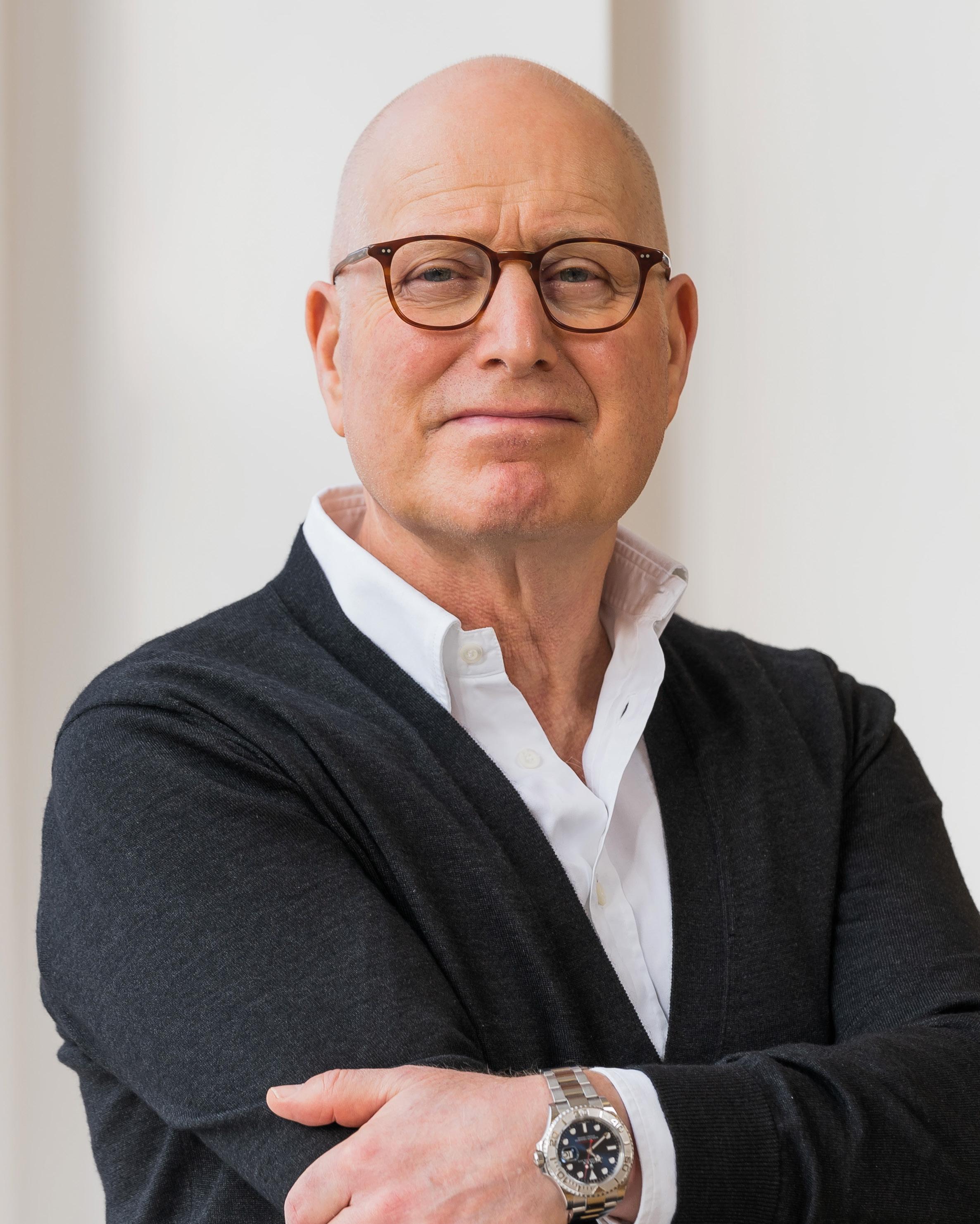
“My father’s advice to me was quite clear: do not become a shoe manufacturer!”
“As a leader, the most difficult decision is whether to persist with something when you hit challenging times, or make a decision to fail fast, walk away and learn from that experience”
their shares in the family business to his dad’s business partner – but the shoe bug had really bitten Rubin by then, so he went to work for his maternal uncle, who was also a cobbler and a very astute manufacturer.
“I think he was a frustrated engineer, because he was very good at developing new systems to make the manufacturing process easier,” Rubin says. “My role was finance director, but I also did some selling – which, again, I really enjoyed.”
Rubin worked with his uncle for about 10 years – his uncle being the closest person he has had to a mentor when it comes to learning the leadership ropes. By the early 1980s, however, manufacturing was moving out of the UK –particularly London, where the costs were very high – to overseas factories.
• By 2028, 90% of the leather used in Dune London’s shoes and handbags will be from tanneries rated ‘gold’ or ‘silver’ by the Leather Working Group, ensuring the leather is sourced from tanneries rated for responsible energy use, waste management and water treatment
• By 2028, 75% of Dune London’s footwear and accessories will use materials that are recycled, responsibly sourced or from renewable sources
• Dune London aims to be net zero in carbon emissions in its UK operations by the end of 2026. It is one of 60 retailers signed up to the British Retail Consortium Climate Action Roadmap to achieve net zero carbon emissions across the collective retail industry by 2040
• The business offers a preloved scheme for customers through its partnership with Reskinned. To
encourage use, customers who participate receive a voucher to spend online
• The company donates £100k of shoes to Goods for Good, Scope, Children in Need and other charities nominated by its team members
• More than £100k has been raised by Dune London’s staff and customers for Mental Health UK over the past three years
• Overseas, Dune London’s suppliers operate to its Ethical Code of Conduct. The company is also a member of two organisations –Sedex and Amfori BSCI– that ensure sustainable and ethical trade
• Dune London provides logistical support for Goods for Good, enabling essential supplies to be collected, stored and distributed to frontline charities in countries such as Ukraine and Afghanistan
“By this point, I had started to move into importing products and this is where I decided to focus,” Rubin says.
“I had become more and more fascinated by the product, seeing it made and designing it. Because I knew the manufacturing process, I was able to give overseas factories that I worked with designs that would work well for a UK market –and so I became an importer, supplying the large retailers in the UK.”
Where it all began
Rubin set up his own footwear import company, called Browning, gradually building up a team and travelling around the world visiting manufacturers. He also started to dip his toe into the retail world, partnering with a factory in Spain to design and make shoes that were sold in high street stores. In 1992, the Dune brand was born.
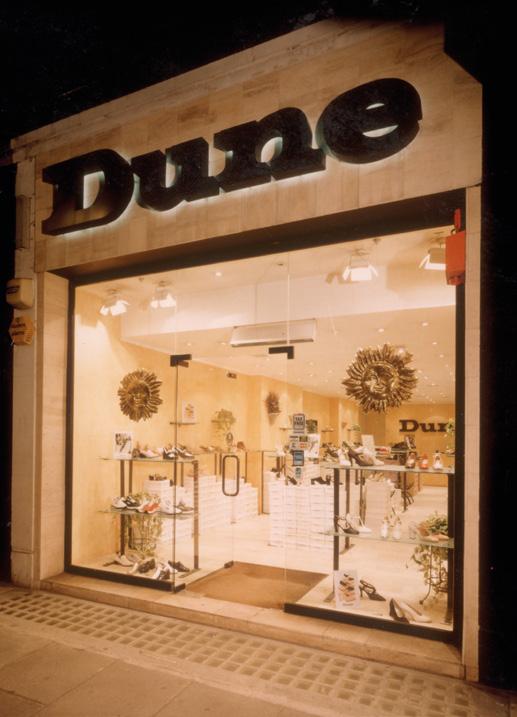
“When I started Dune, I was running the two businesses in parallel. The import business was very much funding the retail business, because that was slow to grow. In 1993, we opened our first shop on King’s Road in Chelsea, London, and our second shop, in Kensington High Street, opened a year later.
“It took time to finesse exactly what the brand stood for. Once we’d established that –the ‘affordable luxury’ element – we opened half a dozen shops and branched into shopping centres, and then we did become more ambitious. By 2003, we had a team of 30 people. We sold in the Middle East through a franchise partner, but we underestimated the challenge of adapting to a new market and the impact of factors such as different weather conditions, and even foot size and shape.”
Although innovation is important, Rubin believes, as a leader, you should never lose your focus.
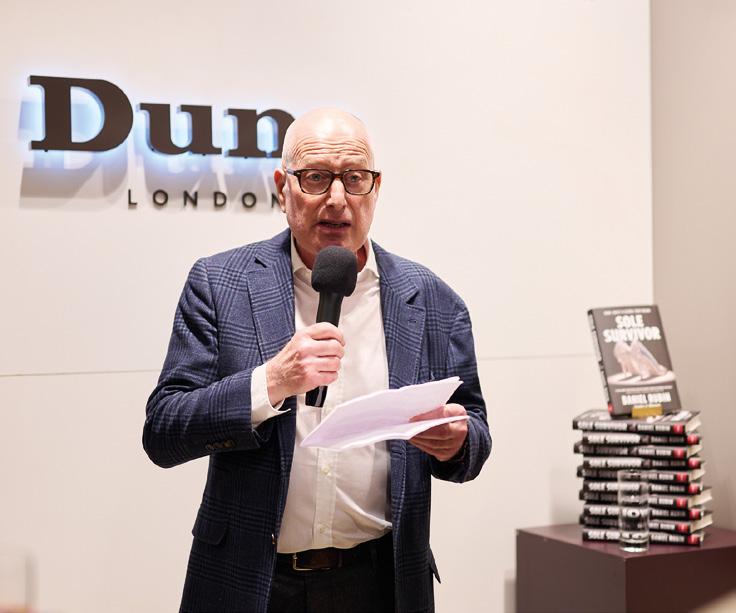
Rubin speaking at the launch of his biography, Sole Survivor
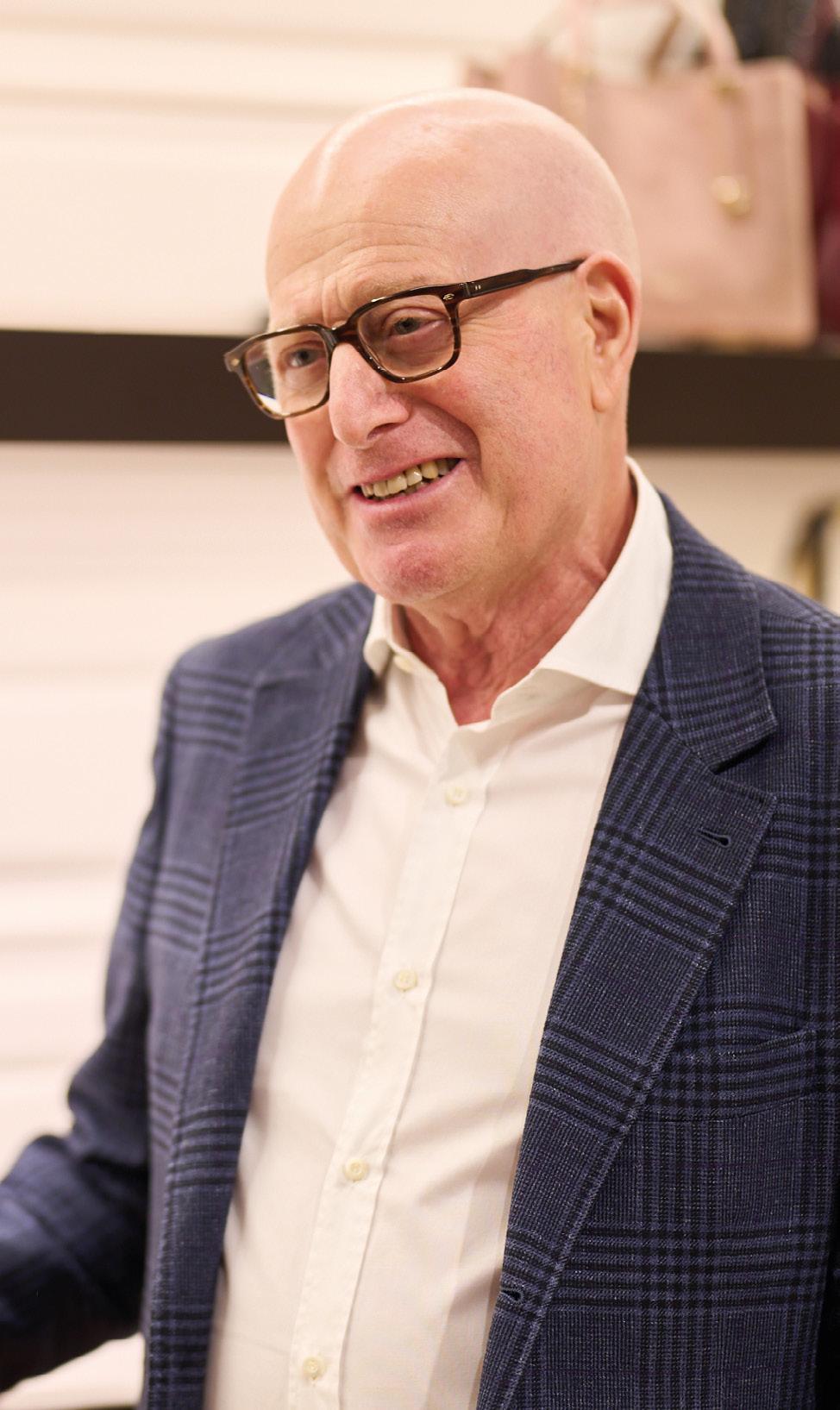
“Many leaders, particularly entrepreneurs, want to do lots of different things, but I’ve learned that you need to get your core offering absolutely right, because that is what is going to deliver the main results. When we’ve done sub-brands –children’s shoes, opened stores in countries where we haven’t got any experience or history –they can become distractions, because they eat up a lot of capital and resource that could be used for your core business.”
He pauses. “As a leader, the most difficult decision is whether to persist with something when you hit challenging times, or make a decision to fail fast, walk away and learn from that experience.
“For example, we opened some shops in Switzerland in 2015, but, ultimately, the towns were too small and the footfall into the stores wasn’t sufficient to generate the sales needed to make a profit. It was a difficult decision to say ‘no, we’ve made a mistake, let’s stop operating there’, because we’d invested close to £3m. But sometimes it is sensible to face the mistake, cut your losses and move on – because, with a lossmaking enterprise, the danger is you devote too much energy trying to make it profitable
On team building
When it comes to hiring, attitude really matters – I rate it above qualifications. You can teach and train someone to develop their skill set, but if they don’t have enthusiasm and a positive attitude, then it can become a challenge.
A recent Retail Week report1 found that 66% of the people interviewed did not see retail as their future career, which is very depressing. The challenge for business leaders is to make retail interesting and exciting. Great managers can motivate their team to achieve this.
On being a founder
As the founder of a company, you have to make sure the people you bring in really understand and share your passion for the brand. One of the tragedies is when a founder who has been the guiding force leaves a business and a private equity firm comes in – you see the business lose its soul; it forgets an important element of what it is.
On business success
I put my success down partly to sheer hard work and partly to my passion for the product. To be a successful brand, you have to be distinctive. It’s the magic combination of having a distinctive range and brand that has a very clear personality and fills a gap in the market.
On leadership legacy
You spend so long at work that you’ve really got to enjoy it. Not that it is always enjoyable – there are obstacles and external factors to deal with. But when people say to me “I really enjoy working for Dune”, it makes me very
happy. As a leader, you try to foster a culture in which, although the work may be demanding, the atmosphere is friendly and welcoming. That’s so important. I’d be delighted with the legacy of creating a company where people enjoy working.
On collaboration
When I worked as an importer, I travelled a lot, establishing and nurturing relationships with business partners. I think that made a massive difference to our success – these relationships have stood the test of time. During the Covid-19 pandemic, the support we had from our suppliers was outstanding: they understood our problem, we understood theirs and we managed to work together to support each other through. That’s one of the key things I really value and enjoy in terms of building a business –the people who you meet, whose businesses you see develop, and who you trust.
On advice for my 18-year-old self
Keep an eye on the bigger picture –take the time to step back and look at where things are going – and be brave to stop what you’re doing to change direction. There were times when I didn’t respond to change quickly enough. For example, we should have stopped the manufacturing business about five years before we did, because the writing was on the wall for UK manufacturing at that point. But, especially when you’re starting out in a business, you’re very much involved in the day-to-day running of it, so you don’t get much chance to pause and reflect on the direction of change.
1 retail-week.com/2026-talking-shop-report
“With any shock, you have to rethink some business fundamentals. It was a very difficult time – we had to make a lot of changes and a lot of difficult decisions”
1992: Dune established
1993: First store opens in King’s Road, Chelsea, London
1996: First shopping centre store opens in Lakeside, Thurrock, Essex
1999: Dune men’s range launched
2000: Accessories range launched, specialising in handbags
2002: Dune is awarded the Multiple Footwear Award by trade magazine Drapers
2004: First overseas store opens in Saudi Arabia
2009: Dune purchases Shoe Studio, launching it as a major seller in
department stores and tripling its size
2013: Rebrands to Dune London
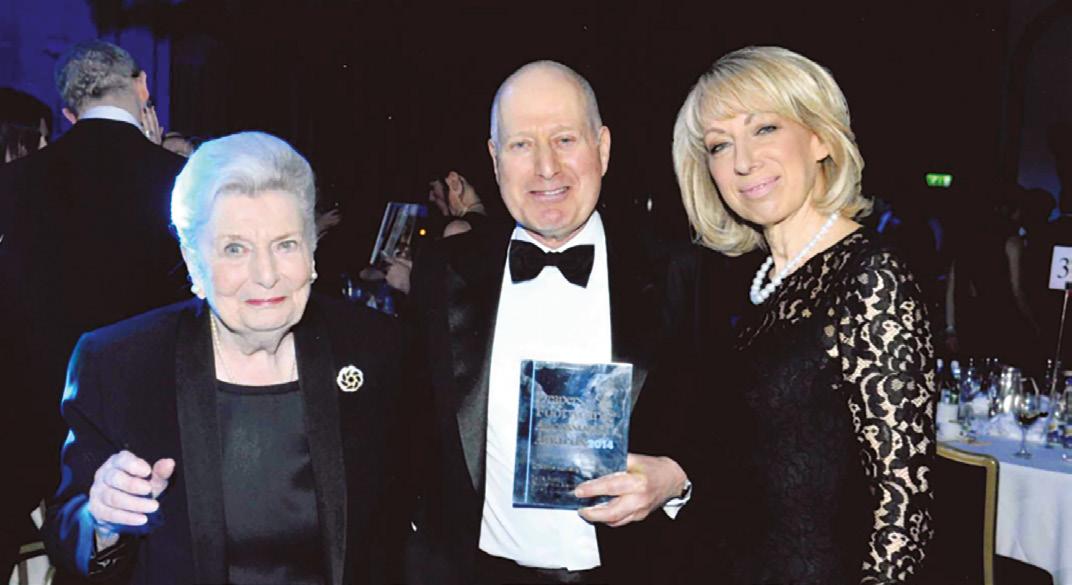
2014: Dune wins the Multiple Footwear Award again and Rubin is awarded a Lifetime Achievement Award by Drapers
2020: The Covid-19 pandemic results in the company’s sales going from £200m to £140k per year by the end of 2021, as department-store concessions close
2026: Dune London has 350 stores worldwide, with 35% of its sales coming from the international market. Move towards strategic goal of being a leading, global affordable luxury footwear and accessories brand.
and that ends up taking the results away from the profitable stores.”
Although Browning had been successful as one of the largest importers of private-label fashion footwear in the UK, changes in the market meant its margins were being squeezed by 2004. Rubin decided it was time to devote more time to Dune, which was establishing itself in the market space between luxury brands and traditional high street chains.
By 2009, Dune was established as a major player in the market, with 50 shops, and was turning over £50m a year in sales (making a £2m profit per year). The business also acquired Shoe Studio, which opened up a new opportunity to become a major player in department store concession sales. Rubin says this acquisition transformed the business, and between 2010 and 2020, sales grew to £200m per year – but then the Covid-19 pandemic hit.
High street stores and shopping centres were closed down during the lockdown, but there was also an issue for Dune’s online product.
“We had been slow to recognise the move to the more casualisation of footwear – and during the pandemic, of course, this snowballed. People weren’t going out, so they wanted slippers and trainers, not court shoes or boots,” Rubin says.
It was a tough time; Rubin admits there were points where he thought the company might not survive. “With any shock, you have to rethink some business fundamentals. It was a very difficult time – we had to make a lot of changes and a lot of difficult decisions, including losing some staff.
“We’d become too reliant on the department store sales. Although department store concessions made good business sense traditionally – you are not paying rent, you just pay a commission to the store based on your sales, so it can be advantageous, especially during the slow turnover months at the beginning of the year – it meant a key part of our business was outside our control.
“And, actually, the demise of stores such as Debenhams gave us an opportunity to regroup behind the Dune London brand and put our sub-brands on hold.
“Although by 2022 our turnover had gone down to £140k per annum, we had a sharper business focus. This meant we were in a better position to become a global brand, because our efforts were very much on the one brand.”
This is the direction Rubin and his team are now heading. Currently, 35% of Dune London’s

sales are international, and the plan is to increase this to 50% in the next five years.
After leading the company through the pandemic, in 2022, Rubin – at age 75 – decided it was time for someone else to see the company through its next stage of growth. Nigel Darwin is now CEO, with Rubin as chairman. Although he has stepped back from the day-to-day running of the business, Rubin still attends range reviews, oversees the creative direction for the brand and inputs into the strategy. He also still loves visiting stores.
“I find that side of the business so interesting – understanding how to display products to appeal to customers and not
“I have to be very strong to not become involved in the day-to-day, because I don’t want to interfere on that level. But it is hard, because I built this business up, and I have been here through the good and the bad”
overwhelm. Also knowing where your competition lies, which, for us now, is more from clothing shops.”
I ask if handing over the reins has been difficult. Rubin laughs. “You’ll need to ask my management team! I have a weekly catch up with Nigel and I have to be very strong to not become involved in the day-to-day, because I don’t want to interfere on that level. But it is hard, because I built this business up, and I have been here through the good and the bad.”
Rubin has also taken up writing – first his biography, which he enjoyed so much that he is now writing a novel. Researching for his memoirs allowed him the opportunity to reflect on the changes to the retail sector through which he has led his business.
“When I started Dune, in 1992, it was very different. We had one shop, it was simpler. Now, it’s hugely complicated with all the different channels that we have – e-commerce has just gone through the roof. It’s the reason we need to employ 160 people in the London HQ, because the IT and e-commerce teams have had to expand to facilitate that growth. Retail has also been affected by so many big external events – Covid, Brexit, the current geopolitical uncertainty –and has become more costly. This is a huge challenge right now, especially with the rise in employer national insurance contributions and the minimum wage. The government may have good reasons to do those things, but it makes life challenging for leaders, especially in the retail and hospitality sectors.”
He smiles. “Maybe this is why my father told me not to go into the footwear business. But I wouldn’t change it – it’s been a fascinating career.”
Daniel Rubin is the founder and chairman of the Dune Group, and the author of Sole Survivor: How I Built a Global Shoe Brand, published by Canbury Press.
Lou Cripps
How leadership and culture determine whether systems protect people or quietly undermine them – and the one thing you can do today to make a stewardship shift
Some of the smartest people I have met have been terrible leaders. They were great with ideas, relationships and at sounding smart in a meeting. Yet they failed in the responsibility that matters most: they did not protect their people. They chose to be liked instead of being leaders. Without direction there is no leadership presence.
Leadership divorced from stewardship creates a culture that is pleasant on the surface and corrosive underneath. Decisions avoid conflict instead of reducing risk. When doing what is right bends to personalities instead of disciplined use of frameworks, systems become fragile and unpredictable.
People learn that popularity outranks competence, and results take a back seat to feelings.
Cultural collapse
In weak leadership environments, culture collapses into learned helplessness and terminal uniqueness.
Learned helplessness forms when people raise concerns for years but nothing changes. Over time, they learn that pushing for clarity or rigour leads nowhere. They stop trying. It’s not apathy. It’s exhaustion.
Terminal uniqueness is the opposite expression of the same dysfunction. Individuals or teams convince themselves that the rules do not apply to them. Their circumstances are special. Constraints are optional. Relationships replace discipline. When people believe the system will not protect them, they disengage. When others believe the system does not apply to them, alignment fractures. Together, these forces create a cultural death spiral.
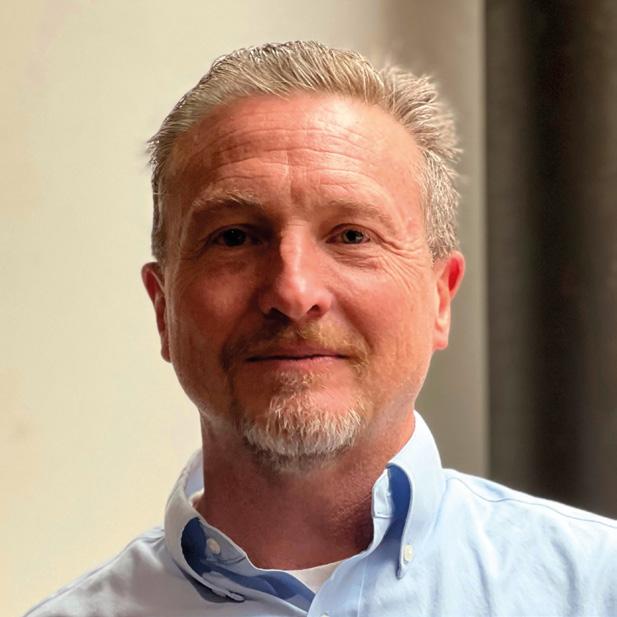
“If you do nothing else after reading this, document one decision”
Culture does not collapse with a dramatic failure; it collapses through a thousand small accommodations. The lowest behaviour tolerated becomes the standard everyone must survive.
If you do nothing else after reading this, document one decision. It doesn’t have to be a major programme or have a perfect answer. Write down the purpose, constraints, options considered, risks accepted and rationale. State what you chose and what you chose not to do. Undocumented decisions teach the organisation that judgement is personal, memory is sufficient and accountability is optional. Documented decisions do the opposite. They create an audit trail, expose misalignment and force trade-offs into the open. One documented decision begins the shift from personality-driven outcomes to system-driven stewardship.
We can’t control who is hired to lead us. We can control whether our systems depend on personalities or withstand them. We can choose rigour. We can choose documented decisions over memory. We can choose stewardship over convenience.
Resilience comes from repeatable decisions, made inside our frameworks, that make trade-offs visible and avoidance hard. Culture changes when systems reward accountability and highlight the cost of poor decisions.
This is the work. Build systems and processes that will outlast any CEO, and make them ‘business as usual’. Apply discipline even when it is uncomfortable. What is in it for leaders is simple: a legacy they can stand behind.
That is how culture shifts begin. The only question left is whether our systems are strong enough to survive the next weak leader.
Lou Cripps is a director at regional transportation district in Denver, Colorado, and co-author of Legacy: A Decision-Maker’s Guide to Infrastructure and Building an Asset Management Team. He is a member of the Institute of Asset Management and a Board member for Talking Infrastructure.
• Build systems that outlast personalities
• Reward accountability, not likeability
• Treat leadership instability as an input
• Tell the truth about performance
• Do the next right thing
Every so often, the business press declares the death of the C-suite. Too slow, too expensive, too removed from the front line – and yet the corner offices remain, the titles persist and the governance structures endure.
But I feel something is different this time. The pressure being felt at the top of organisations is not coming from one direction. Geopolitical instability, post-pandemic overcorrection and the rise of generative AI are all converging at once. The question is no longer whether the C-suite needs to evolve. For some organisations, it is whether they need one at all.
Before we can talk about leadership, we need to be honest about the technology supposedly driving all of this change: AI.
For most businesses, AI is not yet a tool of structural efficiency; it is, primarily, a facilitator of creativity. It helps smaller teams think faster, prototype more boldly and explore possibilities that previously required much larger functions. As a start-up founder, this is the exact thing I want and need.
Klarna is a headline example of genuine headcount reduction through AI, cutting its workforce from roughly 5,500 to 3,000 and reporting strong revenue growth.1 But the full story is more instructive. The CEO later admitted the shift had gone too far, customer satisfaction fell and the company began rehiring. Duolingo tells the opposite story. Rather than cutting staff, its CEO reported that AI had made employees four to five times more productive, with a vibe-coded chess feature, built by just two employees, now one of the platform’s most-used products.
This leans into the more important shift I have seen, which is the democratisation of capability.
“The question is no longer whether the C-suite needs to evolve. For some organisations, it is whether they need one at all”
Vibe coding, no-code tooling and accessible AI frameworks are enabling individuals with domain expertise to build products, workflows and tools that previously required whole engineering teams. As the line between developer and enthusiast closes, what matters most is structure, process and clarity of context. The organisations that had those things before AI arrived will automate with ease. Those that did not are scrambling.
This is what is actually placing the C-suite model under pressure: not AI efficiency, but a wave of leaner, more focused businesses being built from the ground up, with flat structures, fewer layers and a cultural premium on output over process. It affects market share, culture and the model of leadership today.
The speed problem
Traditional C-suite structures were designed for a world of relative stability: quarterly cycles, annual strategies, governance built for accountability over time horizons. In that world, a board decision taking several months was not a failure; it was the system working as intended.
That world no longer exists. Organisations now compete in an environment shaped by geopolitical volatility, shifting consumer behaviour and accelerating socioeconomic pressure. Speed of decision-making is a competitive advantage in itself. Those who can identify an opportunity, commit and execute will outpace those who cannot, regardless of resources.
Adaptive leadership: structure without bureaucracy
The answer is not the absence of structure. Flat organisations without governance can be chaotic and directionless. The answer is what Professor Ronald Heifetz, of Harvard, described as “adaptive leadership”: a model that retains strategic
iStock
rigour and structural discipline, but sheds the bureaucratic drag that slows responsiveness.
Adaptive leaders understand how governance works. They have learned from it, been shaped by it and know its value, but they are not imprisoned by it. They build the right level of structure for their context – enough for accountability and direction, but not so much that it becomes an obstacle.
Critically, strategy needs to become a living process rather than a periodic event. A yearly or five-yearly review cycle is increasingly insufficient. The most competitive organisations are building strategic review into their operating model on a quarterly basis, adjusting in real time and investing in operational management so that those providing strategic leadership can do so with clarity and without friction.
This is the context in which fractional executive leadership makes complete sense. Demand for fractional CFOs, CMOs and CTOs grew 68% between 2023 and 2024.2 This is not a niche trend. It is a structural shift in how organisations access leadership capability.
Lean organisations do not always need a full-time CFO or CPO; they need access to that expertise, applied at the right moments, in the right way. The fractional executive brings strategic knowledge and delivery focus without the full institutional overhead of a traditional role. As a consultant, I see this all the time: whether you use the word fractional or not, people like me are flown in to provide support when and where it is needed, at pace.
This connects to the broader shift towards portfolio careers (my favourite subject!). The most valuable executives of the next decade will be those who have operated across multiple sectors, built genuine cross-context expertise and developed the adaptability that only comes from variety. Their value is precisely in their breadth –and because of the democratisation of information that AI enables, those with real experience can now synthesise and apply that knowledge faster and more powerfully than ever.
The debate around the C-suite is too often framed as a binary: keep it or discard it? That is the wrong question.
The right question is what kind of leadership does your organisation actually need – at this moment, in this environment – and are the structures you have built capable of delivering it? This is classic strategic thinking: diagnose the real challenge first, establish the guiding principles, then design the operating model around them –not the other way around.
For some organisations, the answer will be a leaner, more adaptive version of the traditional model. For others, fractional expertise is accessed on demand. For the growing wave of lean, AIaugmented and agentic businesses being built right now, there may be no formal C-suite – just founders, subject-matter experts and clear decision-making principles.
What will not work for anyone is assuming that the structures of the past are sufficient for the demands of the present. The executives who understand that, and adapt accordingly, are the ones who will lead what comes next.
Michael Tabirade is a strategy and programme management adviser, portfolio career mentor, and author of the Understand Reach Expand series. He sits on the board of trustees for the IoL as chair of the risk and finance committee. He works at the intersection of organisational leadership, digital transformation, portfolio careers and AI-enabled change.
1 See bit.ly/ES26MT1
2 See bit.ly/ES26MT2
Dr Poornima Luthra considers how social unrest, even abroad, can affect employees, teams and workplace dynamics, and how leaders can bridge divides and offer support
With unstable world politics and rising global tensions, it’s no wonder that feelings of social unrest are getting so much stronger.
The 2026 Edelman Trust Barometer shows that, in this increasingly divided world, many people are turning inward – 70% are adopting “insular-trust mindsets”, meaning they’re less willing to trust those who hold different views.1
In these ever more polarised times, we fear change, getting it wrong, discomfort and potential negative consequences. So, we trust people who are similar to us – people with similar values, backgrounds and life experiences; doing so feels safer and more comfortable.
This is having a huge impact on workplace dynamics and how employees interact with each other.
You may therefore be wondering what approach you should be adopting as a leader at this uneasy time. You may be fearful of having a negative or unintended impact, of not knowing enough about certain topics and of the impact of
failures or missteps on you and your organisation.
As a leader, however, you’re in a unique position to make a positive change and bridge any divides in your organisation. Business remains the most trusted institution globally, and even ‘insular’ employees tend to trust their own CEO. That puts organisations – and their leaders – in a powerful position to act as trust brokers, creating space for understanding across differences and helping to meaningfully support your workforce during these unstable times.
Here are four ways you can start to be a trust broker in your organisation.
We live in a world that is becoming more and more polarised, where we’re conditioned by those who are in positions of power and the media to engage in dichotomous thinking. We falsely frame an issue as having only two options, even though more possibilities exist.
Dichotomous thinking shuts down conversations with greater nuance and closes the space to engage our reservations and concerns.
What we need instead is to create sufficient space for multiple realities and opposite things to coexist.
To create this space for multiple realities to exist together, we need to move away from debate to discussion and dialogue. In a debate, each party has to take a stand – for or against the motion –and there is only one winner.
When we’re engaging in a difference of opinion, we try to convince the other person of the rightness of our position. This only increases our defensiveness, as well as that of the other person, and leaves little room for increasing understanding and shifting mindset.
Social justice issues are not clear-cut. There are many viewpoints in the space between the extremes, so we need to be able to hold space for more nuanced discussions so that we can allow ourselves to hear different perspectives and experience richer dialogues. This is the key to helping us shift our mindsets from being fixed to being open to growth.
3
Be open to different perspectives
Challenge yourself to be open to different perspectives and views. Question norms – the often invisible and unsaid ways things are done, and what is considered acceptable or preferred.
Ask yourself why these norms exist, and if they favour some people and not others. Intentionally seek out alternative perspectives that challenge your world view and provide a different take on the situation, so that the decision you are making is based on wider and more robust information.
This can mean having a conversation with someone with a different view, or reading or listening to content where the viewpoint is different from your own. Your decision or view may or may not change as a result of these alternative perspectives. The objective is not to change your opinion, but to know that your views and decisions are more thoroughly informed.
4 Recognise and acknowledge the discomfort
Most of us will find every means to remove ourselves from uncomfortable situations, or change the circumstances to move to a state of comfort. We’re creatures of habit and routine, who enjoy staying in our comfort zone. While there’s nothing wrong with this, staying in our comfort zone for too long can dull our sensitivities and we may stop noticing things around us.
“Question norms. Ask yourself why these norms exist, and if they favour some people and not others”
When we have new experiences – such as engaging with people from different backgrounds or learning about a differing perspective – our body creates new neural pathways that alter existing ones to learn and adapt to new experiences. This neuroplasticity is crucial to developing new and inclusive behaviours.
‘Tell me more’
When putting all this into action, one of my favourite phrases can really help here: “Tell me more.” This simple phrase helps me engage in rich discussions and conversations, and to see things from a different perspective.
Every time we engage in a way that challenges our pre-held beliefs, we are creating new mental models and “overriding” the previous ones. This is an essential part of developing an inclusive mindset. Tell me more. Try it.
Dr Poornima Luthra is a recognised expert in developing inclusive workplaces, principal lecturer at Imperial Business School, Fortune 500 consultant, keynote speaker and awardwinning author. Her latest book, Can I Say That? explores the fear behind diversity, equity and inclusion backlash and empowers courageous workplace conversations. She will be speaking at Leadership Live 2026 in September; see page 10.
1 bit.ly/ES26T
Dr Debbie Bayntun-Lees shares new research from Hult International Business School that reveals the values defining great leadership are pushing executives to rethink everything from how they use power to how they show up as human beings
The debate about the C-suite is well under way. Fractional executives are reshaping what senior leadership looks like structurally; joint-CEO models are challenging the longheld assumption that ultimate authority must rest with one individual; and a generation of employees who have lived through repeated crises – financial, pandemic, geopolitical – are arriving in boardrooms with a very different set of expectations of what leaders owe their people.
Structure is only part of the question, however. The deeper issue is values. Not the aspirational ones printed on company walls, but the lived, daily behaviours that determine whether people trust their leaders, whether they perform at their best and whether they stay. What are the values that should define the C-suite of today and tomorrow?
We’re all ‘unfinished’ leaders
New research from Hult Ashridge Executive Education, in partnership with Hult International Business School, offers a compelling answer.1 It asked participants not only what they would do differently as better leaders, but also what they wanted from those above them. What emerged was striking and directly relevant to anyone asking whether the C-suite is in need of renewal.
The headline finding is simple and unsettling: there is no such thing as a ‘finished leader’. The research frames this as the ‘better leaders’ paradox’ – the pursuit of better leadership is not a destination, but a continuous process of tension, contradiction and recalibration. The moment you believe you have arrived, the context shifts, your people change and the horizon moves again. For the C-suite, where confidence is expected and authority assumed, this is a challenging idea – but it is also, the data suggests, a vital one.
The research identifies six shifts that collectively describe what ‘better’ leadership means now. Taken together, they sketch the values profile of the C-suite leader who will be trusted and effective going forward.
1 From control to trust
The most frequently cited theme was the desire – from leaders and the people they lead –to see less micromanagement and more genuine empowerment. Empowering and developing others was specifically cited by 85 respondents as the thing they most wanted to do more. For C-suite leaders, this means understanding that authority is not expressed through oversight; it is expressed through the quality of the people you develop and the decisions you are willing to let others make.
“A generation of employees who have lived through repeated crises are arriving in boardrooms with a very different set of expectations of what leaders owe their people”
The C-suite that revamps itself will move from a culture of performance management to one of genuine investment in human potential. Leaders who coach rather than critique build teams that are more resilient, more innovative and more loyal. This is not a soft aspiration; it is a hard competitive advantage. The old executive playbook, which often equated seniority with the right to evaluate, is giving way to something more demanding: the obligation to develop.
3 From silence to communication
Transparency is no longer a nicety. Research participants were clear that they want the ‘why’ behind decisions – not polished announcements, but honest, contextual explanation. In a C-suite environment in which strategy is increasingly complex and employees are increasingly informed, silence breeds distrust. Whether it is a restructure, a strategic pivot or an honest acknowledgment of uncertainty, better leaders communicate with clarity and courage.
4 From busyness to strategy
One of the most urgent themes in the data is the trap of reactive busyness. Leaders described themselves as “stuck in the weeds”, managing details that should be handled elsewhere. For C-suite leaders, this is particularly costly: time spent firefighting is time not spent scanning the horizon, building future capability or making the considered decisions that only they are positioned to make. The revamped C-suite will treat strategic thinking not as a luxury, but as a core discipline, one that requires protection and deliberate time.
5 From overwork to wellbeing
Burnout is not a personal failing; it is a leadership issue. The research is unambiguous that sustainable performance depends on protecting people’s health, energy and motivation, and that this expectation flows both ways. The C-suite leaders of tomorrow
will model wellbeing as an organisational value, not because it looks good in an environmental, social and governance report, but because they understand that exhausted people make worse decisions, take fewer risks and leave. The revamped C-suite will measure success not only in output, but in the conditions that make output sustainable.
Perhaps the most profound shift of all. The research found that employees deeply distrust leaders who say one thing and do another; those who espouse values they don’t embody, who project confidence while avoiding accountability, or who fail to ‘walk the talk’. The C-suite that earns trust in the years ahead will be led by people who are genuinely self-aware, inclusive and willing to be human in front of their organisations. This doesn’t mean weakness. It means integrity – and integrity, the data confirms, is the foundation on which everything else is built.
What does this mean for the structural debates –fractional leadership, joint-CEOs, new C-suite configurations? It suggests that the form matters far less than the values that inhabit it. A joint-CEO model run by two ego-driven, control-orientated executives will fail for the same reasons a traditional CEO model fails. A fractional CMO who communicates with honesty and coaches rather than commands will add more value than a full-time one who doesn’t.
The C-suite doesn’t simply need a structural revamp; it needs a values one. The research is clear about where to start: less control, more trust. Less silence, more honesty. Less ego, more authenticity. Not as a checklist, but as a commitment that is renewed, in every decision and every conversation, every single day. That is the paradox of better leadership. It is also, for those willing to embrace it, its greatest opportunity.
For C-suite leaders especially, this is a challenge to the idea that seniority = mastery. The research suggests the best leaders are the ones who stay curious, stay humble and never mistake their current capability for their ceiling.
Dr Debbie Bayntun-Lees is professor of leadership and organisational development at Ashridge Hult Executive Education, Hult International Business School.
1 bit.ly/4mB3ubf
“The old executive playbook, which often equated seniority with the right to evaluate, is giving way to something more demanding: the obligation to develop”
The survey was conducted among 350 leaders and employees across more than 10 industries and six global regions. Here are the top findings:
● Empowering others was the most cited leadership aspiration – mentioned by 24% of respondents – reflecting an overwhelming desire to shift from doing to enabling
● 18% of leaders identified listening more carefully and developing greater empathy as a priority, ranking it the second-most important area for improvement
● 15% of participants highlighted the need for more strategic thinking and long-term planning, naming it their third-highest priority – a clear signal that C-suite leaders are too caught up in short-term firefighting
● Micromanagement was in the top three things leaders said they would stop doing –cited by 10% of respondents – with leaders recognising that control undermines trust and team performance
● 12% of respondents said they would reduce time spent on day-to-day operational tasks, associating this directly with the need to create space for higher-value leadership
● Only 53% of leaders believed their own manager would agree with their selfassessment, while 34% answered ‘maybe’ –pointing to significant gaps in feedback culture and mutual understanding at senior levels
● Burnout, morale and balance were flagged as urgent priorities, with wellbeing repositioned not as a perk, but as a performance issue
Across every region and level, the data points to one consistent conclusion: better leadership is not a destination – it is a continuous, paradoxical pursuit.
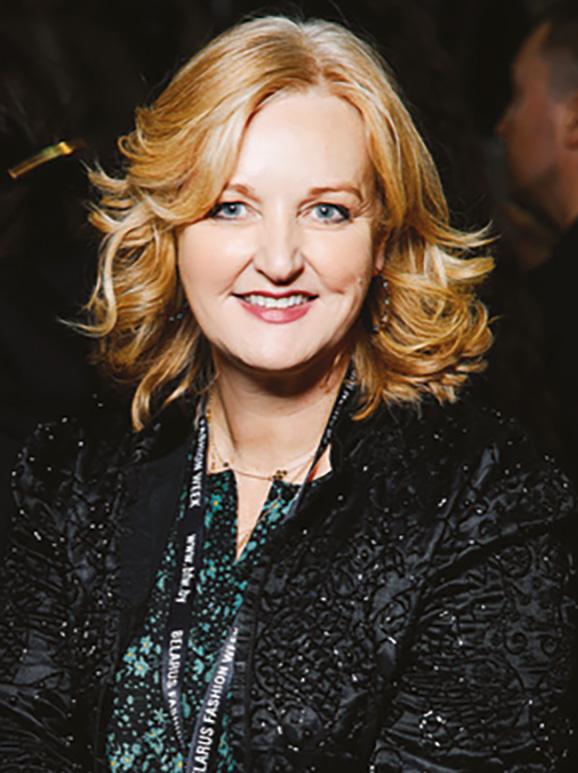
In an industry notorious for constant change and high turnover, how can emerging leaders create a sustainable career in fashion? Louise Parfitt meets Alison Lowe, a woman on a mission to give entrepreneurs the support they need – and she has the MBE to prove it
Alison Lowe starts our conversation with a shocking statement. “Around 90% of fashion start-up businesses will fail by year three.”
She adds that she came across the statistic a few years ago and times, she hopes, are changing. But it adds fuel to her fire of disrupting the long-established fashion business model that involves costly fashion shows and educational snobbery. She is uprooting the whole offering for young creatives to better equip them with the skills needed to survive in the business world.
“A lot of the time, people just haven’t had the right guidance,” she says. “I’ve seen scary things –designers who have made 14 different styles of shoes in every available size, but after a year they have sold just one pair. So often people have invested lots of money in creating a collection for a fashion week, but the buyers for their product simply aren’t at these shows any more, so they run out of money very early on.”
You might assume that someone who was made an MBE for her services to the fashion industry –specifically for the support she has offered to emerging leaders – holds a degree from one of the top fashion schools. But although she has taught at prestigious establishments, such as the London College of Fashion and Central St Martins, Lowe never studied fashion in the traditional sense.
“I stumbled into the industry,” she smiles. “I left school at 16 and ‘ran away’ to join the theatre. I was a member of the Birmingham Rep [Repertory Theatre] and spent a few years as a singer and actor. To be honest, I don’t think I was brilliant at it, but I could always find work.”
Not everyone was so fortunate, however, so Lowe started helping friends to find jobs. This led to her setting up her first business: a recruitment agency for out-of-work singers, dancers and actors. The work she found them was in the performing arts industry and in other professions, which is what led her to fashion.
“I went to do some consultancy work for a fashion agency that supported other young talent. I was both intrigued by the industry and horrified by how badly young entrepreneurs were treated, and at how high the burnout rate was. Nobody seemed to care about building a sustainable business or sustainable leadership – it was always about what is new and trendy.
“That’s what led me to open my fashion incubator business, Felicities, to support emerging young leaders who had phenomenal talent but who just didn’t have the business acumen or entrepreneurial skills to know how to survive.”
Founded in 2003, Felicities provides consultancy and business support to
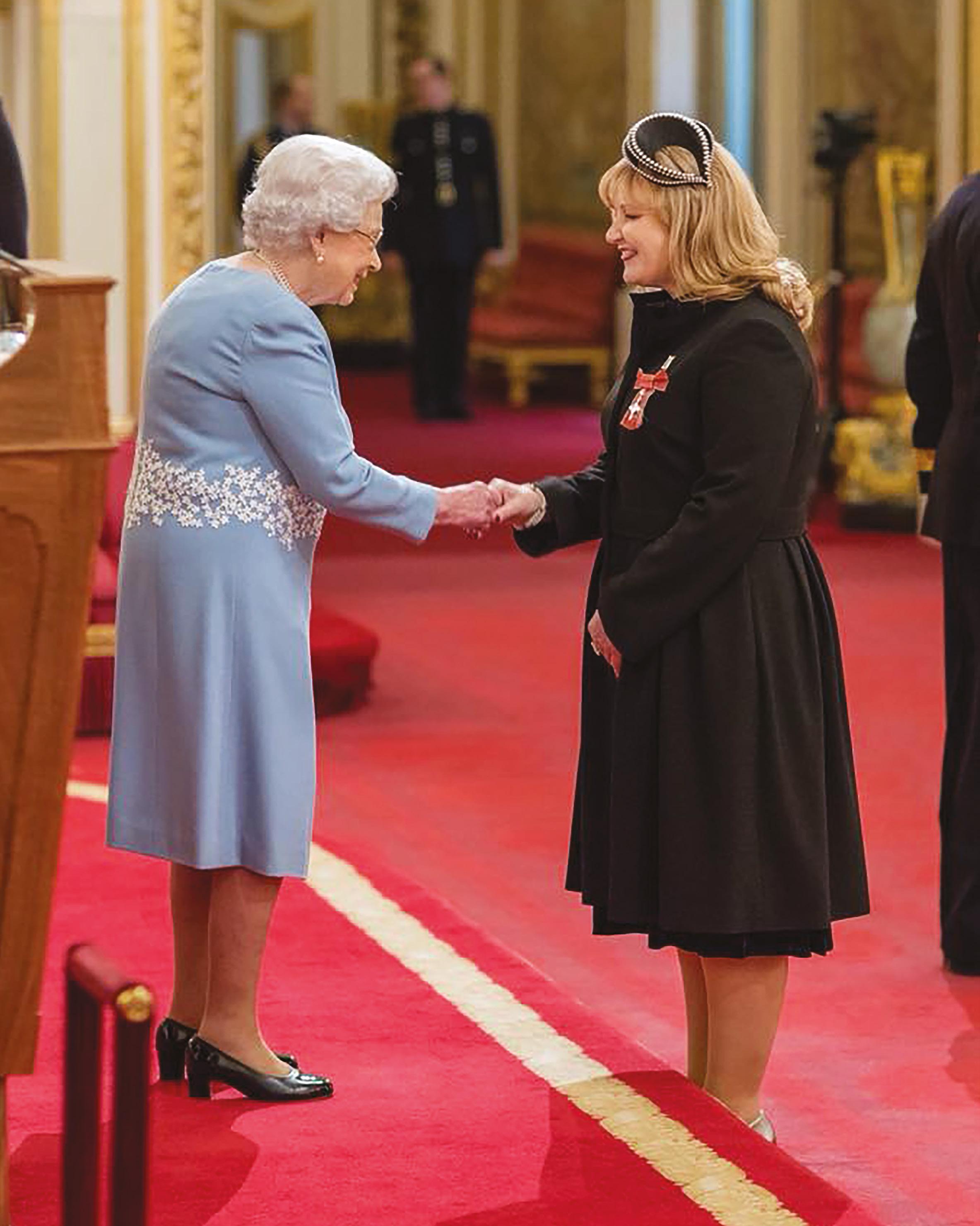
entrepreneurs in the creative industry. It has helped hundreds of people and businesses, and has clients all over the world.
“A lot of fashion entrepreneurs start businesses to be creative, but they don’t really want to ‘run’ a business,” Lowe explains. “A lot of what we do is helping them to find that balance between being creative and being commercial – and that can be a fine line.”
Lowe also provides coaching and mentoring support for leaders who are up and running with the business. “People want a sounding board. My role is to encourage them to think through ideas before they head off in a certain direction. The other thing I get asked a lot is: ‘This is happening to me – is that normal?’”
She believes these feelings of doubt and of imposter syndrome are a huge challenge that many business leaders face. “We’re often too scared to tell other people what we are struggling with because we think it is just us – that we’re missing certain skills or lacking certain knowledge. So trying to find that safe person who you can speak to can be difficult. For creative entrepreneurs, knowing who to trust comes at an even higher price because their intellectual property is their most important asset. So there is a fear of ‘If I say something, will someone steal my idea?’”
Lowe positively glows when she speaks about the many emerging young leaders she helps. “There
Recent research* has shown 70% of creative employers who report skills challenges say it is hindering business operations and growth potential. Nearly 40% of creative employers say they can’t afford staff training.
56% of creative employers with skills shortages suggest recruitment difficulties are a result of applicants lacking critical business skills, such as fundraising, finance or people management.
“We’re often too scared to tell other people what we are struggling with because we think it is just us – that we’re missing certain skills or lacking certain knowledge”
is nothing better than supporting somebody else’s business and seeing them succeed. I am always delighted when they do it differently, when they persevere, when they get through and survive. It’s the same with my students – seeing them through the course is what brings me joy.”
Lowe has been teaching since 2013, although, as with fashion, she somewhat stumbled into it.
“I had always thought teaching would be my idea of hell. Then someone asked me to do some guest lectures and I absolutely loved it. I started lecturing for the London College of Fashion and Central St Martins, and that grew into lecturing at universities around the world.”
She started working with the University of East London in 2020 and is now its director of careers and enterprise. “My role is all about embedding proper industry expertise, because that is my passion.”
Lowe had previously developed courses with a more business focus for the London College of Fashion, and her position with the University of East London is a progression of that.
“I have been moaning for years that universities have not had the staff who understood the realities of the fashion industry. They may be really good at design, but they just didn’t have the on-the-ground experience. I was constantly saying to the university course directors ‘You need to start teaching the reality’. So I have been running a programme called ‘Aspiration v reality of the fashion industry’ for 20 years now, which I started at the London College of Fashion.”
Lowe reveals another shocking fact, this time from the Creative Policy and Evidence Centre. Its recent research has found that 43% of employers in creative industries report skills shortages or gaps. As well as some technical skills, there is a lack of critical business skills, such as financial acumen and people management.
“A person might have a certificate saying they are an architect, but they don’t know how to put that skill into practice,” Lowe says. “When I joined the University of East London, I said we need to make sure that, as well as supporting people
to get that bit of paper, we need to make sure they have the experience and knowledge to be useful in the workplace. Because I know that, as an employer and the founder of a small business, I need to employ people who can hit the ground running.”
Lowe also holds the position of entrepreneur in residence at the university, which has been an eye opener. “I find it interesting because, although I am still an entrepreneur, I am now also embedded in a university. It’s very hard to be entrepreneurial in a huge organisation with layers of management. Systems change takes such a long time.
“This window into the inner workings has been really beneficial because, for a long time, I was confused as to why it had taken so many years to make a change. Turning that tanker takes a long time because there’s often huge resistance from academics who have always done things a certain way and who want to keep on doing things in that way.”
Lowe is used to being seen as a disruptor and it’s a badge she wears with some pride. From being judged in the early days by those within the fashion industry because she had not attended a degree course, to being dismissed in university meetings because she was not an academic, she has learned to be resilient – and to persevere.
“It took time for people to appreciate that I didn’t need to have studied fashion design to know what is good for their business,” she says. “Yes, over the years I have learned a lot about fashion, and design and manufacture. But the young leaders and entrepreneurs I work with don’t need design skills from me; they need business acumen. But there was still, from some circles, a feeling that I was an outsider.
“When I was setting up Felicities I received a handwritten, vitriolic letter telling me why the fashion industry didn’t need people like me. When I was made an MBE, I wrote back to them to thank them for providing me with the inspiration to prove them wrong.
“I have had the same feeling of not being welcome sometimes in academia, too. So although I have taught hundreds of students who now hold undergraduate and Master’s degrees, in my heart I am an entrepreneur. I look at everything with an entrepreneurial eye, and that can be a challenge for some. For me, there is always an element of being an outsider and therefore doing things differently.”
Occasionally, being a disruptor has got Lowe into trouble, but her reason for speaking out is to bring change for young creatives trying to make their way in a world that, she says, was outdated and weighted against them. She admits there is still a way to go.
“[I was] horrified by how badly young entrepreneurs were treated. Nobody seemed to care about building a sustainable business or sustainable leadership”
“There are still courses teaching that you absolutely must do a fashion show when you graduate – but you know what, you don’t have to. I love it when I speak to a young designer who says ‘I don’t want to do fashion week’ and I think, ‘Brilliant. That actually gives you another year of survival’.
“So, back to the incubator agency, it’s sometimes about being the person to say, ‘You don’t have to do it like that; let me show you another way and then you can decide which path you choose’.”
When she came into fashion, Lowe thought it would be agile and edgy, but she actually found it stuck in a system where certain people benefited and most young talent never saw the light of day.
“I always said the best thing that could happen to the fashion industry was to get people in from outside, because it was a very old-fashioned model. You have people making collections at the same time, sharing them at the same time, they all need manufacturers at the same time – and how can that make any business sense?
“Luckily, now, there are more people coming in, dismantling the school of thought that there is only the one way to succeed and doing things in their own way.”
Lowe’s pioneering approach and support has been recognised – through being made an MBE in 2017 and being named as one of the Maserati 100 winners in 2016, which honours 100 entrepreneurs who have made a positive impact and who are supporting the next generation.
“I was blown away to recognised through both of these. It was phenomenal to meet the Queen when I was made an MBE, and to get the Maserati 100 alongside people such as Sir Tom Farmer, founder of Kwik Fit and the Farmer Foundation, and Julie Deane, of The Cambridge Satchel Company, was mind-blowing.
“But at the end of the day, supporting young creatives – the emerging leaders who often have huge obstacles to overcome before they even get to university or to the point of opening their own business – is my absolute passion.”
Louise Parfitt is the editor of Edge
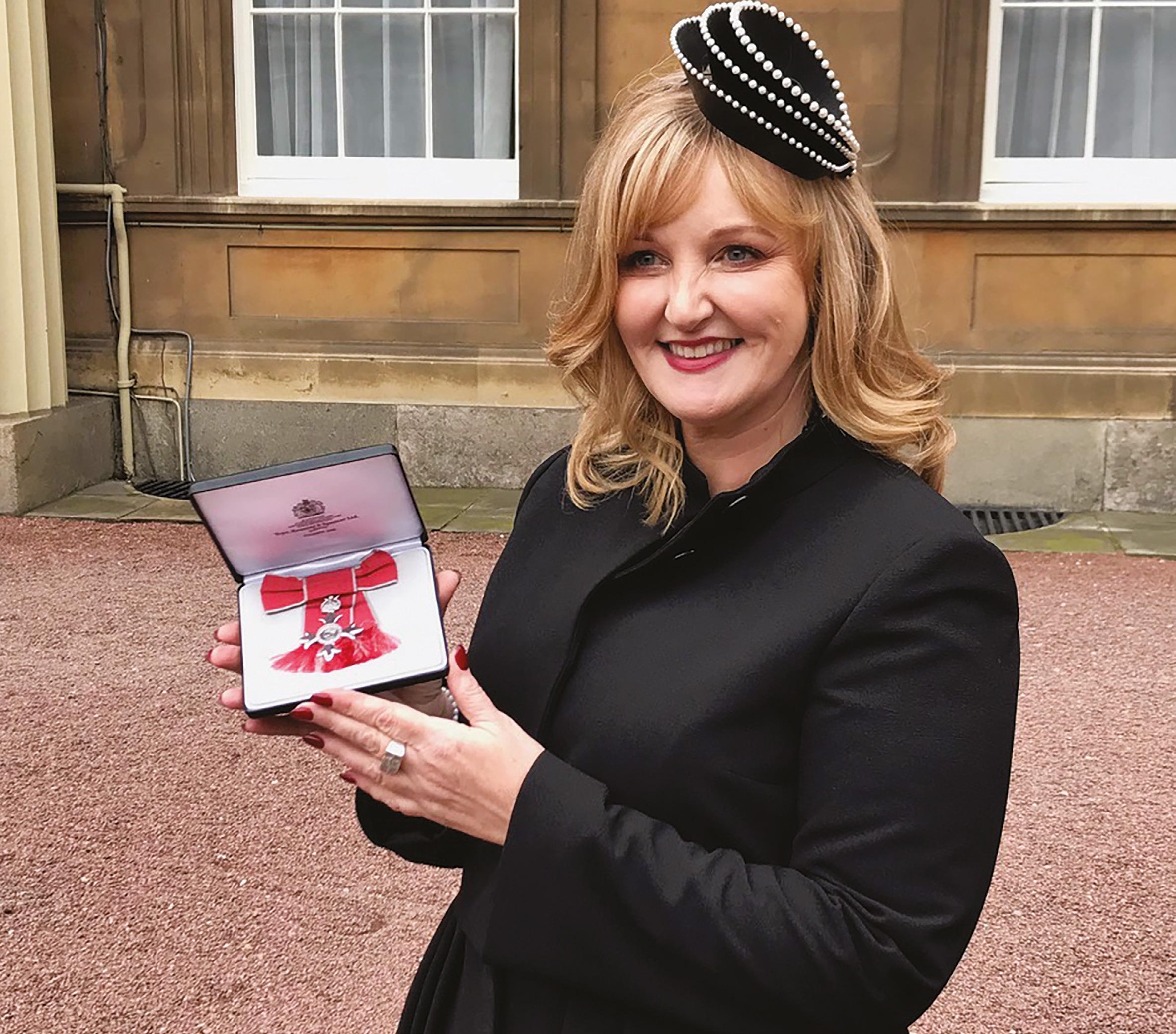
“When you feel stuck with something, try asking yourself: ‘Is that the best use of my time?’ It’s a phrase my father used to say to me, which I hated when I was a teenager but now use all the time. Often, as leaders, we end up getting into the minute details when, really, someone else could do it and we should be doing the things that help us scale the business.
“Also, don’t be afraid to give something a try. I have got to where I am today because I remained curious and willing to give things a go. When I was 16, there was still an assumption that you went into a profession and remained there for life. I wish someone had told me then that it was OK to go for it, try new things and move around throughout your career.”
*Mind the skills gap, Creative Industries Policy and Evidence Centre (Creative PEC) and Work Advance, bit.ly/ESu26AL
Lowe was made an MBE for her services to the fashion industry, particularly her work in supporting emerging leaders

From online masterclasses to flagship events, discover what’s happening in your leadership community.
Rob Cross
How leaders can rethink their role for the decade ahead
We are living in an age of accelerating change. Artificial intelligence (AI) is not simply another wave of technology; it is reshaping how decisions are made, how work gets done and how value is created. For leaders, this shift is not abstract, it is immediate and structural – and it is deeply personal.
As the pace of change increases, so too do the demands placed on those in leadership roles. The expectation to deliver performance, engagement and measurable outcomes remains. If anything, it has intensified. But alongside this, a quieter and more profound expectation is emerging: leaders are now required to help people make sense of a world that feels increasingly uncertain.
This marks a subtle but important evolution in the role itself.
Middle ground
Leadership has always existed in the middle, balancing the expectations of stakeholders with the needs, motivations and wellbeing of their people. It has required judgement, translation and alignment. But in the age of AI, a third dimension has entered the equation. Leaders must now also engage with technologies that can dramatically enhance capability while simultaneously challenging the relevance of traditional roles –including their own.
This creates a tension that cannot be ignored. AI can drive efficiency, insight and scale in ways previously unimaginable. Yet it also raises
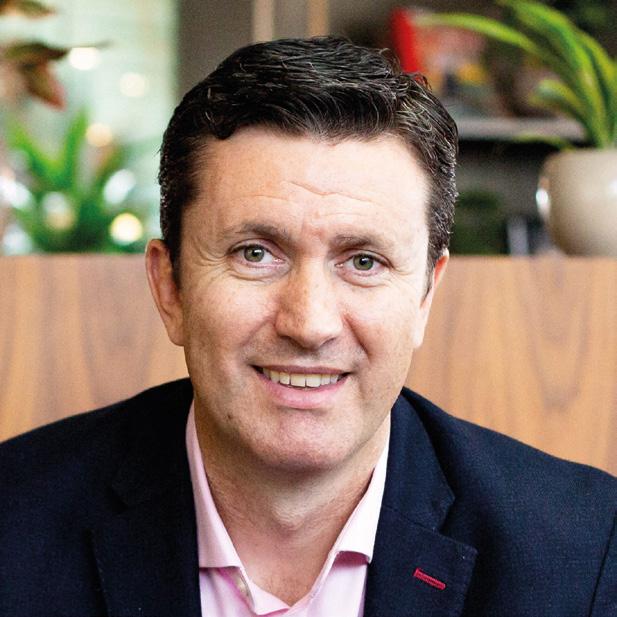
“Leaders must engage with technologies that can dramatically enhance capability while simultaneously challenging the relevance of traditional roles – including their own”
questions about human contribution, identity and purpose at work. Leaders are no longer just managing people and performance; they are navigating the intersection between human potential and machine capability.
To operate effectively in this environment, a shift in focus is required. Traditionally, leadership has been centred on delivering results –meeting targets, executing strategy and responding to stakeholder demands. While these responsibilities remain,
they are no longer sufficient. The leaders who will thrive in the decade ahead are those who move beyond delivery and orientate themselves towards value creation.
Value creation
This shift is subtle but critical. It means moving from being guided by competing expectations to actively shaping them. Rather than simply responding to stakeholder pressures, leaders must now guide those who rely on them by helping them understand where value truly lies in a landscape being reshaped by technology.
Value creation, in this context, is not just financial. It includes building adaptive organisations, unlocking human capability and using AI in ways that augment rather than diminish what people bring. It requires leaders to think more systemically, act more deliberately and engage more meaningfully with both people and technology.
In summary, the purpose of leadership is evolving – from being the leader of delivery to becoming the creator of value. Those who make this shift will remain relevant and impactful. Those who do not may find that the ground beneath them is steadily eroding, as the world moves on without them.
Rob Cross is the author of Ask 3 Questions: How to Live Well in a Distracted World. Rob is an experienced leadership development coach who works regularly with senior leaders and organisations to build high performance through clarity, purpose and effective leadership.
In this series, an emerging leader and their leader sit down together to talk about their leadership journeys. This issue, the conversation is between Riding for the Disabled Association’s Rachel King and her leader Lee Heard, who speak about navigating how to lead when you have – or are supporting someone with – a chronic mental health condition
Rachel King (RK): What have been the defining moments in your leadership journey?
Lee Heard (LH): When I have supported individuals to progress within the organisation or into other things. I’ve always had the mindset that my role in supporting people on their leadership journey isn’t necessarily to keep them in the organisation in which we’re involved, but to support them to develop skills to contribute to the organisation now and to use in the future.
LH: What has your leadership journey looked like so far?

Rachel King
RK: It started within sport: I was very active as a young person. I volunteered to coach younger teams and was the Young Voice rep for my local netball club. During my placement year from university, I joined the 12-month City Year programme, volunteering in schools to support young people at risk of exclusion. Once a week, we attended a leadership learning programme, which really drove me forward into the leadership space. Through different periods of my life, I have struggled with my mental health. Pre-diagnosis, I wouldn’t have been able to recognise how my mental health was impacting or shaping my leadership journey, whereas, post-diagnosis – and now living openly with
Rachel says: “Only around 20% of people living with longterm mental health conditions, such as bipolar disorder, are in employment. In many ways, we are navigating a professional world that was never designed with us in mind. Aside from a handful of high-profile celebrities, I have rarely seen someone openly living and leading with bipolar disorder, and certainly not in a senior leadership position. That absence of visibility is part of what motivates me to speak about this openly.”
bipolar – I am now able to really recognise how much my lived experience shapes how I show up as a leader.
LH: How did the diagnosis impact your working life?
RK: One of the biggest impacts has been being able to verbalise it. Before, I struggled to express how I was feeling because I often thought ‘how can I possibly explain this to you if I can’t even understand it myself?’. With bipolar, when things are good, you feel like you can achieve so much. But then comes a low episode: you go from feeling like you can take on the world to not being able to get out of bed. I learned that this isn’t just about me; it’s about a mental illness – so it’s not a case of ‘I can’t handle these things’ or ‘I need to be more resilient’, but rather how can I get the support I need so, in turn, I can continue to support others?
LH: How have you learned to navigate these episodes so you can remain in an effective leadership position?
RK: I try to be really disciplined, to ensure I work within boundaries, so I don’t start slipping to the manic end of the mood scale, because it can become quite dangerous territory. Therapy and coaching have also really helped me. I attend a monthly support group and having the space to be open about things, in a way that doesn’t have to be filtered, is so beneficial.
RK: Where have you found support when things have been tough?
LH: In charities, senior leaders’ relationship with the board is so critical. Trustees should be providing that effective support for you –yes, to hold you to account, but also to create the environment in which you can thrive. And, as you mentioned, external groups that you can lean into for peer support are really important, because the C-suite can be a lonely place.
RK: From a senior leader’s perspective, what does effective support for a team member with experience of mental illness look like?
LH: Leadership is a very personal thing. A leadership relationship works when two individuals find out how they best work together. Every individual should be led based on their own wants and needs, but, obviously, there are additional things that you and I have had to work on and consider. For me, that’s understanding some of the bipolar triggers: how do I manage those scenarios
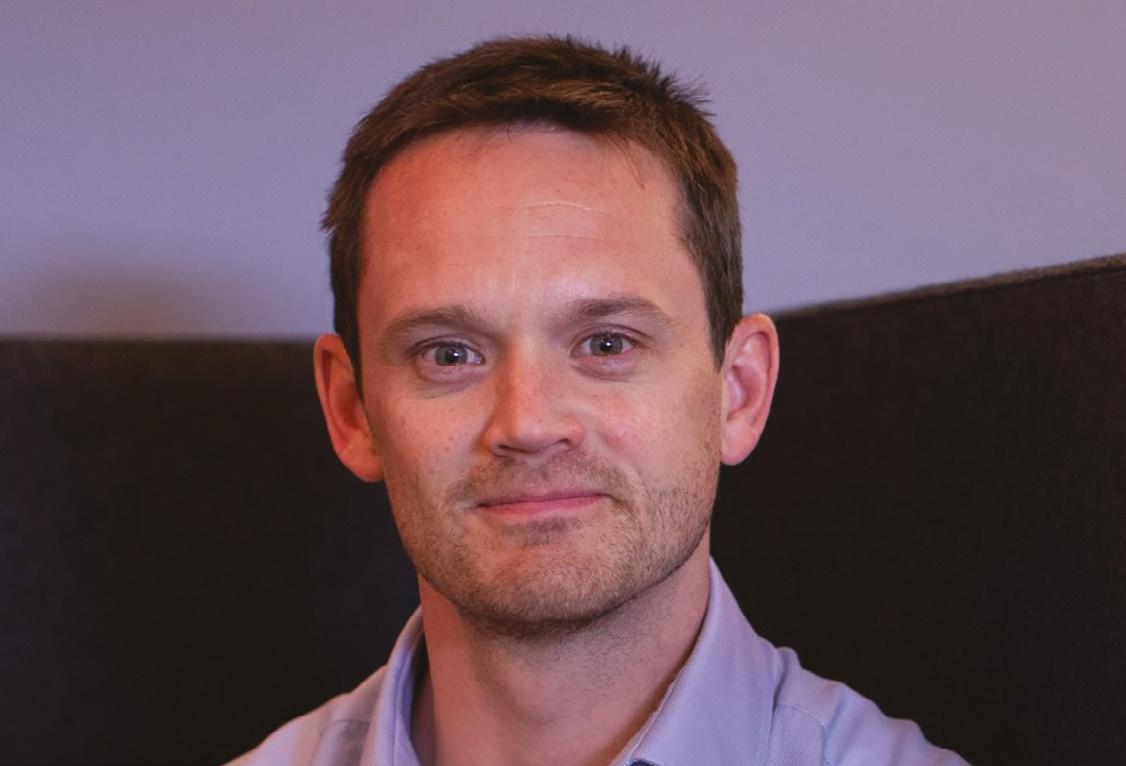
and how do I support you? It’s also about how I advocate for you in the wider space and protect you when you need some extra support. That’s been a key learning for me: how I lead to help you in those moments when helping yourself proves quite difficult. The key point is to have open communication and to be honest with each other when there are challenges, to find effective ways to create the right environment for both of us.
LH: How do you think leaders can create cultures in which people feel able to be open about their mental health?
RK: It’s so much easier to navigate a workplace when transparency and honesty are at the heart of it. Riding for the Disabled Association (RDA) is the first workplace in which I have been very open about the bipolar diagnosis, and I hope that I’ve empowered other people to be honest about their experiences as well. The most powerful tool you have as a leader is your voice, so leading by example is important. I don’t believe that grand gestures make someone a great leader. A lot of leadership happens in the shadows, and the smaller things that make people feel seen, heard and valued create those spaces where future leaders can thrive.
Rachel King works at RDA UK. She has been documenting her journey of living, working and leading with bipolar disorder while building a career in charity sector leadership, particularly within the volunteering profession.
Lee Heard is RDA UK’s chief operating officer and a trustee at Onside Advocacy, which supports vulnerable adults to have a voice and access to the support they need.
We’re looking for people to take part in ‘In conversation’. Please email louise.parfitt@ cplone.co.uk to express your interest.
As the landscape of leadership evolves rapidly, it is crucial that the C-suite continues to adapt while successfully equipping the CEOs of tomorrow. Cathy King asks three experts to share their advice and guidance
C-suite leaders face the ongoing challenge of personal development and continuous innovation while navigating the rapid expansion of artificial intelligence (AI). For insights and advice, we turned to three experts: Dr Lisa Turner, founder of CETfreedom and pioneer of AI-amplified consciousness and human transformation; Tom Pullen, CEO of Innovinco® and award-winning author of Innovator; and Dr Lilian Ajayi Ore, research scholar, executive coach and author of The Power of the Learning Mindset
How can members of the C-suite ensure they keep on developing and learning?
Dr Lisa Turner (LT): Most leaders think development is about consuming more information. In the age of AI, it’s about perception. The obvious answer is to consume more – more courses, more information – but when everyone has access to almost infinite information, that is no longer your edge.
The real development happens when you turn the lens inwards. Where are the blind spots in how you actually think – not just what you decide, but the patterns underneath your decisions? What are
“The most dangerous CEO isn’t the one who lacks knowledge. It is the one who is certain they already see clearly”
Dr Lisa Turner
you consistently misreading about your culture, people or yourself? This is where AI becomes genuinely powerful. When used as a diagnostic tool, AI can surface patterns in your own thinking that you can’t see. The most dangerous CEO isn’t the one who lacks knowledge. It is the one who is certain they already see clearly.
Tom Pullen (TP): Most C-suite leaders don’t have a learning problem, but an execution problem. The real shift is moving from consuming insight to operating inside a system that forces learning into action. The best leaders test and adapt new ideas in agile ways, reviewing what did and didn’t work.
In most organisations I work with, the gap isn’t knowledge, but the absence of structured methods to capitalise on it. That requires discipline: staying close to customers rather than retreating behind dashboards, and extracting lessons from live projects to share widely. In fast-moving environments, learning is central to how an organisation stays ahead.
Dr Lilian Ajayi Ore (LAO): For leaders in the C-suite, continuous learning is not just a personal development choice; it’s now a leadership responsibility. That’s why cultivating a learningprowess mindset is critical.
Prowess embodies the desire and the discipline to show up differently in a world rife with distraction and noise. It extends beyond mastery; it’s a continuous journey towards excellence.
Mastery implies a final achievement, whereas prowess is the ongoing refinement of skills. It requires leaders to remain open and willing to evolve. Only by adopting this mindset can leaders ensure they keep on developing and achieving career and life aspirations.
“Creativity increases once people trust the process, and that is built through visible traction”
“The world is made up of a wide range of people, and to influence and lead others, you need to reflect diverse views, not just your own”
“Leading must begin with recognising the human in front of you”
Dr Lilian Ajayi Ore
How can the C-suite ensure continuous innovation – and how can it make sure everyone in the company feels as if they can suggest a new idea and be creative?
LT: It starts by understanding that the real barrier isn’t a lack of creativity, but the company’s invisible immune system that resists change and new ideas. Every organisation has one. It’s the unwritten rules about who can speak and what can be questioned. Sometimes, by the time a bold idea reaches the top, it has been sanded down to something unthreatening. Most leaders don’t even know this is happening.
Start by making it genuinely safe to be wrong. Create space to mess about, try things just to see what happens. Innovation needs spare time, a free budget and permission to be disruptive – but none of that works until you surface the invisible cultural patterns that are silently killing ideas before they ever reach you.
TP: Simply encouraging people to innovate is one of the most common – and, in my experience, least effective – leadership moves. Organisations that succeed in innovation over time don’t rely on individual heroes or occasional bursts of creativity; they embed simple processes that help people identify relevant opportunities linked to strategy.
Psychological safety matters, but it’s not enough on its own. If there’s no clear path from idea to action, most ideas go nowhere.
Creativity increases once people trust the process, and that is built through visible traction. That’s what shifts individual behaviour. Not a suggestion box. Not a rallying cry in a town hall. It’s the moment someone sees an idea such as theirs actually go somewhere.
LAO: It is essential to embed the same perspective on prowess across the entire organisation. By fostering a culture in which the ‘power of learning’ mindset is prioritised, organisations can develop teams that are curious and innovative. Leaders who engage in their own development, and who demonstrate how valuable innovation is, set the tone and serve as role models.
By actively engaging in their own development and encouraging a shared commitment to learning, leaders can inspire a culture in which prowess is celebrated over mere compliance. To amplify
the need for prowess, leaders must do more than encourage learning; they must cultivate a growthorientated mindset at all levels. This means recognising and rewarding progress, and providing new opportunities for employees to grow, personally and professionally.
As AI takes over the data and the spreadsheets, which ‘human’ skills are becoming more important for the C-suite?
LT: The obvious ones are empathy, emotional intelligence and ethics – but they’re not the real edge. AI can optimise anything, but it can’t tell you if it’s worth optimising. The critical human skill now is the vision to choose where you’re going, not just how to get there faster.
Beyond that, leaders need to protect something that AI genuinely can’t replicate: true insight and inspiration. Not logic, not gut reaction, not even intuition, but that flash of inspiration that comes from nowhere and changes everything. Flashes of pure inspiration only happen in those times of boredom, and where there is space to just dream. Some of the greatest scientific discoveries were revealed in dreams –for example, Kekulé discovering the benzene ring or Einstein riding a beam of light. They’re uniquely, irreplaceably human, and that’s where the real growth happens.
TP: As AI democratises access to data, judgement becomes critical. Leaders cannot just analyse data, but must decide what truly matters and what to do next when the picture is incomplete or ambiguous. This is where many leadership teams still struggle, because AI amplifies speed, but not always clarity.
Staying close to real human behaviour matters more than ever. Customers remain human. AI can surface patterns based on past data, but it can’t tell you what they’ll care about next.
The real risk isn’t that leaders rely too little on AI; it’s that they rely on it without enough critical thinking.
LAO: It’s not just individual human skills that matter, but human leadership as a whole. Today’s increasingly AI-shaped workplace calls for a new kind of leader: one who is ready to lead with intention. When leaders operate from a place of unrelatable significance, people feel the distance and trust begins to erode – and once trust is lost, progress becomes an uphill climb. But when you lead from a human place, people feel the connection. Leading must begin with recognising the human in front of you. It’s the heart of transformational leadership – where presence meets empathy and impact begins with understanding.
Cathy King is a writer at CPL One.
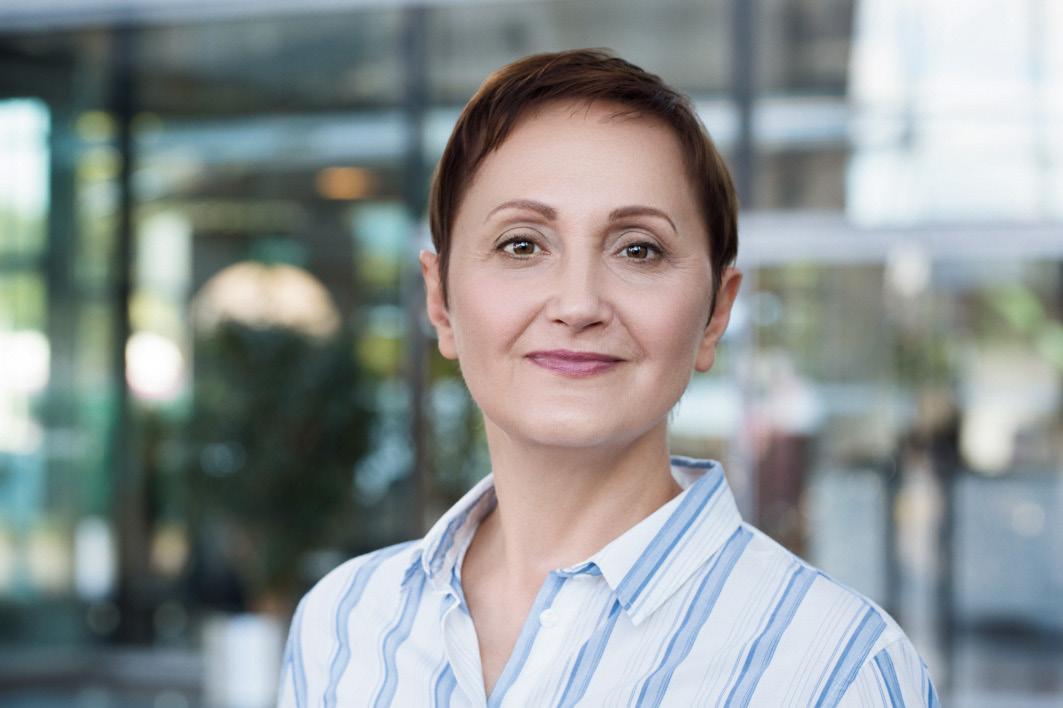
Join the webinar

Your guide to achieving the IoL’s most prestigious recognition.
Discover if you’re ready for Fellowship
Take away application tips
Hear first-hand insights from an IoL Fellow


Reserve your place now

Currys stores director Matthew Speight chats to Martin Bewick about how the fast-changing world of retail shows that leadership needs short and long-term vision – and that you should always put people first
For Matthew Speight, stores director UK & ROI at consumer electronics and home appliances retailer Currys, part of the complexity facing any business leader is that organisations grow and evolve over time. Leaders often arrive looking to the future, but having to contend with a business’s legacy.
“If there was a book written on the business you work for, you might come in as a leader at chapter 10 or chapter 20,” he says. “It’s important to respect what’s happened before, but your role is also to leave the business in a better place than when you found it.”
The idea of leadership operating at the apex of the past and the future seems particularly pertinent when Speight describes Currys – which sells the very latest technologies, but is also a heritage high-street British brand.
“It’s high-tech at one level,” he says, “although not to the extent that you’re a disruptor like some of the big global tech firms. And right now we also have the AI and data revolution that is transforming retail at pace. But Currys is also seen as a very traditional, dependable high-street shop. It’s a fascinating place to be.”
The complexities of retail may sometimes be overlooked, perhaps because of our familiarity with it. We know how it works. We go to a shop. We look around. If we see something we want and can afford

it, we may buy it. If we don’t, we leave. Traditionally, this happened in bricks-and-mortar stores, but more recently, of course, the shops we visit have also been online. However, the basic premise of retail remains the same: simple.
The history of Currys (see page 60) highlights just how much retail can change. The business’s timeline shows shifts in the kinds of products sold. New technologies emerge, which alter customer needs and expectations. Companies merge as businesses grow. Brands evolve, disappear and are resurrected. New services are offered. External pressures (for example, sustainability) come to the fore. The mission statement needs a refresh. And all this happens while, every day, the customers come and go, the cash registers ring and the online order confirmations are sent.
In retail, the potential for success or failure is a daily – even a minute by minute – occurrence, a
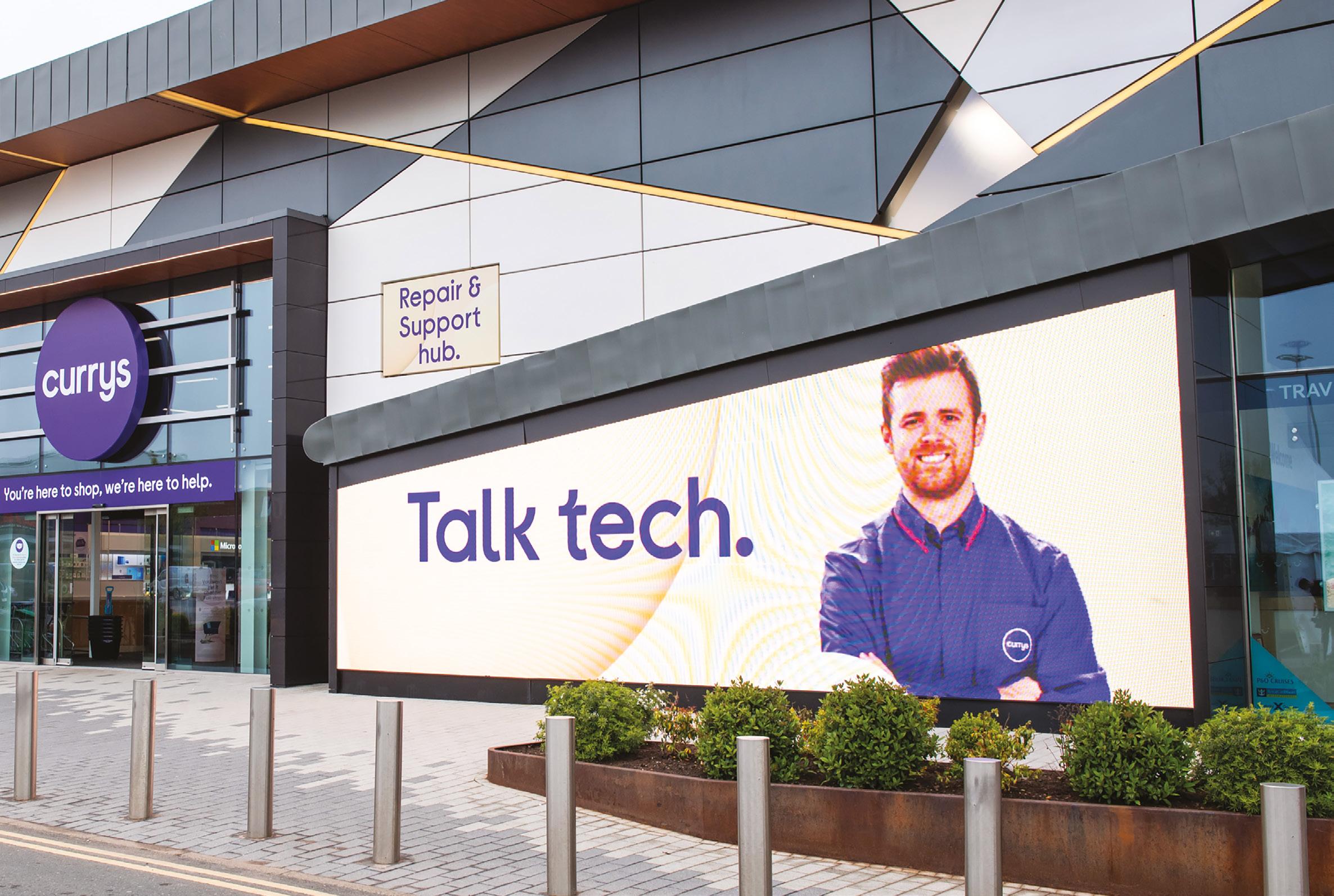
fact known only too well by those on the shop floor and looking customers in the eye. People, then, are retail’s ever-present, always-on judge and jury – and, yes, they literally vote with their feet. Keeping the customer satisfied is retail’s evergreen mission.
For Currys, that understanding is summarised in its corporate vision: ‘We help everyone enjoy amazing technology’. But how is that done?
For Speight, remaining people-focused while being agile and able to adapt at speed are crucial aspects of leadership.
“I didn’t set out to spend all my career in retail,” he says, “but I did want to work with people, and in retail I’m in a career where there’s a high people agenda. I’ve also always been fascinated with performance, whether that’s in terms of sport or business, and I’ve worked with teams that have faced change and transformation.
“Cutting through all of this – through the decision-making and the complexities – the focus is always on being clear about what matters for the organisation. In retail, if you can achieve alignment across people and teams, then you can achieve pretty much anything. That’s easier said than done, because there’s lots to do and many priorities, but the quicker you can get to
what matters, the faster you can go and the better performance you’ll get.”
As stores director, Speight leads teams that have two interlinked roles: to sell technology and to help people sell technology.
“My job is to help people sell technology,” he says. “It’s to take the resources I’ve got, the talent I’ve got, the products we’ve got, and find a way to meet and exceed as many customer expectations as possible, across all of the Currys stores in the UK and Ireland. My responsibilities also include the property, marketing and interaction with our internal teams, and our transformation agenda.
“It’s about continuing to raise the bar and make it as easy as possible for our colleagues to serve customers. I like to think of that as ‘servant leadership’. I’ve also got to navigate the now, the next and the later, and set a strategy for us to win. In retail, if you are not transforming now, you’ll get left behind.”
If that sounds fast-paced, there’s one further complexity. Currys, Speight notes, is not a highfrequency business. Customers don’t visit the stores every week like they do to buy
‘We help everyone enjoy amazing technology’ was adopted as Currys’ vision in 2018
1884 Henry Curry founds Curry Cycle Co, a bicycle-building business.
1927 Now also selling toys, gramophones and radios, Currys floats on the stock market.
1937 Dixons photo studio opens in Southend.
1962 Dixons lists on the stock market.
1984 Acquisition of Currys Group by Dixons Retail.
1989 Carphone Warehouse is founded, offering the UK the latest carphone technology.
1993 Dixons Group purchases the small PC World retail chain.
2001 Currys.co.uk launches online.
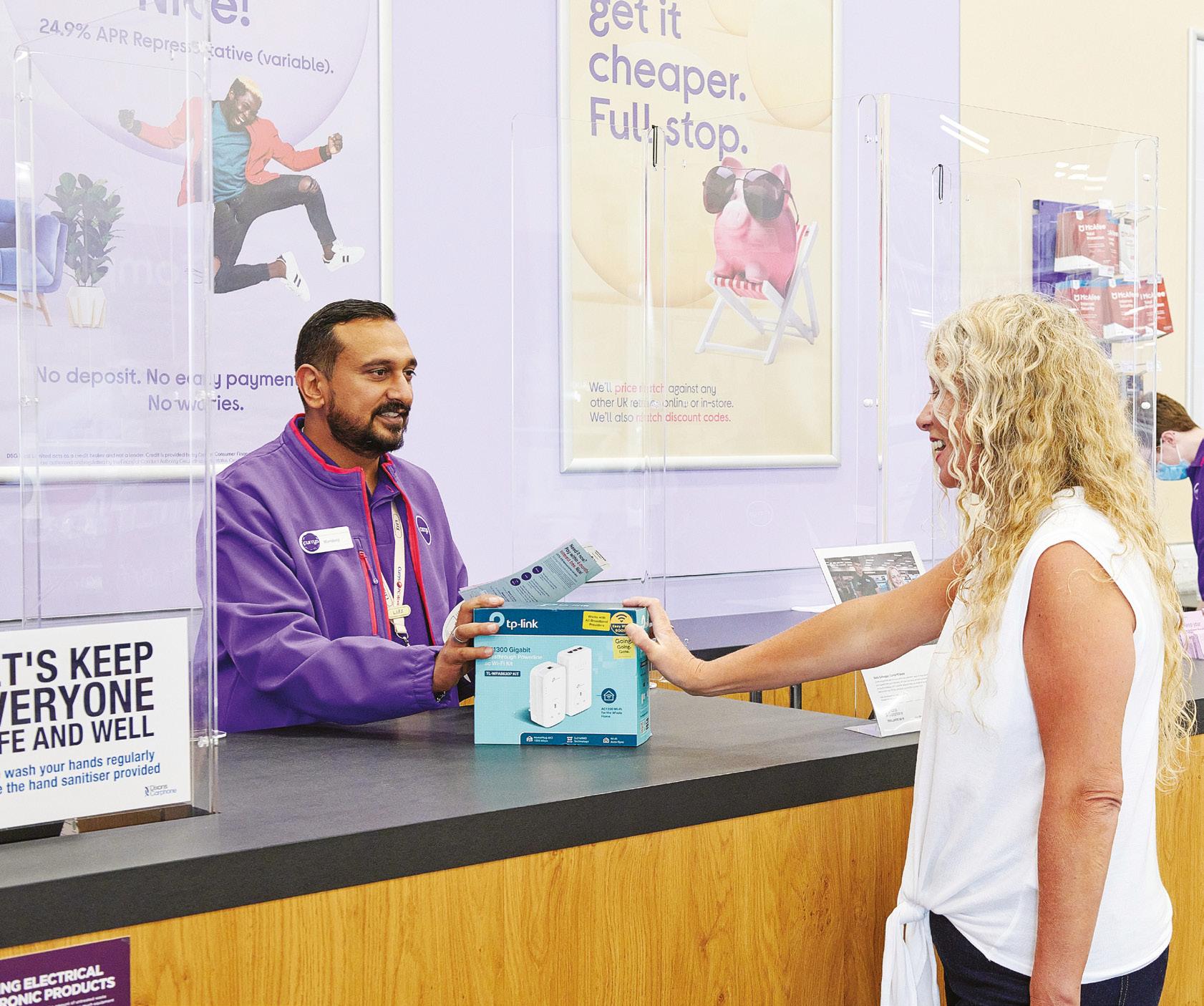
2008 Trial of combined Currys PC World brand and stores begins.
2014 Dixons and Carphone Warehouse merge, becoming Dixons Carphone group, incorporating Currys, PC World and Dixons Travel.
2015 Dixons Carphone mobile virtual network, iD Mobile, launches. Roll out of 3-in-1 Currys, PC World and Carphone Warehouse stores.
2017 Launch of Team KnowHow across the group, supporting customers across its brands.
2018 ‘We help everyone enjoy amazing technology’ is adopted as the group’s new vision.
2020 ShopLive service launched to help customers shop in-store from home during the Covid-19 pandemic.
2021 Dixons Carphone plc becomes Currys plc. Currys PC World stores rebranded as Currys.
2022 ‘Long Live Your Tech’ commitment launched to help customers make informed choices when buying and disposing of tech.
2023 Currys named in the Top 10 Climate Leaders in Europe by the Financial Times
2025 iD Mobile reaches two million subscribers in the UK.
Speight believes stores will become increasingly relevant in supporting consumers to make the right tech choices
groceries. They might only visit a handful of times in half a decade. Those visits, therefore, need to be memorable – for positive reasons. The same goes for the retailer’s online stores.
“We think of ourselves as an omnichannel business, and getting omnichannel right is really important for Currys,” he says. “In recent years, we’ve seen a clear shift to speed and convenience. People want to shop for a product when they want it. Ultimately, they want the right experience in the right place at the right time. That might be on a phone or in a physical store. Retailers have to optimise their channels. Websites need to be slick, with an easy checkout experience, clear information and engaging content. In store, you need brilliant colleagues who know their stuff and can create that slick and easy shopping experience. They’re the foundations.”
These days, the vast majority of Currys customers start their journey online.
“We have to deepen the relationship with the customer in that channel and not disrupt their journey,” says Speight, “while also allowing customers to move between channels seamlessly. Omnichannel is about how we ensure that, wherever that experience is, we have the right advice, reassurance and expertise for customers.”
Reducing friction across the customer journey is a familiar challenge for many businesses. But the move from browsing online to visiting a store to make a purchase can be a particularly pronounced
jolt for retailers such as Currys, whose customers may be considering a large financial outlay.
“When customers aren’t buying very often, and spending upwards of three or four figures, you need to get it right,” says Speight. “Our selling journey is about helping people navigate big choices. It’s about listening, making people feel engaged in the conversation and then using our experience to inspire. If a customer starts online, what is it that’s going to make them go to a store? How do we all work together to make it easy for them?”
Time for change
Speight’s strategy to stay agile and keep the customer satisfied is a plan of three parts – or three ‘time horizons’: Run, Change, and Transform.
“Run is looking after the day-to-day operations. As the stores director, I need to know how we are operating in the stores today. Are we ready for the customers? Have we got the right people? Have we created the right environment? Then we have a Change agenda. This is about making things better, listening to the frontline, getting feedback, tweaking the operating model, and making small changes to improve our effectiveness. Finally Transform is about making a real step change. For example, we introduced headsets to keep our colleagues on the shop floor safe, and electronic shelf-edge labels to allow us to keep up with price fluctuations and stay ahead of the market. Then, behind the scenes, we’ve adopted AI tools to help our managers navigate complex datasets.
“These are all aimed at delivering for customers and helping our people meet their targets and get results. In retail, it’s not like being a lawyer who builds a case over weeks and months, with the outcome sometimes years later. The three ‘time horizons’ need to work together.”
Speight has another three-part strategy for success. Leadership, he says, needs to come from the front, the middle and behind. What it means to lead from the front may seem clear (playing an active and visible role in the everyday running of the business), but what does he mean by from the middle and behind?
“To me, leading from the middle is about being with the team. For example, I spent a week in a store earlier this year. We’re in there together. I get to experience what it’s really like and gain a perspective on the business that I wouldn’t get if I only worked from the office. I think that’s something people don’t do enough of.
“Leading from the back is about setting the tone, building the team, creating the capability and the infrastructure. It’s about how we operate and how we set people up to succeed. It might be about governance, for example, and it affects the business’s foundations. It’s from there that people can realise their potential. Being able to move
between these three leadership positions and roles is incredibly useful.”
Is there not a danger in being a business leader who isn’t always seen to be standing firmly, assertively, in one place? “I guess the contradiction,” says Speight, “is that, as a leader, you need to give clarity. Clarity and cohesion get things done. But you also need to be open enough to allow ideas to come in and percolate through the system.
“It’s OK to get things wrong as a leader, as long as you’re prepared to recognise when they are incorrect, and to make changes. When you lead from the front you set an example – but then you need to run a temperature check and ask ‘how are we really getting on?’”
With many high-street units standing empty across the UK, and with social-media retail predicted to boom in the next few years, it would be easy to be pessimistic about the future of bricks-and-mortar retail. Speight, however, takes a more positive view. Again, people are at the heart of the vision.
“Stores are going to be increasingly relevant –and experiential – for customers,” he says. “In a world where we don’t have as much human contact as we used to, stores can be a fascinating place to play and enjoy interaction. This isn’t just about Currys. I think retailers are starting to recognise how they can become a real force and that they are good when they work together. Retail is a massive employer in the UK, and it is a place where people can build fantastic careers. And we are social individuals. That keeps stores relevant.
“There is work to do, however. As leaders, we are guardians of the business and we need to create a culture in which we stay ahead. If we’re not doing that, we’re not doing our job.”
“As a leader, you need to give clarity. Clarity and cohesion get things done. But you also need to be open enough to allow ideas to come in and percolate through the system”
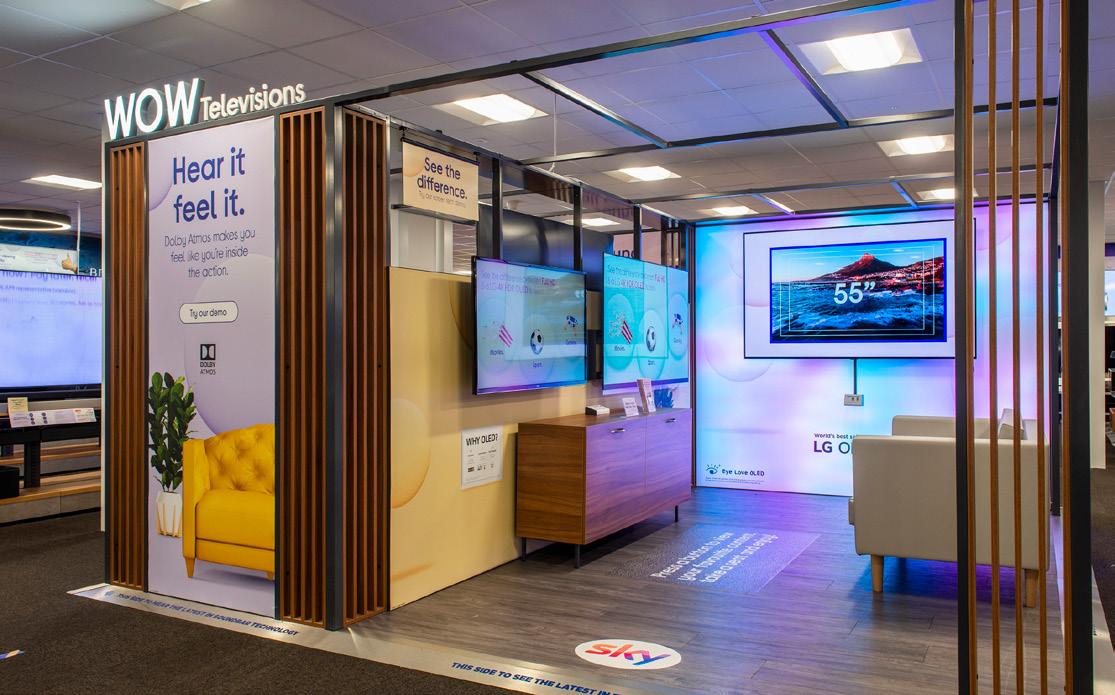
As digital retail continues to grow, experience is a top priority for today’s in-store shoppers
1. Retail is big business
£517bn
People employed in retail in the UK (8.2% of the UK total)
2. The UK high street is suffering
2.6 million 19% 14% 4%
‘social-media commerce’ is set to double
Only 9% of consumers are satisfied with in-store shopping experiences of millennials want stores to combine community, socialising and shopping
Greater variety of products Faster checkout
More information about products of retailers say experiential retail, from AR tools to events, will help boost footfall of millennials want immersive brand experiences as part of the in-store journey by 2030 in 2025
Sources: House of Commons Library; Retail Economics/NatWest; Office for National Statistics (ONS); YouGov; Local Data Company; Statista; Centre for Cities; IBM; ITBrief.co.uk; American Express
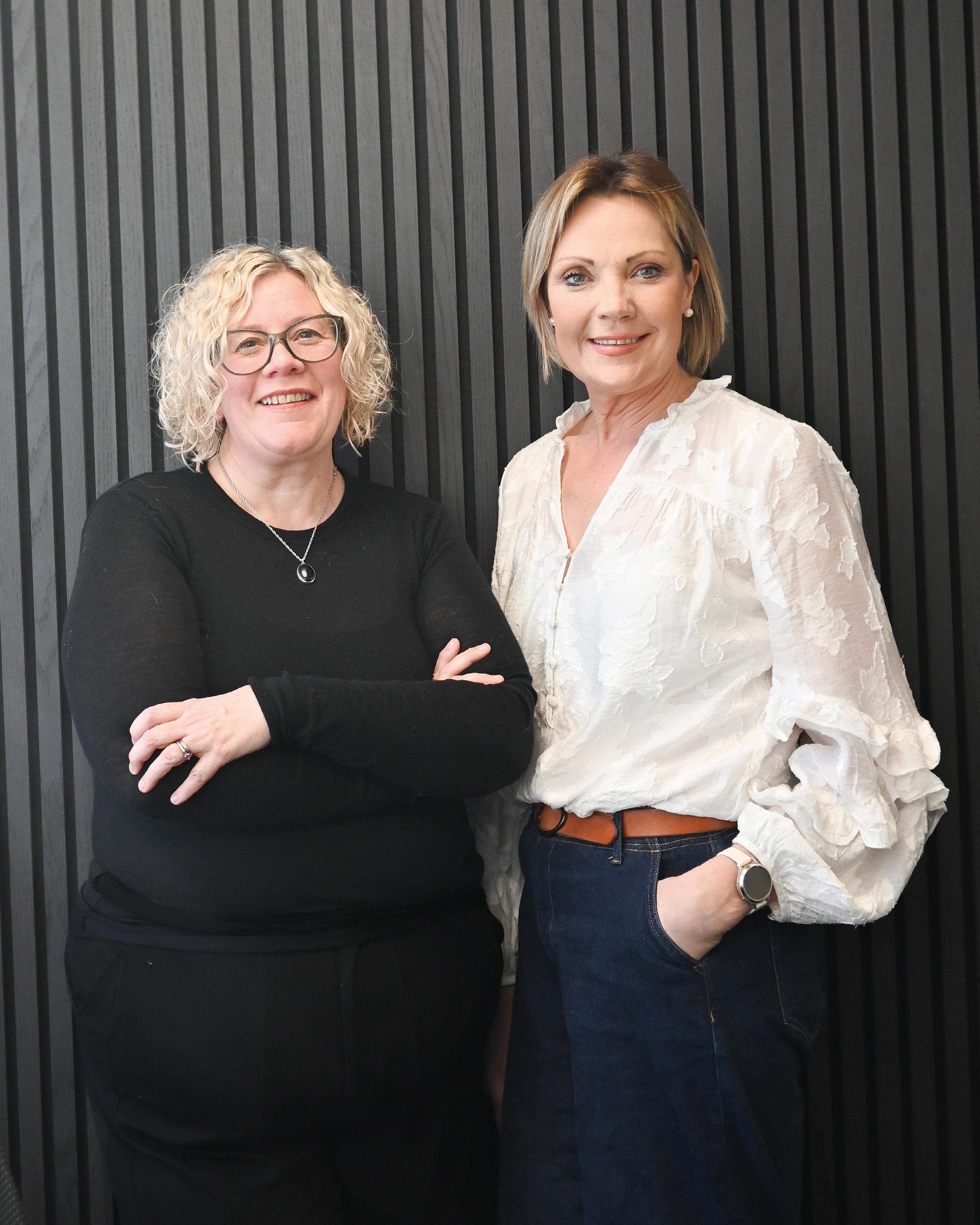
Nicole Horsman and Sarah Baker share lessons from being co-founders of learning design business, Embed, including managing disagreement, dealing with imposter syndrome and the importance of the occasional long lunch
One side of the partnership: Nicole’s view
When Sarah and I joke that starting Embed together is like a marriage, we’re not far wrong. Beforehand, we knew each other professionally, respected each other hugely and brought complementary skills to the table. Surely, we thought, that was enough? It really isn’t.
I went in thinking the hardest part would be the business stuff. The finances. Finding new clients. The late nights. And don’t get me wrong, all of that is hard. But the real challenge was learning how to truly work with someone, not just alongside them.
Co-founding means every decision, every direction, every priority requires two people to be genuinely aligned and not just nodding along on the surface. When you’re moving fast, delivering customer projects, and you’re both exhausted, that alignment takes real, intentional effort.
On learning and leaning in
One of the things I’m most grateful for is Sarah’s depth of knowledge and experience in learning and development. It means we are constantly raising the bar. I lean into Sarah’s expertise and creativity a lot. There’s something quite freeing about building a business with someone whose expertise you genuinely admire, because it means you’re always learning. I catch myself thinking differently about problems after conversations with Sarah, approaching challenges with more rigour and curiosity than I would have on my own. Co-founding isn’t just about sharing the load; at its best, it makes you better at what you do.
On conflict and getting ahead of it
People often ask how we handle disagreement. The honest answer is, we don’t wait for it to arrive. The key is getting ahead of tension before it becomes something bigger: regular check-ins that go beyond task lists, honest conversations about what isn’t working, and knowing when to push back versus
“The real challenge was learning how to truly work with someone, not just alongside them”
when to let go. We’ve learned to spot the early signs and name it early rather than let it fester. Small friction dealt with quickly stays small. Left alone, it doesn’t.
We’ve also had to give each other permission to get things wrong. When you’re building something new, you will trial ideas that don’t land. We’ve worked hard to replace the instinct to find fault with curiosity: what did we learn and what do we do differently next time? That shift has made us braver and faster.
The strongest business partnership is built exactly like the strongest personal ones: with honesty, patience and the occasional long lunch!
When I read Nicole’s piece, I found myself nodding along – and then smiling. She’s described our cofounding journey with the same honesty and clarity she brings to everything. But reading it from the outside, I realised there’s another side to the story I’d like to add.
Nicole wrote about the work of co-founding: the intentional communication, the habits you have to build, the discipline of staying aligned. She’s absolutely right about all of it. What I want to talk about is the part that genuinely caught me off guard. When we launched Embed together, I thought I knew what to expect. I’d worked with Nicole before. We respected each other. We had complementary skills. I was prepared for the hard business stuff: the late nights, the pipeline worry, the sheer relentlessness of building something
Tried and tested
“Your wellbeing is tied up in the success of something other people depend on, and that cuts both ways. You have an obligation to look after yourself and you have to keep an eye on each other”
from nothing. What I wasn’t prepared for was how great it would feel.
The support has been almost universal, from colleagues, friends, family, networks. People are genuinely interested. They want you to succeed. I didn’t anticipate that, and it’s been one of the most sustaining surprises of this whole adventure.
The other thing that’s surprised me is how much you get done, and how quickly, when you strip away internal politics. When it’s just you and your co-founder, accountable to each other and to your customers, you move with a clarity and pace that I hadn’t experienced before. It’s also a constant state of forward-thinking – there’s always something to anticipate, plan for, worry about. But rather than feeling draining, it’s energising. Especially now that we have a team around us, the responsibility feels meaningful rather than heavy.
On conflict and compromise
People often ask how we navigate disagreement. The honest answer is that it almost always comes back to our shared vision. We want the same things. We work to the same timescales. We treat our customers the same way. When you have that foundation, conflict rarely becomes a standoff; it becomes a conversation.
We also have shared history. We’ve been through difficult situations together before we even started Embed, which means we know each other’s triggers, capacity and motivations. That knowledge matters. So does the fact that neither of us has an ego that needs protecting. When two problemsolvers sit down without judgement, there is always a way through.
And I’ll say this – Nicole’s emotional intelligence is extraordinary. She’s a calm, attentive listener and,
If you’re thinking about co-founding with someone, we recommend that you: Communicate – more than feels necessary Trial and fail – together, without blame Have a laugh – seriously, never underestimate it.
when I’m spiralling, she has a way of making sure it stays a mini meltdown rather than a full-blown one. That’s not a small thing.
On workload and the comparison trap
Having distinct areas of expertise has been one of the best structural decisions we’ve made. It removes so much friction. Decisions have a natural home, workload divides more cleanly and we each get to operate in our zone of confidence. I’d recommend it to any co-founding pair.
Imposter syndrome is something I keep an eye on in myself. Nicole is brilliantly commercial, and there are days when I worry I’m not pulling my weight on the business side. I can feel guilty if I sense she’s working longer hours than me. That internal comparison loop can be corrosive if you let it run.
What helps is the depth of our relationship. We’ve spent so much time together, talking things through, being honest about our lives and our limits, that Nicole probably knows me better than almost anyone. That intimacy means we can be flexible with each other. We understand each other’s commitments, responsibilities and rhythms, and we adjust accordingly, rather than keeping a tally.
There’s one thing I don’t think I fully reckoned with before we started: when it’s your business, your health is no longer just your own concern. Your wellbeing is tied up in the success of something other people depend on, and that cuts both ways. You have an obligation to look after yourself and you have to keep an eye on each other.
That mutual responsibility sounds heavy when I write it down. In practice, it mostly just feels like care.
If you’re thinking about co-founding with someone, I’d echo everything Nicole said; go in with your eyes open, communicate constantly and build real habits around honesty. Then I’d add one thing of my own – be ready to be surprised by how rewarding it is. Building something together, with someone who genuinely has your back, is one of the best things I’ve ever done.
Nicole Horsman is chief commercial officer and cofounder of Embed, a learning design agency. With more than 20 years’ experience in training and development, she leads on the commercial side of business, client relationships and programme delivery, combining deep learning design expertise with a passion for building impactful training that genuinely sticks.
Sarah Baker is chief learning officer and co-founder of Embed. With more than 20 years’ experience, she specialises in designing large-scale, human-centred programmes across digital, face-to-face and blended formats. She brings rigour, creativity and craft to everything Embed creates.
Tom Emery
Why being in the C-suite can feel isolating –and what to do about it
Iwas a lonely C-suite leader. It feels hard to admit it. Outwardly I was smiling. Inside it hurt.
Loneliness didn’t subside as I rose through the ranks. Insidiously, it grew. The more I achieved, the more I risked losing. The egos became bigger, my trusted circle smaller.
C-suite loneliness seeps into every executive team. Into the packed calendars, the big decisions, the sleepless nights.
Most executives wouldn’t dare admit their loneliness – but they secretly recognise it. As a coach to the C-suite, I see it every day. Anxiety, shame and judgement are common. A constant feeling of precariousness. A worry that, any second, the rug could be pulled from under them.
It’s not just a personal issue; it’s systemic. When C-suite teams lack genuine connection, organisations feel it. Collaboration weakens. Silos strengthen. Challenge evaporates. It spreads. What happens at the top then shapes the culture below.
Ironically, the very qualities that elevate people to the C-suite reinforce isolation. Independence is prized. Calmness under pressure is demanded. Asking for help feels off limits. Executives must appear decisive. Arrive with fully formed answers.
Meaningful connection and collaboration are often absent.
Disagreement adds another dynamic. Being challenged feels personal and judgemental. When leaders respond defensively, trust erodes. Others learn to hold back. Curiosity decreases. Innovation stalls.
As an executive, I hated feedback. I was defensive. I felt judged.
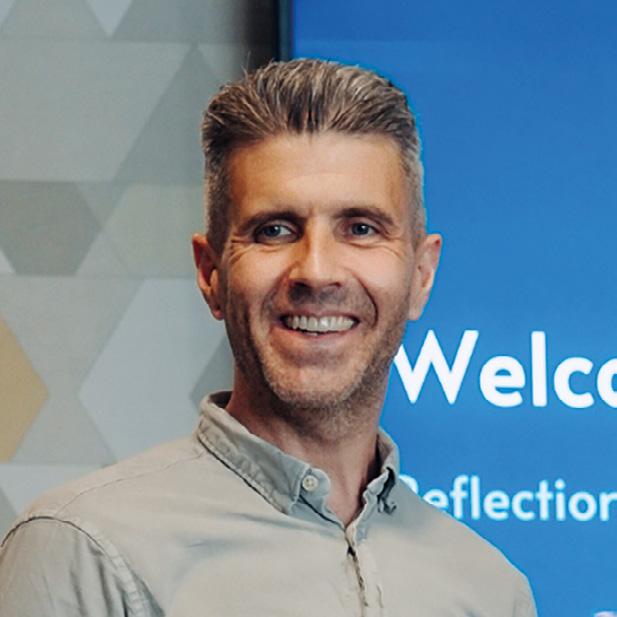
“When C-suite teams lack genuine connection, organisations feel it. Collaboration weakens. Silos strengthen. Challenge evaporates. What happens at the top shapes the culture below”
Conversations became about being right, not getting it right. My colleagues were good people. But I felt threatened. Criticised. Alone.
At senior levels, these responses have amplified impact.
Feedback and challenge matter. They enable performance, increase connection and reduce isolation.
Improving the C-suite dynamic requires intention. Great executive teams focus on how they work, as well as what they do. They surface conflict. They discuss how to support
one another. They agree how they challenge. This reduces ambiguity and eliminates bad assumptions.
Psychological safety is essential. C-suite teams can set the parameters for interpersonal risk taking. Coaching can facilitate this, but isn’t a necessity. Just carving out time to ask, ‘how can we work better together?’ will create connection.
CEOs can create the space for executive friendships and hold executives to account for nurturing strong relationships, but C-suites need more than social events. At this level, connection can be nurtured through co-sponsorship of projects and shared problem-solving. Co-sponsorship creates reasons to meet, test thinking and request help. When problems also have reputational or moral risk, mutual dependency and safety grow.
Connected teams handle conflict well. They set expectations, agree challenge is part of the job and use simple feedback frameworks to ground conversations. They focus on observable facts. They explore intent rather than jump to judgement. Disagreement becomes a tool for thinking, not a threat.
Loneliness in the C-suite isn’t inevitable. Organisations that equate strength with self-sufficiency will reinforce it. Those that value openness, curiosity and interdependence will dismantle it.
The difference shows not just in how executives feel, but also in the success of their organisations.
Tom Emery is a performance coach, founder of people performance consultancy HEX and author of People People
Nik Kinley
How stress effects your ability to make informed decisions –and the subsequent impact on organisational performance
There’s a familiar way of thinking about cognitive overload: it’s a personal problem. The leader who can’t switch off. The executive who’s tired and irritable. A wellbeing issue; at most a performance-management concern, to be addressed with coaching or a holiday. This framing is wrong – and the cost of getting it wrong is strategic, not just personal.
A neurological problem…
The prefrontal cortex – the part of the brain responsible for planning and evaluating – is the first region to suffer under cognitive load. Research shows that even mild stress triggers a deterioration in its function. What this means in practice is that the capabilities leaders need most for strategy – connecting disparate information, seeing patterns and implications, and resisting the pull of short-term demands – are precisely the ones that disappear first. Consider what happens to decisionmaking under pressure. The brain doesn’t simply slow down; it changes how it processes information. It becomes more reliant on instinct and prior patterns, using mental shortcuts rather than considering things on first principles. Consequently, it becomes more susceptible to biases and errors. The end result isn’t usually complete failure, but it’s unlikely to be absolutely optimal either. That’s what makes the effects of cognitive overload so dangerous, because they can be hard to see and the damage done tends to accrue gradually, over time.

“Cognitive load is heightened by the sheer volume
that has
of information
to be processed – and the brain, under that pressure, doesn’t become clearer; it contracts”
… with an organisational cost
The problem compounds at the organisational level. When leaders operate under sustained cognitive load, their attention narrows to the near term. The urgent crowds out the important. Short-term issues absorb thinking that should be directed at broader or longer-term matters. The result is organisations - which on the surface look like they are performing well – quietly drifting away from strategic objectives.
No-one has made a catastrophic decision. The organisation has simply drifted, because no-one had
the cognitive bandwidth to look far enough ahead.
Uncertainty amplifies all of this, because leaders aren’t facing a lack of information – they’re facing an excess of competing interpretations, each plausible and demanding attention. Cognitive load is heightened by the sheer volume of information that has to be processed – and the brain, under that pressure, doesn’t become clearer; it contracts.
What organisations are missing is a framework for treating cognitive load as a strategic variable, not just a human one. Because the question isn’t whether a leader feels overloaded; it’s whether the conditions in which they are operating are systematically degrading the quality of their strategic thought –and whether the organisation has a line of sight on this.
If it doesn’t, then the strategy the organisation thinks it has may not be the strategy that’s actually being executed. Quietly, gradually, they can drift off course, and that gap – between intended and actual strategic behaviour – is one of the most expensive things a business can ignore.
Psychologist Nik Kinley is a leadership coach, assessor and adviser who helps organisations manage uncertainty and sustain strategic focus. With more than 35 years of experience, he has worked with the CEOs of national banks, heads of national security and hedgefund bosses, as well as royalty, criminals, politicians and children. He is the author of multiple leadership books, most recently The Power Trap.
Which books should be keeping leaders and managers awake at night? Edge reviews some of the most intriguing titles around
Author: Danny Wareham Price: £13.99
Publisher: Firgun Publishing
Who leads when the leader is not in the room?
Psychologist, consultant and accredited coach Danny Wareham’s question, which begins the book, is extremely thought provoking and made me interested in searching for the answer.
Authors: Jeremy Kourdi and Jonathan Besser Price: £11.99
Publisher: The Economist by Profile Books
‘Do we need to look back to move forward?’
This question struck me as I invested myself in this insightful book, which reviews 50 ideas that have shaped the world of work.
Jeremy Kourdi, a business writer, executive coach, educator and founder, worked with Jonathan Besser, a learning
The book is in three sections; It begins with the history of leadership, analysing culture and introducing constellation leadership. Wareham shares a refreshing viewpoint: “In constellation leadership, each professional is recognised as an expert – a star in their own right – surrounded by other professional stars.”
In section two, he invites us to think in a new way, sharing the constellation leadership model, by highlighting purpose and goals, explaining organisational culture and the ecosystem of partners, and questioning what success means. He calls the tolerance of failure and trust the “glue of life”, and explores the ‘you’ factor – personality and individual
and development expert, coach, mentor and facilitator. Together they created this practical, yet comprehensive, analysis of some of the most recognisable and popular theories, frameworks, models and tools used in organisations today.
They review concepts such as emotional intelligence, psychological safety, the Eisenhower Matrix, the balanced scorecard, and Maslow’s hierarchy of needs, using a highly effective, five-step method: 1 – The big picture; 2 –About the idea; 3 – In practice; 4 – Thought starters; and 5 – What next?
This book distils the most influential strategies used in business and leadership, giving a clear and concise overview, which is accessible and highly informative. It can be referred to time and time again without the content ever becoming overwhelming.
differences – and the ‘we’ factor: team psychological safety and trust.
Finally, Wareham guides us on a practical journey of implementing constellation leadership – a roadmap, supported by case studies to illustrate the ethos of this form of leadership.
This book is fascinating and I recommend it. One phrase in particular stood out: “Constellation leadership does not remove the need for leadership; it redistributes it.” Leadership doesn’t sit with one person and constellation leadership offers a new lens for us all to evaluate our shared purpose.
In summary, it is an excellent, well-researched, yet simply structured book, bursting with knowledge across a diverse range of subjects. I found the learning within this book to be invaluable.

Belinda O’Neill is a business, leadership and wellness consultant, and founder of Be Inspired
To Be. She is an award-winning author, speaker, event facilitator, podcaster and educator. She is also a business and community ambassador, and a judge for the National StartUp Awards. Belinda was highly commended for Institute Advocate of the Year 2025.
Beth Stallwood and Sarah Langslow are back to offer advice on your leadership dilemmas
QI sometimes notice small actions from team members that feel damaging to culture or that go against policy, but I’m reluctant to raise them for fear of being a micromanager or seen as a villain. How do I know when to speak up and how do I do it without becoming the bad guy?
Sarah: There is a well-known quote from Steve Gruenert and Todd Whitaker: “The culture of any organisation is shaped by the worst behaviour the leader is willing to tolerate.” It’s one I wholeheartedly believe in (so much so I wrote a book about it!) because our workplace cultures and standards are shaped not by words in a handbook, but by how we interact every day. As leaders, we influence the culture by what we accept and what we call out. Every time we see something out of line but say nothing, we are sending a silent message that this behaviour is OK. Over time, that’s corrosive. Your job is to set the tone, so you need to set clear expectations and follow through if people don’t meet them. If you don’t, you become part of the problem.
Beth: Our inbuilt fear of rejection makes not being ‘liked’ feel risky. Leadership includes doing the right thing even when that means not being liked. Learning to deal with this discomfort is part of building leadership resilience. When someone calls it ‘micromanagement’ that doesn’t mean it’s not the right action to take. It’s your job to respond to the bigger picture. Focus on being kind rather than nice – and kindness includes sharing important feedback.
Sarah: None of this is to say that such conversations are easy. It feels uncomfortable to call people out on their behaviour, more so when it feels minor, even petty. There are a few things that can help. First, assume positive intent. If we believe that the
And finally... Your questions answered
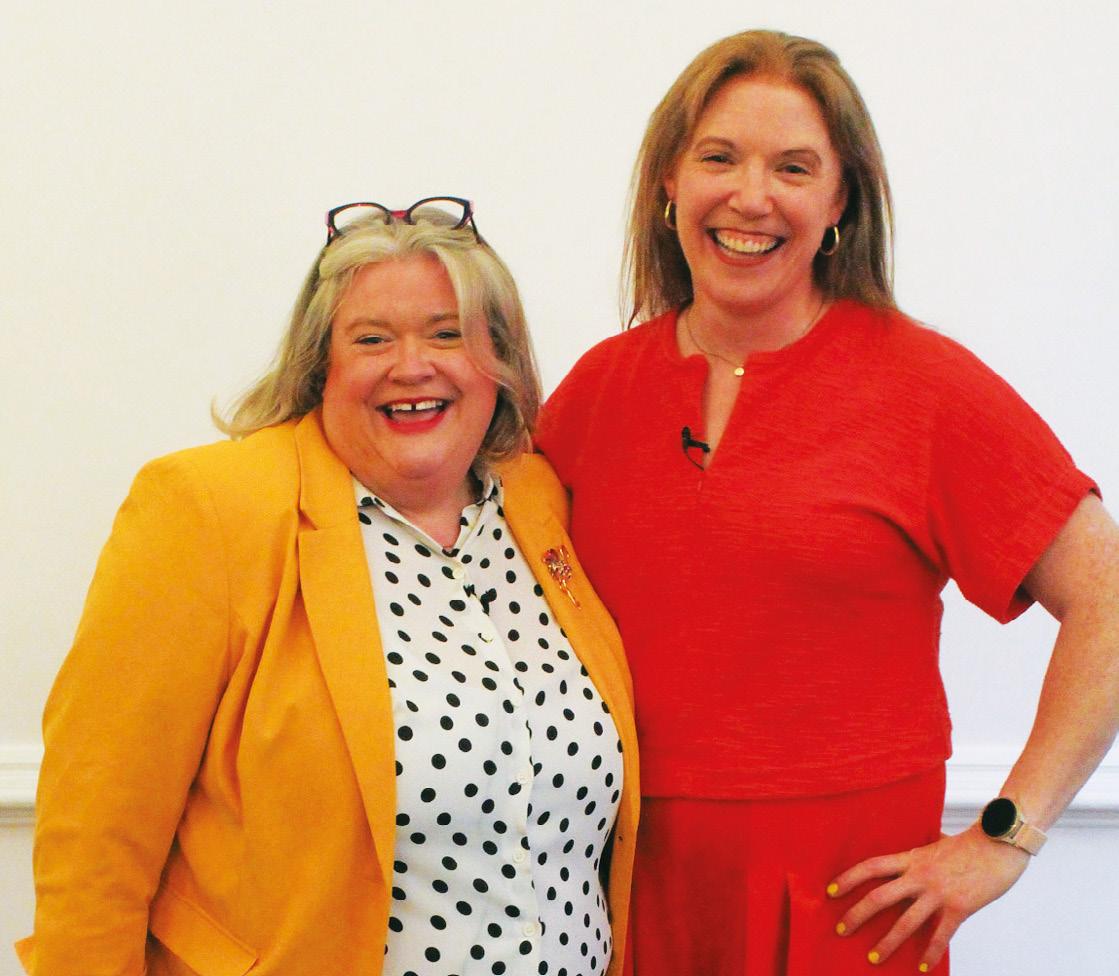
person didn’t act maliciously, our intervention is helping them align their behaviour with their intent. Second, practise consistency. It is harder to call out behaviour if we have ignored it before, so say something every time. That consistency also makes it easier for the team to understand what you expect. Third, don’t make it more dramatic than it is. Be flat in your delivery. It doesn’t have to be a big deal, just a gentle nudge to course correct their behaviour while making it clear it should not happen again.
Beth: We often hear people use ‘but they’re such a high performer’ as a reason to ignore these behaviours. ‘High performer’ is a misdiagnosis for someone whose behaviours are having a negative impact, even if they are technically proficient or achieving outcomes. Redefining high performance to include contribution to culture – and holding everyone to this standard – is what makes organisations great places to work.
If you have a question for Sarah and Beth, please go to bit.ly/Edge26AA
Beth Stallwood is a speaker, leadership coach and award-winning author of WorkJoy: A Toolkit For a Better Working Life, who’s on a mission to bring more joy into our working lives.
Sarah Langslow is a speaker, executive coach, leadership development specialist and bestselling author of Do Sweat the Small Stuff, who helps leaders build the selfawareness, confidence and skills to be exceptional.


rough our Leadership Project Grant Fund, we help bold ideas take shape. Awarding funding to projects that build leadership capability, spark collaboration and create lasting impact.