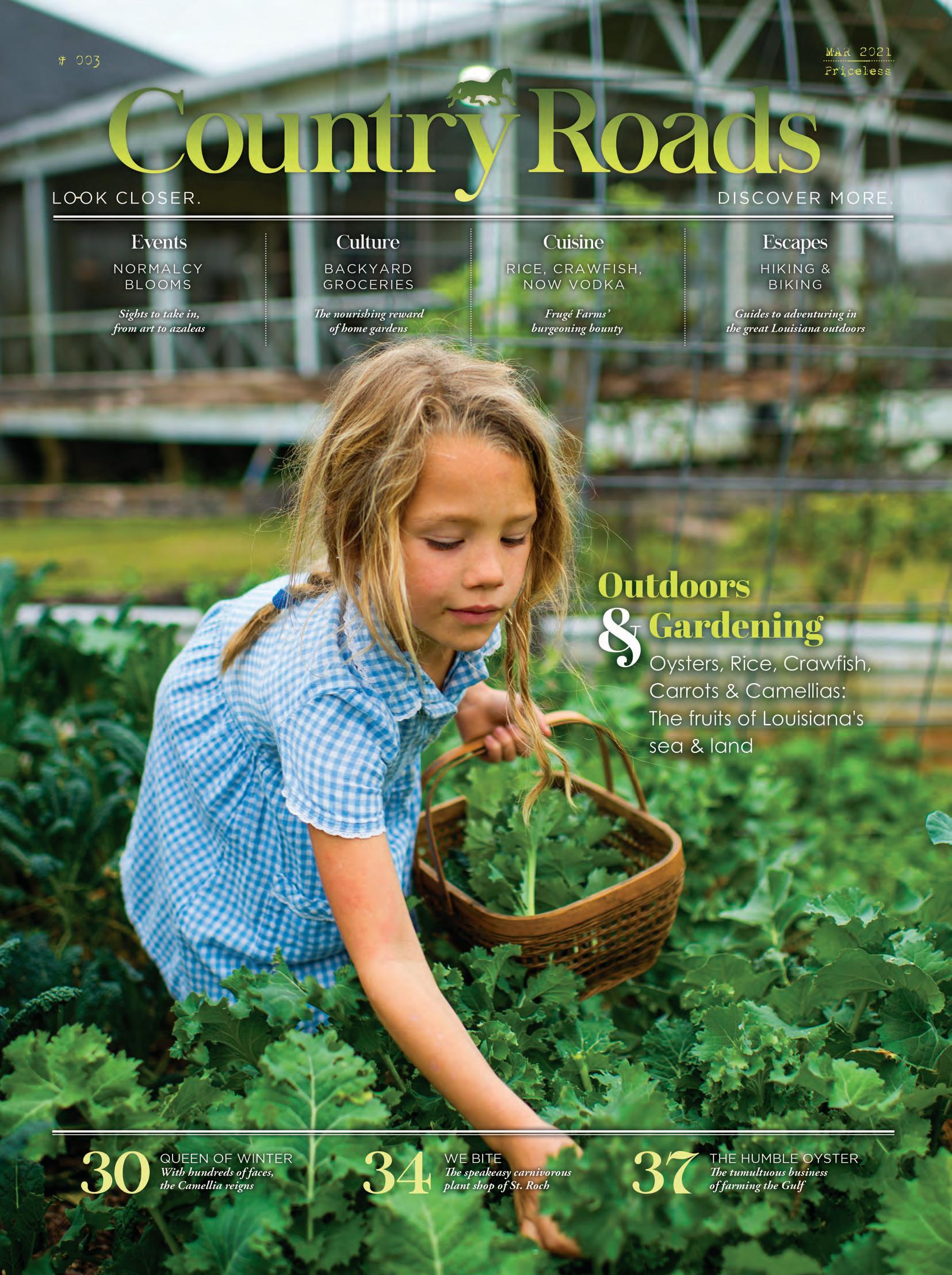
Country Roads Magazine "Outdoors & Gardening" Issue
SPRING’S AWAKENING
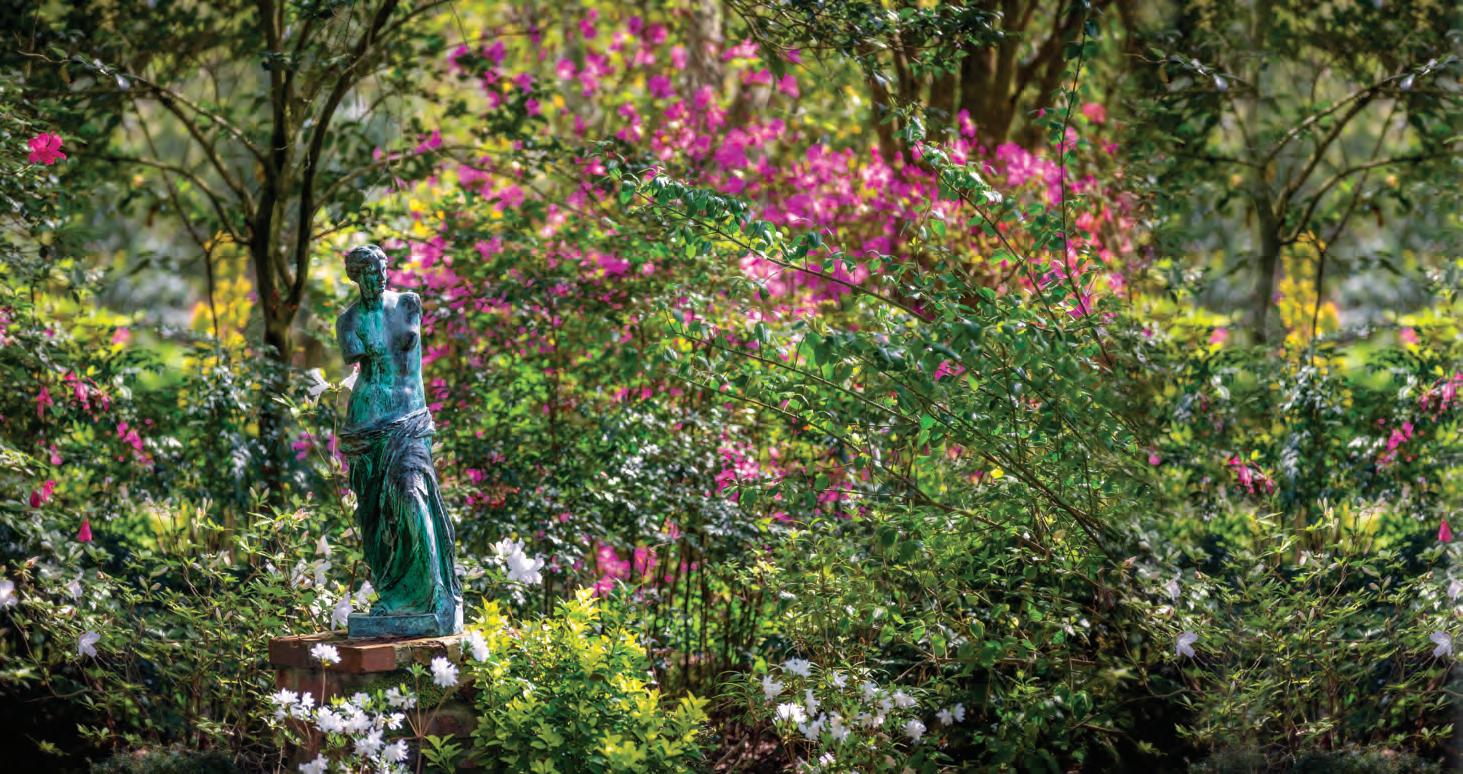
Azaleas, opera,and art; all in the sunshine
6 REFLECTIONS by
Jordan LaHaye Fontenot
8 NEWS & NOTEWORTHIES: KID’S KORNER!
Features
On the Cover Events
30
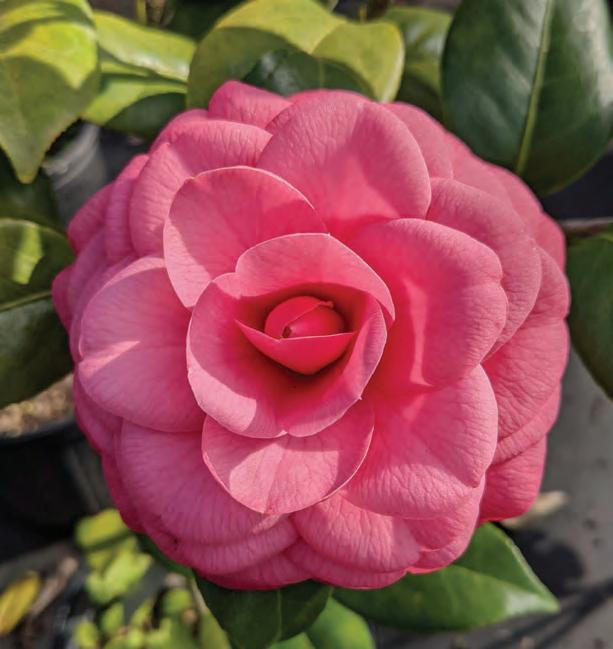
THE QUEEN OF WINTER
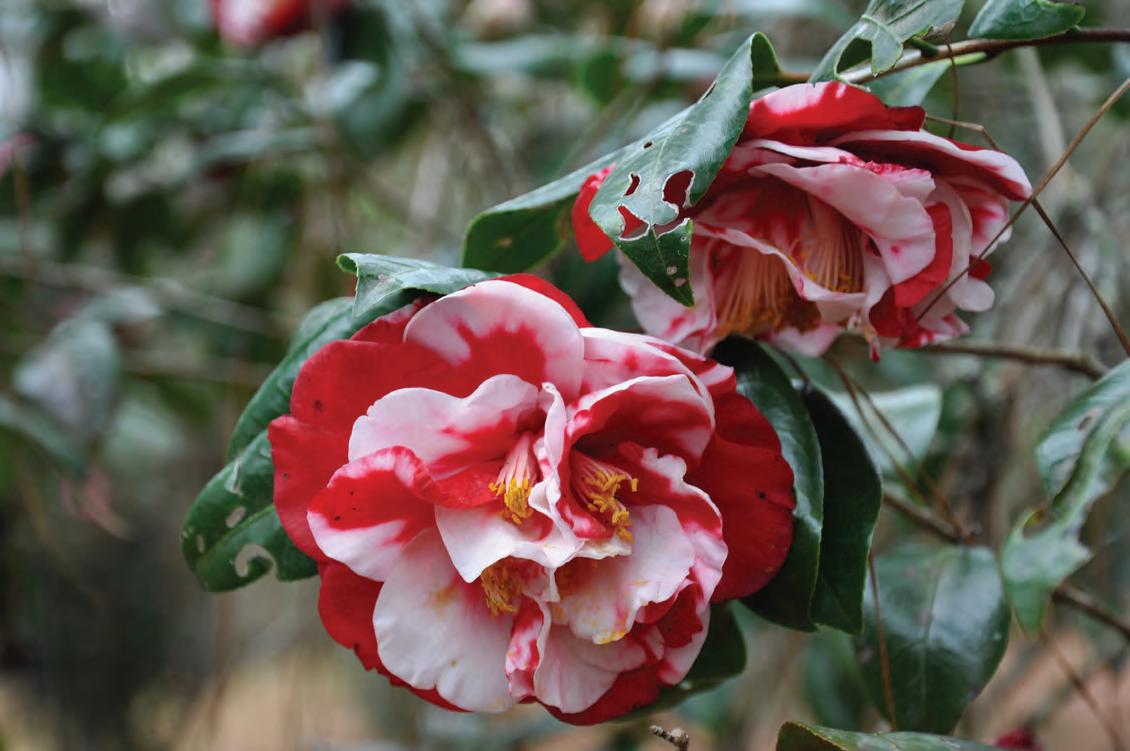
The art and history of camellia cultivation in Louisiana by Kristy Christiansen
34 WE BITE
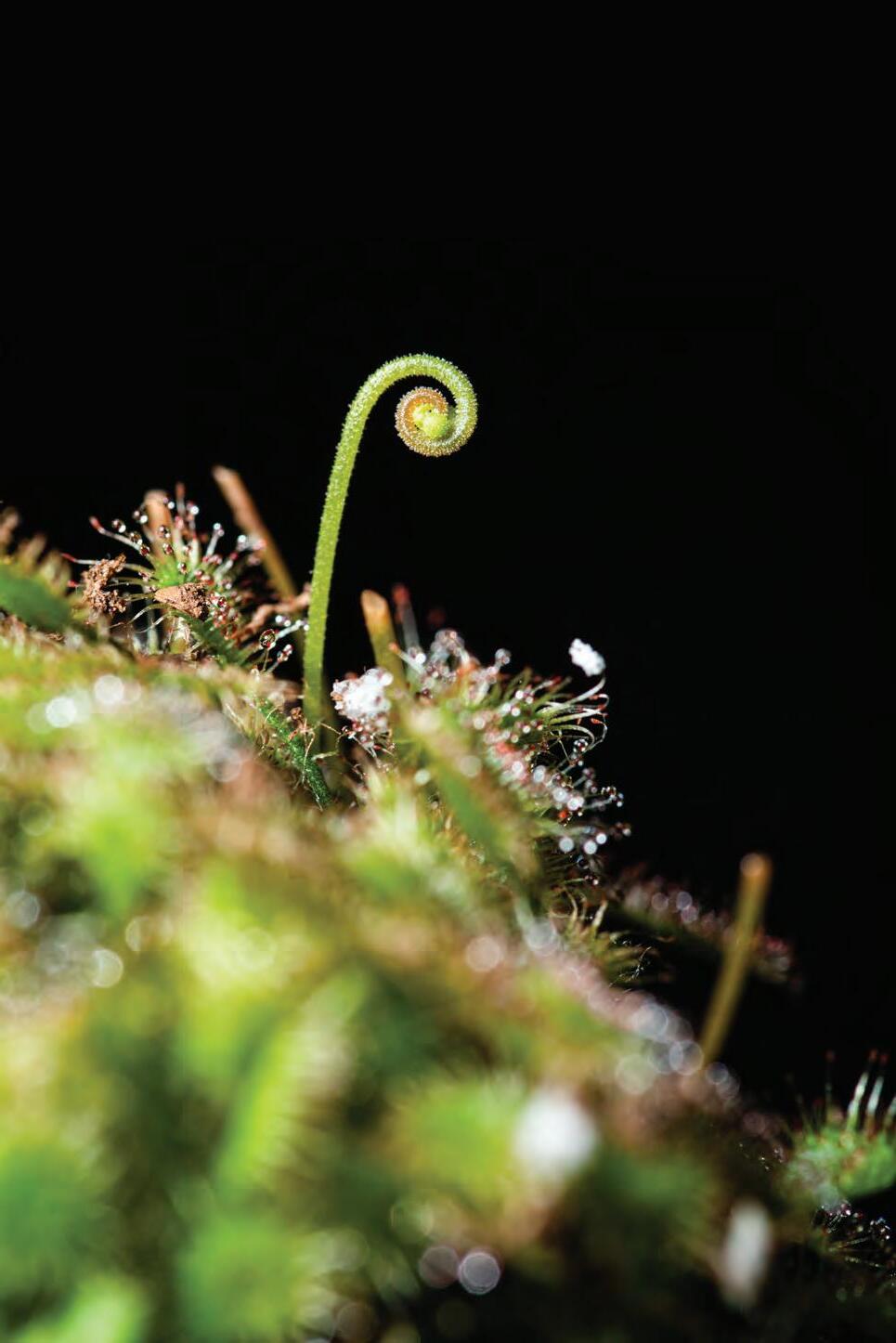
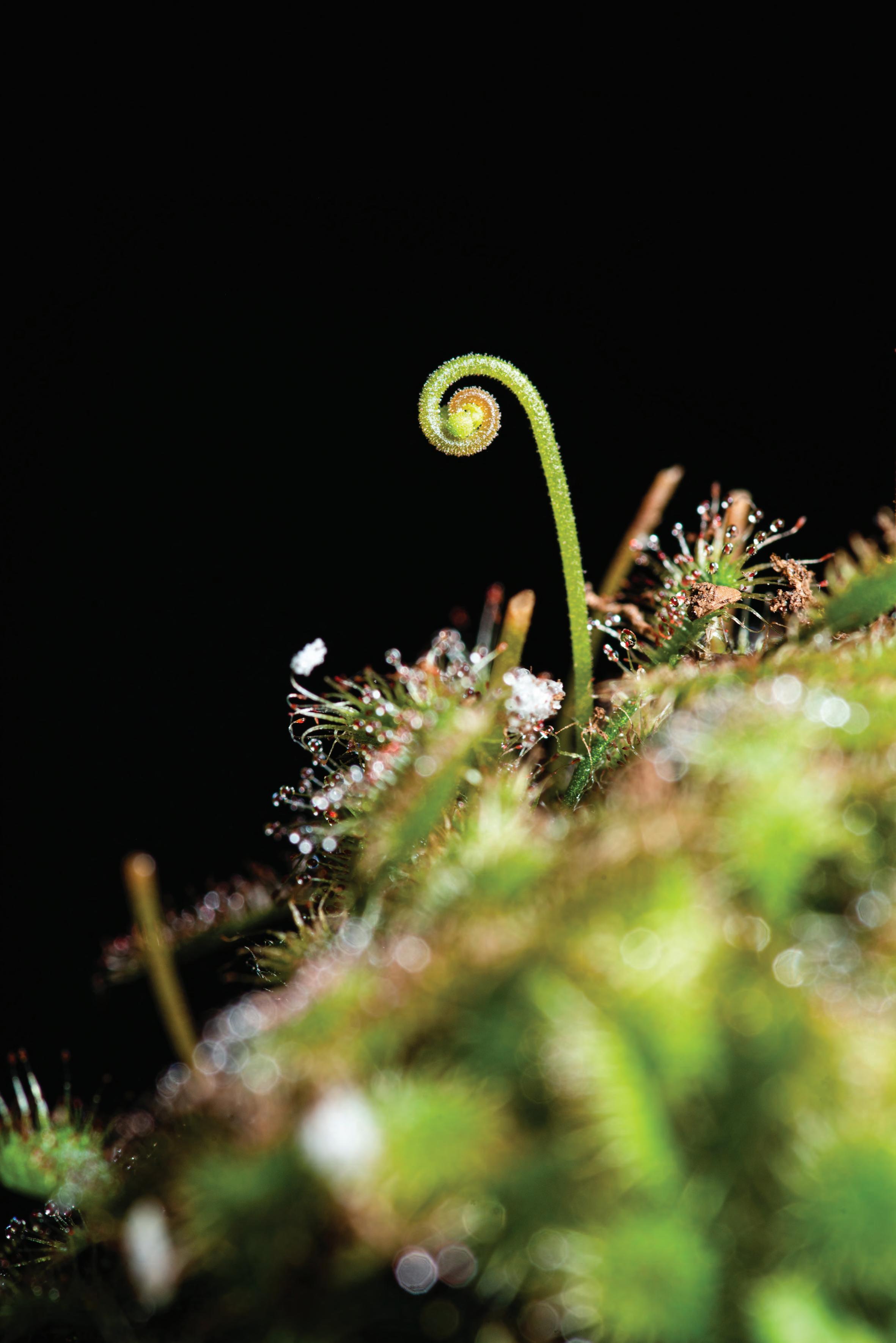
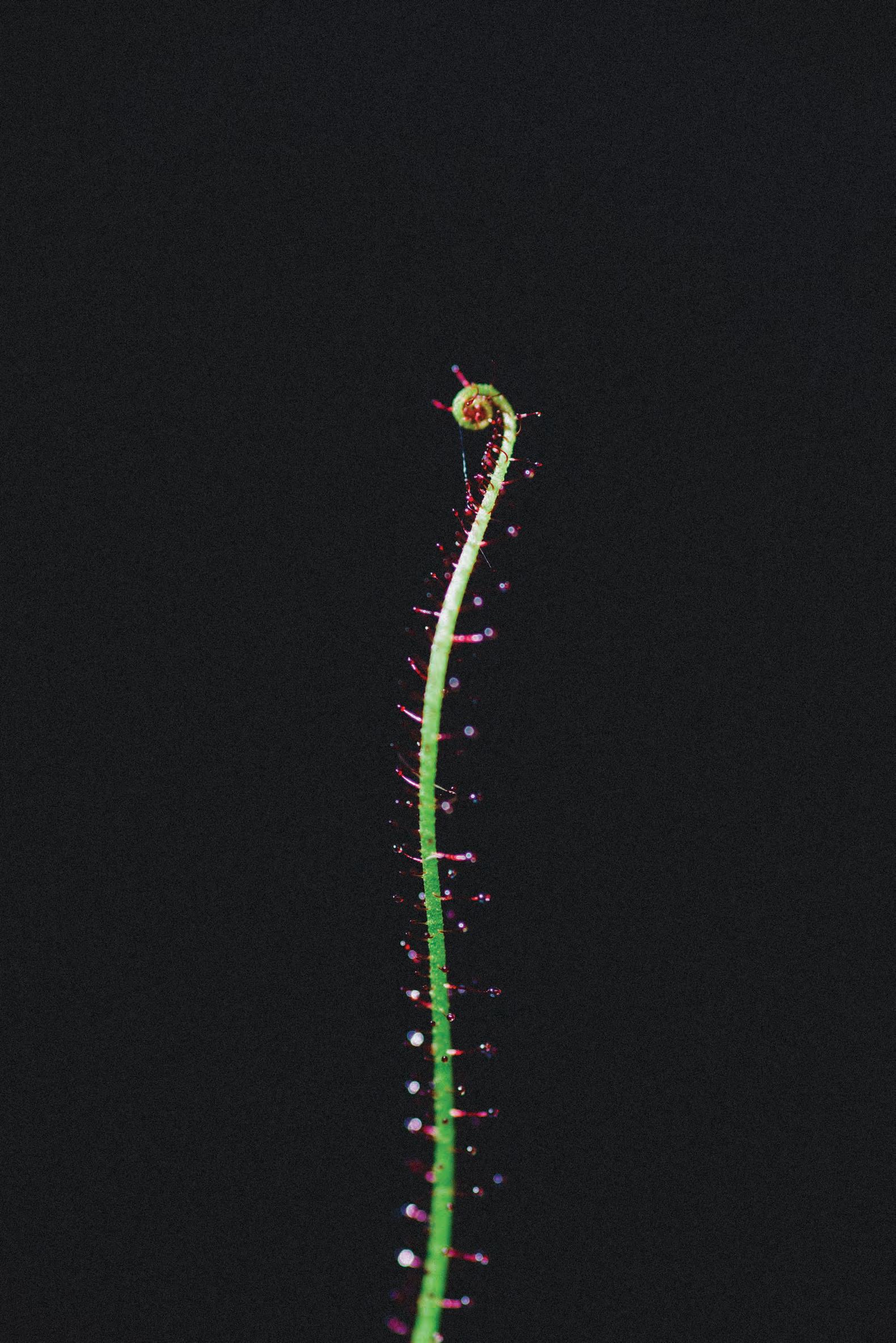
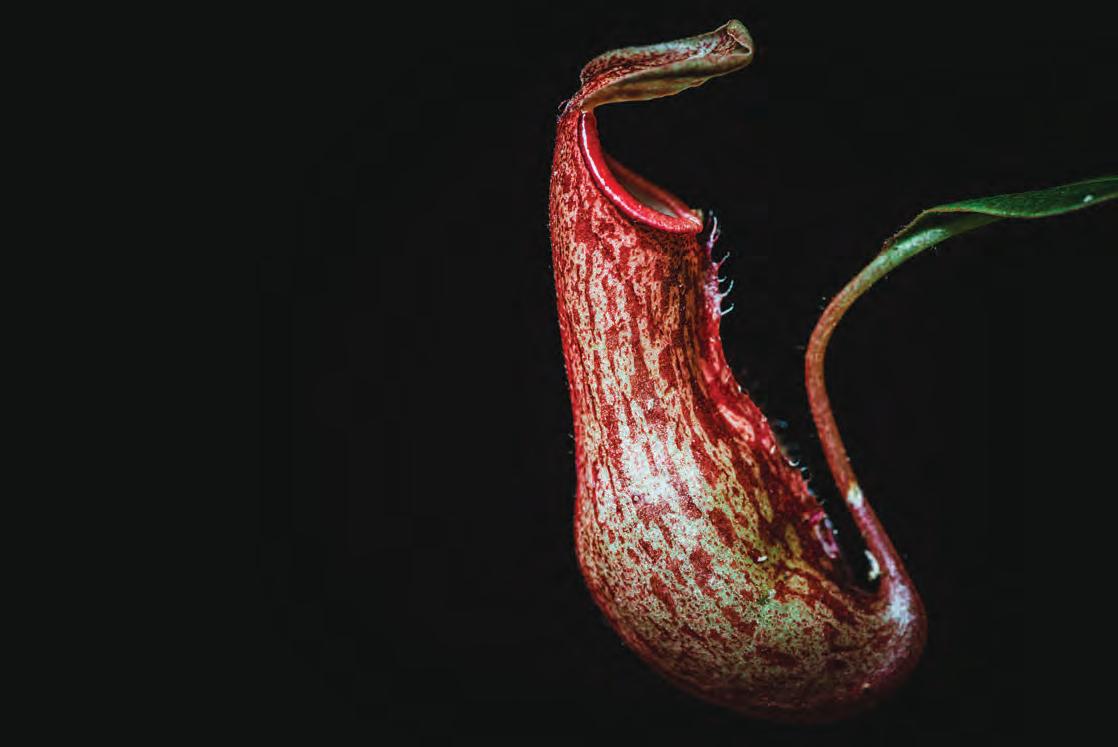
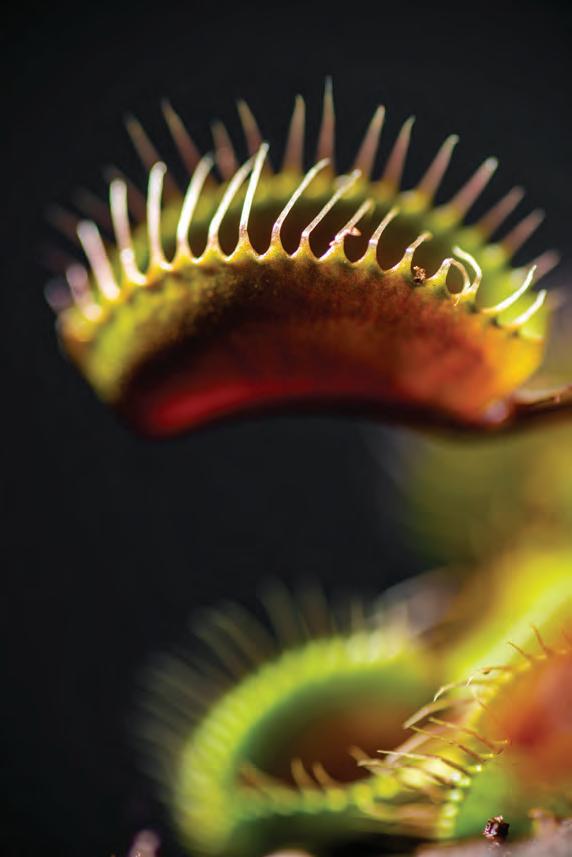
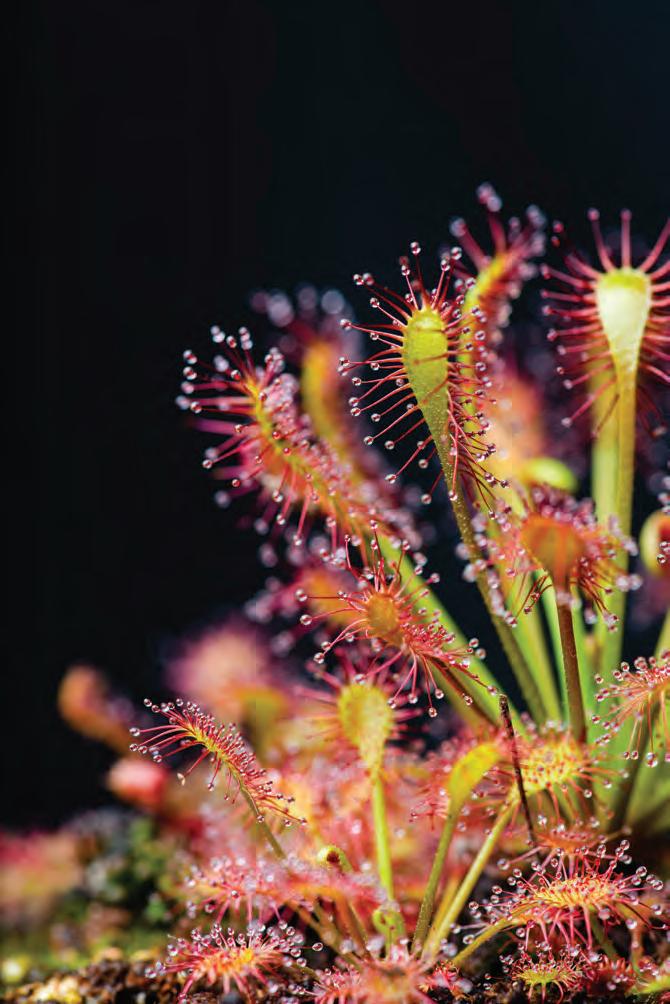
The speakeasy carnivorous plant shop of St. Roch by Beth D’Addono
37 THE HUMBLE OYSTER
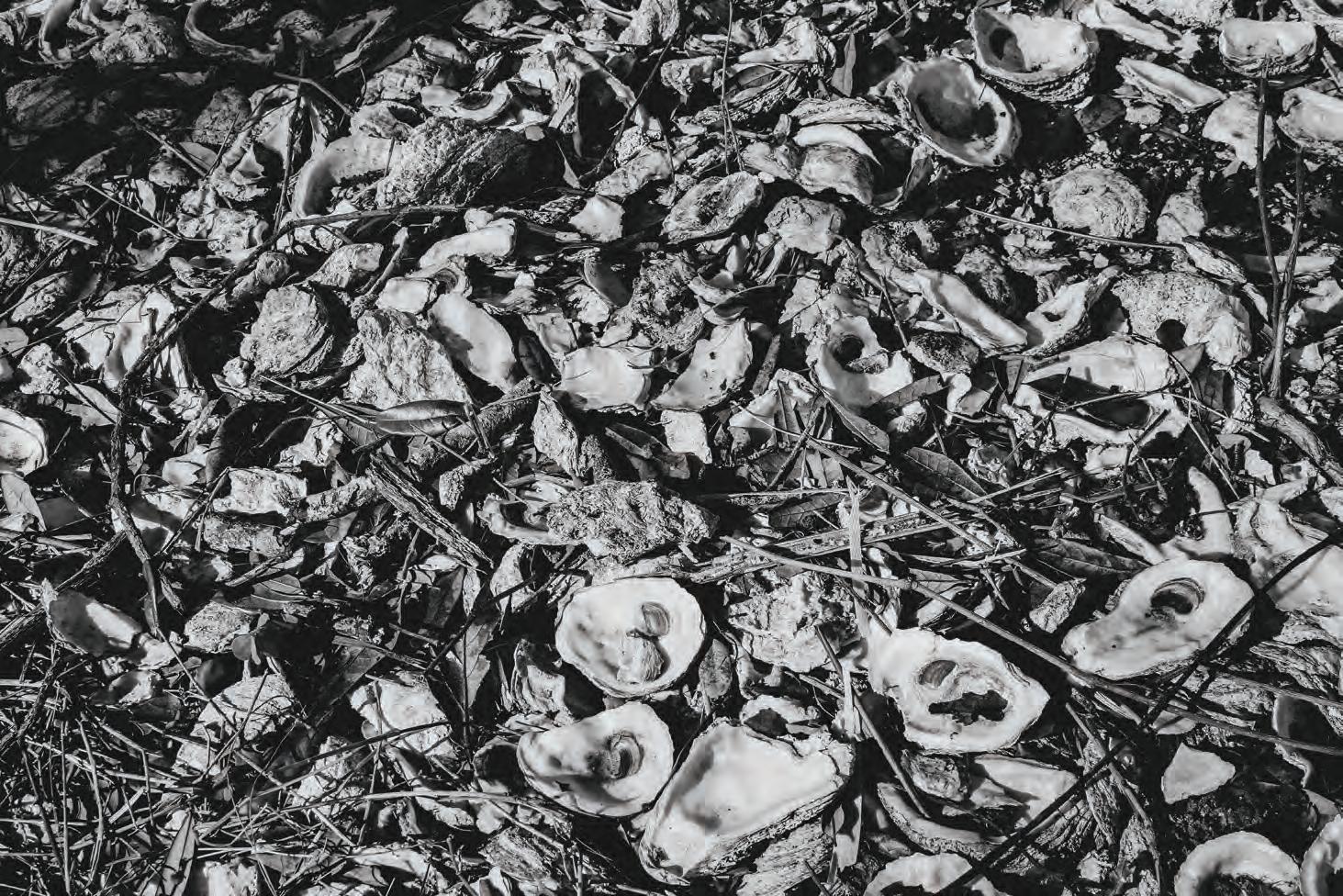
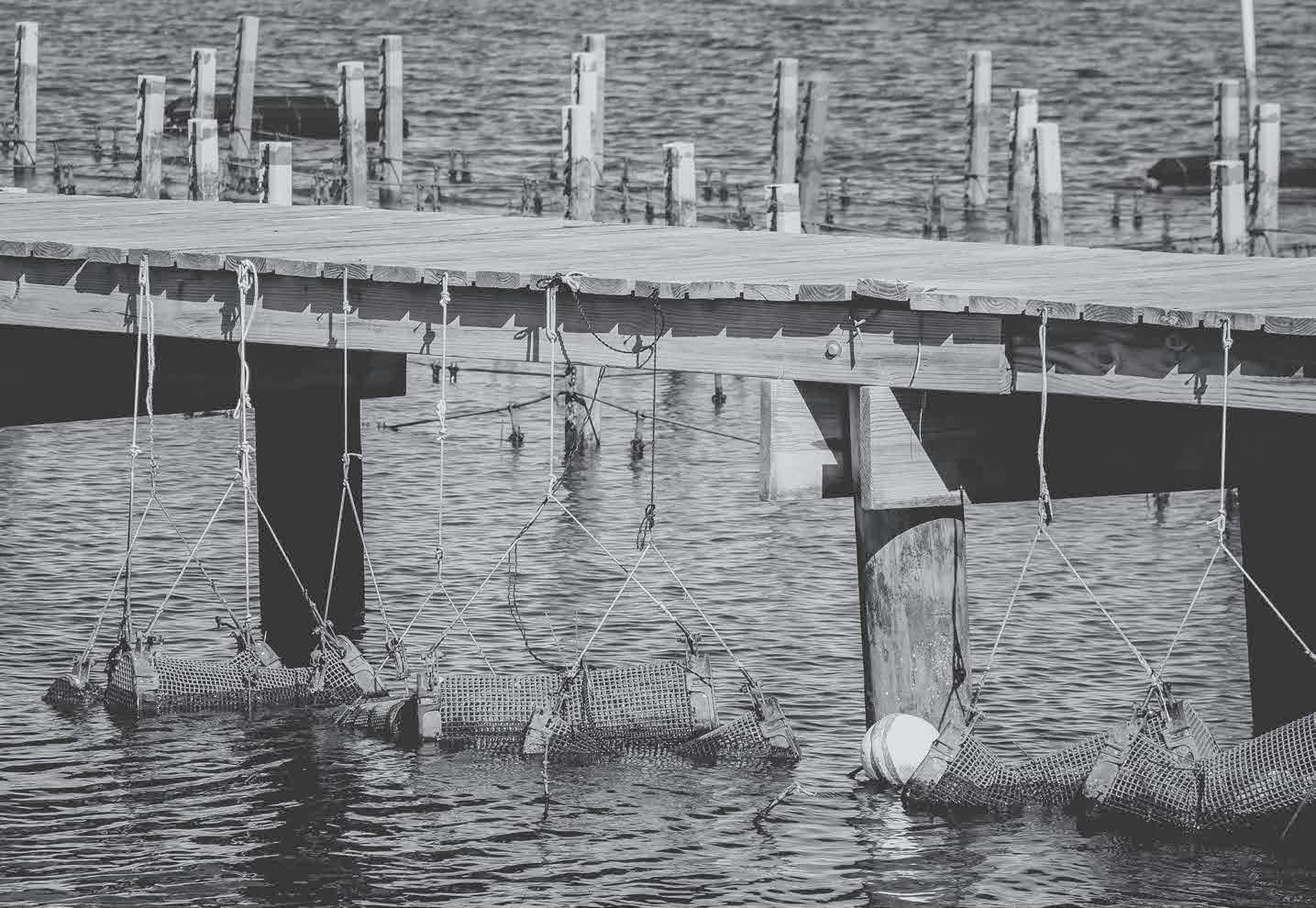
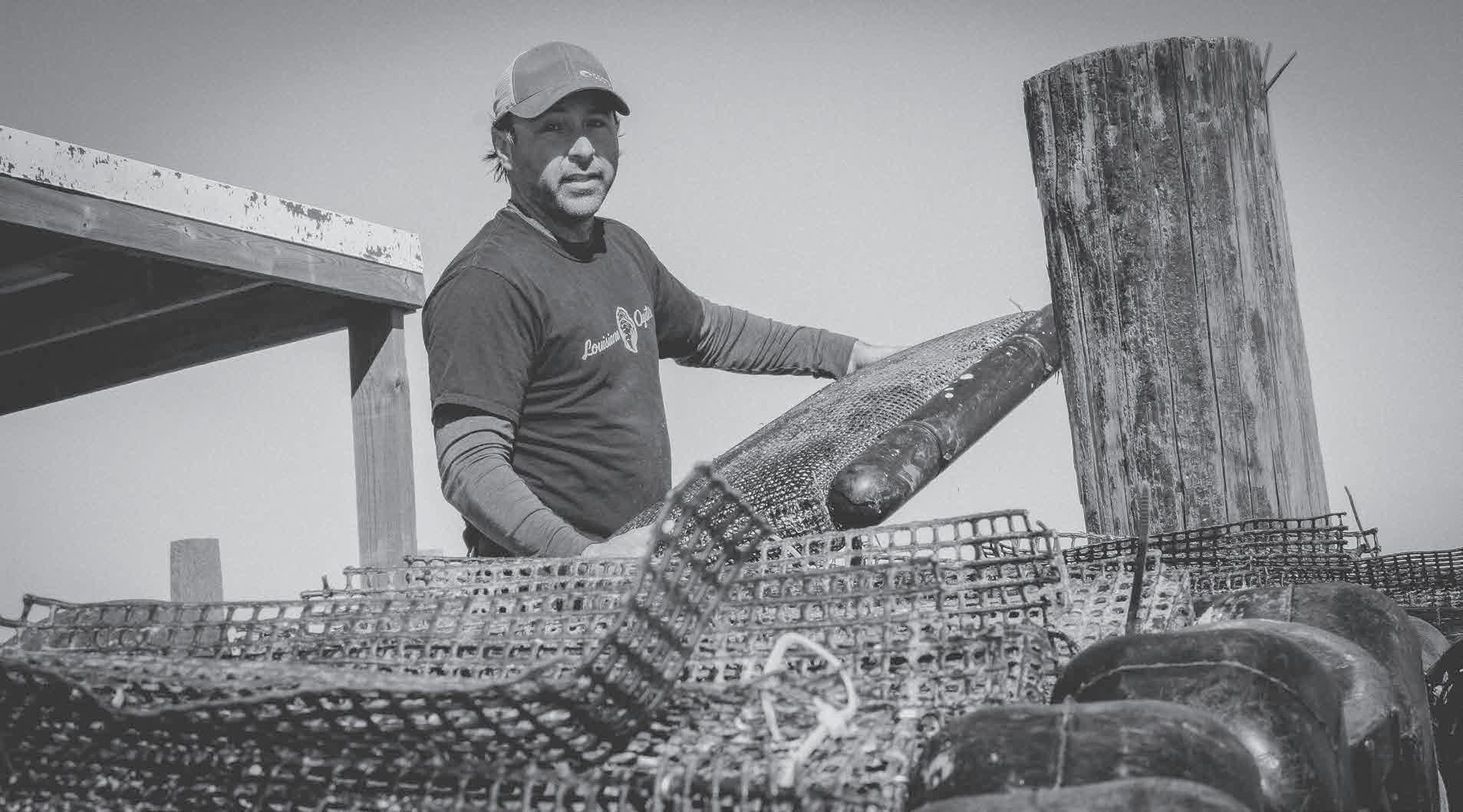
The tumultuous world of farming the Gulf by Jason Vowell
OUTDOORS & GARDENING
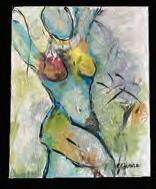
Cover by Paul Kieu
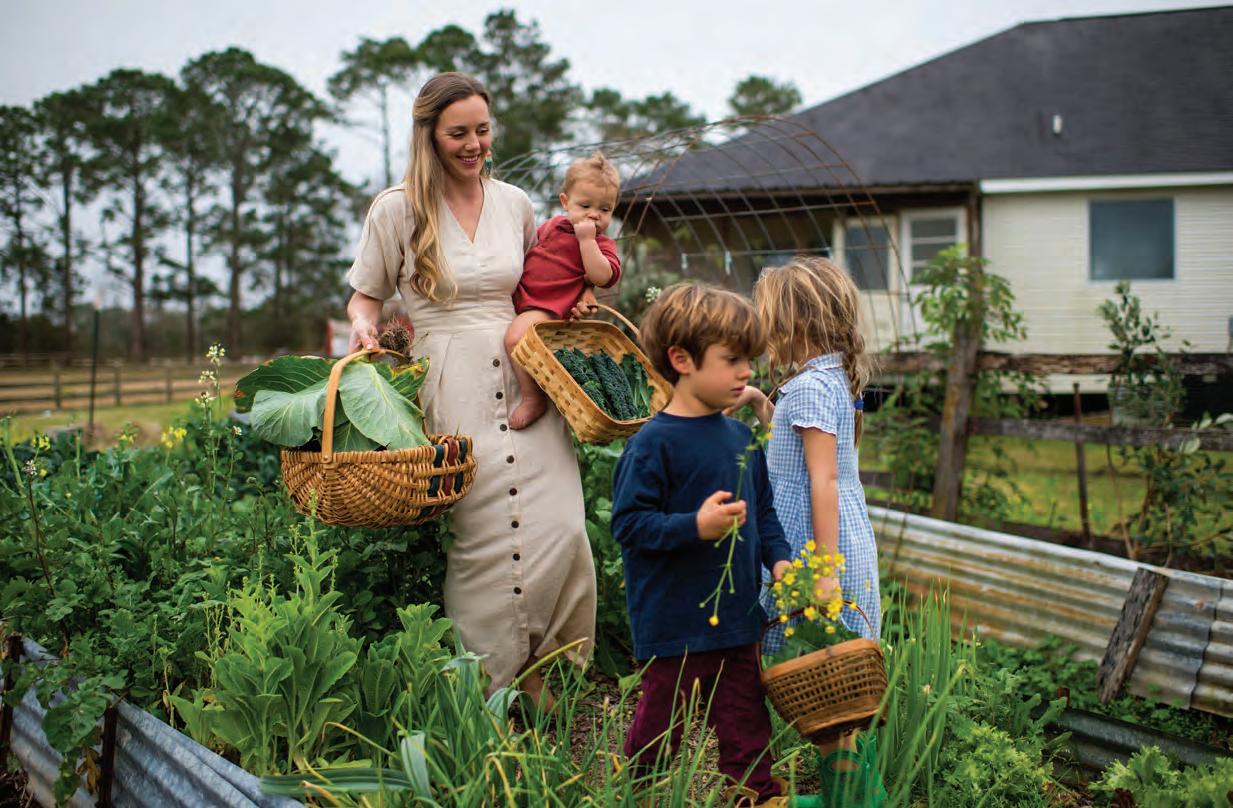
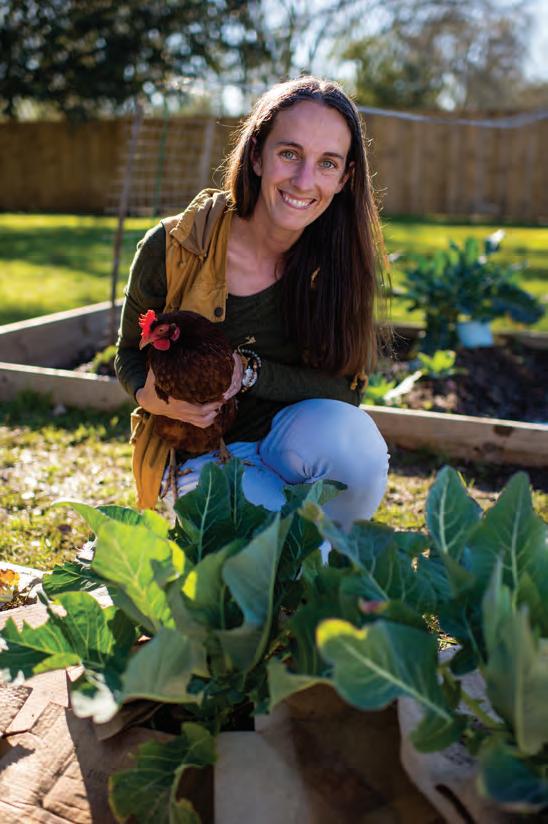
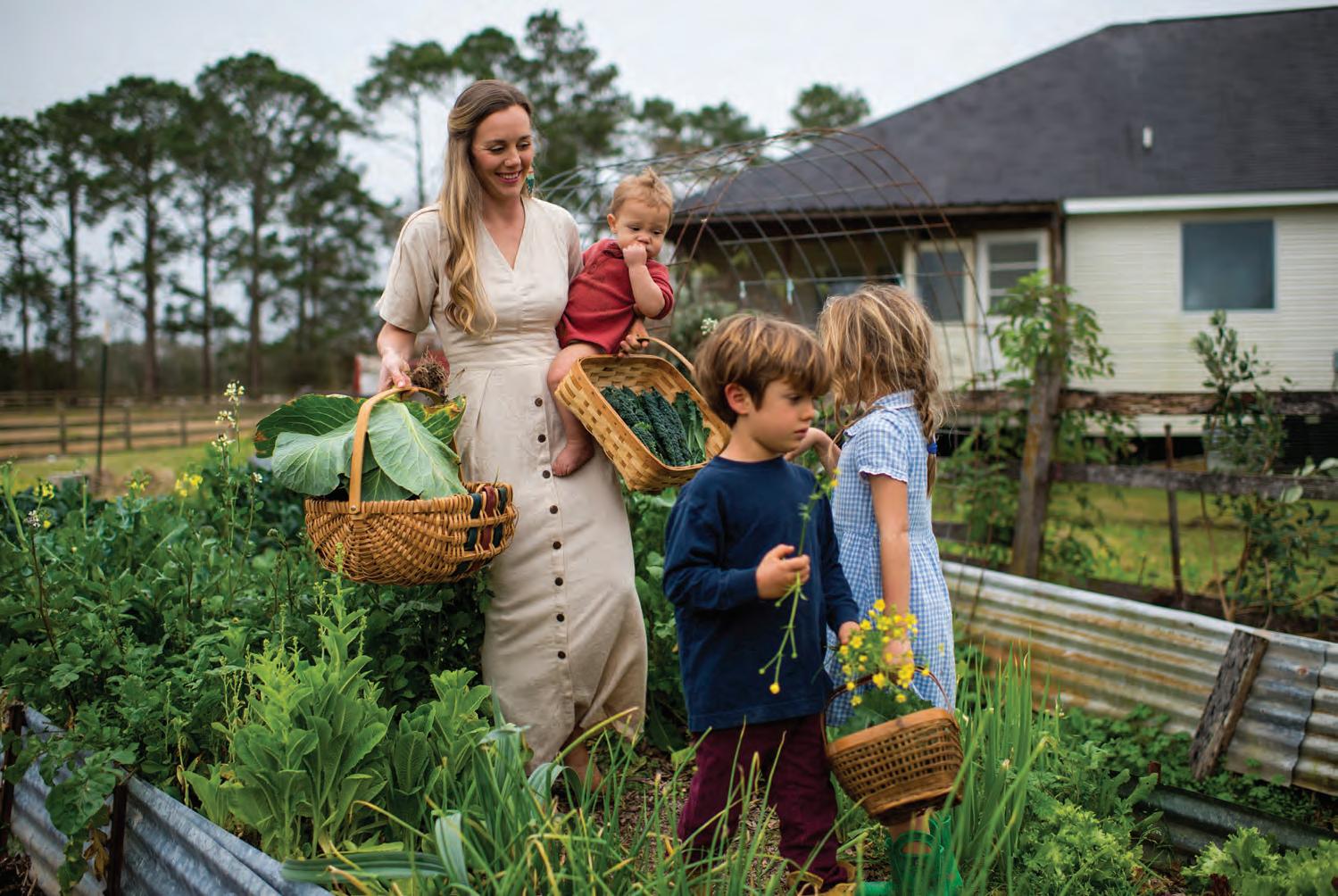
In his story, “Yard to Table,” (page 44) Jonathan Olivier quotes the agrarian philosopher Wendell Berry, who described the act of eating food grown by the work of one’s own hands as “the profoundest enactment of our connection with the world.” In interviewing two families who enjoy the fruits of a thriving backyard garden, Olivier expresses hope for a future in which more people will pursue the fulfllment found in growing things. It’s a sentiment we celebrate each March with our Outdoors & Gardening issue, our chance to dig into our region’s fertile soils—where we fnd not only verdure but also the roots beneath so much of our region’s culture: our livelihoods, our cuisine, our history. In this issue, fnd stories of a rice-crawfsh-farmturned-distillery, of the tribulations of oyster farming in the Gulf, of a tiny carnivorous plant shop in St. Roch, and of Louisiana’s winter jewel: the camellia. In these pages, verdant with the beauty of an emerging spring, we hope you fnd inspiration—as we have—to get your hands dirty, to re-enact your own your connection with our world.
Publisher James Fox-Smith
Associate
Publisher
Ashley Fox-Smith
Managing Editor
Jordan LaHaye Fontenot
Arts & Entertainment
Editor
Alexandra Kennon
Creative Director
Kourtney Zimmerman
Contributors:
Kristy Christiansen, Paul Christiansen, Ed Cullen, Beth D’Addono, C.C. Lockwood, Paul Kieu, Jonathan Olivier, Jason Vowell
Cover Artist
Paul Kieu
Advertising
SALES@COUNTRYROADSMAG.COM
Sales Team
Heather Gammill & Heather Gibbons
Custom Content Coordinator
Lauren Hefker
Advertising Coordinator
Kathryn Kearney President
Dorcas Woods Brown
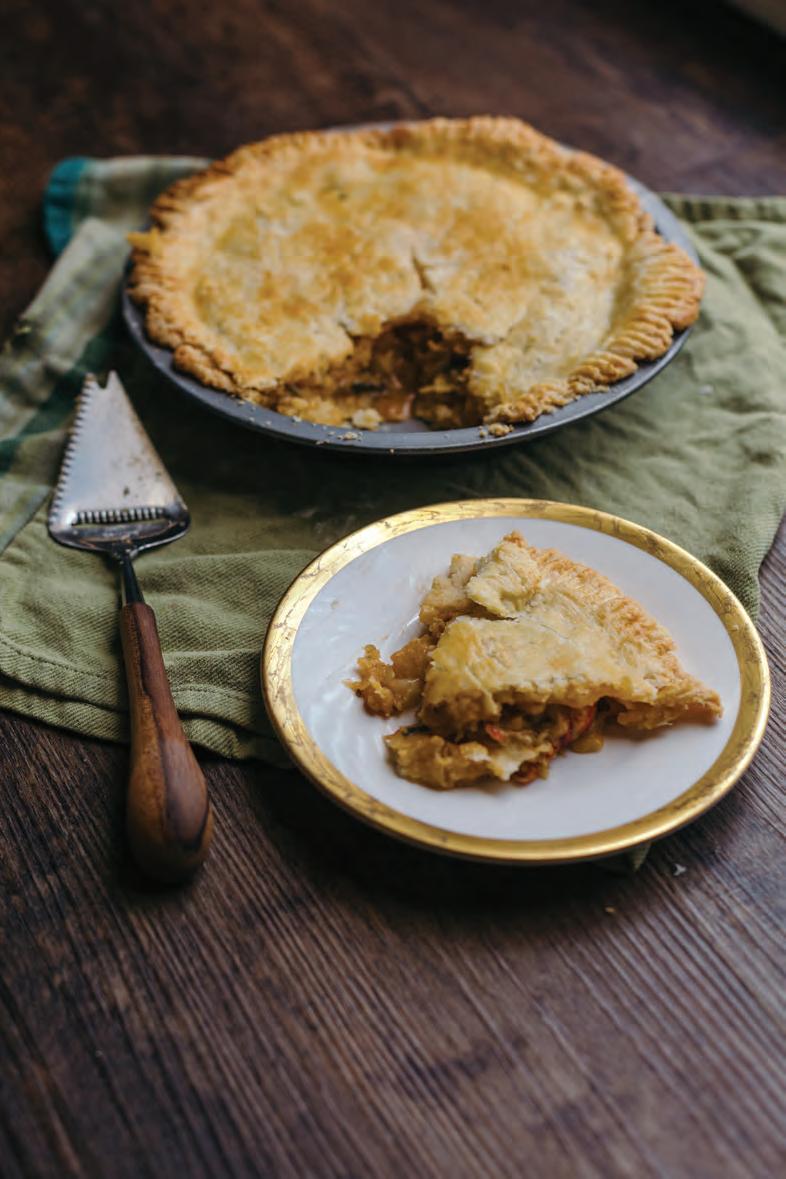
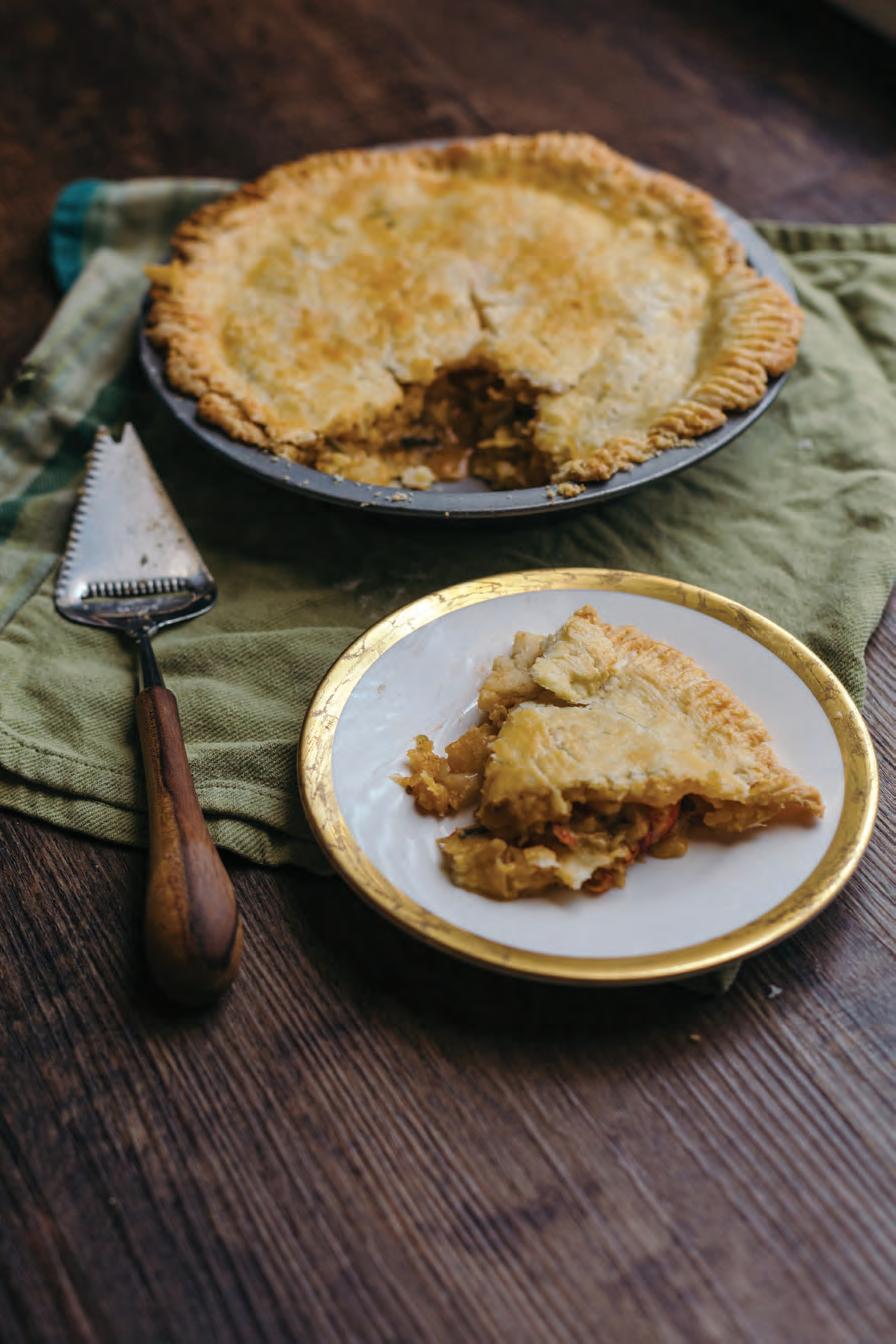
Crawfish Pie by Lucie Monk Carter 40 43
THE VERSATILE SOILS OF FRUGÉ FARMS
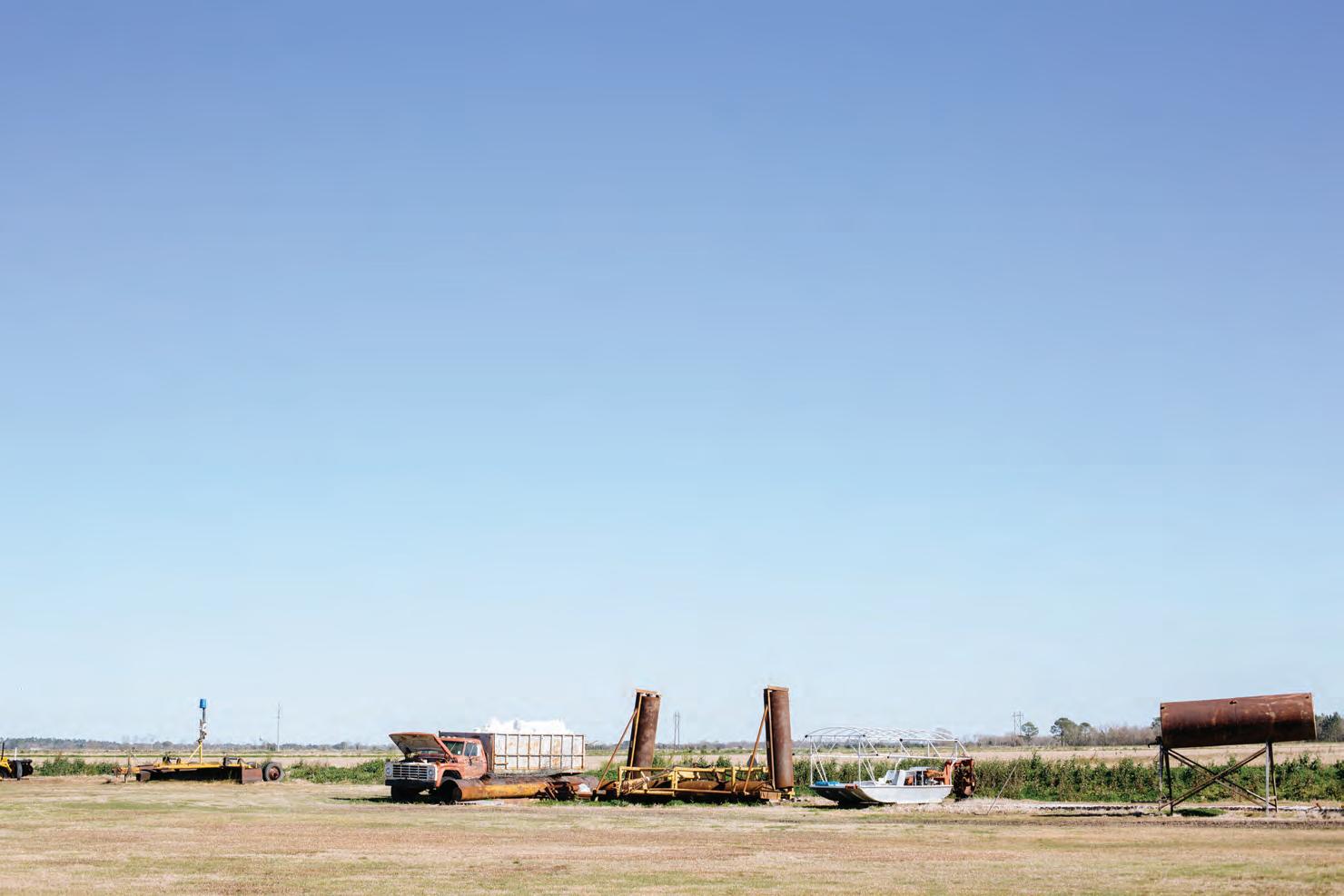
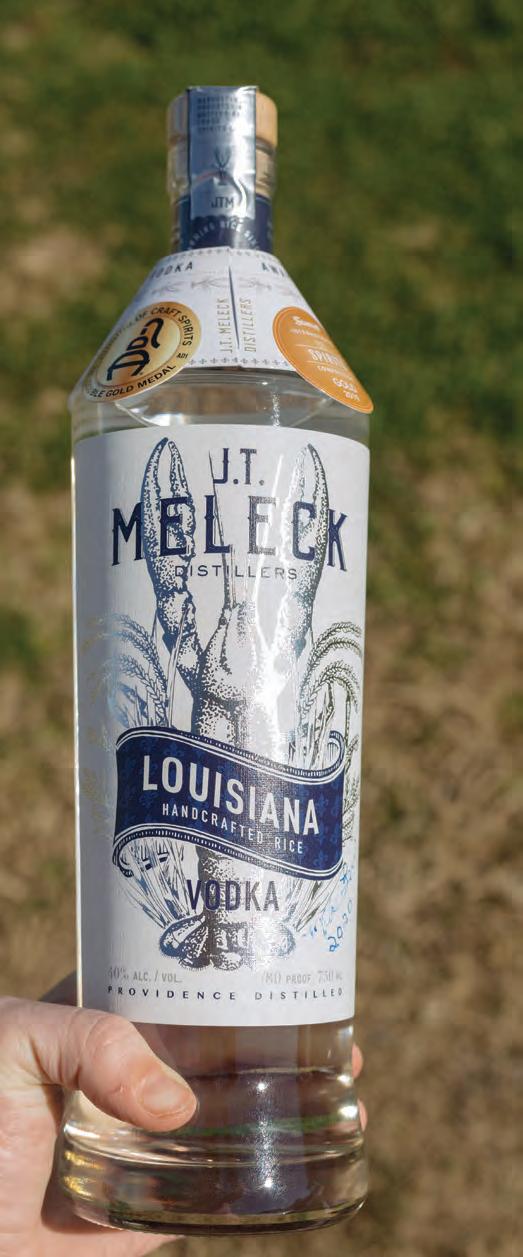
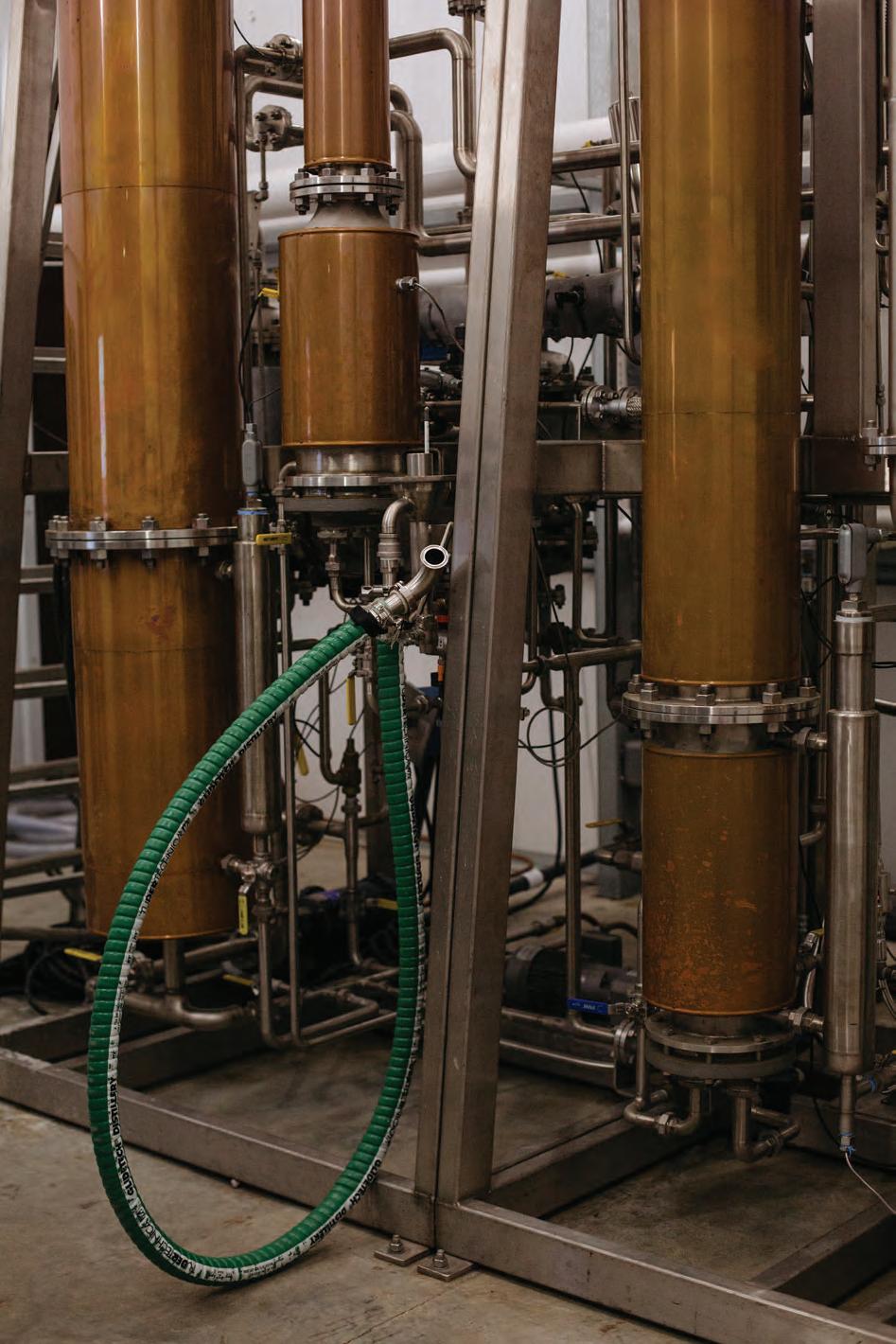
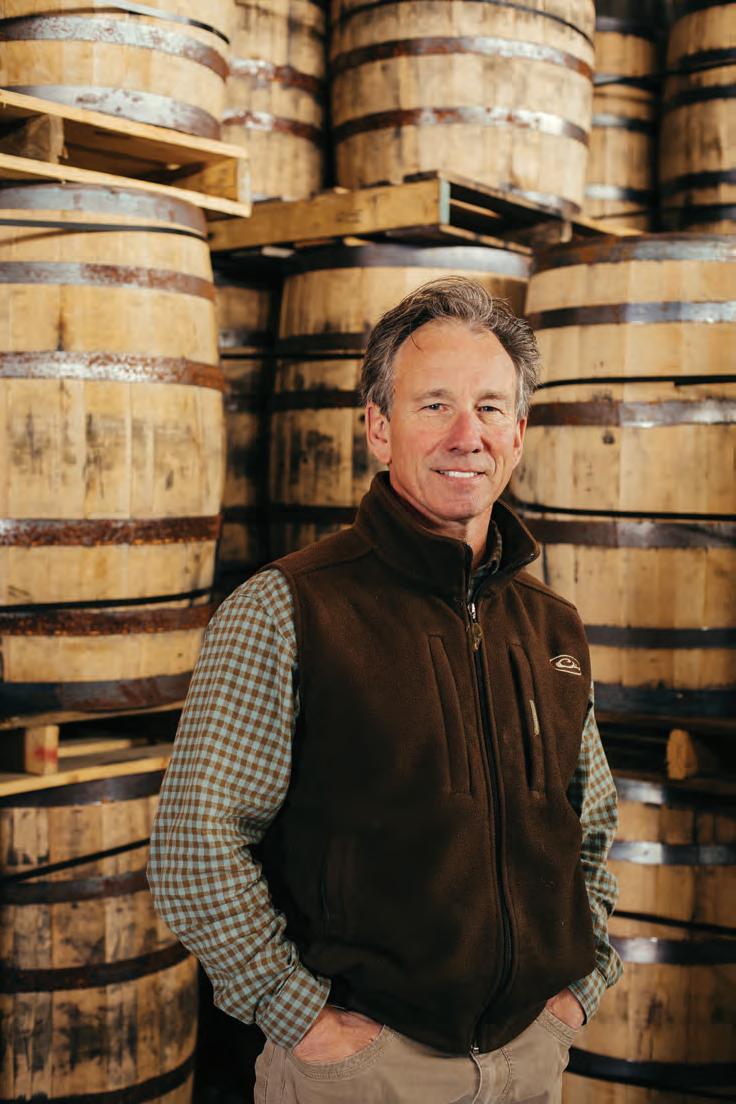
A history of rice, a culture of crawfish, and now—vodka by Lucie Monk Carter
RECIPE
44
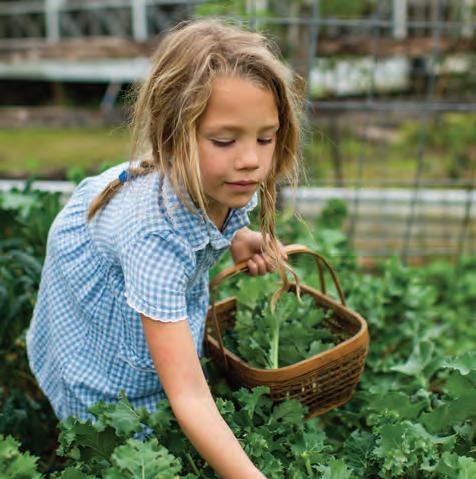
48 YARD TO TABLE
A renewed interest in home gardens fosters A GUIDE TO LOUISIANA HIKING TRAILS
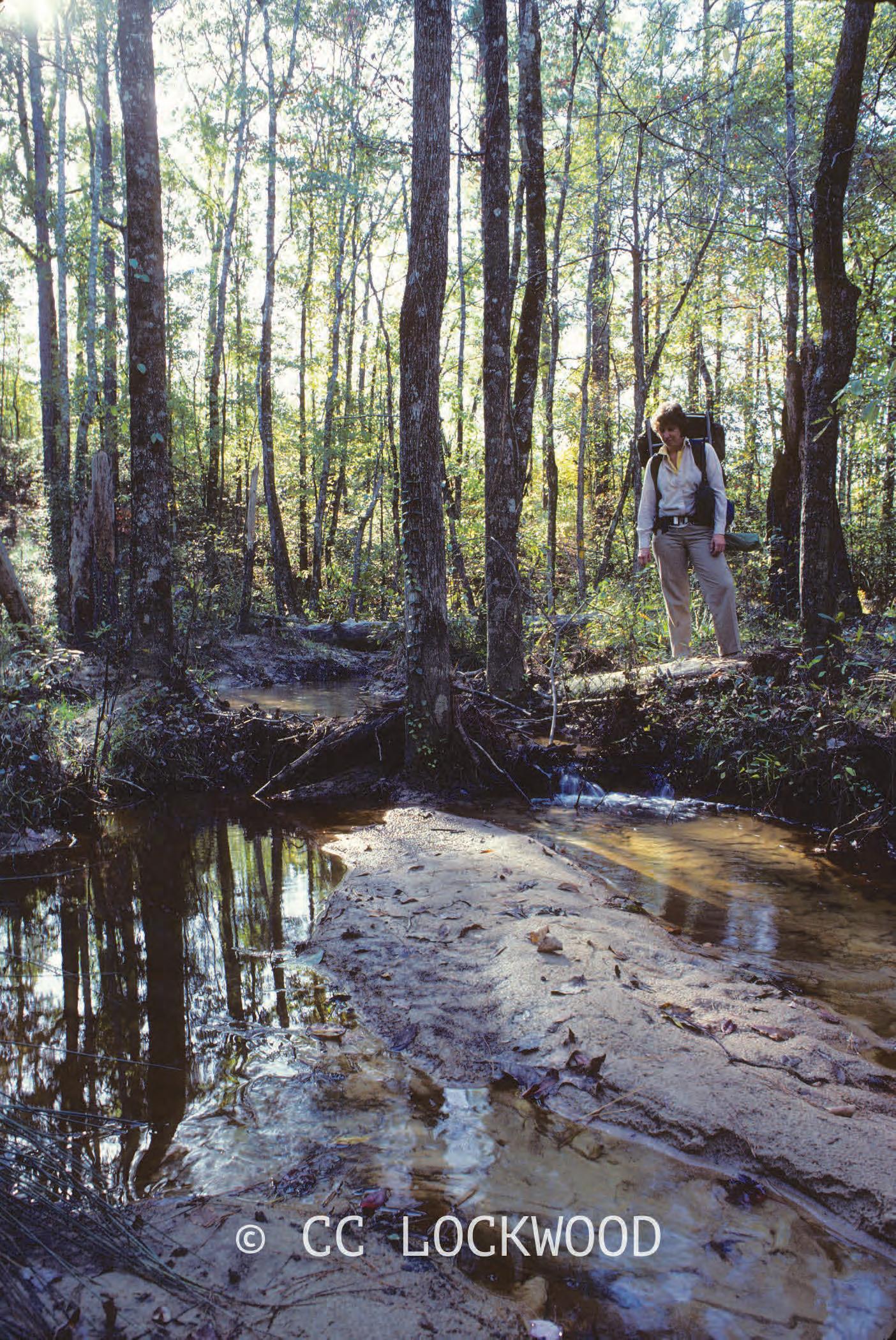
Rugged hills and stunning vistas await by Jonathan Olivier
Country Roads Magazine 758 Saint Charles Street Baton Rouge, LA 70802 Phone (225) 343-3714 Fax (815) 550-2272
EDITORIAL@COUNTRYROADSMAG.COM
WWW.COUNTRYROADSMAG.COM Subscriptions
54 25
50
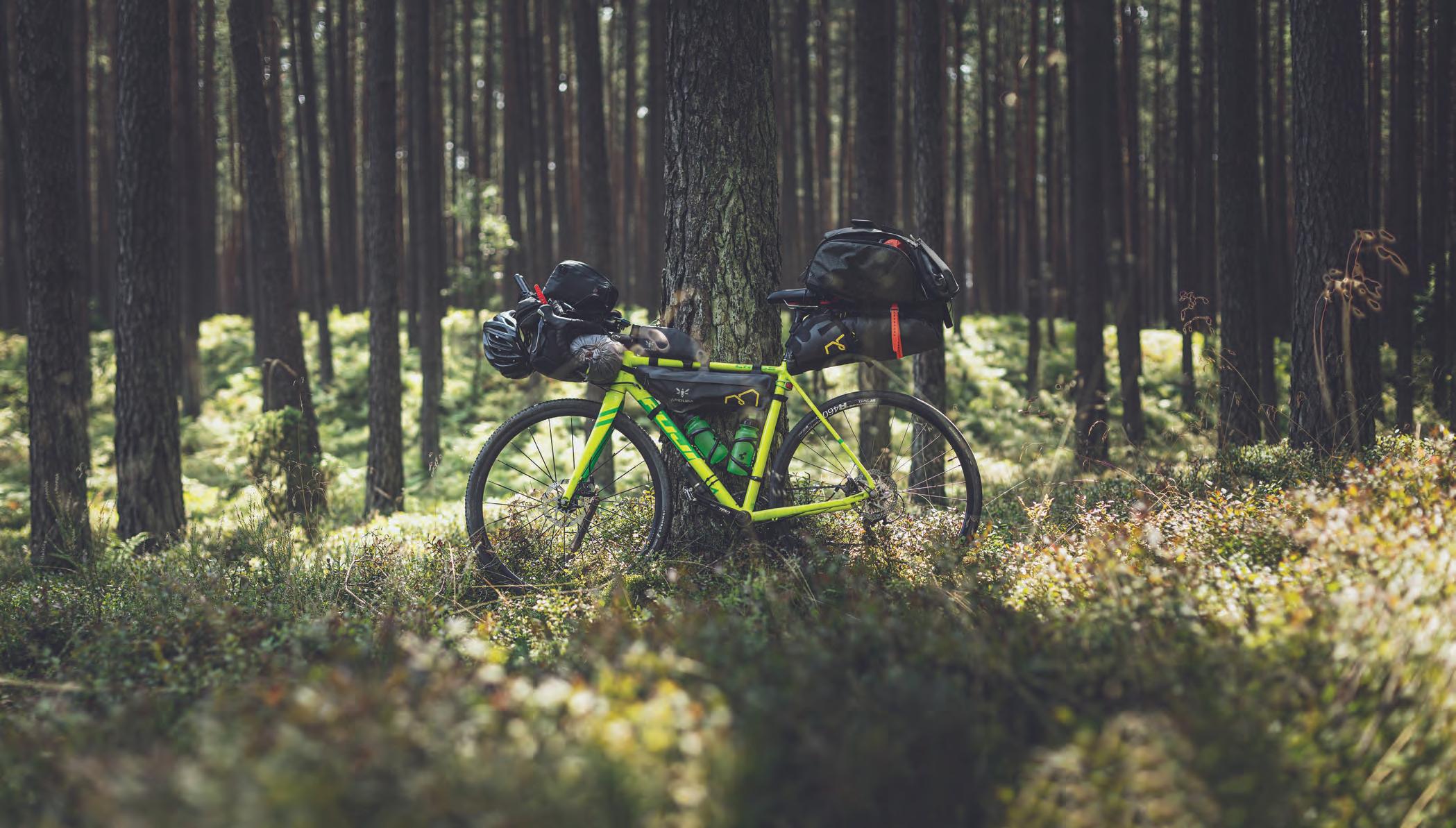
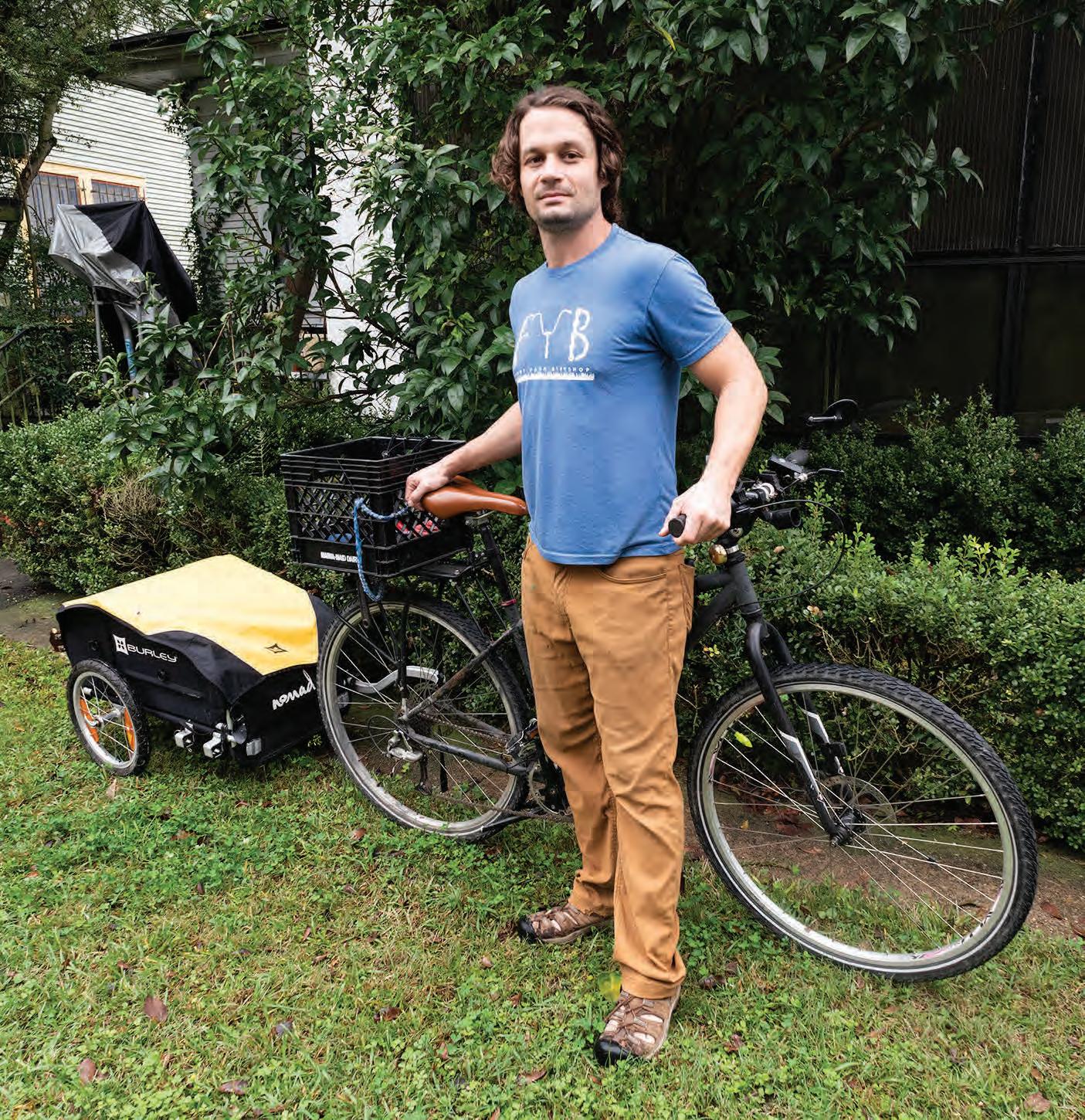
CYCLE, CAMP, REPEAT
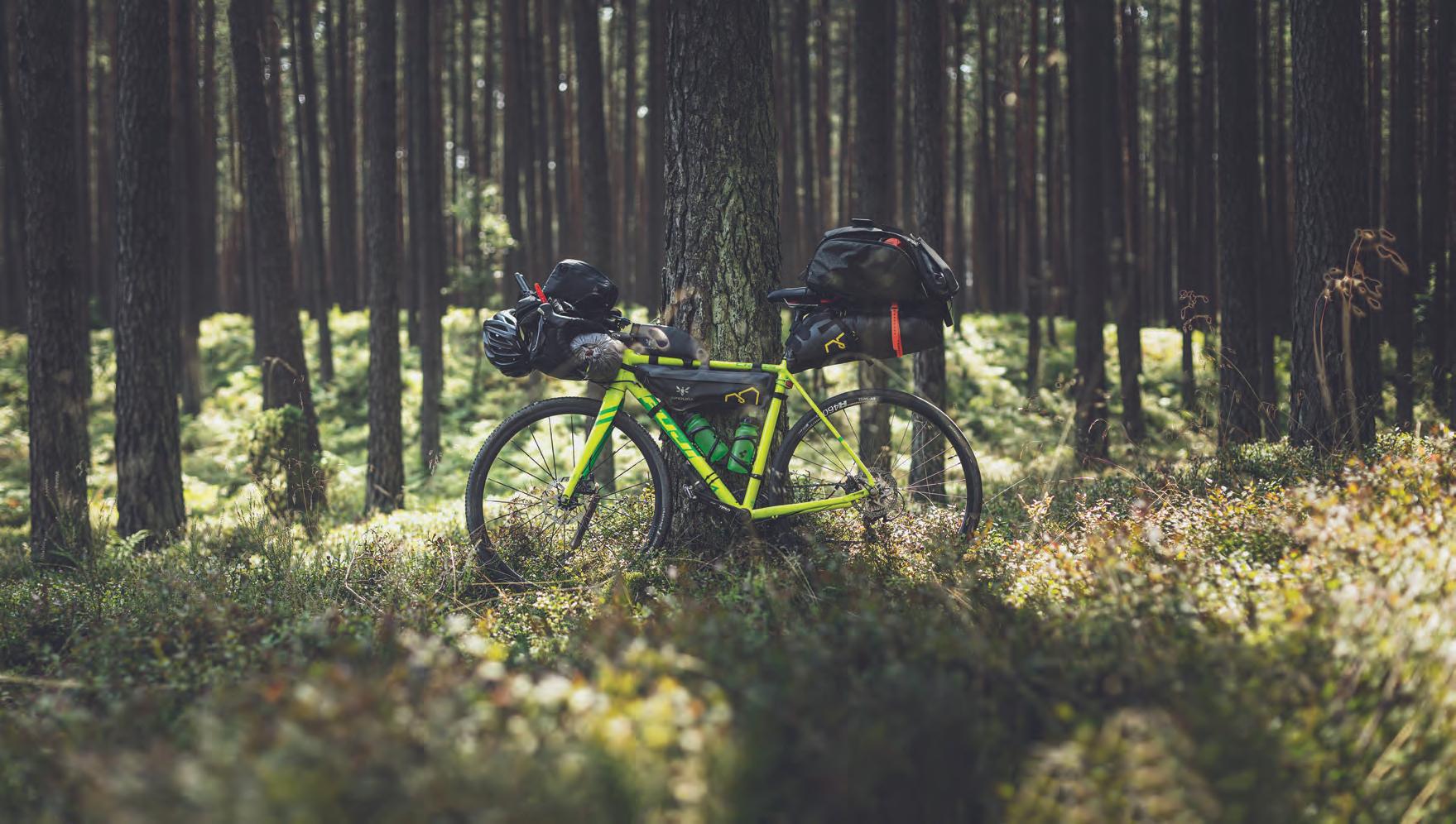
Bikepacking in the Bayou State by Ed Cullen
PERSPECTIVES
Lilly Potter: Dr. Lillian Bridwell-Bowles and her goddesses by Jordan LaHaye Fontenot
ISSN #8756-906X
Copyrighted. All rights reserved. No portion of this publication may be reproduced without permission of the publisher. Te opinions expressed in Country Roads magazine are those of the authors or columnists and do not necessarily refect the views of the publisher, nor do they constitute an endorsement of products or services herein. Country Roads magazine retains the right to refuse any advertisement. Country Roads cannot be responsible for delays in subscription deliveries due to U.S. Post Ofce handling of third-class mail.
Reflections
FROM THE MANAGING EDITOR
My grandma has the most fantastic pothos I’ve ever seen. It sits in the middle of a round dinner table, which hasn’t been used for dinner in ages. For years, this table’s purpose has been simply to hold this remarkable specimen of devil’s ivy. Pouring from its pot, the vines— dozens of them—must stretch at least as long as I am tall. My grandmother, Cherie, arranges them in a circle, wrapping around and around that pot in a massive, mesmerizing swirl of greenery. Tis vine has propogated half a dozen other plants that live on her back patio, plus many more she’s planted in the dirt, trailing along the path to her front door.
Writing this in mid-February, at the end of a week many have dubbed “the snowpocalypse of the South,” I’ve been thinking about my grandparents, who live outside of Houston in Katy. Teirs was one of the four million homes that lost power and water as a result of the storm. Tankfully, their two outages never lasted more than twenty-four
hours; but on that Monday night they spent in the cold, I struggled to fall asleep in my own heated house, two hundred and forty iced-over miles away. My aunt, who lives just down the road from them, couldn’t even reach them for the frst two days.
It’s a relatively new dilemma, this inability to be physically present for the ones you love, especially when they are in need. And yet, it seems to have become quite the theme in this season of disasters.
Which is why when Publisher James Fox-Smith fnally received a visa waiver from the Australian Government Department of Home Afairs, he wasted no time in packing his bags, saying his goodbyes, and prepping for a ten thousand mile fight homeward. On press day morning—at the hour at which he has turned in his “Refections” column for the last twenty-fveplus years—he’ll instead be soaring somewhere over the South Pacifc. Our fearless leader will be spending the next several weeks visiting his parents after over a year apart, a year of plague and
isolation and wildfres and more. By the time you read this, he’ll most likely still be quarantining in a hotel room in Sydney, tuning into our weekly Zoom meetings in the middle of the Australian night (“Might as well stay on American time in isolation, right?”).
As we round the corner on a full year since we frst heard the phrase “social distancing,” the strain of isolation has certainly been stretched taut. It’s been hard, these six feet and more. Te stakes for togetherness have been raised. Suddenly, to drop everything, fy ten thousand miles, sit in a hotel room alone
for two weeks—all to see the ones you love when they need you—well, it feels perfectly logical. Togetherness, we know now more than ever, is worth some sacrifce, and it is not to be taken for granted.
So, we’ll sit out another festival season. Another St. Patrick’s Day. Because, fnally, we can see light at the end of this tunnel. We are so close. Tings are heating up. Te ice is melting.
I’ve never been very good at gardening. But I’ve got a pothos, too. I’ve had it for about two years, now—the only one of my house plants to have enjoyed such a lifespan. I keep it on top of my china cabinet, where Grandma Cherie’s century-old set—my wedding gift, since she couldn’t be there—lives. Te longest vine drags on the foor, and I think of her every time I water it. When my other houseplants inevitably shrivel up, I replace them with cuttings from my one successful specimen.
It occurs to me that the vines Grandma planted in the dirt may not have survived the freeze. Soon, I think I’ll make the drive to Katy. And together, we can cut from what’s grown in this isolation, and generate something altogether new.
—Jordan LaHaye Fontenot
Photo by Raegan Labat.
A
Special Advertising Feature from Mary Bird Perkins - Our Lady of the Lake Cancer Center
Keeping Watch: How Preventative Care Leads to Cure
With 2021 marking the 50th anniversary of Mary Bird Perkins - Our Lady of the Lake Cancer Center, we’re sharing patient success stories that show the impact of innovative, compassionate cancer care. In the case of Brigitte Ducote, early detection made survivorship possible and painfee.
When Brigitte Ducote frst made the decision to get a lung cancer screening at Mary Bird Perkins - Our Lady of the Lake Cancer Center in 2013, she never could have predicted that it would save her life just a short seven years later.
Previously a heavy smoker for many years, Brigitte had fnally quit in 2010. However, she knew she could still be at a higher risk for lung cancer, especially since the disease runs in her family. The scan detected a small spot. Together, Brigitte and her doctor determined that she would continue to return annually for lung screenings in order to monitor the nodule, as removal was not yet necessary.
“Everybody was so kind fom the moment I walked in. They listened to my concerns and explained the entire process to me,” says Brigitte.
Brigitte went back to the Cancer Center each year for a painless, low-dose CT scan. In 2018, the nodule had grown enough for her care team to order a PET scan, which revealed that it was not yet cancerous. Still, they continued to keep a close eye on it.
By 2020, the nodule showed further growth, and although Brigitte was not yet experiencing cancer symptoms, she and her doctor determined that it was time to remove the tumor with a minor operation to ensure that it did not spread.
Thoracic surgeon Dr. Emily Cassidy performed robotic surgery on Brigitte, and she was able to return to her home in Port Allen by the fourth day post-operation. By the tenth day, she was back to riding her bike. While she was apprehensive about a painful recovery, Brigitte was pleasantly surprised at the ease with which she was able to return to her daily routine.
“I had every bit of faith in them. I did not sufer any pain as a patient, and I just want other people to realize that you don’t have to,” she says. “Preventative screenings are available, and it wasn’t expensive.”
The tumor Brigitte’s doctors removed was determined to be Adenocarcinoma, a common form of cancer that starts in mucus-secreting glands found within the lining of your organs.
Thanks to the leading-edge early detection and surgery at Mary Bird Perkins –Our Lady of the Lake Cancer Center, she was able to hear those two magic words that patients dream of: “You’re cured.” For Brigitte, early detection made survival possible, and more importantly, painless. Without the screening, she would not have known about the tumor until it had progressed enough for symptoms to start appearing.
Today, at 61 years old, Brigitte stays active by swimming and running regularly, and loves to spend time with family and travel with her husband as much as possible.
“Lung cancer has the highest mortality rate for cancer in the country,” says Dr. Cassidy. “With most lung cancers being asymptomatic (showing no symptoms) at early stages, the only way to identify it is through screening. Research shows a 20 percent decrease in lung cancer deaths through detection of the disease before it has advanced. Brigitte’s experience is a wonderful testimonial in that being proactive about your health can save your life.”
Learn more about lung cancer screenings available at Mary Bird Perkins - Our Lady of the Lake Cancer Center at marybirdlake.org/lung.
Dr. Emily Cassidy
Brigitte Ducote
NEWS, TIMELY FACTS, AND OTHER CURIOSITIES W
Gone to Goudchaux’s
JULIE STERNBERG’S NEW YA BOOK DRAWS ON MEMORIES GROWING UP IN THE ICONIC BATON ROUGE DEPARTMENT STORE
It’s true that bestselling author Julie Sternberg writes for children, but nostalgic Baton Rouge Boomers, Gen X-ers, and Millenials might consider picking up a copy of her latest book, Summer of Stolen Secrets for themselves. Reading the story of Kat, a thirteen-year-old
Brooklynite visiting her family in Baton Rouge for the frst time, readers familiar with the downtown area of days past will recognize a certain landmark Main Street department store.
“I’ve wanted to write this book for a really long time,” said Sternberg, whose grandparents Erich and Leah Sternberg opened Goudchaux’s in the late 1930s after feeing Nazi Germany. Tis year marks the thirtieth anniversary of its closing.
“I knew every nook and cranny of that store,” Sternberg said. Representing a half-century’s worth of shared memories for Baton Rouge residents, “Te Store” (as it was called by members of the Sternberg family) conjures fond evocations of old Coke machines, being greeted by name at the door, Mr. Bingle at Christmastime, interest-free charge accounts, and Mr. Erich paying local students a nickel for every “A” received on their report cards. Under the Sternbergs’ wing, the single store quickly grew into a
Les Aventures de Boudini et ses Amis
TÉLÉ-LOUISIANE PRESENTS THE FIRST ANIMATED SERIES PRODUCED IN LOUISIANA FRENCH
What could a magician, a skater Creole girl, and a talking alligator possibly have in common? In the case of Les Aventures de Boudini et ses Amis, the frst cartoon ever produced in Louisiana French, the three are united by teaching children Cajun and Creole French, as well as “beaucoup d’adventures” in the swamp. Created by Philippe Billeaudeaux and Marshall Woodworth and launched at the end of January by Louisiana’s French language production company Télé-Louisiane, the intention of the show is not only to provide an educational and entertaining vehicle to teach children French, but to impart lessons about Louisiana culture as
well as teamwork and positive character development. “We also aim to expose the audience to folktales, history, and all things unique to Louisiana that are sometimes overlooked,” Billeaudeaux said.
Te inspiration for the cartoon came from “real life Boudini” Ken Meaux, a Cajun ventriloquist and television personality who, along with his alligator ventriloquist puppet, hosted afterschool cartoons and horror movies on television programs that aired in Acadiana in the eighties and nineties, and was the artist behind the frst comic strip in Louisiana French, Bec Doux In addition to contributing to TéléLouisiane, Co-Creator Billeaudeaux is
national chain and in 1989 was even the largest family-owned department store in America.
Besides Goudchaux’s—which serves as the backdrop for the book—the biggest infuence of Sternberg’s in writing Summer of Stolen Secrets was Leah, her no nonsense Jewish grandmother, who some readers might recognize. Sternberg described her as a small, tough woman, who they weren’t allowed to call “Grandma” and who always said exactly what she thought. In her Author’s Note, she writes, “I can still hear her voice, with its German accent: ‘Tat shirt is not fattering.’ ‘You’ve gained weight.’ ‘My cooking is better than your mother’s cooking.’”
Kat’s own formidable grandmother, who initiates much of the tension in the story, is also presented as Summer’s biggest mystery. “Working in the store,” said Sternberg, “Kat fnds secrets of her grandmother’s that help her understand why she is the way she is, and they help Kat to heal her family.” Tey also help
a musician with Cajun band Feufollet, who collaborated with the Acadian children’s host of decades past on a series of ads for their single “Baby’s on Fire”. “Around our meeting, I was starting to learn animation and [Meaux] and his life’s work inspired me to create a cartoon catered to French immersion students in Louisiana,” Billeaudeaux said. Billeaudeaux and Woodworth met through a mutual friend and TéléLouisiane contributor, and the pair developed the character of Boudini, his friends, and the universe they inhabit using Meaux’s television personality as a jumping-of point.
After initial episode brainstorming, Marguerite Justus writes the script (Billeaudeaux credits her as being the most fuent in French of the team), before Woodworth sketches out the storyboard and Billeaudeaux records the actors in his home studio. Ten, Woodworth does
Kat to better understand her Jewish heritage, which Sternberg explains, is also drawn from her own family history and experiences coming to understand it.
In writing a story more personal and tied to her memories than any other book she’s written, Sternberg said that getting enough distance to tell it the way she wanted has taken years. “I had to fnd a way to make this Kat’s story,” she said. “But once I fgured it out, the book took no time to write. Kat’s doing things that I’ve done and her story plays out in the same places, with many of the same elements, but it is still, ultimately, her story.”
—Jordan LaHaye Fontenot
Summer of Stolen Secrets, published by Viking Books for Young Readers, will be available for purchase on May 11, 2021. Pre-order now at penguinrandomhouse.com. See more of Julie Sternberg’s work at juliesternberg.com.
the painstaking work of animating the characters, often having to draw them frame-by-frame. “Since we are using the classic twenty four frames a second, that means I have to draw twenty four individual pictures for one second of cartoon,” Woodworth explained, though fortunately the animation software he uses simplifes the work by allowing him to plug in one of around thirty mouths he’s pre-drawn for Boudini to talk, for example. Woodworth sends the animated scenes back to Billeaudeaux, who then adds efects such as the refection in the water and the campfre in the fnal shot, and also composes and
“Boudini (Kirby Jambon) and Coco (Cedric Watson)”. Courtesy of Phillipe Billeaudeaux.
Kiki’s Juice Box
LAFAYETTE’S NEW KIDTREPRENEUR
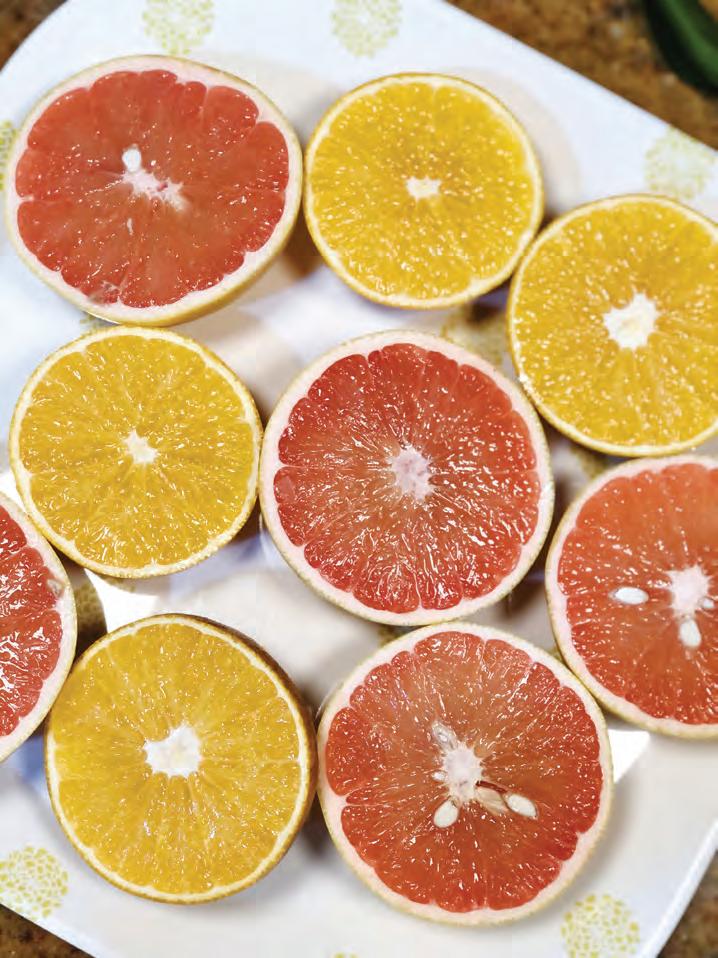
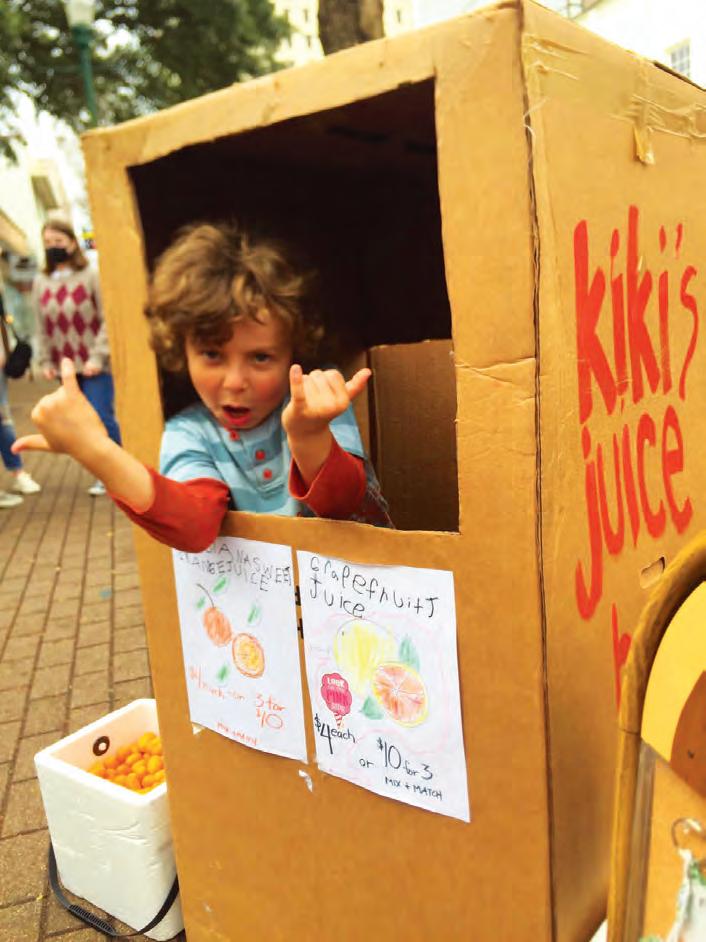
“So,” I asked the barely fourfoot tall, fufy-haired and bow-tied CEO of Kiki’s Juice Box, “How does it work?” Leaning over the handle of a hand-operated juicer almost as tall as he is, six-year-old Noam “Kiki” Naquin didn’t even look up from the grapefruit as he explained his business plan: “Well, I pick them. Ten, I juice them, then I put them in there.” He pointed to the glass pitcher half full of grapefruit juice. “Ten, I put them in the bottle and put ‘Kiki’s Juice Box’ on it. Ten, I sell them and I get money.”
His mom and business partner, creative strategist Jenée Naquin, laughed. “He really is the boss,” she said. “And he’s the face. And the master juicer.”
Te business debuted on New Year’s Eve, when Kiki set up his frst citrus juice stand—a Kiki-sized cardboard booth emblazoned with the business name in orange paint—in his driveway. Te idea had been conceived just a few months before in the backyard, when Kiki’s green-thumbed grandfather “Pa Jet” had come over with his usual surplus of satsumas. (“Back when we lived in New York and I’d come home for Christmas,” explained Jenée, “I used to bring an extra suitcase to accommodate all of the citrus he’d send me home with.”)
“Noam,” asked Jenée, “tell us again how Pa Jet got you to frst start juicing?” About a squeezed grapefruit and a half
records the score, then adds sound efects to render the fnal episode.
Casting the voice actors to bring the characters to life was based on French skills, accents, and acting ability. Billeaudeaux’s fourth grade French teacher Kirby Jambon voices Boudini, while zydeco musician Cedric Watson (for whom Billeaudeaux plays bass) records the voice of alligator sidekick Coco. After receiving constructive criticism for casting white singer and radio personality Megan Brown as the African American character Colinda, Billeaudeaux and Woodworth pivoted and recast the role with Black actor and advanced French immersion student
Aaliyah Walker, with plans made to have Brown voice a diferent character in future episodes.
Of course, perpetuating the French language among children in Louisiana is a primary goal of Boudini et ses Amis “Our language is a cornerstone to our unique culture and by losing our native tongue, we’re at risk to losing it all,” warns Billeaudeaux, who explained that
later, he looked up and said, “What? Sorry, I’m too busy juicing.”
Smiling at him, she said, “Anyway, my dad showed him how to use the juicer, and to our surprise he was really into it, and doing it every day.” As a family of self-proclaimed entrepreneurs, it didn’t take long for talk of a juicing business to arise. “We kind of just got it together,” said Jenée. “I am a brander by trade, so I was like you need a logo, a name. We had a naming session all out on the trampoline.”
Still new to town—the family moved to Lafayette from Brooklyn in August— the New Year’s Eve stand turned out to be a great opportunity to interact with their neighborhood, which has been a challenge in this era of COVID-19.
“Kiki, tell her about how we advertised for that frst stand,” urged Jenée. He looked up, “What does that mean?”
We laughed and she explained, “How did we let everyone know about it?”
“Oh!” Putting his head back down, he explained, “Mom made posters and we put it in their little slots or stuck it in the door or put it on the ground.”
Tat frst day, they sold out of their inventory. “We had like forty-six bottles or something,” said Jenée, who added that the bottles they use come from her mother, who collects them to recycle.
“It’s neat to have so many of our family members contribute in some way to this project,” she said. “Tough, next year we
Louisiana French language preservation is close to his heart because both sides of his own family are French and Acadian. “My father and everyone before him in our family spoke French.” Billeaudeaux was in the frst French immersion class in Lafayette, which allowed him to learn the language as well, but he realized how limited resources in Louisiana French are for children. “Tere wasn’t and isn’t much as far as entertainment for children in Louisiana French, and I’ve always found it’s a lot easier to learn something when it’s fun.”
—Alexandra Kennon
Episodes can be streamed on Télé-Louisiane’s Youtube page. Support the company’s eforts towards French language preservation at telelouisiane.com.
hope to start using a more sustainable packaging source than plastic.”
After that frst sale, Kiki’s parents didn’t know how far his interest would go. “You always wanted me to be like ‘aw man’ about juicing!” he said. “I was waiting for you to get tired,” Jenée said, “but you just stayed so enthusiastic about juicing! It’s amazing.” Since that frst New Year’s Eve stand, Kiki’s Juice Box has participated in two breakfast pop-up events hosted by Lilou Café and thrift shop in Downtown Lafayette.
“It’s been really neat as a parent to watch him fnd his thing,” said Jenée, “this thing that motivates him, keeps him going. He sets goals for himself, says we’re gonna do twenty bottles tonight. And I start to see him get tired around ffteen, and obviously I would let him go if he wanted. But he powers through to meet his little goal.”
When I asked Kiki what his favorite part of the process was—the picking, the juicing, the selling—he told me, “I like putting the cap on.”
“You know, from day one, you always wonder ‘Who will they be when they grow up?’,” said Jenée. “You put these projections on them. Not that I know he is going to be a juicer or if this juice stand will be a thing when he is twentyfve or even next year, but it’s amazing watching him learn how to thrive, how to support himself, how to take something of of a tree and turn it into money. Tat’s such an important life skill.”
As for the money, Jenée explained that they told Kiki from the beginning that he would need to donate some of it to charity. “Tis is such a luxury, especially at this moment when people are out of work, are sick, are hungry,” said Jenée. “I knew some of the money
had to go towards helping people. He has never put up a stink about it.”
Hoping to support an organization that correlated with the lessons towards sustainable success that Jenée and her husband Ari Dolegowski are trying to teach their son, they selected Right 2 Trive as the benefciary of their proceeds. “Tose are kids that don’t have any moms or dads,” explained Kiki. “And my money got them a lot. It got them water and stuf to go to school.”
All the while we were talking, Kiki never stopped juicing, and had even whipped up something altogether new. “You’ll be the frst customer to try this one,” said Ari as he held out a freshas-can-possibly-be bottle of grapefruit mixed with blood orange (Kiki’s favorite). Before I could grab it though, Kiki took it and burst into song and dance, shaking it with his whole body, “Jujujujii ju ju! Now, it’s nice and mixed up for you,” he said, handing it to me with a huge master-salesman heartthrob grin.
As citrus season comes to an end in South Louisiana, Kiki doesn’t seem to be letting up. “I’m looking for ways to extend this throughout the year, since he’s so taken with it,” said Jenée. Tey started with planting a set of new trees in their backyard, making the entire operation truly yard-to-bottle. “Noam, how long do you think we’ll do Kiki’s Juice Box?” she asked him. “Well, until I’m a hundred basically.”
—Jordan LaHaye Fontenot
Keep up with Kiki’s Juice Box on Instagram at @kikisjuicebox. His next pop up at Lilou will take place on March 7.
Photo by Jenée Naquin.
Events
UNTIL MAR 7th
PHOTOGRAPHY EXHIBITIONS
NEW PHOTOGRAPHY: CREATE, COLLECT, COMPILE
New Orleans, Louisiana
In less than twenty years, the cultural concept of a photograph has evolved to something almost—almost— unrecognizable. What was once a private, treasured, physical object is now a public, ubiquitous tool. Photographs are simultaneously less real—in terms of physicality and of authentic representations of a moment—and more directly a medium through which we perceive, and construct, our reality. In the New Orleans Museum of Art’s exhibition New Photography: Create, Collect, Compile, four photographers engage and critique the new world of photographs. Collectively asserting that photography today currently exists as a kind of open-source language, the four artists use various approaches to exploring the new aspects of creation, collection, and compilation when it comes to narratives of identity, community, and power. noma.org. k
UNTIL MAR 7th
PHOTOGRAPHY EXHIBITIONS
REVELATIONS: RECENT
PHOTOGRAPHY ACQUISITIONS
New Orleans, Louisiana
On view at the Ogden Museum of Southern Art is Revelations: Recent Photography Acquisitions, an exhibition of more than seventy photographic works by thirtynine artists, designed as a sweeping survey of documentary and fne art photographic traditions practiced in the American South from the early twentieth century to the present. Revelations presents acquisitions added to the Ogden Museum’s permanent collection since 2011, focusing attention on emerging and underrepresented photographers from the American South alongside recognized masters of the medium. ogdenmuseum.org. k
UNTIL MAR 15th
ART EXHIBITIONS
THIS SAME DUSTY ROAD
Baton Rouge, Louisiana
Tis month the LSU Museum of Art closes its exhibiton of work by artist Letitia
Huckaby. Huckaby’s family, faith, and Louisiana cultural heritage are expressed in the exhibit via her quilted photographic works. Incorporating heirloom fabrics, photographs, and hand-quilting techniques, Huckaby presents the matriarchal legacy of her family and confronts the inequities they have, and still, face. lsumoa.org. k
UNTIL MAR 16th
PHOTOGRAPHY EXHIBITIONS
JACOB A. RIIS: HOW THE OTHER HALF LIVES
Baton Rouge, Louisiana
One of the most important American pioneers in the feld of photojournalism, Jacob A. Riis was one of the first to use the power of photography as a tool to forward the efforts of social reform, documenting how the poor in New York City worked and lived. His work led to increased awareness of the impoverished living conditions for children and adults in early twentieth century America. Riis’s photos, handwritten journals, and presentations are on display at Louisiana’s Old State Capitol. Free. louisianaoldstatecapitol.org. k
Events
Beginning March 1st -- March 4th
UNTIL MAR 17
th
ART EXHIBITION THE SUBLIME DIRECTORY
Baton Rouge, Louisiana
Tis month, Baton Rouge cultural collective Yes We Cannibal presents its inaugural gallery show, Te Sublime Directory, in its Government Street space. Featuring collaborative wall paintings, collages, and sculptures made by Los Angeles-based artists Ellen Khansefd and Marisa Marofske, the exhibition was completed on site. Works are inspired by the Xenofeminist Manifesto’s call to re-examine the application of technologies toward a more radical future and infuenced by signage from the digital and real-life spaces, Los Angeles iconography, outdated porn search engines, memes, and friendship. Viewings are available by appointment at meetmeat@yeswecannibal.org. k
UNTIL MAR 20th
PHOTOGRAPHY EXHIBITIONS
FREEZE FRAME
Lafayette, Louisiana
Every year, the Lafayette Art Association & Gallery presents Freeze Frame, a regional juried photography competition that
showcases the works of local artists of every age and skill level. lafayetteart.org. k
UNTIL APR 16th
ART EXHIBITIONS FOR THE BIRDS
Baton Rouge, Louisiana
2020 was a difcult year, but Southern Louisiana artist Chris Bergeron’s exhibition For the Birds reminds its viewer not to make life more difcult than it needs to be. Bergeron explores life from a bird’s eye view through his colorful, textured multi media works in this solo exhibition at Te Healthcare Gallery in Baton Rouge, which is also available for virtual perusal online at ellemnop.art/forthebirds. k
UNTIL APR 30th
IN BLOOM AZALEA TRAIL
New Iberia, Louisiana
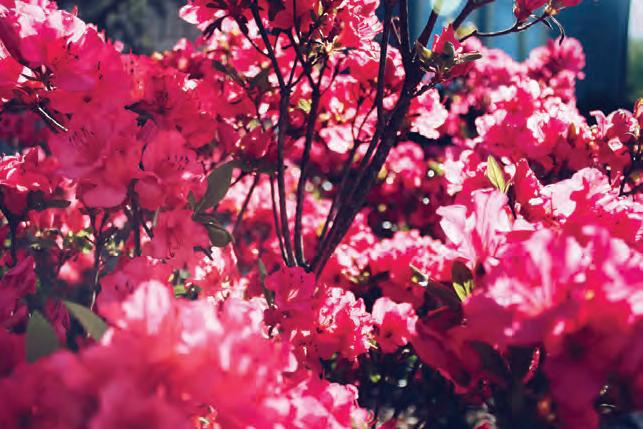
Te bayou-side town of New Iberia is a charmer any time of year, but especially so in the springtime when the azaleas are in full bloom. Roll down your windows on Main Street for a self-guided driving tour of New Iberia’s brightest pinks, reds, purples, salmons, and whites... or just take
a long stroll and welcome the sights and scents. Pick up an Azalea Trail touring map at the welcome center on Highway 14. iberiatravel.com or (337) 365-1540. k
UNTIL MAY 8th
ART COMPETITIONS
JURIED COMPETITION AT THE MASUR MUSEUM
Monroe, Louisiana
For the 58th year in a row, the Masur Museum will showcase sixty nine works by ffty two contemporary artists throughout the United States in its juried competition. Guest juror Dr. Kelli Morgan, an independent curator, author, educator, and social justice activist, made her selections from a total of 204 artists and 569 works of art. Due to ongoing construction at the Masur Museum, the 58th Annual Juried Competition will be on view at the Northeast Louisiana Delta African American Heritage Museum. Free. masurmuseum.org. k
UNTIL MAY 27 th
ART EXHIBITIONS
ALLIGATOR NAPS
Lafayette, Louisiana
Kate Gordon’s art begins in her dreams—bizarre, vivid experiences from the depths of her unconscious. In
a stream of consciousness approach, she takes her source material to canvas— which she must frst treat so that it responds to watercolors like paper does. After this laborious stage, her canvases accumulate with images layered upon one another, creating infnite new meanings cut apart and stitched back together. In her installation Alligator Naps, on view at the Hilliard Art Museum, Gordon’s work is displayed in her large-format canvases, hung vertically from the ceiling in layers. Te efect is a culminative illusion of depth, almost sculpture-like. Like a traditional painting, the entirety of the work can only be viewed from a limited perspective, right in front of it. Presenting it this way, Gordon removes the ability to certainly interpret by close examination, reminding viewers that meaning is determined by perspective. hilliardmuseum.org. k
UNTIL JUN 12 th
LIVE MUSIC
GLEN DAVID ANDREWS BAND
New Orleans, Louisiana
Locally and internationally acclaimed jazz trombonist Glen David Andrews will play the atmospheric courtyard of the Royal Frenchmen Hotel every Saturday at 8 pm. brownpapertickets.com. k
UNTIL
JAN 14th
ART EXHIBITIONS
OUR LOUISIANA
Baton Rouge, Louisiana
From John James Audubon to Clementine Hunter, Louisiana has a rich history of the arts dating back centuries.
LASM is celebrating this legacy with this exhibition of Louisiana-born and Louisiana-based artists represented in their permanent collection. Included with general admission, which is $12 for adults, $10 for seniors and children, and free for members. LASM is open Tursdays and Fridays from 9:30 am–2 pm and Saturdays from 9:30 am–5 pm. lasm.org. k
MAR 1 st - MAR 24 nd
BIRD WATCHING BIRDING BASICS
Baton Rouge, Louisiana
A little birdy told us you could learn more about him with the Baton Rouge Audubon Society this spring. Learn the basics of birding right in Baton Rouge, starting with binoculars and feld guides and ending with a comprehensive knowledge of bird identification and Louisiana’s diverse sky-life. In addition to educational sessions, held on Mondays March 1–22, the course includes frequent bird walks designed to put those new skills to practice. Lectures will be held in the large meeting room at Hilltop Arboretum to promote social distancing. Masks will be required. 6:30 pm–8:30 pm. There will also be a Pontchatoula class held on Wednesdays March 3–24 at the PARD from 8 am–11 am. $50. braudubon.org. k
MAR 2 nd
HISTORY TALKS
HISTORY OF PRESERVATION IN THE UNITED STATES
Online
Robert Cangelosi Jr. will speak on the history of preservation in the United States via Zoom. $10, free for Friends of the Cabildo members. 6 pm. friendsofthecabildo.org k
MAR 3 rd
LIVE MUSIC
RANKY TANKY Lafayette, Louisiana
Join the Charleston, South Carolina quintet Ranky Tanky for a performance of music inspired by the Gullah culture of the Southeastern Sea Islands. The Grammy Awardwinning group will perform a special concert at the Acadiana Center for the Arts. 7:30 pm. Tickets start at $27. acadianacenterforthearts.org. k
MAR 4 th
WINE & MUSIC
BRSO VIRTUAL ARGENTINE
WINE TASTING & CONCERT
Online
Argentine wine meets Argentine music in the Baton Rouge Symphony Orchestra’s virtual fundraising event this month. Join principal cellist Molly Goforth and her husband Dr. William Plummer for beautiful performances while enjoying a guided tasting of two Argentine wines. Te wines, along with paired cheeses and other accoutrements, will be included in tasting kits curated by the folks at Martin Wine Cellars.
Carolina Bistue, winemaker at Bistue Cellars, will lead the tasting and answer questions about wine, winemaking, and viticulture. 6:30 pm. Kits are $100 and can be picked up at Martin Wine Cellar (1670 Lobdell Ave) starting March 2. $60 of your purchase is considered a donation to the Symphony and is tax deductible. brso.org. k
MAR 4 th - MAR 20 th
KITCHEN CALL
LEISURE COOKING CLASSES
Baton Rouge, Louisiana
You don’t have to be a career chef to be a student at Louisiana Culinary Institute. Their leisure cooking class program has something for just about everyone, and almost always includes take-home results. Here are the classes offered in March, all of which take place in the state-of-the-art cooking facilities on LCI’s campus.
March 4–Tea Time Cookies. 5 pm–
8 pm. $125.
March 6– Ice Cream Cone Drip Cake.
9 am–1 pm. $125.
March 18– Classic Petit Fours. 5 pm–8 pm. $125.
Creative Pasta Night. 5 pm–8 pm. $125.
March 20– Easter Bunny Carrot Cake.
9 am–1 pm. $125. lci.edu or (225) 769-8820. k
MAR 4th - APR 1st
NIGHT AT THE OPERA ALLONS! WITH NEW ORLEANS OPERA Online
Tis adult lecture series is named for “Let’s go!” en français, as well as an acronym for “Adventurous Lectures for Lovers of Opera Now Streaming.” General Director Clare Burovac hosts this series of four lectures on Zoom led by New Orleans opera scholars. Lecture dates and topics are as follows, each at 7 pm on Tursdays.
March 4: Givonna Joseph, Marian
Anderson
March 11: Brian Morgan, Norman Treigle
March 25: Sakinah Davis, Fire Shut Up In My Bones. neworleansopera.org. k
Events
Beginning March 5th-- March 6th
MAR 5th
LEADING THE WAY WOMEN’S LEADERSHIP CONFERENCE
Online
For its annual Women’s Leadership Conference this year, the Junior League of Baton Rouge invites all women to “Own the Journey,” and aims to arm attendees with tools towards leading successful, balanced careers and lifestyles. Te event will be held virtually and consist of breakout sessions for personal and professional growth, a keynote speech by acclaimed ballerina Misty Copeland, and plenty of opportunities to network. Tree training tracks will also be available to attendees focusing on areas of career growth, health, and fnances. 9 am–2:30 pm. $75; $150 VIP passes grant access to small groups with a two minute session with keynote speaker Misty Copeland. juniorleaguebr.org. k
MAR 5th - MAR 7th
YARD SALES
TRASH & TREASURE SALE
Baton Rouge, Louisiana
Organized by the Inner Wheel of Baton Rouge, this centrally organized trash and
treasure sale promises to make a wide variety of household items available at 1029 Millerville Road. Funds raised will beneft deserving organizations in the Baton Rouge area. Tis annual event has generated nearly $2.5 million for local charities since it began. Free admission. innerwheelbr.org. k
MAR 5th - 7th
THEATRE THE GAME’S AFOOT Lafayette, Louisiana
A remote castle. A weekend of revelry. A murder. A mystery. It’s the best kind of drama, isn’t it? Now add in the fact that the main character is a fellow most famous for his portrayal of none other than the character Sherlock Holmes. Ken Ludwig’s Te Game’s Afoot is the “whodunit” you’ve been craving. See it at Cité des Arts this spring. 7:30 pm on Fridays–Saturdays. 2 pm Sundays. citedesarts.org. k
MAR
5th - APR 1st
ART EXHIBITIONS
YOUNG ARTISTS EXHIBITION
Hammond, Louisiana
To celebrate National Youth Art Month,
CAJUN COAST MIGRATORY
the Hammond Regional Arts Center presents an exhibition showcasing the talented young artists of Tangipahoa Parish and the work they have been creating under the tutelage of local art instructors. Meanwhile, selected works from the Hammond Art Guild will be on display in the Mezzanine Gallery. Opening reception from 4 pm–8 pm. hammondarts.org. k
MAR 6 th
HISTORY ON WHEELS AZALEA TRAIL TROLLEY RIDE & HISTORICAL TOUR
Lafayette, Louisiana
Take the trolley today, why don’t ya? Thanks to the Atchafalaya National Heritage Area, there will be free trolley rides wandering through Lafayette’s Azalea Trail, offering a historical tour of the area. Trolley pick up and drop off is at Mouton Plantation. 2 pm and 3:30 pm. azaleatrail.org. k
MAR 6 th
ARTS MARKETS SHADOWS ARTS & CRAFTS FAIR
New Iberia, Louisiana
Among the giant oaks on the winding banks of the Teche, attendees at this twice-annual arts and crafts fair can
pick up one-of-a-kind items from over one hundred vendors from around the state. From crocheted goodies to bath products and tea-dyed chenille bunnies, this market has it all. And of course— what fair would be complete without it—there will be plenty of food, drink, and dessert. 9 am–4 pm. Admission is $5 per person ($3 for children ages six to eleven; under six get in free). shadowsontheteche.org. k
MAR 6 th - MAR 7 th
FUN RUNS
THE LOUISIANA MARATHON
Baton Rouge, Louisiana
Much more than just a race, the Louisiana Marathon is a culturally rich festival complete with food, music, and more. There’s a 5K, a kids’ marathon, and quarter, half, and full marathons, all attracting national and international runners who come for the mild weather, professional course, and the thank-God-it’s-over good times that follow the races. This year, due to COVID-19 concerns, spectators will not be allowed along the race route, and certain rules will be in place for runners to ensure everyone’s safety. thelouisianamarathon.com. k
MAR 6th - MAR 27th
LIVE MUSIC
HENRY TURNER, JR. VIRTUAL SOLO CONCERT SERIES
Online
Join beloved Baton Rouge musician Henry Turner, Jr. for a special fve week virtual concert series, which will feature selections from his thirty-plus-year career spanning the blues, soul, and reggae. Sing along to “Baton Rouge Teme Song,” “Okay, Alright,” “Love Me or Leave Me,” and more, all broadcast from the Henry Turner Jr. Listening Room. From Turner: “As a musician, keeping employed is always problematic. Now during the COVID-19 pandemic, it is even more difcult. I want music to continue, so by sharing my original songs and some of their lyrics with everyone, I can let them know that by keeping a positive outlook, we can all survive, we can get through this ordeal, and come out stronger in the end.” Join him on Facebook Live via the “Henry Turner Jr’s Listening Room Museum Foundation 501C3 Nonproft” Facebook Group. Every Saturday, from 3 pm–4 pm. Free. k
MAR 6th - MAR 31st
ART EXHIBITIONS
ARIODANTE GALLERY
MARCH SHOW
New Orleans, Louisiana
New works will be on display this month at Ariodante Art Gallery on Julia Street in New Orleans. Artists include painter Krista Roche, jewelry artist Kathy Dawdy, ceramics artist Craig McMillan, and painter Kim Zabbia. Tere will be an opening reception from 10 am–6 pm. 9:30 am–4 pm Monday–Saturday, 9:30 am–1:30 pm Sunday. ariodantegallery.com. k
MAR 6th - MAR 31st
ART EXHIBITIONS
LOUISIANA COMFORT
New Orleans, Louisiana
Portrait artist Camille Barnes’ realistic paintings that capture life will be on display this month at Gallery 600 Julia in New Orleans’ Warehouse Arts District. Primarily self-taught, Barnes’ masterful use of light, color, and attention to detail bring her paintings of of the canvas and into the realm of reality. Tere will be an opening reception from 4 pm–7 pm. gallery600julia.com. k
MAR 6th - APR 24th
ART EXHIBITIONS
FUGITIVE KIND
New Orleans, Louisiana
Japanese-born New Orleans urban landscape painter Kaori Maeyama’s frst solo exhibition will be on view at LeMieux Galleries beginning this month. Depicting decay and isolation
of mundane settings with visual noise and dark palettes, Maeyama’s work emphasizes the passing of time. Monday-Saturday, 10:30 am–5 pm. lemieuxgalleries.com. k
MAR 6th - MAY 30th
ART EXHIBITIONS
CENTERED AROUND CULTURE
Port Allen, Louisiana
7th Ward native Cely Pedescleaux grew up surrounded by talented seamstresses, watching them artfully hand-work lace, crocheting, beading, and tatting into decorative textile arts. Now she, a self-taught artist herself, has expanded her love for quilting through fashion. In 2009, she debuted her designs on Worn Again , a New Orleans fashion television show where organizers provide old clothing to local artists, who then transform them into unrecognizably stylish garments. Today, Pedescleaux teaches quilting and the history of African American quilting through public programs at museums, galleries, universities, festivals, and quilt shows all around Louisiana. Her contemporary works have been displayed in France, Italy, and China. See Pedescleaux’s work on display at the West Baton Rouge Museum this month in the exhibition Centered Around Culture: Quilts by Cely Pedescleaux, with a Meet the Artist
Reception from 5 pm–7 pm March 27. westbatonrougemusuem.com. k
MAR 6th - MAY 30th
ART EXHIBITIONS
BUDDHA AND SHIVA, LOTUS AND DRAGON
New Orleans, Louisiana
John D. Rockefeller III and his wife Blanchette Hooker Rockefeller began their journey into the Asian arts after World War II, and between the 1940s and 1970s, assembled a collection which includes objects from across the Asian continent—Cambodia, China, India, Japan, Nepal, Sri Lanka, Thailand, Tibet, and Vietnam. The collection includes a massive diversity of objects ranging from every day food wares to imperial dining vessels and ceremonial Bodhisattvas to devotional Hindu sculptures. The diversity of class, region, and religion are represented in the range. The couple hoped that sharing such an assemblage of artifacts would act as a catalyst for increasing understanding between the United States and Asia, and create the foundation for future economic and sociopolitical engagement. Typically housed at the Asia Society Museum in New York City, this collection will be presented at the New Orleans Museum of Art for a rare exhibition. noma.org. k
Events
Beginning March 7th -- March 11th
MAR 7th
ARCHITECTURE TALKS
HINGED ON HISTORY: HISTORIC AND REPRODUCTION HARDWARE SHOW & TELL
Port Allen, Louisiana
March 7 is the last day to view the A. Hays Town and the Architectural Image of Louisiana exhibit at the West Baton Rouge Museum, and if you take advantage of this last chance to celebrate the prolific Louisiana architect, you’ll also get to meet the museum’s resident blacksmith, Gary Hart. While touring the gallery space, visitors will get the chance to view examples of historical architectural hardware and reproductions Hart made by hand. 2 pm–5 pm. Masks required. westbatonrougemuseum.com. k
MAR 9 th
BIRD WATCHING
“USING NATIVE PLANTS TO ATTRACT BIRDS” WEBINAR Online
Join the Baton Rouge Audubon Society and Friends of Hilltop Arboretum for a special online webinar titled
“Using Native Plants to Attract Birds” to coincide with its annual “Plants for Birds” plant sale, which will take place online this year. In the lecture, President of the Baton Rouge Audubon Society Jane Patterson will discuss the importance of using native plants and how to choose the perfect plants to bring the birds to your backyard. 6:30 pm–8 pm. Free. To register, email subscribe+braudubon@groups.io with your name. braudubon.org. k
MAR 9 th
LIVE MUSIC
RIVER CITY JAZZ MASTERS: JAZZMEIA HORN
Baton Rouge, Louisiana
Jazz singer-songwriter Jazzmeai Horn will alight the River Terrace at the Shaw Center for the second installment of the Arts Council of Greater Baton Rouge and River City Jazz Coalition’s River City Jazz Masters 2021 Season. Season ticket subscribers can reserve their seats today by emailing jgrimes@ artsbr.org or calling (225) 344-8558. 7:30 pm. Individual tickets are $45 and can be purchased at the Manship
Theatre box office or online at manshiptheatre.org. k
MAR 9 th - MAR 30 th HISTORY TALKS “WHO GETS TO VOTE?” Online
Join the Ascension Parish Library system in Gonzales for a special fourweek virtual reading and discussion series on the subject “Who Gets to Vote?” Developed by the Louisiana Endowment for the Humanities, the series is designed to engage the public in conversations on the history of voting in the United States. The four discussion sessions will be led by Dr. Catherine Jacquet, Associate Professor of History and Women, Gender, and Sexuality Studies at Louisiana State University, who will lead participants in examining issues such as women’s suffrage, historic and contemporary voter suppression practices, and the disenfranchisement of incarcerated and formerly incarcerated Americans. The sessions will take place virtually on Tuesdays at 6 pm from March 9–March 30. Free. Registration is required either in person or by calling the library at (225) 647-3955. Each participant will receive a set of books to check out. myapl.org. k
MAR 9 th - APR 29 th
CREATIVE CLASSES
ABBEY ART WORKS
Saint Benedict, LA
Improve your art with tutelage from the masters on the beautiful grounds of Saint Joseph Abbey on the Northshore. Classes beginning this month include:
March 9–April 27, 10 am–1 pm: Drawing and Painting People from Photographs with Alan Flattmann
March 11–April 29, 2 pm–5 pm: Painting Cityscapes with Alan Flattmann. saintjosephabbey.com. k
MAR 10th & MAR 24th
GOOD EATS
NEW ORLEANS WINE & FOOD EXPERIENCE DINNER SERIES
New Orleans, Louisiana
After having to cancel the 2020 New Orleans Wine & Food Experience due to COVID-19, organizers brainstormed new ways to celebrate Crescent City wine and cuisine in a safe socially-distanced manner. Te NOWFE Summer Wine Dinner Series was such a success that the organization has extended the series to run through Summer 2021. Participating restaurants include: Broussard’s Restaurant & Courtyard, Palace Café, GW Fins, Briquette, La Petite Grocery, Tommy’s Cuisine, the Rib Room
It’s how we do things in Louisiana during times of challenge. We’re stronger together and we know our strength lies in the helping hands of our neighbors. So let’s wear a mask and protect one another. And protect the life we love.
and Café Reconcile with additional restaurants being added as they are confrmed. March dinner dates include:
March 10: Te Grill Room at Windsor Court. 7 pm–10 pm. $145.
March 24: Tujaque’s. 7 pm–10 pm. $125.
Dinners will be served adhering to all safety protocols. Start times and prices vary by restaurant. Reservations made directly with each restaurant by phone. nowfe.com. k
MAR 10th - MAR 25th CHEERS
SAZERAC HOUSE
COCKTAIL WORKSHOPS
New Orleans, Louisiana
Get your cocktail shaker ready: Te Sazerac House Museum in New Orleans is hosting a series of educational happy hours, both onsite and online. Savor a refreshing Southern classic cocktail in one of the most spirited cities in America. Hosted by drinks historians and house distillers and cocktail experts of the highest degree. All participants must be over twenty one.
March 10: Virtual Tasting—Gin Gin Mule. 5 pm. Free.
March 23: Cocoa & Cocktails—Rum Tasting. 4 pm. $30.
March 25: Blend Your Own Rum Experience. 5 pm. $60. sazerachouse.com. k
MAR 11th
ART AUCTIONS
HUNT SLONEM AT NEAL AUCTION HOUSE
Online
An exclusive collection of seventy-two of Hunt Slonem’s colorful, whimsical paintings—from his iconic bunnies, to birds, to portraits—will be up for online auction from Neal Auction House until 2 pm on March 11, along with unique sculptures and other rare items that compliment the collection. An auction of Slonem’s works this comprehensive is a frst for the artist, and collectors of Slonem’s art are encouraged to bid early and high to increase the value of personal Slonem collections. Previews will be by appointment beginning March 1, and bids will be taken via phone, absentee bid, and Neal Auction’s online platform. clientservices@nealauction.com or nealauction.com to schedule an appointment. k
MAR 11th
HISTORY TALKS
“LOUISIANA CREOLE VOICES ALONG THE MISSISSIPPI”
Port Allen, Louisiana
In a free presentation funded by a grant from the Louisiana and National Endowments for the Humanities, French professor Margaret Marshall and Tomas
5713 Superior Drive, Suite B-1 Baton Rouge, Louisiana 70816
Events
Beginning March 11th -- March 19th
Klingler will host a discussion as this month’s Lunchtime Lecture at the West Baton Rouge Museum. Marshall and Klingler have digitized two hundred cassettes recorded for the Dictionary of Louisiana Creole in the 1980s and 1990s at the Center for Louisiana Studies. Te two will discuss their work on the project as well as the historic, linguistic, and social signifcance of the Vacherie and Pointe Coupée varieties of Louisiana Creole. Masks required. Noon at the West Baton Rouge Museum. Free. westbatonrougemuseum.com. k
MAR 11th - MAR 14th
BOOK FESTS
THE SAINTS + SINNERS LGBTQ
LITERARY FESTIVAL
Online
Since 2003, Saints + Sinners LGBTQ Literary Festival has grown into an internationally-recognized event that brings together a who’s who of LGBTQ publishers, writers, and readers from throughout the United States and beyond. Te Festival, usually held over three days each spring at the Hotel Monteleone in the New Orleans French Quarter, features panel discussions and master classes around literary topics that provide a forum for authors, editors, and publishers to talk about their work for the beneft of emerging writers and the enjoyment of fans of LGBTQ literature. Tis year’s festival will take place virtually—featuring all of the panel discussions, master classes, reading series, and more to be enjoyed from the comfort of home. sasfest.org. k
MAR 11th - JUN 6th
DESIGN EXHIBITIONS
THE ART OF SEATING Baton Rouge, Louisiana
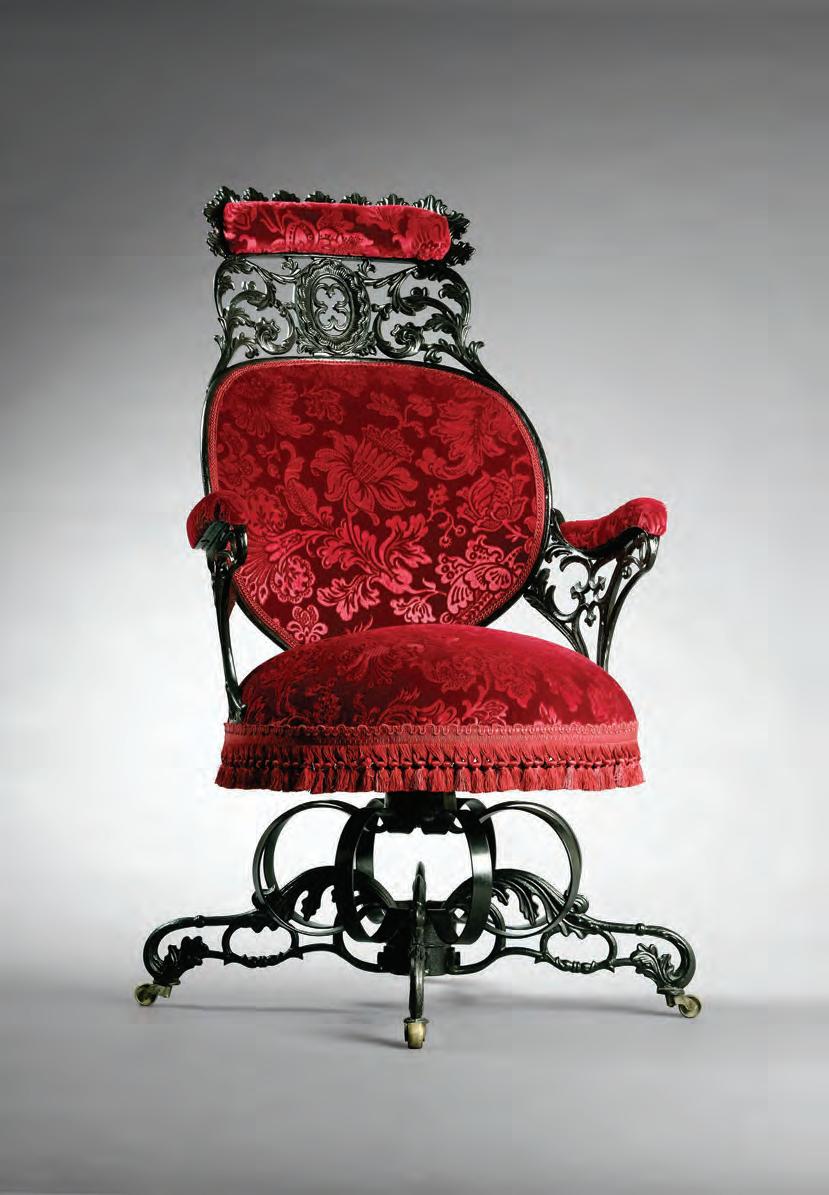
What, after all, is a chair? A place at the family table, a worksite, a plush refuge as evening descends, a symbol of power. In the LSU Museum of Art’s newest exhibition, the seat becomes the centerpiece. Selections from the Tomas H. And Diane DeMell Jacobsen Ph.D. Foundation present a journey of furniture design going back to the mid-1800s, featuring showstoppers by John Henry Belter, George Hunzinger, the Herter Brothers, Frank Lloyd Wright, and many more. Viewers can also peruse contemporary and historic designs by some of the country’s most recognizable manufacturers, including Knoll, Herman Miller, and Steelcase. A “Sit and Learn” Lecture and Discussion Series accompanies; details below.
March 14: Join Curator Courtney Taylor for a virtual gallery talk to get a special sneak peek at the exhibition. 2 pm. Free. March 24: LSU Museum of Art Educator Grant Benoit in conversation with contemporary makers Eleanor Campbell Richards and Aspen Golann on chair designs and studio practices. 4:30 pm. Free. lsumoa.org. k
MAR 12th - MAR 14th
THEATRE A BREATH OF FRESH AIR Online
As Spring dawns upon us, Teatre Baton Rouge’s Young Actors program presents a performance of song, dance, and scenes inspired by the season. A Breath of Fresh Air, directed by Jack Lampert, will be presented virtually. A ticket purchase allows you to access the virtual performance any time between March 12–March 14. $25.75. theatrebr.org. k
MAR 13 th
AUTO SHOWS
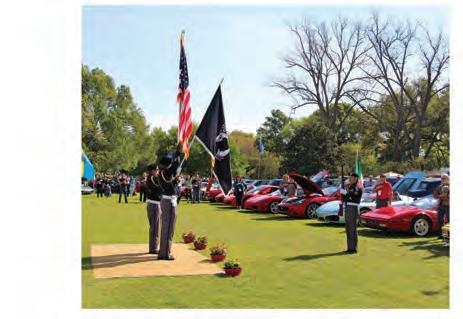
SPRING STREET FESTIVAL & CLASSIC CAR SHOW
New Roads, Louisiana
The fun-lovin’ folks on False River greet spring with this eleventh annual antique car and motorcycle show that attracts upwards of three hundred vehicles amid a day of food, music, arts and crafts, children’s activities, and plenty of spring fever festivities. The car show is open to all categories of cars, trucks, and motorcycles, with top-fifty awards, mayor’s choice, and sponsors’ awards all up for grabs. 9 am–3 pm throughout downtown New Roads. Day-of registration $35 from 8 am–11 am, early registration $30. newroadscarshow.com or (225) 638-5360. k
MAR 13 th - MAR 20 th
ART COMPETITIONS SHADOWS-ON-THE-TECHE PLEIN AIR COMPETITION
New Iberia, Louisiana
On March 13, thirty well-known artists from across Louisiana and around the South will come to town to have their blank canvases marked, then will head out into New Iberia and its surroundings, to ply their pastels and work their watercolors. On March 19, the artists will return finished work to the Shadows where it will be judged by Pennsylvania plein air artist and instructor Kenn Backhaus. Artists’ work will will be
exhibited and available for sale in the Shadows Visitor Center beginning on Friday, March 20, when the competition winners will be announced.Te ceremony, reception, and sale are all free to attend. Other events available to the public include plein air painting demonstrations presented by Backhaus on March 16 (1 pm at the Hilliard Art Museum) and March 18 (2 pm at the Shadows) and an art lecture, also presented by Backhaus, held at the Shadows Visitors Center at 7:30 pm on March 17. Local artists of every skill level can also participate in the annual Paint Out event in the Shadows’ gardens and downtown New Iberia. Works will be judged, awarded ribbons, and displayed at the Shadows Visitor Center. 9 am–1 pm on March 19. Participation is free, but registration required. Masks and social distancing required for all events. shadowsontheteche.org. k
MAR 13th - APR 13th HOME TOURS
NATCHEZ SPRING PILGRIMAGE
Natchez, Mississippi
“Te most extensive tours of the most extravagant antebellum homes in America.” Tat’s the way the Pilgrimage Garden Club describes the Natchez Pilgrimage—the spring and fall tour of homes that has kept visitors coming back to Natchez since 1932. Why? Because Natchez was once home to more millionaires per capita than any other city in America—and although that situation came to an abrupt end after the Civil War, the city has managed to preserve the extraordinary architectural legacy of that wealth. Today, Natchez’s streets remain lined with the palatial mansions and fligreed townhouses of the cotton barons, and each year the families that occupy them allow guests to nose through two-hundred-yearold homes, meet descendants, hear tales, sip a mint julep, stay in one of more than ffty historic B&Bs, and generally get a residents’ eye view of life in this most genial of Southern cities. Tis season, twenty-three antebellum mansions will open doors, each flled with antique furnishings, porcelain, portraits, silver, documents, diaries, and more. Other diversions include “Stories Along the Mississippi...Scenes from the Past,” which depicts life in Natchez from its inception to the Civil War through tableaux, song, and dance. Find details on other special events, dinners, and tours at natchezpilgrimage.com or (601) 446-6631. k
MAR 15th - MAR 20th
GOOD EATS
318 RESTAURANT WEEK
Shreveport, Louisiana
Te Shreveport area has a great creative culture, and in case you didn’t know it, it also has a robust culinary scene. Head
to the area during 318 Restaurant Week, and you can be exposed to outstanding local chefs and restaurants in Shreveport and Bossier City. Dozens of participating restaurants will ofer lunch and dinner specials and promotions, while special, one-night-only dining experiences will give food lovers the opportunity to meet and talk with acclaimed local chefs during interactive dining experiences. All the details at 318Restaurantweek.com. k
MAR 15th - JUN 6th
ART EXHIBITIONS
EVICTED
Baton Rouge, Louisiana
A collaboration with Matthew Desmond, professor of sociology at Princeton University, a MacArthur “Genius” Fellow, and best-selling author, Evicted ofers an immersive experience bringing viewers into the world of low-income renter eviction. With unique design elements and striking graphics, the exhibition challenges adults and youth to face the enormity of a difcult subject, while providing context and a call to action. Tis visual arts exhibition will be hosted at the Arts Council of Greater Baton Rouge’s Firehouse Gallery. artsbr.org. k
MAR 18th - MAR 19th
TRADITIONS
ST. JOSEPH’S DAY FEAST
ALTAR AT IRENE’S
New Orleans, Louisiana
St. Joseph’s Altars serve as a centuries-old tradition marking when Sicilians prayed to St. Joseph to relieve a famine and celebrated their success with an abundant altar of food to feed the poor, reminding those who are fortunate to give back to those who are less so. Irene’s restaurant in the French Quarter is taking reservations to view their altar, which is open to the public and will be blessed daily with a seminarian chant. Reservations can be made via opentable.com. k
MAR 19th
FUN FUNDRAISERS
DANCIN’ AT THE MANSION
Baton Rouge, Louisiana
With champagne fights, Charleston lessons, and glittering, glorious fringe—the new year looks bright for the Baton Rouge Ballet Teatre’s annual fundraiser. Against the elegant backdrop of the Old Governor’s Mansion, Dancin’ at the Mansion will feature live music by Te Issue!, food, and festive activities including online bidding on silent auction items, complementary guided tours, a wine and liquor toss, gift card pulls, where everyone wins a gift card of $25$100, and much more. Proceeds will go to support outreach programs bringing dance to underserved communities.
7 pm–10 pm. $65 in advance; $75 at the door. batonrougeballet.org. k
CELEBRATION
MARCH IS A TIME OF
We celebrate everything in St. Tammany Parish , one hour from Baton Rouge. Mark your calendar and plan
Events
Beginning
March 19th -- March 27th
MAR 19th - MAR 28st
BOOK FESTS
THE TENNESSEE WILLIAMS & NEW ORLEANS LITERARY FESTIVAL
Online
The Tennessee Williams & New Orleans Literary Festival returns for the annual celebration of contemporary literature, culture, theater, and the works of Tennessee Williams. More than a typical book festival, TWNOLF usually hosts over one hundred fifty events in the French Quarter and other New Orleans venues. This year, however, due to COVID-19 concerns, the festival will be held virtually, continuing its thirty-five year legacy of bringing together hundreds of writers, scholars, actors, musicians, and artists for five days of literary revelry.
March 19–21: Writer’s Retreat Weekend–Writers will enjoy three days of workshops on craft, publishing, and nurturing an artistic spirit.
March 24–28 : Virtual Festival Weekend–Find all of your favorite Tennessee Williams Fest favorites in an online format, including panel
discussions, interviews, Books & Beignets book club, Tennessee Williams Tribute Reading, theater events, Drummer & Smoke music series, and more. tennesseewilliams.net. k
MAR 19th - MAR 28th
THEATRE
CLYBOURNE PARK
Baton Rouge, Louisiana
Inspired by Lorraine Hansberry’s landmark drama A Raisin in the Sun , Theatre Baton Rouge’s live stage production of Clybourne Park explores themes of community, race relations, culture, and language in ways that will make you laugh, cry, and ponder. The two-act play presents two stories set in the same house; the first is set in 1959, as white community leaders work to prevent a Black family from purchasing a home in their neighborhood. Act Two takes place fifty years later, as the now majority African American neighborhood fights against the effects of gentrification.
7:30 pm Thursday–Saturday; 2 pm Sunday. $30.75; $25.75 for students
and children younger than seventeen. theatrebr.org. k
MAR 20 th
COMMUNITY CREATIVITY
CHALK THE WALK
Hammond, Louisiana
Start your spring with creativity, culture, and sunshine with the Hammond Regional Arts Center’s Chalk the Walk event. Design and decorate your own sidewalk square, and receive some free swag courtesy of the Downtown Development District and HRAC. Chalk
and fun prizes are also included in this day of community creativity. All ages are welcome. Pre-registration is encouraged as spaces are limited, and day-of check in at HRAC is from 10 am–1 pm. Call HRAC to register at (985) 542-7113. hammondarts.org. k
MAR 20th
ART & BEER
PAINT YOUR PET
New Orleans, Louisiana
With the help of a professional artist, paint a portrait of your four-legged buddy
From the
while sipping a brew (or a few) at Second Line Brewing in New Orleans. An artist from Little Arts Studio will sketch your good boy or girl, then you can paint them to perfection while sipping local beer. Pre-registration and submitting a photo of your pet required. Difficulty level suggested for ages sixteen and up. $55 fee covers artist fee to pre-sketch your pet onto the canvas and all art materials for the class. 1 pm. littleartsstudio.com. k
MAR 20 th - MAY 2 nd ART & CULTURE
WANDERING SPIRIT: AFRICAN WAX PRINTS
Port Allen, Louisiana
A tribute to the century-old Indonesian textile designs copied and industrialized by Europeans and exported to Africa, the West Baton Rouge Museum exhibit Wandering Spirit: African Wax Prints explores the histories and mythology behind the African wax print. These textiles have served, for decades, as a deep seated means of communication and storytelling in Africa, and have gained popularity in part because of African culture’s associations between clothing and status (social, ethnic, marital, political, and regional). Though the designs are paved along colonial trade routes and globalization, and are not originally African, they have become irrevocably ingrained in African culture and society. Learn more at westbatonrougemuseum.com. k
MAR 23 rd - MAR 31 st
EN FRAN Ç AIS FRENCH FILM FESTIVAL
New Orleans, Louisiana
The twenty-fourth New Orleans French Film Festival, one of the longest-running foreign language festivals in the country, will once again represent excellence in contemporary and classic Francophone cinema for audiences, this year at the new outdoor venue The Broadside, with all films available to stream at home. Live music and lectures will accompany a curated selection of short- and featurelength French films, all of which will be screened with English subtitles. All Access passes are $80 ($35 for students) and get you free admission into all in-person and virtual festival screenings, and early access to online reservations on March 5 (one week before tickets go on sale to the public). Virtual passes are $50 and get you free admission to all virtual screens, as well as early access to online reservations. More details to come at neworleansfilmsociety.org. k
MAR 25th - OCT 10th
ART EXHIBITIONS FROM THE FAT MAN TO MAHALIA
New Orleans, Louisiana
One of New Orleans’ most recognized artists, James Michalopoulos captures the dynamic syncopation and emotion of jazz music in his expressionistic paintings for this exhibition at the New Orleans Jazz Museum. From recent paintings, to rarely-seen works, to the original painting that became the iconic Louis Armstrong Jazz Fest poster which has not been displayed in Louisiana in over twenty years, this retrospective spans Michalopoulos’s entire storied career. Tuesday–Sunday, 10 am–4:30 pm. nolajazzmueum.org. k
MAR 27 th
OPERA
OPEN AIR FAIR
Baton Rouge, Louisiana
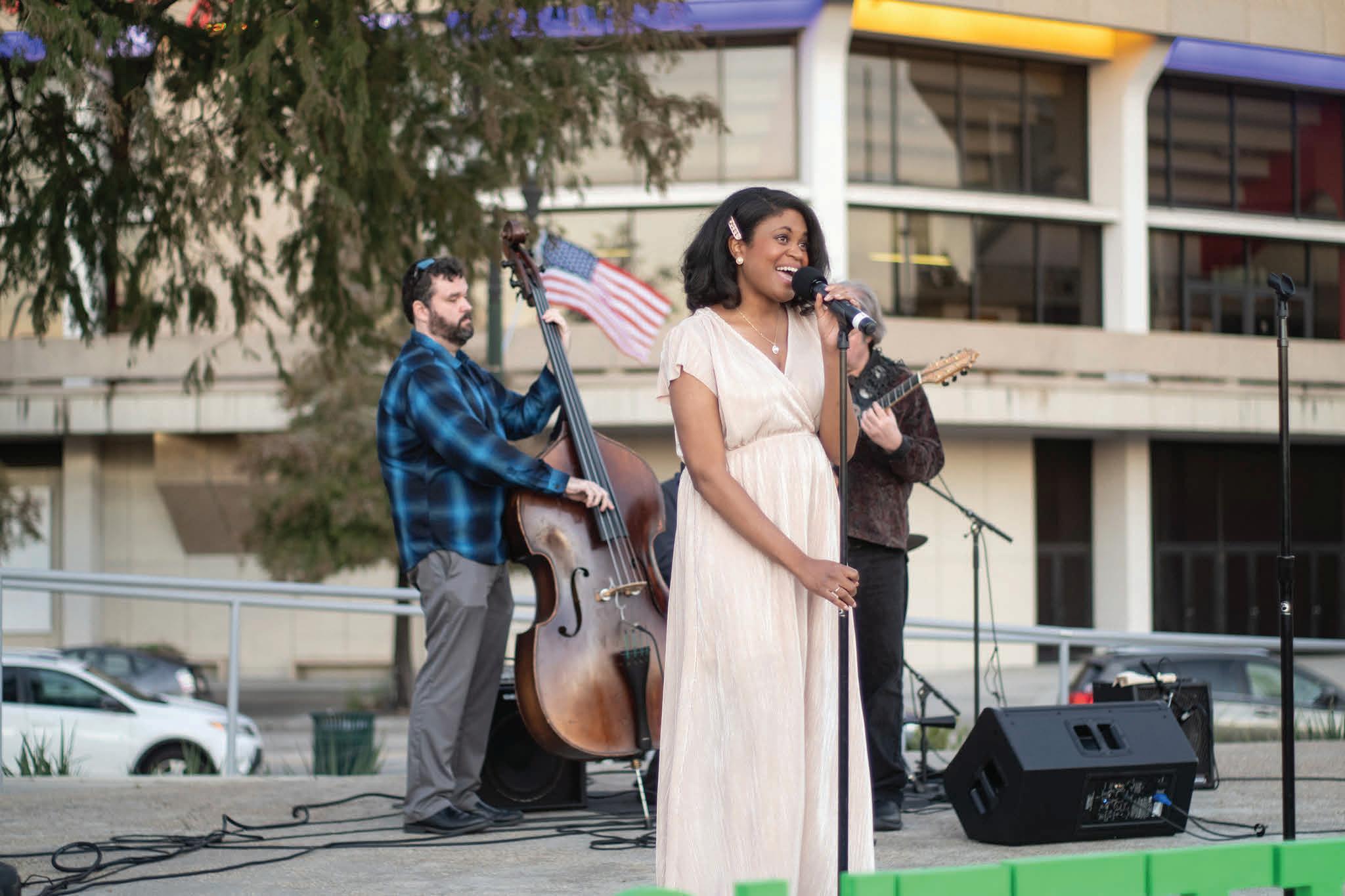
Bringing opera to the people, as it does best, Opéra Louisiane presents an afternoon of live music and experiences for the entire family through its Open Air Fair. Part of its Young People’s Opera Program and presented in partnership with the Main Library of Goodwood, this event will begin with “Master Minutes” from noon–12:30 pm, where participants can learn to dance, draw, and sing from master artists. Stick around for the live show to hear captivating performances, dance along, and use drawing skills to be part of the action—all from the comfort of a safely-distanced lawn chair on the Goodwood Library’s plaza. Noon–2 pm. Free. operalouisiane.com. k
MAR 27 th
GREEN THUMBS
MASTER GARDENERS
PLANT SALE
Baton Rouge, Louisiana
Louisiana gardeners, this is truly your month. Choose from over 5,000 plants–about 275 varieties–at the twenty-foutth annual EBR Master Gardeners Association plant sale, held at the LSU AgCenter’s Botanic Gardens at Burden. Selections hand-chosen by the Master Gardeners include Louisiana Super Plants, succulents, flowers and hanging baskets, plus nectar and host plants for butterflies, hummingbirds, and pollinators. Local Master Gardeners offer advice on plant selection and care and a plant health clinic, along with activities for children. No pets are allowed, but you can bring a wagon or garden cart to tote your haul. Waterproof shoes are recommended. 8 am–2 pm. Free. lsu.edu/botanic-gardens. k
Events
Beginning March 27th
MAR 27th
LIVE MUSIC
TUNICA HILLS MUSIC
FESTIVAL & JAM
Saint Francisville, Louisiana
Once again, the hills come alive for the annual Tunica Hills Music Festival and Jam, returning after its pandemic hiatus in 2020. Two stages welcome Louisiana musicians for concerts, jam sessions, instruction, and celebration of the arts. Bring your blankets, chairs, coolers, and of course your instruments and settle in for a beautiful weekend. 10 am–10 pm. Free. Visit Tunica Hills Music Festival Facebook Page for updates. k
MAR 27 th
ARTS MARKETS
SPRING CRAFT FAIR
Lafayette, Louisiana
Spend your Saturday wandering the historic Acadian Village, meandering between craft and makers’ booths, the children off somewhere (safe) searching for Easter eggs. The good old Bunny will be there too, available for
photographs. 10 am–2 pm. $4; $2 for ages three to ten. Details at the LARC’s Acadian Village Facebook page. k
MAR 27th
POETRY SALONS
POUR IT AND POET
New Orleans, Louisiana
A poet and a sommelier walk into a hotel, and inspiration strikes. Join Cubs the Poet and Advanced Sommelier Liz Dowty Mitchell for an intimate poetry and wine workshop at Te Columns this spring. Each week will focus on a theme to be explored with words and wine. Fifteen percent of ticket costs will be donated to Te Innocence Project. 7:30 pm. $125. Details at the Pour It and Poet Facebook Events. k
MAR 27th
LIVE MUSIC
BEAUVOIR PARK LIVE CONCERT SERIES
Baton Rouge, Louisiana
In the cozy, twinkling, and spacious outdoor corner that is Beauvoir Park, live music fnds a home, even in the age of coronavirus. Te Park’s open-air live music
series features local favorites from all over the state. Lawn chairs, quilts, and blankets encouraged—as well as your own booze. Masks are required when walking around and when social distancing is not possible. Tis month, fnd the Seratones on stage. Doors 6:30 pm; show 7:30 pm. $25. Details at Beauvoir Park’s Facebook Page. k
MAR
27th
CHEERS
SHADOWS WINE WALK
New Iberia, Louisiana
Against the gorgeous backdrop of the Shadows on the Teche, enjoy a Saturday evening perfectly crafted towards beauty and indulgence. Strolling through the gardens, you’ll taste wines from “West of the Teche” along with expertly-chosen pairings, live music gently playing in the background. Te afternoon will also feature a Wine Pull rafe, with tickets priced at $20 per pull. Every person who purchases a ticket is guaranteed to win at least one bottle of wine. First seventy-fve tickets buyers will also receive a keepsake glass featuring the event’s logo and year. Funds raised through the Wine Walk will go towards education programs, lectures, and other events at the Shadows, and all purchases are tax deductible. Masks must be worn when not eating or drinking. 4 pm–6 pm. $40 per person or $75 per couple. shadowsontheteche.org. k
MAR
27th
BIKE RIDES
TOUR DE LIS 2021
Mandeville, Louisiana
Te purpose of this fun, non-competitive ride (and hike!) is to raise money and awareness for the Cancer Association of Greater New Orleans. Each participant is asked to raise $250 for the cause with Facebook Fundraising, and upon completion, the $60 reservation fee will be refunded and you will be entered into a drawing for a special prize to be given out after the ride. An award will be given to the highest fundraiser, as well. Choose your own mileage: ten, twenty, forty, or sixty-two. Begins at Fountainebleau State Park. 7 am–4 pm. cagno.ejoinme.org/tdl. k
MAR 27th - MAR 28th
KID STUFF
ZIPPITY ZOO FEST
Baton Rouge, Louisiana
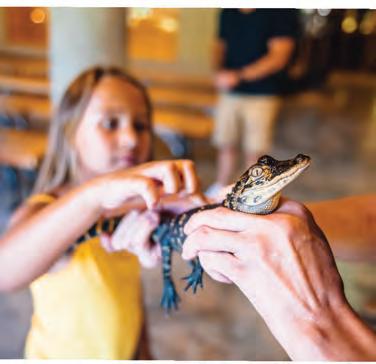
My, oh my, what a wonderful day—celebrate BREC’s Baton Rouge Zoo at its annual spring festival. Zippity Zoo Fest will feature an “EdZooCation” station where guests can learn about topics like animal conservation and pollination. Keepers will stationed throughout the zoo, birthday cake in hand. If you’re lucky, you might even get to celebrate with some of the animals, who will get their own special birthday treat. 9:30 am–5 pm. Regular admission applies. brzoo.org. k
Outdoors
Outdoors & Gardening
FLORAL ESCAPES
Stop and Smell the Roses
FIVE HISTORIC GARDENS TO VISIT THIS SPRING
By James Fox-Smith
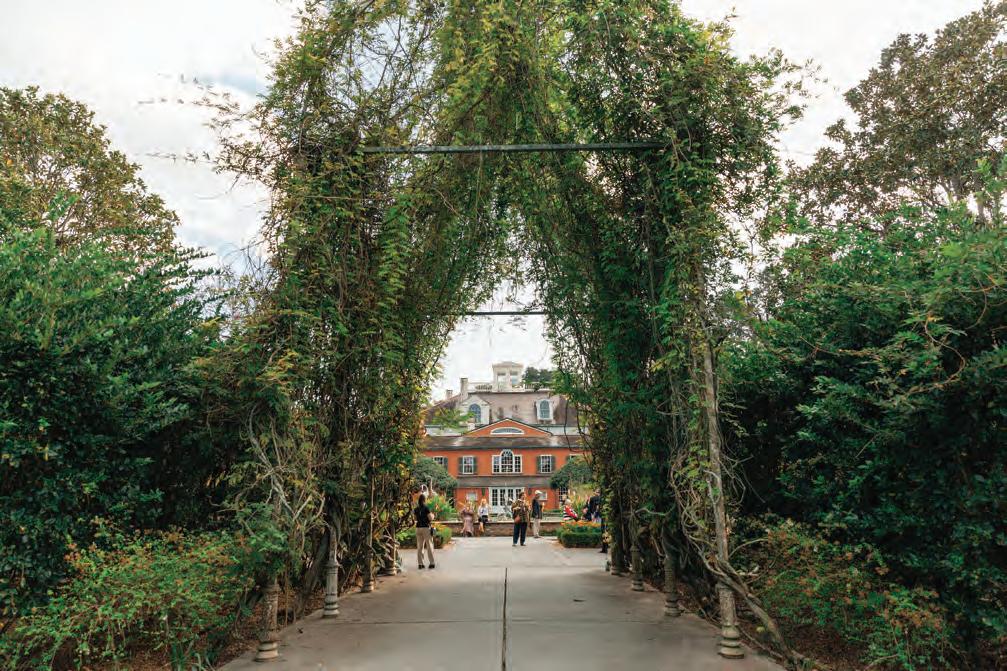
With its subtropical climes, the LouisianaMississippi region is known for its lush, fertile ground—which has served as a bare canvas to visionary green thumbs past and present. As
Ten diferent fags have fown over Louisiana, and a conglomeration of peoples have settled here: Native American, French, Spanish, AngloAmerican, German, African, and Acadian. Despite the disparity of their origins, the vast majority of these early settlers shared one bond: their dependence upon the land and waters of Louisiana for survival. Largely forgotten by the twentieth century, the lifestyles and cultures of pre-industrial Louisianans are recalled in the LSU Rural Life Museum. Steele Burden donated the 450-acre Burden Estate to Louisiana State University in 1972, creating an experimental research station for the LSU Agricultural Center and an oasis of tranquility in the center of Baton Rouge.
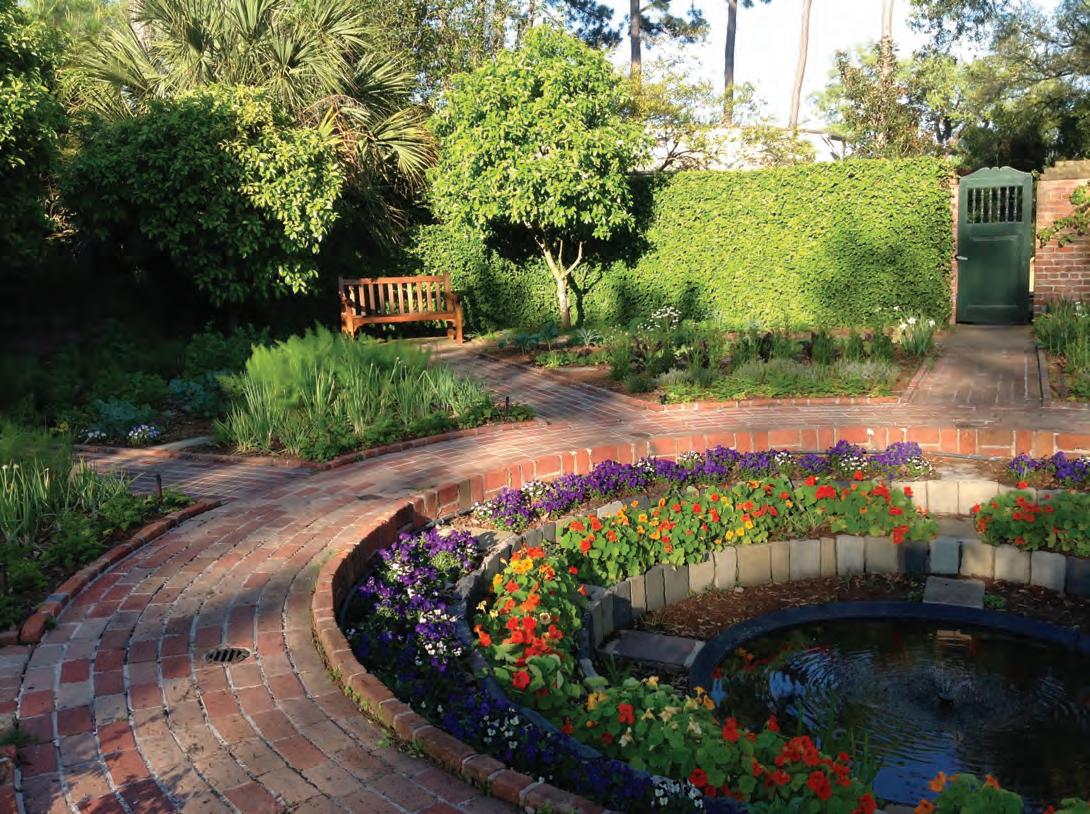
Before Burden donated the estate, he designed and planted a fve-acre expanse of semi-formal gardens called Windrush. Winding paths and open areas lead visitors through the arrangements of
our Southern spring settles in and the forals start to emerge, some of the fnest gardens in the country are reaching their aesthetic height, and it is certainly worth it to pass an hour or two in their tranquil, sun-dappled spaces.
aspidistras, nandinas, crepe myrtles, azaleas, and camellias, ornamented by European sculptures collected by Burden. Emphasizing form and texture in his “green garden,” Burden’s style was designed to highlight Louisiana’s particular foliage, scented by banana shrubs, gardenias, sweet olives, and butterfy gingers and enclosed by canopies of oaks, pines, and magnolias.
Adjacent to Windrush, visitors will fnd the LSU AgCenter Botanic Gardens, which encompass specialty gardens featuring All-American Selection trial winners and Louisiana Super Plants; a Children’s Garden stocked with edible plants and butterfyfriendly fowers; the Early American and Stone Camellia Collections (one of the largest private collections in the United States); an educational herb garden displaying culinary and medicinal herbs from Louisiana's culture as well as those of Native Americans, Africans, Caribbean Islanders, the French,
Spanish, and other Europeans who came to Louisiana; and a Pollinator Garden, a Rose Garden, a Tropical Garden, the Orangerie Garden, and a Memory Garden memorializing those who have contributed to the property. All this, plus fve miles of walking paths through the Burden Woods and Arboretum, are part of the Burden Museum & Gardens remarkable property.
Open from 8:30 am–4:30 pm seven days a week.
Admission is $3 per person.
Admission to the Rural Life Museum is $10; $8 for children ages 6–11; $9 for seniors, LSU Faculty, staf, and students; free for children younger than 6.
No Admission fee for LSU AgCenter Botanic Gardens. 4560 Essen Lane, Baton Rouge, La. (225) 763-3990
Afton Villa
Until 1963, a visitor's journey up the oak alley from Afton Villa’s gates ended in front of a forty-room mansion. But that year, fames consumed the Gothic Revival home, built by David Barrow for his wife, Susan, in 1849. Today, what remains are the breathtaking gardens that spread their magic across almost ffty acres.
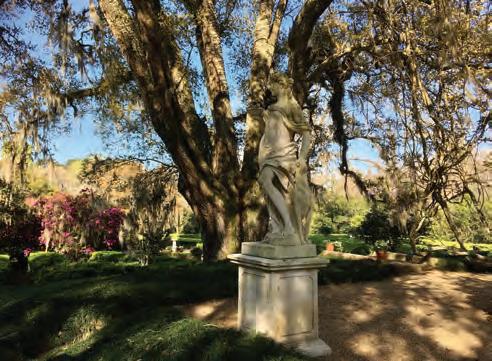
At their fnest this time of year, the gardens are divided into a number of sections. Te foundation of the villa, marked now by four classical statues carved from Italian stone purchased in Vincenza, Italy, still outline the shape of the house. In recent years, the area within the walls has been excavated and designated the “Ruins Garden,” where fowers bloom year ‘round.
From the ruins, the gardens sweep down in a series of graded terraces to the foor of the ravine beneath. A formal boxwood parterre comprises the frst stage of the viewer’s descent through the stages of the garden’s design; an intricate maze awaits at its end. Te music room—a small garden whose four ancient marble cherubs bear diferent instruments—is at the bottom of the stone steps. From there, stepping stones lead visitors into Dafodil Valley. Sixty thousand have been planted for naturalizing since 1984, and each April their delicate blooms daub the valley foor with spring colors.
Open 9 am–4:30 pm seven days a week from March 1–October 1. $5 admission for anyone over 12 years old.
Highway 61, St. Francisville, La. (225) 635-6773 aftonvilla.com
Windrush & LSU AgCenter Botanic Gardens
Courtesy of LSU AgCenter
simple Louisiana cottage called Donaldson House. In 1829, a certain General Wade Hampton took over the plantation and set out to build a mansion worthy of his wife. Te majestic, classic Revival Style home has passed through many hands over the past two hundred years, but the colonnade remains just as Hampton envisioned it. Trough a series of restorations that took place over the past two decades, the house now showcases the most iconic features from the various historic periods of its life
Outside of the house, though, thirty-eight acres make up the Gardens of Houmas House—a stunning display of exotics interwoven with native Louisiana forals and foliage. Designed to showcase
seasonal beauty, the gardens undergo extensive color renewals each April and November—meaning that there is no bad time to visit.
While you’re there, be sure to visit the property’s newest addition, the Great River Road Steamboat Museum, which interprets the vital role of the River in the history of the communities who populated its banks.
Open 9 am–7 pm seven days a week. Garden tours are self-guided and free.
Guided mansion tour packages start at $24.
Admission into the Great River Road Steamboat Museum is $20; hours 10 am–4 pm.
40136 Highway 942, Darrow, La. (225) 473-9380
houmashouse.com
Houmas House Plantation and Gardens
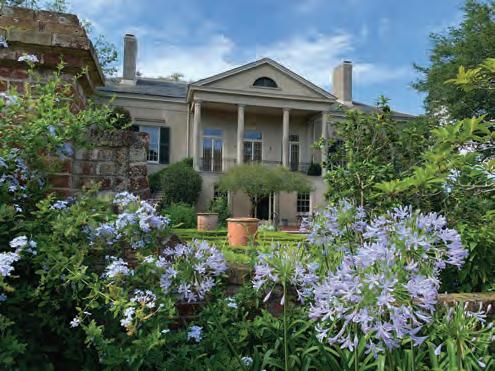
Courtesy of Longue Vue House & Gardens
Houmas House, by Raegan Labat
Houmas House, by Raegan Labat
Afton Villa, by Alexandra Kennon
While a fellow famed for his stage performances (over 4500!) as the character Rip Van Winkle built the late 19th century mansion, whose white cupola now peeps above the trees as one approaches, credit for New Iberia’s magnifcent gardens must go to a later resident and owner, J. Lyle Bayless Jr. Inspired by the Jungle Gardens of Avery Island, Bayless supervised the clearing of land around the Jeferson House, landscaped the area, and planted it with numerous azaleas, camellias, and other ornamental plants. Remembering his visits to English gardens as well as gardens in Java, Kashmir, and Spain, he incorporated exotic elements into his designs with a vision of future expansion.
Around twenty-fve acres of the gardens were restored only to be battered again by Hurricane Lilly’s 2002 fall. Today, the gardens have once again been restored to ffteen acres of gorgeous semi-tropical gardens, overseen by oaks over three centuries old and one of the most remarkable histories of any garden in the region.
In 1966, after the gardens sufered extensive hurricane damage, Bayless hired English horticulturist Geofrey Wakefeld to revamp Rip Van Winkle Gardens' design. Over the next three years, Wakefeld imported plants from all over the world and added a large number of the camellias, for which Bayless gained wide renown as a master grower and propagator.
Open 9 am–5 pm seven days a week. Admission is $12 per person; $6 for children ages 6–17; $10 for seniors. 5505 Rip Van Winkle Road New Iberia, La. (337) 359-8525 ripvanwinklegardens.com
Rip Van Winkle Gardens
Afton Villa, by Alexandra Kennon
Courtesy of Longue Vue House & Gardens
Courtesy of LSU AgCenter
Longue
Te eight acres of landscaped gardens that surround Longue Vue bear testimony to Edgar and Edith Sterns’ love for gardening and Edith’s avid interest in horticulture, which began with her early association with landscape architect Ellen Biddle Shipman. Shipman’s original concept of the gardens at Longue Vue was in the romantic picturesque tradition of landscaping that characterized the English garden of the late-eighteenth century. But by 1939, when the estate
had acquired more land, Shipman enlarged upon her original plan, creating a series of interconnecting “garden rooms,” each dramatically diferent in character. Within each, she employed the colors and textures of plant material indigenous to South Louisiana’s semitropical environment to complement the architecture of the house. Te formal Spanish Court—redesigned by Stern after Hurricane Betsy ravaged Shipman’s original Camellia Allée—was inspired by the Moorish designs of the
fourteenth century Generalife Garden at the Alhambra in Granada, Spain. Te Walled Garden was originally designed by Shipman to be the house’s kitchen garden and was transformed into a true “victory garden” during WWII. Today, students of the Cultivating Communities program work in the Walled Garden as part of their curriculum. Children of all ages can also enjoy hands-on, interactive experiences in the Lucy C. Roussel Discovery Garden, which features vegetables, herbs, and butterfy friendly
forals. One of the historical stand outs at Longue Vue, though, is the Wild Garden, which is a diverse collection of species indigenous to Louisiana— featuring over 3,500 Louisiana irises and 120 camellia shrubs. Te collection is the collaborative result of the property’s three iconic women horticulturalists: Edith Stern, Ellen Shipman, and Caroline Dormon.
Visitors to Longue Vue can also take part in weekly activities on the property, including “Yoga with a Vue,” held from 9:30 am–10:20 am on Tuesdays, Tursdays, and Saturdays. Reservations required. $15 (admission included). Various hands-on workshop and volunteer opportunities can also be found on Longue Vue’s website.
Open 9:30 am–5 pm Monday–Saturday Reservations required. Admission is $10 for visitors ages 10–65; $5 for children, frst responders and military, students and teachers with ID, and seniors. Free admission for children younger than three. 7 Bamboo Road, New Orleans, La. (504) 488-5488 longuevue.com
Art unWINEd
Tired of the same ol’ paint and drink?! Join BREC’s adult-only, fun and creative grown-up classes. Each uniquely themed class is designed to encourage and inspire while enjoying on-theme bites and cocktails.
FLASH BACK!
MILTON J. WOMACK PARK
March 26 | 6:30-8 p.m.
B IRD NERDS
BLUEBONNET SWAMP NATURE CENTER
April 17 | 10:30 a.m.-noon
Vue House & Gardens
Te Walled Garden at Longue Vue House & Gardens has served as the historic home's kitchen garden, a victory garden during World War II, and today is the site of the Cultivating Communities curriculum. Courtesy of Longue Vue House & Gardens.
PRECIOUS BLOOMS
LOUISIANA Story by Kristy Christiansen • Photos by Paul Christiansen
On an overcast January afternoon, we pulled into a nondescript driveway blanketed in fragrant long-leaf pine needles. Both back doors opened simultaneously, and our three boys tumbled out, darting through the trees in search of sticks to start the next epic battle. My husband and I emerged more slowly, taking in the bursts of colors breaking through the monotony of the whitewashed sky.
We had arrived at the Hody Wilson Camellia Garden, a veritable jungle of fowers across from LSU AgCenter’s Hammond Research Station. Although it was a prime weekend to catch the blooming camellias, we were completely alone on the two-acre property. Camera in hand, my husband set of to document the red, pink, and white blooms, while I wandered deeper into the forest of trees, drawn by a search for the perfect fower.
Te site features more than six hundred varieties of camellias planted by W.F. “Hody” Wilson Jr., superintendent of the Research Station between the mid-1930s to 1975. During his tenure there, the Research Station focused solely on vegetables and row crops, while Wilson’s passion for camellias led him to run his garden on the side.
“It’s a little piece of Louisiana horticulture history,” said Jeb Fields, Assistant Research Coordinator at the Hammond Research Station. “Tis is his breeding area, where he did his research. Te trees here have been in the ground for ffty to eighty years.”
Fields explained how Wilson’s garden is a rare gem, as most camellia gardens are continually landscaped and improved. Although the Tangipahoa Master Gardeners maintain Wilson’s
garden, they avoid changing it by adding or removing any trees. Te garden remains historically accurate to Wilson’s vision.
A walk through the property reveals a new surprise in every row, from tiny, delicate pink fowers to palm-sized blooms with tightly-layered rows of white petals. A particularly vibrant blossom showcases candy-cane-colored stripes set against a backdrop of deep green leaves.
Before the pandemic, the Master Gardeners held an annual camellia stroll through the garden in early March. Attendance was high, with nearly six hundred people turning out for the event. Fields hopes the stroll can return next year, alongside a celebration for the one hundredth anniversary of the Research Station.
Known as the “Queen of the Winter,” camellias date back fve thousand years to China and Japan, where the leaves of the Camellia sinensis have long been used to produce tea. Seeds from other species are ground up into cooking oil and face oil. Te East India Company brought both the tea and the trees west to Europe in the 1700s. However, the trees turned out to be the more ornamental species of Camellia japonica . Te English introduced camellias to America via New Jersey, and Martha Turnbull of Rosedown Plantation in St. Francisville is cited as one of the frst to bring them to Louisiana.
Historically, the trees were grown by wealthier gardeners, whose collections can still be viewed at places such as Rosedown Plantation, Longue Vue House and Gardens in New Orleans, Jungle Gardens at Avery Island, and Bayou Gardens in Lacombe. In Baton Rouge, the LSU AgCenter Botanical
Gardens at Burden holds one of the largest private collections in the United States, including several rare varieties in the Stone Camellia Collection. Many of these locations are featured in the American Camellia Society’s Gulf Coast Camellia Trail.
In more recent history, camellias are seen gracing the gardens of households across the South. Hobbyists turn to local clubs to feed their knowledge and to learn how to create their own varieties.
Hunter Charbonnet, former president of the Northshore Camellia Club and former board member of the American Camellia Society, boasts 750 camellias of 650 varieties on his property. He explained how rooting new plants can sometimes take eight to ten years before you get a bloom, but with grafting, the tree can generally fower within two years.
“It’s the beneft of being a member of a club. You learn how to do this,” said Charbonnet. “We meet the third Sunday of every month from September to May. Often a speaker comes in, and sometimes we do a tour instead of a meeting. We go to people’s homes and try to identify their trees for them. Sometimes we fnd varieties that
have been lost, and we regraft them as a means of preserving them.”
In addition to monthly meetings, the Club hosts an annual show at the Southern Hotel in Covington. Charbonnet frequently competes in shows throughout the entire Gulf Coast region, ranking frst or second out of all exhibitors for the past fve years.
“CAMERA IN HAND, MY HUSBAND SET OFF TO DOCUMENT THE RED, PINK, AND WHITE BLOOMS, WHILE I WANDERED DEEPER INTO THE FOREST OF TREES, DRAWN BY A SEARCH FOR THE PERFECT FLOWER.”
“I’m very competitive,” said Charbonnet. “I always try to pick a fower when nature says it’s time to pick it. I’ll be out in the middle of the night if needed. I want others to see what I see, to see the beauty Mother Nature has provided us.”
It’s a beauty that’s hard to miss, especially on a crisp, winter day, when even a single camellia tree can
produce hundreds of vibrant blooms. Eventually they make way for new buds, falling to carpet the ground below in a smattering of color. A stroll through an entire garden of camellias conjures up childhood memories of enchanted forests, beckoning you to stay awhile and explore. h
For more information on local clubs and the area’s camellia gardens, visit the American Camellia Society’s website, americancamellias.com.
To purchase trees, visit Mizell’s Camellia Hill Nursery in Folsom, which ofers over two hundred ffty varieties. mizellscamelliahillnurserys.com
We Bite
ST. ROCH’S RARE & UNUSUAL PLANT SHOP
By Beth D’Addonno
Carlos Detres has always been drawn to the intersection of the living and the dead. Te New Orleans photographer, born in Puerto Rico and raised in central Florida, often photographs dreamy still life tableaus that incorporate beauty alongside loss, vitality alongside morbidity: purple, glittering fngernails wrapped around a coyote’s skull; a séance for deceased hairstylists; ferns growing out of graves. Until the pandemic hit in March 2020, his bread and butter was commercial portraiture and lifestyle photography for brands like Highland Park Single Malt and Macallan Scotch Whiskey. But circumstances and his imagination took him in other directions for his art. “My personal projects are more about contemplating a world between the living and the dead,” he said. It was in that same paradoxical space, that world, where Detres discovered the wonders of carnivorous plants. “I’d been freelancing for years, and there was a lot of stress all the time,” he recalled. “I think it was in 2016—I was trying to quit smoking and just feeling a lot of anxiety.”
He’d always held an interest in fy traps and the like, and started growing the hungry foliage from seeds in his homebased nursery, delving into the science and psychology of the various strains of plants. “What I really like about them is you can feed them and watch them grow,” he said of carnivorous plants. “I enjoy how they can move, they react to stimuli and digest their prey in a way that other plants don’t. I found them relatable.”
Starting with pop-ups in 2017, in January of 2019 Detres ofcially opened the nursery as a plant boutique adjacent his St. Roch home, calling it We Bite Rare & Unusual Plants. In October of that year, he moved the shop into a larger space at its current location at Annunciation Hall, just a few blocks away. We Bite proclaims its oferings as “rare and unusual plants for strange and peculiar people,” and though Detres carries all shades of gorgeous greenery, he specializes in exotics, including Sarracenia, Nepenthes, Dionaea musciupula (the Venus fytrap), Drosera, and Aroids like Hoya and Dischidia
Mostly native to tropical environs in the southeastern United States and Southeast Asia, carnivorous plants make a meal of insects by enticing them with
pitchers, tentacles, or spiky clamshell-like mouths laced with irresistible poison. Once the prey takes the bait, the plant closes or uses its tendrils to quickly sufocate and digest the unsuspecting insects it captures. After it sucks out all the nutrients from the prey, only a dry black husk remains.
Contrary to popular belief, according to Detres, these intriguing plants are not difcult to grow. “When I hear people say, ‘I always kill plants,’ I question that,” he said. “Tere’s a lot of misinformation out there—that they always need direct light, for instance. Yes, they’ll do best in direct light, but many can adapt to bright sunny windowsills. Some, like the Trailing Sundew, actually do best in medium indirect light.”
Part of Detres’s motivation to start We Bite was his observance that most nurseries and plant shops never establish a foundation of care with their customers, especially when it comes to carnivorous plants. “We have, since the beginning, made it a mission to educate our customers with the hope that people will become interested in the fragile ecosystems these plants grow in,” he said. “Te changing climate and urbanization of swathes of bogs and coastal areas have greatly diminished carnivorous plant populations. When customers purchase a plant from us, they learn that the reason why they fail in cultivation is because they cannot be watered with tap water or planted in most soils.”
Detres ofers customers support and advice throughout the growing process, even after they take their plants home, through his We Care program. “I like to ask customers what their lifestyle is. I can teach people to believe in the power of having a cooperative relationship with plants.” Te key to success, he explained, in growing plants and almost anything else, is to do your research frst. Tink about your growing conditions—where and when is the light strongest, and do an honest assessment of what kind of “plant parent” you are likely to be. “Some customers prefer low maintenance, others want to do a lot of nurturing,” he said. “We can help you make the right choices to set you up for success.”
A visit to We Bite is a joyous excursion, a cross between visiting a nursery and a science museum. Detres and his team are thoughtfully knowledgeable and good at asking insightful questions as they
Drosera spatulata (Spoonleaf Sundew); Photos by Carlos Detres, courtesy of We Bite Plant Nursery
, also known as Cape Sundew, is a spikey plant with bright pink tendrils that glisten with nectar, a deadly attraction for gnats and fies.
“Nature has given them tools to survive difcult environments,” explained Detres of his bug-eating babies. “Tey have evolved with alien looking features that allow the plant to overcome challenges.” Native to the peaty soil of coastal North Carolina, the Venus fytrap is the showstopper of the carnivores, outftted with a hinged “jaw,” or terminal lobe, outlined in sensitive spikes that rises from its center. Te plant intuitively identifes its prey and can snap its trap shut in a fraction of a second. “It
is able to produce digestive enzymes like we do,” he said. “If you attach a trap to your pinkie for hours, you will get an acid burn.”
“What’s really fascinating to me is their secret life,” said Detres, whose business picked up signifcantly during the pandemic’s lockdown, which sent scores of anxiety-riddled people out to play in the dirt. “Tey communicate with each other and with their prey— there’s a whole world of language that we just don’t understand.” h
webiteplantnursery.com
Nepenthes ‘Gaya’
Venus Flytrap ‘Akai Ryu’
Drosera intermedia (Water Sundew)
Drosera fliformis ‘Florida Red’
SHELL SHOCK
The Humble Oyster
REELING AFTER OIL SPILLS, FRESHWATER INFILTRATION, A PANDEMIC, AND HURRICANE SEASON, THE OYSTER INDUSTRY REMAINS RESLIENT
and photos by Jason Vowell
Pulling into a muddy boat launch on a cold January morning, I looked out across the calm waters to a small island about a quarter mile ofshore. Jutting out of the murky Caminada Bay are white poles that mark the foating oyster cages owned by Scott Maurer of Louisiana Oyster Company. I stepped around twisted and broken equipment, my boots crunching against the oyster shells scattered in every direction.
“Tis is still the fallout,” Maurer told me as he scanned the gear. “You can still see the tangle of stuf. It’s everywhere. Tere might be a thousand oyster cages here.”
Seven hurricanes. Five evacuations. A global pandemic. What Maurer had hoped would be a break-out year for his oyster business ended up being more of a break down. Hurricane Zeta, the sixth storm to make landfall in Louisiana in 2020, came right up through the oyster farms of Grand Isle and swept many of them out to sea. “I’m not naive. You know as an oyster farmer in the Gulf that it’s going to happen at some point,” Maurer told me. “But what made this so heartbreaking is that it all happened on top of the pandemic.”
Before March of 2020, one hundred percent of Maurer’s oyster sales were wholesale: from the water, to the distributers and the chefs, and fnally the customer’s plate. In that order. “When COVID hit, and all of the restaurants started shutting down, it changed the game completely. And of course, it happened to coincide with a time on the farm where I had an abundance of oysters ready to be harvested.”
As statewide mandates swept across cities in an efort to curve the spread
and a shortage of restaurants to deliver them to?
For Maurer a solution came in the form of a very unexpected oyster dish: pizza. “I met chefs Michael and Christopher Ball through a surf club in Grand Isle. Tey were just starting a pizza pop-up in New Orleans called Yin Yang Pie. We went out on the farm, harvested some oysters, and in a stroke of genius they came up with the char-grilled oyster pizza. Tey brought it back to their pop-up at Zony Mash Brewery, and it just exploded from
“A GOOD OYSTER IS LIKE KISSING THE OCEAN ON THE MOUTH. THAT’S WHAT THEY ARE: A SNAP SHOT OF WHAT IS GOING ON IN THE OCEAN AT THE TIME THAT IT IS HARVESTED. ONCE IT CLOSES ITS SHELL, THE SHUTTER DROPS. IT IS A DELICIOUS PICTURE OF WHAT IS GOING ON IN THE ENVIRONMENT AT THAT MOMENT.”
of the virus, restaurants were forced to shutter or drastically reduce occupancy. Tis left Maurer, and the entire oyster industry, in a serious predicament. What do you do when you have millions of oysters ready to be pulled from the water, sorted, washed, packed, and delivered,
there. It was so popular they started inviting me to shuck oysters with them.”
And that’s how Maurer survived: shucking oysters on street corners, at breweries, pop-up markets, and even backyards. “It was the one bright spot in all of this. Getting to see the customers
enjoy my oysters. To put a freshly shucked one right into someone’s hand and see them eat it. Tey get wide-eyed,” Maurer said. “And when they fnish, they always say it is one of the best oysters they have ever eaten.”
When the time came for chefs to cautiously re-open their doors, Maurer was ready. He started fronting oysters to restaurants who were afraid they wouldn’t be able stay open through the end of the month due to confusing and constantly changing guidelines. “Tese chefs were struggling to fnd a foothold, and I had a great product to get people in the door.” Maurer said. “A lot of positive came out of this symbiotic relationship formed between us. Tese chefs are always the ones who step up and help the community. I didn’t want to ask them for help, because I knew they were hurting too. We had to fnd a way to help each other. ”
It was a gamble, but with storms brewing in the Gulf, Maurer had no choice but to harvest as many oysters as he could anyway.
Newly opened boutique oyster spots like Side Car, and the wildly innovative Japanese restaurant Yo Nashi put Maurer’s oysters on their menus. He
Story
started making the drive north to the Big Easy multiple times a week to drop of oysters to the restaurants, shuck at breweries, and make home deliveries. Tese home deliveries—facilitated through social media platforms like Facebook and Instagram—were a phenomenal shift in the business model for farmers across the industry. As restrictions began to ease, things were starting to look up for the oyster business and the restaurants.
Tat is, until late October of 2020, when Hurricane Zeta slammed into the Gulf Coast with sustained winds of one hundred miles per hour, fooding roads in and out of Grand Isle and making it nearly impossible for Maurer—who evacuated for the storm—to even make the trip back to check on the fate of his
Nathan Herring of Brightside Oysters, which shares the same waters as Maurer’s farm, was the frst to make it back. “It was really bad,” Herring said, fghting back emotions that were still raw. “It was unrecognizable.” Most of the equipment and oyster cages were lost, and what was recovered was found miles away from the farm during helicopter fyovers. Te anchors that held down the lines were twisted and mangled by the force of the storm. Te ropes snapped, sending the gear and the oysters to an uncertain and
Victory, Mixed Media by Barbara Fornias 24x30
Scott Maurer (pictured left) has faced a difcult year as an oyster farmer. But, almost by obligation, he remains hopeful that next year will be better.
possibly irretrievable fate.
Herring’s family and friends made the drive down to Grand Isle to help with the clean-up eforts. “We just dove right in,” Herring recalled. “As long as the oysters stayed in the water, they were still alive. We managed to salvage enough of them that I could keep selling and make some money to help repair the damaged equipment.” While the recovered oysters put a dent in the repairs, Herring has had to tak on another full-time job to support himself and save money to rebuild his farm.
Maurer and Herring’s experiences are not isolated. Hurricanes continue to pose a serious and repeated threat to the industry as a whole. Aside from the structural damage we can see, much of the harm is invisible to the naked eye. Hurricanes drastically alter reef structures where oysters breed, and changes in water salinity can wipe out entire ecosystems. Such threats from Mother Nature combine with that of human interference in the ecosystem.
Nearly eleven years later, Louisiana’s oyster population is still recovering from the efects of the 2010 B.P. oil spill, and sufering repeated assaults by the fact that the Bonnet Carré Spillway has been opened a record-shattering four times over the course of the last three years,
fushing oyster farms with dangerous runof from the Mississippi River again and again.
“I’ve never met an atheist fsherman,” Maurer laughed. “I don’t care what your beliefs are. We have all been scared enough at some point to pray out to someone or something. And if you haven’t yet, you will.”
On top of the storm damage caused by Hurricane Zeta at his farm, Maurer also lost his home. “One of the guys that stayed texted me when they were in the eye wall, saying he was looking at my house and everything was good. Ten, the winds came back from the opposite direction and my phone rang, and he said he spoke too soon.”
“I didn’t focus on my life to start with,” said Maurer. “I just focused on selling as many oysters as I could to get as much gear of the farm to begin repairs.” He couch surfed for weeks, and even slept in an old shipping container flled with his broken gear. “Trough it all, I just kept working non-stop. You wake up at dawn and go out on the boat and work on the farm until night. Come back and answer phone calls and emails and design logos and make posts on social media until you just pass out. Ten you sleep a few hours and do it all again.”
When I asked him if he is optimistic
for 2021, he smiled: “To a fault. I do this so I can be happy making a living on the water. I can always catch something to eat, and I eat well. I love this lifestyle. And if I make money doing it? Great. If not? I’m still going to be happy living on an island.”
Optimistic he may be, but Maurer knows what he is up against. Referencing the iconic black and white photographs from the heyday of oyster harvests in Louisiana, which depict giant oyster boats loaded down with mountains of shells, he said: “You know why those photos are in black and white? Because it’s been that long since there have been that many wild oysters out there to harvest.”
When one participates in the ritula of sitting down to a freshly shucked Gulf dozen and a cold beer, it’s no doubt that this industry is vital to our local culture. It’s also a major contributor to the country at large, which receives 35–45% percent of its oysters from Louisiana waters. A nutritional and low calorie source of protein, vitamins, and minerals, and delicious as they are, oysters are more than a culinary delight. Tey are a source of jobs as well. Tey are a living coastline, a three-dimensional structure that creates a home for juvenile fsh and crabs. Tey are a sustainable
food source. And they create an important bufer against future storm surges.
“Before I started doing this I never believed so much good could come from a humble oyster,” Maurer said. “Te caveat is that they also taste great. A good oyster is like kissing the ocean on the mouth. Tat’s what they are: a snap shot of what is going on in the ocean at the time that it is harvested. Once it closes its shell, the shutter drops. It is a delicious picture of what is going on in the environment at that moment. If you time it just right, at the peak of an incoming tide, you can really taste that fresh, crisp ocean favor.” h
Both Mau rer and Herring are rebuilding their farms, and will soon be seeding new crops of oysters. If you would like to support their eforts, check out their websites: louisianaoysters.com and brightsideoysters.com. You can also help Herring to rebuild his farm by contributing to his Go Fund Me at gofund.me/1b8aebe0.
photos by Lucie Monk Carter
At Frugé Farms in Branch, Louisiana, the Meleck family has been farming rice since 1896. In the years since, like many rice farming families, they’ve started selling crawfsh. Teir newest venture adds liquor to the riches produced from their soils with J.T. Meleck Louisiana Handcrafted Rice Vodka.
Mike Frugé’s heard my question before. “Oh, everyone loves that story,” he says, looking at his wife with a wink.
It’s an easy story to love, strewn with swoony elements of chance and “nearly didn’t”s. Two young American strangers on a bus were seeing Europe for the frst time, only thrown into the same tour group because the bombings earlier that year, 1986, had scared other travelers into canceling their plans. Te Louisiana boy was shy; the Florida girl teased him. On a separate fight back home, the boy missed his connection due to strong headwinds. “Well, do you have anything going to Miami?” he asked the clerk.
A quarter of a century later, I stand with Mike and Courtney on Frugé Farms in Branch, Louisiana, the oldest settlement in rice-rich Acadia Parish. Te rice crop is gone from the ground in early January. I see grains tufting up from the fooded felds, but these are merely feed for thousands of breeding crawfsh, the second major export from the farm. In the old tractor barn a hundred yards to my left waits a third product. But we’re not there yet.
Mike, with his brother Mark, is the fourth generation to farm this land. Teir great-grandmother Helen Meleck Frugé joined her siblings in relocating from Germany to Louisiana at the end of the nineteenth century. In between, they lived in the industrial Midwest, took up the reins of a covered wagon, and headed south, stopping every few months to make a crop and pay their way forward.
“It was all about having their own land to farm,” says Mike. Te Melecks were just a few of the recent immigrants lured down from wheat country to Southwest Louisiana, where property was cheap and eagerly hocked by railroad agents
straw, they built their houses in a method called bousillage that’s still practiced today. But the dirt proved otherwise difcult for farming. A hard clay beneath the surface kept most crops from taking root. Even trees struggled, leaving the felds fat and open.
Today the International Rice Festival, held annually ffteen miles away in Crowley, celebrates an industry that yielded nearly 7,000 pounds of rice per acre last year. But in the mid-nineteenth century, a Cajun farmer was content to toss a few grains in a pond or let rain gather on the higher part of the property to irrigate the planted feld below. Tis practice was called providence rice. If a crop came, thanks be to the Lord.
Teir reputation among other landowners sufered. Les Acadiens were “lazy vagabonds” who preferred fshing, fddling, and lying in the shade of catalpa trees, complained one plantation owner, whose opinion of labor and motivating a workforce should be looked at critically and was—he had complained to Frederick Law Olmsted, who included the quote in A Journey in the Seaboard Slave States in 1853-1854. Te text helped galvanize the Civil War. (German immigrants and descendants would get their turn as pariahs, following the First and Second World Wars.)
From the Midwest, the new arrivals brought experience with large-scale wheat farming, discovering in the decades after the Civil War that Southwest Louisiana soil, stalwart as it was, turned out to be ideal for rice. Shields of clay beneath the earth could hold a veritable food of water, for irrigation, and tools like the twinebinder, the steam tractor, and the thresher ramped up production far beyond what providence may have provided before.
his brother
is the fourth generation to farm the
family land. from there. By the time the brothers reached young adulthood in the 1980s, the recession called for a new revenue stream. Te breeding and harvesting of crawfsh grew into more than one business: cajuncrawfsh.com, which ships live crawfsh nationwide, and Frugé Seafood, a wholesale provider of everything from crawfsh, crab, and mussels, to founder and Atlantic salmon; the menu’s been expanded to include short ribs and steaks.
he needed to learn his own story. Is it the two sides of his ancestry: the German’s industry and the Cajun’s drift toward leisure? Te hard-driving patriarch who led his family from foreign land to foreign land looking for fortune? Or was it that a single farm, growing rice and crawfsh, now dared to distill alcohol too?
I fnally reach the old tractor barn with Mike and Courtney. Inside I climb the stairs to a massive steel vat, where a mixture of yeast, sugar, and Frugé rice sat bubbling. Along the back wall, a four-column still transforms the frothy fermented rice into liquor. Te next room is stacked high with white-oak barrels, where the rice whiskey will age for at least four years.
“No one’s making whiskey with rice,” Mike was told by master distillers when he attended a convention with this germinating idea. On a marketing panel in the next room, experts stressed that budding booze businessmen should diferentiate themselves.
So Mike went home to Branch, to make his rice into something altogether new.
Te frst product to hit store shelves was Louisiana Handcrafted Rice Vodka. Te vodka bears a white label with a silver crawfsh, glinting among grains of rice, all draped in a blue banner emblazoned with the words:
Mike Frugé, along with
Mark,
Meleck
“Louisiana Handcrafted Rice”. “Vodka” sits below, on the crawfsh’s tail, creatively catering to rules preventing “rice” and “vodka” from being on the same line, since the term isn’t regulated yet. Courtney, a trained graphic designer, helped draw the fnal logo with their branding agency, DAf. Te agency asked Mike questions to unearth the history that made a liquor from rice not only possible but a natural next step for the innovative farmer. Te details can be seen on the label: “1896,” the year the Melecks arrived; “Providence,” an uncomplicated hope for good things ahead.
As we sit at home and wait for better news this year, I can say with some experience that a chilly glass of J.T. Meleck vodka brings pleasure. But for its creators, quarantine cut of key marketing strategies, like tastings in grocery stores and craft distilling conventions.
Tere remain opportunities to spread the word, including social media and a recent addition to the bottle itself. Now a cardboard crown details three awards J.T. Meleck scooped up from the American Distilling Institute in 2020: Best of Category, Best of Class, and a Double Gold Medal. Te pandemic pushed the award ceremony into the virtual realm, but Mike jokes that he doesn’t care to compete again: “I can’t do better!”
Periodic tastings give Mike good reason to believe the whiskey will be outstanding too when he begins to bottle it, in 2022 at the earliest. He plans to keep apportioning more of the rice crop to this venture as demand grows. Behind the whiskey barrels sits a pile of lumber from his grandfather Rufus’ farmhouse, which was destroyed by lightning years ago. “If we build a visitor’s center, we’ll defnitely incorporate this wood,” he says.
A farmer plots, then pivots when misfortune comes. A distiller puts his fortune in a barrel, sometimes for decades at a time. A man who met his love in another country, on a bus trip he almost didn’t take, knows it’s the steps and sips in between that can matter most.
You take some vacations, says Courtney, and when you’re asked later if you had fun, you have to think for a moment. “Tis trip, you knew the whole time it was a thrill.” h
jtmeleck.net
RECIPE
Crawfish Pie
By Lucie Monk Carter
You can create the Frugé Farms’ experience in your own kitchen: lace the pie dough with vodka (for maximum fakiness), use long-grain rice for pie weights, and smother crawfsh tails with a roux.
Vodka Pie Dough
2 ½ cups all-purpose four
2 tbsp. sugar
½ tbsp. salt
2 sticks of butter, cubed and kept cold
¼ cup J.T. Meleck Handcrafted Rice Vodka, chilled
¼ cup ice water
¾ cup uncooked rice
1. In a food processor, pulse together four, sugar, and salt. Add butter and process until pea-sized crumbs are formed.
2. Slowly add vodka and water. Pulse until dough just comes together. Turn out onto a foured surface. Halve the dough and form two disks. Wrap in plastic and chill for at least one hour.
3. Preheat oven to 350 F. When ready to bake, roll out one disk into a 10inch circle. Transfer the dough to a pie tin, then line with parchment paper. Pour uncooked rice on top to serve as pie weights. Bake for 45 minutes.
Crawfsh Pie
2 tbsp. butter
½ medium yellow onion, minced
¼ cup of diced green bell pepper
¼ cup of diced celery
2 cloves garlic, minced
2 tbsp. Flour
Pinch of dried thyme
Cajun seasoning of your choice, to your taste
Dash of hot sauce (again, who am I to change your hot sauce ways with my measly recommendation, I actually used a chili-garlic sauce from Vinh Phat Market)
½ cup chicken or seafood stock
½ lb. crawfsh tails
2 tbsp. diced green onions
1. Melt butter in a medium saucepan. Add onions, bell pepper, celery, and garlic and sauté for 5 minutes, until onions are translucent.
2. Add four, stirring constantly until smoothly incorporated. Add spices, then stock. Simmer for one minute.
3. Stir in crawfsh tails, cover and cook for 3 minutes.
4. Uncover and remove from heat. Allow flling to cool slightly. Meanwhile roll out your second disk of pie dough.
5. Pour flling into the blind-baked pie crust. Cover with top crust. Use a knife to make a small X in the center of the dough, for venting. Use a fork to crimp and seal the top crust.
6. Bake for 45-50 minutes, until the crust is uniformly golden. Let cool for ffteen minutes before serving.
Friends of Magnolia Mound Open
and Garden Tour
SATURDAY, APRIL 10, 2021 ~ 9:30 AM
Forum lecture by Dr. Wayne Stromeyer on “Chêne Vert’s Gardens: Recreating an Early Louisiana Landscape” held in Magnolia Mound’s open-air pavilion, Le Grange.
Individual “picnic basket” lunches served in Le Grange.
Self-guided tour of the beautiful grounds and gardens of Magnolia Mound.
Tour of the outstanding gardens at Chêne Vert, a restored Creole home.
Please note: both Houses will be closed. Masks and social distancing will be required.
Purchase tickets at www.friendsofmagnoliamound.org. Seating is limited.
Te Friends & BREC - partners in the preservation of Magnolia Mound for over 50 years.
Tanks to our sponsor
Culture
ART OF COMMONPLACE
Yard to Table
HOW THE UNPRECEDENTED CHALLENGES OF 2020 MIGHT PERHAPS YIELD A MORE AGRARIAN FUTURE
Story by Jonathan Olivier • Photos by Paul Kieu
In the early days of the pandemic, when there were more questions than answers surrounding COVID-19, our world came to a screeching halt.
In the midst of nationwide shutdowns, deaths, jobs lost, and general confusion, news began trickling in of shortages at the grocery store. Aisles were bare and resupplies were lagging. It appeared as if America, the land of plenty, could soon be left without a way to feed its people.
We know how the story played out—some essentials, namely toilet paper, were scant, but most supplies were still available and, luckily, we averted a nationwide food crisis. But at the time, when no one knew if the shelves would be restocked or if workers could enter food processing facilities again, the fear was palpable. Due to shutdowns at meat packing plants, thousands of pigs were euthanized and farmers had no restaurants to
buy their product. Te U.S. Department of Agriculture spent three billion dollars purchasing meat, dairy, and produce as a bandage for farmers, and the USDA later sent direct aid to them.
Tere’s one part of that story that really struck home for me: shortages of vegetable seeds, chickens, and garden supplies. At the time, I was running a small market garden and, to my dismay, couldn’t fnd available seeds from my normal supplier or fve of its competitors. I scrambled together what I could from as many sources as possible to have produce to sell last summer.
Despite my initial frustration at the situation, with hindsight I’ve begun to reconsider this period of American history. I’ve realized that perhaps last spring’s panic buying wasn’t based in irrationality, as I believed at the time, but rather evidence of a deeply-rooted cultural
practice inherent in us all. When the foundation of our industrial food system started to develop hairline fractures, people realized how unstable that structure had been all along. Gardening appeared to be the only logical exit.
Growing food, foraging, and self-sufciency, after all, is woven into the fabric of human history—and America’s, too. It’s likely that most of us are only a few generations removed from some agrarian ancestor. Growing food, then, is an American ideal. While shutdowns are becoming a memory, along with the threat of food shortages, I’m sure many of those victory gardens have succumbed to weeds. But maybe the lockdowns helped America, if only for a few short months, remember where we come from and, ultimately, how growing food is about more than sustenance.
Stevie Mizzi has been practicing life as a full-time homesteader for years, growing vegetables and raising farm animals on her plot of land near Duson.
“For me, having the chance to just watch a seed sprout is almost like watching magic happen,” said Jenny Prevost, a home gardener from Rayne.
Prevost, who grows for her husband and three children, explained that she sees gardening as a fundamental element of the human condition. And that’s not only because it nurtures, she said, but because it’s a practice that puts her in touch with her spirituality. “To watch your plants grow—I can’t see how that couldn’t be a soul-saving, healing experience for anyone.”
Prevost’s father, Bill Guidry, cultivated a garden when she was younger. She’s tended to a small vegetable patch herself for the last few years, although at the beginning of 2020, she decided to really dive into it. She received fedgling plants from her mother-in-law Ellaine Turner, and the hobby matured. By the time spring rolled around, her garden was full and growing more every day.
“Once the shutdown happened, and everything came to a halt, I was so grateful to have had expanded the garden,” she said. “It became such a grounding activity. My kids were home from school, and it became a family undertaking.”
Prevost described her family’s diet before the pandemic as conventional; their pantry was stocked with shelf-stable, typical American snacks like chips and cookies, while the meals she cooked didn’t take much prep time. But, she told me, the pandemic changed all of that. Over the summer, she and her family doubled the size of the garden, and they did so again in the fall. She said those easy snacks have all but disappeared, replaced by home-made, fermented foods, along with fresh, more involved meals straight from the backyard.
Such a journey into self-sustainable growing was once described by the agrarian philosopher Wendell Berry as the “profoundest enactment of our connection with the world.” In one of his most celebrated works, Te Art of the Commonplace: Te Agrarian Essays, he equates gardening to an awakening, one that can help us to recognize and reject the way in which America wastefully produces food for easy consumption. “In this state of total consumerism … all meaningful contact between ourselves and the earth is broken,” he wrote. Only through gardening, through working the land, can one “begin to understand and to mistrust and to change our wasteful economy.”
For Prevost, witnessing the fragility of the country’s food and education system was enough of a catalyst to make a lasting change, one that she has discovered, as Berry noted, is about more than access to fresh food.
“It hit a reset button for me,” she said. “I realized that not so long ago, people did without these modern conveniences and had happy lives. I’m fnding that is important to get back to.”
Tis philosophy is one that Stevie Mizzi tapped into years ago. On a plot of land near Duson, she cultivates a small farm that feeds her husband and three children. In addition to a garden full of vegetables, she has a dairy cow, chickens, and fruit trees.
When the shutdown upended life in America, it was business as usual for her. A full-time homesteader for years, Mizzi’s routine was practically unchanged. She and her kids awoke in the morning and would head outside into the garden to pluck breakfast right from the earth—whatever was in season at the time—along with some fresh-laid eggs. Troughout the day, she’d continue to meal prep, mostly with vegetables or meat her family procured on their own land.
Although she also had trouble fnding seeds for
Jenny Prevost and her family started raising a home garden in January 2020. When the pandemic began, the family became more involved in the project, and now most of the food they consume is grown in their backyard. Te garden has doubled in size twice since then.
her garden last spring, Mizzi saw the rush through a diferent lens than I had. “My immediate reaction to it all was that I was very happy,” she said. “I was glad that people were giving gardening a shot, because I felt like for some of them, it would stick. And maybe those people would continue moving in that direction.”
Mizzi hoped others could glean what she had from all of these years of working the land—that backyard gardens ofer clean food, breed bodily satisfaction, and instill valuable work ethic. She shares in Berry’s vision of gardening as such a radical act. She told me that she believes the practice “is the answer to most of society’s troubles.”
“Gardening is the exact opposite of instant gratifcation,” she said. “Te rules of gardening are governed by nature, and a lot of time that is out of our control. If you mess up, you have to wait a whole year to try again. You really have to be patient, and also resilient and persistent.”
Some habits instilled by this pandemic— such as social distancing and maskwearing—we’ll be happily rid of once the threat has gone. But perhaps some new behaviors born of this moment in history, such as gardening, will stick around a little longer as people witness its value to us as individuals and as a society. Perhaps these months of increased contact between us and the earth will be the catalyst for the change that Berry hoped for. h
West Feliciana Chamber Announces New Board Members
The West Feliciana Chamber of Commerce is pleased to announce Richard Kendrick and Aimee Cook as incoming board members for 2021.
Richard Kendrick was sworn in as the West Feliciana Parish Tax Assessor on January 1, 2021. Prior to that, he worked as the Chief Deputy of the West Feliciana Tax Assessor’s Ofce and has been with the ofce since 2005. Tis is Richard’s second time as a board member of the West Feliciana Chamber of Commerce. He has previously served as the President of the Chamber of Commerce, President of Rotary, served as member of the Friends of Cat Island, and is also a volunteer coach for the soccer program at the West Feliciana Sports Park. Richard, his wife, Meg, and their two sons, Tomas and Collins, are members of Grace Episcopal Church.
Aimee Cook joined the Bank of St. Francisville team in June 2006. She has an Accounting degree from Southeastern Louisiana University and is a licensed CPA. Her frst role at BSF was as Internal Auditor, but she has shifted to Lending the past four years. She is also the Risk Ofcer of the Bank. She served on the West Feliciana Chamber Board as Treasurer in 2016-2017 and as an Ambassador in 2020; Bains Elementary Parent Teacher Organization Board 2012-2020; Coached several years of tee-ball,
softball, baseball, and basketball for the Recreational Youth Programs at the Sports Park; and has taught Junior Achievement for the Rotary Club at Bains Elementary and Financial Literacy sponsored by BSF at West Feliciana High School. She is also a member of the Louisiana Society of Certifed Public Accountants.
“I’m excited to help be a voice, to provide leadership in our community, and to encourage a progressive business environment to showcase our local businesses. I hope to serve the Chamber well and continue the momentum they have built. It’s a great organization!” stated Cook.
Te 2021 West Feliciana Chamber Board includes Raneé Rogers Voorhies, Board President; Aimee Cook, Vice Pres.; Lindsey Landry, Sec.; Robert Hanna, Treasurer; Tifany Ashley; Pamela Doskey; Stephen Garrett; Kori Jones; Richard Kendrick; Morgan Moss; Charlie Perdue; Aaron Priddy; and Claire Rivette.
Te West Feliciana Chamber of Commerce’s mission is to foster growth and opportunity by connecting and supporting members of the business community. For more information on the chamber, please contact Megan D’Aquilla at (225) 635-6717 or email info@westfelicianachamber.org.
Thank You to Our Sponsors & Participants for
making the event a success!
Aimee Cook
Richard Kendrick
Escapes
TREK
A Hiker’s Guide to Louisiana
RUGGED HILLS AND STUNNING VISTAS AWAIT
Story by Jonathan Olivier • Photo by C.C. Lockwood
There are some backpacking trips that tend to stick with you, no matter how much time has lapsed. Tose where the vistas never seem to end, mountains stretching to the horizon. And others that may have been plagued by bad weather or some other complication, but good company turned the whole trip around.
For me, one of my most cherished adventures comes not from the many nights I spent in the Colorado Rockies or covered beneath the Appalachians’ canopy, but rather from right here in Louisiana, within the Kisatchie National Forest.
I had frst learned of Kisatchie back in high school: a patchwork of federal land scattered throughout central and northern Louisiana. I frst trekked there in college, landing on the 7.6-mile Backbone Trail within one of the state’s only wilderness areas, the Kisatchie Hills Wilderness. Tat frst afternoon, I remember being foored by the terrain—rolling hills and intermittent sandstone outcrops that ofered views of one of the fattest states in the country. I set up camp that night on top of a bluf where I could see for miles over the longleaf pine forest.
Te next morning, the sun turned everything amber, making my view that much sweeter. As I sipped instant cofee, I basked in the solitude, the quiet, and nature’s display. For a second, I felt like I was the only person in the world watching the sun rise.
Tis list of hikes includes some of the best in Louisiana, from the swampy lowlands to the highest point in the state. While not often properly recognized for its trails, our backyard holds some of the most unique and diverse landscapes in the country. You don’t have to trek out of state to have an excellent time hiking—you might be surprised by the gems right around the corner.
Mount Driskill is the closest you’ll get to fnding a mountain in the Bayou State. It’s the state’s highest point, measuring in at 535 feet above sea level, and this trail will take you all the way to the top—albeit totaling less than two hundred feet in elevation gain along the way. Tis part of Louisiana contains some of the hilliest terrain around, with multiple hills topping out above four hundred feet in elevation, but the only gear required is a pair of hiking shoes. Tis one can be
done by hikers of any age. Tis hike is only 1.8 miles, easily done in a morning. Te parking lot is near a church with the trailhead close by—signs will direct you to Driskill. Almost all of the trail is under dense tree canopy, although there are some opportunities for views along the way. One of them is Jordan Mountain Overlook, which ofers a nice view of the surrounding bumpy terrain. At the summit you’ll fnd a marker with a guestbook.
WHILE NOT OFTEN PROPERLY RECOGNIZED FOR ITS TRAILS, OUR BACKYARD HOLDS SOME OF THE MOST UNIQUE AND DIVERSE LANDSCAPES IN THE COUNTRY. YOU DON’T HAVE TO TREK OUT OF STATE TO HAVE AN EXCELLENT TIME HIKING—YOU MIGHT BE SURPRISED BY THE GEMS RIGHT AROUND THE CORNER.
Backbone Trail: Kisatchie National Forest on around two extra miles for a ninemile roundtrip.
Te Backbone Trail is within the 8,700-acre Kisatchie Hills Wilderness Area, one of the only designated places in the state that boasts hills up to four hundred feet in elevation. Its terrain is some of the most unique in Louisiana, marked by undulating hills, sandstone outcrops, small waterfalls, and longleaf pine savannahs.
“Anytime during the week, you’ll most likely be by yourself up there,” said John Williams, owner of Pack and Paddle, an outdoor recreation outftter in Lafayette.
“Te highlight, for me, is that the trail is one of the only ones in the state where you’ll see rocks.”
At under eight miles, the trail can easily be done in a day. To ensure you’ll only need one car, Williams said to make the trail into a loop, walking south along the Longleaf Scenic Byway and tacking
Te Backbone can also be explored as an overnight. Park near the Caroline Dorman trailhead, crossing the Byway to the Backbone trailhead. Heading to the campsite, you’ll trudge over a few hills through a mix of pine and bottomland hardwoods forest, and cross a couple of small creeks—depending on the time of year, these may be wet crossings. At around four miles, you will cross a creek deeper than what you previously encountered, then climb up a short but steep bluf, where to your right you’ll fnd a few campsites on the hill’s edge. You’ll have sweeping views to the east of pinecovered hills. Follow the blazes to the northern terminus of the trail, then hike south along the forest road back to your car.
Caroline Dormon Trail: Kisatchie National Forest
Te trail’s namesake, naturalist and author Caroline Dormon from central Louisiana, is best remembered for being the frst female U.S. Forest Service employee. Although adjacent to the Backbone Trail, the Caroline Dorman Trail is considerably fatter, with fewer sections of hills. Te trail winds through bottomland hardwood forest and pines, crossing creeks and bypassing a few small waterfalls.
One of the trail’s terminuses is at the Kisatchie Bayou Campground, paralleled by the Kisatchie Bayou, which is a state natural and scenic stream. Here, sandstones cover the sides of the waterway for a view more like the ones you’d fnd in Arkansas. At most times of
the year, near the campground is a small, cascading waterfall that pours into a swimming hole.
“Te best part of the Caroline Dormon Trail is the three miles closest to Kisatchie Bayou Campground,” Williams said. “Te bayou has a beautiful sand bottom and is bordered by a lot of hardwoods and magnolia trees.”
At 10.5 miles in length, the Caroline Dormon can also be completed as an overnight out-and-back to total just under twenty-two miles. Start at the trailhead of of the Longleaf Vista Byway and camp at the Kisatchie Bayou Campground. For a day hike, you’ll have to shuttle, parking a vehicle at both trailheads.
On the Wild Azalea Trail, hikers get a chance to test out their backpacking skills. It’s the longest path in the state at twenty-eight miles one-way, although it’s often completed as an out-and-back to total ffty-six miles. At that distance, it’s best to take an entire weekend or even three days to complete the trail. Te Azalea is located in the Kisatchie National Forest, Evangeline Unit of the Calcasieu Ranger District. Here, rolling hills defne the terrain, with small creeks in each fold that are full of clear water. Te best time to hike is in spring, when hunting seasons are closed and the trail’s namesake azalea fowers are blooming.
“I usually go in March to see the wild azaleas,” Williams said. “In the Castor
Creek Scenic Area, there aren’t many crowds and the fowers are all over in the hollows between the hills.”
Trailheads are located at the Woodworth Town Hall (though this one requires a couple of miles of walking along the road to reach the trail itself) and the Valentine Lake Recreation Area. Also the Evangeline Camp Trailhead is in the middle of the trail, and Williams advises that some of the best hiking on the Wild Azalea is along this trail. Although there are a few designated camping spots, dispersed camping is allowed in the forest at least thirty feet away from the trail.
Lake Chicot Loop Trail: Chicot State Park
Lake Chicot in Ville Platte is located within Chicot State Park, which ofers several day-use amenities and camping sites for tents or RVs, as well as cabins and pre-set-up Tentrr campsites available for rental. Te environment around the lake is diverse, ranging from cypressladen lowlands to hilly hardwoods. In the winter, the lake is home to migratory waterfowl and birds, and in spring wildfowers are in bloom.
Te loop encircles the lake and is twenty miles long, though all but around two miles of the loop is closed for the time being. When re-opened,
it’s best completed as an overnight, but tackling it in a day is possible. Tere are several campsites along the trail to choose from, as well as trailheads. Te trail ranges from dirt path to boardwalks in low sections—trail workers have done an excellent job of placing markers to help with fora identifcation. For handicapped or young hikers, Williams recommended checking out the Louisiana State Arboretum, which is within the state park, for approximately fve miles of easier trails.
C Trail: Tunica Hills Wildlife Management Area
Adjacent to the Mississippi River in this part of the state, near St. Francisville, are sections of hills comprised of loess soil—wind-blown sediment that has been shaped into rugged hills, extending all the way up to Tennessee. All of the almost six thousand-acre Tunica Hills Wildlife Management Area is defned by this terrain, home to blufs and waterfalls
more than ten feet high. Te loop is 3.6 miles with a few steep but manageable grades. Orange blazes painted on trees will guide you through the hilly forest, with some sections boasting sharp embankments near the trail. Te path traverses a few stream beds and has a nice view of a river. h
Mount Driskill: Bienville Parish
Wild Azalea Trail: Kisatchie National Forest
OUTDOOR ADVENTURES
Cycle, Camp, Repeat
BIKEPACKING IN THE BAYOU STATE
By Ed Cullen
One spring, it occurred to me that the weather was perfect for a ride from a friend’s house in Star Hill to the home of some other friends north of St. Francisville. It wasn’t that far a ride, less than ffteen miles, and I’d done it before. Tis time, however, I decided I would bicycle camp.
Refecting on it years later, two things stand out about that trip: Te Big Tree of Spring—daisy feabane, spider wort, and butterweed—which slid past me as I churned northward on U.S. 61 headed for the Angola Road, and the posh cyclists from California I encountered minutes into my ride.
I had just turned out of a private road in Star Hill onto the road that would take me to U.S. 61 when I was overtaken by the half dozen riders on expensive road bikes. I was on a mountain bike rigged for an overnight’s camping.
As they overtook me, we exchanged greetings. Tey and their bicycles
were being transported by airplane to advertised rides around the country and had found themselves here. I thought to myself how much we locals take for granted the lovely riding around St. Francisville and the Tunica Hills.
“So, where did you start?” asked one of the riders, eyeing my sleeping gear, mess kit, and tent bungeed to a rear cargo deck and panniers (saddle bags), bulging with quick-cook food, water, and clothing.
“Back there,” I said, nodding in the direction of the homestead where I’d left my truck.
I should have said Taos.
Te guy fxed me with a look and rode on. To outdoor enthusiasts with money to burn, it’s necessary to travel far from home for bikepacking to mean anything. Most backpackers travel by car, airplane, train to start their treks. I’d argue that the experience’s very charm comes from its ability to turn the shortest camping trip into an adventure.
Bikepacking on the Mississippi
In Baton Rouge we have the Mississippi River and the levee, which make it possible for bikepackers to start the adventure from their front doors.
Te levee has always been rideable by mountain bike, but deep ruts in unpaved stretches discourage riders of skinny-tire bicycles. In Baton Rouge, levee paving from downtown to L’Auberge Casino at River Road and Gardere Lane was completed last fall, and eventually will extend all the way to New Orleans. Tis stretch of levee is a favorite of bikepacker Will Adams.
Adams found himself in Baton Rouge seven years ago, when he was making his way to Argentina from Georgia. Hitting Louisiana’s Capitol city, a large truck damaged the bike trailer he was pulling. He found work and lodging in the Mid City bicycle shop on Government Street and simply never left. Since then, he’s taught bicycle mechanics to young people at Front Yard Bikes, a non-proft organization with a youth development
program and at McKinley High School. Adams is also the education coordinator and adjunct welding professor at Baton Rouge Community College. And the levee access points in downtown Baton Rouge are just a short ride from his Garden District home.
Starting downtown, the business district yields quickly to scattered marine company yards and pasture. Traveling south, “the river on your right and the big sky” are what bring Adams and other cyclists and runners to the levee. Leaving the outskirts of LSU behind, you pass the Farr Horse Activity Center, a remotecontrol model airplane feld and a huge, sloppy eagles’ nest high in a tree at the edge of the Mississippi River. At a bend in the river, you pedal past the ruins of the Cottage plantation house to the left and the moonscape of a sand and gravel works on the river side. Te levee top is a safe place for children to ride with their parents. It afords an education and a sense of place.
What to Pack
Speed is not why people bikepack. It is the getting there and, of course, the journey itself. But before that, there is the packing.
Bikepacking and backpacking are frst cousins. Tey use the same light-weight tents, sleeping bags, and cooking gear. If the stove is smaller than the pot you use to cook, it’ll do for camping on a bicycle or on foot.
Camping one night in warm weather, you can get by with what you can cram into a large backpack. For cooler nights, a tent, groundpad, tarp ground cover, sleeping bag, cooking utensils, water, and food have to be strapped to the bicycle and carried in panniers.
My camping gear is bulky; vintage Colorado truck camping. After strapping my gear to a mountain bike a couple of times, I eventually decided to get a bike trailer, which I also now use for grocery shopping.
A trailer isn’t really an option for riders camping in mountains or the Tunica Hills north of St. Francisville.
Where to Sleep?
Te ride from Adams’s house to a campsite just above L’Auberge takes about an hour. He has camped on the riverbank with friends over the years. Te levee top is maintained and policed by the Pontchartrain Levee District headquartered in Lutcher, but the batture, land between the river’s low and high water marks, may be privately owned. Public access to the batture is a sometimes-contentious situation, but “we’ve never had any trouble,” Adams said. Tere are no “no trespassing” signs, and there’s physical evidence of long use. “At night, I can hear the river trafc,” he said. “In early fall, the mosquitoes aren’t bad. Waking up, it is so peaceful.”
Monica Gorman, executive director of the Pontchartrain Levee District in Lutcher, whose jurisdiction includes East Baton Rouge Parish, knows people visit the batture.
“Te levee is an easement,” she said. “Nine times out of ten, the batture is privately owned and people are trespassing.”
Batture camping is not for everyone. For starters, as Gorman said, you’re probably trespassing. And unfortunately, there are no designated campgrounds along the route because of seasonal high water.
At little cost, the Baton Rouge Recreation and Parks Commission
Most riders would opt for mountain bikes with minimum, light-weight gear and plan to take on water and food along the way.
“When bike camping, you weigh whether you really need something or not,” said Adams. “Tree plus three plus fve pounds, it’s the addition that kills you.”
Te St. Tammany Trace and the levee make it possible to pull a trailer. Good trailers go for $100 brand new. Adams sleeps in an enclosed camping hammock that combines tent, fy, and bag all compressed into a pack. He cooks on a camping stove or brings prepared food from home. His trailer accommodates a small ice chest.
Friends who bike camp together may designate a rider to carry a stove for everyone’s use. Te stove is used primarily for heating ready-to-eat food and boiling water. Te weight of water and food may be distributed over several bicycles. Water may be cached at the camp site ahead of time.
could designate a place for tent camping near the bicycle station already at FARR. Te station ofers bathrooms, air, water, and picnic tables. Follow the car path through the RV area to a pavilion inside Farr south of the River Road entrance.
Until then, as the paved path stretches south, cyclists riding from Baton Rouge to New Orleans may have to forego camping in exchange for more structurally-established accommodations. Of of Gardere Lane, there is a nice cluster of afordable stays via Airbnb that are easily accessible from the levee. Ten of course, there is always L’Auberge. In Plaquemine, you can take the ferry across the river for an easy ride to the Best Western or America’s Best Value Inn, or fnd a few other Airbnb options in the area. It’s also worth checking out warmshowers.org, which for a one-time $30 fee will grant you access to a community of touring cyclists and people willing to host them for overnight stays in their homes at no cost.
For a more tried and true bikepacking experience, our region does ofer spectacular bicycle trails and campsites along the St. Tammany or Natchez traces. Plan your trip at nps.gov/natr/ planyourvisit/camping.htm (Natchez Trace) or at tammanytrace.org. h
PACKING LIST: A FEW ESSENTIALS
• Bicycle, helmet, lights, packs that may be attached to the bicycle
• Tent, ground pad, sleeping bag
• Stove, f uel, lighter, kitchen kit
• Water
• Food: Tink backpacking. Don’t forget the cofee.
• Cellphone, chargers
• Change of clothing, underwear, socks, waterproof gloves, rain jacket. Dress loose and layered so you can peel of clothing as you heat up.
• Hygiene pack and toiletries
• First-aid kit: an empty, plastic potato chips tube will hold the basics.
• Bike repa ir: spare tubes, patch kit, compact pump or CO2 infator with cartridges, tire levers, duct tape, zip ties. Essentials will ft inside a spare water bottle mounted on the bicycle.
• Trailers are good. Find suggestions on how to arrange gear on a bicycle (like tent and pads strapped across the handlebars) on YouTube.
• Anything else you cannot live without for two nights.
Bicyclist Will Adams found himself in Baton Rouge on a bikepacking trek to Argentina. After stopping for repairs in Mid City, he never really left. Tese days, he takes frequent bikepacking trips down the Mississippi River levee with a trailer in tow. Photo by Robert Collins.
Albany, LA
Directory of Merchants
Livingston Parish CVB 10
Baton Rouge, LA
AllWood Furniture 22
Artistry of Light 26
Becky Parrish Aesthetician 53
Blue Cross Blue Shield 16
BREC 27, 28, 43
E ast Baton Rouge Parish Library 56
Elizabethan Gallery 38
Lagniappe Antiques 38
Louisiana Nursery Showplace 24
Louisiana Public Broadcasting 53
LSU Rural Life Museum 6
Mary Bird Perkins - Our Lady of the Lake Cancer Center 7
Pinett a’s 39
Southside Gardens 28
Wilson & Wilson, LLC 18
WRKF 89.3 53
Covington, LA
Covington Downtown Development 46
Grand Isle, LA
Grand Isle Tourism Department 39
Hammond, LA Tangipahoa Parish CVB 55
Houma, L A Houma Area CVB 5
Mandeville, LA
St. Tammany Parish Tourist Commission 19
Mansura, LA
Avoyelles Tourism Commission 21
Morgan City, LA Cajun Coast CVB 14
Natche z, MS
Live Oak Construction 26
Monmouth Historic Inn 15
Natchez Euro Fest 42
Olivina Boutique 35
United Mississippi Bank 35
New Roa ds, LA
City of New Roads 12
Pointe Coupee Parish Tourist Commission 3
Oberlin, LA
Allen Parish Tourist Commission 38
Opelou sas, LA
St. Landry Parish Tourist Commission 43
Plaquemine, LA
Iberville Parish Tourism Department 17
Port Al len, LA
West Baton Rouge CVB 20
West Baton Rouge Museum 46
Scott , LA
Bob’s Tree Preservation 29
St. Francisville, LA
Artistry of Light 26
BSpoke 4 U 13
Grandmother’s Buttons 32
Magnolia Cafe 32
St. Fra ncisville Inn 39
Sullivan Dental Center 33
Town of St. Francisville 14
West Feliciana Chamber of Commerce 47
PERSPECTIVES: IMAGES OF OUR STATE
Lilly Potter
DR. LILLIAN BRIDWELL-BOWLES AND HER GODDESSES
By Jordan LaHaye Fontenot
In Plato’s enduring dialectic work Te Phaedrus, Socrates shares the myth of Teuth, the ancient Egyptian god of writing, who wished to give his gift—“a potion for memory and for wisdom”—to the people of Egypt. To this request, Tamus, the King of Egypt, replied that actually, the gift of letters would be “an elixir not of memory, but of reminding . . . the appearance of wisdom, not true wisdom.”
Such explorations and critiques of language and the ways it is efectively used were central to Dr. Lillian Bridwell-Bowles’ curriculum as a professor of rhetorical history for forty-two years, as well as her research of it—which culminated in fve books and dozens of publications. So, it should come as no surprise that one of her early endeavors into ceramics brought forth an elaborate depiction of Egypt’s sacred scribe.
But, skilled in the art of deconstruction as she is, the potter-professor re-examined the famous myth, asking herself, “What’s missing here?” As is so often the case, what was missing was the story’s woman. “In the Egyptian pantheon of gods and goddesses, surely there was a woman,” Bridwell-Bowles said. “And I found her.” So, she set about creating Seschat, the far-lesserknown goddess of writing and wisdom. “And then, I imagined that [she and Teuth] had probably crossed paths, and I thought about how in so many stories, the woman is a bigger part of the inspiration, or even a major contributor, and never gets the credit. So, this is what I did about that.” Tus, the work of art: “Teuth Plagiarizing Seschat”: Seschat pictured writing out hieroglyphs (which, in one spot, translate to “Lilly”), Teuth writing his own opposite her, looking over his shoulder to copy her work.
Tis mingling of historical reference, mythology, feminism, and play repeats itself as a theme across Dr. Bridwell Bowles’ artistic works—which she has committed herself whole-heartedly to since her retirement in 2017.
“I have had an artist inside me my whole life,” she said. “But she was trapped in academia.” Not that she didn’t love her work in academia, she was sure to emphasize. After all, her studies are what brought her into the museums and archives where she has gathered so many of the styles and motifs that adorn her work: the story of Teuth, the Moroccan lotus, Walter Anderson’s birds, and perhaps most profoundly the signature Arts & Crafts designs of Newcomb Pottery.
In 2017, Dr. Bridwell-Bowles co-authored a study titled “Women, Work, and Success: Fin de Siecle Rhetoric at Sophie Newcomb College,” published in the Peitho Journal. A marriage of her academic expertise in rhetoric and gender studies, this project also connected her to some of the most signifcant
women ceramic artists in American history through letters and interviews in the Newcomb Library’s archives.
Te simple naturalistic motifs of the Newcomb style, which most often refected the fora and fauna of Louisiana, quickly made their way into Dr. Bridwell Bowles’ bursting notebooks of inspiration, joining pages of Art Noveau-style sketches hummingbirds, dragonfies, seashells, trees of life, and birds. And all of these, at some point in time, have found a place upon the countless jars and pots and cofee mugs and statues crafted in her garage-turnedpottery studio, overseen by a poster emblazoned with George Ohr’s motto: “No Two Alike”. So while her studies and her academic explorations certainly fnd their way into her work, Dr. Bridwell-Bowles believes their infuence on her art is more subconscious than rhetorical. “It informs my tastes,” she explained. “I know enough to enjoy interesting things, but it’s really my aesthetic creativity that takes over in the studio. I don’t process anything intellectually at all.” Coming back to Teuth, she pointed out another ceramic portrait of the god, in which she had dressed him dressed as a woman. “I did this because … well, because I just wanted peacocks on him for some reason,” she said, pointing to the elaborate feathered designs on his skirt. “I just felt that.”
story of the Ghanaian women who had been enslaved there. “Tese women in Ghana, they were running, hiding in the jungles from the slavers,” she said. “But they knew they would be captured, it was inevitable. So, what they would do is weave okra seeds into their hair, so that when they got wherever they were going to be taken, they could plant them for their children. Just amazing.”
And while the impulse to create can at times be so simple, at other times it runs deeper. For example, Dr. Bridwell-Bowles said upon hearing Amanda Gorman’s poem the day of President Biden’s inauguration, she knew she had to make Gorman. Te tiny efgy, with her bright yellow coat and red headband, is instantly recognizable—unglazed and fresh from the kiln. Dr. Bridwell-Bowles said she calls her, “Rebirth”. Towering above her more functional bowls and cofee mugs are Dr. Bridwell-Bowles’ goddesses. Te tall dignifed creatures, each in their own eclectic headpiece and attire, are in many ways the centerpieces of her body of work. In recent years, a particular goddess has captured her imagination: Te Goddess de Gombo. She frst envisioned her okra goddess after
On the day I visited, she had just pulled a batch of work from the kiln to discover that many of the pieces in it had exploded. “Tat’s only happened twice since I’ve been doing this,” she said, supposing that it could be the batch of clay she had bought, or the fact that the weather has been cold lately. It’s devastating, she said, to lose your work like that. But, she pointed out, gesturing across the broken pots and bowls, then to the corner where two of her okra women stood proudly: “Te goddesses survived.” h
Find more of Dr. Bridwell-Bowles’ work at lillypotter.com, and don’t miss her profle on LPB’s Art Rocks on Friday, March 19 at 8:30 pm, repeating Sunday, March 20 at 5:30 pm. lpb.org/artrocks.
“Teuth Plagiarizing Seschat” Photo courtesy of Dr. Lillian Bridwell-Bowles.