CORPORATE ACTION FOR


NYU Stern Student Voices Volume 10 Spring 2023

EDITED BY PROFESSOR JEFFREY J. YOUNGER, JOHN SACHENIK, NICOLETTE HENDRAWINATA, AIDAN KATZ, AND ZOE MERRIMAN
DESIGNED BY DENALIA ZHI
PHOTOGRAPHY BY SOOYEON EUN
FOR CORPORATE ACTION
Front
and back cover photos by Sooyeon Eun, NYU Stern ‘24
NYU STERN STUDENT VOICES VOL. 10 / SPRING 2023
01


CONTENTS / 03 contents Bringing Change to Market: One Wash at a Time AERIN GLAZER An E-fish-ent Solution to Bottom Trawling ERIC HALHJEM A Bright Solution for Opioid Addiction LARS ZEANA-SCHLIEP Fighting Flatulence with Flora YANGYANG LAI 6 42 24 60 Letter from the Dean DEAN ROBERT WHITELAW 4 Big Fish in a Small Pond: Controlling Asian Carp NATHAN CHONG Optimizing Data to Aid Lima's Water Crisis CHRISTINA MONEV K-Pop and Video Games: Addressing Gender Inequality in Esports JESSIE ZHAO Acknowledgements PROFESSOR JEFFREY J. YOUNGER 12 48 30 67 Introduction to Business and Society PROFESSOR MATT STATLER 5 Data in Outer Space: To Sustainability and Beyond WEI CHEN The Future is Not Lithium TARUN SIVAKUMAR Ski Slopes of Sustainability STEPHEN XU 18 54 36
LetteR FRoM t He De An
I am pleased to share with you the latest edition of The Call for Corporate Action. For over a decade, The Call has provided a forum to spotlight essays written by Stern undergraduate students on a wide variety of topics. Each year, I am awed and inspired by the level of thoughtfulness, intellect and passion that is put forth by our students as they explore challenges facing our global society and propose potential solutions.
From examining how to replace bottom trawling with sustainable fishing methods to developing organic polypeptide batteries as an alternative to the current unsustainable lithium-ion technology, I am impressed with the range of creative solutions and pioneering thinking produced by our students. We are so proud of them as they continue to build the skills and mindset to excel as well-rounded business leaders in a continually changing world.
The essays truly exemplify the commitment of the students and the school to the Social Impact pillar, one of the five pillars that guide the Stern Undergraduate College experience. This pillar states, “We’re eager to use business to create a positive impact, and we take this responsibility seriously.” Through their thoughtful research and analysis, our students illustrate how business, social impact and sustainability intersect with ethics and corporate social
responsibility. The global challenges and solutions identified are an excellent demonstration of how business leaders can make decisions that have a positive social and environmental impact.

The students' essays included in this issue of The Call for Corporate Action truly embody the innovative spirit that is fundamental to Stern.
I hope you enjoy reading their inspiring work.
Robert Whitelaw
04 / LETTER FROM THE DEAN
Regards,
ROBERT WHITELAW
Dean of the Undergraduate College, Edward C. Johnson 3d Professor of Entrepreneurial Finance, NYU Stern School of Business
In the spring of 2022, Business and Society included weekly plenary sessions over Zoom and seminar discussions in the classroom. Distinguished guest speakers were thus able to join us from around the world, and yet we were also able once again to take advantage of being (masked) face-to-face for reflective discussions.
In these ways, students learned to think critically about the complexity of the relationship between business and society, increased their awareness of the global challenges that face businesses as well as all other sectors of society, and developed a capacity to think creatively about how business strategies can address those challenges and create economic, social, and environmental value. The world increasingly needs business leaders with these skills!
Business and Society is the first of four courses in the Social Impact Core curriculum which gives all Stern undergraduate students an occasion to engage with each other in reflective dialogue about the most important economic, social, and environmental issues of our time. No other undergraduate business school degree program provides students with this extended, four year integrated course of study. For that reason, Stern students will find themselves with many different career opportunities upon graduation.
Int RoDUct Ion to BUsIness AnD socIet Y
I am very grateful to serve as co-coordinator (with Jeff Younger) of this course, working together in collaboration with a brilliant group of faculty and a dedicated administrative staff, particularly including Mara van Loggerenberg, Senior Associate Director of Social Impact Programming. As I write this note, the news headlines are filled with speculation about how ChatGPT will affect the institution of higher education. I have great hope that the NYU Stern community will be able to outrun the robots. Thus far, the AI may be capable of writing B- essays, but it cannot replicate the passion and insight evident in the essays collected here, and it will never replace the exhilarating feeling of learning in dialogue with other people!
Family Director of Business Ethics and Social Impact Programming, Clinical Professor of Business and Society
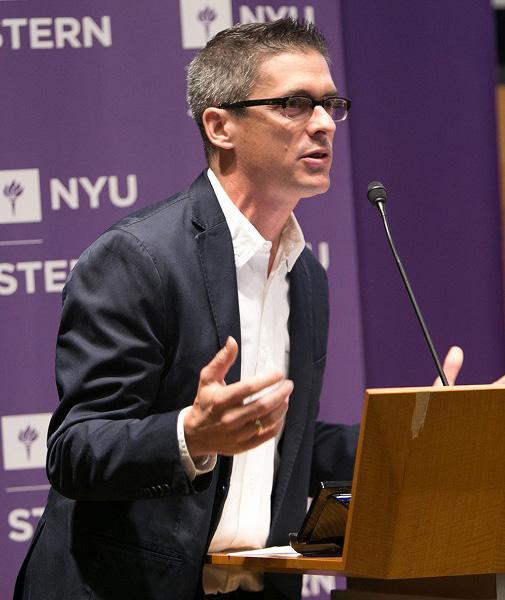
/ 05 INTRODUCTION TO BUSINESS AND SOCIETY
MATT STATLER
Richman
Professor Matt Statler
BRINGING CHANGE TO MARKET
ONE WASH AT A TIME

 BY AERIN GLAZER
A growing number of microplastics are polluting our oceans. To stem the issue at its source, the author proposes that filters be installed in Whirlpool washing machines to capture fibers being shed by everyday synthetic textiles.

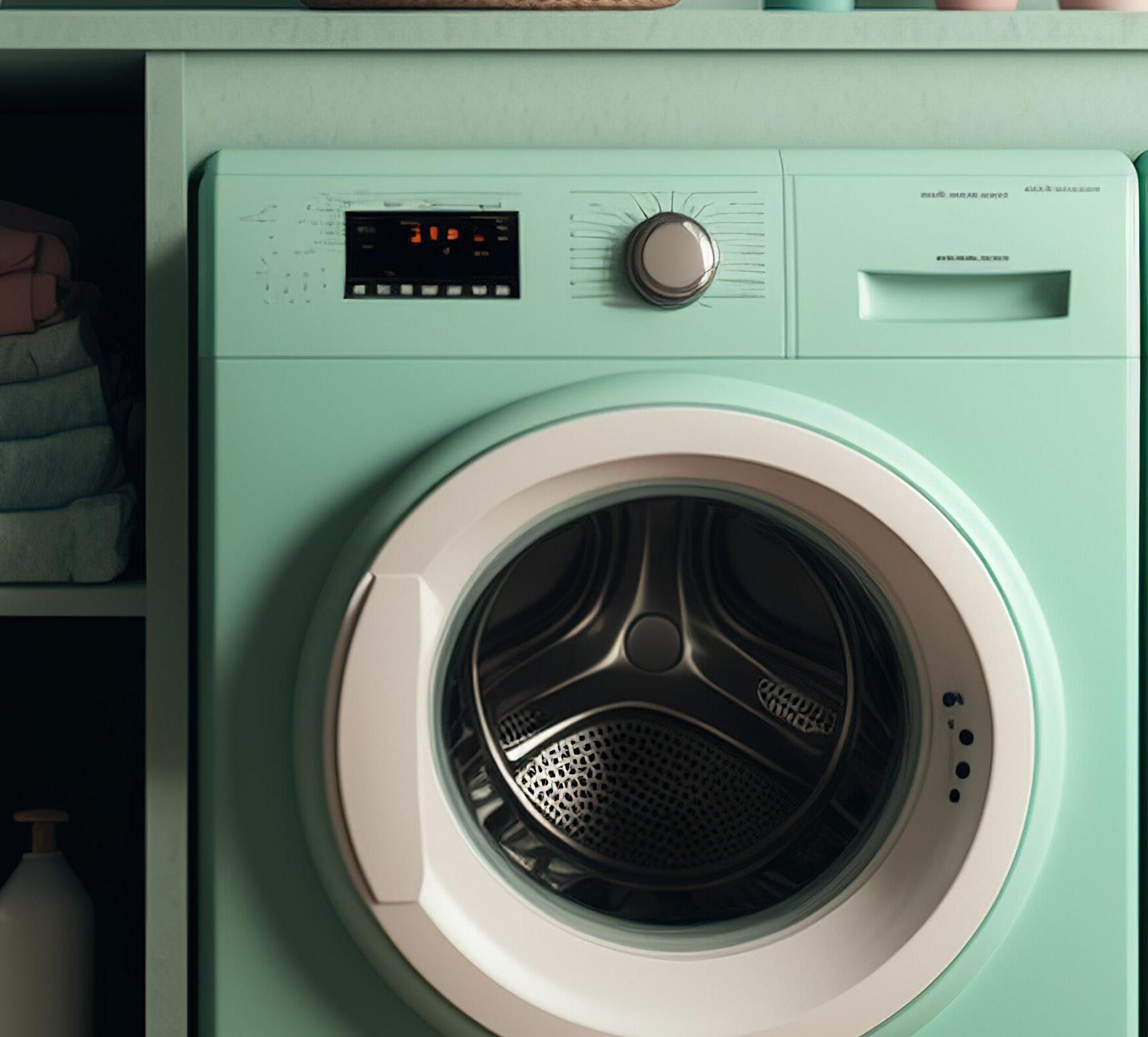
Microplastic pollution currently poses one of the greatest threats to the health of our planet. While further exploration is needed to determine the exact number of microplastics littering our oceans, scientists conservatively estimate that there are 24.4 trillion pieces (82,000-578,000 tons) of microplastics in Earth’s upper oceans alone.1 An estimated 35 percent of this microplastic pollution results from washing synthetic clothing. Synthetic fabrics, including polyester, nylon, and acrylic, are composed entirely of plastic, and shed millions of microplastics and microfibers into our wastewater when washed.
itself, specifically on marine life and human health. Microfibers from polyester textiles have been found in fish in the Arctic Ocean, the depths of the Pacific’s Mariana Trench, and the South Atlantic Ocean. 6,7,8 Most recently, polyester microfibers were detected in human blood and human placenta. In fact, a report conducted by the WWF estimates that humans ingest five grams of plastic, the equivalent of one credit card, each week.9
Though further exploration is needed to determine the specific dangers that synthetic microfibers pose to human health, ominous data has already emerged. Medical News Today reports, “a recent study in Germany found that microplastic particles can

remove the trillions of microplastics that already permeate our oceans. Thus, the most effective way to address the synthetic microfiber crisis is to stop—or at least mitigate—further pollution. Two possible solutions for preventing synthetic microfibers from entering our wastewater and oceans are (1) to cease production and sale of synthetic fabrics or (2) to catch the microplastics that these fabrics shed before they hit our oceans. Option 1 is infeasible, as there is too much money at stake to shut down synthetic textile production. Fashion production has doubled over the last twenty years, and due to their cheap cost and durability, synthetic fibers account for more than 60 percent of all textiles.12 The synthetic fabric market size value was $62.74 billion in 2021.13 Eliminating synthetic fiber production would completely disrupt the fashion industry supply chain and have a negative financial impact on all major stakeholders involved, including fossil fuel companies, textile manufacturers, apparel retailers, and consumers. Thus, allowing the synthetic fabric market to continue and instead, catching synthetic microfibers before they enter our wastewater, seems like the most realistic solution for all stakeholders at this point in time. This solution involves bringing a new product to the washing machine industry: built-in microfiber filters.
Data suggests that “176,500 metric tons of synthetic microfibers—chiefly polyester and nylon—are released [into washing machine wastewater] each year.”2 A single polyester fleece jacket can shed 100,000 fibers, or 1.7 grams, in a normal wash, and an average load of laundry can shed millions of fibers.3 Since existing washing machine filters and even water filtration plants are unable to filter these microscopic plastic fibers, they wind up polluting our soil, oceans, and, ultimately, the food chain.4 The New York Times reports that scientists believe synthetic textiles are “the largest known source of marine microplastic pollution.”5
In addition to understanding the role that washing machines play in adding to the overall scope of synthetic microfiber pollution, it is important to understand the danger of synthetic microfiber pollution
destabilize lipid membranes—the barriers that surround all cells—which may affect their functioning. Another study found that microplastics had many effects on cells, including cell death.” 10 A separate 2021 study in Nanomaterials concluded: “The toxicity assessments of micro- and nanoplastics on humans are mainly focusing on gastrointestinal and pulmonary toxicity, which involve oxidative stress, inflammatory reactions, and metabolism disorders.” 11 While most studies conclude that the effects of synthetic microfibers on human health demand follow-up investigation, the impact that scientists have ascertained thus far is devastating enough to warrant a call to action.
A VIABLE SOLUTION: MICROFIBER FILTERS FOR WASHING MACHINES
Currently, there is no way to effectively
Washing machine microfiber filters represent the best way to catch synthetic microfibers before they enter wastewater and oceans. Currently, washing machines do not have built-in filters that effectively catch synthetic microfibers; however, the technology to filter microplastics does exist. PlanetCare has created both the technology and an external microfiber filter. The PlanetCare Microfiber Filter attaches to almost any washing machine and catches up to 90 percent of the microplastics shed in each load of laundry.14 After purchasing a PlanetCare Microfiber Filter kit, costing from $63.80–$153.48 depending on the number of cartridges, 15 consumers attach the filter to their laundry machines, replace the recyclable cartridge when full (usually after 15-20 washes), and return the cartridge and the microfiber waste to the company to complete a closed loop system. PlanetCare cartridges cost approximately $8.33 each and
08 /
AERIN GLAZER
“Currently, there is no way to effectively remove the trillions of microplastics that already permeate our oceans.”
need to be replaced every 15-20 washes.16 While independent lab tests have proven the PlanetCare Microfiber Filter to be highly effective, 17 the company had only sold 400 units by November 2019. 18 The most likely reasons for these low sales are lack of consumer awareness, high product cost, and the inconvenience posed by the point of sale being separate from the washing machine installation itself.
PROPOSED STRATEGY FOR WHIRLPOOL
Synthetic microfiber filtration is both necessary and technologically possible, and Whirlpool has a unique opportunity to profit by adding synthetic microfiber filters to their washing machines. Whirlpool should acquire PlanetCare to employ a simple two-step strategy to create an immediate long-term solution.
By acquiring PlanetCare, Whirlpool can immediately begin selling effective microfiber filters within its washing machines, emerging as the first washing machine manufacturer to offer a viable solution to synthetic microfiber pollution. Further, Whirlpool will gain access to PlanetCare’s patent-pending technology, giving Whirlpool a significant head start on the development of a built-in filter.
Further research and development will be necessary to develop a built-in microfiber filter. Once adapted, this internal technology would be integrated into new Whirlpool washing machines and retrofitted into existing ones. With this development, Whirlpool can not only fix the problem in current machines, but also fully integrate microfiber filters into machines to come.
The costs of acquiring PlanetCare and developing a built-in microfiber filter may be significant. As PlanetCare is a private company, its valuation and exact cost of
acquisition is unknown. Further expenses will include R&D, testing, manufacturing, and distribution. Despite these costs, there are numerous incentives for Whirlpool to acquire PlanetCare and invest in adding microfiber filters to its washing machines.
CONSUMER TRENDS IN SUSTAINABILITY
Consumers all over the globe are increasingly focused on sustainability. The Global Sustainability Study 2021, conducted by Simon-Kucher & Partners, surveyed more than 10,000 people across 17 countries to find that “85 percent of people indicated that they have shifted their purchase behavior towards being more sustainable in the past five years.”19 Further, 60 percent of respondents rated sustainability as an important purchase criterion, and 34 percent stated that they are willing to pay a premium price for sustainable products. This data suggests an effective microfiber filter would not only appeal to washing machine consumers but might also justify a higher price point. A 2021 PlanetCare survey of 32,800 people worldwide indicated that 85 percent of participants would be willing to pay more for a washing machine that captures microfibers.20 This data indicates an existing market for a built-in washing machine filter.
Further, in “Reimagining Capitalism,” Rebecca Henderson references how sustainable strategies used by Tesla and Walmart resulted in “shared value,” 21 profiting both the companies themselves and the public through environmental change. She notes: “Although [sustainable] actions are sometimes derided as greenwashing or dismissed as too small or local to have any real impact, they often drive broader change.”22 Ultimately, amidst the changing landscape of capitalism, Whirlpool can benefit themselves,
their customers, and the global health of the planet by offering a microfiber filter.
LEGISLATION
As consumer trends focus increasingly on sustainability, so too does proposed regulation. While there is currently no legislation in place regulating microplastics released from synthetic clothing, the EU, UK, and US have made strides toward legally regulating other microplastics over the past two years. The European Commission has pledged to ban intentionally added microplastics from, “cosmetics, paints, detergents, some farm, medical and other products.”23 The UK has banned plastic microbeads from cosmetics,24 and California has banned microplastics from cosmetics and toothpaste.25
While these examples of legislation do not address the microplastics that are shed from synthetic fabrics, they do indicate a clear move by governments worldwide to begin addressing and regulating the microplastic crisis. Thus, it is likely that more legislation to mitigate the problem is imminent, and Whirlpool should be prepared and positioned to sell products that will comply with future microplastic regulations. Just as the automotive industry has had to adjust to government regulation on emissions, it is highly likely that the washing machine industry will have to comply with microfiber release standards in the near future.
COMPETITION AND RETAINING MARKET SHARE
The global washing machine market size was $52.8 billion in 2020.26 While Whirlpool has the largest global market share at 29 percent, and is particularly strong in North America, top competitors include Samsung (8 percent), LG (10 percent), and Electrolux (2 percent).27 In order to retain market share,

Whirlpool must continue to be a leader in innovation, technology, and value.
In January 2022, Samsung announced a collaboration with Patagonia to create a washing machine with a built-in microfiber filter. Samsung’s press release read:
“Together, [Samsung and Patagonia] are working on a feasible, effective, and expandable way to combat the microplastics
that result from textiles and laundry. Samsung is taking the goal of cleaner oceans to heart by designing a sophisticated new washing machine that lets people safely wash their favorite garments while minimizing the impact of microplastics.”28
This press release demonstrates Samsung’s strategic plan to capture the sustainable consumer by addressing the role that washing machines play in synthetic microfiber pollution. More importantly, the press release should serve as a clear wakeup call for Whirlpool to take concrete action immediately. While Samsung may have been the first to announce a plan, Whirlpool can be the first to bring a concrete microfiber filter solution to market.
Whirlpool should acquire PlanetCare today to immediately offer an external microfiber filter while simultaneously working to develop a built-in microfiber filter. To compete with Samsung in an increasingly eco-conscious market, Whirlpool can steal headlines by announcing a PlanetCare acquisition today.
STAKEHOLDER BENEFITS
Major stakeholders would benefit from a Whirlpool microfiber filter. Whirlpool would greatly benefit from this proposal, as they would lead the green initiative in the

DISCUSSION QUESTIONS
washing machine industry and profit from shared value. PlanetCare shareholders would profit from the acquisition, while continuing to drive their mission. The apparel industry would benefit, as they do not (yet) have to halt production of synthetic fabric. Finally, although washing machine costs may increase for consumers, data indicates that this cost is outweighed by the benefits of sustainability reflected in current consumer trends.
Ultimately, the development and sale of a built-in microfiber filter for Whirlpool washing machines would greatly benefit Whirlpool and the environment. Consumer trends toward sustainability and competition among other washing machine manufacturers indicate that a microfiber filter will help Whirlpool retain market share. Further, trends toward increased government regulation of microplastics suggest that microfiber filters may become mandated soon. Finally, producing a built-in microfiber filter will disrupt neither the synthetic fiber nor apparel industries, meaning there are limited downsides. Thus, Whirlpool’s best strategy for mitigating the synthetic microfiber crisis exists in joining PlanetCare. Whirlpool would benefit both the planet and themselves by being the first to bring this crucial technology to market.
1. What objections might consumers have with a microfiber-filtering washing machine and how might Whirlpool counter those objections?
2. In addition to “acquisition,” what other business relationship might PlanetCare pursue and yet still move this idea forward?
1 “Twenty-Four Trillion Pieces of Microplastics in the Ocean and Counting.” ScienceDaily, 27 Oct. 2021, www.sciencedaily.com/releases/2021/10/211027122120.htm.
2 Wicker, Ruth Alden. “What's the Latest Research on Synthetic Microfiber Pollution from Fashion?” Ecocult, 25 June 2021, www.ecocult.com/can-polyester-microfibers-water.
3 Ibid.
4 Windridge, Melanie. “Sustainable Fabrics Reducing the Impact of Microplastics on the Planet.” Forbes, Forbes Magazine, 28 Jan. 2021, www.forbes.com/sites/melaniewindridge/2021/01/27/ sustainable-fabrics-reducing-the-impact-of-microplastics-onthe-planet
5 “Your Laundry Sheds Harmful Microfibers. Here's What You Can Do About It.” The New York Times, 21 Apr. 2021, www.nytimes.com/wirecutter/blog/reduce-laundry-microfiberpollution.
6 Shah, Karina. “Microplastics Found across the Arctic May Be Fibers from Laundry.” New Scientist, 20 Jan. 2021, www. newscientist.com/article/2264585-microplastics-found-acrossthe-arctic-may-be-fibres-from-laundry.
7 “Plastic Pollution Discovered at Deepest Point of Ocean.” The Guardian, Guardian News and Media, 20 Dec. 2018, www. theguardian.com/environment/2018/dec/20/plastic-pollutionmariana-trench-deepest-point-ocean
10 /
AERIN GLAZER
PlanetCare microfiber filter
8 “Plastic Microfibres Found in the Stomach of Deep-Sea Fish.” Natural History Museum, www.nhm.ac.uk/discover/news/2021/ february/plastic-microfibres-found-in-the-stomach-of-deepseafish.html.
9 Gerretsen, Isabelle. “You Could Be Swallowing a Credit Card’s Weight in Plastic Every Week.” CNN, www.cnn.com/2019/06/11/health/microplastics-ingestion-wwfstudy-scn-intl/index.html
10 “Microplastics Found in Blood for the First Time: What This May Mean.” Medical News Today, MediLexicon International, www.medicalnewstoday.com/articles/could-microplastics-inhuman-blood-pose-a-health-risk
11 Yee, Maxine Swee-Li, et al. “Impact of Microplastics and Nanoplastics on Human Health.” Nanomaterials (Basel, Switzerland), MDPI, 16 Feb. 2021, www.ncbi.nlm.nih.gov/pmc/ articles/PMC7920297
12 Changing Markets Foundation. Synthetics Anonymous, June 2021, changingmarkets.org/wp-content/uploads/2021/07/ SyntheticsAnonymous_FinalWeb.pdf. Accessed 27 March 2022.
13 “Synthetic Fibers Market Growth Analysis Report, 2021-2028.” www.grandviewresearch.com/industry-analysis/synthetic-fibersmarket.
14 Tutton, Mark, and Katie Pisa. “Washing Your Clothes Is Causing Plastic Pollution, but a Simple Filter Could Help.” CNN, www. cnn.com/2019/11/14/world/microfiber-filter-plastic-pollutionintl/index.html. Accessed 18 April 2022.
15 “All Products.” PlanetCare, planetcare.org/collections/allproducts-1.
16 Ibid.

17 “Independent Test Results.” PlanetCare, https://planetcare.org/ pages/test-results.
18 Tutton.
19 “Recent Study Reveals More than a Third of Global Consumers Are Willing to Pay More for Sustainability as Demand Grows for Environmentally-Friendly Alternatives.” Business Wire, 14 Oct. 2021, www.businesswire.com/news/home/20211014005090/ en/Recent-Study-Reveals-More-Than-a-Third-of-GlobalConsumers-Are-Willing-to-Pay-More-for-Sustainability-asDemand-Grows-for-Environmentally-Friendly-Alternatives.
20 Kart, Jeff. “Survey Says: People Willing to Pay More for a Washer That Captures Microfibers.” Forbes, Forbes Magazine, 25 June
AERIN GLAZER

2021, www.forbes.com/sites/jeffkart/2021/06/25/survey-sayspeople-willing-to-pay-more-for-a-washer-that-capturesmicrofiber.
21 Henderson, Rebecca. “Reimagining Capitalism.” MBR Journal, 19 Jan. 2022, mbrjournal.com/2020/12/23/reimaginingcapitalism.
22 Ibid.
23 HUNTER, Published by Jack. “EU Microplastic Ban Just Got Closer - with Major Loopholes - IN - the European Environmental Bureau.” EEB, 25 Feb. 2021, eeb.org/majorloopholes-found-in-new-eu-plan-to-ban-microplastic.
24 “Implementation of the Environmental Protection (Microbeads) (England) Regulations 2017.” Legislation.gov.uk, 25 July 2017, www.legislation.gov.uk/ukia/2017/178/pdfs/ukia_20170178_ en.pdf.
25 California, State of. “Plastic Pollution.” Plastic Pollution – California Ocean Protection Council, www.opc.ca.gov/ programs-summary/marine-pollution/plastics.
26 “Washing Machine Market Size, Share & Covid-19 Impact Analysis, by Product [Fully Automatic (Front Load and Top Load)], Semi-Automatic, and Dryer), by Capacity (below 6 Kg, 6.1-8 Kg, and above 8KG)], and Regional Forecast, 20212028.” Washing Machine Market Size & Share | Research Report [2028], www.fortunebusinessinsights.com/washing-machinemarket-102645
27 Kunst, Alexander. “Most Popular Washing Machine Brands U.S. 2017.” Statista, 3 Sept. 2019, www.statista.com/statistics/712023/ united-states-statista-survey-washing-machine-brands-usconsumers-have-at-home.
28 “Samsung Collaborates with Patagonia to Keep Microplastics out of Our Oceans.” Samsung Global Newsroom, news.samsung. com/global/samsung-collaborates-with-patagonia-to-keepmicroplastics-out-of-our-oceans.
Photo Credits:
Dasom/Adobe Stock—page 6
Pcess609/Adobe Stock—page 8
Олександр Луценко/Adobe Stock—page 9 PlanetCare/Unsplash—page 10
CLASS OF 2025, BUSINESS MANAGEMENT
/ 11
"The most surprising part of my research was deep diving into the microfiber and microplastic problem. I found out that microplastics were recently found in human blood and that humans ingest a credit card size of plastic per week. I also was surprised to know that using any washing machine contributes to the plastic waste problem.”
BRINGING CHANGE TO MARKET
BIG FISH SMALL POND CONTROLLING ASIAN CARP
 BY NATHAN CHONG
IN A
The Asian carp infestation has reached major waterways in the US, ravaging local ecosystems and threatening the seafood industry.
The Great Lakes is their next target, and the author proposes a simple supply and demand strategy to combat this carp-ocalypse.
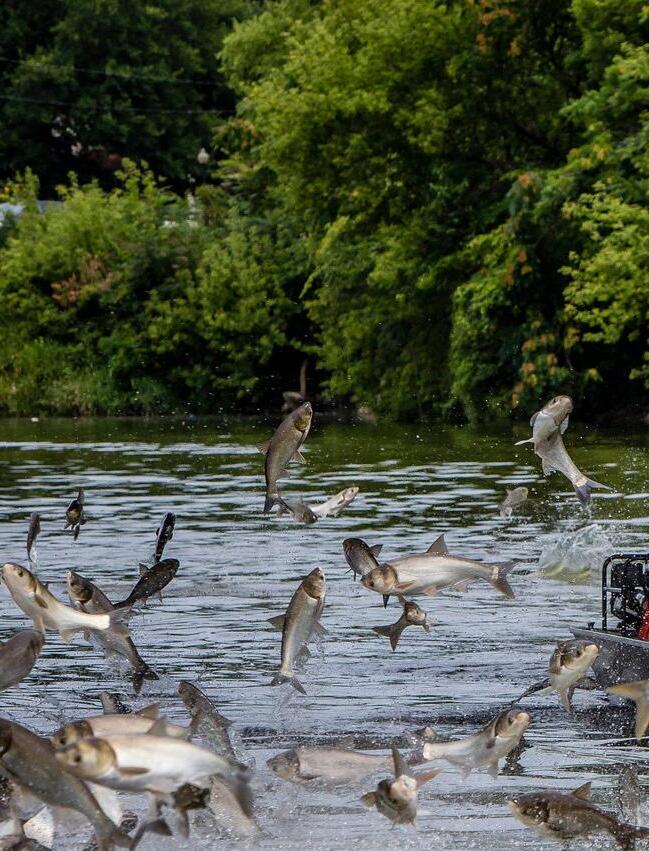
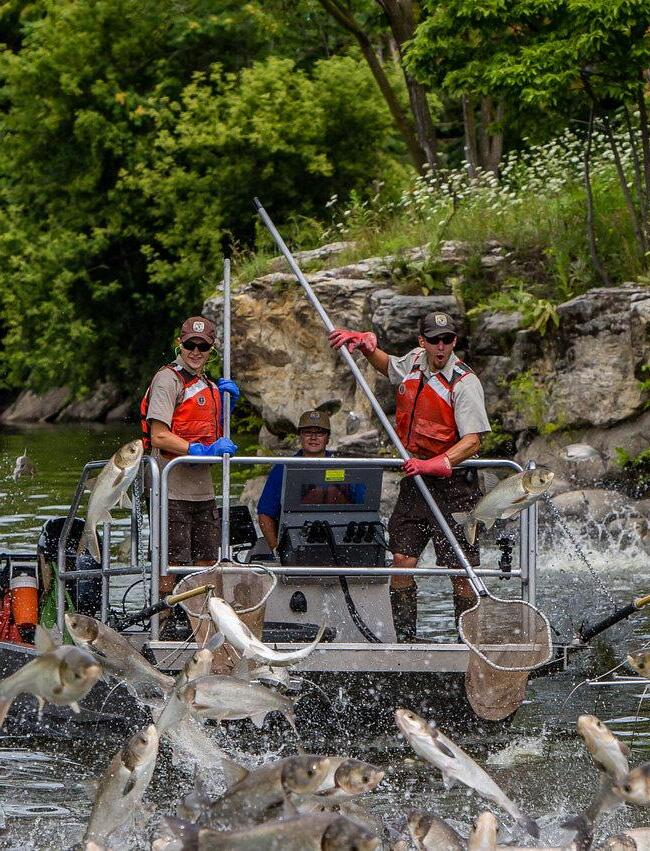

Since the 1970s, the waterways of North America have become home to an unwanted guest— the Asian carp. Originally introduced in the Deep South to control pond overgrowth, the invasive species’ ability to grow and reproduce rapidly established its dominance in every ecosystem it has touched. Starving out native species and destroying aquatic habitats, the carp overwhelmed much of the Mississippi and Illinois Rivers and are quickly moving north to the Canadian border.

So far, Asian carp have not yet reached the Great Lakes and its tributaries, where their arrival would decimate the ecosystems and industries dependent on the area. The fish are currently kept from the Lakes by natural and human-made deterrents, but such barriers are temporary. Only twenty carp need to reach the Lakes’ waters for an invasion to be unstoppable.1 As such, containment is not enough to solve the carp problem— or one day, the Great Lakes, too, will fall victim to the Asian carp.
The Asian carp is naturally invincible due to its size, reaching over four feet in length and growing more than ten inches in its first year.2 After escaping from controlled pond environments during floods, the carp migrated up the Mississippi and Illinois Rivers.3 The fish are estimated to make up more than 50 percent of the biomass in the Illinois River, less than half a decade after their introduction. 4 Since then, carp have been found in 45 states.
Today, the imminent invasion of the Great Lakes is the greatest concern of ecologists and economists alike, based on the spread that carp have enjoyed in American freshwaters. The Great Lakes ecosystem is already vulnerable, having been invaded by more non-native species than any freshwater environment in the world.5 Noting the effect the species has already had on US rivers, researchers identified 22 likely tributaries of the Lakes as additional habitation grounds for the fish.6 The ecological similarities of the environments create a threat for the stakeholders of the Great Lakes and urgently need to be addressed as the fish inch closer to invasion.
The problem created by the carp stems from its voracious appetite. Its ability to
consume up to 120 percent of its body weight in plankton starves out smaller fish that depend on such aquatic vegetation and disrupts the food chain from the bottom up.7 Some species of carp also feast on underwater plants, destroying the physical protection that the same small fish use to avoid predators. As such, the arrival of Asian carp decimates populations of smaller fish, creating a ripple effect that targets predators up the chain. For example, the carp’s eradication of water plants harms up to 33 aquatic species, in turn threatening 18 species of birds reliant on those life forms. With no natural predators due to their size, the carp can quickly overwhelm every ecosystem they encounter. Anecdotal
billion over 20 years if left unchecked.12 Effects on the fishing and boating industries impact the stakeholders who depend on them. The local businesses, governments, and workers that these industries support are all threatened by the imbalance that the carp create. As such, economic effects in the Great Lakes may be even worse than current forecasts, which only consider the fishing and boating industries alone.
Fortunately, few carp have reached the Great Lakes, thanks to natural and humanmade barriers. Quagga mussels, a species that previously invaded the Great Lakes, consume plankton in such high quantities that they leave little room for carp.13 Researchers claim
numbers suggest that 9 out of 10 fish in invaded areas are Asian carp.8
The impact of this ecological imbalance extends to human stakeholders as well. Walleye and perch in the Great Lakes draw sport and commercial fishers into a local fishing industry valued at $7 billion.9 Ecological imbalance— too many carp and not enough other species— can drive away the industry. According to the National Wildlife Federation, more than 80 percent of commercial fishermen left the Illinois River after its invasion by carp.10 A similar impact is likely in the Great Lakes, with losses of $23 billion over five years.11 Carp also pose physical safety risks, often jumping several feet into the air when startled by boats, causing injury or damage. Damages to the $16 billion boating industry, closely linked with commercial fishing, are forecasted to reach over $120
that coastal water pollution also deters new fish from entering the polluted Lakes.14 The Illinois government erected three highvoltage electric barriers near Chicago in 2002, surging with enough power to stop a human heart. With these measures, only one carp has been caught in the Great Lakes.
To keep the carp out of its waters, the US Federal Government spends $270 million annually on man-made programs. Solutions that create barriers between the carp and the Great Lakes are working, but temporarily. Water samples already show traces of carp DNA.15 Containment may keep carp from the Great Lakes for now but it does not mitigate the impending threat. Balancing the ecological imbalance that carp create would tackle the core problem of Asian carp, and hopefully, one day render temporary fixes, like barriers, obsolete.
14 /
NATHAN CHONG
“ Today, the imminent invasion of the Great Lakes is the greatest concern of ecologists and economists alike…”
The Kentucky-based startup Fin Gourmet presents an intuitive solution: eat the fish and decrease their numbers before the species breaks into the Great Lakes. Founded in 2010, the company harvests thousands of carp on the Mississippi and Ohio Rivers.16 Fin Gourmet’s ability to overcome the challenges of processing carp propelled the company to its size today. Asian carp are difficult to eat, with many small bones that make them challenging to filet. Further, negative perceptions make them an unpopular choice in American restaurants.17
Fin Gourmet’s first business plan, handcutting filets and shipping them overseas, proved unprofitable with low margins. The company was advised to sell the undesired fish to markets like prisons or to market them as emergency food packets. Instead, Fin Gourmet developed a diverse product line. Asian carp filets, rebranded as Kentucky Blue Snapper, have made their way across the country, even appearing in the White House. Yet, while the company sells twenty thousand pounds each week, filets are only a small portion of revenue. Fin Gourmet’s minced fish paste dominates Asian markets in American cities, and high-end pet food manufacturers buy its fish scraps in bulk. Sustainably using the entire fish to serve several markets increases Fin Gourmet’s profit 125x, netting almost $50 in profit per catch.18 Its approach maximizes the useful consumption of carp. Since the carp have no natural predators, Fin Gourmet’s founders believe the responsibility falls to humans, the only species able to kill them and to feast on the invasive fish.
An idea as simple as eating the carp, paired with Fin Gourmet’s efficiency, tackles the root of the carp problem. Each product sold takes one fish out of American rivers and away from the invasion’s frontier near the Great Lakes— providing an economic incentive that works in tandem with existing containment efforts. Physical barriers like those near Chicago have kept carp from the Lakes for now. At the same time, commercial fisheries like Fin Gourmet have removed more than two-thirds of carp in the area between Chicago and the upper Illinois River.
Harvesting the carp relieves pressure on both local ecosystems and the Great Lakes. With fewer carp and continued commercial
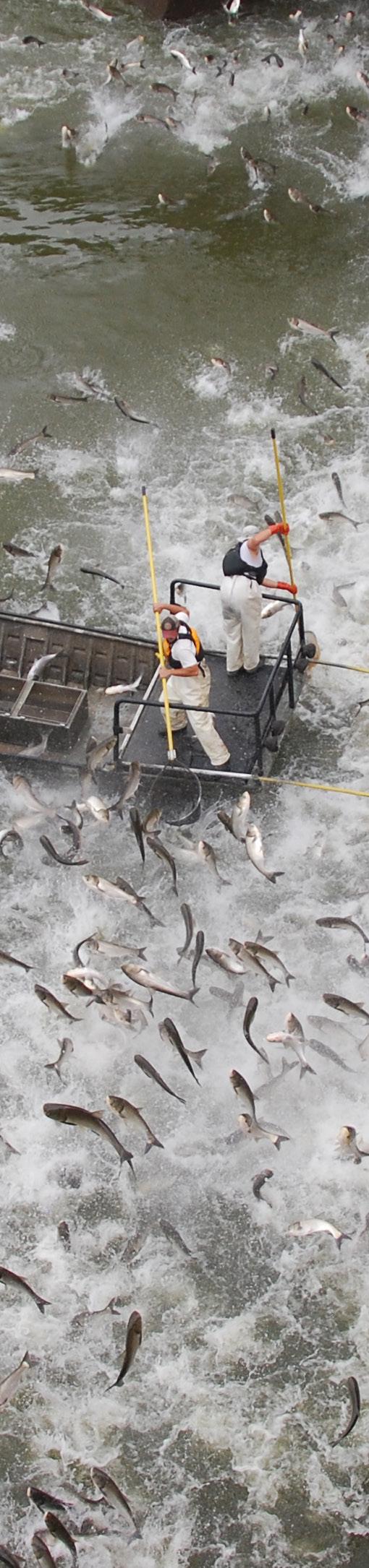
fishing, smaller fish populations can return, reclaim, and revitalize the food chain. While carp destroy a food chain by decimating its bottom levels, removing carp directly from the ecosystem allows the food chain to rebuild from the bottom up. As Kentucky Fisheries’ chief Ron Brooks puts it, “commercial harvest is the only means to realistically reduce Asian carp numbers.” 19 This combination of containment and reduction makes Fin Gourmet’s solution so effective. During the temporary respite provided by barriers near the Great Lakes, Fin Gourmet diminishes the threat of carp in larger numbers, simultaneously reducing their impact on areas they have already invaded.
Fin Gourmet has opened a new market for commercial carp fishing, attempting to revitalize the fishing industry that the carp drove away. But transitioning commercial fishing to accommodate Asian carp is difficult and needs government intervention. The 80 percent of fishermen who left the invaded Illinois River had been overwhelmed by the sheer number of carp in their gill nets. A few decades ago, hundreds of commercial fishermen roamed the Illinois. Today, only a couple dozen remain.20
Restoring the industry will need incentives for commercial fisheries to be willing to return to carp-infested waters. Fin Gourmet attempts to offset the challenges of carp fishing by paying the highest prices on the market to fishermen in exchange by setting quality standards. The company can afford to do so now; Fin Gourmet makes maximized profits on each fish. But as the industry grows and fisheries bring in higher quantities of carp, the company’s promises of higher payouts may not be financially sustainable.21
Fin Gourmet should partner with state governments to maximize its reach across commercial fisheries. Several states already have carp harvesting incentives. Certain state universities offer $100 per carp caught, while the State of Kentucky subsidizes five cents per pound of carp.22 Similar incentives from the Illinois government reduced carp populations in some areas by 93 percent.23 A campaign by the Tennessee government removed ten million pounds of carp from the state’s waters.24
These measurements alone evidence
a causal relationship between incentives and decreasing carp populations. But in government programs like these, much of the carp harvested is wasted at the expense of taxpayer dollars. Researcher Jim Garvey questions why government funds are used to eradicate the carp and send them to landfills when money could be made from each fish and redirected into the commercial carp industry. 25 As they share the same goal of reducing carp populations, Fin Gourmet and state governments should form a partnership that combines incentives with the profitable use of the fish.
Both parties solve challenges that the other, on its own, cannot accomplish. Fin Gourmet, able to sustainably harvest every part of the fish, presents a useful destination for harvested Asian carp. The government, which already uses taxpayer dollars for incentive programs, would offer resources to help Fin Gourmet incentivize more commercial fisheries. A subsidy for Fin Gourmet will simultaneously reduce carp populations and grow the carp fishing industry by redirecting government expenditure from current incentive programs to the company’s network
of commercial fisheries. The successes of previous government incentives in Illinois, Kentucky, and Tennessee would encourage Fin Gourmet. The company already plans to pay more for carp should the market expand, an ambition potentially made possible with government subsidies. In doing so, the company could establish a feedback loop in the growing carp market that benefits the company, state governments, commercial fisheries and the invaded ecosystems collectively.
The partnership between state government incentives and Fin Gourmet will open opportunities for shared value. The combined reach of government and private businesses will further reduce carp populations. At the same time, Fin Gourmet creates value for impacted fisheries, stimulating the emerging carp market to restore the entire industry. By maximizing the sustainable utility of each fish, Fin Gourmet generates significant profits, which it redirects into incentives to grow the carp market. Commercial fisheries share in Fin Gourmet’s revenues, bolstered by government subsidies to increase their carp harvesting. The revival of the fishing
DISCUSSION QUESTIONS
industry in carp-affected waters also brings value to every adjacent stakeholder: whether employees, supplier companies, or industries that rely on fishing.

Long-term, state governments will also benefit, relieved from spending on containment strategies or incentive programs, as commercial carp fishing continues to grow toward a self-sustaining industry. Harvesting carp diminishes the species’ negative impact and threat on the Great Lakes while creating profit for the company. Constructing Fin Gourmet’s business model in partnership with government resources will share this newfound value with each stakeholder affected by the carp.
Interestingly, Fin Gourmet takes its solution a step further within the Kentucky community, making it a practice to hire from drug courts and rehabilitation programs in the state.26 Many employees, whose criminal or vulnerable backgrounds make finding employment difficult, start second-chance careers at Fin Gourmet. The company’s solution to the carp problem is already unique, harnessing the only possible value that the invasive species offers: as food. The combination of government resources and the company’s business model generates significant profit, which it shares with each affected stakeholder— including unlikely benefactors within Kentucky’s rehabilitation centers and prisons.
Fin Gourmet’s outlook is strong, as commercial carp fishing continues to scale. The US Fish and Wildlife Service suggests that commercial fishing may never overfish carp. Fin Gourmet founder Lan Chi Luu believes that under control, carp will become “a resource,” a goal of sustainable adaptation supported by the company and government’s shared model.27 Even today, every carp Fin Gourmet nets turns the ecosystem’s worst nightmare into an opportunity to create value for a host of stakeholders.
16 /
BioAcoustic Fish Fence installation by Invasive Carp Regional Coordinating Committee
1. Who are the various (and numerous) stakeholders affected by invasive carp?
2. How might you expand the market for Kentucky Blue Snapper?
NATHAN CHONG
1 Lindell, Rebecca. “Canadian Officials Reach out to Public in War against Asian Carp - National.” Global News, 18 Mar. 2013, www.globalnews.ca/news/301716/canadian-officials-reach-outto-public-in-war-against-asian-carp.
2 Mortillaro, Nicole. “Asian Carp: Why This Invasive Species Is So Dangerous to the Great Lakes.” Global News, 7 June 2016, www. globalnews.ca/news/2746118/asian-carp-why-this-invasivespecies-is-so-dangerous-to-the-great-lakes.
3 Flesher, John. “8 Options to Keep Asian Carp out of Great Lakes: Army Corps Report - National.” Global News, 26 Feb. 2014, https://www.globalnews.ca/news/1063600/optionsfor-preventing-asian-carp-from-attacking-great-lakes-to-bereleased.
4 Mortillaro.
5 “Invasive Species in the Great Lakes by 2063.” Newsroom, 20 Oct. 2015, www.mcgill.ca/newsroom/channels/news/invasivespecies-great-lakes-2063-241397.
6 Beverstalk, Jeremie E., et al. “2.1 An Assessment of the Invasive Asian Carp Threat on the Great Lakes.” Environmental ScienceBites, The Ohio State University, ohiostate.pressbooks. pub/sciencebites/chapter/an-assessment-of-the-invasive-asiancarp-threat-on-the-great-lakes.
7 Mortillaro.
8 Lindell.
9 “Socio-Economic Impact of the Presence of Asian Carp in the Great Lakes Basin.” Asian Carp Canada, www.asiancarp.ca/ impacts/risk-assessments/socio-economic-impact-of-thepresence-of-asian-carp-in-the-great-lakes-basin.
10 “Carp Attack.” National Wildlife Foundation, 2 Sept. 2010. www.nwf.org/Magazines/National-Wildlife/2010/AsianCarp#:~:text=Several%20boaters%20have%20suffered%20 injuries,will%20bite%20a%20baited%20hook.
11 Ibid.
12 “Socio-Economic Impact.”
13 Flesher, John. “Zebra Mussels in Great Lakes May Leave Asian Carp Nothing to Eat.” Cleveland, Associated Press, 29 Sept. 2010, www.cleveland.com/nation/2010/09/zebra_mussels_in_ great_lakes_m.html.
14 Cartier, Kimberly M. S. “Is Chicago Water Pollution Halting a Silver Carp Invasion?” Eos, 18 Oct. 2021, www.eos.org/articles/ is-chicago-water-pollution-halting-a-silver-carp-invasion
NATHAN CHONG

15 Hasler, Joe P. “7 Ways to Stop the Asian Carp Invasion.” Popular Mechanics, 11 Mar. 2022, www.popularmechanics.com/science/ environment/a6233/how-to-stop-the-carp-invasion.
16 “Eating the Most Hated Fish on the Mississippi.” Sierra Club, 12 Nov. 2018, www.sierraclub.org/sierra/eating-most-hated-fishmississippi-invasive-asian-carp.
17 Castrodale, Jelisa. “These Invasive Carp Are Getting a New Name so Americans Will Eat Them.” Food & Wine, 9 Feb. 2021, www. foodandwine.com/news/asian-carp-seafood-new-name.
18 “Eating the Most Hated Fish.”
19 Downs, Jere. “Asian Carp Leaps onto Restaurant Tables.” Journal, The Courier-Journal, 27 Sept. 2016, www.courier-journal.com/ story/life/food/farm-to-table/2016/09/27/asian-carp-leaps-ontorestaurant-tables/89653166
20 Lepeska, David. “Negative Image aside, Asian Carp Are a Boon.” The New York Times, 12 Aug. 2011, www.nytimes. com/2011/08/12/us/12cnccarp.html.
21 “Eating the Most Hated Fish.”
22 Downs.
23 “Eating the Most Hated Fish.”
24 Raucoules, Gregory. “Over 10 Million Pounds of Invasive Carp Removed from Waterways through Tennessee Program.” WATE 6 On Your Side, 17 Aug. 2021, www.wate.com/news/over-10million-pounds-of-invasive-carp-removed-from-waterwaysthrough-tennessee-program
25 Lepeska.
26 “Eating the Most Hated Fish.”
27 Ibid.
Photo Credits:
USFWS/Flickr—pages 12, 15, and 16
Ye.Sergey/Adobe Stock—page 14
“I spent a lot of time outdoors growing up. One thing I remember was always seeing these signs about Asian carp and thinking that while they might not have affected me then, they must have been an issue if the signs were everywhere. This paper for me was the answer to a longstanding curiosity, and a realization that the problem could one day impact me directly.”
CLASS OF 2025, FINANCE AND MATHEMATICS
/ 17
BIG FISH IN A SMALL POND
DATA IN OUTER SPACE
TO SUSTAINABILITY AND BEYOND
BY WEI CHEN
Promoting responsible energy consumption by storing data centers... in outer space! Chen proposes a transcontinental collaboration between Alibaba Group and ConnectX to reduce cooling-related carbon emissions by storing data centers in space via a network of customized satellites.


Tech companies are responsible for producing up to three percent of all global greenhouse gas emissions1 with most of this industry’s carbon emissions coming from the construction of new data centers needed to match the advance of technological innovations. These centers store and process vast amounts of data and are at the core of all digital operations. They currently consume up to ten percent of the world’s electricity and almost half of that energy goes into cooling.2
As global dependency on electricityhungry data centers continues to grow, however, traditional air conditioning and fans can no longer keep up.3 Tech companies must therefore leverage their resources and knowledge to establish innovative approaches to sustainable data storage and usage.
With better and more efficient cooling technology, the tech industry can save billions of dollars in electricity while also aligning with the UN’s Sustainable Development Goal 12, namely, ensuring sustainable consumption and production patterns. 4 This goal requires big tech companies to reduce carbon greenhouse gas emissions and decouple economic positives from environmental negatives. A partnership between the Alibaba Group and start-up satellite company ConnectX can further push the industry toward a more sustainable future. By relocating data centers and eventually migrating to the final frontier— space— tech companies can increase the productivity of their operations while also reducing their carbon footprint on the world.
NEGATIVE CONSEQUENCES OF NEW DATA CENTER CONSTRUCTION
Until the 1950s, data storage used to be kept on-site at companies, banks, and universities. As technology has advanced, growing shares of world data are now consolidated into warehouses with thousands of processors. Most of these warehouses still use traditional air conditioning. 5 Keeping servers cool in this manner requires such vast amounts of electricity that it is increasingly unsustainable. By way of illustration, Fortune reports that, from the beginning of time till the year 2002, “the world created five exabytes— five billion
gigabytes— of information; today, we create that much data in about ten minutes.”6
Tech companies are failing to keep up with the exponential growth of data creation. These current data storage methods cannot handle that much information and their energy consumption poses a threat to sustainability. Already there are over seven million data centers around the world and the tech industry is investing billions of dollars into constructing more.7
CHINA AND ITS TECH INDUSTRY AIM TOWARD CARBON NEUTRALITY
As of 2019, the data center cooling equipment industry is valued at 10.5 billion USD, and it is growing by 13 percent each year.8 Western tech companies have already been shifting away from the traditional ways of cooling IT equipment and investing in this new industry.
China should also implement a more sustainable approach to data storage. Big Chinese tech companies, such as the Alibaba Group, have the resources to upgrade their data centers and invest in further research toward advanced cooling technologies. It is a move that cannot come too soon. In 2019, five nations were behind 60 percent of all global emissions; China alone generated about the same amount of emissions as the next four nations combined.9 Data centers in China reportedly used 160.9 billion kilowatt-hours of energy in 2018, which is more than the entire city of Shanghai in that year.10 If the country’s tech giants maintain the same levels of power consumption, Chinese data centers are predicted to produce about “163 million tons of carbon emissions” by next year— equivalent to that of a mid-sized nation.11
Since the Chinese government announced its carbon neutrality goal in 2021, however, the country’s tech giants have been at the vanguard of their country’s net-zero shift. The CCP has pledged to cap the country's carbon dioxide emissions before 2030 and become carbon neutral before 2060. In response, Alibaba’s CEO Daniel Zhang recently announced a proposal to reduce 1.5 gigatons of carbon emissions by 2035. In the company’s 2020 Climate Report, the total greenhouse gas (GHG) emissions were 9.514 million metric tons, which was more
than a quarter of California’s yearly GHG emissions.12 Not surprising, around a third of the total emissions consisted of energy use and cooling in its data centers and more than half of the emissions were attributed to the purchase of electricity for leased data centers.
RELOCATING AND SHIFTING TO REMOTE MANAGEMENT
The metric used to describe the efficiency of data centers is Power Usage Effectiveness (PUE), and it is calculated by dividing the total data center energy consumption by the energy consumption of IT equipment. Locating data centers in a cold climate significantly helps lower PUE levels. As a result, the country of Norway has seen a rise in new data center construction by American tech companies, such as Microsoft and Meta. The Scandinavian country’s low temperature, “allows for both very efficient cooling and a large potential for excess heat utilization,” also known as heat waste.13
In China, the Alibaba Group’s Alibaba Cloud department is also utilizing the environment by, “erecting facilities in places like Ulanqab in Inner Mongolia, where temperatures regularly drop to -22° Celsius.”14 The next step for the Chinese tech giant is to begin relocating their current data “megacenters” from the warm maritime climate of Hangzhou to the cooler northern regions of China.
Alibaba has also tested a new form of cooling by bathing data servers in liquid; engineers soak servers in a special insulating coolant to dissipate heat without the need for mechanical refrigeration systems.15 In this fashion, a data center’s energy consumption can be reduced by more than 70 percent.16
Once the company has finalized this type of coolant technology, it plans to also relocate its data centers to rural areas. These rural locations will eliminate the need for a large labor force to manage the server rooms. The new system of cooling is advanced enough that its management can be conducted remotely from headquarters, minimizing travel and repair costs.
Despite all the benefits of migrating data centers to rural settings, they are still not the ideal solution. For one, they spoil the surrounding environment with new
20 /
WEI CHEN
construction. As society continues to rapidly consume finite resources, it requires a new, radical, and more sustainable approach. We must expand beyond Earth’s atmosphere and into space.
MIGRATING TO THE FINAL FRONTIER: SPACE
For the ultimate setting for hosting data centers, we may look to the cosmos. Outer space provides the ideal freezing temperature to naturally cool data servers. The extreme atmospheric climate also allows servers to process applications faster without the risks of overheating.17 Furthermore, the zero-gravity environment enables the server drives to spin more swiftly and with less resistance.
In space, free, plentiful solar radiation could power servers addressing the energy problem.18 All these advantages— relating to extreme temperature, zero gravity, and solar radiation— add up to a space solution that would significantly reduce the level of carbon emissions from data centers. Imitating the launch of satellites, the process of sending a
server into space would not be excessively costly.
ConnectX, a 2014 startup based in Los Angeles, is currently finalizing a plan to take corporations’ data out of ground centers and into the final frontier. CEO Lance Parker has been preparing to launch the “first network of small satellites and terrestrial servers”19 and it could transform the way that companies have traditionally been storing and transmitting their information.
To give a perspective of how small today’s nanosatellites can be: CubeSats, which are already being deployed frequently for research purposes, are the size of a melon and weigh less than three pounds.20 They can be launched into orbit for less than 100,000 USD, and an even smaller version, TubeSat, only costs around 8,000 USD.21
Just by eliminating past methods of IT equipment cooling, the Alibaba Group can save up to ten billion USD each year on data center electricity.22 Not only will this minimize the use of non-renewable energy but the money saved can also be allocated to other

projects and technological advancements.
PRIME TIME TO PARTNER UP
With their new liquid cooling technology in place and the finished construction of three new megacenters in 2020, Alibaba is at the optimal stage to invest in aerospace research and development. Furthermore, driven by the high demand for digital resources after the COVID-19 pandemic, the tech company announced a plan in 2020 to spend 28.2 billion USD on its cloud infrastructures in the upcoming years.23
Instead of proposing to “double the number of ‘super’ facilities in the near future,”24 a fraction of this new budget should be invested in a joint venture with satellite startup company ConnectX to prioritize plans of relocating these data centers into space. As for the costs of repairs and management of these orbiting data centers, Alibaba’s technology has already enabled them to operate their rural facilities with no human on-site labor force. The remote operations would be carried out in the same manner when these facilities are
/ 21
“
DATA IN OUTER SPACE
By relocating data centers...companies can increase the productivity of their own operations while also reducing their carbon footprint on the world.”
in outer space.
Alibaba Cloud already uses maintenance robots for 24-hour surveillance and management in these new facilities, which suggests another solution to the space operation.25 There would be minimal travel costs for manual repairs and maintenance on these satellite facilities as they can be operated directly from headquarters using robots. With Alibaba’s technological resources and ConnectX’s project plans, a transcontinental partnership would provide an innovative
approach to maintaining data centers. This joint initiative will also assist in building economic and scientific bridges between the United States and China during a time of geopolitical tension.
THE LIMITATIONS AND RISKS OF OUTER SPACE
There remain a few limitations and risks of this proposal for big tech companies to venture into the realm of space. Given the unknown variables of outer space, sending
DISCUSSION QUESTIONS
data servers into the atmosphere can prove to have unforeseen negative externalities. The increase of satellites and man-made matter in orbit, for example, creates an obstacle that can prevent the future success of space exploration. Additionally, while outer space can be extremely cold, not all parts of it have a constant temperature. Tech companies will have to plan around this issue before they can launch their data centers into space.

Nevertheless, with the power and resources of the Alibaba Group and the innovative plans of ConnectX, this cosmic solution for sustainable data centers is not too far out of reach. Western tech companies are already in the process of building partnerships with satellite companies. Given the ongoing space race between the United States and China, Chinese companies have plenty of motivation to participate in the migration of data centers into space. In turn, the Chinese government is ready to support its tech industry in efforts to reach its sustainability goals and stimulate healthy competition in the space race.
CONCLUSION
Morgan Stanley’s Chief Sustainability Officer states that, “satellite technology and space exploration offer a potential new frontier of opportunities to assess and address climate change and sustainability on a global scale.”26 The Alibaba Group, working with ConnectX, can put data servers among the stars— for the long-term benefit of Earth. Both the Alibaba Group and the Chinese government have a clear goal of reaching carbon-neutrality as well as promoting sustainable consumption and production patterns in line with U.N. SDG 12.27 Partnering with ConnectX would represent another significant step toward a carbon neutral future, not to mention a potentially giant leap in space cooperation between Chinese and American tech companies.
22 /
CubeSats are a type of nanosatellite that is deployed into space
1. What are the problems with current data storage methods?
2. What new stakeholder relationships might arise by moving to space?
WEI CHEN
1 “With New Pact, Tech Companies Take on Climate Change.” UNEP, United Nations, www.unep.org/news-and-stories/story/ new-pact-tech-companies-take-climate-change.
2 Kardashian, Kirk. “What If We Put Servers in Space?” Fortune, 29 Jan. 2015, fortune.com/2015/01/29/connectx-space-data.
3 Moen, Ole Marius. “This Is How We Reduce Data Centres' Carbon Footprint.” #SINTEFblog, SNTEF, 28 Jan. 2022, blog. sintef.com/sintefenergy/this-is-how-we-reduce-data-centerscarbon-footprint.
4 “Goal 12 | Department of Economic and Social Affairs.” United Nations, sdgs.un.org/goals/goal12.
5 Levingston, Ivan, and Will Mathis. “Startups Race Microsoft to Find Better Ways to Cool Data Centers.” Bloomberg, 16 June 2021, www.bloomberg.com/news/articles/2021-06-16/big-techstartups-race-to-cool-data-centers-around-the-world.
6 Kardashian.
7 Berry, India. “Top 10 Countries with the Most Data Centres.” Data Centre Magazine, BMG Media Group, 20 Sept. 2021, datacentremagazine.com/top10/top-10-countries-most-datacentres.
8 G, Vishwa. “Data Center Cooling Market Size.” Allied Market Research, www.alliedmarketresearch.com/data-center-coolingmarket.
9 “The Chinese Companies Polluting the World More Than Entire Nations.” Bloomberg News, 21 Oct. 2021, www.bloomberg.com/ graphics/2021-china-climate-change-biggest-carbon-polluters.
10 He, Wang, and Ye Ruiqi. “The Climate Cost of China's Digital Infrastructure Rush.” China Dialogue, 20 June 2020, chinadialogue.net/en/cities/11960-the-climate-cost-of-china-sdigital-infrastructure-rush.
11 Ye, Ruiqi. “How Will China's Internet Giants Become Carbon Neutral?” China Dialogue, 4 Mar. 2021, chinadialogue.net/ en/business/how-will-chinas-internet-giants-become-carbonneutral.
12 “Alibaba Group Carbon Neutrality Action Report.” Alibaba Group Holding Limited, 2021, sustainability.alibabagroup.com/ en.
13 Moen.
14 Utley, Elizabeth. “How Alibaba Cloud Data Centers Will Reach 100% Clean Energy By 2030.” Yahoo! Finance, 13 Apr. 2022, finance.yahoo.com/news/alibaba-cloud-data-centers-
WEI CHEN

reach-200114652.html.
15 Minton, Stephen. “3 Ways That Service Providers Are Changing the IT Market.” IDC, 15 Aug. 2019, blogs.idc.com/2019/08/15/3ways-that-service-providers-are-changing-the-it-market.
16 Gao, Gary. Personal Interview. 19 Apr. 2022
17 “Space: How Cold Does It Get When We Leave Earth?” BBC Future, BBC, www.bbc.com/future/article/20130920-how-coldis-space-really.
18 Kardashian.
19 Ibid.
20 Loff, Sarah. “CubeSats Overview.” NASA, 22 July 2015, www. nasa.gov/mission_pages/cubesats/overview.
21 Kardashian.
22 Levingston, Ivan, and Will Mathis. “Startups Race Microsoft to Find Better Ways to Cool Data Centers.” Bloomberg, 16 June 2021, www.bloomberg.com/news/articles/2021-06-16/big-techstartups-race-to-cool-data-centers-around-the-world.
23 Smolaks, Max. “Alibaba Cloud Is Adding a Million Servers in China.” Data Center Dynamics, 21 Apr. 2022, www. datacenterdynamics.com/en/news/alibaba-cloud-addingmillion-servers-china.
24 Ibid.
25 Ibid.
26 Steer-Stephenson, Charlie. “Sustainability Is a Universal Problem, on Earth and in Space.” Sustainability Magazine, 30 Aug. 2022, sustainabilitymag.com/sustainability/sustainabilityis-a-universal-problem-on-earth-and-in-space.
27 Ping, Lu. “Chinese Tech Giants Strive to Achieve Carbon Neutrality.” China Daily, 1 Mar. 2022, global.chinadaily.com. cn/a/202203/01/WS621d82b3a310cdd39bc897fd.html.
Photo Credits: Dimazel/Adobe Stock—page 18
Evgen3D/Adobe Stock—page 21 Jet Propulsion Laboratory/NASA—page 22
CLASS OF 2025, FINANCE AND MANAGEMENT
/ 23
“The most surprising part of my research was that a few start-up businesses have already been looking into this topic and migrating data servers into the space frontier. These start-ups have amazing and innovative ideas, but they just need the support of larger companies to get their ideas off the ground. A partnership can easily bring the tech industry one step closer to sustainability."
DATA IN OUTER SPACE
A BRIGHT SOLUTION FOR OPIOID ADDICTION
 BY LARS ZEANA-SCHLIEP
A lack of feasible opioid addiction treatments in the United States leaves a vast majority of addicts untreated, imprisoned, or left to die. A partnership between Knoa Pharmaceuticals and researchers at Massachusetts General Hospital could lead to the development of a vitamin D-based solution.
Telisha Lockwood was a varsity cheerleader at her high school in Fairmount, West Virginia when she first tried drugs at age 14. Beginning with marijuana and alcohol in high school, Telisha moved onto harder and more dangerous substances – first trying heroin after a stint in a rehabilitation facility post-high school. Eventually going to jail for assorted petty crimes needed to fund her addiction, she lost custody of her two baby daughters and continued injecting heroin for years. Throughout this time, she attempted, unsuccessfully, to get treatment multiple times in a center, and finally got sober on her own. She became a functioning member of society, taking on a full-time job, getting married, and finding a permanent home. However, after two years, she relapsed again and continued using heroin for a year before her third pregnancy forced her to go clean. She remains in recovery to this day.
Telisha is among the minority of heroin users who manage to beat their addiction. Even so, it took her over a decade of attempts to reach long-term sobriety. Her life was destroyed; she lost all of her personal and familial connections for a decade.
THE PROBLEM
Hundreds of thousands of Americans, and millions around the world, are not so lucky. Opiates, particularly heroin and fentanyl, are among the most addictive and deadly drugs in the world, taking the lives of over 75,000 Americans in 2021. Broadly, this data point reveals the alarming uptick in opiate overdoses taking place around the world, likely due to the increasing illicit fentanyl production in Mexico and China.1 For users, the drugs create intense withdrawal symptoms; severe muscle pain, spasms, diarrhea, insomnia, and cold flashes are just some of the effects that plague those trying to get clean.2
NO WAY OUT
Despite the far-reaching societal and personal implications of opioid addiction, and the all-too-tangible fiscal and human cost of this epidemic, the scientists, governments, and social workers of the world have failed to come up with a treatment that works. Currently, efforts to treat opioid addiction are sporadic –ranging from harsh war-on-drugs type legal

25
initiatives to holistic rehabilitation programs.
Opioid agonists – molecules that block opioid receptors in the brain – have been most effective in opioid addiction treatment, but remain far from perfect. Methadone, the most common agonist, binds to similar opioid receptors in the brain as heroin. These receptors include the Mu, Delta, and Kappa receptors, which cause feelings of euphoria, analgesia, and dysphoria, respectively. Methadone is a full opioid agonist, binding to all three receptors. It produces a very similar response in users to heroin, albeit a muted euphoric response and a heightened dysphoric response.3 As a treatment, Methadone blocks users from experiencing the terrible physical withdrawal symptoms associated with heroin.
Methadone remains dangerous, however. Its power and similar chemical structure to heroin can make users susceptible to overdose, and in 2019, 30 percent of overdose deaths linked to prescription painkillers were from methadone.4 Additionally, as per the National Institutes of Health, methadone is only dispensed at specialized drug treatment clinics and cannot be prescribed by normal physicians.5
In addition to medical treatment, holistic rehabilitation programs also exist, both government-subsidized and private. These programs typically provide therapy, incentives
for maintaining sobriety, and sometimes medical supplements. Governmentsubsidized programs are oftentimes severely underfunded and typically have long wait times for access to a bed. Yet, looking at alternatives, these public programs are often the only choice for addicts who want to get clean.
Private rehabilitation programs are oftentimes expensive and have been criticized as for-profit business models with shady practices that affect people while at their lowest moments. A 2021 article from NPR mentions a 2017 case where parents sent their daughter to Florida for addiction rehabilitation. After seven months, the daughter died of an overdose and the family was billed $600,000. While it presents only one anecdotal case, the situation underscores poor regulation within an addiction treatment industry that feeds on the fear of families who need help immediately.6
If solely financially motivated, rehabilitation centers may not be incentivized to cure their patients. Long-term treatment increases revenue and may encourage proposals for additional treatment. Further, despite the fact that opioid agonists like methadone are scientifically proven to help addicts, less than a third of private rehabilitation centers incorporate these
agonists in their programs.7
THE FUTURE OF OPIOID ADDICTION TREATMENT

On June 11, 2021, researchers and doctors at the Massachusetts General Hospital published a groundbreaking paper detailing their discoveries on the interaction between vitamin D deficiency and opioid addiction. Ultraviolet light exposure has been known to cause the release of beta-endorphins, an endogenous (or naturally produced) opiate in humans.8 However, the opiate relationship to vitamin D has not yet been fully explored.
In the paper, the researchers discovered a pathway where low vitamin D levels exacerbate cravings for the opiate response but are diminished in bodies producing vitamin D through sunlight exposure. The study found that high vitamin D levels reduced cravings for opiates in mice. This pathway makes sense, as a sort of evolutionary incentive for humans to maintain vitamin D levels through sun exposure. Unlike the opioids naturally released by the body after sun exposure, synthetic opioids do not affect vitamin D levels. In short, a lack of vitamin D may play a part in the cycle of cravings and addiction observed in heroin addicts. Importantly, the researchers’ findings were not just limited to mice.
Human data from NHANES, a national health database consisting of 18,000 members from the United States, showed that people with severe vitamin D deficiency were 90 percent more likely to develop an opioid addiction. Those with moderate vitamin D deficiency were 50 percent more likely.9 Today, approximately 75 percent of American teenagers and adults are vitamin D deficient.10 The implications of this study are huge: not only is there a possible explanation for the severity of the opioid epidemic in the US but there is also a potential path forward. The primary investigator of this study, Dr. David Fisher, went so far as to say: “We may have an opportunity in the public health arena to influence the opioid epidemic.”11
Unfortunately, public laboratories move slowly and are reliant on limited funding from government grants. Thus, the timeline for Massachusetts General Hospital to explore the potential for creating treatment for opioid addiction based on these findings is long. But, with the support of a pharmaceutical company, the MGH researchers could combine their knowledge and expertise with the resources to explore, develop, and market a treatment for opioid addiction.
BIG PHARMA ON NOTICE
After Purdue Pharmaceuticals’ legal backlash, which has been unfolding for the past two years, the company went through Chapter 11 bankruptcy. It restructured Purdue Pharma into Knoa Pharma, a company owned by the National Opioid Abatement Trust, and legally obligated to operate for the public good. Purdue announced that Knoa Pharma would continue producing opiates in a controlled manner, but would donate profits to anti-addiction efforts and attempt to bring other opiate-related life-saving medications to fruition through its drug development pipeline.12 The main benefit of this approach is that many of Purdue Pharma’s top-tier researchers will continue working for Knoa Pharma, putting them in a unique position. The company is replete with strong resources, both in terms of funding and human capital, and a court-mandated mission to serve the public good.
With both Knoa Pharma and Massachusetts General Hospital in
partnership, the production of a novel opioid addiction treatment can begin. Further studies will be conducted to identify what exactly in the chemical structure of vitamin D might contribute to the amelioration of opioid cravings.

The partnership shows promise. Noting both chemical and natural vitamin processes, researchers from the hospital and pharmaceutical companies may be able to engineer a derivative of vitamin D that maximizes the uptake of this chemical by the human body while limiting the risk of hypercalcification which occurs with high levels of vitamin D.
A HISTORY OF POSSIBILITY
A similar approach to isolating a less dangerous and more effective derivative of a vitamin was successful in the 1950s in experiments conducted by scientists at Hoffman-LaRoche, with the creation of the massively successful acne drug isotretinoin.13 Isotretinoin is a derivative of one of the most dangerous vitamins, vitamin A, where its overconsumption may cause liver failure. However, isotretinoin’s unique chemical
structure allows the body to reach much higher concentrations of the chemical without experiencing the extreme side effects associated with high blood concentrations of vitamin A. Similarly successful vitamin D derivatives might be marketed in pill form, similar to isotrentinoin.
Theoretically, to reduce withdrawal symptoms, the partnership might investigate the potential benefits and risks of exposing recovering addicts to high levels of ultraviolet light. Ultraviolet light exposure booths, similar to those used in tanning salons, could be researched as a possible source of vitamin D therapy. Incorporating a combination of UV light exposure and a vitamin D derivative into addiction treatment may enable addicts to reach sobriety more easily than through any prior treatment.
Should a vitamin D drug be successfully developed, Knoa Pharma might establish their patent rights and obtain initial exclusivity as the medication is introduced to the market. As an alternative, and noting their mandated mission to maximize the public good, the derivative could be made available for everyone through a prescription from any
/ 27
“
A BRIGHT SOLUTION FOR OPIOID ADDICTION
Opiates, particularly heroin and fentanyl, are among the most addictive and deadly drugs in the world…”
licensed physician. Further, with success and broad acceptance, it is also crucial that health insurance companies and the government be willing to subsidize such opioid addiction treatment for people that would not be able to afford it.
A DOCTOR'S PERSPECTIVE
As the chief of the infectious disease department at BronxCare hospital, Dr. Zeana has been struggling with opioid-addicted patients for her whole career. She knows the struggle of treating patients for other diseases while they are addicted to opiates and has had patients die from overdoses while she treats them for various bacterial and viral infections that come from sharing dirty needles. She is “amazed that no one has come up with anything to help these people.”14 After reading the Massachusetts General Hospital article, she agreed with Dr. David Fisher, saying “this really could make a difference… they will need to perform further studies to confirm this relationship in humans, but if it holds strong, this is a big breakthrough for treatment.”15
POTENTIAL SHORTFALLS
The solution proposed does have some risks, but the potential good that stems from the development of an effective treatment for opioid addiction far outweighs them.
One major risk is that the treatment cannot be developed by the combined resources of Knoa Pharma and the researchers at MGH. While this outcome is a possibility, preliminary research suggests that the relationship between vitamin D, ultraviolet light, and opioid response is strong and present. When asked about the time necessary to create such a vitamin D derivative treatment, Dr. Zeana said, “Theoretically, it makes sense. It is just that in science we need to make sure every little risk and step is extensively analyzed before releasing something to humans.” 16

Potentially the largest shortcoming of this treatment is that one treatment may not be enough to solve the overwhelming size of the opioid epidemic. The opioid epidemic is as much a societal problem as it is a medical one. The current system to deal with drugs and addiction in the United States is flawed, with the government taking a legal and
DISCUSSION QUESTIONS
criminal approach rather than a health-based one. In 2016, the federal budget for the “drug war” totaled $26 billion, of which 60 percent was spent on policing efforts, and less than 40 percent on treatment and rehabilitation efforts.17
CHALLENGING THE U.S. PERSPECTIVE
If the United States changed from viewing addicts as criminals and shifted to treating them as sick, large steps could be made in the right direction.
Portugal used to be considered Europe’s “heroin capital.” 18 In 1999, approximately one in every 100 people was addicted to hard drugs, devastating the country. But today, they have one of the most effective addiction treatment systems in the world. People caught with personal amounts of hard drugs are forced to attend a counseling session rather than pay a fine or go to jail, and lowcost public rehabilitation centers combined with easily accessible methadone trucks make getting quality treatment easy. Portugal spends 90 percent of its federal drug budget on healthcare and therapy efforts, and less than ten percent goes into policing.
A combination of Portugal’s centralized government approach to treating addicts with the highly effective potential treatment discussed in this paper could effectively address the opioid epidemic in the United States. Although political reform is slow in the United States, a novel treatment combining a vitamin D derivative and ultraviolet light exposure may prove an effective solution. If developed and distributed in a way that prioritizes those suffering from addiction, the treatment could save tens of thousands of lives and hopefully prevent the destruction of hundreds of thousands of families and communities each year.
28 /
1. Based on this paper, how confident are you that a vitamin D supplement can be created?
2. What more do you want to learn after reading this essay?
LARS ZEANA-SCHLIEP
1 “Drug Overdose Deaths in the U.S. Top 100,000 Annually.” Centers for Disease Control and Prevention, 17 Nov. 2021, www. cdc.gov/nchs/pressroom/nchs_press_releases/2021/20211117. htm.
2 “Heroin Drug Facts.” National Institutes of Health, U.S. Department of Health and Human Services, 22 Mar. 2022, nida. nih.gov/publications/drugfacts/heroin.
3 Whelan, Paul J, and Remski, Kimberly. “Buprenorphine vs Methadone Treatment: A Review of Evidence in Both Developed and Developing Worlds.” Journal of Neurosciences in Rural Practice, vol. 03, no. 01, 2012: 45–50, doi.org/10.4103/09763147.91934.
4 Kuehn, Bridget M. “Methadone Overdose Deaths Rise with Increased Prescribing for Pain.” JAMA, JAMA Network, 22 Aug. 2012, jamanetwork.com/journals/jama/article-abstract/1352108.
5 “How Do Medications to Treat Opioid Use Disorder Work?” National Institutes of Health, U.S. Department of Health and Human Services, 13 Apr. 2021, nida.nih.gov/publications/ research-reports/medications-to-treat-opioid-addiction/howdo-medications-to-treat-opioid-addiction-work.
6 Mann, Brian. “As Addiction Deaths Surge, Profit-Driven Rehab Industry Faces 'Severe Ethical Crisis'.” NPR, 15 Feb. 2021, www. npr.org/2021/02/15/963700736/as-addiction-deaths-surgeprofit-driven-rehab-industry-faces-severe-ethical-cris.
7 Beetham, Tamara, et al. “Admission Practices and Cost of Care for Opioid Use Disorder at Residential Addiction Treatment Programs in the US.” Health Affairs, vol. 40, no. 2, 2021, 317–325, doi.org/10.1377/hlthaff.2020.00378.
8 Kemény, Lajos V., et al. “Vitamin D Deficiency Exacerbates UV/ Endorphin and Opioid Addiction.” Science Advances, vol. 7, no. 24, 2021, doi.org/10.1126/sciadv.abe4577.
9 Ibid.
10 Lite, Jordan. “Vitamin D Deficiency Soars in the U.S., Study Says.” Scientific American, 23 Mar. 2009, www. scientificamerican.com/article/vitamin-d-deficiency-unitedstates.
11 Cunningham, Julie. “Vitamin D Deficiency May Increase Risk for Addiction to Opioids and Ultraviolet Rays.” Massachusetts General Hospital, 11 June 2021, www.massgeneral.org/news/ press-release/Vitamin-D-deficiency-may-increase-risk-for-
LARS ZEANA-SCHLIEP
addiction-to-opioids-and-ultraviolet-rays.
12 “Confirmed Plan of Reorganization Facilitates Creation of New Company – ‘Knoa Pharma.’” Purdue Pharma, 3 Sept. 2021, www.purduepharma.com/news/2021/09/03/confirmed-planof-reorganization-facilitates-creation-of-new-company-knoapharma.
13 Oakley, Amanda, Rademaker, Marius. “Isotretinoin.” Isotretinoin | DermNet NZ, Feb. 2016, dermnetnz.org/topics/isotretinoin.
14 Zeana, Cosmina. Personal Interview, 29 Apr. 2022.
15 Ibid.
16 Ibid.
17 “The Federal Drug Control Budget - Drug Policy Alliance.” Drugpolicy Alliance, Feb. 2015, drugpolicy.org/sites/default/ files/DPA_Fact_sheet_Drug_War_Budget_Feb2015.pdf.
18 Clay, Rebecca A. “How Portugal Is Solving Its Opioid Problem.” Monitor on Psychology, American Psychological Association, Oct. 2018, www.apa.org/monitor/2018/10/portugal-opioid.

Photo Credits:
FotoHelin/Adobe Stock—page 24
Seventyfou/Adobe Stock—page 26
BillionPhotos/Adobe Stock—page 27
Valerii Honcharuk/Adobe Stock—page 28
CLASS OF 2025, FINANCE AND MATHEMATICS
/ 29
“I intend...to bring awareness to the continued gravity of the opioid epidemic in the United States and to provide a potentially groundbreaking alternative to the current ineffective state of opioid addiction treatments. My paper synthesizes research from different sources...to propose a solution that is profitable but also generates major positive social externalities.”
A BRIGHT SOLUTION FOR OPIOID ADDICTION
VIDEO GAMES K-POP
AND
GENDER INEQUALITY IN ESPORTS
BY JESSIE ZHAO
The esports industry exhibits gender inequality as female players continue to experience harassment and negative perceptions in the male-dominated scene. Jessie Zhao explores a potential solution through the collaboration between gaming companies and Kpop bands with large female audiences.


ADDRESSING

Despite great progress in women’s rights across the globe, an emerging industry exhibits intense gender inequality: competitive gaming or esports. Built on pillars of institutionalized masculinity, such games often discourage women through harassment of female players. The demographics of competitive gaming genres reflect this inequality; women make up about 4 percent of players in first-person shooter games and 10 percent in multiplayer online battle arena games or MOBAs, which are the two most popular competitive game genres.1 The harassment of non-masculine individuals persists as a problem for both aspiring players and game companies, who are losing out on a large potential market.
To combat this issue, game companies should turn to a rather niche solution: K-Pop bands with large female audiences. Collaborating with K-Pop idols combats gender norms and inequality while generating profit and attention for game and music companies.
HEGEMONIC MASCULINITY: THE BASE
Investigating the problem of gender inequality through the lens of hegemonic masculinity yields an understanding of the root cause of the issue. According to Egil Rogstad, writing in the European Journal for Sport and Society, both “traditional sports and esports…discursively link masculinity, athleticism, and competition together in very similar ways,” where “assumptions of areas in which women fall short…are reinforced by discursive, material, and behavioral validations of inferior and secondary roles for women.” 2 Historically, the masculine environment of sports has created an inferior perception of women in the game, and the continued normalization of this perception prevents non-masculine players from reaching top levels of competitive play. This concept, known as hegemonic masculinity, establishes the foundation of gender inequality within the sports industry.
HARASSMENT, TREATMENT, AND PERCEPTION
Due to this masculinity, many women online experience harassment. “Gyeranmari,” a female player and streamer who has actively participated in competitive games for almost a decade, recalls the end of her CounterStrike: Global Offensive ( CS:GO ) gaming career. “Even if I was doing the best on my team,” she said, “If I used my voice to make a callout, I’d start getting harassed.”3 The negative experiences led her to quit the game, despite reaching the top 20 percent of players in rank. Andrews and Crawford assert that this harassment originates from the “need to remove perceived threats to masculine self-image.”4 When women enter the esports scene, men subconsciously attempt to preserve the male-dominated structure of competitive gaming. The success of women in esports threatens the order established by masculinity, resulting in backlash and harassment.
PREVIOUS ATTEMPTS
Some companies and competitions have attempted to mitigate the harassment and disproportionate representation of women in the esports industry, but they have not been comprehensive. In some cases, these attempts even do more harm than good. All-female tournaments, such as the Valkyrie Challenge, provide a popular format to give women a stage free from the harassment of male players. However, segregation can lead to the perception that women cannot play on the same stage as men.5 The notion that women are inherently worse at video games does nothing to address the hegemonic masculinity that created this gender inequality in the first place. These all-female tournaments ultimately support, rather than challenge, the pillars of masculinity.
Another popular initiative is the push for female streamers to gain popularity. Indeed, platforms like Twitch provide opportunities for all players to entertain and earn money by playing games. For women, however, the popularity that arises from streaming can form a harmful narrative: that of the “gamer girl.” This stereotype patronizes the presence of women in esports, rather than recognizing their gameplay on the same competitive level as men.6 By viewing women as online content creators instead of skilled players,
their character becomes tied to their ability to entertain rather than their skill within the sport. Instead of amending gender inequality, this role reinforces the same perception of inferiority as that encouraged by hegemonic masculinity.
SOLUTIONS EVOLVING IN EAST ASIA
To effectively alleviate the problem of gender inequality in the esports field, a proper answer must address the root cause of hegemonic masculinity. Identifying a possible solution begins by observing instances of relative equality in the esports industry. A closer look at 2019 esports audiences in China and South Korea, for example, reveals a high proportion of female viewers, at 30 percent and 32 percent respectively, compared to the global average of 22 percent.7 This increase could be attributed to the relatively flexible perception of masculinity in these countries compared to other regions. As Kam Louie asserts in The Journal of Asian Studies, the rise of accessible technology and entertainment media in China has placed Chinese youth at the “forefront of the global sexual revolution… and [they] certainly do not have any problems with the male look of Super Girl Li Yuchun, [or] the feminine looks of the ‘pink boys’ in manga.”8 The Chinese entertainment industry facilitates this consumption of non-standard celebrities and figures, resulting in youth that defy the binary gender system.
In the case of South Korea, the rise of Korean Pop, or K-Pop, has achieved similar results with their androgynous idols. According to Katherine Stolze of Denison University, the idols of South Korea embody both masculine and feminine traits, thereby creating a more gender-fluid field. 9 K-Pop idols and their modern challenges to traditional gender expression create an environment that is less receptive to strict models of masculinity. Further, the international popularity of K-Pop (compared to Chinese celebrities) creates a greater opportunity for breaking into other regions. Thus, a collaboration between game companies and K-Pop groups could break down barriers of masculinity, a promising start to encouraging gender equality in the esports field.
EXAMPLES FROM THE PAST
32 /
JESSIE ZHAO
Collaborations between music artists and video games have happened in the past, though usually not with the specific goal of addressing gender inequity in mind. For instance, in April 2020, Travis Scott held a virtual concert in the popular battle royale game Fortnite, drawing in 12.3 million online viewers. 10 The partnership combined the player base of one of the highest-earning free games with the fervent fanbase of Travis Scott to generate traffic and revenue from merchandise and in-game cosmetics. This event was hugely successful and profitable––although there was no social goal in mind when executing the collaboration.
K-Pop collaborations have also occurred in the past with games that have a large East Asian player base, such as League of Legends. In 2018, Riot Games, the game developer, released a music video featuring characters from the game, voiced by both American and Korean singers. The resulting activity on social media sites such as Twitter indicates that the virtual band was wildly popular with the LGBTQ+ community, a group that did not have a large overlap with the League of Legends
community.
11 The novel characterization, melding the band members and the artists' fanbase, attracted a group that would not have otherwise found interest in the game. If decisions were made to target women–perhaps through a collaboration with male idols that have primarily female audiences–more female players could be drawn to games that have been historically male dominated. The music industry has provided ample opportunities for competitive games to reach new markets; carefully selected artists and mediums can advance both the social and economic goals of these game companies.
K-POP AS A SOCIAL MOVEMENT
Interestingly, K-pop fans have also forged a uniquely activist identity, contributing to social change across the globe. In South Korea, it is common for idols to encourage fans to donate to charities or volunteer time instead of buying gifts; as a result, fans will often donate in their idols’ names. 12 The culture of charity surrounding the K-pop industry creates fanbases united around doing good. In a closer look at the BTS fanbase, Hutt
and Kim point to the classification of K-Pop fans specifically as a social movement. 13 Drawing on historical examples, such as the sell-out of a Trump rally and the flooding of racist hashtags with K-Pop fancam posts, they emphasize the ability of mass action to advance collective goals. The identity of K-Pop fan bases as progressive actors and drivers of mobility would allow them to challenge the misogyny entrenched in the esports industry, further strengthening the argument for K-Pop as an effective solution.
THE MODEL OF VALORANT
The success of Valorant , a popular first-person shooting game, with female representation also provides direction on how to harness this young activist audience in leveling the playing field. According to Matthew Archambault, Riot’s head of esports partnerships, 30-40 percent of Valorant’s player base are women. 14 This is a large difference from the 4 percent average in other first-person shooting games. The novelty of the game likely contributed to this difference in proportion. “Gyeranmari” states that she

/ 33
“
K-POP AND VIDEO GAMES
...a collaboration between game companies and K-Pop groups could break down barriers of masculinity…”
sees a generational difference between the players of CS:GO, an older shooting game that she used to play, and Valorant. “We didn’t have anyone to back us up,” she says, “now girls aren’t afraid to speak out.”15 Evidently, the newer generation of outspoken youth contributed to the relative gender equality in Valorant . Attracting such progressive personalities, like K-Pop fans, could push other games toward this balance.
CREATING SHARED VALUE WITH COLLABORATIONS
Addressing gender inequality in esports through collaborations with carefully selected K-Pop bands could generate traffic to both rapidly growing industries. By targeting the pillars of hegemonic masculinity using the progressiveness of K-Pop fandom, this approach creates shared value by serving underserved female players. 16 When
women feel accepted in esports, it opens an entire market to sell merchandise, in-game cosmetics, tournament tickets, and more.
In South Korea, K-Pop collaborations with video games are already common–and they’ve seen great success. For instance, Nexon’s 2020 Investor Presentation reported that Q4 revenue grew 88 percent after their MapleStory game collaborated with popular K-Pop group, BTS. 17 This popular Korean, “massively multiplayer online role-playing game,” or MMORPG, confirms the profitability of K-Pop collaborations, and importing this model to other regions capitalizes on an opportunity for profit. A collaboration with the right groups can translate into massive profits, as fans rush to purchase often limitedrelease products. These types of partnerships not only can minimize the negative effects of hegemonic masculinity but also generate substantial revenue as well.

DISCUSSION QUESTIONS
RISKS
Still, the very androgyny that pushes for gender equality can also generate negative responses from insular individuals. Even after BTS became wildly successful on international charts, fans reported harassment from peers, often for “being a fan of a boy band that ‘looks like girls.’”18 To some, the gender fluidity of these bands provides a basis for condescension, playing into the xenophobic and misogynistic nature of white, hegemonic masculinity. Ultimately, the decision to bring in K-Pop idols must be calculated and managed to offset these reactions. When executed successfully, a collaboration could be exceptionally valuable to a variety of stakeholders, including players, game companies, and K-Pop idols and their fans. The success of previous K-Pop collaborations proves the viability of this solution in generating revenue, though not necessarily in addressing inequalities.
Both the androgynous nature of these groups and the activist identity of their fanbase make K-Pop bands prime actors in challenging the hegemonic masculinity of the esports industry. K-Pop fuses a unique combination of defying traditional expressions of masculinity and an outspoken, progressive fanbase. After pinpointing these aspects, the seemingly niche suggestion of K-Pop collaborations becomes a much stronger solution. Using specific K-Pop bands, like BTS, to promote gender equality in esports also generates revenues for both industries by drawing two very different communities together to expand each market, earning profit while addressing the social issue of harassment in the competitive video game scene.
34 /
BTS at the 31st Golden Disk Awards
1. Other than expanding the consumer demographics, what other game mechanics might developers use to create a healthy, harassment-free gaming experience?
2. Do you think collaborating with K-Pop bands will cause game companies to lose some of their original user base? How might companies combat this possibility?
JESSIE ZHAO
1 Denton, Mitchell. “Game Genre & Statistics: Not All Games Are Created Equal (Part 1).” Make a Video Game in Minutes Not Months, 2020, www.gamify.com/gamification-blog/not-allgames-are-created-equal-pt1.
2 Rogstad, Egil Trasti. “Gender in Esports Research: A Literature Review.” European Journal for Sport and Society, vol. 19, no. 3, 2021, pp. 195–213., doi.org/10.1080/16138171.2021.1930941.
3 Lambert, Coryn, interview by Jessie Zhao, “Online Gaming as a Woman.” 2022.
4 Andrews, Sharon K., and Caroline M. Crawford. “Barriers, Issues, and Similarities among Women in Esports and Similar Mixed Gender Sports.” Advances in E-Business Research, 2021, pp. 25–46., doi.org/10.4018/978-1-7998-7300-6.ch002.
5 NS, Kruthika. "ESports and Its Reinforcement of Gender Divides." Marq. Sports L. Rev. 30 (2019): 347, scholarship.law.marquette. edu/cgi/viewcontent.cgi?article=1778&context=sportslaw.
6 Harrison, Robert L., et al. “Gamer Girls: Navigating a Subculture of Gender Inequality.” Research in Consumer Behavior, 2016, pp. 47–64., doi.org/10.1108/s0885-211120160000018004.
7 Gough, Christina. “Global Female Esports Audience by Country 2020.” Statista, Statista, 28 Sep. 2021, www.statista.com/ statistics/1109959/global-female-esports-audience.
8 Louie, Kam. “Popular Culture and Masculinity Ideals in East Asia, with Special Reference to China.” The Journal of Asian Studies, vol. 71, no. 4, 2012, pp. 929–943., doi.org/10.1017/ s0021911812001234.
9 Stolze, Katherine. "Kpop's Influence on Redefining Masculinity within Heternormative Regimes." (2021). digitalcommons.denison.edu/cgi/viewcontent. cgi?article=1099&context=studentscholarship.
10 Lawler, Richard. “Travis Scott's 'Fortnite' Concert Drew 12.3 Million Concurrent Viewers.” Engadget, 24 Apr. 2020, www. engadget.com/fortnite-travis-scott-astronomical-051908825. html.
11 Liao, Shannon. “League of Legends' Virtual K-Pop Band Is Helping the Game Attract a Whole New Audience.” The Verge, The Verge, 11 Nov. 2018, www.theverge. com/2018/11/11/18076272/league-of-legends-virtual-k-popnew-audience.
12 Hollingsworth, Julia. “K-Pop fans are being credited with helping disrupt Trump's rally: Here's why that shouldn't be a
surprise.” CNN, Cable News Network, 22 June 2020, www.cnn. com/2020/06/22/asia/k-pop-fandom-activism-intl-hnk/index. html.
13 Kim, Priscilla, and Ethan Hutt. “K-Pop as a Social Movement: Case Study of BTS and Their Fandom Army.” Journal of Student Research, vol. 10, no. 3, 2021, doi.org/10.47611/jsrhs.v10i3.1772.
14 Garst, Aaron. “Riot Games did Everything Right to Support VALORANT’s Women.” Upcomer, 6 Oct. 2021, upcomer.com/ riot-games-valorants-women.
15 Lambert.
16 Porter, Michael, and Mark Kramer. “Creating Shared Value.” Harvard Business Review, 22 Oct. 2020, hbr.org/2011/01/thebig-idea-creating-shared-value.
17 Mahoney, Owen, and Shiro Uemura. “Nexon Q4 2020 Investor Presentation.” Nexon, 2020, pdf.irpocket.com/C3659/HTFv/ IKCY/OpYs.pdf.
18 Liu, Marian Chia-Ming. “The 'Separate but Equal' Rules of American Music Awards.” The Washington Post, WP Company, 30 Jan. 2020, www.washingtonpost.com/nation/2019/07/26/ separate-equal-rules-american-music-awards.

Photo Credits:
Monkey Business/Adobe Stock—page 30
Stackie Jia/Unsplash—page 33
Ajeong_JM/Wikimedia Commons—page 34
CLASS OF 2025, FINANCE
/ 35
“While attempts have been made to address gender inequality in esports, many initiatives have actually worsened the divide - think of Russia's all-female League team. Instead of focusing resources on methods that have already failed in the past, organizations should look towards both expanding effective programs and seeking completely new ideas..."
K-POP AND VIDEO GAMES
JESSIE ZHAO
SKI SLOPES OF SUSTAINABILITY
 BY STEPHEN XU
Highlighting the negative environmental impact of the Winter Olympics, and particularly the use of artificial snow, Xu suggests a partnership between the International Olympics Committee and Snomax, a company that uses microbes to induce artificial snow with less energy and water.
Asingle torch embodies the spirit of the Winter Olympic Games. Its eternal flame burns throughout the game’s highs and lows as the world watches. The Winter Games symbolize unity as humanity comes together to celebrate some of the greatest athletes in the world. Over time, the games have come to exhibit nature and culture, showcasing not only athletics but also the environmental and cultural beauty of the host nations. The Winter Olympics have become synonymous with beautiful landscapes and snow-covered slopes but rising temperatures are placing the games in danger. With the environment in jeopardy, what can be done to protect the sport and the planet?
The United Nations lays out a series of sustainable targets for society, with goal 13 focusing on climate action. 1 This term encapsulates multiple issues, the most significant being global warming, a phenomenon caused by increased carbon emissions released into the atmosphere, which traps heat close to the earth’s surface and warms the planet.2 These rising temperatures combined with less precipitation worldwide make natural snowfall less frequent. To combat this issue, the International Olympic Committee (IOC) has resorted to producing artificial snow. However, this method of creating snow takes a negative toll on the environment.
The 2022 Winter Olympics occurred in Beijing, China, a region that experts call one of the driest places on earth, as it averages a precipitation rate of less than one inch during the winter months. To create enough snow to host the games, the government brought in 343 million gallons of water, equivalent to a day's worth of water for almost 15 percent of the world’s population. Not only did the project need an obscene amount of water but also enough energy to power snowmaking blowers. Those two factors caused critics to label the Beijing Olympics the least sustainable in the history of the games.3
The IOC recognizes sustainability as a significant issue for the Winter Olympics. They have gone so far as to promote sustainability as the third pillar of the Olympic spirit. They also release yearly reports, targeting objectives

37
such as creating energy-efficient villages for athletes. 4 While the IOC understands the importance of adapting the games to a sustainable model built for the future, the measures they are taking do not target the biggest threat to the environment— artificial snow. One of the reasons why the IOC has not done so is to protect the competitiveness of the games. Many of the sustainable artificial snow products on the market are made of paper or similar materials and are geared towards looks. However, the best skiers and snowboarders on the planet cannot compete on paper slopes, so what are the alternatives?
In a recent study, researchers used numerous metrics from athletes and coaches to measure snow quality and determine the threshold for safe competition. By 2080, out of the 21 previous hosts of the Winter Olympics, only Sapporo, Japan will be able to safely hold the games.5 By the year 2080, the temperatures and precipitation rates in those 20 locations would be at a level where athletes could not safely compete without artificial snow. Every four years, the world would be looking at a repeat of the Beijing Olympics’ massive environmental cost.

Yet while current artificial snow may
be detrimental to the environment, it also negatively affects athletes who have to compete on those surfaces. Skiing and snowboarding are already inherently dangerous sports, and competing on artificial snow makes it worse. One athlete described it as “icier, therefore faster and more dangerous. It also hurts more if you fall outside of the course when there is no fluffy snowbank, but a rocky and muddy hard ground.”6
The IOC and host nations can take measures to solve this problem. One such solution would be a partnership between the IOC and Snomax International, a company based out of Denver, Colorado. Snomax sells an additive that reduces the water and energy needed to produce snow.
The product is a snow inducer made of proteins from naturally occurring microbes. Snow forms when water droplets attach to these proteins. Snomax mixes the preparation with a fine snow-ready mist, making it easier for water droplets to attach. This step leads to more water becoming snow rather than evaporating, a frequent occurrence with traditional artificial snow. Snomax produces 90 percent more snow with just a 3.5 percent increase in water and the same
amount of energy as contemporary methods of snow production. 7 The snow created also has stronger ionic bonds and a higher melting point, making it resistant to rising temperatures.
Safety and sustainability are also important aspects of Snomax’s mission. The microbes found in the product are naturally occurring and native to all continents. To prove its merit, the company has sponsored multiple studies reviewing the safety of the product. Test centers in historically environmentally conscious countries such as Switzerland, Japan, and New Zealand concluded that Snomax has no negative impact on the environment.8
We can measure Snomax’s effect on the Olympics through various metrics; we might measure energy and water consumption, for example, and compare this data to that of prior Olympics. Another way to assess the possible effects of a partnership is through hypothetical models. Researchers can measure the amount of snow generated from one bag of Snomax and the amount of water used in the Beijing Olympics. Comparing these figures, researchers could determine the potential water and energy savings Snomax
38 /
STEPHEN XU
applications might have achieved in past games.
The Snomax product is not only environmentally sustainable but also financially viable. A 300-gram bag of the snow inducer would sell for around one hundred dollars.9 That is enough to nucleate ~100,000 gallons of snowmaking water. Estimating, the cost of Snomax for the 343 million gallons of water used in Beijing comes to $343,000. Even combined with the cost of injection systems, the total cost of the Snomax snow-making process would have a minimal effect on a multi-billion dollar budget. A partnership between the IOC and Snomax would increase profits for the games and the host country. The inducer would lower energy and water
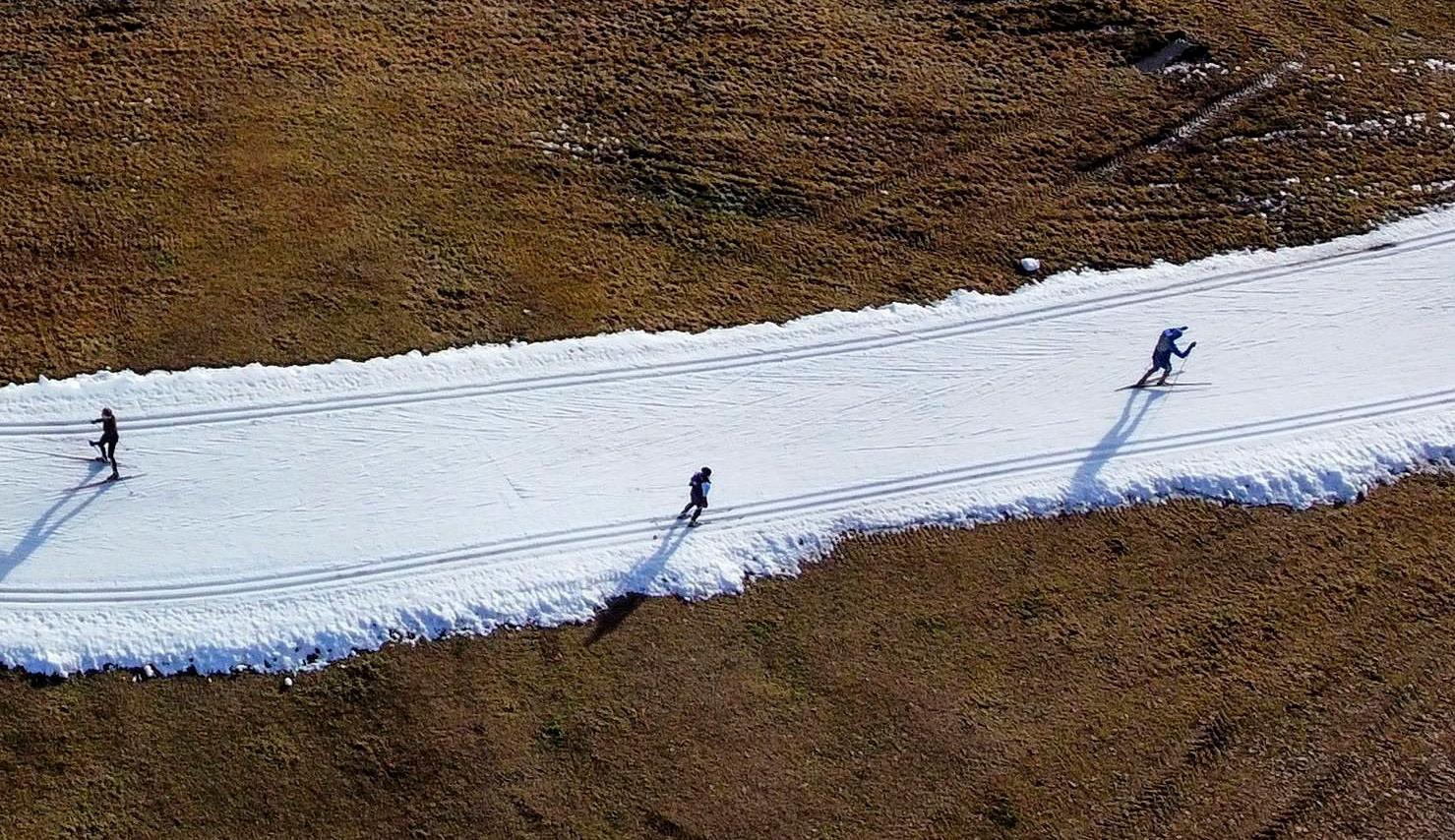
expenses while producing the same amount of snow. The Olympics have a history of negative finances and the most recent Winter Olympic Games went five billion dollars over budget.10 Snomax would bolster cost management efforts and benefit the bottom line.
However, there are potential drawbacks to a partnership between Snomax and the Olympics. One of the biggest concerns is safety. While the product is popular in Swiss resorts, it is banned in Austria and Germany as independent studies there claim the additive causes illness. The microbes remain in the snow after it is created and could pose health concerns for skiers and operators of the machines.11
Furthermore, there are concerns about
Snomax’s effect on vegetation. Because of its long-lasting nature and high melting point, the snow stays around well into spring, proving detrimental to grass and plants. 12 Snomax denies the accusations about their product, citing their studies. For example, the microbes found in the product are naturally occurring and do not reproduce, guaranteeing the safety of all parties.13 Regardless, the effect of Snomax on humans and plants has not been fully investigated, something critics of a potential partnership point out.14
Because of the uncertainty regarding the chemicals used in Snomax, host countries could have different regulations regarding the chemicals they permit. These differing perspectives could lead host countries to ban
/ 39
“
By the year 2080, the temperatures and precipitation rates in…20 locations would be at a level where athletes could not safely compete without artificial snow.”
SKI SLOPES OF SUSTAINABILITY
the microbes used in Snomax, a concern all parties will have to consider.
Another potential issue with Snomax as a company is its relatively small size. While its product is used in multiple small Swiss resorts, they have not had a project as big as the Winter Olympics. The company has to prove its ability to successfully scale up while maintaining its mission of sustainability and relatively low cost. It has to be seen whether Snomax has the capital and capacity to provide for the games every four years while simultaneously keeping up with its other partnerships. While not insurmountable, this task may be quite difficult.
There are numerous stakeholders in a potential partnership between Snomax and the IOC, meaning multiple parties have interests to consider. Because they will have to deal with the economic and environmental effects of such a partnership firsthand, host countries are some of the biggest stakeholders. In this scenario, they would benefit from such a partnership because it would protect their resources and preserve the country’s natural
beauty. Snomax would further lower the host’s expenses by protecting these resources and boosting their bottom line.
Other parties with a major stake in the partnership are the athletes who take part in the games. Because they compete at such a high level, any difference in the snow would have a major impact on the competitiveness of the event as a whole. Snomax’s snow would have to meet these high standards. Athletes would potentially benefit from this partnership because Snomax slightly alters the makeup of snow, reportedly making it fluffier and more natural, compared to the icier conditions they currently compete in.

The Olympics are not fully funded by the IOC and host countries. Corporate sponsors play a big role in financing and making sure the games run smoothly. They would also benefit from a Snomax and IOC partnership because it improves the reputation of the games. The Beijing games were considered an environmental disaster and the current Olympics’ reputation suffers without leadership prioritizing sustainability.
As the corporate world focuses on becoming environmentally friendly and global warming becomes a bigger threat, being connected to an unsustainable operation may reflect negatively on Olympic sponsors. The transition to sustainability, starting with a Snomax partnership, can improve the reputation of sponsors as supporters of sustainability. This transition may also protect the beautiful image of the games.
When you think of the Winter Olympics, images of skiers carving down pristine white mountains and snowboarders flipping through the crystal blue sky come to mind. No one wants to imagine gray stacks spewing smoke over icy slopes or fossil-fuel powered fans blowing powder onto bare mountains. Unfortunately, this vision may become the reality of the games as global warming takes its toll on the planet. To protect the sports that we all love, the IOC needs to partner with Snomax International, providing a sustainable way to bring back those distant memories of snowy Olympic wonderlands.
40 /
STEPHEN XU
The finishing area for the alpine skiing events at the Beijing 2022 winter Paralympics
DISCUSSION QUESTIONS
1. How exactly have studies proven Snomax snow to be safe?
2. What more do you want to know about artificial snow?
1 “Goal 13 | Department of Economic and Social Affairs.” United Nations, Department of Economic and Social Affairs, sdgs. un.org/goals/goal13
2 Denchak, Melissa. ”Greenhouse Effect 101.” NRDC, 16 July. 2019, www.nrdc.org/stories/greenhouse-effect-101.
3 Loh, Matthew. “Water Used for Olympic Snow Equal to Day of Drinking Water for 900 Million People.” Insider, 11 Feb. 2022, www.insider.com/beijing-olympics-artificial-snow-costs-daysdrinking-water-900-million-2022-2.
4 “Sustainability.” International Olympic Committee, olympics.com/ ioc/sustainability.
5 Diaz, Jaclyn, and Levitt, Michael. “Could the World Become Too Warm to Hold Winter Olympics?” NPR, 21 Jan. 2022, www. npr.org/2022/01/21/1074872876/could-the-world-become-toowarm-to-hold-winter-olympics.
6 McCarriston, Shanna. “2022 Beijing Olympics: Why there is fake snow at the Winter Games and how athletes feel about competing on It.” CBSSports, CBS, 9 Feb. 2022, www.cbssports. com/olympics/news/2022-beijing-olympics-why-there-isfake-snow-at-the-winter-games-and-how-athletes-feel-aboutcompeting-on-it.
7 “Effects.” Snomax, www.snomax.com/product/effects.
8 “Environment.” Snomax, www.snomax.com/product/ environment.
9 “New Snowmax Snow Inducer 300g.” EBay, www.ebay.com/ itm/255216907020.
10 Christovich, Amanda. “Another Report Confirms Escalating Cost of Beijing Olympics.” Front Office Sports, 17 Feb. 2022, frontofficesports.com/another-report-confirms-escalating-costof-beijing-olympics.
STEPHEN XU

11 Boyle, Darren. “Snomax Fake Snow Banned in Austria and Germany Is Bad for Your Health.” Mail Online, Daily Mail, 15 Dec. 2015, www.dailymail.co.uk/news/article-3360831.
12 Ibid.
13“Environment.” Snomax, www.snomax.com/product/ environment.
14 The Local. “Artificial Snow 'Could Make You Sick': Report.” The Local Switzerland, The Local, 14 Dec. 2015, www.thelocal. ch/20151214/artificial-snow-could-make-you-sick-report.
Photo Credits: Daniel Jedzura/Adobe Stock—page 36 Matthias Schrader/AP Images—page 38 Australian Paralympic Committee/Wikimedia Commons—page 40
“My paper was inspired by the 2022 Beijing Winter Olympics where images of ski slopes surrounded by barren wastelands went viral. Growing up in Massachusetts, winter sports were always ingrained into the culture so seeing those powerful images really resonated with me.”
CLASS OF 2025, FINANCE AND MARKETING
/ 41
SKI SLOPES OF SUSTAINABILITY


BOTTOM TRAWLING
AN E- FISH- ENT SOLUTION TO
BY ERIC HALHJEM
To curb the destruction of marine ecosystems, the author proposes that Trident Seafoods, the largest seafood company in the US, transitions from bottom trawling to the purse seine method of fishing.

Off the coast of Alaska’s Aleutian Islands, bottom trawling fishermen hoist their net up to find three lifeless harbor seals. Along the northern Gulf of Alaska, miles of coral beds perish as 450-footlong bottom trawlers scrape the seafloor. In Southeast Alaska, fishermen emit thousands of tons of aqueous carbon dioxide into the region’s pristine waters as they travel further to fish. These effects are common throughout all regions where commercial trawling occurs.
The United Nations’ 14th Sustainable Development Goal calls for society to “conserve and sustainably use the oceans, seas and marine resources for sustainable development.” 1 In Alaska, where bottom trawlers destroy thousands of square miles of seabed every day and account for approximately 60 percent of the region’s
fishery discards, conservation and sustainable use of the oceans are virtually nonexistent.2 To reduce these impacts and create a sustainable system, companies such as Trident Seafoods must limit their bottom trawling and transition to more sustainable fishing methods. Through such an approach, companies will produce shared value for all stakeholders and shift toward a circular business model that furthers the sustainability of fish stocks and benefits the world’s oceans.
TRIDENT SEAFOODS’ ROLE AND TRAWLING’S CIRCULAR SYSTEM
Trident Seafoods is one of the largest seafood companies in the United States, and it currently operates one of the largest trawling fleets in the Western Hemisphere, with four trawl catcher-processors and fifteen trawl catcher vessels.3 As the largest seafood

company in the nation, Trident Seafoods is one of the most prominent supporters of commercial trawling globally. Further, based on its current success, the company continues to increase its support of the destructive practice. In 2021, it acquired the 300-foot catcher-processor Starbound and two smaller trawl boats from Aleutian Spray Fisheries.4
However, this practice cannot continue as bottom trawling is inherently unsustainable. When a boat trawls, its net “stirs up the sediment lying on the seabed, displaces or harms some marine species, causes pollutants to mix into plankton and move into the food chain, and creates harmful algae blooms or oxygen-deficient dead zones.”5 As fishermen ruin seafloor habitats through this process, they require additional funding to travel farther and fish.


Fishing companies also lobby their governments for subsidies and governments then provide the funding to ensure thousands of jobs are not lost. After receiving these subsidies, bottom trawlers proceed to destroy seafloor habitats, and the process repeats itself. As can be seen, when fishermen trawl, they destroy ecosystems while acquiring more capital to travel further, leading to this cyclical process. However, this system will not last in the long term.
A 2018 report from Science Advances cites that “deep-sea bottom trawling would not be globally profitable at current rates without government subsidies, with maximum annual losses of $230 million before subsidies.”6 As boats create more “dead zones” and travel further to fish, their operating expenses will only increase. It will eventually not be rational for governments to provide subsidies, leading them to finance more profitable activities in other industries. If bottom trawling continues, this industry will receive less funding, fishermen will lose jobs, and annual losses will only grow.
The ramifications of this downward spiral have become increasingly apparent in recent years. In the 1980s, bottom trawling yielded predicted catches of 30 million tons annually. This estimate has declined yearly since 1989 as more “dead zones” emerged and fish stocks continued to decrease. 7 Likewise, a report published in Marine Policy found that agreements allowing foreign
seafood companies to fish in West African waters only yielded revenues between 2 and 8 percent of the predicted value of the catch landed.8 Previous bottom trawling practices have already dramatically impacted the profitability of this industry, and companies’ profits will dwindle further if this process continues.
OTHER APPROACHES’ DOWNFALLS
Past approaches to limit bottom trawling have typically come from governments rather than individual businesses. Administrations have focused on different bans and policy actions yet struggled to please all stakeholders. For instance, governments in Indonesia and Costa Rica instituted bans on bottom trawling that completely outlawed the practice. Unfortunately, many fishermen depended on bottom trawling for their livelihood in these countries, sparking tremendous backlash. The governments of Hong Kong and Belize released phased transitions to prohibit the practice but requirements were not planned effectively and fishermen were not incentivized to cease their operations.9
Other approaches have simply lacked the necessary enforcement to succeed. China implemented many sustainabilityminded policies throughout the 1970s to limit bottom trawling, such as issuing fewer
fishing permits and reducing the area where fishermen can use bottom trawlers. However, researchers from the Institute for the Oceans and Fisheries found that these policies failed to curtail any harmful impacts due to a lack of enforcement.10 Many European nations have also established policies to limit commercial trawling. Unfortunately, a recent report published by Oceana, a prominent ocean conservationist nonprofit, revealed that bottom trawlers have continued to fish illegally throughout the Mediterranean Sea. This report also highlighted that illegal trawling has continued to endure in these waters due to inaction from the European Union and the General Fisheries Commission for the Mediterranean. These governing bodies failed to bolster their surveillance methods and enforce deterrent sanctions, ultimately allowing bottom trawling to continue harming the environment.11
While these efforts showed good intentions, they lacked enforcement and did not consider all stakeholders. Their struggles reveal that the solution to limiting bottom trawling cannot come through policy; instead, it must come from individual businesses such as Trident Seafoods. Unlike previous approaches, encouraging businesses to transition to more profitable and sustainable fishing methods would create value for all stakeholders.
PURSE SEINING AND ITS SHARED VALUE
Seeing that bottom trawling is inherently unsustainable, Trident Seafoods should transition to purse seining to catch what was previously caught by bottom trawlers. Purse seines are large, vertically floating nets that boats use to encircle schools of fish identified on fishing sonars. These nets are often up to a mile long, and their base is drawn together to create a “purse” once fish are within the net.12 Following this closure, fishermen haul the net onboard and store the catch. Purse seining vessels are typically much smaller than bottom trawling vessels, yet they can catch the same species and operate in the same seasons as bottom trawlers.
Purse seining is one of the most environmentally friendly and profitable fishing practices available. Since purse
44 /
Bottom trawling
ERIC HALHJEM
Purse seining
seining targets a specific school of fish, bycatch, also referred to as unintentionally caught invertebrates, tends to be between 1 to 8 percent of the overall catch.13 Compared to bottom trawling’s average bycatch rate of approximately 46 percent, the new rate will be significantly lower. 14 This method will be far more financially beneficial as well, since these trawlers will no longer deplete other fish stocks, allowing vessels that target other species to catch more fish. Purse seining also keeps marine habitats intact by hovering above the seafloor. Due to this lack of contact, purse seiners do not create “dead zones,” enabling them to continue fishing in the same regions, spending less on fuel. Moreover, the Journal of Cleaner Production suggests that purse seining generally has a lower fuel use intensity than most trawling fisheries, meaning it exhausts less fuel per ton of fish caught.15 These differences make it increasingly evident that purse seining is more environmentally friendly, less costly, and more profitable for businesses.
Considering Trident Seafoods already operates purse seiners throughout Alaska, the company could replicate these current procedures when transitioning away from bottom trawling. This change will involve trawl fleet repurposing and purse seiner fleet development.
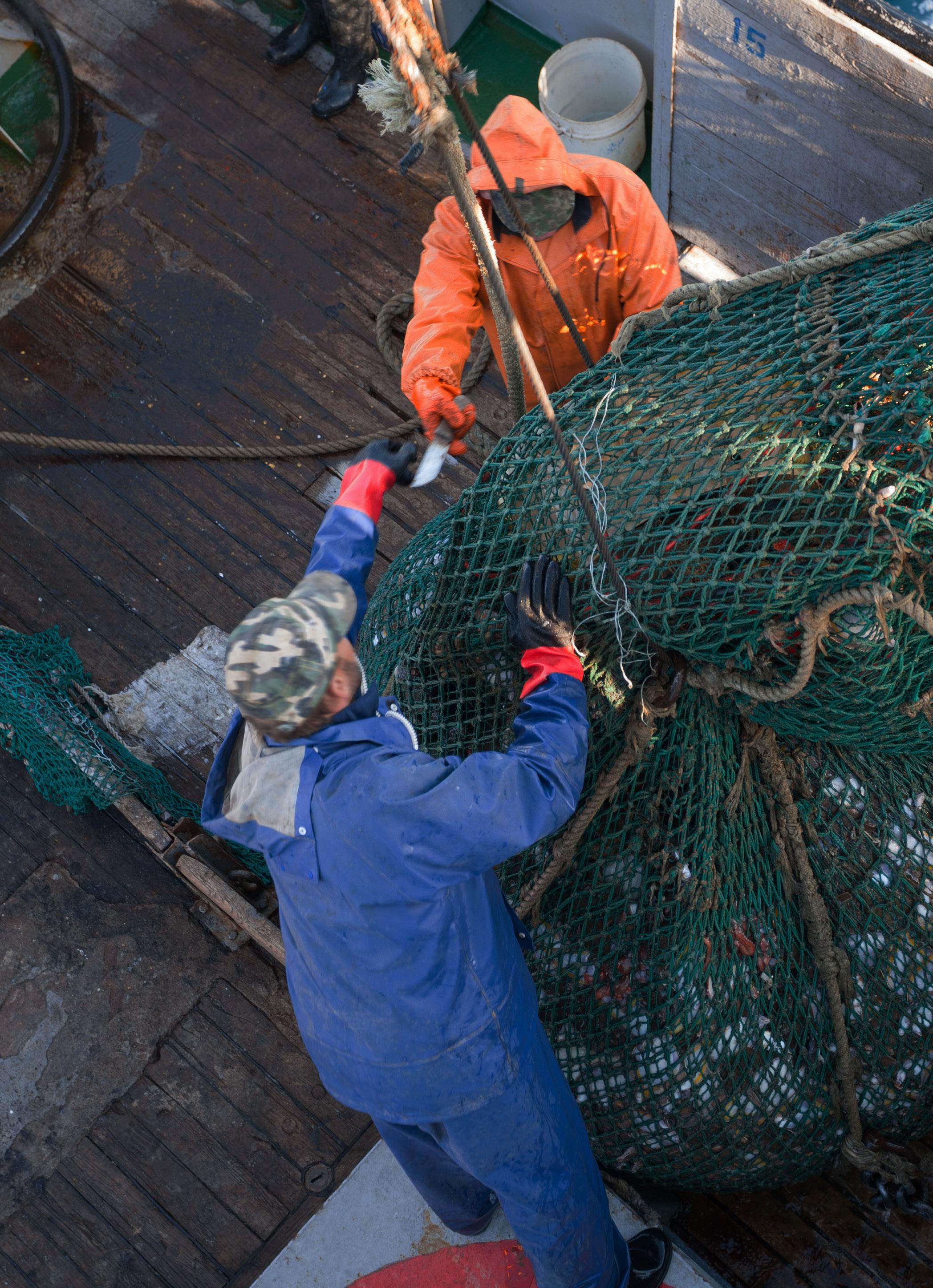
The company will need tender vessels to support the boats and transport their catches to processing plants. Since many of Trident Seafoods’ trawl catcher vessels operate as tender vessels for salmon fishing, this transition will be relatively seamless and ensure jobs are kept. However, due to the size of Trident Seafoods’ trawling fleet, not all vessels can serve as tenders. As many of them already do, the remaining boats will perform charter work for fisheries, offshore research, or tourist activities.16 By repurposing these vessels and their crews to complete other activities they are familiar with, Trident Seafoods can continue to use its assets and ensure its employees keep their positions.
As the company repurposes its bottom trawling fleet, it will begin buying and building new purse seining vessels. Since Trident Seafoods will no longer utilize bottom trawlers, it can use its remaining subsidies to finance the development of new boats. The
“
....employees will lose more jobs, investors will lose more money, and the environment will suffer more irreversible damage.”
company can also sell trawl catcher-processors that cannot provide tender, tourist, or research services to acquire additional capital. During the development of these boats, Trident Seafoods will train the remaining employees to operate them. The employees who worked aboard purse seiners in the past will lead the training to ensure a successful transition. After Trident Seafoods finishes constructing its
practice. The company’s effort to transition away from bottom trawling will benefit the fight to reduce the harmful practice; however, it will require collective action from the global seafood industry to prompt sufficient change. Moreover, many employees and shareholders may initially resist the change for the sake of greater comfort and short-term returns. Several employees who worked aboard
lose more money, and the environment will suffer more irreversible damage.
LOOKING FORWARD
Currently, the United Nations’ goal to “conserve and sustainably use the oceans, seas and marine resources for sustainable development” by 2030 is not feasible. 18 However, through Trident Seafoods’ transition to purse seining, there would be substantial progress towards a future in which society uses the world’s oceans sustainably. And it must not stop there. As the success of this approach becomes increasingly apparent in the global seafood industry, Trident Seafoods’ actions should motivate other companies to transition away from bottom trawling.
Now, other companies around the world can improve this approach to be even more sustainable and profitable. Then, innocent animals will no longer die from wasteful bottom trawling. Fishing companies will no longer rely upon government subsidies to ensure their profitability. Most importantly, the ocean and the marine life that society depends upon will no longer suffer at the hands of a destructive fishing practice.
new purse seining vessels, it can immediately begin fishing with newly trained employees and ensure it continues to meet demand. The company can then provide greater returns to its shareholders with this plan as it earns larger profits by reducing expenses. As a result, Trident Seafoods can create significant value for its investors, employees, and the environment through this approach while increasing its profitability and substantially reducing its bottom trawl usage.
POTENTIAL DRAWBACKS
Although this approach will provide value to stakeholders, increase profitability, and reduce Trident Seafoods' trawling efforts, it is not a global solution to the unsustainable
bottom trawlers throughout their careers, for example, may not comply with the transition to purse seining. Likewise, investors may be skeptical of the high up-front costs of developing a new purse seiner fleet as it would initially produce smaller returns.
Despite these criticisms, transitioning away from bottom trawling is necessary. The inherent unsustainability of this practice will prompt the government to stop providing subsidies to fishing businesses in the foreseeable future. Without this funding, “the bulk of the world’s bottom trawl fleet operating in the high seas will be operating at a loss, and unable to fish.”17 Thus, Trident Seafoods must shift away from bottom trawling; otherwise, employees will lose more jobs, investors will
DISCUSSION QUESTIONS
Off the coast of Alaska’s Aleutian Islands, former bottom trawling fishermen now hoist their nets up to only find their target fish. Along the northern Gulf of Alaska, miles of coral beds gradually heal as purse seine nets never touch the seafloor. In Southeast Alaska, fishermen now emit significantly less aqueous carbon dioxide into the region’s pristine waters as they only need to travel a mile to fish. These effects can be common throughout all regions where commercial fishing occurs. This industry does not need to be wasteful. It can be sustainable, profitable, and environmentally supportive. This is the future the seafood industry needs, and more importantly, this is the future our precious oceans deserve.
1. What actions can be taken to prompt a global movement towards more sustainable fishing practices?
2. Do you agree that the solution for limiting bottom trawling should come from individual businesses and not from the government? Why or why not?

46 /
ERIC
Coral destroyed by bottom trawling
HALHJEM
1 “Goal 14: Conserve and sustainably use the oceans, seas and marine resources.” United Nations, sdgs.un.org/goals/goal14.
2 Sala, Enric, et al. “Protecting the Global Ocean for Biodiversity, Food and Climate.” Nature, vol. 592, no. 7854, 17 Mar. 2021, pp. 397-402. Nature, doi.org/10.1038/s41586-021-03371-z.
3 “Our Fleet.” Trident Seafoods, Trident Seafoods Corporation, www.tridentseafoods.com/our-story/our-fleet.
4 Bernton, Hal. “Trident Seafoods to acquire 300-foot Starbound to add to pollock fleet.” The Seattle Times, 12 Dec. 2021, www. seattletimes.com/business/trident-seafoods-to-acquire-300-footstarbound-to-add-to-pollock-fleet.
5 Chestney, Nina. “Trawling could harm oceans like ploughing land: scientists.” Reuters, 5 Sept. 2012, www.reuters.com/ article/us-trawling-oceans/trawling-could-harm-oceans-likeploughing-land-scientists-idUSBRE88416820120905.
6 Sala.
7 Berger, Annick. “Will 2022 mark a turning point in the regulation or banning of bottom trawling?” Equal Times, 25 Mar. 2022, www.equaltimes.org/will-2022-mark-a-turning-point-in#. YnbcA_PML0t.
8 Virdin, John, et al. “West Africa's Coastal Bottom Trawl Fishery: Initial Examination of a Trade in Fishing Services.” Marine Policy, vol. 100, Feb. 2019, pp. 288-97. ScienceDirect, doi. org/10.1016/j.marpol.2018.11.042.
9 Steadman, Daniel. “Bottom trawling: Report highlights urgent need to solve an age-old problem.” Fauna and Flora International, 9 Dec. 2021, www.fauna-flora.org/news/bottomtrawling-report-highlights-urgent-need-to-solve-an-age-oldproblem.
10 Tjosvold, R. “China's Policy Efforts to Limit Bottom Trawling Are Not Working.” Institute for the Oceans and Fisheries, 22 Nov. 2020, oceans.ubc.ca/2020/11/22/chinas-policy-efforts-tolimit-bottom-trawling-are-not-working.
11 Alvarez, Helena, et. al. “Transparency and compliance weaknesses in GFCM Fisheries Restricted Areas: How continuous IUU fishing inside the Strait of Sicily FRAs undermines fisheries sustainability and the credibility of the GFCM.” Oceana. Madrid. europe.oceana.org/wp-content/ uploads/sites/26/oceana_transparency_and_compliance_
ERIC HALHJEM

weaknesses_in_gfcm_fisheries_restricted_areas.pdf.
12 Good Catch. “Purse seines.” Sustain, www.sustainweb.org/ goodcatch/purse_seines.
13 “Commercial Fishing Methods." Sustainable Fisheries, University of Washington, sustainablefisheries-uw.org/seafood-101/ commercial-fishing-methods.
14 “Demersal or Bottom Trawl.” Ocean Find Your Blue, Smithsonian, ocean.si.edu/human-connections/seafood/ demersal-or-bottom-trawl.
15 Parker, Robert W.r., et al. “Fuel Performance and Carbon Footprint of the Global Purse Seine Tuna Fleet.” Journal of Cleaner Production, vol. 103, Sept. 2015, pp. 517-24. ScienceDirect, doi.org/10.1016/j.jclepro.2014.05.017.
16 “Our Fleet.”
17 Sumaila, Ussif Rashid, et al. “Subsidies to High Seas Bottom Trawl Fleets and the Sustainability of Deep-sea Demersal Fish Stocks." Marine Policy, vol. 34, no. 3, May 2010, pp. 495-97. ScienceDirect, doi.org/10.1016/j.marpol.2009.10.004.
18 “Goal 14.”
Photo Credits: Eric Gevaert/Adobe Stock—page 42
Marine Stewardship Council—page 44
Stanislav Komogorov/Adobe Stock—page 45
Helivideo/Adobe Stock—page 46
“Working aboard commercial fishing vessels in Bristol Bay, Alaska, gave me the idea for my paper. Bristol Bay is one of the world's most sustainable and efficient fisheries and it continues to feed billions of people while benefiting salmon populations and the environment. Seeing that sustainable fishing was possible in Bristol Bay led me to question how this could be done in the least sustainable... fishing practice: bottom trawling.”
CLASS OF 2025, FINANCE AND OPERATIONS
/ 47
AN E-FISH-ENT SOLUTION
AID LIMA'S

OPTIMIZING DATA TO
BY CHRISTINA MONEV
The author suggests that the agricultural industry and SEDAPAL should partner with water management service company Ventia in order to ameliorate the issue of water scarcity in Lima’s metropolitan area.


Residents in Lima, Peru, are harmed by a general lack of access to water and sanitation resources in the city. Numerous households have a limited supply of water from the city’s main water utility company, SEDAPAL, while others have no access to running water at all. The local agricultural industry further restricts the amount of water available. Consequently, insufficient access to water and sanitation facilities poses a threat to the health of local communities.
Both the agricultural industry and SEDAPAL should partner with Ventia, a water management company, to ameliorate the issue of water scarcity in Lima’s metropolitan area. The partnership would enable more households in Lima to have a constant supply of water, while businesses, including the agricultural industry, would be able to enhance their productivity and future growth potential.
THE ROOT OF THE CRISIS
Lima’s location is at a distinct geographical disadvantage, where “the Pacific side represents 21.6 percent of the country, comprises 62.5 percent of the population, and contains just 1.76 percent of the country’s water resources.”1 Residents in the metropolitan area of Lima suffer from a continual lack of access to water and proper sanitation facilities. In Lima and the surrounding area, 11 percent of residents have no access to water, and 16 percent of individuals have no sanitation resources.2


Furthermore, several compounding trends exacerbate the water crisis in Lima, namely the inefficient distribution of resources, the city’s rapidly growing population, and the effects of climate change. In particular, the agricultural sector represents the largest drain on the city’s water supply. Agricultural usage accounts for 88.7 percent of all extracted water, and household usage accounts for only 9.2 percent.3 The large disparity between the volume of water used by households and farms represents the inherent issue of water distribution in the city.
A DATA-BASED PARTNERSHIP
To reduce the overall strain on the city’s water supply, SEDAPAL and the agricultural

49
industry in Peru should partner with water management company Ventia to optimize their operations. Ventia provides water management services to over 2,500 unique sites across Australia, and their proprietary services and analytical processes have a relevant application to the water crisis in Lima. 4 Ventia has experience working specifically with “government, water authority, agricultural and mining clients” across Australia.5
The primary entities involved in the continuation and potential resolution of Lima’s water crisis are the state-owned water utility company SEDAPAL and the broader agricultural industry in the area. Ventia’s experiences with past clientele will enable a knowledgeable transition of their existing services to the water systems in Lima. Due to the complex nature of the crisis, a partnership
their Telemetry Information Management System, Ventia analyzes data on several factors, “including flow, level, electrical conductivity, turbidity, salinity, alkalinity, dissolved oxygen, rainfall and temperature.”8 Their Vista Data Vision web portal, “allows authorities and farmers to visualize their data, generate reports and download data for use within other systems…for a fraction of the cost of a traditional data transmission network.”9 Both SEDAPAL and the agricultural industry rely on the stability of the water supply to generate revenue, and the collected data can be useful for the current management of the water supply. Thus, Ventia’s digital tools have the potential to limit the costs associated with water management while also helping SEDAPAL and local farmers secure a steady stream of revenue.
In addition to maintaining current
infrastructure or utilizing pre-Incan natural infrastructure in the area to increase the flow of water year-round.11 While these solutions have the potential to increase water access for some households, they do not address the root of the issue, which is the broader misallocation of water. The agricultural industry, which utilizes the vast majority of water in Lima, uses this key resource inefficiently and maintains an irrigation system prone to wasteful leaks.12 Further, the significant allocation of water for farming purposes restricts access to this invaluable resource for locals.
Given Lima’s limited geographical resources, alternative solutions, including, “transferring water from other basins and desalinating seawater,” have been examined. 13 However, taking water from another location presents a major political risk. Individuals residing near other basins
with Ventia would allow both SEDAPAL and the agricultural industry to optimize their allocation of water while protecting stakeholder interests.
Ventia’s technology systems provide “monitoring solutions for potable systems, irrigation networks, rivers, water storages, and sewage treatment plants.” 6 The water management company works directly “with irrigation authorities to implement end-to-end managed channel and on-farm measurement IoT [Internet of Things] solutions,” in order to help these entities improve the efficiency of their water systems.7 The aggregated data would deliver insights into each segment of Lima’s water supply, and the information would allow each affected entity to monitor and reduce their usage of water while decreasing their total costs.
By utilizing machine learning as well as
infrastructure, SEDAPAL could utilize Ventia’s groundwater analytics tools provided to pursue the most fruitful investments in new water infrastructure. Ventia’s services allow, “clients to monitor water quantity and the efficiency of their network infrastructure,” by using advanced “ultrasonic, insertion, and strap-on flow measurement” methodologies.10 Similarly, farms could utilize Ventia’s data visualization services to determine the weak links in their irrigation infrastructure and the optimal allocation of water for different crops. The combined effects of optimizing efficiency and allocation between these two entities have the potential to drastically reduce the strain on the city’s water supply.
CURRENT STRATEGIES
The current efforts to resolve the crisis are largely dependent upon building new
might protest the idea of sacrificing their water reserves to supply the country’s capital. Furthermore, desalinating seawater can be an incredibly costly procedure, one which requires significant additional investments in infrastructure. As a result, neither of these potential solutions has been actively pursued.
Due to a clear lack of proper water and sanitation infrastructure in recent years, SEDAPAL has pursued various investments in an attempt to mitigate the crisis. In 2013, SEDAPAL installed a new wastewater treatment plant to increase sewage treatment “from 21 percent to approximately 60 percent” in the city.14 While this marks a significant improvement in the sanitation services offered to residents, there is still a sizable portion of the local population who does not have access to sufficient sanitation resources.
However, investing in new infrastructure
50 /
“
...the company has neither the proper analytical tools to determine the costly drain on their resources nor the proper infrastructure in place.”
CHRISTINA MONEV
is a more politically popular solution to the crisis, and future projects also present an additional opportunity for the integration of Ventia’s services. SEDAPAL is currently pursuing a series of infrastructure investments, known as its Master Plan, “to improve long-term water reliability in the face of climate change and growing demand” for a total cost of $2.7 billion.15
As a part of their Master Plan, SEDAPAL plans to add “30 million cubic meters of additional reservoir storage” and expand
its resources on the most productive projects and construction methodologies.
ACTUALIZATION OF THE PROPOSAL
Through the company’s direct focus on groundwater monitoring, Ventia provides another opportunity for the management of Lima’s water supply. In 2011, the area surrounding Lima extracted a total volume of water equalling approximately 3.6 m3/s.18 To supply the city’s demand, significant groundwater reserves are necessary. By
provides 37.5 percent of its water for unbilled accounts, where many of the households who fail to pay “do not have meters” to actually measure the amount of water they use.19 The issue of unbilled accounts reveals two major weaknesses of SEDAPAL’s current system: the company has neither the proper analytical tools to determine the costly drain on its resources nor the proper infrastructure in place.
Through Ventia’s services, SEDAPAL could visualize exactly where their water is

“the Antacoto Reservoir to store an extra 15 million cubic meters.”16 The added water storage, as well as a new tunnel that would transfer water from a mountain aquifer to Rio Chillón, “would cost $129 million.”17 In order to construct a tunnel or expand the capacity of a current reservoir, SEDAPAL needs to conduct extensive research to maximize the total flow of water in the long run. Ventia can install sensors to track the flow of water across these various projects, which allows SEDAPAL to measure effectiveness and focus
utilizing Ventia’s specialized groundwater monitoring services, SEDAPAL will be able to monitor the exact supply and extraction of water across each of its wells. The data will be necessary to determine exactly how much water should be extracted at any one time in order to preserve the water supply and protect the future needs of the community.
Other major areas of concern regarding SEDAPAL’s municipal provision of water are the vast inefficiencies that arise throughout its current system. The water utility company
consumed across the supply chain. SEDAPAL could then capitalize on Ventia’s machinelearning capabilities to cross-reference the households receiving running water with the households who are paying their water bill. Ventia’s services could be used to determine exactly which locations are authorized to extract water from the system and which locations need to be further investigated. Any additional funding captured from customers would allow the company to invest in more infrastructure to maintain the stability of the
/ 51
OPTIMIZING DATA TO AID LIMA'S WATER CRISIS
water supply.
Beyond its voluminous water consumption, the agricultural industry also adds to the issue of water pollution in Peru. The fertilizers and pesticides used on farms “are washed into the river when the land in this watershed is irrigated,” which results in water contamination.20 Because Ventia’s water management devices can detect the presence of dissolved oxygen, the company’s services have another valuable application for the agricultural industry. Fertilizers, once released into a stream of water, often “reduce the dissolved oxygen content of the water body” through the stimulated growth of microorganisms.21 With their advanced equipment, Ventia could monitor the dissolved oxygen content of the water supply. The company could then work with the farms to determine how to mitigate the release of fertilizers into the supply.
The farms themselves have a direct incentive to limit the amount of fertilizer runoff polluting the water because polluted water becomes significantly more expensive to treat. The highly polluted Rímac River, which is a major source of the city’s water, leads to higher water prices in the Lima area “because water treatment is [more] expensive”
with a higher concentration of pollutants.22 Thus, decreasing fertilizer usage and installing more efficient irrigation systems can decrease overall water usage and cost for farmers.
CHALLENGES
While the utilization of Ventia’s services provides an opportunity for farms to save water, the cost of the service itself might outweigh the cost savings. Additionally, while Ventia’s data visualization tools will detect areas of inefficiency within the farms’ irrigation systems, the owners of the farms might have to install costly infrastructure to actually achieve those water savings. Thus, the total cost of the solution for the agricultural industry presents a major barrier to the success of the partnership with Ventia.
Furthermore, the proposed solution does not address the habits of the consumers themselves. Although it can implement Ventia’s services to track the allocation of water across its system, SEDAPAL has relatively little power to influence the actual water consumption of the residents it serves.
SEDAPAL could attempt to limit the total amount of water allocated to each household or impose additional fees above a certain level of consumption, but these measures could
also prove to be politically unpopular.23
Between income levels, the consumption of water “ranges from 260 to 445 liters per person per day” for wealthier individuals but only between “16 to 41 liters per person per day” among lower-income households.24 Wealthier individuals are often less sensitive to price increases because the total amount of money they spend on water represents a relatively smaller portion of their total income when compared to lower-income individuals. Thus, the current proposal does not address the lack of incentives for these individuals to limit their consumption of water.
ECONOMIC POTENTIAL
Despite the challenges, pursuing a partnership with Ventia is critical to stabilizing the water supply in Lima. A lack of access to water and proper sanitation resources can cause devastating health effects. Households with access to the public water network have an infant mortality rate of 15.2 per thousand births, and the figure jumps to 24.3 per thousand births in households without access to running water.25 Furthermore, investments in water and sanitation entail returns of approximately 5 to 46 times the initial expenditure. 26 The benefits of additional and better-maintained water infrastructure between SEDAPAL and the agricultural industry can improve both the water stability and economic outlook of Lima.
Partnering with Ventia would allow SEDAPAL and the agricultural industry in Lima to optimize their water systems by reducing the overall volume of water used and efficiently allocating current resources and capital. The combined effects of a potential solution could lift many individuals out of poverty and improve the general quality of life in Lima while providing economic returns for SEDAPAL and local farms. The success of this proposed solution will be measured by the amount of water available to individuals and the stability of the water supply as a whole, but the proposal’s viability relies on the compliance of water suppliers, managers, and residents. Because many different entities rely on the water supply, water must be equally accessible to all stakeholders to maximize societal value.

52 /
CHRISTINA MONEV
Lima residents wait eagerly for the water tank
DISCUSSION QUESTIONS
1. What shared costs are associated with water provision and water usage?
2. Should water provision be a public or private concern or a combination of both -- and why do you think so?
3. If you were starting a public water distribution system in a new town, how would you suggest it be financed?
1 Weiss, Nicole Bernex, et al. Urban Water Supply in Peru. ianas. org/wp-content/uploads/2020/08/uwc17.pdf.
2 Ibid.
3 Rondinel-Oviedo, Daniel R., and Jaime M. Sarmiento-Pastor. “Water: Consumption, Usage Patterns, and Residential Infrastructure. A Comparative Analysis of Three Regions in the Lima Metropolitan Area.” Water International, vol. 45, no. 7-8, 4 Nov. 2020, pp. 824–846, www.tandfonline.com/doi/full/10.1080/ 02508060.2020.1830360.
4 Monitoring Services. Ventia, www.ventia.com/documents/ downloads/063/Ventia_Water_Monitoring_Capabilities.pdf.
5 Ibid.
6 Ibid.
8 Ibid.
9 Ibid.
10 Ibid.
11 Tegel, Simeon. “Modern Lima Needs More Water. A Pre-Incan Technology Could Keep Taps On.” Americas Quarterly, www. americasquarterly.org/article/modern-lima-needs-more-watera-pre-incan-technology-could-keep-taps-on.
12Irrigation Key to Agricultural Expansion in Peru. Oxford Business Group, 8 Sept. 2020, oxfordbusinessgroup.com/ analysis/water-works-improvements-irrigation-infrastructureremain-vital-accomplishing-ambitious-agricultural.
13 Weiss.
14 Ibid.
15 Kalra, Nidhi, et al. Robust Decision-Making in the Water Sector: A Strategy for Implementing Lima’s Long-Term Water Resources Master Plan. Office of the Chief Economist, Climate Change
CHRISTINA MONEV
Group, ppp.worldbank.org/public-private-partnership/pppknowledge-lab.
16 Groves, David G., et al. Preparing for Future Droughts in Lima, Peru. openknowledge.worldbank.org/bitstream/ handle/10986/31695/Preparing-for-Future-Droughts-in-LimaPeru-Enhancing-Lima-s-Drought-Management-Plan-to-MeetFuture-Challenges.pdf.
17 Ibid.
18 Weiss.
19 Ibid.
20 Ibid.
21Berg, Mary, et al. “Environmental Implications of Excess Fertilizer and Manure on Water Quality — Publications.” North Dakota State University, www.ndsu.edu/agriculture/sites/default/ files/2022-08/nm1281_0.pdf
22 Weiss.
23 Ibid.
24 Rondinel-Oviedo.
25 Weiss.
26 Ibid.
Photo Credits: USFWS/Flickr—page 48
Ye.Sergey/Adobe Stock—page 51
SusSanA/Flickr—page 52
CLASS OF 2025, FINANCE AND ECONOMETRICS

/ 53
“The most rewarding part of my research was utilizing primary and secondary source documents that were written in Spanish. While this of course complicated my research process by adding an extra step for translation, I genuinely enjoyed the challenge of ensuring that my translations accurately reflected the true implications of the crisis.”
OPTIMIZING DATA TO AID LIMA'S WATER CRISIS
THE FUTURE IS NOT LITHIUM
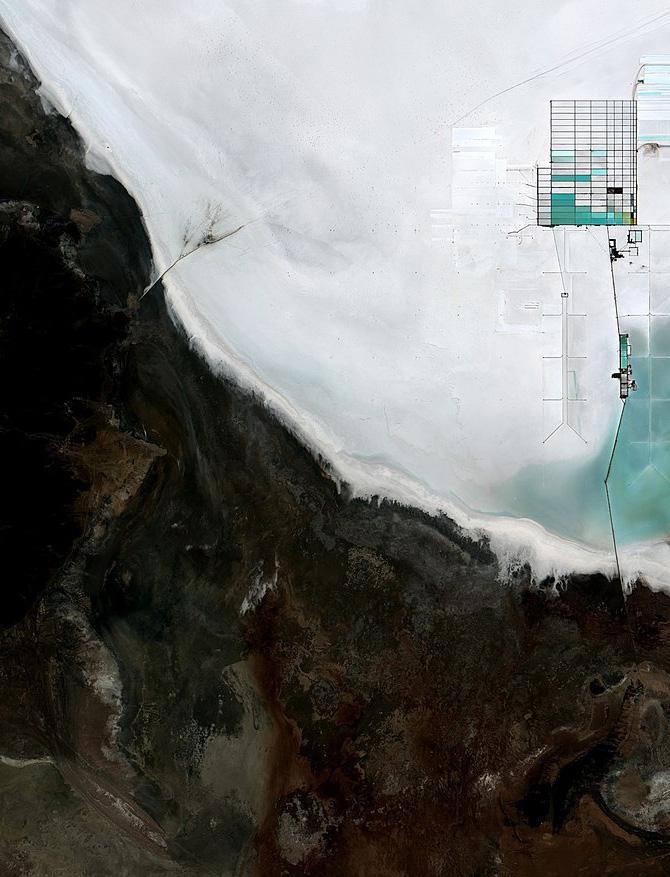 BY TARUN SIVAKUMAR
Lithium ion batteries emit large amounts of CO2 during the mining and manufacturing phases. Their disposal and recycling, too, are environmentally problematic. The author proposes an alternative source of power.

According to the U.S. Department of Energy, the typical internal-combustion engine vehicle (ICE) produces six to nine tons of greenhouse gasses per year. These emissions amount to 1.6 billion tons of greenhouse gas released into the atmosphere each year. While the majority of these gas emissions consist of carbon dioxide, all contribute to climate change. 1 Climate change, a very real problem facing our current generation, will continue for decades until its damaging effects are fully reversed.
Currently, the second biggest contributor to greenhouse gas emissions is the transportation sector, accounting for nearly 17 percent of emissions in 2018.2 This number grew exponentially over the past few decades as human dependence on energy consumption increased.3 Specifically, transportation-related emissions rose 250 percent since 1970, faster than any other energy-use sector. Much of this change can be attributed to the sheer size of the transportation industry, growing rapidly in a short period of time as society evolved around the success of the automobile.4

In order to curb the permanent effects of ICE vehicles on the environment, many organizations, including the U.S. government, now promote the purchase of electric vehicles (EVs) as an alternative that allows consumers to make a tangible difference.5 However, are electric vehicles as environmentally friendly as they are claimed to be? Despite having no tailpipe emissions, the production of EVs depends on manufacturing large numbers of lithium-ion batteries to power these vehicles, and this battery production itself releases vast amounts of carbon dioxide.
Ultimately, the commercialization of electric vehicles has exposed the inefficiencies and dangers of using lithium-ion batteries. As a result, the four major manufacturers of lithium-ion batteries: Ganfeng Lithium, Panasonic, Livent, and Contemporary Amperex Technology Limited should partner with current research universities developing organic polypeptide batteries in order to increase their scalability— so that these new batteries can be sold as a viable sustainable alternative to lithium-ion batteries.
WHY NOT LITHIUM-ION BATTERIES?
Lithium ion batteries have been a revolutionary form of technology since their commercialization in 1992 — their growth allowed for the rapid expansion of battery packs and electric vehicles. However, this expansion also raised concerns over mineral sourcing and its environmental impact. Currently, lithium-ion batteries require cobalt, a toxic metal that has also been linked to human rights violations. Specifically, 60 percent of the world’s cobalt comes from the Democratic Republic of the Congo and mining operations there have prompted allegations of human rights abuses. Further along the value chain, at the end of its useful life, a lithium-ion battery faces high economic and energy costs when trying to be recycled, causing very few batteries (often in singledigit percentages) to be recycled, driving up the demand for extraction of more raw materials.6
Yang Shao-Horn, JR East Professor of Engineering in the MIT Departments of Mechanical Engineering and Materials Science and Engineering, explains that “producing lithium-ion batteries for electric vehicles is more material-intensive than producing traditional combustion engines, and the demand for battery materials is rising.”7 Furthermore, she explains that the energy used to extract lithium from hard rock mines and underground brine reservoirs emits fossil fuels where, for every ton of lithium mined, 15 tons of CO2 are released into the atmosphere.8
Still, extracting lithium accounts for only part of its full impact on the environment— manufacturing the batteries also contributes to global warming. Shao-Horn explains that synthesizing the materials needed to produce a lithium-ion battery requires heat between 800 to 1,000 degrees Celsius. These high temperatures can only be cost-effectively reached by burning fossil fuels, which also adds to CO2 emissions.9 Furthermore, about 77 percent of the world’s supply of lithiumion batteries are manufactured in China where the primary source of energy for the manufacturing is coal, which emits almost twice as much greenhouse gas compared to natural gas usage.10 For example, a popular electric vehicle in the United States, the Tesla Model 3, uses an 80 kWh lithium-ion battery.
Manufacturing the battery in this vehicle emits anywhere from 3 to 16 tons of CO2 11 The negative effects of lithium-ion batteries run counter to both sustainability and human rights efforts.
ORGANIC BATTERIES, AN ALTERNATIVE
An emerging proposed alternative to lithium-ion batteries is an organic polypeptide redox-active battery, named for its reduction of working fluids and reversible oxidation approach, and discovered by a multidisciplinary team of researchers at Texas A&M University. 12 These organic radical batteries (ORBs) are metal-free and can degrade on demand without releasing toxic chemicals into the environment.13 Essentially, these batteries work by incorporating viologens (a form of organic salt) and nitroxide radicals as redox-active groups along with polypeptide backbones which function as anode and cathode materials, respectively. Functionally, these redox-active polypeptides are active materials that are stable during battery operation but subsequently degrade on demand in acidic environments, turning into amino acids and other degradation products that are environmentally benign and may be recyclable for reconstruction into a new battery.14 While being environmentally efficient, another key characteristic of these organic batteries is their “greater theoretical capacities than conventional lithium-ion batteries because their use of organic materials renders them lightweight.”15
Additional research is needed to reach the full capacity of these batteries, as only onethird of their potential has been achieved in simulations. 16 During discovery, scientists used a small organic molecule, croconic acid. The use of croconic acid allows the battery to have an exceptionally high theoretical capacity of 638.6 mAh/g, which is much higher than the conventional lithium-ion battery cathode materials (~140 mAh/g).17
Although there are currently no cost estimates associated with this organic battery, because it lacks expensive metals and only relies on organic compounds, one can project it will be cheaper to manufacture than its lithiumion battery alternative, especially when brought to scale. However, there is currently

no method in place to manufacture these organic batteries on a large enough scale to take away market share from lithiumion batteries— so they have not been fully implemented in battery platforms. Despite the unrealized potential of this novel battery, new discoveries move us closer to creating highenergy, environmentally-friendly, metal-free, inexpensive organic batteries for the masses. Furthermore, there is a significant increase in demand projected for EVs that will be accompanied by a sharp demand in battery technology to fuel these vehicles. According to Fortune Business Insights, the global market for electric vehicles was valued at ~$287 billion in 2021 and is expected to grow to ~$1,318 billion in 2028 at a compound annual growth rate (CAGR) of 24.3 percent in the forecast period. 18 Comparatively, the lithium-ion
conservative models concluded a 20 percent annual growth in lithium-ion battery waste, reaching more than 136,000 tons by 2036.20 Currently, only about 5 percent of lithiumion batteries are actually recycled due to the perceived complexity of the process, meaning that the other 95 percent are left for waste disposal.
battery recycling market is expected to grow from ~$11 billion in 2020 to ~$67 billion in 2030, a CAGR of 19.5 percent in the forecast period.19
Using this data, the EV market is growing faster than the lithium-ion recycling market, meaning the amount of lithium-ion batteries that will be disposed of is expected to increase in the future, resulting in a corresponding increase in environmental toxic waste. The Australian Department of the Environment recently commissioned a study on the future volume of lithium-ion waste, and their daily
However, lithium batteries “contain a flammable electrolyte that can result in fire or even explosions if they are punctured, damaged, or heated. The high-energy content and active nature of li-ion batteries make it dangerous to dispose of them in regular waste.”21 Evidently, lithium-ion batteries are not being recycled at the levels needed to mitigate damage to the environment, and this situation will only continue to worsen in the future. As a result, there will be demand from both environmentalists and purchasers of electric vehicles as they prioritize global greenhouse emission reduction and degradable batteries that can further advance sustainability efforts.
WHAT CAN BUSINESSES DO?
There are four major corporations that play a vital role in the lithium-ion battery industry: Ganfeng Lithium, a leading Chinese lithium mining company that has evolved into refining and processing lithium, battery manufacturing, and recycling; Panasonic, a
/ 57
“
THE FUTURE IS NOT LITHIUM
…transportation-related emissions rose 250 percent since 1970, faster than any other energy-use sector.”
top-3 global EV battery manufacturer based in Japan; Livent, a top-5 lithium producer from the US; and Contemporary Amperex Technology Limited (CATL), a top-3 EV battery manufacturer from China. 22 At its essence, these manufacturers extract the metal from the earth as raw material, move the material into a chemical conversion process to produce lithium carbonate or lithium hydroxide, and then combine carbonate or hydroxide with other materials to form a cathode and an anode, together forming an individual battery cell. Thousands of cells are then combined to create a battery pack for an EV.23 These manufacturers are currently the face of the lithium-ion battery industry, and therefore have the opportunity to reimagine the products they sell, particularly as 95 percent of all lithium batteries reach the end of their life-cycle after only one use. More specifically, these manufacturers can start selling organic batteries for EVs once viable and once demand for lithium-ion batteries is replaced by demand for more sustainable alternatives. Eventually, a circular economy for batteries can be created.
These four companies should invest in current research and develop organic polypeptide batteries as these new sustainable products can replace the aging toxic lithiumion battery. As the demand for EVs increases in the future, demand for batteries, especially sustainable ones which can be recycled easily, will increase alongside vehicle sales. Investing in the development of these new organic batteries is an excellent opportunity for current major manufacturers of lithiumion batteries to shift their products to align with future demand, so as to remain profitable while also helping sustainability efforts at the same time. An investment from these companies is primarily needed to accelerate
research, allow production of these organic batteries, and bring battery manufacture to scale so that they can be integrated and marketed as the primary alternative to lithium-ion batteries.

There is current funding available from the National Science Foundation, the Welch Foundation, and the U.S. Department of Energy Office of Science and researchers at Texas A&M University are using this grant money toward machine learning that will optimize the materials to structure this battery platform. 24 There is, however, no current funding available to commercialize the product and start mass production. This situation presents an opportunity to corporations like Ganfeng Lithium, Panasonic, Livent, and Contemporary Amperex Technology Limited, allowing them to partner with universities developing
DISCUSSION QUESTIONS
the battery and transition the new technology from discovery to a mass-produced battery that will compete with a $41.1 billion lithiumion battery market.25
Ultimately, businesses are at the forefront of reducing carbon emissions, and this situation presents one opportunity for related businesses to reduce the carbon impact from waste produced by their very own products. Lithium-ion batteries are environmentally unsustainable and more so when recognizing the projected increase in EVs. Therefore, the major four manufacturers of lithium-ion batteries should partner with current research universities to develop organic polypeptide batteries to help accelerate the process, increase scalability, and provide a practical alternative to lithium-ion batteries.
Any new battery seeking to replace lithium-ion requires a higher energy output and an ability to be disposed of sustainably. Organic polypeptide batteries satisfy both requirements, proving they are an improvement over the current lithium-ion battery. Developing an entirely new battery to supply not just EVs but also cell phones, tablets, and micro-mobility platforms will be a daunting task, but in the end, this challenge is what businesses are meant to take on: identify a problem and create a valuable solution that will benefit society.
Though lithium-ion batteries revolutionized energy creation and provided a step in the right direction towards net zero emissions, it is time to address the process as a whole, rather than only emphasizing its shortterm utility. Transitioning to organic batteries that can provide even more energy while remaining more environmentally-friendly would do exactly this.
58 /
1. What situation must exist for all the major lithium battery makers to work together to develop organic polypeptide battery technology?
2. What more would you like to learn about organic polypeptide batteries?
TARUN SIVAKUMAR
Charging an electric vehicle battery
1 “Reduce Climate Change.” Www.fueleconomy.gov - the Official Government Source for Fuel Economy Information, www. fueleconomy.gov/feg/climate.shtml#:~:text=Highway%20 vehicles%20release%20 about%201.6,year%20for%.
2 Tiseo, Ian. “Global GHG Emission Shares by Sector.” Statista, 25 Jan. 2022, www.statista.com/statistics/241756/proportion-ofenergy-in-global-greenhouse-gas-emissions.
3 Mattioli, Giulio. “The Political Economy of Car Dependence: A Systems of Provision Approach.” ScienceDirect, Aug. 2020, www. sciencedirect.com/science/article/pii/S2214629620300633.
4 Ibid.
5 “Reduce Climate Change.”
6 Lutkenhaus, Jodie, and Alexandra Easley. “The Path to Polypeptide Organic Radical Batteries.” Nature News, Nature Publishing Group, 11 May 2021, engineeringcommunity.nature.com/posts/organic-radicalpeptide-batteries#contributors.
7 Crawford, Iris. “How Much CO2 Is Emitted by Manufacturing Batteries?” MIT Climate Portal, 16 Feb. 2022, climate.mit.edu/ ask-mit/how-much-co2-emitted-manufacturing-batteries.
8 Ibid.
9 Ibid.
10 Ibid.
11 Ibid.
12 Thompson, Drew. “Metal-Free Batteries Could Make the Industry More Ethical and Sustainable.” World Economic Forum, 18 May 2021, www.weforum.org/agenda/2021/05/ scientists-are-developing-a-new-metal-free-battery-which-ismore-ethical-and-environmentally-friendly.
13 Lutkenhaus.
14 Mattioli.
15 “A 4 V-Class Metal-Free Organic Lithium-Ion Battery Gets Closer to Reality.” ScienceDaily, ScienceDaily, 13 Apr. 2022, www.sciencedaily.com/releases/2022/04/220413090855. htm#:~:text=In%20 addition%2C%20 organic%20 batteries%%2020ave,1%2D3V.
16 Ibid.
17 Ibid.
18 “Electric Vehicle Market Growth & Forecast Analysis up to 2028.” Electric Vehicle Market Growth & Forecast Analysis up to 2028, Sept. 2021, www.fortunebusinessinsights.com/industry-
TARUN SIVAKUMAR
reports/electric-vehicle-market-101678.
19 Allied Market Research. “Battery Recycling Market to Generate $66.6 Billion by 2030: Allied Market Research.” GlobeNewswire NewsRoom, Allied Market Research, 22 Mar. 2022, www. globenewswire.com/news-release/2022/03/22/2407493/0/en/ Battery-Recycling-Market-to-Generate-66-6-Billi%20on-by2030-Allied-Market-Research.html.
20 Randell Environmental Consulting and Blue Environment prepared for the Department of the Environment. “Waste Lithium-Ion Battery Projections.” Waste Lithium-Ion Battery Projections - DAWE, 1 Jan. 1970, www.dcceew.gov.au/ environment/protection/publications/waste-lithium-ionbattery-projections#:~:text=Lithium%2Dio.
21 “A Closer Look: Lithium-Ion Batteries in e-Waste.” Sims Lifecycle Services, 31 Mar. 2022, www.simslifecycle.com/blog/2019/acloser-look-lithium-ion-batteries-in-e-waste.
22 Palandrani, Pedro. “Four Companies Leading the Rise of Lithium & Battery Technology.” Global X ETFs, 21 Apr. 2022, www. globalxetfs.com/four-companies-leading-the-rise-of-lithiumbattery-technology.

23 Ibid.
24 Thompson, Drew. “Researchers Develop New Metal-Free, Recyclable Polypeptide Battery That Degrades on Demand.” Texas A&M University Engineering, 5 May 2021, engineering. tamu.edu/news/2021/05/CHEN-researchers-develop-newmetal-free-recyclable-polypeptide-battery-that-degrades-ondemand.html.
25 “Lithium-Ion Battery Market.” Market Research Firm, June 2021, www.marketsandmarkets.com/Market-Reports/lithium-ionbattery-market-49714593.html#:~:text=%5B249%20Pag es%20 Report%5D%20The%20global,12.3%25%20from%202021%20 to%202030.
Photo Credits:
Oton Barros/Wikimedia Commons—page 54
Vlad Chet/Pexels—page 56
Romaset/Adobe Stock—page 57
Phaisarnwong2517/Adobe Stock—page 58
"Lithium-ion batteries are often written as a huge technological advancement that will propel us into the future, but the truth is that if we really want to be environmentally-conscious, they are simply not the solution...From my research, I did not believe that Tesla was doing enough for their technology to be considered a 'solution.' While still innovative, I was trying to show that lithium cannot be our future if our goal is sustainability."
CLASS OF 2025, FINANCE AND DATA SCIENCE
/ 59
THE FUTURE IS NOT LITHIUM
FIGHTING FLATULENCE WITH FLORA

 BY YANGYANG LAI
Every Californian dreads the Harris Ranch by Interstate 5. For miles–before the ranch even comes into sight and long after it passes–all that fills the air is the abominable stench of cow manure. Personally, several family trips to Disneyland were plagued by this scent and the subsequent complaints of it. Aside from the horrid smell that lingers in the car, exacerbated by the broiling 105º weather and inching traffic, the ranch generates a far more harmful and perhaps surprising externality. As the largest beef producer in the Western United States, Harris Ranch houses more than 100,000 cattle at a time and produces up to 150 million pounds of beef per year.
Such a prevailing business generates a taxing social expense. The digestive processes of cows produce an abundance of methane and the sheer number of cattle at the ranch has boosted Central California to the second-worst methane hotspot in the country.1 As methane emissions are the primary contributor to
ground-level ozone, they play a direct role in increased global warming levels. Harris Ranch, a massive emitter of methane, should strive to limit its contributions. The ranch can facilitate an extraordinary reduction of methane emissions by adopting an adjusted livestock feed for their cattle that contains one to two percent Australian red seaweed.
Incorporating seaweed within cattle feed has proven to reduce digestive methane emissions by up to 90 percent. Seaweed-based cattle diets substantially progress sustainable farming initiatives, reduce operational feed costs for the ranch, and promote cattle health, thereby making cattle products healthier for consumption. The adoption of adjusted livestock feed would prove beneficial to all stakeholders affected by Harris Ranch: owners, suppliers, animals, consumers, and the surrounding community.
Methane causes extreme harm to both humans and the environment. The most troubling aspect of methane emissions lies in its

To reduce methane emissions, the author proposes an untraditional change in the diet of cattle. Through exciting new innovations, she recommends a seaweed-based diet that has the potential to revolutionize the industry.
seaweed-based
potency. The gas remains in the atmosphere for around 12 years but traps heat very effectively–200 times more effectively than carbon dioxide. 2 Methane also imposes adverse health effects on humans. According to the Climate and Clean Air Coalition, the inhalation of methane worsens bronchitis, triggers asthma, and permanently damages lung tissue.3 The United Nations Environment Programme estimates that exposure to the gas causes 1 million premature deaths per year.4 Furthermore, the Environmental Defense Fund urges that, “cutting methane emissions is the fastest opportunity we have to slow the rate of global warming.”5
Efforts to tackle methane emissions must start in the most dominant methane-emitting industry: agriculture. The U.S. Environmental Protection Agency (EPA) concludes that the digestive processes of livestock create the largest source of methane emissions in the country.6 The University of California at Davis (UC Davis) finds that a single cow belches 220 pounds of methane yearly;7 consequently, the number of cows at Harris Ranch releases more than 22 million pounds of methane into the atmosphere every year.
When cows and other domesticated ruminants convert carbohydrates into molecules to absorb in their bloodstream, they release methane as a digestive byproduct. 8 There are several proposals in place to curb this effect, including the vaccination of cows against methane-producing gut microbes, which targets their digestive systems directly. However, the notion of feeding cows a more easily digestible diet, thus drastically reducing the amount of methane they release, remains the most sustainable, cost-effective, and plausible solution.
The key to this solution lies in Asparagopsis taxiformis, a type of red seaweed native to tropical environments of the Southern Hemisphere. Research conducted at the Commonwealth Scientific and Industrial Research Organisation (CSIRO) and James Cook University in 2014 showed that altering a cow’s diet to contain one to two percent of seaweed reduced its methane emissions by almost 99 percent.9 Though this data was collected in a laboratory, a trial conducted on live dairy cattle by scientists at UC Davis found “up to a 60 percent reduction in methane emissions by using 1 percent of
seaweed in the [cows’] diet.”10 The addition of a minuscule amount of seaweed to cattle feed exhibits monumental improvements. According to Dr. Michael Battaglia, a research director at CSIRO, “the seaweed produces a compound called bromoform, or CHBr3, which prevents methane production by reacting with vitamin B12 at the last step in the cows’ digestive process.”11
The seaweed’s role in the drastic reduction of methane emerged as a scientific breakthrough. As a result of several promising trials, the Swedish company Volta Factory began commercial production of taxiformis in 2020.12 They have subsequently developed Volta Seafeed, a seaweed-based cow feed that, when administered to cows at a daily dose of 100 grams, reduces up to 90 percent of their methane emissions. In fact, Volta’s 2021 pilot feeding test in partnership with Swedish family farm Tre Bönder resulted in 81 percent less methane emission from the cattle. As demonstrated by Volta’s operational and commercial success, the adoption of seaweed-based cattle feed proves to be feasible and rewarding.
The inclusion of A. taxiformis within cattle

62 /
“
YANGYANG LAI
...the farming industry would see benefits on every level through the adoption of
cattle feed.”
feed would also save Harris Ranch a drastic amount of operational feed costs. As a part of their research into the seaweed, Professors Ermias Kebreab and Brianna Roque of UC Davis found that the cattle in their study converted food to energy and growth almost 20 percent more efficiently than regular cattle, therefore reducing the amount of feed necessary per cow. Additionally, they noted that these cattle consumed less feed overall and calculated that “a producer finishing 1,000 head of beef cattle could reduce feed costs by $87,320.”13 Essentially, the hydrogen diverted away from methane production will instead generate nutrients for cattle health and growth.
The reduction of feed costs for the densely populated Harris Ranch would offer tremendous benefits. Family-owned Harris Ranch prides itself as “one of only a few American beef producers who produce beef exclusively from cattle fed in their own feedlot.” Feed ingredients listed on their website consist of steamed Midwestern corn, alfalfa hay, and various vitamins.14 However, due to droughts, strains on supply chains, and conflicts with Russia (a major exporter of the chemicals used in fertilizer), both corn and hay have recently increased in price. Data gathered from Trading Economics shows that corn prices have hit a 9-year price peak of $8.30 per bushel, a 70 percent increase from prices of $4.83 per bushel in the previous year.15 In June 2021, local Central Californian farmers reported an almost depleted alfalfa hay supply. Perpetual droughts have diminished hay production, causing the price of one ton of hay–enough to feed 400 cows a day–to increase by nearly 40 percent.16
The collective increase in the cost of corn and alfalfa hay directly affects Harris Ranch. As a family-owned business, accommodating the increased prices of cow feed for their vast number of cattle is arduous, and certainly undesirable. The adoption of seaweed-based diets would extensively relieve feed costs not only for Harris Ranch but for all cattle farmers reeling in the wake of widespread price increases. Sustaining the business of Harris Ranch in the long term lies with a decreased reliance on crops such as corn and hay combined with the increased use of seaweed feed, which promotes cattle productivity,
increases growth, and reduces costs.
Not only does seaweed-based cattle feed relieve pressures on the environment and reduce operational costs, it additionally provides essential nutrients that introduce a myriad of health benefits for the cattle. Polyunsaturated fatty acids found in seaweed such as omega-3 and omega-6 improve conception rates and reduce pregnancy losses in ruminants.17 Several studies find that, “feeding ruminants seaweed extracts reduce stress and incidence of ketosis,” meaning cows are less likely to display aggressive, uncoordinated, or unproductive behavior. 18,19,20 Moreover, seaweed is commonly known as the best source of
base. 23 The ranch has also expanded to foodservice and retail divisions, serving steaks, baked goods, and hospitality to those who elect to visit. All such guests will find themselves consuming healthier, more nutritious seaweed-fed beef.
In light of the United Nations 2021 Climate Change Conference in Glasgow and their proposed Sustainable Development Goals, governmental agencies and the current presidential administration have, for the first time, introduced legislation to limit the emissions of methane. In November 2021, the EPA proposed the Clean Air Act (CAA) to oversee significant reductions in methane emissions in the oil and gas
iodine, and cattle consumption of seaweed can produce iodine-rich milk, inadvertently solving the lack of iodine intake, which affects approximately 2 billion people worldwide.21,22

The replacement of just one to two percent of cattle feed with seaweed displays tremendous value for every stakeholder involved. Incorporating seaweed-feed would prove beneficial to the ranch, which would see improved health in their cattle, therefore decreasing issues of stress or unproductivity from their animals. Harris Ranch, which supplies meat to popular fast-food chain InN-Out Burger, supports a massive consumer
industries. Furthermore, 110 countries signed the Global Methane Pledge, promising to reduce collective methane emissions by 30 percent by 2030. A huge gap remains in the proposed legislation – agricultural methane. According to the Wall Street Journal, “some environmentalists say the Biden administration is going easy on big agriculture to avoid a bruising political battle with the powerful farm lobby.”24 Federal regulations on agricultural methane emissions raise concerns about increased prices for consumers and limitations on herd size, both harmful to the business of cattle farming. A statement from
/ 63
FIGHTING FLATULENCE WITH FLORA
Asparagopsis taxiformis
the White House suggested the “voluntary adoption” of sustainable agricultural practices to meet pledged targets.25
While the government has funded initiatives to expand methane-capturing systems to reduce emissions from cow manure, there exists no current efforts to commercially adjust cattle diets–the biggest contributor to their emissions. 26 With the proven drastic reduction in agricultural methane through red seaweed, along with evidence of reduced feed costs and improved cow health, the farming industry would see benefits on every level through the adoption of seaweed-based cattle feed.
Even though no current legislation regulates agricultural methane emissions, the severe crackdown on methane by governments will likely not spare the industry for long. The aforementioned CAA includes suggestions to issue caps on all methane emissions, including those stemming from livestock production. As a dominant beef producer, Harris Ranch should adopt seaweed-based cattle feed— a move that could spare the ranch from regulations, including a possible reduction of their immense cow population. A seaweed
solution might also avoid any political tensions or economic consequences arising from the regulation of agricultural methane emissions. The adoption of seaweed-based feed would additionally reduce production costs and allow Harris Ranch to maintain its cattle population at current levels, thus allowing it to avoid harmful business consequences that regulation might bring.
The adoption of seaweed-based feed will reduce methane production while providing value to the ranch’s owners, farmers, animals, and consumers.
The long-term success of a business heavily depends on its ability to satisfy all contributing and affected stakeholders. Harris Ranch’s adoption of a methanereducing solution will undoubtedly benefit its business in the future. With increased scrutiny on human contributions to climate change, nations around the world are actively moving to investigate harmful businesses. Further, increasing public pressure to accept responsibility ultimately affects a business’s credibility and approval rating.
As an established and dominant business, Harris Ranch has an opportunity to improve
DISCUSSION QUESTIONS
its harmful methane footprint while benefiting its stakeholders. Seaweed-based feed reduces operational costs for the ranch, supports farmers by promoting cattle health, benefits consumers of cattle products, and progresses sustainable farming initiatives. The adoption of seaweed-based cattle feed emerges as favorable, profitable, and rewarding for all those involved in Harris Ranch— even the cows.
1. What do you imagine might be some challenges in producing A. taxiformis seaweed on a global scale? What more would you need to know?
2. In what ways is this unusual diet, “favorable, profitable, and rewarding…for the cows,” as the author suggests in the closing?
1 Northon, Karen. “Satellite Data Shows U.S. Methane 'Hot Spot' Bigger than Expected.” NASA, 9 Oct. 2014, www.nasa.gov/ press/2014/october/satellite-data-shows-us-methane-hot-spotbigger-than-expected.
2 Dunbar, Brian. “NASA Traces Molecular Characteristics That Heat Earth.” NASA, 5 May 2010, www.nasa.gov/topics/earth/ features/heat-molecules.html.
3 Climate and Clean Air Coalition (CCAC), and United Nations Environment Programme (UNEP). “Tropospheric Ozone.” Climate & Clean Air Coalition, 1 Jan. 1970, www.ccacoalition. org/en/slcps/tropospheric-ozone.
4 Ibid.
5 “Methane: A Crucial Opportunity in the Climate Fight.” Environmental Defense Fund, www.edf.org/climate/methanecrucial-opportunity-climate-fight.
6 “Overview of Greenhouse Gases.” EPA, Environmental Protection Agency, www.epa.gov/ghgemissions/overview-greenhousegases#methane.
7 Quinton, Amy. “Cows and Climate Change.” UC Davis, 27 June 2019, www.ucdavis.edu/food/news/making-cattle-moresustainable.
8 Gray, Ellen. “NASA at Your Table: Where Food Meets Methane.” NASA, 13 Aug. 2021, www.nasa.gov/feature/goddard/2021/esnt/ nasa-at-your-table-where-food-meets-methane.
64 /
YANGYANG LAI
9 Machado, Lorenna, et al. “Effects of Marine and Freshwater Macroalgae on in Vitro Total Gas and Methane Production.” PLOS ONE, Public Library of Science, 22 Jan. 2014, dx.doi. org/10.1371%2Fjournal.pone.0085289.
10 Nelson, Diane. “Can Seaweed Cut Methane Emissions on Dairy Farms?” UC Davis, 24 May 2018, www.ucdavis.edu/climate/ news/can-seaweed-cut-methane-emissions-on-dairy-farms.
11 Battaglia, Michael. “Seaweed Could Hold the Key to Cutting Methane Emissions from Cow Burps.” CSIROscope, CSIRO, 14 Oct. 2016, blog.csiro.au/seaweed-hold-key-cutting-methaneemissions-cow-burps/.
12 Peters, Adele. “This Factory Is Growing a New Kind of Food for Cows: A Seaweed That Reduces Their Burps.” Fast Company, 1 June 2020, www.fastcompany.com/90510673/this-factory-isgrowing-a-new-kind-of-food-for-cows-a-seaweed-that-reducestheir-burps.
13 Kebreab, Ermias, and Roque, Breanna. “Feeding Cows a Few Ounces of Seaweed Daily Could Sharply Reduce Their Contribution to Climate Change.” The Conversation, 11 Sept. 2021, theconversation.com/feeding-cows-a-few-ounces-ofseaweed-daily-could-sharply-reduce-their-contribution-toclimate-change-157192.
14 “Family of Companies.” Harris Ranch Beef Company, 20 Aug. 2020, www.harrisranchbeef.com/family-ofcompanies/#:~:text=Harris%20Feeding%20Company,fed%20 in%20their%20own%20feedlot.
15 Corn 2022 Data - 1912-2021 Historical - 2023 Forecast - Price - Quote - Chart. Trading Economics, 2022, tradingeconomics. com/commodity/corn.
16 Yurong, Dale. “Local Cattle Ranchers Seeing Increase in Hay Prices.” ABC30 Fresno, KFSN-TV, 17 June 2021, abc30.com/hayprices-fresno-farmewrs-ranchers/10798643.
17 Moallem, U. “Invited Review: Roles of Dietary N-3 Fatty Acids in Performance, Milk Fat Composition, and Reproductive and Immune Systems in Dairy Cattle.” Journal of Dairy Science, Elsevier, 9 Aug. 2018, doi.org/10.3168/jds.2018-14772.
18 Antaya N.T., et al. “Incremental Amounts of Ascophyllum Nodosum Meal Do Not Improve Animal Performance but Do Increase Milk Iodine Output in Early Lactation Dairy Cows Fed High-Forage Diets.” Journal of Dairy Science, 26 Dec. 2014, doi.
org/10.3168/jds.2014-8851.
19 Allen, V.G., et al. “Tasco: Influence of a Brown Seaweed on Antioxidants in Forages and Livestock—A Review.” Journal of Animal Science, Volume 79, 1 Jan. 2001, doi.org/10.2527/ jas2001.79E-SupplE21x.
20 Fike J.H., et al. Tasco-Forage: I. Influence of a seaweed extract on antioxidant activity in tall fescue and in ruminants. Journal of Animal Science, Volume 79, Issue 4, 1 Apr. 2001, doi. org/10.2527/2001.7941011x.
21 Brennan, Dan. “9 Foods High in Iodine and Why You Need It.” WebMD, 22 Oct. 2020, www.webmd.com/diet/foods-high-iniodine.
22 Zimmermann, M.B. Iodine deficiency. Endocrine Reviews, Volume 30, Issue 4, 1 June 2009, doi.org/10.1210/er.2009-0011.
23 Marati, Jessica. “Behind the Label: Where in-N-Out's Beef Really Comes From.” EcoSalon, 1 Aug. 2012, ecosalon.com/ behind-the-label-in-n-out-burger-2/#:~:text=One%20of%20 In%2DN%2DOut's,for%20its%20factory%20farming%20 methods.
24 Ferek, Katy Stech. “In Clampdown on U.S. Methane Emissions, Belching Cattle Get a Pass.” The Wall Street Journal, Dow Jones & Company, 14 Feb. 2022, www.wsj.com/articles/inclampdown-on-u-s-methane-emissions-belching-cattle-get-apass-11644661801.
25 “Joint US-EU Press Release on the Global Methane Pledge.” The White House, The United States Government, 18 Sept. 2021, www.whitehouse.gov/briefing-room/statementsreleases/2021/09/18/joint-us-eu-press-release-on-the-globalmethane-pledge.
26 Ferek.
Photo Credits: Nick Albi / Adobe Stock—page 60
Ljupco Smokovski /Adobe Stock—page 62
FajarHidayah11 / Adobe Stock—page 63
CLASS OF 2025, FINANCE AND DATA SCIENCE

/ 65
“[T]he media often focuses more on carbon dioxide emissions when methane emissions trap heat at 200 times the rate of carbon dioxide. Additionally, because it is generally unknown that the agriculture industry is the biggest contributor to total methane emissions, I wish to emphasize the fact that agricultural methane emissions can be drastically reduced through a restructuring of the beef and dairy production system..."
FIGHTING FLATULENCE WITH FLORA
YANGYANG LAI
EDITORIAL TEAM

66 / ACKNOWLEDGEMENTS
John Sachenik lead editor
Aidan Katz editor
Nicolette Hendrawinata editor Zoe Merriman editor
Denalia Zhi designer
Sooyeon Eun photographer
LEFT TO RIGHT: Sooyeon Eun, Nicolette Hendrawinata, John Sachenik, Professor Jeffrey J. Younger, Aidan Katz, Zoe Merriman. Not pictured: Denalia Zhi.
I hope you enjoyed this issue of The Call for Corporate Action, NYU Stern Student Voices. I congratulate our published authors while offering a warm thank you to all the contributors to this tenth edition of The Call
We collected over 650 essays from students enrolled in Business and Society Spring 2022 and these student authors are the ultimate inspiration for this magazine. We hope that current and future writers are moved by the high caliber of the prose and challenging ideas proposed here.
Our student selection team—all past authors of The Call—selected the winning essays based on a number of criteria. They sought compelling content, fluid composition, and evidence of critical thinking. They looked for specific “calls for corporate action” that were realistic, creative, passionate, and unique. To demonstrate the complexity of societal connections, they looked for interesting insights into the interrelations between business, society, and government. Finally, they sought variety, looking to present a mix of current student thinking across a complementary collection of topics.
This publication was written, assembled, and edited by NYU students—specifically, Lead Editor John Sachenik, and his fellow editorial team: Aidan Katz, Nicolette Hendrawinata, Zoe Merriman, and Denalia Zhi. Student editor Denalia Zhi doubled as Art Designer, helped out by our photographer, Sooyeon Eun Llovet; both are responsible for the beautiful graphic design you see here. Thank you, All, for your hard work and dedication. Your editorial and artistic sensibilities grace every page.
Thank you to NYU Stern Undergraduate Dean Robert Whitelaw for his supportive opening letter and to Professor Matt Statler

ACKNOWLEDGEMENTS
for his introduction to the current Business and Society course. An extra thank you to Sangeeta Bhojwani, Associate Director of the Dean’s Office Affairs & Undergraduate Initiatives who makes things happen.
Most importantly, thank you to the dedicated instructors who facilitate the weekly discussions, critical thinking, and writing sessions that make up Business and Society. Their instruction is evident within all these essays. Without their dedication, this publication would not have been possible— so thanks to the following teachers from 2022 (in first-name alphabetical order): A.J. Twombly, Alex Puutio, Amaya Rivera, Aya Tanaka, Bob DiYanni, Bruce Meyerson, Carol Newell, Claudia Caruana, Ellen Pluta, Fadia Nordveit, Haider Fancy, Irv Schenkler, Jessy Hsieh, Kate Brideau, Keith Meatto, Larry Menna, Maria Patterson, Mark Brennan, Matt Statler, Petria May, Robert Wosnitzer, Shelly London, Tim Gilman, Tim Glencross (in London), Vivian Giang, and Wei Shi.
Finally, for all their support and guidance, I would like to separately thank Batia Wiesenfeld, the Andre J. L. Koo Professor of Management and Director of the Business and Society Program; Brian Hanssen, Director of the Management Communication Program; Matt Statler, Richman Family Director of Business Ethics and Social Impact Programming; Mara van Loggerenberg, Associate Director of Social Impact Programming; and of course, Mrs. Janeece Lewis, Senior Administrator of the Management Communication Program.
Thank you, one and all.
Warmly, Jeffrey J. Younger Faculty Editor, The Call
JEFFREY J. YOUNGER Clinical Associate Professor, Management Communication
/ 67
ACKNOWLEDGEMENTS
PAST ISSUES
VOLUME 9, SPRING 2022
https://issuu.com/corporateaction/ docs/the_call_2022
VOLUME 8, SPRING 2021
https://issuu.com/corporateaction/ docs/the_call_2021
VOLUME 7, SPRING 2020
https://issuu.com/corporateaction/ docs/thecall2020_nyustern
VOLUME 6, SPRING 2019
https://issuu.com/corporateaction/ docs/thecall2019_nyustern
VOLUME 5, SPRING 2018
https://issuu.com/corporateaction/ docs/thecall2018_nyustern

VOLUME 4, SPRING 2017
https://issuu.com/corporateaction/ docs/thecall_nyustern_2017
VOLUME 3, SPRING 2015
https://issuu.com/corporateaction/ docs/thecall_nyustern_2015
VOLUME 2, SPRING 2013
https://issuu.com/corporateaction/ docs/the-call-spring-2013-web_final
VOLUME 1, SPRING 2011
https://issuu.com/corporateaction/ docs/thecall_2011
68 /
Enjoyed this magazine? Check out past issues of The Call for Corporate Action: NYU Stern Student Voices
PAST ISSUES