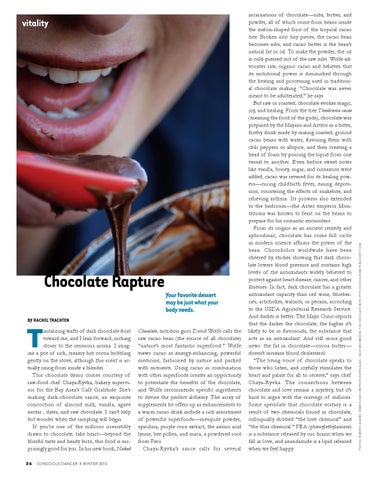
Chocolate Rapture
Your favorite dessert may be just what your body needs.
by Rachel Trachten
T
antalizing wafts of dark chocolate float toward me, and I lean forward, inching closer to the sensuous aroma. I imagine a pot of rich, creamy hot cocoa bubbling gently on the stove, although this scent is actually rising from inside a blender. This chocolate demo comes courtesy of raw-food chef Chaya-Ryvka, bakery supervisor for the Bay Area’s Café Gratitude. She’s making dark-chocolate sauce, an exquisite concoction of almond milk, vanilla, agave nectar , dates, and raw chocolate. I can’t help but wonder when the sampling will begin. If you’re one of the millions irresistibly drawn to chocolate, take heart—beyond the blissful taste and heady buzz, this food is surprisingly good for you. In his new book, Naked 26
conscious dancer | WINTER 2010
Chocolate, nutrition guru David Wolfe calls the raw cacao bean (the source of all chocolate) “nature’s most fantastic superfood.” Wolfe views cacao as energy-enhancing, powerful medicine, fashioned by nature and packed with nutrients. Using cacao in combination with other superfoods creates an opportunity to potentiate the benefits of the chocolate, and Wolfe recommends specific ingredients to devise the perfect alchemy. The array of supplements he offers up as enhancements to a warm cacao drink include a rich assortment of powerful superfoods—mesquite powder, spirulina, purple corn extract, the amino acid lysine, bee pollen, and maca, a powdered root from Peru. Chaya-Ryvka’s sauce calls for several
Photos: Roberto Alvares, www.flickr.com/photos/virtualais / Casey Meshbesher, The Chocolate Note http://chocolatenote.blogspot.com
vitality
incarnations of chocolate—nibs, butter, and powder, all of which come from beans inside the melon-shaped fruit of the tropical cacao tree. Broken into tiny pieces, the cacao bean becomes nibs, and cacao butter is the bean’s natural fat or oil. To make the powder, the oil is cold-pressed out of the raw nibs. Wolfe advocates raw, organic cacao and believes that its nutritional power is diminished through the heating and processing used in traditional chocolate making. “Chocolate was never meant to be adulterated,” he says. But raw or roasted, chocolate evokes magic, joy, and healing. From the tree Theobroma cacao (meaning the food of the gods), chocolate was prepared by the Mayans and Aztecs as a bitter, frothy drink made by mixing roasted, ground cacao beans with water, flavoring them with chili peppers or allspice, and then creating a head of foam by pouring the liquid from one vessel to another. Even before sweet notes like vanilla, honey, sugar, and cinnamon were added, cacao was revered for its healing powers—curing childbirth fever, easing depression, countering the effects of snakebite, and relieving asthma. Its prowess also extended to the bedroom—the Aztec emperor Montezuma was known to feast on the beans to prepare for his romantic encounters. From its origins as an ancient remedy and aphrodisiac, chocolate has come full circle as modern science affirms the power of the bean. Chocoholics worldwide have been cheered by studies showing that dark chocolate lowers blood pressure and contains high levels of the antioxidants widely believed to protect against heart disease, cancer, and other illnesses. In fact, dark chocolate has a greater antioxidant capacity than red wine, blueberries, artichokes, walnuts, or pecans, according to the USDA Agricultural Research Service. And darker is better. The Mayo Clinic reports that the darker the chocolate, the higher it’s likely to be in flavonoids, the substance that acts as an antioxidant. And still more good news: the fat in chocolate—cocoa butter— doesn’t increase blood cholesterol. “The living voice of chocolate speaks to those who listen, and joyfully stimulates the heart and palate for all to receive,” says chef Chaya-Ryvka. The connections between chocolate and love remain a mystery, but it’s hard to argue with the cravings of millions. Some speculate that chocolate ecstasy is a result of two chemicals found in chocolate, colloquially dubbed “the love chemical” and “the bliss chemical.” PEA (phenylethylamine) is a substance released by our brains when we fall in love, and anandamide is a lipid released when we feel happy.