A dverti $ er Component manufaCturing
Serving the Structural Building componentS induStry


Anna Stamm – Advertiser Forum: Celebrating the Industry at BCMC 2024
Joe Kannapell: Wall Panel Technology, Part VIII: Panel Automation From American Suppliers
Wendy Boyd – Spida Machinery: Spida’s Personal Approach Brought to Life at BCMC
Todd Drummond Consulting, LLC: A Case Study for Transforming Profits Through Employment Practices
Glenn Traylor: What Can We Learn From the Timber Products Inspection BCMC Challenge?
Eide Integrated Systems: Step Up to the Table with Eide
Ed Lim – LimTek Solutions: An “A-Ha Moment” at BCMC 2024
MiTek Staff:
Celebrating Success: MiTek Innovations & Connections at BCMC | FS 2024
The Triad | Merrick Machine Company Team Triad Brings AI, and More, to BCMC 2024
Brian Zengel and Kevin Albert –Alpine
The Legacy Continues: Introducing the Next Generation of the Alpine Linear Saw
Carl Villella – Acceptance Leasing: Taking Advantage of Lower Rates
Richard Pedde – JAX, The Wood Retriever:
The Story Behind JAX, The Wood Retriever
Lesko Financial Services Team: US Economy & the Markets
Thomas McAnally – The JobLine: Is Your Designer Pay Keeping Up with Inflation?
Geordie Secord – Design Connections: The Perennial Problems with House Plans
MiTek Staff: Types of Bearings
Hamed Hasani – Simpson Strong-Tie: Introducing the HTTH6.5 Heavy Tension Tie: Engineered to Meet the Most Demanding Conditions
Joe Kannapell – The Last Word Rural Cousins in the Truss Business — Making a Mark


Publisher
Thomas McAnally twm@componentadvertiser.org
Editor Anna L. Stamm 800-289-5627 x 3 anna@componentadvertiser.org
Distributed FREE
Via e-mail subscription Download PDF or Read on line at www.componentadvertiser.com
News of Interest and Advertising inquiries can be submitted to: anna@componentadvertiser.org An Open Forum for many sources.
Deadline 20th of each month. Articles, Trade Names, and Logos are the property of their respective owner or creator unless otherwise noted
Disclaimer: We reserve the right to refuse any advertisement or material that we deem not in the interest of the industry or the Advertiser. Permission to use content is the responsibility of the contributor including permissions to use any likeness of persons.
The Advertiser is provided “As Is” including typographical errors, omissions, and mistakes both intentional and unintentional.
Believe it at your own risk!
Copyright 2008-2024
Component Manufacturing Advertiser
The Advertiser 7586 Becks Grove Road Freetown, Indiana 47235 no reproduction in whole or in part without permission from the component manufacturing advertiser
Archive Copies Available On Line www.componentadvertiser.com

Anna L. Stamm Director of Communications and Marketing Component Manufacturing Advertiser.

he industry was on display at the 2024 Building Component Manufacturers Conference in Milwaukee last month, and by all accounts it was a great show. From what I’ve heard, the venue was welcoming, the attendees enthusiastic, and the exhibitors eager to show what they have to offer.
Many of this month’s articles contain highlights from our advertisers. As those of us unable to attend can see from their photos, there was much to see on site. And, one of the best things about BCMC is that it doesn’t have to “end” when the show floor closes. The show lives on, as we all reflect and take stock of what this annual showcase means.
For a few days each year, BCMC brings people together for face-to-face interactions – we can reconnect with old friends, make new ones, and of course shop for products and services from the exhibitors. The show brings many learning opportunities too, both organized and informal, that broaden our knowledge and understanding of the industry. Importantly, those conversations do not have to stop after everyone hops a flight home. Homework assignment: Why not reach out to the new connections you met at BCMC so that they start evolving from acquaintances to colleagues to friends?
Of course a highlight of BCMC is a show floor packed with the latest and greatest for the structural building components industry. The number of exhibitors can feel daunting, and you’ll probably start feeling tired long before you’ve finished walking the show floor. Importantly though, your journey can continue even after the show closes. Homework assignment: Why not reach out to exhibitors and visit their websites for more information, starting with those in these pages and in our online advertisers directory?
Congratulations to everyone who made 2024 a fabulous show! BCMC is more than a week-long event, it is a reminder that we are all part of a terrific industry. Perhaps like me, your family obligations kept you from being at the show in person. But whether there in person or in spirit, we can all appreciate a successful event that will be remembered with a smile and that will continue to live on in the connections that were made, maintained, and expanded through the show.
P.S. Thank you to Callie Kinser of Eide Machinery Sales for this month’s cover photo!

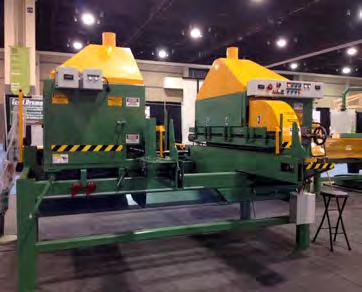
Monet DeSauw FWA 500 Floor Web Cutter
• Push Button Powered Blade Angulations
• Single Push Button Setting for 2 Blades per Side
• Electronic Digital Readouts
• Backup Mechanical Indicators
• Cuts 4 Angle Webs, Cantilever Webs (2 piece webs) & Square Blocks
• Magazine Lumber Feed for 3x2, 4x2 and 6x2 Lumber 12 1/2” to 48 1/2” Length Capacity (7” Minimum on Square Blocks)
• 60 Pieces per Minute
• (4) Internal 16” Blades & (1) External 16” Cut-Off Blade
• Pneumatic Blade Brake on External Blade
• Dust Hoods
• Belt Waste Conveyor (under saw)
• Add $4,300 for 12’ Incline Waste Conveyor (adjacent to saw)
• Add $2,100 for Extra Set of Blades
• 480 Volt / 3 Phase FOBMO Call For Pricing


• Automated (Truss Design Software Download) or SemiAutomated (Touch Screen Entry) Operation
• All Movements are Computer & PLC Controlled
• Comprehensive Setup Screens Display Each Piece with Setup Data
• 22” x 40 Tooth Blade on PAE Cut 1 or 2 Boards up to 20’ (2 Second Plunge Cut)
• Cut Chords, Webs, Rafters, Wedges & Stair Stringers
• Cut Long Scarfs by MultiPlunging
• Servo Positioning on Infeed, Angle & Outfeed Pusher
• Over Travel Protection
• Ink Jet Printer
• Lumber Optimization Program
• Belt Waste Conveyor
• 480 Volt / 3 Phase / 60 Amp
• Includes 5 Day Onsite Installation & Training
• Optional Monet DeSauw Live Deck, Bunk Feeder & Incline Belt Waste Conveyor FOB MO Call For Pricing
• Touch Screen User Interface with Backup Mechanical Controls
• 3 Operating Modes: Auto, SemiAuto & Manual
• All 20 Axes of Movements are Computer & PLC Controlled
• Comprehensive Setup Screens Display Each Piece with Setup Data
• Anti-Collision & Optimizing Programming
• Auto Calibration Productivity & Time Tracking
• Maintenance Diagnostics
• Variable Speed Conveyor (0-50 Flights per Minute)with Powered Hold Downs
• (1) 30” x 80 Tooth Blade (27 3/4” Scarf on PAE)
• (4) 16” x 40 Tooth Blades (13 1/2” Scarf on Centerline)
• Pneumatic Blade Brakes on all 5 Blades
• 16 1/2” to 20’ Length Capacity (11” Minimum on Square End Blocks)
• Vibrating Waste Conveyor Under Saw
• 480 Volt / 3 Phase
• Includes 4 Day Onsite Installation & Training
• Add $2,900 for Extra Set of Blades
• Optional Live Deck, Label Printer, Ink Jet Printer, Catcher Display & Incline Belt Waste Conveyor.

Automatic Truss Jigging System to drastically reduce setup times. Allows for 100% embedment on the table, with top & bottom chord pucks in the same slot. TopSider or standard configurations available for conventional kick-leg, walk-thru, or our new trackless 8' and 10' continuous table systems. Systems for other roller & hydraulic gantries are coming soon. Available in new machine installations or for retro-fitting your existing table. The TopSider is exclusively applicable for “kick or flip leg” style truss presses such as the Tri-Axis & Lumbermater®

• Capable of 100% On-Table Nail Plate Embedment
• Two Pucks Per Slot
• 24", 26", and/or 30" Spacing
• Compatible with all current major design software
• Multiple Simultaneous Layouts


That'sallthetimeittakes todrillstudsforrunningRomexorotherelectricalwireinthewallpanels
Motor: HeavyDuty5HP-3phase-220vor440v(Pleasespecifywhenordering)
MotorcarriagebearingandspindleassemblymountedonBlanchardgroundsteelplate
LinealmotionishardenedandgroundVbearingsandrails
BlockSizes: 2x4through2x12infiniteheightsettingtocenter
AirSupply: 100psi10CFM
Drills: 2wing3/4'”CarbideTippedcanaccommodatesmallerorlarger
Spindles: AlloySteelpolishedandgroundprecisionshafting
Frame: 2"SteelWithPowderCoatFinish
Covers: 10Gauge(1/8"Thick)Aluminumremovable
Dimensions: Height-60inches,Width-33inches,Depth-33inches
Shippingweight: 750lbs.-(Includingcrate)
MADEINAMERICABYAMERICANS


By Joe Kannapell
Plate markers, single tool bridges, and automated saws were just a few of the enhancements that filtered into wall panel shops at the Millennium. Their adoption was quickened by the consolidation of component manufacturers (CMs) and by the increasing pressure on all CMs by busy builders. Builders Supply and Lumber (which would become Builders FirstSource in 2008) was just one of the several multi-plant owners that tested new equipment in one plant and, if it performed successfully, would purchase additional units for their other plants. Captive component producer NVR followed suit. Since these two entities were the largest wall panel suppliers in the country, their purchases quickened the buying decisions of independent CMs and created a fertile environment for other innovations. And, as had occurred with truss equipment, the first panel process to be automated was cutting.
Cutting Enhancements – The very first step in legacy panel production lines has been the cutting of top and bottom wall plates to length. Tommy Wood had skillfully allied his company with the Tiger Stop product, which automatically moves a lumber stop to a specific measurement. Others have used the Hain Measuring System in which a pointer is manually moved along a scale to the inch measurement desired, and then boards are bumped against the appropriate lumber stop corresponding to the number of whole foot desired. Both of these methods yielded accurate cut lengths, and they set the stage for downloading of data. One of the first panel saws to do so was the PF90, invented by George Blaine in 1993 to cut defects from hardwood boards and adapted by Alpine to the component industry. Blaine envisioned that a sawyer would scan the cutting list on a display screen and then examine the board in front of him to determine a cut length that could be accommodated on defect-free portions of that board.
Plate Marking – In the late 1990s, the PF90 was one of the first sawing systems that was outfitted with an ink jet printer to mark top and bottom plates for stud and junction locations. Because these ink marks were often hard to read, Virtek adapted a laser to the task, which made the markings almost permanent. As printing technology improved, a new batch of plate markers was launched including the Hornet, EasyFrame, and DeWall.


Sheathing Bridges – In the 1990s, multitool bridges were the norm, featuring a gang of fastening tools set 6” on center on a moveable bridge. To achieve higher fastener densities, the tools were shifted sideways, and to properly fasten sheathing at panel seams, they also had to be angled. To ensure embedment accuracy, tools had to be nearly perfectly aligned and charged with equivalent air pressure. When fastener spacing was uniform, multi-tool bridges worked well. However, when building officials began to enforce code provisions for diaphragm/braced wall design, the provisions for fastener spacing changed considerably and confounded the task of the bridge operator. To ensure adequate coverage, excessive numbers of fasteners were often applied, slowing production. For example, under the new code, one or two panels could require considerably more fasteners than the remainder of the panels in a given line of panels.
To simplify the fastening task, Panels Plus introduced the single tool bridge in 2010 that uses coil-fed nails. While a few stalwarts insist that a lower cycle time is achieved with the multi-tool bridge, the tide is turning with the introduction of Panels Plus’s Platinum series bridge that can run without an operator. On-board software reads fastener spacings from each individual panel design and directs tools along the shortest and most efficient path through the array of fastener locations. This technology has proven to be effective at Automated Products in Wisconsin.


After decades of languishing demand for panel equipment, the market has been buoyed by these improvements, and by many others from Triad, Vekta, Spida, Wasserman, Wood Tech Systems, Akhurst, and Simpson, which incorporate many productive features. Perhaps these innovations portend a bright future for panelization which has been a long time coming.
Next Month: More Panel Automation From American Suppliers

As a dedicated partner to component manufacturers and the building industry at large, we were grateful for the chance to engage with customers, newcomers, and industry partners at the Building Component Manufacturers Conference (BCMC) | Framer Summit 2024
For those unable to attend the show, we invite you to watch our recap video and explore downloadable content that showcases the best-in-class software, automated production equipment, scalable services, and more.
MII.COM/BCMC
Thank you to the partners who made this event possible!



You want to be an important member of a strong team of other makers who take pride in their work and support each other. As a Territory Sales Representative (TSR) – Component Manufacturing, you will be responsible for growing Truss sales in the Kansas, Missouri, Oklahoma, and Northern Arkansas Territory while creating and maintaining effective relationships with component manufacturing customers. Your goal for these relationships will be to promote the company's software suite and related hardware products. This encompasses job management, design and analysis for prefabricated metal plate connected wood trusses and engineered wood products. You will coordinate with and contribute to the overall branch and company efforts to profitably grow our business. You will also lead and participate in training sessions/workshops in and out of the territory. These workshops require scheduling, promotion, set-up, presentation, and take-down, as well as providing observation and suggestions for improvement. You will work with Regional Sales Managers, Product Management, Marketing, and other TSRs to develop/coordinate sales strategies and programs; and communicate appropriate market trends and field intelligence to provide to Management and Operations to ensure customer satisfaction. If career growth is important to you, we not only know how to help you with that, it’s what we love to do.


Over the years, many truss and component manufacturers have come to rely on code-listed truss connector plates from Simpson Strong-Tie. Known for strength, quality and reliability, they’re part of a total solution that can help your operation run even more efficiently. Choose from a wide selection of framing angles and straps. Specify heavy-duty girder hangers. And secure them all with speed and ease using our Strong-Drive ® structural fasteners. Backed by industry-leading product availability and service, you can take truss components — and your business — to the next level.
Find out what a total solution can do for you. To learn more, visit go.strongtie.com/componentsolutions or call (800 ) 999-5099.

Rapid Development - New and existing manufacturing capabilities
Your Competitive Edge – Get your ideas, plans and products to market while reducing costs and enhancing operational flexibility
Virtual Development – Scale your factory in a virtual environment before physically building it

Operational Flexibility – Designed for your production needs allowing for greater adaptability
Supply Chain Management – Streamline, reduce costs and improve inventory efficiency


Multi-plant Operations - Enhanced production productivity and lower labor costs
Smart Factory - Industrial IoT connectivity
Fully Integrated - Physical and digital worlds
Cutting-Edge Technology - AI, Machine Learning, Robotics and Predictive maintenance
Supply Chain Optimization - Coordinated design through jobsite
Maximize Sustainability - Energy efficiency goals

Our people focused approach means you’re integral to everything we do...

Design Philosophy based on Simplicity Expertise & Innovation
Reliable, High Quality Machinery
Market Leading Software & Automation
Global Manufacturing Capabilities
Local Responsive Service & Support Partner with us

Wendy Boyd Chief Customer Officer Machinery Group Spida Machinery
We’re now back at work in our facility in Jacksonville, Florida after a positive experience at the Building Component Manufacturers Conference (BCMC) in Milwaukee. A big thank you to SBCA and all those involved in organizing such an awesome event. An event of this scale is no easy feat to achieve and requires months of planning – so thanks again to all those involved in making it happen!
At Spida Machinery, our approach is people focused. While machinery is what we manufacture, it’s our relationships with our team and our customers that is integral to everything we do. This personal approach was at the forefront at BCMC, where we were able to connect with old friends and meet new ones.
BCMC is a great event to be a part of, and we wanted to make sure we had expertise onsite across all areas of the business, to support conversations with the visitors to our booth. We had Spida representation from design, production, service, and sales. Each area of the business brought something different to those conversations and engaged in meaningful dialogue with customers.
Cullen Ellis, our Product Specialist, says of the experience, “At Spida, we pride ourselves on offering a complete solution, from the moment you engage with us to long after we install your machine. Visitors to our booth naturally had questions on all areas of this customer journey, so it was great to have the expertise and knowledge on hand to answer those queries. And you should have seen our Account Managers – they were loving all the interactions with existing and potential customers and listening to the manufacturing challenges and offering solutions to alleviate such pain points.”

Let’s just say those who attended BCMC got used to hearing my voice! We ran three live demonstrations each day of our floor truss solutions. This was a great opportunity for us to discuss the floor truss solutions we offer and how they can provide efficiency within your floor truss manufacturing process.
These demos proved popular, with great numbers attending each session and then staying on afterwards to talk to the team and learn more. Popular products on display were our Floor Truss System and our Rolsplicer, both key components of any floor truss solution at Spida.

The Floor Truss System contains a Floor Truss Table and a Floor Preset Roller, which is a combination designed to quickly produce wood floor trusses. The Rolsplicer simply splices two pieces of lumber together, using nail plates, to create chords for floor trusses.
Visitors to our booth also enjoyed the videos of our machinery we had constantly running. The videos were really useful when customers were enquiring about some of our machinery that wasn’t physically on display at BCMC.
We’d like to acknowledge and thank all those who came to our booth and who took the opportunity to understand more about Spida and who we are and what we do. Those that visited came from various parts of the US and Canada, and there were also a few Australians in the mix as well – and their manufacturing factories also varied in size from family-run businesses to larger multi-site companies.
While our conversations were all specific to each visitor, a frequent comment from visitors was how robust our machinery on display was, and they were pleased with its board foot and output capabilities. Another hot topic was after-sales service and ongoing maintenance, so we enjoyed having our Service Manager on board at the show to speak to this subject. He is passionate about the partnership with our customers and how to maintain our machinery so it continues to operate at an optimum level.
One of the highlights at every BCMC we attend, and 2024 was no different, is strengthening our connections.
As a team, there is so much hard work and effort that goes into preparing for, moving our machinery in, attending the show, and then moving the machinery out from BCMC in a timely fashion. Not only does it allow us to gel even better as a team and work collaboratively, but it’s also lots of fun and much camaraderie is shared.
Catching up with our friends in the industry is always a highpoint too when we attend BCMC. It’s a great chance to reconnect and share a few laughs.
And finally, and by no means least, is connecting with our customers and potential customers. BCMC creates such a marvelous environment for this engagement. One of my personal highlights was after I’d finished doing the live demo and a visitor to our booth came up to me and said, “we have watched Spida grow over the last 10 years or so into a machinery supplier with a passion for quality and a desire to partner with us in all aspects – from quote to commissioning the machine. We love watching the growth.” To say I was touched is an understatement – this is what drives us here at Spida.
The opportunity to have these conversations and the ability to help solve fabricators’ manufacturing challenges is never lost on us. We’re grateful to create these personal connections.
So that’s BCMC 2024 done and dusted for another year, and what an amazing experience it was – again! We’re now busy with the opportunities that arose from BCMC and are excited about the potential of helping more fabricators within the structural building components industry achieve their manufacturing goals. We’ll also take what we’ve learned from your feedback and suggestions, to ensure that our product offerings continue to exceed your expectations. Thanks again for an awesome show!



To see meaningful labor savings, quality improvement and production gains, SL Lasers with their easy-to-see green light are nothing short of illuminating. They enhance worker accuracy and productivity, regardless of experience or primary language. They can reduce tedious setup time by up to 70%. No complex training or costly service agreements are required. And SL Lasers integrate seamlessly with any component design software and are quickly installed over existing equipment. We’ve been trailblazers in wood component laser projection since its very beginning, and we’re still delivering more rapid ROI for roof truss, wall and floor panel producers every day. Contact our enlightening team at Wood Tech Systems to see how SL Laser can deliver for you.


productivity of any


lnnovationen fur den Holzbau

HUNDEGGER

Hundegger leads the way in automation innovation for the truss component industry. Our advanced CAMBIUM software offers cutting-edge automation and digitalization solutions, revolutionizing operations, boosting productivity, and driving sustainable growth for manufacturers like you.
We go beyond standard mechanization; we champion true Automation. The Hundegger TD-II isn't just a saw-it's a transformative, comprehensive solution designed to streamline your production process. From retrieving lumber to optimizing, nesting, stacking, destacking, sorting, buffering, and precise delivery, our system ensures peak efficiency and productivity, tailored specifically to truss component manufacturing.
Harness the power of data with Hundegger's advanced CAMBIUM TACTICAL software. It meticulously tracks and optimizes your production, ensuring more automated operations and significant productivity gains.
We provide state-of-the-art automation and control solutions that set the industry standard. Our focus on industrial automation and robotics positions Hundegger as the leader in enhancing performance and efficiency in truss component manufacturing and beyond.
Hundegger products are essential for future-proofing your business. Elevate your productivity and secure your competitive edge with our advanced technologies and automation solutions, meticulously designed to meet the unique demands of component manufacturers today and tomorrow.
Don't get left behind. Invest in the future with true automation from Hundegger and see your business thrive. Learn more about Automation and Mechanization at BCMC 2024


The Squaring Station consists of a squaring table with various features. The squaring table is designed to hold wall panels square while sheathing is tacked in place and rough openings are cut out, ensuring quality panels every time.
This model can be stand-alone or integrated into a full production line. Various sizes and configurations are available.
BENEFITS
• Ergonomic working height
• Holds wall square while tacking sheathing
• Improved squareness vs. traditional methods


• Servo Controlled Single Blade Linear Saw
• 7.5 HP Motor (230 Volt/3 Phase) with 20" Blade
• Touch Screen Computer
• Ink Jet Printer
• Powered Infeed Roller Tables & Outfeed Queue System
• (2) Manual Bunk Feeders (saw can be used with or without bunk feeders)
• Waste Conveyor (includes new belt which needs to be installed)
• 240 Volt / 3 Phase
• Motion Control Upgrade in 2018
• New Computer with Touch Screen in 2019
• T1 Axis Rod and Pillow Bearings replaced in 2023
• (4) T1 Linear Bearings replaced in 2023
• (4) Z1 Linear Bearing replaced in 2023
• (8) Bel t Drive Linear Bearings replaced in 2023
• Several Belt Drive Wheels replaced in 2023
• New Z1 Actuator in 2023
• Spare Parts: 2 White Drive Belts, Spare Power Cable, Rebuilt Z1 Actuator
• Video available upon request
• Automated Component & Linear Saws (2010 & Newer)
• Monet DeSauw or TimberMill Manual Component Saws
• Floor Web Saws
• Spida (Apollo) Saws with Truss Automation
• Bunk Cutters
• Roller Gantry & Hydraulic Press Systems • Finish Rollers
Truss Stackers
Floor Truss Machines
Lumber Splicers
Jack Tables
a Fair Market Value Assessment of your Used Equipment Operational, Needs Work, and Parts Only equipment will be considered!


Robotic Truss Assembly Review Offering
√ All 3 Major Roof Truss Auto Assembly Systems.
√ Unbiased No Vendor Referral Fees.
√ Accurate Productivity, Written Reviews, and Videos.

√ Employee Issues — Reduce Costs & Vacancies.
√ Equipment and Building Design Recommendations.


√ Not All Systems Work As Advertised.


The following is a summary of the seminar I gave at this year’s BCMC show on October 8th, 2024. If your mind is open, I am handing you pure gold to help your company meet the challenges negatively affecting everyone now and in the coming years.


Employee staffing and cost issues will impact net profits. Changes in employment demographics over the years necessitates companies adapting to meet these challenges. This case study at Building Material Supply & Truss Manufacturing explores how they have transformed from negative to positive net profits in three years by altering their employment practices. Their story will provide you with insights into effective strategies for improving your business’s profitability too.
Four main reasons for employee application declines are:
1. Demographics – Not enough births
2. Labor Participation Rate – Record lows
3. Obesity Rates – Negatively affect trade labor
4. Education Level – Too many college-educated workers
Demographics—When more people are leaving the workforce than are entering it, you will have to fight harder to choose from the ones willing to work for you. By 2030, the US will have more than one million people leaving the workforce each year for retirement than are coming into the workforce. It is that simple.
Labor Participation Rate —Regardless of why able-bodied people are not working, the US Bureau of Statistics numbers show that participation has steadily dropped and is currently at 62.7%. It is at an all-time low level and does not appear to be improving.


Obesity Rates—Let’s face the fact that our society has become more sedentary, and our diet has become worse for a healthy lifestyle. Both adults and kids have become heavier, and this trend is leading to a very unhealthy reality for the trades. Whether you are swinging a hammer on a construction site, laying bricks, or adding shingles to a roof, they all require a person to be in some form of physical shape to be able to do the work. Why would you think this would not affect your manufacturing? Who wants to work standing up and physically working all day on a cement floor? The same thing applies to working on a roof gantry table assembling trusses. Who do you think is least likely to be the person as the top chord assembler?
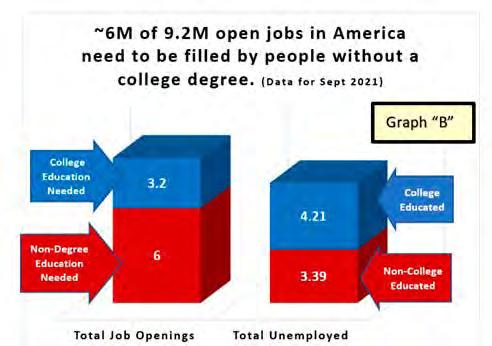
Education Level—The decade’s push to send our kids to college has made the labor force unequal regarding job availability. A well-known fact is that people with a college degree are unwilling to fill a position that does not require a college degree. In 2021, the need for non-degree workers was about 6 million, yet only 3.4 million were not college-educated.


In May 2018, Building Material Supply & Truss Manufacturing (BMS) struggled with profitability with outdated equipment. They had little to no money available for equipment and capital upgrades. They requested my services, and one of the first things I had enquired about and noticed was their struggle with constant employee turnover and vacancies. In their market, their employees continuously went to local competition(s) for small wage increases and returned if BMS gave them another small wage increase. Needless to say, BMS was struggling with errors, scheduling, and efficiency because of a constant influx of new employees. The turnover and unfulfilled positions needed to end immediately. The first thing needed was a change in employee pay and management practices, as advised by TDC, using lean principles and best practices.
BMS needed to embrace another mindset. It is not just about better practices for overall improvement in every area but about changing how they view employee wages and skills. Trying to improve their practices, such as embracing lean practice methodology, is almost pointless if you keep having to train new unskilled workers. The leadership at BMS was eager to turn things around, and what was offered went hand-in-hand with their management style if only given solid evidence. First, their mindset had to change, and actions would follow, and finally, results would bear fruit. And to their delight, the results were almost immediate.
A sad fact within our industry is that too many managers underestimate the skills needed for component manufacturing (CM) operations.
Ask any Production Foreman; “Who is more skilled for far fewer errors, needs far less supervision, and is far more productive? A three-year employee versus a three-month employee?” It is not even close. How many new applicants who apply for work at your CM operation have ever swung a hammer and read a tape measure for a living? The hand/eye coordination for swinging a hammer without injuring oneself takes more skill than most understand. Too many believe they save labor costs by cycling in new workers, which is becoming increasingly ever more difficult each passing year. A CM wastes hundreds of dollars of unrealized sales production daily for each vacancy on the assembly table. This does not include the hundreds, if not thousands, of dollars lost to low productivity and errors caused by unskilled workers.

Many CMs need more personnel in their manufacturing than their current practices. The most common reasoning for this is that they believe that the most cost-efficient method for roof truss assembly is using two personnel at each of the assembly workstations. However, they are mistaken, and each CM can prove what I am stating with this simple exercise for productivity and profits.
This simple spreadsheet recorded the results of two versus three people for assembling five trusses. You can see there is a slight labor savings for the 32foot common over the 44foot piggyback. However, what everyone overlooks when only staffing two personnel on each assembly workstation is the shop time.
Look how many more sales and margin dollars the three assemblers generate compared to the two! It is not even close to any perceived labor savings.


Approximate sales and margins:
Two roof assemblers = $6–$7k/shift truss sales
Three roof truss assemblers = $9–$10k/shift truss sales
Each roof truss assembler = ~$3–3.5k per 8-hour shift
$3 to $3.5k at only 30% margin = $900 to $1,050 margin per shift
Equates to $112 to $131 margin per hour per 8-hour shift
At least a $100+/Hour Margin is Lost When Not Properly Staffed When at Maximum Sales/ Capacity.
Limiting your roof truss assemblers to only two reduces your manufacturing by a minimum of 1/3rd of its capacity.
Here is food for thought for those stuck in the mindset of maximum efficiency based on board foot per work hour. Reducing the number of personnel will improve the ratio of BF to work hours, but it will reduce the total number of roof trusses (sales) produced. It is not even close!
TDC has stated this so many times before, and I will keep repeating it until someone can prove me wrong. The simple fact is that numbers don’t lie, and the numbers say that BF has nothing to do with roof truss manufacturing efficiency or capacity. Only properly developed time standards (MM, RE, or SU) can provide proper methods for scheduling, efficiency ratings, and pricing for roof trusses. TDC has over twenty years of refinement for developing time standards (MM, RE, or SU), and I can attest that BF is not part of any of my time standards for roof and floor truss manufacturing. For more about time standards, please read my article: How One Wood Truss Industry Leader Uses Industrial Engineering Practices of Work Minutes to Excel.

Because of their failed understanding of staffing, many CMs are making big mistakes in equipment installations and purchases. For example, many CMs purchase and install more than two assembly workstations per finish roller. This is a mistake.
Proper Equipment Setup
Proper Best Practices Based on Lean Principles and Industrial Engineering
Proper Labor Practices
Never Operate a Gantry Table with More Than Two Workstations Feeding One Finish Roller
Do Not Listen to Truss Equipment Manufacturer Recommendations of Using a Roller Gantry with More than Two Workstations.

When a CM has more than two assembly stations feeding one finish roller, the crews closer to the finish roller will spend most of their day standing around waiting for the exit roller to clear so they can eject their assembled truss. If your finish roller is not constantly rolling trusses, your operation is not operating at peak efficiency and producing maximum output.
Taking all of this into consideration, BMS implemented the changes recommended by TDC, which
Improved processes based on lean principles and implementation of TDC time standards. Improved employee employment practices.
Increased the number of female employees to find a larger pool of potential employees. Lots of referrals from their current female employees.
Increased employee pay to cease the constant turnover and attract better employees.
They have initiated a practice of being wage leaders, not followers or equals to their competition, and they set the local wages.
BMS Results: The company has extensive data collection and is driven by numerous benchmarks. They know their numbers.
The start date was June of 2018. Once the changes were implemented, it was like turning on a light switch. The positive results were almost immediate.
Across the board, they noticed a substantial improvement in quality, efficiency, and capacity. It was not even close once everything was embedded into the ethos of the company’s culture.
Costs went down, and margins improved without any pricing changes.
Mid-level management was reduced to zero.
Self-driven crews could now operate with minimum oversight.
Employee turnover was no longer a factor.
Better than industry averages for net profits.
Better than industry norms for sales to labor cost.
Even though the wage per hour went up, their actual cost of wages to sales went down.
They started seeing these results immediately and improved from that point onward. This is also considering the lumber and sales spike during COVID that happened a few years later.
After three years, they made substantial capital improvements to remain competitive in their markets while retaining their best practices in employee practices.
For BMS, what was once a struggle, that is, employee costs and profits, has been entirely transformed. Now they have healthy profits, good employee practice, excellent productivity, and the list goes on. All of this has been achieved through better practices that started having immediate results and continued to improve as time passed. Now, they are prepared to meet the employment challenges caused by demographics and other issues that make creating a great team difficult for any company. Maybe your group would benefit from the better practices BMS was willing to embrace.
“Every good gift and every perfect gift is from above and comes down from the Father of lights, with whom there is no variation or shadow of turning.” — JAMES 1:17

The TDC is your best source for learning about proven and practical lean manufacturing best practices combined with industrial engineering principles to keep your company competitive. 20+ years for time standards (MM, RE, or SU) development and refinement for wood trusses. No one is better at providing your team with proven results for best-in-class practices. Please do not take my word about TDC’s services, though. Read the public testimonials many current and past clients with decades of expertise and experience have been willing to give: https://todd-drummond.com/testimonials/
Website: www.todd-drummond.com • Phone (USA): 603-748-1051
E-mail: todd@todd-drummond.com • Copyrights © 2024

$189,000 FOB OR

• ESC (Enhanced Servo Controlled) 5 Blade Automated Component Saw
• Touch Screen User Interface with Backup Mechanical Controls
• 3 Operating Modes: Auto (via Download), SemiAuto (Touch Screen Entry) & Manual (Push Button)
• Variable Speed Conveyor (0-60 Boards per Minute) with Powered Hold Downs

• (1) 30" x 80 Tooth Blade (27 3/4" Scarf on PAE)
• (4) 16" x 40 Tooth Blades (13 1/2" Scarf on Centerline)
• Pneumatic Blade Brakes on all 5 Blades
• 16 1/2" to 20' Length Capacity (11" Minimum on Square End Blocks)
• Waste Conveyor (under saw)
• Incline Waste Conveyor (adjacent to saw)
• 480 Volt / 3 Phase


2003 Alpine AutoMill RS Component Saw, Model 344
Computer controlled saw sets up in 2 to 19 seconds and downloads from a network or by using a touch screen for ease of operation. Five-head automated component saw works in both automated (downloading files) and semi-automated control via touchscreen input. It has [23] axes of automated movement, enhanced diagnostics, auto management reporting. The RS cuts from 13″ to 20′ long material in size ranging from 2×3″ through 2×12″, includes [3] 18″, [1] 22″ and [1] 32″ blades with air brakes, shaker pan waste conveyor to incline scrap conveyor, one set of spare blades and any available spare parts. (Infeed conveyor needs electrical service). 480v/60Hz/3Ph power.
$17,997 FOB AZ Wood Tech Systems
765-751-9990
www.woodtechsystems.com

Striebig Optisaw, model Optisaw Automatic (Type # 5164) vertical panel saw station, with angled frame supporting material being cut: Max. cutting height (vertical) 5′-4″, max. cutting length (horizontal) 15′-1″, max. cutting thickness 2.36″. Both vertical and horizontal analog measuring scales on frame. Cutting head manually rotates from vertically to horizontally for rip vs. cross-cutting, adjustable spacers for repetitive cuts, 5.25 HP saw motor, 9.84″ diameter blade, guide bearings for travel , push button controls, e-stop button and dust extraction hose (no vacuum included). Overall footprint of station 19′-1″ wide x 4′7″ deep x 7′-10″ height. Sold for $36,000 new. 208 volt, 3 phase electrical required.
$14,490 FOB AZ Wood Tech Systems 765-751-9990
www.woodtechsystems.com

2000 Alpine AutoMill Component Saw 2000 Alpine AutoMill model 343H, (5) blade component saw, cuts lumber from 2×3 through 2×12, from 18″ to 20′, 4-angle floor webs from 18″. Includes powered length and angulation, digital readouts, (1) 32″, (3) 18″ & (1) 20″ blade, shaker under-saw scrap conveyor, incline, PC with Windows 98 o/s, and outfeed conveyor. Decommissioned in 2018. Stored indoors. 480 volt ,3 phase electrical required.
$10,497 FOB ON Wood Tech Systems 765-751-9990
www.woodtechsystems.com


New Rogworx Automated Sheathing Station by Safety Speed Manufacturing- Reduce labor and operator fatigue by taking advantage of the Rogworx automated vertical panel saw. This one-person station cuts wood sheathing sheets up to 50-inches x 10-feet, and up to 2-inch thickness, using a fast 1-button cutting setup with CNC accuracy to 1/32 of an inch (0.03125″). The photos of raw materials illustrate the drastic reduction of scrap material thanks to implementing the Rogworx saw station.

Visual user interface makes choosing the job and sheet cutting order easy to determine. Files are downloadable allowing for minimum waste. Automated sequencing of sheets provides optimum usage of each sheet. The cutting chamber changes from ri to cross-cutting automatically. All this in a very small machine footprint, so it can fit easily into your existing building.
Visual user interface with standard ‘Auto Fill’ feature makes choosing the job and sheet cutting order easy to determine. System offers full optimization and sequence panel parts looking ahead through the job based on your specification. The cutting chamber changes from rip to cross-cutting automatically. All this in a 100 square foot footprint, so it can fit within existing facilities.
Includes advanced dust collection. Integrated Printing for labeling parts is available as an option. 208-230V volts, 3-Phase, 25 Amp electrical required, 5 CFM at 100 PSI air required.


“Over the years, Alpine has proved to be a strong business partner by providing us a tailored plant management solution and focusing on unique advancements in engineering software to improve the efficiencies of both production and design.”
— Aaron Nichols, ABC Truss


Alpine has it all—the right equipment, user-friendly software and dependable hardware to improve your teams efficiency. Alpine delivers the complete package for success—including comprehensive support and service that sets us apart within our industry.
Ask


•
• • Automated Setup via Download or Semi-Automated Setup via Touch Screen Input
• 23 Axes
• Sets up in 2 to 15 Seconds
• Five Blades cut 2x3 thru 2x12 up to 20'
• Waste Conveyor (under saw)
• Excludes Incline (adjacent to saw) and Live Deck (in


enclosed counterweight system, adjustable vertical and horizontal rules. Quick changes


Safety Speed Manufacturing model 7000, vertical panel saw, 3 HP induction motor, 64 inch crosscut, 2 inch maximum thickness, accuracy within 1/64th of an inch, 10 foot welded steel frame with integrated stand and linear V-guides, enclosed counterweight system, adjustable vertical and horizontal rules. Quick changes from vertical to horizontal cutting. Includes machined aluminum material rollers, hold down bar, wheels, quick stop gauges and material hold downs. Dust collection ready. Options available include lower frame extensions, digital readouts, laser guide, stop bar, vacuum and midway fence. 208-230/460 volt, 3 phase electrical (208-230 single phase, 2 HP power optional +$100.00). $10,199 Base, FOB MN.

TStop Rail: 2 x 4 x 1/4 Aluminum Extrusion


he Hain Systems Framer (HSF) will help you build square and accurate wall panels for residential or commercial construction applications. It will help you cut building costs by saving time and improving your quality. It’s a reliable, efficient and proven system that features a ruggedly simple design. The HSF is based on a proven design with over 20 years of actual production use and maintenance experience. It comes fully assembled and is designed for portable job site framing or in-plant permanent installation. The table has many optional attachments and will support Mylar Tape wall layout or any other type of layout. The optional gun rails can also be retro-fit to any table.
Stops: Jig Bored Steel
Stop Blocks: Machine Billet Aluminum
Details:
Internal Components: Hardened, Ground and Polished Steel and Billet Aluminum
Dimensions:
Table Construction: Thick-wall Structural Steel Tubing, Jig Welded for Accuracy
Length: 5 feet (60”) to 60 feet (720”)
Height: 12 inches
Air Supply: 90 psi (10 CFM Air Flow Recommended)
Depth: 12 inches
Electrical Supply: 120 VAC
Powder Coat: Industrial Gray
Dimensions: Height: 43”
Length: 16’ or 20’
Width: Adjustable 8’ to 10’ or 8’ to 12’
Shipping Weight: 3000 lbs
If you are looking for the fastest, most consistent way to measure and cut your product, then the Hain Measuring System (MEA) is your answer. The MEA changes from one length t any length instantly, up to 60’, without changing the operator’s position on the line. It is also highly accurate (+/- .010) and quickly moves from one length to the next in seconds. The MEA is designed for quick and easy setup and is simple to use. Even a first time user will be productive with little or no training required. It can adapt to any saw and can be mounted to any surface so that you can integrate the MEA with your existing setup. The MEA is versatile allowing “left” or “right” handed operation and measurement in “feet and inches” or “inches” depending on your preference. The MEA is also available in a “Skid Mounted” version.


The truss industry relies on 3rd party quality assurance services to provide random visits to review the plants Quality Assurance program along with their operations. If your plant needs to comply with the IRC, IBC and to those who depend on solid, experienced QA expertise, we ask you to consider selecting Timber Products Inspection, Inc. (TP) as your choice for 3rd party inspections.
Proudly serving the forest products industry for over 50 years, TP brings the expertise you need to ensure your business is successful. As a responsible partner, TP delivers to clients, employees, and the industries we serve the confidence to drive value through the effective use of our diverse professional team.
TP would like to welcome the following authorized agents to our inspection team, each of whom have many years of experience in the truss industry! • Al Coffman


Jean Hart
Curt Holler
Chuck Ray
Glenn Traylor
Elliot Wilson
If you have questions about how you can make this selection, please contact your authorized agent above or Glenn Traylor at 919-280-5905 or trusguy@gmail.com. https://www.tpinspection.com/ https://www.tpinspection.com/auditing-services/truss


By Glenn Traylor
“Since its inception in 1980, the mission of BCMC is to educate and inform, as well as encourage the growth of the component manufacturing industry. Over the course of its history, the show has welcomed exhibitors from all over the world to showcase the cutting-edge technologies, state-of-the-art processes, and innovative products and services that support a multi-billion dollar industry and drive evolution in the way buildings are framed.” – Structural Building Components Association (SBCA)
On October 9th and 10th, Timber Products Inspection supported the industry by providing the Annual BCMC Challenge. Several years ago, this contest was created to evaluate the potential need for education and to invite truss industry leadership to test their skill and acumen of the ANSI/TPI 1 standard by utilizing a truss that illustrates many of the requirements and tolerances established in the industry standard. Each participant was tasked with inspecting the sample truss and listing the problems they found. Participants scored one point for each noncompliant issue found and minus two points for items identified as non-compliant but that were compliant utilizing the tolerances established by the truss standard.
What we found this with this year’s challenge forms the results of our non-scientific poll:
1. There are a few industry leaders, like our challenge winner Tasha Brooking, who completely understand Quality Assurance and clearly possess the knowledge necessary to fabricate a compliant truss.
2. Many folks are aware of the ANSI/TPI 1 standard, but they do not understand the benefits of following that standard.
3. A small handful of attendees were not aware that “QA” was something they should be doing.

4. Many plants do not utilize a third-party inspection service, but they are considering taking the steps necessary to establish a program.
5. Some plants do not have a written quality assurance program within their manufacturing facility, but they still claim they make a great product.
6. Some plants rely totally on electronically recording data and inspection information, but they do not close the loop by providing training and education to their employees. The only interaction with an outside observer is with the single in-house inspector.
7. Some plants did not realize the benefits of having a trained QA expert regularly visiting their plant to focus on QA.
8. A small handful of plants stated that their standards are much higher than the industry standards. Kudos to them. However, they have not incorporated their plant’s tolerances to their tailored program and simply utilize the ANSI/TPI 1 Chapter 3 requirements.
9. A small handful did not know they can add requirements that can be included into their quarterly or monthly third-party audit and their in-house inspections. For example:
a. Measuring and recording heel to peak measurements.
b. Measuring and recording squareness of attic frame rooms.
c. Measuring and recording overhang discrepancies.
d. Measuring and recording girder nailing when done in the plant.
e. Evaluating design considerations as it relates to manufacturing.
f. Measuring and recording truss to truss variations.
g. Review of material receiving procedures, segregation, marking, and process methods for all raw materials.
10. Many are not familiar with grade stamps, how to read them and what they mean.
11. Some are not aware that ultimately their plant needs to qualify their lumber regardless of grade stamps.
12. A small handful are not aware that No. 3 lumber is severely limited in the use of components in regard to chords.
13. A smaller group are not aware that their lumber, all of their lumber, needs to be graded.
14. A few were surprised that a member-to-member gap can be remedied by using an approved metal shim and attachment per the truss standard.
15. Almost all agreed that taking the challenge improved their knowledge.
Special thanks to Baird Quisenberry and Carl Schoening of Eagle Metal Products and the “We will get it right Eventually” truss company for fabricating of our challenge truss!
The Timber Products Inspection BCMC 2024 Challenge winner is Tasha Brooking, President of Quadd Building Systems located in Remington, VA!
Ms. Brooking earned the highest score by identifying the most ANSI/TPI 1 Chapter 3 non-compliance issues while not mis-identifying acceptable tolerances. She really understands the key to building a great truss and a successful business!

Joining us for the presentation of the Yeti cooler to the winner are Glenn Traylor, Tasha Brooking, Greg Shifflett, Tyler Rhodes, and Joe Kannapell.
Bringing outside consultants into your plant or going outside of your plant and attending BCMC can help a truss fabricator improve their business and reduce their risk by helping you educate your plant employees. A good consultant can save you money. An inexpensive investment is a quarterly visit by a qualified auditor. It pays for itself year after year, and you get a highly recognized certification that you are a qualified supplier, which will further help you differentiate your plant in the marketplace. Proper QA will make you a winner, too!
An ANSI/TPI 1 3rd Party Quality Assurance Authorized Agent covering the Southeastern United States, Glenn Traylor is an independent consultant with almost four decades of experience in the structural building components industry. Glenn serves as a trainer-evaluator-auditor covering sales, design, PM, QA, customer service, and production elements of the truss industry. He also provides project management specifically pertaining to structural building components, including on-site inspections and ANSI/TPI 1 compliance assessments. Glenn provides new plant and retrofit designs, equipment evaluations, ROI, capacity analysis, and CPM analysis.
Glenn Traylor
Structural Building Components Industry Consultant http://www.linkedin.com/in/glenntraylor


Enhance your truss production with our advanced retrofit options, each equipped with the industry leading WizardPDS® automation. Whether you need full automation on your entire line or just a 40’ section, our line of Retrofits & Upgrades achieve the same efficiency as the newest press lines in the industry! These automated options offer flexibility and breathes new life into any new, used, or discontinued line.
automated.


Strong businesses thrive on solid relationships. Working with Simpson Strong-Tie, you have direct access to dedicated professionals who are focused on customer success.
As part of our services, experienced designers and licensed engineers take the time to listen and understand your unique project challenges. We also offer accredited training on truss connectors and comprehensive training on our design and management software. Plus, our innovative products are widely available and backed by expert service and support. It all adds up to solutions that are every bit as reliable as the people behind them.
Team up with a proven industry partner. To learn more, visit go.strongtie.com/componentsolutions or call (800 ) 999-5099.
Inspired by ten years of intensive field experience and the ample and detailed feedback of numerous customers, we’re pleased to introduce the most advanced, most enhanced and high-performance Terminailer yet-Terminailer V.8. Drawing on invaluable time in the trenches closely evaluating Terminailer’s performance under varying conditions, our engineers have incorporated critical learning and insight to enhance simplicity, performance and operator control. Just part of what V.8 offers includes:
•Vastly enhanced operator control for even greater productivity
•A redesigned nail-feed supplying EverWin PN90-PAL industrial nail guns
•Simplified pneumatics featuring direct air-supply to all six nail guns
•Even more sub-component profiles for wall design flexibility
•Rugged durability with pharmaceutical grade assembly


Developed by people who know well the mechanics, safety considerations and business aspects of wall-panel production, Terminailer V.8 combines more enhancements & operator-friendly features than ever to take your productivity to the next level and beyond. Contact us to learn even more and to put the V.8 performance in motion at your facility.


By Eide Integrated Systems
Thank you to everyone who visited with us at BCMC this year – what a great show! We are so pleased that we could be a part of this industry celebration and display some of the great products we have to offer.
First up, you’ll need lumber to send to the build tables, so for that we brought the ProCut™ UC-4 Linear Saw, and we included our ProDeck™ Lumber Infeed & Material Handling systems.
Cutting up to 4 boards high, the ProCut™ UC Linear Saw Series is configurable to any assembly line and provides a safe, accurate way to cut your lumber, while keeping your materials moving on your line.


Of course, Eide is known for custom Material Handling Delivery Systems – the most efficient delivery of lumber from the ProCut™ to the truss assembly stations.
And let’s talk about those tables! This year, we switched up the “Double Jack Specialty Table Retrofit” with a new “Double Jack Specialty Wood Table .” Attendees could see the ease of producing jack truss designs in a compact space. Because this retrofit is able to do multiple set-ups on both sides of the table, the
“Double Jack” configuration allows double the output of your automated table, within the same footprint. We give the customer a blueprint to build their own wood table that fit the WizardPDS® ChannelS® we install. It is a more cost-effective way to include automation in truss assembly, especially for businesses starting in the industry who cannot purchase new steel tables or customers who do not have steel tables to spare for a retrofit but want to automate truss assembly for faster production.
No show would be complete without the WizardPDS® ChannelS®. With WizardPDS® automation, you can add as much or as little as you need. It can be used for the entire table line or a 40’ section to capture the bulk of your schedule. New table installations and/or retrofit table systems for existing lines are available.
Plus, our Universal™ Table is designed for adding to and extending WizardPDS® Automation to your existing table line, even discontinued models.
When you want to learn about what we can bring to your plant to improve your material handling, cutting, jigging, and more, please reach out to us. We welcome the opportunity to share what makes us experts at the table.


AutoFill button for Maximum Material Utilization
Labels parts as they cut. (printer optional)
Easy manual cuts and re-cuts
Import files from most major design suites
Industry-first sheathing saw that cuts angles.
Cuts OSB, CDX, Zip, Dense Glass and more.
Minimal airborne dust, even while cutting gypsum.


2021 Powermatic Model 511 Panel Saw 2021 Powermatic model 511 panel saw. Vertical panel saw features a powerful 3HP worm-drive motor which rotates in the carriage, adding the versatility to perform rip cuts. The solid aluminum rollers assure smooth feeding of stock and perfect 90° cuts every time. This saw will handle panels up to 5-ft tall in unlimited length. Includes horizontal and vertical scales and casters for mobility, the counterweight system keeps the saw carriage in the desired position when loading or unloading panels. Features dual 4″ dust collection ports with nylon brush surrounding the blade for superior dust collection from the front and the rear side of the panel. 115v, 1-phase electrical required.
$6,799 FOB AZ
Wood Tech Systems
765-751-9990
www.woodtechsystems.com

2023 Northfield Model 410 Upcut Saw NEW 2023 Northfield model 410 upcut saw available for immediate shipment. 90/90 degree cuts to 4″ x 10″ capacity (fence forward position) to 2″ x 14″ (fence rearward position). Saw is configured for material from left to right, with 3″ x 6″ air operated cylinder, filter, regulator, lubricator, 10 HP motor, enclosed steel base with cast iron table, magnetic starter and adjustable operating speed from 20 to 60 CPM. Includes optional two-palm controls, additional 4″ dust outlet, NEMA 12 electrics with fused disconnect and two 18″ diameter 60 tooth blades with 1″ diameter bore. 460 volt, 3 phase electrical required.
$18,630 FOB MN
Wood Tech Systems
765-751-9990
www.woodtechsystems.com

Whirlwind Model 1000 Cut-Off Saw
• 5 HP Motor with 14" Blade
• 2 3/16" x 8 1/4" Capacity
• Pneumatic Blade Guard/Lumber Clamp
• Foot Pedal Control
• Dust Collection Outlet
• 460 Volt / 3 Phase
• 1 Left Hand & 1 Right Hand Model
Available
$3,500 NOW $2,800 Each FOB NC Wasserman & Associates 800-382-0329
www.wasserman-associates.com

1982 SpeedCut MetraCut
Centerline Saw
1982 Speed Cut Metra Cut, model SSA-11, centerline saw, 16″ blade, maximum cutting depth of 6″, maximum cut length of 31″, 164 deg. cutting range and 5 HP motor. Includes push-button on/off controls and analog angle measure on turntable with air stop, 20′ long infeed conveyor with OEM SpeedMeasure, 20′ long outfeed conveyor and one (1) spare blade. 208 volt, 3 phase electrical required (can be converted to 240v/440v).
$6,990 FOB WY Wood Tech Systems 765-751-9990 www.woodtechsystems.com

Blade Servo Controlled Component Saw, Arm #5 is currently not active (#5 not used for 8 years), Cuts 2x3 through 2x14 from 11" to 20'-0", Computer, Enclosure & Stand, Remote Monitor, Ink Jet Printer (not installed, out of service for 5 years), Waste Conveyor (under saw), Incline Waste Conveyor (adjacent to saw), Spare Parts & Extra Blades, Video available upon request, Available November 11, 2024 $42,500 NOW $40,000 FOB WI


New, DeRobo linear saw by Monet organizes "fill" boards to increase optimization of each board, can produce unlimited scarf cuts, cuts 1 or 2 boards at a time and cuts webs, chords, wedges, rafters and open-stair stringers. Works with all major connector plate manufacturer's software. Features include 22 inch blade, left-to-right feed direction standard, lumber push and pull grippers for more accuracy, ink marking on the 1 1/2" face of the incoming boards and small piece capture and delivery to the front of the saw for easy access. Infeed deck and bunk feed are shown as options only. 480 volt, 3phase.
$239,000, FOB MO.


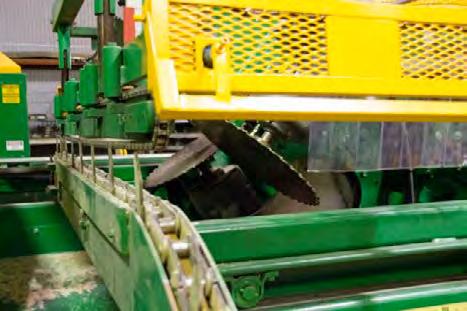
$330,000 Location: MO

New, Monet DeSawyer 2000, computerized, five-bladed component saw, sets up in 15 to 17 seconds, can run in manual mode, downloads projects from a network or manually using display screen controls. Features all powered movements, cuts from 15" 90/90 cuts to 20 foot length, 2 x 3" to 2 x 12" lumber depths and internal brakes are standard. Options include enhanced servo controls featuring autocalibration, catcher's display and either shaker or belt scrap conveyor and incline. 440 volt, 3 phase electrical.

Edmond Lim, P.Eng. LimTek Solutions Inc.
As teased in last month’s article, “F1 Pit Stop Each Truss,” the Enventek Collated Plate Dispenser was unveiled at BCMC 2024 Milwaukee. To many truss fabricators, it was an “A-Ha moment” to see a machine in action that solved a truss fabrication bottleneck that many did not even realize they had!
We’ve been assembling trusses for decades and many SKUs of truss plates are being gathered and distributed to truss build tables without any real consequence. From over 100 different sizes and grades of truss plates available, most truss plants “80/20” their inventory to about 32 to 48 truss plate SKUs. The time and effort of getting truss plates to the


truss build tables has just been a cost of doing business. In many instances, the truss builders would fetch their own truss plates, until of course table automation accentuated how truss plates could be a bottleneck on truss build times. As such, the majority of truss plants now attempt to keep up with their tables by having dedicated plate pickers pre-pick the plates for the tables so that the truss builders can concentrate on building trusses. Even so, most of the pre-picking has been “bulk plate picking,” which leaves a lot of room for improvement as the truss builders still have to huddle and pick through the pre-picked bulk plates. Too bad the plate picker has not been able to organize the truss plates in order of distribution around the truss…
But now, A-Ha! Enventek has a machine that will semi-automatically fill plastic bins with collated truss plates in horizontal layers of toothto-tooth pairs of truss plates. The plate dispenser operator simply has to remove filled bins, and re-fill plate hoppers with tooth-to-tooth pairs of truss plates as alerted to by the overhead screens. The machine counts the plates and distributes the collated plates in horizontal layers into the bins, and prints out bin labels. An additional label is also printed of the “non-stocked” truss plates (if required) that need to be manually fetched to complete the order. Additional SKUs can be added to the machine in multiples of 16 SKUs.
Best of all, it has already been tested in the real world by a handful of Enventek PlantOne users who have been using the Enventek Collated Plate Picking feature of PlantOne to enable their dedicated plate pickers to pick collated truss plates. Their successes have been featured in my previous articles, including “Enhancing Truss Build Efficiency” and “How to Squeeze Out More Truss Production.”


Larry Dalson, Dave Dalson, and Michael Bell of Enventek
The Enventek Collated Plate Dispenser can be a game-changer for any component plant. It’s certain to ramp up your plant efficiency and optimize your truss production, especially when combined with our other automation solutions!
When you’re ready to Feed Your Beast and see our efficient and effective systems for yourself, let us know. Inside and out, LimTek Process Organization Technology will help you squeeze out more truss production and deliver quality trusses with shorter lead times to better service your customers by organizing your truss fabrication processes to maximize your investment in automation. https://limteksolutions.com/#solutions

Stacking wall panels at the end of your production line can be a real labor-intensive and safety-challenging task. But it doesn’t have to be now, thanks to ProStack . This innovative wall panel stacker literally stacks from the bottom up, reducing awkward overhead lifting & placement, and the risk of head injury. Plus, ProStack frees up at least one worker to return more productively to your core task—building wall panels. Enhanced worker safety and productivity is what ProStack is all about.

By: DAK Automation

Setup and installation is easy too, without the need for complex training or disruption to workflow. So, free up your team to do what they do best, and you need to do most, and let ProStack stack your wall panels instead. Contact us to learn more today. For a ProStack demonstration video, scan the QR code below.


12 inch Maximum Plate Width
20 inch Maximum Plate Length
20ga, 18ga, 16ga and High Strength Plates

Expandable and Customizable
16 Truss Plate SKUs per Module
8 SKUs per Side
Customizable in Multiples of 16 SKUs Includes Touchscreen Computer (left end), Overhead Status
Displays (each side), Label Printer and Hundreds of Bins
Customizable Bin Exits
Plates Dispensed to Bins in Layers Based on Number of Joints per Truss
Plate Dealing Schemes: Left-Right, RightLeft, Top Joints then Bottom, Bottom Joints then Top, By Truss Table Quadrant, etc.
Build More Trusses On Your Million Dollar Tables
Distribute Truss Plates Around Every Truss Build
Table Just Like Dealing Cards
Speed Up Truss Build Crews, and Ensure Quality
Standardize Truss Plate Organization and Distribution With the Enventek Plate Dispenser
That’s How You Feed The Beast!


Introducing the Simpson Strong-Tie ® EasyFrame automated marking system. A combination saw and printer, EasyFrame cuts wall panel or frame pack members that are pre-marked for fast, accurate assembly. Designed for efficiency, EasyFrame prints framing details directly onto lumber, including locations of studs, connectors, MEP and more. The automated saw comes with essential safety features, while powerful software ensures precision cuts. Plus, batching capabilities optimize material use — minimizing waste. EasyFrame is supported by our installation and on-boarding services, training and technical expertise. It’s a smart way to increase productivity, maintain high quality and build your business. Add EasyFrame to your production line. To learn more, visit easyframesaw.com or call (800) 999-5099.

2006 Alpine Speed Rafter Cutter
• Simplified compound cutting for hip, valley and jack rafters (double & single compound cuts)
• Two Worm-Drive Circular Saws (110 Volt / 30 Amps)
• Saw Turntable (for angle cutting)
• Saw Carriage (for up to 45 degree bevel cutting)
• Infeed & Outfeed Roller Conveyor with Stands
$4,900 NOW $4,250 FOB CA Wasserman & Associates 800-382-0329 www.wasserman-associates.com

Used - Metra Cut Radial Arm Saw (2x) Parts Machine
$500 – Make Offer
Eide Machinery Sales, Inc. 612-521-9193 www.eidemachinery.com

Used - 2005 Model 305 Infeed Conveyor Designed for use with all component saws. To include: Soft Start ~ Soft Stop Inverter System. Programmable load sensing; Overload / Jamb sensing shut down feature. Gear motor providing conveyor speed of 36' per minute. Forward and reversing controls for location at both ends of conveyor unit. Material capacity range - 4' through 24' lumber. Chain deck pedestals 20' long with cross bracing. Staging area at the saw independent of the live deck system. 30,000lb. Deck capacity. Call for pricing
Eide Machinery Sales, Inc. 612-521-9193
www.eidemachinery.com

New Monet FWA 500 Floor Web Saw
New, Monet five-head, floor truss web saw, cuts 4-angle, 4×2 floor truss webs from 13 inches and 90-90 blocks from 7 inches, to 4 foot long maximum length. Features 10-board magazine feed, powered, fixed-quadrant angulation, manual carriage standard, scrap conveyor and cut-off blade. Options available for longer carriage length, incline scrap conveyor, and choice of shaker or belt scrap conveyor. 440 volt, 3 phase, 60 Amp electrical. 50 PSI air at 5 CFM required.
$75,000 FOB MO Wood Tech Systems 765-751-9990
www.woodtechsystems.com

Electric Portable Crosscut Saw
Transcut II Portable Crosscut Saw, Cut through an entire bunk of lumber in about 1 minute, 3/8" Kerf Stellite Armored Guide Bar, 63" Effective Cutting Length (40" x 44" Package Size), 3/8" Stihl Chipper Chain or Locally Available Equivalent Chain, 10 HP Siemens Electric Motor with Integrated Starter, Electrically Driven Automatic Chain Oiler with Sight Glass, Trigger Switch for Saw Motor Shutoff on Return, Dual Purpose Kickback Safety and Stabilization Bar, Squaring Frame, Automatic Tensioning and Chain Return Assembly, Pneumatic Tirers
$5,950 FOB AZ
Wasserman & Associates 800-382-0329
www.wasserman-associates.com


By MiTek Staff
We at MiTek Inc. extend a heartfelt thank you to SBCA and all attendees for making BCMC | Framer Summit 2024 a fantastic event. From a dynamic show floor to ample opportunities to network, learn, and connect with our industry, BCMC plays a crucial role in advancing our industry, and we are grateful to be a part of this community.
Thank you to our customers for your invaluable insights and participation throughout the week. Your feedback and partnership are crucial to the overall BCMC experience, helping us to continually improve and innovate. We deeply appreciate your engagement and look forward to building on these relationships.

Hornet II Saw demonstrated precision cutting and labeling with software-driven optimizations that reduce waste and enhance productivity.

DirectDrive™ System highlighted customizable coordinated operation of multiple MiTek machines for unparalleled efficiency and speed.
At our booth, we showcased the best-in-class software, automated solutions, and scalable services. Our automation demonstrations featured the MatchPoint® DirectDrive™ System, Hornet II™ Saw, RailRider® Pro, Cyber A/T® Saw, and RoofTracker™ III.
Our in-booth software demonstrations were a major highlight, offering attendees hands-on experiences with our industry-edge platforms. These sessions provided valuable insights into the functionalities and optimizations of MiTek® Production and MiTek® Structure with Integrated Truss Design, showcasing how these tools can transform operations and drive efficiency.

RailRider® Pro showcased its efficiency in floor truss assembly, ensuring a full plate embedment each pass.
Continued next page
Software training sessions and insights into custom plant layouts drew significant interest, highlighting how we can help maximize efficiency and output.
MiTek Services was also a key focus, demonstrating how our dedicated team of university-educated professionals seamlessly integrates with customers’ staff to handle technical work tailored to their changing needs. Our scalable solutions are designed to increase capacity, reduce costs, and meet precise project deadlines, propelling businesses forward.

We were honored to join our colleagues and friends at the SBCA Foundation Dinner, where we celebrated the foundation’s invaluable contributions to our industry as well as the presentation of industry awards. MiTek is proud to support the SBCA Foundation, which fosters innovation, education, and growth within the building components sector. The foundation’s initiatives, including scholarship programs, industry training, housing-related charities, and sustainability efforts, drive progress and ensure a bright future for all industry stakeholders.
To continue the conversations that started on the show floor, contact your MiTek representative or sign up to receive more information at mii.com/bcmc. We look forward to continuing our collaboration and driving the future of the offsite construction together.

The industry’s most powerful integrated component design, engineering, and management software for steel and wood-framed structures.
iCommand
Manage projects, customers, materials, pricing & inventory
iModel
Design truss layout & profiles
iDesign
Optimize material usage & engineer trusses
iPanel
Design wall layouts, panelize, bundle, break & stack
eShop
Maximize crew productivity & improve manufacturing efficiency

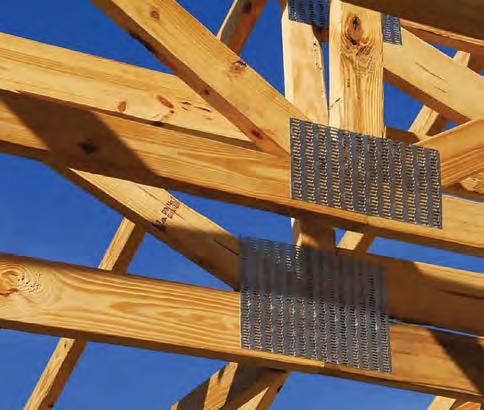


The IntelliVIEW Suite is a fully integrated software solution for the layout and design of a building’s rough framing elements—including roof and floor trusses, wall panels, solid sawn, EWP, sheathing and various ancillaries.
The IntelliVIEW Suite provides the industry’s most complete analysis of the design, cost information and bill of materials—promoting increased profits by reducing plate and lumber use.
Ask those who know. They’ll tell you about the people at Alpine who make a difference.


Used Hain Quick Rafter Cutter
• Reconditioned in December 2020
• Board Sizes: 2x4 and 2x6
• Motors: Two 1 HP / 220 Volt or 440 Volt / 3 Phase
• Saw Blades: 7 1/4" Carbide Tipped (set at 45 degrees)
• Angle Adjustment: Manual Rotation with Air Brake
• Air Supply: 90 PSI
• Carriage: Steel Rails with Steel Dual V Rollers
• Pedestal: 3/16" Formed Steel
• Saw Housing: 1/2" Billet Aluminum
• Covers: 10 Gauge (1/8" thick) Steel
• Fully Enclosed for Safety $12,500 NOW $10,900 FOB AZ Wasserman & Associates 800-382-0329 www.wasserman-associates.com

1993 MiTek Easy Set 4-Blade Component Saw
1993 MiTek Easy Set 4-blade component saw, with swing-arm central control system, digital/analog display, power length carriage, waste conveyor. Cuts 2″ x 4″ to 2″ x 12″ lumber depths, up to 15′-0″ lengths. Minimum length 4-angle floor web 18 inches. 220v, 3ph power.
$8,990 FOB OH Wood Tech Systems
765-751-9990
www.woodtechsystems.com

In answer to the demands of high-volume customers comes the Monet DeSauw FWA 500 CA (Automated Controls) floor web saw. The 500 CA is perfect for component manufacturers who routinely run floor trusses in high volumes with variable web geometry. Another primary feature is enhanced safety through automation which eliminates the need to open the saw motor cabinets other than for periodic service. The 500 CA includes automation for all blades, including the fixed cut-off blade for minimal waste. Lumber infeed speed is variable up to sixty (60) boards per minute, while the powered carriage utilizes rack and pinion drive with airlock for set accuracy throughout the production run. Your operator will easily download batches to the 500 CA saw from your design software via an ethernet connection to a MS Windows 10 industrial PC with a 17″ monitor housed in a stand-alone console. If you frequently batch floor web cutting, and if enhanced safety with increased productivity are a concern, then an automated Monet FWA 500 CA may be the right selection for you. Mofe information Here
That'sallthetimeittakes todrillstudsforrunningRomexorotherelectricalwireinthewallpanels
Motor: HeavyDuty5HP-3phase-220vor440v(Pleasespecifywhenordering)
MotorcarriagebearingandspindleassemblymountedonBlanchardgroundsteelplate
LinealmotionishardenedandgroundVbearingsandrails
BlockSizes: 2x4through2x12infiniteheightsettingtocenter
AirSupply: 100psi10CFM
Drills: 2wing3/4'”CarbideTippedcanaccommodatesmallerorlarger
Spindles: AlloySteelpolishedandgroundprecisionshafting
Frame: 2"SteelWithPowderCoatFinish
Covers: 10Gauge(1/8"Thick)Aluminumremovable
Dimensions: Height-60inches,Width-33inches,Depth-33inches
Shippingweight: 750lbs.-(Includingcrate)
MADEINAMERICABYAMERICANS


lnnovationen fur den Holzbau
HUNDEGGER
Hundegger leads the way in automation innovation for the truss component industry. Our advanced CAMBIUM software offers cutting-edge automation and digitalization solutions, revolutionizing operations, boosting productivity, and driving sustainable growth for manufacturers like you.
We go beyond standard mechanization; we champion true Automation. The Hundegger TD-II isn't just a saw-it's a transformative, comprehensive solution designed to streamline your production process. From retrieving lumber to optimizing, nesting, stacking, destacking, sorting, buffering, and precise delivery, our system ensures peak efficiency and productivity, tailored specifically to truss component manufacturing.
Harness the power of data with Hundegger's advanced CAMBIUM TACTICAL software. It meticulously tracks and optimizes your production, ensuring more automated operations and significant productivity gains.
We provide state-of-the-art automation and control solutions that set the industry standard. Our focus on industrial automation and robotics positions Hundegger as the leader in enhancing performance and efficiency in truss component manufacturing and beyond.
Hundegger products are essential for future-proofing your business. Elevate your productivity and secure your competitive edge with our advanced technologies and automation solutions, meticulously designed to meet the unique demands of component manufacturers today and tomorrow.
Don't get left behind. Invest in the future with true automation from Hundegger and see your business thrive. Learn more about Automation and Mechanization at BCMC 2024

Monet DeSauw model Desawyer ESC enhanced servo-controlled ( ESC) component saw with touch screen user interface with backup mechanical controls. Includes three operating modes: Auto (download setups from LAN or USB), Semi-auto (touch screen setup entry), and Manual (backup push-button switches for powering all movements). Includes over-travel protection, comprehensive setup screens, auto sequencing, auto-calibration and pneumatic brakes on all five () blades. One (1) 30” blade and four (4) 16” blades. Manual cut limits are 18” min., 11” min. square edge blocks, 20’ max cut. Belt under-saw waste conveyor. Voltage: 480 volt/3 phase/60 Amp. Air: 50 PSI at 5 CFM. One-year warranty included. Can be paired with a model PD-6 lumber feed system at an additional cost. Heavy duty 80 RIV chain feed system. 16’ wide x 20’ long x 36” deck height. Transfers 3’ to 20’ lumber. Includes auto-feed control, foot pedal override, forward & reverse, variable speed control with HD double-bearing construction. Other additional-cost options include, inkjet marking, label printing, backside screen display, spare blades and incline scrap conveyor.
$360,000 FOB MO

By The Triad | Merrick Machine Company Team
or seven consecutive decades, Triad wall panel and component nailing machines have led the industry in meeting the demands and needs of builders in the United States, Canada, and around the world. Today, Triad continues to meet the ever-growing needs of today’s builders by providing machinery and production systems that lower labor costs, give higher production and productivity, control material costs, and produce high-quality finished products while utilizing the latest state-of-the-art engineering and decades of proven reliability and experience.
At BCMC 2024, Triad’s National Sales Manager Lowell Tuma (center of photo) and additional Triad reps were on site to answer builders’ questions about everything our company has to offer.
Interest was high on both days of the BCMC Show for Triad’s “Patent Pending” Ai Subcomponent Assembler, a machine that can recognize what it needs to build, just by looking at input lumber.


Importantly, the operator doesn’t waste time telling the machine what kind of sub-component is being built, or what size lumber is being used, or what nail pattern to utilize once the machine is trained. Component type and size are automatically determined by the Ai algorithm. The builder’s stored nailing preferences are executed for each type of subcomponent. The material is fed through automatically, allowing the operator to prepare the next sub-component. When finished, the component may exit one of three ways and is user configured.
A mighty machine with a small footprint, the Ai Subcomponent Assembler is a hard worker. Shown from one of our demonstrations is Triad Machine expert Bill Beck removing a finished header from an off-feed area.
Triad’s Ai Subcomponent Assembler can recognize the lumber’s dimensions from 2x4 to 2x12, so there’s no slowing down for simple decisions.
What’s more, the Ai Subcomponent Assembler is designed to assemble all standard wall sub-components including headers, jacks, corners, tees, els, beam pockets, and stud-packs. It is suitable for component widths between 3” and 14 7/8”, heights of 3 ½” to 12”, and lengths of 12” to 16’.
But that’s not all that Triad brought to the show. In addition to demonstrating the Ai Subcomponent Assembler, continuously rotating videos were displayed on two monitors, showing Triad Machines equipment for wood studs, steel studs, modular plants, and the Professional Stair Shop.


With apologies to the movie “JAWS” – we started thinking that “We’re going to need a Bigger Booth!” given the number of attendees we saw on site.
So, thank you to everyone who took the time to speak with us at BCMC 2024! If you were unable to see us at the show, please reach out to us now. We’d love the opportunity to tell you more about what Triad has to offer your company.


Safety Speed Manufacturing, model 7400 XL*, vertical panel saw, 3 HP induction motor, 64 inch crosscut, 2 1/8" maximum thickness, accuracy within 0.005 inches, 13 foot long welded steel frame with integrated stand and linear V-guides, enclosed counterweight system, adjustable vertical and horizontal rules. Quick changes from vertical to horizontal cutting. Includes machined aluminum material rollers, hold down bar, wheels, quick stop gauges and material hold downs. Dust collection ready. Options available include digital readouts for vertical cuts, automated length measuring, laser guide, stop bar, vacuum and midway fence. 208-230/460 volt, 3 phase electrical (208-230 single phase, 2 HP power optional +$100.00).


By Brian Zengel, Alpine Product Manager and Kevin Albert, Alpine Product Specialist
Coming in 2025 – Alpine is excited to announce the evolution of the Alpine Linear Saw (ALS) with the introduction of ALS 5.0. Building on over two decades of reliability, durability, and accuracy, this latest version continues Alpine’s proud tradition of innovation.
The ALS 5.0 represents the continuation and enhancement of features like robust mechanical design, consistent accuracy, dependability, and ease of maintenance. While similar in appearance to previous versions, the 5.0 offers the potential for substantial productivity increases in board footage per shift.

The new Alpine Linear Saw 5.0
In today’s truss plants, productivity is essential. The right equipment will help alleviate labor inefficiencies, accuracy issues, and backlogs, in turn boosting profits. The new ALS 5.0 features include the ability to stack boards, eject small parts directly to the outfeed, and software improvements, representing the cutting-edge of modern linear saws.
Behind the scenes, the Alpine Software Team has improved an already robust software package. Sawyers, as well as other users, have come to expect reliability, accuracy, and ease of operation as core tenets of Alpine saws, and the ALS 5.0 positions users to achieve sizable gains in production throughput. The overall system speed is enhanced with the synchronization between the infeed and outfeed, helping reduce lag time.
The ALS 5.0 software package also features a Maintenance Dashboard designed to lower ownership costs and maximize productivity. It provides preventative maintenance reminders, predictive analytics, service/repair guidance with on demand instructional videos, an option to book repairs with Alpine Technicians or the flexibility to integrate seamlessly with computerized maintenance management systems (CMMS). The new software is engineered to help simplify plant operations.
An improvement for the ALS 5.0 is the automated lumber function. The ALS 5.0 can double stack up to 20-foot stock lengths, allowing for maximum lumber throughput. The saw will automatically queue the next stack of boards as soon as the previous stack enters the saw cabinet. Sawyers will have complete control over this feature. When the feature is enabled, Alpine’s software will optimize identical components from the job file to increase cut productivity and deliver more identical components – faster.
The days of sawyers manually sorting through the waste bin for small parts are gone. The ALS 5.0 is equipped with a state-of-the-art small parts handler that delivers small components directly to the outfeed. This innovation improves material handling by preventing small parts from ending up in the bottom of the saw cabinet. As a result, it helps provide a centralized delivery point while improving ergonomics and safety for employees.

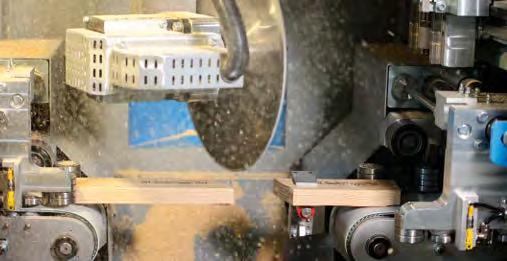
Equipped with a small parts handler that delivers components directly to the outfeed
The ALS 5.0 features two upgraded high-resolution printers for quick, legible output on board members. Both printers operate simultaneously with edge printing that marks double stacked boards for easy identification at the assembly table. Other enhanced features include plate alignment marking and jig point identification (matching letters at connection points in the truss). These improvements support faster component identification, quick jig assembly, consistent plate alignment and placement.
Designed with component manufacturers in mind, the ALS 5.0 represents advancement in linear saw technology. It offers reduced total cost of ownership, preventative maintenance tools, optimized cutting workflow and material handling improvements. A testament to Alpine’s dedication to innovation.


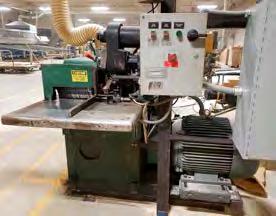

•
•
•
•
•
•
•
•


2017 Vekta model S5 linear saw, plunge-cuts and marks roof and wall parts. Cuts from 0 to 180 degrees (no bevel / compound cutting), unlimited maximum cutting length (minimum length 31 1/2″), one or two 2×4’s dimensional lumber boards at a time. Does angle cutting and birdsmouth (under or overcut) and rip cuts. Includes 5.35 Horsepower blade motor, HP cartridge printer marking on one 3 1/2″ face and one 1 1/2″ edge. Includes infeed, outfeed, scrap incline conveyor and vacuum option.
Requires upgrade of Windows 7 and upgrade of Vekta software to their version

Carl Villella, CLFP President, Acceptance Leasing & Financing Service

The Fed lowered its benchmark interest rate by half a percent in September, and our funding banks have also lowered their rates in response.
This is great news for the economy as a whole, as interest rates are now lower for all forms of credit, including mortgages. From a macroeconomic viewpoint, the objective is to keep the economy humming while keeping inflation low, which benefits everyone.
As you consider financing new or used equipment for replacement purposes or to grow your business, these changes mean that you can now finance at a lower cost. Furthermore, you can also take advantage of the benefits of Section 179. A special IRS benefit available to businesses with depreciable assets such as equipment and vehicles, Section 179 allows you to write off the full expense of a business asset in the year you place the asset into service, as opposed to taking a depreciation expense over many years. There is a limit to how much you can deduct: in 2024, the limit is $1,220,000. But, you can aggregate many business-asset expenses for the year, as long as they all have been put into use in 2024.
Whether you hope to take advantage of the lower rates or the Section 179 tax benefit, we invite you to contact us so we can tell you how we can help. We have several lending programs available for every type of borrower. In particular, our one-page application makes the lending process simple, and our personalized approach ensures that you’ll receive the best rate and terms available.
We invite you to contact us at 412-262-3225 to discuss your particular situation.
We are Acceptance Leasing and Financing Service, Inc. We were established in 1992, which puts us in our 32nd year of business. We pride ourselves on our Certified Leasing and Financing Professional designation. We are a member of SBCA and a frequent attendee of the BCMC tradeshows. We can provide financing for any new and, regardless of age, used equipment.


$19,900 Each FOB IL
MiTek peak-up, vertical truss dual stacker system Model 71300 Mechanical only system includes (2) heavy-duty drives, autoindexing, spring assisted receiver arms, holds up to 30 trusses from 16 foot to 80 foot in length, up to 14 foot height, with 40 sec. average cycle time. System control panel (NOT included) controls two separate setups or both units for long-span trusses. Arms work in sets of four adjacent arms or all eight arms at once per side. Includes (8) lifting arms, (8) stacking arms, (2) bridge targets, and (2) stacker units. Moveable activating starts the cycling process, bundle indexes back 1 1/2″ as each truss is stacked. NO conveyors or control panel is included. (Control Panel from OEM/ Mii required at approximately $8,500) 230v, 3Ph electrical required.

Triad's proprietary (Patent Pending) Ai means:
•Your operator doesn't wastetimetelling themachine whatkindofsubcomponentis being built,
• ORwhatsizedimensionallumberis beingused,
• ORwhatnailpatterntoswitchtoOR toolgun(s)touse.
• Youcanswitchfrombuildingonetypeofsubcomponent toanother instantly!
• Just-in-time subcomponents arenowareality - OR batchbuildsubcomponents --yourchoice!
• Cansendfinishedsubcomponentsinany oneof threedirections: Left, Right, orDownthe line.
• Nowyoucan sort &feed:Toyour component table, framing table,ANDmaterialhandling carts, ifdesired!


• Tee-Lok Gantry Roller with Safety Bars
• New 18" Diameter Rollers with Removable Shaft (not installed, paid $25,000)
• 7.5 HP Motor with Variable Frequency Drive (230/460 Volt - 3 Phase)
• Steel Floor Rail
• Fixed Steel Table with Fire Hose Clamping
• Tables have Pin Ejectors (never used by seller)
• Floor Truss Depths from 12" to 32" Deep
• Spare Parts
• Video available upon request

Side-eject system 14’X70′ working length includes Auto Roll TR14 gantry head with 24″ dia. Roller, and inverter drive. Featuring a total of (9) J-Slot (slotted-steel) tables with (7) skate-wheel ejectors and (10) skate-wheel receivers. System includes 170′ (85′ per side) track and base plates, 33 ejector covers, available J-Slot jigging hardware. No conveyor or final roller included. 230V 3Ph./25 Amp. Controls – 120v 1Ph (equipment available as soon as replacement equipment is installed in December ’24).
$109,700 FOB MT

By Richard Pedde
When I acquired the former Ryland Homes component plant, I bought automated saws but couldn’t find an automated way to feed all three of them. Like most component manufacturers, I needed to pick small numbers of boards for my linear saws’ orders and large numbers of boards for my component saw’s orders. So, I looked outside the component industry to find a way to feed multiple saws.


Of the many automated storage and retrieval systems (ASRS) available, the best solution appeared to be Sage Automation’s gantry system. Sage’s systems are built in Texas and have been deployed to more than 500 plants in a wide variety of applications. They work like an automated version of a roof truss gantry and, most importantly, Sage was willing to work closely with me and my team to develop tools to pick up sticks of wood, especially crooked Southern Pine lumber.
The Sage gantry could fit in a space of any length, and its width could be varied too. I chose to extend the line nearly all the way across my 200 ft. wide building. That way, I could store a large number of bunks of lumber behind it, against the back wall of the building, and lessen the distance from their storage location to their ultimate slot beneath the gantry. For the width, I wanted the JAX gantry to span to accommodate 20 ft. lumber lengths. Then, I turned my attention to the tool that would pick up boards.
As attested by plywood, OSB, and LVL mills, vacuum pick-up technology is best suited for this general task, but its execution is crucial. I was adamant that this system accommodate any board that could be used in a truss, from a bowed 2x4x20 ft. board to a cupped 1.5x16x20 ft. LVL chord. After much testing, it was determined that at least four picking heads would be needed along the length of boards, and several more across the width of wider members. So with those parameters established, the final design depended on the number of boards that would need to be picked up at one time.

Keeping up with three voracious saws necessitated picking up a full layer of a bunk of lumber, or 13 2x4s. But, of course, the system would also be required to pick up any lesser number of boards. That capability became the most difficult to achieve, because it necessitated picking up boards from two layers of a bunk. To do so required additional clamping to secure less than a full layer of material, but this dramatically increased the flexibility and productivity of the picking process.
To optimize the placement of the Sage gantry, I looked to successful plants inside the component industry, like Shelter Systems, and modified our building so we could have all of our lumber inside. That considerably shrank the distance between the storage location of a given SKU and its ultimate position beneath the gantry. Moreover, I was also able to fit 33 SKUs within the gantry system, minimizing the time needed to swap out lumber grades and sizes.
JAX, The Wood Retriever, is the solution we devised to solve the problems with feeding multiple saws. JAX has a patented end-of-arm-tool, which has been servicing three saws successfully for a full year at Rafters & Walls in Shelby, NC.
JAX has built-in flexibility, as large quantities of boards can be power-conveyed directly to saws while small quantities are fetched by JAX. Furthermore, JAX has separate light-curtailed safety zones that enable restocking of one zone without interrupting JAX fetching boards from other zones.
To operate the systems, JAX Universal Compiler (JAX-UC) software generates a common picklist from diverse saws and displays the cutting list information side-by-side. JAX-UC tells JAX where to pick up and deliver lumber, where secondary bunks are located, and when primary bunks run out. JAX-UC can also automatically upgrade lumber when lower grades run out.
Our logo is a Labrador retriever because, just like that faithful and persistent dog, JAX loves playing fetch by grabbing the lumber we need to keep our saws humming. When you want to learn more about this great new system, please reach out to me
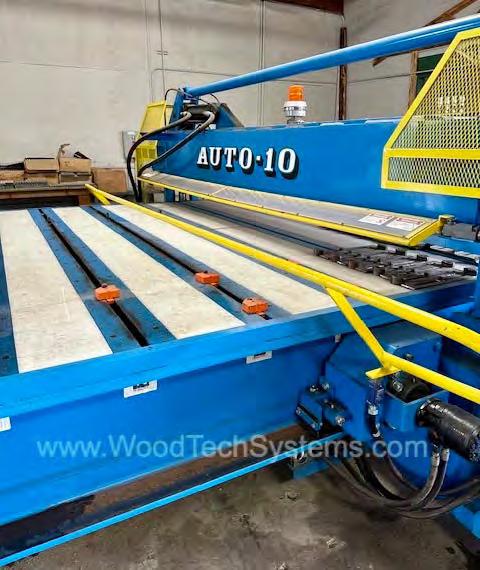
$389,795 FOB PA
(Video available here.)
2021 MiTek 40′ Auto-10 with Wizard PDS® automated pin system (commissioned Jan. 2022). The Auto-10 features a fully integrated 50 Ton hydraulic press with a 10’x24″ pressing platten (overall Gantry width 14’10”). Gantry features 4-Wheel Drive, and an operator platform with joystick control that travels up to 4.5′ per second. The Auto-10 press is capable of handling 2”x4”-12″, 4”x2”, and it is further optioned for 6″x2″ material with no adjustment. No finish press required, this system features a HDPE plastic/steel T-slot tabletop and includes a substantial quantity of auxiliary T-Slot jigging hardware. This state-of-the-art production system features (18) Wizard PDS® @ 16″ O.C. spacing with 36 jiggingpins covering 24′ of automated setup. Set up capabilities are further enhanced by manual T-Slot positions on either side of the Wizardsetup area , System is complete with (5) electrical control boxes, all cabling and gearbox drive components, main control box, computer kiosk, and system computer. System sold for $442, 300 new.
Buyer must provide appropriate voltage/amperage: Auto-10 – 230v, 3Ph , Wizard – 208v, 3Ph, 40A (3-phase transformer included), 120v AC clean power supply to control computer. Professional installation by OEM representatives required.
1995 MiTek
Tracked Gantry with Spida FRP

1995 MiTek tracked roof gantry, 14′ x 95’ working length, end-eject, with floor mounted rail including two 7’-0” park stations (109’ overall length). One (1) MiTek gantry head with a 24″ dia. roll, riding platform, and pendant control. Gantry presses a production area featuring (12) 6′-4″ x 14′ slotted, 3/4″ steel-top tables with (12) ejectors. Includes a 2022 Spida Final Roller –15′, Model 69B0000-15. Dual 24” Diameter Rollers, 1” Wall Minimum Rollers, 4” Diameter Stub Shafts Supported By 4 Baffles, Spherical Roller Bearings, Twin 10 Hp Sumitomo Gear Motors, 20 HP Total, 1” X 4” Steel Support Frame, 32″ Working Height, 114’ Per Minute Fixed Working Speed, Front & Rear Emergency Shut Off Bar, Emergency Stop Button, Emergency Stop Interlock, Chain & Sprocket Guards, Integral Mechanical Brakes, Variable Frequency Drive, low hours, 480v 3ph (Mii Gantry: 230v/460v, 3 ph power), air required for lift outs.
$224,820 FOB IN

Alpine Chord Splicer
Hydraulic clamp presses connector plates into 2×6 and 2×4 lumber. Includes dual push-button controls for added safety, air clamping to hold lumber in place, 6″ x 12.5″ platen size, 4″ diameter press cylinder with a 15 ton pressing force , pump with aircooled hydraulic oil reservoir. 240 / 480 volt, 3 phase electrical required. 100 PSI air pressure required.
$7,997 FOB AZ
Wood Tech Systems
765-751-9990
www.woodtechsystems.com

2021 CMF Floor Truss FRP with Conveyors
2021 CMF floor finish roller press for 3×2 and 4×2 floor trusses. Features 7-ft wide throat, with dual-sized rollers one half larger diameter rolls to press 3×2 material, the other half presses 4×2 material. Press includes 4″ diameter guide rollers, Dual (2) 5 HP drive motors, (2) safety bars, push button controls and e-stop button. Included are (19) 4″ diameter x 6-ft long, stand alone idler conveyors and (6) 6-ft long manual floor-truss stacking racks. 240 / 480 volt, 3 phase electrical required.
$29,997 FOB ON Wood Tech Systems
765-751-9990
www.woodtechsystems.com

2018 Iroquois Fixed Press Brake with Jig Tables, Lift & Conveyors
2018 Iroquois fixed press brake, model B96 / 150, System used for assembling connector-plated rough openings for 6×2 and 4×2 wall panels. Complete with (3) custom made steel jig tables with hardware, used to jig the sub-component window or door opening prior to pressing. Further includes custom made sub-component lift with air cylinder clamping, hoist motor, and pendant controls, (6) 10-ft long x 20″ wide idler roller conveyor sections with legs. Press features a platen size of 1′-8″ x 8′-0″, open height of 12″ with 6″ of vertical travel with a combination of toggle or foot pedal operator controls. Press capacity is 150 Tons, hydraulic pressing strength of 3,000 PSI. Press has a 12′-3″ x 4′-0″ footprint. Sold for $34,000 new. 480 volt, 3 phase electrical required.
$24,997 FOB AZ Wood Tech Systems
765-751-9990
www.woodtechsystems.com

1998 Robbins Fat Man
Floor Truss Gantry
Floor truss system builds trusses up to 40’ in length and 12″ to 24” in depth. Riding Gantry with 24” roll with 1” wall, 4” shaft, 10 h.p. inverter drive, (2) parking tables, under-table valves and manifolds, pop-up ejection. This unit is functioning but all the push to connect air lines need to be replaced. Wired for 480 volt, 3 phase electrical.
$29,997 FOB ON Wood Tech Systems
765-751-9990
www.woodtechsystems.com


New Wescana floor truss machine, available in side-eject or end-eject models. Builds floor truss depths from 12 inches to 26 inches, to 40-ft long. Features under-table cylinders powering the clamping system, built-in camber, truss flip arms, truss pop-ups, control valves for clamps, flip arms and pop-ups, with parking stations at each end of the table, and emergency shut-off bars on each side of the press head.


Since 2006, we've been helping businesses of all kinds build their online presence. We make websites and software for the construction industry to empower companies to reach a wider customer base and engage their audiences. Companies all around the world work with us to make websites and apps that people actually want to use. Reach out to Wolf X Machina if you're a business and you want a website that actually drives results.
We have a range of products suitable for floor truss manufacturing and we offer floor truss solutions customized to your requirements too! Choose from side or end eject options to suit your operation and space.


Get in touch to learn more about adding floor trusses to your production line and how it could benefit your factory!
$300,795 FOB AZ

Model 703D, side-eject, 70′ working length, (10) tables with continuous slotted-steel production surface, 24″ diameter gantry roller, elevated operator riding platform with joy-stick control, (10) ejectors, dual parking stations. Includes 2021 Alpine finish-roller model 725P, 14′-6″ length with 24″ dia. rolls. (11) exterior conveyor rollers, (18) inside conveyor rollers (9) powered / (9) idle, (9) skate-wheel receivers, electrical s/o cord feed and all available jigging hardware are included (two additional tables with wood tops included). Gantry: 240 volt, 3 phase, 22A electrical required. Final Roller: 480 volt, 3 phase electrical required.

By The Lesko Financial Services Team
Heading into the last quarter of the year, the US economy sent out several strong signals that is remains resilient and robust. Third quarter inflation continued a downward trend, with annualized numbers beginning to approach the Central Bank’s target. But softening of the job market over the summer months put additional pressure on the Fed to begin cutting interest rates after several sessions of remaining in “pause.”
After a brief period of anxiety with calls for emergency action, the Fed finally enacted a 50-basis point rate cut at its regular September meeting, while hinting about possible additional cuts before the end of the year and into next.
The long-awaited decision to begin cutting rates helped push what had been a volatile stock market to new historic highs with a rally many forecasters now believe has a chance of enduring through the last two and half months of the year.
A surprising September labor report, with 254,000 jobs added, blew past expectations. Strong GDP growth of 3.0% in the second quarter, plus an upward revision to 1.6% in the first quarter of the year, helped ease many concerns. It took some of the urgency out of the Fed’s need to rush into further rate cuts and convinced many analysts that the Fed had accomplished the elusive goal many skeptics had doubted: a soft economic landing.


The year-over-year inflation rate dipped from 3% in July to 2.9% in August, and 2.5% in September. The most noticeable drop has been seen at the gas pump. The national average the first week of October was down to $3.17 per gallon, a drop of nearly 20% over the same time last year. Lower demand from consumers still dealing with the effects of inflation plus less post-summer driving overall helped bring prices down. Hurricane season and troubles in the Mideast are two possible tailwinds that could impact the price of oil in the next few months. Food prices have also seen relief, but housing costs remain stubbornly high.
After two disappointing jobs reports in July and August, a surprising September jobs report helped reassure market analysts and the Fed that the US economy is still strong. While it stemmed initial worries that the Fed had waited too long to begin cutting interest rates, it also eased some of the pressure on the Fed to take stronger action more rapidly. In the past, a robust jobs number had fueled worries that the economy was too hot and that inflation might rebound. With the first round of rate cuts announced and more expected, a sense of optimism has returned.
Stocks have once again hit record highs going into the fourth quarter, as they continue to post gains and losses. The S&P 500 finished September at a record high and posted an overall return of 2.1%, the index’s tenth positive month out of the past eleven. A modest rally the first few days of October set an overall hopeful and positive tone for the rest of the quarter.

One area of the economy that has remained healthy is the willingness of consumers to spend. It accounts for two-thirds of the GDP and has prevailed despite the challenges of high prices, high credit card interest, and more expensive borrowing costs. Retailers are complying with the demand for more discounts and more price-sensitive consumer behavior as inflation eases. Earlier holiday promotions are expected to augment fairly optimistic retail forecasts for the last two months of the year. Modest gains of around 3% are being forecast by merchants, with larger gains among online purchases.
Concerns that remain as we move through the last three months of the year are political headlines, the upcoming election and its aftermath, geopolitical tensions, short-term investor anxiety, the potential for market volatility, and slower growth forecasts. Offsetting these should be additional rate cuts by the Fed, inflation continuing to trend downward, recession fears receding, and a positive quarter for consumer spending.
The Lesko Investment Committee believes that markets could be getting a bit “stretched” as major indices continue to meet all-time highs. If markets stretch too far in Q4, we run the risk of taking gains from future years (2025/2026). With that risk in mind, it’s a great time to review and assess your investment goals and tolerance for risk. It may also be a good time to take some profits from some of the biggest winners this year and reallocate them to reduce risk. We can help you balance and diversify, fine-tune your tax strategies, review risk and asset allocation, and talk through any questions or concerns you have. We look forward to serving you as we enjoy the active fall season and prepare for the year ahead.


This is the first, self-contained, truly portable FRP unit used to press metal truss plates into dimensional lumber at virtually any location. Wood component (roof and floor truss) manufacturers, as well as builders, frequently require a tool to repair metal plate connected, wood truss components. The complete unit is mounted to a wagon built from square tubular steel. Extremely compact at only 28” wide and about 32” long the wagon features four wheels on soft-rubber solid tires, and a steering axle on the front with a handle that makes the unit easily maneuverable. The wagon contains the hydraulic power unit and an area for a portable gas generator. A rack in the back securely stores the C clamp, a standard 25′ hydraulic hose, and an electric power-supply cable. The clamp is manufactured from T1 steel, cut into a C-shape with a steel tube welded to the front that securely holds the hydraulic cylinder. Pressing is easily performed with a 4×4 magnetized steel platen that holds and presses the truss connecter plates. The C-clamp that weighs less than 30 pounds, features a throat that opens to 4-1/2” inches to accept either 4 x 2 or 2 x 4 lumber. It has a push on and release off switch to cycle the unit. A 10,000-psi electric-over-hydraulic power unit pumps hydraulic fluid through a 10,000-psi hose to activate a 10-ton hydraulic cylinder with a 3.9 inch stroke. The unit can be powered by 120v electric power or an optional 120v, 2200-amp, gasoline powered generator, which can also act as a portable power supply out in the field for other single-phase equipment.
• Pressing Capability: 4.5” throat opening presses 2×4 through 4×2, includes a standard 25-foot, HD 10,000 PSI hose, with a 10 TON, 4”x4” magnetized pressing plates
• Electric/Hydraulic: SPX Hydraulic Technologies – Rockford, IL USA 10,000 PSI / 700 BAR. 10 ton pressing capability
• Power Source: 110V Dual Power via outlet plug in and/or optional gas-powered inverter generator at an additional price. Optional generator is a Honda EB 2200i Industrial, inverter motor, manual start, GFCI Protected,120 VAC at an additional cost of $1,450.00.
• Warranty: One year from date of purchase on manufactured unit, OEM warranties on hydraulic and gas motor.

New Wescana roof finish roller presses, available in either a 14-ft or 16-ft throat models. Travel speed of 2-ft per second. Both models feature 24″ diameter steel rolls with 3 1/2″ diameter shafts with baffles, (2) 5-horsepower drive gear motors with controlled motor drive systems for starting and stopping, along with taper-lock sprockets, sealed flange roller bearings and reversing magnetic starters.. Includes safety shutoff bars, electric eyes, amber running light, red reversing light with buzzer, and e-stop module. 240 / 480 /575 volt, 3 phase electrical required.
Price based on configuration

40' Kickleg Floor Truss Machine
• Gantry Roller (Steel Track on Floor)
• Steel Table with Kickleg Supports & End Stands
• Floor Truss Lengths to 40'
• Dual Clamping Jigs (Jig #1 up to 13", Jig #2 up to 24")
• Dual 5 HP Motors (230/460 Volt - 3 Phase)
$32,500 FOB OH Wasserman & Associates 800-382-0329 www.wasserman-associates.com

• Checked, Repaired & Painted
• 30 Day Major Parts Warranty
• Available in December 2024 or January 2025
& Associates 800-382-0329
www.wasserman-associates.com


Truss Exiting Conveyors
Flat or Incline Scrap Conveyors
Unitized Truss Conveyors Systems
Lumber Infeed Decks
Floor Trucks
Teeter Carts and more!

Two C-Clamp Presses with Unistrut Jig Table
• Hydro-Air Mark-8 Mono Press (C-Clamp, Hydraulic Power Unit, Boom Assembly & Trolley)
• Panel Clip TK C-Clamp Press (C-Clamp, Hydraulic Power Unit, Boom Assembly & Trolley)
• Unistrut Jig Table/Stands (up to 80' long trusses)
• Electric Feed Rail
• Overhead Steel Beam
• Price is in US Dollars
$20,900 FOB MB Wasserman & Associates 800-382-0329 www.wasserman-associates.com

Hydro-Air Mark 8 Truss Assembly System
2 Each - Mark-8 Mono-Presses (C-Clamp, Hydraulic Power Unit, Boom Assembly & Trolley)
1 Each - Mark-8 Mono-Press (working condition unknown)
25 Ton Press with 9" x 16 1/2" Platen Electric Feed Rail
4 Each - Partial Mark-8 Mono-Presses (For Parts - No C-Clamp)
16 Each - Magnetic Pedestals with Jig Hardware
48 Each - Partial Pedestals (missing electrical boxes and/or magnets)
44 Each - Pedestal Frames Only Steel Floor: 5/8" x 13' x 90'
Steel I-Beams & Columns to Support Mark8 Presses
Spare Parts
$48,000 NOW $37,500 FOB AZ Wasserman & Associates 800-382-0329 www.wasserman-associates.com

2007 Clark Industries
Horizontal Truss Stacker
Model HVS, Two Unit, 2-Zone, 14’ Horzontal Stacking System. Two lifting units (one master and one slave) with integral electrics. A truss sensing system consisting of adjustable laser sensors mounted on slide rails. One indoor electric control enclosure & panel w/PLC and manual controls. A stacker-conveyor interface package comprised of (1) mounted 3-push button enclosure and (1) remotely mounted 2-push button enclosure (pause/ emergncy stop). Hand-held Wampfler Remote Control System. 8 stacking rails and 4 stripping posts. Stack 1 5/8” thick x 14’ tall trusses up to 30 high. Stack a truss in approximately 40 seconds (cycle time). Stack up to 55’ or longer trusses on each side of the conveyor with minor assistance for truss sag, shorter lengths can be stacked unassisted. Excludes 77’ Walk Through Conveyor System. Two systems available at $25,000 NOW $19,900 Each. FOB NE. Wasserman & Associates 800-382-0329
www.wasserman-associates.com
The

EMSI Field Repair Press
EMSI 10 Ton Field Repair Truss Press System. Complete with: 1/2 HP, 115 Volt, 50/60 Cycle Universal Motor – Operates at voltage as low as 60 volts. 10,000 PSI Portable Power Pack with Two Speed Operation – 200 cu in/min @ 0–200 psi, 20 cu in/min @ 200–10,000 psi and Externally Adjustable Relief Valve (unit weight 55 lbs.). C-Clamp Assembly with 8" Maximum Reach, 4" x 5" Pressing Platen (optional platen available for 4” x 2”). Independent 10 Ton Hydraulic Cylinder. 10’ Hydraulic Hose Assembly with Quick Disconnect Coupling. Handle with 24 Volt Remote Electrical Pendant. Call for Price Eide Machinery Sales, Inc. 612-521-9193 www.eidemachinery.com
Come live in this mountain resort community. The employer needs an on-site truss designer and will pay $70-150k based on experience, skills, and ability. They prefer a candidate with MiTek software experience and help candidates with relocation and housing assistance if needed. They are a single-location, privately owned company that prefers a team closely connected to the community over everyone working remotely. However, a resort community has it's benefits and challenges,and the employer helps ensure their people are safe, secure, and happy.

• 14' Long x 4" or 5" (Inside Diameter) Schedule 40 Pipe
• Tube Steel Stands (7" Height Adjustment - Height to be Specified)
• 4 Bolt Flange Bearings
• Idle and Motorized Rollers
• 1/4 HP Motors (240/480 Volt-3 Phase) with Controls
• 1" and 1 1/4" Cold Rolled 24" Shafts Baffled
• 6 to 8 Week Delivery


Price: $229,900
FOB: ND

The Terminailer all but shatters the stereotypical myth that sub-component equipment is essentially peripheral – unimportant. And it does so by quickly and accurately driving far more framing nails in your wall panel jobs than ever before. Whether in your shop or in the field, one operator sets the pace for production and quality, which reduces labor costs and other aspects of overhead.
The new Terminailer V.8 improves on the previous generation Terminailer in several key ways:
All new HMI/Software
• Siemens Pivoting HMI Touchscreen display to operate from either side
• On-screen tutorial for all menu items
• Operator now controls functions such as process speed, nail spacing, nail patterns, etc.
• Simplified input commands
Nail Feed Complete Redesign
• All new frame to allow for redesigned nail coil placement with direct feed path
• EverWin PN90-PAL industrial tools now standard equipment
• New nail guides with spring-loaded tensioners
• Nail coils move with vertical travel of the nail guns
Reengineered air system
• SMC “Soft–Start” Pneumatics
• Simplified air for control to all components: lift–cylinders, triggers, stop–gate, etc.
• Direct air supply to each nail gun for improved nailing performance
• All pneumatic elements are clearly labeled for EZ service and adjustment
Overall Features
• Pharmaceutical grade assembly, industrial grade durability
• “Block–wheel” redesign for 3X increased applied force
• Approximately 1,200# of applied clamping force resulting in straighter finished subcomponents from even the poorest lumber
• Larger doors for easier access to interior elements including coil–nail spools
Terminailer is an event-driven, sub-component assembler that will quickly and accurately drive 30% to 70% of the framing nails in any wall panel job. In your shop or in the field, one operator sets the pace for production and quality. The Terminailer functions independent of design software, requires zero set-up time when switching between any configuration, and requires no special operator training.
The Terminailer is easy to move around the shop so its location can evolve as your shop evolves. With all of the nailing occurring in the closed main chamber, nail injuries and nail location misfires are eliminated, making your plant that much safer.
With nearly ten years of development from people that know machinery, it is assembled to exacting standards, well supported, and it is easily maintained with shelf-item parts. Terminailer: vetted, tested, and ready to drive maximum productivity for you. Be sure to check out our videos below for a quick review of this revolutionary machine!
240 volt, 1-phase, 30 (full load) Amps, 60 Hz electrical required. 50 SCFM @ 120 PSI air required. Net weight 7,000 lbs.
The MSR Lumber Producers Council (MSRLPC) represents the interests of machine stress rated lumber producers in the manufacturing, marketing, promotion, utilization, and technical aspects of MSR and MEL lumber. Suppliers, customers, and professionals may join as Associate members to enjoy:
• Online Marketing
• Networking Opportunities
• Reliable Market Data
• Education
“There is no question that the MSR Lumber Producers Council meetings are worth your time to attend. The information you will receive from the guest speakers and members of the Council is unparalleled!”
—Sean Kelly,
Automated Products Inc.


FOB MN

By Thomas McAnally TheJobLine.com

JobLine periodically updates our compensation calculator, and while I expect some surprises, this time, I was truly taken aback. Recent candidates have reported significantly higher compensation at their previous employers than we’ve seen for job postings. I’ve attributed this to tenure, recognized value, and a competitive job market. However, I hadn’t considered that overall pay for truss designers has surged dramatically, comparable to percentages we saw in the mid-2000s.
When updating our compensation calculator, we reach out to several active employers to gather current hiring ranges. We inquire about the lowest rate they would consider for a candidate based on a minimum skill level, our fee, and overall onboarding costs. We also ask for the highest rate they would pay for the ideal candidate who can hit the ground running and contribute at a high level. The compensation calculator uses these figures, adjusted by volume, duties, products, markets, and others, to determine a compensation rate.
This time, the numbers reported were significantly higher than in the last survey, prompting me to consult my most trusted employers for their insights on these new levels. To my surprise, all of them confirmed that we were on target, which was unexpected. Here are some of their responses:
“I believe you are pretty close on those figures. Not where I think it should be, but the market seems to be in that area for now.”
“Looks about perfect to me.”
“Unfortunately, that is where the industry stands, particularly near major cities. It might be slightly lower in rural areas.”
“We have designers in those ranges.”
As a result, we’ve updated our compensation calculator to reflect these new levels and will continue to monitor the industry’s response. As promised, I won’t publish these numbers here, but you can see for yourself at https:// www.thejobline.com/toolboxlinks/compensation-calculator.
Just a note: these rates reflect our experience, our client’s input, and time-tested formulas that calculate compensation for someone who is a known quantity. Hiring ranges are usually lower. Understand that not all candidates can demand the top rate, but it is there to show room for advancement. Be wary of employers who offer rates well over industry standards as they are probably desperate, for now. Paying someone 25% more than a reasonable rate for the peak season and then laying them off is more affordable than carrying someone during slow periods. Research the employer before accepting a position. Check Glass Door to see what others say about working for them. Google the employer and the location, and if relocation is required, check out the new area, housing availability and cost, schools, crime statistics, insurance rates, and other essential factors before deciding. If you want help from someone who has navigated these waters for over 30 years, let’s talk. It is always Strictly Confidential!


Featuring precision Gen. 2 controls, this system squares and sheathes wall panels ranging up to 16′ in length and up to 12′ -3″ wall height with dimensional material from 2×4 through 2×10. This late-model system includes a servodriven bridge with joy-stick controlled motion on the operator’s riding platform. The single, large-coil capacity tool carriage travels across the wall frame inserting sheathing fasteners at the spacing set by the operator. The stitchers will automatically insert fasteners through the sheathing into the top and bottom plates at your chosen spacing during the auto-return process. The bridge has 9 programmable presets for fastener spacing. Other features include: Single Beam Bridge, top and bottom plate stitchers, Operator Platform with Windows industrial touchscreen, and joystick control. Squaring table features a squaring edge, footswitch & push-button controls for telescoping side and horizontal outfeed rollers. 120 PSI at 60 CFM air.120 volt AC electrical required. Utilizes large-coil 15º wire-collated nails. (No nail tools included).

$148,995 FOB AZ
2022 EstiFrame Technologies model 120-016-ECA24-MP-TDM wall panel processing saw: EasyCut Angle 24 saw with 16’ material capability on the infeed side to a 10’ outfeed accumulation area (Right material IN to Left cut material OUT). Features a high-resolution inkjet printer, with optional top-down printer. EstiFrame utilizes an angulating upcut 24” saw blade that cuts up to 4 boards that can be optimized, pushed, cut, and printed on all at the same time. 0° +/- 76° cut angles. Capable of material sizes from 2×4 to 4×16; 6×14; and 8×8, including EWP square cut at 90°. Operator controls via a Dell computer utilizing a 24” touch screen display that works with all major design platforms. Software license is transferable with one-time payment direct to OEM. Includes (1) spare blade and all available spare print cartridges.
This state-of-the-art wall panel saw is installed in a modified 40’ high-cube (HC) shipping container with roll-up steel doors on three sides for ease of access and ventilation, including easily-stowed heavy-duty sun-fabric overhangs. Housing is completed with a high-efficient vacuum system including internal cleaning blade & remote control fob, electrical panels, air tank and a window a/c unit. 480 volt, 3 phase/120 VAC electrical required.


• Wall Lengths to 20' / 6' to 12' Wall Heights
• Length Stops Position the Top & Bottom Plates for Nailing (as directed by Wall Panel Design Software output)
• Touch Screen Computer/Enclosure
• 4 Everwin PN80PAL Coil Feed Nail Guns
WALL EXTRUDER OUTFEED
CONVEYOR
• Transfers Wall Panels from the Wall Extruder to the Squaring Table
STUD EXTRUDER
• Nail C, L, U Sub-Assemblies and Double/Triple Studs
• Touch Screen Computer/Enclosure
• 2 Everwin PN80PAL Coil Feed Nail Guns

• Transfer Sub-Assemblies & Studs to the Wall Extruder Operator
• Squaring the Wall Panel before attaching Sheathing OPTION
• Add $69,900 for 2020 Spida Sprint S600 Wall Panel Saw
Excludes: Installation/Training and Annual Technical Support Fee EQUIPMENT FINANCING available from Fidelity Leasing
$249,000 - FOB AZ


The Industry-Leading Manufacturer of Panelized Wall Panel & Floor Cassette Equipment.
The Interior Hand Framing Line is ideal for customers that want to manually fasten wall panels by hand. This line is also compatible with those using plate-marking saws. This production line features Subcomponent Tables and Roller Conveyors and is a non-clamping line.


2007 VIKING 16' X 12' SQUARING TABLE WITH SHEATHING BRIDGE
• 16' x 12' Squaring Table with Powered Width Adjustment & Powered Chain Conveyor
• Wall Panel Lengths up to 16', Wall Panel Heights from 4'-0" to 12'-2"
• Swing Gates at Both Ends of Squaring Table
• Automated Field & Edge Nailing Driving by Panel Pro Event Software & Your Programmed Nailing Patterns
• Simple Touchscreen Controls
• 2 Tool Carriages for Sheathing Nailing with Tilt Function for Seams
• 2 Paslode Nail Guns with High Load Coil Tray
• Auto Sheathing Bridge Return
• Includes 4 Pallets of Magnum Coil Nails (2 3/8 x .113)
• 480 Volt / 3 Phase
$29,900 FOB KS. Wasserman & Associates 800-382-0329 www.wasserman-associates.com

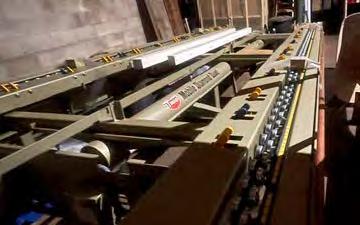
• 2022 Triad Mobile Diamond Quad Framing Table (never used)
• Wall Lengths up to 16', Wall Heights from 6'-9" to 10'-3"
• 2 Tool Dollies with Senco FP752XP Nail Guns
• Stud Locators at 16" and 24" Centers
• Pop-Up Skatewheel Conveyors


New Panels Plus floor framing machine, supports the structural members creating floor sections from 2" x 6" LVL through 2" x 10" to 2" x 12" dimensional lumber, 20" deep wood floor trusses or engineered wood / I-joists. Standard footprint of floor panels (cassettes) up to 12' wide x 45' long. Table consists of a fixed section and a track-guided, moveable section controlled by either a foot switch or push-buttons.
Includes a series of color-coded locator pins at 16", 19.2 and 24" on-center spacing and clamping with squaring feature including foot pedal control. The locators individually flip down if a joist comes out on top of them. After the floor is complete and unclamped, the floor section can be raised up on skate-wheel conveyors and rolled out or lifted off the table using an overhead crane. Table height is 24.5", OAL 45.5 ft, OAW 14.5 ft. 120 volt, 1 phase, 15 Amp electrical required. 90 to 120 PSIG at 15 CFM air required.
Stacking wall panels at the end of your production line can be a real labor-intensive and safety-challenging task. But it doesn’t have to be now, thanks to ProStack . This innovative wall panel stacker literally stacks from the bottom up, reducing awkward overhead lifting & placement, and the risk of head injury. Plus, ProStack frees up at least one worker to return more productively to your core task—building wall panels. Enhanced worker safety and productivity is what ProStack is all about.
By: DAK Automation
Setup and installation is easy too, without the need for complex training or disruption to workflow. So, free up your team to do what they do best, and you need to do most, and let ProStack stack your wall panels instead. Contact us to learn more today. For a ProStack demonstration video, scan the QR code below.

• Wall Lengths to 12'
• Wall Heights to 40'
• Powered Height Adjustment
• Manually Adjustable Rake Side (0 to 12/12 pitch)
• Adjustable Squaring Stop
• Pop-Up Skatewheel Conveyors
• Stud Locators at 16" and 24" Centers
• Center Support Bar with Stud Locators
• Excludes Tool Doilies
• Price is in US Dollars

Wall framing line with model DQSF Diamond Quad framing station, RO-CAT tables and conveyors, designed to frame steel stud wall panels from 6′-9″ to 10′-3″ in height, to 16-ft long. Framing station includes two (2) twin-tool dollies with optional outlets and monitors, stud locators at 16″ and 24″ o/c spacing, and four (4) Senco SG2510 tools. Station clamps and includes pop-up skatewheel conveyors. Pair of RO-CAT tables include squaring lip, tool rest and pop-up skatewheel conveyors. Line includes two (2) 10-ft long stand-alone skatewheel conveyors and two (2) 15-ft long x 36″ wide, stand-alone idler roller conveyors. 100 PSI air required. 120 volt, 1 phase electrical required. 765-751-9990

www.woodtechsystems.com


While attending an Ontario Structural Wood Association meeting in October – somewhat like attending an SBCA Chapter meeting – part of the discussion turned to the quality of house plans. After many years in this industry, I can tell you that this discussion wouldn’t have sounded much different twenty or even thirty years ago, but the points it raised remain relevant to this day.
Through my own direct experience working on plans, and from discussions with truss and component people over the years from across North America, I believe that poor-quality plans are a universal challenge that aren’t likely to go away anytime soon.
So, why are plans not prepared in such a way that they convey the information we need? And if they are never going to be “perfect,” what can we do to minimize our own risk and preserve productivity?
Of course, I’m not an architect, so these are my thoughts looking at it from the outside and from discussion with some forthcoming architects in the past. I will also add that much of this is related to custom home plans, although tract and multi-family plans often are just as problematic. I recall our company being involved in a 200+ unit development on Long Island, with a total value of ~$150 million at the time, where the developer refused to pay the architect a fee of $5,000 to correct and reissue some drawings. Over the course of construction, there were hundreds of phone calls and emails to repeatedly deal with questions that would have been resolved had the plans been corrected.
So, what are some of the current causes of this situation?
• Increased standardization – It is very quick and easy to pull a detail from a standard library and place it onto plans, even though it may lack information specific to the house.
• Focus on efficiency – The emphasis on getting drawings done quickly and minimizing costs can lead to reduced information provided on the plans.
• Market and customer pressure – Just as we are pressured to lower our truss or component supply costs, architects are faced with the same competitive pressures. A set of construction drawings that might have commanded a $4,000 architectural fee 10 years ago might now only earn $1,000.
By and large, I don’t believe that architects are intentionally providing less or lower quality information, but instead they are finding ways to remain profitable in a changing market. One of the ways they can do this is by having very generic notes and not spending too much time on job-specific details. It is then left to the various sub-trades, ours included, to resolve anything that is unclear. Ultimately, this results in the same, or even higher, cost to the end home buyer (but that is another discussion).

If your business mainly focuses on a relatively small number of clients that build essentially the same type of home repeatedly, then you may be able to talk to your builders and agree on how certain things will typically be done. Likely, this is something you have already done. The only thing I would add is that it would be best to get agreement in writing, just in case.
However, if your business is like what I have been involved with for most of my career, you may have dozens, if not hundreds, of custom home builders as the ultimate client for your product. Each of these builders will have their own customs, preferences, historical practices, etc. that influence how the house gets built. Even when working on plans from the same architectural office, with the same information, I’ve had two builders that chose to interpret the drawings differently in small but importantly different ways.
So, what can we do about this while maintaining some degree of sanity and productivity?
• Ask questions early – It may be tempting to leave detailed questions until you are preparing final drawings, but by then you are probably locked into a contract price that may not properly reflect what is wanted.
• Develop easily interpreted details that you can send out – An example might be a standard eave detail with blanks to fill in pitch, fascia height, and soffit dimensions.
• Maintain good records – If you have a phone or in-person conversation in which you are told to interpret the drawings in a certain way, follow up with an email or text confirming the conversation. It takes time, but less time than a dispute over who said or meant what.
These are just a few of the ways I’ve tried to manage the problems associated with having inadequate house plans. Do you have additional suggestions? Please share your thoughts with me by contacting me at secord@thejobline.com.
If you want help finding that next perfect component designer or design job in Canada, please contact me. If your work is in the mass timber world anywhere in North America, I’d love to talk to you about connecting you to that next great job or candidate. You can reach me at secord@thejobline.com, or 800-289-5627 ext. 2. I’m also happy to engage at: LinkedIn.com/in/geordiesecord. www.thejobline.com

Wall Panel Lift
* 8’- 12’ Wall Height
* 1,000 LB Capacity
* Easy Adjustment
* Hoist and Crane Sold Separate
Handle Bar Router
* 8’ - 12’ Wall Height
* 2 Person Operation
* 3 ¼ hp Production Router
* 120 Volt /1 Phase/15 Amp
Lay-Up Tables
* 10’ x 10’ Working Area
* Lift & Extend Rollers
* Squaring Lip
* Nail Tray
Skate Rollers
* 15’ Standard Length
* Adjustable Height
* Sturdy Stands
* Custom Lengths Available


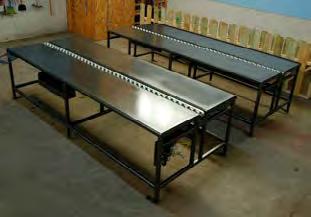
$13,900.00

$3,500.00 $3,000.00 $1,950.00


New Component Table with Skatewheel Conveyors
Lift & Extend Skatewheel Conveyors. 10' x 10' Work Area with Squaring Lip. Gun Holster & Nail Tray.
$13,900 FOB NE
Wasserman & Associates
800-382-0329
www.wasserman-associates.com

• 8' to 12' Wall Heights
• 1,000 Lb Capacity
• Weight: 120 Lbs
• Excludes: Electric Hoist & Freestanding Bridge Crane
$1,950 FOB NE
Wasserman & Associates 800-382-0329
www.wasserman-associates.com


Consider Panels Plus wall panel assembly equipment for manufacturers of wood or steel wall panels, floor-panels, and related framing components. Panels Plus is an employee owned, ISO certified, manufacturing company that builds state-of-the-art equipment featuring durable construction, with fit and finish second to none in the structural building component industry. The referenced base framing table allows you to assemble from 7-12 foot wall heights, at industry standard 16 foot lengths, at a working height of 29 to 32 inches. This framer design includes controls at each end of table, squaring stops and pneumatic clamping for consistent wall panel quality. Frames 2x4 or 2 x 6 walls, with color-coded, steel stud locators at 16 and 24 inches O.C. spacing. Includes pop-up skate wheels for easy transfer of completed wall frame. Framing table can be configured to receive wall framing light bars, other options include custom buildable wall heights, lengths and auto-indexing of optional 2 or 3 tool carriages.
Additionally from Panels Plus are sheathing tables with features that include foot pedal control at squaring end of table, with squaring stops, roller conveyors at both sides, single pendant controls for bridge, tool spacing at 6 inch centers with 3 inch bridge shift for offset nailing. Tool bridges can accommodate from 2 x 4 to 2 x 8 walls, with seam tilt being standard equipment Panels Plus Tool Bridges are available with single beam or dual beam design for two different tool mounts on one bridge. Squaring stations, sub-component tables, conveyors and panel lifts are also available to complete the configuration of the wall panel assembly line. Price includes factory installation and training. 50 CFM at 120 psi air. 120 or 230 volt, 1 phase electrical.
765-751-9990

Solving the problem of missed fasteners on exterior sheathing remains one of the primary reasons for call back charges and exceptions noted during jobsite building inspections. Clearly finding and resolving missed fasteners or “shiners” becomes mission critical before a sheathed wall panel leaves the production line. Our shop-proven, tilting conveyor makes the process safe, fast, and labor efficient. The ProStack tilt in-feed safely lifts wall segments to 45º in 5 seconds for inspection and on to 75º for easy to reach repairs. This tilt system is also excellent for installing blocking , windows, and other details in your wall panel segments. More information click here. 72,657 FOB ND

$37,525 FOB ND
ProStack powered in-feed conveyor was engineered to deliver wall panel segments at a matched speed and height into the ProStack automated wall panel stacker. Built for smooth operation and assembled with laser cut, powder-coated finish steel. Base model conveys wall panel segments up to 12’ in height and up to 16’ in length for wall segments up to 1,600 lbs. Extended length systems come in standard 20′ and 24’ length capacity. All models come with adjustable working heights and variable conveyor speeds.
Powered in-feed conveyor section, synchronized chain drive under top and bottom plate for open access, 5-HP, 208v, 3Ph power. Adjustable working height from 28” to 34”. 16′ length capacity.
We’ve expanded our global manufacturing capabilities with a new facility in Jacksonville, Florida. Our customers in America and Canada now benefit from even greater, local responsive service and support.


• Pop-up Skatewheel Conveyor
• Powered Height Adjustment (6'-11" to 12'-5" wall heights)
• Fixed Squaring Stops
• Excludes Tool Dollies
• 110 Volt / 20 Amps
• Add $6,000 for Stud Locators at 16" & 24" O.C.
• Add $2,750 for 1 Pair of 15' Skatewheel Conveyor with Stands
• Add $11,900 for Sub-Component Layup Tables with Pop-up Skatewheel Conveyors
• EQUIPMENT FINANCING available from SLS Financial Services $38,750 FOB NE

2021 Panels Plus light gauge steel (LGS) framing station, builds steel stud wall panels from 6′-9″ to 12′-3″ heights, from 1′-0″ to 20′0″ long. includes four (4) Graber SuperDrive tools with mounts, two tools per dolly, adjustable top and bottom plate stops, squaring stops and pop up conveyors. 110 volt, 1 phase, 30 Amp electrical required. 80 PSI at 10 CFM air required.
$71,993 NOW $59,000

Reduced labor, increased safety, the benefits just keep stacking up. Stacking wall panels at the end of your production line can be a real labor-intensive and safety-challenging task. But it doesn’t have to be now, thanks to ProStack. This innovative wall panel stacker literally stacks from the bottom up, reducing awkward overhead lifting & placement, and the risk of head injury. Plus, ProStack frees up at least one worker to return more productively to your core task—building wall panels. Enhanced worker safety and productivity is what ProStack is all about.
Developed for commercial wall panel production facilities this is the remarkable ProStack, fully automated wall panel stacker. The ProStackrelieves your build team from creating a stack of wall panels and keeps them building walls instead. Stacks 2×4 through 2×8 walls up to 20′ in length and up to 12′ in height (taller by special order). The ProStack will automatically center or left or right justify each layer including multiple wall segments on the same layer. For ease of loading in your yard or on the build site, fork pockets are created in two ways: The operator can attach blocking up to 5″ tall to the last wall of the stack prior to entering the stacker, or two shorter walls can be spread apart prior to the second to last row of the stacker. Designed without any overhead frame or apparatus, so no crane inspections are required. The ProStack is “event driven”, so there is no need to read a file. Setup and installation is easy too, without the need for complex training or disruption to workflow. So free up your team to do what they do best, and you need to do most, and let ProStack stack your wall panels instead. ProStack can even operate with your existing powered conveyors or select our optional matching conveyors (see the video shown below). 208 volt, 3 phase, 43 Amp base model electrical required. No air required. Footprint is 26′-5″L x 19′-3″W.


2021 Panels Plus light gauge steel (LGS) framing station, builds steel stud wall panels from 6′-9″ to 16′-0″ heights, from 1′-0″ to 20′-0″ long. Includes four (4) Graber SuperDrive tools with mounts, two tools per dolly, adjustable top and bottom plate stops, squaring stops and pop up conveyors. 110 volt, 1 phase, 30 Amp electrical required. 80 PSI at 10 CFM air required. $71,993 NOW $59,000 FOB PA
By MiTek Staff
earing: A structural support, usually a beam or wall, which is designed by the building designer to carry the truss reactions to the foundation.
MiTek’s engineering software uses two common types of bearings, roller and pinned. There is a third type, fixed, which should not be used for truss design. These bearing types are used in the structural analysis to determine the forces in the truss. Please note that real world supports do not behave exactly as the idealized pin or roller, but they are the best way available to achieve accurate results from the software.
A typical truss design has a pin-type bearing at one end and a horizontal roller-type bearing at the other end. If the truss has more than two bearings, then only one bearing is a pin-type and the rest are horizontal roller-type bearings. Bearings may be located anywhere along the truss, at the ends or at midpoints of the chords, or at any other intermediate points.
A pinned support allows rotation but does not allow movement in vertical or horizontal directions. A single pinned connection is not sufficient to make a structure stable. Another support must be provided, to prevent rotation of the structure. Except for special cases, there should be only one pinned bearing per truss.


A roller support is free to move along the surface upon which the roller rests. A roller can resist vertical or horizontal forces, but not both. An H-roller cannot resist forces in the horizontal direction. A V-roller cannot resist forces in the vertical direction. Since most trusses are subjected to lateral loads of some kind, a truss must have at least one other type of support in addition to roller supports.
A typical design with a pin-type bearing at one end and a horizontal roller-type bearing at the other end will have some amount of horizontal deflection at the roller bearing. This can sometimes cause a failure warning on scissor-type trusses due to excessive horizontal displacement. Changing the bearing conditions to pin-type bearing at both ends when a truss is failing with a pin-type bearing on one end and h-roller bearing on the other end is not a valid option, unless special measures are taken by the Building Designer to resist the horizontal thrust that develops at the pin-type supports. You must consult with MiTek Engineering in this situation.

Sometimes trusses are designed with a pin and vertical roller bearing condition (mansard-type trusses). The main concern with mansard-type trusses are the horizontal reactions. When you attach a mansard-type truss to a wall at the top and at the bottom along the same vertical, the top will try to pull away from the wall while the bottom will push on the wall. A connection is required for this horizontal pull/push (it is the horizontal reaction on the truss design drawing). Additionally, the wall itself must be capable of resisting these horizontal forces. If a truss is attached to a girder truss, this thrust, or push, is acting on the weak dimension of the chord and could push the girder sideways. Since trusses are designed to resist loads within the plane of the truss only, there is no solution in the software to check a girder for out-of-plane forces.

For additional information, or if you have questions, please contact the MiTek Engineering department.


-Laser Pointer -Bridge Auto Return -Bridge Tilt at Sheathing Seams -Programmable Fastener Patterns -Pop-Up Skatewheel Conveyors -6’-11” to 12’-5” Wall Heights -Fixed Squaring Stops -No Floor Rails *Includes Installation Support in the United States & Canada

Used - 2014, R157 48” Roll -Off Precision Trailer
Tandem Axles | Air Ride Suspension : Air Operated Load Control, Air Operated Pin Locks | Mesh Between Rollers | Beaver Tail | Strap Locks and Winches | LED Lighting | 11.4 Ton Self Contained Power | (1) Heachache Rack
$29,900 NOW $17,500 Eide Machinery Sales, Inc. 612-521-9193 www.eidemachinery.com

Used - 2014, R156 48” Roll -Off Precision Trailer
Tandem Axles | Air Ride Suspension : Air Operated Load Control, Air Operated Pin Locks | Mesh Between Rollers | Beaver Tail | Strap Locks and Winches | LED Lighting | 11.4 Ton Self Contained Power | (1) Heachache Rack
$29,900 NOW $17,500 Eide Machinery Sales, Inc. 612-521-9193 www.eidemachinery.com


2015 JLG G10-55A Telehandler Lift
• 10,000 LB Capacity
• 55' Lift Height
• 4 Wheel Drive
• 3 Way Steer
• 72" Fork Carriage
• 60" Pallet Forks
• Foam Filled Tires
• Cummins QSB 4.5 Turbo Diesel
• 4,350 Hours
$59,900 FOB CA Wasserman & Associates 800-382-0329
www.wasserman-associates.com
PHONE: 800-289-5627

Used - R158 Roll -Off Precision Trailer
Tandem Axles | Air Ride Suspension: Air Operated Load Control, Air Operated Pin Locks | Mesh Between Rollers | Beaver Tail | Strap Locks and Winches | LED Lighting | 11.4 Ton Self Contained Power | (1) Heachache Rack | Available in October Call for Pricing
Eide Machinery Sales, Inc. 612-521-9193 www.eidemachinery.com

2001 JDH Trussmaster 48'-70' Stretch Roll-Off Trailer
• Hydraulic Lift
• Sliding Tandems
• Spring Suspension
• Roller Locks
• Headache Rack
• Tires look a little dry
• DOT is not current
$28,900 NOW $24,900 FOB WI Wasserman & Associates 800-382-0329
www.wasserman-associates.com

1993 JDH Trussmaster 48'-70' Stretch Roll-Off Trailer
• Fixed Tandem
• Spring Suspension
• Roller Locks
• Winches & Straps
• Headache Rack
• Tires are Good (less than 5,000 miles on tires)
• DOT is Current
• Video available upon request
$19,900 NOW $16,900 FOB IN Wasserman & Associates 800-382-0329
www.wasserman-associates.com

2008 JDH Heavy Duty Stretch Roll-Off Trailer We recently put a new stretch trailer into use at our operation and are looking to sell our other trailer.
• 48’ – 70’ x 8’6”, Sliding Tandems, Flat Profile,
• Self-Contained 12v Hydraulic FrontEnd, Zinc Flooring,
• Air Lifts, Amber LED Strobes, Headache Rack,
• GW 68,000,

$9,500 FOB Southern MN 507-387-4250 Tom.LloydTruss@gmail.com

1997 ASI/Haulin 42'-60' Stretch Roll-Off Trailer
• Hydraulic Lift
• Sliding Tandems
• Spring Suspension
• Roller Locks
• Winches & Straps
• Headache Rack
• Tires & Brakes are Good
• DOT is current $22,900 NOW $18,000 FOB AL Wasserman & Associates 800-382-0329 www.wasserman-associates.com

2003 JDH TRUSSMASTER SIDEOFFLOADING TRUSS TRAILER
10,000 Lb Tandem Axles (Dual Wheels). 26,000 GVWR. Deliver Trusses Vertically. Stretch from 18' to 38'. Raise Loads Hydraulically. Air Brakes. $6,900 FOB CA Wasserman & Associates 800-382-0329 www.wasserman-associates.com

2000 Haulin 36' Truss/Panel Roll-Off Trailer
• Bed Length: 36'
• GVWR: 26,000 Lbs
• Battery Operated Hydraulic Tilt
• Electric Brakes
• Locking Rollers
• Trailer Inspection is current
• One location needs steel plate/weld repair (reference photo)
$19,900 NOW $15,500 FOB PA Wasserman & Associates 800-382-0329
www.wasserman-associates.com

2004 Pratt 53' Roll-Off Trailer
Hydraulic Front End Sliding Tandems
Roller Locks
Headache Rack
The Tool Box is damaged DOT is not current Additonal photos & video are available upon request
$24,900 NOW $23,500 FOB GA Wasserman & Associates 800-382-0329 www.wasserman-associates.com
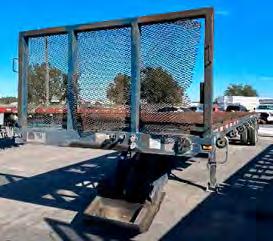
2005 JDH Trussmaster 48' Roll-Off Trailer
• Hydraulic Front End
• Sliding Tandems
• Roller Locks
• Headache Rack
• DOT is not current
• Additional photos & video are available upon request
2 Available at $23,900
NOW $21,000 Each Wasserman & Associates 800-382-0329
www.wasserman-associates.com

• Paccar MX-13 / 12.9L / 405 HP Engine
• 249,300 Miles / 5,566 Engine Hours
• Auto Transmission
• Engine Brake

• 12,000 Lb Front Axle / 22,700 Lb Rear Axle / 34,700 Lb GVWR
• Air Trac Air Ride Suspension
• 148 Inch Wheelbase
• Dual Fuel Tanks
• Tires are Very Good


1997 Wabash model Trussmaster 46 to 64-ft stretch roll-off trailer
36,000 GVWR, locking rollers, tongue connection, sliding axle, electric driving hydraulic pump, and tire tread varies around 3/8“ remaining. No current DOT.
$19,997 FOB AZ
Wood Tech Systems 765-751-9990 www.woodtechsystems.com

2020 JDH Trussmaster 53'-80' Stretch Roll-Off Trailer
• Hydraulic Lift
• Sliding Tandems
• Air Brakes, Auto Slacks, ABS
• 6 Air Operated Load Lifts
• Roller Locks
• Headache Rack
• LED Lighting, Amber Strobes
• 68,000 GVWR
• Last PM Inspection on 8-28-24
$59,500 NOW $54,900 FOB IL Wasserman & Associates 800-382-0329 www.wasserman-associates.com

• Hydraulic Lift
• Sliding Tandems
• Roller Locks & Brakes
• Headache Rack
• Electric Winch on Headache Rack
$48,000 NOW 44,900 FOB MD Wasserman & Associates 800-382-0329 www.wasserman-associates.com

1997 Lakeside JDH Trussmaster
36-51 ft Stretch Trailer (OR-1) 1997 Lakeside JDH Trussmaster 36′51′ – Lakeside trailer features 5th-wheel connection, sliding tandem axle, locking rollers and hydraulic lift neck. Current DOT inspection September 2023. 50% brakes and 50% tire tread remains. 26,000 GVWR $28,997 NOW $24,997 FOB MO Wood Tech Systems 765-751-9990
www.woodtechsystems.com Reconditioned Lakeside
36'-51' Stretch Roll-Off Trailer
• Self-Contained Hydraulic Front End
• Sliding Tandems
• Roller Locks
• Headache Rack
• New Axles (Undercarriage)
• New Wheels, Tires & Brakes
• New Hydraulic System
• New Wiring & Light Sockets
• Sandblasted & Epoxy Painted
• DOT is Current
$40,000 NOW $29,900 FOB ME
Wasserman & Associates 800-382-0329

2006 Hotshot (brand) Stretch Roll-Off Trailer
Manufactured by R & R Trailers, 42-ft to 60-ft stretch, 48,000 GVWR, locking rollers, tongue connection, sliding axle, electric driving hydraulic pump, and tire tread varies around 1/4″ remaining. Headache rack missing swing piece. No current DOT.
$13,997 FOB AZ
Wood Tech Systems 765-751-9990 www.woodtechsystems.com

Alpine Lumber Carousel
Alpine lumber carousel, model LCA 7000, 29-ft diameter footprint, (7) lumber stages, holds lumber up to 18′ in length (when overhanging adjacent stage). Includes 3 HP electric motor driving a self-contained hydraulic pump unit, toggle control, steel tubing construction, urethane-coated wheels with guards, steel base plates and center pivot assembly. 480 volt, 3 phase electrical required.
$7,997 FOB AZ
Wood Tech Systems 765-751-9990
www.woodtechsystems.com

EMSI Teeter Cart
Width – 46” / Length – 73” / Load Capacity – 2850 pounds / Pneumatic tires – 14.5 inch / Maximum utility in truss plants, panel plants, and lumber yards / Quick Assembly by bolting parts together / All hardware is supplied / Upright 2 x 4’s not supplied / Medium duty tires rated at 1500 lbs each are included. Call for Price
Eide Machinery Sales, Inc.
612-521-9193
www.eidemachinery.com

Used - Quincy


NEW GALVANIZED STEEL STRAPPING
1 1/4" wide x .035 thick. $95 per coil. $1,900 per skid (21 coils). FOB PA. Wasserman & Associates 800-382-0329
www.wasserman-associates.com

AMI's industrial floor trucks (material carts) are designed of hardwood construction, fitted with space-age phenolic, roller-bearing wheels, and ball bearing swivel casters for strength and durability. AMI's phenolic wheels resist shock without chipping. They are non-sparking, non-marking, and can be operated continuously between -50℉ and 260℉. They are unaffected by grease, oil or debris on your shop floor.
Our swivel casters are precision built with perfectly aligned raceways. All cold-form parts are made to exacting tolerances from heavy-gauge steel, and are hardened for severe service and long wear. Series B-4 carts include four casters, one at each corner, to prevent "tri-cycling" of long lumber loads.
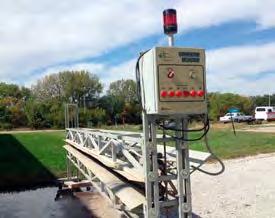
2005
(For Repair or Parts)
6 detection zones to locate missing plates. Horn & zone lights indicate missing plates. 12" to 60" adjustable height from floor. 110 Volt / 1 Phase. New control panel switches & lights in 2014. Needs circuit board repair or replacement and new tower light. Includes 4 extra detection zone boxes.
$2,500 NOW $1,500 FOB NE
Wasserman & Associates 800-382-0329
www.wasserman-associates.com

Hain 20' Powered Measuring System Adapts to Any Saw. Left or Right Hand Operation. Feet & Inches System (Stops at 12” Centers) or Inches System (Stops at 10” Centers). Motor: 1/4 HP Linear Actuator (110 Volt). Stop Rail: 2 x 4 x 1/4” Aluminum Extrusion. Stops: Jig Bored Steel. Stop Blocks: Machine Billet Aluminum. Optional Lengths from 5’ to 60’. Optional Gang Stop. Add $890 per 10’ Section of Heavy Duty Roller Conveyor with Stands $8,990
Wasserman & Associates 800-382-0329 www.wasserman-associates.com


Sweed Scrap (Band) Chopper with Stand
1/2 HP Motor (115/208-230 Volt)
$1,900 NOW $1,750 FOB NE. Wasserman & Associates
800-382-0329
www.wasserman-associates.com
Standard Models Available Max Load Weight (lbs.)
2748 27" x 48" Series "B" & "C" 2500
3248 32" x 48" Series "B" & "C" 2500
3260 32" x 60" Series "B" & "C" 2800
3660
4000
*Other models and sizes are available on request. FOB NC. Wood Tech Systems 765-751-9990 www.woodtechsystems.com

By Hamed Hasani

The HTTH6.5 heavy tension tie is designed to meet the growing demands of modern construction. This product combines state-ofthe-art design with rigorous testing, offering a robust and reliable solution for high-load applications. Its painstaking engineering and precision manufacturing ensure superior performance even in the most demanding conditions.
As part of Simpson Strong-Tie’s legacy of innovation, the HTTH6.5 is the latest iteration in a long line of nailed tension ties, a tradition that began in 1987. Continuous improvements in this product line have allowed us to push the boundaries of structural connections.
For a deeper dive into the history and evolution of tension ties, you can explore the Seventh Day of Trivia blog post, which details our development of this product line. Here, we discuss what makes the HTTH6.5 our most advanced solution yet and how it came to be.

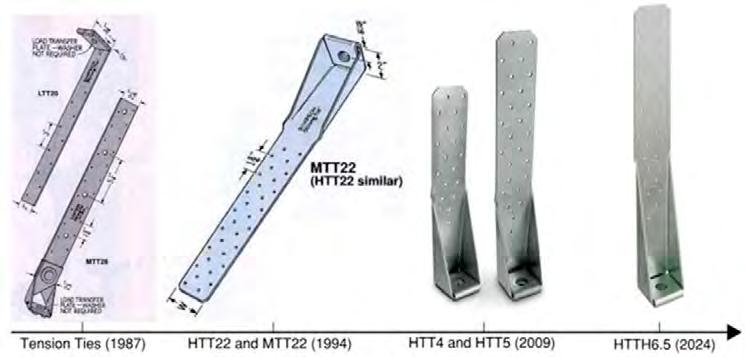
To achieve the highest load possible for this part, we optimized seat width, meticulously determined through extensive finite element analysis (FEA) and physical testing. This width strikes the perfect balance between reducing deflection and minimizing stress concentration, ensuring the connector performs reliably in every load condition. This precise dimension outperformed other widths in both simulated and real-world scenarios, confirming its efficacy in enhancing structural integrity.
Additionally, the cut washer plays a critical role in evenly distributing the load across the connector, helping to prevent localized stress. It is essential for maximizing the HTTH6.5’s load capacity, especially in meeting deflection requirements.

A common challenge in timber construction is the risk of wood splitting under load, which can undermine structural integrity. The HTTH6.5 addresses this issue through an optimized nail pattern developed after systematic testing. By analyzing various nail placements, the pattern was refined to minimize the risk of wood splitting, ensuring that the connector maintains its load-bearing capacity and the durability of the timber. The table presents the allowable tension load capacities of the HTTH6.5 tension tie for both nails and Strong-Drive® SD Connector screws.
Von Mises stress (left) and equivalent plastic strain, or PEEQ (right), for scenarios with and without the cut washer.
Arrows indicate the direction of increasing values.

For detailed specifications and to explore more about this connector and our HTT line, visit the HTT product page. The Post-To-Foundation Designer and Site-Built Shearwall Designer web apps will also be updated with the HTTH6.5 as a holdown solution.
The HTTH6.5 heavy tension tie is more than just a product; it is a solution designed specifically for the demands of evolving construction conditions. By integrating advanced design and precision manufacturing, the HTTH6.5 stands out as a leader in its field. Whether you’re dealing with heavy loads or the challenges of timber construction, the HTTH6.5 is engineered to deliver superior performance and peace of mind.
The article, Introducing the HTTH6.5 Heavy Tension Tie: Engineered to Meet the Most Demanding Conditions, appeared first on Simpson Strong-Tie Structural Engineering Blog. To sign-up to receive the Engineering Blog in your inbox, go to seblog.strongtie.com/subscribe
Copyright © 2024 Simpson Strong-Tie Company Inc. All Rights Reserved
To see meaningful labor savings, quality improvement and production gains, SL Lasers with their easy-to-see green light are nothing short of illuminating. They enhance worker accuracy and productivity, regardless of experience or primary language. They can reduce tedious setup time by up to 70%. No complex training or costly service agreements are required. And SL Lasers integrate seamlessly with any component design software and are quickly installed over existing equipment. We’ve been trailblazers in wood component laser projection since its very beginning, and we’re still delivering more rapid ROI for roof truss, wall and floor panel producers every day. Contact our enlightening team at Wood Tech Systems to see how SL Laser can deliver for you.
productivity of any

• Automated Wall Panel Parts Cutting & Marking as directed by Wall Panel Design Software Output
• 20' Roller Conveyor with Servo Motor Controlled Length Stop/Plate Pusher
• 10' Infeed Roller Conveyor
• 24" Lenovo Touch Screen Computer (Windows 11 Pro OS)
• ASI Bas ic L Plate Cutting/Marking Operating Software
• 4 Head Ink Jet Plate Marker (marks 2 plates on edge)

Truswal Rolsplicer
Chord splicer for roof or floor chords for 2×3 and 2×4 lumber. Presses truss connector plates to 17″ long in approx. 3 seconds. Features a 3 HP gear-motor, safety two-button operation, manual clamping adjustment and (2) 10-ft long idler roller conveyors with legs. 240 volt. 8 amp, 3 phase electrical required. 90 PSI air required.
$12,997 FOB AZ Wood Tech Systems 765-751-9990 www.woodtechsystems.com
• 110 Volt / 1 Phase
• Includes Onsite Installation & Training
• Excludes Saw & Dust Collector
• Approximately $50,000 USD with DeWalt Sliding Miter Saw including Freight, Customs Brokerage Fees & Installation
• Other Saw Options Include: Existing Saws, ASI Radial Arm Saw, Lauderdale Hamilton Up Cut Saw & Vista Angle Boss Saws
• Video available upon request

210" Powered Measuring System • Powered (1 Phase) Measuring System • Inches System (21 Stops at 10" Centers)
• 15' Roller Conveyor with Stands $6,225 FOB CA Wasserman & Associates 800-382-0329 www.wasserman-associates.com


Electrical Supply: 110 VAC
Motor: 1/4 HP, 110 VAC, Linear Actuator
Highly Accurate: +/- .010 Inches
Stop Rail: 2 x 4 x 1/4 Aluminum Extrusion
Stops: Jig Bored Steel
Stop Blocks: Machine Billet Aluminum
Internal Components: Hardened, Ground and Polished Steel and Billet Aluminum
Dimensions:
Length: 5 feet (60”) to 60 feet (720”)
Height: 12 inches
Depth: 12 inches
If you are looking for the fastest, most consistent way to measure and cut your product, then the Hain Measuring System (MEA) is your answer. The MEA changes from one length t any length instantly, up to 60’, without changing the operator’s position on the line. It is also highly accurate (+/- .010) and quickly moves from one length to the next in seconds. The MEA is designed for quick and easy setup and is simple to use. Even a first time user will be productive with little or no training required. It can adapt to any saw and can be mounted to any surface so that you can integrate the MEA with your existing setup. The MEA is versatile allowing “left” or “right” handed operation and measurement in “feet and inches” or “inches” depending on your preference. The MEA is also available in a “Skid Mounted” version.
Automatic Truss Jigging System to drastically reduce setup times. Allows for 100% embedment on the table, with top & bottom chord pucks in the same slot. TopSider or standard configurations available for conventional kick-leg, walk-thru, or our new trackless 8' and 10' continuous table systems. Systems for other roller & hydraulic gantries are coming soon. Available in new machine installations or for retro-fitting your existing table. The TopSider is exclusively applicable for “kick or flip leg” style truss presses such as the Tri-Axis & Lumbermater®
• Capable of 100% On-Table Nail Plate Embedment
• Two Pucks Per Slot
• 24", 26", and/or 30" Spacing
• Compatible with all current major design software
• Multiple Simultaneous Layouts

Alpine Lumber Carousel
• 7 Bunk Capacity (up to 12' Lumber)
• Pushbutton Control Station
• 10 HP / 3 Phase Motor
• In working condition when removed in August 2023
$11,900 FOB Manitoba Wasserman & Associates 800-382-0329 www.wasserman-associates.com

2017 Hain Sub-component Nailer SCN5 Hain SCN sub-component nailing station. This model SCN5 will eliminate cumbersome setup. There are no length limitations and the machine will work in “Just-In-Time” or “bulk” production plants. The setup is instant with a multiple position switch to assemble 2×4 & 2x6 corners, channels, trimmers, king jack stud, double-studs, or to any other configuration desired. The fully enclosed SCN is easy to maintain and filling the nail gun is simple and accessible. The machine is computer designed and is efficiently built using the highest quality materials. The pneumatic logic and advanced circuitry makes the machine accurate and failsafe. With easy adjustments and a one touch operation using a foot pedal, you will experience a dramatic increase in your productivity while working safely and can be producing sub components. Includes (2) Paslode model F350S stick-nailers with extended magazines, 10 foot long heavyduty infeed and outfeed roller conveyors with legs, skate-wheel outfeed transfer arms. 125 PSI air required (No electrical required).
$13,997 FOB AZ
Wood Tech Systems 765-751-9990
www.woodtechsystems.com

SL-Laser Model ProDirector 7 Projection System
Improved model ProDirector 7, green-color laser projection system from SL-Laser. Projects roof truss, floor truss and wall panel design images accurately onto building surface for faster setup and fabrication times. New employees are productive more quickly, with less training required. Each laser head provides 21′ projection length (at 15-foot ceiling heights). New model PD7 projector heads are smaller in size than previous models, have diodes that are easier than ever to swap out and maintain, and project an even clearer line onto the building surface.
System includes projector heads, cables, mounting hardware for attachment to customer’s structure, factory installation, training, and options for computer controls. Works with each connector plate manufacturer’s design software. Modular nature of the laser heads allows for easy future expansion of system length. 120 volt, 1 phase.
FOB NC Wood Tech Systems
765-751-9990 www.woodtechsystems.com

New Monet Power Deck Infeed Decks
Heavy-duty, 5-chain feed system to bring material to the infeed of the component saw. 16′ wide x 20′ long x 36″ high. Transfers 6′ to 20′ lumber lengths. Option for 6-arm Power Deck available at an additional cost. Features auto-feed advance, foot pedal override forward and reverse, variable speed control, double bearing construction, softstart and soft-stop and e-stop cable. Base price shown. 480 volt, 3 phase, 15 Amp electrical required. (Prices start at $31,000.)
Wood Tech Systems 765-751-9990 www.woodtechsystems.com

2002 Atlas Copco Rotary Screw Air Compressor
• Model GX11FF
• 15 HP Rotary Screw Air Compressor (230/460 Volt - 3 Phase)
• 13,443 Hours
• 51.7 CFM at 128 PSI
• 80 Gallon Tank
• Built-in Air Dryer does not work
• Includes separate 2012 Pneumatech AD-50 Air Dryer (1 Phase)
$4,250 FOB TX Wasserman & Associates 800-382-0329
www.wasserman-associates.com

2021 All Lift Stand-Alone Jib Crane
2021 All Lift 3-Ton floor mounted jib crane with 18-ft span, 16-ft reach and 10′-6″ working height, with a 360° rotating boom, this heavy-duty jib crane can provide service to large areas. All Lift jib cranes feature a heavy wall structural steel pipe mast with a 78″ diameter reinforced base plate, allowing for continuous alignment and minimal deflection. The rolled steel I-beam features a tapered flange for smooth trolley travel, and safety end stops at both ends of the boom. (must be mounted on a 4′ deep cement foundation with rebar). System includes an electric 3-Ton capacity hoist with a trolley connecting to a Panels Plus panel lift with 12′ wall height capacity. New, this complete system costs approx. $25,000 (with “soft costs” that included freight and install, approx. $30k total). 230 volt electrical required.
$19,997 NOW $11,995 FOB AZ Wood Tech Systems 765-751-9990
www.woodtechsystems.co

2016 Ranger LRS designed to fit the MiTek Blade linear saw, includes (5) lumber carts, (4) lumber magazines, overall beam length of 50-ft with end column supports, footprint of 50′ x 52′. Pick head is screw-type. Includes light-curtain perimeter beam, operator’s console, perimeter safety fencing and rails for carts.
$81,995

TRIAD GENERATION 3 FRAMING TABLE
Lengths to 76'
Powered Width Adjustment (6'-9" to 18'-3")
Joist Locators at 16", 24" and 19.2" Centers
Accommodates 2x8 through 2x12 Lumber, LVL, I-Joists & Open Web Floor Trusses
TRIAD STUD STITCHER WITH MATERIAL BRIDGE
Programmable Touch Screen
3 Tool Mounts on Each Side (Excludes Nail Guns)
Bridge Auto Return
4,000 Lb Capacity Material Bridge (joists, studs or drywall)
$339,000 NOW $289,000 FOB CO
TRIAD TRIDENT NAIL BRIDEG WITH ROUTER Programmable Touch Screen
3 Tool Mounts with Tilt Capacity (Excludes Nail Guns)
Router Mount (Excludes Router Motor)
Auto Sizing Plate Fire
Bridge Auto Return
Accommodates Horizontal & Vertical Decking
Needs replacement sensors
208 Volt / 3 Phase
New price was $481,488
Installation is available at additional expense

New Handle Bar Router
• Metabo HPT M12XE Variable Speed Router
• Steel Handle Bar Frame with Makita Switches
• 3 1/4 HP / 120 Volt / 1 Phase / 15 Amp
• Includes 2 Router Bits
$3,000 FOB NE. Wasserman & Associates
800-382-0329
www.wasserman-associates.com

2023 Atlas Copco Compressor in Container Housing
2023 Atlas Copco type G7FF rotary screw compressor with internal dryer and external tank. Compressor capacity is 145 PSI, has a 10 HP motor, external air tank includes bleed valve and manual output valve. System comes contained in a custom shipping container with locking entry door, thermostat controlled electric fans, throughwall induction vent grills, interior lighting, electrical panel and utilities for a second compressor. Container size is 8′ width x 10′-6″ long x 8′-8″ height. Hours as of 19 September ’24 were 986. 480 volt, 3 phase / 120VAC electrical required.
$34,490 FOB AZ
Wood Tech Systems 765-751-9990 www.woodtechsystems.com

Used Teeter Carts
Steel teeter carts, quantity of (16), for moving bulk material for production staging, can be used to deliver full units to sawyer or long cut material to an assembly area at a convenient working height. Size 72″ long x 46″ wide x 32″ high, 2,500 lb. load capacity. Feature (2) pneumatic tires/ steel wheel, and (2) swivel casters. Units shown without large tires: quantity of (3) at $500 each. Wood Tech Systems 765-751-9990 www.woodtechsystems.com

Triad 20' Power Chain Conveyor
• Foot Pedal Control
• 2 Pairs available at $7,500 NOW $6,500 Each Wasserman & Associates 800-382-0329 www.wasserman-associates.com

FC Curtis CA Series Compresso FC Curtis model E-15 two-stage, piston drive, air compressor with dryer and 80 Gal. horizontal storage tank, 175 PSI, and 5 HP drive motor. Sold for $4,200 new. 480 volt, 3 phase electrical required.
$2,495 FOB AZ
Wood Tech Systems 765-751-9990 www.woodtechsystems.com

Kundel 35' x 100' 1 Ton Crane System
• 200' Travel Length (can be split into two 100' systems)
• 2 Each - 35' Span Gantry Bridges with 1 Ton Harrington Electric Hoists
• 20' Height
• Internal Electric Bus Bar (eliminates festoon system) $45,000 FOB AZ

• Assembles Trimmers, Jacks, L’s, Channels & Headers
• 2x4 and 2x6 Capacity
• Remote Fire & 3-Way Clamping
• Staggered or Straight Line Nail Pattern
• Squaring Stop
• Foot Pedal Control
• Reserve Air Tank
• 5’ Infeed & Outfeed Roller Conveyor $28,000 FOB NE


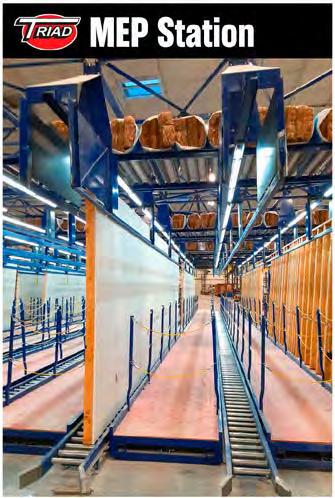
Overall, MEP racks are an essential component in modular construction, contributing to faster, safer, and more efficient building processes.


As you know, Triad MEP Racks (Mechanical, Electrical, and Plumbing racks) are used in modular construction to streamline and organize the installation of mechanical, electrical, and plumbing systems. Here are some key functions and benefits of MEP racks:
Efficiency: By organizing the mechanical, electrical, and plumbing systems into a single, coordinated rack, installation becomes more efficient. This can lead to significant time savings on the construction site.
Space Optimization: MEP racks are designed to optimize the use of space within a building. They allow for the systematic placement of pipes, conduits, and ducts, reducing the need for additional adjustments and rework.
Coordination: MEP racks ensure better coordination among the mechanical, electrical, and plumbing systems, reducing conflicts and interference between them. This coordinated approach helps in avoiding is.sues during installation and operation.
Safety: Making use of MEP racks in a controlled environment reduces on-site risks, such as accidents and exposure to hazardous materials, leading to a safer construction site.
Quality Control: Manufacturing MEP racks off-site allows for stringent quality control measures, ensuring that all components meet the required standards before being installed in the building.


2020 MiTek Canada Autoroll – Roll-splicer type with 2-button operation, air supply quick disconnect with air gauge, 10-ft idler roller infeed and 20-ft idler roller outfeed. Splices 2×3 and 2×4 lumber. Includes (5) racks for storing spliced lumber. 575 volt, 3 phase electrical required. 90 PSI at 5 CFM air required. $25,997 FOB ON


• Automated Big Red Tool Carriage with Four Large Coil Nail Guns
• 8' Home Table, 32' Column Capacity Assembly Table & 4' End Table
• Pop-up Conveyor for Column Removal
• Column Planer (top edge) with Chip Collector
• (5) Conveyor Stands with Automatic Column Stacker
• Column Stacking/ B anding Cart with
Flanged Wheels & Floor Track
• Finger Joint System with Jib Crane, Electric Hoist, Vacuum Lifter, Mobile Scissor Lift, Mobile Lumber Pusher, Finger Joint End Press & Chip Collector
• L ightly Used (approximately 200 columns since installation in Summer 2021) $195,500 FOB ND 765-751-9990 www.woodtechsystems.com


BAM “Ovation”
Door Machining Center (DMC)
New Builders Automation Machinery
“Ovation” series, door machining center (DMC). Fully programmable, two-stage door machine featuring (27) axes of operation. Can be specified with either two or four front machining heads. Machine is side-eject, direct-drive with helical gear racks and gear protection from dust. The door loader is driven by an absolute encoder; no stepping motors, belts or exposed ball screws are used.
More information Click Here
Price based on configuration Wood Tech Systems 765-751-9990 www.woodtechsystems.com

Trucks & Trailers

• Automated Component & Linear Saws (2010 & Newer)
• Monet DeSauw or TimberMill Manual Component Saws
• Floor Web Saws
• Spida (Apollo) Saws with Truss Automation
• Bunk Cutters
• Roller Gantry & Hydraulic Press Systems
• Finish Rollers
• Truss Stackers
• Floor Truss Machines
• Lumber Splicers
• Jack Tables
• C-Clamp Presses
a blending of excellent services and products, with answers that work...!© Not producing the results you need or want – getting conflicting info about what to do and the equipment and the systems you may need? Before you Buy - Ask yourself –do I need a salesman or a guide?
If you want an Independent Guide that has your bottom-line results as the #1 priority, Call Me. If the salesman will do - we'll talk later...
Also, don't let Financing Deals influence your best solution. FitzGroup can arrange – Zero down & No payments for 90 Days!
Please be assured that your investment with any of our selected partners will not cost one penny more with the Fitzgerald Group as your purchasing contact. In addition, you will receive the full advantage of our Partner Relationships and Services NOT offered elsewhere.
• Stretch Roll-Off Trailers
• Go oseneck Roll-Off Trailers
Modular Equipment
• Pacific Automation or MiTek Mobile Home Press Contact Wasserman & Associates for a Fair Market Value Assessment of your Used Equipment
Operational, Needs Work, and Parts Only equipment will be considered!



Builders Automation
Machinery (BAM) door loader, model 2001. Allows you to stack door slabs horizontally and feeds them into a horizontal door machine like the BAM model 996E-TS. Mechanically adjusts door stack height vertically as slabs are fed into machine. Clamp automatically adjusts to type and size of door slab: steel, solid-core or hollow-
controller manages the
machine


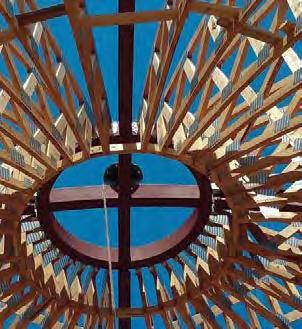
• Sources for MSR Lumber
Filter by species, grade and dimension to locate products from MSRLPC members.
• Educational Resources
Find helpful information for current and potential MSR lumber users.
• NEW! Design Values
Comparison Tool
Compare MSR lumber reference design values with visually graded dimensional lumber by species. The MSRLPC website is a

to make informed purchasing decisions as well as those exploring design optimization with MSR Lumber. Check it out!

Builders Automation Machinery (BAM) model 2220, stair wedge saw station automatically produces wood wedges used to lock stair treads and risers into slots cut into the stair stringers…
Price based on configuration FOB FL
765-751-9990
www.woodtechsystems.com

BAM Pre-Hung
Door Machine
Titan Series
Builders Automation
Machinery (BAM) Titan series pre-hung door machine. Designed to produce between 150 and 250 doors per day. Multi-function door machine capable of doors 1′-6″ to 4′-0″ in width, and both 6′-8″ or 8′-0″ door heights. Processes both 1 3/8″ and 1 3/4″ thick door slabs. Machines the door, hinge jamb and strike jamb all at the same time. Capable hinge sizes include 3 1/2″ x 3 1/2″, 4″ x 4″, 4 1/2″ x 4 1/2″ with 5/8″ radius. Cycle time with flush hinge routing is 45 seconds. 10′ long x 7′-6″ wide footprint. Shipping weight 4,000 lbs.
More information Click Here
Price based on configuration
765-751-9990 www.woodtechsystems.com

BAM Staircase
Assembly Clamp
Builders Automation
Machinery (BAM) staircase assembly clamp, model 2210, accommodates up to 20 foot long stringers with a maximum width of 54″…

Price based on configuration FOB FL
The Coeur d’Alene Golf & Spa Resort
115 S. 2nd St.
Coeur d’Alene, ID 83814
Hotel Deadline: March 31


Wednesday, 4/30
Golf Outing
Social Hour
Independent Dinner
Thursday, 5/1
Educational Sessions Tour
Hosted Dinner
Friday, 5/2
Educational Sessions
Roundtable
“The Workshop puts you in front of the right people in one place to get answers to your questions about MSR, whatever they might be.”
—Ross Harter, Drexel Building Supply, Wrightstown, WI
“Sometimes we don’t know what we don’t know. Getting together at an event like the Workshop gives everyone a chance to keep their ears open for new opportunities and ways to become more efficient.”
—Mike Momb, Hansen Pole Buildings, Browns Valley, MN
“Lumber is your #1 used item –you need to know what you’re buying and using. The knowledge I gain about the lumber market and the forecast for the coming year is invaluable to my business.”
—Sean Kelly, Automated Building Products, Marshfield, WI


Some workplace distractions and interruptions are unavoidable but others – if not properly controlled or regulated -- could lead to injuries, lost productivity, and a decrease in worker morale.
Work interruptions are a distraction that can result in work errors or accidents. Before addressing or responding to another person, workers should shut down or disengage any work tool, equipment, or processes. Job training should include instructions not to interrupt others during a critical job phase or process. Instruction manuals and procedural guidebooks should be kept on site to answer frequently asked questions and thereby eliminate the need to interrupt or distract other workers.
External noise from tools, mobile equipment, and processes can be distracting in industrial and construction work environments. In work situations where loud or constant noise is unavoidable, hearing protection devices can eliminate or decrease unwanted and distracting noise. In other work environments even notso-loud sounds can be a distracting annoyance. Constantly ringing phones, conversations, and loud faxes, copiers, and printers can distract workers from their job tasks or -- depending on the level or duration of the noise -- can contribute to workplace stress.
Electronic devices such as cell phones, IPODS, and PDAs can be the source of serious distractions in some work environments. Check with your supervisor to find out if these electronics are allowed where you work. If these devices are approved in your workplace, as a courtesy to your co-workers, make sure you keep your cell phone on a low volume or silent when you work. To maximize work safety and performance, turn email notifications off and disable instant messaging. Don’t answer the phone or emails when you’re in the middle of a task – let it ring to voicemail then check messages later -- preferably on your break time.
Algunas distracciones e interrupciones en el sitio de trabajo son inevitables, pero otras – si no están debidamente controladas o reguladas – pueden conducir a lesiones, pérdida de productividad y disminución de la moral de los trabajadores.
Las interrupciones en sus tareas son una distracción que puede resultar en errores o accidentes en el trabajo. Antes de hablarle o contestar a otra persona, el trabajador debe apagar o desconectar cualquier herramienta, equipo o proceso que esté en funcionamiento. La capacitación para el trabajo debe incluir instrucciones de no interrumpir a otros trabajadores durante una fase crítica de la tarea o del proceso. Los manuales de instrucciones y las guías de procedimientos deben tenerse en el sitio de trabajo para contestar preguntas frecuentes y eliminar así la necesidad de interrumpir o distraer a otros trabajadores.

Los ruidos externos, provenientes de herramientas, equipos móviles y procesos, pueden ser una distracción en ambientes de trabajo industrial o de construcción. En situaciones de trabajo en las que los ruidos fuertes o constantes son inevitables, se deben usar dispositivos para la protección de los oídos con el objeto de eliminar o disminuir los ruidos no deseados que pueden causar distracciones. En otros ambientes de trabajo, ciertos ruidos, aunque no muy fuertes, pueden ser una molestia por distracción. Teléfonos que timbran constantemente, conversaciones y máquinas de fax, copiadoras o impresoras ruidosas pueden distraer a los trabajadores de sus tareas de trabajo o — dependiendo del nivel y la duración del ruido — pueden contribuir al estrés en el sitio de trabajo. Los dispositivos electrónicos, tales como teléfonos celulares, iPods, y PDA pueden ser una fuente importante de distracción en ciertos ambientes de trabajo. Consulte con su supervisor para saber si estos dispositivos electrónicos están permitidos donde usted trabaja. Si dichos dispositivos están permitidos en su sitio de trabajo, como cortesía a sus compañeros de trabajo, asegúrese de que su teléfono celular esté ajustado a bajo volumen o silencioso en el trabajo. Para maximizar la seguridad y rendimiento en el trabajo, apague las notificaciones de correo electrónico e inhabilite los mensajes instantáneos. No conteste el teléfono ni a los correos electrónicos cuando esté efectuando una tarea – deje timbrar el teléfono y que pase a mensaje de voz y revise dichos mensajes más tarde –preferentemente durante un descanso.
In some work environments wearing a headset with low volume music can be relaxing to workers and help them to safely focus on their work. However, wearing headphones on a construction or industrial site can be dangerous if it prevents workers from hearing warning signals, mobile equipment backup alarms, and safety instructions.Walking around while talking on the phone or wearing a headset distracts your attention from safety and could result in a slip or fall or cause you to run into or be struck by something or someone.
Workplace distractions and interruptions are common, but training can help you remember to keep your mind on the task at hand. Speak up about repeated and/or unsafe distractions and think and take responsibility for not interrupting or distracting others.
The above evaluations and/or recommendations are for general guidance
based solely on the information provided to us and relate only to
implied, that your workplace is safe or healthful or that it complies
En algunos ambientes de trabajo, usar audífonos con música a bajo volumen puede relajar al trabajador y ayudarlo a concentrarse en sus tareas con seguridad. Sin embargo, el uso de audífonos en sitios industriales o de construcción puede ser peligroso si impiden oír señales de advertencia, alarmas de retroceso de equipos móviles e instrucciones de seguridad. Caminar mientras habla por teléfono o usa audífonos puede distraerlo de la seguridad y puede resultar en un resbalón o caída, o ser atropellado por un vehículo o tropezar contra otras personas.
Las distracciones o interrupciones en el trabajo son cosa común, pero su capacitación debe ayudarle a recordar que debe mantener su mente enfocada en la tarea que ejecuta. Mencione las distracciones repetidas y/o peligrosas y piense y acepte la responsabilidad de no interrumpir o distraer a otras personas.
November 1
November 5 – 8
NOVEMBER 2024
American Lumber Standard Committee (ALSC) Annual Meeting Point Clear, AL
National Council of Structural Engineers Assoc. (NCSEA) Structural Engineering Las Vegas, NV
November 6 – 7 Western Building Material Assoc. (WBMA) Annual Conference Hillsboro, OR
November 6 – 8 2024 DBIA Design-Build Conference & Expo Dallas, TX
November 7 – 9 Austin, TX
November 8
Mountain States Lumber & Building Material Dealers Assoc. (MSLBMDA) Denver, CO
November 8 Zonda & HomeAid 2025 Housing Market Outlook Newport Beach, CA
November 10 – 12
November 11 – 14
Special Tools & Fasteners Distributors Assoc. (STAFDA) 48th Annual Convention Nashville, TN
Lumber Quality Institute (LQI) Lumber Quality Workshop Salem, OR
November 12 – 14 Philadelphia, PA
November 12 – 15 Philadelphia, PA
November 13 – 15 North American Wholesale Lumber Assoc. (NAWLA) Traders Market Phoenix, AZ
November 18 – 20 Affordable Housing Finance (AHF) Live Summit Chicago, IL
November 20 Atlanta, GA
TElectrical Supply: 110 VAC Motor: 1/4 HP, 110 VAC, Linear Actuator Highly Accurate: +/- .010 Inches
Stop Rail: 2 x 4 x 1/4 Aluminum Extrusion
he Hain Systems Framer (HSF) will help you build square and accurate wall panels for residential or commercial construction applications. It will help you cut building costs by saving time and improving your quality. It’s a reliable, efficient and proven system that features a ruggedly simple design. The HSF is based on a proven design with over 20 years of actual production use and maintenance experience. It comes fully assembled and is designed for portable job site framing or in-plant permanent installation. The table has many optional attachments and will support Mylar Tape wall layout or any other type of layout. The optional gun rails can also be retro-fit to any table.
Stops: Jig Bored Steel
Stop Blocks: Machine Billet Aluminum
Details:
Internal Components: Hardened, Ground and Polished Steel and Billet Aluminum
Table Construction: Thick-wall Structural Steel Tubing, Jig Welded for Accuracy
Dimensions: Length: 5 feet (60”) to 60 feet (720”)
Height: 12 inches
Air Supply: 90 psi (10 CFM Air Flow Recommended)
Depth: 12 inches
Electrical Supply: 120 VAC
Powder Coat: Industrial Gray
Dimensions: Height: 43”
Length: 16’ or 20’
Width: Adjustable 8’ to 10’ or 8’ to 12’
Shipping Weight: 3000 lbs
If you are looking for the fastest, most consistent way to measure and cut your product, then the Hain Measuring System (MEA) is your answer. The MEA changes from one length t any length instantly, up to 60’, without changing the operator’s position on the line. It is also highly accurate (+/- .010) and quickly moves from one length to the next in seconds. The MEA is designed for quick and easy setup and is simple to use. Even a first time user will be productive with little or no training required. It can adapt to any saw and can be mounted to any surface so that you can integrate the MEA with your existing setup. The MEA is versatile allowing “left” or “right” handed operation and measurement in “feet and inches” or “inches” depending on your preference. The MEA is also available in a “Skid Mounted” version.


The truss industry relies on 3rd party quality assurance services to provide random visits to review the plants Quality Assurance program along with their operations. If your plant needs to comply with the IRC, IBC and to those who depend on solid, experienced QA expertise, we ask you to consider selecting Timber Products Inspection, Inc. (TP) as your choice for 3rd party inspections.
Proudly serving the forest products industry for over 50 years, TP brings the expertise you need to ensure your business is successful. As a responsible partner, TP delivers to clients, employees, and the industries we serve the confidence to drive value through the effective use of our diverse professional team.
TP would like to welcome the following authorized agents to our inspection team, each of whom have many years of experience in the truss industry!
• Al Coffman
• Jean Hart • Curt Holler • Chuck Ray
Glenn Traylor • Elliot Wilson
If you have questions about how you can make this selection, please contact your authorized agent above or Glenn Traylor at 919-280-5905 or trusguy@gmail.com. https://www.tpinspection.com/ https://www.tpinspection.com/auditing-services/truss

Are you a skilled Truss Designer or Wall Panel designer seeking a better work-life balance? Look no further! Our client is offering a unique opportunity for talented designers like you to thrive in an environment that respects your personal and professional needs.
In this position, you'll have the flexibility to choose from various working arrangements to accommodate your lifestyle. Some of our employers offer a 32-hour workweek with full benefits, allowing you to strike a perfect balance between your career and personal life. You can work in the office, remotely, or in a hybrid setup, depending on your location and skill level.
Truss Designer J15348
South
Remote Wall Panel Designer J15344
Southeast
Senior Truss Designer - J15342
Mountains
Truss Designer - On-site - MiTek Florida J15346
Remote Truss Designer - MiTek J15303
Florida or remote
Outside Sales - Truss/Lumber J15345
Southeast
Remote Truss Designer J15313
New England
Truss Designer J15339
New England
Assistant Truss Plant Manager J15311
Central Florida
Truss Designer - MiTek - Remote or OS J15312
Florida, AL, or GA for Remote
Project Coordinator J15272
TN
Remote Wall Panel Designer - J15304
Remote - Eastern US
Remote Truss Designer - MiTek J15228
Florida
Truss Designer J14165 Carolinas
Implementation and Support Specialist J15306
100% Remote - Northeast
Truss Designer - MiTek - Remote or OS J15312
Florida, AL, or GA for Remote
Senior Truss Designer - J15342
Mountains
Software Territory Sales Representative –Component Manufacturers J15336 Kansas, Missouri, Oklahoma, and Northern Arkansas Territory
Truss Designer J15339 New England
Mass Timber Sales/Business Development-J15338
Central Ontario
Mass Timber Engineer-J15337
Central Ontario
Truss Designer-J15334
Southern Alberta
Senior Truss Designer-J15335
Southern Alberta
Truss Design/Estimating Manager J15332
Texas
Mass Timber Business DevelopmentJ-15330
Eastern North America
Mass Timber Business DevelopmentJ-15331
Western North America
Assistant Truss Plant Manager J15311
Central Florida
Senior Truss Designer - J15294
Western Ontario
Truss Designer-J15293
Western Ontario
Design Manager - J15295
Western Ontario
Outside Sales - Wall Panels, EWP & Trusses - J15321
Eastern Ontario
Senior Truss Designer-J15300
Eastern Ontario
Truss Design Supervisor-J15325
Central Ontario
CFS Truss Designer | Wall Panel Designer J5323
Midwest
EWP Designer-J15283
Eastern Ontario
Senior Truss & EWP Designer - J15320 AB, BC, ON
EWP Designer - J15314 BC
Remote Wall Panel Designer - Production Builder Market J14107
Remote Indiana
Truss Designer-J15299
Eastern Ontario
ID: C10122
Designer/Design Manager - Truss
Relocation: Iowa
Senior Designer. - Advanced. Candidate has 24 years Truss Ddesigner experience and 5 years Truss Design Manager experience. Products include floor trusses, roof trusses, I-Joists, and hardware. Markets include single family, custom, high end, multi-family, light commercial, and agriculture. Primary duties include design, layout, optimization, cutting/production documents, and takeoff. Secondary duties include checking others work, repairs, customer service, inside sales, software maintenance, training, and filling in for the Design Manager as needed. Software experience includes MiTek and Keymark. Training received includes WTCA Level 2. Education: High School Graduate and Batchelors degree.
Motivating factors: advancement, compensation, benefits, work location, job security, and relocation.
ID: C18604
Truss Designer - Remote (MiTek)
Relocation: Alberta
I currently design & layout roof trusses, floor trusses, I-Joists and EWP from PDF plans and specifications for pricing. Also does engineering using MiTek, then uploads to Management or MBA in the past. Once sold, and field measurements are provided, I update the project and clean up the layouts, trusses and release them to the shop. I also answer questions from sales and the shop as needed as well as training newer designers. Most of my projects are single family, but I have also done several apartments, hotels, assisted living centers, and other commercial projects. I want to grow, learn, and become a better designer to be a valued team member.
ID: C18698
Wall Panel Designer / Modular Designer
Relocation: Georgia
Highly-skilled and detail-oriented with over 20 years of experience in creating precise and comprehensive technical drawings and plans for architectural and engineering projects. With a keen eye for detail and a strong command of drafting software such as AutoCAD and Revit, I excel in translating design concepts and specifications into accurate and detailed drawings that meet industry standards and project requirements. I am dedicated to delivering high-quality drafting solutions, optimizing project workflows, and supporting the realization of innovative and sustainable design solutions. Eight years modular (residential and commercial) plus 4 years of wall panel design experience. Single and multi-story modular and residential wall panel focus.
ID: C10968
Senior Wood Truss Designer - Part Time
Relocation: Florida, Alabama, Georgia, REMOTE
Candidate desires to use his career long industry experience to be the best Part Time
Remote Designer you have. Prior truss plant owner for 10 years, strong production and operations management background, and JobLine Senior Designer rating in truss design using MiTek software. Also has FASTBeam experience. Products: floor & roof trusses. Markets: Single family custom, multi family, tract and light commercial. Was successful in creating strong teams in production, design and customer service, but the local economy and overwhelming competition was more than he could overcome from a small plant perspective. Degree: BSEE
Compensation: Based on employee or 1099 status.
Thom's Notes: I have worked with this candidate as an employer for years. Very detail oriented. Fair, honest, and customer service oriented. Very design/liability conscious. Scored 98
ID: C10186
Remote CFS, LGS Designer - Multifamily/ Commercial Relocation: Texas
One of my best CFS designers, the candidate has 20+ years experience in commercial, multifamily, and pagoda style structures. Want to know more, give me a call or make an inquiry.
ID: C10853
Remote Design Manager | Remote Offshore Design Project Manager Relocation: Texas, Georgia, USA - South
Top level Engineering/Design Management candidate, 14+- years experience Truss, 4+- Panel experience. Has experience building and integrating offshore design resources with internal design departments and training design managers to better utilize offshore capabilities. Large volume manufacturer experience. MiTek Sapphire design/layout proficient. Too confidential to go into more detail.
Compensation: $120k+
ID: C18549
Remote Wall Panel Designer Relocation: USA - ALL States Wall panel designer with 10 years' experience including production builders, single family custom and small to medium multifamily projects. MiTek Sapphire software experience.
ID: C18426
Remote Truss Designer
Relocation: Colorado, Illinois, Indiana, North Carolina, South Carolina, Texas, Utah, Maryland, Florida, Georgia, Nebraska, REMOTE, Costa Rica, Pennsylvania, Tennessee, Virginia, Wisconsin, Wyoming, Washington DC, Rhode Island, Saskatchewan, Oregon, Ontario, North Dakota, New York, New Mexico, New Jersey, New Hampshire, Nevada, Montana, Mississippi, Minnesota, Massachusetts, Kentucky,
Delaware, Conneticut, California, Arizona, Alaska
Offshore Truss Designer with MiTek experience. The candidate is a civil engineer with 6 years' truss design experience for companies in Texas and Florida. Prior work for BFS and smaller manufacturers. Bilingual Spanish/English with a company set up to make paying easy. Scored 89 on our truss design skills evaluation, which is near the senior designer level. He is also SBCA I & II certified. He is willing to go to work immediately.
Compensation: $65-75k as a subcontractor, no benefits or taxes.
We haven't represented offshore candidates in the past but feel this candidate is worth a shot. Please contact Thom for additional details.
ID: C11370
General | Plant Manager/OperationsTruss/Panel/Framing Package Relocation: Texas, Arizona
20 years' experience. Started in production, advanced to Saw Supervisor, Production Manager, Plant Manager, now General Manager. As General Manager operated a $125M truss plant. Tripled output and reduced errors and labor cost. Developed and implemented standards and procedures to manage quality and costs. As Plant Manager (4 years), manage all the operation of the manufacturing plant, such as Productivity, logistics, efficiencies, costs. As Production Manager (12 years), manage all the areas of the manufacturing across the plant. Safety, quality control, efficiencies, HR, etc... Software: MiTek, Word, Excel, OptiFrame. Products: R & F Truss, Panel, Framing package. Markets: Single Family, Multifamily, Custom Homes. Bilingual English/Spanish spoken and written. Degree in Industrial Engineering.
Compensation: $90's+ bonus ($100k min) ID: C10897
Design Manager/Senior Designer/PE/ Optimizer - Truss/Panel/EWP Relocation: REMOTE
30 year industry veteran, started as a Truss Designer, earned his way to Design Manager over 20+ designers. MiTek - Advanced, AutoCAD proficient. BSCE - PE.
Compensation: Open??
Thom's Notes: PE with Mid Atlantic seals ID: C18565
Designer: Truss/Panel, Wood/Steel, BIM
Relocation: North Carolina Material take-offs, proposals, job-site meetings, Submittal Tracking, Excellent Problem-solving Skills, Material Ordering, Field Measuring, 3-D Modeling Program (3-D and 4-D BIM in-house), Generated material take-offs from the BIM model, Coordinated RFI's thru the BIM model,

Clash detection between wood trusses, structural steel and LVL's. 3-D Scan's of job-sites. Scheduled / Distributed work to 6 designers Cross-trained all designers in roof floor and wall panels for whole-house design.
ID: C18370
Plant | Location | General ManagerTruss/Panel
Relocation: California, Nevada Highly experienced (20+ years) roof and floor truss, and wall panel manufacturing manager. Started in the plant as builder, then sawyer, supervisor, truck driver, maintenance manager, designer, outside sales, plant manager, operations manager, and general manager. OSHA trained, developed and implemented safety programs. Successful turn around experience, hands on ability to work with departments to combine individual strengths into one team effort, lower costs, and meet quality and volume expectations. Past experience negotiating better vendor programs to lower costs and improve inventory turns.
ID: C10507
Senior Management - Truss/Panel/ Lumber/Installed Services
Relocation: USA - Western
I am a Diverse driven individual seeking a position in the fast paced construction component industry where my professionalism in sales, business and leadership skills along with a strong proven background in, General Management, Operations, Sales Management, strategic alliances, business development, team building, P&L experience and Customer Satisfaction will play an integral part in growing new business, nurturing existing business or developing company operations to meet the highest level of efficiencies, standards and safety while having fun
doing it!
ID: C11834
General/Regional Manager - Truss/Panel Relocation: Maine, Massachusetts, New Hampshire, Ontario, Vermont
As District Manager: Responsible for the financial performance of three wood truss and wall panel plants, two Millwork and door assembly facilities and one installed labor location in multiple states. Group revenues increased from $50 million/year in to $70 million per year. Devised a “buy versus make” purchasing protocol in to ensure that internal truss and Millwork plants were operating at capacity before using outside vendors that supplied similar products. Spearheaded a “hub and spoke” organizational structure for three truss plants. This plan optimized scarce design talent, reduced clerical expenses, and synchronized output at each plant. Restructured the installed labor division to include material estimators, lumber salespeople and cost accounting methods in 2005. The changes resulted in a 400k gain in profits. Drafted corporate training material for fall protection and new hire safety orientation.
As General Manager: Won “Gold Store” award for exceeding company goals in profits, sales growth, and ROA. Served on a corporate manufacturing audit and operating performance team that made recommendations to under performing truss plants. Two of the facilities audited became “Gold Stores” the following year. When the sales of three district stores were allocated to the truss plant, the lost business ($1.5 million/year) was made up and organic sales grew by over 10%. Sales volume grew from $11 million per year to over $15 million per year.
ID: C18387
Division Manager, VP Operations, President - Truss | Panel | Building Materials | Pro Dealer
Relocation: Arizona, Colorado, Florida, Georgia, Hawaii, Maryland, Texas, USA - South, Virginia, Washington DC, Wisconsin
Executive level manager, VP, President with $1+B P&L responsibility. Lumber, building materials, trusses, wall panels, and CFS background. Inquire to discuss this candidate.
ID: C18449
Estimator | Designer - Truss, Panel | Prior carpenter
Relocation: Ohio, Pennsylvania
Prepare and distribute estimates to competing bidders. Calculate labor, time, and material estimated per individual job. Read, analyze, and interpret residential and commercial blueprints. Ensure projects meet the proper building codes and standards for the industry. Communicate with prospective bidders both over the phone and in person. Design and engineer roof trusses, floor trusses, pre-fabricated wall panels, and
EWP. Gained first-hand experience setting trusses in the field during prior construction job. Design roof systems to be most efficient and inexpensive when being constructed in the field. Design complete models in MiTek Sapphire. Design and engineer roof trusses and transfer loads throughout the structure as need. Also design and engineer beams and hangers when necessary.
ID: C12414
Truss Designer | Wall Panel Designer | All Hats Relocation: Arizona
Engineered panel and truss design, developed material take off for turnkey build up, worked in coordination with multiple plants and design teams, worked closely with material suppliers on take offs and estimating.
I've worked for decades in the construction industry. Not only in new construction, but additions and remodels as well using innovative designs for added value and to drive down cost. In addition to experience with MiTek, Wallbuilder and other design software packages, I have extensive manual trig/math skills. I use these to back check questionable loads as well to design from scratch in the field when needed. I have also written tutorials for the training of others and checked other designer's work as a Design Manager at a Panel Plant. All things being equal, I love working in components whether designing, cutting, building or setting components at the site.
ID: C18430
Truss Designer | Remote Truss Designer Relocation: USA - South, USASouthwest, USA - ALL States
Extensive experience in truss estimating and design. Proficient in designing roof and floor trusses for a variety of projects including: custom homes, track homes, multi-family, mega-multifamily, and light commercial projects. I always get everyone involved with the project like architect, engineers, homeowners, and sales personnel Many times I go to the job site for the convenience of the framer and see what kind of condition or changes they might have; this way we will be working on the same page. Also included in my experience is purchasing material, negotiating contracts, setting up deliveries, steel and cmu detailing for steel columns and beams, with almost 25 years of experience in the construction business. MiTek Sapphire.
ID: C18412
Plant | Production | Operations Manager - Truss/Panel
Relocation: Georgia, South Carolina, Florida
Oversaw all aspects of the manufacturing and shipping of wood truss component systems for the building industry: roofs, floors and wall panels; 2 shift operation; 8 million in sales.
Managed the master schedule based on
sales orders, plant volume, and lead time through the Mitek Management Business Application System.
Followed all orders through the process to insure OTD (on time delivery).
Handled all phone communications from the customer as it related to changes in the delivery schedule.
Batched jobs through the engineering software to the component saws and truss building tables
Quality Assurance – WTCA/TPI
ID: C18367
Wall Panel Designer | Remote Wall Panel Designer | Mega-Multifamily
Relocation: Utah
Remote wall panel design for medium to large scale MF. Remote estimating using MiTek Sapphire to get a more accurate material count. 100,000 - 500,000 sq ft MF projects primarily in the New England Market with the panel plant being in New Brunswick. Also worked on projects in the Arizona, Texas, and California markets.
Compensation: $70's+ (45+- hours)
ID: C18365
Intermediate Canadian Remote Truss Designer - Sapphire Relocation: Ontario
Remote Truss Designer available.. Currently provides technical support and designs to lumber distributors for roof systems for residential and commercial applications. Provides technical assistance and support to the distribution staff to meet client demands for engineered wood structural applications. Ensures that wood truss fabricators, lumber distributors and specifiers have adhered to established building standards, codes and practices. Maintains extensive knowledge of structural analysis programs such as MiTek SAPPHIRE Structure design software. Analyze/prepare engineered wood designs and details for Design Engineer review and approval. Generate manufacturing information and quotations for sales team and management. Prepares the job for production. Canadian codes and standards experienced.
ID: C15958
Operations/Plant Manager - Millwork | Doors | Ply | Flooring Relocation: Colorado, Illinois, Indiana, Iowa, Kansas, Kentucky, Minnesota, Missouri, Montana, Nebraska, Nevada, North Carolina, South Dakota, Tennessee, Virginia, Wyoming
30 years' experience starting in production and advancing to multi-plant operations manager. Door experience includes managing three Production Managers and five Production Supervisors, consisting of 300 hourly employees producing 11,000 doors and 10,000 face frames per day. Responsible for the manufacturing functions of all mill operations, five frame component machining cells, three frame assembly
operations, four door component machining cells, three door assembly clamps, three door profiling lines, two wide belt sanding lines and specialty machining and assembly cells.
Flooring experience: Responsible for all plant functions including budgeting and P&L. Managed six Department Managers: two Production Departments, Quality Assurance, Materials, Human Resources including SHE, and Plant Engineer/Maintenance Manager including the CI program. Their staffs consist of eleven Supervisors and 330 hourly employees. The door plant operation dries lumber, cuts dimension stock, assembles and sands the doors. The panel plant produces the veneered flat and raised center panels, by cutting engineered wood and veneer from flitch and pressing the veneer to the substrate. Both plants are equipped with finishing lines.
ID: C15995
Truss Designer - MiTek
Relocation: Florida
Truss Designer. Primary duties: design, layout, optimization, and cutting/production documents. Secondary duties: checking others work. Software used: MiTek and AutoCAD. Component experience includes floor trusses and roof trusses. Market experience includes single family, multifamily, light commercial, and agriculture. My volume was varied depending on projects. 2 years experience, MiTek software.
ID: C18277
Professional Engineer | Engineering Manager - Engineered Wood Products, Components Structural Hardware | Codes & Compliance
Relocation: Maryland, Minnesota, North Carolina, Pennsylvania, South Carolina, USA - Eastern, Virginia, Washington DC
Experienced and successful professional engineering manager with over 25 years experience in improving productivity and resolving structural problems for engineered wood product and truss manufacturers and developing innovative design software programs. Also skilled in building outstanding teams and relationships among sales, manufacturing, and engineering stakeholders. Highly educated with exceptional employment history & experience.
ID: C18250
Remote Senior Light Gage Steel Truss/ Panel Designer.
Relocation: Texas
Top level Light Gage Steel Senior Remote Designer with Truss and Panel and well as metal frame commercial project experience. Alpine, Truswal and Keymark experience.
ID: C17230
Remote Wall Panel Designer - Sapphire
Relocation: Newfoundland
My objective is to be part of a team/company and prove I am reliable, show my ability and
my willingness to learn! In addition to being a newer wall panel designer, I have learned software such as Mitek Sapphire, Revit 2017, Bluebeam Revu 2016. I have recently done jobs such as designing garages and adding on additions to homes. Jobs I have worked in wall paneling include a massive wall panel job for the US (500,000+ SFT) and designed units for a senior complex. In addition to wall panels...I also add in blocking, windows, doors, etc. I also do bundling and paperwork as well.
ID: C16152
Mega-Multifamily General Manager
Relocation: Florida
Mega-Multifamily General Manager. Apply to discuss this candidate. Highly confidential.
ID: C11781
Truss Design Manager
Relocation: New York
Worked on the most complicated custom projects, commercial buildings, and apartment complexes. Quickly became a team leader and was considered company wide as an expert in truss framing and computer applications. Provided training for a group of 30 experienced component designers in topics including load tracking, truss and layout optimization, and hardware specification. Optimization training helped to reduced material costs by 5%. Developed departmental procedures to increase consistency and accuracy of all designs and estimates. Reduced errors on repetitive projects by 25% by creating the master project file database, which organized and provided fast and easy access to project information. Streamlined estimating process for commercial construction projects. Analyzed the final cost of completed projects and applied results to new estimates. Reduced estimating time by 75% Managed up to 10 designers/sales reps. Software: MiTek, AutoCAD.
ID: C15999
Outside Sales - Truss | Wall Panel | EWP | Installed Sales
Relocation: Alabama, Georgia, Kentucky, North Carolina, South Carolina, Tennessee, Virginia
16 years' experience in outside sales of trusses, wall panels, engineered wood components, stairs and other building materials. Projects range from tract to high volume multifamily apartments. Has developed new territory, improved sales in lagging markets, and met or exceeded sales goals in most years. Has turn key installed sales experience, and has limited design skills from the past. Please inquire for additional information. Easy relocate.
ID: C15857
Senior Truss Designer | Remote Truss Designer | Design Manager Relocation: California
Truss Designer. Primary duties: design, layout, optimization, cutting/production documents, and takeoff. Secondary duties: checking others work, scheduling, repairs,
customer service, inside sales, and field measurements. Software used: MiTek and AutoCAD. Component experience includes floor trusses, roof trusses, I-Joists, EWP, and hardware. Market experience includes tract, single family, single family custom, multifamily, and light commercial. My volume was varied depending on projects. Has used MiTek, Alpine, AutoCAD, and Microsoft Office programs.
The candidate has been out of the industry, working in parallel jobs, and wants to return to a design position. Scored Senior Designer using an HP calculator, 8 years after his last truss design job. Speed was faster than average too. It may take a little time for him to get up to speed on the latest software. Ranked 5 out of 5 in our system.
ID: C10810
Designer/Inside Sales - Truss Relocation: Virginia
6 years design experience, 1 inside sales. Primary duties: design, layout, optimization, cutting/production documents, and takeoff. Secondary duties: scheduling, repairs, customer service, inside sales, and field measurements. Software used: MiTek, AutoCAD, and CAD - Other. Component experience includes floor trusses and roof trusses. Market experience includes tract, single family, single family custom, multifamily, light commercial, and agriculture. My volume was varied depending on projects. Past carpenter and framer. Has an engineering related associates degree/ drafting
Compensation: $45k+
ID: C15679
LGS Truss & Panel PE
Relocation: USA - Eastern, USA - South
As Engineering Manager I was responsible for oversight of all technical and engineering engagements. Design of light gauge metal trusses, wall panels, shear walls, for hotels, retirement homes and other commercial and residential structures. Making jobs viable by replacing red-iron with light gauge metal was key to solidifying more projects. I was actively engaged in computer software development of truss design and coordinating overseas programming efforts into truss layout.
As Senior Technical Services Engineer, I held the nation-wide responsibility for all light gauge cold-formed steel truss engineering including field applied repair design. I provided technical advice and counsel to our staff and functioned as a subject matter expert (SME) for all three product divisions. As a result, I augmented my professional registrations to include 38 States, 1 District, and 1 Canadian Province.
ID: C14490
General Manager | Operations Manager | Turn Around
Relocation: Colorado, Delaware, Illinois, Indiana, Iowa, Kentucky, Maryland, Michigan, New Jersey, New York, North
Carolina, Ohio, Pennsylvania, Tennessee, Virginia, Washington DC, West Virginia, Arkansas, Massachusetts, Minnesota, Missouri, Montana, North Dakota, Rhode Island, South Carolina, South Dakota, Texas, Wisconsin, Florida, Georgia, Idaho, Kansas
Full P&L turnaround of a family owned light gage steel panel manufacturing company. Turned it form a mom and pop, into a large, functioning manufacturing company that had systems, KPI programs, personnel development, and a growing customer base. Ready to help take your company to the next level.
ID: C11976
Design/Estimating/Sales - Truss/LGS Relocation: New York
Experienced wood & cold formed steel truss designer with 12 years experience using MiTek Industries and Aegis Metal Framing products and software. Seasoned sales professional with 8 years experience selling; wood roof & floor trusses and accessories, metal roof trusses and accessories, and the sale of component design and engineering services. A highly motivated designer and sales person with a proven track record for achieving excellence, building long term business relationships, and providing impeccable service to contractors, engineers, architects, and developers throughout New York and New England. Specialize in design build and defense contracting from early pre-bid/qualification stages through installation.
ID: C11895
Designer - Truss/I-Joists, EWP
Relocation: California, USA - ALL States, Texas, Alaska
Designer. Primary duties: design and cutting/production documents. Secondary duties: checking others work and field measurements. Software used: Alpine and MiTek. Component experience includes floor trusses, roof trusses, I-Joists, EWP, and hardware. Market experience includes single family, single family custom, multifamily, and light commercial. BS Civil Engineering. Software: Alpine, MiTek, AutoCAD, Word, Excel.
ID: C10324
Plant Manager/Designer/Design Manager/?? - Truss/Panel/Installed Relocation: Georgia
As Location Manager, managed one estimator, four designers, a secretary/ data entry person, and a shop of 40 truss production employees. As Senior Designer, primary duties: design, layout, optimization, and takeoff. Secondary duties: checking others work, scheduling, repairs, customer service, and training. Software used: Alpine and AutoCAD. Component experience includes floor trusses, roof trusses, wall panels, framed openings, I-Joists, EWP, hardware, lumber, and complete framing package. Market experience includes tract, single family, single family custom, multi-
family, and light commercial.
Thom's Notes: Very experienced, willing to wear many hats.

Posted October 11, 2024 on NAHB Now | The News Blog of the National Association of Home Builders Reprinted with permission.
America will need thousands of new skilled construction workers to reduce the nation’s housing deficit — a shortfall NAHB estimates to total 1.5 million homes — according to the latest Construction Labor Market Report from the Home Builders Institute (HBI).
The free report provides an overview of the current state of the nation’s construction labor market.
Key findings in the report include:

• There are currently 8.3 million payroll construction workers in the U.S. Of those, 3.4 million work in residential construction.
• The estimated, required amount of construction worker hiring is approximately 723,000 per year, according to NAHB analysis of BLS data and projections.
• As of August, the six-month moving average of new residential construction worker hiring is 5,667 per month.
• Average hourly wages in the overall construction industry have increased 4.3% over the last year.
• The average hourly earnings of construction workers is $38.30 as of July, higher than the national average hourly earnings for manufacturing ($34.10) and all U.S. occupations ($35.10).
• Women make up a growing share of construction employment, reaching 10.8% in 2023, up significantly from 9.1% in 2017.
• Hispanics make up close to a third of the construction labor force (31.1%), a record high share.
To learn more about the residential construction labor market, view the report
NAHB Chief Economist Robert Dietz and HBI CEO Ed Brady discussed the report’s key findings, trends and possible solutions for the labor shortage in a recent HBI podcast episode
Posted October 24, 2024 on NAHB Now | The News Blog of the National Association of Home Builders
Reprinted with permission.
Home buyers moved off the sidelines in September following the Federal Reserve’s recent move to cut interest rates for the first time in four years.
Sales of newly built, single-family homes in September increased 4.1% to a 738,000 seasonally adjusted annual rate from a downwardly revised August number, according to newly released data from the U.S. Department of Housing and Urban Development and the U.S. Census Bureau. The pace of new home sales in September is up 6.3% compared to a year earlier.
“Despite challenging affordability conditions, home builder confidence edged higher in October as they anticipate that mortgage rates will gradually, in an uneven manner, moderate in the coming months,” said Carl Harris, chairman of the National Association of Home Builders (NAHB) and a custom home builder from Wichita, Kan. “There is a significant need for additional housing supply, as many prospective home buyers are entering the market.”

“Following the Fed’s actions in September, mortgage rates fell to 6.18%, from 6.5% in August,” said Jing Fu, director of forecasting and analysis for NAHB. “However, new home sales will likely weaken in October due to a recent rise in long-term rates.”
A new home sale occurs when a sales contract is signed, or a deposit is accepted. The home can be in any stage of construction: not yet started, under construction or completed. In addition to adjusting for seasonal effects, the September reading of 738,000 units is the number of homes that would sell if this pace continued for the next 12 months.
New single-family home inventory in September remained elevated at a level of 470,000, up 8.0% compared to a year earlier. This represents a 7.6 months’ supply at the current building pace. Completed for-sale new homes rose to 108,000, the highest level since 2009.
The median new home sale price in September was $426,300, essentially unchanged from a year ago. The Census data reveals a gain for new home sales priced below $300,000, which made up 17% of new home sales in September, compared to 14% a year ago.
Regionally, on a year-to-date basis, new home sales are up 19.2% in the Midwest, 1.1% in the South and 3.4% in the West. New home sales are down 1.1% in the Northeast.
Posted October 17, 2024 on NAHB Now | The News Blog of the National Association of Home Builders Reprinted with permission.
With inflation gradually easing and builders anticipating mortgage rates will moderate in coming months, builder sentiment moved higher for a second consecutive month despite challenging affordability conditions.
Builder confidence in the market for newly built single-family homes was 43 in October, up two points from a reading of 41 in September, according to the National Association of Home Builders (NAHB)/Wells Fargo Housing Market Index (HMI) released today.
“While housing affordability remains low, builders are feeling more optimistic about 2025 market conditions,” said NAHB Chairman Carl Harris, a custom home builder from Wichita, Kan. “The wild card for the outlook remains the election, and with housing policy a top tier issue for candidates, policymakers should be focused on supply-side solutions to the housing crisis.”
“Despite the beginning of the Fed’s easing cycle, many prospective home buyers remain on the sideline waiting for lower interest rates,” said NAHB Chief Economist Robert Dietz. “We are forecasting uneven declines for mortgage interest rates in the coming quarters, which will improve housing demand but place stress on building lot supplies due to tight lending conditions for development and construction loans.”
The latest HMI survey also revealed that the share of builders cutting prices held steady at 32% in October, the same rate as last month. Meanwhile, the average price reduction returned to the long-term trend of 6% after dropping to 5% in September. The use of sales incentives was 62% in October, slightly up from 61% in September.
Derived from a monthly survey that NAHB has been conducting for more than 35 years, the NAHB/Wells Fargo HMI gauges builder perceptions of current single-family home sales and sales expectations for the next six months as “good,” “fair” or “poor.” The survey also asks builders to rate traffic of prospective buyers as “high to very high,” “average” or “low to very low.” Scores for each component are then used to calculate a seasonally adjusted index where any number over 50 indicates that more builders view conditions as good than poor.
All three HMI indices were up in October. The index charting current sales conditions rose two points to 47, the component measuring sales expectations in the next six months increased four points to 57 and the gauge charting traffic of prospective buyers posted a two-point gain to 29. Looking at the three-month moving averages for regional HMI scores, the Northeast increased two points to 51, the Midwest moved two points higher to 41, the South held steady at 41 and the West increased three points to 41.
HMI tables can be found at nahb.org/hmi. More information on housing statistics is also available at Housing Economics PLUS (formerly housingeconomics.com).
Posted October 18, 2024 on NAHB Now | The News Blog of the National Association of Home Builders Reprinted with permission.
With the Federal Reserve beginning an easing of monetary policy and builder sentiment improving, single-family starts posted a modest gain in September while multifamily construction continued to weaken because of tight financing and an ongoing rise in completed apartments.
Overall housing starts decreased 0.5% in September to a seasonally adjusted annual rate of 1.35 million units, according to a report from the U.S. Department of Housing and Urban Development and the U.S. Census Bureau.
The September reading of 1.35 million starts is the number of housing units builders would begin if development kept this pace for the next 12 months. Within this overall number, single-family starts increased 2.7% to a 1.03 million seasonally adjusted annual rate. On a year-to-date basis, single-family construction is up 10.1%. The multifamily sector, which includes apartment buildings and condos, decreased 9.4% to an annualized 327,000 pace. This marks the weakest pace since May.
“Single-family construction increased in September, mirroring NAHB’s survey of builder confidence,” said Carl Harris, chairman of the National Association of Home Builders (NAHB) and custom home builder from Wichita, Kan. “In the long-run, the most effective way to tackle the nation’s housing affordability crisis is to increase the housing supply. And as the election looms, policymakers need to be focused on the supply-side of the market to let builders build.”
“While single-family home building increased in September, higher mortgage interest rates in October are likely to place a damper on growth in next month’s data,” said NAHB Chief Economist Robert Dietz. “Nonetheless, NAHB is forecasting a gradual, if uneven, decline for mortgage rates in the coming quarters, with corresponding increases for single-family construction. Multifamily construction will remain weak as completions of apartments are elevated.”
On a regional and year-to-date basis, combined single-family and multifamily starts are 9.0% higher in the Northeast, 2.0% lower in the Midwest, 4.6% lower in the South and 5.4% lower in the West. Overall permits decreased 2.9% to a 1.43 million unit annualized rate in September. Single-family permits increased 0.3% to a 970,000 unit rate. Multifamily permits decreased 8.9% to an annualized 458,000 pace. This is the weakest reading since May. Looking at regional data on a year-to-date basis, permits are 0.8% higher in the Northeast, 2.6% higher in the Midwest, 2.2% lower in the South and 5.1% lower in the West.
The number of single-family homes under active construction totaled 642,000 in September. After stabilizing recently, this is down just 4.5% from a year ago. The number of multifamily units under construction declined 3.4% in September to an 842,000 total. This is 16.5% lower than a year ago and is the smallest count since February 2022.
As a sign of the reversal for multifamily construction, the seasonally adjusted annual rate of multifamily construction was 680,000 in September. This was roughly twice the pace of multifamily starts, meaning for every two apartments finishing construction, only one new unit began construction. The pace of multifamily completions was up 41% compared to a year ago.

October 22, 2024, Pleasanton, Calif. — Simpson Strong-Tie, the leader in engineered structural connectors and building solutions, hosted nearly 400 high school students for its Trades Day events held the first and third weeks of October. The company partnered with nonprofits ACE Mentor Program and Construction Industry Education Foundation to bring students within the vicinity of the company’s Stockton, CA, Riverside, CA, and McKinney, TX, facilities to learn more about a career in the construction trades, as well as about Simpson Strong-Tie and its manufacturing capabilities.

The Trades Days provided high school students from across the country the opportunity to learn more about the building industry and Simpson Strong-Tie manufacturing, R&D and testing. As part of the all-expenses-paid visit to Simpson Strong-Tie facilities, the students toured the company’s labs and manufacturing floors. They also heard from Simpson Strong-Tie employees about their career paths and tried out the company’s products with hands-on demonstrations.
For many students, it was their first opportunity to learn more about a well-paying, stable career in the construction trades. The Trades Day events provided Simpson Strong-Tie an opportunity to make good on its key social impact priority “to contribute to the quality of construction trades education and the promotion and advancement of the trades.” Watch a video of the events online.
Simpson Strong-Tie is the world leader in structural solutions — products and technology that help people design and build safer, stronger homes, buildings, and communities. As a pioneer in the building industry, we have an unmatched passion for problem solving through skillful engineering and thoughtful innovation. Our structural systems research and rigorous testing enable us to design code-listed, value-engineered solutions for a multitude of applications in wood, steel, and concrete structures. Our dedication to pursuing ever-better construction products and technology and to surrounding our customers with exceptional service and support has been core to our mission since 1956. For more information, visit strongtie.com and follow us on Facebook, Twitter, YouTube and LinkedIn.
October 8, 2024, Pleasanton, Calif. — Simpson Strong-Tie®, the leader in engineered structural connectors and building solutions, now offers Stedox® Temporary Bracing for Mass Timber Construction. This best-in-class solution makes it easy for a single operator to secure mass timber columns and wall panels at the proper position quickly, repeatedly and safely with minimal fatigue.

Stedox temporary bracing is strong, lightweight and fully adjustable, installing quickly and precisely to columns, walls and floors. It comes in two sizes (6’-3”−10 ft. and 10−16’-4” ft.), has a locking pin that allows the user to quickly make rough length adjustments and has extra-fine threaded rod components that allow for super-precise installation tolerances (1/4’’ of linear rod movement per 360° turn with 12” of total fine adjustment). A sturdy, ergonomic handle allows a single operator to position each brace with ease, and threaded rod safety stops at each end of the bracing prevent unsafe disengagement of the rods from the bracing.
“Mass timber manufacturers, specifiers and contractors choose Simpson Strong-Tie products because we offer vetted solutions that lower installed cost, are widely available and are backed by our expert customer service,” said Chris Crawford, Director, OEM Market Segment for Simpson Strong-Tie. “Stedox, owned by Finnish company Stedox Ab Oy and distributed in North America exclusively by Simpson, is yet another example, allowing installers to work with greater ease, speed and efficiency on mass timber construction jobs, contributing to higher productivity and faster project completion.”
Stedox components are hot-dip galvanized and powder-coated for corrosion protection. Bright yellow paint provides for high visibility and safety. For more information, visit strongtie.com/stedox
Simpson Strong-Tie is the world leader in structural solutions — products and technology that help people design and build safer, stronger homes, buildings, and communities. As a pioneer in the building industry, we have an unmatched passion for problem solving through skillful engineering and thoughtful innovation. Our structural systems research and rigorous testing enable us to design code-listed, value-engineered solutions for a multitude of applications in wood, steel, and concrete structures. Our dedication to pursuing ever-better construction products and technology and to surrounding our customers with exceptional service and support has been core to our mission since 1956. For more information, visit strongtie.com and follow us on Facebook, Twitter, YouTube and LinkedIn.

VANCOUVER, BC, Oct. 23, 2024—West Fraser Timber Co. Ltd. reported today the third quarter results of 2024. All dollar amounts in this news release are expressed in U.S. dollars unless noted otherwise.
• Sales of $1.437 billion and earnings of $(83) million, or $(1.03) per diluted share
• Adjusted EBITDA1 of $62 million, representing 4% of sales
• Lumber segment Adjusted EBITDA1 of $(62) million, including $32 million of export duty expense attributable to the finalization of AR5
• North America Engineered Wood Products (“NA EWP”) segment Adjusted EBITDA1 of $121 million
• Pulp & Paper segment Adjusted EBITDA1 of $2 million
• Europe Engineered Wood Products (“Europe EWP”) segment Adjusted EBITDA1 of $1 million
• Repurchased 446,460 shares for aggregate consideration of $35 million
• Announced indefinite curtailment of operations at lumber mill in Lake Butler, Florida
• Subsequent to quarter-end, repaid principal and accrued interest on $300 million senior notes on maturity with cash on hand
“The benefits of our product diversification strategy were apparent once again in the third quarter of 2024, a period marked by uneven demand across our key products. North American OSB, plywood and other engineered wood products continued to experience healthy demand and the Lumber segment saw unexpected improvement in SPF demand, while SYP markets remained challenging, in part reflecting ongoing softness in repair and remodelling markets,” said Sean McLaren, West Fraser’s President and CEO.
“The team at West Fraser has been actively improving the cost position across our portfolio of mills, and in particular we continue to make progress within our U.S. South lumber platform. We expect to continue working diligently to execute on our strategy of investing capital to modernize mills and lower costs, helping build a more resilient organization. We will also continue to return excess capital to shareholders when it is prudent to do so, maintaining our strong balance sheet that continues to allow West Fraser the financial flexibility to take advantage of opportunities that fit our long-term strategy.”
Read the complete press release online
West Fraser is a diversified wood products company with more than 60 facilities in Canada, the United States, the United Kingdom, and Europe, which promotes sustainable forest practices in its operations. The Company produces lumber, engineered wood products (OSB, LVL, MDF, plywood, and particleboard), pulp, newsprint, wood chips, other residuals, and renewable energy. West Fraser’s products are used in home construction, repair and remodelling, industrial applications, papers, tissue, and box materials. For more information about West Fraser, visit www.westfraser.com.

October 21, 2024— Carter Lumber, one of the nation’s largest building materials suppliers, announced the acquisition of Townsend Building Supply, a building materials dealer with six locations in Southern Alabama and the Florida Panhandle. This acquisition continues Carter Lumber’s plans for growth in the South and positions the company for further expansion in these two states.
This acquisition strengthens Carter Lumber’s position in key markets while enhancing Townsend Building Supply’s capabilities through greater access to capital, increased purchasing power, and key industry relationships. Townsend Building Supply will become part of the Carter Lumber Family of Companies and will continue to operate under its distinct brand.
“Florida and Alabama have been in our sights for years as part of our strategic southern expansion. With Townsend’s established presence and solid reputation, we’re able to hit the ground running in both states,” said Jeff Donley, President/COO of Carter Lumber. “Both companies share a rich history of core family values and a commitment to delivering exceptional customer service. We look forward to demonstrating to Townsend’s customers and employees why we believe Carter Lumber is the best company in this industry.”
“We’re excited for this next phase of Townsend. Our top priority was finding the right partner for our customers and employees, and Carter Lumber is the perfect fit,” said Turner Townsend, CEO of Townsend Building Supply. “We’ve worked tirelessly to expand our capabilities and provide an unbeatable work environment for our team. This acquisition will accelerate the progress we’ve made and drive further success.”
“From our first conversation, both Turner and Michael Townsend made it clear that taking care of their employees was what mattered most to them, and they would not consider partnering with anyone who did not share those same values,” said Adam Lombard, Sr. Vice President for Carter Lumber.
With the acquisition finalized, Carter Lumber and Townsend Building Supply will work together to integrate systems and operations seamlessly, ensuring that customers experience no disruption in service. Over the next 12 months, Carter Lumber plans to invest heavily in Townsend’s current locations to expand capabilities and services for customers across southeastern Alabama and the Florida Panhandle. Jeff Donley continued, “We are excited to prove ourselves in these new markets as we have many times in our company’s history. I am certain our employees and customers will feel that commitment immediately.”
Founded in 1932 in Akron, Ohio, private and family-owned Carter Lumber is the United States’ fifth largest professionally focused lumber and building material supplier. The company services its primarily professional builder customers through its more than 170 locations across 13 states. Carter Lumber operates under four uniquely branded divisions: Carter Lumber, Holmes Lumber Company, Kight Home Center and Kempsville Building Materials. For more information about Carter Lumber, visit https://www.carterlumber.com/

Founded in 2009 with 16 locations, today the company operates more than 460 locations across the country
US LBM marked its 15th anniversary on Oct. 30, 2024; the company was founded by President and CEO L.T. Gibson in 2009. Unique among its peers in the building materials industry, US LBM’s operating model combines the scale and operational advantages of a national platform with a local go-to-market strategy, leveraging the company’s scale with the high service levels, local expertise, entrepreneurial culture and excellent customer relationships of its operating divisions. US LBM’s product portfolio addresses approximately 60 percent of the average construction cost of a new home.

“Thanks to the tremendous work of our associates and support of our customers and partners, it’s been an amazing first 15 years for US LBM, and I’m proud of the culture and company we’ve built together,” said Gibson. “The work we do every day, providing the essential materials that build communities, is incredibly meaningful, and I’m very grateful to be a part of this success and excited for the future, as we keep driving US forward.”
Some notable facts and accomplishments by US LBM over the past 15 years:
• US LBM was founded in 2009 with 16 locations in three states, ranking 81st in industry listings of the top 100 professionally focused building materials distributors. Today, US LBM is the largest privately owned, full-line distributor of specialty building materials in the nation, ranking 2nd overall amongst full-line distributors serving construction professionals.
• The US LBM Foundation was established in 2013 to help support the company’s goal of giving back to the communities where it operates. Since then, the Foundation has contributed more than $5.5 million to help improve the quality of life for children, veterans and those impacted by natural disasters.
• US LBM introduced its mobile application in 2014; one of the first of its kind for the professional building supply industry, the app allows customers to track orders and deliveries, check invoices and browse special offers and sales events.
• US LBM was named Dealer of the Year by HBS Dealer and ProSales magazines in 2013 and 2015, respectively.
• The company’s US 1 Lean Six Sigma program, which includes training to educate US LBM’s associates on the strategies and principles of lean operating practices, has trained more than 5,600 associates to date.
• In 2022, US LBM was the first-full line building products distributor in the U.S. to participate in the United Nations (UN) Global Compact, a voluntary initiative in which companies commit to aligning their business strategies and operations with 10 universal principles related to human rights, labor, anti-corruption and the environment.
• US LBM was named to the Inc. 5000 in 2023, the most prestigious ranking of the nation’s fastest-growing privately held businesses. The Inc. 5000 list analyzed US LBM’s revenue growth over a three-year period from 2019 to 2022, which was 228 percent.
• Since its founding, US LBM has opened more than 40 greenfield locations, two of the most recent being structural component manufacturing facilities located outside of Atlanta and Orlando, which went into operation in 2022 and 2023, respectively.
• An acquirer of choice in the building materials industry, US LBM completed the company’s 100th acquisition in Oct. 2024, and the company now operates more than 460 locations, with over 15,000 associates, across the country.
National building materials distributor expands component manufacturing capabilities in the Southeast
October 1, 2024—US LBM, a leading distributor of specialty building materials in the United States, has acquired Milton Truss, a top manufacturer and distributor of structural building components located in Florida.
Serving the Florida Panhandle and southern Alabama for more than 40 years, Milton Truss manufactures floor and roof trusses for commercial and residential builders at its state-of-the-art facility in Milton.

With the acquisition of Milton Truss, which will operate as part of Raymond Building Supply, US LBM now operates six component manufacturing locations in Florida. Charles Smith and Tim Noble will continue to lead Milton’s day-to-day operations.
“The addition of Milton Truss expands our network of truss manufacturing locations in the Southeast, increasing the value we bring to builders in Florida’s Panhandle and southern Alabama, and we’re pleased to welcome the Milton team to US LBM,” said US LBM President and CEO L.T. Gibson.
US LBM is the largest privately owned, full-line distributor of specialty building materials in the United States. Offering a comprehensive portfolio of specialty products, including windows, doors, millwork, wallboard, roofing, siding, engineered components and cabinetry, US LBM combines the scale and operational advantages of a national platform with a local go-to-market strategy through its national network of locations across the country. For more information, please visit uslbm.com or follow US LBM on LinkedIn.

October 10, 2024— 84 Lumber announced it has selected Clarendon County to establish the company’s second component plant in South Carolina. The $13.4 million investment will create 78 new jobs, according to the South Carolina Department of Commerce.
“We’re thrilled to be opening our new component plant in Manning, South Carolina. This facility is an investment in both the future of the company and the local community. We’re bringing a dedicated workforce and cutting-edge technology. We’re excited for the bright future as we continue to grow,” said 84 Lumber Vice President of Installed Sales and Manufacturing Ken Kucera.
Founded in 1956, 84 Lumber is a provider of building materials, manufactured components, and industryleading services for single and multifamily residences and commercial buildings. The company operates 320 facilities nationwide and offers installation services for framing, insulation, siding, windows, roofing, decking and drywall.
“84 Lumber’s decision to invest $13.4 million in South Carolina is another victory for our state’s thriving business community. We are proud to welcome the company to Clarendon County and look forward to the positive impact it will have in the years ahead,” said Gov. Henry McMaster
84 Lumber’s new operation, located at 2678 Ram Bay Road in Manning, will be used as a floor and roof truss manufacturing facility. This is the company’s second truss plant in South Carolina, focusing on coastal Carolina markets in Savannah, Charleston, Myrtle Beach and the surrounding areas. The company’s first component plant in the state was announced in December 2023 and is located in Lugoff.
Individuals interested in joining the 84 Lumber team should visit the company’s careers page.
The Coordinating Council for Economic Development approved job development credits related to the project. The council also awarded a $200,000 Rural Infrastructure Fund grant to Clarendon County to assist with the costs of building improvements.
Founded in 1956 and headquartered in Eighty Four, Pennsylvania, 84 Lumber Co. is the nation’s largest privately held supplier of building materials, manufactured components, and industry-leading services for single and multifamily residences and commercial buildings. The company operates 320 facilities which include stores, component manufacturing plants, custom door shops, and engineered wood product centers in 33 states. 84 Lumber also offers turnkey installation services for a variety of products.
September 30, 2024 – Dr. Borjen “BJ” Yeh has been named the 2024 Bronson J. Lewis Award honoree. Now in its 19th year, the award recognizes individuals for their leadership and outstanding contributions to the engineered wood industry. Yeh received the award September 30 at the APA Annual Meeting in San Antonio, Texas. The award honors the late Bronson Lewis, who served as secretary and executive vice president of APA – The Engineered Wood Association for 24 years.
With over 34 years at APA, Yeh’s contributions are highly regarded across the industry. Since 2003, he has served as director of APA’s Technical Services Division, representing APA, its members and the industry in over 25 countries.


Thanks to Yeh’s efforts, APA member products are recognized in domestic and international codes and standards for their performance and quality. He played a key role in developing APA Product Reports, an industry-recognized tool that enables building professionals to verify product compliance with national, international and industry standards. This initiative greatly enhanced both the visibility and acceptance of members’ products.
He is a recipient of American Society for Testing and Materials (ASTM) International’s Award of Merit, the highest award granted by ASTM to an individual member for distinguished service and outstanding participation in ASTM International committee activities. Yeh also received the ASTM’s L.J. Markwardt Award in 2006.
For decades Yeh has represented APA, its members and the industry on numerous boards and committees. He has served as chair of the ASTM D07.02 Subcommittee on Lumber and Engineered Wood Products, chair of the Canadian Standards Association (CSA) A369 Technical Committee on Wood-Based Panels, and as the secretariat for ANSI Standards Committees for glulam, structural insulated panels, engineered wood siding, engineered wood rim boards and cross-laminated timber.
He earned his master’s degree at Iowa State University and Ph.D. at the University of California, Berkeley. He is also a registered professional engineer in Washington state and an active member of several technical committees and professional societies in the U.S., Canada and internationally.
“BJ has been a relentless advocate for APA, our members and the entire industry. It is with great pride that we honor him with this year’s Bronson Lewis Award—there is truly no one more deserving,” said APA President Mark Tibbetts. “His dedication, expertise and extraordinary contributions have shaped not only APA but also our entire industry, leaving an indelible legacy that will inspire and endure.”

Standards are the principal building blocks of the AWC’s work in the building code development process. The AWC maintains an ANSI-approved consensus process where interested parties update AWC’s wood design standards, which are referenced in the building code. In essence, to properly design and build a wood structure in the U.S., someone must use AWC’s design standards.
The AWC’s 2024 edition of the National Design Specification® (NDS) for Wood Construction with the 2024 NDS Commentary is one such standard that was recently made available for purchase and download on the AWC’s website. The NDS is referenced in the 2024 International Building Code and the 2024 International Residential Code and serves as the primary design standard for wood structures designed and constructed in the U.S.
The 2024 edition of the NDS includes key updates for the design of shear in bending members and design of connections with four or more members, as well as changes to Chapter 16, which sets provisions for the fire design of wood members that align with the 2024 Fire Design Specification (FDS) and references the FDS for more complex design situations. The newly released NDS Commentary provides additional information to support the NDS requirements and assist design professionals and code officials in understanding the NDS provisions.

The ANSI/AWC NDS-2024 with Commentary is available for free view and for purchase on the AWC website.

The entry period for the 2025 Mass Timber Competition: Building Sustainable Schools opened on October 28, 2024.
This year’s competition will award funds totaling $1.8 million to support projects that accelerate the pace of mass timber adoption in the United States, specifically in the K-12 learning environment.
Eligible projects must be located within the United States and be a K-12 educational project including, but not limited to, classrooms, libraries, athletic facilities, offices, resource centers, portable classrooms, daycare facilities, and vocational centers.
Eligible applicants include for-profit building organizations registered in the U.S. including architects, engineers, owners, general contractors, and manufacturers; not-for-profit organizations incorporated as a not-for-profit corporation or society formed in the U.S. such as trusts, religious bodies, and associations; U.S. local government entities such as public school districts, cities, counties, and states; and Native American tribal governments and organizations. If you would like to submit a project, start by downloading the Request for Proposals (RFP) document which contains all the information needed for a qualifying entry. The entry process requires the completion of the online form before the deadline on Monday, January 13, 2025 at 11:59pm ET.
A judging panel representing the fields of education, architecture, engineering, construction, and sustainability will select the competition finalists based on their demonstration of biophilic design, carbon reduction strategies, and construction cost savings. Preference will be afforded to projects that commit to using domestically harvested and manufactured mass timber. The USGBC Center for Green Schools will assist with outreach to the education community. WoodWorks, a non-profit staffed with structural engineers, architects, and construction experts, will conduct the technical review of entries.
The competition funders will conduct a live Q&A webinar on November 20, 2024 from 2:00pm –3:00pm ET to answer questions from project teams that have entered or are considering entry. Please note that registering to attend the webinar is separate from and unrelated to competition entry.


4Ward Solutions Group www.4wardconsult.com 623-512-6770 ben@4wardconsult.com Acceptance Leasing & Financing Service, Inc. www.acceptlease.com 412-262-3225 cvillella@acceptlease.com




Panels Plus www.panplus.com 866-726-7587
tkaasa@panplus.com Paragon www.paragontruss.com 423-225-2331 salessupport@paragontruss.com
ROGworx Automation www.ROGworx.com 707-333-4507
sales@ROGworx.com


Simpson Strong-Tie www.strongtie.com 800-999-5099 web@strongtie.com

Spida Machinery USA www.spida.com 866-647-7771 sales@spida.com
Hain Company www.thehaincompany.com 530-295-8068 sales@thehaincompany.com TheJobLine.com www.thejobline.com 800-289-5627
mail@thejobline.com

www.todd-drummond.com
603-748-1051
todd@todd-drummond.com
Triad | Merrick Machine www.triadmachines.com 800-568-7423 ext 133 LowellT@merrickmachine.com
Vekta USA www.vektausa.com
907-230-8276 info@vektausa.com
Wasserman & Associates
www.wasserman-associates.com
800-382-0329 sales@wasserman-associates.com West Fraser www.strengthinlumber.com
916-276-7226
gregory.bates@westfraser.com Wolf X Machina www.wolfxmachina.com info@wolfxmachina.com


Products Inspection www.tpinspection.com 770-922-8000
Tech Systems, Inc. www.woodtechsystems.com 765-751-9990 info@woodtechsystems.com
Structural Designer HZ24-1024
Posted on Thursday, October 24, 2024
Employer: FrameTec
Under the direction of the Design Manager, the Structural Designer at FrameTec is responsible for creating structural designs and project estimating for Camp Verde,AZ Operations (FrameTec Alpha). You will be part of a team of Structural Designers responsible for the complete design of structuralframingcomponents(wallpanels andtrusses),lumberandhardwareestimates and turnkey framing bids. You will be part oftheteamthatcreatesthefront-enddesign and quoting process for FrameTec Alpha, including estimating, pre-construction coordination,valueengineeringandquality control.Thispositionrequiresbothtechnical design and estimating.
General Manager - Truss Division 24-1002
Posted on Wednesday, October 02, 2024
Employer: Honsador Truss
Manages 3 Truss locations throughout the Hawaiian Islands. Responsible for the branch business results, including sales, profit margins, inventory, expenses and ultimately the profitability of the branches. Directs and coordinates activities of the organization to obtain optimum efficiency and economy of operations and maximize profits by performing the following duties personally or through subordinate supervisors.
Senior/Lead Designer 24-0902-1
Posted on Monday, September 02, 2024
Employer:
Con-Tech Building Components
A Manufacturer of Structural Wood Components is seeking a Lead/Senior Designer
This in-house position must possess the ability to use computer design software to design, estimate and bid component systems; for rapid sales growth, shop production and placement plans to enable accurate jobsite installation. 5 skilled designers are on staff and the company seeks leadership.
Compensation and benefits shall be superior for the right candidate with the abilities outlined above, a strong work ethic and the commitment to accomplish the company objectives.
Interested??? Have questions???
Contact Keith Parker at 612: 239. 1089
More Details here: 24-0902-1
Truss Designer J15339
Posted on Thursday, August 01, 2024
Employer: Client Confidential
We seek Truss Designers to join our client's team and support their New England office. In this role, you will design various truss products, focusing on floor and roof trusses for single-family custom projects. Experience with MiTek software is highly desirable, and panel experience, while not required, is a valuable asset.
Truss & Wall Panel Designer 20-1130-1
Posted on Friday, April 12, 2024
Employer: Woodhaven Lumber
Located in central coastal NJ is a growing truss and wall panel manufacturer looking for an experienced truss & wall panel designer. The ideal candidate would be local to our central NJ market, but remote design is also a possibility. Previous experience with the Mitek suite of software is a plus.
We offer a competitive salary, paid holidays, paid time off, medical/dental/ life/disability insurance, 401k and profit sharing.
Software Territory Sales
Representative – Component Manufacturers J15336
Posted on Monday, April 08, 2024
Employer: Client Confidential
You want to be an important member of a strong team of other makers who take pride in their work and support each other. As a Territory Sales Representative (TSR) – Component Manufacturing, you will be responsible for growing Truss sales in the Kansas, Missouri, Oklahoma, and Northern Arkansas Territory while creating and maintaining effective relationships with component manufacturing customers. If career growth is important to you, we not only know how to help you with that, it’s what we love to do.
Attention Off-Shore Designers
Place your ad here In the Hiring Zone
Subcontract Designers Available Section
Single Contract Designers Only
List your Contract Design Service Here Contact
Thomas McAnally twm@componentadvertiser.com
I design & layout roof trusses, floor trusses, I-Joists and EWP from PDF plans and specifications for pricing. Also engineering using MiTek, and uploads to Management or MBA. Once sold and field measurements are provided, I can update the project and clean up the layouts and trusses to be ready for the shop. Most of my projects are single family tract and custom, but I have also done several small apartments, hotels, assisted living centers, and other commercial projects. I have 2+ years experience and scored above 6 years on JobLine's Skills test. References are available. Email Tom contracttrussdesign@gmail.com
Employer to Candidate Direct Hiring No Recruiting Fees!
Post your Opportunity... Candidates respond directly to you! For Additional Information Contact: twm@componentadvertiser.org or Call 800-289-5627 x1 For Rates and Posting, visit our website: www.componentadvertiser. com/Hiring-Zone

Increase the productivity of your component manufacturing operation with the latest off-site solutions and prefabrication technology. From software that manages many aspects of your business to machinery that maximizes your output, MiTek is committed to the growth of your business and the industry. Together, we’re unlocking the power of off-site construction. Together, we are innovating to meet the needs of an evolving market. Are you ready to maximize productivity of your operation? Talk to a MiTek Representative to get started.
MII.COM/CM

Joe Kannapell, P.E.
ne of the strangest twists of fate in the truss business was initiated by Larry Rogers, and fortunately it boosted his career and that of his replacement, Dickie Vail. Out of this occurrence, both men launched successful startup companies. However, there was also a flood and more than one bankruptcy that had to be surmounted along the way. Dickie unfortunately left us too soon in 2022 and Larry sold his business to his employees in 2016, but both left an indelible mark on the truss business.

Larry and his 10-year younger cousin Dickie grew up in the tiny town of Bastrop, Louisiana. After finishing school, they traveled in opposite directions to find work. Larry ended up 30 miles south of home in Monroe, Louisiana, at American Building Components (ABC) where he quickly rose to the General Manager position. Dickie ended up 100 miles north in Pine Bluff, Arkansas, at Rawick Manufacturing where he helped management greatly expand their truss business.
After nine successful years at ABC, Larry was recruited by Lenny Sylk to run his Houston, Texas startup. After informing his owner, Lamar Buffington, that he was leaving, Larry recommended Dickie as his successor. In 1980, Larry moved his family to Houston, bought a house, and reported to work in Lenny’s plant in the suburb of Tomball. Dickie moved his family back closer to his home town and took the GM job at ABC.
After only a few weeks, small-town-reared Larry realized that he did not want to raise his family in the maelstrom of America’s fourth largest city, so he called Mr. Buffington to get his job back. Learning Dickie had taken it, he put his Houston house on the market and returned to Monroe to examine his options. To his credit, at age 35, Larry had accumulated $80,000 in savings (the equivalent of $200,000 today) and he used that money to convince a local banker to back him with a $500,000 loan to start his own truss business. Since he clearly couldn’t afford a Gang-Nail press like he had at ABC, he called Hydro-Air (MiTek’s predecessor) to get something he could afford. That’s when I ended up in Larry’s living room with local Hydro-Air rep Karen Crawford. After seeing the “For Sale” sign in Larry’s yard, my suspicions were aroused. That feeling was heightened when I saw the large crack in the concrete slab beneath my feet, just as I saw cracks in Larry’s plans to compete against a well-heeled owner with a well-equipped plant. Added to these red flags was Larry’s skepticism that a $15,000 Hydro-Air C-clamp would be as effective as the $50,000 Gang-Nail table that he knew so well. But some of that skepticism faded after Larry drove to Mabank, Texas to watch Tom and Bart Whatley masterfully manipulate a Hydro-Air C-clamp in the shed behind their Dad Otis’s house.
While Larry was busy setting up his business across the Ouachita River in West Monroe, Dickie was hard at work reaching across the state to raise ABC’s production levels. Fortunately for both, the Federal Government was stimulating rural housing construction via the Farmers Home Loan Program. To qualify under this program, these homes had to be affordable, necessitating mostly straight gable roofs spanning about 30 feet, which yielded plentiful orders of easy trusses. In 1981, Dickie had enough of this work to go after the World Truss Production Record and to wrest it away from Jack Littfin’s plant in Minnesota (see also my previous article, “Vertical Presses – The World Record”). But Dickie’s crew was only building 628 trusses in the amount of time that Littfin’s crew built 963, so he realized he needed the machine Littfin was using. By 1983, Dickie convinced Mr. Buffington to invest $100,000, a staggering amount in that day, in a Hydro-Air Glide-Away machine. With this machine, Dickie shattered Littfin’s record by building 1017 trusses in an eight-hour shift with a crew of three, an unbelievable 2,260 BF/man hour, which may never be equaled, even with the aid of robotics!


Across town, Larry, of course, had to follow suit, eventually purchasing his own Glide-Away for this straightforward truss work. The result was a staggering amount of truss production capacity that could not be sustained in a not-so-prosperous town of less than 60,000 people. As the loan program business waned, Larry brought in repetitive chicken house truss work from surrounding states to keep his Glide-Away busy. He also tapped into the motel and office construction activity in south Louisiana that resulted from the oil boom, while Dickie pursued the apartment work there.
Dickie had learned how to build and ship large apartment jobs as far as 500 miles while at Rawick. In shipping such distances, it was essential for Dickie to develop strong relationships with large framing contractors, since he had to rely on them to charge reasonable amounts to correct his plant’s mistakes. While supplying jobs in south Louisiana, Dickie got to know framer John Coker well, to the point that Coker encouraged Dickie to partner with him on a joint venture that was closer to all the apartment work. His desire to own his own business compelled 30-year-old Dickie Vail to leave a secure job with a great owner and move his family 250 miles south in a partnership that they named Coker-Vail Components.
The early 1980s were good to both Larry and Dickie as they leveraged their truss expertise to move from employee to owner, and to the privilege of having their name attached to their businesses. In Dickie’s case, his name was listed above Coker’s on the large sign above the Coker-Vail plant, easily visible from Interstate 12 in Hammond, Louisiana. But that distinction would not protect Dickie as he was soon affected by another twist of fate, the same one that affected me.
To Be Continued…


Elevate Your Wall Panel, Floor Truss or Roof Truss
Manufacturing with 4Ward Design Solutions’
Precision Component Design Services!
When you work with us, you get: and best of all...
Speed and Scalability
Adjustable Hours
No Need for Training
Reduced Regulatory Burdens
Reliable Timelines

Extend your existing capabilities with 4Ward's design expertise. Without the hassle and expense of training your own designers, partnering with us guarantees that each wall panel, floor truss or roof truss will be designed for structural integrity and production and field efficiency.
Achieve cost efficiency without compromising on excellence. Our costsensitive approach ensures maximum value for your investment.
Leverage our expertise, ensuring every component is attentively designed for optimal performance and durability.
We understand that every component project is unique. At 4Ward, we create custom designs, tailored to your exact specifications. Contact us today for a complimentary consultation.