celebrating all things woman


celebrating all things woman
Building strength and community at CrossFit Fargo


7:30am-5:30pm

Trusted women’s health care for every age and stage of life. When it comes to gynecological care, it can be hard to know what’s normal and when it’s time to ask a compassionate provider. From periods to menopause, our gynecologists, certified nurse midwives, obstetricians and advance practitioners are here to answer all those hard to ask questions. Women’s health care like nowhere else.
Women’s health care like nowhere else.
Essentia Health-Fargo
Women’s Clinic
3000 32nd Ave. S.
701-364-8900
Hours: Monday-Friday 7:30am-5:30pm
EssentiaHealth.org
Daughter – Sister – Friend – GrandmaAging with chronic health conditions is difficult, however, receiving care services to successfully manage these conditions through all-inclusive care is more achievable than ever.
Coordinated and personalized care by professionals that take a special interest in preserving your health and ability to remain living at home is what you want for your loved ones. Northland PACE is available in the Fargo area providing older adults an opportunity to experience team based all-inclusive healthcare.


Thousands of families across America have found a different and better kind of care for their aging loved ones — Programs of All-Inclusive Care for the Elderly. We use an Interdisciplinary Team approach to develop care plans for each individual.

The focus of every PACE organization is to provide all-inclusive care services and help preserve the ability for adults aged 55+ to remain living at home where they want to be for as long as safely possible. Call us to see if PACE is the right fit for you or your loved one!

Living life to its fullest is easier with coverage from Blue Cross Blue Shield of North Dakota. As always, we’re here with a personal touch, including the right protection for you. Get the assistance you expect, the options you need—and get back to doing what you do best.


celebrating 36 years
JON-MICHAEL SHERMAN
art director
MEGAN ELGIN
proofing editor
JILL OCKHARDT BLAUFUSS
MIKE SHERMAN 701-306-5119
JON-MICHAEL SHERMAN 701-306-1288
TAMIE ZACCHEA 701-306-7932
ASHLEY OBERHOLTZER
DAVID ARNTSON
J STYLE PHOTOGRAPHY
JENNA LENERTZ PHOTOGRAPHY
JUSTIN EILER
KAITLYN KIEDROWSKI
STACY KENNEDY
PEXELS.COM
UNSPLASH.COM
read it online issuu.com/areawoman find us
areawomanmagazine.com
are the voice of Area Woman Magazine. They bring to life the Fargo-Moorhead area and the incredible stories of the women we feature. These are the talented contributors showcased in this issue. Learn more about these and our other contributors at areawomanmagazine.com .
cover
Area Woman is a proud member of the Fargo Moorhead West Fargo Chamber of Commerce. It is published bimonthly by Area Woman Publishing, LLC and printed in the U.S.A. ©2021 Area Woman Publishing, LLC. All rights reserved. No part of this publication may be reproduced without written permission from AW. Area Woman is a trademark registered at the U.S. Patent and Trademark Office. Area Woman Publishing assumes no responsibility for unsolicited manuscripts or photographs and does not necessarily agree with content or advertising presented.
Alicia is the creator of prairiestylefile.com, a website that explores the arts, culture, shopping, events and fashion of Fargo-Moorhead and the upper Midwest. She frequently travels across the region in search of what's beautiful and what's next.
Stacy is a photographer who specializes in high school senior and commercial portraits. Her years in the fashion industry and behind a camera lens have gained her the reputation of creating images that stand out. Check out her portfolio at stacykennedy.com.
Katie is a freelance writer specializing in content for home builders and remodelers. She's been featured in publications such as Authority Magazine, Thrive Global and Blogosphere Magazine.


 Our
story was photographed by Stacy Kennedy and written by Alicia Underlee Nelson, page 50.
Our
story was photographed by Stacy Kennedy and written by Alicia Underlee Nelson, page 50.
Wasifa is a dentistry graduate, full-time blogger and makeup artist. She blogs and makes videos about beauty, makeup, fashion and lifestyle on her blog sifascorner.com.
Driven by her goal of leaving you happier than before you met, Angel's main goal in life is laughter. She owns her dream, AKA, where she is a multifaceted consultant and coach. Her expertise ranges from sales and marketing to writing, educating and fitness. Her man-bun wearing husband and two precious kids keep her grounded, fulfilled and grateful. Stop by for a daily dose of yoga, motherhood and all things life-inspired on her blog angelskeenangles.com and instagram @angelskeenangles.
Your body and mind are connected, and when both are well, you’re powered up to thrive.
We provide individualized therapy to help support women by treating:


• Stress management
• Self-esteem
• Challenges in managing health conditions and chronic disease including diabetes, cardiovascular disease, and obesity
• Maternal mental health concerns, including perinatal mood and anxiety disorders
• Depression and more
Mariah is the owner of MPX Fitness, founder of the non-profit NOW Project, professional MMA fighter, coordinator of fitness at MSUM, motivational speaker, corporate wellness coach and single mother. Find her online at mariahprussia.com


Ashley is a local health, fitness and life coach with a passion for inspiring and motivating others to live their best life. She started her own business, BUFF Inc., teaches group fitness classes at the YMCA in Fargo, is a health and fitness writer, has appeared on local TV as a fitness expert, and shares her life and expertise candidly on Facebook and Instagram. To work with Ashley for nutrition, fitness and life coaching, contact her online at eatlivebebuff.com.

Skin, or to be precise, skincare, has been a huge, trending topic since 2020. Brands and retailers saw a massive upwards tick in skincare product sales. In 2021, the trend is not going anywhere; rather, people are getting smarter and better educated on product ingredients and learning how to use various products for at-home procedures.
This skin-friendly movement has been dubbed “skinimalism” and is defined as learning how to embrace a slow, natural and intentional skin care regimen, making skin glowy without makeup. If you are into this and want to know more about achieving skinimalism, keep on reading.
Before you jump on the skinimalism bandwagon, you will have to start by understanding your skin type and needs. Does your skin act differently depending on the time of month or the weather? Are you allergic to any specific ingredient? Are you using any anti-aging products? Knowing these is the first step to start a proper skincare routine.

Most of us face different skin problems at different times due to menstrual cycles, hormones, the environment, product reactions, etc. So when you know your main skin concern and the cause, you can go and look for the solution … which brings me to my next point.
By experts, I mean dermatologists and skincare professionals. Share your concerns, ask questions. Many skincare experts on YouTube share their knowledge and educate people about ingredients, products and procedures. Watch their
videos. Some of my favorite YouTubers are Dr. Dray, Hyram and Cassandra Bankson. They talk about the science behind a product and provide in-depth education. On my YouTube channel (Sifa's Corner), I also talk about my personal journey with dry, sensitive skin due to chronic illness and what I do to control it.
I know it's tough to resist the temptation of buying in bulk when there is a sale. If you know a product works well on your skin, then you should definitely utilize the opportunity, but if you want to buy something just because it's on sale, stop right there! Don't fall for the “– percent off”sales trap. Buy one product at a time to see if it truly work for you. Shops like Ulta and Sephora have options to try out samples — which I have utilized many times to see if a product will make my skin act up. If you want to invest in a high-priced product, trying a sample beforehand is a great idea.
Here is why you should invest in a good and pricey beauty tool: It will last a long time and save you money in the long run. By “beauty tools,” I mean silicone facial brushes, face rollers, microdermabrasion devices, facial toning devices — gadgets like these. You definitely do not need to buy all of these at once; start with the facial brush and use it in an upwards motion —never down — to lift the face.

So, you have found a product that's working beautifully on your skin. What now? Create a realistic routine for your lifestyle and follow it every day. Every skincare routine should consist of the following steps:
• CLEANSING: Use a gentle cleanser to wash away the dirt and oil from your face every night. If you are wearing makeup, start with an oil-based cleanser, and then follow up with your regular cleanser.
• EXF OLIATING: Exfoliate your skin 2-3 times per week.
• TARGETING SPECIFIC CONCERNS: Dark circles, age spots, acne whatever problem you are facing use a product specifically for that problem. It can be face mask, serum, toner or concentrated formula.
• MOIS TURIZING: Whether your skin is oily, normal or dry, you should definitely moisturize it. The key is choosing a moisturizer for your skin type.
• PRO TECTION: After all the above steps to make your skin look the best, you need to protect it from the UV rays. In plain words, use sunscreen.

When you religiously follow a skincare routine each day, it will show results in a month or two, so be patient and keep doing it. When you take good care of your skin, you can skip the overthe-top makeup routine and let your natural skin texture shine.
I have always been a big believer and supporter of proper skincare. If I had to choose between makeup and skincare, I would choose skincare. What about you? Let me know on my Instagram (@SifasCorner); let's start a conversation!
aw ]

social media often gives us a frontrow seat to other people’s lives, but that access has its drawbacks. Many of us suffer the effects of comparison while looking through someone else’s highlight reel. Comparison can be especially damaging for young girls. The constant exposure to seemingly perfect women can take a significant toll on their self-image and confidence. Local photographer Stacy Kennedy is on a mission to redefine how beauty is depicted online with Project Beauty Fargo.
Project Beauty was initially started in 2017 by awardwinning senior photographer Thomas Nguyen. His goal was to help young women let go of social media’s beauty standards and feel more comfortable in their bodies by embracing their inner beauty and imperfections. Project Beauty quickly grew into a movement spanning the nation, and its message resonated deeply with Kennedy.


Her own work photographing high school seniors brought to light the pressure many teenage girls feel to live up to the impossible beauty standards imposed by social media. With photos of influencers and Instagram models filling up their feeds, they think they have to look or act a certain way. Having seen first-hand how social media affects young women, Kennedy knew she had to bring Project Beauty to Fargo.
While she felt called to do so, the timing always seemed to be off. It wasn’t until she met Missy Heilman, the founder of BIO Girls, that things started to fall into place. “It felt like the stars finally aligned,” she recalls. “I was looking at my calendar a few weeks after we met, and Missy and BIO Girls instantly popped into my head. It was meant to be, and I knew this year was the year I needed to do it.”
By bringing Project Beauty to Fargo, Kennedy hopes to reshape beauty standards for young women in the area. She invited local high school girls to participate in a photoshoot showcasing their beauty in its purest form, free of makeup, filters and brands.
“You could tell starting off that the girls were very shy, but as we started shooting and playing around, you could see them relax. The fact that they were having their photo taken without makeup went away, and they just started to have fun with it. You could just really feel their confidence come up,” Kennedy says.
 WORDS: KATIE JENISON
That confidence boost was a great reminder that there is not just one standard of beauty. More importantly, beauty is more than skin deep — a sentiment echoed by many of the teens that booked a session with Kennedy.

“It’s not all about the looks, but who the person is on the inside,” explains Hannah Luithle. “Personality shines more than your outside features.”
“Feeling confident in the way you look and feel, and being kind to those around you shows how beautiful you are,” adds senior Lauren Steinhauer.

The proceeds generated from the photoshoot’s session fees and the purchase of prints will be donated to BIO Girls. Kennedy chose the organization because of its focus on teaching adolescent girls how to cultivate a healthy self-image. Since 2013, the Fargo-based nonprofit has empowered more than 4,000 girls across the Midwest, helping them develop the tools to overcome body issues and struggles with self-esteem.

Project Beauty may focus on redefining social media’s beauty standards for young women, but its message benefits all ages and genders. We all struggle with self-image from time to time, but Project Beauty reminds us that we’re beautiful just the way we are.

Four different sessions for the Senior that wants variety all year round. Why limit your Senior pictures to one season when our lives aren’t limited to three months out of the year?

4 one hour sessions
4 different locations
4 different seasons all include hair & makeup senior year video
shines more than your outside features.”— HANNAH LUITHLE » LAUREN STEINHAUER
I believe in making YOU FEEL beautiful and inspire you to believe in yourself and be confident in your own skin

The loopholes snapped as she tried to pull the tight-fitted, low-rise jeans past her thighs. Thighs that somehow had grown to the point where they didn’t seem to separate when she walked. As she lightly brushed her fingers across the ripped jeans she remembered when she bought them. They had so easily slipped up her thin little thighs and buttoned with ease as she admiringly gazed at her reflection in the three-way mirror. Quickly pushing the memory aside, she wondered, “Was there really a time her thighs separated?” She couldn’t remember anymore.
That was it … the last straw. Her favorite jeans now had belt loops that flung around loosely as she slipped them off. She threw them in the corner and grabbed her favorite yoga pants. Her self-esteem, like her old favorite jeans, lay on the floor like a used towel after a hot shower as she tried to usher away the negative thoughts that kept swirling in her mind. She was tired of feeling this way and she was ready to make a big change. But, she’d been here before, so what was going to make this time any different?
It doesn’t have to be big, it just has to be consistent
Emotion, if we aren’t careful, can make most of our decisions for us. We either love ourselves or hate ourselves. We are beyond comfortable with our stretchmarks and extra pounds, or we hide them under baggy clothing hoping no one notices. It is possible to love yourself where you are and still want to make positive changes. And, it does not need to be a drastic life change by tomorrow.
Follow Angel's Keen Angles on INSTAGRAM + FACEBOOK: @angelskeenangles WEBSITE: angelskeenangles.comIf you’ve been out of the game for a while, yes, aim high! But, that doesn’t mean start high. Start at doable. Long-term change starts with one small consistent choice after another and it will look different for you than the woman next to you.
SMALL CHANGES YOU CAN START WITH:
a 30-minute brisk walk every night of the week
eliminating that sugar y snack you always have before bed (guilty!)
drinking a glass of water before every meal
Not a morning person? Me neither, my friend. And I know myself enough to know that I will not typically get a morning workout in because I enjoy sleep too much. However, I sure get my win in anyway, and it’s as simple as a fresh greens and fruit protein smoothie. Even if I screw up the rest of the day, honey, I drank that darn smoothie! And most times, because I made that, my mindset is now set toward health and owning that day.
No, I’m not talking about that mac and cheese. The healthy labeled stuff, the portion sizes, the fresh fruits and vegetables your doctor has been pestering you to feed them. If you consistently try to eat what you are feeding your kids, change happens pretty fast. I won’t broach the topic of alcohol … because that’s a big change, and that pressure isn’t welcome here.
Consistency outweighs intensity every day of the week. It gives you power when you feel like you’ve lost it all and allows you to create the one thing you want, long-term change.
Always in love, Angel
This year marks 100 years since MSU Moorhead transformed from a Normal School to a Teacher’s College. As we celebrate this significant milestone, we honor more than 21,000 teachers who graduated from MSUM to inspire children of all ages worldwide. We remain committed to serving our region by providing meaningful and relevant learning experiences for all future educators.
Nationally and state accredited graduate education programs are entirely online, relevant and convenient.
▸ Curriculum & Instruction
▸ Educational Leadership (MS, EdS or EdD)
▸ Special Education (Licensures: DD, ECSE, SLD, PHD)
▸ Graduate Content Courses for Concurrent Enrollment
▸ MN & ND School Administrative Licensure
Undergraduate Education Programs
▸ Early Childhood Education
▸ Elementary Inclusive Education

▸ Secondary & K-12 Education Licensure
mnstate.edu/education
mnstate.edu/leadership-learning
I feel like a different teacher. The Curriculum and Instruction program has taken my teaching career to the next level. It’s given me the confidence to step outside of my comfort zone.
– Sarah Fredricks, 6th-grade science teacher, Cheney Middle School, West FargoMinnesota State University Moorhead
Breathe fresh air into your wardrobe! Discover spring fashion trends and must have accessories at JADE + JASPER BOUTIQUE

The Lights on Sheyenne : 3150 Sheyenne St, West Fargo shopjadeandjasper@gmail.com : 701-367-6795
Spring style is here! Destructed denim, floral print, strappy heels & two piece sets. So many versatile pieces to make your closet happy.


LEELA & LAVENDER
Shoppes at BLU Water Creek : 3265 45th St S, Ste 116, Fargo : leelaandlavender.com
Refresh your spring wardrobe with our newest arrivals.
MAINSTREAM BOUTIQUE
Blu 32 : 4600 32nd Ave, Ste 108, Fargo 701-356-6684 mainstreamboutique.com
Rotating Mova Globes

Pricing starts at $160.
GUNDERSON'S 5601 28th Ave S, Fargo 701-532-3020
gundersons.com
Having trouble getting your hair to grow? 12 Benefits is the solution.
CENTRE FOR HAIR AND WELLNESS

Downtown Moorhead 218-236-6000

Metal and glass tea light holder on wooden tray: $32

ECO CHIC HOME
3265 45th St S, Fargo 701-356-6600
shopecochichome.com


The road to becoming a mom was a rocky one for Amanda McKinnon. McKinnon is a proud bonus mom to her significant other Jonathan Shilling’s two boys, David and Marcus. However, she and Shilling decided to try for a baby together. McKinnon wasn’t expecting much. She was diagnosed with endometriosis at age 20.

Endometriosis occurs when part of the uterine lining implants in the pelvis outside the uterus. These spots can be noted on anything near the uterus and fallopian tubes. It is believed to be caused when blood flows back through the fallopian tubes to the pelvis. Endometriosis can cause fertility issues making getting pregnant a challenge.

After visiting with a fertility specialist, she was given about a 3% chance of naturally conceiving a child. Not great odds. “When we decided to try for a baby, I ate healthy, worked out and was probably in the best shape I had been for quite a few years,” shares McKinnon.

About a year later on December 15, 2018, a day she’ll never forget, McKinnon realized her period was late. She took a pregnancy test, expecting the same result she had seen countless times before. “When it showed the word ‘pregnant’, I lost my mind,” recalls McKinnon. “Jon was at his son’s basketball game and I called him bawling and he couldn’t understand a word I said.”
McKinnon’s search for prenatal care brought her to Dr. Stefanie Gefroh Ellison, an OB/GYN at Essentia Health. McKinnon remembers, “I really connected with her and knew she would be a great fit. I loved that she had her own fertility journey and life experiences that made her so relatable. I could have real conversations with her because that’s just the kind of person I am, there’s no beating around the bush or feeling like I shouldn’t ask a question.”
“Dr. Gefroh Ellison was great about calming my fears and comforting me and she took such good care of me from a human perspective, and that made such a difference in how stressed I was throughout my pregnancy,” McKinnon shares. “Knowing that wasn’t good for me or the baby, she really helped me not be in that headspace.”
↓
RIGHT:
BELOW: Daddy, Mommy and Evelyn
→ Dr. Stefanie Gefroh Ellison, OB/GYNMcKinnon’s pregnancy progressed with few concerns, although her pregnancy was considered high-risk. She was 38 when she became pregnant, which is considered advanced maternal age.


“For women who are older than age 35, we do see some increased risks for genetic issues and pregnancy complications, and these risks generally increase with age,” shares Ellison. “These women often have healthy pregnancies, but we do sometimes monitor them more closely.”
Scheduled for a cesarean delivery in August, baby Evelyn decided to make her entrance into the world about a month early. It was 6 a.m. on a Sunday morning in July. Shilling and his sons were at a basketball tournament in Minneapolis and McKinnon again called with her exciting news. Then she called her mom to get her to the hospital.
At Essentia Health, McKinnon remembers being impressed by how fluidly everything ran, from getting admitted to being prepped and taken for her C-section. “I remember hearing everyone going through the necessary checks and balances to ensure that everything was right,” shares McKinnon. “Everything went crazy fast, but it was an incredible experience and Essentia was a well-oiled machine.”
McKinnon, Shilling and baby Evelyn went home Thursday, which was McKinnon’s birthday. “Evelyn is my miracle baby and the grand finale to everything life has thrown my way. Being home with her was the perfect way to celebrate.”
McKinnon shares, “It blew my mind to have that relationship and TLC with my doctor. She treated me as a person, not just a patient. In fact, everyone at Essentia Health was excellent.”

“As a marketing professional owning my own business, I am always talking about bringing back the human touch in everything we are doing, not just with words, but with the patient/customer experience. For me, Essentia just nailed it!”

when it comes to divorce involving a child, important considerations include where the child will live, who will make decisions for the child, and how costs for raising the child will be allocated between the parties. While every situation is different and depends on the individual circumstances of the parties, the following information will give you a general idea of how these issues are addressed in North Dakota and Minnesota.
WORDS : MORGAN L. CROAKER, SERKLAND LAW FIRM
The overarching consideration is what is in the best interests of the child. Both North Dakota and Minnesota have enumerated lists of these “best interests factors” which include (among other things) the mental and physical health of the parties, the willingness and ability of each parent to care for the child’s needs, and the potential effect on the well-being of the child due to any change in the home, school and community.
In North Dakota, what people commonly think of as “custody” is termed "residential responsibility," defined as a parent's responsibility to provide a home for the child. Minnesota uses the term “physical custody” defined as the routine daily care and the residence of the child. Allocating residential responsibility/physical custody can take many forms. For example, in North Dakota, "primary residential responsibility" means a parent has more than fifty percent of the residential responsibility; residential responsibility can also be equal. Physical custody is usually referred to as joint or sole. Joint means the routine daily care and control and the residence of the child is structured between both parents, but it is not necessarily an equal split of time; sole physical custody usually refers to the child residing with one parent the majority of time.
Whether agreed to by the parties or ordered by the court, a determination as to how decisions for the child are made, post-divorce, is an important determination.
In North Dakota, this is referred to as "decision-making responsibility,” defined as the responsibility to make decisions concerning the child relative to day-to-day decisions as well as major decisions such as education, healthcare and spiritual development. The term may refer to decisions on all issues or on specified issues. Minnesota uses the term “legal custody,” defined as the right to determine the child's upbringing, including education, health care and religious training.
Like residential responsibility/physical custody, decision-making authority/legal custody can be “joint” or “sole.” Joint means both parents have equal rights and responsibilities; sole means only one parent retains those rights.





When determining child support in North Dakota, unless the parties have equal residential responsibility (50-50 split), generally only the obligor’s income and payment of health insurance costs are considered in determining child support. In Minnesota, the key components to determine child support include income, the amount of medical and dental insurance costs for the children, cost of child care, and the amount of parenting time. Unlike North Dakota, regardless of whether one party has the majority of parenting time, both parties’ income, contributions to health insurance, dental insurance, and child care costs are included to determine child support in Minnesota.


MORGAN L. CROAKER


is an associate attorney with the Serkland Law Firm in Fargo. She practices primarily in the areas of divorce and family law. For more information, call 701-232-8957, email mcroaker@serklandlaw.com or visit serklandlaw.com.


[ aw ]





 RONALD H. MCLEAN BERLY D. NELSON
ROGER J. MINCH
PETER W. ZUGER KASEY D. MCNARY
JANE L. DYNES
IAN R. MCLEAN
JOSEPH WETCH JR.
TIMOTHY G. RICHARD
RONALD H. MCLEAN BERLY D. NELSON
ROGER J. MINCH
PETER W. ZUGER KASEY D. MCNARY
JANE L. DYNES
IAN R. MCLEAN
JOSEPH WETCH JR.
TIMOTHY G. RICHARD
WORDS: RITA USSATIS
4-H empowers young people with the skills to lead for a lifetime. It’s a research-based experience that includes a mentor, a hands-on project, and a meaningful leadership opportunity.
Astrid Axtman, a graduate from the Cass County 4-H program in Fargo, has exceeded in the program and leadership opportunities. She is currently a North Dakota 4-H Ambassador and volunteer youth leader. Astrid served on the National 4-H Conference Youth Leadership Team, the Citizenship Washington Focus Tech Team and with Google – 4-H Computer Science training.
Astrid shared the following in regard to her leadership experience in the 4-H program. “4-H has been a constant in catalyzing me to grow and change as a leader. Through organizing and facilitating STEM day camps across the state, I have learned how to navigate working relationships, plan events and work within established structures to innovate. By attending and leading at the National 4-H Conference, I have become a part of the national dialogue around issues important to me and learned further skills in civic engagement. 4-H helped me develop the skills critical to my future through giving me real responsibilities and application. 4-H gives me hope and I continue to volunteer to bring that hope to others.”
 PHOTOGRAPHY:
Portrait by KAITLYN KIEDROWSKI Group photo provided by ASTRID AXTMAN
PHOTOGRAPHY:
Portrait by KAITLYN KIEDROWSKI Group photo provided by ASTRID AXTMAN
4-H gives me hope and I continue to volunteer to bring that hope to others.”
— ASTRID AXTMAN
The 4-H program provides hands-on, real life experiences through projects, activities and events. It is available to all youth (ages 6-18) and offered in every county in North Dakota where youth can join at any time. Youth and their families attend a monthly club meeting. There are workshops and events throughout the year. Workshops include a variety of topics from wood working, dog treats/toys, tortilla making and sewing, just to name a few. Consumer decision making, communication arts and exhibiting work at the county fair are several of the events which are offered. These programs provide a hands-on way to learn about a topic and teach youth life skills. There is a project area to match every interest a youth may have. Come and check out what the 4-Her’s have done this past year at the Red River Valley Fair, July 9-18, 2021. 4-H is the largest and the only research-based youth organization in the state and is conducted by North Dakota State University Extension.


FOR MORE INFORMATION














or to get your youth involved in the local program, contact the NDSU Extension Cass County office at 701-241-5700 or ndsu.cass.extension@ndsu.edu


is the worst club with the best members. Members are often called “warriors” and their symbol is the pineapple. You will often see in support groups, online forums and social media platforms that individuals use these terms and symbol as a beacon of hope and support. Oftentimes many women struggle in silence.
Resolve, the National Infertility Association, identifies that infertility affects one in eight couples trying to conceive or sustain a pregnancy to term, with one-third of infertility impacting the female partner, one-third affecting the male partner, and one-third a combination of both partners or unexplained infertility. Over the past several years, I have seen an increase in support groups, online forums, podcasts and social media platforms spreading awareness about infertility. Yet, we still struggle to talk about it. We don’t talk about the grief, loneliness, anxiety, depression and stigma. Did I also mention the cost of infertility both financially and emotionally?
Infertility affects each couple differently however. We live in a system where treatments are rarely covered by insurance. This puts another layer of stress on the couples already struggling with a variety of stressors since being diagnosed with infertility. The financial strain affects each couple’s decision on how far they are going to pursue treatments, be it medicated treatments, IUIs, IVF, surrogacy or adoption. Each treatment protocol comes with its own risks and benefits.
WORDS: JOELY DAVIDSON PHOTOGRAPHY: J STYLE PHOTOGRAPHYWe don’t talk about the cost of infertility on our mental health. Why is it that couples that are receiving treatments don’t talk about their journey? My husband and I have a history of receiving treatments, and when chatting with friends and colleagues about our own personal journey, many of them disclosed that they also had a history of infertility. Yet we hide this from others. Doesn’t that put individuals and couples in a more emotionally vulnerable state and increase the feeling of isolation?
What I have learned about the worst club with the best members is that there are resources in the community and online to navigate during this difficult time in one’s life. Whether you seek out family, friends, support groups, social media or psychological services, talking about it can be vital for the cost that infertility places both financially and emotionally. In recent years, we have seen an increase in support through social media platforms spreading awareness, which has been a solace for many people.


As a counselor in the Fargo-Moorhead community, I have received training on infertility to help individuals and couples going through this challenging time to develop coping strategies to manage the emotions and symptoms that are associated with infertility, like anxiety, depression and grief. Whether you are just starting your journey, pursuing medicated treatments, choosing adoption, surrogacy or living a childfree life after infertility, finding support during this difficult time can play a key role in your cost of infertility.


SOURCE:

https://resolve.org/infertility-101/what-is-infertility/fast-facts/

is your kitchen not functioning the way you want? Is the color tired or door style dated? Do you wish it reflected your personal style more? Is the layout not working for you?


Kitchen Refresh has you covered! Join the more than 300 local homes that have “refreshed it – and saved!” Their system is simple; all new drawers and drawer fronts, produced in North Dakota, are made in the style and color selected by the client. The new doors are all soft close, and the drawer boxes can be upgraded if they are in need of repair. All new hardware can be added, and the face frames of a client’s cabinets are painted in a custom coordinate. In the end – the kitchen looks brand new.
On this project, our area client dreamed of a white kitchen with black accents. She also felt the layout of the island was awkward with how traffic moved though her kitchen. Working with the Kitchen Refresh team, a new layout was developed for the island, and additional storage was achieved, along with a double roll out trash/recycling center. After falling in love with a black farmhouse sink, the design came together with oversized hardware in a matte black finish. New quartz counters were selected, and a crisp simplistic splash was installed that allowed all the client’s accents to stand forward. New flooring was also added by the client to truly transform the space.
A standard Kitchen Refresh transformation only takes three days. However, Kitchen Refresh can also assist clients wanting to add new countertops, custom tiled splashes and much, much more. Kitchen Refresh is known for their kitchens, but their full-service design and contracting team is more than happy to help you with those other challenging areas in a home, like the bathroom, entry way, those outdated media walls, and the laundry room.
If you are concerned about pulling it all together, the design team for Kitchen Refresh not only helps to make your goals a reality, but they come complementary with every project.


So, refresh it already! Give them a call, check them out on Facebook at Kitchen Refresh of Fargo, or check out the webpage at kitchenrefresh.net.


What does your dream home look like?
Where is it located?
Who is going to build it for you?
How big is the kitchen island?
Will there be a mud room?
Does the garage have enough space for a home workshop?
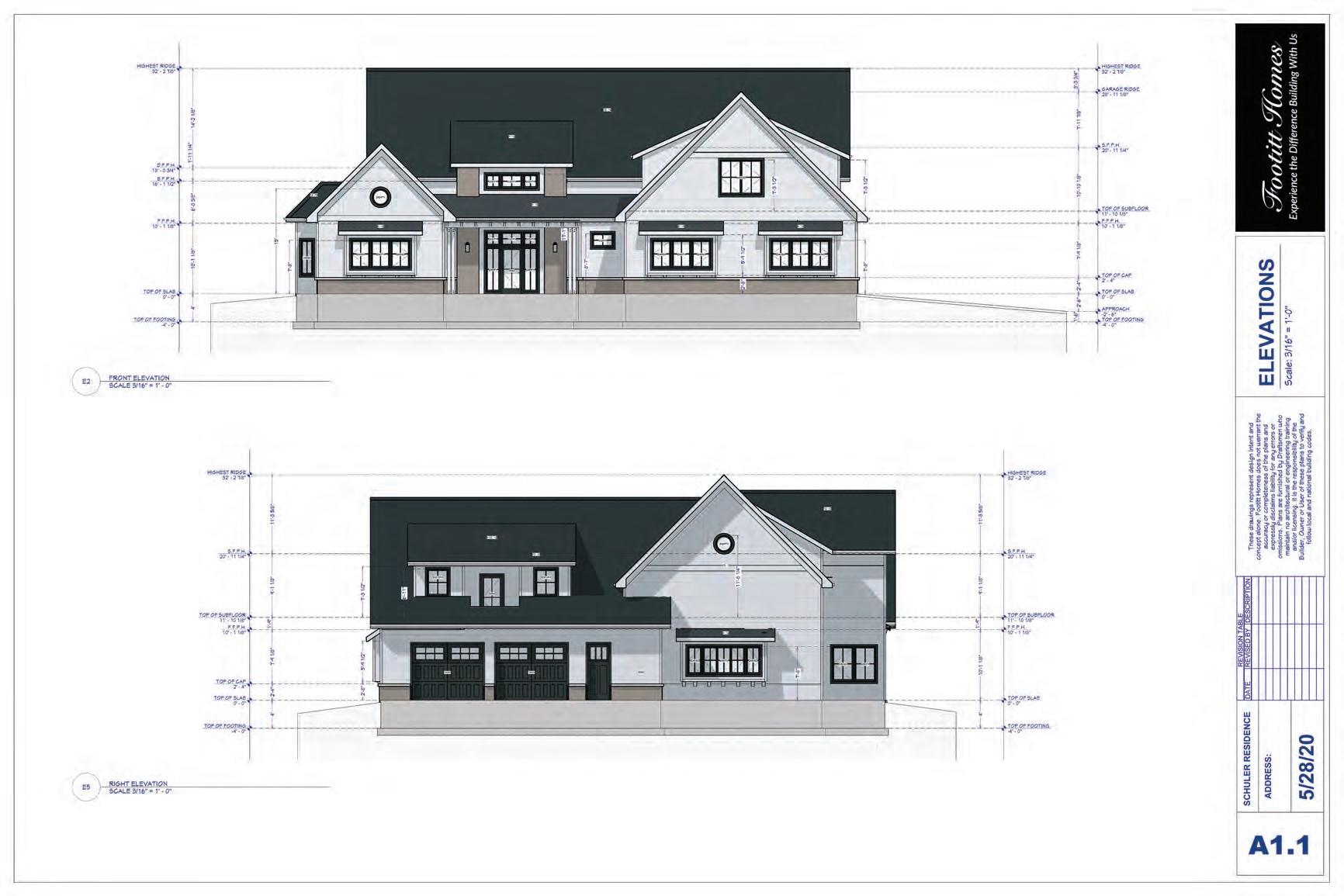
These are just an example of the myriad of questions that arise when considering building the home of your dreams. The professionals at Footitt Homes have answers.
Bob Footitt Jr. has been building custom dream homes in the Fargo-Moorhead area for 25 years. “We offer start to finish planning, design and execution for our homeowners. From the lot selection down to the grout in the tile,” Footitt says.
The saying goes, the three most important things in real estate are location, location and location and that’s the first thing to consider when working with a builder. Footitt currently has several lots available, three in the beautiful Tessa Terrace area of south Moorhead. This location features large lots and proximity to the Bluestem Amphitheater entertainment venue. In the Hamptons development, also in south Moorhead, Footitt has the last pond adjacent lot available.

Once you’ve settled on a location, Footitt works with you to create a unique floor plan that fits your lifestyle. Every part of the home has a purpose, and a carefully thought-out space will maximize your square footage. “Be genuine in personalizing every detail to reflect your family’s lifestyle, needs and preferences,” says Footitt. “We emphasize maximizing plan flow and efficiency of space when designing homes.”


An architect’s rendering of the exterior elevations will help visualize the style and positioning of your home on the lot. Additional renderings bring to life the vision for the interiors. Footitt’s skilled draftspeople can alter the finishes or move features like fireplaces and cabinetry to create the interior of your dreams. From the building material to fixture selection, they help you navigate every possibility with templates or multiple design options to make the perfect selection. “We understand some buyers have never built a true custom home before and may have a hard time visualizing how certain details will look or don’t realize how a certain product they selected may affect the overall appearance,” Footitt says.
When your dream home has come to life on screen, it’s time to start construction. But don’t expect to sit back and wonder how your home is progressing. You’ll remain in close contact with updates and on-site meetings throughout construction so you can ensure every detail is covered and see the master craftsmanship that goes into your home from the ground up. Footitt prides himself on involving owners in every step of the process for a truly one-of-a-kind building experience, “We feel our owners should be able to see the workmanship behind the walls, seeing firsthand how well their home is being built.”

“In all my years of home building, I can proudly say I have never built the same home twice,” Footitt states. As you walk through a finished Footitt built home for the first time, you will understand why people say "you can see and feel the quality of a Footitt built home."


AArecent study on CBD by SingleCare (a discounted health plan) found that 33% of Americans have used CBD. When looking at why people use CBD, that study also found most people (64%) take it for pain relief or inflammation, followed by anxiety and stress (49%), and for sleep issues (42%).
With the majority of Americans taking CBD for pain management, the question is — does it work? While the answer is not definitive, current data is promising.
As it relates to pain, CBD is thought to have beneficial effects on the endocannabinoid system (ECS). This complex cell-signaling system is found in all humans. Although it is not completely understood, the ECS seems to play a role in regulating many functions in the body, including: chronic pain, inflammation, immune system processes, sleep, mood, stress, appetite and memory.
If, for example, something throws off part of our body's normal operating system, the ECS seems to help our body maintain homeostasis. Experts think CBD works by preventing the breakdown of these endocannabinoids, which allows them to have a greater beneficial effect, helping the body return to a more balanced state.
Many small-scale studies have been completed with CBD and they are pointing to a positive effect when used to help with pain. A 2018 study published in Frontiers of Pharmacology reviewed studies on CBD conducted between 1975 and 2018, and the researchers concluded that CBD was effective in overall pain management.
CBD is currently available as an over-the-counter product in numerous forms such as oils, creams and capsules. Anyone investigating CBD will also see it is promoted as either an isolate, full-spectrum or broad-spectrum product.

CBD isolate contains only CBD (cannabidiol) as an active ingredient. Full-spectrum and broadspectrum products, often referred to as "hemp oil extract," contain CBD as well as other cannabinoids, terpenes and botanicals natural to the hemp plant. Full-spectrum extracts may contain very small amounts (less than 0.3%) of THC, however, this amount of THC does not cause a "high" and is far less than what is seen in marijuana, which typically contains 10% THC or higher. Additionally, CBD products, including hemp oil extracts show no potential for abuse or dependence.

Some researchers believe that providing the full range of the cannabinoids, terpenes and botanicals present in full-spectrum hemp oil extract may be more effective than CBD alone through a mechanism they call the "entourage effect." It seems the presence of the complimentary cannabinoids (the entourage) interacts with the endocannabinoid system to make the CBD more potent and effective.
There are a number of different choices when it comes to CBD dosage forms, formulations, starting dosages and possible interactions with other prescription medications or health conditions. So it would be wise to talk with your healthcare provider and local pharmacist prior to considering starting a CBD product.
InHealth Specialty Pharmacy carries a professional line of full-spectrum CBD products. Stop by or call 701-365-6050 to talk with a pharmacist to learn more about CBD.

is a pharmacist and co-owner of InHealth Specialty Pharmacy in Fargo. InHealth specializes in preparing custom medications with a special focus on women's health and veterinary prescriptions.


WORDS: JASON ANSCHUTZ PHOTOGRAPHY: Provided by SANFORD HEALTH
You wouldn’t know it from the way she acts, but energetic 2-year-old Elsie Shaw was recently a pediatric surgery patient at Sanford Health.


Elsie was born with a congenital pulmonary airway malformation, or CPAM. So last Thanksgiving, Sanford pediatric surgeon Dr. Scott Engum performed surgery to remove the upper lobe of her left lung.
“Years ago we would go through — and even today, some centers would go through — just an incision in the chest called a thoracotomy, and then they would remove the lung, and ultimately the patient would recover from that,” says Engum. “Technology has gotten to a point now where we have three-millimeter instruments that seal vessels, and don't require us to hand tie them or even clip all of them.”
In fact, Elsie has just four small incision marks from the surgery. And because the surgery was minimally invasive, Elsie spent less than two days in the hospital.
“She still had her IVs in, and she was trying to run down the hall,” says Elsie’s mother, Corinn Shaw. “That was the next day at probably two o'clock in the afternoon, 24 hours post-surgery. She was running the hallways, and she was out of there another 24 hours later.”
Corinn Shaw was a Sanford nurse in Fargo. She now lives in Roseau, Minnesota, and when it came time to decide where to go to help Elsie, it was a no-brainer.
“I told my co-workers what procedure she was having, and they were like, ‘You're not going to Mayo?’ And [I said], ‘No, I'm not going to Mayo. I'm bringing her to Fargo,’ says Shaw. “Rochester wasn't even an option in our eyes because I was like, ‘Dr. Engum, you're doing this surgery. You're doing this for us,’ because I don't want [any] random doctor in her care that hasn't been there from the beginning.”
“When you look at North Dakota, the Fargo region right now is the only facility that would provide that type of service,” says Engum. “Certainly our counterparts in Minneapolis and our counterparts down in Rochester at Mayo have pediatric surgeons that have that skill set as well. But the beauty is, for those patients that are in North Dakota or even Western Minnesota, not having to leave the area and deal with a little bit smaller community, [it’s] a little bit easier to navigate and families feel less threatened than going into a larger city.”
It’s not just the surgery itself that made Elsie’s care so special though.


“My job is done when they're asleep in the operating room,” says Engum. “The hard part begins when they come to the floor and they need postoperative management. Child Life does a tremendous amount to make a hospitalization tolerable. They're constantly playing with children, diverting them for any issues that occur, music therapy, taking them down to a large play area like Cully’s Kids Cabin that we are so gracious to have from the Cullen family. These things make our job easier.”
Engum says Elsie shouldn’t have any limitations going forward. Her lungs will grow and make up for much of what was removed. That’s great news for Elsie and her parents.


“I just want to thank Sanford as a whole,” says Corinn, wiping away tears. “I mean, the pediatric surgery team, the anesthesia team, the staff on the kids’ floor, they were amazing all the way down to the food service and housekeeping and you know … I would recommend them to anyone.”


Good nutrition is critical to overall health and well-being, yet many seniors are at risk of inadequate nutrition. As the adult child or caregiver of a senior, you can learn the signs and risks of malnutrition and how to promote a nutrient-rich diet.
Malnutrition can lead to various health concerns including:
A weakened immune system which increases the risk of infection.
Poor wound healing.
Muscle weakness and decreased bone mass which can lead to falls and fractures which in turn can lead to more serious medical issues such as trauma, head injuries, fractures, and surgical procedures.
A higher risk of hospitalization and subsequent readmission.
An increased risk of death.
Malnutrition is often caused by a combination of physical, social and psychological issues. For example:
Changes in taste, smell and appetite: Seniors experience these normal age-related changes, making it more difficult to enjoy eating and keep regular eating habits.
Illness: Illnesses can contribute to declines in appetite and changes in how the body processes nutrients.
Medications: Some medications can affect appetite or the ability to absorb nutrients.
Eating Impairments: Difficulty chewing or swallowing, poor dental health, or limited ability in handling silverware can contribute to malnutrition.
Cognitive Changes: Behavioral or memory problems from Alzheimer's disease or a related dementia can result in forgetting to eat or not buying groceries.
Depression: Grief, loneliness, failing health, lack of mobility and other factors might contribute to depression causing loss of appetite.
Social Isolation: Seniors who eat alone might not enjoy meals as before and lose interest in cooking and eating.
Special Diets: Dietary restrictions for managing medical conditions such as limits on salt, fat or sugar might also contribute to inadequate eating.
Fixed/limited income: Seniors may have trouble affording groceries especially if increased medical needs are causing a strain on their income (i.e., prescription medication costs).
As a caregiver or adult child of a senior, you can take steps to monitor nutritional health, watch for weight loss and address risk factors of malnutrition. Consider the following:
Monitor weight: Have the senior check his or her weight at home and keep a weekly record. Changes in how clothes fit can also indicate weight loss.
Observe habits: Spend mealtimes together to observe eating habits. Note what kinds of food are eaten and how much.
Help with meal plans: Help plan healthy meals or prepare meals ahead of time. Prepare extra food and properly store to reheat later. Help prepare a shopping list or shop together and assist with moneysaving shopping choices if income is an issue.
Use local services: Contact local service agencies that provide at-home meal deliveries. The local Area Agency on Aging or a county social worker can provide information about services.
Make meals social events: Drop by during mealtime or invite the senior to your home for occasional meals. Go out to eat at a restaurant with senior discounts.
Encourage regular physical activity: Daily exercise can stimulate appetite and strengthen bones and muscles.
Mealtime strategies to help a senior maintain a healthy diet and good eating habits include:
Nutrient-rich foods: Plan meals with nutrient-rich foods that include a variety of fresh fruits and vegetables, whole grains, fish and lean meats.
Herbs and spices: Use herbs and spices to add flavor to meals and improve interest in eating. Experiment to find favorites.
Healthy snacks:
Plan nutrient-rich snacks between meals with fruits, vegetables or low-fat dairy products.
Nutritional supplements: Use supplemental nutrition drinks to help with calorie intake.
Water: Encourage fluid intake of non-caffeinated beverages such as water to promote hydration throughout the day.
In addition to these mealtime strategies, talk to your family member's doctor about any concerns you have regarding changes in their weight, changes in appetite, or other concerns about health and nutrition. If your loved one lives in a long-term care, assisted or independent living facility, alert the care team to any concerns as well. Non-medical home care agencies also offer assistance with grocery shopping, meal planning and prep along with feeding assistance. There are several local resources available to keep older adults nourished and healthy in order to maintain quality of life.


Tanya is a Fargo native and holds a Bachelor’s in Nursing from North Dakota State University and a Master’s in Business from the University of Phoenix. She has a passion for being a trusted advisor and helping the elderly in her community and their families navigate options to ensure a better quality of life. Senior Helpers provides dependable and affordable in home care at a moment’s notice. Visit seniorhelpers.com/nd/fargo. [ aw ]

WORDS : DESIREE ZIELKE, PH.D,
LP PHOTOGRAPHY : JENNA LENERTZ PHOTOGRAPHYEvery time I meet with a new client I ask about sleep, exercise and nutrition. “Why?” you may ask. And my answer is: Because the mind and body are connected. We cannot walk around without our head and our head cannot go anywhere without our body. We women (myself included) tend to treat our body as if it is a robot that will continue to function if we give it food, water, shelter and a little bit of sleep. If none of you have noticed, let me be the one to tell you: That approach does not work for the long haul! That approach leads us to exhaustion, fatigue, depression, etc. Making even small changes in our daily routine to focus more on how we are treating our bodies can have an impact on our emotional health as well.
Research and clinical experience show that exercise can be beneficial for depression, anxiety and stress. Of course, it gets us active, but it also releases feel-good chemicals into our brain. Just five minutes of moderate exercise can provide a mood boost, this can be taking a brisk walk around the block two times on a work break, or walking up and down the stairs at the office or home. Studies have shown that walking at a moderate intensity for 22 minutes every day (a lunch break) can have a positive impact on overall health. We have included a treadmill office in our practice to help our clients and ourselves get in some walking every day. Exercise is also a great way to get some “alone” time to think, while giving you a sense of accomplishment.

What we eat impacts how we feel. Think about the last time you had a greasy fast-food lunch. How did you feel that afternoon? I bet you wanted a nap and struggled to stay awake through the rest of the workday. A box of cookies? That will leave you feeling jittery with a big crash afterwards. I ask clients about nutrition because if you are not eating a well-balanced diet (e.g., eating lots of convenience foods) and struggling with fatigue, we are going to talk about how adding fruits and veggies can improve energy levels. More studies are being done on the connection between nutrition and emotional health, and what we know so far is there is an association between eating whole foods and better emotional health.
One bad night of sleep can leave us more irritable and emotional the next day at best. At worst, we start to make less nutritious food choices and increase our caffeine consumption. Give us a few more short nights of sleep and we can get into a vicious cycle of not getting good nutrition, being “too tired” to exercise, and being more irritable. Sounds wonderful, doesn’t it? Not getting enough sleep can lead to numerous health problems and has been shown to lead to increased risk of depression. Setting a goal for eight hours of sleep each night is what experts recommend, but even starting with an extra 15-30 minutes can help.
I encourage you to pick one area of your life where you can make a small change and then slowly start to add one new change every week or every other week. It will not take you long to notice the emotional health benefits of this change. If you are struggling with emotional health, stress management, or making healthy lifestyle changes, please reach out to loved ones or professionals to get the support you need.
FOR MORE INFORMATION, contact us at Becoming Balanced.
Trishia Powell, MSW,LCSW (left) and Desiree Zielke, Ph.D, LP (right) becomingbalancednd.com | 701-551-1840

Our evening classes and valuable networking opportunities combine with affordability for a high-quality and convenient MBA experience.
Pursue the full MBA degree or opt for one of our nine-month graduate certificate programs, offered in the following areas:

• Business Analytics
• Leadership and Managerial Skills
• Digital Marketing and Innovation
• Investments and Applied Portfolio Management
BUFF = Believers. Uniting. Fitness + Food. Together we are a community and here I hope you will feel connected and encouraged through all things FAITH + FAMILY + FITNESS + FOOD. Spring has finally sprung and I’ve got some fresh new tips, tricks and a yummy recipe for you to try.

Spring is in the air and it’s the perfect time to start implementing getting outdoors daily. After much time spent together inside, it’s time to get active and take your family time outside. Go for a walk, create sidewalk chalk art, fly a kite, go for a bike ride, checkout a new park. Whatever you choose, do it as a family (or with your friends). Make it a non-negotiable to get fresh air every day for at least 20 minutes. The fresh air, along with being with those you love, will nourish your heart and soul!


I like to be in control, perhaps you can relate? Giving up control is something I struggle with and it recently hit me: I still struggle with being in complete submission and reliance on God. If you’re like me, too often my prayers are to get in control rather than under God’s control. Yet the true root of happiness is when we surrender to God. When we give up control and pray “not my will, but yours,” that’s when God can bless us. When our prayers turn from circumstantial to submission, God will bless us because we’ve finally submitted to Him who controls it all. Are you willing to let go of your grip and allow God to bless you even more?

It’s far too easy (and comfortable) to stay in your comfort zone, especially when it comes to fitness. This spring, get out of your comfort zone and challenge yourself. Whether that means increasing your weights when you’re lifting, adding sprints during your run, going to a new class, or trying a new at home program, the “magic” happens when you get out of your comfort zone.


There’s nothing that says spring more than a fresh, fruity dessert, that’s both sweet and healthy. These blueberry crumble bars are simple to make, gluten free, dairy free and are guaranteed to be a new favorite treat the whole family will love.

makes 16 bars
recipe:
1 ½ cup oat flour (ground oatmeal)
1 cup oatmeal

⅓ cup coconut sugar (or brown sugar)
½ teaspoon cinnamon
¼ teaspoon baking soda

¼ teaspoon sea salt

8 tablespoons coconut oil, melted
1 teaspoon vanilla extract
½ teaspoon almond extract


2 ½ cups blueberries (frozen or fresh)
3 tablespoons pure maple syrup
1 tablespoon arrowroot starch
¼ teaspoon almond extract

Pinch of salt

directions:
1. Preheat oven to 350 F. Line an 8x8 inch pan with parchment paper, spray with nonstick spray.
2. Make the crumble: In large bowl, using a fork, mix together oat flour, oats, coconut sugar, cinnamon, baking soda and salt. Add in melted coconut oil and extracts, stir until a nice crumble forms. Place 1 ¾ cups of mixture into pan, pressing evenly to create crust.
3. Prepare blueberry filling: In pot over medium heat, add blueberries, maple syrup, almond extract, arrowroot and salt. Using a spoon, press down to break blueberries a bit. Bring to a boil, reduce heat and cook for 4 minutes, until mixture is thickened. Pour mixture evenly over crust. Sprinkle remaining crumble over top of blueberry filling.
4. Bake for 30 minutes, until bubbly and golden. Cut into 16 bars, serve and enjoy!
STEP
annah Holte’s degree in industrial engineering and management from North Dakota State University has led to a Sanford Health career where she can pursue her many analytical talents.
Holte wanted to apply the principles learned in class to the world of health care, and she quickly learned that idea would be her path to success. An internship at Sanford Health as a student paved the way for full-time employment.
Her journey started when her older brother recommended that she pursue a degree in engineering. They shared a similar passion of digging into a problem to find the optimal solution, and Holte’s brother explained the endless employment options available with this type of degree.
“Engineering is so free and creative. It’s not pure memorization and multiple-choice answers. There are many possibilities of getting to and finding the best possible solution,” Holte says.
Holte tested her logic-based mindset and problem-solving abilities at NDSU. The industrial engineering program helped her learn the tools and principles to optimize a complex process.
After graduation, Holte accepted a full-time position as a supply chain analyst at Sanford Health in Fargo. She created reports that tracked supply chain performance and real-time visual dashboards to help hospital teams better manage their work. She says understanding NDSU classroom methodology has been helpful with her daily success.

“I really enjoy digging into a process and working with a variety of teams to understand and map out who is involved, what steps are needed, how the work is being done, and determining the pain points deterring teams from meeting their goals,” Holte says.


One of Holte’s ongoing goals is to provide value in any position she finds herself in, while also offering vision for others to follow and execute themselves.


That goal and mindset paid off. Just a year after joining Sanford full-time, Holte transitioned to supply chain project manager. Her focus now is to lead software implementations.


She credits NDSU’s College of Engineering for preparing her for the real world, offering opportunities to work with local businesses and internships that could ultimately lead to a permanent career.

“NDSU has ample opportunities for students interested in the field of engineering,” Holte says. “There are many different engineering student groups that allow you to tour and network with area businesses, and apply what you’re learning in class to real-world examples. But none of this is required, so it’s important to be proactive and push yourself to maximize the opportunities available for you.”


87 master’s and 52 doctoral degree programs, as well as 21 certificate programs. Explore the path that inspires your true passions by visiting ndsu.edu .
[ aw ]


... it’s important to be proactive and push yourself to maximize the opportunities available for you.”
HANNAH HOLTE
Make your next overnight event an unforgettable experience
WORDS AND PHOTOGRAPHY : provided by FARGO GLAMPING
Alife-long love of camping, creative design, decorating and lake-time fun for identical twin sisters Judy Hultin and Janet Asche is the source of inspiration for starting the deluxe sleepover service, Fargo Glamping.

Glamping is a combination of two words: glamour and camping. “Camping” refers to fun indoor sleepover tents designed to be used all year round, and spacious outdoor bell tents for use in the warmer seasons. “Glamour” describes upscaling the camping experience with the addition of luxurious glamorous amenities to create the décor of each theme offered by Fargo Glamping. The result is an extraordinary camping and sleepover experience.

Indoor glamping tents are available for use all throughout the year. These individual tents are a hit for kids’ sleepover parties. Hultin and Asche note, “We love the wide-eyed, hands-overthe-mouth excitement kids have when they get their first look at their glamping party. Those reactions are priceless!” The indoor sleepover tents are popular for both friends and family events, and also a fun option for grandparents looking for a new way to spoil the grandkids.
In warmer seasons, the popularity of the outdoor bell tents starts to grow. These spacious bell tents are favorites for both kids and adults, with each outdoor glamping décor designed for luxury and comfort. This oneof-a-kind experience is perfect for sleepovers, and as a gathering area for weddings, family events, and other outdoor activities. Fargo Glamping’s 13-foot tent accommodates up to four guests, and the deluxe 22-foot tent makes memories for up to eight guests.


Fargo Glamping’s newest addition is the Glamper Camper, which allows glampers to go retro and enjoy the cozy camping experiences of yesteryear. There’s no towing required; this fully restored and fully furnished camper is delivered directly to the glampsite of your choice. The Glamper Camper includes s’mores ingredients for the evening, and a rise-and-shine breakfast for the next morning. Fargo Glamping will even set up the Glamper Camper in Fargo’s Lindenwood Park Campground (based on campground availability) so you can camp the way camping is intended. You’ll be saying, “happy glamping!” in the Glamper Camper.
Fargo Glamping makes it easy to enjoy these unique glamour camping experiences, supplying everything needed for the ultimate sleepover experience and bringing the experience right to you. Fargo Glamping takes care of all the onsite prep, setup and post-event clean-up, so all you and your guests need to do is show up and enjoy the event.
For more information, visit the Fargo Glamping website at fargoglamping.com.

Upscale your next sleepover with indoor and outdoor tents for events and gatherings


With COVID-19 vaccine distribution underway, the pandemic’s worst effects seem nearly behind us. Jen Sahr, however, is one of many local educators who are preparing for aftershocks that may continue long after the concerns of physical illness fade away.

Sahr is coordinator of multi-tiered system of supports (MTSS) at Fargo Public Schools. She works closely with teachers and parents to identify students who need an extra boost with their social and emotional well-being.
She leads MTSS teams that brainstorm ways to compassionately teach each child in the system. When a child experiences a difficult situation, it can alter brain development. Sahr’s goal is to intervene early so students learn how to handle stressful situations appropriately.
“Any time we can provide additional emotional support or skills to our students, it will be beneficial,” Sahr says. “We can help them learn to be resilient.”
Those goals have become even more important in a COVID-19 environment.
Sahr has been in her role at Fargo Schools for a decade. Before that she taught first grade. In 2002 she earned her master of science in special education from Minnesota State University Moorhead where she enhanced her enthusiasm for educating students with unique learning needs.
“I fell in love with problem-solving,” she says. “Providing students with what they needed to learn became my passion.”
Sahr recently returned to MSUM to pursue her doctor of education in educational leadership. She began the doctoral program because she desired a new challenge. Now, she finds that her research and classes are providing her with the foundation she needs to identify and address post-COVID challenges.
“I apply what I’m learning every single day at work,” she says. “I have a better understanding of how we can piece together resources and ideas to better impact the lives of kids.”
While young people have a lesser risk of becoming seriously ill from COVID-19, their mental health has not gone unscathed. Like
PHOTOGRAPHY : DAVID ARNTSONothers in the community, they have experienced a number of losses — connections, time together and pre-pandemic routines.
In response to those losses, Fargo educators are already seeing more anxiety and depression, Sahr says. Sometimes, students and their parents try to avoid the stress by self-medicating, resulting in substance abuse.

These responses to stressful situations aren’t surprising.
“From the day you’re born, you’re dependent on others,” Sahr says. “That’s why so many of us have felt lost during COVID-19. A lot of our relationships outside the home have been severed.”
Sahr encourages families to build on the relationships that haven’t been lost during the pandemic. Doing activities together at home like reading, talking and laughing build trust and comfort during stressful times.
Schools are supporting those efforts with MTSS. In Fargo, educators teach lessons related to socialemotional learning. If students need additional help building those skills, specialists will work with them individually or in small groups. Families also may be connected with community resources like therapy or services that provide basic needs.


“We’re fortunate to live in this community,” Sahr says. “We have many resources and wonderful community agencies that are willing to do what they can to help others be successful. Lots of people are stepping up and helping support families. It makes a difference.”
In the end, Sahr’s goal is to prepare kids for their futures whether there’s a pandemic or not. Students who are respectful and mentally well are better equipped in knowing what they need to learn to succeed, she says.
“We’re always thinking about the whole child,” Sahr says. “Academics are important but you can’t think critically or problem solve if your socialemotional well-being isn’t in place.”


WORDS : ALICIA UNDERLEE NELSON
: STACY KENNEDY

Trained as a gymnast in her youth, she thrived on conquering the next challenge, mastering the next task. She brought this same mental and physical discipline to her chosen career path.
She had a clear vision. She wanted to own her own business.
“My family owned the Nodak store in Fargo,” she says. “I started working for them at 19 and ended up going full-time. My career goal was 20 years down the road to buy the family business and be a fourth-generation business owner.”
Grondahl is a fourth-generation business owner, all right. But when the family sold the store to an outside buyer in 2013, Grondahl, the mother of a now 11-year-old son named Sterling, pivoted.

Looking for a way to stay active and mentally disciplined, she tried CrossFit, a branded fitness regimen that combines strength training, deep stretching, nutrition and metabolic conditioning (structured periods of working and resting) to maximize performance. She found more than a workout. She found her calling and a new business as well.

Jessica Grondahl has always been driven.
In June 2013, CrossFit Fargo was born. Grondahl and her business partner Jeremy Donais moved it to the present south Fargo location in March 2014. The bustling gym offers group fitness classes, personal training sessions and nutrition coaching in a high-energy atmosphere that can sometimes feel like a training montage in an action movie. Members kick into handstands, hoist kettlebells and execute Olympic lifts with massive barbells.
“It’s very empowering for women,” Grondahl says. “There are no mirrors. It’s really about what your body is capable of doing versus what you look like. You never get bored of your workout. It’s about being healthy, being functional and celebrating what your body can do.”
Shannon Neustel is 47 and has been doing CrossFit for over seven years. She sees the benefits inside and outside the gym.
“I am so much stronger than I was in my 20s,” she says. “I notice my cardio is better when going up the stairs or even going for a walk or hike with my family. Regular, everyday tasks are easier — carrying groceries in from the car or putting heavy boxes on a tall shelf are just a couple of examples. CrossFit also increases mental toughness. Sometimes the workouts can be long and hard, but you learn to get through them. And that crosses over to everyday life situations.”
The workouts have a way of pushing people out of their comfort zones, both mentally and physically. And that’s where the real growth happens.
“Without fail, the first time I look at the workout of the day, I think that it must be a joke,” laughs Jessica Lee, age 41. “I think, ‘There is no way people can do that!’ But when the workout is finished, and you’re laying on the floor because you’re not sure if your legs work for standing, you realize not only can people do that workout, but you can do it too. It’s a crazy realization that leaves you wondering what else you can do that you don’t currently think is possible.”
Tapping into this wellspring of strength is physically and mentally empowering. And for women, who are blasted with messages that link fitness with appearance 24/7, it’s so countercultural, it’s practically revolutionary.
“As women, we associate our exercise routines with our physical appearance,” says Lee. “We eat right and exercise and if we stick with it, we'll look good in our jeans. With CrossFit, there’s almost an unconscious mind shift from how our bodies look to what our bodies can do. And before you know it, you are so spun up in how much stronger you're getting that you forget to fuss about how many carbs were in your oatmeal.”
Grondahl wants everyone at CrossFit Fargo (women and men of any age and fitness level) to experience that kind of boundary-shifting freedom. So they’re teaching those skills to the next generation as well.
The facility is a CrossFit Kids Affiliate and Youth Empowerment Systems (Y.E.S.) gym. Structured like as a series of skill levels, much like the martial arts, this integrated, character-driven fitness program teaches athletic, wellness and mental health lessons to kids 6-17. Plans are in place to expand to K-12 students soon.
The Healthy Steps Nutrition Program offers nutrition and lifestyle coaching for adults in the gym. A program called The Incubator provides a customized 90-day health and wellness plan. Members receive personal training sessions, non-invasive InBody scans to analyze their unique body composition, access to group CrossFit classes, and an app to track their long-term progress. Individual nutrition coaching, personalized meal plans and grocery lists are tailored to each individual.
It’s very empowering for women...
...It’s really about what your body is
capable of
doing versus what you look like.”
— JESSICA GRONDAHL
F“Our nutrition program assists clients to have a healthy relationship with food while also helping them achieve their specific goals — muscle gain, weight loss, maintenance, etc.,” explains Michaela Swanston, RN and CrossFit Fargo nutrition coach. “We do not cut out a specific food group or expect perfection. We hope to help establish balance for our clients. The member's whole life and goals are taken into account — if they work out, have a family, want to focus on something small or make large changes. We are there to coach, assist, aid in accountability, and cheer on our members.”

“Our body is like a car,” adds Ashley Bourgois, CrossFit Fargo general manager and nutrition coach. “We need to give our body fuel to function every day. If we make changes in the food we eat, our body will change. Many women have struggled with their weight off and on in their life. They have tried so many different fad diets and had good results, but in the end, gain everything back, plus more. Our goal is to help you find a lifelong nutrition journey, not one that works for two to three months. With a well-balanced diet, you can eat more, have more energy, feel good about yourself, and lose weight.”
Members have seen dramatic results by integrating physical activity, nutrition, wellness and mental health. Members aren’t just building their muscles — they’re changing their internal health markers, managing chronic health conditions and transforming their sense of self.
Norma Maxwell walked into CrossFit Fargo as a 48-yearold with aching knees, 25 pounds she couldn’t lose and a series of chronic health conditions. She was looking for a yoga class. She found a new way to live instead.
“I joke that CrossFit saved my life, but it's very much the case,” she says. “It was without question the missing link in my health journey. Prior to CrossFit, my doctors told me it was not if but when I would have a heart attack, since my mother had two in her 50s and my grandmother had three in her 50s.”
That prognosis was heavy. So Maxwell fought it. And she blew her doctors away.
“Within my first year of CrossFit, I dropped all of my excess body fat, reversed nearly all lingering symptoms associated
Twith my autoimmune condition, and was taken off all but one of my medications,” she says. “When my doctor ran my health markers to tell me my current risk for heart attack, it was less than 1% risk — .07% to be exact; the average healthy person that age has about a 7% risk. She couldn't believe my results and told me I should never stop doing whatever I was doing. Now at 54, I am far stronger and healthier than at any other time in my life.”
Now Maxwell is a CrossFit Fargo coach and teaches a class for adults over 40. Grondahl’s admiration is palpable.
“She went from never lifting a weight in her life to being able to deadlift 250 pounds,” Grondahl says. “It’s cool to see those transformations.”
Jasmine Joy, age 27, found her own transformation and a new perspective on her own health through CrossFit Fargo. She manages the youth program and her own chronic health condition, multiple sclerosis, using lessons she learned within these walls.


“Through CrossFit, I have discovered that I am entirely capable of taking control of my own health, as well as my perspective on life's adversities,” she says. “For me, that means overcoming and keeping multiple sclerosis in remission, strengthening the muscles around the rods along my spine, and keeping the factors that affect my mental health a priority.”
While Joy’s situation is unique, she insists that the lessons she learned here are not. She says people of all ages and abilities can use the discipline and connections forged in the gym and the greater community to expand their own capabilities.
“CrossFit is for anyone,” she insists. “Whether 14, 40 or 64, whether you have a strong background in sports or have never set foot in a gym, and whether you are a part of the general population or an adaptive athlete, CrossFit meets you where you are at and teaches you all of the amazing things your body is capable of doing.”
Anyone is welcome at CrossFit Fargo. You just have to show up to take the next step in your own health journey.
“CrossFit is a way to get a new lease on your life,” says Grondahl. “Take control of your life and your fitness and you can make a difference in your whole life. But you have to take a step and just try it.”
TAKE CONTROL of your life and your fitness and you can make a difference in your whole life.”
— JESSICA GRONDAHL
rooms and the supplies were sorted for global missions. In 25 years, HERO has prepared over 2200 pallets and shipped over 1.1 million pounds to mission groups around the world.
For 25 years, HERO (Healthcare Equipment Recycling Organization) has been serving the Fargo-Moorhead community by providing affordable healthcare equipment and supplies for all, through the collection and distribution of donated materials. The HERO volunteers dedication and hard work are one of the main reasons that HERO has been so successful for so long. HERO’s mission continues to grow year after year thanks to our HERO volunteers.
Please take some time to consider what HERO, with the help of our volunteers, has accomplished in 25 years. Over 7,700 individuals have donated over 60,000 hours to the operation of HERO. The value of those volunteer hours is $1.6 million dollars. HERO exists so that no individual goes without the medical products they need to preserve their independence, dignity and health.
HERO’s first mission was global, it was not until years later that HERO started serving our local community. HERO originally was started by a few operating room nurses that saw the wasted medical supplies daily. After a while, these nurses were able to get bins stationed in the operating
HERO has supported our local community through our retail and donation center. You can find all of your basic medical equipment such as shower chairs, walkers, canes, toilet risers, medical beds, wheelchairs, electric scooters and so much more. All of the items are donated, sanitized and distributed back to the community at typically half of the cost that you find them in other stores. In 25 years, HERO locally has served over 50,000 individuals that needed medical supplies or equipment. HERO has also supplied $825,000 worth of medical equipment and supplies through our waived fee program. Our waived program is in place to help individuals that might be overwhelmed by the cost of healthcare perhaps by the sudden change in health status from an accident, difficult illness, injury or economic circumstances.

HERO celebrates 25th anniversary


2O21
completes
Be a part of something big.
7,700 volunteers
$1.6 million value of volunteer hours

2,200 pallets + 1.1 million pounds of medical supplies prepared for global missions
50,000 individuals served
60,000 hours donated waived fees for over $285,000 worth of medical supplies
1.7 million pounds of medical supplies kept out of the local landfills

HERO’s environmental impact can also be felt in our community. When an item is donated to HERO, it is given a second chance. Items that are beyond repair will be salvaged for parts and recycled. HERO has kept 1.7 million pounds of medical supplies and equipment out of our local landfills.
As HERO looks to the future, we are proud to have been able to do so much but wonder how much more we can do? Thank you to all the wonderful volunteers that have supported HERO. Your impact has been truly amazing.
life979.com


APRIL 6, MAY 4 and JUNE 1

6:00 – 7:15 PM
"Living with Grief" is our monthly drop-in meeting on the first Tuesday of the month held at Boulger Funeral Home. A topic on loss and grief begins our conversation for the evening. for more info: boulgerfuneralhome.com These meetings


“God has given us new birth into a living hope through the resurrection of Jesus Christ from the dead.”
WORDS : MARIAH PRUSSIA
What does community mean, and how were communities established? Community can be defined in a variety of ways; I view community as family, the beating heart and soul of the city/town. Historically, the foundation of communities was built from the linking of arms by family-owned businesses, where farmers provided produce to the general store, the general store provided products to the local doctor, and the churches provided faith to parishing families. The township would actively work together to provide a service, a product and a passion to those they served on a day-to-day basis.
In the past, there was an unwritten oath. When a business was on the verge of its breaking point, the township would congregate around that business and provide whatever means available to keep their friends business open. Not because they had to, but because their heart wanted to. People supported one another and recognized the blood,
sweat and tears that went into their neighbor’s business, including the financial role it played of putting food on the table.
The love for community and for one another is not lost, it requires more kindling to ignite the flame, putting life back into the small businesses who are struggling the most from the pandemic. It is imperative to understand, that when local businesses are supported, the root of support lies much deeper than the financial perspective, it creates a ripple effect of emotional support and comradery amongst the community as a whole. The roots and branches of each business become an inosculation, integrating to become one. However, with the fluctuating mandates and restrictions placed on businesses, our community has become more divided then united. How can we as a community get back to our roots and grow together, when over 800 businesses are closing nationwide per day? It starts at the ROOT.

For more from Mariah, go to mariahprussia.com or find her on social media:
INSTAGRAM/TWITTER: @mpx_mma
FACEBOOK:
Athlete page: mariahmpxprussia


Gym page: mpxfitnessfargo
EMAIL: mpxmma@gmail.com
PHONE: 701-293-0002
Look up, visit and shop local businesses within your community, whether in-person or online. Learn more about the company’s mission, where they receive their products, and the lineage that is associated with their business.
Stay connected with individuals within your community.
Establish an ongoing personal relationship with local business owners and their employees to provide emotional support and referrals to increase their bottom line.


Conversations can open doors to new opportunities. The more we listen to understand, the more seeds we can plant together for harvest.
Most patrons may not understand the root system that evolves from supporting a small business. Each root trickles down into the next through multiple facets stemming from the exchange of services, word of mouth referrals, and financial means to provide other local businesses. When you support one, you support many!
Provided below is a testimony of a local business owner and how she extends her roots into the community soil.

The impact of shopping small is something that can be felt community wide. When people choose to support my local handmade business, it makes it possible for me to support my family's activities.
So indir ectly, by supporting my business, you are supporting other local organizations as well. When we choose to purchase from local businesses, we are creating a stronger local economy.
Community roots lie deep, but the heart lies deeper! When we combine our efforts, it allows us to sit at the table together, and enjoy the fruits of our harvest as a family.
“When you give and expect a return, that’s an investment. When you give and don’t expect anything in return … that’s love.”
I'm so thankful for all of my customers that I get to work with directly and get to know."
EMILY BROOKS, TAEA MADE


These are just a few of our furry angels awaiting their forever homes.


note : All events are subject to change. Confirm dates and times before attending.
April 8

NATIONAL ZOO ACTIVATION DAY
Come visit some special zoo animal guests and hear from professional zoo employees as we celebrate National Zoo Day and our very own Red River Zoo! This event is a cooperative effort between the Red River Zoo and Fargo Broadway Square.
FREE
4:00 – 6:00 PM Broadway Square 201 N Broadway, Fargo fargoparks.com
April 17
BLOOM: A n event for new and expecting moms
Whether you are currently expecting a baby, had a baby within the last two years, are a foster or adoptive mom of an infant, or are planning to grow your family soon, this event will bring moms together in their motherhood journey and provide an opportunity to learn, laugh and treat yourself to a morning just for you!
What you’ll enjoy at Bloom:
• Delicious brunch with mocktail mimosas
• Special gifts for you and baby
• A wealth of knowledge from an expert panel about all things mom and baby
• A real and open conversation with a panel of moms who share their insight from experience and answer your questions about what to really expect when you are expecting and after.
• Shopping, sampling and education with our vendors featuring products and information especially for you.
So, grab a mom bestie and your tickets, just $25.
COVID-19 Safety Protocols:
Thanks to the large space and high ceilings at The Sanctuary, we will be ensuring proper social distancing measures are taken and masks will be required at the event. Other safety protocols include, 50 attendee limit, limited vendors, complimentary masks, socially distanced seating and sanitizing stations. Please email info@fargomom.com with questions.
9:00 AM – Noon
The Sanctuary Events Center 670 Fourth Ave N, Fargo fargomom.com
Facebook event: https://fb.me/e/16RocuHnx
April 17-18
SPRING MAKERS MARKET

Check out the Red River Valley’s practical and artisanal creations. Market-style vendor booths as well as food vendors will present and sell their creations.
FREE
Saturday 10:00 AM – 4:00 PM
Sunday Noon – 4:00 PM

Broadway Square
201 N Broadway, Fargo fargoparks.com
April 18-24
EARTH DAY “GOOSECHASE”
Celebrate Mother Earth! Take part in a week of fun and educational challenges all about supporting our planet. One lucky participant wins a prize package to help focus on sustainability all year long. To participate, download the GooseChase app on your Apple or Android device and put in the Earth Day GooseChase Code: 7DP1X9.
FREE
All Day
On the GooseChase App fargoparks.com
April 22
UNIQUELY FARGO: GIANT GAMES
Grab your players and get ready to jump into the game! Four classic games are blown up to giant size to really get you into the action. Teams compete in life-sized versions of Hungry, Hungry Hippos, Perfection, Battleships and Billiards. Does your team have what it takes to walk away as the ultimate game master? $30 per team.
Register by April 8th through EventBrite.
6:00 – 8:00 PM
Rheault Farm 2902 25th St S, Fargo fargoparks.com
April 23
WORLD BOOK NIGHT CELEBRATION
Celebrate the annual magic of World Book Night! This event brings people from all backgrounds together for one reason — to inspire others to read more. This event is a cooperative effort between the Fargo Public Library, the World Book Night Organization and Fargo Broadway Square. FREE
4:00 – 6:00 PM
Broadway Square 201 N Broadway, Fargo fargoparks.com
April 26
YWCA WOMEN OF THE YEAR 2021

Since 1973, we have been shining a spotlight on exceptional women. They are leaders, mentors, visionaries, angels and heroes. Help us highlight women who shape the Fargo-Moorhead community through their passion, service and significant achievements. Tickets will be available after nominations close in late February. At this time, for the safety of guests and staff, we are planning to hold this event as a hybrid with in-person attendance by nominees and their guests and all other attendees joining us virtually. This is subject to change based on CDC and public health guidelines regarding the COVID pandemic. For more information, visit ywcacassclay.org/womenoftheyear. For questions regarding Women of the Year nominations or sponsorship opportunities please contact Morgan Svingen at woty@ywcacasscaly.org or 701-232-2547.
6:00 PM
Delta by Marriott Fargo 1635 42nd St SW, Fargo woty@ywcacassclay.org
April
May 1
HELLO SPRING!
The season is changing and it is time to say, “Hello Spring!” Shake off the winter blues at this fun family event. Join us to learn about bugs, make crafts, get your face painted, meet animals from the Chahinkapa Zoo, and more! FREE
1:00 – 4:00 PM
Rheault Farm 2902 25th St S, Fargo fargoparks.com
May 7
BUTTERFLY BALL
Create memories with the special role model in your life at a magical evening of music, dancing, photo opportunities and more. Light snacks, dessert and punch are served. Ages 4-12. $30 per person. Tickets go on sale April 1 at 8:00 AM only at fargoparks.com.
6:30 – 9:00 PM
Broadway Square 201 N Broadway, Fargo
May 15
VIRTUAL WALK MS: FARGO
Where we walk looks different this year — but why we walk remains the same. Walk MS: Fargo is a celebration of the resiliency and strength of the MS community. Walk with your family around your neighborhood, gather your team for a socially distanced stroll through the park or get together with friends. No matter how you celebrate, the Walk MS community will be with you every step of the way. When: Anytime!
Where: Your neighborhood, a park, anywhere that works for you nationalmssociety.org
May 14
ARBOR DAY EVENT
May 15
FARGO BIRDING FESTIVAL
See a variety of birds in a beautiful setting in South Fargo. This festival is for all skill levels. If you are beginner and plan on coming, consider taking Birding 101. More information at fargoparks.com.
FREE.
7:00 – 11:00 AM
Forest River Property 76th Ave S & Red River, Fargo
May 15
KIDS TO PARKS DAY
Bring the family out on National Kids to Parks Day for some outdoor fun. Test your kite flying skills. Enjoy food, crafts, games and nature activities.
FREE
11:00 AM – 2:00 PM
Woodhaven North Park 4406 44th Ave S, Fargo
May 15 - 22
PURSES WITH PURPOSE
Soroptimist of Red River Valley is hosting a virtual auction in support of its Live Your Dream education grants. The LYD program supports head of household women in pursuit of a career while overcoming such challenges as poverty, violence and addiction. Education is the pathway to economically empower women and girls.

When: Noon
Where: Online at charityauctionstoday.com/ auctions/purses-with-purpose
May 20
PEGGY LEE DAY
QUOTABLE:
"For I know the plans I have for you, plans to prosper you and not to harm you, plans to give you hope and a future. Then you will call upon me and come and pray to me, and I will listen to you. Then you will seek me and find me: when you seek me with all your heart, I will be found by you, declares the Lord."
JEREMIAH 29: 11-14
Impact our world through conversation and education as we celebrate trees and observe Arbor Day. Trees reduce air pollution, cool the atmosphere, prevent soil erosion, ease the severity of floods and decrease maintenance costs of roads and parking areas. We can all help out by planting the right tree in the right place. Volunteer to plant trees alongside other community members.
Starts at 9:00 AM
Longfellow Elementary
20 29th Ave NE, Fargo fargoparks.com
Come celebrate your favorite North Dakota actress and musician. Peggy Lee is a Jamestown, North Dakota, native and had an extraordinary career that lasted over six decades. Activities for the day include speakers and a screening of a film starting Peggy Lee. This event is a cooperative effort between the Fargo Theatre, ND Film Society and Fargo Broadway Square. FREE
Noon – 6:00 PM
Broadway Square 201 N Broadway, Fargo fargoparks.com
note : All events are subject to change. Confirm dates and times before attending.


They are a bundle of energy, smiles and snuggles one minute and causing mischief the next. But you wouldn’t have it any other way. To help keep your little ones going at top speed, partner with a pediatrician from Sanford Health. Whether it’s a well-child check-up, a cold or a complex medical issue, we’re here for all your child’s health needs.
Call (701) 234-3620 to schedule an appointment.
