


SPONSORED COPIES FREE INSTORE OR RETAIL PURCHASE $5CAD

2 | COMPASS MAGAZINE | Issue 41 WWW.COMPASSMAGAZINE.CA OPENING FRIDAY, OCTOBER 7 4 TO 7PM Compass GALLERY + GIFTS 101–1811 COMOX AVE SPOOKTACULAR THE WEIRD AND UNUSUAL ART SHOW COME ENJOY A HOT BEVERAGE AND VIEW THE WEIRD AND UNUSUAL! Visit us 'in costume' on Halloween (October 31) for a special Treat or Trick! All Ages welcome November 15 to 26 · Featuring Robert Bateman, Canadian Naturalist & World Renown Painter Pre-Christmas Special Collection of Limited Edition Prints, Signed Reproductions, Calendars + Books The perfect gift for the collector in your life! FEATURING KELLY EVERILL, DEB STOREY, KENNA SMITH, SVETLANA AND THE INFAMOUS IKONOCAUSTIC AKA DANIEL NEEDHAM SHOW RUNS OCTOBER 7 TO 31 · MONDAY TO SATURDAY 10 TO 5
6

WE ARE ART
POTA Wearable Art Show

Penny Gosselin
OCEAN CHRONICLES
The Circling Back of Kus-Kus-Sum Dave Flawse
WALKING IN THEIR FOOTSTEPS

HMCS ALBERNI Museum + Memorial James Derry
ARTIST FEATURE
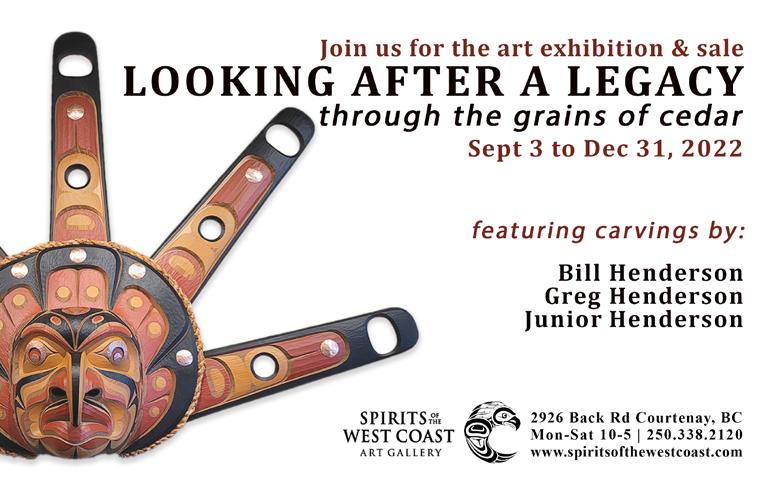
Looking After a Legacy: Through the Grains of Cedar At Spirits of the West Coast Art Gallery

WELLNESS ARTIST
18
Deb Mearns | Breaking the Mold
Kealy Donaldson
SHIFT HAPPENS
Fear of Change
Andrea Wagemaker

NORTHWEST COAST NATURE
The Rare Sulphur Butterfly Luna Loiseau-Tremblay

NATUROPATHIC INSPIRATIONS
Transition into Healing Ingrid Pincott, ND
Issue 41 | COMPASS MAGAZINE | 3WWW.COMPASSMAGAZINE.CA
8
12
14
22
24
26
Sharing the Direction of Vancouver Island Communities12 14 18 24 WWW.COMPASSMAGAZINE.CA 6 ashcroftassociates.ca We treat your business like it was our own. Courtenay Office: 206-501 Fourth St. Courtenay, BC V9N 1H3 Phone: 250 334-6068 Fax: 250 338-6068 Campbell River Office: 1250E Cedar St. Campbell River, BC V9W 2W5 Phone: 250 850-1943 Fax: 250 338-6058 Accounting / Bookkeeping


4 | COMPASS MAGAZINE | Issue 41 WWW.COMPASSMAGAZINE.CA 1-888-986-0110 p a r a l l e l 5 0 r e a l t y . c a i n f o @ p a r a l l e l 5 0 r e a l t y . c a "Your Investment Our Priority Office Locations C a m p b e l l R i v e r : 9 6 2 S h o p p e r s R o w P o r t H a r d y : 9 C - 9 2 5 0 T r u s t e e R o a d Premium Real Estate property management F o r P o r t A l b e r n i R e n t a l s C a l l 1 - 8 6 6 - 9 8 6 - 0 1 1 0 Follow us @ p a r a l l e l 5 0 r e a l t y a n d m a n a g e m e n t @ C a m p b e l l R i v e r P r o p e r t i e s
Make sure you have a bowel movement every day and taking a fiber, such as flaxmeal or psyllium, treats endo toxicity which are toxins created in the body in the bowel. Pectasol, a form of modified citrus pectin, has been stud ied to remove heavy metals. Colonics are also available (in Courtenay) if required and reduces endotoxicity.
Avoid non organic dirty dozen foods that contain the highest organophosphate neurotoxic pesticide residues according to the Environmental Working Group (EWG) ie peaches, bell peppers, apples, celery, nectarines, straw berries, cherries, grapes and lettuce.
Greens in the form of cilantro, spirulina and green vegeta bles rich in chlorophyll can bind with toxins such as PCB’s for easier elimination, so add a “Greens Drink” to your dai ly routine. See “Clean, Green and Lean” by Dr. Crinnion.
Saunas, either radiant heat or infrared, are effective at in creasing the ability to sweat, eliminating toxins through the skin: the second kidney. Exercise also falls into this category. People such as hair dressers can smell chemi cals exuding from their skin after sauna therapy.
Use air filters in the home to improve air quality. Don’t forget toxins come into the home on the furniture and other household items.
Don’t store food in plastics or microwave in plastics.

Eat foods that help eliminate toxins: Cruciferous vegeta bles, resveratrol and quercitin foods (ie: blueberries, ap ples, onions, kale), celery, garlic, ginger, green, black, pep permint, rooibos and chamomile teas.
Use chemical free make up and skin care products: ie Lei Lani Makeup (Save On Foods) or Jane Iredale.
For more of Dr. Pincott’s articles visit www.PerceptiveHealth.ca or www.drpincott.com and www.bcna.ca to find an ND near you.
WIth over 40 shops, restaurants, banks and services, Discovery Harbour Shopping Centre is a convenient and relaxing place to stop, shop and dine on the North Island. Visit discoveryharbourcentre.com for a complete list of shops and services available at the Shopping Centre.


 1416 Island Highway, Campbell River, BC, V9W 8C9 | discoveryharbourcentre.com
Issue 41Issue 21 HEALTH & WELLNESS

6 | COMPASS MAGAZINE | Issue 41 WWW.COMPASSMAGAZINE.CA
WE ARE ART
Wearable Art Show

MARK OCTOBER 15 on your calendar and pick up your tickets at the Tidemark Theatre website for... Patrons of the Arts dazzling, extravagant, and fun Wearable Art Show. The show will be onstage in the Tidemark Theatre, Campbell River. A fabulous runway taking the models into the audience is an added feature.
Who is in the show? 15 designers have been creating spectacular breath-taking pieces to be presented in high fashion. You will be amazed at the use of upcycled mate rials, the music, the presentation!
This is the major fundraiser of Patrons of the Arts (POTA), a part of Campbell River Community Arts Council. POTA supports, provides opportunities, and celebrates local visual and performing artists. By attending the show, you
will have a wonderful time AND give back to our arts community, too.
The show starts at 7:30 pm, doors open at 6:30 pm. The lead up happens the moment you walk in the door. The lobby has the Heather Hughson Art Show on display that you can enjoy as you sip a “signature cocktail”.
“River Ink Printing and Signs After Show Reception” will have catering from Freyja the Croissant Story and Star dust Cupcakes; a photo booth to pose with designer and models; AND a draw for over $1000 in prizes for the au dience attendees.
Dress up, kick up your heels, and come and join in on an extravagant event that you will be sure to remember.
Photos © POTA
PENNY GOSSELIN
Issue 41 | COMPASS MAGAZINE | 7WWW.COMPASSMAGAZINE.CA
OCEAN CHRONICLES
An Eddy on an Estuary: The Circling Back of Kus-Kus-Sum
DAVE FLAWSE
THE KUS-KUS-SUM SITE on the Courtenay River estuary is accustomed to change. As the liaison between ocean and river, estuaries live in constant flux—a ritual of ebbs and floods but also a centuries-meandering as the river forges new pathways through its delta. How ever, the Kus-kus-sum site hasn’t always existed in an estuary, nor above sea level.

Take a holiday to Vancouver Island 14,000 years ago, and you wouldn’t lack for ice. You’d find yourself shiv ering on an ice sheet that’s over one kilometer thick in places. This is not a quiet place. Chunks of glacier creak, snap, and splash as they break off into the sea.
Where would you find the Kus-kus-sum site on your visit? Well, that’s difficult to untangle explains Jerome Lesemann. The Vancouver Island University Earth Sci ence Professor completed his PhD on glacial landforms and is interested in reconstructions of ancient environ ments.
At that time, major ice sheets began to melt across the globe. You can think of the glaciers as big storage
containers for water, and as they melt, “the glaciers shrink, and water goes back into the ocean. So, what we tend to see is sea level rising.”
Another effect of ice sheets comes from their weight on the Earth’s crust. “They actually depress it,” says Lese mann. “They basically create these huge divots in the land and regress the crust downward.” Over time, the weight on the crust lessens.
Given these two interacting factors, one raising sea lev el and the other raising the land, pinpointing the site’s elevation at this time is difficult, but around the Co mox Valley, “the total amount of depression was prob ably roughly 150 meters,” putting the Kus-kus-sum site somewhere underwater.
As the centuries and millennia past, braided glacial riv ers roiled and boiled grey blue. They forced sand, grav el, and stone downstream to collect at sea level. As the glaciers receded further, the Kus-kus-sum site emerged from underwater around 8,000 years ago.
All photos © Project Watershed
8 | COMPASS MAGAZINE | Issue 41 WWW.COMPASSMAGAZINE.CA
The site has looked more or less the same for the last 5,000-6,000 years. Around this time, the North Coast Salish established permanent settlements across their territories.
•
Visit the Kus-kus-sum site before European settlers ar rived, and you might have heard the soft cadence of the Pentlatch River Song rippling along a gentle moving estuary. Richard Hardy is a member of K'ómoks First Nation (KFN) and sings the Pentlatch River Song to me over the phone. He picks up the beat. When the rains come and the river’s flow picks up, so does the song’s timing, explains Hardy, who is also a KFN Councillor. “Even our songs are reflective of that area and the end of that River.”
Today, KFN represents the formerly separate tribes of the Sathloot (‘sath-loot), Sasitla (sa-‘seet-la), Ieeksen (eye-‘ick-sun) and Xa’xe (‘ha-hey) and the culturally similar but distinct Pentlatch. The ancestors of KFN oc cupied the extent of their territories which supported thousands of people who built a sophisticated and rich culture.
Hardy explains that KFN’s priority is water. “Water is so important. When we look at water from an Indigenous perspective, there’s the spirituality side of things. With water comes all the various animals that we have in our songs and dances. When we start to talk about that con nection to water, that’s the importance of the [Kus-kussum] site from a KFN perspective.”
The entire estuary surrounding the site was a land of plenty and significant to KFN. “The Kus-kus-sum site was our gathering place for harvesting food,” says Har dy. But also a place where they placed mortuary boxes in trees, “so there’s a spiritual connection there.”
A man named George Mitchell was the first white set tler to arrive in the estuary area sometime in the 1850s. He acquired a large waterfront acreage between the present-day location of the K'ómoks First Nation and the Kus-kus-sum site. According to Land of Plenty, A History of the Comox District, he finally pre-empted the land in 1862—a total of 150 acres.
More settlers arrived to pre-empt the best land, a natu rally treeless area described by early European explor ers as a “prairie,” along the Courtenay and Tsolum Riv ers and on the east side of the Kus-kus-sum site. While
they did not farm directly on the site, farmers did change the landscape around the estuary in the form of dikes and ditches to control the flow of water.
In the late 19th century, “a number of K'ómoks chiefs finally got the opportunity to meet with different Indig enous commissioners to start finding areas of interest for a reserve,” says Hardy. “That was a priority site for our chiefs at that time. And unfortunately, the property never did come back to K'ómoks.”
The site remained mostly unchanged from its natural state as seen in an aerial photograph in 1931. In 1947, brothers Ron and Roy, and their father, Clarence, start ed a sawmill on the site of today’s Arden Elementary. By 1949 they had striped the timber from the Kus-kussum site on the Courtenay River and established their sawmill there.
Over the following decades, the Fields Sawmill would change hands numerous times. As the operation grew, sawmill owners would thrust new pilings further into the estuary and infill behind the new wall to create more space.
In the 1970s the sawmill owners began to infill the site’s south side and into what’s now called the Hollyhocks marsh. Concerned residents stopped the further incur sion into the estuary, and the provincial government purchased the land to become a protected area.
The mill produced lumber for the Japanese market. At one time, it was one of the Comox Valley’s top em ployers and an integral part of its economy. In the end, the specialization in the Japanese market would be its downfall as other specialty mills could produce the lumber cheaper.
In 2006, the mill shut its doors and the owners, now Interfor, auctioned off the equipment. The site went up for sale in 2008. In subsequent years applications to turn the site into condominiums was put to city coun cil. Ironically, the development around the site saved it from that fate. Variances from the road and the flight path for the Courtenay airpark meant there was little room to build out or up.
Fast forward to September 2022. Where developers had once hoped condominiums would go, an orange Hitachi excavator reaches into a muddy pit and pinches
Issue 41 | COMPASS MAGAZINE | 9WWW.COMPASSMAGAZINE.CA
•
1940-1969
1970s

a mud-covered log between its claw and bucket. There’s an odour of fragrant yellow cedar mixed with dingy soil. The site is wet, and the old sawmill’s steel retaining wall holds back the river. The huge machine struggles to pull the old-growth cedar from where it sat lodged in the mud for the last seven decades or so. With a crack and splinter, the former piling breaks free to be added to the pile of other pulled logs.

The logs and other compounding factors have slowed restoration work, explains Caitlin Pierzchalski. She’s a watershed steward, restoration ecologist, and Project Watershed Society’s executive director. Established in 1993, Project Watershed Society and its members are watershed stewards. They purchased the former mill site from Interfor in November 2020 and are holding it in trust for K’ómoks First Nation and the City of Cour tenay, who will become joint title owners.
The plan is to restore the site back to natural grading. They determined the natural grading by looking at his torical aerial photos and by surveying the Hollyhock Marsh. The marsh is in a natural state and also serves as an example for the types of vegetation they will plant.
The iconic hum of vehicles rolling over the metal grate on the 17th street bridge reverberates over the piles of logs and dirt. But walk into the Hollyhock marsh area, and the noisescape lightens. The thick roots from the many Sitka spruces sprawl along a forest floor that is bare of delicate plants. At times of high water, this area floods. The river flows across the feet of alders, cotton woods, and Sitka spruce as it has forever. This is what naturally happened at the Kus-kus-sum site as well. One third of the site will be low-lying, while the other two thirds closer to Comox Road will be slightly high er in elevation and either flat or sloping. There are no plans to have a park-like setting or paths. This will be a natural site not made for humans.
The steel wall along the river was built in the late 20th century and replaced the former retaining wall of pil ings and boards. Pierzchalski says the wall removal is planned for 2024.
The site will provide climate change mitigation in the carbon catching trees. But also provide salmon habitat and habitat for other animals. The trees they plant on the site will grow and “it will slowly restore itself over the next 20 years,” says Pierzchalski.
For Richard Hardy and KFN the site’s restoration means a circling back and a chance to re-establish their ties to an area that they’ve always maintained as a site of importance. “To me,” says Hardy, “this is a prime ex ample of reconciliation because of the close ties that we had to that area, having it taken away from us, and now, through this particular project, the ability to have it come back to K’ómoks’s hands.”
As the tide rolls in and out of the estuary one more time, this place will begin to take on its old face and look more like it has for the past few millennia. Hope fully, it can live in peace for a few thousand years until the inexorable circles back, and a new ice age renews it again.
Interested in helping out? There are several ways to contrib ute to the restoration, like sponsoring a salmon, donating a used car, or by e-transferring to donate@projectwatershed.ca. Check out projectwatershed.ca for more information.
10 | COMPASS MAGAZINE | Issue 41 WWW.COMPASSMAGAZINE.CA
OFF THE BEATEN PATH
Strathcona Symphony Orchestra's A Night at the Opera
CAROLINE LENARDON
ALTHOUGH OPERA TODAY is often associated with European aristocracy, it was actually created and developed as a musical spectacle for the masses.
In Florence, a small group of artists, statesmen, writers, and musicians decided to recreate the storytelling of Greek drama through music. Considered to be the first opera, Dafne (1597), composed by Jacopo Peri with the libretto by Ottavio Rinuccini, depicts the love story be tween Apollo and the nymph Dafne. From that begin ning, two types of opera emerged – opera seria (stately or formal) and opera buffa (comedies).
The Strathcona Symphony Orchestra’s (SSO) Music Director, Helena Jung, is presenting to Comox Valley concertgoers selections from three of the most popular composers of the genre.
“Although there is an excellent representation of many music styles, I felt that opera hasn’t been represented and it might find a receptive audience,” says Ms. Jung.
Vancouver Island residents Jennifer Rasor (soprano), Shante Van Horlick (mezzo-soprano), and Michael MacKinnon (bass-baritone), will be joining the SSO to perform pieces from The Marriage of Figaro, Don Giovanni


Tickets for “A
Comox Valley Concert Band © CVCB
and Così Fan Tutte (Mozart), Bizet (Carmen) and The Barber of Seville (Rossini). If the audience demands an encore, they will be treated to special selections reflect ing opera and symphonic music highlights. The soloists have graced Canadian, American, and European stages and the SSO is pleased to present their voices.
“I am proud to feature three local artists who are re nowned in their own right and bring so much talent to our community,” says Ms. Jung. “Their musical abilities deserve to be in the spotlight alongside our talented musicians from the SSO.”
Ms Jung loves all forms of classical music, and notes that many significant pieces come from opera. “I wanted to offer Comox Valley audiences a taste of a beloved mu sical form," she says, which she hopes may inspire con tinued exploration, such as taking in a performance at Pacific Opera Victoria or the Vancouver Opera.
“Historically, royalty commissioned an opera, and it was considered a great honour for the composer. At the time, this style of music was often viewed as the pinnacle of a composer’s career—even more so than a symphony,” says Ms. Jung.
strathconasymphony-orchestra.tickit.ca for performances on
10
2pm. Tickets are $25/adult and $15/children 12 and under.
The concert venue is the Native Sons Hall, 360 Cliffe Ave, Courtenay.
Jennifer Rasor, soprano
Michael MacKinnon, bass-baritone
Shante Van Horlick, mezzo-soprano
Issue 41 | COMPASS MAGAZINE | 11WWW.COMPASSMAGAZINE.CA
Night at the Opera” can be purchased at
December
at 7pm and December 11 at
WALKING IN THEIR FOOTSTEPS
The HMCS Alberni Museum and Memorial

 JAMES DERRY
IF YOU ARE STROLLING downhill on 6th Street in Courtenay, perhaps leaving the library or a lunch at MudSharks, you will pass by a brick building with wrought iron gates; matching black gates exit out onto Cliffe Avenue.
This is the Courtenay Mall, the first and original “mall” in the Comox Valley. Among the tenants of this historic building, deep inside, is the HMCS ALBERNI Museum and Memorial (HAMM).
Some locals might remember HAMM for its previous location in the south east corner of the Comox Centre Mall. Many of its special public events such as Anzac Day were held there, in the centre passageway. Six years ago that mall was sold and HAMM, after a stressful search and extensive renovations, relocated to its pres ent spot.
As the saying goes, there is a reason for everything. HAMM not only has survived an arson, a flood, and the pandemic, but has grown even more professional— and last year expanded into the unit next door when it required an Education Centre.
Executive Director Lewis Bartholomew often describes HAMM as the Tardus from Dr. Who; it looks small and inconspicuous on the outside, but is surprising expan sive on the interior. Due to its high fir beam ceiling sup ported by metal Queen bracing, it is reminiscent of the hold of a ship.
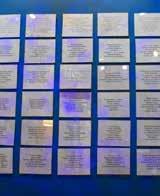
The heart of the museum is the big blue wall which lists the names of those who served or perished on HMCS ALBERNI and the German sub U480, a recognized na tional war memorial. Recently updated from research conducted at Archives Canada in Ottawa by a society member, it now accurately lists all crew members.
The artefacts of the museum reflect Canada’s navy role in the second World War, from uniforms, medals, let ters, keepsakes. HAMM has grown mostly due to the donations from families who wish to entrust the mu seum with their cherished momentos, such as the wed ding dress belonging to a war bride; a moustache brush from a Great War officer; a cot from a Dutch sailor who was too tall to use a hammock; and the entire Leslie collection donated by his daughter who lived to be 104 years old and visited HAMM each year.
Photos © HMCS ALBERNI Museum
12 | COMPASS MAGAZINE | Issue 41 WWW.COMPASSMAGAZINE.CA
625 Cliffe Avenue, Courtenay · 250 897-6411 · Tues to Sat, 10am to 4pm · $5/adult, $10/family, $2/ student · Free for members and military.
Above all, HAMM is about stories tied to these artefacts, and about experiencing something of that time. Feel a wool uniform, and you will get an idea of what it was like for a sailor working and living in cramped quarters on a ship. Listen to wartime music on the vintage radio and hear the subtle propaganda to keep spirits up. Watch a short 1939 film of the King and Queen inspecting the naval base in Esquimalt in preparation for a global war.
HAMM is very family-friendly, and volunteers encour age questions from children. Interactive exhibits such as how to tie various ship knots, learn signal flags, or use the player piano will keep kids busy and interested.



Next door is the Education Centre with its lending li brary and rotating special exhibits. Currently, HAMM is showing “Innocent Eyes: war from a child’s per spective”. This is a moving exhibit created by HAMM four years ago, which has travelled to local fairs and schools. This spring it was refreshed with an accom panying video to reflect the first hand experiences of Ukrainian children in the ongoing conflict in Ukraine. HAMM is supported by the non-profit Alberni Project Society.

Issue 41 | COMPASS MAGAZINE | 13WWW.COMPASSMAGAZINE.CA
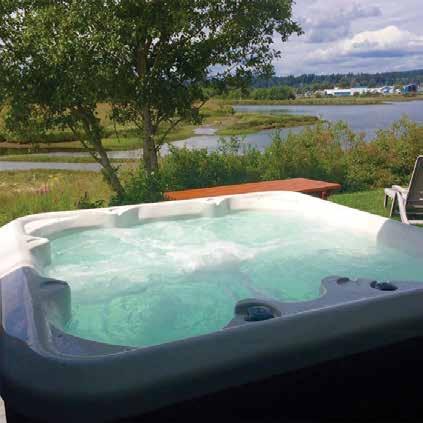
TBIRDATTYEESPIT VANCOUVER ISLAND, BC C AMP B E L L R I V E R , B C • • T H U N D E R B I R D RV PA R K . C O M OPEN ALL YEAR ROUND WATERSIDE COTTAGES • 1 & 2 BEDROOM OCEANVIEW RV SITES 30 & 50 AMP SERVICE 2 5 0 2 8 6 3 3 4 4 OCEAN • BEACH • ESTUARY • WILDLIFE • BIRDS Cozy Cottages & Hot Tubs for your Autumn getaway!
 Hawk Sun Mask in progress by Junior Henderson
14 | COMPASS MAGAZINE | Issue 41 WWW.COMPASSMAGAZINE.CA FEATURE ARTISTS THROUGH THE GRAINS OF CEDAR Looking After a LEGACY
SPIRITS OF THE WEST COAST ART GALLERY is honoured to present “Looking After a Legacy: Through the Grains of Cedar”, an art exhibition featuring carvings by renowned Kwakwaka’wakw artists Bill Henderson, Greg Henderson and Junior Henderson of the Wei Wai Kum First Nation in Campbell River, BC.
This exhibition is rooted in the profound desire by the artists to carry on the legacy of their father and grandfather, Mas ter carver Sam Henderson. Sam lived his life dedicated to the preservation of Kwakwaka’wakw knowledge and culture, and used the practice of carving to preserve these ancient traditions. It is a legacy he has left behind for the next gener ation of carvers.
The Henderson family to this day is a highly respected family of the Wei Wai Kum First Nation. Bill Henderson, son of Sam Henderson, is a Master carver in the art of “making wood speak”. Junior Henderson and Greg Henderson are both grandsons of Sam Henderson and represent the third gen eration of exceptional potlatch carvers. Their carvings and totem poles are celebrated throughout the world and can be seen in Asia, Europe, North America and especially in many communities along our beautiful Northwest Coast. Their mas terpieces are highly collectible and are represented in many national and international exhibitions and galleries.
Kwakwaka'wakw Master Carver Bill Henderson was born in 1950 and is a member of the Wei Wai Kum First Nation in Campbell River, BC. Bill is one of seventeen children born to the artist Sam Henderson and his wife, May Quocksister Henderson. Several of his siblings became artists, including his brothers Ernie, Dan, and Mark. His father Sam was orig inally from Ba’as (Blunden Harbour), on the north coast, but after marrying May settled in Campbell River. Bill watched his father create carvings and other artworks from a young age and by the age of seven Bill had created his first piece.
Kwakwaka'wakw artist Junior Henderson was born in 1976 and is a member of the Wei Wai Kum First Nation in Camp bell River, BC. He was given the hereditary chief name of “Udzistalis”, meaning "to go against the tide", from his father, Chief Dan Henderson. As the Hereditary Chief of the Wei Wai Kum Band of the Kwakwaka’wakw Nation from Campbell River, British Columbia, Junior passed on his chieftainship to his brother. Junior's existing name is ƛaqwasgəm, mean ing “coppers all-around” or “he has the value and esteem of coppers”. Junior inherited the Henderson family’s artistic talent from his grandfather Chief Sam Henderson, his uncles

Bill and Mark Henderson, as well as from his father Dan Henderson who was a traditional painter, artist, storyteller and cultural historian.
The exhibition features over 20 masterpieces including a wide variety of dramatic masks, stunning frontlets, amazing totem poles, paddles and a beautiful talking staff. This ex hibition brings fresh insights into the Henderson’s life-long commitment to the continuity and diversity of their cultural heritage.
In the spirit of LOOKING AFTER A LEGACY: Through the Grains of Cedar, Bill has followed his father’s path by sharing the tradition of carving with the next generation, including his nephews Greg and Junior Henderson. Greg and Junior - es teemed carvers in their own rights – join Bill, Greg and Junior Henderson in this exhibition and sale as a showcase of how traditions are passed down and carried forward.
On now until December 31 at 2926 Back Road, Courtenay. www.spiritsofthewestcoast.com Follow @spiritsofthewestcoast for the latest news, artist talks, and exhibition features.
Dramatic masks, stunning frontlets, amazing totem poles, paddles and a beautiful talking staff.
Issue 41 | COMPASS MAGAZINE | 15WWW.COMPASSMAGAZINE.CA
FEATURE


JUNIOR HENDERSON
ARTISTS
Star Frontlet & Headdress
 WELLNESS ARTIST
KEALY DONALDSON
WELLNESS ARTIST
KEALY DONALDSON
IT IS AN EXCITING time for Mearns as she prepares for a documentary film about her life. She casually intro duces herself to me and I’m giddy because I know who she is and what she has accomplished in her life so far! Mearns was the first Indigenous Female Lawyer in British Columbia and her story is truly amazing! Mearns is working with Kerri-ann Cardinal and an other Indigenous producer for this biographical docu mentary. They are just getting underway with research and funding, which is already looking very positive with support from the Indigenous Screen Office and Creative BC in the works.
Mearns took the BAR Exam and passed in July of 1981 and is University of British Columbia Alumni. She practiced in Vancouver to start. Working with the
Tribal Council, in ’81 she presented at a United Na tion’s sponsored conference on Indigenous People and the Land in Geneva, Switzerland. As life and time progressed, in 1984 she was living in Haida Gwaii and contracted by the two Band Councils there to tackle proposed offshore drilling in Hecate Strait. She fo cused on Tribal Councils, Unions and other stakehold ers together to defeat the drilling application; Mearns was successful and the won the case.
Then in 1985, she moved back to Vancouver to work at the Indian Centre and was asked to rejoin their board; she had been on the Executive Board in the past as the President. It was a no-brainer and she reunited and to become the Executive Director. Shortly after she rejoined her work at the Indian Centre, the AIDS
Health & Wellness 18 | COMPASS MAGAZINE | Issue 41 WWW.COMPASSMAGAZINE.CA Deb Mearns : Breaking the Mold
 Native Peoples Caravan in Ottawa © Deb Mearns
epidemic was prevalent and she focused hard to pull together the first Aboriginal AIDS Conference at the Vancouver Hyatt in ’89. The conference was extremely well attended and received; it tied into so many health care issues involving Aboriginal Health communities, Municipalities, Indigenous communities and more.
As a result of the conference, many important recom mendations were made to Aboriginal Health and im plemented. BC Ministry of Health supported the birth of a new organization, Vancouver Native Health, of which, Mearns is a Founding Member and was Board President for the first eight years.
In ’91, the Attorney General released funds for the Downtown Vancouver - Eastside Safety Office. Mearns built that office, from the ground up, and as a result of her resilience, had Vancouver Police Department’s Dave Dickson working directly out the Safety Office. The Board of Directors at this organization was well represented and full circle, in all respects. In unison, Mearns was pushing hard on VPD for more action on Missing Women’s Investigations. Robert Pickton was at the height of his abductions in the Lower Main land and these abductions became more newswor thy as Mearns waved the flag for help and attention on this matter, holding many high ranking officials accountable.
Later in the 90’s, Mearns joined the WISH Board in Vancouver, which specializes to this day, in the health, safety and well-being of female sex trade workers. Mearns and her husband, John Turvey, worked hand in hand to make positive change in the downtown eastside of Vancouver. They worked together on many important issues such as building a high-risk Youth Activity Centre, the first Needle Exchange in North America and continued focusing on support for sex trade workers. They always seemed to be working to gether and following the same path; they were always at the same meetings and became allies. This alliance grew into friendship and love; they were 41 and 49 when they married. Their relationship was very sup portive and respectful; many new pathways were built as they continued to work together to make the world a better place to live.
In the mid 2000’s, Mearns’ husband, Turvey, became ill and they decided to retire. They chose Vancou ver Island as their destination and made their move. Turvey passed away a couple years later; Mearns had

HEALTH & WELLNESS Issue 41 | COMPASS MAGAZINE | 19WWW.COMPASSMAGAZINE.CA


Health & Wellness 20 | COMPASS MAGAZINE | Issue 41 WWW.COMPASSMAGAZINE.CA FILE NAME: CVA_22-0147_YQQ-Compass_July-4-05x10-25 DATE: 07/20/22 visit comoxairport.com Open up the world from your back door. Comox Airport offers WestJet, Air Canada, Pacific Coastal and Swoop Airline departures connecting you to anywhere you want to travel. Start here, fly anywhere
grown to love the Comox Valley and decided to stay put and remained there.

As Mearns takes time to reflect, she begins to share many stories about her early days. She has been polit ically charged her entire life, starting at 15, participat ing in demonstrations against the Vietnam War. Her involvement in the Cache Creek Road Block in 1974 is legendary and involvement in the first potential riot in Ottawa, defending Indigenous Rights, later the same year. She was called to Winnipeg, from Ottawa, to meet Angela Davis, who is an American Activist, deeply in volved with the infamous Black Panther Party. Mearns also met with John Trudell, a Native American author and activist, through the American Indigenous Move ment from Wounded Knee, and flew the Canadian flag upside down in Ottawa at the Native Peoples Embassy. She was called to a meeting in New York City, which was hosted by Harry Belafonte; a phone call came in during the meeting from Marlin Brando, who called to say he couldn’t make it. Mearns had involvement with Leonard Pelletier’s case, organizing financing and support for his defence, which is goes unresolved to this day.
Mearns shares that she is excited and terrified of what is to come. She loves being in the spotlight support ing Human Rights but remains so incredibly humble through all her involvements and experiences. She raises her hands to her first mentor, Harry Rankin, long time City Councillor for Vancouver and renowned lawyer. They met through mutual interests and he in fluenced her to go into Law. Rankin made her study for her LSAT and the rest is history. Mearns continues to follow legal matters and currently is very focused on Land Claim issues and is studying decisions from these claims.
There is so much more to share but with the docu mentary on the horizon, stay tuned and you’ll get the opportunity to see how Deb Mearns really broke the mold and remains one of a kind.
Photos Top to Bottom:


Mearns graduating UBC Law
Mearns and Turvey


At the Vancouver Indian Centre
UN Meeting in Geneva: Indigenous People & the Land
Potters
Always committed to innovation, and attentive to the needs and desires of riders. These ATVs achieve a higher level of balance between practical use and leisure riding.
HEALTH & WELLNESS Issue 41 | COMPASS MAGAZINE | 21WWW.COMPASSMAGAZINE.CA The
3 1 2 5 N O R T H I S L A N D H I G H W A Y 2 5 0 2 8 6 0 7 5 2 | 1 8 7 7 2 8 6 0 7 5 2 W W W C AMP B E L L R I V E R B O A T L A N D C A
SHIFT HAPPENS
The Fear of Change
ANDREA WAGEMAKER
YOU’RE NOT ALONE in these feelings surrounding change. Everyone has experienced their own level of fear of change. That’s why we all have our “comfort zones” In fact, neuroscience has shown that uncertainty feels sim ilar to failure in our brains. That’s why so many people would rather avoid change because of how uncomfort able the associated feelings can be.
While it’s natural to feel that change is scary, some people may be dealing with something more serious. The fear of change is so dominant, there’s even a phobia about it: metathesiophobia. This is such an intense fear of change that it can be paralyzing and very hard to live with.
Change is a part of life and when we face it with fear it can negatively impact our lives. It is wide spread in every facet of our lives. It is why people stay in toxic relation

ships, stay put in jobs that makes us miserable, stay stuck in a home that doesn’t serve us or even simple tasks like giving up material items .. the list goes on. As you can see, the optimal solution would be to move on and try some thing new. But, when you’re stuck in a situation and have metathesiophobia, you cannot see the situation as clearly as you may want to.
So why do we fear change?
Simply put - it means that outcomes are unknown. Our brains are designed to find peace in knowing. When we don’t know what will happen, our minds can go on a tan gent and make up worst case scenarios, our minds can twist and turn a positive “change” situation into doubt and anxiety to create worry. The fear of failure also comes into play to create a fear of change. So, where does
Photo
Health & Wellness 22 | COMPASS MAGAZINE | Issue 41 WWW.COMPASSMAGAZINE.CA
© Adobestock / choat
the fear of change come from? It usually stems from childhood programming, parental views, ghost stories or movies, personal outlooks, current conditions, social media, etc. If someone grows up in a household that is filled with cynicism and negative views it can create fear and anxiety over trying something new. This is especially common if your parents have dealt with trauma, abuse or poverty. Their experiences may have created a worldview that promotes thinking that all paths are dangerous and filled with bad outcomes. In that way, you have become programmed to be jaded and cynical as well. It is much easier to stick with what is known then to break out and find a healthier way to process change. As humans we are conditioned and naturally programmed to be in control. It’s evolutionary, the fear of change is both an outcome of nature and nurture.
So how can we manage or even altered? It takes work to realize that at some point in life, everything was once an unknown. It takes courage and action to move toward a path of positivity and beneficial outcomes. That’s why it’s so necessary to work towards a mindset that can welcome and embrace change. The fear of change is woven in one’s psyche, so Hypnotherapy and Lucia Light can help locate the place where it stems and override the feeling. It can change the “state of mind” to embrace the unknown, feel the fear and do it anyways!
Just reaching out puts you in a place where you can face your fears. Regaining your sense of power by defining your purpose can diminish your fear of change. If you don’t know what you want, then any decision can be scary. Focus on what you do want- not on what you don’t want. When you first understand your “why,” then when you have to make decisions or a change, you can ask yourself if it will align with your purpose. This can help to elimi nate options that don’t work towards achieving goals.
While you can’t always control outcomes, you can have plans for transition that serve you. Know what you will do if something fails miserably so you can reduce the con sequences as much as possible. Keep a positive outlook, hope for the best because your positive energy can help to create positive outcomes. Your positive energy will become your secret power. Visualization is also the key for change, the secret is to imagine the best outcome you would like to experience for your “change”.
Conversation:
Interactive communication between two or more people. The development of conversational skills and etiquette is an important part of socialization.

Join us at: https://cvconversations.blog
A freelance writer and an editor devoted to thoughtful analysis of your work.
I o er full range of editing services for fiction and non-fiction, from novels and short stories to feature articles.
More at daveflawse.com
Andrea Wagemaker • Shift Happens & Lucia Light in Courtenay
HEALTH & WELLNESS Issue 41 | COMPASS MAGAZINE | 23WWW.COMPASSMAGAZINE.CA Health & Wellness
www.ShiftHypnotherapy.ca • 250-338-3401
NORTHWEST COAST NATURE
The Rare Sulphur Butterfly

LUNA LOISEAU-TREMBLAY
AS THE SQUASH and tomatoes ripen in the garden, on eastern Vancouver Island the drought marches on, giving us yet another indication that climate change is in full swing and we are seeing its impact happen right in front of our eyes. This growing season was a strange one on the coast, as heavy rains came right when the seasonal pollination of the fruit trees was about to hap pen, resulting in many people reporting no or very little fruit. While some aspects of climate change are obvious, other indications of local impact comes in watching the subtle clues that nature gives us when we take the time to watch it unfold.
As we become more informed with the aspects of our environmental crisis, research is showing that insects are being hit hard. While we rely heavily on pollina tors for us to maintain local and global food crops, the research is showing that the damage is across the board and populations of species that we don't rely on
as much are also at risk of collapsing. Butterflies, while not as efficient pollinators (to us) as bees, are one of the many groups of insects that are struggling, as their habitats are destroyed by development and invasive plant species.
This year, likely a result of heavy spring rains, our local butterflies were late or barely present, while others that normally are gone by the end of June stayed on throughout the summer into late August. With the hot days of late summer came other, less common species.
Sulphur butterflies, more common in southern and the interior of BC, made appearances on eastern Vancou ver Island. All species of Sulphurs are generally rare on Vancouver Island and the surrounding area, and made their appearance this year from the second week of Au gust into September. While Sulphur butterflies could be mistaken for the invasive Cabbage White butterfly,
Orange Sulphur nectaring in Gumweed, Rebecca Spit, Quadra Island © Luna Loiseau-Tremblay
Health & Wellness 24 | COMPASS MAGAZINE | Issue 41 WWW.COMPASSMAGAZINE.CA
looking closer shows their appearance to be quite different. Sulphurs can vary from yellow, orange or greenish white with black markings. When they open their wings, usually a strong black wing border is pres ent. Depending on the species, there may be some orange, black, or pink rimmed white spotting present on the underside or inside of the wings. As described in Butterflies of BC (Guppy and Shepard, 2001), three groups of plants serve as foodplants for the larvae of Sulphurs, namely plants in the Pea or legume family, in the genus Vaccinium (includes blueberries, cranberries huckleberries etc) and those in the genus Salix (willow family).
In BC, Sulphurs are generally represented by the ge nus Colias, and usually when they pop up on southern Vancouver Island, it is assumed the species is a West ern Sulphur (Colias occidentalis). Because of this, I was delighted to see quite a few bright yellow Sulphurs in the Quadra Island/Campbell River area which were clearly not Western Sulphurs. After some back and forth with experts they were determined to be Orange Sulphurs, Colias eurytheme.
Orange Sulphurs, which are also nicknamed “the alfalfa butterfly” for the preference of alfalfa as a larval food plant, are rare here, as are Clouded Sulphurs which oc casionally make an appearance on southern Vancouver Island. Historically, 30 years ago, it wasn’t uncommon to see a Sulphur in this area but these days, with in creased development and agriculture, and more intro duced and invasive plant species, it is very rare indeed.
While Orange Sulphurs are flying from April to Octo ber, they are often not seen until midsummer, nectar ing on a large variety of flowering species. In the last two weeks of August, hardy, drought tolerant, weedy native species may provide the much needed nectar gathered by the late summer nectar seeking insects.

Examples of some excellent native pollinator plants that are easy to grow and easily colonize distrubed areas, flowering in mid to late summer, are Fireweed (Chamerion angustifolium), Pearly Everlasting (Anaphalis margaritacea), California Aster (Symphyotrichum chilense), and two species of Gumweed (Grindelia sp.).
The seeds of these species and many others can be pur chased online from Satinflower Nurseries in Victoria.
 Orange Sulphur on Aster © Luna Loiseau-Tremblay
Gumweed © Luna Loiseau-Tremblay
Orange Sulphur on Aster © Luna Loiseau-Tremblay
Gumweed © Luna Loiseau-Tremblay
HEALTH & WELLNESS Issue 41 | COMPASS MAGAZINE | 25WWW.COMPASSMAGAZINE.CA Health & Wellness
NATUROPATHIC INSPIRATIONS

Transition into Healing
INGRID PINCOTT, ND
FALL IS ALWAYS a great time to wipe the slate clean and start fresh! I still love taking advantage of the school supplies sold in stores at this time of year. One is never too old nor too young to get creative! So let’s talk about getting creative about taking care of your body as we transition into fall as well as the “flu sea son”. The following suggestions are also great for those of you suffering from Long Covid to help detox the spike protein.
Fall is also a good time to think about detoxification and cleansing of the body. Over the many years of my prac tice I taught that prescription medications can deplete the body of nutrients, and many of them may have ad verse drug reactions (ADRs). Several studies, published as early as 1998 (JAMA 1998; 279:1200–05), indicate that 100,000 deaths per year result from ADRs, thus making prescription drugs the fourth leading cause of death in North America behind heart disease, cancer and stroke! This equates to six jumbo jets falling out of the sky each day of the year. Nothing has changed since then—and perhaps things have gotten worse.
The word “doctor” comes from the latin word docere— to teach—and one of the basic premises of naturo pathic medicine is cleansing the body and giving it a rest. Over the years I have equated this to an oil change in your car. In fact we take much better care of our cars than we do of our bodies. So consider a cleansing pro gram with your naturopathic physician. In the mean time here are a few nutrients that can help.
Glutathione is an anti-oxidant naturally produced in the body from amino acids that we ingest. It is import ant for many functions in the body including tissue re pair, cancer prevention and a robust immune system. It is also a great liver detoxifier. When there are added stresses on our bodies, glutathione is depleted. This includes the taking of prescription medications for underlying conditions such as diabetes and heart dis ease. Taking extra glutathione gives the body a boost it needs to handle these stresses. N-acetylcysteine (NAC) converts in the body to glutathione and is a cheaper supplement than glutathione. It can be taken daily and is especially helpful in those 65 years or older.
Photo © Adobestock / edb3_16
Health & Wellness 26 | COMPASS MAGAZINE | Issue 41 WWW.COMPASSMAGAZINE.CA
Zinc is an important nutrient for many detoxification systems in the body and is a very common deficiency resulting in a decrease of the immune system as well as the sensation of taste. This is common in children as well as teenagers with eating disorders. It is the sim plest of minerals to prevent sore throats, colds and flus. Most multivitamins will have this in the 25-50mg dosage. Multivitamins are useful if the B vitamin dos ages are in the 50mg range and vitamin A 10,000 IUs. I suggest taking 4000-6000mg Vitamin C (useful in neutralizing most toxins) and 5000 IU’s Vitamin D as both are wonderful anti-inflammatories, help destress the body and of course will keep you healthier through the winter.
Milk thistle is a wonderful herb for the liver to help with its two detoxification phases. It is also a strong an ti-oxidant and is a common ingredient in naturopath ic detoxification tinctures. With the chemical exposure we all face every day it behooves us to consider this herb as a long term support to the body.
Nattokinase and other natural blood thinners, such as gingko, lower inflammation in the microvasculature. Supporting the micro-circulation improves the ability of the kidney to eliminate toxins.
Anti-inflammatories such as Bo swellia, Curcumin and Quercitin (BCQ is my all- time favorite!) also lessen the load on the body and aid in neutralizing the spike protein.
A detoxification diet is usually a veg etarian diet for the duration of your cleanse ie 1-2 weeks. Avoiding meat, wheat and dairy during this time also gives your body a good rest. If you want to incorporate fasting then consider fasting one day per week with just drinking fruit and or vegetable juices. Intermittent fast ing is a good practice to continue after your cleanse.
Detoxification teas can include fen nel, dandelion, jasmine green, star anise, comfrey and pine needle tea.
Infrared and wet steam saunas are great to open up the lymph channels of elimination. If you don’t have access then hot Epsom salt baths can also be very effective.
Detoxing from digital technology not only includes avoiding your devices for 24 hours or more each week but at the same time reconnecting IN PERSON with your friends and family to have real face to face en counters. Turn off your house WIFI at night to reduce the EMF exposure while you sleep. Restful sleep is one the best ways to detoxify the body during the night so follow good sleep hygiene for optimal sleep.
Finally, don’t forget about green bathing! This is being out in nature and walking on the earth, not on pave ment, or Forest Bathing, “Shinrin Yoku” in Japanese. The earth whispers to your heart through her wind, trees and all of the living creatures around you. Re member that the word Earth is an anagram of Heart.
Transitions can often be challenging but the best thing I always did for my patients was help them move from fear to hope. There is much that can be done to take charge of one’s health, so have fun and be creative!

HEALTH & WELLNESS Issue 41 | COMPASS MAGAZINE | 27WWW.COMPASSMAGAZINE.CA Health & Wellness
STAY WELL
Hidden Disabilities Sunflower Program at Comox Airport
THE COMOX VALLEY Airport is proud to offer the globally recognized Hidden Disabilities Sunflower pro gram to support passengers with hidden disabilities, also known as invisible disabilities. The Sunflower logo, in the form of a lanyard, wristband, sticker or button may be worn to assist those travelling with invisible dis abilities who may need a little extra patience, care and assistance during their travel experience.
Vancouver, Edmonton and Toronto Pearson airports, along with a growing list of international airports, rail ways and airlines, have adopted the program that origi nated at Gatwick Airport in 2016. While the Sunflower Program will not replace communication of special re quirements with air carriers prior to travel or bypass se curity lines, it informs airport staff that the wearer may need a little more time or understanding during their journey.
Making the invisible visible, the Sunflower lanyards and accessories are available free of charge from CVAC
Volunteer Ambassadors and staff at YQQ. The program is open to anyone that self-determines they have a hid den disability without needing to disclose personal de tails – be it a hearing or cognitive challenge, PTSD or autism spectrum, dementia or a variety of physical or medical conditions.
Passenger Henry Tunke was happy to receive his lan yard from YQQ Ambassador Val Little. “It just makes life a little easier,” said Tunke before boarding his WestJet flight to Calgary.

“We’re constantly looking at ways to improve accessibil ity at the airport, and aiding passengers with hidden dis abilities makes perfect sense,” says Mike Atkins, Airport CEO. “Wearing the Sunflower will discreetly indicate that additional assistance may be required throughout their journey making air travel more inclusive, comfort able and stress-free.”
See www.comoxairport.com for more information on accessibility at the airport and the Sunflower Lanyard program.
Health & Wellness 28 | COMPASS MAGAZINE | Issue 41 WWW.COMPASSMAGAZINE.CA ERIN NEELY




Issue 41 | COMPASS MAGAZINE | 29WWW.COMPASSMAGAZINE.CA ww w . s u sanmall i n so n . c o m Sayward · Campbell River Serving the communities of Taking SAUN Photo Credit @shantinaraephot Pie Factory Amazing Pies NOW Available at Compass Gallery + Gifts! 101-1811 Comox Ave Monday - Saturday 10 - 5 Pick up your favourite piefrozen! Pre-orders welcome! piefactoryorder@ourmail.com Itʼs ISLAND GOOD! MENU Lunch & Dinner Time 10" / 6" Roasted Chicken Pot Pie $26 / $13 Traditional Tourtiere $26 / $13 Pulled Pork + Mushroom Pie $26 / $13 Coming soon ... Spinach+Feta & Roast Beef! Pie Any Time Sweet Peach Pie $22 / $11 Grandma’s Apple Cinnamon $22 / $11 Best Berry Pie $22 / $11 Other Treats @ the Gallery Carrot Cake SLICE $6 Gluten Free/Vegan Daily Tilly's Soup + Scone $7 Soup $5 Hot $4 Frozen Scone $3 Pecan or Butter Tarts $3/$15 for 6 Vanilla Cupcakes + Brownies $3 Gluten Free KETO PRE ORDER THANKSGIVING DINNER! TURKEY CRANBERRY PIE + PUMPKIN 10" COMBO $65 The easiest holiday meal you have ever made... and so delicious! Don't forget about Christmas ... Individual Order | Turkey Cranberry Full $40 | Pumpkin Full $30 | Pumpkin Small $13
GROWING UP COASTAL
Nation Gifts Name to Local VIU Campus
THE TLA'AMIN NATION Executive Council has gifted Vancouver Island University (VIU) the name (teew-shem-awt-xw), which means House of Learning, for its campus located in (Tla'amin Territory).
The gift is in the spirit of decolonization and reconcil iation. Following a renaming ceremony on September 20, 2022, VIU's campus in the qathet region will now be called and not by its colonial name.
"The Tla'amin Nation acknowledges with gratitude Vancouver Island University's readiness and willingness to participate and engage in meaningful reconcilia tion," said Tla'amin Nation's Hegus John Hackett. "This re-naming is a pivotal example of continued reconcili ation within our territory and across Turtle Island more broadly. We are hopeful that this re-naming will inspire more reconciliation work throughout the territory."
Vancouver Island University has committed to building
stronger partnerships with Indigenous communities. VIU has pledged to do more to honour Indigenous students, employees, and communities; deepen under standing of Indigenous knowledges; and work with In digenous Peoples to co-create programming that better serves the priorities of their communities.
"We thank the Tla'amin Nation for this meaningful gift of a name that reflects our place in the community that allows Vancouver Island University be an inclusive and welcoming place for everyone," said Dr. Deborah Saucier, VIU President and Vice-Chancellor. "Accepting the gifted name in ceremony of our campus in the qa thet region reflects our ongoing commitment to truth and reconciliation by promoting the use of traditional names where we teach, learn, research, live and share knowledge. We greatly value our relationship with the Tla'amin Nation and we are grateful for this gift."
A sign with the new name for VIU's campus in the qathet region was recently unveiled at the campus.
 Photo © Joseph McLean
Health & Wellness 30 | COMPASS MAGAZINE | Issue 41 WWW.COMPASSMAGAZINE.CA
Tla'amin
DON'T WANT TO MISS EVEN ONE ISSUE? $50 plus gst | $52.50 Annually 3 MAGAZINES MAILED DIRECTLY TO YOU BI-MONTHLY One for the house, the business and for sharing! KEEP SUPPORTING OUR EFFORTS TO CREATE & SHARE DIALOGUE ON VANCOUVER ISLAND & POWELL RIVER! NOW YOU CAN SUBSCRIBE TO THE NEXT 6 ISSUES COMPASSMAGAZINE.CA | COMPASSMAGAZINE@OURMAIL.COM WE TAKE: VISA | MASTERCARD | MONEY ORDER | E-TRANSFER


HEALTH & WELLNESS Issue 41 | COMPASS MAGAZINE | 31WWW.COMPASSMAGAZINE.CA Health & Wellness Don Bastian • Carver On site art studios Carvings, Pottery Hand-carved Guitars Charcuterie Boards Wood Bowls & Vessels Jewelry, Prints, Cards Souvenirs & More 1605 Telegraph Cove Road Find out what your cup holds! Enjoy a beautiful sit down experience featuring: Authentic Tea Leaf Reading Gorgeous Local Tea + Sweet Treats Fortune Card Reading Monthly Readings in Comox or book your private session! Book now at shifthappens@shaw.ca or in person at Compass Gallery + Gifts 101 - 1811 Comox Avenue Comox Like us on Facebook! @CupofDestiny CUP OF DESTINY Tea Leaf Readings






Home of Compass Magazine Printing · Graphic Design · Public Relations · Communications · Advertising THINKING ABOUT DIY GIFTS? We Print Calendars, Art + Photo Cards, Post Cards + More! FOR ALL YOUR PRINTING NEEDS —AND MORE! kikiscommunications.ca 101-1811 Comox Ave • Comox, BC kikiscomm@ourmail.com • 250.203.1880 Tool Knowledge 101: Understanding Basic Tools Learn how to use these essential hand-tools tha should be found in any basic home kshop. Wo rksh o p s How to use Drywall Anchors Keep your drywall safe with these tips. Minor Drywall Repairs Learn ho to fix them befo e they sp ead! Doorknobs 101 The do s and don’ts o how to instal Be Kind Woodworking Shelby Rollefson 250 794-8227 bekindww@gmail.com Campbell Ri er, BC Get in touch with any questions or to book a workshop! 1 2 3 4 For details on upcoming workshops visit shelby rollefson bekind_woodworking
