Faculty Interview: Dave Miceli: Seeing What’s Possible
Alumni Profile: Ethan Edson ’10
2025 Reunion: Past Connection and New Beginnings
Faculty Interview: Dave Miceli: Seeing What’s Possible
Alumni Profile: Ethan Edson ’10
2025 Reunion: Past Connection and New Beginnings
Headmaster
Mark H. Tashjian
Associate Head of School
Meg Kenny
Director of Advancement
Samantha Watson ’96
Director of Communications
Jill Perry-Balzano
Photography
James Chandler ’10
Charlotte Howe
Robert Mandl
Evan Miksis ’27
Jill Perry-Balzano
Dan States
Design Craig DesRoberts
Contact Us: 802-362-1775 burrburton.org
Board of Trustees
Charley Stevenson, Chair
Ed Campbell ’70, Vice Chair
Scott Swenor, Treasurer
Heidi Lynn, Secretary
Brian M. Barefoot
Dr. Andrew Boyer ’01
Peggy Brophy Brockett ’88
D. William Cairns ’72
Rabbi Michael Cohen
Michael Cooperman
Pauline de Laszlo
Brian Luke
Daphne Markcrow
Sheelyn Michael
Carol O’Connor ’67
Michael Powers ’60
Trustees Emeriti
Seth Bongartz ’72
Orland Campbell
Robert E. Treat ’55
Tony Whaling





How Place Shapes Learning: Ten Years of Farm and Food Studies
Faculty Interview: Dave Miceli: Seeing What’s Possible
Alumni Profile: Ethan Edson ’10 2025 Reunion


Dear Alumni, Friends, and Families,
Welcome to the Summer 2026 edition of The VIEW
Within these pages, you will find stories that reflect the engaging, challenging, and deeply human educational experiences that define Burr and Burton Academy. You will read about remarkable accomplishments—from the members of the Class of 2026 as they embark on an impressive array of college, military, and career pathways, to the many achievements of our students in athletics, the arts, leadership, and service.
This issue’s theme explores the relationship between learning and place. Our cover story examines ten years of Farm and Food Studies and highlights how meaningful experiences in the field, greenhouse, kitchen, and community help students develop confidence, resilience, and a deeper understanding of themselves and the world around them. You will also read about alumnus Ethan Edson, whose experiences at Burr and Burton helped inspire a career in marine research and entrepreneurship, as well as updates from Mountain Campus, the Integration Expo, and many other corners of our community where learning comes alive.
Our faculty profile features Dave Miceli, who retires this year after 26 years of extraordinary service to Burr and Burton Academy. Whether as a history teacher, coach, department chair, athletic director, or mentor, Dave approached his work with wisdom, humility, and an unwavering commitment to helping others grow. He often speaks about the importance of being a “multiplier”—someone who strengthens the people around them. By that measure, Dave’s impact on our school has been profound and enduring.
At our closing assembly in June, student speaker Miles Treske ’26 reflected on the growth he experienced during his four years at BBA. In the end, he concluded that while facilities and programs matter, it is the people who make the difference. Teachers, coaches, teammates, classmates, mentors, and friends shape our journeys and remind us that life is richer when we learn, work, and grow together.
Since 1829, Burr and Burton Academy has fulfilled its public mission by creating opportunities for young people from all backgrounds to discover their strengths, pursue their passions, and contribute to something larger than themselves. The stories in this issue remind us that education is not simply about acquiring knowledge; it is about becoming the kind of person who can make a positive difference in the world.
As you read the stories that follow, I hope you will see a common thread woven throughout them all. Place matters. Opportunities matter. But most of all, people matter. They are the heart of every meaningful educational experience and the foundation upon which our community is built.
Thank you for taking the time to read this edition of The VIEW, and thank you, as always, for your support of Burr and Burton Academy.
Go Bulldogs!
Mark H. Tashjian Headmaster
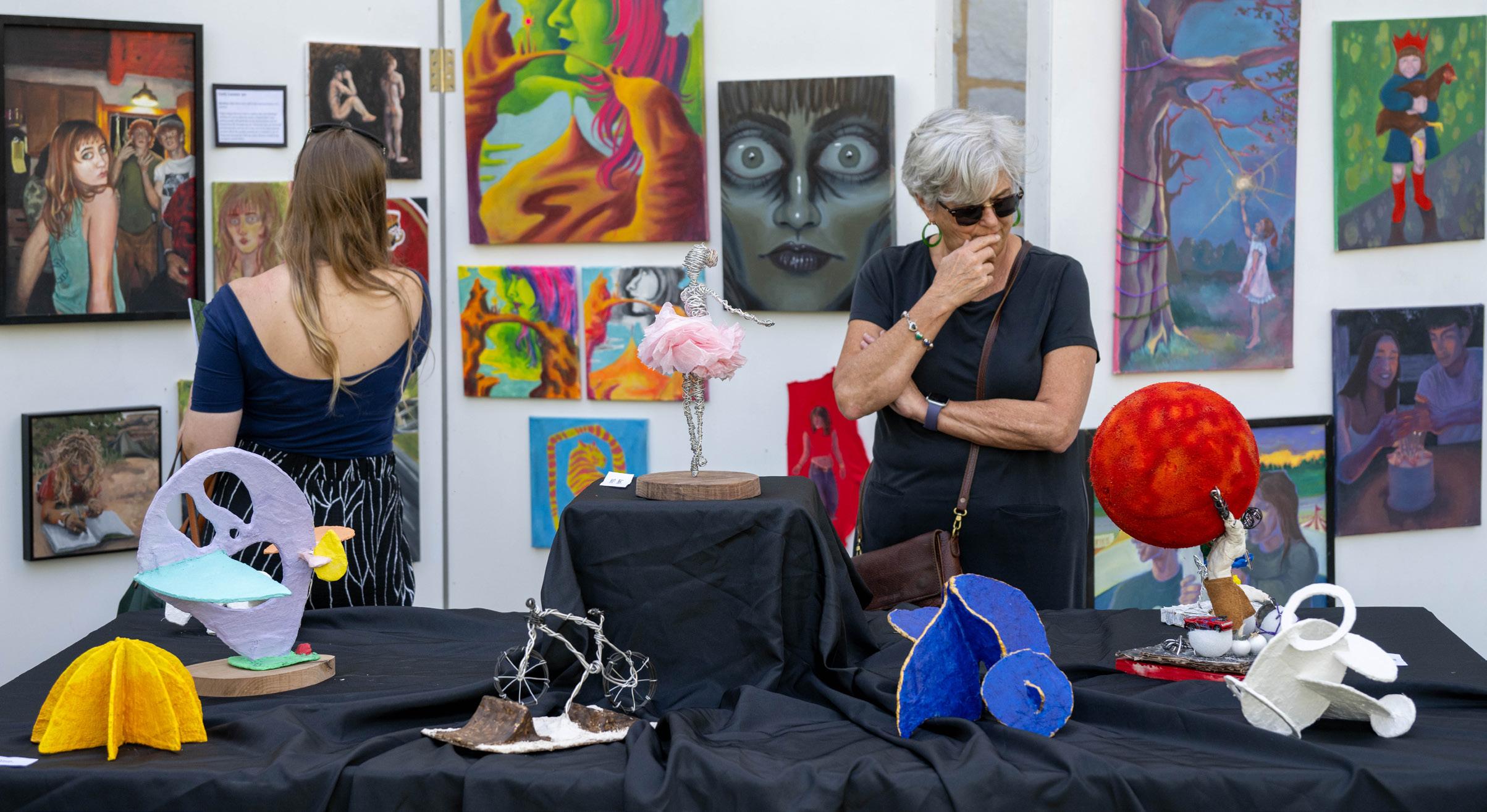
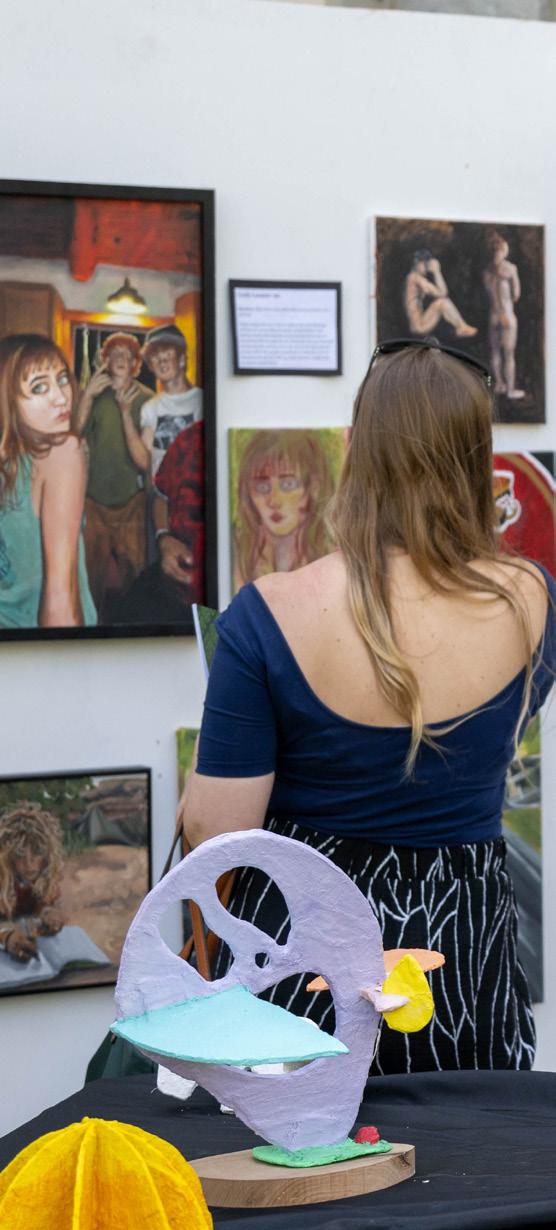
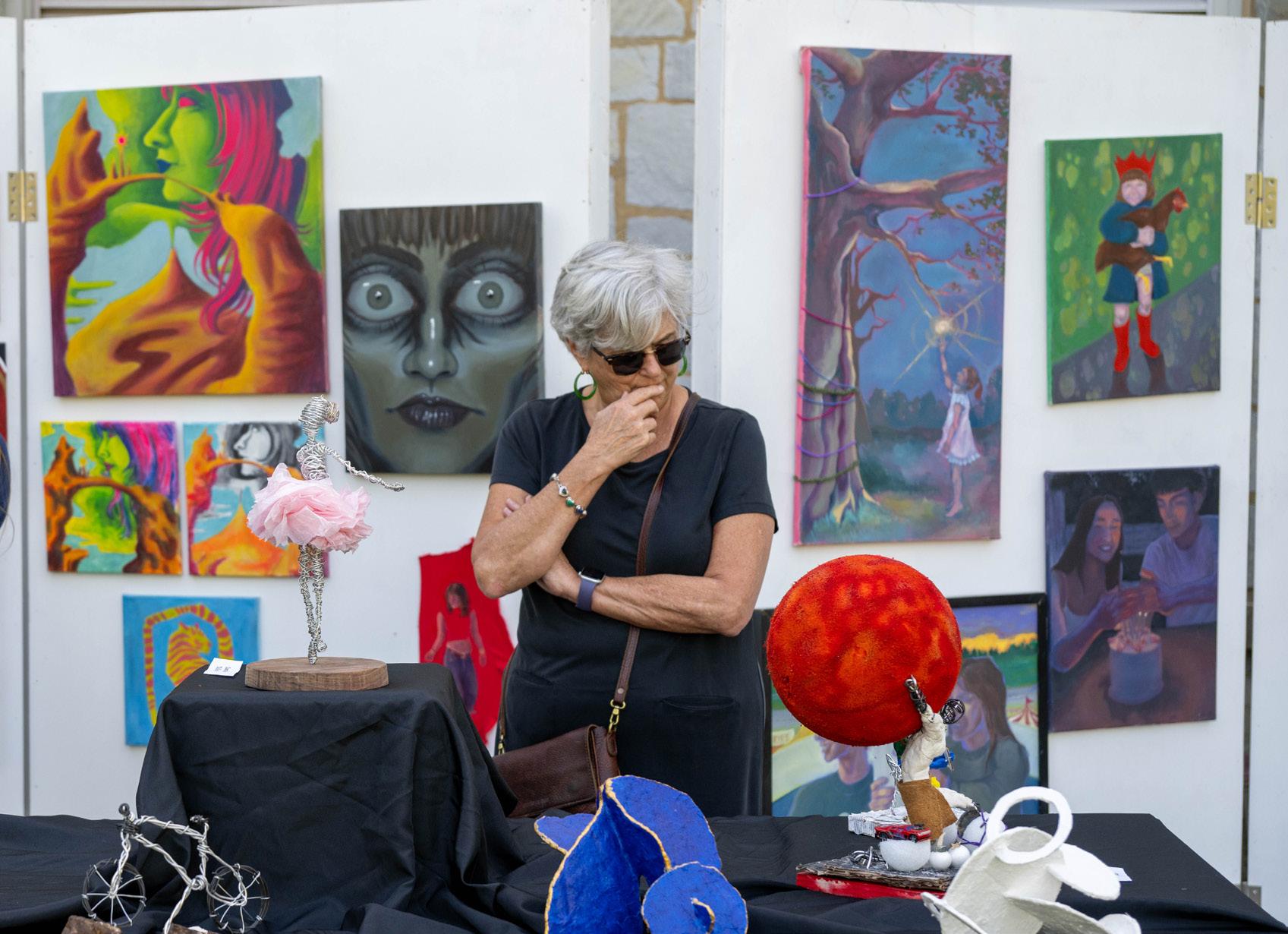
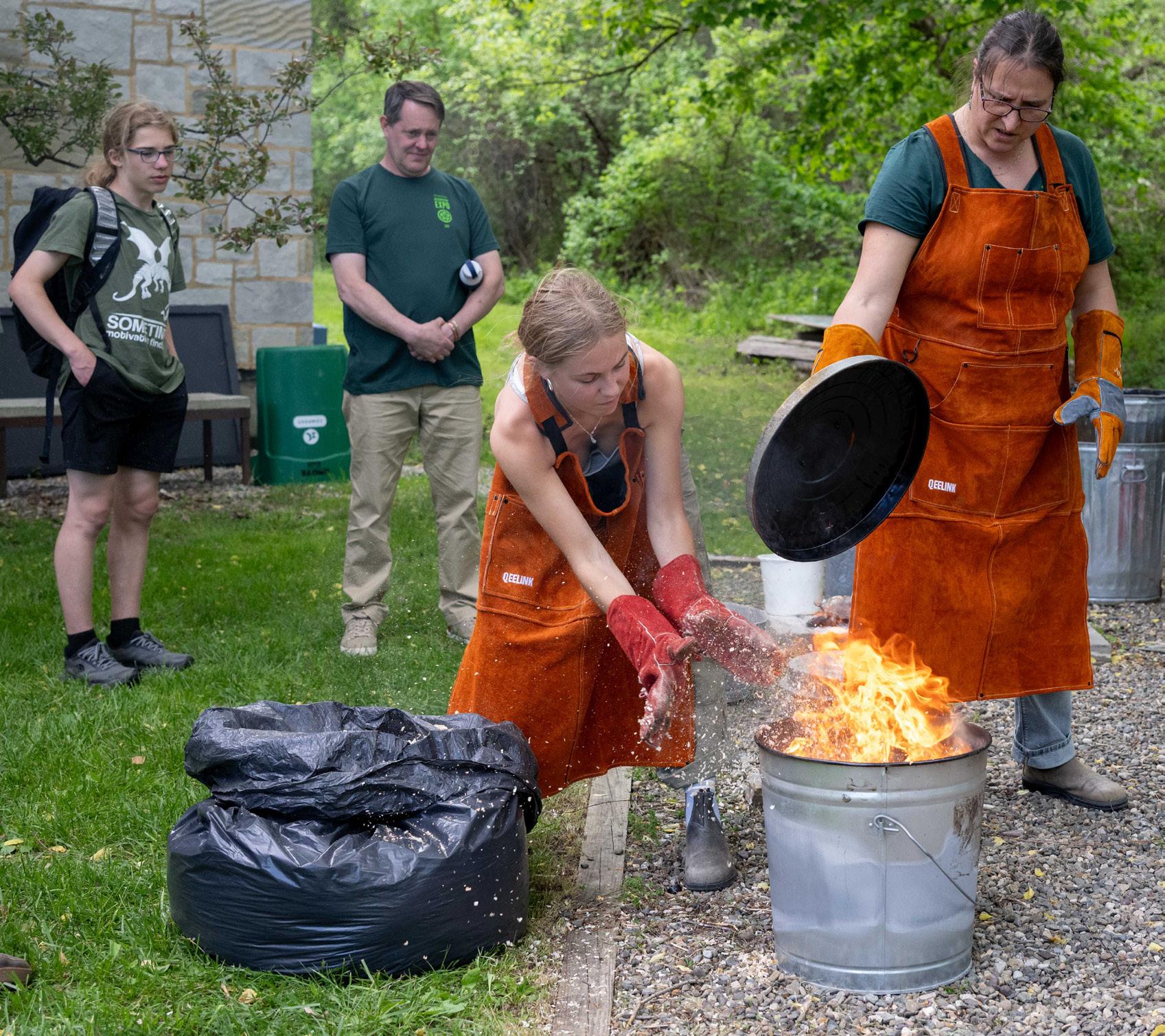
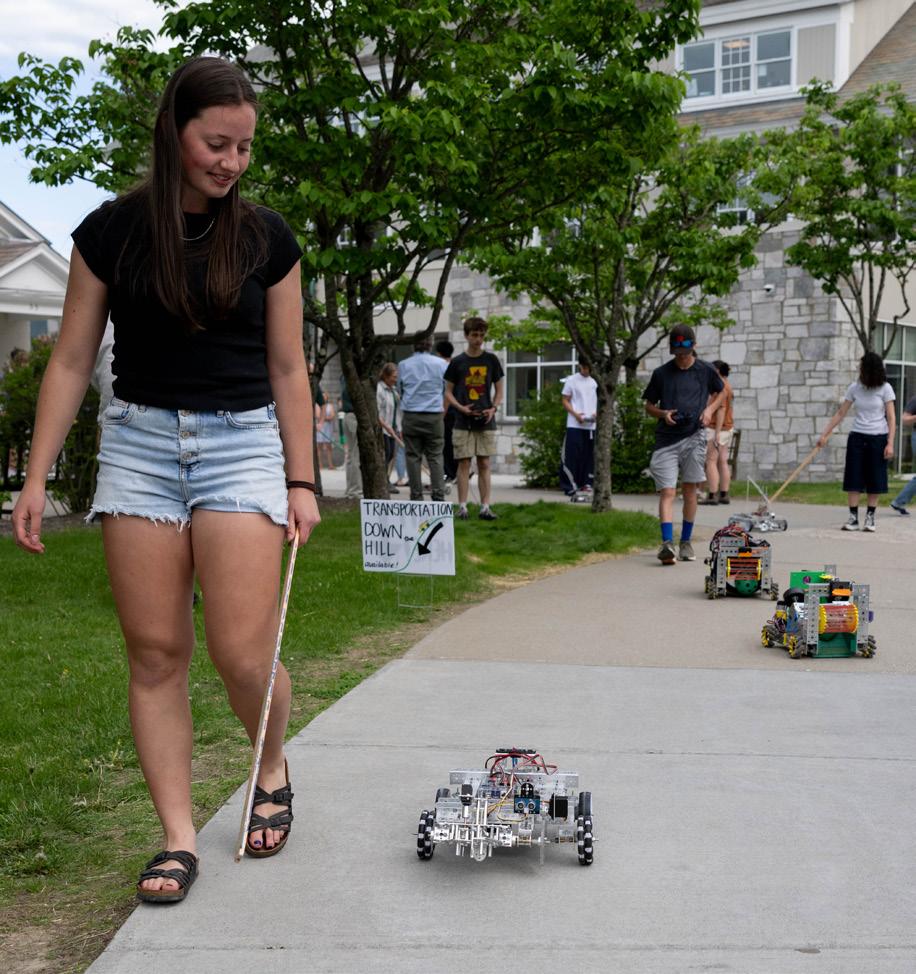
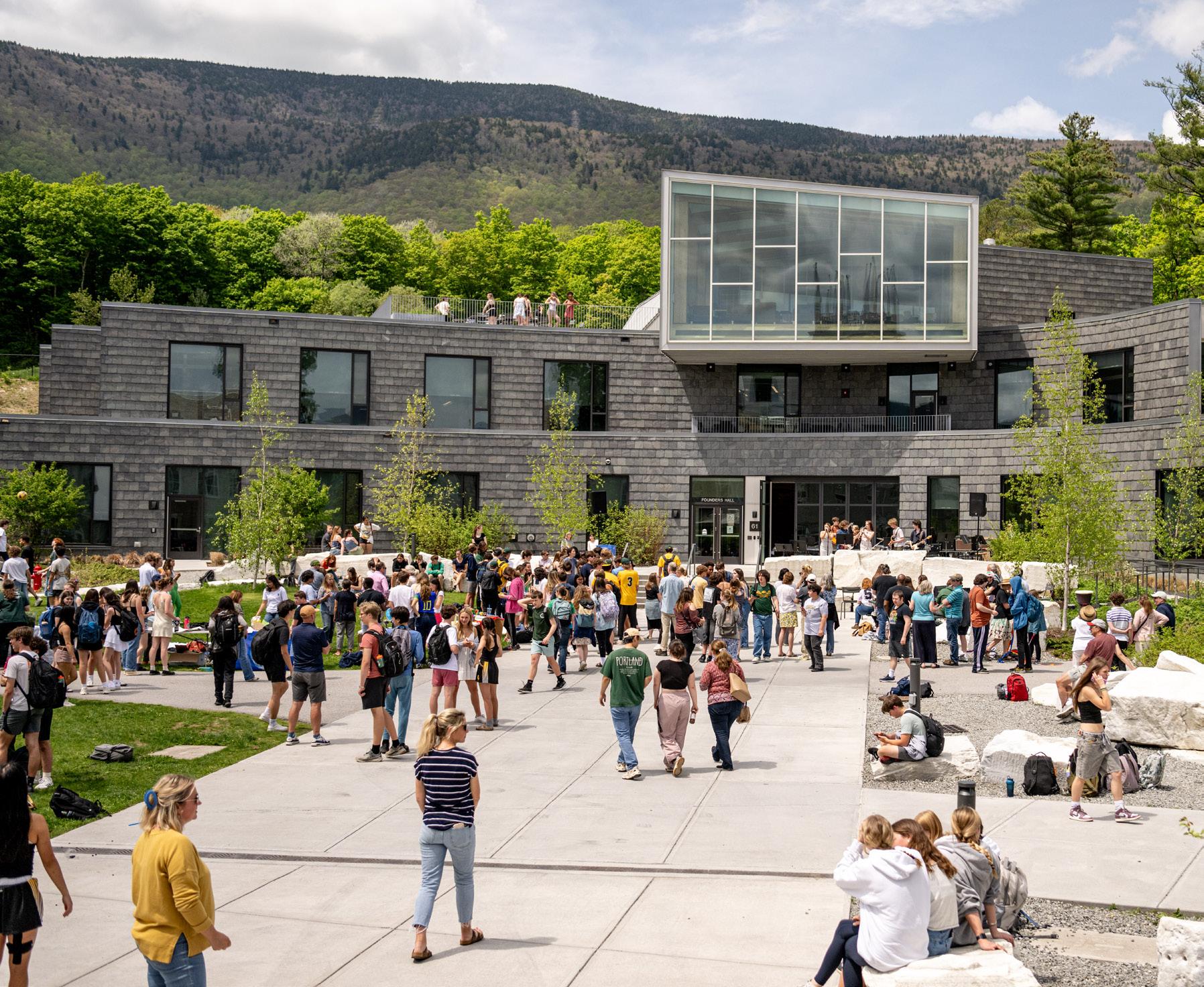
THIS SPRING, BURR AND BURTON ACADEMY WELCOMED THE COMMUNITY TO CAMPUS FOR ITS ANNUAL INTEGRATION EXPO, A VIBRANT, SCHOOL-WIDE CELEBRATION OF STUDENT LEARNING ACROSS DISCIPLINES. HELD ON THE AFTERNOON AND EVENING OF MAY 20, THE EXPO INVITED VISITORS TO EXPLORE THE DEPTH AND DIVERSITY OF STUDENT WORK SHAPED BY THE SCHOOL’S FIVE LEARNING SPIRES.
Centered on the essential question—What is beautiful and hopeful within our imperfect and chaotic world?—the event highlighted how students are grappling with complexity while finding meaning, purpose, and possibility in their studies. Across campus, classrooms and shared spaces were transformed into galleries, performance venues, and interactive learning environments.
More than 50 exhibits, presentations, and performances showcased the breadth of student inquiry. Guests encountered
choreographed dance inspired by cultural movements, studentbuilt robots and model aircraft, poetry readings and live music, as well as scientific and mathematical presentations that translated data into compelling, real-world insights. Studentrun business displays illustrated entrepreneurial thinking, while artistic and multimedia projects reflected personal expression and creative risk-taking.
Organized across key campus locations—including Founders Hall, the Courtyard, Riley Center, Rowland Building, and

Smith STEM Center—the Expo encouraged visitors to move through spaces aligned with the school’s learning spires, experiencing firsthand the integrative approach that defines a Burr and Burton education. A central welcome area helped orient guests and foster a sense of connection across the event.
At its core, the Integration Expo offered students the opportunity to communicate their learning in original and profound ways, bridging academic disciplines and real-world application. Just as importantly, it provided a space for reflection—on growth as students, as thinkers, and as members of a broader community.
For faculty, the Expo served as a powerful demonstration of curriculum in action, making visible the ways in which collaboration and integration deepen understanding. For visitors, it was a chance to engage directly with student ideas, ask questions, and witness the curiosity and care that drive the learning process at Burr and Burton.
The result was an event that not only showcased student achievement, but also captured a shared commitment to exploring what is possible—even amid uncertainty.
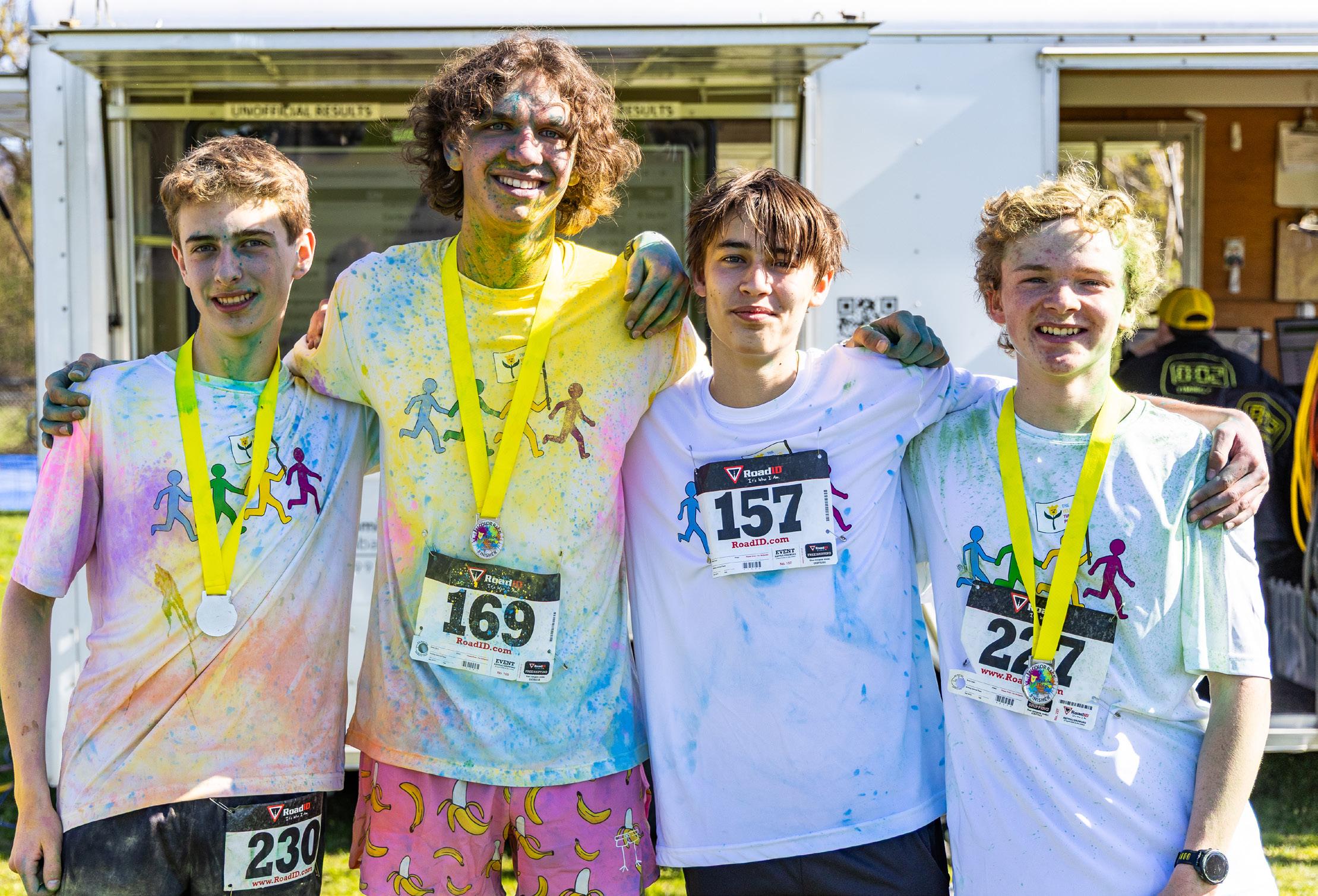
ON SUNDAY, APRIL 26, MORE THAN 100 RUNNERS CAME OUT—WITH ENERGY AND READY FOR COLOR—FOR THE YELLOW TULIP PROJECT 5K COLOR RUN, A COMMUNITY EVENT ORGANIZED BY STUDENTS TO SUPPORT MENTAL HEALTH AWARENESS THROUGH CONNECTION AND CELEBRATION.
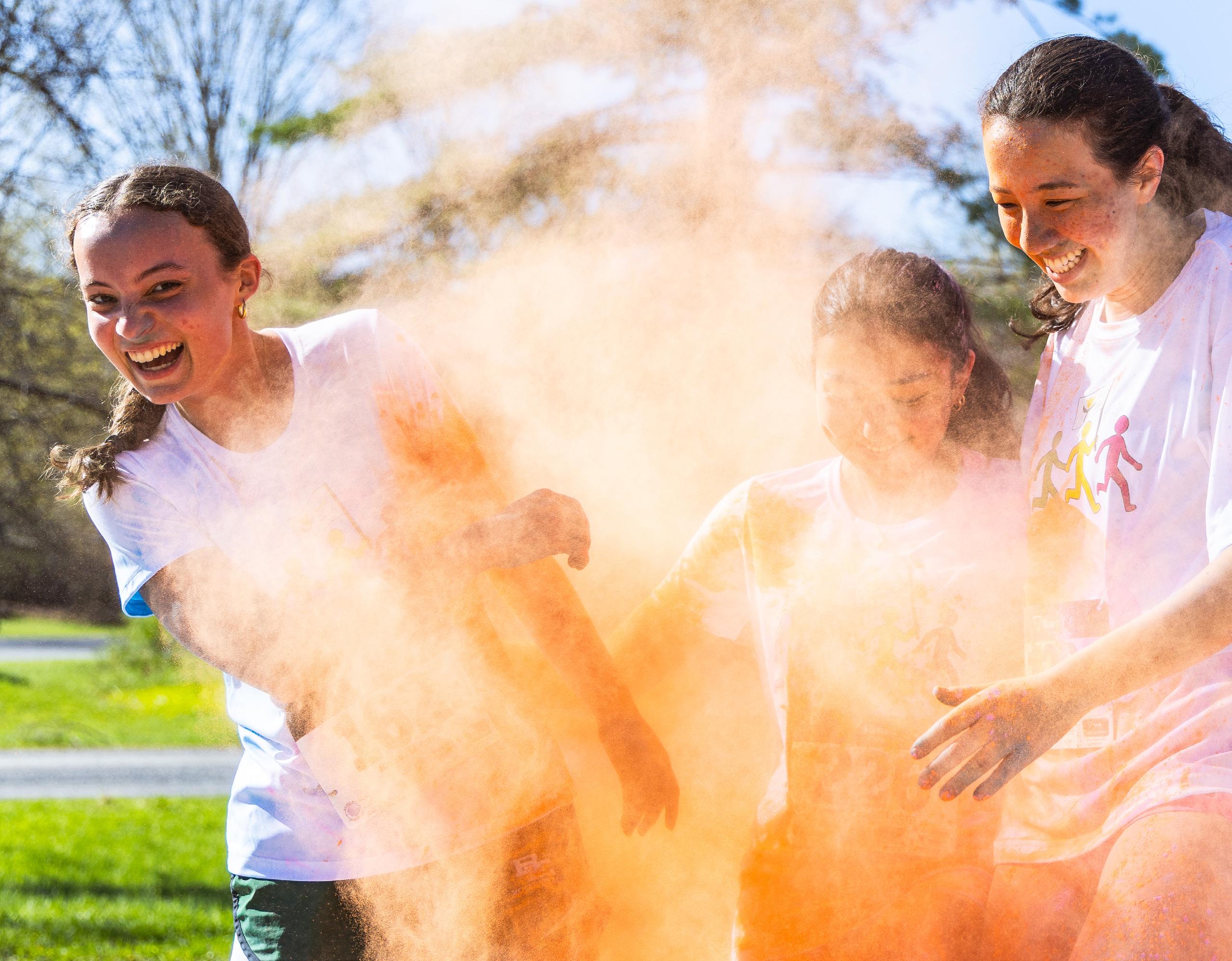
Hosted by Burr and Burton’s Yellow Tulip Club, the race combined spirited competition with a festive atmosphere as brightly colored powder filled the course and supporters lined the route. The event raised more than $2,500 in profit to support the club’s ongoing work around mental health awareness and advocacy.
Junior Siena Marshall ’27, vice president of the Yellow Tulip Club and lead organizer of the race, said the event was designed to strengthen ties between the school and the broader community.
“What inspired me to organize the YTP 5K Color Race was the wish for the community to be more involved with what happens at BBA,” Marshall said. “I thought a great way to do this was to bring everyone together for an event that supports mental health.”
Marshall added that the enthusiastic turnout and positive atmosphere reflected the importance of creating open and engaging conversations around mental health. The event was supported by club advisor Kristen Kimball and fellow club members
Delia Gould ’27, Emma Anderson ’27, and Sophia Dubanevich ’27.
The race itself featured a competitive field led by young runners, including many BBA students: Sebastian Traver Adolphus ’28 of Sunderland finished first in 17:24.0, followed closely by Atticus Golitko ’27 of Manchester in 17:30.1. Christopher Madsen ’25 placed third in 18:29.9.
Marshall was thrilled with the turnout: “Everyone was so happy to be there and supportive of the event. It was truly great to have mental health awareness reach our entire community in such an engaging way.”



“THE MOUNTAIN CAMPUS GAVE ME THE SPACE TO TRY SOMETHING NEW—AND THAT CHANGED EVERYTHING.” —FALL ’25 STUDENT
This school year, the BBA Mountain Campus took huge strides forward in reorganizing around a shared vision to expand in-depth, place-based, experiential learning to even more students.
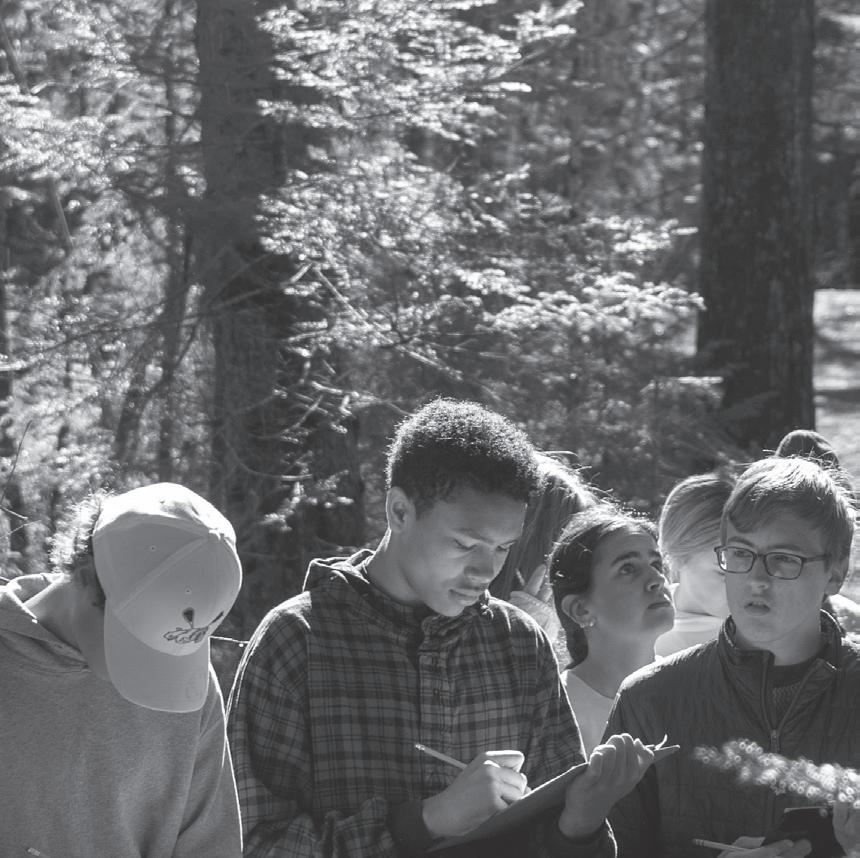
Across both semesters, nearly 80 students hiked, snowshoed, and waded into the fields, forests, and streams around the 100-acre campus in Peru.
During the fall semester, Burr and Burton launched two inaugural halfday courses at the Mountain Campus: Literature, Leadership, and Learning in the Outdoors, fulfilling physical education and sophomore English credits, and Conservation Biology and Environmental Literacy: Principles and Practice, fulfilling junior or senior English and biology credits—and each taught at the honors or CP level.
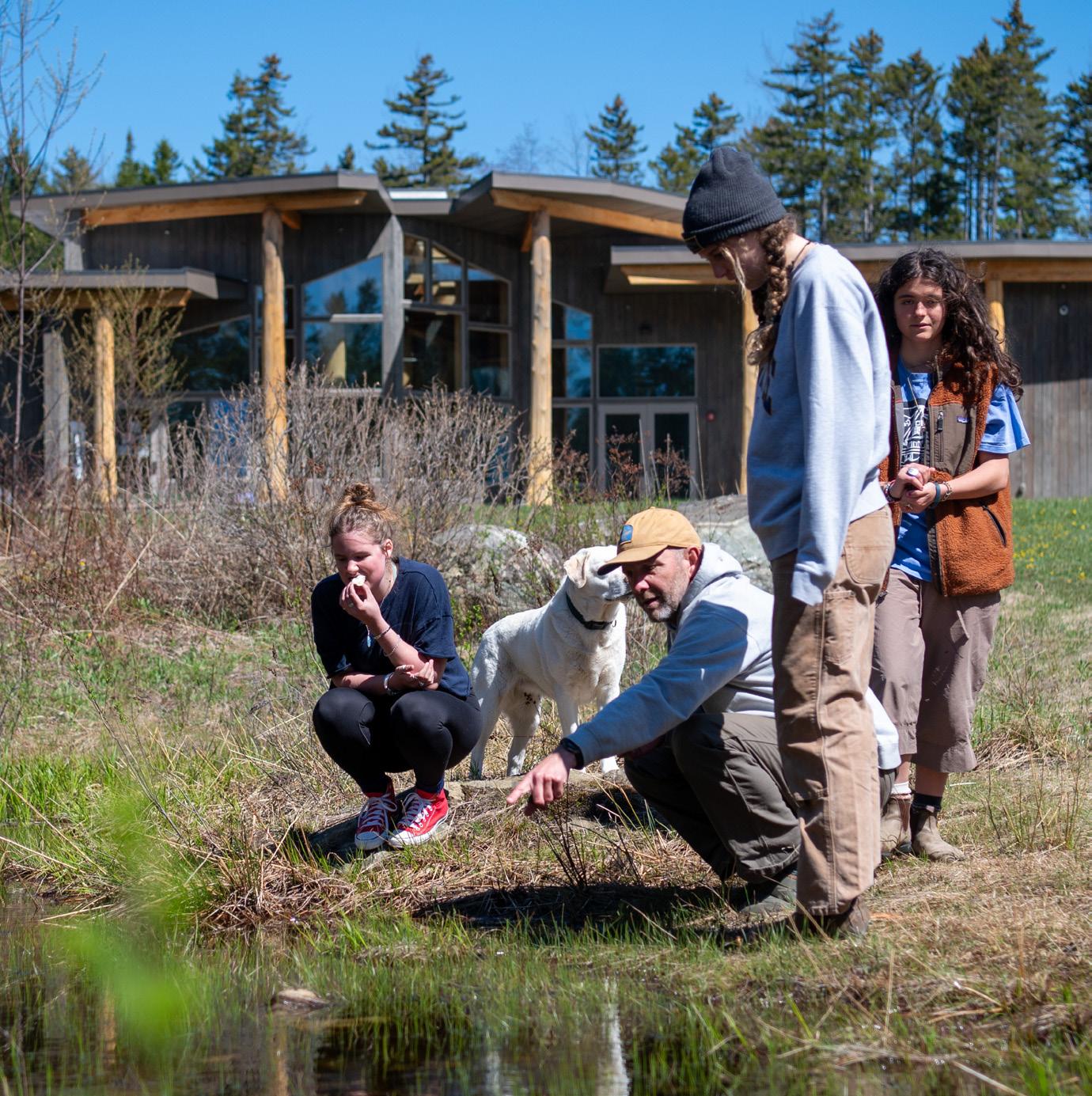
In Literature, Leadership, and Learning in the Outdoors, taught by English teacher Scott Clausen and Mountain Campus advisor Jon Hammond, students blended literary study, reflective writing, outdoor skills, and leadership exploration. Drawing on the Abenaki concept of Ndakinna—"our land"— students observed seasonal changes in chosen natural places and gathered weekly around community fires to reflect and connect. "What always stands out to me when working with students at the Mountain Campus is how well I get to know each and every one of them," Clausen reflected. "The shared discovery and curiosity, and the shared purpose of community work all help us create a true sense of belonging."
In Conservation Biology and Environmental Literacy, taught by science teacher Rebecca Allen and English Department Chair Nancy Strain, students explored the science and stories of conservation through an integrated, hands-on approach. Their inaugural field trip took them north toward Lake Champlain, with stops at the Robert Frost Interpretive Trail and the Shelburne Museum’s Contemporary Indigenous Art exhibit. "Growth out here isn’t uniform—it’s personal, dynamic, and alive," Allen observed.
Students and families felt the impact throughout the semester. One parent reflected, “I never thought we would
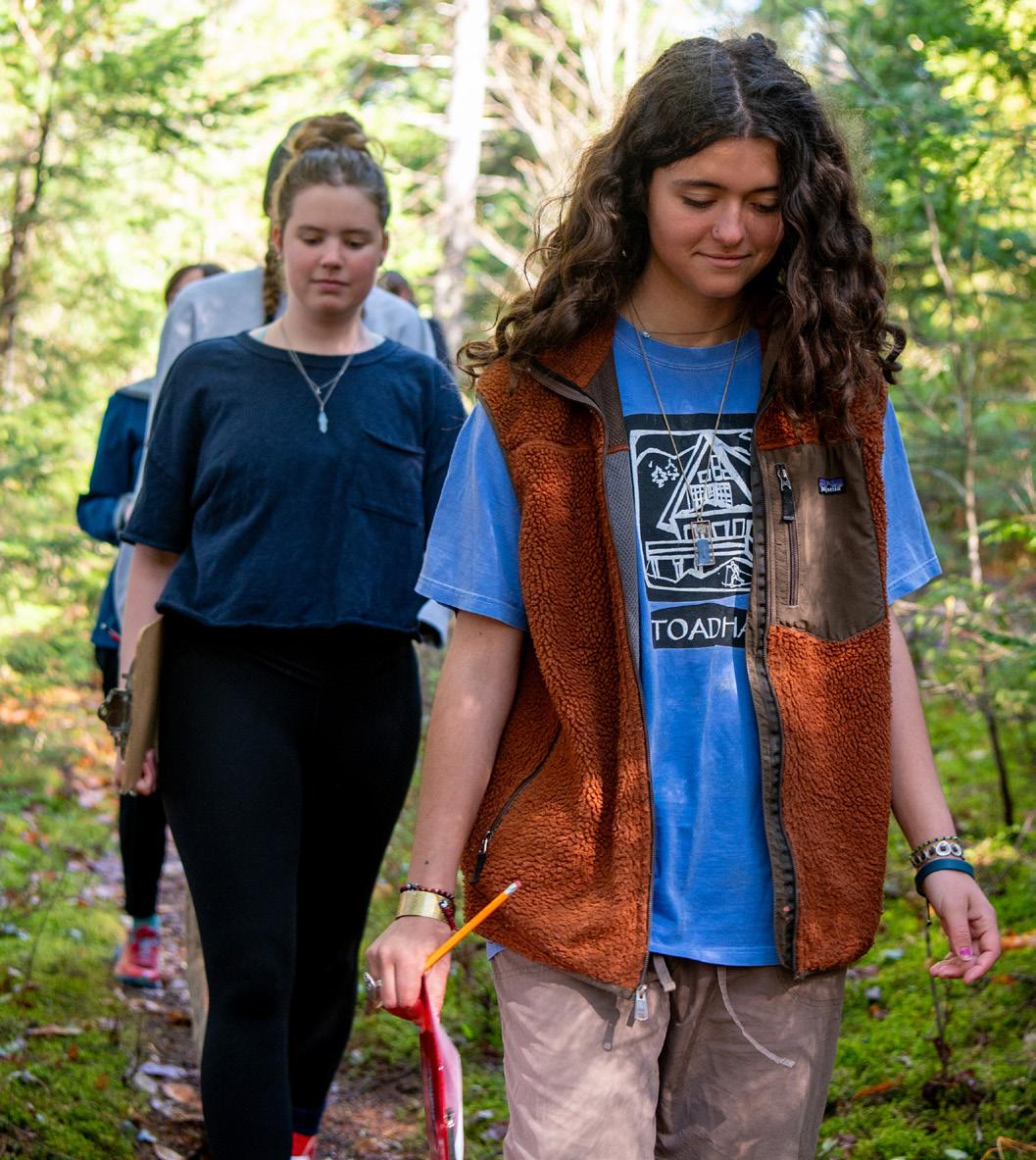
be a Mountain Campus type of family, but we are now completely convinced that this experience is so important, and that immersing oneself in nature was exactly the right way to do it.”
Building on that momentum, the spring semester introduced two new courses: Environmental Chemistry and Literature and Vermont Ecology and Data Science Environmental Chemistry and Literature, a half-day honors or CP course for sophomores —taught by Rebecca Allen and Jill Perry-Balzano—that satisfies both Chemistry and English 2 requirements, jumped right into field study despite chilly winter temps.
The course launched with a unit on the Elements of Winter, using snow
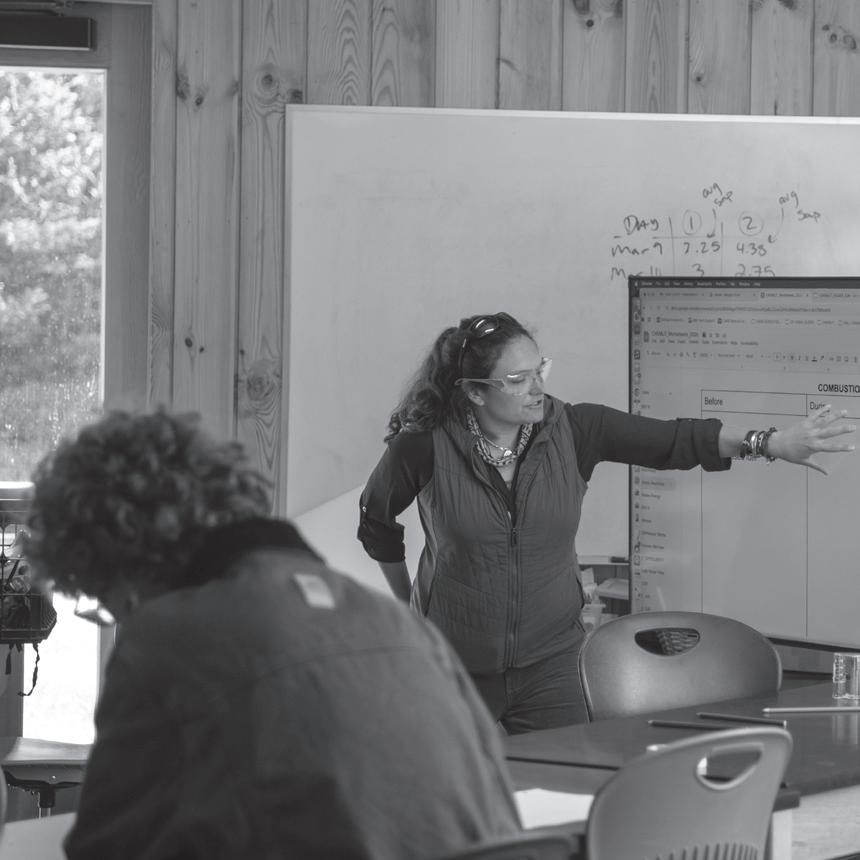
science as a lens for understanding thermodynamics, energy, and matter. Students dug a seven-foot-wide snow pit to expose distinct layers of snowpack, then collected data on depth, temperature, crystal structure, and density—the same methods scientists use to assess avalanche risk, track climate change, and study habitat dynamics.
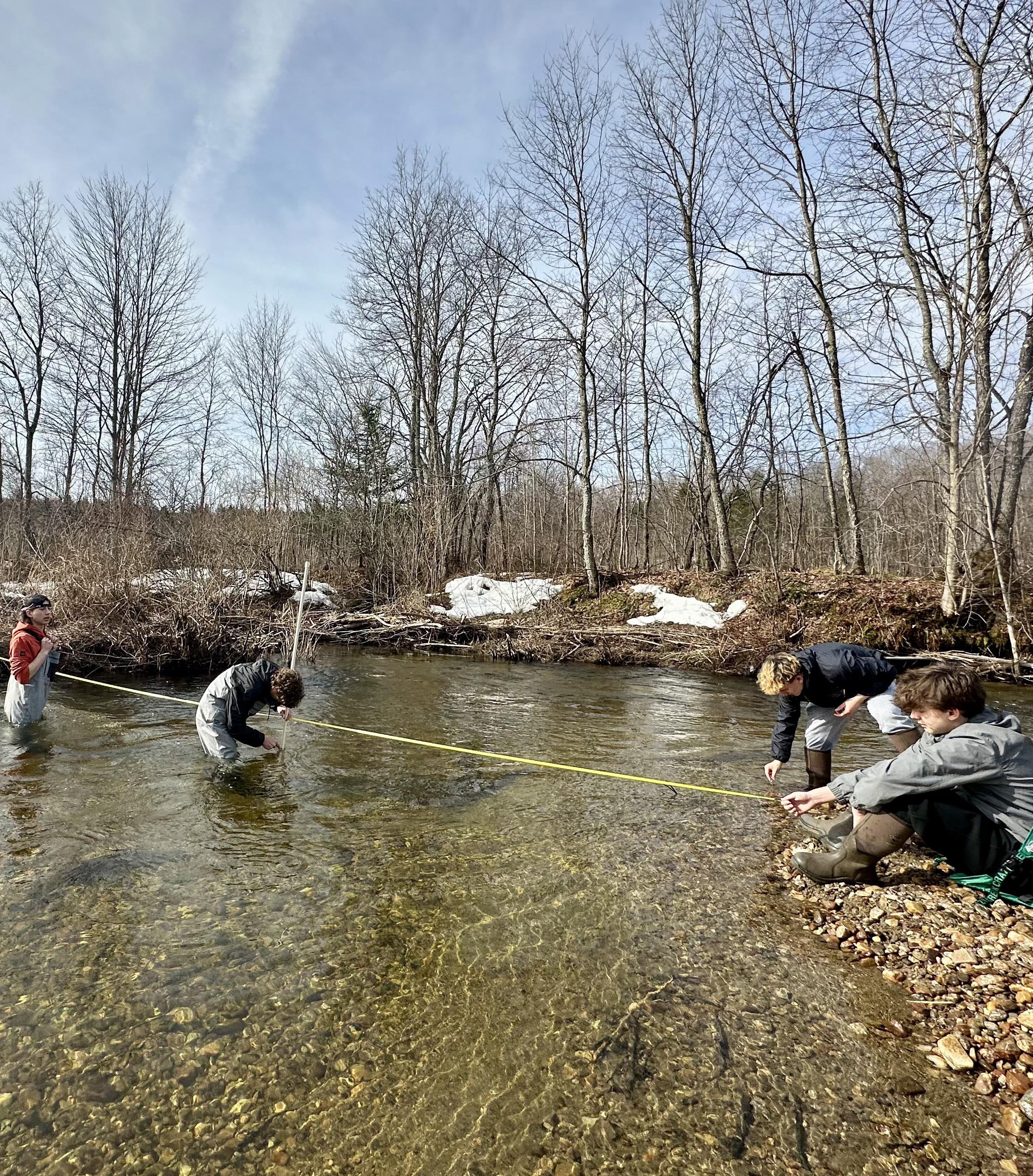
More recently, all 30 Environmental Chemistry and Literature students took to local rivers to investigate water quality and the human dimensions of environmental change. Beginning at Utley Brook, adjacent to the Mountain Campus, students measured water depth, velocity, and nutrient levels before analyzing their findings in the
lab. They then traveled to Weston and Londonderry—communities affected by recent flooding—to learn firsthand how residents are adapting to shifts in their environment.
Together, these courses reflect what Academic Dean Jen Hyatt described as “the power of immersive, integrative learning experiences,” in which students grow not only their academic and scientific capabilities, but their leadership, resilience, and sense of place. As Associate Head of School Meg Kenny put it, “Students returned more connected—to the land, to their learning, and to each other. We’re energized by what this experience made possible and excited for what’s ahead.”
BBA ENGLISH TEACHER LAURA CALLEN HAS BEEN AWARDED A TWO-YEAR FELLOWSHIP THROUGH THE ROWLAND FOUNDATION TO DEVELOP AN INNOVATIVE APPROACH TO BUILDING AND MEASURING STUDENT RESILIENCE ACROSS THE SCHOOL COMMUNITY. THE ROWLAND FOUNDATION’S MISSION IS TO INVEST IN VERMONT TEACHERS TO POSITIVELY CHANGE THE CULTURE AND CLIMATE OF SCHOOLS; EACH YEAR IT AWARDS UP TO SIX FELLOWSHIPS TO EDUCATORS ACROSS THE STATE.
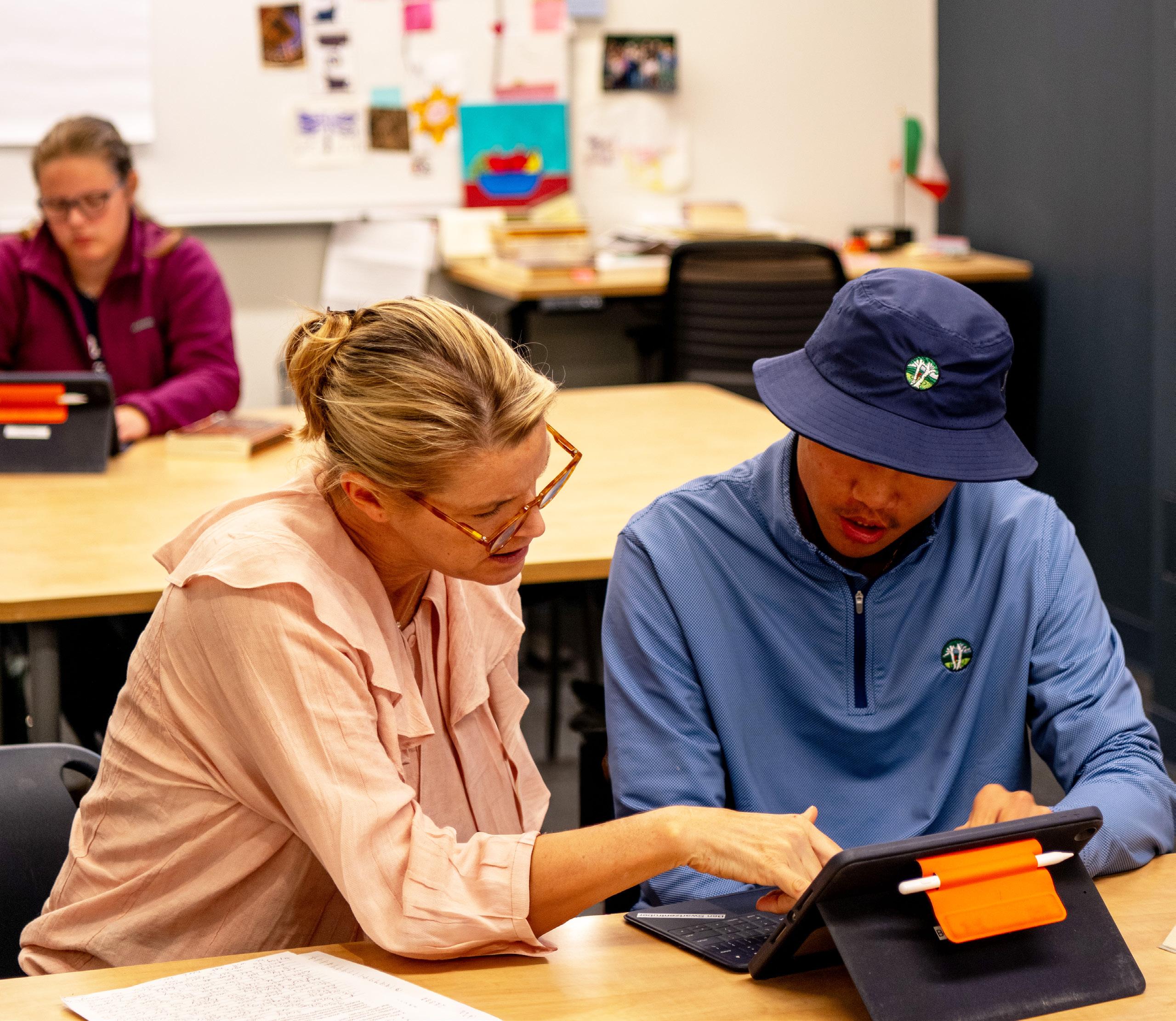
Callen’s proposal, developed in partnership with BBA academic leadership, reflects both her classroom experience and ongoing doctoral research. She emphasizes that the work is active and purposeful: “[the fellowship] is really like being on special assignment.” Her project grows out of what she has observed in students in recent years, including “Covid-related learning loss, a youth mental health crisis, and then the challenges that we face with technology . . . smartphones, social media, and AI.” Together, she describes these as a “triple threat.”
At the center of her work is academic resilience. As her research shows, “academic resilience is not innate—it’s totally developable. It’s a set of habits and skills that can be taught explicitly.”
Callen began researching academic resilience through coursework for the doctoral degree she is pursuing at Johns Hopkins University.
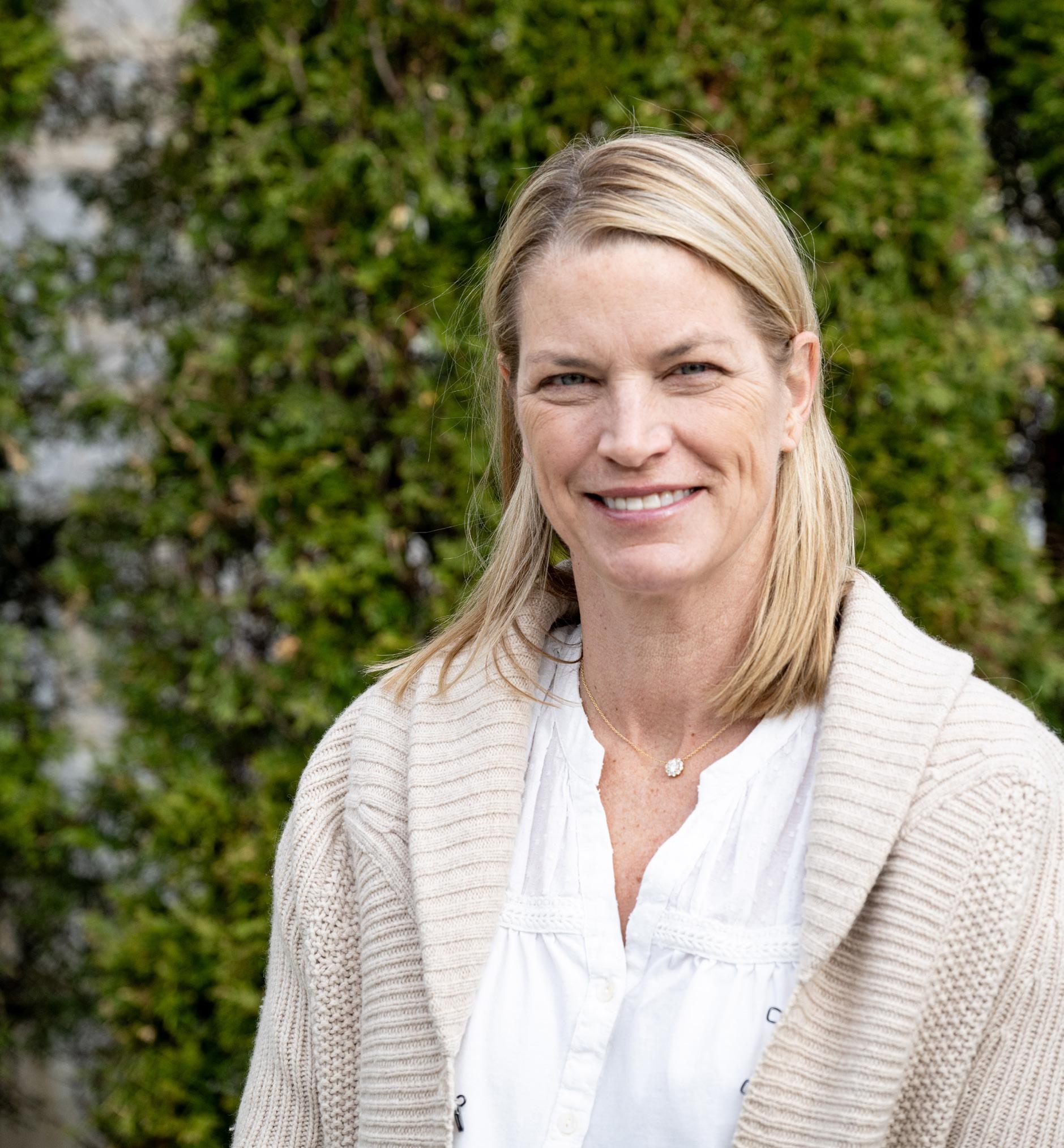
She has mapped these skills—such as perseverance, reflection, and collaboration—onto BBA’s existing spire skills (problem solving, integrative thinking, citizenship, wellness, and communication) and habits of learning (preparedness, participation, self reflection, perseverance, and learner agency), noting that “students are already demonstrating resilience . . . but they don’t always recognize it, and they don’t always translate it to their academic work.”
“Laura’s work is a powerful testament to the caliber of teaching at BBA,” says Associate Head of School Meg Kenny. “By formalizing the way we teach and track resilience, she isn’t just adding to
“BBA has an amazing culture of belonging— and belonging tells a student, ‘you matter here.’ Resilience tells them, ‘you can handle what’s hard.’ We need both.”
the curriculum; she’s empowering our students with a mindset that will serve them long after they leave our campus. We are incredibly proud to support her as she leads this vital work for our community.”
Her fellowship aims to “make this invisible visible” by introducing shared language across classrooms and creating systems for students to track their growth. A key component will be the development of a “RISE Record” (Resilience Indicators for Student Engagement), a dynamic tool where students document evidence of their learning over time.
“Students will gather evidence over time that will go alongside their transcript,” Callen explains. More importantly, the process helps students build confidence: “[They will be able to say,] ‘wait, I actually am pretty resilient . . . I can get through hard things because I’ve proven that I can.’”
The initiative will begin with a ninthgrade pilot and expand across the school, supported by a collaborative working group of faculty and students.
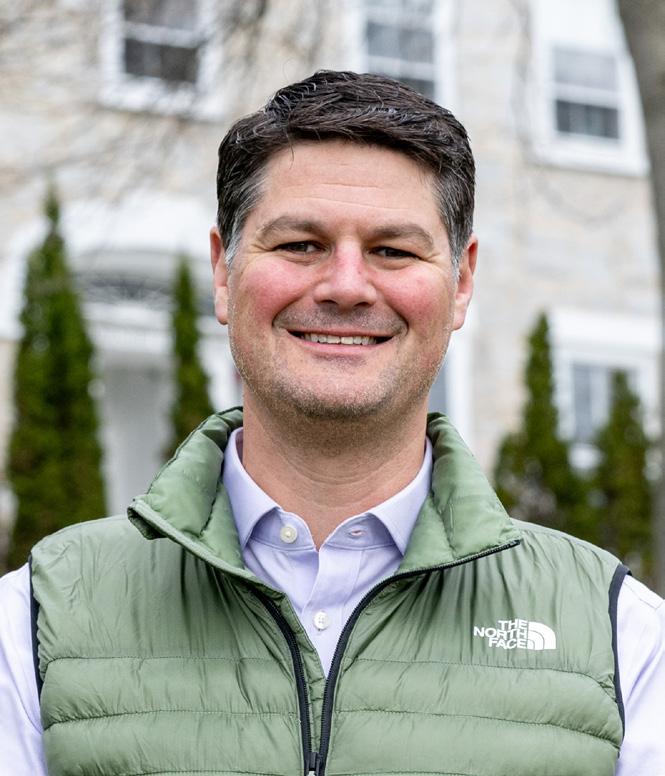
Brian’s professional background is rooted in the world of global finance, having served as Head of Fixed Income, Commodities, Real & Digital Assets at S&P Dow Jones Indices and currently as Chief Strategy Officer for RGN Capital Partners. Originally from California, Brian spent twelve years in New York City before he and his wife, Jamie, decided to move their family to Vermont full-time in 2020 in search of balance. An avid traveler and skier who has visited 40 countries and hit just as many ski resorts, Brian was drawn to the area’s outdoor lifestyle, but it was the promise of a great education that turned their weekend getaway into a permanent home.
For the Lukes, Burr and Burton was the "hook" that anchored them to this community. Brian notes that the school provided the connection they needed to truly settle into Vermont life. He views the move as a "catalyst for the better," allowing his children to grow up in an environment where learning and
the outdoors go hand-in-hand. This connection to the local community is central to why he chose to join the Board, as he looks to give back to the institution that made his family’s transition possible.
Now a BBA parent with a freshman currently enrolled, Brian is eager to apply his twenty years of financial experience to the school’s future. Serving on the Institutional Resources Committee, his work focuses on endowment management and the longterm financial health of the school. By blending his analytical expertise with his perspective as a parent, Brian is dedicated to ensuring that BBA remains a strong, sustainable cornerstone of the community for years to come.
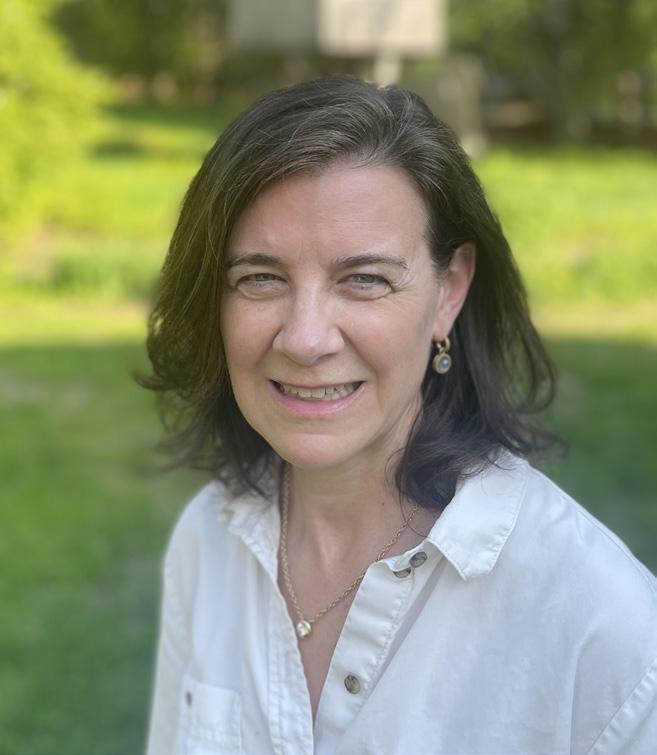
Sheelyn joined the Board of Trustees in September, bringing a unique perspective as a parent of recent BBA graduates. With both of her children now in college, Sheelyn
has gained a deep appreciation for the journey high school students and their families navigate. Her experience allows her to advocate for families of alumni, ensuring that Burr and Burton remains a welcoming and engaging place even after their children have moved on to their next chapters.
Originally from northern New Jersey, Sheelyn attended college in New England before embarking on a successful career in corporate law. Today, she channels her professional background and personal connection to the school into her work on the Advancement Committee. Her focus is on enhancing the community’s access to BBA’s diverse programming and improving communications to build stronger bridges between the institution and the surrounding area. In her mind, Manchester feels like a “small university town because of BBA and all that it has to offer, whether in athletics, arts, or other academic pursuits,” and she is committed to supporting BBA because of all that it provides to the community.
The BBA Board is the steward of the school’s mission, in service to our communities. Charley Stevenson, Chair of the Board of Trustees, says that he is “grateful that Sheelyn and Brian will lend their considerable talents to our work. Their perspectives, at the intersection of deep professional expertise and heartfelt connections to the school as parents, help us ensure that BBA is the best school it can be for all of our students, prospective students, and their families.”
to its Business Partners
WHO INVEST IN A BRIGHTER FUTURE FOR OUR COMMUNITY.
Robert E. Smith
Society $10,000+
Beacon Bank
rk Miles, Inc.
1829 Society $5,000+
JPMorgan Chase Wealth Management
Trustee Circle $2,500+
Bank of Bennington
Express Copy
HUB International Limited
Lily of the Valley Florist
Mountain Goat North, Inc.
The Richards Group, an IMA Company
TÖST Beverages
Marble Steps $1,000+
Ben & Jerry’s
DesRoberts Creative
Four Seasons Sotheby’s International Realty
H.N. Williams Store
Langway Chevrolet Volkswagen of Manchester
RE/MAX Four Seasons
Smith Brothers
Belltower Club $500+
Baierlein Landscaping Inc.
Samuelson Law Offices
Smith Brothers Insurance
Green and Gold Circle $250+
Coggins Auto Group
Flying Cow Signs
The Inn at Manchester
Cross Country led the way with a historic performance, as the Girls team captured the Division II State Championship—its first title since 2008. Sydney Remenar ’25 finished first overall to claim an individual state title, while the Boys team delivered an impressive second-place finish. Both teams also earned top honors in the Southern Vermont League, with the Girls claiming the SVL title.
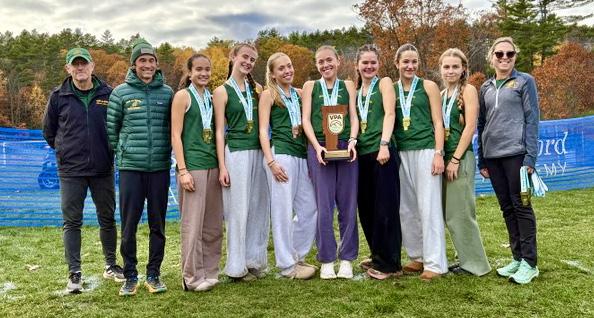
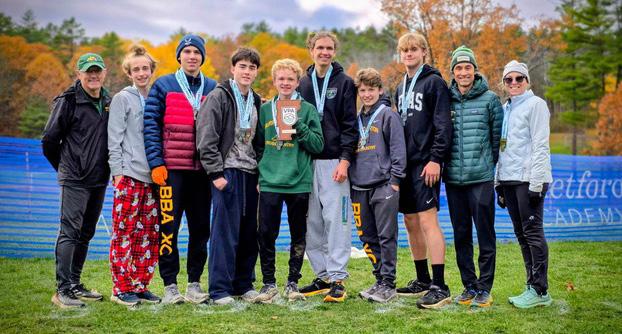
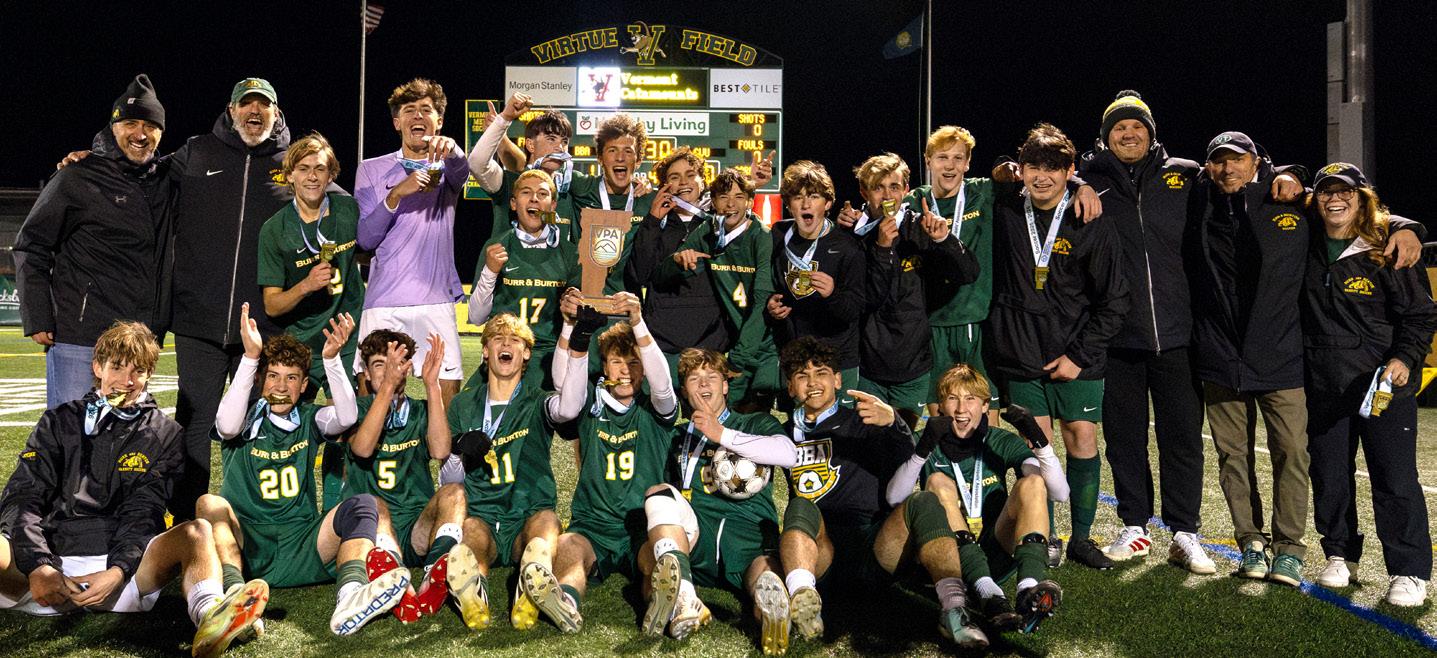
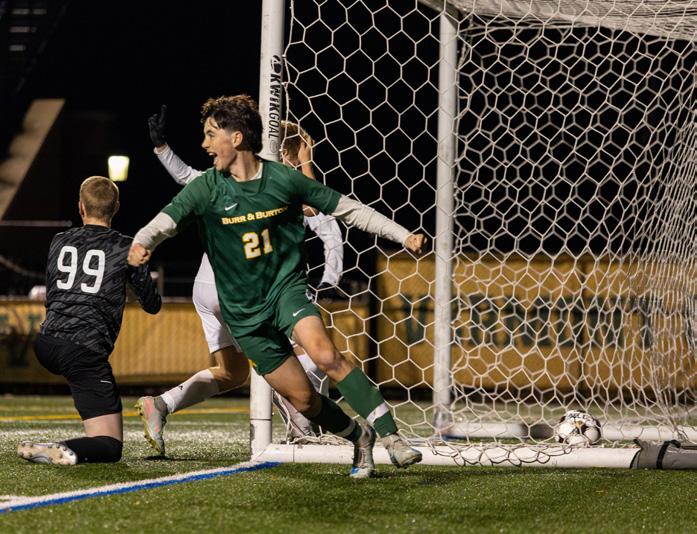
AUTUMN AT BURR AND BURTON BROUGHT A SURGE OF CHAMPIONSHIP ENERGY, as teams capitalized on strong regular seasons to deliver standout performances across league and state competition.
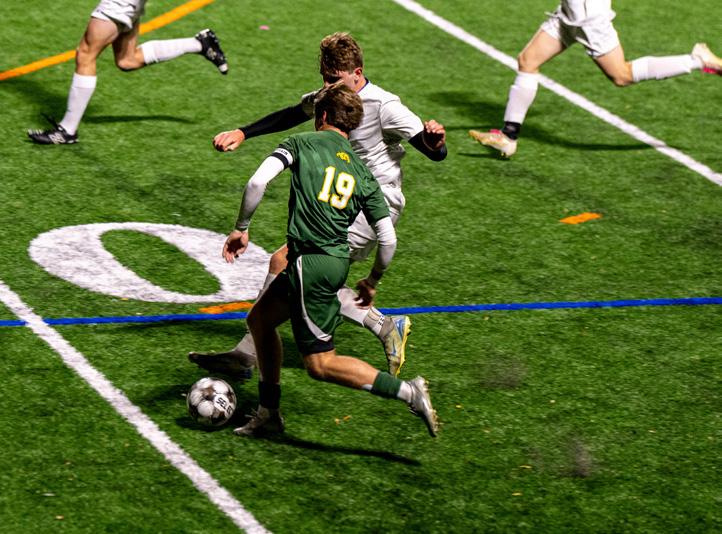
On the pitch, Boys Soccer put together an extraordinary postseason run. After earning the top seed, the Bulldogs advanced through the bracket with key wins over St. Johnsbury and South Burlington, including a hard-fought 1–0 victory in the semifinals to secure a spot in the state championship game at UVM. Heading into the State Championship against two-time defending champion CVU, the Boys were ready to leave it all out on the field—and they did. The game, scoreless after two halves and one overtime period, was decided by sophomore Gavin Reese’s rebound volley into the net. After an incredible season, senior Bodie Smith was named both All-State Boys Soccer Team Player of the Year, and to the 2025 High School All-America Team.
From championship titles to hard-fought playoff battles, this fall highlighted the competitive spirit, resilience, and tradition of excellence that define Burr and Burton athletics.
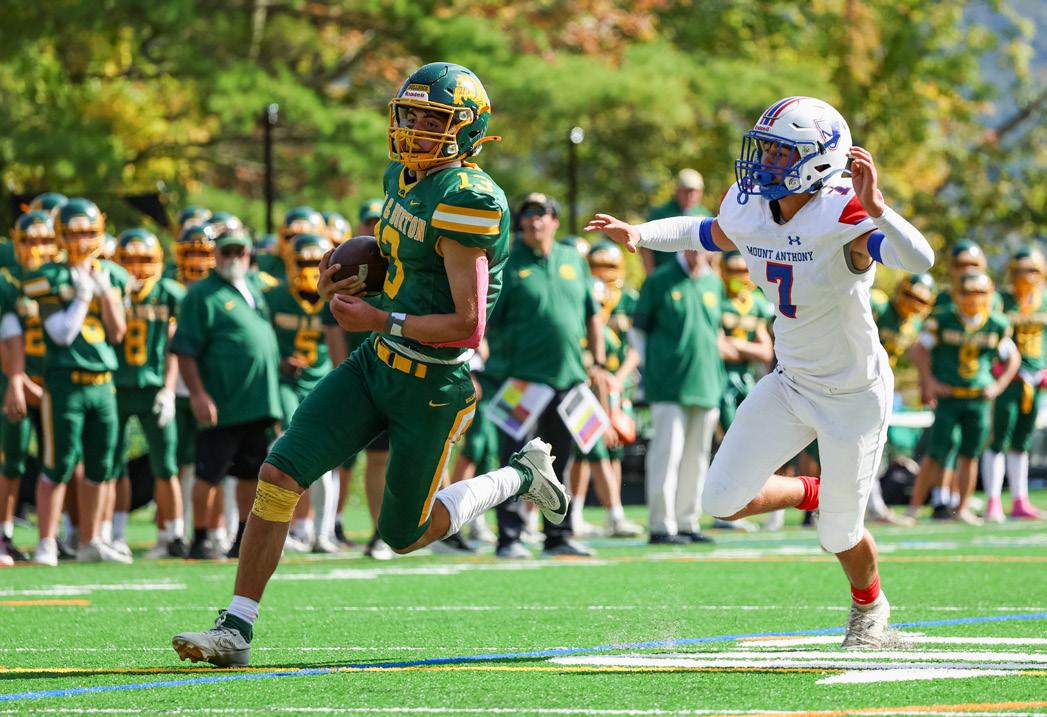
On the gridiron, Football closed out the regular season with an important win over Champlain Valley Union to secure a playoff berth. Entering the postseason as the fifth seed, the Bulldogs hit the road to face Essex in the opening round, winning 13-7, and then succumbing to Middlebury in the semifinals.
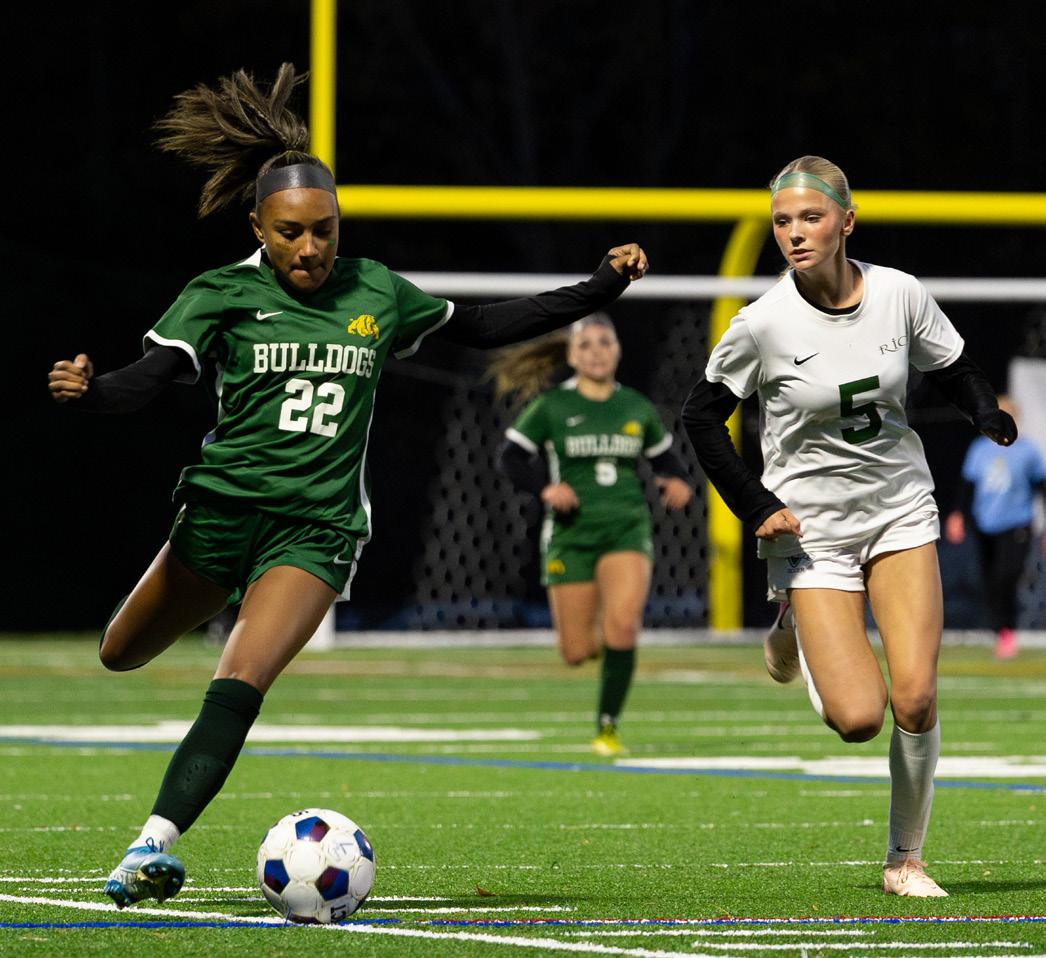
Girls Soccer also qualified for the playoffs and battled in a tight 2–3 contest against Colchester to close out their season.
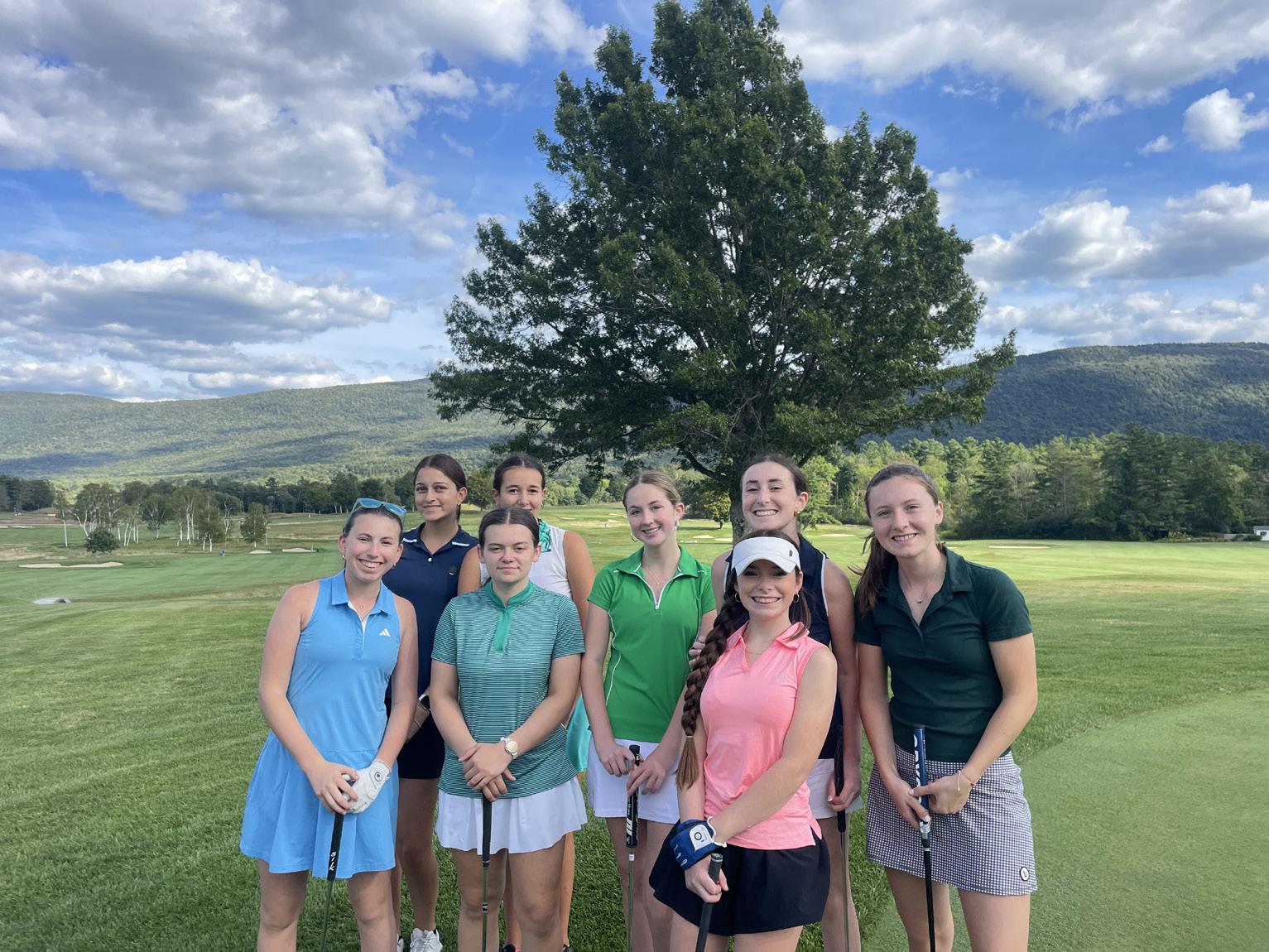
Elsewhere, Girls Golf added to the program’s success with an SVL Championship, while Mountain Biking capped off its season by competing in the League Championship in Maine.
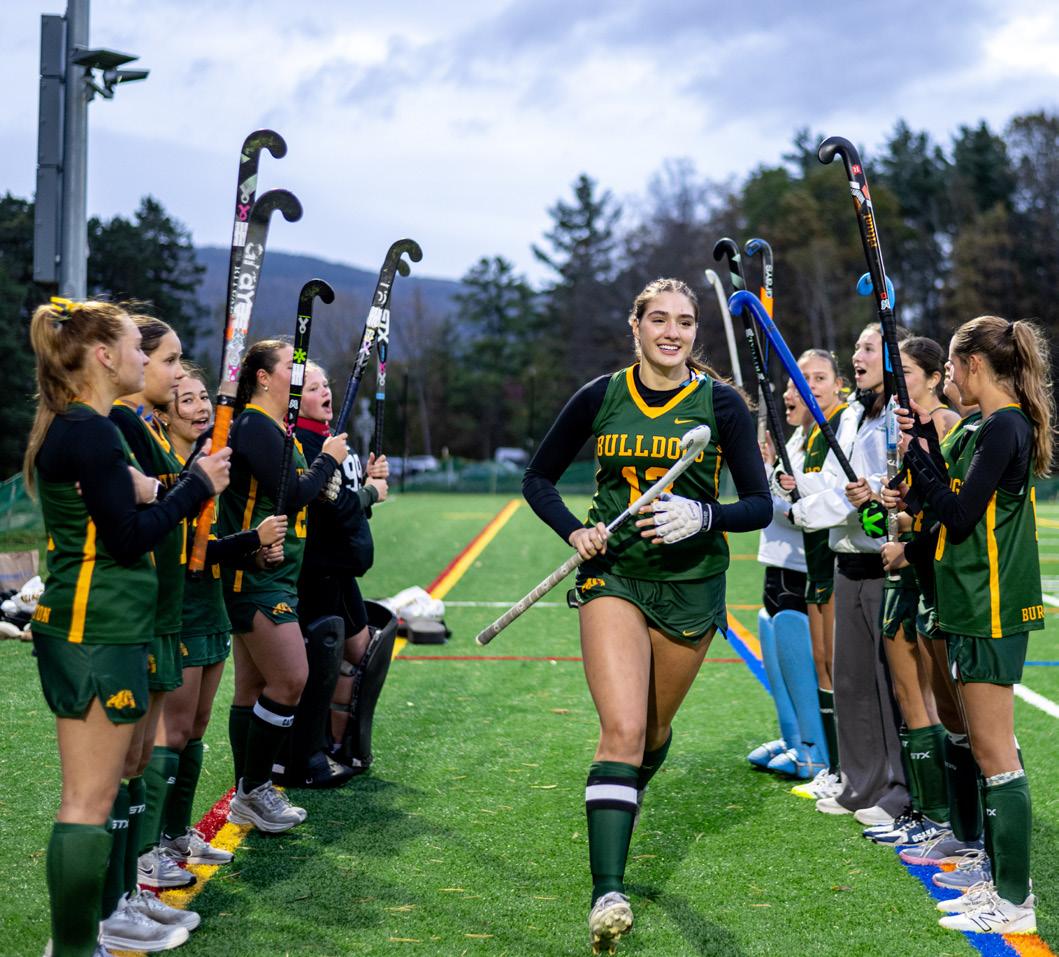
Field Hockey continued its strong tradition of success, finishing second in the SVL before making a run to the state semifinals. The team opened the playoffs with a decisive 2–0 win over Colchester and advanced to face Champlain Valley Union at Middlebury College, losing 0-3 in a hard fought game.
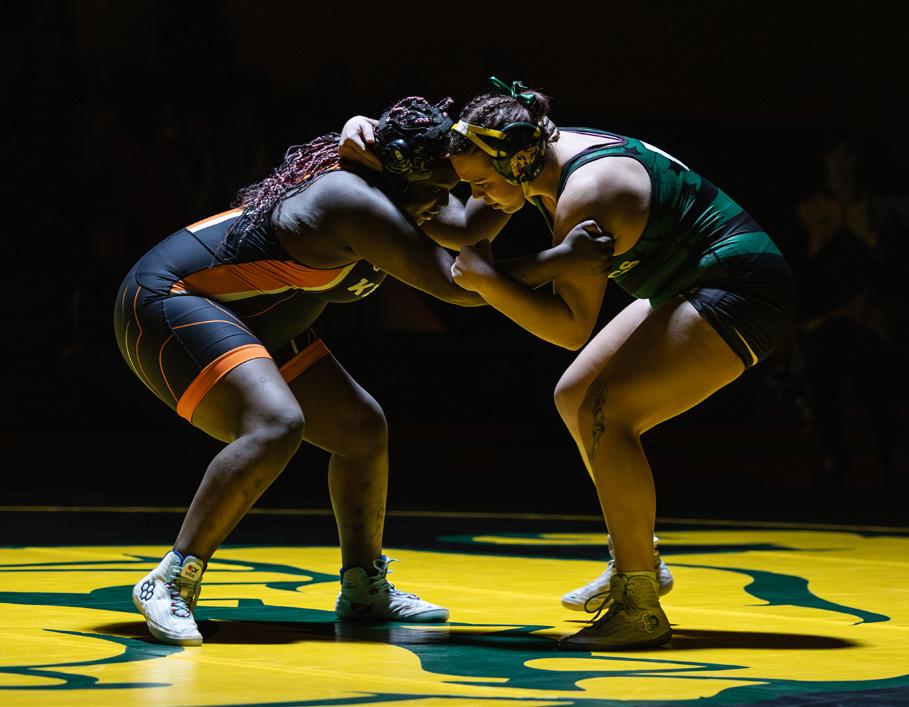
Girls Wrestling saw historic success, as Madi King ’25 became the first Burr and Burton wrestler to podium at the New England Championships, finishing as runner-up.
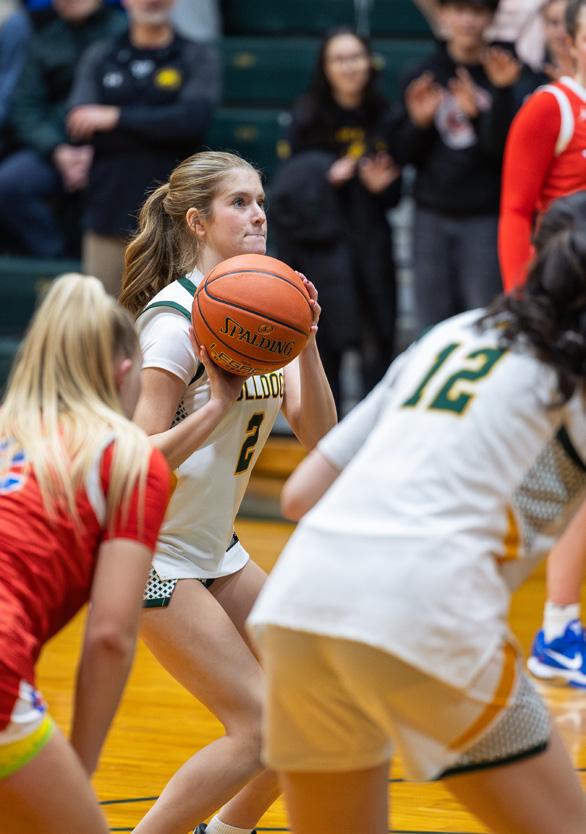
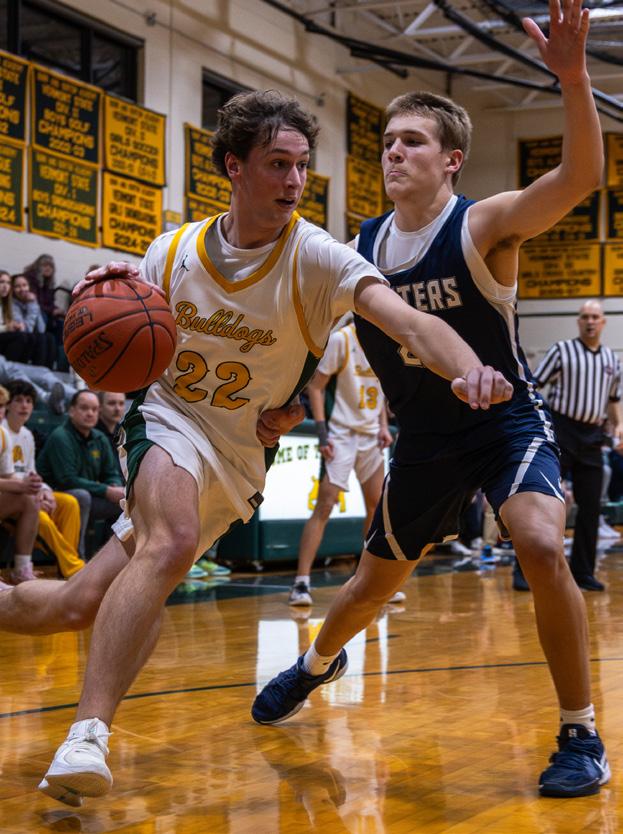
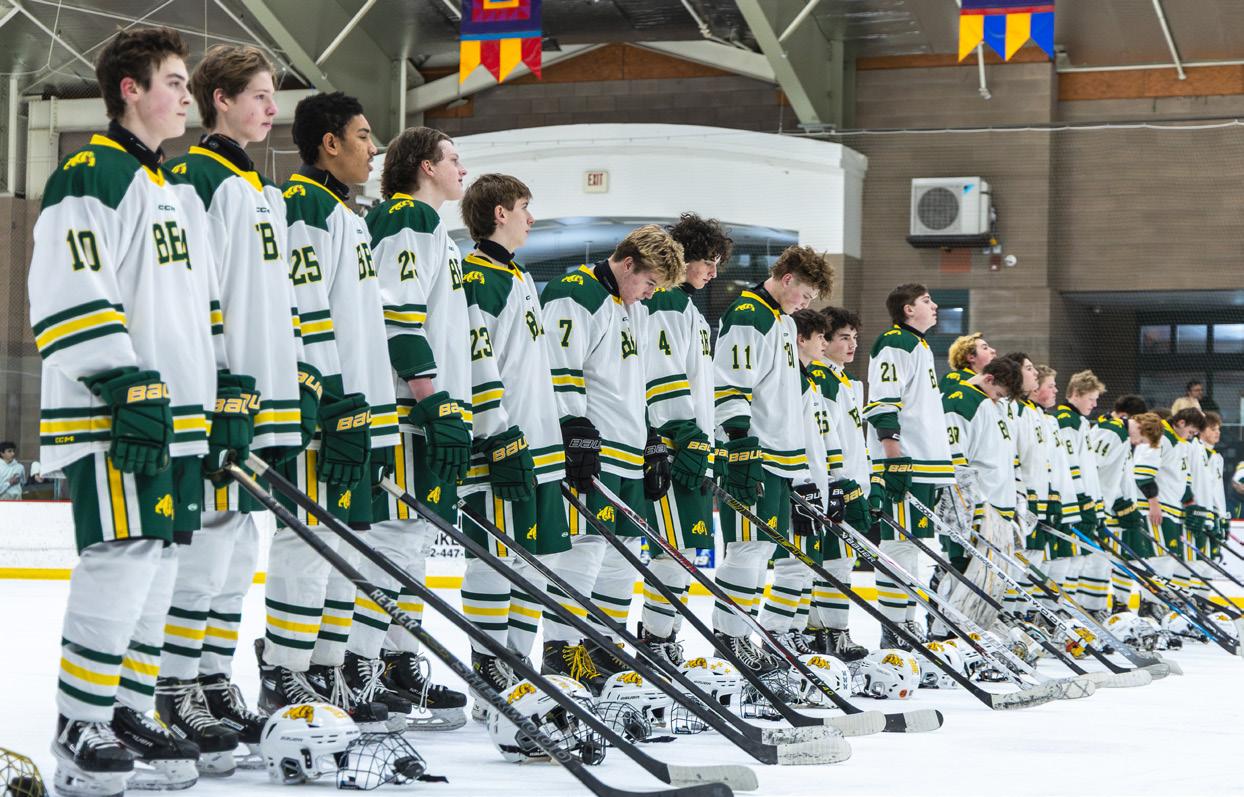
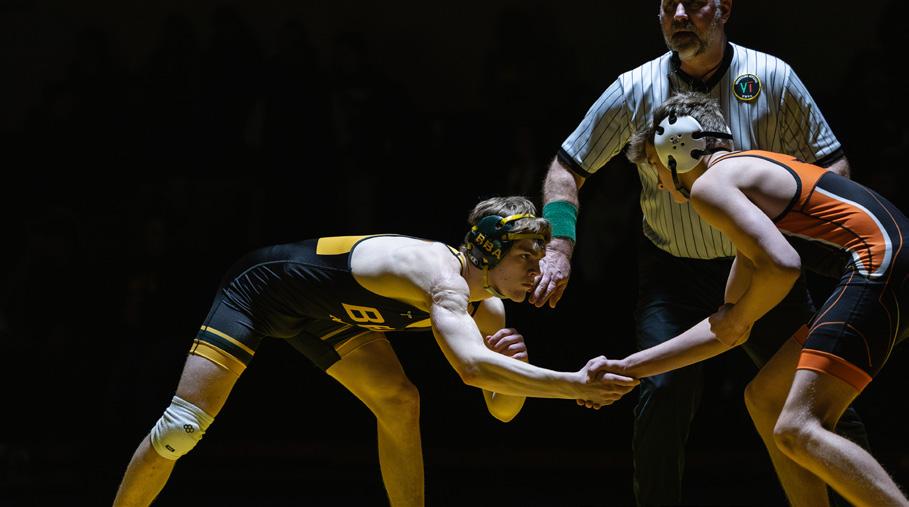
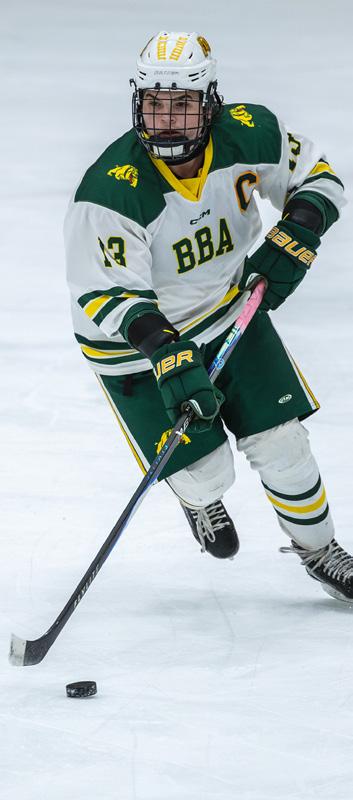
On the ice, both hockey programs delivered impressive playoff performances. Boys Hockey, seeded seventh, surged through the bracket to reach the Division I Championship game—marking the program’s first appearance at Gutterson Fieldhouse—before finishing as runner-up to top-seeded Rice. Girls Hockey also advanced to the semifinals after a strong quarterfinal victory, continuing a season of consistent competitiveness.
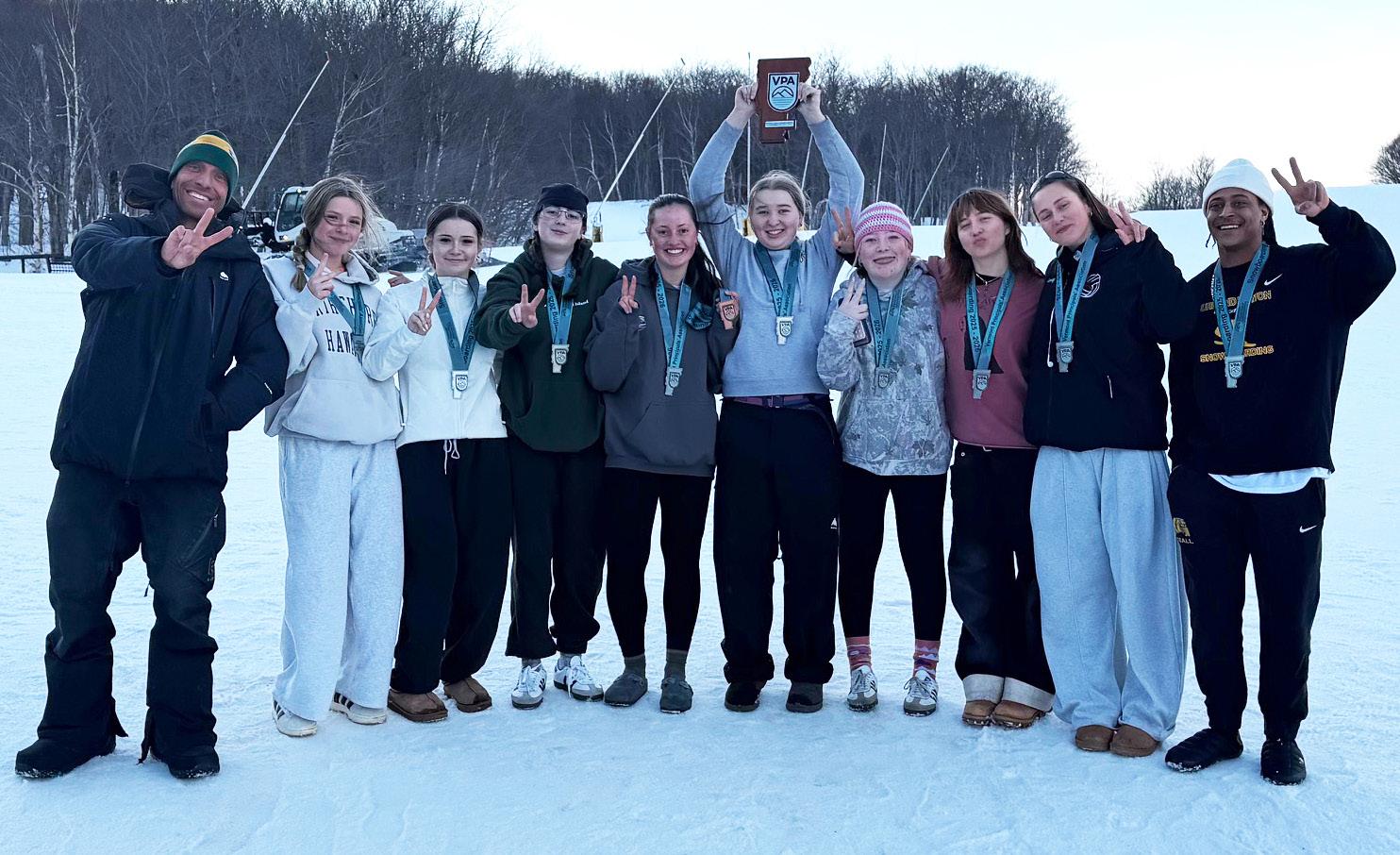
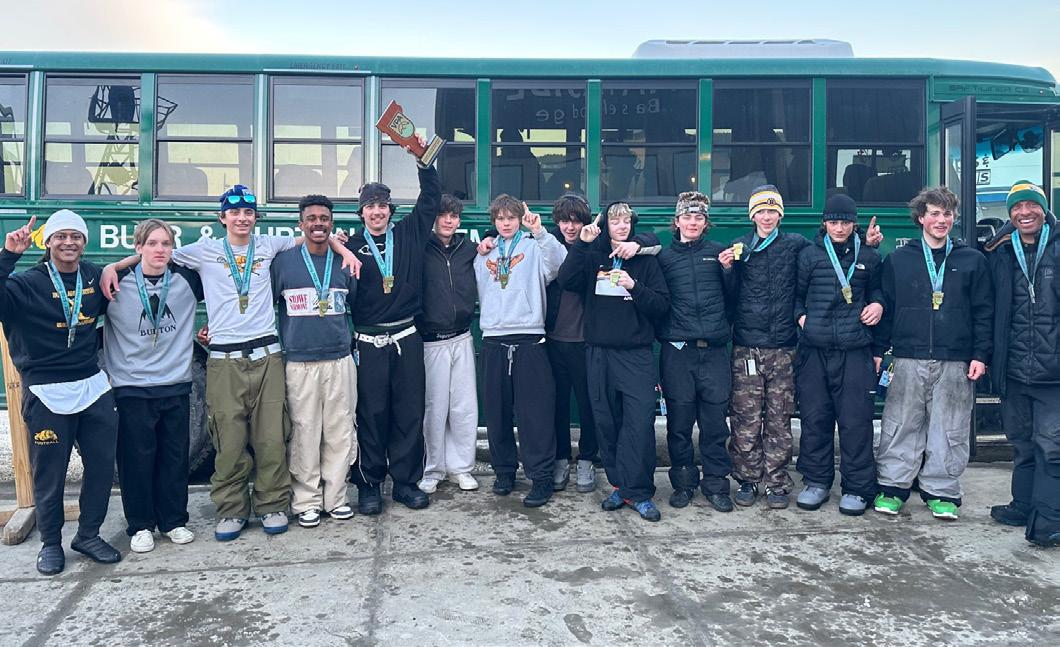
BBA Snowboarding did it again! The Boys Snowboarding team won the state championship for the seventh time in eight years. The Girls Snowboarding team also had a huge showing, finishing as runners up.
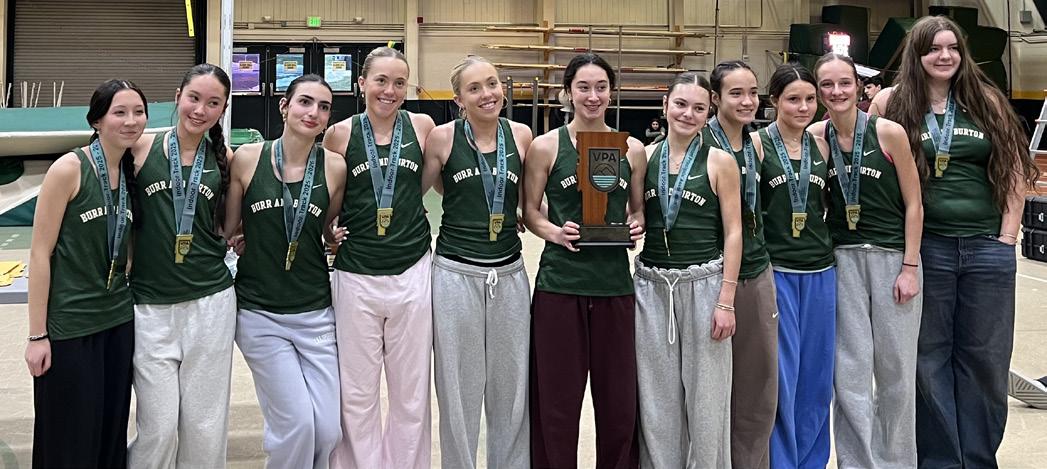
Indoor Track and Field led the way with a standout season, as the Girls team captured the Vermont State Championship. The program’s success extended to the national stage, where athletes including Robin Tashjian ’26, Madelyn Harris ’26, Fiona Corbett ’28, Andie Hadeka ’26, and Sydney Remenar ’25 competed at Nationals in Boston, highlighted by strong showings in both hurdle and relay events.
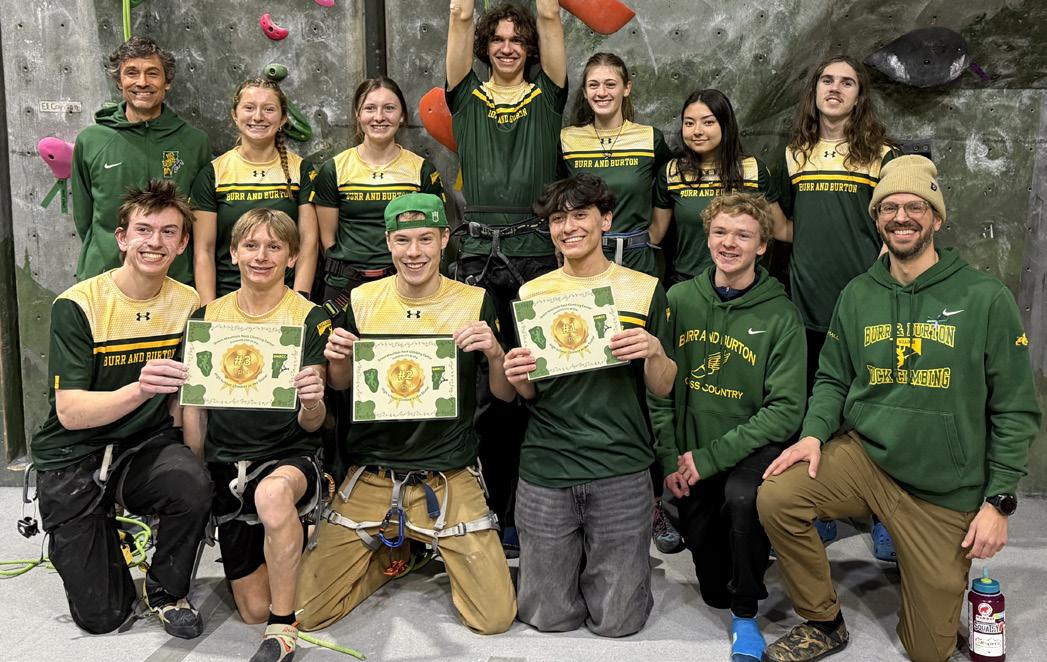
Capping the season, Rock Climbing continued its dominance, securing a third consecutive state championship with impressive skill and speed. Rock Climbing also secured several individual awards; Hudson Via ’27, Harry Weikert ’27, and Jakie Bergleitner ’27 and Ben Truex ’29 took first, second, and third places, respectively. Maeve Braico ’27 placed third in the women’s division.
this winter season showcased the determination, depth, and excellence that define Burr and Burton athletics.
In Nordic Skiing, both teams competed at the State Championships, with the Girls finishing sixth and the Boys seventh overall. Alpine Skiing also represented Burr and Burton at the state competition.
Gymnastics also attended the State Championship, finishing 6th in the state.
The Dance team earned a third-place finish in Pom and advanced to the New England Championships.
Off the field, former Athletic Director Kathi Bierwirth was honored with induction into the Vermont Principals’ Association Hall of Fame, recognizing her lasting impact on Burr and Burton athletics.
In the arts, showing up is everything—and this spring, Burr and Burton students showed up everywhere. From the spotlight of the Riley Center stage to the quiet concentration of the art room, students were creating, connecting, and making their mark.
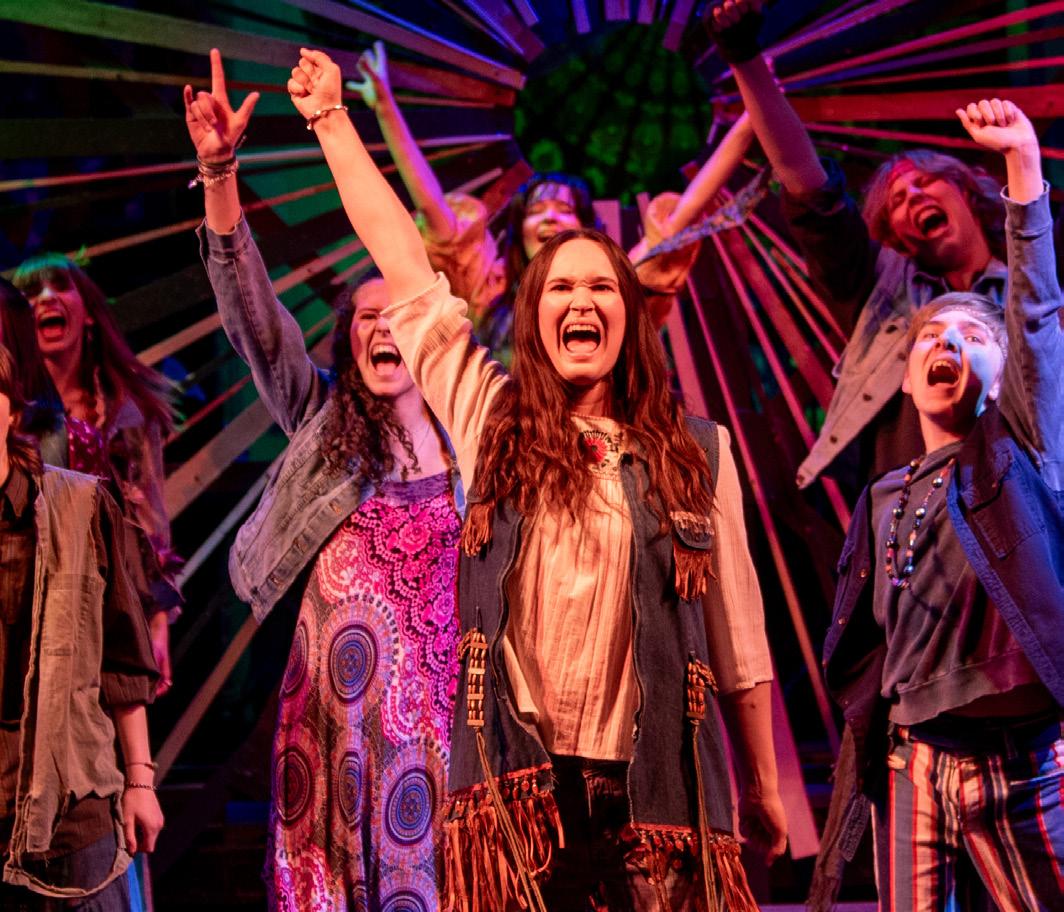
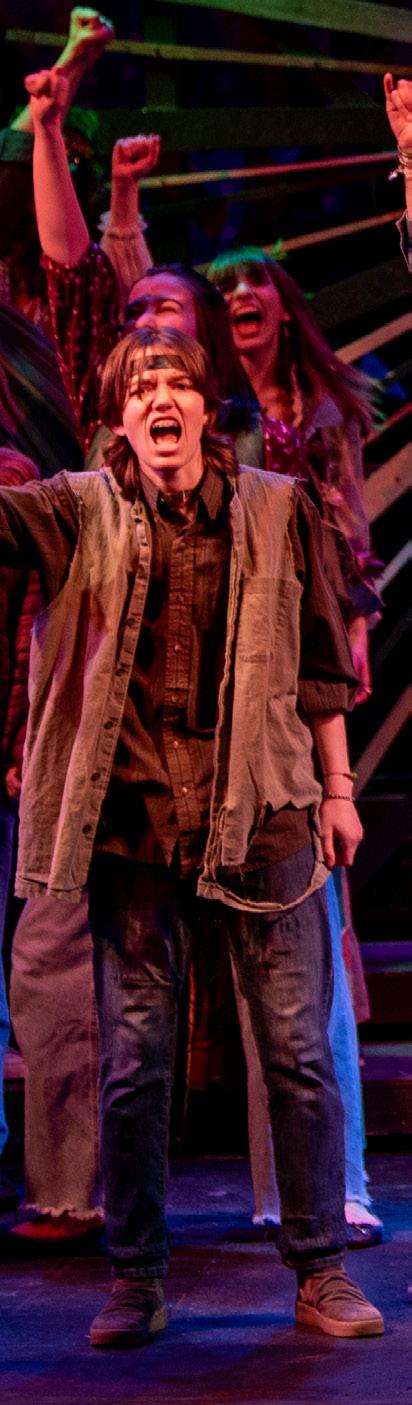
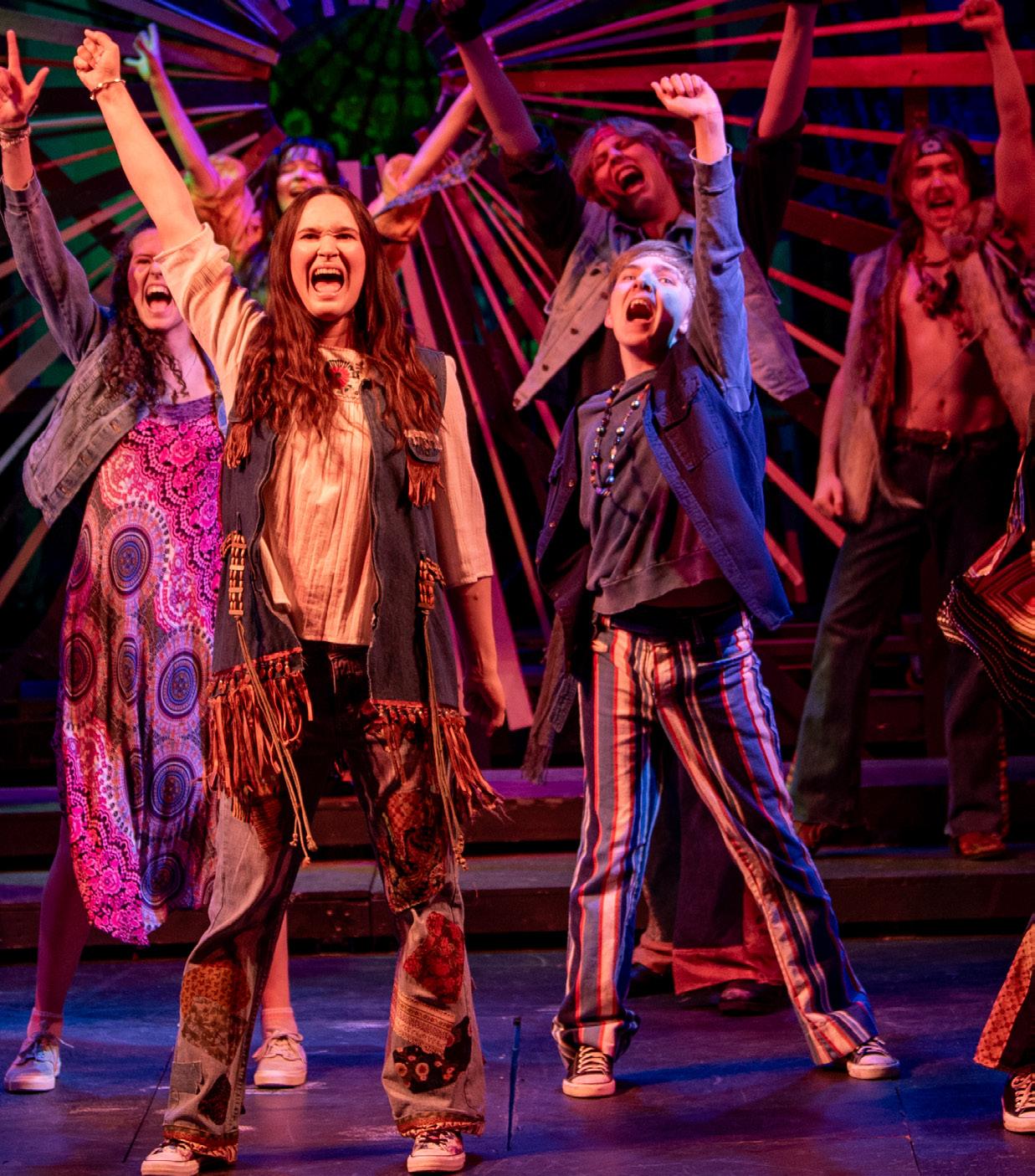
This spring, the Riley Center for the Arts transformed into the bohemian streets of 1960s New York City. Burr and Burton Academy’s Performing Arts Department presented Hair: The American Tribal Love-Rock Musical, which ran March 24–28, 2026.
The show followed a vibrant “tribe” of politically charged hippies navigating the counterculture of New York City. At its heart were Claude, his charismatic friend Berger, and their roommate Sheila, each wrestling with personal liberation against the backdrop of a conservative society—and the looming shadow of the Vietnam draft. When Claude faced the choice between pacifist resistance and the call of duty, the stakes became deeply personal.
Set to a legendary rock score, the production featured iconic anthems including “Aquarius,” “Good Morning, Starshine,” “I Got Life,” and the soaring “Let the Sunshine In.” More than a time capsule of the 1960s, Hair proved strikingly relevant, exploring timeless themes of identity, community, and global responsibility. It was a joyful, powerful celebration of the Age of Aquarius—and an unforgettable run at the Riley Center.
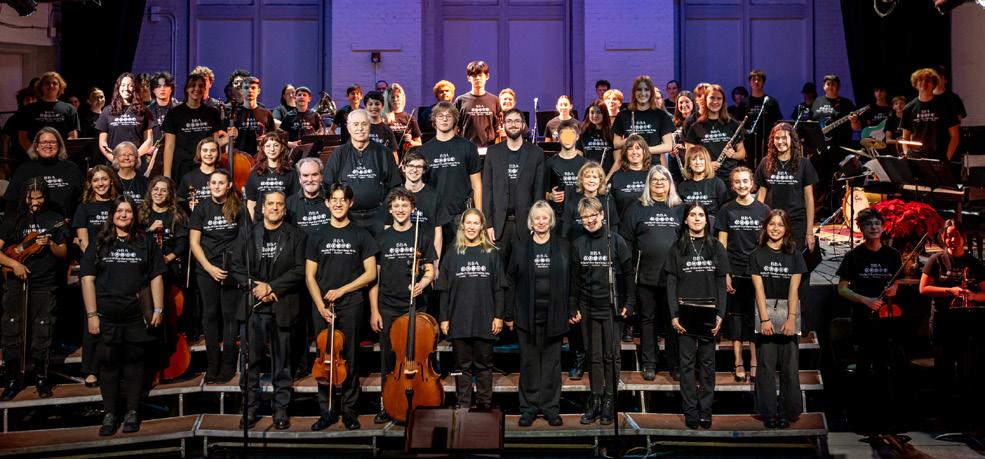
BBA Music students brought their talents to the Southern Vermont Arts Center during the Art in Our Schools Open House, performing for an audience of families, community members, and arts supporters.
A Visit from Dr. Rita Wright
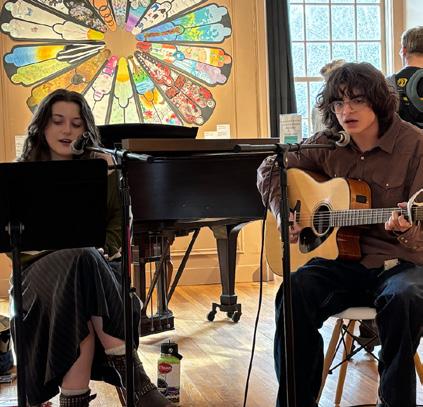
World Music students were treated to a special visit from Dr. Rita Wright, Archaeologist and Anthropologist Professor Emeritus at NYU. Dr. Wright’s visit offered students a rare opportunity to explore the deep intersections between music, culture, and history—bringing a global perspective to BBA’s World Music curriculum.
Vocal Music Ensemble at Equinox Terrace
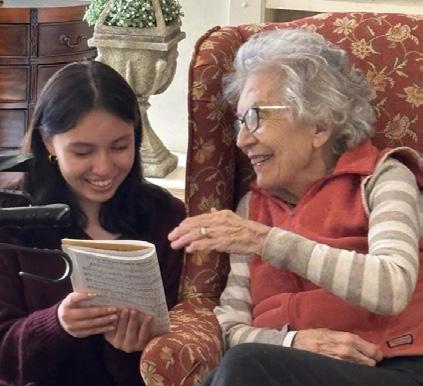
In a warm display of community connection, the Vocal Music Ensemble visited residents at Equinox Terrace, sharing music and meaningful moments with the local senior community.
Calliope Café
The beloved Calliope Café was held at Founders Hall this spring, providing an intimate venue for student musicians to perform and share their work.
Spring Concert
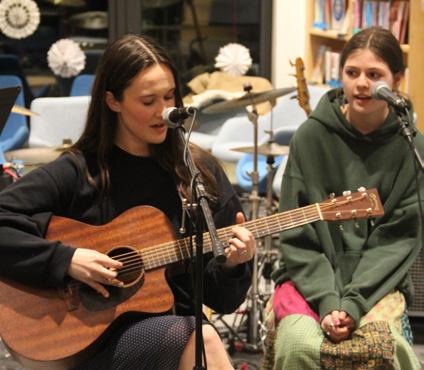
The season culminated in the Spring Concert, celebrating the full breadth of musical talent at the school. From ensembles to soloists, the performance showcased the extraordinary growth and dedication of our student musicians throughout the year.
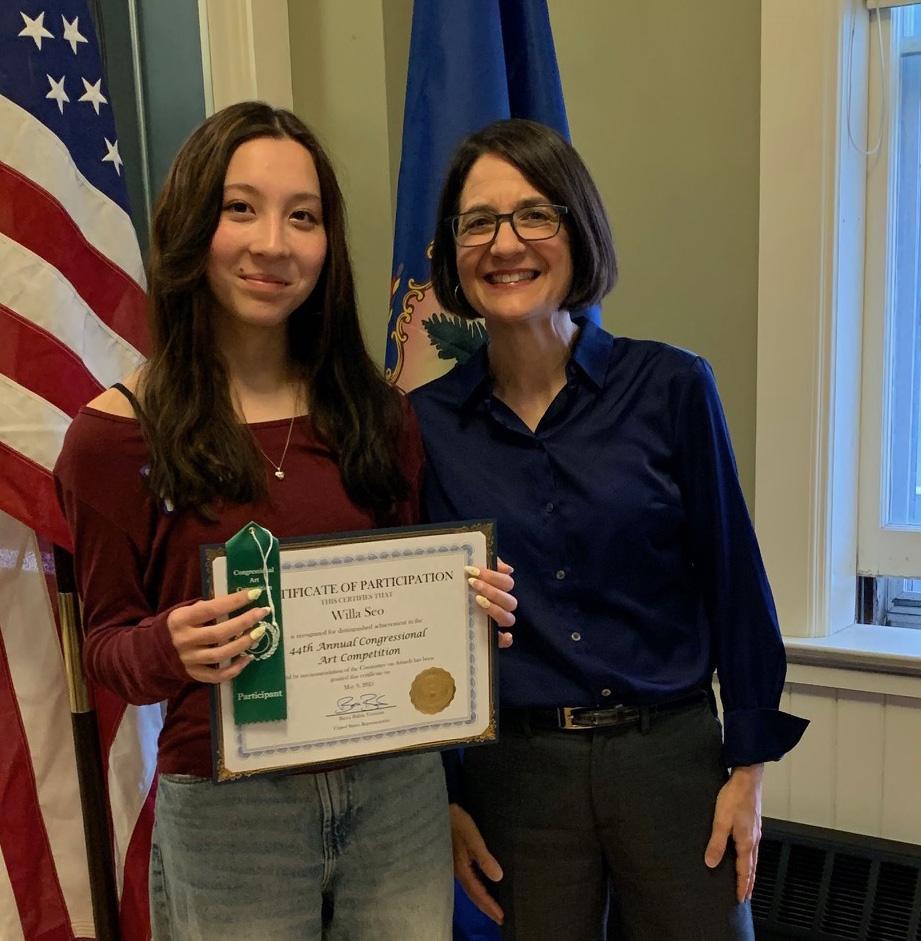
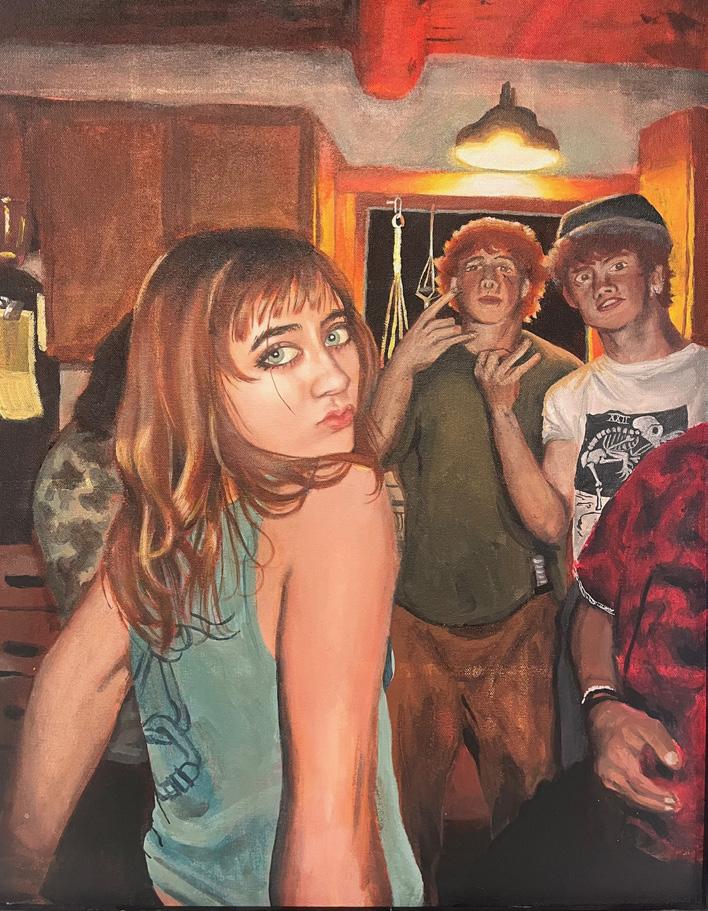
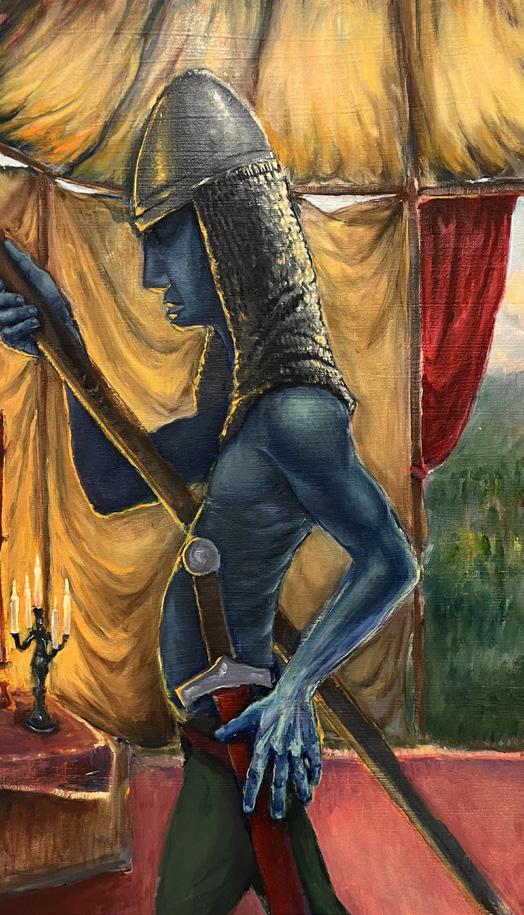
This spring brought remarkable recognition for BBA visual artists, both locally and nationally.
Clara Stauffer ’26 was named a Vermont Scholar Artist at a ceremony in Montpelier, honoring her outstanding achievements as an artist, musician, and actor—a true reflection of her deep involvement across all aspects of the arts at BBA.
Willa Seo ’26 received a Silver Key award from the prestigious Scholastic Art Competition for a body of artwork that powerfully reflected on her year as a Rotary Exchange Student in Japan—a deeply personal body of work born from a transformative and challenging experience abroad.
Congressional Art Competition
Three BBA students were selected to represent the school in the Congressional Art Competition, chosen for their exceptional work created in the AP Art program: Willa Seo ’26, Cecily Loomis ’26, and Eden Levis ’27.
250th Anniversary: “Unfinished Struggles”
Fifteen Visual Art students took part in Vermont’s 250th Celebration of America’s anniversary by creating works that examined “Unfinished Struggles.” Students explored themes including racial profiling, immigration prejudice, women’s rights, and climate change. Their powerful work hung in the State House throughout March, drawing attention to the concerns and conscience of Vermont high school students.
Piece for Peace: A Global Initiative
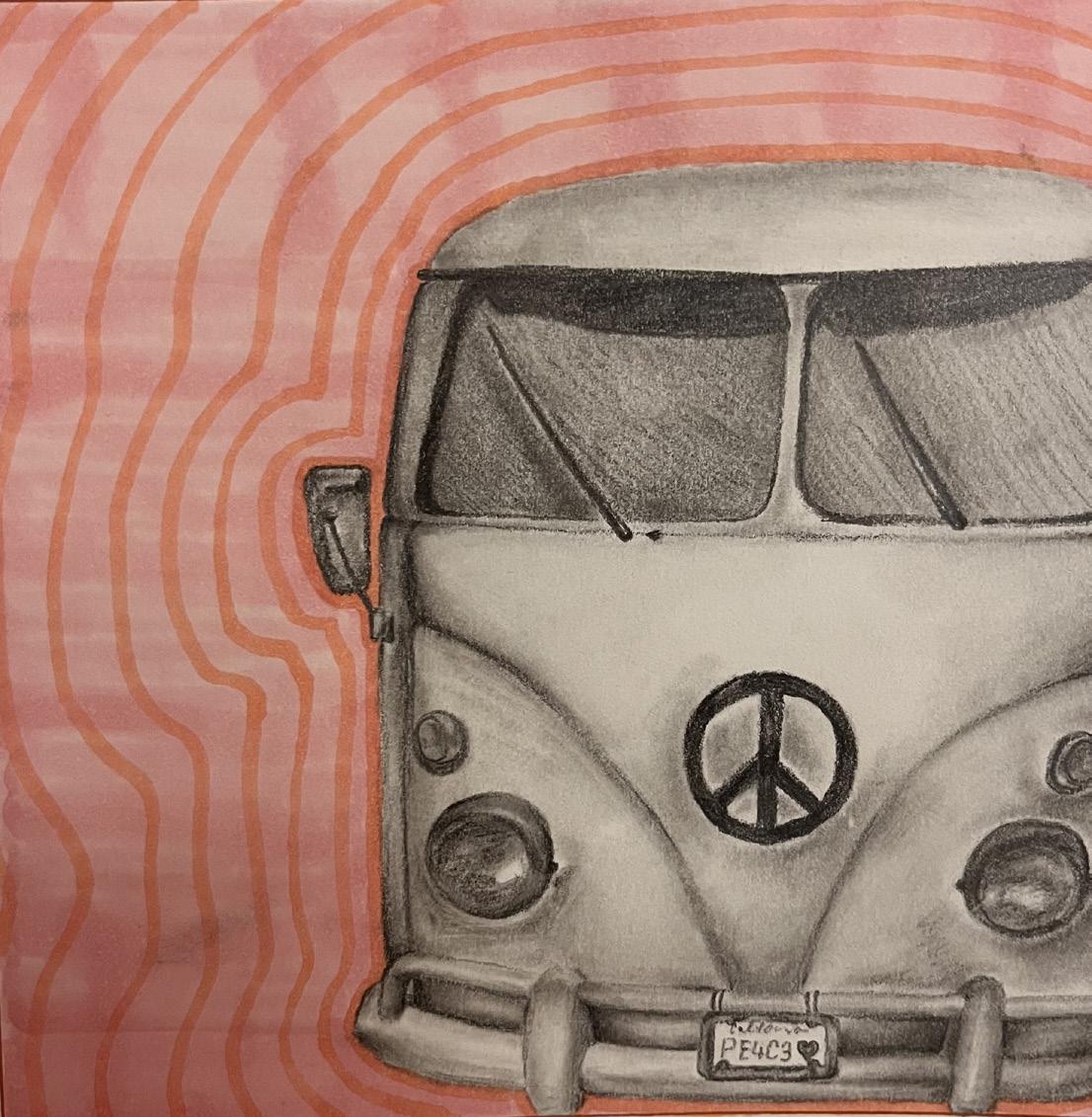
Twenty-five Visual Art students participated in a global initiative by City Arts of NYC, illustrating their answer to the question: “What Does Peace Mean to Me?” Students around the world were given a 6” square piece of paper to interpret peace through art. BBA’s contributions were displayed at the Manchester Community Library and are now available to view online.
Art from the Schools at SVAC
In a capstone celebration of the academic year, more than eighty Burr and Burton Visual Art students participated in the Art from the Schools exhibition at the Southern Vermont Arts Center in April and May. The exhibition showcased an extraordinary range of student work— drawings, paintings, mixed media, ceramics, design projects, woodworking, photography, and jewelry— representing the full scope of artistic exploration happening at BBA.
By Jill Perry-Balzano

s s
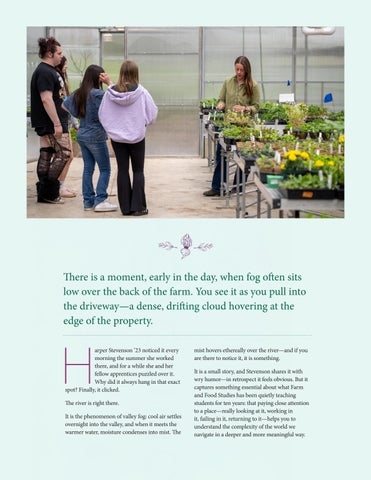
TThere is a moment, early in the day, when fog often sits low over the back of the farm. You see it as you pull into the driveway—a dense, drifting cloud hovering at the edge of the property.
Harper Stevenson ’23 noticed it every morning the summer she worked there, and for a while she and her fellow apprentices puzzled over it. Why did it always hang in that exact spot? Finally, it clicked.
The river is right there.
It is the phenomenon of valley fog: cool air settles overnight into the valley, and when it meets the warmer water, moisture condenses into mist. The
mist hovers ethereally over the river—and if you are there to notice it, it is something.
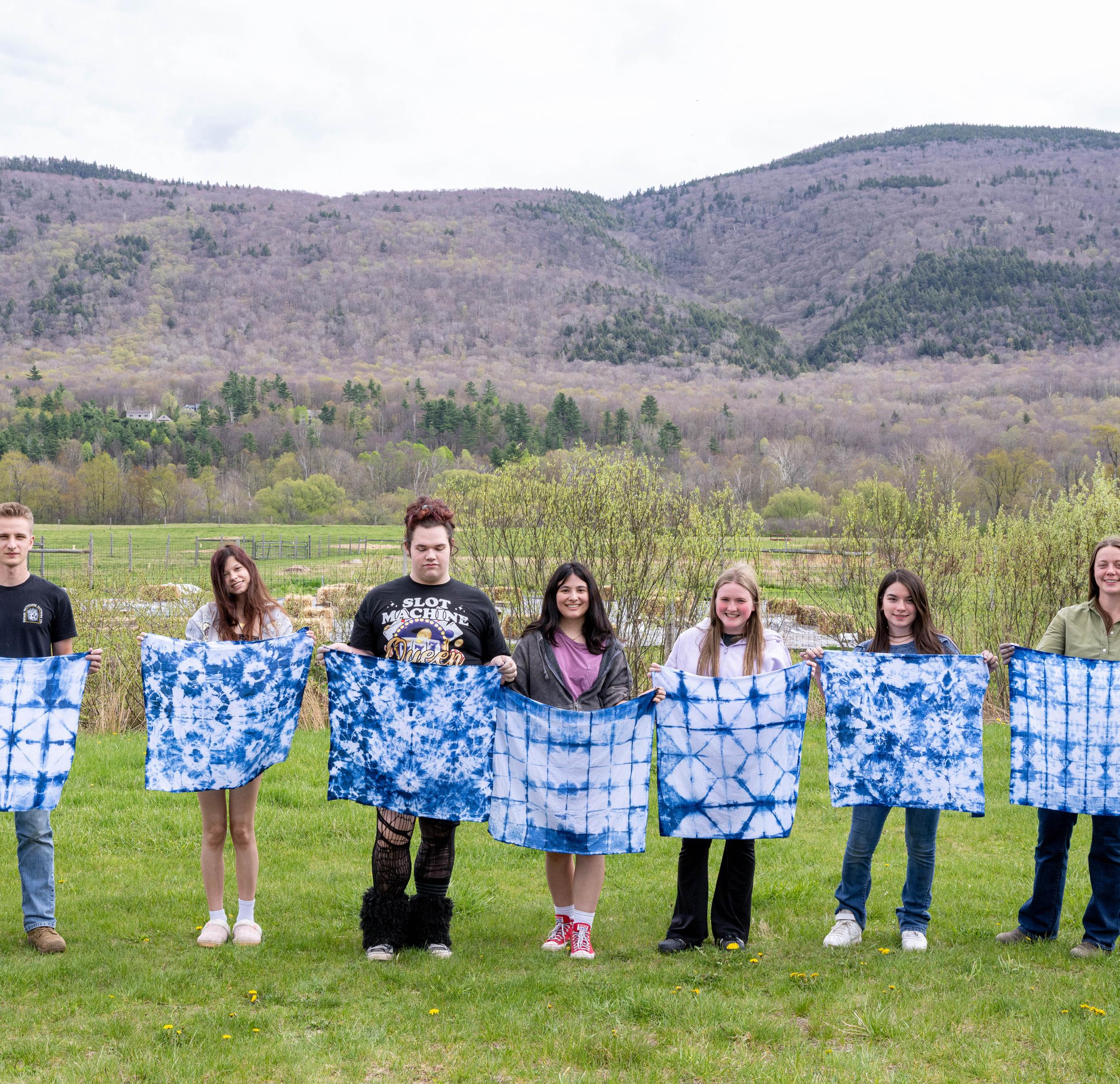
It is a small story, and Stevenson shares it with wry humor—in retrospect it feels obvious. But it captures something essential about what Farm and Food Studies has been quietly teaching students for ten years: that paying close attention to a place—really looking at it, working in it, failing in it, returning to it—helps you to understand the complexity of the world we navigate in a deeper and more meaningful way.
S s s
The program is anchored at the Burr and Burton classroom at Hildene Farm, where students study agriculture, ethnobotany, ecology, and food systems on a working landscape. The mission is stated plainly: to actively engage students on a working landscape as they build skills to participate in a more sustainable, equitable, and resilient future. But the pedagogy behind that mission has taken years to develop, and it is still developing.
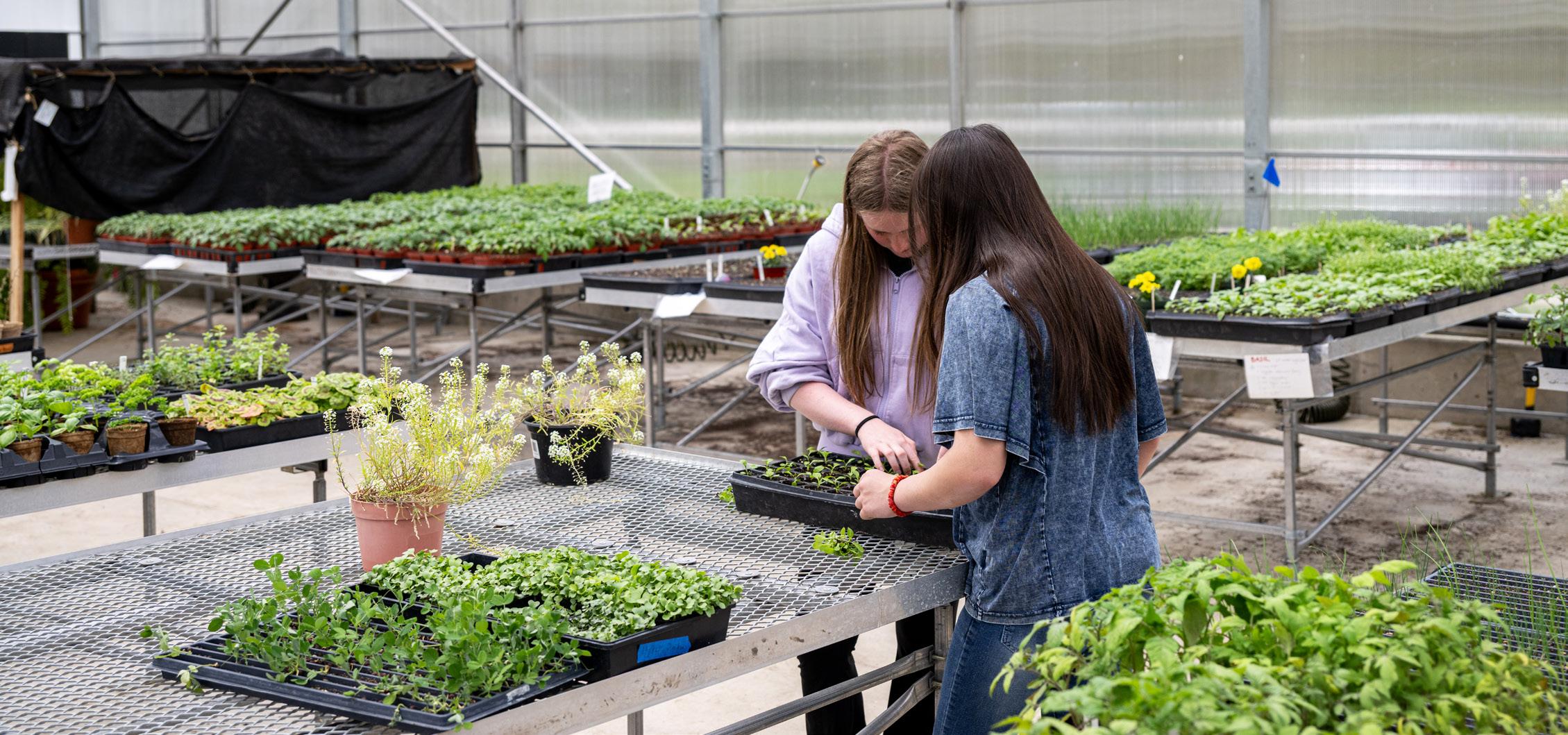
Nora Hefner joined the program in 2021 and has since built its curriculum into something genuinely distinctive. Her courses, Ethnobotany, Sustainable Agriculture, Food Systems, and Farm to Plate are shaped around the landscape, seasons, and ecological relationships of the farmland.
She describes one of the program’s central challenges: there is always work to do on a farm, and there is always learning to do, and the temptation is to
treat them as separate things. A day for planting, a day for discussing soil. A day for hauling, a day for taking notes. She has spent years pushing against that separation.
“I’ve been trying to find more intentional ways to make the work the learning. Not just having learning days and working days—but trying to be really intentional about what we learn from the work that we do.”
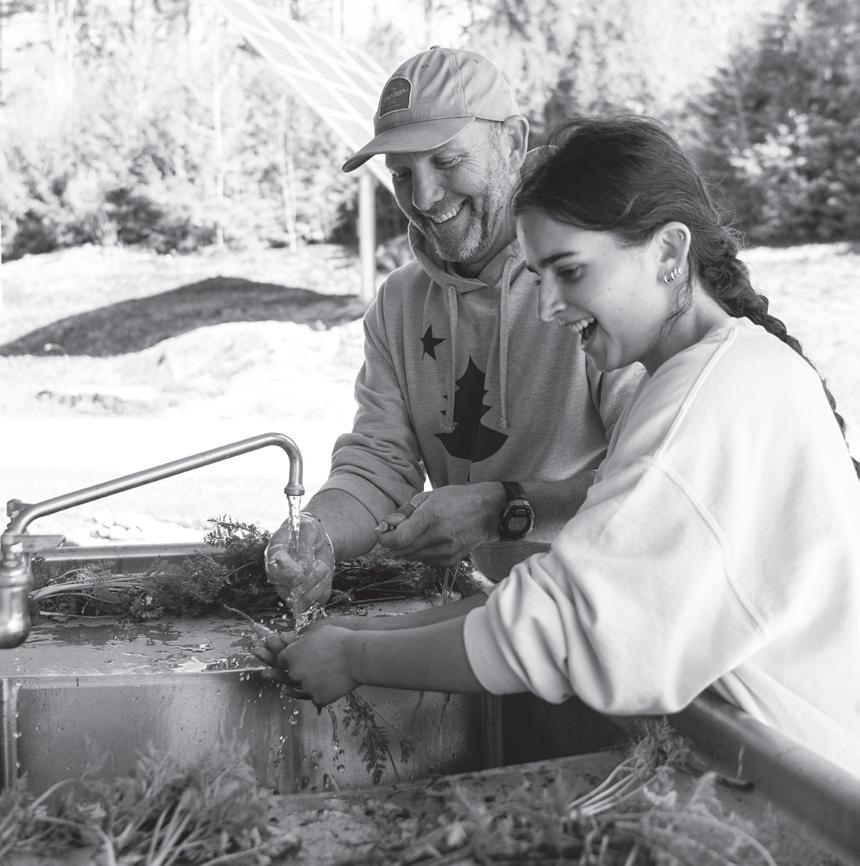
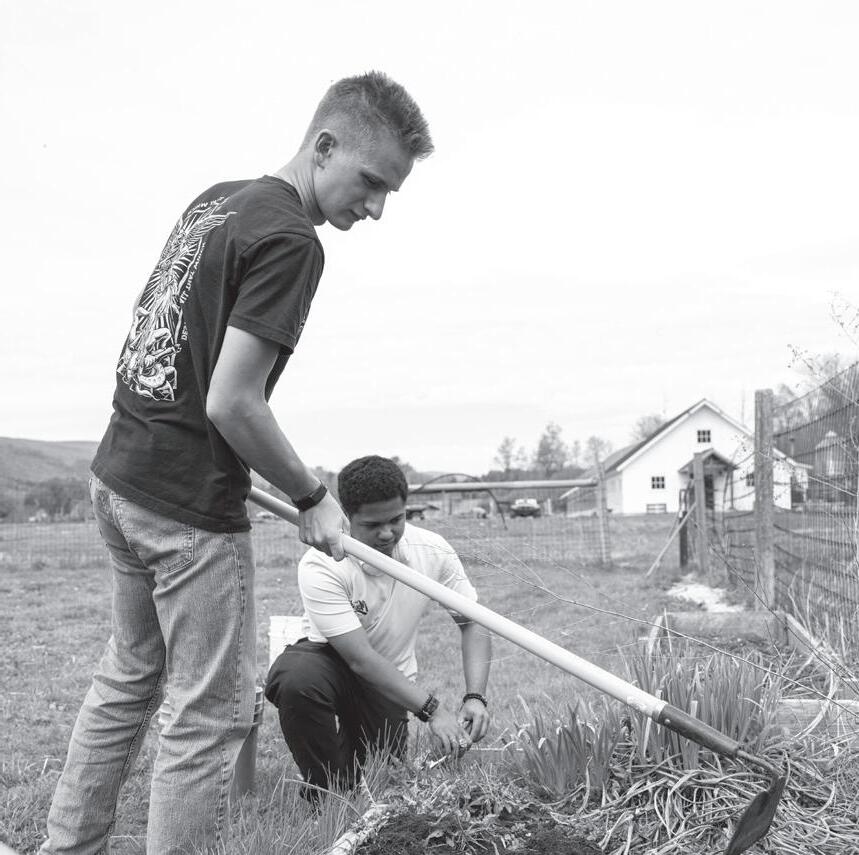
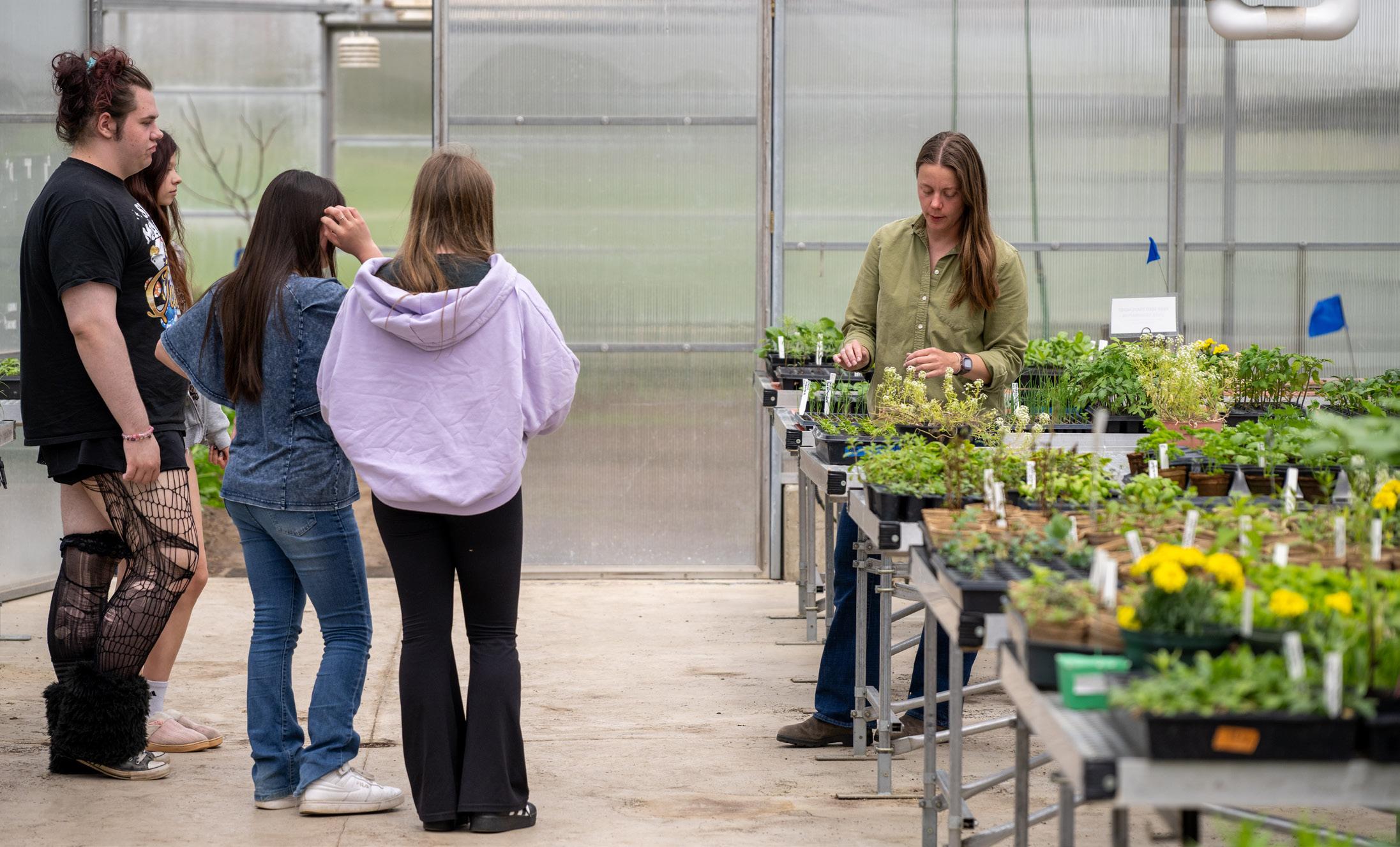
On a recent spring morning, it looked like this: students spreading a large silage tarp across a garden bed, flipping hay bales to anchor the edges, sweating through their shirts in unexpected May heat. From the outside it might have looked like unglamorous labor. But the tarp was there to suppress weed growth, which connects to soil health, which connects to the series of labs on the physical, chemical, and biological properties of soil students did in February. The work and the concept were the same thing.
A small breeze rolled through at the end, and everyone stopped and looked up, and for a moment the farm felt like exactly the right place to be.
“The farm became a place that I wanted to spend my time. These courses and experiences supplemented my coursework at BBA in a real, physical way; I was most interested in biology, history, and the environment, but it was only by working and learning outside that I could put those classroom lessons into the contexts of southern VT history, climate change, or complex biological relationships.”
—Harper Stevenson ’23
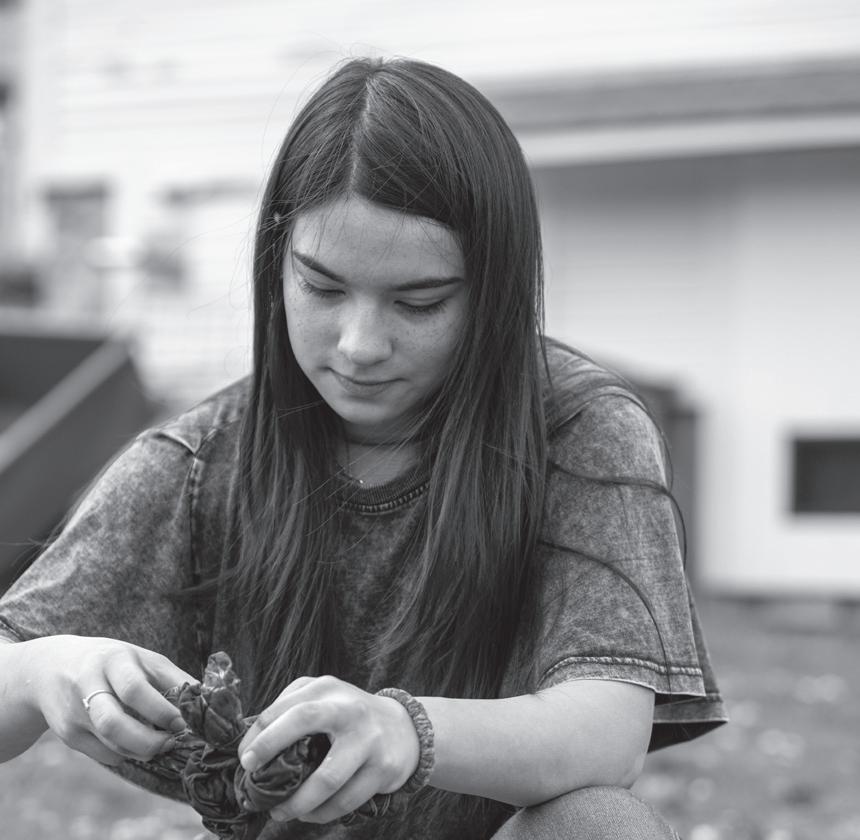
Harper Stevenson arrived at the farm the summer after her freshman year, during the long suspended weeks of the pandemic. She was fourteen, old enough to work, and looking for somewhere to put her energy. She had grown up gardening. She thought she knew what it was to work outside.
But this work was different. Stevenson recalls, “It was the hardest work of my life.”
Weeding entire pastures. Hauling mulch across the property in 85-degree heat. Picking potato beetles, one by one, from the underside of leaves. She would come home and fall asleep by 7:00 pm. She was the only girl on the crew that summer, working alongside a team of young men who were also, in their own ways, figuring out what they were made of.
What she discovered was not just that she could endure difficulty—though she learned that too—but that difficulty was where the most durable learning happened. The farm did not offer the handrails she had come to rely on in the classroom: the clear rubric, the right answer, the reassuring feedback loop. It offered problems and expected her to work them out.
When she returned as a student, the farm kept pulling her back. She took Ethnobotany with former program coordinator Derek Andersen her sophomore year—walking the property with a field notebook, learning the medicinal uses of plants that had surrounded her entire life. Her senior year she took Ecology with Hefner and spent her free blocks in the greenhouse. Her senior project involved building a trail from the edge
of the Hildene property line down to the Battenkill River. Nothing about it went according to plan.
“I struggled to not have all the answers at my fingertips, like I did in other classrooms. Nora encouraged these moments and was always there if we needed help, but she pushed us to problem-solve on our own. That was incredibly important, and I carry it with me today.”
What she carries it into, now, is competitive swimming—the physical endurance of long practices, the mental discipline of not quitting— and into her coursework at Bowdoin College, where she is an Environmental Studies major. When a lab doesn’t work or a field method needs revising, she is confident she can handle it. She has been here before. She has picked beetles in the heat and built trails that kept going wrong
and come out the other side knowing something about herself that no classroom could have told her.
“If I could do all of those hard things as a fourteen-year-old, I can do other hard things now.”
Hefner explains what she observes in her students: “The students who are most passionate at the farm, ironically, find the greatest satisfaction in uncertainty and unfinished business: planting seeds that someone else will harvest and eat, planting cover crop for next year’s soil, building a trail for others to walk on. There is doubt and frustration along the way, but some students push through and find themselves tapped into the rhythm of the land. This usually comes with a discovery that land is, by human standards, slow. The accomplishment is a relationship made a little deeper, a sense of gratitude made a little bigger,
and a vision for what we are a part of made a little longer.
“Harper’s trail wasn’t perfect, and still isn’t. But every semester we make it a little easier to navigate while maintaining Harper’s vision of creating access without compromising the ecosystem. Before she built it, we couldn’t get to the river, and now every class at the farm visits the Battenkill.”
Will Ameden ’24 came to Farm and Food Studies from a different direction. By his own description, he was a humanities student: English, history, ideas, arguments. Science was not his natural habitat. When he signed up for Ethnobotany during his senior fall, he was not entirely sure what to expect.
The course is one Hefner has built deliberately around what the Hildene property actually offers—not designed around a textbook and then assigned a location, but assembled from the land itself. It is organized around three themes: plants as food, plants as material, plants as medicine. Students make
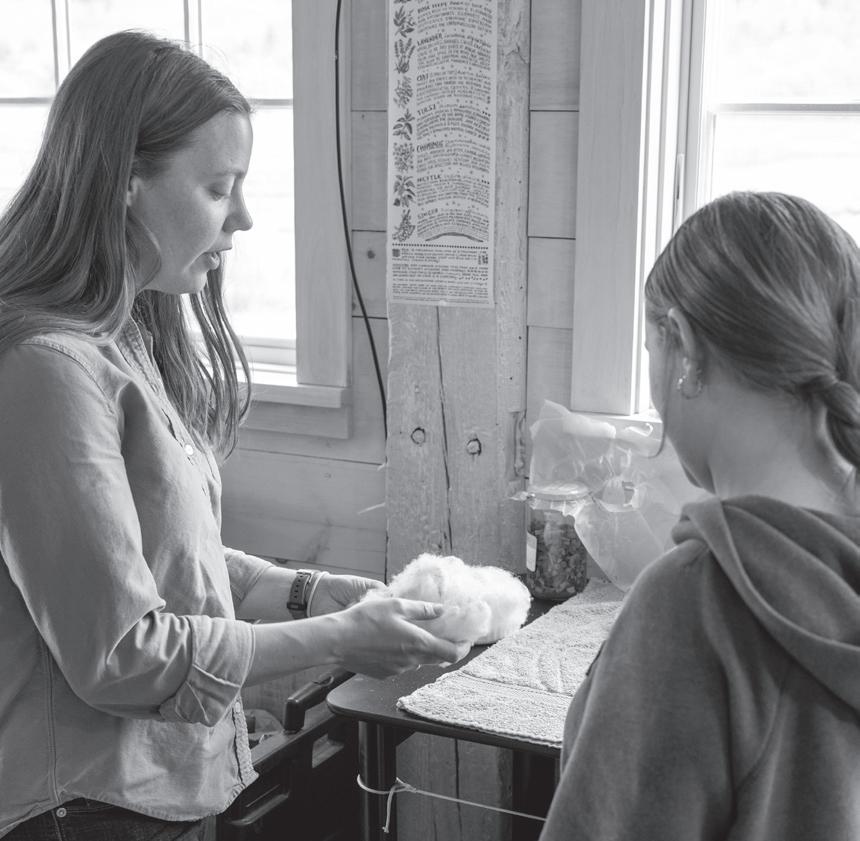
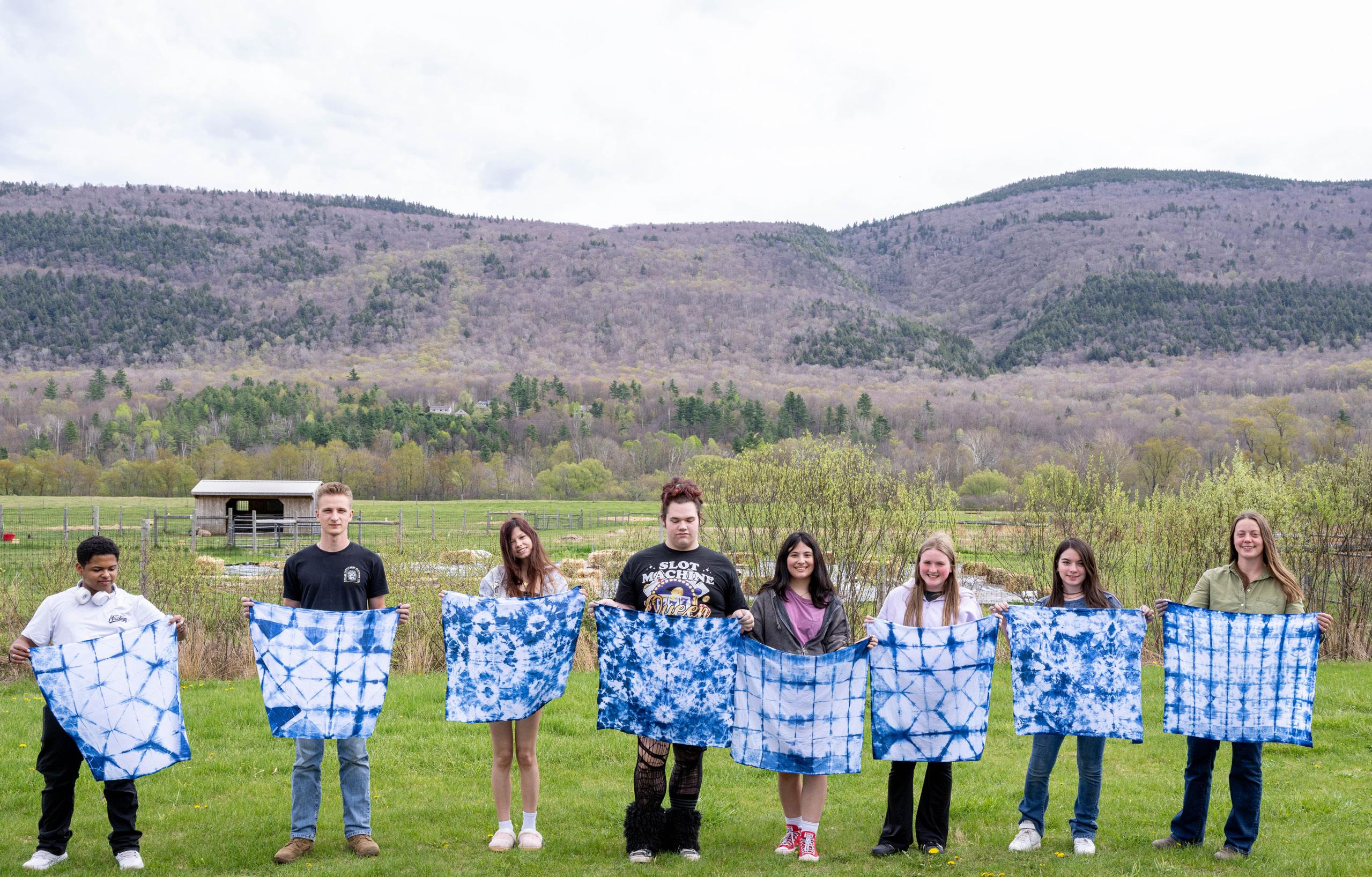
salves. They harvest willow growing in a ditch at the edge of the garden and weave it into baskets. They collect seeds and dissect flowers. And throughout, the class reads Braiding Sweetgrass, Robin Wall Kimmerer’s exploration of Indigenous plant knowledge and our ecological relationship to the living world.
Hefner explains: “I think so much of what we do is: what do we have around us, and how do we make use of that? We have willow growing in this ditch, so let’s cut it and weave baskets with it.”
The place shapes the syllabus, not the other way around.
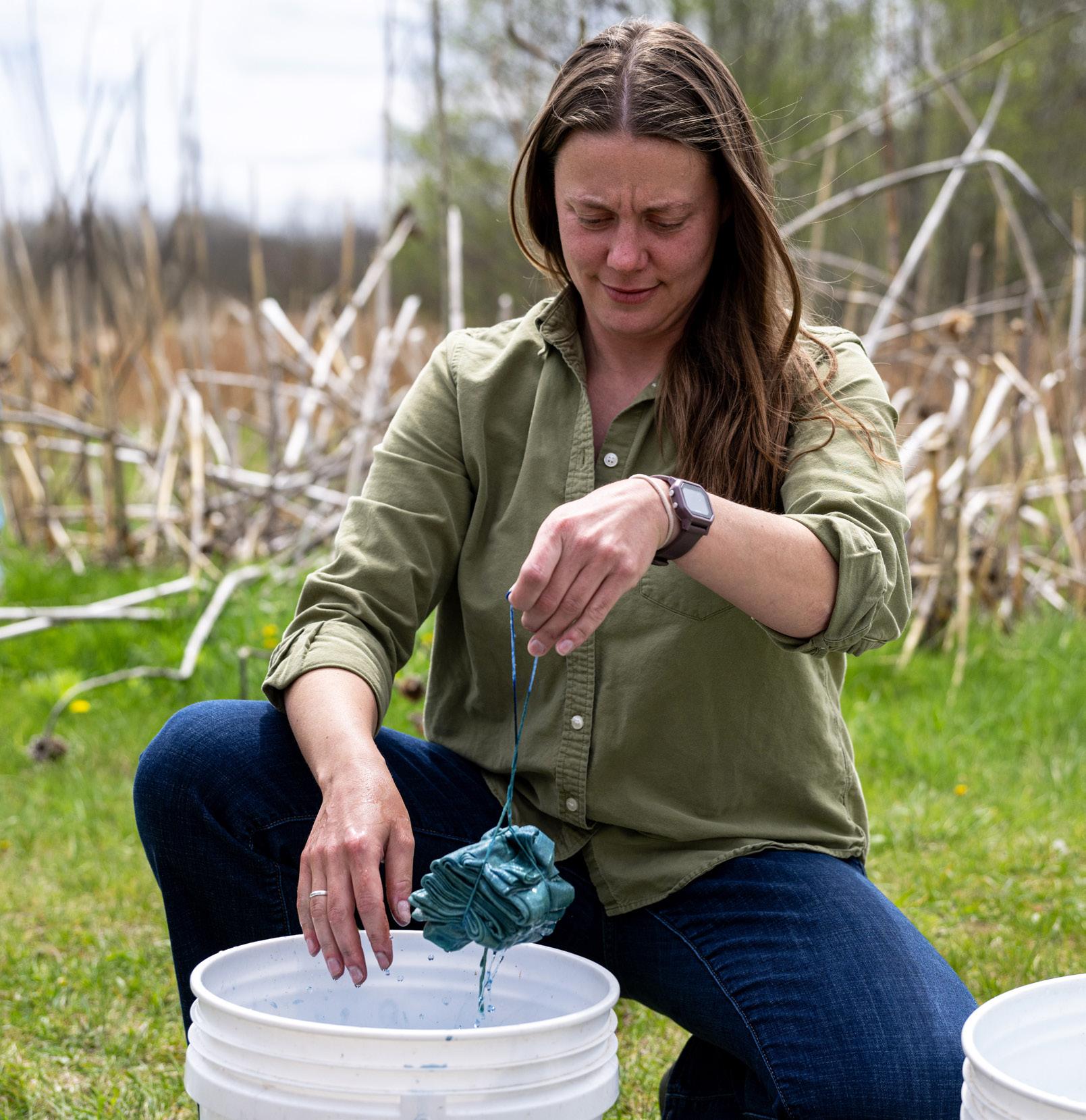
For Ameden, basket-weaving was a revelation of a particular kind. He is not, by his own admission, someone who works naturally with his hands. The basket he produced had gaps large enough to put a finger through. But the afternoon itself—sitting in the grass outside on a warm fall day, working with something that came directly from the land around him—landed differently than he expected.
“I remember thinking, I can’t believe this is class. This is awesome.”
And then, more slowly: “There’s something fulfilling about doing tangible work—using your hands, seeing the result. We’re so used to being
on our phones. In that class, you really had to engage physically.”
But what Ameden took from Ethnobotany went deeper than the pleasure of making something. The course was, he kept returning to the word, interdisciplinary. It moved between plant biology and cultural history and ethics and craft, and it asked students to make connections across those domains rather than treating each one as a separate subject. For someone who already thought in terms of connections—who came to history and English precisely because he liked seeing how things fit together—it was, unexpectedly, the most intellectually natural course he had taken.
“It gave me direction—I didn’t know exactly what I wanted to do, but I knew I liked that kind of work. So when I got to Skidmore, I looked for similar things and found my path in political science and environmental studies.”
Now halfway through college, majoring in political science and minoring in environmental studies, he traces a direct line from Hefner’s class to a recent project on Indigenous conservation efforts in Tanzania and Kenya. The course was framed through post-colonial theory—new territory for him—but Braiding Sweetgrass
had already given him a foundation for thinking about how Indigenous knowledge operates, why it was systematically disregarded, and why it matters urgently now.
“That connects back to Nora’s class. It really emphasized bringing that knowledge back and understanding its value for future conservation.”
Hefner is keenly aware of the many access points for students into her courses: “Students come to Farm and Food Studies for all kinds of different reasons. Some want to go deep on the science, some want to spend more time outside, some just want to try something new. Agriculture touches everyone’s life—we all have to eat, right?—and every academic discipline.
“My hope is that each student finds places to feel confident and places to challenge themself, and because those are different places for different students, they have opportunities to learn from each other and lift each other up.”
Hefner has been paying close attention to the program long enough to identify partnerships that enhance learning for everyone.
Collaboration with the BBA ACCESS program has brought Farm and Food Studies courses to a wider range of students, with classes that mix ACCESS and general education students working side by side in the same garden.
Community partnerships have also deepened over the decade: students grow crops each year for an Abenaki nation in northern Vermont through the Abenaki Land Link project—connecting the farm’s work to Indigenous food sovereignty in a way that resonates directly with the themes in Braiding Sweetgrass. They collaborate with the local food cupboard and Grateful Hearts to share studentgrown food in the local community.
The land, it turns out, is a remarkable equalizer. It does not care what kind of student you were in your last class. It asks the same questions of everyone: Are you paying attention? Are you willing to be wrong? Can you learn from what’s right in front of you?
u
Harper Stevenson is now studying plant ecophysiology at Bowdoin, taking courses on global weather patterns and climate fluctuations. As a child, she hated dirt. Now her coursework centers on climate change and the question of how humans across every sector will need to work together to meet it.
“This is now my passion, but I don’t think it would be as strong if it weren’t for the classes I took outside, in the field with Farm and Food Studies.”
Will Ameden, when asked what advice he would give to a current BBA student considering the program, doesn’t hesitate. “Just put yourself out there. Even if it doesn’t seem like your thing — try it.” He pauses. “When you describe it to people, it almost sounds like a fairy tale. But it’s

real.” Looking back, he says, he wishes he had taken even more advantage of it.
Every fall, the fog settles over the Battenkill again. New students pull into the Hildene driveway, step outside into the cool morning air, and start to look around. The river is right there. So is everything else—the willow in the ditch, the garden beds waiting to be turned, the hay that needs hauling, the trail that hasn’t been built yet.
The place is patient. It has been here longer than the program, and it will be here long after. It is waiting, as it always is, to teach anyone willing to pay attention.
By Jill Perry-Balzano
Years ago, when colleague John Graf coached alongside Dave Miceli, he noticed something about the way Miceli prepared the varsity girls lacrosse team before a big game. Miceli would gather the players, ask them to close their eyes, and guide them through a visualization of the game ahead—what success would require, what it would feel like. More often than not, Graf recalls, what the team had worked hard to prepare for and imagine became reality.
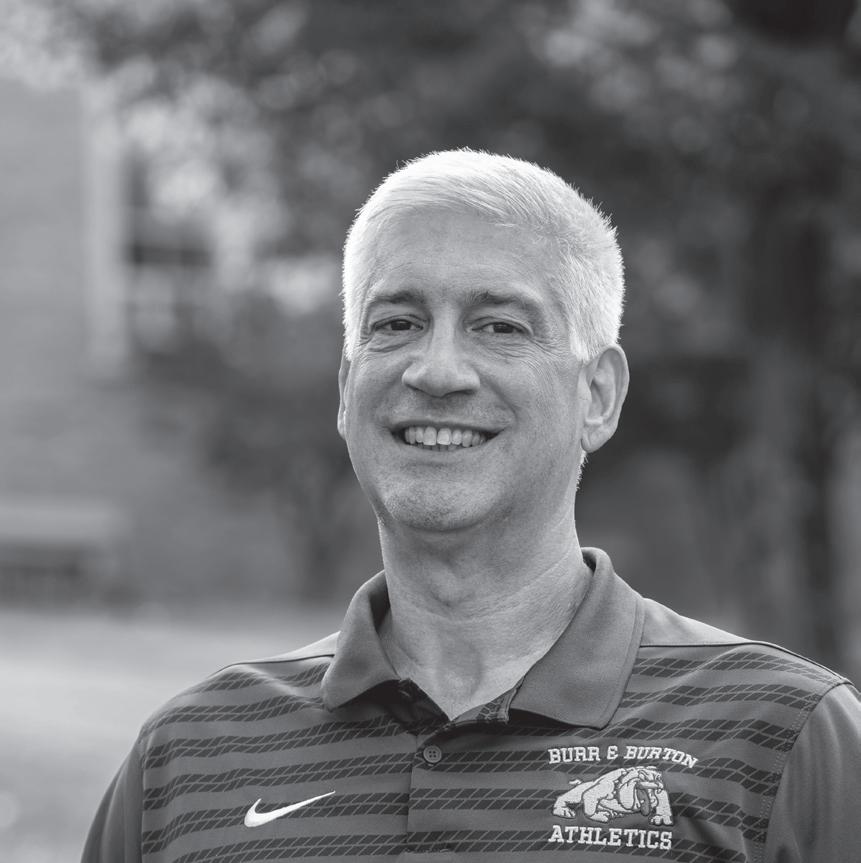
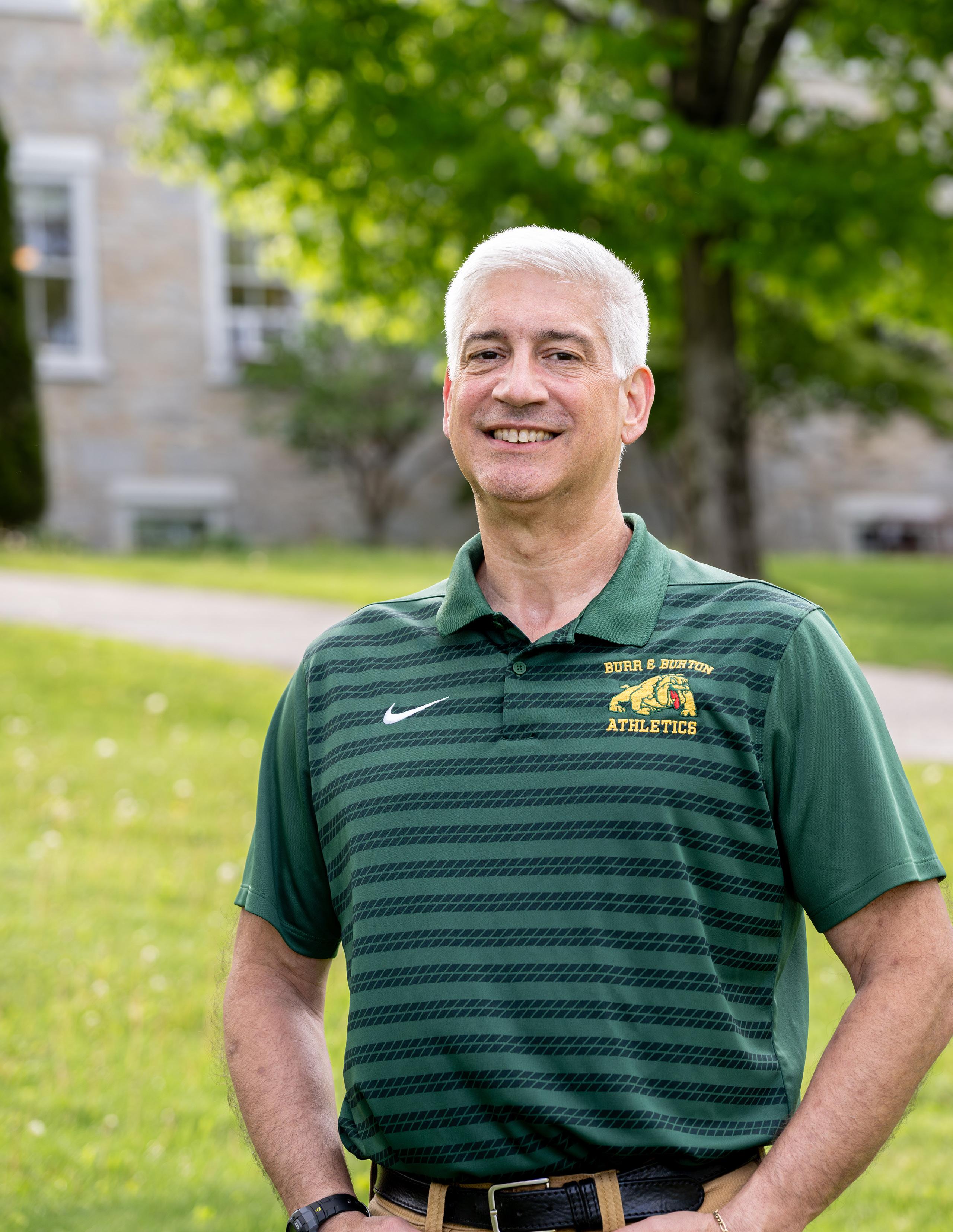
Graf knows that Miceli has been doing something similar throughout his twenty-five years at Burr and Burton. “Like those players,” Graf reflects, “his hard work, preparation, and visualization have resulted in success”—as a teacher, a coach, a department head, a teachers’ union president, and finally as athletic director. In each role, he set out to help every student, athlete, and colleague around him see the best version of themselves and work toward realizing it.
It is a fitting lens through which to understand a career that has been defined, above all else, by the ability to see potential—in students, in colleagues, and in the institution itself.
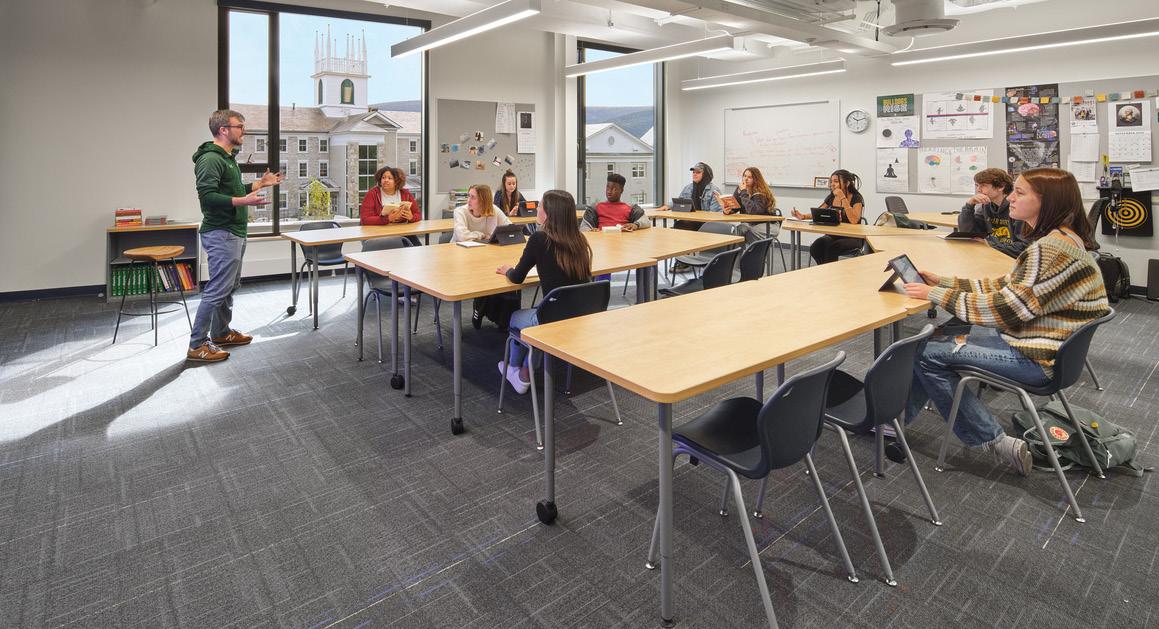
Dave Miceli has been an educator since 1991—thirty-five years during which he has watched American education transform more dramatically than it had in the previous hundred. His first formal teacher evaluation, as a young educator in Jersey City, included the feedback that his desks were positioned too close to the wall. That was the kind of thing that mattered then. It was a different world.
Since that first classroom, Miceli has taught through the rise of the internet, the transition to block scheduling, the emergence of positive psychology, and now the arrival of artificial intelligence. Each shift required teachers to fundamentally rethink what they were doing and why. That Miceli has not merely navigated

these changes but helped lead the school’s response to them speaks to something essential about who he is: a person who sees education not as a fixed thing to be maintained, but as a living question to keep asking.
Miceli came to Burr and Burton in the fall of 2000, tipped off about an opening by his wife, BBA teacher Barb Miceli, after several years at Mount Anthony Union High School; he was hired to teach social studies. He arrived at a school still in the early years of its long-block schedule—a format that had demanded an entirely different kind of teaching than the chapter-by-chapter, lecture-andtest model that had defined high school classrooms for generations. Teachers were asking whether they simply needed to double their daily assignments. They were, Miceli now recognizes with a smile, asking all the wrong questions.
What the long block was really asking educators to do was rethink the purpose of a class period altogether. And that larger reckoning—what is school actually for?—is the question that has animated his career.
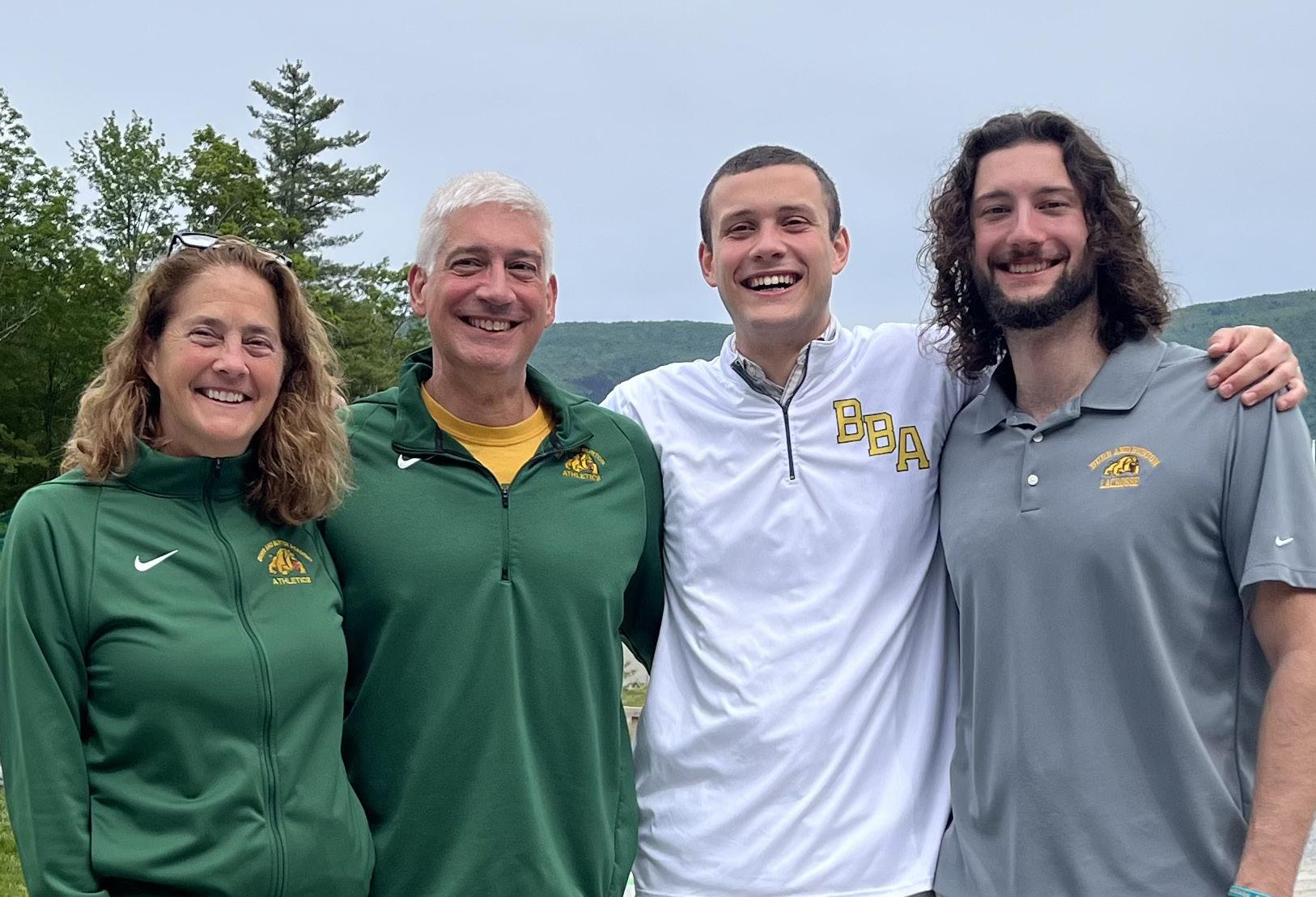
At Burr and Burton, Miceli taught social studies and psychology, coached numerous teams, led the social studies department and the teacher’s union, developed the Bulldog Leadership Summit and the Student Athletic Leadership Team (SALT), and led athletics through a time when the school kept getting larger and more and more teams began chasing Division I titles— all the while working alongside his wife, Barb, and raising his sons Johnny Miceli ’20 and Nick Miceli ’22.
There are few who see as many sides of Burr and Burton, few who have been more definitive in building culture, and few who have made a deeper impact on students, colleagues, and the institution itself.
After 35 years, Dave Miceli is retiring. But the curriculum he shaped, the athletic program he helped build, and the legacy of the students who left his classroom and fields asking bigger questions about themselves and the world—remain.

IF
WE COULD INTENTIONALLY FOCUS ON HELPING ATHLETES BECOME BETTER BULLDOGS AND BETTER PEOPLE—IF WE COULD HELP THEM SEE THE BEST VERSION OF THEMSELVES AND WORK TOWARD REALIZING IT—THAT WOULD NATURALLY STRENGTHEN THE CULTURE OF THE ENTIRE SCHOOL COMMUNITY.
You’ve spent your career watching education change. How do you make sense of that arc?
When I began teaching, schools were still very much places where all the knowledge lived. We had more books than students had at home. Teachers had studied their subjects deeply, and students might have had a set of encyclopedias at home—and that was about it. Education looked very different then. It was a teacher standing in front of the room, delivering information. Students wrote down the important things, studied them, and we tested whether they remembered.
Then we moved to the long block and had to adapt our curriculum; we were asking things like, “Now do we have to do two textbook sections every day?”We were asking all the wrong questions.
Then students started having internet access at home, and we were no longer the keepers of information or facts. We had to figure out how to teach differently. Our job was no longer to have students memorize things that could easily be looked up. Our job became teaching students how to think, how to use information, and how to wrestle with larger questions.
And now, as I’m leaving, we have AI—which can answer many of those same questions. So we have to figure out how teaching changes again.
It’s been remarkable to watch. In 35 years, education has changed more than it did in the hundred years before that. And being at Burr and Burton has been exciting because teachers here have always been encouraged to shape curriculum, create new courses, and rethink how teaching happens. That entrepreneurial spirit is one of the hallmarks of this school. It’s a great place for students, but it’s also a great place to work.
How did you come to teach psychology?
I began at BBA in the fall of 2000 teaching social studies. About two years in, we were in a hiring meeting trying to decide between two candidates for a position—teaching psychology would be a component. There was one candidate everybody absolutely loved—and then another who was good, but had more academic background in psychology.
At some point someone said, “I guess we have to go with the other candidate because our top choice hasn’t taken three psychology courses.”
And I said, “Wait—hasn’t everyone taken three psychology courses? You can’t become a teacher without taking three psychology courses.”
In my memory, everyone in the room turned and looked at me. “You’ve taken three psychology courses?”
“Yes.”
“Great. Let’s hire John Graf, and you can teach psychology.”
That’s how it started. And honestly, I didn’t know a lot about it at first. But Ed Latz—who was the social studies chair at the time and also our AP Psychology teacher—had everything extraordinarily well designed. The course was built intentionally: the structure of the quizzes, the cumulative tests, the weighting of the material. Everything was aligned so that students in our AP Psychology class were exceptionally well prepared for the exam. The more I learned about what Ed had built, the more impressed I became.
What did teaching psychology come to mean to you?
One of the things that amazed me was how engaged students were with the content right from the start. Developmentally, it makes perfect sense—you tell a seventeen-year-old, “Let’s talk about how your brain works,” and they’re fascinated. They want to understand themselves, other people, relationships, behavior.
Students would come into class saying, “I was reading about this last night,” or “I looked ahead because I’ve always wanted to understand this.” With psychology, they walked into the room already wanting to know more. That was such a contrast to, say, teaching the Peloponnesian War, where I had to persuade students to care. There’s nothing wrong with the Peloponnesian War—I do think there are valuable lessons there—but I had to make the case. Psychology made the case for itself.
There was also a meaningful shift happening in the field itself during my time teaching it. Psychology had traditionally focused on: here’s how the brain works, and here’s what happens when it goes wrong. Then positive psychology emerged, and suddenly people were asking, “What about when things go right? How do we support flourishing?” Being inside that shift, and sharing it with students, was something special.
Bill Muench and I also pushed ourselves to ask: what else could students do with psychology, beyond preparing for an exam? That’s when we shifted the post-AP portion of the course into a full research project. Students developed their own research questions, designed methods, conducted their research, and presented their findings at a poster session—standing beside their work, explaining it, defending their thinking to community members who asked real questions. It became much more authentic. And eventually we expanded that model into our regular psychology classes as well. It reflected this larger educational shift: moving from simply delivering information to helping students use information to create new understanding.
THROUGHOUT HIS TIME AT BURR AND BURTON, DAVE POSSESSED A RARE GIFT: THE ABILITY TO SEE THE HIGHEST POTENTIAL IN PEOPLE AND PROGRAMS AND THE UNWAVERING DEDICATION TO HELP THEM REALIZE IT. HE CHALLENGED US, SUPPORTED US, AND FUNDAMENTALLY SHAPED THE CULTURE OF LEADERSHIP AND BELONGING THAT DEFINES OUR SCHOOL TODAY.
—MEG KENNY
What drew you to leading athletics at BBA, and how did you think about that role?
I had been coaching for most of my professional life—not because I was an exceptional athlete, but because when you’re a young teacher, schools often say, “Hey, you’d be good at coaching this,” and you say yes. But as I became more interested in psychology, leadership, and group dynamics, I started to see coaching differently. I became genuinely curious about how belonging affects performance, how groups function well together, how individuals thrive — and athletics turned out to be a remarkable laboratory for all of those questions.
When the Athletic Director position opened, what drew me to it was a conviction that athletics could be about more than winning. If we could intentionally focus on helping athletes become better Bulldogs and better people—if we could help them see the best version of themselves and work toward realizing it—that would naturally strengthen the culture of the entire school community. Athletics touches so many students, coaches, and families. The potential for impact felt enormous.
All of those threads—the evolution of teaching, psychology, coaching, leadership, belonging— really converged in that role. In many ways it felt like the place where everything I had been learning for twenty-five years could come together.
Tell me about the Bulldog Leadership Summit.
A group of us—Jim Raposa, Cory Harrington, Bill Muench, and others—kept having conversations about leadership. We kept saying, “Wouldn’t it be great if students had intentional opportunities to learn this?” And then eventually we realized: no outside curriculum was going to magically appear. If we wanted students to learn leadership, we had to teach it ourselves.
What amazed me was the student response. They wanted leadership training. They appreciated it and immediately saw ways to apply it in their lives.
One of the things I’m proudest of is that the Summit was open to anyone who wanted to participate. Before that, leadership opportunities were often based on teacher selection or nomination. By opening it up, we sent a different message about who leadership belongs to.
Now leadership feels woven throughout the culture of the school in a way it didn’t twenty-five years ago. There are so many more opportunities for students to lead, and student leadership feels like part of the identity of Burr and Burton. That’s been really meaningful to watch.
Who has shaped you most as an educator here?
I would absolutely single out Meg Kenny. She was the social studies department chair when I arrived, then became Dean of Faculty when I became department chair, and later Associate Head of School while I served as Athletic Director. In many ways, I reported to Meg throughout almost my entire career here. She consistently supported me, challenged me, encouraged me, and held me accountable in exactly the ways I needed.
Mark Tashjian also really supported my leadership and challenged me to do more as a leader. I think he believed in me before I believed in my ability to lead adults and have an impact beyond the classroom.
I also learned a lot from longtime trustee Michael Cohen, when I was negotiating on behalf of the teachers association. Even in years when we weren’t actively negotiating, Michael invited faculty and trustees to meet together socially, share meals, talk about their families, etc.—anything but negotiations. Because of the relationships created, conversations became easier when we sat down in a negotiating year. Michael helped shape a genuinely collaborative culture here—one where faculty and trustees could genuinely ask, “What’s best for students?”
We’ve had remarkable leaders here throughout, and I think much of what I’ve been able to teach students about leadership came directly from watching leadership modeled so thoughtfully around me at Burr and Burton.



By Samantha Watson

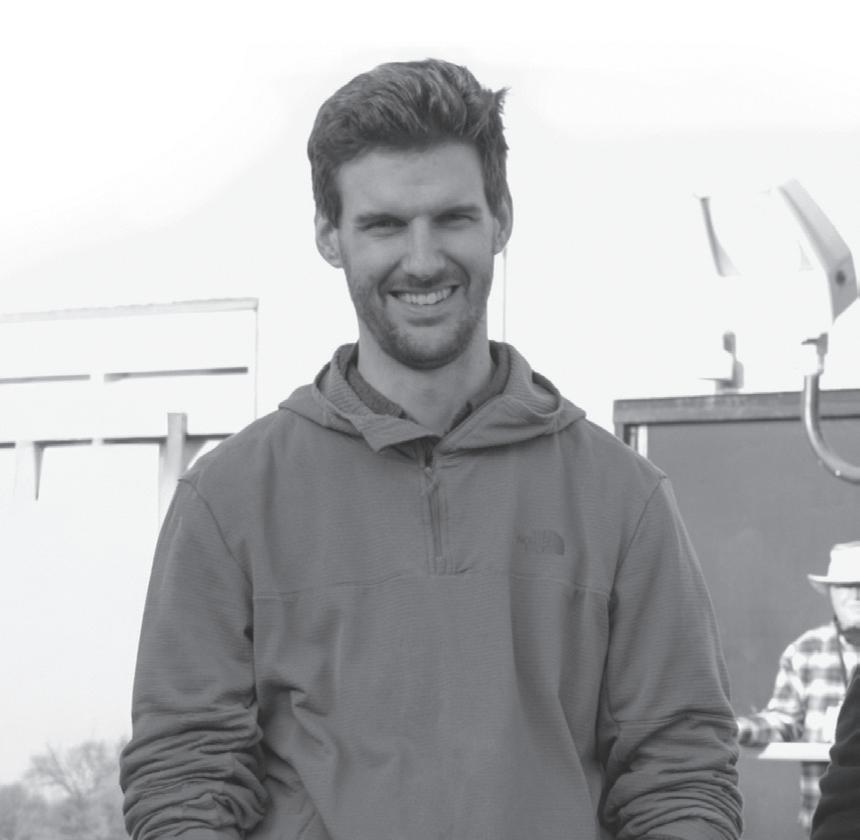
Before he was engineering sophisticated sensors to detect microscopic pollutants in the Pacific Ocean, Ethan Edson ’10 was a kid in a Manchester garage, meticulously taking apart a lawnmower to see how the pieces fit together. That innate drive to deconstruct and solve problems has since expanded from small engines to global ecosystems. As the Co-Founder and CEO of Ocean Diagnostics, Ethan is now navigating the cutting edge of marine technology, but he’ll tell you that he first learned how to read the compass at Burr and Burton.
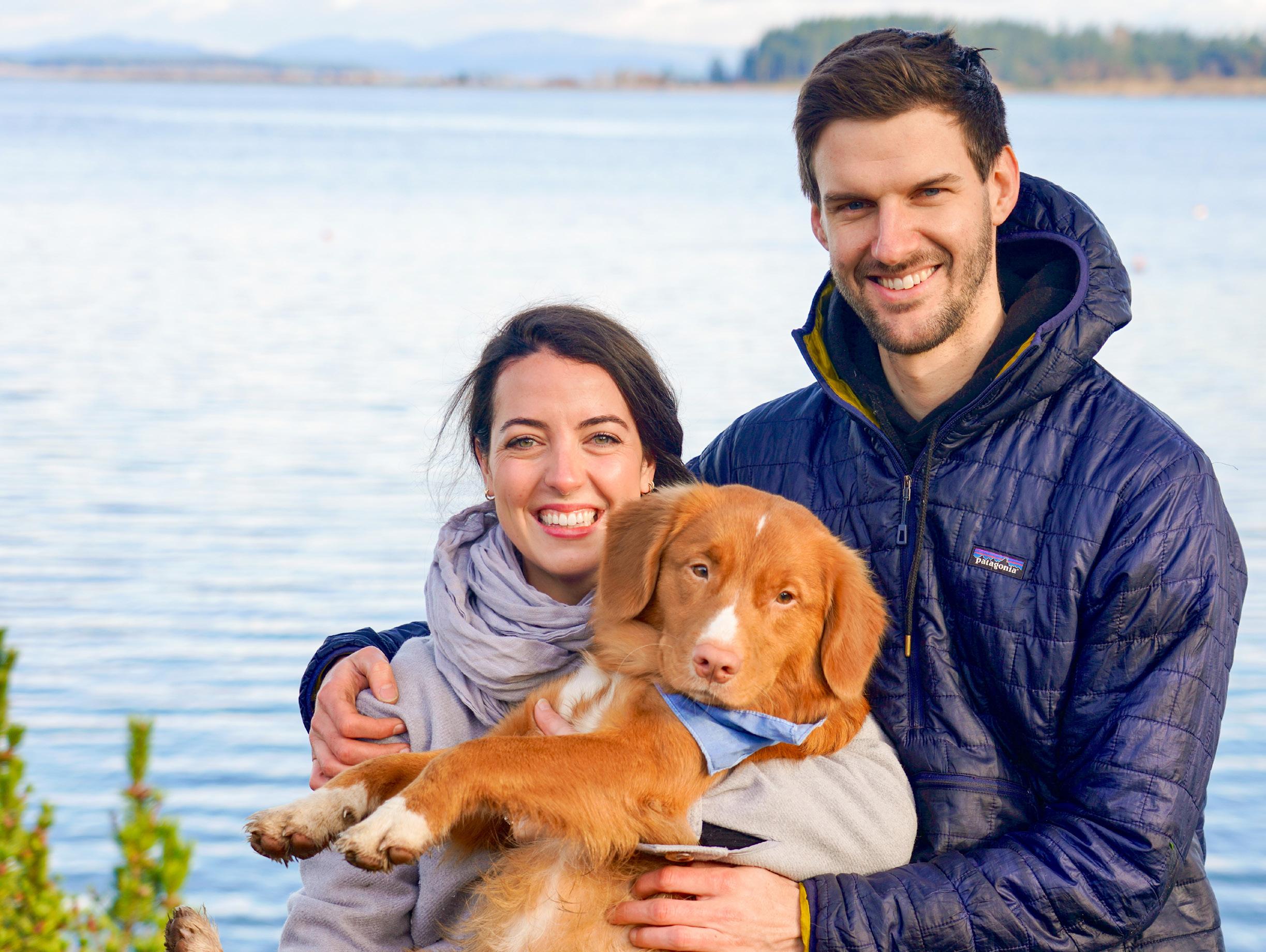
“The sustainability and environmental pieces were baked into the curriculum in ways I didn’t even realize at the time...”
Growing up in the Manchester and Danby area, Ethan was the quintessential tinkerer. Whether he was taking apart his bike or the lawnmower (much to his father’s chagrin) or
exploring the forests of Vermont, his curiosity was rooted in how things worked and how they fit into the natural world.
At Burr and Burton, that curiosity found a home in the math and science departments, though Ethan recalls a surprising overlap with his art and
woodworking classes. It was here that he began to see engineering not just as a mechanical pursuit, but also as a creative one.
“The sustainability and environmental pieces were baked into the curriculum in ways I didn’t even realize at the time,” Ethan reflects. “Growing up in Vermont, it’s hard not to be a kid who is constantly outside in the woods.” That inherent link to nature helped him to realize that, when he started thinking about a career, he wanted to work on engineering solutions within an environmental context.

When Ethan arrived at Northeastern University in Boston, he experienced a bit of culture shock, leaving rural Vermont for a major metropolitan area. However, the transition revealed how well BBA had prepared him. “I realized quickly that the immersive education that I received at BBA was not the norm elsewhere,” he says.
While studying mechanical engineering, Ethan discovered a world
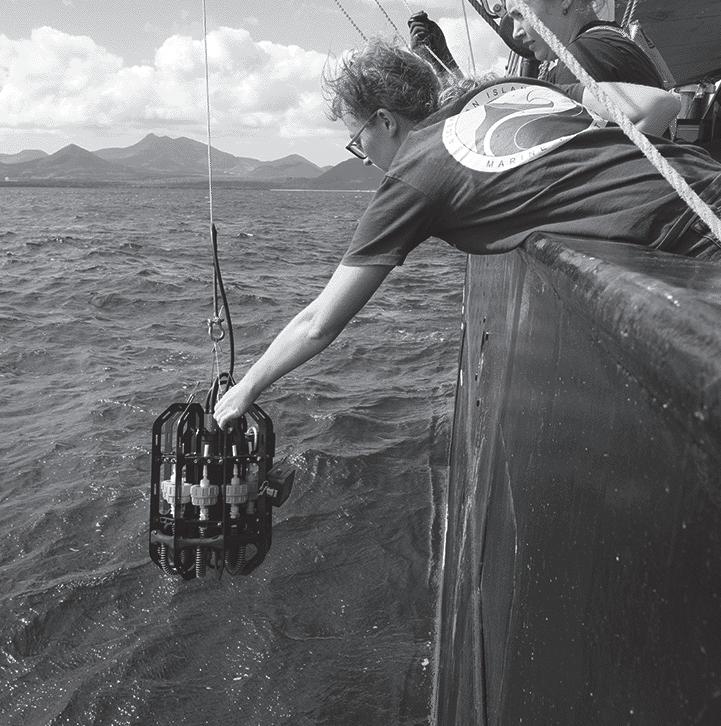
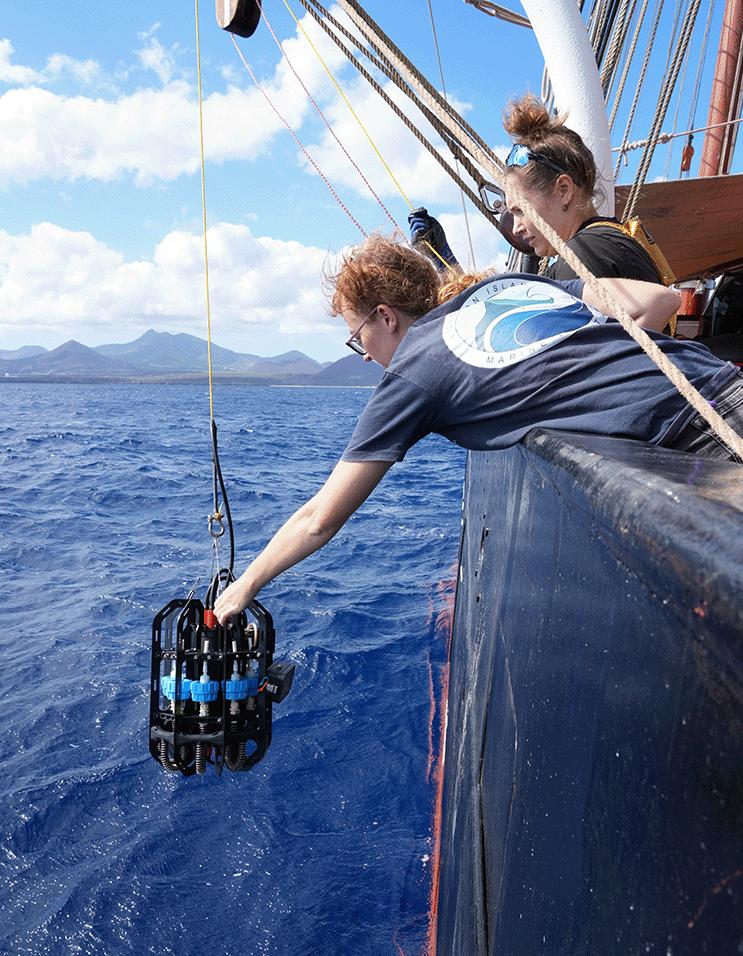
he hadn’t considered while living in a land-locked state: Oceanography. Through Northeastern’s co-op program, he began exploring different employment options. A stint in the nonprofit world taught him he wanted to be more hands-on; a semester on a tall ship, sailing from the Caribbean to Woods Hole, cemented his destiny. He wanted to build instrumentation for the sea.
During his Sea Semester experience, Ethan’s research focused on plastic pollution. He describes pulling up plastic 500-600 miles offshore, so far from land,
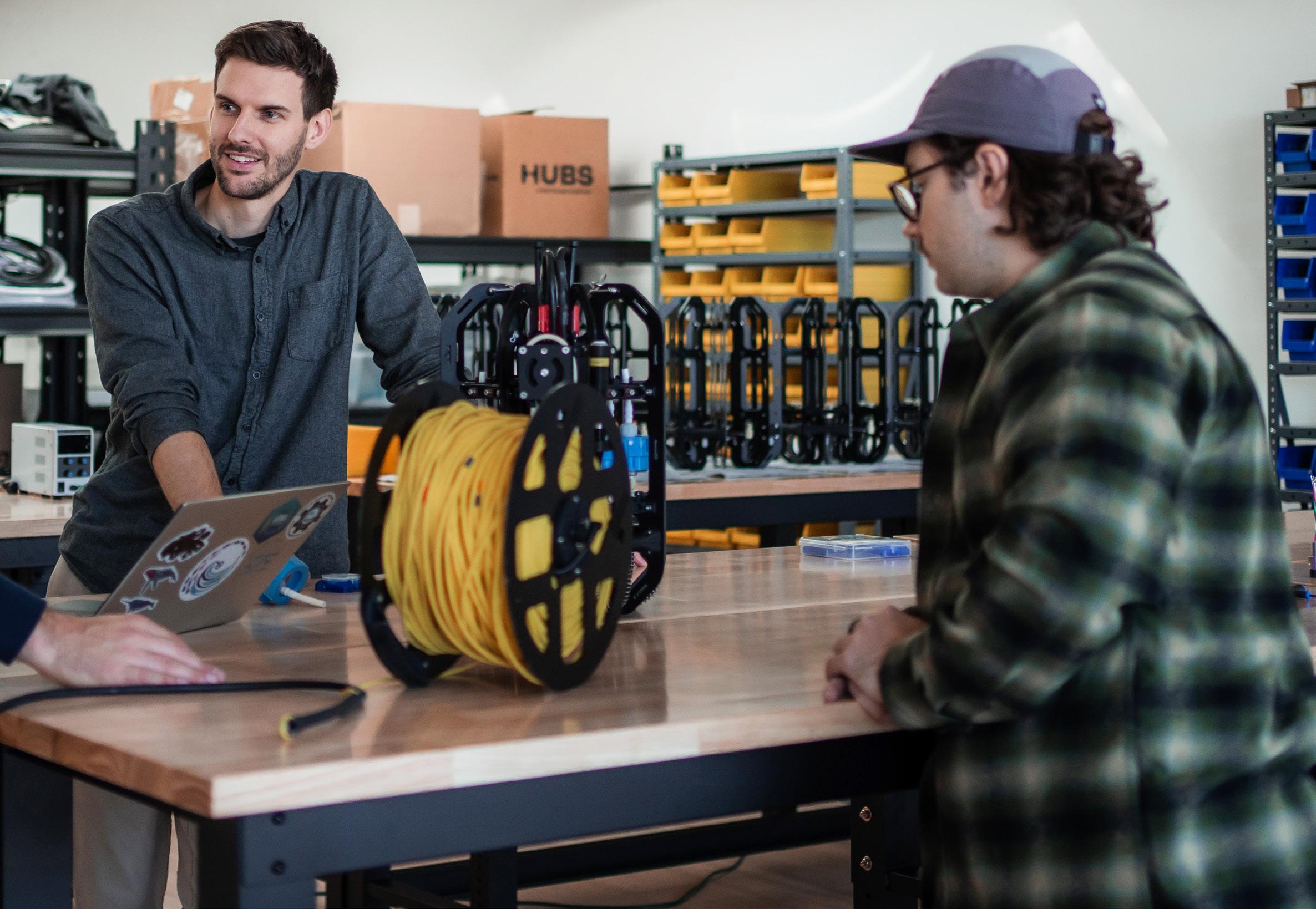
yet still surrounded by human trash, as an “eye opening experience.” Returning to Northeastern with less than two years remaining, he decided to focus on this issue. He began working with Professor Mark Patterson (who later officiated his wedding) at the satellite campus Marine Science Center in Nahant, MA, to develop instruments that would make it easier to collect microplastic samples from the ocean. After securing funding, Ethan spent several years at Dr. Patterson’s lab, developing underwater vehicles, helping teach classes in Panama, and gaining another four years of integrated, hands-on marine engineering experience.
This drive was no surprise to those who knew him on the hill. Cory Herrington, BBA’s Director of Admissions and Ethan’s former hockey coach and history teacher, remembers him as a student-athlete who led by example. “On the ice or in the classroom, you could always count on Ethan to work hard and be a great teammate and classmate,” Herrington says. “In hockey parlance, he would muck and grind with the best of them, which drew the respect of anyone who watched him. At BBA, you couldn’t help but be an Ethan Edson fan!”
It was during this time that Ethan encountered a massive hurdle in marine research. To study microplastics, scientists needed large research vessels, expensive cranes, and heavy pumps. This bottleneck meant that only the wealthiest institutions could afford to collect data. Ethan saw an opportunity to provide accessible
technology to the rest of the field by creating tools that could fit on a small fishing boat, not just a multi-million dollar ship.
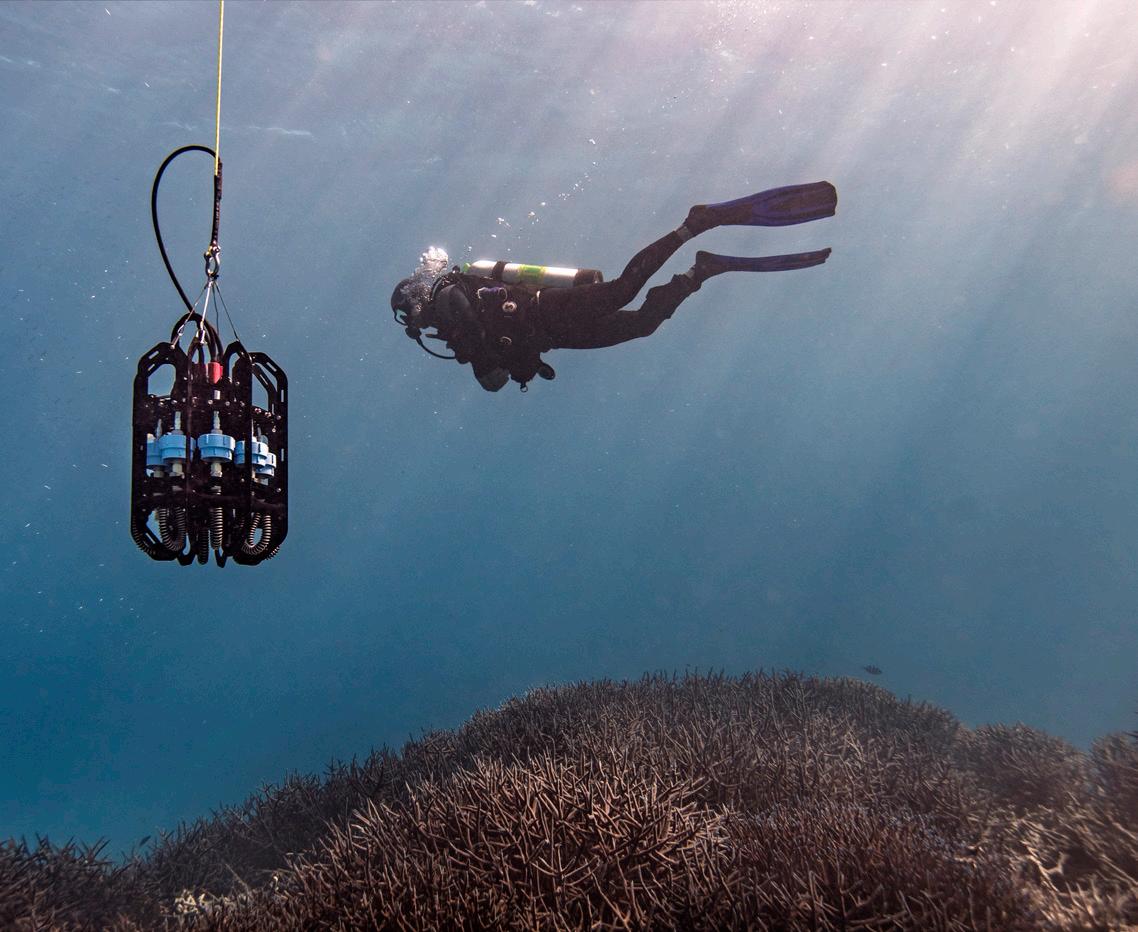
In 2019, Ethan teamed up with his co-founder Dean Wenham, a biotech entrepreneur from Montreal, to turn his research into a reality. Ethan moved to Canada and launched Ocean Diagnostics with Dean just months before the global lockdown. Over the last six years, the company has evolved from a microplastics startup into a leader in marine biodiversity. Even as the company grows, it remains independent and mission-driven. In 2021, they established an analytical laboratory in Vancouver to collect and analyze plastic particles as small as 10 microns (roughly a quarter of the width of a human hair). This specialized analysis identifies the size and type of various pollutants, providing crucial data to help researchers and policymakers understand their fate and origins.
Their “Ascension” device, a portable, easy-to-deploy sampler, now allows researchers to collect not just microplastic particles, but also environmental DNA (eDNA). By sequencing the “molecular fingerprints” (cells and waste) left behind by marine life, Ethan’s team can now track and detect endangered species or invasive critters from a water sample without ever seeing them.
Achieving this growth and mission has not been without significant effort. Ethan credits the company’s exciting potential to the “great team that makes magic happen.” His team consists of 10 employees, including scientists, engineers, and staff focused on laboratory, marketing, and development work, all dedicated to solving environmental challenges.
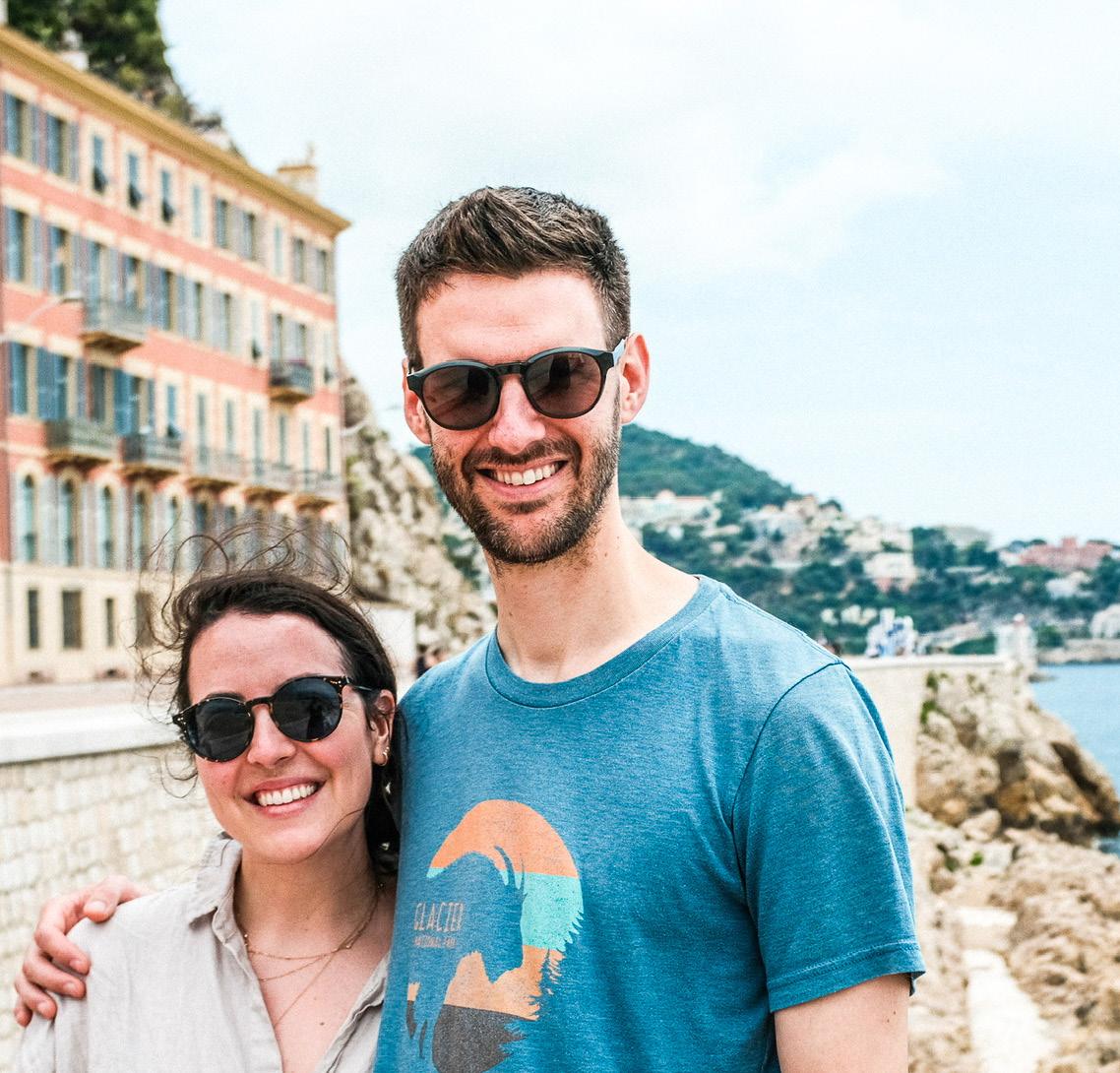
While his work has taken him all the way to British Columbia, Ethan remains deeply connected to his Vermont roots. His wife, Brooke McGowan ’11, is also a BBA alum, and Ethan still credits his mentors in Manchester for his professional trajectory. He points to Kevin Morrison for the STEM basics, Mike Caraco for the deep dive in calculus, Cliff Hay for the hands-on mechanical experience, and Cory Herrington for teaching him “how to be a good person and a professional on and off the ice.”
“If I hadn’t gone to BBA,” Ethan says, “I probably would be on a very different path.”
Learning about the recent investments in BBA’s Smith STEM Center brings him immense pride. “I would have killed for a Maker Space and 3D printers back then,” he laughs. “Those are the environments where the creative sparks happen.”
Today, Ethan’s work is helping to change environmental policy, like identifying styrofoam leaching from dock infrastructure in Victoria, and providing the data needed to protect our oceans. It is a career built at the intersection of math, art, and an outdoor spirit: a course that began right here at Burr and Burton. “If I hadn’t gone to BBA,” Ethan says, “I probably would be on a very different path.”


By Janice Quartararo
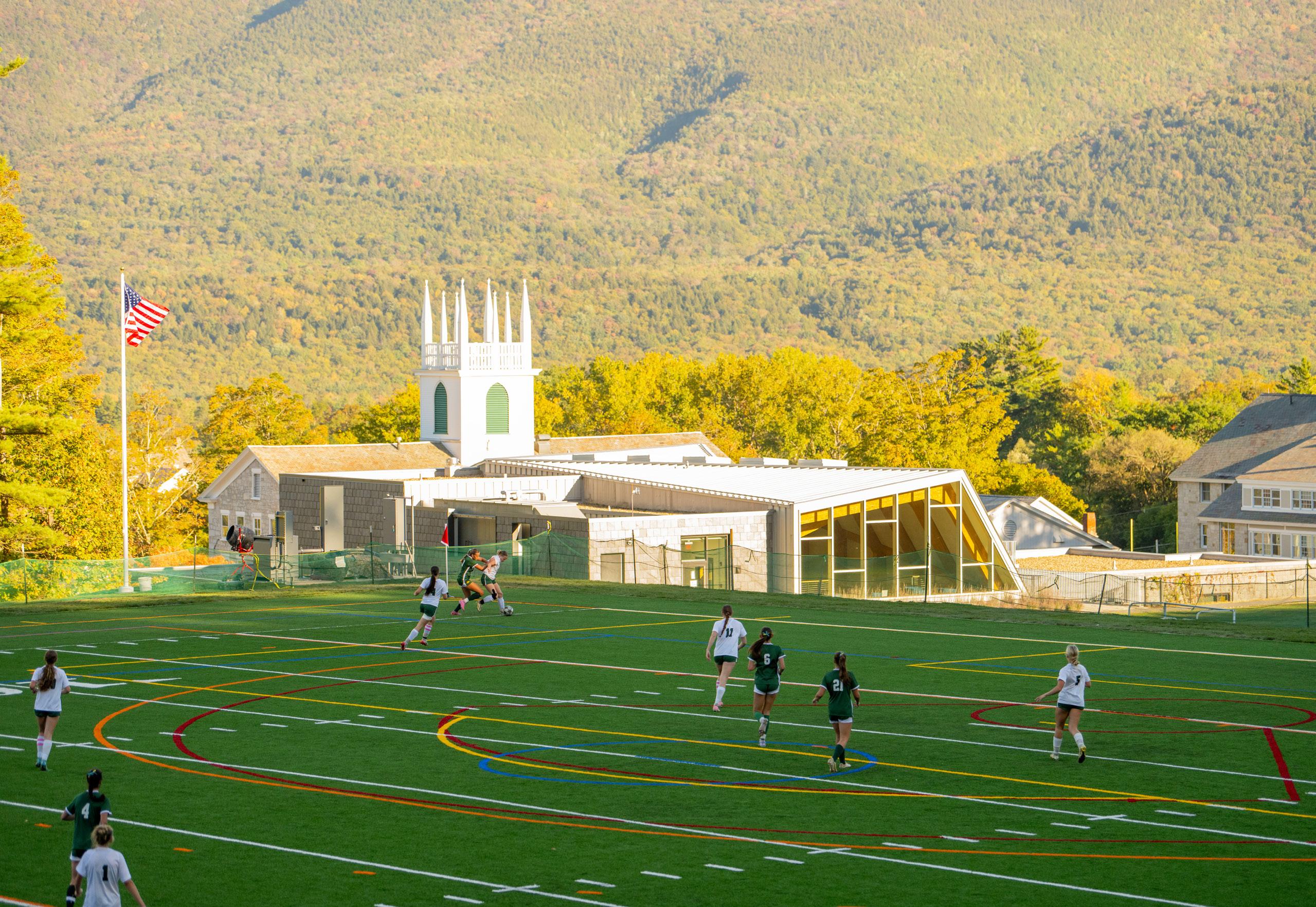
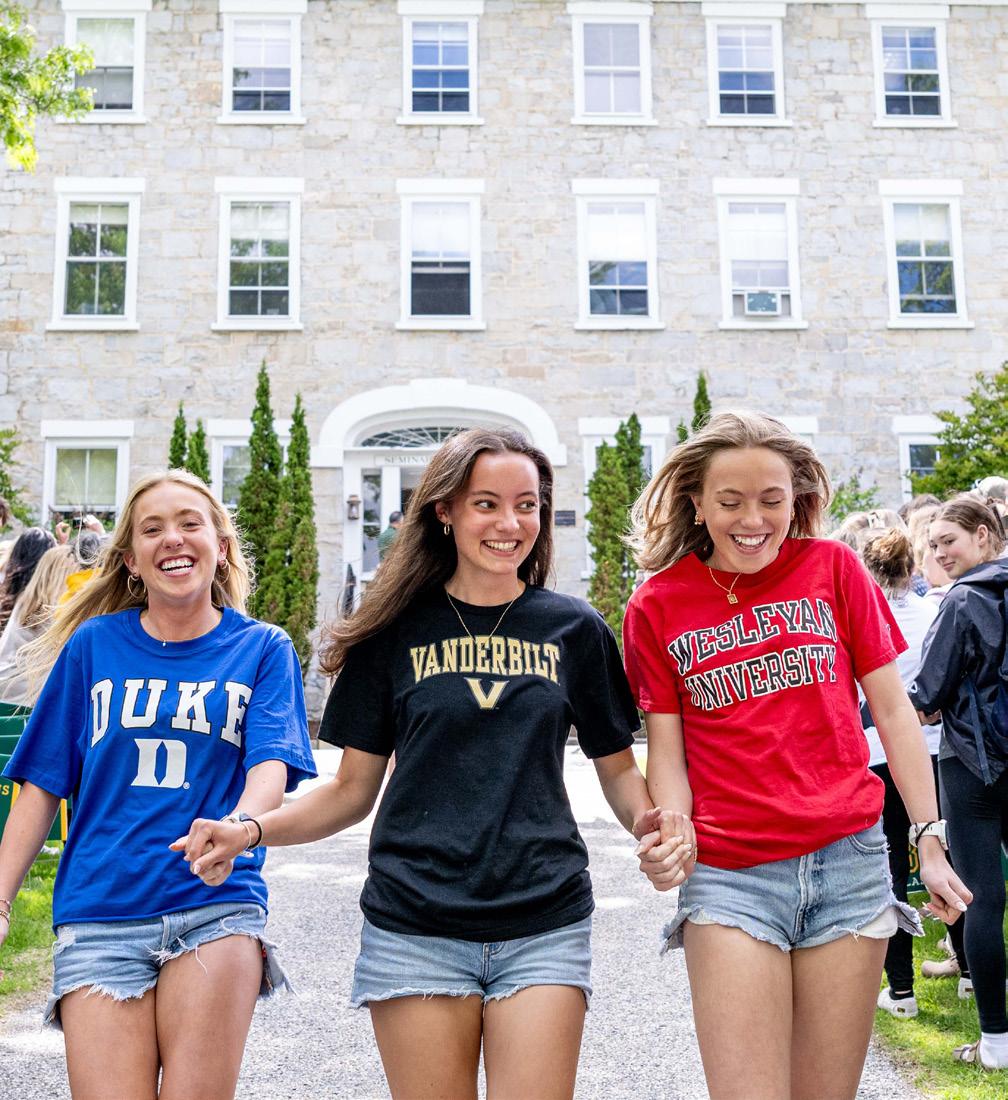
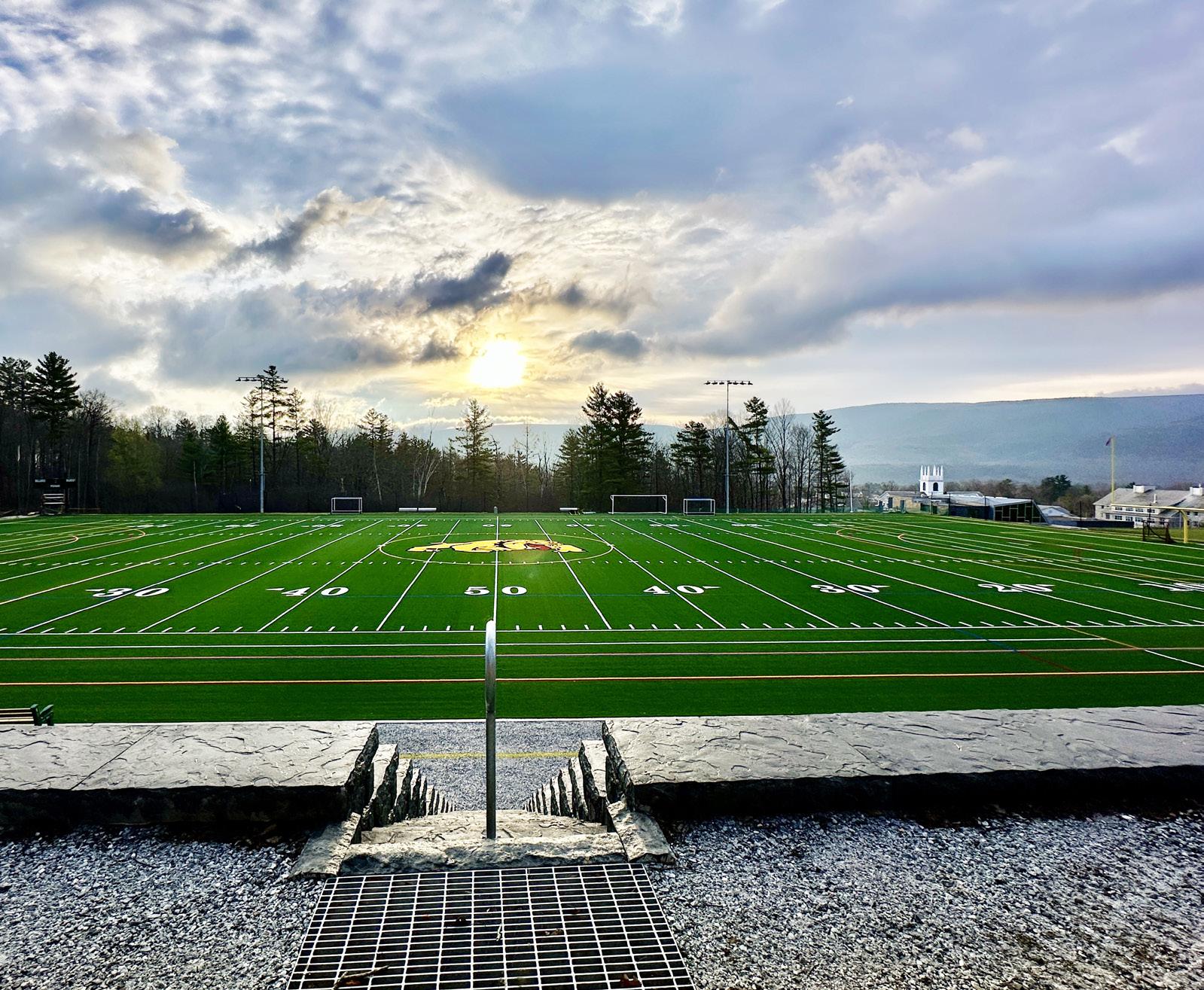
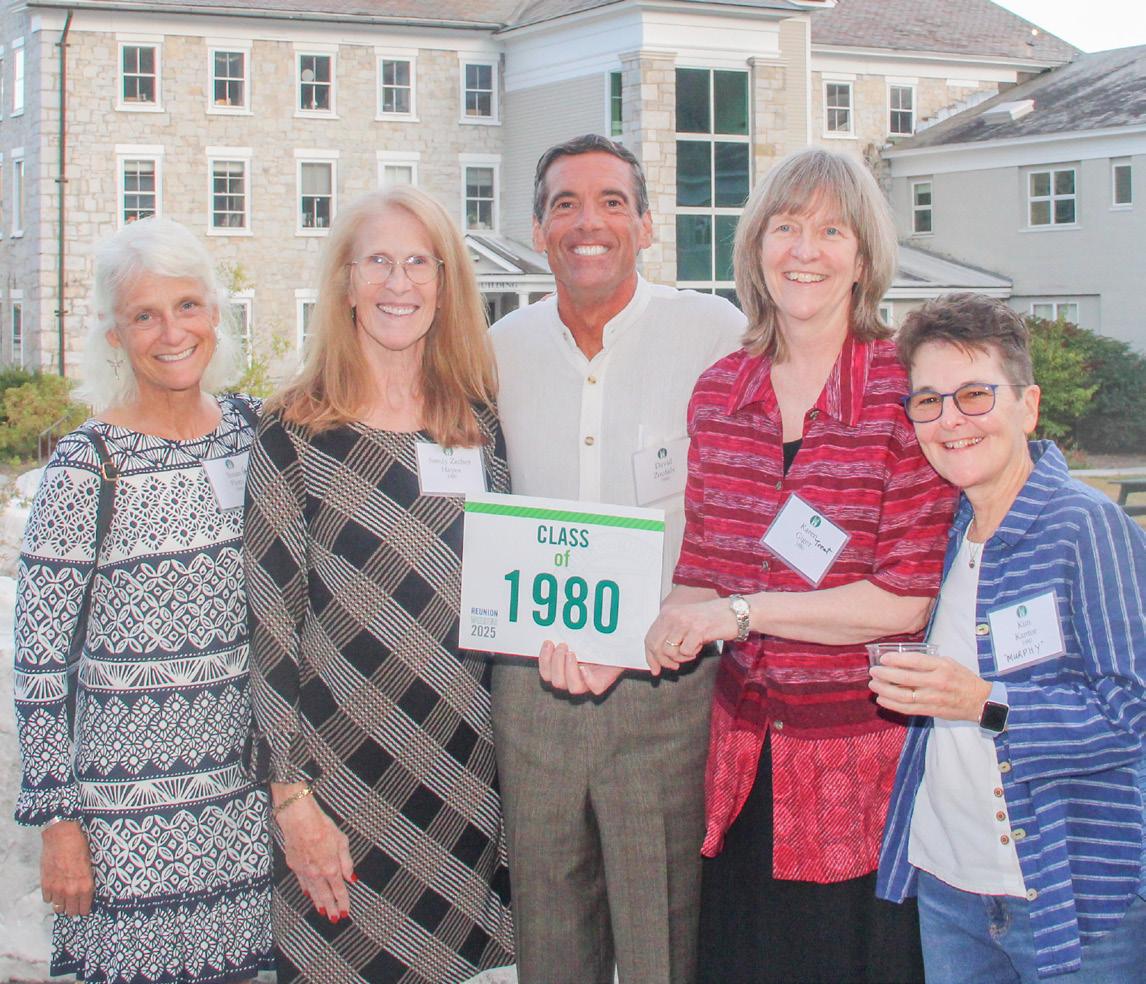
Hundreds of alumni, students, parents, and community members gathered September 19–21 to celebrate Alumni Reunion/Homecoming Weekend. Friday evening began on the Senior Steps with a campus tour culminating at the newly renovated Smith STEM Center, followed by Headmaster Mark Tashjian’s State of the School address. The night ended on a high note at Friendship Field, where former players and alumni watched the first-ever Men’s Soccer game under the lights on BBA’s newly installed turf—a gift made possible by generous donors. The energy was electric, and the Bulldogs delivered with a 2–0 victory.
Saturday opened with a special breakfast at Birchbrook, Headmaster Tashjian’s home, honoring classes of ’65 and beyond. Alumni then gathered for a memorable Hall of Fame ceremony recognizing excellence across service, athletics, coaching, the arts, special olympians, and distinguished faculty and staff, among others. The afternoon brought the much-anticipated Homecoming Football game, with those who missed Friday’s soccer matches turning out in full force — and the Bulldogs rewarded their fans with a decisive win.
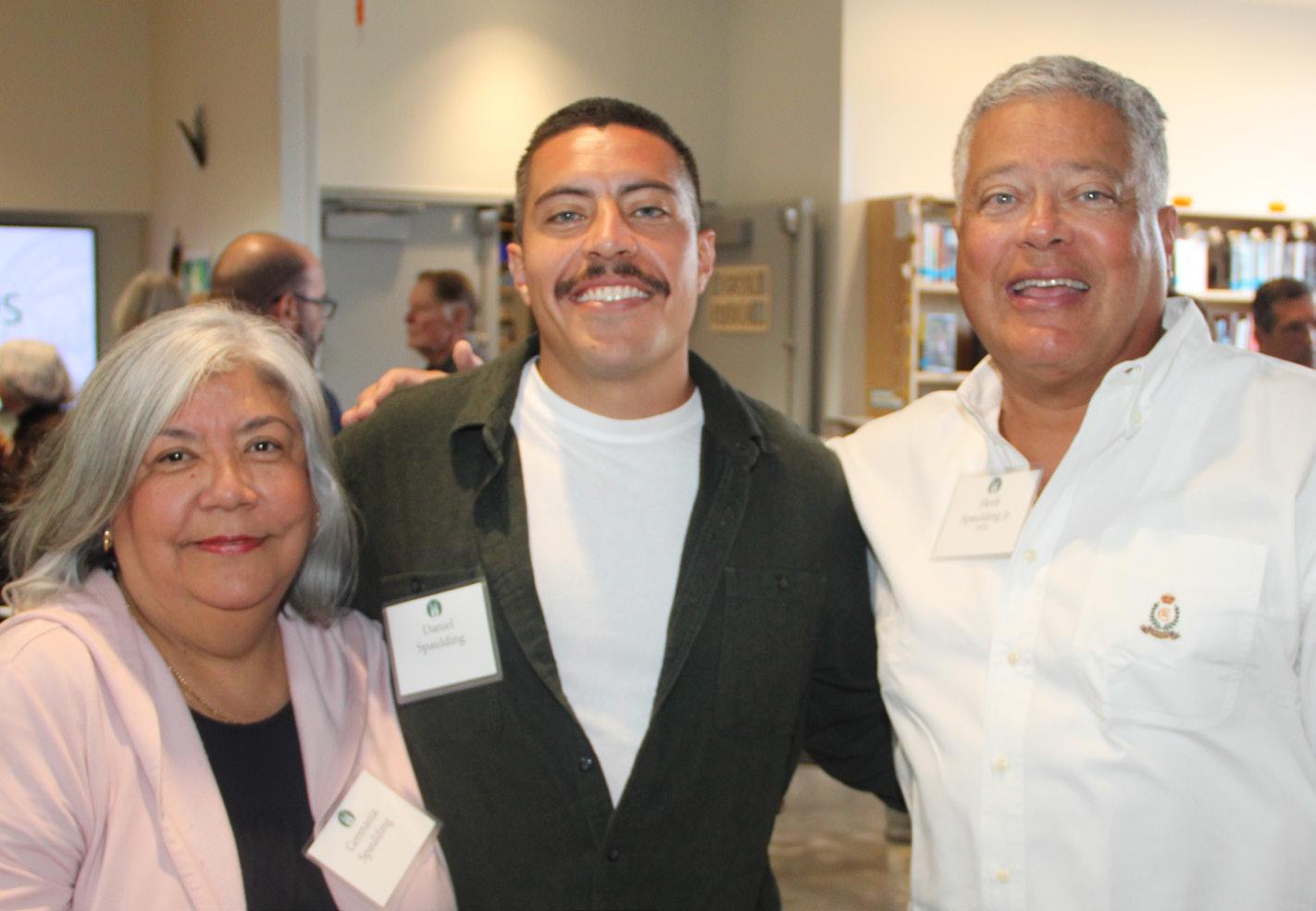
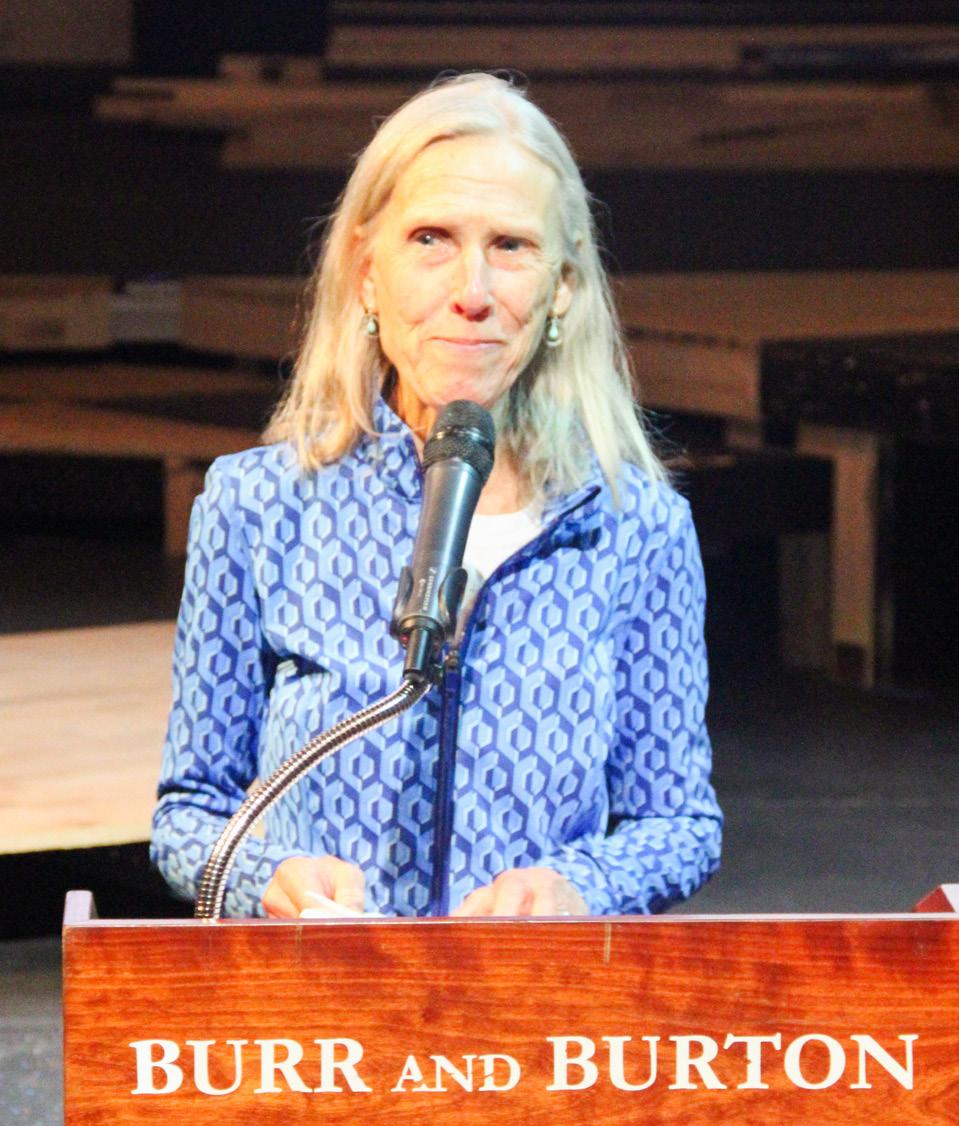
As the sun set, alumni and guests enjoyed a warm fall evening at the annual Reunion Party in Founders Hall and the courtyard. A cocktail reception led into a delicious dinner catered by Union Station, with remarks from Meg Kenny, Associate Head of School, and Sam Watson, Director of Advancement. The evening closed around a bonfire— friendships rekindled, stories exchanged, and new memories made under the Vermont moonlight. For some, it had been more than forty years since they’d last seen their classmates.
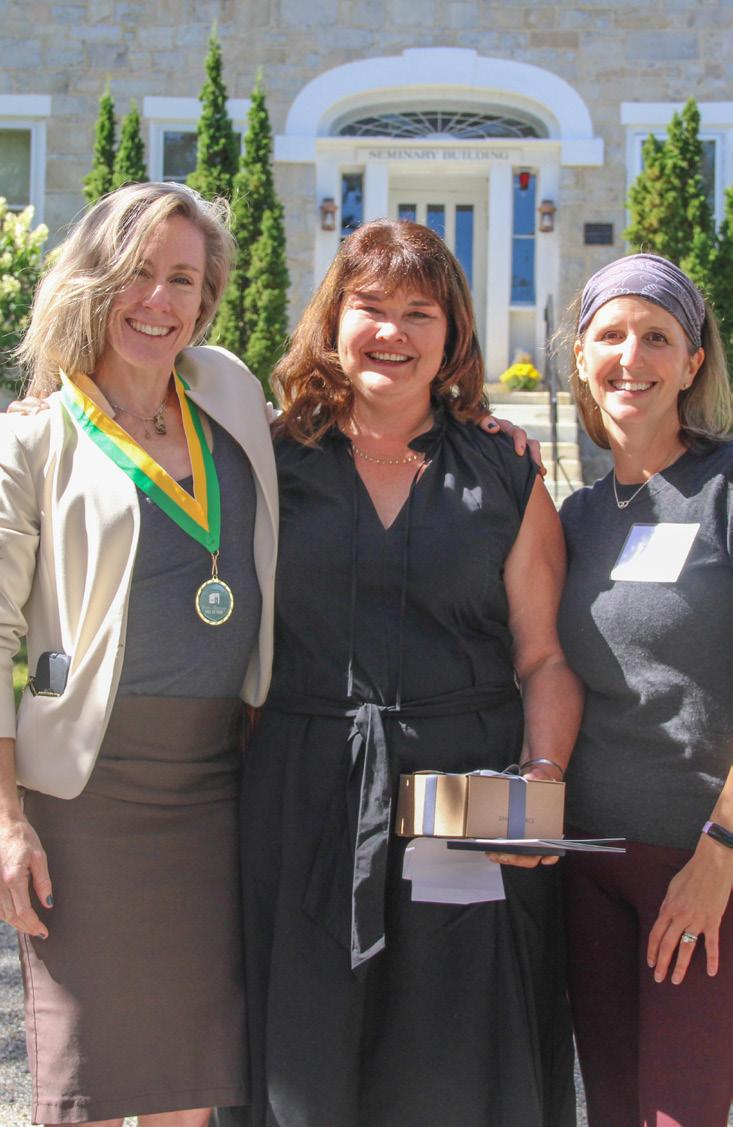
Mark your calendars: Reunion Weekend 2026 is scheduled for September 18–19.
In the spirit of this year’s theme — Together — we invite you to help grow Alumni Weekend. BBA’s accomplishments, from new facilities and programs to expanded athletic fields, are made possible by the dedication of former students, faculty, staff, and ambassadors. When past and present come together, we flourish.
We’re looking for Class Agents to help recruit classmates for next year’s reunion, and we’d love to hear feedback from those who joined us this fall. Planning for 2026 is already underway, with exciting new additions with local businesses and the community — because, as the saying goes, it takes a village.
To get involved, update your contact information, or share your thoughts, please reach out to the Advancement Office at alumni@burrburton.org or 802-549-8201.

Email: alumni@burrburton.org
Alfred University
American University
Amherst College
Apprenticeship
Bard College
Bennington College
Bentley University
Boston University
Bowdoin College
Bryant University
Career Pathway Entry Program
Champlain College
Clarkson University
Colgate University
College of Charleston
College of William and Mary
Colorado College
Colorado State University
Community College of Vermont
Curry College
Deusto University, Spain
Duke University
Duquesne University
Durham University, England
Eastern Connecticut State University
Emerson College
Emory University
Employment
Endicott College
Fairfield University
Fordham University
Furman University
Gap Semester or Year
Georgetown University
George Washington University
High Point University
Hobart and William Smith Colleges
Hoosac School PG Year
Howard University
Hudson Valley Community College
Internship
Ithaca College
Keene State University
Loyola Marymount University
Lynn University
Mechanized Logging
Operations and Forest Trucking Program
Massachusetts College of Liberal Arts
Massachusetts College of Pharmacy and Health Sciences
McGill University
Messiah University
Montana State University
New York University
Northeastern University
Northwestern University
North Carolina State University
Pace University
Parsons Institute, The New School
Pennsylvania State University
Providence College
Quinnipiac University
Rennselaer Polytechnic Institute
Rochester Institute of Technology
Roger Williams University
Royal Central School of Speech and Drama, London
Russell Sage College
Sarah Lawrence College
Sophia University, Japan
St. Lawrence University
Stafford Technical Center
SUNY Brockport
SUNY Broome
SUNY Cobleskill
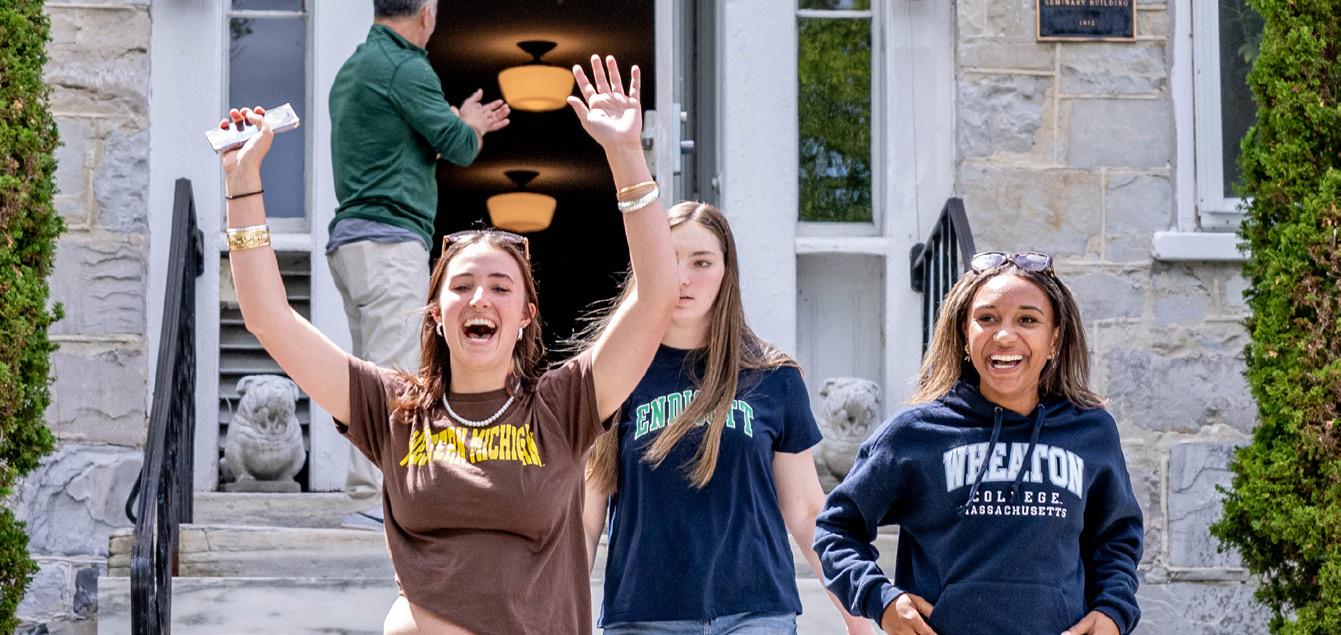
University of Montana
University of Nebraska
SUNY Monroe
SUNY Plattsburgh
Syracuse University
Training Programs
Travel
Trinity College, Dublin
United States Army
Universidad de Deusto, Spain
University of Arizona
University of Colorado, Boulder
University of Connecticut
University of Delaware
University of Maine, Farmington
University of Maryland
University of Massachusetts, Amherst
University of Massachusetts, Boston
University of Massachusetts, Lowell
University of Miami
University of Michigan
University of New England
University of New Hampshire
University of Pennsylvania
University of Rhode Island
University of San Francisco
University of Southern Maine
University of Tampa
University of Utah
University of Vermont
University of Virginia
University of Wisconsin
Vermont Army National Guard
Vermont State University
Castleton
Virginia Tech
Warren Wilson College
Wesleyan University
Western Michigan University
Western New England
University
Wisconsin Air National Guard
Wheaton College
Williams College
Yale University
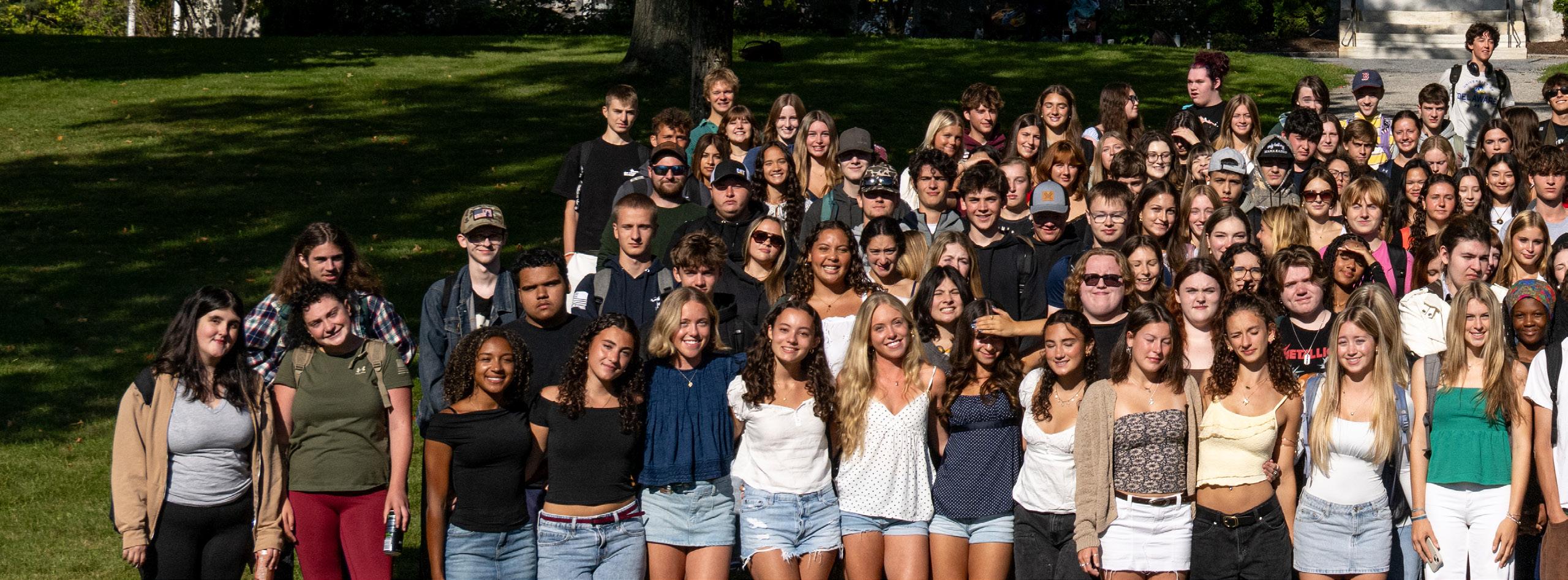
Salwa Abdul-Karim
Aya Elinor Addington
Tristan Grant Alexander
Tanner Garrett Alexopoulos
Thomas Matthew Alfano
Nicolas Gherardi Almeida
Jasonna Amsden
Alli Catherine Aubin
Jordan Baño Apuhango
José David Batista
Rodriguez
Nick Belfore
Nevaeh Bennett
Hunter Thomas Bishop
Owen William Black
Thomas Jameson Bloechle
Luca David Bowen
Louis Belayneh Bowen
Alina Brezovac
Kai Brocker
Mirabelle P. Bromley
Destiny Brown
Luke Robert Brownlee
Skyler Roger Buchika
Olivia Bushee
Yi Cai
Armani Noelle Carroll
Annabel May Carson
Dylan Castaneda
Cayden J. CerretaniMcDermott
Radley Grace Cherosnick
Mary Cheung
Cyrus Chiodi
Ethan Hay Jet Chui
Marley Elise Clark
Shelly Rose Clark
Kiki Clayton
Ella Grace Cocheo
Sophia Cochran
Tyden Michael Coe
Noah Colvin
Crystal Cormia
Julian Frederick Cullinane
Nicole Cushco
Natalie Cutler
John Van Davis
Benjamin Lucas Deveneau
Sara Michaela DiStasio
Alexys Jade Doane
Eliza Jean Dopkins
Mya Rose Duncan
Seth Jordan Dunlap
Oliver Durant Eastman
Quintin Elms
Mason Evans
Anna Farray
Mara M. Farrell
Evan Earl Ford
Rylee Rae Gabert
Christian Hansteen Galesi
Lily Gates
Logan Patrick Geist
Jason Matthew Giejda
Keira Marie Goodell
Isaiah Marvin Goodwyn
Chloe Taeh Gordon
Jade Ann Gotshall
Malayla Marie Greene
Owen Vincent Grey
Emily Elizabeth Harris
Madelyn Cait Harris
Jack Harris
Jailynn Marie Healy
Dylan Heavens
Nora Heffernan-Smith
Sabine Urso Heindlmeyer
Molly Ryan Hershberg
Ryan J. Hoffmann
Logan McKenna Hoyt
Calder Morrison Humphrey
Martha Bess Hutcheson
Phattrakrit Jitsumrit
James Jackson Johnston
Isaac Robert Jordan
Kara Jean Jurnak
Maxx Elliott Kaplan
Lucas Edward King
Madison Rae King
Elizabeth Katherine
Kirkpatrick
Owen Michael Konold
Alexander Stephen Kopeck
Ryan Thomas Kramer
Justason Lahue
Kiara Larson
Alayna J. Lesure
Georgia Grace Levitas
Carmella Anne Livingston
Joseph Carver Livingston
Isabella Ginger Liy
Cecily Sunshine Loomis
Stephanie Louis
Savannah Leigh Lowberg
Cole X. Lynch
Christopher Madsen
Benjamin Cooper Marcks
Kaidyn Mae Martell
Clément Camille Martini
Stella Rae Matarese
Aldona Janne McColgan
Jonathan Charles McCostis
Althea McGunnigle
William Jerome Meszkat
Megan Mirchandani
Veronika Monahan
Grayson T Moore
Beltrán Morenés Fernández
Isabella Anne Morse
Heike C. Moses
Mason Alphonse Murano
Natalie O’Dea
Ethan James O’Rourke
Myles Henry Ouellette
True Packard
Jaakko Steven Pajala
Dhruv Patel
Adison Ivy Pronovost
Elena Isabel Quartararo
Juliet Hahn Ragland
Cole Rawson
Cooper Braxton Reece
Alexander Reichl
Sydney Lark Remenar
Ivan Reynoso Jr.
Ella Rimmon
Gavin Michael Roberts
Nicola Leone Rossi
Grayson Rourke
Liliana Judith Rudiakov
Eoghan Padraig Sailer
Erin Lyn Scott
Ryder Davidson Scott
Miles Gordon Searles
Mia Donna Sena
Willa Eve Seo
Galo Alberto Sevillano
Kamden Paul Setzer Sheldon
Spencer Albert Sheldon
Peyton Sue Sheldon
Tiana Grace Sigel
Nicholas “Cole” Slade
Franklin Thorsten Tiger
Slater
Elliott Smid
Evan Reese Smilko
Bodie Thomas Smith
Brooke Smyrski
Morgan-Taylor Spano
Noah John Stasny
Clara Josephine Stauffer
Asher Stein
Sydne Jane Sterling
George James Stroffoleno III
Cian Thomas
Sullivan-Yannone
Kelley Patrick
Sullivan-Yannone
Hadley Grace Taft
Karmel Takash
Robin Elizabeth Tashjian
Jennifer Nanami Theissen
Breeann Thompson
Finn Toupin
Tyler Charles Towslee
Miles Andrew Treske
Linus Patrick Tucker
Noel Stephen Tucker
Cameron Shearer Tudor
Parker Peter Underhill
Brooklyn Vaine
Ethan Thomas Van Horn
Raymond Jonathan Vernon
Willem Hickory Vickers
Claudia Elisa Villagran Mata
Dani Villalon
Maeven Reine Virgilio
Jasmine Wakefield
Nora Grace Ward
Ella Katherine Watson
Rowan Weber
Joshua Milo Lin Weissleder
Sadie Nicola White
Madelyn Williams
Wyatt Richard Williams
Caleb Williams
Harper Ryan Wilson
Jordan Faustina Yeachshein
Cooper Young
Elliott Zmuda
Serra Zuckerman
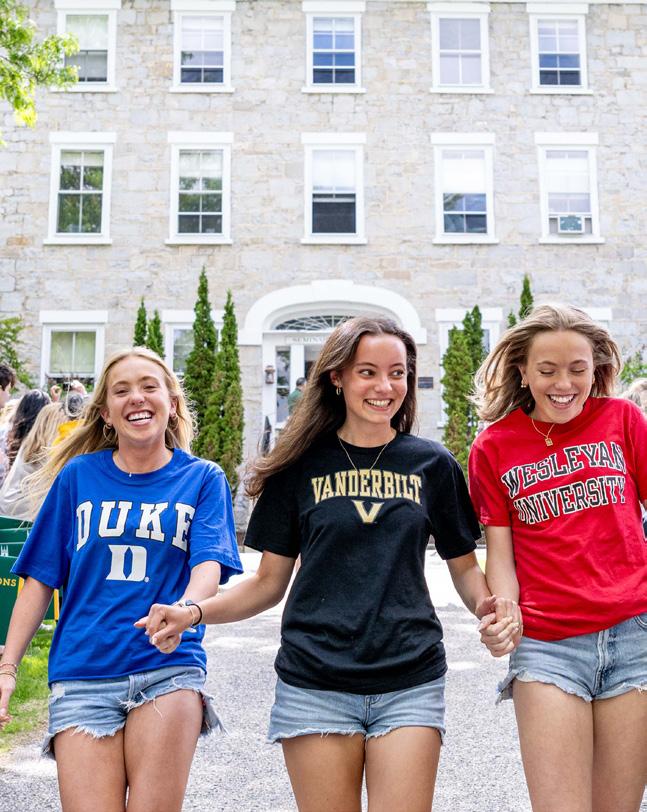

Bert Hinkley ’66 spent 30 years teaching and coaching at Proctor Academy in Andover, NH after graduating college. Him and his wife, Dani left Proctor in 2007 and landed in Bend, Oregon where they still reside and continue their favorite pursuits of XC skiing, cycling, kayak paddling and organic gardening. Their marriage of 53 years, two kids and four grandchildren fill their days with an interesting mix of adventures.
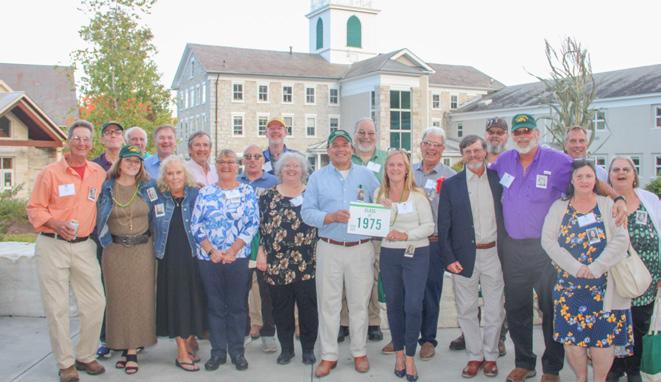
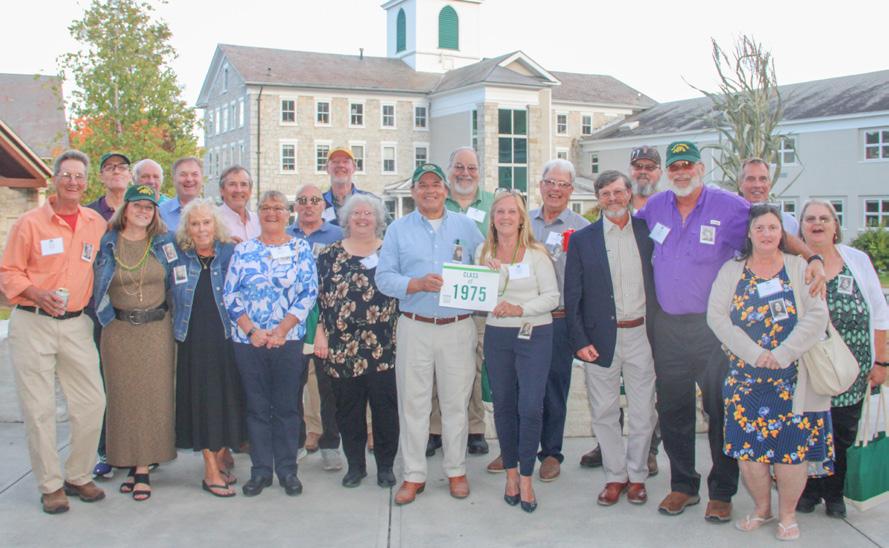
The Class of ’75 celebrated its 50th reunion in September 2025. A good time was had by all! The class consists of 108 scholars, including 9 accelerated juniors, produced two fire chiefs, a Chief of Police, a rescue squad CEO, a Town Treasurer, a couple of cemetery commissioners, a King Lion, a Rotary Club President, a VT Special Ed Teacher of the Year and a Headmaster, among others.
Cyndi MacDonald ’78 recently retired from her job as RN at Mountain Valley Health Center after 36 years. Her life stays busy in retirement with two grandchildren who live in Danby, VT.
Virginia Barrett ’81 has two recent publications, The Vessels We Carry Keep Us Alive and Yellow: a Hue Are You anthology. She currently lives in Northern California where she teaches poetry, makes art and music, and works as a freelance editor.
Juliette Britton ’89 recently joined as a trustee of the Governor’s Institutes of Vermont, a nonprofit organization inspiring more than 600 high school students each summer to envision meaningful careers in topics from healthcare to engineering to graphic design. She is an alum of GIV’s Arts Institute, an experience which inspired her to pursue a Bachelor of Fine Arts at the Maine College of Art in Portland, ME. Juliette is now the owner and consultant at Juliette Britton Creative Direction in Manchester, VT.
Are you still getting mail at your parents’ address?
Scan the QR code to update your address or go to: burrburton.org/alumni/ alumni-community

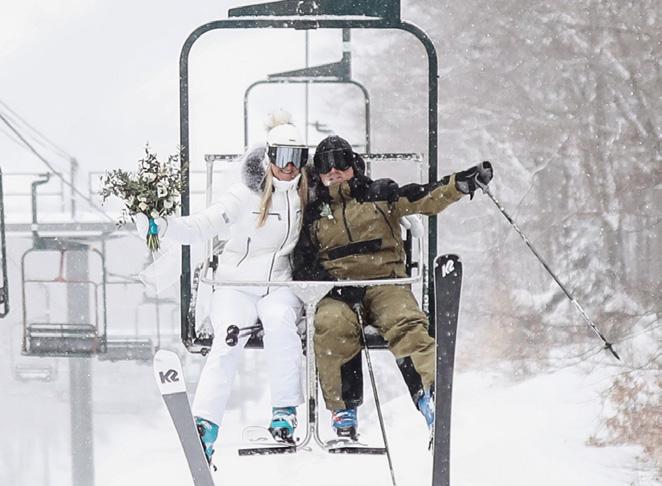
Molly (Lemke) Gnoza ’99 married Matt Gnoza while skiing on Bromley Mountain during a bomb cyclone snow storm in March of 2022. Molly lives in Sunderland, VT, with her husband and three girls, two of which are now Bulldogs! Molly and her family love to travel and recently visited Iceland and Costa Rica, next up the Azores! She was recently appointed President of the BBA Parent Association and loves supporting her alma mater.
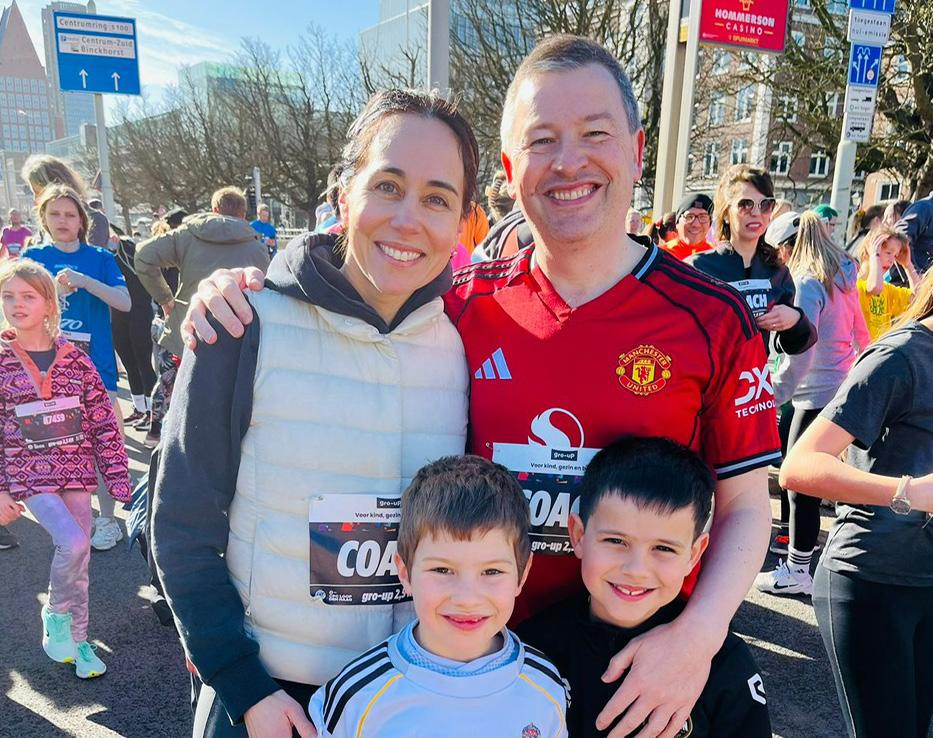
Carina Bachofen ’99 and her family moved to The Hague in the Netherlands nearly four years ago and are loving life there. She currently serves as director of research and strategic impact at a global environmental justice think tank. When weekends aren’t spent watching her two sons’ soccer matches, she and her family enjoy discovering new sights and cities in The Netherlands and beyond.
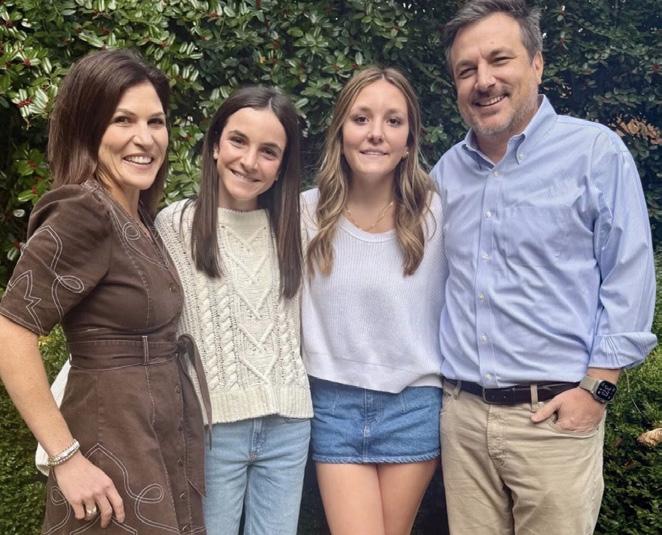
Angie (Joffe) Dumler ’99 is living in Atlanta, GA, and is a partner at Inlight Wealth working with her brother, Jason Joffe ’96. Going on 20 years in Wealth Management - business is good and growing. Angie and her husband, John, stay busy with their two highschool aged daughters; Izzy plays varsity lacrosse and Sarah keeps busy traveling all over for club lacrosse. Life is mostly work, carpools, school events, lacrosse games and volunteering, and trying to keep up with their three dogs.
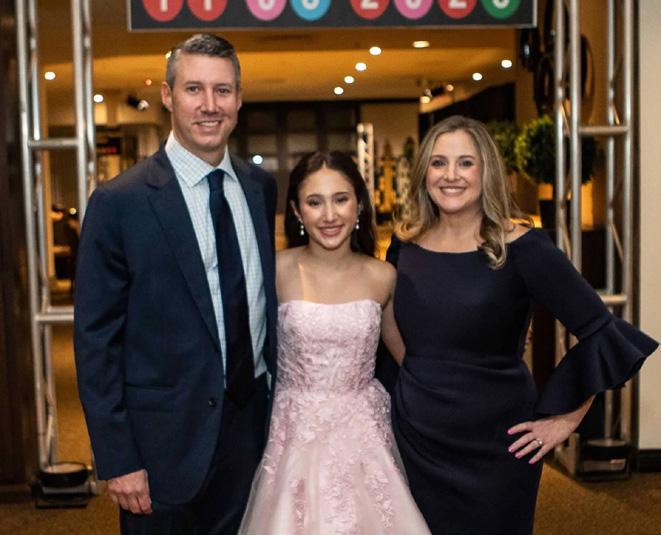
Samantha (Carieri) Feldschneider ’99 and her family moved to the Atlanta, GA, area 7 years ago after spending 15 years living outside of New York City after graduating from Syracuse University. Sam is currently working as a registrar at a local high school. Her family recently celebrated their daughter, Sydney’s, Bat Mitzvah.
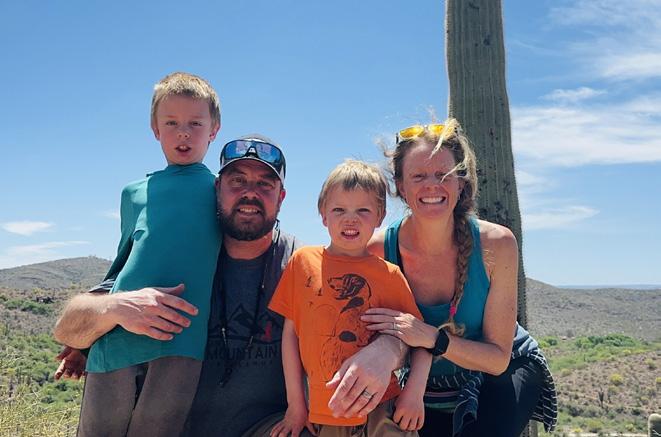
Kelly Charbonneau ’00 moved to Vail Valley in Colorado after graduating from the University of Vermont. She lived in Colorado for 15 years where she worked in the ski industry, met her husband, Dan, and had their first son. In 2020 they relocated to the Mount Snow area in Vermont and had their second son. Kelly loves being back near to where she grew up and feels lucky to raise her boys close to family. And when she can sneak away you’ll find her climbing mountains with fellow alum, Molly (Lemke) Gnoza ’99
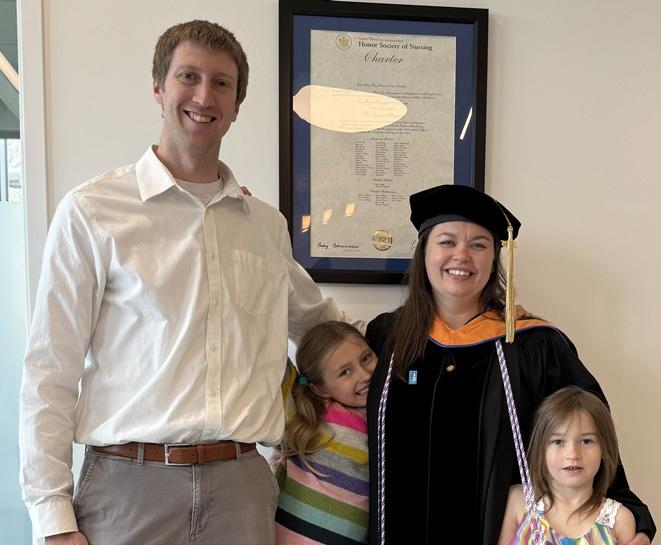
Arianna (Dawley) Anton ’07 graduated from Colby-Sawyer College in May 2025 with a Doctor of Nursing Practice degree. She continues to teach nursing at Colby-Sawyer College while also working as a Nurse Professional Development Specialist at Dartmouth Hitchcock Medical Center. Her husband, Doug Anton ’07, continues to teach at Hartford High School. Together, they enjoy raising their two daughters.
SUBMIT YOUR CLASS NOTES: alumni@burrburton.org.
MAIL YOUR CLASS NOTES: Burr and Burton, Alumni Office P.O. Box 498, Manchester, VT 05254
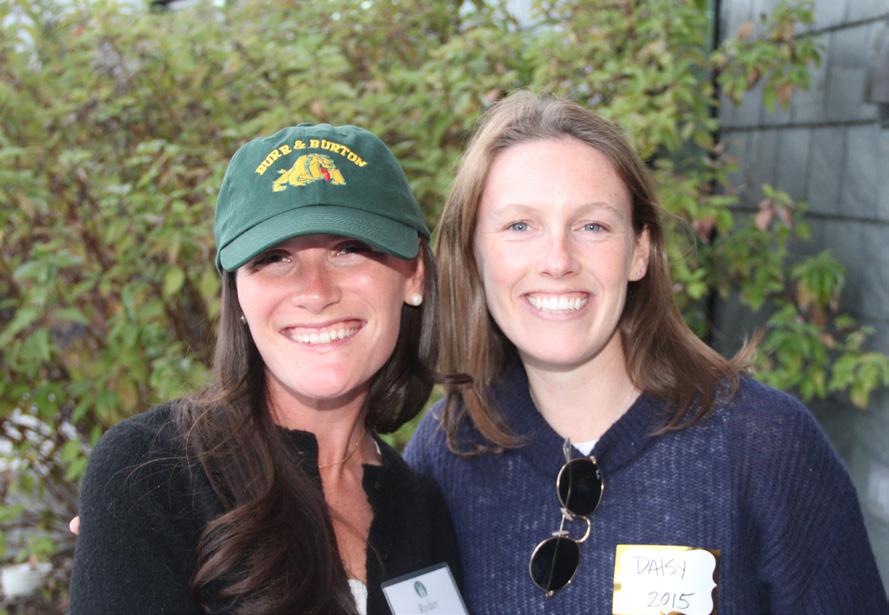
Daisy Sullivan ’15 lives and works in Saratoga Springs, NY selling orthopedic equipment and on the weekends she coaches a soccer program for five year olds.
Deirdre Walsh ’15 works in NYC as a pediatric ICU nurse.
Megan Grabher ’15 is an ER nurse at a hospital on Long Island.
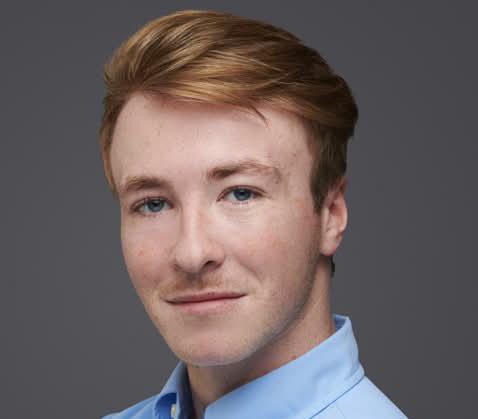
Kevin Gormley ’16 attended SUNY, Cortland where he received a degree in business economics. After graduating college in 2020, Kevin moved to Manhattan where he has since worked at Barasch McGarry law firm. He is also an advocate for the first responders and survivors of the 9/11 community. He recently passed the CPAT for the FDNY and hopes to start the fire academy soon.
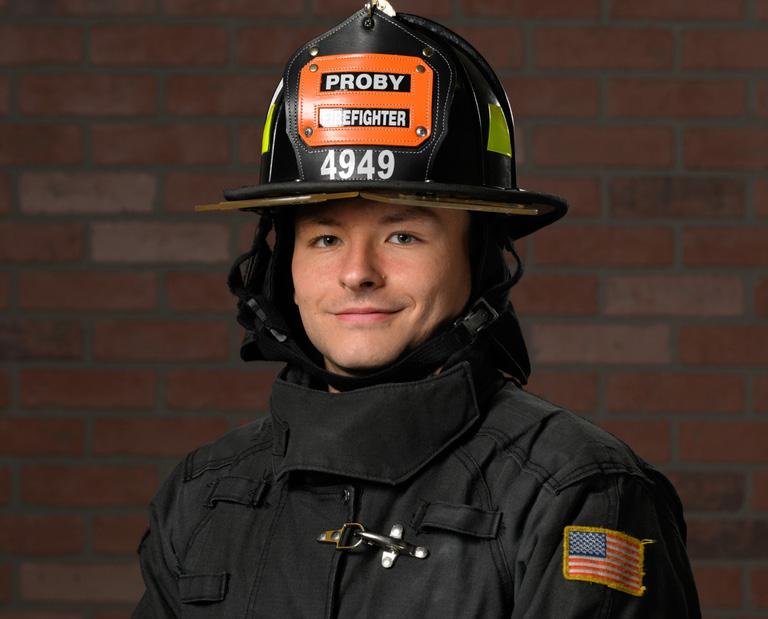
Raymond Gormley ’16 attended SUNY College at Cortland, where he
earned his degree in Biology in 2020. Raymond currently resides in Rockaway Beach and serves as an FDNY firefighter with Ladder Company 174 in East Flatbush, Brooklyn.
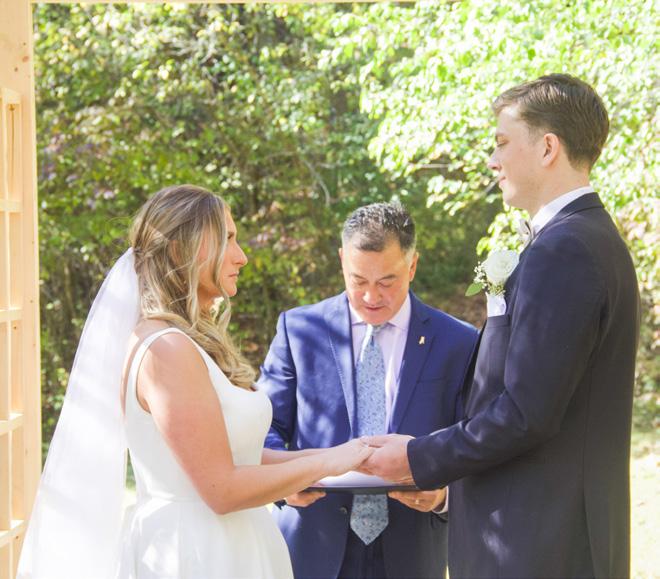
Lakin (Morgan) Doody ’18 had her dream wedding in October 2025 to Nicholas Doody where she grew up at Birchbrook Pond!
Jay McCoy ’18 joined the United States Coast Guard completing boot camp in January of this year. He received both the Leadership and Athletic Awards given to his graduating class. He is currently stationed in Rockland, Maine aboard the USCG Thunder Bay.
Maggie Sullivan ’18 lives in Boston, MA and works on the fund finance team at a private equity company. She enjoys hanging out with her lifelong friend and fellow alumni, Hannah Pinkus ’18.
Hannah Pinkus ’18 is living in Boston, MA and works for a virtual behavioral health care provider. She loves living within walking distance from her sister, Grace Pinkus, and lifelong friend, Maggie Sullivan ’18
SUBMIT YOUR CLASS NOTES: alumni@burrburton.org.
MAIL YOUR CLASS NOTES: Burr and Burton, Alumni Office P.O. Box 498, Manchester, VT 05254
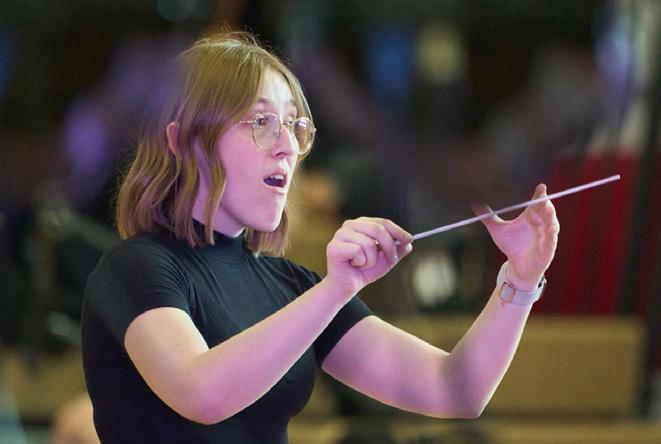
Congratulations to Anna Freebern ’19 on her acceptance to the Masters of Music in Instrumental Conducting Program at Temple University’s Boyer College of Music and Dance in Philadelphia. Anna will be starting her teaching assistantship this fall and will have the opportunity to conduct multiple music ensembles.
Joe McCoy ’20 graduated from Ohio University receiving a dual masters in Business Administration and Sports Management. He is currently employed as a Partnership Marketing Coordinator for Tepper Sports and Entertainment in Charlotte, North Carolina.
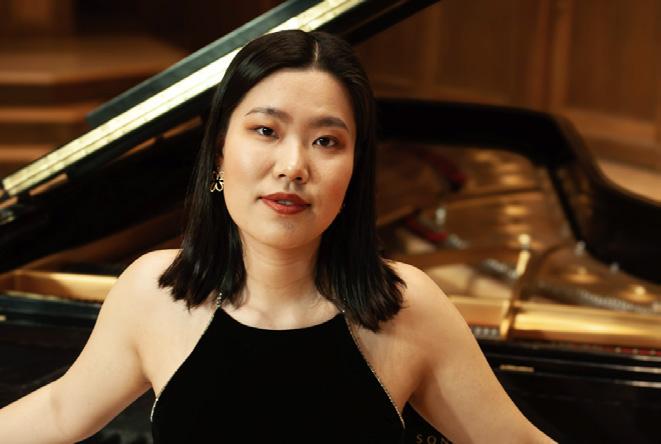
Qiaochuhan Li ’21 graduated from Lawrence University in Wisconsin with a BM in Piano Performance and a BA in Global and East Asian Studies. She will be starting her MM at the Tianjin Juilliard School this September studying piano and chamber music with the Shanghai Quartet. Qiaochuhan will be attending the Adamant Music School in Vermont this summer.
1950
This section will be printed once a year in the spring issue of The VIEW. Send submissions to alumni@burrburton.org, or scan the QR code. Submissions must be accompanied by the subject’s obituary to be printed.
Warren Cadoret ’50
1967
Cheryl Wyman Harriman ’67
1969
Dean Foster ’69