Strengthening Housing Systems for a Rapidly Urbanising Commonwealth:
A Strategic Approach from the Commonwealth Sustainable Cities Coalition
Authors: Peter Oborn and Ben Atkinson
Township and middle class housing, South Africa, fivepointsix/iStock
Executive Summary
Rapid urbanisation and climate pressures are exposing structural weaknesses in housing systems. Much of the urban growth across the Commonwealth is accommodated through informal or incremental housing pathways, which constitute the dominant form of housing delivery but remain poorly integrated into formal policy, finance and climate systems. These dynamics highlight the need for coordinated action and provide the strategic rationale for the CSCC Housing Action Group.
Rapid urbanisation across Commonwealth countries is placing growing pressure on housing systems. Cities are expanding faster than formal housing supply, with a substantial share of housing demand met through informal and incremental pathways that remain poorly integrated into formal policy and finance systems. Rental housing systems, which accommodate a large share of urban populations, are similarly under-integrated. Climate risks and rising construction emissions are further intensifying the urgency of delivering affordable, resilient homes at scale. Despite housing’s central role in economic development, social wellbeing, and climate action, it remains underrepresented within international policy and financing frameworks.
The Commonwealth Sustainable Cities Coalition (CSCC) Housing Action Group was established to better understand how housing systems function across Commonwealth contexts and to identify practical pathways through which Commonwealth collaboration could help address shared challenges. Delivered over a five-month period, the pilot combined research, stakeholder dialogue and comparative analysis across selected member states.
The analysis highlights a consistent pattern across many Commonwealth countries.
• Misalignment between housing demand and housing delivery: Formal housing markets serve only a minority of households, while the majority of urban growth is accommodated through informal, incremental and small-scale market mechanisms.
• Systemic constraints within housing systems: Structural constraints related to land access, housing finance, regulatory systems and institutional coordination limit the expansion of formal affordable supply.
• Increasing climate vulnerability: At the same time, climate risks increasingly intersect with these dynamics, with many informal and peri-urban settlements exposed to flooding, heat stress and extreme weather.
The evidence also demonstrates that housing systems are not defined solely by constraint. Across contexts, housing continues to be delivered through adaptive mechanisms including household-led construction, informal rental markets, public programmes and emerging institutional partnerships. The central challenge is therefore not simply insufficient housing delivery capacity, but a misalignment between formal housing systems and the dominant incremental pathways through which most housing is produced.
Alongside these constraints, the analysis identifies a set of systemic levers through which housing systems can evolve and perform more effectively. These include stronger policy alignment, improved planning and regulatory systems, expanded housing finance, enhanced data and knowledge systems, stronger institutional leadership, and improved professional and technical capacity across the built environment sector.
Drawing on these findings, the report proposes a strategic role for the Commonwealth Sustainable Cities Coalition as a catalytic platform that strengthens housing systems through convening, knowledge exchange, institutional coordination and engagement with policy and finance actors. Rather than delivering housing directly, the Coalition focuses on aligning the institutions and knowledge networks that shape housing systems.
Four strategic recommendations guide this approach:
1. Foster cross-sector collaboration to strengthen coordination across housing systems, bringing together governments, financial institutions, professional networks, and community organisations to align policy frameworks with the realities of housing delivery.
2. Build a shared knowledge base on housing systems across the Commonwealth, supporting comparative analysis, peer learning, and evidence-based policy dialogue.
3. Mobilise Commonwealth professional and academic networks to strengthen skills and practice, supporting technical capacity and knowledge exchange across the built environment and housing sectors.
4. Use Commonwealth platforms to elevate housing in urban and climate agendas, ensuring that housing is more fully integrated into international policy dialogue and financing frameworks.
To operationalise these priorities, the programme operates through two mutually reinforcing engagement streams. Commonwealth Institutional Engagement focuses on strengthening housing’s visibility within the Commonwealth policy processes and partnerships, while Direct Country & City Engagement works with stakeholders within participating countries to convene dialogue, develop shared evidence and strengthen institutional capability.
Across these streams, CSCC activities focus on four core functions:
• Advocacy and Policy Alignment: Positioning housing as a central component of urban, climate and development policy agendas
• Knowledge and Shared Learning: Building a shared evidence base on housing systems across the Commonwealth
• Partnerships and System Coordination: Strengthening collaboration across institutions shaping housing delivery
• Skills and Institutional Capacity: Strengthening the institutional capability required to deliver affordable and resilient housing
Rather than establishing a large delivery programme, CSCC works as a coordinating and amplifying platform, embedding housing system dialogue within existing Commonwealth initiatives, professional networks and partner activities.
Bandra East, a suburb of Mumbai: halbergman/iStock
1. Introduction
Housing sits at the intersection of urbanisation, climate resilience, economic development and social inclusion across Commonwealth countries. This chapter establishes the context for the report by examining these interconnected challenges and explaining the design of the Housing Action Group pilot, positioning the CSCC as a platform for knowledge exchange and collaborative problem-solving.
1.1 The Commonwealth Sustainable Cities Coalition
Many Commonwealth countries are experiencing rapid urbanisation, placing growing pressure on housing, infrastructure, public finances, and urban institutions. In many member states, cities are struggling to keep pace with population growth, contributing to the expansion of informal settlements, the prevalence of cramped, unsafe living conditions and increasing exposure to climate risks. At the same time, cities remain key drivers of economic growth and social transformation, requiring coordinated action to strengthen governance, planning, finance, and housing systems in ways that are inclusive, climate-responsive, and economically sustainable.
Responding to the Commonwealth Declaration on Sustainable Urbanisation (2022 and 2024)1 and building upon the outcome of the Wilton Park Dialogue (2025)2, partners under the Commonwealth Sustainable Cities Initiative3 developed a programme to establish and pilot a Commonwealth Sustainable Cities Coalition (CSCC). The coalition aims to support member states in addressing rapid urbanisation and the climate crisis by strengthening knowledge exchange, policy development, and practical collaboration across the Commonwealth network.
1 Commonwealth Declaration on Sustainable Urbanisation: https://issuu.com/comarchitect.org/docs/declaration_on_sustainable_urbanisation?fr=xKAE9_zMzMw
2 Wilton Park Dialogue: https://www.wiltonpark.org.uk/event/advancing-sustainable-urbanisation-working-with-commonwealth-countries-tobuild-a-transformative-coalition/
3 The members of the Commonwealth Sustainable Cities Initiative (CSCI) include the Association of Commonwealth Universities (ACU), Commonwealth Association of Architects (CAA), the Commonwealth Association of Planners (CAP), the Commonwealth Engineers’ Council (CEC), and the Commonwealth Local Government Forum (CLGF), working in collaboration with the Government of Rwanda and The King’s Foundation.
Building on initiatives associated with the Commonwealth Blue Charter (2018)4, CSCC is structured around three interlinked Action Groups led by CSCI partners and supported by dedicated staff and technical expertise.
Action Group
Urban Finance
Lead Partner
Commonwealth Local Government Forum (CLGF)
Focus
Increasing own-source revenue and local fiscal capacity for sustainable urban development
Integrated Planning
Housing
Commonwealth Association of Planners (CAP) with The King’s Foundation
Commonwealth Association of Architects (CAA)
Refining and piloting the Rapid Planning Toolkit to support citylevel planning for growth
Housing policy, delivery systems, and low-carbon, resilient, affordable construction.
A cross-cutting Skills and Competencies theme, led by the Association of Commonwealth Universities, focuses on strengthening links with higher education institutions and supporting capacity development across CSCC activities.
4 The Commonwealth Blue Charter: https://thecommonwealth.org/bluecharter
Table 1: CSCC Action Groups
1.2 Housing, Urbanisation and Climate
Adequate housing is recognised as a fundamental human right under international law, including Article 25 of the Universal Declaration of Human Rights and Article 11(1) of the International Covenant on Economic, Social and Cultural Rights. Beyond this rights-based foundation, housing is also central to economic development, social wellbeing, and environmental sustainability.
Housing outcomes influence progress across many Sustainable Development Goals (SDGs). While SDG 11.1 focuses explicitly on adequate housing and the upgrading of informal settlements, improvements in housing conditions contribute to poverty reduction, health, gender equality, access to water and sanitation, energy access, and climate resilience.5 Evidence consistently shows that secure, well-located housing improves health outcomes, expands economic opportunities, strengthens educational attainment, and reduces household expenditure on energy and transport.
Housing also plays a central role in economic development and productivity. The housing sector contributes directly to economic growth through construction activity, job creation and supply chain linkages, while also enabling broader economic participation. Well-functioning housing systems support labour mobility by allowing workers to access jobs in productive urban centres, reduce informality by providing stable bases for homebased enterprises, and enable households to accumulate assets and access credit. Conversely, inadequate and poorly located housing can constrain productivity by increasing commuting times, limiting access to labour markets and services, and reinforcing spatial inequalities. At a macro level, housing investment can act as a countercyclical driver of economic activity, while at a household level, secure housing can reduce vulnerability to economic shocks and support long-term financial stability.6
Housing systems are closely linked to the climate crisis. The built environment accounts for roughly 37% of global energy-related carbon emissions, including both building operations and construction materials. Improving housing design, construction materials, and energy performance is therefore essential for reducing emissions. At the same time, strengthening housing and settlement conditions is one of the most effective ways to improve resilience to climate risks such as flooding, storms, heat stress, and sea-level rise.
Despite its importance, housing remains significantly underrepresented in both international development and climate policy. Housing receives only a small share of global development assistance and is often overshadowed by major infrastructure investments, highlighting a critical gap between housing’s importance and its visibility in policy and financing frameworks. Within climate finance, only a small share of global funding is directed to the buildings sector, and housing is inconsistently integrated into national climate commitments, with relatively few countries including measurable housing-related mitigation or adaptation targets within their Nationally Determined Contributions (NDCs).
5 Housing and the Sustainable Development Goals, Habitat for Humanity: https://www.habitat.org/sites/default/files/documents/Housing-andSustainable-Development-Goals.pdf
6 Housing and the Economy, Centre for Affordable Housing Finance in Africa (CAHF): https://housingfinanceafrica.org/project/housing-andthe-economy/
1.3 Gender and Affordable Housing
Housing is closely connected to gender equality. Access to adequate, secure and affordable housing shapes women’s economic opportunities, safety, health and social participation, yet women often face structural barriers in housing markets. Legal frameworks, inheritance practices and customary land systems in many countries continue to favour male ownership, limiting women’s ability to obtain secure tenure or use housing as a financial asset. These inequalities have significant implications. Women are frequently over-represented in informal or insecure housing conditions and are more likely to experience overcrowding and inadequate services.
Where water, sanitation and other basic services are not available at household level, women and children disproportionately bear the burden of water collection and unpaid care, including caring for family members affected by unsafe drinking water, poor sanitation or climate-related health impacts. These dynamics reinforce time poverty and limit access to education, employment and income-generating activities
Gender inequalities are also embedded within housing finance systems and market practices. Formal housing finance is typically structured around stable, documented incomes, collateral requirements and individual property ownership, which can disadvantage women who are more likely to work in informal or lower-paid employment or lack formal land titles. As a result, women are often excluded from mortgage markets, developer-led housing schemes and subsidy programmes linked to ownership.
At the level of planning, design and delivery, housing systems often fail to reflect the lived experiences and needs of women and girls. Settlement layouts, transport connectivity, access to services and the design of public and private space all influence safety, time use and economic participation.
Housing insecurity can reinforce wider economic and social vulnerabilities, including reduced access to employment, education and financial services. Conversely, ownership or secure tenure can strengthen women’s economic resilience, improve health and wellbeing, increase children’s educational attainment, and reduce exposure to domestic violence.
Addressing these challenges requires coordinated action across housing finance, policy and delivery systems. Expanding access to gender-responsive financial products, including group lending, savings-based models, incremental finance and tenant-purchase schemes, can help align housing finance with the realities of women’s economic participation. Ensuring that subsidy frameworks, public housing allocation systems and credit mechanisms explicitly recognise women as beneficiaries is critical to avoiding the reinforcement of existing inequalities.
At the same time, integrating gender-responsive planning and design approaches can improve how housing systems function in practice. This includes participatory design processes that engage women in decisionmaking, embedding safety considerations into settlement planning, and improving access to childcare, water and sanitation infrastructure to reduce unpaid care burdens. Strengthening the representation of women within housing institutions, local government, community organisations and the built environment professions is also essential to ensuring that gender considerations are embedded within decision-making processes. Together, these approaches position gender as a core dimension of effective housing system design and delivery, rather than a standalone concern 7
7 Creating Accountability to Gender in Affordable Housing: AToolkit for Practical Change, Reall and University of Warwick: https://reall.net/wp-content/uploads/2024/08/UOW-Reall-Gender-in-Affordable-Housing-Toolkit.pdf
1.4
Pilot Design and Methodology
The Housing Action Group (HAG) was established to identify key barriers and enabling conditions affecting the delivery of affordable, resilient, and low-carbon housing, and to explore how collaboration and knowledge sharing across the Commonwealth network could help address these challenges. The pilot pursued three objectives:
1. Identify barriers shaping housing delivery and policy effectiveness, including how housing is delivered across selected member states and how policy, regulatory, and institutional frameworks influence outcomes.
2. Support the acceleration of climate-resilient, low-carbon construction by identifying practical approaches relevant to Commonwealth contexts.
3. Develop recommendations on how Commonwealth collaboration can help address these challenges
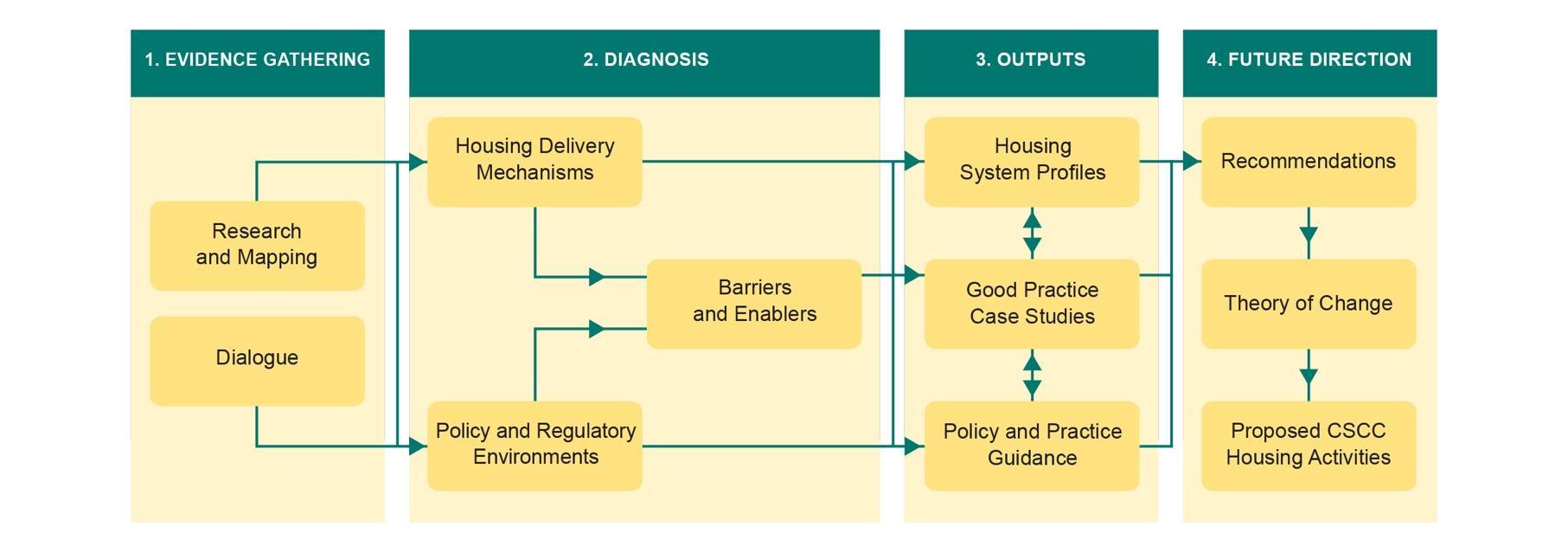
The CSCC Housing Pilot was designed as a collaborative process to better understand housing system challenges across Commonwealth countries and translate shared learning into a strategic direction for future action, and is laid out in Figure 1. Delivered over a five-month period, research and mapping were combined with engagement across governments, professional networks, academia, private-sector actors, and civil society to examine how housing systems operate in practice.
The pilot produced housing system profiles, case studies, and policy guidance that highlight recurring challenges across contexts, including fragmented land governance, constrained housing finance ecosystems, regulatory bottlenecks, and increasing climate vulnerability, alongside enabling practices that could be strengthened through coordinated action. Insights generated through this process informed the development of a set of recommendations setting out how CSCC can best contribute to housing delivery across the Commonwealth.
Figure 1: CSCC Housing Pilot - Evidence to Strategy Pathway
Mpazi redevelopment, Kigali, Rwanda: City of Kigali
2. Findings from the Housing Action Group Pilot
Evidence from Kenya, India and Fiji reveals consistent barriers shaping housing delivery, including land constraints, limited housing finance, regulatory complexity and uneven climate integration. At the same time, incremental construction and informal rental markets continue to accommodate urban growth, underscoring the importance of strengthening coordination across housing systems.
The findings presented in this section synthesise evidence gathered through research, stakeholder engagement, and comparative analysis undertaken during the Housing Action Group pilot. The analysis draws in particular on detailed country engagement in Fiji, India and Kenya, which were selected to reflect a diverse range of housing system conditions across the Commonwealth, including differences in scale, institutional capacity, urbanisation patterns and exposure to climate risk. Rather than focusing on individual country experiences in isolation, the analysis identifies recurring patterns across contexts, highlighting how housing delivery systems operate in practice and how structural barriers and enabling conditions shape outcomes.
Across many Commonwealth cities, housing systems are not failing entirely; rather, they are functioning through informal, incremental, and hybrid mechanisms that remain poorly recognised within formal policy and finance systems. The findings are organised to reflect the logic emerging from the pilot process. The section first examines the key barriers affecting housing delivery and policy environments, before considering how housing systems have adapted to these constraints and the enabling conditions that allow delivery to continue despite persistent challenges. Together, these insights provide the analytical foundation for the strategic recommendations and programme approach presented later in the report.
2.1 Structural Barriers to Effective Housing Delivery
While national contexts vary, housing delivery systems across many lower- and middle-income Commonwealth countries exhibit recurring structural constraints. Evidence from Kenya, India, and Fiji highlights patterns that extend beyond individual national contexts, reflecting wider dynamics shaping urbanisation across the Commonwealth.
Land and Servicing Constraints
Limited access to serviced and tenure-secure land represents one of the most persistent barriers to affordable housing delivery. Across many Commonwealth contexts, fragmented land governance systems, slow titling processes, and weak municipal infrastructure provision restrict the supply of well-located land for housing.
Country findings illustrate how these dynamics operate in practice:
• In Kenya, incomplete land records and slow titling procedures increase uncertainty for both developers and households.
• In India, restrictive land-use classifications, floor-area-ratio limits, and complex approval processes constrain housing supply in well-located urban areas and increase development timelines and costs.
• In Fiji, customary land tenure systems require negotiation between traditional authorities and public agencies, creating additional procedural steps for urban expansion.
Municipal fiscal constraints further limit the proactive provision of infrastructure, meaning land is often urbanised before it is serviced. As a result, a large share of urban growth occurs through peri-urban expansion or informal settlement development, frequently without adequate infrastructure or long-term resilience planning.
Housing Finance Ecosystem Limitations
Housing finance systems across many Commonwealth contexts remain shallow relative to need and are often poorly aligned with dominant housing delivery pathways.
Mortgage markets typically require formal income verification and therefore serve only a small share of households:
• Mortgage penetration in Kenya remains extremely limited, with lending equivalent to 1.86% of GDP and 30,016 mortgages outstanding at end-2024, representing fewer than one percent of households.
• In India, housing finance represents around 11–12% of GDP, yet fewer than five percent of households hold a housing loan.
• Fiji’s housing credit market is larger relative to GDP but remains concentrated among higher-income households.
Construction finance markets are often characterised by limited credit availability and short loan tenors. Developers therefore frequently rely on buyer pre-sales to fund projects, transferring risk to purchasers and limiting the viability of affordable developments. At the same time, most housing investment occurs incrementally through savings, remittances, cooperative lending, microfinance, or informal borrowing. This creates a structural misalignment: while housing is predominantly built progressively over time, formal finance systems remain oriented toward completed units delivered through formal development processes.
Weak municipal fiscal systems further constrain housing delivery, as shown in the findings from the CSCC Urban Finance Action Group. Limited local revenue capacity restricts investment in infrastructure and land servicing, reducing the ability of cities to shape urban growth or support large-scale housing development.
Regulatory and Institutional Frictions
Regulatory frameworks and institutional coordination challenges further constrain housing delivery across many Commonwealth contexts. Planning systems, approval processes, and building regulation frequently increase development costs and timelines while offering limited pathways for integrating incremental or informal housing into formal systems.
Country findings illustrate these dynamics:
• In Kenya, lengthy approval procedures and fragmented coordination between national and county-level institutions create uncertainty for formal development. Rental markets dominate urban tenure but operate largely outside structured policy and regulatory frameworks
• In India, layered approval systems, density restrictions, and compliance requirements increase development timelines and costs. Rent control legislation remains in place in several Indian states, shaping investment incentives and affecting the financial viability of formal rental housing. Regularisation processes for informal settlements are often procedurally complex and slow to implement.
• In Fiji, limited municipal capacity constrains consistent enforcement of building standards and planning regulations.
Together these dynamics contribute to the emergence of dual housing systems: a relatively small formal sector operating within compliance frameworks and a much larger informal or incremental sector functioning largely outside them.
Climate Integration Gaps (Mitigation and Adaptation)
Climate risks intensify many of the structural constraints described above. Housing systems across the Commonwealth face simultaneous mitigation and adaptation challenges, yet climate considerations remain unevenly integrated into housing policy and delivery systems.
Construction practices continue to rely heavily on carbon-intensive materials, while incentives and supply chain support for lower-carbon alternatives remain limited. Energy efficiency standards and building codes tend to apply primarily within formal developments and are rarely integrated into incremental construction pathways.
At the same time, affordability pressures and land constraints frequently push settlement into environmentally exposed locations, particularly in peri-urban areas with limited infrastructure and hazard-informed planning Incremental construction methods allow households to adapt housing investment to income constraints, but without technical guidance these approaches often lack the structural resilience needed to withstand climate-related hazards.
These gaps are reflected differently across country contexts:
• In Kenya, increasing heat stress and intensified rainfall are driving flooding and infrastructure failure, with the greatest impacts in informal and peri-urban settlements where climate-responsive planning and design are not consistently integrated.
• In India, rapid expansion of the built environment is increasing both climate exposure and emissions from materials and energy demand, with uneven adoption of energy codes and resilience measures, particularly in incremental housing.
• In Fiji, cyclone risk, flooding, and coastal hazards disproportionately affect incrementally built housing, where limited technical guidance and enforcement reduce structural resilience.
Cross-Cutting System Implications
Taken together, the evidence suggests that across many Commonwealth contexts:
Across many Commonwealth contexts, the core challenge is not simply insufficient housing delivery capacity, but a misalignment between formal housing systems and the dominant incremental pathways through which most housing is actually produced. As highlighted in the CSCC policy paper All or Nothing: Coordinated Policy to Enable Development Housing at Scale, these dynamics often reflect fragmentation across housing, planning, infrastructure, and finance policy domains rather than isolated policy failures.
Table 2 summarises how these barriers manifest across different levels of the housing system, illustrating how constraints in land, finance, regulation, and climate integration interact across policy frameworks, institutions, market actors, and households.
Barriers Land & Servicing
Enabling Environment:
Laws, policies and macro conditions shaping the housing system
Fragmented land tenure systems; complex land classification; high urban land costs; weak municipal infrastructure finance
Limited depth of long-term housing finance markets; mortgage systems dependent on formal income verification; smallscale, short tenor construction finance
Planning and density controls limiting affordable supply; rent control frameworks affecting rental investment; limited policy engagement with rental markets; slow legal recovery processes
Mitigation Adaptation & Resilience
Construction norms dominated by carbonintensive materials; limited incentives for lower-carbon alternatives
Land and affordability constraints pushing settlement into hazard-prone locations; policy tensions between in-situ upgrading and relocation
Organisational Level – Public Delivery Systems: How government institutions implement housing, land and regulatory functions
Slow titling processes; incomplete land records; limited serviced land provision; weak coordination between land, infrastructure and housing agencies; constraints linked to customary tenure systems
Fragmented subsidy programmes; concessional finance insufficient relative to demand; limited municipal fiscal capacity; limited long-term funding for housing lenders
Lengthy and complex approval processes; unclear or inconsistent regularisation pathways; weak building control capacity; uneven enforcement of standards
Uneven adoption and enforcement of energy efficiency and building codes
Limited integration of hazard mapping into planning systems; uneven enforcement of resilient construction standards
Organisational Level – Private & Financial Institutions: How developers, lenders and landlords structure supply and access
Individual & Community Level: How households and communities’ access and build housing within system constraints
Formal developers concentrated in middle- and higher-income segments; reliance on peri-urban or informally accessed land
Tenure insecurity and overlapping land claims; reliance on informal or customary land access
Conservative underwriting excluding informal earners; reliance on pre-sales and buyer deposits; limited formal financial products for incremental construction
Reliance on savings and informal borrowing; low participation in formal mortgage markets
Low uptake of low-carbon materials and passive design approaches
Limited integration of resilient design in small-scale and incremental housing
Incremental housing developed outside formal approval systems; uneven construction quality; limited access to professional design and technical guidance
Energy efficiency rarely integrated into incremental construction
Informal and peri-urban settlements highly exposed to climate hazards; limited resilient construction practices
Table 2: System-Level Barriers to Effective Housing Delivery
2.2 Housing Delivery Systems in Practice
The delivery patterns observed across Kenya, India, and Fiji reflect the structural barriers outlined above. Where formal systems fail to meet demand, households and small-scale market actors adapt by developing housing through incremental construction, informal rental markets, and peri-urban expansion.
Household-Led and Incremental Construction
Housing delivery across all three countries is overwhelmingly shaped by progressive, household-led construction undertaken over time rather than through the purchase of completed dwellings. Households typically mobilise resources incrementally through savings, remittances, cooperative lending, microfinance, or informal borrowing, aligning housing investment with irregular incomes.
Figures from the country reports demonstrate the scale of this pattern:
• Kenya: around 80% of owner-occupied homes are self-built, while formal delivery reaches only a fraction of annual housing demand.
• India: approximately 70% of housing is self-built or incrementally constructed, with formal developers accounting for roughly 20% of supply.
• Fiji: though specific figures are hard to come by, self-build and incremental pathways account for the majority of housing delivery, reflecting affordability constraints and household-led investment patterns.
These approaches allow households to align construction with irregular incomes and gradually improve housing conditions over time. While this model enables access to housing at scale, construction frequently occurs outside formal planning and servicing systems. Across the three countries, incremental expansion is associated with uneven infrastructure provision, variable construction quality, and challenges integrating settlements into formal urban systems, particularly where development occurs in peri-urban or informally accessed areas.
Informal and Small-Scale Rental as the Backbone of Urban Housing Systems
Rental housing plays a critical role in accommodating urban population growth across all three countries, particularly for migrants and younger households. However, the scale and tenure balance vary significantly between contexts.
Key tenure patterns are identified in the country reports:
• Kenya: rental is the dominant urban tenure, housing 72.3% of urban households, rising to 88.8% in Nairobi.
• India: approximately 27.5% of urban households rent (rising to around 65% in Bengaluru), with informal rental markets playing a central role for migrant and low-income households.
• Fiji: roughly 24% of the urban population rents, largely through private, small-scale arrangements embedded within owner-built housing.
Across contexts, rental supply is rarely delivered through institutional investors or large developers. Instead, it is typically produced through incremental extensions to provide rooms for tenants, subdivided dwellings, backyard units, or rooms added to owner-occupied homes. This model provides flexibility and rapid access to accommodation, though it is often associated with insecure tenure arrangements, overcrowding, and limited incentives for long-term investment in maintenance or climate resilience.
Limited Role of Formal Developer-Led Supply
Formal housing markets and large-scale private development account for a small share of total housing delivery across all three countries. The country reports identify similar structural drivers limiting expansion of formal supply, including high land costs, infrastructure constraints, financing barriers, and regulatory complexity.
These dynamics also shape the economics of formal development. High land costs, infrastructure obligations, compliance costs, and financing risks raise the minimum viable price point for developer-led housing, concentrating formal supply in higher-income market segments.
Evidence from the country analyses shows:
• Kenya: formal housing production averages roughly 50,000 units annually against demand for approximately 250,000 units per year, with supply largely targeting higher-income segments.
• India: developer-led housing represents roughly 20% of delivery, increasingly concentrated in higher-value markets as land and compliance costs rise.
• Fiji: public and private formal delivery programmes operate at relatively small scales compared to projected housing need.
Public housing and subsidy programmes provide important targeted support but function primarily as complementary interventions rather than system-defining delivery mechanisms. In India, for example, the Pradhan Mantri Awas Yojana (PMAY-Urban) programme had sanctioned approximately 11.8 million homes since its launch in 2015, with 9.7 million completed by February 2026. While significant in absolute terms, these programmes still account for only a portion of overall housing production in a system where the majority of housing continues to be delivered through household-led construction and small-scale market activity.
2.3 Enabling Conditions for Housing System Reform
While structural constraints are significant, evidence from Kenya, India, and Fiji, plus wider case studies produced through the pilot, highlight institutional capabilities and systemic levers that can support more inclusive and climate-responsive housing delivery when policy frameworks, institutions and market actors begin to align.
Land and Urban Governance
Housing delivery improves where land governance systems reduce tenure uncertainty, streamline administration, and strengthen coordination between land management, planning, and infrastructure provision. Digitised land records, clearer titling procedures, and stronger coordination between land and infrastructure agencies can reduce transaction costs and enable land to be brought into use more predictably.
Recognition of diverse tenure forms, including customary and informal arrangements, also creates pathways for incremental regularisation and progressive upgrading. Rather than excluding informally developed areas, such approaches allow settlements to be gradually integrated into formal systems. For households, this can reduce eviction risk and support investment in housing, while improving access to services and finance. For women, who are less likely to hold formal title and more exposed to tenure insecurity, incremental recognition can strengthen rights, improve access to finance and support livelihoods linked to the home.
Public–private land partnerships and structured land development arrangements can further expand the supply of serviced land where institutional coordination is effective, particularly in rapidly growing peri-urban areas.
• In Kenya, the Affordable Housing Programme demonstrates how national housing policy can mobilise public land and coordinate delivery through partnerships between national government, counties, and private developers, while the Kibera Public Space Project illustrates how small-scale, community-led investments in public space can strengthen connectivity and support climate resilience within informal settlements
• In India, Odisha’s JAGA Mission illustrates how granting land rights to informal settlement residents, strengthening community organisations, and integrating settlements into municipal planning can strengthen tenure security and support large-scale upgrading.
• In Fiji, the Informal Settlement Upgrading Programme shows how government-led settlement planning and infrastructure investment can progressively integrate informal communities into formal urban systems.
• In Rwanda, the Mpazi redevelopment demonstrates how on-site rehousing, cross-subsidy, land value capture, and planned densification can transform informal settlements without displacement.
Housing Finance Ecosystems
Although mortgage penetration remains limited relative to need, India, Kenya and Fiji all demonstrate financial sector platforms that could support broader inclusion as detailed in the CSCC’s Housing System Profiles. Refinancing facilities, targeted subsidies and specialised housing lenders can support broader access to housing credit, particularly when financial products align with incremental construction and informal income patterns.
• In Kenya, Savings and Credit Cooperative Organisations (SACCOs) demonstrate how cooperative finance models can extend housing credit to households excluded from formal mortgage markets, while the Kenya Mortgage Refinance Company (KMRC) demonstrates how liquidity facilities can expand long-term housing lending.
• In India, the Credit Linked Subsidy Scheme (CLSS) shows how targeted interest subsidies can reduce borrowing costs and expand mortgage access for lower-income households, while the growth of Housing Finance Companies supported by National Housing Bank refinancing demonstrates how specialised housing lenders can broaden housing credit beyond commercial bank lending.
• In Fiji, initiatives such as the Reserve Bank of Fiji Housing Facility and the First Home Ownership Initiative show how concessional lending and targeted grants can support entry into formal housing markets.
At the household level, widespread incremental investment practices reflect strong demand and repayment discipline. When financial products evolve to support staged construction, informal income patterns, and incremental upgrading, they can reinforce dominant housing delivery pathways rather than bypass them.
Regulatory and Institutional Capacity
Housing systems function more effectively where regulatory frameworks recognise upgrading, rental markets, and resilience as legitimate components of urban development. Administrative simplification, digitised approvals, and strengthened municipal planning capacity can reduce development uncertainty and lower transaction costs.
Strengthening institutional capability within local governments is also critical. The CSCC policy paper Embedding Built-Environment Skills in Local Government highlights how multidisciplinary planning, design, and urbanism expertise within municipal teams can strengthen long-term housing and urban development outcomes. Professional networks across architecture, planning, engineering, and construction provide technical expertise that can support improved design quality and compliance, particularly within formal markets. Organised community federations and participatory upgrading initiatives demonstrate how collaborative models can strengthen engagement between informal settlements and public authorities.
• In India, Janaagraha’s role in Odisha’s JAGA Mission highlights how combining technical municipal capacity with participatory governance approaches can enable collaboration between local governments and communities, while the Beneficiary-Led Construction (BLC) component of Pradhan Mantri Awas Yojana (PMAY) illustrates how national housing programmes can support incremental, household-led construction within formal policy frameworks.
• In South Africa, initiatives such as Open Cities Lab demonstrate how strengthening municipal data governance and digital systems can support more evidence-based urban planning and service delivery.
• In the United Kingdom, Public Practice demonstrates how embedding built-environment professionals within local authorities can strengthen delivery capacity.
Climate Integration
Climate commitments across the three countries create opportunities to embed both mitigation and resilience within housing systems. Evolving building codes, hazard mapping initiatives, and resilience planning frameworks provide tools for integrating climate considerations into housing development where implementation capacity exists.
At the same time, climate resilience is increasingly being advanced through community-led upgrading, participatory planning, and locally driven adaptation approaches, particularly in informal settlements where climate risks are often most acute.
Growing awareness of lower-carbon construction approaches, including alternative materials and passive design strategies, also creates opportunities to reduce the carbon intensity of housing production.
• In Kenya, the Integrated and Inclusive Infrastructure Framework (3iF) shows how participatory infrastructure planning and collaboration between communities, engineers and public agencies can support more climate-resilient upgrading of informal settlements.
• In India, the IFC EDGE Home Prescriptive Certification case study demonstrates how simplified green certification tools can support energy and resource efficiency in lower-income self-build housing, while the Roof Over Our Heads learning labs illustrate how community-led upgrading and co-production can strengthen climate resilience in informal settlements while building local technical capacity.
• In Fiji, collaboration between GGGI, Base Bahay and the Ministries of Forestry and Public Works on Cement Bamboo Frame Technology demonstrates how locally available materials, supported by research, code reform, and capacity building, can support low-carbon and climate-resilient construction.
• In South Africa, the EDGE Balwin–Absa Eco Home Loan case study demonstrates how preferential mortgage products linked to green certification can align developer supply, buyer demand, and financial incentives to support lower-carbon housing delivery.
These examples reinforce findings from the CSCC paper Scaling Effective Building Energy Standards in Emerging and Developing Economies, which highlights that effective climate integration depends not only on ambition, but on how standards are designed and implemented in practice. Complementary CSCC guidance on accelerating low-carbon cement emphasises the importance of transforming material supply chains as a critical pathway to reducing embodied emissions in housing systems. Successful approaches are grounded in local conditions, start with simple and achievable requirements, and are introduced in stages to build capacity, ensure compliance and enable learning over time. Together, these insights underscore the importance of sequencing and adaptability, ensuring that climate mitigation and resilience measures align with market realities and can be effectively adopted at scale.
More broadly, these examples demonstrate that climate mitigation and resilience can be integrated into housing systems not only through regulation, but also through finance, innovation, and institutional collaboration.
Table 3 summarises how these enabling conditions operate across different levels of the housing system.
Enablers Land & Servicing
Enabling Environment:
Laws, policies and macro conditions shaping the housing system
Organisational Level – Public Delivery Systems: How government institutions implement housing, land and regulatory functions
National housing and urban frameworks recognising tenure security and upgrading can legitimise diverse delivery pathways and support progressive land integration
Digitised land records, streamlined titling and stronger coordination between land and infrastructure agencies can reduce uncertainty and accelerate serviced land provision
Organisational Level – Private & Financial Institutions: How developers, lenders and landlords structure supply and access
Public–private land partnerships and structured lease models can expand formal land supply where institutional capacity exists
Housing finance regulation, refinancing mechanisms and subsidy frameworks can provide stability and investor confidence, enabling sector expansion and product innovation
Housing and climate policy frameworks recognising rental, upgrading and resilience can enable integration of dominant delivery pathways into formal systems
Mitigation Adaptation & Resilience
National climate commitments and policy incentives can support adoption of lowercarbon construction approaches
National adaptation strategies and access to climate finance can enable integration of housing into resilience planning
Targeted subsidies and concessional finance can leverage private capital and reduce entry barriers
Administrative simplification, digitised approvals, and strengthened planning capacity can reduce transaction costs and improve predictability
Evolving building codes and enforcement mechanisms can support gradual adoption of energy efficiency and lowcarbon standards in formal developments
Hazard mapping and resilience planning can guide safer urban expansion and settlement upgrading
Individual & Community Level: How households and communities’ access and build housing within system constraints
Incremental regularisation and upgrading can strengthen tenure security and infrastructure access over time
Housing finance companies, microfinance institutions and liquidity facilities can expand credit where underwriting accommodates informal incomes and incremental construction
Incremental investment practices and repayment discipline can provide a foundation for tailored finance products
Professional networks in architecture, planning, engineering, and construction can support improved design quality and compliance, particularly within formal markets
Community federations and participatory upgrading initiatives can facilitate collaboration with authorities and integration into regulatory systems
Table 3: System-Level Enabling Conditions for Housing Delivery
Growing privatesector awareness of alternative materials and passive design can support uptake of lower-carbon construction practices
Developers and material suppliers can incorporate resilient design features where incentives and standards align
Incremental upgrading can create opportunities to embed energy efficiency with technical guidance and finance
Community-led upgrading can incorporate resilience measures, where supported by technical assistance and risk awareness
Cross-Cutting Implication
Taken together, the evidence suggests that housing systems across many Commonwealth contexts are not defined solely by constraint. They also contain institutional capabilities, financial platforms, professional networks, and community-based mechanisms that can support more coordinated and climate-responsive housing delivery.
The central challenge is therefore not the absence of capacity, but how effectively the limited existing capacities connect with the dominant pathways through which housing is delivered. Where land governance, finance systems, regulatory frameworks, and climate strategies operate in isolation, barriers persist. Where these elements begin to align, housing delivery systems can function more inclusively and at greater scale.
This reinforces the importance of coordinated policy across housing, planning, infrastructure, and finance domains, as detailed in the CSCC policy paper All or Nothing: Coordinated Policy to Enable Development Housing at Scale
The enabling conditions outlined above highlight a number of recurring mechanisms through which housing systems can evolve when supportive policies, institutions and market actors align. While these enabling conditions operate across different system levels and thematic areas, they broadly point to a set of systemic levers through which housing systems can evolve and perform more effectively. These include:
• Institutional leadership and champions, recognising the role of committed public officials, sector leaders and cross-institutional coalitions in sustaining political attention, coordinating action across government and market actors, and driving changes that enable housing delivery at scale.
• Strategic policy alignment, ensuring that housing, urban development and climate frameworks recognise housing delivery dynamics and support coordinated system responses.
• Supportive planning and regulation, including administrative simplification, clearer approval processes, stronger planning capacity and more effective land administration systems that enable rather than constrain housing delivery.
• Expanded housing finance, supporting refinancing mechanisms, subsidy frameworks and financial institutions that expand housing supply and access to credit.
• Data and knowledge systems, improving the availability and use of housing system data, diagnostics and shared learning to inform policy, investment decisions and institutional coordination.
• Professional skills and institutional capability, developing the professional, technical and organisational capabilities required across government, financial institutions and the built environment sector to plan, finance and deliver housing at scale.
• Climate integration, embedding mitigation and resilience considerations within housing construction, settlement upgrading and urban expansion.
These systemic levers provide the analytical foundation for the strategic recommendations and programme approach outlined in the following sections, which focus on how the Commonwealth Sustainable Cities Coalition can help strengthen coordination, knowledge exchange and institutional capability across housing systems.
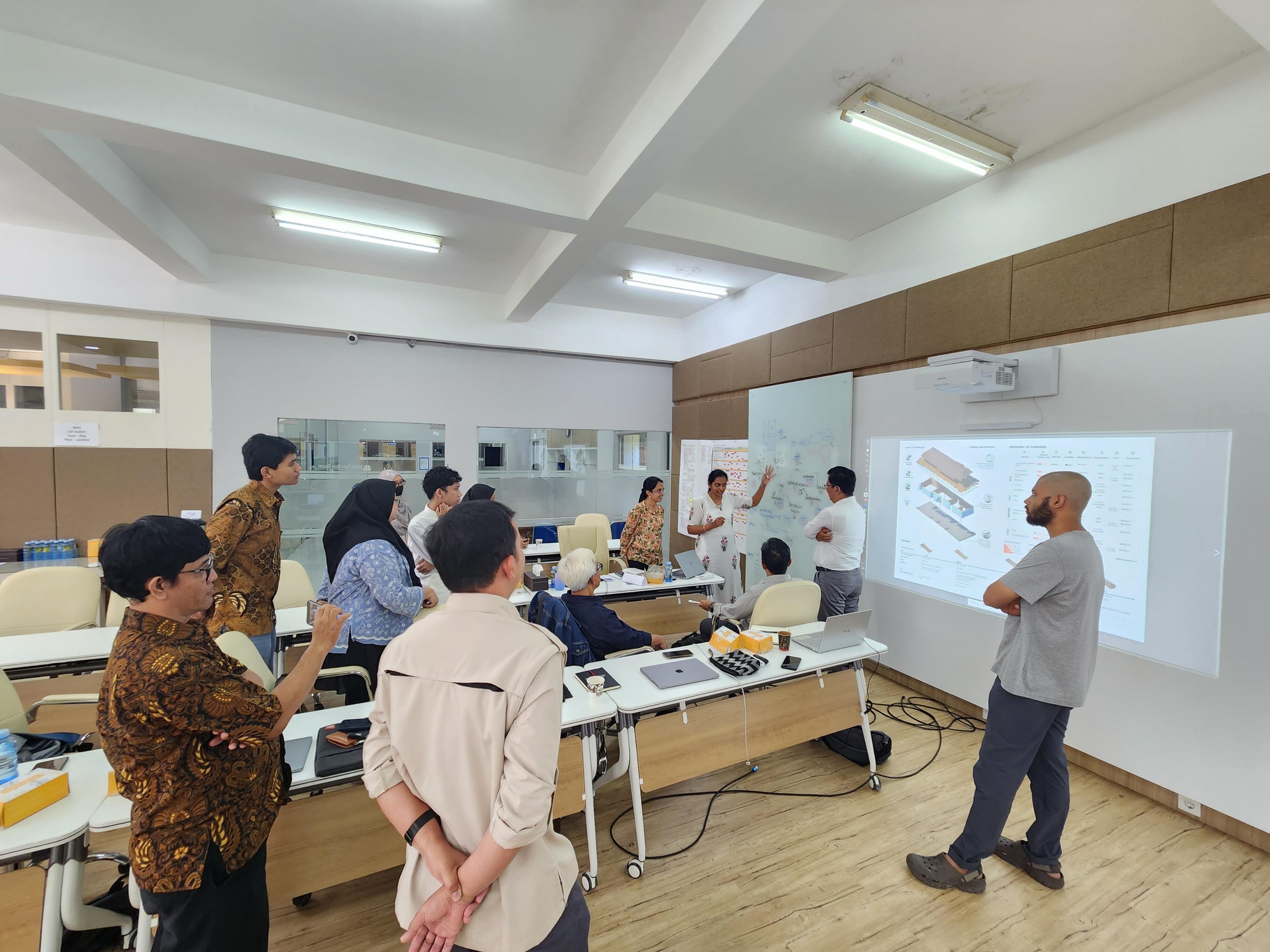
Roof Over Our Heads, Technical workshop, India: Sheela Patel/SPARC
3. Strategic Direction for the CSCC Housing Programme
The findings point to a strategic role for the Commonwealth Sustainable Cities Coalition in helping to strengthen housing systems. By convening diverse stakeholder groups and building shared knowledge, the CSCC Housing Action Group can help align policy, finance and practice across Commonwealth housing systems thereby improving outcomes and impact.
The findings from the pilot highlight priorities that can guide the future development of the Commonwealth Sustainable Cities Coalition. Central to these is focusing on where CSCC can add the greatest value: using its convening power, its reach across Commonwealth institutions and international partners, and its connections with professional networks and grassroots actors to bring together knowledge and experience from different contexts. By connecting insights emerging from practice with dialogue at ministerial and institutional levels, the Coalition can help translate shared learning into more coordinated policy and practical approaches to housing challenges.
3.1 Strategic Recommendations
Drawing on the systemic barriers, delivery dynamics and enabling conditions identified in Chapter 2, the following recommendations outline priority areas where the Commonwealth Sustainable Cities Coalition can contribute to strengthening housing systems
1. Foster Cross-Sector Collaboration to Strengthen Coordination Across Housing Systems
Housing delivery requires coordination across governments, financial institutions, infrastructure providers, developers, built environment professionals, and community organisations, but too often these groups operate in silos.
CSCC should prioritise structured convening across these groups to examine housing system challenges and identify opportunities for more coordinated responses. Dialogue processes, working groups, and knowledge exchange can help connect grassroots experience and professional practice with policy discussions, align financing approaches with delivery realities, and strengthen collaboration across the housing system.
This approach is reinforced by CSCC’s policy paper All or Nothing: Coordinated Policy to Enable Development Housing at Scale, which highlights how fragmented housing, planning, infrastructure, and finance policies often prevent housing delivery at scale. The paper demonstrates how coordinated reform across these domains can reduce the core cost drivers of housing and enable development housing at scale in rapidly urbanising contexts.
2. Build a Shared Knowledge Base on Housing Systems Across the Commonwealth
Housing knowledge and analysis are often fragmented across institutions and countries, limiting opportunities to learn from different contexts and understand how housing systems function in practice.
CSCC can address knowledge fragmentation by convening governments, practitioners, researchers, financial institutions, and community organisations to generate shared knowledge on housing systems and practical approaches to reform. By creating structured opportunities for dialogue, peer learning, and collaborative analysis, the Coalition can help surface lessons from different contexts and translate them into evidence that informs policy discussions and investment decisions.
The CSCC policy note Use Reform Coalitions to Address Complex Urban Challenges, drawing on work from the Africa Cities Research Coalition, highlights how inclusive reform coalitions can bring together diverse actors to co-produce knowledge and test solutions to complex urban challenges. Further case studies illustrate how such convening processes can operate in practice. Roof Over Our Heads demonstrates how community organisations, researchers, and practitioners can collaborate to generate evidence on climate-resilient housing approaches in informal settlements, while Open Cities Lab shows how peer learning and co-designed data initiatives can strengthen evidence-based decision-making within local governments. Complementing these approaches, the Open Access Initiative demonstrates how structured data-sharing and transparent market intelligence can reduce information asymmetries, strengthen investment decision-making, and unlock private capital for affordable housing.
3. Mobilise Commonwealth Professional and Academic Networks to Strengthen Skills and Practice
Improving housing systems requires stronger professional capacity across public institutions, finance systems, and the built environment professions.
CSCC should work with Commonwealth professional bodies, universities, and training institutions to support skills development, practitioner exchange, and professional learning. Activities such as continuing professional development programmes, curriculum development, and practitioner forums can help disseminate practical experience and strengthen institutional capacity across countries.
The CSCC guidance paper Embedding Built-Environment Skills in Local Government highlights how strengthening multidisciplinary planning, design, and urbanism capacity within municipal institutions can improve long-term housing and urban development outcomes. The Education Collaborative further demonstrates how university networks can move from fragmented activity to coordinated, multi-country learning platforms, strengthening institutional capacity and knowledge exchange at scale. By connecting professional networks and higher education institutions with municipal partners, CSCC can help support the development of similar institutional capability across Commonwealth cities.
4. Use Commonwealth Platforms to Elevate Housing in Urban and Climate Agendas
Housing sits at the intersection of urbanisation, climate change, infrastructure investment, and economic development, yet it remains underrepresented in many international policy discussions.
CSCC should use Commonwealth ministerial processes and partnerships with international organisations to raise the profile of housing within wider urban and climate agendas, helping connect national housing priorities with global policy dialogue and financing opportunities.
Sitting across all four recommendations, the CSCC paper Forty Years of Convening for Change: The African Union for Housing Finance as a Model for Multi-Stakeholder Knowledge-Sharing and Sector Development demonstrates how system-wide housing reform can be enabled through sustained, multi-stakeholder convening. Over four decades, AUHF has brought together governments, financial institutions, developers, researchers and civil society to strengthen coordination across fragmented housing systems, support shared knowledge generation, build professional capacity and elevate housing within policy and investment agendas. Its partnership with the Centre for Affordable Housing Finance in Africa (CAHF) highlights the importance of combining convening with independent knowledge generation and shared data, creating a credible evidence base that enables coordination and collective action. For the CSCC, this reinforces the importance of embedding knowledge generation and sharing within its convening function, positioning the Coalition as a platform that connects actors while building the shared understanding required to support coordinated housing system reform.
3.2
Programme Approach
The findings presented in Chapter 2 highlight a fundamental misalignment between how housing is delivered in practice and how housing policy, finance and regulatory systems are structured. Across contexts, most households access housing through progressive, small-scale and often informal processes, while formal systems remain oriented towards completed, developer-led models As a result, housing systems do not fail entirely, but function through parallel and only partially connected delivery pathways, limiting the effectiveness of both formal interventions and existing market practices.
The enabling conditions identified through the pilot point to systemic levers, including stronger policy alignment, institutional coordination, expanded finance, and improved data and skills. These are most effective when they connect formal systems with the incremental and informal processes through which most housing is delivered. Together, the barriers and enabling conditions provide both a diagnostic of system performance and entry points for dialogue and learning
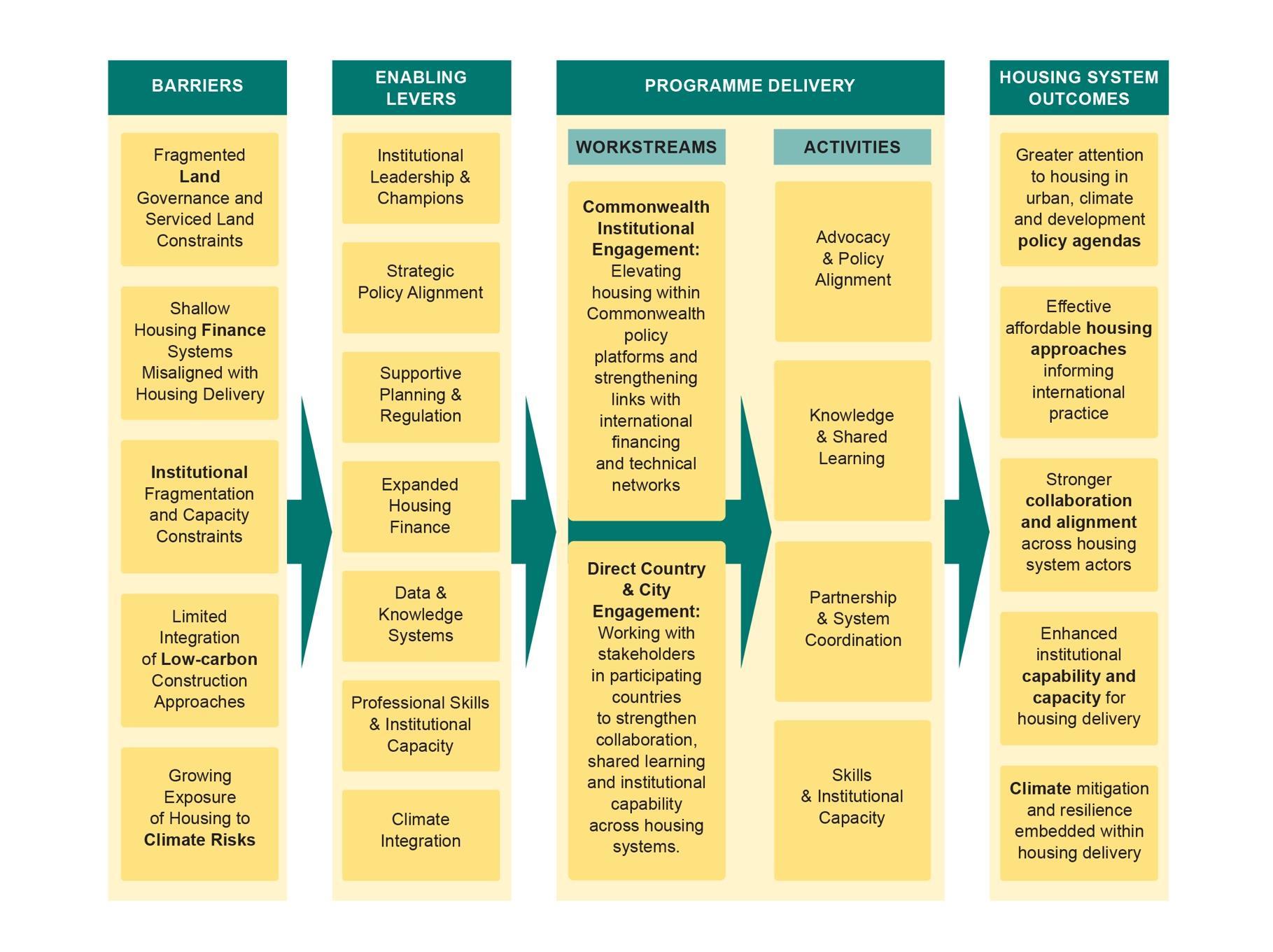
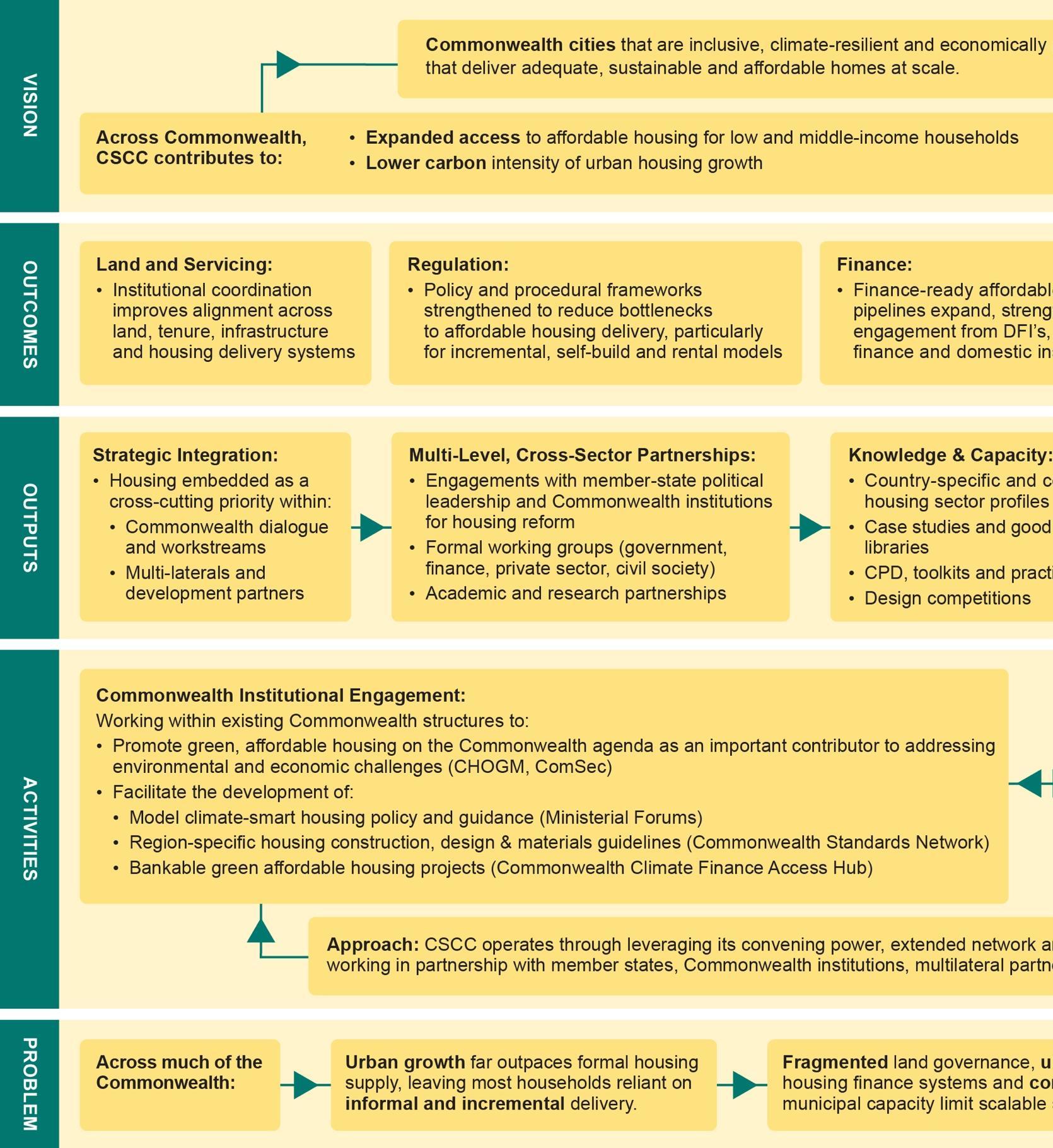
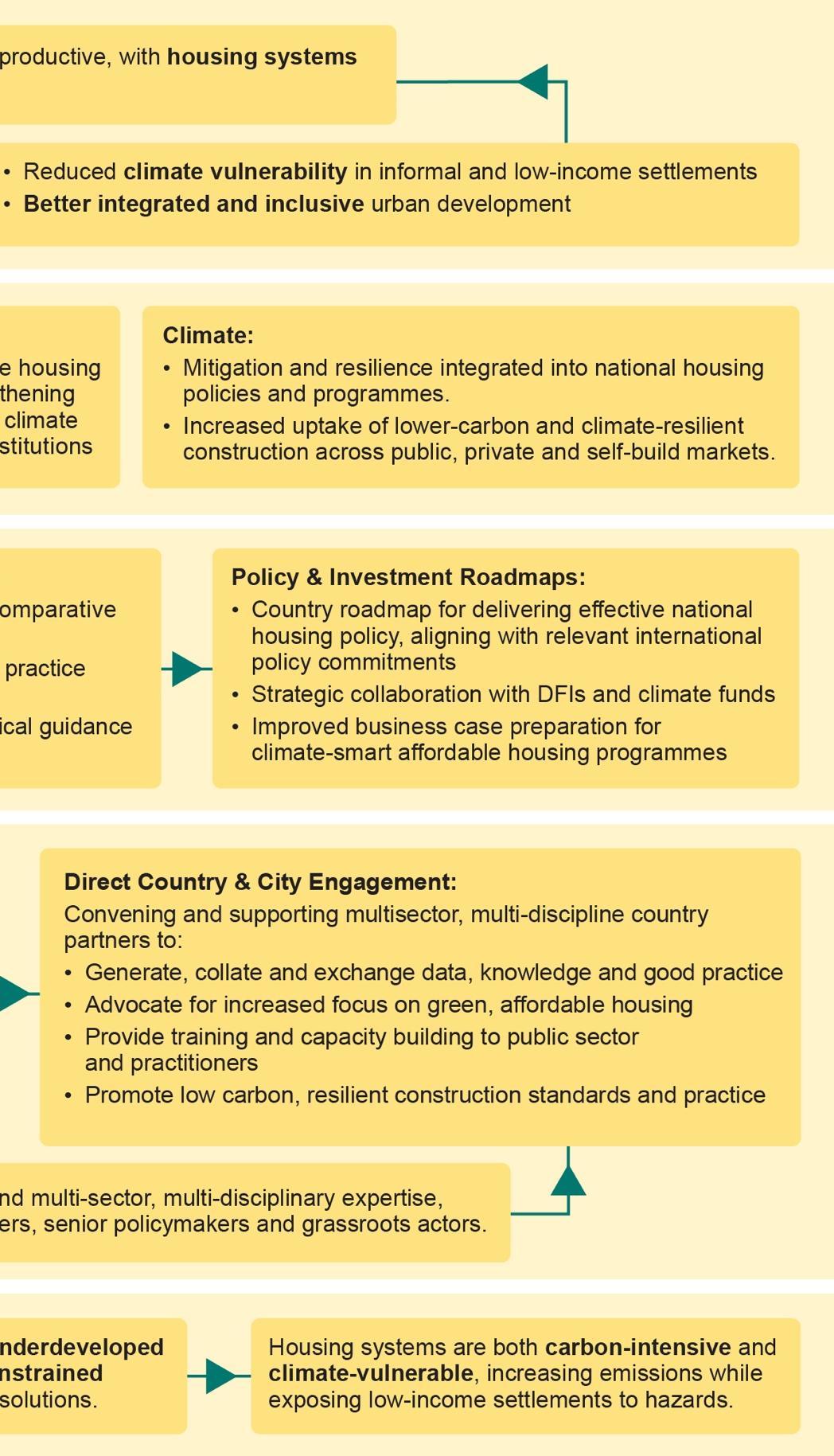
The strategic recommendations outlined above respond directly to this misalignment, framing priority areas for Commonwealth collaboration that focus on strengthening connections between policy, finance and delivery systems. Figure 2 illustrates the programme approach through which the CSCC operationalises these priorities (articulated further through the Theory of Change in Appendix 4). By connecting knowledge, practice and policy dialogue across Commonwealth institutions and national stakeholders, the CSCC strengthens coordination across housing systems and supports more integrated responses to housing, urbanisation and climate challenges, grounded in a shared understanding of how housing systems function in practice
Rather than prescribing reforms at a cross-Commonwealth level, the programme approach focuses on creating the conditions for this misalignment to be better understood and addressed over time. Through convening, shared evidence and learning from good practice, the CSCC enables stakeholders to recognise shared challenges, draw insight from existing approaches, and identify practical ways to strengthen housing systems.
The programme operates through two mutually reinforcing engagement streams:
• Commonwealth Institutional Engagement, which focuses on elevating housing within Commonwealth policy platforms and strengthening links with international financing and technical networks.
• Direct Country & City Engagement, which works with stakeholders within participating countries to strengthen collaboration, shared learning and institutional capability across housing systems.
The programme approach therefore responds to the misalignment identified in the analysis by strengthening relationships, evidence and shared understanding across housing systems. Drawing on case studies, policy insights and emerging practice, the CSCC supports the identification and adaptation of practical approaches, helping to inform policy and practice. To do so, the approach assumes that:
• Governments engage in peer learning and reform dialogue
• Convening power and shared evidence influence priorities
• Finance follows clearer policy signals and investable pipelines
• Professional networks shape construction practice over time
• Incremental housing systems can progressively integrate into formal frameworks
• Housing and climate agendas continue to converge
Figure 2: CSCC Housing Programme Approach
3.3 Programme Activities
Table 4 summarises the activities through which CSCC can implement the four strategic functions outlined in the programme approach Across these functions, activities aim to strengthen coordination across housing systems, expand shared knowledge, and improve institutional capability. Over time, these changes support more integrated housing policy, stronger investment pipelines, and wider adoption of climate-responsive construction, contributing to expanded access to affordable housing, lower-carbon urban growth, and more resilient and inclusive Commonwealth cities.
By integrating convening functions, working groups and knowledge exchange into existing conferences, partnerships and policy dialogues, CSCC operates as a coordinating and amplifying platform that connects institutions shaping housing systems across the Commonwealth and strengthens linkages between existing programmes, initiatives and knowledge platforms, while aligning with international policy commitments (see Appendix 3) and the Commonwealth Strategic Plan.8 In doing so, CSCC combines these linking and coordinating functions with targeted analytical, convening and knowledge-generation activities, complementing and building on existing efforts rather than duplicating them.
This approach responds directly to Housing Action Group recommendations on the need for stronger coordination across fragmented systems, including more effective engagement between government, private sector, financial institutions and community actors (see Appendix 5) It also reflects stakeholder emphasis on aligning policy, finance and delivery systems more closely, improving the accessibility and practical application of knowledge, and prioritising targeted, country-level actions linked to key system levers.
Across all four strategic functions, there is a consistent emphasis on bridging the gap between high-level policy frameworks and the practical realities of housing delivery. This includes strengthening data and knowledge systems to inform decision-making, supporting the transfer and adaptation of proven approaches across contexts, and building the technical and institutional capacity required to implement climate-responsive and affordable housing solutions at scale.
Implementation builds primarily on the mandates, programmes and networks of Commonwealth Sustainable Cities Initiative partners and affiliated institutions rather than creating a large new delivery structure. Formal programme funding would enable deeper coordination and facilitation, but the model is designed to maintain momentum through distributed collaboration across Commonwealth partners.
8 The Commonwealth Secretariat Strategic Plan 2025-2030: Building a More Resilient Commonwealth. Available at: https://production-newcommonwealth-files.s3.eu-west-2.amazonaws.com/s3fs-public/2025-09/commonwealth-secretariat_strategic-plan-2025-2030-full-text.pdf
1. Advocacy and Policy Alignment:
Positioning housing as a central component of urban, climate and development policy agendas
Elevate housing within Commonwealth urban, climate and development agendas through engagement with the Commonwealth Secretariat and ministerial forums.
Seek establishment of a Ministerial Steering Group to support housing dialogue at Commonwealth Heads of Government Meetings (CHOGM).
Support the development of blended finance approaches and market incentives that better align private sector participation with affordable housing delivery.
Position housing within national urban development, infrastructure, economic and climate discussions through multi-stakeholder dialogue.
Work with multilateral partners to support implementation of existing international housing and climate commitments.
2. Knowledge and Shared Learning:
Building a shared evidence base on housing systems across the Commonwealth
Disseminate evidence and lessons through Commonwealth platforms and international forums such as CHOGM, COP and the World Urban Forum.
Establish a Commonwealth Housing Knowledge Hub to share knowledge, data and case studies.
Undertake housing system diagnostics examining barriers and enablers.
Conduct comparative analysis across countries to identify shared challenges and transferable solutions.
Establish multi-level, multi-sector, international knowledge partnerships focused on shared thematic priorities and urban typologies
Promote and strengthen linkages between existing data and knowledge initiatives to improve accessibility and cross-country learning.
Collate and disseminate examples of good practice.
3. Partnerships and System Coordination:
Strengthening collaboration across institutions shaping housing delivery
Leverage Commonwealth networks to strengthen engagement with development finance institutions, climate funds and international partners.
Support development of shared housing policy guidance and regionally relevant technical guidance, including through Commonwealth professional and standards networks.
Position CSCC as a cross-disciplinary convening platform connecting actors across government, finance, practice and civil society to support coordinated housing system reform.
Convene multi-stakeholder dialogue platforms to examine housing delivery challenges. Facilitate thematic exchanges between cities and countries facing similar urbanisation pressures.
Support communities of practice connecting government, finance, private sector and civil society actors.
4. Skills and Institutional Capacity:
Strengthening the institutional capability required to deliver affordable and resilient housing
Work with the Commonwealth Climate Finance and wider investment initiatives to support member states to develop a pipeline of bankable projects
Support international collaboration and technical assistance to strengthen capacity in areas such as low-carbon materials, construction innovation and housing finance.
Map skills gaps across housing systems.
Facilitate the development of targeted capacitybuilding programmes for different constituencies
Engage with universities and professional bodies to strengthen curriculum guidance and training materials
Host CPD events and practitioner forums supporting climate-responsive and affordable housing practice.
Table 4: CSCC Housing Programme Activities
Upgraded slum, now classified as a formal neighbourhood, India: Jaga Mission
Appendix 1: Acknowledgements
The Commonwealth Sustainable Cities Coalition expresses its thanks to all those who contributed to the work of the Housing Action Group, including:
CSCI Partners
Programme Leader Mr Peter Oborn, Immediate Past President, Commonwealth Association of Architects (CAA)
Programme Manager Mr Ben Atkinson, Consultant, Commonwealth Association of Architects (CAA)
Programme Contributor Prof Dawn Bonfield MBE, Immediate Past President, Commonwealth Engineers Council (CEC)
Skills Group Members
Members of the Cross-Cutting CSCC Skills Group that specifically supported the Housing work.
Dr Isaac Akinwumi, Associate Professor in Civil Engineering, Covenant University
Prof John Brown, Dean, School of Architecture, Planning and Landscape, University of Calgary
Mr Chris Jordan, Communications Manager, African Cities Research Consortium, University of Manchester
Housing Action Group Members
Role
National Government
Academic & Research Institution
Name & Title
Mr Andrew Pene, Director Buildings & Government Architect, Ministry for Public Works, Meteorological Services & Transport, Government of Fiji
Dr Derek Sarfo-Yiadom, Programme Officer, Environmental Protection Authority, Government of Ghana
Mr Oliver P Zulu, Architect, Ministry of Infrastructure, Housing and Urban Development, Government of Zambia
Mr Patrick Lamson-Hall, Leader, Urban Expansion and the Periphery, African School of Economics
Ms Beatrice Mwangi, Program Manager, Centre for Affordable Housing Finance in Africa (CAHF)
Country
Fiji
Ghana
Zambia
Tanzania
South Africa
Housing Market Practitioner
Ms Etta Madette, Founder & CEO, SHOUT Group
Assoc Prof Dhaval Monani, Visiting Faculty Anant National University and CEO MCube Procon Ltd
Mr Enrico Morriello, Consultant, Swiss Agency for Development and Cooperation (SDC)
Industry Body
Built Environment Professional
Civil Society and Community Practitioner
Multi-lateral Agency
Ms Lubna Rohail Bombaywala, Sustainability & Green Building Expert, Indian Green Building Council (IGBC), Confederation of Indian Industry (CII)
Prof Dina D'Ayala, Council Member, Commonwealth Engineers Council (CEC)
Mr George Arabbu Ndege, President, Architectural Association of Kenya (AAK)
Mr Bryce Julyan, Representative, Commonwealth Association of Planners (CAP)
Ms Ankita Khuntia, Manager, State Program (Odisha), Janaagraha
Mr Joseph Muturi Karimi, Board Chair, Shack/Slum Dwellers International (SDI)
Ms Divya Nawale, Intergovernmental Council for Buildings and Climate (ICBC) Coordinator, UN Environment Programme
Kenya
India
Rwanda
India
United Kingdom
Kenya
New Zealand
India
Kenya
India
Consultees
Constituency Name & Title
National & Sub-National Government
Academic & Research Institution
Mr Keith Hornby, Former Policy Adviser, Ministry of Housing and Community Development, (Fiji)
Housing Market
Practitioner
Country
Fiji
Ms Teopola Kulavati, Director, Ministry of Housing and Community Development, (Fiji) Fiji
Mr Manasa Lesuma, Permanent Secretary, Ministry of Housing and Community Development, (Fiji) Fiji
Mr Debashis Sen, Former Chairman, New Town Kolkata Development Authority (NKDA) India
Ms Chandrima Mukherjee, Alumni, Indian Institute of Engineering Science and Technology, Shibpur India
Dr Linda Nkatha Gichuiya, Lecturer, University of Nairobi Kenya
Prof Kailasa Rao, Director, School of Planning and Architecture, Bhopal India
Ms Kecia Rust, Executive Director & Founder, Centre for Affordable Housing Finance in Africa South Africa
Dr Nischal Pradham, Head of Base Innovation Centre, Base Bahay Foundation Ltd Philippines
Industry Body Mr Punit Agrawal, Senior Counsellor, Indian Green Building Council, c/o Confederation of Indian Industry (CII)
India
Mr Dhiraj Katari, Team Lead, (Green Homes Rating), Indian Green Building Council, c/o Confederation of Indian Industry (CII) India
Dr Shailesh Kr Agarwal, Former Executive Director, Building Materials and Technology Promotion Council
Built Environment Professional
Multi-lateral Agency
India
Shri Rekha Mavulati, Senior Counsellor, Indian Green Building Council, c/o Confederation of Indian Industry (CII) India
Dr Shomik Mondal, Associate Counsellor, Indian Green Building Council, c/o Confederation of Indian Industry (CII)
Mr Andy Harris, Internal Sales Representative, Sintali Limited
Mr Anirban Bhaduri, Founder and Director, Innate Architects
Mr Jack Campbell Clause, Design Director, Kounkuey Design Initiative
India
United Kingdom
India
Kenya
Mr Sumon Gupta, Founder and Director, Aarkriti Architects Kolkata India
Prof Souvanic Roy, Professor, Department of Architecture, Indian Institute of Engineering, Science and Technology (IIEST)
India
Ms Hanane Hafraoui, Programme Manager, UN Environment Programme France
Appendix 2: Case Studies and Policy Recommendations
The case studies and policy recommendations that follow demonstrate how coordinated reform can be operationalised in practice. From land value capture in Kigali and governance-led upgrading in Odisha, to green finance innovation in India and South Africa, bamboo code reform in Fiji and municipal capacity building in the UK, each example illustrates how reform in one part of the housing system can help unlock wider transformation. Taken together, they show that housing transformation depends on aligning institutions, incentives, standards and skills across systems rather than pursuing isolated interventions. Coordination enables scale, while knowledge sharing across Commonwealth countries can accelerate institutional learning and the diffusion of effective housing delivery models for greater impact
Case Studies
Theme Title Author
Climate Mitigation, Adaptation and Green Finance
A Research to Regulation Approach to Introducing Bamboo Construction in Fiji
Embedding Green Standards in Affordable Housing Finance.
The EDGE Prescriptive Approach
Community-Led Climate-Resilient Housing: The ROOH Learning Labs
Mr Shavneet Mani, Global Green Growth Institute
Ms Eleni Polychroniadou, Sintali
Fiji
Aligning Green Housing Supply and Finance: The Balwin–Absa Eco Home Loan
Ms Sheela Patel, Society for Promotion of Area Resource Centres (SPARC)
India
The Fiji bamboo case study demonstrates how evidence-led research, code reform, capacity building and institutional champions can mainstream low-carbon, climate-resilient construction. For CSCC, it exemplifies a replicable research-to-regulation model that links innovation, standards development, and finance mobilisation to accelerate affordable, sustainable housing across Commonwealth SIDS and LMICs.
The IFC EDGE Home Prescriptive Certification simplifies green standards for self-built housing and embeds them within affordable housing finance. For the Commonwealth Sustainable Cities Coalition, it offers a scalable, finance-linked model to mainstream low-carbon construction across informal and incremental housing markets.
Ms Eleni Polychroniadou, Sintali
India
South Africa
This case study demonstrates how community-led Learning Labs can operationalise climate-resilient housing in informal settlements through incremental upgrading, co-production and evidence generation. It offers a replicable model for Commonwealth cities to align housing, urban finance and adaptation agendas while strengthening multilevel collaboration, skills development and inclusive climate governance.
The Balwin–Absa case study shows how green certification linked to preferential mortgage products can align developer supply and buyer demand. For CSCC, it offers a scalable finance innovation model that mobilises private capital,
Land, Governance and Settlement Transformation
Public Sector
Capability and Institutional Systems
Walking First. Using Public Space and Flood Resilience to Connect Informal Settlement Communities in Nairobi
GovernanceDriven Slum Upgrading: Lessons from Odisha’s JAGA Mission
Mr Christopher Martin, Urban Movement
United Kingdom
embeds standards, and accelerates mainstream uptake of affordable, low-carbon housing across Commonwealth markets.
This case study examines the Kibera Public Space Project in Nairobi, showing how smallscale, community-led investments in pedestrian infrastructure, public space and nature-based flood management can strengthen connectivity, improve climate resilience and support more inclusive neighbourhood development within informal settlements where walking is the primary means of daily mobility.
Ms Ankita Khuntia, Janaagraha
The Integrated and Inclusive Infrastructure Framework (3IF) for Informal Settlement Upgrading in Kenya
Inclusive Rehousing and Land Value Capture: Delivering the Mpazi Redevelopment
Strengthening Data to Improve Service Delivery in Local
Government:
Open Cities Lab
Dr Margarita Garfias Royo, UCL Bartlett School of Sustainable Construction
India
Mr Enrico Morriello, Independent Consultant with the Swiss Agency for Development and Cooperation (SDC)
Ms Sarah Findlay and Ms Michelle Hinrichsen, Open Cities Lab
Kenya
Odisha’s JAGA Mission demonstrates how slum upgrading can succeed when infrastructure investment is combined with strengthened local governance and community participation. By granting land rights, supporting Slum Dwellers Associations, and enabling Urban Local Bodies to collaborate with communities, the programme transformed informal settlements into recognised neighbourhoods; Adarsh Colonies; improving services, dignity, and long-term urban inclusion.
The Integrated and Inclusive Infrastructure Framework (3IF) was co-developed in Kenya to guide infrastructure upgrading in informal settlements. Combining practitioner and community guides, it promotes participatory planning, cross-sector coordination and environmentally resilient design. The framework provides practical principles and tactics to ensure infrastructure investment is inclusive, integrated and responsive to community needs.
Rwanda This case study demonstrates how on-site inclusive rehousing, land value capture through planned densification, and blended finance can transform informal settlements without displacement. Mpazi offers a replicable institutional delivery model for Commonwealth cities seeking fiscally responsible and scalable upgrading together with compact growth.
South Africa
Open Cities Lab demonstrates how strengthening municipal data governance and digital maturity improves infrastructure planning, financial sustainability and service delivery. By pairing data strategy reform with practical, co-designed use cases and peer learning, it offers a replicable pathway for Commonwealth cities to embed evidence-based decision-making within everyday institutional practice.
Knowledge Platforms and Learning Systems
Strengthening the public sector’s capability to improve everyday places: Public Practice
Ms Pooja Agrawal, Public Practice
Collaborative University Platforms for Urban Change: Lessons from the Education Collaborative
Unlocking Housing Markets Through Data: Lessons from the Open Access Initiative
Dr Isaac Akinwumi, Covenant University
United Kingdom
Ms Kecia Rust, Centre for Affordable Housing Finance in Africa (CAHF)
Nigeria
Public Practice demonstrates how strengthening municipal skills and institutional capacity can improve delivery of climate-resilient and inclusive places. By embedding multidisciplinary builtenvironment professionals within local authorities and supporting retention through structured development, it offers transferable lessons for Commonwealth cities seeking to build long-term public sector capability for sustainable urbanisation.
The Education Collaborative illustrates how universities can move from fragmented activity to coordinated collective action. Through regional hubs, peer learning and shared diagnostic tools, the network has enabled African universities to strengthen institutional capacity and graduate outcomes at scale, offering lessons for collaborative approaches to urban knowledge and skills development.
Kenya
The Open Access Initiative demonstrates how structured data-sharing, anchored in public investment, can reduce information asymmetries in housing markets. By improving transparency, it lowers barriers to private capital, strengthens policy-making and enhances market efficiency, offering a scalable model for unlocking investment in affordable housing across rapidly urbanising Commonwealth countries.
Policy Recommendations/Practical Guidance
Collaborative Governance Use Reform Coalitions to Address Complex Urban Challenges. Africa Cities Research Coalition
Institutional Capacity Policy Recommendations for Embedding BuiltEnvironment Skills in Local Government. Public Practice
Mr Chris Jordan, African Cities Research Consortium, University of Manchester
Ms Pooja Agrawal, Public Practice
This policy note argues that complex urban challenges require inclusive reform coalitions bringing together governments, communities, researchers and businesses. By creating space for dialogue, co-producing knowledge and piloting practical innovations, coalition-building can catalyse scalable, locally owned reform across Commonwealth cities facing rapid urbanisation and institutional fragmentation
The paper sets out policy pathways for embedding planning, design and urbanism skills within municipal teams to strengthen long-term institutional capability. By advancing multidisciplinary capacity, cross-boundary collaboration and locally tailored workforce reform, it directly supports the CSCC’s mission to enable coordinated, climate-resilient and inclusive housing delivery across the Commonwealth.
System-wide reform All or Nothing: Coordinated Policy to Enable Development Housing at Scale
Convening for Change
Forty Years of Convening for Change: The African Union for Housing Finance as a Model for MultiStakeholder Knowledge-Sharing and Sector Development
Climate Mitigation Scaling Effective Building Energy Standards in Emerging and Developing Economies
Accelerating LowCarbon Cement as a Pathway to Reducing Embodied Carbon in the Commonwealth
Housing System Profiles
Dr Patrick LamsonHall, African School of Economics
Ms Kecia Rust, Centre for Affordable Housing Finance in Africa (CAHF)
This paper functions as a macro-level policy blueprint: it connects housing reform to spatial planning, infrastructure delivery, and fiscal systems in a coordinated model capable of delivering inclusive, well-located housing at scale and in rapidly urbanising contexts. It operationalises the coalition’s core proposition: fragmented policy fails; coordinated reform delivers.
This paper examines the African Union for Housing Finance as a long-standing multi-stakeholder convening model. It highlights how sustained collaboration, independent knowledge infrastructure, and shared data can strengthen housing systems, mobilise investment and inform policy, offering practical lessons for the Commonwealth Sustainable Cities Coalition in shaping its own convening approach.
Dr York Ostermeyer, UCL Bartlett School of Environment, Energy & Resources
Prof Dawn Bonfield MBE, Commonwealth Engineers Council
Title Author and Organisation
Fiji Housing System Profile
India Housing System Profile
Kenya Housing System Profile
Mr Ben Atkinson, Consultant, Commonwealth Association of Architects (CAA)
With many Commonwealth countries experiencing rapid urbanisation, the need for enforceable building energy standards is becoming ever more urgent. This policy recommendation describes how to achieve energy standards that are enforceable, locally tailored and can be expanded over time.
Decarbonising construction materials, especially cement, is essential for sustainable buildings and infrastructure across the Commonwealth. As a major source of embodied carbon, cement offers a critical entry point for emissions reduction. This paper sets out practical policies to accelerate lowcarbon cement adoption within a whole-life approach aligned with climate goals, economic resilience and shared sustainability priorities.
Description
These housing system profiles analyse how land systems, housing finance, construction practices and governance structures interact to shape housing delivery. They identify the structural barriers limiting affordable and climate-resilient housing supply and highlight opportunities for coordinated reform to strengthen institutional capacity, support incremental housing markets, and enable more inclusive and sustainable urban development.
Appendix 3: Alignment with Global Policy Commitments
Through advocacy, convening and knowledge exchange, the Commonwealth Sustainable Cities Coalition (CSCC) can help advance a number of international policy commitments related to sustainable urbanisation, climate action and inclusive development.
Collectively, these policy commitments establish a strong international mandate for coordinated action on housing, urban development and climate resilience. They recognise that addressing housing deficits, reducing emissions from the built environment and strengthening urban systems requires integrated approaches that link land, infrastructure, construction, finance and governance. Together they provide a clear policy context for advancing more sustainable, inclusive and climate-resilient housing systems across Commonwealth countries.
By bringing together governments, professional institutions, researchers and industry partners, the CSCC Housing Action Group can help translate these global objectives into practical housing policy, institutional reform and scalable delivery models across Commonwealth countries, particularly in areas where housing systems intersect with broader urban and climate priorities.
Commonwealth Policy Commitments
Commonwealth Strategic Plan 2025–20309 (56 Commonwealth signatories)
The Commonwealth Strategic Plan provides a framework for collective action across member states to promote sustainable development, strengthen democratic governance, enhance resilience to climate change and support inclusive economic growth. It emphasises cooperation across sectors and institutions to address shared challenges, including urbanisation, infrastructure provision and sustainable development.
Commonwealth Declaration on Sustainable Urbanisation10 (56 Commonwealth signatories)
The Commonwealth Declaration on Sustainable Urbanisation recognises the growing importance of cities and calls for integrated approaches to urban planning, housing, infrastructure and governance. It encourages member states to address housing shortages, informal settlements and environmental pressures while promoting inclusive growth, climate resilience and sustainable urban development.
9 Commonwealth Strategic Plan 2025–2030: https://thecommonwealth.org/strategic-plan-2025
10 Commonwealth Declaration on Sustainable Urbanisation: https://commonwealtharchitects.org/heads-of-government-adopt-declaration-onsustianable-urbanisation/
Global Climate and Built Environment Commitments
Paris Agreement11 (56 Commonwealth signatories)
The Paris Agreement establishes a global framework for limiting climate change by reducing greenhouse gas emissions and strengthening adaptation to climate impacts. It calls on countries to develop and implement national climate commitments while promoting international cooperation to transition towards low-carbon and climate-resilient development pathways.
Marrakech Partnership for Global Climate Action12 (56 Commonwealth signatories)
The Marrakech Partnership aims to accelerate global climate action by mobilising governments, cities, businesses and civil society to deliver practical solutions in key sectors. Within the built environment, it promotes the transition to low-carbon construction, improved building performance and more sustainable urban development as part of wider efforts to reduce emissions.
CHAMPs Initiative13 (17 Commonwealth signatories)
The Coalition for High Ambition Multilevel Partnerships (CHAMPs) seeks to strengthen collaboration between national governments and subnational authorities in delivering climate action. It emphasises the importance of coordinated governance across national, regional and local levels to implement climate commitments effectively, particularly in areas such as infrastructure, housing and urban development.
The Buildings Breakthrough is a global initiative aimed at ensuring that near-zero-emission and climate-resilient buildings become the new normal by 2030. It promotes collaboration between governments, industry and financial institutions to accelerate the adoption of low-carbon materials, energy-efficient building practices and improved construction standards worldwide.
Déclaration de Chaillot (16 Commonwealth signatories)
Adopted at the Global Forum on Buildings and Climate, the Déclaration de Chaillot calls for coordinated international action to decarbonise the built environment. It highlights the importance of transforming building practices, strengthening regulatory frameworks and mobilising finance to reduce emissions while supporting sustainable and resilient construction systems.
11 The Paris Agreement: https://unfccc.int/process-and-meetings/the-paris-agreement
14 Déclaration de Chaillot : https://www.unep.org/news-and-stories/press-release/buildings-and-climate-global-forum-declaration-de-chaillot
Global Urban Development Frameworks
UN-Habitat Strategic Plan 2026–202915 (56 Commonwealth signatories)
The UN-Habitat Strategic Plan sets out a global agenda for promoting inclusive, safe, resilient and sustainable cities. It focuses on strengthening housing systems, improving urban governance, advancing sustainable urbanisation and enhancing the capacity of cities and national governments to address housing deficits and urban development challenges.
SURGe – Sustainable Urban Resilience for the Next Generation16 (7 Commonwealth signatories)
The SURGe initiative focuses on accelerating investment in resilient urban infrastructure and strengthening the capacity of cities to respond to climate risks. It promotes integrated approaches to urban planning, infrastructure delivery and climate adaptation to ensure that rapidly growing cities can develop in ways that are both sustainable and resilient.
Sustainable Development Goals17 (56 Commonwealth signatories)
The Sustainable Development Goals provide a universal framework for addressing global economic, social and environmental challenges by 2030. Among the seventeen goals, SDG 11 focuses specifically on making cities inclusive, safe, resilient and sustainable, including expanding access to adequate, safe and affordable housing and improving urban infrastructure and planning.
15 UN-Habitat Strategic Plan 2026-2029: https://unhabitat.org/un-habitats-strategic-plan-2026-2029
17 Sustainable Development Goals: https://sdgs.un.org/goals
Appendix 4: Theory of Change
Appendix 5: Recommendations from Housing Action Group Members
This appendix presents a consolidated summary of recommendations from Housing Action Group participants. It captures priority actions identified through stakeholder engagement, linking system-level challenges with practical areas for intervention across policy, finance, knowledge and delivery systems.
Theme Name, Role, Organisation Country Focus Summarised Recommendation
Advocacy & Policy Alignment
Mr Patrick Lamson-Hall; African School of Economics
Mr George Arabbu Ndege; President, Architectural Association of Kenya (AAK)
Dr Isaac Akinwumi; Associate Professor, Covenant University
Multicountry
Knowledge & Shared Learning
Ms Beatrice Mwangi; Program Manager, Centre for Affordable Housing Finance in Africa (CAHF)
Mr Bryce Julyan; Representative, Commonwealth Association of Planners
Prof Dina D’Ayala; Council Member, Commonwealth Engineers Council
Assoc Prof Dhaval Monani; Visiting Faculty Anant National University and CEO MCube Procon Ltd
Ms Etta Madete; Founder & CEO, SHOUT Group
Establish clear, measurable housing system targets focused on serving lower- and middle-income households, ensuring policy is explicitly aligned with majority housing needs.
Kenya Prioritise a focused set of actions at the country level, linking housing delivery more directly to key policy levers such as development control capacity, quality of materials, and access to finance to support practical implementation.
Nigeria Use Commonwealth convening platforms to bring together government, finance, professional and community actors to generate shared diagnostics, align investment with delivery realities, and strengthen institutional capacity to plan, regulate and deliver housing at scale in rapidly urbanising contexts such as Lagos.
Multicountry Strengthen and connect existing knowledge platforms rather than creating new ones, enabling coordinated scaling of fragmented initiatives and more effective cross-country learning.
Multicountry
Multicountry
Develop practical, accessible “how-to” guidance and casebased toolkits that translate knowledge into implementable approaches for governments and practitioners.
Strengthen understanding of how interventions operate across scales, particularly household-level delivery, and map existing approaches to improve targeting of resources and solutions.
Multicountry Facilitate transfer and adaptation of proven delivery and finance models across countries, while strengthening private sector engagement to ensure solutions are grounded in delivery realities.
Kenya Build stronger technical and data foundations by aggregating anonymised project-level data on costs and performance to support benchmarking, investment decisions and more grounded sector analysis.
Theme Name, Role, Organisation
Skills & Institutional Capacity
Partnerships & System Coordination
Mr Andrew Pene; Director Buildings & Government Architect, Government of Fiji
Prof John Brown; Dean, University of Calgary
Dr Derek Sarfo-Yiadom; Programme Officer, Environmental Protection Authority, Government of Ghana
Mr Joseph Muturi Karimi; Board Chair, Shack/Slum Dwellers International (SDI)
Mr Chris Jordan; Communications & Impact Manager, University of Manchester
Country Focus Summarised Recommendation
Fiji
Multicountry
Ghana
Promote grassroots-accessible construction solutions such as bamboo by strengthening knowledge exchange on locally available materials, and supporting R&D, international collaboration and capacity building across the housing sector to scale innovations.
Mobilise professional and academic networks to build skills and knowledge, and address high-carbon construction practices.
Improve both cross-sector and intra-government coordination to ensure housing policies are developed and implemented through more inclusive and aligned institutional processes, while strengthening research capacity on local materials, building sector-wide awareness, and supporting coordinated stakeholder networks through international collaboration.
Kenya
Multicountry
Address misalignment between supply and need by improving incentives for private developers, particularly around land risk and profitability, and develop scalable blended finance models that align public, private and community capital.
Position CSCC as a cross-disciplinary convening platform that connects reformers, supports shared learning across contexts, and engages actors at international, national and city levels to address complex urban challenges.