Black History Learning Opportunities




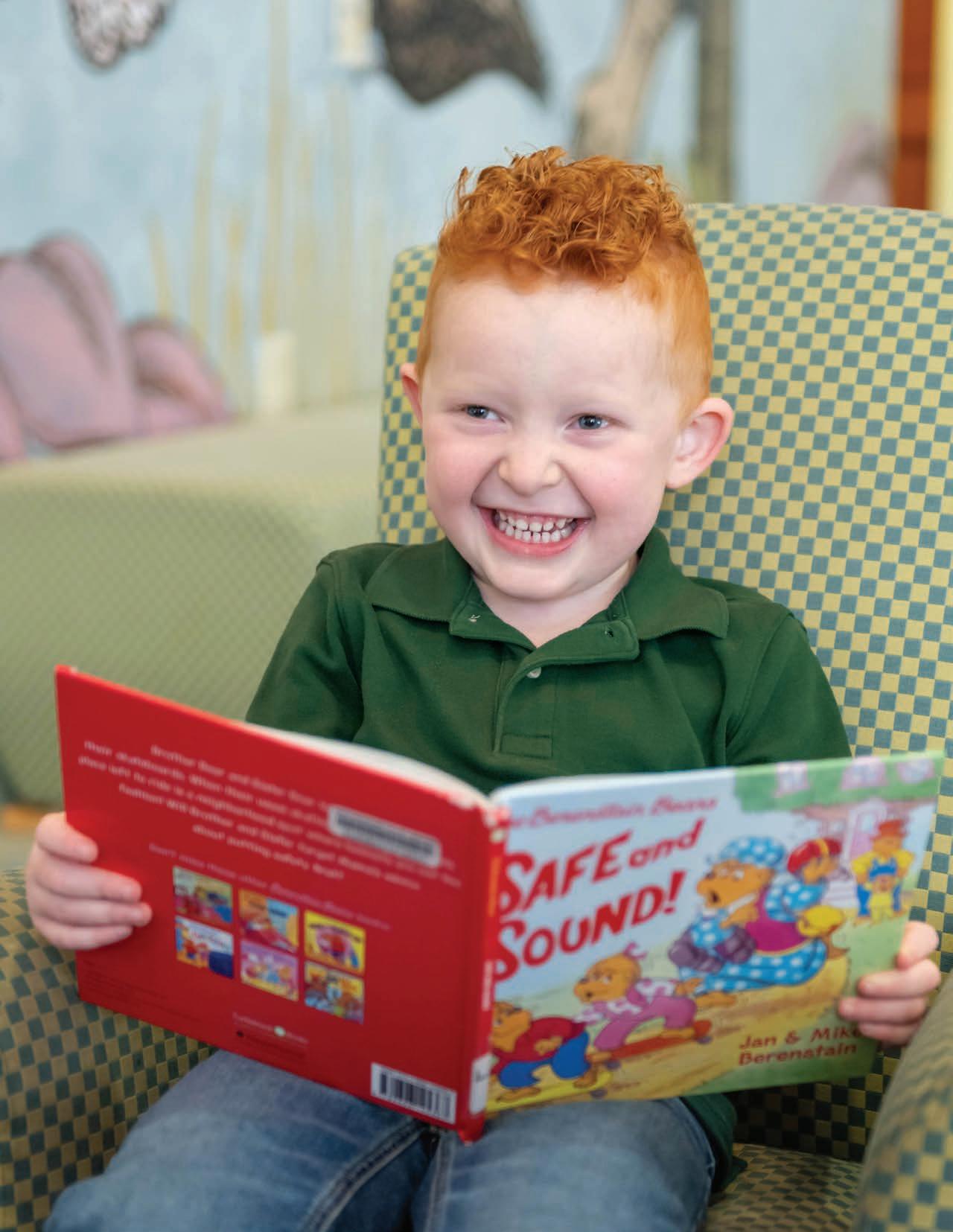
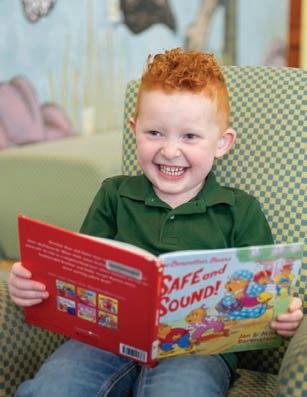
Geary,
the Columbus Public Library. He is the son of Dennis and Jena Geary of Fort
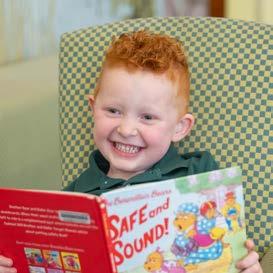
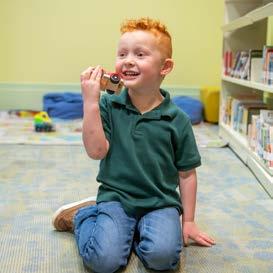
Benning.
photos by Eliza Daffin Photography

Black History Learning Opportunities
Geary,
the Columbus Public Library. He is the son of Dennis and Jena Geary of Fort
We’re in the throes of a very cold January. We’ve had one albeit brief snow day, and we’re watching for the potential of an ice storm coming down to our parts of the south. More reason to look ahead to February and March when love is in the air and Spring is starting to bud everywhere. Taking the time to reconnect with your partner is important. Get creative when planning a date night. This can be budget friendly with lots of opportunities to spend quality time together out and about in our community. See page 13 for some fun ideas.
Our local focus is on the Down Syndrome Association of Greater Columbus and the great work that they do in our community. Mark your calendars for 3.21–Down Syndrome Awareness Day! With local events and fundraisers, the goal is to bring more options to our Down syndrome community as well as enhance the support system and resource services offered. Read all about this on page 10.
It’s never too early to plan for the next school year. If your child is just embarking on their school education journey, making the move to the next grade or levelling up to middle school or high school, now is the time to look at our local schools. From private to public, we have schools and tutoring options highlighted throughout this issue. Your child’s critical thinking skills are key to a successful academic career. We have ways to help to build those skills on page 7.
Get out and explore all of the wonderful events in our family fun calendar. It’s full of events across the Valley from February through early April.
Enjoy the read!
Jodi Saunders
P. O. Box 229
Columbus, GA 31902
706-324-6214 • fax 706-324-6216
EDITOR/PUBLISHER
Jodi Saunders
jodi@columbusandthevalley.com
ADVERTISING & MARKETING
Becky Kenimer
Advertising Account Executive becky@columbusandthevalley.com
Margie Richardson
Advertising Account Executive margie@columbusandthevalley.com
Julie Lauzon
Sales & Marketing Manager
salesassistant@columbusandthevalley.com
LAYOUT & DESIGN
Rebecca DeLoach 62GraphicStudio.com
WRITERS
Natalie Downey Dr. Britney Farmer
Khristina Gallagher
CONTRIBUTING WRITERS
Brett Buckner
Rebecca Hastings Jan Pierce
PHOTOGRAPHY
Eliza Daffin Photography ElizaDaffin.com
A Publication of Columbus and the Valley

WEDNESDAYS
Story Time with Grammy Trish
Columbus Bound Bookshop
ColumbusBound.com
February
7
Phenix City’s Father-Daughter
Boot Scootin’ Ball
Martin Community Center at Idle Hour Park
PhenixCityAL.gov
9 Valentine’s Card Decorating Contest
Columbus Public Library
MeetingRooms.CVLGA.org/event/15234535
10
After School Art Break
The Columbus Museum COMUGA.org
10
Family Ice Skating Night
Columbus Ice Rink
ColumbusGA.gov/icerink
14
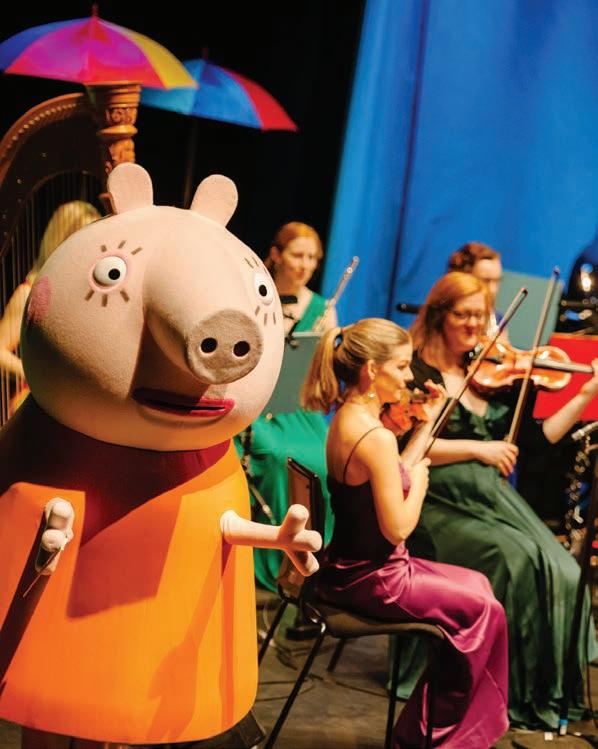
The Orchestra Games: An Olympic Musical Adventure for Kids
Columbus Symphony Orchestra at RiverCenter CSOGA.org
18
PAWS for Books
North Columbus Public Library
MeetingRooms.CVLGA.orgg/event/15229725
18
Shake, Rattle & Roll Father Daughter Dance
St. Luke Ministry Center RCCAC.org
20 Columbus River Dragons vs. Pee Dee Icecats
Columbus Civic Center
ColumbusGA.gov/civiccenter-2
21
February Festival: Celebrating Black History Month
The Columbus Museum COMUGA.org
28-MARCH 8
A Bad Case of the Stripes
Springer Opera House
SpringerOperaHouse.org
March 2
March Madness Kids’ Bracket Challenge
Columbus Public Library
MeetingRooms.CVLGA.org/event/15235702
10
The Stinky Cheese Man and Other Fairly Stupid Tales RiverCenter RiverCenter.org 10
LEGOs® in the Library
Columbus Public Library meetingrooms.cvlga.org/event/15234483 14
Fountain City Mardi Gras Parade
Noon Down Broadway
14
Columbus Symphony Orchestra Open Rehearsal
Columbus Symphony Orchestra at RiverCenter CSOGA.org
20-29
Hairspray
Springer Opera House
SpringerOperaHouse.org
April 2
Phenix City’s Easter Egg-stravaganza Hunt
Garrett-Harrison Stadium
PhenixCityAL.gov
5
Cookies with the Easter Bunny
Columbus Trade Center
ColumbusTradeCenter.com

Submit your upcoming event online at columbusandthevalley.com/valley-parentmagazine-event-submissions

by Khristina Gallagher
This time of year is perfect for books that discuss learning, Black history and Valentine’s themes—creating a warm, joyful space where kids can celebrate love, identity and discovery all at once.
AGES 0-5
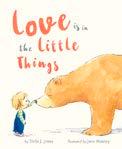
Love
by Stella J. Jones
A tender celebration of everyday moments that make life feel whole. Through small kindnesses, warm connections, and simple joys, the book shows that love thrives without grand gestures. It grows quietly and beautifully in the little things we share, reminding readers that meaning often lives in the softest parts of daily life.
AGES 6-10
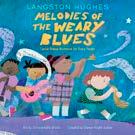
by Langston Hughes
This book feels like an invitation to experience Langston Hughes in a fresh, heartfelt way. Each poem is paired with vibrant artwork from talented Black illustrators, creating a conversation between word and image. The collection celebrates rhythm, resilience and history, offering young readers a welcoming doorway into Hughes’s timeless voice.

AGES 6-10
by
Ben Clanton
Dive into three sweet Palentine’s Day adventures with Narwhal and Jelly. After Jelly gives Narwhal a thoughtful card, Narwhal panics and overwhelms Jelly with gifts—waffles, songs, books and more waffles. Jelly enjoys the effort but wants time together, reminding readers that real friendship is about presence rather than presents.


AGES 9-12
by
Jewell Parker Rhodes
A powerful and haunting middle grade novel, follows Jerome, a 12-year-old Black boy who returns as a ghost to observe the world he left behind. Through his journey, the story explores racism, injustice, empathy and the urgent need for understanding.
These reviews are provided by Columbus Bound Bookshop owner Khristina Gallagher. Locally owned, located in Midtown, Columbus Bound Bookshop carries new books for children and adults. You can find them online at Columbus Bound Bookshop, Facebook and Instagram.
Teaching Day School
Serving six weeks to Pre-K for over years

Early Morning Drop Off and Extended Day Programs!
Open Enrollment starts February 2, 2026

by Jan Pierce
Everyday life involves a lot of problemsolving. How do you encourage your children to get along with others? What’s the best way to help your child learn to manage money? Should you let your kids play video games and which ones are off-limits?
Without realizing it, you’re making logical decisions every day, and your kids need to learn how to make sound, logical decisions as well. Not just in their social and emotional lives, but in their reading, their writing, and their math and science explorations as well.
In short, the child who knows how to think logically will be a better student who comprehends his or her reading at a higher level, is able to think creatively to solve math and science problems, can communicate clearly and may even score higher on IQ tests.
Critical thinking is a complex skill learned over time. It involves being able to evaluate information for accuracy, interpret information, make predictions and inferences (conclusions based on evidence and reasoning), recognize fact vs. opinion and explain one’s thinking clearly.
So….it’s kind of hard. But, there are simple ways to build these logical thinking skills and you can begin to teach them in easy and fun ways. Here are some skills to work on at home to ensure your child is a strong, clear and logical thinker.
Analogies are comparisons between two different things. They show a relationship between two items. The skill involved requires your child to first identify the relationship and then select the words demonstrating that relationship. The use of analogies increases understanding in virtually all areas of learning.
For example: day is to light as night is to
____. To solve this analogy, you first see that it is light in the daytime, then supply the opposite concept, dark, to night.
Or, book is to read as song is to _____. One reads a book. What do we do with a song? We sing it.
Analogies can demonstrate a number of relationships such as part to whole, opposites, cause and effect or degree of intensity (cool is to freezing as warm is to ____.)
You can find workbooks with analogies in them or try the following websites to practice solving analogies. Kids enjoy doing them and you might create a family game in which you create your own analogy problems for one another.
• funtrivia.com (search analogy quizzes)
• study.com (search analogies)
Sorting items for like attributes has always been fun for kids. You can sort buttons by color, size, number of holes, shape, etc. You can group animals into size, habitats,

pets vs wild, stripes and no stripes or any other categories you create. And what kid wouldn’t want to sort M & M’s by color?
You can go further and have children graph their information in a simple bar graph or pie chart. Classifying items builds both math and language skills and leads the way to simple science explorations.
You’ll find information on classifying at:
• mensaforkids.org (classifying animals)
• kidsbiology.com (go to animal classification game)
• education.com/worksheets/graphing
In the process of problem-solving, it’s crucial to be able to pull out the information that matters. For example, consider the following sentence and the question to be answered: Tom had four quarters and three dimes. He also had a frog in his pocket. How much money does Tom have?
Obviously the frog in the pocket is not important to determining the correct amount of money. But selecting out only pertinent information can be quite challenging. Go to study.com and search for relevant information in math. You’ll find videos followed by simple quizzes to practice this important skill.
A hypothesis is an educated guess based on the current information known. Your child needs to be able to consider what is known and predict what might happen next, then test it out to see if the hypothesis was correct. This is an important skill in all of learning.
When your child is reading a book, ask: “What do you think will happen next?” Then after reading you can evaluate the accuracy of the prediction and determine why it was or wasn’t right.
In math and science it’s also important to make logical hypotheses and then test and evaluate them. Go to study.com and search for “How do you Develop a Hypothesis.”
In this day of information overload and cries of “fake news” all around, children must know how to recognize facts from the opinions of others. Facts are always true. Opinions are beliefs held by an individual
and can vary from person to person. Help your child learn the difference between fact and opinion. Watch the YouTube video on Fact and Opinion by BrainPop.
Critical thinking is a skill that grows over time. Ask your children to answer questions in their own words and clarify what they mean. Point out that some problems have more than one correct answer or more than one way of arriving at that answer. Help them see how emotions
your business featured here

and motives can affect thinking. Encourage them to write out their answers to questions to build skill in coming up with clear and concise answers to problems. Kids benefit when they have opportunities to practice problem solving using critical thinking skills. And don’t forget that old-fashioned conversation around the dinner table is a great time to pose questions that require clear, logical thinking. VP


by Dr. Britney Farmer
How do we, as parents, know we’re doing the right thing? How do we know if our child will turn out “okay?” Will our child feel a sense of belonging in our family and in our community? Will they stray from what we’ve taught them, or remember the principles we tried to instill? Parents have asked these questions across generations. Some discover answers that make sense to them; others continue learning as they go. There are well-established theories behind attachment styles, and what these theories tell us can be deeply influential in our ongoing parenting journey.
Attachment starts early—even before birth. A baby can hear their mother’s voice around 18–20 weeks of gestation, and immediately after birth, a newborn can recognize their mother’s scent. These early sensory experiences help lay the foundation for bonding and attachment. In this article, I will introduce key attachment theorists and break down what their work has revealed about how we guide caregivers to parent today. Having this framework allows us to approach our children with the love, compassion and care they deserve.
John Bowlby is widely cited as the founder of attachment theory. He proposed that attachment is an evolutionary mechanism designed to keep infants safe and alive. Bowlby believed attachment develops during the early years, from birth to around age three, and that when caregivers are responsive and consistent, children develop a sense of safety. From his work, we understand that early caregiving relationships shape how we see ourselves and others throughout our lives.
Mary Ainsworth expanded on Bowlby’s ideas by turning them into measurable
science. Through her work with parents and infants, she developed the “Strange Situation” trial. This study involved observing 9–12-month-old infants as their caregivers left and reentered the room while a stranger was present. Researchers carefully cataloged the infant’s reactions to separation, the stranger and reunification with the caregiver. From this work, Ainsworth identified three early attachment styles: secure, insecureavoidant and insecure-resistant (also called ambivalent). Her research showed that sensitive, responsive caregiving predicts secure attachment—and that how a caregiver responds to a child’s distress matters more than how much they verbally declare to love their child.
Mary Main later expanded attachment theory to include disorganization and trauma. She proposed that when a caregiver is both a source of comfort and fear, attachment can become disrupted, leading to what is known as disorganized attachment. This attachment style is characterized by a lack of consistent or predictable responses to the caregiver. Main’s work demonstrated that unresolved trauma in parents can affect a child’s attachment and may be transmitted across generations.
Alan Sroufe studied attachment across the lifespan, not just during infancy. As the lead researcher of the Minnesota Longitudinal Study of Risk and Adaptation, he found that children with secure attachments tend to have healthier relationships, higher self-esteem and stronger emotional regulation later in life. Importantly, his research also emphasized that while early attachment is highly influential, later relationships and experiences can alter a child’s

developmental trajectory.
In my clinical practice, I treat Reactive Attachment Disorder (RAD), a diagnosis that can be profoundly disruptive to both the child and the family system. According to the American Academy of Child & Adolescent Psychiatry, Reactive Attachment Disorder is marked by emotionally withdrawn behavior, limited eye contact, rare expressions of positive emotion, explosive outbursts and a lack of comfort seeking when distressed. RAD is identified before the age of five and develops in the context of severe neglect, abuse, inconsistent care giving or emotionally withdrawn caregivers.
The mainstay of treatment for RAD is a stable household with clear routines and consistently responsive caregiving. Trauma-based therapy and attachmentfocused therapy can also be helpful. There is no medication that treats Reactive Attachment Disorder itself; medications are used only to address co-occurring symptoms or related diagnoses.
What we learn from attachment theory—and from what happens when attachment goes wrong—is that being a conscientious, responsive caregiver as early and as consistently as possible is key. Even when a child experiences early hardship, investing time, love and attention is a deposit in their future. What this practically means is showing up, every day, no matter what, not overreacting to your child’s shortcomings or your own stress and maintaining predictable responses. The dividends of secure attachment extend beyond your own child being raised; they reach future generations, who will build their own attachment patterns on the foundation you lay today. VP
by Brett Buckner
3.21 DAY
It’s all about the socks. The crazier the better. March 21 marks World Down Syndrome Day. The celebration, commonly referred to simply as “3.21 Day,” is symbolic because people with Down syndrome have three copies of the 21st chromosome. Trisomy 21 is the clinical term for Down syndrome, which is the third copy on the 21st chromosome. People with Down syndrome have an extra chromosome, giving them 47, instead of 46.
On March 21, people around the world wear brightly colored, mismatched socks. Socks were chosen because the karyotype of Down syndrome chromosomes actually look like mismatched socks.
“It all makes perfect sense when you look at it that way,” said Carrie Defenbaugh, president of the Down Syndrome Association of Greater Columbus (DSAGC). “It’s just meant as a reminder of the importance of inclusion, understanding and acceptance.”
In honor of 3.21 Day, the DSAGC is hosting a Sock Hop and Roll at Bowlero on Bradley Park from 5-7 p.m. DSAGC will also support Gigi’s Playhouse’s 5K Dash for Down syndrome with a cheering section during the Kids Dash. The 5K is at Woodruff Park in Uptown Columbus from 10 a.m. to 1 p.m. With headquarters in Atlanta, Gigi’s Playhouse is a Down syndrome achievement center with 61

locations across the United States. The goal is to bring Gigi’s Playhouse to Columbus.
“Having a Gigi’s Playhouse would be incredible for the community,” Defenbaugh said. “We want to do whatever we can to help make that happen.”
Organizing events like those for 3.21 Day is what the DSAGC is all about. The mission of the DSAGC is especially suitable for this year’s celebration, the theme of which is Together Against Loneliness.
“We really want to be a resource and support system for individuals with
Down syndrome, but also their parents, their caregivers, their loved ones,” said Defenbaugh, whose son has Down syndrome. “We’re always working on ways that we can do that with new supports, new programs and new events to get individuals together to socialize, relax and have a good time.”
According to the National Down Syndrome Congress, Down syndrome is one of the most common genetic variations
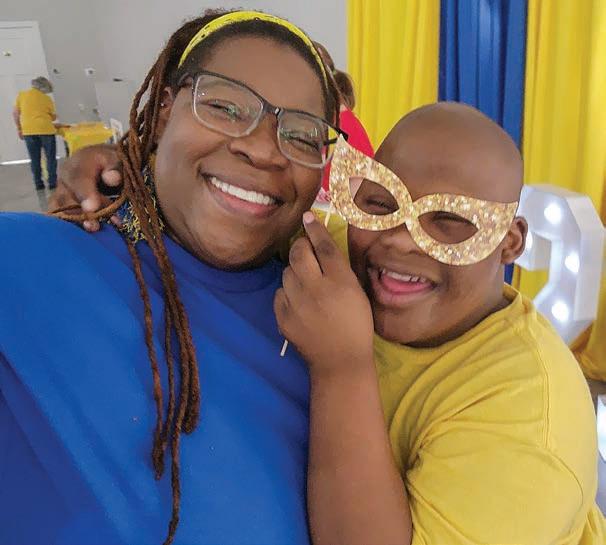
and occurs in approximately one in every 700 live births in the United States. Yet it’s important that new parents have a support system like the DSAGC to better understand some of the challenges that lie ahead, explained DSAGC board member Toya Barnes.
“When you first get a diagnosis of Down syndrome, it can feel very overwhelming,” said Barnes whose son has Down syndrome. “The purpose of the group is to replace fear with facts, while providing support and hope. When as families, as parents and caregivers, we feel supported, then the individuals with Down syndrome can actually thrive, and it benefits the entire community.”
Advances in research and healthcare have improved the lifespan of individuals with Down syndrome from 25 years in 1983 to 60 years today.
“For me, just thinking about my son, a phrase comes to mind that’s common in the Down syndrome community, ‘More alike than different,’” Defenbaugh said. “And they are. They are more like other children than they are different. It might take them longer to do certain things, but they’re just like everybody else. They have feelings. They have wants and desires just like everyone else.”
Those with Down syndrome have and enjoy a full life with all the milestones that come with it.
“It’s just letting people know and understand that people with down syndrome can do whatever they want to do,” Defenbaugh said. “They can have a job. They can get married. They can do anything.”
Spreading this type of awareness will ultimately create a sense of belonging.
“Inclusion is not just a word, but it takes daily practice,” Barnes said. “Children with Down syndrome are considered special, but really all children are special. They all learn in different ways. Their behaviors are different. Everyone is different. Everyone is special. We’re just challenging the perception of people with differing abilities by highlighting their abilities.
“We still want to celebrate their accomplishment and advocate for them while being represented alongside their peers.”
World Down Syndrome Day started with the Down Syndrome Association Singapore in 2006 and steadily gained traction
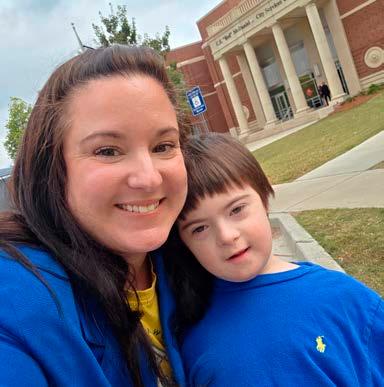
through global advocacy. It was officially recognized by the United Nations General Assembly in 2011.
For more information or to register for either of the March 21 World Down Syndrome Day events, visit the DSACG website at dsagreatercolumbus.org. VP

Can you unscramble these words?
Concrete is the secondmost consumed material on Earth, after water, with 30 billion tons produced and consumed each year.
Find these words:
by Rebecca Hastings

Agreat date night doesn’t have to be a fancy restaurant or a movie. When you are on a budget, date night can feel like a luxury you can’t afford. But it doesn’t have to be that way. You can spend time together without breaking the bank (sometimes without even spending a dime!) It just takes some creative thinking and intentional thought to make date night work. When you and your partner are committed to making dates a priority, you can do it no matter what your budget is. Try these fun ideas:
If you are looking to get out of the house, there are so many fun ways to spend time together. Think about things you like to do, things you want to try and places that are new or meaningful.
While some of these ideas would be fun to do with your kids, remember, this is a chance for you and your partner to spend time together, reconnect and have fun. Look through these ideas to see which ones are your favorite or work your way down the list to try them all!
1. Have a Picnic
Pack sandwiches, fruits and a blanket. Enjoy a cozy evening together at a local park. You can even bring a deck of cards, a board game or a frisbee for added fun. If it’s chilly, you can have a car picnic at a place with a nice view. It may even feel like you are teenagers!
2. Visit a Free Event
There are tons of free events out there, even in our area. Check our calendar at columbusandthevalley.com and find events like art exhibitions, concerts or festivals. Many places offer free entry or events on certain days.
3. Bookstore Adventure
Spend an evening at a bookstore or library. Pick out books for each other or choose one together. Grab a coffee and find a cozy place to read together.
4. Get Outside
Go for a hike or a nature walk in a nearby park or along the river. If you both have bicycles, you can take a leisurely bike ride around your neighborhood or explore a bike trail. This will give you a chance to enjoy the beauty of nature together while getting some exercise.
5. Volunteer Together
Look for volunteer opportunities in the community. Whether it’s helping at a local shelter, cleaning up a park or assisting at a community event, volunteering together can be a rewarding and fulfilling experience.
Sometimes even getting out the door can feel impossible. Whether it’s tricky schedules or just feeling tired, date night often gets pushed aside. Instead of forgoing date night when obstacles arise, try an athome date.
When you stay in, you have a lot more flexibility. The important thing is that you use the time to disengage from all the
normal responsibilities and prioritize being together. The most important part is that you are spending time with your partner.
6. Watch Something
Instead of going out to the movies, create a movie night at home. Pick a theme, grab some popcorn, dim the lights and stream a movie or a favorite show. Pick something that you will only watch together, and it becomes a fun experience you share.
7. Try Stargazing
On a clear night, set up a cozy space on your balcony or in the backyard with blankets and pillows. Use a stargazing app to identify constellations and enjoy the night sky together.
8. Learn Something New Together
Find an online tutorial or class for something you both want to learn like dancing, a new language or a craft. Spend the evening learning and practicing together.
9. Cook Together
Make a special adults-only meal after the kids are in bed. Cook something you both love or try something new together. Play music, enjoy a favorite beverage and embrace a slower pace as you enjoy your meal.
10. Turn In Early
One of the best at-home date nights is in your room. Go to bed early together. Whether it leads to much-needed shut-eye or something else, it’s a great way to spend time together VP
February is a time to celebrate, honor and reflect on the achievements, culture and lasting impact of Black leaders, artists and communities past and present. Throughout the month, our community comes together to learn, connect and uplift Black voices in meaningful ways. Below, you’ll find a list of some events happening near you that offer opportunities to engage.
“We Are the Drum and the Scribe” Exhibit
Public Reception: February 19 from 6 p.m. to 8 p.m.
On exhibit: February 1 - May 16
This exhibition is an affirmation of Black Art In America‘s (BAIA) ongoing mission to document, preserve and promote the contributions of African American visual culture.
Columbus Black Heritage Trail
Self-Guided Tour
All year long
Make your way through downtown and midtown Columbus and see if you can spot the 30 African American heritage landmarks that show the legacy of slavery, segregation and the Civil Rights Movement.
Academy Dance Center
Acute Care Express
All About Kids Learning Center
Devica Alappan, MD
Angel Academy
Aranas & Stitt, OBGYN
Bareware Pottery
Basilio Pediatrics
Behavioral Health Partners
Bluebelle Artist Market
The Blushing Brunette Boutique
Carver Heights Presbyterian Child Development Ctr.
Center Pharmacy
Central Christian Church
Central OBGYN
Chambers OBGYN
Ritu Chandra, MD
Childcare Network (Hamilton Rd)
Clement Arts
Columbus Bound Bookshop
Columbus Children’s Dentistry
Columbus Clinic
Columbus Museum
Columbus Pediatrics
Columbus Public Library
Columbus Regional Midtown
Columbus Roberts Center
CSU Elizabeth Bradley Turner Ctr.
Dinglewood Pharmacy
Divine Childcare Learning Ctr.
Columbus Specialty Hospital
James Dorchak, MD
Chattahoochee Valley Libraries
Various Events
Visit cvlga.org for dates.
The public library always has events, but in February they’re hosting a number of Black History Month events including a themed scavenger hunt, Black History Bingo and Family Film Fridays.
The Columbus Museum
Black History Festival
February 21 from 10 a.m. to 2 p.m.
COMU will host a February Festival for Black History Month where you can enjoy hands-on art making inspired by works in the Museum’s collection, take part in a fun scavenger hunt and connect with local organizations sharing their talents and stories. VP
Easter Seals
Miranda Y. Edwards, MD
Fairview Baptist Preschool
The Family Center
Family Physicians of Columbus
First Baptist Church Child Dev./PC
Foot & Ankle of West Ga.
Fort Benning Housing Services
Fountain City Coffee
Generations Knowledge & Care Ctr.
Great Beginnings Child Care
Greystone Falls
Greystone of Columbus Park
Greystone Inverness
Growing Room
Growing Room Too
Hollywood Connection
Imagination Station
Imagination Station Too
International Friendship Ministries
Joyful Journeys Childcare
Just for Kids
Kool Smiles
Mark Lawrence, DDS
Little Angels Child Development Ctr.
Little Paws Preschool
Thomas Malone, MD
Mathnasium
Mickayla’s Place
Midtown OBGYN
Mildred L. Terry Library
My Gym
Necco Foster Care
North Columbus Public Library
Northside Recreation Center
OBGYN Associates
Lirio E. Palmos, MD
Panvelkar & Panvelkar, MD
Pastoral Institute
Pediatrics at Brookstone Ctr.
Phenix City-Russell County Library
Pierce Chapel Methodist Preschool
Polka-Dots Early Childhood Development. Ctr.
Preppy Pets
Puddle Jumpers Child Enrichment Ctr.
Rivertown Pediatrics
Russell County DHR
Second Avenue Animal Hospital
Jeffrey Serff, DMD
Smile Doctors
Smiths Station Baptist Church
Smiths Station Pharmacy
St. John AME Church
St. Luke Early Learning Ctr.
St. Mark UMC Child Dev. Ctr.
Lisa Alexander Strickland, DMD
Summerville Baptist Church
Sylvan Learning Center
Nora Tan-Ngo, MD
Toni’s Dancing Studio
TSYS Childcare Center
Uptown Pediatrics
Richard A. Valentine, MD
Wynnton Methodist Preschool
ZÖe Pediatrics
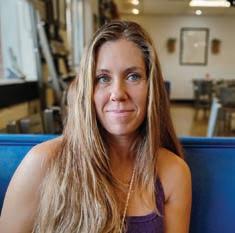
by Natalie Downey
Iremember the first time another mom asked me for advice. I was at the soccer field with my four small children, and for a reason I still cannot understand, she stopped me to ask me how I managed it all.
It took me by surprise because as far as I could tell, I was not, in fact, managing it all. But, this mom looked at me with tired eyes and her own small posse of children, and I grasped for the best advice I had. “Lower your standards,” I said with a friendly smile and a sigh as the baby on my hip dropped his pacifier in the mud. It was the best advice I could offer, my own standards, even for conversation, quite low at the time.
Before I became a mother, back when I was living what now seems like a life of luxury, I had always been able to keep my home tidy and organized. I enjoyed having things like free time and friends, and I had pretty high standards about my space, routine and lifestyle. When I became a mom, a lot of that went out of the window. Suddenly, survival was the standard.
I admit, once I became a mom and began sharing my space with little ones, it took me a while to adjust—and this memory is what inspired my advice to the mom at the soccer field. You see, for several years I had tried to keep up my perfectionist standards in many ways, which had led to a lot of frustration and stress. Until I finally realized that the world wouldn’t end if we had to leave the house a mess when we rushed out of the door in the morning. We returned to our home to find that it was still exactly the same as we’d left it, no warrants were out for our arrest, and we could just as easily clean up the mess in the afternoon after we returned home as we could in the morning.
As much as I’d lower my standards of perfection though, my kids would always challenge me to lower them even more. One time I took my kids to the movies, only to arrive and discover that my daughter had not worn shoes. Or socks. Perfectionist me would have never considered any option other than
going home to get her shoes. But, I sighed that day, and even though I hadn’t put that child on my hip in a long time, I carried her into the movie, the gleam of defiance in my eyes daring anyone to judge my disheveled gang.
Not only did I gradually learn to lower my standards of idealist perfection in the home, I learned to smile at the visible stories I saw when I looked across a room in disarray: the fingerprints on the window, the half-built Legos on the coffee table and the stack of crayon-scribbled love notes on my nightstand. “We live here,” I’d remind myself. “This is what a house looks like when people live in it.” Of course it’s not tidy all the time, but it’s perfect.
Because you see, perfect isn’t a precise arrangement of furniture in a room absent of crumbs and smudge marks. It’s not always being on time or wearing color-coordinated articles of clothing, or an image I saw one time on instagram. Perfect is my daughter bringing me tea when I’m working at my desk, spilling drops haphazardly as she walks towards me with pride in her eyes. It’s two identical decorative pieces on my wall because my twins bought me the exact same gifts for Christmas one year. Perfect is the way our house smells like us, our shoes piled by the door, and it’s the life we’re all living together. From mismatched socks to laughable school pictures to pancakes for dinner, my kids have continuously taught me that life doesn’t have to be perfect to be good. And that instead of my standards centering around a clean house and gourmet meal, it’s a lot more fun for them to be centered around sharing a life together, even if it’s a messy one. Because honestly? Who are those standards for anyway? The kids don’t care if the house is perfect. But they definitely prefer a mom who isn’t irritable. Lowering your standards might mean trading perfection for peace. Accepting that one day your house will be clean, and that day is not today. Knowing that this is all temporary, and realizing that what really matters is living an authentic life that
resonates with your own values, not the values of strangers on the internet.
There’s something to be said for learning responsibility, helping the family with chores, having an overall sense of appreciation for your home and belongings and taking care of what you have. And, of course, standards regarding health, relationships and just being good people should never be lowered. But perfection in the family home just leads to frustration and lost opportunity. Life, especially with kids, is a raw, messy, unfiltered adventure. And in that, we learn how to bring into the real world something it very much needs: authenticity.
Kids challenge us to remember what really matters. I’m not sure if the mom at the soccer field took my advice that day, but I myself remember it often. My standards for life with my family are through the roof—the perfect house can wait. VP