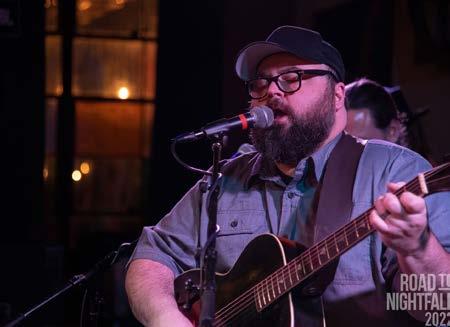
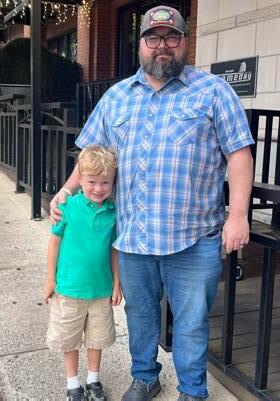
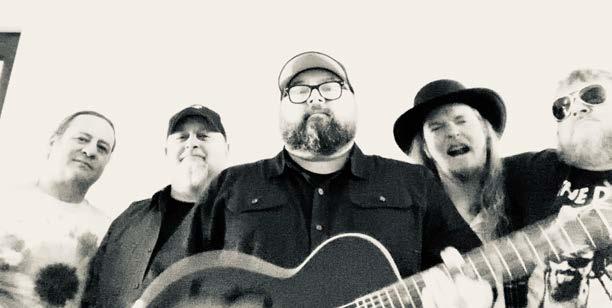
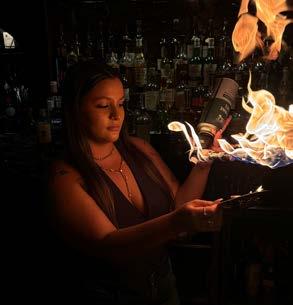
CHRISTIAN GULLETTE: GRIEF ON A CALIFORNIA ROAD TRIP
VANESSA
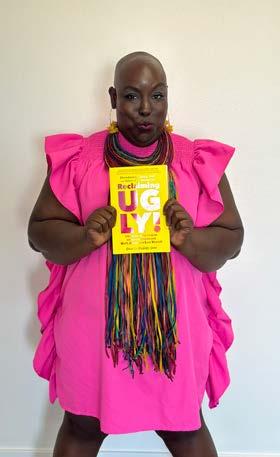
ROCHELLE LEWIS: UPLIFT, GLORIFY, AND LOVE YOURSELF
TEETH IN THE DARKNESS WITH STEPHEN GRAHAM JONES
KRISTEN ARNETT PREVIEWS STOP MEIFYOU’VE HEARDTHISONE
POETRY, FICTION, & ESSAYS
A JOURNAL OF CULTURE
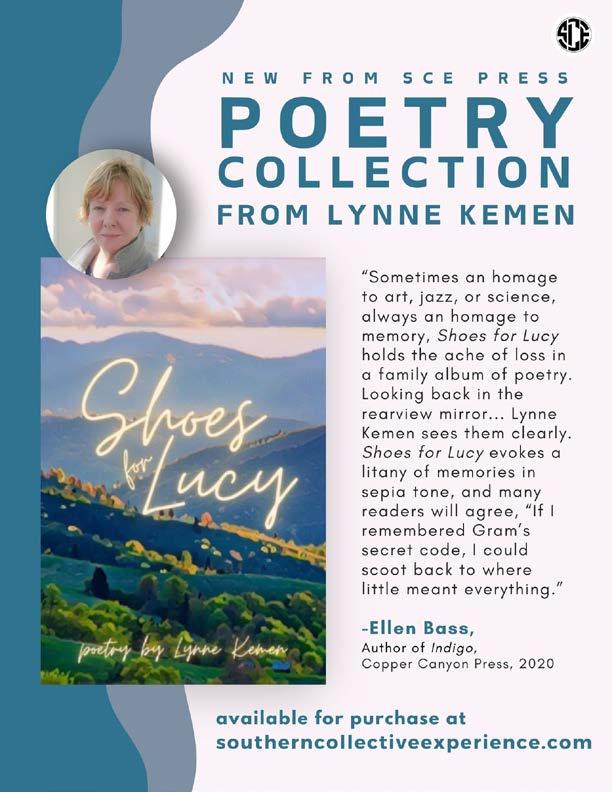
The SCE Press Presents The SCE Press Presents
Lynne Kemen’s writing appears in various literary journals and anthologies. She published her chapbook, More Than a Handful, in 2020 with Woodland Arts Editions. She contributes as an Interviewer and Essay Editor for The Blue Mountain Review, a culture-focused journal. She is a member of The Southern Collective Experience and is on the boards of two not-for-profit organizations. She lives with her husband, William Rossow, and their four cats in the Great Western Catskills of Upstate New York.
Lynne Kemen’s Shoes for Lucy is a beautiful and relatable collection of poems that explores a wide range of emotions. From grief to rediscovery, Kemen writes with a deft hand, creating vibrant and introspective pieces that remind us to cherish life’s simple pleasures.
— Kelli Russell Agodon
Author of Dialogues with Rising Tides (Copper Canyon Press)
Shoes for Lucy is like a beautiful summer storm on the porch - bursts of light, cool breeze, fragments of childhood dreams, and echoes spreading out in all directions.
— Jack B. Bedell
Author of Against the Woods’ Dark Trunks, Poet Laureate of Louisiana, 2017-2019
A genre-bending powerhouse of a collection. A spare, artful blend of poetry and fiction, Kemen combines masterful storytelling with lyrical prowess. A bit Oliver, a bit Forster, and a bit Bass, Kemen deftly invokes her literary heroes, while inking her heart on her sleeve. “I go outside and touch my flowers and wish it was you.” she longingly writes. Penned in the beautiful voice of a wise and witty friend.
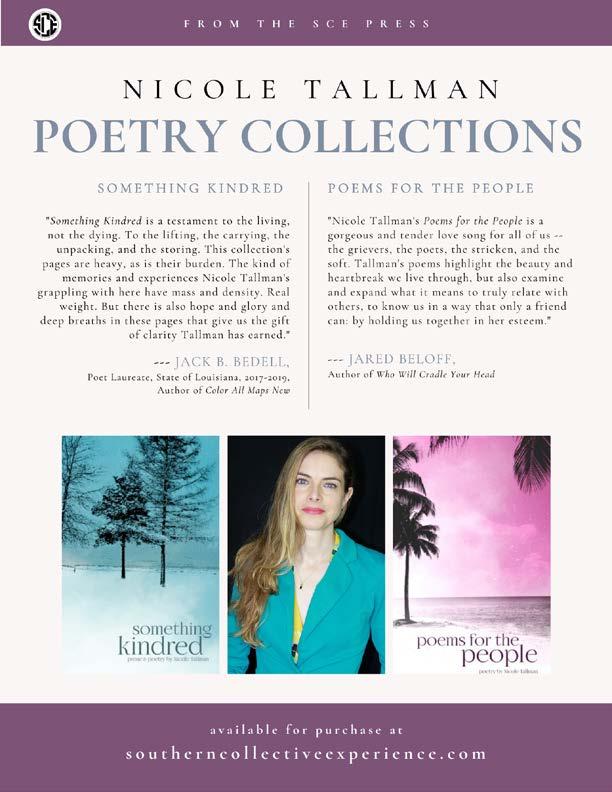
Nicole Tallman
Author of Poems for the People (SCE Press) and Something Kindred (SCE Press)
Exiles of Eden by Clifford Brooks 978-1-7347498-6-1
978-1-7347498-0-9
Something Kindred by Nicole Tallman
978-1-7362306-1-9
Poems for the People by Nicole Tallman
978-1-7362306-2-6
Draw of Broken Eyes & Whirling
by Clifford Brooks
978-1-7347498-3-0
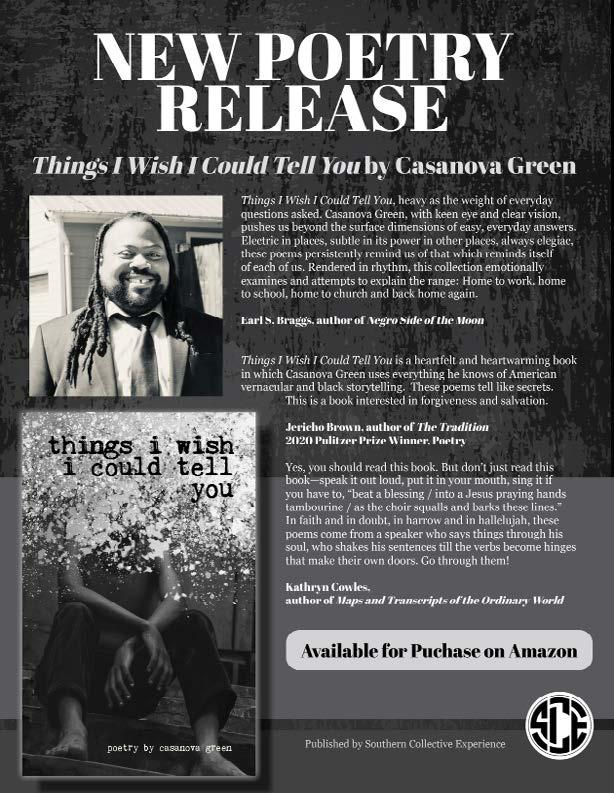
Things I Wish I Could Tell You by Casanova Green
978-1-7362306-0-2
the Butterfly by Tracy Hagan 978-1-7347498-8-5
The Ghost Gospels by Laura Ingram 978-1-7347498-7-8
Tell Me What You Saw and What You Think It Means by Steve Bellin-Oka
dreamterludes by Monica Kim
The
Metaphysics
Flutterby
Athena Departs: Gospel of a Man Apart by Clifford Brooks
On the Hiwassee by Clayton Jones .................................. 193
Before the Big Gig by Clayton Jones ................................195
Selenophobia by David B. Prather .................................... 197 Big Sky, Montana by Irena Kaci ........................................ 199
Combing Aunt Minnie’s Hair by Kathryn Kimball ........................................................ 203
Mary Magdalene at 7-11 by Kenneth Johnson ....................................................... 205
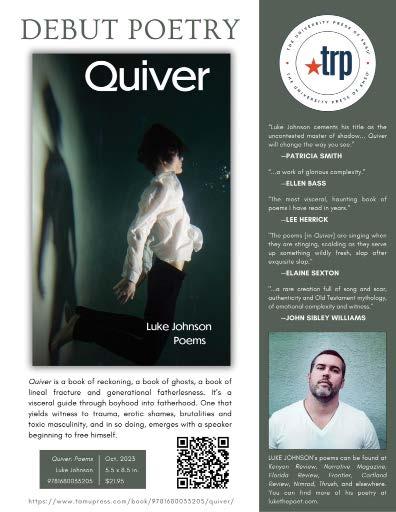
Olivia Rodrigo, Van Gogh, This Viscous Light by Luke Johnson .............................. 207
Internal Medicine by Megan Merchant .......................... 209
Coil and Pinch Pot by Mary Elder Jacobsen .................. 211
Metal Finishing Work by Max Westler .......................... 213
Wile E. by Max Westler .................................................... 215
How These Words of Love by Maxim D. Shrayer .................................................... 217
Driving South by Pat Boran ............................................ 219
The Hollow Visits June’s Grave by Roey Leonardi ............................................................ 221
Lines Concerning My Name by Stuart Dischell ............................................................ 223
Dust Fire by Annette Sisson ............................................. 225
Night After Night by Kari Gunter-Seymour ................................................ 227
Minnesota Girl & Child on a Tricycle in a Snowbank by Mara Adamitz Scrupe ....................... 229
Him by Megha Mittal ...................................................... 233
THE PROCESS OF JOY
by January O’Neil
For the past few years, long before the pandemic, I have been writing about joy. Maybe it’s more accurate to say I’ve been writing toward joy.
I can’t say that this was any kind of a conscious turn or strategic plan I had about my work and career. But I liken it to something more organic. Like pornography, I know it when I see it. But this practice of leaning into what makes me happy whenever possible has made my choices much clearer and certain.
If I had to pinpoint one moment when it all came together, it would be the period following my divorce in 2010. I was at my lowest point. Yet, there was this unsinkable part of me that said I’m not going down on this ship; meaning, I have two young kids and I am not waiting anymore for “my turn.” I’m not putting my life on hold. I am not waiting for the right moment, or the kids to get older, or when the time is right. It was now or never.
From his nonfiction book Inciting Joy, Ross Gay—someone who knows about delights and joy—writes this, “And though attending to what we hate in common is too often all the rage (and it happens also to be very big business), noticing what we love in common, and studying that, might help us survive. It’s why I think of joy, which gets us to love, as being a practice of survival.”
For a writer, there’s no better feeling than creating a poem or story that speaks to that feeling you’ve carried around like a stone but had no words to name. And as a reader, there’s no better feeling than receiving that joy. I also understand joy as a process.
I think of Toi Derricotte’s poem “The Telly Cycle” and its epigraph, “Joy is an act of resistance” nearly every day. And Ellen Bass’s wonderful poem “Any Common Desolation” and that great line, “You may have to break / your heart, but it isn’t nothing / to know even one moment alive.” Meaning, joy is hard. Joy is worth fighting for. Joy is getting to love, getting to survival.
Joy is a kind of poetics. At its core, it’s about creating. How do we create the world we want to live in? More important, how do we keep it? This is why attending to the things that we love is so important to our current selves and our future selves that we can’t quite imagine yet. I’ll stake my claim on that any day of the week and twice on Sunday.
I’ve made it a practice to look for the extraordinary in the ordinary: the cardinal at the feeder, the used cup in gutter on my campus walk, the sky the color of mop water. This is the necessary work of our lives. We’ve always been taught that poetry coincides with the big life moments: births, deaths, graduations, and weddings. But poems are made of the everyday: a call from your mother, the sound of rain at night, the bend of spring’s first daffodils. The key is to look at it all with new eyes.
Quarantine solidified this for me. I had always held this attention to joy. But because we weren’t interacting with others in the same way—not going into offices and classrooms, not grocery shopping, not going to bars and restaurants and movies—many of us spent our time alone. We are all too acquainted with loneliness. This was my way out of that darkness. And that study, that practice of witnessing—I’m really not sure what to call it—saved me. Maybe gratitude? Maybe joy? The necessity for pleasure is always with us. Maybe this is our time to claim it.
The world breaks our heart on a daily basis. We’ve become all too familiar with the daily doses of despair in the news and
on social media. It’s hard to stay present, to stay open. As a writer, I try to lean into that and claim it as an opportunity for creativity. That means I try and fail—a lot. But reading a poem can transform me for the entire day and gives me the courage to fail again tomorrow. The loftier side of me says I’m trying to make something beautiful, as Maggie Smith says in the last two lines of her poem “Good Bones,” “This place could be beautiful, / right? You could make this place beautiful.” But the realistic side of me said I am doing this for my own survival.
In Toi Derricotte’s “The Telly Cycle,” a meditation on her fish, Telly, and her grief and longing, she writes, “What does her love have to do / with five hundred years of / sorrow, then joy coming up like a / small breath, a / bubble.” And while the poem also alludes to the legacy of the enslaved and The Middle Passage, she reminds us that joy seeps in no matter what, and sometimes we have no control over how or when it enters, even at our most trying moments. And isn’t that a remarkable thing? Now, that’s a gift.
ABOUT january:
January Gill O’Neil is an associate professor at Salem State University and the author. Her poems and articles have appeared in The New York Times Magazine, the Academy of American Poets’ Poem-A-Day series, American Poetry Review, Poetry, and Sierra magazine, among others. She currently serves as the 2022-2024 board chair of the Association of Writers and Writing Programs (AWP). O’Neil earned her BA from Old Dominion University and her MFA from New York University. She lives in Beverly, MA.
lucidhousepublishing.com
NEW RELEASES AND FORTHCOMING
RELEASE DATE FEBRUARY 20, 2024
RELEASE DATE OCTOBER 1, 2024
RELEASE DATE OCTOBER 1, 2024
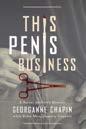
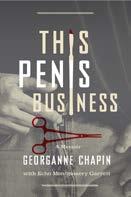
THIS PENIS BUSINESS A Memoir
Georganne Chapin with Echo Montgomery Garrett Activist Memoir/Bioethics/ Medical Ethics
ISBN: 9781950495450 $21.99
RELEASE DATE FEBRUARY 20, 2024
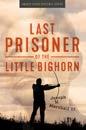
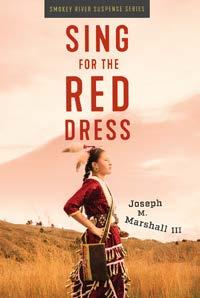
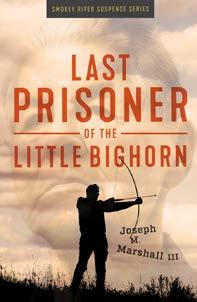
LAST PRISONER OF THE LITTLE BIGHORN Smokey River Suspense Series
Joseph M. Marshall III Sagas/Thrillers/Suspense/ Indigenous: Mystery/ Detective/Romance
ISBN: 9781950495559 $26.99
RELEASE DATE OCTOBER 1, 2024
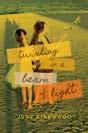
TWIRLING IN A BEAM OF LIGHT A Woman’s Life In Poetry
Judy Kirkwood Poetry: Family and Relationships Memoir: Parenting/ Love and Loss/Spirituality
ISBN: 9781950495573 $14.99
RELEASE DATE OCTOBER 1, 2024
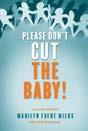
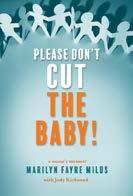
PLEASE DON’T CUT THE BABY! A Nurse’s Memoir
Marilyn Fayre Milos with Judy Kirkwood Activist Memoir/Medical Nursing/Social, Ethical & Legal Issues
ISBN: 9781950495498 $21.99
RELEASE DATE MAY 5, 2024
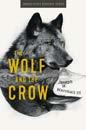
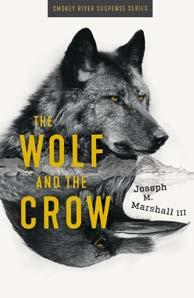
THE WOLF AND THE CROW Smokey River Suspense Series
Joseph M. Marshall III Sagas/Thrillers/Suspense/ Indigenous Families/ International Crimes & Mystery
MONEY PLAIN & SIMPLE What the Institutions and the Elite Don’t Want You to Know
Steven J. Spence
WINNER BEA Finances
ISBN: 9781950495283
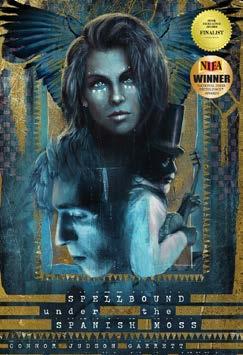
SPELLBOUND UNDER THE SPANISH MOSS
The Spellbound Series, Book 1
Connor Judson Garrett and Kevin N. Garrett
WINNER
15th NIEA Book Cover Design: Fiction—John J. Pearson
FINALIST
BEA Young Adult Fiction
A SEASON IN LIGHTS
Gregory Erich Phillips
GRAND PRIZE WINNER
2020 CIBA Contemporary and Literary Fiction
WINNER
16th NIEA Book Cover Design: Contemporary Fiction—Troy King BEA Performing Arts
(Film,Theatre, Dance, Music)
FINALIST
16th NIEA Contemporary Fiction
FROM THE PUBLISHER
We hit the road in 2024. You can find us at book festivals, indie bookstores, and libraries across the nation. I am so proud of our authors and the small team that works with us to usher these important books into the world. Books hold the power to create empathy and understanding that otherwise might lie dormant. Words matter, and our stories break down walls and enable us to connect as human beings. That is a beautiful gift that we can share.
LITERARY INTERVIEWS
LITERARY INTERVIEWS
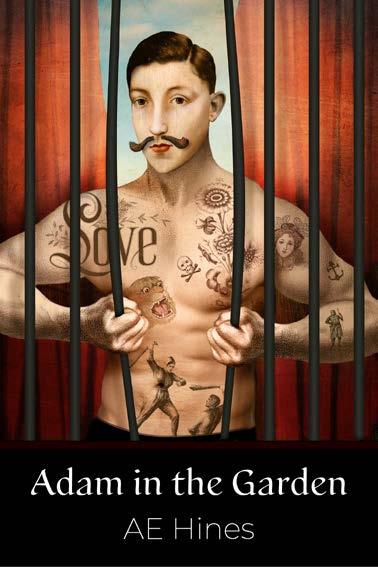
an interview with AE Hines
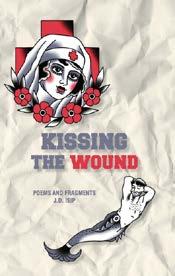
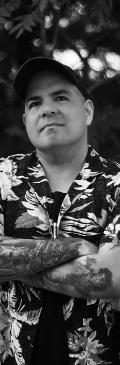
by J.D. ISIP
Congratulations on your second collection, Adam inthe Garden! In this collection, which follows AnyDumbAnimal, your speaker is often wiser or more sure-footed than the central speaker in your debut. Was this an intentional shift? What were some of your goals in this collection and how did they differ from your first, if at all?
Thanks! That’s an interesting perspective. I think what you’re noticing in terms of wisdom or “sure-footed-ness” in Adam in the Garden, speaks to where I was when I wrote both books, and the underlying themes each explores. Much of the first, Any Dumb Animal, deals with rejection in various forms, whether it be by a parent, society, a partner, or one’s closest family and friends. And if there is an opposing thread to this theme of rejection, it seems to be survival.
That first book was written mostly while I was processing a divorce from my then-husband of 20 years, and as such, the collection wants to explore my relationships with all the men in my life – from my father to my Ex, from my adopted son, to, ultimately, my husband I married at the beginning of COVID in 2020. So, the book seems to move back and forth: from my coming out in the 80s and 90s at the height of the AIDS crisis, to finding new love and re-marriage, during the pandemic, in another time of plague.
With Adam in the Garden, by comparison, I was much more interested in exploring the power of lyric and persona, and experimenting with more formal constraints -- although the poems as a whole still tend towards a narrative style. The book examines the thresholds we cross, from childhood to adulthood, youth to old age, through the subjective lens of queer love and queer joy. (Joy, I realized, was something I too often ignored in my first book!)
I wanted to braid poems that explored the garden as an extended metaphor -- for the body, for our fragile earth -- and ultimately used the biblical garden of eden to thematically weave these together. If there is a through-line between the two collections, I suppose it is this movement from rejection to self-acceptance. Another sort of threshold, perhaps, the most important of all.
The title of this collection and many of the allusions in your poems invite the reader to hold your words in tandem with belief, specifically Christian belief, but also belief in love and friendship, in pursuing what seems hopeless (like acknowledging the earth’s “inheritance already squandered”). What questions about faith brought you into this collection and did you find any answers or resolution?
I was raised in the protestant evangelical tradition, and most of my life – and that seeking of self-acceptance I mentioned earlier – has involved shaking off and unlearning much of what I was taught as a child, about God, faith, and the false sense of loyalty one owes (or doesn’t) our families of origin. When Christian archetypes enter my work, I often try to dismiss them – on the one hand, because I fear they’re overused, and on the other, because I instinctively recoil from doctrine, based on my upbringing and the harm that was done to me in the past in the name of faith.
I tend to bring skepticism to matters of faith and poems that explore it. That said, I began to reconsider the archetypical figures that entered this work, often as persona, be it as God the Father, or Lucifer, his fallen child, or the biblical Adam, representative of the first human father, and I realized I had stumbled upon another fine way to explore father-son relationships beyond strict autobiography. I also was writing much of this book while living in Colombia, which feels like Eden to me, and this greatly influenced the setting for the love and erotic poetry within the book.
Tell us about who you are currently reading or what is inspiring you at the moment.
I just finished reading the recently released, first full English translation of The Tibetan Book of the Dead, and am currently reading Marcus Aurelius’s
Meditations. In terms of poetry, I’m just starting Modern Poetry by Diane Seuss, and the New and Selected by Marie Howe.
Please let our readers know how they can get their hands on Adam inthe Garden (andAny DumbAnimal). And please let them know what you are working on and where to follow you online.
Adam in the Garden (and Any Dumb Animal) are available at all the usual suspect places online, and in several independent bookstores. You can find purchase links on my website at www.aehines.net where you can also follow me on Instagram and Facebook.
ABOUT AE:
AE Hines is the author of Adam in the Garden (Charlotte Lit Press, 2024) and Any Dumb Animal (Main Street Rag, 2021). He has won the Red Wheelbarrow Prize and Palette Poetry’s Love and Eros Prize and has been a finalist for the Montreal International Poetry Prize. His poems have been widely published in such journals as The Southern Review, Rattle, The Sun, Prairie Schooner, New Letters and Alaska Quarterly His literary criticism can be found in American Poetry Review, Tupelo Quarterly, Rain Taxi, and Northwest Review. He received his MFA from Pacific University, and resides in Charlotte, North Carolina and Medellín, Colombia. More at www.aehines.net.
Are you, or someone you know on the spectrum?
Do you constantly feel out of place due to Autism? Did a late-in-life diagnosis give you some peace of mind, but leave many more unanswered questions?
Learn coping Techniques Get Inspiration Gain Confidence
Adulting with Autism
Lectures and Mentorship on How to Thrive on the Spectrum
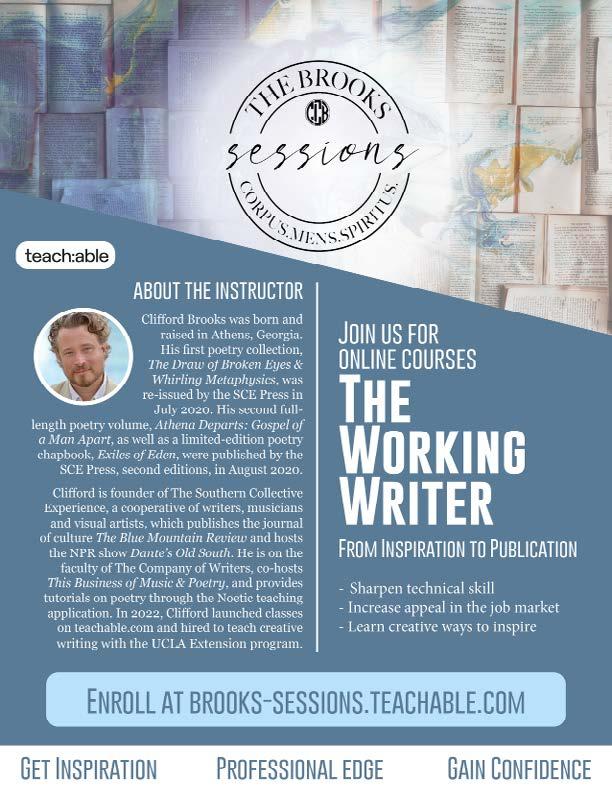
Clifford Brooks is founder of the Southern Collective Experience and Editor-in-Chief of The Blue Mountain Review. Aside from his business ventures he is also a poet. To date Clifford has three full-length collections of poetry, Old Gods, The Draw of Broken Eyes & Whirling Metaphysics and Athena Departs: Gospel of a Man Apart, Exiles of Eden is a limited edition chapbook available solely from its author. Over the last twenty years Clifford traversed the traditional route in publishing and learned how to create, sell, and market creative writing. Throughout his tenure as writer and educator, Clifford stands as an advocate for those on the autism spectrum. As board member of Autism Speaks, he is intimately aware of the need for greater community and understanding.
Here on Teachable, Clifford shares his wisdom on living the creative life and adulting
an interview with anton yakovlev
bY nicole tallman
What does your writing life look like? Do you have a particular schedule, habits, or process?
I have always resisted the notion that the only way to be a serious writer is to write every day with no exception, and that anyone who does not do so is an amateur, or willingly squandering their potential. I have tried to write every day for several extended periods, but those have never yielded the most productive results for me. Likewise, I do not believe in writing at the exact same time of day, in a sort of mechanized routine. What has worked best for me is to schedule three or four writing sessions per week, lasting anywhere from a half hour to four hours, and to try to vary the time of day and the circumstances. This way the process does not turn into drudgery, I do not feel like I am merely going through the motions, and I actually have something to say when I sit down to write.
How do poems come to you? Do you have any specific muses?
The moment I manage to begin a poem is still often a mystery to me, and it can be as hard to pinpoint as the beginning of a dream. I think this has to do with the fact that I always have trouble believing that whatever nonsense I am in the process of writing is actually on its way to turn into a poem I will not be embarrassed about. I think for a poem to successfully begin, a few things need to come together: an intriguing image or line (or preferably both) needs to resonate with a certain atmosphere I can latch onto, as well as the sense that I am about to enter a world worth exploring. It needs to feel substantive and important to me, and to contain things I need to discover but have not discovered yet. The early stages of writing a poem feel like taking a tour in a parallel world I am just now beginning to explore. That world is often inhabited by people I know, but it is never an exact replica of the world I live in: literal truths often need to be adjusted a bit to better arrive at the deeper emotional truth I see in the situation. Because most of the poems I write are not very long, I usually finish the first draft in one sitting, then spend a couple weeks or longer revisiting it, changing things around, putting the poem into different forms, and otherwise experimenting with it to make sure it is really saying what it could and should say.
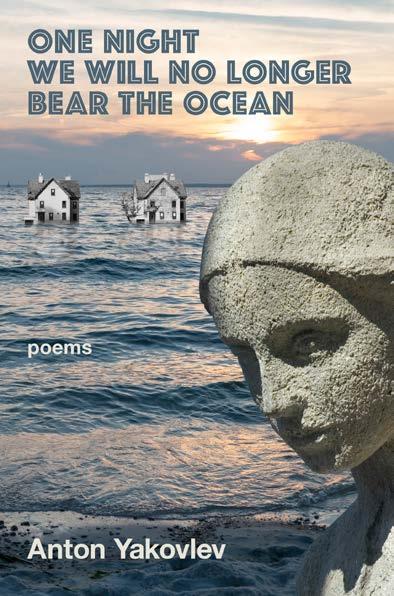
Your debut full-length book, One NightWeWillNo LongerBeartheOcean,is out now. Congratulations! Tell us what led you to choose relationship trauma as a topic for this book.
The book originated as a 20-poem chapbook I put together near the end of 2019, arranged to follow an arc of a relationship. The poems had not been written sequentially, but I was aiming for thematic cohesion, telling what felt like a continuous narrative. I submitted the chapbook to a few places, got some rejections, some near-misses, and all the while I kept writing new poems and also adding some older poems to the narrative arc. Eventually it grew into the full-length book that exists today. All along I had been putting together multiple other full-length manuscripts, on themes not limited to heartbreak or relationships, but I did not have any luck getting them published, though I did publish four chapbooks. I am eternally grateful to Redacted Books for getting One Night… out into the world.
What
role does nostalgia play in your poetry?
It may be that folks of Russian origin, even those that have lived in other countries for years or decades, are psychically inclined toward nostalgia (just ask Andrei Tarkovsky!) Reminiscing on past events is how much of my time is spent—not just time spent writing poetry, but time in general. Of course, nostalgia is defined as a wistful sentimental longing, but I think it has a deeper subtext: by revisiting and meditating on events that have happened, recently or many years ago, nearby or on another continent, we are able to understand more profoundly their significance, and this understanding, in turn, informs our future decisions and the paths our lives will take.
How would you describe the New York poetry scene these days?
The New York poetry scene is an astonishingly dynamic and diverse environment. The number of poetry groups, reading series, and poetry communities is astonishing, as is the variety of poetry one can encounter. I’m not sure I would be as
active a writer if I did not have the New York poetry scene to be inspired by and sometimes play off against. It has also enabled me to meet some of the most interesting people and develop some of the best friendships I’ve ever had.
What are you reading right now, and what writers (living or dead) most inspire you?
I am currently reading Splinters, a memoir by Leslie Jamison, a friend and long-ago classmate who has become one of the most important and vital voices in contemporary creative nonfiction, as well as a dazzling fiction writer. In poetry, some of the poets that have inspired me the most are James Tate, Joseph Brodsky, Anthony Hecht, Charles Simic, Mary Szybist, Joshua Mehigan, Rachel Hadas, Dana Gioia, and John Ashbery. The way I view the world has also been informed by fiction writers such as Vladimir Nabokov, Viktor Pelevin, Kurt Vonnegut, Haruki Murakami, Jhumpa Lahiri, Yukio Mishima, and Ottessa Moshfegh (if any book ever succeeded in turning me into a novelist, it would be her novel Death in Her Hands).
What are you working on next? Any preview you can give us regarding themes, form, or subject matter?
I have two in-progress poetry manuscripts I am hoping to be able to get out into the world soon. Their organizing principles are quite different: one of them is a collection of formal, mostly metrical poems with multiple sections and a number of overarching themes but no single overarching arc; the other collection, much darker in tone, is comprised of mostly-political, somewhat dystopian poetry that draws in part on the totalitarian history of the Soviet Union and its parallels to the present day, including in countries that are not commonly viewed as totalitarian. I am still finding the courage to get some of those poems published, but I do think it was necessary for me to write them.
How do we keep up with you online?
ABOUT Anton:
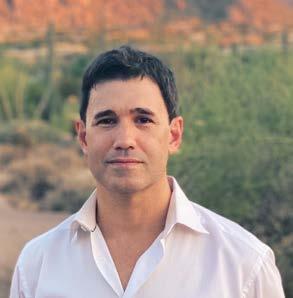
Anton Yakovlev’s poetry collection One Night We Will No Longer Bear the Ocean came out in June 2024 from Redacted Books, an imprint of ELJ Editions. His chapbook Chronos Dines Alone (SurVision Books, 2018) won the James Tate Prize. His poems have appeared in The New Yorker, Poetry Daily, The Hopkins Review, and elsewhere. The bilingual volume The Last Poet of the Village: Selected Poems by Sergei Yesenin was published by Sensitive Skin Books in 2019. Born in Moscow, Russia, Anton is a graduate of Harvard University and a former education director at Bowery Poetry Club. He has also written and directed several short films.
I do not have an official website, though I should probably get cracking on that. That said, an up-to-date collection of links to books, sample poems, a few recorded readings, poetry films, and other materials is maintained on the website of the Powow River Poets, of which I’ve been a member since 2006. My Instagram is instagram. com/anton.yakovlev/, and my Facebook is facebook.com/anton.yakovlev.180. I have a YouTube channel youtube.com/@ antonyakovlev5534) that mainly hosts recordings of many outstanding readings from Carmine Street Metrics, a series I co-host with the poets Wendy Sloan and Terese Coe.
BEDSIDE PAPERBACK
BY Anton Yakovlev
I entered the flower shop with tears in my eyes, bought you flowers, and told you about my dead. You cried vicariously then dove in a swimming pool in search of a wedding ring you had lost years ago. Frost was writing guitar chords on windows.
We went to the movies and watched a scatological fantasy. We discovered things about each other only the saddest sadists could tolerate. Our respective families wrote poems and buried them in shallow graves. A vulture circled our dogs then flew away, knowing his time would come.
But sometimes a volcano surprises you, erupting in sunset colors. We kissed in a dying town’s town hall. We did not run into any crucifixions on the way. We built cabinets and read books together. Our voices carried to the other side of the mountain. Our smiles went viral. Birds were named in our honor.
And now neither of us knows what to do about our unrequited love for each other.
AN INTERVIEW WITH CHRISTIAN GULLETTE
BY J.D. ISIP
Congratulations on your firstfull-length poetry collection, CoachellaElegy!Being a native Californian myself, I think I was bound to love this book; you do a wonderful job capturing both the beauty and melancholy of the Golden State. Of course, these poems are as much about people as they are about place.
How did these poems and, eventually, this collection take shape for you? Did you set out with an idea about California or your relationships (husband, brother) or did it all just start to make sense?
It was actually Utah, the Beehive State, that inspired the origins of this book a few years ago, and some of the poems from earlier manuscripts, particularly the six elegies about my brother Jeremy, found their way into what eventually became Coachella Elegy. For about three of the five years that I’ve been submitting versions of this book, I was writing about the high desert of Utah and the manuscript was called “Beehive State.” My brother went to a boarding school in Utah before he died in a car accident. It took a few years of writing newer poems before I felt things start to pull me towards California, the state where I’ve lived now over fifteen years.
That shift towards California began during the pandemic. In the confines of the lockdown, I yearned for escape. I decided to write a poem about Palm Springs, a place I and my husband associate with rest, queerness, pools, architecture, the natural world, and eroticism. It’s also a place that lets me consider the notion of place, of the myths of California, drought and fire and displacement. I wanted to write an homage to the Coachella Valley, so I wrote the poem “Coachella Elegy,” which brought the unexpected memory of the time I went to see the Salton Sea.
It turns out I had forgotten that day was the anniversary of my brother’s death until I received a push notification on my phone. That memory contains complex emotions of horror, but also a relief that something in me desired to be able to put my grief down a bit and seek out joy in a precarious world. It freed me to start writing from a moment in the present and
“Christian Gullette’s Coachella Elegy surveys our beautiful, damaged world in radically unpretentious language. By turns funny, erotic, tender, and harrowing, Gullette’s poems that in every elegy—for a lover’s cancerous body, for an American West ravaged by a vanishing gay culture—there is always a joy to be claimed, even in the face of dim future we have created for our planet. These poems claim that joy and claim it unflinchingly.” —STEVE BELLIN-OKA
to hold beauty and pleasure in tension with survival and sadness.
EG Y
is something spare and trance-like in Christian Gullette’s mesmerizing Coachella The source of the intensity, as in many of the landscapes Gullette describes, is gradation and precision, tremors of warning rather than full-on earthquakes. The poems’ structures, often unfolding in lean couplets or tercets, carry some of the compressive exactness of detail, and coolness of haiku, or David Hockney swimming pools. subjects are raw. A brother’s death. The speaker’s husband’s ocular cancer. The landscape’s diminishing wildness in a tremulous, post-AIDS California. I admire CoachElegy’s refinement, its nuanced approach to deep emotion. I feel the tremors in my —DIANE SEUSS
restless, miraculous poems, Christian Gullette turns his gaze to a California haunted memory and mortality. To make a self out of wilderness, to reconcile the will to surwith the fragility of love, to accept the past’s persistence: ‘This could be our utopia.’ Wandering in the desert, commuting between San Francisco and poolside paradises, his and moving debut, Coachella Elegy, is a spiritual autobiography in verse—in which sun and bright pleasures are stays against loss.”
“Gay life” in California bubbles up in many of these poems, and not in altogether flattering ways. I am thinking of the “boys in jockstraps” juxtaposed to a fading memory of AIDS in “City Bees” but also in a collection where the speaker is continually trying to outrun cancer and diagnosis with his husband.
—RICHIE HOFMANN
is something at once elegant and seething about Coachella Elegy, its cool eroticism poolside betrayals. Christian Gullette upends diction and expectation, his sculptures his landscape a discourse where ‘wind in palms signals / a desert revising itself dusk.’ Like Thom Gunn, Gullette hides in plain sight—between the lines, subtle the more grievous. The poems in Coachella Elegy are gorgeous, sinister, and water.”
—RANDALL MANN
CHRISTIAN
GULLETTE ’s poems have appeared in The American Poetry Review, Kenyon Review, the Poem-a-Day (Academy of American Poets), and The Yale Review He has received financial support from the Bread Loaf Writers’ Conference and the Kenyon Review Writers Workshops. Christian completed his Ph.D. in Scandinavian Languages and Literatures at the University of California, Berkeley, and when not serving as the editor-in-chief of The Cortland Review, he works as a lecturer and translator. He lives in San Francisco.
While there are many love poems, erotic poems, and poems of queer desire in my book, I’m also interested in tensions, ambivalences, and complexities of experience. I’m glad to hear that complexity of queer experience resonated. The fact that my speakers could be so melancholy in the middle of a gay pool party or a clothing optional resort is a bit amusing to me, and they certainly are still having plenty of fun when the feeling passes, nevertheless, there are so many situations where one feels unsettling mixtures of loneliness in public or a beauty so fleeting it’s akin to grief.
isbn 13: 978-1-949487-22-0 isbn 10: 1-949487-22-9
COACHELL A ELEGY CHRISTIAN GULLETTE
ELEGY CHRISTIAN GULLETTE POE M S EG Y COACHELL A ELEGY CHRISTIAN GULLETTE POE M S
Bodies, too, can be sources of pleasure but also dissolution, such as cancer or a virus. One prosthetic eye nearly identical in beauty as the other, or indistinguishable even, can mess with the mind. I find these moments of not-knowing how to feel can be very charged. Something just beneath the pool’s surface. It’s both enticingly dangerous and erotic. Disappointing but perhaps the closest to ecstasy. Risk.
Despite the intimacy of the speakers, there’s always a queer gaze aware of past and present dangers such as the reminders of the legacy of AIDS, the gentrification of queer spaces (in which the speakers can also sometimes be complicit themselves), laws against gay marriage. The book opens with a poem that references the fight for marriage equality, and another takes place at the legendary San Francisco bar The Stud on election night 2016. Ironically, The Stud closed a few years back, shuttered due to the same types of concerns facing many queer communities and their spaces. San Francisco has so many challenges right now, but it’s also defiantly beautiful, weird, kinky, and cozy for a major city.
There’s such maturity and cohesion in this collection that it is hard to believe it is only your first. I especially love the way everything keeps moving forward like a long trip down Pacific Coast Highway. Who or what inspires your writing? Who or what are your teachers?
If we were on a road trip down the Pacific Coast Highway, there’s a good chance I’d stream a playlist that had many of the
songs I listened to writing this book including music by Lana Del Rey, Frank Ocean, Sufjan Stevens, Troye Sivan, Mazzy Star, Roxy Music, New Order, Robyn, Antônio Carlos Jobim, and Max Richter. Film inspires me, and classics such as La Piscine left their mark on my work.
Joan Didion certainly influenced the questions I ask about California. The legendary poet Thom Gunn, himself a San Francisco transplant, also looms large in my poetic mind. As do other artists like the painter David Hockney and writer Christopher Isherwood, both of whom also relocated to California for different amounts of time. I often return to poets such as C.P. Cavafy, Elizabeth Bishop, Federico García Lorca, as well as contemporary heroes and teachers such as Carl Phillips, Louis Glück, Diane Seuss, Henri Cole, Ada Limón, Sandra Lim, David Baker, and Randall Mann.
Please let our readers know how they can get their hands on CoachellaElegy, And please let them know about any upcoming readings and where to follow you online.
I’d be so grateful to anyone who purchased a copy of Coachella Elegy through various online booksellers such as Bookshop.org or through the Trio House Press online bookstore. It’s also available through Amazon and Barnes & Noble.
I’m on Instagram (@christiangullette) and Twitter (@ChrisGullette_ ), where I’ll keep things updated regarding the book and reading dates. My website is another place to stay updated: www.christiangullette.com
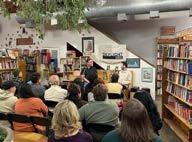
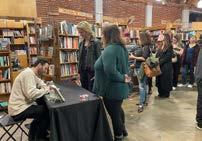
July will be a busy month as I’ll be reading in NYC at Book Culture on W 112th Street on July 10. The official San Francisco launch will be Tuesday July 16 at Green Apple Books on the Park, and then I head to Chicago for a reading at Women and Children First on Friday July 19 and the Sacramento Poetry Center on July 22. I’ll round out the month with a reading Tuesday July 30 at Diesel Bookstore in Los Angeles. At all these events I’ll be reading alongside fantastic poets, and additional dates are coming together. I’d be delighted to sign a copy of my book for anyone who ventures out on a weeknight to hear some poems.
ABOUT CHRISTIAN:
Christian Gullette is the author of the debut poetry collection Coachella Elegy, winner of the 2023 Trio House Press Trio Award and included in 2024 must-read lists by LitHub, Electric Lit, and Debutiful. His poems have appeared or are forthcoming in The New Republic, The American Poetry Review, Kenyon Review, the Poem-a-Day (Academy of American Poets), and The Yale Review. Christian completed his Ph.D. in Scandinavian Languages and Literatures at the University of California, Berkeley, and when not serving as the editor-in-chief of The Cortland Review, he works as a lecturer and translator. He lives in San Francisco.
an interview with
george Hovis
bY lynne kemen
Welcome. Please tell us a little about yourself.
For two decades I’ve lived outside of Cooperstown, New York, in northern Appalachia, but I grew up in the foothills of southern Appalachia. In the western Piedmont of North Carolina. It was a world of cotton mills and cinder-block churches. That’s still the place I write about.
As a fiction writer, probably the single most important biographical detail is that I spent the years of puberty convinced I would burn in hell for all of eternity. I believed that. Burn and boil and fry—alone. Moreover, I had a Sunday School teacher who spoke passionately and persistently of the Rapture, and thus I was certain that my damnation might begin unexpectedly at any moment. So, I’ve known insanity.
As an adult, I’ve been fortunate to enjoy a life that has been stable and cheerful and generally optimistic, but deep in my brain I’m sure there persists this little almond of terror and self-recrimination. I’m tempted toward gothic modes and drawn to characters who are wrestling with varying degrees of abjectness. My goal is to dig down into that darkness with them and help them grope their way toward some light.
You are a wonderful storyteller. Where did you learn how to do that?
To quote the late, great Fred Chappell, I learned to write from “an eon of trial, followed by an infinity of error.” Also, I had two grandparents who were wonderful storytellers.
You recently performed a piece at Bright Hill Press about a young boy who is staying with his grandmother in rural North Carolina. Was there a real Granny and if so, what did you learn from her?
Maw Reynolds is loosely based on my mother, who at ninety-two still lives on her own. I try to be half as tough as Mother. She spends her days in a wheelchair and several years ago volunteered to surrender her driver’s license. Yet, she keeps an ATV parked in her carport, and in good weather she uses her walker to transfer to the ATV so that she can make laps down through the woods of her property. Several times a day. It’s an amphibious machine, a Gator, and it will take her anywhere she cares to go.
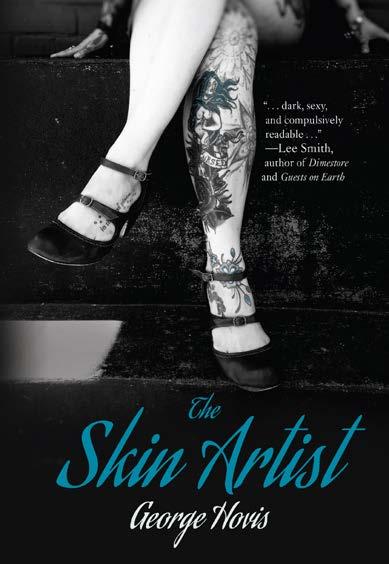
How do you blend previous careers/experience into your writing? (thinking of The Skin Artist and your job mixing inks)
I was working at the ink factory in the 1990s, in Charlotte, North Carolina, around the time I began seeing tattoos enter the mainstream. So, yeah, the novel began to germinate there. And like many people who work in Charlotte, I commuted from the sticks of a neighboring county. Lots of us bumpkins working in Charlotte (or in any city with rural spaces nearby). That’s one of the main themes of the novel—the growing pains of urbanization, what is lost and what is gained.
I grew up amidst de facto segregation. Working in Charlotte in a diverse community gave me an opportunity to examine the impact of segregation on my own unconscious assumptions and also to begin pushing back against its legacy in our world. Although an explicit engagement with race occupies a minor role in the novel, I hope that in its larger design The Skin Artist offers an interrogation of whiteness.
As a distinguished professor at SUNY Oneonta, tell us about what you think are the most important things students who want to be writers should know.
How to hear the music in their own lives, in the lives of people around them, and how to get that music down on the page. How to do that? I’ve got a hundred tricks to share, worth trying, but honestly we’re all guessing as hard as we can.
What’s next for you in terms of your own writing?
I’m working on a novel set in 1976 in a tiny, segregated mill town in North Carolina. The protagonist is a teenaged white girl who dreams of watching Soul Train on a color TV.
I hear there’s something big in the literary world happening in Oneonta this fall. Could you tell us about that?
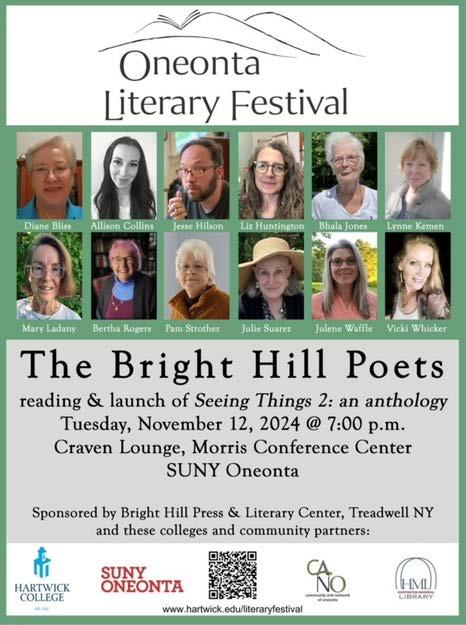
Yes! Save the dates: October 17-21, the first Oneonta Literary Festival. It’s a collaboration of SUNY Oneonta, Hartwick College, Bright Hill Press, CANO, the Huntington Memorial Library, Green Toad Bookstore and other community partners. In addition to a full slate of headliners such as Ross Gay, Cristina Henríquez, and Steve Kuusisto, we will be featuring writing workshops, a poetry slam, and gatherings of local writers. It’s all free and open to the public. Please join us in the City of the Hills this October and beyond!
How can we reach you on social media?
I’m on Facebook and at www.georgehovis.net, so come say hi!
ABOUT George:
George Hovis is the author of a novel The Skin Artist and the monograph, Vale of Humility: Plain Folk in Contemporary North Carolina Fiction. His short fiction has been nominated for a Pushcart Prize and his stories and essays have won prizes from Carolina Quarterly and Appalachian Heritage and have also appeared in Southern Cultures, Mississippi Quarterly, New Madrid, North Carolina Literary Review, and in numerous other journals and anthologies. He currently lives in Cooperstown, New York, and is a Distinguished Teaching Professor of English at SUNY Oneonta. (www.georgehovis.net)
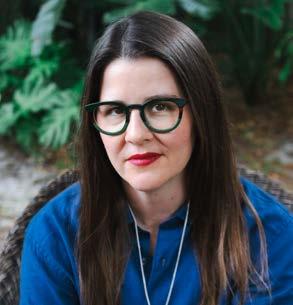
Can we start with an introduction? Where did you grow up, and when did you start writing?
I grew up in East Tennessee, just outside the Smokies, in an old farming community called Boyds Creek, in the French Broad River valley where my granddad grew up. I actually have a vivid memory of sitting at a round coffee table that I still have, from my great-grandmother’s house, “writing” furiously—they were just scribbles, before I could actually write. I bore down very hard with the pen. The feeling of my hand moving that way was an energy and force that I felt very early on. I filled pages and pages with scrawl. When I learned to write my name, I wrote it on the baseboards and walls.
And I began journaling daily before the age of ten. It was necessary in my household for me to retreat and protect my own reality, my own truth and narrative, and so I always had a driving urge to write things down. Then came poetry, which was like a fever. I would finish one poem, tear the page out, and begin another. And then there were the letters and notes I wrote to my friends. It seems that was the bulk of what consumed me at school. I wanted my words to find others, to create connection. But of course, it wasn’t until much later that I began to think writing was something I could actually, you know, do with my life.
And when was that? How has your work grown and evolved since then?
It’s funny, because I began writing professionally at a very young age, 19. I started as a copy editor at a daily newspaper, then soon became Copy Chief, and then, shortly after, a beat editor for the Arts & Entertainment section. I published prolifically about music for four years through college, then got a job as an intern at a popular national music magazine. Oddly, though—it’s difficult to explain the disjunct—I didn’t know I was a writer or that that was what I would do or was doing with my life. I was searching. I really didn’t know what I would be or do. I quit writing about music, moved to New Mexico, and began working in environmental education.
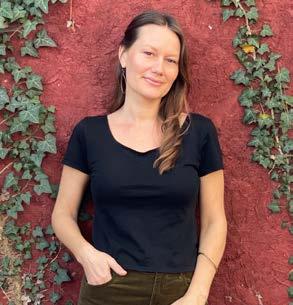
Then I began dabbling in writing about environmental issues. From there, over years of doing activist and conservation work while studying and reading and exploring my interests, I became primarily an environmental journalist, and then more of an essayist. The bulk of my published work has been in the tradition of New Journalism, with a focus on the natural world and our relationship to it, specifically. But all along I was writing poems, too.
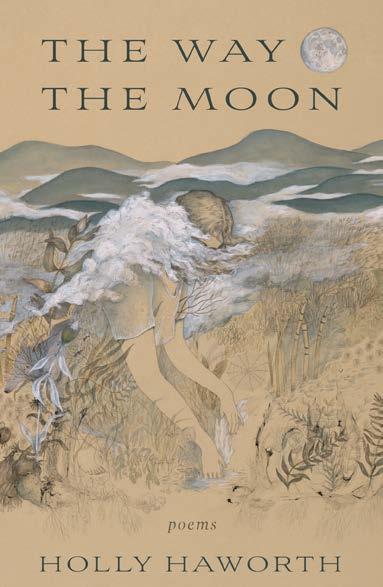
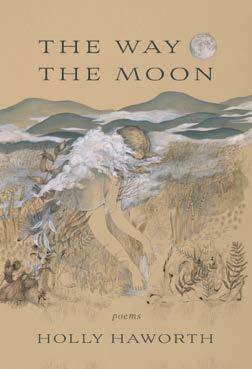
Your first book, out now, is a book of poetry called TheWaythe Moon.Can you tell us a little about it?
This book began as a ritual of writing with each phase of the moon, and it quickly gathered into a current of voice that had a natural momentum. I wrote a section of each poem with each of the moon’s phases and began a new cycle/ poem with each new moon over the course of a year. I fell into this rhythm, and it was grounding. Certain things I was thinking about and carrying in my heart and living through at that time began to come into focus, and I had this ritual outlet for them to grow and have their space. And it all grew through my relationship with the land and the place where I was living in the Blue Ridge. It was a beautiful experience for me. And of course the moon has a long tradition in lyric poetry, and the way the moon is repetitive and cyclical mirrors the refrains of poetry and song.
How much does music play into your creative process?
As a poet, I feel that sound very much drives me—and even as an essayist, to an extent. Poets were first musicians who sang their poems aloud, which were also stories. Which is to say there was originally no separation between music and story. All writers are driven by an internal music, I would say. I am concerned with rhythms and cadence of language in my prose, but in my poetry, it’s not that I pay attention to the sound, it’s that sound is really the engine of my expression. It is “the force that through the green fuse drives the
flower,” as the title of a Dylan Thomas poem goes. That’s a line in iambic pentameter. I don’t work with formal meter or measure my lines, but I listen and make my decisions by listening.
And you’re also writing a book about listening?
Yes! It makes sense to me now that I began as a music journalist 22 years ago. I am in some way circling back to an original obsession with listening. The book is nonfiction, about listening in the natural world, to our environment. It’s about the voices and music of the more-than-human world that surrounds us.
Where do we find you online?
You can find my work and get updates at my website, www.hollyhaworth.com, follow me on Instagram @stalkingthewildspirit, and subscribe to my Substack called SPELLS (at hollyhaworth.substack.com), which is about summoning the everyday magic of writing and honing the craft of a creative life.
THE WAY THE MOON: POEMS
by Holly Haworth
Holly Haworth “trace[s] the moon through the traceless sky” in a meditation on time’s cyclical nature and how it slips away—and on writing as a way of time-keeping, poetry a tool for etching memory. Here we find Haworth no less in thrall to language than to the land. As she probes the failure of words to capture the world, she puts us under a spell, enlivening our hearts with nature and mystery. Moments become visceral acts of communion, of sensual presence. There is a devotion here both to the death that is inherent to time’s passing, and to the life that is constantly arising. Mournful lament and exuberant praise, The Way the Moon compels us to stop in our tracks and savor even the losses.
(August 2024) — $20, paperback
Holly Haworth’s nonfiction writing has appeared in The New York Times Magazine, Orion, Oxford American, Lapham’s Quarterly, Literary Hub, Creative Nonfiction, Sierra, and at the On Being radio program blog. Her essays have been listed as notable in The Best American Travel Writing and included in The Best American Science and Nature Writing. Haworth is a member of the Society of Environmental Journalists.
“This astonishing debut lives in my heart next to Louise Glück’s The Wild Iris and CD Wright’s Casting Deep Shade. Haworth has given us transformation, a true work of art.”
Rebecca Gayle Howell, author of Render / An Apocalypse and American Purgatory
“Haworth’s collection is a gorgeous recital of ‘clear-throated singing,’ a hymn to and for a creation that has not yet…been divested of the numinous.”
G.C. Waldrep, author of The Earliest Witnesses
“I want to read these lyric spells by candlelight, by moonlight—slip from human habit and disperse into this enchanted, tangled wild place.”
Anne Haven McDonnell, author of Breath on a Coal
“The Way the Moon spellbinds. Haworth gifts us nothing short of the sublime.”
Abraham Smith, author of Insomniac Sentinel and Dear Weirdo
Use coupon code MUPNEWS online for 20% discount off your entire order or call 866-895-1472 toll-free —Shipping charges will apply—
an interview with Kristen arnett
by nicole tallman
Thank you for taking the time to do this interview, Kristen. I like to start with the heavy hitting questions, so I’m just going to jump right in. Who is your favorite Golden Girl and why?
This is an incredible way to start an interview! The real answer is all of the Golden Girls, because I don’t think that any of them would be nearly as good without the gang to back them up. They make up for each other’s lack, you know? A true friend group dynamic. But if I was forced to pick one, I’d go with Blanche. Dorothy is the natural choice – she’s the funniest – but I think for sheer horniness alone, Blanche really adds a lot to the mix. There’s a reason that gif of her spritzing herself down is so iconic.
What does your writing life look like? Do you have a particular schedule, habits, process, favorite writing beverage or snack?
Previously I had an entire schedule set. I’d wake up really early to go open the library (up at 6am, out the door in a hurry because I usually slept in) and then I would put on a pot of coffee, get the place ready, and then sit down and slam out a few pages before I had to unlock the doors. Now that I work from home and write full time, I would say my schedule has become a bit… chaotic? I don’t have any set rigid rules in place, other than the fact that I generally work a lot better in the morning before my brain has absorbed too much internet.
I also really like reading a lot first – there are stacks of books towering over me in the house, at any moment ready to crush me to death if I move too quickly – so getting in a couple chapters of something good gets my brain all juiced up and ready to do something. That something could be any number of things! I used to be a “write every day, no matter what” kind of person, but now my brain is working differently, and I want to honor that shift. Some days it’s reading, some days it’s writing, some days it’s a lot of Bravo. And that’s just what it is!
As a fellow Floridian, I love that you set your novels in Florida. I will admit, however, that I was sad when you left Miami because I had hopes that you might pen a book set in Miami. Any chance of that happening?
I loved Miami! I just missed home so much that I had to get back to Orlando. And I’m not sure if I’ll ever write a Miami-based novel (I don’t think I spent enough time there to really do the place justice), but I could see myself writing a short story that’s set in Miami! I usually try and be thoughtful about place when I’m working – I consider myself a regional writer – so I try very hard to honor the people that live where I’m writing about. It’s less about getting the place exactly right and more about making sure that the vibes are correct? If that makes sense? I just feel a very serious need to make sure that if I’m writing about a place that I’m doing it from a deep well of respect.
Could you please share any tips you have for writing humor?
Oh boy! I would say that my primary rule for myself (because I wouldn’t dare say this same rule should be applied to everyone else) is that it has to make me laugh. The person that I am writing for first and foremost is myself, so that means if I’m writing a joke into the work, then I should essentially be trying to make myself laugh. If I find myself trying to work humor onto the page that’s not for me – say, I’m trying to write to an imaginary reader –then the joke inevitably falls flat. If I’m not making it for me, it’s not going to be funny. At the very least, I need to enjoy what I’m making! I’d also say that you’re not going to please 100% of people all the time, and by that, I mean be cool with the fact that not everyone is going to think your brand of humor is funny. Just have a good time!
I know you write fiction and essays, but have you ever written poetry? If not, would you consider it? I really think there should be more humor in poetry, and a lot of your tweets are poems to me.
The last time I attempted to write poems I was a closeted gay teenager. I would pay one million dollars for anyone NOT to read them! This is a very nice compliment, though, because I think poets are the most beautiful and talented writers out there. Generally, when I am working on a new book I’ll read a lot of
poetry because the imagery and the way that certain lines sit on the page really does something special and activates an important part of my brain that I need for fiction. So, I don’t think I’ll ever write any of my own, but I will forever be a lifelong reader of poetry!
In addition to writing, you are also a librarian. What’s your favorite part of being a librarian?
I genuinely love the fact that so much of library work is actually community building. I’ve worked in public libraries, academic libraries, and even law libraries, but in all of those spaces the thing that matters most is that you’re able to provide your community with what they need. It’s an incredible thing to work with all kinds of people. As a writer, I say all the time that so much of my work has benefitted from spending time in libraries. I learned all my research skills there, sure, but you also just really get to spend time with people, talking to them, and you learn so much about how communities grow and help each other.
Right now, I’m halfway through Laura van den Berg’s newest novel, STATE OF PARADISE. It’s gorgeous; such wonderful Florida writing! She really has so much talent. As for what writers inspire me, that is a crazy long list! I can say with 100% certainty that everyone I read molds and shapes my brain in some tiny way. I am obsessed with Karen Russell and with Kelly Link; both are writers that truly take a description and make it absolutely perfect. Danielle Evans is one of our greatest short story writers. I love Bryan Washington’s work, especially all his food and family writing. K Ming Chang is such a powerhouse; the way that they write about bodies! I feel like I need to cut myself off here or I’ll just keep listing people. But seriously, so many stars!
What are you working on next? Any preview you can give us regarding your forthcoming books?
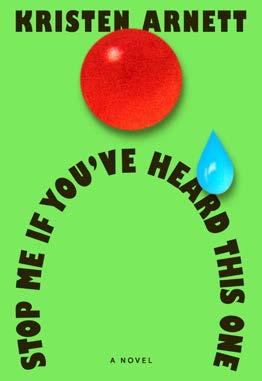
My third novel is going to be published in March 2025, and I am excited for that. It’s called STOP ME IF YOU’VE HEARD THIS ONE and it’s essentially about a lesbian birthday party clown in Orlando, Florida who wants to take their artistry to the next level. It’s a lot of humor and jokes, for sure – I mean, it’s a clown book – but it’s also a lot about capitalism and how living in a place with a thriving tourist industry can kind of suck the love and passion out of work by turning it into a profitable enterprise. It was honestly a lot of fun to write!
What does a perfect day look and feel like to you?
ABOUT Kristen:
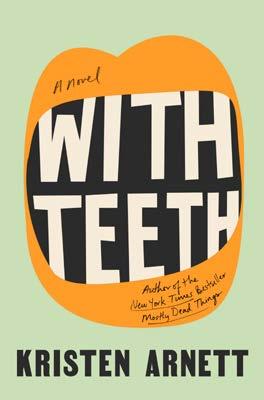
Kristen Arnett is the queer Floridian author of With Teeth: A Novel (Riverhead Books, 2021) which was a finalist for the Lambda Literary Award in fiction and the New York Times bestselling debut novel Mostly Dead Things (Tin House, 2019) which was also a finalist for the Lambda Literary Award in fiction and was shortlisted for the VCU Cabell First Novelist Award. Her next novel, STOP ME IF YOU’VE HEARD THIS ONE will be published by Riverhead Books (Spring 2025), followed by the publication of an untitled collection of short stories.
I love any day where I get to spend time outside in Florida. Pool day, beach day, even an afternoon in my backyard. Cooler full of beer and a stack of books and I’m good! What more could I want?
How do we keep up with you online?
I’m on Twitter (yes, I still call it that): @Kristen_Arnett and I’m also on Instagram: @kristen__arnett. My website: kristenarnettwriter.com/ I’ll have stuff up about tour dates for the new book soon!
an interview with mathieu cailler
by clifford brooks
What would you consider your biggest mistake thus far in the writing industry?
This is such an important question. I think a lot of writers, myself included for a long while, don’t want to see writing as a business, and would rather focus on the art. While this is pure and beautiful, it’s important to understand terms, contracts, and ask questions. I didn’t get contracts for a few things, and it came back to bite me. I believed a handshake agreement was romantic, so to speak, but it’s important to know your rights and speak up for yourself. Many publishers will change terms if asked.
If you could collaborate on a book project with one person, alive or dead, who would it be? What’s the project?
Just this morning, I was working on some surreal prose poems, and I wondered what Gabriel García Márquez would think of them. I would love to work on this project with him and have a firsthand look at his incredible brain.
Top 3 Guilty Pleasures?
I do not believe in guilty pleasures. Life is hard. Do what pleases you and do so without guilt. I see people meekly admit to things they adore, and I will admit embarrassing things with great pride. I love searching for clothes in thrift shops, visiting factories where they assemble products, and reading Consumer Reports. My wife laughs at me for these things, but, hey, it brings us closer.
How do you tackle the editing process?
I love editing. I think, too, we as writers need to dispel the myth that a first draft is inherently bad. It’s not. There’re tons to work with on a first draft. It’s pure. It’s creative. It’s messy. It’s supposed to be these things. Now, it’s for the writer to make sense of it. Basically, a first draft is an inside joke between you and your brain. And I think of editing as a way to
bring this inside joke to everyone. What can be sharpened on a plot level? What can be made more interesting? Does the piece do what I want it to? Do I start too early? Do I end too late? In essence, I ask myself dozens of questions and then I rewrite the story. I check the original document but try to work without it. I’ll do this a few times until I have something I like. Then, I’ll revise on a sentence-based level.
What advice do you have to impart that you’ve never heard anyone share?
One of the greatest things about writing in the early stages is that you cannot fail. You are doing this in private, writing on a computer or pad in your office or library or at your kitchen table. This is not stand-up comedy in a hot room stuffed with people, nor is it surgery, where a patient is depending on the outcome. This is creative and fun. You get to “fail” in quiet. How beautiful it is to have a Backspace button. So let go and begin. You don’t need permission to begin anything at all. You don’t need an MFA or a college degree. Storytelling is there for everyone, so sit down and hold yourself accountable, but please have fun. We get to make up human souls and all sorts of souls for a living.
What books and/or new gigs are you involved in presently?
I just finished an upper middle grade adventure novel titled On the Lam that takes place in rural 1950s Indiana, where grieving thirteen-year-old Mazie’s life turns upside down when her plan to find an escaped convict for the reward money instead delivers impossible choices, forcing her to confront an adult world she’s desperate to understand, where good people can be bad, and bad people can be good.
I spend some of my time working with incarcerated men, and it has opened me up to the idea that we are far more than our worst deed. Themes for the novel include morality and redemption, and it was just a blast to get inside these characters and bring them to life.
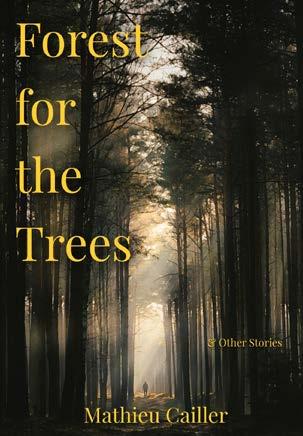
I am also still promoting my newest short fiction collection titled Forest for the Trees and Other Stories from Hidden Peak Press. It’s a diverse collection of fifteen shorts that captures characters steeped in their own troubles. I did my best to create a conduit through which readers experience the characters’ sufferings, losses, revelations, their moments of connection, and their snippets of happiness.
How do we find you online?
There are a multitude of ways. I’m active on Facebook, Twitter/X, and Instagram at the handle @writesfromla. I also have a website: www.mathieucailler.com – where people can learn about me and message me as well.
Mathieu Cailler is the author of seven books: one novel, two short story collections, two volumes of poetry, and two children’s titles. His stories, poems, and essays have appeared in over one hundred publications, including Wigleaf, the Saturday Evening Post, and the Los Angeles Times. He is the winner of numerous awards, most notably a Pushcart Prize; a Shakespeare Award; a Short Story America Prize; and the Paris, Los Angeles, and New England Book Festival Prizes. Feel free to connect with him on social media @writesfromla or at mathieucailler.com.
an interview with megan merchant
by lynne kemen
Welcome, and thank you for taking the time to talk with us. You and I have written ekphrastic poetry together for at least three years. Please introduce yourself and discuss your two upcoming books.
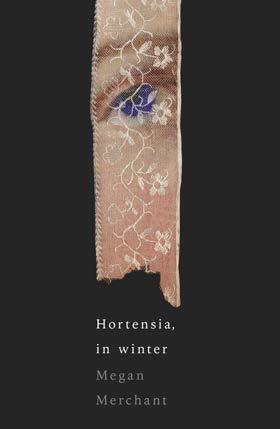
Thank you. Yes, I love that group and the work that comes out of it. As far as an introduction, I am a poet, editor, visual artist, small business owner, and mother. In my former life, I was a collegiate swimmer, a cocktail waitress, a yoga instructor, and can play the ukulele. I have my MFA degree in International Creative Writing from UNLV and have five full-length collections, a handful of chapbooks, and a children’s book that are (or will be) in the world. This year I am thrilled to have two collections forthcoming. The first, “Hortensia, in winter” won the New American Book Prize and will be published in October with New American Press.
The second is a collaboration with the poet Luke Johnson and will be in the world this fall with Harbor Editions. These books are wildly different but share a similar epistolary tone. “Hortensia, in winter” is a book of prose poems addressed to my grandfather’s great-grandmother who travelled with Joseph Smith and helped settle the town of Nauvoo, IL. When Smith was murdered and Brigham Young came into power, Hortensia abandoned the safety of everything that she knew and moved her family to Magnolia, Iowa to help settle that town. She did this to refuse polygamy and for that, I am very grateful. Those poems are, in a lot of ways, a conversation with her about desire, motherhood, and spirituality.
“A Slow Indwelling” is also epistolary, but in real time, and centers a lot on what it means to be a parent in this world today. These exchanges are charged with so much lyrical beauty and vulnerability.
How does location affect your writing? I know that you spent considerable time in Las Vegas, and now live in Arizona.
My first collection, Gravel Ghosts, is rooted in the landscape of the Mojave Desert.
Not just as a backdrop or symbol, but as a deep presence and teacher. When I moved to the tall pines of Prescott, and that landscape shifted, it felt like waking up into a whole new soundtrack. I became obsessed with a hummingbird that nested on our property and have tried to befriend a crow by leaving nuts and shiny objects as offering. So far that hasn’t worked. It’s complicated. I have a very deep appreciation for nature despite the fact that it is always trying to kill me. I am allergic to everything that grows wild, bee stings, and cut grass. So, most days I appreciate from a safe distance. But it’s always calling for my attention and enters the poem in very surprising ways.
You have a book of Epistolary poetry coming out with Luke Johnson soon. What is it like writing with another person? How did this book happen?
Yes, “A Slow Indwelling” will out be this year (Small Harbor Publishing). I have been a fan of Luke’s work for quite some time, and many of his themes deeply resonate with my own preoccupations in writing, so when I saw his social media post about feeling stuck after his first book, I reached out. We had one quick phone conversation where, instead of talking a lot about the work, we shared stories of awkward poetry encounters and then our project was born.
One of the beautiful elements of the process was the way in which, intuitively, we took on the role of muse for each other, of writing-support system, and friend, without overstepping or asserting too much authorial direction. In this way, the poems and their timelines were able to organically unfold. Writing can be such a lonely space, but, when working with Luke, I never felt that. At one point he encouraged me to write into a difficult poem letting me know that he was there, holding the heavy bag, and that it was okay to punch.
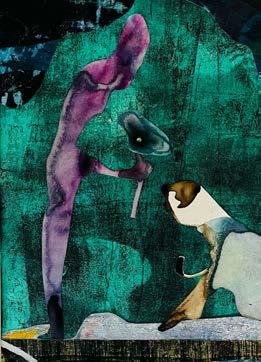
In addition to being a wonderful writer, you also are an artist. Do you make poems about your art or vice-versa, is each one alone? Which came first (art or writing)? Describe your art.
Thank you. At this juncture, they are separate processes. Writing for me is a really embodied and loud process, one grounded in the noises, sights and scenes of this world, whereas visual art is quiet and lives in the land of imagination. I would bet that, at some point, they will learn to have a happy marriage together, but it hasn’t happened yet.
I actually started my journey with visual art when we were in quarantine. I homeschooled my children for a year and, for the first time, struggled to write. I recognized how much of my writing is an engagement with the outer world. When there weren’t any bits of overheard conversations, new images, or sounds to pull from, I couldn’t write. I knew that I had to create a new relationship with image, one that was rooted internally and in imagination. So, I started painting and that expression and engagement has only grown from there. I think that a lot of the reason why I create is to fight against the cultural invisibility that comes with motherhood and aging as a female in our society. I’m also constantly inspired by the idea that if I keep trying, then maybe I could create something beautiful.
ABOUT megan:
Megan Merchant (she/her) is the owner of the editing, manuscript consultation, and mentoring business Shiversong (www.shiversong.com) and holds an M.F.A. degree in International Creative Writing from UNLV. She is a visual artist and the author of three full-length poetry collections with Glass Lyre Press: Gravel Ghosts (2016), The Dark’s Humming (2015 Lyrebird Award), Grief Flowers (2018), four chapbooks, and a children’s book, These Words I Shaped for You(Penguin Random House). Her book, Before the Fevered Snow, was released in April 2020 with Stillhouse Press (NYT New & Noteworthy). She was awarded the 2016-2017 COG Literary Award, judged by Juan Felipe Herrera, the 2018 Beullah Rose Poetry Prize, second place in the Pablo Neruda Prize for Poetry, the Inaugural Michelle Boisseau Prize, and, most recently, the New American Poetry Prize. She is the Editor of Pirene’s Fountain. You can find her poetry and artwork at meganmerchant.wix.com/poet. @meganamerchant
Discuss your company, Shiversong. What is the meaning of the name?
Shiversong came from a line in a poem in my last book “Before the Fevered Snow” that I worked on with editor Tommy Sheffield (Stillhouse Press). To me it means that feeling you get when you read a lyrical line in a poem so haunting that it gives you goosebumps.
Right now, we offer manuscript and poem editing, mentorships, voice coaching, and every now and then a workshop. I feel grateful to get to work with such generous and talented writers and thrilled that the majority of books that I have had the privilege of editing have been picked up by various presses for publication.
What’s next for you?
My main focus will be to usher my two forthcoming books into the world with as much gusto as possible. I really love both of them and am excited to share these poems. My last book came out in March of 2020, so, of course, every opportunity narrowed into an online space. It took me a while to want to give it another go, but I’m ready now. I have also slowly started another book and am really in love with the quiet differences that are present-
ing themselves. I am curious to see how it unfolds. I am also fully invested in helping other poets along their writing paths and will continue to edit, mentor, and try to be a solid literary citizen as editor of Pirene’s Fountain.
How do we find you on social media?
I am on Instagram as @meganmerchantpoet and you can find my poems, books, and art on my personal website (meganmerchant.wix.com/poet) or through Shiversong at www.shiversong.com.
Pictured
an interview with stephen graham jones
by clayton jones
What’s your story? How did you get started writing?
Never planned to write. Was going to drive tractor; do manual labor. Never planned on college either, but ended up there for a semester, randomly won a writing contest I didn’t even enter, got fifty bucks as prize, and figured out I could turn lies into money, maybe. Still doing it.
How would you define your writing style? Why?
Zero clue. Hopefully it changes every outing, really. So, I guess I’d describe it . . . “fluid?”
How have you changed since the beginning of your career?
I’ve got completely different muscles on the page now than I used to. Miss how I used to be able to write. You know, about a year or two ago, I was looking back at The Bird is Gone: A Manifesto and all I did. I think it came out in ‘03. So, it’s either my second or third novel. I can’t remember for sure, but I was looking at it because somebody had asked me a question and I didn’t know the answer, so I had to go into the book to find it. It was weird reading how I used to write twenty years ago because I used less coordinating conjunctions and I feel like I had more forward thrust or something like that. And also, I was nervier with gaps. I would take bigger leaps between paragraphs. And I wish I could still do that. But you know, I just, I feel like with writing I have one mug and all through grad school and my experience I fill it up with different techniques and tricks; and it gets full and I think that’s who I am.
But then I learned another trick. I read a book or do something or go to a seminar and I learn another trick. And so I pour that trick in here. And it makes an old trick splash out because I can only hold so much, you know, and I feel like I’m only ever going to be able to have like one mug worth of like writing technique or tricks or craft. It’s just going to slosh out and new stuff’s going to come in. I’m never going to be the same writer from year to year, but I guess that’s good. Maybe, I
don’t know, but I do miss what the hell I used to be able to write.
That’s interesting. So, you’re not afraid to experiment. I mean, that’s obvious.
No, no, I mean the good stuff is always at the edges. You can’t find the edges unless you push past what you think is comfortable.
This is a pretty broad question, but why horror?
You know, I think that’s just my default setting like Stephen King. He used to get asked this question a lot. Why horror? And he would say some people are just wired that way. I feel like I’m just wired for horror. But I also love science fiction, fantasy, literary fiction, Westerns. I mean, I love all that, and I’ve yet to find something that I don’t like actually. Or if there is anything I don’t like, it’s really slow fiction, but there’s some really slow novels that I like a lot. You know, it’s all in the execution I really think.
But what I like about horror is that it can approve of a visceral reaction the reader doesn’t necessarily like—sign a contract, you know? Like they’ll read a horror story novel, and they’ll say, “Oh, it’s all fake. I can tell he’s making this up, and that’s a poorly staged piece of dialogue that makes the rest of the scene fake.” And it’s like you’re looking for the zipper on the monster suit. And that’s all well and fine. That’s your defense mechanism. But then come two or three in the morning, you’re walking down the dark hall for a glass of water and it doesn’t matter if there’s a zipper on that monster suit. You’re scared, you know? And I love that about horror, that it can ambush you when you least expect it.
What’s your writing process like? Are you disciplined or inspirational?
Inspired by deadlines. But, really, I’m compelled—if I’m not writing, then I don’t feel I’m earning the air I breathe. Writing’s how I think, how I make the world make sense for a few pages at a time.
Who are your influences? What about favorite book(s) and writer(s)? Can you name a few?
Louise Erdrich, Philip K. Dick, Stephen King, Octavia Butler, CJ Box.
What can people expect from you in 2024?
The Angel of Indian Lake, I Was a Teenage Slasher, wrapping up Earthdivers, keeping on with True Believers (a comic book), a few stories published, and a lot of tour stops, podcasts, and interviews.
What can you tell me about your latest novel? What was the writing process like? What can you tell me about the characters in it?
I Was a Teenage Slasher is about a kid named Tolly who’s seventeen in 1989 Lamesa, Texas. Coincidentally, I was seventeen in West Texas in 1989. But Tolly’s a slasher, driven to extract justice from the necks of those who have wronged him.
Are you a spiritual person?
Oh, not particularly. No, I mean, I’m hugely superstitious and I want to believe in Bigfoot and UFO’s and stuff. So, yeah,
I’m kind of superstitious. Like when I’m writing and I’m typing the word “green” and I go G-R-E-E-E-N. So, I have three E’s in there, then I have to backspace and kill one of those Es, but it’s really important to me that I killed the third E, not the first of the second because that’s going to mess it up. That’s going to make that word corrupt. And that little corruption is going to seep out and mess up the sentence, the page, the novel—everything. So, I’m really superstitious in those ways. And as far as like the supernatural, you know, ghosts and all that, I don’t see how you cannot believe in it myself. It’s like it’s you can’t disprove it anyways, you know, and as long as there’s a wedge of possibility, then I will try to live in that wedge, I guess.
Have there ever been any ethical/moral type dilemmas with writing about the darkness and the supernatural when there are obviously demonic forces at work?
You know, there are, I think there are lines definitely, but I think it’s important for horror writers to if not cross those lines, then lean way far over them anyways. Like the first horror I’ve ever wrote, Demon Theory. I asked myself, “What is the most sacred to you? What is sacrosanct? What do you think is true beyond other truths?” And that to me, was that a mother loves her child. That’s to me is what I think is the truest thing there is. And so I thought for Demon Theory it was my task, my duty as a writer, to try to invert that. That would be the scariest thing to me to invert that which I completely subscribe to, you know, and so in Demon Theory, there’s a fourteen-year-old boy.
He is in family’s fruit cellar, and he’s attempting suicide. He’s up on the stool, his head in the noose, and right as he steps off, his mom opens the door, and is coming down the stairs and she sees him step off that stool and start dangling on his on the neck and on the noose by the neck. She rushes to him like any mom would and grabs him around the legs. But instead of lifting him up, she pulls him down, you know, and that to me was the worst thing I could even begin to imagine. And yeah, it was very uncomfortable to write that. And it’s very uncomfortable to even think about it these days. I try to do that in all of my novels. I try to do stuff that feels wrong, feels uncomfortable, because that’s how you get into good horror territory, I think.
Why are horror stories important?
About StePhen:
Stephen Graham Jones is the NYT bestselling author of some thirty novels and collections, and there’s some novellas and comic books in there as well. Most recent are The Angel of Indian Lake, I Was a Teenage Slasher, and the ongoing Earthdivers. Up before too long are True Believers and The Buffalo Hunter Hunter. Stephen lives and teaches in Boulder, Colorado.
I think horror stories remind us that we’re human. We came up on the Savannah for millions of years being chicken nuggets of the grasslands. You know, we didn’t have sharp teeth. We didn’t have claws. We couldn’t like jump like a kangaroo. We weren’t fast like a cheetah. None of that. So anything that had a hunger, we were the first stop, you know? Then living like that for so, so long, I feel like fear or terror got hard coded into who we are, what we are. And so nowadays in our day-to-day life like we shine lights into all the dark corners. We sterilize all the surfaces. We live in a world that we don’t feel like we’re going to get eaten by something. We don’t feel those teeth. Not in the darkness anymore, necessarily, or not, as not as constantly, anyways. And so horror to me provides those teeth in the darkness when we get scared, when we feel that spark of terror, I think that’s one of the most human. That that reminds us who we are, what we are, and that we’re not as high on the food chain as we like to think.
www.chestnutreview.com
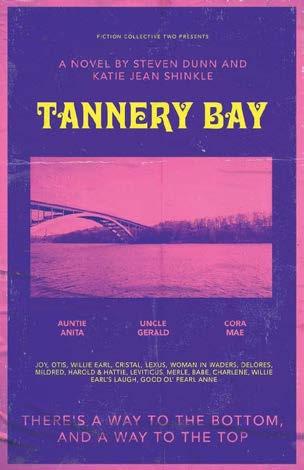
an interview with steven dunn & katie jean shinkle
by jennifer Gravley
How did y’all decide to become co writers?
Steven: Katie Jean and I were at the University of Denver, me as an undergrad and Katie Jean was in the Ph. D. program and associate editor of Denver Quarterly. I came on as an intern. When Katie Jean’s first novel came out, I read it and loved it. I thought our styles were similar so I told her if she ever read my books that I swear I wasn’t copying off of her. And at some point, Katie Jean was like, we should write a book together one day, and I was like, we should. We talked about it for years.
Katie Jean: We did start January 1, 2020, and we didn’t obviously know what 2020 was going to bring us. We finished it in a year. Then we spent the next few years editing the draft, and then we sent it out.
What strengths and challenges do you find in cowriting?
Katie Jean: For me, in collaboration, it’s just so wonderful to write with someone else’s brain and write with someone else’s creativity and write with someone else’s energy.
Steven: Katie Jean would give me these small gifts while we were writing. I love Fast and Furious and heist stuff. I would never write it for myself, but then she would start off with a chapter that was basically a rally up chapter.
Katie Jean: We had to really consider what it means to write with someone from a different subject positioning from ours. I had to have a hard think as a queer woman because there would be challenges, and what does it mean, for me, as far as my writing is concerned, as a queer writer--what kind of vulnerabilities, what kind of emotional labor? And he had to do the same thinking. Because of that, doing our own private thinking we were able to navigate the harder times and navigate the harder conversations that we had to have.
How did the cowriting work? What did your process look like?
Steven: I always give the metaphor of improv comedy, where you say “yes and.” We just kept expanding whatever the other person was writing. We wrote chapters together up until the last third of the book. Once we had the story figured out, we had to start alternating chapters, but by then, we had already had the voice figured out, the plot. And it still feels like one voice even towards the end. Editing helped too, a lot. We edited it for a whole year to make sure it was tight.
Could you talk a little about publishing with FC2?
Katie Jean: FC2 is a fiction collective, the largest collective of experimental fiction writers in the United States. Authors are either brought in by a sponsor or through the contests, and Steven and I are judges this year for the Sukenick Prize with submissions starting in August. Once you’re in, you’re in for life. You’re part of decision making processes and bringing in books and having influence over the publishing landscape. It is at once unique but also a well-established format that I think a lot of small presses throughout the years have emulated. FC2 is celebrating its fiftieth year this year. For me, working for FC2 was a dream.
What genre do you consider TanneryBay, or do you think that question is beside the point?
Steven: I have said on social media that it’s a speculative queer fairy tale blaxploitation novel. I love that.
One striking technique used in the book is repetition of “once upon a time” at the chapter openings. How did you decide on that strategy, and what did you hope it accomplished?
Katie Jean: We wanted to use the fairytale form and subvert it a little bit. Also it automatically puts that place/time/ characters/everything in a magical realm.
We know we’re being cast into something that isn’t in our reality, which was important to me because as soon as I even saw that or wrote it, I would be like, now I’m in Tannery Bay, this magical place.
Steven: I think it happened on accident. I think Katie Jean wrote the first “once upon a time,” and I started the second chapter with it because I liked it. We thought that since they’re on a loop in July, the loop of “once upon a time” reinforced them being in that repetition. It’s another physical marker to show that they’re constantly in that loop.
What projects are you working on now? Or what you have coming up next?
Steven: I’m working on a travel rap book about the rapper Nas. It’s another big collaboration with forty different people in it--some friends from kindergarten and my nieces and my sisters, friends from throughout my life.
Katie Jean: I’m working on a novel right now, and I finished a poetry manuscript this year.
What art or artists are inspiring you at the moment?
Steven: I’ve been watching a lot of travel shows. I really like Rainn Wilson and the Geography of Bliss. He feels depressed and wants to see what happy places look like or what makes places happy so he travels and really connects with people, and it’s really sweet and endearing and adventurous. Also the show called Travel Man with Richard Ayoade. It’s too fast paced for me, but I like him a lot because he’s really funny, and I think he’s a good host.
Katie Jean: Two really amazing books that I read that just came out are Shae by Mesha Maren, and You Are the Snake by Juliet Escoria. These two books are really in conversation with each other. And then I needed some easy reading, and I read Grady Hendrix. I didn’t know anything about it. I thought Grady Hendrix was a woman. The whole time I was reading I was like, there’s this sensibility. Some people get writing the other right, and it’s such a delight. I was so taken by the way that he writes pretty much everyone out of his subject position. I’ve also been listening to Very Delta with Delta Work who is a drag queen from RuPaul’s Drag Race. I swear, every time I listen to it, I just laugh and smile.
About Steven:
Steven Dunn (a.k.a Pothole, cuz he’s deep in these streets) is a Whiting Award winner who was shortlisted for Granta Magazine’s Best of Young American Novelists. He’s the author of three novels: Potted Meat (Tarpaulin Sky, 2016), water & power(Tarpaulin Sky, 2018), and Tannery Bay (FC2/University of Alabama Press, 2024), which is co-authored with his homie Katie Jean Shinkle.
About katie JEAN:
Katie Jean Shinkle’s books and chapbooks include The Only Way Out is Through (YesYes Books, forthcoming), Tannery Bay (coauthored with Steven Dunn, FC2, 2024), None of This is an Invitation (coauthored with Jessica Alexander, Astrophil Press at University of South Dakota, 2023), and Thick City (Bull City Press, 2023). Other work can be found in or is forthcoming from Another Last Call: Poems on Addiction and Deliverance (Sarabande Books), American Poetry Review, Gulf Coast, The Nation, Denver Quarterly, Washington Square Review, New Letters, Witness, and elsewhere. She holds a Ph.D. in Creative Writing and Literary Arts from the University of Denver, and an MFA in Creative Writing from the University of Alabama. Awarded fellowships and residencies from Lambda Literary and the Ragdale Foundation, she serves as co-poetry editor of DIAGRAM.
an interview with vanessa rochelle lewis
by Carmen Acevedo Butcher
“Vanessa shows us a way forward toward compassion and revolutionary love”—these words by Adrienne Maree Brown recommend your book Reclaiming UGLY!ARadicallyJoyfulGuideto UnlearnOppressionandUplift,Glorify,andLoveYourself.Are you pleased with its reception?
Yes! It means the world to me that I get to love on and uplift thousands of readers through Reclaiming UGLY. I’m even more stoked that it was turned into an audiobook. Sanya Simmons made the audio experience feel like receiving the warmest of hugs—even while reading the most traumatic of topics.
What is uglification and how does it marginalize people?
At its simplest, uglification is when we choose to look at another person and perceive them, or something about them, as ugly or less worthy of love, respect, access, and dignity. We do this for a variety of reasons, but most usually because we were outright taught to recognize certain characteristics or features as ugly, less than, or undesirable and, as a result, unconsciously categorize people into social hierarchies that determine how we interact with them or treat them.
We uglify people based on facial features, skin complexion, gender divergence, body shape, disability, age, sexual expression, profession (like sex work), houselessness, unmarried pregnancy, job/income loss, incarceration, and so many other arbitrary reasons. I’m sure you can think of ways that you have been uglified that I haven’t listed. And if you’re courageous and vulnerable, you can probably think of ways you have uglified other people as well.
Fortunately, there are so many creative, uplifting, and soul-shifting ways to interrupt uglification within ourselves and in the world around us, and to reclaim our relationships to our bodies and our communities from the impact of uglification. Once you understand what uglification is, it becomes easier and easier to recognize it, disrupt it when it happens, and heal from the impacts of it.
joyful self-help magic with memoir and incisive analysis, Vanessa Rochelle Lewis empowers readers connect, and revolt against uglification
You are the Founding Director of Reclaim UGLY: Uplift, Glorify, and Love Yourself — And Create
weaponized: a tool, ideology, and type of oppression that designates less worthy of love, respect, access, and dignity. Uglification dewhat spaces, which identities are marginalized, and how we all move part and parcel of systems like white supremacy, ableism, sizeism, transphobia.
a World Where Others
Can As Well! What is Reclaim
Lewis takes on uglification, showing us how we can reclaim UGLY roars an unapologetic “yes!” to joy, healing, community, and revoluengineered to hold us back. You’ll learn:
trust yourself: lean your creativity, and explore every corner supremacy’s boundaries, and the NO
UGLY, and would you share some of its backstory with us?
• How uglification teaches us to internalize hatred—and take our pain and fear out on others
“Reclaiming UGLY! is a
of The Body is Not an Apology
Revolutionary Stories, Tools, and Theories for a Liberated Life Reclaiming
• To own your pleasure and ask for the love you want
• How uglification shows up in activist spaces and liberation movements
first-of-its kind book that invites us to boldly perform UGLY as an radical self-love. Through self-help exercises and reflective meditations, a collective liberation that takes back what society tells us is ugly deconstruct what we’ve told ourselves is ugly and taboo. personal journey, and empowering prompts, Lewis offers a fierce to the radical self-acceptance, joyful community-centered healing, were born for.
I grew up being told that I was ugly by a wide variety of people. It came from the kids I went to school with, casting directors and agents, the private conversations of church women comparing us teen girls against each other, and even came from my father, telling me that no one would want to date, fuck, or hire me if I didn’t change my appearance. It took many years, lots of therapy, so much exposure to transformative art and literature, and life-saving relationships with liberated and self-loving folks before I was able to love myself. By the time I reached my thirties, I did fall in love with myself.
mirror where each page rescues a bit more of our reflections from the lookism….[she] has given us a generous, liberating provocation and inviUGLY! that we would do ourselves a service to receive.” author, therapist, founder of The Embodiment Institute, and host podcast Finding Our Way maintenance, and impact of uglification through a lens that includes factual, Vanessa shows us a way forward toward compassion and brown, New York Times best-selling author of Pleasure Activism
US $19.95 / $25.95 CAN ISBN 978-1-62317-586-3
RECLAIMING UGLY!
Joyful
Guide
to
So when I started to find pictures of myself turned into multiple memes about being ugly or undateable/ unfuckable, I began the organization, Reclaim UGLY, as a way to say, No More. My goal is to create a world where all people feel worthy of love, connection, safety, inclusion, accessibility, and safety regardless of their body, appearance, race, gender, size, ability, or other defining feature. UGLY stands for Uplift, Glorify, Love Yourself – and create a world where others can as well. It is a movement that centers self-compassion, self-love, and healing as a strategy towards transformative inclusion and collective liberation. We have hosted a conference, workshops, performances, training, two sacred months of healing, and more.
Unlearn Oppression
and U plift, G lorify, and L ove Yourself
Vanessa Rochelle Lewis
Prior to founding Reclaim UGLY, you were the senior and co-managing editor for feminist magazines BlackGirlDangerousand EverydayFeminism,an instructor at multiple Bay Area Community Colleges and grassroots art organizations, a fundraiser and events coordinator for the Queer Women of Color Media Arts Project, and Artist-in-Residence at Young Women Freedom Center facilitating art healing workshops and a master class for formerly incarcerated women, trans, and non-binary people, among many others.
Drawing from your diverse experiences as a writer, author, editor, artist, educator, and facilitator, can you share your thoughts on the importance for us of engaging in the creative arts?
Because of the hard things I experienced, I was very depressed and suicidal in my youth. But something changed after a therapist suggested that I join a theater program for other artistic inclined Black youth. There, I was transformed by the pure pleasure and emotional potency of storytelling. I came across stories in plays, poems, books, and essays that shifted my paradigm, helped me understand my trauma and the trauma around me, and empowered me to experience and imagine myself outside of said trauma.
I believe that storytelling, in all its forms, heals perspectives and changes lives. It facilitates the sort of imagination prowess that allows us to sculpt the world we want to live in. The creative arts are both freedom and redemption. They are the building blocks for true liberation.
What are you working on now that you would like to share with us, and where can we keep up with you and Reclaim UGLY online?
I’m currently facilitating different workshops and retreats.
About vanessa: You can follow my Instagram @Black. Woman.Blooming to stay up on what I have to offer. You can also visit my website www.reclaimugly.org and join my mailing list to learn about upcoming events, performances, and workshops.
Vanessa Rochelle Lewis (pronouns Fae/Femme) is fat, neurospicy, Black, agender, queer femme writer, facilitator, educator, performer, and Faerie Princess Mermaid Gangsta for the Revolution. She is the founder of The Reclaim UGLY Movement and the author of Reclaiming UGLY! A Radically Joyful Guide to Unlearn Oppression and Uplift, Glorify, and Love Yourself. In 2021, Root Magazine included her in their 100 most influential African Americans between the ages of 25 and 45 list. Learn more about Vanessa and her story of resilience and transcendence by watching Black Girls, a Never Whisper Justice film. Follow her on Instagram @Black.Woman.Blooming.
an interview with CHLOé Firetto-Toomey
by CLIFFORD BROOKS
How do you live as a poet? I mean, really. How do you feed your poet throughout the day instead of the cynic?
I keep a document open that I can access on my phone and computer. The Toddler swallows all my seconds and he’s on the verge of speaking. I name colors, count, name what we see, and do my best to document as much as I can. Campbell McGrath said, it’s not writing daily but every day, think like a poet. I also think of a line by Chloe Honum “It is so important to name things.” Gratitude keeps the cynic away. As is remembering that everything is a phase, a cycle, and we are but a moment in time. Everything is insignificant but this moment. Everything is mindset. I try to feed the document daily. Sometimes I fail and sometimes I succeed. Sometimes I manage a word or an incomplete sentence, other times it’s a paragraph or a page. There’s a time for everything. My time will come when I’m able to return to this document and begin harvesting. It is from here that all poems and essays sprout.
How does dance factor into your creative process?
Had I not pursued degrees in writing it would have been in contemporary dance. The body has its own wisdom and it speaks in movements with muscle memories. I make time to dance daily, sometimes with a toddler in arms, sometimes with the toddler to Michael Jackson videos. It’s easy for the mind to drift but dance brings me back into the body, reminds me of fluidity and ultimately, it helps me to find rhythms in my sentences. Dance helps me to forge a mind/body connection, sharpens the inner eye - brings “the observer” into focus.
If you could share a meal with anyone alive or dead, who would it be?
Amy Winehouse.
Who are you reading now?
Fever of Unknown Origins by Campbell
McGrath
and Messages from the Masters: Tapping into the Power of Love by
Brian Weiss, M.D.
How do you approach a first draft of a poem vs the final edit?
The first draft is expansive, explorative, generative. (Sometimes it becomes an essay.) The final edits strive to cut at least 25% of the text. It is a process of intense pruning, reshuffling, rephrasing. I always keep the original draft(s) on hand in case I need to retrace my steps.
How chaotic is it to assist the rowdy Richard Blanco?
Actually, not chaotic at all. Richard is a planner. He schedules time for everything. There are very few last-minute surprises, unless the White House calls! (When we got news he was to be awarded a NEH medal, he thought it might be spam or phishing LOL.) He is a kind and generous soul, I’m grateful to work with him and I love the odd occasion when we are able to share a martini and get a little rowdy. What is life without a little rowdiness?
Chloé Firetto-Toomey is a British-American poet and essayist living in Miami. She earned an MFA from Florida International University and is the author’s assistant to Presidential Inaugural poet Richard Blanco. Her most recent chapbook of poems, Little Cauliflower, was published in 2019 by Dancing Girl Press. She’s a Pushcart Prize nominee and the recipient of the 2017 Christopher F. Kelly Award for Poetry, and the 2020 Scotti Merrill Memorial Award for Poetry. Find her poems, essays, and short stories at poets.org, SWIMM, december, Tupelo Quarterly, The Offing, among others.
About CHLOé:
The Redheaded Stepchild only accepts poems that have been rejected by other magazines. We publish biannually, and we accept submissions in the months of August and February only. We do not accept previously published work. We are open to a wide variety of poetry and hold no allegiance to any particular style or school.
visit www.redheadedmag.com for more information & submissions
MUSIC INTERVIEWS
MUSIC INTERVIEWS
AN INTERVIEW WITH LANE MARIE
by CLIFFORD BROOKS
How do you stand out, Lane Marie?
That’s a hard question to answer accurately about yourself. I’m a classically trained indie pop rock artist, and a full time working mom. While I’ve experienced some really hard things in my life, I haven’t become jaded or given up hope. I think I’m able to write songs that connect the harsh realities of life to the hope we all want to have.
You’re able to dig deeply into anguished places to draw out your sound. How do you survive that process?
I don’t simply survive the process, but I heal from it. Writing songs and telling my story through art allows me to experience hardship through a different lens. On a neurological level, it’s actually really good for our brains to tell our stories in order to heal. That’s why therapy is so successful for many people. Music is a form of therapy for me.
Who do you want to be when you grow up?
Beyoncé. But if that job is already taken, then I’d love to just grow up to be a woman that doesn’t let age define her musical goals and dreams. I want to show my daughter that you can do something beautiful and important with your life whether or not it goes viral on tik tok. I want to be a woman who values people over performance and relationship over personal gain.
How do you juggle work and family?
It’s always a beautiful struggle. I’m blessed to have work I’m passionate about and a healthy family that loves and supports each other. Balancing work and family takes a lot of communication and flexibility. My husband is my engineer/producer and we often work on recording songs after our daughter goes to sleep in our home studio. There are many nights that I’m
not feeling it, but I’m always grateful when we are able to push through the tiredness and accomplish something. With that said, there’s definitely times where you have to prioritize rest, and just work on something another night.
What’s “success” to you?
Success is bigger than just my art. Success is about living a life that impacts those around me for good, and sets an example for those after me. In my art, success is creating art that I genuinely believe in, and touches the people that listen to it; whether that’s one person or one billion people. If I don’t believe in it, or if it doesn’t really impact people on a deeper level, then it’s not a success to me.
What are you working on now?
I’m in the process of working on my debut full length album called “Changing.” My husband and I are recording it in our home studio with the help of some amazingly talented friends. We will be releasing each song as a single on streaming, and are working on creating a mixed media experience around the album to help listeners dig deeper into the stories and meanings behind the songs.
We’ve released the first three singles from the album “Runaway,” “When Will You See,” and “Can’t Help Thinking.” And plan to keep releasing them throughout the rest of this year and next year.
Lane Marie is an indie pop artist born, raised, and based out of Athens, Georgia. Her music combines her roots as a classically trained musician, with honest songwriting and alternative pop production chops. Drawing inspiration from artists like Brooke Fraser, Maggie Rogers, and Madison Cunningham, Lane Marie has found a voice truly her own. Lane Marie grew up in a musical family: her mom is a classical pianist and her father was a folk musician. From a young age, music served as a way to express herself and process the world. Released in 2019, Lane Marie’s first EP was written out of the experience of the unexpected loss of her father. It explores the grief of losing a loved one, and the journey of finding meaning in their absence. Since then, Lane Marie has sold out regional venues and continued to release singles in preparation for the release of a full album.
About LANE:
AN INTERVIEW WITH tae lewis
by CLIFFORD BROOKS
How has the Holy Spirit used life to bright out the best in you?
By surrounding me with the best and most humble Christian men that keep me grounded and challenge my faith every day.
You embrace fashion and obviously style yourself out. Who inspires your look?
Most of my styles come from people such as restless heart and Shenandoah.
What’s your biggest takeaway from “The Voice?”
The Voice does not change your life, it only elevates you into a little better platform for more gigs and such.
What’s the first song you wrote and thought, “This is good?” Do you happen to have those lyrics hanging around somewhere?
The first song I wrote was “When I Grew Up.” I wrote this song about the things I endured being a country artist but also just my life in general and how I have to keep moving forward in spite of all the things.
Why music?
Music has always been a piece of me ever since I was 5. My whole family are singers. Music just helps to find my sole purpose in really letting people see me and my heart.
How do you stay humble?
Learning how to budget and not spending my money on reckless things. I also go to therapy as well.
Do you ever feel like the composer of your melodies?
All the time I’m always making sure I conduct what needs to be placed in every song I have produced or even written if the song is for me.
What’s up next, Bossman?
Still working and scratching to make an end goal to be a rising country artist.
AN INTERVIEW WITH devon allman
by CLIFFORD BROOKS
How do you define “Devon Allman?”
A musician that seeks to fuse elements of soul and rock to transport people and give them the ability to turn off the world for a couple of hours with music.
How do you stay true to yourself?
By writing music with feeling and by following my gut when it comes to musical direction.
Your father is the late Greg Allman. What melodies from his life still sing through you?
Soul, purpose, and passion. He never thought his band would “make it.” They made music not for the reward of fame or money, but to move people and to push themselves.
With such a powerful influence as a father, how did you strike out to make your own sound?
By concentrating on my own music and my own voice. No one can do the work or travel the miles for you.
What’s the first song to grab your attention and push you on stage?
I don’t need a song to push me onto the stage. Just some electricity and some folks that want to go on a journey.
How
do you define success?
Having not one soul telling you what to do.
What do you do on tour to maintain a balance in all the chaos?
Great question. Breathing exercises. Reading. Shopping for healthy foods. Weight lifting. Mat work. Meditation. I make smoothies on the bus.
Tell us about your favorite moments with your bands of the past?
Read the book when it comes out ;)
How is your new band different from your previous projects?
Being at this stage in my career, I’m able to pull from every era and every band I’ve been a part of. My current band can
play any style I put in front of it and every member is a showman in their own right, with the playing and sincerity to back it up.
Tell us about your new album.
Miami Moon was recorded with legends in a historic recording studio. Criteria Studios seemed a fitting locale to assemble George Porter Jr., Ivan Nevillem Adam Dietch, Jackson Stokes, and Tom Hambridge. The album is an R&B record and I’m pleased to take this turn in my career to showcase different sides of my musical personality.
How can we keep up with you online?
www.devonallmanproject.com and on all social platforms.
ABOUT devon:
Devon Allman is an American guitarist, vocalist, songwriter, and record producer. He is the son of musician and singer-songwriter Gregg Allman and has appeared occasionally as a guest musician for Gregg Allman and The Allman Brothers Band. Allman was the founder and bandleader of Honeytribe, also known as Devon Allman’s Honeytribe, with whom he released two albums and toured across North America and Europe. Prior to Honeytribe, Allman contributed to several other musical recordings, notably Vargas Blues Band and the A Song for My Father compilation album. He was one of the original members of Royal Southern Brotherhood and contributed to their first two studio albums and toured with them. In 2013, Allman launched his solo career as the Devon Allman Band, and has since released three albums. His latest tour, branded as the Devon Allman Project, features special guest Duane Betts.
VISUAL ART
VISUAL
IPHONE TIPS
BY NICK KELSH
1. The World is Flat
Let’s talk about the world for a moment. The world is a horizontal place. What does that have to do with iPhone photography? With a camera that shoots horizontal (that’s wide like a landscape) and vertical (that’s up and down like a portrait) you need to be asking yourself in just about every situation whether or not you should be holding the camera vertically or horizontally. This is a major decision in composition. The problem is that the design of the iPhone practically dictates that you shoot vertical photographs. That seems somehow wrong in our beautiful horizontal world. I’m thinking that about 80% of the pictures you shoot should be horizontal and not vertical. (There are photographers who would disagree with me here.) That means you will turn the camera on its side to be wider than tall. Don’t let your iPhone push you around. Celebrate the planet’s horizontal format. Turn the iPhone on its side. Most of the time.
2. It’s a wide angle lens
A telephoto lens makes things look closer. A wide angle lens makes things look farther away. By default, the iPhone uses a wide angle lens. I am not sure why. Apple calls that wide angle “1X”. But if you change that setting to “2X”, you have a slightly telephoto lens (bringing things closer) and it makes a huge difference. There are plenty of photographers in the world that will tell you that a slightly telephoto lens makes better photographs than a wide angle lens. It looks more natural. There is a lot less weird distortion at the edges and corners. It’s a lot closer to what real human vision is. And if you think about it, that’s probably a good place to be when you’re shooting photographs for human beings to look at. My recommendation is to use 2X and not 1X. Most of the time.
Just to be clear, you see more stuff with a wide angle lens, but seeing more stuff is not always the goal.
3. How to turn your camera on.
There are several ways to turn on the iPhone camera–that’s different than turning on the phone– and you need to pick one as your favorite. Possibly, my favorite is this: turn the phone on (like I said, the phone needs to be on before you can turn the camera on.) then put your finger on the right edge of the screen and drag it to the left. Theoretically, you have just opened up the camera. That may be as easy as it gets. You can also tap the camera icon which you will probably find on your lock screen. Do whatever makes you comfortable, but it needs to be second nature, and you need to be able to do it under the pressing duress of watching a great photograph unfold in front of you.
4. Practice for 30 minutes.
I once had a guitar teacher who made me commit to 30 minutes of practice a day, everyday. I agreed. On one of the subsequent weeks he asked me if I had practiced and I said that I had. He told me to go ahead and prove it. Play the lesson, he said. I gave it my best shot and he seemed disappointed. It was clear, he said, that I had not practiced. I disagreed. He then gave me the following speech:
“Yes, you may have tickled the strings and played some kind of chords every day but you did not practice. You very likely sat in front of the television and strummed the guitar. That, he said, does not qualify as practice. Practice is when you commit every molecule in your body and brain to learning what you have decided you are going to learn on any given day. All other distractions are eliminated. You do your very best to come out the other end as a better practitioner of whatever art you are trying to master.”
Musical instruments are classic examples of things that require practice. But I submit that cameras do well by a little bit of committed alone time also. You can break just about any camera down into small components that could use some intense concentration. Put together several pieces of intense concentration and you will grow as an artist and a photographer in ways you never thought possible.
5. Sharing a group shot.
Just by definition, a group shot is probably the one photograph you are going to shoot that is begging to be shared. Most people in the photo would love to have a copy. Group shots are incredibly precious moment photographs – the moment when all those people stood in one spot and stared into your camera. Back in the old days, the sharing process often involved a trip to the drugstore, envelopes and stamps, and some cereal box cardboard as packaging. Only a certain type of personality could pull that off. In almost all cases men shot the photographs and women served as the shipping department. At least, that’s how it was at my house.
Today, on the iPhone, we have a little miracle called AirDrop. You shoot the picture. People in the picture with iPhones designate their AirDrop to receive the picture you transmit to them seconds after taking the picture. It shows up wirelessly on their phone. Now everyone has the picture. It’s not too much more complicated than that. The photograph that has been begging to be shared has done just that.
6. Clean the lens.
Nose grease and camera optics don’t do each other any favors. A thin layer of foggy fingerprints doesn’t necessarily put your pictures out of focus but it lowers the contrast and creates a picture that appears to have been
taken through some kind of fog or haze. You don’t want that.
A dirty lens is inevitable, no doubt about that, especially if the lens is tiny and vulnerably placed like on a iPhone. To get rid of it just wipe your lens off (what you are wiping is actually a protective layer of extremely durable glass and is not the lens) with a very soft, clean, absorbent cloth. Lightly wipe it and it should take care of the problem completely.
If you need convincing that fingerprints on your iPhone lens reduce the quality of a picture, shoot a before and after the next time you’re shooting a photograph that seems to be lacking your camera’s usual snap.
7. The settings bar/turn off the flash
There’s a little triangle at the very top of the camera screen. It’s extremely useful and a little bit confusing. When you push the triangle a row of camera settings is revealed near the bottom of the screen. The normal row of options disappears during this process. Video/photo/portrait/ Pano/etc. That’s the confusing part. if you keep pushing the triangle at the top, it will toggle back-and-forth between all of these options. It’s worth doing this several dozen times to burn the process into your brain cells.
Obviously (maybe not so obviously) when you reveal the normally hidden camera settings you can make adjustments to the camera in several different ways. Aspect, ratio, exposure adjustment, LIVE photo, etc.
There’s yet another way to do this back-andforth toggle. If you drag your finger up and down anywhere on the camera screen (that’s the screen with the big white shutter button at the bottom) this will also change the options on that bottom row from the traditional camera options to the specific settings. Try that and you will know what I mean.
8. Manually adjust the highlights
Virtually every camera ever made, has allowed the human operator to make the picture darker or brighter when that person thought it was nec-
essary. It’s called manual exposure. If you think about it, whether or not to make a picture brighter or darker is a personal creative decision. In my experience, however, making the picture a little darker so that there is more detail in the brightest areas seems the way to go. Digital photography is quite tolerant of pictures that are a little bit too dark. It’s much easier to lighten up the darkest areas on a too dark image, then it is to darken down slightly overexposed bright areas.
9. Where is my photo?
Sorting, organizing and then finding photography has been a nightmare since the invention of the F-stop. (Is it a picture of the woods, a woman walking through the woods, snow coming down, footprints, or just winter? What about the wind? Your guess is as good as mine.)
Fortunately, the iPhone has made it shockingly easy to get to relatively remote images you shot a long time ago…or yesterday. You can find your pictures based on where they were taken, when they were taken, and even who is in the photograph. And there is also a very broad category, and incredibly useful, that finds photos based on subject matter. It’s called Search. If you are completely baffled, on how to find a photograph, the Search function is the first line of defense.
Get yourself to your photos page and you will see four different methods of organization at the bottom. On the far right, you will find the search function. Click it.
At this point, finding your photograph practically becomes an exercise and creative writing. Type in a word that you think will remotely connect with the image. I did that and had the following results.
572 photographs of Baseball
177 photographs of spring
970 photographs of art
1801 photographs of animals
870 photographs of cats
98 photographs of goats
484 photographs of cows
437 photographs of bicycles
111 photographs of bicycle helmets
194 photographs of birthdays
349 photographs of fires
197 photographs of fireplaces
11 photographs of firetrucks oak trees
865 photographs of gym shoes
473 photographs of guitars
111 photographs of forks
93 Photographs of spoons
189 photographs of knives
399 photographs of maple trees
89 photographs of oak trees
1 photograph of a birch tree
75 photographs of masks.
277 photographs of Halloween costumes
6089 photographs of windows
124 photographs of airplanes
2 photographs of helicopters
39 photographs of dandelions
You should know that I have about 60,000 photographs on my iPhone. I am not the most organized photographer you have ever met. But this search function continues to save the day like I said, it’s practically an exercise in creative writing. If you’re son or daughter graduated from high school five years ago and the photographs are on your iPhone the search function is very likely going to bring them up when you type in graduation. Sure, there might be 300 photographs from that day. But you were going to be in the ballpark in a matter of moments. In other words, let this be the last day of your photographic life that you ever scroll through thousands of photographs looking for that one remote image you know was out there somewhere. Search it.
10. How to find the best burst photo
One of the more mind-boggling and useful features on the iPhone is the burst feature. You have very likely found it accidentally and not all that useful. The accidental function on this feature has to do with the hair trigger button used to activate it. And when you activated it takes on a life of its own. It’s a little like an electric lawnmower with a handle removed. It just goes.When you know how to use it you can shoot 10 frames a second floor at least a minute which is completely mind blowing. Knowing how to use it is just part of the plan. The other half is tackling the logical method for eliminating all of the garbage photographs you will shoot with this function. And it’s hundreds.
Sothisisatwo-parter.
Part one is this:
You want to photograph some kind of action. And you want to document it with lots of individual frames hoping to catch one great one. That’s the basic idea. In the regular photo mode if you slide the shutter button to the left a little bit and very carefully it will trigger the burst mode. You will see numbers going by and hear click click click click click click click click click click click click click at 10 frames a second. When you let go of the button it will stop shooting the burst. That is the basic idea.
Part two is this:
You have now created a burst of photographs. That’s a big pile of photographs. The trick is to get to the one good one (or good ones) and get rid of the rest. Let’s face it, if you have 450 photographs of your granddaughter jumping on a trampoline somethings got to go.
This part is really important. When you go to your photo
library and you are scrolling through individual images some of them will have a burst logo in the top left-hand corner. That is really important. That means that the one photograph you were looking at there represents how many ever photographs you shot in the burst. But if you don’t see that burst logo, you did something wrong. It’s not a burst.
Which brings up the next important question: How do you separate the one good photograph from all of the rest of the burst photographs? The secret move is this: hit the select button at the bottom of the frame. That opens up all of the photographs in the burst and you can scroll through them individually. When you see the one you like, tap on the white circle in the bottom right hand corner and that will put a checkmark on that particular photograph. If that’s all you want to do, you can then say done at the top right hand corner. Comes a prompt asking you if you want to keep everything or keep only the one favorite. That’s up to you. But I would say you almost never want to keep everything.
ABOUT NICK:
Nick Kelsh is a photographer and author of nine books. He has been featured on The Today Show and Oprah multiple times. Click here to check out his iPhone photography course.
SPECIAL FEATURES
SPECIAL FEATURES
UCLA
EXTENSION SPOTLIGHT
an interview with darien hsu gee
by Clifford brooks
What was the first thing you thought of this morning?
My first thought this morning was about my oldest son’s well-being. He was stung by a scorpion last night—in our 25 years in Hawaiʻi, we’ve never had a scorpion in the house, let alone in a bed. The timing is particularly challenging as he’s about to embark on a whirlwind of travel: visiting family on my side, attending a reunion cruise on my husband’s side, then filming a 3-week cross-country documentary in an RV. After all that, he’ll be home for less than a day before heading off to college.
Once I confirmed he was okay, my writer’s mind kicked in. I found myself researching the symbolism of scorpion stings and started thinking about a potential short story or personal essay. I’m sure I did that to distract myself from the grief I’m feeling about his impending departure, but I’ll take it.
What does your writing schedule/ritual look like?
I’m naturally nocturnal and often do my best writing at night, but family life and juggling multiple jobs and projects have forced me to flip my schedule over the past couple of decades. It doesn’t always feel like I’m writing at my best, but you work with what you’ve got.
I try to write first thing in the morning before life either goes sideways or my day fills up. I usually start by re-reading my last chapter or a couple of previous pages, then continue from there. At the end of my writing session, I’ll edit what I’ve written and set it aside to read the next day.
If I’m on retreat or the kids are away, I might revert to my night schedule. I also have moments where I can get a bit manic—I’ll write or revise nonstop for several days, usually because I have a deadline or a brilliant idea that won’t leave me alone. I’ll be wrecked for a few weeks after, but it allows me to tackle large ideas or produce a significant amount of pages I wouldn’t otherwise manage. I don’t love doing it that way because it’s hard when you have a family (you still have to
drive, cook and clean) and it’s hard on you (your sleep suffers the most), but sometimes that’s just how it happens.
Why do you teach?
I love to write, and I love to teach. It’s the best of both worlds because I’m not only sharing what I love, but I get to witness others get excited about their own writing and what might be possible for their work, too. One of my superpowers is creating original curriculum that helps people achieve their goals as writers, regardless of genre. I like that I can put my left and right brain skills together to make a difference.
For the past few years, I’ve been working a lot in the micro prose genre (a short form of 300 words or less), so coming up with new and robust programming around how people tell their stories using this form has been extremely rewarding. It’s not just about teaching—it’s about empowering others to find their voice and express themselves effectively, even in such a concise format.
Can you describe a moment or experience that fundamentally changed your writing style or focus?
One pivotal experience was how I started writing micro prose. For years, I had struggled to write a multi-generational historical novel based on my mother’s matrilineal line. Despite several drafts, I couldn’t make it work. The shift came when I was 50, enrolled in the low-residency MFA program at Pacific Lutheran University’s Rainier Writing Workshop. The program was founded by Stan Ruben and Judith Kitchen, whom I consider the mother of micro and short form narratives. My mentor at the time, Rigoberto González, also wrote prolifically in the short form.
Suddenly, the story I wanted to tell was distilled into 36 prose poems of 300 words or less. Some were published as micro essays, micro narratives, even flash fiction. This collection became Other Small Histories and won the Poetry Society of America Chapbook Fellowship Award, judged by Patricia Smith. Here I was, an author who wrote novels that clocked in at 80,000110,000 words, but yet it was micro prose that set my story free.
What projects are you working on?
I’m in final revisions for a novel which, like many things, is taking longer than I would like. I’m also working on a collection of 108 micro essays about my mother. She decided to become a Buddhist when she was in her mid-fifties, about the age I am now. I was in my early twenties when she told me, “I am no longer your mother.” It took me a while to wrap my head around
that and what it really meant. She still lives with several other Buddhist practitioners, reading the translating sutras fulltime—I’m going to visit her in a couple of days. This project has led me to explore complex aspects of our relationship, and how her choices contributed to my own sense of self and family.
How can we find you?
I made the decision to stop being active on social a couple of years ago. While I maintain my long-standing accounts, I’m no longer actively engaged. This decision was sparked by an unsettling experience: my husband’s profile was hacked. I watched as the hacker dismantled his account, making off with our photos and family history. At one point, they even changed my husband’s name on one platform, briefly making it appear as if I was married to a completely different person.
I’m still on LinkedIn (@dariengee) though not a lot of creatives hang out there. I have two websites, my author site (dariengee.com) and my teaching site (writer-ish.com), as well as a newsletter, which are the best ways to stay in touch with me.
About DARIen:
Darien Hsu Gee is the author of five novels published by Penguin Random House, translated into eleven languages. She received the Poetry Society of America’s Chapbook Fellowship award for Other Small Histories and a Hawaiʻi Book Publishers’ Ka Palapala Poʻokela Award of Excellence for Writing the Hawaiʻi Memoir. Darien recently served as executive editor for Nonwhite and Woman: 131 Micro Essays on Being in the World, winner of a silver IPPY award. Her collection of micro essays, Allegiance, won a bronze IPPY award. Her hybrid essay on chef and trailblazer Joyce Chen, “Head of the Table,” is forthcoming in Fast Famous Women (Woodhall Press, 2024). Darien teaches in the Writers’ Program at UCLA Extension and at Writer-ish.com
an interview with BRIGHT HILL PRESS
Lynne Kemen, President of
by Clifford brooks
How did Bright Hill Press begin?
Bright Hill was founded in 1992 by poet Bertha Rogers and her husband, Ernest Fishman. At first, they held poetry workshops in their home, a farm called Bright Hill. Bertha held poetry readings and children’s workshops. We became a 501(c)3 not-for-profit in 1994. Bertha did the creative parts, and Ernie made it happen. He was a brilliant businessman, as well as a gifted writer.
Finding a dedicated space for Bright Hill became necessary as the organization grew. In 2002, we moved to our current location at 94 Church Street in Treadwell, New York.
The garage was remodeled into an educational workshop wing in 2002 with 40-person capacity. The children do most of the workshops in that space. The programs are based on developing creative thinking. These are STEAM-based week-long programs. Children learn about a particular subject, then write about it and do crafts. They learn to use their imagination and to think critically.
In 2004, we designed and built a library with high ceilings. We use that for children’s presentations and poetry readings. The library has a unique 12,000-volume collection of poetry and art books, which are available to be used during business hours.
We have two adjoining galleries for art shows, The Word & Image Galleries.
Ernest Fishman died in 2016. In 2017, Bertha stepped down as the Artistic Director. Bertha continues to do the children’s workshops. We are currently looking for a new Executive Director.
What does the organization stand for?
Well, I think our mission statement tells you who we are: Our mission is to seek out, study, and collect the work of early and contemporary writers, storytellers, and artists and to publish, disseminate, and present that work through publications and educational and public programs for the larger community. That’s been our credo for 32 years.
How has BH changed over the years to meet the challenges of a changing culture of non-local guests?
The most significant change for Bright Hill was figuring out how to keep going during COVID. Until then, all of our events were in person. When gatherings weren’t practical, we needed to create another way.
We switched most of our programming to Zoom. For example, the adult reading workshop Seeing Things started meeting online, allowing us to add members not physically located in our area.
We could include poets and viewers from all over the world for poetry readings, which are held bi-monthly between late February and mid-November. Previously, we might have had a few guests, but we would need to get them to Treadwell, house them, and feed them. When we converted to Zoom, we could add Caribbean authors and writers from other parts of the US. Of course, we could also grow our audience. Many Southern Collective Experience members have read for us: JD Isip, Nicole Tallman, Casanova Green, Caridad Moro-Grolier, Justin Hamm, Luke Johnson, Charles Jensen, Moni Basu, and Cliff Brooks. We also have friends in the Caribbean, particularly in Saint Lucia including John Robert Lee and Kendall Hippolyte.
What kind of events do you host today?
This year, we are back to doing arts shows. During the COVID period, we couldn’t do that. We have six art shows we’ve done or will do this year. It’s lovely to have people back in the physical space.
We loved the expansion we could do with audiences and readers for Word Thursdays and have developed a hybrid, with some readings happening at Bright Hill being live streamed to our Facebook page. We are also doing virtual readings to have readers who are not local. So far, the feedback has been excellent. A live reading in our library has an added theatrical quality.
So far, the adult workshops have been virtual. However, we can include more than our small community; members can access us and participate when they travel.
What programs do you have on the horizon?
The next big project is to hire a part-time librarian and open the space for extended hours. Treadwell is a tiny hamlet, and at present, there is no public access to a copier or password-protected WIFI. The building is ADA accessible both from the outside and within.
Our dream is to create a community for people who want a place to meet, read, and write.
We would love to expand our audience and reach poets, artists, and readers, so we invite you to join us either online or virtually. Please spread the word. We are trying to reach as many readers, writers, and artists as possible.
And, of course, we would appreciate any contributions to keep our organization running and accessible. Here’s the link: https://brighthillpress.org/donations/
About LYNNE:
Lynne Kemen lives in the Great Western Catskills of New York and appears in various literary journals. Her first full-length book of poetry, Shoes for Lucy was published in 2023 by SCE Press. Her chapbook, More Than a Handful, appeared in 2020. She is an Interviewer and Editor for The Blue Mountain Review and a member of The Southern Collective Experience. She is the President of Bright Hill Press.
an interview with CLAYTON JONES
by SETH INGRAM
What’s the earliest memory you can dredge up, Clayton?
My earliest memory? Hmm. I have a few scattered ones. Musicians at my parents’ house when I was very young, visits to my grandparents’ place. Then there are years that have vanished from my mind. But yeah, family and music have always been part of the picture.
Your parents and grandparents—how did they mold you into the artist and writer you are today?
My grandparents, both sets of them, were incredibly supportive of my musical endeavors. My Papaw Jones showed me my first guitar chords. I had a little guitar left by a cousin when I was about eight or nine, but it was during those awkward preteen years that I decided to really learn to play, thanks to Papaw.
College days—was that where you found your musical groove? Figured out your style and the kind of songs you wanted to write?
Yeah, college was pivotal. I went to the University of Georgia to learn to write better songs. I had a band before I even had a place to live. I soon realized my song lyrics were more like poetry, which led me to study English and poetry to refine my songwriting. It’s something I’ve never strayed far from.
What was your first band in Athens?
Kilgore Trout was the name—a band with a literary flair. I played guitar and we even performed a couple of my original
songs. After Kilgore Trout, I started my own band, Jumpsteady, which leaned more towards rhythm and blues and funk. That band did pretty well.
When did you start veering towards bluegrass?
After a series of electrified rock bands, I got into roots music. A big influence was Steve Earle’s record with the Del McCoury Band, which made me realize I could write my own bluegrass songs. That was a turning point.
Your graduate work was in creative writing, right? How did studying poetry shape you as an artist?
Yes, it was. Studying Southern poets gave me a deep appreciation for narrative. Poets like James Dickey, Robert Penn Warren, and David Bottoms, whom I studied with, taught me the power of storytelling. You may not always see it right off the bat, but even in my current writing, there’s always a story at the core.
How does your songwriting process work? Do you start with poetry?
Songs and poems often start similarly, with an image or concept. I usually write songs from beginning to end in one sitting, with a vague melody in mind. Poems have a similar rhythm and music in my head. It’s about capturing the right melody and rhythm in the words. But to clarify that a little, I rarely write a poem and turn it into a song, visa-versa. They are different things, but have similarities. I could draw you a Venn diagram.
You come from a musically inclined family. Were they also into literature?
My dad was a great writer. He wrote speeches for politicians and songs. Watching him write at the kitchen table gave me an appreciation for the craft. It was a different kind of work, but I understood its importance.
Did your father write professionally?
Yes, as a speechwriter. Later, he was a banker but still wrote songs throughout his life. He penned some good ones.
Have you recorded any of your father’s songs?
I haven’t, but my brother and David Long, the mandolinist who might as well be my other brother, recorded one or two of them.
Your siblings also dabbled in music. What was it like playing with them?
Playing with my siblings was special. There’s something unique about sibling harmony. It’s a spiritual experience, and some of my best memories involve making music with them.
You’ve had success in various fields. What’s next for you?
These days, I’ve been writing a lot for the screen. I feel all my experiences have led me to this. It’s where I’m most comfortable now—writing for film and TV, but I do have a book of poetry set to be published later in the year by SCE Press. I’m very excited about that.
How does screenwriting differ from your other writing styles?
It’s still a visual and auditory experience for me, but with screenwriting, I get to use all my senses. There’s music, dialogue, and visuals—it’s a full toolkit.
Who are your biggest influences in film and screenwriting?
The Coen brothers and Spielberg’s big films were very formative for me. Joseph Campbell’s work on myths and storytelling patterns also influenced me. Film combines all the storytelling elements I love.
Do you find it challenging to write for the screen?
Screenwriting came naturally to me, especially writing dialogue. But it’s like having a good round of golf—lots of moving parts and concentration. It’s complex but fulfilling.
Who are some of your biggest influences in your other writings?
TS Eliot said that good writers mimic, but great writers steal. We’re never free from our influences. When I write, I look at what I’ve done before and build on that, hoping not to be a carbon copy of myself.
Where do you see yourself in the next five to ten years?
Writing for the screen with the company you and I are starting with Eric Floyd, Tres Beardos. That’s where I want to spend the rest of my career.
What gives you confidence as a writer?
Good question. I’d say my past successes and having someone you trust to bounce ideas off of—sort of like you, Seth. Everybody needs a Seth.
Leave us with a bit of inspiration or life suggestion. It does not need to be writing related, just something philosophical that you’d like to share?
I was thinking about this the other day: a long, long time ago, and I don’t remember who, probably a school teacher I had when I was growing up, told me I was creative and that when I grew up people were going to try to take that away from me. Whoever it was that told me that was right. Society can take the passion right out of you. Anyway, I made a promise that I would never lose my creativity, and I haven’t. I’ve come close a time or two—that’s for sure, but found myself again in my creativity and in God. So whatever happens, just keep on following your bliss.
ThanksClayton,Ithasbeengreat talkingtoyou. I lookforwardto ourcontinuedadventuresinwriting together.
Clayton Jones writes poetry, prose, and for the screen. He lives in Chickamauga, GA. His work has appeared in many journals and magazines including The Cortland Review, Boston Literary Magazine, and American Songwriter. He has written and recorded several albums of original music. He is founder of Southwind Media (southwindmedia.net) where he offers editing and other literary services. He is a professor of English at University of Tennessee at Chattanooga and holds a M.F.A. in poetry from Georgia State University. His forthcoming book of poetry will be published by SCE press.
About clayton:
an interview with marisa whisnant
red phone booth’s
BY CLIFFORD BROOKS
When you walk in a room, your energy demands attention. How has life built the successful woman you are today?
My past mistakes personally and professionally have made me into the woman I am today. I know who I have been and that really affects who I want to be presently and who I want to be in the future. If I decide not to learn from my mistakes then I remain the same and there is no growth.
What
makes you sing, Marisa! How do you keep cool in life and on the job?
I chose to continue to grow in this career, so I knew what I was getting myself into. The hospitality industry is challenging and there’s lots of self control involved, especially when managing. I’ve had my blunders and there will be more, but I keep my cool because in the end business is business and I can’t take anything personally. If my employees are happy and my guests are happy, then I am happy.
Keeping cool in life is a little bit easier, I just make sure that I go to the gym, eat healthy, get some vitamin D, hangout with my dog, and spend time with those who I love and are important to me. That makes me a happy and chill person.
What
do
you want to be when you grow up?
When I grow up I want to own my own business, whether it is a bar or restaurant. My partner and I have the same goals and passion for this field, so I know it will come to fruition.
Who inspires your fashion sense? You walk with fire.
The fact that I am not a server or bartender anymore means I can’t wear all black, which I enjoy. Taking on a management
position has forced me to stand out a bit more and try new styles such as color. Honestly, I have really come to enjoy my brightly colored blazers and dresses.
What gods brought you to the Red Phone Booth?
Google brought me to the Red Phone Booth! Towards the end of covid I was searching for a new job and filtered the search to ‘3+ dollar signs’ and BOOM. I applied to several places but Red Phone Booth was the first to respond. Three years later and I wouldn’t do anything differently.
How do you make the downtown location yours? You maintain this swanky relaxed environment.
I have been in all positions as an employee at Red Phone Booth. I know the in’s and out’s of how this place runs, so I am quite confident and comfortable. When I realized how much I could learn from my peers and management, I soaked up as much information as I could from anybody and everybody. This allowed me as a manager to have fun and all I need to do is make sure my employees are making money and my guests are having a great time.
Why is it important to make people feel at home and valuable?
First of all, strictly business, we thrive on returning guests. That’s how we all make a living. BUT, guests can feel vibes and can gauge authenticity. It is my goal to learn one thing about every guest in that bar so I can build rapport. I make that my goal because I genuinely want to get to know my guests. I also stress that to my staff, because I know it will help them. Sundays (our slow days) are the best days to get to know our guests, we all get to talk more and the bartenders get to make special cocktails that you wouldn’t normally get on a busy day. I think that’s where we thrive and how we get to know about our guests.
Many of our regulars and members have become good friends of mine and that doesn’t come without me caring. Not only that, but the relationships I have built with our members and regulars allow me to introduce new guests to really great and welcoming people. That allows everyone to have a good time and those new guests become regulars because they know they have friends there.
What’s the last thing you think about before you fall asleep?
The last thing I think about before I go to sleep is ‘will I be going to the gym in the morning?’. Haha, it’s a work in progress.
About MARISA:
Marisa Whisnant Assistant General Manager Dog mom Award winning tomato sandwich maker.
AN AUTISTIC ESCAPE TO THE LEN FOOTE HIKE INN
BY Clifford brooks
In July I hiked as close as I’ll get to the Appalachian Trail. I’m looking for my oval bumper stickers that reads “I Saw the AT” instead of how many miles I trekked. There isn’t one. You sticker creators should get on that.
Writing this review on the Len Foote Hike Inn struck me after watching an episode of Viewfinders on GPTV. You see, I love the outdoors – to a point. I am all about the Great Outdoors, if there is a shower and toilet nearby. I enjoy fishing, but more for the therapeutic value of watching a bobber – bob. I run every day to enjoy nature and unwind. I don’t need potential poison ivy and tent-life to get me into Zen.
Be that as it may, I thoroughly enjoyed my hike to Len Foote Hike Inn. Five miles of quiet allowed the ever-present anxiety of my autistic brain to relax. The immediate sense of belonging caught me off guard. Trees breathed into me their oxygenated calm. The five-mile journey is no joke. Pack appropriately. Bring a poncho and wear broke-in trail shoes. I wore one of those neck air conditioners proudly.
Pressing on, mountains went on forever. In a single file line traveling quietly with a groovy hiking partner, we put one foot after the other. With every step I moved farther and farther away from stress. This hike proved to me that trudging through the forest to stay at Len Foote Hike Inn is easy on the mind, a challenge on the body, and a salve for the soul. Exercise isn’t lauded enough in the easing of crippling, autistic anxiety.
Len Foote Hike Inn is the best of both worlds. I didn’t consider how peaceful and restorative this adventure would be. I panicked as my friend, Sean Neil, neared the inn. I worried how awkward and “other” I’d come off. Sean calmed me. The whole air of the inn calmed me.
The Executive Director of the inn, Eric, and his team create a family atmosphere true to its name. I typically cringe when strangers or coworkers bill themselves as “family”, but this was different. Everyone was kind, curious, respectful of space, and quiet. We ate at shared tables, but there’s plenty of table space to not crowd me.
My room allowed me to plug up my CPAP, and the fan kept off the worst of the heat. I slept well and enjoyed a hot shower. The chemical toilets were not pleasant, but it ain’t squatting behind a bush.
I don’t promise that everyone with autism will gain the bliss I did. I can promise that if you’re true to yourself, autistic or not, about your hiking abilities, you’ll jive with the Foote. The food, the connectivity to people and stone and roots and wind reaches beyond the vistas themselves. These things reach into you.
an interview with Eric graves & SAVANNAH Kelly-Drohan
lEn foote inn’s
by CLIFFORD BROOKS
Eric:
What’s one of the least known reasons you chose this job at Len Foote?
That’s been a few years ago and I do know I wanted to try the mountains out after living on the coast. I started on valentines day 2002 and I was sure I had made the worst mistake of my life and was going to freeze to death that first winter. Now winter is my favorite season and I think somewhere deep down I was missing the cold of winter that was only an occasional visitor to the sunny SC coast. 22ish years later i feel the winter a little deeper in my bones but i still love the big views and the cold crisp air of winter
Do you hear God when hiking the Appalachian Trail?
Yes, it can be easy with all of the modern day noise eliminated from your daily routine. The key is you must be intentional about not taking the modern world and stress with you.
What do your kids think about your current position?
Addie (14): I think it’s cool and I like coming up there and seeing everything. Kristen 24): I think it’s great! Was very cool to be a kid and get to experience being at the inn so much and it’s a job nobody else’s dad that I’ve ever met has had.
I figured that would say they get cool shirts for free, which they did say was a nice perk.
How hard was it for you to live onsite, away from your family, when y’all opened?
The inn opened in ‘98 and I did not arrive on scene until 2002. My oldest daughter is adopted from my wife’s first marriage and was 4 when we started dating. We dated for a few years while I was living onsite and then got married when I moved to an offsite role. That is just to clear up some timelines but really does not change my answer. My wife and I met when I was working at the inn so we made it work and viewed it as a lot of couples do, who travel for work. I would stay with my girls on my days off which were normally weekdays and then they would come stay at the inn on weekends. We made it work and it was a great experience for my oldest to get to spend so much time at the inn.
What
do you look for in employees, and are you currently seeking staff?
We are not currently hiring. I look for people who are wanting to help others (guests and fellow staff) and people who do not stress the small things in the hike inn world.
How do you define “happiness?”
About ERIC:
Eric Graves is the Executive Director of the Len Foote Hike Inn, Georgia’s only backcountry lodge. Eric has been with the Hike Inn for 20 years and under his leadership the Hike Inn just celebrated its 25th anniversary and a record setting year in 2023. Eric is an avid hiker, who recently completed section-hiking the Appalachian trail and has stayed at 9 other backcountry lodges. Eric volunteers with the Georgia Appalachian Trail Club as a sawyer maintaining trails and although less dangerous but no less important as a coffee brewmaster at Local Church Dawsonville. Eric is married to Lisa Graves and has two daughters, Kristen and Addie. His family enjoys traveling to National Parks and visiting scenic destinations across the country.
Happiness, this is a tough one. The backcountry lodge executive director side of me still finds happiness in remote nature experiences. This can be with friends and family or alone. As my daughters get older i realize that the trips and experiences that include all 4 of us will be less and less. I cherish these moments and experiences a little more as I know that getting all 4 of us together will be more challenging as the years go on. As I’m getting older I’m also finding more happiness as I shy away from more commitments and responsibilities that take away from time with friends and family.
Savannah:
What brings you to Len Foote?
I was poached by Eric while working at Amicalola Falls State Park and quickly fell in love with The Hike Inn. It’s a great mission to pour yourself into. I love the immersive nature of living and working on the mountain. The community surrounding the inn is a very positive one comprised of people working with common purpose. Be it staff, volunteers, board members, or guests, just about everyone at the Hike Inn tends to share a passion for the outdoors and a great regard for the positive impact that wilderness holds for folks.
Who are you?
I developed an interest in environmental science and first dipped my toe in the world of the parks system at Amicalola Falls. I’ve enjoyed seasons as hiking/kayaking guide & naturalist in Georgia and South East Alaska until I grew some roots at the Hike Inn. I adore the inn and the area for the mountains and for its accessibility to pursuits like trail maintenance, projects with native plant groups, gardening, and backpacking.
What’s your five-year plan?
I am going back to school to learn more about biology to cultivate my interests in conservation, education, and forestry. I love providing people with an experience to fuel their love for the outdoors, and hopefully in turn, an interest in conserving our natural spaces. I am excited to pour these efforts into our pursuits at the Hike Inn.
About Savannah:
Savannah is a student at the University of North Georgia’s Dahlonega campus and an avid backpacker. She is a fan of all things outdoors be it hiking, foraging, gardening, conservation, or kayaking. Savannah has been working in parks for the last 5 years, half of which she has spent with the Len Foote Hike Inn.
http://www.southerncollectiveexpereience.com
an interview with SERENE HAKIM
by CLIFFORD BROOKS
How do you describe Serene Hakim?
I try to live up to my name – a generally calm and even-tempered person, I like to think that I’m a kind and caring advocate for my clients. I’m a book person at my core and love story telling in many forms. Other things that define me: I’m Arab and very proud of it, I’m a mother and love that my kids think my job is cool, and I’m a Kansan slowly earning her New Yorker badge.
What brings out the best in you?
Coffee and sunshine are all I really need to be in a good mood. But beyond that, I’m truly energized by people and the connections and relationships we share. Being in conversation with other like-minded people, or with anyone who is curious to know more about my world, brings me joy. I thrive in helping others and have made that a core tenant of my agenting practice; I enjoy lifting the veil on this particularly opaque industry and will always prioritize honesty and transparency. I feel these things most deeply when I’m able to connect with other writers and readers.
What misconceptions are there about literary agents?
I think there’s this image of a literary agent sitting behind a desk with a giant REJECT button next to them, gleefully looking for any reason to turn down a manuscript and shut a writer out. The truth is so much less dramatic: we’re all just a bunch of book nerds, often overworked and underpaid, trying to do our very best to get these stories made into books and to get our writers the treatment and publishing experience they deserve. Most literary agents are approaching this job with a very enthusiastic, thoughtful and passionate lens.
What do you look for in a manuscript?
Speaking broadly in terms of genre, I am most often drawn to literary fiction on the adult side, and contemporary YA and MG on the kids’ side. But what really gets me in a manuscript are the characters. I’m a sucker for a well-developed character – or cast of characters – and will often fall in love with a person or relationship before I really notice what is happening with the plot. I also love when writers play with genre or are tackling a familiar trope from a sideways angle. And I’m always looking to feel something strongly when I read; whether that be joy or sadness, as long as I’m having a palpable reaction to a text, I know I’m hooked. Great writing is also key.
What are a few cardinal sins in manuscript submissions that immediately turn you off?
Not doing your research when you’re querying – it’s always disheartening to receive a query for a genre or age group I don’t represent because that seems like an easy baseline to miss. Other than that, sending out a first draft or a manuscript that is not quite ready won’t do you any favors. That can be harder to define and isn’t so much a “cardinal sin,” but doing the work on your end as a writer to get the manuscript in shape and also mentally and emotionally prepare to cross the threshold from creative/artistic endeavor to business prospect, is really important. Though agents are often very editorially, ultimately our job is to sell your book and it’s crucial that you’ve done what you can before starting to query.
What drew you to the agency for whom you now work?
I started at Ayesha Pande Literary about nine years ago, as an assistant. I loved that it was a small, boutique agency with a home office and a very eclectic vibe. I thrive in smaller, intimate settings and was immediately comfortable here. But as I progressed in my career, I realized what the true value is of an agency like this: mentorship and mission. I’m grateful
to have a supportive mentor, as well as the best colleagues a young agent could ask for. So much of this business is done by learning as you go, and I was able to lean on the collective knowledge of my peers. It’s also a gift to be at an agency that values writers of all backgrounds and I’ve never had to justify my reasoning for representing any project in particular beyond “I love it and I see the potential to reach readers.” It’s been fun to grow up here.
About SERENE:
Serene Hakim is an agent at Ayesha Pande Literary where she has been since 2015. She represents authors in a variety of genres, from MG fantasy to adult literary fiction to contemporary YA. Serene is interested in both YA and adult fiction that has international themes, highlights a variety of cultures, and focuses on underrepresented voices. Specifically, she’s looking for writing that explores identity, home, and family and is currently prioritizing children’s books. She loves books that are heartwarming as well those that are heart wrenching. Serene is a member of the Association of American Literary Agents and serves on the DEI committee.
an interview with JULIE STEVENSON
by CLIFFORD BROOKS
How did life bring you to where you stand today?
There are so many things to choose from! But, I’d say an early love for reading and writing, and the drive to pursue my passion have been key. It never ceases to amaze me how an alphabet with 26 letters can spin magic and allow us to time travel, live other lives, gain empathy and knowledge, and change culture. Writing is a fascinating medium.
I grew up in Missoula, Montana, a town that reveres its writers and has a well-known creative writing program, and my adventurous family always loved to tell stories. Though, as a woman growing up in the West, there was this ubiquitous, hyper-masculine, adventurer-cowboy mystique that I couldn’t fully relate to. Writing and reading became ways for me to dismantle patriarchal structures and seek beyond my personal experiences.
I didn’t follow a straight path to a career in publishing. I left Montana at 18 and traveled the country, lived in various states, and worked minimum wage jobs. Eventually, I earned a degree in English Literature at Washington University in St. Louis, and then an MFA in Creative Writing at Sarah Lawrence College in New York. My first job after grad school was at Sobel Weber Associates, a literary agency where I discovered and edited new unpublished fiction writers, such as Viet Thanh Nguyen and Sharma Shields. In those early days, it was thrilling to realize that a work I discovered in manuscript form could become a book in the world—fulfilling an author’s dream, reaching readers, and having an impact on culture. That is still a huge thrill for me every time I sell a book. It’s why I do what I do.
In 2016, I moved back to my hometown of Missoula with my husband, Albert Pfarr, who is a ceramic artist, and our son, Lewis. Few people in the publishing world live outside of New York, but it’s worked out well for me through a mix of travel, Zoom, and the support of my husband, who understands my artistic endeavors, as I do his.
When did you fall in love with words?
I distinctly remember my 6th-grade English teacher, Mrs. Gogas, reading Hemingway’s The Old Man and the Sea aloud in class and feeling carried away by the story and enthralled by Mrs. Gogas’s passion for it. She pointed out the details in Hemingway’s descriptions and his use of metaphor, and I was in awe. Mrs. Gogas was wonderfully kooky, and she passionately conveyed her love for literature to a bunch of sixth-graders, and I loved her for that.
What misconceptions are there about literary agents?
Perhaps that we are slick, motivated by money, or insincere. Your Hollywood stereotype of an agent. The truth is that we are fierce advocates for writers. We help them navigate an industry that is often opaque, confusing and highly competitive, and we provide vital services, like being an editor, negotiator, and teacher. It’s a tough industry.
Agents are creative risk-takers. We typically work on a commission-only basis and don’t earn salaries (or, if we do, there are major strings attached. If I work with a writer on a manuscript, I do that without pay upfront, hoping that the investment of time will pay off for both of us if and when we sell the book to a publishing house. Not every book ends up selling.
Writers are a tenacious group of driven, high-achieving people, so agents have to be able to support them. We have to help writers learn to cope with the ebbs and flows of a creative life, and the extreme highs and lows that come with publishing. I am a literary agent because I have an intense love for writers, the art of writing, and the expression of ideas. I think that’s why most agents are in the business.
What do you look for in a manuscript?
I look for a strong, clear sense of direction and purpose—for authorial command. When the writer knows the story well, takes control, and intentionally guides the reader, there is a certain confidence in the storytelling that I find compelling. With authorial command comes a deep understanding of language, voice, point of view, character development, pacing, and structure.
I also do a mental check—I read a manuscript and then wait a week or so to see if the story sticks with me. If I continue to think about it as I go about my everyday life, then I feel like it’s tapping into something pretty special.
What are a few cardinal sins in manuscript submissions that immediately turn you off?
I try to approach every manuscript with a sense of generosity toward the writer. It’s an honor and an act of trust to read someone’s writing. At the same time, I won’t keep reading if the writing feels meandering, isn’t polished, doesn’t ring true in the first 50 pages, or if I don’t see a clear audience for it. A strong beginning is of the utmost importance, from the first sentence on. Publishing house editors will pass on a project if they aren’t engaged by the opening, so I try to read like an editor.
What
drew you to the agency for whom you now work?
Massie & McQuilkin is a more serious and literary agency, as opposed to one that focuses on highly commercial books. It has an incredibly impressive client list with many award-winning writers who are concerned with the art of literature, social change, and deep engagement with ideas. The agents at MMQ are highly respected, upstanding people and true colleagues. We have wise, caring, equitable leadership, which makes a big difference in the work environment.
Julie Stevenson is a literary agent with Massie & McQuilkin in New York. She represents literary and upmarket fiction, suspense, memoir, graphic novels, narrative nonfiction, young adult fiction and children’s picture books. She is drawn to storytelling with unforgettable characters, an authorial command of voice, and a strong sense of narrative tension. She looks for work that both entertains and explores the depths of human experience. She’s agented #1 New York Times bestsellers and books that have won the Pulitzer Prize, the MWA Edgar Award, the Center for Fiction First Novel Prize, the Carnegie Medal for Excellence, the National Book Critics Circle Award, and the Caldecott Honor. Before she became an agent, Julie worked in the editorial departments of Tin House and Publishers Weekly. Julie grew up in Missoula, Montana and received her bachelor’s degree in English Literature from Washington University in St. Louis and an M.F.A in Creative Writing from Sarah Lawrence College in New York.
Tell us about you. What makes you tick?
LATIN-AMERICAN CHAPBOOK FIRST PLACE WINNER
an interview with Olivia Muñoz
BY CLIFFORD BROOKS
I love listening to the way people talk. I like to yap as well but given the chance, I will be a fly on any wall, any time. Give me a cup of coffee and a place to sit, and I can be happy for hours.
More and more, I am motivated by finding joy and beauty in the everyday – this is no small thing. I write a lot about the women in my family and community, and about gender, class, and culture more broadly. To have the ability and absolute luxury to spend my days, my life, my time in any way I want is a radical thing. So, freedom makes me tick. Food. Travel. Laughing. But most of all, the power to make whatever choice I desire. It is what makes me position writing as a way to not only to capture story and feeling, but to honor an experience. And poetry gives that voice – always has.
What does writing poetry do for your peace of mind?
Poetry is superb for freezing a moment. Writing poetry lets me make sense of the stories and sentiments rattling around in my head. I am not a collector of anything in my physical life. What I do is make mental notes of phrases, or beautiful objects, or feelings and situations. That is what I hold on to. Poetry lets me get that out and make something of it – something I hope will resonate and last. It feels silly to admit, but most of us want to know that we have made an impact on this earth and to the people around us. For me, poetry is one of those things I hope that will live beyond my simple life. The arts are empowering in that way: In a world of turmoil and strife, we can create new visions for humanity with little more than our own minds. Isn’t that something?
How does place and culture influence what you write?
Place and culture are everything to me. Growing up, I felt like I had such a unique existence as the daughter of Mexican immigrants growing up in Michigan. My family worked as farmworkers, auto factory laborers, and in domestic service. I spent my childhood playing in the five gallon buckets that were used to gather cucumbers picked from Midwest soil.
Humid summers and brutal, bright white winters were my reality. In the late summer, we’d drive from Michigan through the American South, all the way past the border to visit family in central Mexico. All of that – the counting pennies, prayers, the cooking, the dirt-caked work boots –shows up in my writing now. What I once saw as unique I now see as tied to other writers exploring similar stories of the American experience.
When you are editing poetry, what does your process look like?
I’m old school in my process, so I print poems out to see the words away from the screen, and read out loud to hear the rhythm of a piece. I try my best to let language marinate but it is so fun to get excited about words! When I stop to think about how we all have access to the same words but can organize them in endless ways to make new meanings… That is magic. All that to say, I try not to take my writing so seriously as to make it precious. So, when I edit, I think of my words as very much of me and, thus, like me: strong, generative, resilient, and full of possibility. My poems deserve to evolve. So, when I am editing, I try to be brave with my slicing and to move my ear to that of a reader.
What does it mean to be a writer today?
It’s an absolutely exciting time to be a writer, especially in poetry. Once I let go of comparison, I felt so free to refocus on the abundance of artistic expression in the world. You can find amazing voices, established and emerging, in literary journals right now. Ada Limón is the U.S. Poet Laureate, featuring the joy of nature and words. As readers, we have no excuse not to explore a diversity of writing from around the globe. Poetry is more accessible than ever. And at the same time, there are moves to ban books and, in effect, to silence certain histories and perspectives. It is vital that we all have access and appreciation beyond our own experience. We all benefit from a deeper connection to each other.
The men stop here only briefly, they know to move along
BY Olivia Muñoz
Here is the money you loaned me. Stones hit each other, mashing chili peppers. My aunt body slams corn dough down on the table. An orbit of children around my godmother. Secrets pass over tomatillo leaves, glances at my cousin: she is pregnant again. And the words are layered under cheese and tears and the expectations we had. The history is there over milk or diet soda (because of the diabetes, you know?). Your godfather, he got to this country on a Tuesday and started work on Wednesday. Tea forced down our throats, tea that will heal us. Té, same in Spanish. Everyone stop eating! We have not even said a prayer yet! These women, these prayer warriors, this kitchen with its greasy ceiling and the incessant ticking of several clocks, these women who eat out of the pan with no forks, these women here, with rules and big spoons to smack you, with funny rhymes and memories made up – that’s not true that’s not true – these women with worry lines, these women. I am theirs.
an interview with
LATIN-AMERICAN CHAPBOOK
SECOND PLACE WINNER
MARCELLA PROKOP
BY CLIFFORD BROOKS
Tell us about you. What makes you tick?
Oh, if there’s one thing that makes me tick, it’s curiosity. I want to know all the things, do all the things, have all the experiences. The way I put that into practice, I guess, is through travel and reading. Growing up on a farm, I felt pretty isolated from the world, but through traveling to Colombia, where my maternal family is, and to other places, I knew there was this big world out there. I spent a lot of time reading to learn about other people and places that I couldn’t access. As I got older, I knew I wanted to be a writer because I wanted to learn about the world beyond me and share that knowledge with others. I’ve been fortunate to have so many incredible experiences, like surviving a stroke or backpacking through Thailand, losing my passport and being detained by the Thai government, and making it out of that alive too. But I’m still like, “whaddya got, life? Bring it”—sometimes to my detriment.
What does writing poetry do for your peace of mind?
Because most of my poetry typically either explores social justice or contemplates the natural environment and humanity’s relationship with it, for me, writing poetry is a form of activism. And I guess I get some peace of mind thinking that maybe my poems will influence someone to make a change or learn more about others and their experiences.
How does place and culture influence what you write?
Cultural studies theorist Raymond Williams said that “culture is ordinary,” meaning it’s not just cultivated in fancy galleries or other highbrow places, and I agree. Every place has its own culture—each bar has its own culture, every classroom has its own culture, every neighborhood has its own feel. If I’m writing about an experience or a place, it’s important to me to give the reader a good sense of the atmosphere of the place so they can really feel the thing I’m trying to convey. So I guess culture influences the way I implement that old adage of “show, don’t tell,” because I try to show my experience of culture through things like food, bus rides, conversations on the street or other everyday things.
When you editing poetry, what does your process look like?
When I edit my poetry, I start by looking at my draft and making sure in every place I have the very best, most accurate word to evoke the emotion I want or set the scene I’m seeing. Once I feel like the words are all right, individually, then I move on to the phrasing. Do the words work well with each other to really paint that picture or pull those feelings? Do they sing, or are they sleepy? If the emotion isn’t making me gasp or nod, I keep working with the phrasing to make that happen. Once this is all in place, then I dig into the figurative language. This is related to the earlier processes of course, but sometimes a cliché sneaks in, and I don’t want it there, or sometimes I need that familiar phrase to make something complex a little more relatable. I talk to myself a lot during this process, stuff like, “no, not this word, but what word instead?” or “what do I really want to say here?”
One more question: Your chapbook will be coming out with Flowersong Press. How did you land there?
I learned about Flowersong from my friend, the poet PW Covington. I got an issue of their annual anthology, Boundless, and was so blown away by the stories and experiences I found in the poems I read in that collection. You asked earlier about place and culture— that anthology created a place I wanted to know and be part of. Reading it felt like being “home.” I submitted some poems during their next reading period, and now I’ve been fortunate enough to be part of the anthologies too. Each one is so wonderful, and when I saw my name in the first one I contributed to, I told myself that whenever I got around to publishing a book, I wanted it to find a home at Flowersong. So I submitted my chapbook manuscript and it was accepted. I’m so excited to have my poems living among the all the amazing works that Flowersong puts out because of their commitment to Latinx and other unique voices.
Pour oil in the old metal pan and turn the knob, letting the igniter snap and click like the two-burner cooktop at the little casita in the jungle. When the oil shimmers like memory, pour in the rice, a cascade from foreign mountains.
Twist the pan once, twice, three times, coating the rice until it’s glossy, a not-quite mirror you peer into looking for your mother.
Send the pyre afloat with water, add a burst of salt, a handful of cubed carrots and a cup of peas.
Lower the heat and let it simmer like the hunger you have for a time and place that exists no more.
an interview with GERARDO PACHECO
LATIN-AMERICAN CHAPBOOK
THIRD PLACE WINNER
BY CLIFFORD BROOKS
Tell us about you. What makes you tick?
I am a Mayan poet and writer, and I have lived in California. I have been writing about illegal immigration, the natural world, and the desert. Also, I write about my experiences as an undocumented mayan writer in the United States using my Mayan magic and history.
I recently visited La Ciudad de Mexico, and I was surprised since I have been learning about its history. This makes me tic, learning about the history of my home country because the more I learned about my own history, I can represent the human issues my people and other migrants experience.
What does writing poetry do for your peace of mind?
Poetry is an art form that gives me the opportunity to “write” about my personal experiences and also my community; therefore, my peace of mind and spirit is camed, at ease. My first poems were an outlet for the pain I faced as an undocumented human being. I wrote about my life as an undocumented man in California. Writing poetry gave the piece of mind and the voice I needed to cope with my life under the shadows and anonymity.
My life wouldn’t have turned out this good if my professor hadn’t asked me to write poems about my experiences as an undocumented student in college. Writing these poems about my experience and struggles was the beginning, and yes a simple writing assignment helped me to be at peace with myself and prompted me into the written word life.
How does place and culture influence what you write?
I am blessed to grow up in the Mayan country in Huhi, Yucatan, Mexico. I migrated to the United States when I was fifteen years old, and I have lived in California for more than half of my life. Therefore, both countries’ cultures play a unique role in my writing and poetry. My mayan heritage, magic, and history influenced my writing and poems. I use magic and his-
tory to bridge language and culture. For example, most of my poems have the word “desert,” or a reference to the “desert” since my poems deal with migration and its social and cultural hardships. I write about the border, the desert, and the deadly tolls illegal immigrants must face to get to the United States. My writing is about the desert, a place where life and death face each other every second.
When you’re editing poetry, what does your process look like?
I am a college professor, and I teach my students to follow the writing process. My writing and editing process is similar. I begin by writing ideas in my notebooks. I listen to the voices and write them down. I let these ideas sit and stir for days. Then I return and complete my first editing phase. In this early state, my job is to arrange stones and boulders just like my Mayan elders did when they built the great Chichen Itza pyramid. That’s how I see editing. Editing is not easy, but it must be done a thousand times until the poem lets itself be heard.
Does nature play a key role in your poetry?
I was lucky enough to be born in a rural town surrounded by nature. I grew up around nature, and this was one of the happiest memories of my childhood. My siblings, my father, and I would go into the woods to gather dried wood and timber. We would follow the train tracks and soon, the noise of the town would disappear and the sound of birds and other animals would surround us and a magical word would appear. Nature is really difficult to ignore if you grew up around nature. However, I never really considered myself an environmental writer; however, I love to write about nature, and nature is always in my poems.
Interestingly, I just participated at the Bread Loaf Environmental Writers’ Conference, and I wrote new nature poems. In fact, the poem, “Creator,” which I am sharing in this interview is inspired by Megan Mayhew Bergman’s reading of W.S Merwin’s poem, “For a Coming Extinction.” I am really looking forward to keep writing about these voices I am listening to in the poem.
About GErardo
Gerardo Pacheco Matus is a Mayan Native and an award winning poet and educator. Pacheco teaches at Cañada College and writes poetry in California.
CREATOR
BY GERARDO PACHECO
After W.S Merwin’s “For a Coming Extinction”
at the end of times, the Father Lord asked us what have you done on this earth? the Lord meant to ask us about our good or bad deeds there, on top of a mountain, we all stood under the sun trembling and shaking as the Lord roared commands
the Lord asked the Sea first the Sea answered with a strong voice I held greatness within me I smashed rocks erased islands with my swift waves gave life again and again
the Lord satisfied turned to a Cormorant the tiny Cormorant opened its beak shook its oily feathers and answered I tamed the wind with my wings I swam in all the rivers I swallowed lots of fish
we all stood shaking
the Lord happy with the defiant Badger’s answer looked at the Jungle and nodded waiting for an answer the Jungle shook its green leaves soft tendrils still attached to its thorny boughs I survived fires hungry mean men cutting, slashing stealing my beautiful trees slaughtering indios tribes I allow jaguars and tapirs to multiple I bear butterflies and bats in my caves until they hatched and grew wings to fly away an old Rattlesnake with an endless tale full of silver rattles darted its forked tongue to taste the Lord’s heat the Lord pointed at the snake reluctantly the snake explained, I crawled all my life until I hid under a tractor I coiled my bones and waited for winter but the tractor’s blade split me in half
then the Lord looked at me with a father’s scowl and said you?
I thought hard about my answer I wanted to lie like I always do the Sea, the Cormorant, the Jungle, the Badger, the Rattlesnake, and all the other beasts waited silently until I said I learned to kill every living thing I loved even creatures I hated--I built fences across deserts to keep land for me alone I drilled with steel so far down into this earth to suck all liquid from the earth I tame you all to please my greed;
FASHION
FASHION
an interview with RUTH-ANN THORN
by CLIFFORD BROOKS
Ruth-Ann Thorn, what inspired you back into the modeling industry to save young, indigenous women from heartache?
Growing up, I never saw someone who looked like me in mainstream media. It was a constant reminder that my beauty, my culture, and my identity were not valued. I believe that representation is crucial for young indigenous women to see themselves as beautiful and deserving. By being a part of the modeling industry, I aim to provide that representation and create opportunities for indigenous women to thrive in the world of fashion and beauty.
Tell us about your years in modeling. You are no stranger to the camera.
I started modeling at a young age, from 17 to 21. It wasn’t a career for me, but more of a way to explore my creativity and express myself. I never had formal training or professional gigs; it was more of a hobby. However, it was during those years that I realized the lack of diversity and representation in the industry.
What’s your philosophy on true beauty?
True beauty, from my perspective, comes from within. It’s about embracing who you are and exuding confidence and selfworth. Beauty is not just about physical appearance but also about how you carry yourself and how you treat others. True beauty is about being unapologetically yourself.
Who are a few of your favorite, living fashion designers fitting for your culture?
I deeply admire native designers like Jamie Okuma, Kayla Lookinghorse, and Lauren Good Day. These talented women have brought indigenous fashion to the forefront and have created a platform for our culture to shine in the world of fashion.
What’s it like to work with Kayla Lookinghorse?
Working with Kayla Lookinghorse has been an inspiring experience. She is not only a dedicated designer but also a strong and nurturing individual. I appreciate how she blends traditional native elements with modern aesthetics in her designs, creating a unique and powerful style.
N8iV Beauty has a special ingredient and purpose. Tell us about this new innovation in beauty.
N8iV Beauty is a reflection of my cultural roots and the healing traditions of my tribe. Acorn oil, a sacred ingredient used for generations in my community for skin healing, is at the heart of our products. I saw a gap in the mainstream beauty industry and wanted to bring indigenous healing practices to the forefront. N8iV Beauty aims to empower the next generation to embrace their heritage and beauty through our products.
Do the profits from any of this go back to reservations or like-minded causes?
A portion of our profits is dedicated to supporting the MMIW (Missing and Murdered Indigenous Women) movement. It’s crucial to give back to our communities and uplift causes that are close to our hearts.
What’s in your future?
My goal is to establish N8iV Beauty as a luxury beauty brand that celebrates indigenous culture and heritage. I want our brand to compete with other mainstream beauty labels and showcase the beauty and wisdom of our people.
How do you wish people to remember you?
I hope to be remembered as a trailblazer, an innovator, and an entrepreneur who pushed boundaries and created space for indigenous voices in the beauty industry. Most importantly, I want to be remembered as someone who cared
deeply about her community and inspired the next generation to embrace their roots.
How do we keep up with this online?
To stay updated on N8iV Beauty and my journey, you can follow us on our website and social media platforms where we share our latest products, initiatives, and events. N8iVbeauty. com Join us in celebrating indigenous beauty and culture!
About RUTH-ANN:
Ruth-Ann Thorn (Payómkawichum/Luiseño) is a pioneer Native businesswoman and creator. An enrolled tribal member of the Rincon Band of Luiseño Indians. She brings a voice to Native American culture. Ruth-Ann is a driving force behind putting Native American culture front and center both locally and nationally. Her goal is to show the public that Native/indigenous people are still here, resilient, diversely talented and are not a relic of the past. Through storytelling, Ruth-Ann helps paint a positive picture of Native Americans for the public. She works with media and entertainment companies, government agencies, educational institutions and others to promote accurate portrayals of Native Americans and to ensure that indigenous people receive respect, fairness and recognition. Ruth-Ann Thorn is a powerful voice working to bridge the gap between diverse cultures, highlighting the strengths and resiliency of Native American people. She is dedicated to educating the public on the beauty and diversity of Native American cultures, and to furthering their interests in any way she can.
BOOK REVIEWS
BOOK REVIEWS
BOOK REVIEW
ANDREA FAYE CHRISTIAN’S
TIME BINDER SERIES
REVIEWED BY JUDY KIRKWOOD
A CROSS-GENRE SUSPENSE THRILLER/ TIME TRAVEL/ PARANORMAL ROMANCE/ HISTORICAL FICTION
Lucid House Publishing
Th e publication of “Happenstance,” the second book in Andrea Faye Christians’ “Time Binder Series,” solidifies the series as a hybrid paranormal romance—a “paramance,” with a foundation in both history and fantasy, winning the lottery for genre crossover. The narrator of “Suspension,” Carla Thompson—who is suspended between the here and now and the afterlife—reprises her role as a predestined Dream Walker, someone whose job it is to help souls who still have some work to do transition from life to death.
The title of “Suspension” was so apt because it not only refers to souls suspended between two worlds, but to the Clifton Suspension Bridge in Bristol, England, which is a portal to a different dimension and a major character in itself. Andrea’s debut novel, a Finalist in the Book Excellence Awards in the paranormal category, provided a powerful opening for a series that will enthrall fans of time travel and tales with strong links to historical events.
In “Suspension,” the action starts when 32-year-old Carla, living a loveless, hum-drum life in a tiny flat, falls asleep and doesn’t wake up. We realize at the same time she does that she is caught between two worlds. Murder and mystery are cleverly crafted in the plot to heighten the tension as Carla moves between the living and the dead.
In “Happenstance,” the reluctant heroine is compelled to resume her mission as a Dream Walker, a role that is explored at a deeper level. And the stakes are much higher, as in the survival of civilization on earth, which is threatened by a super race: the power hungry Illumine. Characters from the first book populate Happenstance—the portal’s gatekeeper, Isambard Brunel (the real-life engineer of the Clifton Suspension Bridge in Bristol, which was where Carla first learned of her fate in Suspension), and Ernest Hemingway, his witty sidekick. Carla’s love interest, David, plays a major role as well, in both causing mayhem and in rescuing those in need.
Summoned before Brunel, the gate keeper of the portal, Carla is tasked with a mission to right a wrong that has unimaginable consequences should she fail. In pursuit of the truth, Carla ricochets through time, initially finding herself in 17th century England, followed by medieval Germany, before being transported almost two hundred years into the future. En route, she encounters a variety of characters, including those who are good and honest along with others who epitomize evil. As she faces each new challenge, Carla slowly gains a deeper understanding of her Dream Walker role and what it is that destiny has in store for her. With no option other than to succeed if she wants to return to her own time, what Carla sees and witnesses tests her abilities and strength of character to the limit.
The interplay among strong characters, witty and engaging dialogue, suspenseful plot lines, and vivid description reflects author Andrea Faye Christians’ skill as the creator of this otherworldly experience. Happenstance takes readers on a wondrous journey to other dimensions of time and space where the only boundary is our imagination.
Andrea Faye Christians was born and raised in Swansea, South Wales. Following a successful career in UK radio, she moved to Malta to pursue becoming a freelance writer. Whenever she’d visit England, she’d fly past the Clifton Suspension Bridge, and a story began to brew in her mind. She divides her time between Malta and Sicily and is working on the next book in the series as well as a novel entitled “Chemo Club.”
ABOUT ANDREA:
IBOOK REVIEW
ANNIE WILDE’S
THE MAGIC PURPLE POTION
BOOK 2 OF EMMA PUFF’S SECRETS SERIES
REVIEWED BY JUDY KIRKWOOD ILLUSTRATIONS BY BEEBE HARGROVE
f dogs could talk, what kind of tale would they tell? Lucky for young (and old) readers, Emma Puff’s dog Rusty can talk, and it is through his eyes that we experience Emma’s return to childhood. But not to her original childhood—to her second childhood, lived in contemporary times with the kind-hearted Tom and Gemma Goldheart as her foster parents, a fortuitous placement indeed.
Fans of “Rusty and Emma’s Big Shock,” Book 1 in the award-winning “Emma Puff’s Secrets Series,” know that Emma was a cranky 90-year-old woman living with her old dog Rusty and mischievous, mouthy parrot (Mr. Musk) in a falling down cottage in the woods. Things take a turn when Emma, who regularly scavenges for plants for her homemade remedies, finds strange purple seed spheres and cooks them in her Magic Cooking Pot. When the potion in Emma’s pot gets mixed up with a pot of soup simmering on the stove both magic and mayhem ensue.
Waking up the next morning as a girl of about nine, young Emma’s dilemma is how to appear as if it is perfectly normal that old Emma has disappeared and a young girl is now living in her house. But, as we know, children are both resilient and inventive and she manages to fool Emma’s best friend George and others—for a while; all reported by a very young Rusty, who is now a small and lively puppy.
Although the upside of shedding her old body is monumental—Emma no longer has the aches and pains that hampered her movement and both her vision and hearing are perfect—the downside is she can’t masquerade as old Emma Puff’s great niece forever without arousing suspicion. Book 1 ends auspiciously, however, with Emma’s now-young friend George (who obviously imbibed some purple potion) being taken in by the Goldhearts on Christmas Day Series to life.
headshot by Kevin Garrett
Book 2 in the series, “The Magic Purple Potion” revives all the elements kids loved in the first story: for instance, Mr. Musk, the irritating but hilarious parrot that is continuously pooping on people and talking in word salads like “YOU GOT GAS? DRINK ENGINE OIL! HAHA! FAST ACTING! POP, CRACKLE, BOOM! COME ON DOWN TOFRANKIE’S FOR DOG FLEAS PIZZA! NASTY AND TASTY! HAHA!”
This time around Emma and George have a group of friends to share adventures with both at school and at the Goldhearts’ home, bullies to tame, and hurt ponies to save with the magic power of the purple potion. But all is not smooth sailing when the friends are accidentally exposed to the purple potion and regress to babies; then become the age Emma and George were in their former lives.
It’s all fun and games, poop, farts, and silliness until a drunk driver careens into the picture, and Emma and George take on adult responsibilities in order to change the course of the lives of children confined to a hospital.
How fortunate that author Annie Wilde--who was born in London, raised in the wilds of the Suffolk countryside, and now lives in Sicily--discovered a box of notes and drawings from a time when she told bedtime stories to her children. And that Lucid House Publishing connected Wilde with Atlanta-based illustrator Beebe Hargrove to bring “Emma Puff’s Secrets Series to life.”
I can’t tell you how refreshing it was to read a children’s book with the words and phrases “bog off,” “fiddle-faddle,” “piddle,” and “plonk.” Let’ hope Emma never runs out of the magic purple potion so she can accomplish her goal of putting “it on all the world’s Presidents, Kings and Prime Ministers, and anyone else that’s in charge of running a country. I would make them all the best of friends. Then there would be no more stupid wars!”
About ANNIE & BEEBE:
“Rusty and Emma’s Big Shock!” won the Independent Book Publishers Association’s 36th Annual Benjamin Franklin Award Silver Medal for Young Reader (8-12) Fiction. It also was a Finalist for Cover Design: Juvenile Fiction in the 18th Annual National Indie Excellence Awards. The collaboration of Annie Wilde, born in London where she spent her adulthood, and Beebe Hargrove, a native Californian who grew up on a spinach farm, has proven to be a winning combination.
Benefit from top-tier writing instruction. Our instructors and students have won Emmys, Oscars, Tonys, Pulitzers, and more. Choose from open-enrollment courses in fiction, poetry, nonfiction, screenwriting, and more.
Study in person or online uclaextension.edu/wp
www.uclaextension.edu/wp
BOOK REVIEW SMOKEYRIVER SUSPENSE SERIES:
Joseph M. Marshall III
THE WOLF AND THE CROW, LAST PRISONER OF THE LITTLE BIGHORN CROW, LAST PRISONER OF LITTLE BIGHORN
REVIEWED
BY
JUDY KIRKWOOD
Breaking Native Stereotypes: The Contemporary Novels of Historian and Educator Joseph M. Marshall III
Award-winning Sicangu Oglala Lakota author, historian, and educator Joseph M. Marshall III is one of the most prolific Native writers in North America. Author/narrator of two dozen print, digital, and audio books, Marshall is best known for his nonfiction titles: “The Lakota Way,” “The Journey of Crazy Horse,” and “The Day the World Ended at Little Bighorn.” Although the three books in his new “Smokey River Suspense Series” are a departure into contemporary fiction for Marshall, the subject matter—life as a Native American —is not, and comes directly from his own experiences, steeped in his knowledge of Native history and culture.
Raised by his maternal grandparents in a traditional Native household on the Rosebud Indian Reservation in South Dakota, Marshall’s work is informed by his background as a Lakota craftsman who makes his own bows and arrows and by his expertise in wilderness survival. The accounts of real historical figures along with the events that he experienced on the reservation and heard as a child from his grandparents and their generation of oral storytellers figure prominently in his books.
What makes Marshall’s perspective on reservation life unique is that all of the main characters in his new book series are well educated and accomplished, which is a departure for most literature set on Native lands. ”One of the reasons I wrote the novels is that, if you pick up any book about Native life, it’s all very negative, highlighting poverty, meth addiction, and alcoholism as if all Natives are victims. Yet there are people on reservations who are educated, informed, and trying to make a positive impact. Nobody knows about that aspect of our lives. Nobody talks about that.”
Marshall, whose writing career extends to screen writing and being an actor and consultant on movie and television projects, is a holder of multiple PhDs, has a cousin who is a doctor, another who is a judge, and relatives who are teachers
and therapists. The memorable characters in Marshall’s new books—university professor Dr. Gavin Lone Wolf and his twin brother retired Marine colonel Gerard Lone Wolf, who owns a Washington DC based security firm; combat veteran and retired Bureau of Indian Affairs superintendent William Black Spotted Horse; medicine men Andrew No Horn and Henry Two Crow; grandmothers Annie Little Turtle and Amelia Old Lodge; environmental lawyer Katherine Hill and Indian Health Service nursing director Loren Lone Wolf--are all based on a combination of Marshall, his father, uncle, grandfather, grandmothers (one of whom lived to 101 years), aunts, and mom.
The authors draws on his deep knowledge of history and Native culture as the background for his plots, which are set on the fictional Smokey River reservation, a stand-in for Rosebud in real life. The storyline of “Sing for the Red Dress” revolves around the ongoing tragedy of Missing and Murdered Indigenous Women, the confusion of jurisdiction on reservations among the tribal police, BIA (Bureau of Indian Affairs), and FBI, the uneasy truce between Natives and Anglos, and the abandonment and reclamation of Native ways. The plot of The Wolf and the Crow involves two grandfathers—one a white “cowboy” land owner for generations, the other a Native on the same land for generations—who must put aside their differences when their ethnically mixed granddaughter is kidnapped and held for ransom in Argentina. Last Prisoner of the Little Bighorn features a murder on the reservation set against the discovery
of a long-lost map and journal left by the main character’s ancestor that describes the Battle of the Little Bighorn (formerly known as Custer’s Last Stand) from a Native point of view. All the books feature traditions like the sweat lodge, vision quests, the importance of women as leaders, and spirit healers or medicine men.
Joseph Marshall’s other accomplishments include co-founding Sinte Gleska University on the Rosebud Reservation, teaching, public speaking, and mentoring indigenous youth. In 2022 he received Crazy Horse Memorial® Foundation Educator of the Year Award for his lifelong leadership in education and the impact that he continues to make on indigenous youth and communities. In 2023, he received the Owen Wister Award by Western Writers of America for lifetime contributions to Western literature and was inducted into the Western Writers Hall of Fame. His books have been translated into French, Hebrew, Korean, Japanese, German, Italian, Chinese, Romania, Portuguese, Spanish, and Bulgarian, proving an international interest in the lives, culture, and history of the Native people of North America.
Books by Joseph M. Marshall III
Winter of the Holy Iron, 1994
The Dance House: Stories from Rosebud, 1998
The Lakota Way: Stories and Lessons for Living, 2002
The Journey of Crazy Horse: A Lakota History, 2005
How Not to Catch Fish: And Other Adventures of Iktomi, 2005 (with Joseph Chamberlain and John Two-Hawks)
Walking with Grandfather: The Wisdom of Lakota Elders, 2005
Soldiers Falling into Camp: The Battles at the Rosebud and the Little Bighorn, 2006 (with Robert Kammen and Frederick Voget Lefthand)
Hundred in the Hand, 2007
On Behalf of the Wolf and the First Peoples, 2008
The Day the World Ended at Little Bighorn: A Lakota History, 2008
The Power of Four: Leadership Lessons of Crazy Horse, 2009
Keep Going: The Art of Perseverance, 2009
Returning to the Lakota Way: Old Values to Save a Modern World, 2014
In the Footsteps of Crazy Horse, 2015 (with Jim Littlehawk)
Lakota Way of Strength and Courage: Lessons in Resilience from the Bow and Arrow, 2016
The Long Knives are Crying: A Lakota Western, 2017
Crazy Horse Weeps: The Challenge of Being Lakota in White America, 2019
To You We Shall Return: Lessons about Our Planet from the Lakota, 2022
Last Prisoner of the Little Bighorn, 2024
Sing for the Red Dress, 2024
The Wolf and the Crow, 2024
Photography note: Author's photos and cover of "Sing for the Red Dress" and "Last Prisoner of Little Bighorn" by Kevin Garrett
About JOSEPH:
Joseph M. Marshall III didn’t formally start his career as a writer until his early Forties, when Claudette Franzoy, a newspaper editor, ran one of his opinion pieces after being forbidden to do so by the paper’s publisher. Joseph’s piece got such a positive response that he got the column he had wanted in the first place. His body of work speaks for itself. After living in Santa Fe, New Mexico, for many years, Joseph chose to return to his native lands in South Dakota in 2023.
BOOK REVIEW
KAILEE PEDERSEN’S
SACRIFICIAL ANIMALS
REVIEWED BY CLIFFORD BROOKS
Transcending the trappings of a life hampered by familial trauma is a tale as old as time, one that I and many a reader may relate to, but what makes Pedersen’s Sacrificial Animals an evocative iteration of such an account, exists in her distinct ability to effortlessly blend the universal and mundane with the fantastical and idiosyncratic. Through the eyes of the protagonists, Nick and Joshua Morrow, we witness their undoing as their pathetic excuses for peace burst at the seams. The dysfunctional duo is challenged not only by supernatural forces but their psyches as well. When their abusive father, Carlyle, who once disowned Joshua for marrying an Asian woman, summons them back to their thousand-acre childhood home in rural Nebraska, the family is thrown into conflict as Nick’s attraction to Joshua’s wife, Emilia, grows. These two brothers, bound by adversity and anticipating nothing but rage as their only heirloom, brace themselves as they grapple with their relationship and understanding of love internally and externally, racialized and ethnocentric expectations, internalized biphobia, grief and so much more, respectively. Pedersen’s prose and pacing reward the reader who persistently ponders the almighty “why”. As the story unfolds, readers and the protagonist become keenly aware that trouble is never too far away. The dichotomy of these personal anxieties and fears combined with the presence of paranormal activity makes this novel not only catalyze a greater conversation about the self but also a masterfully written debut that can be as heartfelt as it is harrowing.
Review by Ryan Ricketts:
Amid the quiet comforts on the cusp of the Midwest, a disjointed family finds their so-called peace disturbed by idiosyncratic actors that stoke the flames of their deepest fears. While attempting to make sense of their ill-begotten fate, they begin to understand that the only thing they have ever truly been afraid of - is themselves.
Kissing the WOUND
here’s the scoop
In J.D. Isip’s second full-length poetry collection, KissingtheWound, readers are asked to look at “this long life” through a multiversal lens, to consider how our lives and our loves, our traumas and our triumphs, fold in on one another, how we are all connected to and reflected by one another. Isip crosses genres and poetic styles, nods to X-Men and Star Wars as well as Shakespeare, Tolstoy, and the Bible; he shows readers what wonders we miss between breaths and days. “When you pay attention,” Isip seems to tell us, “You just might find the healing you were looking for.”
receiving rave reviews
If our memory could shatter like glass and be reassembled with no regard given to time, it would look like these poems: a shimmering window of stained glass whose patterns and glow create unexpected resonances of the many lives one voice can be given. As identities — familial, sexual, spiritual, amicable — intersect and intertwine, time folds in on itself. Everything can and does happen at once. Kissing the Wound is expansive, enveloping. With cross-genre bravery and unfettered honesty, J. D. Isip’s collection examines, at its core, a question of love: for each other, and for ourselves.
- Charles Jensen,
Author of Instructions between Takeoff and Landing and Nanopedia
There is a palpable struggle against powerlessness in J.D. Isip’s Kissing the Wound, and in its expertly crafted poems, the path to victory in that struggle always originates from within. Although its external expression varies from poem to poem (telekinesis, immense empathy, razor-sharp wings, conquering love), Isip shows us that the greatest power we have is our ability to remember, to render, and to navigate the “mess of lights and music” that is the human experience.
- Gustavo Hernandez, Author of Flower Grand First
J.D. Isip is the author of Pocketing Feathers (Sadie Girl Press, 2015) and several other works of poetry, fiction, and theater. His second full-length poetry collection, Kissing the Wound will be out in January 2023 from Moon Tide Press. He is also a full-time professor in Plano, Texas, and a contributing editor to The Blue Mountain Review.
ESSAYS
ESSAYS
MILFORD REDUX: 1963.
BY paul lamar
I just used Google maps to find 12 Mayfair Close, Milford, Connecticut, where I lived from ages two to five back in the 1940s. It’s still a modest house, the way I remember it from 70 years ago and the way it looks in a few family photos I have from that time.
I’m thinking about Milford today because---well, I’m old, and much of what I think about has already come and gone. Not, probably, a good way to spend your 70s; I mean, my sister, Margaret, just found out that the decade of 70-80 is still the second most productive one of a lifetime! In other words, I should be looking forward. Then again, school reunions, which invite reflection: Yale #55 happened last May; Albany High School #60 is coming up this summer.
So Milford, Connecticut, from which our family moved in 1950 and which I next visited in October 1963, during my freshman year at Yale.
Completely overwhelmed by being away from home, in Albany, NY, I was floundering, discovering daily that being a legacy at Yale was probably not such a good thing when it came to doing the work Yale required; and being a closeted roommate to three other guys who had it all together was also a poor commentary on my social graces---so completely overwhelmed, I say, that one afternoon in October, unable to sit at the study carrel any longer while digging into the mysteries of geology, I decided to return to my geographical roots to discover who I was, existentially speaking. (This was but a feeling because I don’t think I knew the word “existential” then.) Since New Haven is only about 15 miles away from Milford, finding those roots wasn’t going to take a mighty effort.
On a grey and wet Saturday, umbrella in hand, I went by bus to Milford, imagining that I’d encounter my former playmates. One was a girl next door, Ida Sue Finn, whose greatest pleasure, I recalled, had been to sit on our living room sofa and bang furiously against its back—a sort of horizontal trampoline.
The other friend was Stan Wesolowski, who played “Lady of Spain” on his miniature accordion, though he was only five. Stanley, his father, and his grandfather, Stanislaus, frequently walked around their home wearing accordions. One day I even saw the father vacuuming with it strapped on.
I got off the bus and, by an instinct that suddenly made me believe I was onto something transforming, started up the hill to the “old neighborhood.” I never had to ask anybody for directions along the way, my DNA somehow clicking in with faint memories of street names and turns and houses and---even at one point---”the way the sky looked.”
I arrived at the Finns’ house, exactly the way I always—vaguely--remembered it: a doll and a scooter on the patchy lawn, an inner tube, a pogo stick, and a washing machine on the front porch. I rang the bell. A naked boy of about two appeared behind the screen door.
“Hello,” I said eagerly, collapsing the umbrella. “Is Ida Sue here?”
The boy stood on one foot, then the other, and peed on the floor. He shut the door. I waited a moment and rang again. The door was opened by an aproned woman on her knees, wiping the floor.
“Yeah?”
“Uh..is Ida Sue here?”
“Yeah, just a minute.” She gave me the once over and was about to ask me something when a young woman about my age appeared, stroking her frosted hair with a brush.
“Beat it,” she said to the woman. “Yeah?”-to me.
“Ida Sue Finn?”
“Good guess.” She narrowed her eyes while hooking the latch on the screen door. “Just so’s nothing funny happens.”
“I should have said something to your mom. She’d probably remember me, too. My name is Paul. We used to live next door to you about 13 years ago, remember?”
She screwed up her forehead.
“You remember,” I tried, “how you used to bang against the couch at my house?”
“The hell I did. What kind of creep are you anyway?”
“You were very little,” I said, trying to cover myself.
“Wait a minute. You mean when I used to bang against the couch at your house?” It was the way she said it that sounded different.
“Yes!” I gushed.
“Sure, sure, I remember, and I remember your mom used to beat the shit out of me. I remember.”
“I don’t remember that part.”
“Say, that lady had one mean temper. I remember. I hope she rots in hell. Whaddya want?”
“Just to say hi to some of the old gang.” I tried to be casual.
“Oh, you don’t live next door anymore?”
“Not for 13 years.”
“Sure,” she said cackling. “My mind’s going. Must have been those whacks to the head,” and she crossed her eyes for effect.
“Uh..who’s that little boy?”
“My brother. Cute, huh? We got him instead of a dog.”
I didn’t thoroughly understand this comment, but I let it pass. When she didn’t invite me in, I coughed and said I thought
I’d run around and see Stan Wesolowski. She asked if I was a friend of that jerk and if he’d put me up to spying on her.
“Well, you tell him he don’t own me!” she continued. “Tell him he’s got a nerve, and that goes double for Angie.”
“Annie?”
“Angie! You tell him.”
She pushed her curious brother away from the door and slammed it. The washing machine suddenly whirred to life. I went down the steps and through the backyards toward Stan Wesolowski’s house.
The Wesolowskis had kept up their house better than the Finns had. The bushes were shaped, the windows shined, the front steps new. Feeling optimistic, I rang the bell. No answer. I tried again. Just as I turned to go, a car pulled into the driveway. At the wheel was a white-haired Mrs. Wesolowski, whom I recognized right away because she was chewing gum a mile a minute, something I remembered her doing when I used to visit Stanley. It always snapped, the result, my mother had told me, of the gum getting caught in Mrs. Wesolowski’s fillings. She squinted at me, and in doing so, failed to apply the brakes. The car gently rolled into the garage door. Somewhere between the terrible sound of ripping boards and the slam of her car door, I decided not to wait around. She’d be in no mood to reminisce. I nearly stopped my headlong flight down Trumbull Street when I remembered my promise to give Stanley a message from Ida Sue, but chances were they’d run into each other on their own .
On the way to the bus stop it started to pour. I put up my umbrella, which the wind quickly turned inside out, so I threw it into a garbage can and walked along in the drenching rain, eager, strangely, to get back to the dorm and geology flash cards.
Well, I have, for the sake of my own amusement and, perhaps, to give some interest to the reader who wasn’t there 61 years ago, embellished a few moments. (Mary McCarthy imaginatively deals with the problem of memory in Memories of a Catholica Girlhood by ‘fessing up after every chapter, explaining what she had to surmise or even make up in order to tell a good story. Me, too.) The crack about the dog versus the boy? Didn’t happen. The reference to Angie? There was no Angie, as far as I knew, but I kind of liked fabricating some little neighborhood drama that added to the confusion of the narrator. Mrs. Wesolowski breaking the door? Not true, though I did see her pull into the driveway and I did bolt before she exited the car because I suddenly didn’t know what to expect. But however the events actually occurred, it nonetheless felt as if this is how they occurred. The whole 30-minute visit to Milford was really like a Bizarro universe.
The next weekend I finally abandoned my teeth-grinding determination to stay in New Haven till Thanksgiving break and trained home to Albany. Somewhat bewildered by my sudden appearance late Friday night, my parents nevertheless picked me up at the station, but when my three younger siblings found me in my old bed the next morning, there were unabashed tears of joy, laughter, questions, hand-holding, and hugging. For a day I was the heroic (hah!) explorer of life beyond 102 South Pine Avenue.
I returned to New Haven on Sunday, reassured that I had a few intellectual chops and that I could stand on my own two feet---just enough confidence to carry on for the time being even if I still didn’t know who I was.
Paul Lamar has mostly written and published poetry over the last five decades (The Yale Review, Harper’s, Off the Coast, Colere, Pinestraw, Calamaro, etc.), but his interests now are flash fiction and nonfiction, both of which he taught through the Albany, NY, library system.
ABOUT PAul:
BY Vicki whicker
THE END
When I first get my hands on daddy’s shoes, he’s a businessman (not yet drenched in POLO—oh, how I fell in love with that thick emerald green bottle) and those shoes are oxblood and I sit in his clean closet with rags that I dip in waxy color that turns matte upon the leather, which is flat, which is not reflecting of light, and then I take the softest cloth of camel and magically rub his shoes to a bloody high shine—I am but a wisp of a thing, still, when I bring this gleam to the world, I am a good girl—but on weekends, daddy dons the canvas slip-ons of a callous young buck far from his workaday world of astronauts and satellites and radars, and every weekend he steals us—mom, brothers, me—he hustles us down to the Indian River to the boat, I don’t know which way to the inlet, to the inland river-ocean, all I know is Daddy needs boat shoes and madras shorts and he needs sunburns and barbecue and beers and he needs to be angry when the boat does not start and everyone is fried and the day too long and the blaring of the sun is too strong and we are swirling in the ocean and this is where the curses rain and the punches begin again, these are for the engine and there we are, crying—home is where I sit in puddles, singing with the rain and the lightning—a few long years later, daddy’s shoes are golf shoes because that’s what you do when you’re climbing the ladder and we have no idea how hard he is climbing that slippery thing in those spikes until they morph into white leather loafers with bits of silver, now he is Dandy Dad in pink club shirts and pink plaid pants, terribly colorful he is—a POLO flavored ice-cream for the country club ladies who sigh, He’s so handsome, yes, they let us know and I am more than happy to give him away but he always comes home to trade his loafers for tractor boots, green jeans, a sweaty cap, he never wants to be inside and he’d mow until he dies, he’d go happy with a flip over these precipitous hills—finally, I lose touch with my dad and his shoes because I buy a life of my own, I have my disasters to tend, my stilettos to don, my edges to walk, my razors to limn, my slippery ladders to climb—and it’s a lot, this being a body that men want and how I want their bodies that want other bodies and who has time for dads, anyway—so we go, for years and years and years until my mother is the dying queen (40 of her best, lost) and ever after my dad is to be alone and we dress him for this moment, for her memorial, we finger the clothes in his closet which haven’t been upgraded since the last round of golf, some 15 years ago, who knew, and this is where I find the white loafers with their silver bits and these he will don to give his bride away in her box of ashes, to complete the look he will wear a blue linen jacket that still has some dignity, a pair of plaid pants from the ice cream era, the requisite cloud of POLO—look at us, for a few wobble-steps we aim for his white Cadillac but— poof— his shoes disintegrate—poof—they fall apart, all that is left are the ancient white leather flaps and sawdust, and here we are at the end, daddy shoeless, but damn, the polished concrete of his garage floor keeps on gleaming.
Vicki Whicker is a member of Los Angeles Poets and Writers Collective and Bright Hill Press’ Seeing Things Workshop. Her work has appeared in 1455 Lit Arts, Ekphrastic Review, The Opiate, Entropy Magazine, Pigeon Review, The Nonconformist, La Presa, Movable Type, Spillwords, Literary Mama, and anthologies Big City Mantra, Mo+TH, Twelve Los Angeles Poets, and more. Her poetry and photography appear in Seeing Things (Woodland Arts Editions). Her poetry chapbook, Caught Before Flight (Woodland Arts Editions) was published in 2020. Recently, she has won a short short story contest hosted by Pam Houston’s Writing By Writers.
AT THE LIVING HISTORY MUSEUM
BY Beth Sherman
My sister uses an awl to poke holes in leather. She works in the blacksmith shop, where a fire always blazes in mid-July. Her fingers dart in and out, pricking the saddle. Let me shew you how it’s done, she intones in a fake British accent, though the museum is in New Jersey. I bid you hark. Fifteen dollars an hour to hammer nails into horseshoes, while men with whining toddlers in tow attempt to peek down the front of her muslin gown. She’s saving up for prom. Refuses to apply to college. Doesn’t care if she ever escapes our one deli town. Behind her, the forge belches flame. If she were a bird, she’d be a finch – intelligent, inquisitive, with lemon yellow feathers and no desire to migrate. She can’t imagine a life without Billy Schirripa, her prom date, who will dance with her under fake palm trees and marry her when the baby arrives and who, when he eventually stops wanting her, will knock her around their untidy ranch house for no apparent reason, her eye blackened, a cavern of missing teeth, baby screaming, kettle shrieking. Let me shew you how to make door handles on an anvil, sharpen nails at the grinding stone, create an iron hook. What she doesn’t know could fill the bucket of water by the forge, to be used only in an emergency, though the fire alarm is right there on the wall – bright red, efficient – aching to be pulled.
Beth Sherman has an MFA in creative writing from Queens College, where she teaches in the English department. Her writing has been published in more than 100 literary magazines, including Portland Review, Blue Mountain Review, Tiny Molecules, 100 Word Story, Fictive Dream, Bending Genres, and elsewhere. Her work will be featured in The Best Microfictions 2024. She’s also a Pushcart, Best Small Fictions, and multiple Best of the Net nominee. She can be reached at @bsherm36 or https://www.bethsherman.site/ Beth Sherman has an MFA in creative writing from Queens College, where she teaches in the English department. Her writing has been published in more than 100 literary magazines, including Portland Review, Blue Mountain Review, Tiny Molecules, 100 Word Story, Fictive Dream, Bending Genres, and elsewhere. Her work will be featured in The Best Microfictions 2024. She’s also a Pushcart, Best Small Fictions, and multiple Best of the Net nominee. She can be reached at @bsherm36 or https://www.bethsherman.site/
ON PLAYING GUITAR BADLY
BY David Raney
The lyf so short, the craft so longe to lerne. – Chaucer
I used to be a really bad guitarist. By most standards I still am, although these days I might not be tossed out of amateur night if I knew the bartender. For years, though, I didn’t play a single good note. Or a rotten one. I was perfect.
I had a beat-up acoustic and a pawn-shop electric, neither of which I could do anything with but pose and play a few chords. Everything below the first three frets was wasted space. I should have stuck to my father’s ukelele.
He could play that uke a little, and the piano some too, and it never seemed to bother him that he wasn’t Duke Ellington or Tiny Tim. So why should it bother me that I couldn’t play like my guitar heroes? I knew I’d never be Eddie V or Stevie Ray, Clapton or Kottke, Santana or Satriani or any of the other six-stringers I idolized, any more than my endless hours launching free throws in the driveway or whacking tennis balls against a wall would transform me into Dr. J. or Bjorn Borg. So why not similar effort on the guitar? Why didn’t I take lessons, move from wretched to (possibly) passable?
The reflex answer would be fear of failure, except that my guitar playing wasn’t (still isn’t) public, even in the modest sense of high school tennis matches or pickup hoops games. There was no real chance of embarrassment, even on a small scale — such as the time I gave my girlfriend a George Michael LP on Christmas at her parents’ house without remembering, until she’d unwrapped it, the huge sticker proclaiming “I Want Your Sex.” (A friend endured the reverse when his grandmother gifted him with an album entitled The Happy Organ.)
It can’t be simple envy, either. My wife is better at five kinds of art than I’ll ever be, and my friend Mark plays harmonica in a band, but I don’t resent either of them for it. No, the problem must be perfectionism, which doesn’t recognize publicprivate distinctions and for me, for some reason, lodges in music and writing. Only one of which, thankfully, I do for a living.
I’ve come to think that in my case at least, perfectionism isn’t so much about fear of failure as fear of mediocrity. And it hits most of us, even those who don’t identify as perfectionists, because as with so many other things it’s not a diagnosis but a spectrum. Minda Zetlin, author of Career Self-Care, says she had to “claw my way from hopeless to semi-competent” at horseback riding, and reflects on the difficulty: “Most of the time we’re not afraid of actual harm, we’re afraid of making fools of ourselves… It’s one of the most debilitating things we learn as children, and most of us carry that fear throughout our lives.”
Tim Wu, in a New York Times article called “Praise of Mediocrity,” agrees.
We are intimidated by the expectation — itself a hallmark of our intensely public, performative age — that we must actually be skilled at what we do in our free time… If you’re a jogger, it is no longer enough to cruise around the block; you’re training for the next marathon. If you’re a painter, you are no longer passing a pleasant afternoon, just you, your water colors and your water lilies; you are trying to land a gallery show or at least garner a respectable social media following.
Maybe it’s how we’re raised, or just how we’re made. I remember crying in the basement when I got my first B on a report card, but that wasn’t my parents’ doing. I’m sure they were mystified, having no skin in the game with my elementary school GPA. Author Cami Ostman felt some of that self-pressure, which “For those it does not drive into flurries of striving, it often paralyzes.” In her case it was
an unlikely teacher — the marathon — that taught me, once and for all, to dispense with perfectionism. Even now, after nearly a decade of marathoning, I’m no faster than I was when I trained for my first race…. I do not run because I’m good at it. I run because of what I get out of it.
Running didn’t do it, though, for author Anna Rollins, because she couldn’t make herself okay with being… okay.
I enjoyed running and writing. But I taught writing for a living. I was in a constant state of judgment because of it. I pored over sentences, memorizing their structures, deleting and arranging words to cut them down to the bone. While running helped me forget about my problems, it involved self-judgment too. Every run could be faster or farther. I often felt the need to become stronger or smaller. All my recreation, I realized, was bound in duty.
After her husband suggested during the Covid stress-fest that she might need another hobby, Rollins struck duty-free gold.
It wasn’t playing the piano that I found cathartic. It was playing it poorly — and not caring about it. When I played the piano, I could make art without creating an artifact. Developing a hobby purely for pleasure gave me relief from the clamor of perfectionism.
For Veronica Chambers, author of The Joy of Doing Things Badly, music was already that magic catharsis switch. She just had to step outside herself to see it. “I have a wretched singing voice,” she says in an NPR interview, and recalls the moment it quit mattering.
I was in church one day and I just stopped singing.… And the minister came by and asked why I’d stopped and I said, because I have a really bad voice. And he said, do you think God cares?
Incidentally, even the world-class have their hobbies. Sticking with guitarists, look at Vince Gill, who plays and sings like a god but is also a near-obsessive golfer. Or Christopher Parkening, a world-class fly fisherman. Or Queen’s Brian May, an animal rights activist who, oh yeah, earned a Ph.D. in astrophysics. While it doesn’t seem entirely fair these guys should be so good at something else — stay in your lane, people — I do like knowing that varied, surprising passions appeal even to folks at the top of their fields.
Speaking of which, actress Geena Davis took up archery at age 41 and made the Olympic trials. Viggo Mortensen paints, rides horses, and writes poetry. Remember Alan Turing, father of computer science, the man behind the Enigma Code in World War II? He was an Olympic-level long distance runner and founded a new field in biology from his fascination with daisies. I try to admire and not despise them for this, and generally succeed.
Famous or not, though, you don’t have to be great at that other stuff to let it improve you (not define you). Brad Pitt fools around with pottery, Lucy Liu paints, and Hugh Laurie plays jazz piano without any of them needing to make a living at it. Amy Tan draws hummingbirds and sings in a rock band. She says it’s “very consciously something that I do, attempting things that always scared me.”
So try something. And just as important, try not to let it scare you. I finally did take guitar lessons, after meeting my friend Carl at a school function for our kids. He turned out to be a Berklee-trained player and stellar instructor, and the hours I’ve spent in his guitar-crammed garage have led to undiscovered countries.
I’ll still never be as good as any of my heroes, Carl included, but I’ve become not only a better player but a better listener, the same way studying writing made me a better reader. It’s like suddenly seeing trees or birds that have been there all
along, invisible until we learned their names.
Another hero, Ed Gerhard, teaches too, and he once wrote, “The guitar can take you by the hand and lead you down many roads at the same time.” He’s right, because it’s a crazily versatile instrument. Think of Tony Rice’s fluid Martin language, both colored and clear, like ripples over dark stones; Mark Knopfler’s finger-picked conversations, the human voice in wood and wire; or Doc Watson, Roy Buchanan, Jeff Healey, Chet Atkins, all of them “playing for the song” (one of Carl’s mantras) in their own way.
Does music press your buttons? “Do you love to sing,” Ostman asks us, “but can’t carry a tune?”
I recommend a weekly night of karaoke. Do you like to paint but can’t even hold a brush steady? Get yourself a canvas and go for it anyway. Do you enjoy cooking but tend to overcook everything? How about Sunday afternoons at your house for burned brunch? Invite people who will love you no matter what you serve them.
It’s worth remembering that, pro or amateur, as Anne Carson told the Guardian, “Not knowing what one is doing is no prohibition on doing it. We all grope ahead.”
A.J. Willingham of CNN’s Five Things is on board with this: “If you can this weekend, do something you’re bad at but still enjoy.” But she tempers it with wise exceptions: “powerlifting, aircraft maintenance, operating a forklift, cooking meat to a safe temperature, fastening a parachute, and whatever mysterious things rock climbers do to not fall. Please do these things the right way.”
Beyond those — and brain surgery, and the others you’ve already thought of — try to let your mistakes be just that, mistakes, not a sign the jig is up, you weren’t made for this. As Lewis Thomas once remarked (and I should point out he had no real right to be both a preeminent physician and a wonderful essayist): “We say trial and error, not trial and rightness, because that is, in real life, the way it is done.”
Maybe we should just resolve to make different mistakes — in karate, woodworking, teaching, writing, yoga, crocheting, guitar. If I had a life goal, it would be to learn just enough to be dangerous about everything, and now I’ve discovered, thanks to April Rinne, author of Flux, that in the process I’ve become my new favorite word.
Coddiwomple means to travel purposefully towards an as-yet-unknown destination. Isn’t that what we’re all doing, at the end of the day? So why do we often pretend otherwise?... It doesn’t mean lack of direction; quite the opposite. A coddiwompler has peace of mind because she’s not waiting to “become” someone or for something else to happen. She’s comfortable getting lost, because she knows that’s where the truly worthwhile opportunities and aha’s are to be found. So lift a glass (even if you’re no wine expert). Here’s to more aha’s, more failure, less fear of it, and more wandering, getting lost, and coddiwompling our way home.
ABOUT DAVID:
David is a writer and editor living north of Atlanta with his family and dinosaur/dog hybrid. His essays have appeared in a couple of dozen journals and have been listed in four editions of Best American Essays.
I WROTE “THE RENAISSANCE SISTERS” TO CREATE A LOVE STORY, AND AN AUTHENTIC SENSE OF PLACE
BY WENDY COHAN
Where hens once laid their eggs, mice now frolic in bits of leftover straw, a once-majestic ranch house sits empty and forlorn, and coyotes roam fifty-six lonely acres of high desert. For Sabina Crawley, the old chicken ranch holds a painful legacy of heartache and betrayal — but on her deathbed, she leaves the ranch to her only living relatives. Sisters Harper and Paige Crawley have no experience with hardscrabble ranch living or the Southwest’s harsh sun on youthful skin, but the ranch offers them a chance to start their lives over and create something entirely their own. As it turns out, the Crawley sisters have exactly what it takes to turn things around. As the old chicken ranch comes to life, it offers its own special gifts— a blanket of glittering stars overhead and the musical renderings of local coyotes. Over the course of a single summer, Harper and Paige Crawley sink their southern roots deep into the sandy red earth. But transforming the old chicken ranch into a ‘destination event venue and creative retreat’ is just the beginning — because there’s something about New Mexico that changes a person. Here, everyday miracles don’t seem far-fetched, and the secrets yet to be revealed will change everything.”
In the late spring of 2020, I knew I wasn’t going to come out of Covid isolation in good form unless I had something to carry me through. Since retiring from two decades as a registered nurse a few years earlier, I’d devoted myself to writing, with one notable exception — I’d never tried writing fiction. An avid reader of women’s fiction and contemporary romance, I began to envision a series set in northern New Mexico, where I’d relocated in 2019. Still taking everything in with a novice’s eyes, I noticed all the colorful little details that make my new high-desert home more magical than any place I’ve ever lived. I loved its sunrises and sunsets, its captivating bird calls and unique high-desert vegetation. I loved the aroma of green chiles roasting in late summer, the savory notes of red chile posole simmering on my neighbors’ stoves in autumn, and smoky piñon wood fires keeping people warm on cold winter mornings.
I am an amateur painter and printmaker, but here in my new home, I wanted to paint with words on clean white paper, so that other people could see what I saw every day in my new life, as a Northwestern woman transplanted to the mountain-
ous high desert. But I wanted to do more than take my readers on a journey. I wanted to give them a place to sit and stay for a while and take in the many “flavors” of New Mexico.
Committed to making this dream come true, I spent the remainder of 2020 honing my fiction-writing skills. After a year writing fiction full time, I was confident in my ability to tell a compelling story, and I had learned to trust in my characters. In June of 2021, “The Renaissance Sisters” began to take shape. Harper Crawley showed up first, followed by her savvy older sister, Paige. A love interest appeared in the form of a single father and general contractor Caleb Johansson, along with a complication in the reappearance of his former wife, Mariah. And Maggie Ramirez would provide a grounding influence in the small community in which my story would unfold.
My characters were solid—but to create the kind of story I wanted to tell, they needed to be deeply rooted in a landscape that was authentic and believable. As a result, coming up with the small town of Verde Springs took me longer than coming up with my characters!
The story plays out on a ranch on the verge of a small town in northern New Mexico. I needed the reader to feel immersed in the rural setting: the hot desert sun, the delightfully cool mornings, the distant crow of roosters, the scents of blooming locust trees, the rich gold of fields of autumn grasses, and the welcoming coolness of Maggie’s Diner at the end of a hard day’s work. I needed Verde Springs to be as “real” as I could possibly make it. And the specific details of the Crawley ranch had to be so clear in my mind that I could describe them accurately, not just in “The Renaissance Sisters,” but in subsequent books in the series, too.
Time to use another skill: I ended up drawing the ranch on paper. I needed to know where to situate the ranch house, how far it was from the derelict chicken coops, and the precise way the ranch drive curves before it reaches the county road leading into Verde Springs. Now, after two years of working on the two books in the series (“The Renaissance Sisters” and “Love Child”), the ranch and Verde Springs are as real to me as any place I’ve ever been.
In my mind’s eye, the hardworking ranch kitchen looked forlorn. How would Harper work to transform it, while keeping its existing character? What would a hundred-year-old adobe ranch house look after years of neglect, and would it be salvageable? Could fallow fields be coaxed to bloom in a high-desert climate? The details were fun to play with, and they grew in specificity as I gained a foothold in my new home. Like Harper and Paige Crawley, I was also looking for a fresh start—a place to sink my own roots down into fertile soil.
In turn, like me, my characters were free to create any kind of life they wanted. Who says long-abandoned chicken coops can’t become craft workshops and art studios? Who says a fallow alfalfa field can’t become the high desert garden of their dreams? Through hours of hard work, the stately old ranch house is slowly transformed into a bed & breakfast, and the grounds, into a richly landscaped wedding venue. The “old chicken ranch” becomes a haven to a single father and his fiveyear-old daughter, two rescue pups, and a quirky troop of reenactors and musicians who pitch in to host a summer Renaissance Faire that helps to keep the ranch’s lights on.
Prim and proper Virginia girl Paige Crawley has no idea that her life is about to change, too — even as she watches her younger sister, Harper, fall madly in love with their sexy local contractor, Caleb Johansson. Over the course of the two books in “The Inn at Verde Springs Series,” the Crawley sisters slowly transform the neglected property into the event center of their dreams and find a welcoming new community to call home.
For readers, “The Renaissance Sisters” is a rollicking, enchilada-fueled, summer frolic, set in the gorgeously rugged New Mexico landscape, as the adventurous Crawley Sisters fight for their future on a wing and a prayer. But they don’t call my state “The Land of Enchantment” for nothing. Here, we believe in divine intervention, the invocation of saints, and the ability of the deep red earth to produce miracles. For me, becoming a fiction writer has been one of them.
ABOUT Wendy:
Wendy Cohan resides in Albuquerque, New Mexico, and writes characterdriven women’s fiction, short stories, and narrative essays. Her time spent studying Environmental Conservation from the University of Colorado where she was a botanical field assistant at the University’s Mountain Research Station is reflected in her series. Wendy caught the writing bug while living for several years in Missoula, Montana, where she studied creative writing with the Beargrass Writer’s Workshop. “The Renaissance Sisters” was the 18th National Indie Excellence Awards (NIEA) Winner—Regional Fiction: Southwest and “Love Child” was a finalist for the 18th NIEA for Contemporary Novel; and a finalist for Regional Fiction: Southwest.
WHY THE ART OF RHYMING VERSE IS SUCH A TREAT
BY GEOFFREY OWENS
Years ago, when my son Jordyn was young and green—and still possessing that adventuresome spirit and taste for sweets that inspire neighborhood wanderlust in late October—I couldn’t help noticing how popular Halloween had become. It seemed as if it had begun to rival Christmas for our nation’s favorite holiday. And yet, whereas Christmas is well represented by Clement C. Moore’s poem “A Visit from St. Nicholas” (more popularly known as “The Night Before Christmas”) and Charles Dickens’s masterpiece A Christmas Carol, there was, as far as I could see, no equivalently well-known Halloween story. This realization, along with my son’s enjoyment of the holiday’s rituals, inspired me to write “‘Twas Halloween Night.”
Once I imagined the story of young Jorlyn’s adventure, I decided to describe it in rhyming verse. Why? Because rhyme is fun. Because rhyme is magical. Because everyone likes rhyme. (Or, at least, nobody doesn’t like rhyme.) Both Robert Frost and John Lennon insisted on it. Rap depends on it. Children adore it. Rhyme enchants; rhyme soothes. Rhyme, despite its constant promise of a predictable pattern, perennially surprises and delights. We often think ourselves too intellectually serious for rhyme, but we’re not. On a certain level, regardless of our supposed sophistication, we enjoy it. We even respect it; for it takes an extra level of consciousness, creativity and commitment to express something in rhyme. A thought can be powerfully expressed in blank verse or prose, but that same thought takes on a greater power in rhyme. There is much excellent poetry that does not involve rhyme, but it’s the rhyming verse that we tend to remember most. And although it’s not as essential an educational element in our society as it once was, rhyme remains an effective teaching tool. When was the last time you remembered how many days were in a certain month without at least starting to recite “Thirty days has September ... April, June, and November”?
Poetry, rhymed or otherwise, is, has always been, and always will be, a significant part of our culture. When at our best, we have the insight to recognize how barren life would be without it. I remember an incident that occurred years ago when, as an actor, I was working on a production of Romeo and Juliet. The director invited inner-city middle school and high school students to watch some of our rehearsals. As an exercise, we paraphrased the lines in contemporary English instead of using Shakespeare’s language. One of the dominant reactions of the students was, “Where’s the Shakespeare?!” They were disappointed, indignantly so, that what they had just seen lacked an essential element that would have made it special.
The poetic style of “’Twas Halloween Night” is obviously imitative of that of “A Visit from Saint Nicholas”—its rhythm as well
as its rhyming couplets. Because of my love for Shakespeare, in choosing the meter I seriously considered iambic pentameter. But Moore’s four beats somehow seemed more appropriate than the Bard’s five. My hope is that this deliberate imitation (homage, perhaps?) will serve as an attractive entrance point—a friendly literary “Welcome” mat—for the reader.
I also wrote “’Twas Halloween Night” with a mind towards how Dickens, in his great holiday story, makes sure both to comment on society and to suggest ways in which we, as its members, might make it better. Thus, Jorlyn’s experience, like Scrooge’s, leads her to a greater understanding of her human family and her responsibility to it. Years ago, when I first began working on the poem, I had in mind the need for my own little boy to be aware of, and sensitive to, the world around him. How was I to know that years later, that need— on his part as well as all of ours—would be greater than ever?
Editor’s Note: Excerpted from “’Twas Halloween Night” (Lucid House Publishing, Oct. 1, 2024) with permission.
ABOUT GEOFFREY:
Geoffrey Owens, born and raised in the Prospect Heights section of Brooklyn, New York, graduated Yale University, cum laude, in 1983. He has had a notable career as an actor and a teacher. He has taught Shakespeare and acting at Yale, New York University, Columbia, Pace, HB Studio, Stella Adler Studios, Primary Stages, and Florida State University. The veteran actor played ‘Elvin’ on NBC’s The Cosby Show and has appeared in many other TV shows, movies, and stage plays.
Photo Right:
Geoffrey Owens at home with son, Jordyn, and daughter Ophelia
THE PRINCIPLES AND PROCESSES THAT KEEP ADHD FROM RUINING MY (CREATIVE) LIFE
BY CONNOR JUDSON GARRETT
ADHD has nearly ruined my life several times over. ADHD is like perpetually running late and missing your own train of thought. For years, I struggled with the overwhelming impact of ADHD on my life, unknowingly letting it dictate my relationships, career choices, and overall well-being. However, as more and more people have shared their ADHD journeys on social media, Reddit, and other online platforms, I’ve realized all these struggles I’ve dealt with are anything but unique.
I’ve also realized how many people with ADHD are stuck in survival mode, experiencing struggles without tapping into their ADHD superpowers. I am sharing the principles and processes that have made my life as a creator and as a person better in order to give you hope.
At different points in my life, I felt lost, confused, and directionless. Despite that, I make my living as a writer and content marketer, doing the things I love most. I’ve created mobile apps. I have written copy for national ad campaigns, blogs for CEOs, and travel articles. I write novels, poetry and songs. I co-founded a book publishing company and a content marketing agency. I live a passion-led life.
Before I developed effective strategies, ADHD was wreaking havoc in various aspects of my life. Emotional dysregulation was one of my biggest hurdles — mood swings and heightened anxiety made it difficult to maintain healthy relationships and stay committed to jobs. I didn’t know how to identify the root cause of that nearly ever-present anxiety. I always felt that something was wrong with every romantic partner, every job, and just about every situation I found myself in.
I didn’t feel like I belonged anywhere.
The truth is anxiety isn’t necessarily caused by an external factor. Sometimes, it’s just there, lingering. Studies find that anywhere from 20 to 30 percent of individuals with ADHD will struggle with a clinical anxiety disorder in their lifetime. I found myself quitting jobs impulsively, unable to cope with the stress and perceived failures. It wasn’t until I started to understand how pervasive the effects of ADHD had been in my life that I was able to start consciously developing techniques
and systems to deal with it. I decided against medication, a personal choice rooted in my preference for holistic approaches. While medication works wonders for many, I found solace in structure and self-discipline. Research indicates that non-pharmacological interventions, such as cognitive-behavioral therapy (CBT), mindfulness, and lifestyle modifications, can be incredibly effective for managing ADHD symptoms.
Turning ADHD into a Superpower
The turning point came when I learned that with the right systems and processes, ADHD could be harnessed as a superpower rather than a setback.
Here are the principles and practices that helped me regain control and thrive:
1. Writing To-Do Lists
One of the most effective strategies I’ve adopted is writing to-do lists. But it matters how you write them. Keep a short list of essential priorities — 44% of people who do this feel like they have enough time. On the other hand, only 14% of those who make lengthier to-do lists feel like they have enough time to accomplish their tasks.
I keep a master document that houses an ongoing to-do list — and one for urgent, next day tasks, written the night before. Leaving nothing to memory ensures I start each day with a clear plan and momentum. Writing everything down helps me track tasks and goals, making it less likely that I forget important commitments. This simple practice has dramatically improved my productivity and reduced anxiety.
2. Creating a Personal Council
I established a council — trusted individuals I can turn to for advice and support in different areas of my life. With ADHD, you’ll often find yourself easily engaged by certain types of subject matter. But the challenge of focusing on other areas leads to blind spots. Your council will help keep you from getting side-swiped or t-boned by life. I have trusted advisors for different areas of my life. Some people are excellent creative collaborators, some provide brilliant business advice, and some are empathetic because they’ve been on a similar journey.
But when you find people you want on the board of directors of your life, you have to demonstrate a willingness to implement the advice they give you. People do not want their time wasted. They’re willing to be generous with it if they know you will not squander the wisdom they impart. Remember, it’s okay to seek help. Curate people around you who are strongest in your areas of struggle.
3. Paying Attention to Time
People with ADHD experience “time blindness.” Time blindness often looks like this:
Misjudging how much time has passed, the duration of a task, or the time remaining until an upcoming event. Habitually missing deadlines or being late, even for activities you’re enthusiastic about.
Struggling to create a practical schedule or adhere to one. Regularly “losing track” of time.
Often feeling as though time is “slipping away.”
And the fact is, time does slip away. Be intentional about how you use yours and document it. I measure mine based on whether it’s bringing ROI on time spent, helping me progress toward my goals, or actively working on big, bold dreams like writing fantasy novels and completing creative projects.
Researchers believe time blindness in ADHD populations is based on the need for strong emotional stimuli. Without intense emotions, individuals with ADHD cannot subconsciously or passively measure time the way that non-ADHD populations can. In a way, this condition begs the question of whether time is as objective as we tend to think it is or if perhaps, we should measure it by big emotions, memories, and impact. Just a thought.
4. Being Clear About My Needs
ADHD impacts my life most significantly in permission-based environments like schools and offices. In these settings, unlike at home or on the go, I can’t freely self-regulate. Simple activities such as going for a walk, taking a 20-minute nap, or grabbing a snack require permission — activities that neurotypical individuals might not need to function effectively.
I used to feel ashamed or inadequate for needing these accommodations to function. However, after diving into numerous studies about ADHD, I’ve learned that my needs are rooted in science and not just unfounded beliefs. Understanding this reality has helped me embrace my neurodivergence and ditch the shame. At home, I often work more efficiently and have outpaced the demands of any job I’ve ever had, delivering more outputs because I can control how I work.
The flexibility to change my environment, turn on music, or take a break when necessary is crucial for my productivity. The office environment, however, tends to favor those who need more oversight and handholding, which can be stifling for someone with ADHD. To thrive professionally and creatively, I work to put myself in deliverable-based and value-driven cultures. Being a Value Creator minimizes the need for frequent meetings and syncs, giving me the flexibility I need to manage my ADHD symptoms, particularly my erratic sleep patterns.
5. Letting Ideas Marinate
Impulsivity is a hallmark of ADHD, but I’ve learned the value of letting ideas marinate before acting on them. This practice allows me to nurture passion and curiosity without being swept away by impulsive decisions. By taking time to let my ideas develop, I can assess their alignment with my long-term goals and values, a concept known as ikigai.
Ikigai, a Japanese term meaning “a reason for being,” represents the intersection of what you love, what you are good at, what the world needs, and what you can be paid for.
This concept is particularly relevant to creative writing and book ideas. Allowing my ideas to marinate helps ensure that they are exciting, sustainable, and meaningful. If an idea continues to excite me over time, it’s a clear signal that it’s worth pursuing.
In the context of business ideas, career moves, and side hustles, ikigai serves as a guiding framework. By evaluating potential projects against these four pillars, I can make more informed and fulfilling decisions. This approach helps me avoid jumping into ventures that may be lucrative but are not aligned with my core values or long-term aspirations. Instead, I focus on opportunities that resonate deeply with me and have the potential for sustained success and personal satisfaction.
When considering a new business idea or side hustle, I ask myself if it aligns with my passions and skills, meets a genuine need in the world, and offers financial viability. This holistic assessment prevents me from wasting energy on pursuits that might lead to burnout or dissatisfaction. Using the ikigai framework allows me to channel my ADHD-driven creativity into projects that are both personally and professionally rewarding. Whether it’s crafting a new story, launching a business, or exploring a side hustle, I look for my endeavors to be rooted in passion, purpose, and practicality.
6. Developing Systems and Processes
I utilize tools like Google Docs for detailed documentation, creating interlinked documents that streamline my workflows and make information easily accessible. Additionally, I maintain regular text communication with accountability partners, ensuring I stay on track and create an exchange of positive, creative energy back and forth.
For tasks that don’t interest me or are too repetitive, I delegate or outsource them. One of my favorite tools for this is Loom, where I create videos to explain workflows and repetitive tasks clearly. This saves time and ensures that whoever takes on the task understands exactly what needs to be done. I’ve also invested time in learning essential skills like basic website building and creating landing pages. This foundational knowledge is crucial when outsourcing because it allows me to communicate my needs more effectively with the real experts.
When it comes to outsourcing, platforms like UpWork have been invaluable. They offer access to a vast pool of freelancers with diverse skill sets. Outsourcing through UpWork allows me to focus on high-value activities that align with my strengths and interests while ensuring that other important tasks are handled by capable professionals.
7. Leveraging AI for Organization and Clarity
As someone with ADHD, I am constantly brimming with ideas but organizing them effectively can be quite challenging. This is where AI tools like ChatGPT have become invaluable strategic partners in my workflow. For instance, when I have a flood of thoughts or detailed notes on a topic, I use ChatGPT to help me transform this raw data into a structured outline or a comprehensive content brief for an article. This process brings clarity and order to my chaotic ideas, ensuring that I stay on track and maximize my productivity.
8. Embracing an Unorthodox Career Path
My journey as a writer and entrepreneur has been anything but linear, and I’ve fully embraced this anti-niche approach. This flexibility of being niche-less has allowed me to thrive despite my challenges and adapt to the ever-evolving landscape of online writing, digital marketing, and SEO.
Throughout my career, I’ve engaged in many projects that have contributed to my growth and precision. For instance, I developed a mobile app for students to find study buddies, which taught me valuable lessons in user engagement and marketing — and what not to do when you’re trying to scale an idea. I also created a virtual typewriter app to appeal to poets and Instagrammers. That was a tad more successful than the study app.
I’ve authored an autofiction novel set in Los Angeles, California, and a young adult romantasy /historical fiction novel, “Spellbound Under the Spanish Moss: A Southern Tale of Magic,” set in Savannah, Georgia. Right now I’m working on a prequel and sequel to “The Spellbound Series” as well as a Southern Gothic supernatural novel set in that shared universe.
I founded Lucid House Publishing, an independent book publishing company (because I was not interested in pursuing a traditional book publishing path), and Publish Profitably, a content marketing firm that aligns more with my business writing.
By being passion-led, my non-linear career path works with my personality type, ADHD symptoms, and leaves enough room for my dreams to still grow. Over time, I have been able to fine-tune my skills and become more precise, with less wasted motion. In my case, I identify primarily as a storyteller. My preferred method is book writing, but staying somewhat in the pocket of written communication is when I’m happiest and at my best. I work in marketing, SEO, blogging, freelance copywriting, and take an anti-niche approach because it is the only way I can thrive with ADHD.
Living with ADHD can be challenging, but it doesn’t have to be debilitating. Whether you’re living with ADHD or supporting someone who is, these strategies can help navigate the complexities of this condition and unlock its potential as a superpower. Remember, every individual’s experience with ADHD is unique, and it’s essential to find what works best for you.
No shame. No judgment. You don’t have to justify being you.
Editor’s Note: This piece originally appeared on Connor’s personal website.
ABOUT CONNOR:
Connor Judson Garrett recently returned to his hometown of Marietta, Georgia, after four years of living in Beirut, Lebanon, once his wife, Kristel, and children were approved for immigration. Connor co-owns Publish Profitably with Kristel, and co-owns Lucid House Publishing with his mother, Echo Montgomery Garrett. Connor’s writing partner with “The Spellbound Series” is his father, Kevin N. Garrett.
Photo left: Connor Judson Garrett on his wedding day at Smar Jbeil, Lebanon. Photo by Kevin Garrett
A BOOK INSPIRED BY A BOOK
BY DIANA BLACK
More than a dozen years ago, I attended Sam Bracken and Echo Garrett’s author session at a book conference in Jefferson, Texas. Full disclosure, as a great admirer of legendary music publisher Bob Montgomery, Echo’s dad, and as a Nashville songwriter, I’d hoped to meet Echo to share with her my respect for her dad’s illustrious career.
I wasn’t familiar with the title of Sam and Echo’s book and didn’t even know if it was nonfiction or a novel. I was simply hanging around until I could connect with Echo. In my anticipatory fog, however, I heard Sam say, “Working with at-risk youth is messy.”
Messy? I was drawn in by his honesty. Then Sam shared his personal story. How he grew up around motorcycle gang members and mobsters in Las Vegas and was abused and abandoned by age fifteen. How he found himself homeless and “couch surfing” with friends. How he wrestled with substance abuse which led to academic, behavioral, and physical problems. How his devotion to athletics helped him turn his young life around, and he subsequently earned a fullride football scholarship to Georgia Tech. And how he arrived on campus as an eighteen-year-old with his few possessions packed into an orange duffel bag. The significance of this author session and why the room was overflowing with attentive readers became crystal clear. Sam’s personal struggles and journey are vibrantly brought to life by the hand of Echo in the book “My Orange Duffel Bag: A Journey to Radical Change.” This illustrated memoir is also a roadmap to personal transformation.
Fast forward not even a month, and I joined Sam, Echo, and the brilliant Michael Daly, in the creation of The Orange Duffel Bag Initiative (ODBI), a 501c3 nonprofit providing trauma-informed coaching, curriculum, and ongoing advocacy to youth (ages fourteen to twenty-four) who are in foster care or aging out or are experiencing homelessness or extreme poverty. ODBI’s award-winning, evidenced-based program model is built on Sam’s 7 Rules for the Road found in the memoir. Since its inception, ODBI has graduated and welcomed to Team Orange 2000+ at-risk middle school, high school, and college students.
Critical to the success of each participant’s ODBI journey—inspired by Sam’s example—is sharing their own personal story. Young people experiencing foster care or homelessness exist in survival mode with little opportunity to explore their feelings or no idea how to find their voice. Our students tend to feel isolated and alone. They wind up believing that something is wrong with them and that they are somehow to blame for the trauma that they’ve suffered.
Fortunately, Team Orange has had the privilege thousands of times of witnessing how empathy is fostered and inspired when at-risk young people are given a safe space and the freedom to tell their story. They begin to find their voice and heal, and spread love, hope, and kindness to others. Like Sam, they become authors of their own story, giving themselves permission to add new chapters to their life.
During that time that I, too, began to find my voice—personally and professionally. Like our students, I internalized those precious 7 Rules for the Road – Desire, Awareness, Meaning, Choice, Love, Change, and Gratitude. And I found a safe space to tell my story and share with others the trauma I had experienced as a child.
I never could have predicted how fourteen years later Sam’s personal story of hardship would inspire me to revisit my novel “Waiting for Gabe,” which Echo encouraged me to publish with her company, Lucid House. Finally, after two decades, I was ready and able to bring the characters more fully to life.
Through my work as the vice president of ODBI, I better understood the depth of trauma my novel’s protagonist Gabe Hart experienced having entered foster care at the age of two after tragically losing both parents in a car accident. Gabe had been afraid—rather I had been afraid to feel the loneliness and sense of abandonment a child growing up in care must feel each time they are suddenly uprooted and moved to an unfamiliar group home or other foster care situation. This writer, initially, had only wanted to lean in just enough to get the point across without actually allowing myself to feel that pain. But I learned if a living, breathing teen in care can find the courage to share how as a six-year-old he witnessed the man he called Daddy shot and killed, his head landing in that little boy’s lap, I had to get real with my fictional characters.
I also came to realize that we are all more alike than we are different. Everyone’s trauma may not be the same, but trauma is something we all share. And sometimes we actually share the same trauma, despite wishing it weren’t so. As the writer I had to acknowledge that Gabe had much in common with the antagonist Cooder Ward. Both men grew up in poverty. Both had wives who had difficulty bearing a child. Both, in different ways, loved Gabe’s late wife Irish.
And I listened more closely when Gabe and Irish’s little girl Leesie tried to explain why she rode her shiny new birthday bike and didn’t wait for her parents to come outside as they’d asked. I didn’t want to bear the heartache or have Gabe feel the pain. But the real, gut-honest story had to be told.
Sometimes someone’s story may trigger strong emotions that we’ve tried to bury. As I immersed myself more into Gabe’s character, I found myself outraged at some of the decisions he made when I saw the words appear on my computer screen.
Initially, I set out to simply tell Gabe’s story, but as I wrote and rewrote, I felt strangely compelled to share the perspectives of the other characters, who populate “Waiting for Gabe.” I’d always remembered Barbara Kingsolver using that technique in her bestseller “The Poisonwood Bible,” in which the narrator alternates among the mother and her four daughters.
During our initial classes with ODBI students, they hear multiple stories including Sam’s, some of those of the coaches and advocates as well as their peers, in a safe environment. These stories are heartrending, shocking, and horrifying, and those leading the program are often astonished at the grit and resilience of spirit our young people exemplify. For our ODBI
students, our pre- and post-surveys show that it’s a revelation to understand that they aren’t the only ones experiencing tragic traumas. They find solace in that fact and gradually learn to trust that they have support from caring adults moving forward.
We’ve all experienced grief and trauma—and some of us have yet to process our long-term, unresolved, invisible wounds. Sometimes, as expressed by Shimaine, an ODBI advocate, “We cannot connect with success all of the time.” And yes, those are the times the work and life gets messy.
Our stories hold the power to transform minds, touch hearts, and create empathy and connection. Like Sam, like Shimaine, like you, like me, and even fictional characters like Gabe and Cooder, who at times challenge our compassionate nature, our stories must be told. The goal is not to relive trauma. The purpose is to reconcile our pain and, to paraphrase one of our first ODBI grads Dedrick, become courageously curious and create our new story.
ABOUT DIANA:
Diana Black is a published nonfiction and children’s author, cartoonist, and songwriter. She drew inspiration for her debut novel’s characters and storyline in part from working with an acclaimed nonprofit hospice and the award-winning Orange Duffel Bag Initiative for which she serves as vice-president. Diana’s lifelong fascination with three universal literary themes--death, forgiveness, and family--motivates her characters in “Waiting for Gabe.” She makes her home on a Florida barrier island.
Photo above: Diana Black with Dedrick Leonard, an ODBI grad from Class #2 in 2011 at a fundraiser race.
Since 2010, 2000+ students experiencing homelessness, foster care, or juvenile justice have graduated ODBI’s proven coaching model and curriculum!
80% advance academically beating the national average.
Program participants define and create a comprehensive plan for their education and life success. Program graduates earn a fully loaded laptop, certificate, and orange duffel bag ...becoming lifelong members of Team Orange.
MY ORANGE DUFFEL BAG: A JOURNEY TO RADICAL CHANGE
By Sam Bracken and Echo Garrett
Abandoned at age 15, Sam Bracken battled homelessness, poverty, and abuse to successfully earn a full-ride football scholarship to the Georgia Institute of Technology. When he left for college, everything he owned fit in an orange duffel bag. This award-winning illustrated memoir is a road map to personal transformation.
My Orange Duffel Bag Award Highlights: 2011 Outstanding Book of the Year in Young Adult/Children’s from the American Society of Journalists and Authors, the first self-published book in the organization’s 60-year history to win an award.
To donate or learn more, visit
FICTION
FICTION
BY eva tind
translated
from the Danish by
SUMMER
Martin Aitken
One perfectly ordinary day in August I received by registered post a letter from Korea concerning the death of my unknown grandfather. I had to read it several times to convince myself it was true: my harabeoji had passed away. It seemed absurd to me that he had to die before managing to reach an invisible hand into my world to heave me across the globe from Denmark to Korea. The message was presented to me on what was essentially a sliver of bark as thin as silk, washed and dried to form the sheet of white paper that now lay on the table in front of me. Towards the end of the letter it said that my harabeoji had left me his cabin in Korea’s mountainous eastern region. All I had to do was present myself in Seoul within a month, at an indecipherable address, bringing with me some legitimate means of identification. I could not relate to this bequeathment at all, for the one churning thought in my head was that it was all too late. My relationship to my Korean family was destined to remain unresolved, I would never now meet my grandfather, never find any opportunity to search his eyes for some concealed element of myself in the exchange of our two gazes. Hadn’t my father always said that my harabeoji and I shared the same intense look in our eyes? Whenever I stood in front of the mirror I would sometimes imagine him looking back at me. Now the mirror had slipped from my hands. Shards were strewn across the floor. Without quite knowing why, I gathered them up and put them away in a box.
Until now my life had unfolded at such a pace that I felt myself to forever be dashing between events, arriving breathless and perspiring only to discover that I had to be moving on again straight away if I was to retain any chance of putting in an appearance at the next event, which had already started. My father had died two years earlier after a lengthy illness. I missed him unutterably at times, although in the midst of his absence I had found some measure of peace, perhaps simply in the realisation that it could not be any other way. We had shared in each other’s lives, the love between us could not be erased by death. But the death of my unknown grandfather felt unfair, since no matter how fast I was running I could not possibly run backwards in time. And then, amid all these feelings of hopelessness, I purchased, without deliberation, a plane ticket to Seoul. At once, it was as if every event of my life had been planned in order to lead me to this exact place: the mountains of eastern Korea. I made my living as a writer and could in principle settle anywhere. My mother, whom I hardly knew, had long since buried herself in her final work of art, Rodinia, an enormous, inhospitable mausoleum in the Swedish forest, and shortly after my father’s funeral my daughter Lou had moved into a flatshare with two of her best friends.
The constant ebb and flow of life made everything come loose and my twenty-five year marriage to Nero fell apart, just like that, the way the flesh drops from the bone of an overcooked chicken, and we divorced even though he didn’t want us to part.
‘When did you stop loving me?’ he asked.
‘I still love you.’
‘Then why?’
‘I want to be free.’
‘To do what?’
‘Something else. I don’t know what.’
The sentence shaped itself like a vicious wolf let loose in the house. I wanted to say I felt urged away by an insistent spirit, away from him, the person who made me visible and yet erased me at the same time. That there was something alight inside me that wanted out. That I was approaching fifty and could no longer live according to certain principles and ideas.
That I needed to face life on my own, without him, so that I could learn to become more in tune with myself and live accordingly.
In the days that followed, he and the wolf ran deranged, in a forest too densely planted, among sleeping animals and plants. My words extended like helpless arms unable to reach, he just kept on running like a creature possessed, until the colour drained from his body and he looked like he could pass out at any moment.
‘You’re leaving me,’ he yelled.
‘Stand still. You’re disturbing everything. I can’t reach you.’
‘Remember, it was you who started this,’ he said.
And then I left.
I didn’t know where I was going, I just went. Out of our relationship, like a child in a dream.
The divorce left a surreal, sorrowful blemish on us both. We dragged ourselves through the first year and into the next. His anger grew as my sense of freedom failed to materialise. My feet were slabs cast in concrete. But then, at what seemed like the height of my disillusionment, the letter opened a door. A path stretched away in front of me, into the distance. I took a step, took another, and then the phone rang.
‘My name is Chae Hyun,’ a bright voice said, ‘but call me Sally, that’s my American name.’
‘Sorry, who did you say?’
‘Your cousin. I’m calling on behalf of my father.’
‘My father has a brother?’
‘Yes, they have the same father, but different mothers. We’ve been trying to contact your father and had almost given up, but then I tracked you down on the internet.’
‘My father died two years ago. We informed his father through a solicitor, and Harabeoji replied that he couldn’t go to the funeral, that he was too old to make such a long journey.’
‘My father never received word,’ Sally says, ‘I am not looking forward to passing it on, my father will be terribly hurt to learn that his brother is dead.’
‘And angry too, I imagine.’
‘Angry?’
‘At not having received word.’
‘No, I don’t think he ever asked Harabeoji for news of your father, so he can hardly expect to have been told.’
‘But he’s entitled to know his brother is dead.’
‘We must accept that people in our family look upon it differently.’
Her reply made it no easier for me to understand. Yet at the same time I sensed a tingling joy: not only did my father have a brother, I suddenly had a Korean cousin! I saw only her face, framed by the screen in front of me, as such she was without body, which reminded me of a film I’d seen and loved as a child, where a man falls in love with a brain floating around in a big jam jar. Sally and I were two brains, each in our own jar.
Sally had once had a boyfriend from Australia and unlike most Koreans her English was fluent. Apart from that, she was a plastic surgeon, and strangely it turned out we were born on the same day, in the same year, albeit on different sides of the world. Not that it meant much in practice, but it did create a feeling of togetherness. The contact I’d longed for all my life had suddenly materialised in a single phone call. I was astonished and could not hold back my tears.
‘Sui, are you crying?’
‘Yes, it’s hard for me to grasp the two things at once, that you exist and Harabeoji is dead.’
‘But you never even met Harabeoji.’
‘That’s just it,’ I replied. ‘Now it’s too late.’
There I stood, a grown woman in the middle of life, weeping uncontrollably like a child. It wasn’t the way I wanted to present myself to my brand-new cousin. I took some deep breaths as I tried to collect myself, as a sentence silenced everything: How can a person lose something they never had?
ABOUT EVA:
Eva is a Copenhagen based awardwinning writer, artist and filmmaker. She was born in 1974 in Pusan, Korea and adopted to Denmark at the age of one. Based on her education from The Royal Danish Academy of Fine Arts School of Architecture she often manifests her novels, literary portraits, and collections of poetry in the related fields of film and fine art. In 2009 Eva Tind’s first book Do was published. It’s a collection of poems that mirrors a woman’s Danish cultural background in her Korean origin. Since then the books Rosenvej (2012), Han (2014), Asta’s Shadow (2016), Origins (2020), The Woman Who Joined Up the World (2021), Lemon Mountain (2023) have been published by Denmark’s leading publishing house, Gyldendal Publishers. Rights have been sold to several countries, amongst the highly esteemed Gallimard in France and the German Rowohlt Verlag. In autumn 2024 her new novel Min Kim is forthcoming.
THE SEARCH
BY jens martin eriksen
from ”The Night is the Shadow of the Earth” (Alhambra Press, Copenhagen 2022)
Translated by the author with Stuart Dischell
It’s that night in the barracks where we live that, by a sudden urge, I come up with how I can force my father to reveal where my mother has gone. It seems quite obvious, and I might wonder that I have not thought about it before, even though I am six years old. So I take a weapon from under the sofa in the living room, the only room in the small apartment in the house where we live, and try to position myself so I am ready when my father returns from the visit further down Aron Jacobsens Road. It’s a difficult task for a six-year-old boy to hold a double-barreled shotgun in a way that also seems believable. I’m aware of that and practice a little in front of the wardrobe mirror inside the alcove room that functions as an actual bedroom. I’m not entirely happy with my pose, and then go out into the kitchen, where one day I saw Ingemann Jørgensen firing a rifle out the window, and where my father was completely stunned just like myself. I try to lift the gun up to my cheek, but it does not work, so I just deal with it at the hip when I hear the sound of my father coming back.
For me, it’s just a game, of course. But I also believe in it just like you do in a game out on the road, and in the fact that my dad is doing the same, so he takes my threat seriously as I say I will shoot him if he does not tell me who my mother is and where she has gone. He parries orders and raises his hands, smiles, and promises to obey, but also says that I must be careful with the weapons he has lying around for repair, because they are other people’s property, and then they can be very dangerous, if they are loaded. I sweep him off, and say that you should not talk like that in a game with weapons, not once you have started, because then you have to stick to the rules of the game! And now I want an answer! He asks if he can sit down, and I like that tone, so I let him. Then he lights a cigarette and looks thoughtful while smiling at me. I’m asking him to wipe that laugh off his face, because this is serious! But he has found me on a doorstep, he says then, one winter evening in the city when it was snowing. There he found me, and took me out here to our little house. I do not believe it, I have never heard it before, and he must be able to come up with something better, something more probable, for who should have left a child on a doorstep in the snow? Then he tries with the tall story about the stork, which is common, I have heard, and with the special detail that the stork flew over the fjord on its way up north, but then it lost me as it had me in a diaper, it held me in its beak and I then luckily fell right into his boat and he took me home. But I do not think that sounds realistic. I object. Then he waves his hand, giving up the cigarette, and says that he must then admit that my mother has just left home. I want to be absolutely sure of that, and then he finally suggests that we go for a walk to see if we can find her. But first we have to put the shotgun down under the couch again where the other weapons wait for repair, as it can scare someone out on the road.
The apartment itself is quickly searched, there is only the wardrobe we have to examine inside the alcove room, and in there she does not hide. Then we go out behind, on the other side of the house where the outhouse is, and she is not there either. A couple of times a week the shit man comes with his wheelbarrow and empties the barrel out there, and we can take his route down the end of the road to his garden, where they say he pours all the shit out to his leeks, to see if we can find my mother on the way down there, my father suggests then. But she is not there either. I go close to my father and
push myself in to him because it looks as if there are weird transparent creatures at the corners of the houses in the dark on the way down there, but we do not find my mother. Then we step off the other two roads, which are parallel to ours and which make up the entire homeless project area called ”The Island”, but there is no one to see, only a few cats roaming in the dark. Finally we are down by the track, and my father asks me if I think she is over in the gypsy camp on the other side of the railway track. You can see it a few hundred meters away out in river valley, some carriages and a bonfire that is lit. But now I do not think she has run out to them. Then we finally go home again, and we will not get any closer that night. But he promises we can continue the search the next morning if I want to, and that’s the main argument for satisfying me and getting me to sleep.
And now I suddenly remember the next day, that is when I bother to get a certain cake in the baker’s window up The Bishops Road, up on the main road along the shops up there, and I threaten to go out and let myself be run over by a car, if I do not get my will. Then he promptly clouts me over the ears, and now I remember it because I have abused his love.
Jens-Martin Eriksen is a Danish writer of novels, essays, drama and travelogues. He has won several awards in his country, including the Beatrice Prize from the Danish Academy of Letters and The Lifelong grant of Honour from the Danish Arts Foundation. Two of his books are available in German translation: Jonathan Svidts Verbrechen and
ABOUT Jens:
Winter im Morgengrauen from Liebeskind Verlag, Munich. In French the following books are available: Nani, Anatomie du bourreau and the cultural essay Les Pièges de la Culture. In English translation the essay The Democratic Contradiction of Multiculturalism is available with Telos Press, New York. His books have been translated into Serbian, Dutch, Italian. Along with Professor Frederik Stjernfelt he has written extensively on the civil wars in the Balkans and on multiculturalism and cultural critique. Moreover, he has written a number of plays for radio andstage in Denmark, Switzerland and Germany. His latest works include the plays Le Procès Malaparte, for a Swiss theatre in Montreux, and Breivik im Puppenhaus (Breivik in the Doll House), for a German theatre in Leipzig. His latest novel, The Night is the Shadow of the Earth was published by Alhambra Press in Copenhagen 2022.
ANGELS’ TRUMPETS OUTSIDE THE WINDOW
BY SWETHA AMIT
When Mom opened her eyes after a fainting spell in our backyard early that morning, I asked if she was okay. She complained of a throbbing pain in her head. Dad, his voice filled with worry, asked if Mom wanted breakfast. She didn’t respond. Instead, she stared at the yellow Angel’s trumpets dangling outside the window, sparkling with the brush of the sun’s rays. Her ghostly pale face and sunken eyes, a stark contrast to her usual vibrant self, instigated Dad to call the family doctor. He checked her blood pressure and other parameters. The Doctor said she was fine; except she might need some rest. He said it was a possible case of fatigue, as expected from Mom’s unearthly hours in front of her laptop, meeting deadlines. Besides all that time she spent baking goodies and cake for my twelfth birthday party the previous week.
Dad worked from home that day. I skipped school while Mom lay on the bed, barely eating anything. I tried making her favorite pasta dish but forgot to add salt. She couldn’t fathom the bland taste and spit it on her plate. Even the smell seemed revolting to her. I emptied the rest in the trashcan. When I returned, her gaze was transfixed at those resplendent trumpet-shaped flowers. I noticed some color had drained from her face.
The following day, Mom still complained of the pain in her head. Dad stayed home, and I went to school, my mind preoccupied with worry. When I came home, the color further drained from Mom’s face, leaving her almost translucent. Her shoulders were hunched, and she was struggling to catch her breath. Dad was making a few frantic phone calls, his worry lines deepening. The Doctor came again, his face grave, accompanied by a nurse, this time a kind-faced old lady whose presence was comforting. Dad wanted to hound him with questions, but he realized this doctor had treated Mom earlier when she suffered from Malaria. He held his nerve.
The Doctor rechecked her vitals—nothing abnormal. Then, he performed a few tests. Once again, he advised rest and left the nurse behind, saying he would return the next day. Dad was asked to catch up on his sleep. Mom drank the soup prepared by the nurse later that evening. Her eyes were still transfixed outside the window. I followed Mom’s gaze to see the sun dipping behind the clouds and the droopy trumpets.
Suddenly, she pointed to something and let out a startled cry.
“Not now,” she began to weep.
The nurse calmed her with a sedative.
“It must be all that stress,” the nurse assured me. She took the empty bowl and left the room.
Mom beckoned me and stroked my hair.
“Like those petals,” she murmured.
Mom clutched my hand and cradled it against her cheek. Suddenly, a few crows circled outside the window, cawed loudly,
and disappeared. It was beginning to get darker outside.
“I love you, Maya, but it’s time,” she whispered.
A light shiver ran down my back. The summer breeze tussled the plants outside. A lump formed in my throat as I realized the impact of her statement. I didn’t want it to be true. I helplessly watched Mom’s eyes suddenly glow like stars. She turned to smile at me. I shook my head. Then she released her breath- the air from her nostrils felt hot on my hand still placed on her cheek. Her eyes blinked and gradually closed. Outside, the cloud of total darkness eclipsed the plants and Angel’s trumpets.
Swetha is an Indian author based in California and an MFA graduate from the University of San Francisco. Her works across genres appear in Atticus Review, Had, Flash Fiction Magazine, Maudlin House, and Oyez Review. (https://swethaamit.com). She has received three Pushcart and Best of the Net nominations.
BENSON SAYS GOODBYE
BY Nathaniel Lachenmeyer
What the hell am I supposed to write? I am no speechmaker, never was. He was, if funny is what you wanted; king of the one-liners. The great improviser. Never understood that improvising has its limits, like everything does. Like life does. I am expected to stand there tomorrow and smile ruefully, shed a tear or two remembering “the old days” and his quote comic genius unquote (they never once applied that phrase to me in 30 years in the business). Careful. The occasion does not call for resentment, unless it is the clichéd resentment at the tragedy of the loss…shaking of the head, and then, “Lost too soon, too young, too, too young…what a tragedy.” Echoes in my head of picture melodramas happily mostly forgotten…“Take me instead, God.” Not quite 60. Tragic? No. Mildly surprising? Perhaps. But then again, he drank like a fish (until the last few years, or so I have been told by Betty, although I find it hard to credit), and ate like a man twice his size, much more than me and I am nearly that (unsolicited memories of countless shared lunches on the set; Jesus, the noises that man made when he ate!). He was the funny man (at my expense). He was alive, now he’s dead. What else is there to say? The papers have said too much already.
You don’t want to, but you can’t help asking, what will they say when it’s my time? “The other half of Bensen and Barney died last night. Old and bitter, he always thought he deserved better…”. “…Miserable, cantankerous, forgotten and alone…”. (Chances are). One thing is for sure: even if I had gone first, they would still have called me the other half—they always have). Looking at his obit in the L.A. Times, you would think the Christ of Comedy had died, a sign that the Golden Age is long gone and never coming back, etc. He wasn’t so good. We weren’t so good—never as good as the holy quartet of comedy duos. How many movies did we get? A paltry four, and not one with a decent budget or director. Of course, he always saw himself as the director—and screenwriter. And according to this—“Barney was responsible for most of the skits they created and much of the material that found its way into their movies.” It appears in ink, it must be true. He came up with a lot of it, no doubt—and he never missed a chance to take credit. There were, however, a few moments during our 23 years together where I might have had a single solitary decent idea. I’d better write them down here, so they will be able to recall them in my obit, whenever it comes! I meant that as sarcasm, but I may not be remiss in mentioning that our famous gag with the chair (the one that breaks)—that was mine. I noticed that on the TV segment last night about him; it was the second thing in the montage they showed.
There were a few things I didn’t know or didn’t remember about him in that, so maybe there is something in these obits. Some of the more colorful, hardscrabble details of his impoverished upbringing—too gritty to be the work of studio publicists—were interesting, surprising, and perhaps illuminating. I didn’t know, for example, that his father…only that he never mentioned him, so I figured something happened. But then, we didn’t talk much about our early days. Childhood be damned (except as material); we were both of us glad to have survived it and left it at that. –Strike that remark about illuminating—I didn’t mean that the way it sounded. I was never the one who hit below the belt.
Did you know, Barney, there was a time when I used to wish practically every day that I could go back and erase the day that Jay, that schmuck of a producer at the studio, introduced us? It may surprise you if I tell you when that started exact-
ly. Hint: It wasn’t after our inevitable and yet surprisingly abrupt (to both of us, I think) decline. The first time I remember feeling that way was when movie No. 2, Spitting in The Wind, opened No. 1 at the Box Office. Because that was the moment when I knew that I was stuck, not with you per se, but with “Bensen and Barney.” I wish I could have believed then at least that I would be able to break out on my own, rewrite the part the studio and the public had written for me. But I knew better. I hated you for it—maybe I still hate you for it—but I also knew that I was lucky to be hitched to you. I knew I would never be known as Joe Benson again, outside of my own home (and sometimes it felt like not even there, the way my kids and my ex-wife used to go on and on about “Uncle Barney”). I think maybe what made me hate you just a little was knowing that, unlike me, you had the talent to make it on your own. If it hadn’t been me, it would have been, it could have been any of a number of other two-bit straight man Jay had under contract. I hear you protesting. I know what you would have said: “No, Joe, you’re wrong. I needed you, too.” I hear it clear as day because—do you remember? There was that time…I think it must have been at the opening party—yes, it was—for Wet Paint, our last unabashed hit—I had had a little too much to drink and said something about you getting more of the attention, about the straight man being a little underappreciated (but in more colorful language), and you said, in addition to some other very nice things about my comic timing and my wonderful delivery—you said exactly that, didn’t you? “I couldn’t do it without you, Joe. You know it’s true.” One reason I remember it so well (alcohol notwithstanding) is because I didn’t know it was true at all, and yet I could tell you were being 100% sincere—and I think that made me hate you even more. I seem to be writing that a lot. Better here, on this scrap of paper, than tomorrow in front of one and all.
I suppose I couldn’t stand how decent you were. I’m not saying you were some kind of a saint, a half-pint Christ walking on water in a town where a guy could usually figure out the day of the week by the number of knife blades in his back—I’m not saying that. I’m not saying you were perfect. But you were decent to people—to the crew, to your fellow actors, to your fans—hell, you were decent to your wife, back when almost nobody was. I wasn’t. I wasn’t and I knew it—and I was manacled every day of my life to you. Imagine how that feels? It was like being one-upped by your own shorter fatter shadow. There was no possibility of escaping or convincing myself for more than a few moments at a time that I was a pretty good person with you always around as a constant point of comparison to all and sundry (let’s add my ex-wife to the list), but most of all to myself. Because if I have one good quality, it’s my honesty, which is also my worst quality, and the one that causes me the most pain. Somewhere along the way, I made the mistake of looking at the world and myself clearly, as clearly as I could (probably something to do with my hardscrabble childhood; you know—correction—knew all about my father and mother, may they…), and that mistake has made all the difference. I would never have hated you, resented you, if I had not seen you so clearly, and if I did not also at the same time see myself so clearly. I wouldn’t have driven my wife away if I hadn’t seen her so clearly and seen myself so clearly when I was with her.
Now that I think of it, maybe that’s what made me such a good straight man…what is a straight man but the guy who thinks he sees things more clearly than the other guy and keeps coming up short? Even now, when I’m supposed to be writing your eulogy, I can’t help being honest, too honest for the occasion by half. I can’t write: “He was a wonderful, wonderful man, the funniest man I ever met. And the warmest, the kindest. He was, in short, the brother I never had. I will miss him more than words can say.” That’s what they will want from me, that’s what they expect, with a couple of jokes thrown in for good measure (but you’re not here to write them; I suppose an anecdote or two highlighting your wit, too, would be preferable to a straight man’s one-liners). If that’s what they want, if that’s what they expect, they can all go to hell.
I keep imagining Betty in the audience, watching me. I called, of course, to express my condolences. I have no idea what I said. I offered to give the eulogy because that’s what the script called for, and better to offer than be asked. Maybe I would
have stayed married, too, if I had had a woman like her. I would have done my best, that’s for sure. A wonderful woman—I can’t help choking up when I think how she was at your side 24 hours a day when you got sick, right up until the end, as rough as it got. And I bet you would have done the same, too, if it had been her. Me, I blew my marriage over nothing, over girls that meant nothing, the way a lot of men do. There’s no way to undo the past; I know that. You never made me feel bad about it, never got high and mighty about it, or anything for that matter. But I can’t say he loved his children more than I do. No one could ever love their children more than me. The sad fact is a man cannot always act the way he feels or in accordance with his best feelings, what is best in him. At least, I have not been able to. And in this one area, at least, Barney made his own fair share of mistakes. God damn me to hell—it felt good, writing that. The man did everything he could, everything that was in his power. Let that be understood. And no man, no father is 100% responsible for what his children do or don’t do or become. You can only do your best (and he did his the same as I did mine) and hold your breath and pray. He was a little less lucky than me, that’s all. I just hope to God his youngest shows up. He will. I know it.
They say in his obit that his—our (but mostly his)—comedy will live forever. Personally, I doubt it. I hope they forget it. And soon. Because if you want to know the truth, I’m tired of being the other half (so much less than half) of Bensen and Barney. And now, from this moment until the day I die, I will be the surviving half. I will have to answer questions endlessly about my partner and great friend…. “What a tragedy”…followed by obligatory amusing anecdotes that capture perfectly his comic brilliance and general all-around wonderfulness as a person. Let them forget Bensen and Barney from this moment until my death—please, I beg you. Then, they can rediscover us, maybe show Spitting In The Wind (our best movie, for my money our only really good one from start to finish) at a revival house to a half-empty theater, where several people will laugh a few times (at least one of those times, probably, at my chair bit), after which some half-smart local film professor will give a talk to fatten his modest vita, saying how maybe Bensen and Barney were no Blank-and-Blank or Blank-and-Blank (audience members silently nodding their agreement in their seats), but that doesn’t mean they are not worth appreciating. Isn’t it a shame how so few people remember them now? They were pretty good. And so forth. And we were. Exactly that: pretty good. And Barney was better. The better half of pretty-good Bensen and Barney, both on the screen and off.
So much for writing it down, so much for taking notes. I never was much good with words, except once in a while on a stage. There’s inspiration on a stage you don’t find anywhere else (O, to be young again and back in vaudeville—give me a break, Benson). Maybe I’ll find some tomorrow on that podium. It’s awfully strange thinking you’re not here anymore, Barney. Awfully strange. Why the hell didn’t I call you up once and ask you to meet me at the studio café for sandwich and coffee, for old time’s sake? Why didn’t I visit after I heard you were sick? That’s strange, too. But the strangest thing of all, the only thing I didn’t expect to write—and probably the only part of this I will say tomorrow in front of that audience of strangers and half-strangers—is I miss him. I miss my other half. Who would have thought that? I know the answer to that one: Barney. He would have known. While he was alive, he knew it for both of us. Now that he’s gone, I am left alone knowing that, and knowing it’s too late to do a goddamn thing about. All those years wasted, partner, thinking I hated you, when all along, the awful truth—I know how much you hated cliches, but I have to say it and I’ll do my damndest to say it tomorrow—is you were the best friend I ever had.
ABOUT NATHANIEL:
Nathaniel Lachenmeyer is an award-winning disabled author of books for children and adults. His first book, The Outsider, which takes as its subject his late father’s struggles with schizophrenia and homelessness, was published by Broadway Books. His most recent book, an all-ages graphic novel called The Singing Rock & Other Brand-New Fairy Tales, was published by First Second/Macmillan.
Nathaniel lives outside Atlanta with his family. www.NathanielLachenmeyer.com.
POETRY
POETRY
ON THE HIWASSEE
BY CLAYTON JONES
“Tell me a story of deep delight.”
—R.P.W.
Some folks say you can see the soul leaving the body at the moment of death so I say ascend— bring me another ball of light passing the current’s surface a shroud emptying up not growing old but perhaps wiser, like that old brown lying at the bottom beneath the laurel roots, not coming up for air, but hanging waiting for what it is you truly desire is passing right there above you.
BEFORE THE BIG GIG
BY CLAYTON JONES
—For Dustin Scott Warren b. 7/26/72 - d. 10/7/23
I have this reoccurring dream: you’re always there but the place is never the same toting and loading in all the gear setting up the amps the PA the cords the wires getting those guitars in tune, son it’s always me and you setting it up over and over loading it in, but the place is never the same and you’re always there, always here I am compelled to believe if we ever get it all set up the stars will align time will stand still all parts will be as one wars will end no more hunger no more pain no more of the madness no more desire no death if we could only get it set up we’d knock that audience off their feet oh, God if I could bottle up just a second of that magic hit the note just one more time but we can’t seem to ever get it all set up and the amps are so heavy the guitars won’t stay in tune wires tangled as I aspire in my wakefulness to share the song again but brother you are here no more
ABOUT CLAYTON:
Clayton Jones is a writer, singer-songwriter, and professor living in Chickamauga, GA. His poetry and prose has appeared in many journals and magazines including The Cortland Review, Boston Literary Magazine, and American Songwriter. He has written and recorded several albums of original music. He is founder of Southwind Media (southwindmedia. net) where he offers editing and other literary services. He is a professor of English at University of Tennessee at Chattanooga and holds a MFA in poetry from Georgia State University. Look for his book of poetry forthcoming from SCE Press.
SELENOPHOBIA
BY DAVID B. PRATHER
Supermoon makes me think a celestial body adorned in tights and cape, a comic book god or goddess with perfectly proportioned muscles over perfectly impervious bones. But tonight, full moon in perigee fills me with panic, with dread that this heavy, heavenly body will plummet, collide its swollen bulk into the earth, cause absolute destruction. Every time I look up, I fear it is closer, nearer to unpredicted apocalypse, end by collision instead of fire. And what about the werewolves? Surely, they are affected, too. Surely, their pelt is thicker, their hunger more insatiable, if that is even possible. And the singing to Luna, all that supernatural reflection of light, those howls strong enough to shatter windows all over town. What about the oceans, rising up in tidal waves, torn between the cradle of earth and the vast pull of the night sky? Loss of property incalculable. Loss of life incomprehensible. No, I take that back. I imagine all of this as I drive home under the falling moon, encroaching moon, crashing moon, my heart beating faster, as though it can escape, as though it can be changed.
ABOUT DAVID:
David B. Prather is the author of three collections of poetry: We Were Birds (Main Street Rag, 2019), Shouting at an Empty House (Sheila-Na-Gig Editions, 2023), and the forthcoming Bending Light with Bare Hands (Fernwood Press, 2024). His work has appeared in many publications, including New Ohio Review, Prairie Schooner, Colorado Review, Poet Lore, etc. He lives in Parkersburg, WV.
BIG SKY, MONTANA
BY IRENA KACI
The road was wider than anything, wide enough to match the sky, and there was so much sky right there over me with no clouds or nothing for cover.
I used to cower at the lightness of it just over our heads when we drove at full speed into town, so you could by your cigarettes, and liniment for your joints, which stiffened
something fierce each time the great big storms rolled in, huffing and puffing over the expanse of raw land unmitigated by us, the lonely humans hiding in its canyons. You seemed
so small then, we both must’ve been two tiny dots, as the hawk flies moving in short stretches while on foot, faster when traveling inside that old beater, loving the land when we weren’t fearing for our lives.
Isn’t that the truth of it? How love and fear hold hands through most of it, pushing and tugging on each other when one ends the other begins? Oh! I would go back to that beginning,
to those sun blackened bluffs, to that blistering river, to the mountains stoic and forever snow capped, to the roughage of Indian paintbrush scraping my ankles with its cat-tongue, I would do it again
and again and again for the love of it, for the fear of it, to be infinitesimally small at the mercy of the wide road, and to the roaring sky, a speck of no consequence.
ABOUT IRENA:
Irena Kaci is a poet and writer living in Worcester, MA with her spouse and two children. She moved to Worcester in 2015, almost a decade after graduating from Clark University. She writes for Pulse, SevenPonds and the Guardian. Her creative work has appeared in the Worcester Review, Atticus Review and the 45Journal.
The BLUE MOUNTAIN call for SUBMISSIONS
The Blue Mountain Review is accepting new submissions of Poetry, Prose, and Visual Art.
The Blue is a Southern publication, but we draw no boundaries or borders on that interpretation.
“Southern” is a soul more than a spot on a map, and everyone is south of somewhere. We seek pieces that boldly create something new from the ether of the timeless, works that go beyond sparking interest to ignite something that smolders. Works that matter today and will still matter tomorrow. Visit our submissions page at www.southerncollectiveexperience.com/the-blue-mountain-review
COMBING AUNT MINNIE’S HAIR
BY KATHRYN KIMBALL
I only saw it loose when we sat together on the steps of her front porch when she removed the four tortoise-shell combs which had held her hair for fifty years in a tight bun of propriety.
Five cents to gently comb the long graying strands until she announced, That’s enough for today, Kathy. It was hot. This was Alabama. I was eight. I had learned to wash my hands before touching the yellowing keys of her piano, so dark and cool in its cloistered corner.
My fingers grazed from roots down to where the rivulets of hair whispered at her waist. Aunt Minnie, with closed eyes, face turned to the sun, her Methodist lips slightly parted over fixed teeth, receiving a bliss worth far more than a nickel.
ABOUT KATHRYN:
Kathryn Kimball grew up in Alabama, has a Ph.D. in English, taught nineteenth-century British literature, and lives in New York City. Her published work includes poems and French translations in various journals, a 2021 chapbook, and a book of poetry to appear in 2025. She won the Columbia Journal 2023 translation prize.
MARY MAGDALENE AT 7-11
BY KENNETH JOHNSON
She was standing next to me at the Slurpee machine holding an alabaster jar. She was barefoot, wearing a long white sack dress. She had a copy of Good News Times, and what looked like a map of France, tucked under her right arm. A sign on the door said No shirt, No shoes, No service, but she didn’t seem to care. She looked at me and said, It should have been me, I was the rock. I told her I agreed with her, she was robbed. She told me wild cherry was her favorite flavor and her Slurpee was free because it was her birthday. She must have been a member of the 7-11 rewards program. In the alabaster jar, I could see a bottle of red wine, a loaf of bread, and a couple fresh fruit cups. After we both paid the cashier, I followed her out the door. She gave a handful of coins to a man sitting against the wall, asking for spare change. She turned to me and said, “The world will only change if we change.” I watched her walk across the parking lot and never saw her again.
ABOUT KENNETH:
Kenneth Johnson is a poet, visual artist, and teacher living in Claremont, California. His work has appeared in The Diaspora/ UC Berkeley, San Antonio Review, Talking River Review, Last Stanza Poetry, and other publications. He is the author of the poetry chapbook Molten Muse.
OLIVIA RODRIGO, VAN GOGH, THIS VISCOUS LIGHT
BY LUKE JOHNSON
Today, while my daughter sang of damaged hearts & son lay curled in the backseat, a sunbird swerved through spindled light & splattered on the hood. My son began to scream. & as he screamed my daughter hummed, nodding to the beat. Van Gogh believed to hear one breathe was far more precious than sight. So he carved his ear in a birthday box & autographed the back. Reports vary of course & the gift fades to legend. Lovers claim she strung the ear to an almond tree & watched it sway with snow, others that it was wrapped in twine & buried by his grave. When my lover writhed, I hid my gaze, afraid to watch her crown. Her lips blue & body limp, cord a pulsing noose. Until a single slap released a howl that calmed when latched to suckle. I swear, world, the problem is rage, we fear too often I love you. The buzz in our ears a buzzsaw of fates, swarming for release. My son had seen the impact, its breaking shoulder & begged to leave the dream. I longed to leave it too. In days, my daughter would bleed & cripple, crawl into the quiet. Not even the trees would stir.
Not even the birds.
The poems are an epistolary exchange and part of A Slow Indwelling, going out in October with Harbor Editions.
ABOUT LUKE:
Luke Johnson is the author of Quiver (Texas Review Press), a finalist for the Jake Adam York Award, The Vassar Miller Prize, and The Levis Award; A Slow Indwelling (Harbor Editions 2024); and Distributary (Texas Review Press 2025). Quiver was recently named one of four finalists for The California Book Award. Johnson was selected by Patricia Smith as a finalist for the esteemed 2024 Robert Frost Residency through Dartmouth College. You can find more of his work at Kenyon Review, Prairie Schooner, Narrative Magazine, Poetry Northwest, and elsewhere.
INTERNAL MEDICINE
BY MEGAN MERCHANT
The same day I say there are no new poems in me, my body attacks itself, refuses food in crampy tantrums— except for apples. I have always said I feel most alive in the fall, but this new craving makes no sense, makes all of the equations of illness unsolvable. Despite the idiom, very little can be cured by Gala, Honeycrisp, Red Delicious. It’s what my body wants, without consent. I see a series of doctors with the same schoolgirl shame I’ve metabolized for years—men who want to palpate the pain with their own hands, stick cameras in every angle to photograph my interior. When sedated, I drug-dream the most beautiful paintings— bruised ochre, opiate blue. A woman being carved thin by an invisible hand. You look good, the nurse tells me, when I come to, you’ve lost weight. When asked what concerns I carry, I tell her–not covid or cancer, but the way I’m accepting what it’s like to live with a punishing hunger.
A slow indwelling, as you say, L. Sculpting want into dead air.
The poems are an epistolary exchange and part of A Slow Indwelling, going out in October with Harbor Editions.
ABOUT MEGAN:
Megan Merchant (she/her) is the owner of the editing, manuscript consultation, and mentoring business Shiversong (shiversong.com) and holds an M.F.A. degree in International Creative Writing from UNLV. She is a visual artist and the author of three fulllength poetry collections with Glass Lyre Press: Gravel Ghosts (2016), The Dark’s Humming(2015 Lyrebird Award), Grief Flowers (2018), four chapbooks, and a children’s book, These Words I Shaped for You(Penguin Random House). Her book, Before the Fevered Snow, was released in April 2020 with Stillhouse Press (NYT New & Noteworthy). She was awarded the 2016-2017 COG Literary Award, judged by Juan Felipe Herrera, the 2018 Beullah Rose Poetry Prize, second place in the Pablo Neruda Prize for Poetry, the Inaugural Michelle Boisseau Prize, and, most recently, the New American Poetry Prize. She is the Editor of Pirene’s Fountain. You can find her poetry and artwork at meganmerchant.wix.com/poet.
COIL AND PINCH POT
BY MARY ELDER JACOBSEN
The potter in her studio makes bowls all day, offers to herself handfuls of clay, hums terra-cotta into rounds she trills into snakes, length after length. How she coaxes then charms
the deep cup of morning to rise and spill over into the saucer of afternoon. It’s this concoction that quenches the potter, a tangible kind of wonder there at her window. And in the self-reflection
she dwells, entranced by Bohemian waxwings, distracted by trees, the play of the crabapple tangle. She hums as birds sing, at work in their days, hollowing out pinch pots they toss in the sun to fire in a jumble.
ABOUT MARY:
Mary Elder Jacobsen lives in rural Vermont near water, woods, and wild roadsides. Raised in Annapolis, Maryland, she holds graduate degrees from The Writing Seminars at Johns Hopkins University and UNC-Greensboro. She keeps a toe dipped in the south, and her poems have found homes in places like storySouth, Four Way Review, One, The Greensboro Review, Blue Mountain Review, and Poetry Daily, among others. Jacobsen is the author of Stonechat (Rootstock Publishing, 2024), her debut collection of poems.
METAL FINISHING WORK
BY MAX WESTLER
I was there for the summer, tough work, but well paid, as I was the owner’s son’s best friend, set to receive time and a half above the average hourly wage. And as the foreman couldn’t spare a minute, Tommy would school me in what I needed to know; basically, how best avoid third degree burns. He wasn’t much older than I was, a bantamweight in a blue Red Sox jersey at least one size too big for him. He hated the work, but liked the money; then again, he’d never had a job that fit. The voice, a hoarse whisper, barely audible above the percussive repetitions of the place. And he never once cussed me out when I screwed up, as others often did.
Shoulder to shoulder, greased in sweat, we rocked back and forth in the scalding heat, bent over troughs of roiling sulfur, dipping grids of hammers and wrenches into the hiss of jaundiced steam, only to see them rise, cleansed of all impurities, fortified against age and harm, fully guaranteed for a lifetime of useful service. But the stink it belched out ghosted me home. Even my dreams smelled like rotten eggs.
We took our break in a corner of the parking lot, leaning against the ruptured hood of the Olds 88 Tommy loved above all else.. He’d hand me a lukewarm beer in a brown paper bag, and we’d linger there, talking about nothing in particular. Always much unsaid between us. And one day he pulled a bag of weed out of the glove compartment. “What have we got to lose?” he smiled his pickerel smile. “A lot,” I thought, but didn’t say, and watched as he weaved that joint together with all the aplomb of a surgeon closing a wound. And he wDrvingas right about that too. Hell does look better when you’re high. A nest of stars glittered in the flood, clouds blue as mussel shells blossoming like rose-petals in stop-motion photography.
One morning the alarm sang its merry hurry up, and I knocked it off the nightstand, fell back asleep. I was done with metal finishing work, bolts and rivets bubbling up to the surface like broken teeth. Besides, my girl would soon be returning from her summer in Provence, and I had an apartment to find. So I called my friend who called his dad, and that was that. As for Tommy, I never said goodbye, or shook his hand and wished him luck. In all that time, I’d never touched him in any way, but fled back to these useless words, and left him there to burn.
BY MAX WESTLER
WILE E.
Spine corkscrewed into a question mark, frazzled coat black as charred shish kabob, he wobbles upright on tremulous legs, shakes off his cloak of cactus bristles, for how else repossess his dignity? He might have chosen a livelihood better suited to his abilities, one that promised at least an outside chance of success. A soda-jerk perhaps, serving chocolate phosphates over a marble countertop, or a gas station attendant swiping the suds off a windshield,
Bitter and oft repeated experience should have taught him a thing or two, but every time that cursed bird flashes by, he can’t stop himself from chasing after it. So the chase doesn’t need a reason for being what it is, as if failure itself was the goal. But don’t start feeling sorry for him, who lives in a state of heightened expectancy, like a heart in winter released from its bondage into the bright idea of spring.
Also he can stand on air as long as he forgets to look down.
He’s even come to like falling, and why shouldn’t he? It’s something he’s good at, that he can do without having to think about it first. He likes watching that pumpkin-colored desolation slowly narrow into a shadow no bigger or smaller than he himself is. And the earth has always been glad to welcome him back, and doesn’t care a fig that he returns with empty pockets, still reeling from his travails in the sky.
Max Westler directed the Creative Writing Program at Saint Mary’s College in Notre Dame, Indiana. Now retired, he lives with his wife Robyn and two cats in Lawrence, Kansas. His work has appeared in Poetry East, Artful Dodge, Religion and Literature, Hayden’s Ferry Review, and the Sycamore Review.
ABOUT MAX:
HOW THESE WORDS OF LOVE
BY Maxim D. Shrayer
for K.
A film of ochre on the leaves and on the breath a scent of red wine— this is the way the autumn feels when it has mixed gold and carmine and drawn into the lungs, no: gills the mystical October salts.
Why gills—is it a glittery carp? A catfish fattened on feasts of summer? The words are random, in the park I plucked them from the ground on Sunday, I bought them at the corner store, I heard them once. I have restored
their sound in your native tongue. My only one, please understand: I used to hear them all the time in Russian. Then a muteness and a wordlessness. Years of silence. No rhymes, no meters; a suspense.
I kept imagining them in my head without hearing them in English. My Russian poems weren’t dead, I wanted you to feel them tingling. And finally… Today, we took a morning walk, you wore a coat
of weightless wool, the maple leaves were rustling underfoot, the runners were flitting by, Canada geese flocked to the soccer field, forerunners of early winter. You removed your gloves, You kissed me. How these words of love?
ABOUT MAXIM:
Maxim D. Shrayer is a bilingual author and a professor at Boston College. He was born in Moscow and emigrated in 1987. His recent books include A Russian Immigrant: Three Novellas and Immigrant Baggage, a memoir.
Shrayer’s new collection of poetry, Kinship, was published in May 2024.
BY Pat Boran
DRIVING SOUTH
Driving south in the sunshine, the music loud, the flag of wind flapping wildly in the rolled-down windows; to either side, islanded in green, glimpses of abandoned farmhouses seen… seen… unseen… Above in the higher hills, a stand of slowly revolving turbines keeping Dalí time, and, now, as if from nowhere the drumming sweet tattoo of a swarm of bikers, first in the rear-view mirror then passing two abreast beside us, all leather and chrome, all studs and death’s head insignias, no signals, no contact, no smiles, as if they were dreaming the world they are facing together alone, outriders of our weekend retreat into nature, tears, as they go storming past us, streaming from their eyes.
THE HOLLOW VISITS JUNE’S GRAVE
BY Roey Leonardi
Beyond the headstones lies a field of wheat, gold in winter sun, and farther, mountains bluing. Beneath me are the bones of June: Little Mother who believed in God each day of her life. The earth is filled with bodies as an ovary lined with silver eggs. Row upon row of daughters waiting patient to be born. In spring the stubborn weeds will sweeten air with flowery breaths: Every cavern brims, but I am a mouth that cannot swallow. I am the hollow June carved into sky with her breath warbling over the hymnal. I starve for the whisper of her name, how her face looked among pines, rosy, gleaming.
Below me she is real: fingers that cut switches and fried okra in gold oil shoot up green from earth. The body and the grave forget their borders. But I remember the stoop of her back in the garden and the cluck of her tongue on the telephone.
Within me whirls June’s shadow. Its phantom face kisses the gray cheek of her mother whose biscuits made sinners believe, and the brow of her mother’s mother who burned in a lightning storm, and on back, way back past where you can see. Dark river with no bed. What I hold goes miles deep.
ABOUT ROEY:
Roey Leonardi is a poet and writer from South Carolina. She is an MFA candidate at Indiana University, Bloomington, and her poems have appeared in Pleiades, The Harvard Advocate, Bat City Review, and online in The Atlantic.
LINES CONCERNING MY NAME
BY STUART DISCHELL
My name can be found in an old directory, on report cards, My name in a newspaper article in my hometown paper, My name typed out on a thousand envelopes And the ones my mother wrote With my father’s signature also inside. My name on checks made out to me, My name on checks made out to others, My name on pay stubs, credit card slips, My name outside offices at three universities, My name attached to poems, my name on books, My name on old passports and birth certificates, Divorce papers and mortgages--
But it never appears on buildings, tee shirts, or billboards, No one promenades Avenida Stuart Dischell Or cruises Rue Dischell or visits Stuart Dischell Platz Or takes the Dischell tunnel to Dischellville That peaceful but precarious suburb Constructed from dead mollusks, Or hikes the Ole Dischell Trail to Dischell Peak, Or drinks at Dischell’s Famous Ale House, Nor observes a Sea of Dischell on the moon.
ABOUT STUART:
Stuart Dischell is the author of Good Hope Road (Viking), a National Poetry Series Selection, Evenings & Avenues (Penguin), Dig Safe (Penguin), Backwards Days (Penguin), Standing on Z (Unicorn), Children with Enemies (Chicago),and The Lookout Man (Chicago). His newest work is Andalusian Visions (Unicorn), a book of poetry, photography, and music with international collaborators. His poems have appeared in The Atlantic, Agni, The New Republic, Slate, Kenyon Review, Ploughshares, and numerous national and international anthologies, such as Best American Poetry, Good Poems, and the Pushcart Prize. A. recipient of awards from the NEA, the North Carolina Arts Council, the LedigRowohlt Foundation. and the John Simon Guggenheim Foundation, he teaches in the MFA Program in Creative Writing at the University of North Carolina Greensboro.
BY Annette sisson
DUST FIRE
In this old mahogany bed, we plant a dream, wonder how it might startle us—
this child, a comet in dark sky. Last night you turned from the pillow, railed against
age, the day’s strain of work, your wrenched knee. How can life be reckoned
into minutes, red-hot ashes doused? On bedside tables and books, dust collects
in morning light, lingers— as constant as breath, inevitable as its halting. Death settles
in this house, this bed, even in a newborn, crusted eyes opening to a blurred world.
Still, we comb the night for falling stars, scorch and sizzle of cosmic dust.
ABOUT ANNETTE:
Annette Sisson’s poems appear in Valparaiso Poetry Review, Birmingham Poetry Review, Rust & Moth, and many other journals. Her second book, Winter Sharp with Apples, is forthcoming from Terrapin Books in October 2024. Her first book, Small Fish in High Branches, was published in May 2022 by Glass Lyre Press.
NIGHT AFTER NIGHT
BY Kari Gunter-Seymour
an open field, a slow-winged red-tailed wheeling a headwind
the far-off bleat of piteous calves, clicks of mystified crickets
ice crackling a glass, sweet tea and a cross-back apron
sister in her kitchen, asking what more light can a person shine
into the brilliance of an over-lit sky, why even try
skin
around her knuckles taut
my tattered bouquets of language limp, cloying
she is gone, her body tendering back to the soil
mine, a lone burdock starved for groundwater
ABOUT kari:
Kari Gunter-Seymour is the Poet Laureate of Ohio. Her current poetry collections include Dirt Songs (EastOver Press 2024) Alone in the House of My Heart (Ohio University Swallow Press, 2022), winner of the 2023 Legacy Award. She is the executive director and editor of the Women of Appalachia Project’s Women Speak anthology series. Her work has been featured on Verse Daily, World Literature Today, American Book Review, The New York Times and Poem-a-Day. www.karigunterseymourpoet.com; X: @KGunterSeymour; I: karigunterseymour
MINNESOTA GIRL & CHILD ON A TRICYCLE IN A SNOWBANK
BY Mara Adamitz Scrupe
& just after that last visit & on the topic of self-deception I think the photo blurred or faded the better descriptor & after that first time in a long time I think about the frightening time & my resentment at the pointlessness of returning
home & her relentless why can’t you just be happy & honestly I just don’t have the talent for happiness no more than she nearing ninety-four has a flair for senescence when absence is present as companionship & something unavoidable/ perhaps
essential/ that’s clear enough in her silences silencing the question of personal extinction or alternately for now the bludgeoning/ her crippling difficulty now in doing life’s usual things & the big surprise of sounding out nothingness: not the slowness of wearing away/ not
really but the suddenness of seeing it clear as day: my fear of that fear working out the where I am from where she is & the other (better) half of her (she lets slip) who’s gone – these days my eyes fill up at the stupidest the messy after affairs of –
* & in the marvelousness of reddish-brown grasses materialized (their raggedy inflorescence) in an inch or two of slush she says less-snow-than-usual this- wind-blown sideways in the disorchestration the pounding in my ears tick tock clock
* science – & the Otter Tail County Minnesota historical marker –calls this Minnesota girl Lady of the Lake describes her as a proto-Indian of the last Ice Age collecting her shells in the shadow of glaciers
* windslab is snow tamped by wind in tenacious layers & windhammered/jacked smacked by & wind crust/ rounded & packed in close-knit crystallization & windboard/ course splintered from galing gusts & & & washboard/ frozen corduroy & then there’s the photograph in a pile of pictures of her/ a little girl with a puppy on a tricycle in a snowbank
* & just after the last visit of this polar season & still on the subject of pointlessness a squall-shorn Norway Pine stands roadside sentinel yes I’m haunted by the many funerals I skipped for grandmothers aunts but seldom missed a one for grandfathers uncles a cousin taken young in a road crew cave-in
* she’s maybe fifteen or sixteen – childless by the absence of wound marks that is no pellet-size scars pock her pelvic bone/ score the trauma of tearing ligaments in childbirth & beside her an elk’s horn dagger & a whelk pendant from species Sinistrofulgur perversum not until then
thought to exist in the ancient sea of Agassiz argues her neck’s absence & lying beneath a riven clamshell coverlet her remains cloaked in mud/ no ritual burial here/ drowned that’s all/ broke through the rimy veneer of a glaciate lake a cast bronze monument stands roadside at the site – after eight or perhaps ten or twenty thousand years – of her rescue
* & I see her bones in fine/ her body too the stretch & length of it thinning finer finer with time & yes I am too this book of days the low humming of a cold tow under & though I know next to nothing of mothering now
I am my mother’s mother
ABOUT MARA:
Mara Adamitz Scrupe is a poet and essayist, visual artist, and documentary filmmaker. She has authored eight award-winning poetry collections, her work has been published in international literary journals, and she has won or been shortlisted for many visual art and literary prizes, fellowships, and awards. Her installations, sculptures, and artist books exploring the confluence of social, land, and environmental narratives and histories are held in permanent museum collections and showcased at art parks worldwide, and her documentary films about rural places have won significant national awards. A native of Minnesota, she lives with her husband on their farm in the foothills of the Blue Ridge Mountains of Virginia.
BY Megha Mittal
Tell me you are ok. I am ok.
Tell me you are happy without me. I am happy. Tell me something else. I stood in front of the mirror today, inside a body that was not enough for you. Not pretty handsome enough, not strong enough, with it’s missing and unnatural appendages. Later, I did not water the plants—they should also die.
He was me when I sat in front of you. He loved to cook, make delicious playlists, and sing. Wore loose shirts, sat under the moon, and hugged forever.
And now.
He is ashamed, says he doesn’t exist. That he was never there. That I made him up in my head. Not his.
But he was there when I was 8 and wore my brother’s blue checkered shirt. He was there in the mirror; I had seen him, for just a moment. Again when I was 14 and she hugged me forever. (He was the one who loved to fly kites and race on bikes) He was there. No one saw him. Not even me and then I fell in love with a boy and he gave me my privacy.
Seasons went by and there he was—
HIM
not there—like a conjoined twin who died at birth. Haunting my body—his body —his thunderous voice which startled many, his courage, his anger, his empathy. Then our father died who loved him more than me. He came out from behind my pierced ears, from between my coloured toes, and sobbed uncontrollably. He wrote to you then. I didn’t interfere.
I sat in front of you and you saw me— with your doubtless eyes and your warm heart. And I was real. You let me be. You welcomed me and answered me when I spoke silently.
I don’t need anything more. Just to exist, to live a little, feel the breeze on my neck, salt on my lips— you are the ocean, how could you be mine— to walk on your shore, collect sea shells; I don’t need anything more.
He doesn’t talk much, listens very well. Has the kindest eyes and gives the warmest hugs. Maybe we could love each other. I am ok.
I am not ok.
I want the sky to weep with me forever. For Time to stand still with my grief in its arms, for all men with bodies to drop dead so that it’s only me, left to drown in the dregs of your empathy.
I stood in front of the mirror today and he sat behind, silently. He saw me kohl our eyes and gloss our lips. I let him spike our hair although it didn’t go with my dress. I couldn’t love him, but I can share and when the moment comes, sit in our shadow, and give him his privacy.
I am ok. We are ok.
ABOUT MEGHA:
Megha has been scribbling poetry on the backs of notebooks ever since she was an angsty teen. Since then, she has evolved to write screenplays, stage plays, short stories, stand-up sets and of course, more poetry. She is also a theatre actor, a coder, a flutist, a board-game geek, and a questioner of reality. She currently lives in Bengaluru, India.
CONTRIBUTING EDITORS
J.D. Isip Contributing editor
J.D. Isip serves as Poetry and Microfiction Editor for the Blue Mountain Review. His books include, Pocketing Feathers (Sadie Girl Press, 2015) and Kissing the Wound (Moon Tide Press, 2023). His next collection, Reluctant Prophets will be released by Moon Tide Press in 2025. He lives in South Texas with his dogs, Ivy and Bucky.
nicole tallman
contributing editor
Nicole Tallman serves as Poetry and Interviews Editor for The Blue Mountain Review. She is the author of Something Kindred, Poems for the People, FERSACE, and Julie, or Sylvia, and she serves as the official Poetry Ambassador for Miami. Find her on social media @natallman and at nicoletallman.com
NICOLE parry
SUBMISSIONS CONTENT COORDINATOR
Nicole Parry, M.Ed., BCBA, LBA is a Board Certified Behavior Analyst, licensed in the state of Virginia, who writes care plans for children with Autism and supervises the ABA therapy provided to her clients. She earned her B.S. in Psychology from Bridgewater College and her M.Ed. in Educational Psychology: Applied Developmental Science from the University of Virginia. In her free time, Nicole enjoys reading, writing, singing, and playing piano. She has always had a passion for editing and proofreading, be it academic papers or creative fiction.
Ahna Phillips contributing editor
Ahna is the executive director of a community-based philanthropic arts organization in metro Atlanta. Her professional experience includes book publishing in Nashville, Tennessee, as a literary agent and freelance writer and editor, as well as in nonprofit leadership in Austin, Texas, at an art studio and gallery for artists with disabilities. She holds an MA in Theology and the Arts and is a singersongwriter with two independent albums.
Carmen Acevedo Butcher
contributing editor
Carmen Acevedo Butcher is the translator of The Cloud of Unknowing, a Georgia Author of the Year Awardee, and Practice of the Presence by Brother Lawrence, among others. Her dynamic work in spirituality and the power of language has garnered interest from various media, including the BBC and NPR’s Morning Edition. A Fulbright scholar at University of London and Fulbright Senior Lecturer at Sogang University, Carmen currently teaches in the College Writing Programs at UC Berkeley. Online at www.carmenbutcher.com and https://linktr.ee/ carmenacevedobutcher
lynne kemen contributing editor
Lynne Kemen lives in the Great Western Catskills of New York and appears in various literary journals. Her first full-length book of poetry, Shoes for Lucy was published in 2023 by SCE Press. Her chapbook, More Than a Handful, appeared in 2020. She is an Interviewer and Editor for The Blue Mountain Review and a member of The Southern Collective Experience. She is the President of Bright Hill Press.
clifford brooks editor-in-chief
Clifford Brooks is the CEO of the Southern Collective Experience and Editor-in-Chief of the Blue Mountain Review. He is also the journal’s content editor.
Aside from these duties, Clifford is the author of The Draw of Broken Eyes & Whirling Metaphysics, Athena Departs, and Exiles of Eden. These collections of poetry can easily be found online.
CLAYTON JONES
contributing editor
Clayton Jones is a writer, singersongwriter, and professor living in Chickamauga, GA. His poetry and prose has appeared in many journals and magazines including The Cortland Review, Boston Literary Magazine, and American Songwriter. He has written and recorded several albums of original music. He is founder of Southwind Media (southwindmedia.net) where he offers editing and other literary services. He is a professor of English at University of Tennessee at Chattanooga and holds a M.F.A. in poetry from Georgia State University.
Jennifer gravley
contributing editor
Jennifer Gravley has been published widely in such venues as Sou’wester, North American Review, Laurel Review, La Petite Zine, and Puerto del Sol, among others. She writes short fiction, essays, and poetry and is currently at work on a story collection. She holds an MFA from the University of Alabama, where she was a winner in the AWP Intro Journals Project in fiction and held a Teaching-Writing Fellowship, and has attended the Sewanee Writers’ Conference. She was awarded a residency from the Ragdale Foundation. She is from the North Georgia mountains and now resides in the middle of the middle of the country with her husband and his plant.
luke johnson contributing editor
Luke Johnson is the author of Quiver (Texas Review Press), a finalist for the Jake Adam York Award, The Vassar Miller Prize, and The Levis Award; A Slow Indwelling (Harbor Editions 2024); and Distributary (Texas Review Press 2025). Quiver was recently named one of four finalists for The California Book Award. Johnson was selected by Patricia Smith as a finalist for the esteemed 2024 Robert Frost Residency through Dartmouth College. You can find more of his work at Kenyon Review, Prairie Schooner, Narrative Magazine, Poetry Northwest, and elsewhere.
stuart dischell contributing editor
Stuart Dischell is the author of Good Hope Road (Viking), a National Poetry Series Selection, Evenings & Avenues (Penguin), Dig Safe (Penguin), Backwards Days (Penguin), Standing on Z (Unicorn), Children with Enemies (Chicago),and The Lookout Man (Chicago). His newest work is Andalusian Visions (Unicorn), a book of poetry, photography, and music with international collaborators. His poems have appeared in The Atlantic, Agni, The New Republic, Slate, Kenyon Review, Ploughshares, and numerous national and international anthologies, such as Best American Poetry, Good Poems, and the Pushcart Prize. A. recipient of awards from the NEA, the North Carolina Arts Council, the Ledig-Rowohlt Foundation. and the John Simon Guggenheim Foundation, he teaches in the MFA Program in Creative Writing at the University of North Carolina Greensboro.
Debbie hennessey
contributing editor
Debbie Hennessey was named AC40 Female Artist of the Year by New Music Weekly and scored a Top 20 Hit on their AC40 Charts. A song she cowrote recently hit the Top 5 on Roots Music Report’s Americana Country chart. Her songs have been honored by Great American Song Contest, International Songwriting Competition, Billboard World Song Contest, and others. Her music and videos have aired on USA/UHD Networks, NBC, GAC, Extra, and The Next GAC Star. She has over a dozen releases on her label Rustic Heart Records and is a voting GRAMMY member. In addition, Debbie was the managing editor of LA411 & NY411 for Variety and has created several magazines and directories for various industries over the years. Through her company Entertainment Editorial, she works with a diverse range of clients to meet their editorial needs. She also writes for Dante’s Old South Radio Show blog and the Blue Mountain Review. You can find Debbie at www.entertainmenteditorial.com and www.debbiehennessey.com
Chris terry contributing editor
Chris Terry draws from his fanatic love of films & music when crafting his reviews. After receiving his Master›s in Fine Arts from the Savannah College of Art and Design, he’s gone on to work on numerous independent and major films along with producing film scores and music for a wide variety of genres. Chris is currently working with the film production company Fifteen Studios on upcoming projects.
january o'neil
contributing editor
January Gill O’Neil is an associate professor at Salem State University and the author. Her poems and articles have appeared in The New York Times Magazine, the Academy of American Poets’ Poem-A-Day series, American Poetry Review, Poetry, and Sierra magazine, among others. She currently serves as the 2022-2024 board chair of the Association of Writers and Writing Programs (AWP). O’Neil earned her BA from Old Dominion University and her MFA from New York University. She lives in Beverly, MA.
kaitlyn young design & layouts
Georgia-native, Kaitlyn Young is a freelance graphic designer, specializing in both print and digital creative collateral.
ALCIA
BLUE
contributing editor
editor
Heather Harris contributing editor
Heather M. Harris is an emerging writer of memoir, poetry, short-stories, children’s books, and an illustrator who lives and writes in the New Orleans area. Heather holds a Master’s of Arts and Teaching and a Bachelor’s of Arts and Sciences in Psychology both from Southeastern Louisiana University. Heather is a contributor for The Blue Mountain Review, and a member of The Southern Collective Experience.
Holly holt contributing
Ashley m. Jones
contributing editor
ASHLEY M. JONES is the Poet Laureate of the State of Alabama (2022-2026). She holds an MFA in Poetry from Florida International University, and she is the author of Magic City Gospel (Hub City Press 2017), dark / / thing (Pleiades Press 2019), and REPARATIONS NOW! (Hub City Press 2021). Her poetry has earned several awards, including the Rona Jaffe Foundation Writers Award, the Silver Medal in the Independent Publishers Book Awards, the Lena-Miles Wever Todd Prize for Poetry, a Literature Fellowship from the Alabama State Council on the Arts, the Lucille Clifton Poetry Prize, and the Lucille Clifton Legacy Award.
kristen arnett contributing editor
Kristen Arnett is the queer Floridian author of With Teeth: A Novel (Riverhead Books, 2021) which was a finalist for the Lambda Literary Award in fiction and the New York Times bestselling debut novel Mostly Dead Things (Tin House, 2019) which was also a finalist for the Lambda Literary Award in fiction and was shortlisted for the VCU Cabell First Novelist Award. Her next novel, STOP ME IF YOU’VE HEARD THIS ONE will be published by Riverhead Books (Spring 2025), followed by the publication of an untitled collection of short stories.
contributing editor Echo Montgomery garrett
Echo Montgomery Garrett, a 40+ year journalist, author of 25 nonfiction books, and CEO of Lucid House Publishing, is mission-driven and concentrates on sharing stories that inspire greatness and help people to dream. Her biggest selling book MY ORANGE DUFFEL BAG: A Journey to Radical Change was originally self-published in 2010 and won five national awards for best young adult nonfiction and best self-help, including the American Society of Journalists & Authors Arlene Eisenberg Writing that Makes a Difference award that is given every three years to the book that’s made the biggest difference in society. That same year, Echo co-founded the Orange Duffel Bag Initiative (www.theODBI. org) based on the principles in the book to provide life plan coaching and ongoing advocacy for young people ages 14-24 experiencing high poverty, homelessness and aging out of foster care. In 2013, Echo was named Georgia Author of the Year from Georgia chapter of National League of American Pen Women. The Nashville native has won multiple awards for her articles that have appeared in more than 100 media outlets, including AARP, PARADE, AMERICAN WAY, THE NEW YORK TIMES, THE ATLANTA JOURNAL-CONSTITUTION, MONEY, INC., SUCCESS, and more. A graduate of Auburn University, Echo left the New York City magazine world after a decade to return to the South. She and husband Kevin reside in Marietta, Georgia.