CL COBB LIFE DesignerDynasty
APRIL/MAY 2024

MEET THE MOTHER DAUGHTER-DUO BEHIND BETH MEYER DESIGN
PUBLISHED BY THE MARIETTA DAILY JOURNAL
-PlusWEDDING PLANNING TIPS p LOCAL ARTIST JARED KNOX p GLAMPING DESTINATIONS


Spring Has Sprung!
Spring Has Sprung!
Spring Has Sprung!
Keep The Water Flowing Smoothly Keep The Water Flowing Smoothly Keep The Water Flowing Smoothly With These 5 Tips from With These 5 Tips from With These 5 Tips from Superior Plumbing: Superior Plumbing: Superior Plumbing:
Inspect for Leaks
1. Clear Drains & Gutters
2. Test Your Sump Pump
3. Flush Your Water Heater For Efficiency
5.
4. Check Your Outdoor Plumbing to Avoid Post-Winter Surprises



BRAVES.COM/TICKETS
CL COBB LIFE

EXECUTIVE
PUBLISHER
Otis Brumby III
GENERAL MANAGER
Lee B. Garrett
V.P. OF CONTENT
J.K. Murphy
Cobb Life is published nine times a year by the Marietta Daily Journal and distributed to more than 25,000 homes and businesses.
To subscribe, email circulation@cobblifemagazine.com or call 770-795-5001.
To advertise, contact Tara Guest at 770-428-9411, ext. 4511.
Send letters to the editor, article pitches and any other content queries to Skyler Heath at sheath@mdjonline.com cobblifemagazine.com
EDITORIAL STAFF
EDITOR
Skyler Heath
CONTRIBUTORS
Kaye Cagle, Matthew DeBusschere, Skyler Heath, Lisa Mowry, Jon Styf
PHOTOGRAPHY
Justin Hadley, Robin Rayne, Rustic White Photography
LAYOUT AND DESIGN
Beth Poirier
ADVERTISING STAFF
V.P. OF SALES
Tara Guest
ACCOUNT EXECUTIVES
Becky Opitz, Ginny Hrushka, Paula Milton
GRAPHICS/LAYOUT COORDINATOR
Beth Poirier
GRAPHIC DESIGNERS
Windsor Armour, Erin Barkwell, Tona Deaton, Jennifer Hall
CIRCULATION DIRECTOR
Dave Gossett


COBB LIFE MAGAZINE • 4 • SPRING 2024
INFORMATION
FOLLOW US ON Facebook X Instagram
our advertisers A - TEAM SERVICES 65 A. G. RHODES HEALTH & REHAB 13 ALL-PRO PEST CONTROL ............................................... 59 ANSLEY REAL ESTATE, CHRISTIE’S INTERNATIONAL........7 ATLANTA BIN STORE ....................................................... 63 ATLANTA BRAVES 3 ATLANTA COMMUNITIES ................................................ 20 BEST OF COBB 2024 SPONSORS 62 BG AD GROUP, INC, PODCAST 58 BLACKWELL’S JEWELERS ...............................................45 BRUMBY CHAIR 64 CAUTHORN, OWEN & SANDERS ...................................... 18 CHOW KING - SMYRNA 32 CITY OF KENNESAW ........................................................ 19 COBB ENERGY PERFORMING ARTS CENTRE 29 COBB HARDWARE 54 COPELAND’S 55 CUMBERLAND DIAMOND EXCHANGE 21 DAYCO SYSTEMS HEATING & COOLING ........................... 9 DERMATOLOGY & SURGERY SPECIALIST OF NORTH ATLANTA ............................................. 39 DOUGH IN THE BOX DONUTS 48 ELON SALON 5 FLEMING FLOORING & DESIGN CENTERS ...................... 67 GILREATH FAMILY DENTISTRY 51 JOHNSON & ALDAY ........................................................ 53 MARIETTA HEARING CENTER 44 MAYES WARD-DOBBINS ................................................. 43 O’DELL, O’NEAL, HUNGERFORD & BLANCHARD 25 PARC AT PIEDMONT 33 PIASTRA 40 PINNACLE ORTHOPAEDICS 68 PRESBYTERIAN VILLAGE ................................................ 49 RIGHT PATH HYPNOSIS & WELLNESS.............................38 SEAN PERREN - STATE FARM .......................................... 28 STERLING ESTATES-EAST & WEST COBB 41 SUPERIOR PLUMBING SERVICES 2 & 34-35 TBG BENEFITS, THE BOTTOMS GROUP 15 THE WALKER SCHOOL 14 TRATON HOMES ............................................................. 27 WINNWOOD RETIREMENT COMMUNITY 26

Hair Colour Specialists 770.427.8698 • elonsalon.com • 695 Piedmont Rd • Marietta facebook: elonsalon | instagram: @elonsalon1
Model:
Hair cut, colour, extensions, and style by élon Salon.
Features
10 Knox
HomeIssue
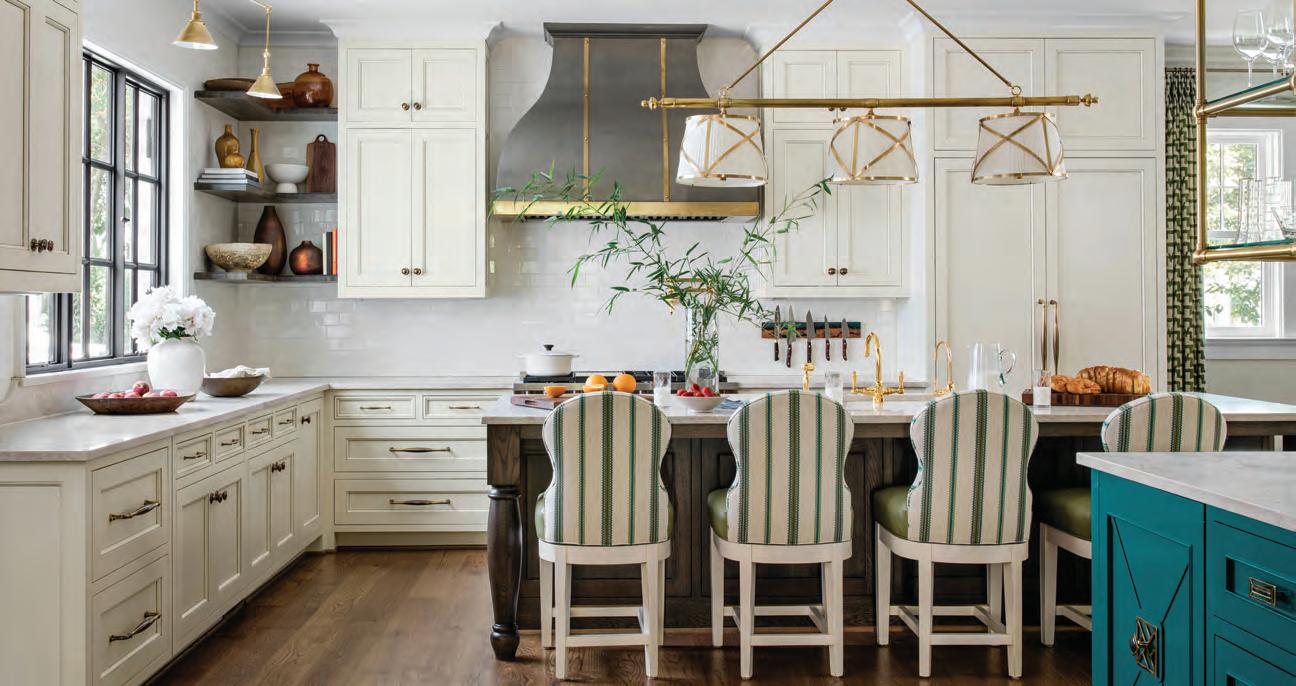
Meet Beth Meyer and Abby McLane, the motherdaughter team behind Beth Meyer Design, a Marietta based-interior design firm centered on family values, interior elegance and Southern hospitality. Beth and Abby may share the same DNA, but they’re actually quite different, which is a driving force behind the firm’s continued success.
Growing up, Jared Knox always had a passion for art and found solace outdoors. In 2021, the mechanical engineer was in line to take over a family business when he felt called to switch his life’s path and pursue a career as an artist. Now, the Marietta native’s work, driven by his faith and love for nature, can be found on popular men’s T-shirts and in art galleries in the Southeast.
16 Travel
Asheville calls itself “the ultimate playground” for good reason. Its setting in the western North Carolina mountains appeals to hikers and outdoor fans, yet it’s also a mecca for food-lovers. Check out a full Asheville travel itinerary, plus three glamping getaways not too far from Cobb.
30 Recipes
Whether you’re entertaining for two or 20, Matthew DeBusschere aka Marietta Food Guy has curated two simple and light dishes — strawberry goat cheese salad and elderflower gin and tonic — that are sure to bring joy this spring.
36 Weddings
As wedding season approaches, soon-to-be brides and grooms are pulling up Pinterest boards for last minute inspiration and finalizing budgets just in time to say “I do.” Hear from a local wedding planner and several married couples on tips and trends to add meaning and memory to the big day.
COBB LIFE MAGAZINE • 6 • SPRING 2024
22 COVER STORY
In every issue 8 Letter from the Editor 42 Author Q & A 47 Cobb Eats’ Dining Deets 52 May Releases 56 Cobb Scene 66 Now and Then contents MAY 2024




All data believed to be accurate but not warranted. If you have any existing brokerage relationship, this is not intended as a solicitation. Equal housing opportunity. 404.480.8805 | ANSLEYRE.COM | 218 ROSWELL STREET, UNIT 100, MARIETTA, GA 30060 WE ARE HONORED TO BE VOTED THE BEST OF COBB. NO. 1 BEST RESIDENTIAL REAL ESTATE COMPANY & BEST COMMERCIAL REAL ESTATE COMPANY ANSLEY MARIETTA Thank You FOR VOTING US NO. 1 IN COBB KERRY MINERVINIAMY MOLLOHAN & CO. JAYDEE AUSTIN SMITH NO. 1 BEST REAL ESTATE AGENT NO. 1 BEST REAL ESTATE TEAM NO. 1 BEST BROKER

letter from the editor
Happy spring and almost summer, friends,
Since I became editor of Cobb Life, I’ve always liked to personalize my “Letter from the Editor” by including life happenings that align with the theme of each issue — from writing about nostalgic Christmas memories in the holiday issue to dysfunctional family beach trips in the summer issue, you get the point. Well, this year’s Spring/ Home issue is no exception.
This March, my boyfriend, Matt, and I took a huge step as a couple — we moved into our first apartment together. It’s a small but quaint 962-square-foot space overlooking Interstate 75 and Howell Mill Road, which, ironically, is just a few blocks away from where I grew up.
Before we made the big move, Matt and I decided to invest in new furniture for our place. We found a few promising pieces at a couple retail stores, but, as two young adults in their mid 20s, all bets were off when we saw the price tags. That’s when we took to the internet, and found everything we needed — a bedframe, two nightstands and a desk — on Wayfair and Amazon for outstanding prices that almost seemed too good to be true. Spoiler alert: They were.
On the evening before move-in day, the furniture arrived just in time on my doorstep. Expecting a few giant boxes, I scratched my head when I opened the door and was greeted by three eerily small boxes labeled “some assembly required.” At the time, my dad and brother were helping me load my things into the U-Haul van. As soon as my dad locked eyes with the packages that held my “furniture,” his eyes widened and he let out a maniacal laugh.
“Some assembly required? If you and Matt make it through this gauntlet, you most definitely are soulmates!”
He was right.
I’m not exaggerating when I say assembling that furniture was one of the most humbling experiences of my life thus far. One box — the two nightstands — had 12 packs of different screws and 48 pieces of hardware (Yes,
I counted). Understanding the assembly instructions was like deciphering morse code or translating a foreign language. Whenever we made slight progress, a piece was inserted or screwed in the wrong way, and we had to start all over again — that happened a handful of times.
It’s been a month since we moved in, and I still occasionally chuckle when I admire our bed, office desk and nightstands. They, in a way, humorously hold some of the first memories we made together in our new home. While there are still a few stray boxes that need to be unpacked, we’ve slowly but surely infused our personalities into the space, creating a sanctuary that reflects both who we are and the life we aspire to live together.
Whatever you call home, I hope you can appreciate this year’s April/May issue of Cobb Life. From glamping getaways and a local artist feature to wedding planning tips and delicious seasonal delights, we have several feature stories that are perfect for kicking off spring.
For this year’s cover story, I had the pleasure to meet Beth Meyer and Abby McLane, the mother-daughter team behind Beth Meyer Design, a Marietta-based interior design firm that specializes in cultivating luxury residential homes to last generations. Read how Beth, a seasoned designer with over 35 years of experience, came to create her successful firm, followed by Abby’s career journey from following in her mother’s footsteps to eventually working with her.
As always, don’t forget to scan through upcoming May releases and events, familiar faces in Cobb scene, our Now & Then photo segment, an author Q&A and Cobb Eats’ Dining Deets, a new noteworthy news section and spin off of MDJ’s Cobb Eats Page that rapid fires local restaurant news.
I hope you enjoy reading this issue just as much as I and the creators behind Cobb Life did putting it together. May this spring bring you joy, love and the simple pleasures of home.
Until next time,
Skyler Heath Cobb Life Editor


COBB LIFE MAGAZINE • 8 • SPRING 2024



IAQ Package RM-2/PMAC Combo
Electronic Filter
Efficient
97% efficient at .3 microns (30x smaller than the width of a human hair)
Easy
The only maintenance required is to change the media pad. Just like changing your normal HVAC filter.
Modifications
No ductowrk modifications are needed to install this filter
Odors Gone
Remote some particles that can cause odor.
UV Light
Long Lasting
The only maintenance required is to change the bulb every 3 years.
Cleans Air
Controls allergens, mold, bacteria, viruses, pet odors, smoke, solvents, and carpet odors.
Dual Bulb
One bulb is responsible for bacteria, viruses, and mold spores while the other controls gases and odors.
Warranty
Lifetime warranty on the electronic protions and 3 years for the bulb.


4185 Cantrell Road, Acworth (770) 282-4854 | Daycosystems.com Get Ready For Spring! 2023WINNER BESTOF COBB PRSEN D BB F MGAZNE2024WINNER $89 Also! With an Indoor Air Quality Solution for ONLY $1,995
per system May
Valid 5/1/24 - 5/31/24
Tune Up!
DRAWN Paint TO
How a passion of Marietta’s
Jared Knox
turned into a career
WRITTEN BY JON STYF
PHOTOGRAPHY BY ROBIN RAYNE


COBB LIFE MAGAZINE • 10 • SPRING 2024

Jared Knox was finishing up his senior year as a mechanical engineering major at Auburn University when he received the text message that, ultimately, changed his life’s path.
Knox had been searching for jobs in his field that would allow him to travel the world but, in the meantime, he was part of a few late 2020 emerging artist shows at dk Gallery on the Marietta Square, not far from where he grew up.
As the second show ended, dk Gallery owner Donna Krueger texted him to say things had gone well and that she believed Knox he had a talent that could turn into a career.
“When she texted me that, it was the first time when I had really considered that I had an opportunity there in the art world,” Knox said. “It just sparked a chain reaction.”
Knox went to college intent on being part of the fourth generation to run Smyrna’s R.F. Knox Company, which has specialized in sheet metal fabrication since 1914, doing commercial heating, ventilation and air conditioning installation.
But the closer Knox got to graduation, the more he felt called to do something different. Knox was inspired by church missionary work and wanted to find a way to travel the world and help. So, that senior year, he sat down with his parents and told them he wanted to move overseas and do missionary work. His parents, who had watched him excel from kindergarten through high school at Mount Paran Academy in Kennesaw, were incredibly supportive.
Soon enough, that conversation changed. Because, by the time he graduated from Auburn in 2021, Knox figured out art was his calling.
“God’s telling me to be an artist, this is my way to reach the world,” Knox later told his parents.
Again, he received nothing but support.
“It makes me emotional to think of how supportive
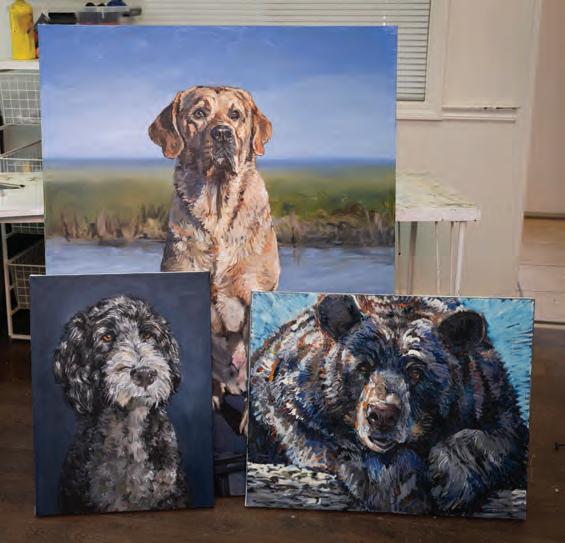
Left: Growing up, Knox always enjoyed drawing realistic scenes from nature, but he has since evolved into an acrylic painter who utilizes vibrant colors.
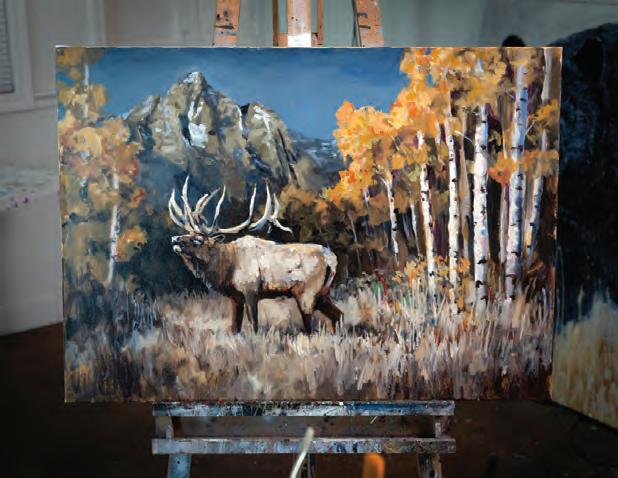
Below: Knox grew up loving the outdoors, hunting and enjoying nature. Now, he brings that passion to artwork depicting the wildlife scenes he has witnessed so many times.
they were from the get-go, even after my dad had just sent me to school and, in his mind and mine, too, we had these plans of working together,” Knox said. “There was just zero selfishness for him throughout the whole process. Even now, they are my biggest fans.”
From blank canvas to wilderness escape
These days, Knox is featured in galleries in Cashiers, North Carolina, and Charleston, South Carolina. His work appears on Outward Reserve T-shirts and he recently won the Alabama Wildlife Fine Arts Competition with his acrylic painting entitled “Bobcat and Bobwhite.”
Knox grew up loving the outdoors, hunting and enjoying nature. Now, he brings that passion to artwork depicting the wildlife scenes he has witnessed so many times.
Peter Williams and Susan Whiteside Williams run Whiteside Gallery in Cashiers and say Knox is not only
COBB LIFE MAGAZINE • 11 • SPRING 2024
one of the gallery’s most popular artists, but he’s also one of the hardest workers, turning around more commissions than any of their artists, even though he had a nearly ninemonth waiting list last year.
“His business sense has come from college,” Whiteside Williams said. “His artistic sense is innate. And I think that a combination of that is from his family, who is very supportive of him, and brought him up to be the person that he is. He is what every parent would want their child to be.”
Knox is professional, a hard worker and stays on schedule, traits that aren’t incredibly common in the art world.
“Artists don’t always have a firm grip on the spacetime continuum, but Jared is exceptional to that,” Peter Williams said.
Knox said he grew up attempting to draw images as realistically as possible. But he also has a fascination with vibrant colors, something he saw spending hours staring at colorful paperweights on his grandfather’s desk that would change color as he held them up to the light.
Later, his grandparents saw Knox’s artistic interest and showed him the work of artist Steve Penley, whose vibrant colors and contemporary realism are an inspiration for Knox’s work even today.
“He’s got these incredibly bold colors, bold brushstrokes, his paintings are very loud and passionate, but at the same time you can recognize always what he’s painting and who he’s painting,” Knox said. “… Now, I have been toying with those same things, trying to find this balance between abstracted colors and expressionistic color and brushstroke and technique, while still achieving a high level of realism that doesn’t distort the image that
I’m trying to depict.”
That passion is shared by those who enjoy Knox’s art. Whiteside Williams said Whiteside Gallery often has clients see Knox’s work and think of moments from their own lives, things they then ask if they can commission Knox to paint.
They’ll share photos and ideas from outdoors and their own lives and Knox can bring them to life.
Knox now works out of a warehouse on South Cobb Drive in Smyrna, not far from where he would have worked for R.F. Knox but a world away in terms of his line of work.
It’s something Knox didn’t expect would be his full-time job but a career that he couldn’t enjoy more.
“I think he’s someone to watch for the future,” Whiteside Williams said. “He’s successful now but he is going to be a much larger success and I think his name will become more well-known to people who don’t necessarily even collect art.”
COBB LIFE MAGAZINE • 12 • SPRING 2024
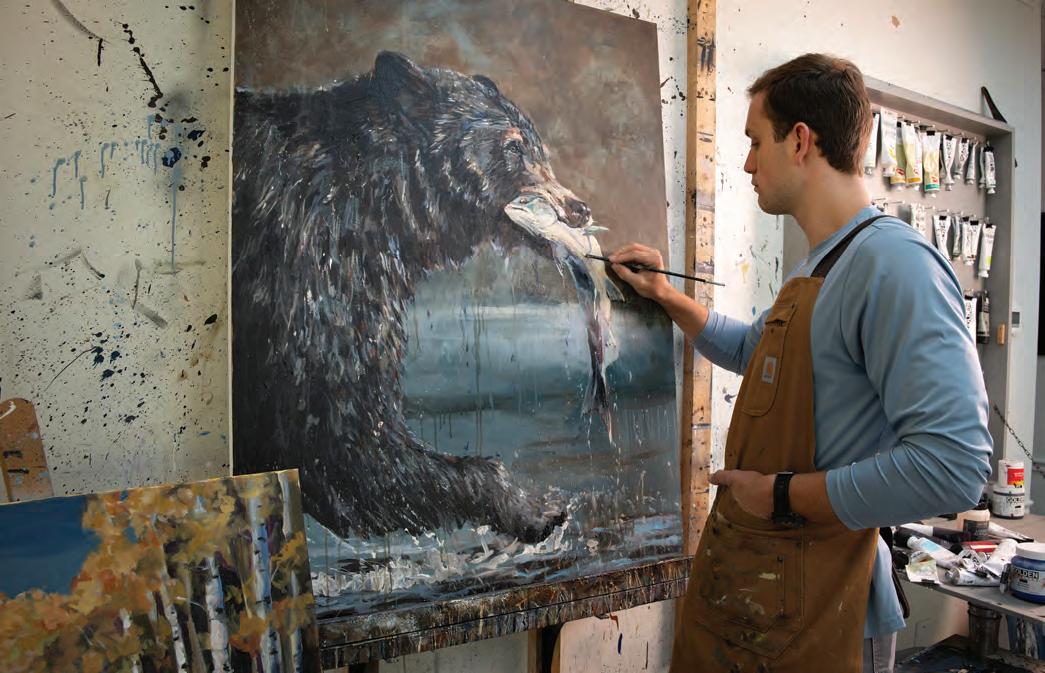
Marietta native Jared Knox paints a bear catching a salmon in his mouth from his studio off South Cobb Drive in Smyrna.
Knox draws inspiration from his own hunting adventures in his artwork.


COBB LIFE MAGAZINE • 13 • SPRING 2024
A man’s best friend: Artist Jared Knox and his dog, Huck, an English Field Cocker Spaniel, at his art studio in Smyrna.










COBB LIFE MAGAZINE • 14 • SPRING 2024 AGES 3-14 | JUNE 3 – JULY 26 thewalkerschool.org/summer OPEN TO THE COMMUNITY! 700 Cobb Pkwy N. | Marietta, Ga 30076 770-427-2689 Over 500 campers agree – Walker Summer Programs are the best way to spend your summer! Located just 2 miles from the Marietta Square, Walker offers a diverse selection of academic, athletic and artistic opportunities in the metro Atlanta community. KICKOFF’23 IsiteastCobb’syear? Walton,KellsettobringhomeCobbprogramwith600wins Inside: *DynamiteDozen*Super *Dyn*Teampreviews *Features *Te*Schedules *Predictions *S We cover ‘em all. Features all 6 Cherokee and 21 Cobb football teams Including Kennesaw State University & Reinhardt University. TEAM ROSTERS SCHEDULE PLAYER SPOTLIGHTS AND MUCH MORE! KICKOFF24 8.14.24 CONTACT YOUR SALES REPRESENTATIVE TO SCHEDULE YOUR AD TODAY! CONTACT YOUR SALES REPRESENTATIVE TO SCHEDULE YOUR AD TODAY!
variety of wildlife
Southeast.
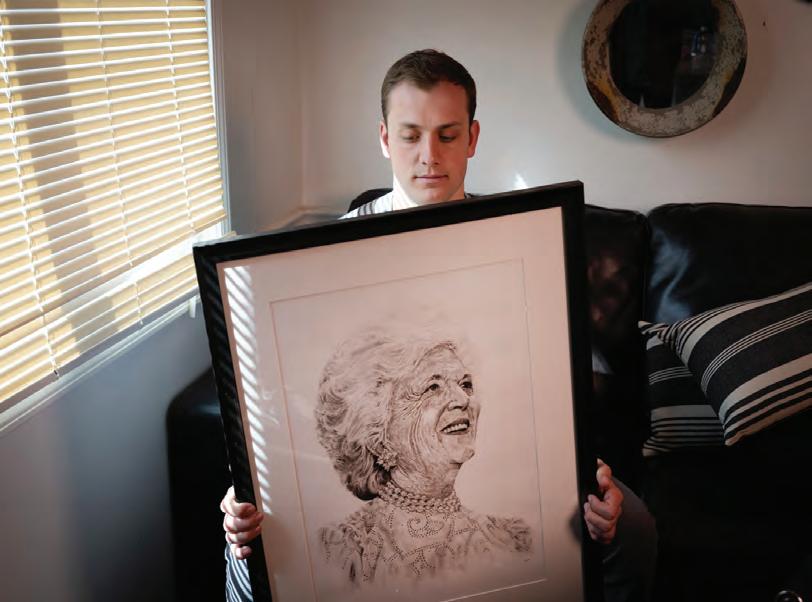
Right: Knox holds a realistic black and white portrait of the late Barbara Bush, the former first lady of the United States, in which he drew four years ago. Left: Cobb native Jared Knox paints
a wide
scenes and hopes to continue to expand his
creative
pursuits across the
What do you want?
CONFIDENCE CONFIDENCE
Our clients want to ensure financial stability for themselves, their families, employees and businesses. For several decades, we have studied our clients and listened to them and our mission is, simply put, to help them reach their goals.






(770) 425-9989 WWW.THEBOTTOMSGROUP.COM AnCompany
BEST OF COBB PRESENTED BY C O BB LIFE MAGAZINE WINNER 2019 2023 AnCompany
Asheville:
THIS NC MOUNTAIN TOWN IS BETTER THAN EVER IN 2024

PLUS GEORGIA DESTINATIONS FOR GLAMPING
WRITTEN BY LISA MOWRY
COBB LIFE MAGAZINE • 16 • SPRING 2024

BILTMORE ESTATE
Asheville calls itself “the ultimate playground” for good reason. Its setting in the western North Carolina mountains appeals to hikers and outdoor fans, yet it’s also a mecca for food-lovers. The bohemian vibe in Asheville makes it a great destination for arts and culture, local music and shopping, but this unpretentious city is also home to America’s largest home, the grand and gorgeous Biltmore Estate. With its location three-plus hours’ drive from metro Atlanta, Asheville wins the prize as a top weekend getaway.
What’s new (and always a good idea) for 2024:
Biltmore Estate
This 19th-century French chateau-style estate welcomes thousands of people every day to get a taste of life for the Vanderbilt family, circa 1895. The 250-room main house is fully decorated and easily explored with a self-guided audio tour, but that’s just the beginning. The estate’s gardens — bursting with tulips and other bulbs in the spring — and winery, shops and restaurants make it a place to stay for more than one day.
Opening in late March, “Chiluly at Biltmore” will celebrate the glass artist’s colorful vision with sculptures around the property, along with displays about his process. The gardens have something in bloom yearround, but in particular they shine in the spring and summer months, with rhododendrons, roses and wisteria providing a colorful backdrop to the grounds designed by Frederic Law Olmsted. It’s also never too early to start planning a holiday trip to Biltmore Estate, since the thousands of trees, garlands, lights and musicians throughout the property open for the season on November 2 and continue through early January.
Biltmore.com
Downtown Asheville
A little bit glamorous (all those Art Deco buildings, for instance) and a lot funky, the downtown area is worth exploring by foot. It has around 30 art galleries—and 30 breweries--plus dozens of locally owned shops and cafes to discover. New for 2024 includes this eclectic
THE ASHEVILLE ART MUSEUM
 Photo courtesy of Biltmore Estate
Explore life during the Gilded Age at the nation’s largest private home, the 250-room Biltmore Estate. The grand halls and tapestries are fascinating, but equally as cool are the downstairs kitchen, staff’s quarters, laundry area, indoor swimming pool and pantries.
Photo by Lisa Mowry
The Asheville Art Museum — with its impressive collection of American Art from the 20st and 21st century — is just one of many artistic activities in downtown Asheville.
Photo courtesy of Biltmore Estate
Explore life during the Gilded Age at the nation’s largest private home, the 250-room Biltmore Estate. The grand halls and tapestries are fascinating, but equally as cool are the downstairs kitchen, staff’s quarters, laundry area, indoor swimming pool and pantries.
Photo by Lisa Mowry
The Asheville Art Museum — with its impressive collection of American Art from the 20st and 21st century — is just one of many artistic activities in downtown Asheville.

BILTMORE WINERY


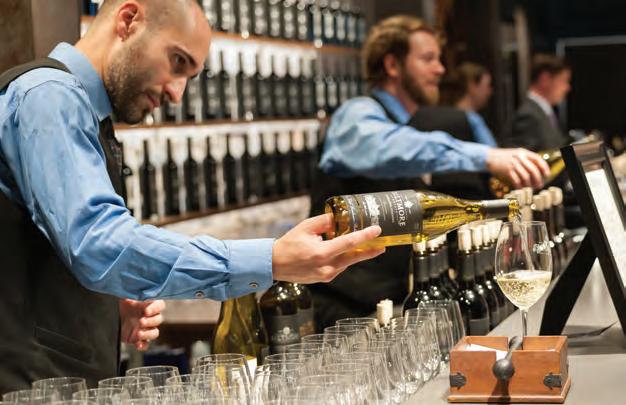
A tour of Biltmore Estate includes a complimentary wine-tasting at Biltmore Winery in the Antler Village section of the
mix of businesses: The Low Down is a new speakeasy on Haywood Street, joined by Instagram-worthy pastries at Sweets & Seats (they also sell outdoor furniture), and The Pot Stirred, which pairs foraged mushrooms with botanical teas in the River Arts District.
Exploreasheville.com
Where to stay:
Ideally, Asheville is best explored in two parts, beginning with the expansive Biltmore area—the estate, gardens, winery, ancillary areas such as Antler Walk, plus nearby Biltmore Village. Staying on property at The Inn on Biltmore Estate provides a Forbes’ Four-Star hotel with the convenience of everything nearby. New to 2024 is an interior design refresh for the rooms and hallways, with some décor nods to the Vanderbilt look.
Part two should involve a downtown hotel. The Foundry Asheville has a winning combination of location and history. Once a factory for steel production—
property.
COBB LIFE MAGAZINE • 18 • SPRING 2024
Photo courtesy of Biltmore Estate
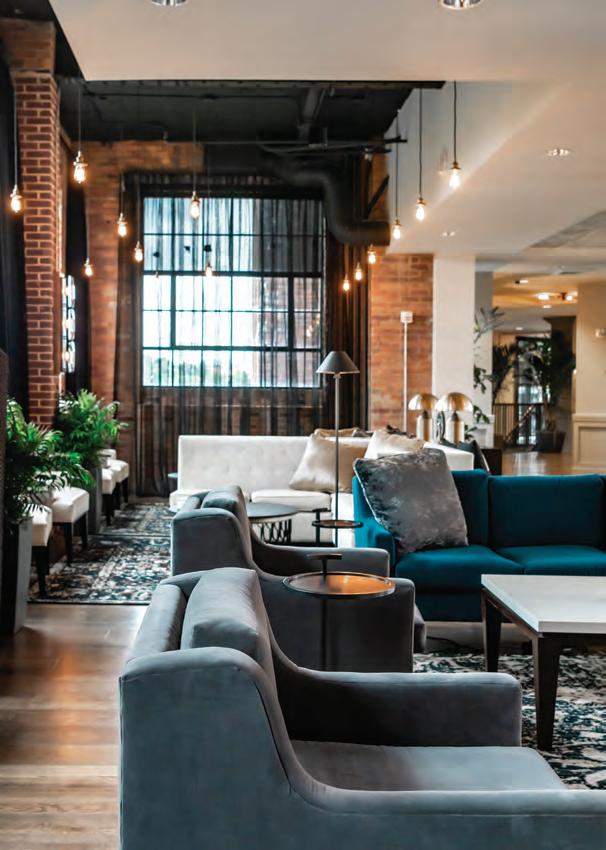
including buildings on Biltmore Estate—this brick-lined compound has an industrial feeling mixed in with chic furnishings and lights, with guest rooms that feel like a downtown lift. The hotel is conveniently located to some of the top Asheville restaurants such as Chestnut and Curate, plus the city’s art museum and Blue Spiral art gallery. The Foundry is in the heart of the historically black neighborhood The Block, which is referenced in the hotel’s eatery Benne on Eagle through cuisine and artwork.
Biltmore.com/stay Foundryasheville.com

HEMINGWAY’S CUBA



21
THE FOUNDRY ASHEVILLE



KENNESAW RECREATION CENTER 2737 WATTS DRIVE
Businesses can register at WWW.KENNESAW-GA.GOV JOB FAIR KENNESAW-MARIETTA REGIONAL Note: Type “Job Fair” in the search bar to register.
MAY
1-5 PM
Photo courtesy of Explore Asheville
Panoramic views of downtown Asheville and the Blue Ridge Mountains — plus award-winning Cuban food — are good reasons to head to the rooftop setting of Hemingway’s Cuba restaurant and bar.
Photo courtesy of The Foundry Hotel
The Foundry Asheville is a former steel factory turned boutique hotel in the heart of downtown, with the brick walls and industrial touches you’d want in an authentic repurposed building.
GETAWAYS •

If you like spending time outdoors but want a step up from a sleeping bag on the ground, good news: glamping is bigger than ever in Georgia. The name comes from an abbreviation of “glamorous camping,” and while some of these destinations are more rustic than swanky, they offer a chance to immerse yourself in a setting with trees and wildlife all around.
Note that you may need to bring in your own food, with bathrooms available off-site, and some require more than one night’s stay, but the rewards are great for citydwellers. A few close-by ones to check out:
YURTS AT GEORGIA STATE PARKS
These wood and canvas structures (essentially, big tents) come with a deck, picnic table, electricity inside, and nearby bathrooms, but best of all…views and up-close nature experiences. You’ll find them at parks such as Red Top Mountain in Cartersville, Skidaway Island on the Georgia coast, Cloudland Canyon, and others in Georgia. Gastateparks.org/uniqueaccommodations
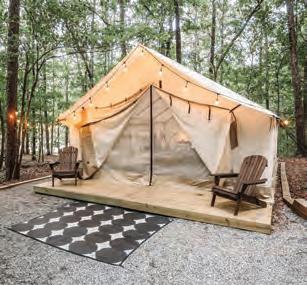
Furnished safaristyle tents are arranged in a little village, making this a popular option for groups or family reunions. Hammocks, coffeemakers and a grill provide some creature comforts. The same company also has glamping facilities at other popular sites: Amicalola Falls, Kingston Downs and Unicoi State Park in Georgia; and Lake Martin and Lake Guntersville in Alabama. Timberlineglamping.com
TIMBERLINE GLAMPING AT LAKE LANIER TREEHOUSE IN DAHLONEGA
The reward for traversing a rope bridge 100-feet high in the north Georgia forest is a luxury treehouse to spend the night in, complete with fixings for pizza to make, and a “mailbox delivery” of fresh pastries in the morning. This high-rated Airbnb promises a unique experience.
“Archer in the Trees” on Airbnb.com

•
COBB LIFE MAGAZINE • 20 • SPRING 2024

Passionately Engaging Relationships Since 1982 Please Contact Us To Schedule Your Visit: Cumberlanddiamond.com - 770.434.4367 Showroom Hours: Tuesday-Saturday 10am-5pm | Closed Sunday and Monday Appointments Preferred 2800 Cumberland Blvd. Smyrna, GA 30080 Best in Bridal

Designer Dynasty
BETH MEYER DESIGN: A FUSION OF MOTHER-DAUGHTER LOVE, INTERIOR ELEGANCE & SOUTHERN HOSPITALITY
WRITTEN BY SKYLER HEATH
PHOTOGRAPHY BY JUSTIN HADLEY
Beth Meyer always had an affinity for design — from admiring her mother’s timeless wardrobe as a young girl to discovering her own fashion sense as a teen, the Marietta native has been magnetized to creative pursuits since childhood.
“I’ve always been a creative spirit,” said Meyer, who is the founder and principal interior designer of Beth Meyer Design.
Through her youth, Meyer envisioned pursuing a career in fashion. It wasn’t until 1981, when Meyer’s parents hired an interior designer to help build their dream home, that her passion for interior design ignited.
“I had never heard of such a thing,” she said. “But I was so intrigued.” It was every detail — like pulling fabrics and
COBB LIFE MAGAZINE • 22 • SPRING 2024
Beth Meyer, right, and Abby McLane are the mother-daughter duo behind Beth Meyer Design, a Marietta-based interior design firm that’s been serving Cobb County and beyond since 1993.
choosing paint colors — behind the design process that piqued Meyer’s interest.
“Once I got into it, I never looked back,” she said.
After earning a degree in interior design at Auburn University, the budding designer moved home to Atlanta to kickstart her career, landing a job at a model merchandising company that designed homes, leasing centers and clubhouses for developers across the Southeast.
“It really was a great experience because we worked from the ground up,” Meyer said. “We’d get the floor plan and work through the construction all the way to a fully designed and furnished model home complete for walk through.”
Four years later, Meyer took what she learned, honed in her unique craft and founded Beth Meyer Design in 1993, pivoting away from the commercial market to residential interior design.
Then, in 1997, Meyer and her husband, David, welcomed their twins, Abby and Harrison, into the world, followed by their youngest daughter, Claire, in 1999. Through motherhood and despite having a full plate, Meyer was adamant about keeping her hands in the constantly evolving design industry, which worked in her favor.
“In my years coming along with the kids, I knew I had to stay current — you just cannot walk away and then come back.” Meyer said. “But as the kids grew and I had more time, more opportunities kept coming and the business kept growing.”
LIKE MOTHER, LIKE DAUGHTER
For Abby McLane — Meyer’s daughter — she, too, fell in love with interior design at an early age, but it wasn’t just because she grew up around it.
“I remember Abby was five years old in her stroller playing with fabrics at Lewis and Sheron (a fabric store in Atlanta) with a lollipop,” Meyer recalled.
When McLane was a young girl, she spent her free time shadowing her mother. By 12, she had clocked in more than 10,000 hours on the job. Every summer in high school, instead of spending her days poolside, McLane helped her mom with large installs and design projects.
“I just always loved interior design,” McLane said. “Any chance I got to go with my mom to work, I just really enjoyed it — it wasn’t like I was being dragged along.”
So, of course, when McLane was accepted into the University of Georgia, she was instantly set on following in her mother’s footsteps. Meyer, however, wanted her daughter to truly love the industry and understand the work before pursuing a career in interior design.
“A lot of people have this idea of design that it’s just picking out paint colors and fun… it’s not all that. It’s a lot of hard work, too,” McLane explained. “Most people think interior designers are

and yang,” both bringing a unique perspective and set of skills to the table.

Beth Meyer Design took on a remodel project at Alys Beach, a quaint community nestled on the Florida Panhandle. Meyer and McLane said they were inspired by the town’s Mediterranean flair. Pictured here is the family room, which boasts neutral textures, plaster walls, natural wood tones, a leather chandelier and art by Felice Sharp.
COBB LIFE MAGAZINE • 23 • SPRING 2024
Photo courtesy of Robert Peterson with Rustic White Photography
Beth Meyer and her daughter, Abby McLane, the team behind Beth Meyer Design, said they’re “like a jigsaw puzzle” or the “ying

playing with pretty stuff all day, but that’s 30% of the job.”
After graduating from UGA in 2020, McLane gained practical experience at prominent interior design firms in metro Atlanta. Meanwhile at her mother’s firm, business was booming, and Meyer was on the hunt for an extra set of hands.
“It was always a goal and dream of ours to work together, but my mom wanted me to go get experience on my own, and I did, too,” McLane said.
But as business grew so did the need for another trained designer —that’s when the mother-daughter duo decided to take the dive and join forces.
“It was a little sooner than we both thought, but we decided go ahead and do it,” Meyer said.
DESIGNING DREAMS
This June marks McLane’s two year anniversary with Beth Meyer Design, working in tandem with her mother to transform clients’ visions into jaw-dropping realities.
With a showroom and office space anchored in Marietta, McLane and Meyer have deep roots in Cobb County. However, the designers said a majority of their business is out of town, having completed projects for clients in Boca Grande, Florida, Highlands, North Carolina, among others. From new builds and large-scale renovations to full-scope furnishings, Beth Meyer
Design specializes in luxury residential homes that are the heartbeat of family living.
“Many of these projects are multigeneraltional homes, which means several generations are coming to enjoy,” Meyer said. “Many multigenerational homes are hosting the entire family for extended stays or during the holidays, while others are planned to be passed down to children and grandchildren.”
In the large-scale renovation market, instead of buying a new home, the designers said many families are staying put, completely gutting their home and renovating it from the ground up. Other clients, some of whom are empty nesters, are looking to downsize, but still keep the memories alive in a second home. Regardless, Meyer and McLane said these full-scope projects take time — an average of two years — and a team of professionals, including contractors and interior designers, to spearhead the operation.
“What I’ve found over the years is I just really enjoy sinking my teeth into a project and digging in rather than being scattered in a lot of different, smaller projects,” Meyer said. “For most of our projects, we start in the architecture phase, working with the architect and the homeowner from the very beginning.”
This approach is intentional — Meyer and McLane said their business model is relational, not transactional, and cultivating
COBB LIFE MAGAZINE • 24 • SPRING 2024
This Boca Grande hallway vignette curated by Beth Meyer Design features art by Jennifer Rivera from Marietta-based dk Gallery.
Photo courtesy of Robert Peterson with Rustic White Photography
close relationships with their clients, from the initial meeting to the final reveal, is their No. 1 priority.
“When we’re in these 2-year-long projects — sometimes more — we really build a relationship with our clients,” Beth said. “But that’s how we want it to be.”
“You’re walking through a phase of life with them,” Abby added.
These large-scale projects, the designers said, are filled with hundreds of details and moving parts, and require an immense amount of project management, which Meyer said is her daughter’s specialty.
“Abby is a mean project manager... she’s just so organized,” Meyer said.
Another large part of the job is problem solving, whether there’s a key light fixture missing or manufacturers shipped the wrong color.
“It’s always something,” Meyer quipped. “But you just have to roll with it. There’s an emotional roller coaster that comes with these projects — clients get really excited and then projects slow, so there’s some frustration.”
The designers said their favorite part of their job is the final reveal, where McLane and Meyer welcome clients into their new home with a cocktail, a tradition the firm has practiced for years.
“It’s just so rewarding,” Meyer said. They’re always so blown away, and it just fills my cup.”
MAKING A HOUSE A HOME
Most interior design firms are known for specializing in a specific look or style — from bohemian and traditional to midcentury modern and art deco — but at Beth Meyer Design that
couldn’t be further from the truth.
“We’re not a one-look brand, and for a good bit of designers, that’s their brand,” Meyer said.
The motherdaughter team said they generally avoid trends and stick to what they know — classic, timeless design that’s meant to last a lifetime.
“We try not to chase trends. We don’t want to be too trendy,” McLane said. “We’d rather you invest in a piece that you’re going to love forever than something you may love for two years.”

Instead, Meyer and McLane aim to create spaces that are a direct reflection of their clients.

COBB LIFE MAGAZINE • 25 • SPRING 2024 2024WINNER Thank You for Voting Us Best of Cobb 2024 506 Roswell Street Suite 210 | Marietta, GA 30060 | tel: 770.405.0164 | www.odelloneal.com JUSTIN O’DELL Attorney - Civil 2024WINNER ALYSSA BLANCHARD Attorney - Family/Divorce 2024WINNER LESLEE HUNGERFORD Attorney - Tax & Estate 2024WINNER NICK BOOTH Attorney - Corporate 2024WINNER LESLIE O’NEAL Attorney - Individual 2024WINNER JUSTIN O’DELL Overall Attorney 2024WINNER O’DELL, O’NEAL, HUNGERFORD & BLANCHARD Overall Law Firm 2024WINNER LESLEE HUNGERFORD Attorney - Elder Care 2024WINNER
The bar area of the Church Street remodel features Morgan Creek Cabinetry, brass shelving by Palmer Shelving, statement pieces from Modern Matters Hardware and a French limestone floor by Francois and Co.
Photo courtesy of Robert Peterson with Rustic White Photography





They also draw design inspiration from a home’s environment, like a chaletstyle lodge perched on a mountain or an industrialchic penthouse that soars over the city.
“Attention to detail is very important,” McLane said. “We’re very intentional and thoughtful about how our client wants to feel in their home. This goes back to the landscape and reflecting on how they want it to function — whether it’s their primary home or second home. Do they need to host a lot of people, but still need a place to retreat and relax? We always keep those things in mind.”
While every project is unique, Meyer and McLane said they all feature a harmonious blend of timeless design




COBB LIFE MAGAZINE • 26 • SPRING 2024 Retirement Living at its Finest 100 Whitlock Avenue NW, Marietta, GA, 30064 - One block from the Historic Marietta Square Want to learn more? Call 770-742-7183 or visit our website www.winnwoodretire.com Independent & Assisted Living
Abby McLane, left, and Beth Meyer of Beth Meyer Design collaborate on a floor plan of a full remodel project at their showroom and office on Roselane Street in Marietta.
with an emphasis on livability.
“We try to make it where you can actually live in your home — choosing fabric that won’t show some spilled orange juice or wine,” McLane said.
Meyer, who has a minor in art history, says art is an important personal touch that not only makes a house a home, but also changes an interior’s appearance and vibe.
“I think art tells a story of the homeowner, so I love to take clients to different galleries and hone in on what clients gravitate to,” Meyer said. “Art is also what makes a house a home. You can have a sofa, chairs and all that, but when you put the art up, the home’s going to read totally different.”
The designers will also take client’s collections or antiques from their old homes and incorporate them into the new space, which is another Beth Meyer specialty that many have cherished.
“One of our clients was downsizing from a family home they had raised their children in, and didn’t want to leave those fond memories and special touches behind,” Meyer said. “So, we brought these beautiful antiques and pieces from her old house and incorporated them into their new home. During the big reveal, she stood there and cried and said, ‘I never knew that you could bring my old house here and make it so special.’”
As interior designers in the second-home market,
McLane and Meyer said their most important job — motherhood — also helps transform their projects into a functional family home.
“I’m a mother. Now Abby’s a mother, so I’m a grandmother,” Beth said.
“We just have a lot of perspectives and that helps serve our clients well,” Abby added. “We bridge those gaps and know what our clients need.”
YIN AND YANG
This mother-daughter design team may share the same DNA, but Beth and Abby said they’re actually quite different, which is another driving force behind the firm’s continued success. Together, they strike the perfect balance between tradition and innovation, creating interiors that are not only visually stunning, but also functional and practical.
“One thing for us as a mother-daughter team, I’m very seasoned and experienced, but Abby comes in with a whole new look and fresh mindset,” Beth said. “Abby is also great with technology — there are so many different design programs that she knows. We didn’t even have computers when I was in college.”
Another bonus as mother-daughter-turned-business partners is there’s no beating around the bush.
“As my mom, I can tell her ‘I don’t like that,’ whereas I don’t know if I’d say that to anyone else,” McLane said with a chuckle.
“Even if we don’t say anything, we can see the wheels


COBB LIFE MAGAZINE • 27 • SPRING 2024
Now Building in Florida! Cobb County’s Local Homebuilder for Over 50 Years Strong! Nominate Us for Best of Cobb 2024 TratonHomes.com Sales and Marketing by Traton Homes Realty 770-427-9064 Thank You for Voting Us Best of Cobb 2024! 2023WINNER BESTOF COBB PRESENTED B COBBLIFEMAGAZNE 2024WINNER
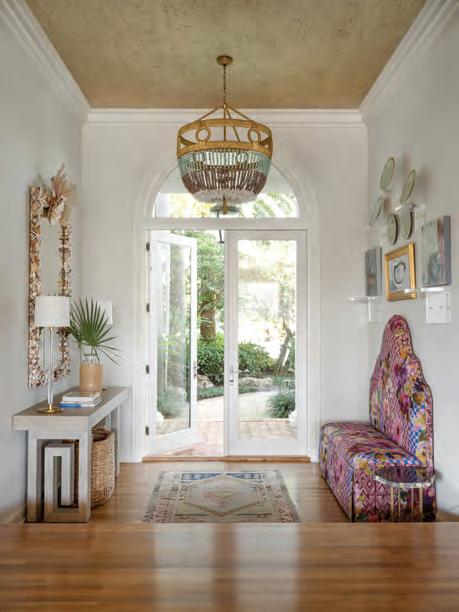
Happy coastal! This full-scope furnishing project by Beth Meyer Design in Boca Grande, Florida is filled with cheerful colors to brighten anyone’s day. The main entryway of the home features a custom chandelier by Ro Sham Beaux, gold, metallic wallpaper on the ceiling, bright-colored fabric from Designers Guild on a custom designed bench and a custom-made sea shell mirror from a local artist.
Photo courtesy of Robert Peterson with Rustic White Photography

turning in each other’s heads when the other doesn’t approve,” Meyer added.
However, McLane, who was raised to respect authority and her elders, said she has nothing but admiration for motherturned-boss.
“So, despite working together, we’ve always had that kind of relationship and we’re very close — she’s my best friend, too,” McLane said. “I have that respect for her as my mother, but also as a business owner. She’s been in this career for 35 years,

Sean Perren, Agent
3247 Austell Road SW
Marietta, GA 30008
Bus: 770-432-7775
sean@seanperren.com
That’s why I’m proud to be here to help life go right™ – and to support Cobb County.
If there’s anything you need, call me.
so I have respect for everything she’s done.”
Meyer and McLane may operate as business partners during the day, but once they clock out and leave the office, their dynamic changes back to mother-daughter, keeping business talk to a minimum — or at least they try.
“I really try not to call her at home to talk about work,” Meyer said. “Or, I’ll sometimes send a voicemail or text and say ‘For tomorrow because I’m getting it off my brain.’ We pretty much dig so hard during the day that after-hour calls aren’t necessary.”
LOOKING AHEAD
As Meyer and McLane look toward the future, the design team said they’re looking to expand their horizons out west, taking on new, out of the box projects — think Yellowstone Club in Montana. But, as two Christian women strong in their faith, McLane and Meyer are putting no pressure on what’s next, and, instead, trusting in the Lord’s divine timing.
“I’ve never had this strategic plan. Everything has just evolved,” Meyer said. “Faith is very much a part of my world — I just feel like the Lord has opened doors and I’ve just walked through them.”
“We’ve made some goals in previous years and the Lord has just provided,” McLane added.
But as Beth Meyer Design continues to evolve, Meyer and McLane’s bond as a mother-daughter team will always remain constant.
“I think way down the road, if Abby wanted, I’d love to take more of the back seat and work for her,” Beth said.
“You’re not going anywhere,” Abby interjected.
renovate
LOOKING TO YOUR HOME?
HERE’S ADVICE FROM BETH MEYER DESIGN ON WHERE TO START:
p MAKE A LIST OF WHA T YOU WANT T O CHANGE
p MAKE A LIST OF WHA T YOU WANT T O ACCOMPLISH WITH THESE CHANGES
p DECIDE WHA T INVESTMENT Y OU’RE WILLING TO PUT INTO THE RENOVATION/PROJECT
p T ALK TO A CONTRACTOR AND INTERIOR DESIGNER T OGETHER (AND ARCHITECT DEPENDING ON THE SCALE)
p DRA W UP A BUDGET
p MAKE THE INVESTMENT AND W ATCH YOUR HOME TRANSFORM
COBB LIFE MAGAZINE • 28 • SPRING 2024
2023WINNER BESTOF COBB PRESENTED BY COBBLIFEMAGAZNE 1601483 State Farm, Bloomington, IL Community means everything. 2024WINNER
In the mornings at their office, Meyer and McLane will browse through home design magazines while sipping on coffee for inspiration.




inspire. dazzle. dazzle your audience in ways they’ll always remember: Stunning spaces. Impeccable service. And the fabulous menus that deserve all their raves. Inspiring your guests is easier when you can dazzle them at every turn. feast. In a word, this is Atlanta’s most dramatic event destination. 770-916-2807 cobbenergycentre.com cheer.
Refreshing,
Lightand Easy

A spring-inspired salad and sip that will transport you to the garden.
COBB LIFE MAGAZINE • 30 • SPRING 2024
recipes
Recipes and photos by Matthew DeBusschere aka Marietta Food Guy
recipes
Spring is a natural celebration. As temperatures warm, local vegetation wakes from its winter slumber, filling the air with sweet aromas and budding florals.
The clocks change, offering us longer days. We’ve all enjoyed the heavier foods traditionally consumed over the winter holidays, but now it’s time to celebrate the freshness and lightness of spring. In this issue, I’m excited to offer you a few seasonal, garden-inspired recipes that will pair excellently with this vibrant season.
While mulling over potential recipes to share, I kept coming back to strawberries. Spring is strawberry season in the south, and a quick Google search will reveal tons of farms that will allow you to come pick your own berries. If you have the time to travel to one of these farms, you could really make a nice memory out of this recipe.
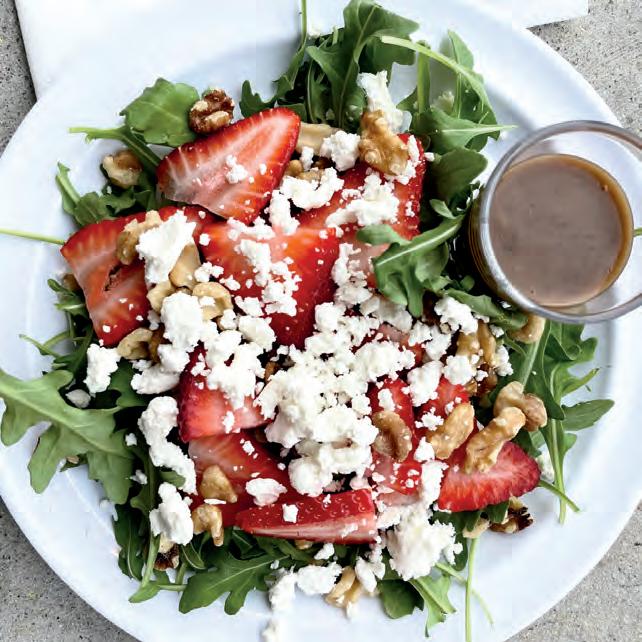
Strawberry Goat Cheese Salad
Salad ingredients:
Sliced Strawberries
Arugula
Walnuts
Goat Cheese Crumbles
Dressing ingredients:
2 tablespoons honey
1 tablespoon dijon mustard
1/2 teaspoon fine sea salt
1/2 teaspoon freshly crushed black pepper finely ground
1 large garlic clove minced
1/4 cup balsamic vinegar
3/4 cup extra virgin olive oil
Directions:
In a small mixing bowl, whisk together the honey, balsamic, mustard, salt, pepper and garlic. Add the oil and whisk thoroughly to combine. Continue whisking until the dressing is fully emulsified.
With only a few ingredients, this salad can be made very quickly! You can even modify it by grabbing store bought salad dressing in a pinch, or if there’s a brand you already really love. This salad can be served as a side or a main entree with the addition of grilled chicken.
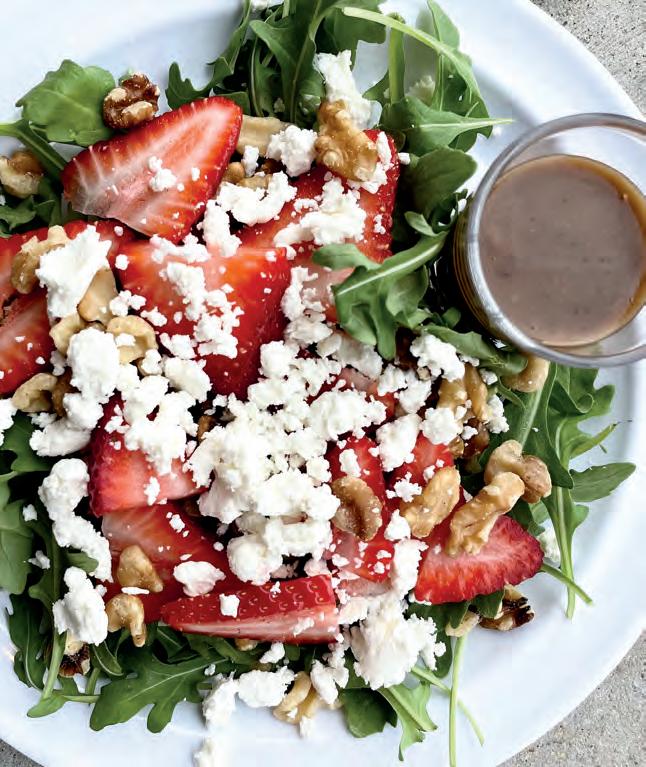
As with many of my favorite dishes, this salad showcases complimentary tastes and textures. The sweetness of the strawberries is a nice contrast to the tangy balsamic and sharp taste of arugula, while the creaminess of the goat cheese serves as a perfect counterpart to the crunchiness of the walnuts.
COBB LIFE MAGAZINE • 31 • SPRING 2024



Marietta Food Guy’s spring twist on the classic G&T
Matt DeBusschere is the co-owner of Marietta Melt Yard. He has worked in the restaurant industry for more than 15 years. Follow his Marietta food journey on Instagram @mariettafoodguy
2400 Cobb Parkway SE, Smyrna 30080
Close to Cumberland Mall, Truist Park, and right off of I-75 470-308-3333
www.chowkingcobb.com
Come sample our Japanese sushi, Hibachi, and a variety of salads. With 250 items, we have a great selection of both Chinese & American food.
Lunch
Mon.-Fri ...................$11.49
Dinner
Mon.-Thurs. .............$16.49
Friday .......................$16.99
All Day Sat. & Sun. .$16.99
Open Dining Room
Featuring 17 bars, 250 items, jumbo shrimp, catfish, sushi bar, hibachi bar, salad bar, dessert bar, hot bbq grill & open kitchen.






Mon- Thurs., & Sun. close at 9 pm
Fri & Sat. close at 9:30 pm
Celebrate your special events with us.

recipes
In keeping with the theme of a spring offering that is light and refreshing, I wanted to do a fun play on a gin and tonic. This is a classic cocktail that’s about as easy as it gets. Typically a gin and tonic is simply gin, tonic water and a lime wedge, served in a tall glass with ice. To keep things interesting, I’m substituting lemon for lime, and using Fever Tree’s new elderflower tonic water that I recently saw at the grocery store. The elderflower tonic gave me the idea to add in a little bit of St-Germain (an elderflower liqueur). Adding this liqueur not only helps to fortify the floral flavor profile, which makes this drink even more appropriate for spring, but it also gives the drink an added sweetness. I’m not typically a huge fan of gin, but the addition of StGermain reduces the “sharpness” of the liquor. This drink is delicious and, I feel, really celebrates the brightness of spring’s blooms. It tastes like spring smells and only takes a moment to make!
Elderflower Gin and Tonic
Ingredients:
1.5 oz gin
.75 oz St-Germain
.5 oz lemon juice
Fever Tree Elderflower Tonic Water
Directions:
Simply fill a tall glass with ice, add the first three ingredients and then top with tonic water. Garnish with a lemon wheel, sprig of rosemary and enjoy! The taste of elderflower and the smell of rosemary will transport you into a spring garden!
Whether entertaining a group or just yourself, I hope these simple and easy recipes bring you joy this spring!

COBB LIFE MAGAZINE • 33 • SPRING 2024 999 Hood Road, Marietta, GA 30068 Intersection of East Piedmont and Roswell Road (HWY 120) 770.565.8828 | parcatpiedmont.com Contact us TODAY and schedule a personalized visit to our beautiful community! Live your best life at Parc! Imagine waking each morning to friendly faces and graceful surroundings Imagine a staff dedicated to extraordinary levels of hospitality, service and care Imagine a genuine community of neighbors and friends Imagine Exceptional Senior Living! recipes



COMING SOON! WWW.SUPERIORCOOLINGANDHEATING.COM


DONATE TODAY! The Annual Over $400,000 Raised Since 2017 Benefiting the Children’s Healthcare of Atlanta Donate to this amazing cause: SAVE THE DATE! 9.30.2024
From the aisle
 written by Kaye Cagle
COBB LIFE MAGAZINE • 36 • SPRING 2024
From the aisle
As wedding season approaches, engaged couples are busy searching for creative ideas to personalize their ceremonies and receptions while managing budgets. A local wedding planner and several married couples are full of tips and trends to add meaning and memory to the big day.
Many couples begin with a favorite color and build from there. Pantone’s 2024 Color of the Year is peach, so expect to see more of those pastel accents in wedding parties seeking to be on trend. Brides continue to opt out of matching bridesmaids’ dresses and, instead, choose matching colors in many dress styles — this ongoing trend gives unity to photographs, while allowing each attendant to select a dress that fits best.
“It’s becoming more popular to have fewer bridesmaids,” said Marietta native Lauren Fici, president of In An Instant, a local event planning company.“And some brides have them sit on the front row after the processional.”
Another wedding trend, the event planner said, is moving away from large, grandiose weddings and hosting smaller weddings for a more intimate feel – this way the bride and groom become more of a focal point
“Couples also now opt for one or two ‘photo songs’ when they move through the reception and pose for pictures with every guest so they can visit and create a keepsake,” she said.
Fici, who founded In An Instant in 2017, says that floor plans, timelines and helping couples select vendors all play an integral role in keeping the event wellorganized and allowing for better budget management.
“Brides appreciate repurposing their ceremonial flowers, for instance, moving flowers from the wedding service to the reception,” she said. “Receptions have become more of a party with the return of disco balls, (there’s) small wedding cakes with a larger dessert bar, theme parties and a disc jockey. Add a drummer, conga or saxophone to hype the celebration, (and) yet it costs less than a band.”
Of course, a buffet is less expensive

than a sit-down dinner, but Fici says gone are the days of carving stations and expensive champagne that elevated the price. In their place is something new: a content creator.
“A content creator is not a friend who likes to post to social media,” she explained, “but rather a professional who captures all of the behind-thescenes footage, interviews
COBB LIFE MAGAZINE • 37 • SPRING 2024




guests, garners the day’s highlights and uploads to social media so the couple can repost. One advantage is that the video edits happen quickly and the event posts while it’s still relevant.”
Some brides hire a planner for the planning process and some prefer “day of services” to save money. Other budget-friendly tips are to ask the caterer for kids’ pricing so you don’t pay full price, Fici suggested, and always request a percentage off to feed vendors.
Try choosing three non-negotiables, including your dress, music, venue or food, and make cuts on other things to reduce costs. Many brides have discovered smaller vendors or those outside the immediate area offer lower prices. Fici also said there are many lovely venue sites in Cobb, and, while church receptions are primarily a thing of the past, many local couples still prefer their wedding service in a house of worship.
COBB LIFE MAGAZINE • 38 • SPRING 2024 2623 Sandy Plains Rd • Suite 101 Marietta, Ga 30066 rightpathhypnosis.com call/text: 678.744.9213 Angella Ocheltree Master Practitioner NLP, Time Line Therapy®, Hypnotherapy, Sports Performance Coaching Hypnosis & Wellness Thank You for Voting Me Best Therapist 2024! 2021 BESTOF COBB PRESENTED BY COBBLIFEMAGAZINE 2023WINNER BESTOF COBB PRESENTED BY COBBLIFEMAGAZINE 2024WINNER
From the aisle
From the aisle
Advice from the happily married
30 years of love: Lindsay and Tim Galloway of east Cobb

Lindsay and Tim Galloway met when Tim worked with Lindsay’s mom at Mount Paran Christian School. They married 1995.
“My grandfather married us at Eastside Baptist Church, and I remember being so happy. I felt like a princess,” Lindsay said. It took a journey to feel like a princess, though, as planning a wedding was no walk in the park.
“ You have to know yourself when planning a wedding,” she said.
“I first went to a sweet boutique and tried on dresses. Everyone was so personable and I loved the experience,” Lindsay said. “Then I went to a warehouse where I was shoved in a big dressing room with other brides. Many people were bringing me dresses and veils and I fell into pieces. It was overwhelming.”
Another important aspect of wedding planning, the former bride said, is she and Tim came up with a realistic budget, and stuck to it. The couple was also equally involved in the wedding planning to help combat additional stress — after all, weddings are supposed to be the best day of your life, right?
“We tried to be in the moment and hold on to the important things,” she said of the wedding day. “We made the ceremony prayerful and everything went well. We accidentally split up during the reception as we visited with guests, which was disappointing. I just wanted to hold hands with the man of my dreams.”
Lindsay said the wedding was a huge success. There was, however, one surprise.
“Tim was a middle school teacher and told all his students they
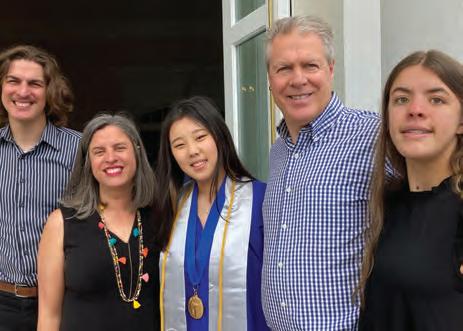
could come to the wedding! They had to sit in the balcony and he made it clear they could not go to the reception,” she laughed.
Spring Into a Beautiful You!
Let us help you look your absolute best this Spring! From our cutting-edge laser treatments to enhance skin texture and tone to state-of-the-art body contouring technology that can transform stubborn fat into sleek curves and contoursit’s all here at DESSNA.
Facial Rejuvenation
Neurotoxins


Body Sculpting
Skincare

SPRING SPECIALS!
COBB LIFE MAGAZINE • 39 • SPRING 2024
Dermal Fillers CoolPeel CO2 Laser Treatment Chemical Peels Laser Skin Resurfacing SkinPen Microneedling Ellacor SkinTyte Dermaplanning PRP And More! 4800 Olde Towne Parkway, Suite 250 Marietta, GA 30068 (770)
- dessna.com
is a non-invasive treatment that uses controlled cooling to freeze and eliminate stubborn fat cells. And with our buy 4 treatments, get 4 treatments free offer, you can sculpt your body better than ever.
971-3376
COOLSCULPTING
CoolSculpting
CoolSculpting CoolTone
Removal Medical-Grade
Products
More!
Hydrafacial
BBL Photofacial
Teen Facial
Laser Hair
Skincare
And
Lindsay and Tim Galloway on their wedding day in Marietta in 1995.
Lindsay and Tim are family
Ethan,
Lucy.
Today,
focused with
Summer and
From the aisle
15 years of love Vanessa and Jason Chavez of Marietta
Vanessa and Jason Chavez met at the University of Mexico, and married in 2009.
“Our biggest advice is to move slowly to connect with each other, family and friends,” Vanessa said. “We had a destination wedding at Hacienda dona Andrea de Sante Fe where everyone stayed two or three nights, so no rushing to different venues and lots of time together.”

The couple said to stress less on throwing the wedding of the year, and focus more on the marriage itself.
“Remember, this is the first day of your lives together,





so don’t do anything that would jeopardize your marriage, like spending way too much money,” Vanessa said. “I also recommend a shorter engagement because the purpose of a wedding is to focus on marriage and not on planning a big party.”
When your wedding day rolls around, the former bride said to remember it’s a big day for the whole family, so “have some grace for them,” and merging two families into one means navigating different perspectives.
For Vanessa, her special wedding memory was a color.

“Our niece was our flower girl fighting a lung disease signified by purple ribbons,” she smiled. “I wore purple shoes and used touches of purple throughout to pay tribute to a special little girl. Personalizing the wedding was meaningful and Jason wore high-top tennis shoes, a sweet mark of his personality.”
Newlyweds
Matt and Mollie Stotter of Marietta

Matt and Mollie are still basking in the afterglow of their October wedding, but the pros and cons of wedding planning are still fresh in their minds. Their planning tips include sending a digital save-the-date card that collects emails and mailing addresses and using a wedding website for sending mass messages.
A huge bump in the road resulted when wedding invitations mysteriously took up to six weeks to arrive. About half of the guests received invitations after the wedding.
“We had invited more than 300 people,” Matt said, “So we had to call people to tell them they were invited!”
“If your date is near a holiday, leave even more time for mail arrival,” Mollie added.
Despite a short engagement, Mollie had time to develop wedding jitters when the day arrived.
“We decided to have a private first look and then just spend time together,” Mollie said. “I started getting anxious before the service, but seeing Matt helped me calm down.”
Matt said his view of Mollie coming down the aisle is “still an unreal moment.”
The couple said they communicated their goals and values as they developed a budget and decided a delicious food menu for the rehearsal dinner and reception was important — to accomplish that goal, they chose to host a dry reception at the Marietta Country Club and served mocktails instead.
Welcome
45 W. Park Square • Marietta 770.425.9300 PiastraRestaurant.com Italian is all we do! • • • • • • Made from Scratch Italian Fare, Sauces & Desserts Thank You for Voting Us Best Wine List and Best Vegetarian 2024! 2024WINNER
to
Jason and Vanessa Chavez pose on their wedding day, framed in a lovely balcony scene in New Mexico.
Fifteen years later, the Chavez couple and their boys Judah and Theo call Marietta home.
Photo by Carrie Joy Photography
Matt and Mollie Stotter met at StoneBridge Church and he proposed on the bridge beside the church. The whirlwind romance culminated in an October 2023 ceremony, returning to the bridge for their wedding photos.






Thank You For Voting Us Best of Cobb 2024!
VERA BELL
Vera Bell is an award-winning author of the trilogy, “Always and Forever,” set in sixteenth-century Ireland and present-day United States. Book one, “Through the Veneer of Time,” is her debut novel. She wrote it after trying Past Life Regression and finding herself immersed in a world so captivating, she couldn’t let it go. A former commercial artist, she lives in east Cobb with her husband, two teenagers and one fur baby. Her favorite place to write is on her porch, overlooking a pond lined with river birches and magnolias. The topics she never tires of are bygone eras, our universal human condition, and love that transcends time and space. Visit her at VeraBellAuthor.com.
CL: How did the idea for “Into the Lure of Time” come about?
VB: “Into the Lure of Time” is a second book in the “Always and Forever” trilogy. The story takes place across the characters’ past and present lives in sixteenth-century Gaelic Ireland and present-day Washington, D.C. The medieval timeline is anchored in the events preceding the English crown’s plantation of Ulster and in the life of the legendary Irish hero and adversary of Elizabeth I, Shane O’Neill. At the peak of his rule, he arrived at the English court with a guard of deadly gallowglasses and an elusive mission. While his visit’s purpose is widely speculated, most historians agree it was to marry an English noblewoman or the queen herself! My hero, who is based on Shane, is happily married to my heroine. Historically, Shane’s visit culminated in his humiliation. As I did research, I wondered how my heroine would react if this trip led to her beloved’s compulsory divorce and a politically arranged marriage. In the present time, I wanted to explore how the echoes of the past affect both characters as their lives unravel in a chilling parallel.
CL: What separates this book from other pieces you’ve written? What connects it?
VB: In the first book, “Through the Veneer of Time,” my heroine learns that her past life visions are not the creative inspiration they seemed. Rather, they’re a harbinger of her ancient revenge vow, and her FBI husband won’t find the serial killer until she fulfills it. The central literary conflict there is the heroine vs. the villain, otherwise known as an age-old fight of good against evil. In “Into the Lure of Time,” an adversary who is mentioned in passing in book one, emerges to
play a key role. But while he is certainly villainous, this book deals with a more subtle conflict. The underlying theme is an inquiry into the inner strife of a heroine against herself, as well as how a hero’s unendurable circumstances can turn him into a victim—or an antihero. While the novel features a recurring cast and falls under the genres of time travel romance and historical thriller, it also carries darker undertones of domestic suspense.
CL: What can readers expect from your second book?
VB: Since its publication in April 2023, “Through the Veneer of Time” has won six literary awards and was lauded by book bloggers and reviewers as a “stirring and suspenseful debut,” a “new obsession,” and a “delightfully unputdownable story you won’t want to miss.” In the words of The Historical Fiction Company, “it is both an enthralling crime thriller and a romantic tale, (and) a book that once read, is impossible to forget.” As a novelist, I attribute this lovely praise to my obsessive characterization. While the plot is always front and center, I’m passionate about my characters. They turn into real, multi-dimensional people to me, complete with all their flaws, ambitions, quirks, and motivations. I live in their heads as I write, sort of like a method actor. Based on feedback from early reviewers, “Into the Lure of Time” carries the same range of emotional intensity, immersive setting, understated symbolism, and surprising twists and turns.
CL: How does inspiration strike you?
VB: Like most artists, I find inspiration, or muse, to be a somewhat fleeting entity. It’s a thrill that

materializes in the oddest of circumstances and at the most inconvenient times: in the car, in the shower, at a party, during a conversation, while falling asleep. Donna Tartt says it best: “…inspiration often strikes hardest when one is not looking for it—and in that sense, it is a coup de foudre, like falling in love.” This is quite brilliant and describes it perfectly. Further, inspiration usually comes when I don’t force it. I seldom “write” in a conventional sense. By the time my fingers touch the keyboard, I’ve already written and fleshed out the story in my head. The act of typing is simply documenting what I’ve been carrying within me. I’m also deeply inspired by music. Something clicks when I listen to angsty, emotionally charged songs as I’m churning out a scene in my mind. It helps me connect with my characters on a very intimate level. The most important songs have landed on my Spotify playlists.
CL: Do you have any rituals/best practices for writing?
VB: My writing process is similar to stone carving. The first draft is mostly me telling the story to myself. The next step is carving away at imperfections until each sentence is as authentic and honest as can be and flows effortlessly into the next. I work slowly through each scene, returning to it until it’s as multi-dimensional, nuanced, and complex as possible. In my novels, I strive to reflect life as it really is — messy, illogical, unfair, beautiful, scandalous. This often results in somewhat raw scenes, but this sort of unpremeditated vulnerability is writers’ gold. All great fiction has a distinct thread of reality that resonates with the readers on the deepest levels. This is probably the hardest thing about being
COBB LIFE MAGAZINE • 42 • SPRING 2024
a writer — pouring your soul on paper for all the world to see. But it’s crucial for crafting a novel both truthful and honest.
CL: What advice can you share with other local aspiring authors?
VB: The common advice is to write what you know, but I disagree. We don’t always like what we know or want to write about it. Such advice only serves to clip an artist’s wings. My advice is to write what you want to know instead — authentically, from the heart. In fact, I recommend turning off all the noise and advice — even this — and focus on why you wanted to become a writer. Write a book you’d want to read, and others will want to read it, too. Incidentally, we are extremely fortunate to have many excellent local resources at our fingertips — everything from writing clubs to workshops. Don’t shy away from having your work critiqued by another writer (whether locally or online). In terms of substance and quality, few things top having a fresh set of eyes on your manuscript.
CL: How has your environment influenced your work?
VB: I was born in Eastern Europe, lived in Northern California and South Florida, and traveled extensively throughout Europe before moving to my forever home in our beautiful Georgia. I believe this multi-faceted background allowed me to gain an insight into a multitude of cultures and ways of perceiving and processing life. Artists inevitably manifest their experiences in their creations. When I craft my character arcs, I consider their backstories through the prism of all I’ve learned so far.
CL: What’s your favorite part about writing? Your least favorite?
VB: I love everything about writing — from research to editing. The parts I could do without are marketing and publishing. While I hope I do an adequate job of it, I’d rather do it less. Anything that’s not writing takes me away from telling stories. As well, transitioning back to a creative mindset requires some time, which I perceive as lost.
CL: Who are you currently reading?
VB: In February, I joined to a new book club at Bookmiser, called “Don’t Tell Me What to Read.” Each member reads a unique book, then shares what they liked or disliked with the club. I’m currently reading “Wrong Place, Wrong Time” by Gillian McAllister. As part of my historical research for the third book in the trilogy, I’m also reading “Mary, Queen of Scotland and the Isles” by Margaret George. Lastly, I’m reading “The Linchpin Writer” by John Matthew Fox in my ongoing effort to hone my craft.
CL: Why did you start writing? What made you take the plunge?
VB: I don’t remember a time when I didn’t write. As a little girl, I used to invent alternative plots for all the fairytales, Greek mythology, and action and adventure stories I read. When I was ten, I took a stab at novel writing after reading a beautifully illustrated Brothers Grimm’s “Snow White and the Seven Dwarfs.” The “Always and Forever” trilogy was born about ten years ago, after I experimented with past life regression and emerged with an elaborate dual-timeline plot.
CL: What/who is your favorite book/author of all time? Why?
VB: There are so many, but my absolute favorite is “The Goldfinch” by Donna Tartt. This book is literary perfection. I was in awe after I finished reading it. The complexity, honesty, and vulnerability combined with beautiful, lyrical language is mind-blowing. I wanted to do that, too. In many ways, it inspired me to write.
CL: What makes your work stand out from other authors in the same genre?
VB: While this may not be the best practice from the commercial standpoint, I don’t think in terms of genre when I write. Instead, I let my characters drive the plot forward — they always know best. As a result, my work is neither genre romance nor a conventional thriller. Rather, it’s a blend of both, which can be loosely classified as romantic suspense. Also, because I currently write dual-timeline novels, they fall into the category of alternative historical fiction. But above all, I like to think of my stories as books that make you feel.



Powder Springs Chapel 3940 Macland Road, Powder Springs Historic Marietta Chapel 180 Church Street , Marietta MayesWardDobbins.com Thank You! 5 YEARS IN A ROW!
Everything—the floor, the walls, the air—fell away. Only this parchment in my hand remained.
Chimeric. Foretold.
Somewhere deep down, I knew I stood very still, calm, and mute, my eyes fixed on Aedan’s precise English hand. But I also hovered above, crumbling into bleeding bits. Watching my life’s blood drain out of me and wash the world in crimson, drop by drop by drop—
Kian said something, his voice familiar, ordinary. It cannot be. I shifted my gaze to the broken seal. An English forgery to foment strife. A cruel trickery to break our spirit. But there was yet a paragraph unread—

As I shall be returning soon after you take delivery of this dispatch, I trust that as my loyal subject, you will abide my expressed demand in the proper and expeditious fashion commensurate with the sensitivity of this matter. As well, it is my uttermost wish that you will, hitherto, regard me solely as your rightful ruler, and as such, would not seek my audience in any unseemly or unsuitable manner. Furthermore, shall you find yourself in my presence, I rely on your good sense and proper decorum to act toward me with such deference and regard as befits my rank.
Earl II of Tyrone, Lord Aedan O’Neal
This 5th Day of January, 1565
His handwriting. His name. His signature. What forgery?
The hall swayed. The parchment slipped from my fingers.
Kian steadied me with his hands on my shoulders, eyes frozen with horror.
He bent to take the parchment, pinching it between his thumb and index finger like it was something vile to touch. Like it would sully anyone mad enough to lay a hand on it.
“Is… is h-he… dead?”
The dais stood wrapped in saffron and gold, awaiting the O’Neal’s return. I came back to myself. My eyes burned with salt. My throat chafed with sand. My heart burst into icy, piercing shards. How determined he was to go to London, how callous to slam our chamber door.
Local Scribes
In addition to our Q&A with a local author, be sure to check out these new releases written by local authors in and around Cobb.
Marietta author Harry Stern has published “The Insider,” a fast-paced thriller about two counterterrorism operatives.
Marietta author Kelly Young-Silverman has published “Hot Boiled Peanuts: A Georgia Food Tour,” a children’s book about Georgia’s cuisine, geography and history.


COBB LIFE MAGAZINE • 44 • SPRING 2024 Call to make an appointment today! 770-427-3033 We Take Most Insurances 707 Whitlock Ave, Suite A36 Marietta, GA 30064 www.mariettahearing.com Laurie Nelson, Au.D. Doctor of Audiology Amanda Thomas, Au.D. Doctor of Audiology Brittney Tardy, Au.D. Doctor of Audiology THANK YOU FOR VOTING US THE BEST OF COBB 2024! BEST Hearing Center & BEST Hearing Professionals! 2023WINNER BESTOF COBB PRESENTED COBBLIFEMAGAZNE2024WINNER Cobb County's oldest and largest privately owned audiology practice THE FOLLOWING IS AN EXCERPT FROM VERA BELL’S RECENT BOOK “INTO THE LURE OF TIME.”


Blackwell’s Jewelers Creators of Fine Jewelry 2265 Roswell Rd., 500- B I Marietta, GA 30062 www.blackwellsjewelers.com I 770-973-7881 I blackwells@earthlink.net Designs for Today, Tomorrow and Always Thank you for Voting Us Best of Cobb 2024! BESTOF COBB PRESENTED BY COBBLIFEMAGAZINE 2019WINNER 2023WINNER BESTOF COBB PRESENTED BY COBBLIFEMAGAZINE
COBB EATS’ DINING DEETS
From giant cookie shops and Mexican joints to retro arcades, Cobb’s bustling dining scene is constantly evolving and spring 2024 is no exception. Check out the latest restaurant news and get to eatin’!

Sugar Shane’s, an Atlanta-based gourmet cookie and bakery concept, has opened in Kennesaw. The new 1,235-square-foot dessert shop, situated near Kennesaw Mountain on Barrett Parkway, opened Feb. 17 as the brand’s first franchise location, joining its three other brick-andmortar stores in Midtown, Ponce City Market and Sandy Springs. Foodies can indulge in a diverse selection of gourmet desserts, including signature and rotating flavors of colossal cookies, brownies, cookie cakes and more, all of which are made fresh, in-house every morning.

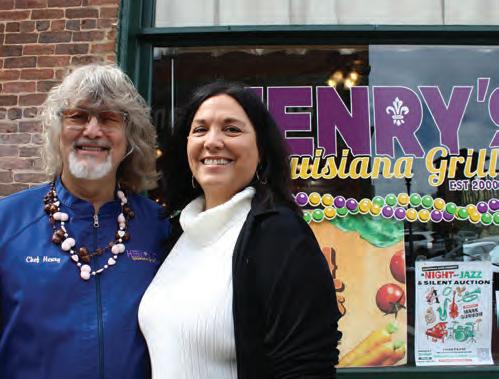
After 24 years, longtime owners of Henry’s Louisiana Grill — Henry and Claudia Chandler — in Acworth transitioned the restaurant to new owners, Casey and Justin Shillcutt, March 25. Henry Chandler, known as Chef Henry, will stay on through the transition and continue executing dishes, while Claudia Chandler begins enjoying her retirement. The Chandlers made the tough decision to sell the restaurant earlier this year to the young couple that came to Acworth from Colorado.
Marietta Melt Yard, an eclectic restaurant on Whitlock Avenue, opened a new retro-style arcade room Feb. 29, featuring a variety of vintage pinball machines and games from the ’70s, ’80s and ’90s. Foodies can enjoy Melt Yard’s American fare, like patty melts, burgers and wings, while playing
arcade classics such as “Street Fighter II Turbo” and “NBA Jam.” With a 1960s van-turned-bar, vintage neon signs and MTV music videos airing on TVs across the restaurant, Matthew DeBusschere, co-owner of Marietta Melt Yard, said the arcade fits right in, complementing the nostalgic, laid-back atmosphere.

COBB LIFE MAGAZINE • 46 • SPRING 2024
Sugar Shane’s Dashing Delta, made with Biscoff cookies and filled with a warm caramel center, is a champion of the 2021 Dessert Wars festival in Atlanta.
compiled by skyler heath
Zalika Dozier, co-owner of Sugar Shane’s in Kennesaw, puts a fresh batch of strawberry shortcake cookies on display ahead of the bakery’s grand opening.
Husband and wife Henry and Claudia Chandler have run Henry’s Louisiana Grill for nearly 24 years.
Marietta Melt Yard, a restaurant with classic American fare on Whitlock Avenue, opened a retro arcade Friday, featuring vintage pinball machines and arcade games from the ’70s, ’80s and ’90s.
COBB EATS’ DINING DEETS
The Red Hare Brewing and Distilling company downsized.
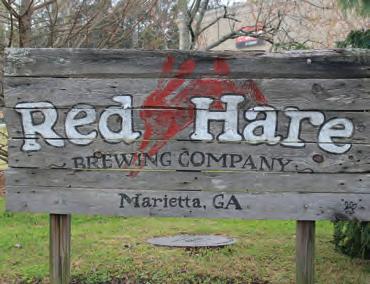
According to Bobby Thomas, head brewer and co-founder of Red Hare, the brewery closed its taproom on Delk Industrial Boulevard March 30 and moved its production to a new, smaller facility. Red Hare first opened in 2011, and has been serving Mariettabrewed beers ever since. Thomas said the shift came amid increased inflation and subsequent staffing difficulties, but emphasized that the taproom on Marietta Square will remain open.
Bōm, a casual Korean eatery, is slated to open in June on Church Street in Marietta. It will operate under the helm of Chef Brian So, the Kennesaw native who also runs the kitchen at Spring, a New American style restaurant on Marietta Square. Two new restaurants and a tasting room are also coming to the new Bridger Properties development on Church Street this year.
Cøntrast Artisan Ales, a Chambleebased brewery, will be the first of the three concepts coming to the city, according to Bridger, and will open its doors at 101 Church St. The brewery was established in 2018 in downtown Chamblee by founder and brewmaster Chase Medlin. 7 Tequilas Mexican Restaurant, a family-owned and operated restaurant, will open in the
fall at 115 Church St. in 3,565 square feet of space. Church Street will mark the fifth location of 7 Tequilas, which first opened in 2008 in Holly Springs and has since received numerous local accolades, including being recognized in the 2023 Best of Georgia Awards. Woody’s CheeseSteaks, which will boast a 1,336-square-foot-space, is poised to open at the end of 2025 at 95 Church St., formerly home to Lenny’s Barbershop. Founded in Atlanta in 1975, Woody’s has popular locations in Buckhead, Midtown and East Atlanta Village, slinging original and chicken
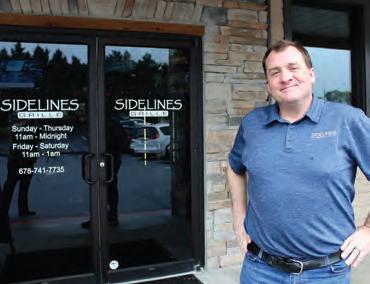
cheesesteaks and spinning creamy milkshakes.
A new Sidelines Grille opened in east Cobb the last week of March, providing residents with a place to enjoy lunch and dinner and cheer on their favorite teams.
The restaurant, located at 4719 Lower Roswell Road, the former site of Ritter’s restaurant, features plenty of options on its menu and numerous televisions at the bar, around the restaurant and in the individual booths

for patrons. It is the fifth Sidelines Grille, following two locations in Canton and one in Woodstock and Cartersville.
A new Chipotle opened in Mableton March 29. The restaurant, at 4835 Floyd Road, is open from 10:45 a.m. to 10 p.m. seven days a week, and includes what is called the “Chipotlane,” a drivethru pickup lane.
‘Save your fork’: East Cobb baker delivers homemade fudge pies with a side of joy.
Not many businesses are inspired by someone’s love for chocolate, but that’s exactly how Susie Mickler of east Cobb cultivated Schmoo.Pies.
It all started 10 years ago when Mickler had a sweet tooth for chocolate — her favorite treat since childhood — and whipped out her mother’s old cookbooks for ideas.
“I found a chocolate recipe and I found another one and then I just kind of thought, ‘What if you did this, added this, subtracted that,’” Mickler told the MDJ. “And that was it — I made a fudge pie just because I wanted chocolate.”
Mickler’s fudge pies quickly became a fan favorite at family gatherings and birthdays — then, they transcended into holiday gifts for neighbors and kind gestures for those who were feeling under the weather.
“It was something I could do very quickly that people seemed to love and really enjoy,” she said. “And, many times, giving my pies to people made their day.”
It wasn’t until 2021, though, that Schmoo.Pies took off, when her longtime friend, Glenn McDaniel, owner of McDaniel’s QN2 BBQ in Sandy Springs, told Mickler she could sell her pies for a living.
At the time, Mickler was working a 9 to 5 at a local marketing firm, but wasn’t opposed to taking up a side hustle, especially since baking pies was something she enjoyed.
“When I started this, I just thought
COBB LIFE MAGAZINE • 47 • SPRING 2024
The Red Hare Brewing and Distillery location on Delk Industrial Boulevard closed March 30.
Walter Rhioinger is the general manager of Sidelines Grille in east Cobb.
One of Chipotle’s most popular menu items is Chicken al Pastor, available for a limited time.
COBB EATS’ DINING DEETS
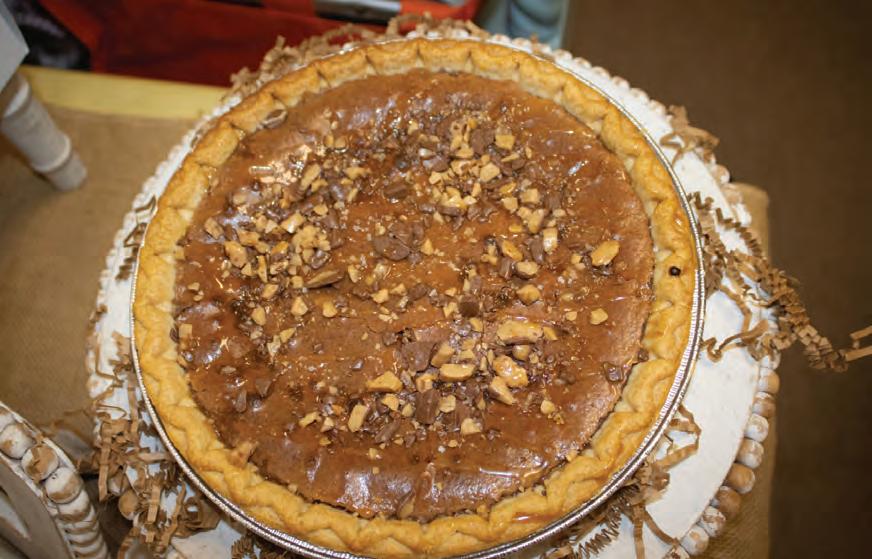

it would be great to sell like three or four pies a week and have an extra 100 bucks in my pocket,” she said. “Well, one thing led to another and it’s been two years since I quit my full-time job to do just this... and now we’re selling a lot of pies.”
With the help of her husband, Rob, and two sons, Mason and Drew, Mickler said she bakes roughly 100 pies a week, all of which are either made to order or sold at local farmers markets and pop-up shops across metro Atlanta. However, pie production during the holidays, Mickler said, is a different story.
“We did 1,500 pies in November (2023) — from the beginning of November to the day before Thanksgiving,” she said. “It was just fantastic.”
Family pies
Mickler’s love for her family, especially her two sons, can be found across the pie brand — the namesake of Schmoo.Pies is her oldest son, Drew, whose nickname is “Schmoopie.” Her “Mini Me’s” bite-sized pies are named after her youngest son, Mason, who, she said, is her twin.
Schmoo.Pies’ menu boasts 15 flavors — from original, Heath bar and peanut butter fudge to rotating classic pies, including key lime, apple and coconut, Mickler said her pie flavors, both seasonal and year-round, offer a little something for every dessert enthusiast.
“All of our pies are great, but the fudge pies are, obviously, our bread and butter,” she said.
When asked about her secret ingredient, Mickler said it’s something that can’t be bought.
“I love to elicit joy,” she said. “Pies make people happy when they’re having bad days and good days, so our secret ingredient is joy — it sounds kind of dorky, but it’s true. There are so many laughs shared when we bake our pies, and I truly believe that’s what makes them so special.”
Schmoo.Pies can be found at Signature Gifts in east Cobb every Tuesday from noon to 5 p.m. and daily at Simply Fresh Market in Papermill Village. Online orders are also available for delivery or pick up.
For more information on Schmoo.Pies and its weekly whereabouts, visit www.schmoo-pies.com.
COBB LIFE MAGAZINE • 48 • SPRING 2024
Susie Mickler, owner and founder of Schmoo.Pies, said the bread and butter of the business is her fudge pies. Pictured here is the Heath Pie, an original fudge pie baked in pieces of toffee and topped with more toffee, caramel drizzle and sea salt.
COBB EATS’
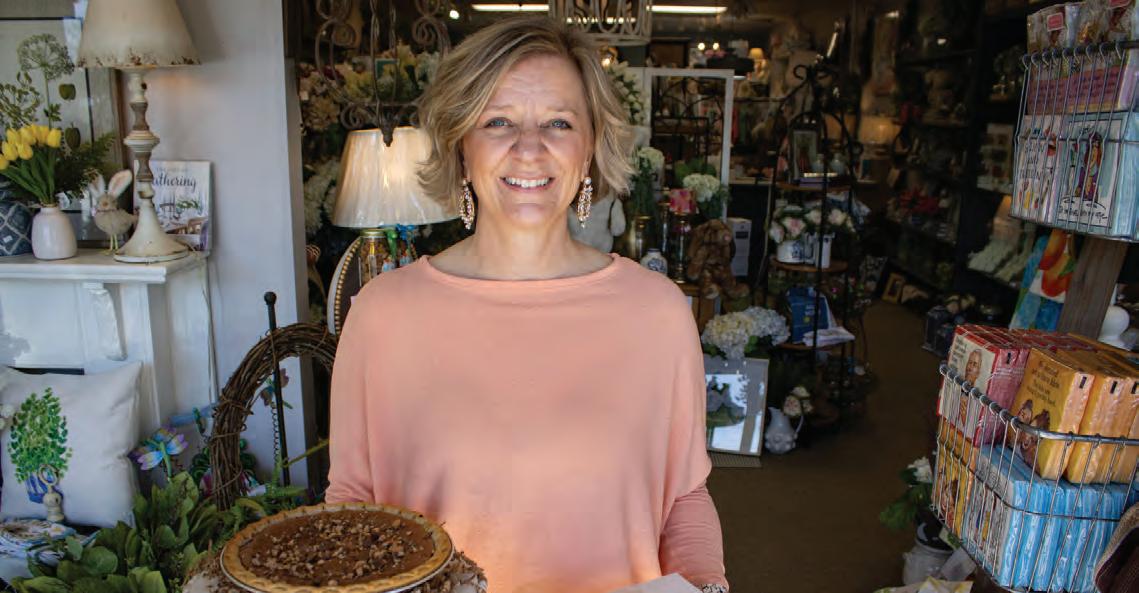

COBB LIFE MAGAZINE • 49 • SPRING 2024 A Continuing Care Retirement Community offering comprehensive services for your needs now and in the future. For couples, the continuum of care provides increased health support if that becomes necessary while allowing both of you to remain in the same community. With a variety of care options, Presbyterian Village can be your home for a lifetime: Residential Living • Supportive Living • Memory Care • Skilled Nursing Presbyterian Village • 2000 East-West Connector • Austell, Georgia 30106 • 770.819.7412 • presbyterianvillage.org
DINING DEETS
Susie Mickler of east Cobb is the founder and owner of Schmoo.Pies, a family-owned dessert business that’s known for its homemade fudge pies.
Truist Park Braves Ballpark
Tours:
Attention all Braves and baseball fans! Don’t miss the opportunity to tour areas offlimit during games as well as artifacts and exhibits! Stops will include the Press Box, Xfinity Rooftop, the Monument Garden, and more. Tours are available every day Monday through Saturday from 10 a.m. to 2 p.m. Tickets are $32 and can be purchased at www.mlb.com/ braves/ballpark/tours/daily.

Acworth Farmers Market:
The 2024 Historic Downtown Acworth Farmers Market will be open every Friday morning from 8 a.m. to noon. Visitors will have a wide variety of garden ripe Georgia grown vegetables, eggs, cheese, bedding plants, fresh-baked bread, pies, cakes, honey, and jams to choose from each week. The market is located in the Logan Farm Park Expansion. Don’t miss out on fresh produce and kitchen staples that can’t be found at your local supermarket!

Fiesta De Mayo:
Celebrate Cinco de Mayo with Live! at The Battery during its Fiesta De Mayo event. Enjoy a live Mariachi band, local Hispanic and Latinowned vendors, margaritas, Instagrammable photo ops,
cobb life events
games, and more! The event will take place on Saturday, May 4. Tickets are $10 and limited, so make sure to secure your spot! Visit www. liveatthebatteryatlanta.com/ events/20240504-fiesta-demayo to get your tickets.

After Glow:
Step into serenity at #YogaAndMimosas every Monday evening from 6:30 to 8:30 p.m. at National Anthem Atlanta at the Battery Atlanta. After yoga presented by Kaiser Permanente on the lawn, continue the journey with delightful, flavored-mimosa bar, priced at just $6 per glass. Entry is free, but make sure to reserve your spot at batteryatlyoga2024.eventbrite. com!

Smyrna Food Truck Tuesdays:
Enjoy Smyrna Food Truck Tuesdays every Tuesday at Taylor-Brawner Park from 5 to 9 p.m. Enjoy the offerings from a weekly gathering of quality mobile gourmet trucks with a bit of sweet mixed in and music, too. Entry is free!

Smoke on the Lake BBQ Festival: Come and enjoy a concert under the stars and BBQ competition at the Smoke on the Lake BBQ
Festival in Acworth! Taste your way through some of the best BBQ in the Southeast! The event will take place on Friday, May 10 from 5 to 10 p.m. and Saturday, May 11 from 11 a.m. to 4 p.m. at Logan Farm Park. Entrance is free! Register your cook team for the contest at www. smokeonthelake.org/.

M2R TrailFest:
From large scale murals to art drops to bridge installs, the arts come alive throughout the entire day of this public art festival! With dance, singing, music, interactive art and so much more for all ages, the M2R TrailFest is the celebration of the year for the #mariettaARTscene. The event is free and will take place on May 11 in downtown Marietta along portions of the Mountain River Trail and in public parks. Don’t miss it!

Bloomin’ Fest:
Enjoy live music, stage performances from local and professional artists, and various food trucks, including nachos, hot dogs, snow cones, BBQ, Italian ice and more May 25 at the Bloomin’ Fest spring festival from 11 a.m. to 6 p.m. at Legion Park in Acworth! Get your shopping on with arts and crafts vendors and create your masterpiece as you sip and paint on the lawn. The kids will be thrilled as they have
fun with face painting, bouncy houses, game trucks and more. Admission is free.

Bringing the Sea to the Springs:
Browse many artists and crafts vendors, jam with the entertainers, experience wine and beer gardens and, of course, enjoy delicious seafood at the Bringing the Sea to the Springs festival at Thurman Springs Park! This festival will take place on May 17 from 1to 9 p.m., May 18 from10 a.m. to 9 p.m., and May 19 from noon to 4 p.m. at Thurman Springs Park. Parking and admission are free.

Indie Film Night:
Come to the Strand Theatre on May 16 for an evening of independent filmmaking at its finest! IFN showcases a diverse selection of films from emerging and established filmmakers hand-picked for their originality, creativity and thought-provoking themes. Don’t miss this opportunity to discover new voices in independent film and experience cinema like never before! Doors to the Strand open at 6 p.m. and tickets are $8. The first film starts at 7 p.m.
COBB LIFE MAGAZINE • 50 • SPRING 2024
DIAMOND LEVEL Invisalign by Dr.
Paul Gilreath
Dr. Gilreath has completed over 1000 Invisalign cases and is in the top 1% of providers worldwide. He is the leading Invisalign dentist provider in Georgia.
What can Invisalign do?
• Correct crowding and misaligned teeth faster and more comfortably than metal braces in adolescents, teens and adults
• Close spaces and gaps between teeth
• Address Airway issues- can help with sleep apnea and snoring
• Help alleviate TMJ issues
• Correct and even the bite to prevent wear
• Arch development in children (pre-ortho treatment)
• Prevent chipping of front teeth
• Grow the lower jaw in adolescents and preteens to prevent weak chins with NO METAL HARDWARE!
Our Diamond Level Invisalign Service includes:
• $3400 for Comprehensive Invisalign!
• Retainers and Bleaching
• A 3-year “no movement” guarantee!

Compassionately Creating Healthy, Beautiful Smiles 200 White Street (Near Kennestone Hospital) Marietta GA 30060 (770) 514-1224 gilreathdental.com
see how special Diamond Level Invisalign by
Come
Dr. Gilreath is! You’ll be amazed!
D IAMON D INVI SA LI GN PR OV IDER 2024 TOP 1%

Jeanne du Barry
In theaters May 2
Jeanne Vaubernier, a common girl eager to rise socially, uses her distinct charms to get out of her condition. Her lover, the Count du Barry, who is getting rich thanks to Jeanne’s lucrative gallantry, wishes to introduce her to the King. This one exceeds his expectations: between Louis XV and Jeanne, it’s love at first sight. The King rediscovers his taste for life—so much so that he decides to make her his official favorite.

Wildcat
In theaters May 3
In 1950, Flannery O’Connor (Maya Hawke) visits her mother Regina (Laura Linney) in Georgia when she is diagnosed with lupus at 24 years old. Struggling with the same disease that
took her father’s life when she was a child and desperate to make her mark as a great writer, this crisis pitches her imagination into a feverish exploration of belief. As she dives deeper into her craft, the lines between reality, imagination, and faith begin to blur, allowing Flannery to ultimately come to peace with her situation & heal a strained relationship with her mother.

Kingdom of the Planet of the Apes
In theaters May 10
Set several generations in the future following Caesar’s reign, in which apes are the dominant species living harmoniously and humans have been reduced to living in the shadows. As a new tyrannical ape leader builds his empire, one young ape undertakes a harrowing journey that will cause him to question all that he has known about the past and to make choices that will define a future for apes and humans alike.
COBB LIFE MAGAZINE • 52 • SPRING 2024 May RELEASES

Prom Dates
Streaming on Hulu May 3
Best friends Jess and Hannah made a pact at 13 to have the perfect senior prom. Despite the impending changes that college will bring over the next four years, the two are committed to honoring their pact. But with only 24 hours left before the big event, everything falls apart when they break up with each of their dates. Jess and Hannah are left with one night to find new dates and live out their middleschool fantasies.

Mother of the Bride
Streaming on Netflix May 9
When Lana’s daughter Emma returns from a year abroad in London, she drops a bombshell on her mother: she’s getting married. On an island. Next month! Things only get worse when Lana discovers that the mystery man who stole her daughter’s heart just so happens to be the son of the man who broke hers years ago.

Atlas
Streaming on Netflix May 24
Atlas Shepherd (Jennifer Lopez), a brilliant but misanthropic data analyst with a deep distrust of artificial intelligence, joins a mission to capture a renegade robot with whom she shares a mysterious past. But when plans go awry, her only hope of saving the future of humanity from AI is to trust it.

COBB LIFE MAGAZINE • 53 • SPRING 2024 May RELEASES

If Something Happens to Me
By Alex Finlay
Releases May 7
Crime writer Alex Finlay (The Night Shift) has earned a loyal readership with complex mysteries stitched from multiple interweaving threads. His latest puzzler features a five-yearold cold case that warms up again when two dead bodies are found in a submerged car. In the hunt: a law school student in Tuscany, a mob boss in Philadelphia, and a rookie sheriff’s deputy in Kansas.

Oye
By Melissa Mogollon
Releases May 14
Teenage Luciana is the baby of her Colombian American family—and mostly interested in chasing girls. So she’s reluctant to take in her eccentric grandmother, Abue, who’s deep in denial about pretty much everything. But when life gets lifey, Luciana finds she has a wise guide for impending adulthood.
Yard Care Made

You Like It Darker
By Stephen King Releases May
21
The undisputed heavyweight champion of horror, Stephen King made his bones in the publishing business as a novelist. But he’s a master of the short story form, too, and this latest collection features 12 tales said to be even darker than usual for Maine’s resident gentleman maniac. Bonus trivia: The new collection includes a sequel story to Cujo



COBB LIFE MAGAZINE • 54 • SPRING 2024 STIHL - SERVICING DEALERS NATIONWIDE
Easy. COBB HARDWARE 770-428-6491 380 Roswell St., S.E. • Marietta, GA Celebrating our 92nd Year In Cobb County! 2024WINNER
May RELEASES










2023WINNER BESTOF COBB PRESENTED BY COBBLIFEMAGAZINE
COBB SCENE
Best of Cobb Showcase
Photography by ROBIN RAYNE
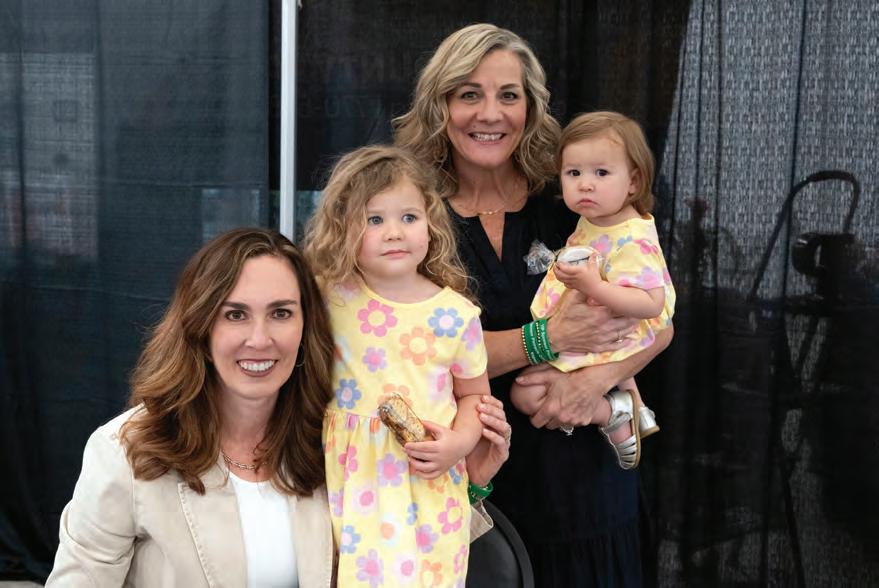



Hundreds gathered at Jim R Miller Park March 21 to eat, drink and celebrate Cobb County’s favorite businesses and service providers.
Cobb Life Magazine’s Best of Cobb Showcase, presented by Superior Plumbing, recognized winners of its annual readerdecided contest that, this year, garnered more than 285,000 votes.
Cobb families, elected officials and business leaders enjoyed pasta, sliders, doughnuts, barbecue, among other bites from 61 vendor booths, along with beer and wine, giveaways and live music from the 2024 Best of Cobb performing artist winner, Barry Lancaster.
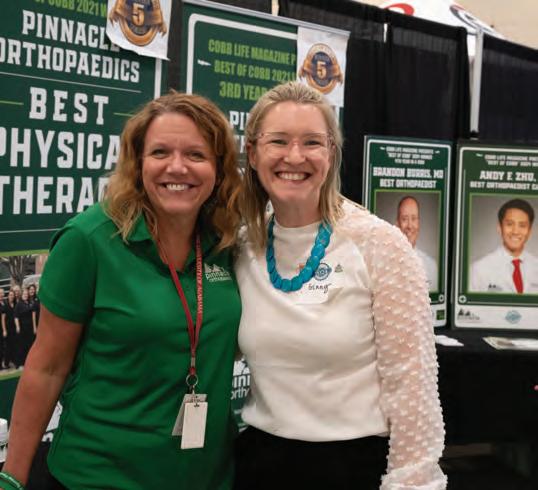
COBB LIFE MAGAZINE • 56 • SPRING 2024
COBB SCENE
Cobb Library Foundation celebrates annual Booked for the Evening Gala
Photography by ANTHONY STALCUP
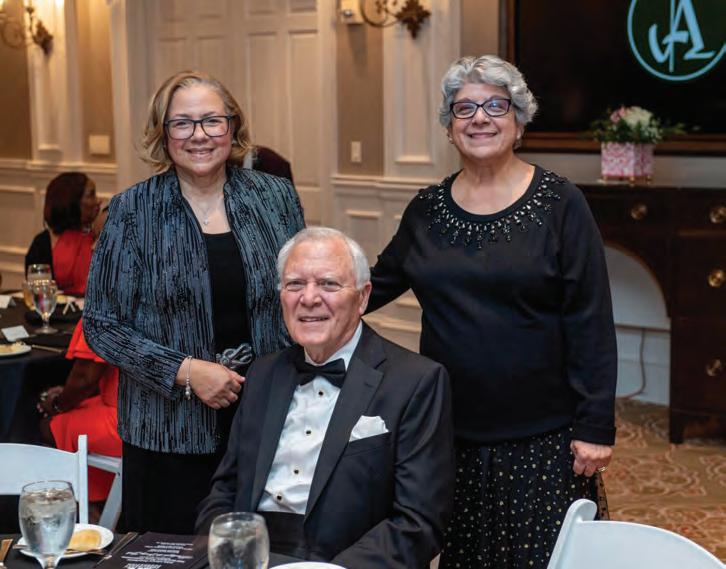
Hundreds gathered for the Cobb Library Foundation’s annual Booked for the Evening Gala, held March 9 at the Atlanta Country Club.
The black-tie affair raised money for the Cobb Public Library System, supporting resources like its summer reading program.
1. Cobb Library Director Helen Poyer, left, and Commissioner JoAnn Birrell with former Gov. Nathan Deal at the Cobb Library Foundation’s Booked for the Evening Gala at the Atlanta Country Club.
2. Author Carmen Agra Deedy speaks at the Cobb Library Foundation’s Booked for the Evening Gala at the Atlanta Country Club.
3. Former Attorney General Sam Olens and wife Lisa Olens, left, were among those who attended the Cobb Library Foundation’s Booked for the Evening Gala at the Atlanta Country Club.

COBB LIFE MAGAZINE • 57 • SPRING 2024
1
2
3
COBB SCENE
Cobb Library Foundation celebrates annual Booked for the Evening Gala
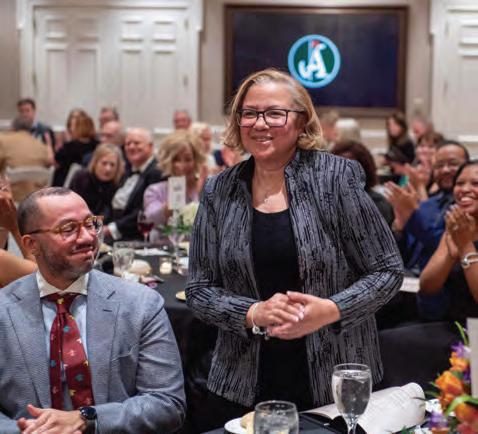





4. Nona Lacy presents Stephen Hughs with the Tom Lillie Award at the Cobb Library Foundation’s Booked for the Evening Gala.
5. Cobb County Library Director Helen Poyer was recognized for the library system being named the Georgia Library of the Year.
6-9: Scenes from the Cobb Library Foundation’s Booked for the Evening Gala held at the Atlanta Country Club.




COBB LIFE MAGAZINE • 58 • SPRING 2024 Tell Siri to play the Marie a Daily Journal podcast Sponsored by: Credit Union of Ga, Drake Realty, and Ingles LISTEN EVERY TUESDAY, THURSDAY and FRIDAY MORNING Brought to you through a partnership with the BG Ad Group Podcast Network Your Neighborhood News in Audio Format 00:00/10:31
STALCUP
Photography by ANTHONY
7 4 6 5 8 9






1259 Cobb Industrial Drive • Marietta, GA 30066 2023WINNER BESTOF COBB PRESENTED BY COBBLIFEMAGAZINE CALL THE BUG PRO! 770-GET-A-PRO 770GETAPRO.COM 2024WINNER
COBB SCENE
Seventh annual Adult Spelling Bee
Photography by JOE ADGIE




Community leaders, business owners and Cobb natives gathered at the Strand Theatre March 15 for the seventh annual Adult Spelling Bee, featuring uproarious laughter and plenty of misspelled words. This year, the event raised over $100,000 for Communities in Schools of Marietta/Cobb County, a school dropout prevention and intervention organization that offers resources to students in need.

1. The Queens of Mean team: Lisa Lawrence, Brittany Everette and Sheila Manely, representing the Kiwanis Club of Marietta, won the Adult Spelling Bee at the Strand Theater by spelling the word “athwart.”
2. Bob Kilinski and Jordan Sandler of Team Risky Business, representing Loud Security, look toward the judges as they wait for their next word.
3. Taylor Rambo of Team Country Music Hall of Famers, representing the Strand Theatre, wishes the crowd a good night as his team is eliminated during the Adult Spelling Bee at the Strand Theatre.
4. Stacey Chapman, one-third of Team Mean, representing Leadership Cobb's Class of 2023, accepts her award as the top individual fundraiser at the Adult Spelling Bee at the Strand Theatre.
5. The Enforcers team, including Florence Stephenson, Cobb District Attorney Flynn Broady and Clay Thompson, carry fake toy guns as part of their costume at the Adult Spelling Bee at the Strand Theatre.
COBB LIFE MAGAZINE • 60 • SPRING 2024
1 2 3 4 5
COBB SCENE
Georgia Food + Wine Festival
Photography by GEORGIA FOOD AND WINE FESTIVAL/MISSY MILLER

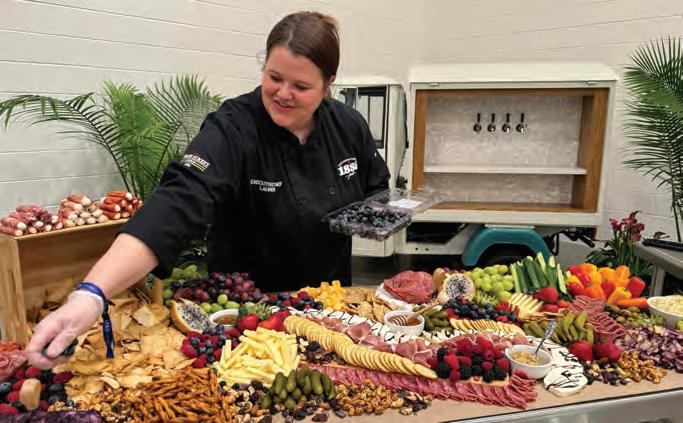
The community gathered at Jim R Miller Park March 22 through 24 for the third annual Georgia Food + Wine Festival, presented by Georgia Grown, and celebrated the best of Georgia and the South. The three-day extravaganza hosted the top culinary superstars, beverage experts, farmers, artisans live musicians and more.


COBB LIFE MAGAZINE • 61 • SPRING 2024














Cobb Life Magazine and Superior Plumbing would like to say CL COBB LIFE CONGRATULATIONS TO ALL THE WINNERS! THANK YOU TO OUR SPONSORS www.BestofCobb.com
COBB SCENE
Pipes and Pints in Smyrna
Photography by ROBIN RAYNE
It was an evening of song, dance and drink Feb. 27 as the Atlanta Pipe Band celebrated their 50th anniversary at Smyrna’s Reformation Brewery with a night of “Pipes and Pints.” The event was hosted by the nonprofit band to fundraise and spread the word about their five-decade-long dedication to advancing Scottish music arts.


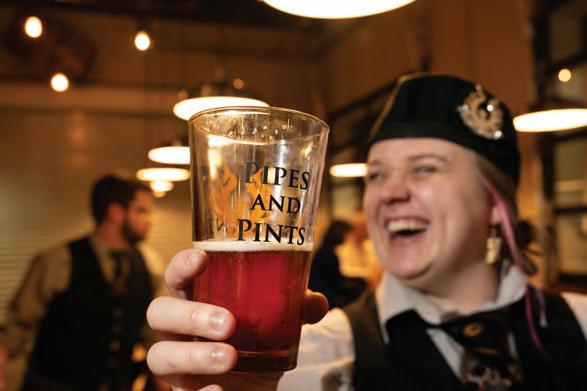


1. Atlanta Pipe Band bass drummer Abby Auman takes the center during an impromptu performance of a band set at Smyrna’s Reformation Brewery during a “Pipes and Pints” evening.
2. Atlanta Pipe Band members Charles Smith, Sam Wiley, Anthony Mack and Harry Andrews perform Scottish folk songs at Smyrna Reformation Brewery during a fundraising “Pipes and Pints” event.
3. Atlanta Pipe Band drummer Abby Auman toasts to a fun night of music at Smyrna’s Reformation Brewery.
4. Atlanta Pipe Band musicians Sam Wiley, Anthony Mack and Harry Andrews sing a medley of Scottish folk songs.
5. Atlanta Pipe Band musician Bob Rogers chats with pub guests at the Smyrna Reformation Brewery during the band’s fundraising “Pipes and Pints” event.

COBB LIFE MAGAZINE • 63 • SPRING 2024
1 2 3 4 5


It was a hoppy time for all at Marietta’s Bunny Brunch March 23. Dozens of families gathered for the event, put on Saturday by Marietta’s Parks, Recreation and Facilities Department at the Custer Park Sports and Fitness Center.
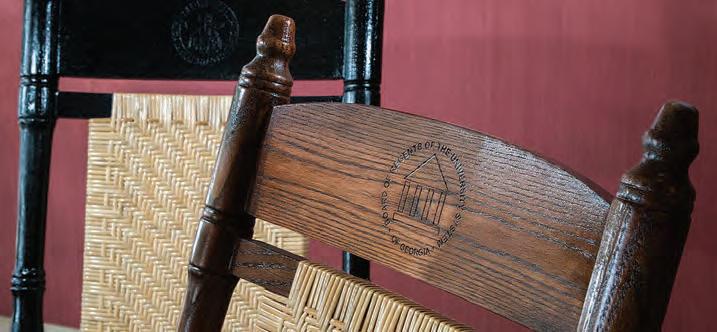

COBB LIFE MAGAZINE • 64 • SPRING 2024 COBB SCENE SI NC E 1 875 Home of the Brumby® Rocker Hours of Operation: Tuesday - Saturday 10am - 5pm 47 Waddell Street | Marietta, GA 30060 770-425-1875 brumby@brumbyrocker.com Visit us online at: brumbyrocker.com City of Marietta’s Bunny Brunch Photography by CITY OF MARIETTA



A-TEAM SERVICES Heating & Air Indoor Air Quality Specialists Sales/Service/Installation FREE SERVICE CALL WITH ANY REPAIR* *CANNOT BE COMBINED WITH ANY OTHER OFFER Locally owned and operated since 1999 airconditioningman.com Call TODAY! 770-516-5165
The evolution of the Cobb County Courthouse
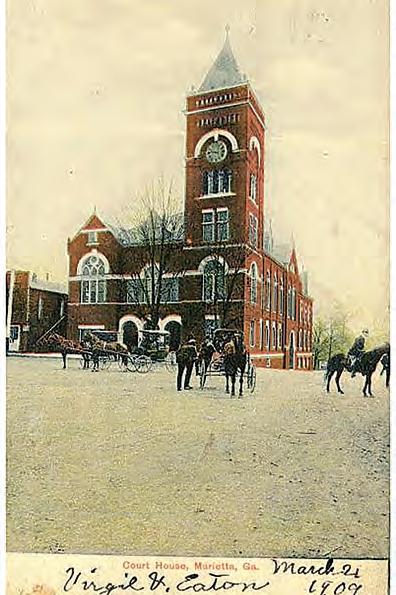

Then:
The old Cobb County courthouse on Marietta Square was a two-story brick structure with a clock tower. It was completed in 1873 and was in use until 1966 when it was demolished after being deemed “too small for use.”
THEN PHOTOS COURTESY OF THE MDJ, OLD MARIETTA FACEBOOK PAGE, DAVIS MCCOLLUM AND THE MARIETTA MUSEUM OF HISTORY.

COBB LIFE MAGAZINE • 66 • SPRING 2024 now & then
N
ow: The current Cobb County Superior Courthouse near Marietta Square opened in January 2010. The most prominent design feature is the exterior clock tower, modeled after Cobb’s old courthouse that stood in Marietta Square for 93 years.

1310 Kennestone Circle
Marietta, GA 30066
770-420-3009
www.flemingcarpet.com
showroom@flemingcarpet.com
Showroom Hours: Mon-Fri 8:30am-5:00pm Sat: 10:00am-2:00pm
BESTOF COBB PRESENTED BY COBBLIFEMAGAZINE 2021WINNER 2023WINNER BESTOF COBB PRESENTED BY COBBLIFEMAGAZINE 2024WINNER





www.pinnacle-ortho.com @pinnacleortho @pinnacleortho Canton 770.345.5717 East Cobb 770.579.8558 Hiram 678.453.5717 Marietta 770.427.5717 Woodstock 770.926.9112 • Orthopaedics • Sports Medicine • Spine and Joint • Hand and Foot • Physiatry • Limb Lengthening • Deformity • Trauma • Workers’ Compensation • MRI • Surgery Center • Physical Therapy Thank you for voting us the Best in Cobb Orthopaedic Practice, Orthopaedist - Dr. Brandon Burris, and Physical Therapy Group! 2023WINNER BESTOF COBB PRESENTED BY COBBLIFEMAGAZINE 2024WINNER
