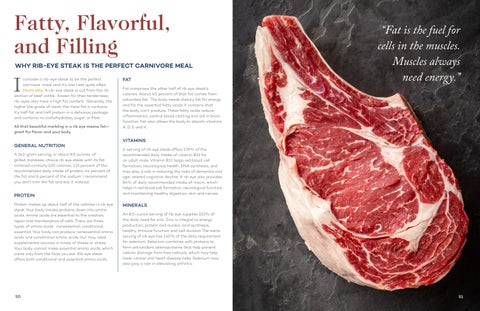
Fatty, Flavorful, and Filling WHY RIB-EYE STEAK IS THE PERFECT CARNIVORE MEAL
I
consider a rib-eye steak to be the perfect carnivore meal, and it’s one I eat quite often. Here’s why: A rib-eye steak is cut from the rib section of beef cattle. Known for their tenderness, rib-eyes also have a high fat content. Generally, the higher the grade of meat, the more fat it contains. It’s half fat and half protein in a delicious package and contains no carbohydrates, sugar, or fiber. All that beautiful marbling in a rib eye means fat— great for flavor and your body.
GENERAL NUTRITION A 242-gram serving, or about 8.5 ounces, of grilled, boneless, choice rib eye steak with its fat trimmed contains 520 calories, 133 percent of the recommended daily intake of protein, 44 percent of the fat and 6 percent of the sodium. I recommend you don’t trim the fat and eat it instead.
PROTEIN Protein makes up about half of the calories in rib eye steak. Your body breaks proteins down into amino acids. Amino acids are essential to the creation, repair and maintenance of cells. There are three types of amino acids: nonessential, conditional, essential. Your body can produce nonessential amino acids and conditional amino acids, but may need supplemental sources in times of illness or stress. Your body cannot make essential amino acids, which come only from the food you eat. Rib eye steak offers both conditional and essential amino acids.
50
FAT Fat comprises the other half of rib eye steak’s calories. About 40 percent of that fat comes from saturated fat. The body needs dietary fat for energy and for the essential fatty acids it contains that the body can’t produce. These fatty acids reduce inflammation, control blood clotting and aid in brain function. Fat also allows the body to absorb vitamins A, D, E and K.
“Fat is the fuel for cells in the muscles. Muscles always need energy.”
VITAMINS A serving of rib eye steak offers 239% of the recommended daily intake of vitamin B12 for an adult male. Vitamin B12 helps red blood cell formation, neurological health, DNA synthesis, and may play a role in reducing the risks of dementia and age-related cognitive decline. A rib eye also provides 84% of daily recommended intake of niacin, which helps in red blood cell formation, neurological function and maintaining healthy digestion, skin and nerves.
MINERALS An 8.5-ounce serving of rib eye supplies 153% of the daily need for zinc. Zinc is integral to energy production, protein and nucleic acid synthesis, healthy immune function and cell division. The same serving of rib eye has 145% of the daily requirement for selenium. Selenium combines with proteins to form antioxidant selenoproteins that help prevent cellular damage from free radicals, which may help lower cancer and heart disease risks. Selenium may also play a role in alleviating arthritis.
51