



EDITOR
Peter Adams
In the ever-challenging world of UK hospitality, any sign of relief is welcomed, however small.
The Chancellor's move to cut red tape for businesses will no doubt be well received across the board.
Of course, many would have preferred a break on taxes instead, but in this day and age, one must be grateful for small mercies!
Yet, time and time again, we find ourselves subjected to the whims of so-called "experts" rather than those on the front lines of the industry.
Take, for instance, the now-infamous attempt to reduce the standard pint measure to two-thirds. The idea, backed by academic research, suggested that shrinking the size of a pint would curb alcohol consumption.
Quite rightly, many publicans refused to participate in such a study, and Wetherspoon’s chairman Tim Martin hit out last October, questioning the common sense of the proposal.
As he pointed out, such a move would do little to curb drinking habits but would only drive more consumers to drink at home—an already growing concern as the government continues to tighten the screws on the sector.
Instead of these ill-conceived measures, CAMRA called for a 20% tax differential between pints served in pubs and alcohol sold in supermarkets to encourage pubgoing.
A logical and necessary move? Absolutely. But given the government's track record, one can only wish them "good luck with that."
Meanwhile, in deeply concerning news, St Austell Brewery in the South West is fac-
ing the harsh reality of the government's planned increases in April, with 40 jobs now at risk.
The brewery, which employs over 2,000 people across the region, has entered a 30day consultation period, calling the decision "difficult" but "necessary" to ensure future success.
Unfortunately, this is a trend we've been reporting on for weeks. The consequences of these heavy-handed increases are plain for all to see.
I was in London back in February, covering a protest by the care sector, which is also expecting devastation due to these financial pressures. Farmers were there too, echoing the same fears.
And it’s not just businesses feeling the squeeze—the public are tightening their belts as well.
Just this week, I attended a trade event in Birmingham, a yearly tradition since 2009. Normally, this trip is capped off with an excellent dining experience at one of the city's top Asian restaurants, a place known for its luxurious setting and consistently full tables.
This time, however, I arrived at 7:45 pm to find just two other diners. When I left at 9:45, not another soul had walked in. If that isn't a stark indictment of the times we’re in, I don’t know what is.
With businesses struggling, consumers cutting back, and now further job losses looming, it's hard to see how the Treasury expects to maintain, let alone increase, revenue.
You cannot tax businesses into profit, nor can you spend your way out of a recession. It’s a lesson that Ms. Reeves and the government will likely learn the hard way, and sooner rather than later.
I would encourage all our readers to follow us on X/Twitter @CLHNews and visit our website at www.catererlicensee.com to sign up for our twice weekly e-newsletter for all the latest news delivered directly to your inbox.
I can always be contacted at edit@catererlicensee.com
The Caterer, Licensee & Hotelier News Group is published by RBC Publishing Ltd, 3 Carlton Mount, 2 Cranborne Road, Bournemouth, Dorset, BH2 5BR. Contributions are
consideration, however, no responsibility will be accepted for loss or damage. Views expressed within this publication are not necessarily those of the publisher or the editorial team. Whilst every care is taken when compiling this publication to ensure accuracy, the publisher will assume no responsibility for any effects, errors or omissions therefrom. All rights reserved, reproduction is
ten permission is obtained. All material is assumed copyright free unless otherwise advised.




Regulators will be summoned for performance reviews twice a year from the relevant Secretary of State and will be judged against a set of targets agreed with the businesses they affect, which could include how quickly they make decisions on planning applications and new licenses for businesses and products. The regulators will immediately begin discussing these targets with businesses and publish them by June.
Kate Nicholls, Chief Executive of UKHospitality, said: “A plan to cut red tape and reduce the burden on businesses is long overdue.”
“In sectors like hospitality, businesses have been struggling with too much cost and too many regulations for decades, and it has held back growth.”
“If we want to kickstart the economy, deregulating those already over-stretched sectors should be the focus. This should include a review of upcoming legislation, like the ill-thought through Extended Producer Responsibility scheme.”
“Rewiring the nation’s regulators to perform more effectively is critical, and this should include a pivot to help businesses reduce costs, ensure proportionate competition in the market and taking a more commonsense approach to assessment and enforcement of regulation.”
Following the decision to primarily consolidate the Payment Systems Regulator into the Financial Conduct Authority, the Regulator for Community Interest Companies will be folded into Companies House to avoid duplicative disclosure requirements for companies which provide a benefit to their community.
Contactless payment limits are also being reviewed, which could mean more customers enjoying faster service and hotel checking out experience as they simply “tap and go”.
The contactless card limit for a single purchase is £100, and the Financial Conduct Authority (FCA) is currently seeking views on whether removing or increasing the contactless card limit could benefit businesses and aid economic growth.
It has said one option put forward is to allow firms who use technology to reinforce fraud controls to set their own limits, as happens in the United States.
Cabinet ministers will report back to the Chancellor by the summer with further suggestions to cut numbers and create a more effective system.
Chancellor of the Exchequer Rachel Reeves said: “The world is changing and that’s why we must go further and faster to deliver on our Plan for Change to kickstart economic growth. Today we are taking further action to free businesses from the shackles of regulation.

By cutting red tape and creating a more effective system, we will boost investment, create jobs and put more money into working people’s pockets.”
Business and Trade Secretary Jonathan Reynolds said “Unnecessary regulation chokes competition and stifles business – that’s why we’re taking action to unleash industry right across the UK to go for growth.”
“With a regulatory system that encourages innovation and economic growth combined with our Industrial Strategy, our Plan for Change can make the UK the best place to startup, invest and thrive.”
Rain Newton-Smith, CEO of the CBI, said: “The UK’s Gordian knot of regulations hinders investment with compliance costs that are too high, leaving us trailing the international competition. Today’s announcement signals a shift towards a more proportionate, outcomes based approach that should deliver more sustainable growth and investment.”
“Smart, proportionate regulation could be the UK’s international calling card once more, bringing confidence and easing the burden on many sectors.”
“This announcement builds on the welcome commitment from the Prime Minister to reduce the thicket of regulation, and it is critical that this approach is reflected across the board including finding a landing zone for the Employment Rights Bill that supports growth, investment, and jobs.”
In October 2024 Wetherspoon chairman Tim Martin, as reported in CLH NEWS, raised concerns over mounting red tape hitting out at proposals of further regulation to the UK’s pub sector, arguing that such measures may have unintended consequences.
Martin warned against additional restrictions on alcohol consumption, suggesting that such moves could push more consumers towards drinking at home or in outdoor spaces, rather than in managed hospitality venues.
One particular proposal he expressed concerns about followed a tudy from Cambridge University academics, suggesting shifting from the traditional pint glass to smaller two-third pint measures—commonly known as schooners—as a means of encouraging more responsible drinking.
Martin dismissed the idea as impractical, highlighting that in countries where schooners are widely used, such as Australia, there has been no clear evidence of a reduction in overall alcohol consumption.
“Common sense suggests that simply reducing glass sizes is unlikely to curb alcohol intake in pubs,” Martin stated. “Furthermore, this would have no impact whatsoever on alcohol purchased from supermarkets, unless container sizes in retail outlets were also significantly reduced—something that seems highly unrealistic.”
“These kinds of proposals don’t seem to stand up to common-sense scrutiny,” Martin added.
With the UK’s hospitality sector still facing significant economic pressures, industry leaders continue to advocate for stability and support rather than further regulatory burdens.

By Lee Pickersgill, Energy Manager, Valor Hospitality UK + Europe
Sustainability in hospitality is not a marketing buzzword or just a regulatory requirement, it's an ethical responsibility, which can have some added commercial benefits.
Hotels that truly embrace energy efficiency, waste reduction, and sustainable procurement practices will experience cost savings, reputational benefits and guest loyalty.
The modern traveller is conscious of their environmental impact, with many preferring hotels that actively promote sustainable initiatives. This is something we are increasingly aware of as we manage voco Zeal Exeter Science Park, IHG’s first net zero carbon hotel.
However, sustainability must make business sense. While some energy-efficiency measures require upfront investment, the reality is that many zero-cost initiatives can drive substantial energy savings.
CHOOSING THE RIGHT SOLUTIONS
There are many sustainable solutions on the market for hotels, but it's crucial that businesses only introduce systems that work for their finances. This is particularly important when capital investment is limited. Energy-saving technologies such as smart metering, automated HVAC controls, and heat recovery systems can produce long-term savings. However, investment may not be feasible for all organisations. The challenge I often see across the industry is that hotels understand what they need to do, but they don’t have the finances to do it.
This is where zero-cost, behaviour-driven initiatives come into play. Hotels should be training staff to be energy conscious through basic behaviour changes. This could be ensuring rooms aren’t heated or cooled unnecessarily, kitchen equipment isn’t turned on at all times, and simple housekeeping measures like turning off lights can reduce energy consumption at no extra cost. These may seem like obvious suggestions, but I’d challenge any hotel to review whether they are actively encouraging these behaviours across their entire organisation.
I strongly believe in the importance of psychological safety in the workplace, meaning everyone has a voice and should be allowed to use it. When it comes to energy efficiency in hotels, any team member could have a good idea about how to implement change. For example, the housekeeping team are the closest to how guests use the facilities and how we service them. Therefore, they are most likely to have the best suggestions on how to improve these processes.
When delivering energy management presentations across our portfolio, I often start by sharing Sir David Attenborough’s speech at COP26 in 2021. It clarifies the importance of making sustainable changes and inspires us all about why we need to do our bit both in the workplace and at home. I’d recommend everyone takes a listen.
Across the hospitality sector, the focus is understandably on providing comfort to guests. This means introducing sustainable changes can often be met with resistance due to concerns over the impact on guest experience.
However, there are some small, low-impact changes that can make a big difference to energy usage. For example, AI-driven HVAC systems can optimise room temperatures without guests even noticing. Water saving fixtures and better insulation can also maintain comfort while decreasing energy demand.
If hotels are to truly reduce their carbon footprint, collaboration is crucial. This means aligning sustainability strategies across accommodation, food and beverage services, and leisure facilities to maximise environmental benefits and enhance the guest experience.
We have acknowledged that sustainability isn’t just about corporate initiatives, it’s about people. But at a wider level, partnerships with suppliers, local authorities and other hotels can also accelerate decarbonisation efforts. Bulk buying green energy, sharing best practices, and working with local communities on waste reduction initiatives can create more sustainable business models.
Sustainability often gets associated with expensive investments like solar panels, heat pumps and cuttingedge technology. But in truth, some of the most impactful changes come at no cost at all.
team from The Oarsman, with the kitchen headed up by The Oarsman’s Executive Chef Scott Smith, and the front of house run by General Manager Patrycja Gadja.
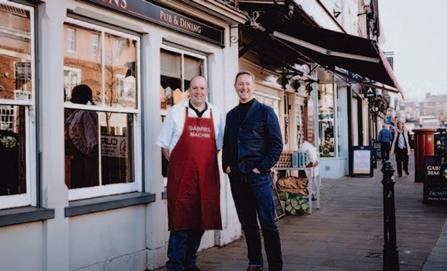
Nigel has been a long-standing customer of Barry’s, and the duo had jokingly discussed their plans for the pub next door for over 25 years. Nigel is no stranger to the hospitality industry, having previously held positions including Director of The Fat Duck – working hand-in-hand with Heston developing the restaurant’s platform to become known as ‘The World’s Best Restaurant’, as well as Managing Director of The Crazy Bear Group of hotels and restaurants.
Nigel comments: ‘Gabriel Machin is such an institution in Henley – and rightly so – selling the highest quality cuts of meat, and fish and Barry is such a well-loved and well-respected figure in the community. I’ve always loved the idea of buying the pub next door, using Barry’s incredible produce combined with Scott’s talents in the kitchen to create something special. Our aim is for The Three Tuns to be a beloved space for the local community to enjoy great food, wine and ales in a warm and welcoming environment.’
Robert's Dorset provides an unparalleled snack experience that will elevate your trade and hospitality offerings to your customers.
At Robert's Dorset, we understand the diverse dietary preferences of your patrons, whether they follow a vegan, keto, or allergen-free lifestyle. Rest assured; our selection of snacks caters for all.
As a trusted supplier to independent shops, pubs, and the hospitality industry, we offer a range of sizes in all our products for direct reselling.
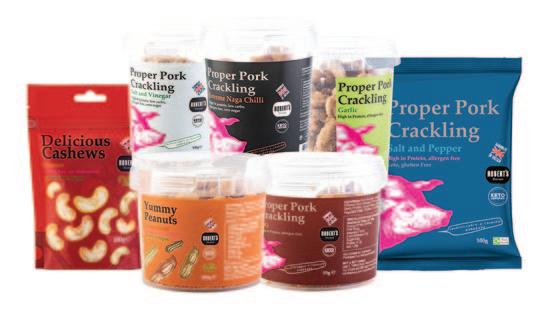
Our vibrant packaging is designed to catch the eye, while the contents are sure to satisfy. From our stackable pots which optimise your shelf space, and fit most cup holders, to our elegant mason jars which add the "wow factor" to any display. Discover the perfect bar snacks to complement your fine beverages or enhance your guests' welcome baskets with something truly special.
WHY CHOOSE ROBERT'S DORSET?
Established in 2011, we are a family-owned and operated business. At the core of our operations lies a personal touch, ensuring our trade customers enjoy the following advantages:
• Delicious snacks to delight your customers.
• Exceptional customer service, led by a dedicated Account Manager.
• Convenient ordering options, whether online or by phone.
• Handcrafted products made in beautiful Dorset, England.
• Every item is prepared to order, ensuring customers always receive the freshest products
• All our packaging is fully recyclable or reusable and we have a 99.9% waste free production process
• Proudly certified by the Roundtable of Sustainable Palm Oil (RSPO) - palm oil is only used in Fudge
• All our ingredients are of the highest quality. Contact Robert for an online catalogue and more information regarding our perfect snacks.
robert@robertsdorset.com | 01202 875280 | www.robertsdorset.com
Britain’s On Premise drinks sales have closed out the Winter with three successive weeks of above-inflation growth, CGA by NIQ’s Daily Drinks Tracker reveals.
After a challenging January and early February, sales recovered in the third week of February—and momentum has continued. The Tracker indicates growth of 4% in the week to Saturday 1 March, as a spell of bright weather moved in and February pay cheques unlocked some extra spending. Sales were comfortably ahead on six of the seven days of the week, and peaked at 14% on Saturday (28 February).
Even stronger trading followed in the following week to Saturday 8 March, as sales ran 8% ahead of the equivalent period in 2024. There was bumper growth of 14% on Saturday (8 March), when the sunniest day of the year so far brought people out of their homes.

The warmer temperatures and Six Nations rugby fixtures made it a very good fortnight for Long Alcoholic Drinks (LAD) categories. Beer sales were up by 5% and 9% in the weeks to 1 and 8 March, while cider performed even better, at 7% and 17% ahead. The upswing is another
indicator of the powerful effect of sunshine and sport on LAD purchases.
Sales of soft drinks and wine were both ahead by at least 5% over the two-week period. Spirits were 5% down in the seven days to 1 March, but they enjoyed a fractional increase of 0.4% in the week to 8 March—the first year-on-year growth for a long time. This growth can be attributed to the warmer weather, which has created more opportunities for cocktail consumption.
Rachel Weller, CGA by NIQ’s commercial lead, UK & Ireland, said: “After tough Winter trading conditions for suppliers and venues, these figures are hopefully a sign of brighter times to come. Sales were well above current rates of inflation across nearly all days and categories and with the triple celebrations of St Patrick’s Day and Mother’s Day to come, we can be cautiously optimistic about further real-terms growth. However, much will depend on the weather, consumer confidence is still volatile and some significant cost rises are looming. Businesses will have to stay laser-focused on people’s needs and On Premise trends to sustain sales and protect margins.”
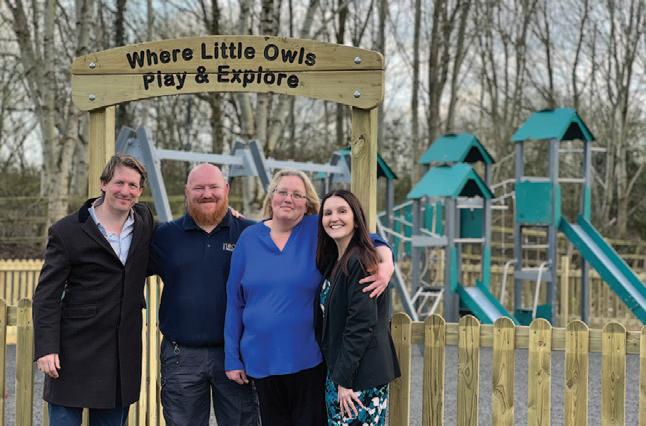
The Tawny Owl in Swindon has new managers at the helm, as husband-andwife team Deanna and Danny Paul have officially taken over at the popular Arkell’s pub. The couple are already familiar faces, having worked in a variety of roles at The Kingsdown Inn and The Tawny Owl, including serving as assistant managers under former manager Nic.
Their appointment makes The Tawny Owl a true family affair, with their daughter Chelsea also part of the team. Together, they’re looking forward to welcoming guests old and new while showcasing the exciting improvements recently made to the pub.
The pub has been given a fresh new look with a repainted exterior, a refurbished car park, upgraded outdoor lighting and signage, and brand-new furniture inside and out. Most notably, Arkell’s has invested over £60,000 in a brand-new children’s play area, making the pub even more family-friendly for the Swindon community. Deanna and Danny are eager to build on the pub’s reputation as a welcoming local hub.
For Danny, running a pub has been a lifelong dream, and now that their children are grown, he and Deanna feel this is the right time to take this next step together. During their time as assistant managers they’ve built strong relationships with the local community, making their transition into management a natural fit.
“We’re absolutely delighted to be taking on The Tawny Owl,” said Deanna. “This pub is such a special place, and with all the fantastic improvements, it’s a great time to invite everyone in to experience what The Tawny has to offer.”
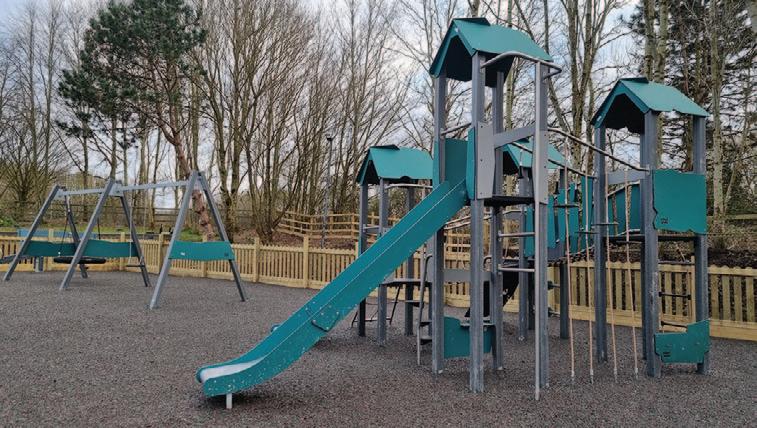
George Arkell, Managing Director of Arkell’s Brewery, shared his enthusiasm for the new management: “We love to see growth within our teams, so we are thrilled that after nine years, Deanna has now been promoted to manager of The Tawny Owl. And what a great time to be taking over, as we’ve just completed our biggest children’s play area yet!”
By Danni Rush, COO of Virgin Incentives, Virgin Experience Days and Virgin Experience

In the UK, upcoming tax changes are putting pressure on the hospitality industry, with over 70% of businesses considering staff reductions. Rising employer National Insurance contributions and reduced rates relief are driving up operational costs, forcing many businesses to make difficult staffing decisions.
Adding to this, the exceptionally high turnover rates in 2023 are only exacerbating the issue, with hotels seeing a 105% turnover, while restaurants and food services hit 92.98%.
At the same time, the cost-of-living crisis is making UK consumers more price-conscious, causing a shift in spending habits and a decline in traditional brand loyalty. Research shows that membership in dining-related loyalty programmes fell sharply from 49% to 25% in 2023, signaling a significant drop in customer engagement.
Clearly, hospitality businesses need to rethink their strategies to strengthen both employee and customer retention. Employee recognition and customer rewards are no longer optional—they are essential to business success. It’s known across industries that a strong sense of loyalty between employees, customers, and the business has a direct impact on the bottom line. When employees feel valued through recognition initiatives, they are more engaged and deliver a better service, which enhances the overall guest experience. On the customer side, a well-designed rewards programme fosters repeat business and brand loyalty. But how can businesses implement these strategies effectively?
WHERE TO START WITH REWARD AND RECOGNITION
The key to successful recognition programmes is setting clear objectives. For employees, the focus is often on reducing turnover, improving performance, and boosting morale, whereas for customers, the goal is to increase repeat visits and drive higher spending.
Once objectives are established, the next step is understanding what truly resonates with employees and customers. Employee surveys and customer behaviour analysis can reveal what types of rewards are most valued—whether it's financial bonuses, discounts, or experiential rewards.
Another key factor to consider is personalisation. A one-size-fits-all approach rarely delivers the best results. At Virgin Incentives, we regularly survey our team to understand their preferences, ensuring that rewards are meaningful and appreciated. This tailored approach extends to our clients' customers as well—offering gift cards, experiences, or flexible incentives that align with individual preferences.
To ensure long-term success, businesses should conduct regular performance reviews of their recognition programmes. If the strategies aren’t achieving their intended results, adjustments should be made—whether that means refining the types of rewards offered or enhancing communication around the programme. Ultimately, recognition—whether for employees or customers—should be about making people feel valued. A simple shoutout in a team meeting, a personal note from leadership, an annual bonus, or a thoughtful gift can make a lasting impact. Similarly, an exclusive discount, a birthday freebie, or a surprise reward can strengthen customer loyalty. When people feel appreciated, their connection to the brand deepens, creating positive ripple effects for the business.
Hospitality businesses are increasingly recognising that both employee and customer reward and recognition programmes are essential for long-term success. A well-structured employee rewards programme fosters a motivated workforce, with employees who receive monthly recognition proven to be 45% more engaged. This in turn enhances the guest experience and strengthens brand reputation.
These benefits naturally flow into customer-facing initiatives, allowing businesses to provide exceptional service, personalised perks, and competitive pricing—all of which drive both customer satisfaction and repeat business.
By aligning employee and customer recognition strategies, hospitality brands create a seamless ecosystem where engagement at all levels reinforces business growth. In an industry built on service and experience, making both employees and customers feel valued ensures brands are a cut above the rest, giving them a competitive advantage in a highly saturated sector.
The latest glittering gala to recognise and honour Bristol’s hospitality heroes has been hailed as the biggest and best yet by organisers.
The seventh ‘Night of the Stars’ event, organised by Bristol Hoteliers Association (BHA), truly was ‘magnificent’ as more than 450 people came together to celebrate teams and individuals who have gone above and beyond over the past year in support of their sector.
The event, which took place at Ashton Gate Stadium – home of Bristol City FC and Bristol Bears Rugby Club – also raised an unprecedented £6,015 for the Brain Tumour Support charity through a raffle.
BHA Chair Raphael Herzog said: “This was our biggest and best event ever. It was an amazing evening which will be remembered for some time, and it was an honour to be able to recognise and shine a light on the stars of Bristol’s hospitality businesses. “The past few years have been extremely challenging for the hospitality sector with little sign of significant improvement, given new challenges like the increases in employer National Insurance contributions and the minimum wage.”
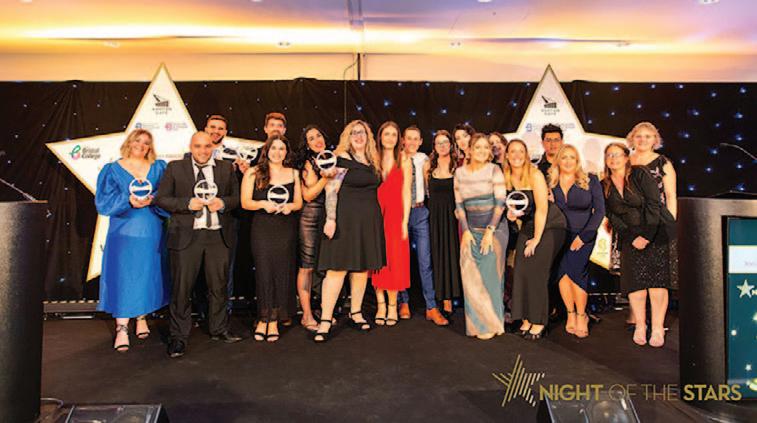
During his opening speech on the evening, he said: “One thing is certain; we are hospitality, and we are strong, resilient and ready to tackle whatever comes our way.”
He added: “The positivity in the room during the Night of the Stars event was heart-warming, proving once again that there are many, many, people who remain completely committed to the work that they do.
“Based on the passion and dedication on display at the awards evening alone, there is plenty of cause for optimism for the future.
“The BHA is extremely grateful to our sponsors because, without their generous support, which in itself is a morale-boosting vote of confidence in our sector, we would not be able to run this event.
“We can’t thank them enough for enabling us to celebrate some of the people who make our businesses so special.
“And, of course, I must extend huge congratulations to the winners and runners up on the night, and sincere gratitude for all that you do for our vibrant and exciting sector.
“The seventh Night of the Stars was truly something special, and we’re going to have to do something extra special next year to top this one, but we will certainly try!”
Television remains an essential service in every hotel, despite the rise of streaming platforms. It allows hoteliers to enhance guest experience and provide entertainment options of globally admired quality. This has a direct influence on the image and appreciation of the establishment.

However, with the benefits of offering television come certain responsibilities, particularly respecting copyright laws. Hoteliers must ensure they have the necessary licences. Operating without them constitutes a legal infringement.
The AVLA licence enables hotels, aparthotels, B&Bs and other similar establishments to lawfully offer access to TV channels containing audiovisual works (films, series, documentaries, cartoons and other shows) from
AVLA’s repertoire. It is for TVs in bedrooms and communal areas of the premises. The AVLA licence covers an immense catalogue of works and rights not covered by other licensors.
By taking the AVLA licence, hotels are directly helping to maintain a vibrant audiovisual sector. The royalties collected serve to finance new content, as well as to sustain tens of thousands of creatives and companies involved in the process.
Television in hotels means more than just an amenity; it is a vital component of the guest experience. By securing the necessary licenses, hoteliers can offer their guests a superior stay while upholding legal and ethical standards, ultimately protecting themselves from legal risks and fostering the UK’s world-class creative industries.
To learn more about AVLA and to take the licence, visit: www.avla.uk
As the fifth week of the Six Nations unfolded alongside the Carabao Cup Final, UK pubs experienced a mixed weekend in sales performance. While overall sales declined by -2.1% YoY compared to the same weekend in 2024, pubs saw a +24.3% increase versus the average weekend in 2025, driven by heightened sporting excitement.
Across the weekend, 33.2 million pints were sold, with the average pub serving 878 pints and generating £4,461 in revenue. While Saturday sales saw a modest increase of +0.4%, a weaker Sunday (-5.3% YoY) offset the gains. World Lager emerged as the top performer, seeing a +7.5% YoY increase, benefitting from France’s Six Nations victory and Newcastle’s Carabao Cup triumph. Meanwhile, Stout sales dropped (-8.9% YoY) due to the absence of St. Patrick’s Day in this year’s weekend, unlike 2024. Apple cider remained flat, while Fruit Cider (+1.3%), Premium Lager (+0.8%), and Ale (+1.7%) saw growth. The trend of premiumisation continued, with World Lager once again outperforming Core Lager.
The Carabao Cup Final had a significant impact on pub sales, driving an additional +73 pints per pub,
equating to £371 in extra revenue. Looking at the NE postcode, beer sales surged by 72%, with an additional 130 pints sold compared to the same Carabao Cup Final weekend last year.
Pubs that screened live sport saw a +9.3% increase in footfall, with Sunday (+16.3%) experiencing the biggest uplift. The average visit time rose to 164 minutes in pubs showing sport, a +13.9% increase over those not screening it. Rural pubs saw the largest gains in dwell time (+16.6%), while city centre venues were up +10.1% and suburban pubs enjoyed a +14.9% increase.
Alison Jordan, CEO of The Oxford Partnership, commented: “This weekend’s data reaffirms the crucial role of live sports in driving pub revenues. With significant increases in footfall and pint sales, particularly in regions celebrating key sporting victories, it’s clear that sporting events continue to provide a major boost to the hospitality industry.”
Despite the slight YoY sales decline, the sporting calendar continues to be a vital driver for pub revenue, reinforcing the importance of live sports in boosting footfall and customer engagement.

The George in Newnham on Severn has created a safe space for local people to come together to help overcome social isolation and feelings of loneliness.
This friendly and welcoming mixed-use community hub in the Forest of Dean, which is run by a group of dedicated volunteers, provides space for artistic, educational and therapeutic activities and hosts talks, music events, art exhibitions, workshops and lots of creative activities for local people of all ages.
To support these social and creative activities, expert help and a Community Services Fund grant from Pub is The Hub was provided to help with the purchase of a projector, screen and laptop. These have already been put to good use, enabling the
venue to run free monthly talks on a range of topics to help educate and bring people together.
The community hub includes a gallery, secondhand shop and a café that offers a fantastic range of artisan teas and coffees, cold drinks and alcoholic drinks. Its talented volunteer bakers provide a delicious selection of cakes for the café, which helps provide a much-needed space for people to connect.
Nick Assirati, member of the Newnham on Severn Community Benefit Society, which runs The George, said: “We have built a village hub in an attempt to combat loneliness and to help build social cohesion. We provide an inclusive, convivial space for interaction, education, or maybe just an inexpensive cup of tea and a warm welcome.”
Pub is The Hub regional advisor Roger Belle added: “This is a fantastic venue that has really engaged and connected with people in the local community. The talks and events are having a real impact in helping to bring people together and adding social value to this small rural village.”
The Newnham on Severn Community Benefit Society had campaigned for five years for the premises to be purchased as a community asset. They finally purchased the pub in October 2022 and the opened its doors in June 2023.


By Chris Ince, Chef Director at

Catering professionals operate in a demanding environment, serving millions of meals across workplaces, schools, and healthcare settings. However, with the increasing demands for sustainability from clients and customers alike, their responsibilities now extend beyond delivering quality and efficiency.
As pressure mounts to minimise waste, source ethically and seasonally, and reduce the overall environmental impact of food services, industry leaders must rethink traditional approaches. The challenge lies within integrating environmentally conscious practices while maintaining high standards of creativity and customer satisfaction.
REDUCING CARBON WITHOUT COMPROMISING TASTE
With climate change concerns more pressing than ever, the food industry must acknowledge its significant role in global carbon emissions. From agricultural production to transportation, every aspect of food service contributes to the carbon footprint.
With sustainability and carbon reduction now at the forefront of catering priorities, this has necessitated a fresh perspective on sourcing, recipe development, and consumer engagement. The key challenge is ensuring that sustainability measures do not diminish the taste and quali-
ty that diners expect.
Tracking the carbon footprint of recipes allows businesses to identify high-impact ingredients and make informed substitutions with more sustainable alternatives. This does not mean eliminating specific food groups, but rather, reformulating recipes to achieve meaningful environmental benefits. Collaboration with nutritionists, suppliers, and chefs is vital in striking the right balance between sustainability, flavour, and overall meal satisfaction.
Sustainability is no longer a secondary consideration and is instead now a primary expectation for clients and consumers. Many organisations actively seek catering partners who can provide forward-thinking, transparent solutions that align with their own environmental commitments.
To establish trust and credibility, caterers must ensure their sustainability initiatives are backed by solid data. Metrics on carbon reduction, waste minimisation, and supplier practices provide tangible proof of progress. However, engagement goes beyond data alone. Hosting interactive events, such as tasting sessions, offers clients a direct experience of sustainable dining while demonstrating the environmental impact of their food choices.
A widespread misconception within the catering industry is that sustainability equates to higher costs. While some environmentally friendly ingredients may carry a premium, strategic planning and innovation can maintain cost-effective operations.
For instance, incorporating plant-based proteins such as pea protein can serve as a financially viable alternative to traditional meats. Some plant-based options retain their weight better during cooking, reducing waste and improving cost efficiency. Additionally, emerging production methods, such as dehydrated plant proteins, further improve affordability without compromising dish quality and appeal.
For budget-sensitive sectors such as education, these cost-effective innovations are particularly valuable. Sustainable dining can be both finan-
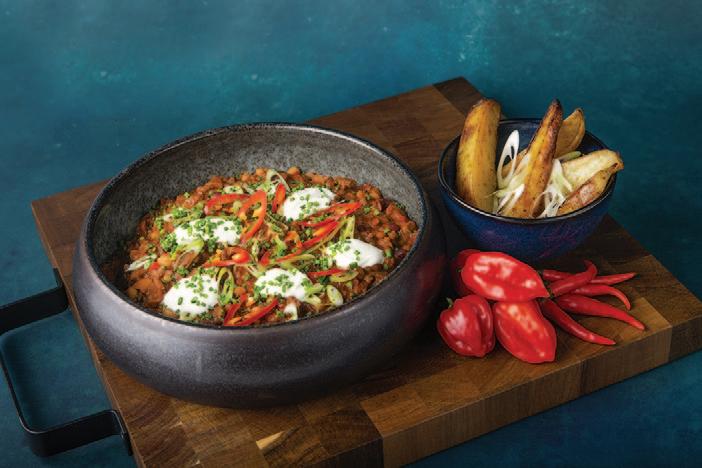
cially and nutritionally viable when approached with careful strategy and creativity.
• Catering businesses aiming to integrate sustainability into their operations can take practical steps towards a sustainable future:
• Investing in renewable energy for kitchens to reduce operational emissions.
• Sourcing ingredients from local farmers and ethical suppliers to lower food miles.
• Implementing waste reduction measures, including composting and portion control.
• Educating consumers, whether students, employees, or healthcare staff, on the benefits of making sustainable choices.
Sustainability in catering is an ongoing commitment. It requires continuous innovation, collaboration, and dedication to responsible practices. Through taking proactive steps, catering businesses can play a vital role in shaping a more sustainable and environmentally conscious future for the industry.
Greene King Pub Partners, the leased, tenanted and franchise division of Greene King, has celebrated the 20th anniversary of its Partnership with Tom Kerridge. Tom has operated The Hand & Flowers in Marlow, Buckinghamshire since 2005, and with his team turned the pub into the first to ever receive two Michelin stars. In recognition of Tom and his team’s 20 years at The Hand & Flowers, Greene King Pub Partners Managing Director Dan Robinson alongside Operations Director Mike O’Connor and Operations Manager Barrie Aspinall presented a specially made plaque to display at the pub.
A renowned gastropub, The Hand & Flowers received its first Michelin star in 2006, just a year after Tom opened it. The second Michelin star then followed in 2012.

The pub has long established itself as a top dining destination under Tom and his team, combining exceptional food with the warm hospitality of a pub.
In addition to The Hand & Flowers, Tom Kerridge also operates the Butcher’s Tap & Grill in Marlow in
Tom Kerridge, operator of The Hand & Flowers, said: “Reaching 20 years at The Hand & Flowers is an incredible milestone, and it wouldn’t have been possible without my amazing team, so I want to say a massive thank you to them.
“I’m also hugely grateful for my partnership with Greene King Pub Partners – having their support over the years has been invaluable. Here’s to many more great years ahead!”
Dan Robinson, Managing Director of Greene King Pub Partners, said: “We’re proud of our partnership with Tom and his team, so it is with great pleasure we present this plaque to commemorate their 20 years at The Hand & Flowers.
“Tom and his team have created a truly special experience at The Hand & Flowers, and we look forward to many more years of success in partnership together.”
Today’s company insolvency statistics show accommodation and food services insolvencies fell 7% from 3,747 in the 12 months to January 2024 to 3,474 in the 12 months to January 2025. However, insolvencies in the sector increased 21% month-on-month, from 225 in December 2024 to 273 in January 2025, and were up 3% when compared to the same month last year (265).
Saxon Moseley, partner and head of leisure and hospitality at leading audit, tax and consulting firm RSM UK, said:
“Hospitality trade at the start of the year was particularly tough, so the rise in insolvencies in January was expected, but perhaps not as bad as feared. While some operators managed to weather the storm at the end of last year to maximise trade during the festive period, January’s figures suggest the resilience of these businesses could be
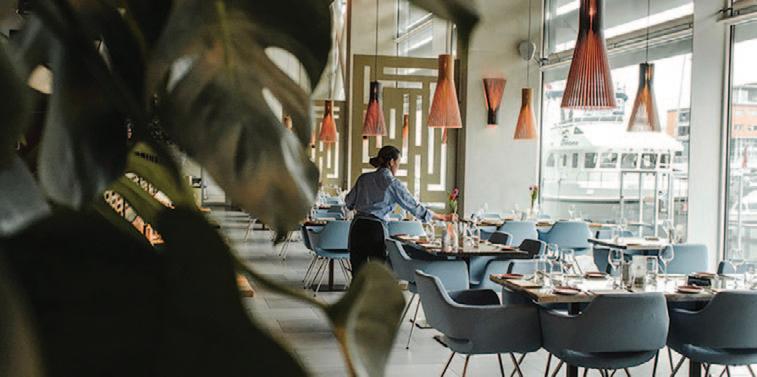
starting to slip.
“With more headwinds to come from April in the form of tax rises, combined with new regulatory requirements, pressures on the leisure and hospitality industry are only set to increase. It’s crucial that businesses closely monitor their cashflow during this period of uncertainty.
“Operators will be looking to the government for some form of support in the Spring Statement. This may be temporary support to bridge the gap between April and the consumer-led recovery that is expected to come later this year. Those that manage to hold on during this challenging time will be best placed to recover lost ground and reap the benefits of a more favourable trading environment.”
Britain’s leading restaurant, pub and bar groups delivered fractional like-for-like sales growth of just 0.1% in February, according to the latest CGA RSM Hospitality Business Tracker.
The figure is well below the current rate of inflation and continues a challenging start to 2025 for the sector, following a year-on-year drop of 1.3% in January. It indicates that many consumers continue to remain watchful of their disposable income.
The Tracker, produced by CGA by NIQ in partnership with RSM UK, shows February delivered 2.5% growth in total sales, including all venues opened by groups in the last 12 months. However, with key costs still inflationary— including via extra National Insurance contributions from April—margins in hospitality remain extremely tight. Pubs performed the best of the major hospitality channels in the Tracker for the third month in a row. Like-forlike sales finished 1.7% ahead of February 2024, having been partly boosted by the start of the Six Nations rugby tournament.
With some consumers limiting their meals out, restaurant groups’ sales fell by 0.6%. While February featured Valentine’s Day, this year it occurred on a Friday, a day that already generally sees higher
On Premise visitation compared to other days of the week, and last year it fell on a Wednesday, resulting in a missed mid-week sales boost this year. Bars continued a long-term drop in growth, with like-for-like sales down by 7.9% in February. The on-the-go segment of the market slipped 1.9%.
Hospitality had a slightly tougher month in London than elsewhere, the Tracker shows. Groups’ sales inside the M25 were down by 1.2% year-on-year, but beyond the M25 they recorded a marginal rise of 0.5%.
Karl Chessell, director – hospitality operators and food, EMEA at CGA by NIQ, said: “After a flurry of spending over Christmas it’s clearly been a challenging start to 2025 for the hospitality sector. Growth is very fragile, and hikes in National Insurance Contributions will pile even more pressure on managed groups.
We remain optimistic that spending will start to loosen, and brighter weather and big occasions like St Patrick’s Day, Mother’s Day and Easter should help to rally sales. Nevertheless, real-terms growth will remain hard-earned for the foreseeable future.”
Saxon Moseley, head of leisure and hospitality at RSM UK, said: “A second month of lacklustre trading results means that the hospitality sector remains in negative territory for the year to date. Consumers are opting to cut back on discretionary spending amidst growing apprehension about the UK economy and global instability.
While the medium-term outlook appears more positive, the coming months will be critical for businesses grappling with both waning demand and rising costs.
Next week’s Spring Statement represents a final opportunity for the government to support the sector through this challenging period, with a phased introduction of National Insurance increases and a delay to implementing the Employment Rights Act high on operators’ wish lists.”
The Bank of England has held the base rate at 4.5%, but has warned economic and global trade uncertainty has “intensified”.
Its decision to hold rates was widely expected, however, governor Andrew Bailey said the Bank still believed rates were “on a gradually declining path”. Economists are predicting two more rate cuts by the end of the year, with many suggesting the next could come as early as May.
Mr Bailey reiterated it was the Bank’s job “to make sure that inflation stays low and stable”. Inflation, which measures the rate at which prices rise, currently remains above the Bank’s 2% target, at 3%.
Kate Nicholls, CEO of UKHospitality, said: “It’s disappointing that the Bank of England has chosen to hold inter-

est rates yet again. The precarious state of the economy is no secret, with the most recent GDP figures indicating the fragile state it’s in. It’s therefore vital to kickstart growth and hospitality has a unique potential to drive growth in communities across the nation, if it is properly backed.”
“Businesses across our sector generate more than £140 billion in revenue each year, and provide work for more than 3.5 million people, but are shackled by soaring costs that are inhibiting growth. This will only get worse in April, when the sector will be hit by £3.4 billion every year in additional costs.”
“Cuts to interest rates, as well as a delay to the impending lowering of the National Insurance Contributions threshold, is the bare minimum hospitality businesses need in order for them to continue to provide viable spaces for us to live, work and invest in.”
By Christina Earl, Head of Innovation and Business Development at Surrey Choices

The Future of Hospitality and Catering: Embracing Inclusive Recruitment
The hospitality and catering industry thrives on adaptability, yet it faces a pressing challenge; staff shortages and high turnover rates. While businesses scramble for solutions, they often overlook one of the most valuable and untapped talent pools – disabled workers.
This is not about corporate goodwill; it is about strengthening the workforce with skilled, committed individuals who bring unique perspectives and reliability to the industry.
Disability inclusion in hiring is a strategic investment that leads to higher staff retention, improved customer service and a stronger brand reputation.
In an industry where consistency and quality are key, businesses that embrace inclusive hiring practices will find themselves better positioned for long-term success.
Customers increasingly support brands that reflect their values, and inclusivity is becoming a significant factor in consumer loyalty. A diverse workforce fosters innovation and problem-solving, essential traits in an industry that is constantly evolving.
ATTRACTING AND RETAINING DISABLED TALENT: A BUSINESS PRIORITY
Despite a strong willingness to work, disabled job seekers often face unnecessary barriers in recruitment processes. Employers who actively remove these barriers open their doors to a highly capable, dedicated workforce.
The traditional hiring model often fails to accommodate different ways of showcasing talent. Practical work trials, task-based assessments and alternative interview formats allow candidates to demonstrate their skills in a way that is more reflective of their abilities than a conventional sit-down interview.
Additionally, job descriptions frequently contain requirements that unintentionally exclude talented candidates. Businesses should assess whether criteria such as a driver’s licence or prior experience are genuinely necessary for the role.
Hospitality thrives on enthusiasm, work ethic and reliability – qualities that many disabled workers possess in abundance. The right training and support can unlock their full potential, benefiting both the employee and the employer.
A persistent misconception is that hiring disabled workers requires extensive, costly adjustments. The reality is far different. Most workplace accommodations are simple and inexpensive, with the average cost of a reasonable adjustment being under £50. In many cases, small changes – such as offering flexible shifts, providing assistive tools, or allowing employees to focus on their strengths – make a significant difference in job performance and satisfaction.
For example, a Costa Coffee branch created a role tailored to an employee’s strengths, allowing them to focus on maintaining cleanliness and organisation while others handled customer-facing tasks. This approach not only supported the employee but also optimised the efficiency of the entire team.
Similarly, at a Surrey branch of Nando’s, a deaf employee flourished in a kitchen role, with colleagues learning basic sign language to improve communication. This simple yet effective measure not only enhanced teamwork but also helped the restaurant connect better with deaf customers. These are real, tangible benefits that extend beyond the workplace and into the customer experience.
The fast-paced nature of hospitality and catering does not mean that inclusion is unattainable. Businesses that take a proactive approach to accessibility will find themselves with a more engaged workforce and a better working environment overall.
Structured training programmes that break down tasks into clear, manageable steps benefit all employees, not just those with disabilities. Visual guides and checklists can reduce workplace anxiety and improve efficiency for everyone, not just disabled staff, particularly so in high-pressure environments. A mentorship or buddy system can help employees integrate into their roles more smoothly while also strengthening team cohesion.
TAKING ACTION: HOW BUSINESSES CAN LEAD IN DISABILITY
Hospitality businesses must recognise that inclusive hiring is not just a legal or ethical responsibility – it is a business advantage. The next steps are clear. Employers should reassess their hiring practices, ensure job descriptions are accessible, and consider alternative interview methods. Partnering with supported employment programmes and engaging with initiatives such as the Disability Confident scheme can provide valuable guidance in making meaningful changes.
CONCLUSION: INCLUSION AS A COMPETITIVE ADVANTAGE
Disability inclusion should no longer be seen as an afterthought or a charitable gesture – it is a strategic decision that yields long-term benefits. A diverse, disability-confident workforce brings fresh perspectives, fosters innovation and strengthens customer relationships.
The hospitality and catering industry, by its very nature, is about people – both those who serve and those who are served. Now is the time for businesses to embrace inclusivity, not just because it is the right thing to do, but because it makes undeniable business sense.
SiteMinder, the world’s leading hotel distribution and revenue platform, has identified the five key factors behind the rising demand for accessible revenue management solutions in the global accommodation industry.
According to SiteMinder’s Chief Product Officer, Leah Rankin, who will this week highlight these at ITB Berlin, the forces pushing more hoteliers to embrace accessible revenue management are:
Shifting global travel patterns, with international arrivals expected to grow by up to 70 million in 2025, representing a 5% increase over the previous year
The rising influence of events, with 65% of travellers more likely to travel for an event this year compared to last
Intensifying competition, with a construction pipeline of 40,000 rooms across the UK, the most in Europe; 113,000 rooms under construction Europe-wide; and 142,000 in the US
Ongoing operational inefficiencies, including a continued reliance on spreadsheets, manual adjustments and fragmented solutions
A critical talent gap, especially in the area of revenue management.
“Navigating hotel revenue management today is no small feat. With shifting travel patterns, the growing influence of events and increasing competition, the complexity can quickly become overwhelming for hoteliers. This often results in outdated practices becoming entrenched within accommodation businesses, further compounded by a shortage of dedicated revenue management professionals industry-wide,” says Rankin.
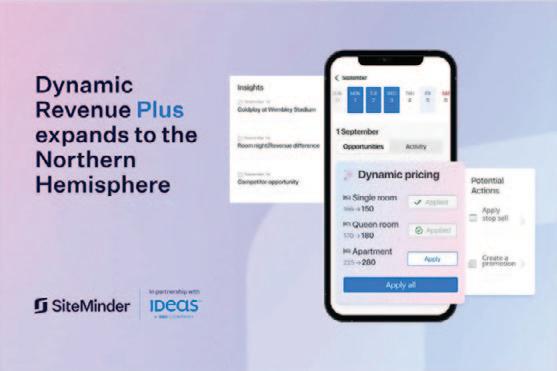
Rankin’s revelations coincide with SiteMinder’s expansion of Dynamic Revenue Plus into select Northern Hemisphere markets, including the UK, as unveiled today at ITB Berlin. Since its initial launch last year, Dynamic Revenue Plus has remained the only solution for hotels to both access live market intelligence and take immediate action on their bookable inventory, pricing and distribution strategy.
Designed to make sophisticated revenue management accessible to every hotel—unlike revenue management systems that have traditionally been accessible to a limited few—the dual capability within Dynamic Revenue Plus means any hotel can, for the first time, use one, mobile-first system to optimise their revenue based on market demand. From today, the product will incorporate dynamic pricing recommendations from
SAS company and the world’s
of
management software and services, so they are no longer limited to hotels with dedicated revenue management resources.
Says Rankin: “When developing this product, our goal was to make revenue management not only accessible, but intuitive—helping hoteliers of all kinds make confident, data-driven decisions, even when the world around them feels unpredictable.
Our solutions are designed to address current challenges while anticipating future needs, and the expansion of Dynamic Revenue Plus underscores our commitment to helping businesses maintain control in a world where change is the only constant.”
As highlighted in the recently released SiteMinder’s Hotel Booking Trends report, hotels are increasingly adapting to changing market conditions with more dynamic revenue management practices. In the UK, for instance, room rates in 2024 were on average £43 higher on Friday nights compared to Sunday nights, reflecting greater variation when it came to pricing. Seasonal shifts were also evident, with rooms in July—again the busiest month for the country’s hotels—£71 more expensive than in January, when demand was lowest.
Hotels worldwide are likewise responding to the evolving demands of today’s travellers. There were 17 new top revenue-generating booking sources identified in SiteMinder’s report, and in the UK global B2B travel platform TBOHolidays arrived as a top booking channel for the first time.
"Pleasingly, many accommodation businesses are already moving towards a more adaptable and dynamic approach, but it's often the speed—or lack thereof—that can harm their ability to capitalise on opportunities,” says Rankin.
“The reality is that the vast majority of accommodation businesses still don't have dedicated revenue management teams, or any time allocated to revenue management. That's where Dynamic Revenue Plus comes in—democratising the practice and giving every property, regardless of size, the tools they need to compete on a level playing field."
Dynamic Revenue Plus is now available in the UK, Germany, Mexico, Spain, and the US, following its successful launch in Australia and New Zealand last September. A global release is slated for later in 2025.
The latest data from Lumina Intelligence’s Lumina Intelligence’s Eating and Drinking Out Panel highlights the impact of poor weather conditions and cautious consumer sentiment on the UK’s out-ofhome (OOH) market.
In February 2025, penetration growth slowed notably to just +0.3ppts, with 57.5% of UK adults participating in an out-of-home occasion during the period. While overall penetration growth stagnated, engaged consumers displayed resilience by increasing their visit frequency by +5.8%, averaging 1.5 occasions per week.
However, consumers demonstrated caution, limiting on-the-go visits and higher-ticket social occasions in response to economic pressures and inclement weather.
Consumer spending habits reflected the broader economic and environmental challenges. With fewer high-ticket, longer dwell-time occasions such as lunch and dinner in restaurants, the market saw a shift towards more accessible drink-led occasions. Pubs and bars capitalised on this trend, increasing their
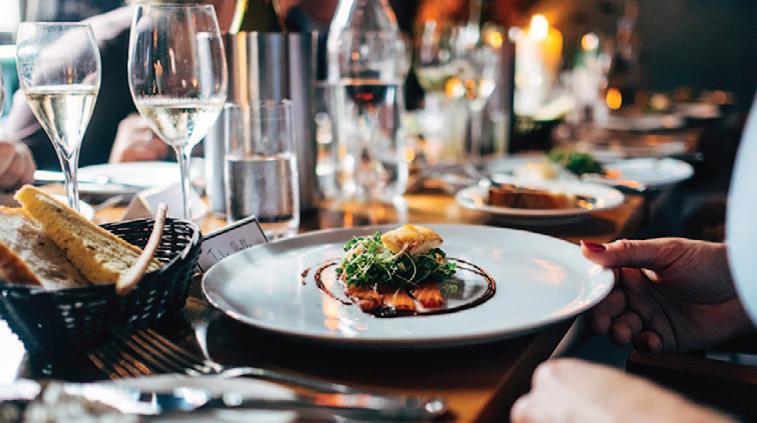
share by +1.8 percentage points, while drink-led occasions grew by +2.7 percentage points. This shift contributed to a reduction in average spend per head year-on-year.
Quick service restaurants (QSR) and pubs were key drivers in shaping the UK’s food consumption trends. Burgers (+2.1 percentage points), pizza (+0.9 percentage points), and sandwiches (+1.3 percentage points) all increased their share of occasions, fuelled by the continued popularity of these formats within QSR and pub settings. In response, operators have been focusing on enhancing classic menu items, with premium burger and sandwich offerings emerging as a strategic focus to meet consumer demand for higher-quality propositions.
As the UK’s OOH market continues to navigate external pressures, operators are adapting by refining their offerings to align with evolving consumer preferences. With drink-led occasions on the rise and demand for elevated classics gaining momentum, the industry remains agile in responding to changing market conditions.
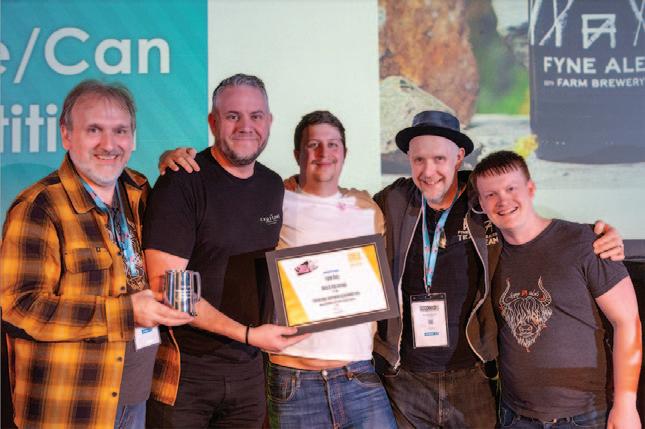
The results are in for the UK’s biggest independent beer competition, with three breweries taking the Overall Gold across the Cask, Keg, and Bottle/Can competitions – and for the first time ever all the Overall Champions were from Scotland.
Cross Borders Brewing won the Overall Champion of the Cask Beer Awards with their India Pale Ale, Fyne Ales won Overall Champion of the Bottle/Can Beer with Mills & Hills Vintage – a barrel aged imperial stout – and Swannay won the Overall Champion of the Keg Beer Awards with their strong Orkney Porter.
On hand to collect the awards on behalf of his brewery and the other Scottish Gold Medal Winners was Jamie Delap, Owner of Fyne Ales and SIBA Scotland Regional Director; “We’re absolutely delighted, there’s so many fantastic beers here so to win a medal is always brilliant. So the fact that judges have enjoyed what we do, we love it. We’re just so honoured. I think in Scotland we’re proud, we’ve got lots of brewers doing some really good things and this just validates that great work going on in Scotland. So we’re delighted to win, really proud of everyone.”
Commenting on his Mills & Hills Imperial Stout which took home the Gold in bottle, he said; “It’s a big, proper, chewy Imperial Stout, nothing too fancy. And for me, it’s my nightcap beer so I am delighted we’re always going to have it in stock, because I always need that nightcap beer once in a while!”
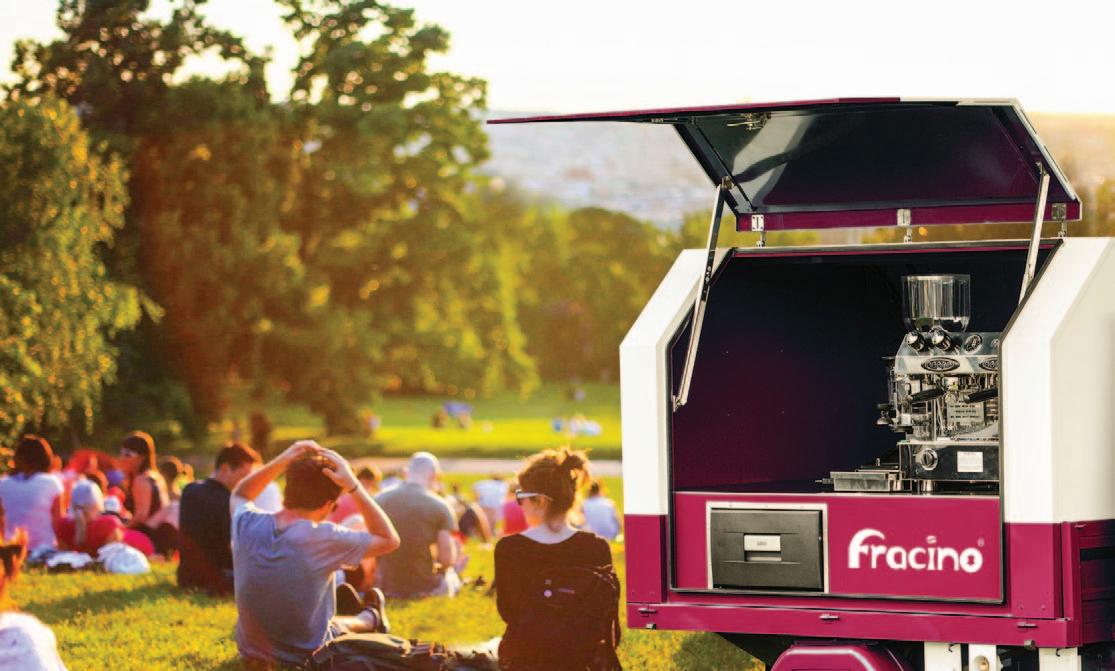
As the weather warms up and people enjoy the great outdoors again, a mobile coffee business is the perfect way to serve great coffee at wide-ranging outdoor venues.
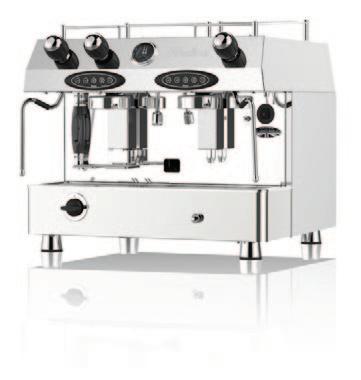
Fracino’s 1, 2 & 3 Group Contempo and Retro Dual Fuel coffee machines can operate using bottled LPG gas and a 12v battery & inverter

The innovative LPG heating system enables these powerful espresso machines to be used in a location away from fixed, mains supply services - such as outbuildings, marquees, a trailer or mobile vehicle. The perfect solution for the coffee shop owner looking for alternative solutions to serving coffee away from their shop premises.
The Dual Fuel range provides all the key features of Fracino’s standard electric systems – such as premium build quality and a long, reliable and cost-effective ownership experience. The large capacity boilers fitted to each of the different models provide copious volumes of hot water and powerful steam for excellent milk frothing results – all day long.
Innovatively, the equipment is also fitted with a standard electric heating element as well - to allow the user to quickly and easily switch to mains power sup-
ply operation whenever the location permits.
Fracino is renowned for producing robust espresso machines that are very easy to look after and inexpensive to maintain. The Dual Fuel models are no exception to this! A simple daily cleaning routine takes just a few minutes. Fracino’s inherent high quality construction and reputation for exceptional reliability ensure that the ownership experience is a long and productive one, with minimal attention necessary.
British manufacture ensures that spare parts are always readily available.
The quality, highly polished stainless steel working surfaces are easy to clean and look smart for many years
The Dual Fuel models are perfect for single owner and operator start-up ventures - or the busiest of locations. They are regularly seen in operation in many outdoor locations, festivals and events – steaming powerfully along to keep thirsty visitors and customers satisfied!
For more details on the range, contact us at sales@fracino.com


Judged by brewers and industry experts and organised by the Society of Independent Brewers and Associates (SIBA) at their flagship BeerX UK event in Liverpool, the SIBA Independent Beer Awards 2025 awards run across a huge range of beer style categories including pale ale, IPA, stout and lager.
The Awards are the National finals and in order to earn a place at the competition brewers must first win Gold at their regional competition –making these overall Champions very much the ‘best of the best’ when it comes to independent beer. Finalists from Scotland the North East, North West, Midlands, East of England, Wales & West, South East, and South West all fought it out to take home the top spots.
“These awards are twelve months in the making and given to only the UK’s very best beers. Huge congratulations to all of this year’s medal winners and particularly our three Overall Champions, all hailing from Scotland for the first time in the competitions history – there must be something in the water up there!” Andy Slee, SIBA Chief Executive.



There’s nothing quite as disappointing as opening a bottle of wine, only to be met with an off-putting smell or a strange, sour or sharp vinegar taste. Whether you’re a casual wine drinker or a seasoned collector, understanding how and why wine transition into something that’s not drinkable can help you avoid the disappointment of spoiled bottles… and wasted money. While some wines are meant to age gracefully, others can quickly deteriorate if stored improperly or exposed to certain conditions. From oxidation and heat damage to cork taint and bacterial spoilage, several factors can turn a once-enjoyable bottle into an undrinkable disappointment.
But, how can you tell the difference between a perfectly aged vintage and a wine that’s past its prime? Luckily, there are clear signs to look for, as well as storage techniques that can help keep your wine fresh for as long as possible.
“The good news is that wine does not spoil, but it does degrade over time,” says Matthew Cocks, DipWSET—a vinicultural expert with the "VinoVoss AI Sommelier” smartphone app and web-based semantic wine search and recommendation system. “The air starts this process, and heat controls the speed. You can't stop it from happening, but you can slow it down. The most important factor is temperature. Not all wines will transform at the same rate. Interestingly, the less you want to share a wine, the longer it seems to last. If you remember nothing else, remember these things: keep it sealed and keep it cool.”
Below, Matthew details what causes wine to spoil, the telltale signs of a bad bottle, and expert tips to ensure every sip is as it should be.
Q: Is wine safe to drink as it ages?
MC: As a beverage, wine is naturally acidic and alcoholic, which makes it inhospitable to harmful bacteria. Potentially dangerous organisms cannot survive in the levels of acid and alcohol found in wine. Additionally, many wines, especially those shipped in bulk containers or made with residual sugar, undergo filtration that removes microbes. As a result, wine always remains safe to drink, no matter how long it has been stored. However, wine does not always remain enjoyable to drink because it is a perishable product with a life cycle. Wine moves irreversibly through the stages of youth, maturity, old age, and decay with the passage of time. This transformation initially offers the drinker more charm, then progressively less, and eventually none.
Q: How does wine change over time?
MC: Over time, the compounds that give the wine its smell and taste can evaporate or break down. This makes the aromas and flavors seem less vibrant as they fade away. A wine's structural elements, such as acids and tannins, also degrade or precipitate out of solution in lockstep with the changes to aroma and flavor. At the endpoint, wine simply becomes a solution of vinegar in water. This transformation is driven by oxidation and heavily influenced by temperature.
Oxidation, caused by exposure to oxygen in the air, drives the changes in the aromas and flavor of wine. In its youth, no oxidation has occurred, and wine is fruity but simple. As it matures, some oxidation takes place, and the aromas and flavors from this oxidation mix with the remaining youthful fruit to create complexity. This is when the wine reaches its drinking peak. In old age, the youthful fruit is gone, and only oxidative notes remain. The wine becomes simple again but in a different way. Since we mostly drink youthful wines, people
tend to find wines in this state less enjoyable. At the point of decay, oxidation dominates completely, and all sense of balance is lost as the wine turns to vinegar, reaching its transformative endpoint.
The transformation wine undergoes is a complex series of biochemical reactions. Heat accelerates these reactions, making the aging process significantly more rapid above 55°F. Conversely, lower temperatures slow the rate of change. Keeping wine at 40°F will delay its transformation and extend its drinkable life. However, nothing can halt this process entirely.
Q: How should wine be stored to maximize its shelf life?
By Merilee Kern, MBA

MC: When you buy wine, it comes in a sealed package designed to preserve its intended condition. To ensure a wine achieves its maximum shelf life, you only need to do two things: first, keep the wine sealed, and second, store it at a stable temperature that prevents heat expansion from breaking the seal. Keeping wine at around 55°F is ideal. Storing it at 60°F is acceptable for a year or two, but keeping it at 75°F for even 24 hours risks breaking the cork seal. Knowing how to maximize a wine's shelf life is one thing. Understanding what a wine's shelf life is to begin with is another.
Q: How Long can a bottle of wine last?
MC: Not all wines are intended to have the same lifespan. A rough estimate of a wine's aging potential can be made by considering its density of flavor and structure.
Flavor density is the combination of how pronounced a flavor is along with its texture on the palate. To illustrate this, consider chocolate mousse, chocolate ganache, and couverture chocolate. All three are chocolateflavored but show increasing intensity. Mousse is light and airy, ganache is denser and gooey, while couverture chocolate is firm and profound. Similarly, in wine, a greater intensity of flavor and structure suggests a longer potential lifespan.
Wine structure is defined by its acidity, alcohol, sweetness, and tannin. A high level of one of these extends a wine's potential lifespan, while a high level of all four extends it significantly. The structure provides the framework that supports a wine's concentrated aromas and flavors, allowing them to develop and evolve over time. Tasting a wine is the best way to understand its structure. Over time, one notices that wines from a certain region or producer tend to have a quality range and potential lifespan in common.
“When uncertain, it's always better to drink a wine younger rather than risk it becoming too old to enjoy,” Matthew notes. Wine cannot be consumed too young, but it can certainly be consumed too old. If you can't keep a bottle sealed, then at least keep it covered and store it in a cool place rather than a warm one.”
These small steps will help ensure you get the best possible experience from every bottle.
Merilee Kern, MBA is an internationally-regarded brand strategist and analyst who reports on cultural shifts and trends as well as noteworthy industry change makers, movers, shakers and innovators across all categories, both B2C and B2B. This includes field experts and thought leaders, brands, products, services, destinations and events. Connect with her at www.TheLuxeList.com and LinkedIN www.LinkedIn.com/in/MerileeKern.
Over £10,000 for
In total £10,193 was raised for the Down’s Syndrome Association (DSA) at the successful Craft Guild of Chefs Chairman’s Charity Dinner on 6th March 2025, including the auction of a signed Chelsea Football Club shirt which was purchased for £1,000.
This was the first time the Craft Guild of Chefs had selected the Down’s Syndrome Association as the charity they wish to support at the Chairman’s Dinner.
The dinner was attended by over 100 chefs and food industry colleagues who are members of the Craft of Guild of Chefs, and their generosity led to the significant amount of money raised to support people who have Down’s syndrome.
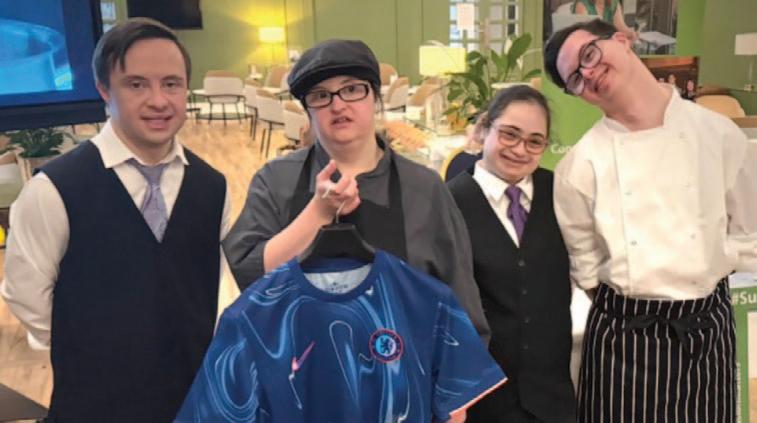
Andrew Green, chief executive of the Craft Guild of Chefs, said: “With a room full of generous people from our Hospitality sector, we always knew that we would raise both a good amount of money, but, so importantly awareness. Getting these young people into our industry is so very important to us.
“Seeing our chairman Mark Reynolds embrace this by leading the way in this dinner, but also by employing someone who has Downs syndrome is a testament to all that we say and do.”
The DSA has worked alongside the Craft Guild of Chefs since 2022, through the DSA’s innovative employment programme WorkFit that brings together employers and jobseekers who have Down’s syndrome.
The partnership with the Craft Guild of Chefs has resulted in sustainable employment opportunities for young people who have Down’s syndrome in the hospitality sector, including a role as an apprentice chef for a young person at Tottenham Hotspur Football Club.
Four WorkFit candidates who work in the food industry in permanent paid jobs attended the event with two cooking in the kitchen (Harry and Brogan) and two serving guests in front of house roles (Hanaa and Alban).
Alison Thwaite, head of employment services at the DSA, added: “We are hugely grateful for the amazing support from the Craft Guild of Chefs for their recognition and support of people who have Down’s syndrome in the food industry and their fundraising activities.
“The positivity and encouragement of the whole team has been fundamental in creating a culture where people who have Down’s syndrome can feel that their aspirations can be achieved, and career ambitions fulfilled. Thank you.”
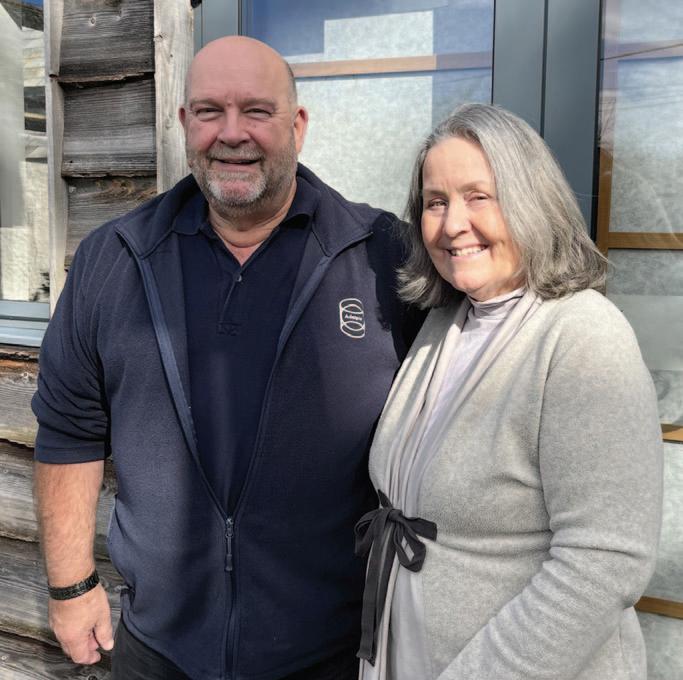
Ever since LittlePod’s launch in 2010, we’ve had Adelphi Manufacturing by our side. Fifteen years on, we thought it was time for a catch-up!
When it comes to manufacturing and machinery, Adelphi ensure we have no worries, having provided a sterling service that dates back to LittlePod's launch in 2010. Ensuring we have all the correct equipment and keeping everything running smoothly, Adelphi's team have played a crucial role in our Campaign for Real Vanilla, no-one more so than Dean Willis.
Fifteen years since he visited LittlePod HQ for the first time, Adelphi Manufacturing's Sales Director returned to East Devon to renew acquaintances with Janet and the team. Keen to find out more about what has become the perfect partnership, Paul sat down with Dean. These are his words:
“We have been part of LittlePod’s journey for 15 years. It has been so satisfying to see how the company has grown and developed in that time and to know that we have had a role in everything that LittlePod has achieved. I remember the first time that I came here in 2010 to meet Janet. Back then she had everything set up in the kitchen and she needed help filling bottles and tubes. We introduced her to her first filling machine and it made all the difference. From then LittlePod has grown beyond all recognition. It has been a pleasure to watch it all develop.
“Just like LittlePod, Adelphi has grown a great deal. We started out in 1947 in the packaging industry. Adelphi is still a family business, a husband and wife-owned company, and we’ve never lost that feel. But since those early days, we’ve got a lot bigger and we now have four different companies. There is Adelphi Manufacturing that I work for and also Adelphi Masterfil, Adelphi Pharma Hygiene Products and Adelphi Healthcare Packaging. We work in food, pharmaceuticals, toiletries, cosmetics and more. There’s never a dull moment – just like here at LittlePod!
“I joined Adelphi in 1993 and am coming up to 32 years with the company. I started as a salesman and have worked my way up to become sales director. It has been quite a journey! During that time, I’ve met lots and lots of people, but very few like Janet. She has got such passion and I haven’t met anyone else quite like her. People often start out with great passion, but often the business takes over and it’s difficult to maintain it.
Fifteen years since she started LittlePod, I think that Janet’s passion for this is greater than ever – even more so than in 2010.
“It’s Janet’s passion that makes LittlePod so appealing to people. It has always been the case for me. Her passion has always been to get across to people what they’re missing out on and all the threads that come from this make it fascinating. There’s the LittlePod orchard in Indonesia and there are distributors here, there and everywhere; there are great products and interesting stories and all the different people involved in making it all happen. That includes Adelphi, of course. But I have to stress that this could never have happened if Janet didn’t have this passion and all these thoughts and ideas: where to go, what to do and how to do it.
“In 2020, we helped LittlePod to become fully automated. I remember it so well. I organised everything. It was a big challenge. LittlePod’s TGM tube-filling machine was manufactured in Italy. The first task was to get it to Devon. We found somewhere to store it, close to Exeter Airport, before transporting it to LittlePod HQ, down all these narrow country lanes. There was no way that the lorry could turn into the driveway, so everyone who was here had to help unload it onto the road and manhandle it into the building. We had to take bits off the machine and remove trims from the doors just to get it inside. It was an interesting day, that's for sure. I’ll never forget it!
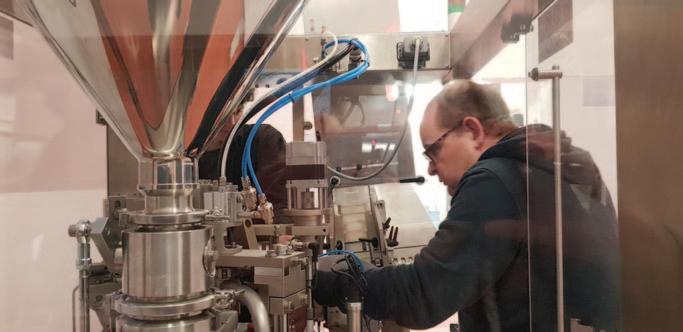
“It's always nice to visit LittlePod and to see the machine being put to good use. Getting it here was quite a task but once we got it up and running, we’ve never looked back. We talked about doing this for a while and I kept saying to Janet, ‘not quite yet’ on the basis of the numbers. Eventually, when we reached the point where it was obvious that automation would be a benefit, the TGM machine was purchased and it has proved to be invaluable ever since. The time was right and the decision that Janet made then has helped LittlePod to keep up with growing demand. To have helped her to make this step has been a pleasure for all at Adelphi Manufacturing.
“I think what Janet has achieved in the last 15 years is so inspiring. I can’t wait to see what she does in the next 15 years.”

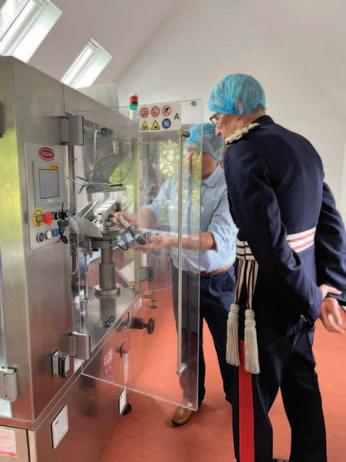
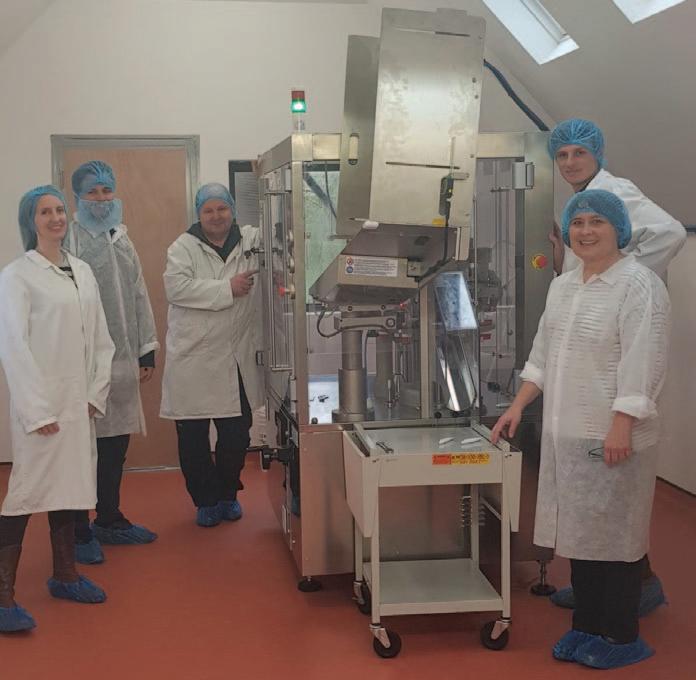
“She can do whatever she sets her mind to. What is great is seeing all the people she has brought along with her. The teaching, the apprenticeships – Janet always wants to help people to achieve, to gain qualifications and to reach certain standards, enabling them to move on when the time is right and to enjoy success in their careers. This is something that we like to do at Adelphi also and is just one of many things that the two companies have in common. Right from the beginning, this has been a perfect partnership.
“I always love coming back to LittlePod to visit Janet and the team. The location is lovely, you’re working in a small unit and it has such a family feel. It’s more than that, of course. With LittlePod products being exported all over the world, this is a serious business. But it has never lost that sense, that feeling or that beautiful view of the church at the bottom of the garden. Whether I’m coming here for a cup of coffee and a catch up or whether it’s a service call or an issue to address, visiting LittlePod is always enjoyable and I can’t wait to come back again. Here’s to LittlePod and Adelphi, to the next 15 years and all that it holds for our companies!”

From the team here at LittlePod HQ, we send vanilla hugs to Dean and to all at Adelphi Manufacturing who have been part of our journey. We couldn't have picked a more perfect partner. Thank you for all your expertise, assistance and support!

• FUTURE MENUS reveals how chefs and operators can attract and maximise spend with influential yet polarised Gen Z demographic
• New More in Common research shows that Gen Z can be menu rejectors
• Unilever Food Solutions’ four key trends highlight how to future proof menus, increase footfall and drive loyalty
• Customisation is king - how to target consumers that embrace variety vs meeting demands of those who seek more control over their menu choices Unilever Food Solutions UK&I (UFS) has launched its third annual FUTURE MENUS report, highlighting four key foodservice & hospitality trends that are critical to business success. The in-depth research reveals how chefs and operators can meet the demands of consumers, with a particular focus on Gen Z; to keep their businesses relevant, drive footfall and unlock spend.
FUTURE MENUS Volume 3 includes new insight commissioned from opinion poll and social research experts More in Common. Gen Z - who eat out in the UK more than any other generation - aren’t just another demographic, but increasingly economically powerful trendsetters, craving exciting dining experiences that are personalised, globally inspired and shareable.
Key findings from the FUTURE MENUS Volume 3 report show that Gen Z ‘can be menu rejectors’ and their preferences need to be front of mind for operators to win.
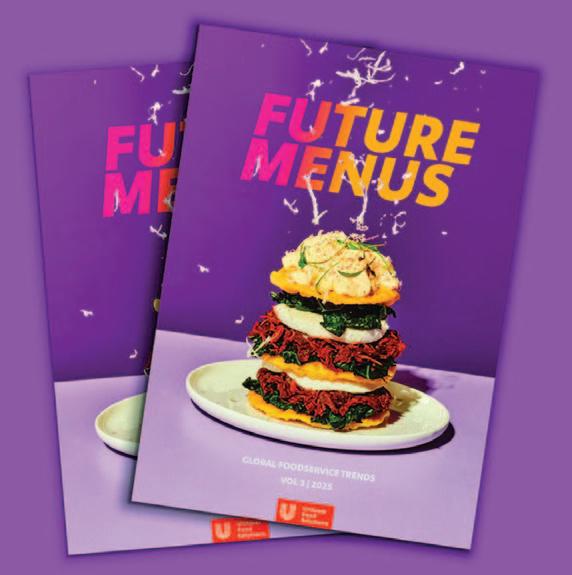
HERE’S A TASTER OF WHAT THE GEN Z DEMOGRAPHIC ACCEPT AND REJECT ON MENUS:
• Gen Z are the only generation where a majority say they eat out at least once a week, with over 25% eating out multiple times a week
• One in ten only go to restaurants where they can customise dishes
• Customisation fosters loyalty - 62% of Gen Z are more likely to return to a restaurant that encourages customisation
• 77% of Gen Z are more attracted to restaurants with adventurous, global cuisine
• 62% say they are likely to return to a restaurant that features modern takes on food from around the world
• 60% of Gen Z would be more likely to return to a restaurant where the chefs blend food from different cultures
• 26% would be less likely to return to a restaurant that only serves British cuisine
• 26% of Gen Z are often overwhelmed by long menus, compared to 15% of the nation
THE FUTURE MENUS VOLUME 3 TRENDS ARE:
Borderless Cuisine - globalisation and migration are blending diverse food traditions as chefs honour their multicultural origins, a trend that’s driven by our increasingly migratory world
Street Food Couture - traditional street foods are being elevated to gourmet offerings with chef expertise in every food service channel, including fine dining - Gen Z is a major driver of this trend
Diner Designed - growing demand for personalised and immersive dining experiences and value-added experiences is driving this trend
Modernised Comfort Food - diners seeking foods that are deeply nourishing for the soul, covering everything from nostalgic dishes that feel comforting and safe, to recipes familiar to chef heritage and regional classics.
Colin Butler, Managing Director at Unilever Food Solutions, says: “We understand the many headwinds and challenges operators of all sizes are facing right now. Trade body UKHospitality has stated that the changes in the 2025 Budget will cost hospitality businesses £3.4bn, so our latest FUTURE MENUS report could not be more timely or relevant.
“FUTURE MENUS is Unilever Food Solutions’ annual deep dive into the key trends that are reshaping menus worldwide, featuring unrivalled in-depth global market research and culinary insights. It’s a critical tool for chefs and operators to help spark culinary creativity, drive innovation, and create relevant, memorable dining experiences for customers that unlock spend and drive loyalty.”
To download the Future Menus Volume 3 report, visit: ufs.com/futuremenus
Take A Look Inside New Preston Pub Following Almost £215,000 Makeover
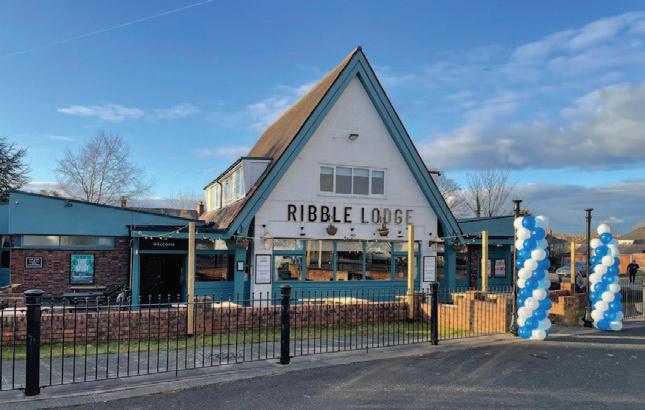
The Ribble Lodge on Ribbleton Avenue in Preston reopened last Thursday 13th March following a major investment of nearly £215,000. The pub is part of Proper Pubs – the award-winning community wet-led operator division of Admiral Taverns –which has more than 200 pubs across England, Scotland and Wales.
Rebecca Lyons, Operator of the Ribble Lodge, said: “The Ribble Lodge has been transformed to include a completely refreshed bar area as well as brand new furniture, flooring, fittings and fixtures throughout to breathe a new lease of life into the pub. We’ve also revamped the both games room, which is now complete with two brand new pool tables and dart boards, and the function room which holds up to 120 people and an additional four dart boards.
To celebrate the reopening, the pub hosted a live performance on Thursday night from popular local artist, Peter Hague, which was followed by a weekend packed full of entertainment. This included a performance from local singer, Callie Allen on Friday evening, a live DJ set on Saturday night and a street food van in residence for customers to enjoy on both days.
In addition, the operator hopes to support several community initiatives and will start by fundraising to
have a lifesaving defibrillator installed at the pub and collecting food to donate to the local foodbank. Rebecca is also hoping to work with several national and regional mental health charities, a cause close to her heart.
Rebecca added: “I’ve loved my time at the Ribble Lodge so far and I’m so pleased with how the reopening went – we’ve already had such fantastic feedback from the community so I can’t wait for all that’s to come.
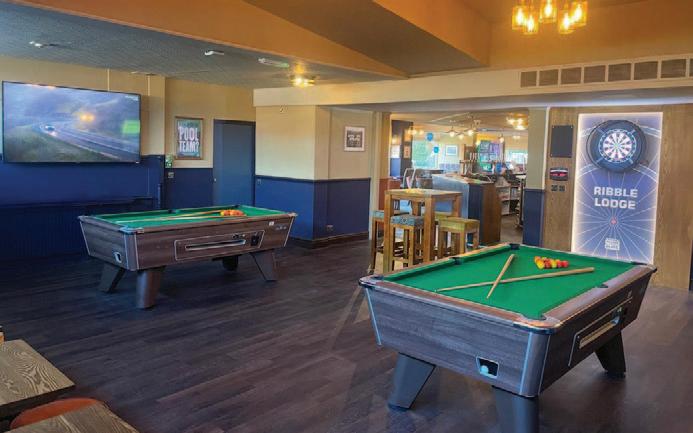
I’d like to take this opportunity to thank everyone at Proper Pubs for helping to bring my vision for this incredible pub to life and for all their support throughout this journey.”
Matthew Gurney, Operations Director for Proper Pubs, said: “I’m delighted to have Rebecca and the team on board at the Ribble Lodge and it’s fantastic to see how this incredible transformation has come to life. On behalf of myself and the whole team at Proper Pubs, I’d like to thank both the operator, and everyone who has had a hand in getting the pub to where it is now, for all their hard work and I wish Rebecca the very best for the future.”
Hawkstone started as a twinkle in Jeremy Clarkson’s eye. He wanted to make a proper premium lager using the highest quality barley from his farm. And that’s how our signature beer was born. It proved such a smash hit with people that Jeremy couldn’t grow enough on Diddly Squat farm alone and had to ask other British farmers for their premium malting barley.
Since then, our line-up has grown to include ciders, more beers, and a whole host of best-selling specials – each one made with premium British-farmed ingredients. Customers can’t get enough either. More and more venues are trying us and selling out in record time. All because of the incredible taste and a love for farmers across the UK. We ended 2024 with a run of award wins and officially became England’s Best Lager at the World Beer Awards. Now we’re the UK’s fastest-growing beer
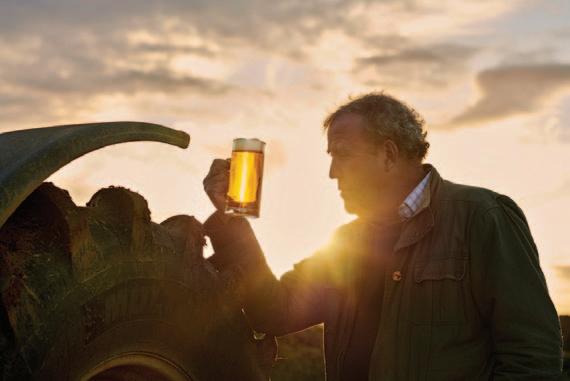

Phrases such as ‘sustainable’, ‘net-zero’, ‘eco-friendly’ and ‘green’ are used everywhere, but what do they actually meanmean? To many consumers those words all mean the same and ultimately mean ‘good for the planet’. Consumers place trust in the claims made by businesses, so it’s important to get those green claims right to protect your reputation and avoid visits from regulators.

Whether it’s beer that claims to be made using renewable energy, or a restaurant using local sourced ingredients, it’s clear that green sells. Even in the restaurant sector 7 out of 10 Brits believe that restaurants should be more sustainable (source)(Source : Belu and Wateraid).
Younger consumers in particular care about the environment with 69% of Generation Z consumers willing to pay more for sustainable products (Source)(Source : Statista) . Even during a cost-of-living crisis that’s affected the hospitality industry, consumers are still looking for green ways to spend their money. As retail guru Mary Portas puts it 'Every £1 spent is a vote for how we want to live'
The Competition and Markets Authority, Trading Standards and the Advertising Standards Authority are coming down hard on businesses that are unable to back up their green claims . Help is available though.
The Chartered Trading Standards Institute has put together guidance on how to comply with environmental claim regulations, to help you get your green claims right.
Visit BusinessCompanion.co.uk to get free advice from trading standards experts.Businesscompanion.co.uk is a free government backed website, written by trading standards professionals, that helps you comply with consumer protection law, which includes green claims. This will help ensure that your green claims around your food, drink, and even the way your business operates will be legal. On the site you’ll find handy guides and leaflets that will help you to get your green claims right.
A good question to ask yourself around green claims, is “how can I prove this”? Also put yourself into the mind of your customer. Would your customers understand what a ‘sustainable meal’ or what a ‘responsibly sourced’ product is? If your green claims are vague, misleading, or not adequately explained, then you might not be complying with the law.
Whether it’s beer that claims to be made using renewable energy, or a restaurant using local sourced ingredients, it’s clear that green sells. Even in the restaurant sector 7 out of 10 Brits believe that restaurants should be more sustainable (source). Younger consumers in particular care about the environment with 69% of Generation Z consumers willing to pay more for sustainable products (Source) . Even during a cost-of-living crisis that’s affected the hospitality industry, consumers are still looking for green ways to spend their money. As retail guru Mary Portas put it 'Every £1 spent is a vote for how we want to live'
If you run a business that is making green claims about the products you sell, or the way your business operates it is important that you get your claims right. Getting green claims right from the beginning will save you time and money, and protect your reputation. We have seen businesses of all size get this wrong, which has led to social media campaigns against these businesses, as well as potential fines from regulators and damage to reputations. However, help is at hand to help you get your green claims right.
Top tips to getting environmental claims right:
Make sure that you understand the difference between various definitions, such as sustainability, ecodesignedEco designed and carbon footprint. Our free guidance here can help younet zero guidance on businesscompanion.co.uk can help you
• Make sure that every green claim you make can be backed up by evidence.
• As a professional you may know the meaning of green terminology such as ‘sustainable’, ‘environmentally friendly’ and ‘netzero’, but most consumers don’t. Consumers will appreciate an explanation of how and why your product or service is green, and it will help you comply with the green claims code.
• Don’t be afraid to challenge your suppliers on their environmental claims.
• Familiarise yourself with the Competition and Market Authorities Green Claims CodeGreen Claims Code
• If you need further information, or want to check if your products or services comply then download your copy of the free Net Zero guide available on businesscompanion.co.uk
Net zero for businesses | Business Companion
A well-established brewery and pub operator in the South West has announced a consultation process that could see a reduction in staff numbers as it navigates rising employment costs.
St Austell Brewery, which has been at the heart of the region’s brewing and hospitality industry for 174 years, employs over 2,000 people across its operations.
The company has confirmed it is reviewing its operational structure in response to significant financial pressures brought on by increasing employment costs.
Chief Executive Kevin Georgel highlighted the challenges facing the brewing and hospitality sector, citing the impact of rising National Insurance contributions, which were confirmed in the recent Budget. The additional costs, which are set to take effect from April, will place further financial strain on businesses already working hard to recover from the difficulties of recent years.

“The brewing and hospitality industry has faced an exceptionally tough period, and while we have suc-
cessfully navigated many of these challenges, the latest rise in employment costs adds further pressure,” said Mr Georgel. “The additional burden amounts to around £3 million per year, and it is simply not viable to pass all of these increased costs on to our customers.”
With 160 pubs across the South West, as well as brewing operations in St Austell and Warmley near Bath, the company is now exploring ways to adapt to these financial pressures. #
While the consultation process may lead to a reduction of up to 40 roles, Mr Georgel emphasised that teams working in managed pubs would not be affected.
“This is not a decision we take lightly,” he added. “However, we must take these difficult but necessary steps to ensure the long-term sustainability and success of our business.”
The hospitality industry continues to navigate a complex economic landscape, and businesses like St Austell Brewery are working hard to balance financial sustainability with their commitment to staff and customers.
costs and tax disparities are set to hit the pub industry hard.
Sales over the past six months at the pub company topped £1bn, the first time this has happened in the company’s history.
Total sales for the 26 weeks ended 26 January 2025 were £1,030m, an increase of 3.9% compared to FY24.
In its last full-year financial results (for the 52 weeks ended 28 July 2024), Wetherspoon posted a revenue of £2,035m, breaking the £2bn threshold.
For the half-year number released on 21 March 2025, like-for-like sales increased by 4.8%, bar sales increased by 4.3%, food by 5.4% and slot/fruit machines by 12.4%.
Operating profit, before separately disclosed items, was £64.8m (2024: £67.7m). The operating margin, before separately disclosed items, was 6.3% (2024: 6.83%), which Wetherspoon says is mainly due to labour and utility costs which, in total, were £30.6m higher.
Despite the notable revenue figures, Wetherspoon is preparing for a contentious hike in operating costs next month, as National Insurance Contributions, business rates and the national minimum wage increase take effect.
“Increases in national insurance and labour rates will result in company cost increases of approximately £60m per annum, which amounts to approximately £1,500 per pub, per week,” says Wetherspoon chairman Tim Martin.
““Since labour costs are around 35% of the pub industry’s sales, compared to around 11% for supermarkets, increases of this nature inevitably have a disproportionate impact on pubs, exacerbating the already-wide price dif-
ferential for customers between the on- and off-trade.”
During the previous six months, Wetherspoon opened two pubs (the Grand Assembly in Marlow and the pictured Lion and The Unicorn in Waterloo Station, London) and sold six, with 796 pubs open at the period end.
Profit before tax and separately disclosed items, was £32.9m (2024: £36m). The pub disposals generated a cash inflow of £3.9m.
“The combination of much higher VAT rates for pubs than supermarkets, combined with increased labour costs will weigh heavily on the pub industry,” adds Martin. “The company currently anticipates a reasonable outcome for the financial year, subject to our future sales performance.
Charlie Huggins, manager of the ‘Quality Shares Portfolio’ at Wealth Club, commented: “Wetherspoons has delivered a solid like-for-like sales performance in the period and trading in the last seven weeks has been robust. However, its profit margins have fallen due to higher utility and labour costs, meaning profits are slightly down.”
“The extent of cost increases is going to get much worse from 1 April. Labour costs will rise by £60 million which is frankly crippling and will likely eat further into profit margins going forwards.
The cost of a burger and pint will have to rise to help mitigate this pressure, which hardly encourages more punters through the door.”
“In all, aside from the depths of the pandemic, life has probably never been tougher for pub and bar operators. Wetherspoons has scale advantages others lack and a mightily loyal customer base, which really helps. But it is not immune to industry pressures.”

By James Twine, Partner and Head of Business Services at Wolferstans (www.wolferstans.com)

The historic St Austell Brewery this week announced it was entering into a collective consultation process that could see up to 40 redundancies, due in part, to a sharp rise in employment costs from April 2025, following the Government’s increases to National Insurance contributions (NIC).
The brewer is not alone however, with UKHospitality recently stating the sector is facing a further £2.4bn in other operational costs such as wage increases, on top of the projected £1bn NIC increase. Indeed, Britain's oldest brewer, Shepherd Neame, has also opted to take decisive action in the wake of rising costs and taxes, announcing its intention to increase its beer prices as a direct response.
With the pressure of rising overheads mounting, the sector faces a challenging future, and it seems likely that many more hospitality businesses will be looking to restructure their operations to adapt to the new circumstances.
But in case of St Austell, where downsizing the workforce appears to be the most viable option to ensure
ongoing business security, the question remains of how the resulting job losses should best be handled? There are strict laws governing the redundancy process, and the Government’s proposed changes to collective consultation laws could eventually see even stricter legal requirements imposed on business owners in the future, ultimately reshaping how they are able respond to the financial strain.
As a leading law firm with extensive experience advising businesses on matters of employment law, Wolferstans can provide expert commentary on the legal and practical implications that the shifting economic and legislative environment will have on the hospitality sector.
We would like to propose an in-depth article which discusses:
• The practicalities of collective consultation: What businesses like St Austell Brewery must consider when restructuring, and the legal obligations they face.
• The impact of National Insurance increases: How the Government’s changes are affecting employment decisions across the hospitality sector and beyond.
• Future regulatory challenges: How the proposed tightening of redundancy consultation rules could influence businesses trying to navigate economic pressures.
• Employer and employee rights: What both businesses and workers need to understand about the evolving legal framework.
Please let us know if you’d like to discuss this further, or have any specific queries you may wish us to address.
HEINEKEN UK is set to reinvigorate the No and Low Cider category with the introduction of the UK’s first dealcoholised cider, Inch’s 0.0. Available across the on-trade in 440ml cans from March.
Since launching in 2021, Inch’s Cider has emerged as the UK's fastest-growing cider brand with a remarkable 49% growth in value over the previous year[1].
The launch of Inch’s 0.0 is a major advancement for the brand, adding a credible, great tasting cider option to the booming No and Low alcohol market at a time when 10.9% of consumers are now choosing these alternatives when dining or drinking out[2].
The no-ABV alternative to Inch’s Medium Apple will allow operators to create excitement around moderation and wellness, just in time for the summer months when consumers are looking to visits venues earlier in the day, relaxing in pub gardens and terraces while enjoying the warmer weather.
Inch’s 0.0 is a first of its kind, delivering the same thirst-quenching flavour as the original, with a fresh apple aroma in the form of a lightly sparkling cider.
Amalka Woodall, Quality Technologist at Hereford Ciderie comments: "This process of dealcoholisation has ensured that Inch’s 0.0 retains the flavour that our Medium Apple cider has become so well-known for, and which we see as essential characteristics in a perfect cider.
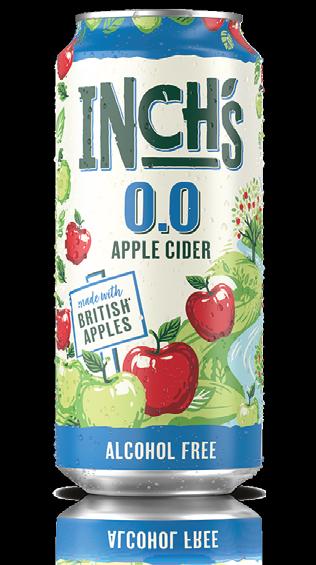
“Ciders that have alcohol removed sometimes miss their sensory characteristics which can make the product taste thin and watery, whereas we have worked hard to ensure that none of the depth and character of Inch’s Medium Apple is lost throughout the process. It’s been a challenge, but after two years of research, development and collaboration across multiple teams, we’re proud to introduce this UK-first for HEINEKEN UK, and marking an exciting step forward in offering more choice to cider lovers without compromising on taste."
Rachel Holms, Cider Brand Director at HEINEKEN UK, adds: “We know that cider lovers are looking for exciting, high-quality options that match their lifestyle and preferences. With Inch’s 0.0, we’re delivering innovation that not only tastes great but also challenges perceptions of what apple cider can be.
We’re confident this new addition will drive further growth in the category while reinforcing Inch’s reputation as a fresh, modern cider brand – providing a credible option for those who are looking to moderate their alcohol consumption.”
HEINEKEN UK is supporting Inch’s Cider with a nationwide ATL campaign – including TV, social media, digital and OOH activations, running from April to September. Its ‘The Really Good Cider’ campaign will highlight the brand’s sustainability ambitions while driving its really apple-y, really drinkable and really delicious taste, making it unmissable for UK consumers this summer.
The latest insight from The Global Payroll Association (GPA), reveals that 89% of small-to-medium sized businesses (SMEs) in the UK have reduced their workforce since the Autumn Budget of October 2024.
The government’s Spring Statement Budget will be delivered on Wednesday 26th March. It will be the first budget since the now notorious Autumn Budget in which the government announced increases to the National Living Wage (NLW) and Employer National Insurance Contributions (NICs) that have sent shockwaves through UK businesses and resulted in a vast number of employee layoffs.
So, as the UK’s SMEs gear up for the forthcoming economic statement, hoping that no more tax initiatives are introduced that will further increase their cost pressures, GPA has surveyed SME owners in the UK* to find out exactly what staff-cuts they have so far had to implement in order to mitigate the impact of the cost increase that will kick-in next month.
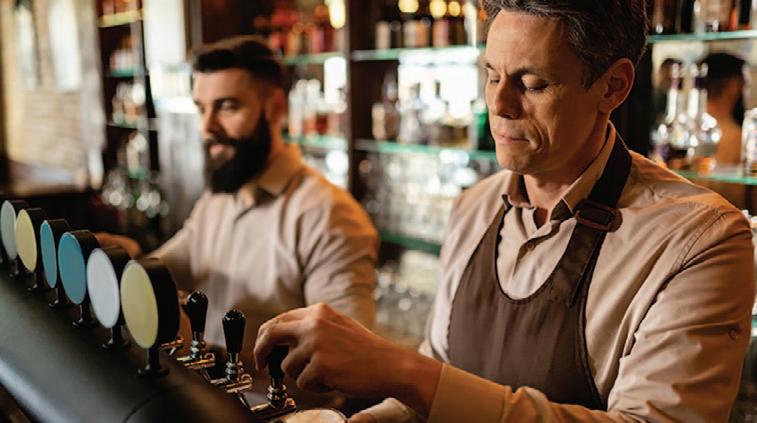
More than half (52%) of SME owner respondents admit to having concerns about the impact that increased NIC costs will have on their business, 27% of whom describe themselves as being ‘greatly concerned’. As such, an astonishing 89% of SMEs have been forced into staff redundancies as a direct result of the Autumn Statement.
The vast majority of these SMEs have had to lay-off between one and five employees (93%), but 6% have had to make at least 21 people redundant.
It seems that the lowest paid employees have borne the brunt of these redundancies, with ‘entry level’ staff accounting for three quarters (75%) of lay-offs.
Mid-level staff account for 9% of redundancies, and C-suite or Executive positions account for another 9%.
These SME layoffs have contributed to an increase in the UK’s overall redundancy rate. Between Q3 and Q4 2024 (latest available data) the rate increased from 3.2 to stand at 3.9. This is the highest redundancy rate the UK has seen since Q1 2021 when it stood at 5.5.
Melanie Pizzey, CEO and Founder of the Global Payroll Association, says: “The fallout from October’s Autumn Budget has been profound, and that’s before the new NLW and NIC rules have even kicked in. From April, these staff cost increases will become a reality, and the impact of this could well lead to even further redundancies as SMEs see the true impact for the first time.
The government tells us that this ‘short-term’ pain is going to pave the way for long-term gain, but businesses might not have the luxury of time to find out if this is true. With a new budget coming on Wednesday, businesses of all sizes will be hoping beyond hope that no further tax hikes are introduced before they’ve even had a chance to see how the existing increases will play out. And with the nation’s redundancy rate hitting its highest point in nearly five years, the government will surely be growing increasingly anxious, desperate to see some kind of positive economic outcome from this pain they are inflicting.”
When the Autumn Budget 2024 was announced, the impact on the hospitality sector was immediately clear. We hear from leaders from the hospitality and events industry on the impact the autumn statement, and what they’re hoping to see in the 2025 Spring Budget.
Richard Hutton, chief financial officer, Clermont Hotel Group

The Autumn statement has placed real pressure on the hotel industry, and it comes at a time when demand has plateaued. We see the proposed changes to National Insurance Contributions as being a directly regressive employment tax. Unless changes are made to the proposals, we think it is inevitable that the industry will look at cost cutting measures, real wages will be impacted, and investment will be slowed.
We are hoping the Government reconsiders the proposed National Insurance Contribution changes and, in particular, reduces the impact of the threshold reduction by applying a lower rate of employer NICs between £5,000 to £9,100. On business rates, we hope the Government applies a lower multiplier to all hospitality businesses and moves away from the suggestion of a surcharge for properties with a rateable value over £500k. Having such a surcharge would be deeply prejudicial to larger hotels, which have faced significant cost headwinds since the pandemic and are already amongst the most highly taxed businesses.
David Hart, CEO, RBH Hospitality Management

When the Chancellor announced the changes to National Insurance Contributions, it was suggested that shareholders in companies affected would absorb some impact through reduced profits. Unsurprisingly, investors are unwilling to do so, forcing companies to identify mitigating savings elsewhere to offset the increase in costs, especially following an incredibly tough five years of minimising costs to offset the impacts of Covid and then inflation. Having yet another pressure put on hospitality businesses – which are disproportionately affected by these changes – is disappointing and ultimately leading to further negative impact on real wages and employment.
We’re still early in the election cycle, so it’s unlikely the government will feel pressured to announce any major positive measures purely for political gain. Therefore, I don’t believe we will see anything of note in the Spring Budget that aids the pressure on the hospitality industry – especially given the well-publicised and sudden shift in focus on shoring up the defense budget.

The hotel industry once again finds itself in a challenging position. Rising National Insurance Contributions (NICs) present another financial hurdle for businesses that are already navigating a decline in consumer confidence, staffing challenges and shifting consumer expectations.
That is why it is vital that the government listens to our industry and our trade body, UKHospitality, ensuring that any further fiscal policy changes acknowledge the critical role our people play in the sector’s success. Any further staff costs without government support could place further strain on our businesses, already operating within tight margins.
While the budget will inevitably shape the landscape in which we operate, our focus must remain on adapting and providing for our two key audiences, for our guests and our colleagues. While it might feel that it’s the time to stall on investment, I feel we have to continue with investing in our teams and supporting them, providing more access to training, technology and improving our own processes and guest experiences.
Shonali Devereaux, chief executive, The Meetings

The impending increase in employers’ National Insurance Contributions is compounding the already significant pressures on recruitment, retention and business viability across the business meetings and events sector. Many are being forced to reassess staffing structures, pricing strategies, and overall operational costs, with some limiting growth plans to avoid reducing staff numbers.
The sector is already grappling with severe workforce shortages, and our latest MIA Insights reveal two thirds of organisations are finding recruitment challenging. These hikes only increase the cost of employment, squeezing budgets and subsequent recruitment and retention strategies. If businesses are left with no choice but to pass on costs to clients, it risks making business meetings and events, a £16.1bn sector vital to the UK economy, less feasible.
To tackle the sector’s deepening recruitment and retention challenge, targeted incentives for training, apprenticeships and visa flexibility are essential to addressing staff shortages. With many teams operating under extreme pressure due to staff shortages, immediate action is crucial to prevent further strain on an already stretched workforce. While the upcoming budget is unlikely to provide direct relief, we are working closely with government and continue to lobby for sector-specific support in this area. Without immediate support, the ongoing strain on event professionals will worsen, threatening the long-term sustainability of the sector.
Leading pub and hospitality businesses have joined with UKHospitality to write to Steve Reed, the Defra Secretary of State, to call for packaging supplied to hospitality businesses to be exempt from EPR. The likes of the Azzurri Group, Burger King UK, Fuller’s, Marston’s, Punch Pubs & Co, St Austell Brewery, Stonegate Group and Wells & Co have signed the letter.
It highlights how, as a result of poor policy design, bottles of beer and wine are incorrectly classified as household waste and subject to a packaging levy, despite not ever leaving the hospitality premises.
This levy, charged to suppliers, is being passed directly onto hospitality venues, who are also paying to recycle the products commercially. This will cost the hospitality sector millions in additional cost, with individual pubs seeing cost increases of around £2,000 annually.
Hospitality venues will have no choice but to pass this ‘double charge’ onto consumers.
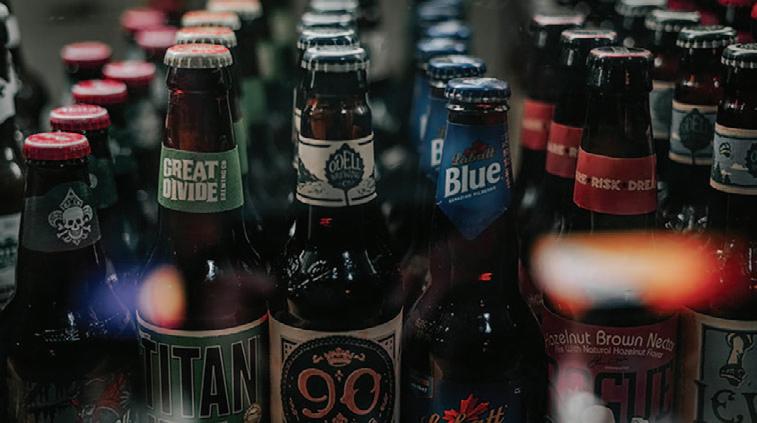
The letter said: “The consequences of the flawed Extended Producer Responsibility (EPR) scheme are now being felt by the hospitality sector. Bills from suppliers are now being received, resulting in significant cost
increases as a result of EPR.
“Medium sized outlets are seeing increases nearing £750 and a small venue up to £350 per year. Larger pubs will see increases of around £2,000. This is in addition to their commercial waste contracts.
“Hospitality businesses will be forced to pass at least some of the additional cost of this EPR fee onto their customers, as their suppliers have done to them.
“Hospitality businesses are being double-charged. They are being passed on an EPR charge, levied on a product incorrectly determined as household waste, and they’re also paying for that same product to be disposed of commercially.
“This is nonsensical. EPR is designed to recover costs for the collection of household waste. The vast majority of packaging supplied to hospitality businesses is not leaving the premises and should not be considered as ‘household’ waste.
“Packaging supplied directly from suppliers to hospitality businesses, particularly closed-loop businesses, should not be levied with EPR charges.”
Today, the UK’s private security sector has come together in unity, signing a formal letter to the Home Secretary and the Minister for Security urging the implementation of business licensing across the industry. The letter has been signed by 11 trade organisations representing private security companies and over 50 executives from the largest security firms in the UK.
This appeal follows the recent announcement by the Minister for Security at the Home Office Security and Policing Conference, where he confirmed the Security Industry Authority (SIA) now falls entirely within his ministerial portfolio. Additionally, the Minister acknowledged the critical opportunity ahead, as highlighted in MR8 of the Manchester Arena Inquiry, where business licensing was identified as a key reform.
As the security sector stands at a pivotal moment, industry leaders urge the Government to recognise this statement as an unequivocal endorsement of business licensing from the sector in its entirety. This regulatory reform is essential to raising standards, enhancing oversight, and ensuring public safety across the UK.

This reform presents an opportunity to transition from individual licensing to a dual system of business licensing and individual registration, ensuring frontline operatives meet required training standards while linking their employment to regulated businesses. Such a model would enhance compliance while offering a more cost-effective approach for government agencies.
The private security sector plays a crucial role in public safety, and as the SIA transitions into its new role as the regulator for Protect Duty, now is the time to strengthen the industry’s regulatory framework. With the lessons from the Manchester Arena Inquiry and the introduction of Martyn’s Law, the timing is right to implement longlasting and critical changes to the sector. Business licensing is not only essential for national security but also for protecting the industry’s integrity, ensuring fair taxation, and safeguarding the public from unregulated operators.
The existing framework, introduced over 20 years ago, only mandates licensing for individual security operatives, leaving businesses largely unregulated. With over 500,000 licensed security operatives in the UK, it is estimated that one in four could be impacted by gaps in the current system. Furthermore, approximately 12,000 security supply businesses remain untraceable by key government agencies, including HMRC and the SIA, creating vulnerabilities that facilitate exploitation, tax evasion, and even infiltration by organised crime.
The absence of business licensing not only compromises public safety but also results in substantial financial losses for the Government. Unregulated security firms contribute to an estimated annual tax gap of £1 billion due to non-payment of taxes and fraudulent claims. Business licensing would rectify this by providing HMRC with the necessary oversight to ensure compliance, levelling the playing field for responsible operators.
At a time when counter-terrorism measures such as Martyn’s Law are being introduced, business licensing would ensure that security firms meet minimum standards, reinforcing the industry’s role in safeguarding the public. The private security sector is increasingly relied upon to supplement policing resources, operating in complex and high-risk environments. Without regulatory oversight at the business level, accountability and standards remain inconsistent, putting public safety at risk.
Currently, the voluntary Approved Contractor Scheme (ACS) covers fewer than 800 security businesses, leaving the majority—more than 12,000—operating outside of a structured regulatory framework. This disparity in standards is further reflected in tax contributions; ACS-accredited companies contribute over £1.2 billion annually, while non-participating firms contribute just £260 million. A mandated licensing system would close these gaps, ensuring all operators adhere to the same high standards and contribute fairly to the economy.
A CRITICAL STEP IN COMBATING ORGANISED CRIME AND LABOUR EXPLOITATION
The lack of business licensing has allowed organised crime groups to exploit weaknesses in the system, circumventing HMRC regulations, abusing immigration laws, and violating Gangmasters and Labour Abuse Authority (GLAA) standards. These illicit activities not only undermine community safety but also put legitimate businesses at a competitive disadvantage. By implementing business licensing, the Government can eliminate these loopholes and dismantle networks that profit from regulatory gaps.
FINANCIAL AND OPERATIONAL BENEFITS OF BUSINESS LICENSING
While an initial investment in licensing infrastructure would be required, the long-term benefits far outweigh the costs. Fees paid by licensed businesses would cover regulatory expenses, and the increased tax compliance would generate substantial revenue for the Treasury. Additionally, including the SIA’s regulatory focus of 500,000 individual licences to include approximately 10,000 business licences would streamline oversight, reducing administrative burdens and improving efficiency.
Given the urgency of these concerns, the private security industry formally requests a meeting with the Home Secretary and the Minister for Security to discuss the immediate implementation of business licensing. This measure is critical to securing the future of the industry, protecting the public, and ensuring that the UK’s security sector operates to the highest possible standards.
Michael Kill Chair of the UKDSA & CEO NTIA Says: “The implementation of business licensing for the private security sector is long overdue. The current regulatory framework has significant gaps that put public safety at risk, particularly within the broader hospitality and nighttime economy sectors, where security plays a critical role. The findings from the Manchester Arena Inquiry and the subsequent introduction of Martyn’s Law, make it clear that stronger regulations are needed to enhance security measures, close loopholes, and ensure greater accountability.”
“The UKDSA & NTIA fully support the industry-wide call for reform, advocating for higher standards, protection against worker exploitation, and a more robust regulatory structure. We have welcomed the recent statement from Security Minister Dan Jarvis, in favour of considering key reforms from the inquiry, and feel that now is the time for the industry to unite and present a collective voice in favour of business licensing, ensuring professionalism, responsibility, and public confidence in the private security services.”
Graham Bassett CEO CSC Says: “We believe that there is a justification for Business Licensing in the Security industry. While we do not wish to add red tape to businesses this could be a suitable replacement for the existing ACS scheme. We look forward to further discussion on the practicalities and how this impacts quality security organisations as well as those it is designed to eradicate.”
Anne Marie Chebib Chair of UKCMA Says: “UKCMA urges the government to implement mandatory business licensing in the private security sector to enhance public safety, tackle crime, and ensure fair taxation. With an estimated over £1 billion lost annually to tax fraud in the security industry, mandatory business licensing is a financial and public safety imperative.
Without urgent reform, unregulated security operators will continue to undermine policing efforts, exploit workers, and enable organised crime.”
Mike Reddington CEO BSIA Says: “The BSIA and its members support the implementation of Business Licensing in the professional security industry as this will provide traceability of all companies operating in the sector and identify any potential unscrupulous operators. It will also assist in ensuring company compliance to HMRC rules, mitigate potential employee exploitation, create a minimum standard of operation, and improve the safety and security of the general public.”
John Lambert Chair IPSA Says: “I think the vast majority of the industry support business licensing to tackle the widespread issues of labour exploitation and other corporate offences. By moving the focus onto the businesses rather than the individuals working in the industry, we hope to see better compliance, which in turn will improve the lives of those on the front line. I can’t think of another example of an industry collectively asking for more regulation, which demonstrates how keen we are for the decision not to implement Business Licensing reconsidered. The fact that the recommendation came off the back of an inquiry for a tragedy where 22 people lost their lives, also reinforces the need for change.”
The full letter can be read at https://ymlps4.com/6d3fdbhweaaaequybaiamjjaxahmey/click.php
Frying is an incredibly popular method of cooking food and as with all aspects of the commercial kitchen, cost savings are a focus for operators as they are faced with increasing costs of running a business. From energy prices to salaries, National Insurance, the opportunity to reduce costs whilst still delivering or even improving food quality is the aim of all businesses. With an Oil Chef device, the savings and benefits per venue are clear, and when this is multiplied over numerous fryers and/or outlets, the impact on the bottom line is significant. Pub food, hotel dining, fast food, fish & chips, kebabs, burgers and fine dining – all these offerings can cost less when using the award winning OiLChef device inside kitchen deep fryers.
“Fundamentally, the device increases the lifespan of the oil, and this means a cost reduction of around 30% to the business because we now change the oil every eight days instead of five days. And on top of that, we're obviously helping our environmental footprint because we now use less oil. Excellent quality food is key to the group brand here at Almond Family Group of Pubs.”
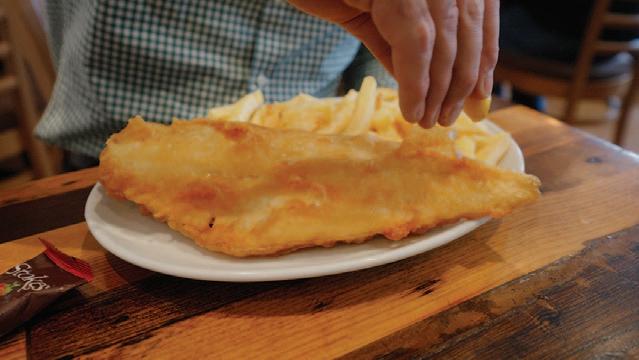
“Obviously, the massive saving is in the amount of oil you use – instead of approximately 26,000 litres of oil per year, we’re now using between 8,500 and 9,000 litres! That’s a saving of about €22,000 a year, based on current oil prices. And not only that, but our customers are also getting a better product, less greasy and much crispier. I’m delighted with OiLChef, first time we’ve been excited about anything in fast food in over twenty years!” - Kevin Grimes, Owner Four Lanterns, Ireland
“At Hennighan’s, we always monitor how much oil we waste each month, so that we can gauge how much life we are getting from our oil. To put this into perspective, in 2021, our oil wastage was 1,120 litres. Fast forward to 2023 - which was our first full year of using Oil Chef in all our fryers and we discarded just 247 litres of oil. That’s a waste reduction of 77%, allowing us to save thousands of pounds on oil alone. Without a doubt, Oil Chef has dramatically improved the quality of our oil.” - David Hennighan, Hennighan’s Fish & Chips Shops
www.oilchef.com

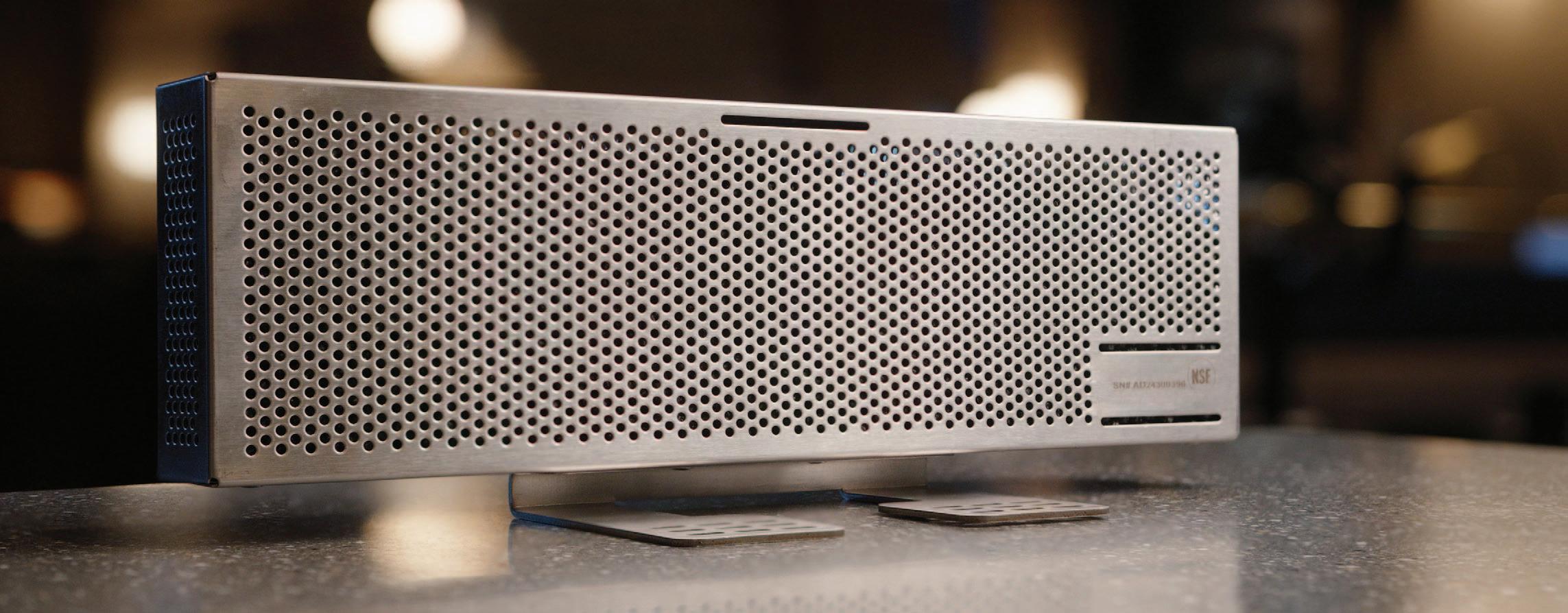
“This
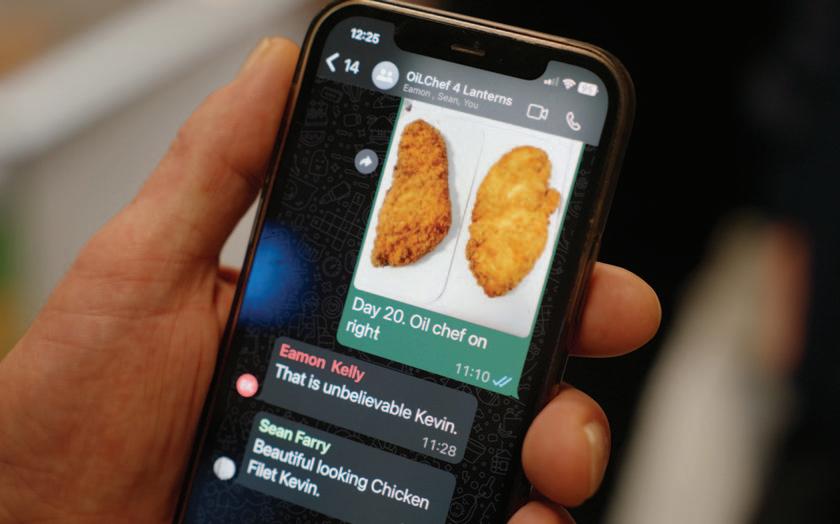
“Unbelievable!
Lumina Intelligence has launched the UK Food to Go Market Report 2025, revealing that the sector is forecast to grow +3.3% to reach a value of £24bn in 2025. This growth is set to outpace the total eating out market and inflation, reinforcing the resilience and dynamism of food to go as a dominant force in the UK’s hospitality sector.
As food to go strengthens its foothold, its share of the total eating out market is expected to climb to 23.6%, an increase of +0.6 percentage points from 2019.
Investment from fast food operators, convenience stores, and sandwich and bakery chains has been instrumental in driving growth, capitalising on the UK’s continued demand for high-quality, convenient meal options.
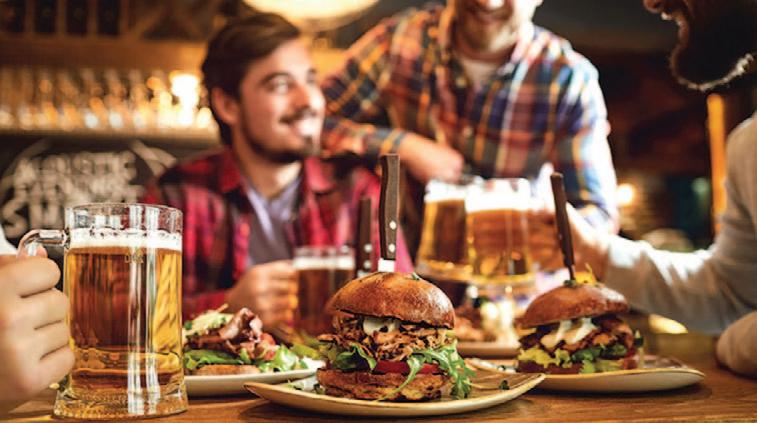
The report highlights an emerging polarisation in consumer spending power, with the highest earners driving growth. Food to go penetration growth from 2023-2024 has been dominated by those earning over £50,000, with affluent millennials in management roles in London leading the charge. A notable factor behind this trend is the continued return to office-based working, which has bolstered weekday food to go occasions, particularly at lunchtime. There are opportunities for operators to increase transaction values through targeting these consumers with elevated propositions.
The lunchtime day-part has experienced the most notable increase in share of occasions, rising +1.0 percentage point to 32.2%, with solo missions on Mondays and Wednesdays proving to be key drivers of this uplift.
The UK’s leading food to go players have expanded market share beyond pre-pandemic levels, leveraging investment in store layouts, product innovation, and diversified formats.
Convenience stores, sandwich & bakery outlets, and coffee shop chains are all projected to increase their share of the food to go sector between 2019 and 2028.
The market is also poised for a period of sustained expansion, with total outlet numbers forecast to rise +1.2% to 155,711 locations, driven by operators rolling out new store formats in both urban and suburban locations.
Aligning product ranges with evolving consumer tastes, including premiumisation and health-conscious offerings, has been a cornerstone of success for these key players.
A heightened consumer focus on elevated classics and functional health presents a lucrative opportunity for food to go operators.
Demand for premium sandwiches and functional ingredients – including lion’s mane mushroom in drinks and meals – is rising as consumers seek accessible ways to boost their health.
Year-on-year, the share of consumers who identify as very quality-led and very health-conscious has continued to increase beyond 2022 levels, indicating a long-term shift in purchasing behaviour.
FUTURE OUTLOOK: A £26BN MARKET BY 2028
Looking ahead, easing economic tailwinds and sustained consumer appetite for food to go are expected to drive market value to £26bn by 2028. The forecast size of the prize for leading operators from 2025 to 2028 stands at £2.1bn, underscoring the potential for brands that invest in their operations and innovation pipelines. However, in order to fully realise growth opportunities and counterbalance rising costs, operators will need to strategically invest in technology and automation, as service automation success rates remain mixed across the sector.
By John Stewart, technical training manager at Pelsis Group
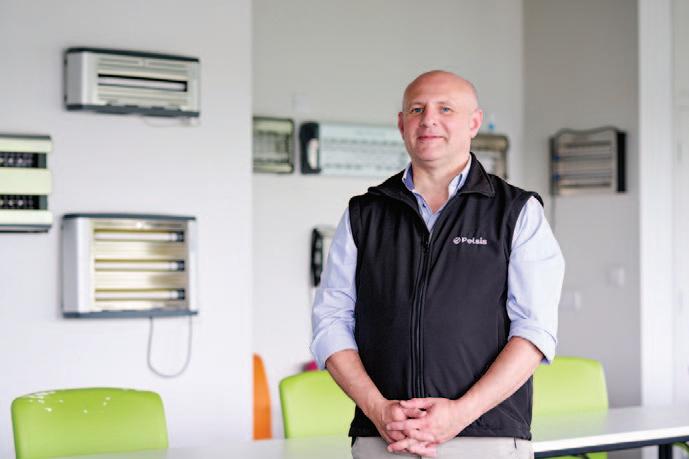
This winter is the first the hospitality sector will have to manage rodents since the Glue Traps (offences) Act 2022 kicked-in.
So how can the sector get on the front foot and protect themselves this season to ensure they tackle the dual risks non-compliance and rodent infestations?
Rodents present a significant business risk for the catering and hospitality sector.
One of the most acute risks is the health and safety concerns and the risk of rodents defecating and urinating on exposed food. This can lead to foodborne infections which can be traced to infestations by environmental health officers.
Rodents also pose challenges to building infrastructure such as damage to electrical wires and plastic pipework which present a risk of fires and water leaks.
Factors behind winter pressures include rodents seeking warmer, drier conditions and searching for food. The added rainfall can also flood burrows and force rats out of drains and sewer systems.
Rodents’ biological clocks also increases winter risks. As rodents don’t
tend to feed in daytime, the darker nights mean interactions with humans, such as staff and customers, are more likely.
Glue board traps are broadly considered a last resort in rodent management. However, their ban ensures that non-pest and protected species are not routinely harmed by their use.
It also prevents untrained individuals routinely using glue boards, mitigating unnecessary harm through non-regular checks or not using humane methods to dispose of pests once caught.
To qualify for glue board licenses, applicants need to have a level two qualification in pest management and completed an online module for the glue board ban.
Individual license applications are only eligible if the health and safety risks of a pest infestation are significant.
The application requires detailed evidence about these risks alongside extensive proof that all possible alternative rodent management methods have been utilised. This is where the use of professional pest management contractors is essential.
The parameters of the ban and the new conditions of use highlight that proactivity is essential when it comes to managing rodents. This is where operators in the sector can take meaningful proactive steps, supported by professional pest management contractors.
Operators in the catering and hospitality sector need to be empowered to adopt an integrated, systematic pest management approach around rodents, comprising ERDM (exclusion, restriction, destruction and monitoring).
Business owners should do a building fabrication audit, looking out for entry and exit points, especially if there have been contractors on site carrying out renovations or remedial work. Doors and windows are also common culprits, and a key focus for staff training.
EXAMINE SANITATION AND HOUSEKEEPING MEASURES
Cleanliness is an acute pressure-point in winter as rodents look for alternative food sources, driving them to hospitality and catering venues. Ensuring spillages are quickly dealt with will reduce the draw for rodents. In addition, targeting refuse areas through more regular bin removals and cleaning alongside strategic positioning will reduce attraction.
Checking drainage bungs, which are a common bin entry point, and replacing damaged lids will also help ensure bins are not an added riskfactor for rodents.
In dining areas, minimising food debris will further reduce attraction. To facilitate this, ensuring seating is spaced out will help promote easy cleaning.
With glue boards not an option for routine rodent control, businesses will have to rely on conventional traps. This means regular checks are essential.
Effective rodent bait should be food grade and mould resistant to prevent further health and safety risks. Using peanut butter is not recommended owing to allergenic risks in food and drink settings.
When using poisons, contact-based solutions are recommended to overcome behavioural resistance with food-based measures. This means a rodent would walk on a treated surface and ingest the poison later on when they clean themselves.
Digital monitoring solutions are emerging as a new, smarter frontier in pest management.
By providing effective 24/7 monitoring with real-time alerts, business owners access greater insights into rodent pressure points in their building, allowing for more targeted intervention.
Running alongside an integrated approach to pest management, businesses should follow the recommendations from their pest management providers.
Doing so will help ensure they weather risks and satisfy inspecting environmental health officers not only in winter, but all year round.

By Isabella Mason, Solicitor at Taylor Walton Solicitors

If your landlord forfeits your lease you need to seek urgent advice to explore whether the landlord had the right to forfeit. If it did, you may be able to remedy the situation and be allowed back into the premises. If it did not have the right to forfeit, you will be allowed to return, and you may have a claim for damages.
Most commercial leases have an express forfeiture clause which applies if the tenant has breached the express obligations (covenants) in the lease.
If there is no clause in the lease, the landlord does not have a right to forfeit.
Commonly landlords will forfeit for non-payment of rent. For this type
of breach, a landlord can proceed immediately with either forfeiture by peaceable re-entry or applying to Court to forfeit the lease and obtain an order for possession.
In the case of breaches other than non-payment of rent, there is a statutory process landlords must follow before they can forfeit. This involves the landlord serving a Section 146 Notice on the tenant giving them a reasonable period of time to remedy the breach, failing which the landlord can proceed to apply to Court for possession.
If permitted by the lease, a landlord can forfeit by peaceable re-entry for non-payment of rent only. This method involves a landlord or certified agent physically re-entering the premises and changing the locks.
Landlords may also apply to Court to forfeit a lease. The service of proceedings on the tenant demonstrates the landlord’s intention to forfeit the lease. However, the lease terminates only once the Court makes the order for possession. If a landlord has a Court Order to forfeit, it is rare that forfeiture could be deemed unlawful.
A landlord cannot enforce a breach of the tenant’s obligations committed after service of the proceedings, meaning a landlord is precluded from bringing further claims against the tenant.
Following forfeiture, the tenant’s possessions usually remain in the premises. A landlord becomes an ’involuntary bailee’ which means that they are responsible for ensuring there is no damage to tenant possessions.
The landlord is required to give tenants an opportunity to collect their possessions, failing which the landlord may proceed to sell the possessions.
The landlord is required to account to the tenant for the sale pro-
ceeds, less any costs of sale.
Tenants should know that even if forfeiture is lawful, they have a right to apply to Court for relief from forfeiture, the effect of which is for the lease to be reinstated by the Court. Relief can only be granted by the Court.
Where forfeiture was carried out by peaceable re-entry, the tenant has 6 months from the date of peaceable re-entry to apply to Court for relief.
Tenants can also apply for relief by way of a counterclaim to a claim for possession by a landlord.
In most cases of relief from forfeiture where the breach is non-payment of rent, the Court will grant relief if the arrears, the landlord’s costs of forfeiting and any interest accruing on the arrears are paid. Accordingly, if the tenant is able to show they are ready, willing and able to pay those costs, a Court is likely to grant relief.
A landlord is at risk of a damages claim if it unlawfully carries out forfeiture by peaceable re-entry. This may arise if the landlord does not have a right to forfeit, or if they have waived their right to forfeit.
As a tenant, if your landlord forfeits by peaceable re-entry, this could have negative consequences for your business, as you will not physically or legally be able to run your business from the premises. Such disruption may affect staff, reputation and your profits.
Even if a landlord has a right to forfeit, some comfort for tenants is that a landlord may waive this right by actions or communications which acknowledge the lease as continuing. This may include your landlord chasing you for rent, sending invoices, or even discussing your obligations in the lease with you.
Pubs are set to be charged twice for disposing of glass bottles under “chaotic” new EPR rules which will cost the sector an extra £60 million –the equivalent of 5,000 jobs.
The Government’s new EPR (Extended Producer Responsibility) regime means glass packaging sold in pubs will be classed as household waste, despite them already being charged and recycled under commercial waste. These rules mean suppliers will therefore have little choice but to pass on these costs to pubs.
New BBPA data estimates that pubs, which pay approximately £1,100 a year each for commercial recycling of their glass bottles, will now be charged an additional £1,400 a year for the same glass bottles under household waste fees.
This amounts to an extra £60million bill the sector will have to bear which is the equivalent of 5,000 jobs.
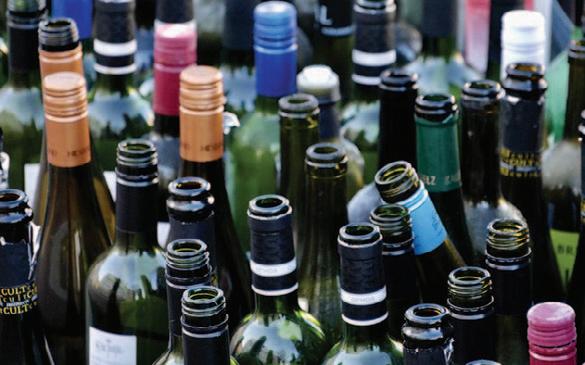
The BBPA has written to the Government warning them of the devastating impact this fresh new fee will have, and highlighted how it will kick in at the same time Business Rates relief is cut from 75% to 40%, Employer National Insurance rates increase, the threshold at which businesses pay NI decreases, and there are significant increases to the National Minimum and Living Wage.
The BBPA has warned the chaotic rules and distortive fees will mean double-payment for pubs, wipe out wafer-thin brewer margins on bottled beer, could risk jobs and drive-up inflation.
Emma McClarkin, CEO of the British Beer and Pub Association, said: “The new EPR regime bears no link to reality – it is a series of unfair fees and confusing rules that are being chaotically implemented.
“These new costs are an own goal, as they will seriously damage wafer-thin profits that brewers and pubs make and jeopardise jobs and growth. EPR is the exact opposite of what the Chancellor wants to achieve.
“Of course we’re committed to a more circular economy, but we cannot understand how pubs paying twice is going to be more sustainable, when virtually all glass sold in pubs is already collected and recycled.
“Government must urgently review these costs, and ensure they are fair and sensibly implemented, so the sector can continue to play a critical role for the UK’s economy and employment.”
UK brewers make an average of 2p per bottle of beer, which leaves them no choice but to pass on extra painful costs to customers if they want to carry on making their product.
The higher additional costs on brewers will force an extra £154m each year, or 5p per glass bottle on the sector, and could force some brewers to leave the glass bottle market, the BBPA warned.
The BBPA is urging Government to consider the full impact of these fees and wider packaging reforms which will severely diminish growth and risk jobs.
Sustainability is no longer an afterthought in the wine trade; it’s a driving force behind innovation. The transition from carbon offsetting to carbon insetting is reshaping the industry, influencing how wine is produced, packaged and transported. For bar operators, this presents an exciting opportunity to curate a wine list that aligns with eco-conscious values.
Unlike offsetting, which compensates for emissions elsewhere, carbon insetting focuses on reducing environmental impact within the supply chain itself. It starts at the vineyard with organic farming, water conservation and biodiversity efforts, but extends to logistics, packaging and energy use.
At Lanchester Wines, sustainability is integral to our operations. Since 2011, we’ve invested over £13 million in renewable energy, including wind turbines, solar panels and cutting-edge geothermal heat pumps. Our North East facilities are powered predominantly by renewables, setting a benchmark for sustainable practices in the wine sector.
RETHINKING PACKAGING: LIGHTER, SMARTER, GREENER
Packaging plays a crucial role in reducing carbon emissions. At just 300g, the Verallia Bordelaise Air is the world’s
first super lightweight wine bottle, made with 30% recycled glass. Lanchester Wines pioneered its use in the UK, cutting CO₂ emissions by 25% compared to traditional 400g bottles. This innovation removes 3.2 tonnes of glass weight per 24,000 litres of bulk wine bottled, making a tangible difference.
BULK SHIPPING: A LOWER-CARBON SOLUTION
Transport is another area where sustainability gains can be made. Almost half of our wines arrive in bulk, reducing transport emissions by around 38% compared to shipping in bottles. Bottling at our sister company, Greencroft Bottling—powered mainly by renewables—further minimises our carbon footprint.
WHY IT MATTERS TO BARS AND HOTELS
Consumers are increasingly drawn to businesses that champion sustainability. By offering wines with a lower environmental impact, bars and restaurants can appeal to eco-conscious customers while actively reducing their own footprint. Sustainability in wine isn’t just good for the planet—it’s
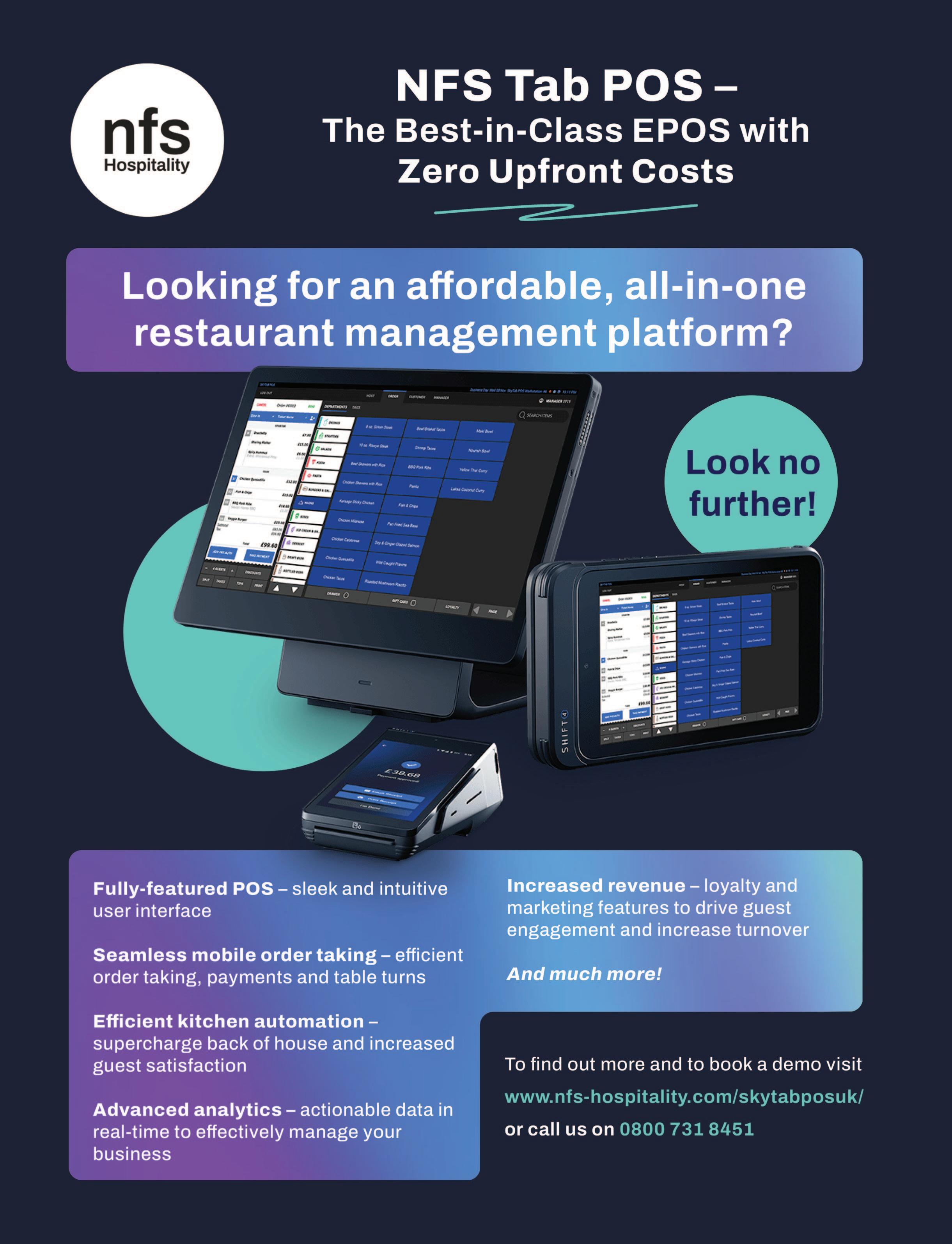
ROBOT ~ Organic Honey Cola Kombucha is here to disrupt high-sugar colas and soft drinks that harm health and the planet. With its innovative use of organic honey, ROBOT enhances flavour complexity while supporting biodiversity, setting it apart as a truly sustainable, super-premium healthfocused alternative.
As the hospitality industry evolves toward health-conscious and eco-friendly practices, the demand for premium, sustainable drinks is growing rapidly. ROBOT Kombucha leads this transformation, offering a super-premium Cokestyle drink with exceptional quality and complex taste and with true gut-health benefits.
Combining expert craftsmanship, science, and sustainability, ROBOT provides a familiar and comforting Cola flavour profile—the most consumed soft drink globally—reimagined for modern, health-aware consumers. This makes it the ideal alternative for Coke-based mixed drinks, mock-tails, and innovative cocktails.

Recent studies highlight the urgent need for gut-health solutions, reduced sugar consumption, and sustainable products. High sugar intake is linked to rising healthcare costs and major health issues like diabetes,
obesity, and cardiovascular disease. ROBOT Kombucha directly addresses these challenges with zero refined sugar, all-organic ingredients, and natural probiotic benefits.
Expertly fermented over seven weeks, ROBOT achieves an elegance, with all sugars metabolised to create a unique depth of flavour. A teaspoon of organic honey is added postfermentation, serving as a biodynamic natural sweetener that also supports dwindling bee populations ~ a critical factor in food security.
ROBOT Kombucha’s flavour is elevated further with handblended organic botanical essences, delivering a complex, satisfying taste unmatched in the industry.
Completely free from artificial sweeteners, refined sugar, or harmful chemicals, ROBOT embodies sustainability and premium quality in every can.
Packaged in recyclable aluminium 330ml cans, ROBOT aligns with ecoconscious consumer values while maintaining the sophistication expected of a high-end product. This innovative approach has made ROBOT Kombucha a trailblazer in the premium health drink sector.
ROBOT appeals to a broad demographic, blending a youthful, cult-like design with a sophisticated flavour profile. Unlike many kombuchas aimed at older consumers, ROBOT’s fun, unpatronising branding captures the attention of both younger audiences and health-conscious adults alike.
As awareness of gut health and probiotics grows, ROBOT answers the call for drinks that are both functional and indulgent. Its versatility makes it an ideal choice for hospitality venues, whether served as a standalone non-alcoholic beverage or incorporated into creative mixology.
For hoteliers, restaurateurs, and bar owners, ROBOT Kombucha offers a premium solution that satisfies the growing demand for healthier, sustainable beverages. With health-conscious consumers comprising a significant portion of the market, offering ROBOT Kombucha is an opportunity to enhance menus, attract diverse clientele, and align with modern sustainability goals.
ROBOT Kombucha is more than a drink—it’s a movement toward a healthier, more sustainable future. With its combination of innovation, exceptional taste, and environmental commitment, ROBOT is poised to redefine the beverage industry. Be proud to lead the change—offer ROBOT Kombucha to your customers.
For further information, see the advert on page 3 or visit www.robotkombucha.co.uk
The popularity of cocktails and their non-alcoholic counterpart has been increasing year on year with no sign of slowing down. Just because they sound complicated doesn’t mean they have to be. Great cocktails don’t need to be daunting. In fact, many of the Uk’s best loved cocktails are surprisingly easy to create with the right products.
Bristol Syrup Company have distilled down years of experience both in front and behind the bar, to create a range of syrups and purees packed full of authentic flavour and perfect for making simple but delicious serves.
Our products are more than just sweet, they are layered with depth of flavour and acidity, to ensure tasty, balanced drinks with fewer ingredients. And because they’re made right here in Bristol with all natural flavours, real fruit and fully recyclable bottles. Your customers will be getting the top-quality
Here at Belvoir Farm we want to celebrate nature in all its real, imperfect, dramatic glory. Our drinks are made on the family farm using honest, natural ingredients you can
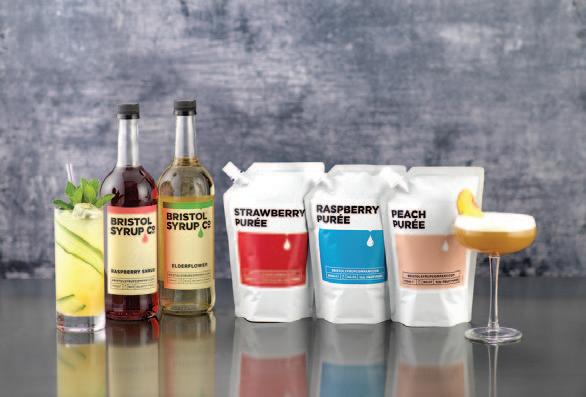
trust - no artificial flavourings, preservatives or sweeteners.
Premium soft drinks, Crafted with Nature; that’s what Belvoir Farm is all about. Refreshingly real and reassuringly delicious, there’s artistry in our still cordials and lightly sparkling soft drinks. Each are made using simple ingredients, carefully selected – including our own organic elderflower – with natural fruits, hand-picked flowers, fresh juices and spices. We’re true to nature and let the ingredi-
ents do the talking.
drinks they deserve. Which is of great importance in the current climate, consumers might be cutting back on the amount they drink. But as the priority shifts away from quantity it focuses more and more on quality.
With the growing trend for non-alcoholic alternatives, flavour is key. Our liquids have been created to enhance your drinks whilst keeping it simple, perfect for mouth-watering cocktails and inviting mocktails alike. Do your drinks a favour with Bristol Syrup Company.
If you would like to learn more about our products, request samples or receive a copy of our Simple Serves Brochure, drop us a line at Hello@BristolSyrupCompany.com
See the advert on page 9 for more details.
We choose natural, over artificial, every time. There are no artificial preservatives, flavourings, colourings or sweeteners in our premium soft drinks. That’s our promise.
Belvoir Farm Drinks letting nature add the flavour.
Visit www.belvoirfarm.co.uk
See the advert on page 4 for details.
CLEAN Linen & Workwear are one of the UK's most trusted laundry companies. They supply tailored workwear solutions provided by real people. Their comprehensive laundry network means they can service customers throughout England and Wales, providing chefswear, workwear and linen rental services. Whether you operate from a single-site hotel, pub or restaurant or have multiple locations, CLEAN can tailor a workwear rental solution to suit your business requirements. They offer various uniform options to support the entire kitchen brigade, from Executive Chefs to Kitchen Porters.
With their workwear rental service, you can say goodbye to the hassle of purchasing, storing, and maintaining chef and kitchen uniforms. Instead, enjoy the convenience of a hassle-free rental system that provides freshly laundered garments whenever your team need them. By renting with CLEAN, you can avoid upfront purchase costs, spread the payments over your contract, and ensure quality and care with every wash. Delivery is free, and there are no hidden charges; contracts even include repairs. Each item of clothing can be branded and tailored to the wearer with logos and embroidery.
Hale Events, the team behind popular and established regional trade events like The Source, and Expowest Cornwall, is launching a brandnew event in 2026. The Source Roadshow will debut at the Bath & West Showground in Shepton Mallet on Wednesday 25th February 2026.
Initially taking place for one day only, with 100+ exhibitors, this event offers food and drink businesses a dedicated space to connect, source products, and explore new opportunities. Despite Somerset’s rich food and drink scene, businesses in the region haven’t had a dedicated trade show—until now.
A year ahead of launch, stand space is filling fast, with confirmed exhibitors including Baboo Gelato, Barber's Farmhouse Cheesemakers, Dunstaple Farm Ltd, Matthew Clark, Purple Planet Packaging Ltd, Qtos Catering Equipment, R D Johns Foodservice Ltd, Sir Woofchester's, South West Food Group, South West
South West Labels are a supplier of labelling guns, thermal label printers & labels. We’re here for retail, industrial and manufacturing businesses. We’re independent, which means impartial recommendations combined with over 30 years experience in supplying these products.
The labelling gun market can be complicated. Many products are known by
Labels, The Real Olive Company, The Somerset Grill Co Ltd, Unox Uk, and Westcountry Fruit Sales Ltd.
From local artisans to suppliers serving food retail and hospitality, the mix of exhibitors will give buyers access to the latest products, equipment, and services to help them both stand out from their competition, and cash in on the latest innovations.
Easy to get to, the show is ideally placed for buyers from Somerset, Wiltshire, Dorset and beyond. With backing from Taste of the West and key media partners, the Source Roadshow promises to be a valuable date in the industry calendar.
Visiting this show is free for trade buyers, who can find out more at www.sourceroadshow.co.uk, For stand bookings, contact James Curtis or Paul Thomas at 01934 733433 or stands@hale-events.com
different names depending on their use. Labelling guns, price guns, pricing guns, label guns, coding guns and batch guns. Our range of products can meet all needs: Simple low use models, durable machines for industry. A wide variety of specialist features including auto-incrementing guns for batch codes.

All equipment is supplied with a one year factory warranty and are designed to give years of reliable and effective service.
See us on Stand F26 or call 01736 810334 for details.



• 80+ Years Combined Industry Expertise: Our hands on compliance partners deliver unmatched guidance in BRCGS and SALSA certifications, with a proven track record of 100% audit score improvements.
• Comprehensive Compliance Solutions: From producers to manufacturers, storage facilities to agents and brokers - we provide tailored food safety management systems that ensure your business meets and exceeds industry standards.
• Proactive Maintenance Packages: Stop firefighting compliance issues. Our preventative approach keeps you audit-ready year-round, with personalised support packages designed for your specific needs.
• Digital Innovation in Compliance: Streamline your documentation with our cuttingedge QR code-based system and digital software solutions, minimising paperwork while maximising efficiency.
• FREE 30-Minute Consultation: Transform your food safety compliance journey today. Book your no-obligation consultation with our expert team and discover how we can guide your business to AA Grade compliance.

Contact us: 01792 986089 Email: Katie@beacon-compliance.co.uk www.beacon-compliance.co.uk
In today's complex food industry landscape, achieving and maintaining compliance isn't just about meeting standards—it's about building trust and ensuring sustainable business growth. This is where Beacon Compliance, with its 80+ years of combined industry experience, steps in as your dedicated partner in food safety excellence.

sultants doesn't just guide you through compliance—they become an extension of your team, offering proactive maintenance packages and comprehensive food management systems that prevent issues before they arise.
Serving food producers and manufacturers across the UK, Beacon Compliance specialises in bridging the technical resource gap that many food businesses face. Their expertise spans across BRCGS, SALSA, and various other critical certifications, offering bespoke solutions that adapt to your business's growth stage.
What sets Beacon Compliance apart is their handson, personalised approach. Their team of expert con-
With a remarkable 100% improvement in audit scores for their clients and a 95% referral rate, Beacon Compliance's track record speaks for itself. Whether you're a small producer or a large manufacturer, their flexible support packages ensure you're not just audit-ready, but audit-confident.
Ready to transform your food safety compliance journey? Contact Beacon Compliance for a free 30minute consultation."
See the advert on this page for details.
Rezcontrol is a complete, cloudbased property management solution. As one of the largest independent PMS providers in the country, we understand hoteliers’ needs and promise there will always be a friendly voice at the end of the phone - our customer service is legendary, in an era of ever-increasing globalisation.
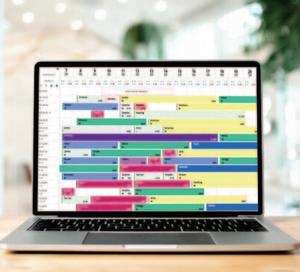
What’s more, we are so confident of both the platform and our service that we are running an unbeatable long term offer, for hotels considering changing PMS this year. If you move to us from any comparable system, such as Guestline, Opera or Mews, we will guarantee new customers a saving of 25%
their current fees.

Spend time with your guests, rather than on admin

Coldpress was born from a mission to solve a simple but important problem: how to capture the pure, fresh taste and nutrients of fruit in bottled juice. Traditional heat pasteurisation, which goes up to 135°C, compromises delicate flavours and vitamins. The solution? High Pressure Processing (HPP) - by using cold pressure rather than heat, Coldpress locks in the ‘true to fruit’ taste and essential nutrients of the fruits and vegetables used, ensuring a fresher and more nutritious juice. Since introducing HPP to the UK market in 2011, Coldpress has been at the forefront of juice innovation. Their journey began with the launch of Pink

Lady® apple juice in Waitrose, and they have since expanded to offer 14 vibrant, nutrient-packed juices, smoothies and health shots. With every bottle, Coldpress delivers fresh flavour while preserving the vitamins and antioxidants naturally present in the ingredients.
Coldpress is committed to delivering great taste without compromise and continues to lead the way in coldpressed juice, championing health and flavour at a competitive price.
See the advert on this page for details.
Picasso Digital PM is the hotel system of the future. Already incorporating a high-powered AI led reception module, the development of the fully incorporated Bar and Restaurant system has recently been nothing short of impressive. They have really concentrated on future proofing Picasso, the last thing they want is that their competition to catch them up and even worse, overtake them as the leading PMS in Europe. The hotel industry is a hard task master at the best of times, demanding bigger and better things from its systems and it is up to the system providers to keep themselves ahead of the game in terms of innovative

ideas and functionality.
The concept of the allin-one hotel system has been around for a few years now, but when the system can control outside third parties with the same time efficiency as it can control its own modules, then it becomes truly an invaluable tool. With its AI inspired selfcheck in system, its award-winning hotel and restaurant system and its fully integrated channel manager, only time will tell what demands are placed on the PMS of the future, one thing is for sure, Picasso Digital will be taking the challengers on headfirst.
See the advert on this page for details.




Dole (formerly Total Produce) is the world’s largest and most accomplished fresh produce provider, with an extensive network of foodservice depots throughout the UK, reaching from Cornwall to Edinburgh.
Dole sources and distributes an extensive range of fresh produce across all major categories including fruits, vegetables and salad - extending from the more familiar to the truly exotic. Dole also supply an extensive range of dry goods,
fine foods, frozen and dairy.
Serving the retail, wholesale and food service sector, Dole UK is a complete fresh produce solution provider, offering a comprehensive menu of services to our customers, ranging from simple service provision to an independent grocer to complete category management for major multiples.
Serving the South West since 1975.
CSE Ltd has grown to become one of the Swouth West’s leading suppliers of EPoS systems, Cash Registers and Electric Scales.
Whether you need a simple cost-effective cash register or fully integrated EPoS
A strong, vibrant and accomplished business, Dole Foodservice Cornwall is part of the worldwide Dole group. See the advert on this page for details
solution tailored to your retail or hospitality business, we have the perfect solution for you.
We provide comprehensive maintenance and support for all our products, including brands such as Sam4s, ICRTouch, Myepos and the best of breed Access EPOS.
See the advert on this page for further information.
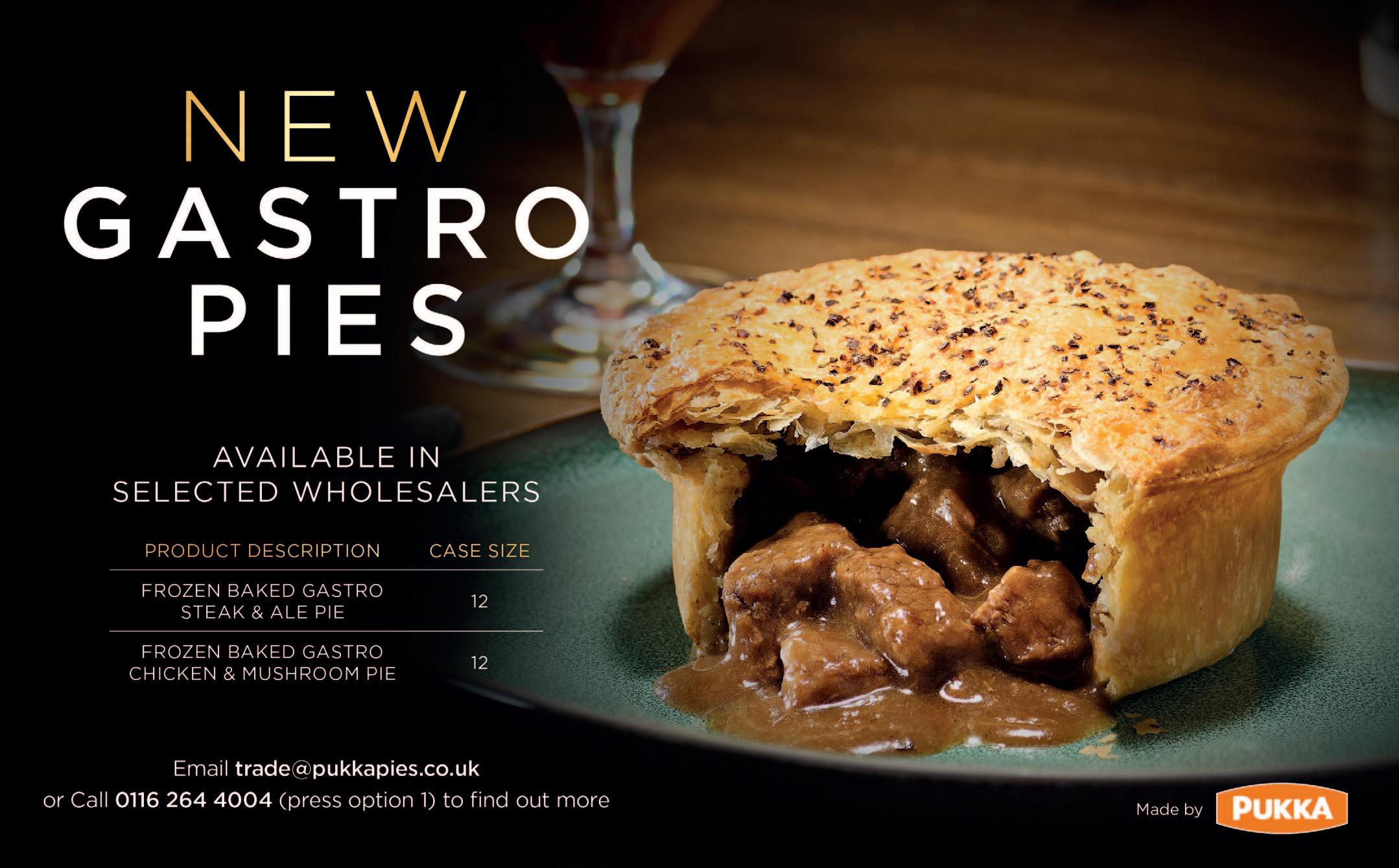
McWhinney’s Sausages are proud to announce that they will be exhibiting at Expo West in Cornwall. The Northern Irish sausage manufacturer has been in business since 1898 and is still very much a family run business to this day.
McWhinney’s are well known across the UK and Ireland for producing quality sausages for the fish and chip shop market. However, with ever evolving and versatile products, such as the delicious Gluten Free, the brand is expanding throughout the hospitality sector. The family run business has always preached that quality is at the forefront of everything they do. If you plan on visiting Expo West, call by their stand to sample the delicious range. You should even keep an eye out as you might spot their mascot, Bigfoot, roaming the place! Visit McWhinney's at www.mcwhinneys.com
We
with increased profits.
We offer a wide range of coffee machines, all at competitive prices and with a range of rental, fnance and leasing options available.

We have our own in-house engineering team and guarantee the highest levels of customer service, ensuring downtime is kept to an absolute minimum. Wholesale customers get discounted service charges, further enhancing the overall value of working with us. With experience in
We even offer a free inspection and service to new customers to make sure your machine is running as it should before getting to work serving up some of the best coffee going…
We also supply a full range of leading, premium products for your hot drinks service. For further information call 07776 184141, email hello@swcoffeeco.com or visit www.swcoffeeco.com
We offer a wide range of coffee machines, from a ‘compact’ 2 group Iberital IB7 all the way through to our flagship machine, the San Remo Cafe Racer. All at competitive prices and with a range of rental, finance and leasing options available. So whether you’re running a pub, or a large high-end cafe or restaurant, we’ll have machines to suit.
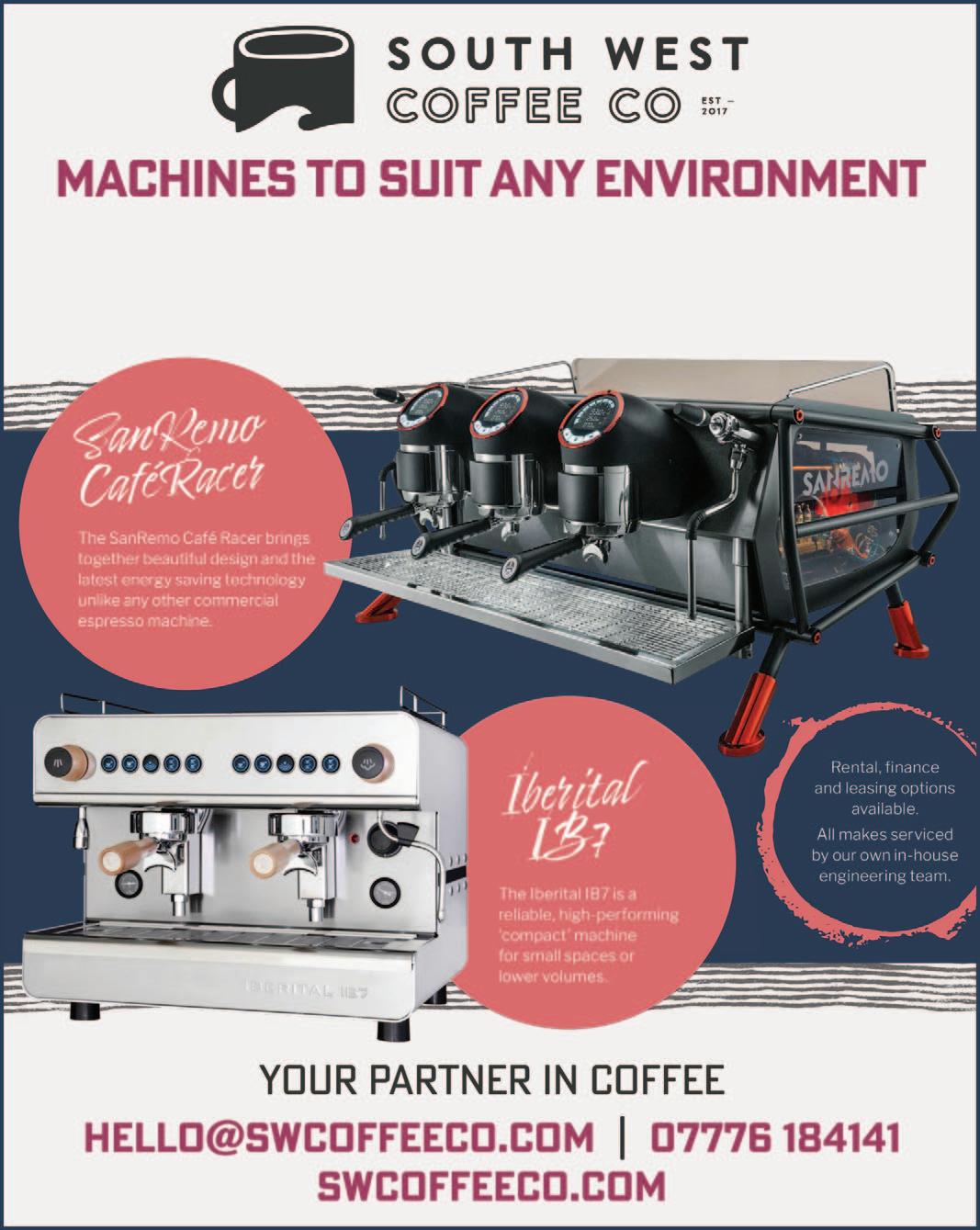
Ariela’s Gelato is committed to wholesale and supplying the hospitality industry with the best Gelato available on the market.
From classic flavours to exotic creations bursting with fresh fruits and artisanal ingredients, Ariela's Gelato promises a flavour adventure like no other.
Exploring the weird and wonderful, Ariela’s Gelato pushes the boundaries of ‘normal’ to the extreme. Think Black Forest Gateaux, Peanutella, Dulche de Leche (Argentinian Toffee), Cherry Bakewell, Avocado sorbet, Eton Mess and Apple Crumble to name a few!

It’s artisan Gelato, Sorbet and Vegan Alternatives have been on the receiving end of numerous ‘Great Taste’ awards and are stocked by hundreds of stores across the UK.
The company is also expanding its vegan friendly range to include a brand-new series of oat drinkbased Gelatos – guaranteed to be truly unique with no compromise on flavour.

As creators and collaborators of unique drink experiences for the world of coffee and hospitality, we aren’t just any company: we are Beyond the Bean, the people behind Zuma, Sweetbird and UK importers of Blendtec Blenders. Whether supporting a chain of independent coffee shops or a group of pubs, we have over 25 years of experience in the industry we love.
Founded in 1997, Beyond the Bean is a family- run, Bristol based company who remain passionately independent. We are an AA+ BRCGS registered manufacturer and ensure that all our bespoke products are crafted to the highest standards, meeting both taste and regula-
Here to support you, Ariela’s Gelato also supply an extensive range of the highest quality waffle cones, cups, spoons, disposables and POS material to allow its customers to sell the best Gelato in the best way possible, ensuring you make the best margins. And, if that isn’t enough, they also provide ongoing support from the start, helping with layout decisions, finding the best equipment to suit your individual needs, menu design, and most importantly in-depth training on all things concerning the sale of Gelato.
T 020 8803 5344. info@arielasgelato.com https://arielasgelato.com/
tory requirements globally.

We do what we love which is creating and sourcing innovative ingredients such as syrups, hot chocolate and frappés – as well as blenders and barista gear. We supply and support a wide range of national and international partners – from high-street chains to independent coffee shops, to online retailers and coffee roasters, bars, hotels and restaurants all over the world.
Our team works hand-in-hand with partners to understand their needs, creating tailored recipes and flavour profiles that align with their menu and enhance their customer experience. We offer comprehensive support, ensuring seamless implementation and consistent preparation of our bespoke beverages.
We continuously monitor market trends, innovate and refine our products, providing cutting-edge beverage solutions that keep them ahead in the market.
For ore information see the advert on the inside front cover or visit www.beyondthebean.com


LittlePod’s Indonesian vanilla pods are catching the eye of chefs in the UK as the natural ingredients company’s innovative orchard continues to go from strength to strength.
Grown in Bali using a pioneering system of polyculture that is increasing biodiversity, improving soil fertility and helping to regenerate the rainforest, the LittlePod farmers’ vanilla pods are plump, bold and earthy, with smoky, dark vanilla notes.
With the LittlePod orchard forecast to yield another sizeable harvest this year, the company’s responsiblysourced vanilla pods will once more be in plentiful supply.
Now available in various sizes and quantities, including five and ten pods, and 100g, 250g, 500g and 1kg packs, LittlePod’s Indonesian vanilla has caught the eye of chefs and buyers at recent trade shows and networking events.
“We have exhibited the LittlePod farmers’ vanilla pods at various events across the UK and have got a great response from the chefs we have met,” explained Paul Gilder, LittlePod’s Media Manager, who visited the LittlePod orchard in 2023 and who remains in close contact with the farmers in Bali.
“These pods are plump and packed with a bold and dark vanilla flavour that the chefs we have spoken to have found to be extremely appealing. The chefs have enjoyed handling our vanilla pods and have been impressed with their aroma, size and quality.
“Our customers have shown themselves to be interested in learning more about the LittlePod orchard, our Indonesian vanilla pods and the positive impact that our approach is having on the environment. The LittlePod farmers have proved that there is an alternative to Madagascan vanilla and these pods have a higher vanillin content, which means you get more for your money!” Like to find out more about the LittlePod farmers’ Indonesian vanilla pods? Please call 01395 232022 or email sales@littlepod.co.uk for additional product information, prices and purchasing.
79 North Ltd stands out as a leading wine importer dedicated to delivering premium wines from diverse, lesser-known regions to the UK market. With a keen focus on quality and sustainability, the company has built a reputation for curating a portfolio that combines traditional craftsmanship with innovative winemaking techniques. Their selection features wines from small, family-run vineyards, allowing them to offer a personal touch and a story behind each bottle. The commitment to sustainability is evident in their careful choice of producers who
prioritize organic practices and environmental responsibility.
79 North Ltd’s expertise in sourcing unique wines has earned them a loyal customer base, from independent retailers to fine dining establishments. By bridging the gap between producers and the UK wine scene, they have not only brought new tastes to British tables but also contributed to a

London, UK – A new report by SiteMinder, the world’s leading hotel distribution and revenue platform, reveals that hotel websites outperformed all other booking sources in driving revenue per booking in 2024, by as much as 60%.
The report, SiteMinder’s Hotel Booking Trends, based on more than 125 million reservations – the largest volume of hotel reservations from any single technology platform – shows that hotel websites globally produced an average of £403 per booking for hotels last year. This figure was 8.5% higher than the prior year and more than 60% above the value-perbooking via OTAs (£249); more than 35% above global distribution systems (£295), and more than 15% above wholesalers, DMCs and tour operators combined (£346).
The year-on-year rise in direct booking value saw hotel websites either hold or improve their position among every major travel destination’s top sources of total revenue, for the first time, including in the UK, where hotel websites remained the third highest revenue-generating channel for hotels.
SiteMinder’s VP of ecosystem and strategic partnerships, James Bishop, says the findings show travellers are not only seeking out hotel websites in strengthening numbers, but spending more when they do.
“When booking directly, travellers are choosing higher-value rooms, staying longer and adding extras, and each of these factors represents a tremendous opportunity for hotels to provide those exclusive deals.
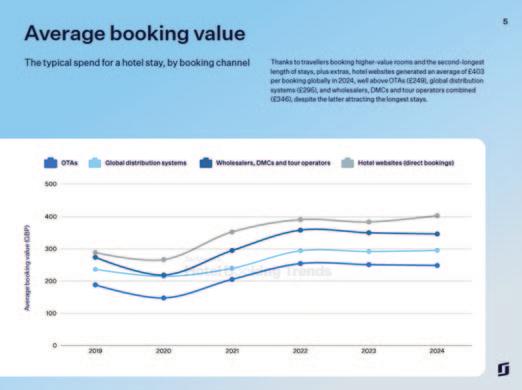
This certainly doesn’t mean hoteliers should disregard third-party channels in 2025; they continue to offer unique and unmatched reach, as well as simplicity, as evidenced by their continued dominance in each one of the Top 12 lists of hotel booking revenue-makers worldwide. But what our findings highlight is the importance of hotels delivering an easy booking experience that comes with smooth payments and strong security, just as third-party channels do so well.”
The annual SiteMinder’s Hotel Booking Trends report is the authority on hotel bookings across 20 of the world’s most established destinations. It is based on the booking data of SiteMinder’s more than 44,500 hotel customers, who in 2024 used SiteMinder’s platform to secure more than 125 million bookings valued at more than US$50 billion in revenue.
FURTHER ANALYSIS OF SITEMINDER’S 2024 DATA SHOWS:
• The global resurgence of international travel was fuelled by the accelerating return of Asian hotel guests. In the UK, while Booking.com remained the leading revenue-generator for hotels, Asia Pacific’s Agoda climbed to a company-high fourth place, Trip.com again performed strongly and Indian B2B platform TBOHolidays emerged as a top channel, leveraging its growing global travel agent network.
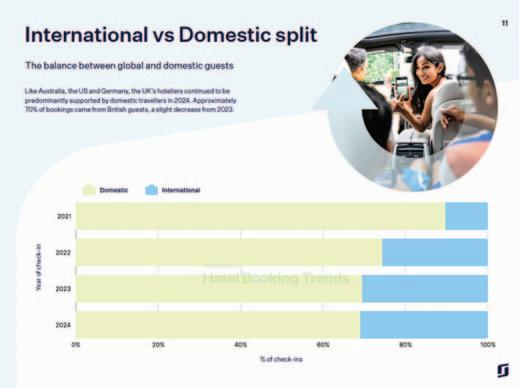
The Top 12 hotel booking sources which generated the most revenue for UK properties in 2024 were:
1. Booking.com
2. Expedia Group
3. Hotel websites (direct bookings)
4. Agoda
5. Hotelbeds
6. Global distribution systems
7. Trip.com
8. WebBeds
9. Airbnb
10. Hostelworld Group
11. TBOHolidays
12. Mr & Mrs Smith
• Travellers booked earlier and cancelled less, with international visitors comprising a larger share of total check-ins, as domestic guests competed for the best deals. Lead times at UK properties extended for the fourth consecutive year, with the average booking window surpassing 35 days—four days longer than the global average. Cancellations decreased to 18.25%, compared to just under 20% globally.
• As in previous years, the UK was again a global leader in short stays, with over 92% of bookings being for either one or two nights, and just two percent booked for five nights or more.
• Slightly down throughout the year (£202 vs £210 in 2023), average room rates at UK hotels peaked in July, at £228, coinciding with the highest check-in volumes. By contrast, January, the quietest month, saw rooms priced at a more affordable £157. Aligned with 85% of countries, Fridays generated the most revenue for UK properties in 2024, averaging £18 more than Saturday stays, and £43 higher than Sundays––the week’s most affordable night for guests.
“As trends change to mirror today’s dynamic traveller, hotel businesses must remain flexible and responsive. SiteMinder’s report shows that traveller preferences are anything but fixed, so those who can adapt quickly will be best positioned to succeed,” says Bishop.
“In 2025, the advantage will come from leveraging data-driven insights, building flexibility into strategies, and seizing new opportunities. Properties that embrace this approach will not just establish themselves as leaders within their markets; they will set a new standard for an industry undergoing transformative change.”
SiteMinder’s Hotel Booking Trends report is available here: www.siteminder.com/hotel-bookingtrends/


Comptoir Libanais is proud to be the first UK restaurant group to integrate SetMenu (powered by OrderPay) through its partnership with SevenRooms. Launched during Christmas 2024, this innovative integration has revolutionised guest reservations, pre-ordering and operations by eliminating manual spreadsheet entries and streamlining the entire booking process. As well as providing the essential service of allowing guests to pre-order their meals.
SetMenu’s flexible Pay-As-You-Go model is ideally suited for high-demand periods, such as the festive season, by helping manage costs without the burden of a fixed monthly retainer. The system’s real-time data collection and operational insights empower both front-of-house and kitchen teams to efficiently manage guest preferences and reservations.
“Integrating SetMenu has elevated our guest journey from booking to dining,” said Travis Fish, Operations Director. “The seamless data management across platforms not only streamlined our operations but also contributed to record sales during the busy Christmas period.”
Key Benefits of the Integration:
• Efficient Reservation Management: Optimises guest flow and ensures an exceptional dining experience.
• Real-Time Insights: Provides live data for both service and kitchen teams, reducing errors and boosting efficiency.
• Enhanced Guest Satisfaction: achieved with SetMenu’s appealing user interface, customised and fully automated email invites and reminders. The platform does all the chasing so teams don’t have to.
• Waste Reduction: Preordering capabilities allow for better control over food
wastage, supporting improved revenue management.
Nicole Goodwin, Marketing Director, added, “SetMenu captures data from every guest, not just the primary booker. This opens up valuable marketing opportunities and allows us to continuously refine our offerings.”
A survey conducted over the Christmas period revealed that 93% of guests rated their SetMenu experience positively, with 85.7% likely to preorder again. Guests praised the platform’s intuitive design, reduced wait times, and the ease of ordering.
Shakira Moody, Head of Customer Operations at OrderPay, commented, “We’re thrilled to work with Comptoir Libanais and demonstrate that SetMenu is the future of hospitality technology.”
This successful collaboration marks a new chapter in restaurant operations, and both companies are excited to explore further innovations in 2025 and beyond.
Comptoir Group PLC owns and operates 28 restaurants inspired by Lebanese, Middle Eastern, and North African cuisine. Its flagship brand, Comptoir Libanais, comprises 22 restaurants across London, the UK, and international travel hubs including Manchester, Bath, Birmingham, Oxford, Dubai, and Milan. The Group also operates Shawa and Yalla-Yalla, and has expanded internationally through franchise partners in the Netherlands, Qatar, UAE, and Italy.
ABOUT SETMENU
SetMenu is a preordering centralised system designed to streamline the guest journey through user-friendly interfaces, comprehensive operational tools and reducing labour costs for restaurants. Seamlessly integrated with platforms like SevenRooms, it helps hospitality businesses boost efficiency, and deliver unforgettable guest experiences.
• Time & effort - Ditch the tedious hours spent updating spread sheets and chasing guests. SetMenu does the heavy lifting for you.
• Human error - Say no to costly mistakes stemming from manual methods. Embrace accuracy and precision with SetMenu.
• Staffing - Empower your staff to focus on customer service and their core responsibilities, rather than manual bookings.
• Stock issues - Enhance your inventory predictions. Detailed reports from SetMenu help you order stock with confidence and foresight. For more information about SetMenu or to discover how it can transform your operations, please contact: Sales@orderpay.com or visit www.orderpay.com

Waiting for service or an order can often leave customers feeling frustrated and uncertain, especially when they have no idea how long the wait may be.
Long Range Systems UK (LRS) has introduced a revolutionary solution to this common problem for the UK with a new colour customer and guest paging system. This new innovative system, powered by the T9561CT transmitter and compatible with CS7, CS8, and latest CS8 Alpha Text pagers, it uses a simple yet effective “traffic light” approach.
For businesses in industries like hospitality & restaurants, healthcare and logistics, this system improves communication, reduces frustration, and enhances customer satisfaction. LRS’s solution is paving the way for smarter, more customer-focused paging systems that can integrate in to back of house systems.
Traditional paging systems that many use, while functional, often leave customers and guests frustrated through lack of communication about wait times. Once handed a pager, customers are left wondering how long they’ll have to wait, leading to uncertainty and dissatisfaction. For businesses, this lack of clarity results in negative customer experiences.
Uncertainty also increases the chances of miscommunication or customers abandoning their wait altogether, impacting operational efficiency and customer retention. Additionally, traditional pagers provide no way to prepare the customer for upcoming service, such as when they need to return or get ready to collect their order.
Recognizing these challenges, LRS developed this innovative colour customer paging system, designed to address these issues head on. By incorporating a clear, innovative “traffic light” notification system, customers now can receive an update, reducing frustration and enhancing customer experience.
This system introduces a simple, effective way to keep customers informed. Using a combination of the T9561CT transmitter and the CS7, CS8, or CS8 Alpha message pagers, this system delivers updates through an intuitive traffic light notification approach. Here’s how:
Red Light: When a customer receives the pager, it begins flashing red at intervals of about 30 seconds. This indicates the initial waiting phase, letting customers know they are in the queue and their service will take a little time.
Amber Light: As the service or order nears completion, the pager shifts to flashing amber every 15 seconds. This is a “get ready” signal, informing the customer that their wait is almost over and they should prepare to collect their service or item soon.
Green Light: Finally, when the service or order is ready, the pager flashes green continuously. This clear and immediate notification ensures the customer knows it’s time to collect their item or proceed to the service point.
For businesses using the CS8 Alpha Text pager, text messages can be sent alongside the colour flashes to provide specific instructions such as “Your order is ready”, or “Please proceed to the counter.”
The following YouTube video explains in further detail how the traffic light paging system works: https://www.youtube.com/watch?v=wHnZHY_87so
For further information contact Long Range Systems UK Ltd on 01782 537000 or visit their website at www.lrspagers.co.uk
An efficient and feature-rich EPOS solution is a necessity for any busy football club looking to maximise their match-day food and beverage revenue. After an extensive selection process for an EPOS system that could deliver results, Exeter City F.C. chose SkyTab POS.
They are finding that this solution is already giving them a tremendous return on investment even on the busiest match days delivering a blisteringly fast service and an overall improved experience for their fans.
Thanks to the Glass mobile order taking solution the club has the capability to take payments anywhere in the ground. It is like having a point-of-sale terminal in the palm of their hand. Staff can serve fans quickly from any kiosk or any bar as the robust dedicated tablets work in real-time.
The EPOS is making a tremendous impact on speed of service while also being fully inte-
grated with credit card payments thus eliminating the need for multiple payment systems. With actionable real-time management information at their fingertips, the Exeter team can monitor matchday sales performance as it happens. While powerful, they are pleasantly surprised that it is also the most cost-effective solution they have used.
“I’ve worked with many EPOS, and this one has blown my mind. Our CFO is remarkably excited. SkyTab is going to form an exciting part of my journey going forward with the club.” Wayne Moore, Food and Beverage Manager, Exeter City F.C.
The EPOS is giving Exeter City the tools they need to deliver a winning guest experience with an immediate ROI and the tools they need to drive future success.
To find out more and to book a demo visit www.nfs-hospitality.com/skytabposuk/ or see the advert on page 13.
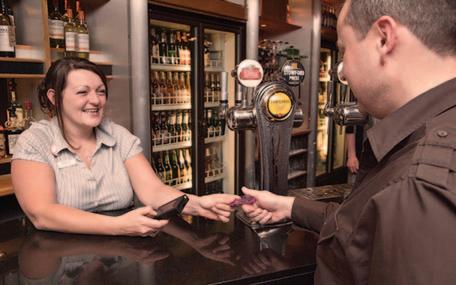
By Simon Brennan, Senior end user client manager for specialist print solutions, Brother UK
Evolving food labelling regulations have played a crucial role in improving food safety standards over the years, and have undoubtedly saved lives. Three years ago, Natasha's Law was introduced, revolutionising the way food allergens are labelled on Pre-packaged for Direct Sale (PPDS) foods. This vital legislation empowers the two million allergy sufferers in the UK to make informed choices about the food they consume.
“Labelling is essential for allergen management, and it’s at the heart of staying compliant with Natasha’s Law. It’s pushed businesses to think differently about their labelling processes. But there’s still more to be done. A 2023 study by Erudus1 showed that 54% of PPDS labels failed to meet the required standards, with messy, handwritten labels being a major issue.
“Clear, accurate labelling isn’t just about compliance – it’s about building trust with customers and ensuring their safety too. The good news is that technology is playing a key role in helping hospitality businesses to improve their labelling processes. Label printers, for instance, have become an invaluable tool for creating clear, durable, and compliant labels. Unlike handwritten labels, printed versions are smudge-proof and easy to read, helping businesses avoid common pitfalls.
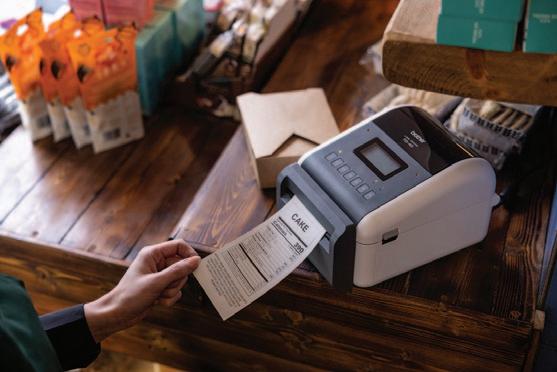
Brother's labelling solutions for PPDS foods allow food outlets and providers to produce high-resolution and legible labels with all essential information. The option to create a standalone solution, whether with an integrated keyboard or by connecting a tablet, makes compliance much quicker and easier. These solutions help businesses meet regulations, streamline the labelling process, and give customers more confidence in their choices.
As food labelling requirements continue to evolve to ensure the safety and accuracy of food products, businesses need to adopt reliable and user-friendly technology that can produce accurate, legible, and cost-effective labels. This will not only keep customers safe but also safeguard business operations.
Visit https://bit.ly/4ge0DBa to discover our full range of food labelling solutions.
1Erudus’ study analysed 116 PPDS labels on foods purchased from delis, farm shops, cafes, food markets and festivals across the UK, report published in 2023.

With the launch of the new range of BPA Free Polypropylene Basic pans and lids Araven once again demonstrates its leadership in product offering for the Horeca sector.
The new product range stands out as the most practical, affordable and sustainable solution for the professional kitchens with maximum hygiene and food safety guarantees. The range offers the widest variety of sizes, capacities and models on the market and features all the Araven features and benefits, such as its integrated label or the ColorClip system for easy food management.
The PP Basic range is available in up to six Gastronorm formats, from
GN 1/9 to 1/1, and three different heights - with both smooth and perforated base for liquid drainage. It is made of BPA-free polypropylene, which complies with the most stringent food safety regulations. This material also offers easy cleaning, great durability and high transparency. Due to resistance to temperatures between 95º and -40ºC, it can be both heated in microwave and used in commercial freezers.
The new Basic lid offers excellent food preservation. With Araven quality guarantee, these food pans, together with their lids, are ideal for ensuring optimum hygiene and food safety, while preserving the best properties of the food and reducing the level of wastage due to food spoilage. In addition, compliance with Gastronorm (GN) formats, the European standard in the Horeca sector and the food industry, guarantees perfect adaptation to food counters, shelves, or buffet displays.
For further information visit www.araven.com


At PDI International, we’re proud to launch the Protect What Matters Most campaign, introducing Protect 360° Sanitising Wipes.
Leveraging our expertise as a global healthcare leader, we’ve developed a professional-grade sanitising solution tailored for hospitality. More than just cleaning, these wipes help protect your people, reputation, and the planet.
Running a hospitality business is more demanding than ever, with rising NIC contributions and operational costs up by 55%.
We wanted to champion hospitality professionals, acknowledging their challenges in tough economic times. The campaign focuses on the real cost of cleanliness – from sticky tables and staff wellbeing to customer trust.”– Nina Smith, Marketing Manager, PDI International
CLEANLINESS: THE FOUNDATION OF TRUST
Cleanliness is a top factor influencing customer sentiment. A 2023 Accor study found that 81% of European and UK consumers consider it essential. Neglecting hygiene doesn’t just lead to bad reviews – it erodes trust.
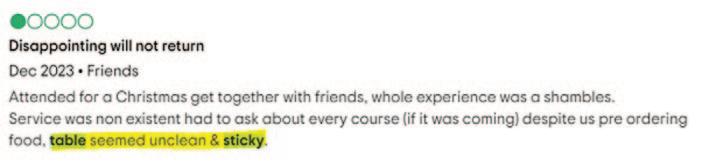
A frequent complaint? Sticky tables. This isn’t just about poor cleaning; it can result from varnish breakdown, harsh chemicals, or dirt build-up. Protect 360° wipes tackle this issue effectively.
PEOPLE: THE HEART OF YOUR BUSINESS
Your staff’s wellbeing is crucial. Traditional cleaning methods, like reusable cloths, are prone to cross-contamination. The Food Standards Agency recommends disposable alternatives to reduce risk.
SUSTAINABILITY: A PRIORITY FOR TODAY & TOMORROW
Reckitt Pro Solutions Unveils Quantum Warewashing Range to Secure Rave Reviews and Boost Occupancy in HoReCa Establishments
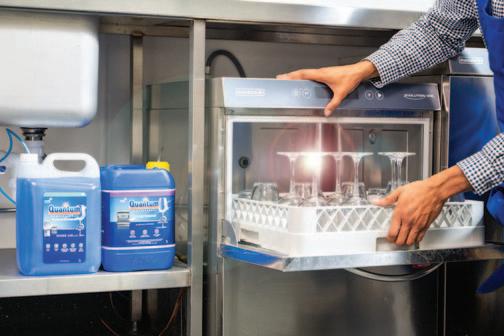
A staggering 92% of guests would not return if the tableware wasn’t entirely clean. New research commissioned by Reckitt Pro Solutions amongst frequent
restaurant-goers sheds light on the crucial role clean and hygienic dishware plays in securing positive customer reviews and encouraging repeat visits.
Cleanliness is king:
The survey revealed that cleanliness directly impacts reviews: 77% of guests would remove two or more stars from a restaurant's review if the dishware was not entirely clean and 92% would not return if dishware is not entirely clean.
QUANTUM PROFESSIONAL: 5-STAR SERVICE MADE EASY
Reckitt Pro Solutions has launched Quantum Professional, an innovative new range of warewashing products designed specifically for the HoReCa markets.

“Disillusioned with “cheap” and short lived internet bargain steamers?
The Jet Steam Professional is a powerful 6 bar commercial steam cleaner with a comprehensive range of accessories that can be used to clean numerous surfaces including washrooms, kitchens, tiles, grouting, worktops, basins and many more. Removes up to 99.9% of all bacteria and viruses. Also comes with a three year boiler warranty.
PLUS all these accessories included FREE
• Large Rectangular Brush
• Detailing Lance
• Window/Glass Tool
• Label Scraper

• Plug Hole Plunger/Cleaning Tool
• Range of small detailing brushes
List Price £1,150 + vat
SPECIAL
to readers of CLH £795+vat
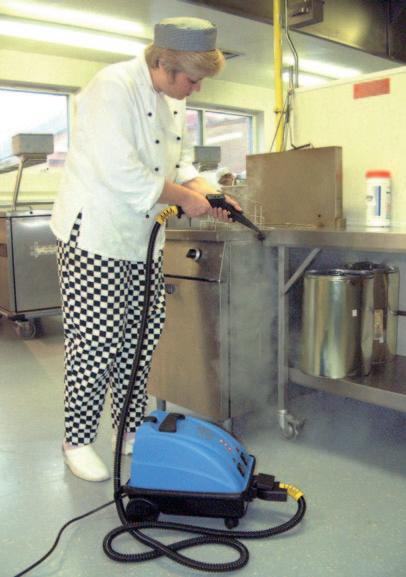
Sustainability isn’t just a trend—it’s a business necessity. A Lightspeed survey found that 90% of consumers expect ecofriendly hospitality practices, and 26% would stop visiting businesses that don’t prioritise sustainability.
Protect 360° Sanitising Wipes support your green goals:
• 100% biodegradable fibres & plant-based active ingredients
• Recyclable packaging
• UK manufacturing to reduce carbon footprint WANT TO TRY THEM OUT?
Write to us via samples@sanipro-intl.com to order your FREE samples!
A: PDI EMEA Ltd Pywell Road, Willowbrook East Industrial Estate, Corby NN17 5XJ, UK
T: + 44 (0) 8081 697 945
W: https://pdi-intl.com
E: hello@sanipro-intl.com
The range was created in response to the crucial requirement in this sector for brilliant, clean glass and dishware, as a critical driver to securing the 5- Star reviews.
Building on the legacy of Finish, the UK's No. 1 selling household dishwashing brand, Quantum offers significant benefits:
provides a powerful and reliable tableware solution that delivers impeccable cleanliness results
• improves operational efficiency both in front and back of house
• tackles even the toughest stains suitable for all types of professional warewashing machines.
The Quantum range: four targeted products for exceptional cleaning performance Detergents:
• Liquid Detergent: Cuts through grease and removes stubborn stains like dried-on egg, oil, tea, and coffee with ease.
• Glass Wash (Available as Liquid): Ensures sparkling clean and spotless glassware, tackling limescale and red wine stains effectively.
• Tablets (Available in tablet and gel capsules): Each tablet serves for up to 5 cycles.
Additives:
• Rinse Aid: Delivers brilliant shine and effortless drying. Salt: Provides superior protection against limescale residues and white marks, ensuring longer-lasting equipment and sparkling dishes.
Beyond cleanliness: enhancing back-of-house operational efficiency
Quantum Professional delivers perfect washing results and faster drying every time with less rewashing and polishing of glasses. These products can also aid in HACCP Plan compliancy.
Quantum is now available nationally and readily obtainable through Reckitt Pro Solutions' national network of key distributors. The packaging for this new range is also 100% recyclable.
To find out more about the research and the new range of Quantum Professional products, please visit Reckitt Pro Solutions at https://uk.reckittpros.com/
In the hospitality industry, maintaining impec cable cleanliness and hygiene is not just important—it's essential. Despite thorough, regular, and daily cleaning, dirt can still accumulate over time, especially in those hard-to-reach places. Cleanliness and hygiene traps lurk in corners and crevices, beneath furniture and furnishings, and particularly on porous surfaces such as floors and wall tiles. Microscopic dirt can penetrate deep into the pores of these surfaces, making hygienic cleaning a formidable challenge. Over time, this dirt becomes visible and can generate unpleasant odours, potentially leading to reduced guest satisfaction and negative reviews.
These products ensure that odour sources are not only removed but also that substances which could produce unpleasant odours in the future are broken down. Every 1L of MAXX Synbiotic packs 50 billion micro-organisms - a special blend of selected pro- and prebiotics, along with biodegradable surfactants. This unique "synbiosis" of pro- and prebiotics makes a decisive difference compared to traditional probiotic cleaners.
Ecolab, a pioneer in innovative cleaning solutions for over 100 years, is proud to introduce the exclusive, game-changing MAXX Synbiotic range. This new collection of all-purpose, WC, floor, and sanitary cleaners is set to revolutionise the cleaning industry, ensuring your establishment remains spotless and your guests remain delighted.
Experience the future of cleaning with Ecolab's MAXX Synbiotic range and ensure your guests enjoy a pristine and pleasant environment every time they visit. Transform your cleaning routine and elevate your standards. Speak to your Ecolab representative or distributor today. Let's make cleanliness and hygiene a hallmark of your hospitality experience!
Visit www.ecolab.com today for information on the full range.
Steam cleaning in the hospitality sector has many benefits, including killing germs, removing stains, reducing chemical usage and saving water.
Steam can kill up to 99.99% of germs and bacteria. This is especially important in the hospitality industry, where guest rooms and bathrooms can har-
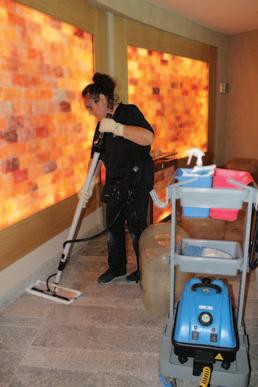
chemicals you won’t be leaving behind potentially allergenic residues.
It’s a natural, chemical-free way to clean. Using only water to generate steam to clean a wide variety of both hard and soft surfaces is a cost effective way to clean with savings to be made, both on cleaning chemi-
cleaning can be used on a
of surfaces, including walls, spot cleaning of floors, ceramic tiles, grouting, kitchens, washrooms and toilets. It can also clean and refresh soft surfaces such as curtains and upholstery. All in all, steam cleaning is a highly effective and versatile cleaning method that can help keep hospitality businesses clean and safe for both staff and customers alike whilst helping the planet and saving you money.
For further information see the advert on this page or visit www.duplex-cleaning.com

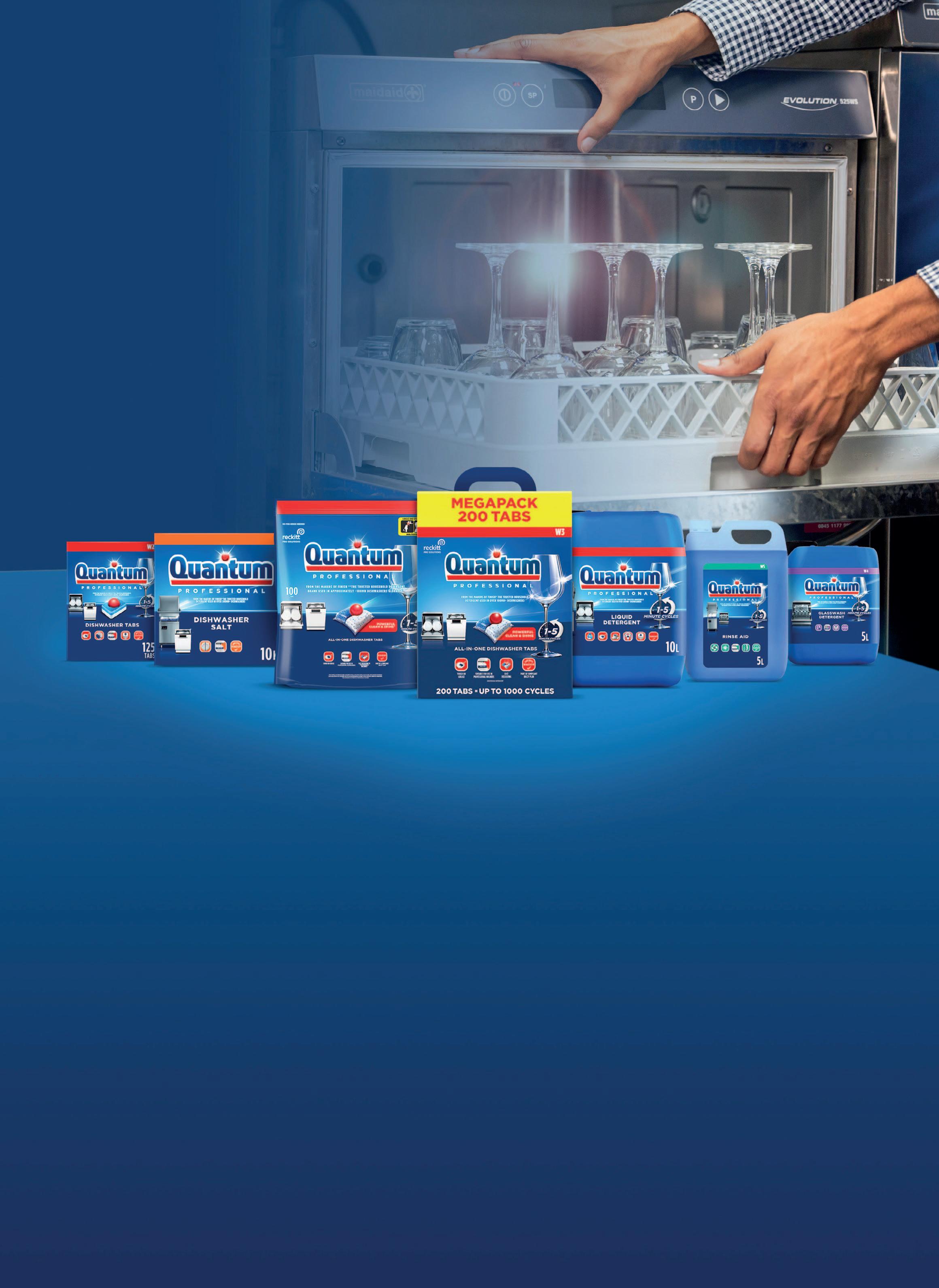
#$+;3&1#?%"&+,#3*0+(#1+"%13"(+1#+)(+ %&1)7*'&-?%(1+1-)1+&%"5%0+1-%?+,'1-+ 3(;*%)(+0'&-,)"%+=

%)&'%"6+&)5'(.+1'?%+)(0+%$$#"1@
#$+3&%"&+7%*'%5%+>3)(13?+,#"/&+'(+1-%+&-#"1%&1+ #$+;4;*%&6+&)5'(.+,)1%"+)(0+1'?%@

Please mention the Caterer, Licensee & Hotelier News when replying to advertising
In today’s competitive leisure market, the experience you offer your guests can make all the difference. For pubs and restaurants, it’s not just about providing somewhere to sit- it’s about creating an unforgettable, comfortable environment that encourages visitors to return year after year. One of the simplest yet most effective ways to elevate your guests’ experience is by upgrading your outdoor furniture.
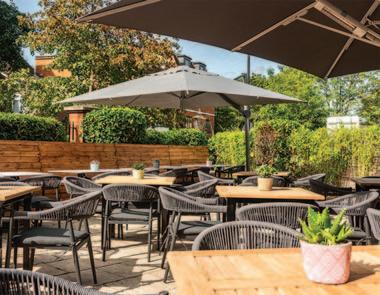
With 20 years’ experience providing bespoke designs and multi-site rollouts, we are a reliable provider and installer of high-quality furniture, from picnic tables and benches, rattan, teak and 100% recycled plastic, to accessories such as parasols, planters, bins and parking signs.
Our comprehensive services include: • In-house CAD services for custom designs
www.leisurebench.co.uk
Wicker furniture is all set to be more popular than ever this summer. The good news is Trent Furniture have a great range of wicker style seating built to withstand everything that the Great British weather and the demands of the hospitality setting can throw at it!
Designed for the great outdoors, the bestselling Monaco Stacking Chair is available in a black, green, red or natural wicker finish. Fully stackable, its water resistant and strong yet lightweight aluminium frame and rattan seat are built to seat your customers in comfort and style on the pavement or in your outdoor seating area for years to come. Its contemporary design is sure to work well with most of your existing tables or you can opt to pair it with our Alma Aluminium Table. This easy-tomaintain table is available with a square or round top for an elegant al fresco look.
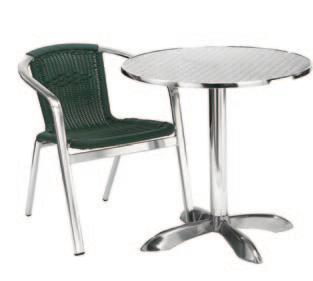
Our Plaza range is another highly popular wicker furniture option thanks to its versatility and chic good looks. It’s crafted from low maintenance water-resistant and UV-resistant black synthetic rattan that won’t fade in the sun. Again, designed for outdoor spaces, the stackable Plaza chair, armchair and hardened glasstopped table which seats up to four in comfort, is becoming increasingly used in indoor settings too. Wherever you choose to place it, its clean design is built to serve you and your customers for the long-term. Alternatively, if you’d rather opt for on-trend earthy brown, our Bolero range of polypropylene outdoor table and chairs offers the sought-after wicker look with the added bonus of being fully recyclable. To discover more about these pieces and the rest of our extensive range of outdoor furniture, please get in touch 0116 286 4911 or via our contact form at www.trentfurniture.co.uk/contact-us

In the ever-evolving hospitality industry, outdoor spaces have become a crucial asset for pubs, hotels, and restaurants across the UK. With changing consumer preferences and an increased focus on alfresco dining, well-designed outdoor areas can significantly enhance a venue’s appeal and profitability. From charming pub gardens to stylish hotel terraces, investing in outdoor refurbishments is no longer just an aesthetic choice— it’s a business necessity. As guest expectations rise, establishments that create inviting, comfortable, and weather-resilient spaces stand to benefit the most.
The importance of outdoor spaces has been magnified in recent years, particularly in response to shifting social habits and health-conscious trends. Many customers now actively seek venues that offer fresh air, greenery, and a relaxed atmosphere, whether for casual drinks, fine dining, or social gatherings. As a result, pubs and hotels that optimize their outdoor environments with upgraded seating, ambient lighting, and effective shelter solutions can significantly improve customer experience and dwell time. A thoughtfully designed outdoor space can set a venue apart from competitors,
making it a preferred destination for locals and tourists alike.
Refurbishing outdoor areas is also a strategic way to maximize capacity and revenue, particularly in peak seasons. Well-utilized gardens, patios, and terraces provide additional seating that can help businesses cater to larger crowds without requiring major structural expansions. With the right enhancements—such as heating solutions for year-round use or sustainable landscaping to create an eco-friendly appeal—hospitality venues can extend their service hours and attract patrons even in cooler months. This flexibility is especially beneficial in the UK, where unpredictable weather often dictates consumer behavior.
By prioritizing outdoor refurbishments, pubs and hotels can future-proof their businesses, enhance customer satisfaction, and create vibrant social hubs that cater to evolving consumer demands. In an increasingly competitive market, those who invest in their outdoor areas today will reap the rewards for years to come.
The
ket is heavily influenced by changes in weather conditions, with consumers more likely to purchase picnic benches
periods of good weather. MG Timber specialise in the manufacturing and supply of high-quality
Their picnic tables are made from high-grade timber and are designed to withstand the harsh outdoor elements. Whether you’re a restaurant seeking to enhance the cosy ambiance of your outside space with a high-quality dining set. A hotel wanting to revive your garden with a premium picnic table or a pub landlord aiming to elevate your beer garden with an impressive selection of pub benches and wheelchair accessible picnic tables. MG Timber are the garden furniture
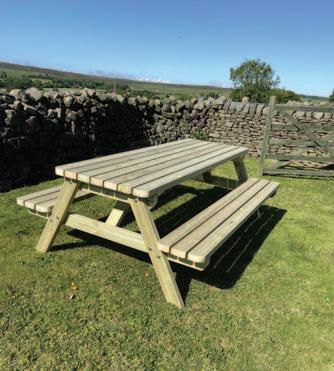
suppliers for you.
Crafted from the finest Swedish Redwood, each piece is expertly pressure treated to ensure longevity and protect against the elements. Renowned for their robustness, our treated wooden outdoor furniture is designed to withstand the unpredictable British weather, making them a reliable choice for any catering and licensing industry outdoor space.
For full details about our vast array of top-quality outdoor picnic benches for sale contact us today. We are also offering up to 15% off on commercial orders, please visit our website www.mgtimberproductsltd.co.uk or call
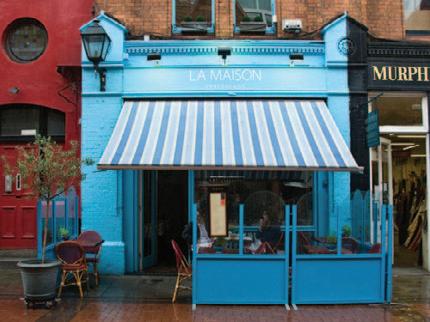
With the ongoing success of the ILF Chairs website, ILF now have a comprehensive range of STOCK outdoor seating and tables to suit all budgets.
We have a range of outdoor chairs, barstools and tables available in Aluminium, Resin and Polypropylene which allows you to choose from a variety of styles and colours.
More STOCK ranges coming soon please check the website. www.ilfchairs.com/terry.kirk@ilfchairs.com
Their online website offers both indoor and outdoor seating and table solutions.
Divided into Contemporary seating, Upper Class, Lounge Seating, Period Seating, Outdoor seating and tables plus Indoor Dining & Coffee height wood tables, creating a great selection of products to view at your leisure. Most made to order indoor seating and indoor wooden table bases and tops can be finished to any customer specification. Outdoor items offer a variety of colours within the same product style.




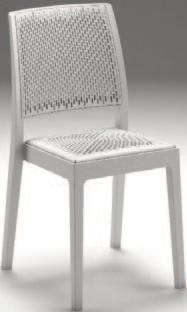


Enquiries can be sent to ILF directly from the website and they will reply within 24 hours. ILF hope you will enjoy the experience of viewing their easy to navigate website and they look forward to helping clients get the best products for their hospitality site.






In the hospitality industry, the efficiency and reliability of kitchen equipment are crucial to delivering highquality food and service. Whether in pubs, hotels, or restaurants, outdated or poorly maintained appliances can lead to slower service, inconsistent food quality, and increased operating costs. Investing in modern, energy-efficient kitchen equipment—such as ovens, fryers, dishwashers, and ventilation systems—not only improves day-to-day operations but also ensures compliance with hygiene and safety regulations.
In a busy kitchen, every second counts. Modern ovens and fryers are designed for faster, more even cooking, helping chefs prepare meals consistently while reducing food waste. Newer models also offer advanced temperature control, programmable settings, and energy-efficient features that help lower utility costs. By upgrading to high-performance appliances, hospitality businesses can improve service speed, maintain food quality, and meet growing customer expectations.
Cleanliness is a top priority in any hospitality setting, and up-to-date dishwashers and glasswashers play a crucial role in maintaining hygiene standards. In high-volume environments like pubs and hotels, unreliable or outdated machines can cause delays in service and create hygiene risks. Modern dishwashing equipment is designed to clean efficiently at higher temperatures, ensuring glassware, crockery, and utensils are sanitized and ready for use quickly. Upgrading to energy-efficient, high-capacity dishwashers not only speeds up operations but also reduces water and electricity consumption.
While cooking and cleaning equipment are essential, the kitchen’s ventilation system is just as important. Proper ventilation keeps the working environment safe and comfortable by extracting smoke, grease, and heat. However, without regular maintenance, kitchen ductwork can become clogged with grease, creating a fire hazard and reducing air quality. A well-maintained extraction system improves air circulation, helps prevent equipment from overheating, and ensures compliance with fire safety regulations. Regular cleaning and servicing of ventilation systems are essential to avoid costly breakdowns and maintain a safe kitchen environment. Keeping kitchen equipment up to date is an investment that pays off in the long run. Modern appliances reduce energy costs, improve efficiency, and help hospitality businesses maintain high food safety and hygiene standards. Additionally, well-maintained equipment minimizes downtime, reducing the risk of service disruptions that could harm a venue’s reputation. In an industry where reliability and speed are key to customer satisfaction, ensuring that kitchens are equipped with the latest technology is essential for long-term success. By prioritising modern equipment and regular maintenance, pubs, hotels, and restaurants can enhance their operations, improve safety, and provide a better experience for both staff and customers. In today’s competitive hospitality landscape, having a well-equipped, smoothly running kitchen is not just an advantage—it’s a necessity.
“It gives big results but only has a small footprint while providing a range of washing solutions for pubs, bars, hotels, restaurants, and cafes,” says Meiko UK MD Paul Anderson. Meiko’s New UPster U 500 XD undercounter dishwasher washes everything from delicate glassware to crockery, serving dishes, trays, reusable food delivery crates and baking trays, which can be washed stacked next to one another.
There are multiple wash programs to suit the different ware, a self-cleaning programme and fully insulated chambers and doors to minimise heat loss and maximise efficiency. Optional GiO reverse osmosis ensures sparkling clean, spot-free results every time. Paul Anderson continues, “Rack dimensions are 500 x 500 mm, but the machine washes trays and Euro crate boxes up to 600 x 400 mm thanks to the extended door.
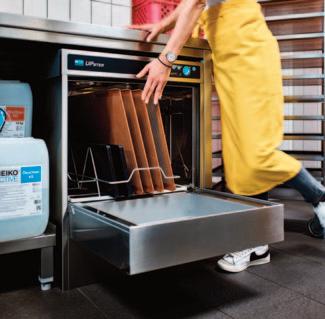
“Using a deeper door to expand the flexibility of a dishwasher is an ingenious way to provide more value for the user and it makes the new UPster XD suitable for anyone who does not have enough space for a conventional pot washer.”
UPster machines come with the new Meiko ‘AktivPlus’ fine filtration system, which filters the wash tank water several times over. Cyclic backflushing actively and reliably ejects food particles and dirt from the wash water. There is also a ‘toothpick trap’ to protect the drainage pump. Blue colour-coded components mean that cleaning is made easier for staff. The parts coloured blue are those that need removal and cleaning in the sink, as part of the regular clean down. This ensures even untrained staff instinctively know what to do.
For more information, see the advert on the facing page, Tel:
MeikoUK@Meiko-uk.co.uk or visit www.Meiko-uk.co.uk
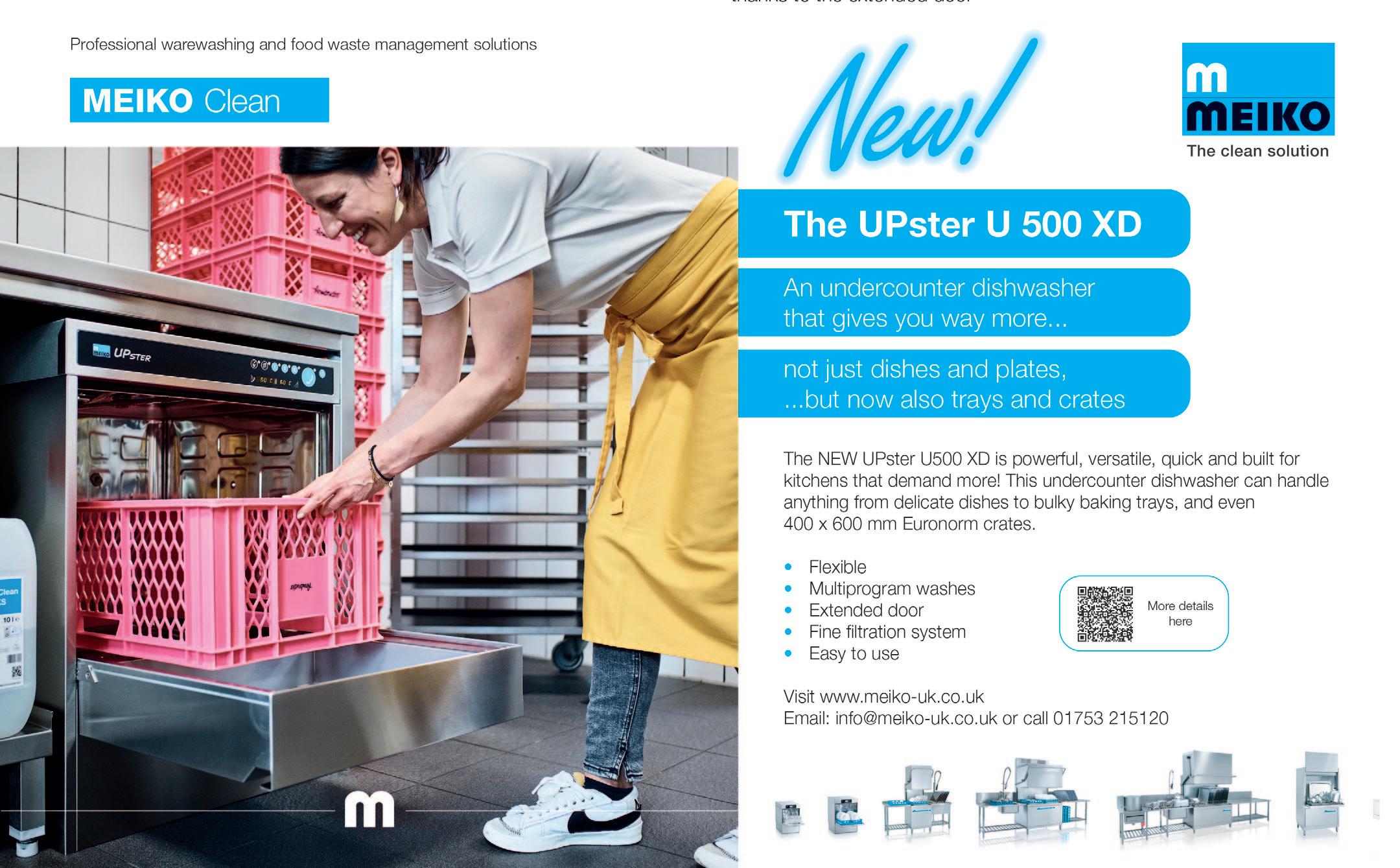
KDE Catering Equipment is a leading independent supplier of commercial catering equipment, providing sales, service, and installation with unmatched expertise.
Serving a wide range of sectors— including hospitals, hotels, pubs, restaurants, takeaways, schools, nursing homes, and coffee shops— KDE ensures tailored solutions for every budget and requirement.
Founded and independently owned by Jonathan Mellor, whose career spans three decades working with renowned manufacturers worldwide, KDE is built on a foundation of industry knowledge and a commitment to excellence. This experience allows the company to deliver exceptional service and high-quality products to businesses of all sizes.
KDE proudly serves as the UK’s official importer of STIERLEN, a German manufacturer celebrated for its precision-engineered glasswashers and dishwashers. Designed to handle the rigorous demands of commercial kitchens, these glasswashers and dishwashers offer outstanding performance, durability, and efficiency. All with 2 years parts warranty.
In addition to its extensive product range, KDE stands out for its customer-focused services, including
overnight delivery on most products. This ensures businesses can quickly access the equipment they need to keep operations running smoothly, minimizing downtime and maximizing productivity.
From expert advice to seamless installation and ongoing maintenance, KDE is dedicated to supporting its customers at every step. Whether outfitting a new kitchen or upgrading existing equipment, KDE combines reliability, quality, and convenience to meet the unique needs of the catering industry.
With a legacy of trust and a focus on innovation, KDE Catering Equipment remains a cornerstone of the UK’s catering sector, helping businesses thrive with dependable, high-quality solutions delivered with unparalleled efficiency.
UK’s official Importer of Stierlen Dishwashers Tel: 01422 524800
Email: sales@kdecateringequipment.com www.kdecateringequipment.com
QUOTE CLH10 FOR 10% DISCOUNT OFF YOUR FIRST ORDER
All kitchen waste water pumping systems require an inspection and maintenance schedule to keep them operating effectively and to prevent clogging or blockages.
To avoid these types of problems (especially during a busy service) it is essential to regularly check and maintain any pump system.
Maintenance is very simple and basically consists of isolating the mains power and removing waste that has collected in the tank.
The optimum frequency for inspecting a pump depends on the site application and could be weekly, monthly or every six months. The interval must be selected to ensure that the average amount of collected debris does not start inhibiting the float movement or clogging the pump inlet.
As an example, service on the DrainMinor and DrainMajor range from specialists Pump Technology Ltd, is particularly easy to carry out. The lid can be quickly removed using the built-in thumbscrews, without the need for any tools, giving full access to the collecting chamber. If required, the pump can be unscrewed by hand from the internal pipework enabling a more thorough inspection of the pump strainer and inlet.
Finally, the inside of the tank should be washed out before everything is re-
QuoteCLH10 for 10% discount off yourorderfirst
The UK’s official Importer of Stierlen Dishwashers Tel: 01422 524800
Email: sales@kdecateringequipment.com www.kdecateringequipment.com
assembled and the mains power switched back on.

The whole process should take no longer than 5 to 10 minutes, after which the pump system will be ready to use again.
The DrainMinor and DrainMajor waste water systems are the benchmark for reliable, automatic, commercial kitchen, pumped drainage. They include features such as a large, lowlevel, triangular float, attached to the pump via a ridged float arm to ensure effective operation, even when the collecting tank is heavily laden with waste food products, fats oils and grease!
All Pump Technology Ltd products are supported by a nationwide service scheme and replacement pumps. If ever required these are available from stock for next day delivery.
For any operation or maintenance questions about waste water pumping systems, please contact the expert team at Pump Technology Ltd.


‘EVER DREAMED ABOUT OPENING YOUR OWN BAR, RESTAURANT OR CAFÉ, BUT DON’T KNOW WHERE TO START?’
Meet Dominic Ricciardi….
Caterquip UK supply professionally reconditioned catering equipment and key to our success is saving clients huge amounts of money compared to buying new, which . Our other key benefit is giving clients access to those desired premium European brands which are very expensive new and out of reach for many’.
Dominic has opened two of his own very successful restaurants and is acutely aware of the hidden pitfalls of getting a new business off the ground. He has also assisted hundreds of Caterquip clients to plan, launch and provide support with their own catering businesses.
With over 25 years of start-up consultancy experience, Dominic Ricciardi and his team will assist you in realising your dreams by offering the following support.
• Analysing location (understanding amount of customers in your catchment area)
• Financial Business plan
Planning permission
• Alcohol license
• Any other licenses including liaison with local Environmental Health.
• Kitchen and Bar design
• Front of house design and layout
• Drinks menu
• Food menu
• Staffing
Avoid the obvious, and not so obvious challenges ahead. Our consultancy services will steer successful launches and strategies for ongoing success.
Expert and practical advice is crucial to understand the pitfalls and dealing with the following fear factors.
About 60% of restaurants in the UK fail in their first year of business. This is similar to the failure rate in the US.
Explanation
• The restaurant industry is known for being difficult to succeed in.
• Restaurants often have low profit margins.
ment.
Ideal for events or to provide temporary catering facilities during your kitchen refurbishment, our versatile units and equipment offer an efficient and economical solution to the caterers’ needs.
Production Kitchens, Preparation Kitchens, Ware-washing Units, Dry Store Units, Cold Rooms and Restaurant Units are available as individual units in their own right or they can be linked together on site to form a complete complex.
Alternatively, we can offer modular, open-plan facilities, usually for larger, longer-term hires.
We offer a free design service, and project management from concept through to delivery and installation on site, plus full technical support throughout
the hire period.
The standard specification of our Medium Production Kitchen unit includes a six burner oven range, salamander grill, twin basket fryer, undercounter fridge, undercounter freezer, hot cupboard, double bowl sink unit with integral hand wash basin, storage racking, plus ample power points to plug in Microwaves, Food Processors, Toasters etc. Internal equipment can be interchanged, and clients can effectively specify their preferred layout.
We have many tried and tested design layouts and would be pleased to put forward our recommendations for your project.
So, if you’re planning a refurbishment or need to cater for an event then why not give us a call and we’ll be happy to provide advice and put forward a competitive proposal.
For further information or to arrange a site visit, email: sales@mk-hire.co.uk or call us on 0345 812 0800, or visit our website: www.mk-hire.co.uk
Restaurants face intense competition from other food service providers.
• Restaurants can struggle to meet the changing demands of customers.
• Lack of an original concept
Poor understanding of costs
• Poor quality food
• Customer service issues
Running out of cash
• Being outcompeted
• Having a flawed business model
• Regulatory or legal changes
• Pricing or cost issues
Most of the 40% who are successful will have consulted expert and knowledgeable assistance to guide that success and remove the anguish and avoid harmful guess work.
Consulting expert and experienced knowledge will help you define your goals, navigate complex business set up & launches and remove the often scary and ominous routes to business success.
Dominic can be contacted by email dominic@caterquip.co.uk
For further information on Caterquip see the advert on this page.

Direct proud to be UK's no1 supplier of replacement fridge and freezer seals. We fabricate for a wide variety of commercial fridge & freezers.
The management team at Fridge Seals Direct have over 30 years of experience in the refrigeration industry and have each spent many of those years installing gaskets and hardware for a range of styles, brands and sizes of fridges.
From restaurant kitchens to food warehouseswe have experience in dealing with fridge & freezers of all sizes and scales. To learn more about fridge seals, be sure to explore our range
of extensive guides on how to replace a refrigerator door seals. Otherwise, find your specific guides in how to identify, measure, install or maintain your fridge or freezer door seal.
Our reputation in the industry along with our commitment to providing a high-quality gasket without having to buy from the factory allows us to have competitive pricing and fast turnaround time.
Try us out, order your door gaskets from us and discover a better way to do business. We are here to help you.
www.fridgesealsdirect.co.uk
From gas ranges, fryers, and ovens to fridges and more... Popular brands such as
Garland, Foster, Blue
and

• Be ready for your inspections
• Damaged fridge seals are unhygienic
• Make your fridge more energy efficient with a good seal on your fridge
• We provide custom seals for cold rooms, discontinued models, and units with no identification information
• Next-day delivery service
• Discounted prices on large orders WhatsApp, phone, and email support
Swiftclean, the nationwide-based air and water hygiene company, has recently launched its new Kitchen Extract Auditing service.
It has been developed primarily to support Facilities Management companies when they take on a new multisite contract.
When a new facilities management team takes over the running of a new multi-site contract, they may, as part of that contract be required to make sure that the current specialist cleaner of the kitchen extract systems is carrying out the work to the required standard.
As a member of the BESA and the Ventilation Hygiene Register, Swiftclean has the experience and qualifications to carry out these audits and ensure that they have been completed thoroughly and competently following the TR19® Grease specification. TR19® Grease is issued by the BESA (Building Engineering Services
Association) and is widely accepted as the leading source of authority on kitchen extract system hygiene.
Our audit reports include a summary of the overall condition of the extract system with photos. They will detail the grease thickness levels before and after the clean and, if there are any inaccessible areas, they will make recommendations as to how to resolve these issues.
More and more insurers are now insisting that systems are cleaned to the TR19® Grease specification. It is important for you to check your policy as there will be a possibility that you may not be paid out in the event of a fire if you cannot provide clear evidence of your compliance with TR19® Grease.
Swiftclean is also a leading provider of expert cleaning for kitchen extract systems, routinely providing clients with compliant systems.
www.swiftclean.co.uk
Caterquip Ventilation Ltd is proud to be celebrating their 23rd Anniversary this year.
This Warwick based company offers nationwide coverage for all your commercial catering needs: free site surveys, quotations and designs (CAD), quality bespoke and standard fabrications, specialist knowledge of catering ventilation systems including input air, odour reduction (carbon filtration and ESP) and sound attenuation. Affiliated members of Constructionline and CHAS, Caterquip Ventilation have a strong hold in the marketplace often advising industry professionals on ventilation systems to a DW172 specification & BSEN:6173. They have strong relationships with all leading kitchen equipment suppliers, and they offer a kitchen
design service to help you build your ideal kitchen.
Projects undertaken have included Olympic Villages, Basildon Hospital, The Mitre Hotel at Hampton Court, The Truck Stop at Anglesey, The Lodge at Old Hunstanton, Colleges, Schools, Hotels, Restaurants and Public Houses. They ensure their systems are compliant with the current guidelines whilst maintaining an efficient and dynamic facility.
With extensive knowledge of manufacturing and installing ventilation systems, they can help you design the best kitchen within the space available.
Call: 01926 887167, visit: www.caterquipventilation.co.uk, email: info@caterquipventilation.co.uk



For bars and pubs, creating an inviting, functional space is essential to keep customers returning. Whether you’re refreshing your current look
At HotelContractBeds, we’ve been supplying the hospitality industry with premium contract beds and mattresses for over 40 years. Whether you're running a boutique B&B, a busy hotel chain, or student accommodation, we offer a bespoke service that ensures you get the perfect beds to suit your needs.

As specialist UK manufacturers, we take pride in delivering high-quality, durable, and comfortable beds that meet strict UK & EU fi re safety regulations (BS 7177:2008 – Crib 5), ensuring your guests sleep safely and soundly. Why Choose HotelContractBeds?

For over half a century, Tekne has been at the forefront of the joinery and fit out industry, delivering exceptional craftsmanship and expertise to a diverse range of projects. From luxury private residences to iconic restaurants and hotels, Tekne has built a reputation for quality and precision, working with renowned chefs such as Rick Stein and Jamie Oliver, and hospitality giants, The HSH Group at The Peninsula Hotel, London.
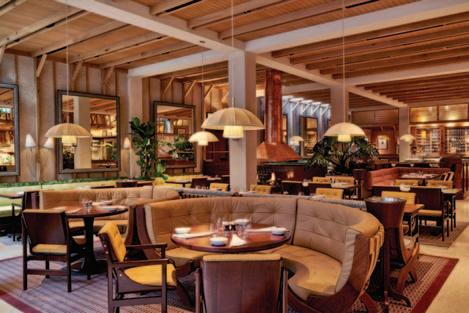
years, having been responsible for some of the area’s most exciting and respected venues. The opening of The Ivy in the heart of Bournemouth is particularly significant as it represents a long-standing relationship with The Ivy Group.
Based in Poole, Dorset, Tekne's headquarters houses a state-of-the-art
32,000 sq ft manufacturing facility. This expansive space allows the company to produce highquality bespoke furniture and joinery, ensuring that every element of a project is crafted with care and attention to detail. The ability to manage all aspects of a project under one roof, from design to construction and manufacturing, makes Tekne a leader in its field, offering Contract Management services for projects of all sizes and budgets.
Connections to the local community go back many
Mayfair Furniture will be celebrating 12 years this year of providing the UK’s fastest and affordable commercial furniture. Supplying all kinds of establishments from high end hotel chains to small local takeaways.
We keep in stock a huge variety of items ready for immediate dispatch, and can fulfil a wide range of bespoke orders. We deliver to all areas of the UK, Ireland & Europe.
We are not just a supplier; we understand that from time to time hospitality and leisure establishments like to give themselves a fresh new look. That's why not only do we supply contract furniture, but when it's time for your establishment to go through a
We have grown from a local success story to a respected name in the industry, collaborating with some of the most recognised names in hospitality. From working on high-profile hotel projects such as 1 Hotel Mayfair, to local projects such as the nearby New Forest Limewood Hotel spa, recently awarded UK Spa of the Year.
With over 50 years of experience, Tekne continues to build on its legacy, bringing a passion for craftsmanship and a dedication to excellence to every project.
Whether it’s creating bespoke furniture or managing large-scale construction projects, Tekne remains committed to delivering the very best.
Talk to us about your next project, on 01202 672121, email info@tekne.co.uk or visit www.tekne.co.uk
One of UK’s leading bespoke joinery, fine cabinetry and marquetry specialists responsible for the creation of some of the UK’s finest interior and social spaces.
Talk to us about your next project, on 01202 672121 info@tekne.co.uk www.tekne.co.uk
Hotelier

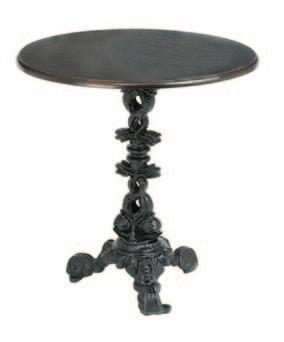
Heritage furniture made from rich, dark wood has been named as a key furniture trend for 2025, but as every publican knows, this kind of authentic design is timelessly popular.
Here at Trent Furniture, we offer a fantastic range of traditional pub furniture, which takes the exquisite craftmanship of the 19th century as the inspiration for today’s cast iron tables.
Available as a standard height or poseur table with the option of a double-level top, the Dolphin Table features an intricate Victorian-inspired cast iron base that makes as much sense in a contemporary venue as it does in a traditional British pub. The Lionhead Table offers an alternative cast iron design in the same choice of four attractive finishes in melamine, veneer or solid wood. Or if you’re looking for
a round cast iron table, opt for the ever popular Girlshead Table with its muchloved image of a woman’s face. Whichever table you choose, you can be assured of traditional quality as well as style.
A classic table needs a chair to match and the Straight Leg Captains Chair, with its timeless spindleback design, turned wooden legs and option for an upholstered seat, is a perfect partner to any pub table. Alternatively, The Straight Leg Mates Chair offers the same durablity and simple yet elegant Colonial style.
Of course, no traditional pub interior is complete without bar stools. The Tall Colonial Button Top Bar Stool is one of our most popular stools to pair with the bar or a poseur table, while the simple Small Wooden Stool is the hardest working piece of furniture in any pub.
To find out more about our fantastic range of traditional, contract grade furniture, please call us on 0116 286 4911 or fill in our contact form at www.trentfurniture.co.uk/contact-us or see the advert on the facing page.
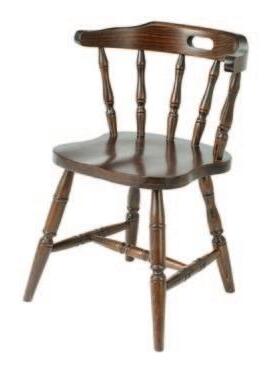
As the UK’s hospitality sector continues to evolve, the demand for high-quality, durable, and aesthetically pleasing contract furniture has never been greater. At Dining Chairs UK, we are proud to be a trusted supplier to the hospitality industry and licensed on-trade, providing cost-effective furniture solutions for commercial venues across the country. YOUR ONE-STOP SHOP FOR HOSPITALITY CONTRACT FURNITURE
Whether you operate a bustling restaurant, a stylish hotel lounge, or a traditional pub, the right furniture plays a crucial role in defining your space. We specialise in providing a comprehensive range of hospitality furniture, including chairs, bar stools, table tops, table bases, and outdoor furnishings—ensuring you have access to premium-quality products at competitive prices.


HASSLE-FREE FURNITURE SOURCING WITH UNBEATABLE VALUE
At Dining Chairs UK, we believe in making commercial furniture buying as simple and stress-free as possible. Our vast selection of in-stock items means you can furnish your establishment quickly, without long lead times. Plus, with our competitive pricing and quick delivery options, achieving the perfect look for your business has never been easier.
We’re so confident in our pricing that if you find the same product at a lower price elsewhere, we won’t just match it—we’ll strive to beat any like-for-like quote. This commitment to affordability ensures that your business gets the best value without compromising on quality.
Tailored Solutions to Bring Your Vision to Life We understand that every venue is unique. That’s why we offer tailored solutions to match your brand’s identity and aesthetic vision. Our expert team works closely with business owners, designers, and hospitality professionals to source and specify furniture that seamlessly blends style, durability, and functionality.
With years of experience supplying contract furniture to the hospitality sector, we understand the unique demands of high-traffic commercial environments. Our furniture is built to withstand daily wear and tear while maintaining its visual appeal, ensuring a lasting investment for your business. From classic designs to contemporary styles, our collection caters to a diverse range of hospitality settings, helping you create an inviting atmosphere that keeps customers coming back.
For more information, visit www.diningchairsuk.com or call us to discuss how we can support your next project.
MST AUCTIONEERS Ltd specialise in handling & auctioning a wide variety of goods.
We act for Insolvency Practitioners, Receivers, Bailiffs and Solicitors as well as large PLCs.
We are members of The National Association of Auctioneers and Valuers (NAVA). For the past 25 years, we've provided a unique disposal service tailored to suit, liquidators, banks, receivers as well as private and corporate vendors. We carry out probate valuations and conduct complete house and commercial clearances. We have the largest Auction venue in the South of England. Our regular monthly Auctions occupy 45,000 sq.ft. of undercover space, selling over 2500 lots from 3 rostrums over two days.
We also hold regular Auctions ”On Site” and "On Line" Visit www.mstauctioneers.co.uk for further information.

Lymington Ramps make Beautiful wheelchair ramps with the SAFEST ANTI-SLIP Walking Surface and carry out FREE SURVEYS 7 DAYS A WEEK.
Every ramp is individually designed and handmade for all types of wheelchair and mobility access ramp requirements, to provide Safer, Easier Access in and out of our clients' homes and also commercial premises

NHS & Local Authority Approved, we design and construct ramps in homes, public buildings and all are made to suit each customer’s specific requirements for their safety, ease of use and comfort. They are attractive to look at, designed to blend in with each individual property and can be constructed using a range of materials and styles.
Located in Lymington, we provide wheelchair access ramps in Dorset & Hampshire, from Poole to Bournemouth across to Dorchester, Salisbury, Winchester, Southampton, Portsmouth and further afield when required.
Safest Ramp Access Anti-Slip Walking Surface is
Guaranteed for 25 Year. Whether it be your home or public buildings, wheelchair access must be safe and that is why all of our ramps. have an anti-slip walking surface that has been tested in Wet, Icy and Greasy conditions and proven to offer unrivalled slip resistance compared to other materials and if you step on one of our ramps, you will immediately feel safer because of the excellent grip beneath your feet.
Wheelchair ramps are quality guaranteed because of the excellent durable materials used, anti-slip walking surface, Sapele Hardwood, Steel framing and importantly the high standard of workmanship.
With over 40 years in construction, we are very experienced in all aspects of building, particularly wheelchair ramp access and will tailor each ramp to your exact needs and requirements.
Our top priority is to improve quality of life, by offering the best mobility ramps for homes and businesses. 07511 801493 www.lymingtonramps.co.uk
With the ongoing success of the ILF Chairs website, 2024 has seen an increase in their STOCK CHAIRS AND BARSTOOLS available in different Faux and Velvet upholstery and selection of frame colours, plus a 10 colour STOCK range of Egger laminated 25mm table tops in a selection of sizes and colour finishes, plus now also a range of STOCK Melamine tops. A full range of table bases in metal and stainless steel are also kept in STOCK. In addition, ILF now have a comprehensive range of STOCK outdoor seating and tables to suit all budgets, plus real wood table tops and real wood table bases for indoor use as well as a NEW full range of veneer back chairs made to order.
More STOCK ranges coming soon please check the website. www.ilfchairs.com/terry.kirk@ilfchairs.com
Their online website offers both indoor and outdoor seating and table solutions.
Divided into Contemporary seating, Upper Class, Lounge Seating, Period Seating, Outdoor seating and tables plus Indoor Dining & Coffee height wood tables, creating a great selection of products to view at your leisure.
Most made to order indoor seating and indoor wooden table bases and tops can be finished to any customer specification. Outdoor items offer a variety of colours within the same product style.
Enquiries can be sent to ILF directly from the website and they will reply within 24 hours. ILF hope you will enjoy the experience of viewing their easy to navigate website and they look forward to helping clients get the best products for their hospitality site.





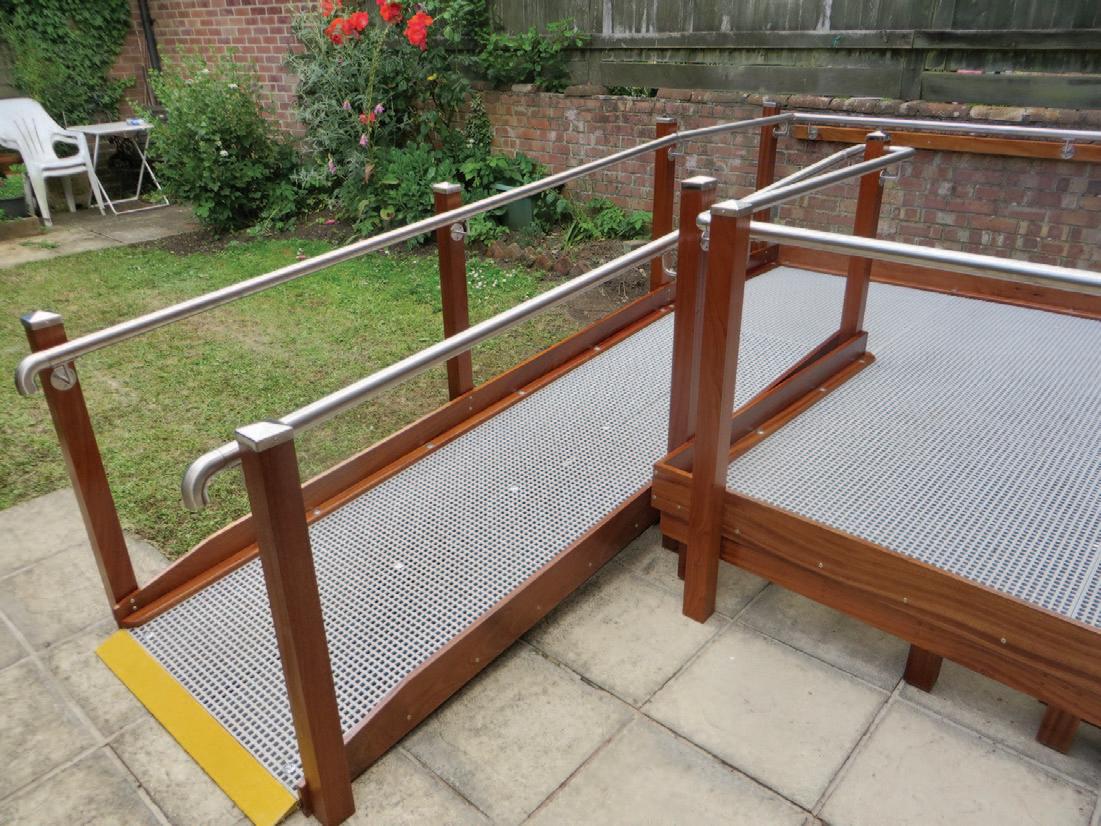


technicians
worktops,
shower trays, tiles, window frames and cills, furniture and
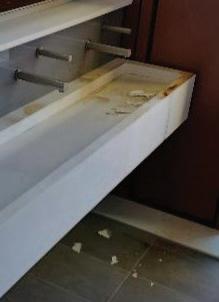
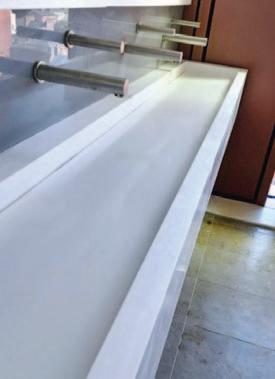








TES Group had the pleasure of providing the building services for the newly opened Babbo restaurant in St Johns Wood Highstreet, working the with client and Design team they covered the installation of the Mechanical & Electrical services, Fitout, Decoration and Joinery works.
TES Group have been operating in the construction industry since 2009.
TES Group work with a range of clients including blue chip developers such as Berkeley Group, Mount Anvil, Multiplex, Taylor Wimpey, Vistry Group and private. TES Group specialises in the fit-out and commercial refurbishment of high-end space. They excel at working on bespoke projects which are both commercially and programme driven.
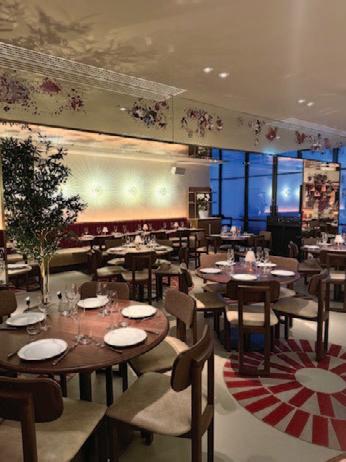
TES cover all aspects of both residential and commer-
Wood High Street, Babbo is a place to tell stories and create new memories with friends and family See the advert on the facing page for more information on TES Group or visit www.tes-group.co.uk
The appearance of your hotel is of paramount importance when inspiring confidence and delight amongst clientele. You have earned your name and now want to maintain your position and reputation.
Multi-award winning, and with over 30 years’ experience in specialist restoration, Magicman are the first choice for major insurers in the UK and for the marine industry, continually introducing new products through our dedicated R&D facility. These have recently included new processes for protecting marble from stains, exterior brick tinting and the application of slip-resistant surfaces for baths and showers.
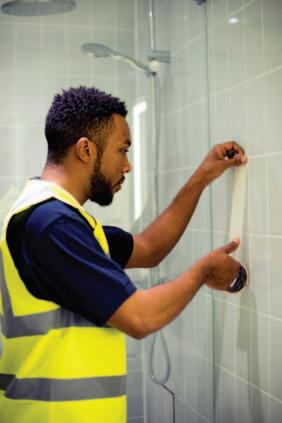
Our customers include celebrated hotels, famous cruise lines and busy international transport hubs. From Park Lane to Pakistan, Bermondsey to Bermuda, we provide repair and restoration services all over the UK and around the world. At Magicman, we know that a good repair is the best thing to do. If your premises are in need of some TLC, we have the services and equipment to help you out. We can handle minor chips, scratches, and other superficial issues as well as more major damage such as dents, burns and cracks.



Our team can handle most problems with efficiency and ease, whether they involve cabinets or furniture. We'll even handle any of your snagging issues before you hand over possession of the room to your client, so they don't have to worry about paying extra fees due to incomplete repairs. We've got all kinds of options when it comes to repairing damaged items in your hotel rooms. If you want to find out more visit www.magicman.co.uk or download our free app available now.







Have you recently taken over premises, just fancy a change or need to replace your tired old fixed seating and fixtures? At Drakes, we can help you realise your dreams with our bespoke furniture design service. Every week we build new tailor-made furniture up and down the UK, working with owners to come up with design concepts for fixed seating, booths and even bars and fixtures. We can take ideas from you, or your interior designer, or we can design something ourselves, all done efficiently, with professional quality and on time within budget.
Our service provides a unique opportunity to make your establishment stand out from others and add additional comfort for your customers.
We have been providing bars, pubs, restaurants, cafes, clubs, and hotels with high-quality furniture and fixtures for decades. We employ over 15 joiners, upholsterers, polishers and designers who are capable of installing fixed seating and bespoke joinery, new bars and full refurbishments, or simply making stools for the front of the bar, or providing quality tables that last. Our dedicated team are either time-served officially trained craftsmen or externally based professionals.
Got you interested? We are available for a chat Monday – Thursday: 9.00 am > 4.00 pm and Friday: 9.00 am > 12.00 pm on 01422 839 690. If you prefer, email us at sales@askdrake.com, and of course please visit our website www.askdrake.com to see some of our range and past work. We are also available on Facebook and Instagram, just search for Drakes Bar Furniture and give us a follow!
Rearo, a leading UK manufacturer and supplier of laminate surfaces, offers a wide range of high-quality cubicles for most washroom environments. Their products prioritise privacy, durability, and style, catering especially to hospitality and leisure.
Rearo is committed to sustainability, sourcing timber from FSC-certified forests and operating closed loop waste management. Their commercial team provides expert support, including site measurements, specifications, and design assistance.
Rearo's cubicles, new for 2025, range from the luxurious timelessness of Triumph, through Elevate’s modern cubicles with both height and privacy, to Enhance, which offers a wide range of décors to suit individual preferences, and Aspire’s made-to-measure cubicles for quick delivery - ideal for budget-conscious projects. Finally, RapidFit offers off-the-shelf cubicles and IPS for fast and efficient installations.
Rearo's RapidFit is the perfect solution for fast, easy, and stylish washroom transformations. Designed to meet tight deadlines, our off-the-shelf RapidFit range offers a variety of toilet cubicles and vanity units. Why Choose RapidFit?
• Speed: Quick and easy installation with flat-pack cubicles.
• Style: A range of high-quality laminate finishes to suit any aesthetic.
• Accessibility: Colours and textures chosen to comply with The Equality Act.
• Durability: Options for both light and heavy-duty use. Contact your local fitter, joiner, or plumber to request free sample packs and design assistance. Or order your RapidFit washroom directly today. commercial@rearo.co.uk www.rearocommercial.co.uk Call us on 0141 440 0800


There’s no doubt that businesses have had it tough since the pandemic, and none more so than the hospitality sector, which was already juggling with increasing costs, fewer customers, and tighter profit margins. It’s been claimed there’s been a record jump in the number of businesses in financial distress, with recent stats showing that insolvencies for pubs, clubs and bars rose 29% month on month. It comes as owners have been facing crippling energy bills, a shortage of labour, and have had to deal with high inflation since the pandemic.
Aside from April’s national insurance rise for employers, businesses will also face an increase staff cost in the form of the National Minimum Wage, which is set to increase by 6.7% this year. That means for someone aged 21 and over, their hourly salary will increase to £12.21 from £11.44. For small and medium sized bars and restaurants across the country, that could potentially add thousands to their outgoings, and for the less financially resilient, could even result in a build-up of debt.
Aside from the financial aspect affecting hospitality, the industry is continuing to grapple with a very tight labour market. After the UK left the European Union, it’s estimated a million people left the UK, with approxi-

By Christopher Love, Head of Corporate
mately 30% of them said to be hospitality workers. Tougher immigration rules following Brexit means that the sector finds it more difficult to attract overseas workers back to the UK, and this is exacerbated by a lack of people in the UK applying for jobs in this area.
And whilst high inflation appears to have passed, hospitality is still nursing a severe headache from the cost-of-living crisis. High interest rates on commercial loans and mortgages still persist, and it’s feared that businesses with very fine profit margins will suddenly find these products unaffordable.
Despite what may seem a gloomy backdrop, there are things businesses can do to weather the storm.
The starting point always must be maintaining up to date accounts.
Accurate books mean business owners and directors can have better oversight of finances and can adjust spending accordingly.
Businesses also need to remember that communication is king. Whether going through insolvency or not, strong relations – with both staff and shareholders – are crucial, and may help the situation if the business moves into financial difficulty. Many see hospitality staff, post-COVID, as like gold dust; therefore, it’s vital that owners ensure staff are looked after, and are kept up to date with events, especially as losing workers in an already candidate-short market could have a further financial burden on the business. Equally, an open relationship with shareholders will reap benefits later down the line. Whilst they may be eager for a financial return, most will be aware of the difficulties of the sector when they invested, and so, surprisingly, may be more understanding than you think.
imising the labour usage in your business.
If a hospitality business is concerned about possible insolvency, then it’s important to seek advice as soon as possible from a qualified practitioner. It may be possible to obtain a moratorium against creditor action. Owners should be open with their creditors, who may be able to negotiate or offer extended payment terms over any outstanding debts. Whilst this may work on an informal basis, the size and amount of debt may be so serious that it requires a more formal arrangement – such as a Company Voluntary Arrangement (known as a “CVA”). This involves an insolvency practitioner working with creditors to arrange a formal repayment plan. This must be voted on by those owed money, with 75% of creditors needing to agree for the CVA to pass. Alternatively, it may be necessary for a company to be placed into Administration, which will allow an insolvency practitioner to be appointed with a view to try and rescue the business as a going concern. As this is a complex process it is important for businesses to seek expert legal advice.
As costs continue to cripple the hospitality sector, businesses should consider a full review of their accounts and processes, to ensure that debts are being paid on time, and that the company has enough capital. Consider the potential increase of outgoings when the national insurance contributions are raised in April, along with the increase in the minimum wage.
Whilst hospitality will always operate on fine margins, businesses need to be alive to the fact that sudden changes in the economy can have an adverse effect. For business owners, reacting to change can often feel daunting, but it can be managed effectively, and businesses can succeed, with proper professional advice.
Budgeting, Forecasting, Menu Management, Stock Controls, Purchasing, and controlling Variable Costs are just a few of the other areas that David Hunter, your Restaurant Consultant, will work on with you, and improve with you.
With over 30 years of industry experience in the Hospitality sector, The Bowden Group’s Managing Consultant David Hunter will work with you to address the following elements: Profitability, Operational Strategy, Staff Management, Marketing and The Future of your business.
Our experts will analyse your entire operation and also its key operating figures if they are available. We then help you to identify strategies to manage costs and overheads associated with the core Profitability of running a Hospitality business. The largest overhead, even higher than Cost of Sales, is the Labour cost, so, with detailed analysis of your wages and being able to understand ‘’the way your business actually works’’ we can ensure that you are max-
By Simon Barry, Director of Boyer (part of Leaders Romans Group) - www.boyerplanning.co.uk
As warmer weather approaches, it’s worth giving some thought to how best to maximise profits at what is traditionally a very popular time of year for bars and pubs – especially those with good-sized outdoor spaces.
Led by changes to the planning system introduced during the pandemic but since made permanent, there’s a great range of opportunities to utilise outdoor space, whatever the weather and with little cost or inconvenience.

Under Class G of The Town and Country Planning (General Permitted Development) (England) (Amendment) (No. 3) Order 2021, operators of pubs, bars, hotels and restaurants can significantly increase footfall, and thereby profits, by erecting a temporary shelter such as a goalpost awning, marquee or gazebo on their premises. This can provide patrons protection from both the sun and the rain as well as establishing a more versatile external space. As a result, popular sports matches, large wedding parties and a variety of other events can attract greater numbers of patrons for hospitality venues.
The legislation surrounding Permitted Development Rights (PDR) is much misunderstood.
However it is important to recognise that whilst the opportunities relating to the hospitality industry are more limited, they can still be extremely beneficial from an operational perspective, particularly in terms of making more efficient use of external space.
If, for example, your pub had capacity for 100 people and you were able to increase the space to accommodate a further 50, you could theoretically increase your profits by 50%. In turn this could help facilitate greater variety in the food and drink offered, and quality of entertainment on site to attract passing customers thereby generating additional revenue.
New structures are allowed under PDR, but must be temporary in nature – by which the legislation requires it to be ‘moveable’. This is commonly achieved by anchoring using a series of weighted planters to the
new structure, to provide sufficient support while technically the building is ‘moveable’ (whether by man or machine).
The legislation dictates the structure must be under 3 metres high, with a maximum footprint of 50 square metres or no more than 50% of the size of the existing building, whichever is smaller. Furthermore, it must be a minimum of 2 metres away from any residential boundary and can not be for the purposes of displaying an advertisement.
Unfortunately for historic pubs, there are exemptions in the case of statutory listed buildings and scheduled monuments (and those deemed to be within their respective curtilages) but not locally listed buildings.
Planter-anchored ‘butterfly’ awnings are becoming increasingly popular. These are permissible under PDR because they can be retracted. A dining ‘pod’, however, assuming it requires foundations, is not. A food van is permissible because it can be driven or towed away; but a kiosk with concrete foundations is not.
Also bear in mind that although the allowance for new space, at 50% of the existing space or 50 square metres, is quite generous, this must be accommodated within a single structure – so for this reason operators tend to favour butterfly awnings or similar structures which are capable of accommodating up to 50 people.
Opting for a Certificate of Lawful Development
Although the changes described above can technically be exercised without obtaining formal planning consent, from a commercial standpoint there are significant benefits of submitting an application to secure a Certificate of Lawful Development.
At Boyer we have prepared, submitted and managed these types of applications for many hospitality clients, using secure consent for Certificates of Lawful Development for their peace of mind. We’ve seen many times over what a great opportunity this presents in increasing revenue at very little expense – creating great venues and great savings.
Managing people brings with it a whole set of new skills that are now needed more than ever. From ‘’Managing the Managers’’ through to Service and Kitchen staff, your team needs careful and skilful Management, Motivation, guidance and Development.
We will help you build a workable, planned Marketing Strategy. From Digital Marketing, such as Social Media marketing, Websites, eMail Marketing and online advertising, to print design, Promotions and offline advertising, your Hospitality business should be constantly working on ‘’ all things Marketing’’.
If your business is actually struggling, or if you just feel that it could be doing some things better, give David Hunter a quick call on 07831 407984 to arrange a ‘’Free of Charge’’ initial consultation (please quote CLH Offer), when David will discuss with you what could be achieved if you ask us to work with you.