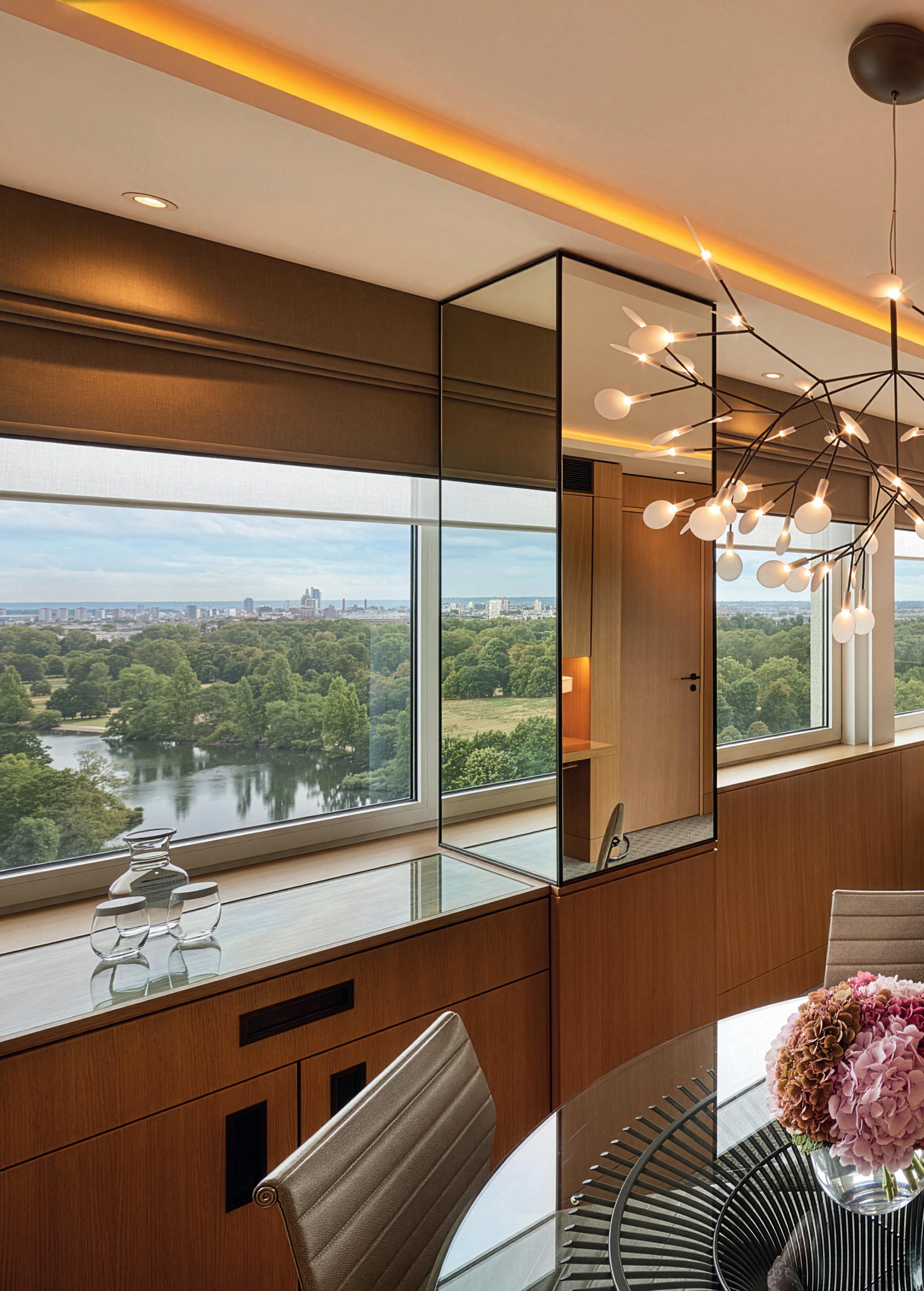
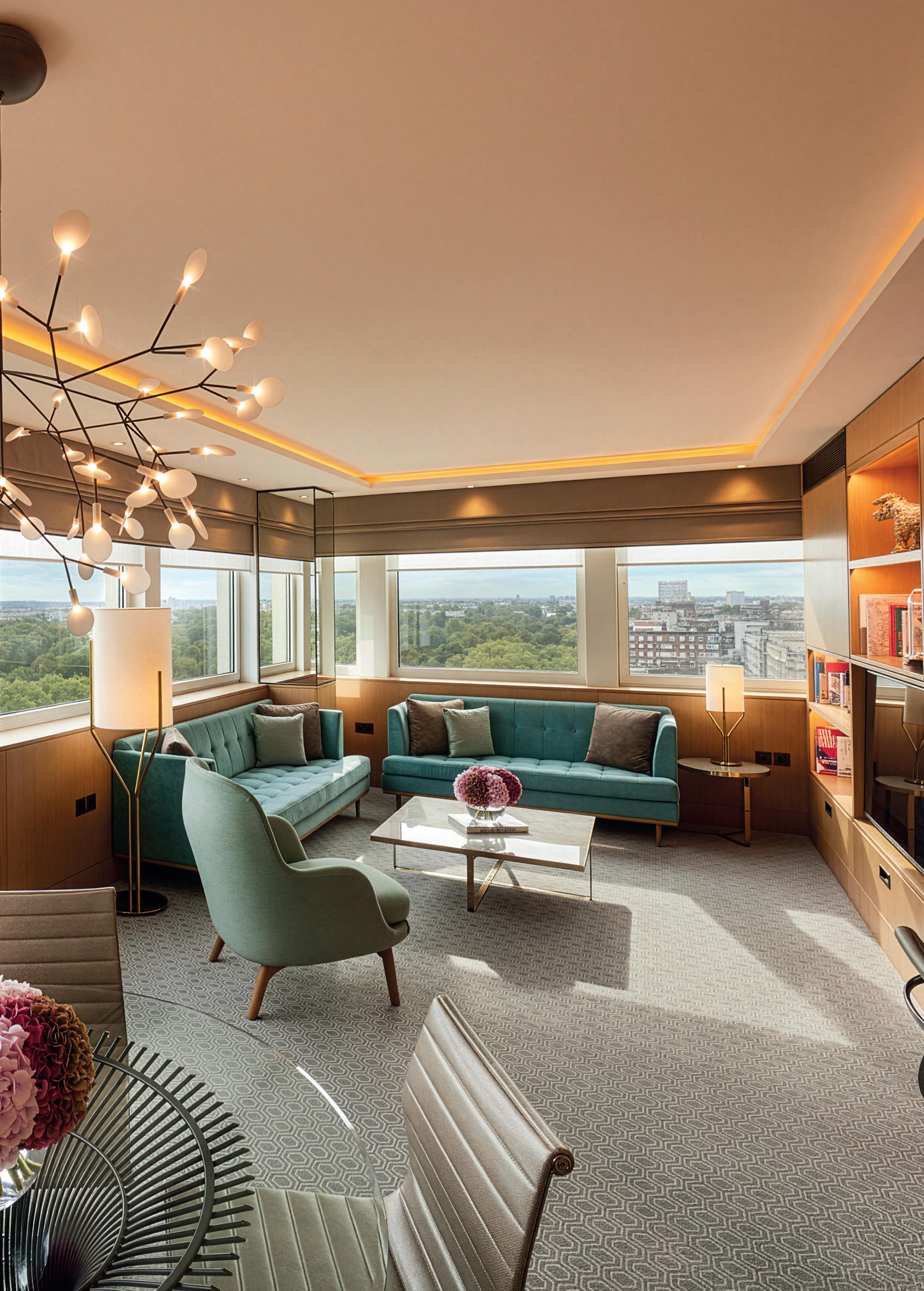
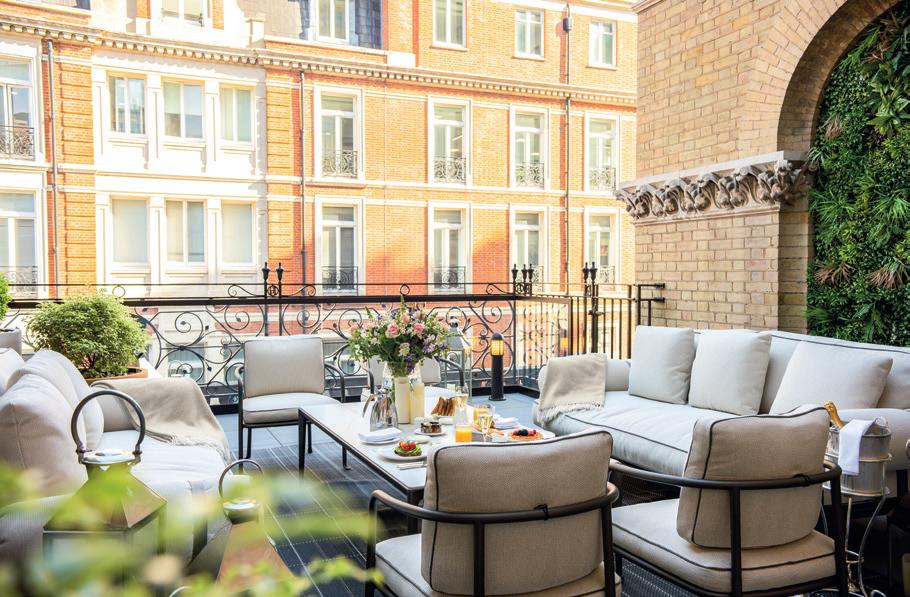
Image courtesy of Royal Lancaster London
As we move into the latter half of the year, the hospitality industry continues to demonstrate its ability to evolve in response to changing guest expectations, operational challenges and emerging technologies. This month’s issue explores two areas that sit at the heart of every successful hotel operation: creating memorable guest experiences and delivering excellence behind the scenes through smarter facilities management and housekeeping.
Our lead Guest Experience feature asks a question many hotel owners and operators are grappling with: where should investment be directed to deliver the greatest return? As budgets remain under pressure, is it better to focus on adding new amenities, or on creating richer, more personalised guest experiences? We examine how today’s leading hotels are balancing capital expenditure between physical upgrades, staff development, curated local experiences, wellness offerings and the seamless service that increasingly defines guest satisfaction. Alongside this, our Essential 5 highlights five simple frictionless improvements that guests genuinely notice - small changes that can make a significant difference to the overall stay.

Operational excellence is equally under the spotlight in our Facilities Management & Housekeeping section. Artificial intelligence is rapidly transforming how hotels manage their estates, moving maintenance strategies from reactive firefighting to predictive, data-led decision making. Our feature explores how AI-powered building management systems are becoming more accessible across the industry, helping operators improve efficiency, reduce costs and minimise disruption while creating better environments for both guests and staff.
We’re also delighted to welcome a guest column from Simon Numphud of AA Hospitality, who shares valuable insight into the role accreditations play in building trust, demonstrating quality and driving continuous improvement across the sector. As guest expectations continue to rise, independent recognition remains an important benchmark for both operators and consumers alike.
Elsewhere in the issue, we bring you the latest industry developments, including news from Barons Eden and the exciting opening of Dakota’s newest hotel. Our Hotel of the Month takes us to Mollie’s Manchester, a property that perfectly captures the blend of contemporary design, operational efficiency and guest-focused hospitality that defines many of today’s most exciting hotel brands. We also sit down with Josh Littman, Head of Development – EMEA, for our latest In the Hot Seat interview, discussing growth, opportunity and the evolving landscape of hotel development across the region.
Whether you’re investing in the next generation of guest experiences, embracing smarter operational technologies or simply looking for fresh ideas to enhance your property’s performance, we hope this issue provides valuable insight and inspiration.
As always, thank you for reading.

EDITOR-IN-CHIEF
Jade Evans jevans@thehotelmagazine.co.uk
HEAD OF BUSINESS DEVELOPMENT
Jazmine Davis jazmine@thehotelmagazine.co.uk Tel: 01795 509 105
ACCOUNT MANAGER
Harrison Hume hh@cimltd.co.uk Tel: 01795 509 105
MARKETING MANAGER
Lucas Payne lucas@cimltd.co.uk
ADMINISTRATION MANAGER
Natalie Woollin admin@cimltd.co.uk
DESIGN AND PRODUCTION
Grant Waters grant@cimltd.co.uk
James Taylor james@cimltd.co.uk
HEAD OF DIGITAL
Xhulio Bishtaja digital@cimltd.co.uk
SOCIAL MEDIA MANAGER
Lily Lawson socials@cimltd.co.uk
Experience versus amenities, we explore where hotels should invest in line with guest experience.
We journey to Manchester to showcase the newest property in their portfolio – Mollie’s Manchester.
Exploring the magnificent line up of PoB Hotels, we spotlight and detail how it offers an authentic taste of British luxury in the heart of the New Forest.
We have the highlights from a recent panel talk, hosted by MEWS at The Mandrake Hotel, which saw a hotel general managers explore how technology is helping operators boost profitability, and enhance guest experiences.
With the help of Industry Experts, from reactive to predictive, we share how AI is reshaping hotel facilities management.
We have the details on Dakota Hotels’ now completed £54m Manchester Airport development.
CREDIT FACILITIES MANAGER
Gwen Lee
creditcontrol@cimltd.co.uk
Tel: 01795 509 103
DIRECTOR
Declan Wale
declan@thehotelmagazine.co.uk
Tel: 01795 509 112
Tom Woollin tom@cimltd.co.uk
MANAGING DIRECTOR
John Denning
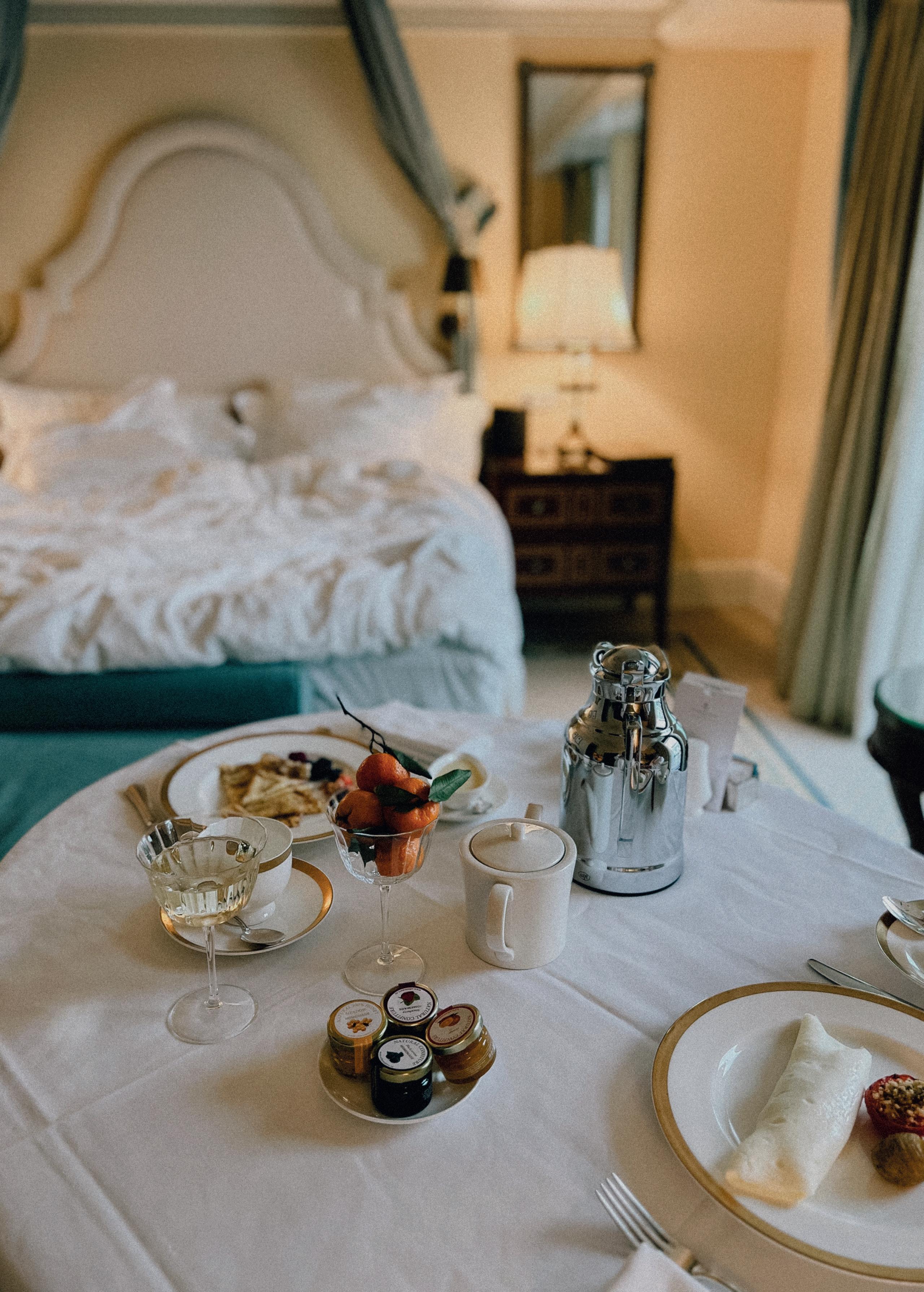
As guest expectations continue to evolve, the most memorable hotel experiences are often shaped by what guests don’t have to do. By replacing outdated processes with seamless alternatives, hotels can reduce friction, improve satisfaction and create a more intuitive stay – we outline five simple swaps that modern guests increasingly value.
1
After a long journey, few guests want to stand in line at reception completing paperwork. Mobile check-in allows guests to confirm details, provide identification and receive room access before they even arrive. By reducing wait times and giving guests greater control over their arrival experience, hotels can create a positive first impression while freeing staff to focus on personalised interactions rather than administrative tasks.
3
Traditional printed directories often become outdated and require frequent replacement. A digital guest guide accessible via QR code, mobile app or in-room tablet provides instant access to hotel information, dining menus, local recommendations and service requests. Guests benefit from real-time information, while hotels gain the flexibility to update content immediately - the result is a more relevant and user-friendly source of information throughout the stay.
5
2
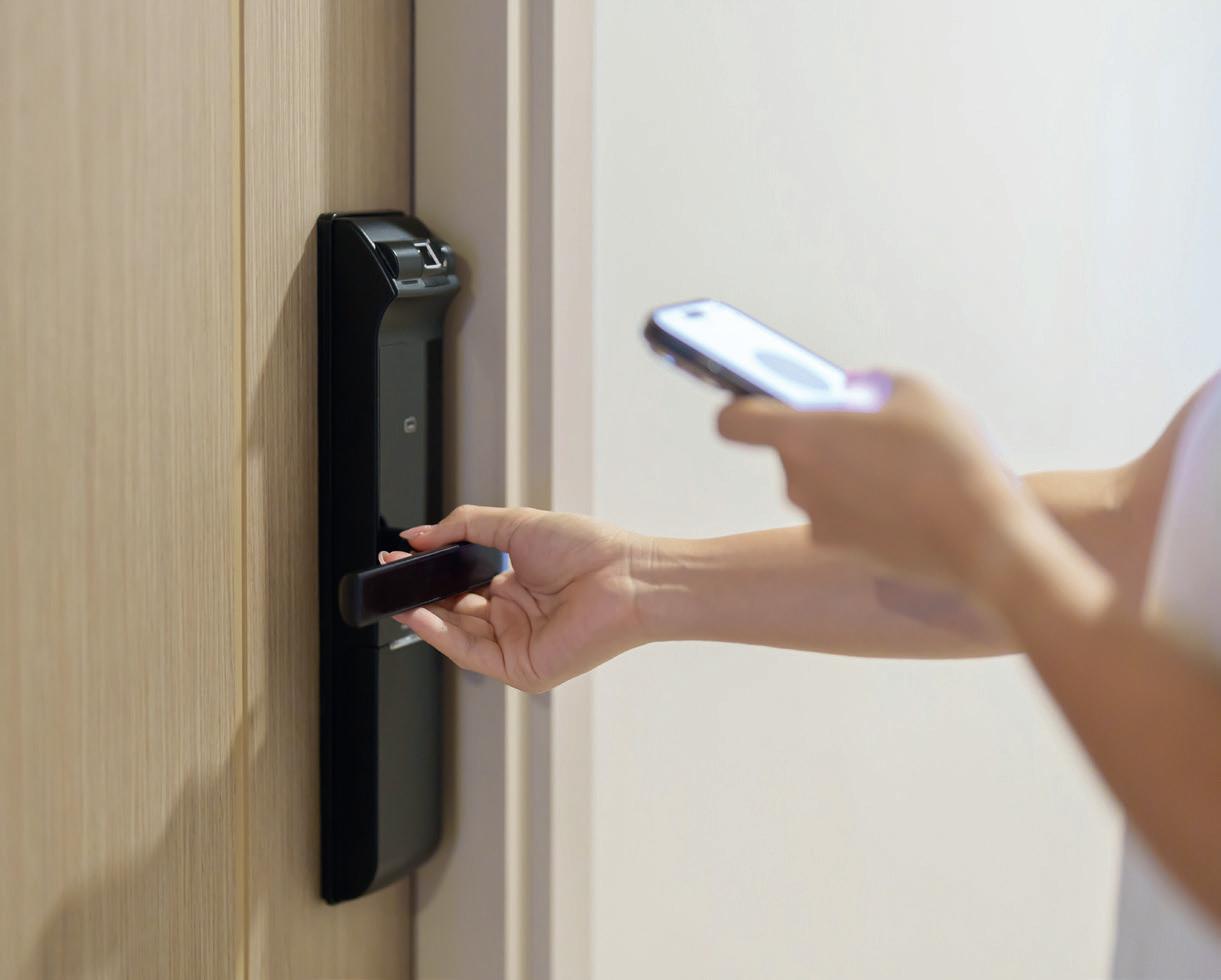
Physical key cards are easy to lose, demagnetise or leave behind. Digital room keys delivered through a hotel app provide a convenient alternative that many guests already use in their daily lives. Beyond convenience, digital access can improve sustainability efforts by reducing plastic waste and lowering replacement costs. Guests appreciate the simplicity of accessing their room directly from their smartphone without needing to visit the front desk.
4
SWAP PHONE CALLS FOR MESSAGINGBASED SERVICE REQUESTS
Many guests, particularly younger travellers, prefer messaging over making phone calls. Offering service requests through text, app-based chat or messaging platforms allows guests to communicate quickly and discreetly. Whether requesting extra towels, booking a restaurant table or arranging a late checkout, messaging creates a more convenient interaction channel while providing hotels with a documented service history that can improve response times and accountability.
Modern guests increasingly value flexibility over standardisation. Allowing guests to choose housekeeping schedules, select room preferences, customise amenities or tailor dining options creates a sense of control that enhances satisfaction. Personalisation does not necessarily require luxury-level investment. Even small choices can make guests feel recognised as individuals rather than room numbers, contributing to stronger loyalty and more positive reviews.
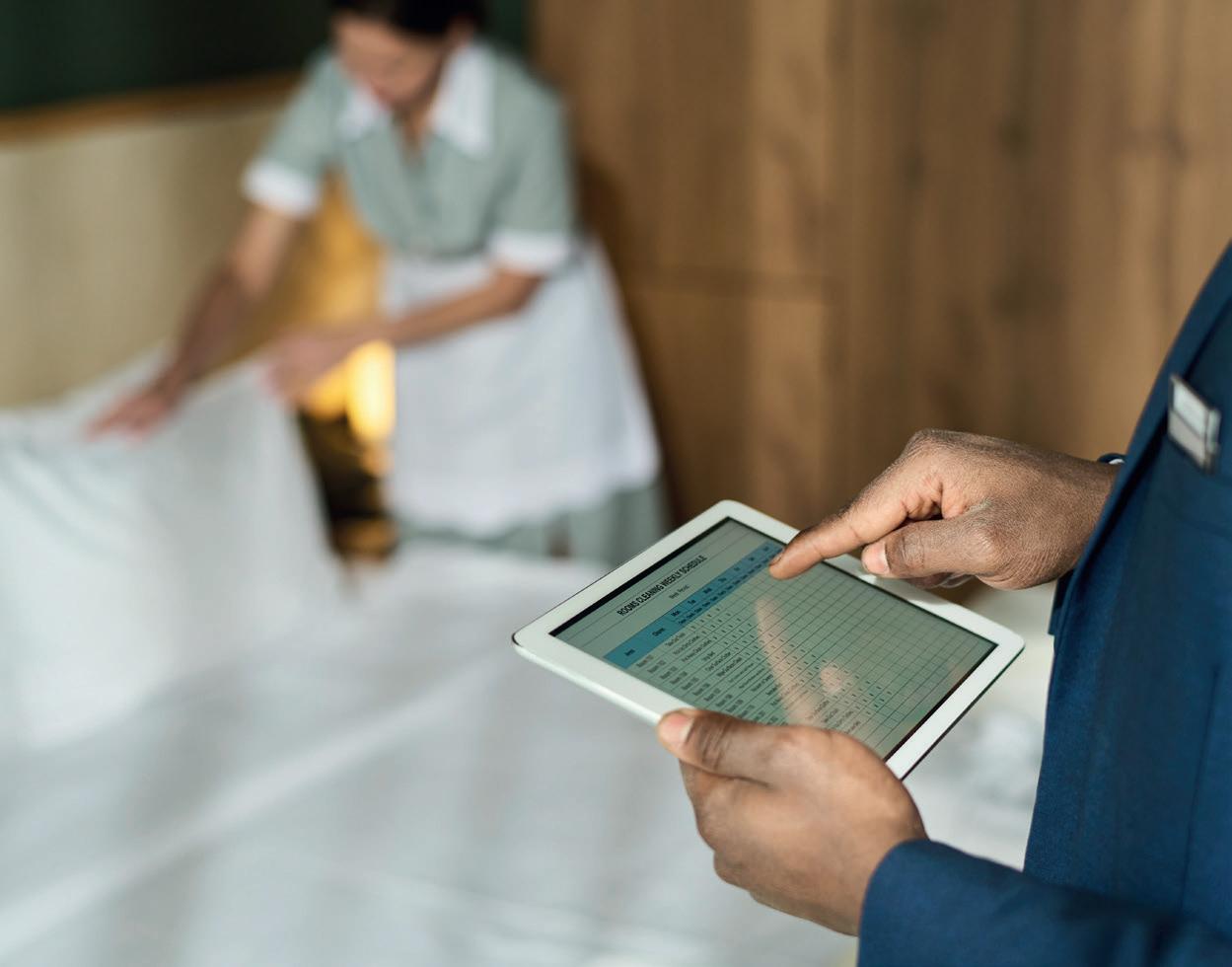
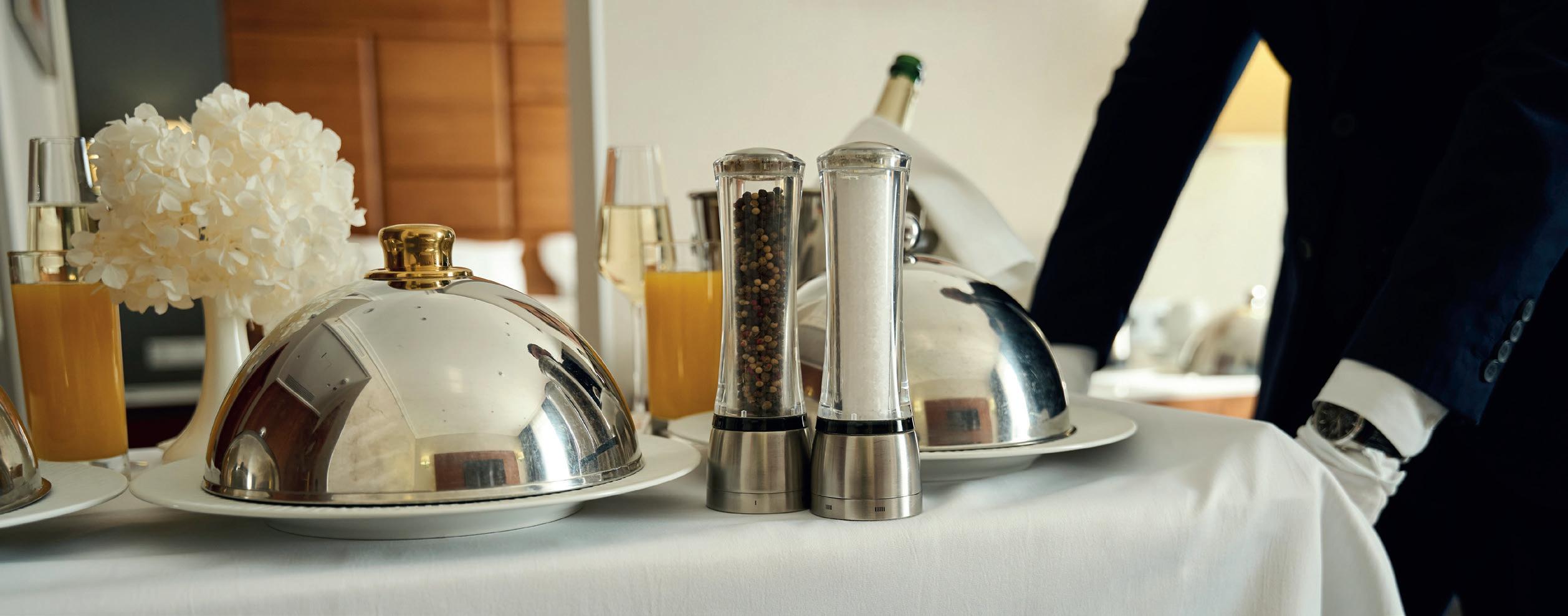
Experience versus amenities - where should hotels invest? With the help of industry experts, we look into whether guests really want more facilities, or better experiences.
For years, the race to attract guests centred on bigger, better and more luxurious amenities –from rooftop pools and state-of-the-art gyms to smart-room technology and lavish spas. But as guest expectations continue to evolve, many hoteliers are asking whether memorable experiences now deliver a greater return than bricks-and-mortar upgrades. Today’s travellers increasingly value authenticity, personalisation and meaningful connections, placing greater emphasis on exceptional service, curated local experiences and wellness-led stays alongside traditional facilities. At the same time, rising costs and tighter capital budgets are forcing operators to make difficult investment decisions. So, where should hotels be directing their spending? We explore the balance between amenity-led investment and experience-driven strategies, examining how operators are prioritising capital expenditure in a challenging market while meeting the expectations of the modern guest.
At Lucknam Park, they boast exceptional infrastructure, from their spa to the dining offering and setting. However, David Griffin, General Manager at Lucknam Park, said, “Our focus is firmly on how those spaces are brought to life through service, attention to detail, and storytelling. Investment decisions are therefore being shaped not only by maintaining our physical standards, but by enhancing the guest journey, ensuring every interaction feels considered, personal, and memorable.”
As operators face rising costs and tighter capital allocation, we turned to evaluating the return on investment from major physical upgrades compared with spending on staff development, service culture and guest personalisation – David explained that at Lucknam Park, they see staff development and guest personalisation as critical drivers of long-term value. “A well-trained, engaged team can elevate every aspect of the guest experience, regardless of the setting. The most successful investments are those that align both elements, ensuring that exceptional facilities are matched by an equally exceptional level of service.”
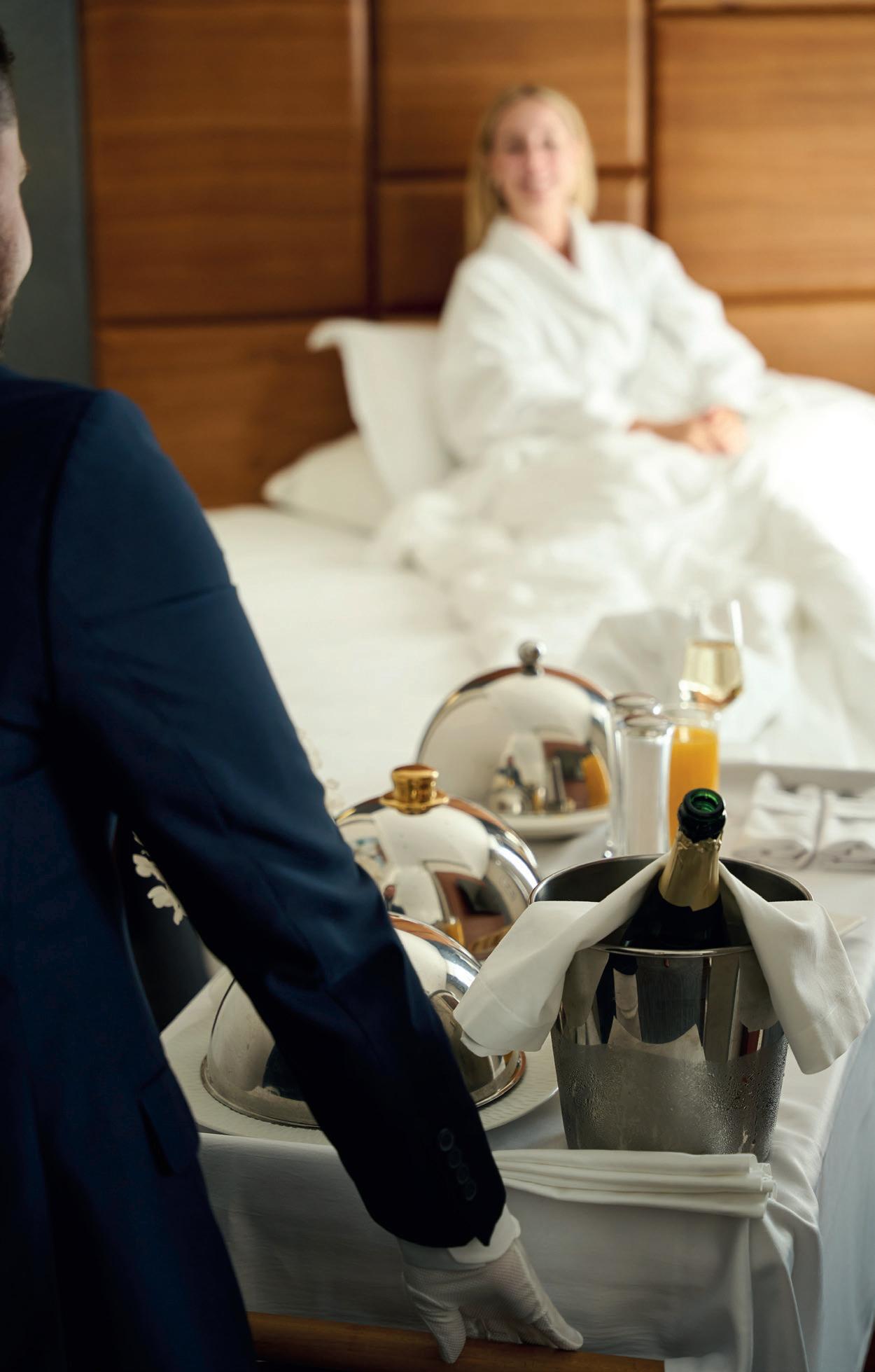
The approach to capital expenditure at Foxhills Club & Resort has become more disciplined and commercially focused, with every project needing to demonstrate not only an operational need but a clear impact on guest experience, revenue, retention or reputation.
Mark Thewlis, Hotel Manager, Foxhills Club & Resort, said, “Traditional amenity upgrades remain important, but we now place greater value on investments that activate those spaces properly through service, training, personalisation and experiences that create stronger longterm loyalty.”
We asked Mark if he believes today’s guests place greater value on memorable experiences than on the breadth of a hotel’s physical amenities, he said, “Yes, guests still expect strong facilities, but what they truly remember is how those facilities are brought to life through service, personalisation and experiences that feel distinctive. At Foxhills, our audience spans several different generations, which means it is very important to ensure we have bespoke, tailored stays and dinner experiences for every type of guest, from business travellers to families.”
At the golf resort they measure ROI through direct revenue, repeat visits, guest sentiment, spend per head and brand impact and then compare those results against traditional capital projects such as room upgrades or facility investment.
People-led experiences are central to the guest experience strategy at Foxhills, because facilities create the setting, but the team create the memory, loyalty and emotional connection.
Mark said, “A good example of this was the opening of our new restaurant, Lomri, where the team completed two weeks of intensive culture and service training before launch. This ensured they understood not only the menu and concept, but also the style of hospitality, storytelling and consistency required to bring this new experience at the resort to life.
“I see investment in training, service culture and personalisation delivering stronger long-term value than simply adding more amenities, as it improves consistency, drives repeat visits and protects the reputation of the business.”
Over the next three to five years, Mark expects investment to focus less on adding more facilities and more on improving service delivery, wellness, lifestyle and curated local experiences that give guests a clear reason to choose one property over another.
He said, “Core amenities will still need to be maintained to a high standard, but the strongest returns will come from propositions that feel personal, relevant and experience-led, supported by teams who can deliver them consistently.”
With London being a crowded market in the hotel sector, Clermont Hotel Group want to ensure their portfolio remains competitive. With this in mind, Paul Knightley, Chief Operating Officer, Clermont Hotel Group, said, “We work hard to listen to our guests and have extensive guest insight work taking place across our hotels so that we can evolve and adapt to changing guest needs.
“Ultimately, our guests and what they value is at the core of our decision-making. We are investing across all areas of our portfolio to enhance the entire guest journey,
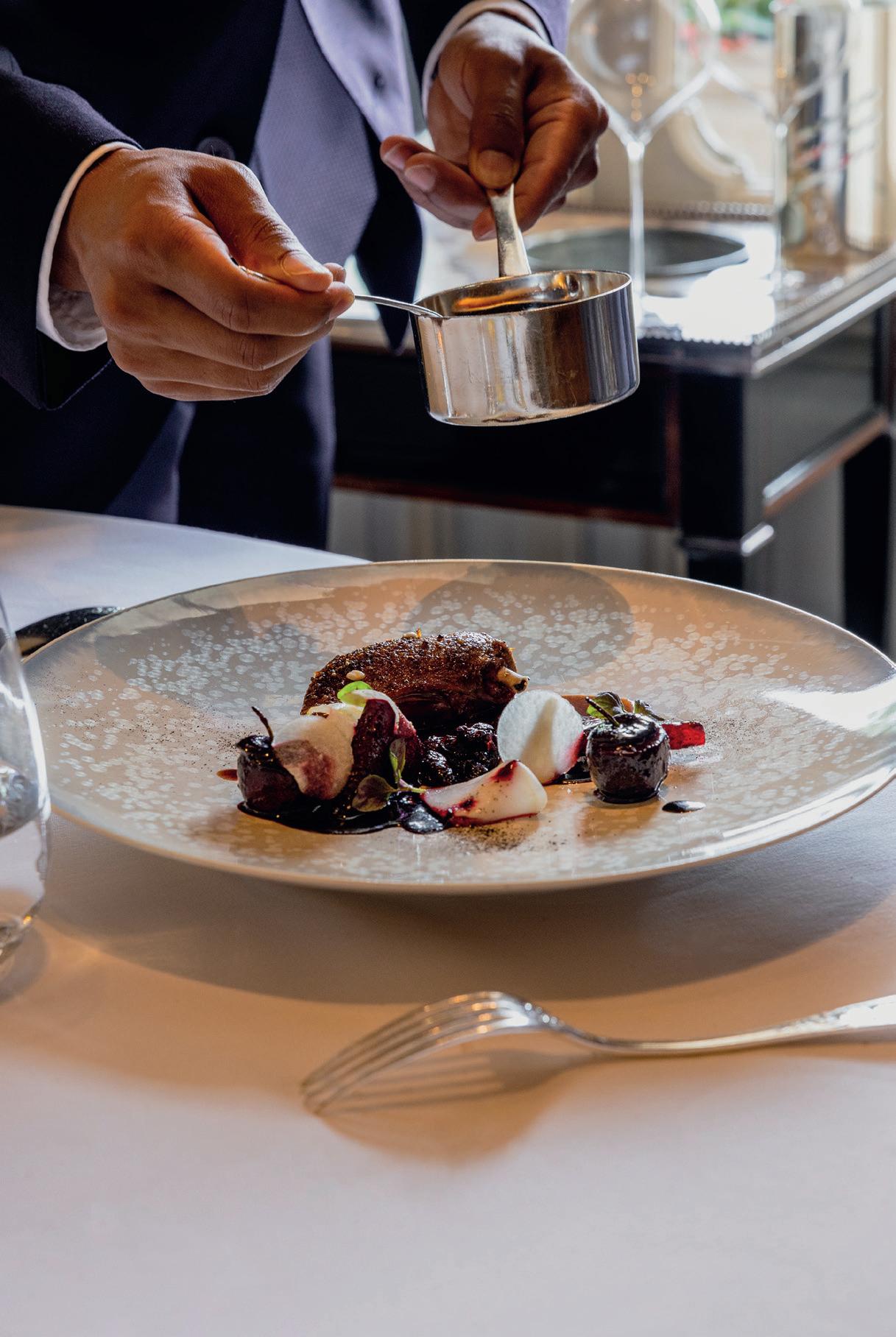
with a specific focus on the initial sense of arrival across our hotels. This sets the tone for their stay and equally on departure, it’s that experience they will remember as they leave.”
Alongside this, investing in their hotel F&B offering has been a priority as experience-led travel continues to grow. Paul explained this as “the strategic thinking” behind bringing destination-dining to The Cumberland through their partnership with Gordon Ramsay Restaurants and the newly opened Hell’s Kitchen, which leans into experiential dining.
Experiences are a key driver of guest expectation, and this is something Paul explained he is seeing across the Clermont portfolio, particularly from US guests who value more immersive and imaginative activities. Guests now want more than just a traditional hotel stay. “A strong experiential F&B offer is where we see the biggest opportunity, whether that be a chef’s table, masterclasses or even tealeaf reading, which we put on at the Green Parlour at The Royal Horseguards,” said Paul.
Whilst experiences are important, high-quality amenities and a convenient location remains central to decision making in Paul’s opinion. It is about finding a balance –creating meaningful moments for your guests.
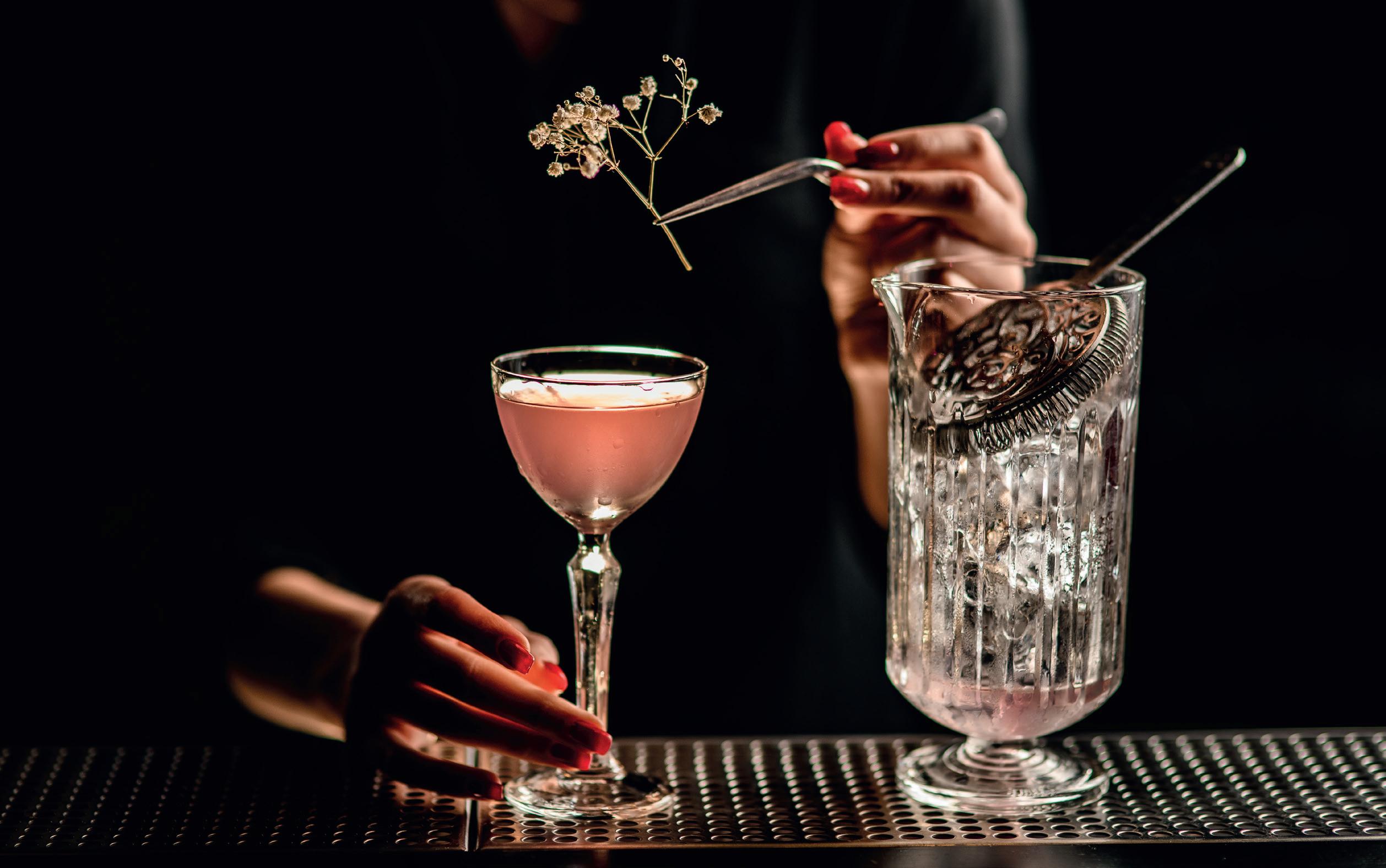
Paul believes that measuring the return on experiential offerings is more complex than a standard refurbishment. “A new bedroom refurbishment has a relatively clear financial impact, whether that be through a rate uplift, or we see it through occupancy. Experience-led stays require a broader view with direct revenue, spend per head, and repeat stays being important. Guest sentiment is also a key driver as it tells us how the service, personalisation and authenticity of the experience is performing and how each stay makes a guest feel,” he added.
Hospitality is a people-led industry. Regardless of the hotel, it is the teams within them that deliver the guest experience and make a stay special. Paul explained, “Whilst additional facilities or amenities are important, it is our colleagues who deliver extraordinary hospitality that make the real difference.”
That is why his team are always looking at ways they can enhance the guest experience through training initiatives, such as their Summer Skills Fest partnership with RADA Business that is aimed to enhance guest interaction and experience using specialist performance training skills.
“This new approach to training demonstrates how we are re-thinking hospitality as an experience, not just a service, while ensuring colleagues have the opportunity to develop, learn and grow. We want to be the leading hotel operator in London, and it is our people who will help us achieve that goal,” Paul said.
When it comes to guest experience, Timothy Griffin, Cofounder of LEVEN and Principal at Wellbrook Hospitality, said, “With mounting inflation and rising operational costs, all expenditure decisions including CapEx need to be well considered.” Many hospitality businesses will be questioning the traditional approach that treated hard assets (rooms, F&B, heavy leisure infrastructure) as predictable depreciating assets and will be reviewing the cyclical approach to refurbishments and amenity upgrades, questioning whether the product life of guest facing spaces can be extended beyond, for example, the traditional seven years for a bedroom.
In an increasingly competitive marketplace, with significant cost pressures, the choice between CapEx expenditure on amenity upgrades and guest experience initiatives can be so stark. Wise hospitality businesses will continue to direct capital to the physical product upgrades to ensure their core product continues to be relevant for an increasing decerning and visually literate customer.
Timothy continued, “Modern consumers expect good design and product and will make buying decisions that leave behind businesses that do not invest. Clearly there is opportunity to invest wisely, spending capital in areas that have the most impact, for example high-tactility emotionally resonant design (natural materials, lighting) and extending the lifespan of less critical areas.” From this foundation, Timothy believes investment in guest
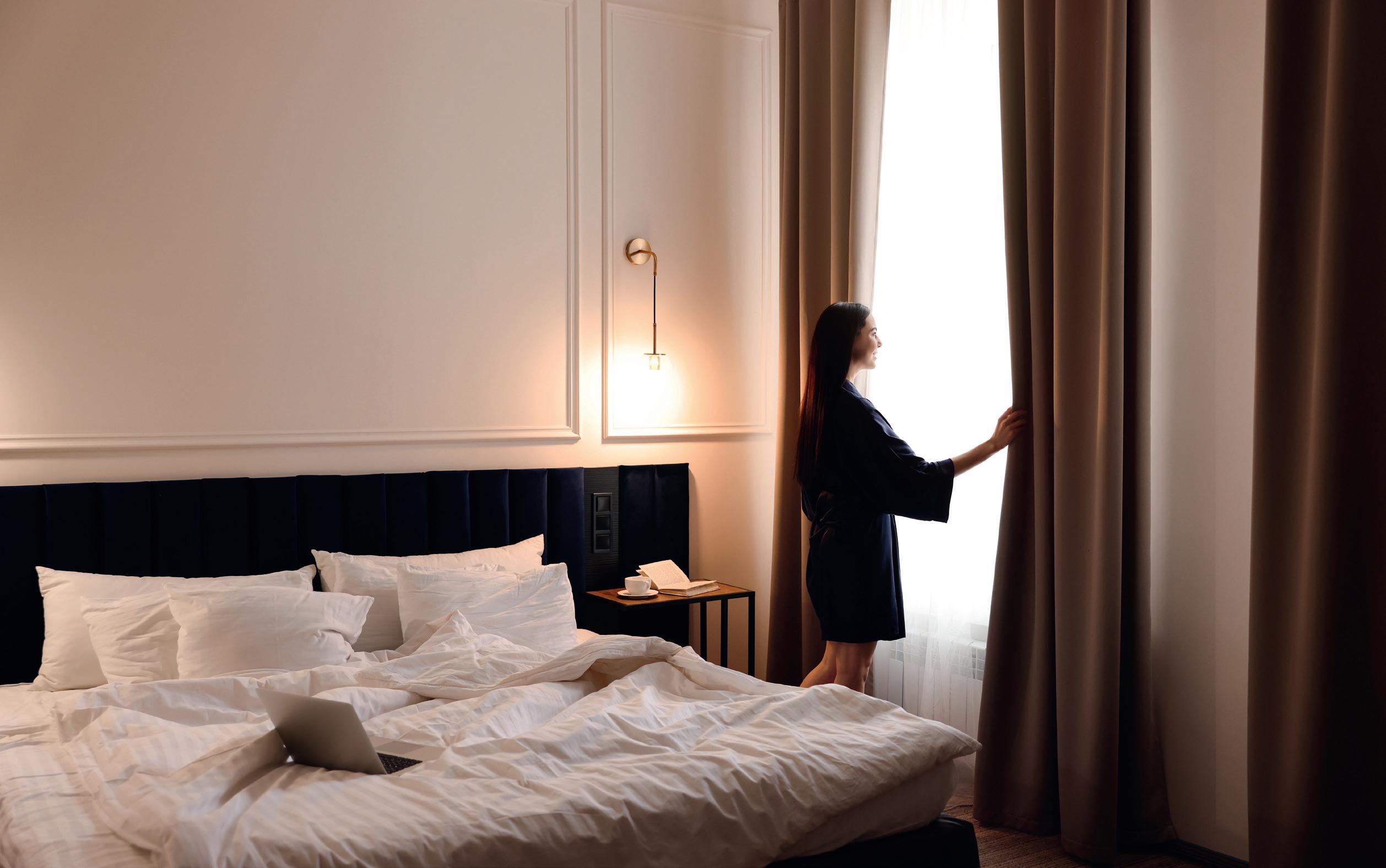
experience initiatives, based on a robust ROI can be directed toward tech-enablement (like flexible check-ins) and modular public areas that can easily pivot between a morning workspace, a community art gallery, and a night activation without requiring a secondary multi-millionpound renovation.
Timothy recognises that today’s travellers are too sophisticated to be swayed by generic amenities they will never use. An under-utilised, spa, gym or a formal restaurant can quickly become a financial anchor. “Guests place greater value on curated, visceral experiences and emotional design than on sheer physical volume,” he said.
He sees that measuring the return on these experiential projects requires looking past traditional, isolated rates of return toward modern ecosystem metrics. For example, when a property runs hyper-local activations (e.g., local art showcases, pop-up events), the project doesn’t just generate immediate ancillary spend; it acts as an engine for organic social content.
“This culturally relevant positioning directly drives web traffic and builds a loyal audience pool, resulting in a measurable increase in direct bookings and a reduction in third-party OTA commission fees. When investing in nontraditional offers, as we have done at LEVEN Manchester, a non-traditional approach to ROI is also required,” Timothy finished.
On a market level, where hotels may not have the
money to spend on products, it’s beneficial to everyone involved to put that resource into staff. Tom Ansbro, Group Commercial Director at Dean Street Developments, said, “Our ethos as developers – and Aloft’s as a brand – centres around community and experience, so we train our staff to embody that.
“We encourage them to engage with the local community, attending events and visiting new venues, so that they’re really immersed in our city.” Tom and his team have gone as far as to bring to life their own hospitality training scheme, called Dean Street Academy, where they engage with schools, colleges, and universities to support students in building a career in hospitality. He said, “We pour energy into people, and it eventually comes back around to us and our community, so investing in that means everyone wins.”
In Manchester specifically, Tom acknowledges that really immersing guests in the city is essential to the guest experience. He said, “We work really closely with the city’s stakeholders to drive that bigger awareness piece that means Manchester is spotlighted as an amazing place to visit. As hoteliers, we all work together through an initiative called ABID that funds campaigns to boost tourism and events in Manchester.” As a result, so many of the people that visit Manchester are really invested in its story and what it has to offer, meaning in turn that hoteliers have to make sure that they’re really connecting them with the
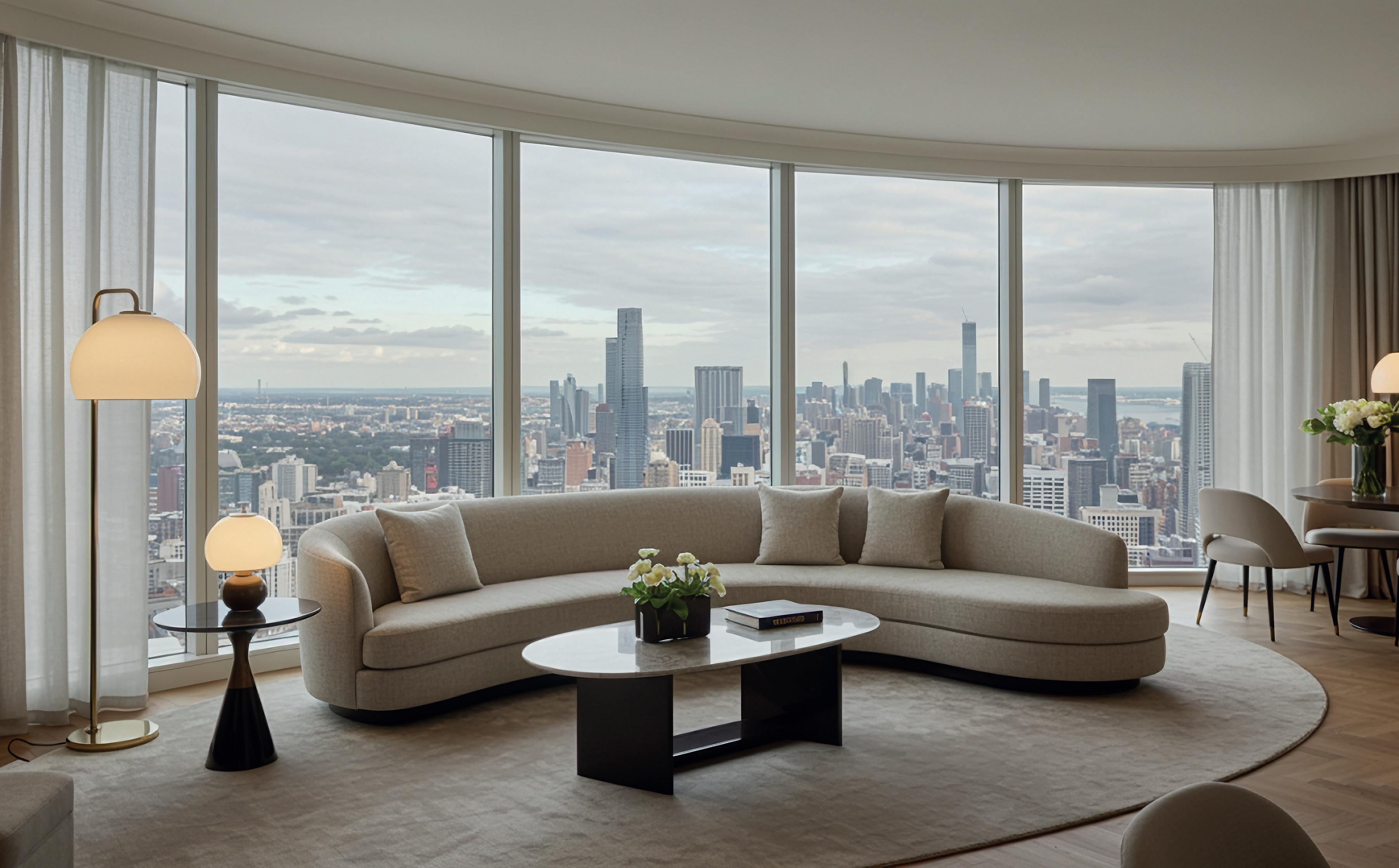
community when they come to stay.
At Castlebridge Hospitality, the team are seeing guests place increasing value on the details that make their stay feel personal, rather than simply the scale of a hotel’s facilities.
Rebecca Bozeat-Manzi, Group Director - Sales & Marketing at Castlebridge Hospitality, said, “That doesn’t reduce the importance of investing in the physical product, but it does mean we’re thinking much more carefully about where investment creates the greatest impact, this makes sense not only through a guest’s lens but also means we’re protecting our owners’ investments.”
Traditional upgrades still form part of Castlebridge Hospitality’s approach, and at times this may include complimentary facilities. However, the team are increasingly focused on protecting revenue wherever possible by ensuring complimentary enhancements genuinely add value for guests while supporting the long-term commercial performance of the hotel. “The priority is to balance guest satisfaction with commercial discipline, creating memorable experiences in a way that is thoughtful, sustainable and commercially sensible,” added Rebecca.
Rebecca revealed that booking behaviour increasingly tells her team that guests are looking beyond the physical product. Competitive pricing and a quality room remain essential, but what often differentiates one hotel from
another is how memorable and personal the overall experience feels. While the quality and breadth of a hotel’s physical amenities remain important, guests are often looking for more than a comfortable room or wellpresented facilities. They want moments that make their stay feel individual, whether that is through personalised service, meaningful local recommendations, thoughtful inroom touches or experiences that reflect the character of the hotel and its location.
“For Castlebridge Hospitality, across our portfolio of hotels, the return on investment from experiential offerings is measured in both commercial and guest sentiment terms. We look at guest feedback, review scores, repeat visits, direct booking behaviour, ancillary spend and the ability of those experiences to support the overall positioning of each hotel. A conventional capital project may be easier to measure through direct revenue or asset improvement, but experiential investment can deliver value through stronger guest loyalty, improved reputation and increased willingness to recommend,” added Rebecca.
We asked Rebecca over the next three to five years, where she expects hospitality businesses to focus their investment budgets: enhancing core amenities, developing wellness and lifestyle propositions, creating curated local experiences, or improving service delivery. She said, “Owners and operators are understandably looking much harder at return on investment than they were a decade
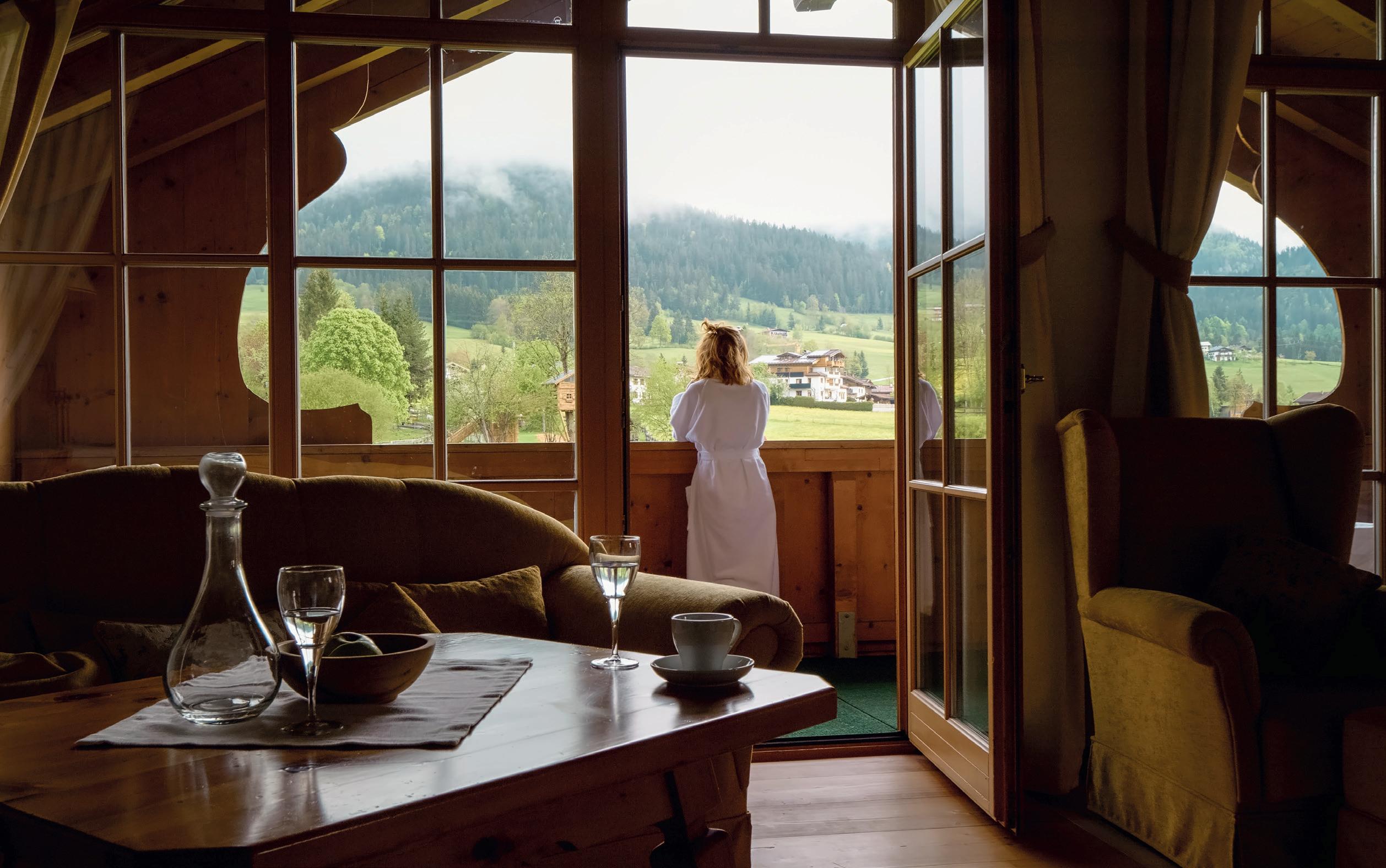
ago. As a result, investment decisions increasingly need to strengthen both the guest proposition and commercial performance. This means a continued focus on enhancing core amenities while also developing stronger wellness, lifestyle and local experience propositions.”
In line with this, Mark Thurman, Managing Director of Peak Edge Hotel, explained that rising costs have undoubtedly sharpened the way hoteliers evaluate investment, but they haven’t changed their philosophy. He said, “Every decision still starts with one question: will this make our guests’ experience noticeably better?”
Owner, Steve Perez, has always believed that hospitality is about creating places people genuinely want to return to, not simply maintaining buildings. That means investing in the fundamentals guests value most, while continually looking for new ways to enhance their stay and strengthen their connection with the destination.
This year, Steve and his team have made significant investments across both hotels that reflect that approach. At Casa Hotel, they’ve replaced every bed with new super king beds, “because a great night’s sleep is at the heart of every successful stay”. They’ve also installed a new kitchen in Barca Bar, allowing the hotel to launch brunch for the first time and significantly expand their food and drink offering throughout the day. “Even relatively straightforward projects are approached responsibly. When replacing the beds, almost 400 nearly-new pillows
were donated to charity rather than going to landfill,” Mark added.
These investments are complemented by longer-term commitments that guests increasingly value. “Steve’s Walton Lodge Farm Estate sits at the heart of our food philosophy, supplying produce to both hotels while supporting a genuine farm-to-fork approach. More recently, both Peak Edge Hotel and Casa Hotel achieved Green Tourism accreditation, recognising years of investment in responsible sourcing, biodiversity, local suppliers and sustainable hospitality.
“For us, capital expenditure and guest experience aren’t competing priorities. The best investments improve comfort, create memorable experiences and strengthen what makes our hotels distinctive. When you achieve all three, the commercial return naturally follows,” said Mark.
As guest expectations continue to evolve, one message is clear: exceptional hospitality is no longer defined by facilities alone. While investment in core amenities remains essential, the greatest long-term value comes from creating meaningful, personalised experiences delivered by engaged teams. The most successful hotels will be those that strike the right balance between maintaining high-quality physical products and investing in the people, service and local connections that transform a stay into a lasting memory.
iSPA – a new hotel cosmetics line inspired by the power of water.
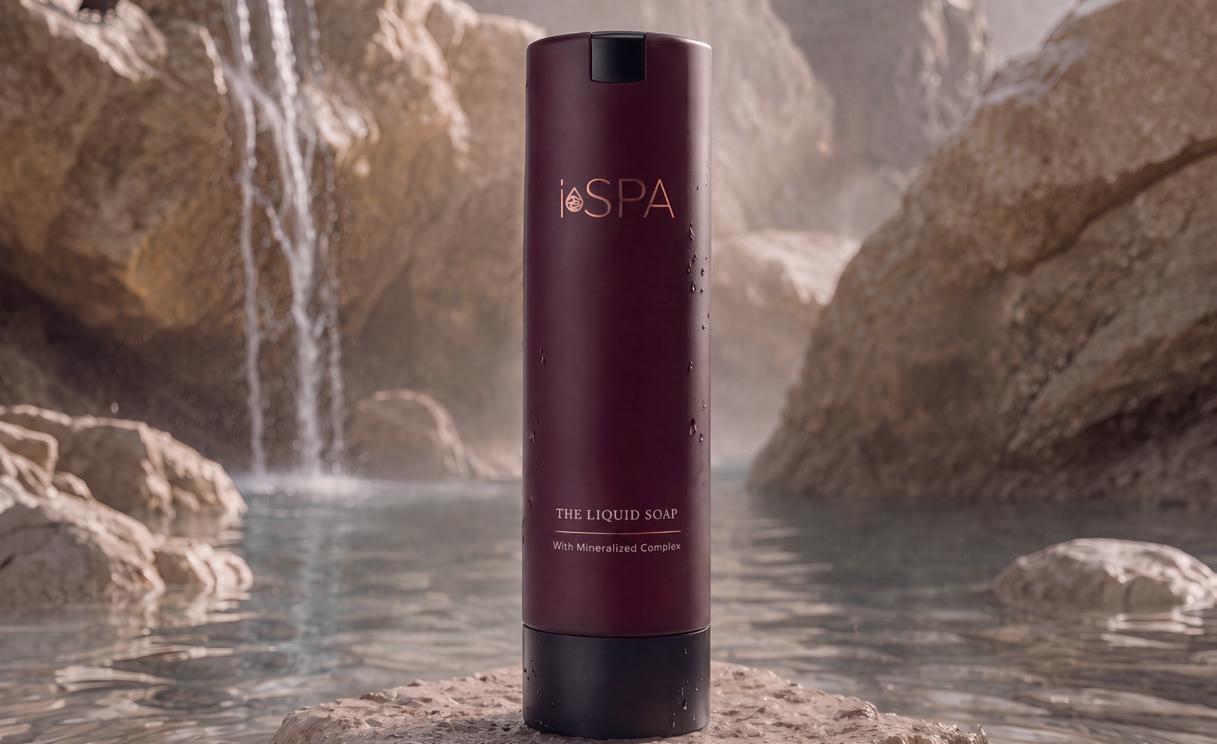
Water has always been at the heart of beauty. In many liquid cosmetic formulations, it represents 60% to 85% of the product – yet it traditionally serves primarily as a carrier for active ingredients. A new hotel cosmetic line, iSPA, now explores the potential of water as a functional element in skincare by using a patented mineralisation technology to enrich purified water with naturally derived minerals.
Drawing on more than 30 years of skincare expertise, ADA Cosmetics has developed this patented Mineralised Complex™ which harnesses the power of minerals to provide enhanced skin benefits. The Mineralised Complex™ combines magnesium from olivine and zinc from smithsonite – minerals extracted from deep within the earth.
Instrumental and consumer testing by an independent study1 showed a 21% increase in skin elasticity and a 17% improvement in skin density, leaving skin visibly firmer and revitalised2.
• Olivine extract supports cell renewal, strengthens the skin’s resistance to stress, and promotes a healthy, radiant complexion.
• Smithsonite extract helps maintain the skin’s biomechanical properties, and slows visible signs of aging.

As travelers increasingly prioritise wellbeing, iSPA enables hotels to offer guests a premium wellness experience –even without an on-site spa.
“Hoteliers can now offer their guests an immersive wellness experience,” said Gerd von Podewils, CMO of ADA Cosmetics. “Delivering on our promise to put beauty into travel, iSPA is a spa-quality amenities line that will elevate guest experience to the next level.”
The iSPA collection includes shower gel, liquid soap, shampoo, conditioner, and body lotion. Presented in a sophisticated copper-brown design, the range integrates seamlessly into contemporary hotel bathrooms.
The formulations are available in ADA Cosmetics’ three dispenser systems – SmartCare, Pump Dispenser, and SHAPE – all compatible with the company’s patented ADA Cosmetics Refillution refill system. This helps hotels reduce waste while maintaining premium design, hygiene, and guest comfort.
iSPA launched in European hotels in July 2026. A professional iSPA line with dedicated spa treatment protocols will be available in selected European spas, followed by the retail collection in 2027.
1. The test was performed on a finished product that included the mineralised water. 2. Visible effects after 14 days of regular product application.
Support your team, strengthen your business.
For hospitality businesses that truly care, Hospitality Action’s industry-specific wellbeing products provide comprehensive, round-the-clock support tailored to your team’s needs.
With no shareholders to satisfy, our sole focus is to deliver the best possible service for the lowest price to improve the wellbeing of your team and the wider hospitality community.
Affordable. Effective. Built for hospitality.
Scan to learn more
https://www.hospitalityaction.org.uk/eap/
How to create the perfect guest experience, as told by the team at Out of Eden.
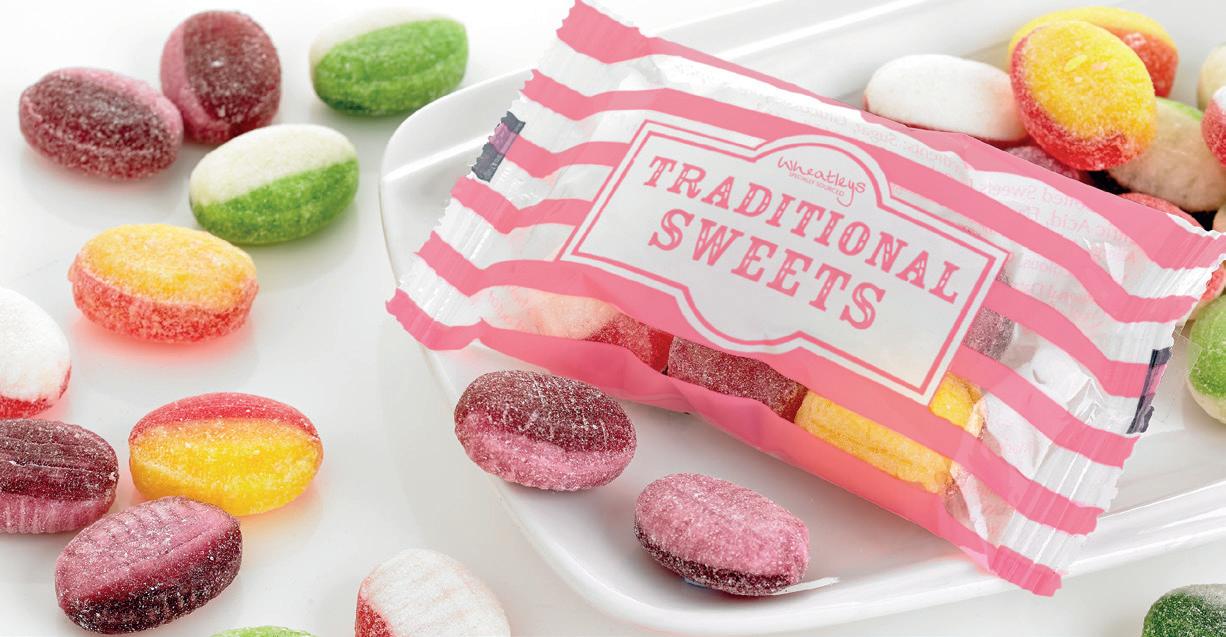
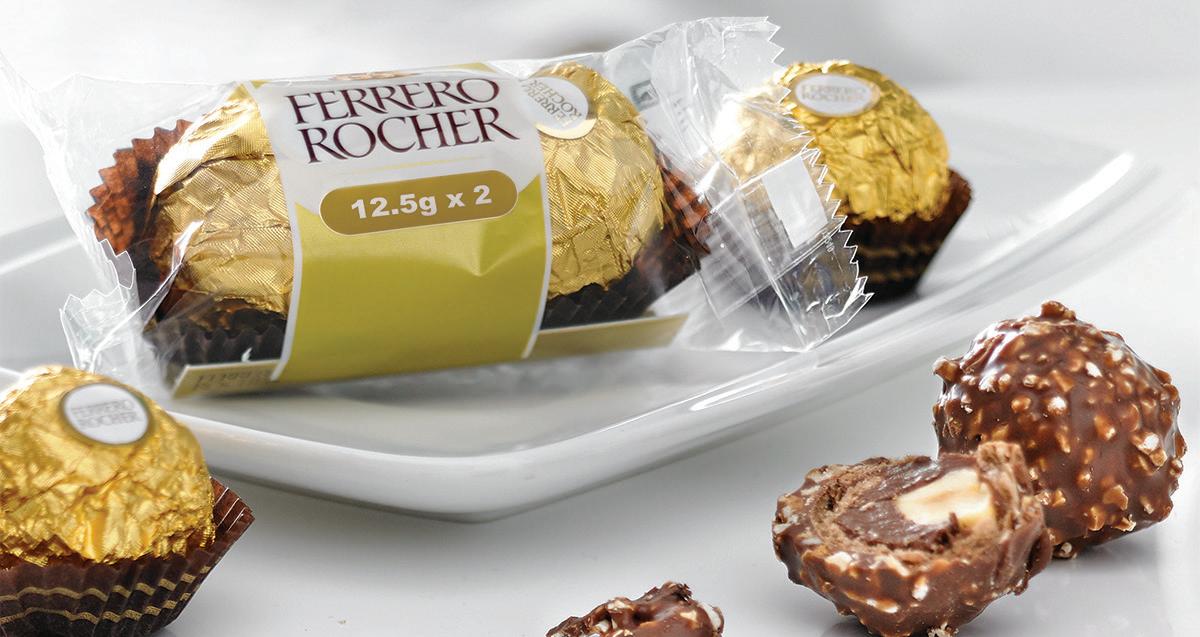
Think back to your last hotel stay. What stood out to you? Chances are it was how someone or something made you feel. Did you smile at the cute little glass milk bottles that threw up a long-forgotten memory of happy school days? Were you pleasantly surprised to discover delicious treats with your fresh cup of coffee? Or does finding soft slippers and cosy bathrobes in the wardrobe instantly make you feel at home?
In today’s challenging hospitality world, hoteliers don’t have to spend a fortune to stand out from the competition,
sometimes it can be simple, small additions in hotel rooms that can make a difference, either by offering an authentic sense of place or creating memories that linger long after the stay has ended. Celebrating a special occasion? Delight guests with a welcoming mini bottle of wine or fizz. Travelling with their dog? Provide them with dog-friendly welcome packs complete with ball, chews, and waste bags for their furry friend.
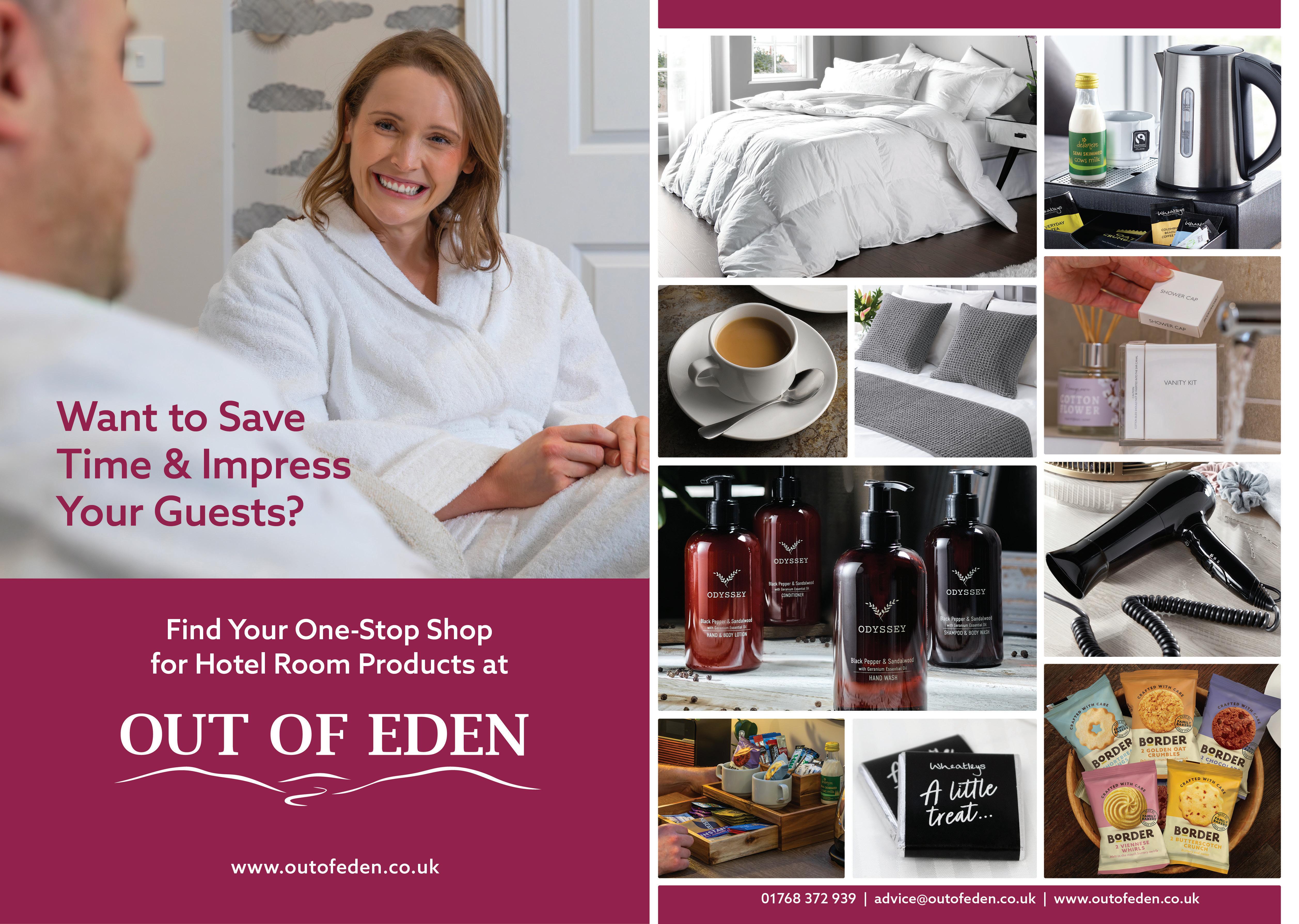
At Out of Eden, we source hotel room products that are practical, efficient, and thoughtful. You, as hoteliers need to know you’re getting the best for your money, and your
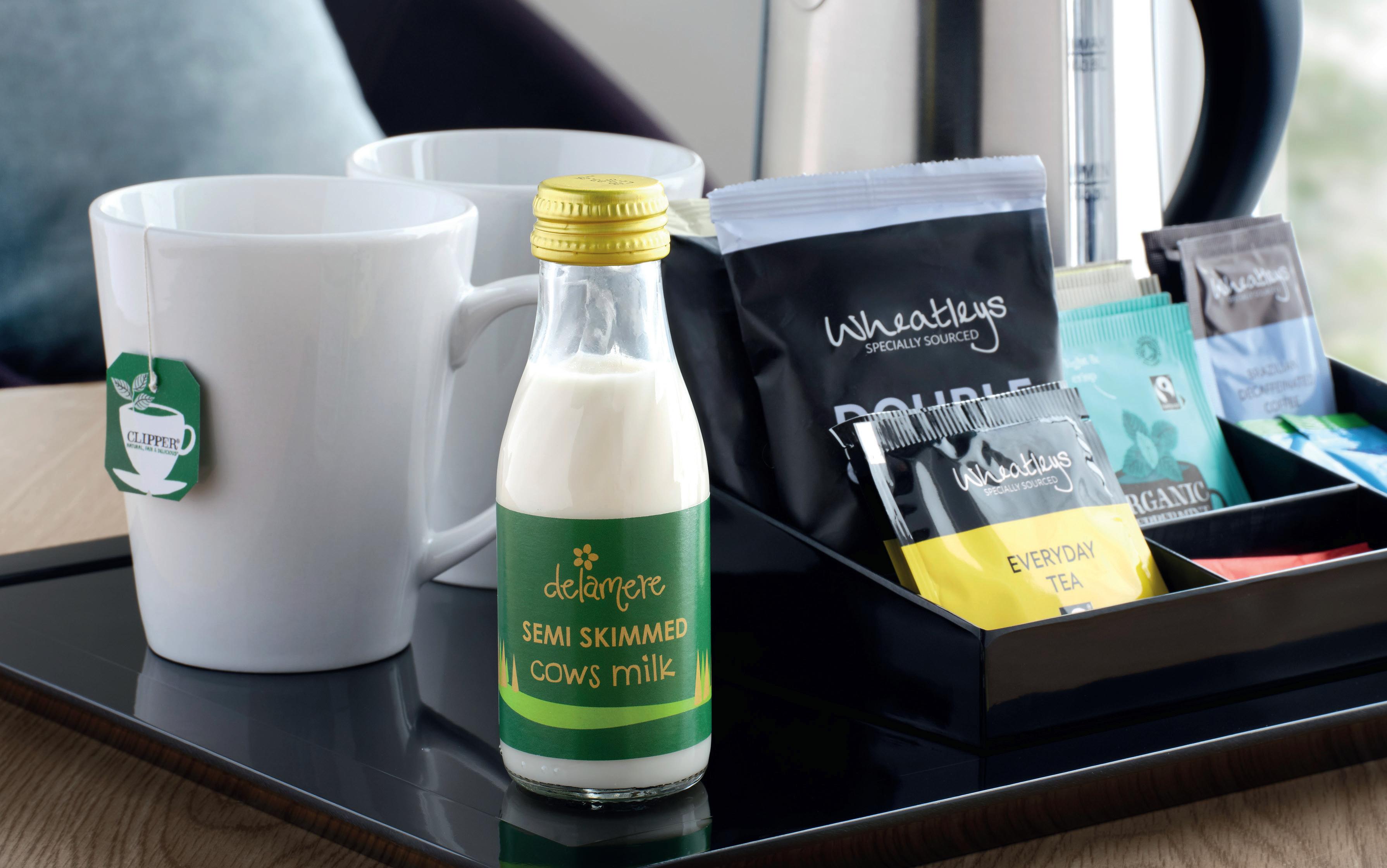
hotel guests are the same. For over 30 years, we’ve been bringing the largest selection of hotel room products –over 2,000 and growing – to thousands of the best large and smaller hotels across the length and breadth of the country. Do you want your guests to enjoy refreshments from your local area? No problem. We work with talented producers to bring our customers a choice of regional specialities. Is it important for you to showcase your commitment to the environment? No problem. We source a wide range of plastic-free, recyclable, and compostable products, bulk refillable ranges of luxury toiletries, bamboo toilet rolls, and mini recyclable glass bottles of fresh semiskimmed and oat milk.
In fact, with over 80 per cent of global travellers believing sustainable travel is important1 and the same amount saying they are willing to pay more for sustainably produced or sourced goods2, guest satisfaction today can be heavily influenced by sustainability. Being conscious of how you can lower your environmental footprint could be key to building brand loyalty.
Claire Armstrong heads up the newly expanded 11-strong Sales Team at Out of Eden, and has just appointed six Regional Sales Representatives covering London, the Southwest, the Midlands, the Northwest, the Northeast, and Scotland. She said: “Product quality is key, durability and price points are key, but we do have a lot of conversations with customers about being more
environmentally friendly. It’s no coincidence that some of our best-selling products are from our refillable ranges as a huge 79 per cent of our customers have already made the switch to refillable toiletries.
“As a proud, family run company, we listen and act on what our customers or potential customers want. There are lots of products in our range today that are there because they’ve been requested by customers, and similarly, products have been added as and when we’ve recognised there’s a gap. Many of us have hospitality backgrounds so we understand how the industry works and the daily challenges hoteliers face. That’s why we’ll never be hard sellers. For us, it’s about building and nurturing long-standing relationships and helping to make a real positive difference to a hotel’s bottom line and overall guest experience.
“Just as you want to create the optimum guest experience for your hotel guests, we’re driven by providing the optimum customer service experience for our hotel customers. And in the end, everybody benefits.”
So, guest experience doesn’t have to be lots of big things, it’s often one or two tailored or personalised little things that help make a stay more memorable.
Choosing the right water solution is about more than hydration. From sustainability credentials and operational efficiency to guest perception and evolving legislation, Belu explores how hotels can make informed decisions that balance environmental impact, practicality and premium service.
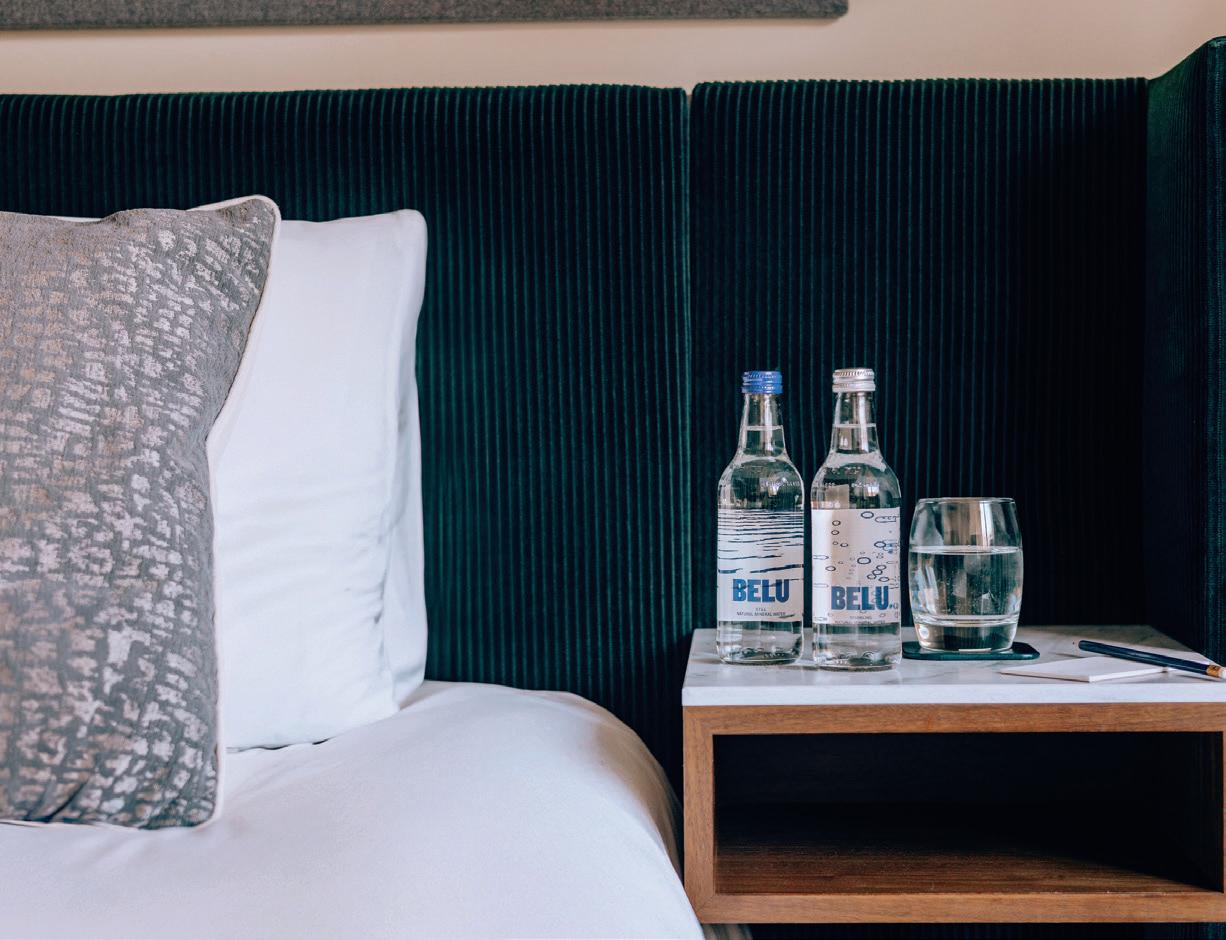
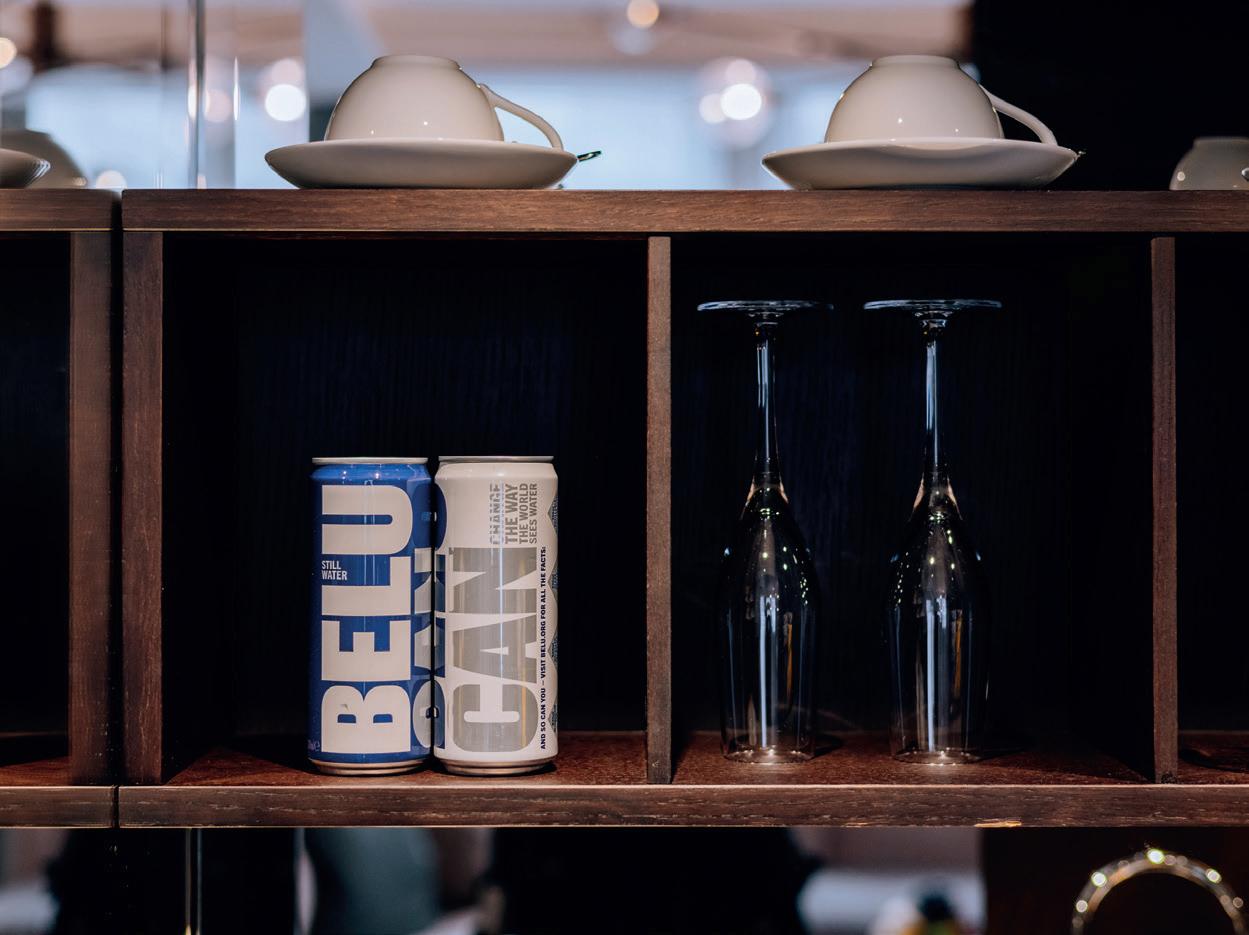
Water is one of those procurement decisions that gets made once and then quietly renewed. It sits in the background of your operation until a guest comments on it, a sustainability audit flags it, or your F&B manager raises it in a briefing. Getting it right matters more than most GMs realise, and getting it wrong is more visible than you might expect.
At Belu, we have spent more than twenty years working with hotels across the UK, from independent properties to major groups including The Corinthia, The Hari, The Pig Hotels and Double Red Duke. What we have learned is that the right water format is rarely the same for every part of a hotel operation, and that the brand and product
story behind your choice is increasingly something guests, staff and procurement teams want to understand. There is no single perfect option. The best choice is the one that fits your venue, your service style and your guests’ expectations.
Glass (Belu Glass: 585g CO2e per litre poured) Glass remains the default for mid-market and above, and for good reason. It looks right on a restaurant table and signals quality without requiring explanation. Glass is infinitely recyclable, and the UK glass recycling rate sits at just under 75 per cent, though a portion of collected glass is downcycled into road aggregate rather than returned to bottle production, which limits the supply of high-quality
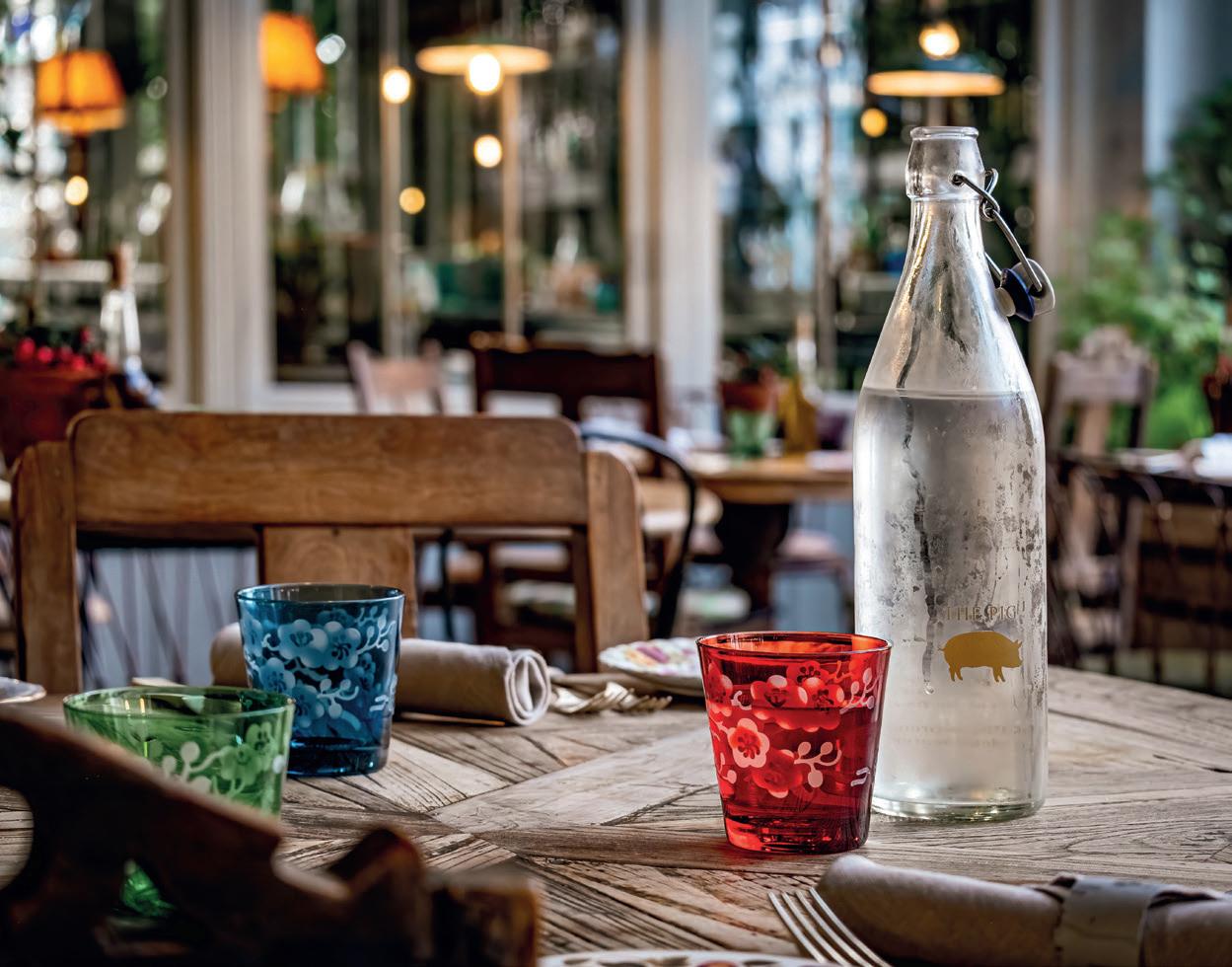
recycled glass to UK manufacturers. The bigger issue is at the production and transport end: glass is heavy and energy-intensive to make, and if your supplier is importing from continental Europe, that transport footprint erodes much of the recyclability benefit. When reviewing a glass supplier, focus on UK manufacturing, recycled content of 30 per cent or above, and bottle weight.
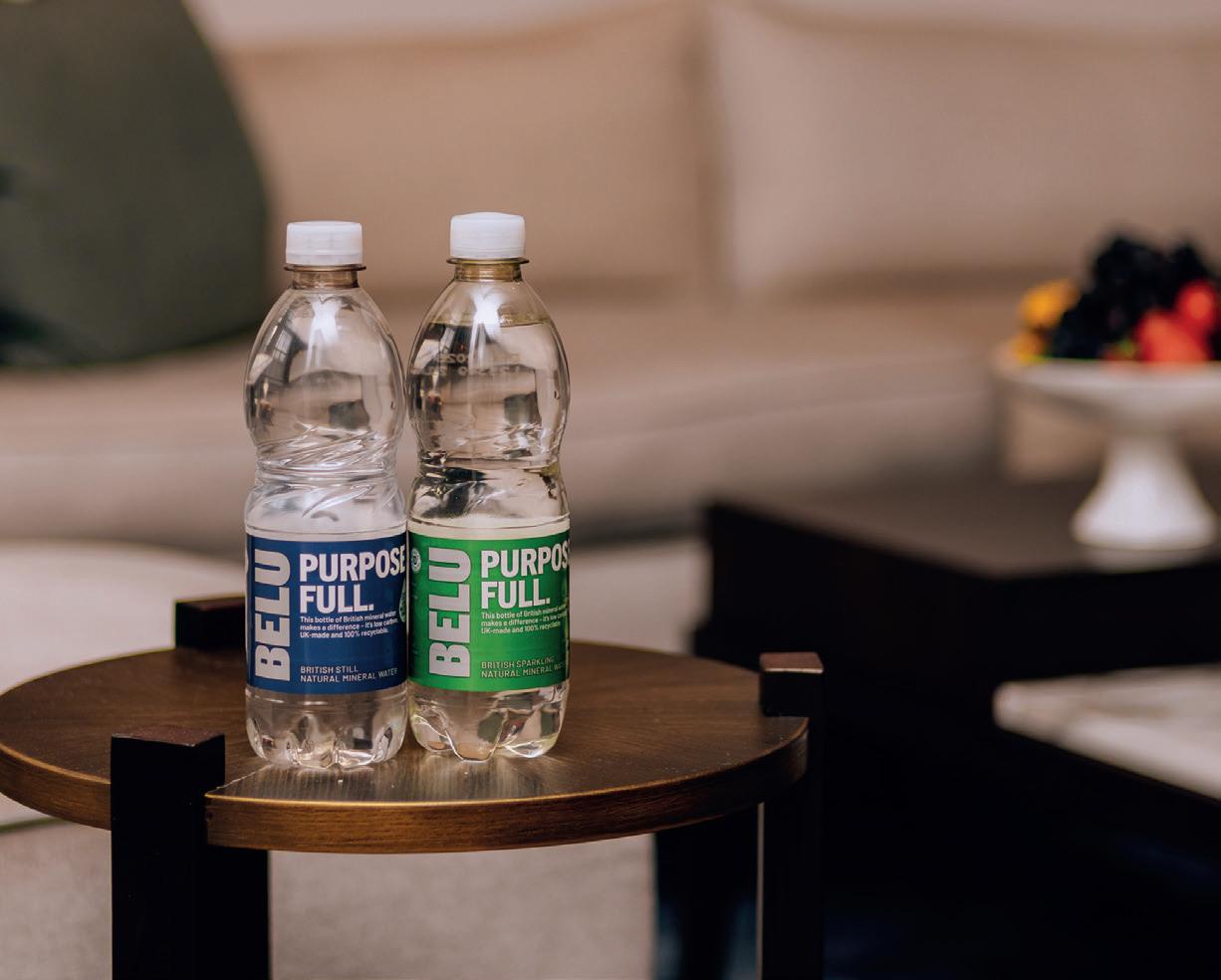
For bedrooms, minibars, grab-and-go and conference water stations, rPET bottles made from 100 per cent recycled plastic are hard to beat on practicality and environmental performance. The UK plastic bottle recycling rate now sits above 70 per cent, and bottles made from fully recycled content use around 75 per cent less energy to produce than virgin plastic equivalents. They are also significantly lighter than glass, reducing transport emissions across the supply chain. rPET is not a restaurant table format, but for portable, resealable needs it is the strongest option available, provided recyclability labelling is clear and waste infrastructure separates plastic properly.
Cans have gained ground in events, casual dining and outdoor settings. With an 81 per cent UK recycling rate they perform well on paper, though only around 30 to 35 per cent of aluminium cans currently make it back into new cans; the rest are downcycled into automotive or construction materials and cannot re-enter the drinks can supply chain. Lighter formats and high recycled content help close that gap. Cans suit durability and convenience but are less at home in formal restaurant settings.
Cartons and bioplastic bottles are sometimes pitched as lower-carbon alternatives but rarely hold up under scrutiny. Cartons are lightweight but genuinely difficult to recycle, with patchy UK collection infrastructure meaning most end up incinerated rather than recovered. Bioplastics
need industrial composting facilities that are not widely accessible in hotel waste streams, and a bioplastic bottle in the wrong bin can contaminate a recycling batch. Belu trialled bioplastic in 2006 and stopped due to the lack of supporting infrastructure.
For restaurants, meeting rooms and high-volume banqueting, filtration removes the packaging question entirely. Chilled still or sparkling water served from quality glassware is both the lowest-carbon option available and a genuinely premium service experience, not a budget compromise. The upfront investment is higher, but cost per litre falls substantially over time, and there is no packaging procurement, storage or disposal logistics to manage.
Most hotels find no single format works everywhere. A sensible combination is filtration for restaurants and meeting spaces, rPET for bedrooms and grab-and-go, and cans or glass where presentation matters most, paired with back-of-house waste infrastructure that can separate each material without cross-contamination.
There’s also a regulatory dimension. Extended Producer Responsibility now makes packaging producers fund recycling costs, with fees from April 2026 weighted by recyclability; glass stays in scope even when served onsite. The Deposit Return Scheme launches UK-wide from October 2027, adding refundable deposits to containers, so hotels should plan ahead now. To keep up to date visit GOV. UK.
Water is a small decision with a surprisingly large footprint, in carbon, in cost and in the impression it leaves on guests. It is worth making it deliberately.
To find out more about water formats for your hotel, visit belu.org.
What Argentine wine can bring to modern hotel dining, as told by David Bonomi, Chief Winemaker, Bodega Norton.
Few wines are as closely associated with a country as Malbec is with Argentina. For many guests, it immediately evokes quality, generosity, flavour and a sense of place: the image of a great steak, a full glass of red wine, and the warmth and confidence of Argentine hospitality.
For hotels, that recognition is a major strength. A good hotel wine list has to feel premium, but not intimidating. It must offer discovery, while also giving guests wines they understand and want to order. Argentine Malbec sits naturally in that space: iconic enough to be familiar, but with enough depth and range to support a more ambitious dining experience.
At Bodega Norton, Malbec is not simply one part of the portfolio. It is central to who we are. Norton is rooted in Luján de Cuyo, one of the historic hearts of Argentine Malbec, and has played an important role in taking the variety from a local Argentine strength to a global reference point. Founded in 1895 by English engineer Edmund Norton, the winery helped build the reputation of Mendoza wine internationally, while remaining closely connected to the place where its identity was formed.
A wine such as Norton Altura Malbec is useful here not simply as an example of a label, but as an example of what Mendoza can bring to Malbec: depth, generosity and concentration, but with polish and balance. This gives hotel teams an opportunity to present Malbec not only as a familiar favourite, but as a premium option wine rooted in a unique heritage while being emblematic of its origin.
At its best, Malbec combines the full flavour it is known for with balance, texture, freshness and elegance. It has the richness and power guests expect, but also bring structure and refinement to a serious hotel wine list.
This is why it is useful for hotels to think in terms of different Malbec moments. A more accessible expression such as Norton Finca La Colonia Malbec Coleccion can give guests the generous fruit and immediate appeal they expect, while a more structured wine such as Norton Lote Agrelo Malbec can support richer dishes, special occasions and a more premium recommendation from the sommelier or F&B team. The value lies in giving staff a clear way to guide guests through the category.
The classic pairing of steak and Malbec remains one of wine’s great selling points, and hotels can benefit from embracing this. For restaurants, grills, brasseries, bars and private dining rooms, it gives staff a story that guests already understand. It is memorable, easy to communicate
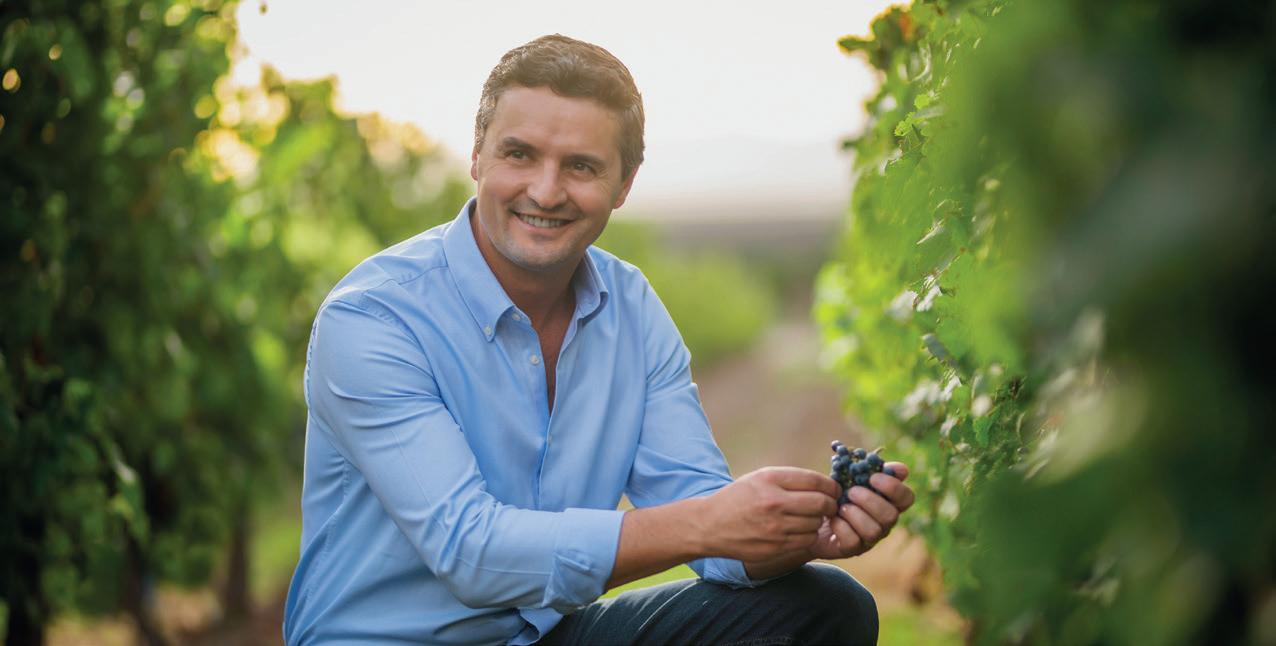
and commercially powerful.
But that classic association should be a starting point, not a limitation. Malbec can also work beautifully with roast lamb, duck, slow-cooked beef, mushroom dishes, charred vegetables, hard cheeses, sharing plates and richer bar menus. A softer, fruit-forward Malbec can work well in bar and casual dining settings, where the wine needs to be immediately enjoyable and versatile. A deeper, more structured Malbec can sit naturally alongside steak, lamb, duck or slow-cooked dishes in a more formal restaurant setting.
Argentine wine also gives hotels a route into broader discovery. Once guests understand Malbec, they are often more open to exploring other expressions of Argentina: different styles of Malbec, premium regional wines, and other grapes suited to lighter dining, seafood, terraces or aperitif occasions. Malbec can therefore act as both the hero and the gateway.
The same principle can apply beyond Malbec, where the portfolio allows. A wine such as Altura White Blend or Finca La Colonia Coleccion Grüner Veltliner can help open the Argentine conversation to seafood, lighter lunches, terrace dining or aperitif occasions. This can help hotels show guests a broader view of Argentina while keeping Malbec as the anchor.
For modern hotel dining, Malbec’s enduring appeal coupled with evolving guest preferences offer a great opportunity to present Argentine wine with confidence and nuance: a story guests recognise, a flavour profile they enjoy, and a premium identity rooted in one of the world’s most distinctive wine cultures.

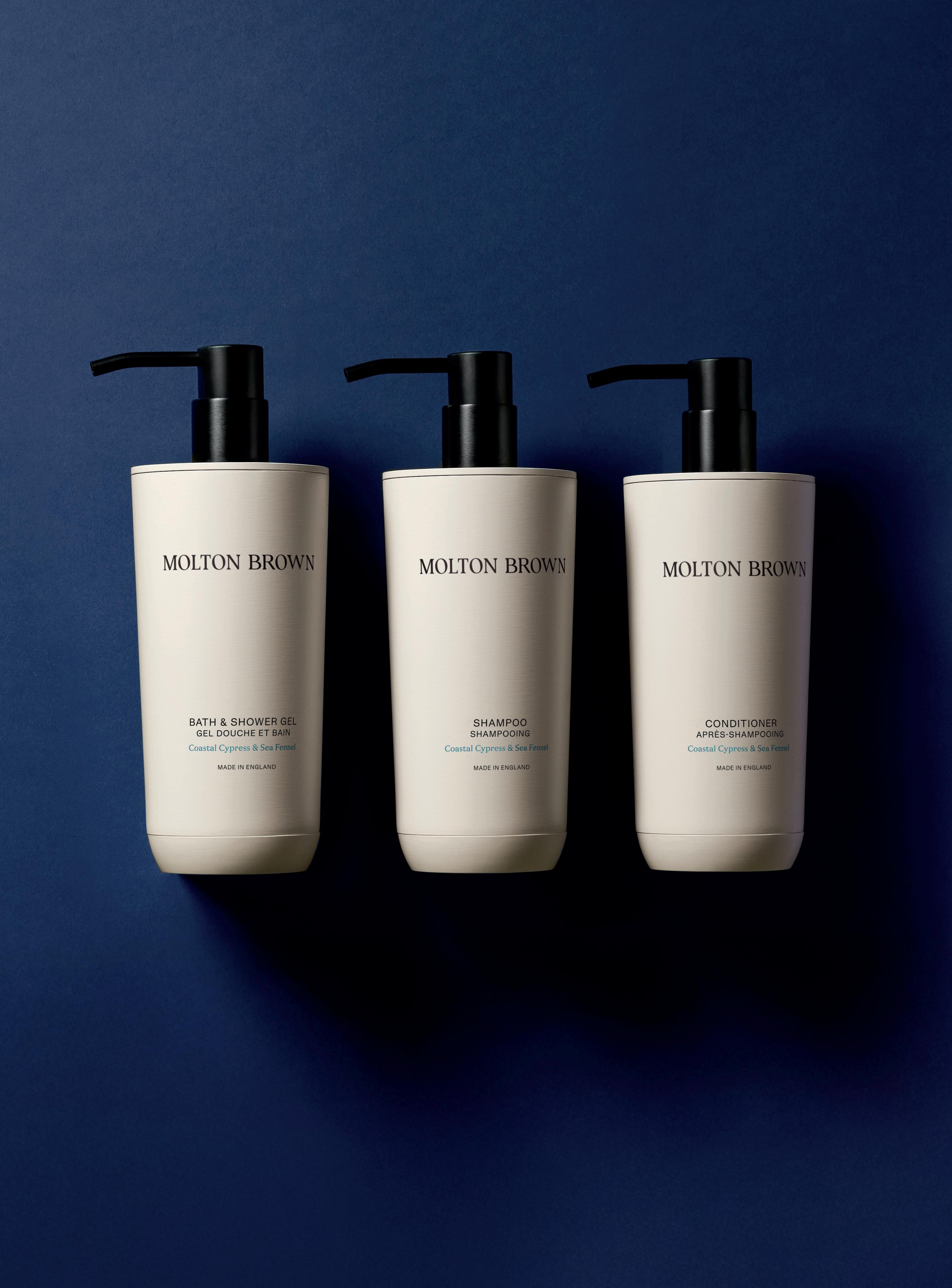
Every time a guest leaves your hotel to buy water, snacks or travel essentials, you’re losing money. Here’s why a 24-hour shop has become one of the simplest ways to boost guest satisfaction and increase spend per stay.
Guest expectations have changed. Today’s travellers want convenience on demand, whether they’re arriving on a delayed flight at 2am, returning from a night out, or simply craving a snack after room service has closed. Yet many hotels still rely on limited food and beverage hours, effectively turning away revenue while frustrating guests.
A 24-hour hotel shop is no longer a luxury amenity – it’s a practical revenue generator that enhances the guest experience while working around the clock.
Consider the typical guest journey - a late-arriving business traveller wants a bottle of water, a quick meal or a phone charger, a family needs snacks for the children, an international guest has forgotten a travel adapter. If these essentials aren’t available on-site, guests are forced to leave the property or order from external delivery services. In both cases, the hotel loses a sale that should have been theirs.
The revenue leakage can be significant as even modest spending adds up quickly. If just 20 guests per day spend an average of £8 in a hotel shop, that equates to nearly £60,000 in annual revenue. Increase the range to include premium snacks, drinks, toiletries, travel essentials and local products, and the figure can climb considerably higher.
The benefits extend beyond direct sales. A wellstocked 24-hour shop improves guest satisfaction by solving problems instantly; convenience is remembered, and guests increasingly judge hotels not only on rooms and service, but on how easily their needs can be met throughout their stay.
Modern retail technology has also made round-theclock operation more achievable than ever. Self-service kiosks, contactless payment systems and smart inventory management allow hotels to offer 24-hour access without the need for dedicated overnight staffing. The result is a low-maintenance, high-margin revenue stream that
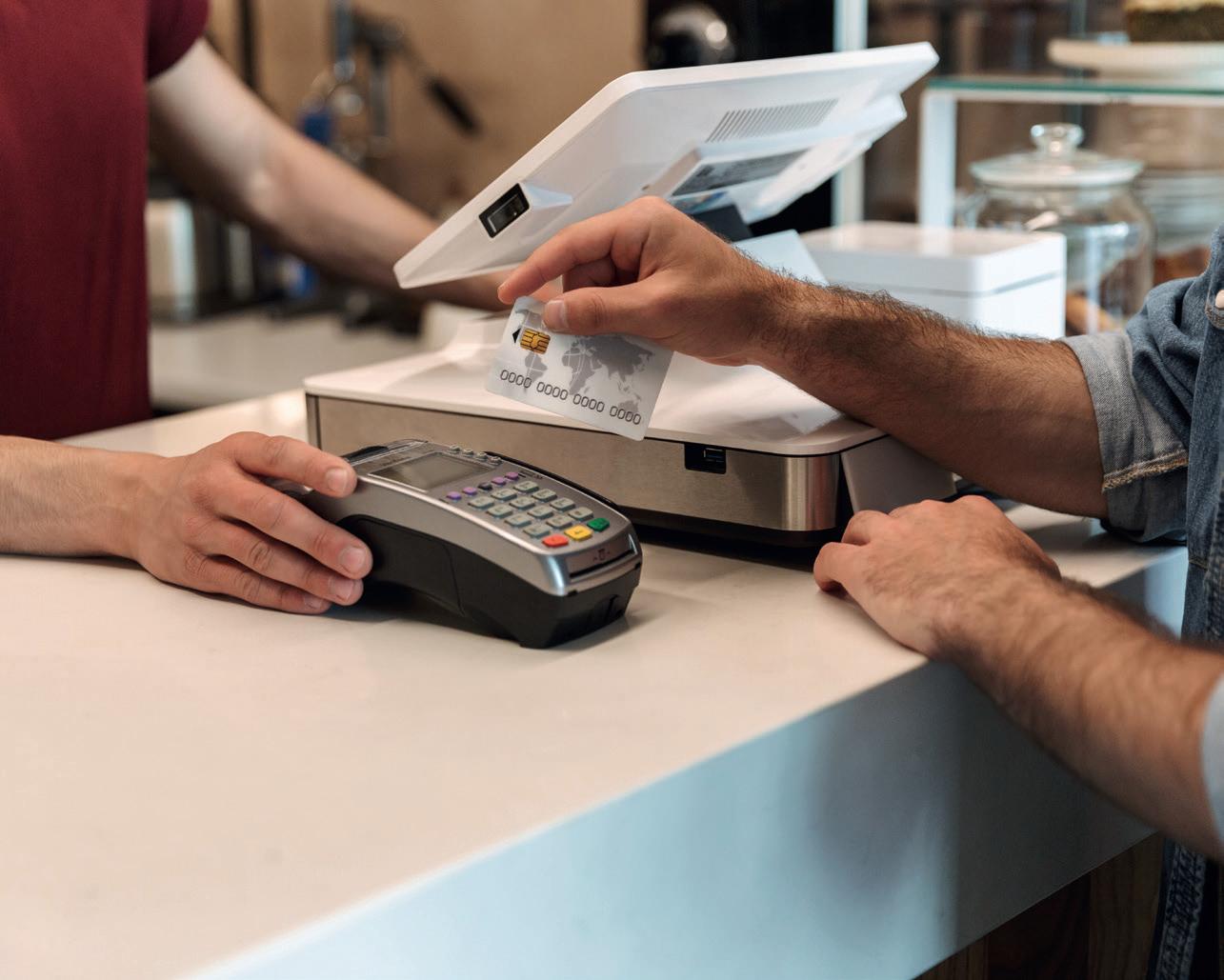
complements existing food and beverage operations rather than competing with them.
Importantly, a hotel shop can be tailored to the property’s brand. Luxury hotels can offer premium refreshments and curated local gifts, while budget and mid-market properties can focus on practical essentials and grab-and-go options, but the common denominator is always convenience.
In an industry where operators are constantly searching for new ancillary revenue opportunities, the question is no longer whether a 24-hour shop is worthwhile. The question is how much money is being left on the table without one.
For hotels looking to enhance guest satisfaction, increase spend per stay and generate revenue while guests sleep, a 24-hour shop may be one of the simplest investments they can make.
THE GUEST EXPERIENCE CURATORS

A multidisciplinary collective of excellences: La Bottega, Vanity Group, Palatino, Beltrami, White Privé, and Colosseo.
Through our integrated expertise across beauty, textiles, OS&E and design-driven consulting, La Bottega Collective partners with the world’s most discerning hospitality clients, from hoteliers to developers and designers, to transform the guest journey into memorable experiences. Because excellence is never an accident. labottegacollective.com
As hotels prepare for a busy season, investing in high-quality lighting and bespoke lampshades can enhance guest comfort, support operational teams, and ensure interiors are ready to shine throughout the year.
During the summer months, hotels are at their most vibrant, welcoming increased guest numbers, hosting events, and preparing spaces to deliver memorable experiences.
At Tringhams, we are proud to play a key role behind the scenes, supporting hotels with luxury lampshades that enhance both style and functionality during this busy period.
While summer naturally brings longer daylight hours, it is also the perfect time for hotels to refresh interiors and carry out essential updates. Our work during these months ensures that guestrooms, lounges, corridors, and public spaces are ready for the subtle but crucial shift that comes later in the year. As the days begin to shorten, lighting becomes even more central to the guest experience, creating atmosphere, comfort, and warmth. By investing in high-quality lampshades now, hotels are well prepared for the darker seasons, when lighting truly comes into its own.
We understand that our role goes far beyond supplying products. Tringhams works closely with housekeeping teams, maintenance staff, and hotel management to deliver a seamless service. Housekeepers, in particular, are essential partners in maintaining presentation standards, and we ensure our lampshades are not only beautiful, but practical, easy to clean, durable, and designed to withstand the demands of busy hospitality environments.
Our team also supports maintenance and engineering departments by providing tailored fittings, replacements, and upgrades that align with existing fixtures and compliance requirements. Whether refreshing guestroom lighting or enhancing public areas, we aim to simplify the process and reduce disruption for hotel staff.
We recognise that every department contributes to the overall guest experience. By supplying consistently highquality, bespoke lampshades, we help create cohesive interiors that reflect each hotel’s brand and standards.
This summer has already been a particularly busy period for Tringhams, as more hotels recognise the importance
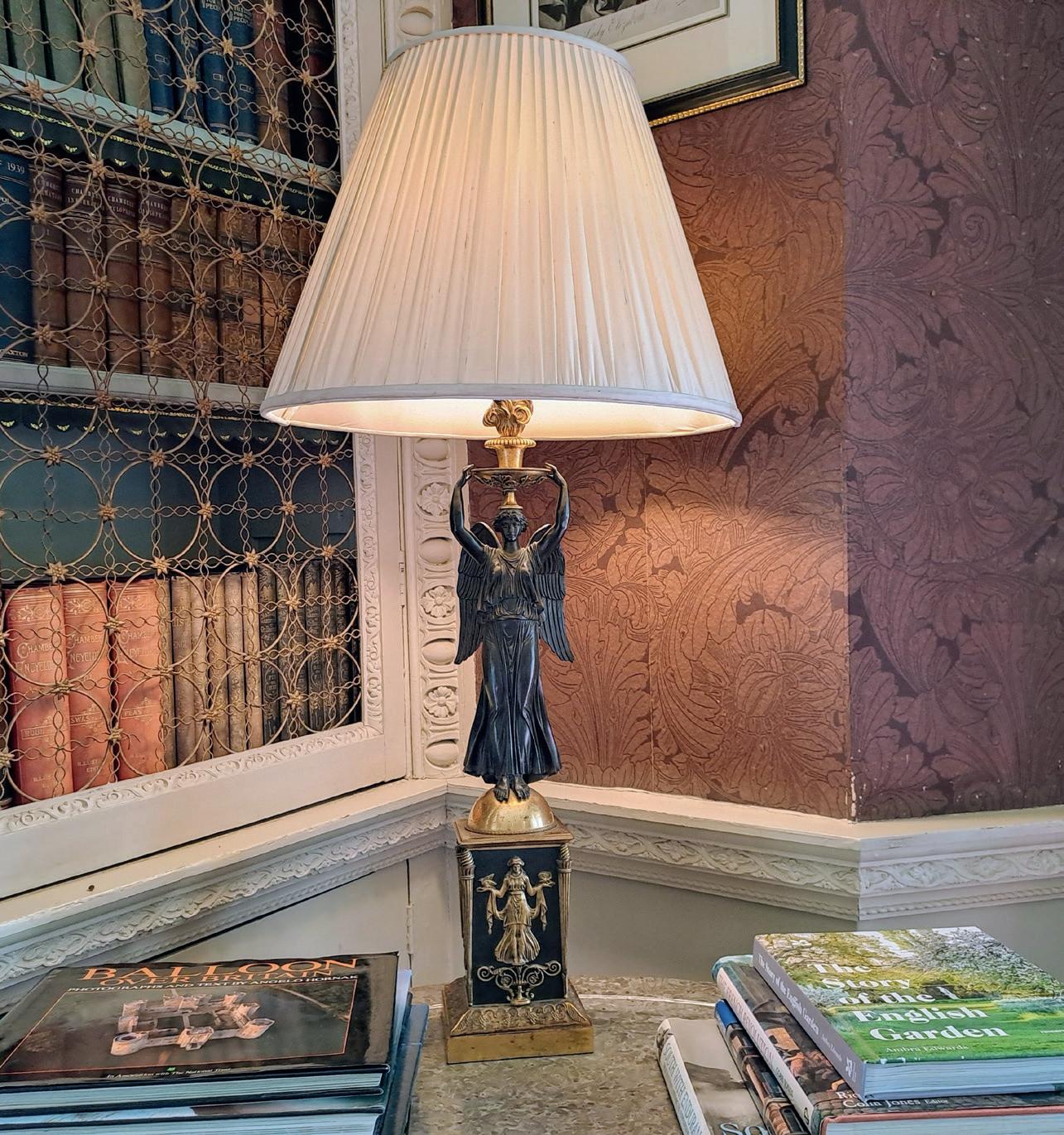
of forward planning their lighting. The work completed now ensures that, when evenings draw in and guests spend more time indoors, every space is perfectly lit to provide comfort, elegance, and a welcoming atmosphere.
At Tringhams, we are proud to support the teams who make hospitality exceptional, helping hotels shine, whatever the season.
tringhams.co.uk
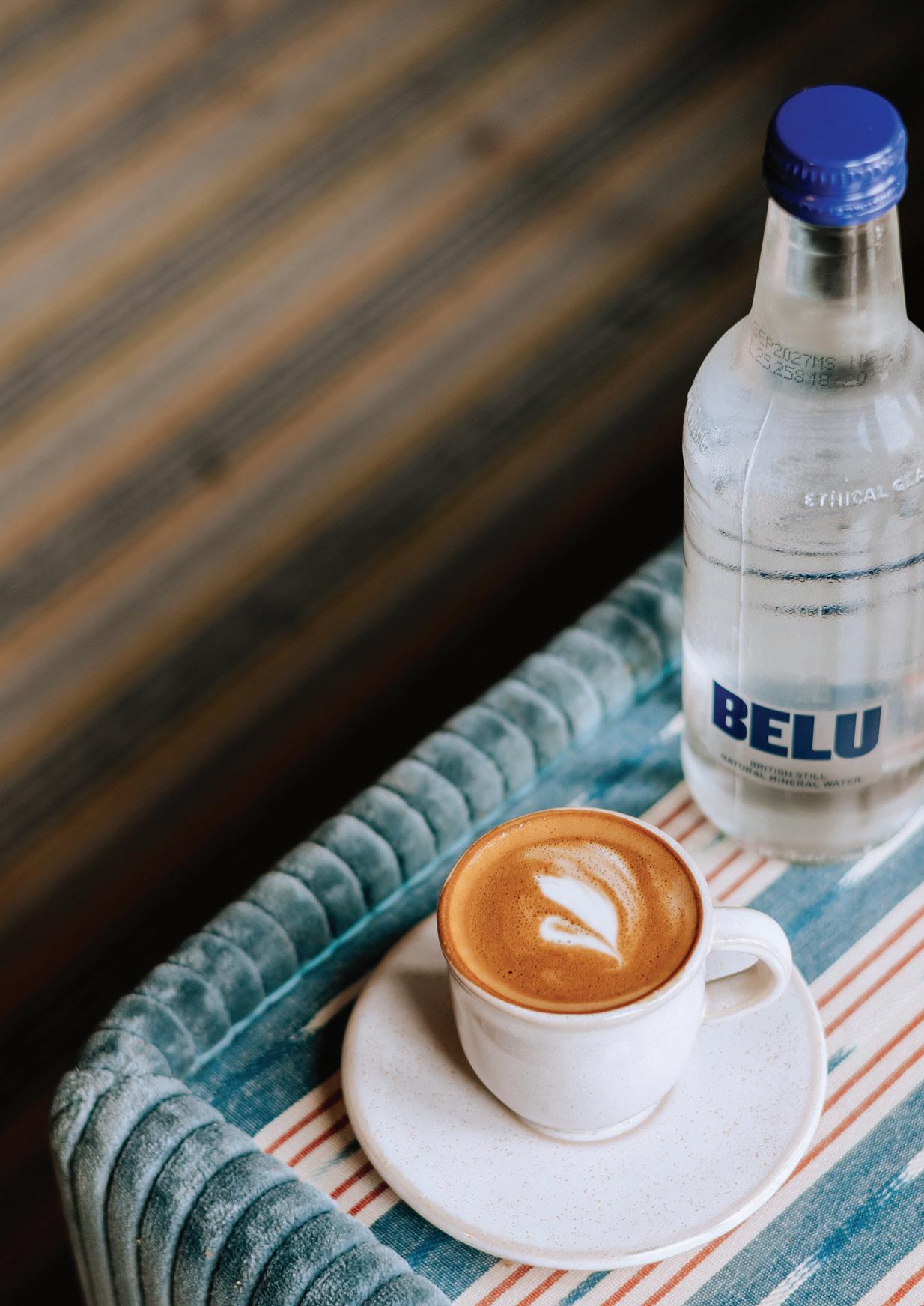
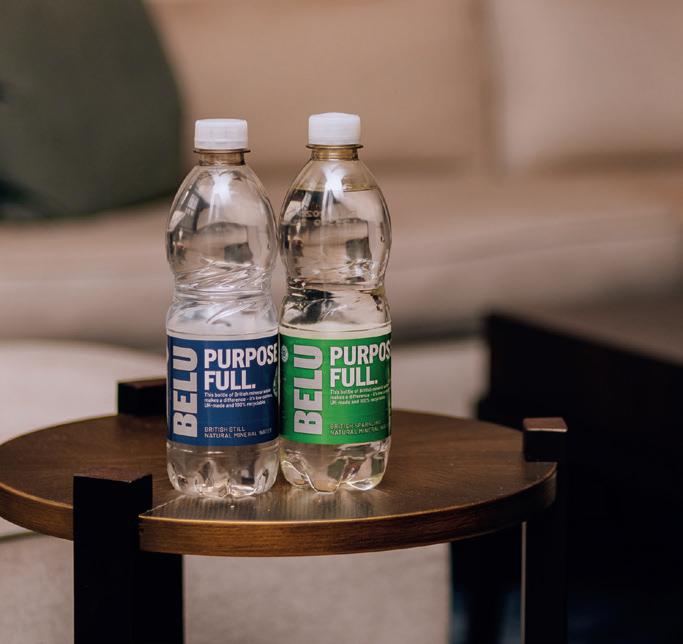
The best hotels know the room experience starts with the smallest details. Belu is the water chosen by hotels that get it right, combining quality, design and purpose in every stay.
As AI and automation reshape the guest experience, luxury hotels are discovering that their greatest competitive edge remains distinctly human. Amber Blount, Managing Director of Human One Global, explains how the future of hospitality lies in combining technological innovation with the emotional intelligence, empathy and personal service that guests remember most.
Technology has transformed almost every aspect of the hospitality industry. From AI-powered concierge services and digital check-in, to predictive guest preferences and automated scheduling, hotels have embraced innovation to create faster, more seamless experiences. Yet, as technology continues to remove friction from the guest journey, one thing has become increasingly clear: the true differentiator in luxury hospitality is not technology itself, but the people behind it.
Today’s guests expect efficiency. They appreciate mobile check-in, personalised recommendations and intuitive digital services. However, the moments they remember most rarely come from an app or automated process. Instead, they are created through genuine human interaction - the concierge who anticipates an unspoken need, the housekeeper who notices the smallest detail, or the restaurant manager who remembers a returning guest’s favourite table.
Technology can streamline operations, but it cannot replicate empathy, emotional intelligence or authentic connection. In many ways, as artificial intelligence becomes more prevalent, these distinctly human qualities become even more valuable.
This shift is changing the way leading hospitality businesses think about talent. Recruitment is no longer simply about filling vacancies; it is about identifying individuals who can consistently deliver memorable experiences while embodying a brand’s values. Skills remain important, but qualities such as emotional intelligence, adaptability, curiosity and genuine warmth have become equally critical.
Attracting the right people is only the beginning. Effective onboarding, continuous learning and a strong organisational culture are increasingly recognised as
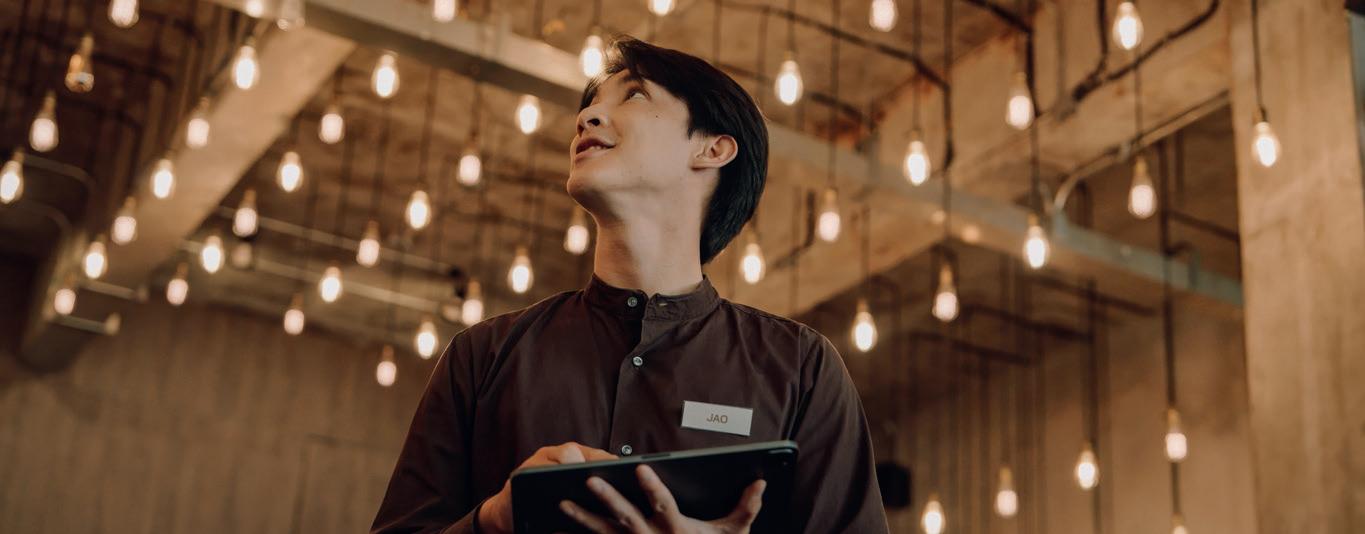
strategic drivers of guest satisfaction. Employees who feel engaged, supported and connected to a hotel’s purpose are far more likely to create meaningful experiences for guests.
At Human One Global, we see this evolution every day. As a global workforce solutions partner, our role extends beyond recruitment to helping hospitality businesses build high-performing teams through workforce planning, talent acquisition, onboarding strategies and long-term people solutions. By aligning talent with operational objectives and organisational culture, we help clients create environments where both employees and guests can thrive.
The hotels that will lead the next generation of luxury hospitality will be those that successfully combine innovation with humanity. Technology should enhance the guest experience by removing administrative burden and enabling employees to focus on what they do best: creating genuine, memorable moments that cannot be automated.
In a world increasingly shaped by AI, the greatest luxury is becoming something refreshingly simple - authentic human connection. And while technology will continue to evolve, it is the people behind the experience who will always define exceptional hospitality. humanone.global
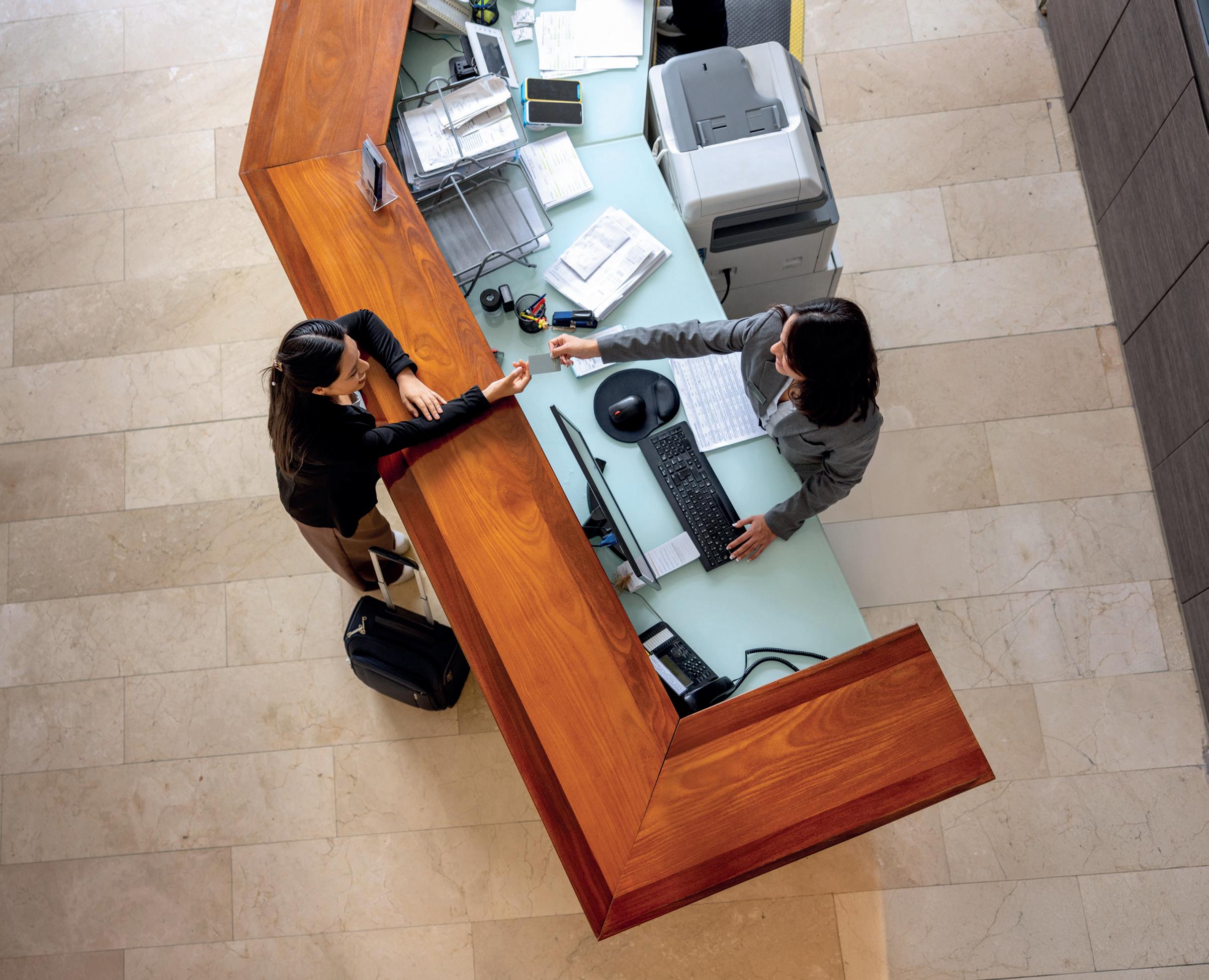
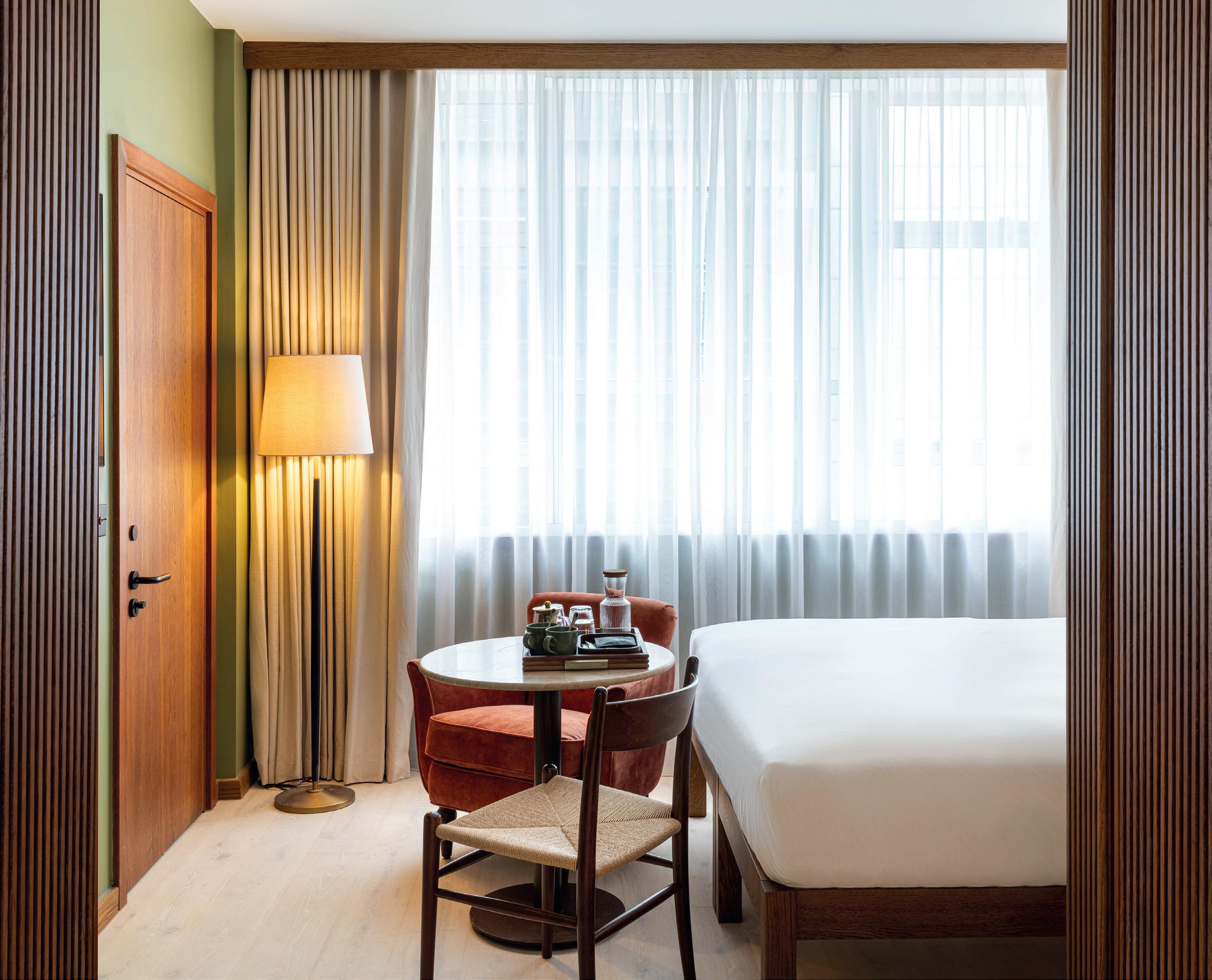
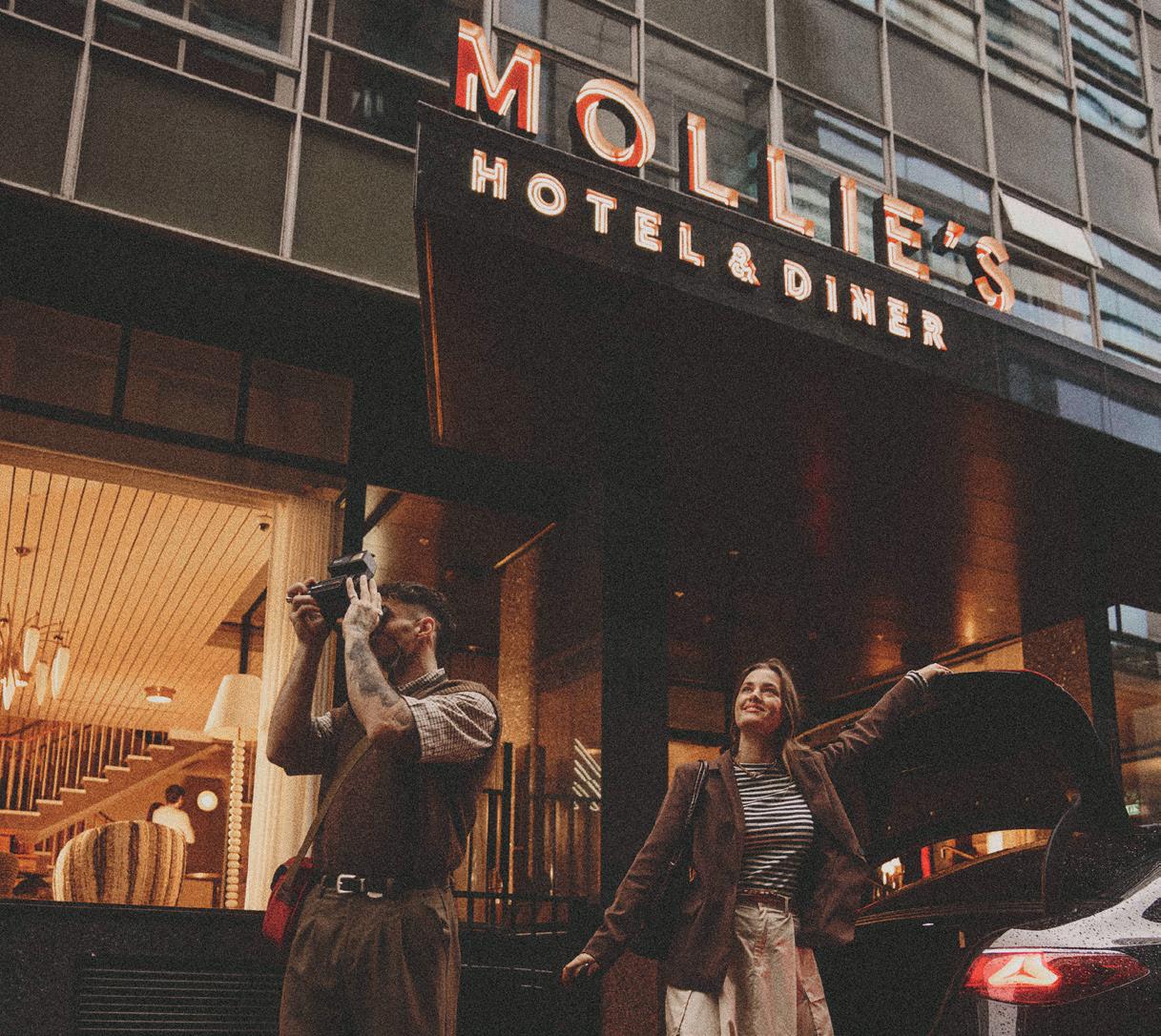
Transforming the historic Granada TV Studios into its largest and most ambitious property to date, Mollie’s Manchester brings the brand’s signature value-luxe proposition to the city centre. Blending heritage-led design, technology-driven operations, sustainability and a strong sense of place, the 128-room hotel features as August’s Hotel of the Month.
Few hotel openings in recent years have generated as much industry interest as Mollie’s Manchester. The third property from the fast-growing motel, bar and diner brand marks a significant milestone in the company’s evolution, bringing its distinctive value-luxe concept from roadside locations into the heart of one of the UK’s most dynamic cities.
Opened in March 2026, Mollie’s Manchester occupies the iconic former Granada TV Studios on Quay Street, a landmark building that has long been woven into the cultural fabric of the city. The ambitious transformation of the 100,000 sq ft site represents the brand’s largest project to date and demonstrates how adaptive reuse, technology and strong design identity can combine to create a compelling hospitality proposition.
Since launching its first properties in Oxfordshire and Bristol, Mollie’s has built a reputation for delivering designled accommodation at accessible price points. Manchester takes that formula into a city-centre environment while retaining the brand’s core philosophy: stylish without being exclusive, technology-driven without losing its sense of hospitality, and premium in feel without commanding premium prices.
The hotel offers 128 guestrooms across five floors, with rates starting from £139. Importantly, the accommodation strategy reflects changing guest expectations around flexibility and choice. Alongside classic doubles, twins and bunk rooms, guests can opt for larger Comfy Rooms, Studios and suites that introduce increasingly residential elements such as lounge spaces, kitchenettes, cocktail stations, walk-in wardrobes and freestanding bathtubs. Selected suites even feature Peloton bikes, highlighting the growing demand for personalised wellness and lifestyle amenities within guestrooms.
Design plays a central role throughout the property. Working within the framework of the Grade II-listed former television studios, Mollie’s has preserved the building’s striking modernist façade while reimagining the interiors for contemporary travellers. Dark wood panelling, terrazzo surfaces, aged brass finishes and carefully curated artwork create a sophisticated aesthetic that acknowledges the building’s heritage while remaining unmistakably modern.
The project also demonstrates how hospitality brands can successfully leverage local culture to create a genuine sense of place. Rather than imposing a standardised design template, Mollie’s has collaborated with Manchester-based artists and creatives, with a collection curated by Gemma Rolls-Bentley celebrating the city’s resilience, creativity and connection to the landscapes of the North. The result is a hotel that feels intrinsically linked to its location rather than simply situated within it.
For hoteliers, the operational approach behind the property may be just as interesting as the design story. Technology remains a cornerstone of the Mollie’s model, building on a reputation that earned the company industry recognition for innovation. Guests benefit from seamless digital experiences, while behind the scenes the brand continues to explore efficiencies that support both service delivery and sustainability.
One example is the decision to replace traditional inroom kettles with centrally located hot water stations.
While seemingly small, the move reflects a broader commitment to reducing energy consumption and operational waste. As a certified B Corp with an industryleading score of 95.8, sustainability is embedded into the company’s decision-making process rather than treated as a standalone initiative.
Public spaces have also been carefully considered to maximise both guest engagement and local relevance. The ground floor diner reinterprets the classic Mollie’s concept for an urban audience, combining retro-American influences with references to the building’s mid-century origins. Alongside the restaurant sits a flexible loungelobby environment that functions as a social hub, coworking space and casual meeting venue throughout the day.
The property’s food, beverage and entertainment offer is further enhanced by Studio IV, a live music and cocktail venue located within the building. Given Granada Studios’ rich musical heritage – including hosting early television appearances by both The Beatles and the Sex Pistols – the concept feels particularly authentic. By incorporating live entertainment and creating opportunities for local talent, Mollie’s strengthens its connection to the city while broadening its appeal beyond overnight guests.
Additional facilities include a comprehensive wellness offering, with a gym featuring free weights, studio space, steam room and sauna, reflecting continued consumer demand for high-quality fitness amenities.
For the wider hospitality sector, Mollie’s Manchester represents more than just another hotel opening. It is a case study in how brands can successfully evolve established concepts, repurpose heritage assets and create meaningful connections with local communities. By balancing affordability, design quality, operational innovation and cultural relevance, Mollie’s has delivered a city-centre hotel that feels both commercially astute and distinctly memorable.
mollies.com/manchester/
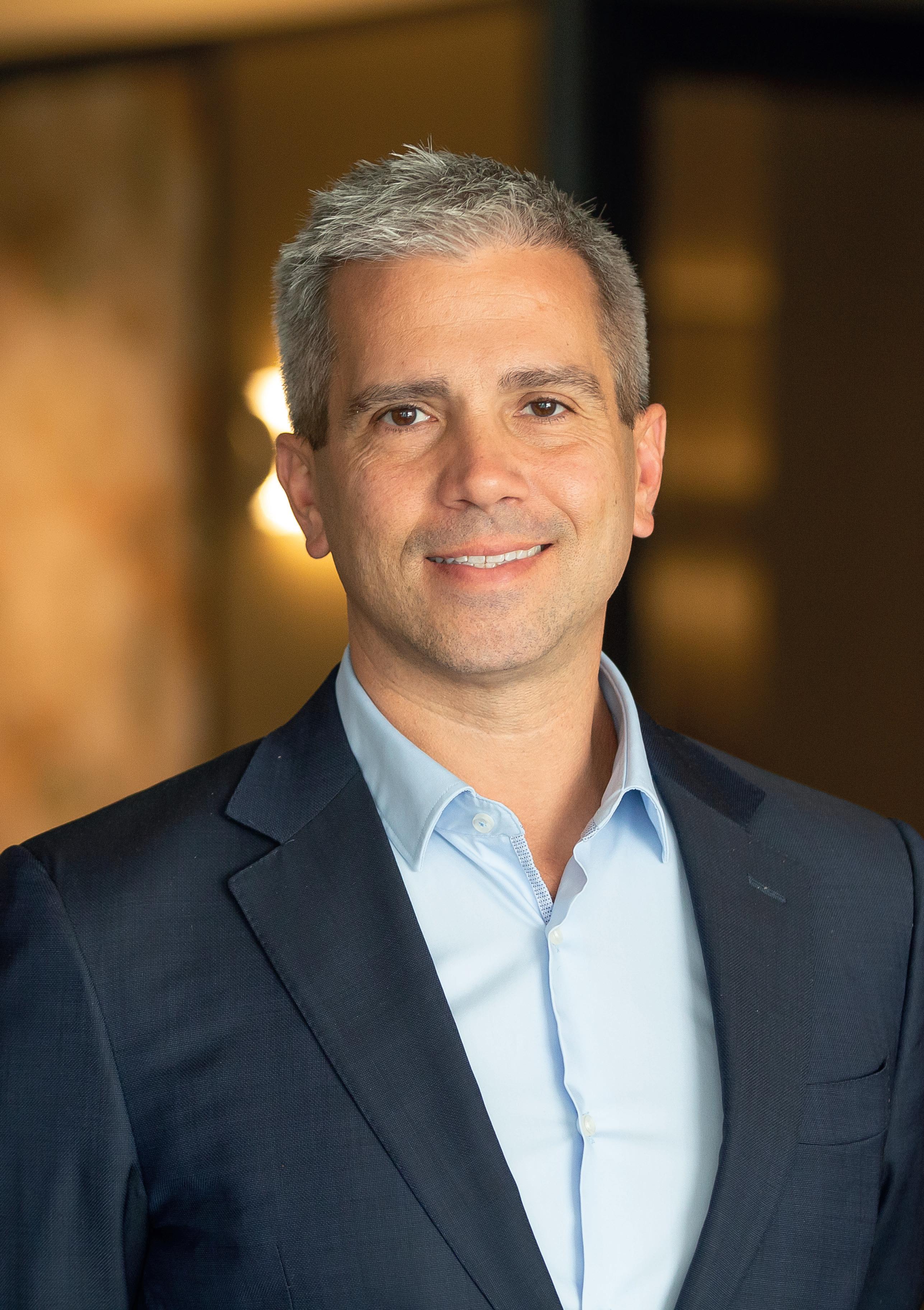
As Langham Hospitality Group accelerates its expansion across Europe, the Middle East and Africa, newly appointed Head of Development – EMEA Josh Littman shares his vision for growth, the opportunities shaping the region, and why the Group’s heritage gives it a distinctive edge in today’s competitive luxury hospitality market.
Fresh into his role as Head of Development –EMEA, Josh Littman is tasked with accelerating Langham Hospitality Group’s growth across one of the world’s most dynamic hospitality markets.
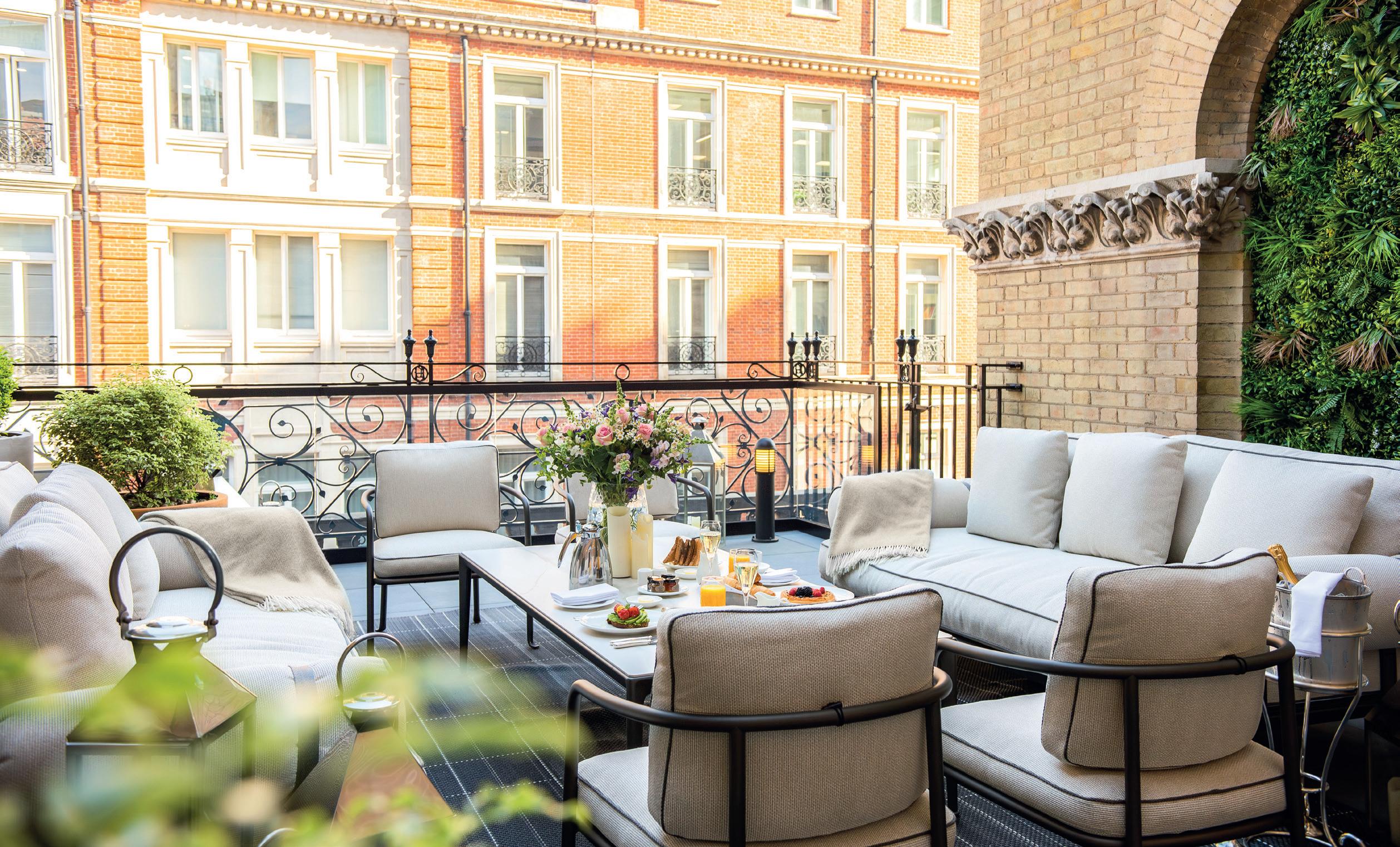
With landmark projects already underway in Venice and Diriyah, and ambitions spanning Europe, the Middle East and Africa, he joins the business at a pivotal moment. For Josh, the opportunity was impossible to ignore.
“I’ve always been a fan of The Langham Hotels & Resorts brand, which, for me, is the epitome of timeless luxury and British heritage hospitality,” said Josh. “The Langham brand was born in London 160 years ago, and there is plenty of room to grow our footprint across the region.”
That heritage, combined with significant white space for expansion, was a major draw. “We’re already making great progress in Europe and the Middle East, with both The Langham Venice and The Langham, Diriyah well underway,” he explained. “In Africa, I see some fantastic opportunities across our brand spectrum in a number of the key international markets.”
He believes Langham Hospitality Group occupies a distinctive position in today’s luxury hospitality landscape. “With so much saturation in many markets amongst our luxury peers, we have the unique proposition of being able to deliver a new, but familiar face,” Josh said. “I’m thrilled to play a part in sculpting the group’s next chapter of growth.”
Over the next five years, the Group’s ambitions are
firmly focused on strategic growth across EMEA, with the Gulf Cooperation Council (GCC) standing out as a priority market.
“I see plenty of growth opportunities in the GCC for Langham Hospitality Group, both in urban hotel development and in resorts,” said Josh. “Not too far away, the Red Sea also offers interesting opportunities, alongside Jeddah and Mecca.”
Europe also represents a significant opportunity for the business to build on its historic roots. “We were founded in London, and so European development is a key priority of ours going forward,” he said. “Whilst we want to be in the key capital and gateway cities, we are also hungry to expand our resort presence, and southern Europe has seen significant activity in the industry over the past few yearsa trend we are keen to capitalise on.”
One area where Josh sees particular momentum is branded residences, a sector that continues to attract both developers and investors. “The Group is heavily invested in branded residences, and we are in a unique position to succeed in this area,” he explained. “Developers want proof of concept, and we have 160 years of legacy and brand trust under our belts.”
That combination of established heritage and a relatively limited regional footprint creates a fascinating proposition. “Whilst other groups may have already entered the GCC, our early-stage growth in the region gives us an edge,” Josh said. “From an investor or developer standpoint, that
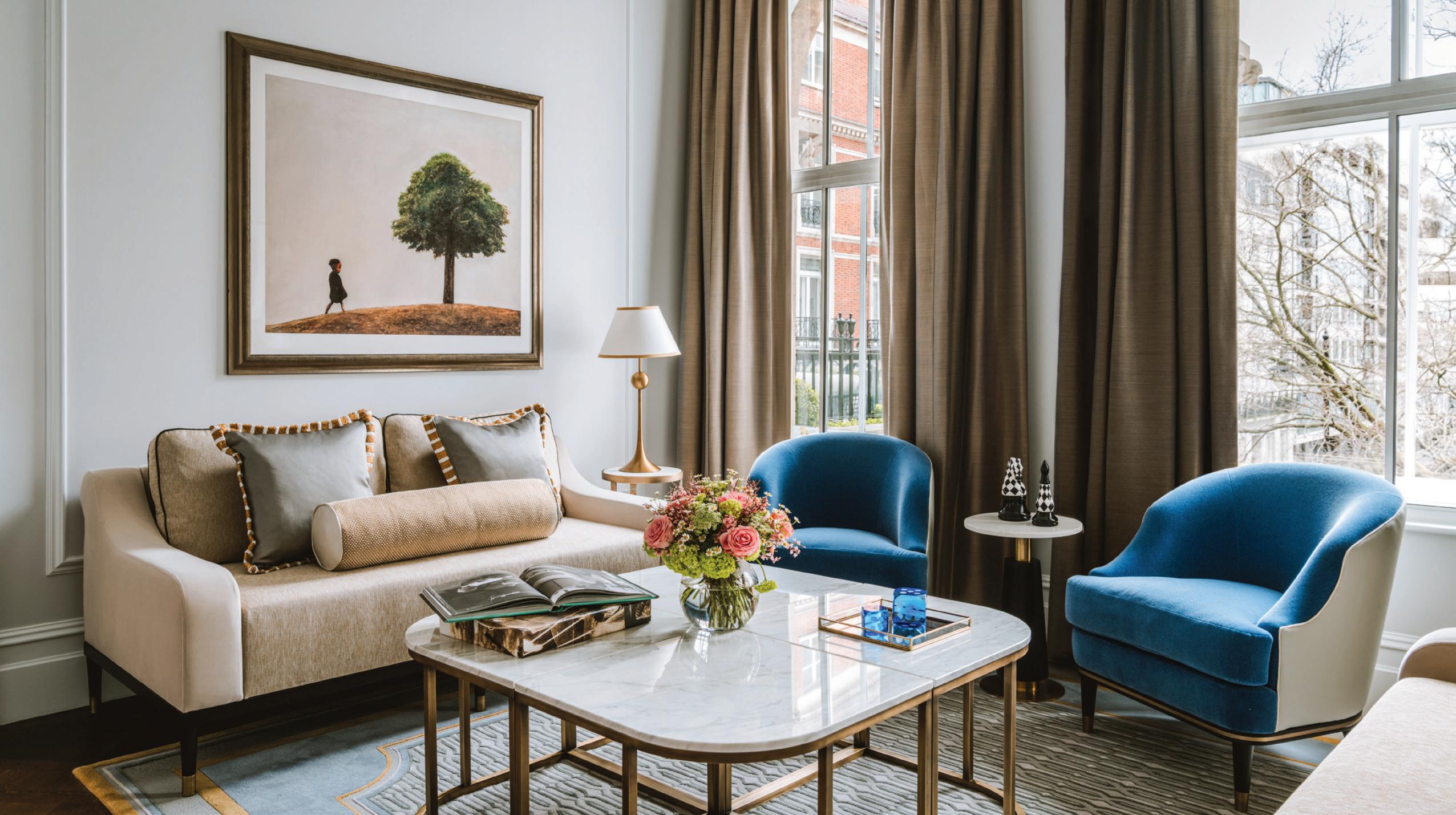
recognition and lighter footprint translates into trust and opportunity that helps us stand out as an exciting new option in this space.”
Langham’s residential offering, he adds, is about much more than luxury real estate. “Our Residence philosophy mirrors that of The Langham Hotels and Resorts - elegance in design, innovation in hospitality, genuine service and sensory appeal,” he said. “Owners have access to the services and amenities provided by our hotels while investing in The Langham lifestyle.”
Josh’s approach to development has been shaped by a career spanning advisory, financing, feasibility and hotel operations, giving him a broad commercial perspective when negotiating new partnerships.
“I’ve had the privilege of working across a mix of hotel groups, from smaller, independent platforms to larger, publicly listed companies,” he said. “Each situation brought me into contact with different people, situations and objectives.”
Those experiences have reinforced one lesson above all others. “I think the most relevant lesson is understanding what the person sitting across from you wants,” Josh explained. “Once you understand that, you’re better able to focus on what is relevant when entering new relationships and pursuing new deals.”
Looking ahead, his ambitions for Langham Hospitality Group are clear and measurable - “Success for me would be us signing 10–15 deals over the next four to five years across all our brands, but The Langham and Eaton in particular,” he said. “I’d love to see us plant a few
flags in major global cities and one or two iconic resort destinations.”
Despite now operating at the highest levels of hotel development, Josh remains grounded by the operational experience that launched his career.
“Any job you do in the business is a learning opportunity,” he reflected. “With every new experience you gain, you become better equipped to understand various situations in the future and add more value as a professional.”
Starting in hotel operations, he said, continues to influence every commercial decision he makes.
“Understanding the hotel experience through a guest’s perspective and through the eyes of hotel staff provides a great perspective when making commercial decisions,” Josh said.
“To this day, I recall my time rotating through housekeeping and learning how critical the proper functioning of that department is, and how important a role its people play in the delivery of service and overall guest experience.”
As Langham Hospitality Group embarks on its next phase of growth across EMEA, Josh Littman is bringing together commercial expertise, operational understanding and a deep appreciation for the Group’s heritage. With an ambitious development pipeline and a clear vision for expansion, his focus is firmly on ensuring Langham’s next chapter is every bit as enduring as its first.
langhamhospitalitygroup.com/en/

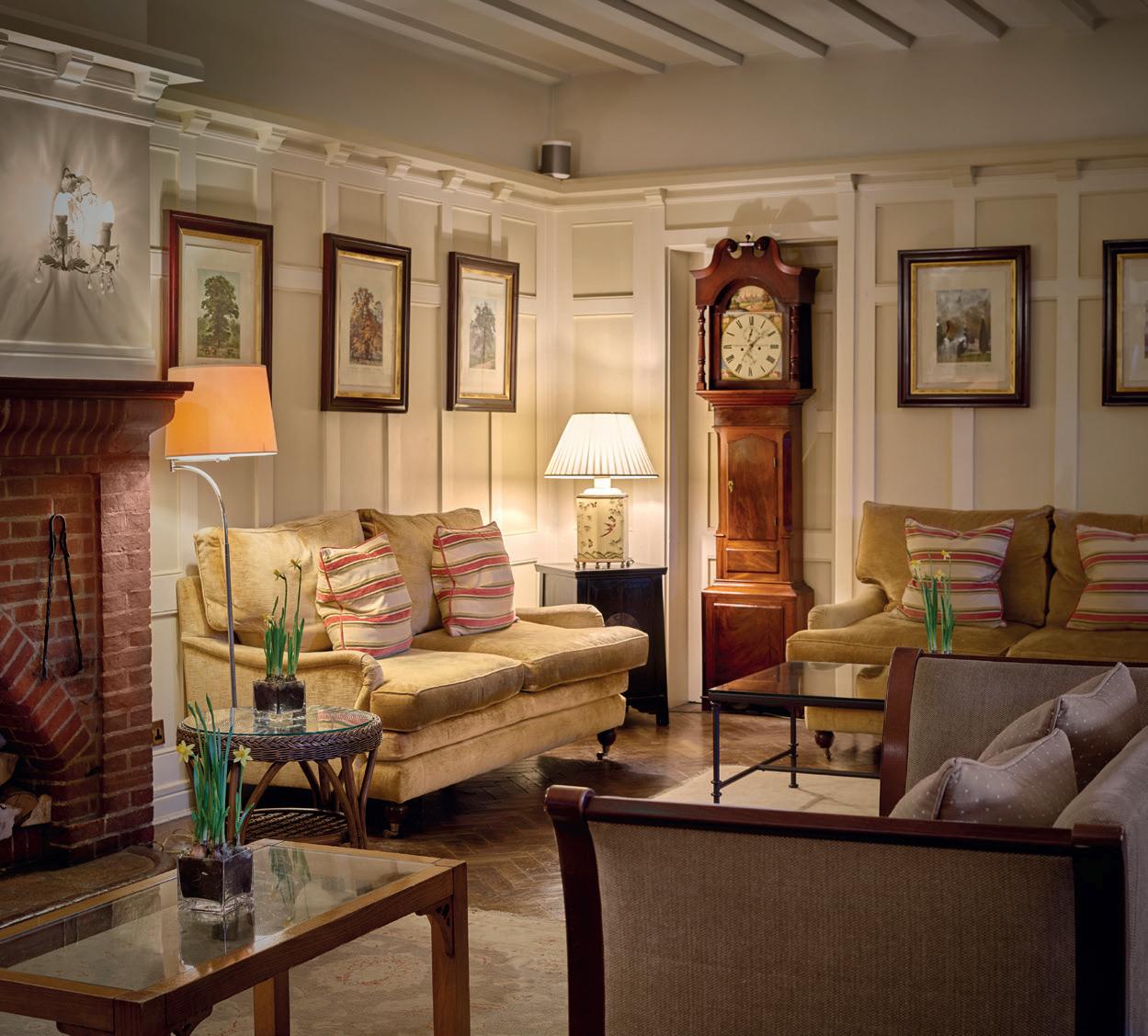
Nestled in the picturesque village of Beaulieu, The Montagu Arms is one of the New Forest’s most enchanting country house hotels. Combining centuries of heritage, exceptional hospitality and immersive garden experiences, this PoB Hotels member offers an authentic taste of British luxury.
Few destinations capture the timeless appeal of the English countryside quite like The Montagu Arms. Tucked away in the heart of the New Forest National Park, the charming country house hotel has been welcoming guests for more than 300 years, blending historic character with contemporary comfort in one of the South of England’s most sought-after settings.
The four-star property’s appeal begins with its location. Surrounded by ancient woodland, open heathland and the
quintessentially English village of Beaulieu, The Montagu Arms offers guests an immediate sense of escape. Yet it is far more than simply a beautiful place to stay. As a member of PoB Hotels, the UK’s leading collection of independently owned luxury hotels, it delivers the personalised service, individuality and exceptional experiences that have become synonymous with the prestigious portfolio.
PoB Hotels is renowned for championing Britain’s finest independent properties, carefully curating a collection that celebrates character, craftsmanship and a genuine sense
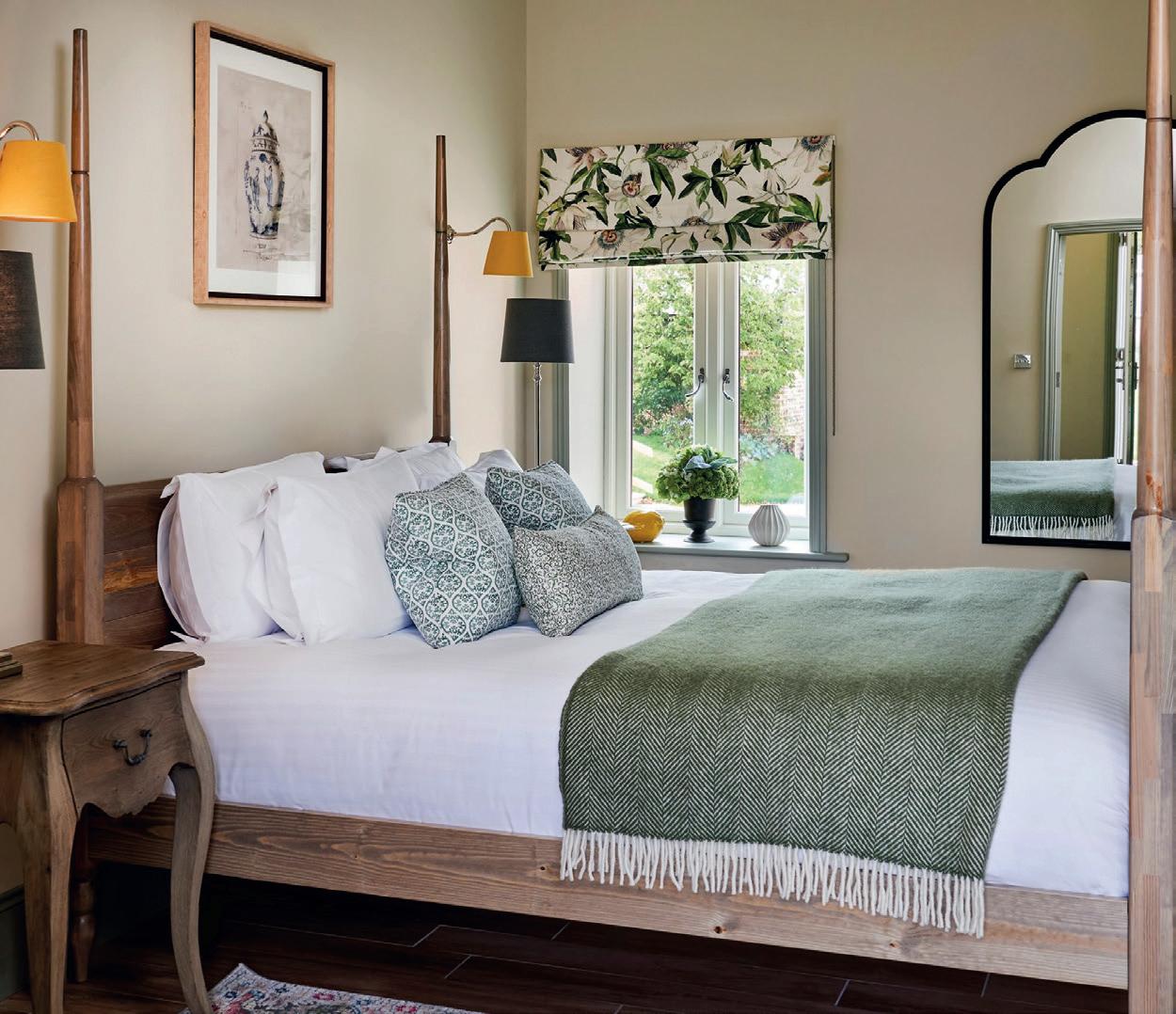
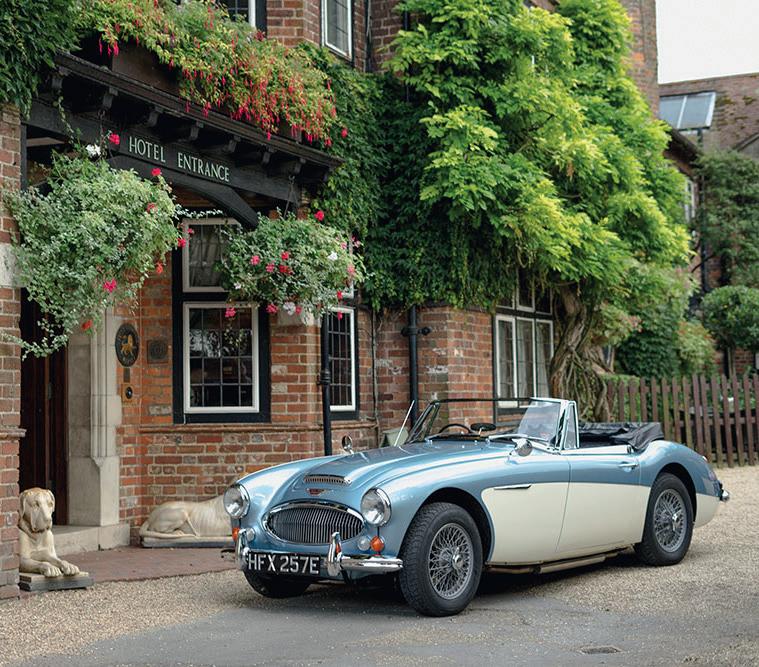
of place. For guests and event organisers, membership provides reassurance that every stay delivers a distinctive experience rather than a standardised luxury offering. At The Montagu Arms, that philosophy is evident in every detail, from its individually designed bedrooms and suites to its warm, attentive hospitality and strong connection to the surrounding landscape.
The hotel’s 33 rooms and suites are spread throughout the main house and gardens, with many offering views across the grounds or direct access to outdoor spaces. Interiors take inspiration from the New Forest itself, creating a relaxed yet refined atmosphere that feels worlds away from everyday life.
When General Manager Davide Santocono joined the property last year, he said, “The Montagu Arms is one of the finest hotels in Hampshire, with its elegant accommodation, exceptional dining and rich sense of history,”. He described his return to the New Forest as feeling like “coming home” and said “we’re proud to offer guests an experience that is deeply connected to this remarkable landscape.”
This sense of place is particularly relevant this summer, as The Montagu Arms takes centre stage within PoB Hotels’ “Art of the Garden” collection. The collection celebrates properties where gardens are not merely decorative features but an integral part of the guest experience. In a portfolio filled with exceptional hotels, The Montagu Arms is a perfect example of how outdoor spaces can shape the character of a stay and used as part of a unique marketing strategy.
Behind the hotel’s Arts and Crafts façade lies a remarkable English country garden that has become one of the property’s defining features. Winding pathways, vibrant flower beds, productive kitchen gardens and tranquil lawns invite guests to slow down and reconnect with nature. Throughout the seasons, the gardens burst with colour and fragrance, while attracting an abundance of wildlife, from
butterflies and bumblebees to songbirds and robins.
The gardens are far more than a picturesque backdrop. They influence every aspect of the guest experience, including the hotel’s culinary offering. Ingredients harvested from the kitchen garden frequently find their way onto menus, supporting a genuine garden-to-table philosophy that reflects both the New Forest’s rich natural bounty and PoB Hotels’ commitment to authentic, locally rooted experiences.
For event planners, this creates a particularly compelling proposition. Whether hosting an intimate board retreat, private celebration or exclusive-use gathering, organisers benefit from elegant indoor spaces complemented by beautiful outdoor settings that lend themselves to receptions, networking events and memorable photographs. The gardens provide a sense of tranquillity and exclusivity that is increasingly valued by delegates seeking meaningful experiences away from the traditional conference environment.
The hotel has also embraced its horticultural credentials through a series of garden-inspired experiences, allowing guests to engage more deeply with the landscape. From seasonal garden packages and creative workshops to leisurely afternoons spent exploring hidden corners of the grounds, the focus is firmly on encouraging visitors to savour a slower pace of life.
Ultimately, The Montagu Arms embodies everything that makes PoB Hotels special. It offers individuality over uniformity, authenticity over excess and a deep connection to its surroundings. As part of the Art of the Garden collection, it demonstrates how thoughtfully designed outdoor spaces can elevate a hotel experience from memorable to truly unforgettable.
montaguarmshotel.co.uk pobhotels.com
In this interview, Aethos CEO Lily Wecker explains how the brand has reimagined its Shoreditch hotel with community at its core, from local partnerships and member programming to destination dining and neighbourhood-led design.
What’s been the biggest focus for you since bringing the London property into the Aethos portfolio?
Our biggest focus has been forming a genuine connection to Shoreditch, rather than simply operating as another lifestyle hotel in the neighbourhood. The building had great architectural bones, but we reimagined it around the local community. That means creating spaces, experiences and programming that bring together travellers, local artists, workers and residents in a way that feels natural and authentic. For us, success isn’t measured solely by occupancy. It’s about creating a place that people actively want to be part of, whether they are staying with us, joining a member’s event or dining at MITSU. If we can become part of the daily rhythm of Shoreditch, we have achieved what we set out to do.
The F&B scene in Shoreditch is incredibly competitive. What’s your approach to making the food and drink offering stand out, especially with so many guests willing to leave the hotel to eat elsewhere?
We love being in one of the most diverse and exciting dining neighbourhoods in London. Instead of competing with everything around us, we aim to create destinations that draw people in. A key part of that was launching the first MITSU in London. MITSU is built on the philosophy of “East London meets East Tokyo” with high energy, high quality and zero pretentiousness. The concept was incubated within Aethos and launched with great reception in April 2026. In addition, we designed Aethos Café as the social heart of Aethos London Shoreditch and an extension of our membership offering. It’s calm, relaxed and quintessentially Aethos - where members and guests work, meet, dine and spend time throughout the day. At Aethos, our superpower is working with F&B teams who are exceptional at what they do and bring a clear point of view to the table.

Aethos talks a lot about community and creating places where locals and guests mix. What does that actually look like in practice at Shoreditch?
Community can easily become a buzzword, so for us it’s important that it shows up in tangible ways. At Shoreditch, that means a year-round calendar of programming, from talks and workshops to wellness sessions, creative collaborations and cultural events. It’s about creating
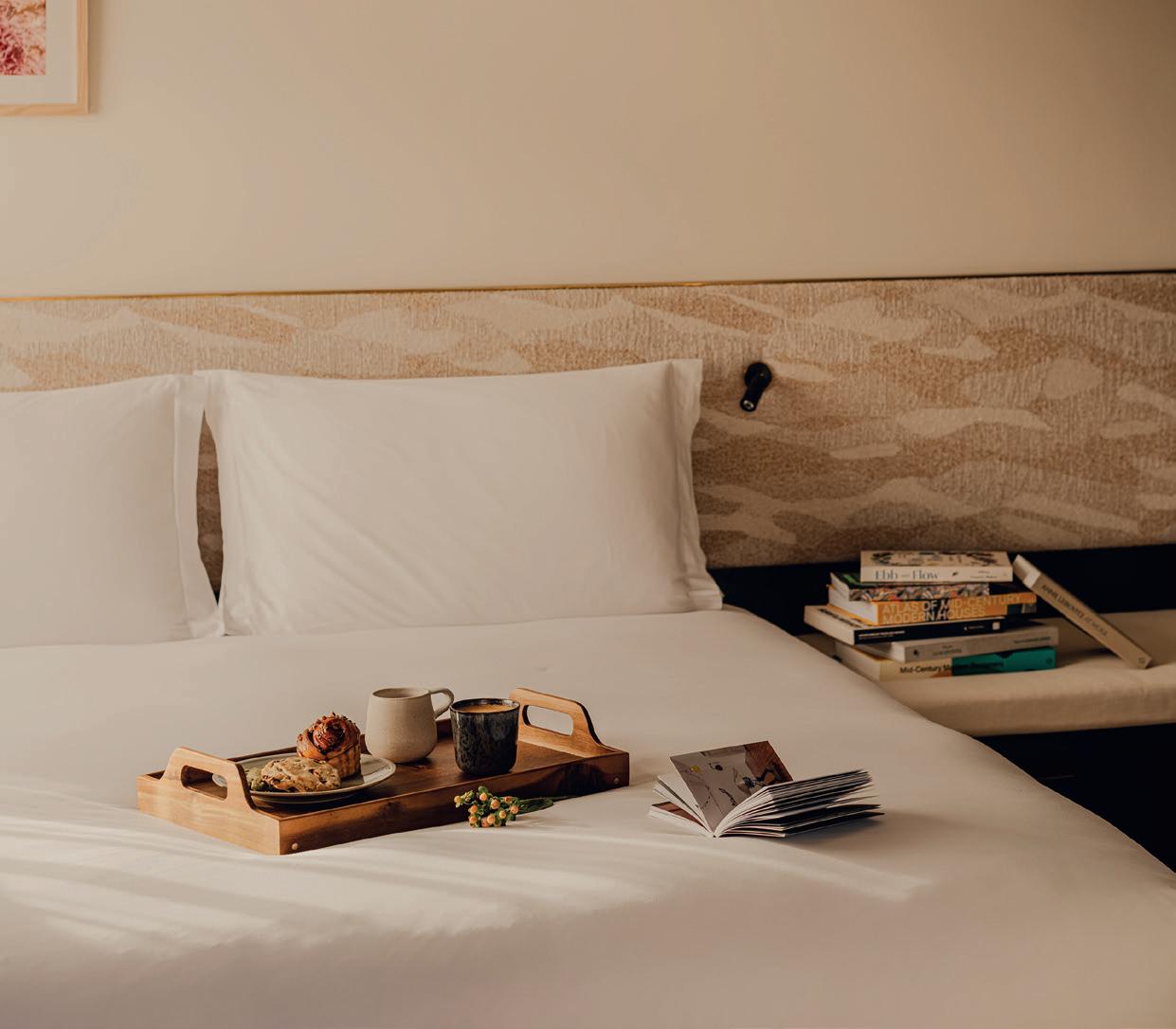
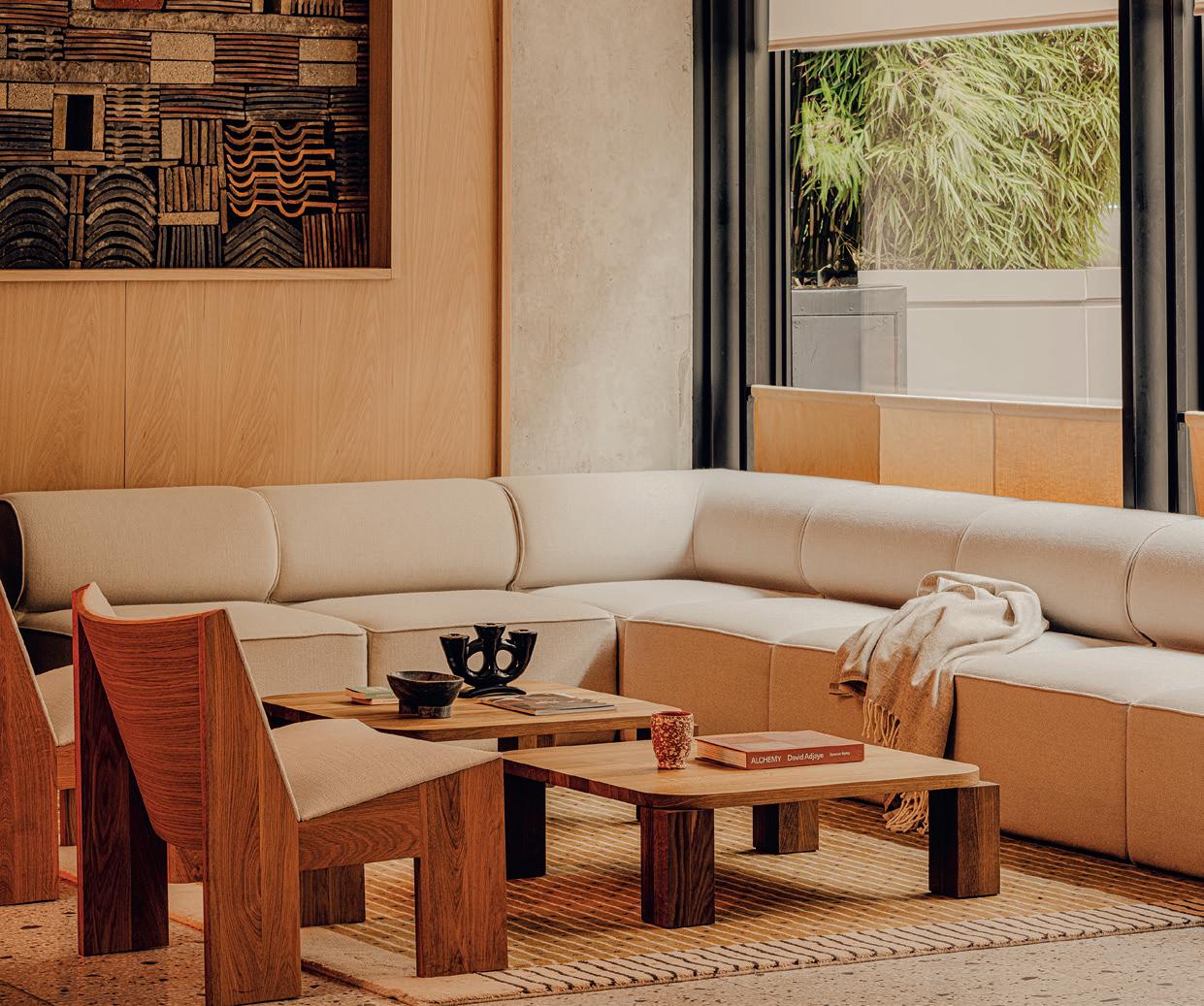
reasons for people to return and engage with the property beyond a hotel stay. Our members are highly engaged and they represent the majority of attendees of events on premise.
Members bring continuity and local energy into the building, while guests bring new perspectives from around the world. That exchange creates a much more dynamic environment than a traditional hotel.
Shoreditch isn’t a market where you can simply drop in a global brand and expect it to work. How have you adapted the Aethos concept to reflect the character and creativity of the neighbourhood?
One of the key reasons we were attracted to Shoreditch is
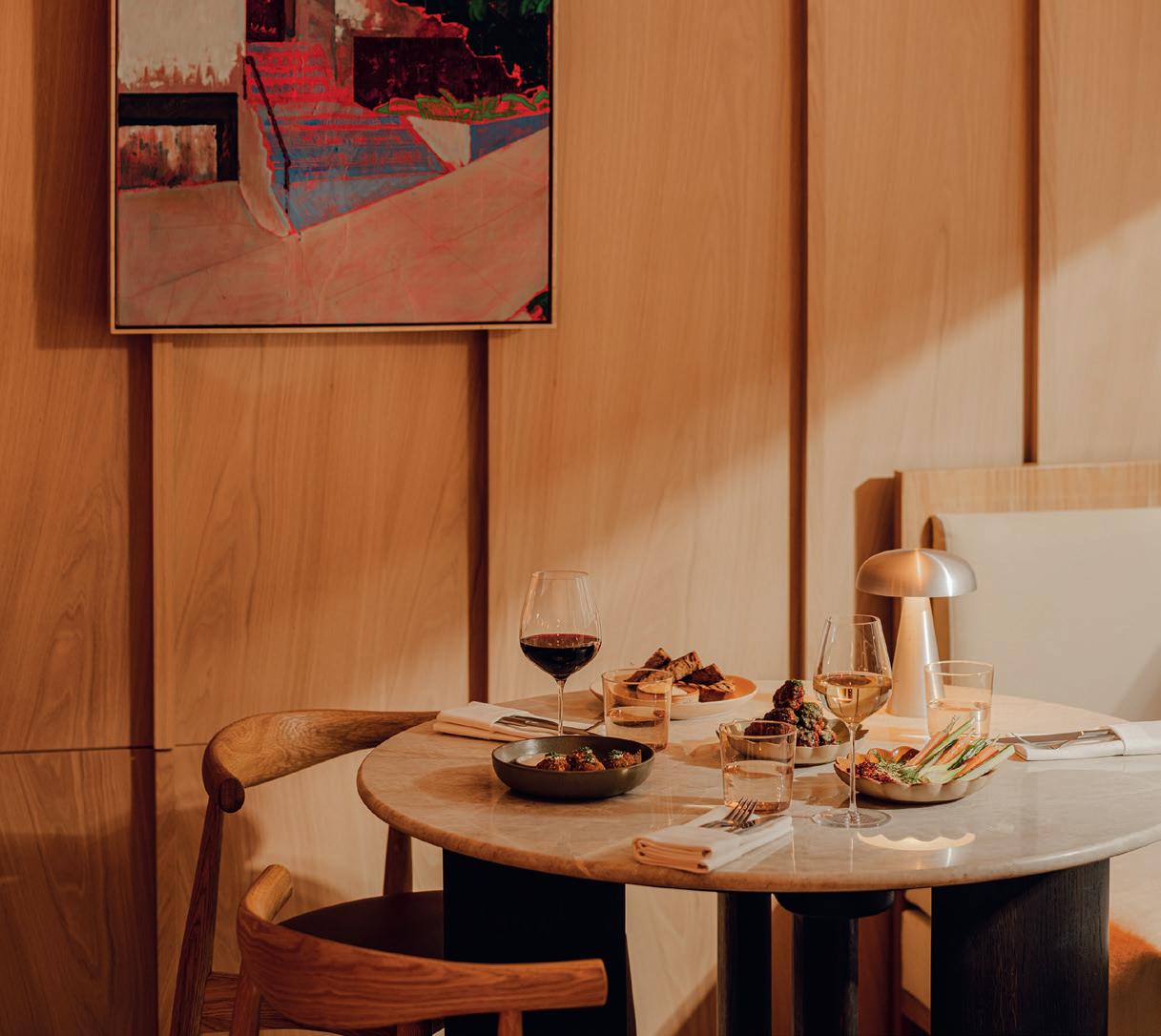
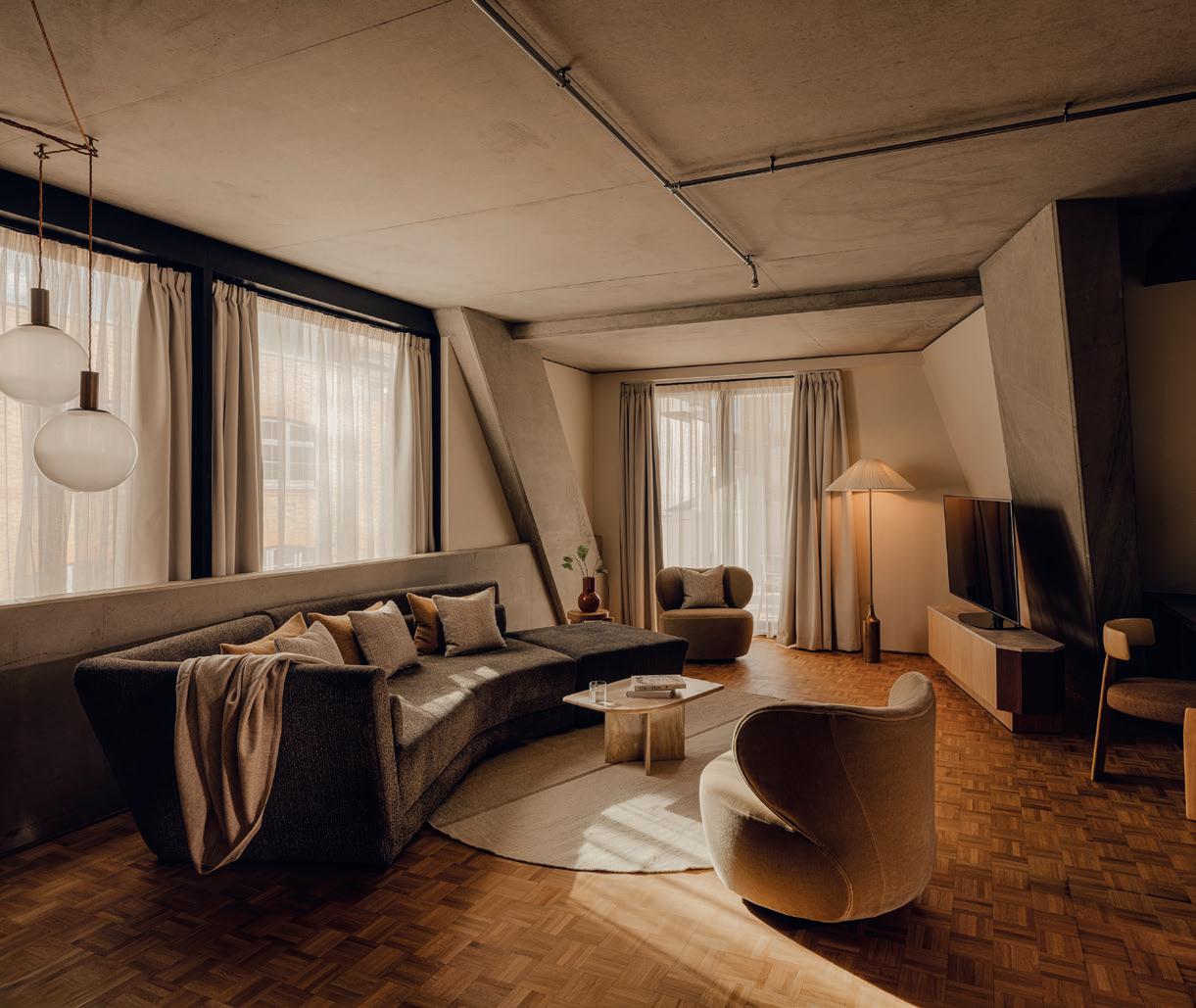
that it has such a strong identity, rich history and dynamic cultural scene. Aethos isn’t about replicating the same experience in every destination. Our philosophy of building genuine connection remains consistent, but how it comes to life always reflects the culture and character of the neighbourhood. In Shoreditch, that means working with local talent and craftsmen, listening to the feedback of our local members, collaborating with people who are shaping culture in East London and creating experiences that feel relevant to the community around us. The objective isn’t to import a finished concept, but to create something that feels authentic to Shoreditch while remaining unmistakably Aethos.
aethos.com
What the latest statutory guidance means for hospitality businesses - key insights from Team 9, the security specialist, presented by Howden.
Martyn’s Law, formally known as the Terrorism (Protection of Premises) Act 2025, became law on 3 April 2025. With the latest statutory guidance now published, the priority for hospitality businesses is clear: start preparing for implementation ahead of enforcement, expected in spring 2027.
Awareness of Martyn’s Law is now high. However, understanding what it requires in practice, especially across multi-site estates, remains limited. This is not a group-level, policy-led exercise. The law applies property by property, meaning every individual site must carry out its own assessment and have its own plans in place.
This is particularly important for larger operators, those with premises accommodating 200+ people, including hotel groups and venues. For these businesses, the scale of compliance can be significant.
The first step is to assess where you are today: what the law requires, what measures are already in place, and where the gaps sit. From there, operators need to plan and implement proportionate improvements in a structured way, before timelines tighten and pressure builds closer to enforcement.
Martyn’s Law requires hospitality businesses to assess terrorism risk and put clear, practical response plans in place. It is not about removing risk entirely, but about being prepared, so teams know what to do, can act quickly and respond with confidence.
Although enforcement is not expected until 2027, the transition period is already underway. Starting now gives businesses time to understand the Security Industry Authority (SIA) statutory guidance and wider Home Office requirements, review what is already in place and identify any gaps. Taking a structured, early approach allows improvements to be made in a controlled, manageable way, rather than under pressure near the deadline.
Martyn’s Law places clear accountability on a defined ‘responsible person’, typically the operator or occupier, who is legally responsible for ensuring each venue meets its obligations.
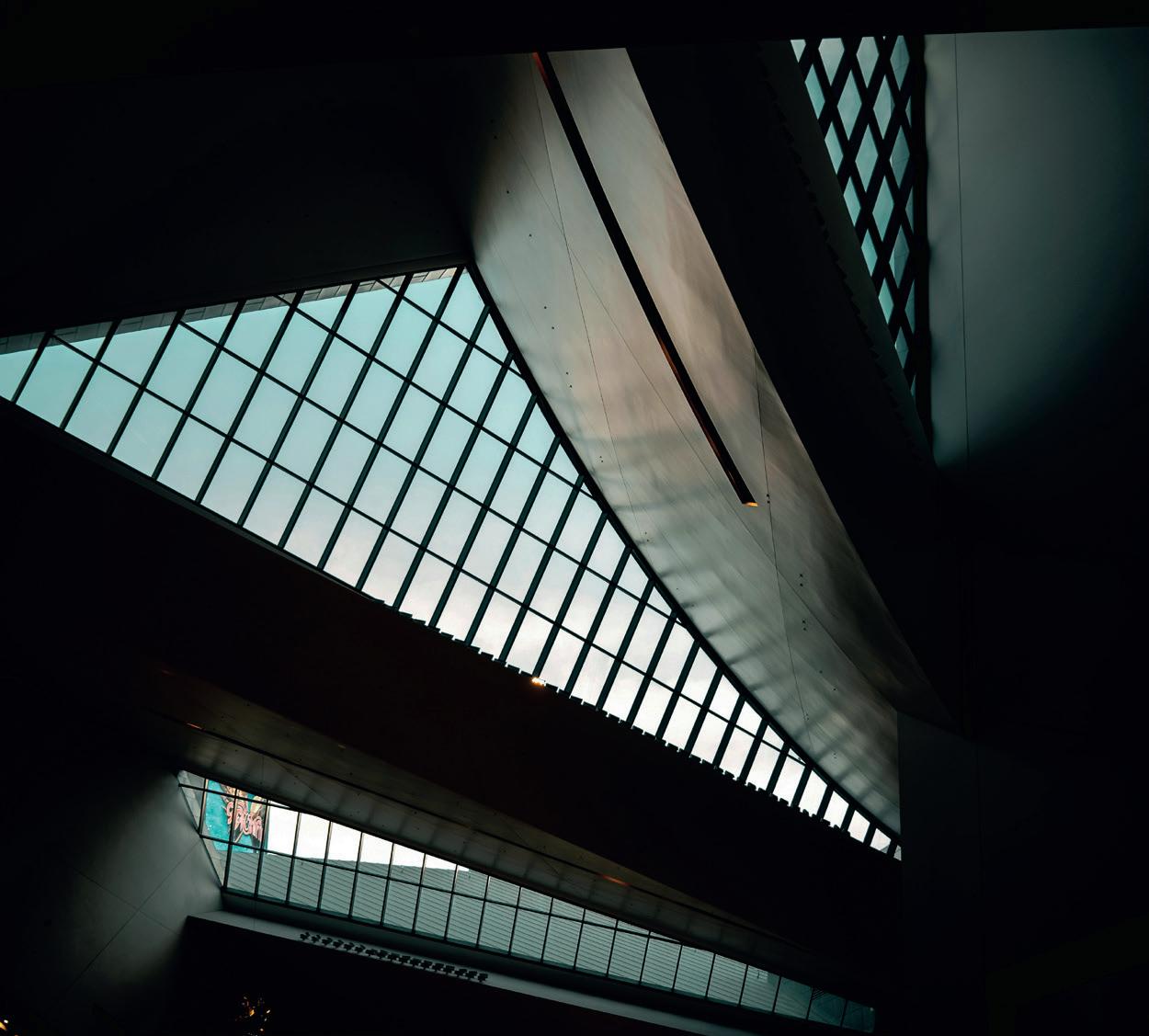
This is not a nominal role. The responsible person must sit at management level and ensure risk assessments, procedures and plans are in place, maintained and effective. With a formal compliance document also required for submission to the regulator, this role carries real weight.
For hotel groups, the scale of this becomes clear quickly. Martyn’s Law may not be met through a single group-wide policy and will not meet the requirement on its own.
Where properties qualify, each site must have its own operational plan, tailored to how that venue operates. These are not single documents, but a set of procedures covering evacuation, invacuation, lockdown and communication. For one group, that can mean managing dozens, sometimes upwards of 80, individual plans across an estate.
The guidance effectively splits the challenge in two. Governance, oversight and consistency can be managed centrally. But the operational detail, what each property needs, where the gaps are and what needs to change, must be addressed at site level.
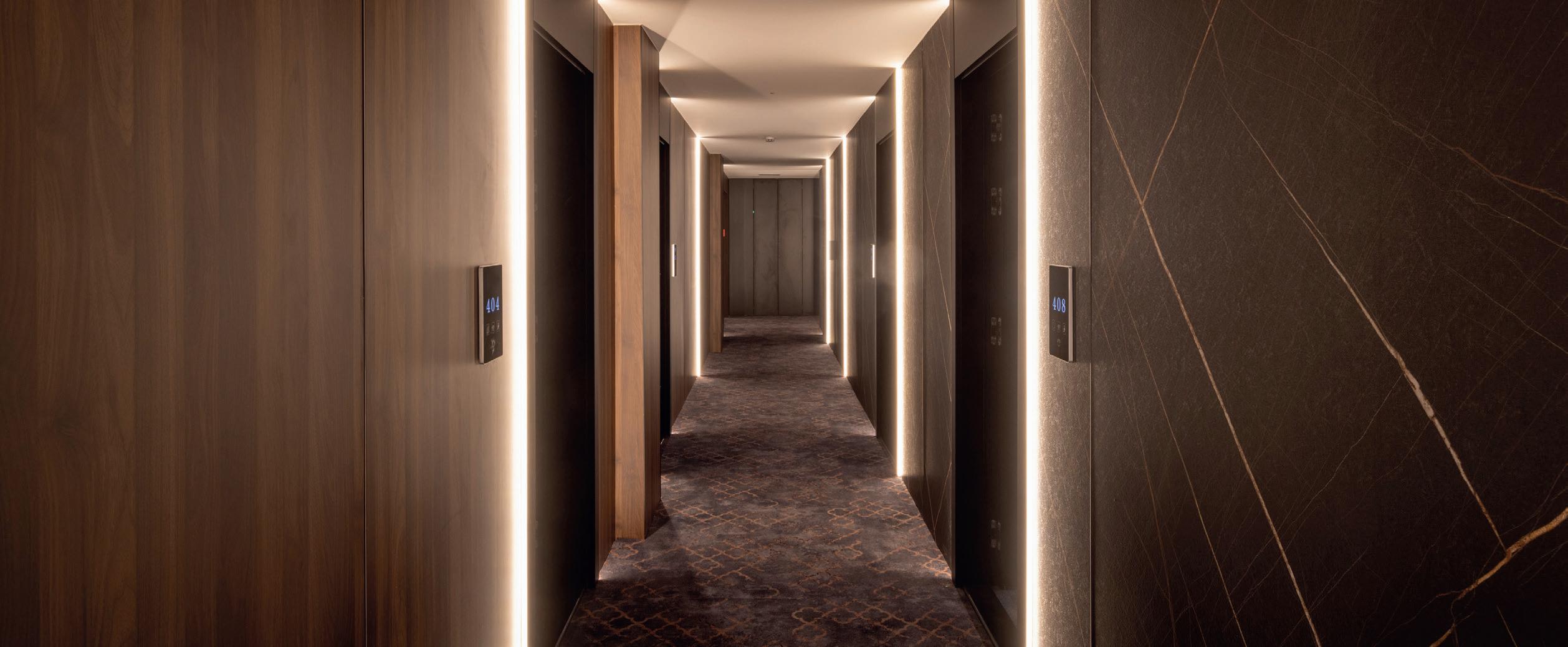
It also requires a change in thinking. Existing fire safety procedures should not be assumed to be appropriate for a terrorist incident. In many cases they will not work, and will need to be reviewed and adapted.
Most venues will fall within the standard tier, focused on risk assessment, staff awareness and clear response procedures. For larger venues, expectations increase, with more detailed planning and stronger senior accountability. In every case, measures must be proportionate, but they must also be specific, documented and workable in practice.
A review of existing arrangements against legal requirements can help identify any areas where compliance may not yet be fully achieved.
For larger hotel groups, this is as much a coordination challenge as it is a compliance one. No two properties are identical, and a uniform approach will not be enough. Businesses that act early, assessing their estates properly and starting to close gaps now, will be far better positioned than those leaving it until timelines tighten closer to enforcement.
A practical shift for hospitality
Martyn’s Law does not require hospitality businesses to change who they are or compromise the guest experience. It requires a more structured approach to preparedness: understanding risk, having clear plans and ensuring teams are ready.
Paul Davidson,
former UK Government Special Adviser on terrorism and now Head of Security Consultancy at Team 9,
explains:
“Health and safety, fire safety, and licensing are all established management disciplines. Martyn’s Law will be the same for terrorism preparedness. As a guide, take the size of your hotel estate and multiply it by six, that’s the number of new regulatory documents likely required. Organisations that recognise both the scale, and that this
regulation is equal to existing management disciplines or safety legislation, will be far better placed to manage it.”
For a people-focused sector, success comes down to awareness, confidence and communication. Preparation doesn’t need to be overwhelming, focus on what’s in place and take practical, proportionate steps.
If you need support to do that, Howden and Team 9 can help you start preparing with confidence.
Scan the QR code to get in touch

Scan the QR code to view the latest Terrorism (Protection of Premises) Act 2025 Statutory guidance

Howden is a trading name of Howden UK Brokers Limited, authorised and regulated by the Financial Conduct Authority No. 307663. Registered in England and Wales under company registration number 02831010. Registered Office: One Creechurch Place, London, EC3A 5AF.
Team 9 Ltd are a specialist security consultancy protecting leaders, organisations, and critical assets from evolving threats. Their expertise spans strategic security audits, Martyn’s Law compliance, executive safety, high-security IT solutions, and bespoke training programs.


Hosted by MEWS as part of its A-Mews-Bouche: London Edition event series at The Mandrake Hotel, a panel of leading hotel general managers explored how technology is helping operators boost profitability, improve efficiency and enhance guest experiences. From AI-powered communications to integrated tech ecosystems, the discussion revealed why success in 2026 will depend on balancing automation with authentic hospitality.
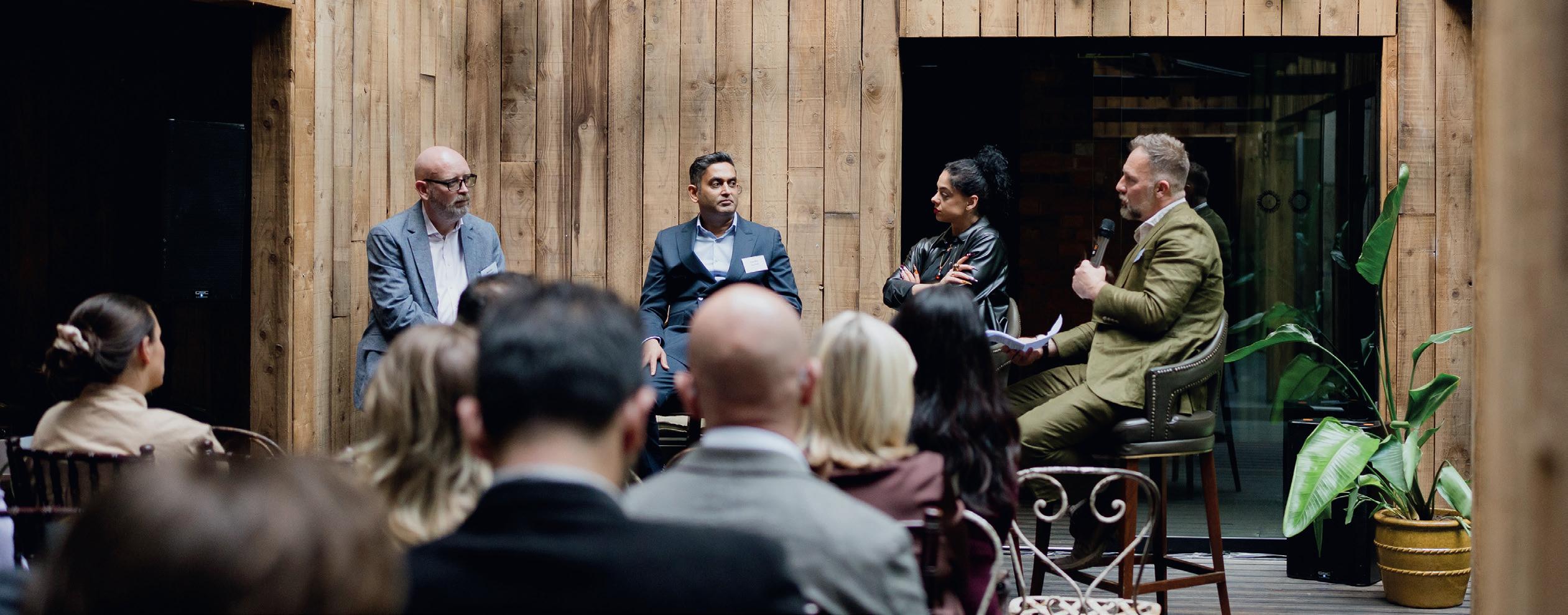
At a recent industry panel hosted at The Mandrake Hotel by Ryan Haynes, Founder of Haynes MarComs and Fractional Marketing Strategist & PR Lead, three hotel leaders came together to discuss one of hospitality’s most pressing challenges: how to remain profitable in 2026 while balancing technological innovation with authentic guest experiences.
Joining Ryan on the panel were Eljesa Saciri, General Manager of The Mandrake Hotel; Michael Stevenson,
General Manager of Pentahotel Reading; and Keerthy Sachavi, General Manager of The Gate Aparthotel London City - all three hotels run on Mews and its’ integration partners.
While their properties operate in very different market segments, a common theme quickly emerged: technology is no longer a luxury or future consideration, it has become essential to profitability. Yet the consensus was equally clear that technology must support, rather than replace, hospitality.
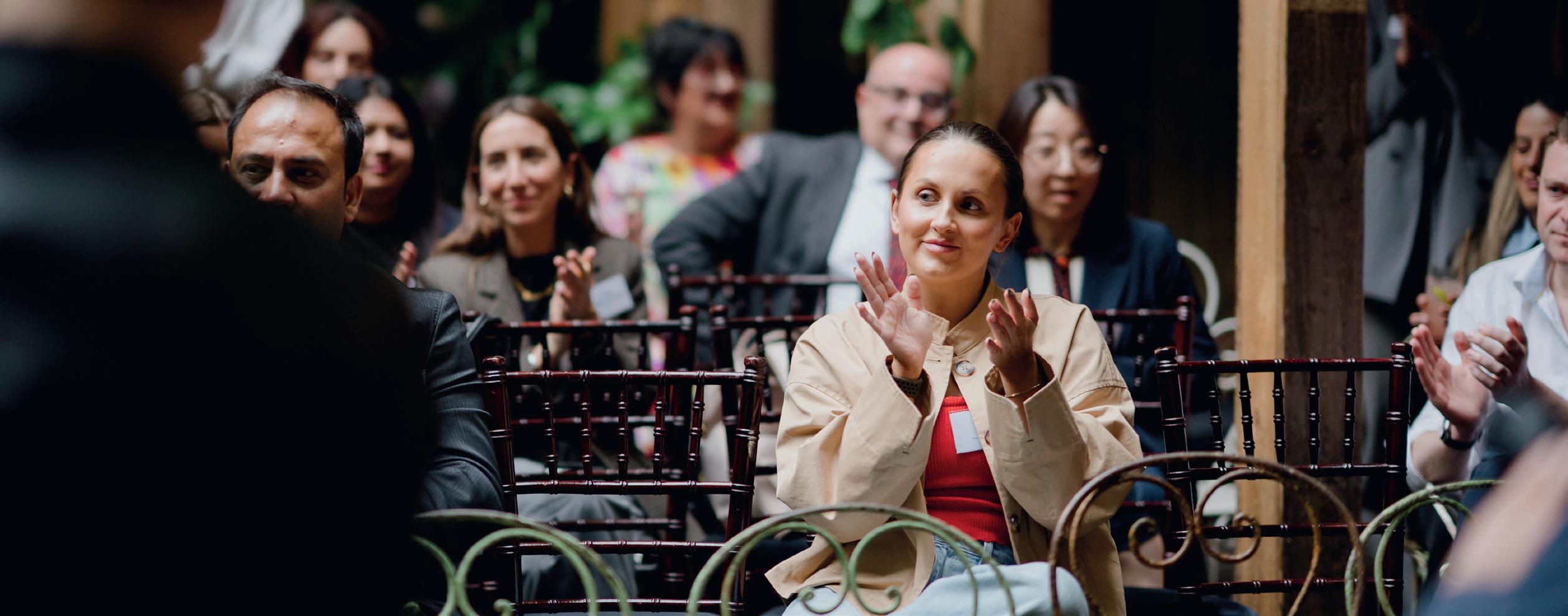
Setting the scene, each panellist outlined their property’s unique positioning. For Pentahotel Reading, profitability sits at the heart of every technology decision. “We started our technology journey from a very practical perspective,” explained Michael. “We needed to make more money and be more profitable as a hotel. Technology became another tool to help us achieve that.”
Keerthy described The Gate Aparthotel’s challenge of serving both short-stay and long-stay guests while maintaining a highly personalised experience.
“It’s a home away from home,” he said. “The challenge is finding the right balance - using technology to give customers what they need while not forgetting the team, the guest and the human element around it.”
Meanwhile, Eljesa outlined The Mandrake’s immersive luxury proposition, where guest experience remains paramount. “Our ethos is ‘Stay Beyond Yourself’,” she explained. “When I joined, my focus wasn’t simply the bottom line. It was rebuilding the entire tech stack in a way that improved the team experience first, because that ultimately improves the guest experience.”
Against a backdrop of changing consumer behaviour, rising operational costs and economic uncertainty, all three leaders highlighted the need for agility. Eljesa noted significant shifts in guest spending patterns over the past year.
“We’ve seen business demand shift massively,” she said. “Guests are spending differently. We’re seeing expenditure move away from nightlife and towards wellness. The demand does come back and it does stabilise, but it looks different.”
She stressed the importance of maintaining team confidence during periods of uncertainty. “My focus has been ensuring there’s no moral panic within the team. We can all see what’s happening in the wider world, but hospitality has shown time and again that it adapts.”
For Michael, technology investments are closely tied to controlling rising costs. “Payroll costs have gone through the roof. Food costs have gone through the roof. Beverage costs have gone through the roof,” he said. “Ultimately, my job is to make the hotel profitable.”
One of Pentahotel’s key investments has been selfservice technology through its property management system. “Historically, we’d have two receptionists working on a Tuesday night for 200 rooms. We can now operate with one receptionist and two kiosks,” Michael explained.
The impact of rising employment costs has made such efficiencies essential. “The recent National Insurance increase added around £80,000 in additional cost to my hotel. The owners didn’t say, ‘That’s fine.’ They said, ‘You need to find £80,000.’”
However, both Keerthy and Eljesa were quick to emphasise that efficiency gains should create more opportunities for hospitality rather than fewer. “It’s not about replacing people with technology,” said Keerthy. “It’s about giving teams the tools to elevate the guest experience. The technology handles routine tasks so our people can focus on personal interactions.”
One of the most compelling stories came from Eljesa’s first year at The Mandrake, where she undertook a complete overhaul of the hotel’s technology infrastructure. “When I arrived, nothing spoke to anything else,” she recalled.
“My whole vision was to build something cloud-based that integrates and communicates.”
The transformation included replacing fragmented systems with a fully integrated ecosystem covering reservations, operations, spa bookings, point-of-sale and finance.
“I wanted my team’s experience to be just as seamless as the guest’s experience,” Eljesa said. The result has been improved visibility, better reporting and more informed decision-making. “Being able to see what’s happening
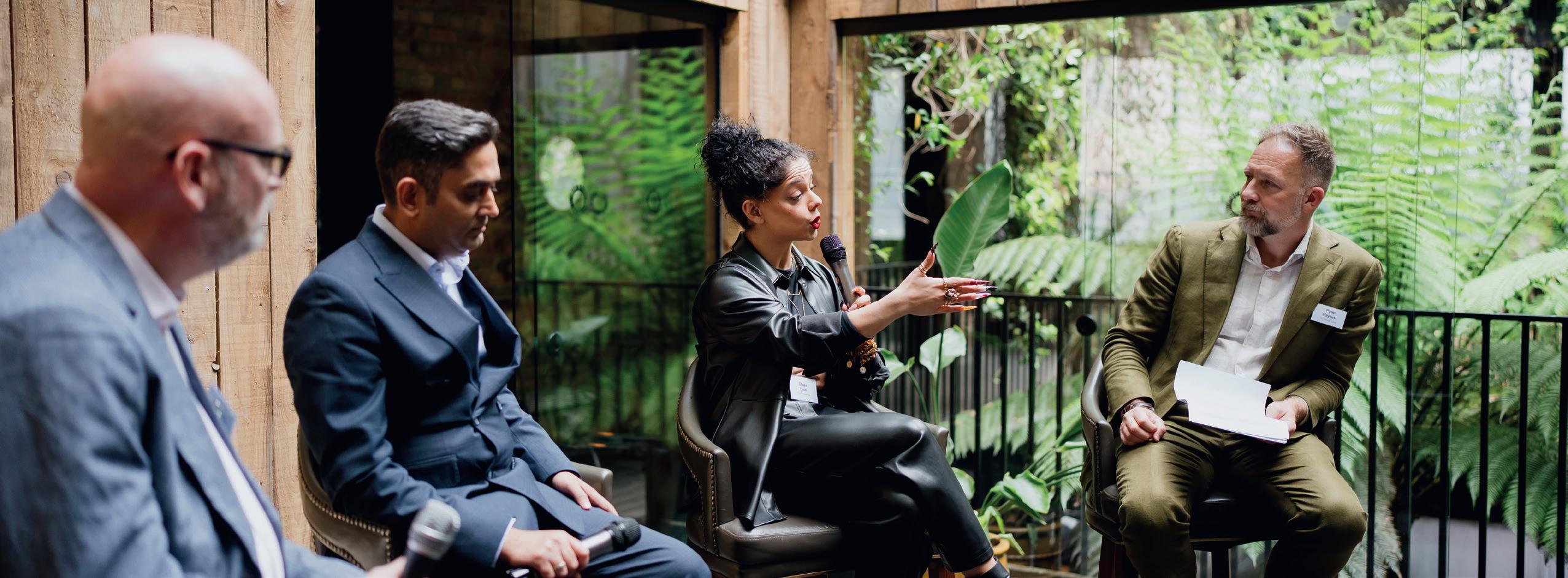
across the business in real time and giving department heads access to that information at their fingertips is critical.”
Technology implementation is rarely just about software. Success often depends on securing team engagement. Eljesa admitted there was initial resistance from longserving employees. “I had team members who had been here since the hotel opened. They were very comfortable with the systems they knew.”
Rather than forcing change, she focused on education and trust. “I told them, use the new system for two weeks. If after two weeks you still think I’ve lost my mind, we’ll talk. Within two weeks they understood exactly why we were making the change.”
She added: “If the leader doesn’t believe in the change themselves, it will fail.”
Despite the enthusiasm for technology, all three panellists stressed that people remain hospitality’s greatest asset. Michael highlighted ongoing recruitment challenges across the sector.
“One of hospitality’s biggest challenges is that people aren’t used to talking to people anymore. Then suddenly they walk into a busy hotel environment and they’re expected to engage with guests all day.”
While younger recruits often adapt quickly to technology, developing interpersonal confidence remains crucial. “We can teach systems,” he said. “The harder part is helping people become comfortable delivering hospitality.”
Keerthy shared examples of how The Gate Aparthotel is using AI-driven guest communication tools to improve service responsiveness. Guests can scan QR codes in their rooms to report issues or request assistance, with the system automatically directing requests to the appropriate department.
“If a guest reports a maintenance issue, the next person knocking on the door is the maintenance engineer,” he explained. “There’s no relay of messages through multiple departments.”
The technology also gives management valuable operational insight. “It helps us identify recurring issues, but it also gives us guest sentiment before they leave. We don’t have to wait for a review after check-out to know how someone is feeling.”
Importantly, Keerthy views AI as a tool that enhances, rather than replaces, human interaction. “The team still knows exactly what’s happening with the guest. They can greet them personally and follow up on issues because they already have the information.”
The panel repeatedly returned to one central idea: automation should free employees to spend more time with guests.
At The Mandrake, Eljesa identified numerous manual processes that added little value. “We had teams manually transferring spa charges onto guest accounts. It created opportunities for human error and detracted from the guest experience.”
By automating these tasks, employees can focus on creating memorable moments. “The reason guests choose us is because of the experience we provide,” she said. “That’s where our team’s energy should be focused.”
As the discussion concluded, a clear picture emerged of what successful hospitality operations will look like in 2026.
Hotels will continue to invest in automation, AI and integrated technology platforms. However, the goal is not to remove people from the equation. Instead, technology should eliminate repetitive tasks, improve operational visibility and give teams more time to do what hospitality has always been about: creating meaningful experiences.
As Keerthy succinctly summarised: “Technology gives us the information and the tools. People create the experience. The magic happens when you get the balance right.”

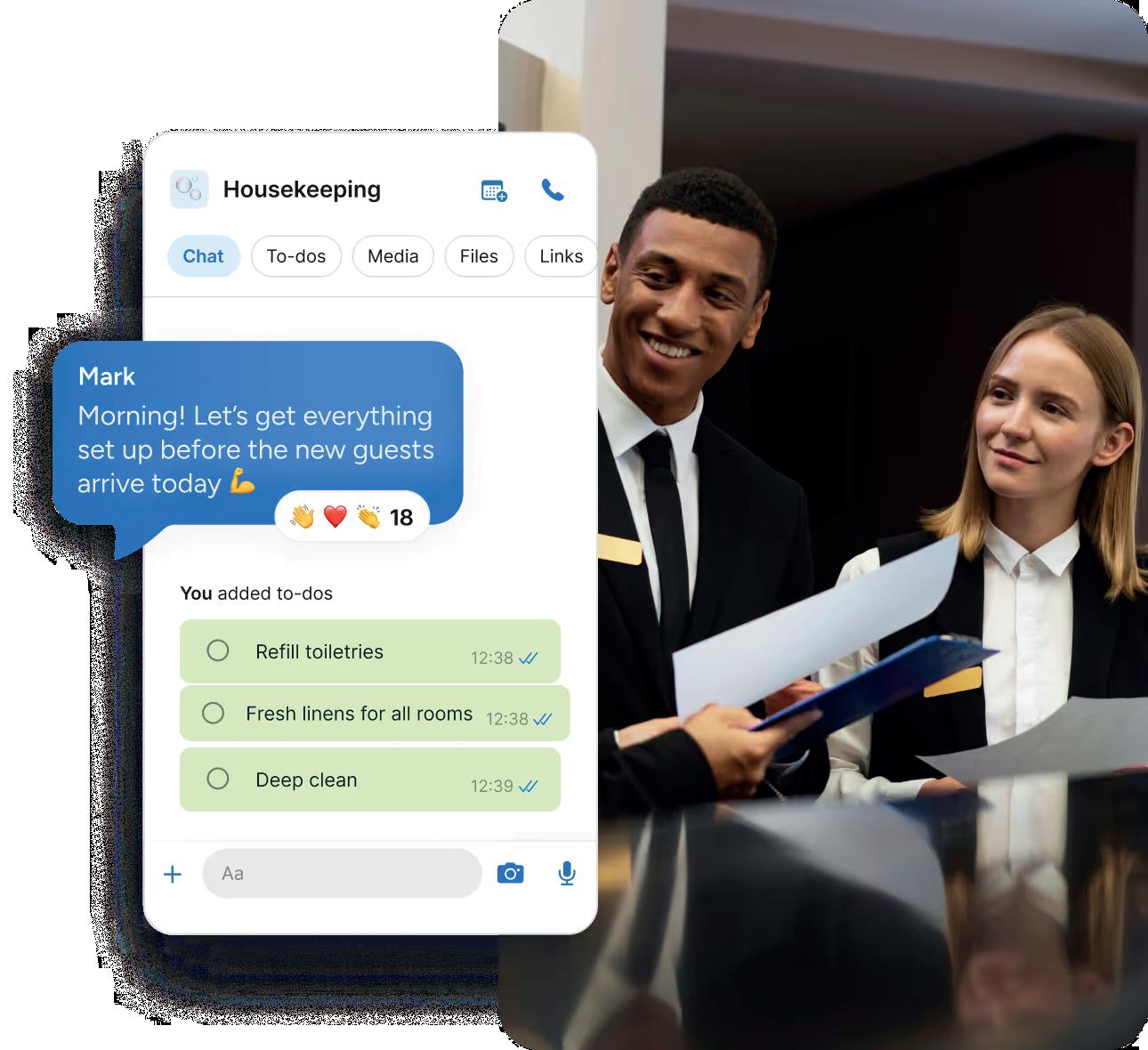
Keep your operations running smoothly with instant and secure communication across all departments. No more lost guest requests, mismanaged shift changes, or staff chasing updates - just one place to keep your entire team in sync. One Centralized Place for Team Communication Mobile-First & Instant Adoption
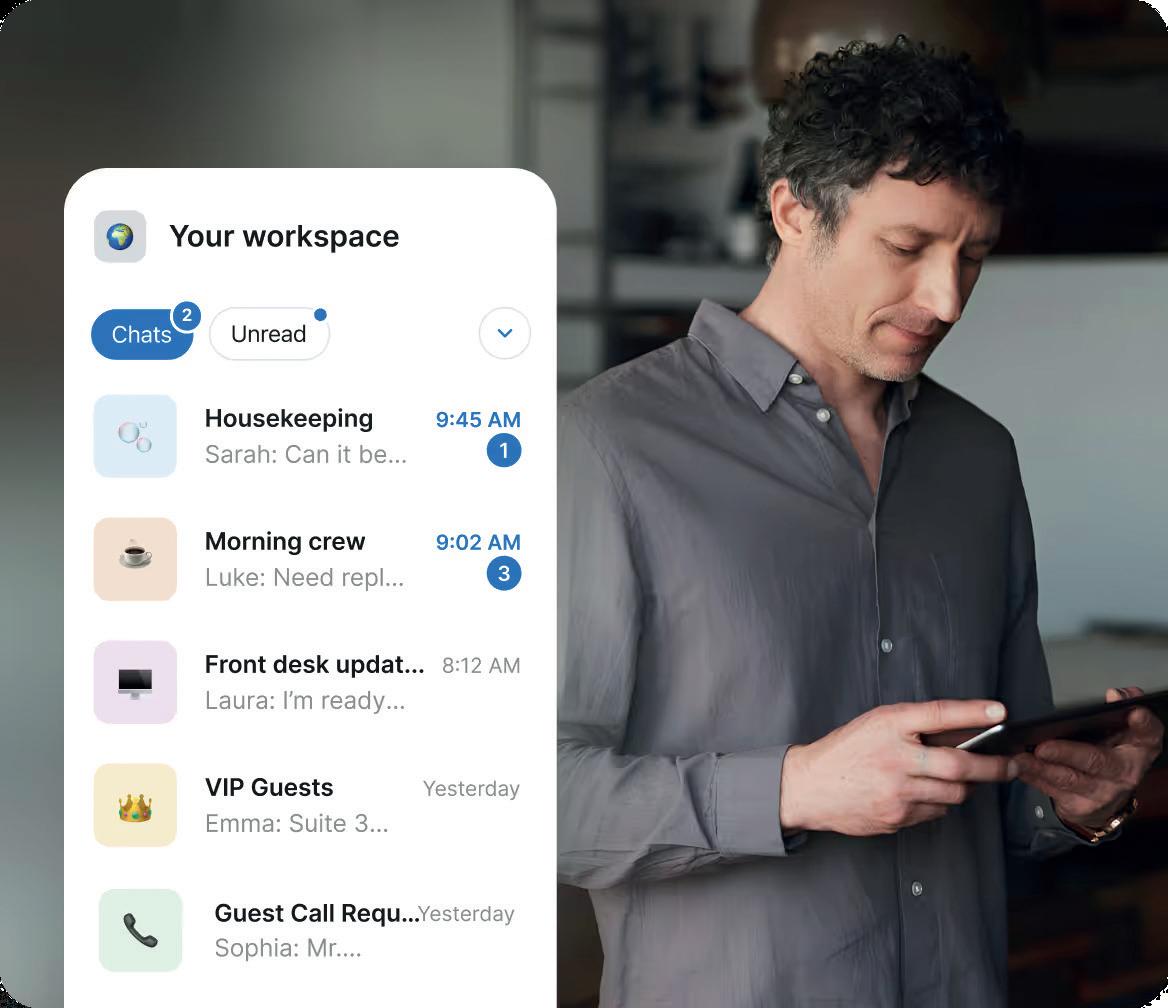
Updates for Front Desk & Management Keep Work Messages Out of Personal Apps Secure & Compliant Messaging Full Access Control & Staff Offboarding One-Way Announcements & Alerts Task Assignments & Follow-Ups
Independent Hotel Show returns to inspire the luxury and boutique hotel sector.
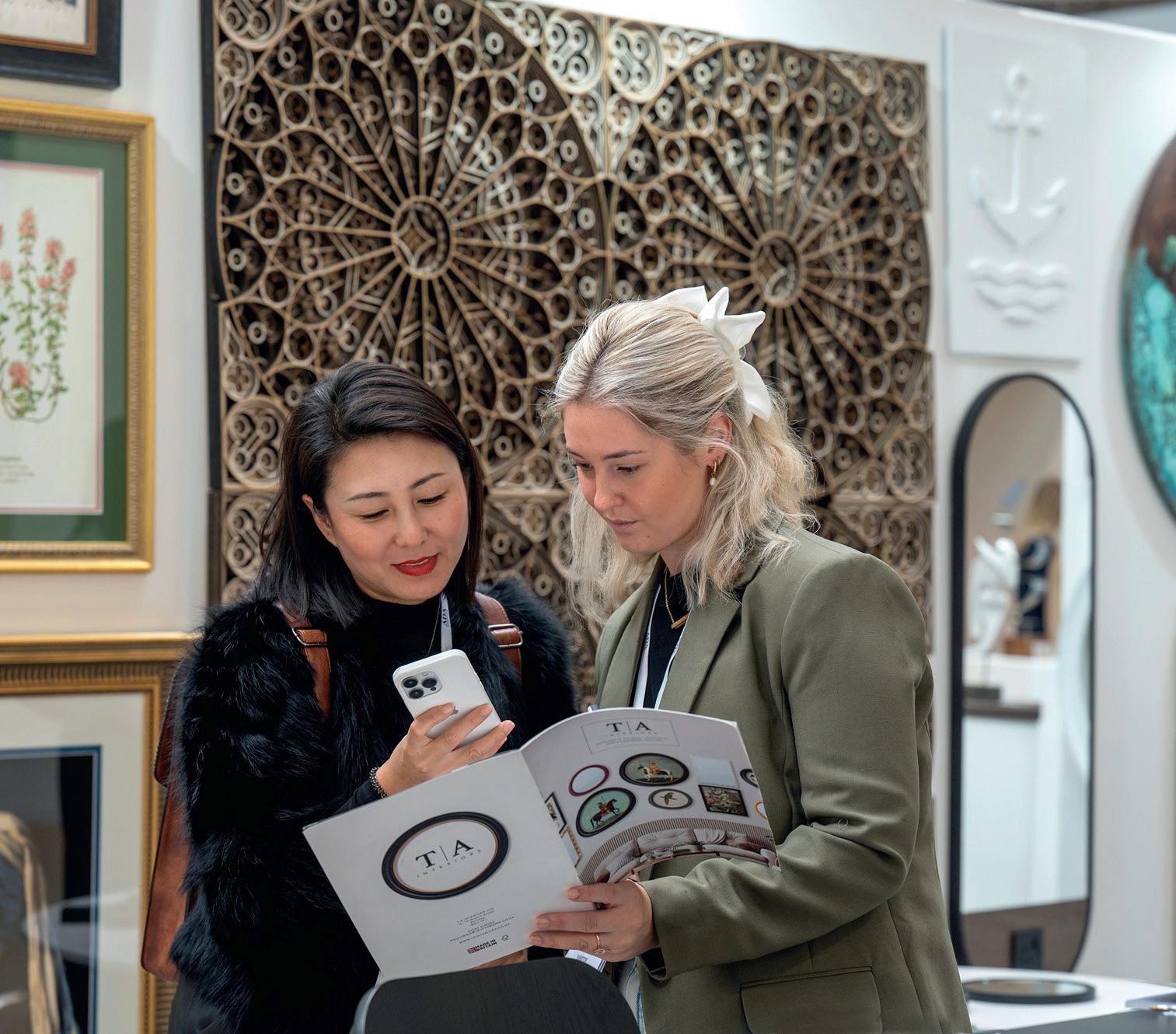
As guest expectations evolve and technology continues to reshape hospitality, independent hotels face the challenge of remaining distinctive while operating ever more efficiently. Bringing together the ideas, suppliers and industry expertise to help businesses navigate that landscape, the Independent Hotel Show, in partnership with James Hallam Insurance Brokers, returns to Olympia London on 5–6 October.
Dedicated exclusively to the luxury, boutique and independent hotel sector, the event is a key fixture in the hospitality calendar, attracting owners, general managers and senior decision-makers looking for practical inspiration as well as valuable new business connections. This year’s theme, ‘Shaping Tomorrow’, reflects the balance many operators are striving to achieve: embracing
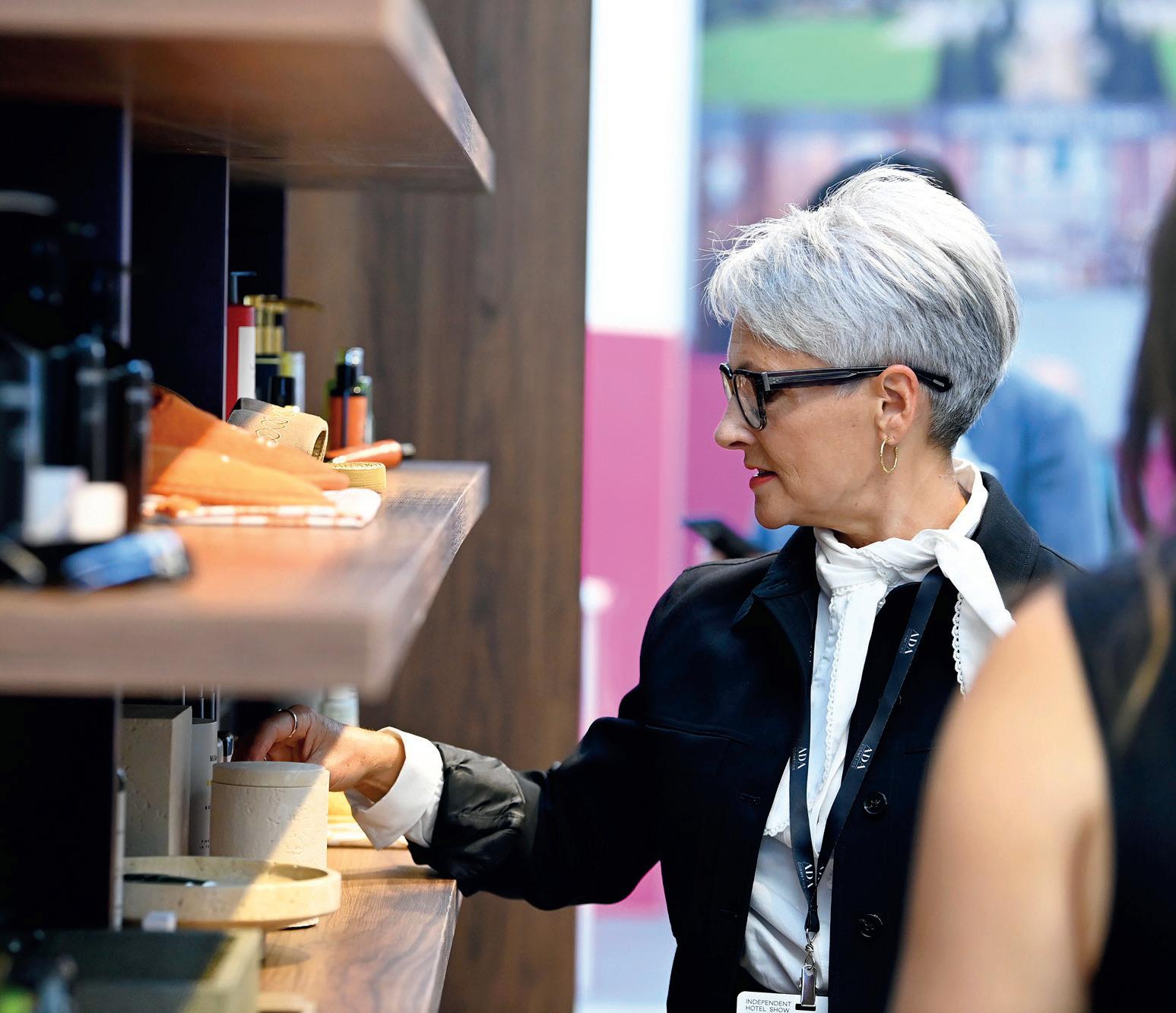
innovation while preserving the individuality that defines independent hospitality.
Across the exhibition floor, visitors will discover products and services spanning every aspect of hotel operations. Hospitality technology providers including Mews, SiteMinder and Guestline will showcase solutions designed to simplify property management and improve operational efficiency, while companies such as HiJiffy and Aphy will demonstrate how AI is beginning to transform guest communication and back-office processes. Elsewhere, suppliers including Out of Eden, Bridgman and Sealy will highlight products that help hotels enhance comfort, design and the overall guest experience.
Complementing the exhibition is a comprehensive programme of content delivered across the Hotel Business Stage in partnership with eviivo, the Innovation Stage, and
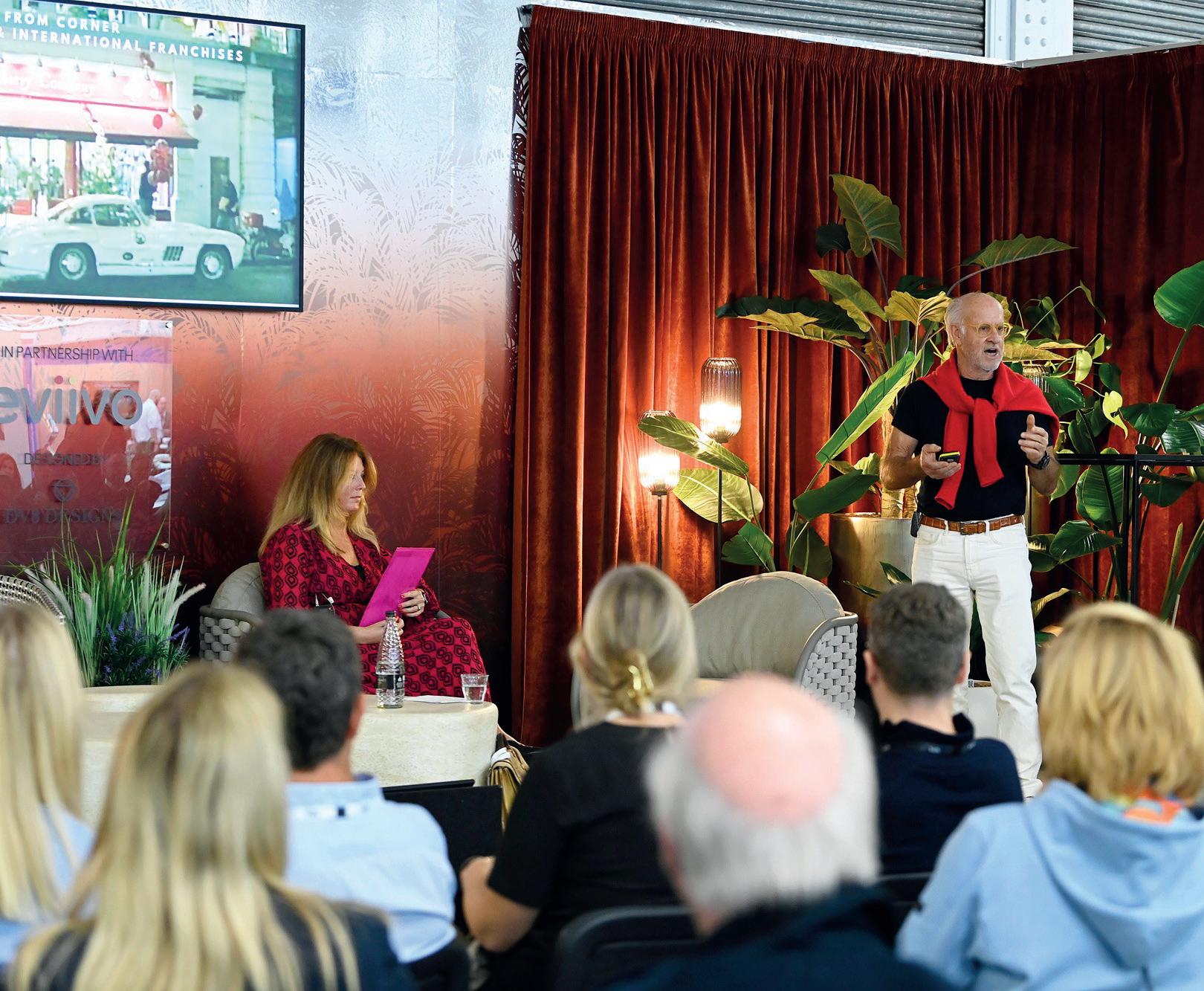
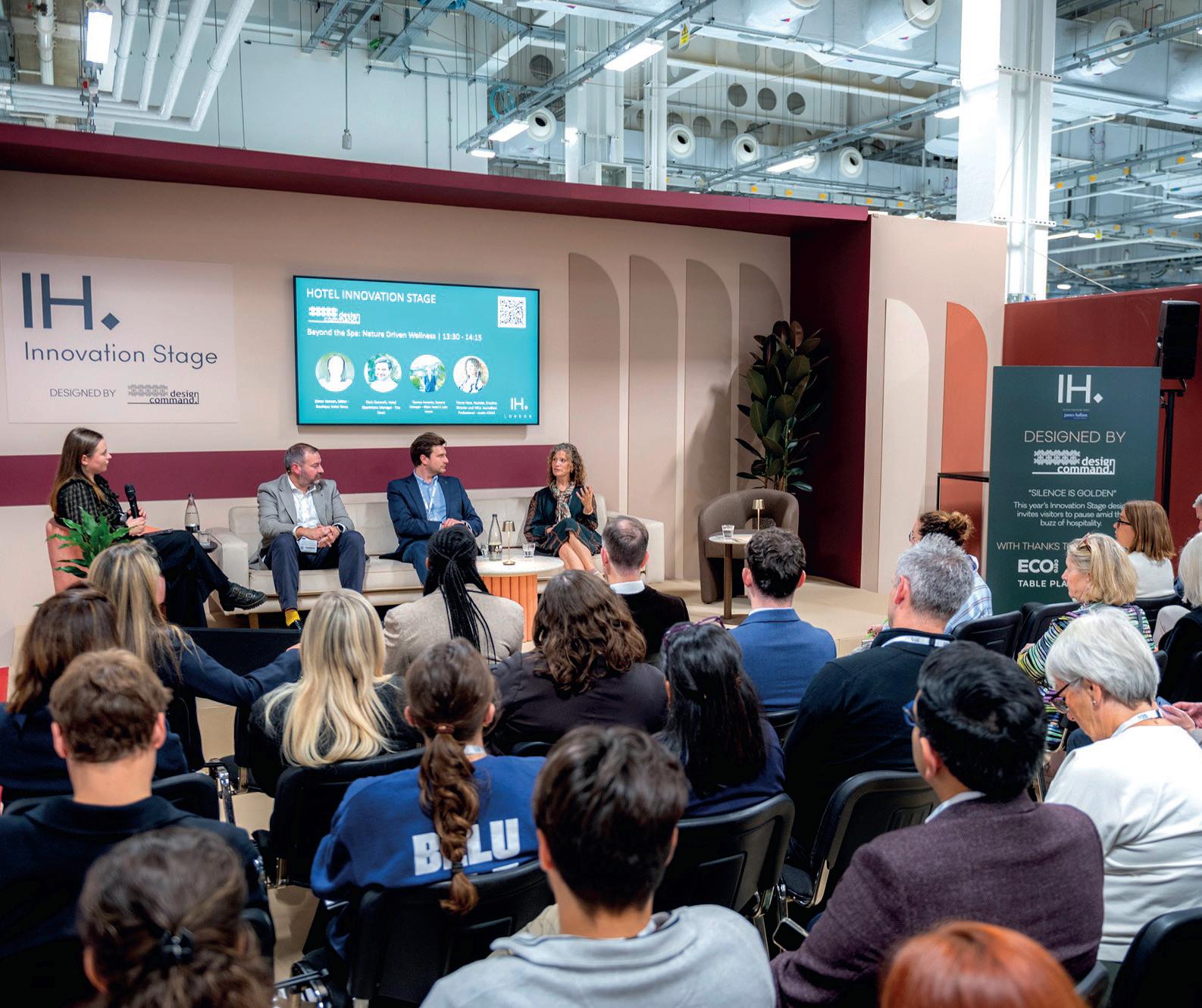
the Social Business Space, sponsored by Zennio. Together, the stages will explore the commercial, operational and creative issues shaping today’s hotel sector, from AI, automation and evolving consumer behaviour to hotel design, sustainability, recruitment, branding, profitability and revenue growth.
New for 2026, the show will also include a hosted buyer programme, connecting hospitality suppliers directly with hotel owners and operators through curated one-on-one meetings.
Networking has always been central to the Independent Hotel Show experience. Unlike broader hospitality events, the show’s specialist focus creates an environment where conversations are relevant from the outset, bringing together operators, designers, consultants and suppliers who understand the opportunities and challenges unique to independent hotels.
That collaborative atmosphere is reflected throughout the event, whether visitors are discussing hotel refurbishment projects, exploring the latest digital marketing strategies, or considering investments in new technology. Exhibitors including Net Affinity, HappyHotel, Sweeply and Shift4 demonstrate the breadth of expertise available, while design-led brands such as Coach House, AKANTE and East Stuff showcase products that help hotels create memorable guest environments.
For Edmund Inkin, Director of Eatdrinksleep Ltd., it is the willingness to tackle important industry issues that keeps him returning.
“Excellent panellists, with plenty of free-thinking on subjects away from the comfort zone of this kind of middle-aged independent hotelier,” he said. “But subjects that matter and we need to address if we’re to cope with a rapidly changing world. I’ll keep coming back to the Independent Hotel Show, year after year, and massively recommend it to fellow hoteliers.”
Alongside discovering new products and services, the show offers visitors the chance to step away from the day-
to-day pressures of running a hotel and take a broader view of where the industry is heading. From finding new ways to increase profitability and improve guest satisfaction to understanding the impact of AI and changing traveller expectations, the event is designed to equip hoteliers with the knowledge and partnerships needed for long-term success.
Equally important is the opportunity to build lasting relationships. Independent Hotel Show has earned a reputation for fostering meaningful conversations, with many attendees returning year after year to reconnect with trusted suppliers, meet new partners and share experiences with fellow operators.
Michael and Pauline Clitheroe, owners of TLC Hospitality, believe that sense of community is unlike any other industry event.
“Go with an open mind - there’s such a buzz from being around so many passionate, engaged operators who truly love what they do” they said. “The connections you make are real and meaningful, and genuinely last for years. The whole event has this genuine warmth that’s true to the spirit of hospitality. The panels were brilliant too; having attended for many years they remain honest and true to the challenges and opportunities we’re all navigating right now.”
Whether visitors are investing in technology, planning a refurbishment, refining their guest offering or simply looking to exchange ideas with industry peers, Independent Hotel Show provides a focused environment in which to explore the future of independent hospitality. Combining thought-provoking content, carefully curated suppliers and a community built around collaboration, the 2026 edition promises another two days of inspiration for the luxury and boutique hotel sector.
Find out more about everything happening at the Independent Hotel Show 2026 by visiting independenthotelshow.co.uk.

Experience superior performance from day one with the Benchmark range of commercial washers and dryers – Engineered for maximum efficiency and unmatched quality. Designed with you in mind for effortless operation with impressive OneFingerTouch door technology and a wide variety of programmes for every use – all whilst delivering significant energy and cost savings. It Pays Off. Learn more about the Benchmark models at www.miele.co.uk/pro/benchmark

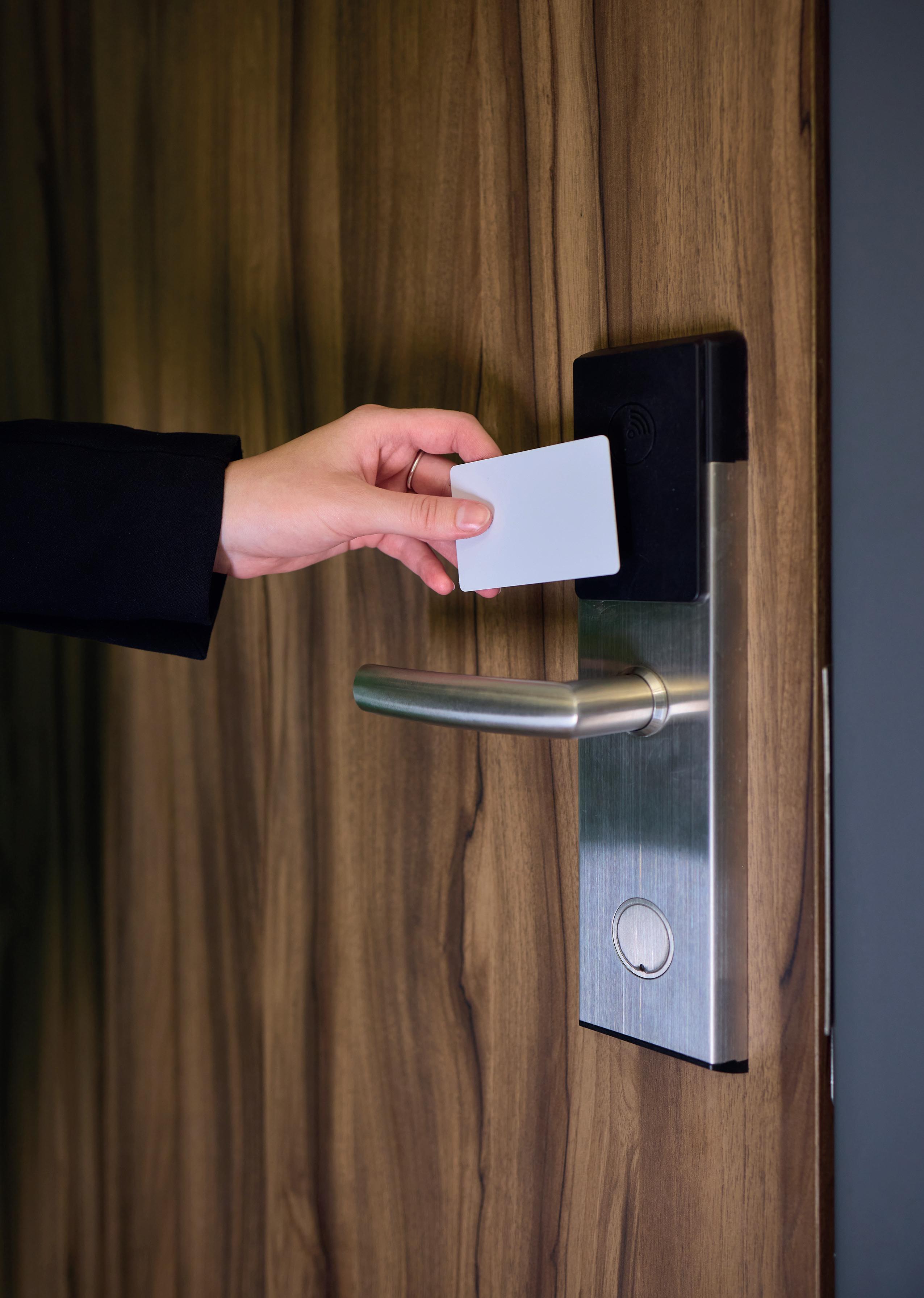
With the help of industry experts, we explore how AI is reshaping hotel facilities management.
From intelligent maintenance scheduling to realtime building monitoring, artificial intelligence is transforming the way hotels manage their facilities. Moving beyond traditional reactive maintenance, AI-powered systems are enabling operators to predict equipment failures, optimise energy consumption, streamline housekeeping operations and enhance the guest experience - all while reducing costs and improving sustainability.
In this feature, we explore how AI and smart technologies are reshaping hotel facilities management, the
opportunities they present for hotel owners and operators, and what the future holds as predictive, data-driven operations become the new industry standard.
Apaleo, the API-first property management platform, has developed a new AI agent for room allocation with European hotel group Cocoon Hotels and Eckelmann Hotels. The AI agent has slashed the hotel’s room assignment process, a largely manual task, from up to 45 minutes per property per day to around one minute.
The AI agent is live at Cocoon Hotel Munich Hauptbahnhof, a 103-room property with eight room
“We’re seeing a task that would take us 45 minutes per day per property reduced to just one minute.”
categories and a high degree of room-level complexity. There, the agent, which runs on Apaleo’s platform, reads guest comments, identifies details relevant to room allocation and assigns rooms based on guest preferences, group requirements and operational priorities. The result is faster task completion and a more consistent output.
Room allocation had become a significant operational pain point for Cocoon Hotel. Before the AI agent was deployed, staff had to review every booking manually for room allocation-related details, a particular challenge for OTA reservations, which often contained large volumes of irrelevant information, such as credit card details or general booking notes.
Guest preferences, group booking requirements and other relevant details had to be extracted and matched to the right room, manually, one by one. With multiple room categories and room-level variables to consider, the process had become too complex to manage.
Cocoon Hotel’s Room Allocation AI Agent went from concept to live operations in under three weeks, a great example of a practical AI agent co-created by a hotelier and
its tech partner around a specific use case.
Following the successful launch at Cocoon Hotel Munich Hauptbahnhof, the AI agent will be rolled out across the entire portfolio of Cocoon Hotels and Eckelmann Hotels by the end of May, covering 10 properties and more than 700 rooms.
Harald Witulski, Managing Director of Cocoon Hotels, said: “AI is on everyone’s mind, but in terms of practical, daily hotel operations, it’s often still difficult to grasp. With our partner Apaleo, we co-created a practical Room Allocation AI Agent to solve a specific challenge in our operations where no off-the-shelf solution currently exists. We’re seeing a task that would take us 45 minutes per day per property reduced to just one minute. The impact on efficiency is real, and it’s a win-win situation for our guests and employees.”
Predictive maintenance and AI building management have traditionally been associated with luxury hotels. So, what is driving adoption across the wider market, and why are these technologies becoming essential rather than optional?
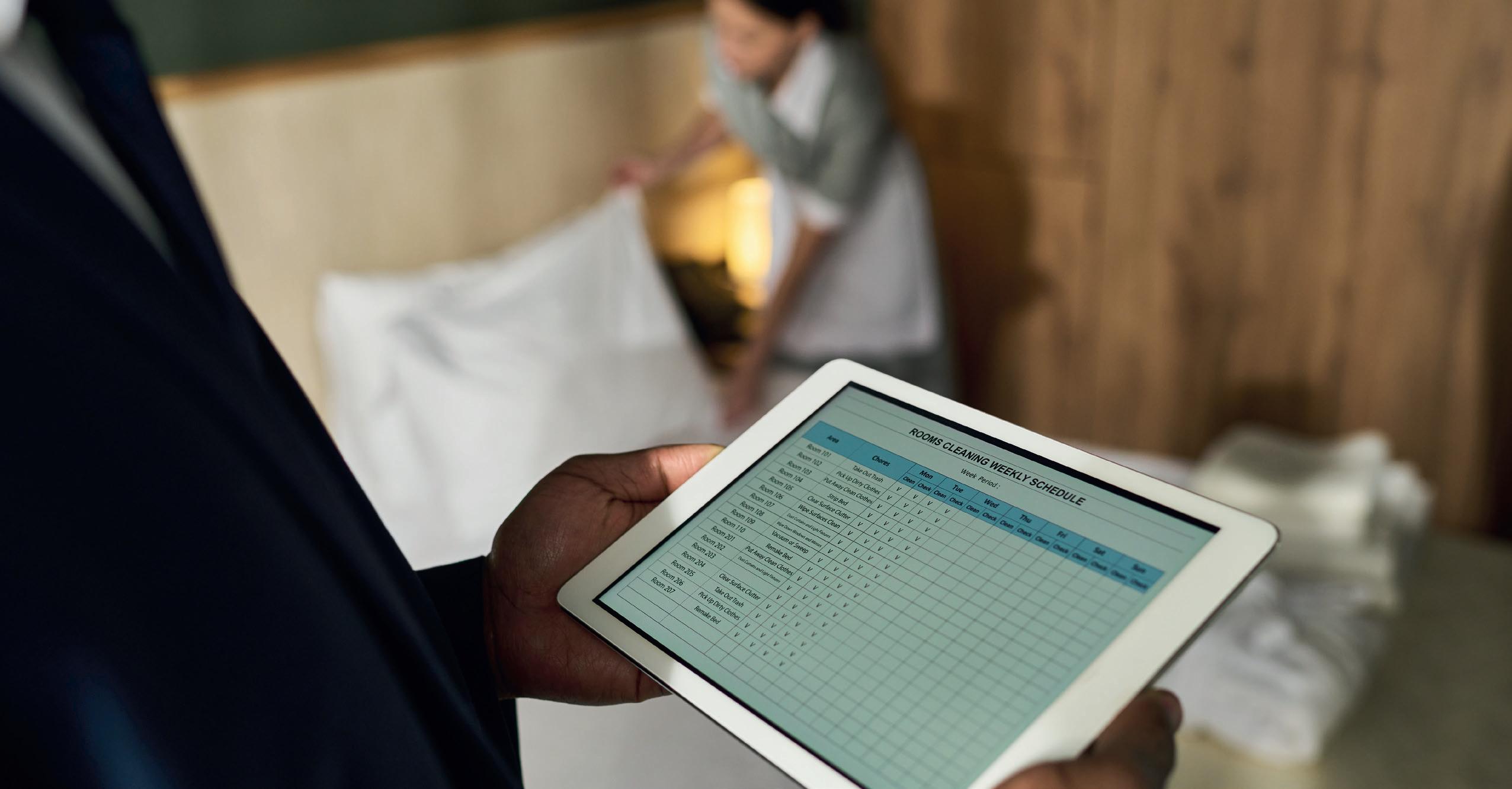
Cole Rubin, CEO and Co-Founder of Conduit, believes it is because two things changed - the cost of the technology collapsed, and the cost of getting it wrong went up. “Predictive maintenance used to mean expensive sensors and custom integrations that only a five-star flagship could justify,” he said.
“Now most of the signal already exists in systems hotels already run, and AI can read it. At the same time, labour is short and margins are tight, so you can’t afford to staff your way out of problems anymore. And a guest doesn’t grade you on a curve. A broken AC at a mid-market hotel earns the same one-star review as a broken AC at a luxury one. Reactive maintenance is the most expensive kind, because by the time you’re reacting, the guest already knows.” That’s why this is shifting from a luxury add-on to table stakes.
Much of the AI conversation has focused on guest-facing applications, so when it comes to looking at how AI will transform behind-the-scenes facilities management and housekeeping, and where the greatest gain in a hotel will be seen, Cole recognises that the back of house is where the math actually works.
Guest-facing chatbots get the headlines, but the biggest operational gains are in the parts no guest ever sees: housekeeping, maintenance, and the dozen handoffs between them. Cole explained, “A hotel runs on a constant stream of signals, guest messages, maintenance tickets, sensor readings, reviews, and historically a human had to sit in the middle and triage all of it.
“That’s where things fall through the cracks. AI’s real value is collapsing that triage. It turns scattered signals into prioritised, assigned work before anyone has to chase it. The gain isn’t just speed, it’s that nothing gets dropped
on a busy night, which is exactly when things get dropped today.”
Autonomous agents can change the way maintenance issues, housekeeping schedules and operational disruptions are managed and Cole believes that the whole shift will come from software that tells you what’s wrong to software that fixes it. A dashboard flagging a problem still needs a human to read it, decide, and act. Cole said, “An agent closes that loop. Picture a guest texting at 11pm that the AC isn’t working. Instead of a ticket sitting in a queue until morning, an agent triages it, opens a work order, assigns it to on-call maintenance, adjusts the housekeeping schedule around it, messages the guest with a realistic ETA, and offers a small gesture if the fix will take time. No human touches it until something actually needs judgment.”
Think of it as one agent sitting across all the disconnected systems a hotel runs, doing the coordination that used to eat a manager’s entire shift. That’s the difference between AI that informs and AI that operates. As AI continues to evolve, its greatest impact on hotels may be felt not in the guest-facing innovations that capture attention, but in the intelligent, behindthe-scenes operations that keep properties running smoothly. From predictive maintenance and automated room allocation to autonomous agents coordinating complex workflows, AI is enabling hotels to become more efficient, resilient and responsive. For operators facing ongoing labour shortages, rising costs and increasing guest expectations, data-driven facilities management is no longer a vision of the future - it is rapidly becoming the foundation of modern hotel operations.

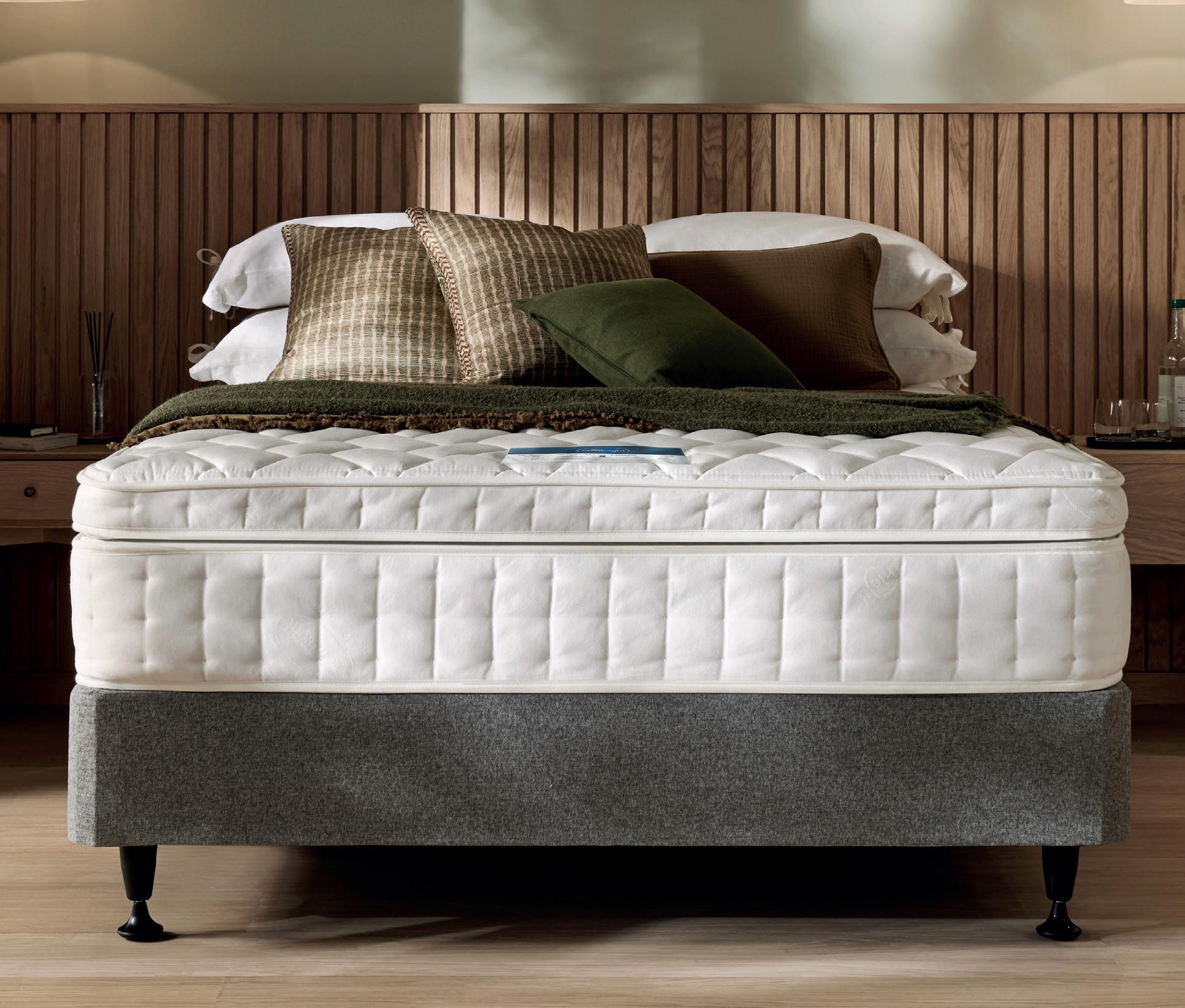
Sustainability isn’t an add-on, it’s built in. As a B Corp™ certified business, we’re committed to responsible sourcing, low-impact manufacturing and verified standards of social and environmental


From supporting his family in Cape Town to leading the housekeeping team at the Union Jack Club in London, Kyle Clarke’s career has been built on resilience, hard work and a people-first approach. He shares the leadership lessons, operational insights and vision for the future that are helping to redefine the role of housekeeping in modern hospitality.
Could you share your journey to becoming Head of Housekeeping, and the key experiences that shaped your leadership style?
My journey has taken me across the hospitality and cleaning industries. I began working in hotels, offices, private residences, and shopping malls, where I learned the importance of discipline, attention to detail, and consistency. I later progressed into a managerial role at the Victoria & Alfred Waterfront in Cape Town, overseeing a large operational area and managing a sizeable team. This strengthened my leadership skills and reinforced the value of communication, teamwork, and leading by example.
I then moved to the United States and spent seven years working on the travelling fair circuit, leading teams through set-ups, operations, and teardowns for major state fairs. The role taught me to adapt quickly, perform under pressure, and manage diverse teams in fast-paced environments.
I arrived in the UK near the end of COVID and joined the Union Jack Club as a room attendant. Within five months, I progressed from room attendant to Housekeeping Manager, reinforcing my belief that hard work, resilience, and dedication create opportunities.
These experiences have shaped a leadership style built on communication, support, and listening. I maintain an open-door policy, encourage staff feedback, and involve team members in decisions because those closest to the operation often have the most practical solutions.
What are some lesser-known tips or efficiencies you’ve discovered that maintain high standards while keeping your team motivated?
One of the most effective strategies is involving team
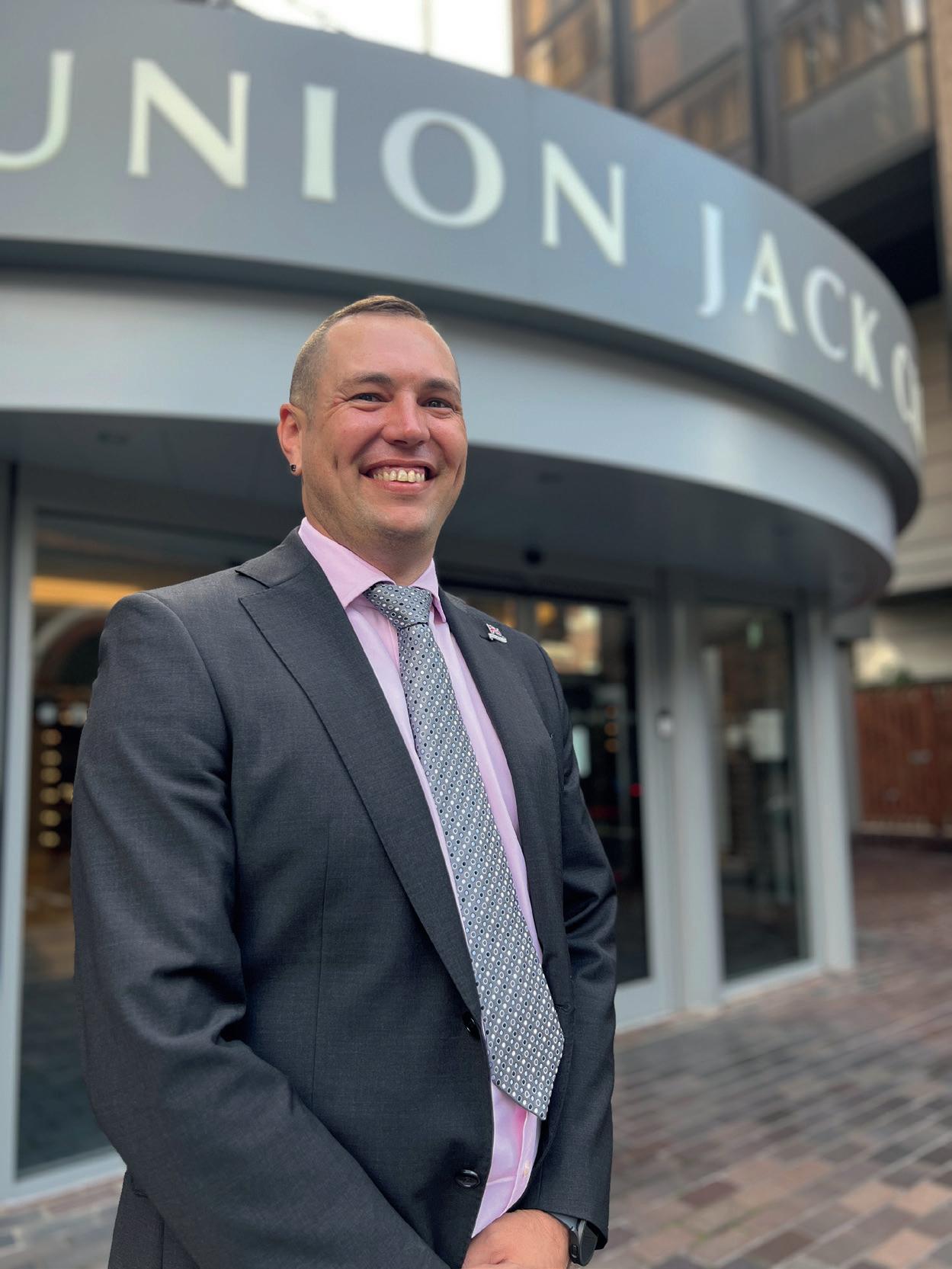
members in decisions that affect their work. Housekeepers and supervisors often identify practical improvements that managers may overlook. Their input improves efficiency while giving them a sense of ownership and pride.
Recognition is also a powerful motivator. Acknowledging hard work, celebrating achievements, and supporting staff development helps maintain morale and create a positive team culture. Above all, communication is key. Listening to concerns, understanding challenges, and offering support builds trust and helps people feel valued.
How has technology changed housekeeping in recent years? Are there any tools you now consider indispensable?
Technology has transformed housekeeping. Paper checklists and radio communication have largely been replaced by digital systems and real-time communication tools.
These technologies provide instant room updates, track cleaning progress, improve communication between departments, and help teams respond more efficiently to guest requests. Housekeeping management systems and real-time communication platforms have become indispensable, improving accountability, coordination, and productivity while helping hotels meet rising guest expectations.
What advice would you offer someone aspiring to a long-term career in hotel housekeeping or hospitality management?
My advice is simple: don’t give up. Housekeeping is demanding but incredibly rewarding. Success comes through consistency, reliability, and a willingness to learn. Start by understanding every aspect of the operation. Hands-on experience provides invaluable knowledge as
you move into leadership. Stay open to feedback, seek opportunities to develop, and maintain a positive attitude. One of the most rewarding aspects of leadership is seeing others grow. I’ve had the privilege of watching team members progress from entry-level roles, some with little or no English, into confident supervisors and managers.
With ongoing staffing challenges and shifting guest expectations, what strategies have you found effective in maintaining service quality and team morale?
Maintaining service quality requires strong communication, flexibility, and teamwork. Creating an environment where staff feel supported is especially important during busy periods.
Listening to concerns, encouraging feedback, and leading by example help build trust and identify solutions early. Recognition also plays an important role. Celebrating achievements and providing opportunities for growth keeps teams motivated, while involving staff in operational decisions strengthens ownership of service standards.
What would you like to see evolve in hotel housekeeping over the next 1–3 years?
I’d like to see housekeeping receive greater recognition within hotel leadership, with a stronger voice in strategic decision-making. Housekeeping plays a vital role in guest satisfaction and hotel operations, yet it’s often underrepresented.
I’d also like to see more young people view housekeeping as a genuine long-term career rather than simply cleaning. The profession offers significant opportunities for development, leadership, and progression. Housekeeping is at the heart of every successful hotel, and its contribution deserves far greater recognition across the industry.
A behind-the-scenes look at how Grantley Hall is strengthening its luxury housekeeping operation with Miele Professional. By combining high-capacity laundry technology, smart connectivity and expert service support, the hotel is improving efficiency, sustainability and consistency as guest demand continues to grow.
Set within the idyllic Yorkshire countryside, Grantley Hall is recognised for its attention to detail across every aspect of the guest experience. The hotel has also attracted national attention, featuring in a Channel 5 documentary series following its ambition to be recognised among the world’s leading luxury destinations. That precision extends well beyond the visible elements of the hotel to the operations going on every day behind the scenes.
As demand on its housekeeping staff has increased, the hotel required new laundry equipment and enhanced service support. They invested in Miele Professional equipment, upgrading to Benchmark washing machines to support higher volumes, while maintaining the standards expected across its rooms, restaurants and spa. And they partnered with Miele Professional’s Approved Partner, JTM Service, to benefit from reliable, experienced service support.
Laundry plays a central role in ensuring consistency across the property. Linen must be presented to a high standard, ready at the right time and processed in a way that protects both appearance and longevity. For Grantley Hall, the decision to introduce Miele and JTM Service was driven by the need to strengthen this core function as the hotel continues to grow.
Building capacity with Miele Benchmark machines
The move to Miele Professional’s Benchmark machines has given the team a clear increase in capacity. With strong occupancy levels and the hotel continuing to attract attention, the ability to process larger volumes efficiently has become essential.
The increased drum size allows the housekeeping team to handle more linen in each cycle. This reduces pressure during peak periods and supports a steadier workflow
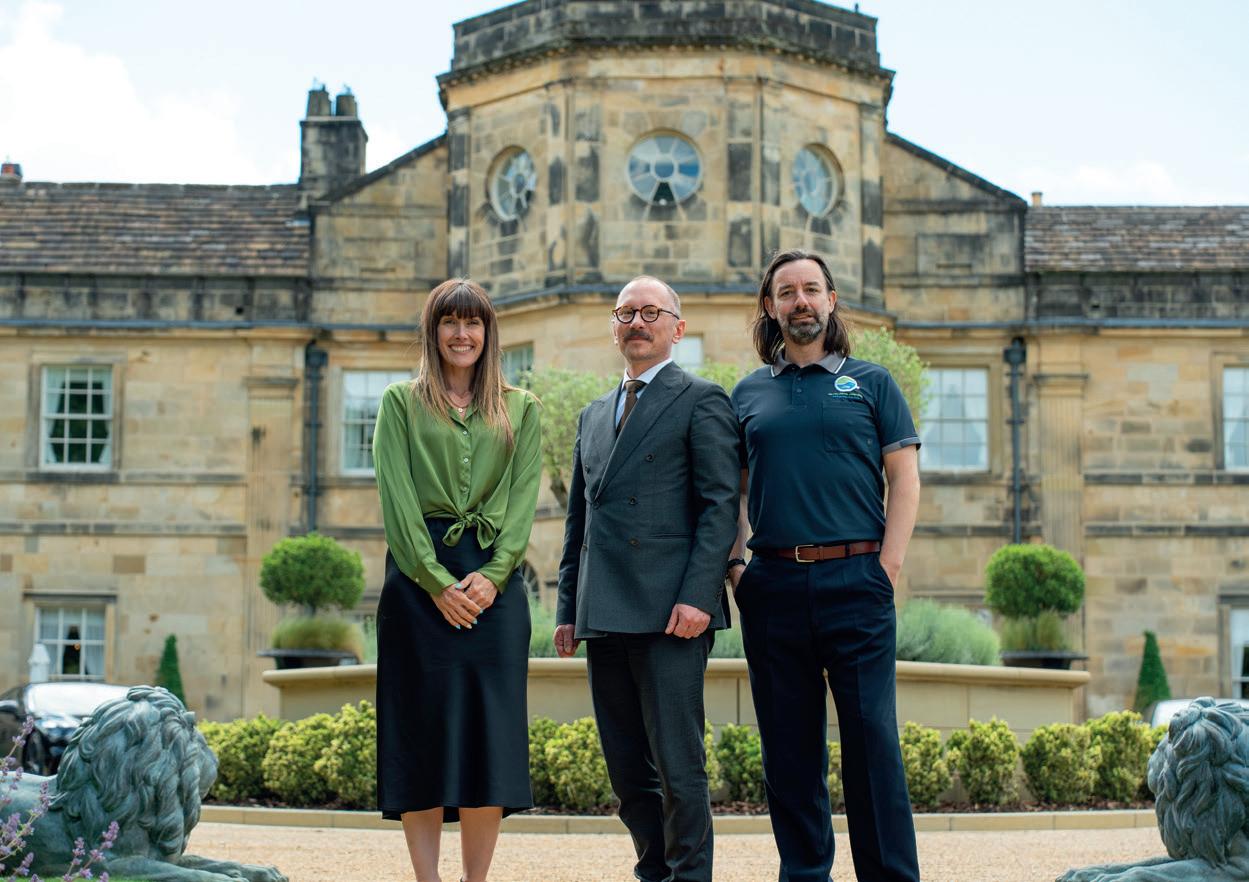
across the day. Turnaround times remain consistent, stock is easier to manage, and the team can focus on quality rather than working around the limits of older equipment.
Jakub Joubert, Director of Housekeeping at Grantley Hall commented, “Laundry sits at the heart of the guest experience, even though it operates behind the scenes. Every item needs to meet the same standard, every time. As our occupancy has grown, we recognised the need to invest in equipment that could support both volume and consistency without compromise.”
At the same time, wash performance remains a priority. High end hospitality linen requires careful handling to maintain its finish over time. By combining capacity with controlled processing, the Miele system supports both immediate operational demands and the long-term condition of fabrics.
“Hotels such as Grantley Hall require reliability and
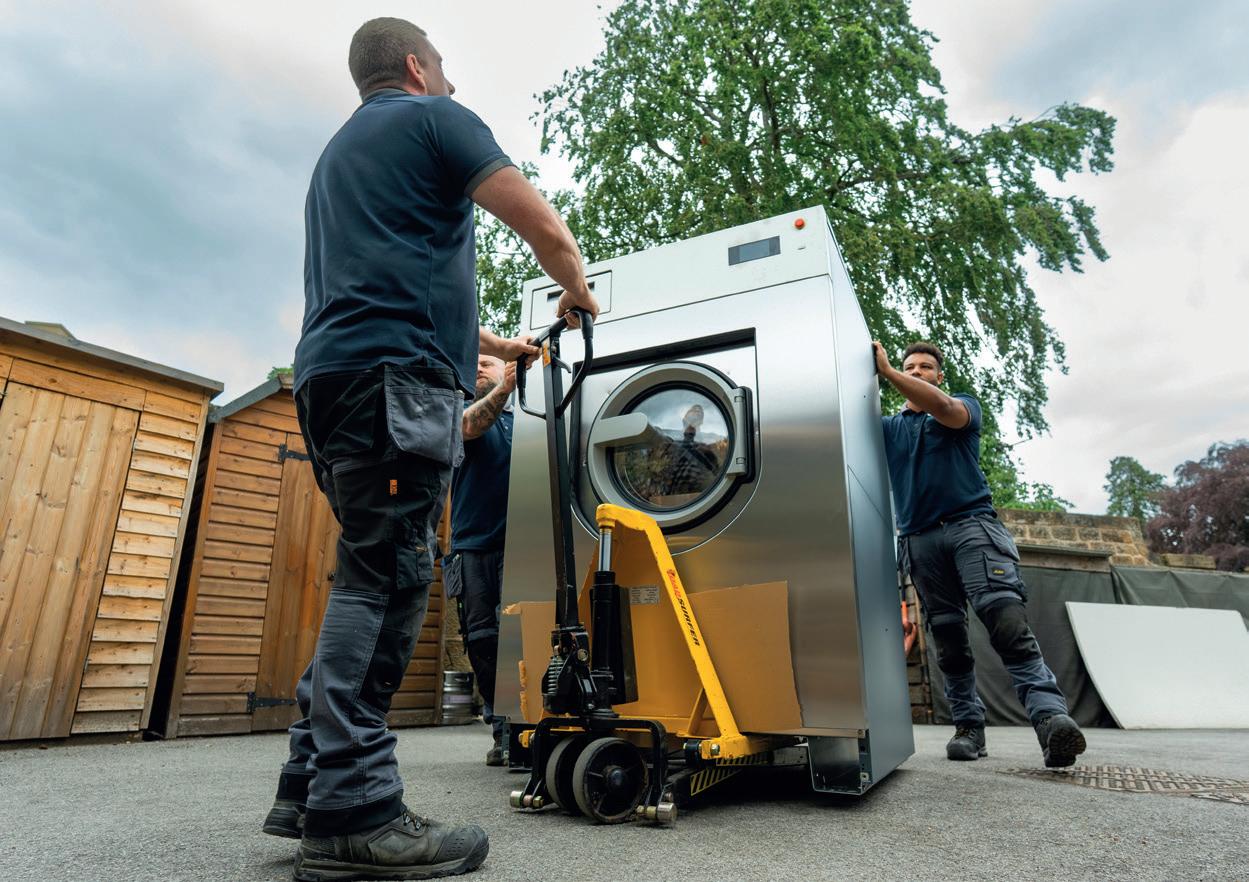
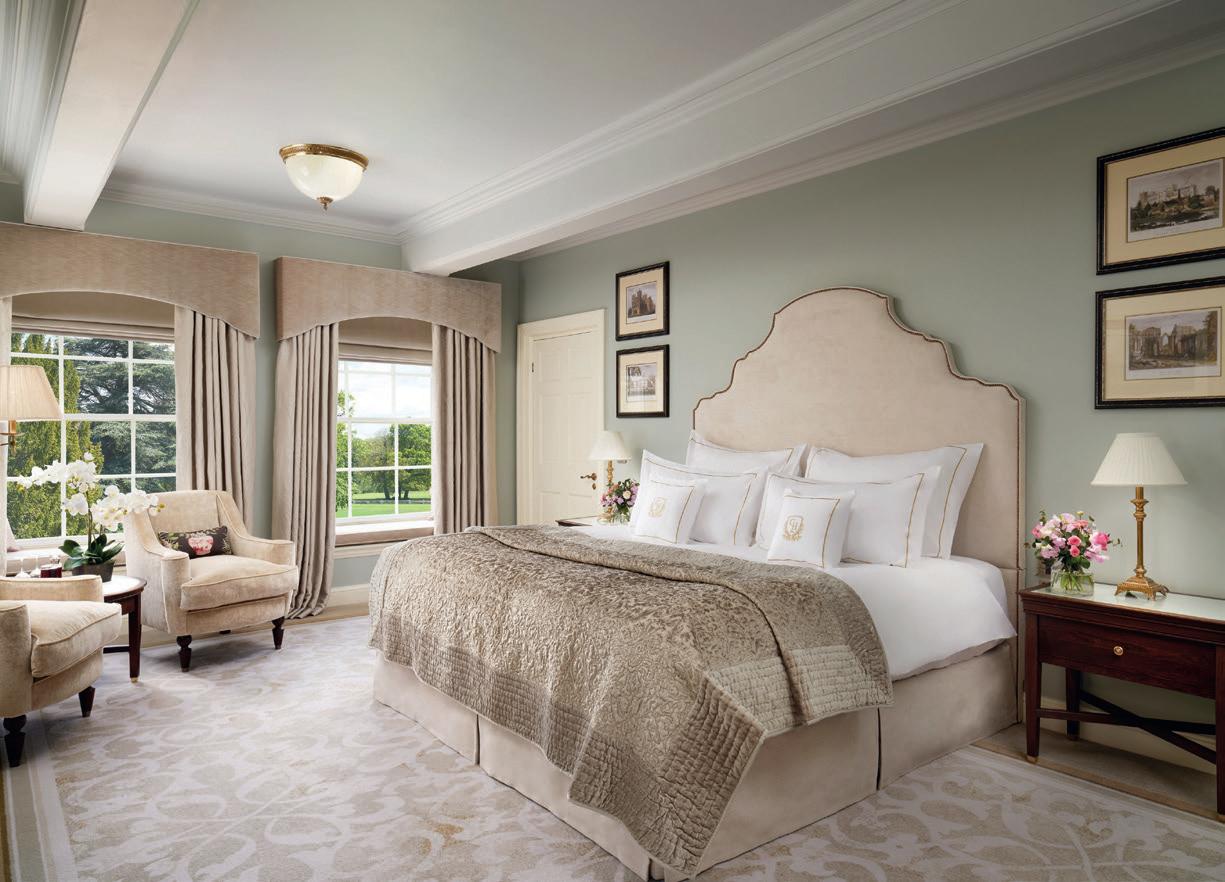
precision. The Benchmark range is designed to deliver consistent results at higher volumes, supporting teams who need to maintain exacting standards while managing increasing demand,” said Gemma Christie, Business Account Manager at Miele Professional.
Alongside the physical upgrade, Grantley Hall has introduced Miele MOVE Connect, adding a digital advantage to its laundry operation. This gives the team access to detailed data on machine usage, providing insight that was not previously available.
Through Miele MOVE Connect, the hotel can track water consumption, energy use and carbon output across individual machines or the wider site. This information supports its wider sustainability commitments, allowing the team to understand where resources are being used and how processes could be refined.
The platform also provides detailed performance reporting, offering a clearer view of usage patterns and helping the team make informed decisions about dayto-day operations. Rather than relying on assumptions, Grantley Hall can work with consistent data from its Miele equipment to guide improvements over time.
Miele MOVE Connect also provides day to day operational clarity. A central dashboard allows staff to monitor machine status, track programme progress and see remaining cycle times in real time. This improves coordination within the laundry, helping the team organise workloads more effectively.
Detailed programme data, including temperature, water levels and spin speed, can be reviewed when required. This is particularly relevant when working with more delicate or specialist items, where consistency is important. The ability to retain process records supports internal standards and provides reassurance that items are being handled correctly.
Miele’s connectivity also supports maintenance and service. Automatic software updates ensure that machines remain current without the need for frequent on-site intervention. Remote service access, with appropriate consent, allows engineers to assess issues using machine data, supporting quicker diagnosis and reducing downtime.
Custom alerts and machine identifiers add another layer of control. The team can monitor usage across different stages of the day, align machine activity with working patterns and identify where additional support or training may be beneficial.
The installation of the Miele system was delivered in partnership with JTM Service who worked closely with Grantley Hall from initial planning through to completion. With more than 40 years of experience in commercial laundry solutions, JTM Service provided guidance on the most suitable Miele configuration for the site.
Account management formed a key part of the process, ensuring that each stage of the project was clearly communicated and aligned with the hotel’s requirements. Following installation, JTM Service has continued to support the team with face-to-face training, alongside user video guides that provide a practical reference for day to day operation of the Miele equipment.
Paul Wood from JTM Service said, “From the outset, the focus was on understanding Grantley Hall’s requirements, how the laundry operates and where improvements would have the greatest impact. Combining the right equipment with our ongoing support helps the team to deliver the premium, luxury experience their guests demand.”
With Miele at the centre of its laundry operation, Grantley Hall is well positioned to support the high standards its guests expect, with the confidence that its back of house performance can keep pace.
To find out more about Miele’s laundry solutions for hotels and spas, visit: www.miele.co.uk/p/
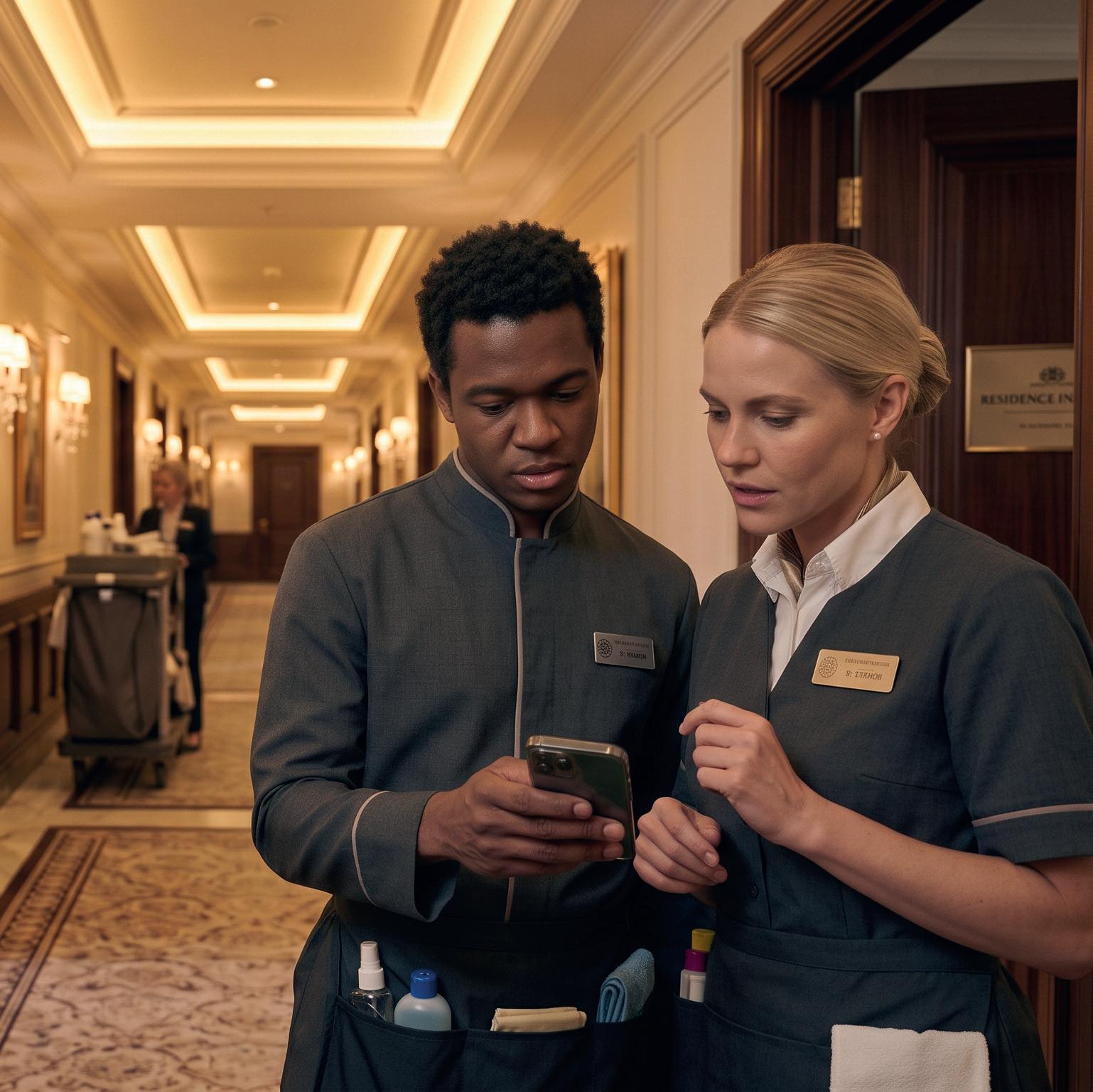
What does team communication look like in your hotel? A flurry of WhatsApp messages before the morning briefing? A maintenance issue buried somewhere in a group chat nobody can find? Or a staff member who left six months ago and is somehow still in the housekeeping group?
The hospitality industry runs on coordination. Shift handovers, room turnarounds, maintenance faults, event confirmations: every department depends on fast, reliable information exchange. But for years, the tools doing that job have been personal messaging apps that were never built for it.
From country inns to city-centre venues, UK hotels are
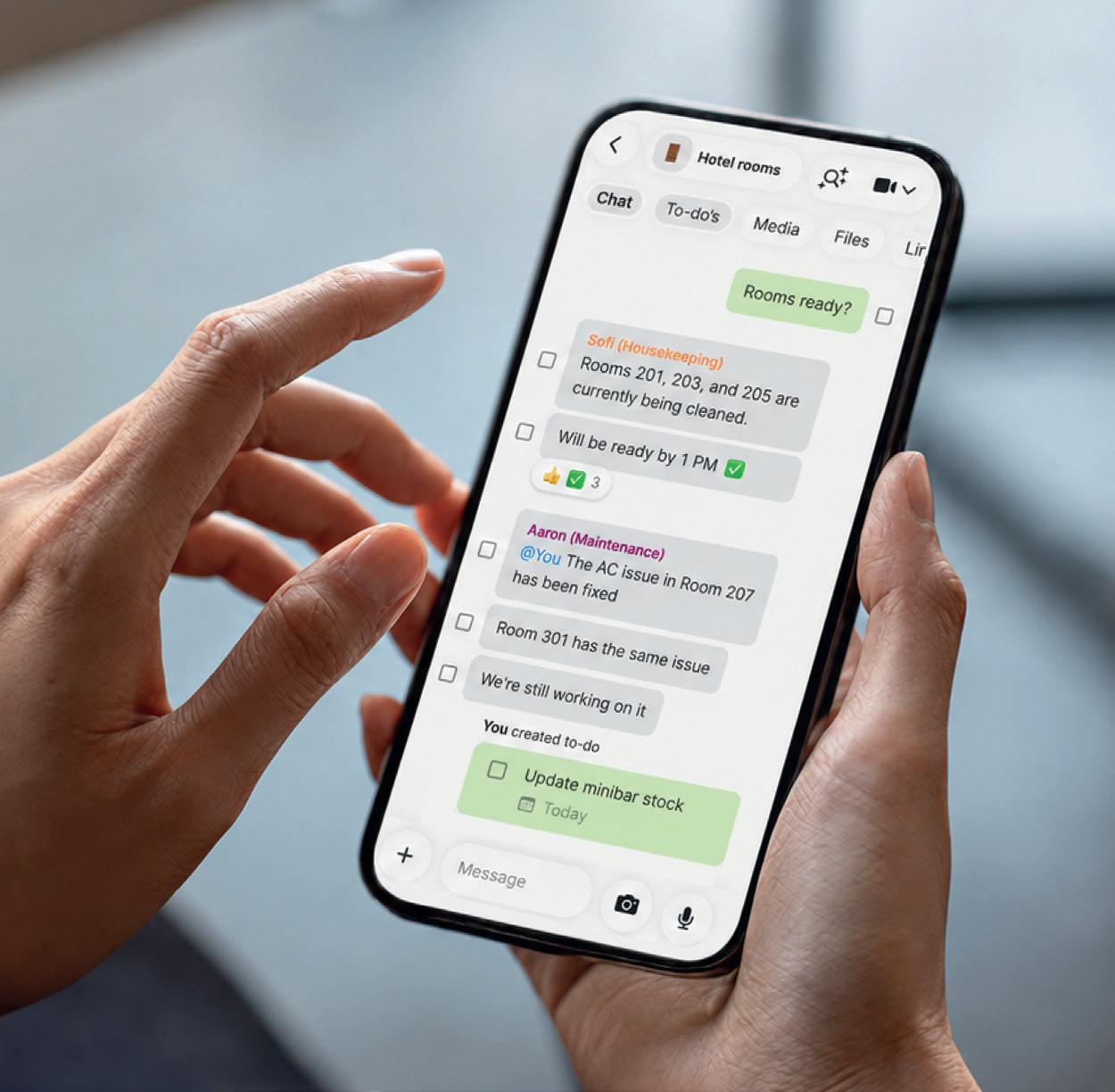
deciding enough is enough, and switching to a purposebuilt work communication platform.
Most of them are switching to Zenzap, a professional work chat app that gives teams an easy way to talk, with the structure and control a business actually needs.
The Three Horseshoes Inn
Steven Kirk has been running The Three Horseshoes Inn in Staffordshire with his brother Mark for over 20 years. What started as a small six-bedroom country property has grown into a full venue with 26 bedrooms, a wedding suite, dining, and a spa. That growth brought communication complexity with it.
“One of the biggest reasons I decided to change was
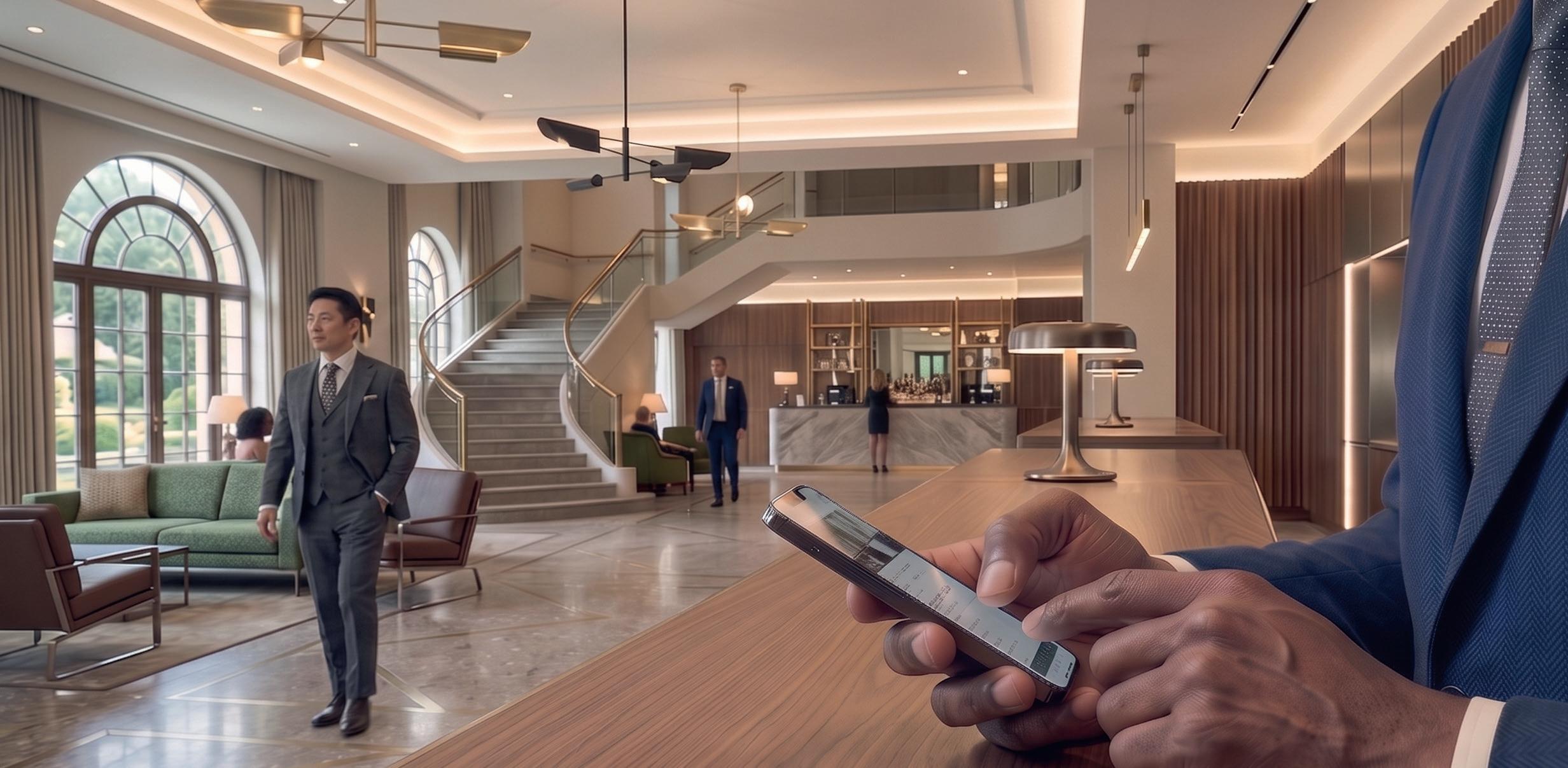
keeping personal life separate from work life,” said Steven. Before Zenzap, his team relied on WhatsApp. It kept communications moving, but it blurred lines the team couldn’t control.
Employees had no structured way to switch off. Managers couldn’t prevent staff from creating their own chats or leaving others. When someone left the business, every group had to be updated manually. “You’d have to go through every individual chat to remove them. Zenzap just lets us deactivate that one employee and they’re removed from everything.”
The switch changed more than offboarding. Steven described how the built-in to-dos transformed maintenance coordination across the property. Housekeeping can log faults directly, so maintenance can pick them up, prioritise, and check them off. Nothing falls through the gaps. “With housekeeping, a lot of things are breaking down all the time. The jobs list gets bigger and bigger. The to-do list makes sure smaller jobs don’t get lost.”
For Steven, the biggest win is that his team can actually switch off. Notifications stop automatically at the end of a shift. Staff on holiday aren’t getting pinged about room issues. “It’s keeping that work life, personal life separate.”
Samantha Mason has managed the Green Dragon Hotel in Hereford for years, overseeing a team of 65 people spread across departments, floors, and shifts that rarely overlap. Getting a message to everyone at the same time is a challenge the hotel struggled with for years.
“Some people are starting at five in the morning, some people are working through the night,” said Samantha. “It’s really hard to get a message out there to everybody at the
same time.” Before Zenzap, the hotel ran on a mix of paper, diaries, and WhatsApp.
“There’s no turnoff,” Samantha explained. “You get a message from the boss and it’s no different to a message from your mum. It caused all sorts of challenges because the team felt like they were always at work.” With Zenzap, departments now have their own group chats, notifications cut off outside of working hours, and scheduled messages mean nobody gets woken up by a manager’s three-in-themorning thinking.
The shift to Zenzap also changed how the hotel handles onboarding and data. New starters are added to an onboarding chat as part of induction, with everything they need already in place. Nobody has to share a personal phone number. “Their details are safe and they only have to be part of Zenzap whilst they’re here as an employee with us.”
The rollout was quick, with full adoption across the business. “Within a couple of days, nobody looked back. Everybody could see the benefits. Within a week we were straight into Zenzap.”
The common thread running across these hotels is a willingness to take communication seriously as an operational priority.
This shift toward professional work communication tools is happening across the industry, and the businesses that are doing it have teams that communicate quickly, operate cleanly, and actually get to leave work at work.
To make this happen, you need a work communication solution that’s built for how your business works. Let’s talk at zenzap.co/hotel-magazine
Tradelinens explores how durable, well-designed linen and responsive supplier support can help hotels improve efficiency, reduce replacement costs and strengthen operational resilience.
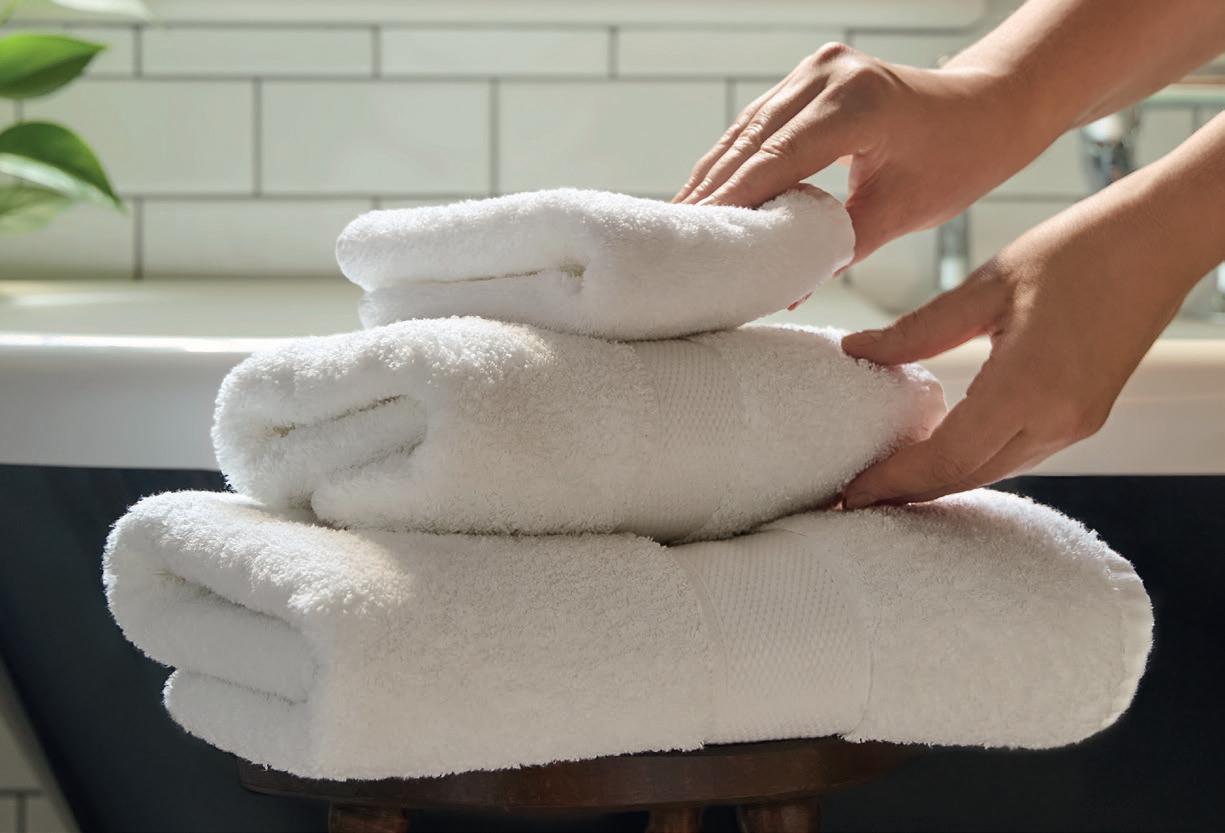
The hospitality industry has always relied on housekeeping teams to deliver one of the most important elements of the guest experience: a clean, comfortable and welcoming room. Yet behind every perfectly made bed and spotless bathroom lies a department facing increasing operational pressure.
Labour shortages continue to affect hotels across the industry, while occupancy levels remain high and guest expectations show no sign of easing. Although we’re now well into the traditional summer season, the strength of the UK staycation market shows little sign of slowing. Recent booking patterns suggest domestic travel is continuing to extend beyond the peak July and August period, with strong demand expected throughout the autumn and into the winter months. Our recent industry research has found that 35% of higher earners are cutting back on overseas holidays this year, instead choosing smaller, more frequent experiences closer to home. Among those reducing

foreign travel, 28% are spending more on UK “staycations”, meaning many hotels can expect sustained occupancy levels well beyond the summer holidays.
As a result, procurement decisions are taking on a new level of importance. Products should no longer be judged solely on their appearance or price; rather, evaluated on how they impact operational efficiency. From reducing turnaround times to extending replacement cycles, the right linen can play a surprisingly significant role in helping housekeeping teams meet today’s demands.
Every minute saved in room preparation has a cumulative impact across an entire property. While technology and scheduling have helped improve productivity, the products used every day are also becoming an important part of the efficiency equation.
Well-designed linen can make room servicing quicker;
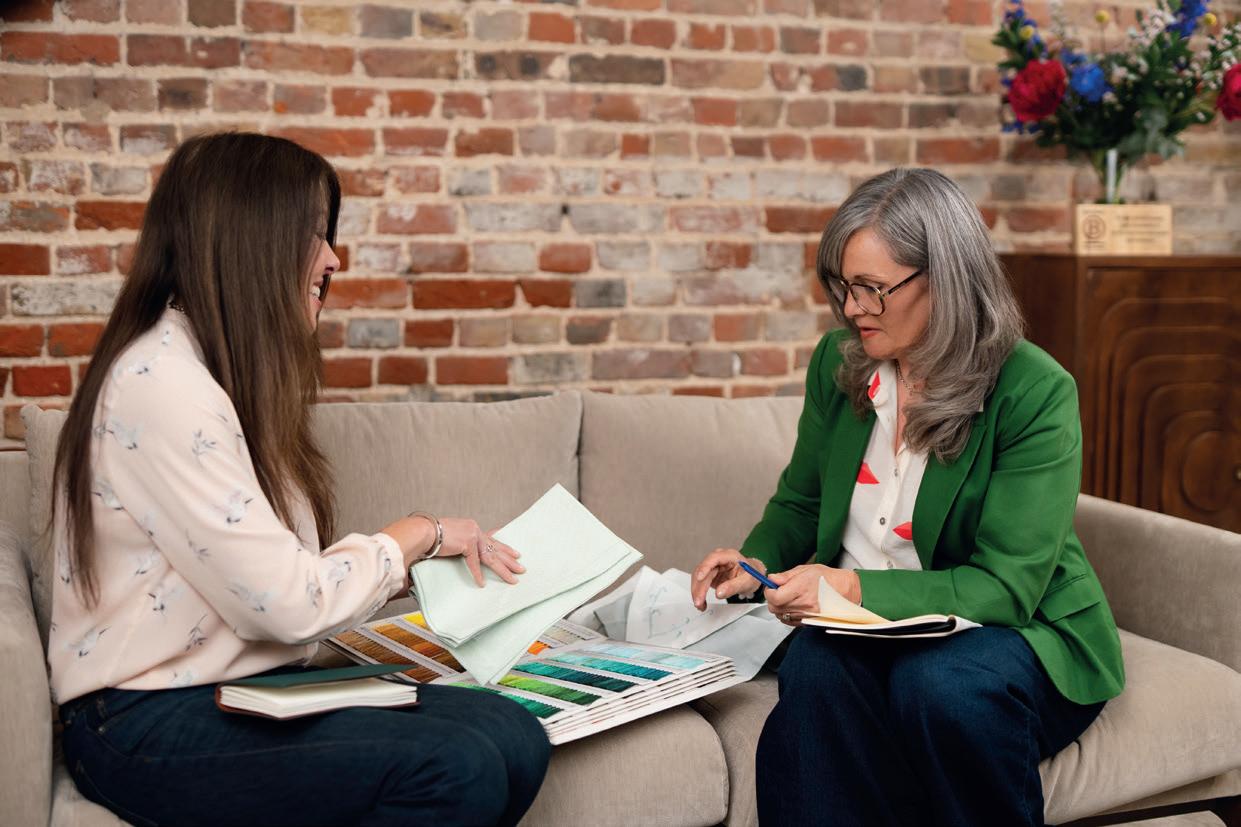
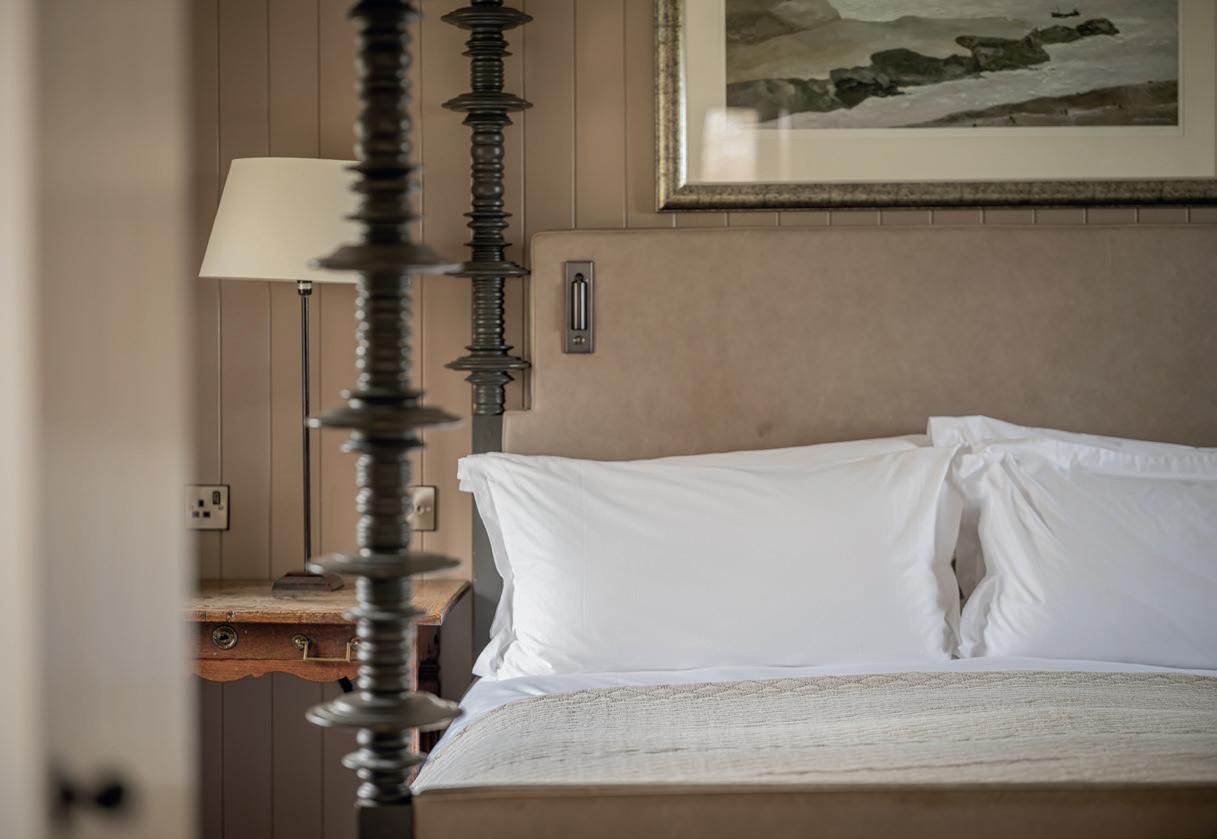
consistent sizing, reliable fit and fabrics that maintain their shape after repeated laundering help simplify bed making and room presentation. When they can rely on the quality of the products, housekeeping staff can prepare rooms more efficiently without compromising standards.
Maintenance is another often-overlooked consideration. Linen that resists staining, fading and shrinkage requires less intervention throughout its lifespan and continues to present well despite frequent commercial laundering. The result is less time spent managing damaged stock and fewer unexpected replacements – saving housekeepers time when changing the beds, and saving on replacement costs.
While no single product can solve labour shortages, selecting textiles that actively support daily workflows can make a measurable difference to productivity across an operation.
Hospitality textiles are expected to perform under some of the toughest conditions in the commercial sector. Daily guest use, industrial laundering and continuous handling mean bedding and towels must withstand hundreds of wash cycles while maintaining, comfort, appearance and quality.
For this reason, durability has become a key consideration for hotels looking to balance quality with long-term value. Tradelinens develops products that withstand the realities of commercial hospitality and exceed industry standard lifecycles. Rather than focusing solely on aesthetics, our emphasis is on delivering textiles that continue to perform throughout their working life, helping hotels maintain presentation standards while reducing the frequency of replacement.
Carefully selected fibres, robust construction and rigorous quality control all contribute to products that retain their softness, colour and structure under heavy-use conditions. This not only protects the hotel’s investment but also creates greater consistency across guest rooms, which is an important factor in maintaining brand standards.
Longer-lasting linen also supports smoother day-to-day
operations. Fewer damaged items mean fewer emergency purchases, less disruption to inventory and greater confidence that sufficient stock will be available during peak trading periods.
While product performance is essential, supplier relationships have also become an important part of operational resilience. Hotels depend on reliable supply chains to keep housekeeping running smoothly, particularly during busy periods or when unexpected demand places additional pressure on linen inventories. Delayed deliveries or inconsistent product availability can quickly create operational challenges that extend well beyond the housekeeping department.
This is where Tradelinens’ responsive customer service can make a meaningful difference. We work closely with our clients to understand the practical realities of hotel operations, offering support that goes beyond order fulfilment. Whether advising on the most suitable product specifications, helping manage stock requirements or responding quickly to urgent requests, the objective is to make housekeeping operations as seamless as possible.
Strong supplier partnerships are increasingly built on collaboration rather than transactions alone. Hotels value suppliers who understand seasonal demand, operational pressures and the importance of consistency, recognising that dependable support behind the scenes ultimately contributes to the guest experience.
As housekeeping departments continue to navigate staffing challenges and rising operational expectations, success will increasingly depend on finding efficiencies wherever they can be achieved.
In today’s ever-changing hospitality landscape, supporting housekeeping is no longer just about providing the right products. It’s about understanding the operational realities of modern hotels and helping teams work smarter, more efficiently and with greater confidence. And this is something that benefits staff, operators and guests alike.
tradelinens.co.uk
Operating Supplies & Equipment (OS&E) may be one of the least visible aspects of hotel development, but its impact on operations and the guest experience is profound. Hotel Buyer explains why bringing OS&E into the planning process from the outset is essential to delivering a seamless, efficient and design-led hospitality project.
Operating Supplies & Equipment (OS&E) is often one of the most overlooked elements of hotel development, despite playing a critical role in both operational efficiency and the guest experience. While major focus is typically placed on construction, interior design, and FF&E (Furniture, Fixtures & Equipment), OS&E is too often left until the final stages of a project - when budgets are tighter, timelines are compressed, product availability is limited and procurement decisions become reactive rather than strategic.
The consequences can be significant. Rushed OS&E procurement frequently leads to inconsistencies across the guest journey, with products that fail to align with the hotel’s design concept, brand standards, or operational requirements. From guest room accessories and bathroom amenities to housekeeping equipment, restaurant tabletop items, and back-of-house essentials, OS&E encompasses thousands of individual products that directly influence how a hotel functions and how guests perceive the property.
Successful hotel projects recognise that OS&E should not be treated as a last-minute purchasing exercise. Instead, it needs to be integrated into the development process from the outset, working alongside FF&E planning and design coordination. Before the case furniture is built and power points are located. Early involvement allows operators and designers to assess how products work within the intended environment - whether that is ensuring hangers fit seamlessly within wardrobes, confirming bedside accessories complement the room design, or selecting operational items that improve efficiency for housekeeping and foodservice teams.
Incorporating OS&E into mock-up room reviews and early procurement discussions also helps reduce costly mistakes, avoid delays, and create a more cohesive final
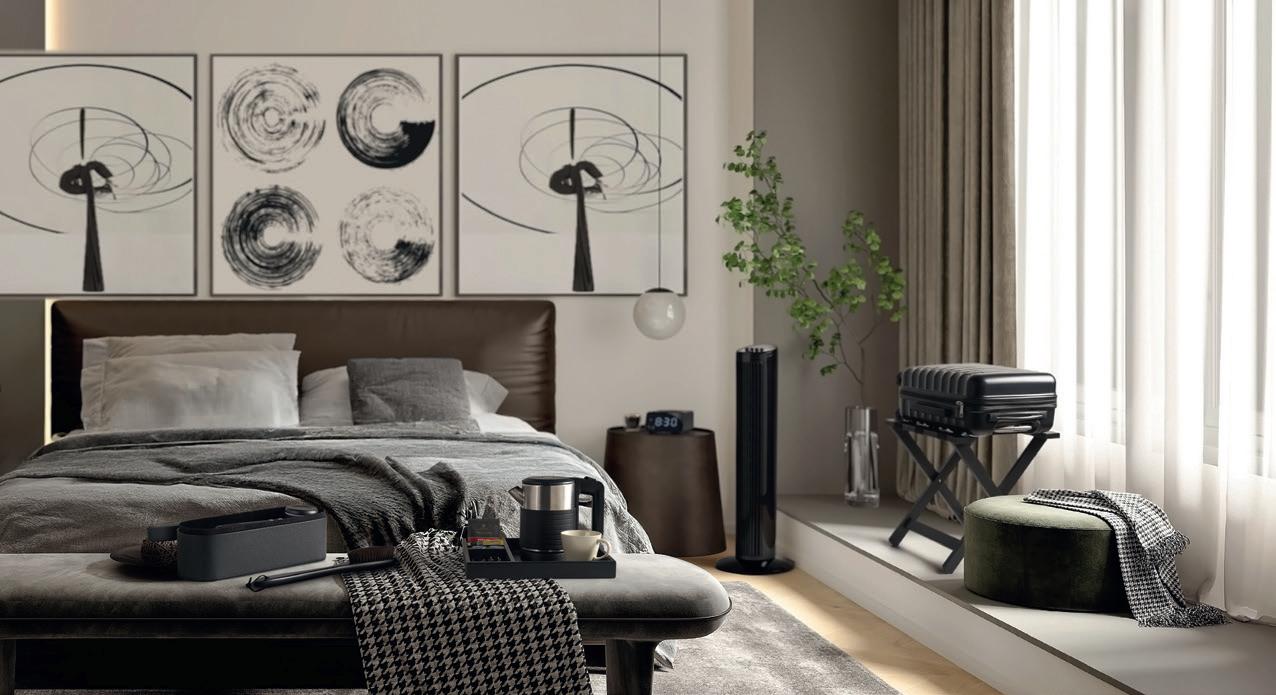
product. Hotels that approach OS&E strategically are far more likely to deliver a polished opening where every guest touchpoint feels considered and complete.
This is where specialist suppliers can make a significant difference. Hotel Buyer works closely with hotel owners, operators, designers, and procurement teams to help navigate the complexities of OS&E specification and sourcing. With experience across independent hotels, branded developments, and large-scale hospitality projects, Hotel Buyer supports clients with a set of too to assist in selecting products that balance design, durability, operational practicality, and budget requirements.
By engaging an experienced OS&E partner early in the project lifecycle, hotels can streamline procurement, maintain consistency across departments, and ultimately achieve a more successful outcome. In an increasingly competitive hospitality market, it is often the smallest details that leave the strongest impression, and OS&E plays a far greater role in that experience than many realise.
As hotels place greater emphasis on comfort, branding and sustainability, textiles have become an integral part of the guest experience. The team at Towel City discusses the importance of balancing luxury with durability, the growing demand for personalisation, and the trends shaping hospitality textiles.
For readers who may not yet be familiar with Towel City, can you tell us about the brand, its heritage and what sets your collection apart in the hospitality market?
The Towel City brand embodies the perfect balance of luxury, quality, and lasting durability. Crafted with care and designed for versatility, the range brings together plush towels, elegant robes, refined sleepwear, and essential accessories in a wide array of colours and styles.
Since its establishment, the brand has become known for creating refined towelling and lifestyle essentials that combine understated luxury with enduring quality. Many of our signature towel styles have remained central to the collection from the very beginning, a reflection of their lasting durability, timeless appeal and proven performance in both commercial and personal settings.
For the hospitality market, Towel City offers far more than a simple towel range. The collection has been thoughtfully developed to support hotels, spas, golf clubs, wellness destinations and premium gifting programmes with products that feel luxurious to the end user while meeting the practical demands of busy commercial environments.
Hotels are increasingly looking for products that balance luxury, durability and value. How does Towel City ensure its towels, robes and accessories meet the demands of high-traffic hospitality environments while still delivering a premium guest experience?
We craft our products using luxurious materials that feel soft, refined and comfortable, while ensuring they have the strength and consistency needed for busy hospitality environments.
In hotels, spas and leisure settings, towels, robes and accessories are used every day, washed frequently and
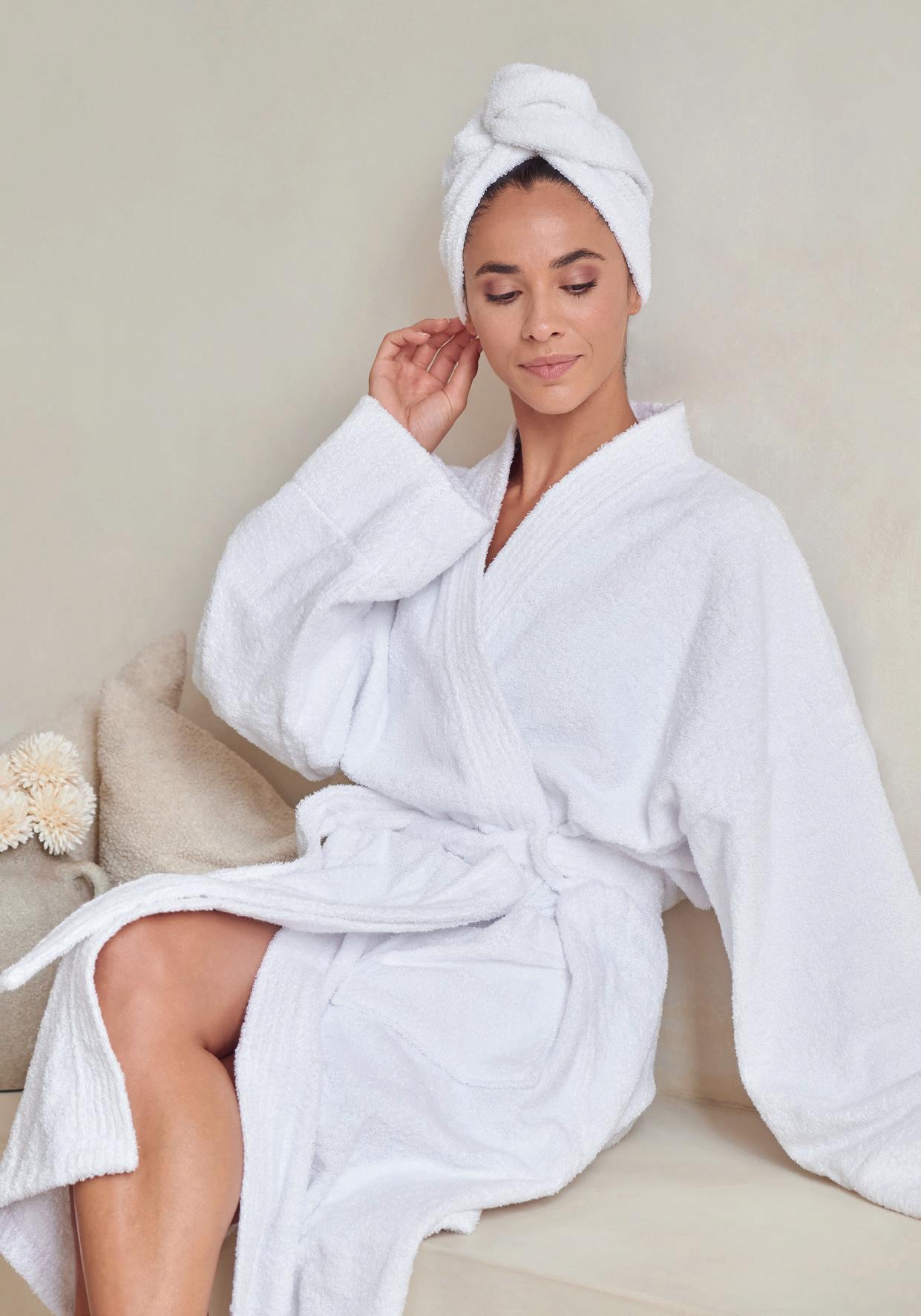
expected to maintain their appearance over time. That is why performance is central to the way our collection is developed. Our towels are designed with softness, absorbency and longevity in mind, offering a plush guest experience while remaining practical for commercial use. From deep-pile luxury towels to elegant robes and considered accessories, every piece is created to support both operational needs and guest satisfaction.
Towel City focuses on dependable fabrics, consistent sizing and reliable finishes, helping hospitality partners maintain a polished look across bedrooms, bathrooms, spa areas and leisure facilities. For hotels, this means products that not only feel premium on first use, but continue to perform beautifully throughout their lifecycle.
Personalisation has become an important way for hotels to reinforce their brand identity. What customisation options do you offer, and how can bespoke towels, robes and sleepwear help venues elevate the guest journey?
Personalisation is one of the most effective ways for hotels, spas and hospitality venues to create a more memorable and cohesive guest experience. At Towel City, our collection is designed as a premium blank canvas for branding, giving venues the flexibility to create bespoke towels, robes, sleepwear and accessories that reflect their identity with refinement and consistency.
Towel City products are made for embroidery, making it simple for hospitality venues to add a premium, longlasting brand finish across the collection. Embroidery remains especially popular for towels, robes, slippers and sleepwear, where a discreet logo, crest or monogram can transform practical items into considered brand touchpoints.
In addition, selected ranges offer further decoration opportunities. Our printable border towel range, for example, can be decorated using DTF, giving hotels, spas, golf clubs and gifting providers another way to achieve clear, high-impact branding while maintaining the quality and comfort expected from Towel City.
Sustainability continues to be a key consideration for hotel operators. How is Towel City responding to the industry’s evolving environmental expectations, and what should buyers look for when sourcing textiles responsibly?
At Towel City, we are committed to ethical and responsible sourcing across our entire supply chain. We work closely with our manufacturing partners to ensure that every product we offer reflects our values, not just our quality standards.
We provide high-quality products that decorators and end-users can trust for both style and values. Our Organic Range is a clear example of this commitment. Made from certified 100% organic cotton, the range offers luxury towels with heavyweight terry fabric, a soft deep pile and excellent absorbency. It gives hospitality buyers the opportunity to choose a more considered textile option without compromising on comfort, appearance or performance.
When sourcing textiles responsibly, buyers should
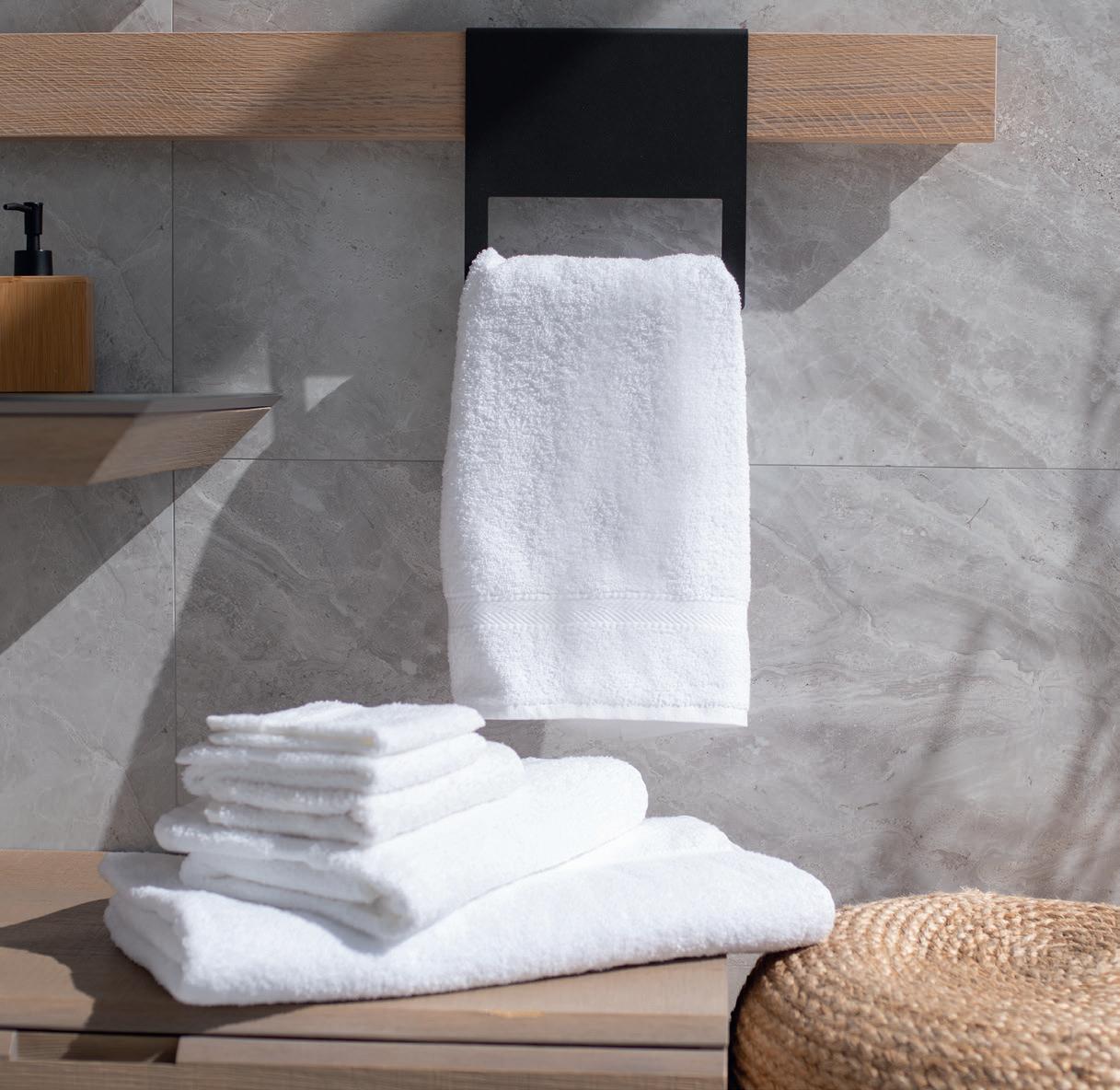
look beyond price alone. Fabric quality, durability, ethical credentials, wash performance and suitability for decoration should all be considered. For hotels, spas and hospitality venues, the most responsible choice is often a product that combines a premium guest experience with dependable long-term use.
Looking ahead, what trends are you seeing in hospitality textiles, and what advice would you give to hoteliers looking to refresh their housekeeping offering or invest in products that will have a lasting impact on guest satisfaction?
Looking ahead, we are seeing a clear move towards hospitality textiles that offer more than everyday practicality. Hoteliers are looking for products that feel premium, support their brand identity and deliver reliable performance over time. The focus is no longer simply on replacing towels or robes when needed, but on choosing textiles that enhance the overall guest experience.
One of the strongest trends is personalisation. Hotels, spas and resorts increasingly want towels, robes, sleepwear and accessories that feel bespoke to their setting. A beautifully embroidered robe, coordinated spa towel or branded guest gift can create a stronger sense of place and make the experience feel more considered. These small details can have a lasting impact, especially in boutique hotels, wellness destinations, golf resorts and premium suites.
Our advice to hoteliers is to view textiles as part of the guest journey, not just a housekeeping requirement. Towels, robes and accessories are among the most tactile elements of a stay, and guests notice how they feel. Refreshing these details can immediately elevate the perception of comfort, care and quality.
towelcity.co.uk
Barons Eden has rebranded as Hiddenwell to reflect its evolving vision for elevated wellness hospitality and future expansion plans.
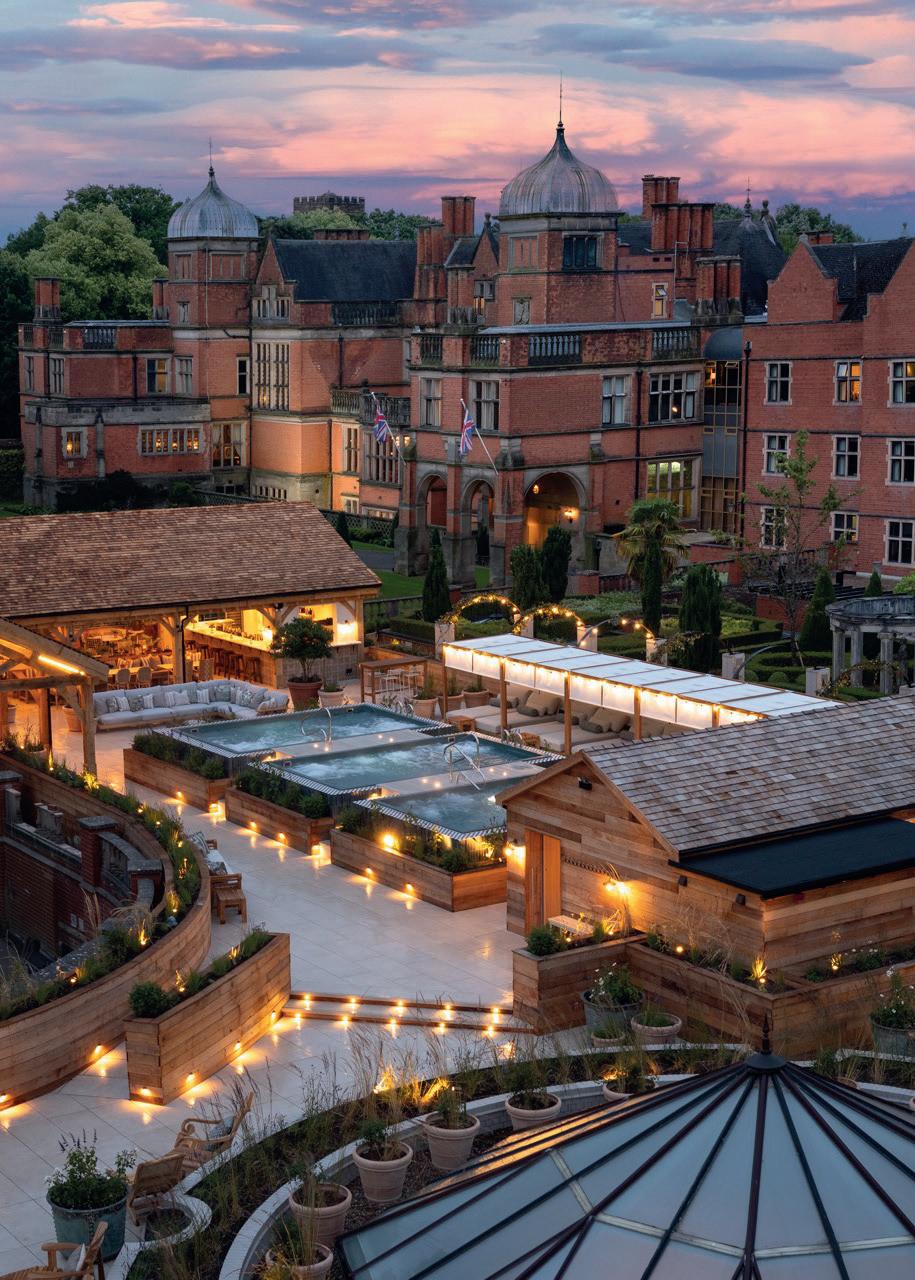
Barons Eden, the company behind the awardwinning collection of Destination Spa Hotels, has announced its rebrand to Hiddenwell (hiddenwell.com) - a new parent brand identity reflecting the company’s evolving vision of redefining spa and supporting its future growth and expansion plans.
Hiddenwell will become the umbrella brand overseeing the group’s growing portfolio of destination spa hotels,
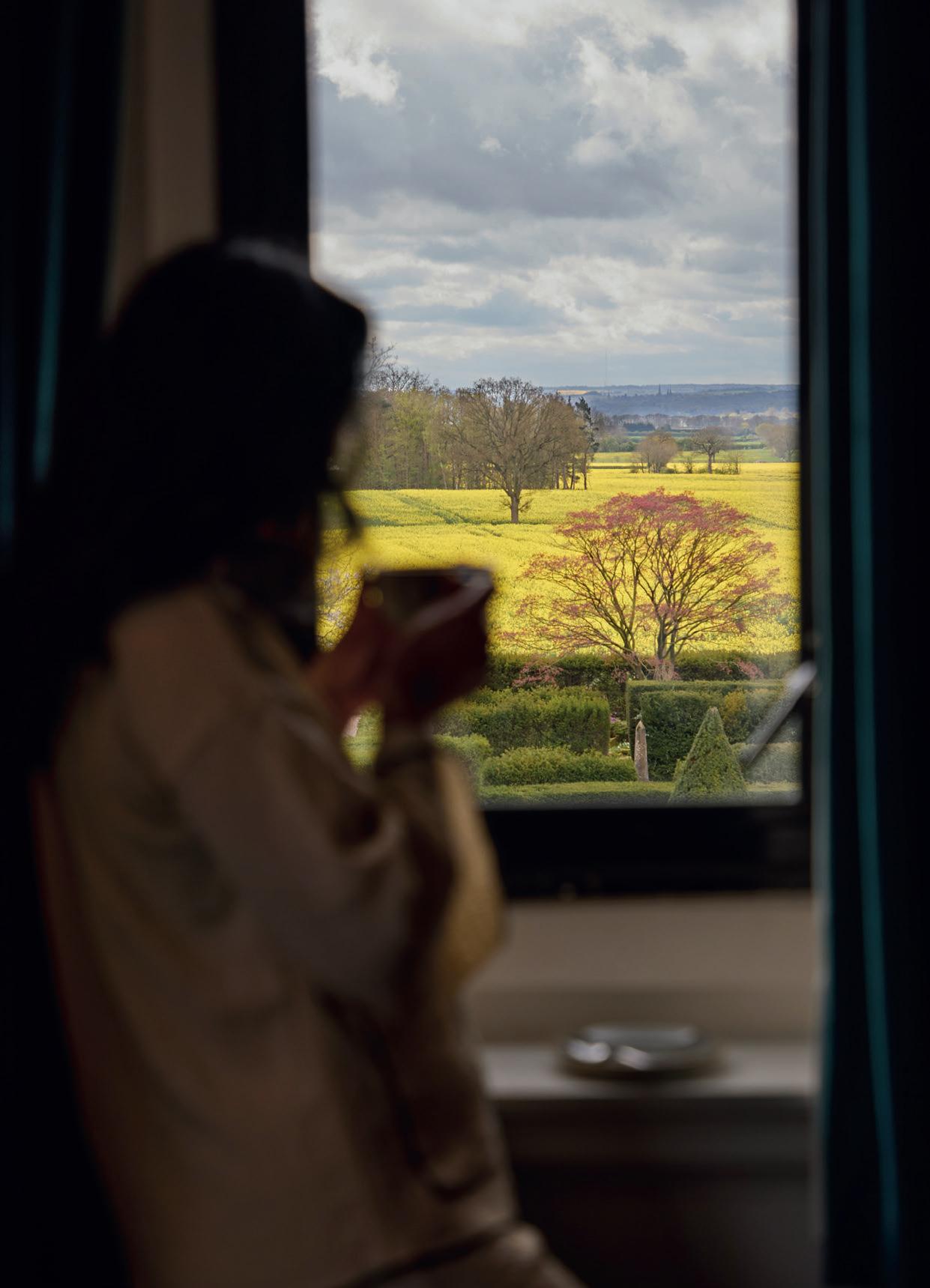
including Hoar Cross Hall in Staffordshire and Eden Hall in Nottinghamshire, with additional properties set to join the collection.
Hiddenwell is built around the belief that the best moments are often the ones hidden away – time to slow down, reconnect and indulge in feel-good experiences at your own pace. The new identity reflects the group’s vision for creating beautifully designed spa escapes that feel warm and effortlessly restorative.
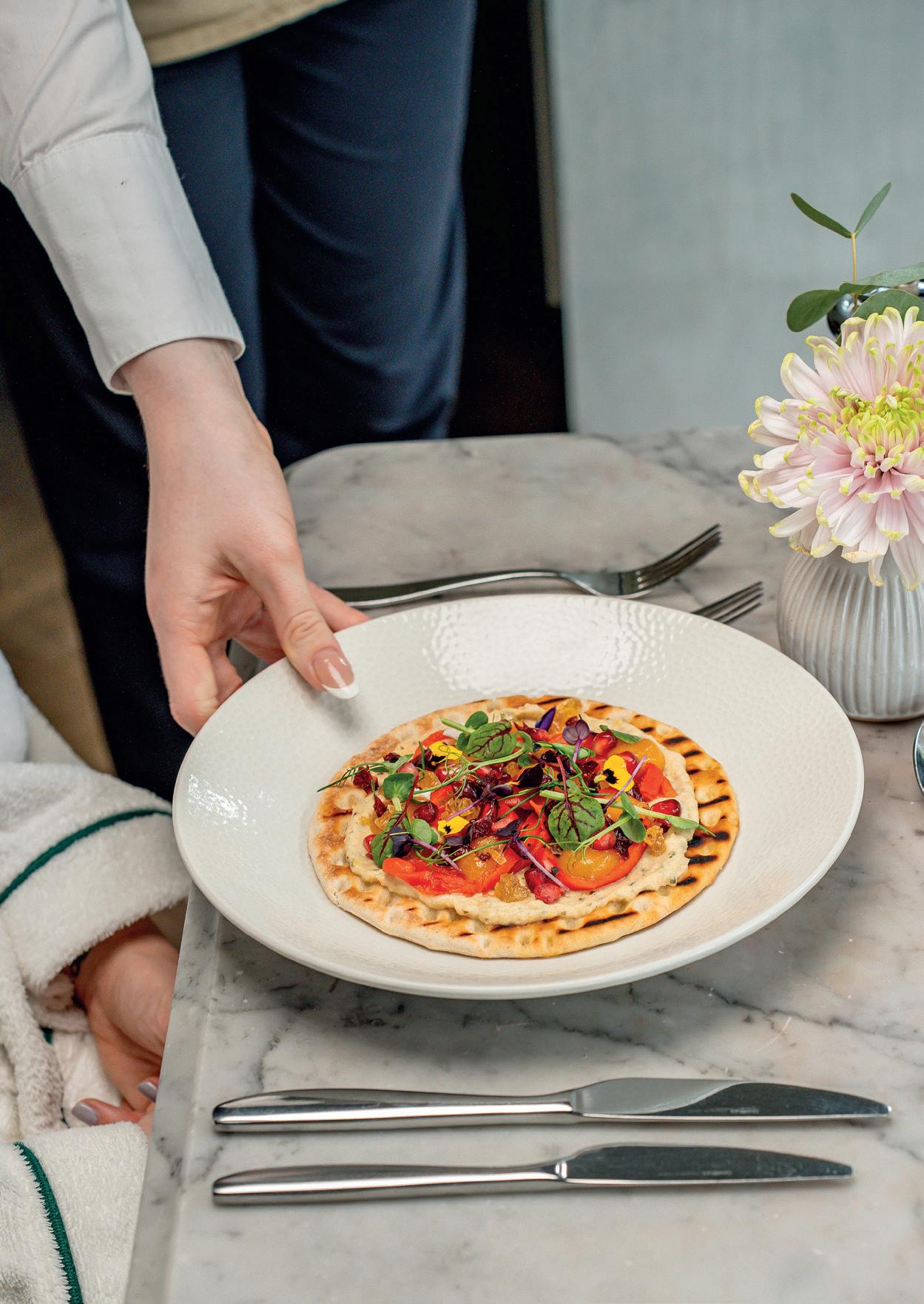
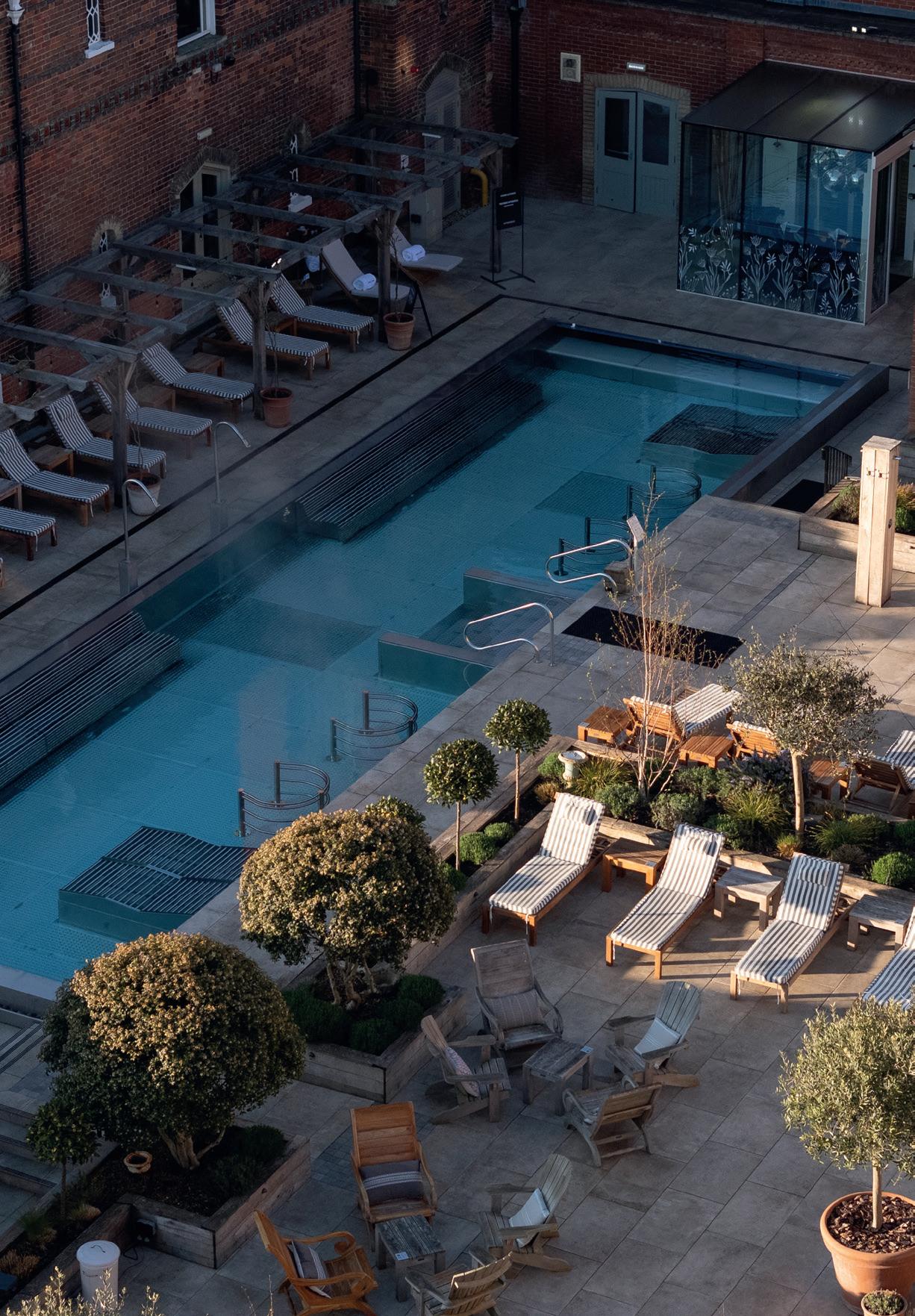
Following extensive research, the rebrand marks a significant milestone for the business as it looks to strengthen its position within the UK’s elevated wellness and hospitality landscape. Designed around the idea of discovery and escapism, Hiddenwell reflects a more contemporary approach to wellness hospitality.
As part of its next phase of growth, Hiddenwell has also confirmed plans to further expand the group with the additions of Ardencote Manor in Warwickshire and Orsett Hall in Essex. The expansion forms part of the group’s wider long-term strategy to evolve its portfolio and cement its position as one of the UK’s leading destination spa operators.
Ed Law, CEO at Hiddenwell shared, “This rebrand marks an exciting new chapter for the business. Hiddenwell reflects not only where we are today, but where we are heading as a growing collection of destination spa hotels centred around wellbeing, escapism and exceptional guest experiences. As the demand for wellness-led travel continues to grow, Hiddenwell gives us a strong platform for future expansion while continuing to invest in immersive and restorative experiences across our existing properties”.
As Hiddenwell enters its next phase of growth, the rebrand reflects the group’s vision for reimagining the modern spa experience - creating destination spas centred around wellbeing, escapism and meaningful connection. Built around the philosophy that the best things are often well hidden, Hiddenwell aims to offer guests spaces to truly switch off, recharge and discover moments of calm away from the pace of everyday life.
Currently at the heart of the Hiddenwell collection are two award-winning spa destinations:
• Hoar Cross Hall by Hiddenwell is a destination spa retreat in rural Staffordshire, home to one of the largest state-of-the-art spas in Europe, 104 bedrooms and suites, and award-winning dining including its two AA Rosette restaurant, The Ballroom.
• Eden Hall by Hiddenwell is a countryside day spa in Nottinghamshire, offering immersive day and evening spa experiences focused on relaxation, treatments and switching off from everyday life.
Dakota Hotels has completed its £54m Manchester Airport development and is officially open, bringing 154 luxury guestrooms, premium dining and a range of high-end guest services to one of the UK’s busiest airport hubs.
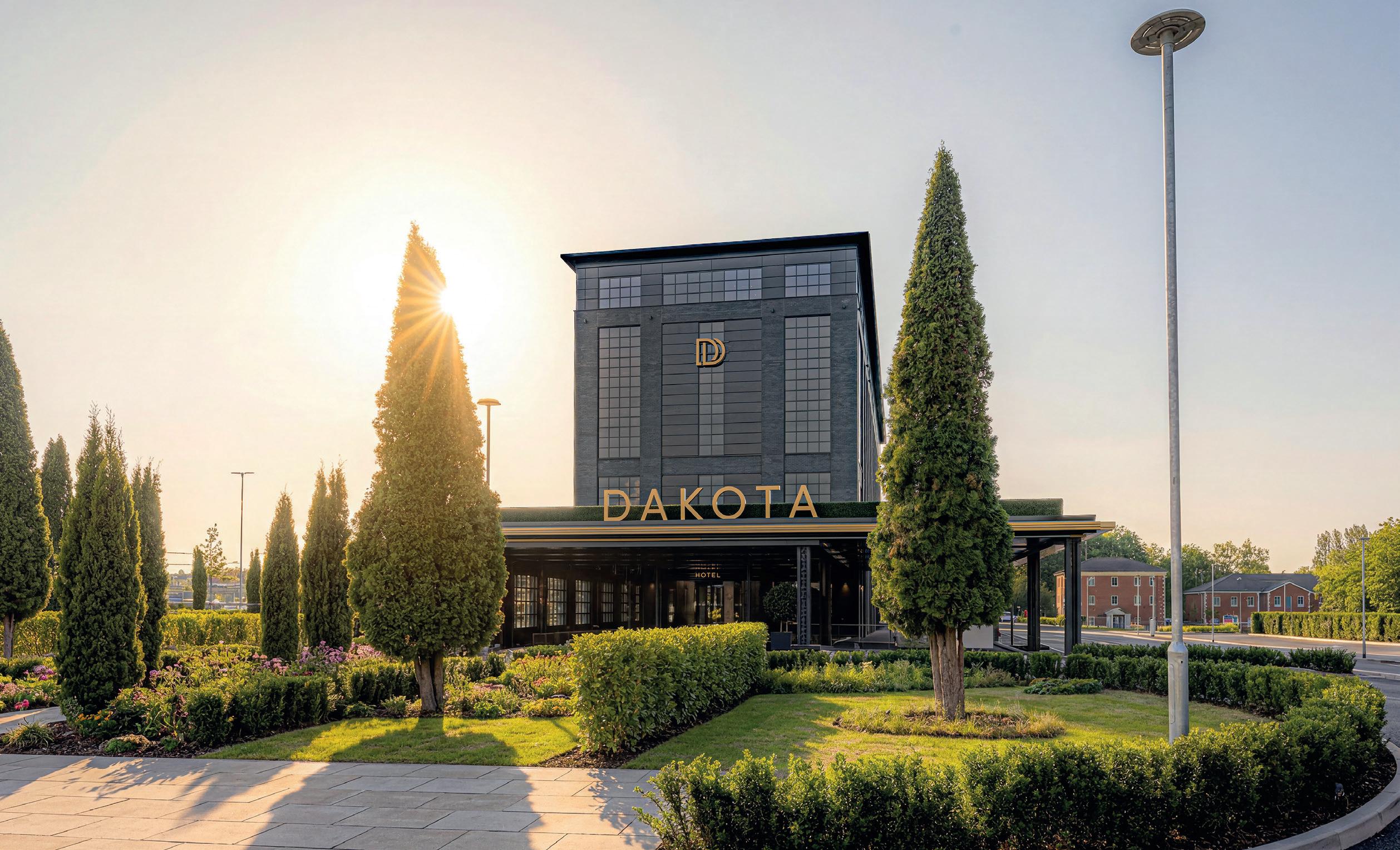
Dakota Hotels has reached a major milestone in the development of its latest property, Dakota Manchester Airport, with the luxury hotel now officially open for guests.
The completion of the £54m project marks Dakota’s latest expansion and introduces a new premium hospitality offering to one of the UK’s busiest aviation gateways. Positioned as “the destination before the destination”, the hotel aims to redefine the airport hotel experience through a combination of luxury
accommodation, personalised service and seamless connectivity to Manchester Airport.
The 154-bedroom property has been designed with both business and leisure travellers in mind, featuring a collection of guestrooms and suites alongside a range of premium guest amenities. Among its standout features is what Dakota describes as the UK’s only hotel-operated valet parking service at an airport hotel, providing guests with a fully managed parking experience from arrival through to departure.
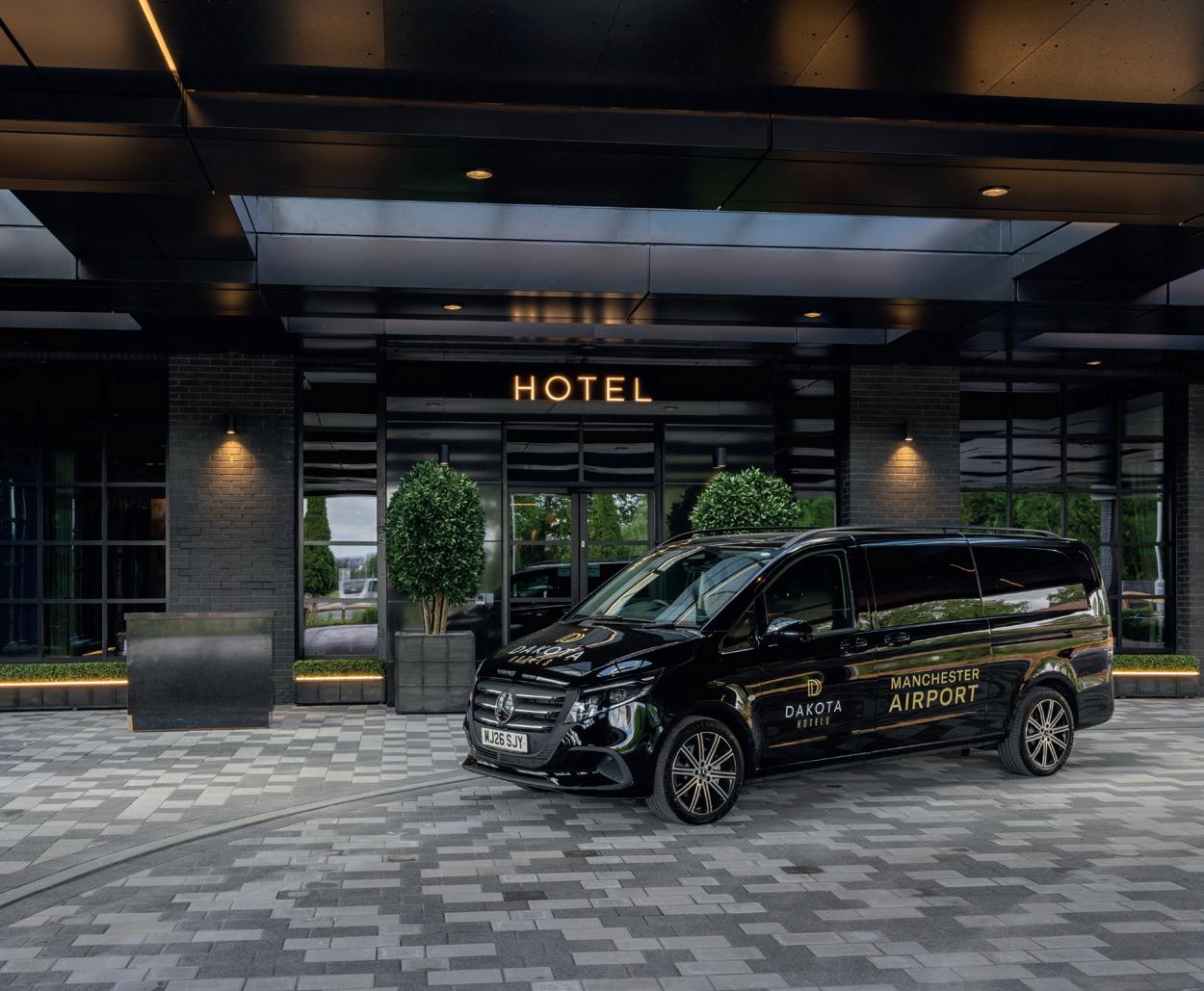
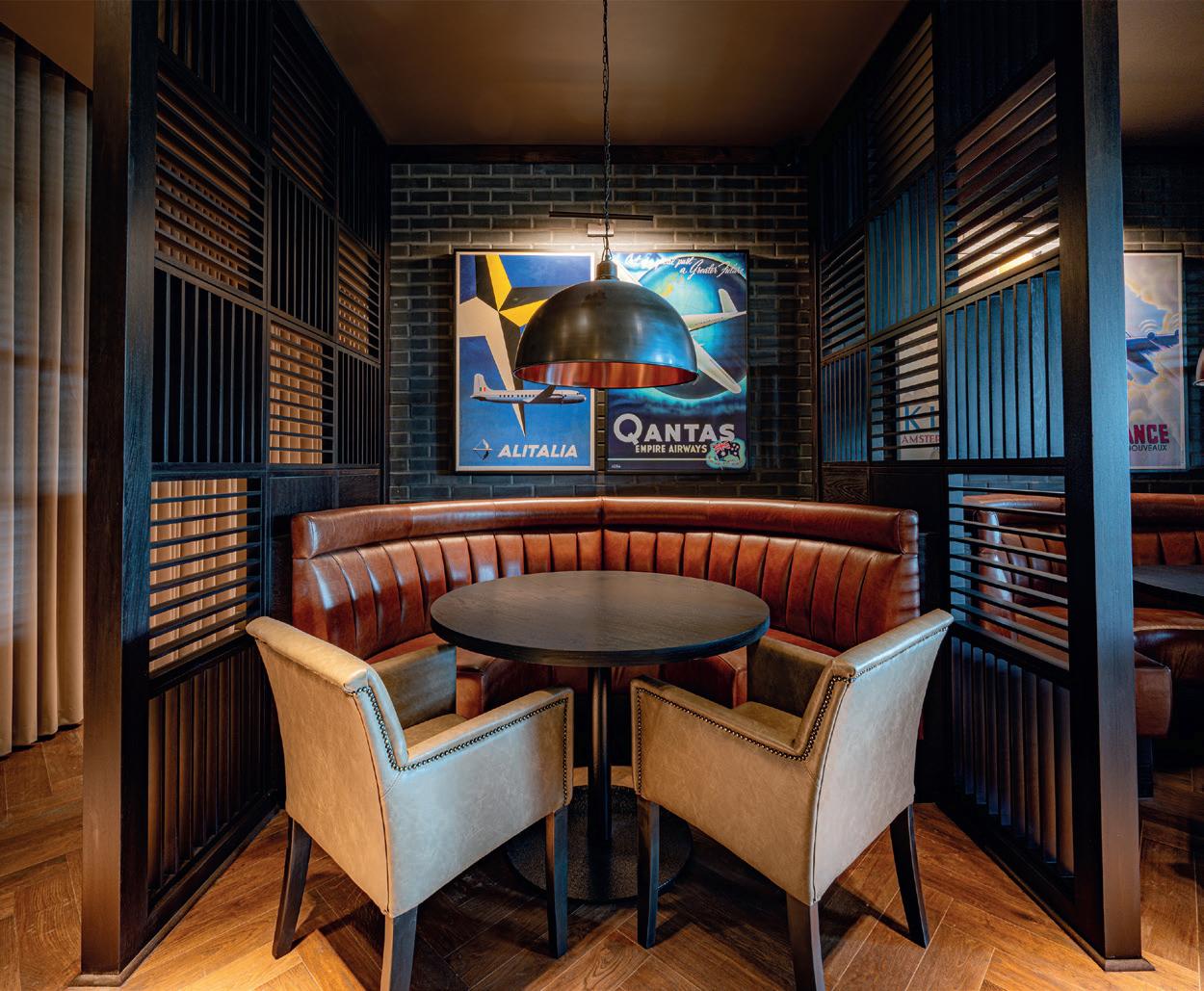
Additional facilities include private dining spaces finished with Dakota’s signature dark-wood aesthetic, an al fresco cigar terrace and humidor, and a dedicated chauffeur service operating around the clock to transport guests directly to airport terminals.
Food and beverage will play a central role in the guest experience, with The Grill serving as the hotel’s flagship dining venue. Designed around an art deco-inspired interior, the restaurant features a prominent central bar, leather booth seating and rich timber finishes. The menu will focus on premium steaks, sharing sides and an extensive wine selection, reflecting the brand’s established culinary offering across its portfolio.
Dakota Manchester Airport’s opening comes at a time of continued growth for both the airport hospitality sector and the wider Manchester visitor economy. The new hotel
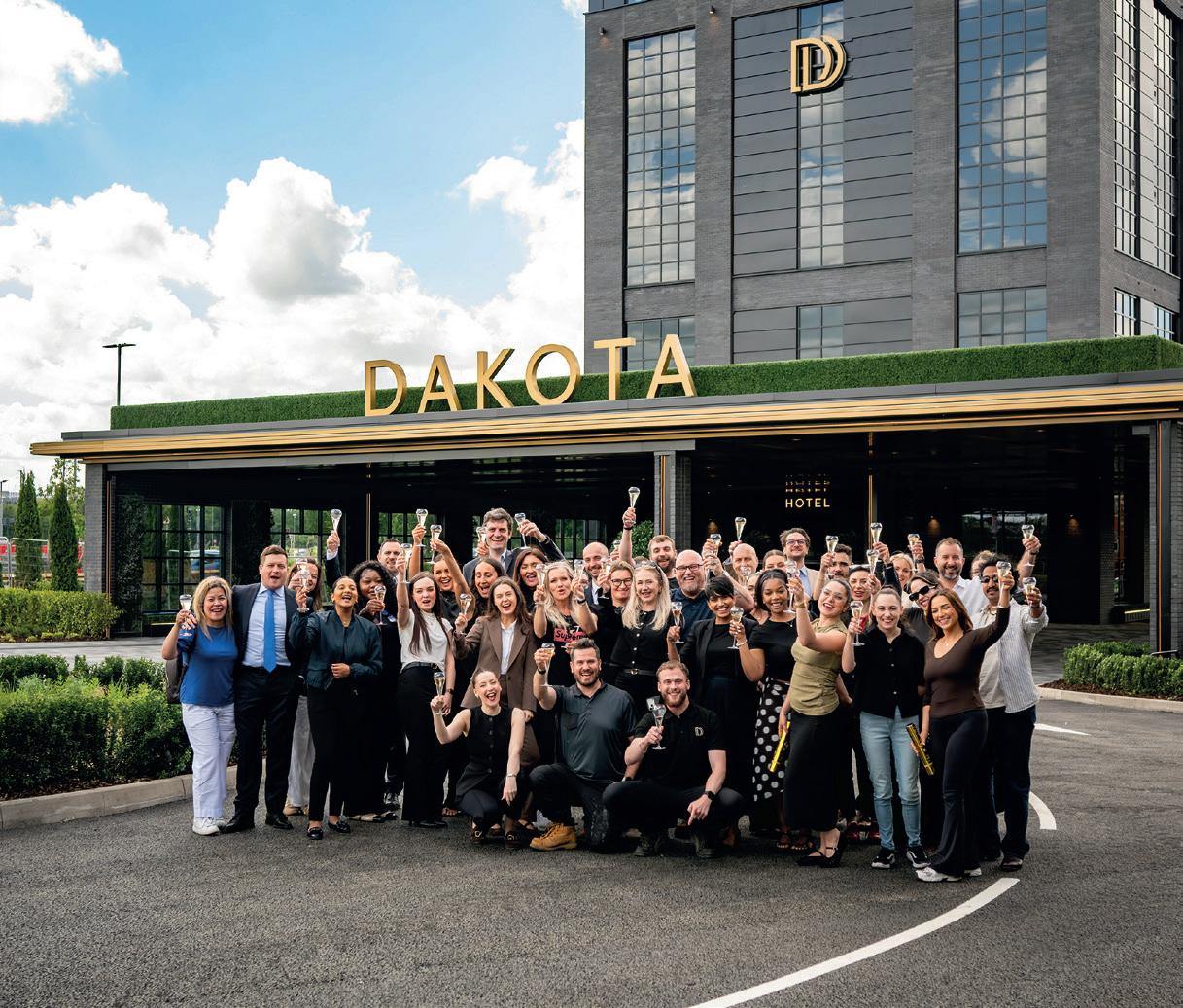
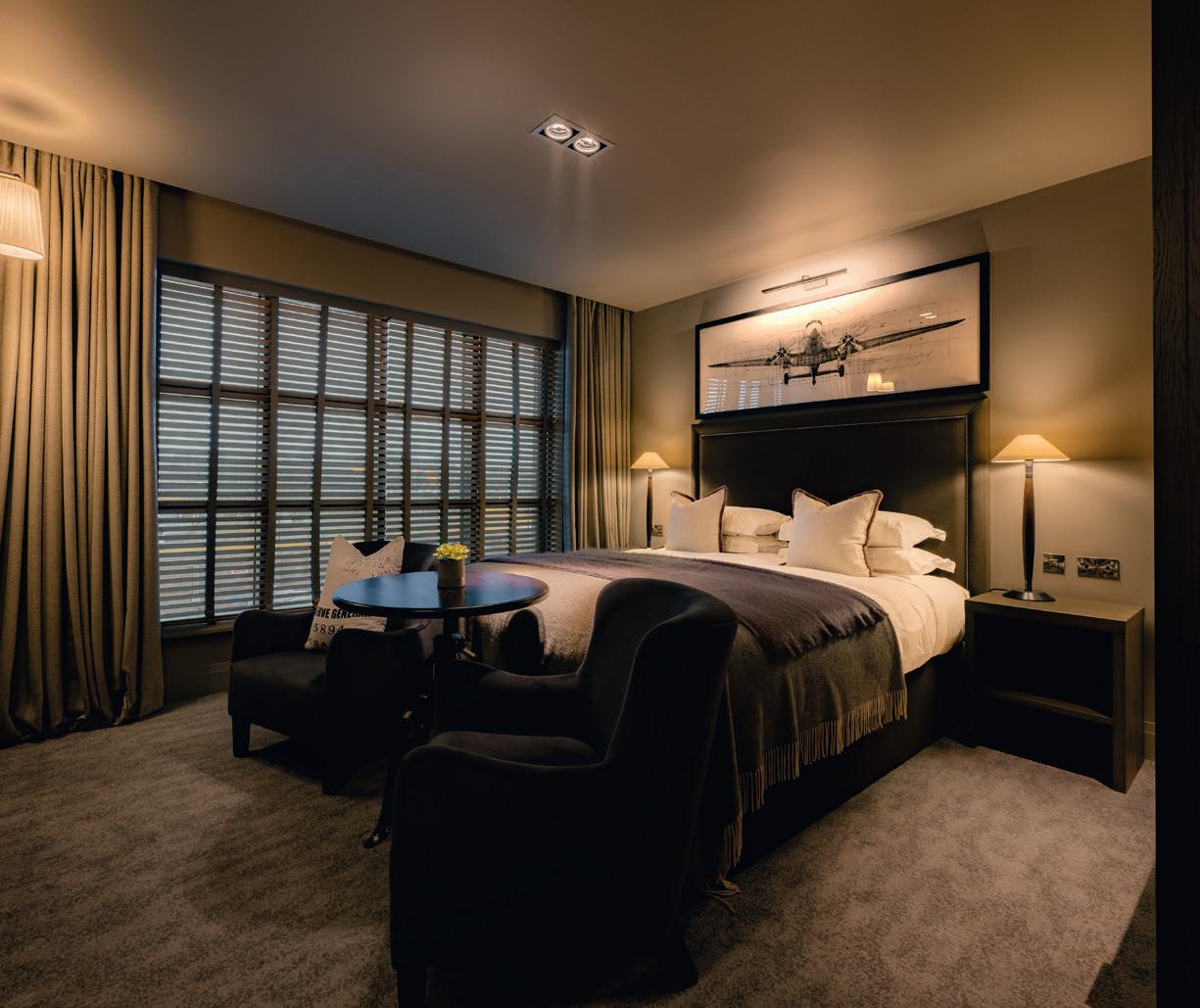
is expected to appeal to travellers seeking a more upscale pre-flight or post-arrival stay, while also targeting local corporate and dining demand.
Commenting on the milestone, Matt Townley, Group Operations Director at Dakota Hotels, said: “Receiving the keys to Dakota Manchester Airport was an incredibly proud moment for everyone involved in the project. We’re focusing on the continued development of our awardwinning team and culture to ensure every touchpoint of the guest experience is delivered with the service and attention to detail that Dakota is known for.”
Bookings for Dakota Manchester Airport are now open after the property’s official launch on 1 July.
dakotahotels.co.uk

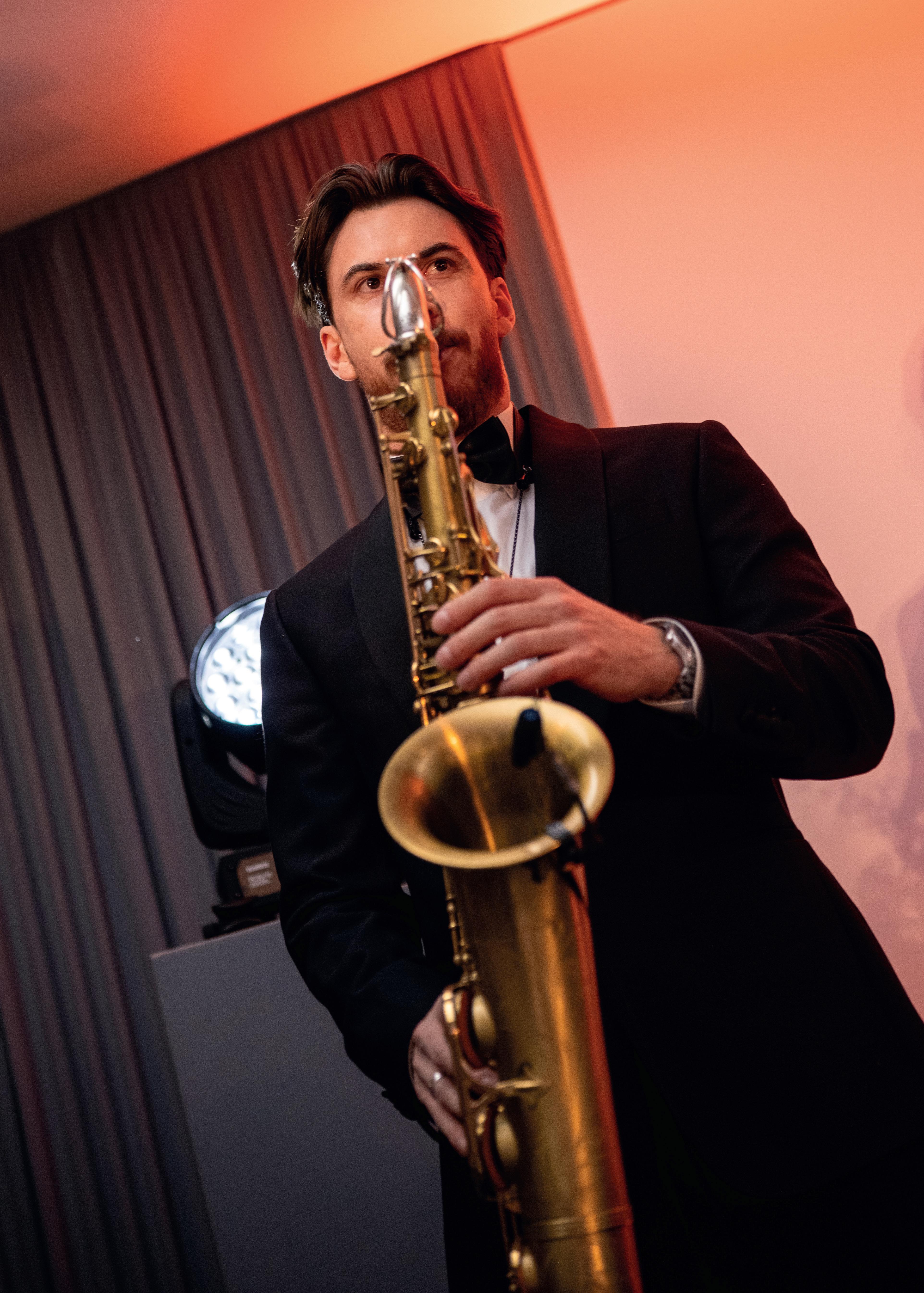
Fresh from being crowned Hotel of the Year at the 2026 Hotel Magazine Awards, Royal Lancaster London is celebrating the power of a people-first culture that has driven exceptional guest satisfaction and industry recognition. General Manager Sally Beck reflects on the win and her vision for maintaining momentum in an ever-evolving hospitality landscape.
Winning at this year’s Hotel Magazine Awards is a major achievement - what do you think set your property apart from the competition?
I think it was the consistent high level of exceptional guest feedback. Our hotel value is ‘We Always Care’ which is not a tag line for us, it is a way of life in our hotel. Every team member knows that they are empowered to make the guest happy and it is their responsibility to show the care so that whatever needs to happen, happens. We consistently sit at number 1 or 2 on TripAdvisor, which, for such a large hotel is unbelievable. The team also show our ‘We Always Care’ values to each other as well. We have 320 full time team members and 42 nationalities, which means that there are a lot of cultures, languages and thought processes to navigate in any one day. Everyone needs to be kind to each other and supportive to ensure that everyone is appreciated for their part in the service delivery. I think this culture has gone a long way to helping us win the Best Hotel award.
What does it mean to you, personally, to have scooped the win amidst such tough levels of competition?
I am immensely proud that the leadership style that we have in our hotel has made such a difference. Competition is always tough in London, no more so when we have such amazing new hotels entering the market place. For me, the fact that we have such a low staff turnover of around 20% a year, means we can keep a team and by keeping a team we can build strong trusting relationships that work together and support each other. I have always wanted to run the happiest hotel in London, and this award means such a lot, not only to me, but to all of us in our Royal Lancaster family.
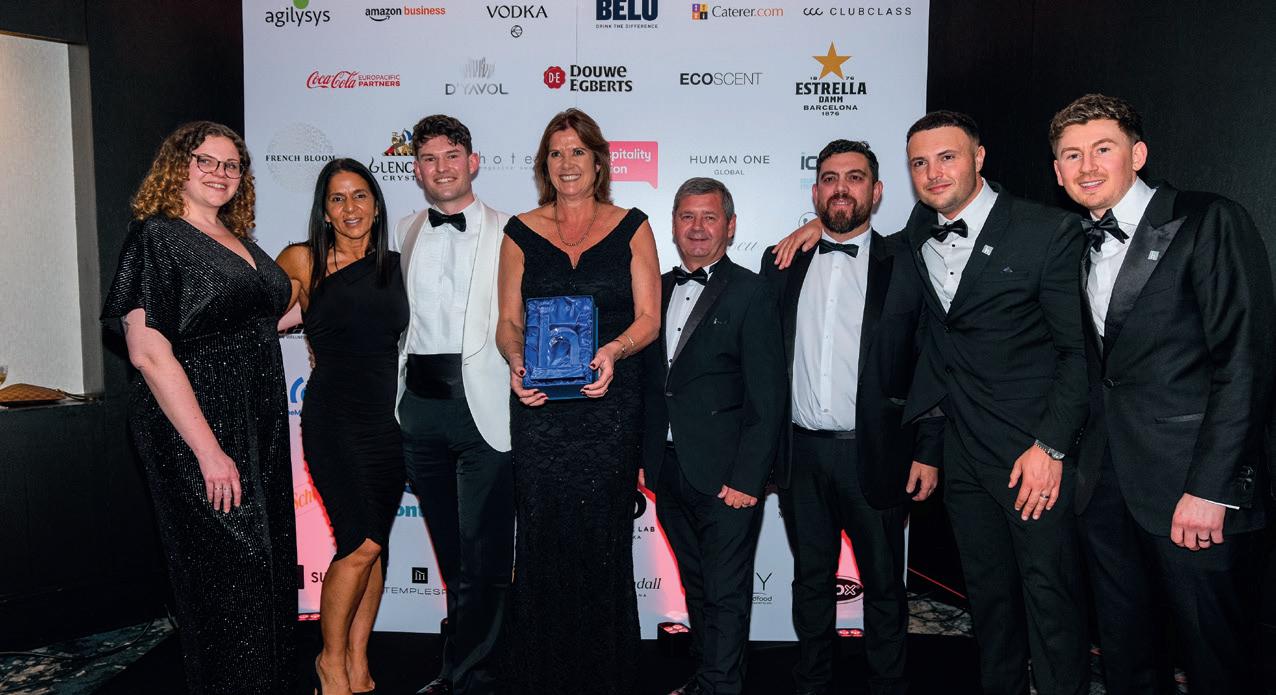
Awards often reflect past performance - how are you planning to build on this momentum moving forward?
We will keep moving forward with even more positivity. We would like to add to our hotel in terms of facilities and have lots of opportunity on our 19th floor for development, as well as our Park Restaurant food concept - food innovation is an exciting prospect for us. We don’t like to rest on our laurels, so this award gives us even more confidence to keep driving forward to the next level and beyond.
What would you say to anyone thinking of applying next year?
Take the time to reflect on what you do and also what you stand for. Think about the wins that you have had and the team that have achieved it and go for it! Don’t forget to make sure you include actual results within your application to illustrate your achievements. Finally, good luck, you won’t regret it!
A few months on from securing the Diversity, Equity & Inclusion Award at the Hotel Magazine Awards 2026, Leonardo Hotels
UK & Ireland’s Group HR Director Paula Musson reflects on the recognition, the people-first culture behind the win, and why creating an inclusive workplace remains central to the group’s future success.
Winning at this year’s Hotel Magazine Awards is a major achievement – what do you think set your property apart from the competition?
We are absolutely delighted to win the Diversity, Equity and Inclusion Award at this year’s Hotel Magazine Awards. We are truly passionate about DEI and take a genuinely people led approach across our organisation. Diversity, Equity, Inclusion, Wellbeing and Culture are not treated as standalone initiatives - they are embedded into how we lead, operate and support our teams every day. In our submission we were transparent about both our strengths and the areas we are still progressing, as DEI is an ongoing journey. We use robust colleague insights to inform our actions, and demonstrated measurable cultural progress and meaningful impact. Our guiding principles, Be Yourself, Be Leonardo, reflects our commitment to creating an environment where team members and guests feel welcome, respected, and empowered to be their authentic selves.
What does it mean to you, personally, to have scooped the win amidst such tough levels of competition?
This award belongs to our entire team, and we are truly honoured to have received such an important and meaningful recognition. The standard across the industry is extremely high, so to be recognised alongside such strong contenders is a genuine honour. This win represents the voices, trust and lived experiences of our colleagues, and validates the commitment we’ve made to creating a culture where people feel safe, valued and able to be themselves.
Awards often reflect past performance – how are you planning to build on this momentum moving forward?
We see this award as an important milestone on our DEI
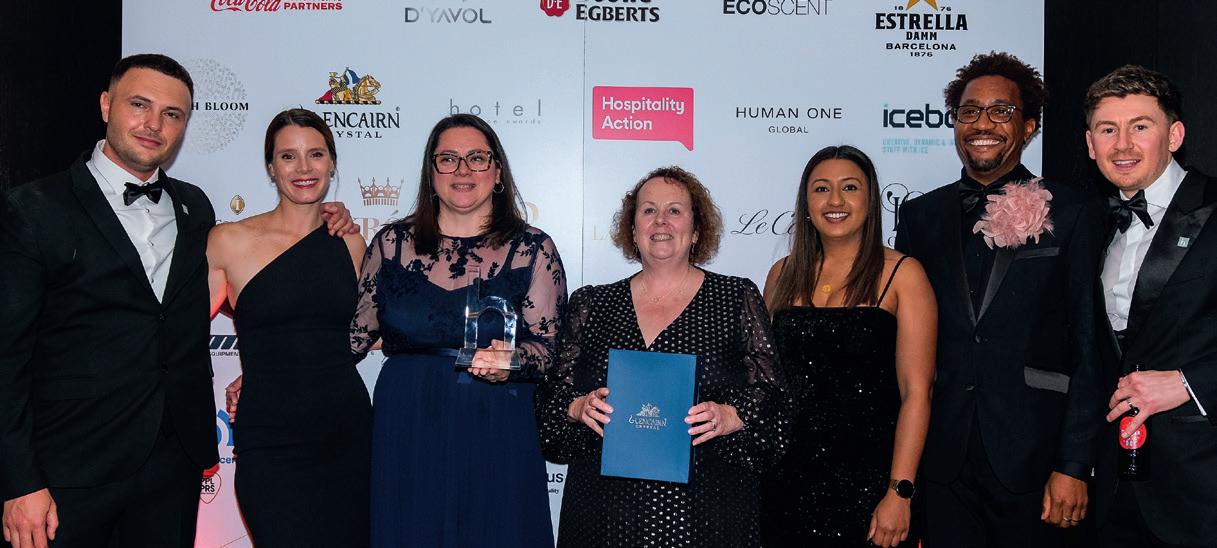
journey. However, our work is ongoing - we are continually looking for ways to evolve and progress. We will keep listening, strengthening leadership capability in this area, and embedding diversity, equity and inclusion at every level ensuring our inclusive culture continues to mature and strengthen.
The hospitality industry is evolving rapidly – what trends do you see shaping the future, and how are you positioning yourselves to stay ahead?
The future of hospitality is people driven. Purpose led leadership, diversity and inclusion, flexibility and a really good employee experience are essential. Guests increasingly notice how organisations treat their people, and team members are choosing employers aligned to their values. We will continue to listen to our teams, and remain adaptable and values driven, while keeping human connection at the heart of everything we do.
What would you say to anyone thinking of applying next year?
Be honest, be evidence led and be proud of your journey. When your work is genuinely improving people’s experience, it’s worth sharing.
Melissa Brette Ogée, Director of Human Resources at Park Hyatt London River Thames, reflects on winning the Unsung Hero Award at the Hotel Magazine Awards 2026, discussing the power of inclusion and the impact of Hyatt’s colleague resource groups.
Winning at this year’s Hotel Magazine Awards is a major achievement - what do you think set your property apart from the competition?
At Hyatt UK & Ireland, we have four colleague resource groups, two of which I have had the privilege to chair: Women@Hyatt, focused on gender equity, and HyPride, which supports LGBTQIA+ communities and allies. Inclusion sits at the heart of Hyatt’s six core values, and these groups are one of the ways we bring those values to life every day.
We are fortunate to have strong support from our leadership team, which enables these volunteer-led communities to create a real sense of belonging and connection. They encourage colleagues to create greater impact both inside and outside of work, while fostering community, support, and positive change across our organisation.
I believe having the opportunity to live these values not only at work, but also outside of work, empowers people to do more and make a meaningful difference within their communities. Whether through supporting charities such as the Diva Charitable Trust and Stonewall Housing, partnering with Pride in London — where we hosted the Human Rights Forum 2025 — or supporting colleagues through important conversations, these initiatives help create environments where people genuinely feel seen and valued.
What does it mean to you, personally, to have scooped the win amidst such tough levels of competition?
It means a great deal to be recognised within the hospitality industry. While our industry is full of incredible people, there is still work to do around representation and diversity, particularly at senior levels. For me, this award is an honour because it gives me the opportunity to be a voice for inclusion and, hopefully, to inspire and influence other hotel teams to continue progressing in this space.
Awards often reflect past performance - how are you planning to build on this momentum moving forward?
Absolutely. The HyPride team has a calendar of activities each year where we aim to raise awareness around topics
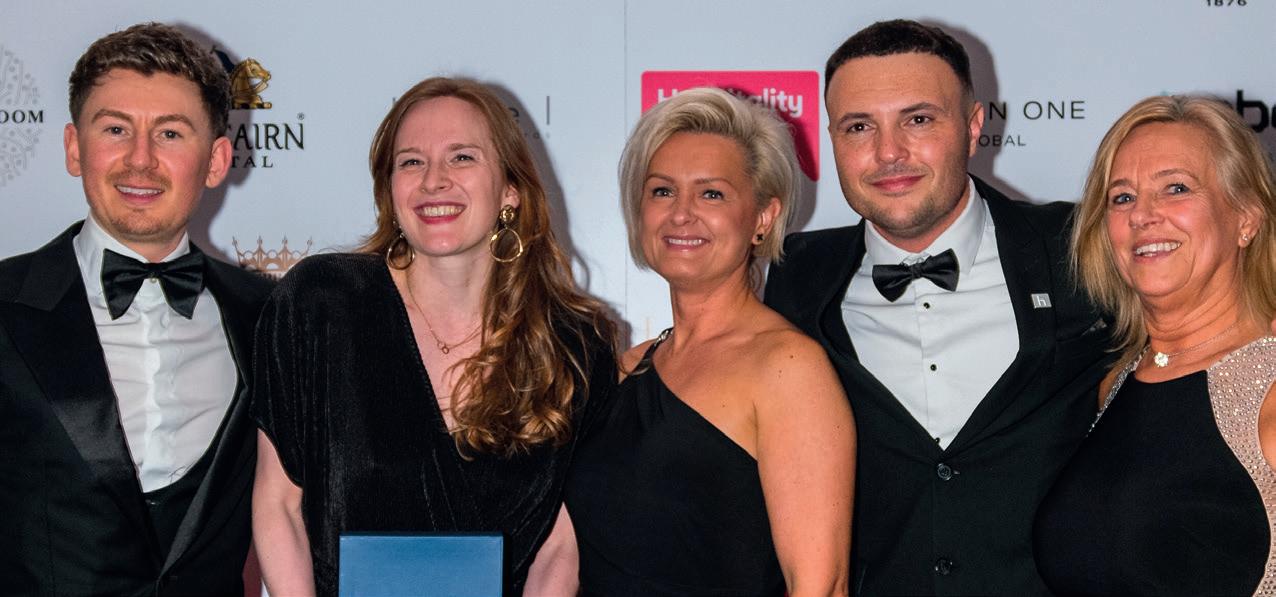
that are not always fully understood. We also participate in key events such as City Pride, Black Pride, and Trans Pride, where it is important for us to show visible allyship and support.
Alongside my current UK Chair role, I am also now Chair of HyPride EAME (Europe, Africa and the Middle East). Creating opportunities for teams to connect internationally helps us share best practices, learn from one another, and reinforce the importance of belonging — especially during challenging times. My focus is to continue growing these communities and ensuring inclusion remains an active and visible priority across our organisation.
We also want to continue building momentum through initiatives such as the annual HyPride Forum EAME, where we partner with organisations and specialised speakers to increase awareness and education, while creating more opportunities for colleagues to connect, learn, and feel empowered to bring their authentic selves to work.
The hospitality industry is evolving rapidly, what trends do you see shaping the future, and how are you positioning yourselves to stay ahead?
I believe we need to be intentional about inclusion — it does not happen by accident. We must actively create environments where people feel seen, heard, and valued. The more visible diversity becomes within hospitality leadership and teams, the more people can see themselves represented within the industry. That visibility matters because it helps attract talent, encourages innovation, and creates stronger, more connected workplaces.
EcoScent is the official Scent Partner and sponsor of the Environment Award at the 2027 Hotel Magazine Awards - Head of Marketing, Barabas Balog, discusses the growing role of scent marketing and why recognising excellence across the hotel sector matters.
Tell us about EcoScent and what sets you apart within the hotel sector?
EcoScent is a London-based scent marketing company working with some of the world’s most respected hospitality brands. From luxury hotels and boutique properties to spas, restaurants and large-scale venues, we help create environments that are not just seen and heard, but genuinely felt from the moment a guest arrives.
What sets us apart is simple: we do not just supply a product, we provide a complete end-to-end solution. From fragrance selection and installation to ongoing support, every detail is carefully considered. With more than 500 different fragrances available, alongside bespoke fragrance development and private-label scent products, we help hotels create distinctive sensory identities that extend beyond the space itself, allowing brands to bring their signature scent into guest amenities, retail products and take-home experiences.
What inspired your decision to sponsor the 2027 Hotel Magazine Awards?
The Hotel Magazine Awards celebrate the very best of hospitality, something that aligns closely with our own values. We work with many leading hotels across the UK and internationally, and we see firsthand the dedication, attention to detail and passion required to deliver exceptional guest experiences.
Supporting the awards is our way of recognising the people and businesses that continue to raise standards across the industry and champion excellence in everything they do. As the official fragrance partner, it also provides an opportunity for us to contribute to the overall event experience and demonstrate how scent can help create memorable moments and meaningful connections within hospitality environments.
How does supporting industry recognition impact your brand and the wider sector?
Industry recognition encourages innovation and inspires
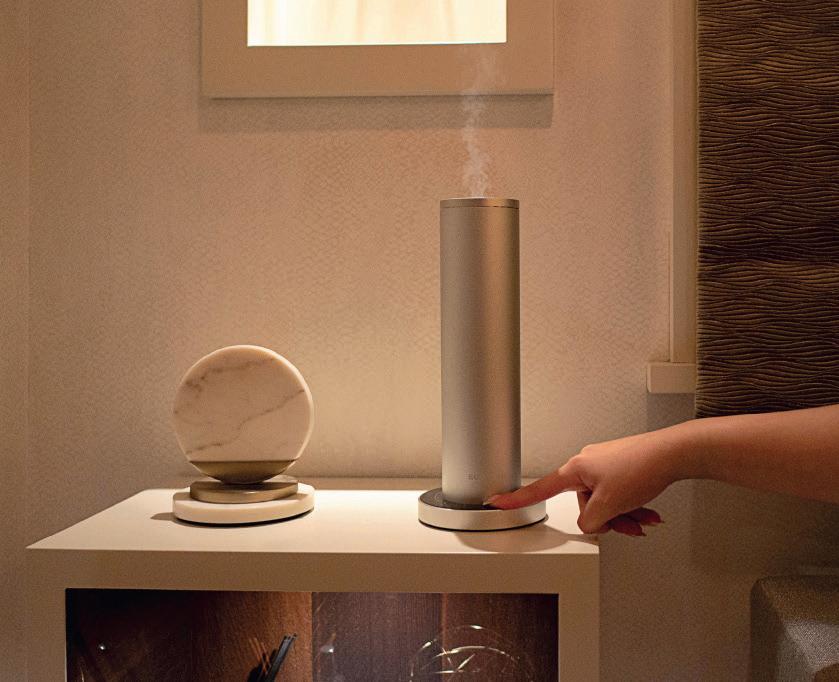
businesses to continually improve. For EcoScent, supporting these initiatives allows us to contribute to a culture that celebrates achievement while fostering collaboration and knowledge-sharing.
Why do you think events like the Hotel Magazine Awards matter in today’s hospitality landscape?
Hospitality is one of the most collaborative industries in the world. To be recognised at the level of the Hotel Magazine Awards, everything has to work in harmony, from the kitchen porter and housekeeping teams through to operations, leadership and long-term strategic decisionmaking and the beauty of these awards is that they celebrate the collective effort behind great hotels.
ecoscent.co.uk
As sponsor of a new category - Hotel Team of the Year Award at the 2027 Hotel Magazine Awards, TEMPLESPA is championing the people and partnerships that make hospitality exceptional. Grace Gold, Brand Marketing & PR Manager, shares why recognising excellence across the sector matters more than ever.
Tell us about your brand and what sets you apart within the hotel sector?
TEMPLESPA is a British science-led skincare brand built on over 25 years of formulation breakthroughs, where heritage meets innovation.
Blending the finest ingredients with cutting-edge technology, we have exceptional, results-driven products that are a fusion of hyper actives, rich Mediterraneaninspired botanicals and vitamins. What sets us apart within the hotel sector is our ability to combine high-performance formulations with meaningful moments of relaxation, restoration and care. Every touchpoint is designed with the guest experience in mind, from luxury spa treatments to our bespoke in-room turndown treats and beautifully curated corporate gifting solutions.
Our partnerships with hotels go far beyond amenities, we help create memorable guest journeys and experiences that guests genuinely connect with and remember long after their stay. We understand that hospitality today is about emotion, wellbeing and exceptional service and our products are created to elevate those moments in a way that feels personal, thoughtful and luxurious. Whether through an indulgent spa ritual, a wellness-focused guest experience or premium corporate gifting, our aim is always to help hotels deliver moments that feel both restorative and unforgettable.
What inspired your decision to sponsor the 2027 Hotel Magazine Awards, and how does this align with your brand’s values and vision?
We were inspired to sponsor the 2027 Hotel Magazine Awards because we believe in celebrating excellence within an industry that shares many of our own values; including care, experience, innovation and people-first service. Hospitality professionals work tirelessly to create exceptional guest journeys and recognising that dedication
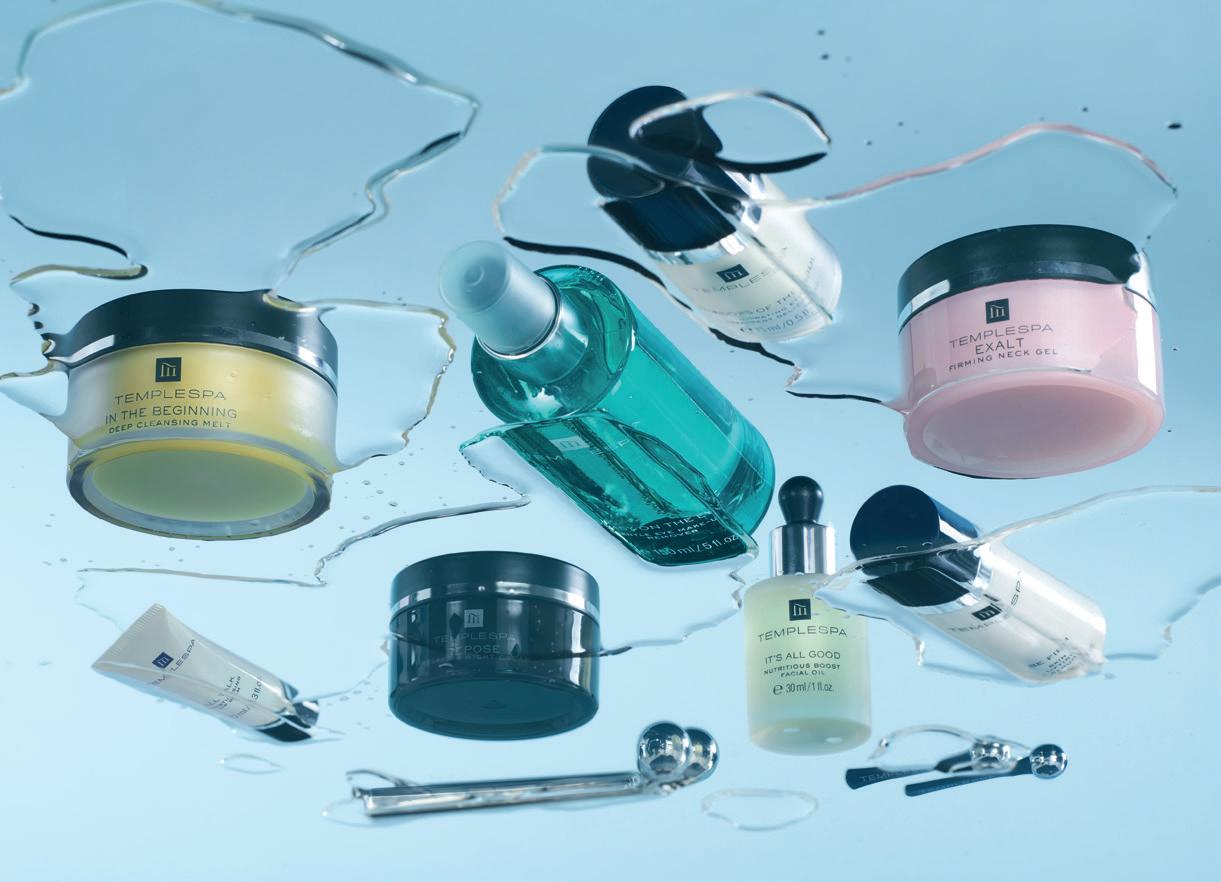
is incredibly important. Supporting the awards aligns perfectly with our TEMPLESPA vision of championing wellbeing, exceptional standards and meaningful human connection. As a brand rooted in experience-led luxury, we are proud to support an event that celebrates the very best in hospitality.
How does supporting industry recognition impact your brand and the wider sector?
Supporting industry recognition not only strengthens our relationships within the hotel and spa sector, but also helps shine a light on the individuals and businesses driving the industry forward. Awards like these encourage innovation, inspire future talent and create opportunities for collaboration across the sector.
templespa.com
As the AA Hospitality Awards approach, Simon Numphud, Managing Director at AA Media, explores why industry recognition remains a powerful driver of credibility, team engagement and commercial success, and why celebrating excellence has never been more important for hospitality businesses.
As we enter another awards season across the hospitality industry, we are also preparing for one of the highlights of our own calendar – the AA Hospitality Awards. In September, we will once again welcome more than 1,000 guests to the Great Room at Grosvenor House to celebrate the very best of our industry.
Recognition and accolades play a vital role within hospitality. They matter not only to the businesses receiving them, but also to the owners, leadership teams and, most importantly, the dedicated people who
consistently deliver the exceptional standards being recognised.
The benefits of industry recognition are both significant and far-reaching. First and foremost, awards enhance brand credibility and trust. They provide independent, third-party validation of quality, service and operational excellence, demonstrating that a business has been benchmarked against its peers and judged to be among the very best in the market.
This recognition strengthens consumer confidence, reinforces market positioning and helps businesses stand
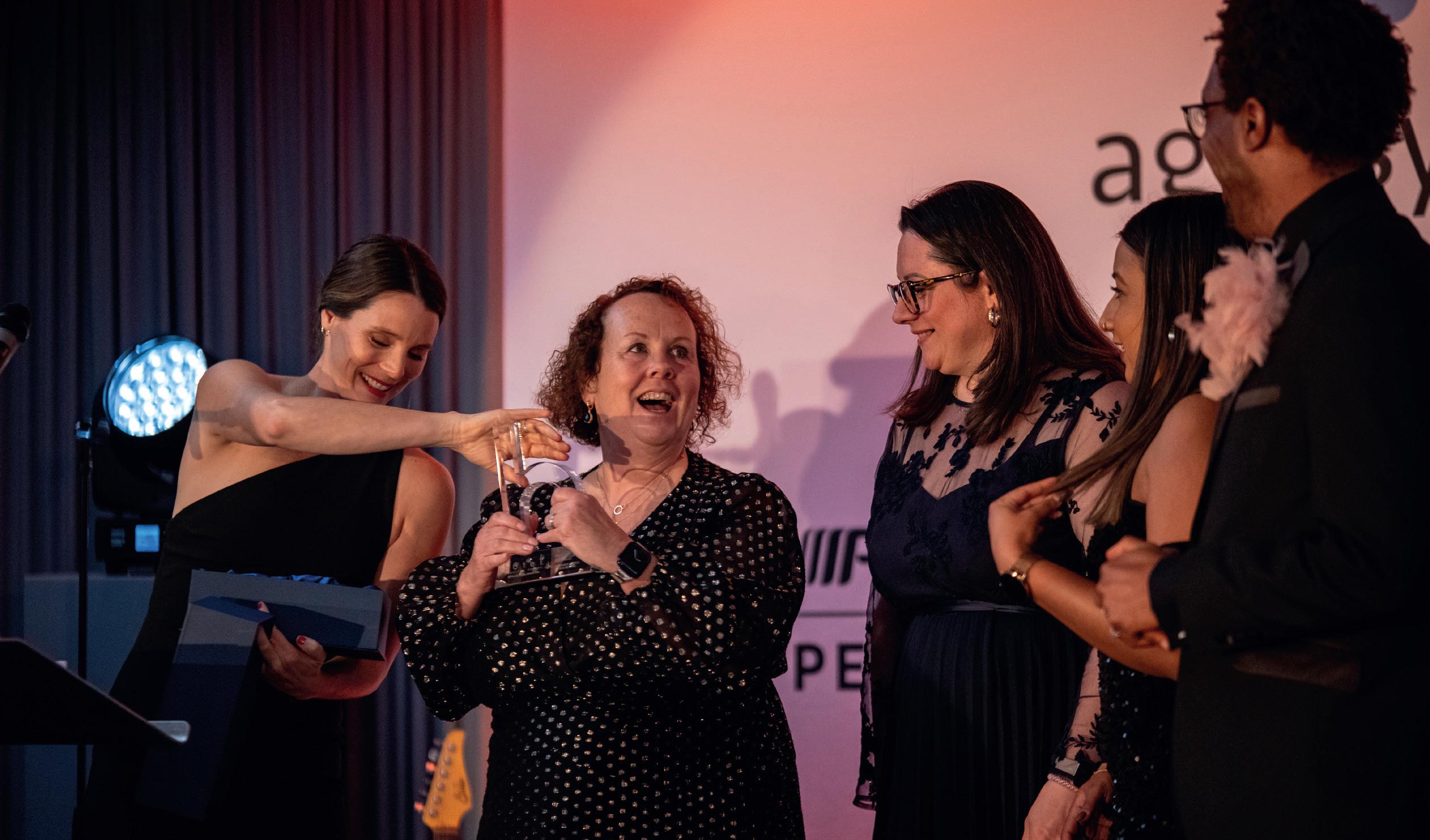
out in an increasingly competitive landscape. In turn, this often leads to stronger guest advocacy, positive reviews and valuable recommendations.
Awards also create powerful marketing opportunities. Whether amplified through social media, digital channels, PR activity or wider marketing campaigns, award recognition can increase awareness, generate new enquiries and drive bookings. It can improve visibility in search results, enhance reputation and broaden appeal to customers both regionally and nationally. As AI becomes increasingly prevalent, independent recognition provides an ever more valuable signal of authenticity, credibility and genuine excellence.
Beyond the commercial benefits, awards can have an equally powerful impact internally. They help businesses attract and retain talent by differentiating themselves in a highly competitive labour market. Recognition creates a genuine sense of pride among teams – something that is always evident when I welcome winning teams to the stage to collect their awards.
That pride helps strengthen workplace culture, boost engagement and morale, and foster greater loyalty among employees. Awards also bring valuable industry recognition, opening doors to new collaborations, partnerships and networking opportunities across the hospitality sector.
As our AA Rosette Scheme celebrates its 70th anniversary this year, I feel immensely proud that AA recognition has become such an important benchmark for excellence
across the industry. It is widely referenced in recruitment, regarded as a career aspiration for many chefs and hospitality professionals, and often serves as a key business objective for operators striving to raise standards. Recognition continues to encourage ongoing investment in both people and product, helping to raise the bar across UK hospitality.
Each year, we feel privileged to celebrate excellence through the AA Hospitality Awards, fully appreciating the positive impact that recognition can have on businesses and their people. For many, receiving an award marks the culmination of a long journey defined by continuous improvement, unwavering commitment, hard work and a determination to be the very best in their field.
One of the most rewarding aspects of the awards is speaking with winners and witnessing first-hand the pride, elation and gratitude that recognition brings. At a time when many hospitality businesses continue to navigate rising costs, recruitment challenges and changing consumer expectations, recognising and celebrating excellence has never been more important.
One of the qualities I most admire about our industry is that, while fiercely competitive, it remains remarkably supportive. That spirit is clearly evident in the collective applause and appreciation shown as each winner is recognised. As hospitality continues to evolve and adapt, it is essential that we celebrate those businesses and individuals who set the benchmark for excellence and inspire others to follow.

The Independent Hotel Show sits down with Timothy Shepherd, Founder of Shepherd&, to explore the design of The Shepherd Mayfair, opening in summer 2026, and what the project reveals about intuitive luxury, spatial efficiency and designing distinctive boutique hotels in one of the world’s most competitive markets.
In a neighbourhood defined by legacy names and global luxury brands, launching a new hotel in Mayfair demands more than polished interiors and premium finishes. It requires a clear sense of identity and point of difference.
The Shepherd Mayfair, set to open in summer 2026 in historic Shepherd Market, brings 82 rooms, multiple F&B concepts and a narrative-led design approach to one of London’s most saturated hotel markets.
The Independent Hotel Show met with Timothy Shepherd, Founder of Shepherd&, to discuss the challenge of bringing this new hotel to life in the heart of London. Timothy led the project from its inception at Buckley Gray Yeoman ID before progressing it through his own practice.
The project began with a complex brief: an existing building, a tight footprint and a requirement to retain as much of the structure as possible. “It’s an interesting, difficult, tricky little plot that a few people have been trying to unlock,” Timothy explains.
Timothy Shepherd, whilst Managing Director at Buckley Gray Yeoman ID, was brought on board by Chris Evans of Hamilton Hotel Partners to untangle this complex site and bring his unique design perspective to the project.
Rather than seeing the constraints as limitations, Timothy reframed them as a creative opportunity. “It became less about grand Park Lane and more about intimate Mayfair. That’s where the initial seed came from.”
That seed evolved into a core concept that underpins the entire hotel: a reinterpretation of the Mayfair Mansions. “We settled on the idea of recreating one of the Mayfair mansions,” he said. “The purpose of that Mayfair mansion was to have the veneer of hospitality, but in the background you’ve got the business side of Mayfair.”
For hoteliers and designers, this is a familiar tension:
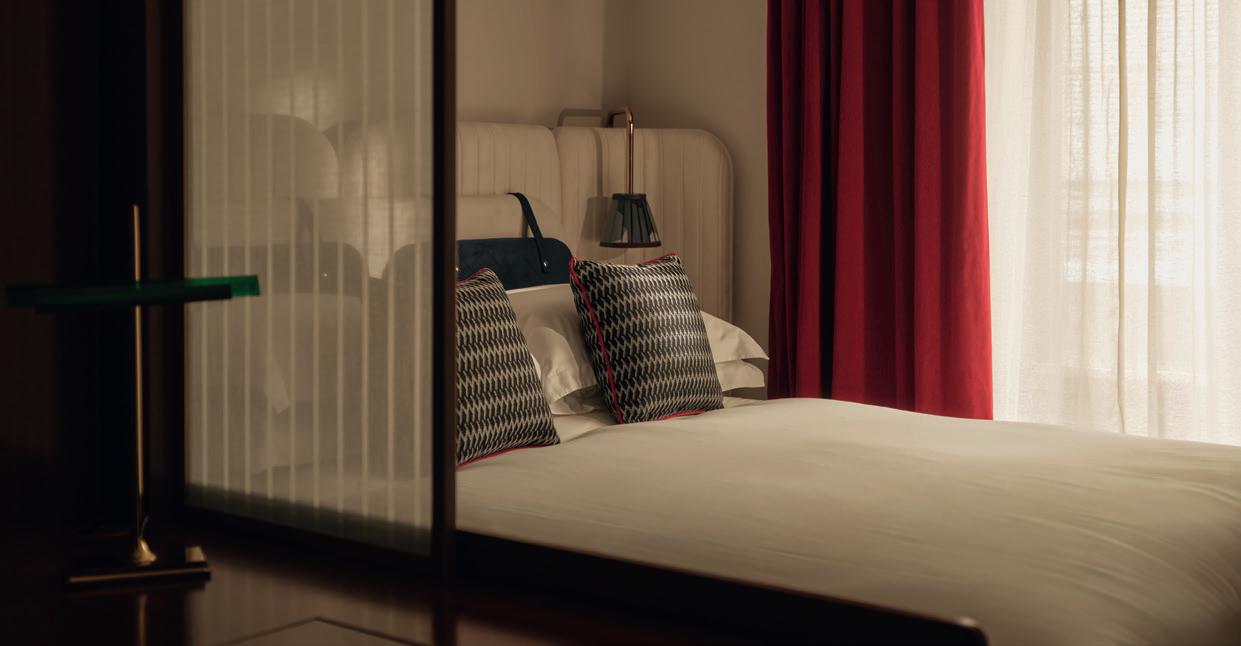
balancing front-of-house theatre with back-of-house efficiency, and understanding which spaces to sacrifice or prioritise.
Narrative as a commercial tool
The word ‘storytelling’ is often overused in hospitality design, and Timothy is pragmatic about its role.
“Storytelling…when was it not storytelling? That’s been around for thousands of years.”
At The Shepherd Mayfair, narrative is embedded in the fabric of the building rather than layered on top. References to Mayfair’s history, from the area’s longstanding association with British intelligence services to local characters, appear in subtle design gestures, including coded artwork and tactile elements like braille-inspired carpets.
“Mayfair is a society with an underbelly of secrecy and misadventure,” explained Timothy. “MI5 were previously down at the bottom of Curzon Street, and the old Down Street Tube Station was used as a bunker by Churchill and the war cabinet.”
In a market where differentiation is critical, Timothy’s
view is clear: “There’s not an awful lot that’s copy and paste in Mayfair; you’re either the big hotel or you have your identity and that’s what makes you stand out.”
With 82 keys across a constrained site, spatial efficiency became a defining principle. The hotel features an unusually high number of unique room styles, driven by a deliberate choice to maximise usable space.
“We’ve ended up with 37 rooms styles,” Timothy noted. “We’ve embraced every inch of space. Nothing is wasted.”
This focus on intentional, considered design is visible throughout the rooms. Furniture is multifunctional: desks convert into dressing tables, and console tables become chessboards. Storage is integrated and prioritised, avoiding the common pitfall of sacrificing wardrobe space for inroom amenities.
The now-signature chess table encapsulates this thinking. “Rather than just having a table to put room service on, we thought we’d give it an identity,” Timothy said. “Everything in the room is the same, in that the space has got another life.”
In urban hotels where space is at a premium, these multifunctional aspects give guests more freedom and flexibility to have unique experiences that suit the type of traveller they are.
If there is a unifying principle in Timothy’s approach, it is simplicity. In an era of increasingly tech-heavy guest rooms, he advocates for intuitive design over complexity.
“You don’t want the room to fight you,” he said. “You can choose how much technology you use. It’s not about showing off tech but it’s there if you need it.”
This extends to the fundamentals of guest experience. “People want a good bed and a good shower as a starting point,” he added. “Then you get into things like great lighting, and having a place for everything. It’s easy to forget to get that right at the beginning of the design process, and then you spend your time fixing it.”
Beyond the guest rooms, The Shepherd Mayfair places an emphasis on F&B as a point of differentiation. The hotel will feature three distinct concepts: an all-day restaurant, a café-style lounge and a hidden cocktail bar.
Crucially, these spaces are designed not just for guests but for the surrounding community. “It needs to be part of the community; it can’t just be the hotel,” Timothy said.
This philosophy is reflected in the physical design.
Street-level access, outdoor seating and a reimagined arcade connecting Stanhope Row to Shepherd Market all contribute to a porous, welcoming environment.
“We’ve now made it our lobby outside,” Timothy explained. “And I think that really has connected with community. It used to be a very dark space, sometimes not even a safe place to walk through, according to local residents. Now, rather than having an area they avoid at night, people will be able to walk through with confidence, because they will be greeted by someone at the hotel or restaurant entrance, which sit opposite each other across that space.”
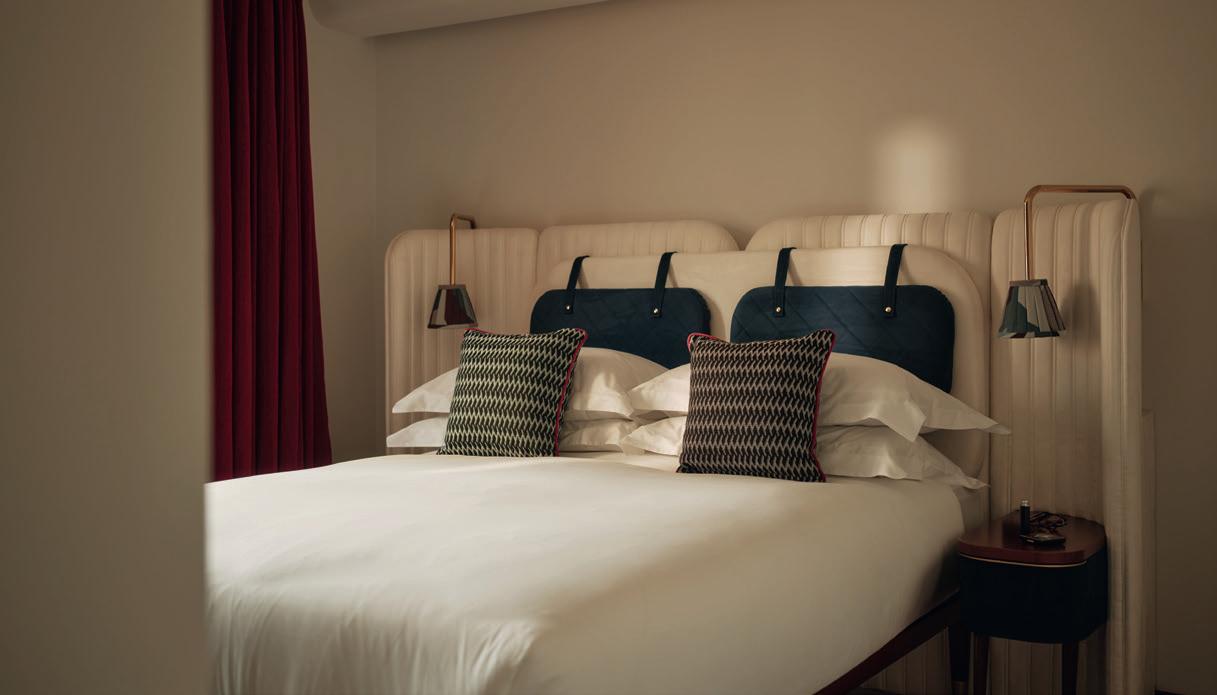
As guests enter the hotel, they will be in an open plan space leading directly to the patisserie and cafe, which in the afternoon and evening converts to a bar. The restaurant, in addition to service its function to guests, had to sit comfortably within the Mayfair restaurant scene and provide something new for the community surrounding the hotel, including people walking through from popular Shepherd Market.
Rethinking luxury
Timothy is candid about the shifting definition of luxury. “The biggest issue you have with the word ‘luxury’ is its overuse and mis-delivery,” he said. “I prefer to talk about elevated experiences.”
At The Shepherd Mayfair, this translates into a focus on comfort, wellness and material quality rather than overt opulence. Air quality, lighting and acoustics are prioritised alongside aesthetics, with rooms designed for guests to “sleep better, wake up better, rest better”.
Sustainability also plays a role, particularly in the selection of materials and the emphasis on longevity. “The ability to reupholster, to refinish…it’s better on the P&L, let alone from a sustainability perspective,” Timothy noted. “Interior designers have been recycling furniture for centuries – reusing and repurposing is inherent to the discipline.
“We’re seeing hoteliers focus more on product longevity. That comes from working closely with designers and the supply chain to get the right product at the right price.”
In a market as competitive as Mayfair, The Shepherd Mayfair offers a clear case study in how boutique hotels can differentiate through design. It demonstrates the value of narrative, the importance of spatial efficiency and the enduring relevance of intuitive guest experience.
Timothy returns to a simple benchmark for success: “Ultimately, it’s a guest opening a door of a room putting the bag down, and going, ‘I’m absolutely exhausted.’”
“That’s what you’re going to get judged by,” he said.
For hoteliers and designers alike, it’s a reminder that even the most ambitious projects are measured in moments, not concepts.
Follow the latest news and developments from The Shepherd Mayfair at theshepherdmayfair.com, and on Instagram @theshepherdmayfair.
The UK’s hospitality industry is built on relationships, shared experiences and a collective pursuit of excellence. Those qualities were on full display a few weeks back when leading equipment manufacturer Unox hosted the first edition of its new Chef’s Table series at the acclaimed Grace & Savour restaurant in Hampton Manor.
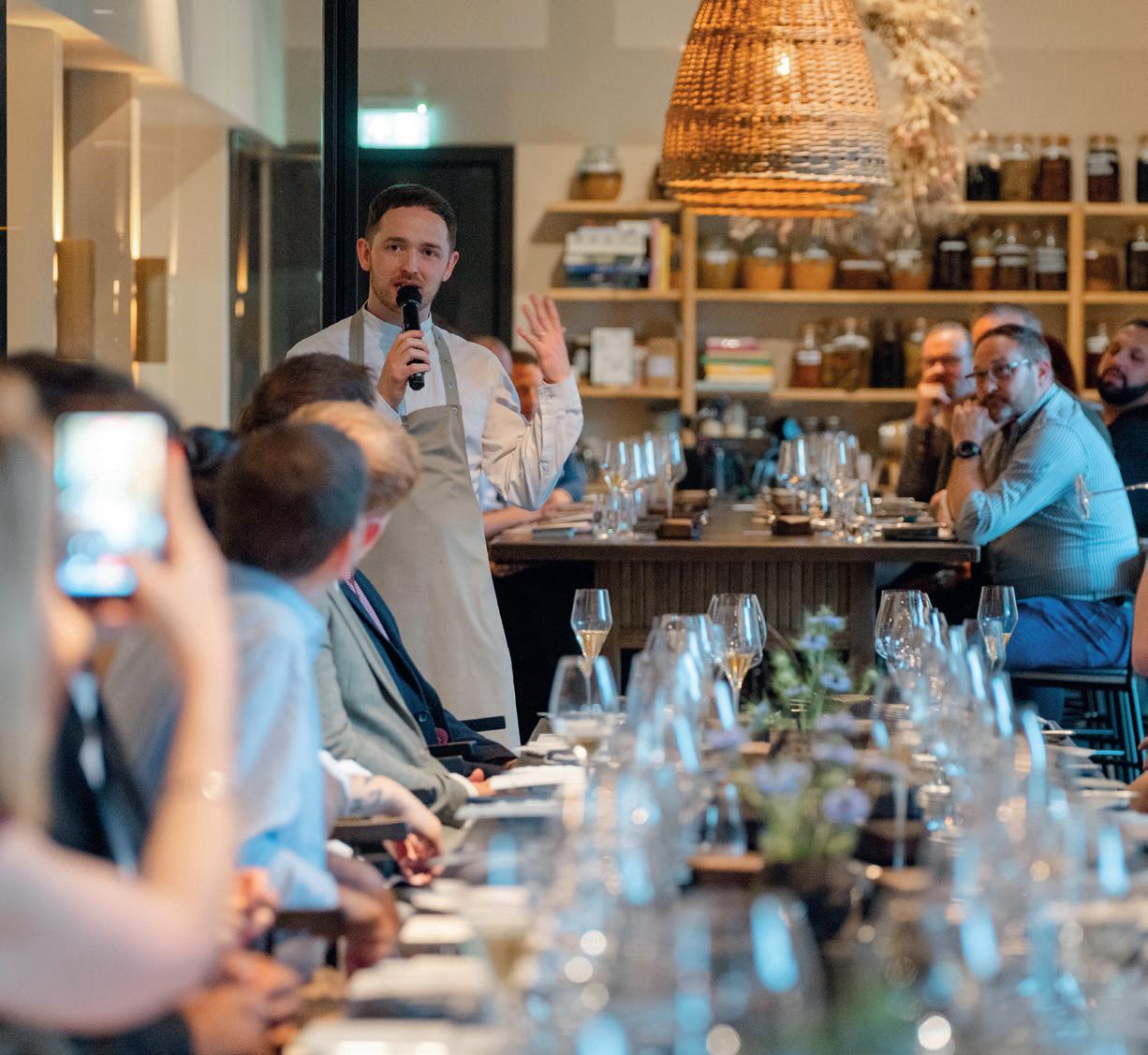
Bringing together an invited audience of chefs, operators, consultants, dealers and distributors, the event offered something increasingly rare in today’s fast-paced hospitality landscape: an opportunity for industry professionals to step away from day-to-day pressures and reconnect through exceptional food and genuine conversation.
As Editor of Hotel Magazine, I was fortunate to attend
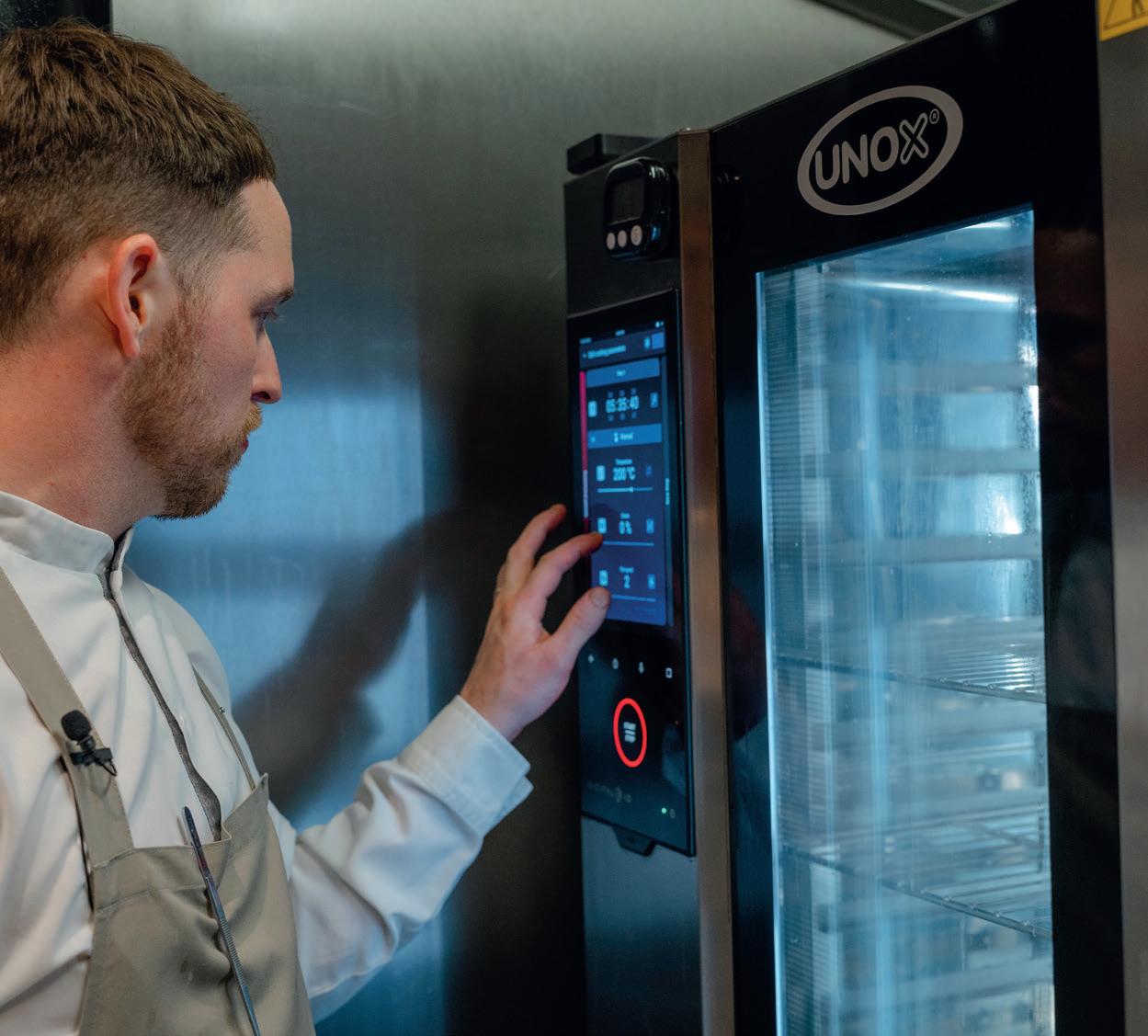
the gathering and experience first-hand an evening that celebrated not only culinary excellence but also the people who drive the hospitality sector forward.
Few venues could have provided a more appropriate setting than Grace & Savour, the Michelin-starred restaurant led by husband-and-wife team David and Anette Taylor. Tucked away within the grounds of Hampton Manor, just outside Birmingham, the restaurant has earned
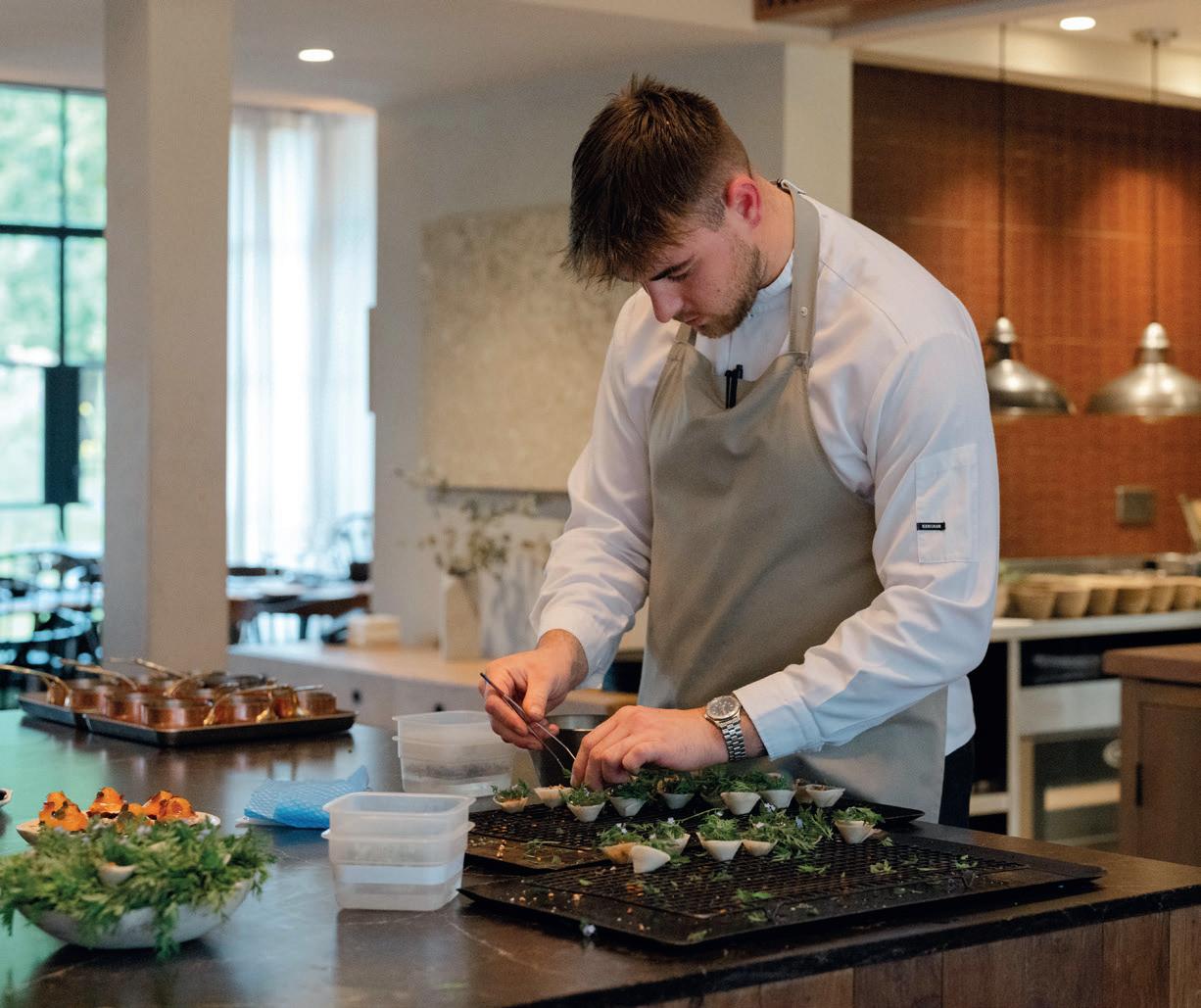
a reputation as one of the UK’s most exciting dining destinations, thanks to its immersive approach to seasonal, ingredient-led cooking.
Surrounded by the restaurant’s extensive kitchen gardens, guests were welcomed into an environment that perfectly reflected the values increasingly shaping modern hospitality: provenance, sustainability and craftsmanship.
For the evening, Unox secured exclusive use of the restaurant, creating an intimate atmosphere that encouraged discussion and networking among some of the industry’s most respected figures.
Central to the evening was a meticulously curated tencourse tasting menu that highlighted the quality of British produce and the creativity of the Grace & Savour team.
Ingredients sourced from the restaurant’s own gardens sat alongside carefully selected regional produce, including Scottish hand-dived scallops, asparagus harvested just metres from the kitchen, beetroot from New Fields Organics and Lavington lamb. Each course demonstrated a thoughtful balance between technical precision and understated elegance.
The experience also provided a subtle demonstration of how modern kitchen technology supports contemporary fine dining. Many of the dishes were prepared using Unox ovens, showcasing how advanced equipment can complement culinary creativity without overshadowing it.
What distinguished the event from a traditional supplierhosted gathering was its emphasis on community rather than commerce.
While equipment manufacturers often engage with customers through exhibitions and demonstrations, The Chef’s Table format focused instead on bringing together professionals from across different sectors of hospitality in a relaxed environment. Conversations ranged from recruitment challenges and operational efficiencies to sustainability initiatives and future industry trends.
The result was an evening that reinforced an important truth about hospitality: while innovation and technology
continue to evolve, success remains fundamentally driven by people and relationships.
Speaking during the event, Unox UK Managing Director Steven McGarvie explained that the concept was designed to create meaningful connections across the industry rather than provide a platform for sales activity.
That philosophy was evident throughout the evening, with discussions flowing as naturally as the courses arriving from the kitchen.
Hosting a room filled with accomplished chefs and industry leaders could easily be an intimidating prospect, yet David Taylor and the Grace & Savour team delivered with confidence and warmth, providing service that was both seamless and personable.
The evening demonstrated the standards that have helped establish Grace & Savour as one of the country’s most respected dining destinations. More importantly, it highlighted the collaborative spirit that continues to define hospitality at every level.
As the sector navigates ongoing challenges, from labour shortages to rising operational costs, events such as The Chef’s Table serve as a valuable reminder of the importance of bringing people together to share ideas, celebrate achievements and strengthen professional networks.
If the inaugural event is any indication, The Chef’s Table has the potential to become a welcome addition to the hospitality calendar. By combining outstanding food, inspiring venues and a carefully curated guest list, Unox has created a format that prioritises connection and conversation at a time when both are more valuable than ever.
For those fortunate enough to attend, the evening at Grace & Savour was a celebration of hospitality in its purest form - excellent food, exceptional service and great company. It will be interesting to see where the next seat at The Chef’s Table takes the industry. www.unox.com
Hospitality invests more than ever in social media. A new senior programme sets out to connect spend with business outcomes, say hello to the executive summit for social that drives business results.
Ask a hotel marketing director what social media costs each year, and most can give you a figure. Ask what it earns, and the room goes quiet.
This is hospitality’s quiet inefficiency. We pour real money and creative effort into social. We staff it, brief agencies, commission creators, run paid campaigns, manage communities and produce content. Yet the activity is still measured in likes and reach, while the business is measured in occupancy, RevPAR, direct bookings and loyalty. The two rarely meet.
It is not a talent problem. It is a systems problem. Social has been treated as brand and awareness for so long that few teams have built it as a commercial channel, with clear objectives, a funnel and a line back to revenue. Fewer still can explain its contribution in terms leadership recognises. When budgets tighten, the channel no one can defend is the first one cut.
That gap is what the Hospitality Social Media Summit is built to close.
Taking place on 3 and 4 September 2026 at Chicago Booth Business School in London, with delegates also able to join online, it is a two-day, seniorlevel programme dedicated entirely to hospitality social media. It is built for execution. Over the two days, marketing and social leaders build the actual work, strategy frameworks, campaign blueprints, measurement models and reusable toolkits, mapped to their own properties and commercial goals, and leave ready to put it to work.
The format matches the ambition. Live sessions run alongside an interactive digital layer, and the learning continues beyond the two days through a digital hub and AI simulators that let teams practise the frameworks and pressure-test them against their own properties.
The programme is co-produced with Whitney Reynolds, former Global Director of Social Marketing at IHG and Kimpton, who spent twelve years leading global social strategy across InterContinental brands and built
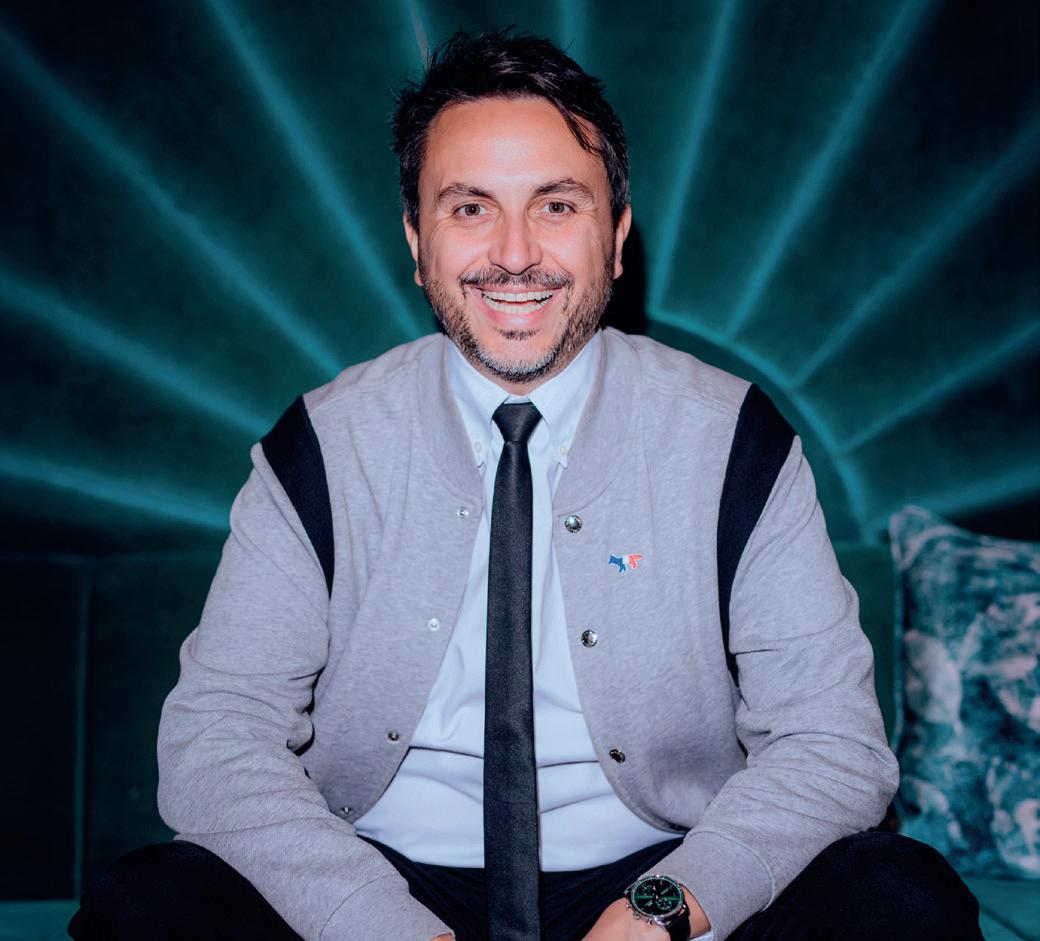
Kimpton’s celebrated social presence from the ground up. She leads the Day One strategic masterclass.
“The best hospitality social strategies don’t just create engagement, they drive business results,” she said. “Throughout my career, I’ve seen the difference a clear, intentional strategy can make: stronger brand positioning, increased direct bookings, more meaningful guest loyalty, and a social function that’s contributing to real commercial growth. This Summit was built to help teams make that shift. Attendees can expect practical frameworks, actionable tools, and a more strategic lens on the hard work they do, so they leave not only inspired, but equipped to deliver measurable impact back at their hotels.”
That shift, from a channel judged on activity to one built and run for outcomes, is one the summit’s faculty are pushing too, among them Ben Lilly, Founder and CEO of Giant Leap Digital, an award-winning luxury agency in London whose clients include Chenot and Corinthia Hotels. He frames it as a change in what success even means. “Social media has evolved from a brand awareness channel into one of hospitality’s most influential commercial drivers,” he said. “For luxury brands, success is no longer about creating beautiful content, it’s about building measurable guest relationships while protecting brand equity across every touchpoint.”
Day Two moves into practical labs, each led by a hospitality social leader who has run this work at scale, among them Santiago García Solimei, former Global Director of Social Media and Brands PR at Meliá Hotels International, and Laura Ferrari, former Director of Social Media EAME at Hyatt and co-founder at SHIFT Collective. The labs are where the commercial channel gets built: paid social that drives direct bookings, creator partnerships teams can attribute, content systems tied to business goals, and reporting that helps social teams walk into leadership meetings with evidence, not anecdotes.
They also tackle harder problems. On reaching international guests, Ferrari is blunt: “Most hotel brands targeting international travellers too often are spending budget in the right markets with the wrong message, on the wrong platforms, for the wrong emotional reason. In this session we’re giving teams a framework to fix all three before the next campaign goes out.” Further labs cover AI adoption in social workflows, legal and compliance, video, and social care and reputation. Each ends with something built and ready to use.
What makes it work is the room. One vertical, one theme, so every session tackles real hotel scenarios. The delegates own or shape social and content budgets, so the peer benchmarking is real.
The teams that build social into a commercial channel first will be the ones whose budgets survive and grow, because they can connect it to the goals leadership cares about. That gap has gone unaddressed for too long. This is where that starts to change.
The Hospitality Social Media Summit takes place on 3 and 4 September 2026 at The University of Chicago Booth School of Business, London. Details and registration at hospitalitysocialsummit.com.
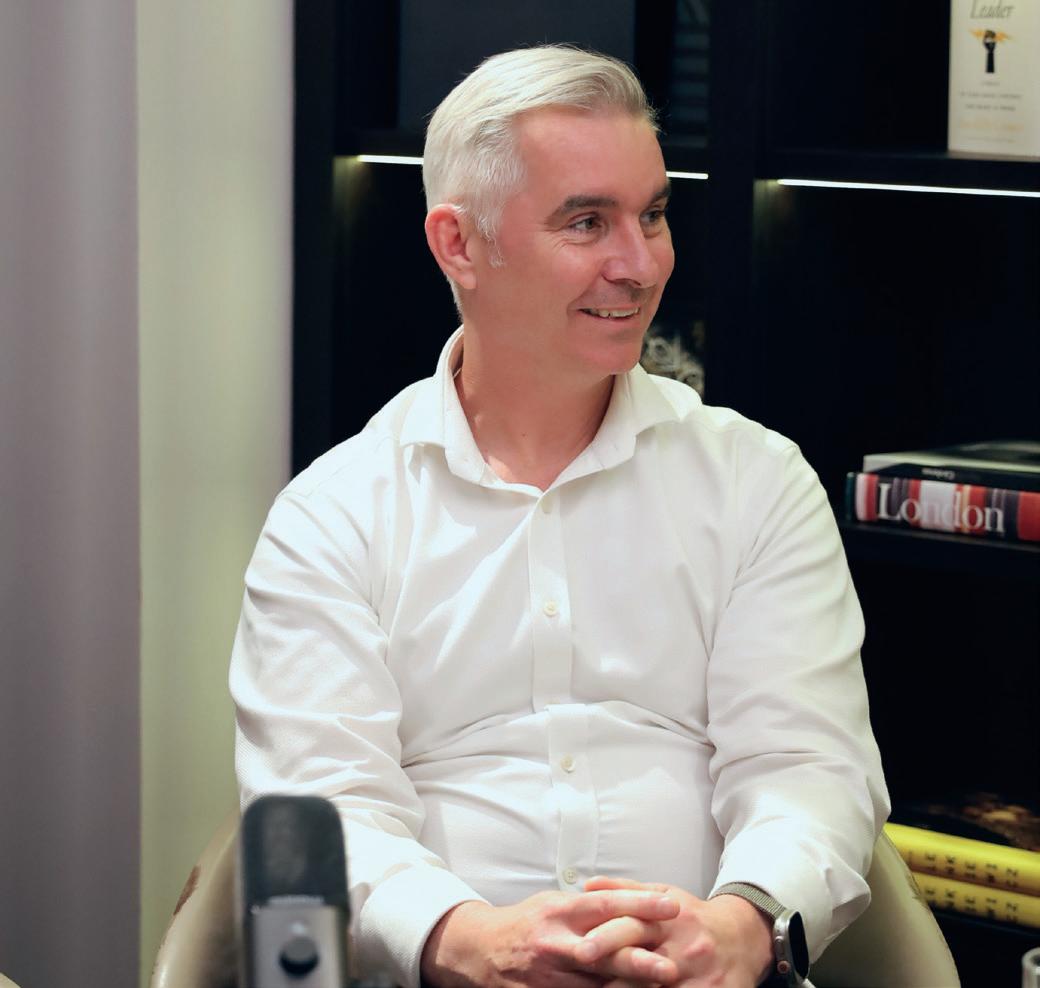
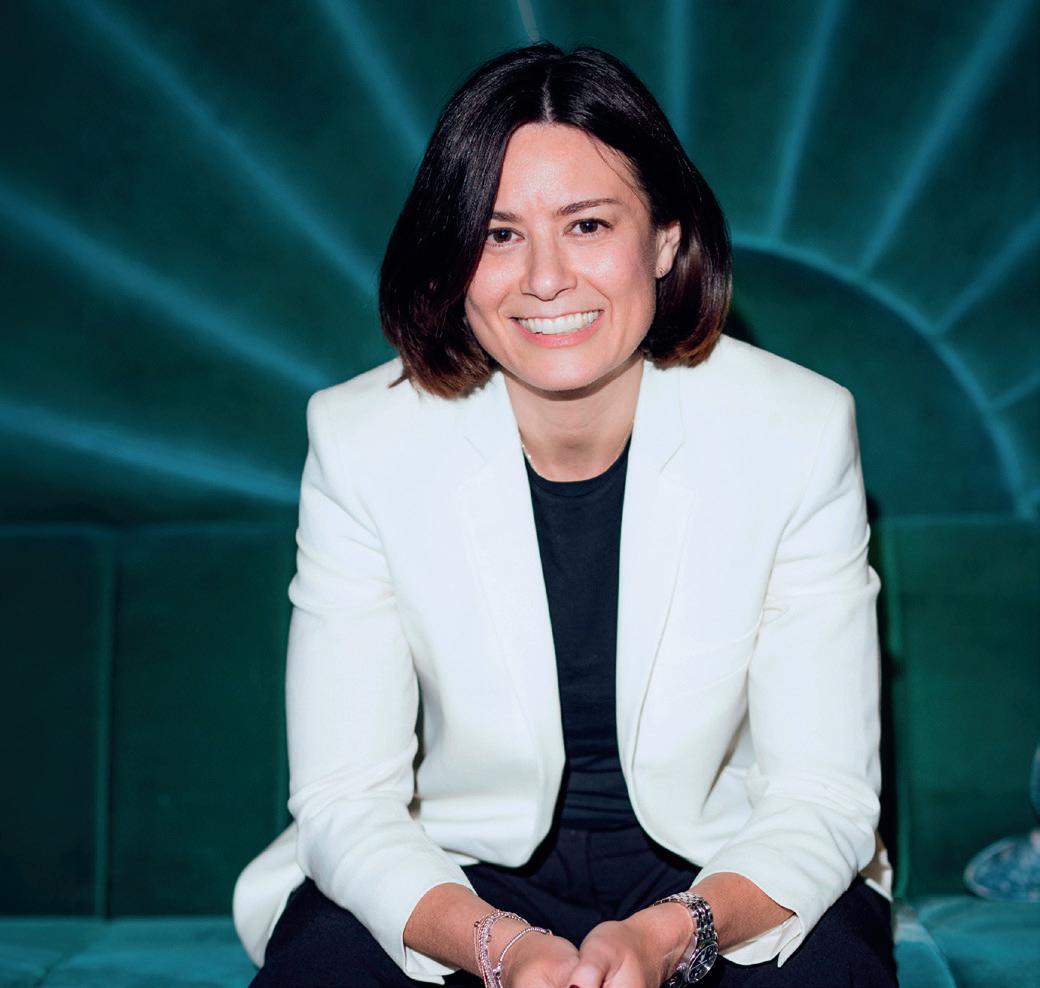
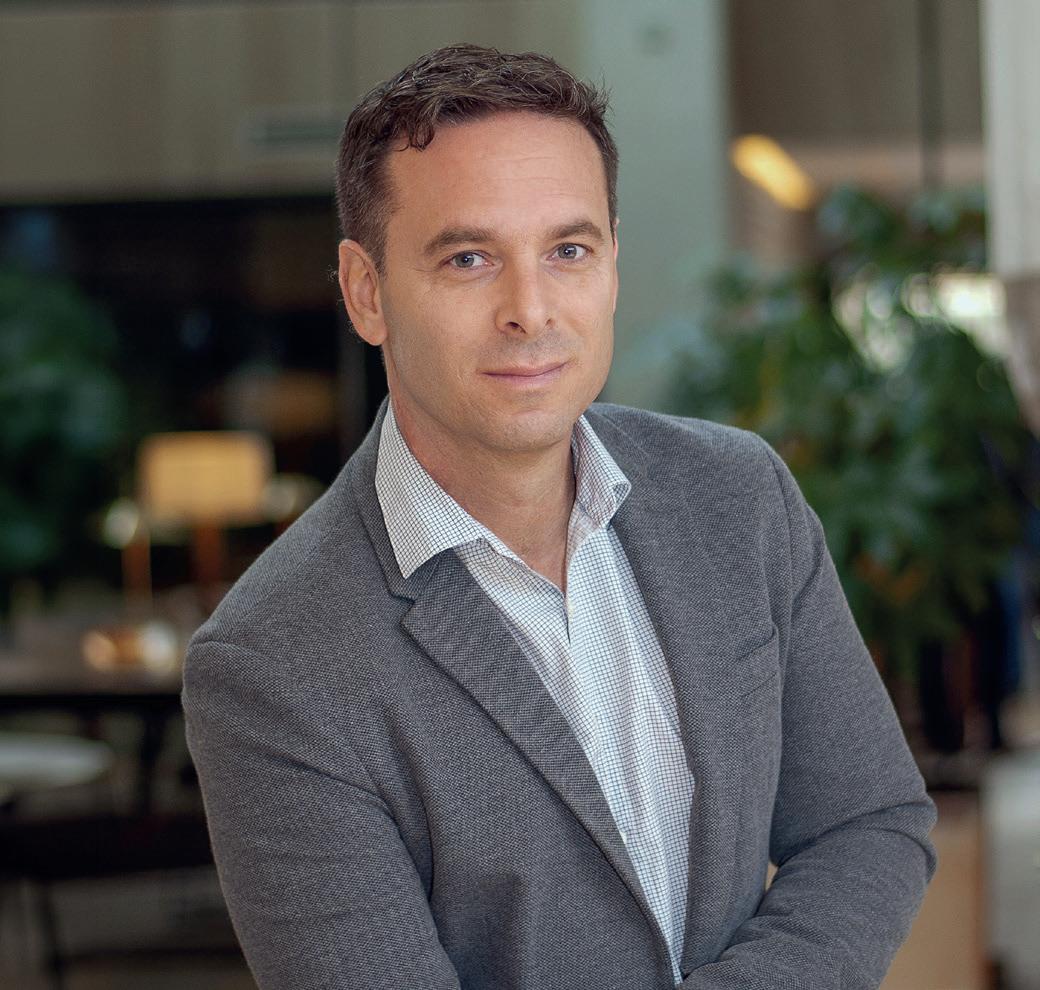
Marketing
By the time these words reach you, the HMA Hotel Marketing Awards will be a couple of months behind us. The room at June’s ceremony has long since emptied, and the industry has moved on to the busy heart of the summer. A bit of distance is no bad thing, though. It lets the noise of a single evening settle into something more useful, which is a clearer sense of what the year’s best work was actually telling us.
And what it was telling us, more than anything, is that hotel marketing is being taken seriously. The campaigns the judges rewarded this year shared one quality. They could show their workings. Brand personality mattered, but so did commercial attribution, and the winners tended to have both. Barons Eden, for instance, took Social Media Campaign of the Year for The Perfect Blackout, an in-house answer to Black Friday that turned the usual scramble for discounts on its head and sold calm instead of urgency. It was a confident piece of contrarian thinking, and it worked because it knew exactly who it was speaking to.
Horwood House carried off the headline Creative Excellence Award for The Butterfly Resort, a campaign that did a great deal on a modest budget. Focused on the decline in British butterflies and providing a powerful visual, by tying itself to a national conservation effort, it earned national press and television coverage while also quietly serving harder commercial goals across its local and corporate markets. It’s a reminder that the size of the spend rarely decides the size of the idea.
Then there’s the question the whole sector is wrestling with. Corinthia Hotels won Innovative Use of AI in Marketing for a project built around distinct AI content agents, and what stood out in its entry was the restraint. This was not technology for its own sake. It was AI put to work in service of a guest story, which is the only version of that conversation worth having.
Elsewhere the spread of winners said something in itself. The Newman in Fitzrovia took Best Website, while The Grove’s Hawksmoor in the Woods landed Best Partnership Marketing, proof that craft and clever collaboration still carry as much weight as any emerging technology.
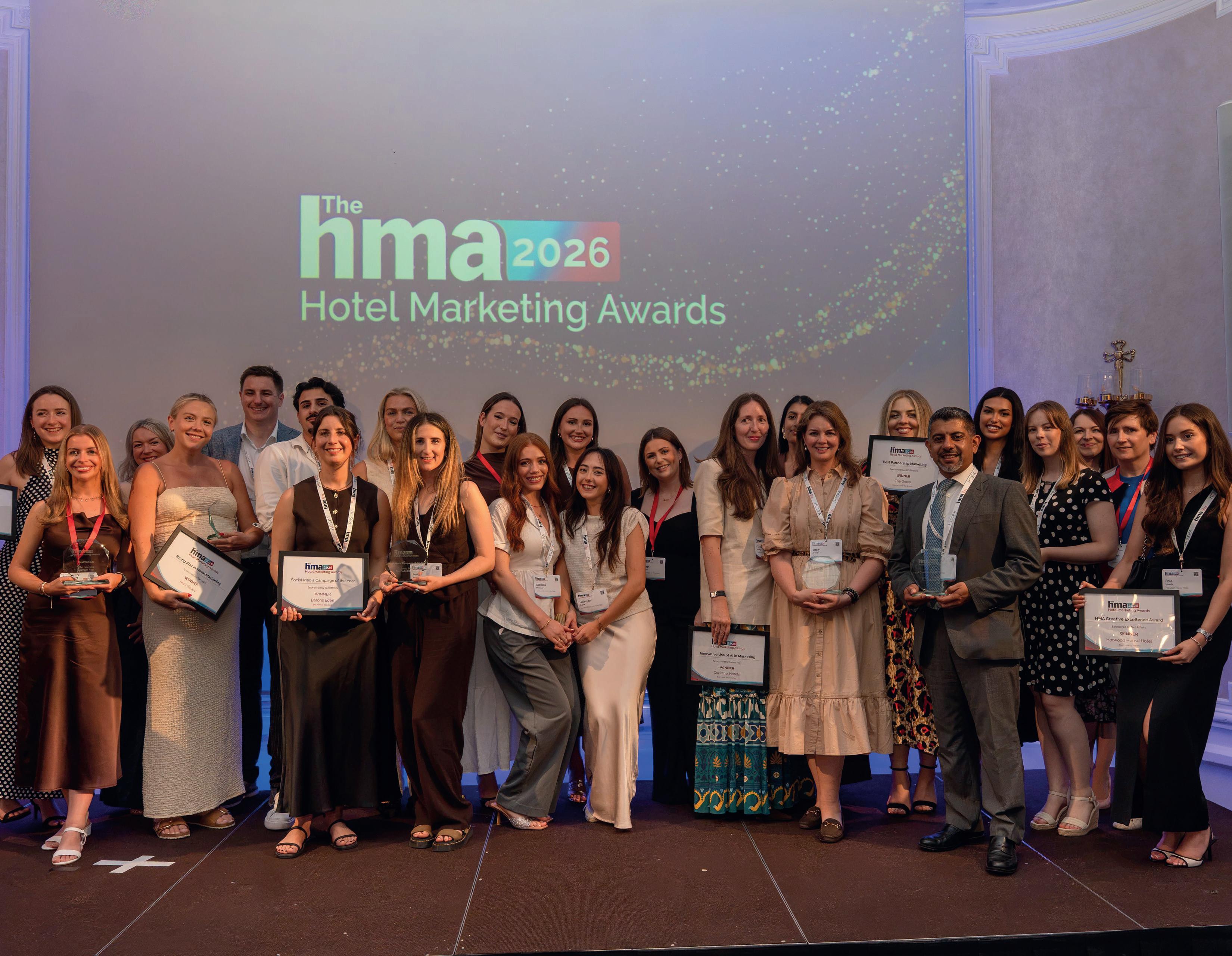
The night was not only about campaigns. London Hilton on Park Lane was named Best Hotel Marketing Team for the agile, data-led leadership that large corporate brands cannot fake, while May Facey of Marriott International took Rising Star, a category that always feels like the most important one in the room. The talent coming through decides whether any of this is sustainable, and on this evidence the next generation is in good order.
What ties it all together is a shift that’s been building for a while. For years marketing was the department you turned to once the strategy had been settled elsewhere. That’s now changed. The work celebrated in June sat at the centre of how these businesses think rather than at the edge of it, and the commercial results followed.
There’s a reason associations like ours keep putting on evenings like this. In a sector that runs on long hours and thin margins, it’s easy to push straight past the wins and onto the next problem. Awards force a pause. They give the people who did the work a moment to be seen, and they
hand the rest of us a benchmark to aim at.
So as the August diary fills and attention turns back to occupancy and the autumn pipeline, it’s worth holding onto what the class of 2026 showed. Case studies of the winning entries can be found on the Hotel Marketing Association website (https://www.hotelmarketingassociation.com/ awards-2026) and I’d urge you to take a look. Good hotel marketing is no longer decoration. Done properly, with a clear idea and the numbers to back it up, it’s among the sharpest commercial tools a hospitality business has. The winners proved it. The rest of us would do well to take note.
Jane Pendlebury is CEO of HOSPA – the Hospitality Professionals Association. For more information on HOSPA and its offering, please visit www.hospa.org. For the Hotel Marketing Awards, visit: www.hotelmarketingassociation.com/awards-2026
UKHospitality Chair Kate Nicholls urges hotel operators to get behind the #VATsTheProblem campaign, arguing that a cut in hospitality VAT to 10% is the single most effective measure the Government could take to boost investment, jobs and growth across the sector.
Since the #VATsTheProblem campaign petition opened just few weeks ago, more than 230,000 people have signed it.
That’s an extraordinary response from hotel operators and the wider hospitality sector – all people who realise that a 10% hospitality VAT rate is our big ask of government – the one to act as a powerful catalyst that galvanises the industry best placed to drive the UK’s economic recovery.
But we need more names on that petition if we’re to reach our 1 million target. Ambitious? Yes. Doable? You bet!
Because this is hospitality, and the people working in our sector always pull out all the stops when necessary.
Including chef and pub operator Tom Kerridge, who’s spearheading the campaign. In an open letter to the industry, he writes: “We know that the key to unleashing hospitality’s potential to grow and thrive into the future comes through a VAT cut. We’re making sure Government knows that too, and we need your help.”
So any hotel operators yet to sign, please visit https:// www.vatstheproblem.co.uk/ and add your name.
And once you’ve done that, please encourage your staff to do the same, then when their names are down, urge your guests, friends and family to sign too, because from 1 July the petition was opened to consumers. With all of them on board, we believe 1 million signatures is eminently achievable.
Hotel operators can spread the word by adding the link https://www.vatstheproblem.co.uk/ to your emails, socials and websites, while making use of our campaign toolkit and online shop to download free campaign collateral.
Our campaigning for a lower rate of VAT sits alongside our continued work to stop the holiday tax and secure lower business rates for accommodation businesses, because it’s clear that this sector has been among the hardest hit by recent cost increases.
Our persistent engagement with Government on this issue is delivering positive results, with recent proposals to more effectively enforce VAT collection on online marketplaces, with any revenue raised going into improving hospitality business rates, with hotels specifically named. That’s the kind of action we need to see more of and are continuing to press the Government to deliver.
The more of us who shout and the louder we shout, the more likely the Government is to listen. It already acknowledges that the hospitality sector is a vital economic driver, and we must convince it that cutting VAT to 10% would be a significant – the most significant – way to kickstart our resurgence.
Kate Nicholls, Chair, UKHospitality