ORAH ORAH


Your wealth and aspirations are unique and require a personalized approach. At CIBC Private Wealth, we take a comprehensive approach to managing, building and protecting your wealth.
Call us to find out how we can work together to achieve your wealth aspirations.

Make your tax-deductible gift before December 31, 2022 for a full tax receipt. Visit our website, or click on the icon to the left.

CHW.CA/EMPOWER

Your support today will empower educational programs & services at:
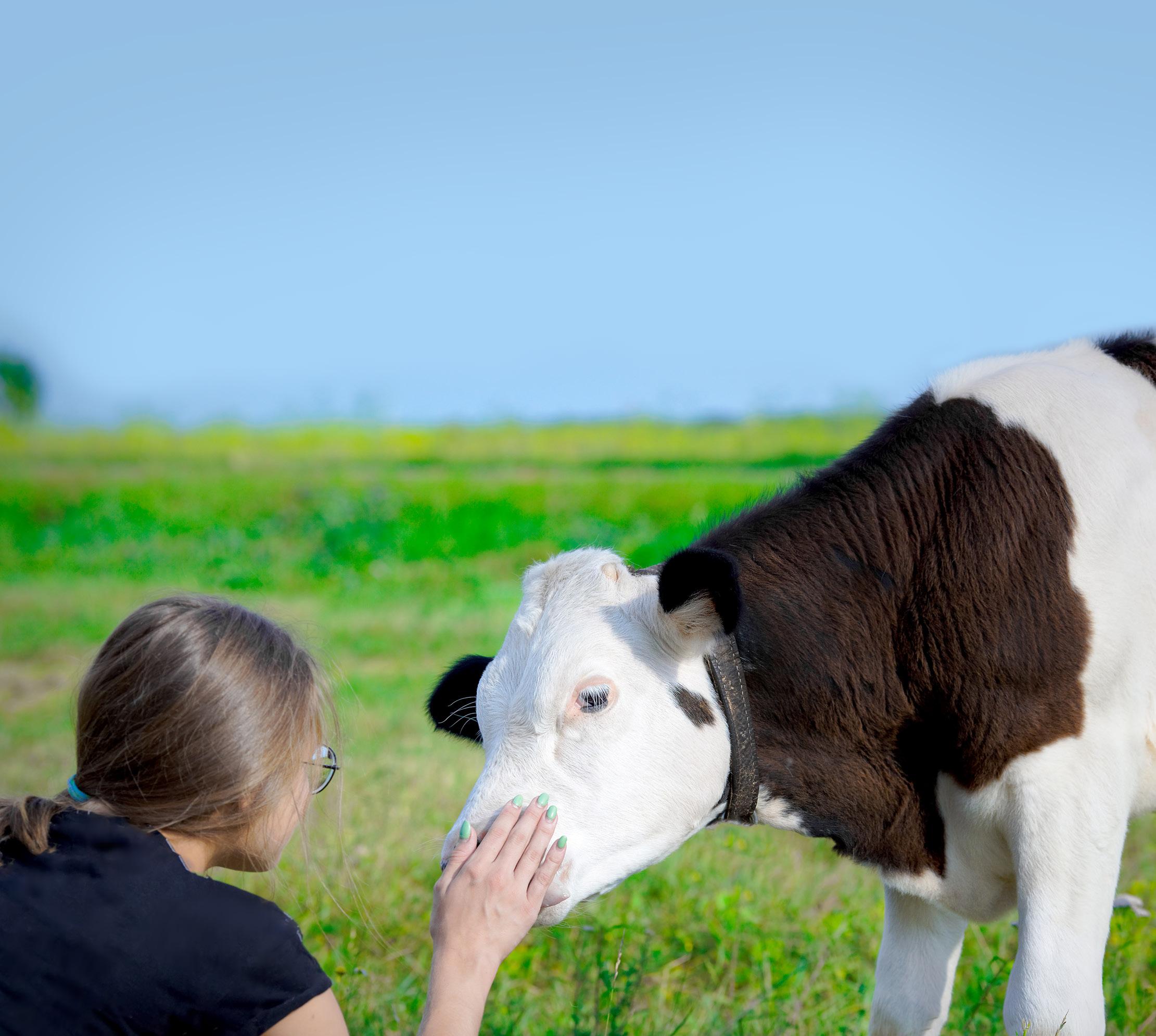
• CHW Nahalal Youth Village Dairy Farm Expansion
• CHW Hadassim Children and Youth Village Therapy & Music Programs
• Hadassah Academic College The Blender Center for Innovation and Entrepreneurship
• CHW Netanya Technological High School Culinary Arts Program

PUBLISHER


We are so grateful to you, our CHW family, for the overwhelming support you’ve shown to CHW this year. Our new fiscal year started off with a bang as we held the second annual S.O.S Starting Over Safely Campaign to empower victims of domestic violence. We raised an unprecedented $450,000+ from generous donors, coast to coast, during our limited 27-hour crowdfunding period. Proceeds will benefit WIZO’s Safety Net Program, summer camps, and our new partners Franny’s Fund and Michal Sela Forum. You can read more about the successful campaign and how your generous philanthropy will make an impact for women and children in Israel and Canada.
It is always amazing how quickly time passes. A year ago, we started planning for our inaugural Journey 4 Impact and just this week we returned to Canada having had the most incredible experience. This maiden voyage launched CHW’s first round of social impact investing with $300,000 of funds earmarked to support exciting women-led, socially conscious businesses that employ and empower all women, regardless of religion or cultural background.
CHW is the first Canadian Jewish organization to launch a gender-lens investment strategy that ensures better outcomes in areas such as gender disparities, social mobility, and economic opportunities for women and girls – all closely aligned with the UN Sustainable Development Goals (SDGs). Every dollar invested by CHW will generate a clear and measurable social and financial return on investment and create sustainable funding.


CHW continues to move forward to meet the needs of a new generation of donors and volunteers while safeguarding our roots. Our organization is ever-changing and evolving to increase engagement and impact, and to ensure our future.
This year, the focus of our end-of-year campaign is on education. Funds are earmarked to ensure at-risk youth receive vital therapeutic support and access to a nationally recognized music program at CHW Hadassim Children and Youth Village. Funds raised will also provide for the Dairy Farm Expansion and cheese-making program, a venture philanthropy opportunity at CHW Nahalal Youth Village. Our funding commitment extends to a new Culinary Arts program at Netanya Technological High School, giving the most marginalized students a chance to succeed. Gifting a student with the opportunity to pursue their business dream is now possible through The Blender Center for Innovation and Entrepreneurship at Hadassah Academic Collage. Without CHW’s investments in education, these students would not have access to vital opportunities for advanced learning. But none of this is possible without your steadfast support, and for that we are so very grateful.
Thank you for your philanthropy today and always.
Warm regards,
Throughout your digital issue of ORAH magazine, you will see the below icons. Simply click on the icon to follow the link.


 Elayna Latsky National President
Lisa Colt-Kotler CEO
Elayna Latsky National President
Lisa Colt-Kotler CEO
Founded by visionary Jewish women in 1917, Canadian Hadassah-WIZO (CHW) is a non-political, non-partisan, national network of dedicated volunteers who believe that excellence and advancement of education, healthcare, and social services transcends politics, religion, and national boundaries.


By supporting Canadian Hadassah-WIZO (CHW), you are funding life-changing programs in Education, Healthcare Social Services in Israel and Canada.


• Across Canada Canadian Young Judaea programs
Franny’s Fund
• Calgary
Scholarships at Mount Royal University and Alberta University of the Arts
Annual Holiday Toy Drive
• Edmonton
Terry Horowitz Memorial Bursary
The CHW Canada Award

• Toronto
Jerome D. Diamond Adolescent Centre - Jewish Family & Child Services
• Montreal
Myra’s Kids Foundation Summer Camp
For more information on our CHW Projects in Israel and Canada, click on the below icons or visit our website at CHW.CA


• CHW Hadassim Children and Youth Village
The Lea Zev Shilman & Joseph Zunia Shilman Therapeutic Programs and the Music Program
• CHW Nahalal Children and Youth Village
The Dairy Farm
• CHW Netanya Technological High School Culinary Arts Program
• CHW Neri Bloomfield Academy of Design Fashion Department
• Hadassah Academic College (HAC)
The Blender Center for Innovation and Entrepreneurship

The Dan Department of Creative Human Design
• Hadassah Hospital, Ein Kerem
Isolation Rooms in the Pediatric Cardiac Critical Care Unit (PCCCU)
• Shamir Medical Center
The Institute of Pulmonary Functions & Diseases
• World WIZO
Safety Net, Essentials Kits, and Respite Summer Camp
• Michal Sela Forum
The Michal Sela Canines Project
Your generosity allows Canadian Hadassah-WIZO (CHW) to support education, healthcare, and social services, benefiting women and children in Israel and in Canada. You can contribute to CHW in many ways:

Support a campaign
Monthly giving
Cards and Certificates
Join our Legacy Circle
• Fund a project in Israel
Participate in a mission
Attend an event
Volunteer
We strive to excel at creating impact through our projects and programs in Israel and Canada. We aspire to be recognized as the leaders by our members and friends, donors, partners and our beneficiaries in Israel and Canada.
We strongly believe that every human being deserves to achieve their full potential, while living in safety and security. Our support of excellence in education, innovation in research, advancement in healthcare, safeguarding of social services, and investment in our beneficiaries, will create global impact, improve lives, and provide hope.
By providing donors and volunteers with a vehicle to effect meaningful change through their philanthropy, CHW enables its supporters to make the world a better place.

CHW Changes Lives, Provides Hope, and Builds Futures.
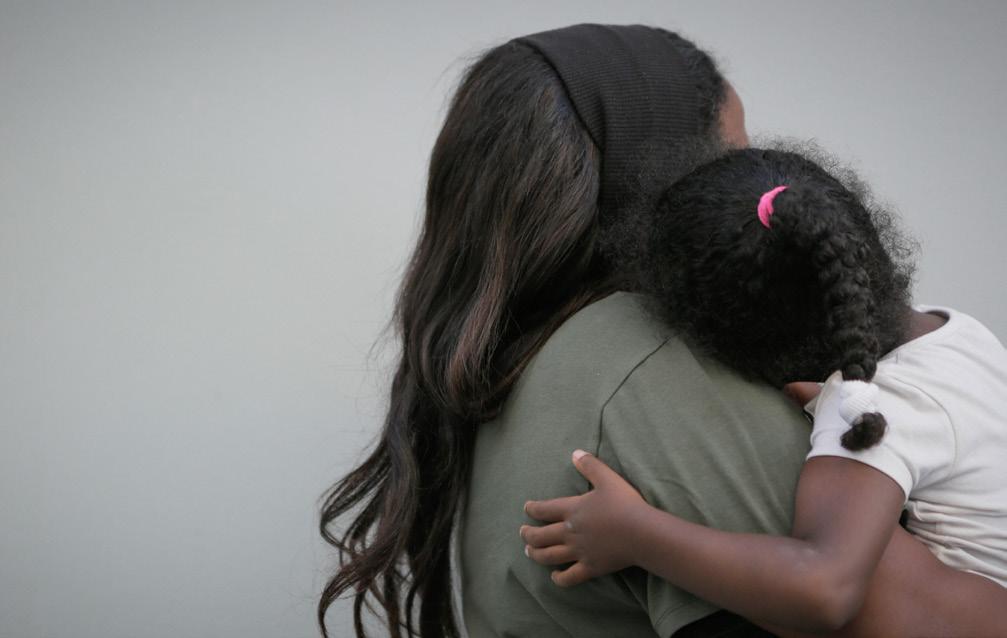
For over 100 years, CHW has made a positive and lasting impact on the very fabric of Israeli society by transforming the lives of women and children.












CHW has accomplished so much through the generosity and support of countless amazing women. I grew up watching my mother volunteer for Hadassah. She was a Chapter President and served as Treasurer for many years. I remember the Hadassah Bazaar fondly, and if I close my eyes, I can still picture all the ladies at baking bees getting ready to stock the tables with treats to sell.
As a CHW volunteer, the biggest payoff is supporting a charity you trust and projects that carry your confidence. The blend of credence and an open heart enables you to be a successful volunteer. I’ve become synonymous with CHW. My heart belongs to helping women and children locally in Canada and in Israel.

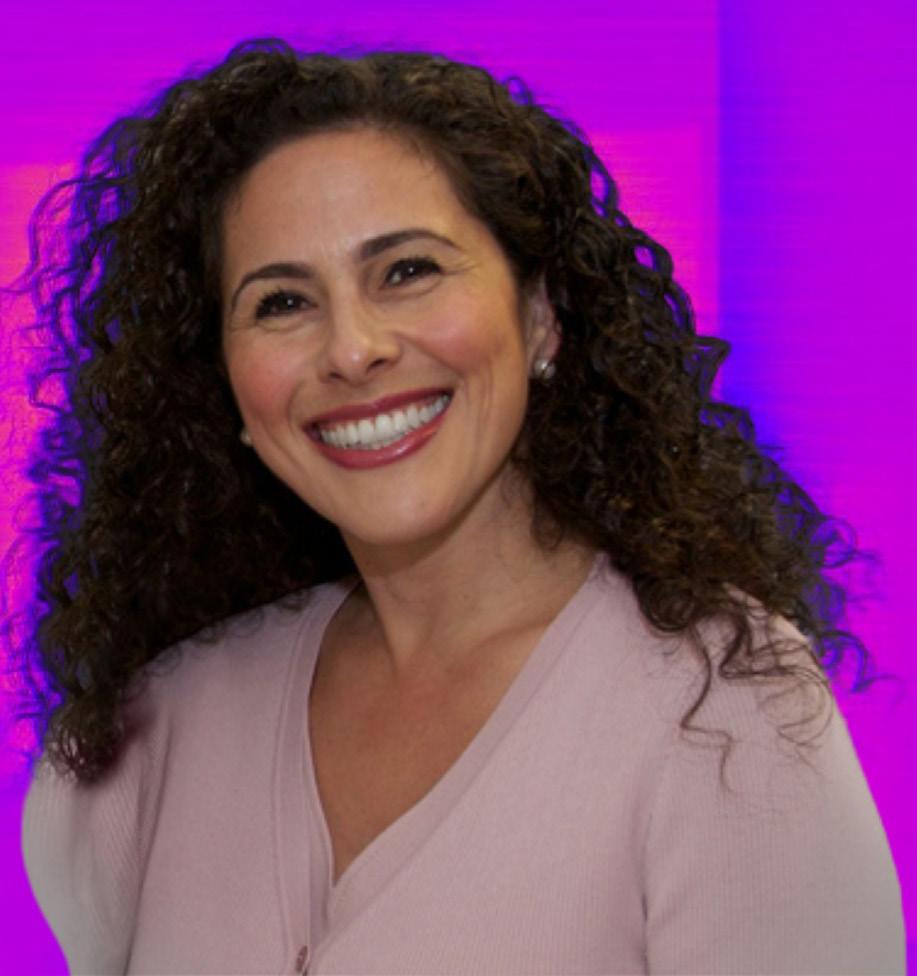
That said, one of the biggest satisfactions is building up the reputation and name recognition of CHW. Fundraising has been a major part of my role as the CHW Calgary Centre President. Our events and activities depend on our loyal staff and volunteers.
Our affinity with Israel is more than assuring its economic well-being. Our relationship with Israel is at the core of who we are as Jews. We must pass the torch to the next generation of women.
CHW continues to strive to pass the torch from generation to generation. Continuing the work that CHW achieves is one of the main satisfactions of being a volunteer.
A sense of gratification is born by being part of the CHW community and the sense of being part of something bigger. The valuable community spirit or camaraderie enables us to achieve so much.
I believe that taking the time to learn about the people benefiting from the work that CHW is doing ties you to the cause.
Moving home to Montreal after being away for nearly 15 years, it was natural to rekindle my family’s legacy and commitment to Israel and CHW Projects.
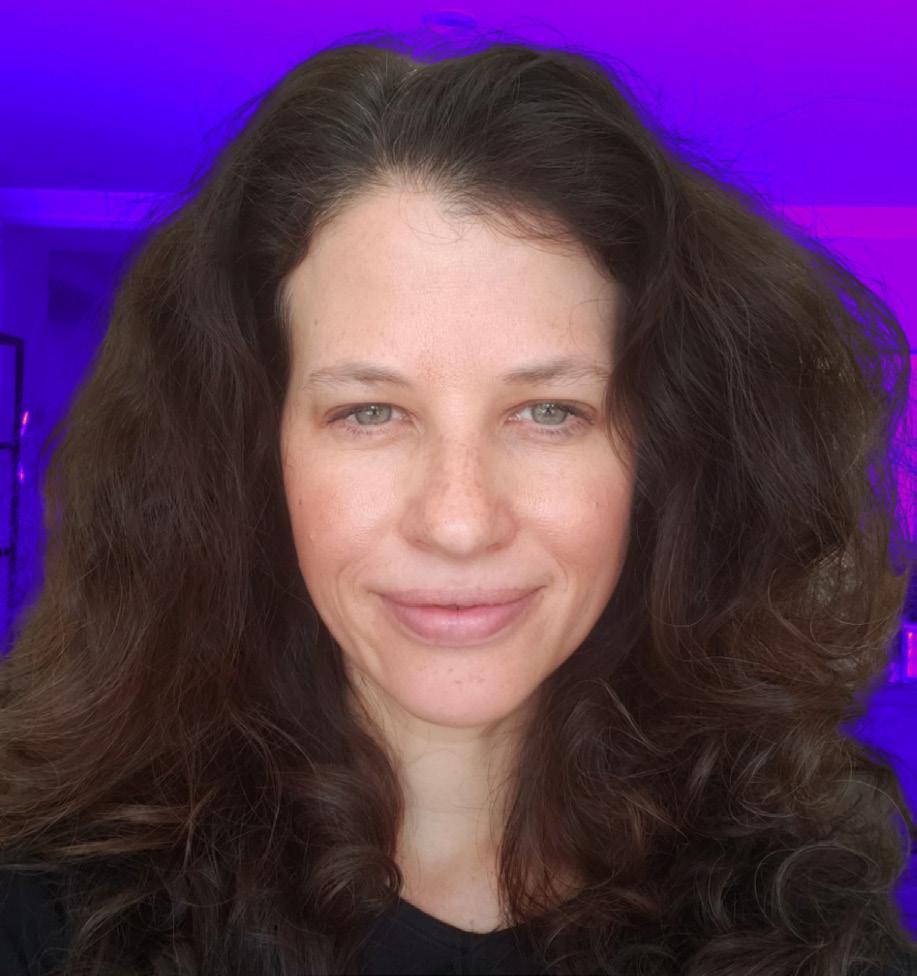
My grandmother’s involvement in CHW and her deep love and commitment to Israel paved the way for her to become the youngest CHW National President in 1972. She had a great sense of satisfaction with the progress of the CHW Neri Bloomfield Academy of Design.
As our grandparents were early pioneers in Israel, Zionism is part of our family’s DNA. We were taught the importance of Israel and the Jewish people our entire lives.
Beyond my connection with CHW, my grandmother and mom were members, and their involvement dates back to my childhood. I discovered that my involvement with the CHW Vancouver Bvlgari Chapter helped me to build a great network of friends. Now, I want to engage the younger generation with CHW and bring the community back to life.
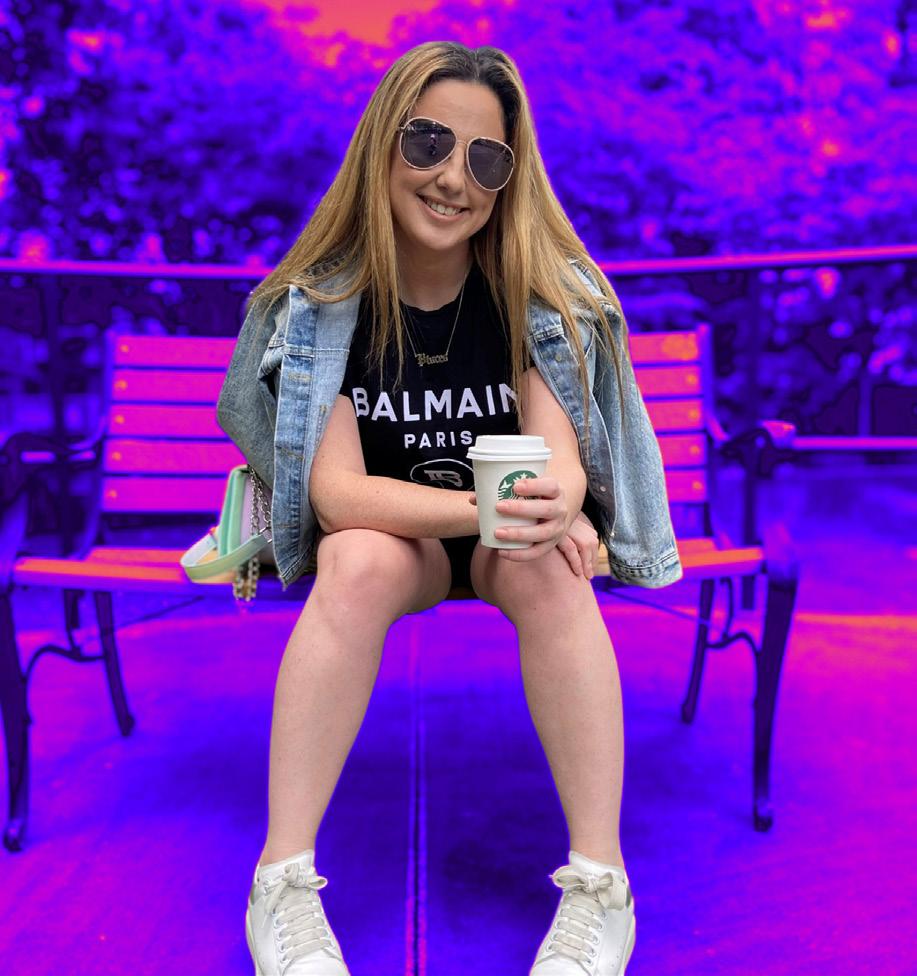
A core satisfaction from being actively involved with CHW is the opportunity to make a difference in the lives of at-risk children and women and to have an impact on healthcare in vulnerable communities.
Our recent event, the Bvlgari Chapter’s High Tea, a mother and daughter event, was a success, and we were able to see the funds make a difference in projects close to the Chapter’s heart. It is so satisfying to see the results of our fundraising come to fruition, and see the difference we are making, at our projects in Israel and Canada.
For new and old volunteers, I would argue that visiting Israel and seeing the projects will help you to understand how the funds are spent. A trip to Israel will have a real impact on your life and your involvement with CHW.
Honouring and building upon a legacy takes talent and respect for heritage. Fortunately, head designer Sharon Tal has both in spades. Formerly head of embroidery at Alexander McQueen, and also having interned under Alber Elbaz at Lanvin, her appreciation for tradition is matched only by her attention to detail and willingness to reinvent.
Conceived in 1954 by Ruth Dayan (a former student of CHW Nahalal Youth Village), Maskit made contemporary luxury clothing utilizing traditional embroidery techniques from Hungarian, Yemenite, Bulgarian, Bedouin, Palestinian, Druze, Lebanese, and Jewish artisans.
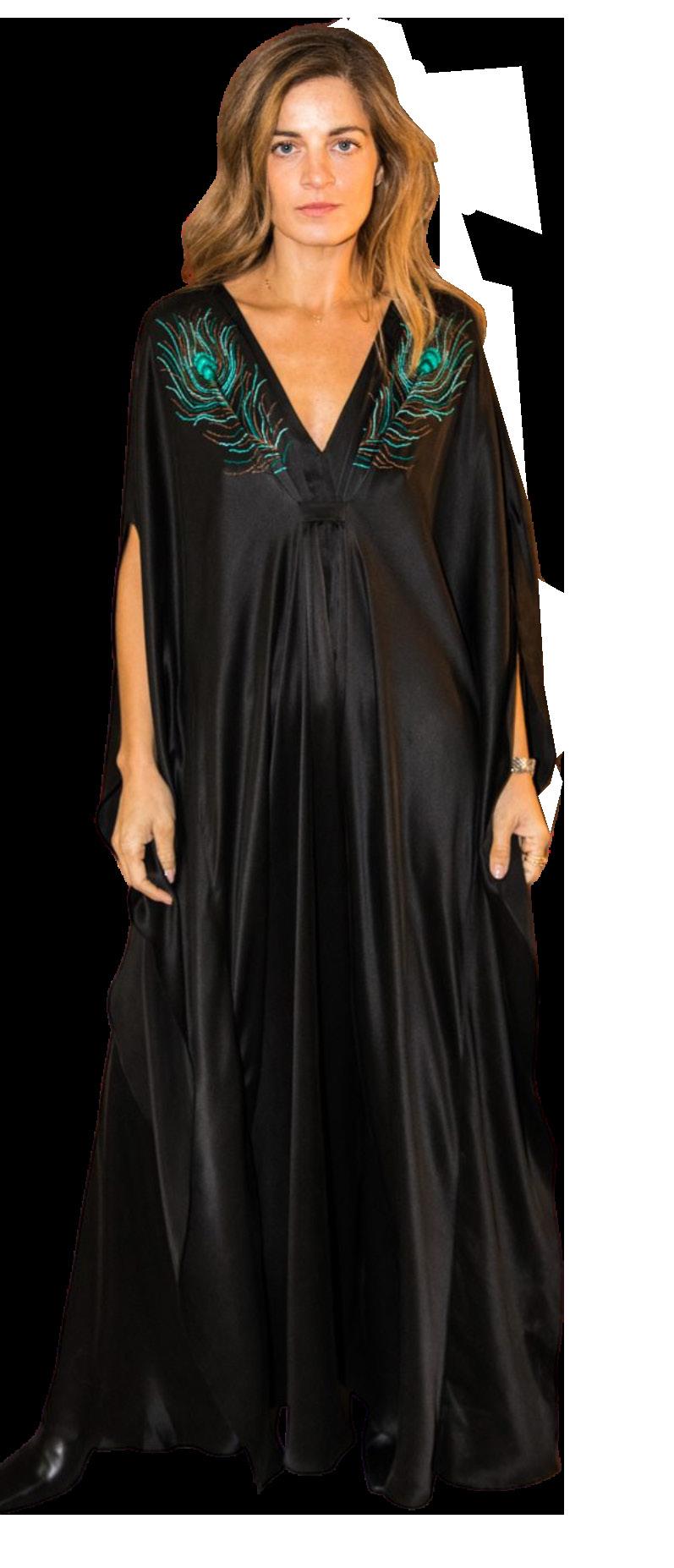
The resulting works of art created more than jobs for immigrants; a brand was born. Maskit wasn’t just any brand, though: its luxurious and coveted designs were treasured by leading women of the era. Audrey Hepburn was just one of the stars who wore its famous Desert Coat. Celebrities inspired their fashion-forward followers to stay on trend by wearing Maskit. Collaborations with Christian Dior, Yves Saint Laurent, and Givenchy followed the opening of a flagship store in New York City.
Since taking over the helm in 2014, with the blessing of, and input from, Ms. Dayan, Sharon and Maskit have launched several successful collections and shown internationally. In the process, they have also managed to honour and innovate, revitalizing a brand while earning plaudits for their striking designs.
 Sharon Tal was the featured designer at CHW’s Fashion Blooms 2022. Watch the interview hosted by Jeanne Beker, learn more about the other designers, and see the CHW Neri Bloomfield Academy of Design graduate fashion show.
Image courtesy of M aski t
Sharon Tal was the featured designer at CHW’s Fashion Blooms 2022. Watch the interview hosted by Jeanne Beker, learn more about the other designers, and see the CHW Neri Bloomfield Academy of Design graduate fashion show.
Image courtesy of M aski t
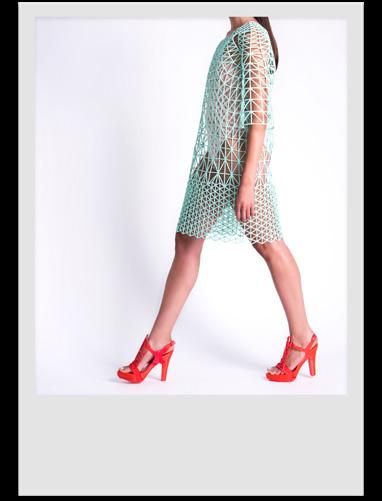
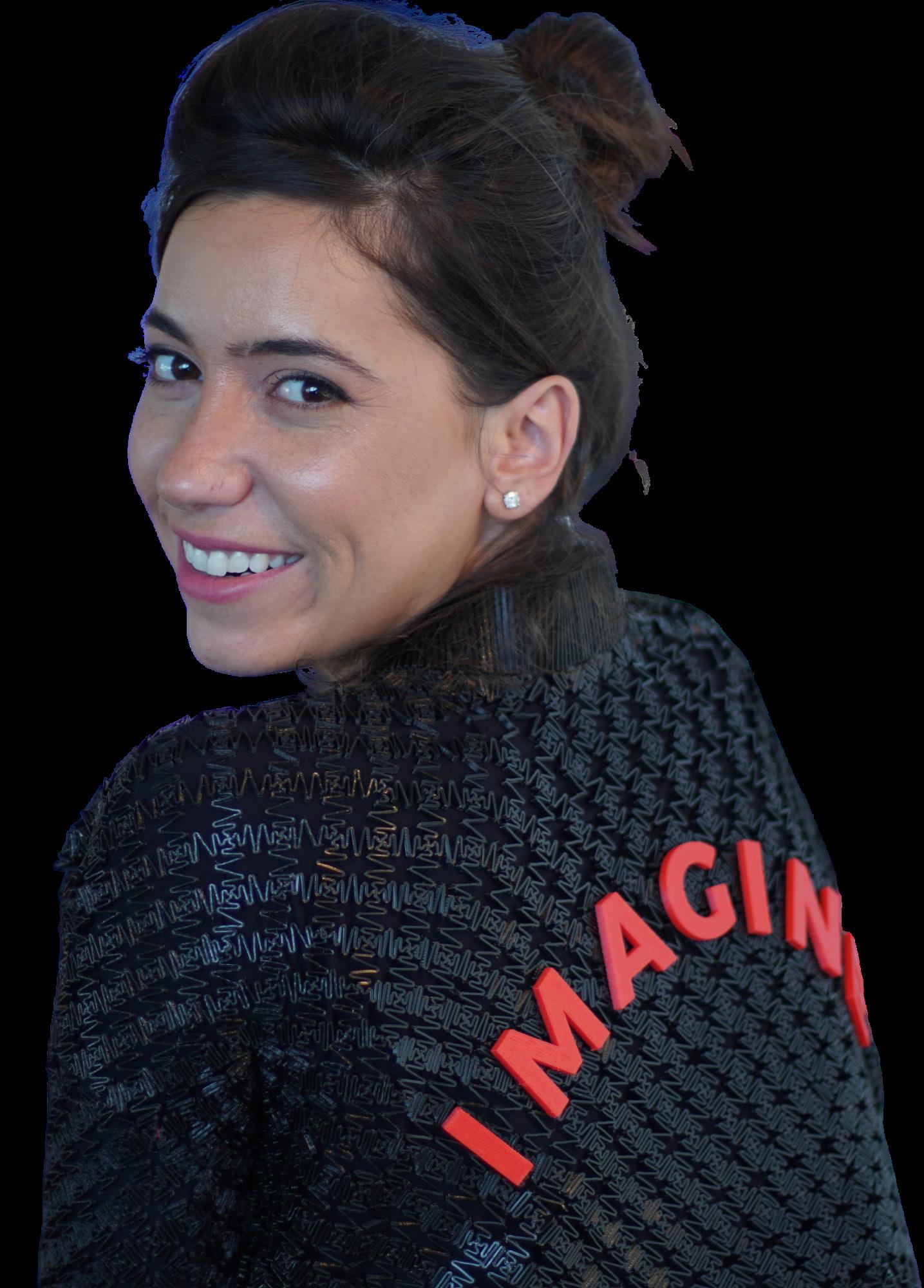
Danit Peleg and her team are passionate about challenging the ecosystem to develop new materials, new printing techniques, and new software breakthroughs. In 2017, Danit launched a revolutionary platform on her website that allows customers to order and personalize their own 3D-printed garments. In 2020, Danit went a step further by offering digital files of 3D-printed garments that can be downloaded and then printed at the customer’s nearest 3D printer.

Danit also teaches a virtual workshop that introduces beginners to the amazing world of 3D-printed fashion. This live, virtual course is one of the first of its kind. Danit believes that the generous exchange of ideas in fashion drives positive change and growth in this industry.



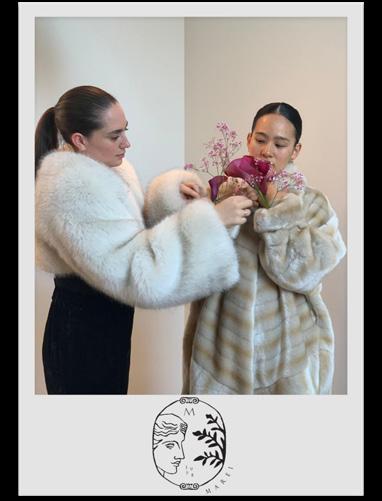
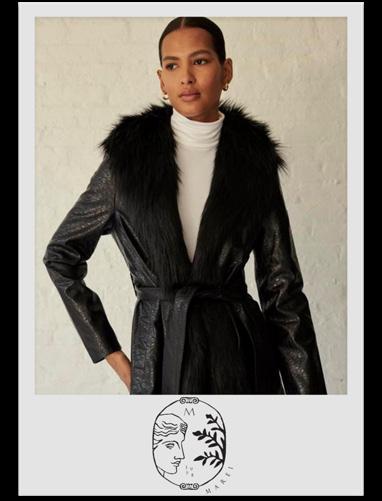
Maya Reik Belfer created Marei1998, a ready-to-wear and accessories label for the new era. Focusing on feminine, sophisticated silhouettes with impeccable details and eco-conscious materials like recycled nylon, vegan leather, velvet, and faux fur, the house offers a signature take on enduring elegance. Each collection explores the notions of romantic old-world glamour balanced with a contemporary sense of ease.
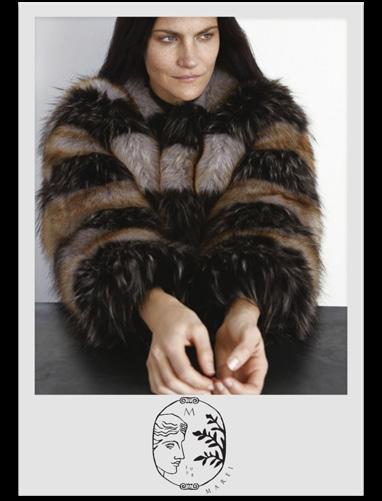
Founded in 2015 by Maya Reik, Marei1998 is rooted in a classicmodernist design sensibility, uncompromising quality, and respect for the planet. In 2019, the brand became an official member of PETA (People for Ethical Treatment of Animals).

a



s any parent knows, the bond between mother and child develops during pregnancy.
Whether it be a prenatal nickname, the small talk murmured to your belly, or holding those tiny little socks and hats in your seemingly enormous hands; those early memories become part of your child’s life story.
Sarah* and Yaakov, a young and idealistic ultraOrthodox couple, were thrilled to finally fulfil their dream of making Aliyah with their two young children. After only a short time as new olim in Israel, they were excited to discover that Sarah was expecting their third child.
Their excitement quickly faded following a visit to the doctor, who diagnosed their precious baby with a heart defect — Hypoplastic Right Heart Syndrome (HRHS) — that would leave the right side of her tiny heart underdeveloped.
The doctors suggested an abortion, but Sarah and Yaakov were not ready to give up just yet.
The couple began researching the outcomes for children with HRHS. Although they uncovered many obstacles facing them, they drew strength from their immense determination and faith and made the decision to continue the pregnancy. Together, they went on a journey into the unknown.
See Dr Uri Pollak thank CHW for supporting the PCCCU.
Two parents are faced with an unthinkable decision, unsure if their newborn daughter will survive.
Months later, baby Tehilla was born. Shortly after birth, she underwent a BT Shunt — the first of three surgeries needed to repair her weak heart.
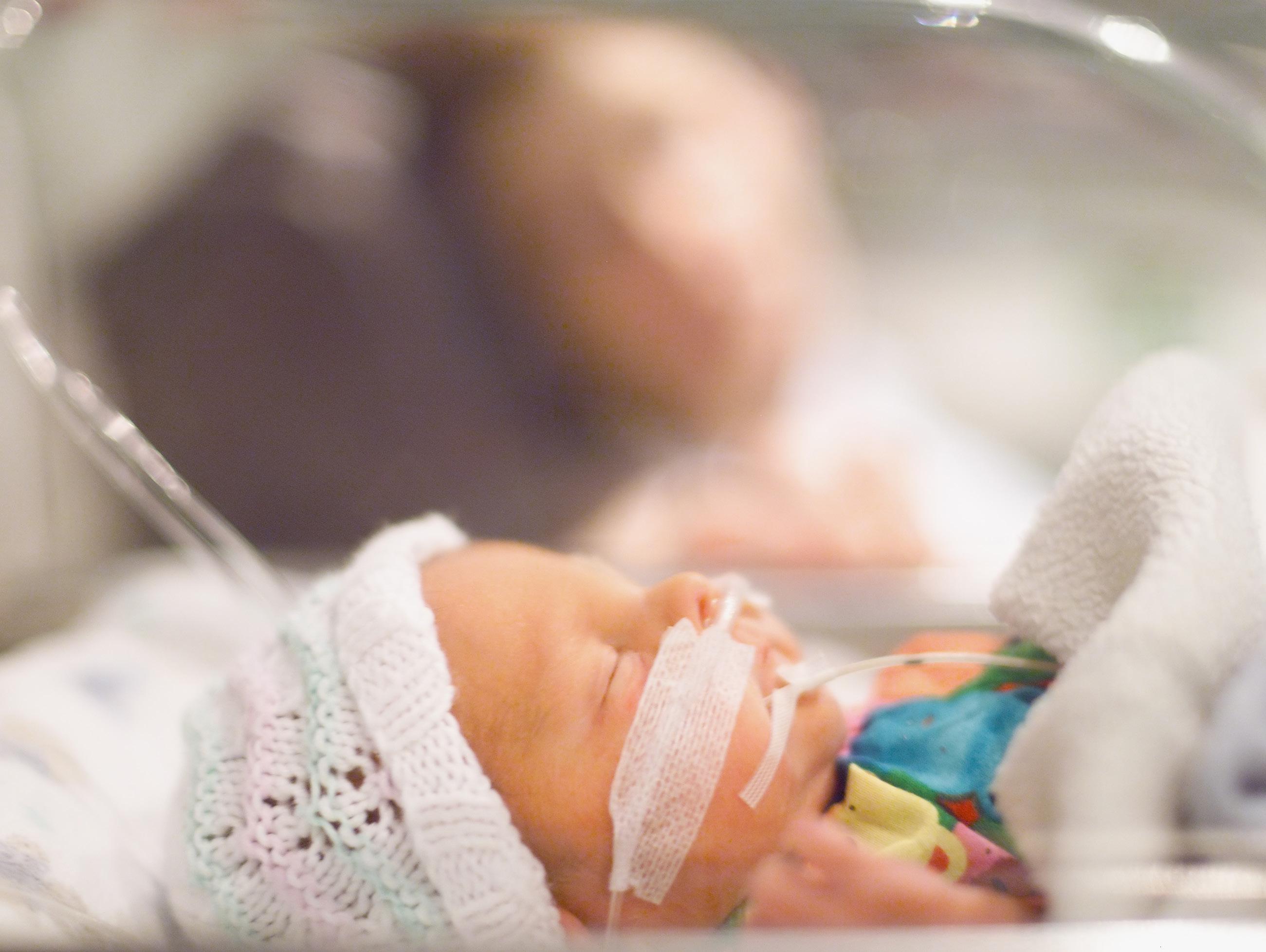
Following the surgery, Tehilla was hospitalized in the Pediatric Cardiac Critical Care Unit (PCCCU) at Hadassah Hospital. In the PCCCU, she was ventilated and received nutritional support through a feeding tube. Then a pacemaker was implanted into her tiny heart to regulate her heartbeat. With so many wires and tubes all over Tehilla’s body, her parents were frightened to touch or hold her, wondering if they had made the right decision.
During her six-month hospitalization in the PCCCU, the nursing staff and Dr. Uri Pollak became like family to Tehilla, Sarah, and Yaakov. With endless patience and expertise, the PCCCU nurses taught Sarah how to care for Tehilla, hug her, hold her, and engage in critical bonding time between mother and baby.
Dr. Pollak and his team of nurses treated and cared for Tehilla through endless days of complications and deteriorating breathing. With around-the-clock care, Tehilla finally stabilized enough to be released home, with oxygen supplies, a gastrostomy tube, and a lengthy list of medications. But they would finally be all together as a family, with plenty of time for snuggles with all three of their children.
Tehilla will need to return to Hadassah Hospital for two more surgeries, but Dr. Pollak and his team have high hopes for her path to recovery. Sarah and Yaakov are immensely grateful that the warm, compassionate, and skilled PCCCU team will be there to support and guide them through the days ahead. Their love for their little baby Tehilla grows stronger every day.
*Names have been changed to protect privacy.

CHW supports the new, state-of-the-art PCCCU, the only one of its kind in Jerusalem. Congenital heart defects comprise the most common type of birth defect. Currently, the global incidence of congenital heart disease at birth has been estimated at eight to 12 cases per 1,000 live births. This is significant because Jerusalem has the highest birth rate of all cities in the western world. The number of babies born in Israel with heart defects is overwhelming. Having a world-renowned PCCCU is critical to saving lives.

“In the beginning, the violence was only between the two of us. I tried to do everything and anything to make it work. My parents were divorced, and I promised myself that I would never tear my family apart. Now I know it was a mistake because I sacrificed myself. I lost myself because I wanted the marriage to succeed.
“I’ve always worked hard and studied throughout my life. I slowly built up my career alongside starting a family. I earned a degree in chemistry and biology and became a lecturer at a college as well as a therapist,” said Malka.
Malka had a successful career but fell victim to an abusive husband and was stuck in a risky situation. “Domestic violence can affect anyone. It doesn’t matter your background, age, religion, or socio-economic status.”

Her success caused conflict in the relationship and the situation got worse. “My ex struggled to keep a stable job. He was so jealous of my success. He resented that I found my passion in life and enjoyed my work.”.
Malka’s husband became more and more passiveaggressive and financially abusive. He would go on spending sprees and take out huge loans. It did not matter how much she worked or earned; she could never keep up or repay the loan. They were drowning in debt.
One day Malka’s husband told her he had found his dream job and the family had to relocate immediately. Malka was hopeful things would change for the better, now that he finally found a satisfying career. She told him she would do anything to make him happy and keep their family together.
Malka left her dream job and closed her clinic. She packed up their home and uprooted their four children. They left their community and friends and moved across the country.
But things did not get better for Malka and her children, and now that she was far away from the support of her friends and community, her husband used violence and isolation to control her.
“My husband terrorized me. He turned my kids against me. He barged into the house with 11 police officers one night and took away my two youngest daughters. He then issued a restraining order against me and claimed I was mentally unfit to parent.
“He didn’t let me see the kids. He told them that I was dead and that they’d never see me again. The kids were so shocked and devastated that he had to change his
Malka* is the mother of four children. She is also a survivor of domestic violence. This is her story.
story. He lied and told them I was institutionalized in a psychiatric ward and couldn’t see them. All the candies and toys he gave them didn’t alleviate the pain. My family was destroyed.”
She had to find a way out for her children and herself.
Due to the support of the Safety Net program, her family has moved beyond the passive-aggressive and financially abusive husband and father. They escaped the violence and are now living in transitional housing with the full support of the Safety Net Program and the support of CHW and WIZO.
Malka reflects on how music helped her family survive: “There’s a song that the famous Israeli singer Rita wrote for her daughter. When my ex issued a restraining order against me, my daughter Leia* kept hearing it over and over again. It touched her heart and made her cry.
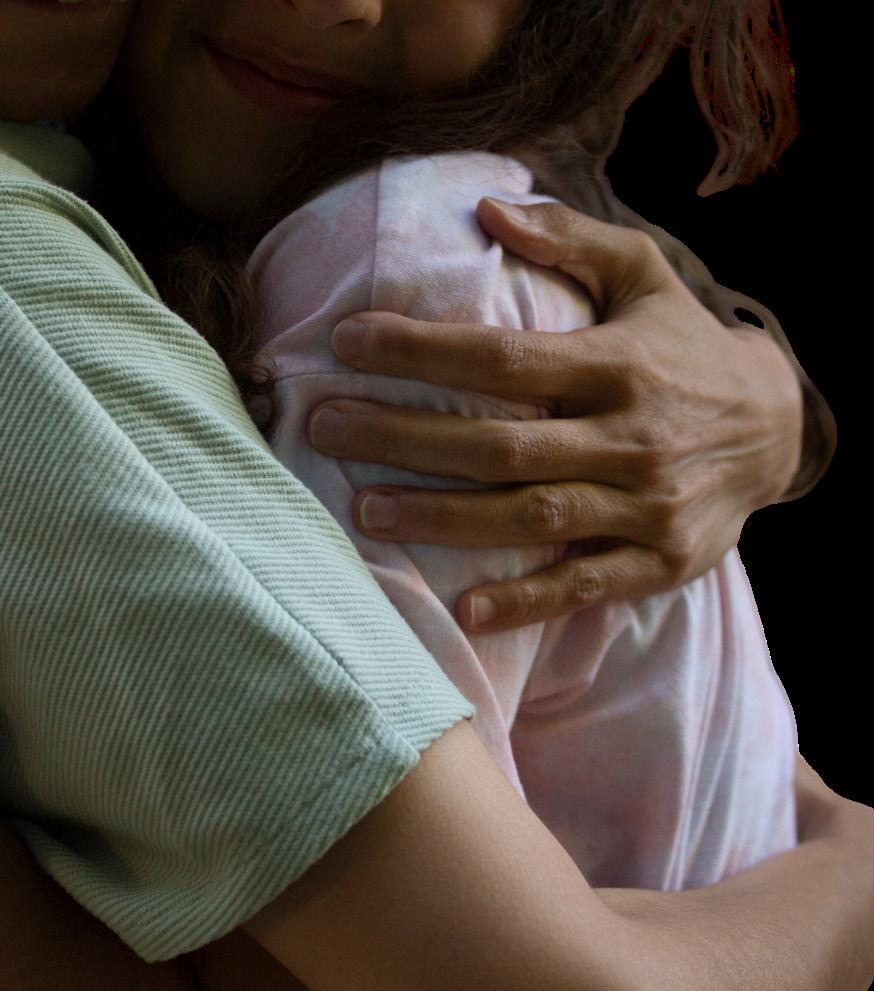
When we finally reunited and arrived at the shelter together, Leia shared the lyrics with me. Her favourite line was: ‘Take the warmth of a hug, that’s ours alone.’
“I knew I had to do something with these beautiful lyrics. Just after we arrived at the shelter, Leia turned 12. I still wanted to celebrate her bat mitzvah, so I created a beautiful necklace with the comforting message engraved on it.”
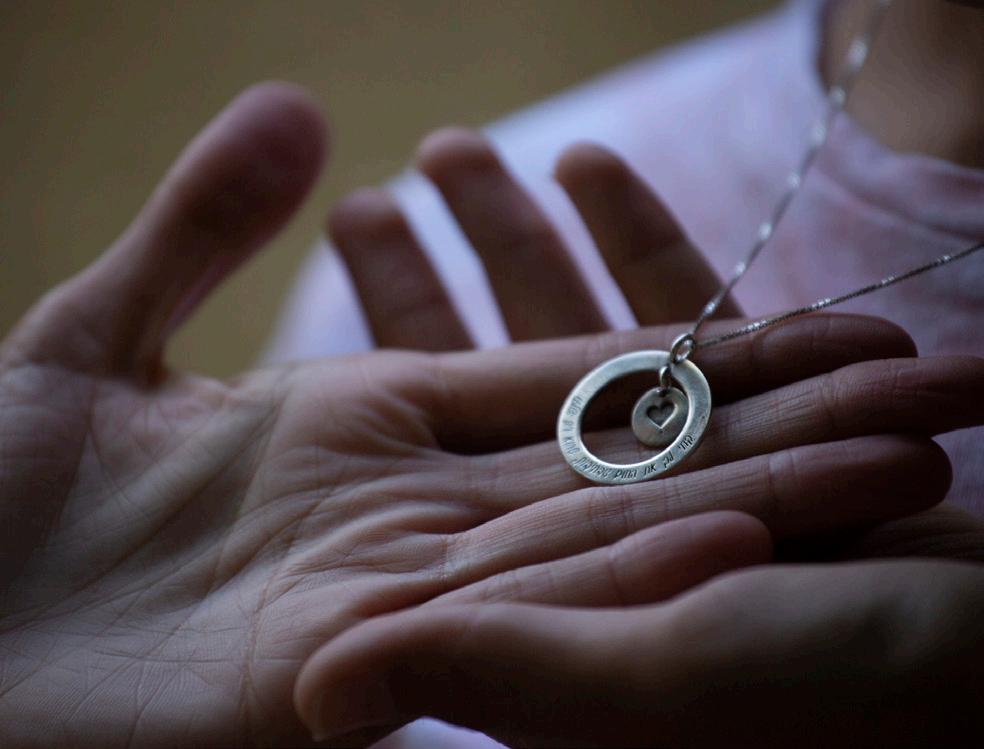
Thanks to Safety Net, and the support received from CHW’s Summer Campaign, Malka and her children are free to love one another and be themselves again. Together, one hug at a time, they are growing stronger.
*Names have been changed to protect privacy.
“My parents were divorced, and I promised myself that I would never tear my family apart. Now I know it was a mistake because I sacrificed myself. I lost myself because I wanted the marriage to succeed.Photo credits: Mickey Noam-Alon
tHAnks tO YOUR geneROsItY, We eXCeeded OUR gOAl And RAIsed OVeR $450,000!
In just one day, the CHW community came together to help empower victims of domestic violence. Thank you to all our generous supporters and Matching Heroes for making this day such a success!
• Provided help for parents and families in need of an urgent response.
• Provided access to critical resources such as legal counsel and counselling services.
• Provided women and their children with the basic essentials to start over safely.
• Empowered women and their children by providing social and personal support, employment support, and a network of other women in similar circumstances.
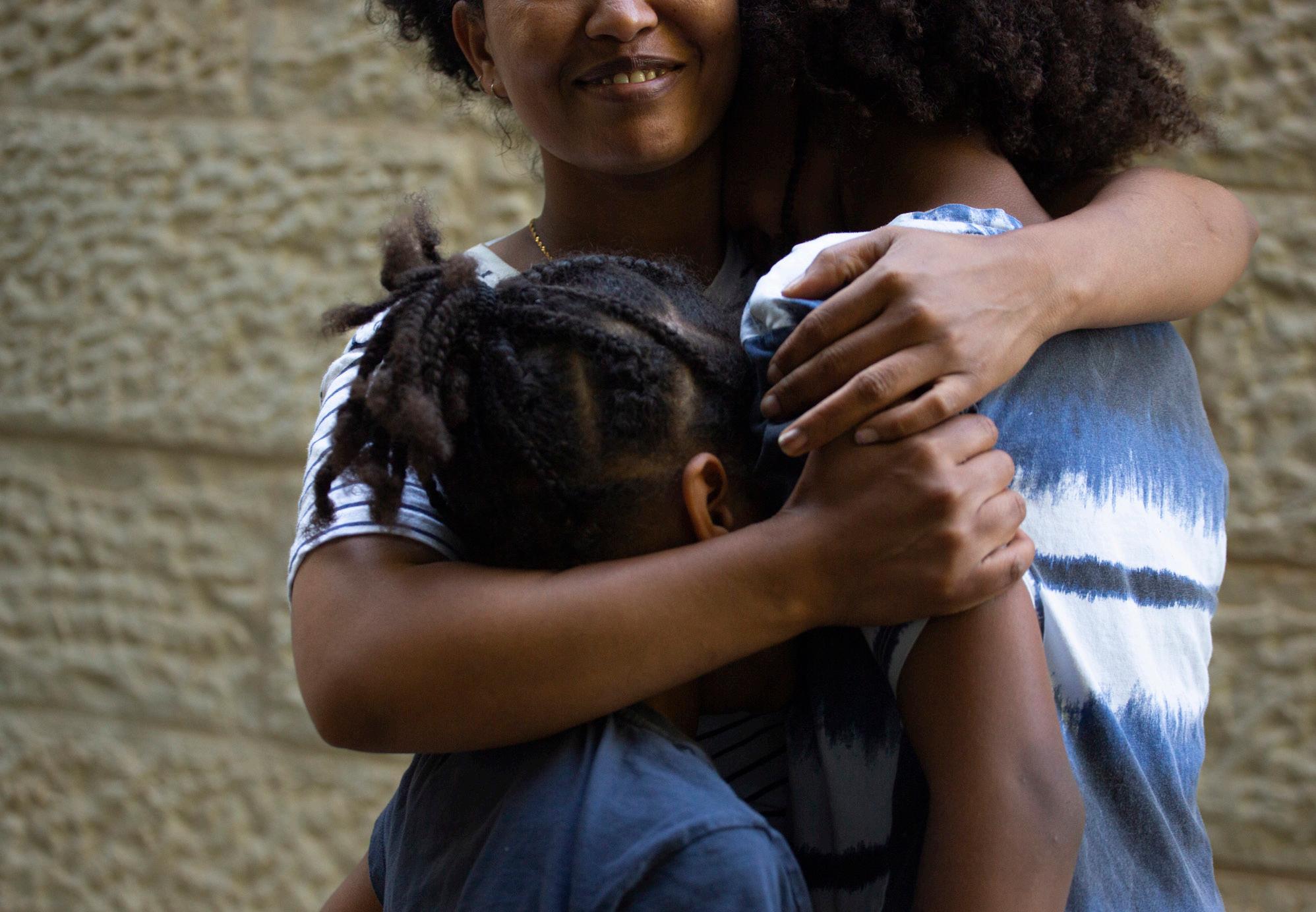
• Provided women and their children with specially trained canine protection.
• Funded respite summer camp experiences for at-risk youth.
Photo credit: Mickey Noam-Alon






Adi and Nir Avital, co-founders of ANITA Group and Golda ice cream chain, just launched their next big project: a specialty Ice Cream Track at CHW Netanya Technological High School.
The first of its kind in Israel, Adi shares why this ice cream program aimed at empowering youth is so close to his heart.
Why did Golda ice cream establish a specialty Ice Cream Track at CHW Netanya Technological High School?
This is one of the most exciting initiatives the company is leading today. We believe that every child needs someone who believes in them and gives them the tools for success. This made all the difference to us growing up.
Opening a Golda ice cream training program will give students not only professional skills, but also the opportunity to be part of a dynamic industry in Israel.


What does the program entail?
The program is an extension of Golda’s culinary innovations, so students will develop new products, experiment with flavour combinations, and create quality ice cream; all proudly made in Israel. We’re also dedicating a lot of our time to personally mentor youth, share our story, and promote entrepreneurship.

This program targets some of the most challenging youth from ‘rough’ neighborhoods and kids who dropped out of school. Many people gave up on them, but you see their potential. Can you explain?
Our goal is to give these youth hope, inspiration, and an opportunity to acquire a new profession in a growing industry. Thanks to this program, the ‘art’ of ice-cream making is officially recognized as a profession in Israel, under the supervision of The Ministry of Education. Our program is very unique because it offers a direct path to on-the-job training and professional employment in the future.
Nir and I have been quietly, under the radar, dreaming about this for a number of years. Our high school [CHW Netanya Technological High School] provided us with more than just a framework; it warmly embraced us with so much love. We want to give back and reach out to those children who are still out there wandering the streets.
You’re a busy entrepreneur and yet, you still found the time to drive this project forward. What does it personally mean for you?
I feel happy and privileged to be in a position where I can pass on the professional knowledge developed and accumulated over the years. The connection that my brother Nir and I have with our high school is an integral part of the chain’s success today. We are so proud to have created such a successful brand recognized in Israel and abroad.
It’s been 30 years since you graduated, but you still talk about your high school experiences and praise one of your teachers, Nurit Peled. Tell us why you’ve kept in touch with her, even after all these years.
We grew up in Azorim, one of the more difficult neighbourhoods in Netanya. CHW Netanya Technological High School was a ‘youth centre’ and a second home for so many youngsters. The school offers a variety of vocational and professional study tracks. It’s renowned for inspiring youth with high potential, but because of various circumstances, dropped out of the formal education system.
Nurit was the first person to instill in me a sense of self-worth. Without her, I wouldn’t have believed in myself, and my life journey would have been much more difficult. Nurit helped me strive higher and I credit her for helping me dream big!







Yes, of course! My brother and I gained so much knowledge and experience over the years. We’ve changed the culture of ice cream in Israel and we’re proud of our growing influence abroad. We want to give back to the community, especially the school that gave us so much.
 An Interview with CHW Netanya Technological High School Graduate Adi Avital, Co-Founder of ANITA Group and Golda Ice Cream Chain
Adi enjoying some Golda ice cream with former teacher Nurit Peled.
Photo credit: Riki Raichman, Courtesy of ANITA Group
An Interview with CHW Netanya Technological High School Graduate Adi Avital, Co-Founder of ANITA Group and Golda Ice Cream Chain
Adi enjoying some Golda ice cream with former teacher Nurit Peled.
Photo credit: Riki Raichman, Courtesy of ANITA Group

Although Lynn has lived in Ottawa for almost 45 years, she was born in Sherbrooke, Quebec. Lynn was introduced to CHW at a very young age by helping her mother and grandmother at fundraising events.
She has contributed to CHW on a national level as a member of the Board of Directors for four years, with two years as National Vice-President and two years as Chair of the Fundraising and Membership Committee. Prior to that, she participated in the CHW National Leadership Assembly for two years.
During her 40-year involvement with CHW Ottawa Centre, she took on such roles as Centre President and Vice-President, each for two terms, Recording Secretary, Corresponding Secretary, Publicity Chair, and chairs of various campaigns and fundraising events.

Her professional life spanned 44 years, working in the high-tech industry for Fortune 500 companies or leading technology providers as one of the topproducing salespersons in Canada. She recently retired to devote all her efforts to her upcoming role as CHW National President.
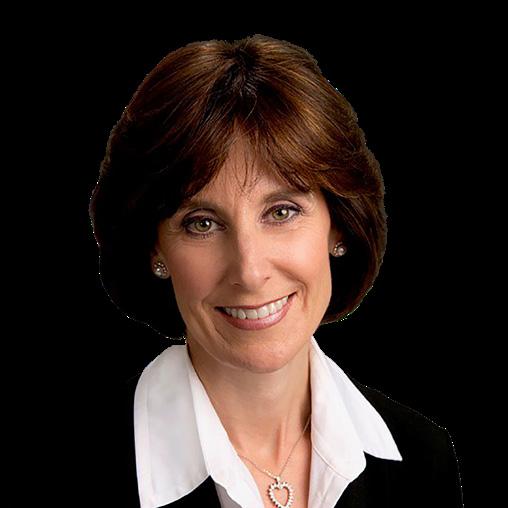
She hopes to transfer the skills she developed during her career to help CHW achieve its new fundraising milestones and to inspire CHW teams of devoted volunteers and supporters.
Elayna Latsky was born and raised in Montreal, Quebec and speaks both English and French. She holds a bachelor of commerce from Concordia University and a graduate diploma in public accountancy from McGill University. Elayna worked in public accounting in Montreal for several years before moving to Toronto to continue her career.
Elayna has volunteer experience from several boards and not-forprofit organizations, including The Leo Baeck Day School. She is a proud member of CHW Toronto Tamid Chapter, supporting CHW at the Chapter, Centre, and National level.
A member and leader within CHW for 25 years, this will be Elayna’s ninth year as a CHW Director. As CHW Immediate Past National President and past CHW Toronto Centre President, Elayna is excited to take CHW higher and higher while helping more people in Israel and here in Canada. For over 100 years, CHW has continued to make the world a better place and that has always been her motivation to volunteer with our wonderful organization.
Elayna and her husband Jonathan have been married for 27 years and have four sons. Elayna also loves visiting Israel, taking family trips there to experience CHW projects in person.
Tova Train joined CHW in 1994. She has been an active member of CHW Toronto’s Tamid Chapter, and she previously held the position of Secretary, Event Co-Chair, and President and remained PastPresident until 2020.
In 2015, Tova took on the Chair of the newly established Toronto Centre Resource and Technology Committee. In that capacity, she led the team from the development to the launch of the Go Guide, a Chapter resource for running events.
She became Toronto Centre VicePresident in 2016, National Gala Co-Chair for the 2017 Centennial Gala, and Toronto Centre President in 2018. In addition to being Toronto Centre Past-President, Tova is currently a member of the Board of Directors. As a CHW Director, she has Co-Chaired both the inaugural S.O.S Campaign in 2021 and Fashion Blooms in 2022.
Looking forward to her next term on the Board of Directors, Tova intends to contribute to the strengthening of our national centres and work with the team on innovative fundraising.

Jennie Blitz is the Director of Tax Credits and Financing Programs at Ontario Creates; the provincial government agency that facilitates economic development and investment in Ontario’s creative industries, including the book, film, television, and interactive digital media sectors.
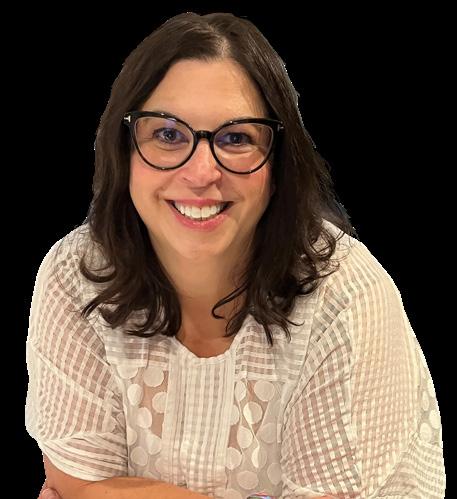
Jennie has been with Ontario Creates since 2004. Prior to that she was a policy advisor to the former Minister of Culture David Tsubouchi. Jennie is a lawyer by training and received her LLB from Osgoode Hall Law School (although she does not practice law now).
She is a lifetime supporter of CHW, having joined in 2002 with CHW Toronto Miriam Chapter. She is currently part of CHW Toronto L’Netzach Chapter, where she is the incoming Vice-President. Between the two Chapters, Jennie has held positions such as President and Fundraising Chair and served CHW Toronto on the Mentorship Committee. She was honoured to represent CHW when she attended the Aviv Conference in Israel in 2009.
Jennie is thrilled to be serving as a CHW Director and is looking forward to meeting colleagues from across Canada.
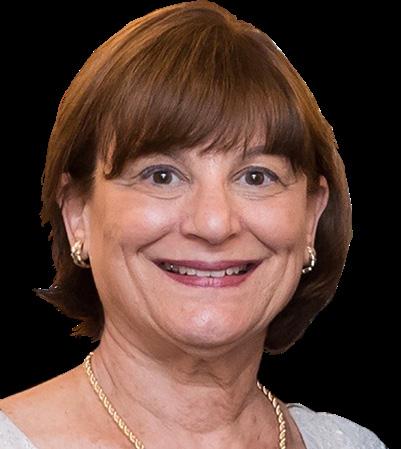
Marcia is proud to have served as CHW National Treasurer for the past two years and will continue to do so for the next two years. She enjoyed the opportunity to use her skills to help our cause, for which she feels a great passion. She has great respect and admiration for the volunteers and staff.

Marcia joined the CHW KitchenerWaterloo Sharon Chapter in 1982. She served as Chapter Treasurer and President and then as Council President. She sat on several fundraising committees and served as Co-Chair of the Annual Campaign in K-W for many years. Marcia is a lifetime member, a Sustainer, a Keyholder, a Major Donor, and a member of the Legacy Circle.
She earned an honours psychology degree and a master’s in cognitive psychology from the University of Waterloo. She went on to complete an MBA with a major in accounting from York University.

Subsequently, Marcia worked at KPMG for over 20 years as an accountant in the Independent Business group and the Tax group with a focus on Estates and Trusts and personal taxation.
Marcia has been married to Bernie for over 50 years. Her son and daughterin-law have blessed her with three grandchildren, who are the light of her life.
Dorothy Hanson was born and raised in Calgary, Alberta. After graduating from the American Academy of Dramatic Arts in California, she acquired a BA in psychology from the University of Calgary. Dorothy then moved to Vancouver, BC, where she obtained an executive secretarial diploma, then worked in theatre administration and as a talent agent. Eventually, she and her husband, Sheldon, owned a Belgian chocolate shop in West Point Grey, Vancouver. In 1998, they moved back to Calgary to start a family.
Before taking on the role of CHW Calgary Centre President in April 2021, Dorothy had been involved with CHW for many years. She had chaired the Connections Tea, co-chaired Games Day and served as Master of Ceremony at the latter. She was also one of the actors in the musical Ladies Who Lunch, with all proceeds going to Youth Aliyah.
Dorothy is following in the footsteps of her mother, Lucille Hansonz”l, who served as Treasurer and President of a CHW Calgary Chapter over many years and was an integral part of the annual Hadassah Bazaar. Dorothy hopes her daughter Davita will one day follow in her footsteps as well. Dorothy is also on the executive of the Jewish Historical Society of Southern Alberta and is a member of the Minyan League at Beth Tzedec synagogue.
Dorothy believes that everything we do as an organization should be with reverence to the past; that will guide us into CHW’s future.
 Ariella Schachter National Director
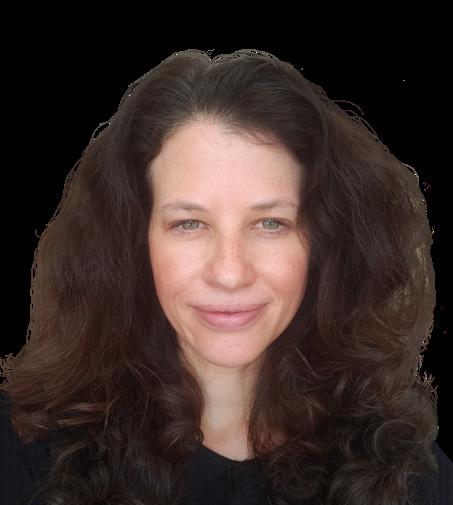
Ariella Schachter is a native Montrealer who recently returned to her hometown after living in New York for nearly 15 years. She is a mom of two girls, aged 7.5 and 5. Her family has a long history of involvement and support of Israel and is on the board of The Eldee Foundation and The Jerusalem Foundation.
Ariella is an advisor to ‘Frank’ a unique leadership community for women. She has a background in digital marketing and strategy and account direction.
While in New York, Ariella worked at top digital ad agencies for Fortune 100 brands, followed by nearly ten years at Google on an Internal Creative Think Tank Team serving Google’s top clients.
Currently, she is working on special projects and consulting for ‘BFF’, a Web3 company whose mission is to onboard women and non-binary people into the forecasted $10 Trillion Web3 market.
Her late grandmother, Neri Bloomfield, served as National President for CHW, and Ariella is excited to get more involved and help CHW raise awareness among a new generation.
Linda Senzilet National DirectorLinda was introduced to CHW in the early 1980s by the late Terry Schwarzfeldz’’l, our beloved past National President. She felt an immediate connection to the organization and has been active in CHW Ottawa Centre ever since.
Over the past 40 years, Linda assumed a range of executive and chairperson roles at the Chapter and Centre levels, including President of Amit Chapter and Co-President of CHW Ottawa Centre. Since 2020, she has been a member of the CHW Board of Directors, assuming the role of National Secretary.
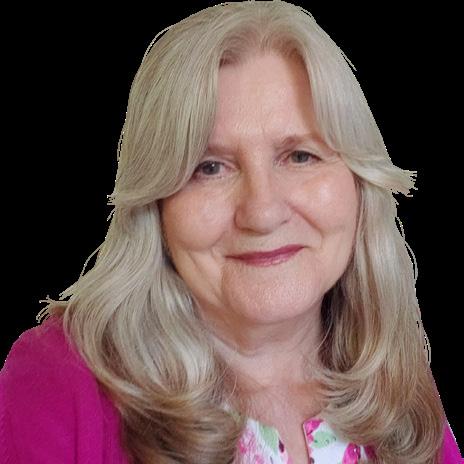
In her professional life, she worked for nearly 40 years in the health sector, in direct patient care, and then for the federal government as an epidemiologist and senior policy advisor. After her retirement, Linda ran a home-based, scientific editing business.
Linda’s other volunteer experiences aligned with her love of literacy (tutoring high-risk teenagers with learning exceptionalities) and dogs (puppy raiser with the Canadian Guide Dogs for the Blind). She was honoured to be asked to continue in her role as CHW National Secretary for another two years, and she looks forward to working with a team of dedicated volunteers and professionals to ensure that CHW fulfills its mission, vision, and goals.
Stephanie Rusen National DirectorSeventeen years ago, Stephanie Rusen joined CHW and discovered a whole new world of caring, giving, and friendship. Nine years later, she became the CHW Vancouver Centre President and never looked back.
Stephanie has also held other positions at the Centre and National level, including Centre Treasurer and National Leaders Assembly. Stephanie has a professional background as an Insurance Broker and owned her own company for 14 years.
She also owned her own daycare centre for 10 years and taught elementary school French. Stephanie believes the dedication of our volunteers makes a difference in the lives of people in Israel, so much so that she stepped up for a second term as CHW Vancouver Centre President (2020-2022) and then as a CHW Director in 2020.
During her time at CHW, Stephanie discovered leadership qualities that she never knew she had. She is really looking forward to working with this new Board of Directors as they continue making that special difference so unique to CHW.
Barb Rosenstein is a committed CHW volunteer and supporter. She is passionate about CHW’s projects in Israel, and truly feels our collective responsibility is to empower CHW to fulfill its mandate.
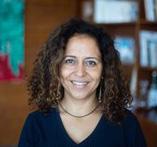
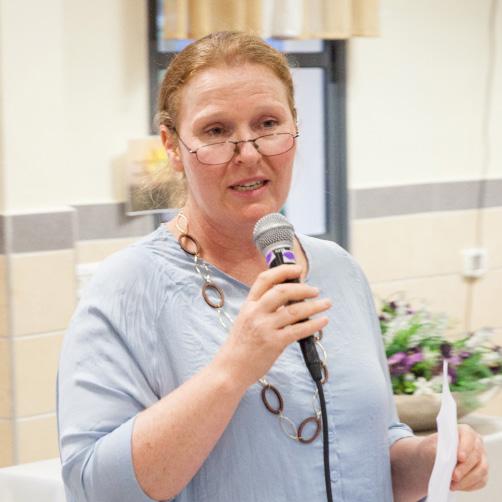
As such, Barb has had numerous opportunities to understand and connect with CHW’s important mission as a leading philanthropic organization.








Barb is the Immediate Past Toronto Centre President and has assumed leadership roles, alongside many talented CHW volunteers and professionals, to ensure the success of numerous CHW initiatives at both the Centre and National levels.

As CHW Toronto Centre Vice-President (2020-2022), Barb chaired two very successful Toronto Annual Campaigns. She was twice Co-Chair of the CHW Walk to Protect Children, which raised more than $100,000 each of two years. Barb also Co-Chaired the Toronto Centre Mentorship program. As a member of Tamid Chapter for many years Barb held numerous positions, including Chapter President, Vice-President, Treasurer, and Event CoChair for two terms.
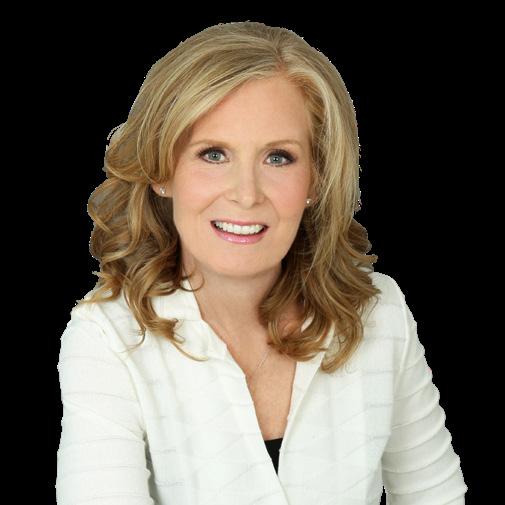
Professionally, Barb is a digital health consultant, with over 25 years of experience leading professional teams through large-scale digital transformation in the health services sector. Barb has a bachelor of nursing degree from McMaster University and a master of science degree from the University of Toronto.
On a personal note, Barb and her husband Jerry, a proud CHW supporter, have visited Israel several times, including visits to CHW projects.


As an organization created over one hundred years ago, we must continue to evolve and adapt to the changes and challenges of our time to stay relevant. Our strategic planning committee, comprised of past National Presidents, current Board of Directors, and senior staff professionals, developed the goals and initiatives outlined in the strategic plan highlights below. These goals will guide CHW forward to 2027 and ensure we remain strong, relevant, and impactful.
The five priority goals outlined in the strategic plan will strengthen our national organization in Canada to create impact for the at-risk women and children we support through our programs and projects: REGARDLESS OF RACE, RELIGION, OR POLITICAL VIEWS

• National collaboration between professionals, volunteers, centres, and donors
• Increase focus on multi-generational connections

• Help grow the leaders of tomorrow
• Develop more strategic partnerships to change paradigms, raise awareness, and empower victims of domestic violence
• Fund programs that increase economic independence and employability of women
• Provide sustainable funding through a lens of women-led social enterprises
• Support women entrepreneurs to build sustainable businesses
• Create an annual prize awarded for innovative ideas that empower women, break the cycle of violence, and promote gender equality

• Have strong professional leadership in Israel to identify opportunities for impact
• Fill existing gaps and ensure best practices through project partners in both countries
• Focus on strengthening partner relationships both in Canada and Israel
• Implement strategies to engage Canadians living abroad, including those living in Israel
• Provide a fun vehicle to engage and educate new and existing supporters
• Enhance relationships with diplomats in Canada and Israel

• Implement opportunities for diversity in philanthropy through social impact investing and venture philanthropy
• Remove any obstacles to traditional giving methods
• Develop new strategic relationships, adding diverse partners in Israel and Canada
• Build a strong professional leadership team and engage volunteers nationwide who possess commitment and passion to ensure impact is a priority
• Share success stories about anyone who has benefited from CHW’s support
• Demonstrate the impact our organization has had on women and children
• Increase in positive results, people we support, total donations annually
• Foster inclusivity as a non-religious, non-political, and non-partisan organization
• Strategically strengthen existing relationships with CYJ and local community groups
• Provide multiple opportunities to engage through local and national campaigns, events, and fundraisers

• Develop a link between similar organizations in Israel and Canada
• Create outreach programs especially for the LGBTQ+ community at youth level
• Create multi-generational programming to grow the volunteer base
• Develop corporate engagement opportunities in Canada to support local partners
• Use Journey 4 Impact to get more people to Israel to see CHW’s impact firsthand

• Demonstrate the benefits of volunteering as our partner to create social change
• Build on the strength and rich history of successfully changing so many lives
• Promote the generations of women volunteers and our strong base of loyal donors
• Raise greater awareness and distinguish CHW in Israel as a unique entity
• Articulate who we are and draw awareness from untapped audiences
• Showcase inspiring achievements and demonstrate how we create impact
• Raise our profile in the Canadian and Israel communities
• Enhance our digital marketing strategy
• Continue to provide public education through our campaigns
• Engage celebrities and social media influencers in a strategic way
• Develop national community events to increase brand awareness CHW is excited to invite you to join us and together we will push up our sleeves and participate in this important work over the next five years. We have already started, come join us!
Gifts at or above $10,000 applied to CHW’s support of WIZO projects and programs.

Recognizes gifts at or above $10,000 in support of non-WIZO projects.
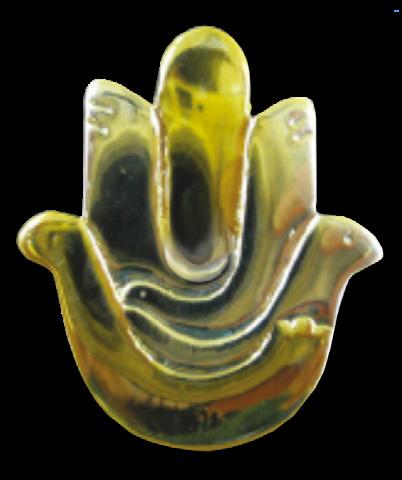
When you give a gift of $1,800, you will receive a beautiful Women for Women pin recognizing your gift, which we know you will wear with pride.


As a member of the Double Chai category, you will receive a beautiful Ketubahstyle certificate designed in Israel, in recognition of your $3,600 gift.


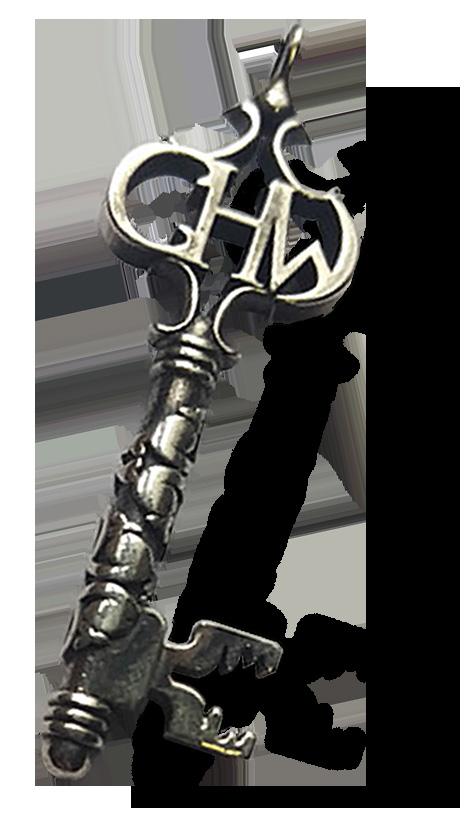
As a CHW Keyholder, you will receive a beautiful and stylish sterling silver pendant, made in Israel, as a reminder of your $5,000 gift and commitment to CHW.

Join the Circle of Chai. When you give monthly you change the lives of children, women, and families who are battling hunger, a devastating disease, or domestic violence. Circle of Chai supporters contribute gifts of $18, $36, or $54 monthly.


Sustainers are the lifeblood of CHW, providing a base of annual support for the organization.

To join the CHW Sustainer program, donors commit to an annual gift of $1,000 or more in perpetuity and receive special benefits and access to programs.

Becoming a CHW Sustainer is a big decision with enormous impact over your lifetime. By STEPPING UP, you commit to gradually increase your annual giving scalable over two to four years, until you reach the Sustainer level of a minimum $1,000 donation each year.
The ongoing growth and success of Canadian Hadassah-WIZO (CHW) projects depend increasingly on the generosity of those who help us plan for the future. The CHW Legacy Circle honours those who have included CHW in their estate plans.


as mentioned in Part One, (which you can read by clicking on the icon to the left) published in the Spring 2022 issue of ORAH, Lillian Freiman founded Canadian Hadassah-WIZO in 1917. Despite her busy home life (she was married with three children), Lillian hosted meetings, opened her home to new immigrants, supported countless causes, supported veterans, raised funds for those in need, established the first agricultural school for women in Israel (CHW Nahalal Youth Village), travelled the world to fight injustice, and, as you are going to read in the following article, oversaw the transport of 150 Ukrainian Jewish orphans to Canada.


As Europe lay ravaged in the aftermath of World War I, Lillian Freiman, the wife of a wealthy Ottawa businessman, A.J. Freiman, could not sit idly by. Being a tireless worker and a brilliant organizer who in 1917 founded Canadian HadassahWIZO, Lillian pre-arranged families looking to adopt children, chartered a boat, the S.S. Scandinavian, and sailed for Antwerp, Belgium. This daring Canadian Hadassah-WIZO mission was a partnership, with the Canadian Jewish Congress, which coincidentally was headed by her husband.
On August 19, 1921, the rescue mission returned to Quebec with 150 Ukrainian Jewish orphans, including a few babies, which Lillian is said to have transported in her arms, to families waiting to adopt them.
One hundred years later, Lillian Vineberg-Goodman, marvels at the heroism of her great-aunt and great-uncle, Lillian and A.J. Freiman, that changed the lives of the orphaned children and left a lasting legacy through their descendants. The Freimans also adopted one of the children, Gladys Razovsky, who Vineberg-Goodman explains, “grew up very much a part of the family.”
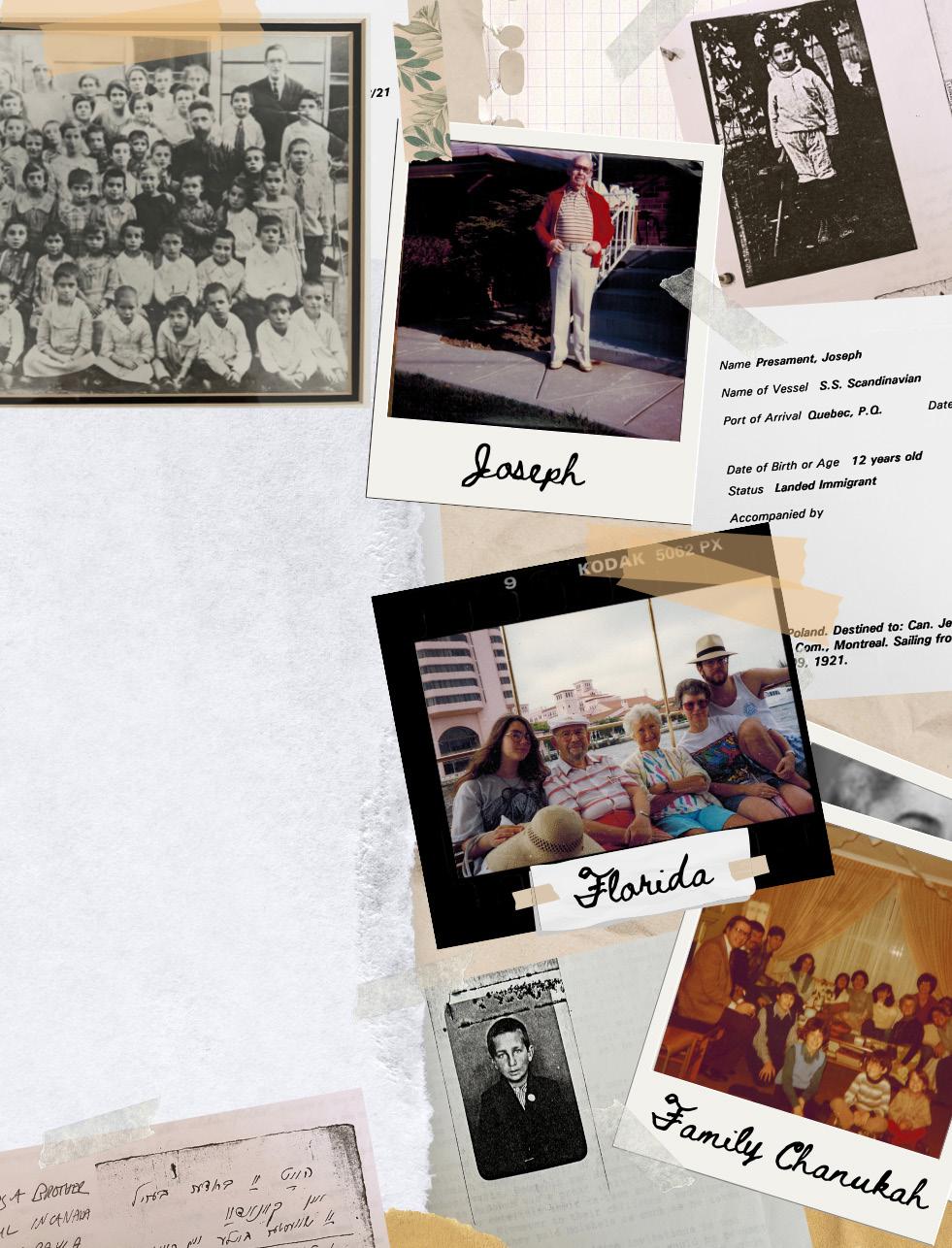
Joseph Presament was one of the rescued orphans, who at the age of 12, found himself starting a new life with an adoptive family. (In the above group photo, Joseph is immediately to the right of the man standing in the back top row.)
Joseph’s granddaughter, Rabbi Lisa Grushcow, explains that her grandfather was lucky to be able to come, as so many children were not well enough to make the journey, and the new life was initially not easy. “He didn’t have the best relationship with his adoptive family, and he wasn’t able to finish high school or pursue his dream of being an artist, but he had a life and he was able to build a family. And he had all those years in Florida with his grandkids at the pool.”
Rabbi Grushcow recognizes that Lillian Freiman was “a doer,” and this desire to act was passed on in the Freiman family and is, as she describes it, “so deeply Jewish.”
She continues, “One of the things that stays with me, is that these were lay leaders who did this, leaders in the community. They were the heroes of this story. These people who said we’re going to do something rather than nothing. We’re not going to be able to save everybody, but we’re going to be able to save somebody. Always remember what an immense difference that makes.”
Vineberg-Goodman remembers conversations about her great-aunt who passed away before she was born, “All she thought of if there is an injustice in the world, what are we going to do to correct it?”
Vineberg-Goodman concludes, “What I learned from her is, if you can do one mitzvah every day or just do something to help somebody, you are changing a life. But we have to have guts and we have to stand up to be counted. And we have to make our voices heard.”













Mark Halpern, Certified Financial Planner, Trust & Estate Practitioner, Master Financial AdvisorPhilanthropy and CEO of WEALTHinsurance.com, shares his knowledge
CREATE AN EXCEPTIONAL CHARITABLE GIFT TO CHW that combines favourable elements of an Annuity, Life Insurance, Philanthropy and Tax. Achieve guaranteed income, maximize legacy gifts, create annual gifts, and save taxes.
A 70-year-old married couple, paying taxes at the highest rates, age 85 life expectancy. They are prepared to make a $1 million charitable gift to Canadian Hadassah-WIZO (CHW) and want to maximize the impact of their generosity and reduce tax. Their $1 million gift can be directed to CHW.
$1 million CHW Legacy Gift + Pension $ 1 million Life Insurance legacy gift + receive guaranteed lifetime pension of 9.16% on the $1 million donation
$1 million CHW Legacy Gift + Annual Gifting
$ 1 million legacy gift + lifetime annual gifts. If income not needed, donate it to CHW and further reduce annual taxes.
Annual donation for life: $42,582
Annual tax savings: $21,465
Total lifetime donation to CHW: $1,638,775
Net cost to donors: $678,025
WATCH “ The
Philanthropy
Mark’s

at Moses
$1 million CHW Legacy Gift + Second Larger Legacy Gift
$1 million Life Insurance legacy gift + additional $1.7 million to CHW. Use income to fund another charity Life Insurance policy for $1.7 million
Total gift to charity: $2.7 Million

Annual tax savings: $21,465 Net cost to donors: $678,025
$1 million CHW Legacy Gift + $1.7 million Estate Recapture
$1 million Life Insurance legacy gift + $1.7 million estate recapture for family. Use the income to fund another $1.7 million Life Insurance policy for your family.
Total to CHW: $1 million
Total to family: $1.7 million
DON’T DISINHERIT YOUR FAMILY. ADOPT A CHARITY AND DISINHERIT THE TAX DEPARTMENT.
Mark Halpern can be reached by phone at 416-364-2929, or by email: Mark@WEALTHinsurance.com
ideacity conference: www.ideacity.ca/video/mark-halpern-the-new-philanthropy
“A unique charitable donation that maximizes the impact of your generosity and reduces your taxes.”







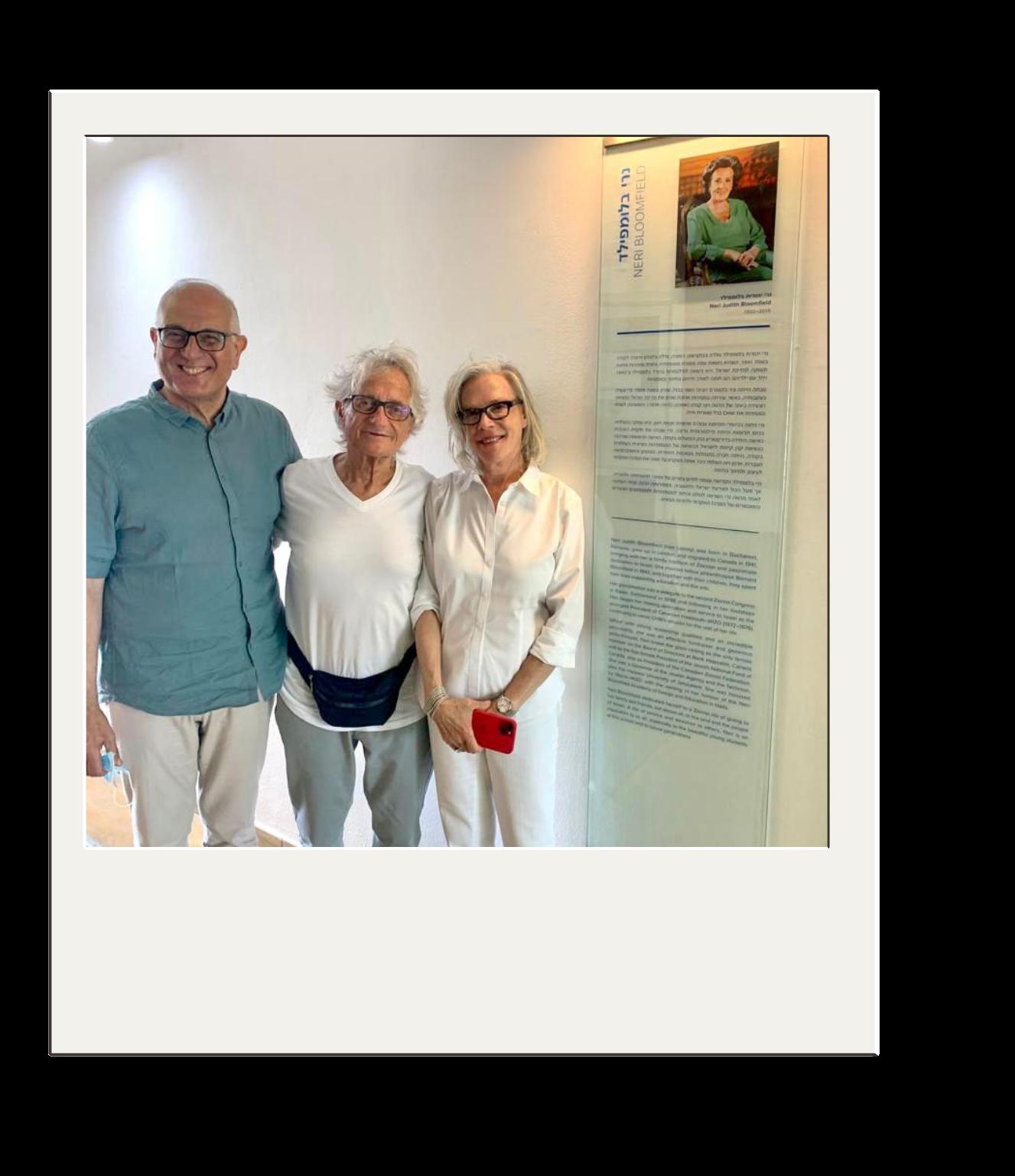
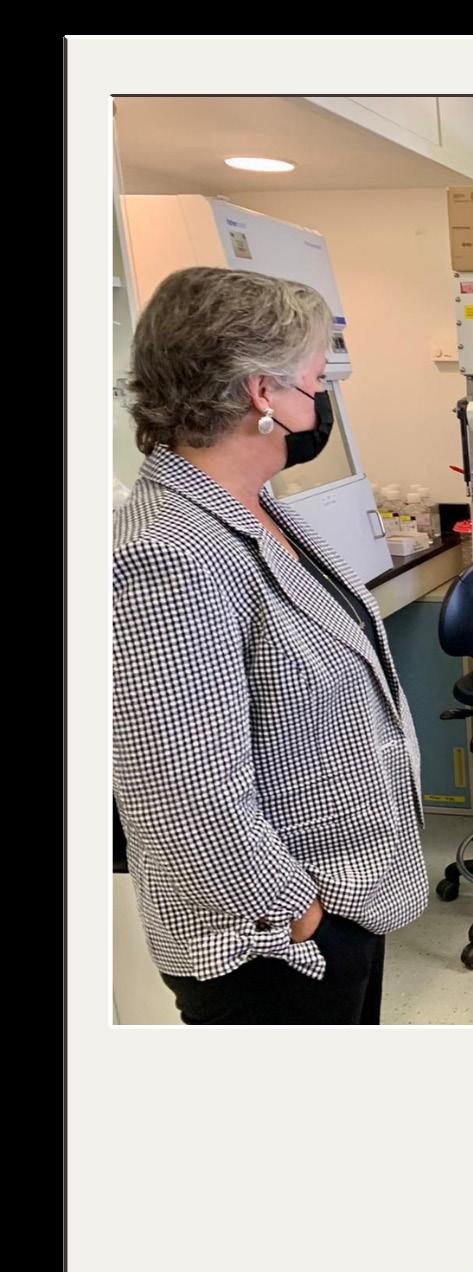
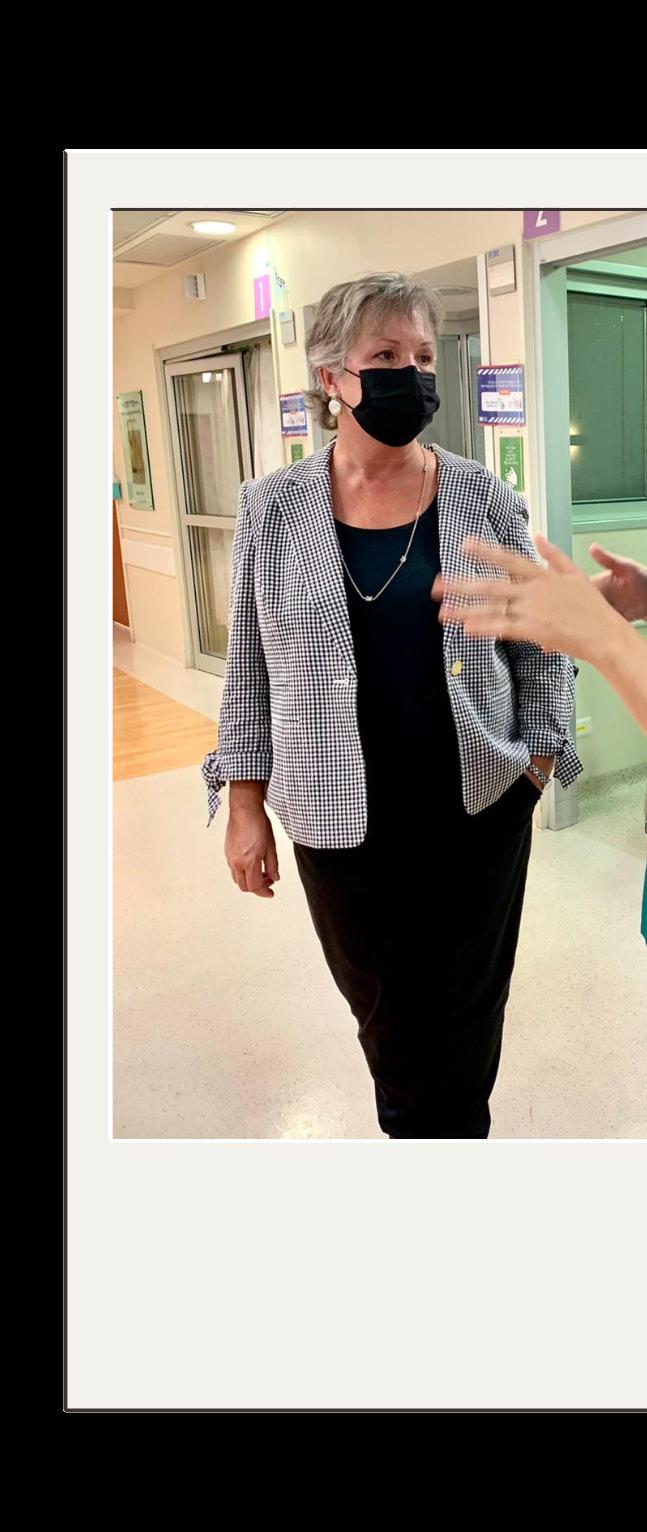
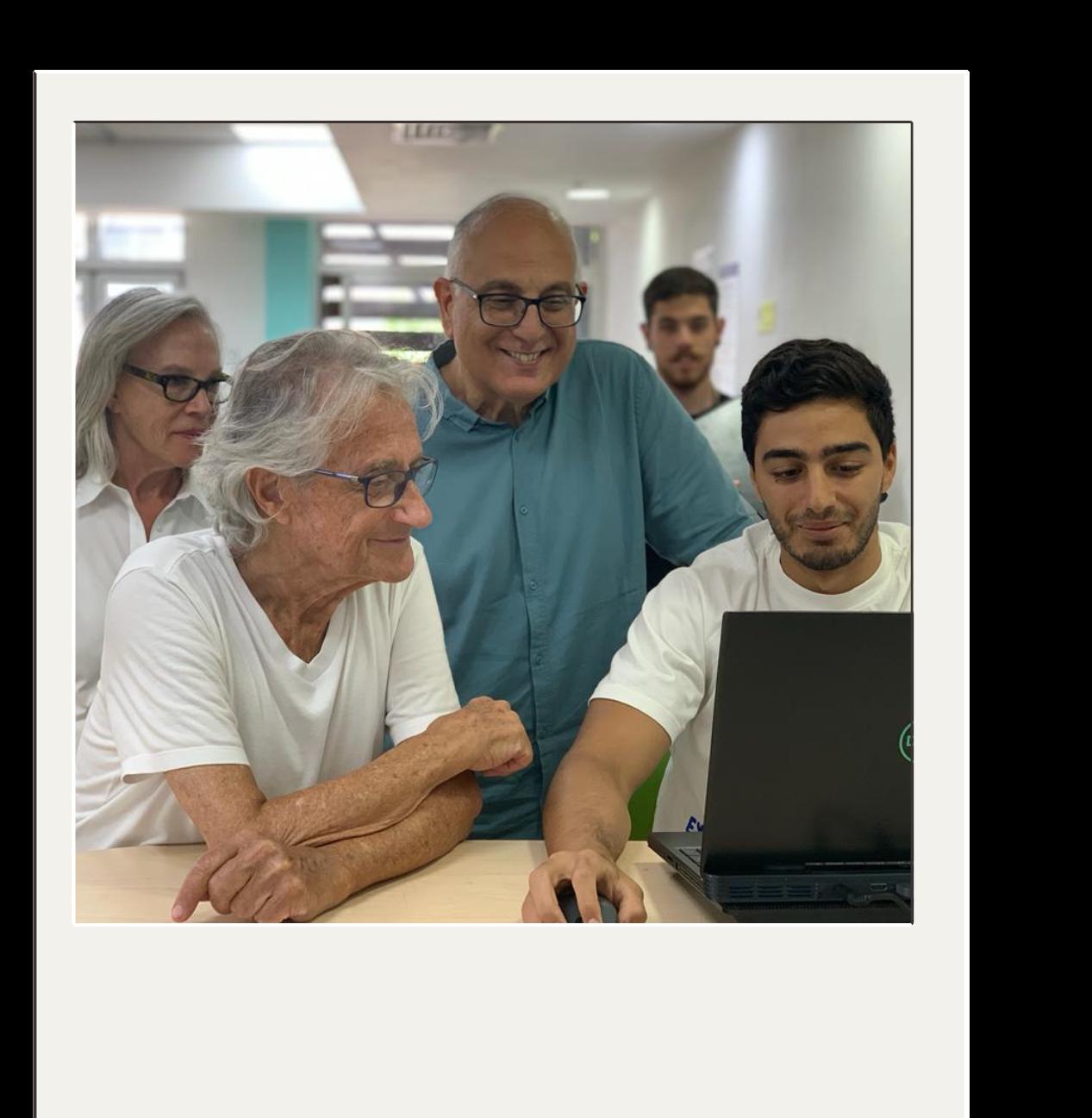
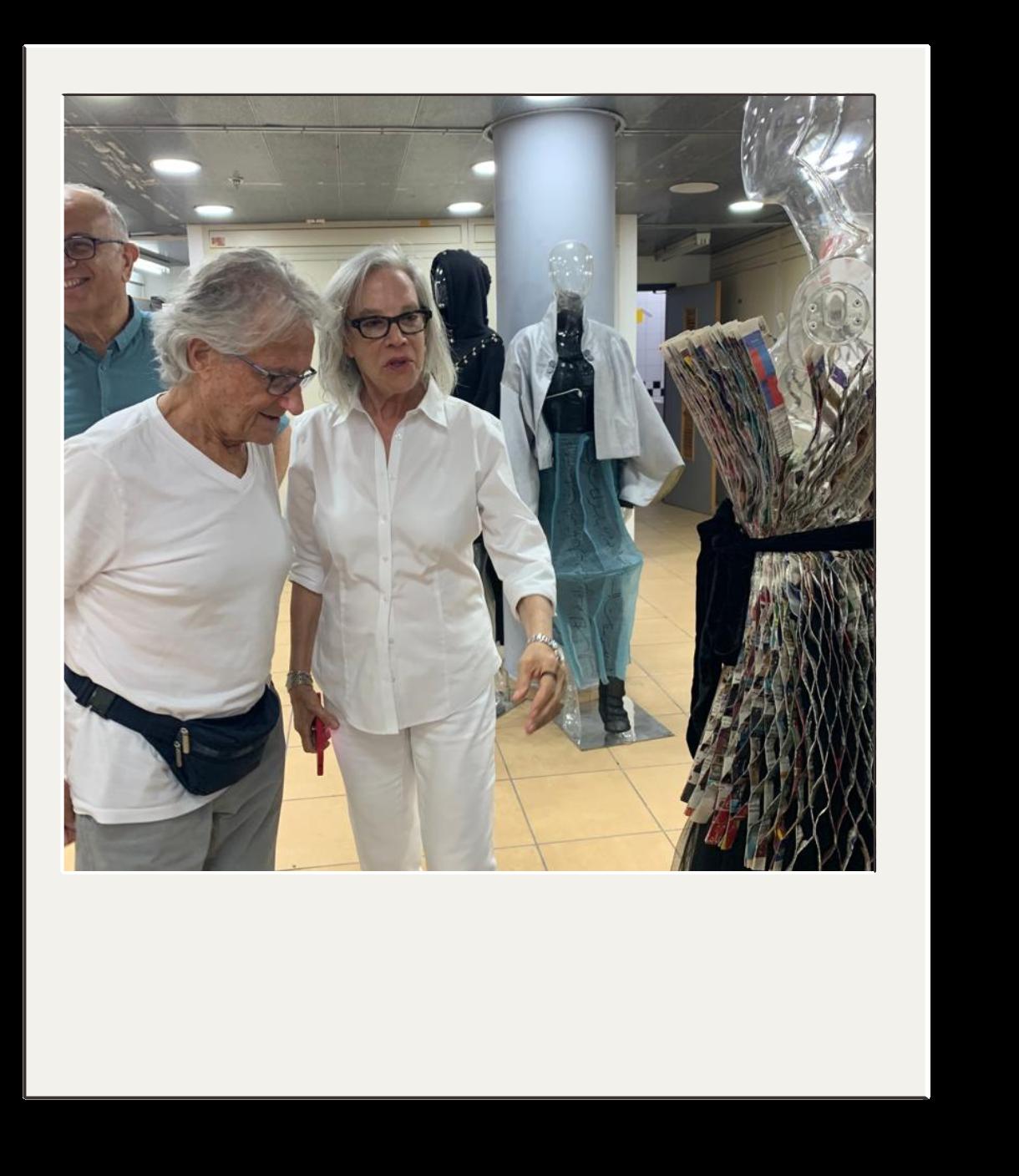
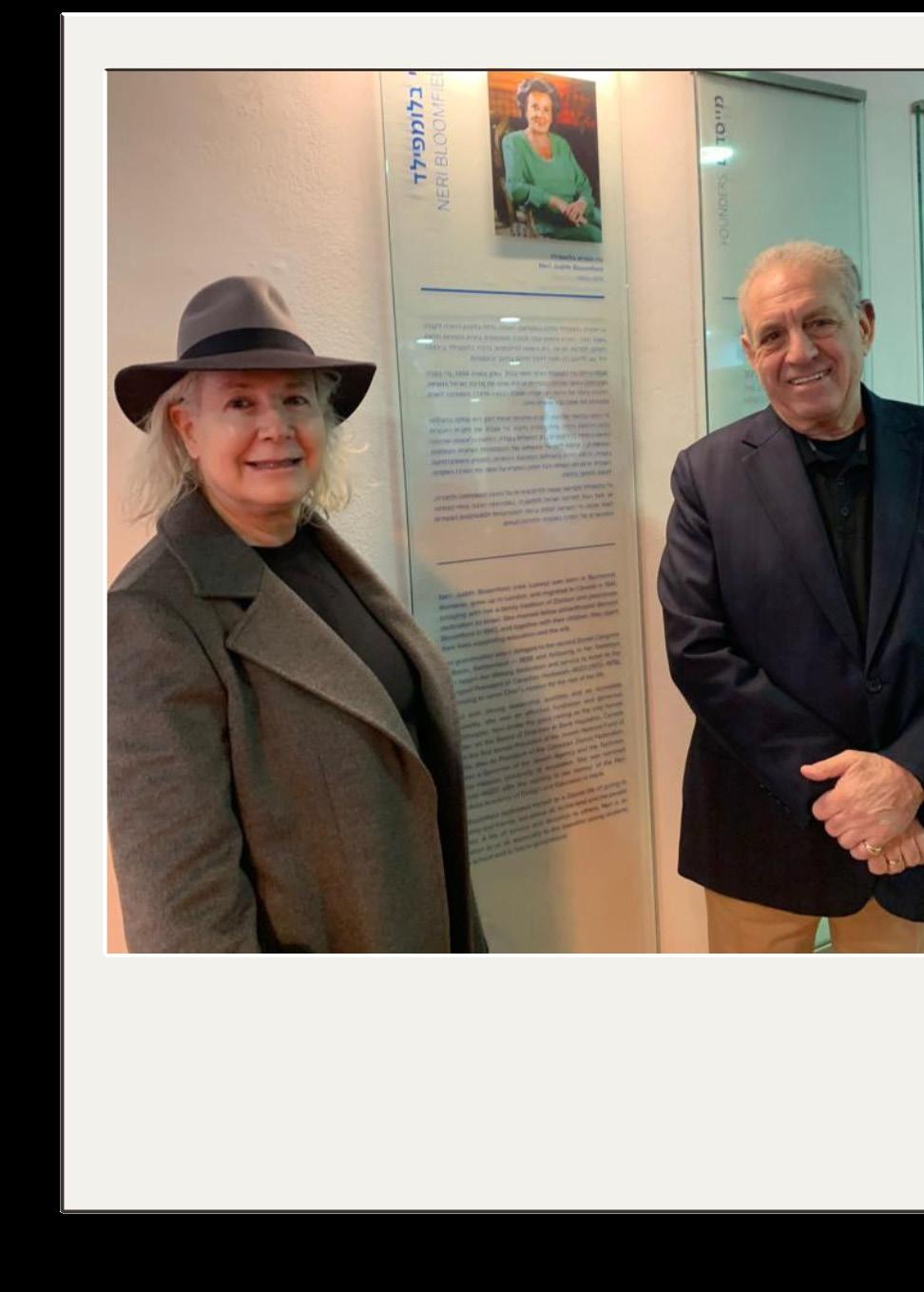

 Evelyn and Raphael Schachter visited CHW Neri Bloomfield Academy of Design.
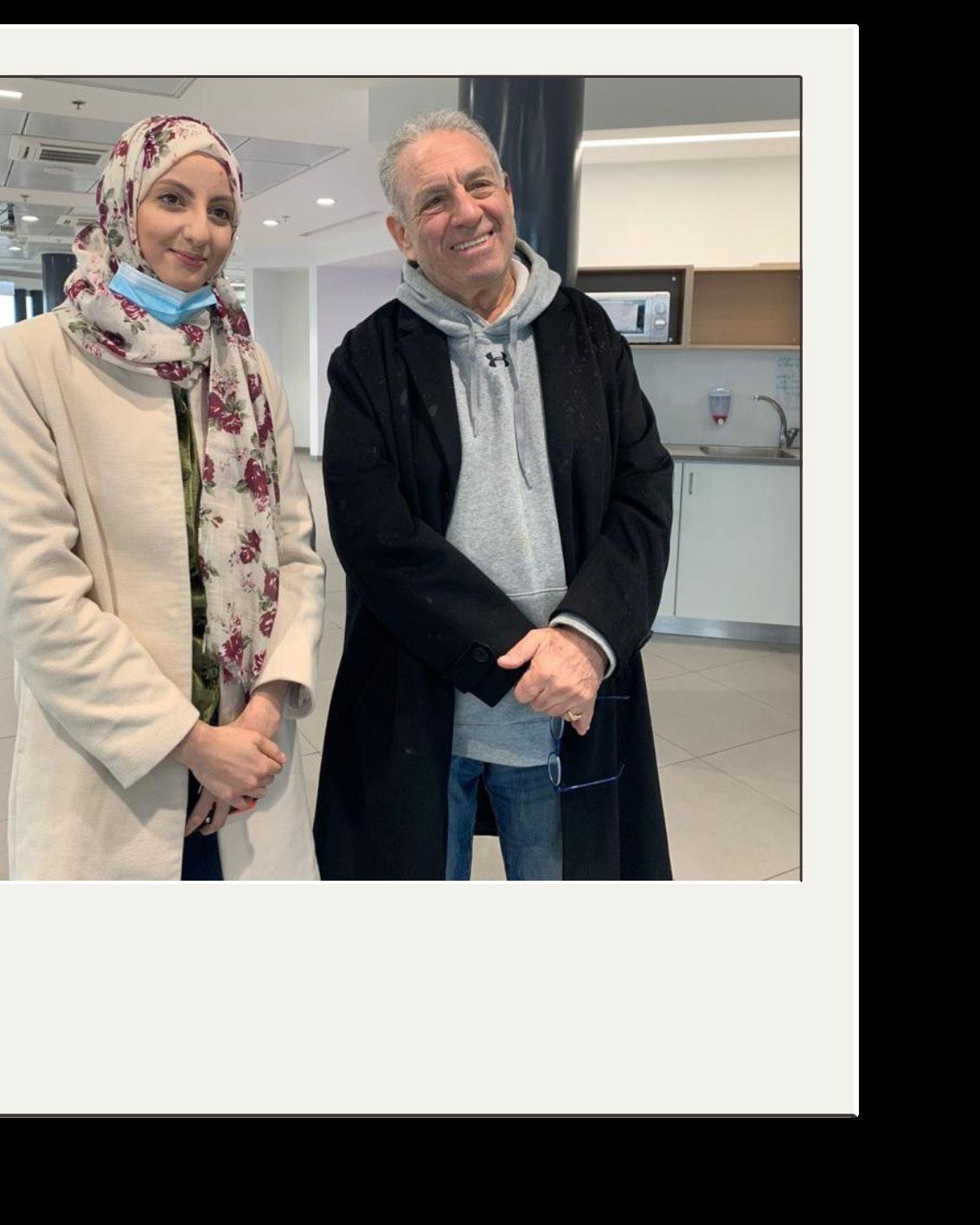
Nancy and Harry Bloomfield visited CHWNeri Bloomfield Academy of Design.Harry Bloomfield visited The Blenderat Hadassah Academic College.
Ambassador Lisa of Canada to Israel
Evelyn and Raphael Schachter visited CHW Neri Bloomfield Academy of Design.
DONOR SPOTLIGHT: The Eldee Foundation is supporting annual scholarships at CHW Neri Bloomfield Academy of Design, for several needsbased and achievementbased students.
Evelyn and Raphael Schachter visited CHW Neri Bloomfield Academy of Design.
Nancy and Harry Bloomfield visited CHWNeri Bloomfield Academy of Design.Harry Bloomfield visited The Blenderat Hadassah Academic College.
Ambassador Lisa of Canada to Israel
Evelyn and Raphael Schachter visited CHW Neri Bloomfield Academy of Design.
DONOR SPOTLIGHT: The Eldee Foundation is supporting annual scholarships at CHW Neri Bloomfield Academy of Design, for several needsbased and achievementbased students.
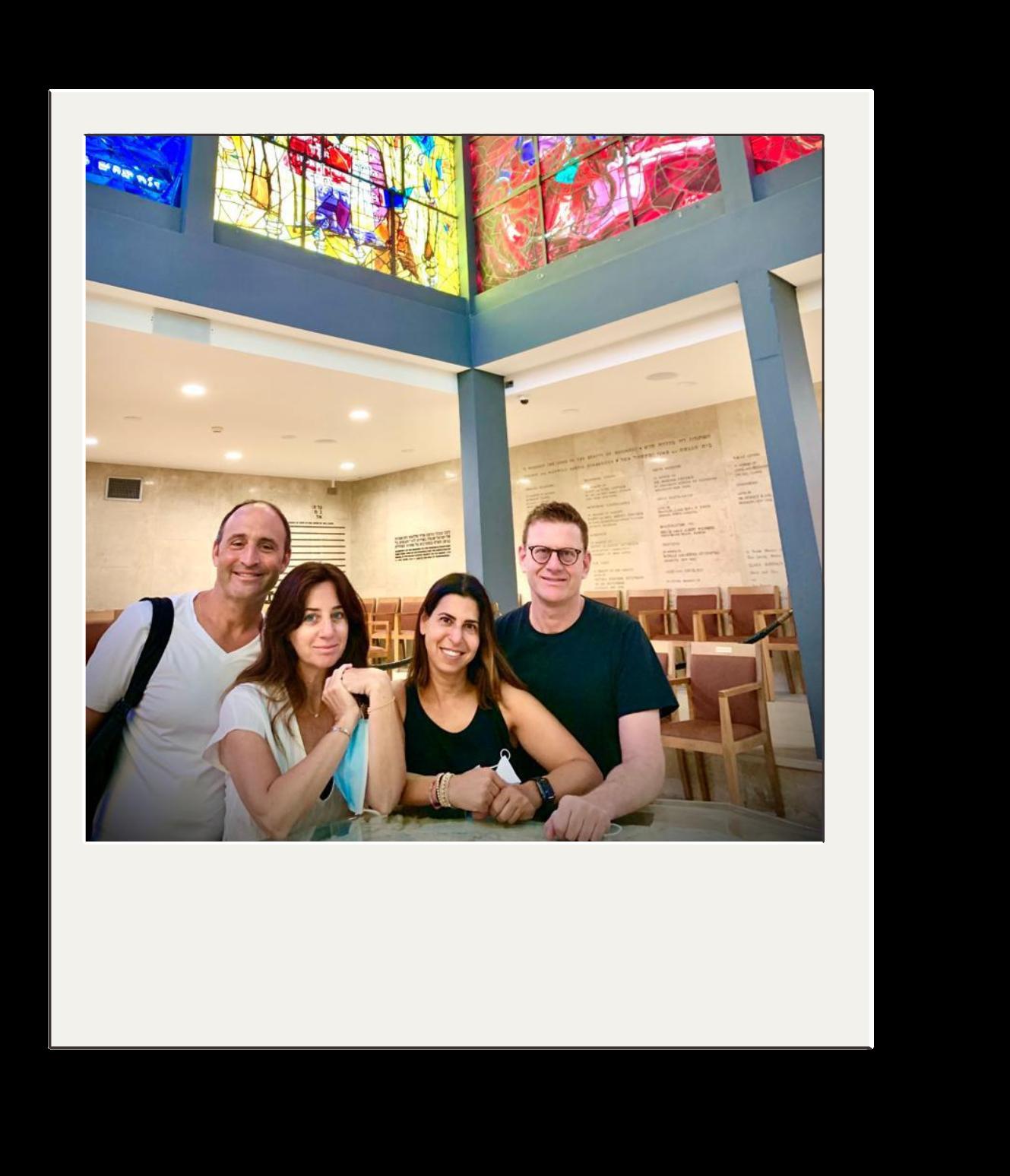

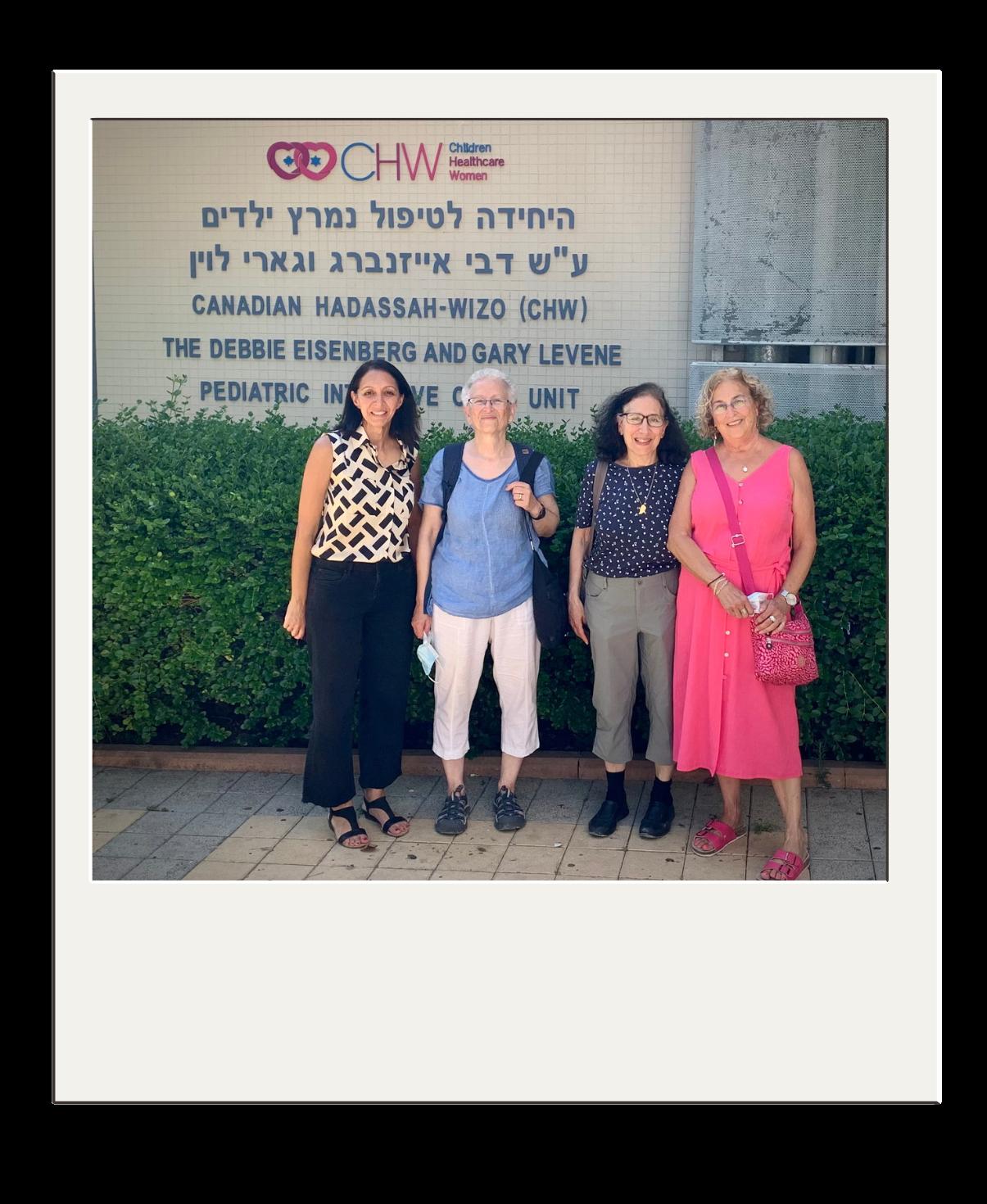


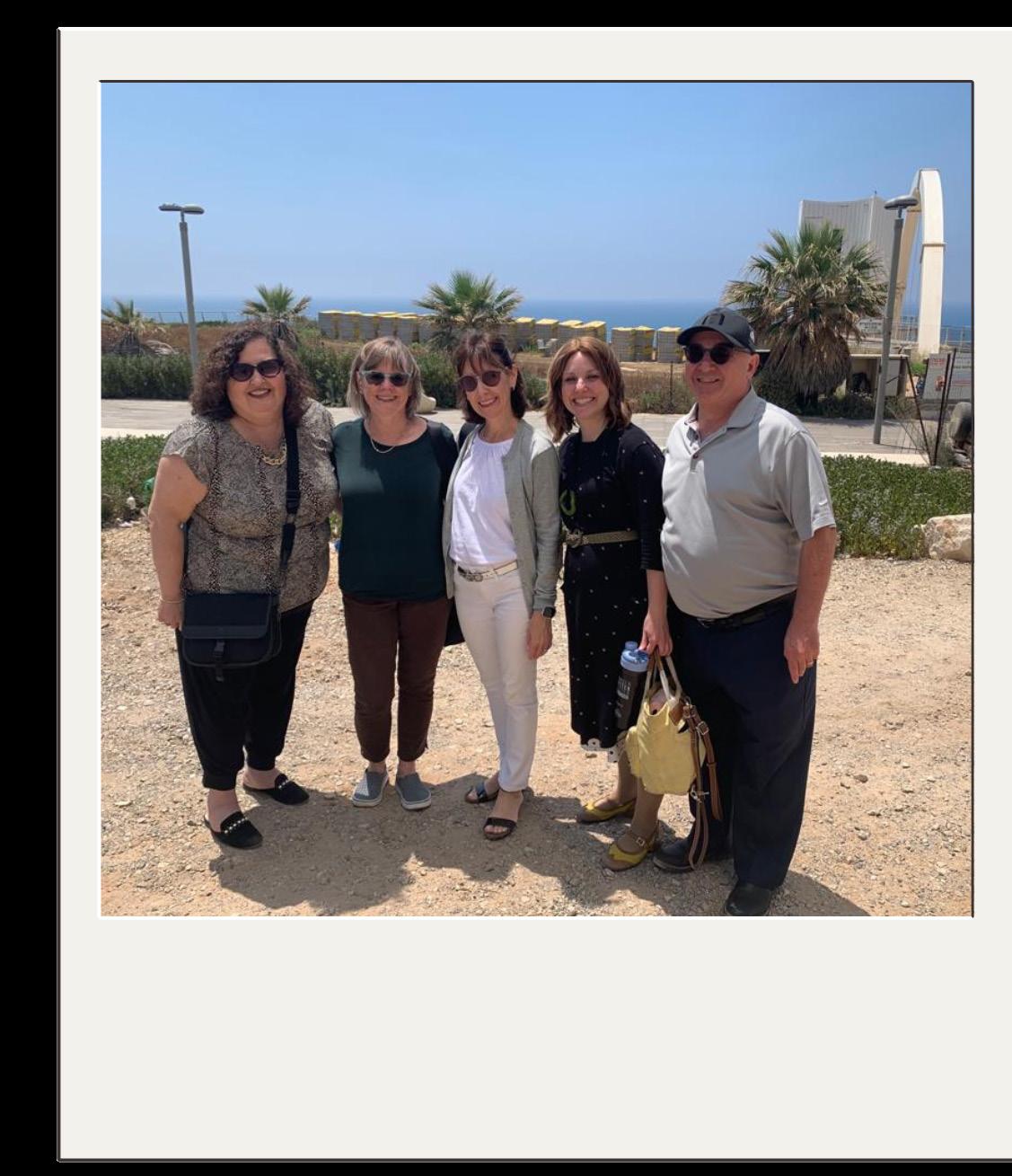
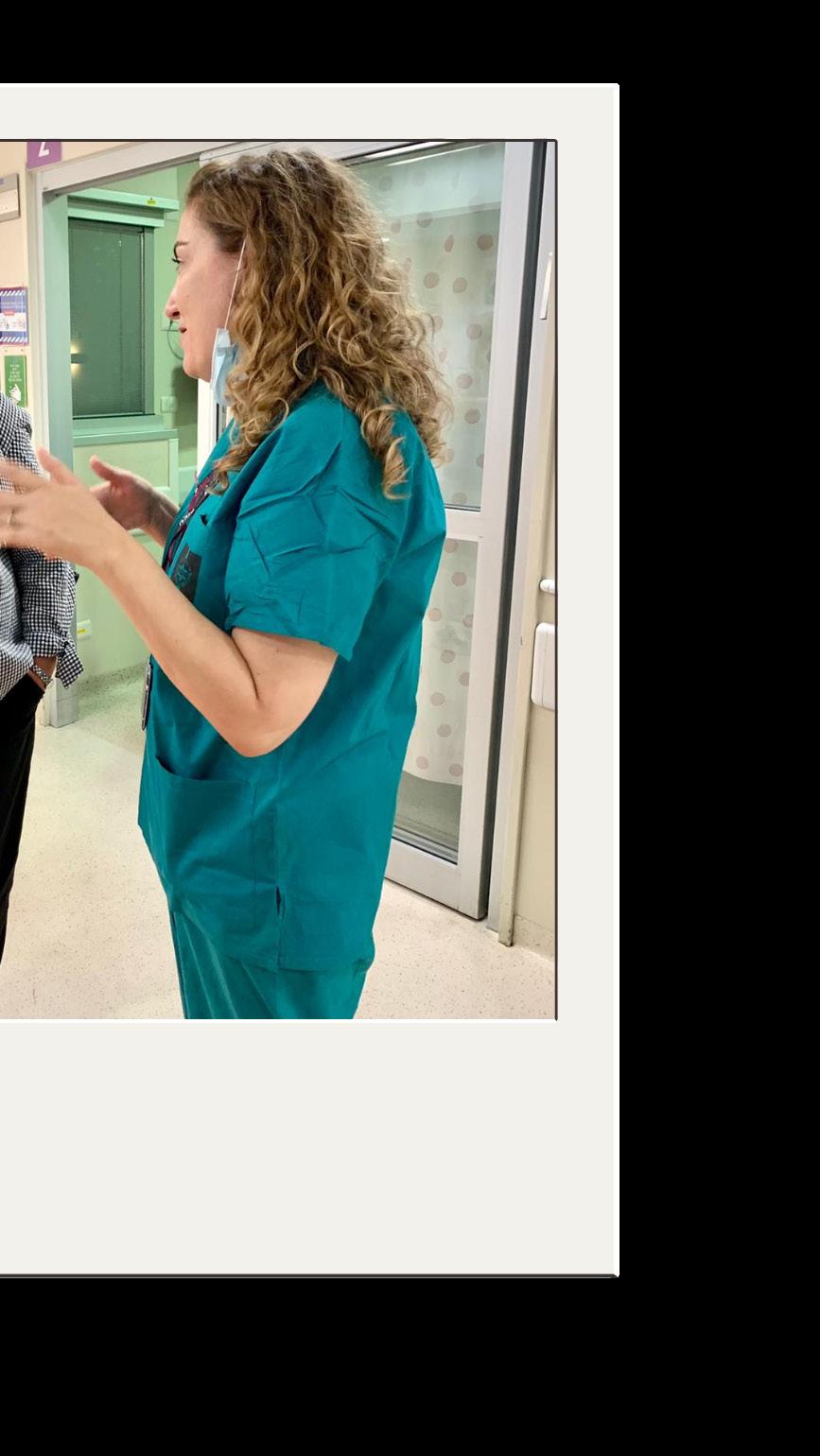
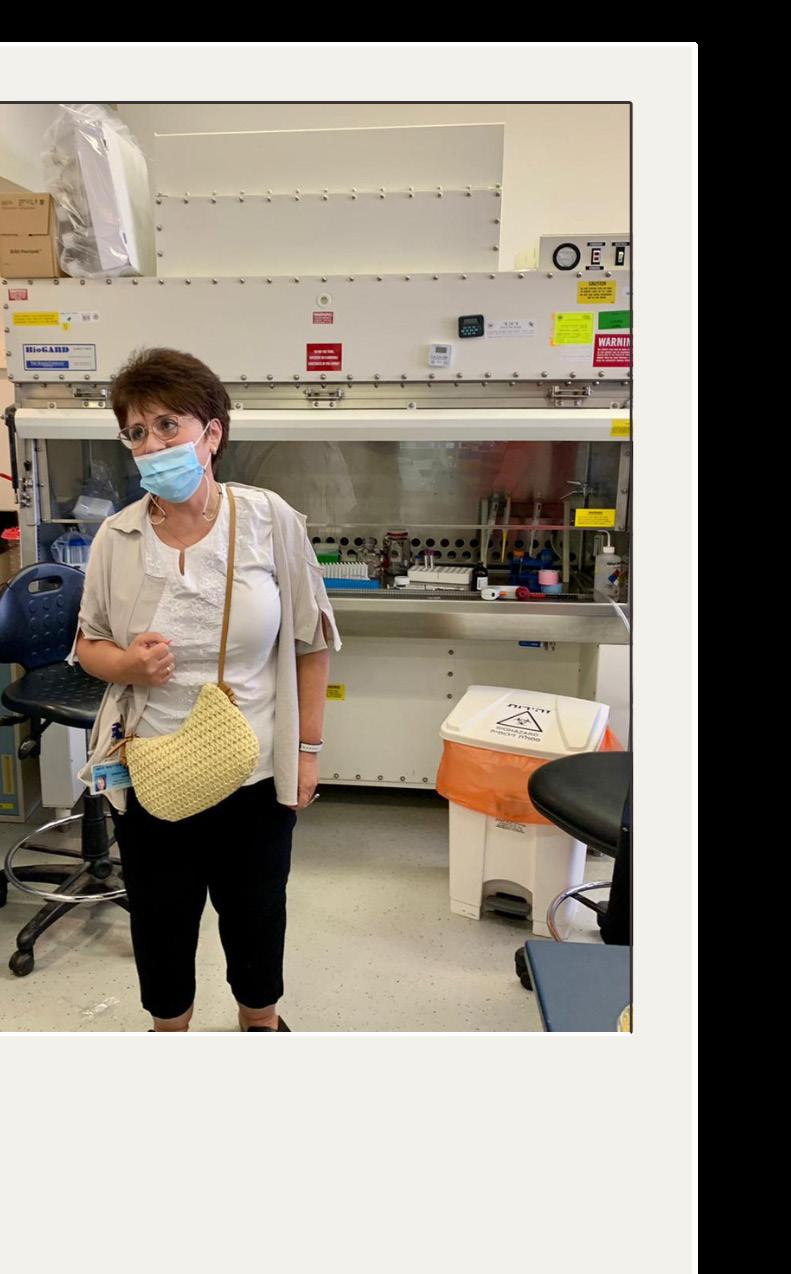 Martin and Joelle Sacksner and Alicia and Howard Epstein visited the PCCCU at Hadassah Hospital.
t vISItSBeverly and Lynn Davis visited Shamir Medical Center.
Claudia and Paul Goldman visited CHW Hadassim Children and Youth Village.
CHW
Lisa Stadelbauer and the Embassy Israel visited Hadassah Hospital.
Claudia and Paul Goldman visited CHW Hadassim with CHW CEO Lisa Colt-Kotler and CHW National President Elayna Latsky.
Martin and Joelle Sacksner and Alicia and Howard Epstein visited the PCCCU at Hadassah Hospital.
t vISItSBeverly and Lynn Davis visited Shamir Medical Center.
Claudia and Paul Goldman visited CHW Hadassim Children and Youth Village.
CHW
Lisa Stadelbauer and the Embassy Israel visited Hadassah Hospital.
Claudia and Paul Goldman visited CHW Hadassim with CHW CEO Lisa Colt-Kotler and CHW National President Elayna Latsky.
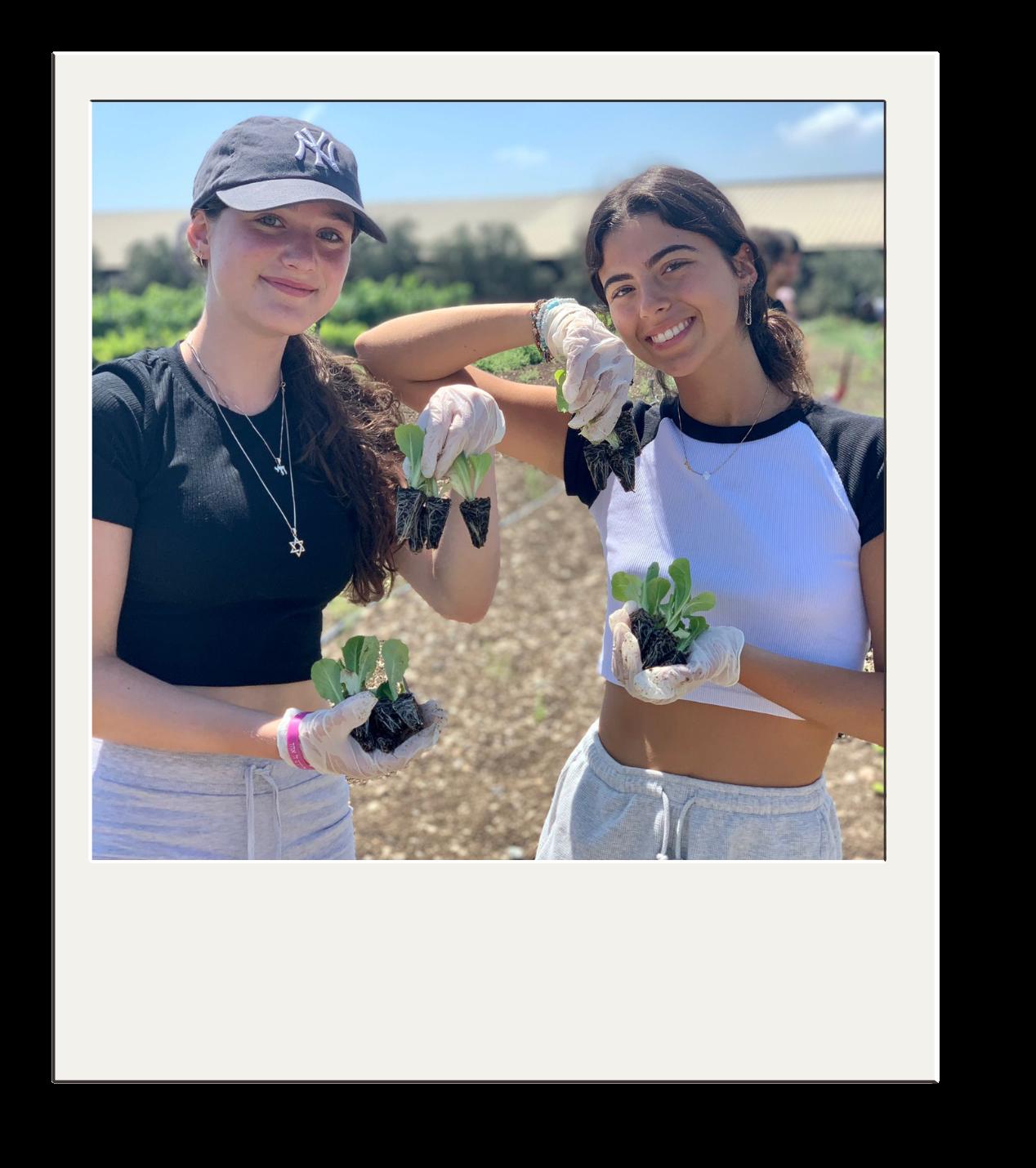
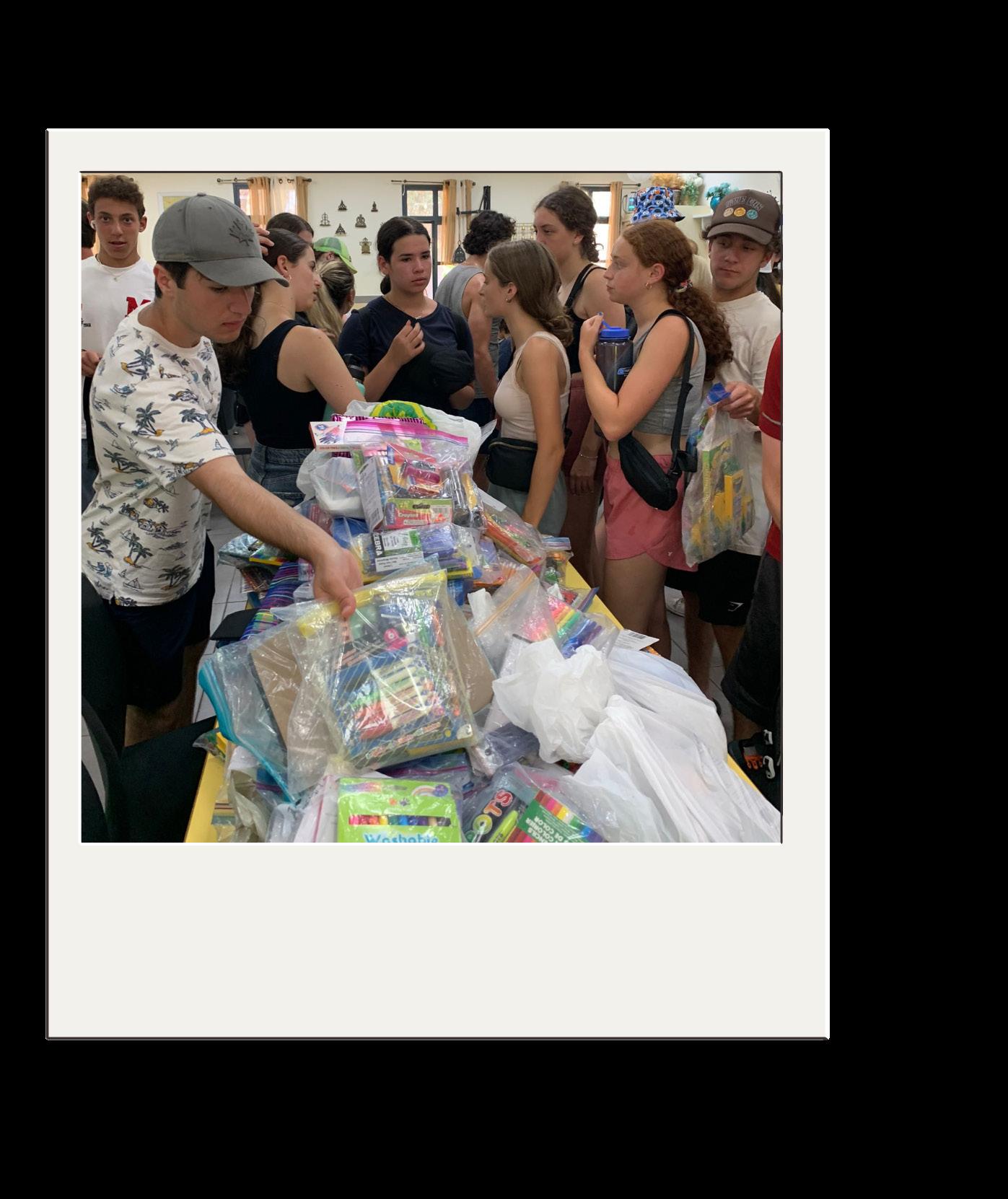

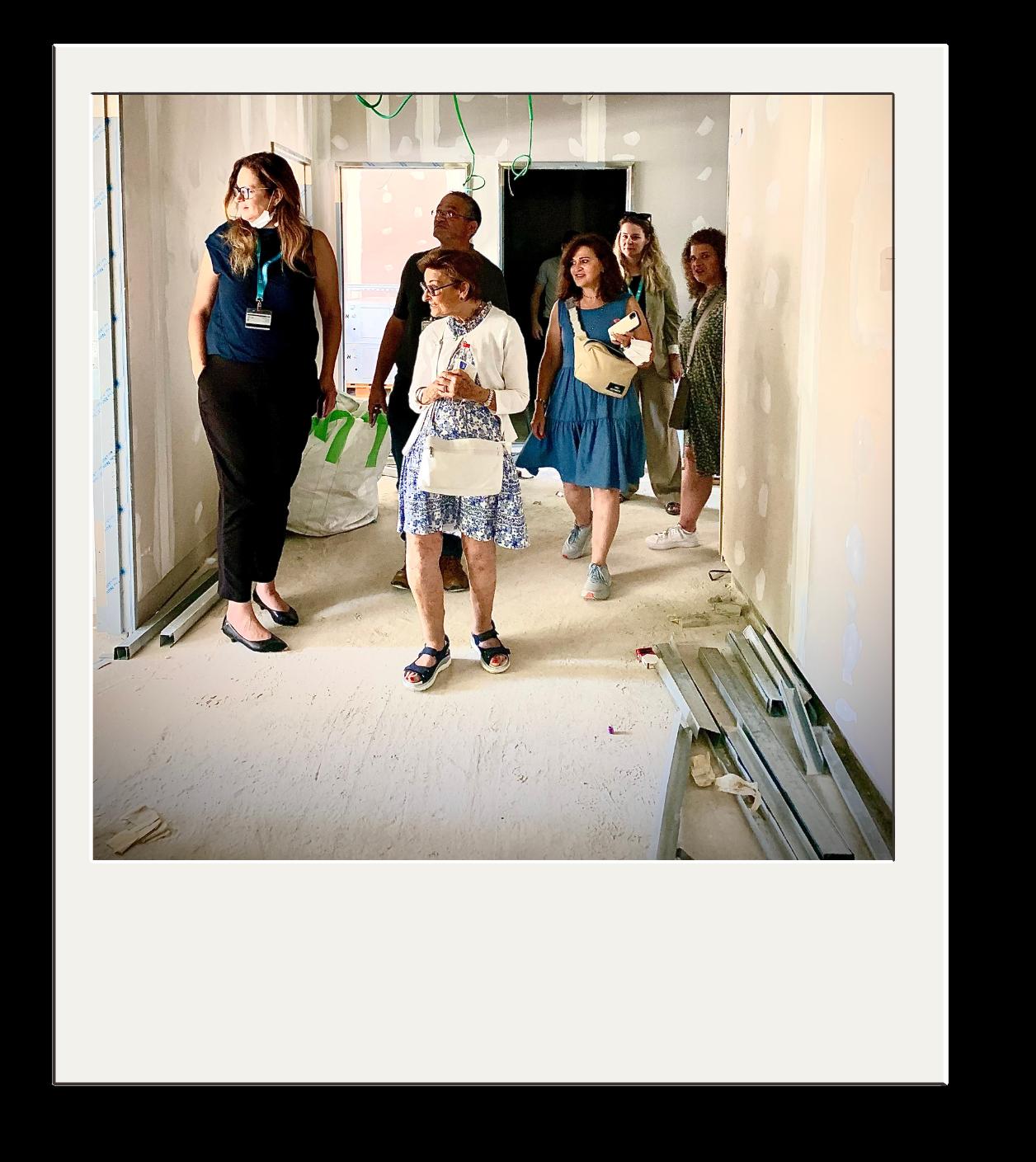
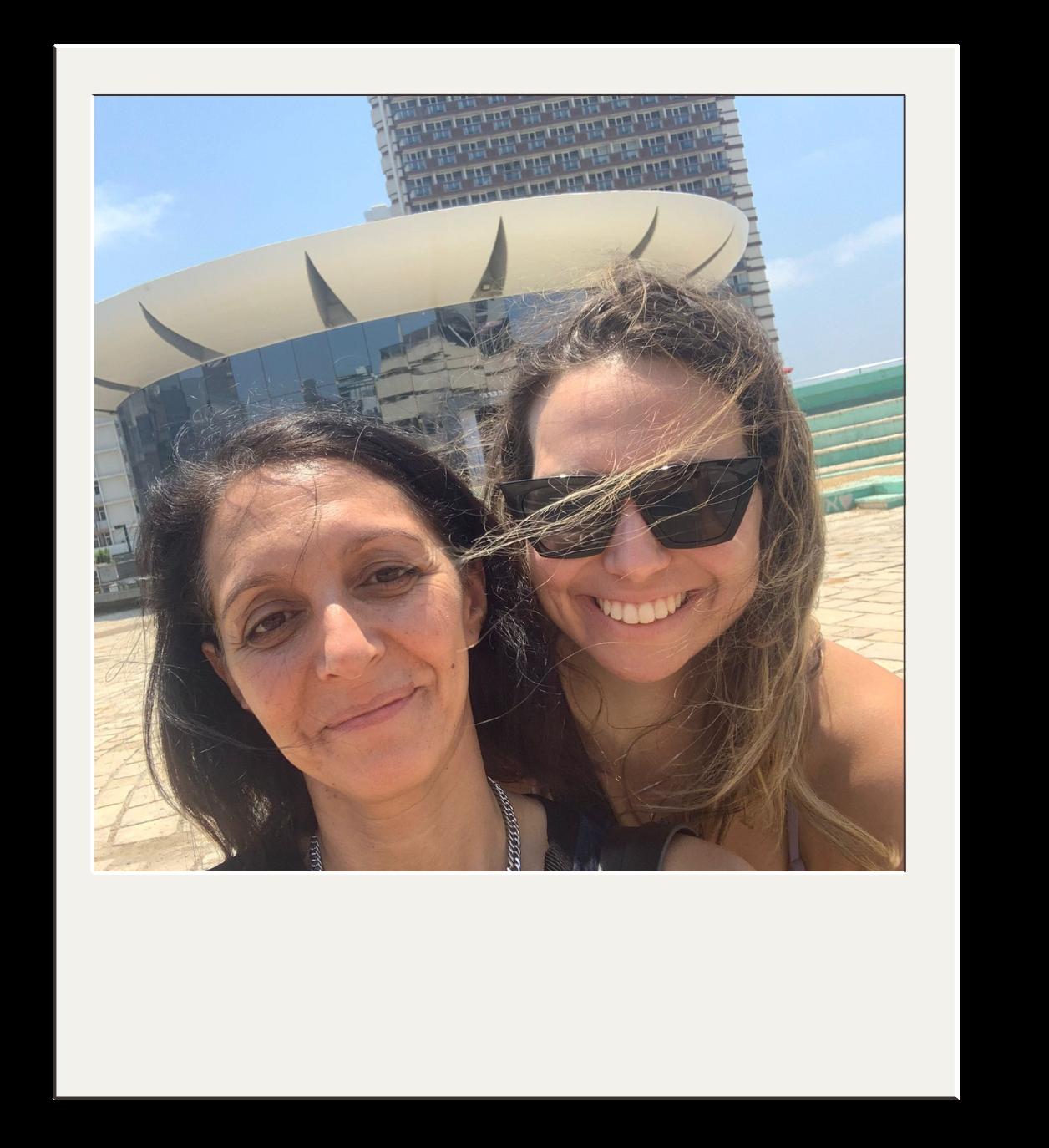 Lauren Colt visited Social Space with Rachel Lasry Zahavi.
Susan Lindzon visited Shamir MedicalCenter with her mom and sister.
Canadian Young Judaea’s Biluim Israelvisited CHW Nahalal Youth Village.
Lauren Colt visited Social Space with Rachel Lasry Zahavi.
Susan Lindzon visited Shamir MedicalCenter with her mom and sister.
Canadian Young Judaea’s Biluim Israelvisited CHW Nahalal Youth Village.


NATIONAL

On Thursday, March 31, CHW Centres across Canada hosted VIP in-person viewing parties for Fashion Blooms. Robyn Ulster, owner of North Girls, graciously offered the use of her beautiful store, and hosted the in-person viewing party for Toronto Sustainers and major event sponsors, Adele Goldstein hosted a viewing part at her home in Montreal, and Gina Grant hosted in Ottawa. It was a great way to celebrate the first time being together in over two years!

CHW recently announced the launch of its first round of social impact investing in Israel. On Monday, June 13, we invited our community of CHW donors and friends to a FREE webinar, facilitated by Weave Impact, to learn all about this new and exciting initiative.

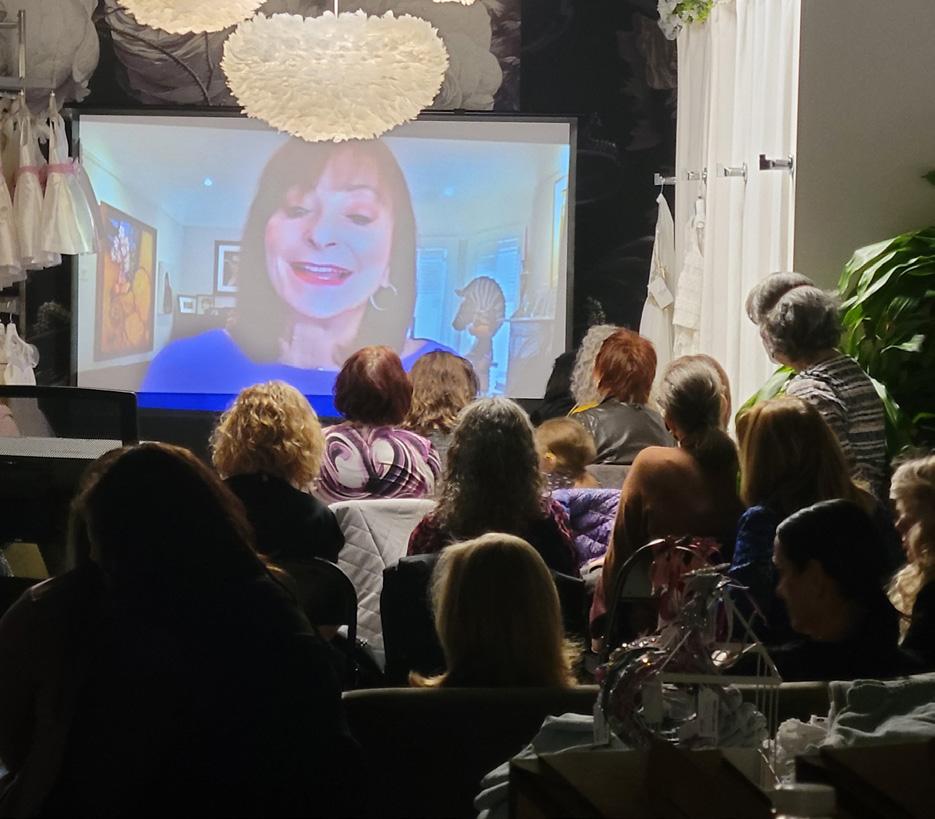
On Sunday, July 24, CHW Vancouver Centre’s new Bvlgari Chapter hosted a beautiful afternoon High Tea in support of the Jewish Outreach Leadership Training (JOLT) program at Canadian Young Judaea (CYJ) at Adonia Tea House. Bvlgari is a young women’s chapter and we are so excited to welcome them to CHW.

CHW Calgary Centre held three Cell-a-Thons on Tuesday, May 10, Wednesday, May 18, and Wednesday, June 15, at the Calgary JCC.
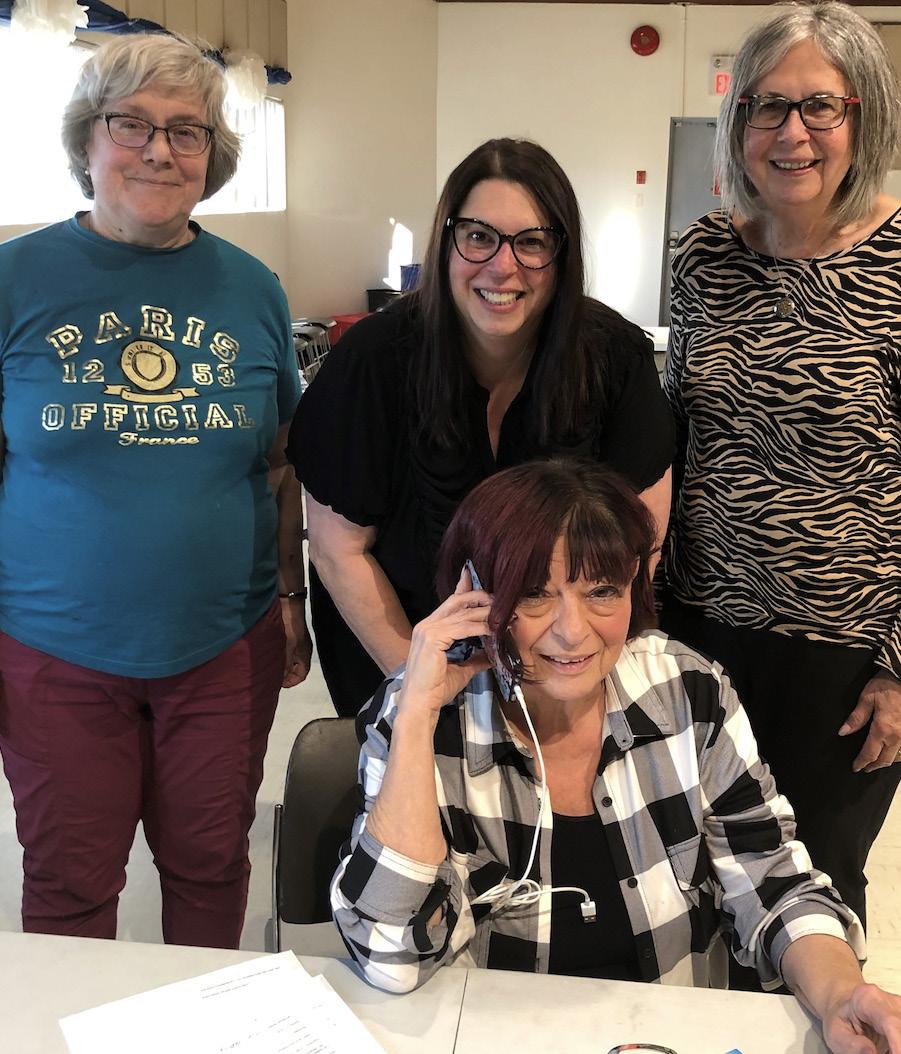

Each day, our dedicated canvassers spent an hour of calling past donors and helped raise over $14,000 in support of the Annual Campaign — BREATHE LIFE GIVE LOVE. Thank you to our canvassers for your commitment and support!

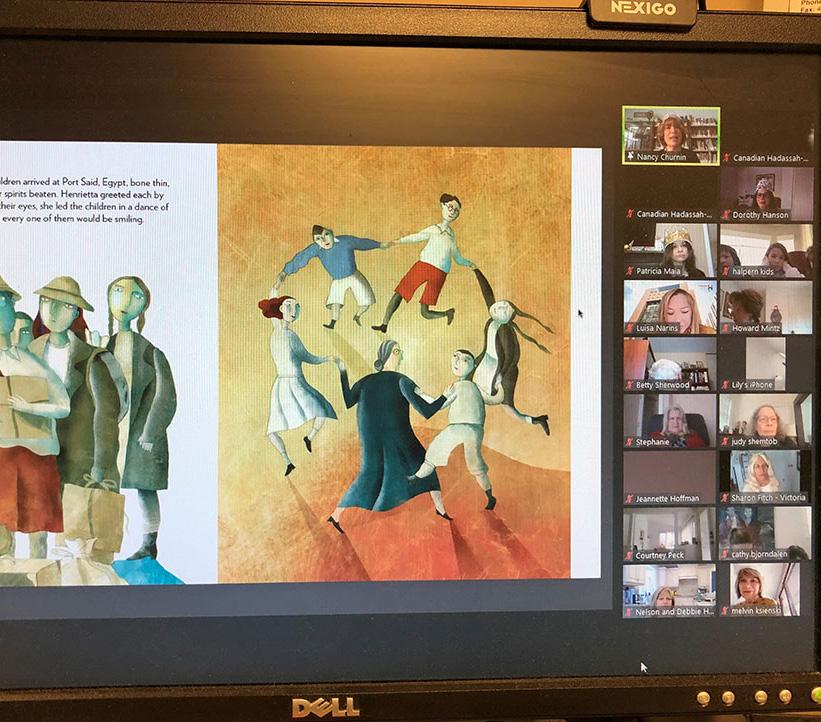
On Sunday, March 13, CHW Calgary Centre was pleased to debut the children’s book, A Queen to the Rescue: The Life of Henrietta Szold, Founder of Hadassah with author, Nancy Churnin. Proceeds from the event benefitted the Pediatric Cardiac Critical Care Unit at Hadassah Hospital in Israel. Close to 50 people — from three generations and across Canada and the U.S. — joined the online Purim event in fun costumes, listened to the author read, participated in an engaging discussion and did crafts.
CHW Calgary Centre was pleased to participate in a community gathering at Yom Haatzmaut held at Calgary JCC on Thursday, May 5.
(Pictured to the left, Betty Sherwood, Immediate Past Calgary Centre President and Dorothy Hanson, CHW Calgary Centre President.)
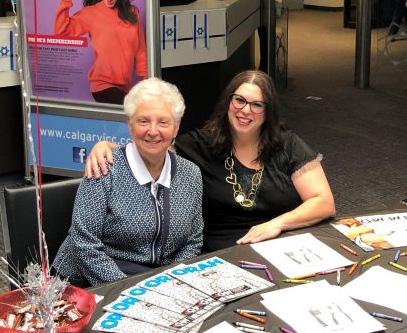
CALGARY
On Sunday, June 12, CHW Calgary Centre supporters were treated to a private tour of the Here to Tell: Faces of Holocaust Survivors Exhibit held at the Glenbow Museum. The private tour was provided by the founders and executive producers of the exhibit, Marnie Bondar and Dahlia Libin. Thank you to everyone who attended and to Marnie and Dahlia for your meaningful project and heartfelt tour.
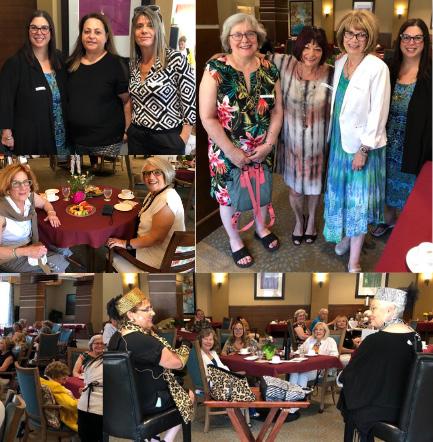
On Wednesday, July 20, CHW Calgary Centre hosted a Connections Tea to thank long-time CHW supporters for their years of service and generosity. Aviva Cheuk chaired the event, whose team of volunteers ensured a fun afternoon. Thank you to everyone who attended, the team of volunteers and bakers, and Amica Britannia for hosting the event. Not to forget, RENTA YENTA, Joy Feldman and Linda Gutman for providing the enjoyable entertainment.
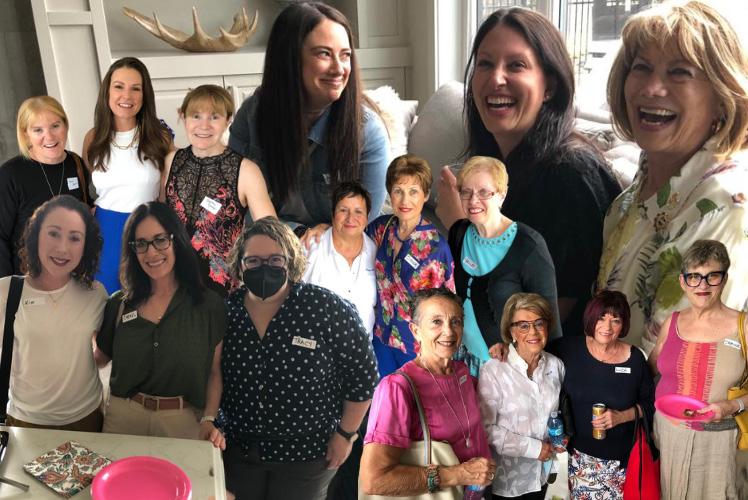
On Sunday, July 24, CHW Calgary Centre hosted, An Intimate Conversation with Rebecca Snukal, founder of Franny’s Fund and CHW S.O.S Calgary Centre Campaign Chair. The afternoon provided an opportunity for women to connect with each other and learn about Franny’s Fund, one of CHW’s newest projects, which will provide at-risk women and children across the country with access to financial support for legal counsel and therapeutic counselling services.

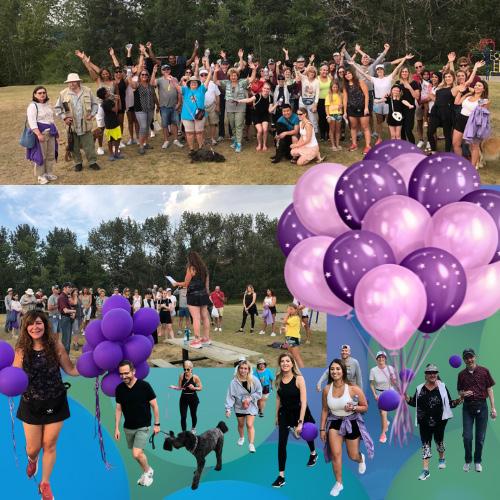
CHW Calgary Centre held two walks, the first on Monday, August 15, and the second on Tuesday, August 16, in support of CHW’s S.O.S Starting Over Safely Summer Campaign that attracted over 100 people walking to empower victims of domestic abuse. Our first walk on Monday, August 15, was led by Rebecca Snukal, Calgary Centre S.O.S Campaign Chair and founder of Franny’s Fund.




After the success of Social Media 101 in January, CHW Marketing Coordinator Jayden Seigel returned to run a second workshop on Wednesday, April 6, diving into more tips and tricks for Instagram and Facebook. At Social Media 201, our participants followed along and learned about reels (short videos), how to apply filters, create events, navigate the explore page, and more on Facebook and/or Instagram.
For their 13th year, CHW Toronto Lev Zahav Chapter ran their annual Mother’s Day Fundraiser. Supporters were able to celebrate the special women in their lives by purchasing pots of Kalancheo plants and beautiful cards for Mother’s Day.
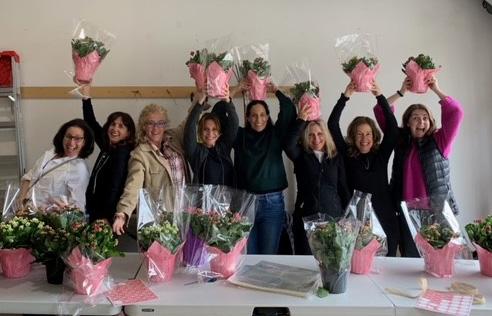

On Sunday, April 10, CHW Toronto Atid Chapter delivered tulips for Passover around Toronto and the GTA. This was a record-breaking year for Atid Chapter, selling over 570 pots of tulips. Thank you to all of the volunteers who helped deliver the tulips to each household. Proceeds raised benefitted the Pediatric Cardiac Critical Care Unit (PCCCU) at Hadassah Hospital and the Institute of Pulmonary Functions and Diseases at Shamir Medical Center.
On Tuesday, May 10, CHW Toronto Machar Chapter hosted the first of two sessions of Machar Art Experiences. Sarah Milroy (Chief Curator at the McMichael Canadian Art Collection) kicked off the series by presenting Generations: The Sobey Family and Canadian Art, which tells the story of one family’s visionary engagement with Canadian and Indigenous art, from historical to impressionist and contemporary works.

On Tuesday, May 17, CHW Toronto Machar Chapter returned with the second session of Machar Art Experiences. Sara Angel (Executive Director of the Art Canada Institute) presented Kent Monkman: A Living Legend and the Creation of a Canadian Masterpiece. The presentation provided a broader understanding of Kent Monkman’s perspectives on the future of Indigenous resilience and the workings of a modern atelier.

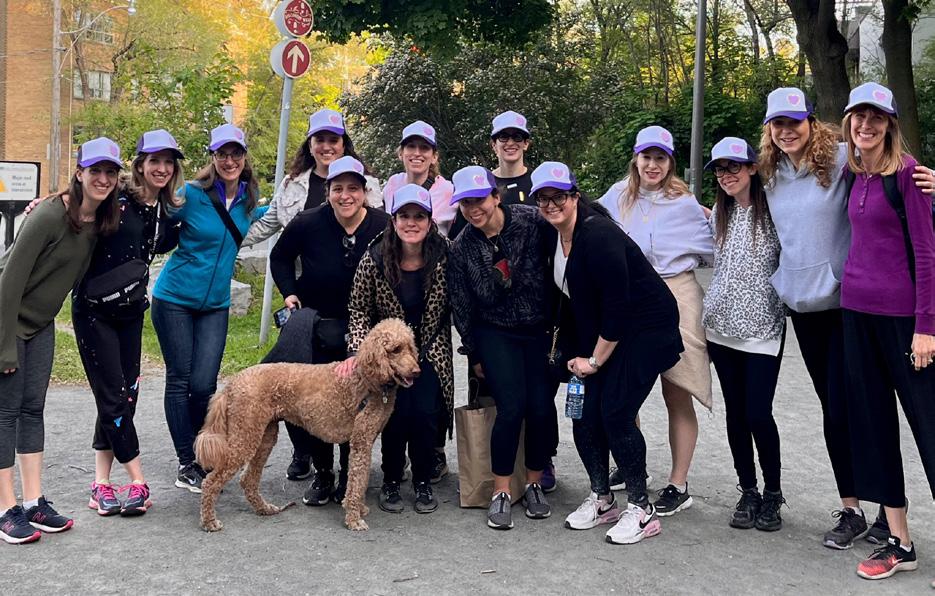
On Tuesday, May 24, CHW Toronto Dor L’Dor Chapter walked together in support of victims of domestic violence. It was a beautiful spring day, perfect for showing off their matching hats! The proceeds raised will go towards CHW’s S.O.S Starting Over Safely Summer Campaign.

On Wednesday, May 25, CHW Toronto Chapter presidents and representatives met via Zoom for the Presidents Forum. Lisa Colt-Kotler, CEO, provided a CHW National Update. We ended the meeting by presenting the CHW Toronto Excellence in Fundraising Awards to the Chapters who have worked tirelessly over the past year to fundraise for CHW.
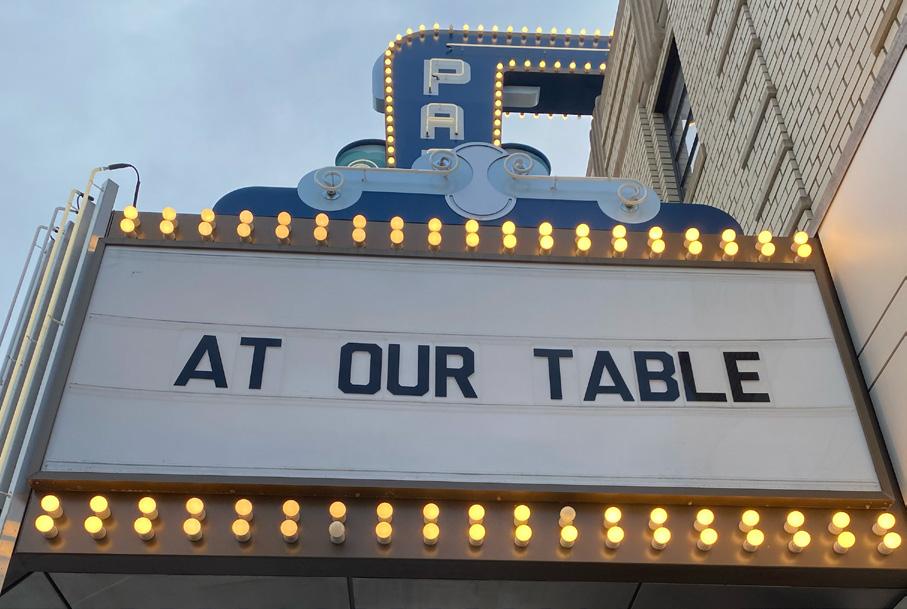
On Monday, May 30, CHW Toronto Tzedakah Chapter hosted their 19th annual At Our Table! Guests were treated to a dynamic evening of gourmet food, inspiring speakers, and fantastic entertainment at the refurbished Paradise Theatre. Some guests chose to enjoy the event from the comfort of their own homes. The event was an outstanding success, raising over $280,000!
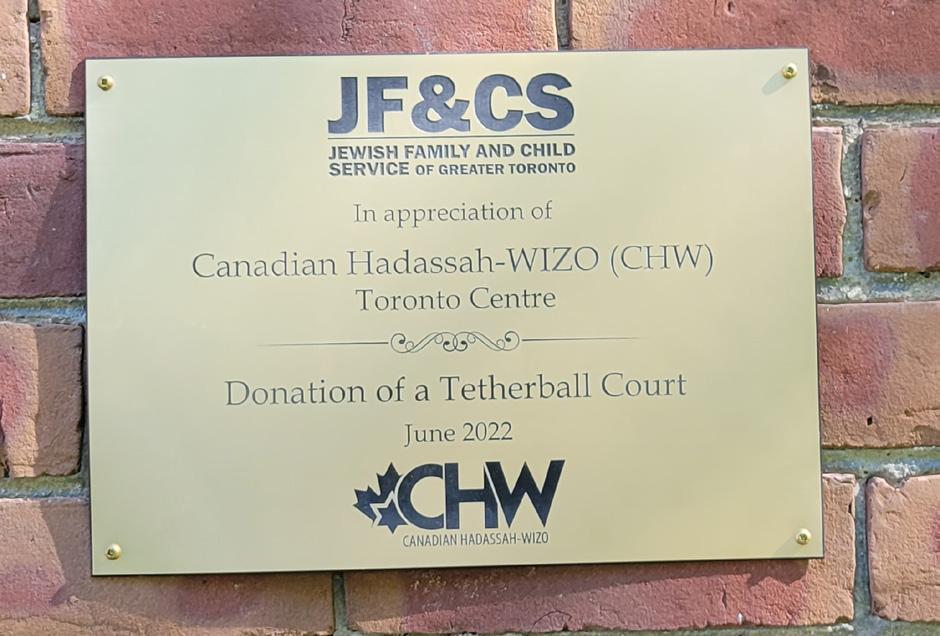
The Jerome D. Diamond Adolescent Centre officially dedicated the newly renovated Bernie’s Backyard on Thursday, June 16. The school backyard includes a basketball court, multipurpose net, and a tetherball court, which was funded by CHW. The students now have a safe outdoor space at school where they can play and relax.
CHW Toronto Centre hosted a virtual Young Leaders Forum for our young leaders across Canada on Wednesday, June 15. This gave younger supporters a platform to meet their peers across the country, share ideas with each other, and learn about current happenings at CHW. Our special guest was Rebecca Snukal, founder of Franny’s Fund.
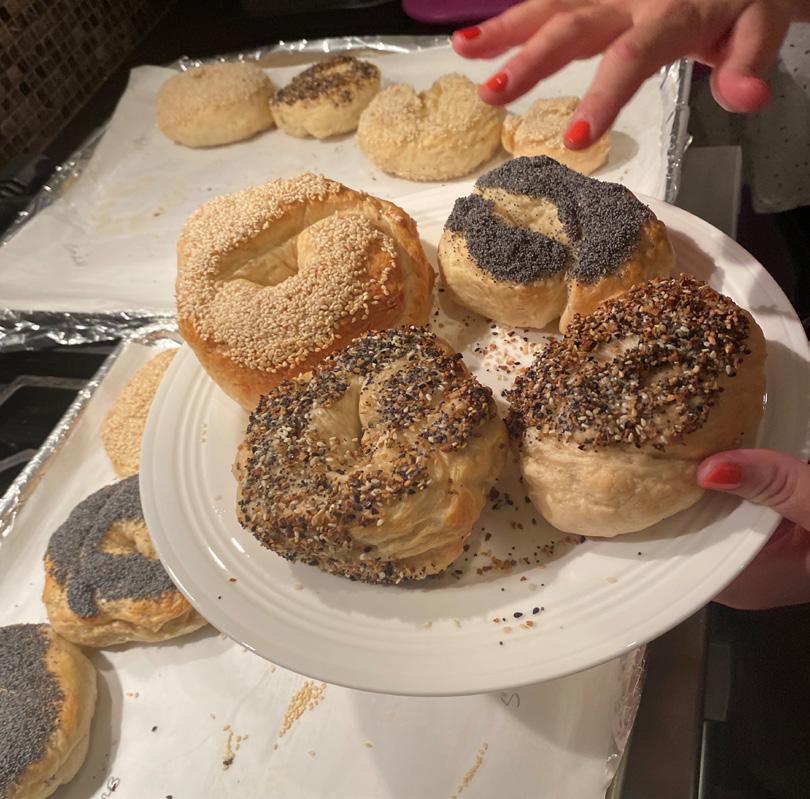
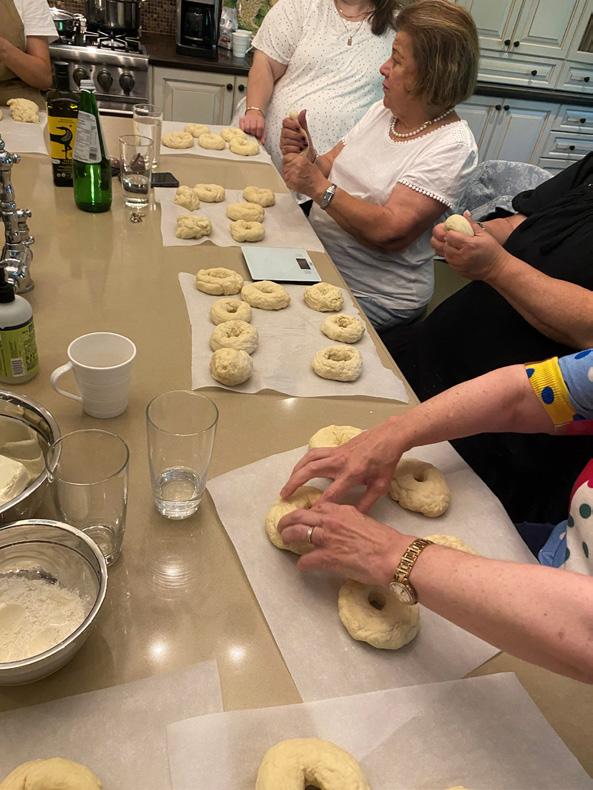
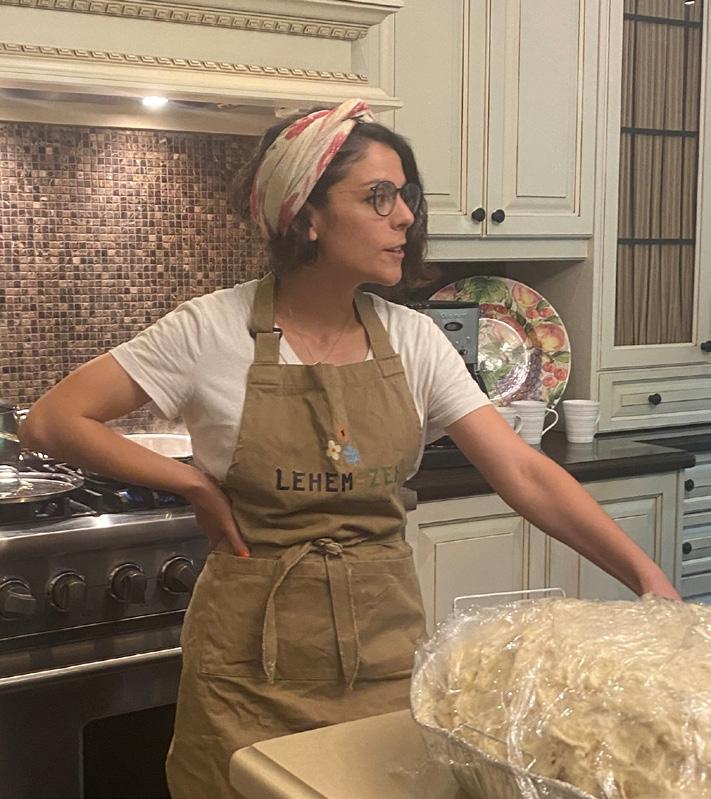
On Monday, July 25, Ariel Pollock Star, the founder of Lechem Zeh, an Israeli commercial baking collaborative, gave participants a baking tutorial, generously hosted at the home of CHW National President, Elayna Latsky.
On Sunday, June 26, CHW Toronto Gila Chapter held a walk in memory of the lives of beloved Gila Chapter members Brenda Green, Carolyn Nadler, Bina Maser, and Penny Benjamin who have passed. It was a highly enjoyable day for all who attended. They raised an astonishing $70,693 for the Institute of Pulmonary Functions and Diseases at Shamir Medical Center.

CHW Toronto Samya Chapter had another successful annual Rosh Hashanah Chocolates fundraiser. The perfect New Year treats for family and friends. This year CHW Toronto Samya Chapter raised $27,488. Bravo!

CHW Ottawa held a successful Phantom Tea in honour of healthcare workers in Israel and Canada. The draw for a piece of art donated by local artist, Sylvia Klein, captured a lot of interest. The lucky winner of the artwork was Barbara Blevis (left), seen here with artist Sylvia Klein (right).
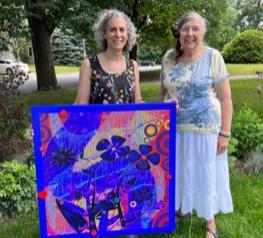
CHW Ottawa Centre sold delicious boxes of chocolate for Rosh Hashanah this year to the delight of the Ottawa Jewish community, raising over $2,300. They look forward to selling treats for more holidays in the future. The Ottawa Kosher Food Bank was very appreciative of the 14 boxes of chocolates that CHW Ottawa donated as part of the sale.

In April 2022, CHW Montreal sold beautiful orchids for Passover, raising over $44,000. It is through the commitment of our dedicated supporters, sponsors, donors, and volunteers that we can make this project such a huge success each year.

Many thanks to all the donors, sponsors, participants in the 48th Annual Pro-Am For Kids Golf Tournament! The tournament took place on Monday, July 11 at the Elm Ridge Country Club. It was a great success, raising over $180,000 for CHW Hadassim Children and Youth Village and the Myra’s Kids Foundation Summer Camp.
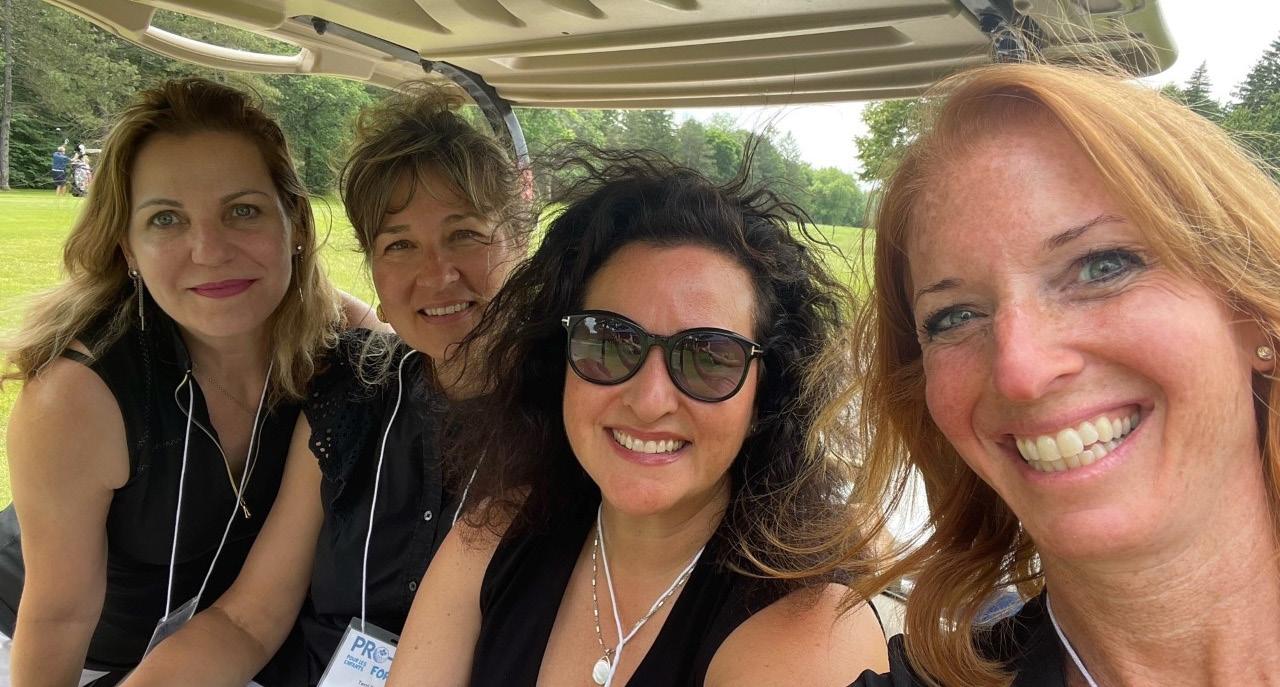
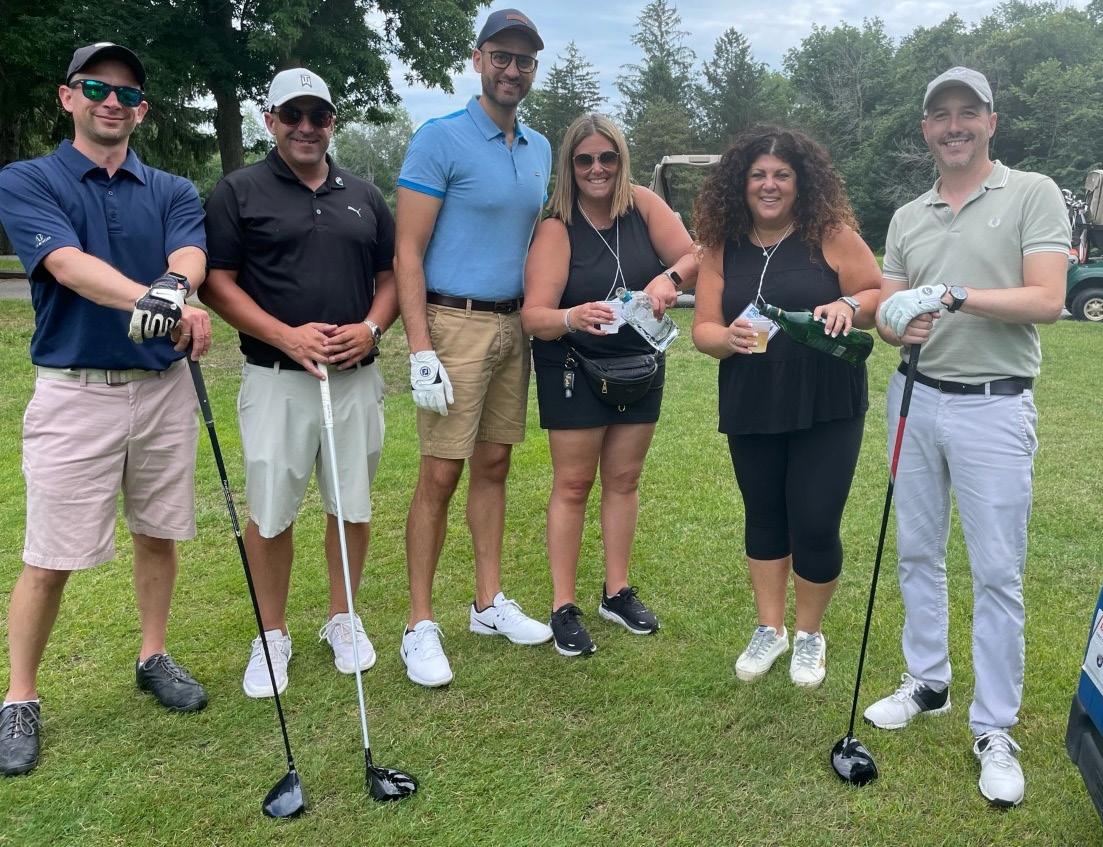
We are grateful to our event Co-Chairs, Joseph Balinsky, Gary Hutman, and Danny Kaufer and the committee members Joe Akerman, David Balinsky, Ronald Balinsky, Lewis Cooper, Louis Grossbaum, Mickey Guttman, Joseph Kaback, David Mars, Jon Reider, Stuart Schick, Joe Sklar, and Steve Williams. Many thanks to our partner PGA du Quebec and congratulations to the winning professionals Francis Berthiaume and Tim Alarie. We look forward to next year’s tournament!
Congratulations to the members of the CHW Montreal Anna Zaitchick Chapter on their very successful 11th Annual Walk on Sunday, August 7, 2022. They raised $20,000 in support of the S.O.S. Starting Over Safely Campaign, surpassing their original goal of $15,000! The S.O.S Campaign is dedicated to empowering victims of domestic violence. Through a series of partnerships in both Canada and Israel, CHW is helping women and children access the resources needed to break the cycle of violence and start a new life in safety and security.


CHW WALK CHW MONTREAL ANNA ZAiTCHiCK CHAPTER
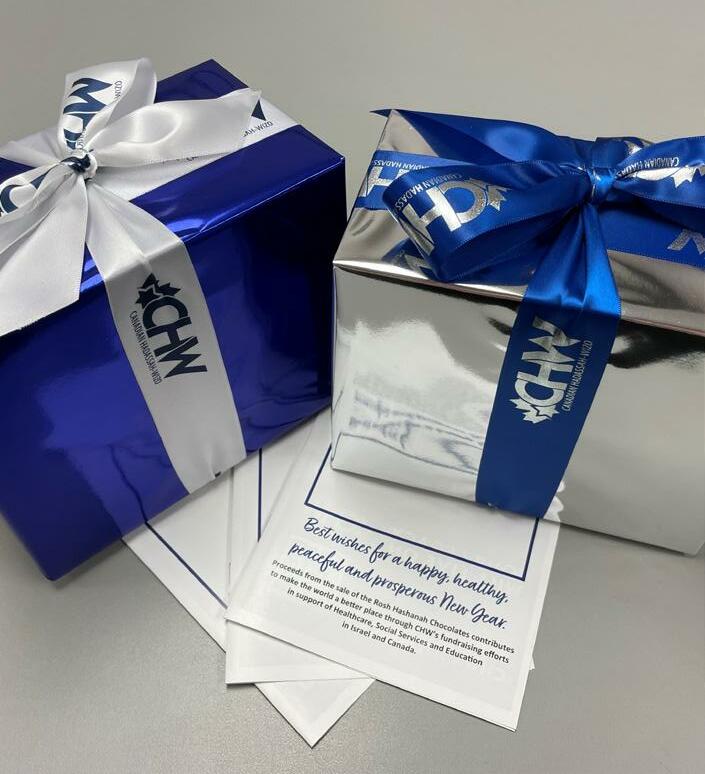
The Rosh Hashanah Chocolate Fundraiser, which took place in September, was a huge success, raising over $41,000 with 725 boxes of chocolate sold! With many thanks to our generous donors and sponsors who contributed to our success. We are grateful to the commitment and dedication of the 50 volunteers who delivered the much-anticipated chocolate boxes all over the city, including Shawn Liquornik and his mother Shiri Tamam (bottom left) and Diana Fellen and her daughter Izzie Fellen (bottom right).


The CHW Tel Hai Online Bridge Tournament took place on Wednesday, September 7 and raised over $10,000 for the S.O.S Summer Campaign. Congratulations to the top players of the tournament: Mirna Hofbauer and Sandor Hofbauer N/S and Ruth Ickman and Evette Mashaal E/W. Many thanks to our Bridge Committee members, including a special shoutout to Maxine Sanders and Sari Sheiner.








Online shopping has made giving to charity easy and affordable. Did you know that you can shop at some of your favourite brands and support CHW at the same time?
We have very exciting news! CHW has partnered with Trureal, a technology platform that enables you to shop online and make a gift to CHW through proceeds from your everyday purchases, with no additional cost to you.



Trureal is an easy, seamless, and secure digital platform that allows you to link CHW to any payment method (e.g. credit or debit card), and receive up to 5% cash back to donate to CHW, every time you make a purchase online at trushopglobal.com or at participating in-store merchants.




You can select to automatically donate your cashback to CHW and receive a tax receipt. Trureal’s participating merchants cover the cost of your donation. You receive full access to your own personal dashboard through the Trureal portal, so you can track all your donations in real time. It’s
To register for your Trureal account and start giving while you shop, click on the icon.
The CHW family fondly remembers those who have passed July 1, 2021 - June 30, 2022.
Sari Abelson
Esther Aber
Phyllis Abrams
Beattie Adelstein
Ephraim Arnon
Leiba Aronoff
Pearl Aronoff
Marsha Baker
Jennifer Barkin
Carole Basman
Moise Bassal
Hilary Estelle Bean
Stanley Bender
Trina Berenson
Helen Berkovitz
Esta Berlind
Shier Berman
Belle Black
Stan Black
Clara Blackstone
Rhoda Blevis
Sima Blitzer
Edna Bock
David Bottner
Gloria Brock
Anne Brodsky
Anna Brojde
Barbara Bronfman
Jennie Bronstein
Florence Brown
Harold Brownstein
Natalie Brownstein
Murrary Buchman
Enid Bultz
Louis Burak
Eleanor Burke
Emory Burke
Helen Caine
Lorraine Caplan
Sharyn Cipin
Marilyn Cobrin
Claude Cohen
Edward Lawrence Cohen
Gary Cohen
Helen Coleman
Deborah Conter
Jean M. Cooperberg
Beatrice Dahan
Joyce Dain
Doreen Davidow
Debra Davis
Helene Davis
Michael Davis
Eleanor Deckelbaum
Sarah Diamond
Abe Dichter
Howard Dick Goldie Dilman
Shirley Dubinsky
Nadine Ederman
Grace Ehrlich
Leona Eidinger
Hy Eiley
Meira Engelhardt
Grace Engler
Solomon Estrin
Selma Ettinger
Bess Faierman
Rebecca Fayerman
Saul Fernster
Dorothy Finkelberg
Nora Finkler Levine
Elizabeth Fischer
Lea Fischer
Lionel Fishman
Max Fishman
Miriam Flakowicz
Zoltan Fleischer
Estelle Fogell Rhoda Frank Ruby Frankel
Benny Freitag
Zina Fried Harry Friedman Javier Fuchs
Amir Gamliel
Harry Garsinkel
Ruth Garson
Ethel Gelfand
Glen Giddings
Elliott Gillman
Doris Glickman
Estelle Gluchy
Hanka Goldberg
Lil Goldberg
Shirley Goldberg
Shyrna Esther Goldberg
Steven Goldberg
Myrna Golden
Marilyn Goldenberg
Francine Goldsmith
Blanche Mainster Goldstein
Yoine Goldstein
Bette-Ellen Gonick
Stephen Goodman
Hyman Gorodensky
Rhoda Granatstein
Hyman Granofsky
Shirley Granovsky
Jeff Gray
Shirley Gray
Dorothy Greenbaum
Idie Greenberg
Rochelle Greenberg Shirley Greenberg
Marty Greenglass
Ernest Gross
Lucille Gross
Moe Gross
Euginia Grossman
Marvyn Grover
Sharyn Gunter-Cipin
Sylvia Gurstein
Szulamit Gutman
Lynda Halprin
Rebecca Hapton
Nathan Harris
William Harris
Arlene Hayes
Charna Hecht
Shirley Herberman
Zina Herman
Earl Hershfield
Gail Himelfarb Stanley Hitzig Frank Hofbauer
Burton Sheldon Hoffman
Myer Holtzberg
Ida Holtzkener Harry Horlick Eleanor Hornstein Dorothy Hymes
Liselotte Ivry
Sara Jacobson
S Kagan Bryna Kahane Verne Karasick Lily Katz Morton A. Katz Bernard Kertzer Edward Kerzner Ellen Keshen Nina Khapoun Fay Kifer
Richard King Esther Kirsh Louise Kirshner Doreen Kizner Bess Klar
Katalin Klein
Roslyn Klein
Helen Klingman-Cait Marie Knaul
Beverlee Koby Janet Kolof
Shirley Sara Konigsberg
Mel Krass
Gloria Krugel Toby Kruger
Rosalee Krygier
Shirley Kuchinsky
Diane Kurland
Joseph Kurvers
Mollie Lackman
Miriam Lang Bernie Langer
Golde Lefkovits
Mortimer Leibovitch
Tilley Levine
Joseph Levinson
Ruth Levy
Beryl Libin
Judi Libin
Shelly Liebesman
Anna Lilien
Ezekiel Litwack
Mildred Lubiner
Helen Luft
Betty Maldoff
Ruthe Mann
Judith Markus
Naima Mathalon
Peter Matsdorf
Gloria Matthews
Irene Meilman
Gail Melanson
Fanny Frances Melnitzer
Pearl Mendel
Monroe Miller
Ruth Miller
Ursula Miller
Ruth Milne
Jamie Mirbaum
Steven Molnar Colin Morris
Celia Myerson
Bronya Nakhamchik Val Nathan Richard Nelson
Bluma Nemirov Gail Nep John Robert Niman Lucy Nisker Marvin Obar Riva Obront

Murray Nathan Oiring Sam Orshan Bernie Ostroff Roy Paisner Leila Paperman Max Pawer Bella Peker Abe Peletz
Doba Perlis Judy Perlus
Bertha Plotnick Marion Poliakoff Sheila Pollock Charles S. Polowin
Leonard Prosterman
Naima Rabie Oscar Rajsky
Lisa Reisler
Marc Davis Ribatto
Francine Richman
Dave Robbins Anita Rochman
Vivian Marilyn Rosen
Josie Roskies
Sam Rouas
Bernard Rubenstein
Mali Rubin
Mary Rusinek
Leyla Sacks
Margot Safirstein
Helen Saipe
Anita Salem
Florence Salis
Keith Samuels
Marcia Samuelson
Alyse Schwartz
Gertie Schwartz
Leon Schwartz
Marla Struzer Schwartz
Miriam Schwartz
Huguette Serfaty
Marilyn Shaffer
Philip Shait
Neil Sherman Rob Shiller
Dorothy Shoichet
Sharon Shulman
Judith Silver Markham Silver
Cecile Silverman
Louis Silverstein
Judy Simmonds
Eleanor Singer
Nancy Singer
Rose Singer
Bernie Smith
Isabel Smith
Maddy Smith
Passey R Smolensky
Marcelyn Smordin
Marilyn Snyder
Stan Solomon
Morrey Solway
Mildred Sonshine
Donna Speigel
Gordon Spergel
Darlene Spevakow
Marvin Starr Helena Stein
Arlene Steiner
Karen Stekel
Leila Streicher
Jean Sutherland Saunders
John Swidler
Dave Szalavetz
Julian Szirtes
Sally Taller
David Taras
Elca Taras
Dina Tenenbaum
Faye Tennenhouse Clara Tepner
Andrea Sandra Train Morris Trefler
Tatjana Tryjanski
Edie Turner
Marla Udashkin
Renee J. Unger
Delia Van Haren
Sam Veiner
Evelyn Viner
Morris Waitzer
Patricia Warner
Rosalynd Waterman
Ellie Waxman
Lise Wechsler
Imre Weinberger
Gabi Weisfeld
Henry Weitzman
Maurice Wesfield
Betty Wessels
Stanley Gary Williams
Mary Winemaker
Edward Wolfman
Verley Yanofsky
Malcolm Yasny
David Zack
Corinne Zagerman
Carol Zimmerman
Paul S. Zive
Mark Zlotnik
Sam Zunder
Marvin Zylber
Mark Halpern, Certified Financial Planner, Trust & Estate Practitioner, Master Financial Advisor-Philanthropy and CEO of WEALTHinsurance.com, shares his knowledge
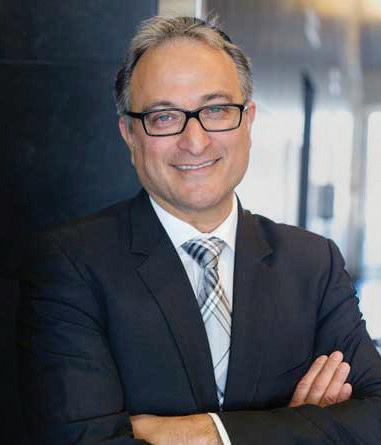
Ourclients usually have large sums in registered accounts, money they don’t need to live on. Most people don’t know RRSP and RRIF funds are taxed at 53.53% in Ontario.
That means a $2 million RRSP/RRIF is worth only $920,000 to you and your heirs. Consider donating all or part of it to the charities you are passionate about, or to your Donor Advised Fund (DAF) or your own Private Foundation, and nothing to the tax department (CRA).
Jack and Barb are married, both 70, with a $2 million RRSP.
We created $4.5 million of charity using their $2 million RRSP that was worth only $920,000 to the family.
Their bank transferred the entire $2 million to the Donor Advised Fund (DAF) we set up for them with a Community Foundation. Withdrawals are normally subject to withholding tax of 30%. We arranged for CRA to waive withholding taxes at source.
Their $2 million DAF can now be distributed to Canadian Hadassah-WIZO (CHW).
Using DAF funds, we structured a Joint and Last To Die (JLTD) Life Insurance policy owned by the DAF, payable for only 10 years.
The ongoing dividends from the insurance policy and the cash surrender value (CSV) can be used during their lifetime to make additional tax-free charitable gifts to CHW.
$920,000 of after-tax RRSP savings became a charitable CHW family legacy of $4.5 million.
DON’T DISINHERIT YOUR FAMILY.
THE

A CHARITY
Mark Halpern can be reached by phone at 416-364-2929, or by email: Mark@WEALTHinsurance.com
www.ideacity.ca/video/mark-halpern-the-new-philanthropy