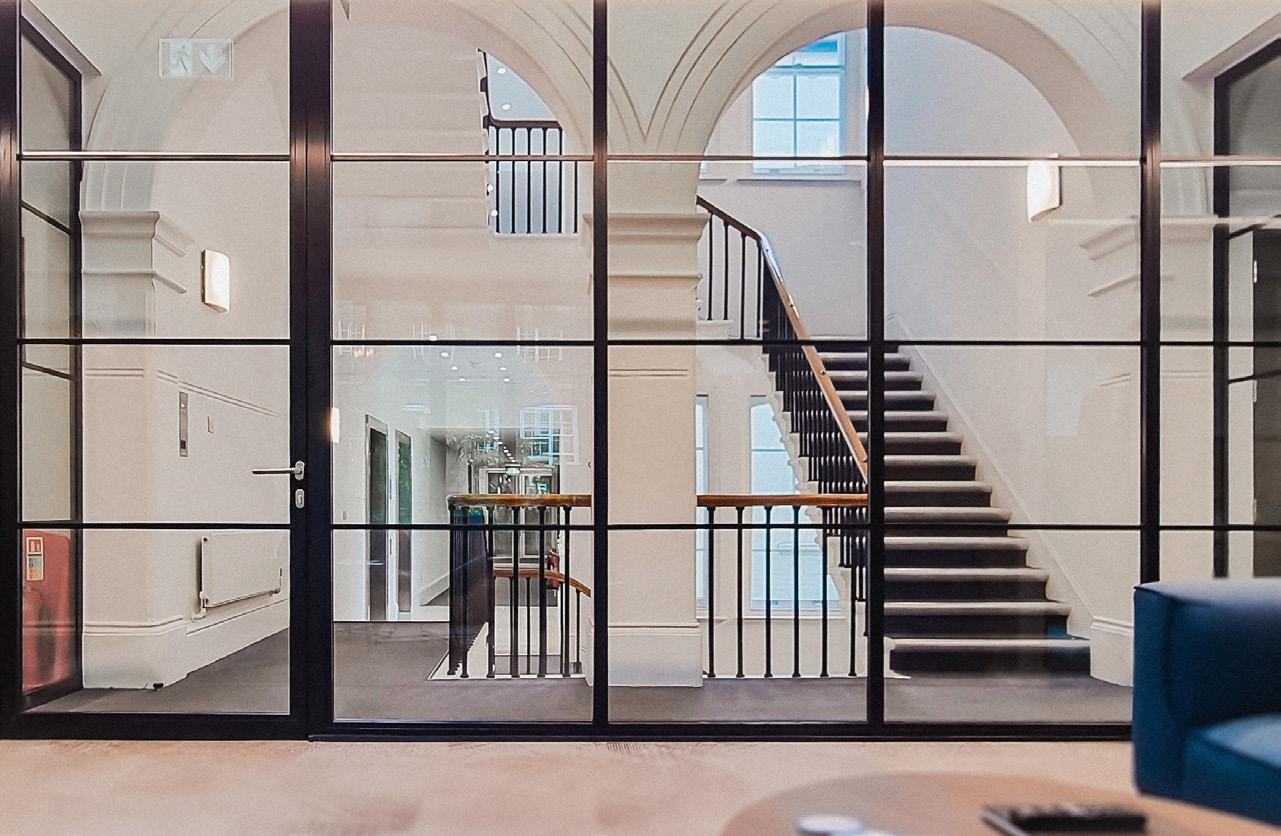
For fire resistance and protection of people and property
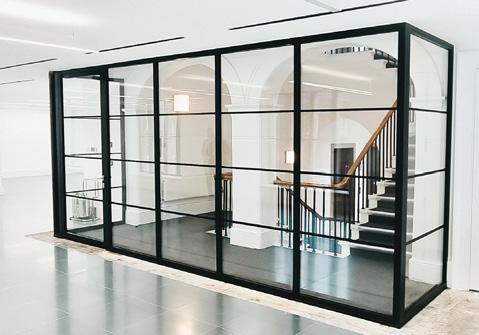
Multifunctionality in fire protection
PYRAN® S is a pre-stressed, monolithic borosilicate single pane safety glass in accordance with EN 13024-1.
As a component in fire-resistant glazing that meets the requirements of resistance classes E 30, E 60, E 90 and E 120, it has proven its outstanding optical and mechanical characteristics over the years in a wide variety of buildings.
Areas of application
PYRAN® has been internationally approved and ideally suited for:
• Facades
• Partition walls
• Skylights and rooflights
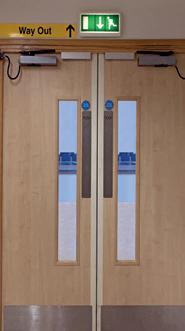
• Doors
• Roofs
• Smoke screens
• lift door glazing
• lift shaft glazing
Facts
• Higher ability to withstand temperature differentials: In comparison to soda-lime glass, tempered borosilicate glass can better withstand temperature differentials and can therefore be glazed with normal edge covers (20±2 mm).
• Higher softening temperature: Because the glass is selfsupporting for more than 30 minutes, large panes and simple frame constructions are now possible.
• Higher viscosity: The glass flow rate is low due to the high viscosity and durability of borosilicate glass, so with more edge cover, greater fire resistance times in excess of 90 minutes can be achieved.
• NiS crystals do not form: Due to the chemical composition of borosilicate glass, nickel sulphide crystals cannot form. Spontaneous glass fracture due to embedded NiS crystals cannot happen with PYRAN®.
Further information is available from our sales and technical offices or visit www.firmanglass.com
Tel: 01708 374534 Email: Pyran@firmanglass.com
Firman Glass, 19 Bates Road, Harold Wood, Romford, Essex RM3 0JH

FUTURE CONSTRUCTOR & ARCHITECT MAGAZINE
EDITOR IAL
Rebecca Kemp rebecca@redhutmedia.com
PRINT & DIGITAL ADVERTISING
Sam Ball sam@redhutmedia.com
Jim Moore jim@redhutmedia.com
PRINT DESIGN MANAGER
Jack Witcomb jack@redhutmedia.com
DIGITAL DESIGN MANAGER
Matt Morse matt@redhutmedia.com
ACCOUNTS/ CREDIT CONTROL
Rachel Pike accounts@redhutmedia.com
PUBLISHER
Sam Ball sam@redhutmedia.com
2, The Old Stable Block, Crescent Road, Faversham, Kent, ME13 7GU Tel: 01795 515288 Rebecca
Now that we’re in October, many establishments are gearing up for the festive season, and transport facilities are no exception. From scheduling and capacity planning to staffing, maintenance and security, transport providers are working to ensure they’re well-prepared to handle the surge in passengers and provide a seamless travel experience. However, the initial design and accessibility of these facilities also play a crucial role in delivering that smooth experience.
In this issue, David Saunders, Head of Stannah’s Major Projects Division, explains the importance of choosing the right lift solution for transport facilities and public infrastructure. Understanding the distinctions between different types of lifts is essential, as each one serves a unique purpose and meets specific project requirements. Turn to page 22 for his full insights.
Meanwhile, on page 12 , we spotlight Belfast’s newest transport hub, Grand Central Station. Designed by John McAslan + Partners’ Belfast design studio in collaboration with Arup and Juno for Translink, this project is a key part of Belfast’s ongoing urban regeneration. The station has already welcomed its first passengers, with bus services now operating from the new multi-modal terminus. Once the rail platforms open later this month, it will become the largest integrated transport facility on the island of Ireland.
Elsewhere in this issue, Chris Anderson, Technical Manager at Ansell Lighting, delves into the benefits of smart lighting technology in commercial settings; Ben Hancock, Managing Director at Oscar Acoustics, addresses some of the most frequently asked questions about creating the ideal acoustic environment; and Ruth Evans, Associate at CPMG Architects, discusses the principles of dementia-friendly design.
I hope you enjoy this issue. Don’t forget, you can also access the magazine’s features, product news and supplier information on FC&A’s user-friendly and engaging website. Fully responsive, the website allows you to read all the latest stories on-the-go either on your phone or tablet. Simply search www.fca-magazine.com.
Attenborough Line project by Able Partners. Bill Webb, Architect and Co-Founder of Able Partners, talks to FC&A about his journey from art student to architectural innovator. SEE PAGE 08. REBECCA KEMP

sweeps, curves, level changes, windposts, closer-links, balcony protectors, threshold isolators, adjustable height integrators
COMPLY WITH NHBC 2024 DIRECTIVE: At complicated junctions preformed cavity trays must be used
COMPLY WITH LABC 2024 DIRECTIVE: Trays must rise 150mm and be self-supporting or fully supported
The Cavity Trays Helpdesk – your route to compliancy and consistency in construction
The widest range from the longest-established cavity tray company with over 100 years of proven specialism.
VOICE OF THE INDUSTRY:
Jake Stephens, Technical Manager at HiiLIFE, shares insights on how luxury technology can elevate the living experience in shared accommodations.
LEGAL & BUSINESS:
Elle Clarke, PPE and Workwear Manager at Milwaukee, sheds light on the hidden risks of customising PPE and emphasises the crucial need to use equipment as intended for optimal safety and compliance.
BUILD FOCUS: TRANSPORT FACILITIES:
LANDSCAPING, EXTERNAL WORKS & GROUNDWORKS:
ACOUSTICS & SOUNDPROOFING:
12 14
De Matos Ryan and Dorothée Meilichzon (CHZON) have unveiled a stunning new pavilion at Cowley Manor Experimental, blending history with modern elegance. 20 18 24 28 32 34 30
From platform and passenger lifts to escalators and walkways, David Saunders, Head of Stannah's Major Projects Division, breaks down the key factors when choosing the right lift solution for transport facilities.
David Hedley, Technical Sales Engineer at Mainmark UK, investigates how modern underpinning methods like grout and resin injection are transforming foundation repair.
Ben Hancock, Managing Director at Oscar Acoustics, answers your top FAQs on overcoming noise challenges in architectural design.
LIGHTING & ELECTRICALS:
Chris Anderson, Technical Manager at Ansell Lighting, explores how smart lighting creates dynamic, sustainable and adaptable environments for today's workspaces.
UNIVERSAL DESIGN & AGE-INCLUSIVE ARCHITECTURE:
Ruth Evans, Associate at CPMG, examines the crucial role of dementia-friendly design in healthcare architecture.
SITE PLANNING & URBAN DESIGN:
Should grey belt land with heritage assets be reconsidered for development? Dr Emma Wells of SLR Consulting argues for a thoughtful approach to preserving history while meeting housing targets.
TECH INSIGHT: WATERPROOFING:
David Naylor from Schlüter Systems explains how high-quality materials and holistic waterproofing solutions can protect your bathroom and home from moisture trouble. 26 22
BELFAST GRAND CENTRAL STATION, JOHN MCASLAN + PARTNERS:
Belfast’s Grand Central Station, designed by John McAslan + Partners, has opened its doors, marking a new era for public transport in Northern Ireland.
COWLEY MANOR EXPERIMENTAL, DE MATOS RYAN:
“Changes of direction of a cavity tray or interfaces with other elements in the cavity are more complicated than simple joints and the design should be provided, and preformed cavity trays used.”



Satisfy NHBC technical requirements first time, every time. 100 years of proven specialism from the longest-established company designing and manufacturing cavity trays and flashings. The Cavity Trays Helpdesk – your route to compliancy and consistency in construction






get a quick quote today ... the UK’s leading independent glass processor

Barratt David Wilson Homes has announced it will deliver on plans for the redevelopment of Fort Halstead – which received planning permission from Sevenoaks District Council on 1st December 2023. After years of public consultation prior to the application being consented, the plans for the historic site –previously occupied by The Defence, Science and Technology Laboratory – will see it transformed into a vibrant 635-home community, of which 20% will be affordable, and existing and new employment space delivering jobs. Other key benefits within the planning permission include a new ‘village centre’, which will host a range of different facilities, including shops and community buildings.
Stephen George + Partners (SGP), in conjunction with AHR, has submitted plans for the £20m redevelopment of Huddersfield’s bus station, fronted by a sweeping 120m-long glulam, green roof and solar PV canopy. The bus station transformation is a partnership between Kirklees Metropolitan Borough Council and West Yorkshire Combined Authority to create an innovative gateway to the revitalised town centre along with enhanced passenger facilities. SGP’s design for the canopy and the public realm beneath it was developed through extensive discussions with clients, the local authority and other stakeholders.
FC&A ROUNDS UP THE LATEST INDUSTRY NEWS AND UPDATES.

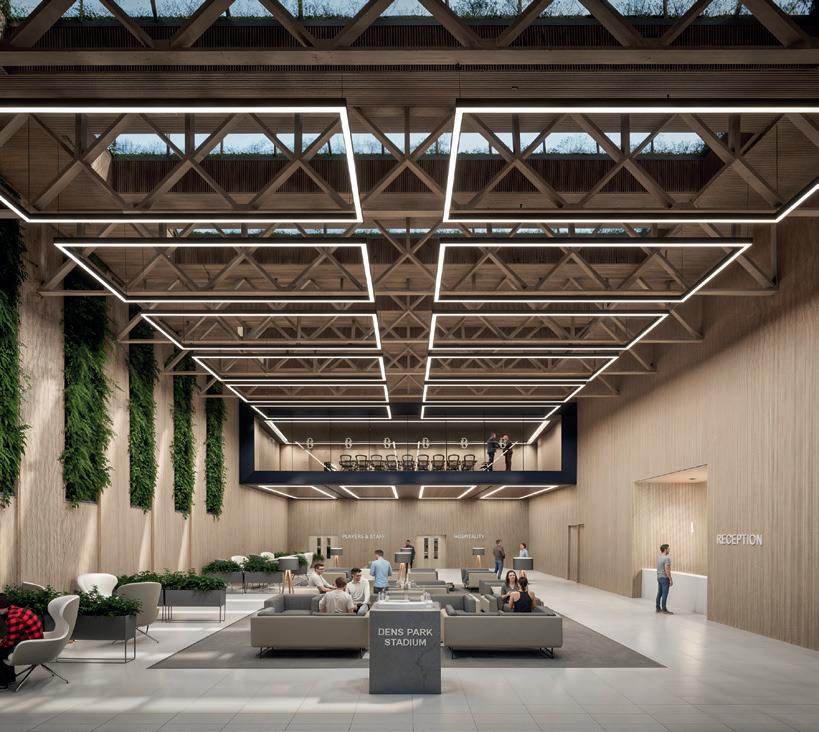
Holmes Miller has been working with the Dundee Football Club, LJRH and wider team of consultants to shape up the proposals for a new stadium at Camperdown, Dundee, in parallel with a planning permission in principle (PPiP) application.
As well as a new 12,500-capacity home for Dundee FC, the City of Discovery is set to gain a new sustainable, allelectric multifunctional venue that can also be used for civic, entertainment, business and community events.
In line with FIFA’s Green Goals initiative and the UN’s Sustainable Development Goals, the stadium is designed to minimise embodied and operational carbon. Sustainable features include low-energy LED floodlights and screens, photovoltaic panels, natural ventilation, 100% recyclable seating, a ‘green roof’ to promote biodiversity and rainwater reharvesting. Stadium design features, such as a safe standing tribune, beer hall and high-res video screens, will appeal to Dundee FC fans.
The stadium is part of a wider masterplan that is currently awaiting planning permission
in principle, with a decision set to be made by Dundee City Council this season.
This also includes a 140-room lifestyle hotel with health and wellbeing facilities, a carbon-neutral residential development and a city crematorium, as well as the potential refurbishment and expansion of the existing Dundee ICE Arena.
Net-zero design underpins the masterplan, which will promote the reduction of both embodied and operational carbon through building specification, construction and operation.
To encourage green travel, the new destination will be served by a dedicated e-bus terminal, cycle hub and EV charging facilities, all set within a high-quality public realm.
w ww.holmesmiller.com

The latest appointments from the construction and architectural industries.
CPMG has expanded its teams in London, Birmingham and Nottingham. Joining the experienced collective at CPMG’s London studio, Amit Patel arrives as a Part 1 Architectural Assistant, after completing his placement as an Architectural Assistant. Alongside Amit is Architectural Assistant Student Isaac Ma, who has joined the team while studying at the University of Bath. Strengthening CPMG’s Nottingham headquarters, Architectural Assistant Ieuan Thomas and Part 1 Architectural Student Elliot Tiney join the practice to continue their respective journeys in the sector. With more than eight years’ experience in the industry, Matthew Drewitt joins the Nottingham team as an Architect, with core knowledge in areas such as residential, civic, cultural, office and leisure sectors.
Howes Percival has recruited Partner Piet van Gelder as the firm’s first-ever Head of Construction to meet the growing demand for construction law services. Piet’s appointment follows a period of sustained growth for Howes Percival’s wider real estate and development team, which is nationally recognised and has advised on some of the largest development projects regionally and beyond. Piet is a specialist Construction and Engineering Lawyer who advises clients in the construction, engineering and renewable energy sectors, and in respect of compliance with the new regime under the Building Safety Act. Piet has experience over the whole lifecycle of projects from compliance with Building Regulations, procurement and resolving commercial issues.
Leading UK planning and development consultancy Lichfields has announced the appointment of an Associate Director as it continues to expand its operations in the capital. Andrea MacGregor-Barbour has joined Lichfields and is based in the company’s London office. She will work closely with Ian Anderson, Senior Director, and the rest of the team to support and develop the company’s portfolio of commercial projects. She joins from Marks & Spencer (M&S), where she spent 17 years as Town Planning Manager, playing a pivotal role in the strategic reshaping of the store estate and leading the planning and development programme across the UK. At Lichfields, she will be advising key clients, including David Lloyd Leisure and McDonald’s.
Proposals for the development of a landmark 251-bed aparthotel offering high-quality accommodation and public facilities in central Manchester have been approved by Manchester City Council. Bennetts Associates was appointed as architect and principal designer for the scheme, which encompasses the Grade II-Listed former Union Bank building and an adjacent ‘gap site’, a vacant and derelict plot of land that currently has an adverse visual impact on the streetscape. The site is minutes away from Piccadilly Train Station and is situated on a prominent corner at the heart of the city centre, bound by Piccadilly, Gore Street and Chatham Street.
McLaren Construction (Midlands and North) has announced the start of works on a significant new project, B4, at one of the UK’s largest and busiest airports. Valued at £12,844,105.00, the development of the World Freight Terminal at Manchester Airport marks a crucial addition to its infrastructure. Delivered on behalf of Columbia Threadneedle Investments, the project follows a previous phase of works for the client at the World Freight Terminal development to the west of Manchester Airport, which concentrated on the build of a 100,000ft 2 warehouse sub-divided into three commercial units, with internal office spaces.
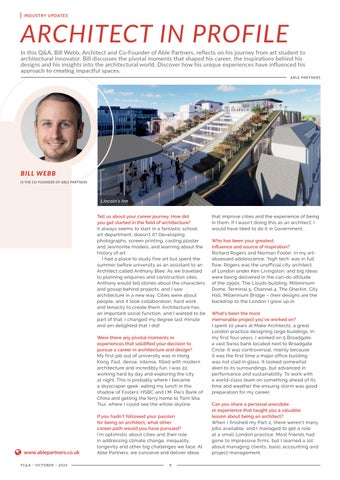
In this Q&A, Bill Webb, Architect and Co-Founder of Able Partners, reflects on his journey from art student to architectural innovator. Bill discusses the pivotal moments that shaped his career, the inspirations behind his designs and his insights into the architectural world. Discover how his unique experiences have influenced his approach to creating impactful spaces.


Tell us about your career journey. How did you get started in the field of architecture? It always seems to start in a fantastic school art department, doesn’t it? Developing photographs, screen printing, casting plaster and Jesmonite models, and learning about the history of art.
I had a place to study fine art but spent the summer before university as an assistant to an Architect called Anthony Blee. As we travelled to planning enquiries and construction sites, Anthony would tell stories about the characters and gossip behind projects, and I saw architecture in a new way. Cities were about people, and it took collaboration, hard work and tenacity to create them. Architecture has an important social function, and I wanted to be part of that. I changed my degree last minute and am delighted that I did!
Were there any pivotal moments or experiences that solidified your decision to pursue a career in architecture and design?
My first job out of university was in Hong Kong. Fast, dense, intense, filled with modern architecture and incredibly fun. I was 22, working hard by day and exploring the city at night. This is probably where I became a skyscraper geek, eating my lunch in the shadow of Fosters’ HSBC and I.M. Pei’s Bank of China and getting the ferry home to Tsim Sha Tsui, where I could see the whole skyline.
If you hadn’t followed your passion for being an architect, what other career path would you have pursued?
I’m optimistic about cities and their role in addressing climate change, inequality, longevity and other big challenges we face. At Able Partners, we conceive and deliver ideas
that improve cities and the experience of being in them. If I wasn’t doing this as an architect, I would have liked to do it in Government.
Who has been your greatest influence and source of inspiration?
Richard Rogers and Norman Foster. In my artobsessed adolescence, ‘high tech’ was in full flow. Rogers was the unofficial city architect of London under Ken Livingston, and big ideas were being delivered in the can-do attitude of the 1990s. The Lloyds building, Millennium Dome, Terminal 5, Channel 4, The Gherkin, City Hall, Millennium Bridge – their designs are the backdrop to the London I grew up in.
What’s been the most memorable project you’ve worked on?
I spent 10 years at Make Architects, a great London practice designing large buildings. In my first four years, I worked on 5 Broadgate, a vast Swiss bank located next to Broadgate Circle. It was controversial, mainly because it was the first time a major office building was not clad in glass. It looked somewhat alien to its surroundings, but advanced in performance and sustainability. To work with a world-class team on something ahead of its time and weather the ensuing storm was good preparation for my career.
Can you share a personal anecdote or experience that taught you a valuable lesson about being an architect?
When I finished my Part 2, there weren’t many jobs available, and I managed to get a role at a small London practice. Most friends had gone to impressive firms, but I learned a lot about managing clients, basic accounting and project management.

When I co-founded Able Partners after working in a big practice, I quickly realised what valuable insight that job gave me, so my lesson was that all experience has meaning – no matter how irrelevant it may feel at the time.
Could you walk us through a typical workday in your current role?
Our studio is in Fitzrovia, a wonderful corner of London, full of creative industries and interesting people. Once I’ve cycled in from Hackney, I might meet a client or partner for breakfast. We’re currently growing and interviewing new team members, so I like to do this first thing when I’m feeling bright.
We’re currently working on three large office refurbishment projects in central London, all within a 15-minute walk of the office, so may have workshops on site with various project teams.
My Co-Founder, Ben Stuart, and I try to have lunch to discuss our current ideas. We have similar design tastes and passions but different skills, so we like to stress test our solutions against each other.
In the afternoon, we work with colleagues on the project of the day; be that project bids, competitions, concept designs, reviewing Stage 4 delivery information or technical co-ordination.
We’re a RIBA chartered practice and are members of the British Council of Offices along with several other bodies, so we are often networking or at talks in the evenings.

What is your favourite building and why?
The Leadenhall Building by Roger Stirk Harbour Partners. Buildings in central London are subject to the London View Management Framework and are often left with awkward ‘jelly mould’ spaces within which they can build. The same constraints were true for this building, whose tapered shape avoids clashing with the critical views of St Paul’s, but Rogers then produced the perfect diagram of a tall building. The side core leaves a wide open floorplate with incredible views, reducing in size as it reaches into the sky. The structure nodes out flawlessly, and the ground plane sets a new standard for how skyscrapers should terminate on the ground and integrate into the city.
In your opinion, who is the greatest architectural mastermind of our time?
Sir Norman Foster. To be on the avantgarde of office design for so long is unparalleled. He has continued to outperform his industry for 30 years, which is incredible. There is no architectural field to which he hasn’t made a meaningful contribution.
If you were hosting a dinner party to discuss architecture and design, and you could invite three individuals, either from the past or the present, who would you choose to join your conversation?
Rem Koolhaas. He was the ultimate big thinker who felt architects should not be afraid to take on large, ambitious projects to meet the needs of modern society. I lived opposite his CCTV building in Beijing
for years and thought of him when looking out the window.
Ricardo Bofill. He is incredibly brave in the way he mixes classical and surreal elements to create work unlike anyone else.
Zaha Hadid. She changed the conversation about architecture for the whole world. The rise of parametricism and what could physically be done with buildings will inspire people for years to come.
Looking ahead, what exciting projects or initiatives can we anticipate from you in the coming year?
We spent the first half of our careers building new, sustainable megabuildings and it seems the second half will be spent reimagining existing buildings.
We’re working internationally on Hangar 21 in Trieste, having won an open ideas competition to transform a 100 x 30m three-storey grain store into a major innovation hub on the city’s port. We work with incredible stakeholders there and look forward to seeing the project come to fruition.
In the immediate future, we’ve been shortlisted by the LFA’s Reimagine London competition and hope to become finalists for our Attenborough Line entry this September. Our idea involves reimagining London’s transport priorities by lifting mass transit off the ground, with cable cars running above green space and a pedestrian superhighway to modernise infrastructure. If you’d like to vote for us, visit the link here: https://nla.london/ news/25-ideas-revealed-on-reimaginelondon-shortlist












SCONNEX® REDUCES THE ENERGY LOSS AT WALLS AND COLUMNS.


This innovative product range represents a breakthrough to a previously unsolved problem in energy-e cient construction. Schöck Sconnex® relies on tried and tested technology, reduces vertical thermal bridges and at the same time creates aesthetic and economic advantages. www.schoeck.com/en-gb/sconnex






STRIVING TO BE THE ‘BEST IN CLASS’ IN ALL WE DO
Sidey manufacture & install more windows in Scotland than anyone else in the marketplace.

Visit: sidey.co.uk
Tel: 01738 634 803
Email: info@sidey.co.uk


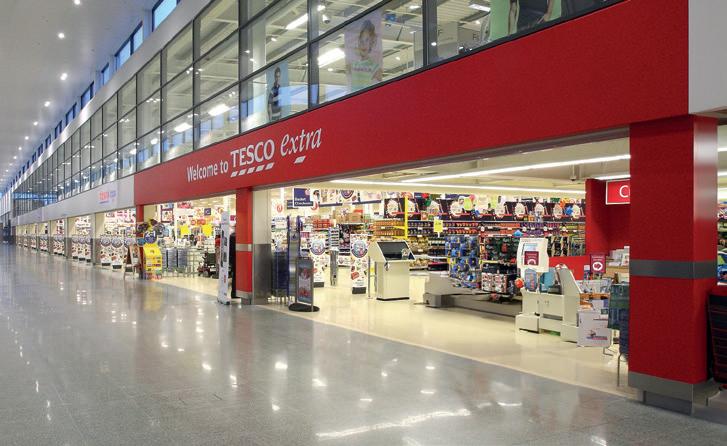
With recent reports of an upturn in retail construction showing a 21% increase in quarter two compared to the same period last year, this is not only good news for the sector but also for shoppers, as supermarkets and other retailers invest in attracting customers and responding to online competition with updated and more attractive shopping experiences.
ENCASEMENT
Th e purchasing environment is a key aspect of the retail experience and the importance of combining practicality with aesthetics is essential. Decorative column casings and building linings are key components in this process, as they provide practical solutions for concealing interior and exterior structural steelwork while adding to a building’s aesthetics.
U sed on both new-build and refurbishment schemes, Encasement’s Verta column casings and Vecta budling
linings ranges offer a wide choice of materials and finish options for exterior or interior applications and are installed in a diverse range of retail projects for wellknown brands, including Tesco, Porsche, ASDA, Kia Motors, Next and Greggs.
C irca and Quadra casings are manufactured from pre-formed MDF and plywood, respectively, while the Forma range is fabricated from metal. Alongside

these are Polyma GRP (glass-reinforced polymer) and Gypra glass-reinforced gypsum (GRG) options, as well as Metza casings, which are a specialised solution designed to provide fire protection for mezzanine floor supporting columns.
W here casings are needed for interior use only, Circa and Quadra allow circular, square and rectangular profiles to be specified. They also provide a wide range of finish options, with the most popular being decorative laminates, as they are resistant to scuffs and scratches and can be specified in plain colours, wood grain and metallics, as well as textured finishes.
W hile every Encasement column casing type is suitable for interior use, both the Forma and Polyma ranges are also widely used for exterior retail projects, such as storefronts, canopy supports or as a feature on retail park units, due to their durability and inherent weather resistance.
Available in aluminium or stainless steel, Forma casings can be specified in circular, square, rectangular or hexagonal forms, as well as bespoke shapes. A wide choice of finishes is available, including PPC options in any RAL colour, as well as brushed, anodised, embossed or textured finishes, such as Rimex.
Strength, durability and colour choice are also features of the Polyma GRP range, which can be key considerations in retail environments. As Polyma GRP casings are produced using moulds, this manufacturing process allows a high degree of design flexibility, with shape, size and colour options all open to specification to meet bespoke project requirements, as well as standard profile options.
A longside Encasement’s column casings, the Vecta building lining range provides high-quality solutions for interior wall linings, bulkheads, fascias, soffits and reveals, which are already installed on a range of projects, including major brands, such as Tesco, Prêt a Manger, Mini and Greggs.
D epending on the application, the Vecta range can be specified in a choice of materials and finishes. High-level bulkheads, such as the 100m-long solution at Tesco in Yardley, Birmingham, use PPC aluminium, although they can also be manufactured from stainless steel, as well as GRP or GRG, which can help save weight, although consideration should be given to the materials’ suitability for each application.
B y offering the Vecta column casing range and the Vecta building linings system, retail construction specifiers can source a range of specialised products from a single company.

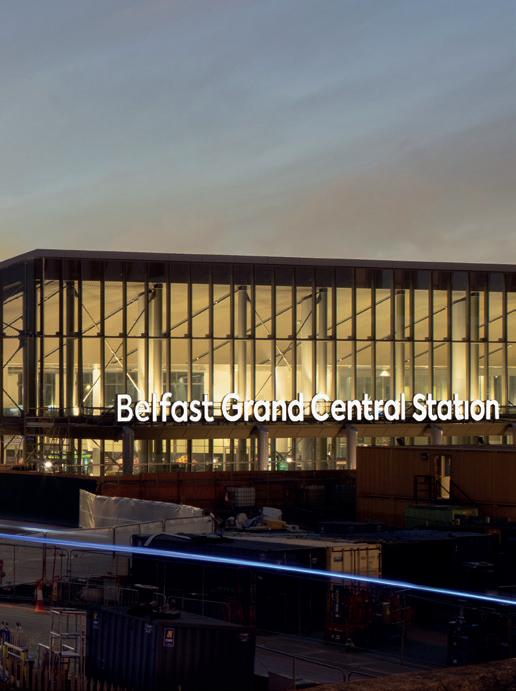
Belfast Grand Central Station has welcomed its first passengers, with bus services now operating from the new multi-modal terminus, set to be the largest integrated transport facility on the island of Ireland when the rail platforms open later this month. The station sets a new standard for the forthcoming renewal of public transport infrastructure and connectivity across the island.
Th e integrated transport hub has been designed by John McAslan + Partners' Belfast design studio in collaboration with Arup and Juno for Translink as part of Belfast’s ongoing urban regeneration, providing not only state-of-the-art transit facilities but also a welcoming new front door to the city.
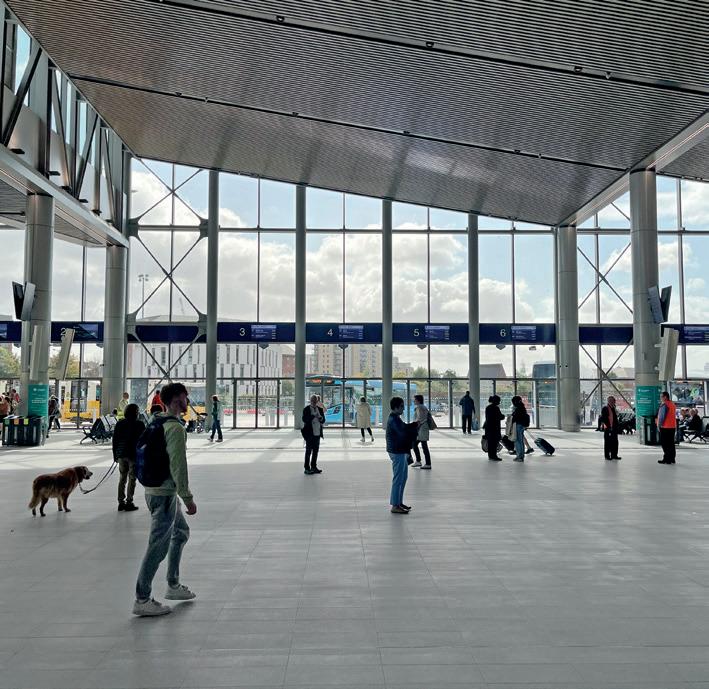
I nspired by the city’s rich industrial heritage, Belfast Grand Central Station has replaced the current facilities at Europa bus centre and Great Victoria Street railway stations and is expected to cater for around 20 million passenger journeys annually with flexibility for future growth. Configured around a 7500m 2 station concourse, over 10 times larger than the facilities it replaces, with a further 2000m 2 of retail. Beyond transport, Grand Central Station is intended to act as a prime location for people to meet, shop, dine and socialise.
L ocated on a nine-hectare site of former railway yards and bounded by Durham Street and Grosvenor Road, the expressed portalised design evokes engineering-led structures which typify railway architecture, such as repeating gantries and the scale of Victorian railway termini. It is arranged around an efficient step-free single level with bus operations to one side and rail platforms on the other.
T he station’s design also draws inspiration from the former linen mills that characterised the development of the local area, echoing the oversized, repeating forms of industrial architecture with a striking, exaggerated sawtooth roof and exposed truss structure reminiscent of the original Great Victoria Street station that was demolished in the 1970s. Large glazed northlights span the unified amenities and introduce natural light to the concourse below.
A n architecturally-impactful colonnade wraps around the front-facing elevations, with a dramatic swept soffit signifying the entrances to the station and welcoming passengers. At night, the soffit is washed with light, illuminating the station and further animating the surrounding public realm. The main entrance will be via Saltwater Square when it opens next year.
I nside, column numbers have been kept to a minimum, with large truss spans to create an experience of openness with clear sightlines, making wayfinding intuitive. The Translink bus and rail operations, both back-ofhouse and public-facing, are brought together around a central spine and lined with glazed panels and richlypolished plaster, activating its perimeter
with passenger facilities, including retail, restrooms and a customer support office.
S ustainability has been an integral part of the design throughout. Passive ventilation and considered orientation minimise transport fumes within the station, with actuated louvres incorporated strategically to exhaust while providing comfortable interior conditions. The southerly aspect of the sawtooth roof supports photovoltaic panels, and provision has been built in for any further electrification of the transport network. Wherever possible, local materials have been sourced to minimise carbon mileage, with the superstructure fabricated less than 20 miles from the site.
Ross Harrison, Associate Director at John McAslan + Partners' Belfast design studio, says: “Designed to cater for bus and rail travel under one roof, our collaboration on Belfast Grand Central Station with Arup for Translink has delivered a customercentred station on time, a real achievement for transport projects. More than that, it delivers a civic function – providing a forward-looking first impression of Belfast that is symbolic of the changing direction of the city. Globally, modern public transport hubs are increasingly used in this way, and it is timely that Belfast should unveil this gateway on the cusp of Ireland’s wider rail review.”

C olin Bennie, Director of Transport and Infrastructure at John McAslan + Partners, adds: “Over the years, our practice has worked on a number of major transport projects in London, Sydney and New York. We’re delighted to build on this experience in Belfast and are excited to see how transport architecture is increasingly considered the defining feature of a modern city that works for everyone. This is certainly what we have sought to achieve for Belfast Grand Central Station.”
C hris Caves, Director at Arup, comments: “The opening of the bus element at Belfast Grand Central Station is a key milestone for Northern Ireland. This state-of-the-art public transport hub will not only enhance connectivity across the region but also drive sustainable growth for the local economy. It’s a proud moment for all involved, and we’re thrilled to have played such a significant part in this flagship project, from the outset, in delivering such a transformative piece of infrastructure.”
C hris Conway, Translink's CEO, concludes: “We are excited to be opening this modern major transport interchange this week. With advanced customer features and integrated networks, it offers a huge opportunity to grow public transport, driving
economic development across the region and playing a major part in tackling the climate emergency. That means a betterconnected future for people and communities for generations to come. I would like to thank the minister and his department for the funding and the wider NI executive for their support in designating this as a flagship project. I would also like to thank the Translink team and the contractors for their commitment and dedication to get this project to this key stage.”
Client: Translink and the Department for Infrastructure
Architect and masterplanner: John McAslan + Partners
Engineer: Arup
Planning: Juno
Contractor: Farrans Sacyr

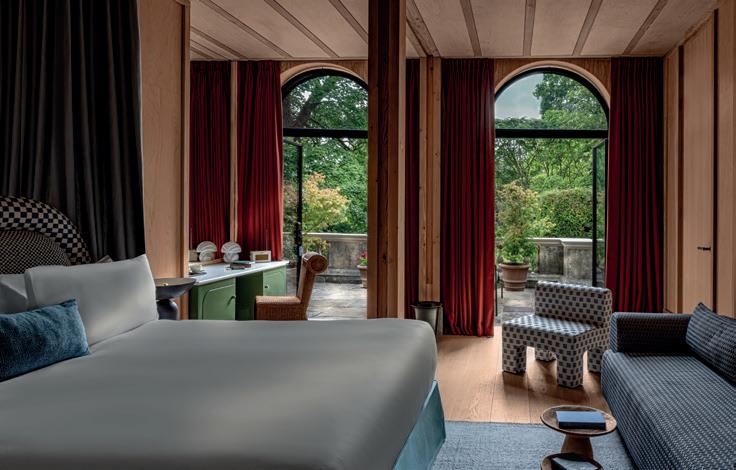
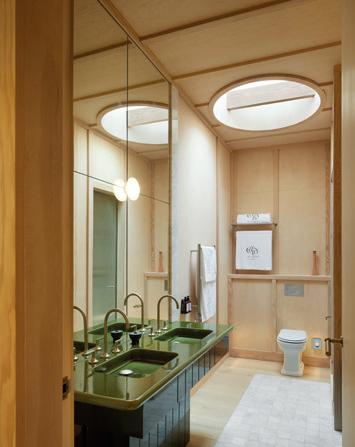
De Matos Ryan has collaborated with renowned Interior Designer Dorothée Meilichzon (CHZON) to create a new pavilion building for Cowley Manor
De Matos Ryan and Dorothée Meilichzon (CHZON) have unveiled a stunning new pavilion at Cowley Manor Experimental, blending history with modern elegance. Inspired by the site’s connection to Alice in Wonderland, this stone-clad, timberframed extension revives the spirit of a long-lost ballroom, offering luxurious guest accommodations amidst the enchanting Cotswolds landscape.
The new, stone-clad, internally timber-framed pavilion houses five generous guest rooms with a variety of interconnected family suite options. The extension reinstates a refined but striking masonry pavilion on the site of a long-lost former grand ballroom from 1900.
Sat within 55 acres of Cotswolds countryside, Cowley Manor Experimental is home to 36 bedrooms and suites, the awardwinning C-Side spa, restaurant (overseen by Chef Patron Jackson Boxer), Experimental Cocktail Club Cotswolds Bar, lounge, library and plentiful living rooms.
First constructed in 1695, the land was once owned by Edward the Confessor and the property designed by the renowned R.A. Briggs. It is also widely recognised as the inspiration for Lewis Caroll’s Alice in Wonderland. However, like many extraordinary country houses, Cowley Manor fell into institutional use during the war. It was revitalised as a leading country hotel in 1999 in what was De Matos Ryan’s first significant commission. The bedroom pavilion is a unique opportunity for the practice to continue its sensitive
design-led development of the estate, described by Historic England as “one of England’s best heritageled development schemes. It shows that with imagination and skill, old buildings can be given a new and positive future”.
Once the idyllic rural retreat of the Horlick family of malted drink fame and fortune, the Cowley Manor estate was purchased during the Art Deco era by the young HeberPercy and his American wife, who set about ‘modernising’ the house. While glass-walled bathrooms in the ‘modern’ style were added, most of the decorated ceilings, timber panelling, carvings and statuary were removed in an act that might now be considered unthinkable vandalism. The demolition of the ballroom gave way to a new outdoor swimming pool terrace, which the new pavilion now elegantly occupies.
Typical of De Matos Ryan’s work, the new pavilion playfully borrows from the past in order to create something meaningful for the future. Its arched openings and scalloped stone bays present a contemporary but respectful reinterpretation of the original Italianate arched and pilastered frontage designed by R.A. Briggs. The pavilion has a clear modern identity distinct from the body of the main house, yet suitably fitting, re-establishing a bookend to the main house and terrace.
M inimising environmental impact is central to all De Matos Ryan projects. This was a key driver in making material choices for the pavilion. Whilst dressed, carved stone was a relatively straightforward
contextual decision externally, the opportunity to reimagine historic timber linings internally presented the conceptual conditions to explore an exceptionally low-carbon typology of both materials brought together. The Cotswold stone was quarried locally from only three miles away. Aside from its cutting, it is, in effect, a ready-made, low-energy material that is self-finished and self-supporting when forming an external skin. Its ability to nowadays be primarily shaped by machine is almost certainly the envy of the original stonemasons.
T he internal timber frame structure is sustainablysourced, UK-grown Douglas fir. It offers the opportunity to engage an elemental constructional methodology that ‘looks like the way it is built’, using standard sizes and traditional carpentry techniques in a modern manner. Double-member columns clamp and bolt together about purlins, which then support joist decks. Ends are cut and notched simply to resolve junctions elegantly.
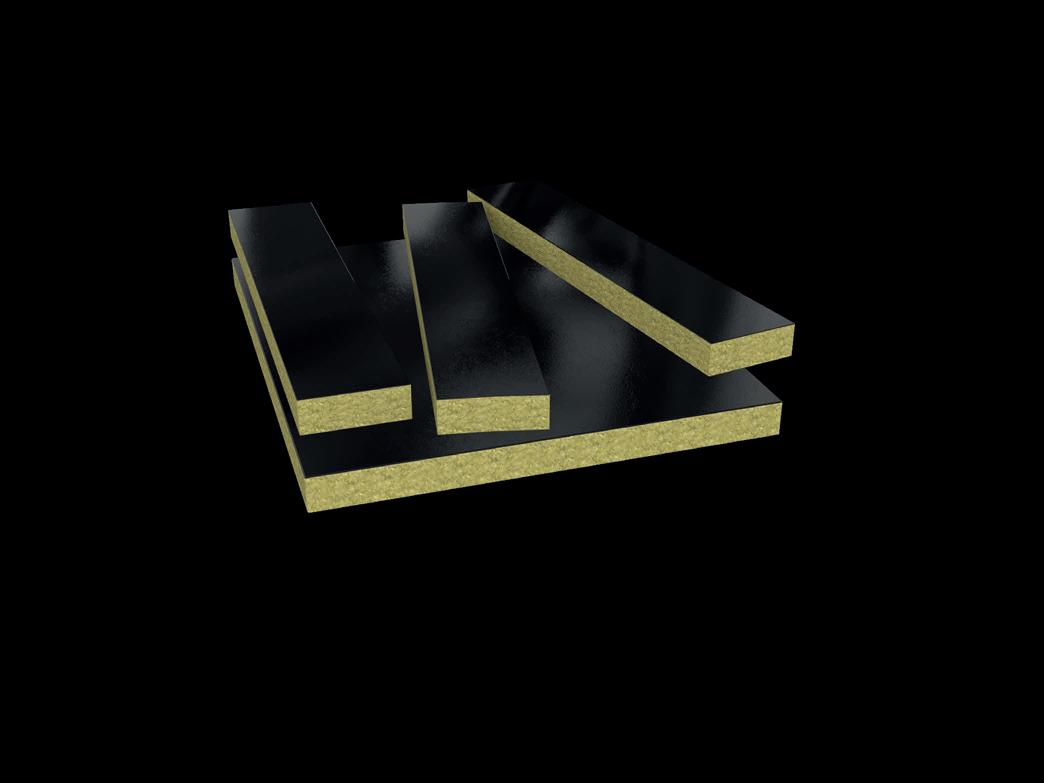
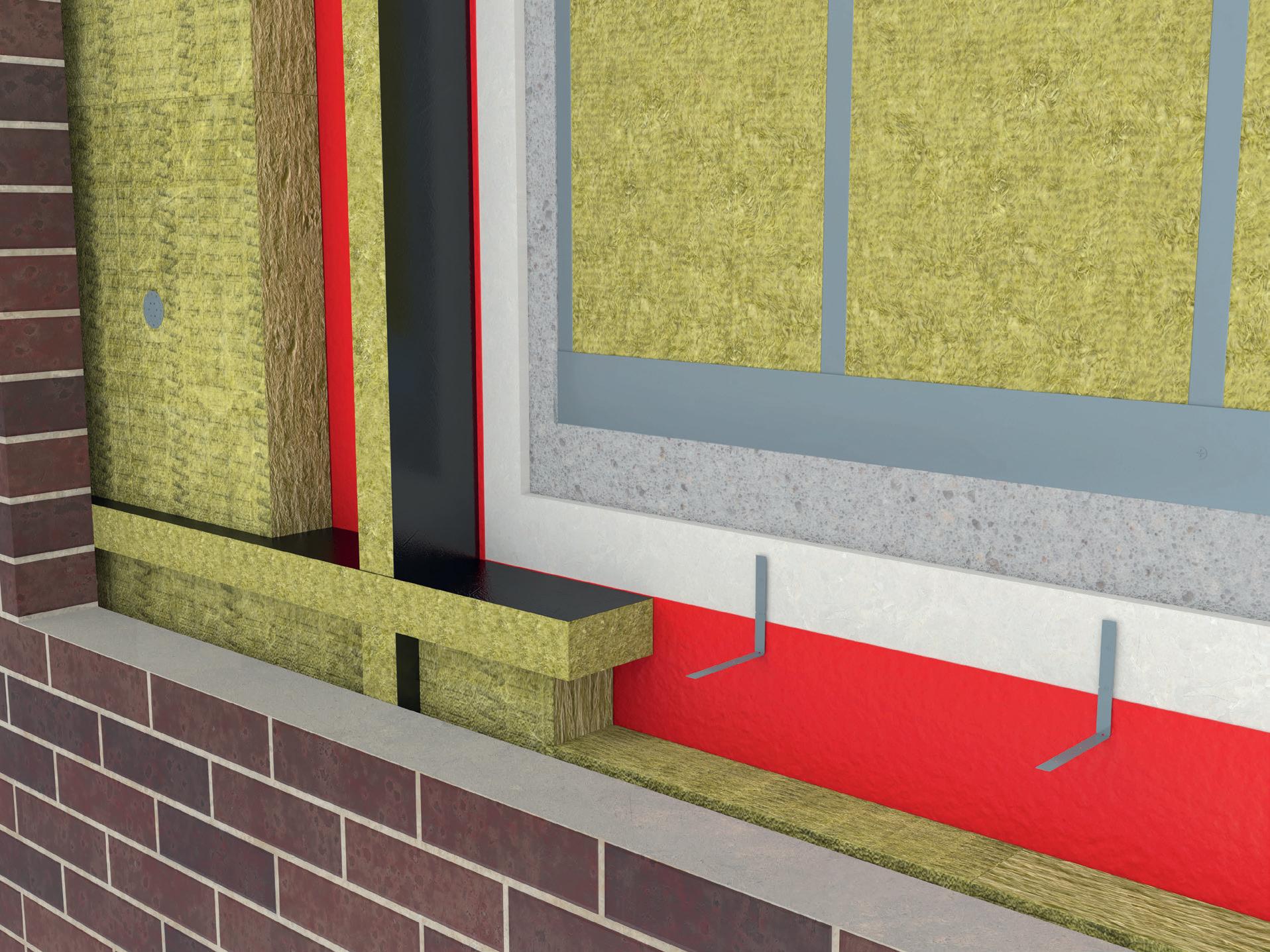
A cavity fire stopping solution suitable for vertical and horizontal installation.
Tested for use with steel frame substrate, composite panel and masonry applications
120 minutes integrity and insulation in cavities up to 600mm*
Tested to BS EN 1366-4:2021
Tested to curtain wall standard BS EN 1364-4:2014
Suitable for ‘installation from below’

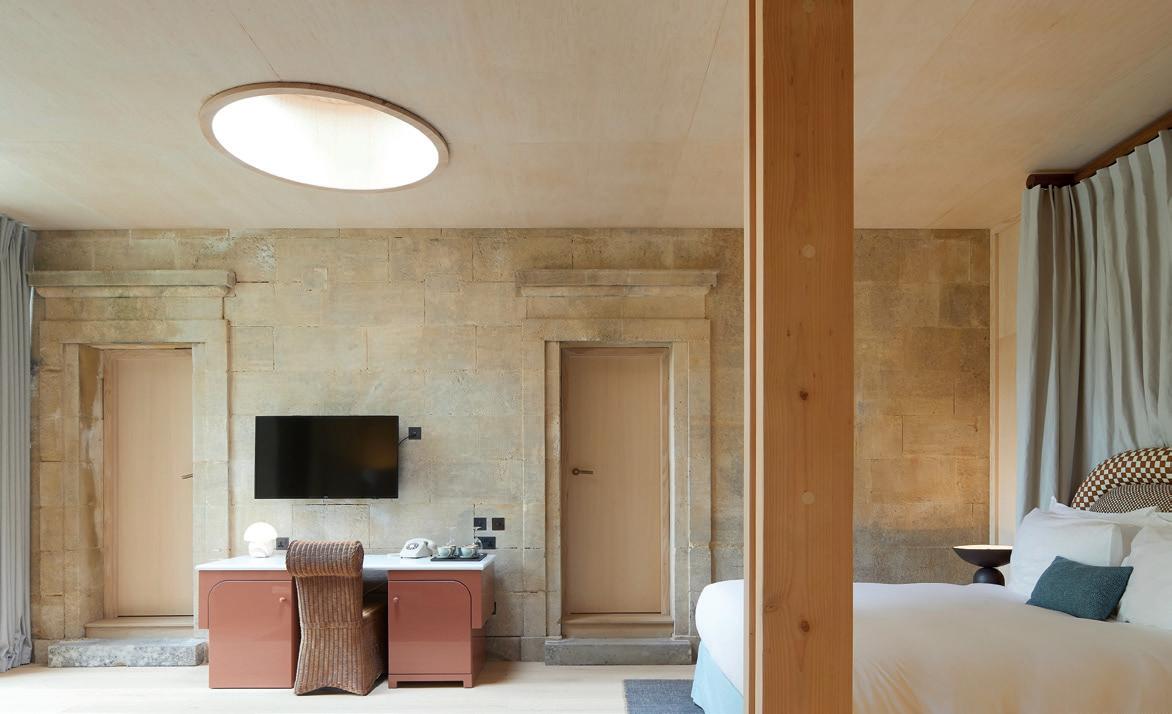
W ithin the inner Douglas fir wall and roof build ups, Magply is employed to create a fire barrier, which is lined internally with an expressed sarking layer of Garnica reinforced maple ply. Subtle distinctions between these timber species are blurred by a tinted Envirograf intumescent treatment, which renders the whole in a calm, offwhite finish.
O ther sustainability measures include the use of air-source heat pumps providing heating and hot water, high levels of insulation and airtightness above Building Regulations, a natural ventilation strategy by means of clerestory windows. In addition, the building supports local biodiversity with a planted sedum flat roof.
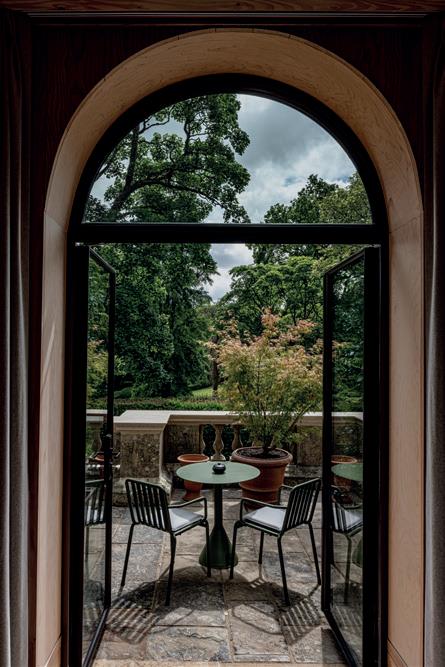
D irect access and connection to the unique Grade II*-Listed gardens is provided via the arched doorways of the front elevation. A first-floor terrace provides an elevated platform from which to enjoy the landscape in the same way as the primary first-floor bedrooms of the original main house.
T he physical connection between old and new continues and builds from De Matos Ryan’s previous interventions at Cowley Manor Experimental, where juxtaposition is carefully handled. The pavilion is read as a secondary detached building volume that is respectful of its host and context.
T he reimagined Cowley Manor Experimental continues to embody a timeless contemporary style, as it embarks on an exciting new chapter in its history
FACT FILE:
Architect: De Matos Ryan
Interior design: Dorothée Meilichzon (CHZON)
Structure: Price & Myers
M&E services: P3r Engineers
QS: Monaghans
Contractor: CJN Concept
Timber structure: Timber Workshop
Stonemason: Farmington
GEA: 285m2
GIA: 236m2
Completed: July 2024
Photography: Hufton + Crow/ Patrick Locqueneux








As co-living models, student housing and other forms of communal living grow in popularity, property developers must respond to consumer demands. Many students and renters now seek a residence that can contribute to their social life, elevate living experiences and offer a sense of community, all while still meeting the functional needs of a home.
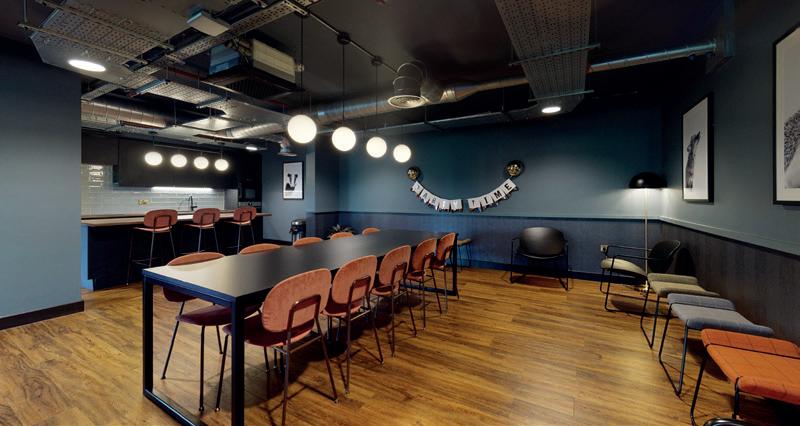
Th oughtfully integrated technology, especially luxury home tech, can enhance the appeal of communal spaces and bring residents together. Whether it’s a lounge, kitchen, gym or cinema room, these areas offer residents an extra place to call home and foster social interactions with one another. Technology provides entertainment and makes communal areas more comfortable and functional, therefore, encouraging frequent use. By allowing those who live in the building a high level of control over their living and technology preferences, it offers an enhanced sense of ownership and makes the accommodation feel like a true home.
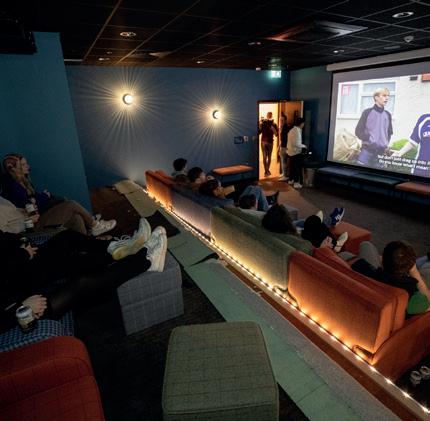
Residents’ bedrooms can be on the smaller side compared to privatelyrented or owned homes, which makes the availability of extra rooms a key selling point of these properties. For instance, cinema rooms have grown in popularity for many co-living environments. A welldesigned cinema room can turn a standard space into a hub of social activity where people come together for movie nights, sports viewings or streamed concerts.
A n example of how cinema rooms elevate the communal living experience is Guilden Village, a student housing project HiiLIFE worked on in Guildford. It now features a 5.1 Sonance surround sound system and Epson projector with high brightness 4K video playback, which residents control via Control4 10 " touch panels. By implementing this technology, we transformed an otherwise basic communal area into a focal point for residents to enjoy evening entertainment outside of their bedrooms.
S imilarly at Guilden Village, a sky lounge, terrace and games room were installed that feature mini golf, outdoor TVs, video games and arcade machines. Providing extra spaces and entertainment value creates a point of difference against competitors, as Guilden Village offers more activities for residents to enjoy.
C omfort is another major factor in transforming the living experience. One way of achieving this is by introducing climate control technology. Advanced air conditioning systems allow residents complete control over their environment to

JAKE STEPHENS IS THE TECHNICAL MANAGER AT HIILIFE, A BESPOKE TECHNOLOGY PROVIDER FOR THE CONSTRUCTION, HOSPITALITY AND LEISURE SECTORS
HIILIFE
ensure it remains comfortable throughout the year. In the Guilden Village project, we installed Samsung air conditioning in every single room, providing residents with optimal comfort and flexibility.
E levating residents’ living experience in shared accommodation involves far more than simply providing additional communal areas; it’s about maximising and enhancing the space of each room, including smaller, more intimate spaces. One could equip a private dining room with high-end kitchen appliances, mood lighting and a seamless AV system that allows residents to host memorable dinner parties, celebrations or other social events. Adopting this level of design flexibility makes hosting gatherings a more attractive proposition, inviting collaboration and relaxation.
T he most effective use of tech in shared accommodation is when it works in the background, subtly shaping the atmosphere of a space. For example, one of our previous installations for Dandi Living involved integrating audio systems and hidden speakers in shared lounges and outdoor terraces. These audio

systems are designed to play birdsong and ambient sounds that are rarely found in cityscapes, creating welcoming environments that residents naturally want to use.
T he sound quality is crucial for outside spaces: Instead of one large, overpowering speaker, multiple smaller speakers can provide a balanced, highquality audio experience that fills the space without dominating it. Ambient lighting, whether inside a lounge or along an outdoor pathway, also plays a role in setting the tone of a space, improving the welcoming atmosphere and encouraging residents to spend more time there.
I nstalling hidden audio systems and atmospheric lighting is particularly effective in spaces designed for relaxation. Lounges or social spaces equipped with discreet, high-end audio systems and controllable lighting encourage spontaneous interactions and enhance the quality of life for those living in small spaces. For instance, while solo living allows residents that much-needed privacy, providing relaxing communal areas offers reassurance that they can step into an environment that invites socialising with neighbours without the need to leave home.
The key to using luxury technology to foster community in shared accommodation is intentionality. The goal isn’t just to install the latest tech, but to thoughtfully integrate it in ways that enhance both the functionality and appeal of communal spaces. Technology should
support the lifestyle and habits of residents while also elevating the user experience to new heights, encouraging them to come together and interact naturally.
A t its core, shared accommodation is about creating opportunities for connection. By investing in high-quality, well-designed technology, developers can not only elevate the standard of living but also provide the foundation for a strong sense of community.
Whether it’s through a state-of-the-art cinema room, a welcoming lounge with ambient music or a private dining space equipped with smart technology, the right tech can transform a shared living space into a home.
www.hii-life.com

In the UK, 138 work-related fatalities were recorded in 2023/241, with over half (51%) occurring in the construction industry. This alarming statistic highlights the critical importance of ensuring both the physical and mental wellbeing of employees, particularly in high-risk environments like construction sites, says Elle Clarke, PPE and Workwear Manager at Milwaukee.
MILWAUKEE
Pe rsonal protective equipment (PPE) is crucial for safeguarding construction workers. However, simply providing the right equipment isn’t enough; workers must also be trained to use it correctly. Any lapse in this area can lead to serious legal consequences for employers, making it imperative for site managers to enforce strict compliance with safety guidelines.
The challenge, however, lies in the face that the PPE industry has struggled to keep up with the evolving needs of modern job sites. Construction projects increasingly incorporate new materials, methods and technologies, making the one-size-fits-all approach to PPE less effective.
This gap has led many workers to modify their PPE to better suit specific tasks. For instance, some might cut the fingertips off gloves to use touchscreens or adjust hard hats to accommodate additional safety attachments. While these adjustments might seem harmless or practical, they can compromise the effectiveness of the protective gear, exposing workers – and their employers – to significant risks.
The hidden dangers of customisation
A key issue behind PPE modification is a lack of understanding about how this equipment is designed and tested. PPE
is engineered to meet stringent safety standards, which prevent accidents, injuries and fatalities. When workers alter their gear, even in seemingly minor ways, they compromise its integrity and effectiveness.
Take the simple act of leaving a highvisibility jacket open to avoid overheating. This may seem like a small change, but it can have severe consequences, especially when working at heights or in low-visibility conditions.
A s an industry, we must do a better job of communicating the risks associated with such modifications. Workers need to understand that what may seem like a simple, productivity-enhancing tweak could endanger their safety and that of their colleagues.
T he consequences of PPE modification extend into the legal and financial realms. If, in an accident, it’s found that PPE was modified, the company could be held liable.
T his liability doesn’t just result in financial losses; it could also lead to severe legal penalties. Should an investigation reveal a company allowed or overlooked the use of non-compliant safety gear, it could face significant fines, criminal charges and lasting damage to its reputation.

The moral responsibility of employers
O ther than the legal and financial implications, employers have a moral duty to ensure safety. Providing proper, certified equipment is a fundamental aspect of responsible business practice. If employees feel the need to customise their PPE, it could indicate that the provided gear is uncomfortable or unsuitable. Companies must address these concerns by investing in high-quality, well-designed PPE that meets safety and comfort requirements.
Allowing or ignoring the customisation of PPE is a dangerous practice that can have far-reaching consequences for any business. Instead, companies should partner with premium PPE suppliers who understand the risks of ‘user upgrades’ and proactively enhance their products to meet the evolving needs of workers. By providing properly tested and comfortable gear, companies can eliminate the temptation for workers to modify their equipment and, in doing so, protect their most valuable asset – their employees.
uk.milwaukeetool.eu
FOOTNOTE: 1https://www.hse.gov.uk/statistics/fatals.htm
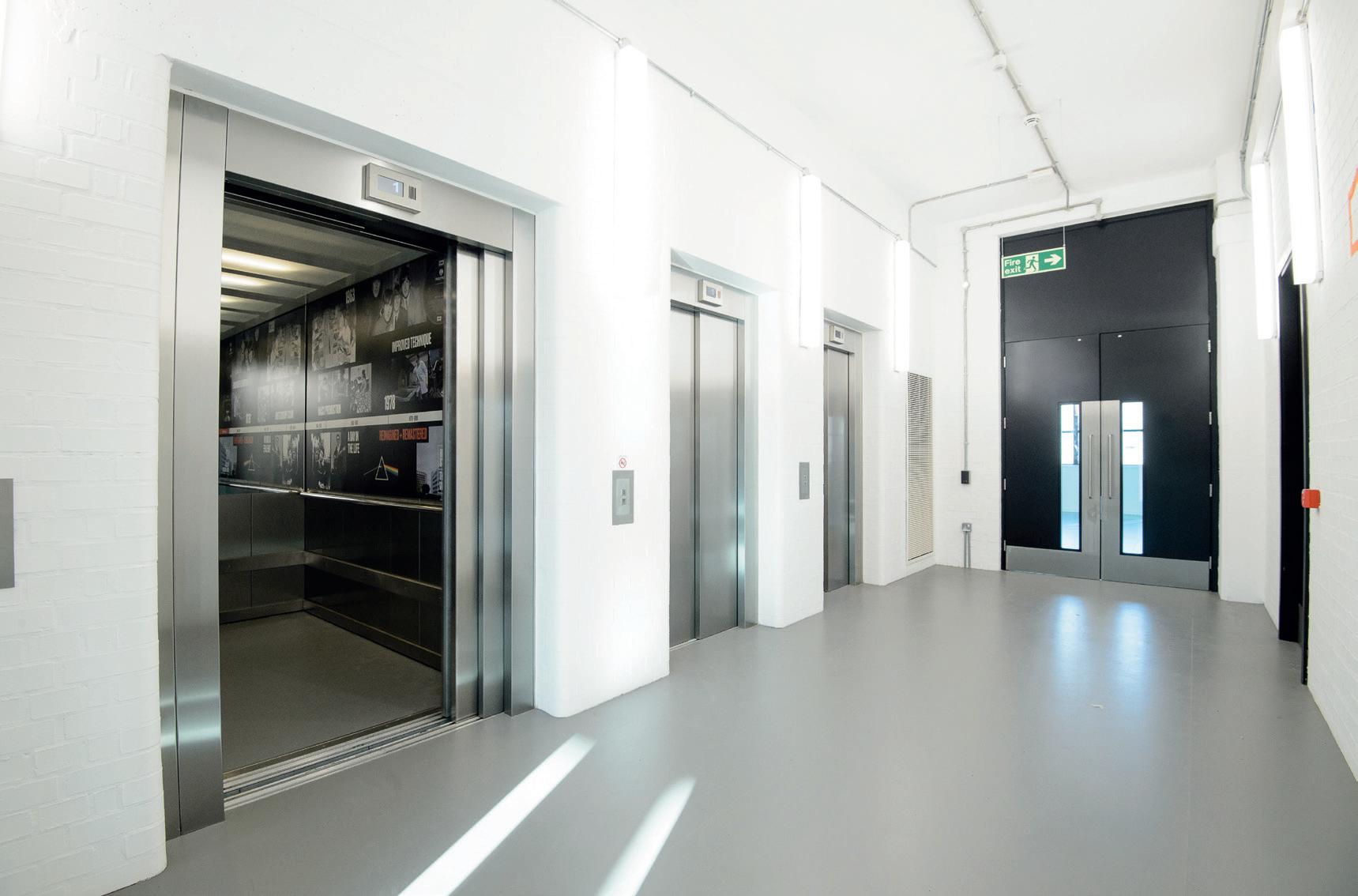
With over 150 years of experience, we are experts in the lift industry. We supply and install a wide range of lift products. From our nationwide network of 11 branches we provide local lift services for both our own products and other makes and models.
As an independent, family-owned lift company our highly-trained lift engineers pride themselves on delivering expert support. So if you need a new lift, or someone to look after one, we can help.

When it comes to finding a lift solution for transport facilities and public infrastructure, understanding the distinction between the different types of lifts is essential. Each type of lift serves a unique purpose and caters to specific project needs. David Saunders, Head of Stannah’s Major Projects Division, which specialises in infrastructure projects, explores this in more detail and looks at what to consider when choosing the right lift solution for transport facilities.
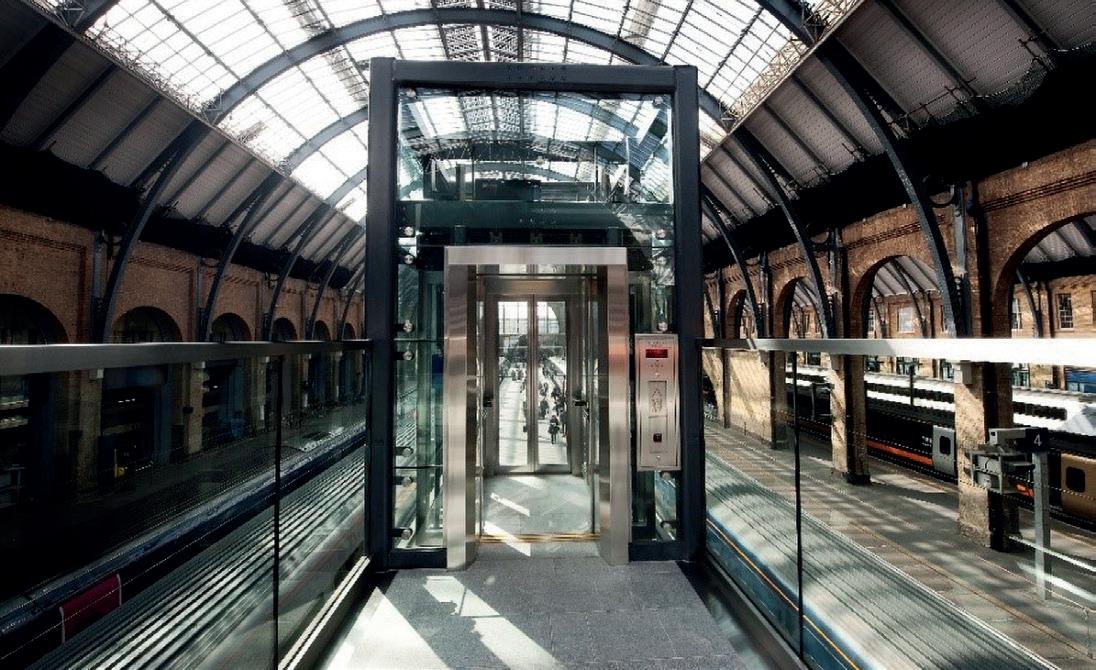
Platform and passenger lifts both serve the purpose of transporting people, but they are designed to meet different needs.
P latform lifts are ideal for tight spaces and enhancing accessibility for individuals with mobility challenges. Unlike passenger lifts, they are smaller, travel at slower speeds and are not designed for high capacity, making them suitable for access to areas such as firstclass lounges, secondary building routes or as an alternative to small stairs where ramps are impractical. They are also ideal for smaller stations or transport hubs with lower foot traffic.
P assenger lifts are designed to move people quickly and efficiently between floors in high-traffic buildings, such as stations and transport facilities. Often made to bespoke specifications, these lifts feature superior car and landing doors, advanced drive and control
systems and durable finishes for reliability and longevity. Unlike standard models, these bespoke lifts may need to work to specific transport specifications, so consulting with a lift specialist is recommended to determine the exact requirements.
P assenger lifts for the transport sector can be tailored to match a building’s aesthetics whilst offering energy-efficiency features. They can accommodate up to 33 passengers and serve up to 16 stops, and often larger and higher if needed. Unlike platform lifts, these high-performance passenger lifts can also function as goods/passenger lifts or evacuation lifts, featuring emergency mode capabilities, but require a dedicated power supply and integration with building systems.
H eavy-duty passenger lifts are built for demanding, high-traffic environments

like airports and train stations. Heavyduty lifts can be designed with robust features, such as reinforced doors, tamper-proof ceilings and vandal-resistant operating panels, offering clients enhanced durability such as water resistance and protection against vandalism.
Transporting heavy goods between floors in busy public infrastructure environments can put everyone at risk. Installing a goods lift is a great alternative to reduce the risk of incidents and efficiently transport deliveries and goods to their desired location. Goods lifts come in various types, including lifts designed solely for transporting goods, those that can accommodate up to two trained attendants and passenger lifts that are for back-of-house use.
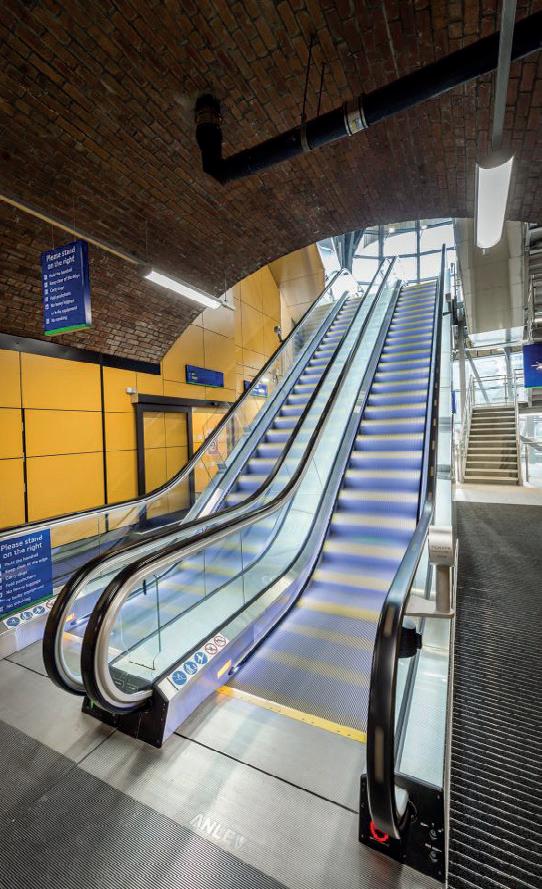
A n escalator is ideal for efficiently transporting large numbers of people between floors within transport hubs and have been a well-established and widely used method in railway stations since 1920s. Like other lift systems, there are ruggedised versions designed to withstand the extra wear and tear of hightraffic areas. However, escalators do not offer a step-free solution for those with reduced mobility, prams or luggage, so lifts or ramps are also needed.
C ommonly used in larger airports or stations, moving walkways help transport passengers over short distances. They are ideal for efficiently moving people in areas where a step-free, continuous flow is necessary, accommodating a high volume of travellers.
A ll lifts serve a different purpose, but their common goal is to enhance accessibility within a building. Compliance with the Equality Act 2010, Building Regulations 2010, is essential for creating inclusive
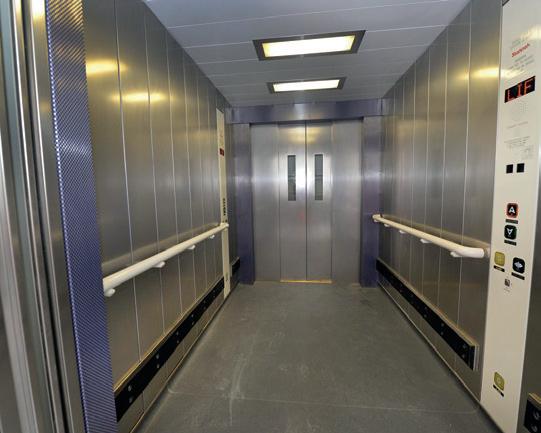
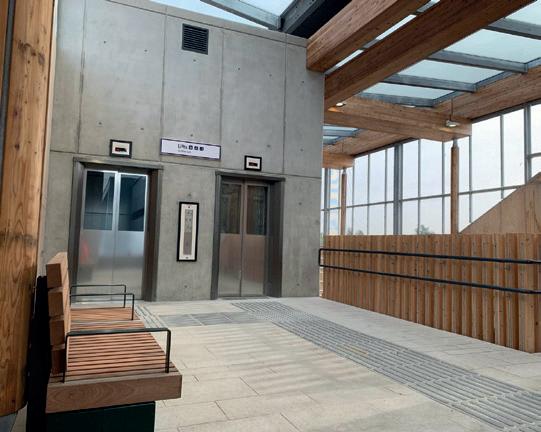
environments. This includes providing access to all floors with DDA-compliant lifts featuring adequate wheelchair space for wheelchairs, tactile signage, accessible controls and audio communication systems.
P assenger lifts should also be equipped with essential safety features, including emergency communication systems, intercoms, alarms and automatic door sensors, to ensure both smooth and secure operation. Additionally, these lifts must comply with the Safety of Lifts Regulations Act 2016, which establishes strict requirements for maintaining safe operations.
Reliability is essential in lift systems, as out-of-service lifts can prevent passengers from completing their planned journeys, causing inconvenience and frustration. Wear and tear are the most frequent cause of lifts being out of service, but regular servicing and maintenance can reduce these issues.
A nother important factor to consider when selecting a lift for transport and public infrastructure environments is the potential for misuse and vandalism. Lifts are susceptible to deliberate and accidental damage from heavy luggage colliding with landing doors or car walls
or rubbish falling into lift mechanisms, which can lead to operational disruptions and increased maintenance needs.
S ustainability and energy efficiency are also an essential factor, as we have noticed a growing demand for these kinds of lift solutions. For example, the lifts in the Elizabeth Tower feature regenerative drives that return power to the mains, saving energy and costs.
G iven that every project features unique architectural styles and designs, passenger lifts can be customised to integrate seamlessly with a building’s aesthetics while fulfilling their functional requirements. This process often involves consultations with architects to align functionality with aesthetics.
In summary, selecting a lift for transport facilities involves numerous considerations, including placement, accessibility, capacity, speed, safety, reliability and aesthetic design. By choosing the right lift solution, you can significantly enhance user experience, ensure compliance with regulations and contribute to a more accessible environment by providing stepfree access.
www.stannahlifts.co.uk
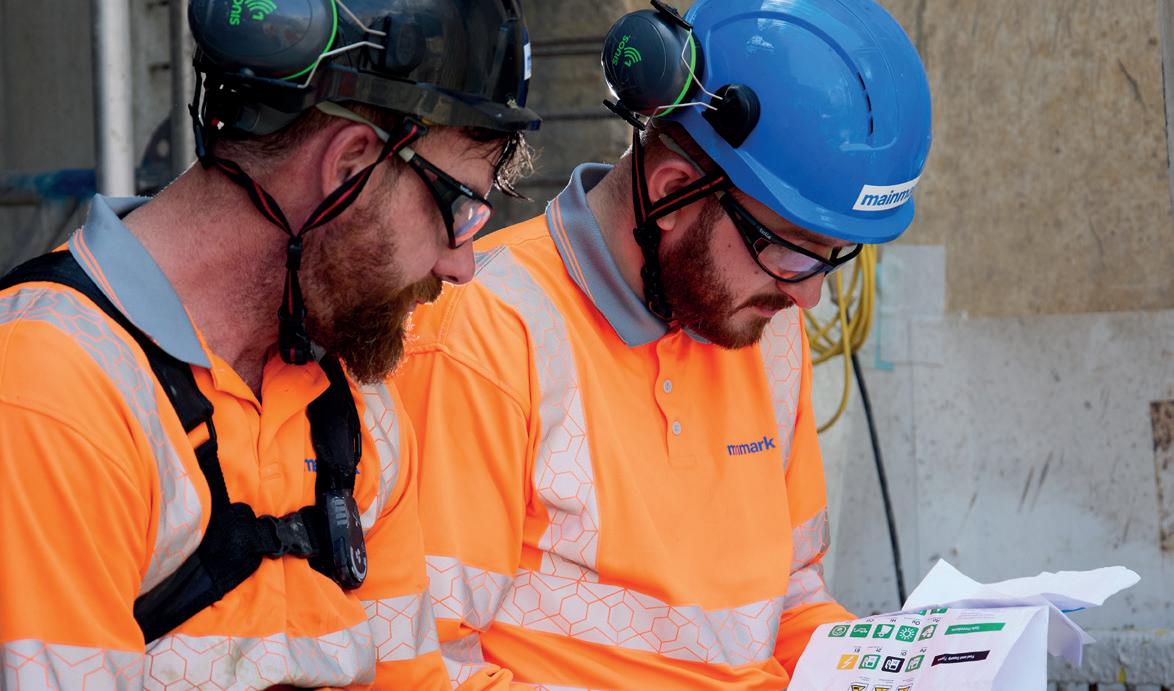

Uneven buildings result from weak ground that causes subsidence – the gradual downward movement of a building or structure due to changes in soil conditions – making the original foundations unstable. This problem is often reflected through unexpected structural damage, such as sinking floors and cracks in the building walls, which not only compromise structural integrity but also affect the safety and functionality of a property. Traditionally, underpinning – reinforcing and stabilising existing foundations – has been the go-to solution for addressing subsidence. However, modern technologies offer an innovative alternative that saves time and money while being equally effective. Here, David Hedley, Technical Sales Engineer at Mainmark UK, discusses.
Throughout the construction sector, it is widely recognised that traditional methods have stood the test of time and have proven themselves in practice. Methods of underpinning have been used to settle and reestablish structures and buildings dating back to the 15th century. With a reputable solution and a clear way to execute this process, it can be suggested that alternative means and methods are not needed to refine this art. However, while traditional underpinning has a long and established history, it is not always the most practical or economical choice, especially in today’s fast-paced construction environment, where minimal disruption and cost-effective means are highly regarded. M ass concrete underpinning is perhaps the oldest and most frequently utilised foundation repair method. This involves digging holes/voids underneath a weakened surface and pouring new concrete or filler below the original foundation. This extends a structure’s depth and reinforces its foundation. As the definition of underpinning pertains specifically to the reinforcement and strengthening of the foundation itself, alternative solutions attempt to strengthen the soil.
I t is suggested that alternative solutions are, in fact, not great alternatives at all. With a limited time of effectiveness, some consider that these alternative means are only temporary solutions, whereas traditional underpinning removes the problem in its entirety.
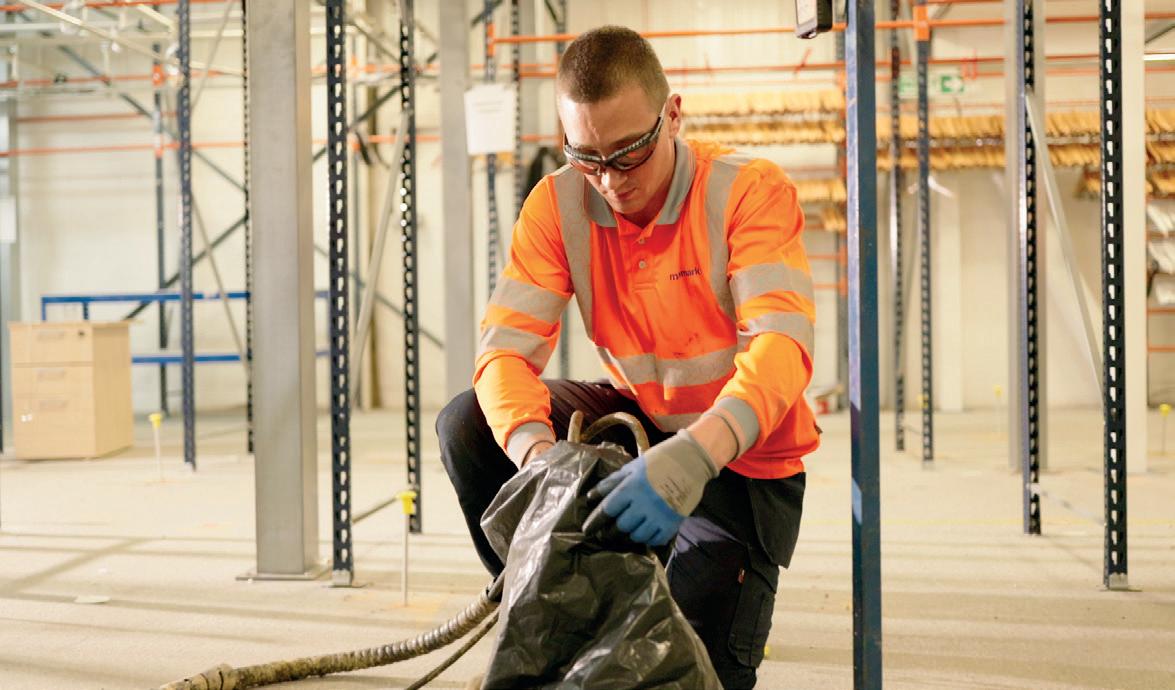
W hen the ground beneath a property, whether that be residential or commercial, begins to show signs of instability, it is time to consider ground-strengthening solutions. These techniques combat issues such as subsidence, protecting the safety, stability and operational continuity for commercial buildings and the business that resides in them.
I n recent years, modern underpinning methods have gained popularity in the construction sector. One example is grout injection, which offers strengthening solutions that are quick to implement, reliable and cost effective. These methods are also less invasive and don’t require operations to cease for a sustained period of time while essential excavation works are carried out. Using a lightweight cementitious product, provides a non-invasive approach to what typically would have needed a traditional solution of underpinning. Removing the need for extensive digging and excavation, this alternative solution is minimal in its disruption proving favourable for commercial enterprises as works can be typically completed within a matter of days. Access is also less of a concern as heavy machinery isn’t required as it would be for more traditional treatments. When using a more traditional method, all operations would be required to stop, causing a knock-on effect to the operational needs and activities of an organisation, leading to costly downtime.
U nderpinning is not always necessary to rectify a subsidence issue and is increasingly only being used as a last resort. Solutions such as a resin injection are now more favourable in the construction sector. The modern resin injection method uses a precise process to deliver an expanding polyurethane resin into the ground through a set of small-bore injection tubes. The position of the injection tubes is tailored to the nature of the underpinning needed for each project. Once injected, the resin expands and solidifies to fill any voids and as a result strengthens the ground.
C ontrolled injection of further resin can then be used to return the building to the required level. There is consensus that this modern method can offer a
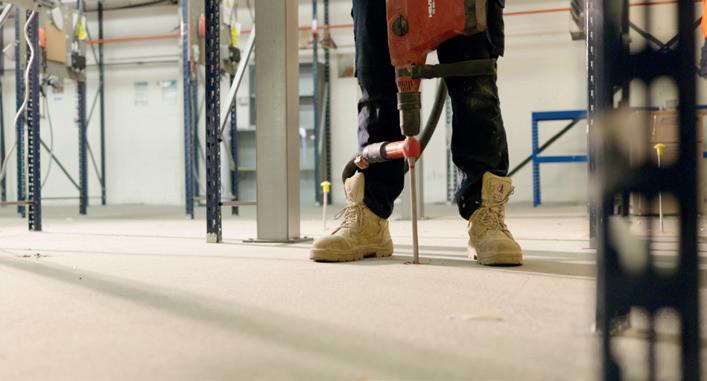
quick and timely solution proving most appealing in comparison to traditional underpinning. Though its permanency has been questioned, products, such as those used at Mainmark, come with a 20-year product warranty.
For many organisations, especially those who are sensitive to the environment in the commercial sector, it is essential to recognise the carbon implications of both methods. For some businesses where the environmental impacts of their actions are measured, the impact on the embodied carbon of any process should be considered. It is well documented that the traditional methods of using mass concrete pose a much higher carbon emission than that used in a geopolymer injection. The lower-
embodied carbon impact of this alternative method may, therefore, make it a more sustainable choice for businesses that are environmentally conscious.
I n essence, neither approach is particularly a silver bullet. Both are suitable solutions to problems that cannot be ignored and need to be addressed. To make the most informed decision, it is important to commission a ground investigation survey upon which to base the choice of treatment. The survey will cover a variety of factors to establish the soil composition, the load-bearing capacity of the ground, the impact of the volume of water in the soil and the depth and condition of the existing foundations. This i s vital to be able to assess and redress the problem with the most viable solution.
www.mainmark.com
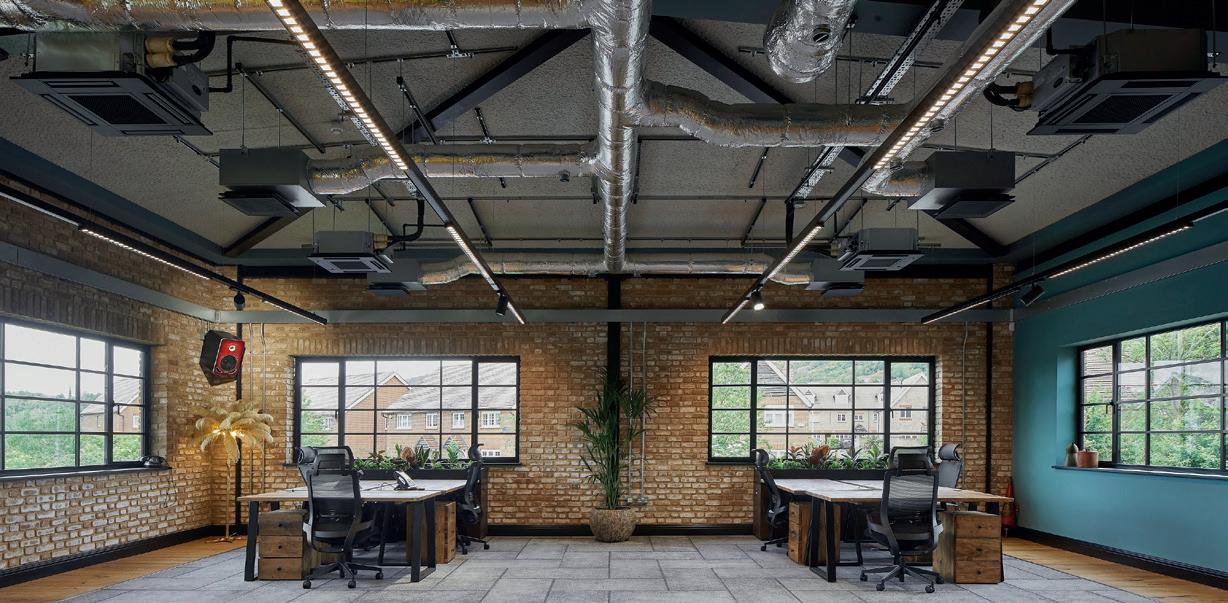
Visual appeal is only part of the equation in today’s design landscape. Functionality is now just as important as the auditory experience of a space. Driven by a growing emphasis on employee wellness, neurodiversity and business productivity, architects now recognise that room acoustics are a key component, says Ben Hancock, Managing Director at Oscar Acoustics.
Ho wever, despite growing awareness, there’s often confusion about the correct products to specify – which can easily be misunderstood or overlooked. With that in mind, we’ve answered some of our most commonly asked questions, to help you, the reader, to create the perfect acoustic environment.
Why is acoustic design so important, and why should it be prioritised?
Acoustic design is the art of fine-tuning sound for specific interior spaces. Although attention is often given to aesthetics, usability and energy efficiency, acoustics are often neglected, having a large impact on the people using and occupying a space.
What many fail to realise is that constant noise exposure can be extremely harmful – negatively affecting both physical and mental health, causing stress and discomfort. This has also been evidenced in our multiple research papers on the impact of noise. From our 2024 study, two in three workers admitted that too much noise was affecting their work productivity. A quarter of staff also revealed that the issue had led to poor-quality work. What’s clear is that a huge percentage of the UK workforce is crying out for well-considered acoustics.
Why is it important to consult an acoustic expert?
How a space sounds, is just as important as how it looks. Many aesthetically pleasing buildings can lack the acoustic comfort needed for long-term use, making communication difficult due to overwhelming noise. But when sound design is done right, it transforms spaces into places people love to be.
Working alongside acoustic experts can make this possible –leaning on their extensive knowledge, they can suggest the right acoustic strategy for your space and highlight ways to combat noise so they remain inclusive for everyone.
What are the key architectural considerations for good acoustic design?
For architects, maintaining design integrity is paramount and it’s essential that acoustic solutions can work with any surface, allowing for flawless curves and shapes without compromising aesthetics. This means opting for solutions such as acoustic sprays, which are incredibly effective at controlling sound reverberation and echo – the main cause of deafening noise. There’s also a growing trend towards spaces that provide quiet contemplation and personal privacy. Acoustic sprays can come in a range of textures, offering different levels of sound absorption to suit individual needs, so it’s a good idea to enlist expert guidance to help you make the best choice.
How can we assess the appropriate acoustic requirements for a given space?
To ensure optimal acoustics, many commercial projects now consult with specialists who can specify the necessary treatments based on space calculations and intended use. For those without access to acoustic consultants, some offer free appraisals, giving recommendations on suitable specifications. Additionally, some offer acoustic modelling services to visualise the sound performance, helping architects to make more informed decisions.
How can acoustic design be integrated into the building process to achieve optimal results?
T he success of a project hinges on early consideration of acoustic solutions. Incorporating acoustics into the initial design phases will ensure a superior outcome. To streamline this process, specification platforms like NBS Source can be invaluable, allowing acoustic design to be integrated from the outset rather than as an afterthought.
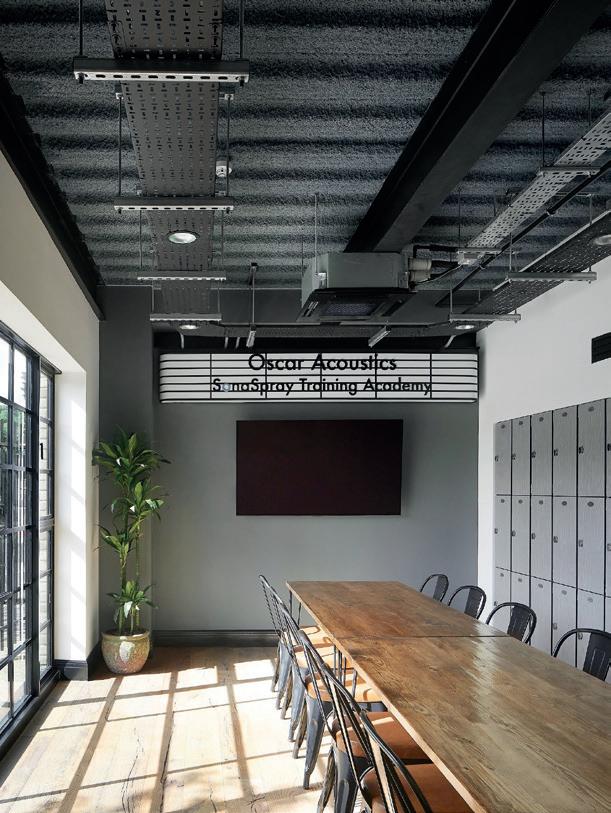
What are the common mistakes in predicting the acoustic performance of a building?
The shape of the substrate can significantly impact acoustic performance, yet it’s often overlooked. We frequently receive enquiries from architects who have been advised to use a Class A absorber and have consequently over specified the required depth of our product. When applied to profiled or ribbed metal sheets, premium products significantly outperform the worst-case published acoustic data for concrete slabs. By leveraging technical expertise, architects can receive value-engineered solutions, saving on material depth, labour and project duration.
What are the issues involved in retrofitting existing buildings to improve environmental performance?
Spaces with heavy congestion of services often present the greatest acoustic challenges. To ensure swift installation, it’s best to apply acoustic treatments before these services are installed. When existing services are present, premium companies will prioritise careful wrapping and protection before installation. Retrofitting acoustic solutions can also impact building operations; however, experienced acoustic specialists will be able to complete work with a minimal amount of downtime.
www.oscar-acoustics.com
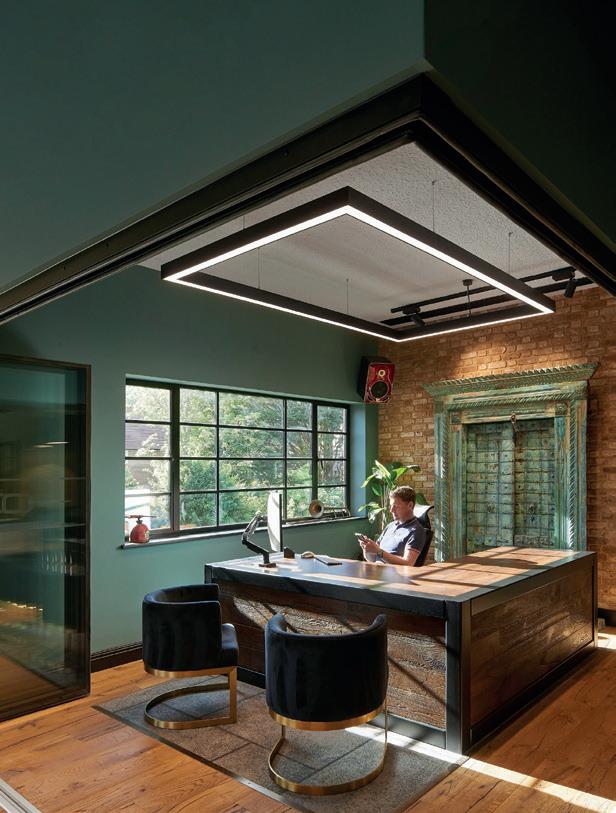
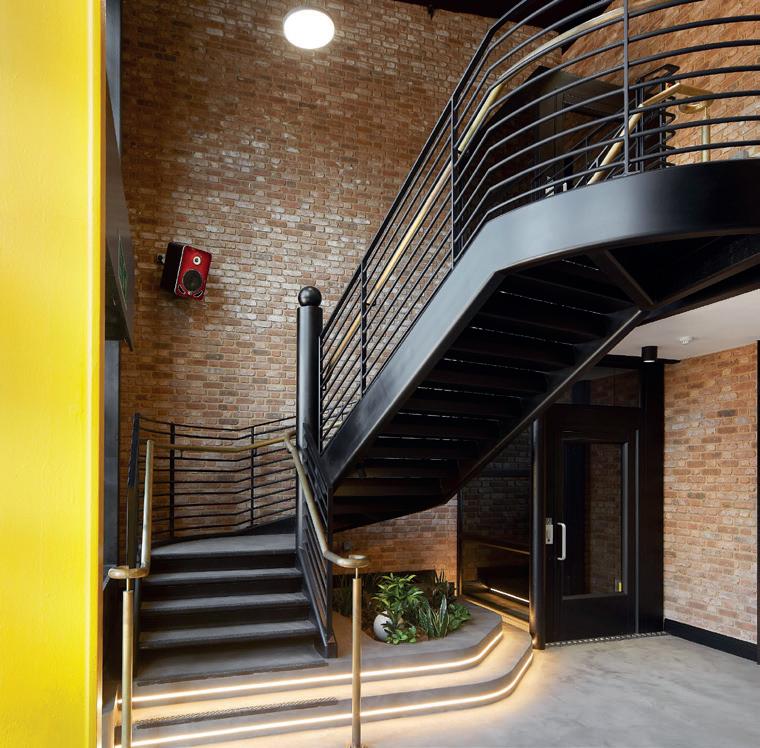
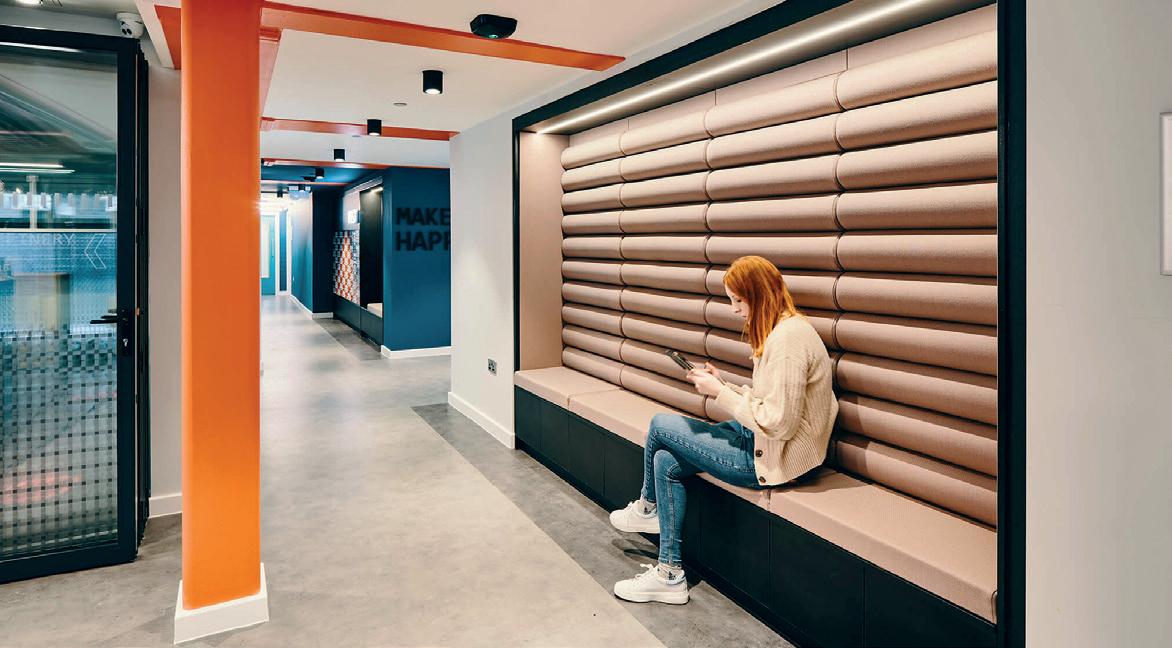
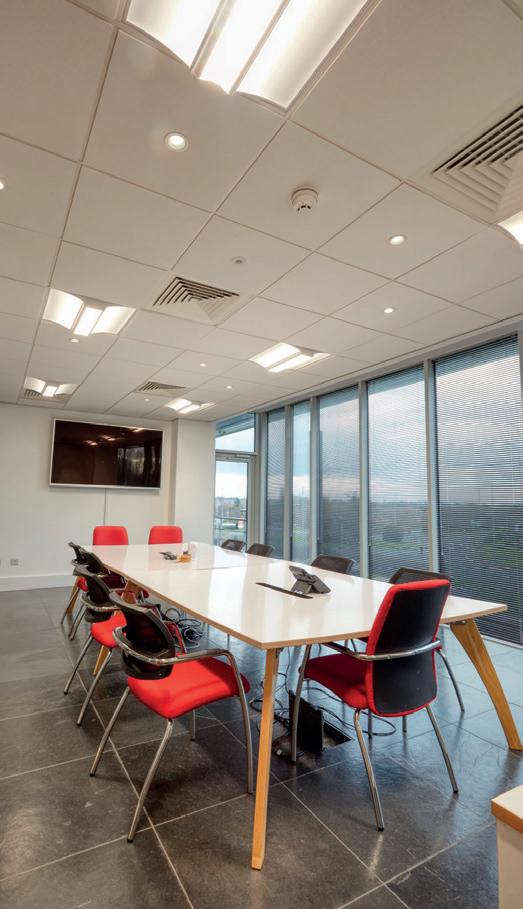
Smart lighting has emerged as a key technology in modern building design, driving energy efficiency, enhancing user experience and supporting sustainability goals. In this article, Chris Anderson, Technical Manager at Ansell Lighting, explains more about the technology and its many benefits in commercial settings.
ANSELL LIGHTING
Effective lighting is fundamental in commercial spaces, heightening safety, enhancing design and influencing productivity and wellbeing.
With many of today’s workplaces being multi-use in nature, lighting needs to cater to a diverse range of activities and technologies. Whether it’s collaborative team meetings, individual, focused work, presentations or virtual conferences, the lighting environment needs to be adaptable to support the varying needs of the modern workspace.
As organisations increasingly seek ways to optimise their operations and create more comfortable and productive environments for staff and visitors, smart lighting systems have soared in popularity. Offering an innovative solution to these many challenges, they offer more efficiency and better control and help to lower operational costs.
Applicable across both indoor and outdoor lighting circuits, smart lighting systems are highly functional, transforming how we can use and interact with lighting
to reap its benefits. Incorporating wireless technology in each fitting, smart lighting uses communication protocols such as Wi-Fi, Bluetooth and Zigbee to seamlessly connect luminaires together, creating a network of lamps that can be controlled and automated from one central point.
T he options this offers are endless. Every single detail of the lighting system can then be programmed to meet specific requirements, changing as required at different times of day, according to the use of the space or the mood required. The colour, brightness, intensity and combinations of lamps in use can all be automated and controlled to the most minute detail, meaning that energy use is controlled to this exact level, too.
I n fact, smart lighting provides incomparable energy optimisation and has the potential to cut the amount of energy used to light commercial buildings by up to two thirds – a huge saving when you consider that up to 40% of energy consumption in commercial
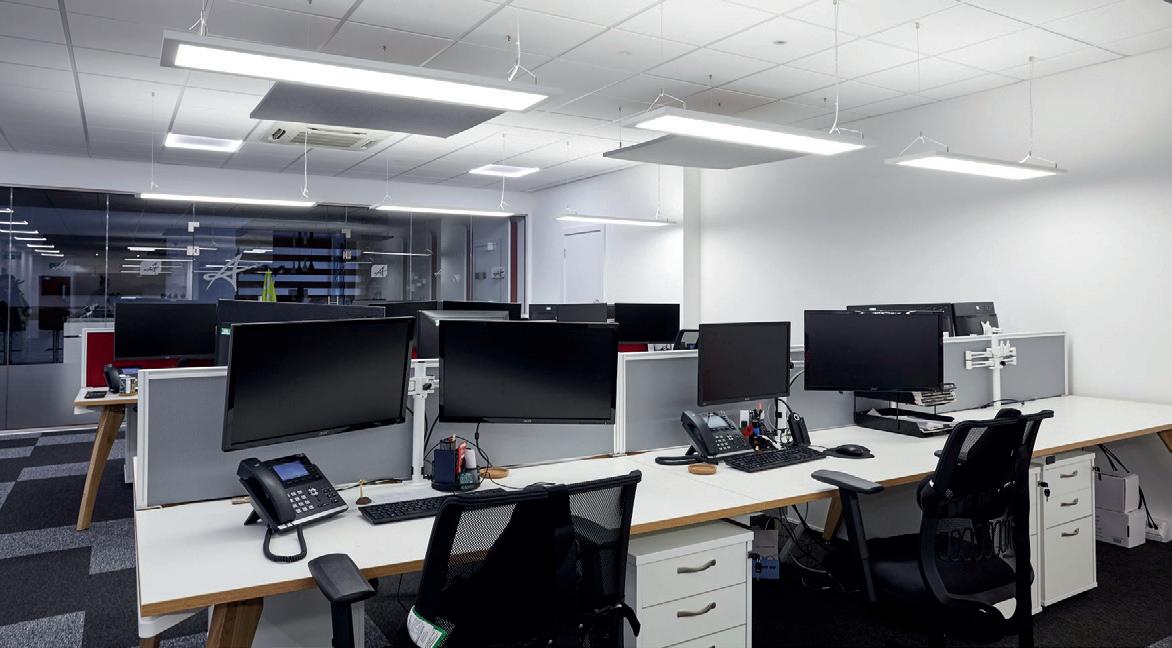
buildings can be attributed to lighting. It is particularly useful in spaces that may be used sporadically, such as in corridors or bathroom facilities, ensuring that lighting will not be left on unnecessarily and eliminating waste.
S mart lighting can also offer an array of health and functional benefits. Programmed to mimic natural light cycles, it can promote a healthier circadian rhythm among employees, supporting the wellbeing and productivity of building users. By adjusting the colour temperature and intensity of light throughout the day, it can also help reduce eye strain and fatigue, which are common issues in traditional office environments.
Furthermore, smart lighting can also improve the overall ambience of a space, making it more inviting and conducive to various activities. For instance, brighter, cooler lighting can be set for focused work spaces, whilst warmer, dimmer lighting can be implemented for meetings or relaxation areas.
Modern smart lighting systems are also a real contributor to interior design, helping to create spaces that are aesthetically pleasing. Whether it’s the sleek design of the fixtures themselves or the ability to highlight key elements, such as furniture, furnishings and artworks, smart lighting will ensure that the space has the real ‘wow’ factor.
S mart lighting is easy to install and integrate with existing lighting installations, which has further
boosted its popularity. Many systems now offer wireless connectivity and modular components, which are simply installed like traditional fixtures and seamlessly paired with user-friendly apps and control systems. This reduces the need for extensive rewiring or structural modifications, making smart lighting a viable option for both new constructions and retrofits.
Smart lighting is also highly measurable, with recent advances in equipment, meaning that many commercial solutions now come with dashboard controls. These allow energy usage to be monitored in real time, providing a clear view of lighting-based energy consumption data throughout a building or even across an entire portfolio of buildings. This provides further opportunity for wasted usage to be identified, helping organisations to further reduce unnecessary use, CO₂ emissions and costs.
T he adoption of smart lighting has had a huge impact on the way commercial spaces are illuminated and offers a range of benefits that traditional lighting installations can not come close to. By enhancing the wellbeing and productivity of building users, reducing energy use, offering flexibility and acute functionality, smart lighting systems are transforming buildings into dynamic, responsive and futureready environments.
www.ansell-lighting.com/en
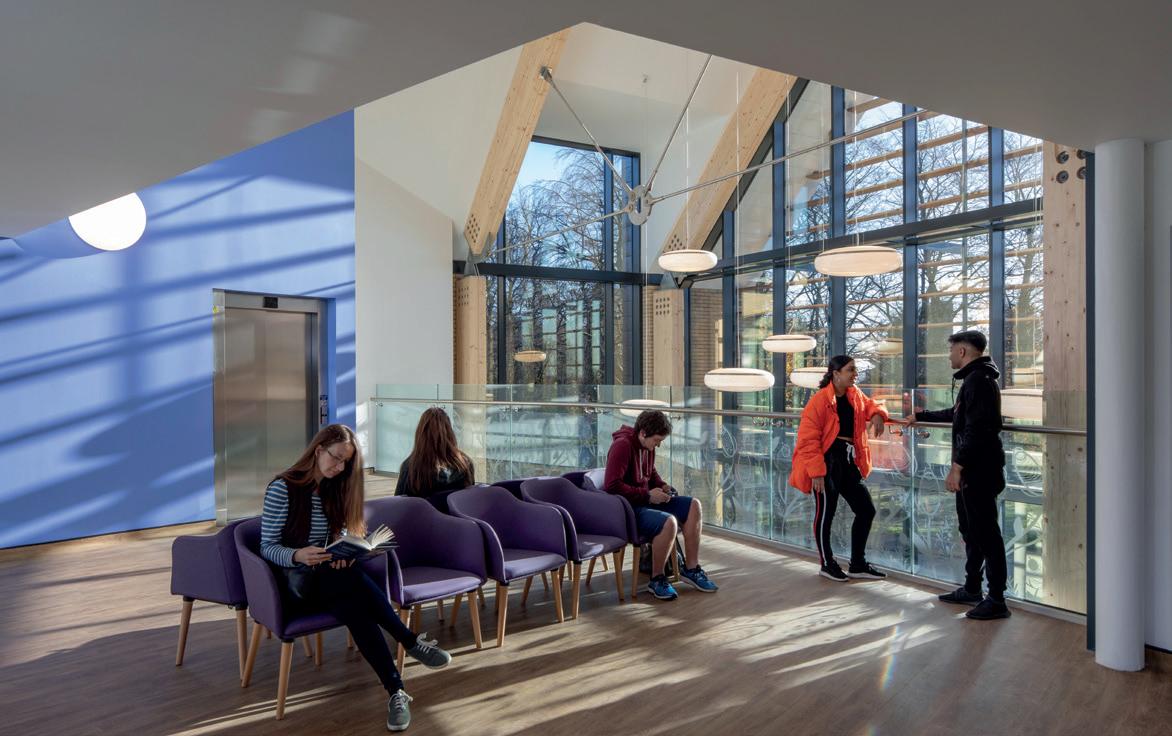
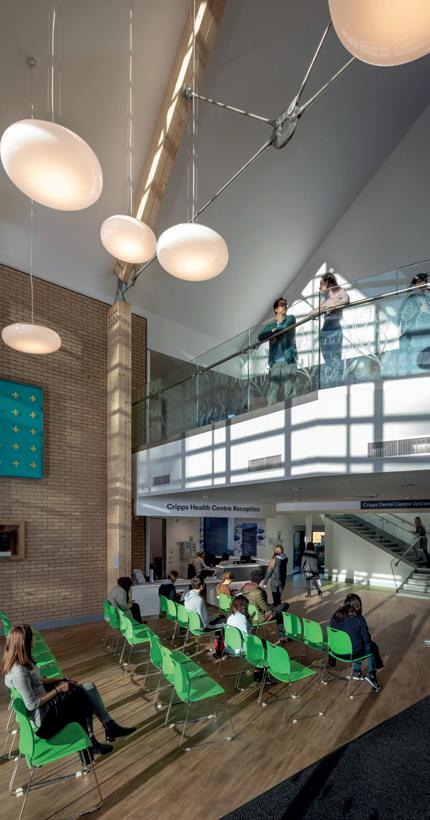
Healthcare challenges are evolving, and architectural practices must meet new demands with innovative solutions, particularly when it comes to dementiafriendly design as dementia cases rise. The industry’s response cannot be just reactionary – it must work to proactively create spaces to support this growing demographic. Here, Ruth Evans, Associate at CPMG Architects, highlights embedding this responsibility to leading dementia-friendly design through healthcare design, emphasising its increasing importance.
CPMG ARCHITECTS
The NHS has recently disclosed that England is experiencing a record number of dementia diagnoses, with 487,432 diagnoses in the country as of June 2024. With one of the highest diagnosis rates globally, the urgency to address the needs of individuals living with dementia has never been more critical. High-income countries typically report diagnosis rates between 20 and 50%, positioning England at the forefront of this health concern.
T he implications of these statistics are profound. As architects, we must recognise that the built environment plays a crucial role in the quality of life for individuals diagnosed with dementia. Our designs must evolve to ensure safety, comfort and a sense of autonomy for those affected. At CPMG, our goal is to champion the creation of healthcare spaces that are conclusively dementia-friendly, with additional infrastructure to accommodate dementia patients who may be receiving treatment for unrelated conditions. This
holistic approach ensures that every environment within a healthcare facility is supportive and accessible, regardless of the primary reason for a patient’s visit.
D ementia-friendly design is guided by several core principles, each aiming to enhance the wellbeing of individuals living with dementia. These principles are pivotal to effective design and must be integrated at every stage of a healthcare project to ensure optimal considerations within the overall design are met.
1 . Safety and accessibility: Ensuring spaces are free from hazards and easily navigable. This includes clear wayfinding and signage, unobstructed pathways and the use of non-slip flooring materials that are also matte and unreflective to ensure the perception that a floor may be wet or unsafe is not possible.
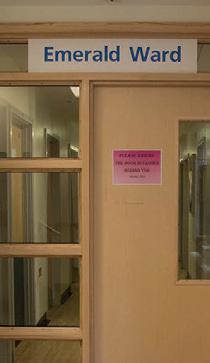
2 . Familiarity and orientation: Creating environments that are easy to understand and navigate, with visual cues and landmarks to aid orientation, including elements such as single-colour signage. Consistent and intuitive design elements are incredibly effective here to reduce confusion and anxiety, with the simplest design often being the most effective option. An example of this is WC doors utilising one colour across both options, preventing confusion and allowing for cognitive recognition – which, in turn, can reduce anxiety and uncertainty.
T his is also prevalent in the implementation of design elements that match the modern perception of the condition, in which spaces must also work to support the reduction of stigmatism and increase privacy and dignity.
3 . Social spaces: Designing communal areas that encourage social interaction and reduce isolation. These spaces are integral to mental health and wellbeing, providing opportunities for engagement and community. Allowing for freedom of movement is vital here and can be done through appropriate accessibility measures included at the design stage.
4 . Calm and comfort: Utilising colours, lighting and acoustics to create soothing environments, prioritising natural light, reduction of noise pollution and the use of colour schemes that promote calmness, such as solid blues and greens. It is important to avoid bold patterns and stripes as the designs can be confusing and disorientating.
5 . Personalisa tion: Allowing for personal touches and customisation within living spaces to foster a sense of ownership and belonging. This can include areas for personal mementos and photographs. A space should act as a framework for shared decision making between the person with dementia and care or support workers to take place, allowing the person to maintain their health and wellbeing independently as much as possible.
Innovating with empathy
Facilities must be conceptualised with input from healthcare professionals, caregivers and, crucially, individuals living with dementia –before the architects can bring a space to life.
T he result of this is the creation of a space where every detail, from the layout of the rooms to the choice of furnishings, serves a purpose for the people who will be using it the most. This includes elements such as wide, well-lit corridors with handrails, colour-coded areas to signify different functions and safe outdoor garden spaces as just a few examples of how thoughtful design can make a difference.
P ivotally, this process showcases what is one of the most crucial stages in an architect’s work, and an increased focus on this stage when working towards the creation of these much-needed spaces is not only fruitful for the person with dementia and their support staff but also the architect involved. It provides the opportunity to work holistically, to improve skillset and client care that can only be learnt through being exposed to projects such as these, which are prominent within the healthcare industry especially.
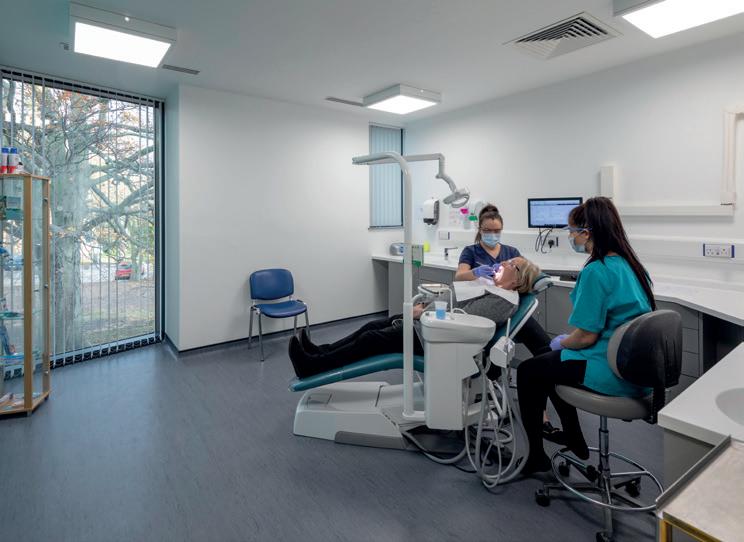
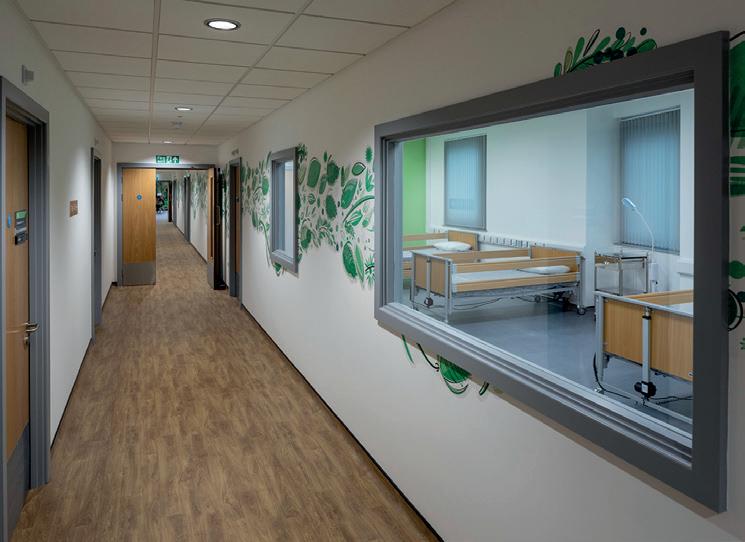
D ementia-friendly design is not just a trend but a fundamental aspect of healthcare architecture. As diagnosis rates continue to climb, the need for environments that support and enhance the lives of those living with dementia will only grow, and the role of architecture becomes increasingly vital. Design elements must match the modern perception of the condition, with spaces also needing to work to support the reduction of stigmatism for those with dementia as awareness of the diagnosis continues to grow.
O ur commitment as architects extends beyond individual projects. We are advocates for industry-wide adoption of dementia-friendly standards.
B y championing dementia-friendly design, we are not only responding to a pressing need but also setting a new standard for healthcare environments. Our vision is a future where every healthcare facility is a sanctuary of safety, dignity and comfort for all individuals, regardless of their cognitive health.
W ithin our work at CPMG, we are proud to be continually growing our knowledge in designing spaces that respect and enhance the lives of those living with dementia, supporting a clear benchmark for the industry and paving the way for a more inclusive future.
www.cpmg-architects.com

The new Labour Government has set out plans to help meet its ambitious target of building 1.5 million homes over the next five years and ‘get Britain building again’. A large part of these plans involves green belt boundary reviews in attempts to release some of this land, known as ‘grey belt’, for housing. This will allow local authorities to identify areas of previously developed land, or those seen to make a limited contribution to the aims of the green belt, for development, and we can expect the new homes built on this land to bring huge benefits to local communities. But this is no band aid to building, and what may happen if a heritage asset is situated on land that could be designated as part of the grey belt?

Dr Emma Wells, Technical Director and Head of Historic Buildings at SLR Consulting, argues that excluding land upon which designated heritage assets are sited needs to be reassessed if we are to get the most out of development, and with careful planning, heritage assets can be preserved and enhanced while also delivering greater benefits for local communities.
Heritage assets, which can be both designated (i.e. listed buildings, registered parks and gardens, AONBs and conservation areas) and non-designated (i.e. locally listed buildings), are often considered a key part of the UK’s built environment make up, and this historical fabric is a substantial resource for many reasons. Heritage should not, however, get in the way of progress and development, which is an issue many developers face when considering which land to build upon.
A ccording to the recent draft changes announced to the National Planning Policy Framework (NPPF), this definition of grey belt will exclude areas of particular importance. This means that land upon which designated heritage assets are sited will be excluded, therefore, constraining developers keen to get building on such land.

T he grey belt has huge potential for helping us meet the Government’s targets, and there are many areas of land that could be prime for development, only they feature designated heritage assets thereby causing more restrictions. These outdated limitations need to be reconsidered if we are to take a sensible approach to reaching the correct balance between preserving history and embracing the future.
D espite the positive benefits this change may bring, a challenge we often come up against when it comes to development upon agricultural and open land is local opposition. With negativity stemming largely from the last Government’s seeming acquiescence towards developing on green belt land, challenges remain and choices will loom as some areas of the country may be reluctant to welcome development on such land, even if there are clear benefits to be gained.
T his is an issue in and of itself, but there is also a wider issue in how this resistance is being dealt with. A substantial increase in housebuilding, as the Government so clearly wants, will require an overhaul of the entire planning system, not only its land definitions.
Owing largely to a lack of funding and, therefore, training, the local authority planning sector finds itself in a position where many conservation officers are in roles they are not experienced enough to be in. This leads to key decisions being ignored, delayed or made incorrectly, often due to a limited understanding of policy and guidance and how to apply them.
T he Labour Government’s initial announcements regarding developing these grey areas of land that are currently underutilised from a development perspective do mark a more positive approach and are a clear step forward towards meeting those projected housing targets. However, excluding land featuring designated heritage assets is somewhat short sighted and potentially leaves large amounts of suitable land overlooked if excluded due to heritage status.
W hile heritage assets are often somewhat complex to understand, enlisting the support of an experienced professional to guide you through the process helps with understanding that there are benefits of preserving the past in attempts to ensure future development.
www.slrconsulting.com
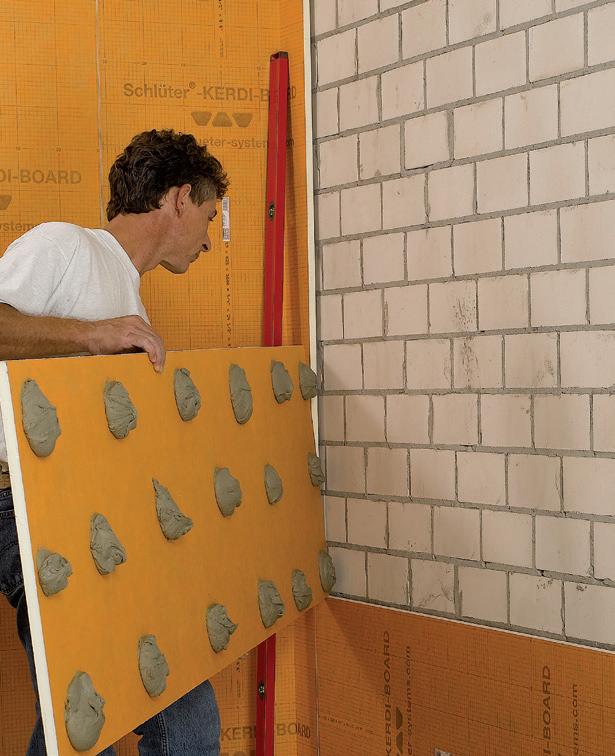
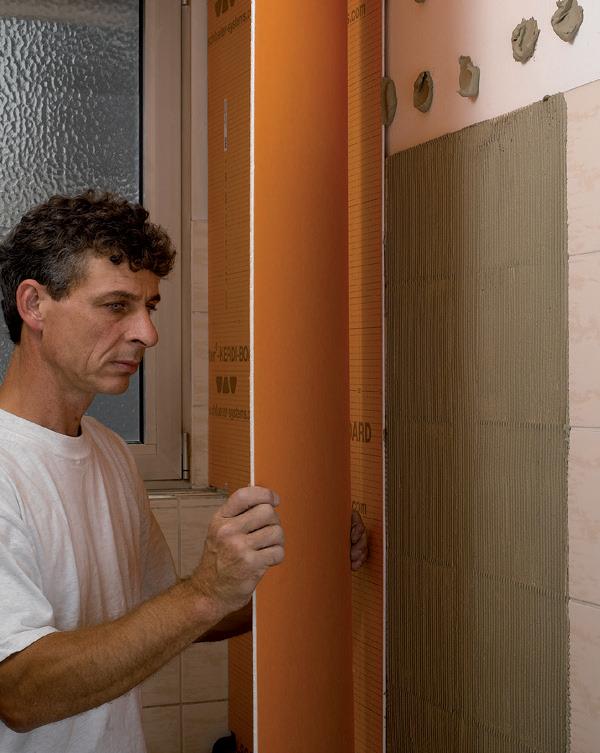
For anyone who has never peered into the bilges of a yacht, it is worth saying that whether the hull is clinker-built timber, steel or formed from ferro-concrete, you’re going to find a fair amount of quite unpleasant-looking oily water slopping about inside. Somehow, the sea, along with any water that the crew slosh in with their expensive wellies, or even the constant drip of condensation, tends to find its way to the bottom. And it’s not a dissimilar story in our average bathroom, except that there is no bilge pump under the bath to remove it, says David Naylor, Schlüter Systems’ Marketing Manager.
SCHLÜTER-SYSTEMS
The simple fact is that although most yachts and larger vessels are perfectly seaworthy, all the seams are vulnerable to leaks, while in housebuilding, many of the materials used, even for so-called wetrooms, tend to exhibit a level of porosity or vapour permeability. The result being that if you delve beneath the tiling and into the fabric of the building, water in its liquid and vapour forms can cause considerable damage.
T iles (or ‘Tesserae’ mosaics) have been a feature of British bathrooms going back to the Roman occupation, but the joints between them have always provided a ready route in for any splashes or bigger spills, with grout only doing a partial job and the junction between the wall and the edge of the bath or shower tray being a common source of serious problems. Unfortunately, the ubiquitous right-angled plastic profiles with their tiny rubber bottom blade, which DIY stores have been selling since the '60s, are often equally unsuccessful in stopping the seepage.
Worse still, commonly used building materials, such as plasterboard, OSB and magnesium oxide boards, are water resistant at best, while it is also a common misconception that tiling adhesive and grout are actually waterproof. Worryingly, it is estimated that just 5% of typical homes and possibly no more than 10% of high-end residential and commercial properties – such as hotels – actually feature genuine waterproofing within their bathrooms and wetrooms.
T his lamentable situation is, in part, down to developers prioritising profit over long-term performance, but there also remains an entrenched lack of basic knowledge and training across the industry regarding the positive benefits of incorporating waterproofing systems in specifications. As with energy efficiency and adequate acoustic insulation, reliable water resistance doesn’t contribute to kerb appeal, but buyers are easily put off by a reputation for poor quality. And the leading warranty provider, NHBC, is planning to effectively ban MgO boards in bathroom settings and is issuing an updated Technical Guidance 9.2/06.
S o, if the tide is finally turning on waterproofing, what are the pragmatic changes consultants and contractors should be making to their specifications?
I t is definitely something that is best considered early on in the design process for either new-build or retrofit projects, and a determination made not to permit switching of products in the final execution. And neither should the solution be ‘skin deep’. A holistic approach is the correct answer: Coupling highquality sealants and tiling profiles with genuinely waterproof substrate materials.
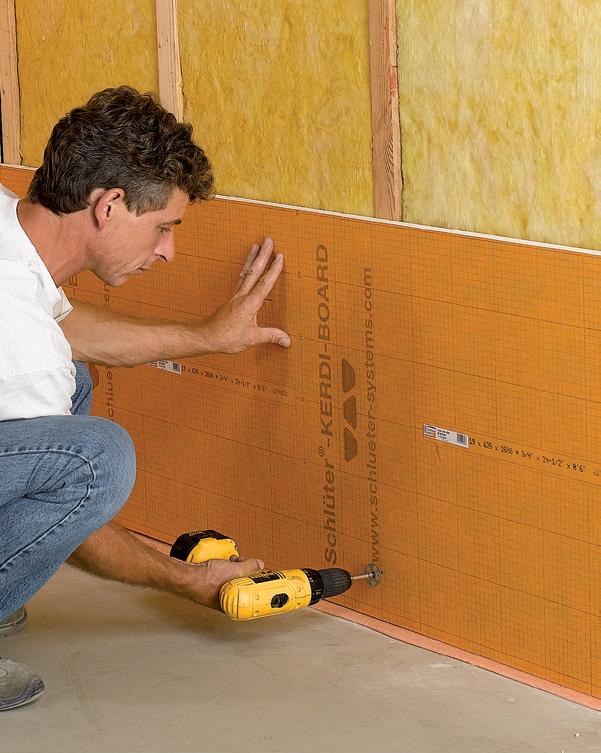
P urpose-made tilebacker boards have been preferred over plasterboard in bathrooms for decades, but they still vary in their key benefits, with rigid foam extruded polystyrene, or XPS, boards having a laminated surface with fleece fabric on both faces, being favoured by a growing proportion of bathroom and wetroom specialists. They are suitable for a variety of applications across floors as well as walls and can be fixed to timber or metal studwork using screws. They can also be secured on masonry using the dot-and-dab method or fully bedded in adhesive to create a substrate that provides good load-bearing capacity in addition to accepting the direct application of tile or stone finishes. Meanwhile, these genuinely versatile panels are also used to form countertops, vanity units and other pieces of permanent furniture, such as seats in showers and steam rooms.
One of the imperatives when attempting to create a fully waterproof installation is maintaining continuity of the intended barrier(s), which means choosing a range of XPS boards that offer a full choice of ancillaries: Not just fixings and sealants but also shaped sections for applications like pipe boxing any confined return details. Additionally, pre-formed niches to fit within the wall zone – especially inside a shower – are also a no-brainer for peace of mind as well as providing convenient storage of toiletries.
D ifferent thicknesses of XPS insulation can also be utilised in combination with specifically developed, fully pliant reinforced polypropylene matting that is able to provide a waterproof barrier on its own and also relieve the stresses that can cause installed tiling to crack and displace. While such matting is available in far larger sheets than the XPS, the junctions or overlaps all need to be properly sealed to maintain integrity. Again, the chosen system should include compatible sealing bands, adhesives and special components, such as prefabricated corners and pipe sleeves.
T here are, of course, further sophistications that can be introduced to the specification for any bathroom. Integrated underfloor electric heating, for instance, offers additional
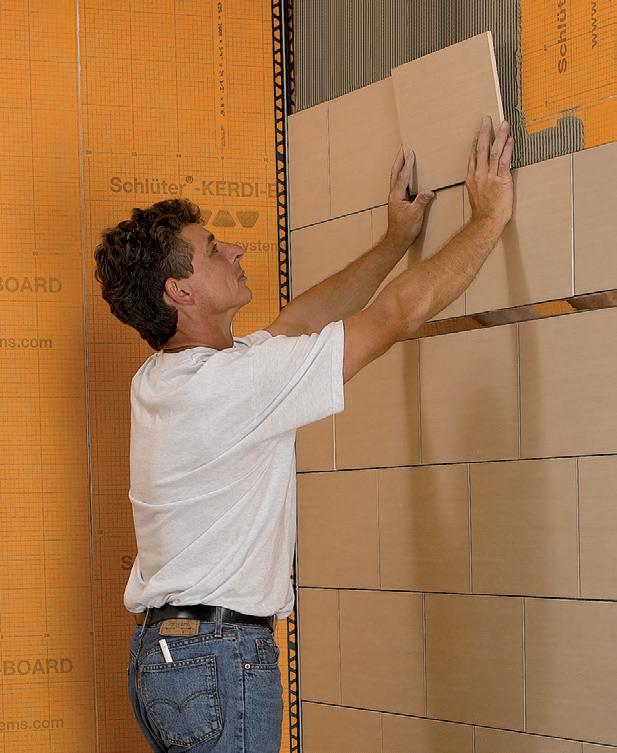
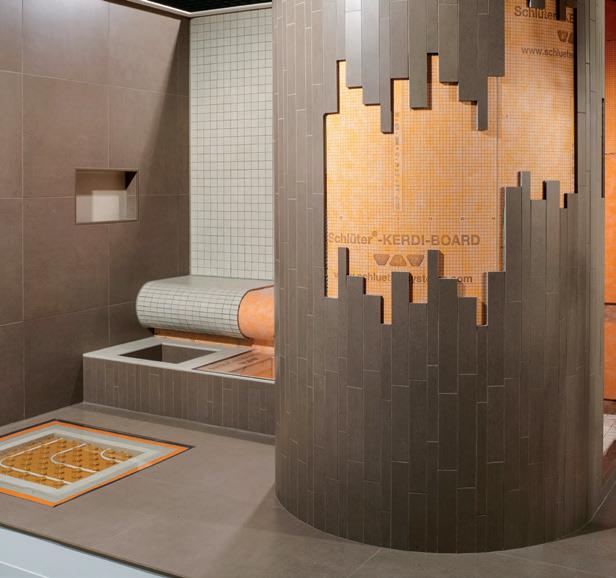
comfort but, in all too many instances, proves to inflict new concerns due to the inflexibility of the chosen system, which can compel the installer to join cables beneath the tiling. As with other aspects of creating a comfortable bathroom or other wetroom, consulting a manufacturer with a reliable reputation early on in the design process can avoid future problems with water penetration or poor performance in other areas.
Houses being newly constructed in the UK must not expose occupants to the risks associated with radon gas. Designers and contractors have a legal duty of care to ensure properties comply with regulations appertaining to the locality to mitigate the impacts of this carcinogenic radioactive gas.
CAVITY TRAYS
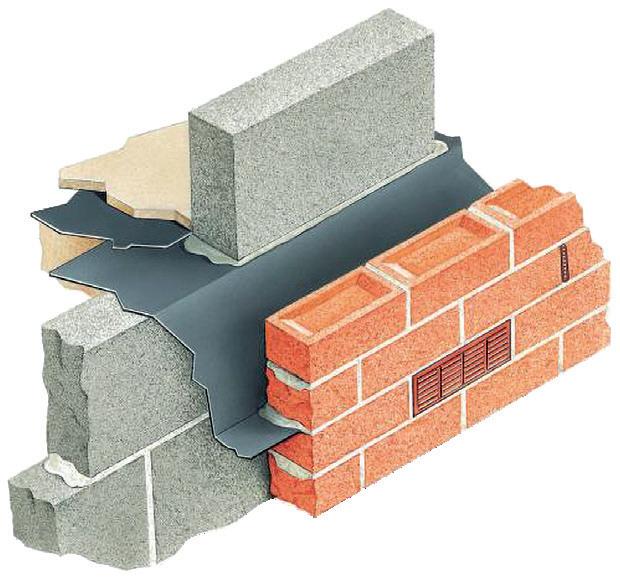
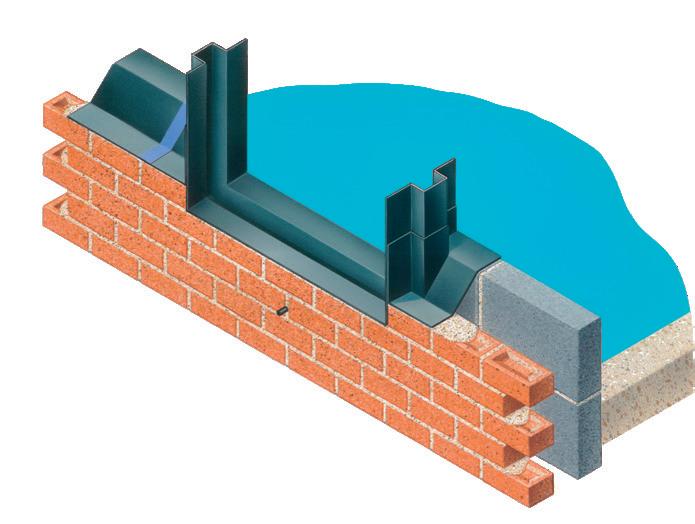
Mo st radon-induced lung cancers develop through exposure to low and moderate doses over time in people’s homes, where the gas can seep in through a variety of ways.
R adon is odourless, colourless and tasteless, and is produced when uranium naturally decays within the ground. Radon is everywhere – it is simply the extent that varies. Radon does not naturally occur within a building – responsibility lies with those who put the building on the land. Whenever a property is built on radon-emitting ground, the building prevents its release and dissipation.
R adon can seep into and accumulate within buildings – homes, schools and workplaces. Radon emits heavily ionizing radiation called alpha particles. When inhaled, they can damage DNA and cause lung cancer.
To prevent radon seeping into a building, gasproof protection covering the entire building footprint at ground level is established, protecting from outer skin face to outer skin face.
T his usually takes the form of a gas-grade membrane protecting the oversite, which interfaces with radon barriers that integrate with the membrane and travel through the inner skin, transversing the cavity and projecting through the outer skin at a lower level. This configuration prevents the gas from continuing its upward journey, and airbricks, located under the barrier level in the exterior walls, ensure the trapped gas can evacuate the structure.
B ut there is a problem. The construction design, internal floor levels and external ground levels dictate actual DPC and barrier positions, and those positions give rise to a regularly reoccurring failure. Wherever there is an external door opening in the exterior wall, one has to unite the membrane level with the barrier level. At the same time, protection must travel to below sill level (of the exterior doorway) whilst also ensuring all cavity closers to door opening reveals are, likewise, integrated, so protection is continuous with no gaps upwardly or sideways. Addressing the reveals is the point where failings arise.
C omplementing the radon barrier range from Cavity Trays is the Type PAT Protective Adjustable Threshold, a three-dimensional preformed DPC gasgrade component that is bedded within the external door opening and into its reveals prior to the frame being installed. Adjustable side connectors, which attach and adjust in level, provide a continuous link to the adjacent cavity barriers. Cavity closers to the opening are accommodated within the Type PAT reveal moulded recesses. The assembly provides continuity of gas protection around and under the external opening. An integral drainage facility provides an escape route should water seep within the under-threshold sealed area.
S hould ground levels prevent straight-through gas evacuation via Cavibricks, the gas can be evacuated above barrier level (and thus ground level) by incorporating cranked vertical sleeves with integral cloaks that lap and seal to the radon barrier. Find a three-minute demonstration here: https:// youtu.be/-o-vSrcmYvI?si=Zn5A1Kp3sE0DVP0a
T he World Health Organization (WHO) states that, globally, residential radon exposure alone in 2019 was estimated to have caused 84,000 deaths by lung cancer.
An external wall insulation system manufactured by Sto has helped to renovate historic hangar buildings at Pembroke Dock in Wales. Architect firm Purcell specified Sto to upgrade annexes connected to two hangars, allowing them to be transformed into new office and workshop spaces.
On e of the annexes required a two-storey extension, and the other had to be rebuilt. For both projects, the StoTherm Mineral M external wall insulation system was selected with a Sto render facade finish, and includes mineral fibre insulation boards providing a high level of fire protection and thermal performance.
M ain contractor, R & M Williams, fixed the insulation boards to cement particle boards, and installed them to the light-steel frame structure with Sto-Rotofix Plus mechanical fixings. These unique, helical spiral fixings can overcome the problems of variable cavity requirements, as the position of all the fixings can be viewed during installation, and they can easily be adjusted to achieve correct alignment of the insulation boards. A 20mm drained cavity behind the insulation boards was created for
www.sto.co.uk
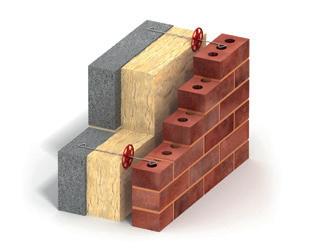
LEVIAT
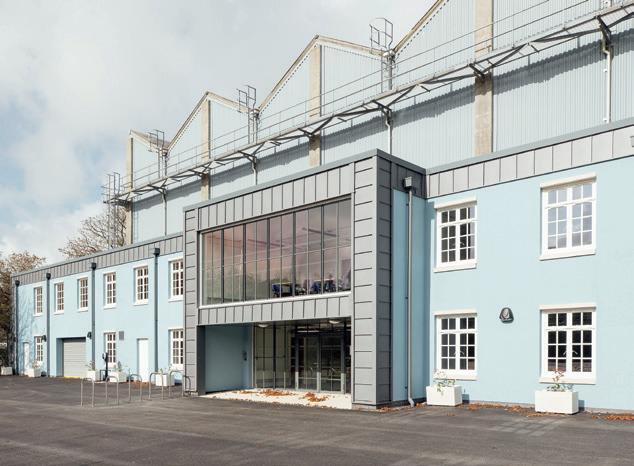
this project allowing any excess moisture to drain out of the bottom of the system, meeting the requirements of NHBC building control.
S to’s extensive StoColor system enabled the facade of the new annexe to be finished in a blue resin StoSilco K1.5 render to match the colour specified by, and signed off by, the conservation officer. For the extension, the render was colour matched to the existing lime render.
S toColor Silco G silicone resin facade paint, applied as a final finish to the Sto render, has also provided high levels of water repellence and resistance to algae and fungus growth, which is essential given the hangars’ close proximity to the sea.
d.newton@sto.com
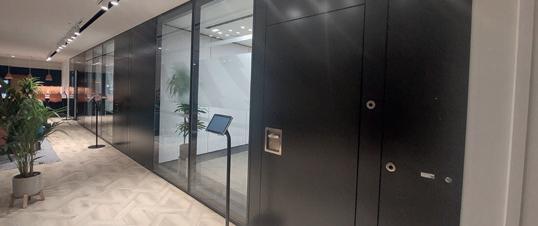
STYLE
Leading construction accessories manufacturer, Leviat, has announced the release of its new Ancon Staifix HRT4 300mm Wall Tie designed for use in wider walls with cavities ranging from 151 to 175mm. The addition of this product to the existing range will help specifiers and builders to meet the latest Part L regulations and achieve the more stringent U-values and building fabric requirements in the upcoming Future Homes Standard. Developed with both performance and compliance in mind, the new wall tie has been rigorously tested and certified, bearing both the CE and UKCA markings that reassure builders of its quality and adherence to safety standards. Additionally, the product complies with Part E of the Building Regulations as a Type A wall tie, which qualifies it for use in internal party walls, enhancing its versatility and applicability across various construction projects. The introduction of this new wall tie comes as the construction industry prepares for the transition towards more energy-efficient and sustainable building methods.
sales.ancon.uk@leviat.com
www.ancon.co.uk
0114 238 1238
The London offices of the Premier League have recently benefited from a refurbishment, which included installing three highspecification Dorma Hüppe moveable wall systems. Style, the sole UK distributor for Dorma Hüppe, improved the flexibility of the main boardroom by installing a single-glazed Variflex moveable wall down the entire length of the room, intersected with two solid Variflex moveable walls. This configuration allows the area to be divided into either one large room with a separate meeting room or three individual rooms. For larger events, all three walls can be neatly stacked to one side, opening up the entire space. At its offices at the Brunel Building in London, Style worked with Minifie Architects and contractor Parkeray to create an adaptable meeting space. The three Dorma Hüppe walls all come with semi-automatic operation, ensuring the seals are applied to the correct pressure every time to optimise acoustic performance. The glazed moveable wall system offers a 52 dB acoustic rating and each solid wall a 57 dB rating, ensuring concurrent meetings can take place undisturbed.
www.style-partitions.co.uk
sales@style-partitions.co.uk 01202 874044
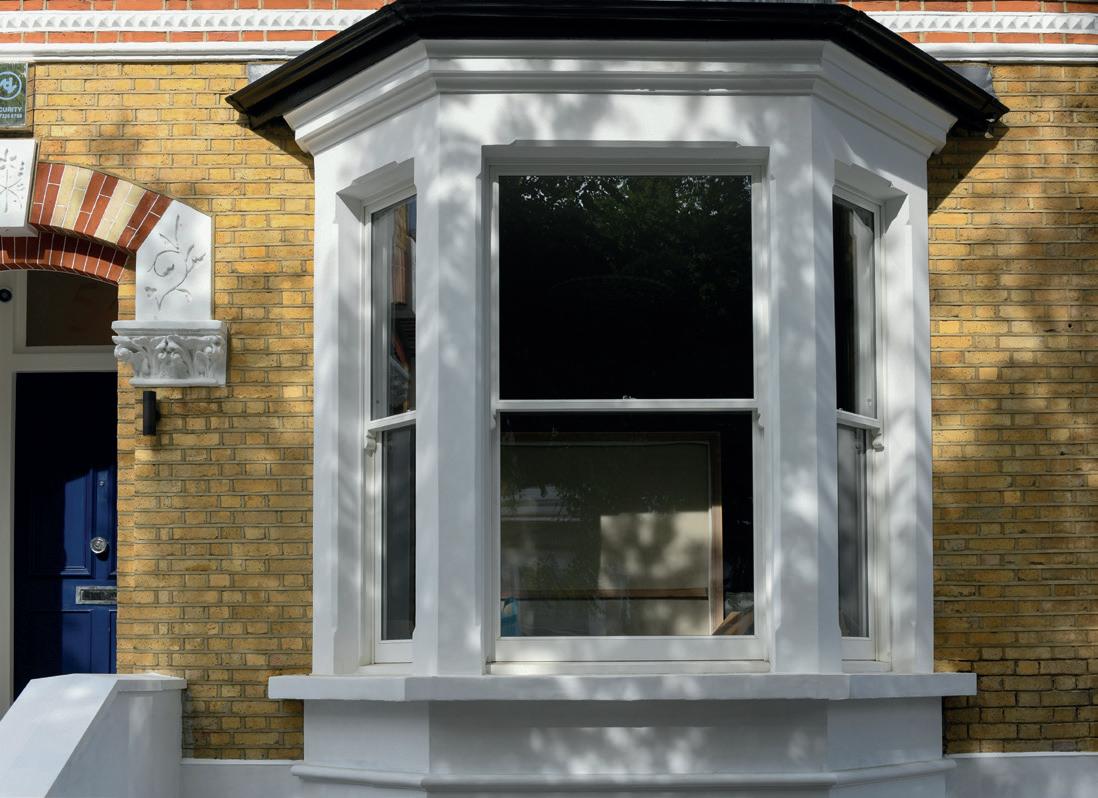
The Sash Window Workshop specialises in manufacturing high-quality timber windows and doors that are designed to improve energy efficiency and combine minimum maintenance with a maximum lifespan.
Established in 1994, the company manufactures all its new joinery in its workshops in Bracknell. It uses Accoya wood, which is sustainably sourced, highly stable, extremely durable and has a 50-year anti-rot guarantee.
The company offers a supply-only service nationwide, with an installation service in London and Southern England, and has extensive experience working in conservation areas and listed buildings.
The Sash Window Workshop was contacted for a quote to replace 12 windows as part of a larger renovation project on a Victorian terraced property in southwest London.
The new windows needed to be double glazed, to improve energy efficiency, while also complementing the architectural style of the property.
T he customer decided to proceed, and the windows were manufactured to their exact requirements. After the work was completed, the customer commented: “I found that The Sash Window Workshop
was not only competitive but used the best materials (Accoya) and made locally by very experienced craftsmen. Now fitted, my 12 sash windows are exceptional, the nicest I have ever seen. I have no hesitation to recommend The Sash Window Workshop and I will use them again for our next project.”
The Sash Window Workshop has extensive experience replacing timber windows and doors for renovation projects, extensions and new builds. It will work with you to ensure that project deadlines are met, while providing a high-quality product and customer service.
The company is FSC certified, FENSA registered, and a SafeContractor-approved company. It understands the importance of being a sustainable business and has reduced its carbon emissions despite growing its manufacturing capabilities.
The Sash Window Workshop also believes that it was the first timber window and door company in the UK to achieve Carbon Neutral Plus status.
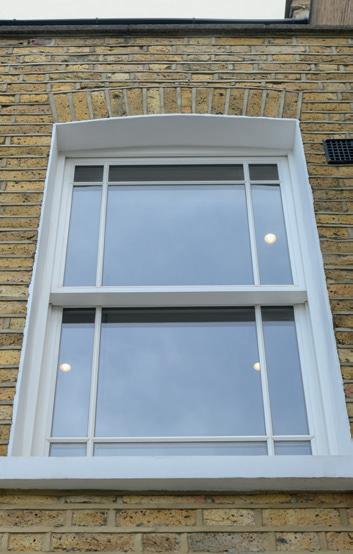
Bradite is promoting the benefits of its One Can product when used as a coating over uPVC. Here, Operations Director, Ben Mottershead, answers some quick-fire questions on its application and suitability.

www.bradite.com
NEW ALI VU HERITAGE-STYLE ALUMINIUM DOOR
SENIOR
ARCHITECTURAL SYSTEMS
Senior Architectural Systems has extended its popular Ali VU range of slimline aluminium windows and doors with the addition of a new heritage-style door option. The sleek and stylish Ali VU door has been developed to offer an attractive, secure and thermally-efficient solution for customers working on retrofit and refurbishment projects as well as those that require a classic heritage-style aesthetic. The new door is available with a choice of two transom designs to offer greater design flexibility alongside a selection of heritage-style handles and backing plates. Fully Part L compliant, Senior’s new door can achieve U-values as low as 1.0W/m 2 K when calculated as a CEN standard door. Available in both inwardand outward-opening single- or double-door styles, with a choice of double and triple glazing up to 44mm thick, the new Ali VU door has a maximum door leaf width of 1200mm and a maximum height of 2500mm.
Why is One Can particularly suited for painting uPVC?
“The ambient cross-linking technology in One Can means the coating becomes harder and more durable as the reaction continues. Whilst the paint applies smoothly with a low-odour, water-based finish, it dries to a robust and durable coating. This process occurs extremely quickly – One Can is touch dry in 30 minutes, and recoats are possible after just one hour.”
How does One Can meet weatherproofing requirements?
“The binder used in One Can is based on a highspecification binder, which contains a monomer that is particularly water resistant. It also contains proprietary wet adhesion promotion. Together, this means that One Can gives superb protection against the elements in the long-term, even as a water-based finish that is quick and easy to apply.”
What outside temperature will guarantee the best results? How long will it likely take for the paint to dry?
“For best results, outside temperature should be 8 to 10ºC or above, but it should be noted that the surface temperature will be considerably colder if applied at lower temperatures. One Can is surface dry within 30 minutes and recoatable after just one hour – although exact timings will depend on the onsite conditions during application.”
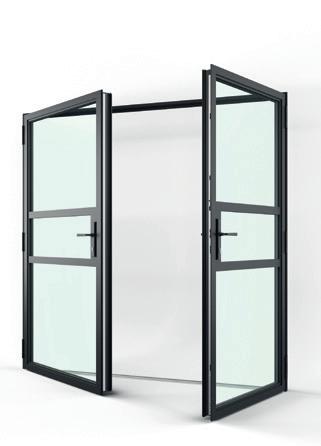
STEEL WINDOW ASSOCIATION (SWA)
As home renovation remains popular, and with the focus being on the acquisition and refurbishment of rural properties, this has resulted in Steel Window Association (SWA) members reporting a higher-than-usual demand for the replacement of the traditional W20 style windows. The W20 closely replicates the appearance of the older universal suite of sections and can, therefore, be found providing reliable service from country cottages to dockland warehouses and in commercial as well as industrial buildings. Not only do the slimline sections offer slender sightlines compared to PVC-U and timber frames, but their strength also provides good security and long-term robustness. In addition, the advancements made in glass technology and the availability of much-improved weatherstripping means that the modern W20 window delivers far better energy performance than its single-glazed predecessors. The President of the SWA and Contracts Director at Associated Steel Window Services, Kris Bennell, says: “W20 steel frames are the ever-reliable, ever-popular traditional option for the sector, which are liked by both planners and heritage bodies for use in a host of different property types.”
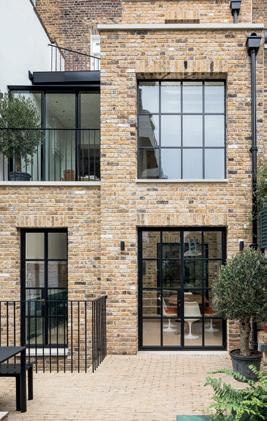
www.seniorarchitectural.co.uk
www.steel-window-association.co.uk
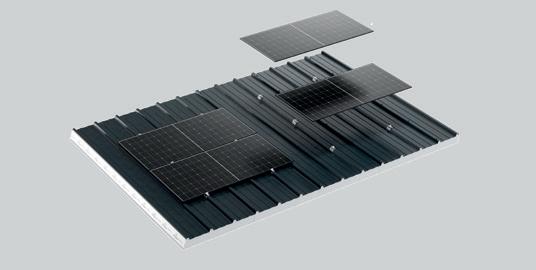
KINGSPAN INSULATED PANELS
With the huge increase in photovoltaics being installed on both new-build and existing buildings, Kingspan Insulated Panels has developed a unique fixing system to ensure that this can be done both safely and securely. The Kingspan PowerPlus KS1000RW System has been rigorously tested to FM4478. This system comprises the QuadCore KS1000RW Roof Panel, the PoweRail RW and a Longi PV module. This marks the first step in Kingspan’s journey to offer a full range of solar solutions tested to the relevant FM Approvals standards. The FM Approvals certification mark verifies that a product meets its stated conditions of performance, safety and quality. FM4478 states the approval requirements for flexible and rigid PV modules that are installed with a roof assembly. To achieve certification, the assembly must remain intact when subjected to fire from above the structural deck, simulated wind uplift, hail damage, seismic performance requirements and gravity load resistance.
www.kingspanpanels.co.uk
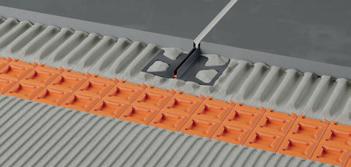
SCHLÜTER-DILEX-F MOVEMENT JOINTS REDEFINING THE TILING LANDSCAPE
SCHLÜTER-SYSTEMS
Adding to its well-established and diverse product range, Schlüter-Systems has developed the Schlüter-DILEX-F movement joint system to transform the appearance of tiled floors, completely changing the landscape in terms of visual impact: Replacing the discordant intrusion of conventional movement joints with a much more discrete and elegant alternative. An ideal solution for statement kitchens and connected dining or openplan living spaces, DILEX-F presents a well-engineered set of fully compatible components designed to address a technically and aesthetically challenging task facing flooring and fit-out specialists in both residential and commercial scenarios. The effect is to skilfully overcome typical reservations about using movement joints.
www.schluter.co.uk
01352 716100
TORMAX
A new lounge, which has been designed for Network Rail passengers using the assistance programme, has opened at Paddington station. TORMAX was contracted to work with Saper Glass to manufacture and install an automatic, single sliding door system, giving clear and easy access into the Assisted Travel Lounge (ATL). Powered by the in-housedesigned TORMAX iMotion 2202 door drive, smooth and reliable operation is assured thanks to the innovative design of the high-torque, synchronous motor that ensures rapid response to approaching foot traffic. Featuring none of the parts that regularly wear out, such as gears and brushes, the iMotion motor offers a longer lifespan, with lower maintenance demands, than other similar door operators. Designed by Isambard Kingdom Brunel, Paddington’s Grade I-Listed structure is one of Britain’s most historically significant railway stations.
sales@tormax.co.uk
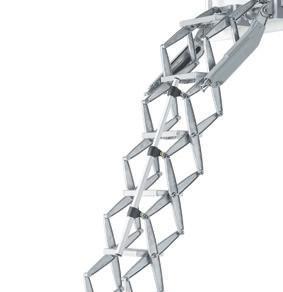

www.tormax.co.uk
01932 238040
PREMIER LOFT LADDERS
For 20 years, the Elite retractable ladder remains one of Premier Loft Ladders’ most popular products. The reason is simple – its versatility. The industry-proven, heavy-duty retractable ladder is supplied without a hatch. It also features a sophisticated counterbalance system that makes it very easy to use. As such, the Elite can be used in a wide range of projects and applications. In fact, it is so versatile that it has even been used on a small cargo aircraft. Visit the Premier Loft Ladders website to learn more about Elite.
www.premierloftladders.co.uk/elite
sales@premierloftladders.co.uk 0345 900 0195
VENT-AXIA LEADS THE WAY IN DOMESTIC VENTILATION INNOVATION AT THE HVR
VENT-AXIA
Vent-Axia impressed the judges at this year’s HVR Awards with its groundbreaking innovation. The Sussex-based company scooped an award for its Lo-Carbon Sentinel Econiq Cool-Flow within the ‘Domestic Ventilation Product of the Year’ category at the HVR Awards 2024. Designed to help housebuilders manage overheating in new homes, the Lo-Carbon Sentinel Econiq Cool-Flow is Vent-Axia’s latest flagship mechanical ventilation with heat recovery (MVHR) system combined with its intelligent Econiq Cool-Flow Module. Offering powerful cooling, the Lo-Carbon Sentinel Econiq Cool-Flow lowers fresh air supply temperature from ambient temperatures by up to 21ºC utilising R32 refrigerant with a Global Warming Potential (GWP) of 675, over 50% lower than R134a.
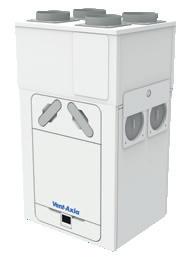
Leading supplier of consumer units, BG is updating electrical installers and wholesalers on the latest category-relevant safety legislation, affecting electricians and electrical engineers who are inspecting, testing or installing circuits that are covered by circuit protection devices.
Th is change to the Institute of Engineering and Technology (IET)published the 3rd Amendment to BS 7671: 18th Edition on 31st July 2024 reflects safety and, in particular, the expansion of renewables into the home by making clear the definition and identification of protection devices. With new-build and retrofit sales of solar, energy storage and EV charging on the increase, the role of circuit protection devices has become ever more important. This update clearly gives definitions and marking identifications for bidirectional and unidirectional circuit protection devices.
A regulation has also been added under Chapter 53 that gives a clear definition when defining and installing devices for protection, switch control, monitoring and circuit isolation. This regulation also covers the potential and possible directions for power flow. If power flow is not in a single direction, only appropriate bidirectional devices shall be selected and used.
Why is this relevant?
W ith the increased demand to incorporate PV, battery storage and EV into homes, the regulation has been updated to further ensure that these installations are safe. Feeding power back into a circuit that has a unidirectional device could result in damage to the device, compromising the safety of the home and its users.
www.bgelectrical.uk
Next year will see the introduction of the Future Homes Standard (FHS) and a 75% reduction in operational carbon for new homes, compared with 2013 standards.
Th e housing sector needs to adapt quickly and already we’re seeing signs of change. For example, a survey of housebuilders revealed that 150mm wall cavities are becoming the new industry norm, with 41% of participants already having made the switch for new homes and over a quarter considering it. Designing with wider cavities provides flexibility in choosing insulation materials that deliver the thermal performance new homes need.
For example, poorly-installed insulation may not achieve its specified thermal performance, and rigid board insulation can be particularly prone to this because it won’t sit flush against a cavity unless it is perfectly flat. It also requires precise cutting and taping, introducing further opportunities for human error. This can lead to air gaps and compromised thermal performance.
H ere, 150mm cavities offer a solution. They allow for the use of mineral wool insulation, such as Knauf Insulation’s DriTherm Cavity Slab 32, which is easier
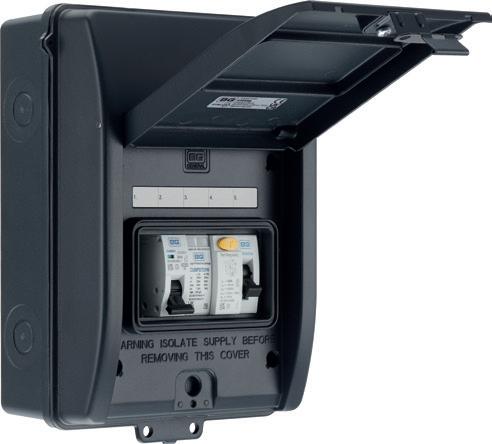
Compliant circuit protection available now from BG
B ritish General has a range 18th Edition Amendment 3 bi-directional devices for installations that feed into and draw power through the same circuit protection device. These consist of bidirectional RCDs, circuit breakers and double pole RCBO devices.
uk_sales@bgelectrical.co.uk
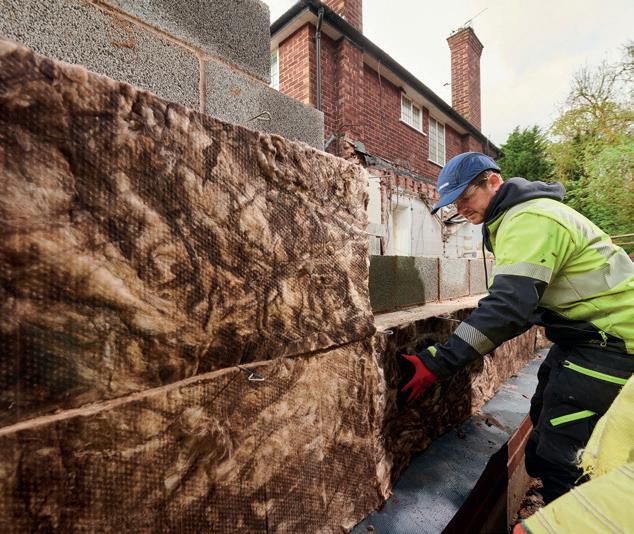
to install correctly under real-world conditions. Mineral wool is a flexible material, so it adapts to minor imperfections in the substrate, fully filling the cavity. Its strands also ‘knit’ together, minimising gaps and maximising thermal performance.
D esigning with 150mm cavities addresses current and future requirements while maintaining design flexibility. Wider cavities help architects to deliver homes that meet the highest standards of performance.
www.knaufinsulation.co.uk/housebuilders-hub
Katherine Kates, Production Director at Haddonstone, delves into its meticulous production methods, from the initial design phase to the final finishing touches.
O ur teams define project requirements through personalised customer service; at the core of everything we do is a commitment to providing the highest levels of personalised customer service. Whether working with technical drawings or a simple photograph, the team collaborates closely with the client while the architectural solutions cater to a wide range of projects, from private residential new builds and extensions to large-scale commercial developments and renovation projects. Haddonstone’s expertise in cutting-edge technology and traditional techniques allows us to create cast stonework that meets almost any specification.
Technical advice, product support and comprehensive packages, including quotations, detailed CAD drawings, product schedules and installation guidelines; all at no extra cost. Transparent lead times: Honest and accurate timelines for all projects
Competitive pricing: Clear and fair pricing with no hidden costs
www.haddonstone.com
BREATHING BUILDINGS
Breathing Buildings has supplied ventilation to High Point Academy, a secondary school for students with complex learning difficulties in Wednesbury, West Midlands. The 90-pupil school features classrooms that are designed to be safe and calming for autistic pupils. It includes a range of specialist rooms that enhance the children’s experience. In addition to this specialist learning environment, the two-storey school benefits from Breathing Buildings’ NVHR (natural ventilation with heat recycling) hybrid ventilation units that help provide good indoor air quality and keep the school warm in winter and cool in summer. This boosts comfort and health, which is essential for the pupils’ learning and wellbeing.
www.breathingbuildings.com 01223 450060

Quick, accurate project drawings: The experienced technical team provides drawing assistance and support while a free, user-friendly product drawing package, compatible with AutoCAD software, is offered. This package features a complete library of Haddonstone components in Dynamic Blocks for easy use.
H addonstone’s own in-house production facilities, including a design studio, extensive mould shop and laboratory, allow us to cater for everything from lightweight retrofit designs to large structural units. Every component is handmade to order and, by crafting all our own models and moulds and overseeing every step of the process, we ensure that each project specification is met with precision.

The newly-revitalised Union Yard development in Aldershot now boasts a cutting-edge Advanced MxPro 5 fire safety system, expertly installed by Integrated Fire Safety Systems to provide robust protection for this scheme in the heart of Aldershot town centre. To ensure the safety of residents, students and visitors, the development has been equipped with a comprehensive fire safety system, expertly designed and installed by Integrated Fire Safety Systems (IFSS). The project included the installation of an Advanced MxPro 5 fire panel, which provides robust fire detection and alarm coverage for the common corridors throughout the complex. Iain Clenaghan, Commercial Manager at IFSS, highlighted the importance of the integration, saying: “The complexity of this project required a fire safety solution that could seamlessly integrate with various systems while providing reliable protection across the development. The Advanced MxPro 5 panel was the ideal choice for its versatility and ease of integration, allowing us to deliver a comprehensive fire safety system that meets regulatory standards.” The Union Yard development project underscores the critical role that Advanced’s fire safety solutions play in large-scale, mixed-use developments. The installation not only ensures compliance with fire safety regulations but also provides peace of mind for all occupants, knowing that they are protected by state-of-the-art technology.
Gilberts has risen to the challenge of ensuring the balance of ventilation and safety with the development of its fire-rated connection box (plenum).
Th e Fire Rated Connection Box (available in both top and side entry versions) achieves 60 minutes’ fire and thermal rating to EN 1366-3-2021. It means that fire integrity of ventilation between internal compartments has never been easier to achieve.
GILBERTS
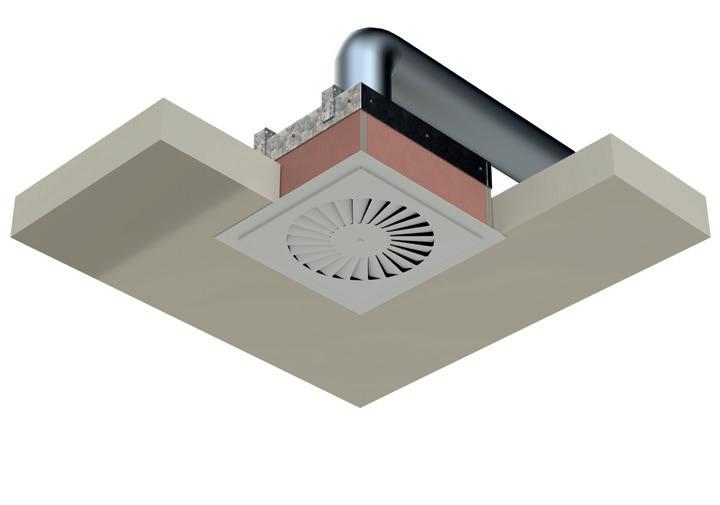
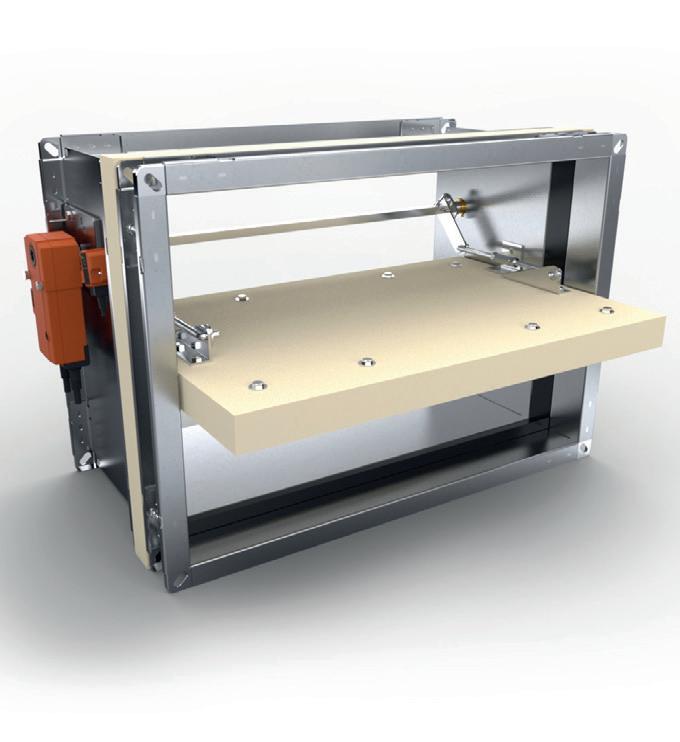
T he new plenum maintains performance integrity when tested at temperatures up to 1000ºC. It ensures that the fire barrier through a masonry or plasterboard wall or ceiling, or concrete floor, will be retained, maintaining compartmentation.
G ilberts believes it is the only plenum of its kind in the UK tested to deliver such high performance. It gives assurance that the two relevant layers of fire safety – compartmentation and structural safety – are addressed.
“ There is no harmonised European standard for fire testing of plenum boxes. However, it is a crucial element in retaining the fire compartment. The lack of a definitive standard makes it difficult for fire officers to sign off on a detail. By providing them with a tested one-hour fire- and thermal-rated plenum box, they have the peace of mind that they have a sensible choice,” explains Gilberts’ Technical Director, Roy Jones.
“ We believe it will be the ‘go-to’ solution for consultants and contractors to achieve building compliance in non-domestic or multioccupancy settings.”
T he Fire Rated Connection Box builds on Gilberts’ reputation as an innovator committed to giving clients products that exceed expectation.
A ll Gilberts’ products, standard lines and bespoke solutions are designed and developed in accordance with BS EN ISO 9001:2015 quality standard in the company’s state-of-the-art 140,000ft 2 facility in Blackpool.
W ith growing emphasis on managing the risk of smoke and fire within building safety, Gilberts is also leading the way to optimise control.
To address increasing demand and to exceed criteria laid down in the latest Building Regulations, Gilberts is launching a new, fullytested range of insulated smoke and fire dampers. The insulated dampers complement Gilberts’ established Ductgard units for HVAC ductwork.
The insulation element of the new dampers helps minimise the risk of heat transfer and, thus, the risk of fire spreading beyond the compartment. Its performance exceeds the two relevant layers of fire safety in buildings: Integrity of compartmentation and structural safety.
Spring and thermal fuse activated, the insulated dampers offer fire resistance of EI30, EI60, EI90 and EI120 for general ventilation systems with walls and partitions of various ratings.
T hus, they deliver effective cut-off partitioning between the fire-engulfed zone and the remaining part of the building, helping maintain the building’s integrity.
T he range is fully tested and certified to EN 15650, EN 13501-3 and EN 1366-2.