WILLIAMS ON THE RISE
British team making great strides with FW47
F1 AEROMAP STUDIES
Continuing our preview of 2026 regulations
Inside the world of modern motorsport technology

British team making great strides with FW47
Continuing our preview of 2026 regulations


RACING LEGEND REVIVED Ray Evernham’s mission to breathe new life into IROC
AUSTRALIAN SUPERCARS Inside the parity process to balance iconic brands

TOYOTA GR010 HYBRID Team defends its FIA WEC form amid shocking year
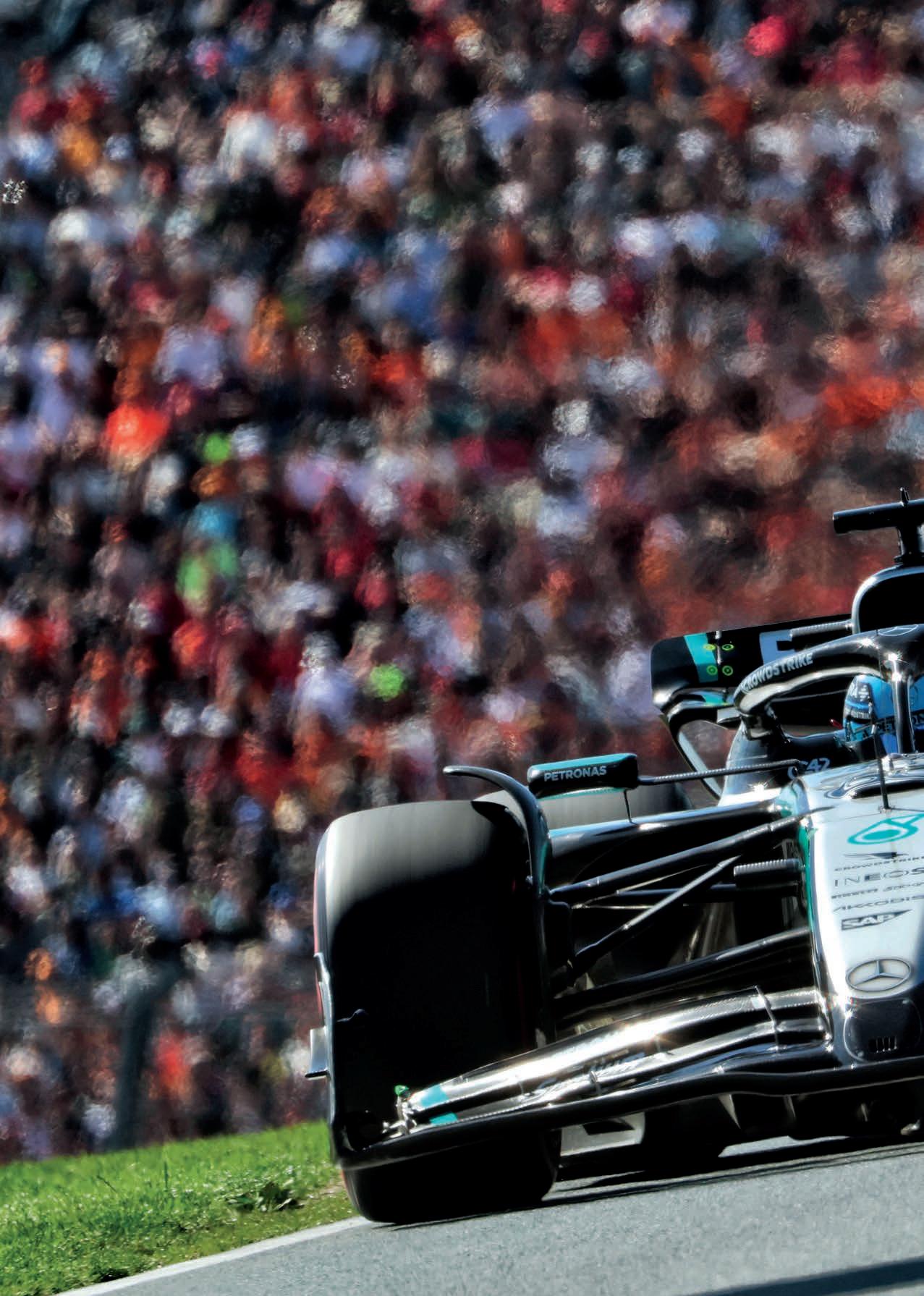


Mercedes is still struggling to nd its form in the nal year of F1’s current rule set. Racecar spoke to the team’s technical leadership to nd out why
By CHRISTIAN MENATH
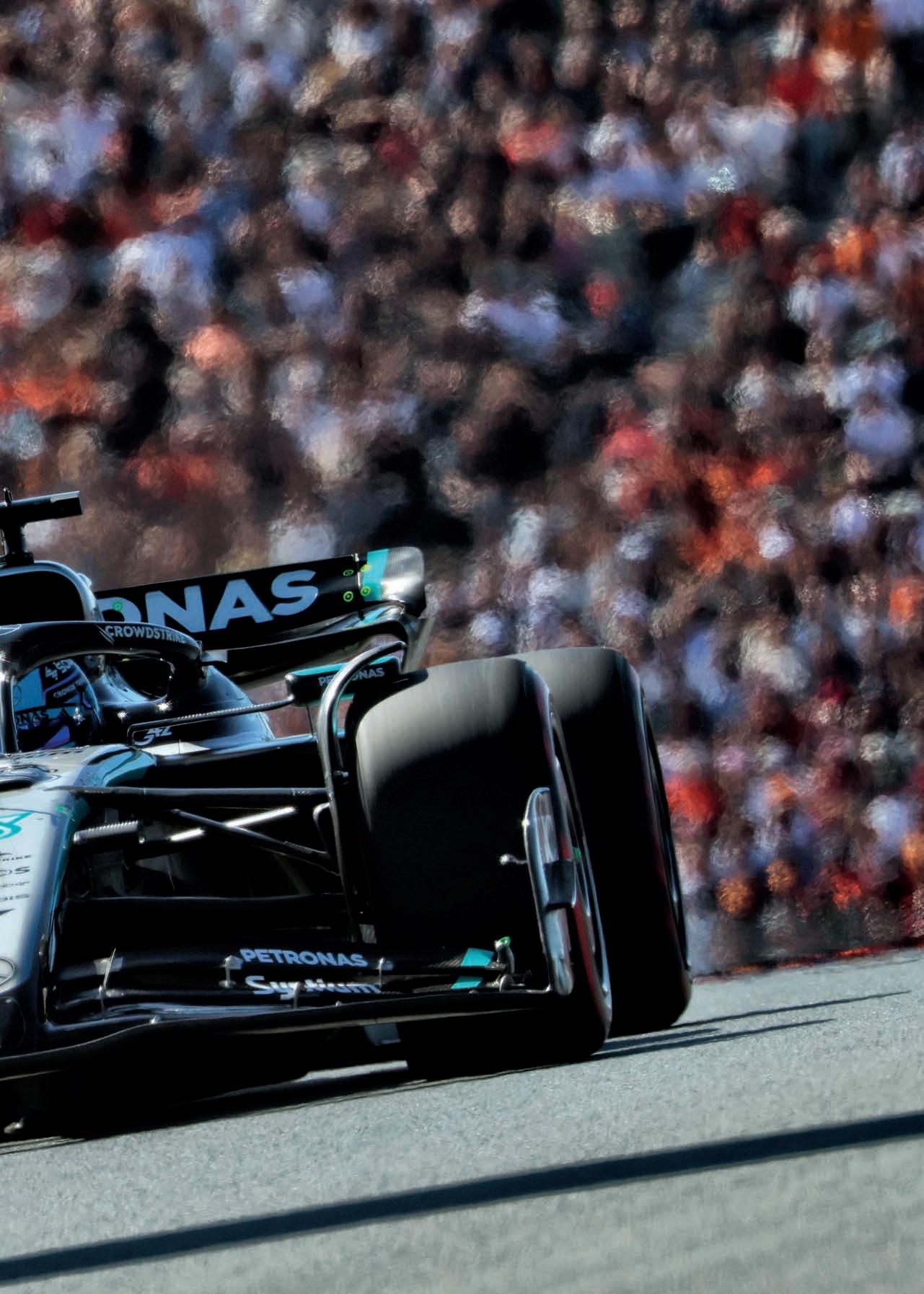
The 2025 season marks the end of an era. Since 2014, Formula 1 cars have been propelled by hybrid power units based on a 1.6-litre, turbocharged V6 with an MGU-K and an MGU-H. For a long time, it seemed as if this power unit era would be synonymous with Mercedes for, when the hybrid rules were introduced, the German manufacturer was a cut above the rest. Even a major change to the chassis rules in 2017 could not break the Daimler dominance.
However, everything changed with the introduction of ground-effect cars for the 2022 season. The Mercedes era came to an abrupt end. After eight consecutive World Constructors’ Championship titles, it finished only third, behind Ferrari and a rampant Red Bull. From 2014 to 2021, the Silver Arrows won 69 per cent of all races but has won only seven per cent in the time since. Where the team once averaged 33.9 points per race weekend, has averaged only 19.7 since the rules shifted. The former top dog has seemed lost on several occasions during the four seasons of ground-effect F1 machinery.
In 2022, Mercedes started the season with an unconventional solution for its sidepods and stuck with it for a long time. In 2024, the team experimented with different pick-up points for the wishbones on the front axle and then, in 2025, completely lost its way with a new rear suspension.
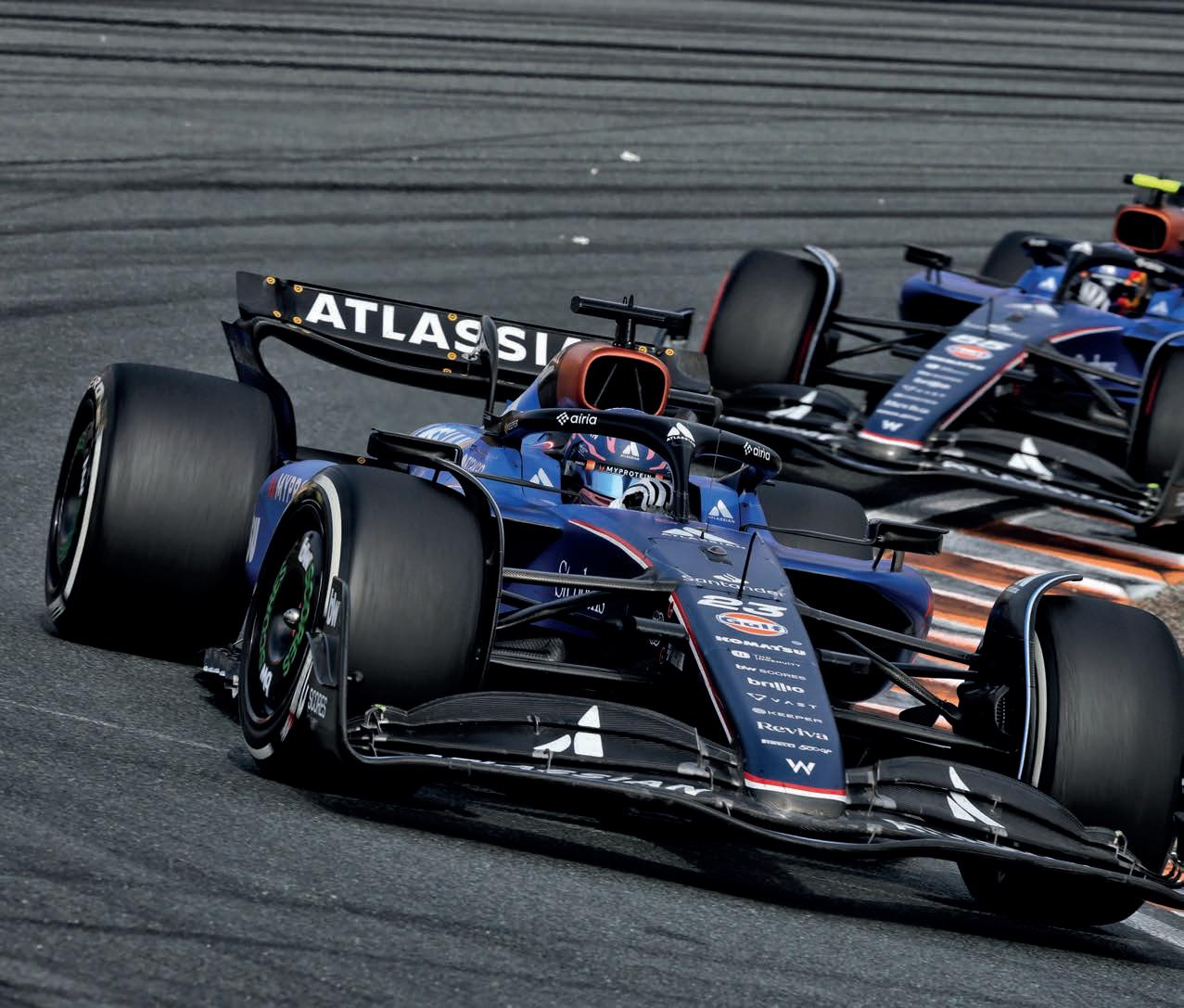
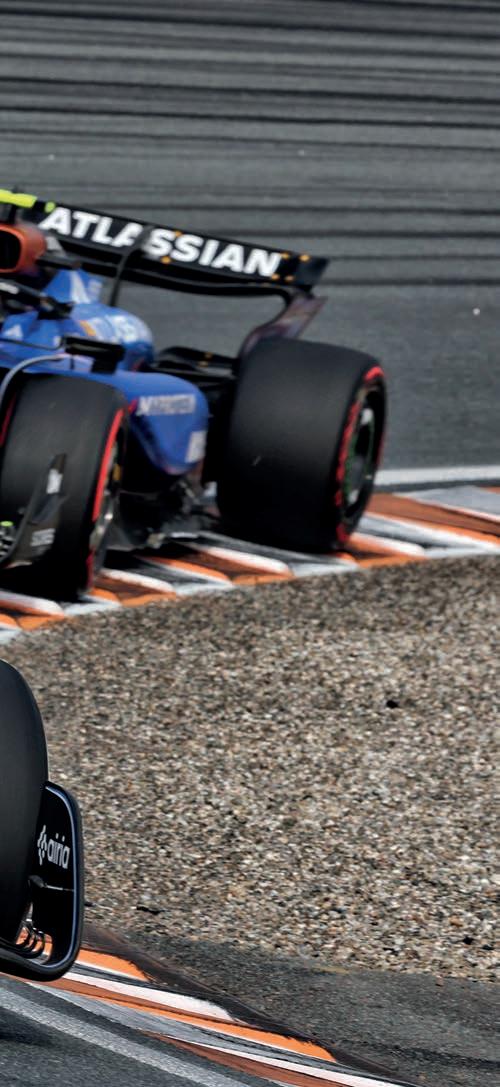
The British squad has enjoyed its best season in years, but will its strategy pay off in 2026?
By DANIEL LLOYD
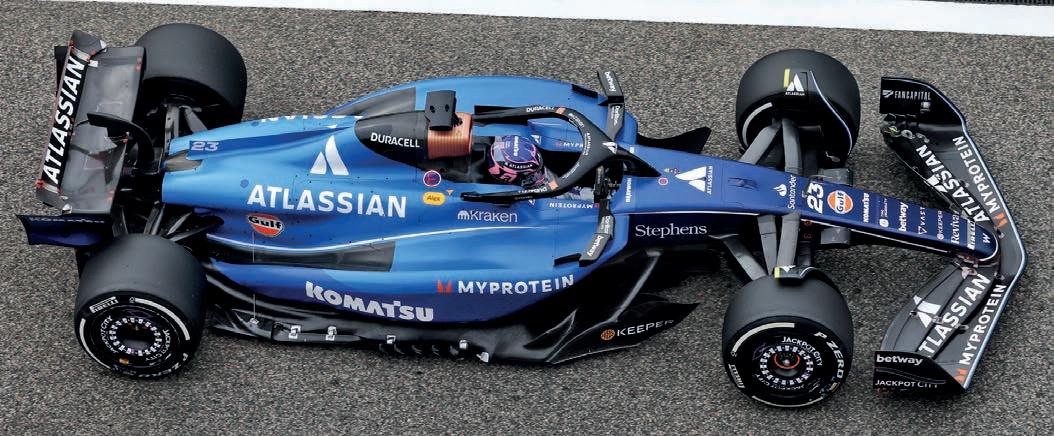
Williams’s transformation from sporadic point scorer to podium finisher is remarkable because of how quickly it has occurred. The Grove-based team had been largely underwhelming in the first three seasons of the ground-effect rule set, which started in 2022 and concludes at the end of this year. Prior to the current season, its best result in that regulatory era had been seventh. However, in 2025, it has equalled, or matched, that result eight times, including a third place for Carlos Sainz in Baku.
The team exceeded expectations by leapfrogging the teams it had spent prior years trailing, and breached the 100-point
mark for the first time since 2016. Williams scored 84 points in seven years (at 149 grands prix) but needed only 16 races to surpass that amount this year. The numbers clearly illustrate a team on the rise, whose management is driven to make it a championship contender again.
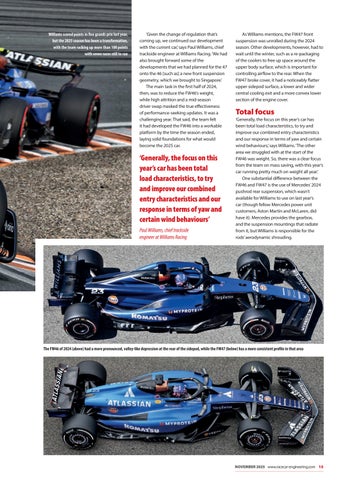
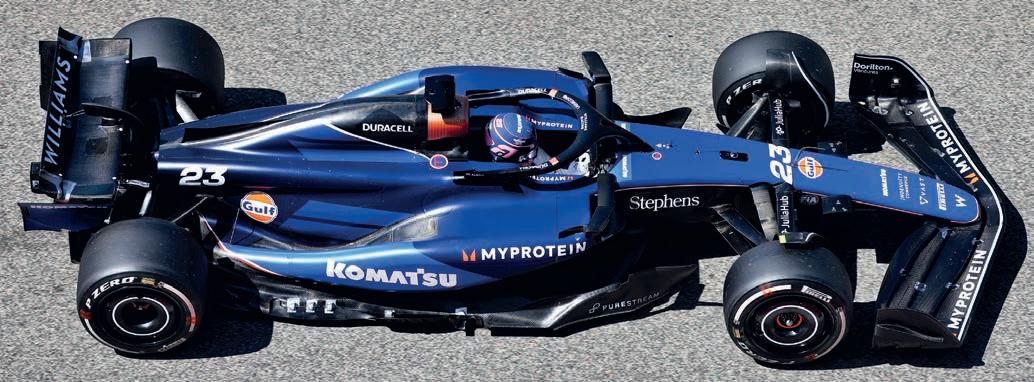
Such a large turnaround in fortunes from one year to the next might give the impression that Williams made a radical departure in its car design with the FW47. However, that is not the case. The FW47 is an evolution of the FW46, which finished ninth in the 2024 World Constructors’ Championship. It even uses the
same carbon fibre monocoque. Some modifications were made to the chassis, to accommodate new aerodynamic surfaces, but otherwise it was a major carryover part, which saved on time and resources.
Williams had already embarked on a big weight saving programme in its design of the FW46 chassis. That, ironically, put pressure on the lead time of other components, making them overweight and the car slow at the start of the 2024 season. Once the excess mass was shed, though, the team had a monocoque around which the FW47 could be developed. The car started 2025 below the 800kg minimum weight (F1 cars may be underweight provided they run with ballast).
‘Given the change of regulation that’s coming up, we continued our development with the current car,’ says Paul Williams, chief trackside engineer at Williams Racing. ‘We had also brought forward some of the developments that we had planned for the 47 onto the 46 [such as] a new front suspension geometry, which we brought to Singapore.’
The main task in the first half of 2024, then, was to reduce the FW46’s weight, while high attrition and a mid-season driver swap masked the true effectiveness of performance-seeking updates. It was a challenging year. That said, the team felt it had developed the FW46 into a workable platform by the time the season ended, laying solid foundations for what would become the 2025 car.
‘Generally, the focus on this year’s car has been total load characteristics, to try and improve our combined entry characteristics and our response in terms of yaw and certain wind behaviours’
Paul Williams, chief trackside engineer at Williams Racing
As Williams mentions, the FW47 front suspension was unrolled during the 2024 season. Other developments, however, had to wait until the winter, such as a re-packaging of the coolers to free up space around the upper body surface, which is important for controlling airflow to the rear. When the FW47 broke cover, it had a noticeably flatter upper sidepod surface, a lower and wider central cooling exit and a more convex lower section of the engine cover.
‘Generally, the focus on this year’s car has been total load characteristics, to try and improve our combined entry characteristics and our response in terms of yaw and certain wind behaviours,’ says Williams. ‘The other area we struggled with at the start of the FW46 was weight. So, there was a clear focus from the team on mass saving, with this year’s car running pretty much on weight all year.’
One substantial difference between the FW46 and FW47 is the use of Mercedes’ 2024 pushrod rear suspension, which wasn’t available for Williams to use on last year’s car (though fellow Mercedes power unit customers, Aston Martin and McLaren, did have it). Mercedes provides the gearbox, and the suspension mountings that radiate from it, but Williams is responsible for the rods’ aerodynamic shrouding.
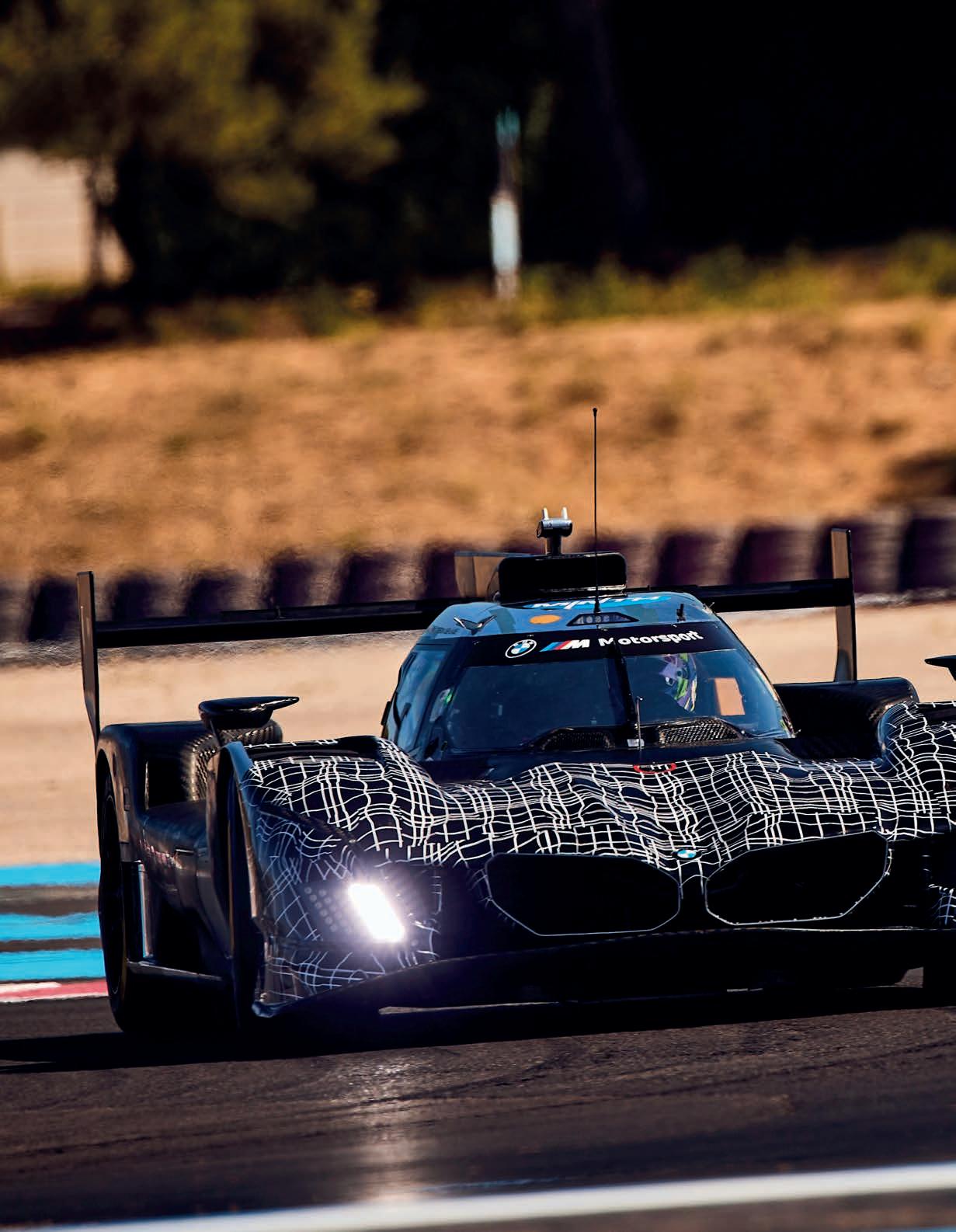
BMW has yet to win a race in the WEC, though the M Hybrid V8 has won three times in IMSA. BMW hopes that the new kit will help to deliver success for the Belgian WRT team, which has been confirmed to take over the US racing programme in 2026
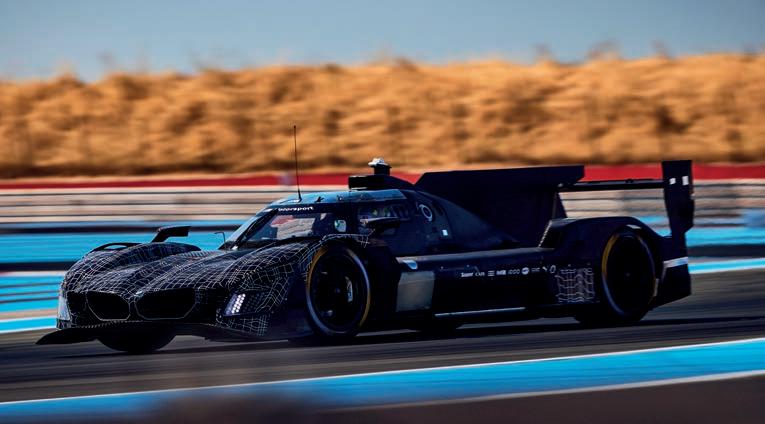

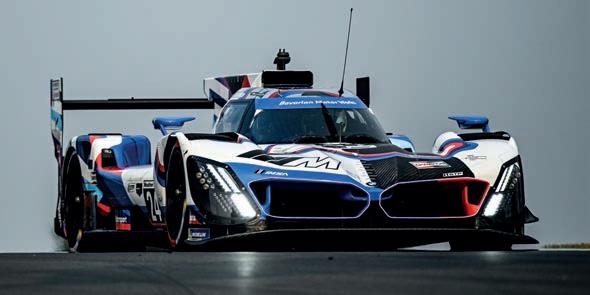
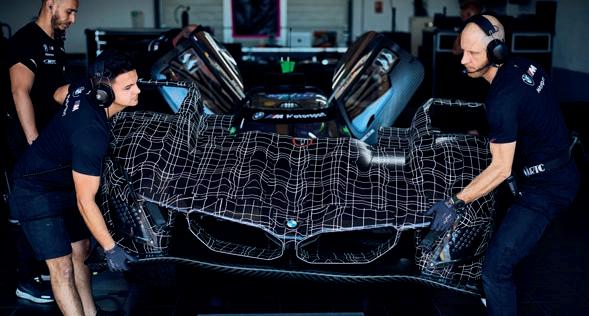
BMW has developed its LMDh Hypercar with an aerodynamic update package that is currently still under evaluation
By ANDREW COTTON
BMW has not had the most successful endurance racing programme with its M Hybrid V8, which made its debut in 2023.

Although the car has won three races in the United States, including a one-two at Road America in August, its rst FIA World Endurance Championship victory is pending. It arrived in the WEC one year after its US debut, so is a year behind most of its opposition in terms of development, and clearly still has a lot of catching up to do.
This is the second performance upgrade package BMW has introduced to the car, the rst being to update the braking system for 2025, to give its drivers a more predictable experience. That, in turn, gave them more con dence on the brakes, more predictable cornering speeds and higher exit speeds.
Each manufacturer is allowed to make ve updates within a ve-year period. BMW resisted making a quick change after the rst year as the car was far away from its full performance potential, and so BMW did not fully understand what it needed to adjust.
The second development has been an aerodynamic upgrade that has been on the design board for around 12 months. A new, smaller kidney grille is the most obvious change for the new kit, with an adjusted splitter that optimises air ow and new headlights, still in keeping with the brand’s current styling cues.
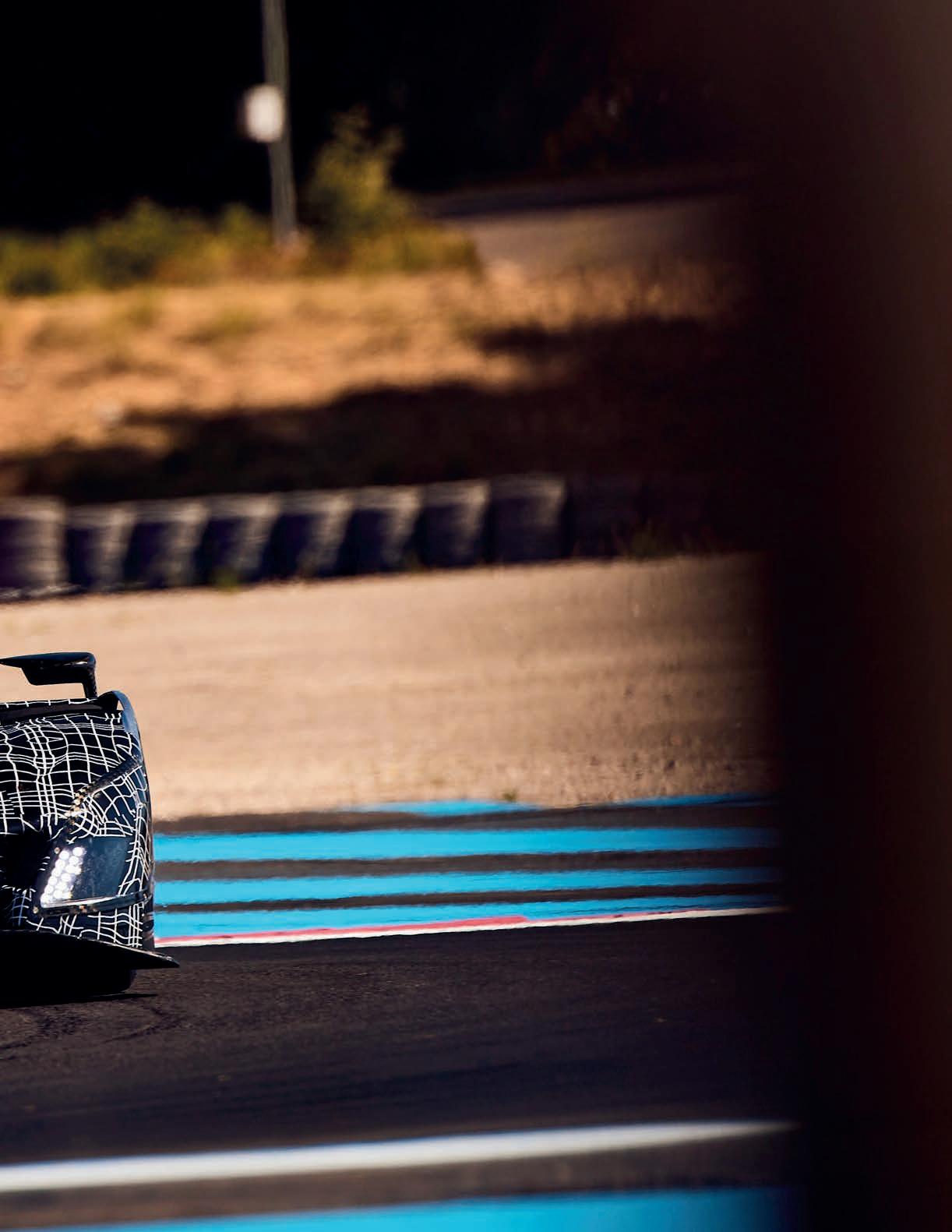
The splitter is noticeably higher in the centre compared to the old version, suggesting more airflow under the car to better feed the rear diffuser
The splitter is noticeably higher in the centre compared to the old version, suggesting more air ow under the car to better feed the rear di user. Floor design of the LMDh cars is strictly controlled, unlike the LMH cars against which it competes that have far more scope in the design phase.
The BMW shares its platform with the Cadillac V-Series.R LMDh car, which has had considerably more success in the States and this year in the WEC, where it won the 6 Hours of São Paulo.
The Dallara chassis comprises the spine of the car and suspension, while the hybrid system is standard across all competitors,

With powerful, hi-tech cars competing on rough rural tracks, Competitive Safari o ers a formidable motorsport engineering challenge
By MIKE BRESLIN (Photos: Ryland Jones and
Bresmedia)
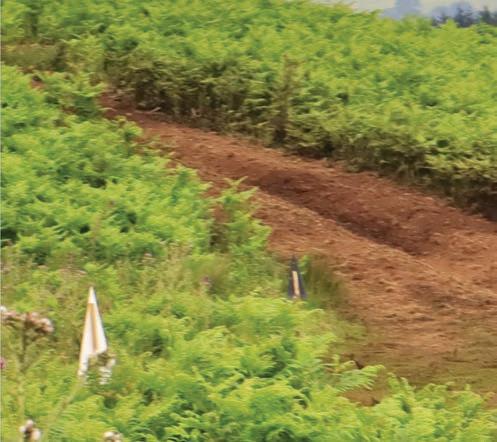



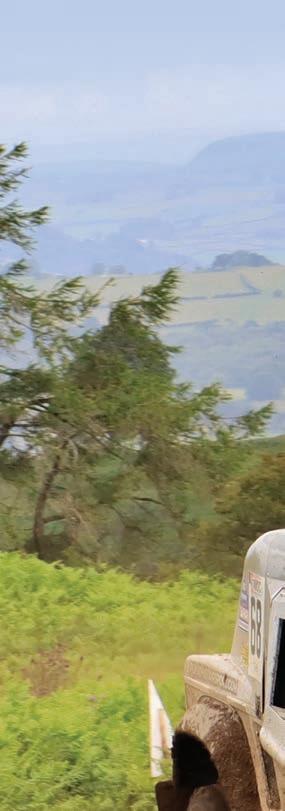
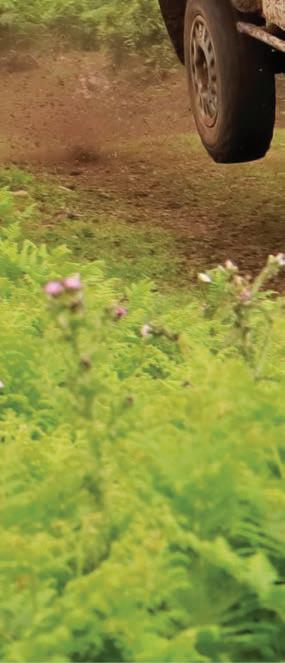
Sometimes, if you want to get across what something is, it’s best to say what it’s not. Take Competitive Safari, for instance. It’s not a race, in that cars run individually against the clock. It’s not a rally, in that drivers are free to go out on the course whenever they want to, within the overall timeframe. It’s not a trial, in that any competing car should be able to complete the course. And it’s certainly not a safari, though there might be the odd sheep nosing about. What you’re left with then is something very di erent to most modern motorsport disciplines, and perhaps the term that encapsulates it best is adventure. That said, it’s also a huge technical challenge, featuring
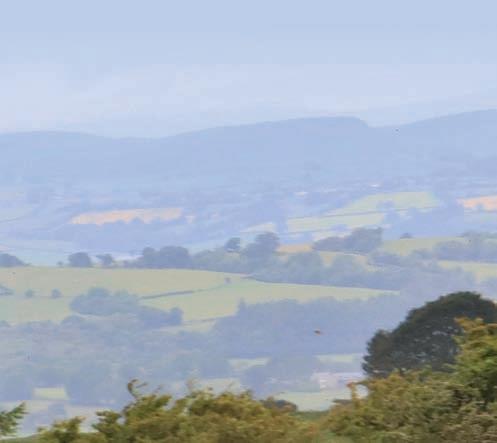
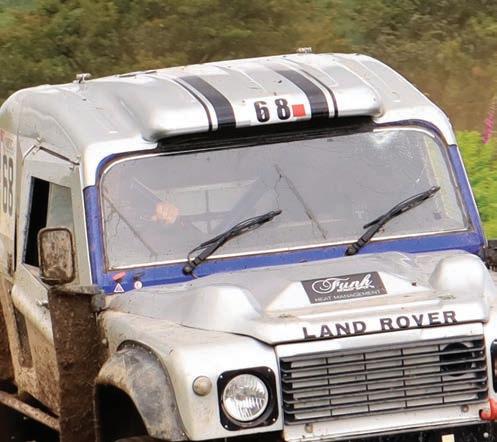
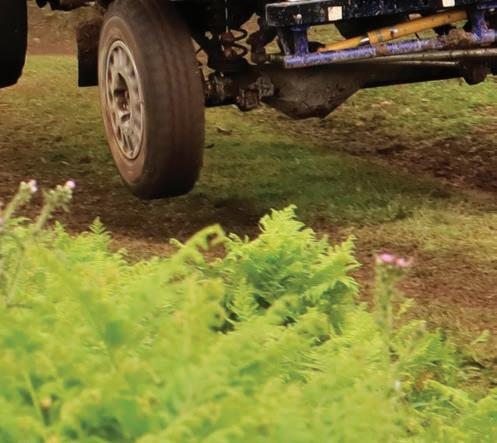
extremely fast, often purpose-built racing machines, running on often rough terrain.
A typical Competitive Safari event, or Comp’ Safari as it’s known, involves eight runs around a demanding stage, generally on farmland or woodland. For this article, we’ve focused on Safari Plus competitions run by the UK’s All Wheel Drive Club (AWDC), though other clubs run similar events and formats.
After the rst drive through the course, competitors can complete subsequent runs whenever they want, and in that respect it’s a little bit like an open pit lane track day, except every run is timed. The car with the
lowest combined time over the required number of runs is the winner.
‘Normally, it’s a ve or six-mile course,’ says Tim Pink, competitions secretary at the AWDC. ‘You usually get six and a half hours to do eight laps. It’s out on the stage, come back, repair the car or fuel it up, and then go out again later. The course is open continuously.’
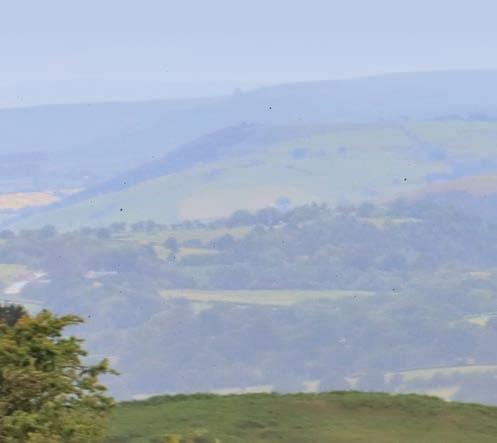
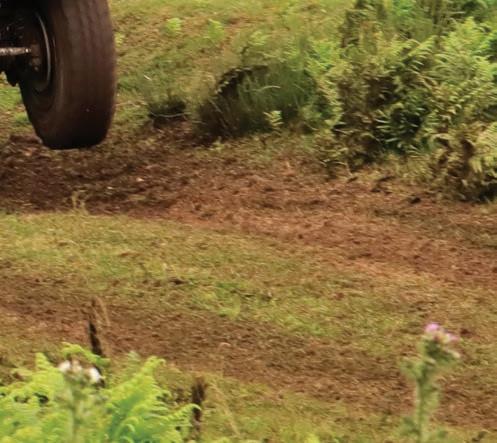
The stages are all designed to be driveable in fairly standard 4x4s. Indeed, Class 1 caters for close to roadgoing Land Rover Freelanders, though most cars that compete are heavily modi ed or bespoke, highly specialised vehicles, designed for strength and durability. Outright performance is important too, though there is a speed limit. Sort of.


Enzo Ferrari tried a supercharged V12 to beat Alfa Romeo and came up short. Then a new man, Aurelio Lampredi, convinced him to ditch the compressor for a bigger engine
By KARL LUDVIGSEN
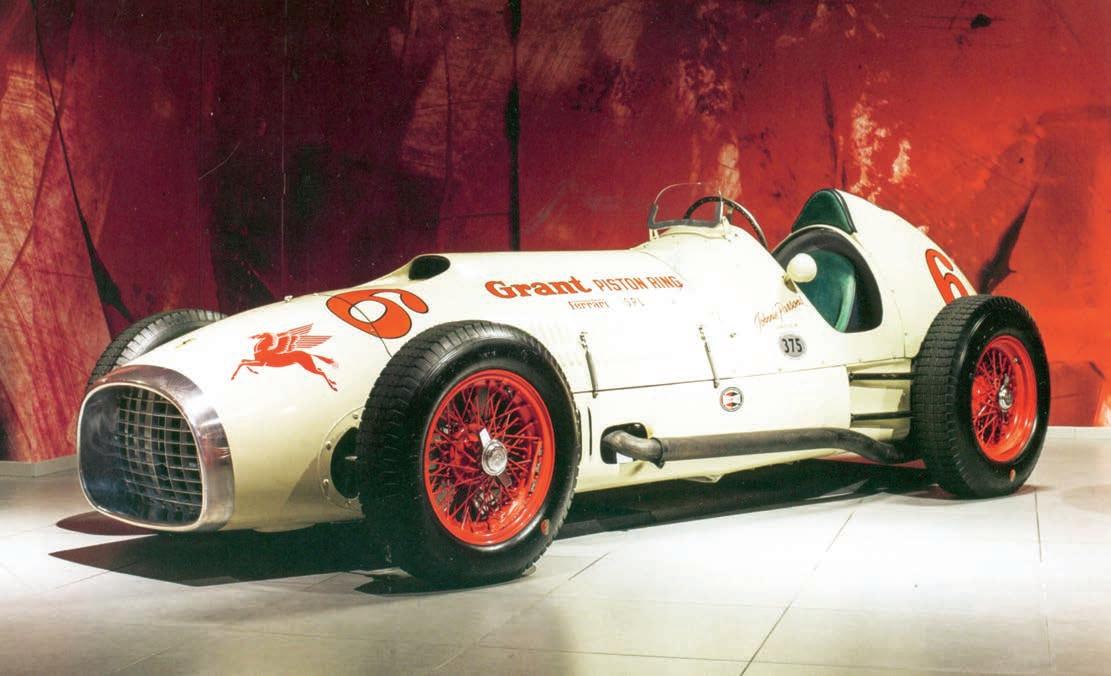
Through 1949 and into 1950, Ferrari and Alfa Romeo were locking horns in the grand prix corrida with their highly boosted 1.5-litre racers. Swilling vast quantities of alcohol-based fuels to make power and keep cool, these supercharged machines had to make several pit stops to complete a 300-mile race. Meanwhile, the unblown 4.5-litre TalbotLagos were going through non-stop. Though their long-stroke sixes were far from state-of-the-art, France’s Talbots showed that displacement could still make a race winner, if it was exploited with the latest technology.
France’s Talbots showed that displacement could still make a race winner, if it was exploited with the latest technology
A driver whom Enzo Ferrari esteemed, Parisian Raymond Sommer, had driven both the unsupercharged 4.5-litre Talbots, the early 1.5-litre supercharged grand prix Ferraris and, before the war, the Type 158 Alfas. His advice to Ferrari was that the better fuel economy of
an unblown engine, with adequate power, would be a strong combination. Indeed, Louis Rosier proved this in the 1949 Belgian Grand Prix when his unblown 4.5-litre Talbot-Lago defeated the 1.5-litre supercharged Ferraris. Fresh from his work with ReggianeCaproni, producer of the W-18 aero engine, Aurelio Lampredi had arrived at Ferrari’s factory at Maranello, near Modena, in September of 1946 and been assigned command of the drawing office. ‘During my third month there,’ he recalled, ‘I handed in my notice because I realised my chief and I would never get on with each other. Ferrari