
INSIDE CHAPEL 75 75 Issue 25 - September 2022 / ISSN 2527-2160 Former students tell how Chapel has impacted their lives SEVENTY-FIVE STARS Chronicle by Adelina Gebara ONE MONTH TURNED 35 YEARS Behind-the-scenes of the production of the student yearbook WE LOVE YEARBOOKTHE Chronicle by John Morrison MY 30 YEARS AT CHAPEL





INSIDE CHAPEL
Here comes the new edition of the Chapel Cookbook! The book with the most sought after recipes by Chapel School’s Nutritional Service.

CONTENTSOFTABLE
This painful reality forced us to drastically change our rhythm. Chapel, following health and safety guidelines, made the difference with its structural modification to better welcome back our students.
The values taken on by Chapel are intrinsically connected to the charisma of the Mary Immaculate Missionaries, a congregation founded by Saint Eugene de Mazenod, and in its early years had amongst its priorities the education of youth. It is known that in the context of the French Revolution, many young people were lost, without many perspectives. Bishop Eugene’s intention was to help them by offering them a Christian education centered on values based on “faith” and “life.” Prioritizing life is a legacy left by Jesus in his gospel, “I came that they may have life and have it in abundance.” (John 10:10).
We live in a multicultural world marked by many situations of intolerance, exclusion, and war. As an Oblate family, we are called to be a symbol of hope in a special way where it is necessary for people to promote the culture of peace. Pope Francis, in his mission as leader, has insisted on a mentality change capable of transforming the global reality, prioritizing life in its integral form, especially in relation to environmental issues, which he calls our “common house.” As advocates of hope, we must look at these situations with attention. At the end of 2019 we were surprised by the Covid-19 pandemic.
Finally, in this festive spirit, and thankful for Chapel’s 75 years, I invite you to read our articles, that in their central message, depict all the gratitude former students who have made memories from their experiences at Chapel, relive and help us go back in this institution’s history that influenced the lives of so many. In this issue, you will also find personal accounts from those currently experiencing their moment at Chapel, preparing themselves to shine in the “constelation” of the most beautiful stars that make up the Chapel family.
The Oblates of Mary Immaculate Missionaries, when invited to start Chapel, never imagined that over the years, that small school would transform into the excellent institution it is today. This was possible thanks to the numerous people who have made their mark on the school, working with professionalism, offering our students quality education, and making it possible for them to enter renowned universities.
Inside Chapel readers, it is with great joy that I address to you this special edition, celebrating Chapel’s 75th anniversary, a reason for celebration and happiness, after all, so many have passed through our institution and today act in different fields of work and countries, carrying in their essence an education with objectives and mission, based on Christian values, that will be carried with them throughout their lives.
Pe. Lindomar Felix da Silva OMI, Provincial of Missionary Oblates of Mary Immaculate in Brazil

On behalf of the Oblate Province of Brazil, I thank everyone who has come through Chapel and left their mark that will never be forgotten. Our gratitude to all of these people who currently administer and care so fondly for our dear institution that continues to spread “Faith in Education.”
Happy 75th birthday!
Dear
Throughout the 206 years since the congregation’s founding, the Oblates will gather at regular periods in a general assembly to not only choose their new general superior, but also vote on priorities that will be taken on by the missionaries in the upcoming years. In September of this year, there will be the 37th General Chapter and with it the theme “Pilgrims of Hope in Communion” (Peregrinos da Esperança em Comunhão). ”Thanks to these “pilgrims” who disembarked in São Paulo in 1945, the first four oblates were able to step on “Terra de Santa Cruz.” In their luggage, they carried the desire to evangelize following the charisma left to them by Saint Eugene. Two years later, Chapel begins with this same wish to welcome parents and students into an environment capable of developing interpersonal relationships and forming a true school community. We can still see these same values in the academic community, marked by the healthy relationships between academic staff and students. Without a doubt, the physical space is unique to Chapel and fosters the development of fraternal relationships in their daily lives.
WWW.CHAPELSCHOOL.COMSCHOOLSTAFF
EDITORIAL ASSISTANT: Fernanda Caires (publications@chapelschool.com)
GRAPHIC DESIGN AND LAYOUT: Vitor de Castro Fernandes (design.vitor@gmail.com)
CONTRIBUTORS IN THIS EDITION: Adelina Gebara, John Morrison, Luciana Brandespim, Maurício Oliveira, and Paula Veneroso
EDITOR: Paula Veneroso MTB 23.596 (paulaveneroso@gmail.com)
PRINTER: Pancrom
Miguel Tavares Ferreira, Marcos Tavares Ferreira, Adriana Rede, and Luciana Brandespim
EDITORS-IN-CHIEF:
TRANSLATIONS: Chapel School
PHOTOS: Arquivos Pessoais, Arquivo Chapel, Fernanda Caires, and LES Fotografias
INSIDE CHAPEL IS A SEMI-ANNUAL PUBLICATION BY CHAPEL
We
are ready to begin a new school year at Chapel School and would like to extend a warm welcome to all our new and returning families. We are meticulously planning for the 2022-2023 school year to be filled with learning and joy!
It is commendable that Chapel has remained firm in its core values throughout these 75 years. Life stories in this edition travel in time and from the classes of the 1960s to the classes of the 2000s. The testimonials are grounded on Chapel’s Mission Statement, and the school mission comes to life in each story.
INSIDEEDITORIAL CHAPEL
Stories from students from the Class of 1960s to the Class of 2000s mention the importance of being part of an international, culturally diverse, and open-minded community, and how these experiences prepared them for life. The solid academic program and IB learner profile are traits that characterize our learners and set them up for a successful life journey in a competitive world.
Ms. Juliana Menezes, Chapel Elementary School Principal

I invite you to read this edition, meet some of our Chapel alumni, and hear what they say about their memories and experiences at Chapel School. I am sure you will connect with them if you are a parent, a student, or a staff member. You will find shared beliefs and values which characterize and unite us as a community.
Chapel is where learners create, develop, and maintain relationships throughout their school life – their best friends, those who stay the same no matter how much time has passed. Those who stand with you and by you despite the circumstances.
This is a significant semester for us all at Chapel School. On December 8, we celebrate Immaculate Conception Day and Chapel Day. This year we celebrate our 75th anniversary – 75 years built on the foundation of Christian values and the importance of belonging to a strong and close community. During these years, Chapel has established a high-quality education program for all learners and fostered relationships that cross borders and last a lifetime. This Inside Chapel edition collects inspiring life stories from Chapel’s alumni worldwide.
In closing, our most profound appreciation goes to our worldwide Chapel Trojans who contributed their stories to this edition. Thank you for sharing your memories with the greater Chapel community.
MAURÍCIO OLIVEIRA

ADELINA GEBARA
[History Being Written Now, p. 09]
LUCIANA BRANDESPIM

[Pennant: Symbolism Referring Back to the Roman Empire, p. 55] holds a Bachelor of Letters and Communication from the University of São Paulo. For 14 years she has coordinated the Social Emotional Program and the CAS program for the IB at Chapel. Previously she taught at the language school Cultura Inglesa for 10 years. She is a graduate of the SEL (Socialemotional Learning) Responsive Classroom, in the USA; in Teacher’s Coaching at the PTC (Principal’s Training Center) in Italy; and is specialized in emotional development from Sedes Sapientiae, in São Paulo. Since 2010 she has been part of the Inside Chapel Editorial Board.
JOHN MORRISON
CONTRIBUTORS
Is the editor of Inside Chapel. She is a journalist with a Master’s degree in Portuguese from PUCSP. She has worked as a copyeditor, writer and reporter at Veja and Veja São Paulo magazines and at Folha de S. Paulo Newspaper. She currently works as a book designer and editor, in addition to producing and editing news articles for print and digital media.
Is a journalist from Universidade Federal de Santa Catarina (UFSC), and has a master’s in Cultural History and a PhD in journalism from the same institution. He worked as a reporter at Gazeta Mercantil newspaper and Veja magazine. He has been a freelance journalist for 20 years, writing regularly to media such as Valor Econômico and O Estado de S. Paulo. He is the author of 30 books such as Patápio Silva, o Sopro da Arte, Garibaldi, Herói dos Dois Mundos and Pelé 1283
INSIDE CHAPEL
PAULA VENEROSO


[One Month Turned 35 Years, p. 46]
Holds a Bachelor of Letters (English) with a postgraduate in Educational Orientation. She has been a teacher for 42 years, 37 of them at Chapel. During this time she has taught in the ECEC (Pre I to Kindergarten) and Elementary School (2nd and 3rd grades). Currently she leads the Guided Reading program for Kindergarten and Rhymes and Chants for Pre I and Pre II.
[Memories from my 30 Years at Chapel, p. 49] Holds a Bachelor’s of Education from St. Francis Xavier University, Nova Scotia, Canada, and has been a teacher for 38 years. He has worked at Chapel for 29 years, notably in the Elementary School, where he has already taught as 2nd, 3rd, 4th, 5th and 6th grades. Currently he is a 5th grade classroom teacher.
[Diamond Anniversary: 75 Stars of the Chapel Constellation Reveal their Richest Memories, p. 20]

SPOTLIGHT50
46
2049CHAPEL’S
Impactful pictures from the last semester: Celebrating St. Patrick’s Day; NHS and NJHS induction ceremonies; World Book Day activities; Spirit Week; High School Fun Day fun, and the graduation of our Senior class.
Highlighting the participation of our teachers at the 2022 AMISA (American International Schools in the Americas) conference, which celebrates its 75th anniversary this semester; the official release of the school’s pennant. All of which were great news at Chapel.

In “Memories from my 30 years at Chapel,” Mr. John Morrison recounts a few of the many moments he has experienced as a teacher at the Elementary School.

GALLERY
AN ACCOUNT FOR POSTERITY 09 75 75


Ms. Adelina Gebara tells of a “A month that turned 35 years,” her favorite memories at Chapel, an institution at which she has dedicated most of her life.

CONTENTSOFTABLE
SHORT STORY I
SHORT STORY II
Seventy five alumni, all who graduated in the past six decades and are now scattered throughout the world, poignantly reveal how Chapel impacted their lives.
57
The story of the Chapel Yearbook highlights the fun – and challenges – behind the production of one of the school’s most beloved publications.

ANNIVERSARY


INSIDE CHAPEL 9
“I have kept my Yearbook collection dearly ever since I arrived at Chapel, when I was very young. If it is already something I hold dear to me now, I imagine that in the future it will be even more so,” said Hanna Joo, 17. She was a member of the Yearbook Club that produced the 2022 edition, under the coordination of Fernanda Caires, Chapel’s head librarian and editorial assistant.
Beyond the excitement and the opportunity to be part of a team responsible for such a traditional and important publication to the Chapel community, Hanna has gained experience related to her anticipated career in graphic design. “I learned a lot during the whole process. I took part in the many stages, including the taking of photos, which I found the most exciting,” said Hanna.
A SCHOOLANTICIPATEDPUBLICATIONANXIOUSLYBYTHECOMMUNITYATTHEENDOFEACHACADEMICYEAR,THECHAPELYEARBOOKISAPRECIOUSRECORDFORPOSTERITY
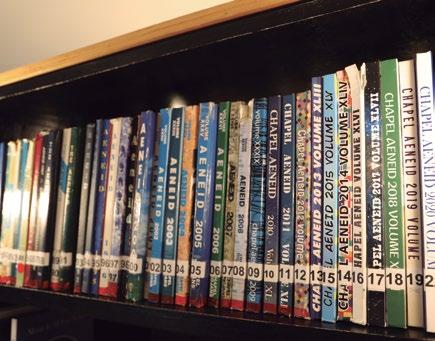
being written in yearly chapters. This is a good definition for the Yearbook, a historical record produced by Chapel since 1970, which aims to memorialize the students’ journey through the institution, as well as preserve a record of their own growth. Today, with the printing of 840 copies, every student and teacher receives a copy of the Yearbook.
History
HISTORY BEING WRITTEN NOW
Her long-standing and intimate relationship with Chapel helped her design the images which illustrate the range of topics included in the Yearbook, especially because capturing the day-to-day moments of Chapel life is a specialty of hers. “People who have followed the steps of production hold high hopes for the coming of the new Yearbook,” added Hanna.
Leonardo Glaser, 16, was another member of this year’s eight-student team. “I’ve always found that receiving the Yearbook is one of the best parts of the year,” he said. “Now, as the mission has been accomplished, my main takeaway is that it is a lot of work. There are so many details, when we simply see the final product we don’t imagine the project’s immensity.”

By Maurício Oliveira Photos: Chapel Archive
INSIDE 10CHAPEL
After each edition of the Yearbook is released in early June, the planning for the next year’s edition picks up in August, with new students enrolled in the club. Planning begins with team members bouncing around ideas for the next edition’s theme, the thread from which the eight members will weave the upcoming year’s story.
previous“Thereeditions.isroom for innovation, but they need to be well measured concerning the two basic functions of this publication: celebration and record,” said Ms. Caires, who has overseen the publication of the Yearbook since 2010. An example of a feature that has been recently added to the Yearbook is the Timeline, a summary of the main events that take place during a July-to-June school year.
Working with Ms. Caires, the team establishes a schedule and organizes tasks. Little by little, week by week, the Yearbook evolves as the publication deadline approaches. It is at that
Among the characteristics that have never changed since the first edition, however, is the pivotal role played by students in the Yearbook’s planning and publication.

INSIDEYEARBOOK CHAPEL 11
Historic Moments
journey, messages from their relatives, and the famous Favorites
ONE OF THE MAIN VALUES OF THE YEARBOOK, SINCE THE FIRST EDITION, IS PRECISELY THE DIRECT PARTICIPATION OF STUDENTS IN ITS PLANNING AND EXECUTION
A Tribute to the Seniors
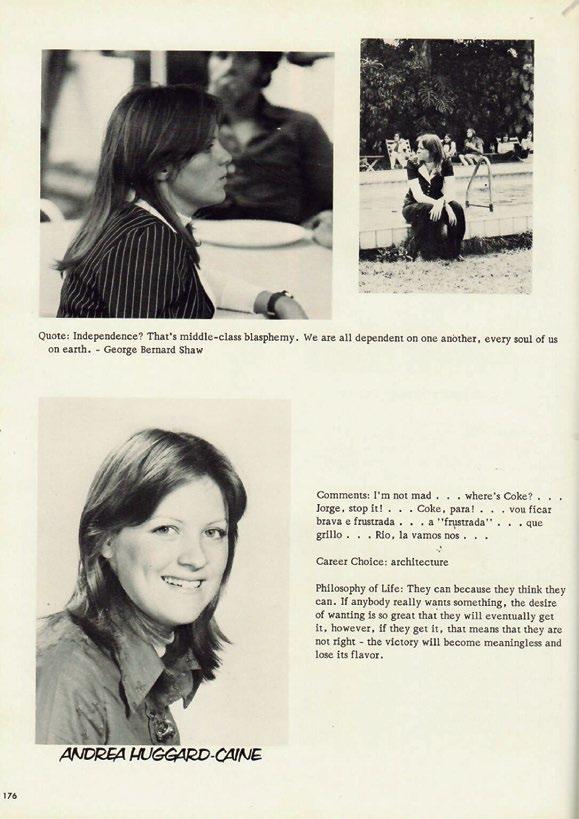
One of the most beloved sections of the Yearbook is the one dedicated to the Seniors. The students who are about to graduate all get their own page to record their own memories and thank yous. This section also has pages devoted to photos and memories of their school
A Gift to the Community
Another tradition, that has remained since those early years is that of the Favorites - the 12th graders elect each other to win diverse categories of accolades, many of which are made and refashioned throughout the years, such as “most trustworthy”, “most athletic”, “best mood”, “most collaborative”, “most artistic” and even “most stubborn.”
The Yearbook is also a record of many defining moments for the Chapel community, such as the inauguration of the library documented in the 1973 edition. Also in that year, the Yearbook featured color photography for the first time. Furthermore, events taking place outside the Chapel community have also been reflected in the Yearbook. The theme of 1985 was “Rock in Chapel”, intended to coincide with the firstever Rock in Rio festival that year. Also included in this 1985 edition was a section entitled “Preparing students of the future”, which showcased students using the first computers to be used in theInclassroom.short,as time passes by, students who have been at Chapel since their earliest school days can watch themselves grow older in the pages of the Chapel Yearbooks, watch as they first become adolescents and then graduates ready to take on the world. One thing is certain – at the end of each school year, the Yearbook acts as a ‘time capsule’ for the years and decades to come, capturing forever the most important moments at Chapel shared by students, their families, teachers, and staff.
moment that the final product makes its way to the printers. Ms. Caires is committed to ensuring the Yearbook maintains its documentary role in a hard copy – rather than a digital – format. “It will continue to exist as a physical publication, so that it should rest on a shelf in order to be perused, both now and after 10, 20, or 30 years,” said Ms. Caires.
The Seniors now send their texts in a standardized format with a predetermined number of photos. In addition, there is a common layout for the year group. The texts are revised by Ms. Caires and a team of teachers, and then the Yearbook Club members insert the text and photos into the pages that have already been approved. They then send the edited version to each Senior for final verification and approval.
Previously, the Seniors had the freedom to design their own layout for text and images on their individual pages. With the evolving design process, however, the need for a standard layout became necessary. “The idea still is that each senior feels like the page is actually their own, but this is about an official Chapel publication,” said Ms. Caires. “We have a conversation at the beginning of the process with every new graduating class, so that the Seniors can learn how the production of an institutional publication works, from visual identity to content alignment with the school’s Mission and Vision,” she added.
Club, and many others. One perennial club at Chapel is the Student Body Council, or StuCo, for short.
To leaf through the collection of Yearbooks in Chapel School’s libraries offers the reader many reminiscences. As well as student profiles, the Chapel Yearbooks also showcase the various activities performed throughout the year such as theatrical productions and sports events. Over the years, one can notice the diverse range of clubs that have come and gone. These include the Chess Club, Debate Club, Math Club, Photography
Before Ms. Caires took on the Yearbook, the faculty advisor was Kyoko Shimokomaki, who taught English at Chapel from 1991 to 2007. She introduced innovations such as the ‘fun pictures’ section, which includes highlights captured over the year, as well as a section for parents to write messages to the Seniors. Ms. Shimokomaki also was responsible for the Yearbook being gifted to every student.Under Ms. Shimokomaki, the process of putting together the Yearbook was more complex than it is today, primarily because the team took pictures using film (analogue versus today’s digital photography). The film had to be developed and printed by the Oblates’ printers in the United States. From 1995 onwards it became possible to do the printing in Brazil, however, which saved time and improved the logistics.
Arenowned people management consultant based in São Paulo, Andrea studied at Chapel between 1971 and 1975. Although she noted in her Senior write up that her aim was to be an architect, she ended up studying business administration at Mackenzie University. “I can say that I did exercise architecture as an amateur throughout my life. My house is always going through renovations,” she said. With Irish and Russian ancestry on her father’s side and Spanish and Italian on her mother’s, Andrea was born in Argentina and came to Brazil when she was four years old, because her father had been transferred here by the multinational which he was working for at the time. Her mastery of English was essential for her first steps into professional life – first at Hilton Hotels & Resorts and later at Citibank, where she began as a trainee and worked for 10 years. “Chapel prepared me for many things. One of them was to not fear public speaking and to present my ideas and to meet naturally with anyone that may come my way,” she said.
TIME TRAVEL
Yearbook
ANDREA HUGGARDCAINE RETI

Because they are graduating from Chapel, the Seniors are always highlighted in the Yearbook. Below you can read about some of our graduates and what they are up to now.
1975 12 INSIDE CHAPEL
INSIDE 12CHAPEL
RAYMOND PROOST
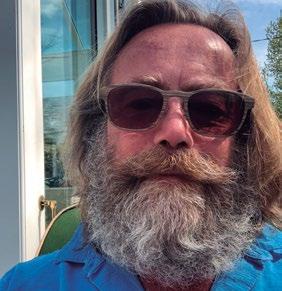
ABelgian born in South Africa, Raymond studied at Chapel between 1974 and 1977. During the next decade he went back to Belgium where he began flying ultralight aircraft. In time, he became a flight instructor, later specializing in serving people with disabilities, who require the use of modified controls. In order to better assist his clients, Raymond dedicated himself to learning all the mechanics of the aircraft to perform the necessary adaptations and maintenance. Passionate about his chosen activity, Raymond now works as an instructor at a flight training school in Salisbury, England. He says that some of the friendships that have accompanied him throughout his life were built at Chapel. “The school allowed me to get to know various nationalities and cultures,” he said. “That is the greatest attribute I carry to this day from those years.”
INSIDEYEARBOOK CHAPEL 13 Yearbook 1977
INSIDE13 CHAPEL YEARBOOK

JACOPO RIGHINI
Yearbook 14 INSIDE CHAPEL 1988

INSIDE CHAPEL14
Italian moved to Brazil as a child because his father had been appointed regional director of Levi Strauss & Co. He studied for 11 years at Chapel and, after graduating in 1988, returned to Italy to study jurisprudence. He worked for a while as a financial adviser, but was eventually hired by the Stefano Ricci fashion house, where he made his career. Today he coordinates the production of sophisticated leather goods such as wallets, purses, and backpacks. “The years in Brazil were extremely happy. I had fun at Chapel with the many friends I had and still have,” he said. “The opportunity to grow in an international and truly multicultural environment was enriching.” Jacopo’s Yearbook page records the unusual nickname “Electric Jaca [Jackfruit].” “Jaca was the shortened version of my name and the word ‘electric’ was added because I was very active and always had sharp responses,” he explained.
The

DAROSTWOROWSKICHRISTINACOSTA
Defining herself professionally as a “bridge builder”, she helped to set up the social innovation department of Red Bull in Brazil and just last year founded the consulting company Ligeia. The company has given her a way to merge and exercise her diversified interests, which include history – a field in which she got a master’s degree from the University of São Paulo – and the use of her voice. A Pink Floyd fan since her school days (as recorded in her Yearbook with the inscription “Pink Floyd is life!”), she has already been the vocalist in a band. She also narrates the English version of the story of women’s soccer at the Museu do Futebol in São Paulo. Christina studied at Chapel from 1987 to 2000, her time overlapping with that of her grandmother Cecília who arrived from Poland in 1949 and went to work at the newly-founded school. A part of the Chapel community for 30 years, Cecília worked as a secretary, librarian and nursing assistant.

INSIDEYEARBOOK CHAPEL 15
Yearbook 2000 INSIDE15 CHAPEL YEARBOOK

JESSICA KHERLAKIAN
Yearbook 2002 16 INSIDE CHAPEL

INSIDE 16CHAPEL
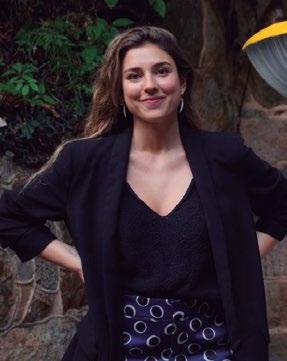
With Armenian ancestry on her father’s side and Italian on her mother’s, Jessica spent all her school years at Chapel. “It was the best decision my parents ever made. I feel very blessed to have been lucky enough to study at Chapel for 15 years,” she said. “The school prepared me to celebrate different cultures, work hard, and always try my best.” Fulfilling her goal “to see the world,” Jessica left for Milan after graduating. There she studied visual arts, with a semester abroad in New York. She returned to São Paulo after three years and started working in art galleries. During a trip through Asia, she met her husband and eventually moved to Hong Kong, where she has lived for almost five years. After working as an executive officer for the Hong Kong Art Gallery Association, she opened her own brand consultancy and has also launched a line of housewares, another of her passions.
INSIDEYEARBOOK CHAPEL 17
FILIPPO CALZERONI

Yearbook 2012 INSIDE17 CHAPEL YEARBOOK
Filippo lives in London, where he works at Seedrs, a startup accelerator. Born in Milan, he lived in Boston for three years before arriving in Brazil, where he went through Chapel’s International Baccalaureate (IB) program between 2011 and 2012. “I remember well the excitement of living in an environment so different from the United States and Europe, the discovery of a wonderful country and all the people who welcomed me,” he said. “I learned in Brazil to be more open-minded, independent, adaptable and kind, skills that strongly define me until now,” he added. The Latin proverb that he added to his Senior write up page – Exemplo plus quam ratione vivimus (We live more by example than by reason) – remains a life motto. “Many of my achievements have only occurred because someone took the time to inspire and guide me. My teachers at Chapel are certainly an important part of that,” he emphasized.

INSIDE CHAPEL INSIDE CHAPEL Trojans!Camera,Lights,LIIVOLUME2022YEARBOOKCHAPEL 16/05/2022 11:23:03 Yearbook 2022


Edited by Paula Veneroso
75 75


Photos: Personal files

RICHESTREVEALCONSTELLATIONTHE75ANNIVERSARY:DIAMONDSTARSOFCHAPELTHEIRMEMORIES
INSIDEBRILHANTEDEBODAS CHAPEL 21
Under


In its seventy-five years of existence, Chapel has educated thousands of young people, always guided by a single vision of education: “Engage. Challenge. Support. Care. Prepare students for life”.
As with any successful union, 75 years marks the diamond anniversary. Having been part of the Chapel family evokes a sense of honor and pride for those who have passed through here. Therefore, this commemorative edition of Inside Chapel is pleased to showcase to the public seventy-five stars who represent the most valued part of the school: its students. On the following pages, see how the values instilled by Chapel have marked the lives of each of them.
the motto “Faith in Education”, Chapel has never shied away from the grandiose Mission of providing its students with a challenging but also caring academic environment. Students “learn to make conscious decisions, to take responsibility for their personal actions and for the needs of the community, respecting life and cultural diversity”.
Professor at UC-Irvine, where she workswith Cultura Brasileira, lives in California,USA. “The years I studied at Chapelmarked me deeply, mainly because ofthe sense of community and friendshipthat I still have. In my professional career,one thing that I am proud of and relatesto Brazil is a book that I published in2010, called Sentenciando Canudos:Subalternidade no Sertão do Brasil.”
KICKI LINNELL

ELIANA LOBO
She works at her own business, Lobo Language Access, and lives in Seattle, USA. “What impressed me most about Chapel was the gift of warmth (and quick!) acceptance into the community by others who knew what it was like to move to another country and culture and feel overwhelmed. It is something I try very hard to bring to my students. I am very proud to train refugees and immigrants as medical interpreters.”
Class of 1978
INSIDE 22CHAPEL
Class of 1974
She is retired and lives in Cascais, Portugal. “Chapel taught me about diversity, tolerance,and friendship. The friendships I’ve made there are so special that they transcend time andgeography, and it’s something highly valued and respected by all alumni. I pursued my goalsand achieved more. I raised three fantastic daughters.”

COMMUNITY SPIRIT
SENSE OF INCLUSIVEBELONGINGENVIRONMENT





ADRIANA JOHNSONLeft in 1987

“From Chapel, I have longtime friends from all over the world. My Facebook friends also include my old school teachers. I miss Chapel and I wish my children could experience an environment from Kindergarten to 12th as unforgettable as the one I had. Go Chapel!”
CLAUDIA MARIACASPANGARO
She lives in Florida, USA, where she is a city councilor in the city of Doral.”Chapel has always been family. It is a community of people from all over the world that you can count on. It was in high school that I met my husband, during 7th grade Art class with Ms. Carmen! We both have fond memories of friends and teachers, the Big 4 and Little 8 tournaments, graduations, and proms. Chapel didn’t just give us an education, it gave us a foundation for amazing friendships that remain strong after all these years and distance.”
Works at the Hilton Hotel and lives in Orlando, Florida.
Class of 1993
LUIZ FABIO CAIRESClass of 2001
Lives in Dubai, where he workedas senior vice president of ExpoLive at Expo 2020 Dubai.“Studying at Chapel was a reallynice period in my life. It was anadaptation phase – I had lived inPuerto Rico and was returningto Brazil after four years. I thinkthe school was a good home forme and helped me a lot duringmy return to my country. When Ijoined Chapel, I managed to findfriendships that helped me tofit in again and to adjust to SãoPaulo. Participating in sports alsocontributed to creating a feelingof family.”

SCOTT IMBASTARI Class of 1992

INSIDEANNIVERSARYDIAMOND


presidentLivesinPortugal,wheresheisseniorviceatStoraEnso.“


Chapelprovided me with an excellent foundation for friendshipslivinginaclose-knitcommunityandwithforlife.”
“This school is my family. I went to reunions with Chapel friends in French Lick, Indiana, and many in Orlando and Fort Lauderdale, Florida. I love my Chapel family on Facebook. The years there were my best school years. My education in the United States doesn’t compare to my education at Chapel. We students from Chapel are everywhere!”
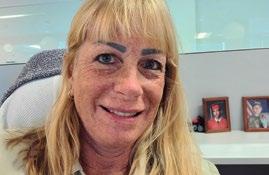
She is an epidemiologist and lives inPortugal. “Chapel is so important in mylife! I enrolled when I was 5 years old,in 1st grade, and stayed until I finishedhigh school. It was a second home forme. The friendships I made have lastedto this day, our parents became bestfriends and our families grew up together.Chapel provided a protected environmentin which to develop our personalityand character, and the education wasexceptional. The skills I developed therewere also key to my later career, andwithout my proficiency in English, I wouldcertainly not be where I am today. Therewere also so many fun activities likebake sales, international fairs, art shows,musicals, countless sports activities, PaiolGrande, Sunday Mass, Girl Scouts, andthe list goes on... Thank you, Chapel, forbeing such a special part of me.”
Lives in Texas (USA), where she works in the credit and collection sector.


INSIDE 24CHAPEL
MARION MUEHLEN
Class of 1978
KAREN MAIDENMELDRUMSOYCHAK
HENNA PAAKKONENClass of 1992
Left in 1980

INTERCULTURALINTERNATIONALISMDIVERSITYRESPECT
Lives in São Paulo, where she teaches at an international school.

Class of 1993
“Chapel exposed me to a great multicultural environment. It provided me with several references that helped me better understand and respect people and their different cultures and drove me to want to make a difference in the world. It gave me structure and confidence to express myself, together with the capacity to think critically. Chapel gave me memories that I will forever hold in my heart.”
DENNIS WANGClass of 2001

RENATA MANGIONE
He is head of New Programs at Latam-Facebookand lives in São Paulo. “I experienced at Chapel a very intense multicultural experience from an early age, sharing experiences with classmatesfrom the most different origins and cultures.Many would arrive and others would leavedue to family relocations. It was a permanentprocess of adaptation.”

DIEGO DE MACEDOHIGGINS
Businessman, lives in São Paulo.“Before anything else, I would like to say that I will be eternally grateful to my father, whogave me the opportunity to study at Chapel.I took three big things from there. The first isacademic education. To this day I use logicalreasoning frameworks that I developedin high school. The second is culture. Thediversity of student and teacher nationalities,as well as the experience of havingtaken subjects such as English Literature,contributed greatly to having a culturalbackground and, especially, an open mind todifferent points of view and different ways ofthinking. Lastly, great friends and memories.To this day, most of my closest friends arefrom Chapel. We made plenty of mistakesback in school and we still have a good laughwhen we remember some of them.”
Class of 2000
CULTURAL
Business manager, lives in SãoPaulo. “Chapel was a uniqueand valuable experience that willnever be repeated. Having such adiverse class (eighteen nationalitiesamongst 31 graduates) helpedme learn empathy and respectfor different points of view longbefore inclusion and diversitybecame a “thing”. Our classremains in touch to this day andwe will celebrate our 40thyear reunion in Granada, Spain(where Jimmy Hughes lives) this
BRIGHAMANNE-MARIE
LEANDRO CAIRES
“Chapel has influenced mylife enormously. Thanks to theinternational education andperspectives the school has givenme inevitably led to a career at theBBC World Service, where I spent20 years working on the network’smost international news service inLondon. More recently, I returned toFrance to care for my aging parentsand to raise my daughter close tothem. Here, quite naturally, I turnedto my languages for work, doingtranslations for agencies such as theUN and Greenpeace.”
Class of 1982
Translator, lives in France.


“Today I benefit from the confidence and the social and leadership skills developed during my time at Chapel through my involvement in the diverse set of activities the school provided – such as sports teams and competitions, StuCo, theater, and music concerts (band).”
TClass of 2003
Media/Entertainment Executive, lives in Dubai.


Class of 1986
ROBERT MACODY LUND (CODY)
INSIDEANNIVERSARYDIAMOND CHAPEL 27
Class of 1988
She lives in Peoria (Illinois, USA), where she is a lactation consultant in a hospital.“My time at Chapel taught me the value of learning about cultures and beliefs different from my own. This life lesson has served me well throughout my life, both personally and professionally. I have raised a family and work at a job where I can make a difference in people’s lives.”
Lives in São Paulo, where he works as a senior trade marketing manager. “Chapel gave me global exposure to different cultures and nationalities, and this was fundamental for me to realize how essential relationships are in building bridges and caring for people.”

Left in 1979

Works in mining technology and lives in Brisbane, Australia. “Chapel taught me that people are the same, no matter what their nationality, religion, or gender, and that the only thing that can flatten a person’s horizon is a narrow mind! In my life trajectory, I am proud to have contributed to strengthening commercial ties between Brazil and Australia, working at the Australian Consulate and later establishing ABRASSO, the AustraliaBrazil Association in Queensland, now with thousands of members.”
PETER REBRIN
Class of 1981
He is an insurance executive and lives in La Paz, Bolivia. ”Chapel taught me to have a global mindset.”
RENATO TARTARELLI

BETH SANGALLI SEIDEL


LORRAINE ELSMORE
Class of 2003
businesses.LivesinSãoPaulo,wherehemanagesfamily“ Chapelallowedmetoliveina
INSIDE 28CHAPEL
MARSON CUNHA PINTOClass of 2000
Class of 1964
Retired and lives in Miami, Florida, USA. “In Cuba I attended a Catholic school run by Dominican nuns. Chapel brought back memories of the life I had just left. The nuns and my schoolmates facilitated this transition. I have very good memories. Thank you, Chapel!”
RODRIGO FRANGIONI

Class of 2015
HELEN HAISHIH LIAU Class of 1991 languages,knowledgemulticulturalenvironment,whereIacquiredofvarioussubjects,sports,andbuiltfriendshipsforlife.”

Works with alternative investments andlives in Florida, USA. “My experience atChapel allowed me to grow in a globalenvironment, which prepared me for lifeanywhere in the world. The combinationof top-notch education and strong familyvalues has allowed me to succeed in anever-evolving and highly competitiveenvironment.”


GLORIA GUTIÉRREZ
He is a music producer and music designer, and lives in São Paulo. “When I entered college, I could clearly see how well Chapel had prepared me for the amount of work I encountered there. The environment of great diversity also did not cause me any difficulty in adapting, because from an early age I got used to living with different cultural aspects. After all, this is Chapel’s great brand.”
Lives in São Paulo, where she is a news producer at TV Globo. “The IB program preparedme very well for college. It helped me to choose subjects that interested me the most andto be able to deal with the amount of work and the level of depth that the professorsasked for.”
Class of 2014

Veterinarian, lives in Quebec, Canada. “Chapel allowed me to appreciate other cultures, always promoting an open mind. Its teaching quality also allowed me to attend two Ivy League universities, Cornell University and Brown University.”

LINA DE MONTIGNY
Class of 1986 Project manager, lives in Portugal. “I was lucky to have wonderful teachers who prepared me well in the short time I was at Chapel. Having colleagues from many different countries and backgrounds has also helped me to see and appreciate the world differently.”


Class of 1983
RENATA MATARAZZO
INSIDEANNIVERSARYDIAMOND CHAPEL 29
ACADEMIC QUALITY / IB FOR ALL TEACHING PROFESSIONALEXCELLENCESUCCESS
WALDO PEREZ-LESKOVAR
RAFAEL TAKASUClass of 2013

Class of 2004
CRISTINA TIEMI NISHIMURA

Speech therapist, lives in São Paulo.“The work I do today is certainly a direct result of attending Chapel starting at age 4. As a speech therapist, I have helped my clients and students around the world to gain confidencein speaking in English, specifically targetingtheir pronunciation.”

He is a software engineer and lives inCalifornia, USA. ”I would say that Chapelgave me a foundation to be a morecomplete person. Academically, I was ableto focus on subjects that interested memore, such as physics and chemistry. I alsohad to learn about humanities, literature,and other subjects that helped me not onlyin college but in life. The IB, in general, wasvery good college preparation. I felt that atColumbia, even though I was among thebest students in the United States, I hadalready learned many things that they werelearning for the first time in their first year.In addition to academic teachings, I learned a lot from extracurricular activities such assoccer, the NHS, and StuCo, which taughtme how to work as part of a team.”
Class of 1986 Lives in São Paulo, where he is the financial director of a publicly traded company. “Chapel gave me the academic and ethical foundation that allowed me to excel in my professional and personal life. In addition, I am very lucky, as my close friendship with many of my classmates from the Class of 1986 continues to this day.”
INSIDE 30CHAPEL
Class of 1988 Event Manager, lives in Cambridge, UK. “Chapel has given me amazinglifelong friends and a great base for my university years.”
Speech therapist and educational consultant, lives in California, USA.


INSIDEANNIVERSARYDIAMOND CHAPEL 31
Class of 2002 University counselor, lives in São Paulo. “My international education allowed me to discover what I wanted to work with: international education!”
SUSAN PRESBA-MORRIS

PATRICIA PASQUAL ADOLFS
Class of 1976
“Brazil was not my choice at 15 when I left high school in California, but little did I know how fundamental Chapel would be in my life. I lived in Brazil for another year after graduation. I have fondly recalled my years at Chapel in my career as an educator. I shared my love for Brazil and the education I received from the school staff. I met so many good and wonderful friends during my school years. I am happy to see Chapel continue to maintain its high standards of education, community, and religious strength.”
SERENA SAFFOURI
“Many Chapel students, myself included, have experienced the rich atmosphere of the theater program. It was of exceptional quality. I was fortunate enough to have been given some prominent acting roles in the program, and with those, I began to explore my instincts as an artist and build on them. Now, many years later, the many lessons I learned in the theater program are serving me well in my new role as a full-time musician/artist. For me, it’s such a delicious feeling to have a room full of enthusiastic applause for something I love to do. That makes me proud.”
Lives in Toronto, Canada, where, at age 50, he left his corporate career as a systems analyst to become a musician.

Class of 2018
THOMAS KOVACS

INSIDE 32CHAPEL
JULIA ANN SCHMITT

Early childhood education teacher, lives in São Paulo. “My experiences at Chapel continue to influence my life today in many ways. I study at a great university here in Brazil, I still keep in touch with the friends I made, and I have great memories of my time at Chapel. My teachers have become great inspirations when choosing a career in education and are still a reference when I think about the teacher I want to be.”
Class of 1977
Lives in New York, where he works with investments. “Specifically, on the professional side, I would say that the discipline required to complete the full IB program in the final two years at Chapel ended up preparing me well for university. Also, for my career, in which having discipline is essential for success and a longlasting career in trading. On the personal side, I see Chapel’s influence to this day through my friendships. It doesn’t matter if your friends at Chapel went on to other universities, careers, or countries, the bond remains.”
JULIO T. BADI Class of 2001
Lives in Arkansas, USA, where he isCOO of Jason International Inc.“Chapel was instrumental inestablishing my personal valuesand professional development. Tothis day, I miss the Chapel daysand am grateful for their decisivecontribution to my life. Not onlydid I manage to develop a highlybrilliant career, but I also had areal group of friends. To this day, Imaintain a very close relationshipwith my friends from the class of1976.”
VIVIAN MUEHLEN
Now retired, she worked in the Human Resources area and lives in Michigan, USA. “Ihad an excellent education, not only through the academic studies and moral guidanceof the Sisters, but also through long-time friends from that time. My five children havebeen an inspiration to me to become a more caring person and achieve personal goals.”
Works with IT distribution and lives in California, USA. “I owe thanks to Chapel for teaching me the three languages I speak to this day. Also, for the fantastic friendships I’ve made and still enjoy. Something I’m proud of in my career is having created a product to help mothers breastfeed their babies.”

REMO JACUZZI
Class of 1977
ANNIVERSARYDIAMOND
PATTY JONES (PATRICIA CAROLAN)Class of 1967
Class of 1976

STELLA GRINBERG
She is a doctor and psychologist and lives in São Paulo. “Chapel, in addition to academic teaching, taught me to have perseverance, believe in myself, and go after all my dreams! That, plus much more! Eternal Gratitude!”


INSIDE 34CHAPEL
RENATA DANIELA DE ALBUQUERQUE CURY
She is a writer and lives in São Paulo. “Chapel awakened my writing skills.”
He is a chemical engineer and lives in São Paulo. “Chapel taught me from a veryearly age to be responsible for my decisions regarding my professional future. It alsopresented me, in my later years, with many options to pursue and the possible outcomesfor each option. The level of education was adequate for the choices made and I wasvery satisfied with that.”
Class of 1990
Class of 1965
LORRAINE RIGGS TAFT
RICARDO F. F. PONTES
Class of 1995
Retired teacher, lives in Maine, USA.“I received a solid educational foundationduring my four years at Chapel HighSchool. The small classes and thededicated and talented teachers allcontributed to building my passion forlearning. I was well prepared for collegeand earned a Masters in Education andAdministration and then advanced studiesin Special Education. The friends I madeat Chapel are lifelong friends. Beingpart of the international community hasbroadened my appreciation of differences,inspired an interest in other cultures,and made me a better member of thecommunity and an advocate for others.”
Class of 2014
CHRISTIAN DUFFY DE ABREU

MARGIE
Class of 1974
AGNES ROY Class of 1986


Business Woman, lives in São Paulo.“Chapel has given me some of my bestfriends for life, an extended family!”
FRIENDSHIPS FOR LIFE CHAPEL FAMILY LASTING CONTACTS
Lives in New York, where he runs an education and technology company. “Chapel will always be a part of my life. I was baptized at Chapel and my mother got married at Chapel. Almost every memory I have of my childhood took place there. That’s why I think of Chapel as a vehicle that guided my growth. By that, I say that the same Christian, at another school, would have become someone else completely. It’s even funny because a lot of who I am, whether through hobbies or personality, can be related to some aspect of living that Chapel facilitated. So, I just have to thank: my friends, whom I consider brothers and sisters; my teachers, to whom I still ask for help (and I always ask for help – hahaha); and my family, who lived through it all with me.”
ROSTWOROWSKI
Works with import and export, and lives inRome, Italy.“Great years of my life! Twelve years of Chapeltaught me the value of lasting friendships(friends I haven’t seen in years, but who I talk to, or am in contact with, make it feel like fifty years never passed!).”
“Chapel’s biggest influence on my life was people. As the school is relatively small, you can get to know the teachers and students very well. Therefore, each interaction with someone carries much more weight, as you will see and interact with them several other times in your day-to-day routine. I remember several conversations, situations, and stories with my friends at Chapel that influence me to this day. In the end, the character of all the people I met at school contributed to making me who I am and that affects the decisions I make today.”
Works in sales and lives in Massachusetts, USA. “I made my most lasting friendships at Chapel.”
He is a civil engineer and lives in Beirut,
“Chapel opened my horizons and provided an incredibly diverse student body and student life. We’ve all kept in touch over the years, actually even doing business together internationally. I am proud, regarding my trajectory, of having successfully built three startups and being part of The Born to Run Foundation, Inc.”
Class of 1986
FLÁVIA RIBEIRO DA SILVA-BENSON

Class of 1996
Class of 1991
President and General Counsel of Lighthouse Distributor Services and founder of Dovetail Mortgage, LLC, lives in Massachusetts, USA.

MARCELO CHUNG
Class of 2010
DAVI AN
MUNIR ABDOUNI
Airplane pilot, lives in Massachusetts,USA. “What I appreciate mostabout Chapel School is the strongrelationship I maintain with my peersto this day and the realization that I am always learning.”
ALEXANDRA BARNES COLEMAN
Class of 2018 Research Assistant at Pathology Dynamics Lab, lives in Georgia, USA.


She is a Realtor at Coldwell Banker andlives in North Carolina, USA. “Chapel hasinfluenced my life through the formingof long-lasting friendships with studentsand faculty/administration. I also had thepleasure and privilege of helping to planseveral Chapel reunions.”
FABIANA VAN ARSDELL Class of 1994


Class of 1984
ANNIVERSARYDIAMOND
MARINA BARRA RIGGIO
Class of 1980
DARIO SARTORI

Dentist, lives in New York, USA. “Memories for a lifetime are what I take from Chapel.”
CHRIS MOORE
Class of 1979 Works in the real estate market and lives in I have great memories of

Works with book publishing if lives in New Jersey, USA. “Chapel gave me lifelong friendships, not just with students but also with teachers. In my professional career, I had the honor of working with Barbra Streisand on her book My Passion For Design.”
She has a bachelor’s degree in Marketing and lives in South Carolina, USA. “I completed the full IB diploma and was fortunate to have wonderful professors preparing and inspiring my academic journey: Ms. Termaat, Ms. Rideg, Ms. May, Monsieur Jeukins, Ms. Schneider, and Mr. Gahagan, just to name a few. My years at Chapel School taught me to work hard, balance my time efficiently, and enjoy my friendships. I don’t think my kids were as fortunate in their school years as I was with my high school experiences and memories at Chapel. I value the academic foundations and the professors who later helped shape the person I am today.
Class of 2014
JOÃO PAULO AMARAL

SPORTSARTCLUBS
THAIS TAKANO

GERALDINEBOURQUARDMCGOWAN
Class of 1990
Graphic designer, lives in São Paulo.“My best memory is, without a doubt,the friends I have to this day. We grewup together and I know we’ll get oldtogether too. It’s funny to see how eachone went their own way, but nothingchanges when we meet. From the routineat Chapel, my best memories come fromthe NRs and, without a doubt, from theWOC Trip to Paraty. Honestly, I really miss the International Festivals. I take with mea lot of learning from Chapel, especiallywhat I learned in the art classes, andtoday I see the importance of bringingpurpose to everything I do/create. Somuch so that I work with conceptcreation. I can say that Chapel played abig role in shaping who I am today.”
Environmental manager, lives in Germany. “I played every possible and imaginable sport that existed at Chapel: soccer, basketball, indoor soccer, softball, and even volleyball, as soon as this sport started being offered there. I participated in tournaments and I think that was a strong contribution to always maintaining a very active lifestyle. The community service experience was also very influential in my being openminded about building my career.”
Go Trojans!!!”
INSIDE 38CHAPEL
Class of 2005
ANNIVERSARYDIAMOND
RODNEY BIRCH
ANDRÉIA SADI
Left in 2000
Journalist at Globonews, lives in Brasília.
Class of 2001
MÔNICA LOPES
“I loved the volleyball games at Chapel, they were really good. I also enjoyed the school events, but the International Festival was unbeatable, I loved it! Especially the Arab tent, where my mother and aunts Sonia, Sil, and Violet served great food. I also remember the Greek tent, because Aunt Eliane Mitropoulos always impressed.”
Class of 1981

“We won the Big 4 basketball tournament at Chapel in 1980, my junior year. It was an amazing experience to play with a great group of guys. The things I’m most proud of in life are my wonderful wife and six children.”
Works with software licensing for large banks and lives in Arizona, USA.
Lives in São Paulo, where she is marketing director for Nespresso in Brazil.“Encouraging physical activities is one of Chapel’s strengths. There was not only a fantasticstructure, but also the encouragement of sports for both girls and boys, something that Ithink had a great impact on my personal and professional education.”

SUSANA MULHALLA.DETOLEDO
CAROLINE KURZWEILClass of 2012
Class of 1960
Lives in São Paulo, where he is anindependent art curator. “Chapel was anenvironment that fostered my interest in art. For example, the inauguration at theschool of the Tomie Ohtake panel was aremarkable moment for me. I also fondlyremember the different editions of theChapel Art Show.”
GIOVANNI TURRAClass of 2015

She is an artisan and lives in São Paulo.
GIANCARLO HANNUDClass of 2001

“What impressed me the most at Chapel were sports, especially basketball.”
He is a musician, serves as aninternational marketing leader and livesin Georgia, USA. “Chapel contributed indifferent ways to my development. As amusician, I played at religious masses andother events, such as the InternationalFestival, and this helped me to understandmore about how sound propagates inlarge spaces. In addition, some classes like IB Arts and English Literature helped toimprove my artistic perception.”
“I believe that an important way inwhich Chapel influenced my life was byintroducing me to skills that I still usein my career today. Whether it’s soccergames, Model UN presentations, StuCoactions, Drama Club plays, or Worldis Our Classroom trips, in short, all ofthis has contributed to me becoming ateam player today, enjoying speakingand presenting in public, being able toorganize different demands, and alsohave experience in connecting with othercultures. Besides, of course, the criticaland analytical senses that the IB programdevelops (especially IB History), whichhelped me to analyze and solve problemsuntil today.”
Businesswoman, works with marketintelligence and lives in São Paulo.

INSIDEANNIVERSARYDIAMOND CHAPEL 41
MORAL VALUES CONSTANTETHICS LEARNING
She is a businesswoman and socialentrepreneur, and lives in SãoPaulo. “The pleasure of helpingothers and the need to do so inan unequal society, such as theBrazilian one, are feelings that arerooted in everyone who passesthrough Chapel. Furthermore,the practice of sports showed mehow important teamwork is, alesson that I certainly apply in myprofessional activities today.”
Class of 1999
CAROLINA MARIA RUSSOHOLDING

FABIANA SAADClass of 2003
Technical Sales Manager for SKF, lives in Winchester, Virginia, USA. “Studying at Chapel made me want the same experiences for my children, so they are now in a Catholic school as well.”


Class of 2002
Works with Marketing and lives in Paris, France. “The values I learned at Chapel have stayed with me all my life: loving and caring for each other, the importance of family, morality, openness to others and the world, and much more. Some of the childhood friends I made at Chapel are still my best friends to this day, and they are like an extension of my family, who I can count on no matter what. The quality of education I received at Chapel gives me a much broader view of the world and instilled in me a constant need to delve deeper into different topics, learning new things every day.”
GIOVANA FAKHOURY
Class of 2002

ARTHUR NASINBENEClass of 2015
She is a finance director and lives in Texas,USA. “Chapel School has influenced my lifein many ways. Among them are: buildinglasting friendships for life; the importanceof valuing academic life and striving to bethe best you can be; respecting your peersand teachers while building the skill set forfuture work groups in life; and, finally, theimportance of always giving thanks andgiving back. These important things helpedshape my success and for that, I will beforever grateful. Thank you, Chapel.”
He is retired and lives in Alberta, Canada. “Life at Chapel taught me honor, respect, and the value of hard work. I am honored to have raised four wonderful boys.”


Bachelor of International Relations, livesin New York, and is pursuing a Masters inSports Business,“I have a collection of Chapel memories.I played basketball during my timeat school and it’s impossible not toremember with immeasurable nostalgiathe after-school games. When I thinkof the community that was Chapel, Ifondly remember those moments. Onthe academic side, I chose to studyInternational Relations because of theGeography classes and my participationin the MUN (Model United Nations). Theinfluence Chapel had on my life goesfar beyond that though. This schooltaught me a lot about community, aboutcommitment, and, without a doubt, Ideveloped at Chapel many of the valuesthat made me who I am.”
Class of 1969
ERIC COUSINEAU
JULIETA BEVERIDO

Graduated in Business Administration, he is currently an intern at The Kraft Heinz Company, in Madrid, Spain. “Chapel taught me basic values, both work and social, of friendship and personal relationships. It taught me how to act in the face of the unknown and how to make the best of the lessons that life offers us. It also taught me to think differently. I learned that not belonging to a pattern only makes us more special.”
Class of 1986 Lives in Ceará, where she is a professor ofEnglish Literature at the Federal Universityof Ceará. “I have only good memoriesfrom Chapel. There was a lot of freedomin the classroom for us to expressourselves, and that was incredible. Manyof the things I’ve achieved, like learningto make arguments and to think, camefrom my formative years at Chapel.”
Class of 2017
DOLORES ARONOVICHAGUERO
LETITIA HIGGINS SMITH
Class of 1972 Businesswoman and social scientist, lives in São Paulo. “I believe Chapel contributed a lot to my happiness and childhood, reinforcing the moral values I was taught at home and, most importantly, helping to teach me to think and analyze rather than just memorize.”


ANNIVERSARYDIAMOND
GONZALO ALVAREZ

She is a business administrator and lives in SãoPaulo. “Chapel was my home for fifteen years.It gave me lifelong friends, happy years, andtaught me many things that are now the moralbasis of many of my decisions. The lessons,experiences, and friendships I made during allthis time taught me about companionship,loyalty, character, and most importantly, how tolive life in a light way. I keep these fifteen yearswith much love and affection in my memory.”
Class of 2015 Photographer, lives in São Paulo.

NICOLAS BABIKIANCEVA
JULIANA NAJMClass of 2014
“My best memory of Chapel is of the community as a whole. It showed me that there is always a way to help others. It could be with donations, giving your time or attention, or even taking pictures. No matter what, there’s always a way. It also taught me that a sense of community is very important for the rest of my life.”
INSIDE CHAPEL44

By Adelina Gebara Photos: Fernanda Caires
INSIDE INSIDE46CHAPEL CHAPEL ONE TURNEDMONTH 35 YEARS

I learned with my parents the value of education and reading, and that is what I look to convey every day to all children. My father was a lawyer and was always immersed in books. My mother was a teacher and even had her own school. Following in her professional footsteps became something natural for me. Today, looking back and remembering everything I have lived at Chapel, all I feel is happiness and pride for the privilege of having contributed through my work to the academic formation of my beloved students. It is gratifying to know that those once little ones are now scattered around the world, practicing their most diverse professions.
I had already taught in international schools, however, I was taking a break to care for my four children. In fact, from early on in life I was involved in international schools, where I gave my first lessons in reading and writing. My family origins have always been connected to Education and my love for learning is a priority in my life. I thought,
–CRÔNICA
When I started working at Chapel, Mr. Gerald Gates was the superintendent, a position he held for many years. Father Brown, from the Oblates, was very loved by all at the school. The different events held throughout the years, both cultural and athletics, are most certainly among my favorite memories. Especially the Art Show, where the presence of distinguished artists gave students the
INSIDEBERNINIMARI CHAPEL
opportunity to further understand art, beyond the Book Fairs and Festas Juninas.
is so hectic that only when I was invited to write some words about my years here at Chapel, did I stop to think about this connection that is so important to me. It has been more than 35 years as a teacher at this institution since I was first contacted in 1986 about the possibility of being a substitute teacher for one month.
I have taught Pre I, Kindergarten, and second grade. Today, I am the Guided Reading teacher for Kindergarten and I also teach Rhymes and Chants for Pre I, and Phonemic Awareness for Pre II.
INSIDE47 ISTORYSHORT
I admire the cultural diversity that Chapel exhibits and encourages, culminating with the International Festival complete with dance presentations and typical dishes from different countries. Another reason for my great satisfaction throughout this long path at Chapel is the contact with colleagues with diverse academic backgrounds and origins. Many of these colleagues come from different parts of the United States and Canada.
Life
“okay, for a month we can adjust.” But at the end of the first month, I ended up staying a little more, and then another… and here I am, working daily at Chapel, beyond happy to still be active in action and learning so much with the children!

IISTORYSHORT
On a personal note, I am quite pleased with all the students I have taught and shared a laugh with over the years, and nothing can be nicer than meeting alumni. I am glad to be a small part of the history of Chapel School. All the best in the next 75 years.
–CRÔNICA INSIDEBERNINIMARI CHAPEL INSIDE49
By John Morrison
Then the remodeling, rebuilding, and reinventing of a rustic school began. This was no small project. Chapel modernized the classrooms, created computer labs, as well as built a fancy cafeteria and a user-friendly library. The list had no end – new soccer fields, ECEC buildings, and highspeed internet. In comparison to now, when we have several online and printed sources, when I started at Chapel we had a weekly newspaper from the United States you could read
Chapel grew into the beautiful campus we have today, and during this time I have worked beside many talented professionals, as Chapel has the ability to find effective teachers, assistants, secretaries, technicians, and maintenance people who take pride in their work.
Thirty years ago, I started working for a superintendent by the name of Gerry Gates. Mr. Gates realized that for Chapel School to be a strong and respected teaching institution, it first needed to be financially stable.
Photos: Fernanda Caires
But this tale is not over. Once the pandemic hit, we at Chapel had to face new challenges. Our administrative team worked overtime to support us so we could meet these challenges. As our enrollment shows, Chapel has flourished.
in the library – if you were lucky enough to get the one copy ahead of time from the librarian Mrs. Rogers.
30 YEARS AT CHAPEL

Ihave
spent the best part of 30 years teaching at Chapel School, and so much has changed in that time period, starting with my own physical appearance.
From March 24 to the 26, 15 Chapel teachers presented nine workshops at the annual AMISA (American International Schools in the Americas) conference for educators, an organization whose mission is to constantly enhance the education quality in 63 associated schools. Held in São Paulo, this year’s edition was themed “The Science of Learning: Educating Hearts and Minds,” and counted on the participation of over 400 educators, from 32 international schools from 12 countries. During the three-day event, the conferences were led by invited consultants and educators who hosted 115 learning workshops. These workshops included several Chapel teachers showcasing their knowledge in the field of education.

Under the title “Ficar sem ler? Deus me LIVRO!” (a play on words with a popular Brazilian expression, translated to “No reading? God forbid!”), the presentation by fourthgrade teacher, Daniela Hayashida, covered how Neuroscience and its active methodology favor neural formation during reading, contributing to healthy cognitive development. “One of the objectives was to think about reading, in its different aspects, as a social practice of involvement in the world to
SPOTLIGHT
Third-grade Portuguese co-teachers, Flavia Tacchini and Paula Busso showed how to quickly engage students upon returning to in-person learning through the use of the cursive learning process. In their presentation, “Readaptação socioemocional por meio da aprendizagem da letra cursiva,” (Social-emotional re-adaptation through learning cursive), both teachers involved the participants, who identified with the theme and will certainly bring it to their schools. “Our presentation was very natural and fun. There were people from international schools from all over the country, and all were very engaged in the activities and shared many
form critical readers, based on embodied cognition, since emotional responses reinforce neural paths, facilitating the learning process,” explains Ms. Hayashida. She comments that the results have surpassed her expectations, “The room was full and during the workshop, there were emotional tears, laughter, applauses, sharing, exchanging, and a lot of reading. After the workshop, I received many emails, messages, and positive feedback that brought me the feeling of a mission accomplished. Participating in AMISA proved that when we allow ourselves to learn, incredible things happen!”
INSIDE 50CHAPEL
STAND-OUT AT AMISA 2022
presented different strategies on how the use of creativity is fundamental to increase engagement and student success. “Participants experienced the process of creating new learning experiences that could be applied in teaching specific subject areas, or cross-curricular lessons,” said Ms. Almeida and Ms. Wenda. According to the World Economic Forum Report 2020, around 65% of students who are currently in elementary school are likely to have a future career that has not yet been discovered. “Thinking about how the current generation of students are standing on the border of change and will become the leaders who will take us into the next era. Today’s students need a set of transferable skills that can be applied in nearly every setting to succeed. Many educational experts define 21st-century skills as competencies that must be mastered to collaborate creatively and problem solve in a global economy,” they add.
SPOTLIGHT INSIDE CHAPEL 51
When dealing with the sensitive theme of school discipline, the presentation “Community Building Approaches to Discipline,” led by third-grade classroom teachers Carolina Cimino and Melissa Kassner, and High School Dean of Students, Colin Weaver, showed a different approach to a common problem. High School students who are involved in disciplinary situations, after teacher guidance, are asked to participate in Elementary School classrooms, helping younger students with their learning process. “This approach is aligned with our Positive Discipline and we aim to make sure these students are being accountable and give back to the community positively. These discipline practices are also aligned with Restorative Justice practices,” explains Ms. Cimino.

According to Ms. Kassner, when High School students go through the reparation process by being immersed in community-building activities with Elementary School children, this is a scenario where everyone wins. “By working together, both groups improve in learning, self-confidence, and positive impact on our community.” Mr. Weaver also affirms and adds, “Although we try our best to preventively work on discipline, there comes a time in which other measures must take place. However, we can assure that disciplinary consequences can be a life-changer if well thought of.” The audience present was impressed with the positive results after only a couple of months of the program having been implemented at Chapel.
Both teachers concluded their workshop happy and satisfied with the opportunity to share their work with colleagues from different schools.
During the workshop, both teachers planned for a dynamic structure with plenty of practical activities, supported by theories, so that participants can use these immediately in their classrooms. The audience also received a QR code to access all the presentation content, including activities and theories that supported the resources. “Besides representing Chapel School and our beliefs so proudly at the conference, we had the opportunity to learn with prominent professionals, as well as establish meaningful connections with many colleagues who are also pursuing innovative educational models,” finalized Ms. Almeida and Ms. Wenda.
experiences about cursive in their schools,” comments Ms. Busso. “By developing this project at Chapel, we brought students back to the world of paper, notebooks, and pencils, and the interest in cursive handwriting was sparked in them,” explains Ms. Tacchini, adding “In the workshop, we showed how much cursive is present in our daily lives. It definitely cannot be resumed into a simple handwriting drill; for it is a practice that promotes numerous benefits for the brain.”
According to History teacher Bryan Sanders, “When arriving in a new country, foreigners sometimes struggle to connect with the hearts and minds of local school communities.” His presentation at AMISA: “Fostering Meaningful Cultural Connections Between School Communities and Teachers from Abroad.” was based on that premise. For Mr. Sanders, “Some teachers blend, some identify as expats (and do not branch out), some assume their role as a stranger in a strange land but it doesn’t have to be like that.” In his presentation, Mr. Sanders provided details on how new foreign teachers can
High School English teacher, Renata Meints, participated in AMISA with the presentation “Fun in the Classroom - Animal Farm, Pink Floyd, and Twitter,” in which she spoke of a multimodel approach applied at Chapel to work on the book Animal Farm, by George Orwell. “I have been using these resources since last year, combining connections between Pink Floyd’s album Animals, and the creation of possible character interactions of political and public figures on Twitter,” she says. She adds that during the event, the interactions with colleagues were valuable, “In the conversations I had after the presentation I felt that I made a difference in the way people view teaching English literature.” Ms. Meints will treasure great memories from the conference. “It was great to have participated. Besides the precious interactions, I had the opportunity to be in a mini-course about diversity and inclusion. This was a turning point in my view of these two important factors of life in community and school in general,” she concludes.
In “Cultivating Creativity in the Classroom,” teachers Karina Wenda (Maker Education) and Sylvia Almeida (Arts),
Independent Student Problem-Solving.” The teachers discussed strategies used in P.E. that can be applied crosscurricular to promote student ownership when problemsolving without adult intervention. According to Ms. Boscariol, the presentation had a great audience and the participants’ feedback was incredible, “Teachers present gave us very positive feedback regarding strategies and how they were looking forward to trying them within their own subject area.” For Ms. Hernandez, the participation in the conference was very meaningful, “It felt very good and rewarding to have the opportunity to share our knowledge with other educators.”
Physical Education teachers, Caroline Boscariol and Carolina Hernandez presented the workshop “Strategies to Promote


“Cultivating a Mathematical Mindset through Projects, Passion, Peer, and Play (while still covering your standards/curriculum)” was the theme of teacher Caio Gragnani’s workshop. His presentation gathered a large and diverse group of educators who engaged and shared experiences capable of enriching the routine of learning Math. Mr. Gragnani’s work covered students’ involvement in Math through projects while maintaining the challenge of meeting requirements from different curricula (in Chapel’s case, the Brazilian, international, and IB curriculum) and the need for students to practice in order to develop procedural fluency in the subject. “It was very much enriching. I felt a great spirit of collaboration and companionship as everyone was there for the same purpose: to advance education and better prepare ourselves and our students. We could feel that everyone shared our faith in education,” he evaluates.
In the presentation “Readerpreneur: Building a studentcentered reading and writing community in your class,” teachers Maxine Rendtorff and Francis Koolman, shared resources, knowledge, and experiences on how to structure and implement systems in the classroom that foster the love for reading and writing in a meaningful and authentic way. All while nurturing a community of readers and writers with students as protagonists. According to Ms. Rendtorff, teachers from different schools were grateful and all could share good practices, “I felt so grateful to be part of this experience as I thrive on learning new concepts, current best practices that are being developed and applied so that I can adapt it to our Chapel community context. I also love learning about what amazing things are happening in classrooms and schools around the world so that I can be a better teacher and be more inspiring to all my students and community.” Mr. Koolman agrees with his colleague and adds that the feedback for the presentation was extremely positive and even included brainstorming from the audience, “Teachers present discussed ideas on how to implement the same reading culture inside their classrooms. It was an incredible way for us to connect as teachers and share ideas.”
“ONE OF THE OBJECTIVES WAS TO THINK ABOUT READING, IN ITS DIFFERENT ASPECTS, AS A SOCIAL PRACTICE OF INVOLVEMENT IN THE WORLD TO FORM CRITICAL READERS, BASED ON EMBODIED COGNITION, SINCE EMOTIONAL RESPONSES REINFORCE NEURAL PATHS, FACILITATING THE LEARNING PROCESS”
INSIDE 52CHAPEL
connect with their colleagues and students. The presentation also detailed how leadership administration can connect and make these newcomers feel included and safe. The results were very exciting. My participation validated a lot of the ideas I had about what it is to teach abroad as well as matched the feelings regarding diversity and the emotional being of students,” concludes the Californian who began his teaching career in Los Angeles, and has been teaching in Brazil for the past 12 years, after coming back from Japan.
SPOTLIGHT INSIDE CHAPEL 53


EDITIONEXTENDED
hapel’s anniversary, December 8th, will close off a festive semester with at least four big events that will celebrate the school’s 75 years. All of these include gifts and souvenirs, and surprises that are being very well kept by its organizers. In reality, the celebrations started back in May when students graduating in 6th and 12th grades respectively, received their satin and felt banners especially released to mark the date.
INSIDE CHAPEL54
To
into their imagination and inventiveness. On Saturday, the last day, the fair will be open to families, who will be able to participate in Learning Innovation workshops, storytelling, music concert, and also honor the launch of the latest edition of the Cookbook, with Chapel’s recipes. (see box).
On the occasion, authors and nutritionists, Flora Spolidoro and Marcia Berkowitz, will be present, autographing books and handing out souvenirs to the public. “I am very happy with the launch of the new edition of the Chapel Cookbook, because when we enjoy what we do, it is with great joy that we share these recipes with the whole community. And now, with the culinary tops, I am sure that the book will encourage and help many people to adventure more into the kitchen,” celebrates Ms. Berkowitz.
Children’s Day will be celebrated on October 11 and will also be integrated into the 75th-anniversary celebration calendar. The event will include special activities planned for students to create even more happy memories at school. On the following month, Thanksgiving will be celebrated with a special lunch for parents on November 24. On the menu, there will be traditional Thanksgiving dishes and many special surprises.
C
all of the school community who eagerly awaited the return of the Chapel Cookbook, the good news is that the latest edition will be launched on the closing day of the Book Fair, September 17. The new version includes an expanded section of essential culinary tips. The cookbook also contains a collection of recipes most appreciated by families and includes several dishes that can even be prepared by children themselves.
The closing of the anniversary celebrations will be on December 8th, the day of Our Immaculate Lady and the school’s birthday. To commemorate, there will be a special mass celebrating 75 years of the school, which started as a chapel and now has over 700 students from different nationalities. Additionally, there will be many activities scheduled to celebrate the unity of all members that today make up the Chapel School family.
COOKBOOK IS LAUNCHED AT BOOKFAIR

In September, the traditional Book Fair will be a special edition. From September 14 to 17, this highly anticipated event amongst the school community will take place and include stands stacked with affordable imported books, national books, and the traditional SEBO promoted by student council (StuCo) students. For the first three days, students in all grades and divisions will participate in a round of conversations with writers and creative workshops. Additionally, students will watch performances and presentations related to this year’s book fair theme: “Reading makes you think outside the box.” Referring to creativity, the most diverse areas of knowledge will be addressed, from the arts to the sciences. Students will be encouraged to tap
CELEBRATIONS THAT MARKED THE FIRST SEMESTER
In modern times, the pennant rose to popularity from 1950 to the 1970s, a period in which universities, schools, and clubs began using them to promote their identity and activities. At Chapel, it is possible to see, in the hall close to the Guidance Department, pennants from various prestigious universities to
Chapel,
The words flammula (latim) and phlamoulon (greek) appear in works from the IV and V centuries respectively in a text by the author Vegécio. Alluding to one of
Chapel produced four pennant models, all showcased in two colors (blue and red or two shades of blue). The models differ in terms of the material used and its purpose. Besides the traditional felt pennant, there is a model in satin, another in paper, and finally, a model produced in a smaller size, with an adhesive that can be applied on any surface. The pennants will not be sold. The distribution will be reserved for
which Chapel students were accepted. These pennants represent pride and are a symbol of accomplishment of former students or in other cases given by visiting school. Pennants were so popular that it was common for other institutions or establishments to distribute colorful pennants with their names and logos to promote their brand.
Especially, in the field of sports, by exchanging pennants before the match teams demonstrate mutual recognition, no matter the score. Regardless of the origin and objectives, the exchange of pennants works as a gesture of friendship and symbolizes that opponents do not need to be enemies.
graduation events, sports celebrations, commemorative dates, andThismerit.year’s 30 High School graduates were the first to receive the highly desired felt pennant. The Elementary School graduates received the satin one. The paper and adhesive pennants will have a wider distribution, delivered to anyone in the community who requisitions it. In these special moments of celebration experienced by everyone in the school, the Chapel pennant expresses the energy that moves our community and defines our identity.
celebrating its 75th anniversary, releases its official pennant, which symbolizes students’ love and pride for their school.
By Luciana Brandespim
exchanged between sports teams, clubs, and national teams, before the match starts to demonstrate respect and courtesy amongst opponents, this small pointed flag in the shape of a triangle or trapezoid, is also used to symbolize commemorations and festivities. The name “pennant” means a narrow, pointed flag used for identification, signaling, or decoration. Its origins are still uncertain. It is believed it was created by the military dating back to the Roman Empire.
the types of insignias used by the Ancient Roman Empire, and on a war guide, whose authorship is attributed to the Byzantine Emperor Maurice. The practice of exchanging pennants also refers back to the Roman Empire when an army would deliver their flag in acknowledgment of the opponents’ superiority, as to avoid more deaths in battle.
PENNANT: SYMBOLISM REFERRING BACK TO THE ROMAN EMPIRE
SPOTLIGHT INSIDE CHAPEL 55 CHAPEL RELEASES OFFICIAL PENNANT
Commonly


INSIDE CHAPEL
The

57
celebration of St. Patrick’s Day; the induction ceremony for new NHS and JNHS members; the literary tributes on World Book Day; the costumes and unbridled fun that took place during Spirit Week and High School Fun Day; in addition to the senior students’ emotional graduation, some of the events that occurred during the past semester at Chapel. In the following pages, check out photos of such moments of congeniality and celebration that always bring the school community together.
GALLERY