

Volume 45 • Issue 4 Winter 2022-23
Florida State University

Apply now for a degree with:
Innovative courses focused on social justice
An increased professional network
Artmaking embedded in coursework

Training in practitioner research
Expertise in the field
Opportunities for advancement and more!

ADVANCED RESEARCH PATHWAY for certified teachers
100% online or face-to-face
CERTIFICATION PATHWAY for those seeking licensure Online* or face-to-face
*Interested in online? You can earn teacher certification at home, with only one 2-week summer commitment on campus.
Already teaching? You can complete all field placements, including student teaching, in your own classroom!
arted.fsu.edu
 Elizabeth Graham, 2021
Teacher Certification alum, Brie Medina, mentoring a 7th grader.
Photo by Amanda Thompson
Elizabeth Graham, 2021
Teacher Certification alum, Brie Medina, mentoring a 7th grader.
Photo by Amanda Thompson
OUR COVER ARTIST
Jaidyn Holt (grade 12)
Transcendent Connection
Mixed media

Trinity Preparatory School

Teacher: Irina Ashcraft Orange County
The purpose of this publication is to provide information to members. Fresh Paint is a quarterly publication of Florida Art Education Association, Inc., located at 402 Office Plaza Drive, Tallahassee, Florida 32301-2757.

FALL digital Conference digital Winter digital Spring/Summer digital
FAEA 2022 Editorial Committee
Claire Clum (chair)
Christie Becker-Fitzgerald
Heather Hagy
Dulcie Hause

Dr. Jackie Henson-Dacey
Latonya Hicks
Dr. Heidi Powell
Nancy Puri
Fresh Paint is made possible, in part, by the participation of the businesses whose advertisements appear in this issue. They make it possible to provide membership with a high quality publication and we gratefully acknowledge their support of Florida Art Education Association’s (FAEA) mission. We hope that you take special notice of these advertisements and consider the products and services offered. This is another important way you can support your professional association and the enhancement of Florida art education.
The publisher does not endorse any particular company, product, or service. FAEA is not responsible for the content of any advertisement and reserves the right to accept or refuse any advertisement submitted for publication.
Greetings,
I hope that your holiday season was a time when you could ease into your own pace and enjoy the people and things you love the most! The new year is upon us and we have so much to celebrate and look forward to.

We had a great Conference in October! Thanks to all who were able to attend and who worked to make it successful. Our membership and attendance were up this year which brings us close to our pre-pandemic numbers. This is, of course, great news and we want to keep the momentum going into the new year. FAEA is all about our membership. Each one of you is an important part of the FAEA, we are YOUR professional organization. We strive to provide you with the
highest quality professional development, research, and networking opportunities possible… and so much more. Thank you for taking part in our survey that was sent after Conference. The FAEA Board takes the time to review and discuss each response so that we can be responsive to your needs and improve our programming. If you indicated on the survey that you
Sawgrass MarRiott Golf Resort & Spa • October 5-8, 2023
Ponte Vedra Beach, FL
Be a part of the 2023 FAEA Annual Conference and share your expertise with fellow art teachers throughout the state. Let everyone in on your deep knowledge and instructional strategies and become a conference presenter. Consider presenting historical, socio-cultural, philosophical, and/or contemporary processes. Additionally, member presenters may share ideas for emerging artists, advanced artists, and education practitioners.

ART FORUM (50 MINUTES)
Share a topic through a presentation that will inform and motivate. This should be a lecture or clinic session with interactive question and answer. Not a hands-on activity.
HANDS-ON WORKSHOP SESSION (90 MINUTES)
Lead a “hands-on” experience that engages attendees in an in-depth art medium strategy or process.
DEMONSTRATION SESSION (30 MINUTES)
Demonstrate a topic through an exploration and investigation of an art technique that will inform and inspire.

Membership is open to all art teachers, art supervisors, arts administrators, cultural professionals, university professors and students, those who are retired from the profession, and anyone passionate about our goals.
President Nancy Puri

Polk County
President-Elect
Latonya Hicks

Pinellas County
Past President
Dr. Jackie Henson-Dacey


Sarasota County
Secretary
Simoni Limeria-Bonadies
Polk County
Elementary Division
Christie Becker-Fitzgerald
Polk County
would like to be more involved in the FAEA, we will contact you so that we can find the best fit for you! If you are interested in volunteering, serving on a committee, or on our Board please let us know – we want to work with you. You can email us at info@faea.org.
Youth Art Month (YAM) is coming up in March and it is never to early to start planning how you will celebrate with your students and colleagues! YAM is a great opportunity to advocate for the arts; not only in your school or museum but also with the community. There are so many ways you can bring attention to your programs and students, as well as the importance of arts education in simple or more elaborate ways through art shows, special awards planned during March, and collaborative events with your larger community. FAEA will announce the winner of its annual YAM Flag Competition soon, so be sure to look for that. Please share what you are doing in your area with us by sending pictures and descriptions to info@faea.org.
Finally, I want to let you know that we are already planning for Summer Workshops. We will be announcing those this Spring.
Thank you for your membership and for all you do for arts education. Please keep putting your passion forward and sharing your talents with others!
Take Care, Nancy
G. PuriMiddle School Division
Heather Hagy
St. Johns County
High School Division
Gerald Obregon

Miami-Dade County
Supervision/Administration Division
Jonathan Ogle Pinellas County

Higher Education Division
Dr. Heidi Powell


Alachua County
Local Art Education Assembly Representative

Christy Garton


Orange County
Retirees’ Representative
Pat Lamb
Polk County
Member-at-Large
Claire Clum


Palm Beach County
Member-at-Large
Laurie Hoppock
Duval County
 Kathleen D. Sanz, PhD Board Consultant, FAEA
Florida Legislators and Committees
The leadership of the Senate and the Florida House of Representatives are key to legislation moving forward.
President of the Senate is Kathleen Passidomo
President Pro Tempore is Dennis Baxley
Speaker of the House is Paul Renner
The legislative committees have been finalized for the 2023 session.
Florida Senate
Appropriations Committee on Education
• Chair, Senator Keith Perry
• Vice Chair, Senator Shev Jones
Education Committee PreK-12
• Chair, Senator Corey Simon
• Vice Chair, Senator Danny Burgess
Florida House of Representatives
Higher Education Appropriations Subcommittee
• Chair, Representative Jason Shoaf
• Vice Chair, Representative Fred Hawkins
PreK-12 Appropriations Subcommittee
• Chair, Representative Josie Tomkow
• Vice Chair, Representative Kaylee Tuck
Education & Employment Committee
• Chair, Representative Ralph Massullo
• Vice Chair, Representative Melony Bell
Education Postsecondary

• Chair, Senator Erin Grall
• Vice Chair, Senator Linda Stewart
Choice & Innovation Subcommittee
• Chair, Representative Kaylee Tuck
• Vice Chair, Representative Traci Koster
Education Quality Subcommittee
• Chair, Representative Dana Trabulsy

• Vice Chair, Representative Alex Rizo Postsecondary Education & Workforce Subcommittee
• Chair, Representative Lauren Melo
• Vice Chair, Representative Mike Beltran
If your legislator is listed above, please let us know so that we have a list of FAEA constituents of key legislators. It is critical in the coming months that we continue to increase relationships with our senators and representatives. The decisions that are made at the state level impact all students and teachers. Please be sure that you talk with your legislators and develop ongoing relationships with them. For a full list of Legislative Committee members use the links below or go to the FAEA website where they are listed.
Florida House Committees
Florida Senate Committees
The FAEA Advocacy committee will participate in an annual meeting with the Florida Music Education Association, the Florida School Music Association, and the Capital City Consulting firm in January to discuss legislation and develop a legislative platform for arts education. We will begin to develop talking points for members to use before, during, and after the session. We are awaiting the legislative platforms from the Florida Association of School Administrators (FASA), the Florida School Board Association (FSBA) as well as the Florida Association of District School Superintendents (FADSS). We like to review the platforms of these organizations to coordinate efforts to promote quality education for Florida students.
The 2023 Session is scheduled to begin on March 7, 2023 and end on May 5, 2023. Once the full legislative platform is developed, we will distribute it to members and post it on the FAEA website. We will continue to keep you updated through the website and member emails about legislation that may impact fine arts specifically and education generally.
Relationships are critical to advocacy work for your district. Developing professional relationships with key decision makers is vital to you and your program.
Whether you work or support a public, public charter, private, or home school, FAEA can collectively influence governmental decisions made at the state level. In the coming months, schools and school districts will be determining their budgets for the 2023-2024 school year and funding decisions are made locally. It is critical that you voice the needs of your program with the school board and the school district administrators. Title IV Part A and ESSER funds are still available in many districts so don’t shy away from those possible funding sources.
State level decision makers include Governor Ron DeSantis, your senator, your representative, and Commissioner of Education Manny Diaz, Jr., who oversees the Florida Department of Education.
FAEA is working at the state level on legislation advocating for visual arts in our schools. Become engaged with your state association and perform these critical actions:
• Stay informed. Read eblasts from FAEA. Participate in webinars.
• Visit and/or call your legislators. Following the visit, make sure to let us know of any issues or concerns.
Advocacy is a critical part in our way of providing for students and teachers what is needed for the visual arts. BE THAT ADVOCATE!
Remember the arts are essential for all Florida students.
• Youth Art Month
Celebrated throughout the month of March
• K-12 Student Art Assessment & Virtual Exhibition

Closes March 1, 2023
Signed Release Forms due March 15, 2023

• NAEA National Convention
April 13-15, 2023 in San Antonio, Texas
• 2023 FAEA Annual Conference
October 5-8, 2023
Ponte Vedra Beach, FL
The mission of the Association is to promote art education in Florida through professional development, service, advancement of knowledge, and leadership.
Kathleen D. Sanz PhD

“I hope that in this year to come, you make mistakes because if you are making mistakes, then you are making new things, trying new things, learning, living, pushing yourself, changing yourself, changing your world. You’re doing things you’ve never done before, and more importantly you’re doing something.” –
Neil GaimanI hope that everyone has had a good break and you are now refreshed. I always look forward to a brand-new year, full of hope and new possibilities. There were so many things I learned at the conference that I want to try out (I bet you did, too). Now is the time to do it. Be adventurous and break out of your comfort zone - show your work, enter a contest, or become a vendor at a festival. The possibilities are endless! It will be scary, thrilling, and, hopefully, fun. Just remember to fluff your tutu while you are doing it.
You may want to also start thinking about participating in the FAEA summer workshops that are going to be offered, just keep an eye out for more information. With that said, don’t forget to renew your FAEA membership so you can take advantage of these workshops.
This is the part of the year I call the downhill slide. I finally know my students, their quirks, their interests, and because of that, can relate to them better. The first half of the year is always the hardest, and then the second half flies by!
faea.org/programs/job-board
I am about to try needle felting with my middles, and I hope they are as amped up about it as I am. I LOVE textiles. We sew, tie dye, batik, indigo vat dye, and even do a little embroidery. If you are shy about sewing with your students because of all the sharp/potentially hazardous tools, I strongly encourage you to be worried, but do it anyway. EVERY CLASS LOVES IT. As I write this in November, my 8th grade classes are sewing an entire Thanksgiving buffet. Yesterday I sewed a felt turkey baster. Last year a group of boys made an army of bananas with funny eyebrows and mustaches. The jokes write themselves, folks.
We also have our countywide Middle School Art Show coming up. Each art teacher puts in seven artworks, and this event often sneaks up on me. If you have art shows coming up, start setting pieces aside. Check out your frames, and be prepared early. As with all things in the art teacher world, I feel prep is key! This does not mean you have to do it alone, reach out to parent, or even better, put students in charge. You know the helpers, right? Those are the kids that organize our supplies. Those are the kids that get homemade brownies for making my life more fun! Making art brings me joy. It is why I got in the business of making art with kids. The logistics are not the fun part, but when I finally realized I had 180 helpers that come through my door every day, it made the work much easier.
Remember, ART IS FUN! CREATIVITY is higher order thinking. You do important work. Peace, Love, & ART!

For those seeking employment in schools, museums, or organizations with art education related openings.

Happy New Year! We are officially past the halfway point of the school year! The second round of FAST Progress Monitoring Exams is behind us as we head towards Spring Break, our annual shows, AP and IB Exams, the final round of FAST Progress Monitoring Exams, and then… Summer! It’s a lot to juggle on the way, but we’ll get there.
Were you able to submit work for the Youth Art Month Flag Design Competition? It’s a great way to showcase your students, your art program, and your school. Another way to do that is to submit student work to the annual K-12 Student Art Assessment and Virtual Exhibition. The deadline for that is March 1, 2023. I strongly encourage you to take advantage of this!
Be sure to check your email for developments taking place in the High School Division. There’s a lot going on and I want to make sure you’re kept up to date. See you soon!

Hello, Retirees. It was wonderful to see so many of you at our fall conference at the Caribe Royale Orlando.
Thank you to all our presenters and artists. Your artistry, experience, and knowledge were a significant part of the conference. Terry Woodlief gave an informative workshop about retirement. Hopefully, she will be able to present it again next year, try not to miss it.
Thanks to everyone who volunteered at the Big Give Away and especially to Bonnie Bernau for running the show. It was a great success. Please keep in mind what you can bring for next year. It would be great to have lots of gently used materials for our new teachers. They are so grateful.
Our retiree’s reception was held in the Presidential Suite. Thank you to President Nancy Puri and President-Elect Latonya Hicks for their assistance at our reception. It was an opportunity to visit and catch up with old friends as well as congratulate Bobbie Brubaker and Jack Van Dam for their respective awards. For me, it was a time of reflection and gratitude for the people who have played such an important part in my professional life, many of whom were present.
FAEA invites all art educators to participate in Youth Art Month (YAM), a national program that provides a forum for recognizing skills developed through visual arts experiences, including problem-solving, creativity, observation, and communication.

Celebrate YAM during the month of March with something as simple as a single class learning activity to a collaborative art exhibit. Celebrations should focus on the value of arts and the positive and creative impacts it has on the students, schools, and communities. Visit the FAEA website to learn more about YAM and how to get involved.
We discussed an online mentoring program for new teachers. If you are willing to participate as a mentor, please email me at patlamb1@yahoo.com with your preferred grade level. It is a way of giving help to our young professionals, especially in terms of classroom management.
Please keep in mind our Patron’s program of giving. I hope you will join me in supporting our organization financially. More information is available on our website.
If you are interested in volunteering during our next conference, please let me know. The 2023 FAEA Conference will be held October 5-8 at Sawgrass Marriott Golf Resort & Spa, Ponte Vedra, FL.
Once again, thank you for your support of FAEA. I hope everyone has a great spring. Please keep in touch with me.


 Dr. Heidi Powell University of Florida Alachua

Happy Winter! I hope you had a wonderful winter break and have exciting plans for the new year. I am writing this from the Dominican Republic and thinking about all the possibilities we have in Higher Education. Thank you all for making possibilities happen for your students and those around you and for contributing to FAEA’s success in Orlando. I want to thank all those that shared about their graduate programs: Jeff Broome, Susannah Brown, David Chang, Rachel Fendler, Patrick Grigsby, Debra McGann, Heidi Powell, Sara Shields, Michelle Tillander, and Amber Ward. I also want to thank all of our graduate students, presenters, and attendees for making it such a robust experience. As winter peaks over the horizon, I
am reminded that our warm climate allows us to venture out easily and connect with others all year round. I hope you engage in connecting. The Dominicans have a saying, “guau-fundiste” which means to say something thought provoking or insightful. Also they have the word “chercha” (informal dialogues you often overhear or participate in), so I encourage you to find those insightful ideas that spurn creativity in the arts. Create a “motete” (mass collection of objects or items) that inspire your teaching, creative work, or research and take every opportunity that leads to new ideas and learning.
As I sit here reflecting on the stories of history and diaspora in the DR, I am inspired by the people and the possibilities they envision. Possibilities require us all to take chances, get lost, find yourself in new places or spaces, and look ahead to good things. I hope you take time to see yourself and your relationship as a researcher/educator/artist as social practice creating “memory palaces” (Powell, 2017) through “guau-fundiste,” “chercha” and collecting “motetes” of both the tangible and intangibles of your experiences to share with others. Opportunities taken means we become changemakers. Happy Winter! J


Happy New Year! I hope you are as excited about 2023 as I am. Our annual FAEA professional development conference in Orlando was magnificent, and I’m already looking forward to our next one at the Sawgrass Marriott Resort in Ponte Vedra Beach from October 5-8. Make sure your mark your calendars now! Please encourage your teachers to take advantage of all that FAEA offers, including summer professional development opportunities and, of course, the 2023 FAEA K-12 Student Art Assessment & Virtual Exhibition. Teachers can submit their entries until March 1.
Talking about March (one of my favorite months of the year), make sure you start planning now how you will celebrate Youth Art Month with your teachers and in your district. Make it a BIG deal and share with FAEA what you and your teachers are doing to celebrate the arts. Here in Pinellas, our school board recognizes YAM in March by reading a proclamation.
As a reminder, the National Art Education Association will have its annual conference from April 13-15 in San Antonio, Texas. I hope you can attend since this event is very beneficial to us in our role of learning about art education changes, challenges, and trends across the U.S. Looking forward to seeing you in 2023!

Happy New Year! It was great to see you at the FAEA conference in Orlando, FL. Metamorphosis could not have been a better theme for this past year. I haven’t experienced more of a change as an art educator than I did in 2022. I think we were all learning to navigate the “new norm.” I am so proud of the success that I have witnessed from my colleagues. LAEAs play a vital role in providing guidance, support, and encouragement in the variety of programs they offer. At the FAEA conference, LAEA leaders met to share ideas, challenges, and successes. Great things are happening across the state.
As you plan the second half of your year, be mindful of not only what your students need to be successful but what you need as well. LAEAs are a great place to share lesson plans, resources, and classroom tips and tricks. Your LAEA can help you persevere by reigniting that spark with new ideas.
The list of LAEAs is growing! Several new associations were added this year alone. Let’s connect. Expanding our network of LAEAs is a great way for us to grow and learn from each other. If you are a new LAEA that is looking for more ways to get involved, contact me at laea@board.faea.org. I look forward to working with you all in 2023.
I wish you all the best and a fantastic year ahead.


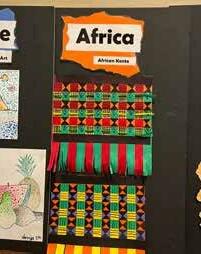

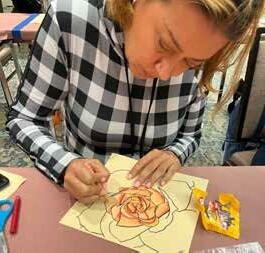
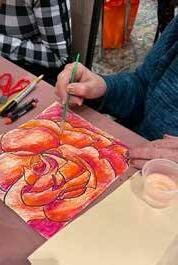


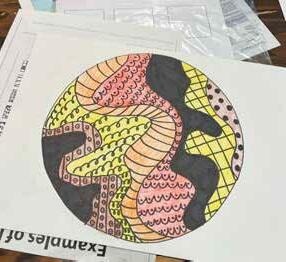


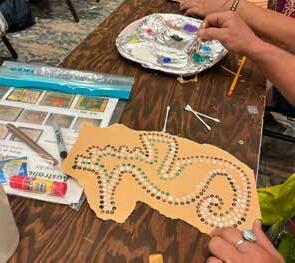





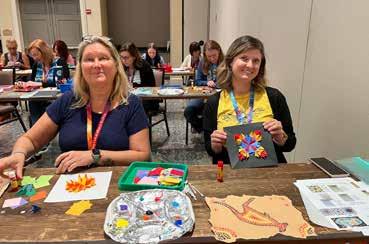

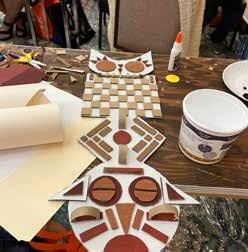


As we look back over the past year, we find ourselves reflecting on what 2022 brought to us. As FAEA’s Local Art Education Assembly (LAEA) board representative, I have been thinking about how my involvement in my LAEA has shaped who I am as an educator and leader. Through my memberships, I am gaining a global perspective of what arts education looks like beyond the walls of the classroom. I am learning how to push beyond challenges to find solutions. I am discovering what it means to support educators and help them find success. The most important thing I have learned is you can’t do it alone.

Many of you say you feel like you are teaching on an island. Involvement in your LAEA allows you to grow your professional learning communities (PLCs) through shared experiences. LAEAs connect art teachers and help its members collaborate and plan in a way that meets the unique needs of the art classroom. Associations like Manatee Art Education Association meet to discuss a variety of topics such as professional goals, purchasing and operat-
ing kilns, and fundraising.
LAEAs work to support and encourage art teachers as working artists and professionals. In October, Orange County Art Educators Association, held a teacher exhibition at the City Arts in Orlando. The Northeast Florida Art Education Association members exhibited their work at the Jacksonville Public Library in October as well. Pinellas Art Education Association held its annual exhibition in November at Tully-Levine Gallery in St. Petersburg.
Socials are a great way to build relationships in your LAEAs. Sarasota Art Education Association meets socially
Dade Art Educators Association
Facebook: Dade Art Educators Association, Inc.
Website: dadearteducators.org
Hillsborough Art Education Association
Instagram: @haeafl
Facebook: Hillsborough Art Education Association (HAEA)
Lee Art Education Association
Instagram: @the_laea
Manatee Art Education Association
Facebook: Manatee Art Education Association
Northeast Florida Art Education Association
Facebook: Northeast Florida Art Education Association
once a month. works with local museums to plan private tours.
When I started teaching, I was lucky to have a mentor who helped guide me through my first year. While my mentor was not an art teacher, she was a leader in the music community. She understood the challenges that come with teaching the arts. More importantly, she understood how crucial it was for me to get involved in my arts community. LAEAs support members through a variety of mentorship programs. Whether it’s connecting with retired teachers who want to stay involved or new teachers who need help navigating their first years, LAEAs provide guidance, emotional support, and role modeling for all of their members.
LAEAs provide professional development that is meaningful and designed BY artists and art teachers FOR art teachers. For example, the Dade
Orange County Art Educators Association
Facebook: OCAEA
Website: ocaea.weebly.com
Palm Beach County Art Teachers Association
Instagram: @pbcata
Facebook: pbcata
Website: www.pbcata.org
Polk County Art Education Association
Facebook: Polk Art Educator Association
Email: PAEA2022@gmail.com
Pinellas Art Education Association
Instagram: @paeaflorida
Facebook: Pinellas Art Education Association(PAEA)
Website: www.paeafl.org
Sarasota Art Education Association
Instagram: @sarasotaarted
Facebook: Sarasota County Area Art Teachers and Friends
County Art Education Association teamed up with World Textile Arts at Miami International Fine Arts for a day of fiber art with Taiwanese artist Yen Yu Tseng. Whether it’s learning about class management or a great printmaking workshop hosted by Palm Beach County Art Teachers Association, LAEAs provide opportunities for learning for new and veteran teachers alike.
Preparing the next generation of leaders is vital to any organization. In volunteer associations like LAEAs, we must develop and grow leadership from within. Committee work in LAEAs helps develop communication, organization, and decision-making along with so many other skills. LAEAs provide opportunities for teachers to present topics to their peers that are relevant to the current needs of their community. The 2022 FAEA conference was a testament to the leadership that is being developed in LAEAs. Members from Dade, Northeast Florida, Orange, and Palm Beach LAEAs
presented topics such as teaching students of trauma and inquiry-based learning for AP and IB.
Community involvement is a great way to give back to your community, and advocate for the arts. Recently, Pinellas Art Education Association, presented a Listen & Learn session for their new superintendent about the importance of the visual arts in Pinellas County schools. From raising funds for schools affected by the hurricanes to starting a postcard campaign thanking members of the arts community for their support, LAEAs are getting involved.
LAEAs across the state support the need for art teachers like you by providing guidance, learning, and fellowship in the art education community. Join your local art education association and take part in the fantastic benefits.
If you don’t have a LAEA in your district, contact me at laea@board.faea.org to discuss starting one today!

The Florida Art Education Association is pleased to provide the 2023 K-12 Student Art Assessment & Virtual Exhibition to our membership. The purpose of the program is to serve as a statewide assessment for visual art and promote the achievements of students enrolled in visual art classes throughout Florida. Visit FAEA.org to find out more information about the program, prizes, rubrics, and submission instructions.
BEST IN SHOW
Kayleigh Bollinger
Bountiful Basket
Fiber arts

Sculptor Charter School (Grade 8)
Teacher: Michelle Akimenko
MIDDLE SCHOOL WINNER
Aurea Norris
Hakeen
Painting
Tarpon Springs Middle School (Grade 8)
Teacher: Gabrielle Medina
ELEMENTARY SCHOOL WINNER
Gavin Caballes
What You Can Find
Digital media
Lake St. George Elementary (Grade 5)
Teacher: Eleni Strawn


• Deadline to submit student entries is March 1, 2023.
• You must be a current FAEA member.
• You may enter only one entry per student.
• You may submit as many entries as you like.
• There is a $5.00 fee per entry.
• All forms of media are accepted.
• Entry photographs of each entry should be JPG files and no larger than 10MB.
• Signed release forms must be sent to the FAEA office by March 15, 2023.
HIGH SCHOOL WINNER
Austin Yuan
Impulsive Drawing
Trinity Preparatory School (Grade 12)
Teacher: Irina Ashcraft


The Ah-Tah-Thi-Ki Seminole Indian Museum is a unique cultural hub in South Central Florida. Located on the Big Cypress Seminole Indian Reservation just north of just north of I-75 or Alligator Alley, this institution showcases traditional to contemporary Seminole culture. Ah-Tah-Thi-Ki translates to “a place to learn, a place to remember” in the Seminole language. The museum strives to inspire communities and visitors through Seminole Tribal stories and to follow their mission to celebrate, preserve, and interpret Seminole culture and history.
By DulcieThis column provides FAEA members with information about Florida cultural organizations and the academic offerings they provide. Journey with us to south Florida to the Ah-Tah-Thi-Ki Museum.

The director, assistant director, and the educators of the museum are all members of the Seminole Tribe of Florida and experts in their field. To quote Assistant Director, Marcella Billie, “Our ancestors left us a responsibility to serve as guardians of our history and art and lead the consciousness of the world for the betterment of our future generations. The Ah-Tah-ThiKi Museum was designed and created to preserve our
culture and history so that we as a people may remain unconquered.”
Opening their doors in 1997, the Ah-Tah-Thi-Ki is home to a museum, collections repository, and an elevated boardwalk through the Everglades. This cultural center is truly a place where visitors can explore the Seminole culture as well as the flora and fauna of the Everglades.
In 2009, the Ah-Tah-Thi-Ki Museum was recognized and fully accredited by the American Alliance of Museums (AAM) making it the first tribally-governed museum to receive this accreditation.
The Ah-Tha-Thi-Ki’s collection is comprised of over 180,000 artifacts and archival items. The core of the institution is the 5,000 square foot museum which is home to a series of dioramas that bring Seminole history to life. Rotating exhibits complement this rich history by focusing on topics that are relevant to the past and present.

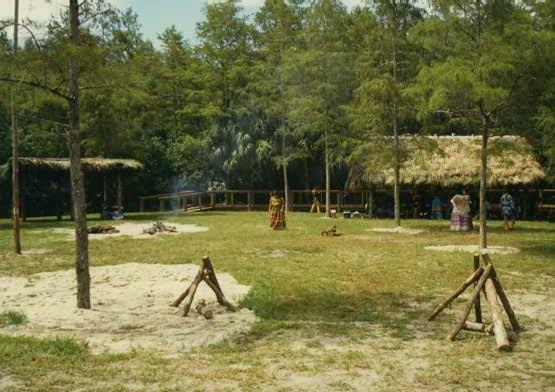

Focusing on the enrichment and edification of the Seminole community, the education department has much to offer. From workshops to field trips to outreach, teachers benefit from a wealth of programming designed to meet their needs. Tours are led by Seminole experts that provide students with an introductory tour from their unique perspective.
While on a field trip, groups have access to not only the dioramas and rotating exhibitions, but also the elevated boardwalk and the Living Village. Students are immersed in nature as they walk on the mile-long boardwalk under the museum’s natural cypress dome. While exploring the Living Village, students are able to watch and interact with Seminole artisans demonstrating craft -making techniques.
The museum offers professional development workshops on various topics throughout the year. The opportunities are offered to local districts and teachers are eligible to earn professional development points for attending.
If a group is unable to travel to the museum itself, they can still access a wealth of information on the museum’s website. Curriculum connections, lesson plans, activities, and even virtual field trips are available on the education section of their site.
With a broad range of curriculum, museum educators can also be scheduled to visit elementary through university level classrooms. Popular presentations highlight aspects Seminole culture and Tribal perspectives.
Each November, the museum hosts the American Indian Arts Celebration (AIAC). The AIAC is one of the biggest and best festivals in the Southeast. The event showcases Seminole culture through indigenous art, music, dance, and more. The annual festival is such a popular field trip for schools that available space fills up quickly.
Additionally, the Ah-Tah-Thi-Ki honors and supports teachers by extending free admission to them during the month of July, as well as providing resource bags
with educational materials during back-to-school time. Museum Director Gordon Wareham states, “We welcome all teachers to learn about Seminole culture and traditions!”
Contact the museum’s Education Coordinator, Abena Robinson, for more information about educational opportunities, including scheduling a field trip.
The Ah-Tah-Thi-Ki Museum is truly a hidden gem of Flor-

ida. By exploring the museum’s dioramas, you can step back in time to experience 1890s Seminole culture and then further your journey with a walk through a preserved part of the Everglades under the cypress tree canopy. A visit to this institution offers a unique insight into the art and traditions of the Seminole Tribe that continue to thrive today.
Using only two colors—white and black—students learn the importance of mastering tone while painting a monochromatic still life of found and repurposed vessels. Safflower oil takes the place of harsh solvents to thin paints and clean brushes.
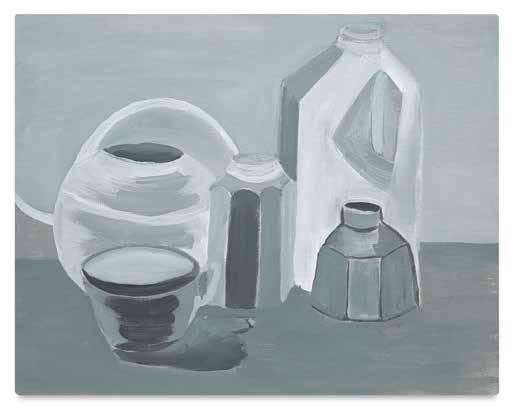
CHECK OUT NEW lesson plans and video workshops for students of all ages at DickBlick.com/lesson-plans

FAEA promotes visual arts education through professional development, service, advancement of knowledge, and leadership.
We present public programs; sponsor institutes, conferences, and programs; publish journals, reports, and surveys; and work with other agencies in support of visual arts education.
The core of FAEA is volunteer-driven which provides leadership, advocacy, learning, sharing, and much more. Year after year, our volunteers produce quality programs, events, and information used by visual arts educators. This past year, thousands of hours were generously donated to FAEA.
We are indebted to our volunteers and appreciate your loyalty in producing creative, fun, and relevant programs.

What is your favorite project?
What are 3 things that you think make a strong art program?
• Innovative and engaging lessons to interest the students
• Adequate funding for supplies
• A supportive administration
What do you do to inspire or motivate students who have not yet found their strength in art?
I try to establish a good relationship with the students by checking on them often while they are creating their art in class as well as giving them positive reinforcements for whatever work they have done.
I think you need to build up their confidence by developing lessons that start with simple skills to guarantee a positive outcome. When students have small successes, they are more apt to feel comfortable and confident trying something more difficult. Positive comments and praise of their work goes a long way in a student’s self confidence.

In my Digital class, one of my favorite projects is a self-portrait completed in Adobe Illustrator. Inspired by American artist Kehinde Wiley, students add a pattern-filled background. I always teach Adobe Illustrator before we venture into Adobe Photoshop because I think it’s easier to hit on the elements of art and the principles of design with this program as it lends itself to drawing so easily.
How have you connected art with other subject areas?

I try to make connections with other subjects or with pertinent things going on in my high school. We recently designed some posters to highlight the core values that were newly introduced to our students this year. They are proudly hanging in the art hallway for all to see and enjoy
What methods have you used to promote art at your school, within your community and/or state? How did you build those new partnerships?
We have always proudly showcased our students’ artwork in the school’s front office. This gives every-
Gabrielle Medina is the 2022 Pinellas County New Professional of the Year. She currently teaches at Tarpon Springs Middle School.
What are 3 things that you think make a strong art program?
• Rigor and commitment to high standards
• Prioritizing the process of creating over a specific final product
• Creating an environment in which students feel supported and like they belong
What do you do to inspire or motivate students who have not yet found their strength in art?
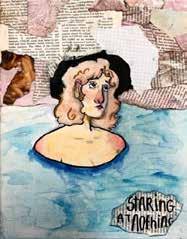

It’s important to be transparent about art being work (I always tell kids it’s called artwork for a reason), and a learning process. I am always up front with students at the beginning of the year and make sure they understand that while some people are naturally more skilled, most of us have to work hard, study, and practice art to improve. For students struggling to find their path, I like to have my returning students share their past artworks and we all discuss how much they have progressed. I find that it’s one thing for students to hear it from me, but when they see how much their peers have improved and that they didn’t start out as pros, they are encouraged to continue trying. I also emphasize that while we create striving to be continuously improving, ultimately, it’s THEIR art piece and they should take ownership of it. If they are truly happy with their outcome and it looks how they desire and is their expression of their unique artistic perspective, then that is what counts. From a practical standpoint, I have also found that chunking projects into smaller checkpoints with individual goals (i.e., this week we’re working on getting all our pencil line work done and concentrate only on that) helps take the pressure off students who may be overwhelmed by a larger project. In the end, if students feel accepted, supported, and safe, they will
be more willing to take creative risks and try their unique ideas when they feel like it would be safe for them to “fail.”
My favorite project to teach is my “3 Mediums” project with my Pre-AP class. I teach a simpler version of this in intermediate as well. For this project, students
are challenged to utilize three different mediums and at least two different types of paper/drawing surface. I start the year with this project in Pre-AP as it really sets the tone for the rigor and creative expectations for the course. Students have full creative freedom in terms of their subject and color palette. I review examples and we discuss as a class the process for creating a successful art piece. Students develop a plan and sketch, meet with me to discuss their idea and get their sketch and materials approved, and then begin work. We do a mid-process critique halfway through the project so students get peer feedback, finish their projects, and complete a written reflection.
I do my best to be mindful of connections when I am planning, and make sure to highlight those in my
one entering the school a chance to see student artwork. It has been such a positive way for parents and guests to the school to see the talent of our students. We hold an annual end of year art show at our local public library which has been incredibly successful in getting our student’s artwork recognized throughout the community. The students create posters and invitations to advertise the event. They invite friends, families, teachers, and administrators. I have served on our School Advisory Committee (SAC) for the last 16 years. This is where I have been able to meet many community leaders and business representatives which have resulted in art shows in the community and additional funds for student scholarships.
Share with us your art education philosophy and how it has impacted student learning and achievement.
As an educator, I am moved by the sense of accomplishment and pride in a student who has mastered a skill or created a beautiful piece of art after working diligently. This inspires me to push even further to bring a quality visual arts education to all my students. Being an educator places me in a constant state of
develop confidence in their craft. It is equally exciting to see my advanced students excel in their work, often winning top awards in county and state exhibits. Watching my students become passionate about their work brings me the most incredible sense of accomplishment. I am a guide for my students, encouraging them to take risks, and face the challenges that come with producing a work of art. Through this process, their amazing growth emerges. I am motivated by helping my students learn new skills in the digital arts and photography classes, as well as working with them to discover the ever-changing and intersecting world of art and technology. It is exciting to see my students rise to these challenges daily and to see them learn from each other and encourage each other through our critique process.
How do nurture your ‘teacher self’ and rejuvenate?
That’s a tough one! I’m big on exercising regularly, particularly yoga. I try to incorporate a yoga and meditation class in a few times a week. It helps me relax and center my priorities. We all need to step away from our work and embrace some self-care on a regular basis.
learning and being open to new possibilities and opportunities to bring the best practices to my students.
I aim to teach students the skills, patience, and persistence required to create a piece of art of which they are proud. It is incredibly rewarding to see a student who didn’t think they had artistic abilities suddenly
Have you collaborated with another teacher on a project or initiative at your school or in your district?
I have worked with our SADD (Students Against Destructive Decision Making) club for many years. My students create Safe Student Driving posters

lesson (i.e., linking parallel lines to math class when we do perspective, etc.). I also keep in contact with other teachers so that I can reinforce ideas and explain concepts that overlap.
What methods have you used to promote art at your school, within your community and/or state? How did you build those new partnerships?
I make sure to continuously update artwork in our school displays. I began having the school display student artwork accepted into local and state art shows on our school website home page to celebrate those students. I have been working on creating relationships within the community. As an example, I reached out to a local artist who came and did a sneaker painting workshop last year, and this year she will be coming back to help my students paint a mural. Her local connection to our area really impacted students. I also try to get my students involved in our school community as much as possible—anything from doing chalk murals when we have visitors to creating paintings for a gift for the principal. I am able to use the students’ study hall time for these requests so that it does not interrupt class time. It really makes the students feel valued and a part of our school community.

Share with us your art education philosophy and how it has impacted student learning and achievement.
I believe art provides a space for all students to express themselves and experience success in ways that they may not typically in other content areas. Through structuring my classroom as a student-centered studio, I guide students as they collaborate with me to direct their own learning experiences, giving them a sense of urgency that they may not have experienced before. Students learn to prioritize the process over the product; and all students are able to feel successful and develop a growth mindset. Art education allows students to discover themselves and to learn to think critically and creatively about the world around them. I believe this philosophy has led to my successes thus far as a teacher. It allows me to gain the trust of students and connect with them. I instill a learning environment in which students are willing to take create risks and express themselves. I believe this has increased student achievement and engagement, as students are willing to challenge themselves and engage with the material.
How do nurture your ‘teacher self’ and rejuvenate?
I make time to create, even if it’s something simple like creating a card or working in my sketchbook. However, I also allow myself the freedom to take a break from creating. As an art teacher, we are “on” creatively all the time, and this can put a strain on my own artistic practice. It’s been healthy for me to remove the pressure from myself to be creative after work every day and to instead enjoy the beach, kayaking, or walking my dog. This actually allows me to be more authentically creative and interested in my art practice. I think it’s also important to cultivate productive and positive coworker relationships. We all need to vent and find support, but it’s important it is constructive and not negative.
Have you collaborated with another teacher on a project or initiative at your school or in your district?
I have implemented a school-wide community building project at the start of every school year. All art students participate to create a large site-specific, interactive art piece that we hang in a prominent area in the school. The intention is to brighten the

geared towards teenagers to highlight National Teen Driver Safety Week in October each year. It’s so great to watch all the students stop in the hallways to admire them and learn from them.

Reflecting back, what do you wish you knew when you first started teaching art?

I wish I knew that all the time we spend on grading is far less important that the daily impact we have on our students when we introduce them to the wonders of art.
The art room gives so many a lifeline to a caring environment, all accepting and supportive, and this is what it’s really all about!
How does your personal artmaking and creative process inform your teaching practice?

We all work incredibly hard at our jobs. Balancing work and family obligations can sometimes make it difficult to take time to work on your own practice. Art teachers are a special breed who are so passionate about art and our students. When I do make my own art, I like to paint, and do photo and digital work. It has taken me many years to not beat myself up for not spending enough time on my own art.
When I can… I do, and that’s all right.
kids’ days and create a positive environment. Kids feel great pride seeing their work up and showing it to their friends and teachers, and take greater pride in our campus. We call the projects “What Lifts Tarpon.” This was our second year doing it, and it has been so fun to hear the kids already wondering what we might do next year. For this project this year I collaborated with the other art teacher at my school (new this year).
How does your personal artmaking and creative process inform your teaching practice?


I use what I have learned about the productive struggle to teach my students. I am open and honest with them when I am struggling with an art piece, and make sure to share my productive failures along with my successes. This breaks the illusion that there is some threshold at which you become a “real artist” who doesn’t make mistakes. Students really enjoy seeing what I am working on and feel a sense of motivation when I am working along with them. I will often work on the same project as them or a separate personal art piece on their studio work days.
Reflecting back, what do you wish you knew when you first started teaching art?
I wish I knew how to allow myself more grace. I was very hard on myself when I started, as I’m sure most new teachers are. I felt everything I tried was meager compared to what I saw others doing, particularly in the era of social media, and took every flopped lesson or hard behavior day personally. There were days I wondered if I was cut out to be a teacher at all. Looking back, I know that I was struggling with the same things all new teachers do. I overcame these challenges by refocusing on my specific student body and paying less attention to what others were doing (aka I got off teacher tiktok and Instagram). I reached out to my school-based mentor and learned about my particular student population and how to best connect with them and serve their needs. I also learned to give myself some grace and to accept that some lessons will fail, and that’s still a productive learning experience. I do my part to help new teachers overcome these same struggles by serving as both an official mentor and by volunteering to help new teachers at my school.
There is a notion of education that envisions happy, wide-eyed children quietly in rows of desks, raising their hands and speaking only when called on, as they are portrayed as proverbial vessels being filled with knowledge by the all-knowing teacher. While this view is laden with hyperbole, it is also vastly unrealistic. Children are not cogs in a wheel. They are intelligent individuals with distinctive thoughts and interests. This article takes a look at what happens when a child-centered approach to learning intersects with STEAM education at a summer camp. In this setting, traditional dogmas are removed and children get an opportunity to become artists and scientists. Students are empowered through supportive staff and proper scientific equipment to reflect on ideas, record data, and work autonomously to become confident investigators.
Child-centered approaches change the dynamic of instructional leadership. Rather than a top-down, teacher-led curriculum, students lead the direction of their learning and the teacher facilitates the learning (Moyer, 2001). When children are engaged in topics they find interesting, they become motivated to learn (Katz & Chard, 2000). Three examples of child-centered learning are the Reggio Approach, the Forest Kindergarten model, and Teaching for Artistic Behaviors (TAB) learning environments.
The Reggio Approach is named after the town in northern Italy, Reggio Emilia, where it originated. Chil-
dren are viewed as independent researchers and focus learning around their interests (Wurm, 2005; Malaguzzi, 1993). Projects and educational themes stem from inquiries made by the students that could last from one day to several weeks. Building, creating, exploring, and painting are used to make sense of their world and form concrete understanding (Hunter-Doniger, et al., 2018; Griebling, 2011).
Another example of a child-center model from Europe is Forest Kindergartens. The premise of Forest Kindergartens is that they spend nearly the entire school day outdoors as nature is at the center of the learning (Powers-Costello, 2015). Children’s play is often sparked by

flora and fauna and their imagination and creativity becomes the foundation for the lessons (Schäffer & Kistemann, 2012). Teachers bring supplies and tools that they need and encourage the children to explore and ask questions. While it appears to be “free-range learning” there are specific tasks, standards, and goals that are accomplish throughout the school year (Sobel, 2014). Similar to the Reggio Approach, Forest Kindergarten rely heavily on the arts as a catalyst for engagement and comprehension as does TAB.
Teaching Artistic Behaviors (TAB) is a child-centered approach where students are encouraged to think, paint, and draw like an artist. The TAB approach is typically found in an art room where students are taught how to use materials and then they are given “studio time” to create an original work of art. They learn from their mistakes and become independent critical thinkers and problem solvers (TAB, 2016). The goal is not to have 25 projects that are exactly the same at the end of class, the emphasis is on content and artistic experience (Parks, 1992). A TAB art room may have fifteen different projects in progress at one time as the art teacher works with individual students as they need assistance.
The camp for this case study was located on a remote intercoastal property that belongs to a moderately sized university in the Southeastern United States. The qualitative method of intrinsic case study was chosen as the best method to investigate the research question. An intrinsic case study is one that is carried out because the case itself is of interest (Stake, 1994).
The research question—How do children respond to the intersection of art and science in a child-centered outdoor learning environment—was investigated on site to better understand the connection itself rather than using the case as an instrument to understand a larger, generalizable issue (Cresswell, 2013). The participants were selected as a convenient sampling of 20 campers ages 8-10 and 5 counselors.
With over 864 acres of meadow, wetlands, long-leaf pine forests, and brackish water ponds along the intercoastal waterways in the southeastern United States, the property for Camp Innovate immersed the campers in nature. A generous benefactor bequeathed this property to the university with the vision to share the beauty and history with children of the area. The notion of STEAM and art infusion parallels the benefactor’s lifelong career as an ornithologist, renowned fowl artist, hunter-turned-conservationist, global explorer,
author, and nature enthusiast. Camp Innovate was a pilot program that envisioned inspiration and opportunities in art and science while young students were surrounded by nature.

Having experienced mostly traditional forms of schooling, the students needed to be deprogrammed from a teacher
directed or goal-based learning style to a child-centered approach. This required the children to be taught several habits of being an artist/scientist for observations and exploring. campers were taught that the crossover between disciplines in STEAM is not a new concept. For centuries, scientists had to be able to depict their ideas, inventions, and discoveries through sketches, drawings, and paintings since technologies such as cameras were not yet invented. Likewise, artists such as Leonardo Di Vinci did research and recorded findings and ideas in notebooks. Forming artist/scientist habits empowered the children to observe and record information. Nurturing this type of thinking involved an individual approach to critical thinking that encompassed their interests and deep investigations. Once the campers were familiar with a model for learning where their ideas were important and should be recorded, they were given sketch/field journals as an instrument to develop the habits of scientists and artists. Furthermore, the child-centered approach was an enriching atmosphere for the students to explore possibilities in a non-threatening learning environment. As they began to try out their new sense of empowerment, the children embraced STEAM education. The lines between disciplines became blurred and curiosities, by and large, crossed subject areas. While the case study is too small to be generalizable, the findings are notable.
Even though the curriculum for this summer STEAM camp was meticulously planned to allow for the intersection of multiple disciplines in every activity, modifications were necessary.
First and foremost, while the child-centered approach to learning is widely successful in Europe, at this camp the children were lost without direction. The use of the sketch/field journals helped form artist/scientist habits of observation and recording their thoughts and ideas. During the choice activity time, the sketch/field journals assisted in scaffolding learning by allowing the students to envision, stretch, and explore. Requiring a written or drawn reflection from the students was counter-productive to a child-centered approach, but it was a necessary bridge to guide the children into deeper exploration of STEAM subjects.
The child-centered approach gave the children the opportunity to explore multiple possibilities once they learned the camp activities were not a contest to get done but rather a journey of exploration. It appeared that for the campers in this case study, envisioning and stretching, and exploring were not part of an innate skill set. Issues developed during the child-centered time when the educational roles were switched from teacher-led to student-led. The children were familiar with a teacher stating exactly what to do to complete a task; but when there were no explicit directions, the children were at a loss. They needed instruction on how to explore, inquire, and essentially play on their own. After the students were given the tools and taught the habits, their innovation and communication skills were amplified.
Artists are sometimes at a loss when looking at a blank, white canvas, and scientists are sometimes dumbfounded when considering the infinite possibilities of space. This was the case with the children’s first encounter with pure autonomy. The children had no idea how to proceed without an adult telling them what was right or wrong. It was essential to teach the children a procedure for inquiry and exploration where they felt comfortable not having a teacher tell them what to do. Had the camp lasted longer, the counselors could have let the children figure things out on their own, but time was limited and structure was definitely needed. However, with the structure, the campers were able to not only choose their activity, they also implemented their artist/scientist habits and used the sketch/field journal as a guiding instrument for their inquiry.

This created three pillars of empowerment (see Figure 1)
The three pillars of empowerment formed a foundational structure consisting of interrelated factors that inspired the campers: 1) ingenuity, 2) a useful instrument, and 3) autonomy. Cultivating the artist/scientist habits gave the students the ingenuity or practical knowledge and understanding of how the roles of artist/scientist intersect and are interrelated. This made the use of the sketch/field journal an essential instrument because it allowed the children to record their thoughts, ideas, and predictions. The children valued their journals enough to save and revisit them at the end of camp.
The child-centered model provided a pedagogical structure that embraced freedom so the children could take control of their learning and creativity. When discipline structures or silos were removed and counselors became guides to learning, a new learning highway for the intersection of STEAM subjects was created.
In the end, the three pillars of empowerment allowed for a unique learning space.
The autonomy found in the child-centered model, paired with the ingenuity
Figure 1.
of the artist/scientist habits, and the sketch/field journal as an essential instrument, created a space where children were free to explore and create. The children knew they were not in school, but they were learning. They knew that they were in charge of what they were learning, but a counselor was always nearby to assist if needed. The campers knew they could create and make mistakes and correct them on their own. The campers learned that they could envision what they would do, and then they could stretch and explore beyond what they imagined. Essentially they became empowered to explore ideas and opportunities at the intersection of disciplines. When students are given proper instruments, the ingenuity to use them, and the autonomy to explore, they are empowered to expand and try new opportunities and ideas.
Cresswell, J. W. (2013). Qualitative inquiry and research design: Choosing among five approaches (3rd ed.). Thousand Oaks, CA: Sage Publications.
Griebling, S. (2011). Discoveries from a Reggio-inspired classroom: Meeting developmental needs through the visual arts. Art Education, 64(2), 6-11.
Hunter-Doniger, T., McGrath, A., McNeel, K., Templeton, K., Tobin, K., Walker, A., & Wen, J. (2018). Transdisciplinary Lessons
Learned from the Reggio Emilia Approach and Art. Reading Matters, 18(1), 21-25.
Katz, L., & Chard, S. (2000). Engaging children’s minds: The project approach (2nd ed). Stamford, CT: Ablex.
Malaguzzi, L (1993). History, ideas, and basic philosophy. In C. Edwards, L. Gandini, & G. Forman (Eds.), The hundred languages of children: The Reggio Emilia approach to early childhood education (pp. 41–89). Norwood, NJ: Ablex.
Moyer, J. (2001). The child-centered kindergarten: a position paper: Association for childhood education international. Childhood Education, 77(3), 161-166.
Parks, M. (1992). The Art of Pedagogy: Artistic Behavior as a Model for Teaching. Art Education, 45(5), 51-57.
Powers-Costello, B. (2015). School’s Out: Lessons from a Forest Kindergarten. European Education, 47(3), 291-293.
Schäffer, S. D., & Kistemann, T. (2012). German forest kindergartens: Healthy childcare under the leafy canopy. Children Youth and Environments, 22(1), 270-279.
Sobel, D. (2014). Learning to Walk between the Raindrops: The Value of Nature Preschools and Forest Kindergartens. Children Youth And Environments, (2), 228-232.
TAB (2016). What is TAB-Choice? TAB: Teaching for Artistic Behaviors. Retrieved from Wurm, J. P. (2005). Working in the Reggio way, A beginner’s guide for American teachers. St. Paul, MN: Redleaf Press.
How this empowered the children to explore and create.
The practical knowledge of a specific role and how it intersects with other areas.
The instrument allows a child to record their thoughts and ideas as something of value to be saved and revisited.
A pedagogy that embraces freedom for the children to be in charge of their own learning opportunities and explorations.
Fresh Paint is the award-winning publication of the Florida Art Education Association (FAEA) that contains articles of interest to art educators of all levels – from kindergarten through college level. It is produced 4 times annually and distributed to more than 850 art teachers, school district art supervisors, museum educators, higher education professionals, community art educators and artists, as well as other state and national art associations.
Fresh Paint is a terrific venue for businesses and organizations to reach art educators and decision-makers.
Learn more at faea.org/publications/advertising
