

Click the paint brushes for direct links
Conference Registration and FAQ | 14
Interview with Keynote Speaker Tony DiTerlizzi | 16
Interview with Keynote Speaker Sarah and Cosby Painter Hayes | 20
New State Legislation Impacts High School Fine Arts | 24
Summer Workshop Recap | 26
Arts in the Community: The Museum of Fine Arts St. Petersburg | 30
Visual Arts and Environmental Issues: Connecting Expressive Learning for Second Grade Students | 34


President’s Reflection | 4
24 & 25 Board of Directors | 5
Calendar 2024 | 5
Board Consultant’s Report | 6
Conference Support Letter | 7
Division Updates | 8
FAEA's New Social Media Committee | 28


Truly Free
Painting
Dr. Phillips High School
Teacher: Abigail Callaway Orange County
About Fresh Paint Magazine: Fresh Paint is an award-winning, quarterly publication of the Florida Art Education Association, Inc. (FAEA) located at 402 Office Plaza Drive, Tallahassee, Florida, 323012757. The purpose of Fresh Paint is to provide members and stakeholders with information about FAEA programs, the latest advocacy reports on issues impacting art education, and articles of interest to art educators of all levels. This publication is distributed to over 800 art teachers, district art supervisors, museum educators, higher-education professionals, community art educators, and artists, as well as other state and national art associations. The following issues are published digitally by FAEA: Fall Issue Conference Issue Winter Issue Spring/Summer Issue
FAEA 2024 Editorial Committee
Claire Clum, Chair
Priscilla Anderson
Christie Becker-Fitzgerald
Nicole Bizjak
Rachel Fendler, PhD
Christy Garton
Heather Hagy
Dulcie Hause
Latonya Hicks
Laurie Hoppock, EdD
Lark Keeler
Halina Kilburn
Lori Manning
Debra McGann, EdD
Kasey Power, PhD
Jennifer Wilkinson
Fresh Paint is made possible, in part, by the participation of the businesses whose advertisements appear in this issue. They make it possible to provide membership with a high quality publication and we gratefully acknowledge their support of Florida Art Education Association’s (FAEA) mission. We hope that you take special notice of these advertisements and consider the products and services offered. This is another important way you can support your professional association and the enhancement of Florida art education.
The publisher does not endorse any particular company, product, or service. FAEA is not responsible for the content of any advertisement and reserves the right to accept or refuse any advertisement submitted for publication.


Dear FAEA Members,
I hope this letter finds you well and on your way towards rejuvenation. As we continue to highlight and navigate the intricate workings of FAEA, it’s crucial that we all take the time to truly understand the foundations and principles that guide us forward.
Just as in a classroom where certain methods may not work for everyone, our organization, with its diverse membership, operates like a classroom of 800 individuals, each with unique needs and perspectives. It’s imperative that we strive to hear every voice, recognizing that equity doesn’t always mean equality.
One of our core goals, as outlined in our Strategic Plan, is to foster Community Vibrance. This involves strengthening connections among members and communities through communication and networking. Together, we aim to provide learning and social opportunities dedicated to enhancing our collective community in support of visual arts education.
In line with this objective, I’m thrilled to remind you to bring a colleague to our Annual FAEA Conference in St. Pete this fall. It’s going to be great. This gathering will also be a fantastic opportunity to immerse yourself in one of our organization’s areas of focus- Community Vibrance. And more importantly, to connect with fellow art educators. I encourage each of you to attend and, if possible, reach out to a colleague who may be struggling or feeling isolated. Let’s ensure that no one is left behind as we move forward together.
In essence, please use FAEA's resources as a chance to learn, grow, and continue to make meaningful connections within our community. Together, we can amplify our impact and support one another in our shared mission.
Thank you for your continued dedication and support. I look forward to seeing you soon.
Together, we are STRONGER!

President

Submissions Accepted Oct. 17, 2024 – Feb. 9, 2025
Release Forms Due February 28, 2025
FAEA Membership Renewal Now Open
Member Virtual Exhibition
Submissions Due August 18, 2024
2024 FAEA Annual Conference
October 17-20, 2024 St. Petersburg, FL
FAEA Conference
Early-Registration August 1 – October 1, 2024
Florida Student Art Assessment
Submissions Accepted October 17, 2024-February 9, 2025
FAEA Conference Merchandise Now available.


Ab ut FAEA
MISSION STATEMENT
The mission of the Association is to promote art education in Florida through professional development, service, advancement of knowledge, and leadership.
ADVERTISERS
DAVIS PUBLICATIONS | 19
BLICK ART MATERIALS | 25
RINGLING COLLEGE OF ART & DESIGN | 39


PRESIDENT Latonya Hicks Pinellas County
PAST PRESIDENT
Nancy Puri Polk County
PRESIDENT-ELECT
Christy Garton Orange County
SECRETARY
Heather Hagy St. Johns County
ELEMENTARY DIVISION
Stephanie Scannapieco Duval County
MIDDLE SCHOOL DIVISION
Ashley DeMaio St. Johns County
HIGH SCHOOL DIVISION
Jacquelene Lieberman Broward County
SUPERVISION/ADMINISTRATION DIVISION
Laurie Hoppock, EdD Duval County
HIGHER EDUCATION DIVISION
Debra McGann, EdD Orange County
MUSEUMS & CULTURAL ORGANIZATIONS DIVISION
Dulcie Hause Duval County
LOCAL ART EDUCATION ASSEMBLY REPRESENTATIVE
Natalie Potacco Pinellas County
RETIREES’ REPRESENTATIVE
Debra Barrett-Hayes Leon County
MEMBER-AT-LARGE
Claire Clum Palm Beach County
MEMBER-AT-LARGE
Laura Hobby
Hillsborough County


Kathleen D. Sanz, PhD Board Consultant, FAEA
Welcome back to the 2024-2025 school year! FAEA looks forward to engaging with our members and encouraging you to be involved in the legislative process to provide for strong visual arts programs in our state.
Throughout the legislative session, FAEA and the Center for Fine Arts Education Association, along with the Florida Music Education Association (FMEA) and the Florida School Music Association (FSMA), follow education-related bill filings and track the progress of the bills as they pass through the various legislative committees. These associations are currently reviewing all of the laws that take effect and will impact education, along with the lobbyists for FAEA. We will be providing an updated report on the 2024 legislative session on the FAEA website once it is received from the lobbyists.
Advocacy work is never completed, but an ongoing effort at the local, state, and national levels. Not only is this a year to vote for the President of the United States, but state legislators and local races, particularly for school board members who are critical to your local schools. Please be sure to advocate for your program and the needs of the students for each of your programs to ensure a high-quality visual arts education. Know your legislators. We encourage you to be an engaged and informed voter. Your vote is your voice, so please register and vote in the upcoming August and November local, state, and federal elections. The important dates to register and to vote are listed below.
The Florida Seal of Fine Arts Program (HB 523) passed unanimously through the Florida Senate and House members and was signed by the Governor to become effective for graduating seniors at the end of the 2024-2025 school year.
Primary Election 2024
• Deadline to register to vote or change party affiliation: July 22, 2024
• Deadline to request that ballot be mailed: August 8, 2024
• Early voting period (mandatory period): August 10 – 17, 2024
• Election Day: August 20, 2024
General Election 2024
• Deadline to register to vote: October 7, 2024 (no deadline to change party affiliation)
• Deadline to request that ballot be mailed: October 24, 2024
• Early voting period (mandatory period): October 26 – November 2, 2024
• Election Day: November 5, 2024
While we were thrilled with the passing of HB 523, Governor Ron DeSantis on June 12th vetoed $32 million in allocated grant funding for the state’s Division of Arts and Culture budget. The loss of the funding will have an impact on FAEA’s programs. (More information can be found in President Hicks's July 1st email to all FAEA members.)
The 2025 legislative session will begin on March 4, 2025, and will end on May 2, 2025. Please look for communication coming from FAEA to assist us on reviewing the bills. If you have any questions about the bills as they move through the process, please call Dr. Kathleen Sanz at the FAEA office. In addition, know your legislators, visit them and stay tuned into bills that will be proposed during the session. Keep up the incredible work that you do each and every day for your students and your school programs. Have a wonderful 2024-2025 school year. AND VOTE!
Kathleen D. Sanz, PhD

Board Consultant


Dear Administrators,
The Florida Arts Education Association (FAEA) is the professional association for Art Educators in the State of Florida. FAEA’s mission is to support the growth and development of art educators through professional development and other programming. Each year, FAEA hosts a Professional Development Conference.
I am pleased to announce that the 72nd Florida Art Education Association Professional Development Conference will be held October 17-20, 2024, at the Hilton St. Petersburg Bayfront and surrounding museums. The Florida Art Education Association’s annual conference, the largest professional development event in Florida for visual art educators, will include over 150 clinic sessions, hands-on workshops, and various other educational events.
We hope you will encourage and support your art teachers’ participation in this valuable opportunity through release time and support for registration, travel, and lodging. All presentations, workshops, and events are 100% art education content that can be applied to instructional programs immediately upon return. Furthermore, many of the conference presentations will be related to standards-based instruction, assessment, classroom management, and skills development.
For further information about the 2024 FAEA Conference, please contact the FAEA Office at (850) 205-0068 or visit our website at FAEA.org. We look forward to providing a unique professional service to your art teachers. Thank you for your continued support of the visual arts.
Sincerely,
FAEA President

Ashley DeMaio Gamble Rogers Middle School St. Johns County
Hello Amazing Middle School Art Teachers!
I can’t believe the summer flew by so fast. However, I am so thankful we have this time as teachers. I was able to run my Art & STEAM camp, attend some digital art training, and visit my family in New York. I hope you also had the chance to rest, enjoy, and refill your cup with whatever brings you joy!
This summer, we offered a STEAM camp at my middle school, Gamble Rogers. We had both an art section and a robotics section. My STEAM class involved creating drawings, painting, learning digital art and tablet drawing, and lastly building a 3D letter. We explored famous architecture from around the world, focusing on a different wonder each day— from the Taj Mahal to the Great Wall of China. Students then built digital 3D structures and 3D printed their designs. My goal was for students to gain a solid background in the art of architecture. Additionally, students learned basic sewing skills, created and generated entries in their visual journal guided by prompts, and worked with robotics and coding. It was a great summer session and an amazing way to refill my cup!
As the new school year starts, I know you are organizing your classroom, unpacking those beautiful new supplies, prepping your first projects; all while balancing your required PD. It’s a lot, but as teachers, we all have the superpower of multitasking with a splash of creativity.
For the start of the school year, I set up my ClassDojo account. Kids are used to using this in elementary school, but I use it strictly for Positive Behavior points to drive our Positive Behavior Intervention System. Each day, students can gain or lose points. Each period has a class goal, and if the class meets the goal (usually 200 points), we have Fun Friday. Fun Friday consists of STEAM stations that highlight different art forms and activities, ranging from online 3D design to spiral art and gel pen scratch art. My students especially love learning tablet drawing and using digital art to create in their visual journals. I hope to host a session at the FAEA conference to highlight more of these stations.
To all my brand-new teachers, I invite you to sign up for

Stephanie Scannapieco Seabreeze Elementary Duval County
As we begin this school year, I hope you are coming back rested, rejuvenated, and excited. There is so much on the horizon that your FAEA board and committees have been working hard on. If you haven’t already, get signed up for the FAEA conference in St. Pete. It’s going to be the best conference yet! If you are thinking of going to conference, but you’re questioning the cost, the advocacy committee has been putting together language for you to use to help you when requesting funds, whether you’re asking your admin, PTA, or district (see page 7 for President's letter). It is ok to ask. What’s the worst that can happen? They might say no.
There may be other avenues to explore for funding to attend conference as well. Consider reaching out to your local association. Advocate for yourself and your professional development. It’s important so we can teach our students best practices and teach them well. The workshops alone make it worth it, but in addition to the workshops, you get time with other like-minded art educators. The professional development committee is working to bring you some new things like artful happenings (which I am super excited about!), where you can get together between sessions and share in your own mediums of choice. Be sure to stop by and check them out while you’re at conference. I cannot wait to see you all there!
the conference and connect with as many teachers as possible. We are a wealth of knowledge who actively practice the motto "sharing is caring". I can’t tell you what a lifeline it was for me as a new teacher.
As you start your new year, I suggest that if you haven’t already joined or renewed your FAEA membership, you do so ASAP. There is a letter of support attached to the last Division Update that can be presented to your principal or PTO to cover your membership. Also, don’t forget the MVE is open through August. We would love to have you highlight some of your artwork.
Finally, I hope to see you at the FAEA conference in October in St. Pete.
Best wishes for a fantastic school year! Until we meet again, keep creating Art from the Heart!

Jacquelene Lieberman Marjory Stoneman Douglas High School Broward County
Welcome back, fellow educators and art enthusiasts! As we gear up for another exciting academic year, it’s time to reconnect, collaborate, and ignite our passion for the arts. Here’s a rundown of what’s brewing in our vibrant community:
1. School Announcements & Classroom Ideas: Let’s kickstart the year with creativity and enthusiasm! As we plan for the upcoming semester, let’s brainstorm innovative classroom activities, art projects, and teaching strategies that will inspire our students to explore their artistic potential. Share your ideas and recommendations with fellow members to spark a wave of artistic brilliance across our division!
2. Member Virtual Exhibition: Submission Deadline Approaching! Calling all artists and creators! Don’t miss the chance to showcase your talent and creativity in our Member Virtual Exhibition. Whether it’s a master work, a digital creation, or a thought-provoking piece, submit your artwork by August 18th to be part of this spectacular showcase. Let’s celebrate the diverse artistic expressions within our community!
3. Conference Registration & Division Meeting: Get ready for an enriching experience at the upcoming Conference! Register now to secure your spot and immerse yourself in a world of artistic inspiration, professional development, and networking opportunities. Be sure to mark your calendars for the division meeting and other relevant sessions where we’ll discuss key initiatives, share insights, and foster collaboration within our division.
4. Volunteer Opportunities & Committee Involvement: Want to play a more active role in shaping the future of FAEA? Here’s your chance! Reach out if you’re interested in volunteering at the Conference or contributing your expertise to FAEA’s committees. Whether you’re passionate about event planning, advocacy, or member engagement, there’s a place for you to make a difference and be part of our dynamic community.
5. Membership Renewal & Recruitment Drive: Renew your membership today and keep the artistic momentum going! Don’t forget to encourage your colleagues to join or renew their FAEA membership. Together, we can strengthen our community, amplify our collective voice, and champion the importance of arts education for all.
As we embark on this new academic journey, let’s harness the power of creativity, collaboration, and advocacy to inspire, empower, and uplift each other. Here’s to a year filled with artistry, innovation, and boundless possibilities!

Laurie Hoppock
Duval County Public Schools
Duval County
Welcome back to a new school year! I hope the new year generates excitement and allows your creativity to flow through your program! What are ways in which you will celebrate your program and students publicly this year? Think about ways you can share your program’s work in your school and community, as well as at the state level!
The submission window for the FAEA Student Art Assessment, (formerly known as K-12 Student Art Assessment and Virtual Exhibition), is open now through mid-October. May this exhibition opportunity offer a jump-start to your year!
To celebrate your personal works as an artist, the Member Virtual Exhibition submission window is open for a few more days— deadline for entries is August 18th!
Let’s also take a moment to celebrate the new Florida Seal of Fine Arts program! Check out the article about the program in this issue (see page 22). If you work with high school students or know any personally, make sure you familiarize yourself with this program so that your students can be recognized through this new state level honor!
Heather Hagy (FAEA Secretary)

I like to alter images to express what is happening around me, or how I am feeling about myself, being a woman in the world, in society. Generally, I start with images from newspapers and magazines and combine them, then paint and decorate them until I have found the message I want to communicate.
FAEA Board Members share their artistic creations

Dr. Debra McGann
University of Central Florida
Orange County
Hopefully, this summer has been enjoyable and rejuvenating in preparation for a productive new Fall semester. Now is a very good time to make plans to attend this year’s FAEA conference, to be held at the Hilton St. Petersburg Bayfront Hotel on October 17th – 20th, 2024.
Please watch for the conference schedule which will have the day and time of our Higher Education division meeting. It will be great to see everyone at this meeting during the conference.
Additional FAEA items of interest include renewing your membership, encouraging our pre-service students to join, and reminding colleagues to renew. Also, if you would like to volunteer at the conference or be a part of a committee, please let me know and I will pass along that information.
Lastly, if you would like to submit artwork for the Member Virtual Exhibition, please do so before August 18th

Start Where You Stand
Acrylic on Acrylic Panel 2024
I integrate journaling and poetry into my artwork, mainly focusing on complex family dynamics. I use acrylic panels to explore layered meanings and the effects of these layers on the final image. This piece delves into the relationship between childhood innocence and the influence of individuals on one’s life.

Division Director
Dulcie Hause
Cummer Museum of Art & Gardens
Duval County
Hello Art & Cultural Organization Educators! I can’t believe summer went by so quickly! It is hard to believe we are starting a new school year already. I know many of you had a busy summer of camps and programming, but I hope that you have had some time to recharge.


I always enjoy the start of the school year; full of new ideas, goals, and partnerships. With the passing of the Florida Seal of Fine Arts and now activated, your organization has the opportunity to help support students in earning this distinction. As part of the requirements, students will need to complete at least 25 hours of art-related volunteer hours. Be proactive and reach out to the arts supervisor in your district to see how you can support this initiative.
Conference is just around the corner! We are looking forward to our first of four years in St. Petersburg. Thank you for submitting proposals earlier this year. There are going to be many opportunities to engage with, learn from, and inspire others. Make sure to note our division meeting time when the schedule comes out. It will be great to connect with one another. See you in St. Pete!


Florida School of the Arts
Rollins Museum of Art
Sam Flax Orlando

Retirees' Representative
Debra Barrett-Hayes Leon County
Greetings my fellow Art Retirees, I hope you are having a fun, artful, and interesting summer. I cannot believe the new school year is beginning and we are preparing for what is shaping up to be an exciting FAEA 2024 on October 17th - 20th. If you have not participated or attended in a while, please consider this year. I love visiting St. Petersburg, especially during their mural festival. You can visit The Dali (almost next door), the Chihuly Collection, the Imagine Museum, The James Museum of Western & Wildlife Art, Museum of American Arts & Crafts and this is only a few of the things you can find to do in St. Pete. I can’t wait to see all of our Retired Art Teachers, affectionately known as the RATs. We have events you will enjoy and we need your input and assistance for a number of events
I encourage you to come and visit us in St. Pete this October. I love this location, the Hilton Bay Front @ 333 1st Street. FAEA's theme is “Ignite Imagination: Reveal the Fantastical.” While FAEA's conference is going on, St. Pete is hosting its 10th annual SHINE Mural Festival from 10/11-10/20/24. It features top local, national, and international artists. FAEA will be the culminating weekend of the mural festival. There is an openair “Star Trolley” with a unique experience of a 2.5 hr. rolling tour, (book.star-trolley.com) as well as a weekly St. Pete Walking Mural tour. It’s a SHINE’ing Star in the Art World and a testament to the power of public art in revitalization.
Speed Dating: This is a time for Beginning Art Teachers (BATs) or even early career art teachers to meet and speak with our FAEA Retired Art Teachers (RATS). RATs are needed for a fun & inspirational special social event called “BATs & RATs Speed Dating.” The event aims to bridge the generations by providing a fun platform for attendees to connect & engage in meaningful conversations. This is a unique opportunity for both groups to meet, share their experiences, insights & knowledge, fostering a sense of mentorship & collaboration. You might make a new best buddy. We will meet speed dating style and enjoy snacks, conversation and of course, Door Prizes. Reach out to me and we can chat if you want to know more about the event. I sure hope you will join us!
The Big Giveaway: Once again this year we are hosting the very popular event where donated items are collected and

organized by the RATs for early career teachers (1-3 years). Look around for your favorite lessons, books, resources, art supplies, as well as shopping bags. Your help is needed to donate, organize, and staff this event.
Silent Art Auction: If you have any artwork that you would like to donate for the Silent Art Auction, we are interested! Contact me.
The Annual Gathering of the RATs: This is a purely social event to come and visit, enjoy food and drink, and reconnect with dear friends from around the State. I sure hope you see you there! We'll discuss ways we will continue contributing to the legacy of FAEA.
Conference workshops/presentation by RATs: Navigating the Digital Age, RAT’s Discussion Panel, Underwater Fantasy, Demystifying Advocacy, No Kiln… No Problem, Masks, Alternative Surfaces for 3-D & Artist Fun, The Raw & Primitive Aesthetic of Jean Dubuffet, as well as Imagine a Rat & a BAT: Five Decades Apart in Art. There may be additional ones I am not aware of, if so, I apologize. But we need you to come and participate in the all RATs events, Awards Breakfast, museum visits, keynotes, the Artist Bazaar, and the culminating Saturday Night Event!
I encourage all retirees to join us at FAEA and continue sharing their wisdom, knowledge, and creative energy. You are our FAEA Legacy. Our early career colleagues need our support now more than ever. Let’s embrace the new members of our profession and assist them in becoming successful teachers and active FAEA members. We can build meaningful relationships that will continue to influence the future of art education.
Reach out if you want to know more or have questions to retirees@board.faea.org
Latonya Hicks (FAEA President)

Sister, sister: she, her, us Mixed Media 2024
Drawing upon autobiographical experiences and memories, I construct densely layered narrative juxtapositions from my "dragon’s hoard" of cast-off, found, and gifted artifacts. Like an archeologist, I excavate and examine the material remnants of others, allowing me to create meaningful connections between these objects that represent my lived experiences.


Local Art Education Assembly Division Director
Natalie Potacco Curlew Creek Elementary Pinellas County
Welcome back! I hope everyone took some time for themselves to recharge, travel, spend time with family and friends, and create. Thank you to everyone who made it to our FAEA summer workshops in St. Petersburg. I hope you have lots of new ideas to bring back to your classes this year!
A couple reminders as you get ready for this new school year:
• Make sure to RENEW your FAEA membership! Let’s keep this organization strong and show support in art education!
• Mark your calendars for the FAEA Conference in Saint Petersburg from October 17-20!
As teachers, we sometimes forget the impact that we make on our students. We give everything we have to ensure they are succeeding and growing, and sometimes we don’t see the immediate impact. Stay strong this year and know that you ARE making a difference.
If you or any of your LAEA members have any questions or want any ideas on more ways to get involved, please email me at laea@board.faea.org.

Early registration for the FAEA Conference is now open. The deadline for early registration is 5:00pm on October 1, 2024. Take advantage of the early registration prices by registering online at faea.org/conference.

1. Full registration refunds are available for cancellation requests made through September 24, 2024.
2. No registration refunds will be made for cancellations made after September 24, 2024, except for emergency situations. These will be reviewed on a case-by-case basis.
3. Refunds must be requested in writing to Val Anderson - val@faea.org .
4. Emergency-related requests for refunds must be received no later than November 12, 2024. Requests received after that date will not be processed.
5. All refunds will be issued after the conference is completed.
6. Silent auction, raffle tickets, special event tickets, and membership fees are all non-refundable.

Do I have to be an FAEA member to register for the FAEA Conference?
No, you do not need to be a member to register. Members may renew their membership during the registration process. Non-member conference registration fee includes an automatic one-year FAEA membership with the pricing.
Are there additional fees to attend workshops or special events at the FAEA Conference?
There are additional costs and registration is required to attend any hands-on workshops and special events like the Awards Breakfast and the Saturday Night Event.
Which workshops and events are included in my registration?
All Art Forum sessions, General Sessions, division meetings, open receptions, and access to the commercial exhibit hall are included in your conference registration.
Do I sign up in advance to attend the Art Forum sessions?
No, the Art Forum sessions are included in your conference registration and seating is available on a first-come, first-served basis.
Is there a certain hotel I should stay at if I am attending the FAEA Conference?
FAEA has a room block at the conference hotel, Hilton St. Petersburg Bayfront. To learn more, visit faea.org/conference/hotel-information.
If I have questions about the FAEA Conference or my membership, who should I contact?
You can call the FAEA Office at (850) 205-0068 or info@faea.org

Fresh Paint: Let’s go back to the beginning. I personally know mom, Carole, and younger siblings Jennifer and Adam, and I am aware of their great creativity in whatever they do. How far back can you remember your mom doing creative workshops or games with you and what were some of those activities?
Tony DiTerlizzi: My mom has painted, drawn, and sewn for as long as I can remember. One of our favorite crafts when I was young was making cutout paper dolls with wooden clothespins for legs. We made all sorts of
By Tom Prestopnik
characters, animals, and dinosaurs. I recall treasuring my homemade set of dolls from the show, Gilligan’s Island
We always had coloring books in the house, too. Mom’s rule was, “If you finish coloring the book, I’ll buy you a new one.” I was that kid who would diligently color every single page. When I think back on that now, it’s not much different than my workflow today — finish creating this book and you can start a new one.

FP: Living in South Florida, you spent a lot of time outside in the woods, swamps, and at the beach and it must have had a large influence on your early sketches and studies. Many of your characters have a woodsy or vegetative appearance and feel to them. Comment on that statement and then how would your drawings and paintings differ if you grew up living in Maine or Alaska?
TD: I have been fascinated with nature since I caught my first grasshopper in the backyard. As a Boy Scout, I enjoyed fishing, hiking, camping, and exploring the various environments throughout the state of Florida. The biodiversity is unmatched and I feel incredibly fortunate to have grown up surrounded by scrub pines, sandy beaches, and verdant wetlands. I suppose I would have been just as inspired had I grown up somewhere else.
FP: Once away from home you started getting more influences from your teachers, art, and otherwise. I know each one, me included, left his or her mark on your personal artistic development. Talk about the influences some of these teachers had on you. And from your experience of being a "different" student, how can teachers help to accommodate their students who don’t easily fit into the square peg?
TD: I didn’t think I was “different” for most of my childhood. After all, lots of kids drew and created stories in elementary school and even middle school, but it was in high school that I realized the path I was on was one less traveled. Fortunately, as you mentioned, there were teachers along the way who helped and guided me.
My 5th grade teacher at Hobe Sound Elementary, Ray Strassburger, noticed I was having difficulty with reading comprehension as shown in my less-than-stellar book reports. This was because many of the required titles on our reading list had little to no illustrations. Consequently, I began reading loads of comic books instead. Realizing I am a visual learner who loved to draw, Ray suggested I create drawings—illustrations—of my own design for the books that I was reading to accompany my book reports. This approach unlocked my comprehension skills, and I was on my way.
It seemed a little hurdle to overcome at the time, but its impact would ripple throughout my life. For that, I am forever thankful to teachers like Ray.
FP: In the book “The Gift of Failure”, Dan Bongino describes the times he failed in his life and how he kept getting stronger and learning from his mistakes and failures. Give us some of the examples that you had growing up where you might have felt that you had failed yourself and maybe your family.
TD: Being the “different” kid in high school equated me perceiving myself as an outlier in the social hierarchy and norms of a typical 1980s student body. I mean, are girls more interested in the charismatic jock, the cool surfer, the class president, or the artsy weirdo who aspires to one day write children’s books?
Because of that teenage insecurity, I was willing to risk anything to be accepted as a cool kid. I was often entangled in ridiculous pranks and overall mayhem during my later years of high school, which accounted for me getting into my fair share of trouble with the school and my parents.
Eventually, my confidence grew, and I embraced my

individuality, but it was tough going during those lateteen years because I wasn’t in a locale where finding like-minded individuals was easy. After I graduated from art school, I realized I needed to be in New York City, the publishing center of the world. There, I found a place where I felt I truly fit in and was thankful my then-girlfriend-now-wife Angela was willing to come on the ride with me.
FP: Dungeons and Dragons and other role-playing games were a big influence in your life, from your elementary and middle school days playing games to your post college career working for TSR (original publisher of Dungeons & Dragons) and creating your own games and stories. I’m guessing that a lot of your fellow students laughed and pointed fingers at the geeks and nerds playing silly dice games. As Toby Keith sings “How Do You Like Me Now?”
TD: What truly astounds me is that role-playing games have come full circle and have become more popular than they were in the 1980s. There certainly was a time when gamers were thought of as bespectacled misfit nerds, but those days are history.
I worked with TSR right out of art school and throughout the 1990s. Although I yearned
to create children’s books, my experience working with the game designers expanded my understanding of story and world building. I learned to illustrate every aspect of these fantasy worlds — from the adventurers and monsters to the architecture and artifacts. "The Spiderwick Chronicles" and "WondLa" trilogy would not be what they are were it not for my time working on D&D.
FP: I’m guessing success came in various steps: a phone call from George Lucas, a Caldecott Award for the ‘’Spider and the Fly”, a major motion picture in 2008 “The Spiderwick Chronicles’’, and two television shows running in prime time in 2024. One can only imagine what is on the horizon. Please comment on these past successes.

TD: I have been fortunate to have many highlights in my career, garnered from a combination of surrounding myself with talented people, hard work, and luck. Each of these moments has felt like a dream-come-true though. Honestly, it is an odd mix of excitement and unworthiness. I suppose that’s because I am so tapped into that 12-yearold version of myself that these moments seem like the far-off accomplishments of some famous artist, not me. Perhaps that keeps me grounded.
I am always in the process of

storytelling, whether it’s dreaming up a new story, figuring out the characters and plot for another, writing, illustrating, or out promoting my latest book. That is truly the realized dream for me: making a good living creating stories, just as I did when I was a kid.
Hear Tony DiTerlizzi's Keynote Speech during the First General Session of the FAEA Conference on Friday, October 18, at the Hilton St. Petersburg Bayfront. Learn more about Tony and his WondLa fantasy trilogy in an Apple TV+ interview on YouTube: https://youtu. be/Z3CtoPIFfZE?si=Tzk2aYp6XeOE1-v2
What if every PD session you attended was actually relevant to what you teach every day? How would that change your perspective on PD, your teaching, and the lasting impact you have on your students?

LEARN FROM EXPERTS in the most current classroom pedagogy and disciplinespecific content.
Topics include:
• Culturally Responsive Pedagogy
• Teaching with Contemporary Art
• Choice-Based Art Education
• Adaptive Art
• Assessment Strategies
• Curriculum Implementation
• Differentiating Instruction
For more information, visit DavisArt.com/ProfessionalDevelopment or contact Kristi Oliver, Professional Development Manager, at KOliver@DavisArt.com.

By Claire Elisabeth Clum, FAEA Fresh Paint Editor and Member-At-Large Board Member

Fresh Paint: Tell us a little bit about your childhood.
Sarah Painter Hayes: I grew up in Tallahassee. I spent my childhood playing outdoors with neighborhood kids, exploring, and having adventures.
Cosby Painter Hayes: Growing up in Tallahassee, I was surrounded by creativity and artistic influence. My mother was a high school art teacher so I had the unique opportunity to be around many talented art educators and artists from a young age. This environment nurtured my passion for art and allowed me to explore various artistic techniques and styles. As a young student, I spent countless hours in the art room before and after school, learning and experimenting with different mediums, which laid the foundation for my journey as an artist.

FP: Was creativity a big part of your life growing up?
Sarah: It was. I was always the artistic one in my class growing up and I took pride in that. When I was about 5, my parents converted a closet into an arts and crafts space for me because I was always making art and making a mess and they needed to contain it.
Cosby: I had a mural painted in my bedroom before I was born, my parents didn't exactly encourage my interest in graffiti but they tolerated it as a form of artistic expression.
FP: Was there an educator that made an impact on your path? How so?
Sarah: So many. Mrs. Childers was my high school graphic design teacher that I took for three years at Chiles High. She was so awesome, I loved taking her


classes. Also, my senior year Mr. Yanes was my English teacher who let me respond to some of his writing assignments via drawing rather than writing. Although unconventional, he knew this would get me to think critically about his prompts, and he was right. He also let his students doodle on the desks. I took full advantage of this and would create detailed drawings, to the point where Mrs. Childers noticed and actually got the school to give me a desk to use as a canvas and paint. She then entered that desk into the Mahaska Whitley art show at LeMoyne Arts.
Carrie Ann Baade at FSU made a huge impact on me. It was while I was listening to one of her lectures that I knew in my heart I wanted to pursue fine art. I switched from graphic design to studio art directly following that experience. During my time at FSU I had
an opportunity to paint and curate a $20,000+ mural project.
All of these teachers “broke the rules” to help foster my artistic journey. They gave me alternate assignments, let me draw on the desks, etc. And that’s really what being creative is all about – thinking outside the box and writing your own rules. They went above and beyond for me and for that I am forever grateful.
Cosby: All of my teachers had a profound impact on me, but Phyllis Boscoe, Barb Davis, and Carrie Ann Baade are my top three.
FP: Tell us about your collaborative artistic journey. How did you two come to focus on murals?
Sarah: I’ve always wanted my art to make a positive impact and murals are a great way to do this. They are large, attention-grabbing, and usually in a public space. There is also something so gratifying about painting a piece that is larger than life and saying, “I did that.”
Cosby: Collaboration became a part of my painting when I first came into contact with graffiti as an art form and began to aspire to paint my letters on a wall. Graffiti is an inherently social art form, the culture surrounding the art form encourages competitiveness. On a deeper level, ‘graffiti-writers’ (as they are called) are expressing themselves through an art form that is meant to be seen by all, but understood only by the few other graffiti-writers. I began painting graffiti with friends who I met painting and drawing. I grew to appreciate and value other artists' feedback and involvement in my work, as well as the power of collaborative work.
Sarah first contacted me about collaborating on a mural project in 2017. We worked on the project logistics and learned a lot about how each other worked and our interest in murals. Before the project was over, we were collaborating on several other murals and never looked back.
FP: Your work has taken you around the globe. What has been your most memorable mural collaboration to date?
Sarah: Painting in Port-au-Prince, Haiti for Festi Graffiti in 2019. This was my first time leaving the country which made it especially memorable. Cosby and I painted a portrait of a local girl, Afsah Maryam, holding up a picture of the artwork that she created.
Cosby: Painting just off the boardwalk in Atlantic

City midsummer, staying in the Hard Rock Casino, collaborating with one of my oldest friends in art as well as graffiti, along with my life partner, Sarah.
FP: I know your practice is community-driven. How has your development of ideas and processes changed over the years?
Sarah: My process was originally very personal to me, not that it isn’t now, but I better understand the value of community input and how important it is to collaborate for the sake of collaboration. The process of making an art piece can be equally, if not more, impactful as the finished result.
Cosby: Always learning and adjusting my process to fit my needs and the goals I have in mural making.
FP: Was there an “ah-ha” moment for you in becoming a full-time artist? Tell us about the big leap when you became a full-time artist.
Sarah: Listening to Carrie Ann’s artist lecture was the defining moment for me to switch my major. I switched to art full-time when I realized there was a demand for my art and that it would pay me more than teaching or art administration could.
Cosby: Painting my first large mural in Miami
Hear Sarah & Cosby share their story at their Keynote Speech during the Second General Session of the FAEA Conference on Saturday, October 19 at the The James Museum. Learn more about the Painter Hayes creative team at: https://www.painterhayes.com/
while working a full-time job as a line cook in the Perez Art Museum Miami, the thrill I got from racing home from work to change out of my chef's coat and get to the scissor lift to start painting each day was incredible. Each day I would return back to work after painting until late in the night, excited to show my co-workers my progress and tell stories of its progression.
FP: Are there any resources you would share with us?
Sarah: Clean Break is an interesting and informative podcast where artists are asked questions not only about their creative practices but also about the business side. Chaotic Creatives podcast about embracing the chaos that comes with living a creative life is a recent find that is good.
Cosby: Highly recommend the artist Detour’s youtube channel @iamdetour. He has created a great resource for artists of all levels of expertise that provides valuable techniques and guidance in mural making as well as the business side of being a fulltime artist.
Support art education in Florida by becoming an FAEA Patron! With your donation, FAEA will continue to grow its programs for teachers and students, strengthen united advocacy efforts, and improve professional learning opportunities for members. Visit FAEA.org/donate.

July 1, 2024 marks the activation of the Florida Seal of Fine Arts. Passed unanimously by the Florida Legislature in February 2024 and signed into law on April 2 nd, House Bill 523 initiated the Florida Seal of Fine Arts Program. It was established to recognize high school graduates who have dedicated themselves to the study of fine arts and have met exemplary benchmarks within their: academic coursework, community work, and performances/presentations.
The passing of this legislation is a huge milestone for fine arts education in Florida and the culmination of years of arts education advocacy. Now is our chance to capitalize on this opportunity and ensure our students are recognized! The best course of action we can take now is to educate ourselves about this program, spread the word to teachers, administration, students, and families in our districts about this honor and how to earn it. Access the full white paper distributed by the FLDOE here.
The Florida Seal of Fine Arts will be awarded to high school students earning a standard high school diploma in addition to successful completion of at least three year-long courses in dance, music, theatre, or visual arts with a grade of “A” or higher in each course; and meets a minimum of two of the following requirements:
• Successfully completes a fine arts International Baccalaureate, advanced placement, dual enrollment, or honors course in the subjects listed in the paragraph above with
By Laurie Hoppock, FAEA Supervisor/ Administrator Division Director
a grade of “B” or higher.
• Participates in a district or statewide organization’s juried event as a selected student participant for 2 or more years.
• Records at least 25 volunteer hours of arts-related community service in their community and presents a comprehensive presentation on their experiences.
• Meets the requirements of a portfolio-based program identifying the student as an exemplary practitioner of the fine arts.
• Receives district, state, or national recognition for the creation and submission of an original work of art. The term “work of art” means a musical or theatrical composition, visual artwork, or choreographed routine or performance. This is a free program for students. Check with your district about how you and/or your students need to submit information confirming the completion of these requirements. This program is set up in a similar way to the Florida Seal of Biliteracy, so you may be able to work with your counseling department to track the completion of requirements. District representatives will need to report the number of students earning the Florida Seal of Fine Arts in their district so that the Department of Education can send Seal stickers to be affixed to the graduating students’ diplomas.
For more information, please contact Amanda El Shemi at the FL DOE's Bureau of Standards and Instructional Support at Amanda.ElShemi@fldoe.org.


ADVOCACY COMMITTEE
Laura Hobby, Co-Chair
Natalie Potacco, Co-Chair advocacy@board.faea.org
AWARDS COMMITTEE
Nancy Puri, Chair pastpresident@board.faea.org
EDITORIAL COMMITTEE
Claire Clum, Chair editorial@board.faea.org
EXHIBITIONS COMMITTEE
Laurie Hoppock, Co-Chair
Ashley DeMaio, Co-Chair supervisor@board.faea.org
FINANCE/EXECUTIVE COMMITTEE
Latonya Hicks, Chair president@board.faea.org
PARTNERS & SPONSORS COMMITTEE
Christy Garton, Chair presidentelect@board.faea.org
PROFESSIONAL DEVELOPMENT COMMITTEE
Latonya Hicks, Co-Chair
Christy Garton, Co-Chair president@board.faea.org
SOCIAL MEDIA COMMITTEE
Stephanie Scannapieco, Chair elementary@board.faea.org

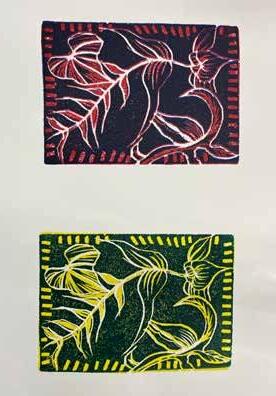
FAEA hosted three unique and creative summer workshops in St. Petersburg on June 12-14. These summer professional learning offerings were a great way for our members to see world-class art collections, learn new artistic styles and skills, and network with other arts professionals and educators. Thank you to the James Museum, Royal Brush Mfg., Hillsborough Education Foundation – Art in Education Fund, Dali Museum, Imagine Museum, and the Duncan McClellan Gallery for sponsoring 2024s FAEA Summer Workshops!




JUNE 13
The Dali Museum & Surrealism Workshop


JUNE 14


By Stephanie Scannapieco, FAEA
Elementary Division Director and Chair of the Social Media Committee
Have you seen more posts coming from FAEA recently? That’s because the FAEA board approved a new committee, the Social Media Committee and we have been hard at work! While FAEA's management company, the Center for Fine Arts Education, has done an awesome job, the board felt a need for a greater presence on our social media platforms such as Instagram, X, and Meta. If you’re not already following us, you can find us on Instagram and X @ FloridaArtEd, on Facebook @Florida
meets with their respective committees to determine what they think members may need to know or want to know. Each committee member belongs to a Canva group where we make and share graphics for upcoming social media posts for events and initiatives that FAEA is hosting and supporting.
Sometimes I think about that concept and it doesn’t seem like we’ve done much yet, but I have to remind myself that this committee started from nothing but an idea. From the beginning of 2024, we've developed guidelines, have had meetings, and trainings. Little by little, that idea wasn’t just an idea anymore but grew into the work

their chair, I couldn’t be more proud. Each of the committees have different posts you may see on our socials. Professional developments has been working on posts for conference, keynotes, artful happenings, and more. Advocacy has a whole campaign where they are doing a teacher spotlight. Check that out and nominate an art teacher that is doing great work. Exhibitions have been focused on our Member Virtual Exhibition, while Awards are going to be announcing winners! Editorial is looking for content and writers for Fresh Paint. And Partners and Sponsors have been busy thanking all that are making the conference happen.


If you have experience in graphic design or even if you don’t and you’d like to get involved, we would love to hear from you. Canva is a very user friendly platform and we’re willing to help you navigate through and learn the basics. The more you use it, the easier it becomes. If you’re anything like me, I love learning new art forms, especially ones that I can introduce to my students and Canva is definitely one of them. If you’re not ready to get involved in a committee, FAEA would still LOVE to see what you are doing on social media. You can use our handle, @FloridaArtEd, to tag us in your posts and stories and like, share, and comment on our posts and stories as well.


This column provides FAEA members with information about Florida cultural organizations and the academic offerings they provide.
By Heather Hagy, Middle School Art teacher in St. Augustine and FAEA Editorial Committee Member


The Museum of Fine Arts, St. Petersburg is located in the downtown bayfront of St. Pete. It has been voted as one of the best museums in the Tampa Bay Area repeatedly, and after taking a look around, I can see why.
The museum was founded by Margaret Acheson Stewart in 1965. Since then it has expanded to more than double its original size while continuing its mission to engage, educate, and excite diverse communities by collecting, exhibiting, and preserving works of art for the enrichment and enjoyment of all.
The Mary Alice McClendon Conservatory is a free and welcoming community space that currently houses the Christian Sampson exhibition, Tempus volat, hora fugit (Time flies, hours flee). The contemporary space has been activated by this installation based on the astronomical calendar. The changing conversation between color and light on the walls of windows overlooking Tampa Bay evokes feelings of how we fit into and interact with time and space. It is a place to contemplate, meditate, and relax.


Highlights of the collection include works by Georgia O’Keefe, Claude Monet, Kehinde Wiley, and Jacob Lawrence. This encyclopedic museum houses over 20,000 objects that span 5,000 years of history from civilizations all over the world. MFA St. Pete can also boast to one of the largest and most significant photographic collections in the Southeast. A rotating schedule of special exhibitions throughout the year complements the permanent collection.
The MFA diligently works to appeal to a wide variety of
interests. Programs include a variety of visual and performing arts. Guest curators, artists, historians, art critics, and poets are regular speakers. Special programming includes the Marly Music series which brings a range of performances to the museum from Jazz to Classical to World music. There is another unique opportunity for museum visitors to witness - live conservation by renowned conservator Luis Seixas in its Live Conservation series. Currently, from 10 am-2 pm every weekday, visitors can observe the conservation of a 17th-cen-
tury Spanish Tabernacle live in the Miriam Acheson Gallery. Youth programs include summer camps and workshops and events like Painting in the Park, Museum Minis, and Homeschool Hours. Artist Ya La’ford recently held a workshop for students based on Jackson Pollock, and the participants’ work will be displayed in an upcoming exhibition, Gravity. In partnership with Pinellas County Schools, all 6thgrade classes are invited to the MFA tour program. Lastly, evolving curriculum training is available to K-12 teachers.
The MFA highly encourages visitors to sketch in the galleries and hosts a Picture of Health Series that focuses on emotional wellness.
During the annual FAEA conference, the Member Virtual Exhibit (MVE) reception will be hosted by the MFA St. Petersburg, located within walking distance from the conference hotel. While visiting, please be sure to explore the Skyway exhibition. It is the third iteration of a collaborative effort amongst five local art institutions. The MFA is displaying the works of seven local artists, which will be on view throughout the museum as a dialogue with art in the permanent collection.
The MFA St. Petersburg is open Tuesday-Sunday from 10am – 5pm. Visit the museum’s website – www.mfastpete. org - to learn more!


By Susannah Brown, PhD, Florida Atlantic University and Eileen Ariza, EdD, Florida Atlantic University
Abstract
This research delineates an interdisciplinary approach incorporating environmental arts education, aimed at fostering students’ engagement in enhancing community and local environments. The author contextualizes this educational approach by guiding students in crafting their own artwork, facilitating immediate and intimate associations with the natural surroundings. By contributing their artistic expressions, second grade students effectively assume the role of “environmental artists,” thereby augmenting the broader world around them.

Art educators can influence others through visual arts centered on environmental issues, fostering heightened environmental awareness conducive to sustainability. This principle serves as the driving force behind the project outlined in this paper. The insights of John Grande (2004) further catalyzed this endeavor, as he pondered the role of environmental visual art in instigating societal change and enriching human culture within urban environments through his question: “In what way does this kind of art imply a commitment to social change and the betterment of human culture in the city, its local history or the broader context of nature with whose resources we change, alter and construct our city environments?” (Grande, 2004, p. 13). It is this dedication to fostering a brighter future that inspired the involvement of young children at a South Florida elementary school in this project. The second-grade students in two different classes participated in visual arts projects integrated with environmental issues

and were asked to share their experiences and perspectives through a pre-activity and post-activity questionnaires.
Thematic integrated instruction, including topics revolving around environmental issues are common in United States elementary schools (Brown & Bousalis, 2018; Inwood, 2015). Frequently, educators delve into themes such as recycling, the water cycle, habitats, natural resources, energy, pollution, or other environmental concerns, and at times intertwine visual arts with these various concepts in elementary classrooms (Ulbricht, 1998). However, these thematic lessons often generalize ecological matters, focusing on global societal aspects rather than delving into students’ immediate environments and their potential to effect change. While educators anticipate students will draw real-world connections, young elementary school students often require guidance in analyzing environmental and visual art concepts and grasping ideas applicable to their lives. Art educators play a crucial role in facilitating these connections, ensuring the transfer of knowledge throughout subject areas, and building children’s schema during the lesson

(Brown & Ariza, 2022; Fogarty et al., 1991; Kim & Burkhauser, 2021). In this research project, the objective is to capture second grade students’ perspectives before and after instructional activities that engaged students in learning about visual arts and environmental issues with the end goal of providing insight for educators on best practices in this research field.
This project involved second-grade students from an elementary school situated in the southeastern United States. The selection of this school, with its 883 students, stemmed from its collaboration with a local university and an Environmental Education Center. Both institutions share a common focus on environmental education for children, employing active engagement and self-directed learning techniques (Grava & Pole, 2021; Inwood, 2015). The project aimed to learn about the impact of engaged learning activities integrating visual arts and environmental issues on students’ conceptual awareness. Two classes of second-grade students, aged seven to eight, participated in the project, completing pre- and post-activity questionnaires to gauge their perceptions of the environment before and after engaging in the activities. Parental and child consent forms were obtained. Classroom A comprised fifteen participants (Na = 15), while Classroom B had fourteen par-

ticipants (Nb = 14), totaling twenty-nine second-grade students (Ntot = 29). This paper includes selected photographs of the students’ artwork to visually demonstrate the outcomes of their efforts. Analysis of the questionnaire data revealed common themes, allowing for a comparison of the effects of engaged learning activities on students’ understanding of environmental issues and art (Vasko, 2016). The study’s findings and conclusions are presented, discussing potential approaches to teaching environmental issues integrated with art to young children.

Further research is warranted in this area to explore effective pedagogical practices that foster critical and creative thinking skills in a constructivist learning environment (Dewey, 1934). The researcher aims to understand the students’ and teachers’ perceptions of environmental art and how to engage learners in activities concerning environmental issues and visual art. Through guided exploration and artistic expression, facilitated by their teachers, students can develop a deeper understanding of environmental phenomena and cultivate the skills necessary to make informed decisions about their surroundings. Teaching environmental education integrated with visual arts is crucial due to our finite world and limited resources, to promote sustainable development and nurturing of our planet’s health by future generations. As John Grande (2004) aptly states, “If we respect the diversity that exists around in nature, we discover a greater depth of knowledge and experience. This is the key to an art of the future” (p. 65). Integrating environmental education with visual arts cultivates a deeper understanding of nature and encourages responsible citizenship for children.
After an initial visit to explain the study and collect consent forms, the students completed a pre-instruction questionnaire prior to the instructional activities that integrated visual arts with environmental concepts. Using a Likert-like scale, students answered the following questions:
Question 1: The Environment is the World Around Me.
Question 2: Habitats Are Where Creatures, Like People, Plants, and Animals Live.
Question 3: Habitats Provide Food, Water, Shelter, and Space for Living Creatures in a Specific Climate.
Question 4: Pollution Is a Problem in Our Environment.
Question 5: Living Creatures like People, Animals, and Plants Depend Upon Each Other to Survive.
Question 6: I Can Help the Environment.
Question 7: Artists Can Make Art about the Environment.
Question 8: Artwork Can Help the Environment.
Question 9: Looking at Other People’s Artwork Can Help Me to Make My Own Artwork.
Question 10: I Am an Artist.
A series of three instructional sessions for each class (A and B) provided engaged learning experiences that integrated visual arts and environmental concepts. First, a brief lecture of artists who feature the environment in their artwork was shared. A variety of historical and contemporary artists and their work were discussed including those who depict natural scenes and other artists who use natural materials to create work. Grande (2004) discusses several ideas that frame this study, the main idea being a shift in artistic understanding that focuses on nature as “the art of which we are a part” (Grande, 2004, p. 36). Next, the students used crayons on pa-
per to draw from memory natural scenes. Most students drew plants, trees, and flowers (see Figures 1 and 2). The students shared their work through a class critique and discussion.
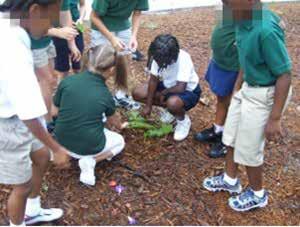
The second instructional session included a discussion of artists who work en plein air. Different watercolor painting techniques were demonstrated prior to the students going outside in a natural area on the school campus to paint trees (see Figure 3). Experiences in the natural environment support the development of the students’ ecological awareness (Vasko, 2016). The students created watercolor paintings (see Figures 4 & 5). The students discussed their paintings with the group.
The final instructional session included a brief lecture about contemporary artists who use natural materials to make their artwork. The class again went outside to the natural area on the school campus and as a group collaborated to create a nature mandala from materials found on the ground (see Figures 6–8). A mandala is a circular design that often has an emotional and spiritual connection for the creators. Mandalas are created across world cultures throughout history and may be associated with religious rituals (Jung, 1959). Debris on the ground was collected that focuses on textures and colors and placed in a circular arrangement by the students. Group decisions were made such as how large the circle should be, which materials were used, and where objects were placed. (see Figures 6, 7, and 8). Once the mandala was completed, a group discussion on the interpretation of the mandala and the materials used ensued. The final step of the project was to complete the post-instruction questionnaire.
Question #1: “The Environment is the World Around Me,” 28 students expressed agreement in the pre-instruction questionnaire, and all 29 students concurred in the post-instruction questionnaire. This suggests minimal change in opinion, with only one student altering their stance post-instruction. Students’ pre-existing knowledge may have influenced their responses, implying possible emphasis on this concept within the curriculum and prior instruction, fostering a deep understanding among students.
Question #2: “Habitats Are Where Creatures, Like People, Plants, and Animals Live.” In the pre-instruction questionnaire, 24 students either strongly agreed or agreed, a sentiment mirrored in the post-instruction questionnaire. However, two students dissented post-activity, indicating minimal change in understanding. This consistent response suggests a firm grasp of the concept among the majority of students.
Question #3: “Habitats Provide Food, Water, Shelter, and Space for Living Creatures in a Specific Climate.” In the pre-instruction questionnaire, 26 students concurred, with two dissenting. Post-instruction, 24 students agreed, with one dissenting. Similar ratings pre- and post-instruction suggest no significant change in comprehension. This pattern, akin to Question #2, underscores a prevailing understanding of habitats among students.
Question #4: “Pollution Is a Problem in Our Environment.” In the pre-instruction questionnaire, 25 students agreed, while one dissented. Post-instruction, 27 students agreed, with one dissenting. The consistent responses imply prior awareness, potentially influenced by curriculum emphasis. Notably, Classroom B showed heightened awareness, warranting further investigation.
Question #5: “Living Creatures like People, Animals, and Plants Depend Upon Each Other to Survive.” In the pre-instruction questionnaire, 22 students agreed, with one dissenting. Post-instruction, 26 students agreed, with one dissenting. This shift indicates improved understanding post-instruction, with most students recognizing interdependence among living organisms.
Question #6: “I Can Help the Environment.” In both questionnaires, all students agreed, suggesting prior knowledge influencing pre-instruction responses. Post-instruction, unanimous agreement highlights a belief in individual capacity for environmental stewardship. Further research is warranted to explore sustained attitudes towards environmental activism.
Question #7: “Artists Can Make Art about the Environment.” In the pre-instruction questionnaire, 25 students
agreed, with one dissenting. Post-instruction, 26 students agreed unanimously. This suggests heightened appreciation for environmental art post-instruction, possibly influenced by prior exposure to art concepts.
Question #8: “Artwork Can Help the Environment.” Pre-instruction, 13 students agreed, while 11 disagreed. Post-instruction, 14 agreed, with six dissenting. While some shifted towards agreement post-instruction, philosophical change takes time, evident in persistent dissenting views. Further research is needed to explore students’ evolving perceptions of art’s role in environmental change.
Question #9: “Looking at Other People’s Artwork Can Help Me to Make My Own Artwork.” Pre-instruction, 19 students agreed, while five dissented. Post-instruction, 27 agreed, with one dissenting. A significant increase post-instruction suggests the influence of purposeful modeling, emphasizing the role of environmental artists in inspiring student artwork.

Question #10: “I Am an Artist.” Pre-instruction, 25 students agreed, increasing to 27 post-instruction. This suggests reinforced self-efficacy, potentially influenced by exposure to environmental art concepts. Classroom A’s leadership in perceiving others’ artwork as inspirational likely contributed to heightened self-efficacy among students.
The findings in the study encourage research in the area of visual arts and environmental concepts, noting students’ grasp of basic environmental concepts and their ability to strongly link them to visual arts. Students’ self-identification as artists and belief in their artwork’s potential to effect environmental change is promising and may indicate that direct instruction fosters self-reliance and efficacy. Best practices that focus on increasing young children’s engagement with the natural world on the their school campus or in the community include: painting or drawing outdoors, using natural materials to create artwork, studying and discussing artists who focus on environmental issues, and group discussion for collaborative and individual art creation. Further research in
the relationship between instruction impacting self-reliance is needed. This empowerment cultivates responsible decision-making and positive attitudes toward the environment, crucial for the young children’s future roles as global citizens. Guiding young children to develop sensitivity towards environmental needs fosters compassion for nature and the wider community, shaping them into conscientious individuals capable of contributing positively to society.
Publisher’s Note: This research brief was invited as a result of the full study publication: Brown, S., & Ariza, E. (2022). Using

the Arts to Teach Environmental Education through Self-Directed Learning. Formazione & Insegnamento: European Journal of Research on Education and Teaching, 20(3), 190-206. https://doi. org/10.7346/-fei-XX-03-22_15
References
Brown, S., & Ariza, E. (2022). Using the Arts to Teach Environmental Education through Self-Directed Learning. Formazione & insegnamento: European Journal of Research on Education and Teaching, 20 (3), 190-206. https://doi.org/10.7346/-fei-XX-03-22_15
Brown, S. & Bousalis, R. (2018). Curriculum integration in contemporary teaching practice: Emerging research and opportunities. Hershey, PA: IGI Global.
Costa, A., & Kallick B. (2004). Assessment strategies for self-directed learning. Corwin Press. https://dx.doi.org/10.4135/9781483328782
Dewey, J. (1934). Art as experience. The Berkley Publishing Group. Fogarty, R., Perkins, D. N., & Barrell, J. (1991). The mindful school: How to teach for transfer. IRI/Skylight Pub.
Grande, J. (2004). Balance: Art and Nature. Black Rose Publishing. Grava, J., & Pole, V. (2021). The promotion of self-directed learning in pre-school: Reflection on teachers’ professional practice. Cypriot Journal of Educational Sciences, 16(5), 2336–2352. https://doi. org/10.18844/cjes.v16i5.6351
Illeris, H. (2012). Interrogations: Art, art education and environmental sustainability. International Journal of Education through Art, 8(3), 221–237. https://doi.org/10.1386/eta.8.3.221_1
Inwood, H. (2010). Shades of green: Growing environmentalism through art education. Art Education, 63(6), 33–38. https://doi.org/1 0.1080/00043125.2010.11519100
Jung, C. (1959). Mandala symbolism (R. F. C. Hull, Trans.). Princeton University Press.
Kim, J. S., & Burkhauser, M. A. (2022). Teaching for transfer can help young children read for understanding. Phi Delta Kappan, 103(8), 20–24. https://doi.org/10.1177/00317217221100006
Ulbricht, J. (1998). Changing concepts of environmental art education: Toward a broader definition. Art Education, 51(6), 22–34. https://doi.org/10.2307/3193748
Vasko, Z. (2016). Connections between artistic practice and experiences in nature: Considerations for how art education can engender ecological awareness. Canadian Review of Art Education: Research and Issues / Revue canadienne de recherches et enjeux en éducation artistique, 42(2), 69–79. https://doi.org/10.26443/crae.v42i2.8


