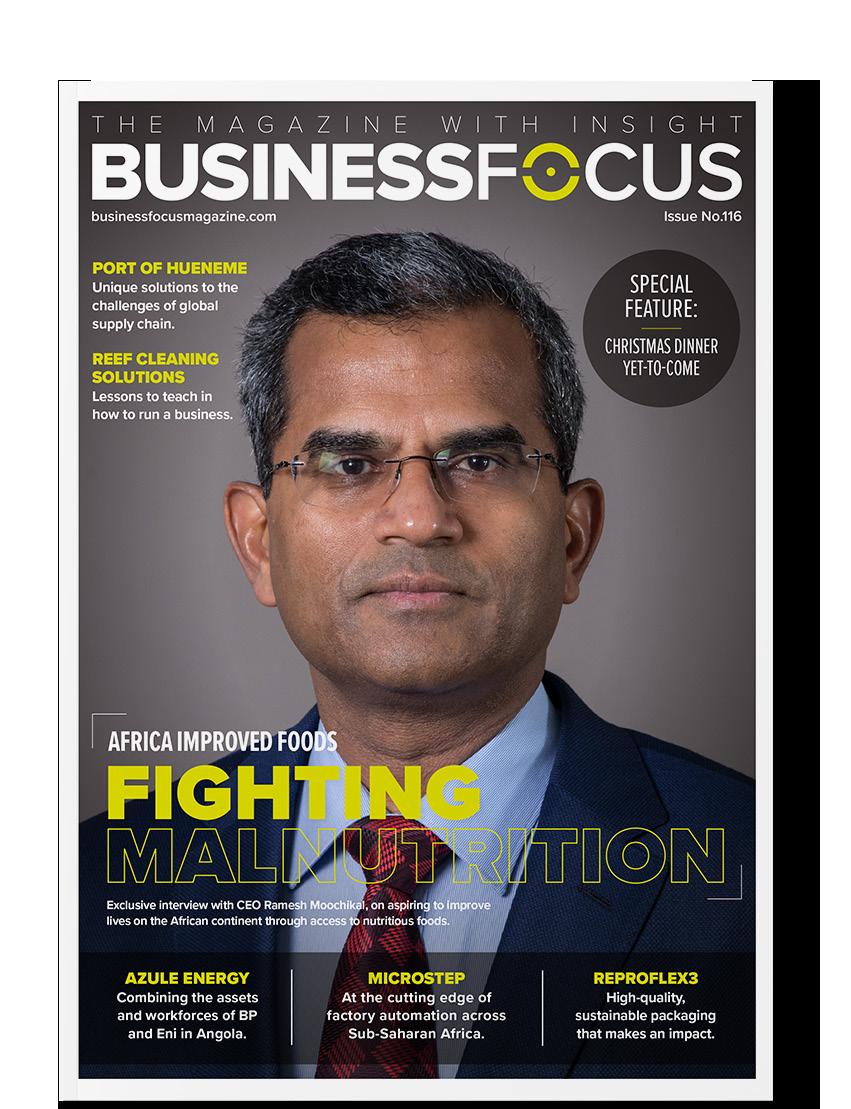
SPECIAL FEATURE:
MANUFACTURING TECHNOLOGY
DEFORCHE CONSTRUCTION GROUP
Greenhouse technology offering solutions in the construction world.
SAN JOSÉ & SANTA CLARA RWF
An infrastructure revolution is taking place beneath the surface.
SPECIAL FEATURE:
MANUFACTURING TECHNOLOGY
DEFORCHE CONSTRUCTION GROUP
Greenhouse technology offering solutions in the construction world.
SAN JOSÉ & SANTA CLARA RWF
An infrastructure revolution is taking place beneath the surface.

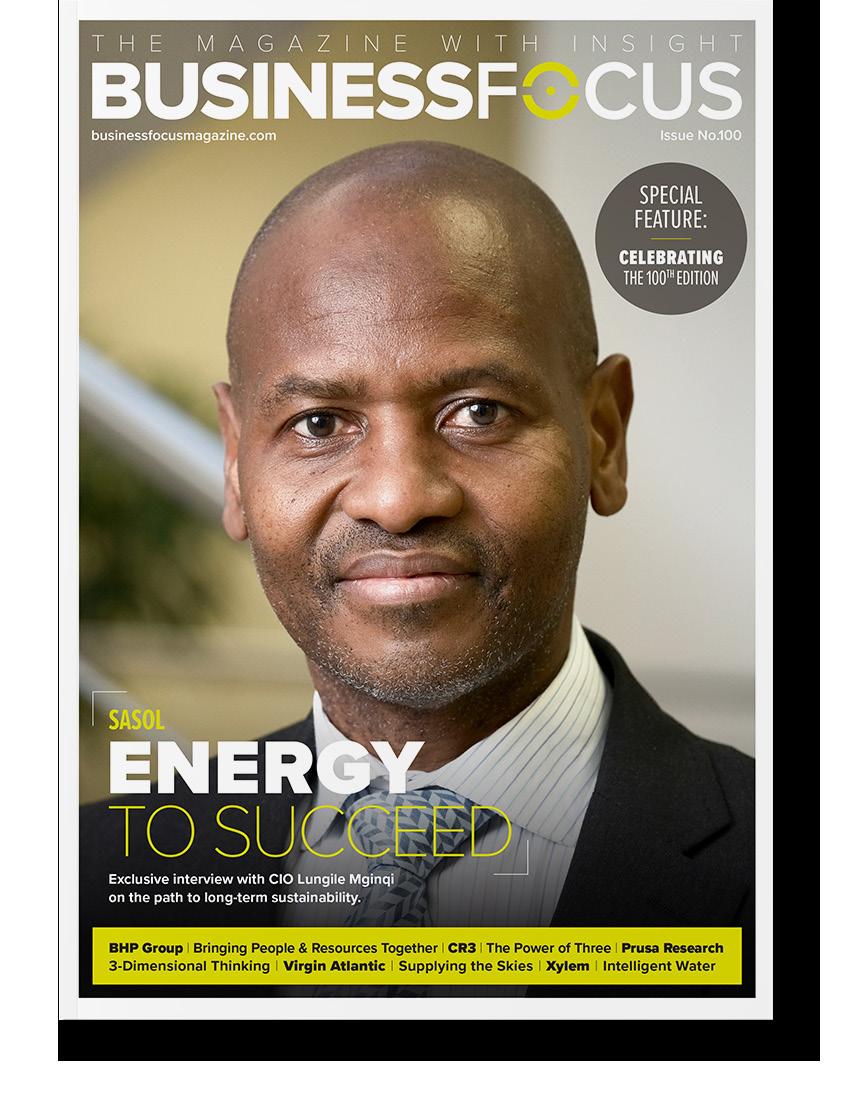

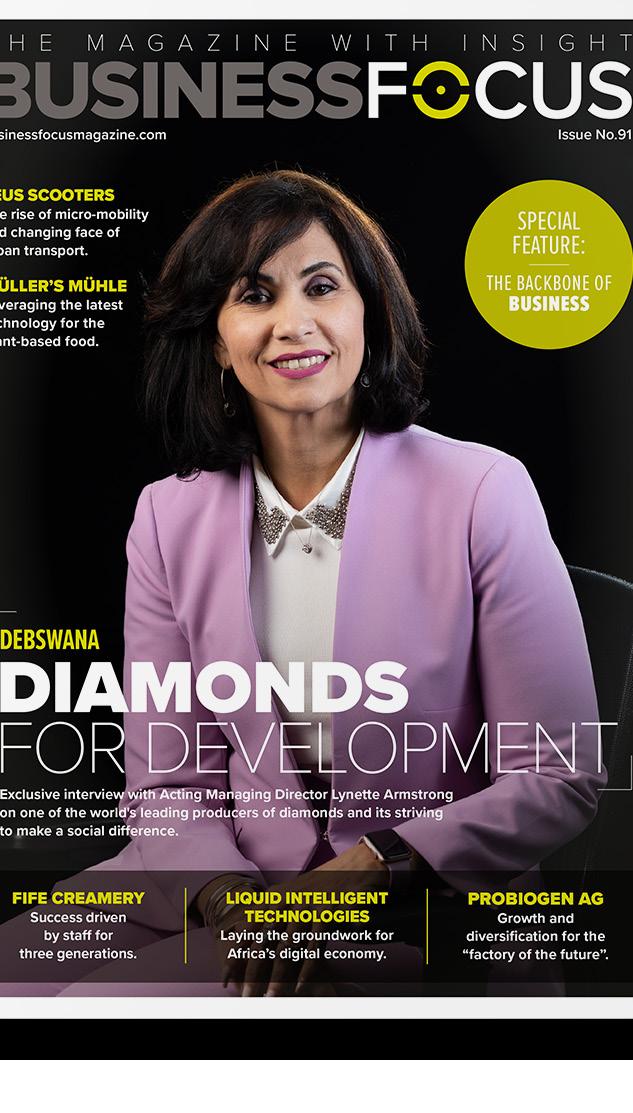
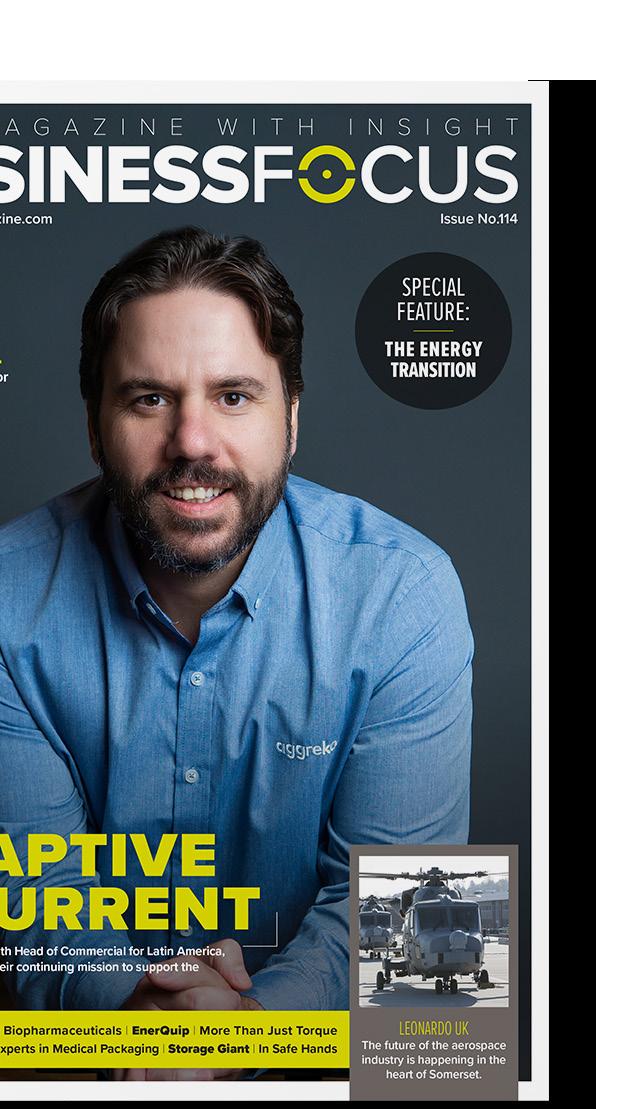
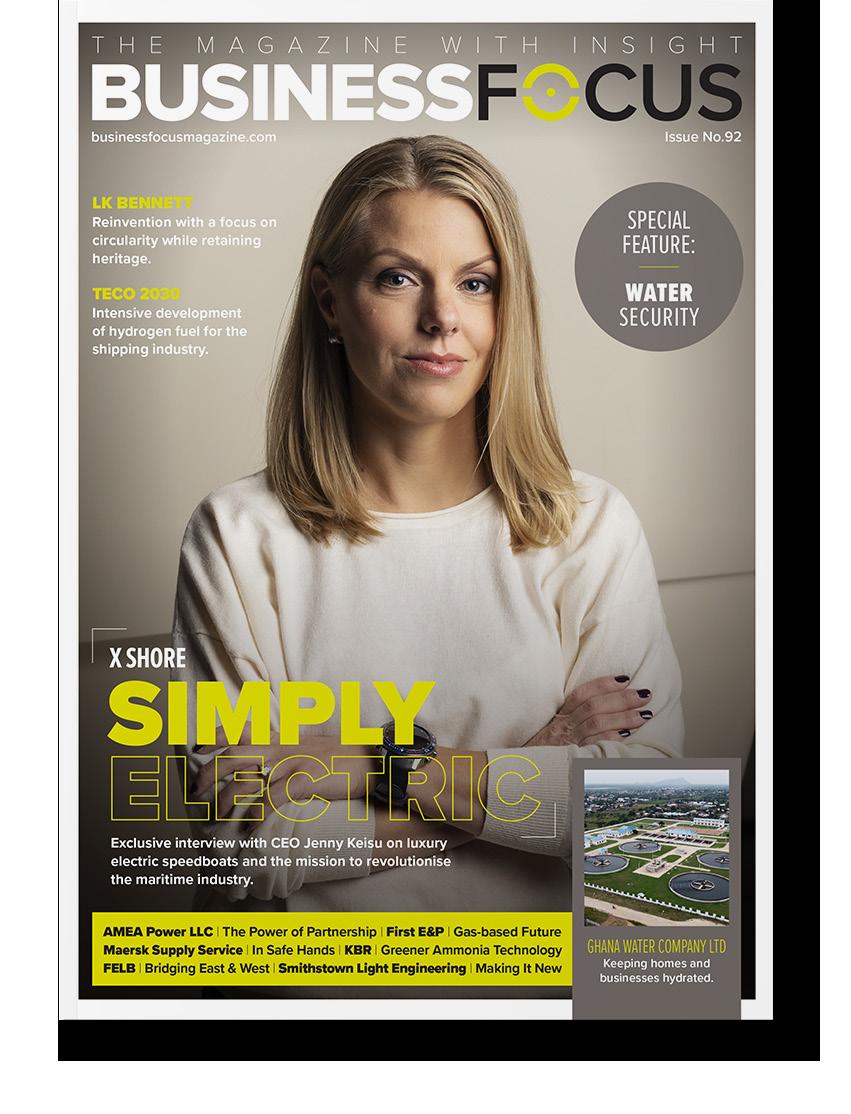
PROJECT MANAGERS
CAMERON BEAZER c.beazer@ceomediagroup.com
JACK BIBBY
j.bibby@ceomediagroup.com
DEAN BROWN d.brown@ceomediagroup.com
JENNA CUNNINGHAM j.cunningham@ceomediagroup.com
JEREMY DAVIES
j.davies@ceomediagroup.com
JAMES ELVIN j.elvin@ceomediagroup.com
DAVID GARNER d.garner@ceomediagroup.com
OLIVER GRAHAM o.graham@ceomediagroup.com
DAVID HAYVIS d.hayvis@ceomediagroup.com
JOHN HOLLIMAN j.holliman@ceomediagroup.com
LUKE JOHNSON l.johnson@ceomediagroup.com
DECLAN JONES d.jones@ceomediagroup.com
STEVEN MUSTOE s.mustoe@ceomediagroup.com
ROBERT NAPIER SMITH r.smith@ceomediagroup.com
LISA POBEREZHNIUK l.poberezhniuk@ceomediagroup.com
LUCY PULLING l.pulling@ceomediagroup.com
LIAM PYWELL l.pywell@ceomediagroup.com
NICKY RAMAGE n.ramage@ceomediagroup.com
RAPHAELA DOS SANTOS r.dossantos@ceomediagroup.com
JOAO SEABRA j.seabra@ceomediagroup.com
HAYDEN TURNER h.turner@ceomediagroup.com
TYLER WARNER t.warner@ceomediagroup.com
DAVID WATSON d.watson@ceomediagroup.com
DESIGN
SCOTT ANDREWS design@ceomediagroup.com
TOBY McLAREN design@ceomediagroup.com
ACCOUNTS
TESS CARR accounts@ceomediagroup.com
PRODUCTION
KAMILA KAJTOCH production@ceomediagroup.com
EDITORIAL
ALEXANDER McDONALD a.mcdonald@ceomediagroup.com
SALES & MARKETING DIRECTOR
TREVOR GRETSINGER t.gretsinger@ceomediagroup.com
SUBSCRIPTIONS, PRESS RELEASES AND GENERAL ENQUIRIES: info@ceomediagroup.com
Technology has always shaped the direction of industry. From the mechanisation of manufacturing to the rise of digital infrastructure, periods of technological advancement have consistently redefined how businesses operate, compete, and grow. In 2026, that pace of change shows no sign of slowing.
Across all sectors, companies are embracing new technologies not simply to improve efficiency, but to strengthen resilience, enhance quality, and unlock future opportunities. Innovation is no longer confined to Silicon Valley or software development – it is transforming industries both old and new, from heavy engineering to healthcare.
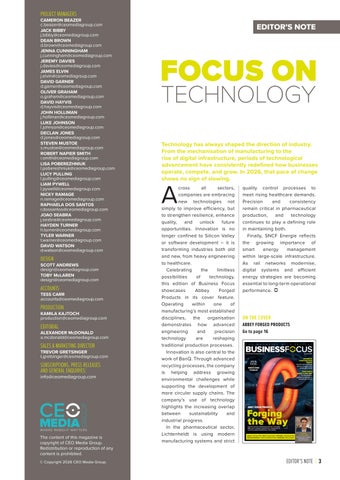
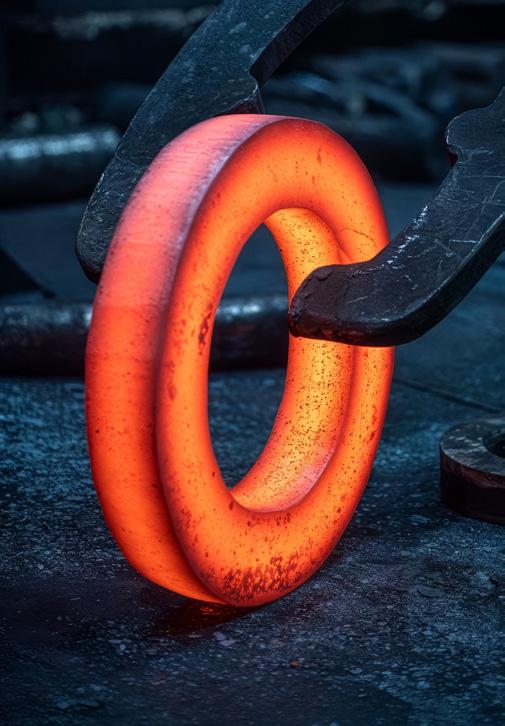
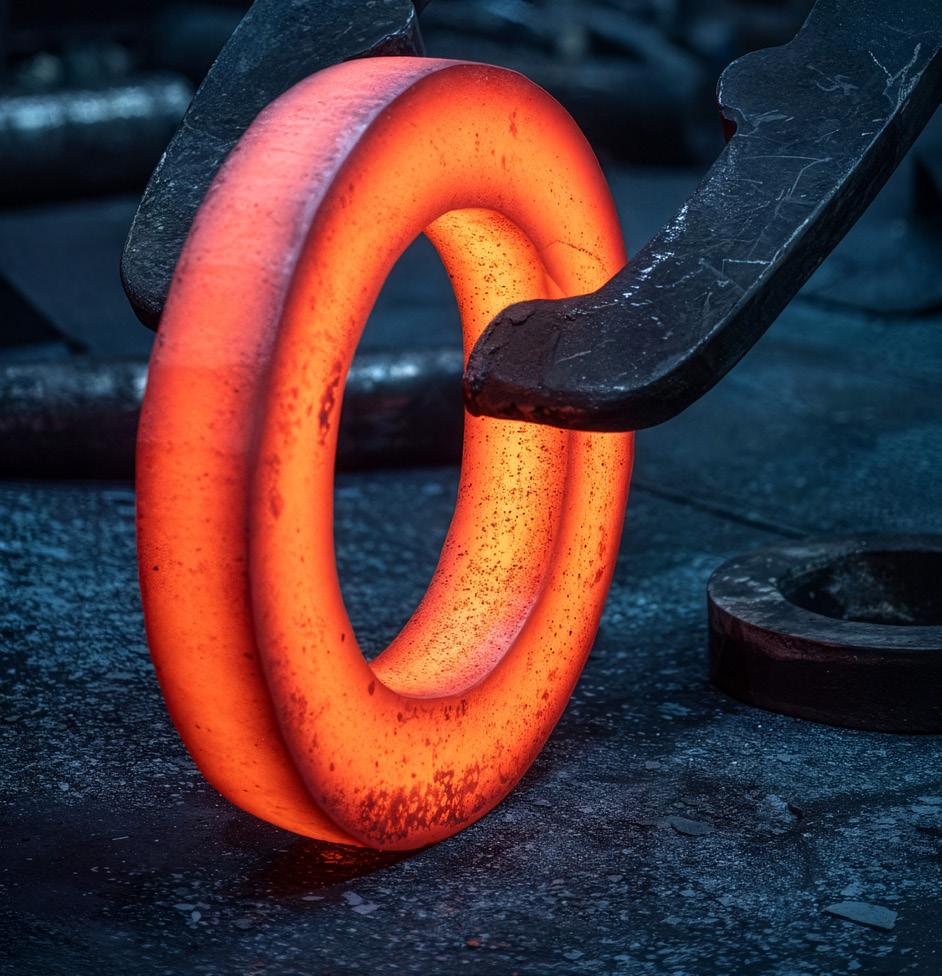
Celebrating the limitless possibilities of technology, this edition of Business Focus showcases Abbey Forged Products in its cover feature. Operating within one of manufacturing’s most established disciplines, the organisation demonstrates how advanced engineering and precision technology are reshaping traditional production processes. Innovation is also central to the work of BariQ. Through advanced recycling processes, the company is helping address growing environmental challenges while supporting the development of more circular supply chains. The company’s use of technology highlights the increasing overlap between sustainability and industrial progress.
In the pharmaceutical sector, Lichtenheldt is using modern manufacturing systems and strict
quality control processes to meet rising healthcare demands. Precision and consistency remain critical in pharmaceutical production, and technology continues to play a defining role in maintaining both.
Finally, SNCF Energie reflects the growing importance of smart energy management within large-scale infrastructure. As rail networks modernise, digital systems and efficient energy strategies are becoming essential to long-term operational performance.
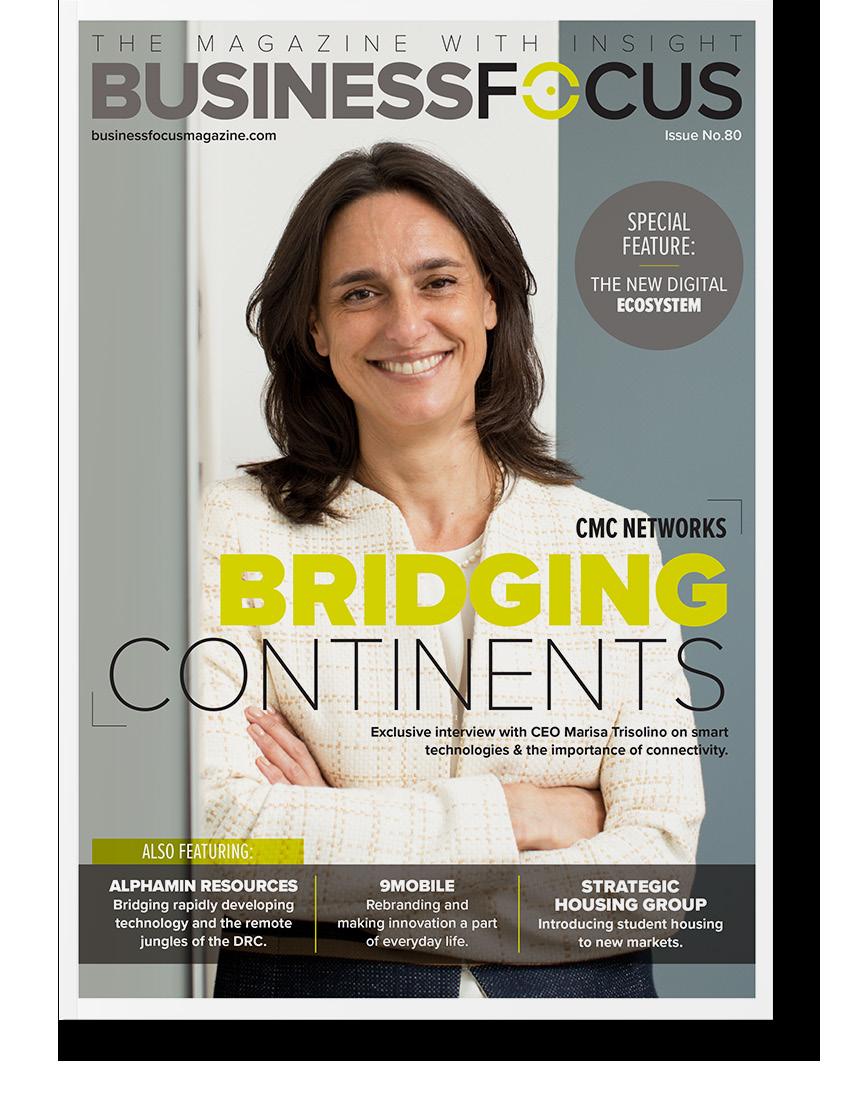
ON THE COVER ABBEY FORGED PRODUCTS
Go to page 16

GASTECH
14th - 17th September 2026
The world’s largest exhibition & conference dedicated to natural gas, LNG, low carbon solutions, electrification and AI for energy.
NEWS
Manufacturing Technology Industrial Evolution
LEADING FEATURE
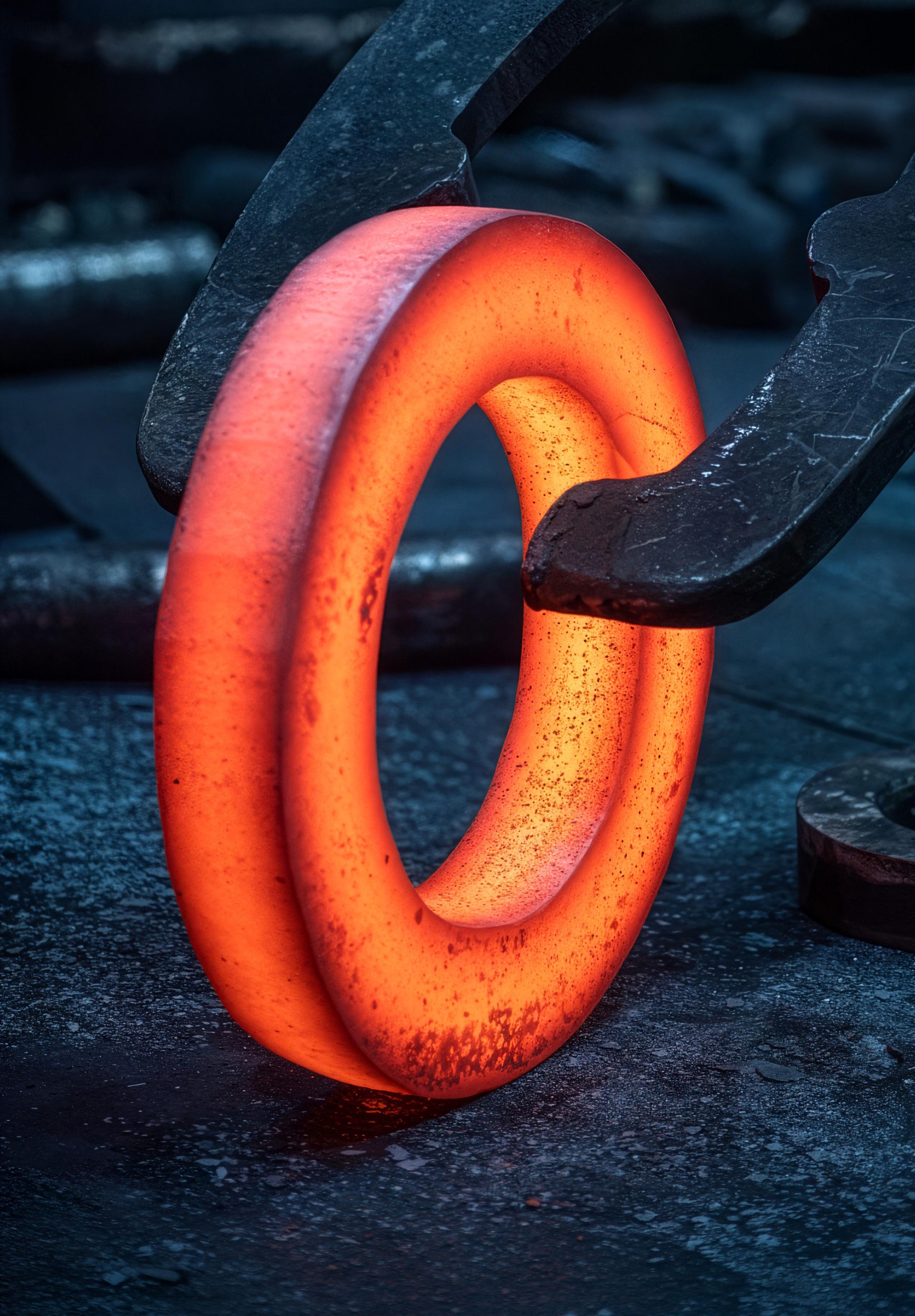
Abbey Forged Products Forging the Way
AUTOMOTIVE
Scorpion Automotive Trusted Protection
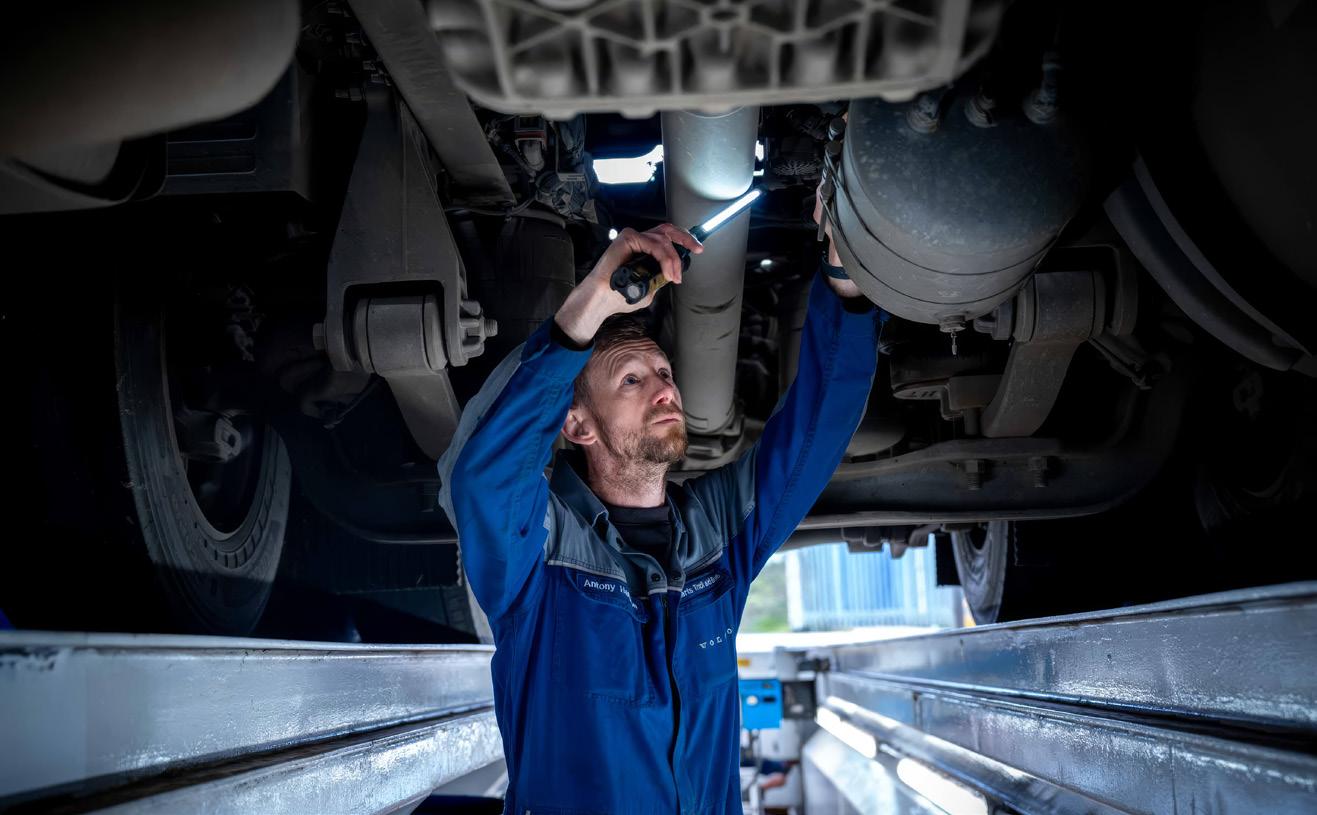
Stuart’s Truck & Bus Built to Deliver
The Floorbrite Group A Cleaner Future
Neal Communities Community Builders
Wilson James Raising Standards
ENERGY & UTILITIES
Augean A Herculean Effort
Bariq A Circular Future
City of Santa Monica Fresh Ideas
Renaissance Fusion The Fusion Revolution
San José - Santa Clara Regional Wastewater Facility Turning Waste into Water
SNCF Energie New Generation
Bühler Group
Powering Resilience Through Innovation
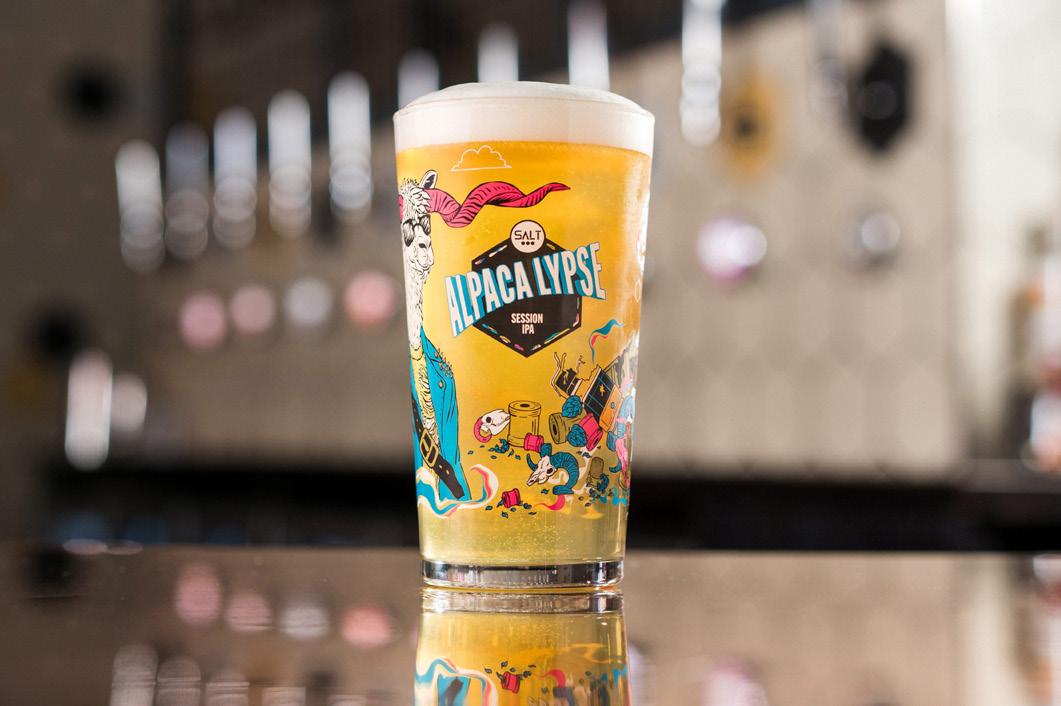
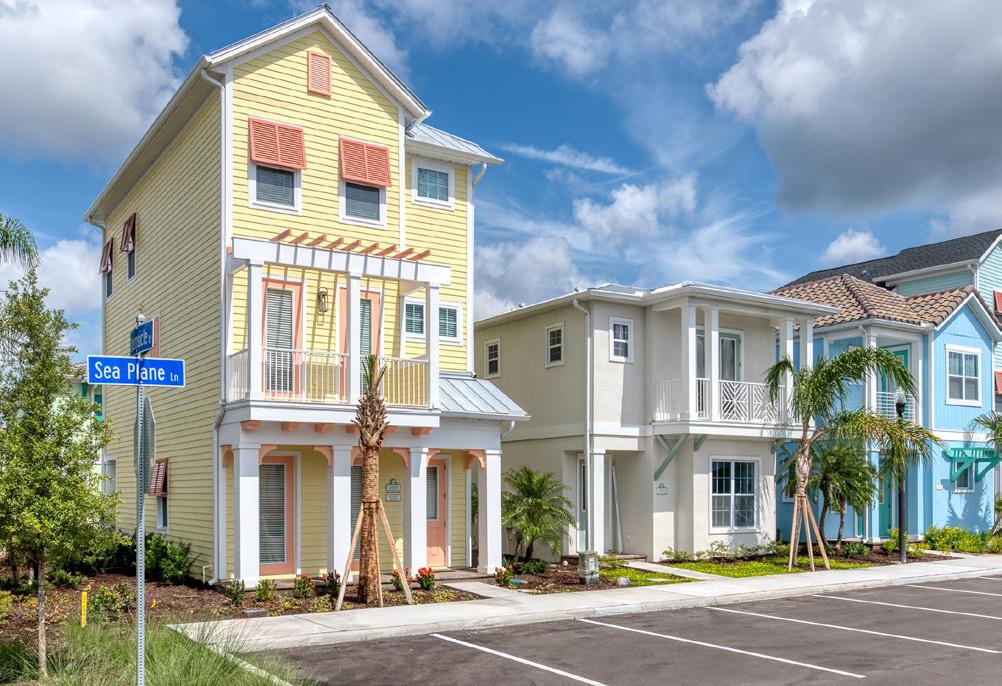

Peter Jones ILG Dependable Design
Progressive Planet
Don’t Call it Waste
Setrab
Performance Under Pressure
Salt Beer Factory & Ossett Brewery A relentlessly progressive powerhouse
HEALTHCARE & PHARMACEUTICAL
Apotek Produktion & Laboratorier
Scaling Precision, Securing Supply
Lichtenheldt Above and Beyond
Olon Repositioned for Advanced Therapies
HOSPITALITY & LEISURE
Rentyl

Verdeco More Than Greenwashing
Weatherite Air Conditioning Conditioned to Succeed
Wurtec
Elevating Standards
MINING
Gold Fields Ghana
Creating Enduring Value
RETAIL
Equestrian Stockholm A Horse of a Different Colour
SHIPPING, PORT & MARINE
Hurtigruten
Full Speed Ahead
Port of Cotonou
West Africa’s Next Logistics Powerhouse
TRANSPORT & LOGISTICS
Colas Rail UK
Decarbonising Rail
Guardian Fleet Services A Foundation for Growth
Johnson Controls, a global technology leader in energy efficiency, decarbonisation, thermal management and mission-critical performance, helps customers use energy more productively, reduce carbon emissions, and operate with the precision and resilience required in rapidly expanding industries such as data centres, healthcare, pharmaceuticals, advanced manufacturing, and higher education.
For more than 140 years, Johnson Controls has delivered performance where it really matters. Backed by advanced technology, lifecycle services and an industry-leading field organisation, we elevate customer performance, turn goals into real-world results and help move society forward.
• HVAC-R
• Fire Detection
• Security

• Building Automation & Controls
• Fire Suppression
• Service & Maintenance
Visit www.johnsoncontrols.co.uk/bfm for more information or call us on +44 (0)800 804 6227

Twww.gastechevent.com

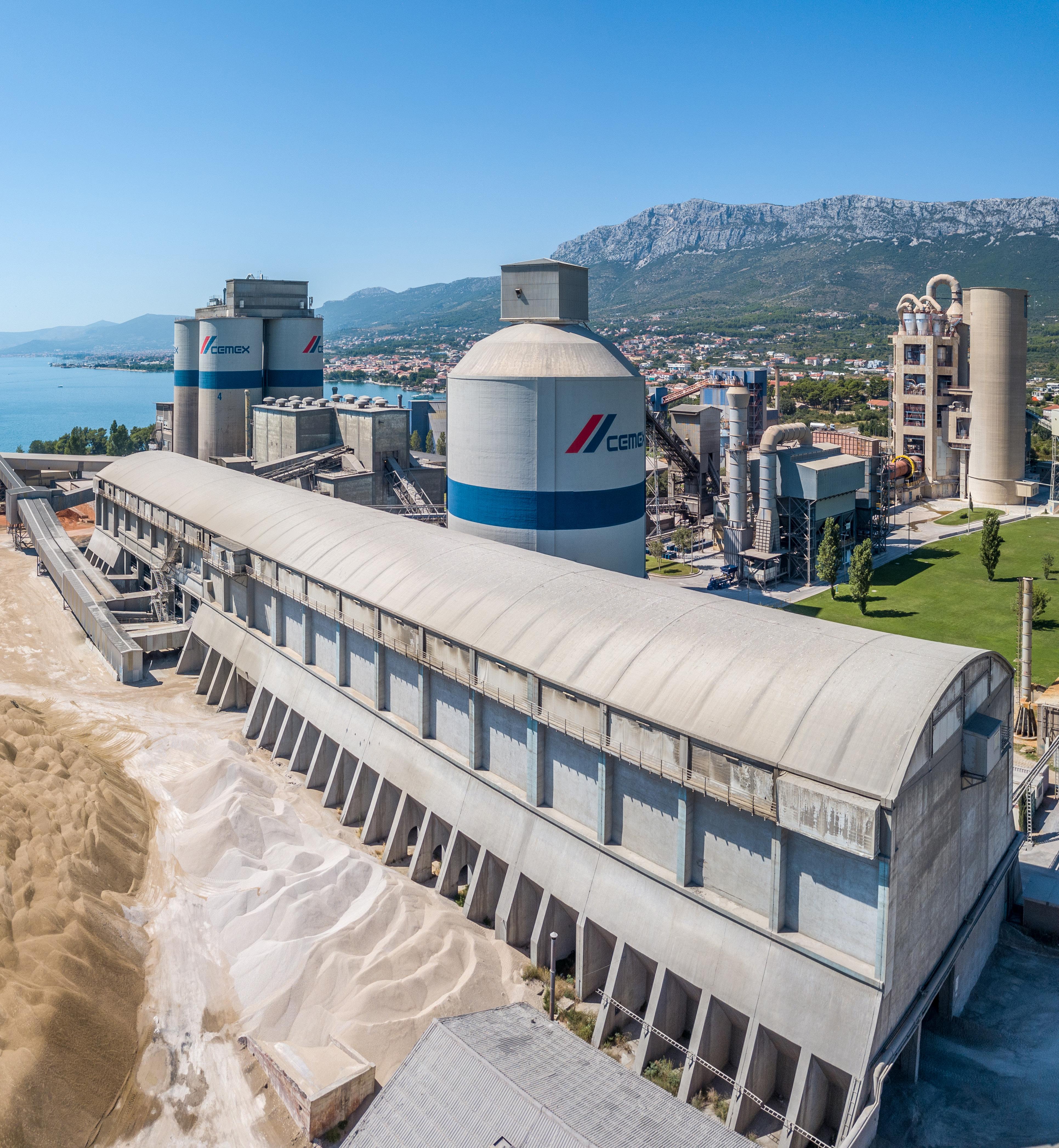


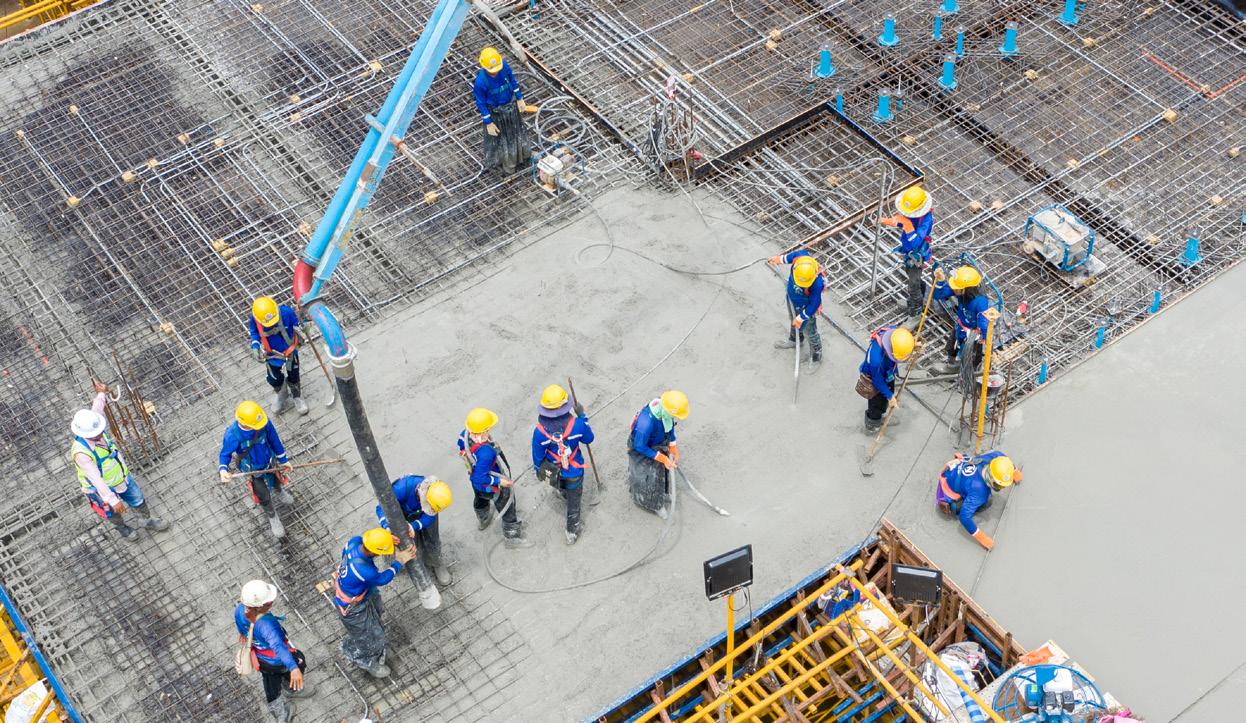
At CEMEX we believe in building, and building a better future for everyone. A future we can be proud to leave to our children, and our grandchildren.
A future where the needs of the built environment are balanced with a firm set of commitments to the natural environment. We strive to build better into everything we do, through better thinking, better solutions, better service and ultimately a better future for everyone. That is why our company vision is to be the best. Building a better future. www.cemex.com
ADVANCED TECHNOLOGIES ARE REDEFINING MANUFACTURING, HELPING BUSINESSES BECOME SMARTER, FASTER, AND MORE RESILIENT.
Manufacturing is one of humanity’s oldest industries. Long before the rise of automation and digital systems, early civilisations were shaping metal, producing tools, and refining production methods to support growing societies.
The principles behind manufacturing have remained remarkably consistent over time: efficiency, precision, and scale. What has changed is the technology driving those ambitions.
From artificial intelligence and automation to smart sensors and advanced materials, modern manufacturing is undergoing a transformation unlike anything seen before. Across industries, companies are investing in technologies that improve productivity, reduce waste, and strengthen quality control. In doing so, they are reshaping not only how products are made, but how businesses compete in a rapidly evolving global market.
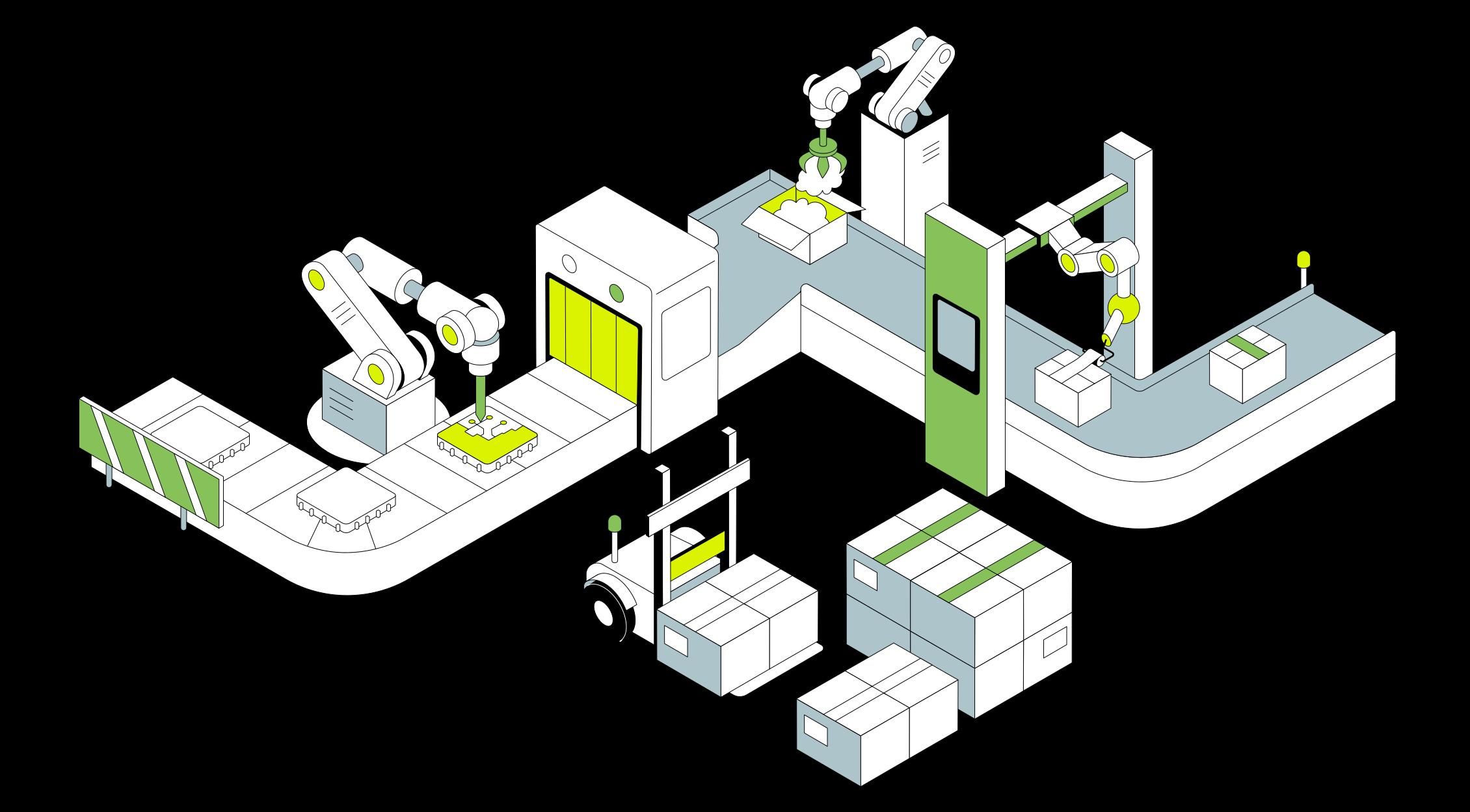
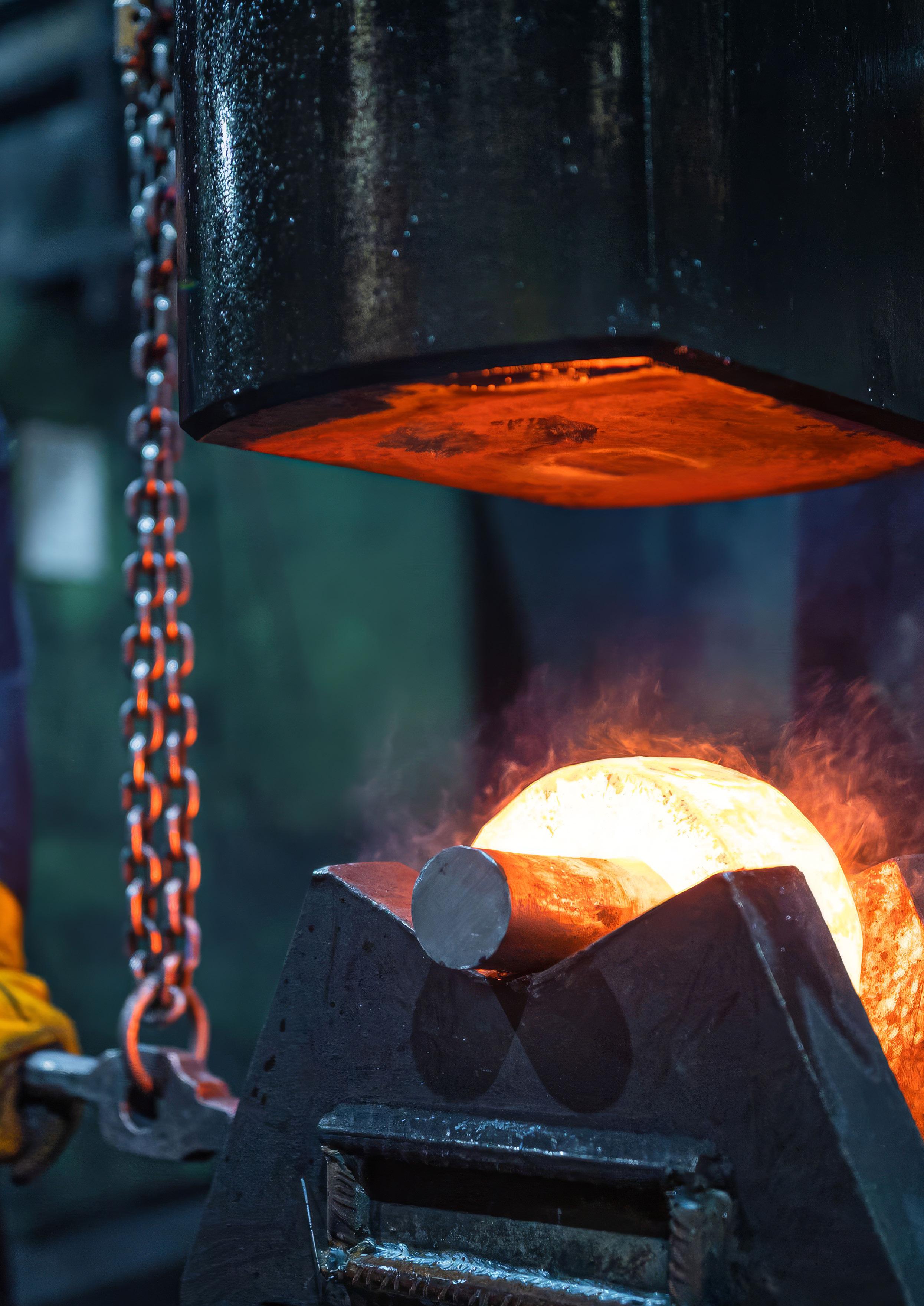
Few sectors illustrate this better than forging. Our cover feature, Abbey Forged Products, operates within a discipline that dates back thousands of years. Historically associated with heavy industry and traditional engineering, forging has become increasingly sophisticated through the adoption of modern technologies.
Precision machining, digital modelling, and advanced quality assurance systems now play a central role in production. Abbey Forged Products has embraced this shift, combining longstanding engineering expertise with investment in modern manufacturing capability. This approach allows the company to meet the demands of sectors where performance, reliability, and traceability are essential.
The evolution of forging reflects a broader trend across manufacturing. Traditional skills remain critical, but they are now supported by technologies that enhance consistency and efficiency. Manufacturers are no longer relying solely on physical production expertise. Data, automation, and digital integration have become equally important components of industrial success.
Sustainability is also becoming a defining factor in manufacturing’s technological evolution. Verdeco represents this growing emphasis on environmentally conscious production. As industries face mounting pressure to reduce waste and lower emissions, companies are exploring new materials, cleaner processes, and more efficient resource management.
Technology is central to achieving these goals.
Advanced monitoring systems allow manufacturers to track energy use in real time, while automation can reduce material waste and optimise output. For companies like Verdeco, sustainability is not separate from operational performance. The two are becoming increasingly interconnected.
Automation is also changing sectors that have historically depended on labour-intensive processes. EmTech Hatchery Systems is modernising hatchery operations through advanced incubation and automation technologies. In agriculture and food production, precision is essential, and technology now enables far greater levels of control and efficiency.
Modern hatchery systems can monitor temperature, humidity, airflow, and performance data with exceptional accuracy. This not only improves productivity but also supports animal welfare and consistency across large-scale operations. EmTech Hatchery Systems demonstrates how specialist manufacturing technology can transform even highly specific industrial niches.
Data-driven manufacturing is another key area of development. Bizerba (Industry) operates at the intersection of manufacturing, logistics, and digital integration. Its solutions help manufacturers manage weighing, inspection, labelling, and traceability with increasing precision.
In modern manufacturing environments, traceability has become essential. Businesses must be able to monitor products throughout the supply
chain, ensuring quality and compliance at every stage. Through integrated systems and intelligent data management, companies like Bizerba are helping manufacturers improve transparency and operational control.
Growing reliance on connected technologies reflects the rise of Industry 4.0, where production systems are linked through digital networks capable of analysing and responding to information in real time. Smart factories, predictive maintenance, and machine learning are no longer theoretical concepts but standard practice across many industrial sectors.
The impact of technology can also be seen in infrastructure and mobility. Wurtec operates within a field where reliability and safety are paramount. As buildings become more technologically advanced, vertical transportation systems must evolve alongside them.

Modern elevator and escalator systems now rely heavily on intelligent diagnostics, remote monitoring, and precisionengineered components. These technologies help reduce downtime, improve maintenance efficiency, and enhance passenger safety. Wurtec’s work highlights how manufacturing innovation often takes place behind the scenes, supporting the infrastructure people interact with every day. Communication technology has also become increasingly important within industrial environments. Peter Jones ILG develops specialist carrying solutions and communication accessories used across emergency services, security, and industrial sectors. As workplaces become more connected and operational demands become more complex, dependable communication systems are essential.
Manufacturing in this area requires precision engineering alongside adaptability. Products must withstand demanding environments while integrating with evolving technologies. Peter Jones demonstrates how manufacturers are responding to increasingly specialised requirements through continuous product development and innovation. Elsewhere, thermal management technology is playing a growing role across automotive and industrial manufacturing. Setrab specialises in oil coolers and heat exchangers designed for high-performance applications. In sectors where efficiency and reliability are critical, controlling temperature can have a significant impact on operational performance.

As engines, machinery, and industrial systems become more advanced, demand for effective cooling solutions continues to grow. Setrab’s products support this evolution, demonstrating how technological progress often depends on highly specialised manufacturing expertise.
One of the defining features of modern manufacturing is the speed at which innovation now occurs. Technologies that once took decades to become widespread can now transform industries within a matter of years. Artificial intelligence, robotics, and digital twins are already influencing production environments across the globe.
And yet, despite these rapid advances, manufacturing remains fundamentally human. Skilled engineers, technicians, and operators continue to drive innovation forward. Technology may improve efficiency, but expertise and experience remain central to industrial progress. This balance between heritage and innovation is particularly evident in
companies like Abbey Forged Products. Forging itself may be ancient, but the systems supporting it are increasingly modern. The combination of traditional industrial knowledge with cutting-edge technology is helping manufacturers remain competitive in a demanding global marketplace.
Changing perceptions of the sector mean manufacturing is no longer viewed solely as heavy industry defined by repetitive processes. Instead, it is becoming associated with innovation, sustainability, and technical excellence. Advanced manufacturing environments increasingly resemble technology hubs as much as factory floors.
Ultimately, the future of manufacturing will belong to organisations capable of adapting. Markets will continue to evolve, customer expectations will shift, and technologies will advance further still. Companies that invest in innovation today are laying the foundations for tomorrow’s success.
WE FOLLOW THIS COMPANY’S PROGRESS FROM A SIMPLE TRADER TO ONE OF THE LEADING MANUFACTURERS IN THE INDUSTRY.
DAVID HAYVIS
Abbey Forged Products is a company fuelled by continuous investment. Since the business was founded in 1982, it has made itself a name that is synonymous with the manufacture of the highest quality forgings destined for the most demanding and critical operating environments. Its products can be found in deep water subsea components, nuclear submarine components and assemblies, nuclear power stations, the aerospace industry and last but not least the oil and gas industry. What all these sectors have in common is that they are high-stress environments with virtually no margin for error.
Istarted the company almost 45 years ago. At that point, we were traders. I was selling forgings, and working them through a small number of Sheffield businesses for each stage of manufacturing,” says Jackie Neal, MBE, Managing Director of Abbey Forged Products. “Eventually, I accumulated enough stock that I needed our own warehouse. We then grew to accumulate the means to meet each stage of the production route on our own premises.”
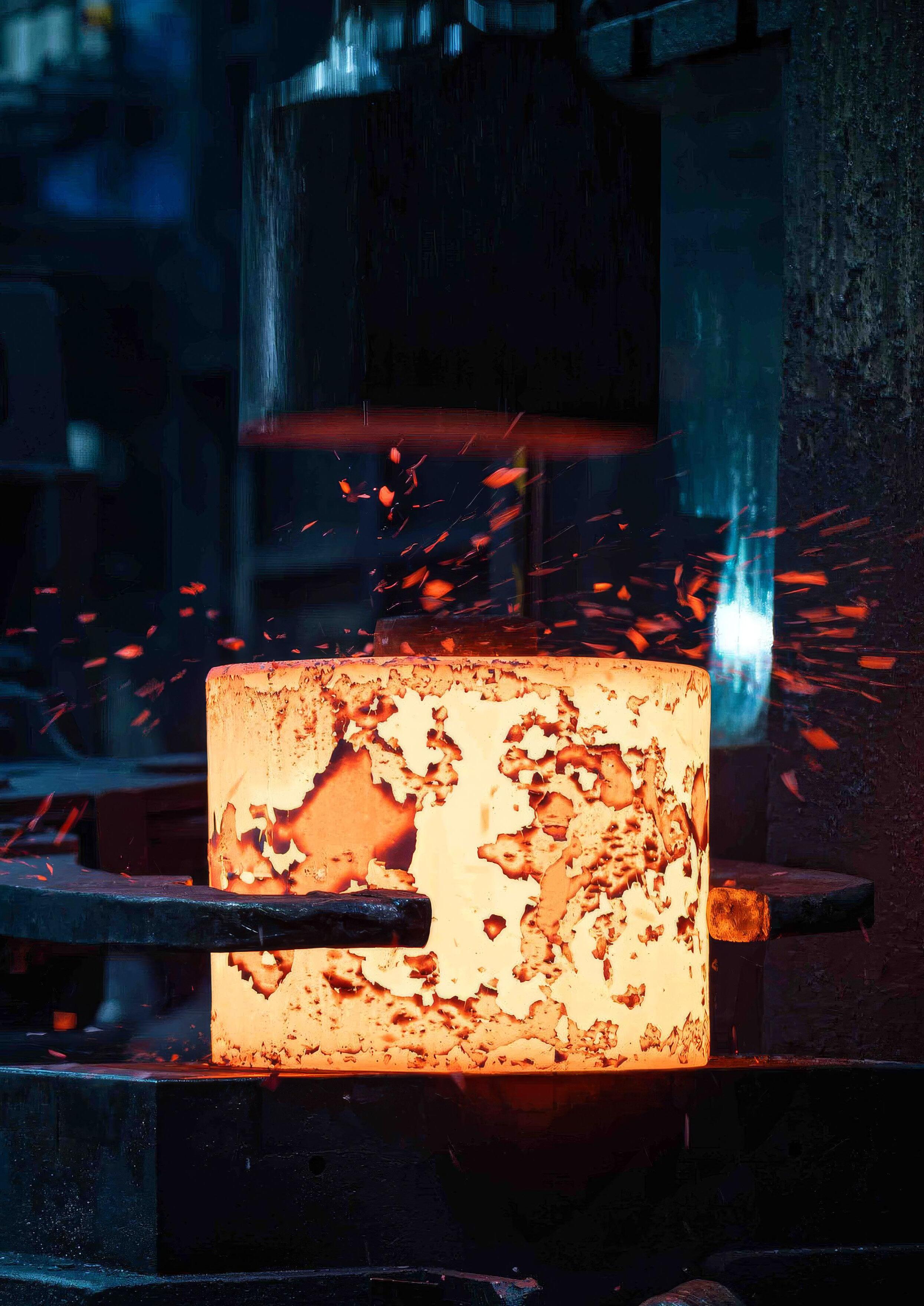
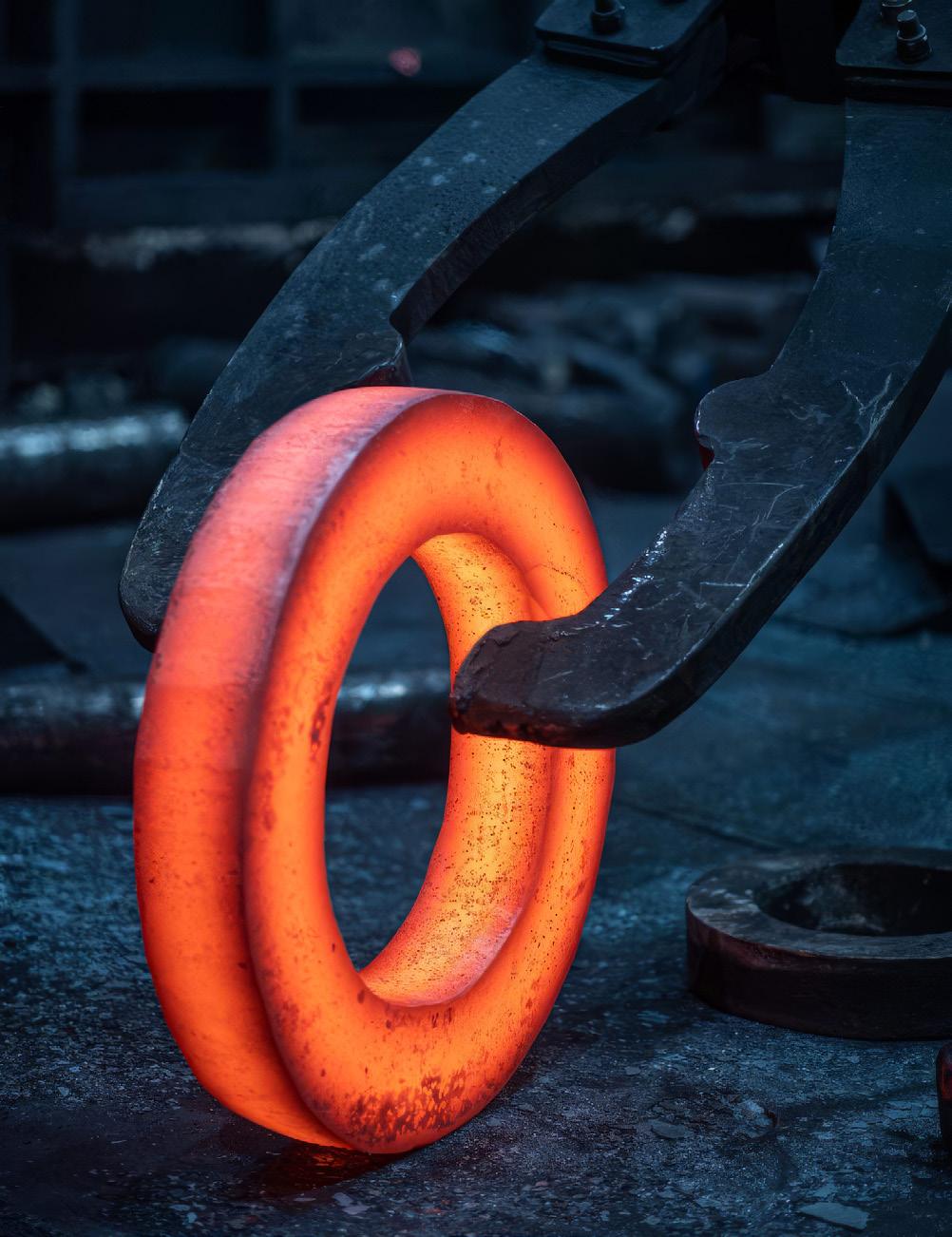
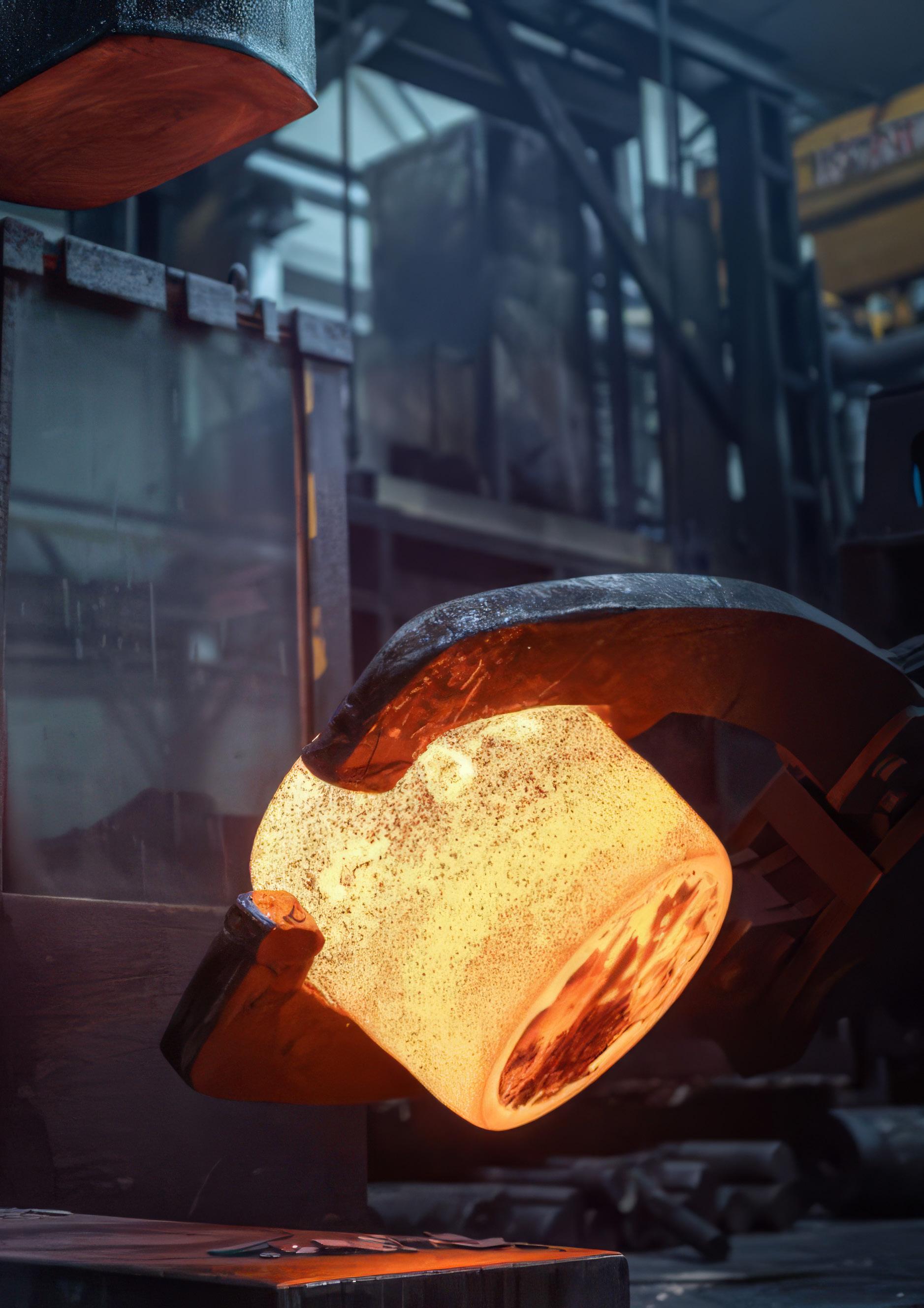
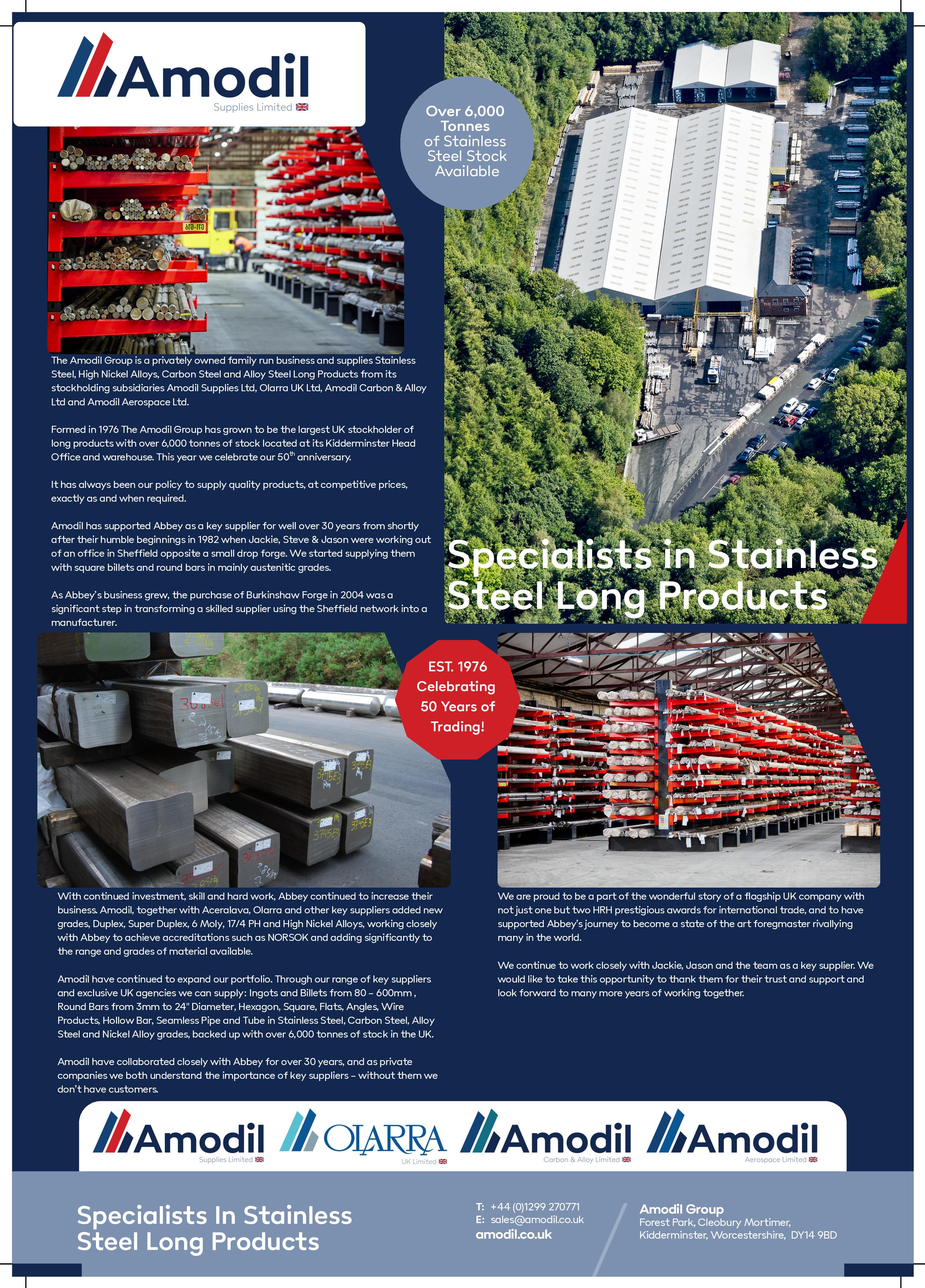
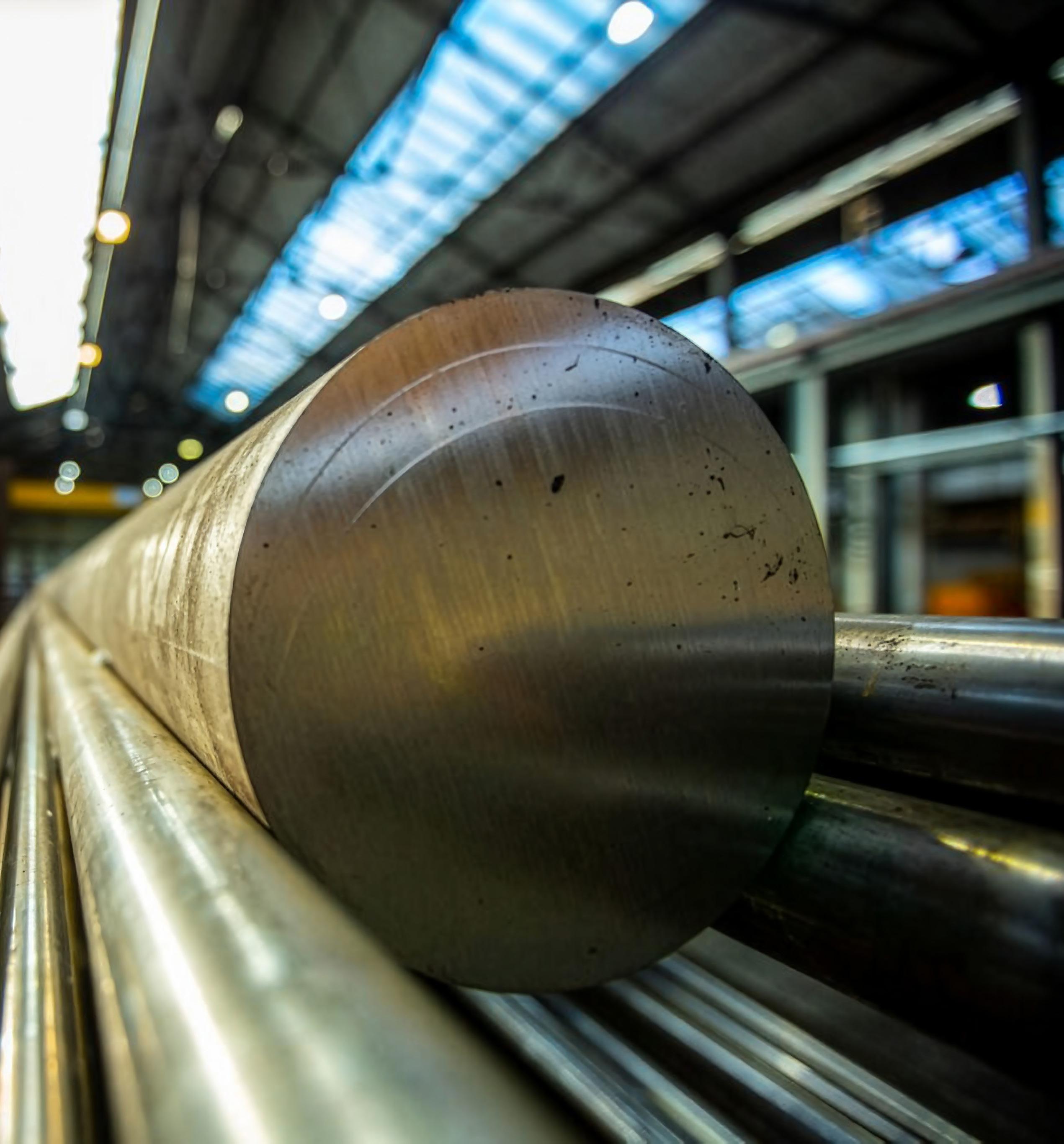
Today, those premises are the most modern forging facility in the UK, using opendie forging presses and opendie hammers, covering an extensive weight range and an infinite variety of material grades. Abbey Forged provides bespoke products that use a combination of traditional and
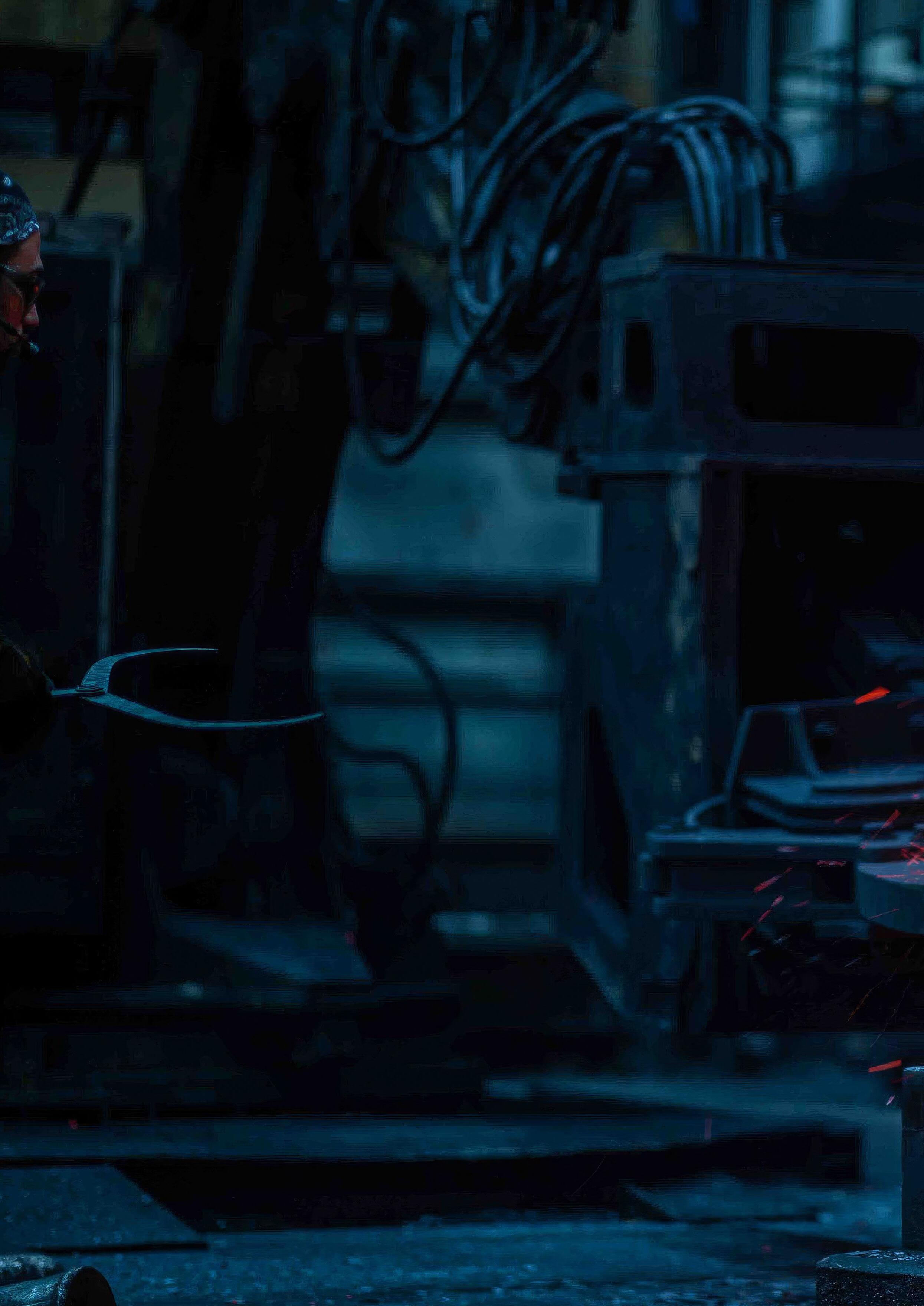
modern forging techniques to ensure best practice and best results.
But as impressive as that facility is today, when it started out it was a very different story.
“We acquired a forge that was virtually bankrupt and moved from those premises to another larger facility,” Neal recalls. “We purchased a six acre site where we began accumulating all the production processes to the point where we were completely self-sufficient for all processes apart from actually melting the steel.”
With that self-sufficiency comes unrivalled traceability, allowing customers and witnesses to monitor the complete manufacturing process from beginning to end, all on one site. Abbey Forged provides
BARRETT ENGINEERING STEEL NORTH SUPPORTING ABBEY FORGED PRODUCTS WITH RELIABLE, HIGH-SPEC ENGINEERING STEEL SOLUTIONS
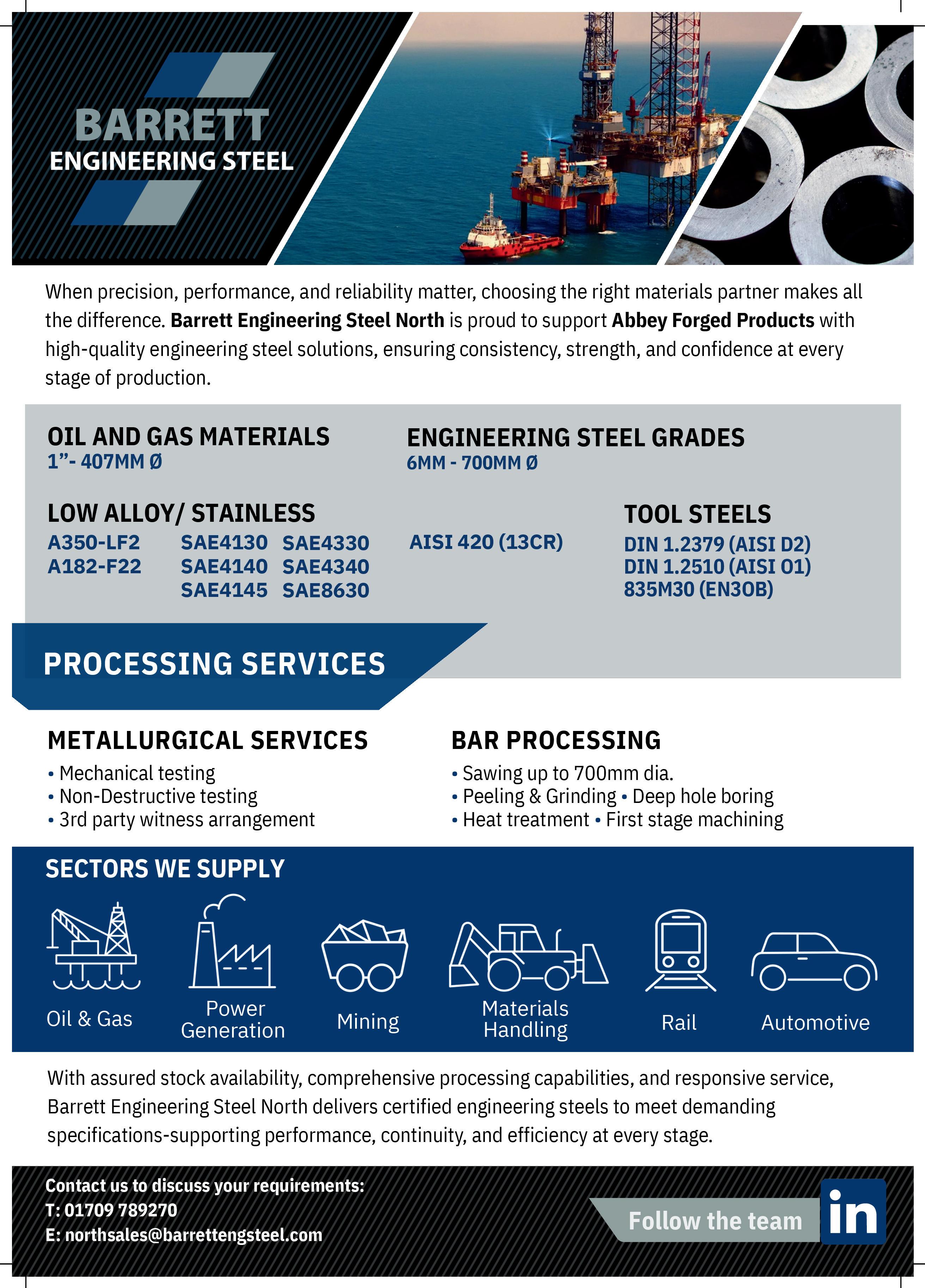
Strong partnerships are critical in delivering high-performance forged components, particularly in sectors where material integrity, traceability, and consistency are non-negotiable. Barrett Engineering Steel North is proud to support Abbey Forged Products with a dependable supply of high-quality engineering steels, helping to underpin precision, performance, and reliability across their operations.
Operating from a 35,000 sq. ft facility in central Rotherham, South Yorkshire, Barrett Engineering Steel North is ideally positioned to service customers efficiently across the UK. With close proximity to major motorway networks, supported by a dedicated fleet and trusted logistics partners, the site ensures reliable and responsive delivery. In addition to domestic supply, the business also exports significant volumes of material to key international markets, including Europe, the Middle East, and Africa.
The site holds over 2,300 tonnes of carbon and alloy engineering steels, available in both rolled and forged conditions up to 720mm diameter. This extensive stock range includes key grades widely used in forging applications, particularly within the oil and gas sector, such as 4140, 4145, 4130, 4340, and 13Cr (420). By maintaining consistent availability of these critical materials, Barrett Engineering Steel North enables Abbey Forged Products to meet demanding production schedules while maintaining the highest standards of quality and performance.
Technical expertise plays a central role in the partnership. With extensive knowledge of engineering steel specifications and applications, the team works closely with Abbey Forged Products to support complex material requirements, ensuring the correct grades, testing standards, and certification are met. This collaborative approach helps to minimise risk, improve efficiency, and maintain full traceability throughout the supply chain.
Processing capability further strengthens this support. Barrett Engineering Steel North operates seven automated saws capable of cutting material up to 720mm diameter, delivering accuracy and consistency across every order. The site also works alongside a network of trusted subcontractors to provide additional services including boring, turning, heat treatment, and specialist testinghelping to reduce lead times and streamline operations for customers.
As part of the wider Barrett Engineering Steel Division, the partnership is supported by access to nearly 15,000 tonnes of engineering bar stock held across six UK locations. This network provides additional flexibility, enabling rapid response to changing demand and offering collection or next-day delivery options, alongside supply in both full bar lengths and precision-cut pieces.
Quality assurance remains a priority throughout the supply chain. Materials are sourced from rigorously vetted and approved steel mills, while a dedicated divisional technical team ensures standards are maintained across all operations. This commitment to quality provides confidence that materials supplied consistently meet the stringent requirements expected in critical forging applications.
Through a combination of stock availability, technical capability, and a collaborative approach, Barrett Engineering Steel North continues to support Abbey Forged Products in delivering high-integrity forged components. Together, the partnership demonstrates how aligned expertise and reliable supply can drive performance, strengthen supply chains, and meet the evolving demands of today’s engineering industries.
www.barrettsteel.com
real-time, remote visual monitoring to suit its customers’ busy schedules. To provide added transparency and accountability, Abbey Forged Products also has a third-party witness in daily attendance, ensuring the integrity of the company’s operations is beyond doubt.
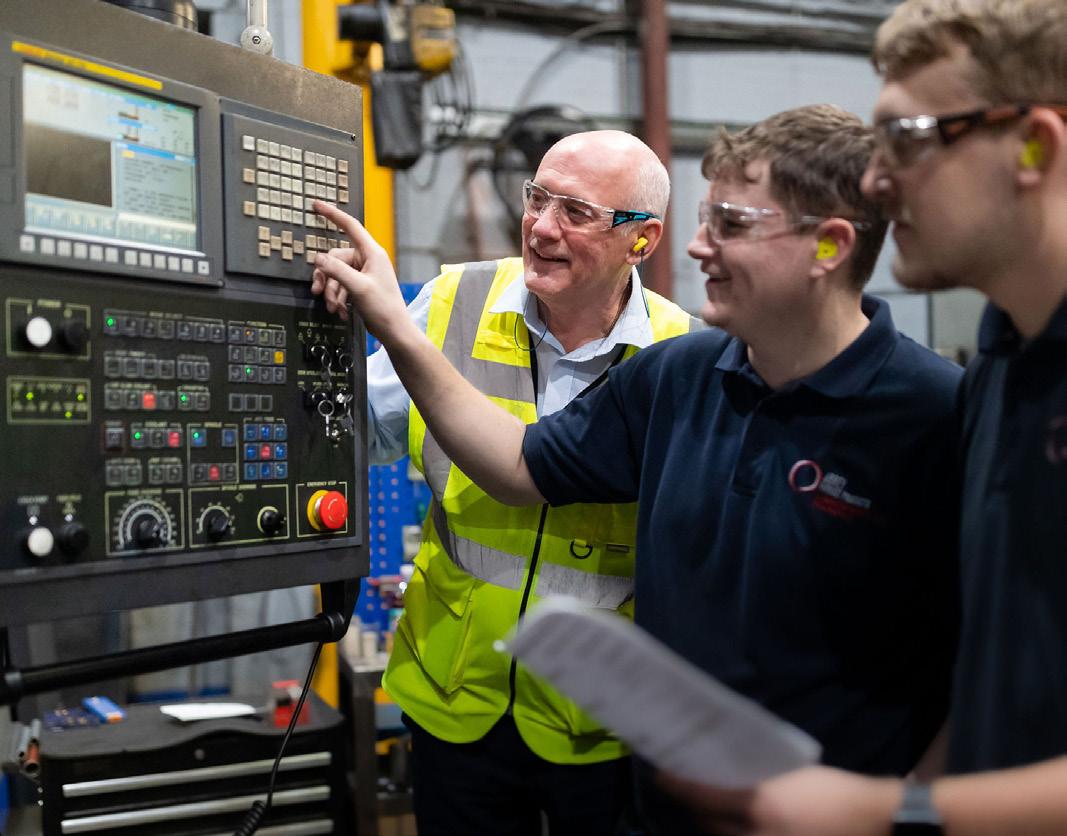
“Everything we make is bespoke. We are a smart company. We have an excellent reputation for quality, health and safety, cleanliness and importantly for our customers, quick delivery,” says Neal.
Abbey Forged Products serves the oil & gas industries, providing weld-neck, blind, orifice flanges, rings, manifold blocks, valve blocks, tubing heads, spools, nozzles, connectors and adaptors together with other bespoke items. In the nuclear defence sector, Abbey Forged is responsible for safety-critical components used in the nuclear island, as well as propulsion and weapons assemblies on nuclear submarines, including Trafalgar, Vanguard, Astute and currently Dreadnought classes. They are present in the civil nuclear sector as well,
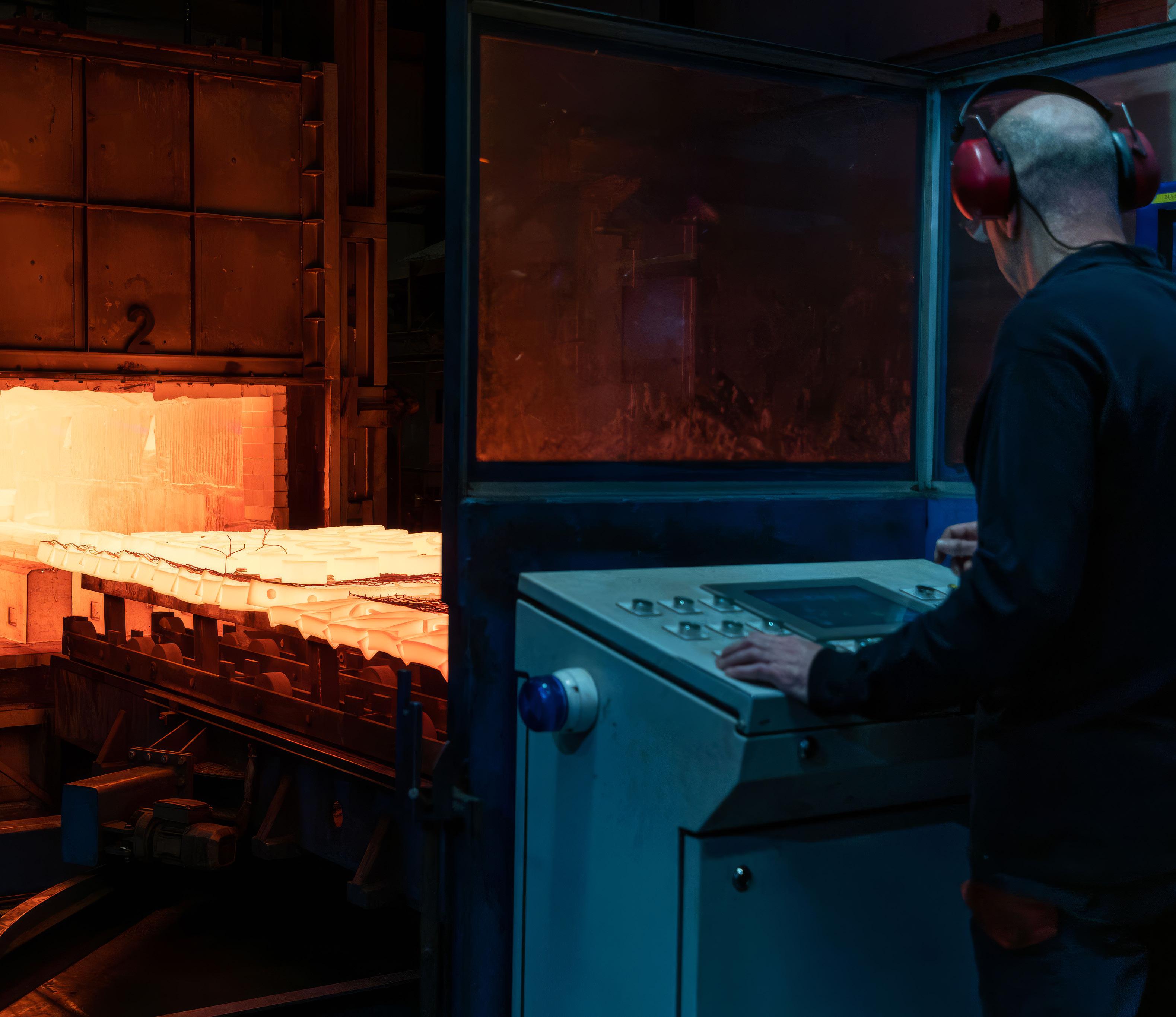
manufacturing high-pressure components for coolant and condenser pump assemblies, steam generation and pressurised water reactors. And in the aerospace sector Abbey Forged has been responsible for critical parts forged for landing gear and engine assemblies.
“We have all the correct elements in place, and we have the people who can do the work,” Neal says.
This combination of facilities and talent means that Abbey Forged Products offers not just a production line, but a fullyfledged project management service. For projects of any scale, Abbey Forged Products can give its customers access to the firm’s technical, quality and sales personnel, allowing them to fully discuss and plan every aspect of their requirements on an ongoing basis.

But rather than the job being determined by committee and sacrificing agility, those discussions will conclude with a single experienced person being nominated to oversee the job in its entirety, while also ensuring the customer is fully informed at every stage.
Abbey Forged Products is familiar with serving projects with complex demands that span several parties across the supply chain, all with their own, sometimes conflicting needs. Its ability to meet those needs is the secret sauce in Abbey’s history and success story.
“Obviously, operating a forge is a high-risk situation,” Neal tells us. “Maintaining safety in there is very difficult, just because of the nature of the process. That is a challenge. We monitor it carefully, we’ve introduced a communication system that means everyone is equipped with portable radios, allowing them to speak to each other while forging where previously they had to rely on tools like hand signals. By opening channels of communication, we ensure misunderstandings don’t occur.”
That culture of open communication is supported by robust in-house training. Each of Abbey Forged Products’ staff is individually trained for their role, so that they not only understand their job, but the way that job functions inside our company.
“Every company operates in a different way, and the tasks are never quite the same, even from forge to forge,” Neal points out.
At the same time, that training takes place in a culture with a very flat management structure, allowing insights to flow two ways across the company.
As Neal says, “We have no hierarchy as such. Anyone can speak their mind, ask anything, or make requests and suggestions for improvement etc. without being subject to a hierarchy that may or may
not respond. We continually invest and work to improve. Our people are all a part of that.”
Making Abbey’s staff part of its success means that they are invested in the company. It has led to a high rate of retention, and a family-oriented culture as people’s husbands, wives and children follow them into the company.
“It shows a real confidence in the company and that people are happy to be here,” Neal says.
The staff are not the only people who are happy with Abbey Forged Products’ performance. Last year, the company received the King’s Award. It has also become the only forge in the world to receive the Gold Award from Rolls Royce, while Neal herself received an MBE on the New Year’s Honours List.
“We want to have a bigger draw from the aerospace market, nuclear, and defence sectors, so we have got a good spread of the market in those areas,” says Neal. “We invite audits by anyone who wants to look.”
Of course, like everyone in the industry, Abbey Forged Products is familiar with the supply chain and cost challenges caused by the current geopolitical situation. Fortunately, as a business that serves large, recognised names, it has some leverage when talking with suppliers.
“Engineering has always been a bit of a roller coaster. We’ll all suffer a bit going forward, but we have been fortunate so far,” Neal shares. “We have kept going and grown, and we have a decent turnover. The company, as it stands, couldn’t be better.”
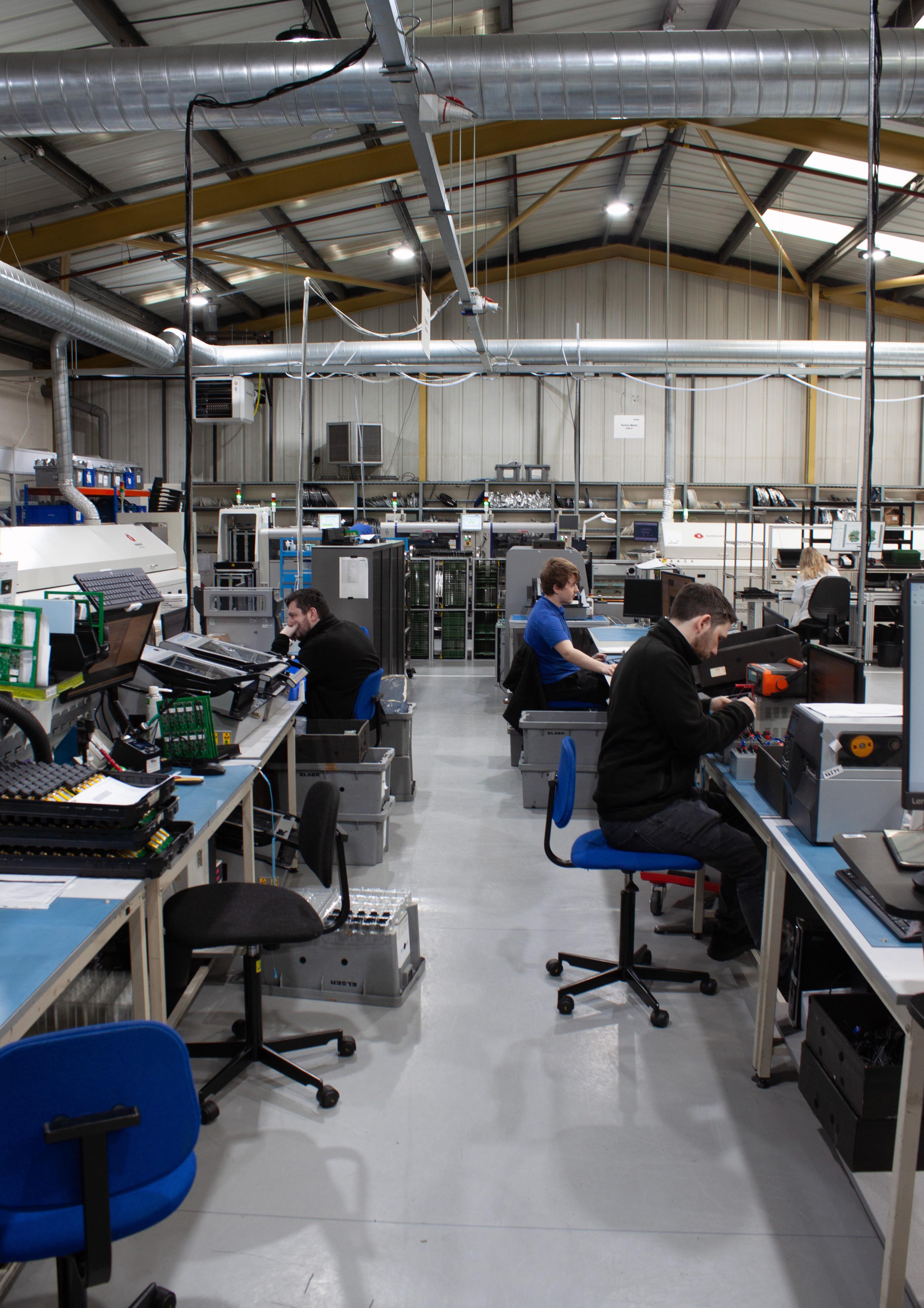
For decades now, Scorpion Automotive has been recovering stolen vehicles quickly and reliably. Founded in 1973, it has grown from a specialist manufacturer into a fully integrated provider of vehicle security, telematics, and fleet solutions. Today, the company is headquartered in Chorley, Lancashire, with a growing international presence across Europe and North America.
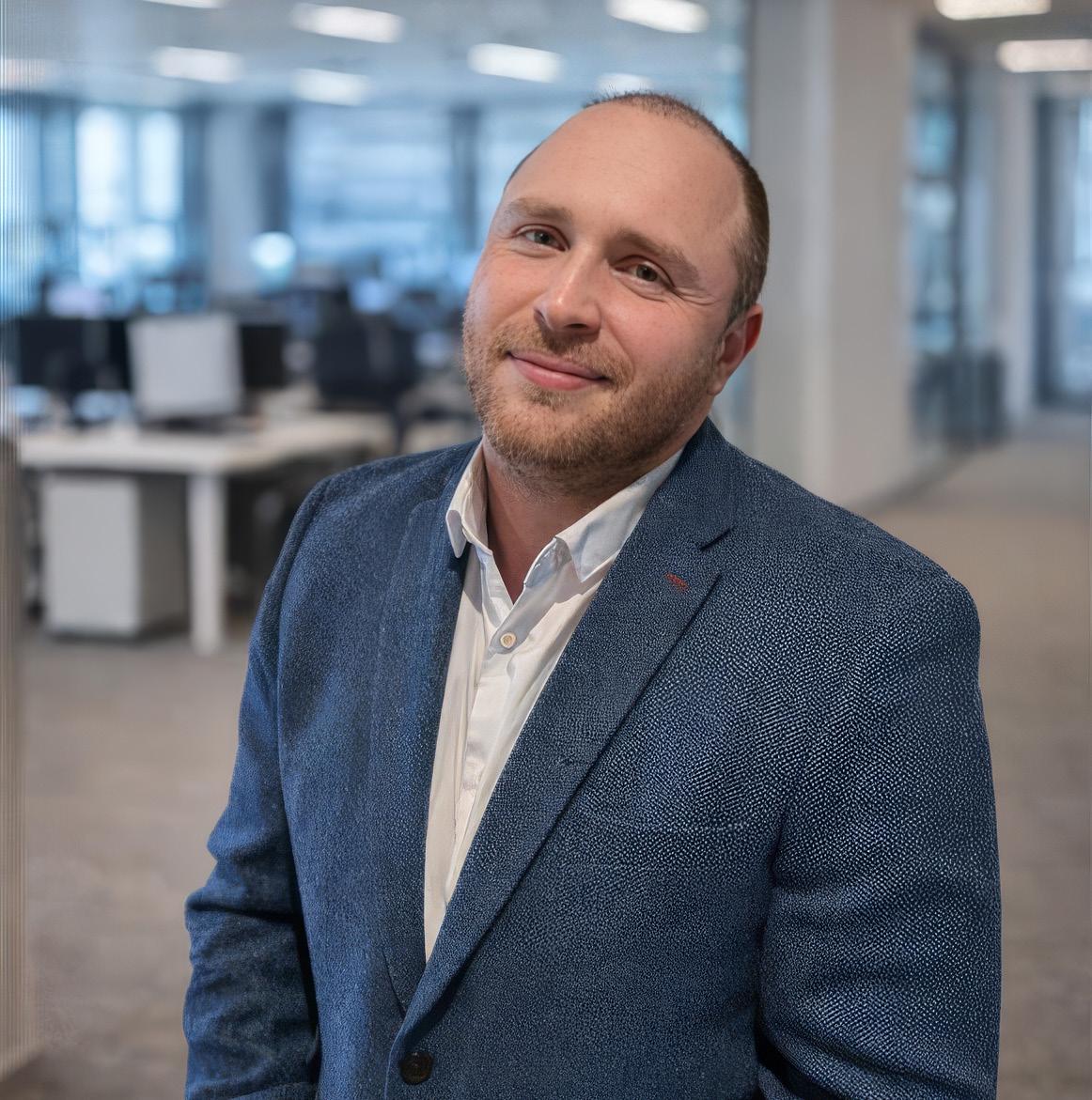
Andrew Jeffrey, CEO, Scorpion Automotive.
ur core business is vehicle security,” affirms CEO Andrew Jeffrey. “That’s the heart of what we do.”
Scorpion exists in its current form following a significant change of direction in the late 2000s. Having built its reputation making alarms and electronic systems for other brands, the company recognised a limitation in its model: hardware alone was not enough. “We were a subcontract manufacturing business for the most part,” Andrew recalls. “The real shift came when we wanted to break into the service side of things and started actually providing the telematics service to end customers.”
This decision reshaped the organisation. Today, Scorpion controls the full lifecycle of its products and services. The company designs hardware, develops software, manufactures in-house, installs nationwide, and operates its own 24/7 monitoring centre.
“We’ve got a really nice vertical integration within the business,” Andrew says. “We are solely responsible for the customer journey from start to finish.”
Such deep integration has become central to Scorpion’s positioning as a business. It allows the company to move faster, maintain high-quality standards, and respond directly when incidents occur.
“The second your car is gone, we will contact you, confirm that theft, and the police will be deployed,” Andrew states. “Without Scorpion on your side, the chances of recovery are very slim.”
CSL delivers resilient, secure, multi-network connectivity with DualCore resilience, keeping devices and essential operations connected and performing reliably in even the toughest environments.
Vehicle Tracking & Telematics
Transport Networks
Healthcare Infrastructure
Security Systems

Scorpion operates across a broad customer base, from individual vehicle owners to major OEM partners. All products are manufactured to automotivegrade standards, ensuring consistency whether the enduser is a private driver or a global brand.
Growth within the business has been supported by a series of targeted acquisitions. These have expanded Scorpion’s capabilities, particularly in fleet management and speedlimiting technologies, while strengthening its presence in the retail market.
Even as Scorpion evolves, security remains its foundation. The way that this security is applied, however, continues to change in response to realworld challenges.
“One example is our FleetLock system, developed for delivery fleets,” Andrew points out. “It addresses a common real-world operational risk.
“In a situation where a delivery driver gets out of their van, leaving the keys inside so they can make a quick drop, our FleetLock system detects that the door is open and will automatically cut the ignition. Consequently, the vehicle cannot be driven away by somebody else, even if left running. Restarting requires authentication, reducing the risk of opportunistic theft.”
Another area of innovation has come from integrating telematics into speed-limiting systems. Following the acquisition of Autokontrol, Scorpion transformed traditional, disconnected products into fully networked solutions.
“With traditional systems, you have to bring the vehicle back into the depot to make changes,” Andrew explains. “That’s time lost on the road and a big operational cost.
“Our Geo Control 2 platform removes that limitation. Fleet managers can apply updates remotely across entire fleets, adjusting speed zones in real time.”
Large-scale deployments of this technology are already in place, including projects involving thousands of vehicles. It is a solution that sits at the intersection of efficiency and safety, reflecting broader trends across the sector.
“Road safety is generally driven through legislation,” Andrew notes. “The UK is one of the world leaders, and you see that spread across Europe and then on into other regions.”
At the same time, economic conditions continue to influence demand for vehicle security.
“In economic downtimes, theft rises,” he asserts. “In good times, people buy more high-value vehicles that need protecting. Either way, the need for effective protection remains consistent.
“Sometimes people don’t realise that the impact of theft goes beyond the loss of a vehicle itself. It’s not just the car being gone – it’s being unable to go to work, dealing with insurance claims, and the accompanying long-term increase in premiums.”
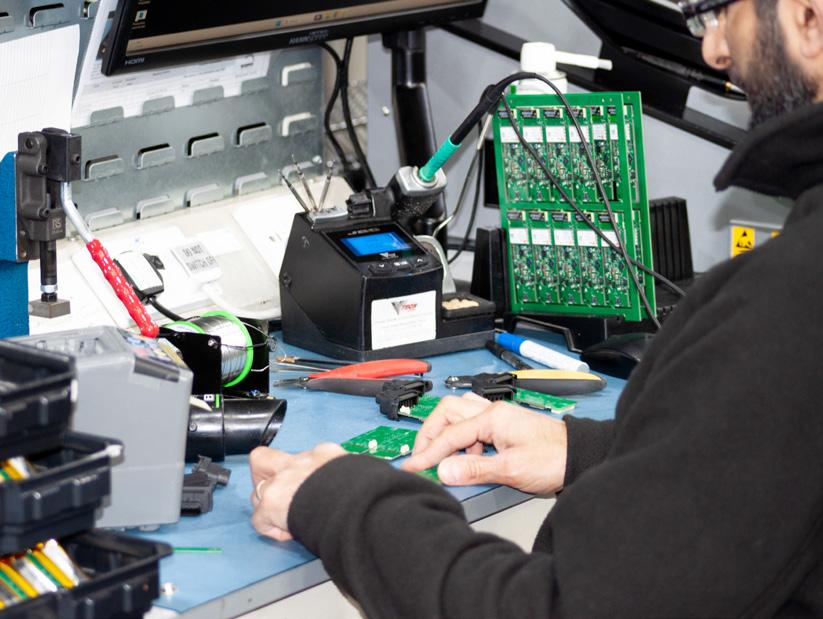
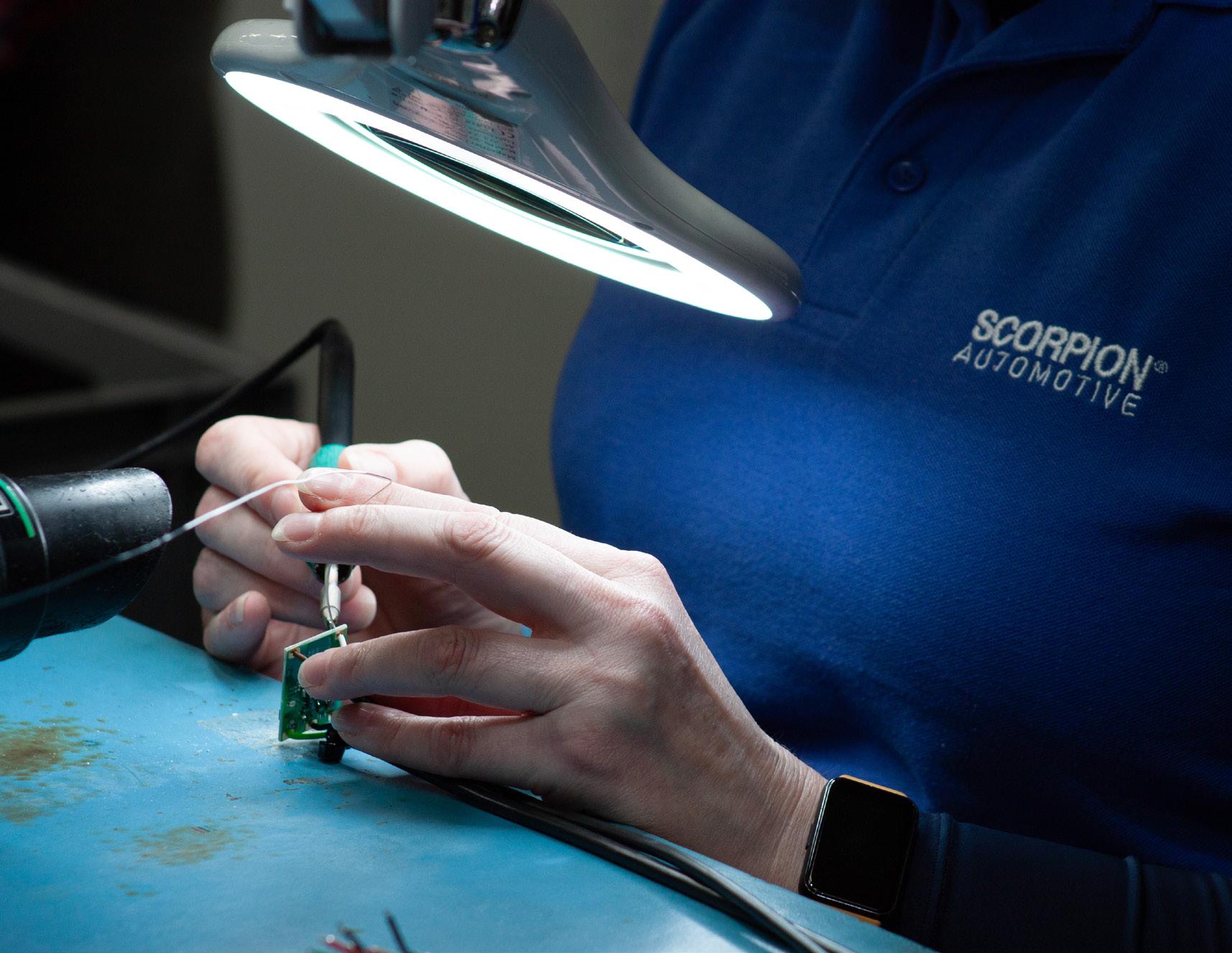
This understanding shapes how Scorpion approaches customer service. The company has amassed a strong reputation for client support – a claim supported by more than 10,000 five-star reviews.
For Andrew, the review process is part of an ongoing programme of improvement.
“Every negative review is an opportunity to improve,” he says. “We genuinely act upon those every day.
“Our approach is direct and grounded in real feedback. If I speak to a customer, I’ll start by asking them what went wrong. The customer has to walk away feeling like they’ve got what they expected.”
Unlike a one-off purchase, Scorpion’s systems remain active, creating regular touchpoints with users. As a result, close relationships and constant communication have become hallmarks of the way the company works.
“A customer for us isn’t somebody who buys a product once and disappears,” says Andrew. “Our customers are long-term partners. Every interaction is an opportunity to deliver the best service we can.”
Internally, the same feedback loop applies. Employees working directly with customers play a key role in shaping decisions and refining processes.
“It’s easy to have an idea at the top,” Andrew remarks, “but the teams working with customers will tell us if we’re really doing the right things.”
Looking ahead, Scorpion is focused on expanding both its product range and geographic reach. New launches are planned across telematics and software, including a video-based offering for fleets and a proprietary field service management platform developed in-house.
“We’ve tried a number of systems and felt the pain of using them,” Andrew reports, “so we decided to build something better.
“This new platform will form part of a broader automation suite, designed to support logistics and automotive businesses with integrated tools. We know that, if it works for us, it’s worth offering to others.”
Meanwhile, expansion into the United States is underway, with further growth planned across Europe. Additional acquisitions are also being explored to strengthen capabilities in adjacent areas, including vehicle power systems.
“The appetite for growth is there,” Andrew declares. “Our core objective remains unchanged though – to protect vehicles, respond quickly, and recover what is taken.”
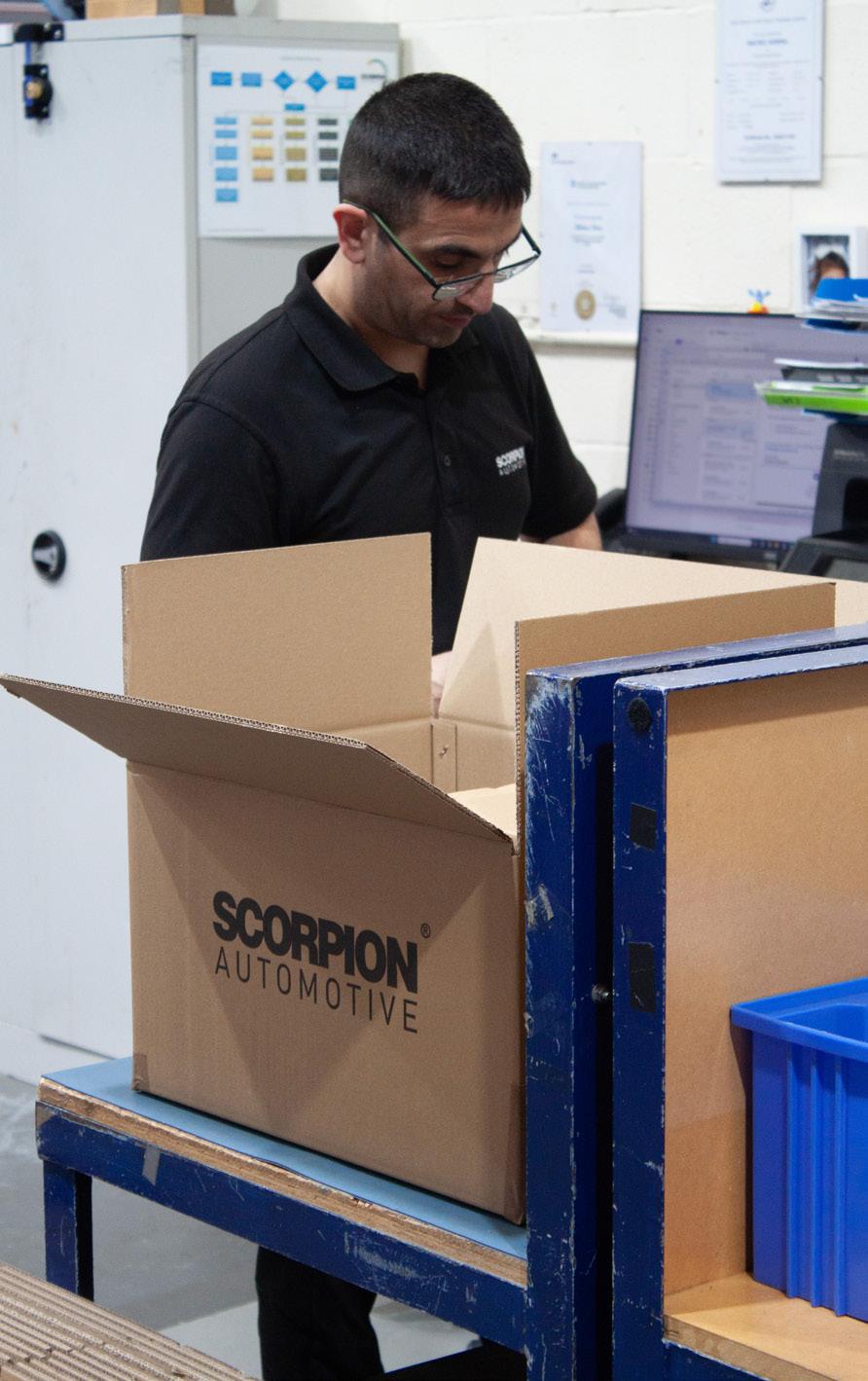

Stuart’s Truck & Bus did not enter the Volvo network through a planned expansion strategy. This defining moment in the company’s history occurred, instead, through necessity.
In 1977, Volvo needed local support in Southwest England and turned to a family business already operating in the region.
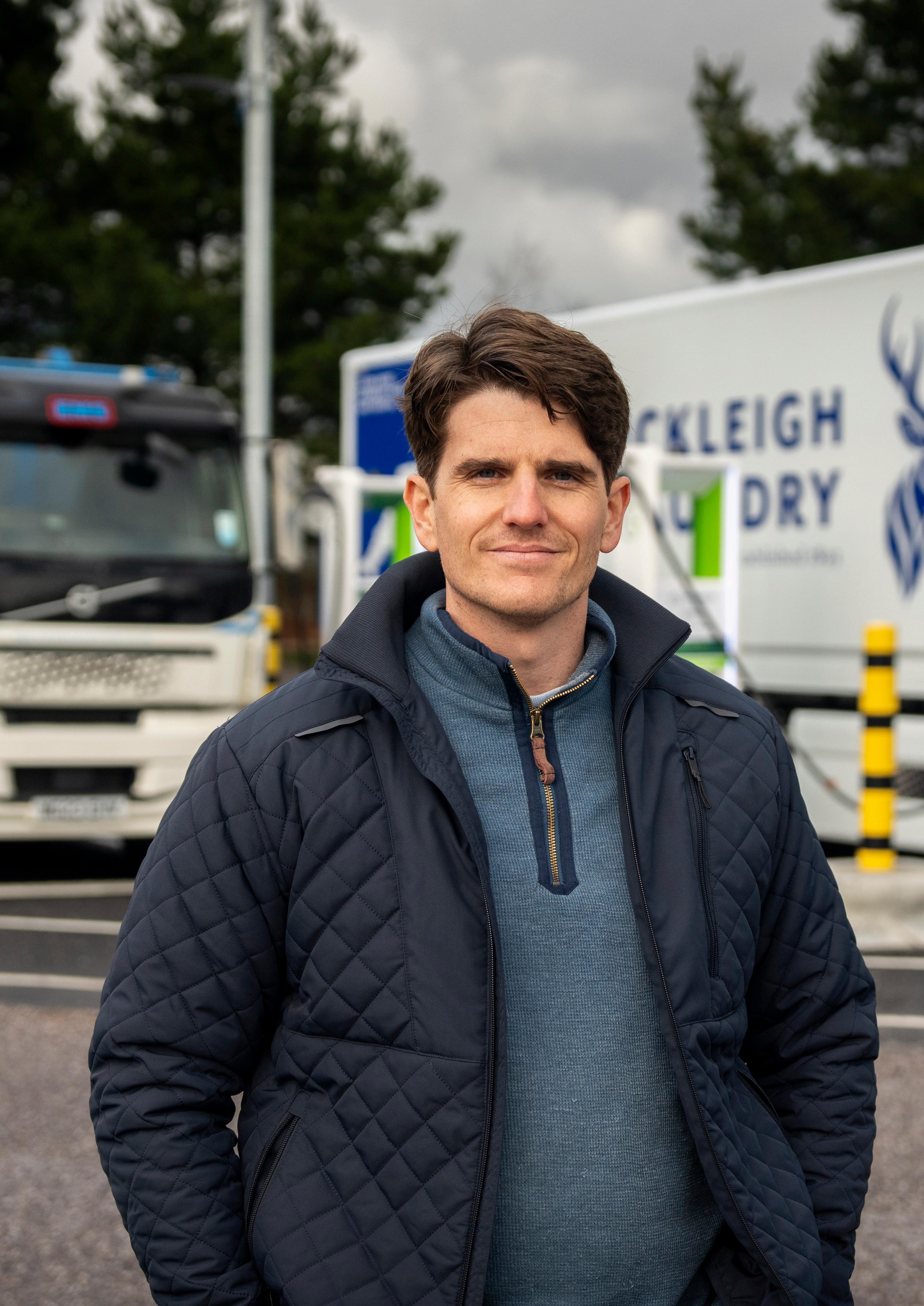
“As an existing transport business, Volvo stepped in and asked us to look after their customers, while they found a new dealer,” reveals Managing Director Ryan Stuart. “They dropped a container of parts onsite, and that was the beginning of our journey. It was supposed to be a temporary arrangement, but we remain a Volvo dealer to this day.”
As a business, the roots of Stuart’s stretch back to 1949, when Ryan Stuart’s grandfather established a cattle transport operation. Early investment in equipment set the tone.
“We bought one of the first Volvo trucks in the country,” Ryan says. “At the time, especially, Volvos were far in advance of anything else.”
With quality equipment to hand, Ryan’s father and uncle were free to let their engineering expertise shine.
“My dad Ross and uncle Roy designed the first doubledeck articulated trailer,” Ryan declares. “Not only did the
innovation allow us to carry double loads, but it really pushed the business forward.”
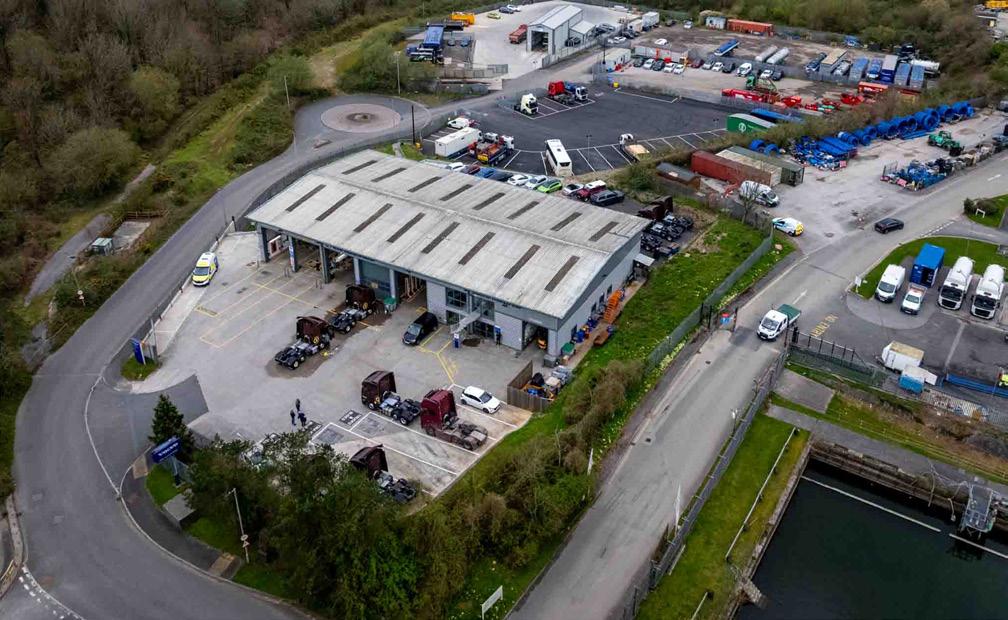
Today, Stuart’s Truck & Bus operates as a full commercial vehicle dealership for Volvo across Devon and Cornwall. Three sites in Exeter, Plymouth and Victoria (near Bodmin) provide sales, servicing, maintenance, and parts support.
“Our job is to give a great service,” Ryan asserts. “That’s the number one priority. It is a focus that shapes our entire organisation.”
Stuart’s Truck & Bus sits within a wider family group that spans farming, waste management, aggregates, and property. Each division is independently managed but closely aligned on culture and decision-making.
“We all run our own areas,” Ryan explains. “We support each other, but we don’t get in each other’s way.
“That level of autonomy drives speed. Investment decisions do not move through layers of approval. If we need another bay or another piece
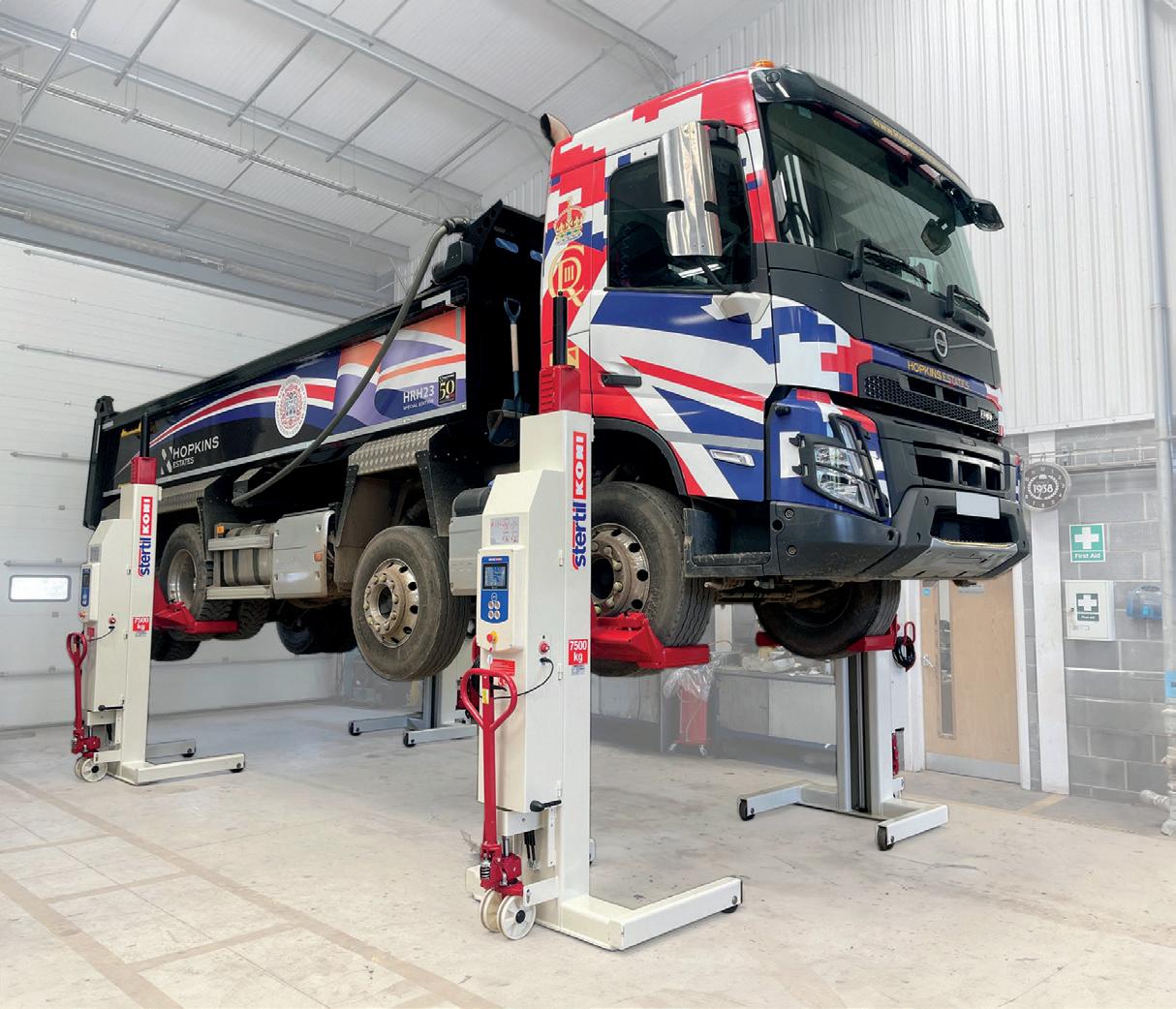
stertil-koni co uk
lifts@stertil co uk 01604 662049

of equipment, we just make the decision. We don’t have long processes or rigid budgets.”
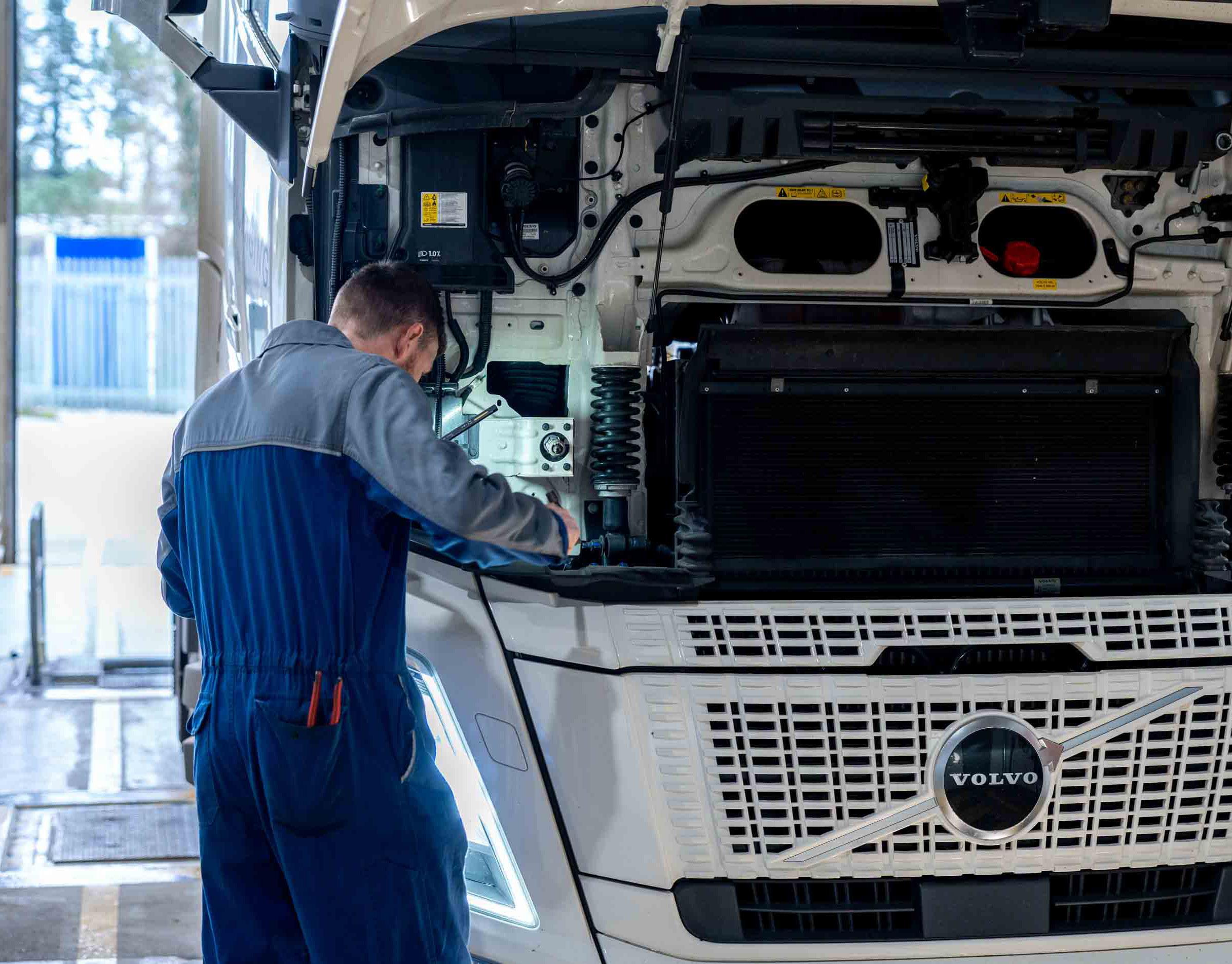
On the ground, Stuart’s Truck & Bus is highly adaptable and responsive. Workshop layouts, staffing levels and equipment upgrades can all be adjusted quickly when demand changes.
Lately, these abilities have been put to the test. Stuart’s growth in market share across Devon and Cornwall has increased workshop pressure significantly.
“We’ve been market leaders in the region for the past 5 years on New Truck sales,” Ryan comments. “It creates a lot of extra work for the business – which reflects a really positive position – but making infrastructure changes quick enough to cope with the growth has been, and still is, the challenge.”
Managing workload at Stuart’s has required structural improvement rather than incremental change. For instance, Lean methodology,
introduced through the Volvo network, has been embedded across all sites.
“We were the first independent dealer to adopt Lean, and the first to achieve bronze accreditation within our network.
“We see it as a process of continuous improvement,” Ryan reports. “You look at how you do things and find ways to make those processes better.
“It’s also about accountability. If something goes wrong, we face it, and we fix it. That’s how you build trust with customers.”
Stuart’s approach to clients extends into supplier and manufacturer relationships. Naturally, the company’s partnership with Volvo remains central to the organisation.
“We both want the same outcome,” Ryan says of Stuart’s and Volvo. “We want to be number one in customer service. That alignment makes things easier.
“For us, people sit at the centre of our service delivery. This business only works because of our team.”
However, recruitment has become a common constraint across the sector. Technician shortages have tightened capacity just as demand has increased. One response to the issue has been international recruitment. Skilled technicians have been brought in from South Africa to strengthen workshop capacity at Stuart’s.
“We’ve got ten South African technicians working with us now,” Ryan affirms. “It’s been expensive but necessary.
“The process has required relocation support, visa costs and integration into UK compliance standards. There’s also been a lot of training around health & safety and systems, but they’ve adapted well.”
Alongside international hiring, the business has widened its approach to experience. Candidates from car, plant and marine sectors are now brought in and trained for heavy vehicle work.
“We look for attitude first,” Ryan says. “If someone wants to learn and has the right mindset, we can teach the rest.”
This long-term approach has helped stabilise staffing during a period of rapid expansion. It has also supported continued investment in infrastructure.
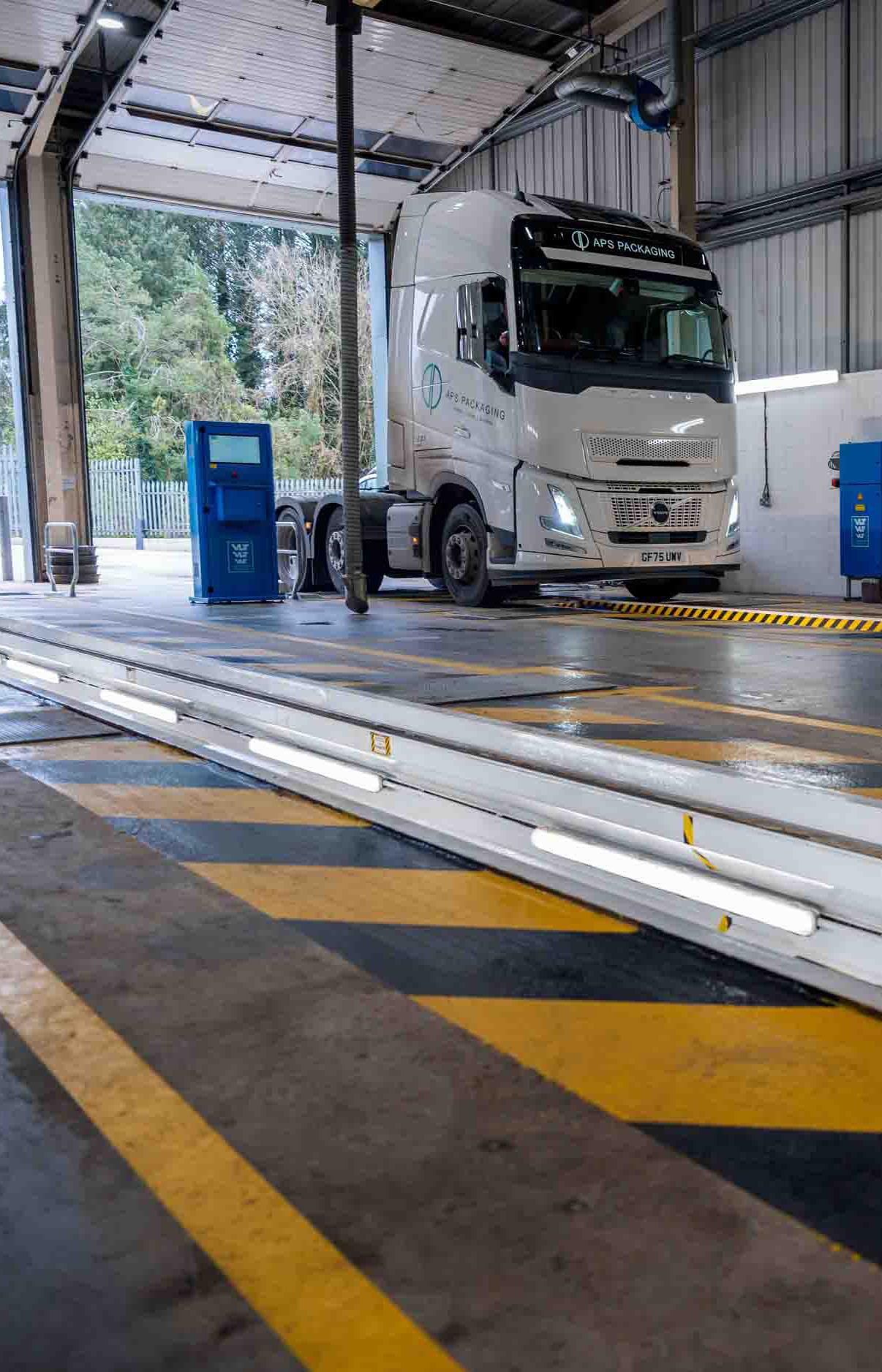
Stuart’s in Plymouth has already seen significant upgrades, including expanded parking, a new yard and a dedicated MOT test facility.
Cornwall is next, with additional workshop bays and upgraded technical areas planned. Exeter represents the largest commitment: a full rebuild to replace facilities that are no longer fit for current demand.
“The goal is simple,” Ryan remarks. “We need more capacity and an improved environment to work in.
“Staff facilities are a key part of the strategy too,” he adds. “New changing areas, rest spaces and gyms are being introduced across sites. We want to make Stuart’s the number one place to work.”
Meanwhile, the product landscape is shifting. Alongside diesel vehicles, Stuart’s Truck & Bus is supporting customers with alternative powertrains.
“LNG is becoming more relevant, although infrastructure remains a
limitation in the Southwest,” Ryan notes. “The trucks are excellent. The challenge is where you fuel them. We, as a company, are investigating the possibility of our own onsite fuelling stations to support the transition.
“We already run electric skips in our own operation. They work really well. Feedback from drivers has been very positive.”
Despite scale and diversification, Stuart’s retains a direct operational culture. Ryan’s own path reflects that structure. He grew up next to the company site and has progressed through every level of the organisation.
“I started at the bottom like everyone else,” he says. “There are no shortcuts here. You learn the job properly.”
That continuity carries through the workforce. Many employees have been with the business for decades and these long
relationships underpin the company’s culture. Trust is built through shared experience rather than hierarchy.
In 2026, Stuart’s Truck & Bus operates in a more complex environment than at any point in its history. Demand is higher, technology is evolving and workforce challenges remain.
The response has been consistent: investment in people, improved facilities, and a determination to keep decision-making fast.
“It comes down to pride,” Ryan concludes. “We have to deliver the best service we possibly can.
“As a family business, if Stuart’s customers encounter a problem, they can pick up the phone and speak to one of us. They’ve all got my number.”

MALLAGHAN, A GLOBAL LEADER IN THE DESIGN AND MANUFACTURE OF AVIATION GROUND SUPPORT EQUIPMENT, IS ACCELERATING THE SHIFT TOWARDS GREENER, MORE EFFICIENT AIRPORT OPERATIONS.
PROJECT MANAGED BY: HAYDEN TURNER
Mallaghan has established itself as a global leader in the design and manufacture of aviation ground support equipment (GSE), and remains one of the largest privately held, familyowned companies in the sector.
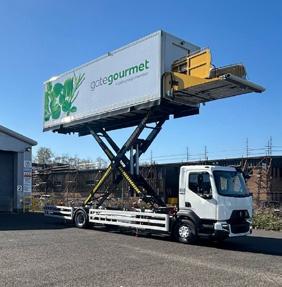
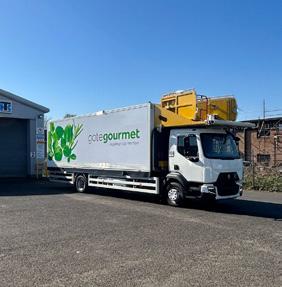
Now one of the fastest-growing GSE manufacturers worldwide, the company delivers a broad portfolio of highly regarded products to an international customer base that includes Delta Air Lines, Gategourmet, Southwest Airlines, Qatar Airways, Servair, and more.
Headquartered in Dungannon, Northern Ireland, Mallaghan also operates an assembly facility in Atlanta and has recently expanded its manufacturing footprint with a new factory at its Dungannon site—marking a significant step in its growth trajectory.
Its product range spans highlift trucks, lavatory and water service vehicles, passenger stairs, belt loaders, and de-icers.
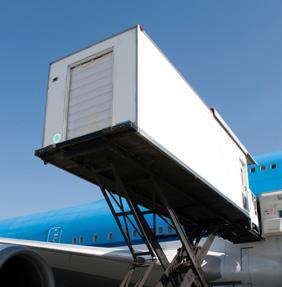
The company is also the world’s largest manufacturer of high-lift trucks for the aviation industry, serving applications from catering and cabin services to medical transport.
Crucially, Mallaghan places as much emphasis on aftersales support as it does on product performance, offering comprehensive services across Parts & Service, Commissioning, Training, Warranty, and Technical Back-up.
Mallaghan has a long history of driving positive change in airport ground operations. With a global client base spanning airlines, airports, catering companies, and
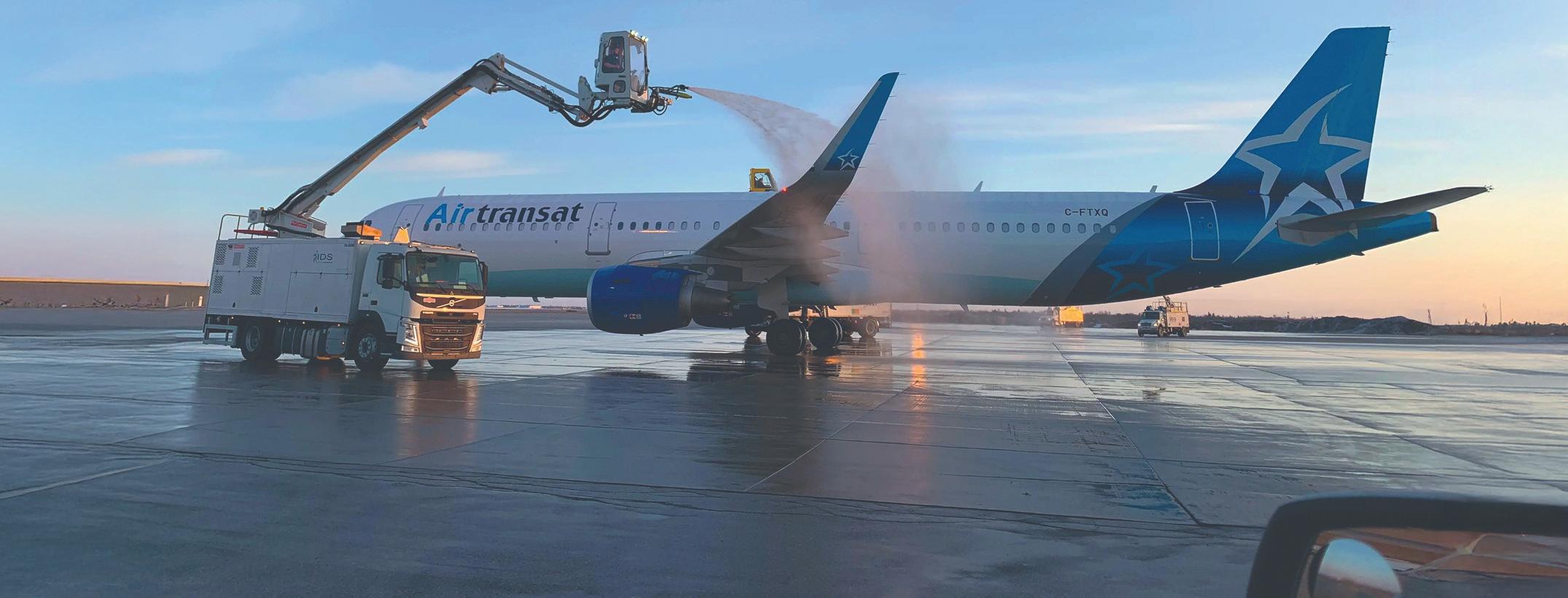
Flowtech are the leading specialist Hydraulics, Pneumatics and Process engineering solutions provider across the UK, Ireland and the Benelux.
We’ve built a strong brand reputation based on engineering excellence, with the ability to supply superior products, a suite of engineering services, and play a vital role in the delivery of major engineering projects from a range of key industries, including Airport Operations & Infrastructure
Our capabilities in this area include the supply of components and bespoke systems that assist in the production of Ground Support Equipment (GSE).
Beyond supply, Flowtech offers ongoing technical support and maintenance expertise, helping extend the lifespan of hydraulic systems and reduce total cost of ownership

www.flowtech.ie

HSF Group is proud to have supported Mallaghan for over 20 years, providing trusted manufacturing solutions for the aviation sector.
Core capabilities
• Design
• Laser / plasma profiling
• Tube laser
• Sheet metal folding
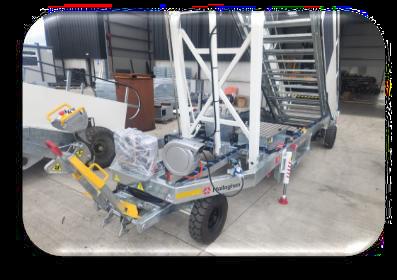
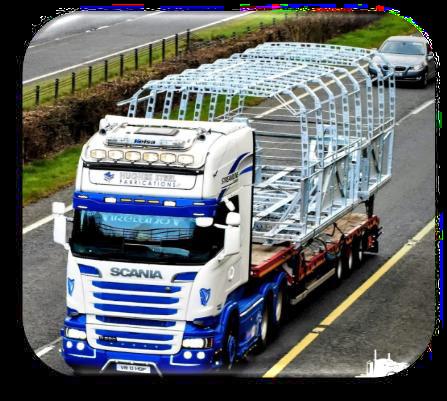
• Fabrication
• Finishing
• Assembly
• Transport
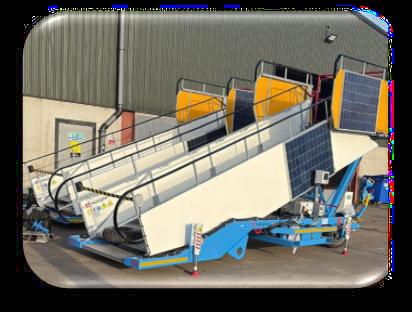
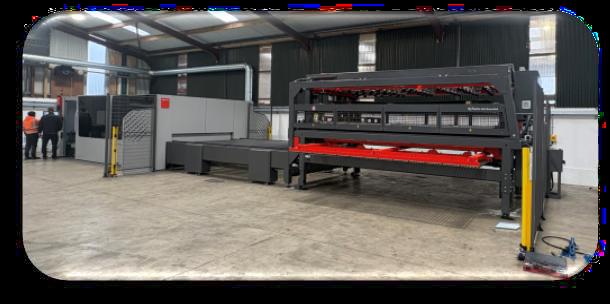
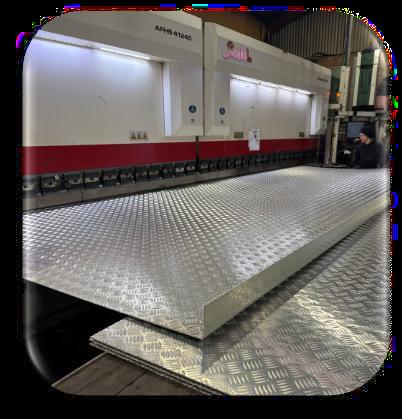
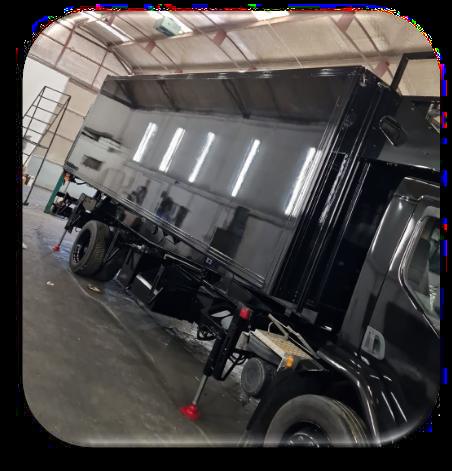
In the high-pressure environment of airport operations, reliability and precision are critical. That’s why a strategic partnership between two leading businesses has been an effective method for delivering high-quality Ground Support Equipment (GSE) for decades.
Mallaghan, a global leader in GSE, depends on robust hydraulic and electrical systems to power its vast range of equipment, including belt loaders, catering trucks, de-icers and more. To meet these demands, Mallaghan partners with Flowtech for expert hydraulic and complete solution supply and support.
Flowtech provides a comprehensive range of hydraulic, electro-hydraulic and electrical components, as well as bespoke assemblies, hose assemblies and line-side Kanban systems for efficiency in manufacturing.
High-quality products and systems are essential for controlling all functions of GSE given that they must operate flawlessly in all weather conditions and under continuous use.
Both Mallaghan and Flowtech have always worked closely together to ensure that each hydraulic or electrical solution is tailored to exact specifications. Such a collaborative partnership has resulted in improved performance, enhanced safety, and compliance with strict aviation industry standards.
Flowtech’s wide network of engineering centres across the UK, IOI and the Benelux, as well as strong stock availability from all major brands, means that critical components are delivered quickly, reducing downtime and keeping manufacturing and servicing operations running smoothly.
Through this strategic partnership, Flowtech supports Mallaghan in delivering high-performance, dependable GSE to airports worldwide, ensuring aircraft turnaround remains efficient, safe, and most importantly, on schedule. www.flowtech.ie
ground handling providers, the company is dedicated to developing advanced equipment that improves operational performance and supports the ever-evolving needs of the aviation industry.
With operations in more than 120 countries and annual production exceeding 1,000 units, Mallaghan combines scale with innovation. Environmental responsibility is embedded throughout its value chain, from energy-conscious manufacturing processes to the development of fully electric and alternative-fuel vehicles. All five core categories - high lifts, lavatory/water trucks, stairs, belt loaders, and de-icers - now include electric or alternativefuel variants.
“We develop specialist ground support equipment that helps airports and airlines operate more efficiently and safely on the ramp, working closely with customers to understand the operational challenges they face and producing equipment that supports faster aircraft turnaround and improved reliability,” says the company.
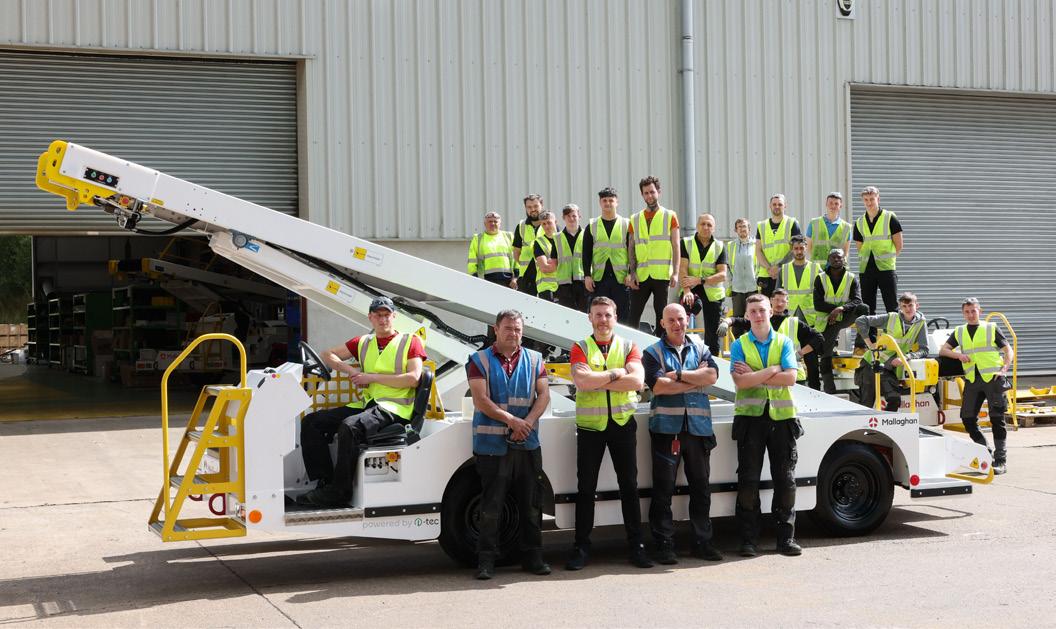
“With a focus on sustainability and greener ground handling solutions, we offer a portfolio of fully electric equipment, including the Mallaghan SkyBelt and North America’s first fully electric, refrigerated, widebody capable catering truck.”
Our engineers are equipped with the very latest diagnostic and repair tools, and are supported by a fleet of service vans to provide 24/7 coverage 365 days a year.

T: +44 (0) 28 256 46481 E: ttp@thermoking.co.uk www.technicaltransportproducts.com

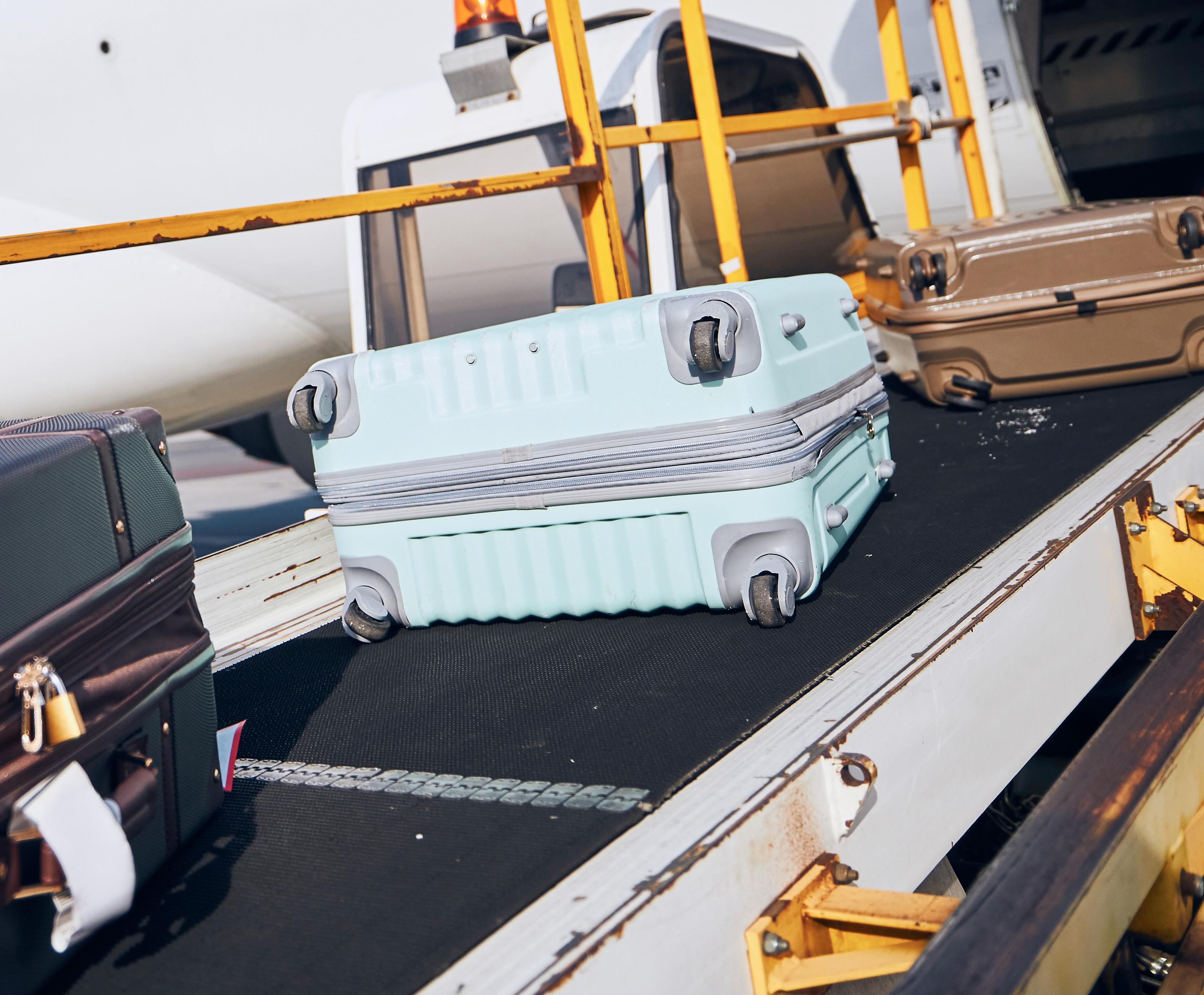
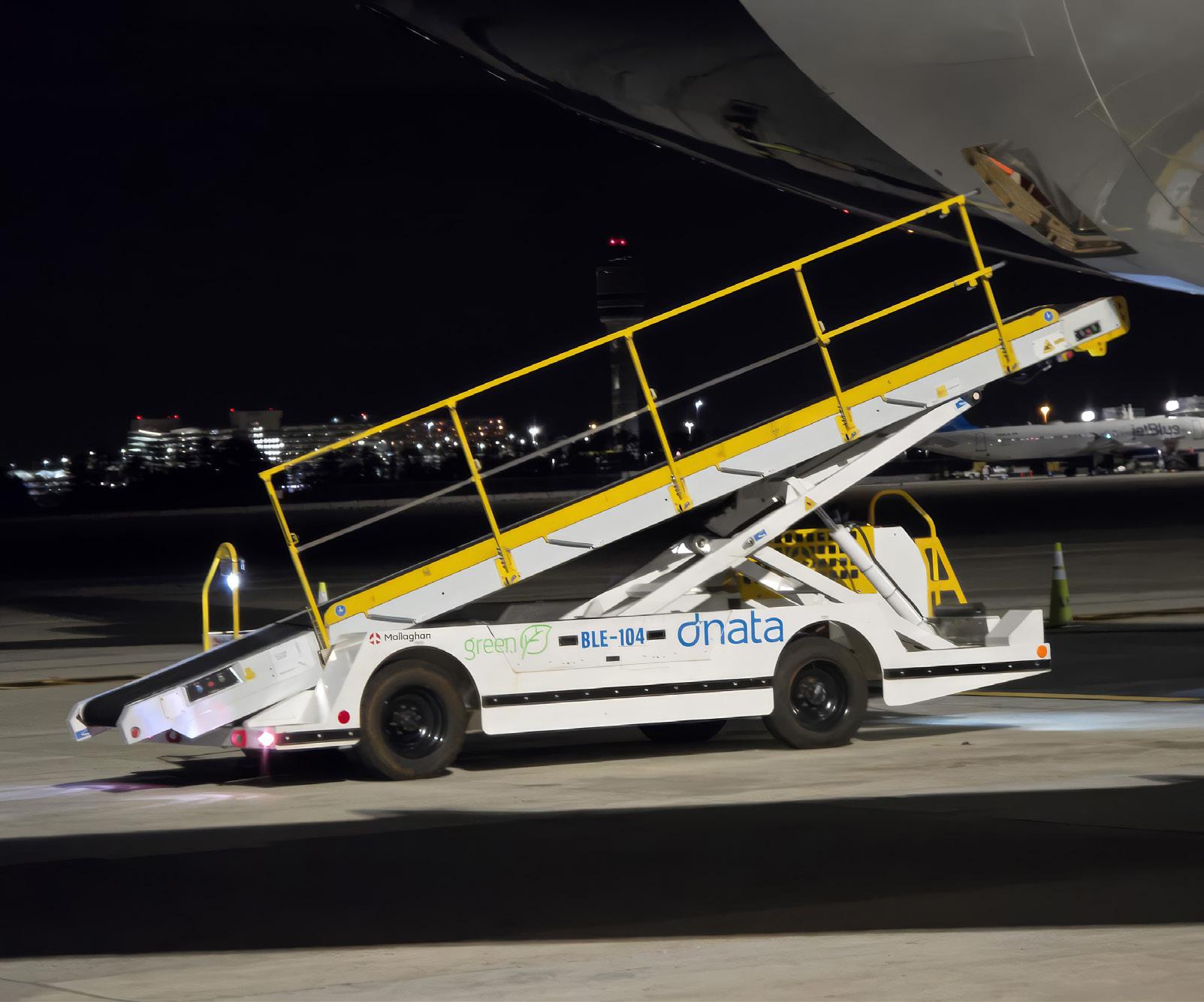
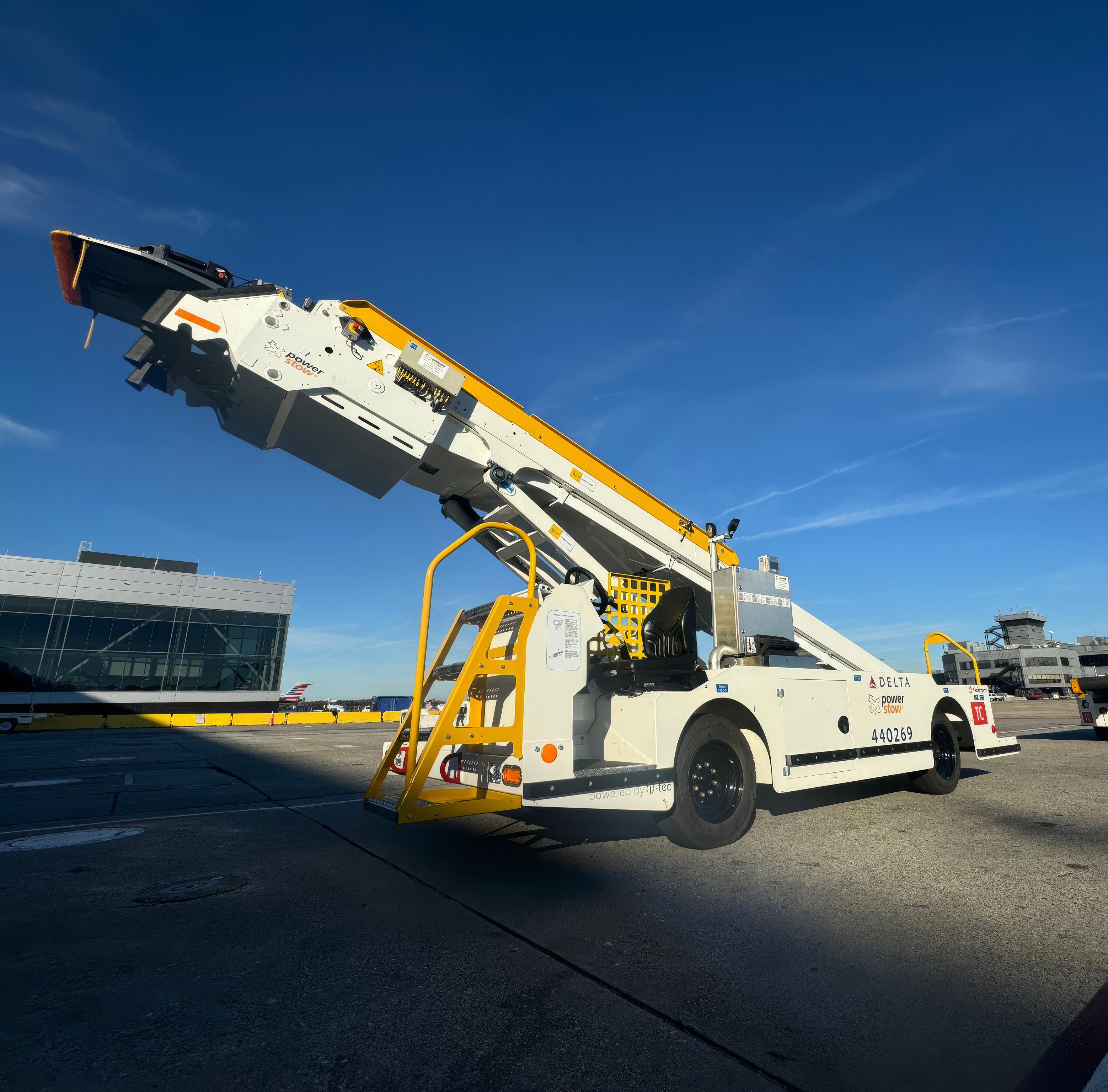
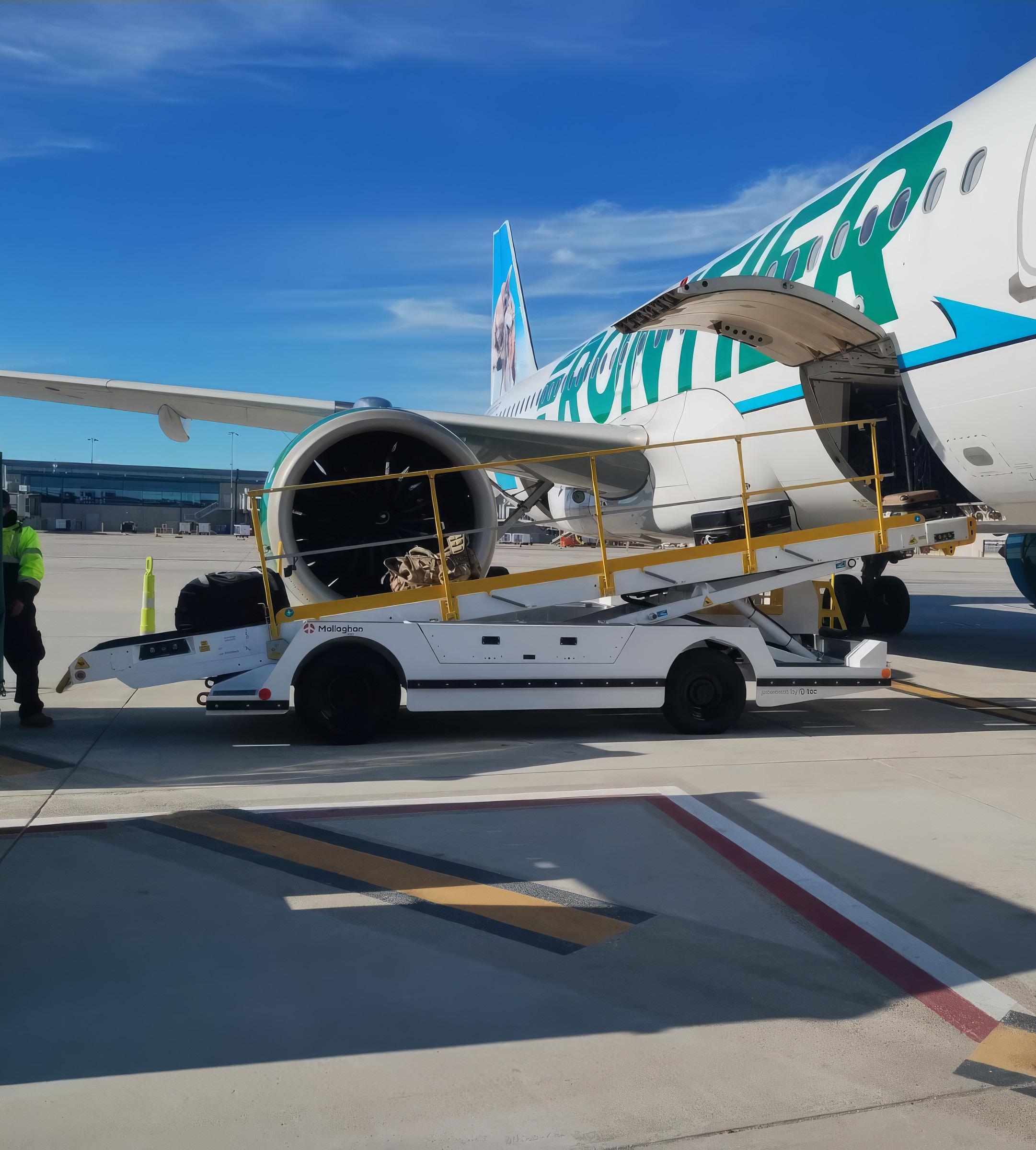
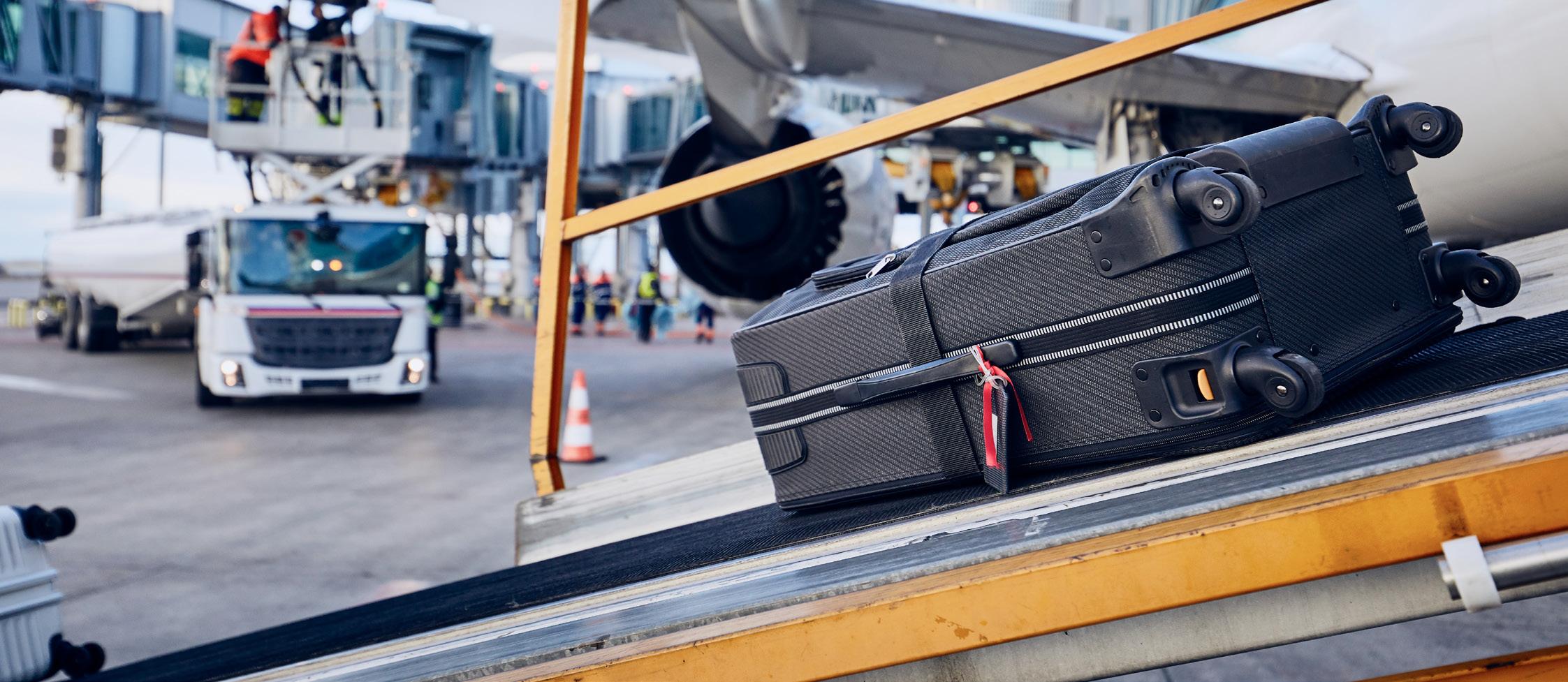
These efforts are gaining industry recognition. The Mallaghan SkyBelt was named 2025 “Product of the Year” by Ground Support Worldwide (GSW).The award recognises the electric conveyor belt loader for its innovation in enhancing safety, efficiency, and sustainability in airport baggage handling operations.
The state-of-the-art electric belt loader was designed to provide airlines with a more efficient, reliable, and sustainable ground handling solution and is already in operation at major global airports, including New York’s JFK, LaGuardia and Los Angeles.
The SkyBelt s fitted with a patented lifting system and an array of advanced sensor systems to reduce the risk of accidental damage to aircraft. Its lifting system allows for vertical boom movement
without unintended lateral/ transverse movement, which risks fuselage damage and adds unnecessary difficulty to the operational procedure.
The electric belt loader offers extended run hours, remote diagnostic capabilities and Mallaghan’s engineering team have coupled a fully electrified propulsion system with powerful lithium-ion batteries. Customers can choose additional features including a Collision Avoidance System, collapsible/fixed handrails and package rails, and more.
Ronan Mallaghan, CEO of Mallaghan, said: “At Mallaghan, ‘Innovation for Aviation’ is not just a statement - it’s the mission that we have been delivering on for decades. The SkyBelt is a perfect example of this, demonstrating our dedication to addressing longstanding industry challenges and bringing gamechanging products to the market.”

“Our success at the GSW Leaders of the Year Awards is a testament to our team’s skill and commitment to excellence as we continue to push the boundaries with products that not only meet but exceed the expectations of our partners.”
Alongside technological innovation, Mallaghan continues to invest in its workforce. The company was recently recognised with the Manufacturing Future Award at the Made in Northern Ireland Awards, reflecting its commitment to developing engineering talent.
At the heart of this effort is the Mallaghan Apprentice Mentor Programme, which currently supports 30 apprentices across multiple levels. The initiative has been praised for producing skilled, well-rounded professionals equipped for longterm careers in engineering.
“From pioneering new technologies such as the SkyBelt to investing in the engineers of tomorrow through our Apprentice Programme, we are focused on driving meaningful progress in every area of our business,” affirmed the CEO.
This focus on people extends beyond internal development.
Mallaghan actively engages with local communities, hosting educational visits at its Dungannon headquarters and offering students handson insight into engineering and manufacturing careers.
Its collaborative approach also extends across its supply chain. While maintaining strong relationships with Northern Ireland-based suppliers, the company sources specialised components—including chassis, hydraulics, and electronics—from trusted global partners, balancing integration with flexibility.
“AT MALLAGHAN, ‘INNOVATION FOR AVIATION’ IS NOT JUST A STATEMENT - IT’S THE MISSION THAT WE HAVE BEEN DELIVERING ON FOR DECADES.”
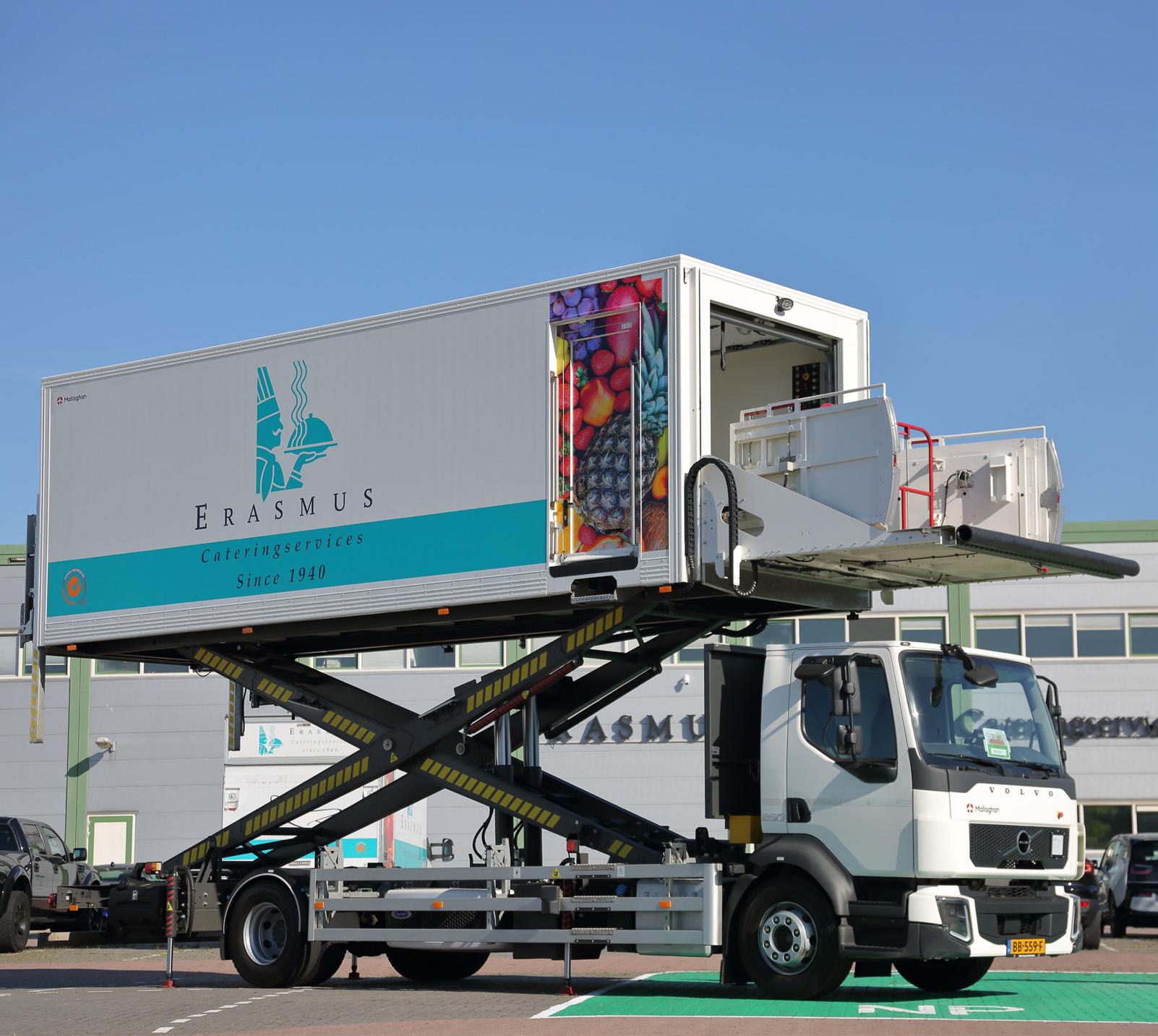
The company continues to innovate across its product range. In 2025, Mallaghan unveiled its next-generation CT6000 catering truck, built on a modern Volvo FL chassis and incorporating enhanced safety technologies designed to improve efficiency and operational safety in airport environments.
Engineered for effective catering services, the CT6000E is a key component of Mallaghan’s commitment to sustainable aviation practices. Its electric powertrain eliminates emissions, reduces noise pollution, and enhances operational capability, aligning with global efforts to reduce the carbon footprint of airport GSE.
Described by Mallaghan as the “first of its kind,” the vehicle features an advanced aircraftcontrolled approach system to minimise the risk of damage, alongside a 360° bird’s-eye camera system and integrated onboard telemetry.
Recent developments also include the launch of the first fully electric tanker, the Mallaghan Electric SelfPropelled Toilet Service Truck. Alongside new electric models, the company continues to refine its SkyBelt conveyor belt loader, with updated specifications to improve energy efficiency and durability for global markets.
Taken together, these advancements signal a company not only scaling production, but also investing in innovation, skills, and longterm capability. As the aviation sector accelerates its transition towards cleaner, more efficient ground operations, Mallaghan’s integrated and sustainability-driven approach positions it firmly at the forefront—delivering not just equipment, but future-ready solutions for a rapidly evolving industry.
BUT ONE THAT CAN ALSO HAVE KNOCK-ON
People enjoy complaining about students, but the truth is, they can be a boom to an area. Where students go, they bring a vitality and energy, and amenities and businesses pop up that can thrive from this and bring benefits to the wider community. Used carefully, student accommodation can be and has demonstrated itself to be a powerful tool for urban regeneration.
That is what the Alumno Group does. “It’s a good sector to be involved in, and we have developed a strong track record and specialism in that area,” says David Campbell, Managing Director of the Alumno Group. “We see student housing as a catalyst to drive positive change. Student housing brings wider benefits to existing communities. We’ve always gone the extra mile, driven by an ambition to ensure any new development brings a new narrative to the place.”
Campbell established the Alumno Group in 2008, and from the start, it was predominantly a student housing mixed-use developer.
“We have undertaken more than 30 projects to date, from Aberdeen down to the south coast,” Campbell tells us. “We work closely with universities as well as local authorities and other key stakeholders, effectively originating opportunities for new projects. We go out and find sites and take them through
the design and planning stage, carrying out and overseeing the development with a construction partner.”
Since its foundation, Alumno has built strong relationships with a number of large institutional investors and funders. It has gone on to develop new builds and tall buildings, but it has also been involved in a number of notable refurbishments.
Among those is the Park Hill estate, which houses students of Sheffield Hallam University. This historic building is not only a Grade II listed development, but the largest listed structure in Europe.
“It was a challenge because of the nature of the listing, and you could only understand what the building fabric was about once you started delving into it,” Campbell recalls. “That was challenging, particularly as we

Trusted delivery partner to Alumno across multiple UK schemes
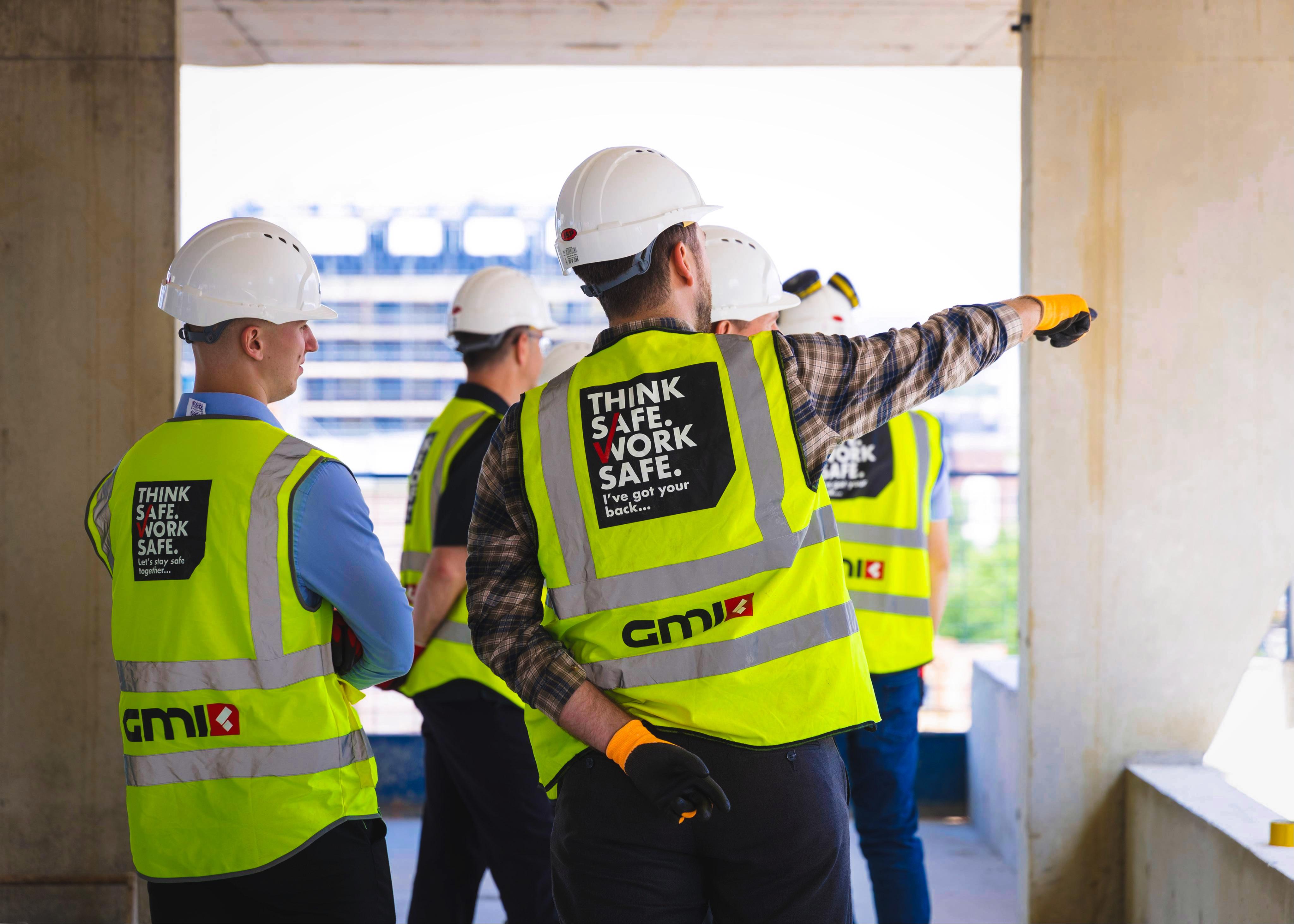
At GMI Construction, we partner with developers across Urban Living, Public Sector, Destination and Workplaces to turn complex, design-led schemes into deliverable, fundable projects.
Early engagement to protect programme and viability
Preconstruction that removes risk before it reaches site
Logistics strategies that unlock constrained sites
Trusted partner on repeat developments via long term relationships’



If you're planning an urban living, public sector, destination or workspace scheme get in touch directly via the email below:
leads@gmi.co.uk

BUILDING
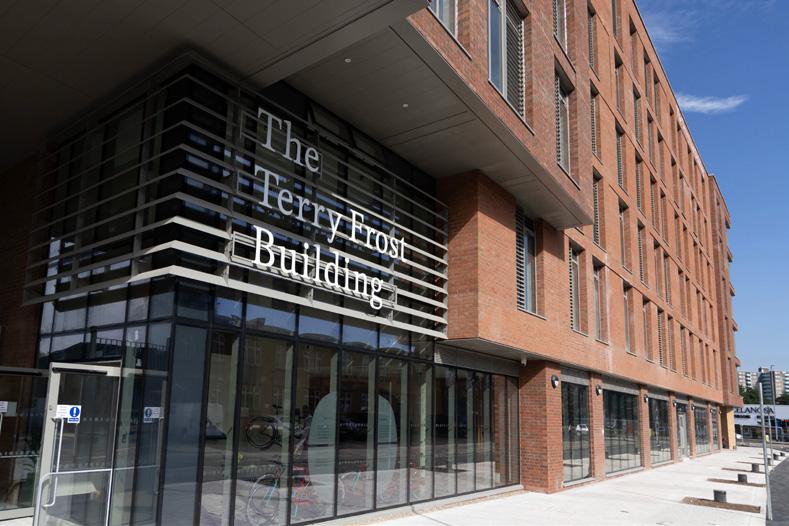
The partnership between Alumno and GMI Construction demonstrates how collaborative delivery can drive both economic and social impact across the UK’s key regional cities. Together, the two organisations have delivered student accommodation schemes in Leeds, Manchester and Birmingham to date, contributing to a new generation of high-quality urban living
With three developments completed and one currently live on site in Manchester, the partnership has delivered more than 900 student beds. Beyond physical delivery, these projects have created lasting value within their communities, supporting regeneration, enhancing local environments and generating meaningful social value
At the heart of this success is a shared commitment to delivering more than just buildings. For both Alumno and GMI Construction, each project is an opportunity to create places where people can live, learn and grow, while positively contributing to the wider urban fabric.
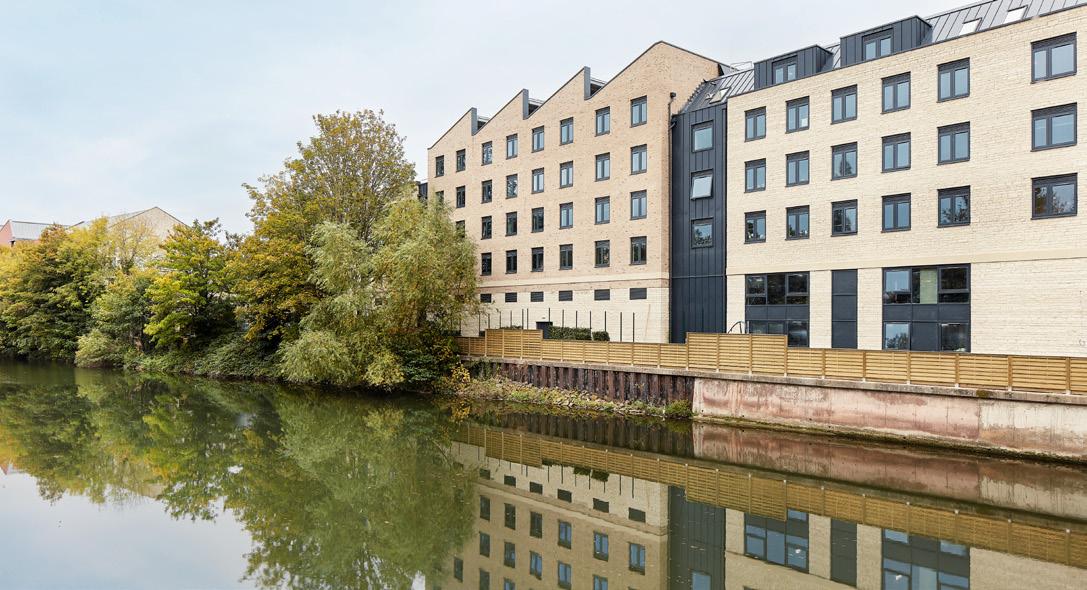
The successful delivery of Pershore Junction in Birmingham exemplifies this approach. As GMI Construction’s third project for Alumno, the scheme reflects a strong, established relationship built on trust, consistency and performance. Delivered on a constrained brownfield urban site, it demonstrates how early contractor involvement, detailed logistics planning and collaborative design management can unlock complex developments and bring forward commercially robust, design-led schemes.
For developers operating in the urban living sector, this highlights the importance of engaging an experienced delivery partner early in the process. By doing so, risk can be mitigated, programme certainty protected and design intent maintained from concept through to completion.
This approach is central to how GMI Construction operates across all sectors. Built on long-term partnerships and transparency, the business has developed a strong track record of repeat and negotiated work, reflecting the trust placed in its teams to consistently deliver. With over 40 years of experience, GMI Construction combines the capability of a national contractor with the agility and client focus of a regional business, operating across the North and Midlands from offices in Leeds, Manchester, Birmingham and Stockton-on-Tees.
Underpinning this is GMI Construction’s ‘Exceptional Delivery’ model, a structured approach focused on safety, quality, programme certainty, responsible delivery and customer experience. This ensures that projects are delivered to a consistently high standard while building long-term relationships with clients and partners.
Across Urban Living, Public Sector & Frameworks, Workplaces, Destination and Industrial & Logistics, GMI Construction works closely with developers, investors and public sector clients to shape delivery strategies that balance programme, cost and quality, ensuring schemes are both deliverable and fundable.
Across every project, the goal is consistent: to deliver buildings that support long-term economic growth, transform places and create environments where people and communities can thrive.
For clients seeking a delivery partner who understands the complexities of modern construction and the importance of getting projects right from the outset, GMI Construction continues to demonstrate why it is trusted to deliver.
www.gmi.co.uk
delivered that during Covid. When we finished the building, it was summer 2020, so obviously, there was nobody to live in it! We weren’t really able to showcase it in any way. It took another year before we could open it properly, and then people began to get an appreciation for what a unique building it was.”
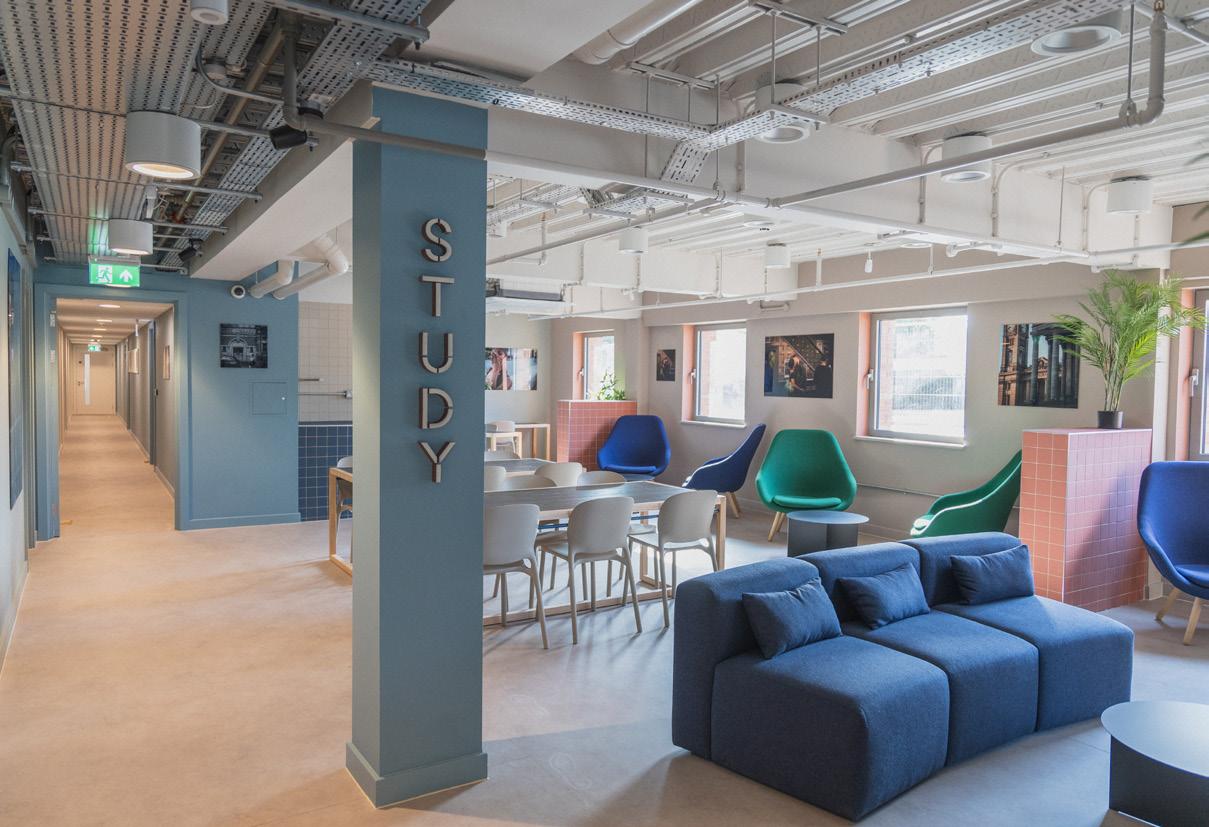
“A lot of our schemes are mixeduse,” Campbell says. “We have worked on complementary usage projects such as children’s theatres, start-up facilities, artists’ studios, and commercial spaces. We have a key emphasis on place making and putting regeneration and cultural rebirth at the heart of what we do. Student housing can be a great catalyst for that financially and culturally by bringing in investment.”
“We really want to drive place making and good design and an interest in the wider arts and culture scene,” explains Campbell. “We are always mindful of the history of a location and its back story, so look to generate an understanding of what makes each place different, ensuring all our schemes are bespoke and not overly homogenised within their surroundings.”
It means that every Alumno Group project has its own distinct character and spirit.
As Campbell observes, “We have got these added layers to what we do, never really settling for what’s expected. Even beyond the planning stage to the very last drop before the students move in , we are looking to add extra dimensions. We’re not afraid to try new things.”
Campbell is a firm believer in the old adage that you are only as good as your last project, and so every new project Alumno engages in is a challenge to do better than before. To achieve this, the Group invests heavily in its key relationships with contracting partners and suppliers.
“When you’ve been in multiple projects together and solved multiple problems together, that helps you build strong and sustainable relationships,” he says.
Those relationships are particularly important when unexpected obstacles occur.
“Last year in Bath, we had a project where the original contractor went bust within one month of starting on site,” Campbell tells us. “We lost a year, but we managed to rejig the project’s finances. We had an understanding Funder who we have worked with on multiple projects previously and finished the project in 2025, and in the

With over 60 years of combined director level experience, our team delivers technical expertise and a proven approach to secure, best practice technology deployment. We provide a comprehensive managed service designed to keep organisations operating efficiently, productively and - most importantly - securely.
At the centre of our offering is our fully managed 24/7 Service Desk, ensuring rapid and reliable support whenever it’s needed. This is reinforced by our human led 24/7 Security Operations Centre (SOC), delivering real time threat detection, continuous monitoring and swift incident response. Cyber security is embedded throughout our services, ensuring clients benefit from robust protection and complete peace of mind.
As specialists in Microsoft 365 Modern Work, we create secure, scalable and collaborative workplace environments that boost productivity while reducing operational risk. Our best practice deployments help organisations unlock the full value of the Microsoft ecosystem through improved governance, security and user experience.
Our expertise extends into the cloud through our comprehensive Azure services, supporting businesses in building resilient, flexible and secure infrastructures. Whether implementing Azure Virtual Desktop, delivering cloud migration, enhancing identity and access management or optimising Azure environments, every project follows industry leading security and governance standards.
We also provide hosted desktop solutions, reliable hardware supply, and professional onsite technician services, offering complete end to end IT support from one trusted partner.
Driven by experience and innovation, we help organisations thrive in an increasingly digital world - securely, confidently and without compromise.
www.btm.co.uk
At Bellrock, we believe every building should work smarter, for the people who use it and the organisations behind it. We deliver intelligent property and facilities management solutions that drive performance, enhance user experience and support long-term value across diverse portfolios.
Our approach combines data-led insight with practical expertise, enabling us to optimise building operations at every stage of the lifecycle. From ensuring compliance and managing risk, to improving energy efficiency and streamlining day-to-day service delivery, we help our clients create environments that are safe, sustainable, and fit for the future.
We understand that buildings are more than just physical spaces, they are places where people live, work and connect. That’s why we take a collaborative, tailored approach, working closely with our partners to unlock value and ensure assets perform at their very best.
Innovation is at the heart of what we do. By leveraging smart technology and embracing continuous improvement, we provide solutions that not only meet today’s demands but anticipate tomorrow’s challenges.
What truly sets Bellrock apart is our people. Our teams bring passion, precision and a proactive mindset to every project, delivering highquality outcomes and building lasting relationships with our clients.
With a strong track record and a commitment to excellence, Bellrock continues to redefine how buildings are managed, creating smarter, more efficient spaces for the future.
Bellrock, making every building work better.
www.bellrock.co.uk


Core Managed IT Services
• 24/7 IT Helpdesk Support
Rapid, expert assistance for end users across all devices and platforms.
• Proactive Monitoring & Maintenance
Continuous monitoring, patching, and issue resolution before problems impact operations.
Cyber Security & Compliance
• Cyber Security & Security Operations Centre (SOC)
Continuous security monitoring and incident response.
• Backup & Disaster Recovery
Business continuity through secure backup solutions and rapid recovery plans.
BTM

Cloud & Modern Workplace
• Microsoft 365 Management
Licensing, optimisation, security configuration, deployment of Microsoft 365 workplace tools.
• Cloud Migration & Optimisation
Seamless transitions to Microsoft Azure, hybrid.


(0)20 3967 2915 accounts@btm.co.uk ww.btm.co.uk



end, it was a great building and reaffirmed the persistence and commitment from everyone to make it work.”
Of course, no construction project likes seeing its timeline slip, but with student housing the academic year makes the schedule particularly set in stone. If the residency is not ready to move into by September, it will be another year before anyone can move in.
“Having done so many projects, we have an inherent resolve and resilience,” says Campbell. “We have strong, trusted relationships with our contractors and through the team that helps us get through challenges and make the right decision at the right time.”
With the time-sensitive and often challenge-filled nature of these projects, however, Campbell admits that sometimes even he misses just how much the Group achieves on a regular basis.
“You’re so focused on problem solving, it takes a while to be able to stand back and appreciate what it’s all about,” he says.
For Campbell, it ultimately comes down to the people. “It really is a people business,” he says. “We have worked with people we’ve got on with, who did a great job, and if they move to another business, we follow them. Other times, we see someone’s work, think it looks good and get in touch with them. What we want are shared ideals and shared ideas about what is good and bad. We are a very design-driven business, and a lot of the time, if someone’s got the same taste or design aesthetic as we do, there’s something there. There’s no real science to it.”
As big and ambitious as these projects are, Campbell also readily recognises that right now, for people in general and students in particular, affordability is an important topic.
“What affordable means is open to debate, but we drive value for money with an ability to provide a spectrum of rents,” Campbell tells us. “We want our project to be truly accessible to a varied collective of students.”
That variety will be reflected in the projects Campbell looks to bring forward. When we speak with him, he is optimistic about opportunities going forward and has identified new locations to focus on.
“The ambition is that the next projects will take us up a notch in terms of design. There’s a good opportunity at the moment to really strive to see if we can develop the product a bit more without sacrificing quality and design, delivering bedrooms and facilities that people can afford and want to live in.”
Beyond that, Campbell wants to broaden the accepted idea of what purpose-built student accommodation can be.
“There’s a lot that can be done and improved on. We are looking at evolving our skills into a more shared living-like concept, particularly in Central London,” Campbell shares. “We are looking at a graduate housing model one step beyond typical purposebuilt student housing. It is a model for graduates and young professionals who still want to enjoy that kind of close-knit, shared community.”

WE BELIEVE THAT GREENHOUSE TECHNOLOGY OFFERS MANY SOLUTIONS IN THE CONSTRUCTION WORLD FOR FUTURE GENERATIONS!
When you think about greenhouses, your mind probably goes to the little glass shack your granddad used to grow tomatoes in. But that is only the tip of the iceberg lettuce. Greenhouses are an entire segment of the construction industry, encompassing architecture, materials science, climate science, agriculture, and even zoology.
Deforche Construction Group has established itself as a company that can not only draw on all of these fields of expertise, but also apply that knowledge in innovative ways across every kind of greenhouse application.
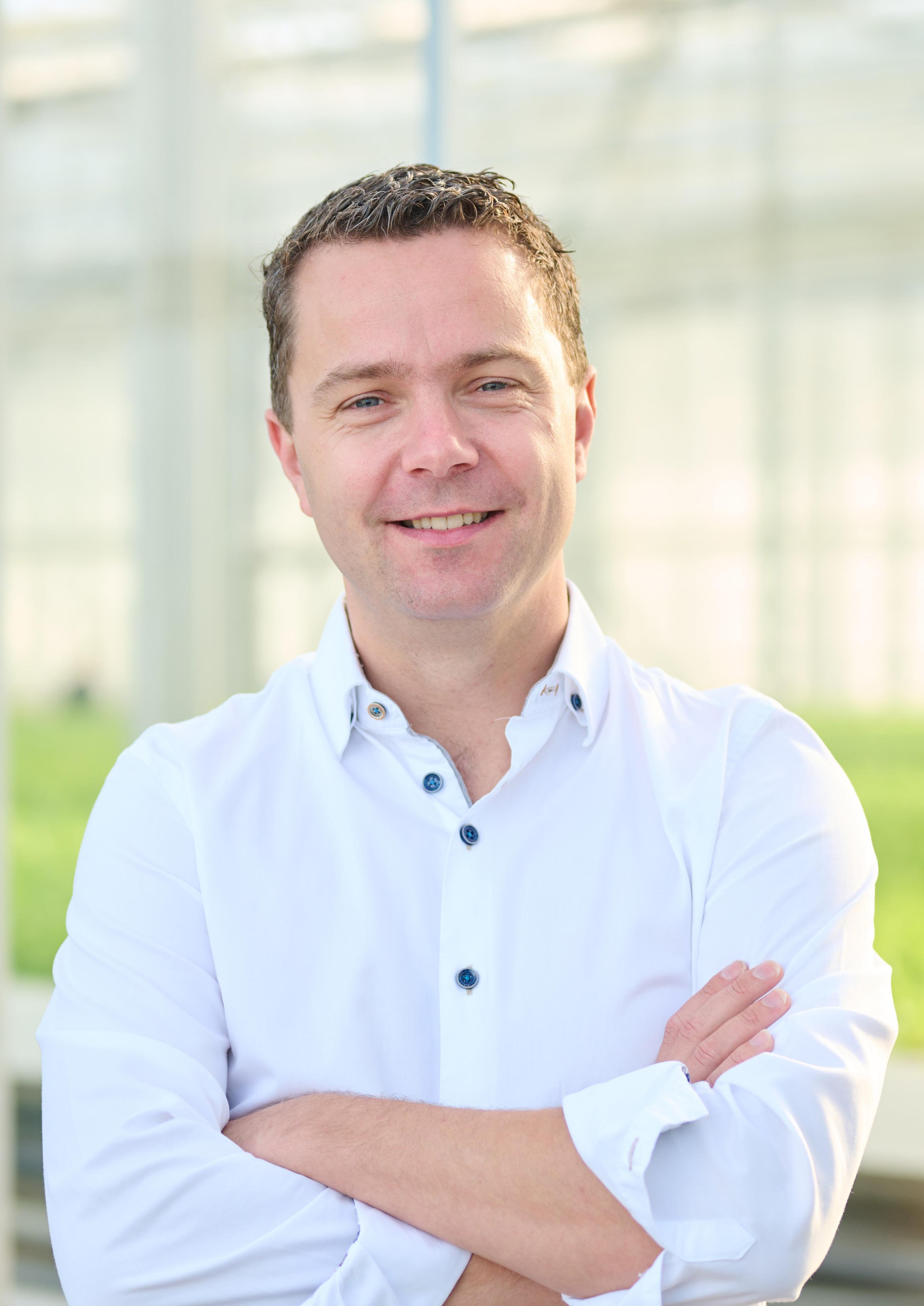
“We have worked in the classic style of greenhouses in the past but now our position is to be the most creative greenhouse builder in the world,” says Jeroen De Cock, CEO of Deforche Construction Group.
What sets Deforche Construction Group apart is that it has the knowledge and capabilities to specialise, but it ensures expertise in each niche can transfer between those specialisations.
“We are using greenhouse technology for different target groups, not just farmers, but research centres, developers, general contractors, botanical gardens, and more,” De Cock explains. “What we do is use
that technology to bring better solutions to situations where you don’t always think of greenhouses to begin with. We work with steel, glass, aluminium and our knowledge of glass roofs.”
This is why Deforche Construction Group has budded off into four sub-brands to target individual markets – all of them sharing Deforche’s deep reservoirs of expertise, but communicated in a way that specific target markets can understand.
“It’s difficult to persuade an architect using the arguments and references we would use to sell to a farmer,” De Cock points out.
The first of those brands is Hedafor, which specialises in creating buildings that provide controlled climates for flowers, trees, tomatoes, lettuce, and other salad crops.
“Flowers and trees. Historically, that is the reason greenhouses exist,” De Cock tells us. “Everything else came later.”

Jeroen De Cock, CEO, Deforche Construction Group.
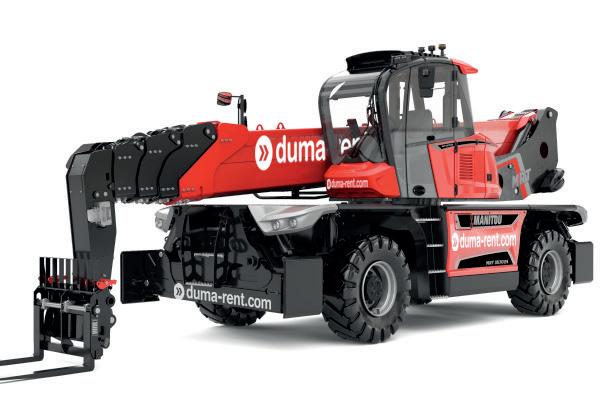
Duma Rent exclusively rents machines from renowned top-tier brands. These are always purchased new and replaced on a regular basis—your guarantee of reliable equipment featuring the latest and most advanced technologies. The machines are available for short-, medium-, and long-term projects.
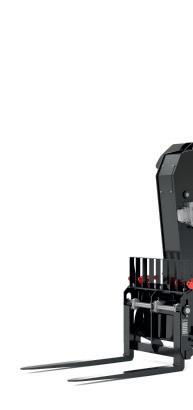
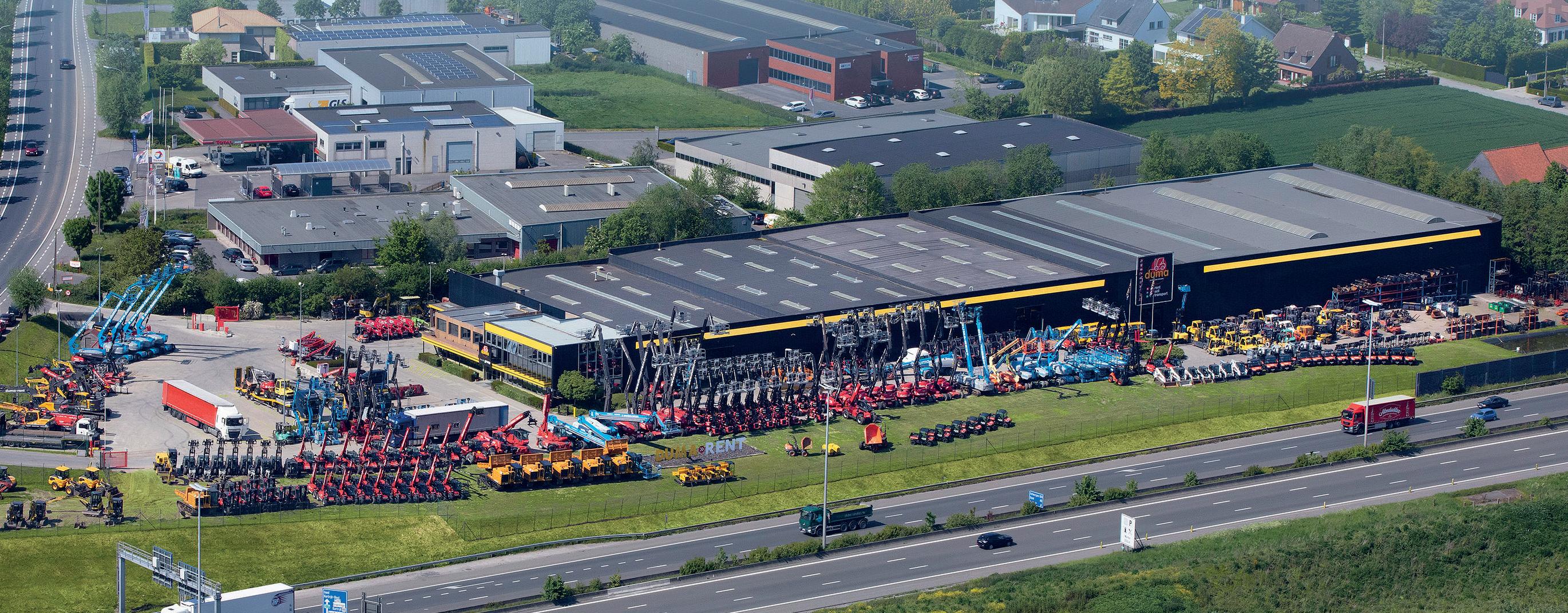
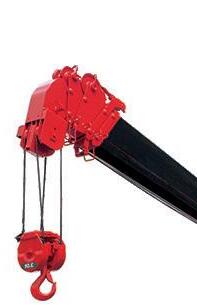
Duma Rent operates an extensive fleet of over 2,000 specialised machines, including aerial work platforms, telehandlers, mini cranes, forklifts, and earthmoving equipment. Customers can choose from a wide range of specialised machines designed to handle the most demanding tasks with maximum efficiency and the latest safety technologies.
“We understand that every company is unique, which is why we offer tailor-
made solutions that meet our customers’ specific requirements,” says Piet De Craemer, Rental Manager at Duma Rent. “We have invested in top-tier branded machines as well as trained and experienced staff, because our customers deserve the best service.”
Rental, transport, and technical support are all handled by our own team. Transport is carried out by our logistics division, Duma Trans. Thanks to this integrated approach, we are able to provide reliable service at every stage of the rental cycle. The VCA certification of both our equipment and personnel
ensures that all operations are carried out safely.
Duma Rent has a team of experienced and well-trained professionals who advise customers in selecting the right machine for the job—at the most cost-effective price. We take pride in not only renting out equipment, but also in providing guidance on its use and offering continuous support throughout the entire rental process. This advice may also be provided through a preliminary visit to the customer’s site.

In addition to its locations in Belgium, Duma Rent also operates two major rental branches in France. Since
Duma Rent Belgium
Torkonjestraat 23
8510 Marke
+32 (0) 56 222 111
info@dumarent.be www.dumarent.be
2008, the company has been active in Dunkirk through its subsidiary Duma Rent Nord SAS. In 2022, a new branch
Duma Rent Paris— was opened in Canly, near Paris. This allows us to
Duma Rent Nord
1 rue du Lac
59380 Armbouts-Cappel
+33 (0)3 28 20 05 80 info@dumarent.fr www.dumarent.fr
better support our customers not only in Belgium, but also in Northern France and the greater Paris region.
Duma Rent Paris
53 rue des écoles
60680 Canly
+33 (0)3 76 01 01 10
info@dumarentparis.fr www.dumarent.fr
Duma recently collaborated with Deforche Construction Group on a major construction project at the Belgian zoo Pairi Daiza. The project involved the construction of a greenhouse standing 22 meters high and spanning 200 by 200 meters. Thanks to this development, Pairi Daiza now boasts the largest covered jungle in Europe, marking yet another impressive step forward in its offering. At its site in Brugelette, visitors can already explore a tropical ecosystem beneath an immense glass dome.
TOP TECHNOLOGY: FROM CONSTRUCTION SITE TO WORLD-CLASS
What was once an ambitious construction site just a few years ago has now evolved into a fully immersive experience. In “EDENYA,” visitors are transported into the atmosphere of Latin America, surrounded by exotic plants and animals. The concept goes far beyond simple observation. Guests can even stay overnight, right in the heart of the tropical setting, living day and night among monkeys, birds, butterflies, and even manatees.
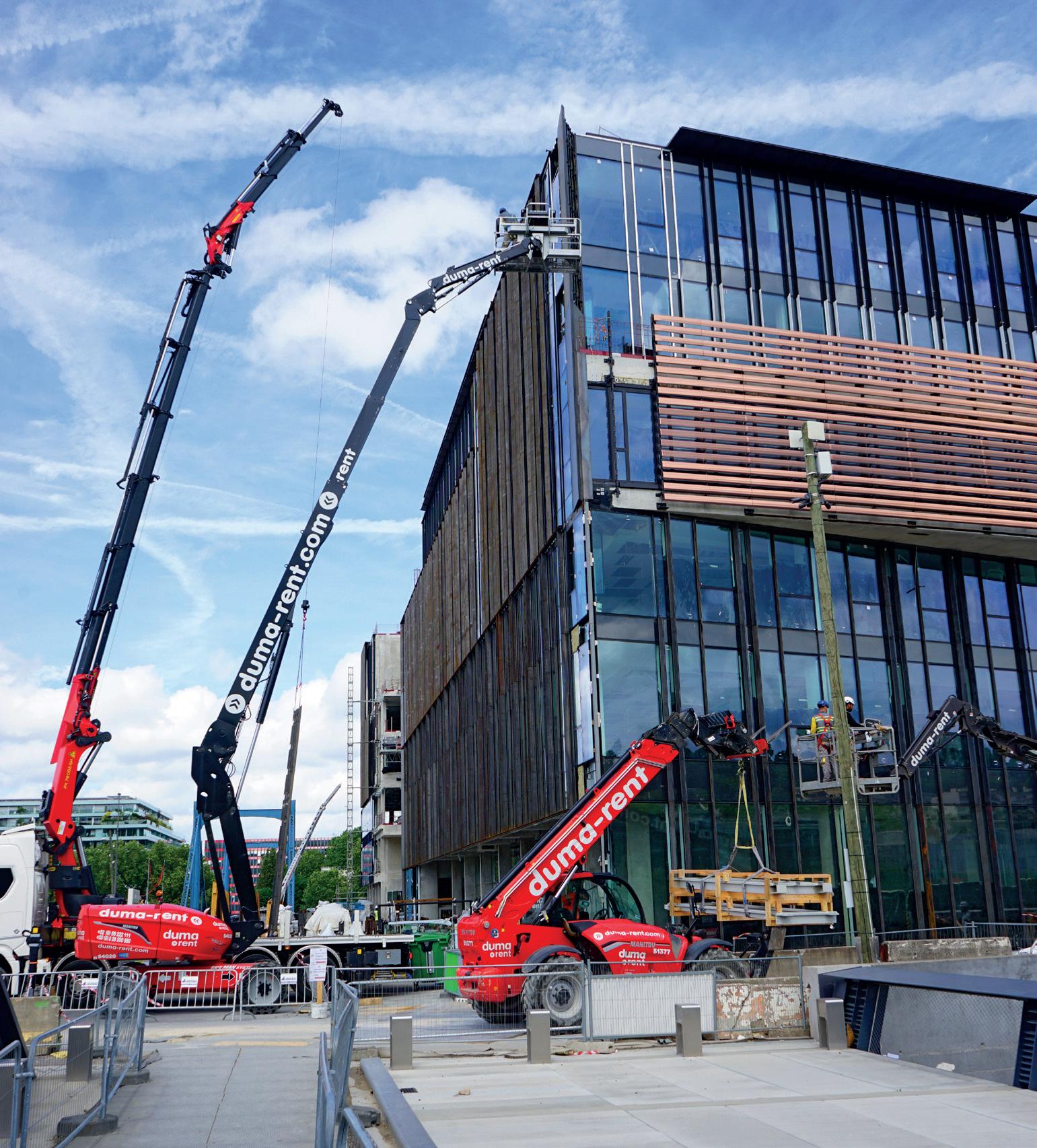
Behind this remarkable achievement lies a powerful example of Belgian engineering. For the construction of the greenhouse, Pairi Daiza partnered with Deforche Construction Group, internationally renowned for its expertise in high-tech greenhouses and climate solutions. This expertise was translated into a unique blend of architecture, technology, and experience. The challenge was significant: delivering a structure of this scale while maintaining both aesthetic excellence and a carefully controlled tropical climate. For the complex on-site operations, Deforche relied on rental specialist Duma Rent, deploying numerous rotating telehandlers and telescopic boom lifts.
The construction phase demanded the highest level of precision. Large glass panels had to be installed at considerable heights under strict safety conditions.
To achieve this, Duma Rent—specialists in construction and industrial equipment rental—was brought in. With a modern fleet of over 1,900 machines, Duma Rent provided essential support on site. In particular, Genie telescopic boom lifts played a key role. These machines offer working heights of up to 57 meters while combining reach with stability—crucial for installing complex structures.
With the opening of its covered jungle, Pairi Daiza is setting a new benchmark. The project demonstrates what can be achieved when vision, technology, and collaboration come together. Companies such as Deforche and Duma Rent play a pivotal role in this success. What began as an impressive construction project has now become a truly unique destination.
At the same time, it stands as a showcase for Belgian expertise—well beyond national borders.
In projects of this scale, downtime is simply not an option. That is why Duma Rent deliberately invests in a modern and up-to-date
fleet, featuring top-tier brands that are regularly renewed. This ensures reliability on site and access to the latest technologies in safety and efficiency.
“Our customers must be able to rely on their equipment, especially in complex projects like this,” says Piet De Craemer, Rental Manager at Duma Rent.
Duma Rent positions itself not as a traditional rental company, but as a true partner. From consultancy to execution, the company offers a fullservice approach. Transport is handled by its own logistics division, Duma Trans, while an in-house technical team provides support throughout the entire project.
“Every project is different. That’s why we first listen carefully to our customers’ needs and tailor our solutions accordingly,” adds De Craemer.
This approach enables rapid response on site—an essential factor in complex construction projects—and helps ensure that deadlines are met more efficiently.
Working at height and with heavy structures requires an uncompromising focus on safety. Both the equipment and personnel of Duma Rent are VCA-certified, ensuring that all operations meet the highest safety standards.
In addition, strong emphasis is placed on training and expertise. Employees assist customers in selecting the right machines and provide guidance throughout the entire process.
In addition to Belgium, Duma Rent is also active in France, with branches in Dunkirk and Compiègne near Paris. This presence allows the company to support clients such as Deforche across a wide region and to respond flexibly to international projects—while maintaining the trusted quality and responsiveness of Duma Rent.
A key differentiator lies in the preliminary support. Duma Rent often visits sites to assess conditions and provide tailored advice. This ensures not only that the right machine is selected, but also that the most efficient solution is implemented.
“We want our customers to succeed. That’s why we actively think along with them,” they explain.
BUILDING
The construction sector is rapidly evolving toward sustainability— and Duma Rent is keeping pace. With electric machines such as the Manitou MT 625e telehandler and the Bobcat E10e mini excavator, the company offers emission-free solutions without compromising performance.
The range will soon be expanded further with rotating electric telehandlers—a logical next step in a sector where sustainability is becoming increasingly important.
www.dumarent.be
The next brand is Thermoflor, which draws on Deforche’s experience in building garden centres. This brand has been established to serve entrepreneurs across a surprising range of businesses.
“We build car washes for Delta Sonic in the US, who clean cars in greenhouses built under the Thermoflor brand,” De Cock says.
The third brand is Forzon, which combines Deforche Construction Group’s nature and climate concepts.
“We are bringing people and nature together. That means most of the time we are building greenhouses in more urban environments, building atriums and skylights,” says De Cock.
Last but not least is, Climafor a brand positioning itself in solar solutions through greenhouses. With our steel and aluminium factory, and our in-built expertise, Climafor is positioned to take on the bigger and more ambitious projects.
“Whereas greenhouse construction tends to be characterized by standard solutions and volume, we seek out custom solutions. We prioritize the purpose of the structure; in short, we think from the inside to the outside.“
With Climafor, we serve the solar market in a unique way. Once again, with the added value of greenhouse technology. We can equip installations with solar panels that do not seem logical at first glance, but generate double the yield of a given surface area.
Just think of Agri-PV or covering cisterns at wastewater treatment plants. We can also play with light, allowing solar car parks to look green and attractive and creating a roof that collects clean water for other purposes.
“We like to provide multiple solutions through different target routes,” De Cock explains. “We have a turnkey offering. We do the concept, the engineering, the production, construction and servicing.”
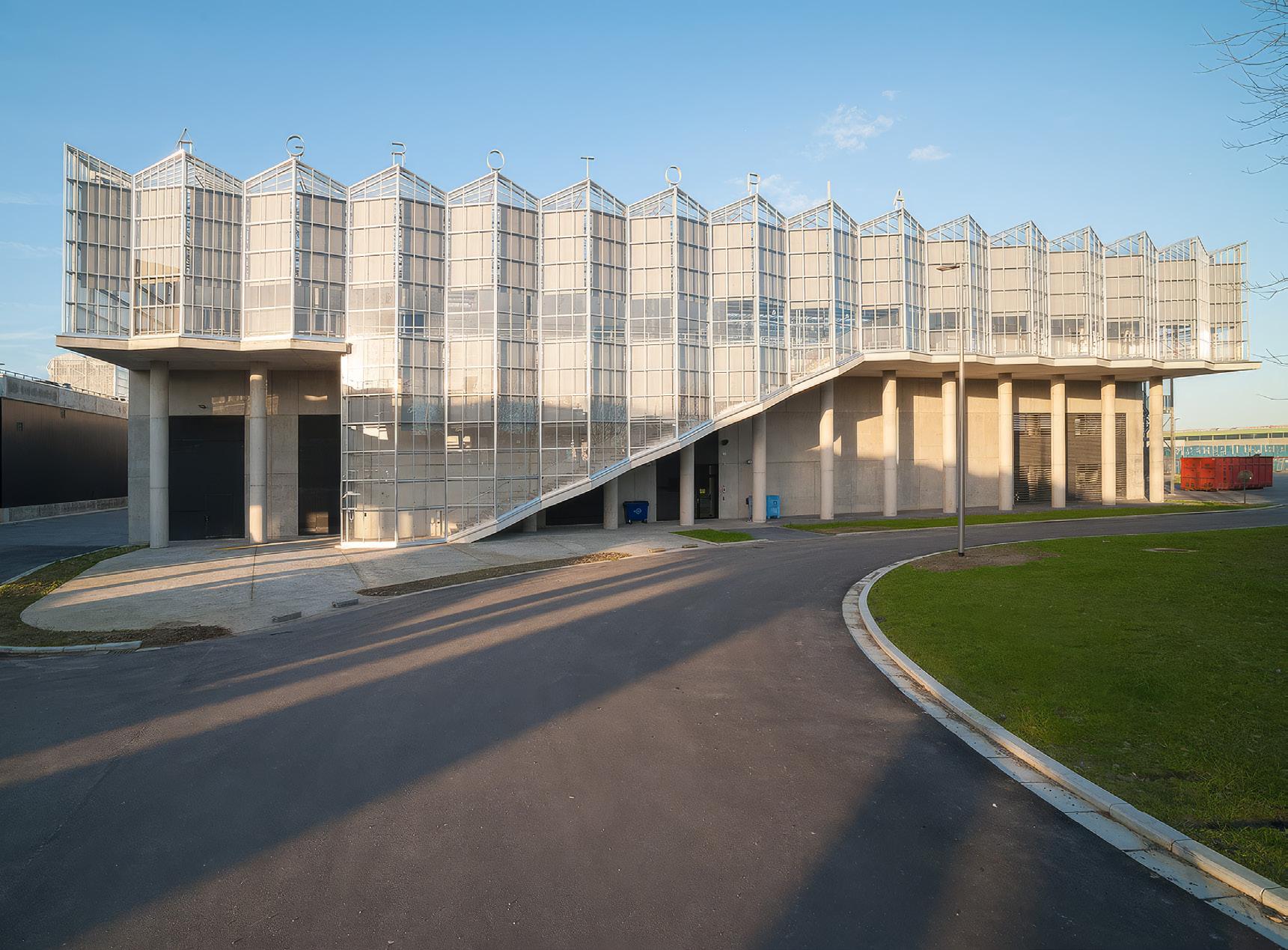
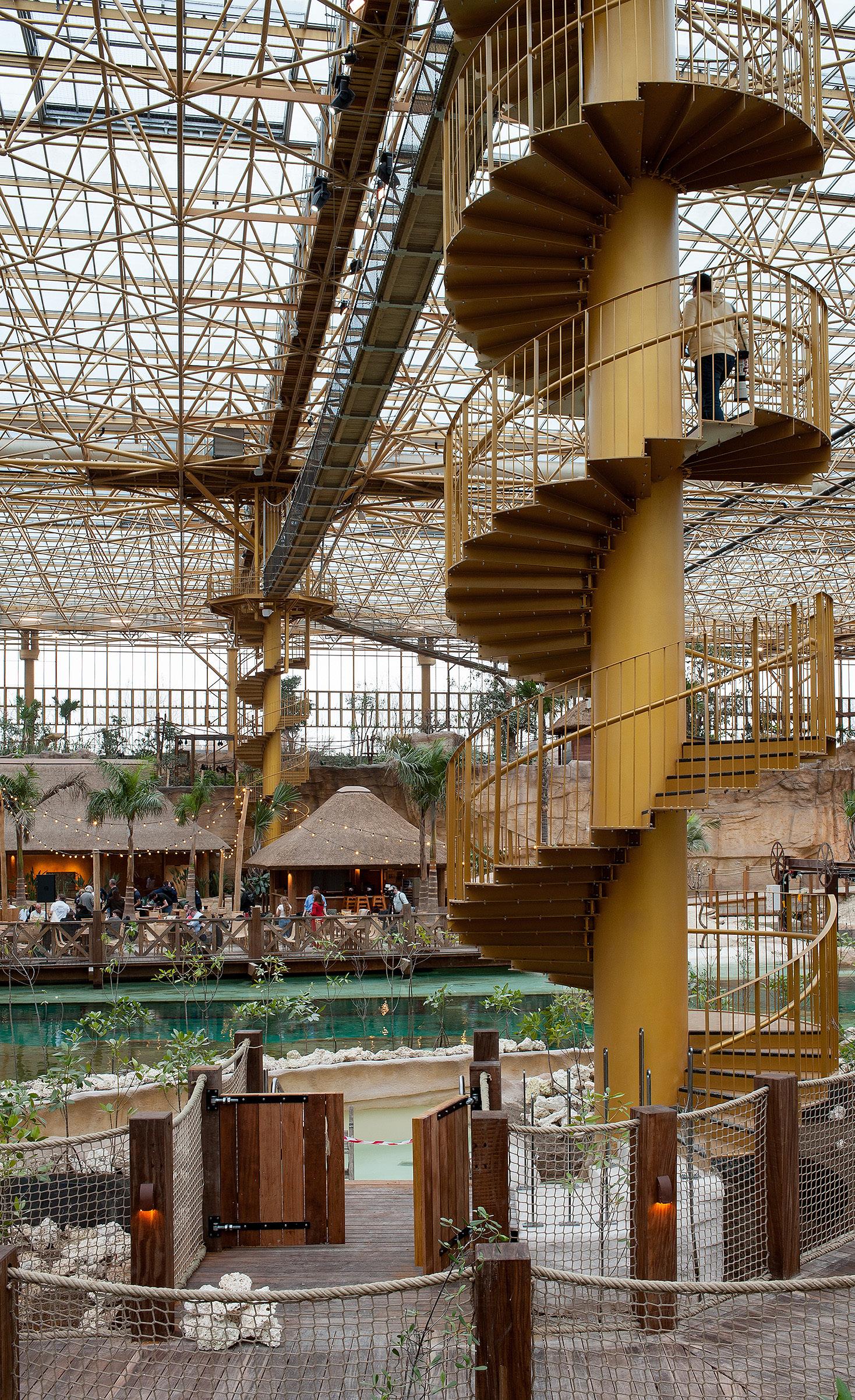
But to really appreciate what it is that Deforche Construction Group can do, you can look across their entire portfolio of brands, or you can just look at how they execute a single, exceptional project.
Because Deforche Construction Group does not just build the best greenhouses, it has also just been confirmed that they have built the biggest tropical greenhouse in the world. At 200 by 200 metres, and 24 metres high, the Edenya greenhouse at Paira Daiza has been immortalised in the Guinness Book of Records for its scale. But the construction’s size alone is only one of the technical challenges the project presented.
“It’s a zoo,” De Cock tells us. “They wanted the greenhouse to be an environment for animals, visitors, restaurants and hotels. You can imagine trying to combine all of that and still create a nice environment.”
For instance, a key part of any greenhouse is structural support – when your ceiling is made of glass, you want that material to be well supported. But the environment Deforche was aiming for would have felt cluttered with load-bearing columns placed every 15 metres.
Instead, Deforche’s engineers devised a structure that would allow them to have columns only every 50 metres by 50 metres, creating modules of 2,500 square metres. But reducing the number of columns was only the first technical challenge the Edenya project had to overcome, there would always be others in such an ambitious project. Ultimately, it had to be a greenhouse that
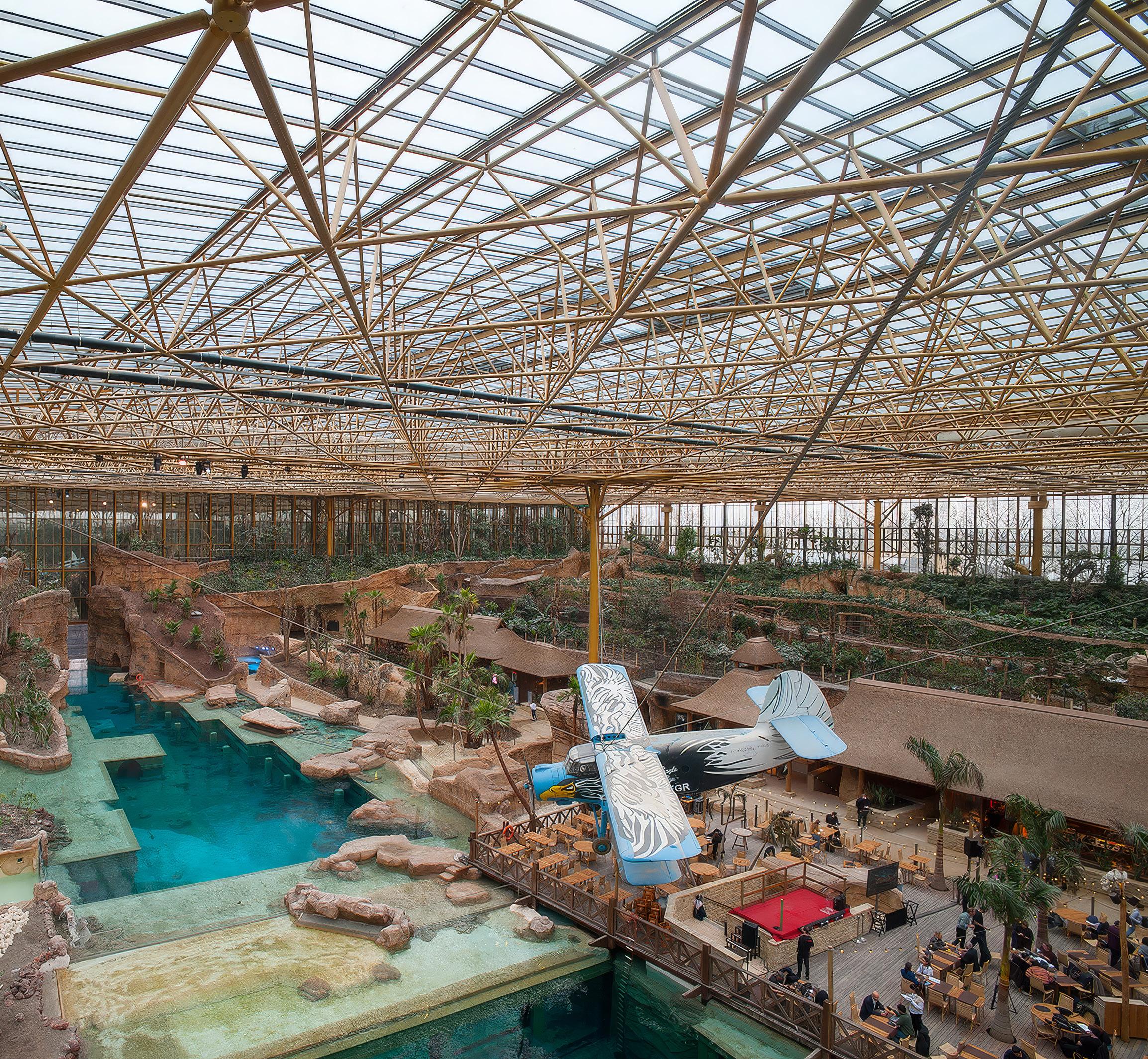
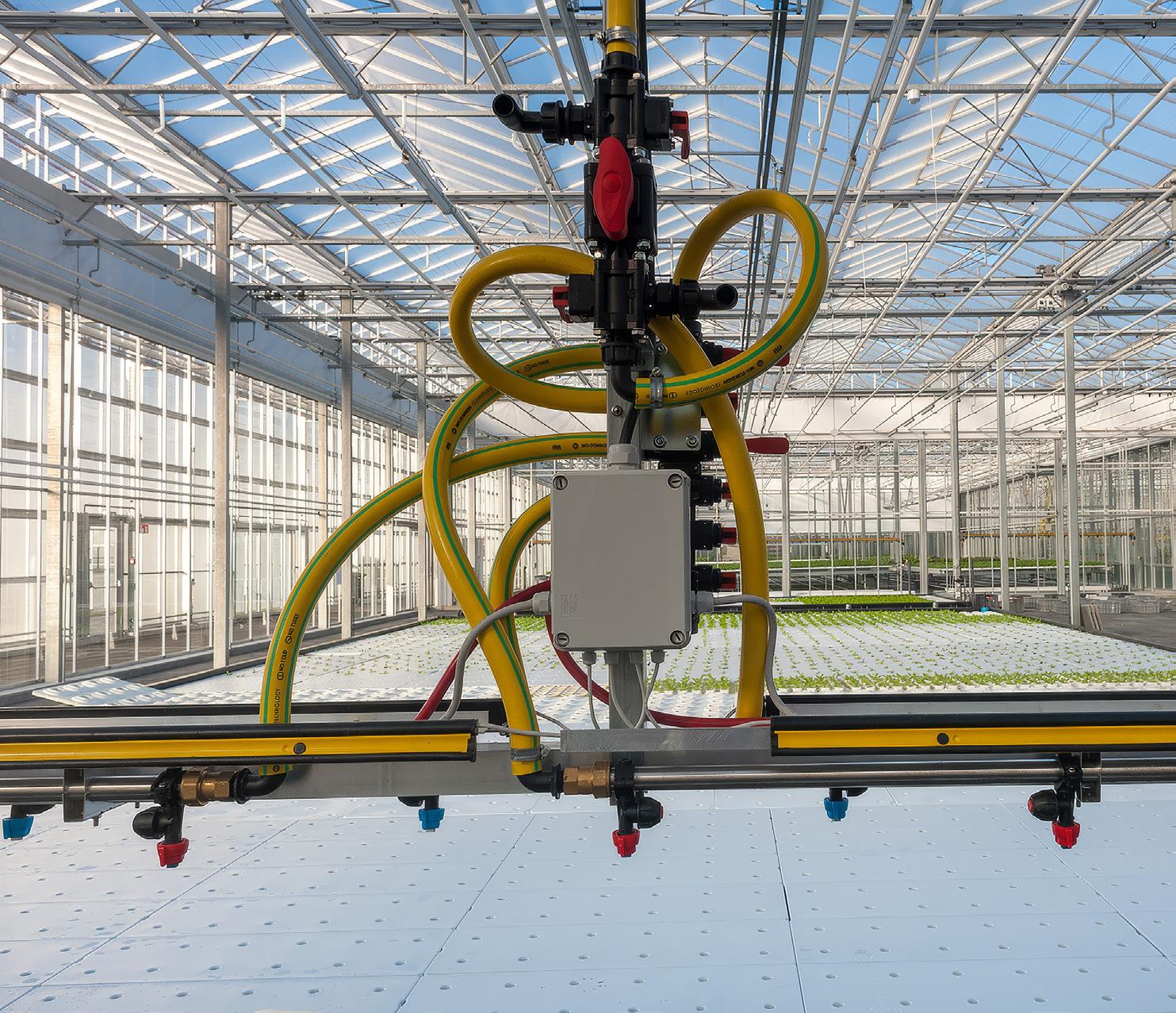
would be a home to a wide array of plants and animals (including humans). All of these lifeforms need different levels of UV exposure to thrive, so Deforche needed to control the levels of UV passing through the glass. In case that was not enough of a challenge, the resort would also be displaying numerous valuable works of art, which have lighting requirements all of their own.
“Our team made tailor-made glass that passes 39% of the sun’s ultraviolet light through the glass,” De Cock says.
All that glass would need cleaning – including 40,000 square metres of glass roof. Deforche has approached this problem from two angles – ensuring the entire roof is made from walkable glass, and developing cleaning robots capable of driving across that roof.
A project of this scale also needs to be prepared for the worst. In the event of a fire, the greenhouse needs to be easy to evacuate, especially when it is not just humans you are evacuating.
“You don’t want tigers and visitors evacuated at the same time,” De Cock observes.
Responding to fire also means overcoming other technical challenges. For safety, Edenya’s roof can be opened up to release the smoke and ventilate its interior. But it needs to do that without letting exotic birds and monkeys out, or other birds and insects in. Special netting has been built in to prevent that.
This combination of such a wide range of disciplines and innovative thinking is a blueprint for Deforche’s future.
“We want to be a sustainable partner for creative greenhouse solutions,” says De Cock. “We
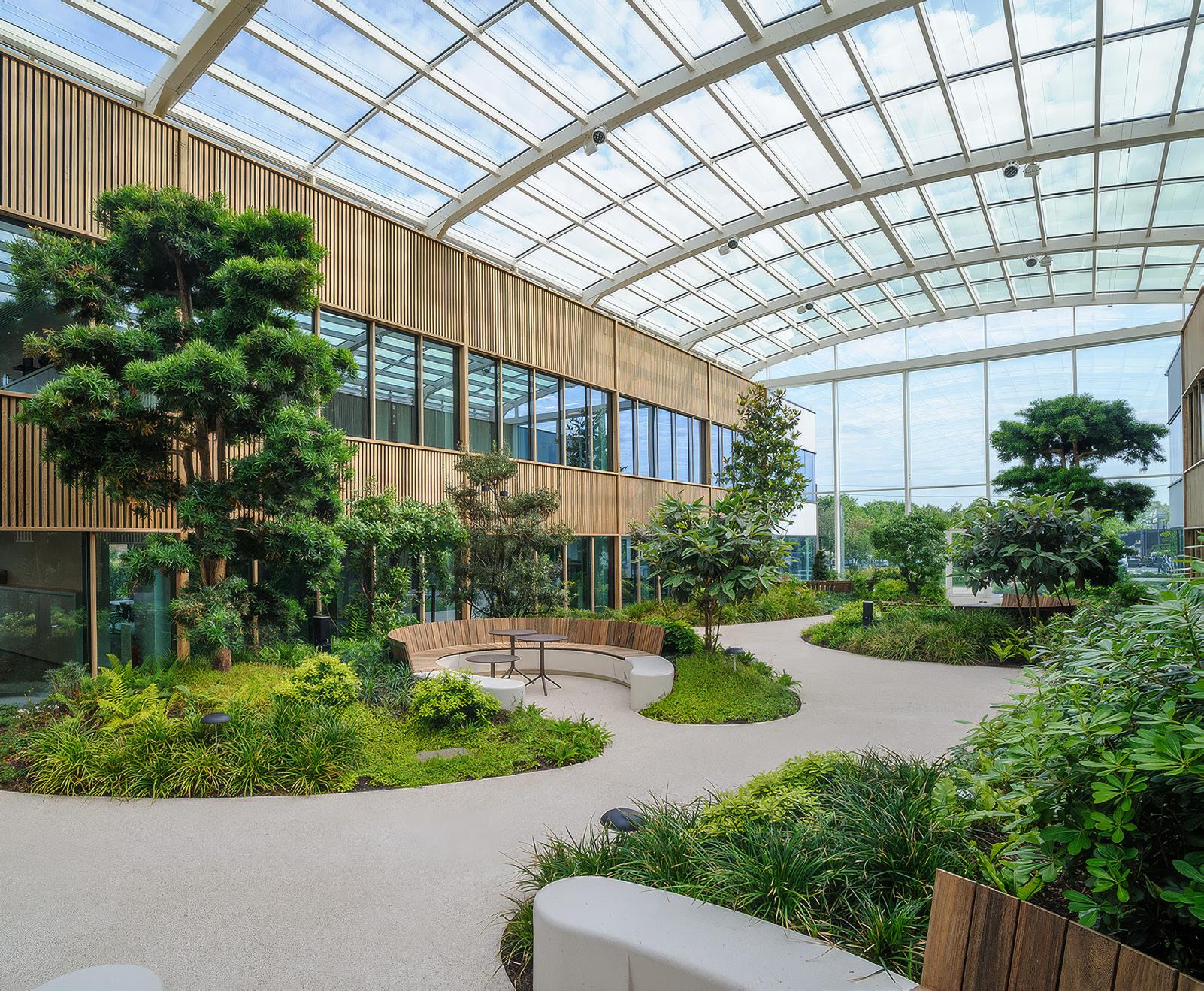
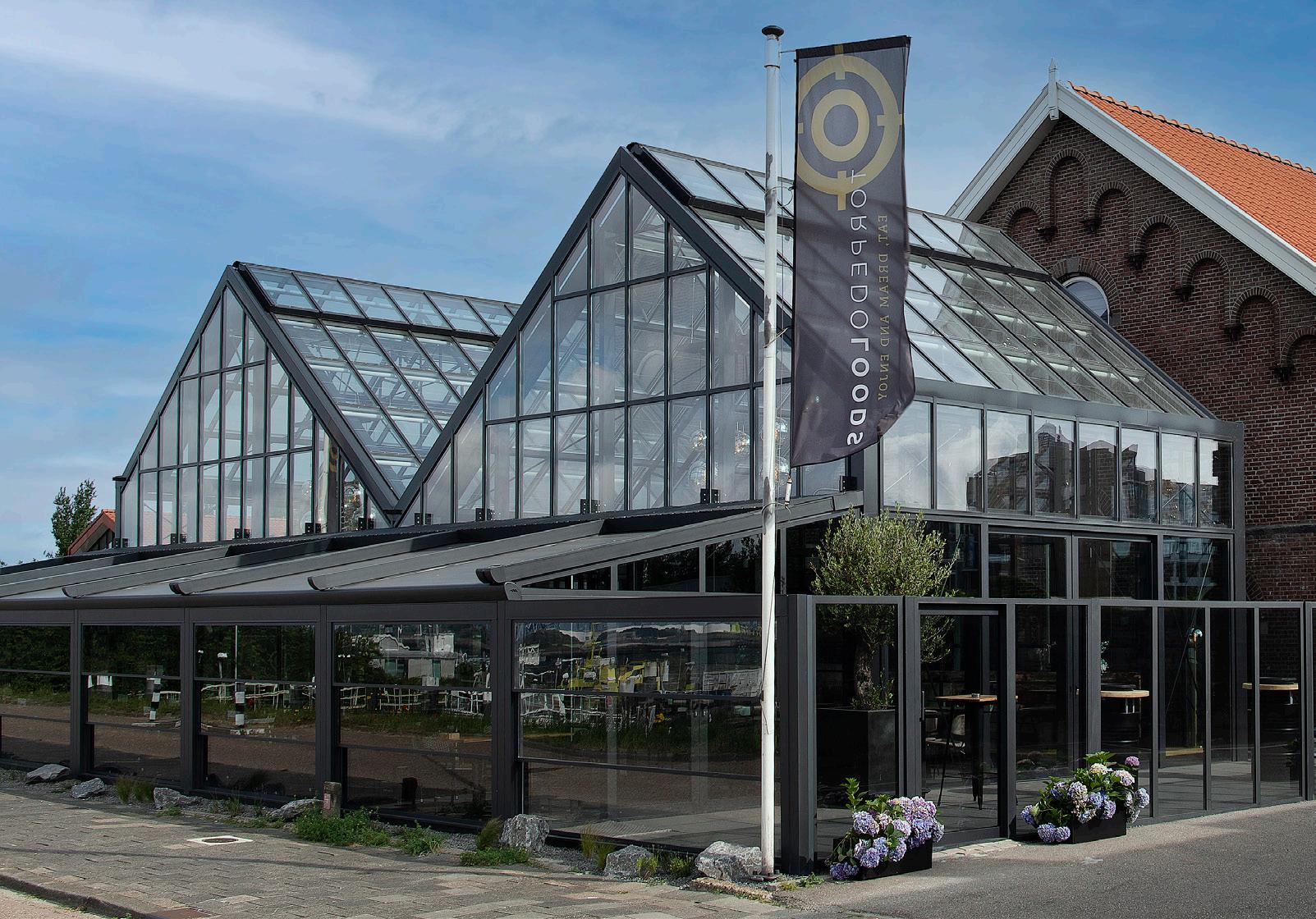
“SO, WHAT WE DO IS FOLLOW A PROJECT TRACK THAT THE CUSTOMER IS PART OF, GUIDING THEM IN THE FLEXIBILITY OF THE PROJECT.”
want to do what we are doing in Europe and the US, across an even broader region. We want to be the partner that collects knowledge to use in all kinds of situations. We are a knowledge-based company working in general construction and contracting.”
But it goes further than that. De Cock is an evangelist of “flexible project organisation”.
“There are so many projects with a range of contractors working against each other. One is on step one, and another is on step two, and everyone is fighting each other over contract terms,” De Cock says. “I believe that needs to change. We want co-creation that involves your customer. But the customer doesn’t work in your organisation or know its procedures. So, what we do is follow a project track that the customer is part of, guiding them in the flexibility of the project.”
AFTER ADOPTING A SUSTAINABLE APPROACH AHEAD OF THE CURVE, THIS FAMILY CLEANING COMPANY HAS GROWN TO BECOME A MAJOR CONTENDER IN THE SECTOR AND ACROSS THE COUNTRY.
Floorbrite was established in 1972 by Martin Wyers as a soft services and cleaning provider for the UK. Today, the family-owned business is run by his wife, CEO Linda Wyers, and his son, Managing Director Nik Wyers. Over the last 50 years, the family-oriented cleaning company has positioned itself as a sustainable, carbon-neutral business that is built on a set of strong core values.
The firm directly employs 1,500 people, and instils its values in those people to ensure consistency across the board. Through the MCW Foundation, Floorbrite continue to honour Martin Wyers’ legacy by investing in initiatives that support local communities, with a strong focus on wellbeing, opportunity and social impact.
“We believe that a business of our kind requires the ability to consistently apply our knowledge, not just of the work that we do but of our customers and what they require,” Nik Wyers tells us. “That delivers results and promotes customer retention. It is a winning formula for the Floorbrite Group that has led to the decades of organic growth that put us where we are now.”
But even as the company has grown, it has stayed true to its roots as a family-owned company and the values that accompany that.
“Having family values and operating as a family business can pose challenges in itself. That it is now 2026 and we are still family owned and run is a testament to how well we work together,” Wyers says.
“Everybody has their own perspectives and aspirations on which direction the business should take, and personally, I appreciate the direction that we have found.”
Being able to find that consensus has been important over the last few years, as Wyers reports there has been a huge shift in the cleaning industry as it moves towards “data-driven” cleaning.
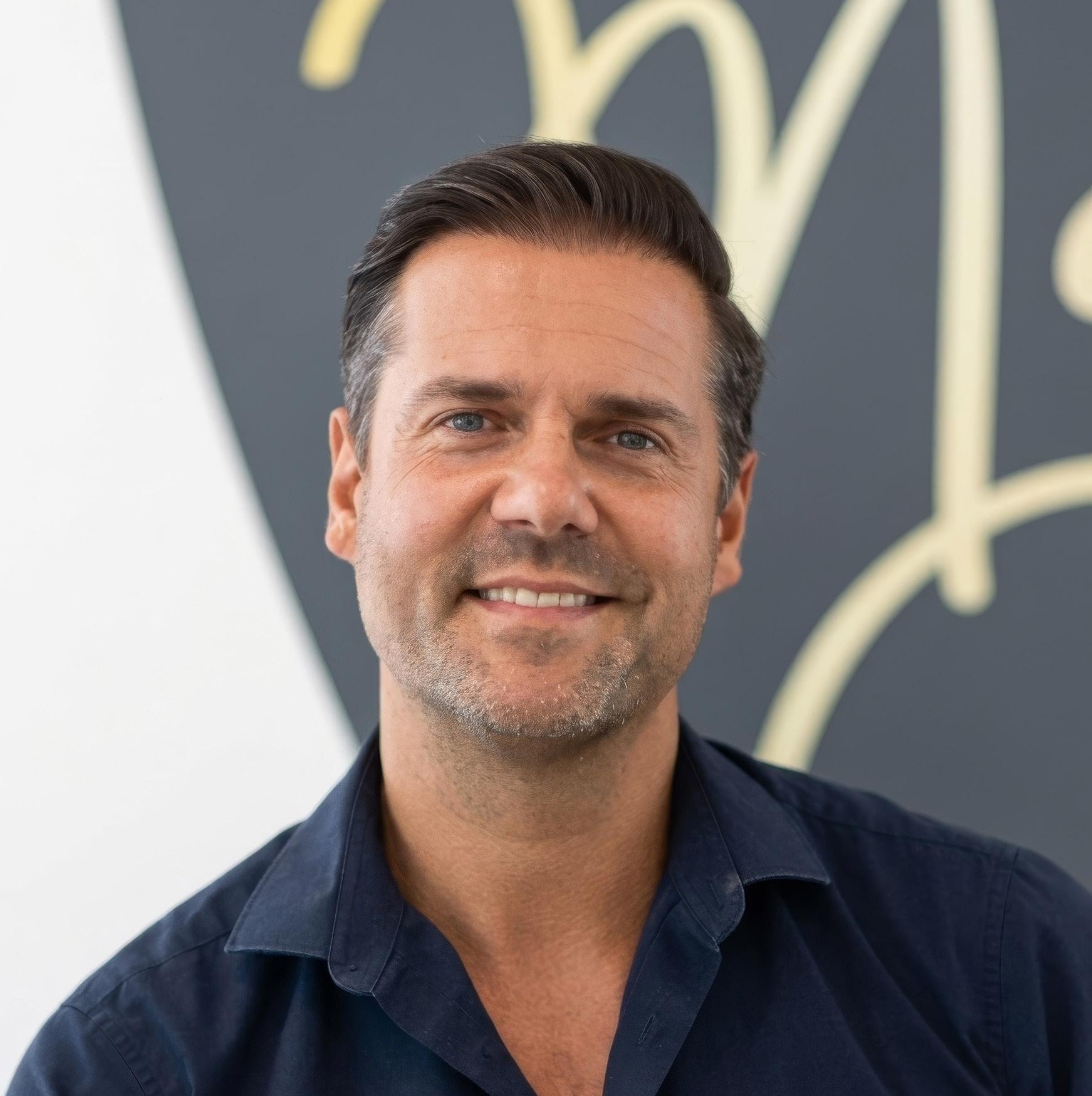
“After the pandemic, there was this real desire to understand what operatives were doing on a daily basis,” says Wyers.
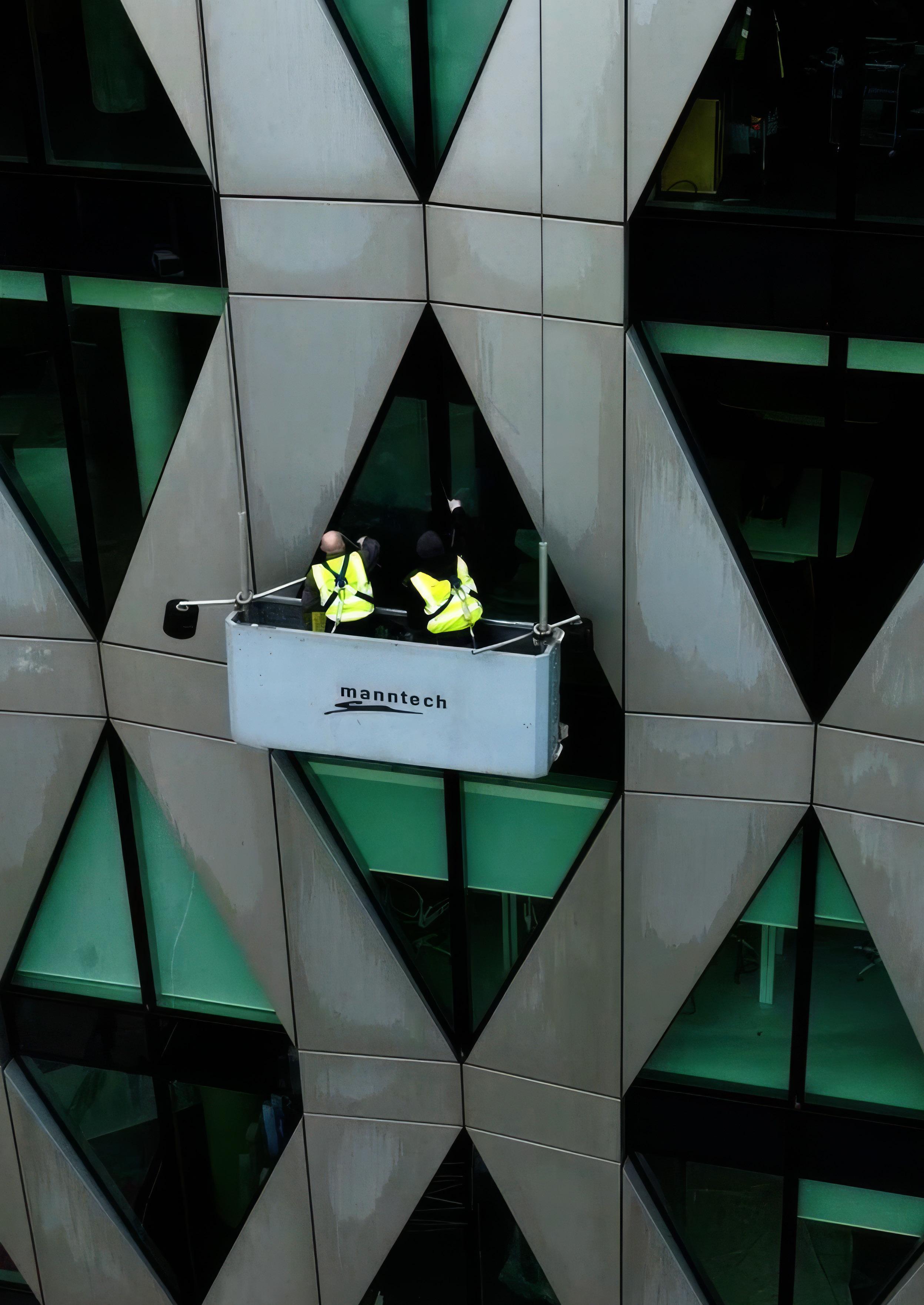
I-Clean Support Services is a facilities management & property maintenance business, focused on delivering an exceptional customer experience with a comprehensive range of products and services tailored to your specific requirements.
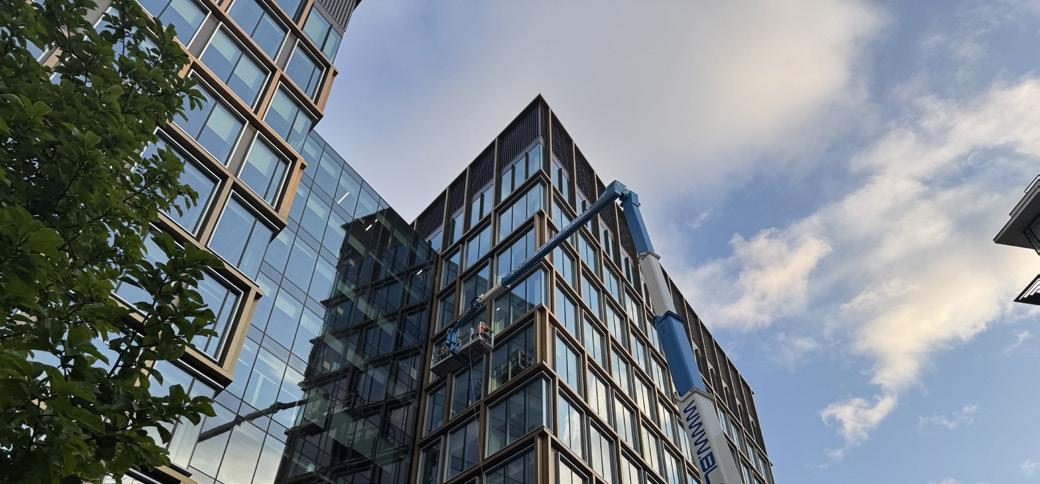
What Building Cleaning Services Do iClean Offer ?
The services we offer are: High level window cleaning, cladding & façade cleaning, gutter cleaning, roof cleaning & treatments, render cleaning, pressure washing (hot and cold methods), rope access, truck mounted access, track mounted access, BMU cradle access cleaning, reach and wash window cleaning, post construction cleaning and in house traffic management.
Blade House, 12 Trevor Foster Way, Bradford, BD5 8HB, UK
+44 (0)333 370 8128 office@i-clean.uk www.i-clean.uk

SB Waste Solutions Ltd – Smarter Waste Management for a Sustainable Future’
At SB Waste Solutions, we deliver efficient, reliable and environmentally responsible waste services across the UK. Our goal is simple: reduce waste, maximise recycling, and minimise landfill – helping your business operate greener and smarter.
• Site Clearance
• IT/ Weee Collection Service
• Bulk Confidential Waste Collection
• Hazardous Waste
• Scrap Metal
• Skips
• Commercial & Industrial Waste Services
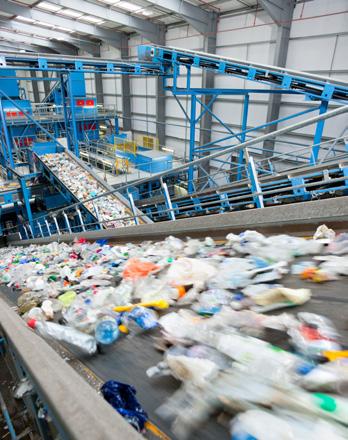
SB Waste Solutions
+44 (0)1942 721 444 www.sbwastesolutions.co.uk
• RoRo’s
“Understanding productivity and value has been a key driver in shaping the way the Floorbrite Group goes forward. Before the pandemic, there was not as much desire to drill down into the efficiencies of how our operatives work. But since then, we have seen a lot of investment into robotics, software that can track operatives around a site, and how these tools enable us to make efficiencies, delivering savings for the customer.”

Wyers credits Floorbrite’s ability to win and retain contracts to its decision to embrace these technologies over the last few years. He is also passionate about making the business more sustainable, a commitment that Floorbrite made over ten years ago.
“Ten years ago, sustainability was talked about a lot less, and as a soft service provider, we had to make a decision whether to focus on security or sustainability,” Wyers recalls. “But we invested in an in-house environmental and waste management department, and that paved the way for our whole way of thinking. We made a commitment, as a business, to become a carbon-neutral organisation.”
Floorbrite went on to track and report its “Scope 3” emissions, establishing itself as a leader in the industry. It was one of the very first companies to achieve that status, and even now, the company is looking to drive that sustainability further.
“We are looking at the products we use, plant-based solutions, and paper products that are FSC certified,” says Wyers. “We are introducing hybrid vehicles to our fleets. We have installed water-saving systems in all our toilets, saving over 500,000 litres of water a year. To become a sustainable business, you solve the problem of winning and retaining business while standing out as a supplier. We have made being a carbon neutral business a USP.”
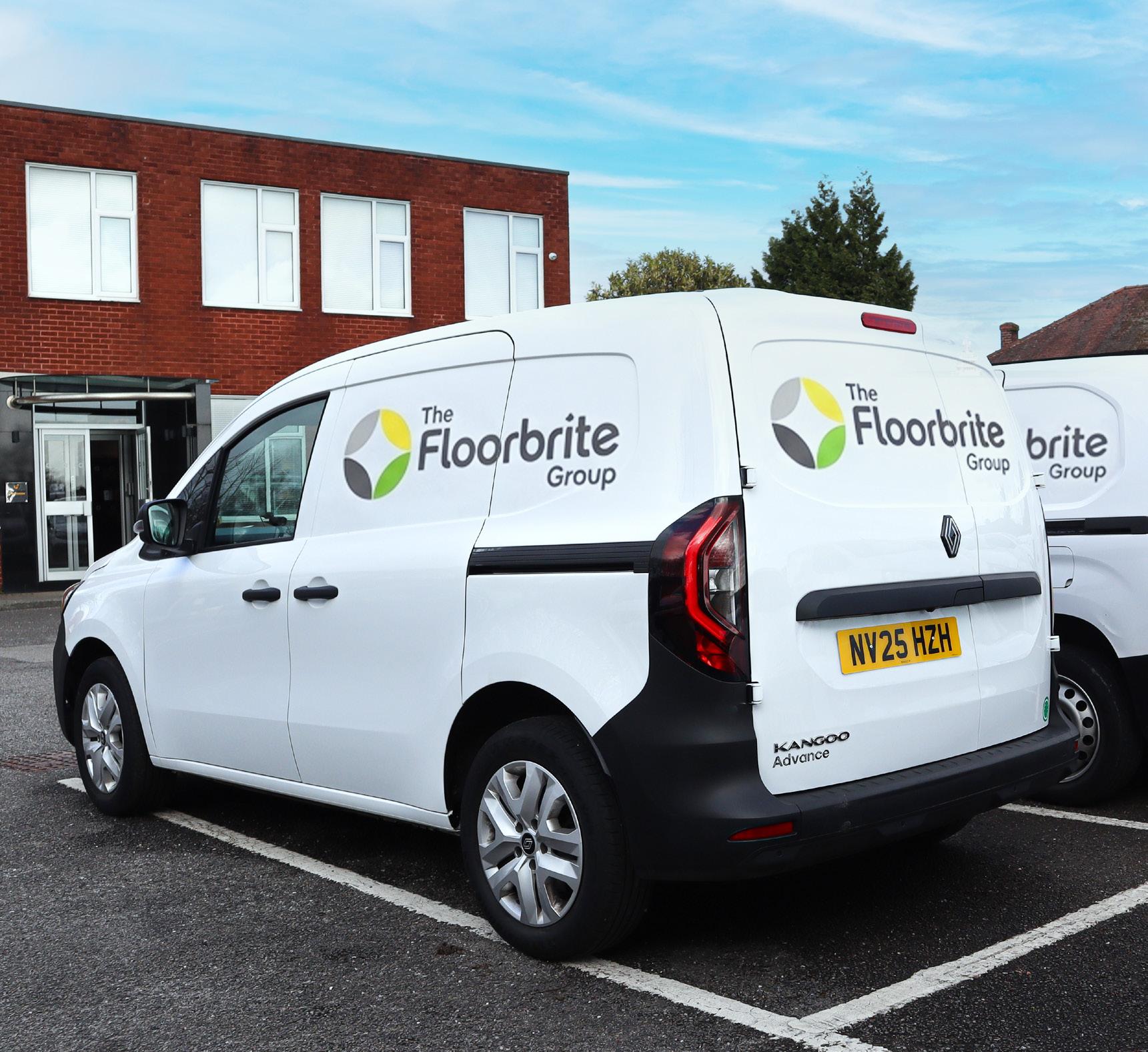
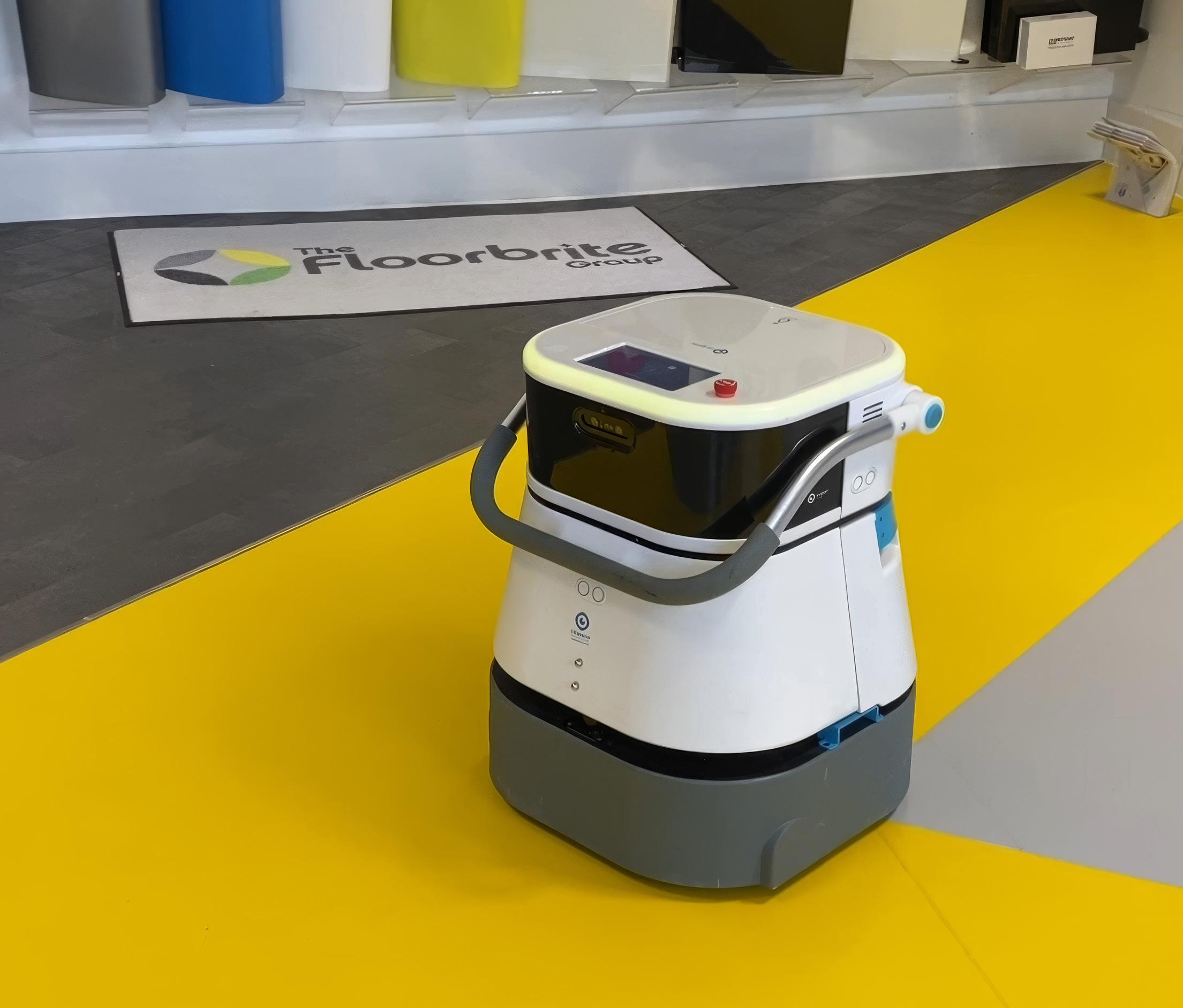
Floorbrite Group’s sustainability strategy is ultimately driven by a desire to invest in the future, a quality borne of the company’s family-driven values. Those same values are also visible in the way the company acquires and takes care of new and existing talent.
“The values of the business, our family ownership and belief in consistency, embody what we are all about,” says Wyers. “We are keen to retain and invest in our people, providing all of our team members with the opportunity to progress through the business.”
It is a story that is told at Floorbrite Group time and time again. Operatives became supervisors, supervisors became site managers, and site managers become regional managers, overseeing a team of four area managers with 200 staff under them.
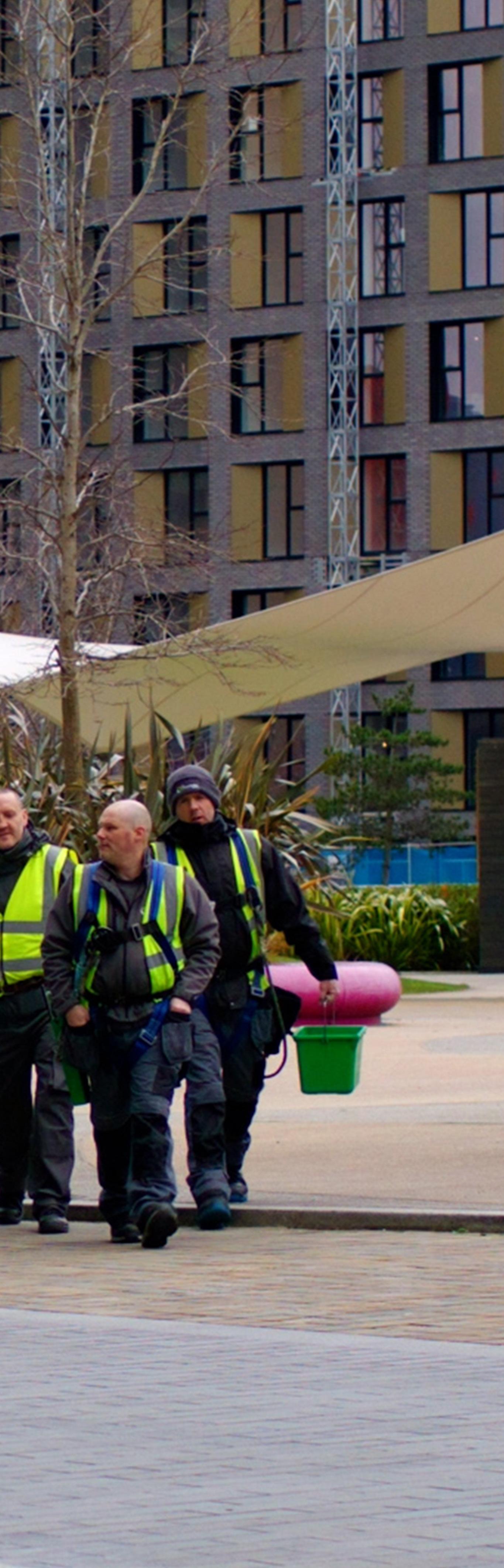
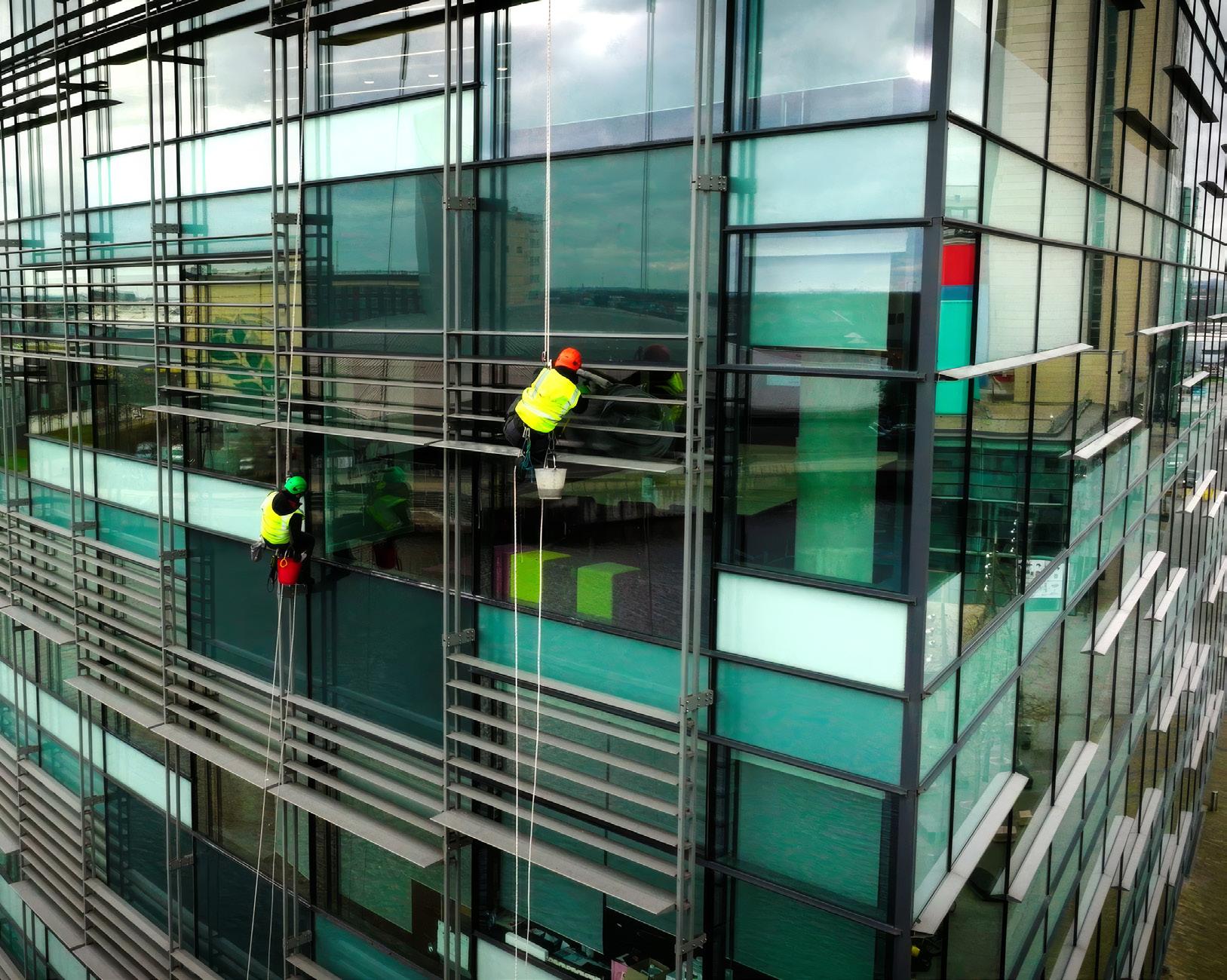
“We are great believers in developing our people and giving them the opportunity to flourish within the business,” says Wyers. “We retain through a number of ways, but our culture is always key.”
That is a culture of continuous innovation, and as Wyers looks to the future of Floorbrite Group, he foresees continued growth coming out of that innovation.
“We will continue to innovate, and continue to drive new technology and solutions,” Wyers says. “With the inclusion of AI in our software we can support the digital tracking of operatives around customers’ sites to increase efficiency. That will further help us to ultimately save costs for the customer in a very competitive market.”
However, as we talk to Wyers the conversation keeps coming back around to the human element.
“This software and technology allow us to compete on price, but it is not the be-all-and-endall. Service delivery remains the priority,” Wyers assures us. “If you have not got the structure, management and hands-on presence on site, you are not going to deliver the service customers expect.”
For Wyers this is not just theory. When we talk to him, he describes himself as “proud and excited!” following the intensive preparation for Floorbrite Group’s largest staff mobilisation yet.
“In April, we mobilised one of the largest cleaning contracts in the northwest of England,” Wyers shares. “It will be 200 sites, bringing approximately 130 people into the business, and involves deploying a whole new fleet of mobile operatives, all in one day. It shows how we will keep continuously pushing boundaries across technology, innovation, and business excellence, all while maintaining our people.”
Neal Communities is a testament to what people can achieve together. The smallest unit of a community is probably the family, and Neal Communities’ story starts in 1970 with the work Pat Neal and his family did when they launched their first project at Whitney Beach, in Florida, where home sales started at $23,900.
By 1982, that community was one of 14 projects the company had underway, leading to Pat Neal earning the award for Meritorious Public Service as Most Effective in Committee while serving in the Florida Senate. That same year, he also earned the Florida Audubon Society and Sierra Club Legislative awards.
1982 was also the year Neal Communities’ 3,000th home was built at the Perico Bay Club for $59,500.

Even those 14 projects would turn out to be only the foundation of what Neal Communities would go on to achieve. By 1990, the firm was developing a 1,200 home master-planned development in University Park. That community would be recognised through prestigious awards including “Best Design in America”, “Best Community in the South East” and “Best Development” in the region. Pat Neal was recognised for his contribution to Florida and appointed to the Florida Chamber of Commerce Board of Directors.
20 years after building their 3,000th home, they broke ground on their 6,000th, while moving the business’s base of operations to a new headquarters at Lakewood Ranch and Pat Neal was also named the Most Influential Floridian.
And through all of this, “family” remained at the heart of Neal Communities’ business.
2002 was the year that Pat’s oldest son, John Neal joined the company. As the company opened more neighbourhoods, alongside its own Design Gallery, Pat Neal was named Humanitarian of the Year 2005 in the same year that Charlene Neal designed her 60th Model Home.
For the firm’s 40th anniversary, Neal Communities’ expanded into Venice, and broke ground on its largest community yet at Grand Palm, under the stringent requirements of the Sarasota County 2050 Plan.
By 2015, Neal Communities had been named the National Builder of the Year by Professional Builder Magazine and had built its 10,000th Home. From there, Neal Communities went on to break sales record after sales record, open

community after community, and celebrate anniversary after anniversary. By 2024, Inc.5000 ranked Neal Communities among the Fastest-Growing Private Companies in America.
Throughout the last five decades, Neal Communities has made a point of celebrating all of its everyday milestones and championing the hard work of its professionals. But more than that, it believes in and upholds the single most fundamental value that is found throughout every Neal Communities project.
“Where you live, matters.”
This value is based on the obvious yet sometimes overlooked observation that where people live impacts their lives. Once again, it comes down to community. Neal Communities believes that a community is something more than a collection of individual homes in one place. It is about the connections between those homes, so that the people living there feel confident in
their investment and in their connection to the people around them.
That same philosophy is reflected among Neal Communities’ own people. The firm sees company culture as a true differentiator in the modern market. It seeks to set the standard with a workplace environment that genuinely prioritises people.
For Neal Communities, that does not mean simply handing out surface-level perks. Just like any act of community building, Neal Communities’ relationship with its employees is based on listening to feedback, offering transparency, and recognising contributions from wherever they come from. This has led to the
company receiving the accolade of “Top Workplace” from Sarasota Manatee County this year – the fourth consecutive year this has happened, followed by recognition as the “Best Place to Work” from 2019 to 2022.
“I chose to join Neal Communities because of the strong company culture I observed while working alongside the team as a thirdparty vendor. I was impressed by the professionalism and principles consistently demonstrated by the staff,” says Becky Joy, a Community Association Manager at Neal Communities, and a recent hire with the company.
Another recent hire, Assistant to Design, Tricia Murphy, adds, “Neal Communities provides an exemplary work environment, teammates, benefits and overall work experience.”
Neil Communities is constantly looking for ways to enhance its offering in line with the needs of its staff. This goes beyond the usual benefits package to include stronger carrier partnerships and amplified health coverage, robust retirement planning support through improved 401(k) options, and access to personalised wealth management guidance. Wellness initiatives at the company include a flexible PTO policy, an expanded holiday schedule, and a comprehensive Employee Assistance Program that supports employees both inside and outside the workplace.
Since its foundation, Neal Communities has had an unwavering commitment to learning and growth, demonstrated through the 24/7 online learning platform it offers to all employees for continuous development. The firm also provides a tuition
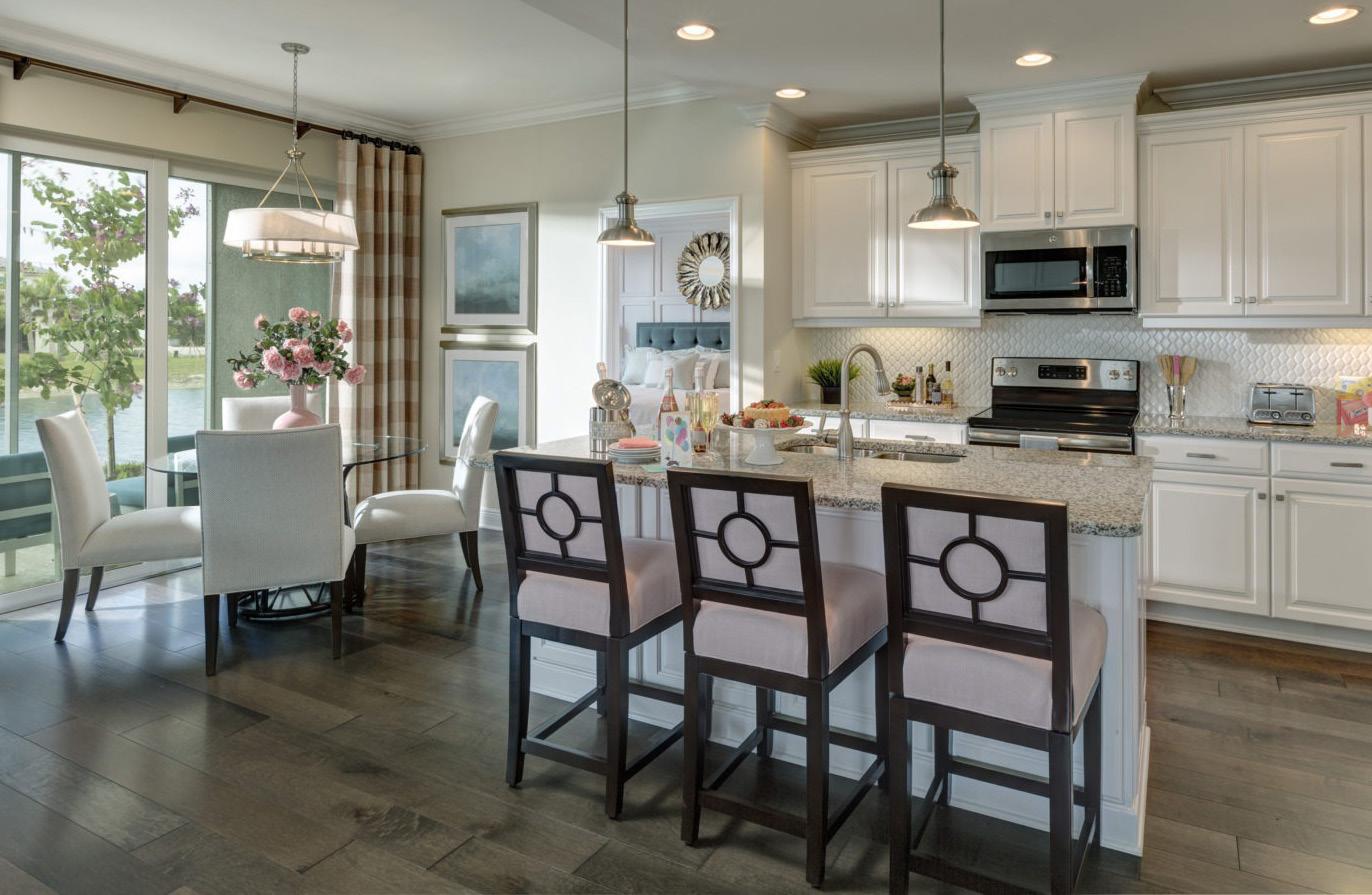
reimbursement program and on-site biometric screenings, vision and hearing checks, and even chair massages.
But once again, it all comes back to community. Neal Community’s people are not just concerned with the community inside the company. During Volunteer Week, all employees give back to local organisations, while the Neal Communities Plan for Giving and employee-led philanthropy efforts allow employees to bring the company’s attention to charitable causes it can support.
The cornerstone of all of this is the annual Team Meeting, an opportunity for transparency
and recognition as the entire company comes together to celebrate milestones, share in meaningful team-building events, and ensure everyone understands their vital role in Neal Communities’ vision. This genuine engagement with employees ensures its culture evolves with the needs and aspirations of its people.
“Our consistent recognition as a Top Workplace is a direct reflection of our employeefirst philosophy,” says Tashara Carmichael, Vice President of Human Resources. “We listen to what matters and make meaningful changes where we can. Taking care of our team isn’t just a slogan—it’s our way of life, just as our tagline says: where you live matters, and so does where you work.”
Wilson James operates in environments where complexity is standard. Major infrastructure programmes, aviation operations, construction logistics, and security services all sit within the company’s core delivery scope, each requiring precision, coordination, and disciplined execution at scale.
Clients tend to come to us when they have problems to solve,” Managing Director Tony Palombo says, introducing the business. “We like to take those problems away and come up with solutions.”
For Tony, Wilson James is a business built around practical problem-solving rather than service volume. The company has risen to prominence through careful selection of its work rather than expansion across all available markets.
“We’re a diverse business, and very much a people business too,” Tony states. “The majority of our services are delivered by people. In return, we take a lot of time out to make sure that our staff feel part of the family.”
This year, Wilson James celebrates its 35th year of operations, having grown from modest beginnings to the multi-sector, multi-service delivery partner it is today. During that time, large-scale infrastructure solutions have become a defining
capability for the business. One of the most significant examples of this is the company’s work at Hinkley Point C Power Station, the UK’s first nuclear power station construction project in over three decades.
“Initial engagement at Hinkley began in 2018,” Tony recalls. “It focused on logistics planning and offsite coordination. Scope has since expanded into full onsite logistics delivery. Our current operations at the site involve approximately 450 personnel, all working to support one of the most complex construction logistics environments in Europe.”
Operational requirements at Hinkley forced the development of new internal capabilities at Wilson James. Traditional logistics models were insufficient for the scale and precision required onsite, leading to a new focus on data integration for performance improvement. Manual delivery remains essential, but structured data now supports Wilson James’ forecasting and planning decisions.
“The Hinkley project has enabled us to get our heads around data collection, as well as the processing of that data for the betterment of the project,” Tony reports.
Experience gained at Hinkley has directly influenced subsequent contract wins for Wilson James. These have included logistics delivery for Sizewell C – another major UK nuclear project.
Seamless execution in one of the UK’s most demanding construction environments has strengthened Wilson James’ credibility in similar large-scale bids outside the nuclear sector.
At the same time, infrastructure investment trends in the UK have reinforced demand for integrated logistics and workforce delivery models.
In response to these trends, and to further establish its reputation, Wilson James has focused on combining workforce delivery with structured systems capabilities. A key development in this area is Fulcrum, an internally built operational platform.
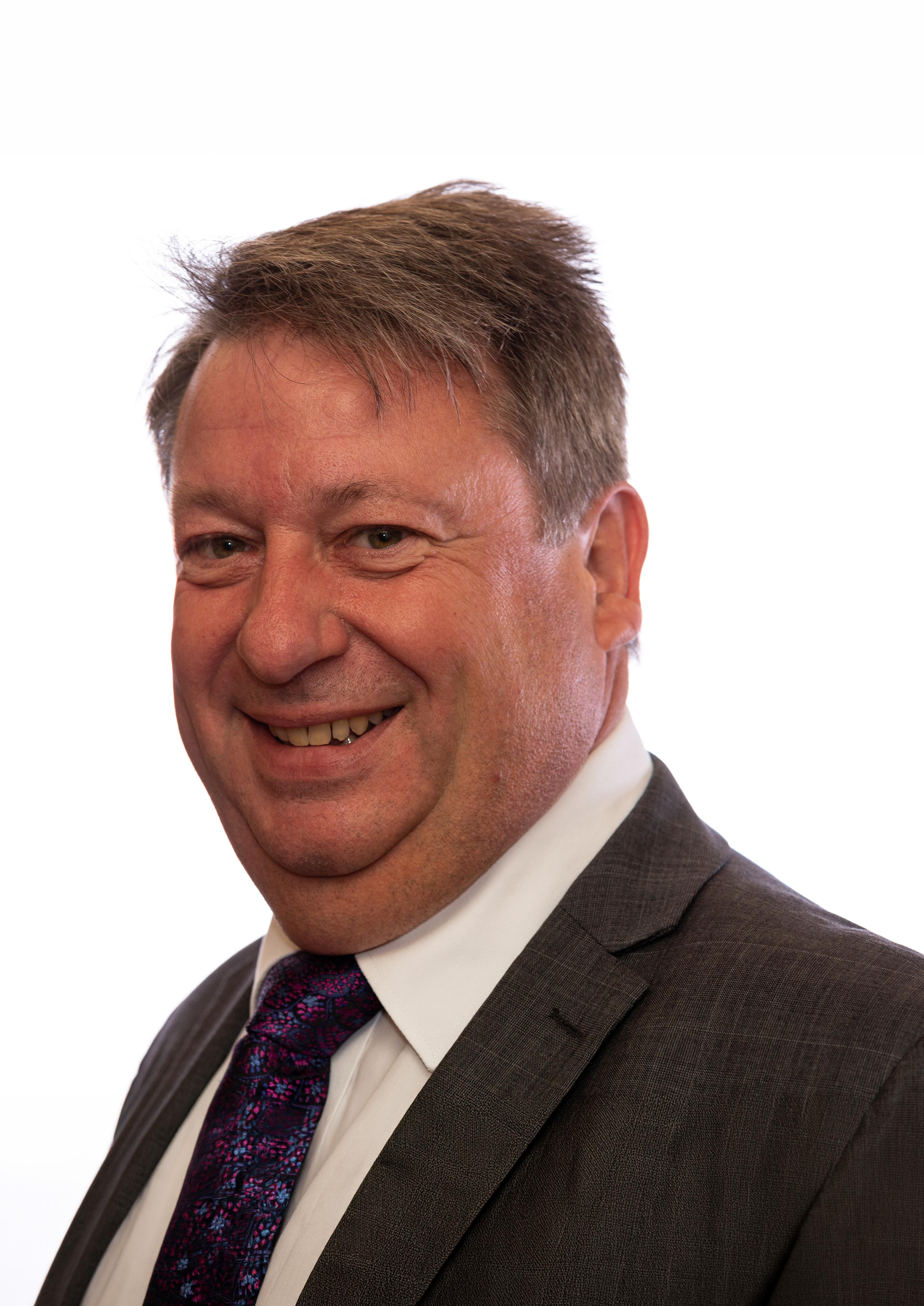
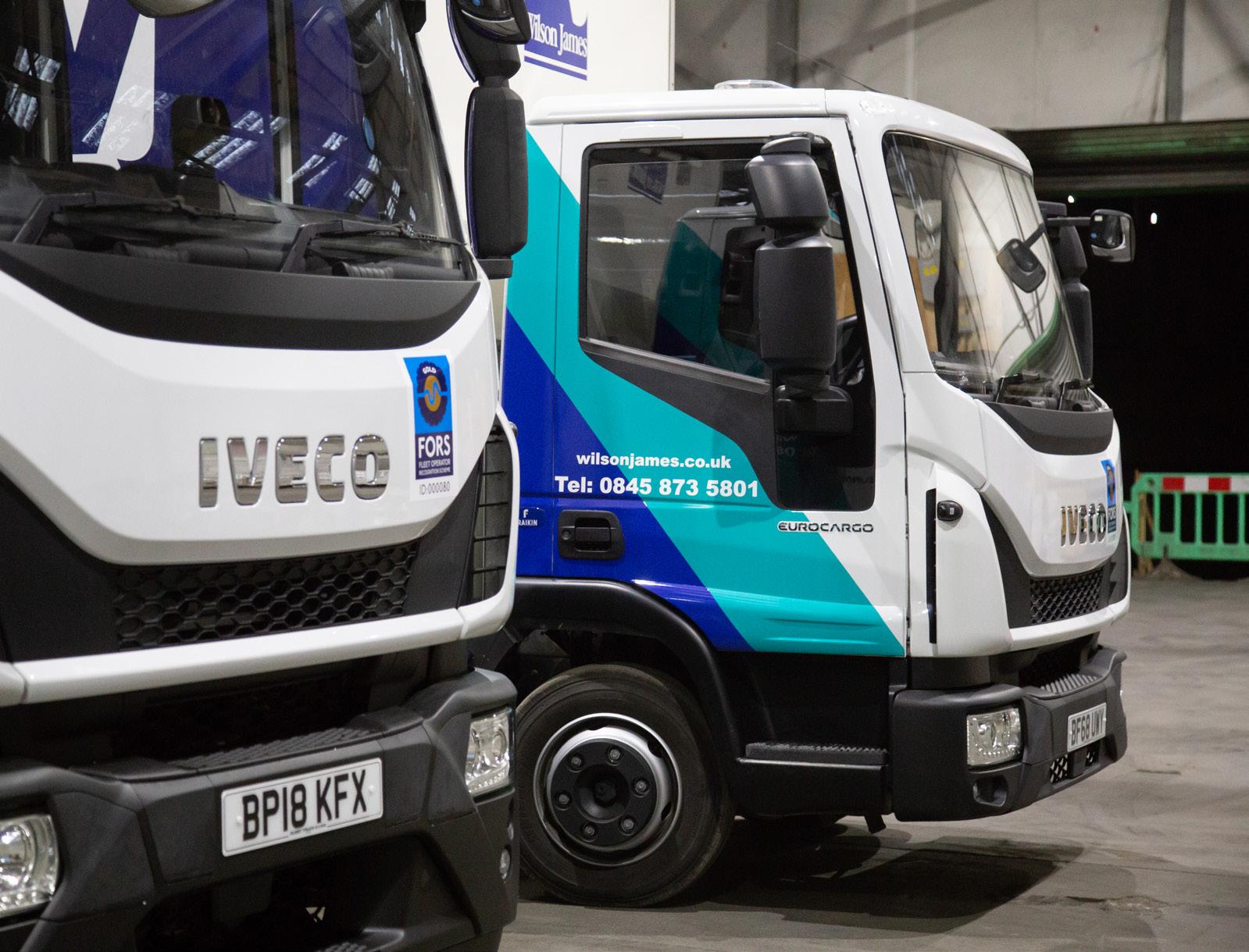
“We’ve developed Fulcrum to the point where it is an overarching control tower for complex logistical projects,” Tony notes. “Fulcrum consolidates operational data, workforce deployment, and planning functions into a single system. The aim is to improve visibility across large-scale projects where multiple interdependent activities must be coordinated in real time.”
Take Wilson James’ work on large nuclear sites as an example of where Fulcrum can thrive. These projects can involve thousands of rooms, multiple construction phases, and parallel logistics streams that must remain aligned.
“Fulcrum gives us a better opportunity to manage our resources onsite and utilise data to forecast outcomes,” he adds. “The technology’s true operational value lies in reducing uncertainty, improving forecasting accuracy, and resource optimisation.”
Despite increased reliance on systems, workforce capability remains the foundation of delivery at Wilson James. Technology might support decision-making but it by no means replaces operational labour. To ensure the company always has a team capable of performing to the required standard, Wilson James focuses on local recruitment wherever possible, reducing reliance on transient labour pools.
“FULCRUM GIVES US A BETTER OPPORTUNITY TO MANAGE OUR RESOURCES ONSITE AND UTILISE DATA TO FORECAST OUTCOMES.”
“Our preference is to employ locally and build capability, rather than having a transient workforce,” Tony says. “Local recruitment strengthens continuity across our long-term infrastructure programmes. It also increases community integration around major project sites.”
At Wilson James, community engagement extends beyond employment opportunities. Structured relationships with local organisations and charities form part of the operating model. One example is the company’s long-term partnership with the Lighthouse Construction Industry Charity, which supports mental health across the construction sector.
“There are a lot of mental health issues in our industry,”
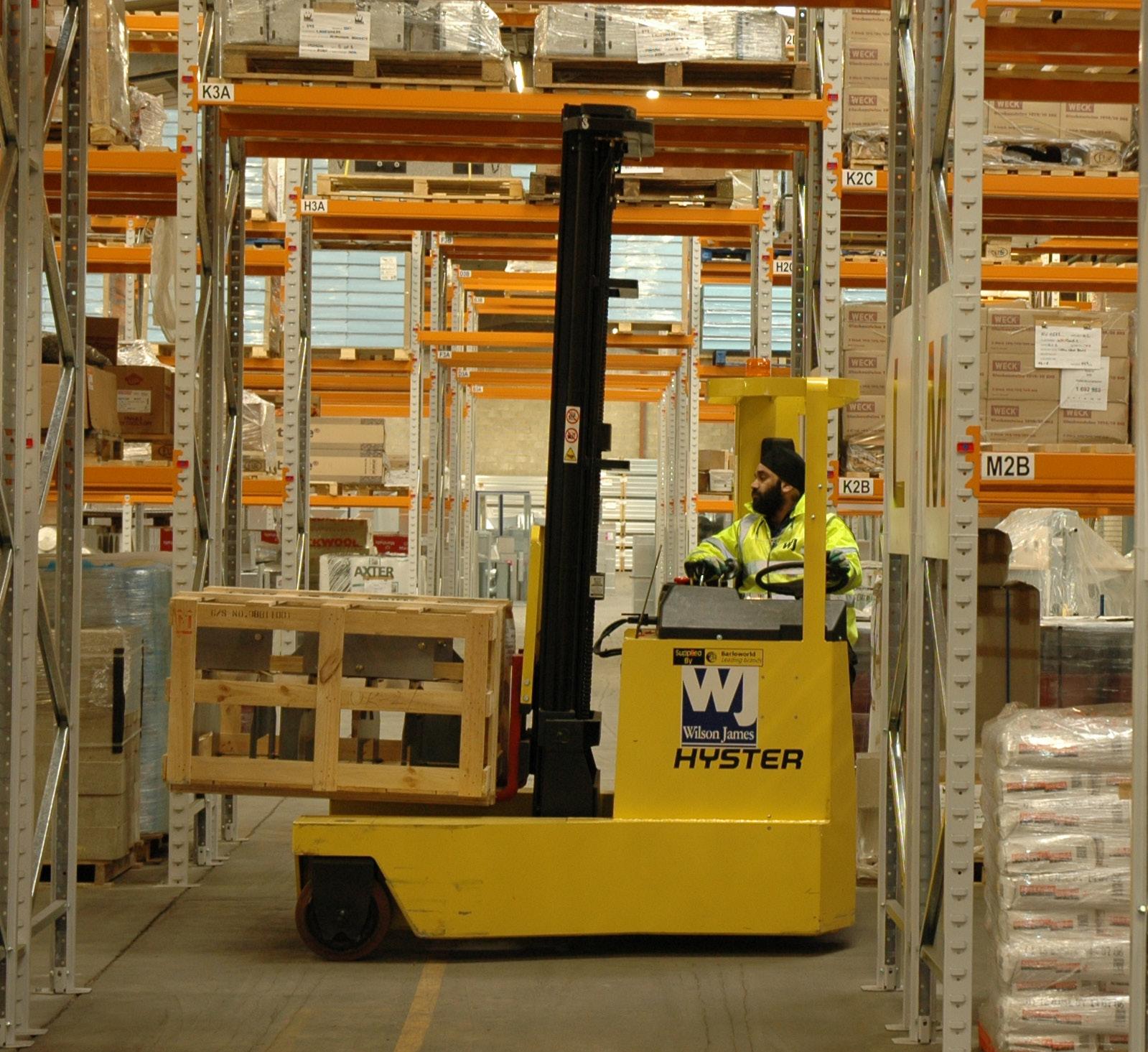
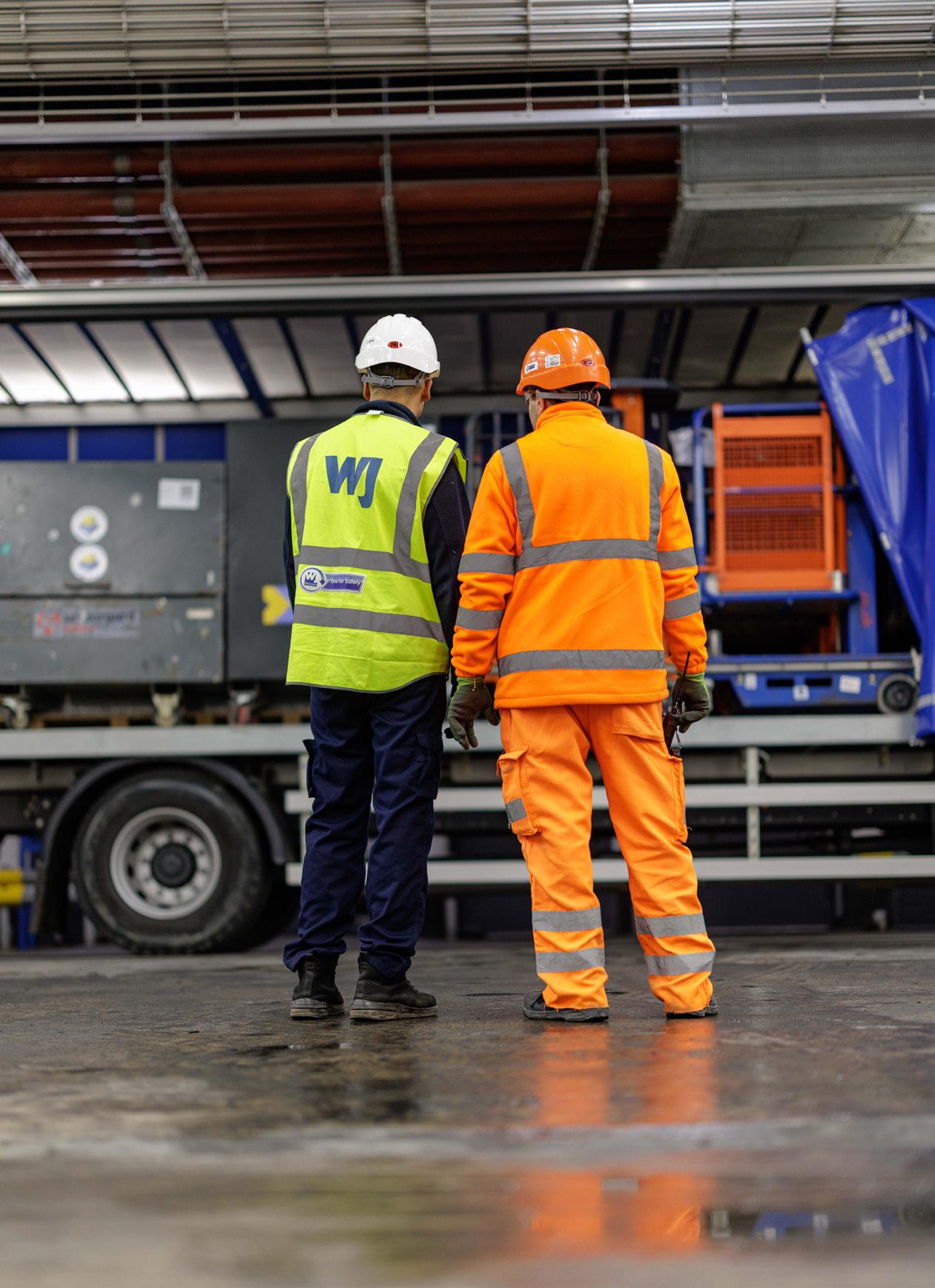
Tony explains. “We have become a proud supporter of Lighthouse’s work, having called on their services from time-to-time.
“In recent years, we have launched an annual fundraising initiative for Lighthouse built around an industry racetrack day. The event combines client engagement with charitable fundraising, helping us generate more than £100,000 for the charity to date.”
Wilson James has never been a business interested in shortterm wins. Whether it’s giving back to communities or building partnerships, the organisation strives for long-term success.
In 2026, international expansion forms part of Wilson James’ long-term growth strategy. Nuclear
infrastructure development is increasing globally, creating demand for companies with logistics expertise in complex construction environments.
“There’s a big drive throughout the world in terms of nuclear power,” Tony declares. “We see that as an open door for us.”
Early international diversification has already begun through aviation contracts in North America, supported by a growing operational presence in the region. Further expansion into Canada is under consideration.
“We have a truly international agenda at present,” Tony adds. Going forward, infrastructure, aviation, logistics, and security remain core areas of focus for Wilson James. Recent structural change within the business has reinforced that positioning.
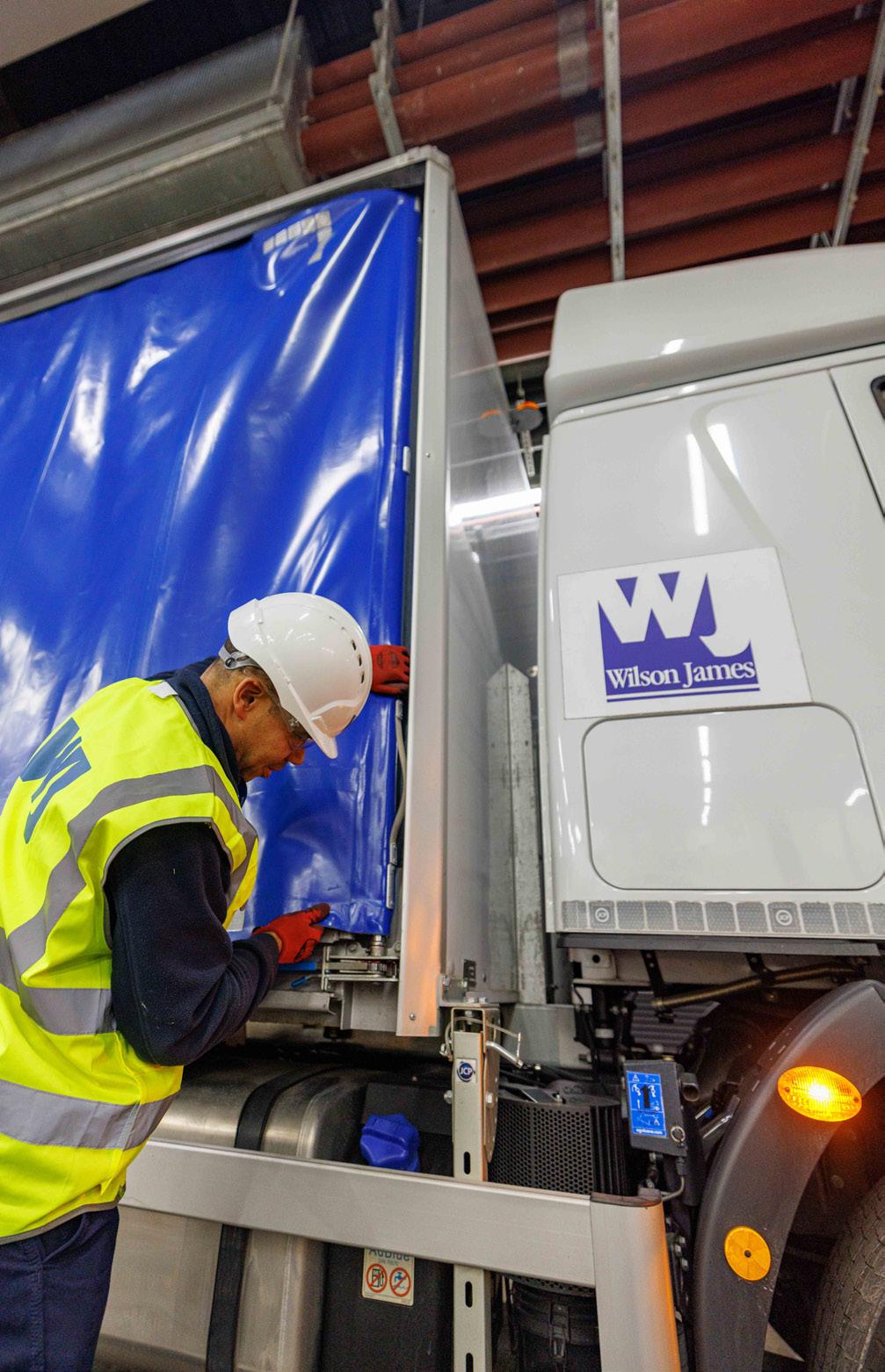
“We recently undertook a transition to employee ownership, transferring a majority stake of the business into an employee ownership trust,” Tony reveals. “The trust now owns 51% of Wilson James for the benefit of our employees.”
Employee ownership is designed to align workforce contributions with long-term business performance. At the same time, engagement and retention are strengthened through shared ownership of outcomes.
“Client response has been really positive so far,” Tony says, “particularly in relation to continuity and stability of delivery teams. Ownership alignment also reinforces consistency across long-term contracts, protecting our legacy and values.”
Investment in training is another area that remains central to Wilson James’ operational capability. Large infrastructure projects frequently require workforce development in locations where existing capability is limited.
“For us to succeed in those specialist locations, it’s all about bringing people on, training them up, and really supporting them in their work,” Tony points out. “Workforce progression is embedded into our operating model, creating structured development pathways across projects and regions.
“Diversity outcomes have also improved across major contracts. At Hinkley Point C, 34 percent of our workforce is female, exceeding typical industry benchmarks for construction logistics.”
As the company prepares for the future, Wilson James’ strategic direction remains clear and consistent, with growth targeted in ever more complex, regulated environments.
“Our operational philosophy remains unchanged,” Tony concludes. “This is a company built on people-led delivery, supported by systems, and executing in environments where complexity continues to define our success.”

We are all familiar with the twelve labours of Hercules. The first was slaying the Nemean lion, the second was defeating the nine-headed Lernaean Hydra. For the third, he had to capture the Ceryneian Hind, and for the fourth, the Erymanthian Boar.
But the trouble for the gods is that each of these tasks was, well, heroic. The point of these labours wasn’t to make Hercules the stuff of legend, but to humiliate him.
And so Hercules was sent to Augeas, a hero in his own right, famous for owning a herd of 3,000 divinely blessed cattle.
This herd produced a godly amount of dung, which he kept in stables that he did not clean for 30 years. Hercules was set the task of cleaning those stables.
It is a story that shows that even waste management can be the stuff of legend. Enter the Augean Group.
“We are a key facilitator of the circular economy, providing waste treatment and disposal solutions for highly complex and specialist wastes from a range of critical sectors in the UK,” says Richard Brooke, CEO of Augean. “We have 22 sites across the UK, serving critical sectors including Defence, Utilities, Renewable Energy, Nuclear and Radioactive, Infrastructure and Construction, Processing and Manufacturing, and Oil & Gas.”
Augean underpins vital sectors relating to energy security, cleaning up legacy waste, preventing contamination and supporting the circular economy through waste recycling and recovery, thereby recovering value from waste. Instead of Hercules, Augean has a team of 600 people, including 75 qualified chemists.
“We are a highly technical business. In a nutshell, what makes us great are those people, our facilities and our environmental permits,” Brooke tells us. “We have sites with environmental permits to take high volumes of a wide range of different types of waste. In that fable, there was a problem and a solution. That’s what Augean is really good at. Our clients in those critical sectors trust us to provide safe and compliant solutions.”
Another difference between Hercules and the team at Augean is that Hercules would laugh in the face of danger. Augean takes the opposite approach.
“What you get with Augean is high standards of safety and compliance,” Brooke points out. “We are not a low-cost operator,
because the specialist wastes we treat and dispose of command premium solutions from a highly regulated, highly compliant and highly technical provider.”
Those skills are critical given the challenges that Augean exists to address. For example, look at “Perfluoroalkyl and Polyfluoroalkyl Substances” or PFAS, also known as “Forever Chemicals.”
“You find PFAS chemicals in items used widely in the past, and also perhaps currently, in materials such as water-resistant chemicals used on shoes and raincoats, non-stick pans, and firefighting foam,” explains Brooke. “These chemicals are in everyday products, but they are difficult to break down. That is often what makes them useful, but at end-of-life they represent a societal challenge.”
The experts at Augean have worked together to develop a technique to safely destroy these chemicals. When we speak to Brooke, the company is operating a solution to treat low level PFAS washings at its site in Avonmouth. Augean now plans to roll-out this solution to its network of sites across the UK to provide a solution for treating this legacy waste.
“We are now looking at dealing with PFASconcentrated liquids through electro-chemical oxidation,”
Brooke tells us. “It’s a new technology, it’s innovative, and most importantly, it can destroy PFAS in concentrated form.”
Achievements like this are made possible thanks to the elite team of experts Augean recruits and invests in.
“What Augean has been good at is creating pathways for people,” Brooke shares.
“Jamie Wilson, the General Manager at our Paisley site, started off working ‘on the tools’ in our industrial services team. He went out onto client sites to deal with decommissioning, cleaning

tanks and vessels, taking waste from those operations to treat it safely and compliantly.
Ten years later, he’s a General Manager and a real rising star in the organisation.”
Even now, Augean is sponsoring Wilson through further education, which he balances with his work and family life.
“When I spoke to him yesterday, he was back on the tools again!” Brooke tells us.
“They had a lot of work come in suddenly, so he was showing really strong leadership, leading his team by example.”
Brooke also wants to prioritise bringing more women into the organisation. In 2025, Augean increased women’s roles in the company to 21.5% of all positions, up from 18% the previous year, and Brooke

is looking to improve that even further, including strong site managers and operatives.
He points to site manager, Lottie Daley, who has just returned from maternity leave and hit the ground running across Augean’s two operations near Peterborough, and Communications Manager Carol Earp, who is sitting in on the interview with us and has been with the company for over 20 years.
Overseeing operations supporting safe storage and efficient waste recovery
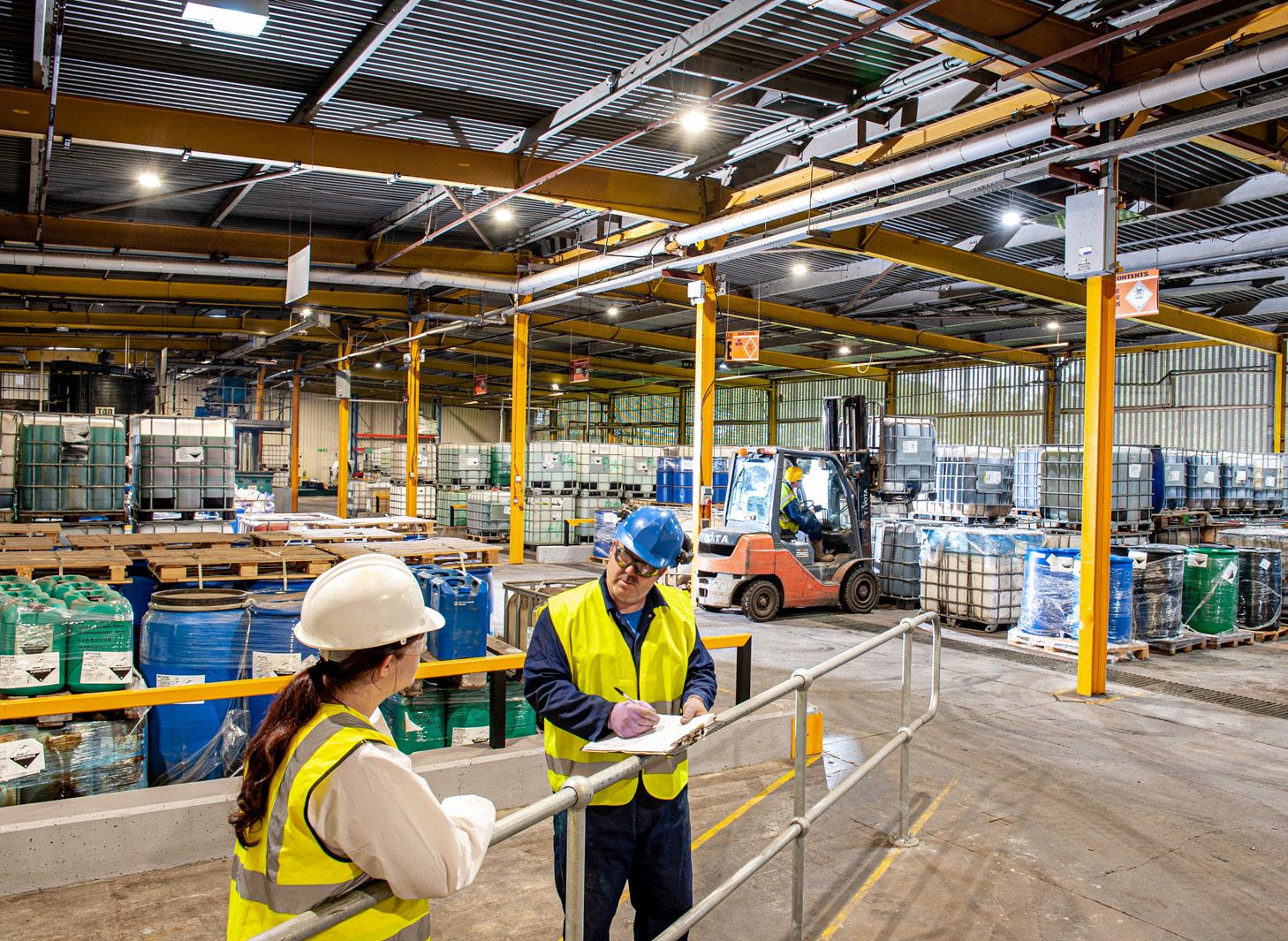
“We have a theme of long service and career pathways, but we have also been successful in attracting new talent to the sector,” Brooke says. “We have just recruited a new in-house ESG Advisor, Rebecca Bowens, to drive our environmental, social and governance priorities. It is a balance, I want to retain and grow our existing talent, but also want to attract really good fresh new talent.”
That fresh and established talent will both be vital in tackling the problems society still has to solve, but talking to Brooke, it is clear that he wants Augean’s legacy to be more than treating of waste.
“We are leaving a strong positive legacy by creating habitat schemes,” he tells us. “We optimise waste recycling and recovery but there are some wastes which are concentrated in contamination where it is best for them to be disposed of safely and compliantly in a highly engineered, hazardous waste landfill site. An example of this is hazardous Air Pollution Control residues from Energy from Waste and Biomass plants which are treated with contaminated dredgings to create a perfect chemical and physical marriage avoiding the need for costly and carbonintensive virgin raw materials. Once the landfill is progressively restored, they can be created as habitat banks. An example of this is at our Cooks Hole site near Peterborough.”
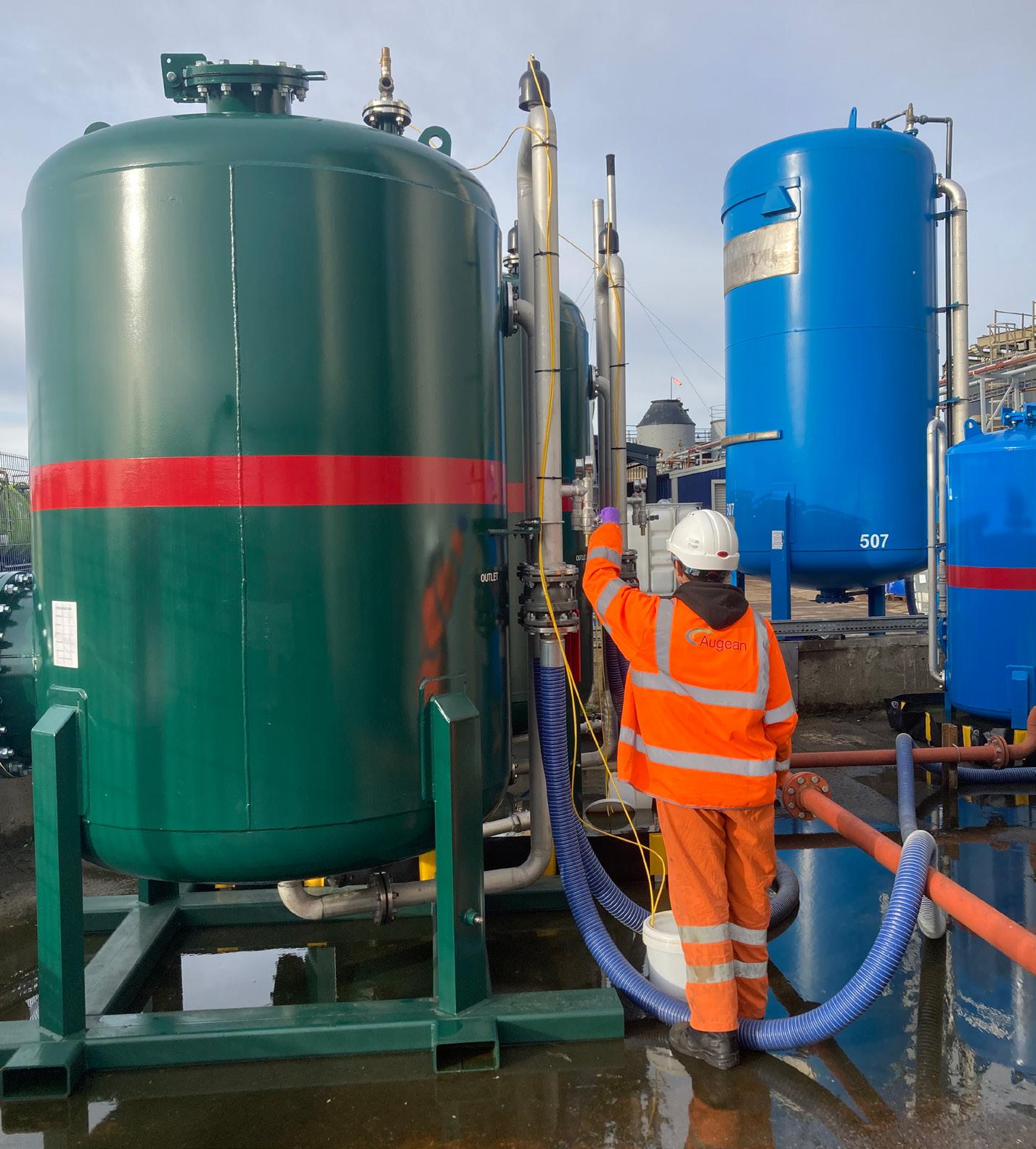
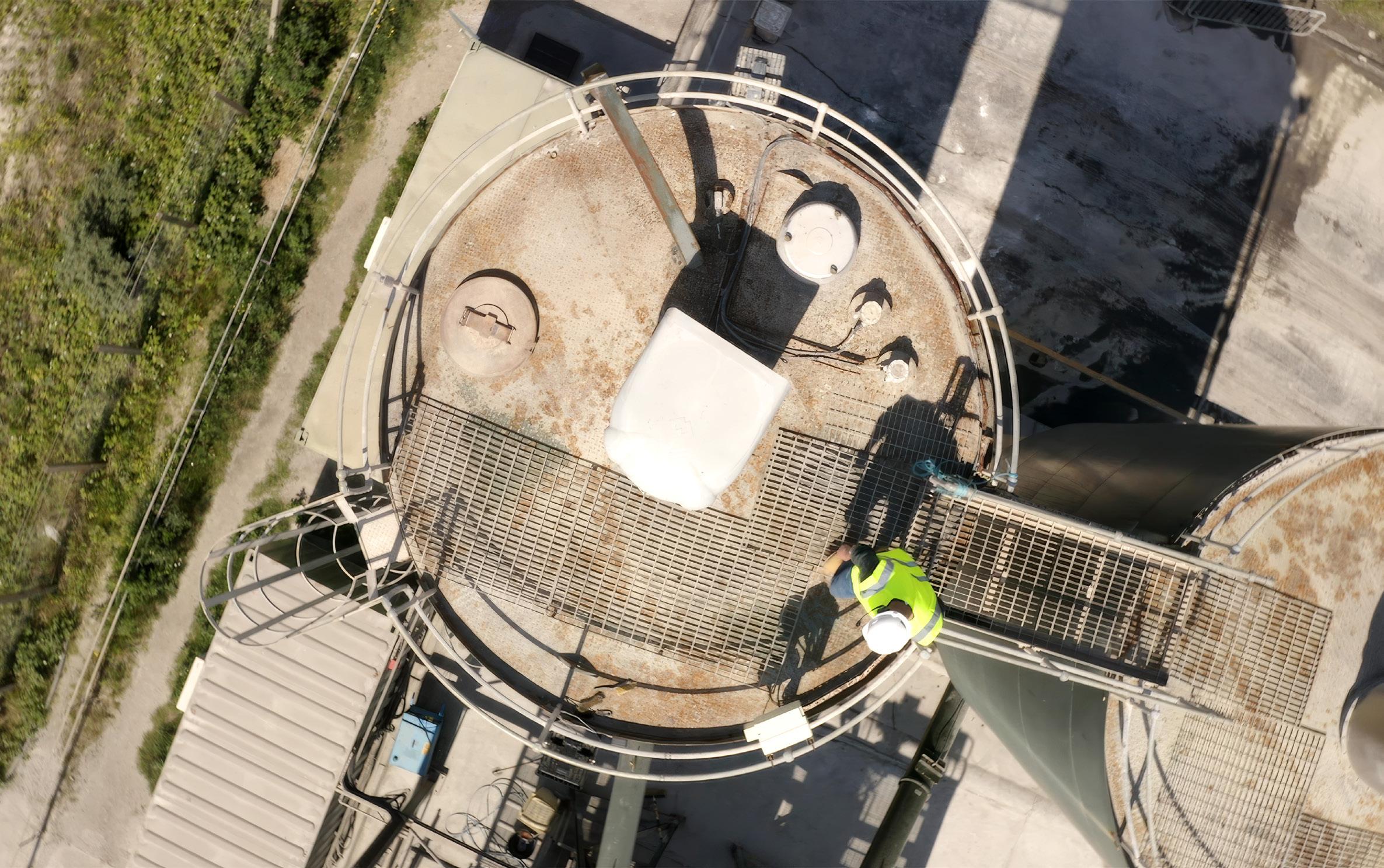
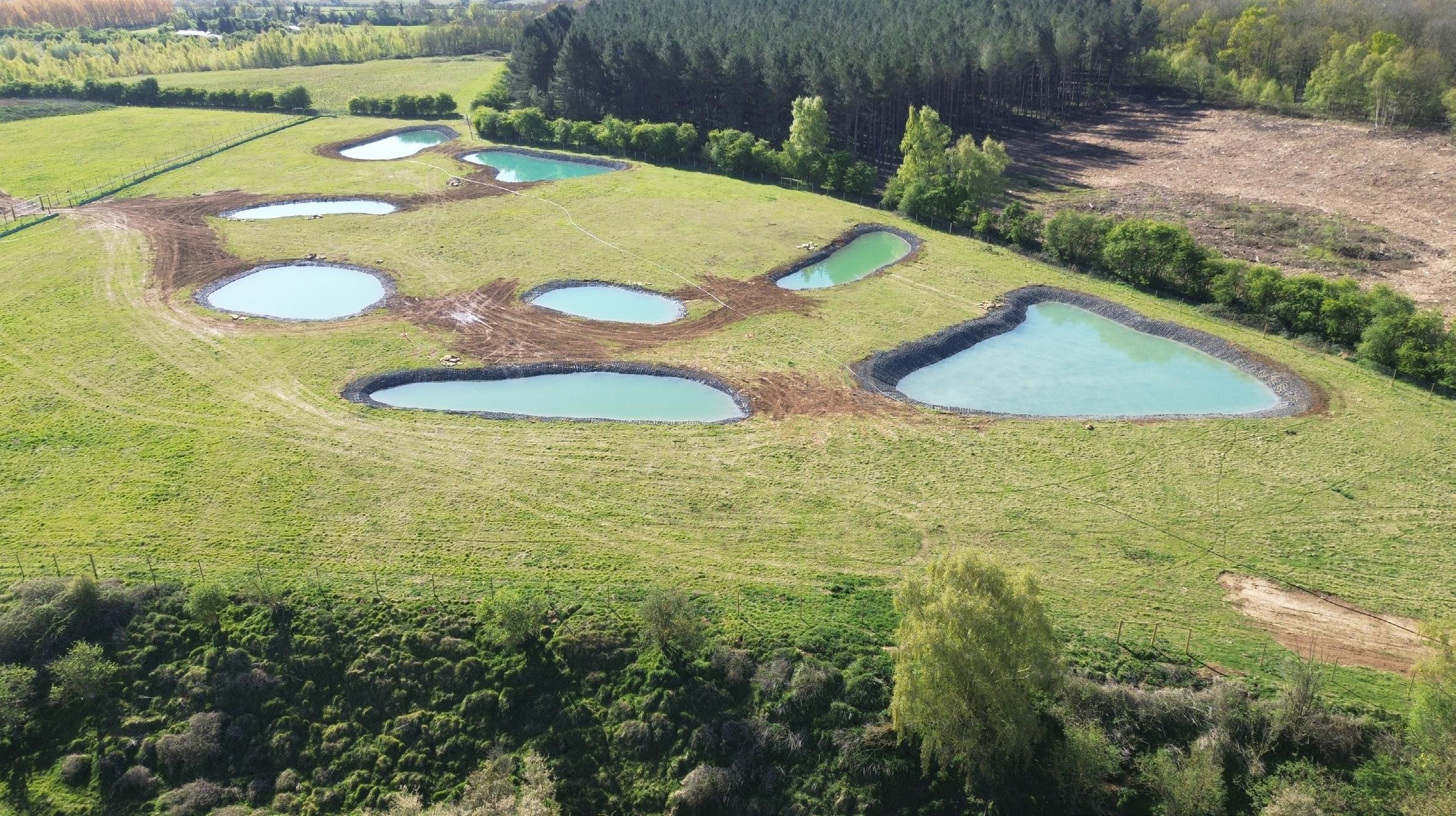
This site has formed the foundation of Augean’s “habitat bank”, which offers Biodiversity Net Gain credits that allow developers in the region to buy into that positive legacy.
Because ultimately, Augean is looking to the future. That vision of the future is built on three key pillars - Cleaning Up Society’s Legacy Wastes, Driving Value from Waste Recovery and importantly, Supporting the UK’s Energy Security.
“We treat and dispose of hazardous wastes and other residues from Energy from Waste and Biomass plants, as well as low-level radioactive waste from the nuclear estate. These critical sectors are essential ingredients to our energy mix and energy security,” Brooke points out. “It is increasingly relevant to the world we now live in, and the same is true of our role as a strong operator and trusted advisor in the supply chain for the MOD.”
In particular, Augean is performing valuable work providing His Majesty’s Naval Base in Clyde with specialist industrial cleaning services and waste management. When ships come in, the firm cleans tanks on vessels and then treats and disposes of oily water, alongside a selection of other hard to handle wastes.
As Brooke says “It will resonate with a lot of people that we are recovering value from waste, reducing the reliance on virgin raw materials. By way of example, supporting the circular economy, we are investing significantly in waste treatment infrastructure to wash out contaminants from waste to produce clean recycled products which will be attractive to end users.”
Right now, one of the biggest sustainability pushes is the transition to electric vehicles. However, eventually, within the next five years, the batteries
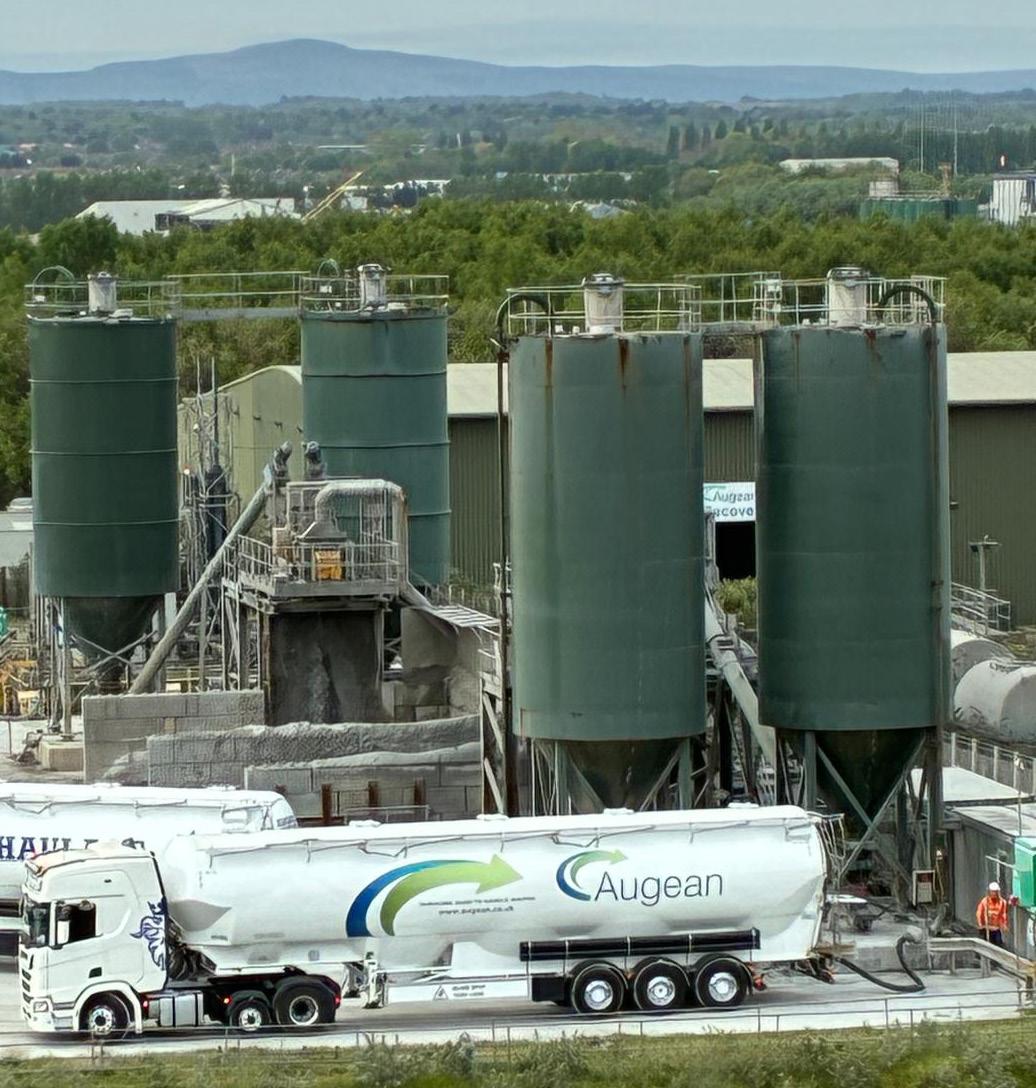
from those vehicles will need to be recycled to recover valuable resources reducing the reliance on virgin, primary materials.
And Augean will be ready.
“That is a real area of technical know-how for Augean,” Brooke says. “We have facilities for specialist metals recovery in Berwick Upon Tweed, and we can recover more value from that waste.”
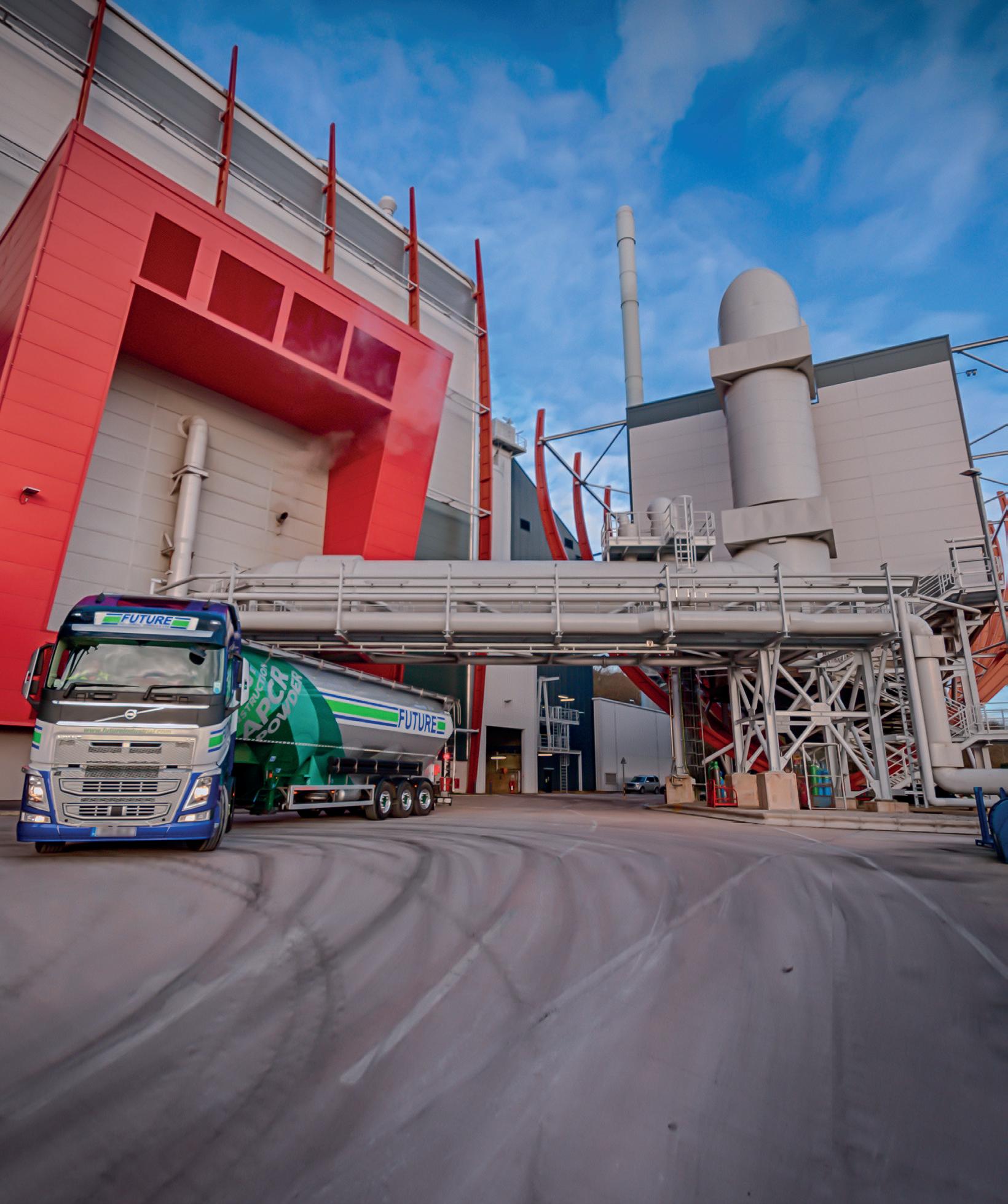
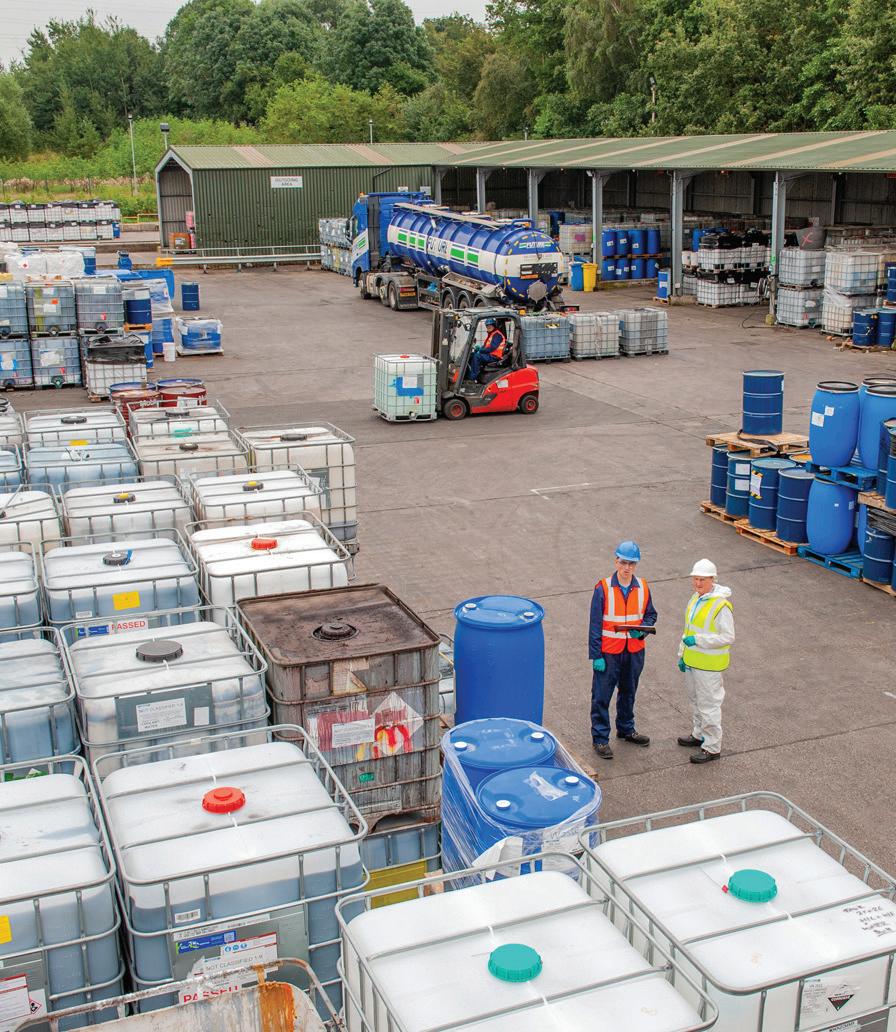

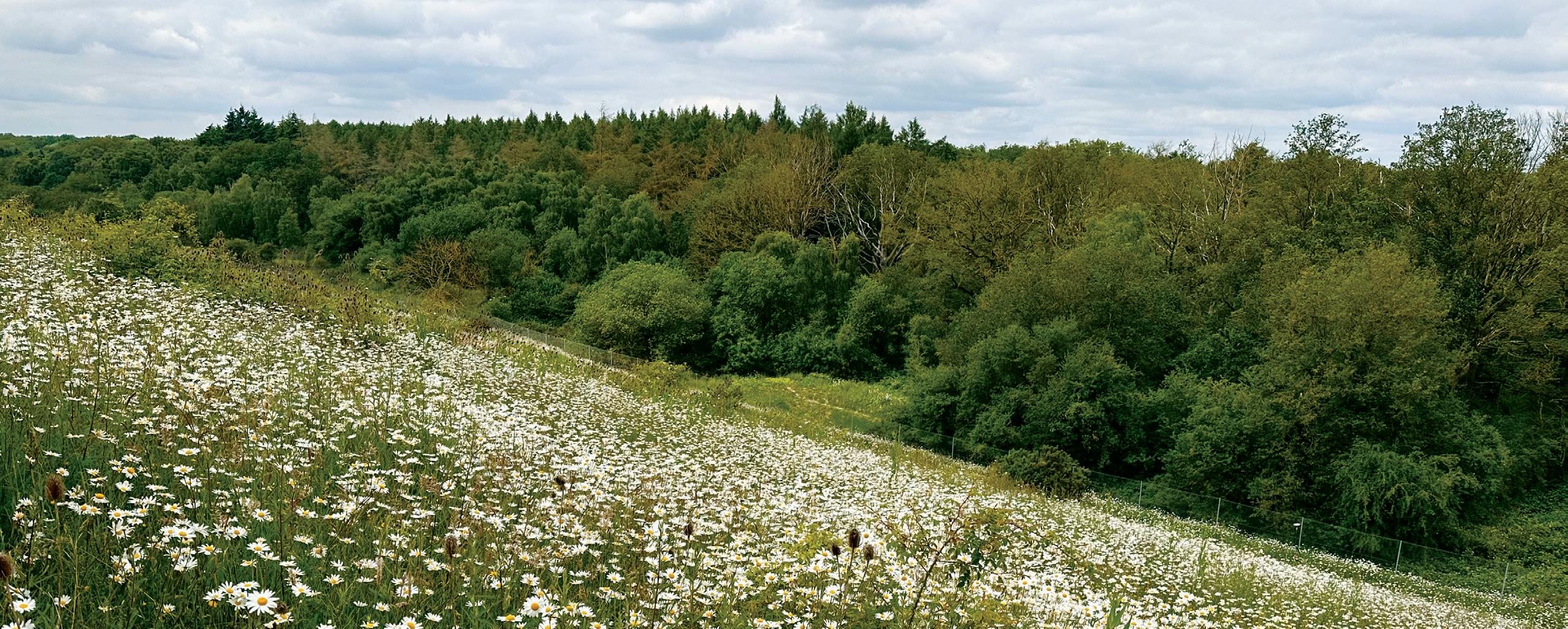
AS THE BIGGEST PET RECYCLER IN THE MIDDLE EAST AND AFRICA, BARIQ IS CHANGING THE REGION’S RELATIONSHIP WITH PLASTICS AND CREATING A REGIONAL CHAMPION IN THE PROCESS.
Founded in 2012, Bariq has moved quickly from niche recycling operation to serious industrial player in food-grade PET. Backed by Egypt’s Intro Group since 2022, the business has continued to expand capacity, entering new markets and positioning itself at the centre of a supply chain still finding its feet.
Executive Chairman and Managing Partner Mohamed Abbas describes Bariq’s trajectory in practical terms:
“When we bought the company, it only had a pelletising capacity of around 15,000 tonnes per annum,” he reveals. “We have since scaled the existing plant in Cairo to 55,000 tonnes.
“Our growth has not stopped at Egypt’s borders. In 2024, we acquired a recycling plant in Jeddah, Saudi Arabia, extending our footprint into another key market. Our ambition is clear: we want to be number one in the world – or at the very least, a regional champion for Africa and Europe.”
The case for PET recycling Recycled PET, or rPET, is increasingly seen as both a sustainability lever and a resource strategy. Mohamed frames the opportunity through a simple lens:
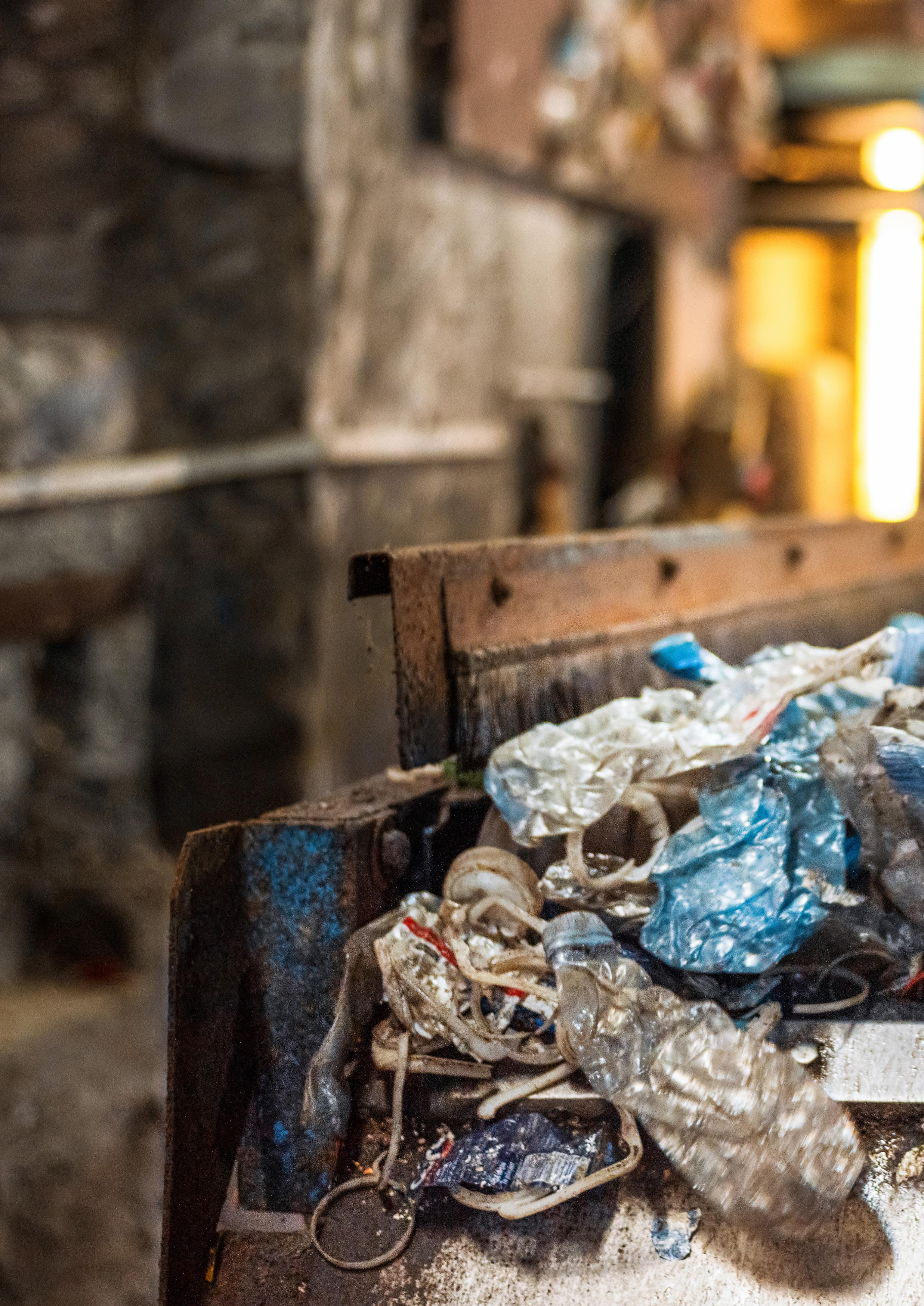
“It covers the three Ps: Planet, People, and Profit. There aren’t many industries that can confidently say that.”
Additionally, plastic recycling, particularly PET, offers a relatively straightforward technical pathway compared to other materials.
“It’s a full mechanical process,” Mohamed remarks.
“At the end of it, you come out with a food-grade product that is equivalent to virgin material.”
Quality remains a critical factor for Bariq. High-end machinery, strict operational control, and compliance with food safety standards are essential to compete with virgin plastics. The result is a product that can re-enter the market without compromise.
In 2026, Bariq’s vital work is taking place against the backdrop of a significant behavioural shift.
“When you know something is recycled,” Mohamed says, “it takes a lot of guilt off your shoulders.”
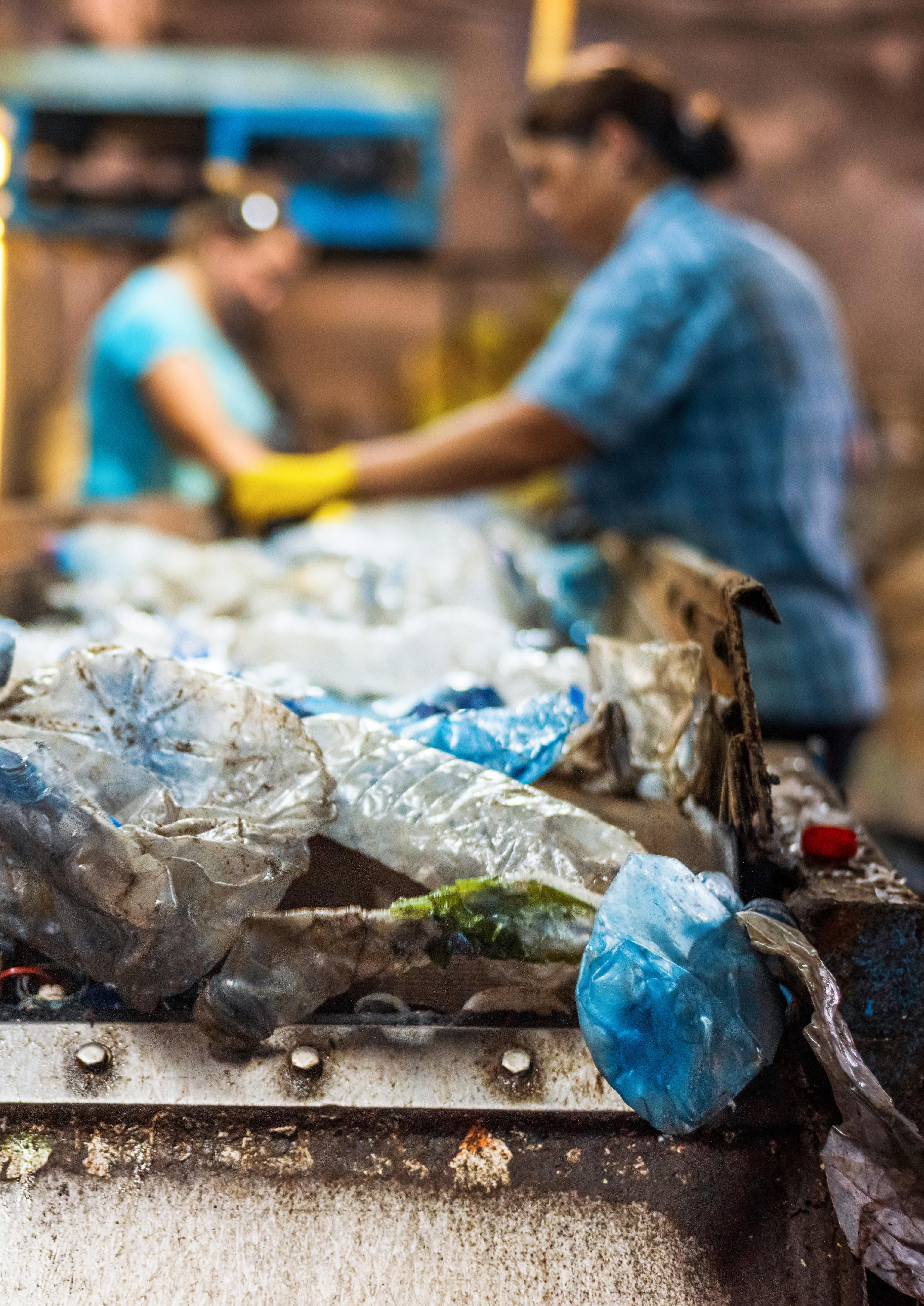
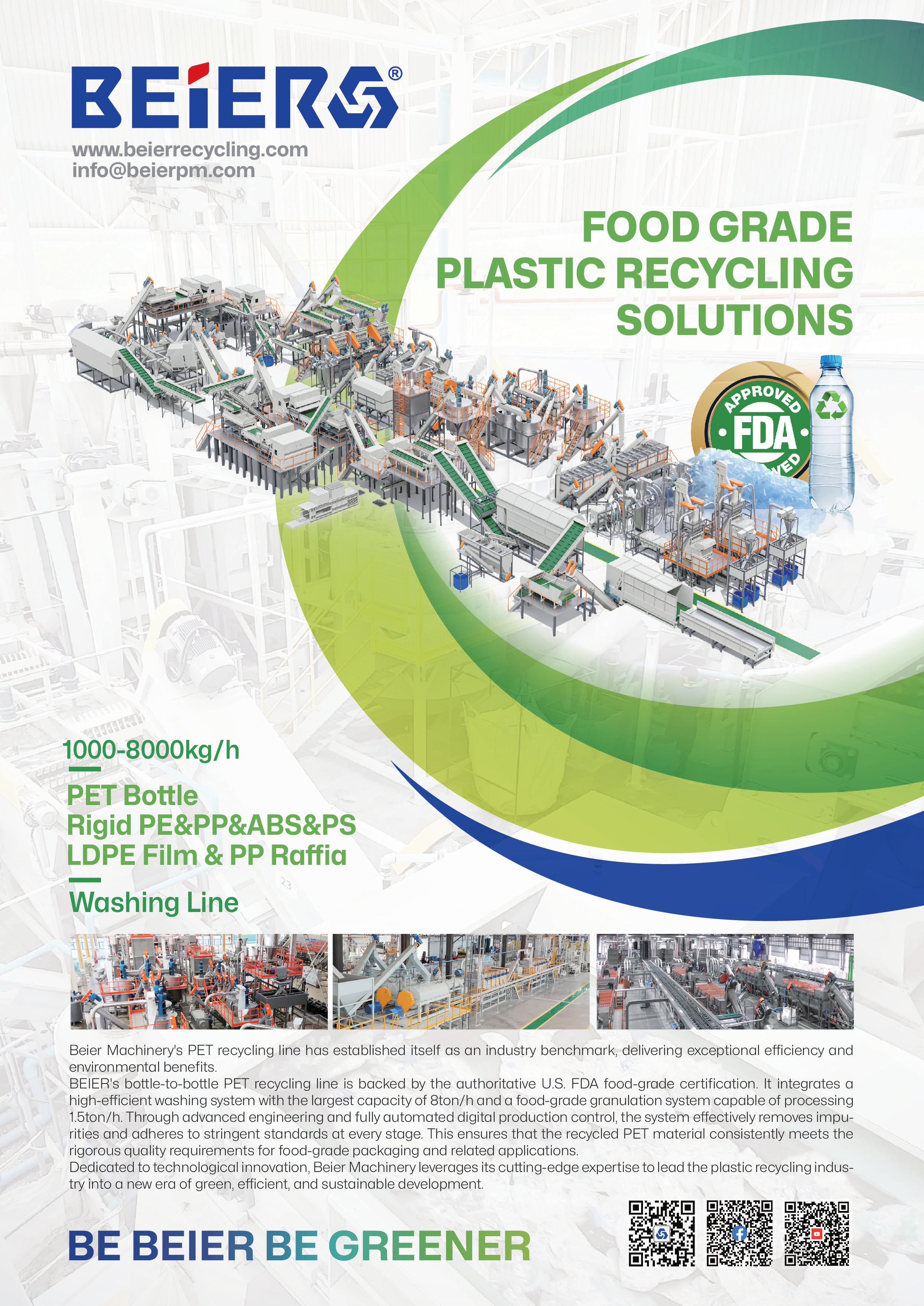
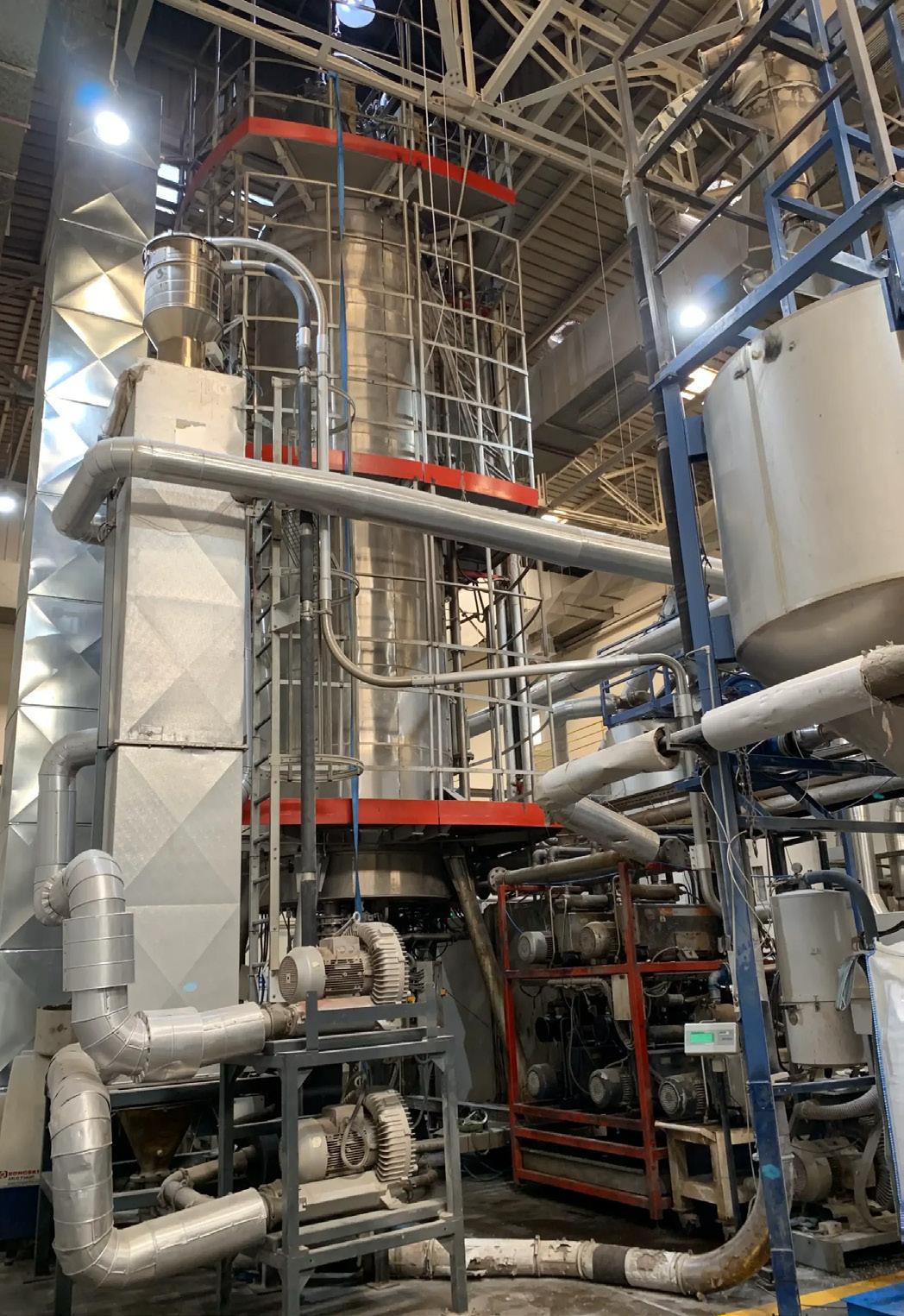
Despite growing demand, the rPET market remains relatively young. Mohamed describes it as being in “adolescence,” with various challenges present across pricing, supply chains and market alignment.
Though many brand owners have made public commitments to increase recycled content, often targeting 50 percent inclusion, progress has been uneven.
As always, cost remains a sticking point. Recycled material must compete with virgin PET, which fluctuates with oil prices.
“rPET has to stay competitive with virgin material,” Mohamed explains. “The premium has to be reasonable, otherwise the market does not move.”
Price dynamics place pressure across the entire value chain, particularly at the raw material level. Unlike traditional commodities, PET recycling relies on fragmented, informal and often unpredictable supply networks.
“It’s not like calling a factory and asking for a price,” Mohamed points out. “This is a completely different business.”
In response, Bariq’s approach has been to stabilise complexity through direct engagement.
“THE BEST THING WE HAVE DONE IS BUILT REALLY STRONG RELATIONSHIPS WITH OUR SUPPLIERS.”
“The best thing we have done is build really strong relationships with both our raw material and indirect suppliers,” Mohamed declares. “These are real, long-term partnerships with industry specialists, such as global machinery supplier Beier.
“Our success in managing relationships comes from constant communication, setting clear expectations, and aligning pricing logic across the chain.”
The supply side of PET recycling often starts at the lowest economic levels. Waste collectors, small traders and informal networks form the backbone of the system. For Bariq, managing that reality is not only an operational requirement but a strategic priority.
“These people often come from very hard places with difficult backgrounds,” Mohamed says. “We have a responsibility to them.”
In line with this thought, Bariq has begun linking its industrial activity with broader social initiatives, including support tied to healthcare access through a major nonprofit hospital in Egypt. The goal is to create a more stable and sustainable ecosystem for those feeding into the supply chain.
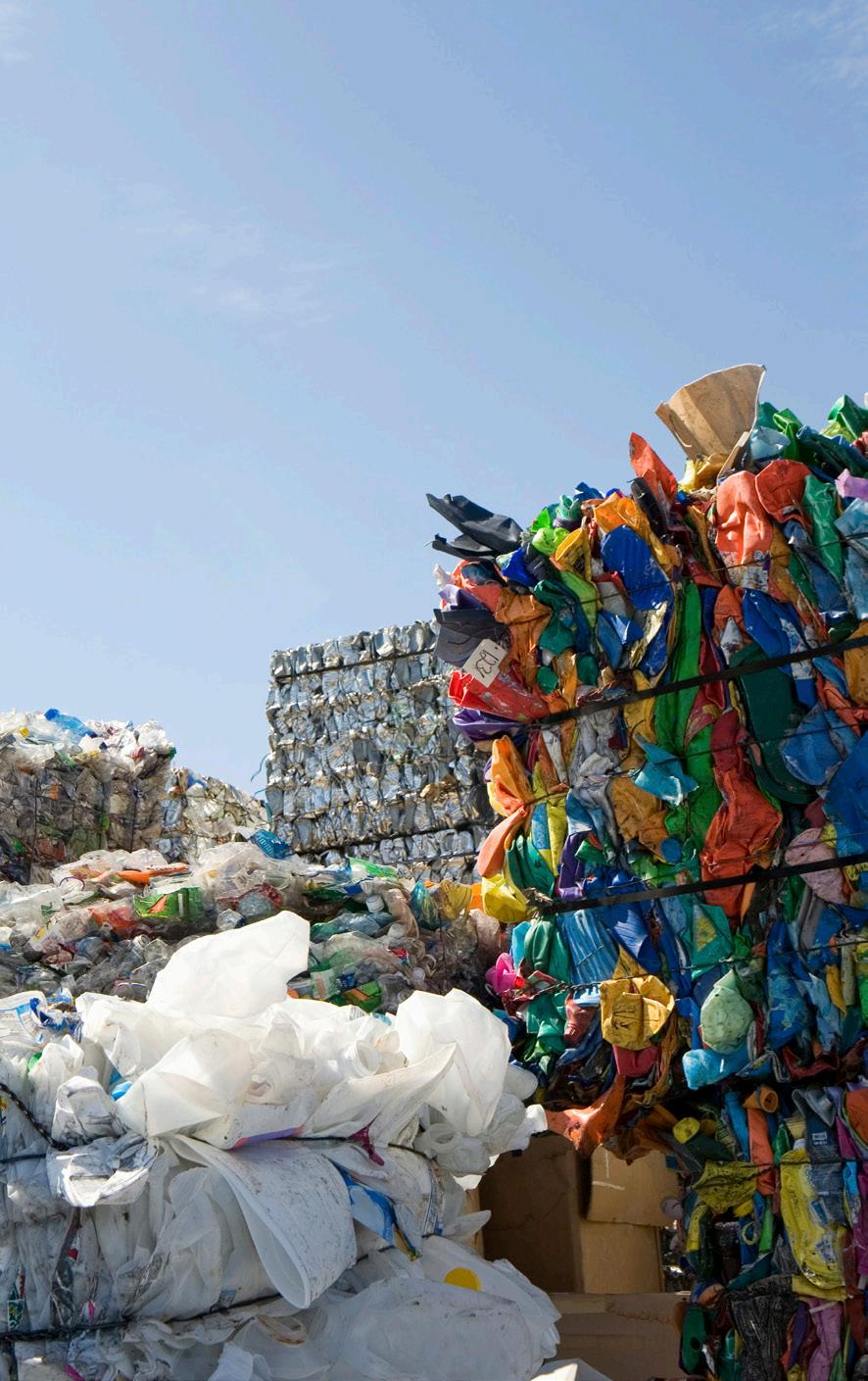

“We want to make sure people are living a good life,” he explains. “We are not just planning for the company’s future, but for the future of the communities supplying us.
“Our success is born out of aligned incentives across every layer of the chain. People – from collectors to traders – are the heart of our organisation.”
Elsewhere, Bariq has been focused on driving operational
excellence. It is a shift driven by deeper involvement from leadership and a stronger emphasis on accountability.
“I moved from being a shareholder to being involved in day-to-day decision-making,” Mohamed reports. “That changed everything.
“I have learnt that, in good organisations, people do not need to be managed. When given tasks, our people can independently solve 90 to 95 percent of them.”
Geography plays in Bariq’s favour. Egypt sits at a strategic intersection between Europe, Africa and the Middle East, with access to both feedstock and end markets. The company’s current output of food-grade PET places it among the larger players in its region, with ambitions to move further up the global rankings.
“Maybe we’re in the top ten by size,” Mohamed suggests, while acknowledging the more established markets in Asia. Closing that gap will depend on maintaining technical standards, scaling capacity, and continuing to build credibility with global brands.
For Mohamed, the long-term direction of the industry is not in doubt. Resource constraints, environmental pressures and regulatory shifts are all pushing greater adoption of recycled materials.
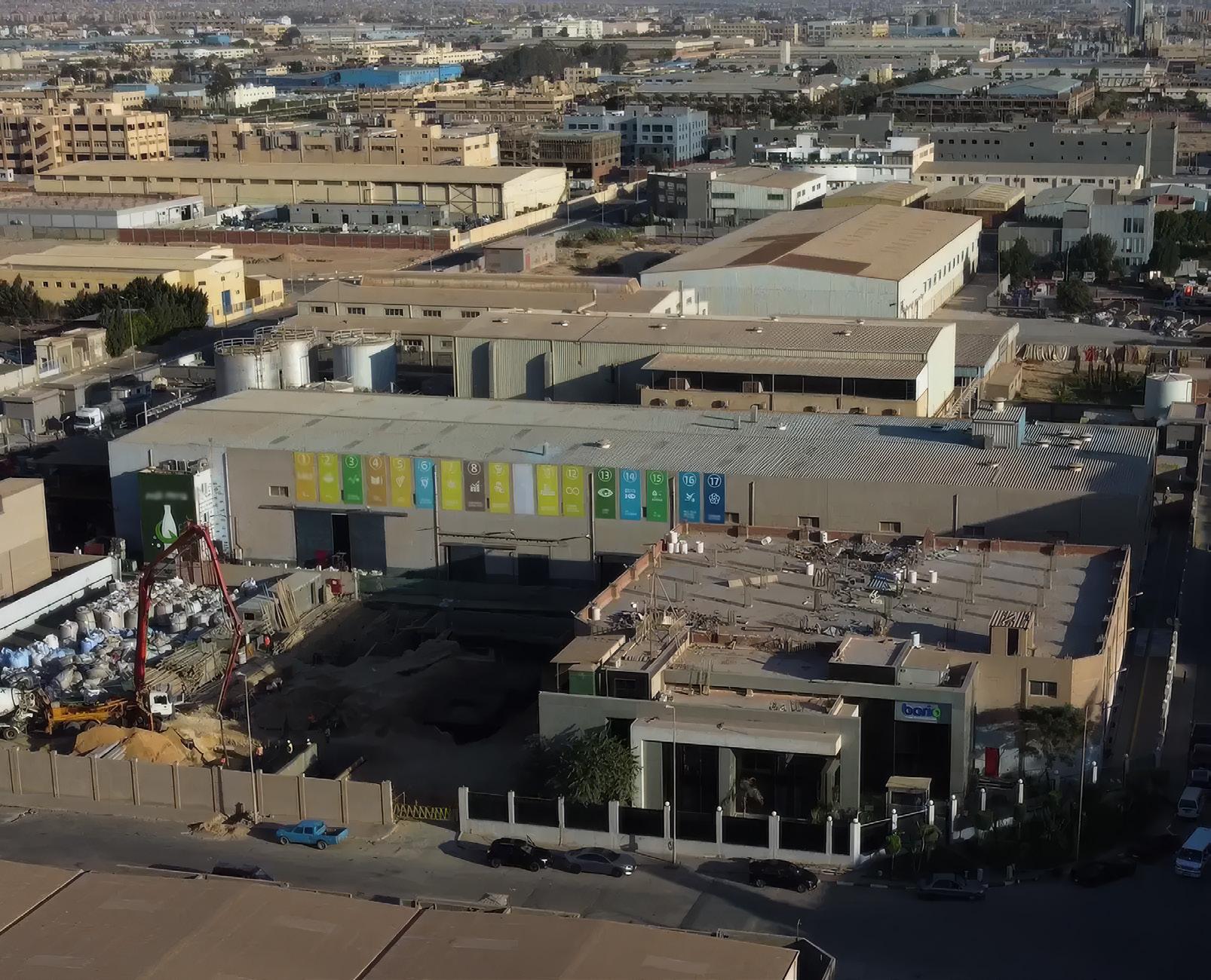
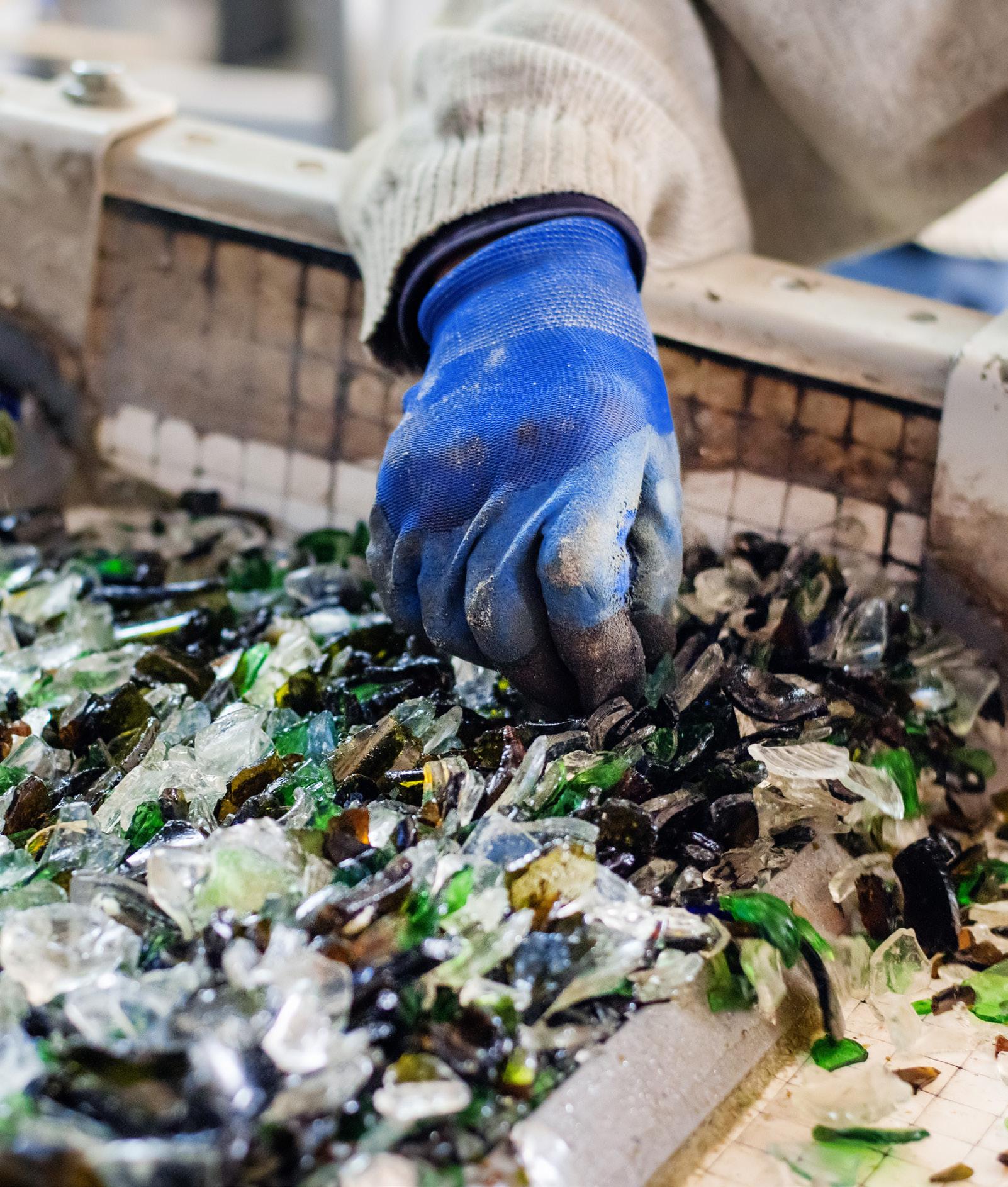
“Oil is not going to be there forever,” he says. “We need to be ready for what comes next.
“It is so important that we don’t treat recycling as a compliance exercise or a trend. It is a long-term industrial shift with economic and environmental significance.”
Recycling offers a bridge between current consumption patterns and a more circular model. Slowing the extraction of virgin resources while building robust recycling infrastructure creates both environmental and economic resilience.
“It’s getting us ready for the future,” Mohamed concludes. “If resources run out, we will be prepared.
“At Bariq, we believe in this industry. We’re building something that can last.”
There is a reason why so many cities are built on rivers. Water is essential to any community, and the City of Santa Monica is no exception. A lot of Santa Monica’s water is imported from the State Water Project in Northern California and the Colorado River. It is expensive to convey and vulnerable to extreme climate conditions, so it is not surprising that the city is looking for alternatives closer to home.
Sunny Wang is the Water Resources Manager for the City of Santa Monica’s Department of Public Works, Water Resources Division. It is a job that involves oversight of a lot of Santa Monica’s infrastructure, including groundwater production, treatment and distribution, all the way through to wastewater collection and stormwater management.
He is also heavily involved in the Sustainable Water Master Plan, which will make an important contribution to Santa Monica’s water independence.
“In our 2018 Sustainable Water Master Plan, we set out plans to diversify our water supply portfolio to reduce our reliance on water imports and withstand climate change,” Wang explains. “The plan invested over $200 million in water conservation, alternative water supplies, and restoration of impaired groundwater supplies to diversify the City’s water supply portfolio.” A cornerstone of the plan is the City’s Sustainable Water Infrastructure Project or SWIP that leverages stormwater,
brackish water, groundwater and wastewater to produce highly purified water for potable reuse – groundwater recharge and non-potable reuse for irrigation.
The first step in this project for water independence was to establish a procedure to directly treat stormwater. There are no existing procedures or regulations in place to cover the treatment of stormwater for direct groundwater recharge, so the City has been working closely with state regulators to test stormwater for contaminants and learn what is required to make that water suitable to inject into groundwater.
“Before, we could only let stormwater percolate slowly down into the main supply, but we have developed ways to treat it to a higher quality so that it can be injected into the water table,” says Wang. “We are leveraging wastewater as well, treating it to the point where it exceeds state and federal drinking water standards.”
Wang believes this diversification of water sources is essential for Santa Monica’s water resilience. These new sources will make up 10% of the city’s water supply, but they are only a few of the many innovative projects being implemented.
When trying something new, there are always challenges that will need to be overcome.
The first of those challenges is the aforementioned regulatory issues with making stormwater suitable to be reintroduced to the groundwater.
“We worked closely with state regulators to characterise the contaminants and develop a multi-barrier treatment train,” Wang recalls. “It took a lot of negotiation, starting with careful monitoring over a two-year period to see what is actually in urban run-off and storm water that needs treating.”
It was a regulatory challenge, but it was also a technical challenge. A huge volume of data was gathered to help determine what treatment would be necessary to make that water safe. There are also practical challenges involved in bringing the necessary facilities for this treatment into urban centres.
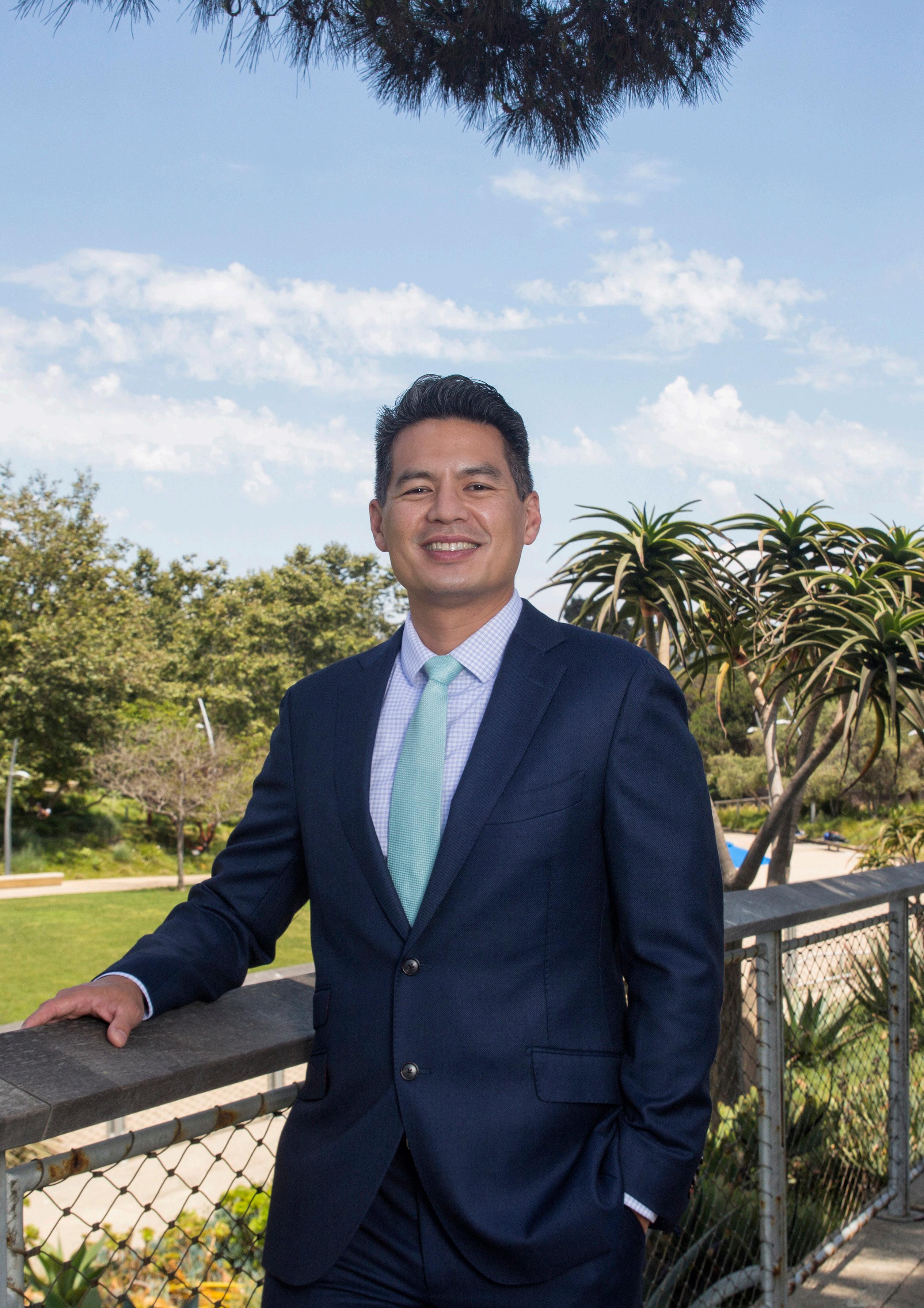
“We had to get creative, putting the entire facility underground,” Wang tells us. “We built it next to a courthouse, a soccer field, a child development centre and a big office building. It is under a parking lot, so it avoids any impact on our surrounding neighbours.”
The City of Santa Monica also partnered with companies such as Trojan Technologies, who provided their state-of-the-art UVAOP system to treat water with ultraviolet light.
Then, to bring the process full circle, the new technologies had to receive approval from those regulators they had been working closely with. The City of Santa Monica had to carry out all of this work during the height of the Covid pandemic, navigating its impact on the workforce and keeping them safe while also monitoring the tangential issues caused by price increases and supply chain issues.
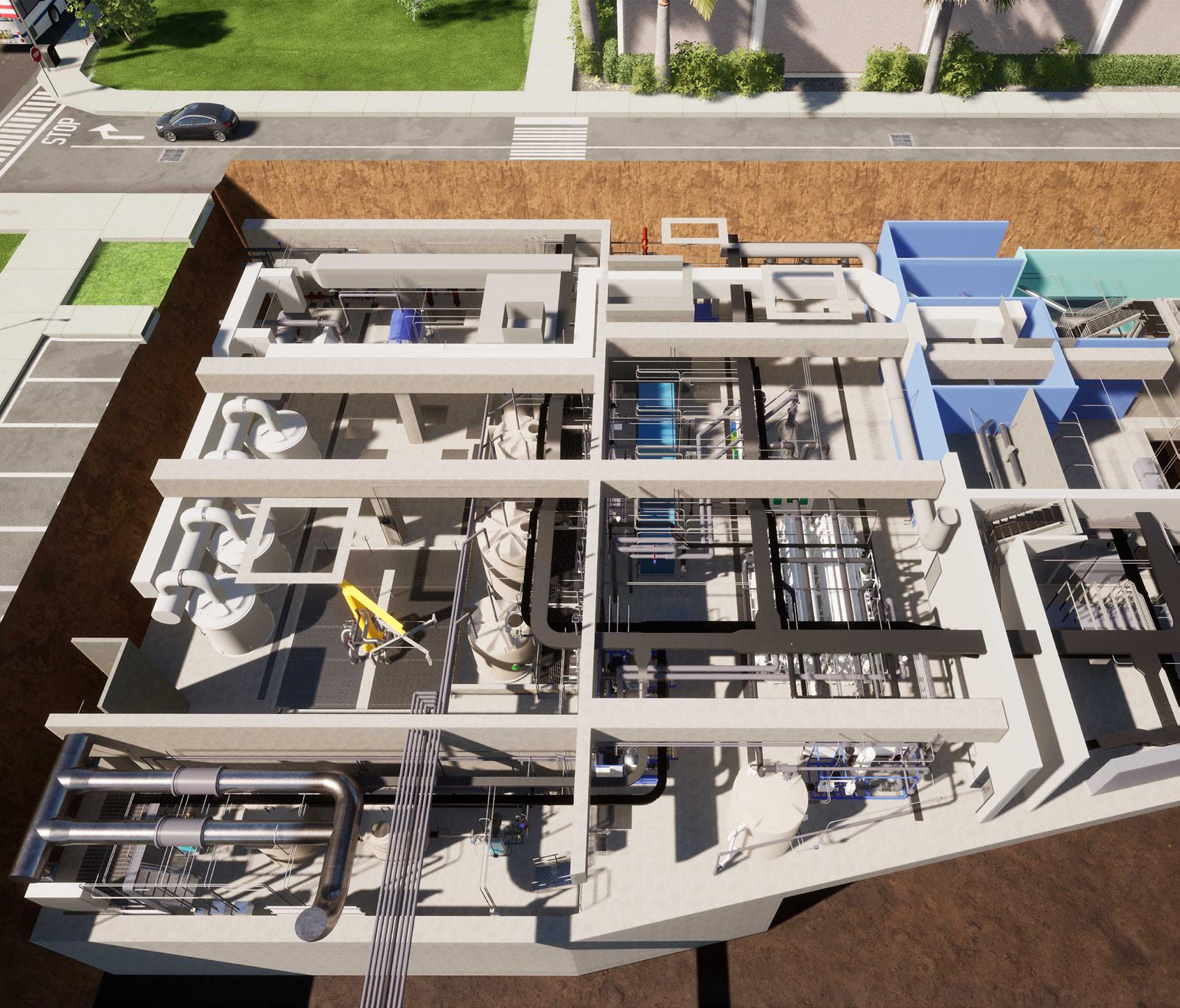
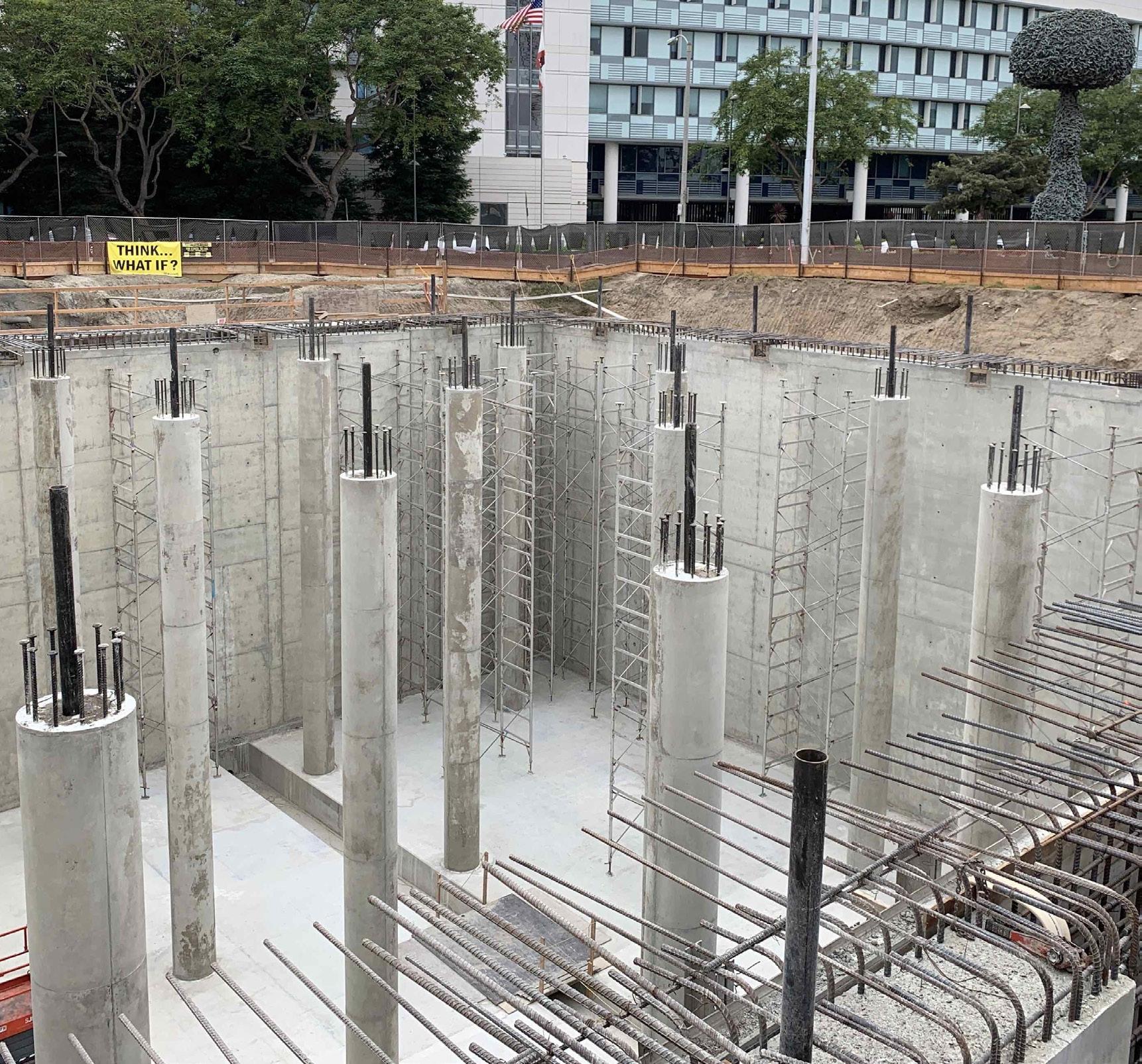
All of this hard work is towards the goal of giving Santa Monica a drought-resilient water supply.
“We are drawing 10% of our water supply through a drought-resilient source, diverting pollution from run-off away, treating it and reusing the water,” says Wang. “It helps our water supply and protects the environment.”
As well as being hard work, it is also a major investment, costing $96 million to build, and $2 to 3 million annually to operate.
“It is a big investment, but if we look at the whole portfolio together, we are able to provide a local water source cheaper than imports,” Wang explains.
The need for that could not be clearer.
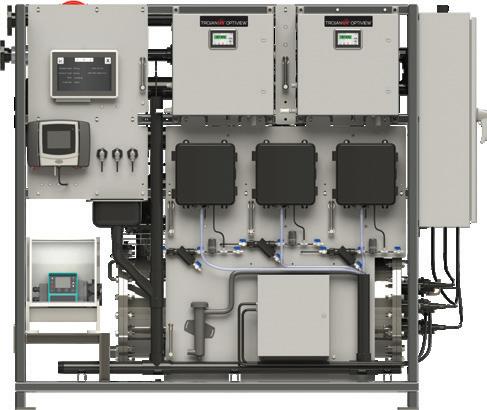
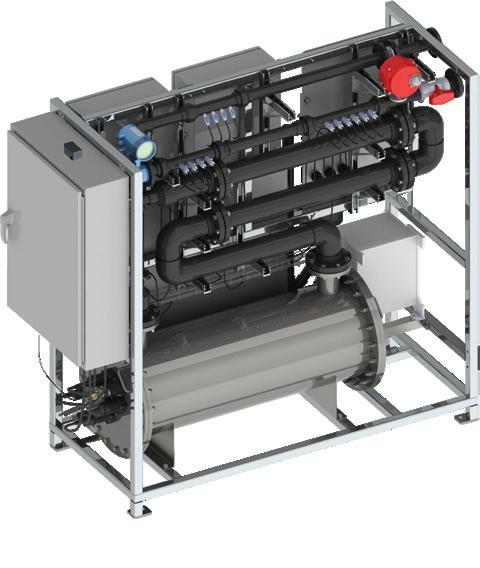

A FULLY INTEGRATED UV AOP SOLUTION PROVEN AT SANTA MONICA’S SUSTAINABLE WATER INFRASTRUCTURE PROJECT (SWIP)
Advanced Wastewater Purification Facilities (AWPFs) are among the most complex water infrastructure projects, requiring advanced treatment, tight footprints, and seamless system integration. The Sustainable Water Infrastructure Project (SWIP) in Santa Monica exemplifies this challenge, combining demanding hydraulics, strict performance targets, and limited space within a highly integrated design. To meet these needs, SWIP required more than a traditional UV solution—it needed a partner with deep process expertise and proven delivery capabilities.
Trojan Technologies delivered a comprehensive UV AOP solution tailored to SWIP’s complexity. Rather than applying a single UV dose, Trojan used advanced design approaches and a flexible system architecture to optimize treatment performance. This included cost-saving strategies such as reduced chemical usage and automated controls to minimize operating expenses.
Designed for retrofit applications, Trojan’s UV AOP systems provide a compact footprint without compromising accessibility or long-term operability. Simplified maintenance and reliable performance support efficient plant integration while addressing the realities utilities face over decades of service.
By offering a fully engineered, end-to-end solution—including design, commissioning, performance validation, and ongoing support—Trojan ensures AWPFs like SWIP achieve dependable, high-performance advanced wastewater purification from concept through long-term operation.
“It has been a dry year, without a lot of snow, so it is going to be an interesting summer,” Wang points out. “Colorado has been suffering for years with its water elevation dropping and dropping. But the motivation behind all these projects did not start with climate change. It started with resiliency. If there were a major earthquake and it damaged that conveyance infrastructure, it could leave us without access to our imported water supply. This reduces that reliance.”
Wang puts the success of the project down to the leadership of Santa Monica’s City Council.
“We have support from the top down,” he says. “If we get questions from the public, the council is there to help us with that. It is so important for city leadership to buy into these projects. Without them, it is just an uphill challenge, because water is often the last thing people think about.”
With that support behind it, the City of Santa Monica is doing things that nobody else has done before.
“The city leadership are not afraid to be the first,” Wang says. “We are setting a framework for other utilities to follow. Santa Monica is a small city, but this shows how small cities can lead the way by taking on these projects. We are making a footprint that can be followed even for smaller utilities.”
“WE HAD TO GET CREATIVE, PUTTING THE ENTIRE FACILITY UNDERGROUND.”
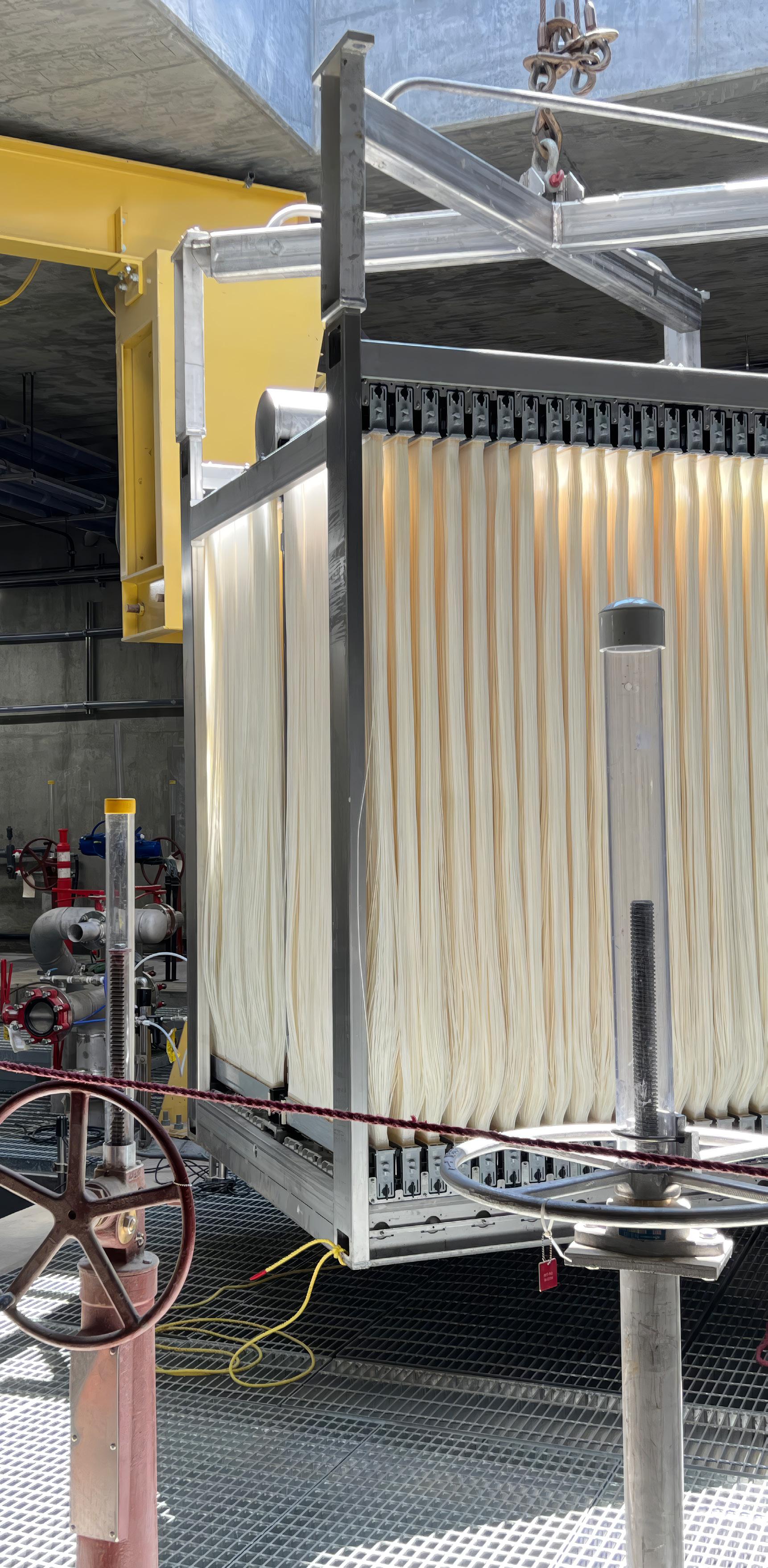
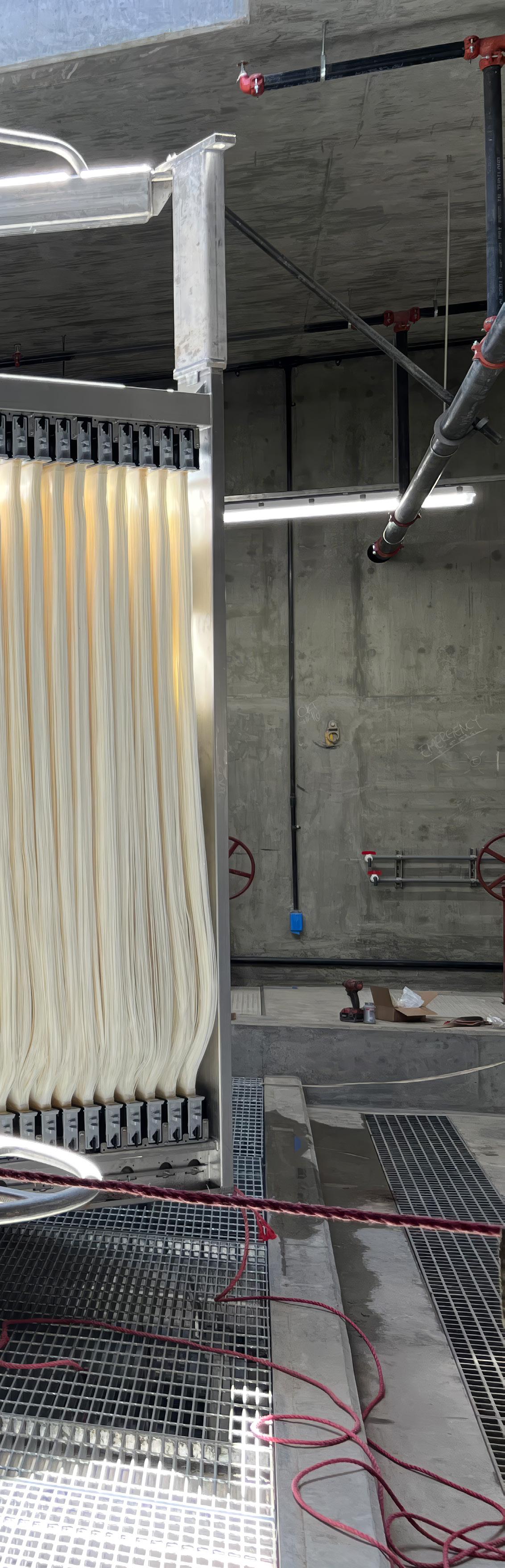
Looking to the future, the City of Santa Monica will continue to build on the work it has done already. It will continue to create potential for direct potable water reuse, making the infrastructure more reliable and building trust through public perception and regulatory compliance.
“Typically, water has to sit in the groundwater for three-tosix months before we can pump it and treat it, but with direct potable reuse we can bypass that groundwater phase,” Wang explains. “We are really bringing the water full circle.”
But recycled water is nothing new. Santa Monica takes water from the Colorado River, a river into which other states dump their treated water. Ultimately, it all comes down to how the water is treated.
“To recharge groundwater, the advanced water treatment process works collectively to achieve 12 log removal or viruses and 10 log removal of pathogens,” Wang says. “That leads to the removal of 99.9999999999% viruses. Now we are looking to achieve 20 log virus removal and 14 log removal of pathogens for future direct potable reuse.”
The most important part of this project is that, ultimately, it comes from the people of Santa Monica.
“Our residents came to us with the idea during the regional wildfires,” Wang says. “People were asking, ‘Why not make this available as a water supply and send it directly to the water treatment plant?’ And we started looking at that as a possibility in the near future.”
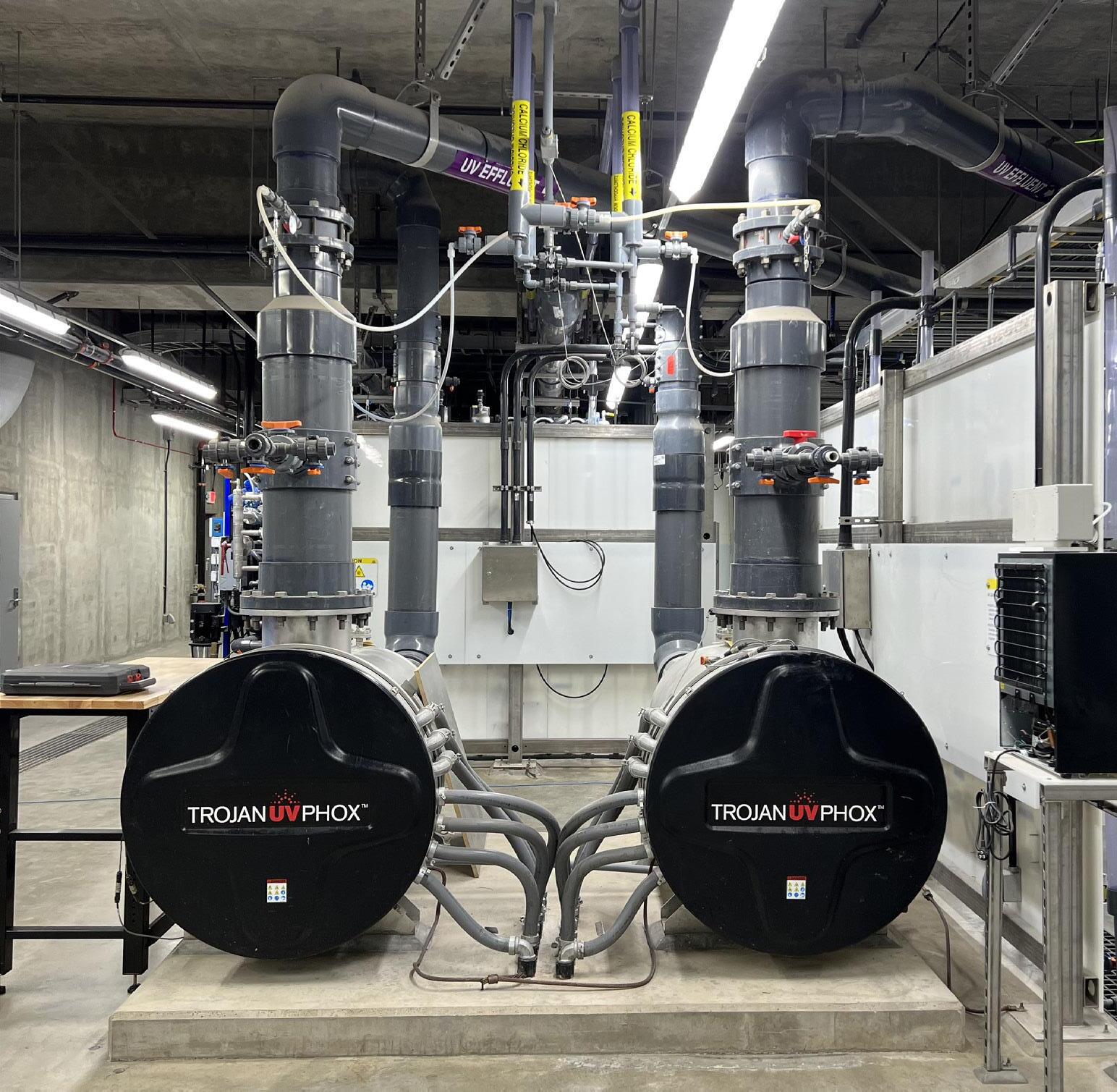
Founded just six years ago by Francesco Volpe and Martin Kupp, Renaissance Fusion is a French deep-tech company turning fusion from a scientific pursuit into a commercially viable energy source. The organisation’s ambition is clear: to build a machine that can deliver abundant, carbon-free power using widely available materials, while avoiding the geopolitical dependencies that define today’s energy system.
Fusion is the promise of abundant, limitless, cheap, clean energy,” CEO Sam Guilaume begins. “The fuel required is seawater and lithium, making it a technology that could be globally available.
“At Renaissance, what was once just a science project is now becoming an engineering project. The name of the game is making our fusion energy solution industrially and commercially viable.”
Renaissance Fusion operates within magnetic confinement fusion, one of the two main approaches to achieving fusion reactions. The physics is demanding. Plasma must be heated to around 150 million degrees and held in place using extremely powerful magnetic fields. Under those conditions, hydrogen isotopes fuse and release energy.
Traditional approaches in the fusion space have centred on tokamaks. These are large, complex machines that have achieved significant scientific milestones. However, tokamaks face limitations when considered as continuous power sources.
“Tokamaks can maintain the plasma for minutes, but then it shuts down,” Sam says. “As a continuous source of power, it’s not ideal.”
Renaissance Fusion is pursuing a different path through a simplified stellarator design. Stellarators are inherently more stable and capable of continuous operation, but historically difficult to build due to their intricate three-dimensional magnetic structures.
Instead of using conventional high-temperature superconductor tapes, Renaissance manufactures its own material in a radically
different form. Sam describes it with the help of a simple analogy.
“Think of a lasagne, one metre wide, one kilometre long. You engrave the current path on it, then you roll it into a cylinder. As the current flows, it generates the three-dimensional magnetic field.”
This ‘2D magnet’ approach replaces intricate coil geometries with a flat, manufacturable structure. The current path is created using laser engraving, enabling precision and repeatability.
“Once you master the manufacturing, it becomes simple to design and simple to produce,” Sam states.
Renaissance’s second key innovation sits at the heart of the reactor.
Fusion reactions release energy in the form of high-energy neutrons. Capturing that energy, protecting the reactor, and generating fuel are all handled by what is known as the blanket. In most designs, this is a solid
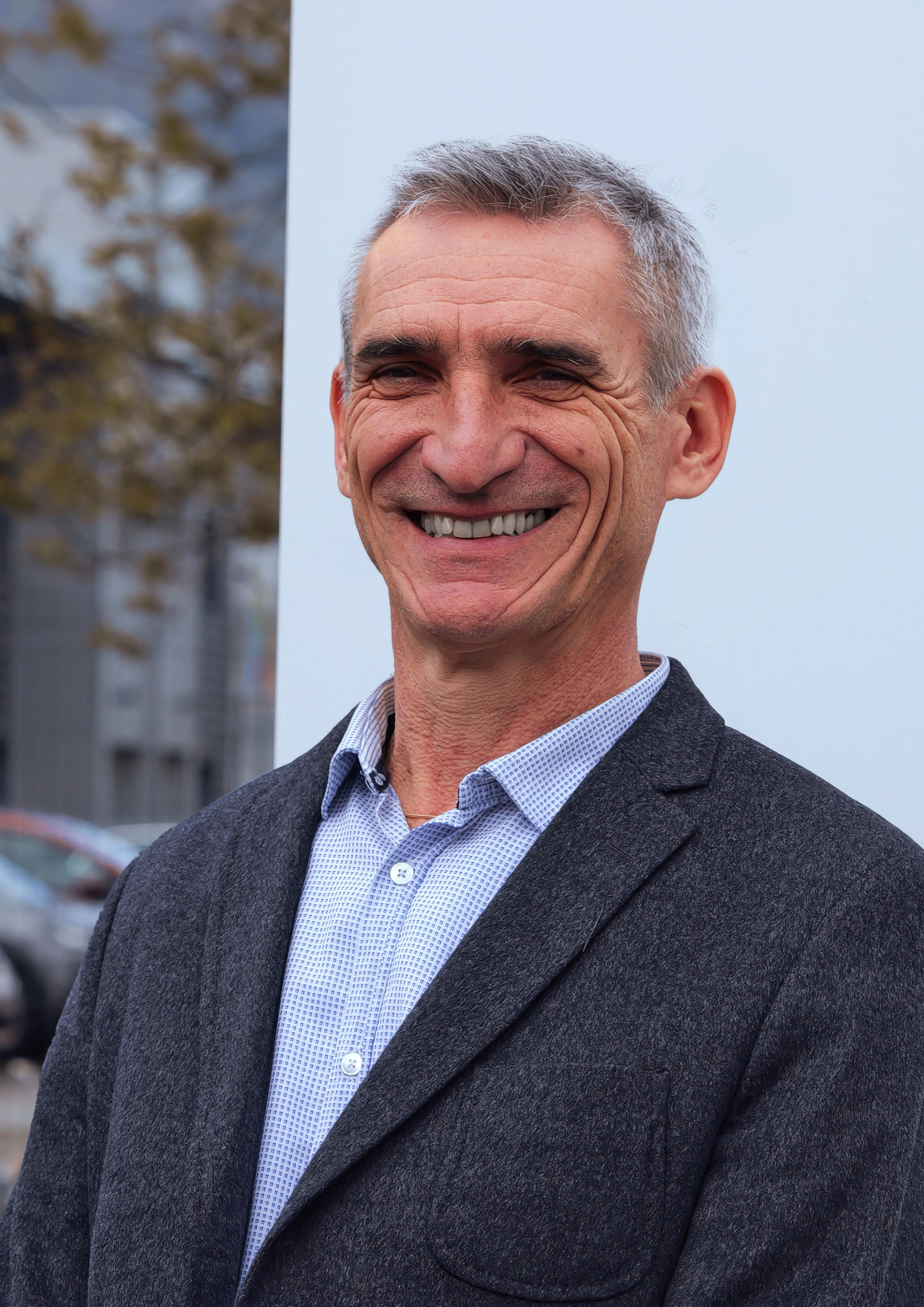
structure made from lithium-based materials. However, Renaissance has replaced this solid wall with a liquid metal system.
“The wall is liquid and flows inside the reactor,” Sam explains. “We call it a selfhealing surface. While solid walls degrade under extreme heat and neutron bombardment, requiring regular shutdowns for maintenance, a liquid wall minimizes corrosion, to the point that we estimate that our machine could operate for 32 to 50 years at full power. You don’t need to shut down every three to six months.”
Material choice also matters. Traditional systems often rely on enriched lithium, a resource produced at scale in only a handful of countries. Renaissance’s liquid approach allows the use of natural lithium instead.
“We don’t need enriched lithium,” Sam remarks. “And as a by-product, we can actually produce it, making for a more circular economy and supply chain sovereignty.”
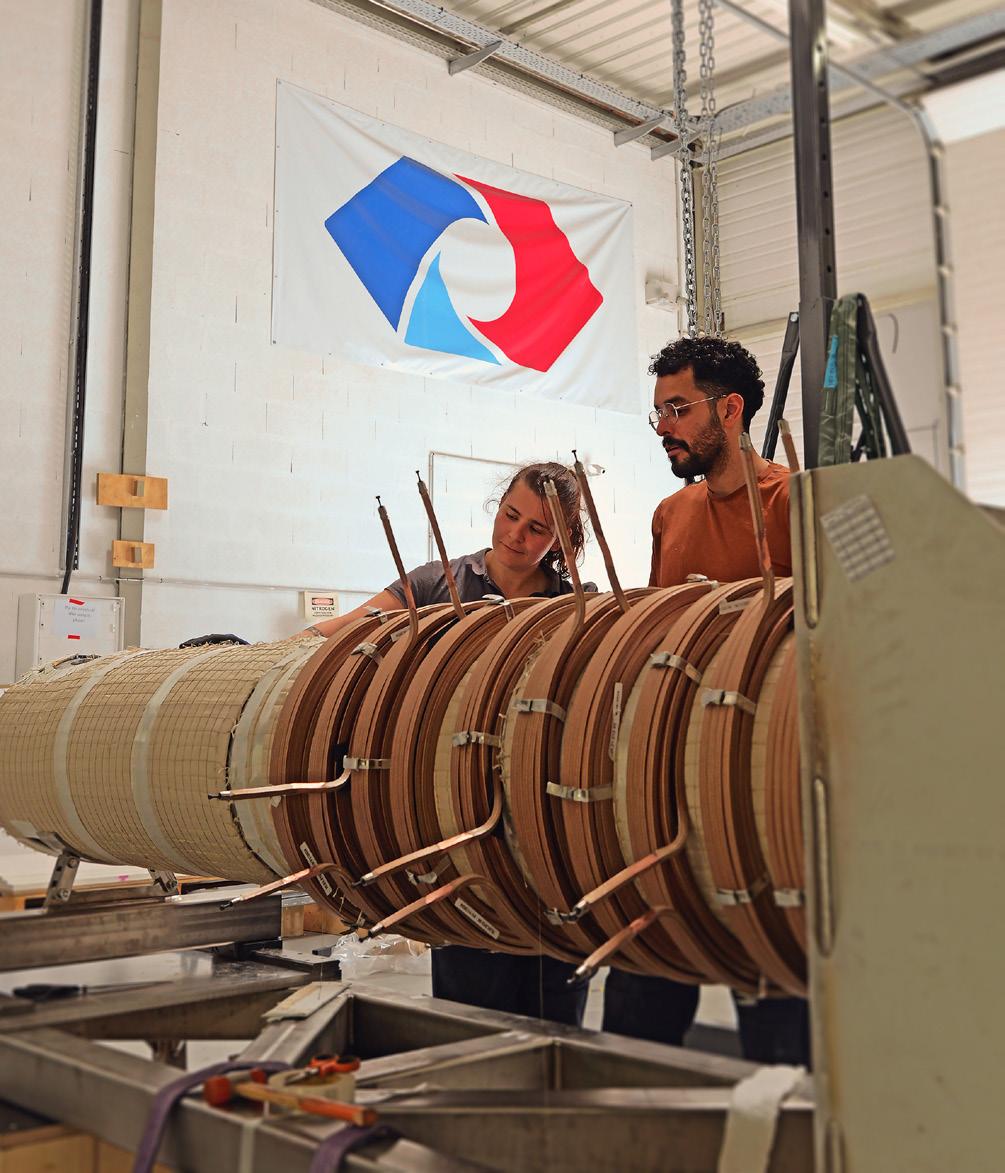
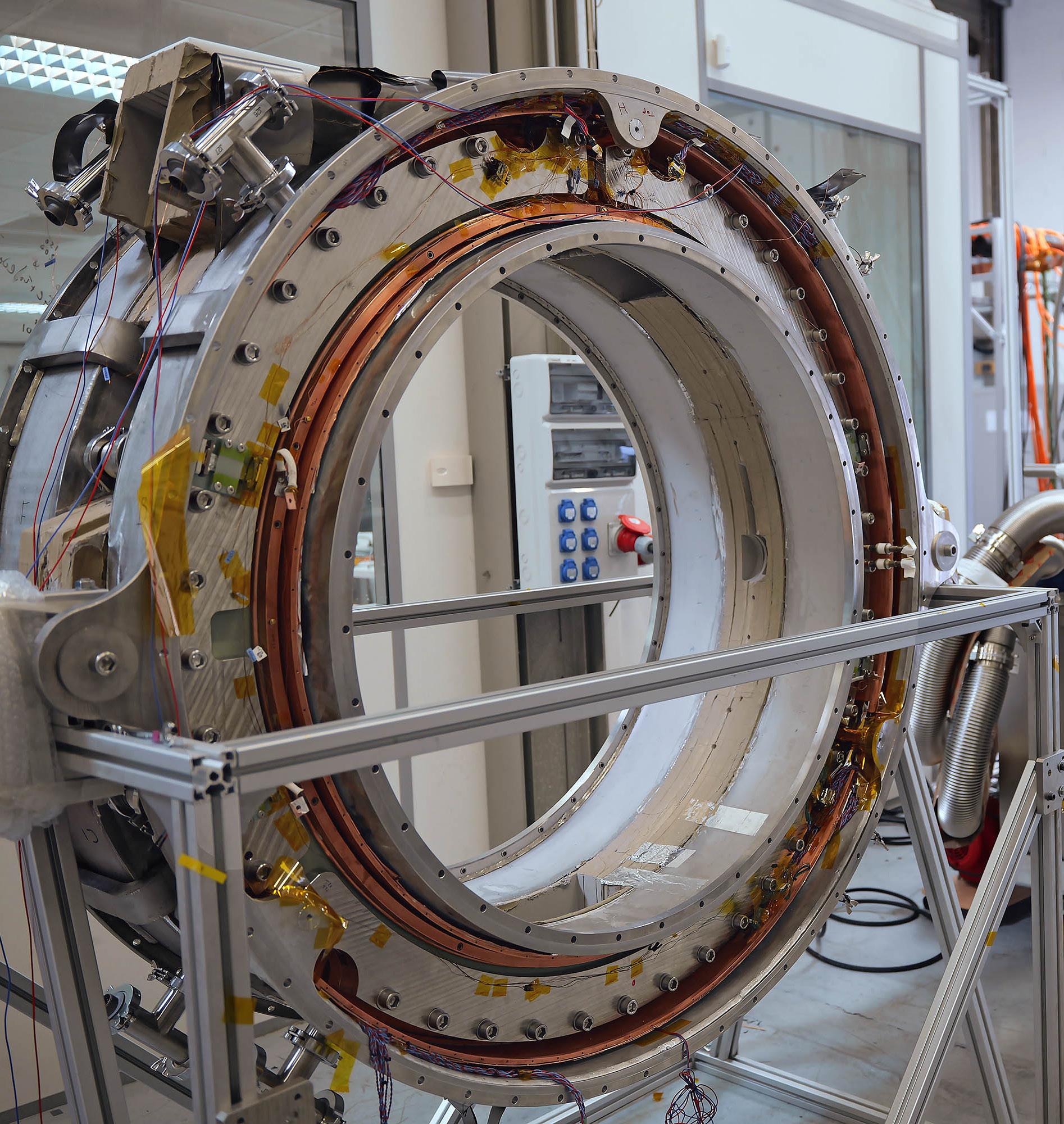
Although fusion is often presented as a route to energy independence, Renaissance argues that this claim only holds if the underlying materials are also secure.
“You cannot claim energy sovereignty if you still depend on critical materials from a limited number of countries,” Sam notes.
By manufacturing its own superconductors and using widely available lithium, the company is designing out those dependencies from the outset.
The approach reflects how Renaissance positions itself within the wider fusion
landscape. The company is not focused on being first to achieve a specific scientific milestone. Instead, it is targeting commercial viability.
It is a distinction that shapes both Renaissance’s roadmap and its timelines. While some players are targeting early 2030s demonstrations, Renaissance is aiming for a more measured path toward the mid-2030s.
“We have scaled quickly to support our ambitions,” Sam comments. “Today, we employ around 110 people representing 27 nationalities, all based in France.
Milexia is the fastest growing Pan-European leader in the distribution and integration of high technology components and systems, such as Electronics, Scientific Instrumentation, Satcom and Embedded systems.
We primarily operate in key markets including Scientific Instrumentation, Defence, and Transportation, delivering tailored solutions and strong technical expertise to support our customers’ most demanding applications.

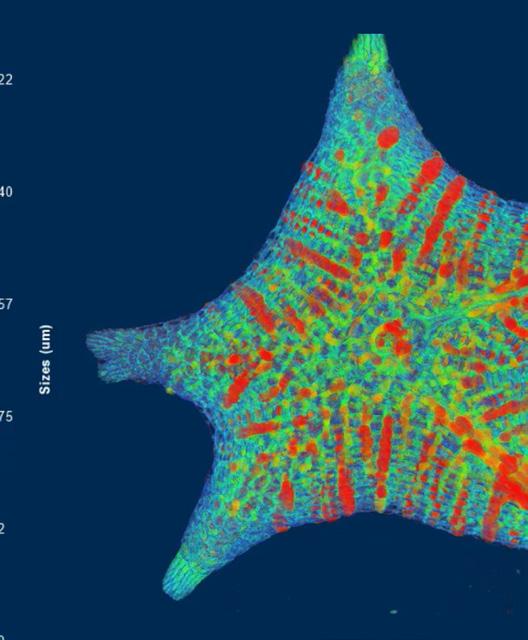

Milexia is a fast-growing Pan-European leader in the distribution and integration of high-technology components and systems, serving advanced applications across key sectors such as Scientific instrumentation, Defence, and Transportation. With a strong focus on innovation and performance, Milexia delivers tailored solutions that combine cutting-edge technologies with deep technical expertise.
In the field of scientific instrumentation, Milexia partners with leading manufacturers, including Hitachi, to provide state-of-the-art solutions in electron microscopy. Among these, tabletop scanning electron microscopes (tabletop SEMs), such as the TM4000Plus III, offer an ideal balance between performance, compactness, and ease of use. They enable fast access to high-quality imaging and reliable analysis, while simplifying daily operations in both academic and industrial environments. Beyond microscopy, Milexia also offers solutions for material characterization, as well as precision measurement and analysis. The company supports its customers in addressing complex scientific challenges with reliable, high-performance tools tailored to their specific applications.
Milexia’s added value lies in its ability to go beyond distribution. Through technical support, integration capabilities, and customized solutions, the company ensures that each project meets the specific needs of its customers. Its teams of experts work closely with clients at every stage, from equipment selection to implementation.
With a strong European presence and a customer-centric approach, Milexia is committed to enabling innovation and driving technological progress, contributing to the development of next-generation scientific and industrial solutions.
www.milexia.com

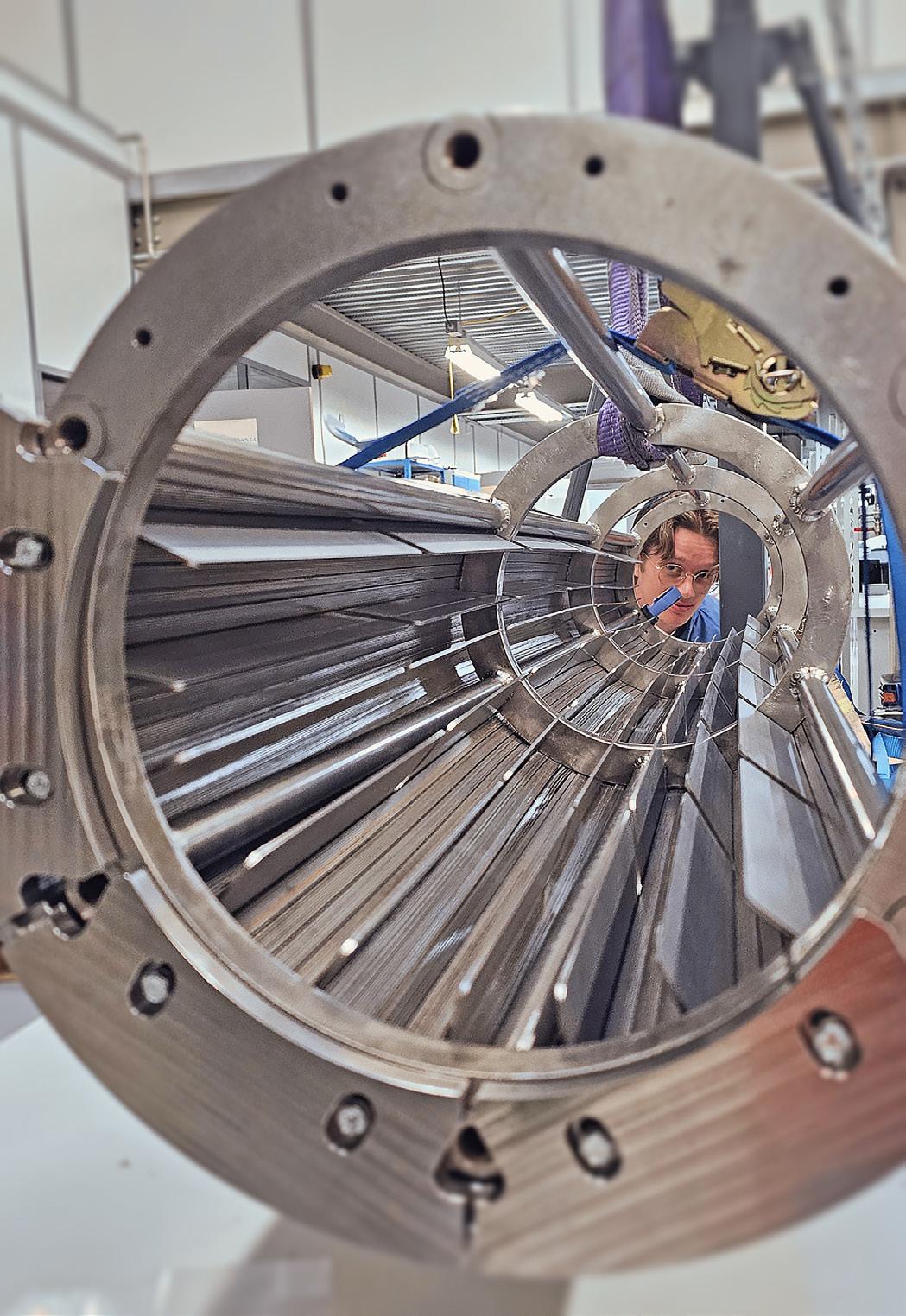
“The multidisciplinary nature of fusion demands expertise across materials science, plasma physics, nuclear engineering, and advanced computing. You need expertise in many domains, and if you don’t have it internally, you need to build bridges.”
With this in mind, Renaissance has established a senior technical advisory committee, bringing in experts from leading universities and research institutions. The goal is continuous challenge and validation.
“It’s about checking your assumptions,” Sam declares. “Your biggest enemy is thinking you are the smartest person in the room.
“At present, there are around 40 startups working on magnetic confinement worldwide. There is a tremendous amount of energy, collaboration and willingness. It’s a very exciting time.”
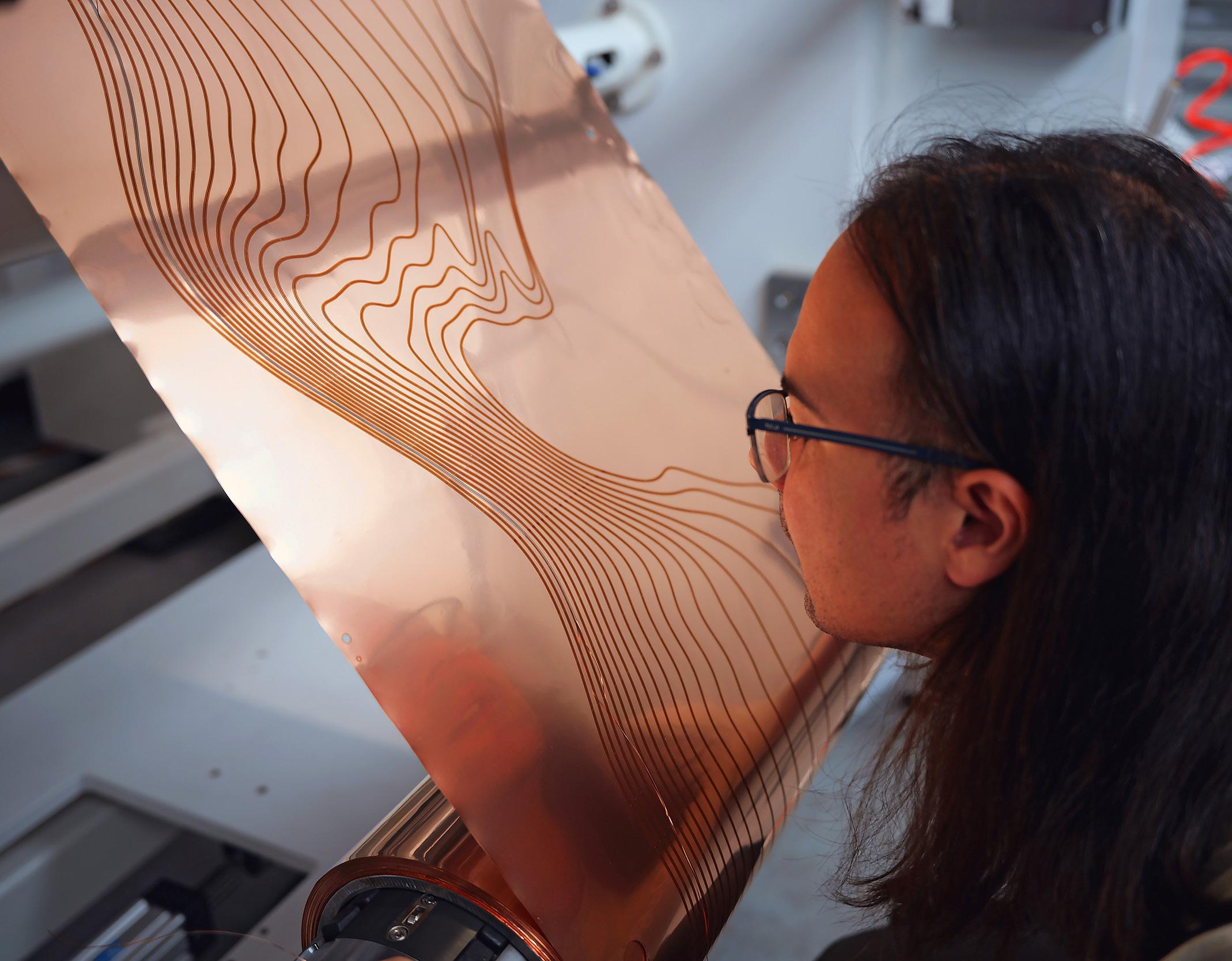
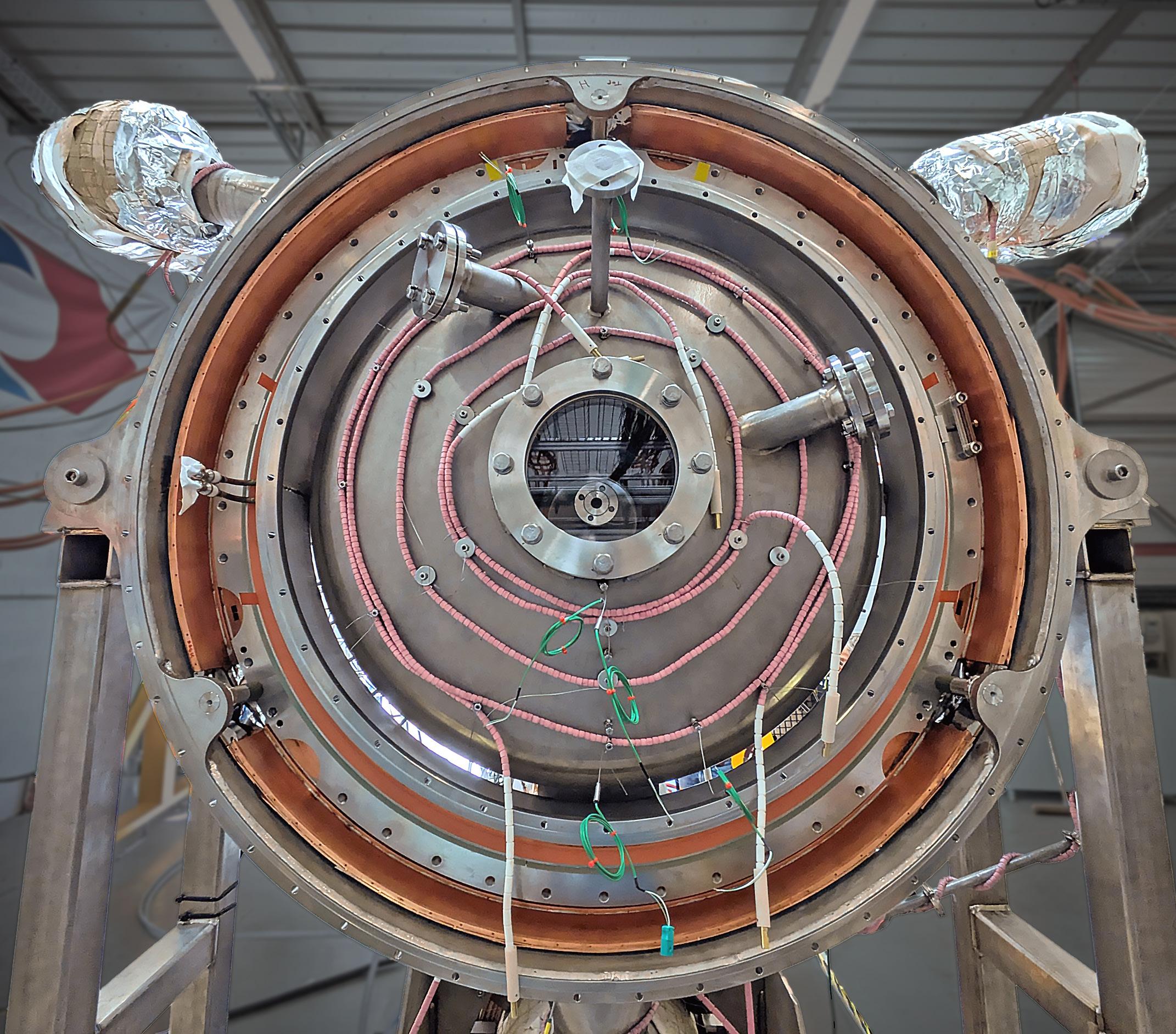
Unlike more mature industries, fusion remains largely startup led. Major incumbents are not yet dominating the space, creating room for new entrants to define the future landscape.
“You can be sure there will not be just one winner,” Sam says. “There will be many.”
The strategic context of fusion efforts is equally important. Global energy systems are under pressure from geopolitical instability, decarbonisation targets and the need for long-term resilience. Fusion is not positioned as a replacement for existing sources, but as an important addition to an already evolving energy mix.
“We know that fossil fuels are under increasing scrutiny, renewable energy continues to scale but remains intermittent, and that existing nuclear infrastructure is being
extended where possible,” Sam reports. “Fusion enters as a potential baseload source with minimal environmental impact.”
Renaissance’s focus is on ensuring that when fusion arrives, it is deployable at scale.
Over the coming years, the company aims to demonstrate the feasibility of its core technologies.
“We are convinced we will prove the viability and scalability of our innovative approach,” says Sam. “This will be a real breakthrough.”
Beyond that, the path to commercialisation will depend on partnerships. Fusion reactors are complex systems that must integrate into existing energy infrastructure.
“We don’t need to become experts in everything,” Sam points out. “We will work with an ecosystem that includes industrial partners, construction specialists and energy operators. Ultimately, fusion plants must connect to grids, generate electricity and operate reliably within established frameworks.”
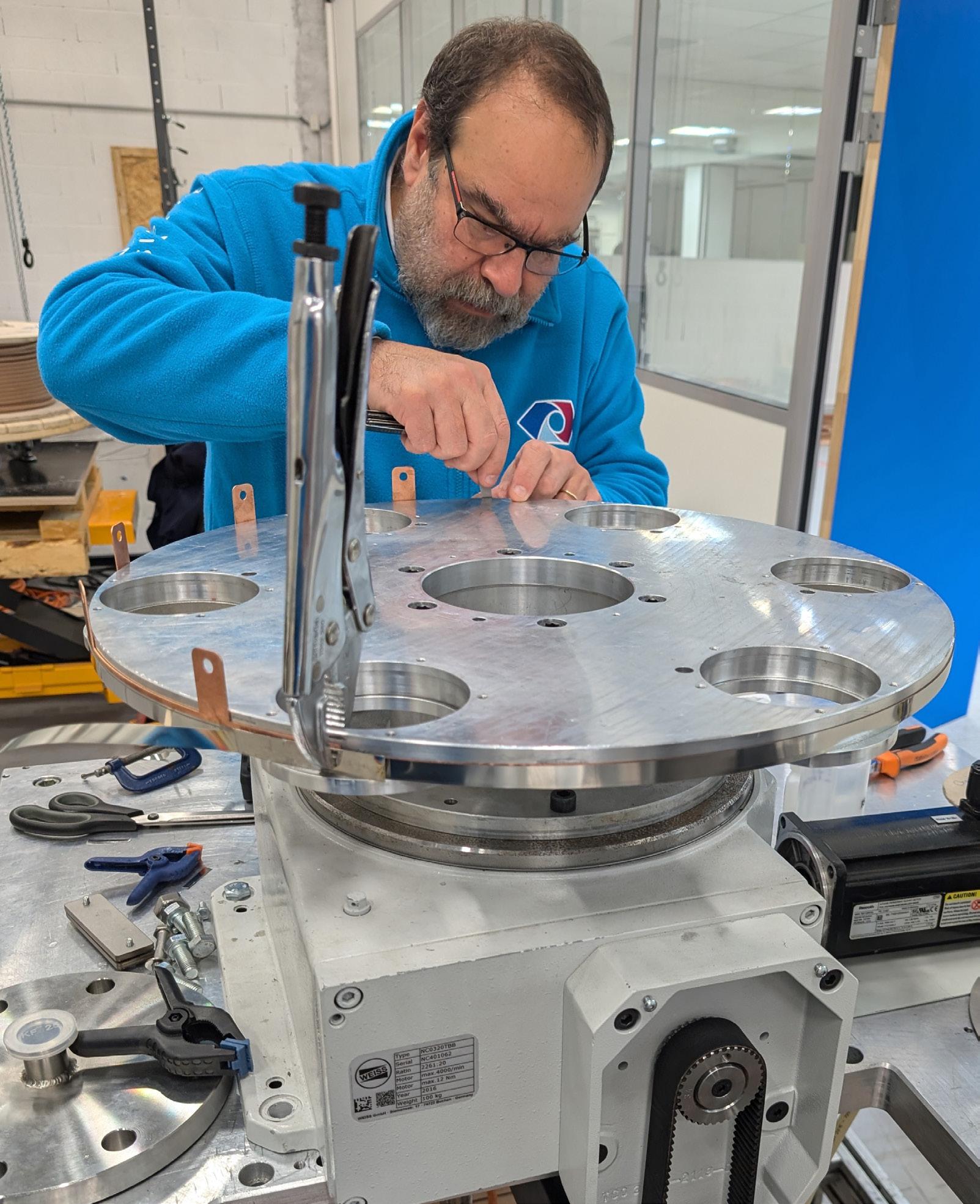
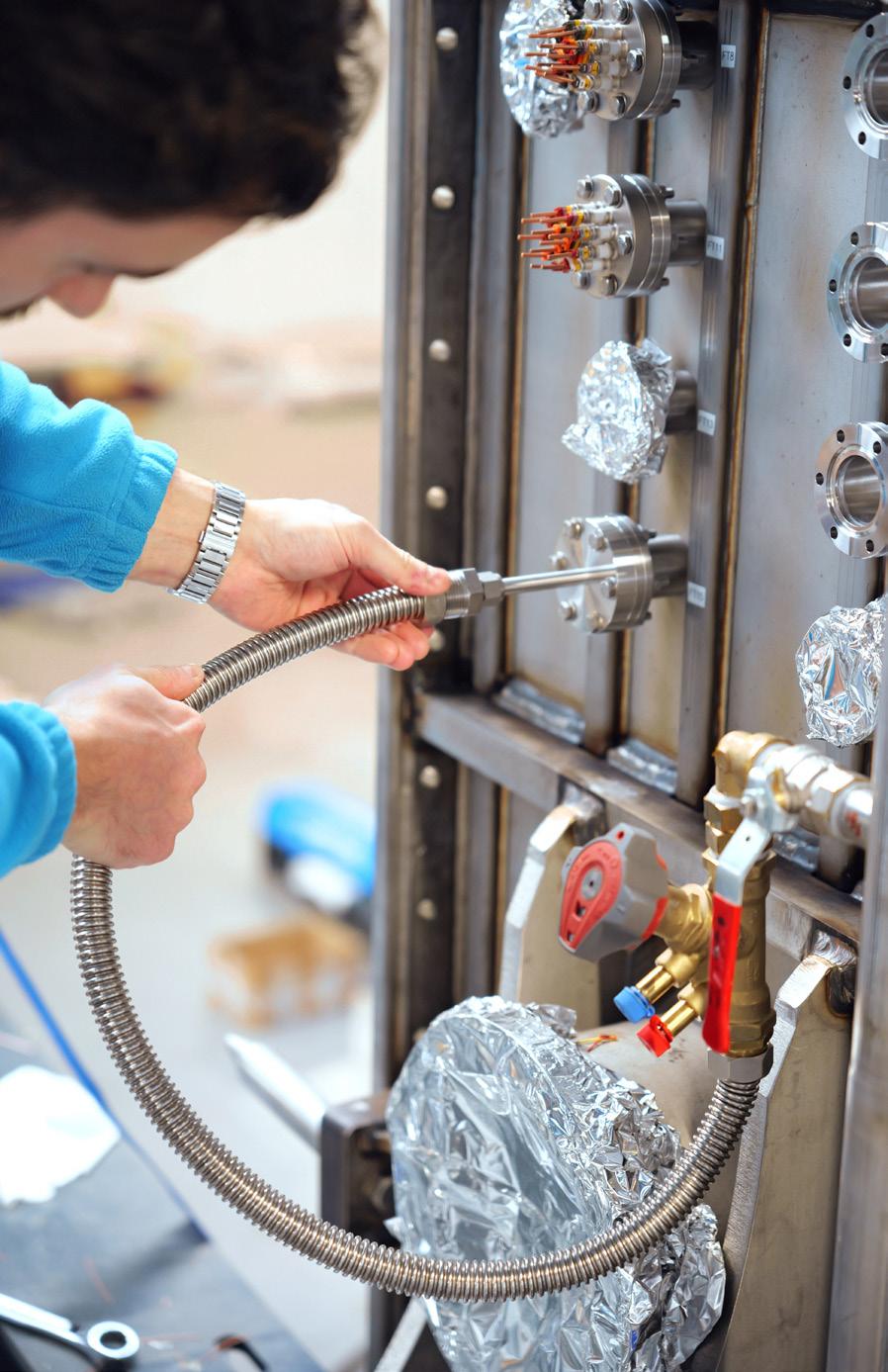
Renaissance is building toward that reality. The company’s proposition is grounded in practicality. It is a strategy that treats fusion not as a distant milestone, but as a future product.
“Without energy, there is nothing,” Sam concludes. “No health, no communication, no industry.
“Fusion has long been described as the ultimate energy source, and we are now working to make that a reality.“
“FUSION HAS LONG BEEN DESCRIBED AS THE ULTIMATE ENERGY SOURCE, AND WE ARE NOW WORKING TO MAKE THAT A REALITY.“
The San José - Santa Clara Regional Wastewater Facility (RWF), one of the largest advanced wastewater treatment plants in the western United States, is undergoing a transformation driven by the multibillion-dollar Capital Improvement Program. The aim is to rebuild infrastructure worn out from nonstop service since 1956 and to update treatment processes with new technologies.
The Program, which envisions $2 billion in facility investments over a 30-year period, is the largest public works programme in the history of the City of San José. The scale of this investment reflects both the importance of wastewater infrastructure and the complexity of operating a large urban treatment facility.
With San José ranking among the largest cities in the United States by population, continuous modernisation is essential. Over the last decade, over $1 billion has already been invested into improvements to significantly enhance the facility’s operation.
Deputy Director Kapil Verma acknowledges that serving a region with a vast population, the facility is a critical piece of public infrastructure. “RWF is the second largest advanced wastewater treatment facility in the western United States,” he says. “We have a permitted capacity of 167 million gallons per day, and we generally
process about 110 million gallons per day of wastewater as an annual average.”
“The RWF is an award-winning facility, both in its operation, its staffing, and its projects. We’ve received local, state, and national recognition across the board. We consistently meet our permitted discharge requirements, and we’re a steward of the environment.”
At the heart of the plant’s operations lies a sophisticated treatment process designed to replicate (and accelerate) natural biological cycles. The facility uses a biological nutrient removal (BNR) process that significantly reduces pollutants before water is released into the natural environment. “Centralised wastewater treatment facilities essentially mimic what nature intended. They simply speed up the process to treat waste more efficiently,” Verma says.
He explains that during the aeration stage of treatment, naturally occurring bacteria break down organic waste. Meanwhile, anaerobic digesters process biosolids in a system that he compares to the human
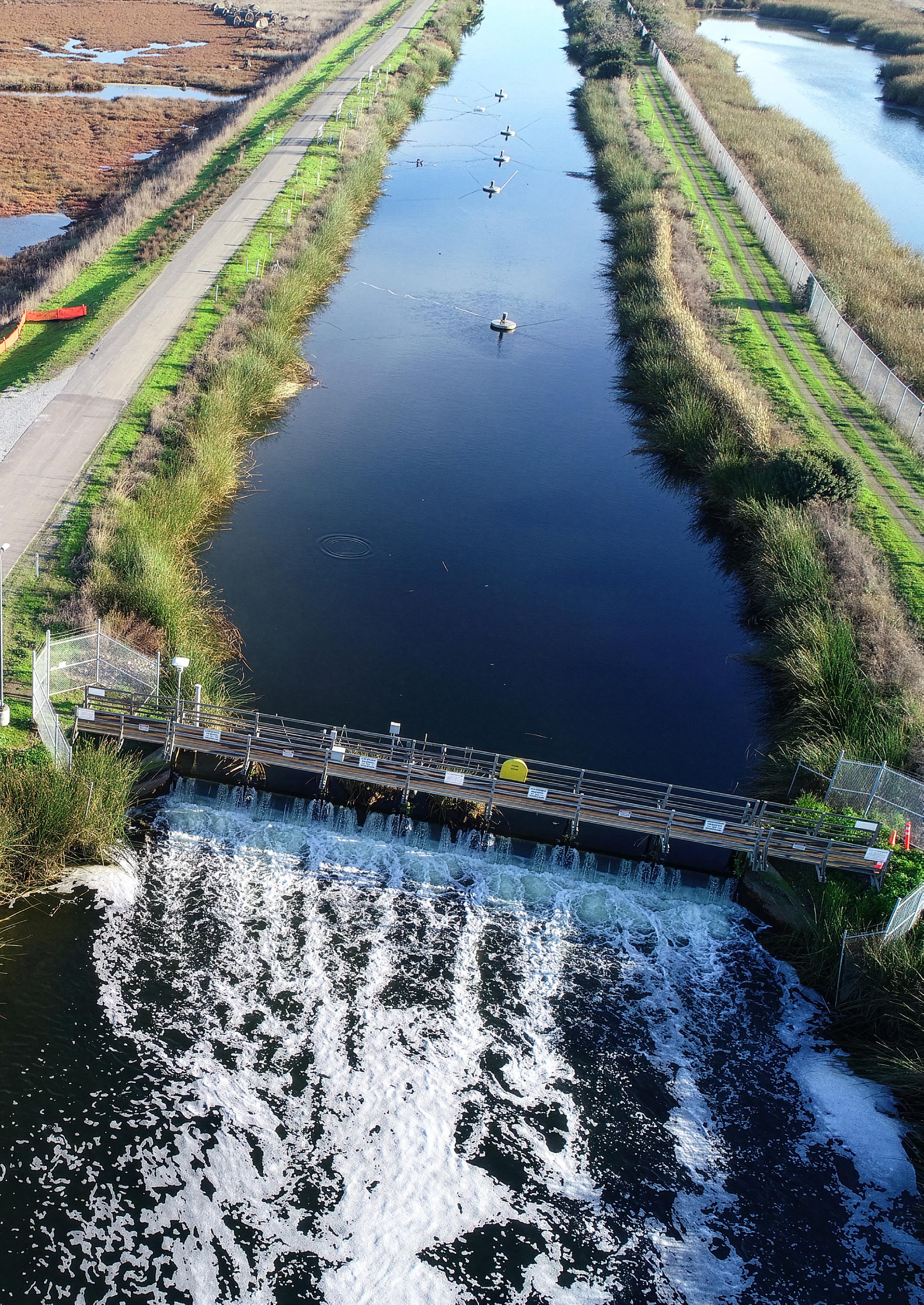

Like water itself, innovation flows through every challenge and shapes new possibilities. For over 90 years, Carollo has pioneered breakthroughs in water technology – from resilient infrastructure protecting growing communities to groundbreaking solutions safeguarding public health and ecosystems. At Carollo, innovation isn’t just about what’s new – it’s about what’s necessary. Every advancement, every improvement, and every solution flows from a single purpose: shaping a future where water enriches every community it touches.
For water and wastewater utilities, decisions come in waves, and they’re rarely made in a vacuum. Capital programs expand. Projects overlap. Budgets shift. Regulations change. Your community grows—or it doesn’t grow the way anyone expected. And through it all, the systems people depend on every day must keep running safely and reliably not just now, but decades into the future.
Through the pressure and competing priorities, experienced owner’s advisers can provide invaluable support to help narrow focus, balance goals, and guide projects to completion. They don’t make decisions on your behalf, they help you make the best ones for your program.
When options feel overwhelming, owner’s advisers can help evaluate alternatives, unearth implications you might not see, and weigh trade-offs between cost, risk, performance, and time. Then they stay with you through planning, procurement, design, and construction, making sure early decisions continue to support your goals even as conditions shift.
At Carollo Engineers, we’ve been a trusted adviser to our clients for more than 90 years. Water and wastewater systems have been our sole focus since 1933, and we’ve worked alongside utilities across North America as they’ve navigated aging infrastructure, evolving regulations, emerging contaminants, and the constant challenge of doing more with constrained resources.
Today, we’re honored to serve as Owner’s Adviser for the City of San Jose’s Additional Digester Facility Upgrade Project. As the City’s existing digesters near the end of their service life, leaders face critical choices: rebuild and modernize, or efficiently rehabilitate? What’s the best balance of upfront costs against lifecycle performance? What delivery approach best manages risk while maintaining operations? As a continuous partner from the earliest planning stages until now, we’ll help guide the project to support their needs and meet their goals. And, as construction progresses, we’ll provide access to a full suite of engineering and technical resources to help navigate changing conditions and unforeseen challenges. The resulting upgrades will support the City as it continues treating its wastewater to the highest standards while producing high-quality, reusable biosolids.
No matter what our clients’ needs are, our goal is always the same: helping them make sound investments that reliably serve their communities now and in the future. Because the infrastructure decisions we make today shape the systems we depend on tomorrow.
www.carollo.com
digestive system. “Anaerobic digesters are effectively mimicking the human stomach, breaking down solids and producing by-products that we can manage and reuse.”
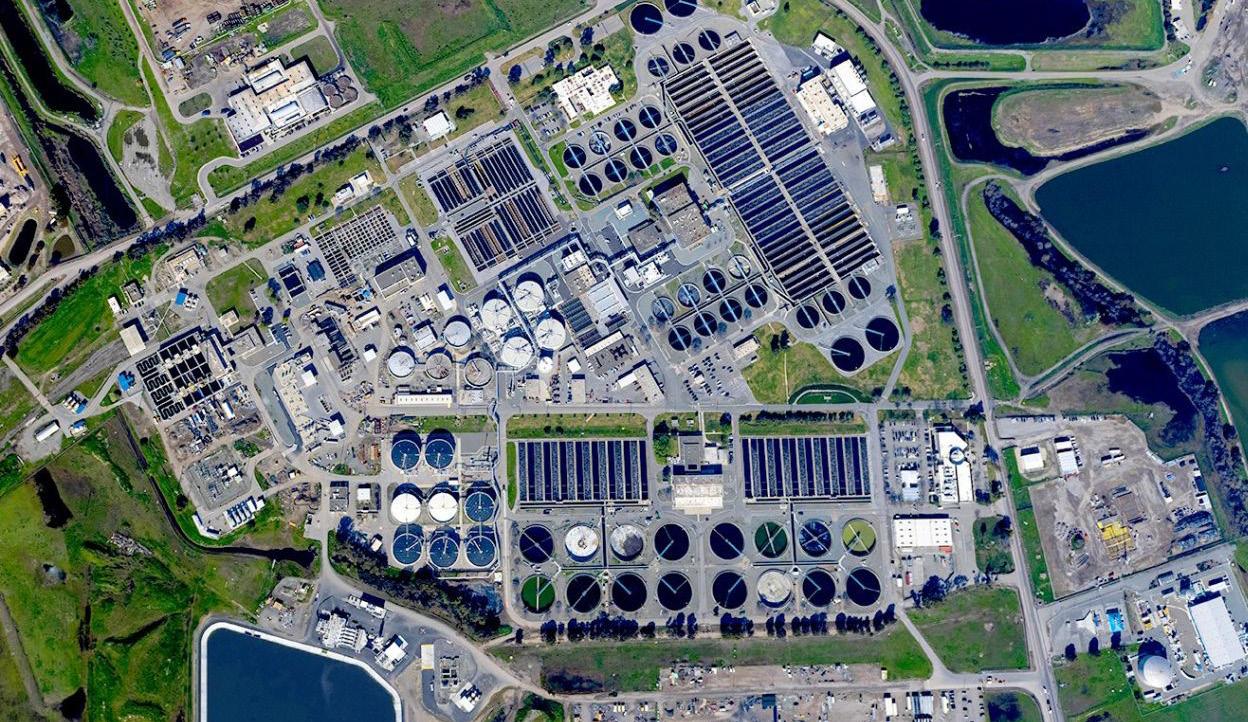
Among the most significant technological advancements underway at the RWF is the modernisation of its biosolids management system. Historically, the facility relied on large drying beds where biosolids were naturally dehydrated using sunlight - a method made possible by the plant’s extensive land area.
That approach is now being replaced by mechanical dewatering technology using centrifuges that dramatically accelerate processing times. “What may have taken a few years to accomplish could now occur in a matter of a day,” says Verma. “In front of us right now is the Additional Digester Facility Upgrade Project, which is one of the final steps in our entire biosolids processing programme. Once completed, our biosolids process projects are effectively done.” While biosolids improvements are nearing completion, the facility is already planning the next phase of capital
investment. “The next major shift will be improvements in our aeration system,” Verma says. “We’re anticipating fairly stringent regulations on the horizon, and meeting those requirements will require both asset rehabilitation and new process technology.”
The first phase of the aeration upgrade alone is valued at over $250 million. This is part of a broader investment plan that allocates roughly $1.6 billion over the next decade for continued modernisation of not just the treatment equipment but also the extensive network of supporting assets, including pipelines, buildings, and underground utilities.
Verma affirms that while infrastructure and technology dominate headlines, the true strength of the facility and its progress lies in its workforce. “It’s all about the people –people are everything,” he says. “Under strong leadership from the RWF’s General Manager, Mariana Chavez-Vazquez, we invest a lot of energy in recruiting and retaining the best talent in the industry.”
“We invest heavily in professional development, whether that’s earning licences, attending training programmes, or participating in industry conferences. We also partner with leading universities to build a pipeline of future talent through internships and collaborative programmes.”
Despite the increasing role of digital technologies and artificial intelligence in infrastructure management, Verma believes the wastewater sector will remain fundamentally human-centric.
“IT’S ALL ABOUT THE PEOPLE – PEOPLE ARE EVERYTHING.UNDER STRONG LEADERSHIP FROM THE RWF’S GENERAL MANAGER, MARIANA CHAVEZVAZQUEZ, WE INVEST A LOT OF ENERGY IN RECRUITING & RETAINING THE BEST TALENT IN THE INDUSTRY.”
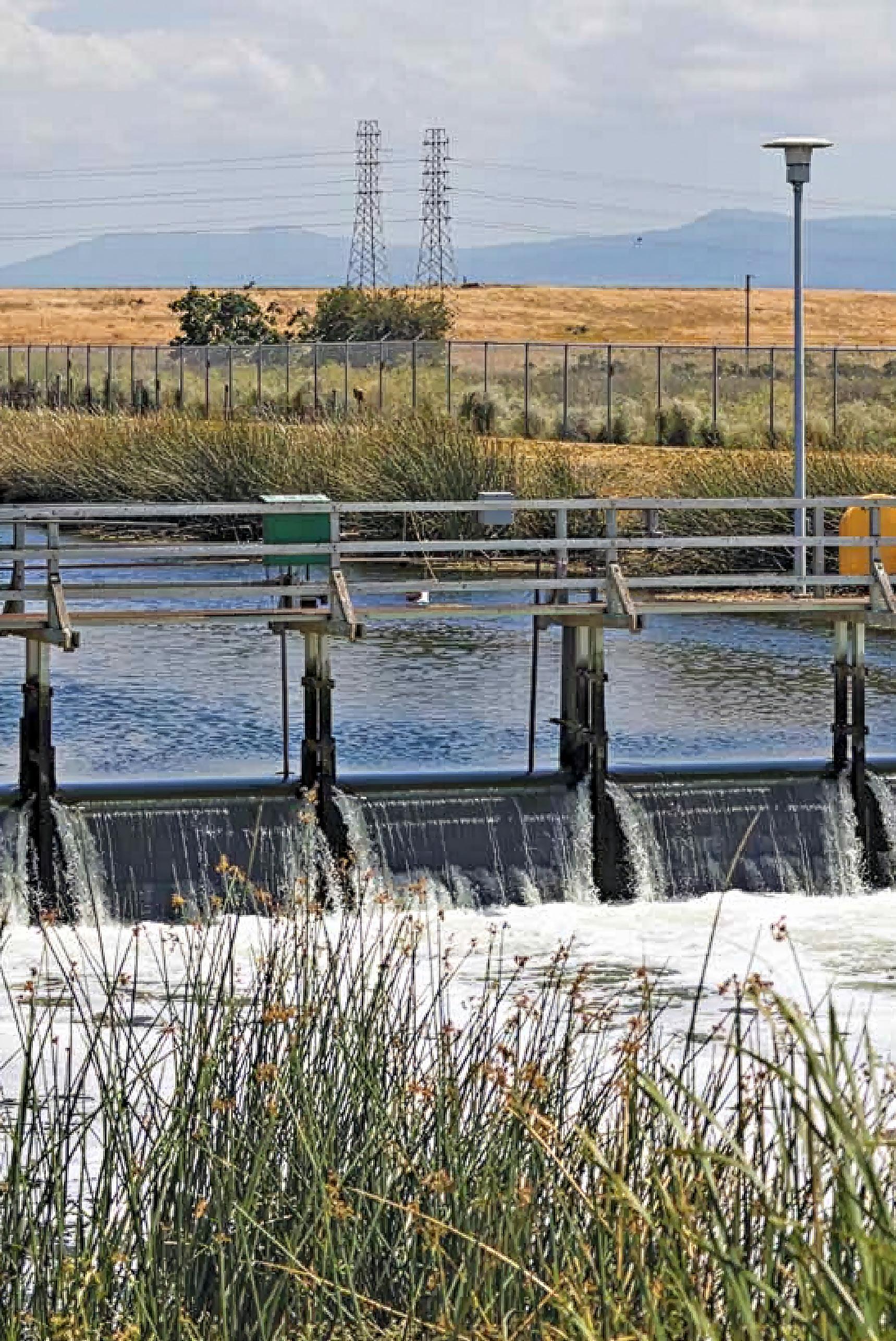
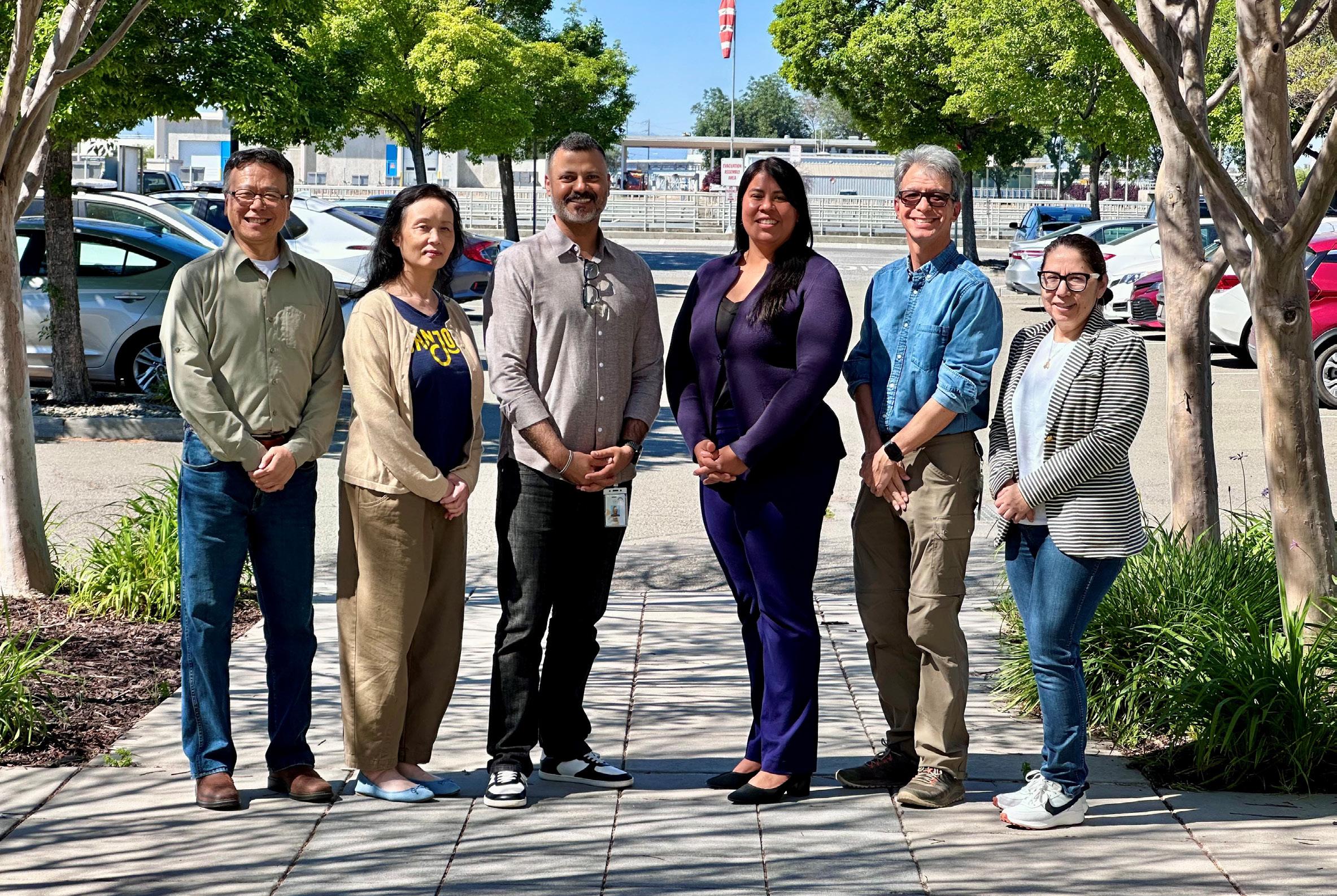
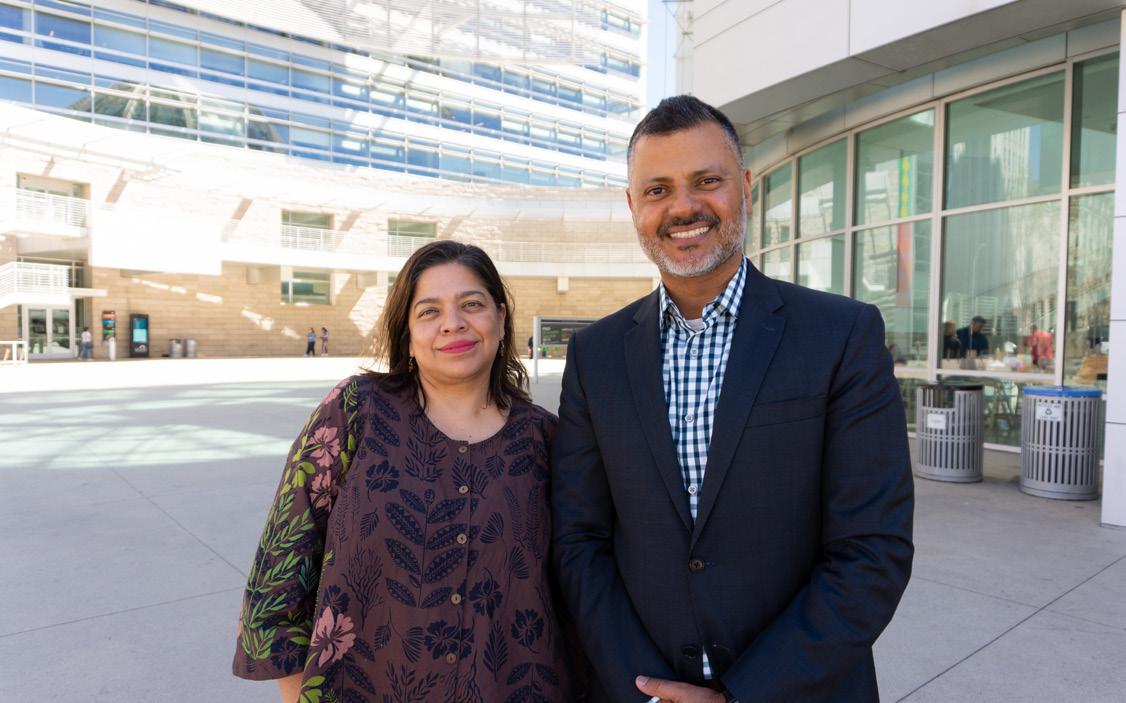
“It’s about relationships and the human element in making decisions on how to operate, maintain, and rebuild facilities. AI and data tools may improve efficiency, but the expertise of engineers, operators, and technicians remains essential to ensuring safe and reliable operations,” he says.
He points out that the facility’s procurement policies encourage participation from contractors and consultants with a local presence, particularly small businesses.
“When you’re talking about investments of this magnitude, it helps stimulate the local economy. We want to ensure
that local businesses have the opportunity to be part of the programme.”
As San José continues to grow, the Regional Wastewater Facility will remain a vital pillar of the city’s infrastructure. Through sustained investment and a strong focus on people, the facility is positioning itself not just as a utility but as a model for the future of urban environmental management.
Summarising the progress of the facility over the last decade, Verma admits that the Program represents both a professional
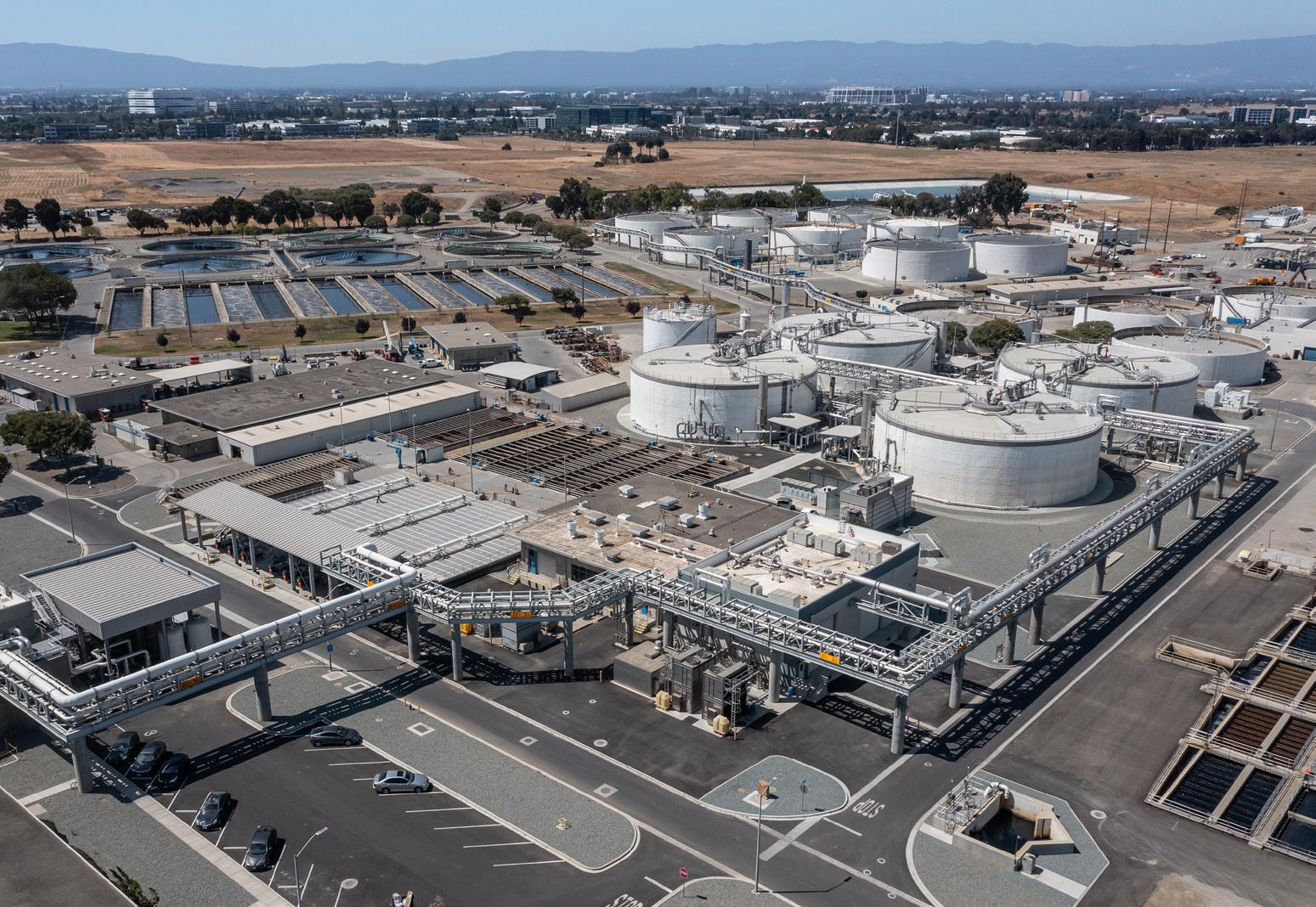
As critical civil infrastructure continues to age and deteriorate, wastewater utilities are reprioritizing modernization to maintain reliable and efficient operations. Rather than relying solely on replacing aged out assets, progressive owners have asset management programs in place to maintain and extend the service life of their tanks and pipeline systems.
Through proactive condition assessments aimed at early identification of degradation and failure modes, owners maintain structural integrity, improve durability, and extend the service life of civil infrastructure. Applying repair strategies early in the lifecycle of critical infrastructure, such as tanks and pipelines, delivers significant financial and environmental benefits.
When compared to installing new civil infrastructure, strategic repair and rehabilitation of existing assets leads to lower total cost of ownership, less community disruption, and more operating time for plants and pipelines –along with a much lower carbon footprint. The foundation of sustainability is maintaining structures that are already built.
Additionally, a collaborative delivery approach to implementing inspections and repairs can further enhance the success. By bringing all stakeholders together up front to work together on assessment, engineering, and implementation, timelines are accelerated and outcomes are improved. Early collaboration among owners, engineers, and contractors helps identify the most effective rehabilitation strategies, manage risk, and optimize costs.
Together, these approaches help ensure wastewater infrastructure remains safe, efficient, and sustainable for the communities served.
Using the best practices of Design-Build Institute of America (DBIA), Water Collaborative Delivery Association (WCDA), and the Center of Excellence for Concrete Preservation and Service Life Extension (P+Ex), STRUCTURAL TECHNOLOGIES helps owners and engineers manage the service life of critical wastewater infrastructure. www.structuraltechnologies.com
The Walsh Group, operating as Walsh Construction and Archer Western Construction, stands among America’s most accomplished builders of water and wastewater infrastructure. Consistently recognized by Engineering News Record as one of the nation’s largest water and desalination treatment plant builders, wastewater treatment plant builders, and water supply builders, The Walsh Group brings unmatched expertise to communities across the United States.
With a legacy spanning more than a century, The Walsh Group has shaped some of the country’s most complex and high impact water projects. Its teams deliver advanced treatment solutions, resilient wastewater systems, and treatment facility upgrades that help their customers secure reliable, sustainable water resources for generations.
A strong example of this expertise is Walsh Construction’s role as a lead contracting partner on the modernization of the San José–Santa Clara Regional Wastewater Facility, one of the largest advanced wastewater treatment plants in the western United States. The project includes replacing aging mesophilic digesters and constructing new resource recovery components designed to enhance biogas output and reduce biosolids processing demands. Through this work, Walsh is helping transform an essential civic facility into a higher efficiency, energy producing asset for a the San Jose communities.
Whether upgrading major treatment plants or advancing critical water systems in fast growing communities, The Walsh Group delivers the scale, technical depth, and collaborative expertise required to meet the nation’s evolving water challenges. As a trusted industry leader, Walsh Construction and Archer Western continue to build the infrastructure that keeps water clean, communities strong, and the future healthy.
www.walshgroup.com


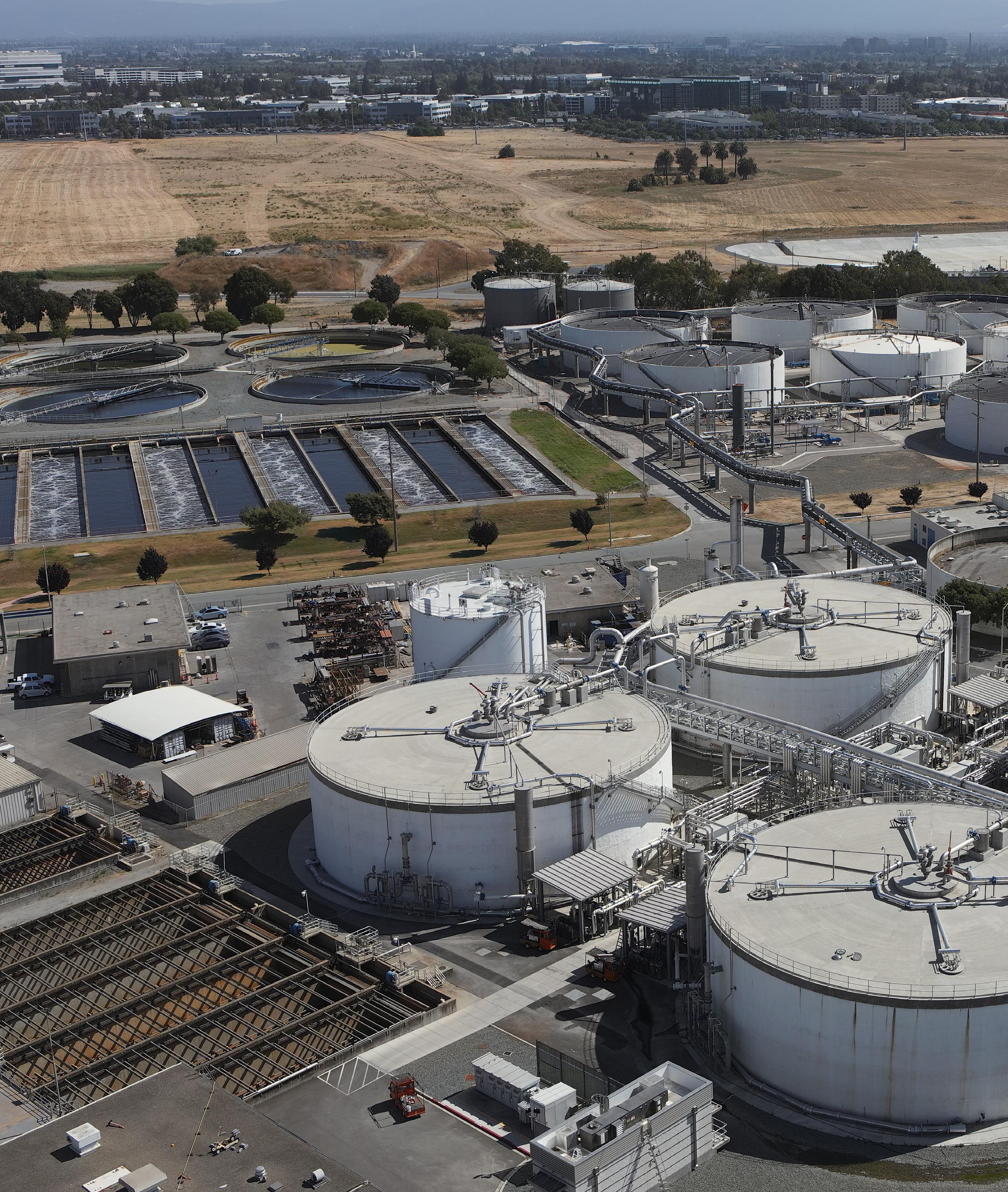
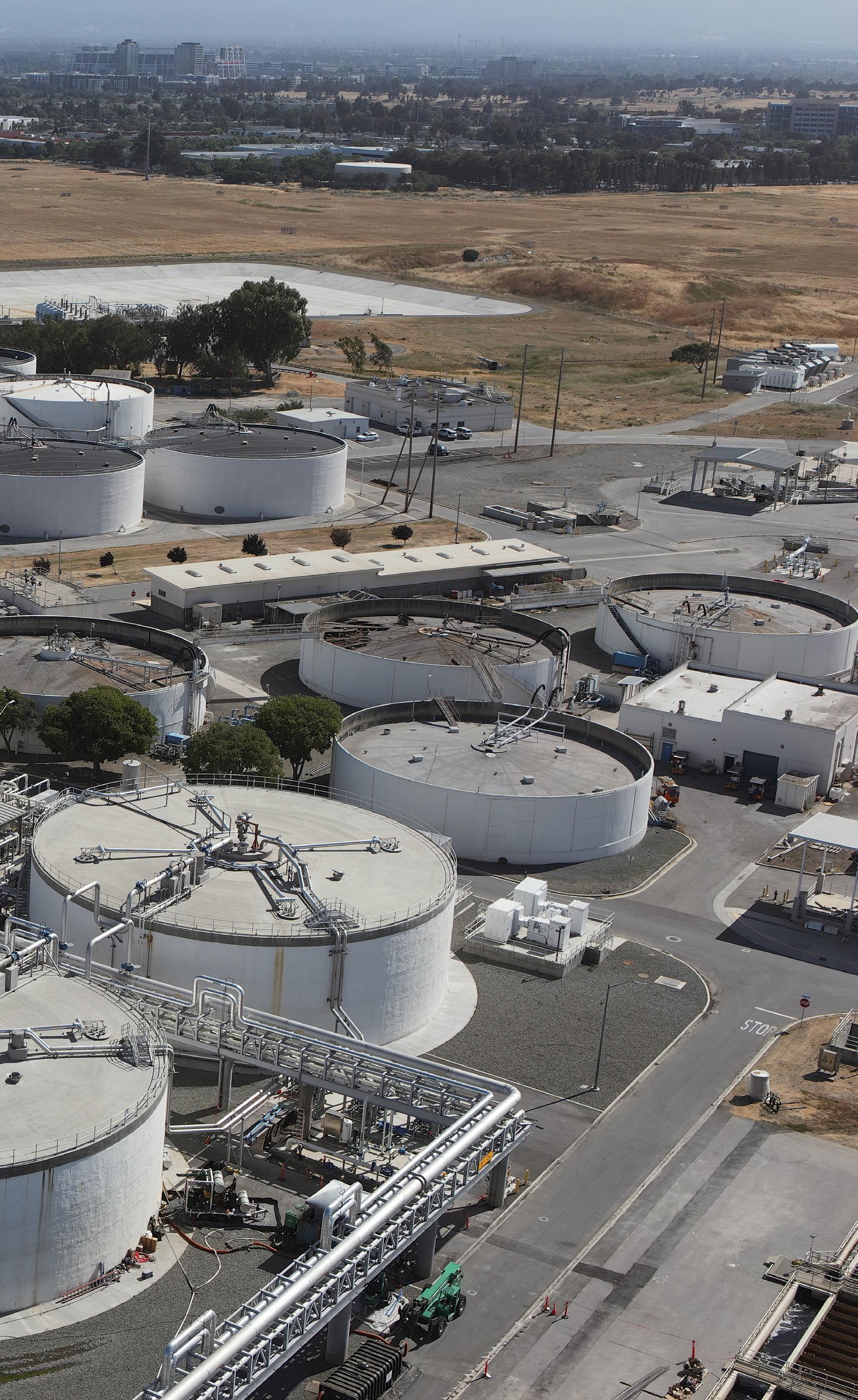
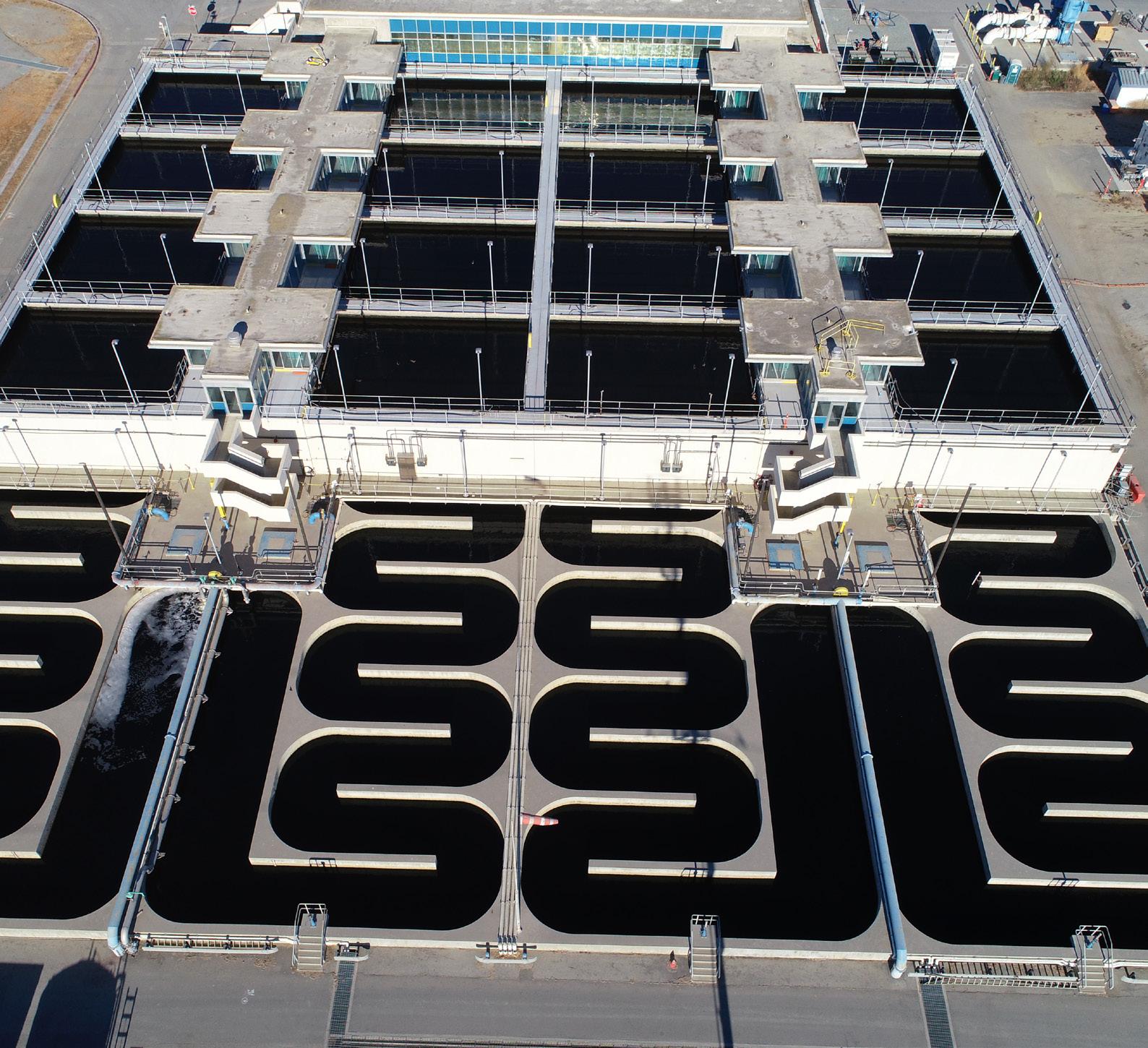
milestone and a personal mission. He joined the facility in 2014 and has watched and steered the transformation as it has unfolded throughout the years. “I’ve never had a boring day in twelve years,” he reflects. “There are certainly challenging days, but those challenges are what keep me coming back for more.”
“We are now in the middle of the Capital Improvement Program that we’ve built from scratch. We’ve hired and have developed the best talent in the industry, and we’ve created our own culture and rules of engagement here. We are really proud of what we have accomplished.”
Beyond the technical achievements, the work carries a deeper sense of purpose, he affirms. “Being personally involved in protecting our natural environment in a densely populated region has been incredibly rewarding. I feel very fortunate in my career to be doing what I’m doing here, being part of a very important industry. And I’m really excited for what’s ahead,” he concludes.
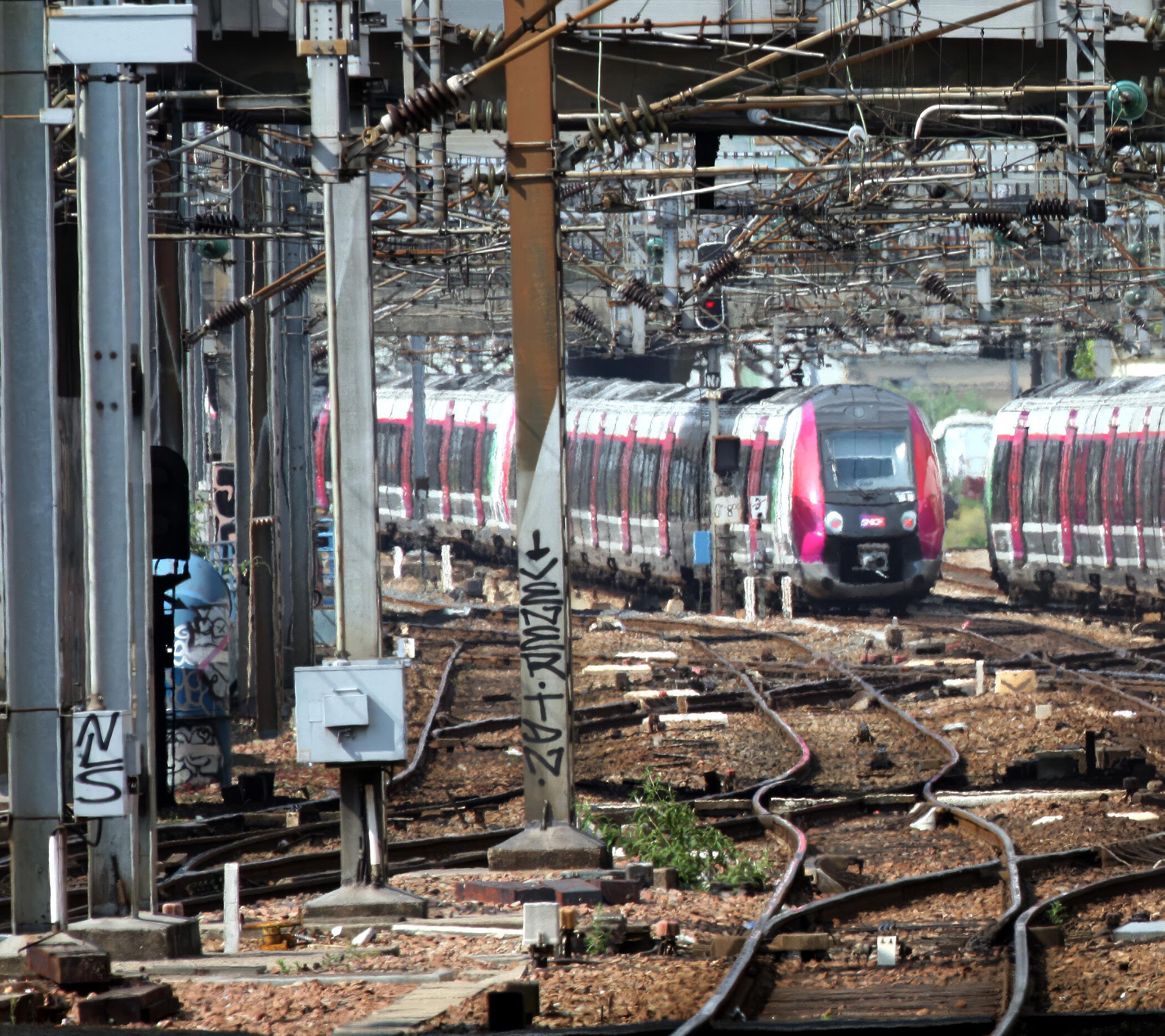
LONG-TERM RAIL ENERGY SECURITY IS BEING DELIVERED THROUGH STRUCTURED SOURCING THANKS TO SNCF ENERGIE.
DECLAN JONES
Electricity is one of the rail industry’s largest operating costs. For SNCF – the French National Railway Company – it is also a strategic lever. Instead of relying solely on external suppliers, the group has chosen to build its own. It is a decision that led to the creation of SNCF Energie, a subsidiary with a distinct role in France’s energy landscape.
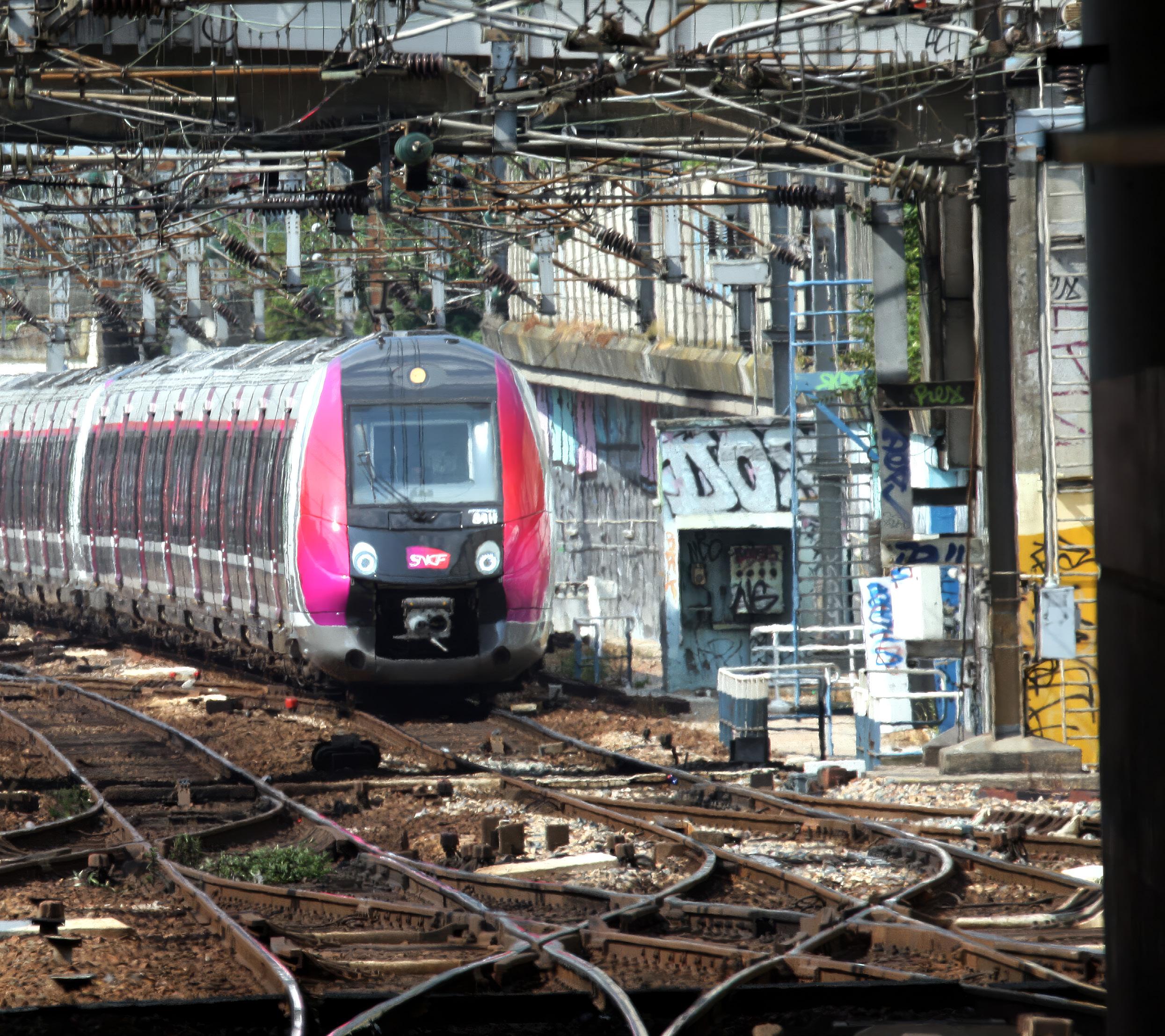
Richard Fécamp, Managing Director, SNCF Energie.
SNCF Energie operates as an electricity supplier, but not in the traditional sense. It sits at the intersection of industrial demand, wholesale markets, and renewable generation. The company purchases around 6 terawatt-hours of electricity each year to power trains across France, including TGV, TER, Transilien, Intercités, and Eurostar services. Managing Director Richard Fécamp describes the SNCF Energie model in more detail:
“It represents a fairly unique structure in France, where an industrial player like SNCF has decided to establish its own electricity supplier. The aim is control. Control over sourcing, pricing, and increasingly, sustainability.”
SNCF Energie buys electricity through a mix of forward and spot markets, while also securing supply directly from renewable producers through corporate power purchase agreements. These CPPAs have become central to the company’s strategy, both for cost management and decarbonisation.
Combining photovoltaic electricity production with energy storage systems, REDEN specialises in the development, construction and long‑term operation of large ‑scale assets.
Founded in 2008 and headquartered in southwest France, the Group primarily operates across Europe, with a selective presence in the Americas.
REDEN develops a wide range of solutions, including ground-mounted solar plants, agrivoltaic projects, rooftops, car park canopies, and stand-alone or hybrid storage systems.
Supported by long term investors – Macquarie Asset Management (MAM), British Columbia Investment Management Corporation (BCI) and MEAG MUNICH ERGO AssetManagement GmbH –, REDEN builds low-carbon energy infrastructure designed to deliver lasting environmental and territorial value.
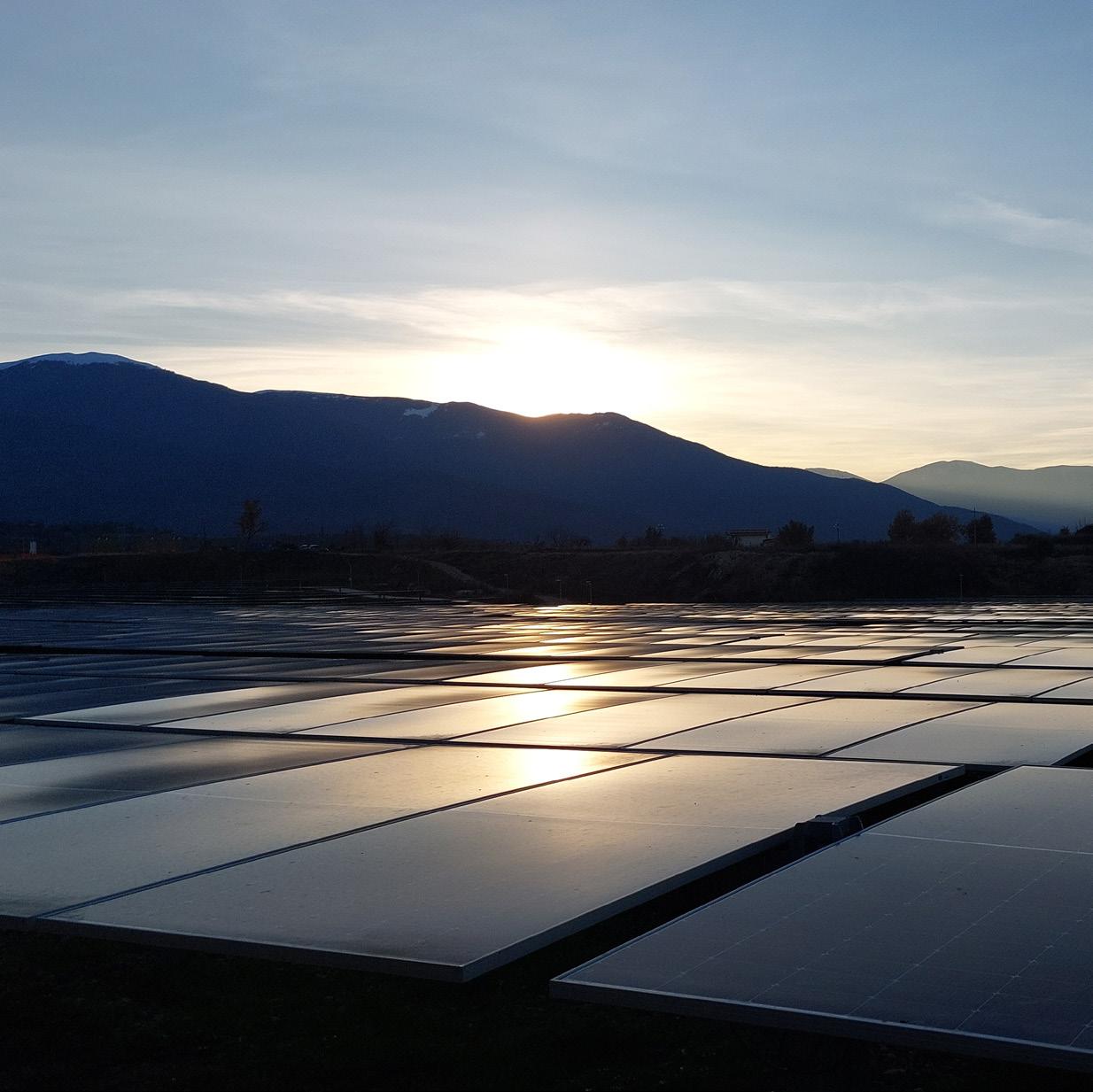
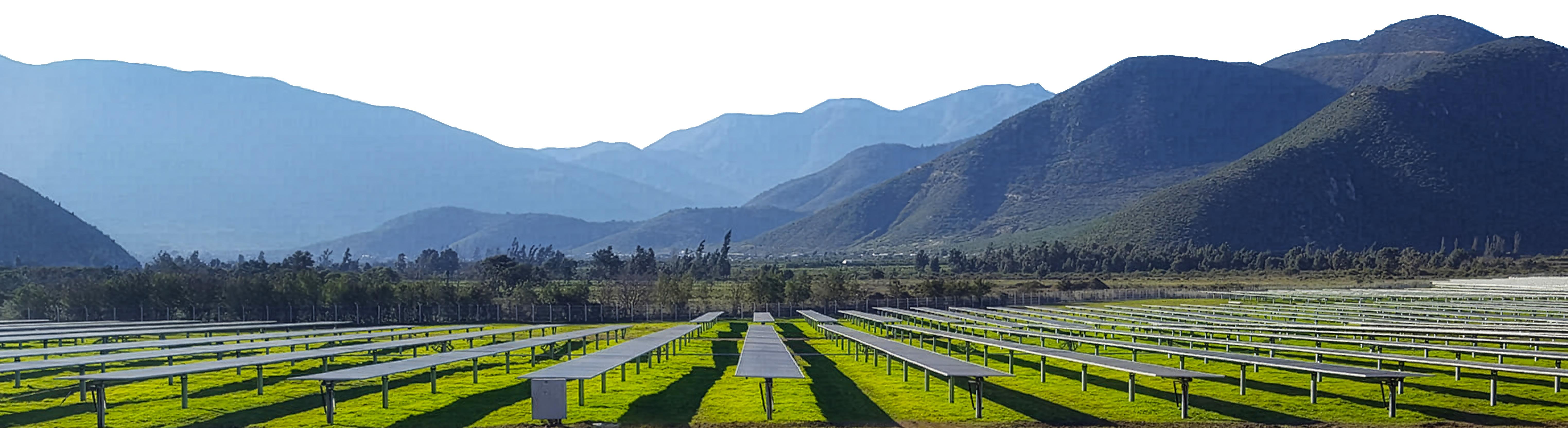
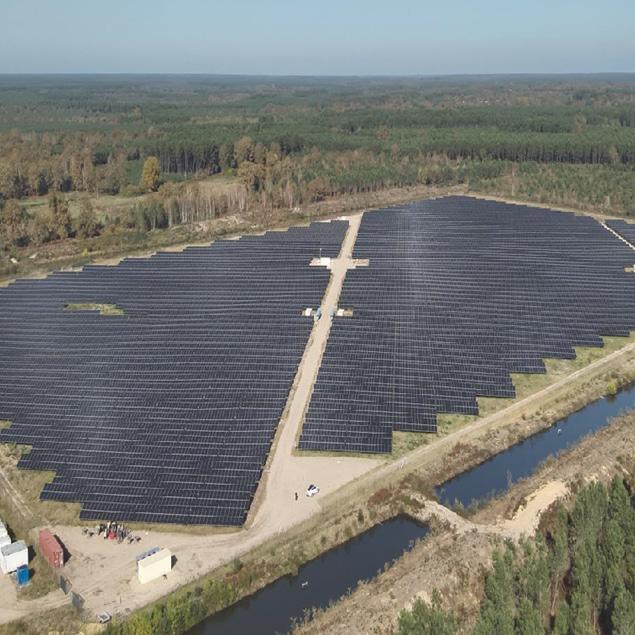
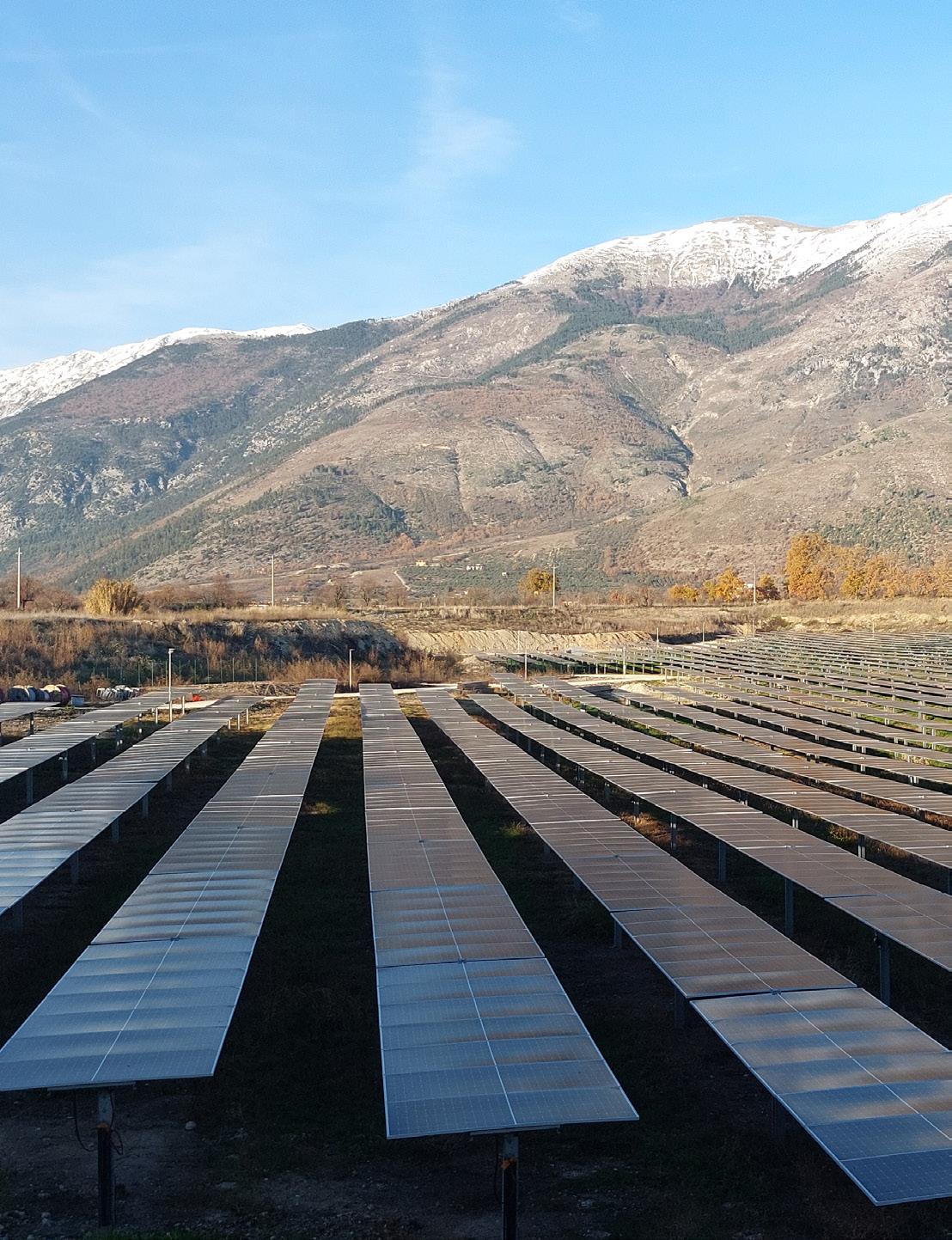
Europe’s energy system is undergoing a profound transformation driven by decarbonisation objectives, growing demand for electricity and the need for greater energy sovereignty. Solar power and energy storage are increasingly central to this shift, providing scalable, low carbon solutions for industrial and public-sector consumers alike.
In this evolving landscape, independent power producer (IPP) REDEN aims to play a key role by delivering long term renewable energy projects grounded in industrial expertise, financial robustness and local integration.
REDEN operates with a fully integrated IPP model. The company develops, finances, builds, operates and sells the electricity generated by its assets, maintaining full control at every stage.
This approach delivers clear advantages. Cost structures are tightly managed, project timelines are more predictable, and asset performance is aligned with long-term contractual commitments, particularly in the context of Power Purchase Agreements (PPAs).
Active across key European markets including France, Italy, Spain and Germany, REDEN relies on local teams with consistent technical, operational and environmental standards. This enables the organisation to adapt to national regulatory frameworks, while maintaining a unified approach to quality, risk management and delivery.
Critically, this model is designed for long-term ownership. Assets are developed not for short-term exit, but for decades of operation, reinforcing alignment with land partners, investors and further local stakeholders alike.
Power Purchase Agreements (PPAs) are central to REDEN’s commercial strategy. The company is experienced with both public auction frameworks and private corporate PPAs, making for strong and early positioning in long-term contracts with industrials, commercial endconsumers, and aggregators.
These agreements provide a stable foundation for investment. They enable large-scale renewable projects to be financed while offering offtakers longterm price visibility and guaranteed access to green electricity.
REDEN’s integrated model is key to its ability to deliver these contracts. By controlling development and operations, the company can commit to long-term supply with a high degree of confidence. Its track record includes partnerships with major industrial players such as SNCF and Chanel. These relationships demonstrate the company’s ability to structure contracts that meet financial, technical and sustainability requirements at scale.
Beyond commercial benefits, PPAs are increasingly strategic. They contribute to energy sovereignty by reducing exposure to volatile energy markets such as fuels and gas, while supporting corporate decarbonisation objectives with traceable, long-term renewable supply.
SNCF: POWERING FRANCE’S RAIL NETWORK WITH SOLAR
The partnership between REDEN and SNCF illustrates the company’s ability to deliver complex, lasting energy solutions.
SNCF, France’s largest electricity consumer, has a clearly defined roadmap to increase the share of renewable energy powering its rail operations. REDEN has been working with the organisation over several years, developing projects aligned with this long-term strategy.
A key milestone in the REDEN/SNCF partnership has been the signing of multiple PPAs, including a 25-year agreement linked to a 16 MW solar plant in southwest France. The facility generates approximately 20 GWh of electricity annually and is fully dedicated to SNCF’s energy needs.
The project demonstrates several critical capabilities. It is located on repurposed land previously used for timber storage and rendered unsuitable for agriculture or construction, avoiding the use of valuable land resources. Its proximity to a military airbase required the integration
of anti-glare photovoltaic technology, highlighting REDEN’s ability to manage complex technical constraints. In addition, the development incorporates extensive biodiversity measures, with more than 60 hectares managed to support local ecosystems and protect endangered species.
For SNCF, the agreement provides long-term price stability and supports its target of sourcing up to 50% of traction electricity from renewables by 2028. For REDEN, it demonstrates an ability to deliver large-scale, technically complex projects under long-term contractual frameworks with high-credit counterparties.
INDUSTRIAL SOLUTIONS ACROSS SECTORS
Beyond rail transport, REDEN is delivering energy solutions across a wide range of industries. Partnership with global luxury brand Chanel, for instance, highlights the company’s ability to meet the needs of energyintensive organisations seeking to decarbonise operations. These projects are underpinned by familiar principles: long-term contracts, reliable delivery, and alignment with corporate sustainability strategies.
At the same time, REDEN continues to innovate in project design. In Italy, the company is developing a 55 MW agrivoltaic project integrating solar generation with olive cultivation. This dual-use approach maximises land productivity while maintaining agricultural output, demonstrating how renewable energy can be integrated into existing economic ecosystems.
Responsible land use is central to REDEN’s development strategy. The company prioritises degraded or underutilised land, ensuring that renewable projects do not compete with high-value agricultural or ecological areas.
Its dedicated approach to biodiversity includes habitat management, species protection and long-term environmental monitoring. Projects are designed to be reversible, preserving future land-use flexibility.
Coactivity with agriculture is another key focus. Agrivoltaic projects enable continued farming alongside energy production, supporting local economies and strengthening stakeholder acceptance. This approach reflects a broader commitment to delivering renewable infrastructure that is not only efficient, but also environmentally and socially sustainable.
SCALING STORAGE
Looking ahead, energy storage is set to become a major component of REDEN’s operations, with a target of representing around one-third of activity within the next five years.
Storage enables greater flexibility in energy delivery, allowing power to be stored during periods of high generation and released when demand is highest. This capability is increasingly essential for grid stability and for meeting the requirements of large industrial consumers seeking continuous power supply.
In parallel, REDEN is investing in energy management capabilities, reflecting the growing importance of actively managing electricity flows rather than solely generating power.
Strong financial backing and a fully integrated model have also allowed REDEN to position itself as a consolidator in a maturing market. The company offers smaller developers a platform to scale their projects and bring them through to full development and long-term operation.
EUROPE’S ENERGY PARTNER
Through integrated delivery, industrial-scale execution and responsible development, REDEN supports some of the most demanding energy users in Europe.
With continued investment in photovoltaics, storage and energy management, and a growing portfolio of long-term partnerships, the company contributes to building a more secure, resilient, and low-carbon energy system.
Email: communication@reden.solar LinkedIn: redensolar www.reden.solar/en
Electricity procurement is often treated as a commodity function, but SNCF Energie takes a different view. Pricing matters, but so does risk. Market volatility, regulatory shifts, and the growing influence of renewable generation all play a role in shaping long-term costs.
“We ensure full transparency regarding our selling costs,” says Richard. “We place significant emphasis on explaining market dynamics and the impacts of regulatory changes. Electricity is not just another commodity.”
An in-built emphasis on transparency underpins the company’s relationships with internal clients. Rather than simply offering a price, SNCF Energie provides visibility. As a result, clients gain a clearer understanding of how costs are constructed and how they might evolve over time.
By anticipating market movements and securing positions early, SNCF Energie can offer forward visibility on pricing. That predictability is valuable in an industry where margins are tight, and energy costs are material.
At the same time, SNCF Energie integrates renewable electricity into its supply mix. The goal is not only to reduce emissions, but also to simplify how clients meet sustainability targets. As rail operators face increasing scrutiny on environmental performance, this integration becomes more important.
Of course, partnerships play a key role here. The company has worked with renewable developers, including REDEN, to structure long-term agreements that bring new
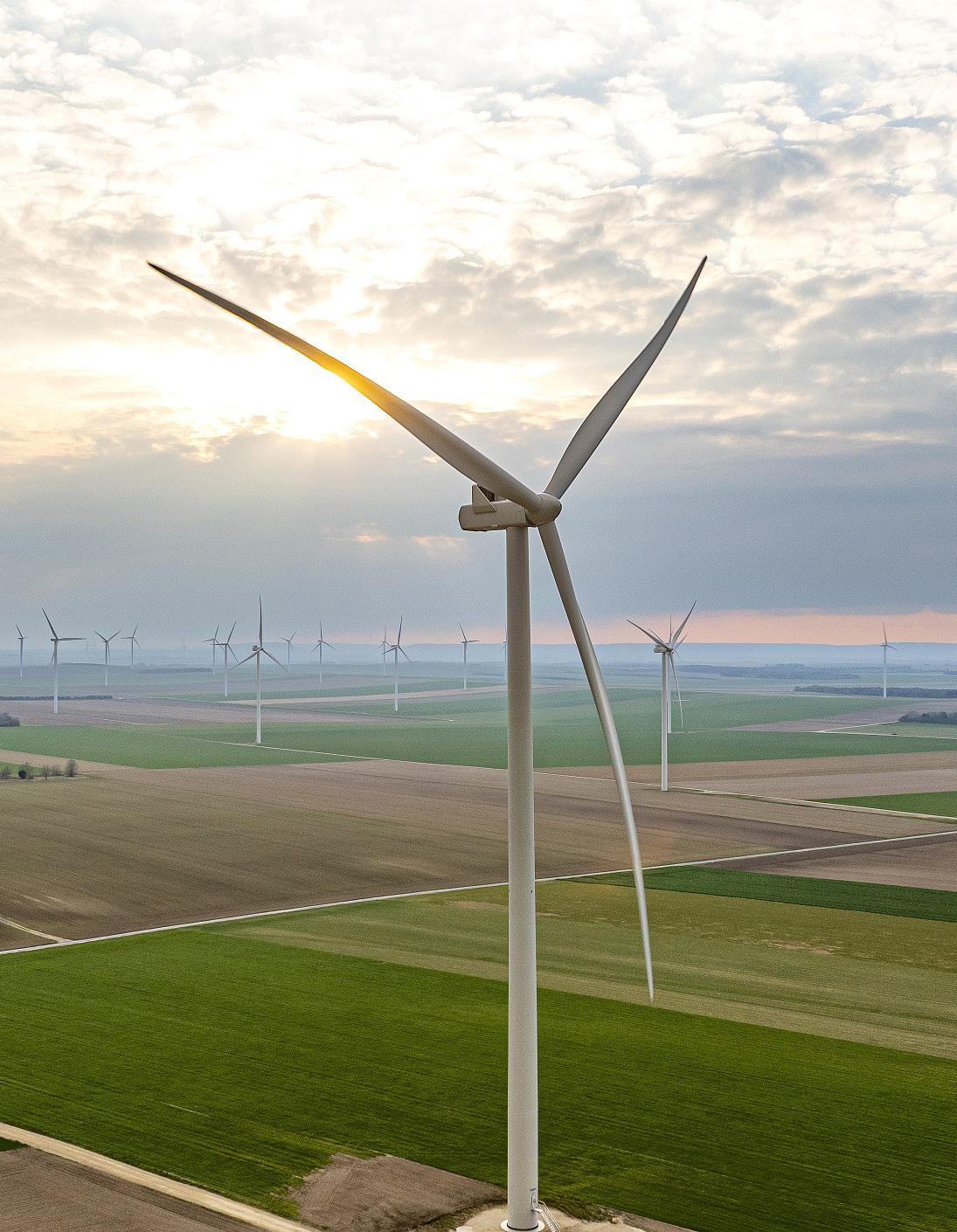
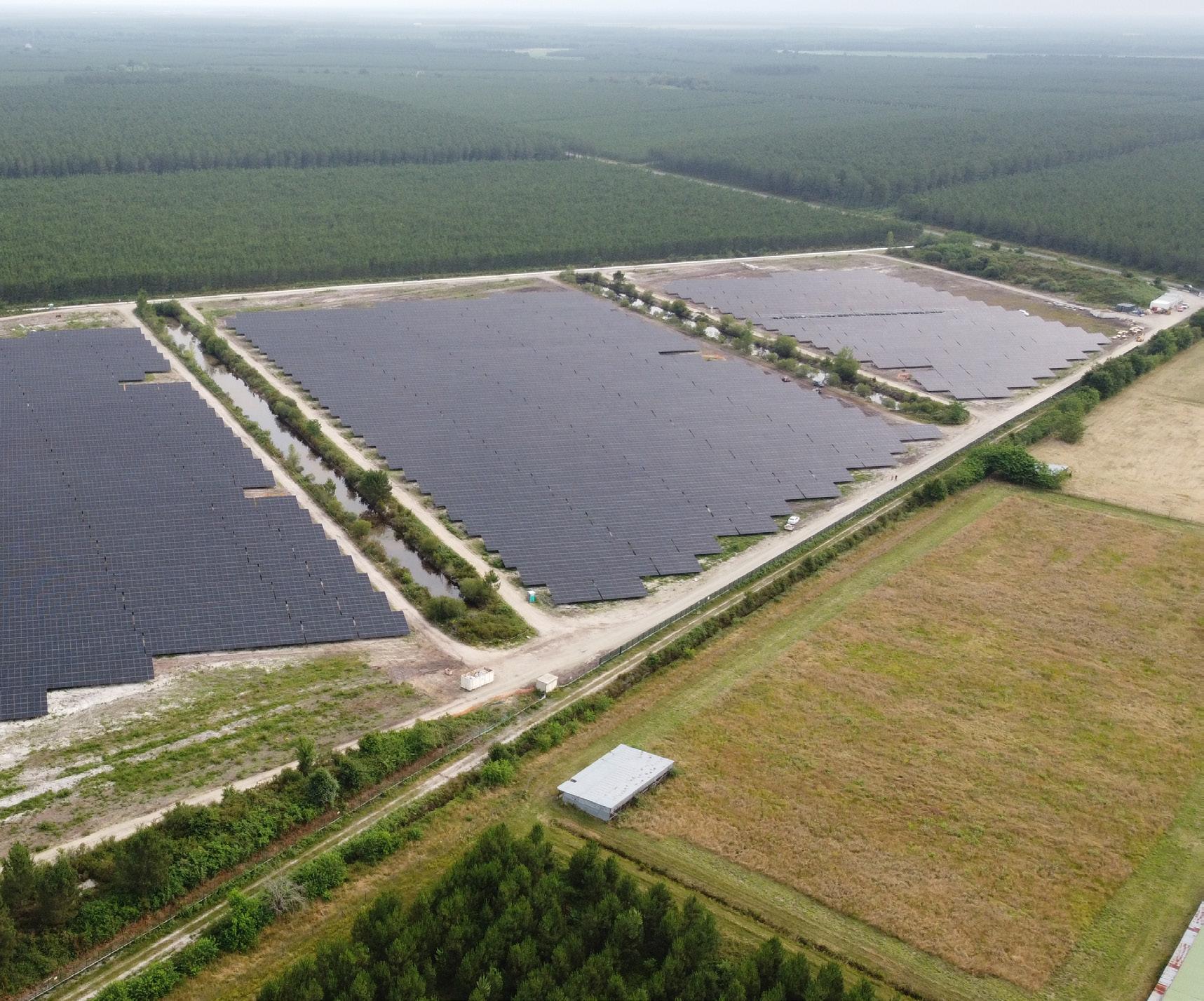
generation capacity into the system. These collaborations are not transactional but involve close co-operation, extended timelines, and shared success
Since 2018, SNCF Energie has led an extensive CPPA programme. By early 2026, the company had signed 26 contracts, representing 1,120 gigawatt-hours of future renewable production expected to come online by 2028. Each agreement requires detailed structuring, from pricing mechanisms to delivery commitments.
“A negotiation of this type of contract is inherently complex,” Richard explains. “It has been an extremely demanding, but rewarding, period for the business.”
SNCF Energie’s ongoing success is supported by the structural nature of the business. As a relatively small
organisation, with around 30 employees and only two hierarchical levels, the organisation is a cohesive unit with streamlined decisionmaking and close-knit teams.
“Stability has proven to be a real strength for us,” Richard states, “particularly in areas like contract negotiation. Over the past eight years, we are proud to have built a team with deep expertise and strong internal relationships. That continuity has enabled the group to handle complex deals from start to finish. We are very fortunate to rely on such a stable team.”
Internally, SNCF Energie places strong emphasis on alignment and communication. Weekly meetings provide a full overview of activities, while daily operational briefings ensure readiness before markets open. Additional team meetings and executive sessions maintain coordination across functions.
Each of these routines is deliberate. They create consistency, reinforce shared understanding, and support faster decision-making.
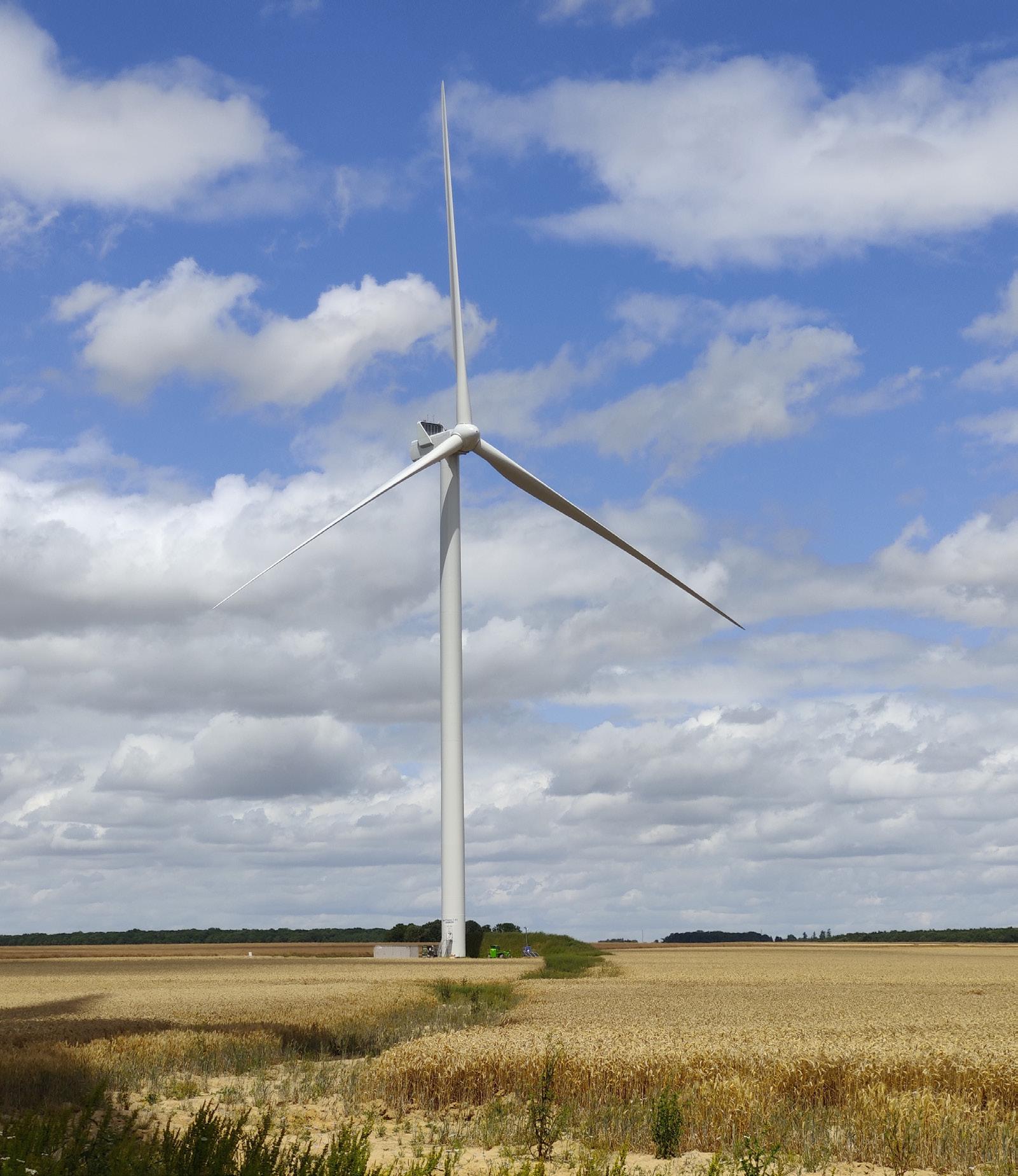
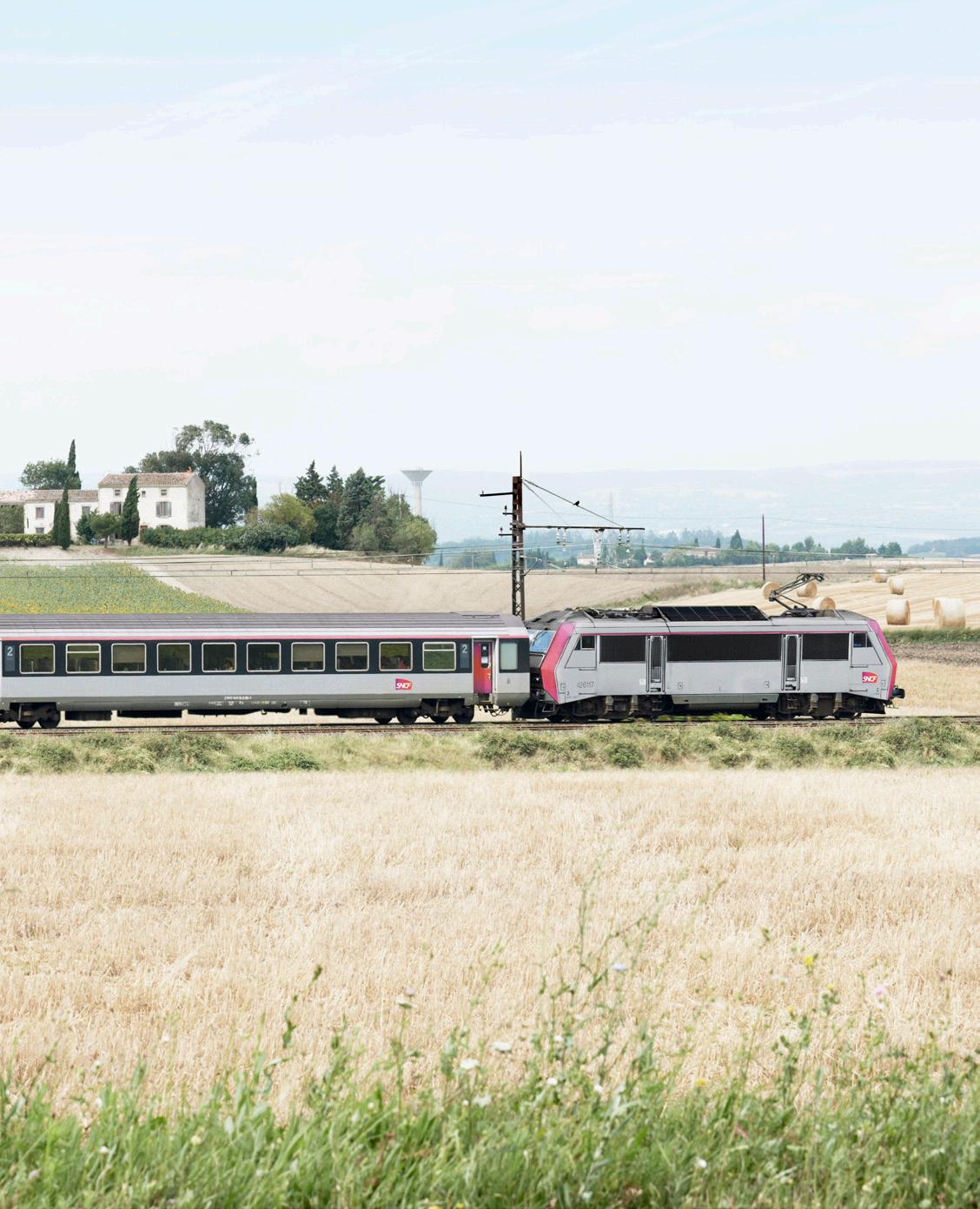
Culture is another focus. Despite its technical domain, SNCF Energie invests heavily in people. Engagement and worklife balance are tracked through weekly HR metrics. Elsewhere, employees can recognise each other through a digital platform, reinforcing a culture of appreciation.
“We celebrate successes openly and address challenges directly,” Richard reveals. “Taking time to build trust-based relationships is an investment in our future.”
Training is part of that investment. Every employee has access to annual development opportunities, including personal development programmes. The company also promotes autonomy, supported by flexible working arrangements, with up to three days of remote work per week. This combination of structure and flexibility helps attract and retain talent in a competitive market. Energy trading, procurement, and analytics require specialised skills. Creating an environment where those skills can develop is essential.
Looking ahead, SNCF Energie is exploring new areas that could reshape its operations. Battery storage is one of them. As renewable generation increases, storage solutions are becoming more relevant in balancing supply and demand.
Data and analytics are another priority. The company is expanding its use of machine learning to improve consumption forecasting and procurement decisions. Better forecasts enable more precise hedging, reducing risk and improving cost control.
These developments reflect broader changes in the energy system. For SNCF Energie, adapting to these shifts is simply part of the job.
“The energy transition is reshaping the way prices are formed,” Richard comments. “We have to continuously adapt to new demands from regulators and market developments.
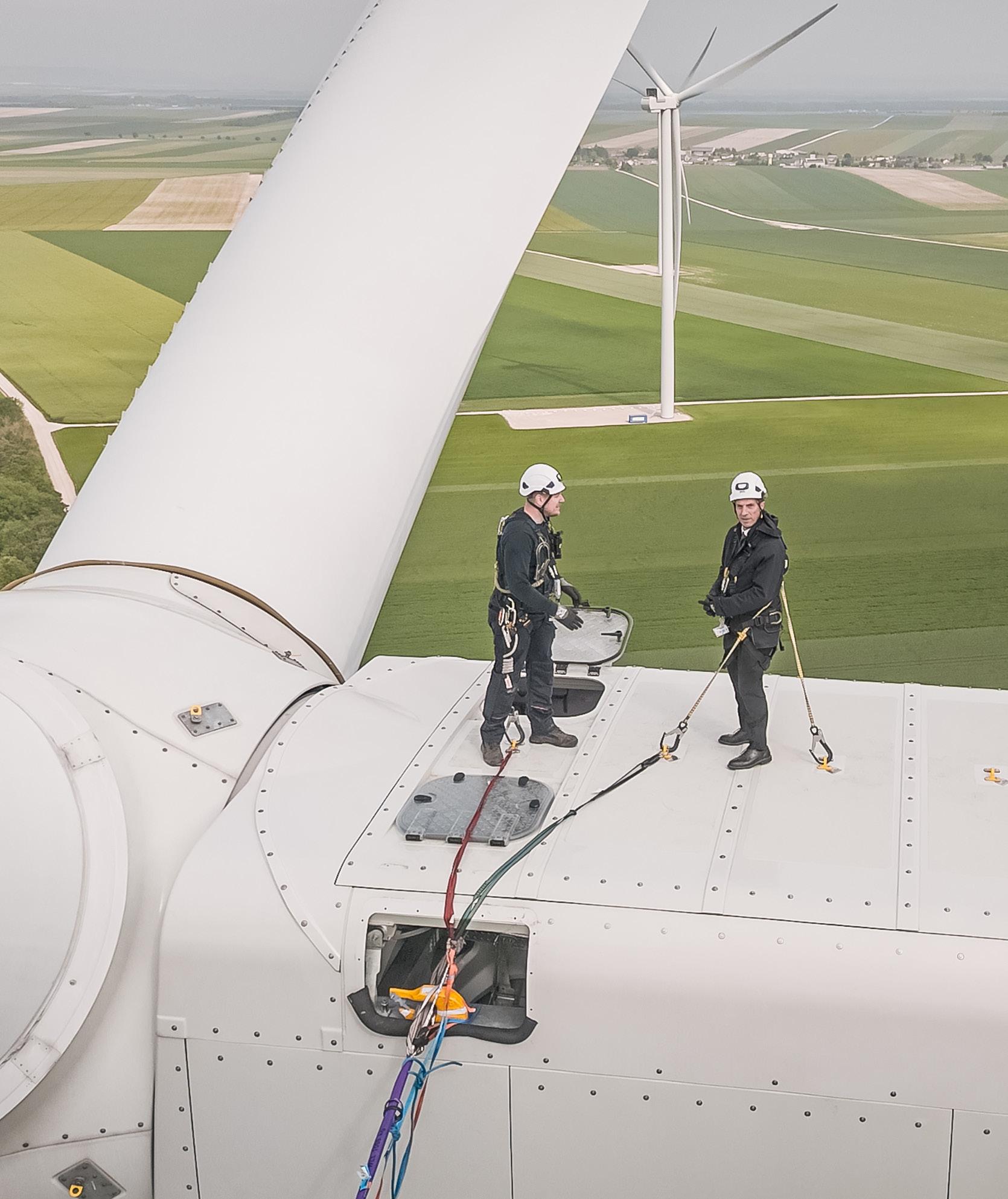
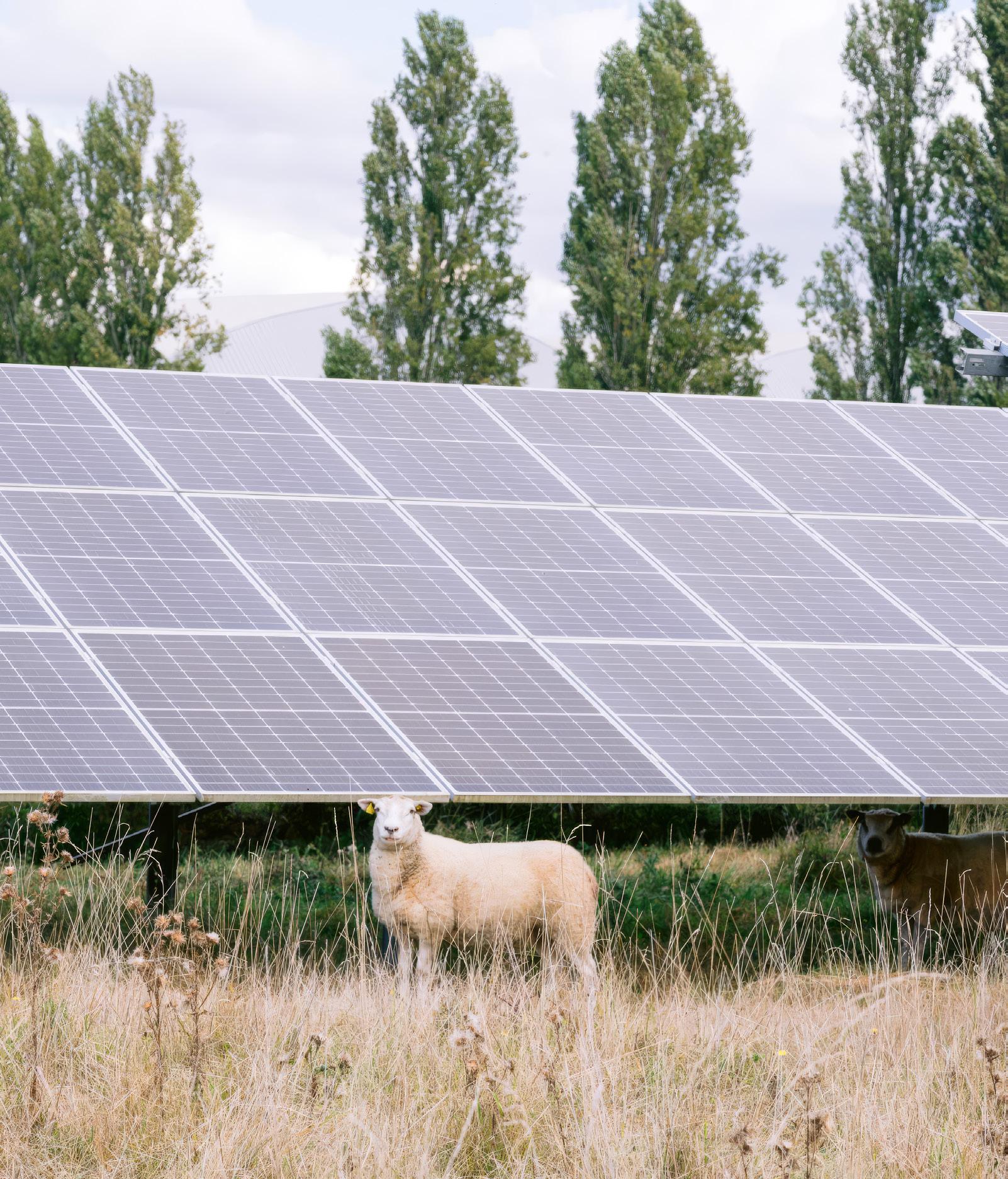
“That adaptability has become a defining characteristic for us. We operate in a space where industrial demand meets financial markets and environmental objectives. Balancing those elements requires a clear strategy and disciplined execution.”
SNCF Energie’s model offers an alternative approach to energy procurement. By bringing supply in-house, the group gains greater control over cost, risk, and sustainability. By building partnerships with renewable producers, it supports the transition to cleaner energy.
By focusing on transparency, it strengthens trust with its clients.
“Rail is already one of the most energy-efficient modes of transport,” Richard declares. “Ensuring that the electricity behind it is managed effectively adds another layer of value.
“For us at SNCF Energie, the task is ongoing and the fundamentals remain consistent: clarity, control, and long-term thinking,” Richard concludes. “We advocate balancing risks rather than simply seeking the lowest price. That is how we create sustainable value over time.”
Bühler Group has maintained a presence in South Africa since 1972, when Bühler MIAG South Africa was registered in Johannesburg. At the beginning, the company’s main activity was customer service, selling spares and wear parts, as well as fluting and welding in the workshop. Soon after, the product portfolio expanded as the business grew and greater demands from customers and markets needed to be satisfied.
Today, the company in Johannesburg employs over 200 people and functions as both a technical and a commercial hub, offering turnkey solutions in grain milling, animal feed production, pasta, chocolate, and pet food, as well as optical sorting and die-casting applications.
Its wide portfolio includes industrial processing technologies, engineering, manufacturing, and project execution services to the food, feed, and materials sectors across a broad geographic footprint.
Bühler’s local capabilities extend beyond project delivery to include manufacturing, logistics, and after-sales support, reinforced by service stations in Johannesburg, Cape Town, Lusaka, and Maputo that provide spare parts, roll refluting, and die refurbishment.
The Johannesburg office is the regional headquarters for the Southern Africa sub-region,
covering Angola, Botswana, Lesotho, Madagascar, Mauritius, Malawi, Mozambique, Namibia, La Réunion, Solomon Islands, Seychelles, Swaziland, South Africa, Zambia and Zimbabwe.
Bühler Johannesburg is the central contact point for all enquiries, from grain to consumer goods processing and advanced material processing solutions.
In line with its strategic plans to expand the business in the region, Bühler South Africa continued to strengthen its organisations in Southern Africa last year, as stated in a recent press release. The company closed 2025 on a strong and forward-looking note despite ongoing global volatility, shifting consumer behaviour, and persistent supply chain pressures.
The region has continued to demonstrate growth, resilience, and innovation across both the food and mining sectors,
supported by sustained investment in local manufacturing, skills development, and sustainability initiatives.
Reflecting on the year, Marco Sutter, Managing Director of Bühler Southern Africa, says the regional market has shown remarkable agility in the face of changing conditions. “The past few years have taught us that the ability to adapt quickly is essential. We are still developing long-term strategies, but the pace at which we execute them needs to respond to the realities of the market. Fortunately, Southern Africa remains a growing and dynamic region with both challenges and significant opportunities.”
Climate change, rising input costs, and shifting dietary habits continue to reshape food production across the continent. A notable trend has been the gradual shift from maize to wheat-based foods as consumers respond to fluctuations in maize quality and pricing. Rising interest in pasta across Africa, along with increased localisation of pasta production, has created new avenues for investment.
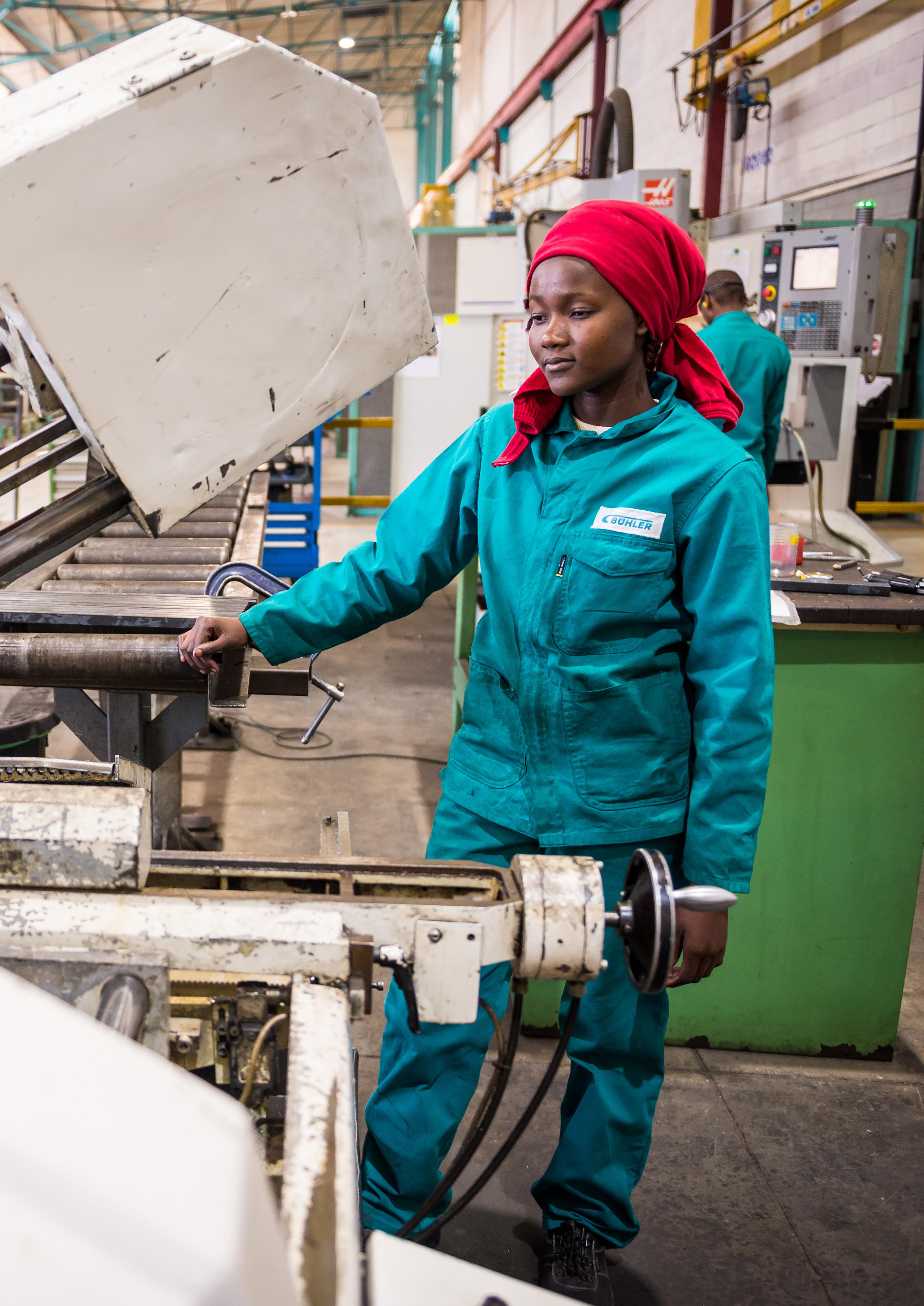

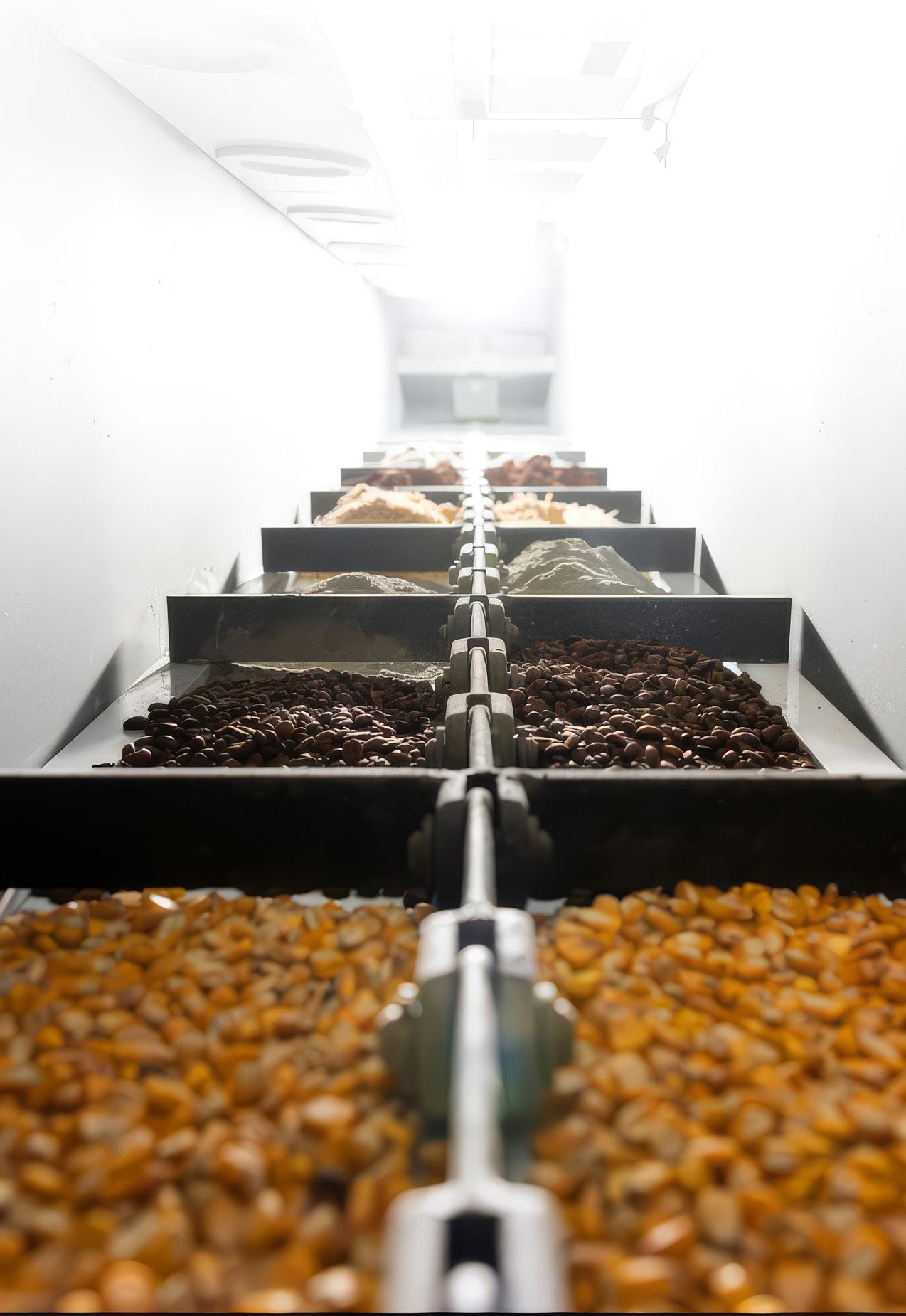
“We have seen a strong wave of demand for locally produced pasta. Many countries want to move away from imports and establish their own processing capabilities,” says Sutter. “West Africa is experiencing similar momentum in cacao, where countries are increasingly investing in roasting, grinding, and chocolate production instead of exporting raw beans.”
As food security risks grow due to extreme weather patterns, Bühler’s advanced sorting and detection technologies have become even more crucial. Higher aflatoxin and mycotoxin risks demand better traceability, more sophisticated cleaning processes, and integrated quality control across the value chain.
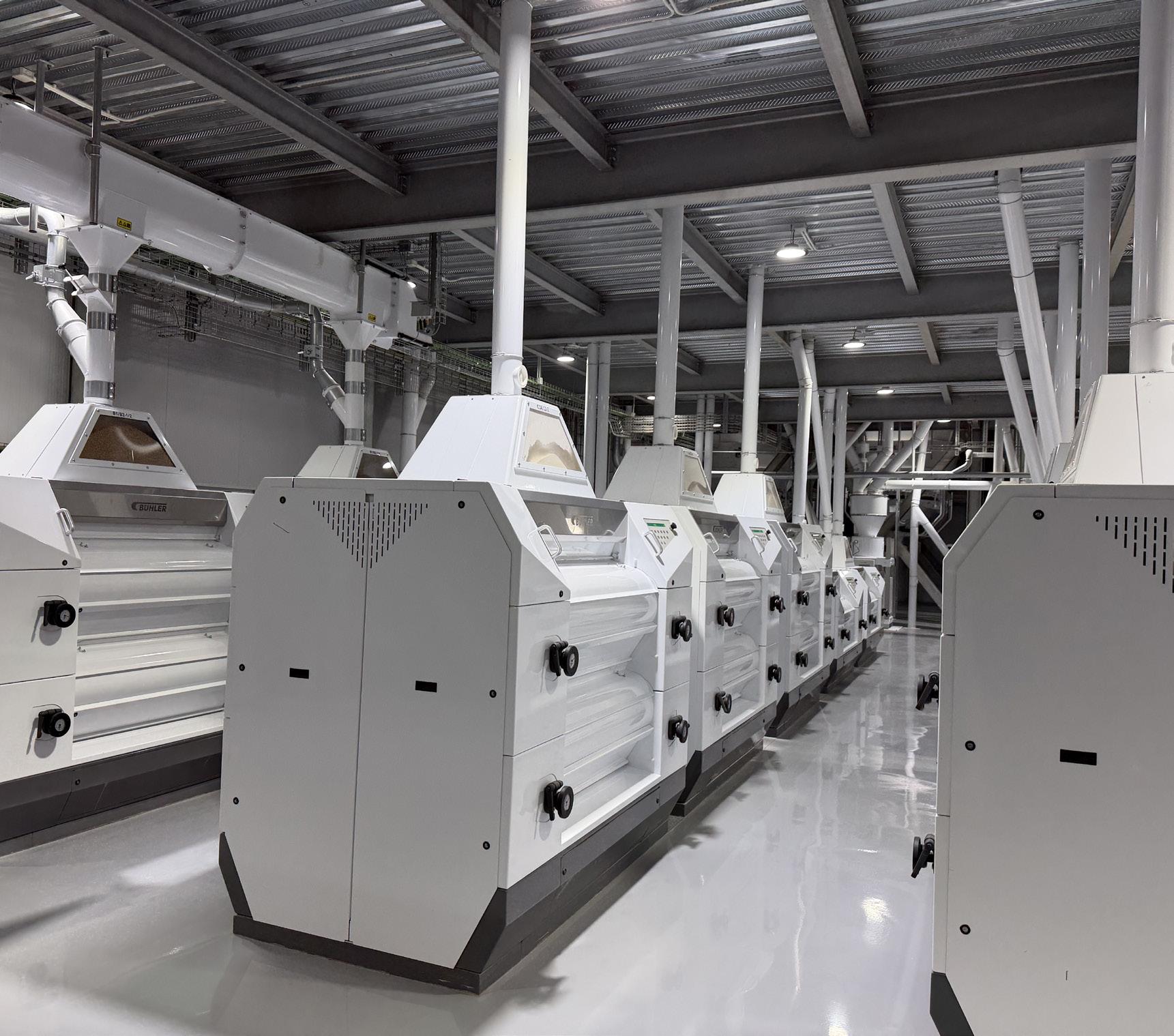
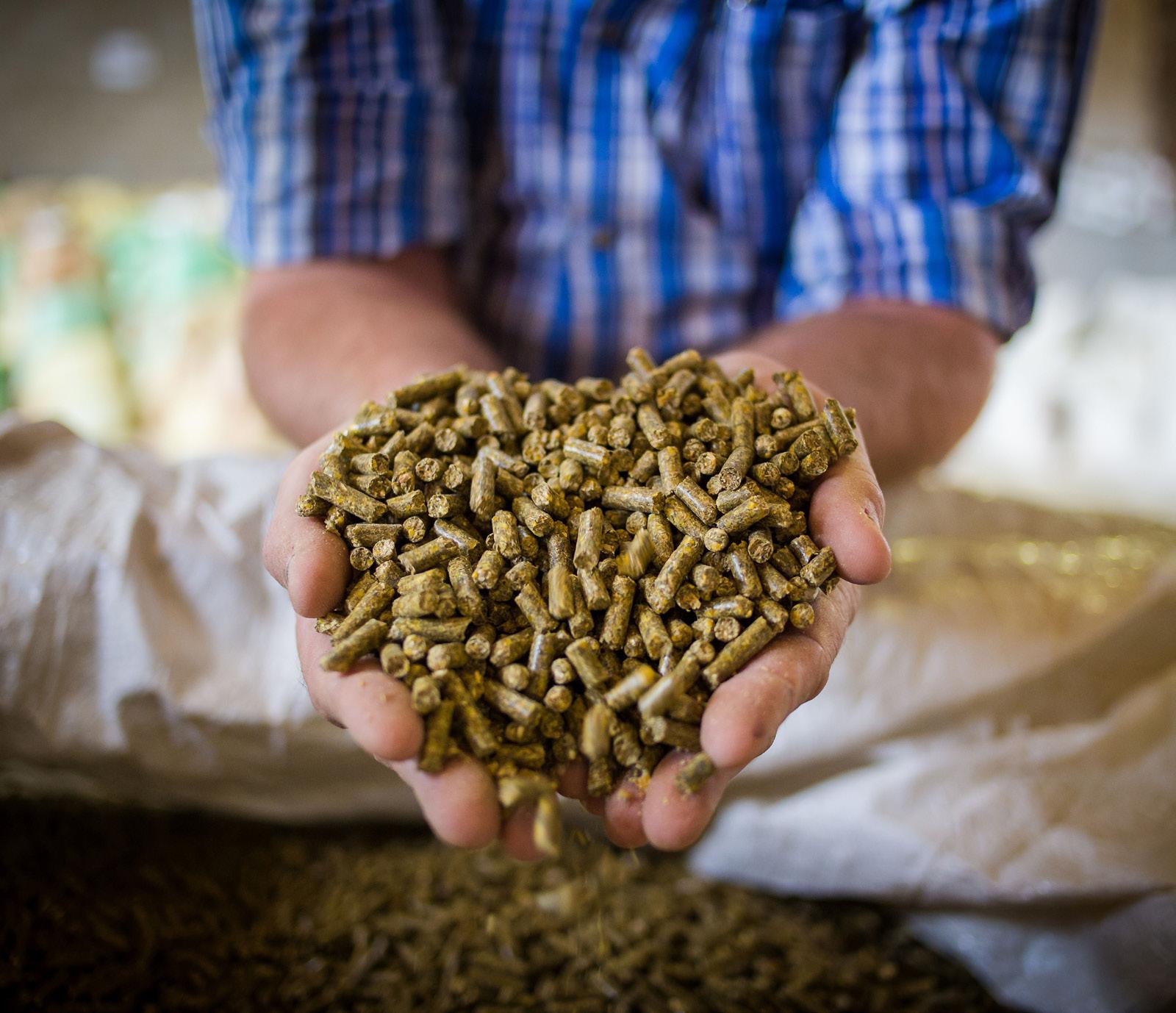
While infrastructure limitations remain a bottleneck, African producers are increasingly seeking out automation and digital systems in order to improve productivity. Bühler continues to support this transformation with technologies such as SCADA and cloud-based MES systems, as well as autonomous milling concepts already piloted in markets such as the United Kingdom.
“Automation does not replace jobs. It changes them,” notes Sutter. “We will always need people with the skills to interpret data, manage systems, and make informed decisions. This is why our apprenticeship and skills development programmes are so important for the future of the industry.”
On the mining side, Bühler continues to supply critical processing equipment, spare parts, and upgrades for mines operating in harsh conditions.
Consistent maintenance needs, together with Bühler’s reputation for quality and reliability, have strengthened the company’s market share.
“Our customers trust our equipment to perform under demanding conditions,” says Sutter. “Unplanned breakdowns can be extremely costly, so superior quality and strong after-sales service make a measurable difference.”
The company continued investing in its local factory in 2025, installing laser welding technology, improving vertical storage systems, and upgrading overall efficiency and safety.
“South Africa has a strong base of technical skills, especially in manufacturing and fabrication. It will remain one of our key hubs on the continent,” explains Sutter. “Investment is essential. If you stop investing, you fall behind. We are committed to maintaining world-class standards and to expanding our capabilities.”
“WE CANNOT CONTROL THE EXTERNAL ENVIRONMENT, BUT WE CAN CONTINUE STRENGTHENING OUR PEOPLE, OUR CAPABILITIES AND OUR PARTNERSHIPS.”
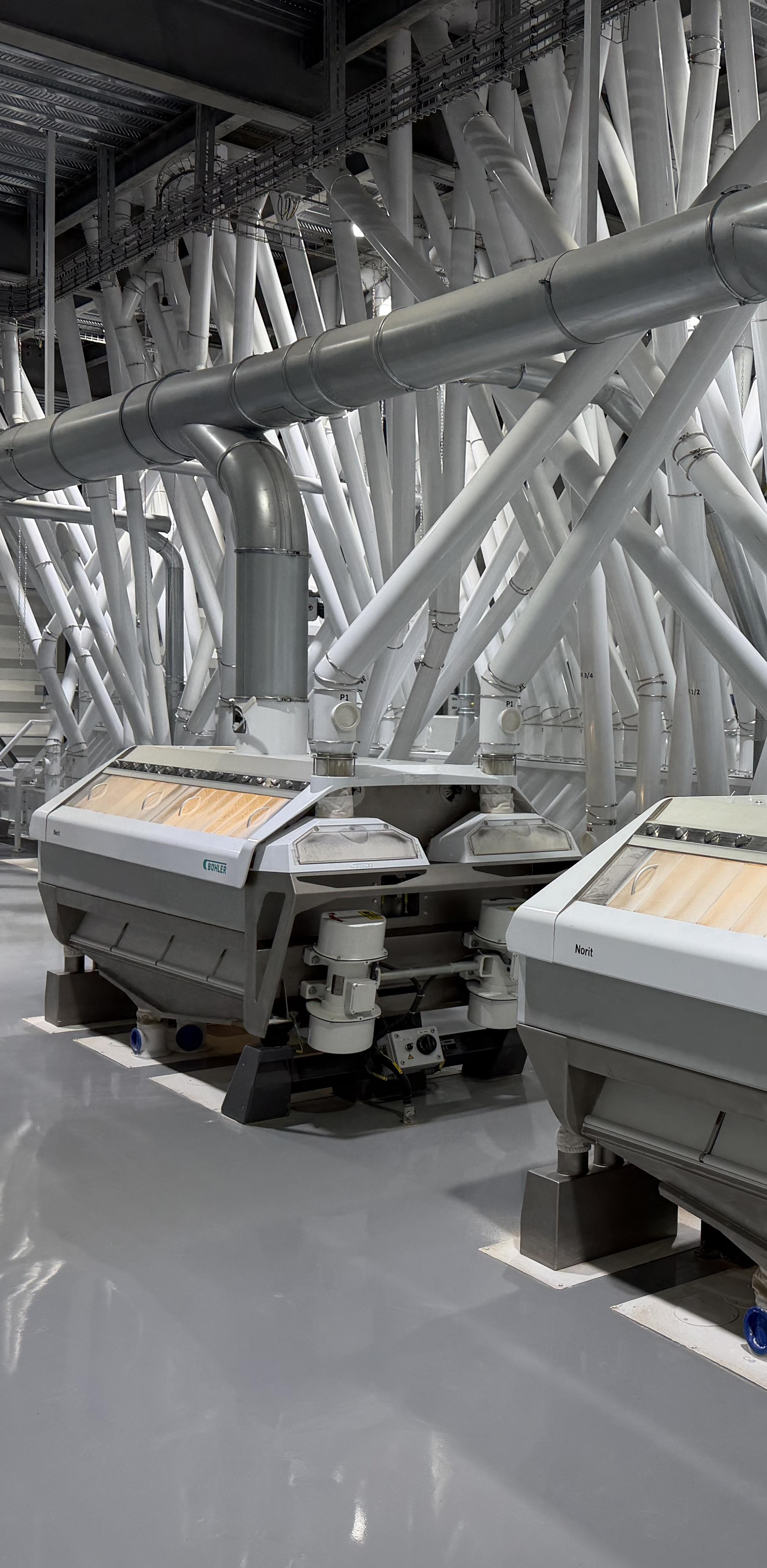
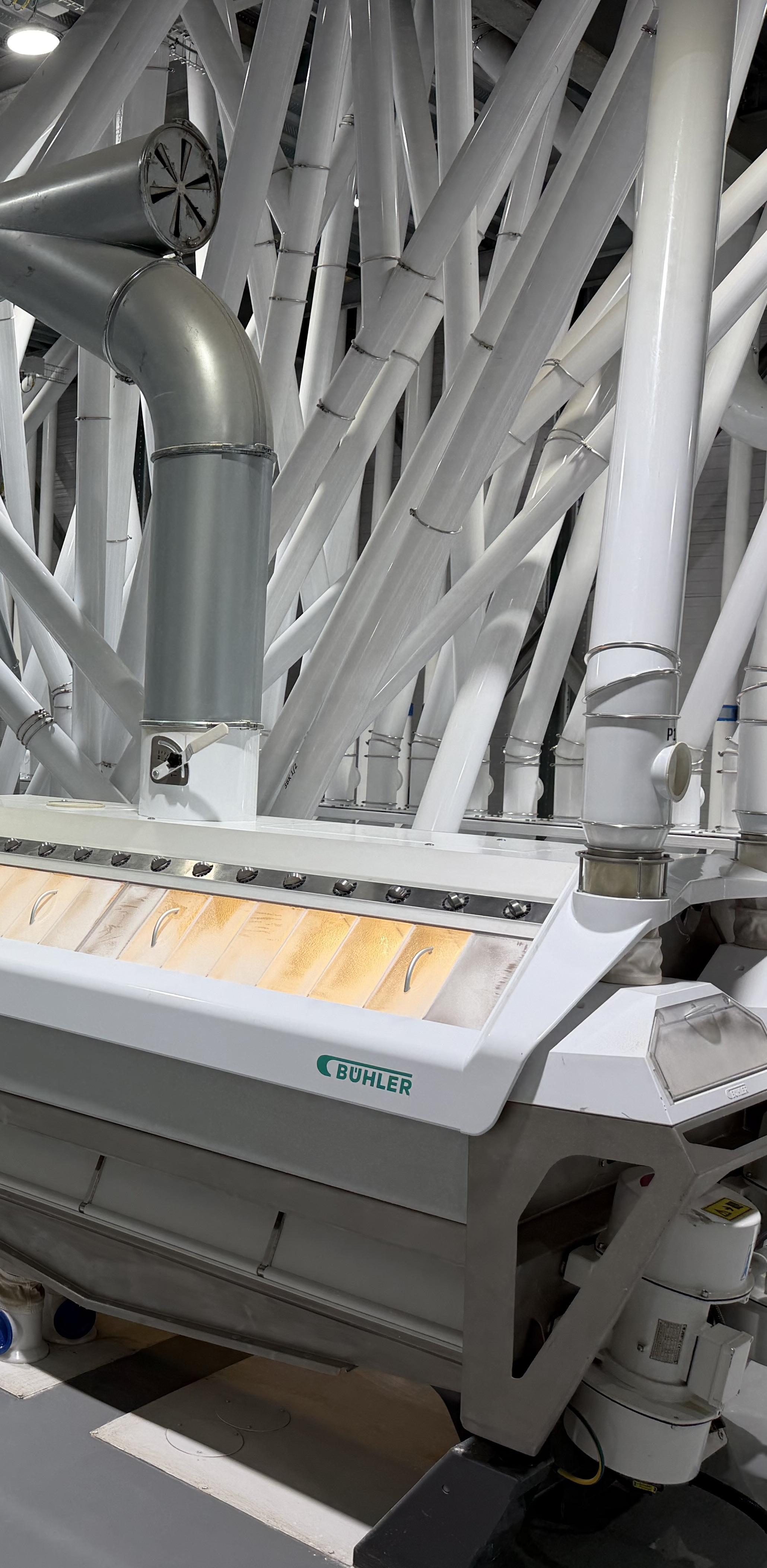
Global and local sustainability goals continue to shape Bühler’s strategy. Since 2019, the company has worked to reduce waste, water use, and energy consumption across 15 value chains. Locally, Bühler has installed solar power at its Johannesburg and Cape Town sites and is now doubling its solar and battery capacity to run night shifts off-grid in Johannesburg.
A 60,000-litre grey water system is also being installed in response to deteriorating municipal water infrastructure. “These initiatives reduce our environmental footprint, but they also make us more resilient as a business,” adds Sutter.
Despite uncertainties linked to next year’s local government elections, climate instability, and global market volatility, Bühler remains cautiously optimistic about the coming year. “We cannot control the external environment, but we can continue strengthening our people, our capabilities, and our partnerships,” says Sutter.
“Our focus for 2026 is to build on the foundations we have laid, support our customers as markets evolve, and ensure that our teams are skilled, prepared, and excited for the future.” As Bühler Southern Africa continues to expand in 2026, it does so with a renewed commitment to innovation, sustainability, and long-term partnership building across the continent. Through its latest developments, the company is proving that resilience is not just a response to challenges, but a strategic advantage in its own right.
AFRICA DRIVES INDUSTRIAL EFFICIENCY THROUGH INNOVATION, INTEGRATION AND CONTINENT-WIDE PROJECT DELIVERY.
For more than a century and a half, Howden Africa Holdings Limited has built a reputation for delivering complex, mission critical solutions across some of the world’s most demanding industrial environments. Today, as part of Chart Industries, the business is entering a new phase defined by integration, expansion and a sharpened focus on sustainability.
The company specialises in air and gas handling technologies that underpin vital industrial processes. From mining ventilation systems deep underground to advanced compression solutions in offshore energy projects, its capabilities stretch across a broad spectrum of applications, each requiring reliability, efficiency and tailored design.
Howden’s evolution reflects both its heritage and its adaptability – the company has consistently responded to the changing needs of industry, developing technologies that improve operational performance while addressing environmental challenges. Its global network, spanning more than 100 countries, ensures local expertise is combined with international engineering excellence, allowing the
business to deliver solutions that are both technically robust and regionally relevant.
The 2023 acquisition by Chart Industries marked a defining moment in Howden Africa’s trajectory. By joining a wider portfolio of technologies focused on clean power, clean water, clean food and clean industrial processes, the company is now positioned within what Chart describes as the Nexus of Clean. This strategic alignment expands Howden’s capabilities and enables it to offer more comprehensive, end to end solutions to customers. It also enhances its ability to combine cryogenic expertise, heat exchange technologies and gas handling systems into unified offerings that address increasingly complex industrial challenges. For customers, this means access to a broader range of solutions delivered through a single, cohesive framework.
The company management explains that central to Howden Africa’s differentiation is its 4P concept, which focuses on Parts, Presence, Precision and Prevention. “The concept ensures faster and higher productivity through continuous technological innovation. We offer quality products, training, and services tailored to meet each customer’s specific needs.”
A defining feature of Howden Africa’s offering is its breadth. The company designs and manufactures a wide array of equipment, including air heaters, industrial fans, compressors and pollution control systems. These are deployed across industries such as mining, oil and gas, petrochemicals and power generation, often as part of fully integrated or turnkey solutions. Howden has supplied equipment to leading oil and gas operators worldwide, supporting projects in environments ranging from Arctic conditions to desert installations.


Its expertise is particularly evident in complex environments. In mining, for instance, the company delivers ventilation and cooling systems capable of operating kilometres beneath the Earth’s surface, ensuring safe and productive working conditions. In energy, its compression technologies are engineered to withstand harsh offshore environments, where reliability is critical and maintenance opportunities are limited.
Howden Africa’s bespoke offering includes the delivery of outage solutions that bring together a wide range of technical expertise, allowing the firm to reduce complexity, identify possible optimizations, and complete projects within restrictive timescales. Careful planning and risk management are also part of the mix. By operating in this manner, Howden can avoid lost revenue by minimising the chance of future plant failure, maximising the life of components, and improving plant performance.
In its local market, Howden Africa is perhaps best known for its mine ventilation solutions. Adopting a fully integrated approach, the company delivers a lasting positive impact for clients in need of support across areas like ventilation, cooling, and condition monitoring. Precision engineering guarantees that each solution is designed to meet exact specifications, while a focus on prevention helps clients avoid costly downtime through proactive maintenance and optimisation.
Sustainability is increasingly central to Howden Africa’s operations and value proposition. Its technologies are designed not only to enhance performance but also to reduce environmental impact, supporting customers in meeting regulatory requirements and corporate sustainability goals. The company focuses on sustainability through engineering, carbon-neutral goals, and community resilience
projects, aiming to reduce greenhouse gas intensity by 50% by 2030 and achieve netzero by 2050. Key initiatives include developing clean power/industrial technology, funding rural water solutions (sand dams) in Malawi, and supporting climate adaptation in cities like Cape Town.
Howden’s advanced technologies improve energy efficiency and help industrial clients reduce emissions. Howden’s EMISSIONGUARD™ TR² Packing Rings, for example, have already prevented significant volumes of gas leakage, translating into substantial reductions in carbon emissions. Similarly, utilisation of Ventsim™ DESIGN and CONTROL software helps optimise ventilation in underground mines, reducing energy consumption and increasing efficiency.
As part of Chart Industries, the company benefits from access to advanced technologies that further strengthen this focus. The integration of cryogenic systems and heat exchange solutions, for example, enables more efficient handling of gases across the energy value chain, contributing to lower emissions and improved resource utilisation.


Looking ahead, Howden Africa is well positioned to capitalise on growth opportunities across the continent. Projects in Mozambique and across East, West and Southern Africa point to a strong pipeline, particularly in sectors such as liquefied natural gas, gas transport and storage. These developments align with broader trends in energy infrastructure, where investment is increasing to support both economic growth and the transition to cleaner energy sources. Howden Africa’s capabilities in gas handling and processing place it at the centre of this shift, enabling it to contribute to large scale projects that shape the region’s energy future.
At the same time, its established presence in mining continues to provide a solid foundation. The company’s ventilation and cooling solutions are widely recognised across Africa, reflecting its ability to deliver integrated systems that improve safety, efficiency and sustainability.
This dual focus on traditional strengths and emerging opportunities is a key element of its strategy. By leveraging its engineering expertise while expanding into new areas, Howden Africa is building a diversified portfolio that supports long term growth and delivers impact at scale across Africa and beyond.
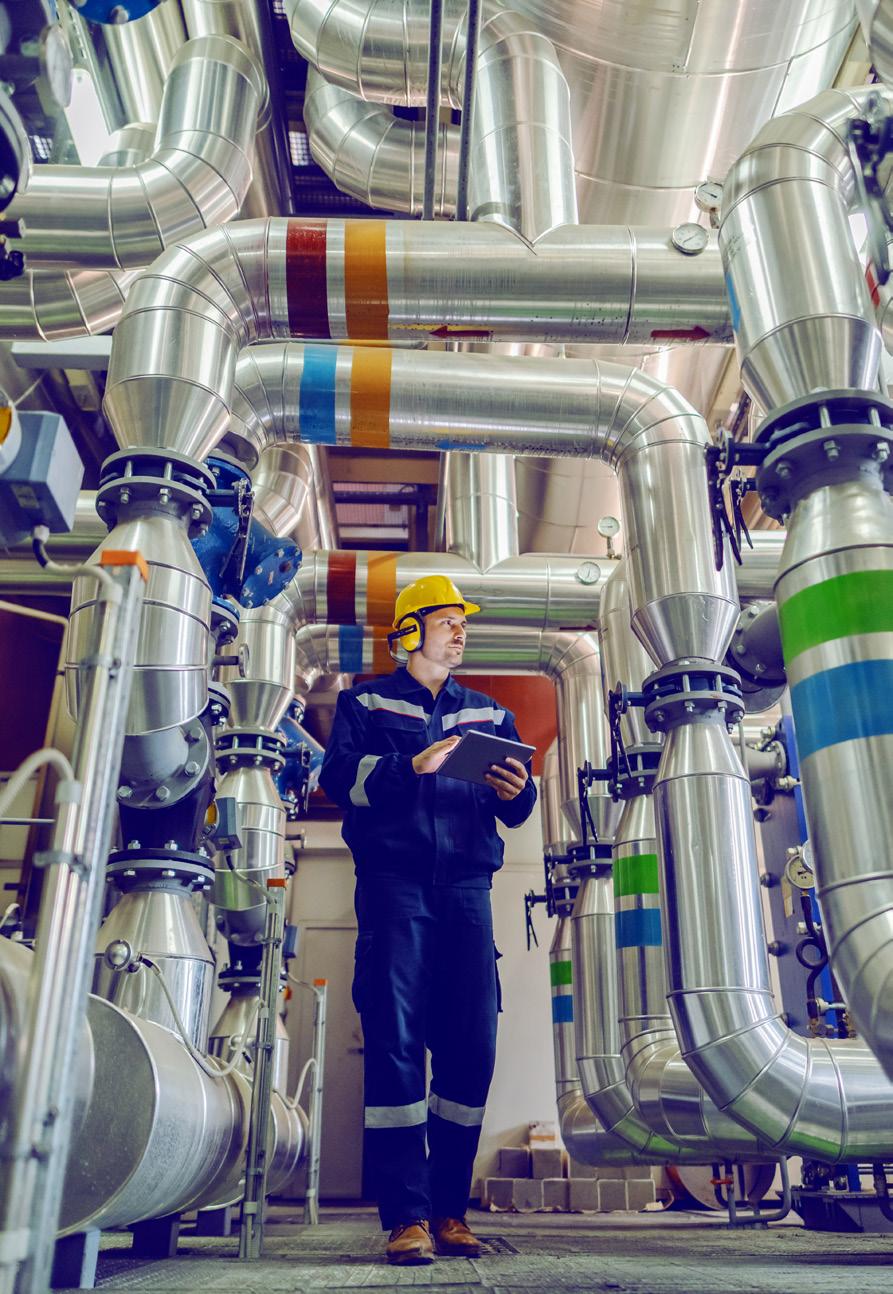
For CVH Spirits, a newly independent structure has sharpened focus, accelerated decision making, and opened doors to global expansion for the business. Speaking about the company’s position today, CEO Ronan O’Rahilly describes a business grounded in whisky-making heritage, but built for responsiveness.
We’re the proud owners of some of Scotland’s most recognised distilleries and whisky brands,” he begins. “We employ about 300 people across the UK, with teams in Asia and across the rest of the world.”
CVH Spirits sits on a portfolio that reflects both depth and diversity. Bunnahabhain, established in 1881, is known for its unpeated sherry-style Islay single malt. Tobermory, the only distillery on Mull, dates back to 1798 and produces both unpeated and peated expressions and holds the distinction of being the ninth oldest distillery in Scotland. Deanston, comparatively young at just 60 years old, offers a different kind of story as a distillery shaped by its origins as a converted cotton mill.
Alongside these single malt distilleries sits a blended Scotch portfolio including Scottish Leader and Black Bottle, as well as a long-standing UK distribution partnership with Angostura bitters and rums. It is a combination that gives CVH both credibility and commercial flexibility.
CVH’s transition to independence followed Heineken’s acquisition of Distell in 2023. CVH was unbundled from the listed South African drinks group and now operates privately under its own structure, backed by shareholders including Remgro, the Public Investment Corporation of South Africa, and minority Campari. For Ronan, the shift has been a defining moment.
“Now that we’re independent, we have become really agile operationally,” he says. “If you look at our global competitors, they’re all multinationals. We are a smaller, more independent business, and that allows us to be quite responsive to market trends and very flexible when making decisions, combined with literally centuries of distillery legacy, and a trail blazing master blender, Juliann Fernandez, one of the youngest female master blenders in scotch.”
The agility on show at CVH is underpinned by full control of its production process. From
distillation through to blending, bottling, and distribution, the company manages its value chain end to end. The result is speed to market and the ability to adapt quickly to consumer demand without compromising quality.
“Combined with owning endto-end production capabilities, we’re able to bring products to market quite quickly depending on consumer or customer need,” Ronan states. “Having that genuine craftsmanship also gives us the ability to tell strong brand stories that go back centuries.”
Storytelling plays a central role in how CVH connects with consumers. Heritage alone is no longer enough in a competitive premium spirits market. Authenticity must be paired with innovation, and the company has leaned into that balance through both product development and experiential investment.
Deanston offers a clear example of this approach. Known internally as something of an unconventional distillery, it continues to experiment with cask finishes and flavour profiles.
Ronan O’Rahilly, CEO, CVH Spirits.
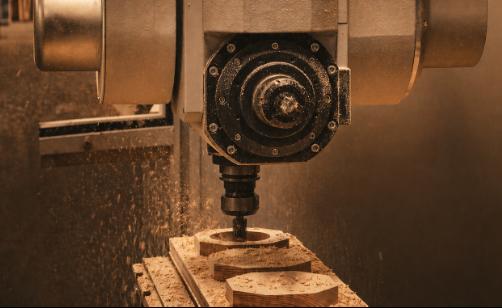
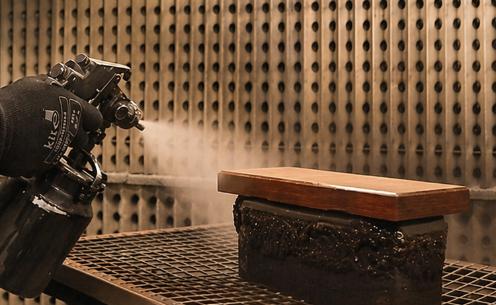
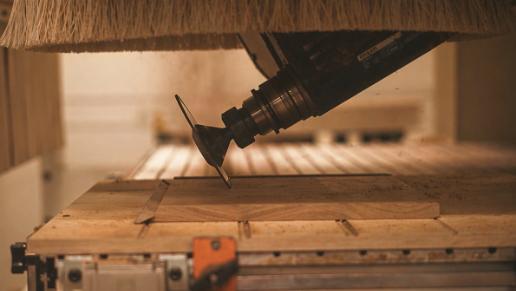
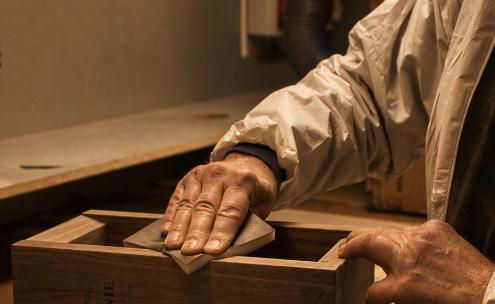
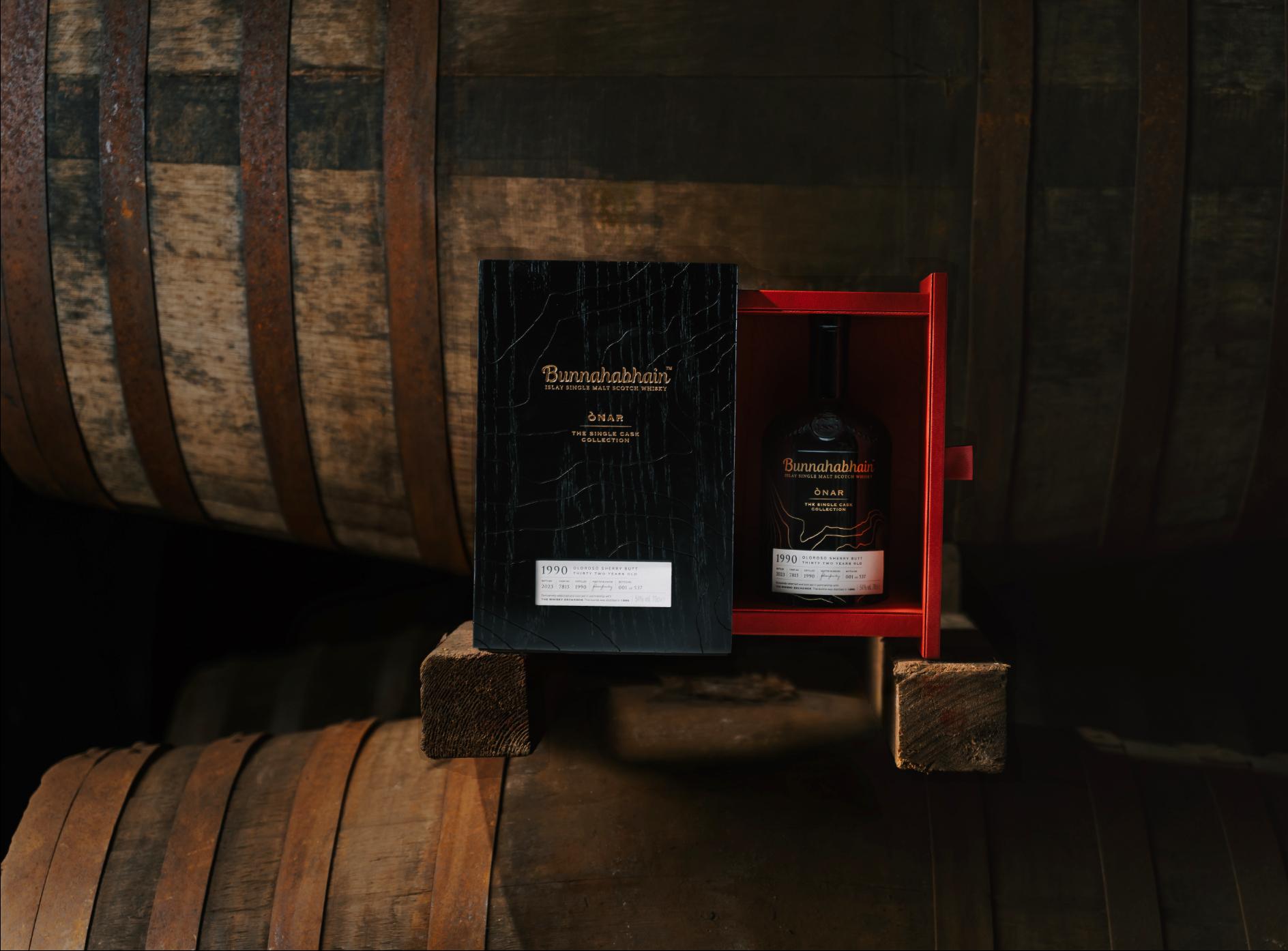

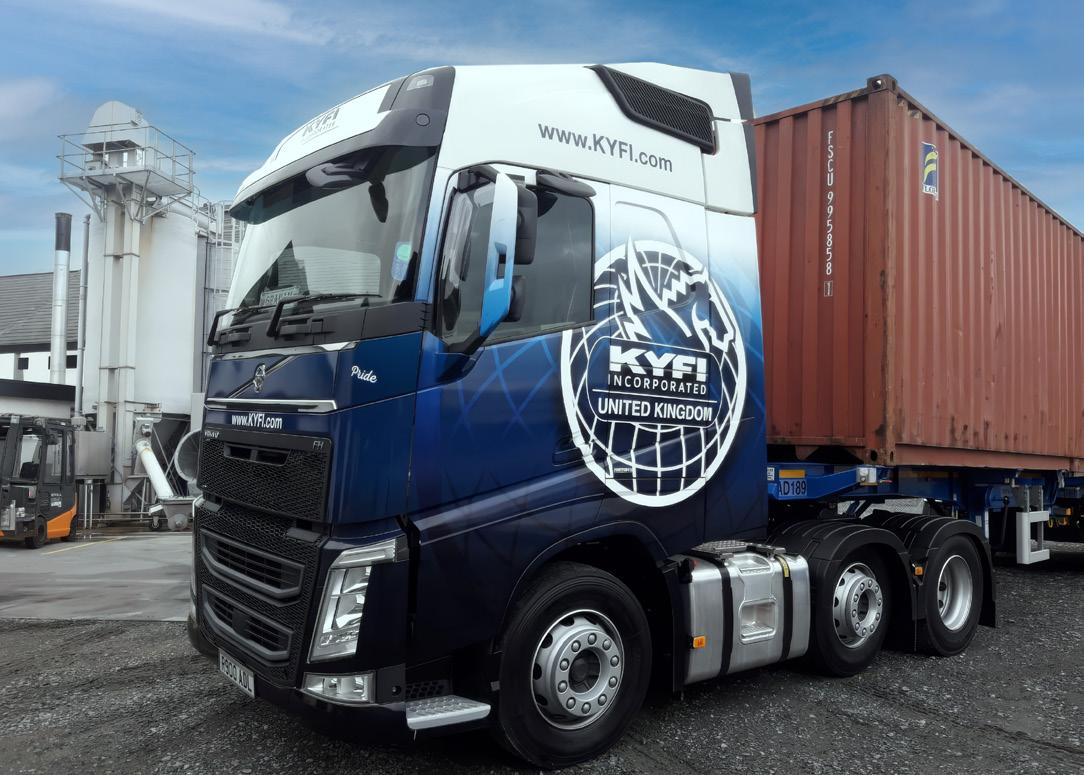

When CVH Spirits came to Moran’s Wood Components with the brief for the Bunnahabhain Ònar Single Cask Collection, they had a clear vision. What followed was a genuine collaboration, the kind Morans does best.
The result is a rich black stained oak presentation case, engraved across its entire surface with the contour lines of the landscape surrounding the Bunnahabhain distillery on Islay. Inside, a lined drawer houses the bottle securely, the interior as considered as the exterior.
Matt Sewell, Project Lead: “This is exactly the kind of project we love. CVH had a clear idea and trusted us to develop and deliver it. The challenge with a run of 800 is consistency — every case must meet the same standard, while still keeping that natural variation you only get from working with real wood. The finished result is something we’re genuinely proud of.”
Moran’s Wood Components is a British, family-run manufacturer based in Warrington, specialising in luxury packaging for many of the world’s most respected whisky brands, including The Macallan, The Balvenie, Loch Lomond, GlenAllachie, and Bushmills.
The Warrington facility runs multiple CNC machines with 5-axis capability, alongside other woodworking machines, sanders, laser engravers, digital and screen printing, hand and robotic spray finishing, and a dedicated leather and lining department. Everything in house, at genuine scale.
Projects range from one-of-one commissions to runs of several thousands. Operating from a 34,000 sq. ft facility, Morans has the space, machinery, and workforce to take on projects that others cannot.
To discuss your next project, contact Matt or Paul at matt@moranswoodcomponents.co.uk or paul@moranswoodcomponents.co.uk

“As a converted cotton mill, Deanston has always done things differently,” Ronan declares. “We have recently released a 17-yearold Andalucían orange wine cask finish, launched earlier this year, reflecting both our technical creativity and personal story.
“At the heart of that release is a close connection with our master blender, Julieann Fernandez. Andalucía is where Julieann’s parents met, and where she spent a lot of her childhood, so she felt she was bringing a piece of her own heritage into our spirit for the first time.”
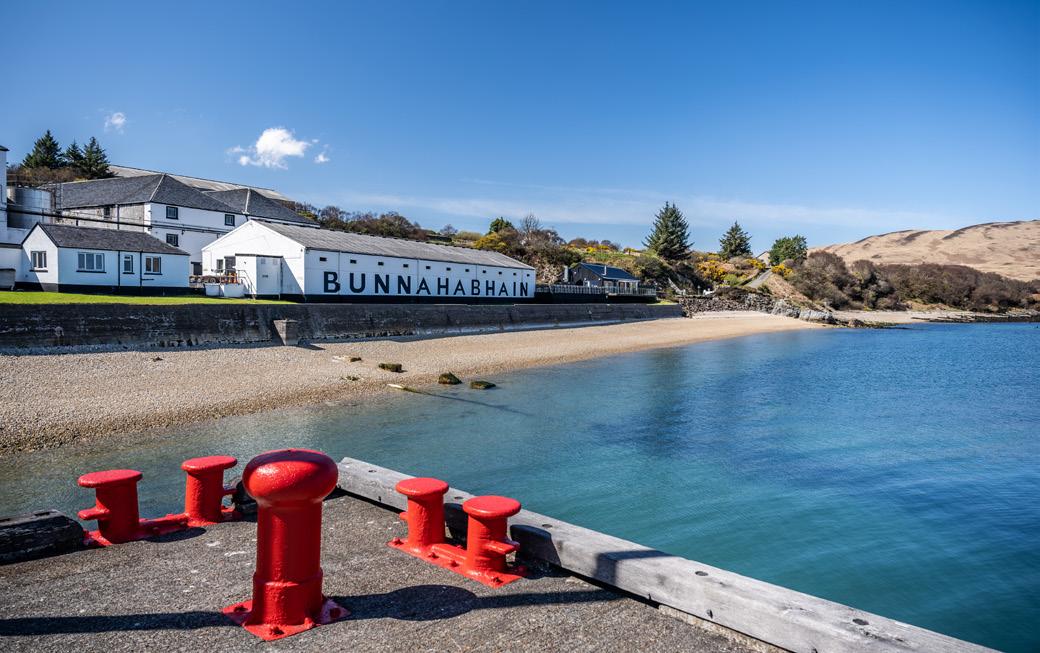
That blending of narrative and innovation is increasingly important as consumer expectations evolve. The wider spirits sector is currently facing a highly complex environment.
“As an industry, we are navigating a challenging period,” Ronan acknowledges. “In addition to the well-publicised challenges surrounding affordability, moderation, and consumption habits, we are also coming to terms with trends like the rise of digital engagement.
“Consumers are interacting with brands online more than ever. Brand engagement is increasingly happening digitally, so we’ve invested in our online sales channels, particularly
direct-to-consumer websites, where we can own and optimise the full consumer journey.”
Access to first-party data is a key advantage. It allows CVH to better understand customer behaviour and refine its product pipeline. Insights gained through digital channels inform decisions on everything from cask selection to packaging and positioning.
Another key trend is a growing demand for experiences. Consumers are looking beyond the product itself and seeking deeper connections with brands. For a company with
distilleries in some of Scotland’s most scenic locations, that presents a natural opportunity.
“Our philosophy is that all roads lead back to our distilleries,” Ronan explains. “We’ve been investing in experiences where consumers can be immersed in our brands, meet our whisky creators, and spend time in some of the most breathtaking locations across Scotland.”
These experiences serve multiple purposes. They strengthen brand loyalty, create memorable touchpoints, and reinforce the authenticity that consumers increasingly value.
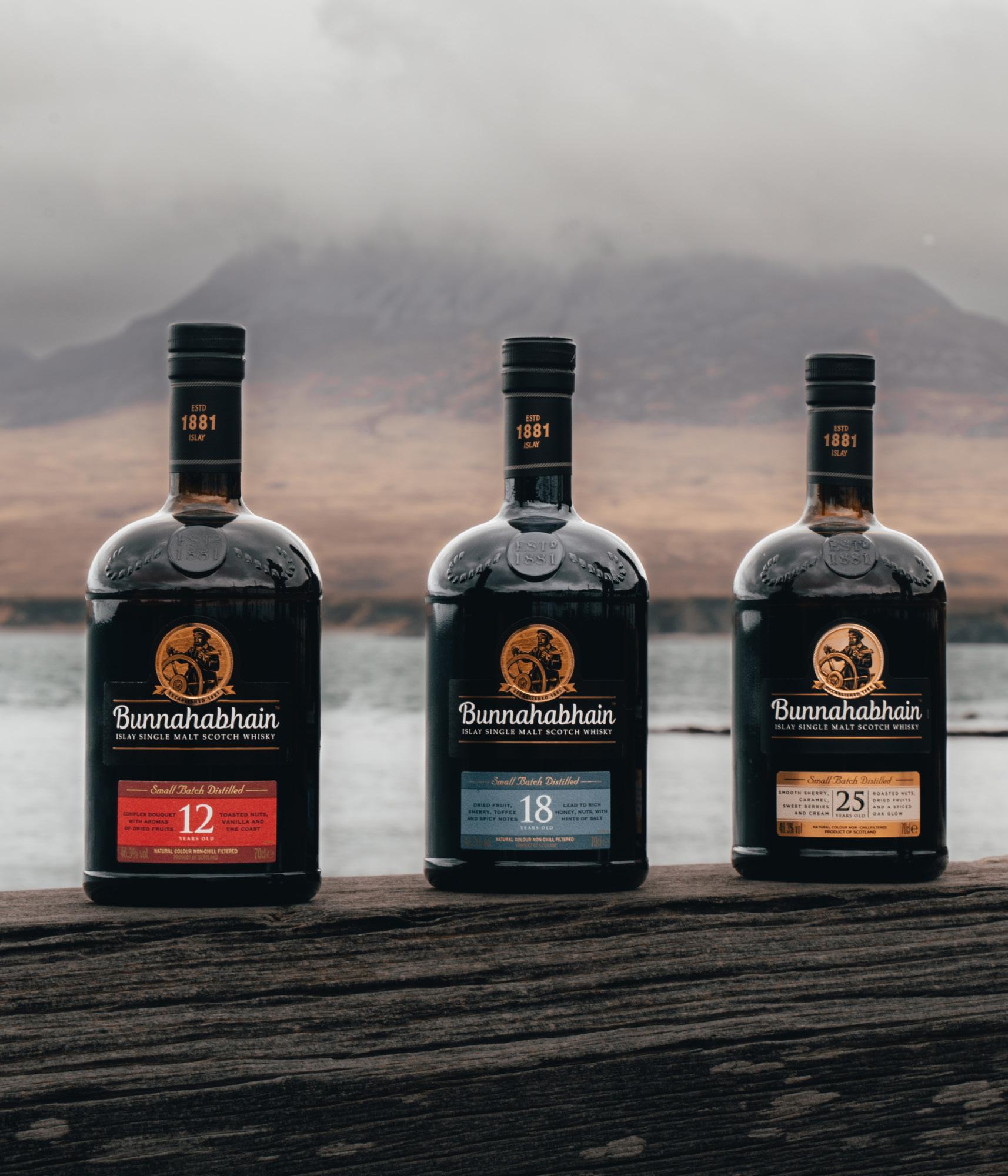
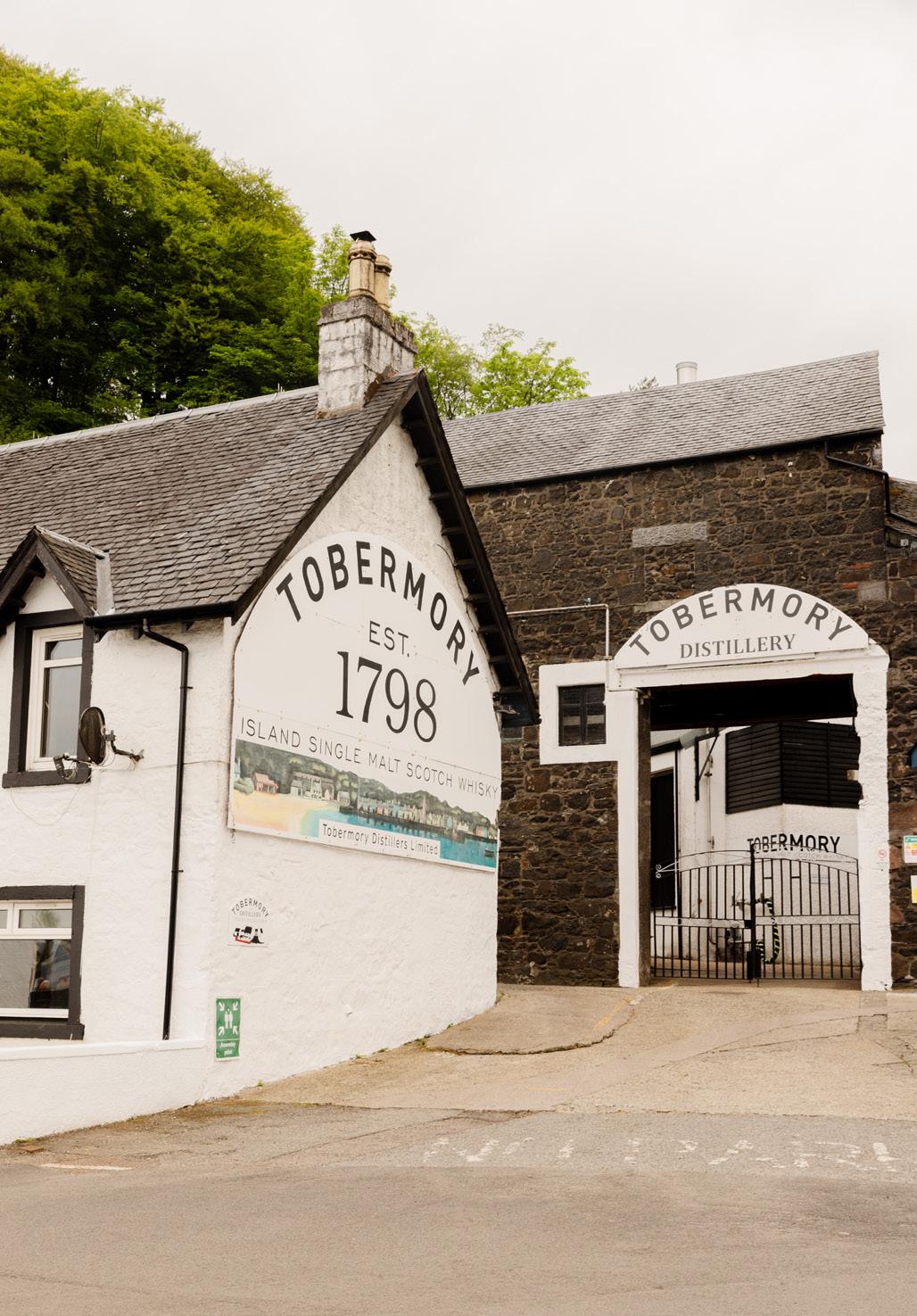
They also anchor the company’s storytelling in real places and real people.
Operational investment has kept pace with CVH’s strategic priorities. A significant programme at the company’s East Kilbride site has strengthened its blending, bottling and warehousing capabilities. Over the last five to six years, close to £30 million has been invested to enhance the organisation’s efficiency and capacity.
At the same time, the opening of a commercial hub in Glasgow has brought marketing, finance, HR, administration and legal teams closer to industry peers and talent pools. The separation of operational and commercial functions reflects a deliberate structure designed to support growth.
“The addition of our Glasgow office will help strengthen our business relationships,” Ronan reports. “Partnerships in this industry are incredibly important.”
This sentiment is reflected in CVH’s relationship with Angostura, which has spanned 25 years in the UK. The partnership’s longevity highlights a commitment to stewardship rather than short-term gain.
“We’re building brands that are permanent assets, and we’re owned by shareholders who take a long-term view of value creation,” Ronan remarks. “We’re not looking for transactional relationships – we’re looking to build over time, strengthening distribution and shoring-up brand equity for the next generation.”
Looking ahead, the coming year will see several milestone anniversaries celebrated across the CVH portfolio, providing the company with opportunities to engage both new consumers and loyal customers.
“2026 is quite an important year for us,” Ronan affirms. “At Deanston, we’re celebrating the 60th anniversary of the distillery, and that will coincide with campaigns, events and exclusive bottlings.”
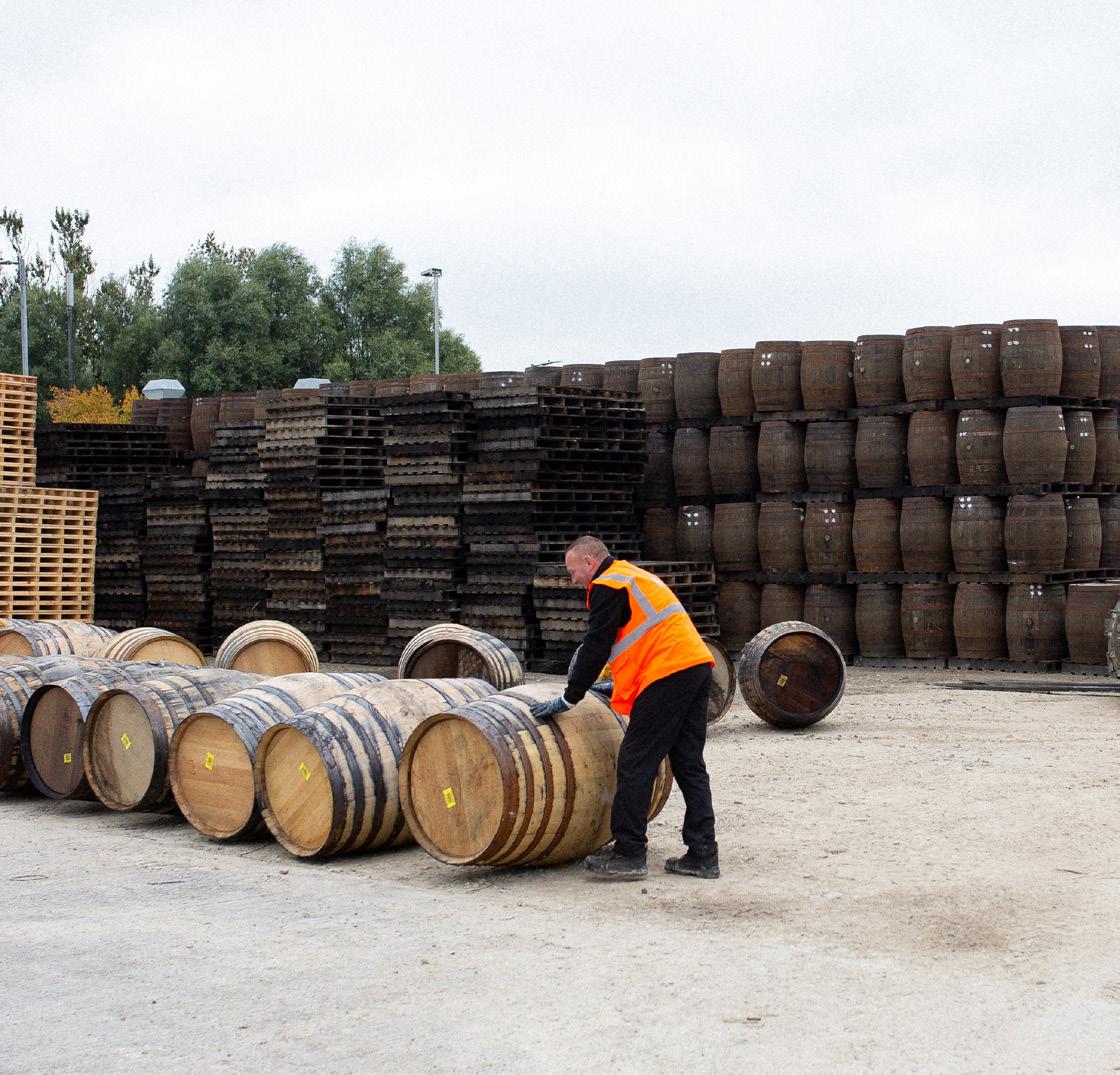
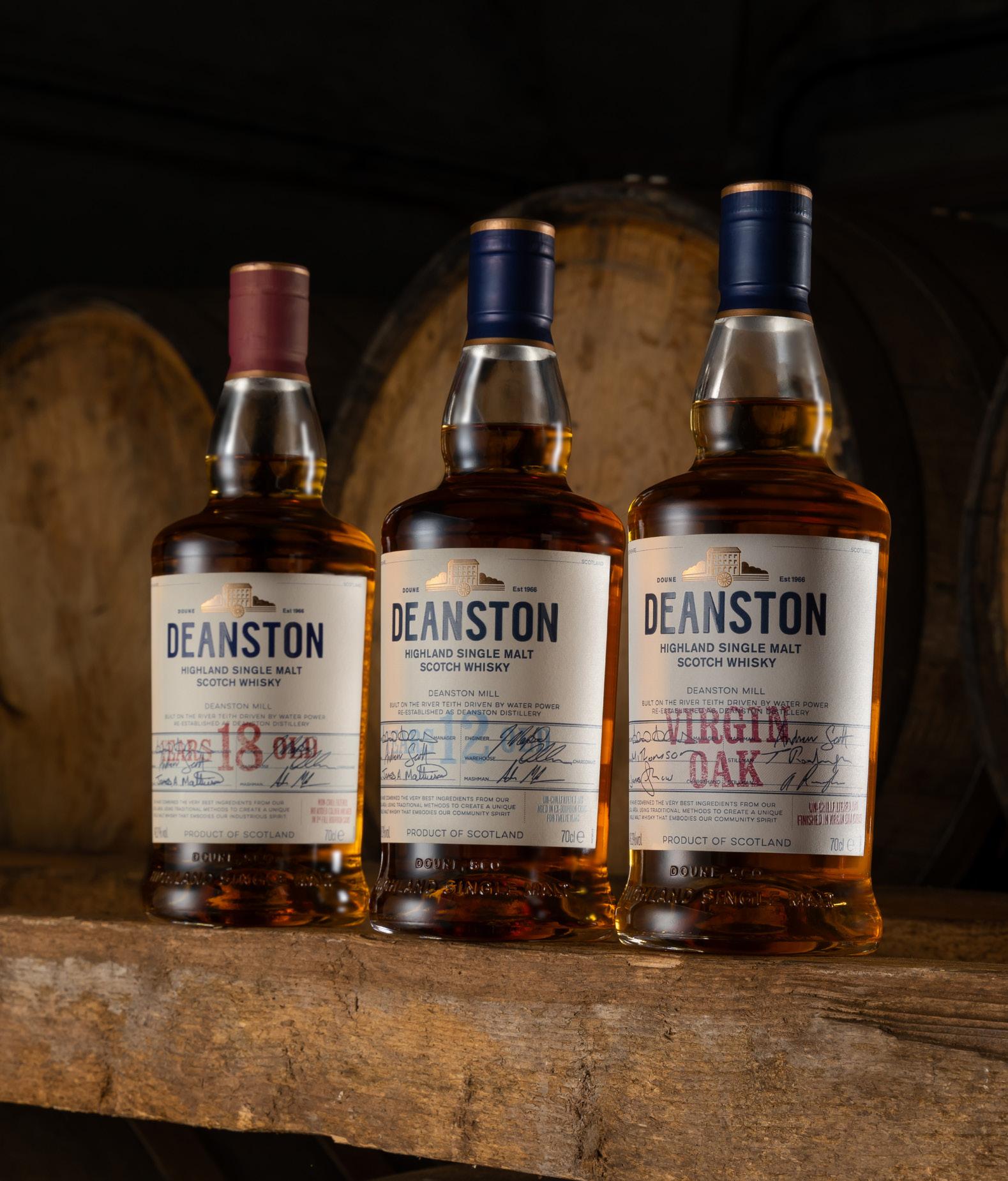
Elsewhere, on Islay, Bunnahabhain will mark its 40th year of participation in the island’s famous whisky festival Fèis Ìle, an event that draws more than a thousand visitors in a single day to the distillery. Meanwhile, Scottish Leader is being supported by a new global brand campaign aimed at expanding its international footprint.
Beyond these near-term milestones lies a broader ambition. Independence has created space for CVH to extend its reach into markets where it has historically had limited presence. The organisation’s core objective
is clear: to build new routes to market in attractive Scotch whisky territories, while building brands that respect the craftsmanship and authenticity that has long defined CVH.
“Since becoming independent, we’ve got an opportunity to bring our brands deeper into parts of the world that we’ve not operated in before,” says Ronan. “We’ve invested deliberately in our commercial front end, appointing staff in Africa, Asia and the United States. Balancing heritage and progress, we’re looking after our brands for the next generation.”
FOLLOWING ITS DEMERGER FROM UNILEVER, BOLD INNOVATION IS SHAPING THE MAGNUM ICE CREAM COMPANY’S FIRST STEPS AS A STANDALONE BUSINESS.
Ice cream has entered a new era. No longer packaged within broader food portfolios, The Magnum Ice Cream Company is

Following its formal demerger from Unilever in December 2025, Magnum Ice Cream has become the world’s largest standalone ice cream company, listed in London, New York and the Netherlands. Its portfolio includes some of the category’s biggest household names, including Magnum, Ben & Jerry’s, Cornetto, Wall’s, Carte D’Or, and Solero.
For General Manager Jamie Farrell, the shift has created a sharper focus and more entrepreneurial culture at Magnum Ice Cream.
“As we struck out on our own, the first thing we said was that we wanted to be a growth company, consistently gaining market share,” begins Jamie.
market, more than double its nearest competitor. Yet Jamie believes that the company is only just starting to unlock its potential.
Already, Magnum Ice Cream’s growth strategy appears to be working. The company added almost one percent market share in the UK in 2025, while continuing to dominate bestseller rankings across the category.
“We currently have seven of the top ten best-selling products in our category for 2026,” Jamie reveals. “We want to build on that success though, so we are heavily engaged in market-making innovation around new products.”
Jamie Farrell, General Manager UK&I, The Magnum Ice Cream Company.
“We feel that it’s our responsibility to lead the category, and to grow it further.”
Magnum Ice Cream holds a commanding position in the UK and Ireland, where it controls around 41 percent of the
A standout example of the company’s innovative product development is the creation of Magnum Bonbon. Designed to be bitesize frozen snacks that can be eaten by hand and shared socially, the format reflects changing consumer habits.



Your trusted partner for engineering components, consumables and related support services
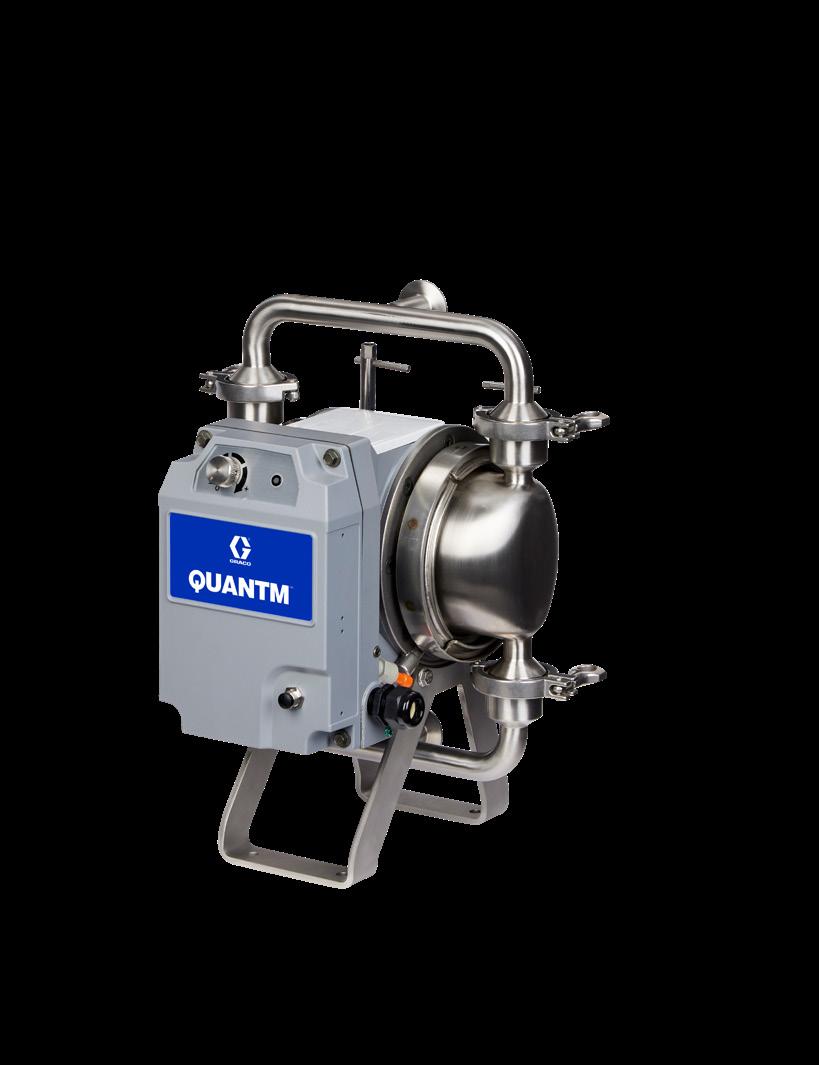
Facing challenges sourcing service parts for their older pumps, The Magnum Ice Cream Company decided to modernise the pumpsturning to Hayley Dexis & Diaphragm Pumps Ltd., key supply chain partners for Walls, one of its brands.
Handling viscous, shear sensitive products while reliably self priming required a diaphragm pump solution. Diaphragm Pumps Ltd delivered with Graco’s QUANTM electric diaphragm pump, featuring a clean, seal less and quiet design. QUANTM matches the performance of traditional air driven pumps while adding leak detection and containment and reducing energy consumption by up to 80% versus their existing pumps.
Integrated I/O controls were integrated into the manufacturing machines, enabling faster set up, improved control and real time monitoring.

The result is optimized production, reduced maintenance and downtime, lower operating costs and higher productivity as well as a lot quieter running pumps, allowing Walls to deliver premium products and stay competitive.
T: +44 1782 332235 E: pumps@dpumps.com
www.diaphragmpumps.co.uk www.graco.com

“Today, ice cream is less about families sat around the dinner table and more about people on the sofa, sharing a snack as they watch TV,” Jamie explains. “Our bonbons fit that profile perfectly.”
Magnum Bonbon can be handled easily outside the freezer, like any other chocolate snack. The concept was technically demanding to develop, but its success has now seen it expanded to new brands, such as Solero.
“Together, we’re approaching about £10 million in retail sales for the Bonbon format,” Jamie says. “The potential is enormous.”
The wider strategy behind Bonbon products is equally important. The company increasingly sees itself competing across the broader snacking market rather than purely within the traditional ice cream segment.
“One of the ways that we are seeking to redefine our company is by thinking beyond ice cream occasions,” Jamie states. “We’re reframing our business within a larger meta category of snacking, which includes the likes of soft drinks, confectionery and packaged snacks.
“TODAY, ICE CREAM IS LESS ABOUT FAMILIES SAT AROUND THE DINNER TABLE AND MORE ABOUT PEOPLE ON THE SOFA, SHARING A SNACK AS THEY WATCH TV.”
“Consumers searching for snacks are no longer dividing products neatly by category. Instead, convenience, indulgence and portability are driving these decisions, which is why we have recently launched products like the Ben & Jerry’s ice cream sandwich.”
Portable formats and snackable products might be central to future growth, but so is growing demand for health and wellbeing. Consumer expectations around portion size, sugar reduction, protein and cleaner ingredients are accelerating rapidly across food and drink – and ice cream is no exception.
“Low calorie, low sugar, protein, fibre, energy, and clean ingredients are all elements we must now consider,” Jamie notes.
“Trends are accelerating so much faster these days.” Magnum established mini formats as a mainstream category segment during its years within Unilever. Now, with greater independence

and flexibility, the company is investing in R&D to stay ahead of shifting preferences.
A major advantage lies in its UK innovation infrastructure. The company operates what Jamie describes as the ‘world’s leading ice cream R&D centre’ at Colworth House in Bedfordshire.
“I love to visit Colworth House and look behind the curtain a little bit to see some of the projects being worked on. We’ve got some really exciting, gamechanging stuff on the go.”
Partnerships also play a central role in strengthening the company’s brands. Magnum, in particular, continues to position itself as a premium cultural brand through global entertainment tie-ins and event sponsorships.
Partnership with the Cannes Film Festival remains one of its flagship collaborations.
“That’s about as premium a partnership as you can get for a mass market brand,” Jamie remarks.
“The Magnum party is the most soughtafter ticket in Cannes every year.”
In recent times, the Magnum brand has expanded its marketing reach through events like Coachella in California and collaboration with UK television shows like Love Island. Licensing agreements are becoming increasingly important too. A recent collaboration with Minecraft has already delivered strong commercial performance, while further partnerships remain in development.
“We do better than all our competition when it comes to partnerships,” Jamie says. “A lot of that is because of the brand equity we build.”
Acquisitions are another piece of the puzzle. Jamie highlights Yasso as one of Magnum Ice Cream’s most exciting new purchases. The US brand specialises in frozen Greek yoghurt products with a protein-led positioning and has become one of America’s fastest-growing ice cream brands.

“THERE’S MORE UNTAPPED POTENTIAL YET TO BE REALISED IN THIS SECTOR. LEARNING HOW TO UNLOCK IT IS THE CHALLENGE.”

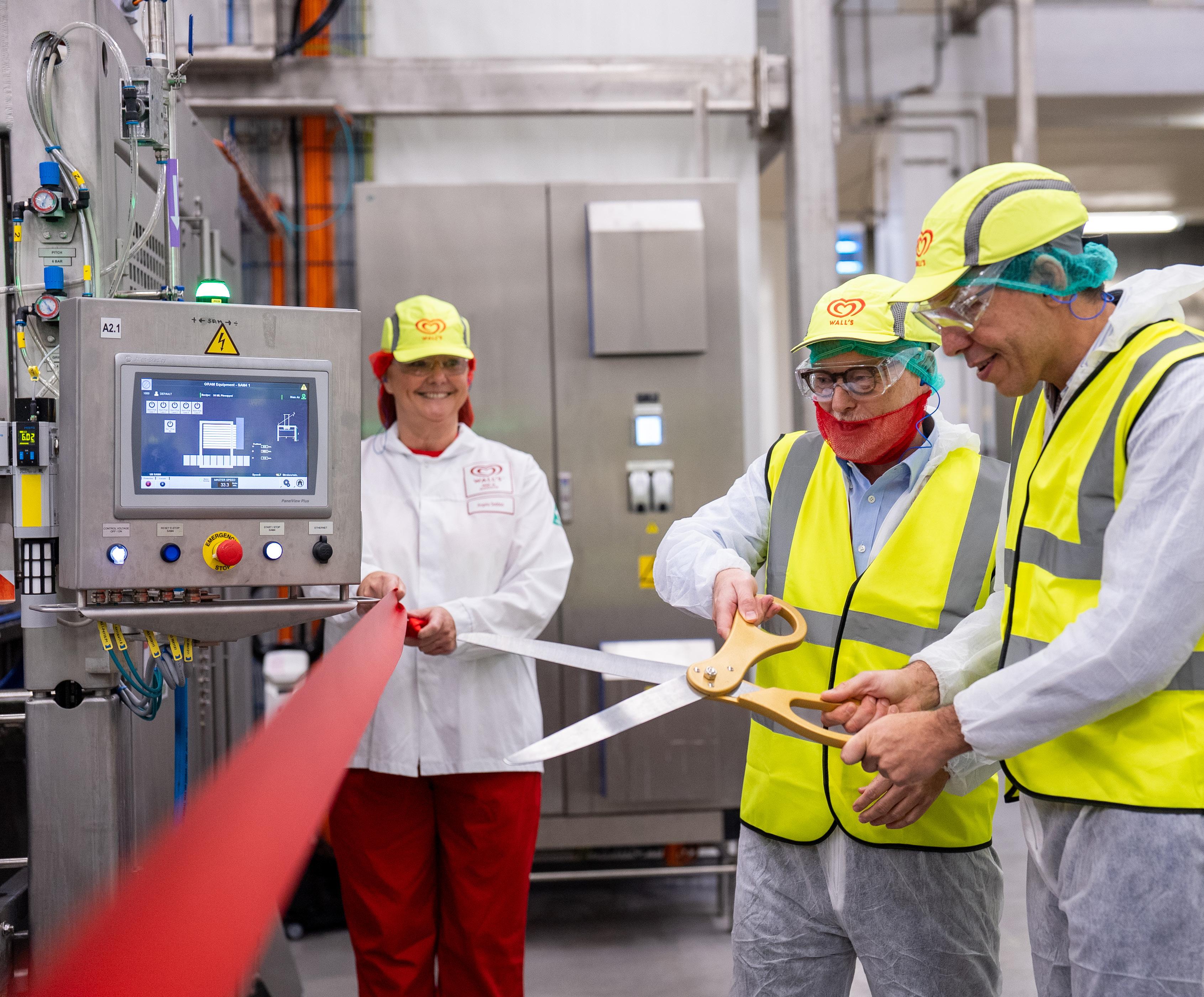
term operational investment is equally important to Magnum Ice Cream’s ambitions.
The company is nearing completion of a £55 million investment programme at its Gloucester factory, one of Europe’s largest ice cream production sites. The facility produces more than 600 million ice creams annually for over 20 international markets and employs around 450 people. Further capacity onsite will increase production by around 25 percent, while also improving efficiency and reducing waste.
For Jamie, the investment sends a broader message about long-term commitment to the UK market.
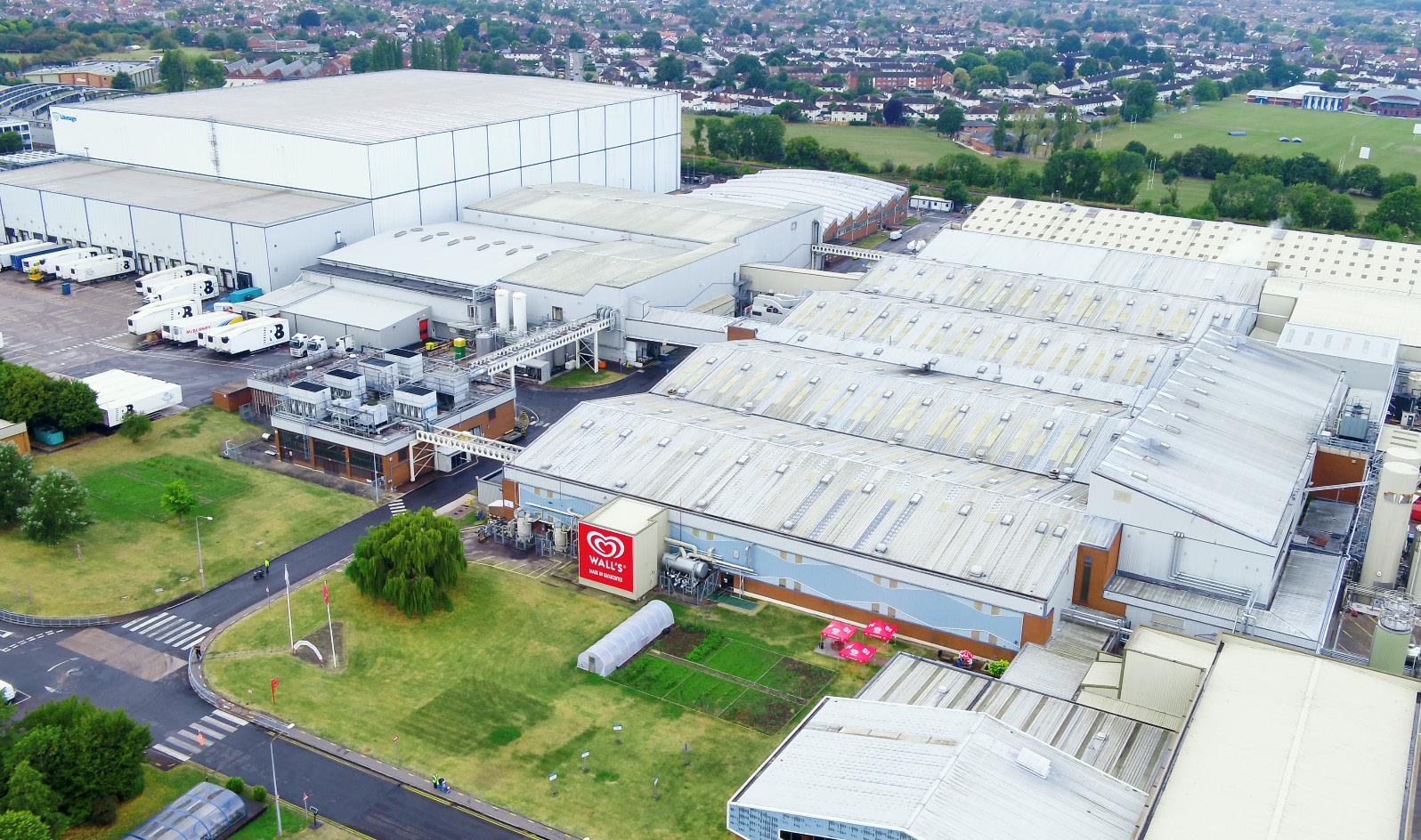
“We’ve got the world’s biggest ice cream R&D facility in England,” he says. “And we’ve got Europe’s second-largest ice cream factory, bolstered by a £55 million investment, in England as well.”
As consumer habits continue to evolve, Magnum Ice Cream is
moving quickly to redefine what modern ice cream consumption looks like.
“There’s more untapped potential yet to be realised in this sector,” Jamie concludes. “Learning how to unlock it is the challenge.”

AND AMBITION ARE JUST SOME OF THE INGREDIENTS THAT MAKE UP MANUFACTURE BELGE DE CHOCOLATS’ LONG-STANDING RECIPE FOR SUCCESS.
With over 100 years of chocolate-making experience behind it, Manufacture Belge de Chocolats (MBC) is an invaluable partner for branded or private label projects. From creation to development and launch, MBC has built a reputation across the world for its passion, expertise, and commitment to quality.
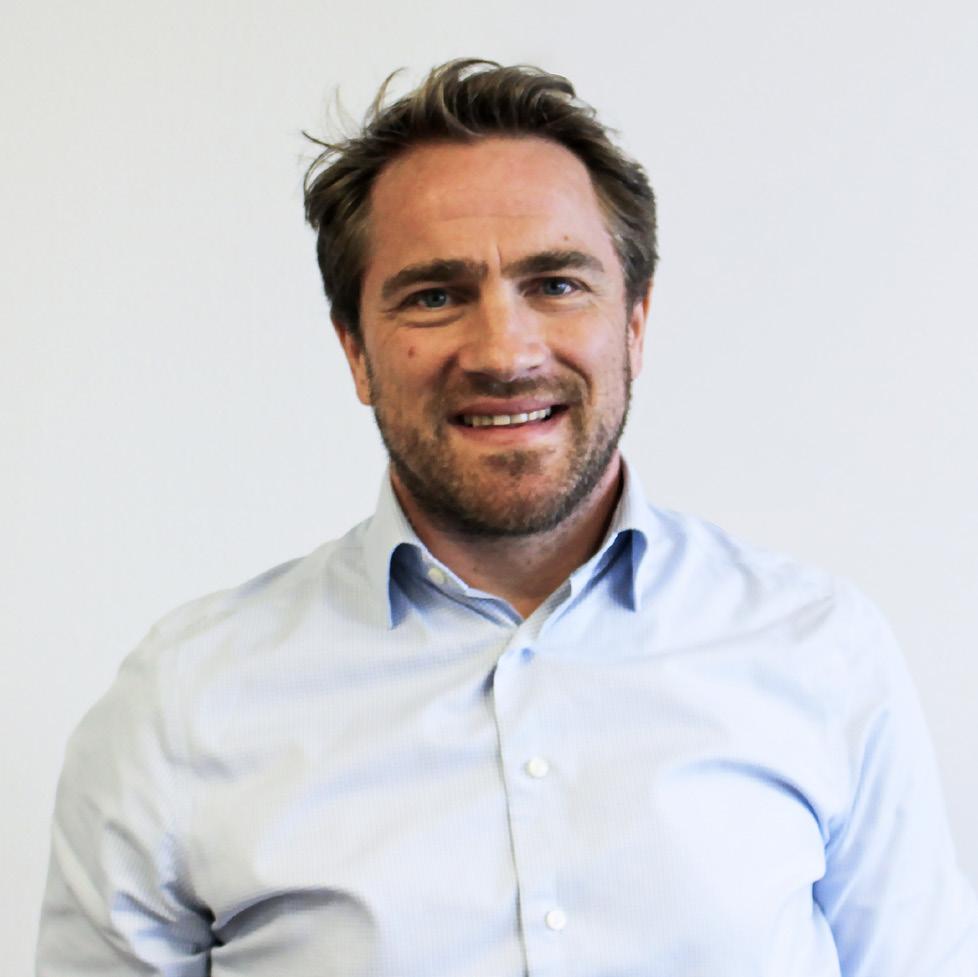
As a manufacturer closely aligned with Godiva, one of the sector’s best-known premium brands, we have a heritage that stretches back over 100 years,” explains CEO Arnaud Verwilghen.
“However, our factory in Brussels has been known as Manufacture Belge de Chocolats since 2019, marking the beginning of the business as we know it today.”
MBC produces premium Belgian chocolate from its Brussels factory, supplying global markets and gradually expanding its customer base beyond its historic core. Today, a significant share of production remains tied to established partnerships, notably its mother company, Godiva Japan.
“We currently deliver for our mother company, Godiva Japan, as well as supporting Godiva across the globe,” says Arnaud. “In recent years, this has been complemented by a strong push to develop new business streams, reflecting the company’s broader shift towards independence and growth.”
MBC’s Belgian origin plays a key role in this strategy, as it remains one of the strongest signals of quality in the global chocolate market. This competitive advantage is accompanied by the company’s ability to adapt to the demands of different markets.
“The Japanese market makes no concessions on taste or visual presentation,” Arnaud states. “Customers have high


www.nomi.nl
NOMI CO-PACKING, YOUR PARTNER IN SCALABLE CO-PACKING
NOMI Co-Packing is a leading packaging partner specializing in co-packing of fast-moving consumer goods (FMCG). With over 35 years of experience, the company has developed into one of the most professional and prominent co-packers in Europe, supporting both manufacturers and international brands with reliable, high-quality packaging solutions.
NOMI offers tailor-made co-packing services across a wide range of sectors, including chocolate, confectionery, biscuits, supplements, frozen food and pet food. With advanced production facilities and a broad range of packaging techniques, the company is able to handle various formats, materials, and product types, ensuring flexibility for both small and large production runs.
As a full-service partner, NOMI focuses on speed, flexibility, and efficiency within the supply chain. The company supports clients in scaling production capacity, accelerating time-to-market, and managing seasonal or promotional packaging. By combining expertise, modern equipment, and a strong supplier network, NOMI helps reduce operational complexity and ensures consistent product quality. Through its integrated approach and long-term partnerships, NOMI plays a vital role in optimizing packaging processes and supporting business growth. With a strong focus on quality, innovation, and sustainability, NOMI Co-Packing ensures that every product is handled with care, so clients can focus on building their brand.
www.nomi.nl













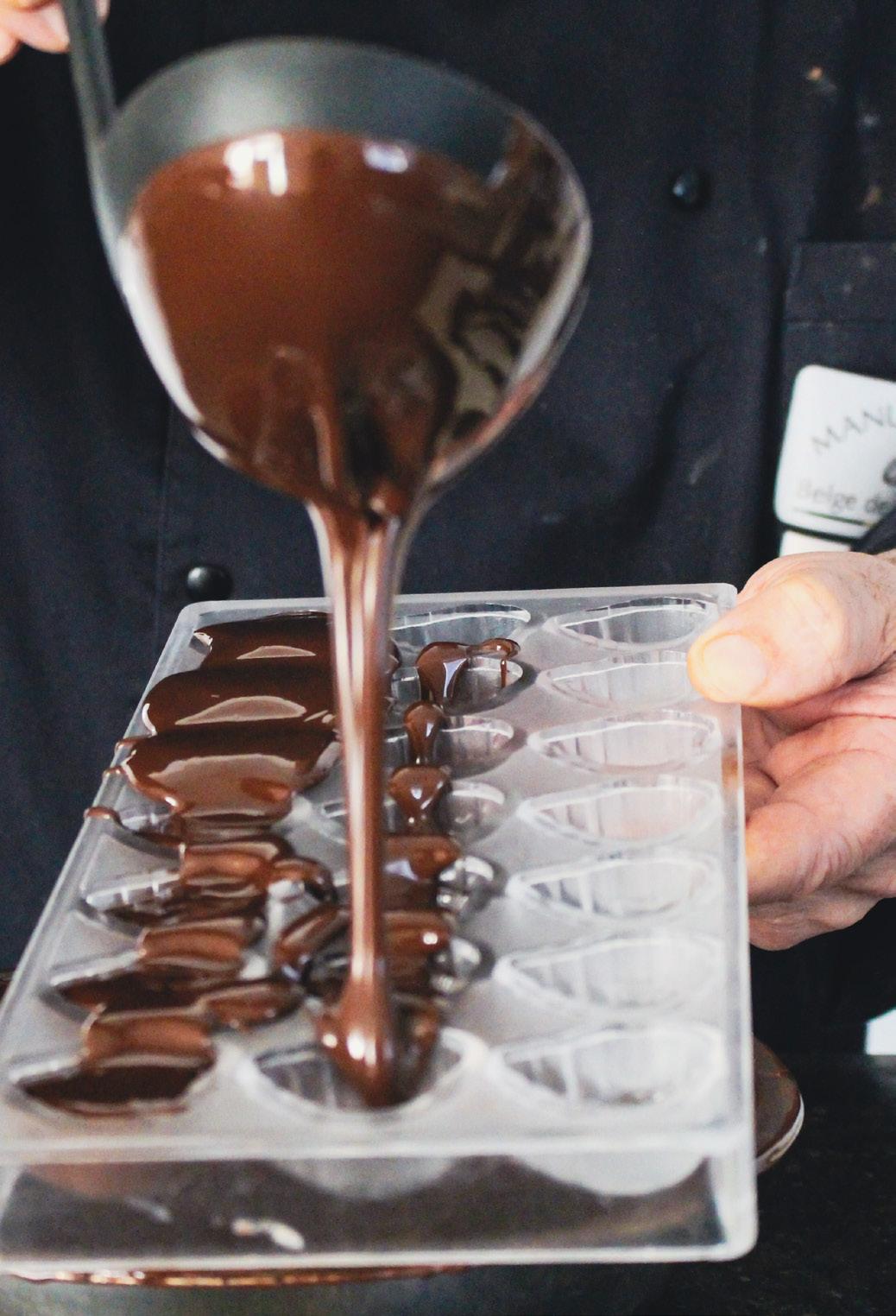
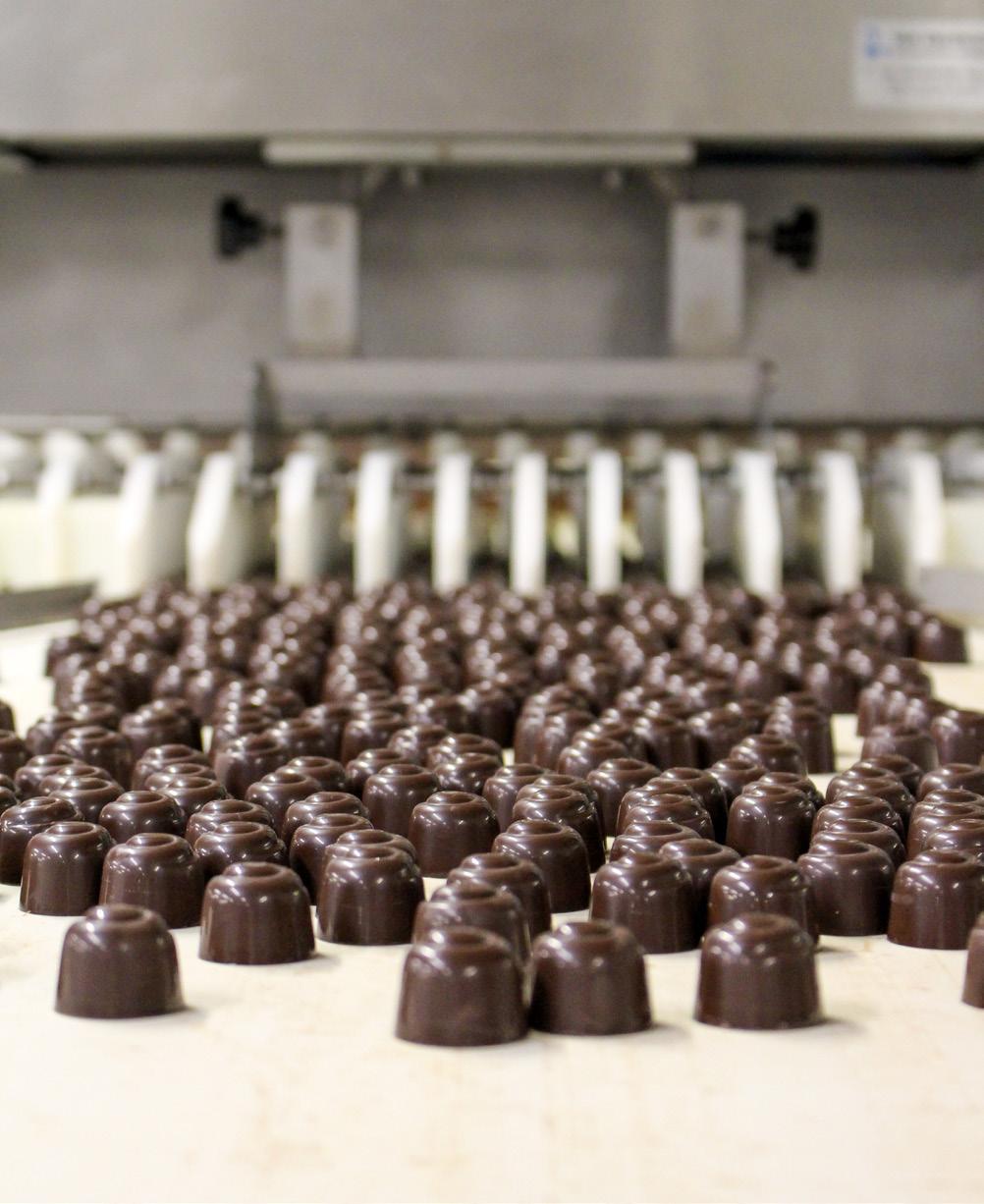
expectations. The fact that we are serving those customers with very positive acceptance shows we can hit the required levels of quality.”
To ensure its products live up to their reputation, quality at MBC is controlled at every stage, with a strong emphasis on in-house development. In fact, all the company’s recipes are made in-house, and it remains one of the last remaining Belgian chocolatiers to produce its own hazelnut praliné.
Alongside consistent quality, MBC develops a steady flow of new products. Seasonal demand drives frequent updates to the company’s portfolio.
“We have more or less one third of our products renewed every year,” Arnaud reveals. “We are particularly focused on holidays like Valentine’s Day & Christmas where demand is exceptionally high.”
High demand for novelty and personalisation means MBC requires a structured development process. Concepts must be created, tested, and scaled with uncompromising attention to detail.
Recent projects highlight this capability. A global anniversary collection, for instance, brought together technical execution and brand storytelling in a single range.
“We’ve just delivered a collection for Godiva’s 100th anniversary, which showcases everything we have been developing for the company over the years,” says Arnaud. “We used real gold on some of those chocolates to reflect the importance of that colour to Godiva.”
Other MBC collections are designed around seasonal themes and consumer engagement.
“For Valentine’s Day we had an Alice in Wonderland collection depicting scenes from the story,” he adds. “While for Christmas, we developed a Buche de Noel concept in pralinés.”
As MBC expands its reach, the company is structuring its approach for collaboration with new customers. A catalogue


provides an entry point, but flexibility is central to the offer.
“We start the relationship by showing our clients our capabilities,” Arnaud declares. “From there, we can adapt. We can change shapes, ingredients, and textures. Through multiple rounds of refinement, we can match our customers’ exact requirements.”
Operationally, delivering that level of flexibility requires a balanced production model.
Beyond product quality, operational excellence is a key focus across the organisation.
Chocolate manufacturing still depends heavily on skilled people, particularly in core processes.

“We receive important contributions from people across our operations,” Arnaud says. “We build our teams around knowledge, expertise and savoir-
faire, and focus on developing those skills in-house so that the key roles are sufficiently supported. Typically, preparing recipes, tempering the chocolate, monitoring the key parameters at different production stages are activities for which expertise is required.
“From a technology perspective, automation is only employed where it improves efficiency without affecting quality, such as at the end of the line for tasks like picking and packing finished items. Largely, it’s a question of whether the volume justifies the investment.”
Continuous improvement is embedded across the factory floor. Structured programmes help identify and implement incremental gains.
“We run Kaizen projects, we encourage ideas from the ground up from all teams, and we have whiteboards on every line to track performance and identify opportunities for improvements.
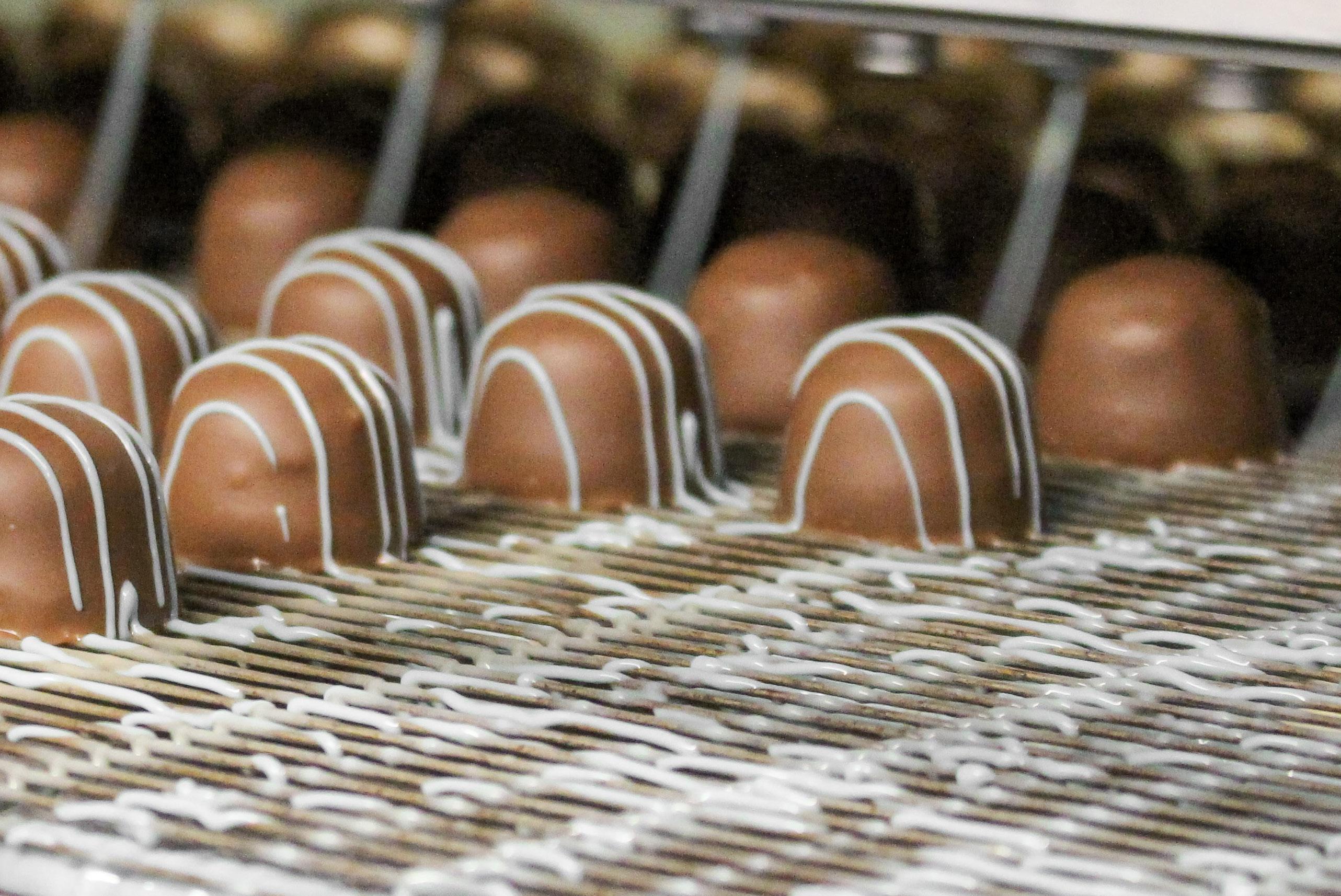
“Ten years ago, the small wins were not always material,” Arnaud remarks. “Now it’s essential that you capture all you can in terms of performance and cost reduction.”
This is especially true when presented with major challenges, such as recent cocoa price volatility. These issues have led the chocolate market to experience sharp increases in price, followed by partial stabilisation at higher levels.
“In 2024 and 2025, cocoa rose to four or five times above its 2023 price,” Arnaud notes. “Now cocoa is back at lower levels, but still costs more than it did before. As a result, careful planning and commodity hedging has become very important so that we can keep the promises we make to our customers.”
Looking ahead, MBC’s priorities are clearly defined. Growth in new business is central to its strategy. While progress has already been made, achieving lasting growth will require
continued investment in both operations and commercial capabilities.
As MBC expands its reach, the company is also strengthening its ability to work closely with customers to develop tailored solutions that meet specific market and retail requirements.
A recent example is a collaboration with Costco, for which MBC developed two different gifting box formats designed to suit distinct merchandising and consumer needs. The project, centred around premium éclairs, demonstrated the company’s ability to combine product expertise with flexibility in packaging, format development, and customer collaboration.
At the same time, MBC is focused on maintaining the expertise that underpins its products.
“Ultimately, we need to direct all our energy to our mission:
to bring memorable occasions of happiness to people everywhere. That applies to our customers, consumers, and employees alike.
“When you enter our factory and smell the chocolate, smell the praliné, it’s a very special feeling,” Arnaud reflects. “We want to bring that feeling to everyone – through our products and through the way we operate.”
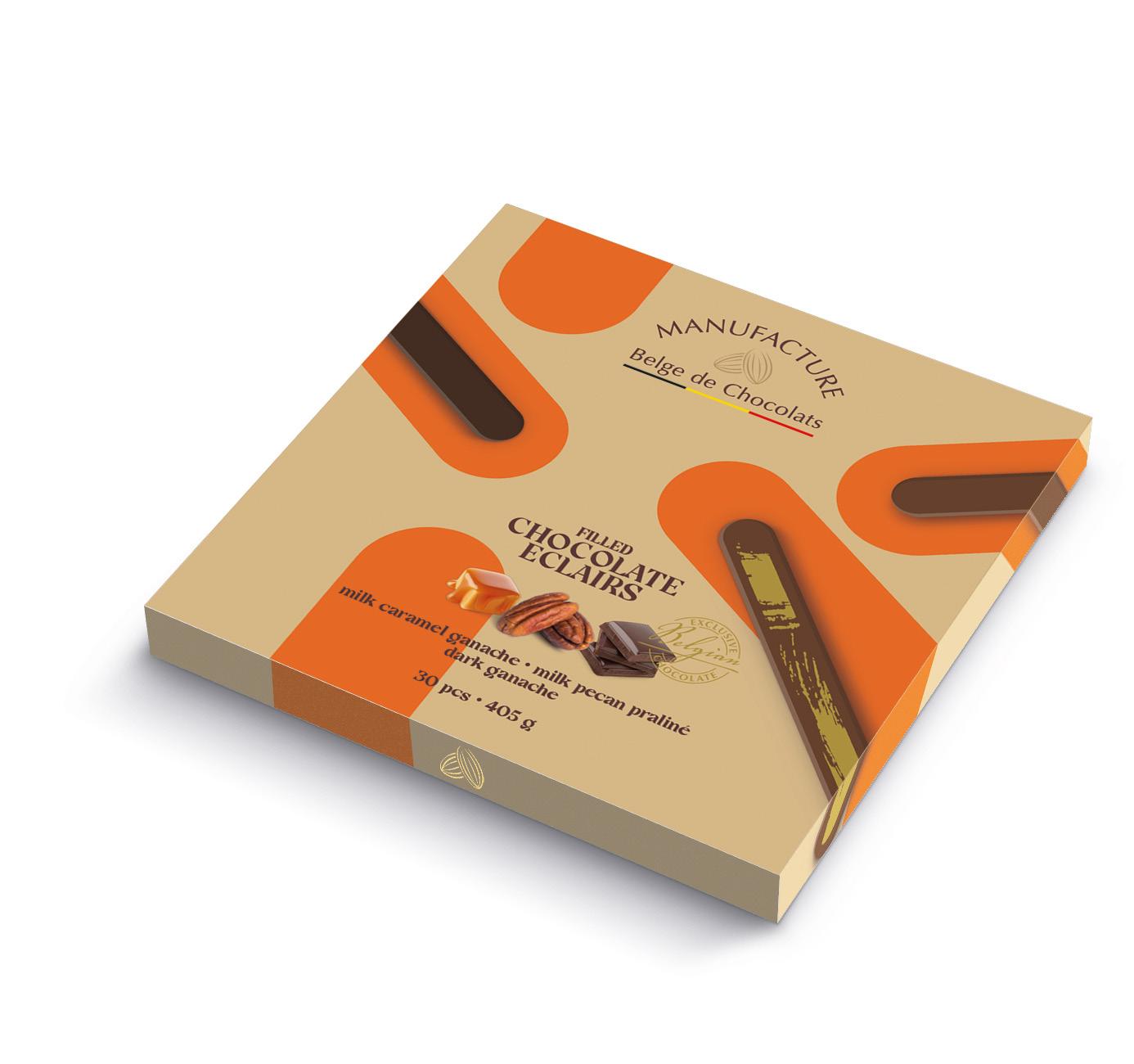
FROM CASK HERITAGE IN A SMALL BREWPUB TO TWO SUCCESSFUL CRAFT BREWERIES, OSSETT BREWERY AND SALT BEER FACTORY ARE EXPANDING THEIR REACH AND REDEFINING MODERN BREWING.
A dual-brand strategy is reshaping how one Yorkshire-based business approaches the UK beer market. SALT Beer Factory and Ossett Brewery operate side by side, but not in competition. Instead, they form a complementary platform designed to capture both tradition and innovation, while steadily expanding national reach.
In terms of their relationship, the obvious link between SALT and Ossett Brewery is ownership,” begins Managing Director Edd Simpson. “Ossett is a 27-year-old business, born out of a traditional cask background, and has grown into a strong regional player. SALT came much later, in 2018, and was created to tap into the growth of craft beer.”
The distinction between the two brands still matters. Ossett Brewery built its reputation in pubs, rooted in community and consistency. SALT was designed from the outset as a modern craft brand, targeting a different audience with a different style of brewing. For several years, the two operated almost entirely
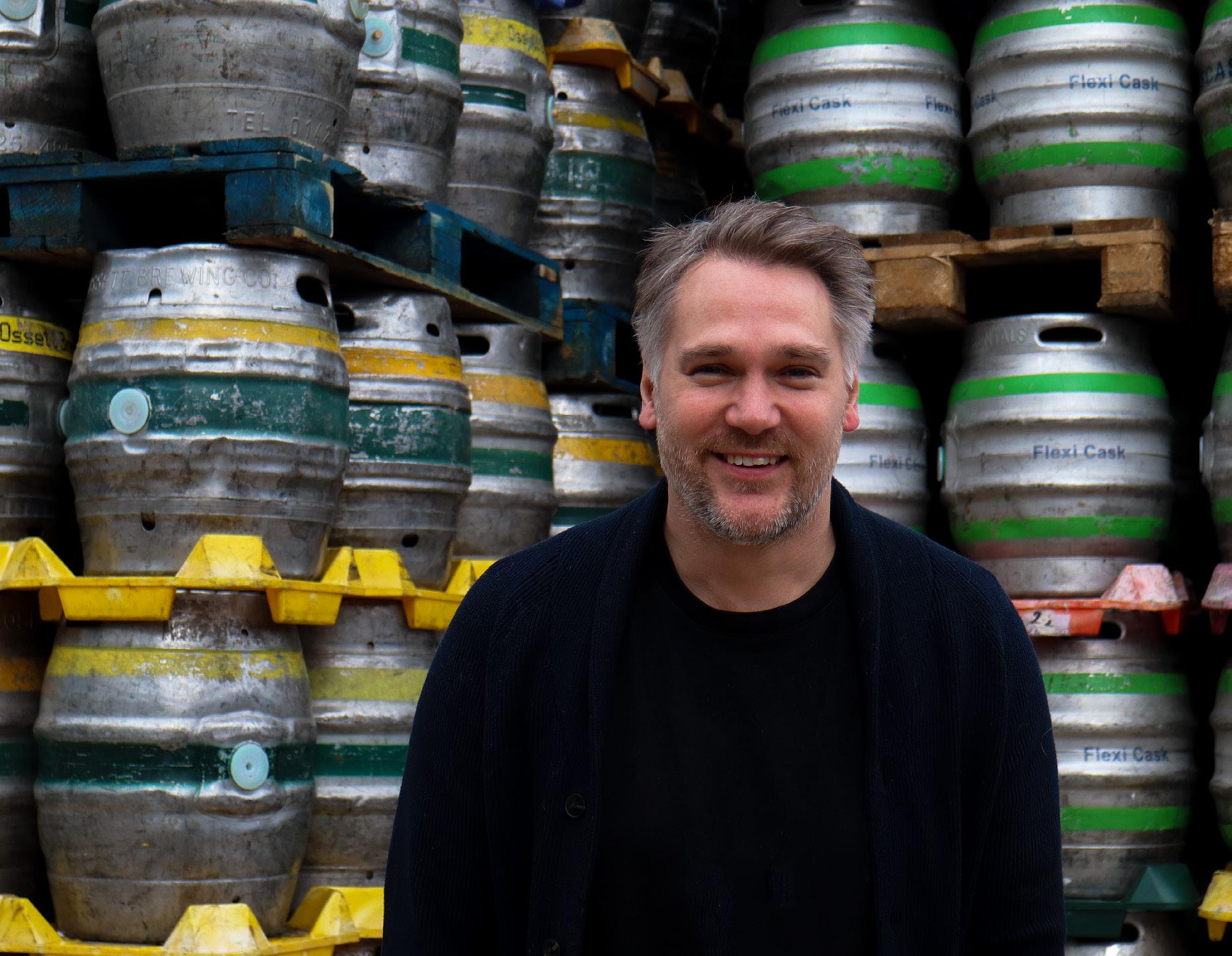
a craft arm within it, so in some ways it has become the more youthful brand.”
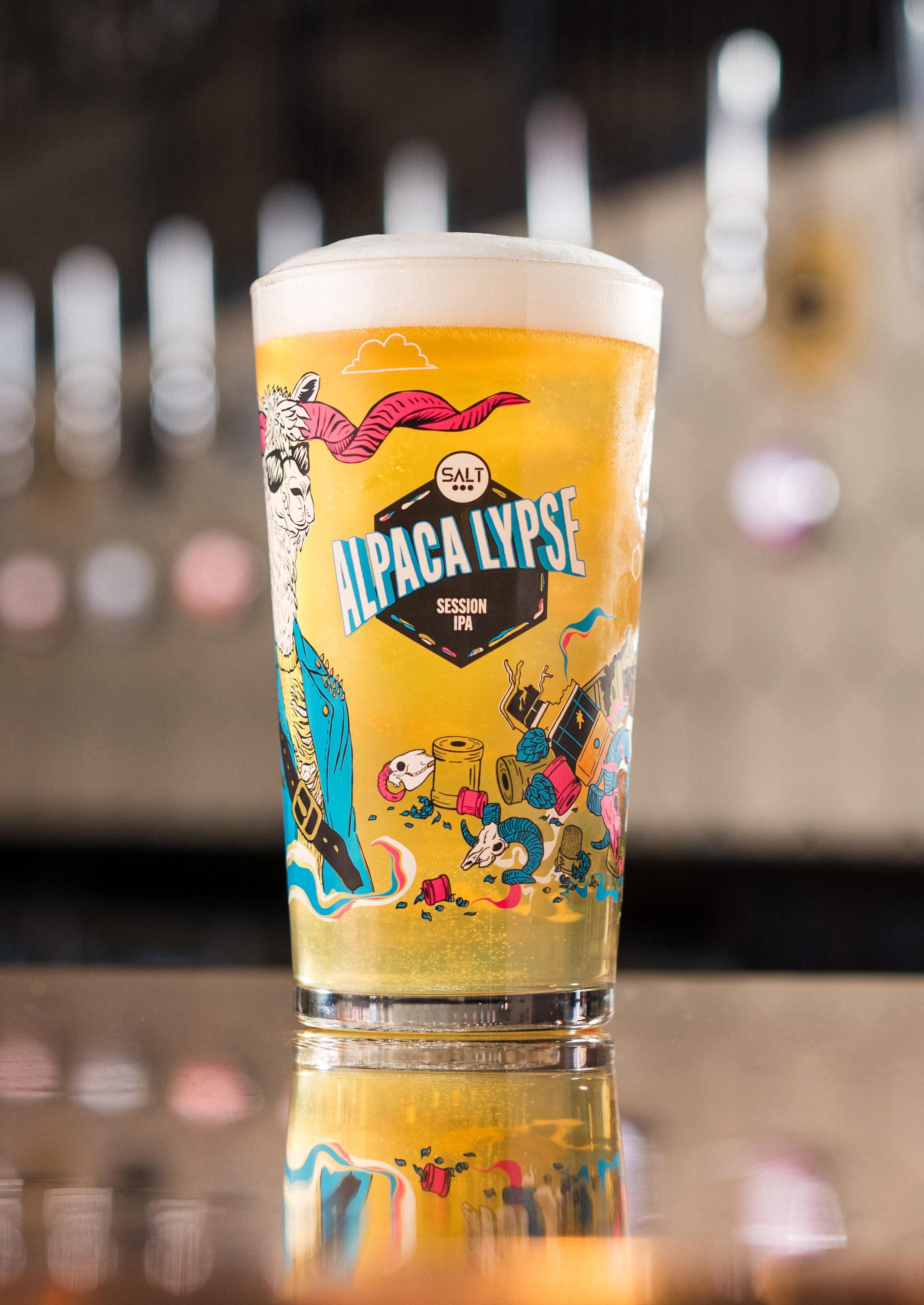
SALT’s growth over the past eight years has been driven by a clear and disciplined approach to range building. While many craft brewers focused on constant innovation and frequent releases, SALT chose a different path.
“The craft market was very segmented when we started,” Edd states. “Brewers were releasing hundreds of different SKUs, experimenting all the time. We took a more focused approach. We built a core range early on and stuck with it.”
This decision created clarity for both trade and consumers. It also supported a broader ambition to make craft beer more accessible.

“We wanted SALT to be approachable,” Edd reveals. “Quality has always been at the forefront, but we never wanted to create something exclusive or intimidating.”
SALT products like Jute –a juicy Session IPA – helped establish that positioning. More recently, Alpacalypse has taken it to another level.
“Alpacalypse was consciously designed for the craft-curious drinker,” Edd says. “There are a lot of people who want to move beyond lager but find some craft beers too challenging. This is a hop-forward beer that is still easy to drink.”
The response to Alpacalypse been overwhelmingly positive. SALT delivered 42,000 hectolitres of the beer during its first year – double the
product’s business case. It was a clear sign of the growing audience for accessible craft.
Since then, distribution has played a key role in both SALT and Alpacalypse’s success. The establishment of a strong relationship with Molson Coors has been particularly instrumental, enabling SALT to scale quickly and secure listings in high-profile venues – from pubs to stadiums.
Ossett Brewery’s story is different to SALT’s, but no less dynamic. At the heart of the brewery’s growth is White Rat, a beer that emerged organically and has since become the brand’s flagship.
“White Rat was created in one of our brew pubs and just grew legs on its own,” Edd affirms. “It became our biggest selling beer without significant marketing behind it.
“We have since made a conscious decision to get behind White Rat and build it as a national brand. For me, it is the best cask beer on the market.”
Cask remains central to Ossett Brewery’s identity, but it also comes with limitations. It requires careful handling and consistency can vary depending on how it is served. This creates barriers to wider distribution and premium positioning.
“Cask is the purest expression of beer, but it is also the most vulnerable,” says Edd. “It’s a fact that has limited cask’s ability to gain more bar space.”
For Ossett, the solution has been innovation within format rather than flavour. The launch of White Rat Nitro reflects this line of thinking.
“WE WANT TO BE ONE OF THE STRONGEST INDEPENDENT BREWING AND PUB COMPANIES IN THE UK.”
“With White Rat Nitro, we saw an opportunity to create a creamy, consistent serve that could compete in spaces where cask struggles,” Edd remarks. “There is no strong hoppy pale in that format, so we developed one.”
Early results have been promising, both in on-trade and off-trade environments.
“In the supermarket aisle, cask is often poorly represented. Nitro allows us to deliver something much closer to the real experience. When we tested it, people could not believe it came from a can.”
Alongside product innovation, the group’s physical footprint plays a critical role in brand building. The SALT/Ossett estate now spans 32 sites,
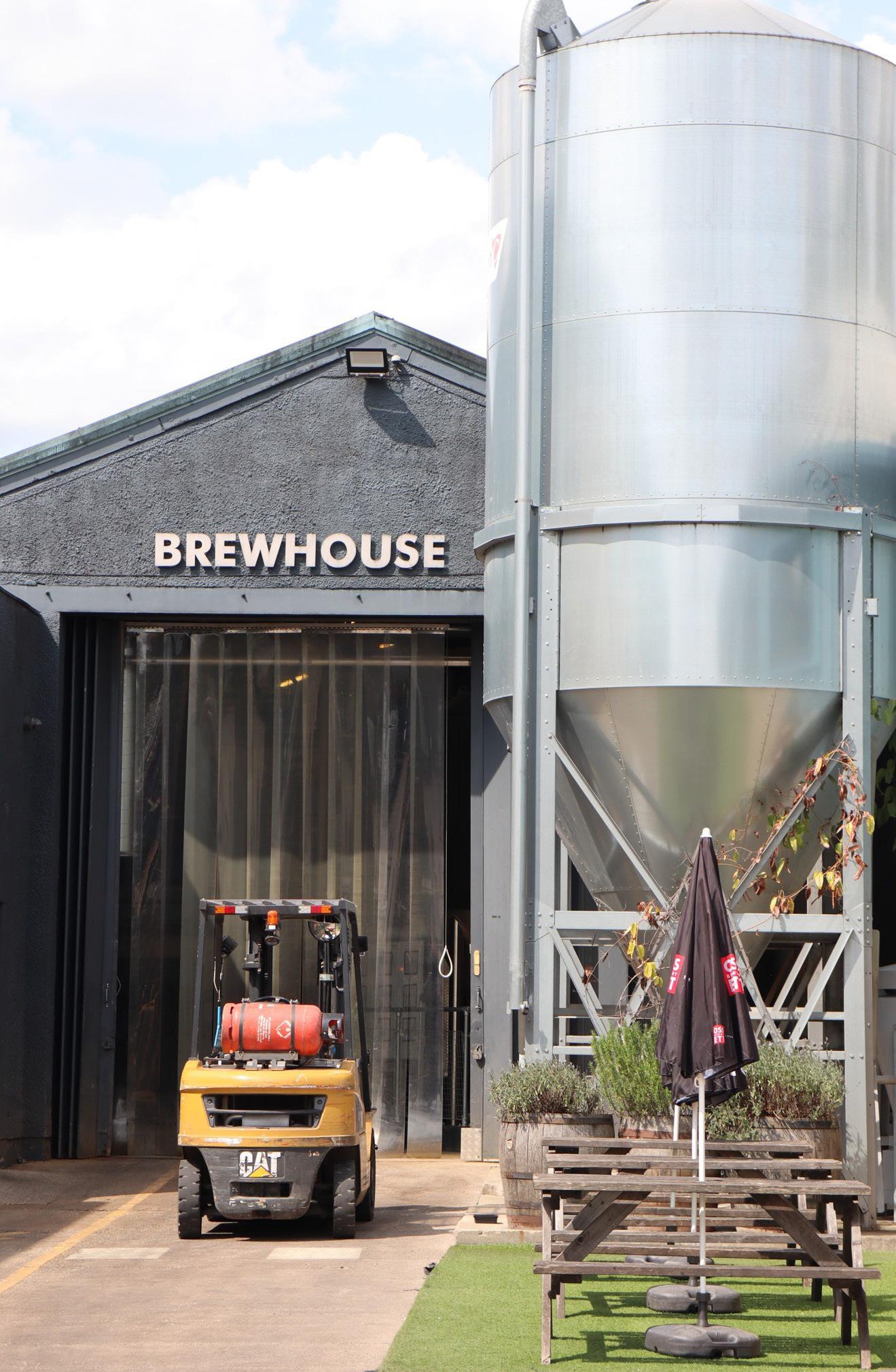
largely concentrated in Yorkshire but with a growing presence in major cities including Leeds and London.
“Ossett pubs tend to sit in rural or community settings,” Edd notes.
“They are very much the heart of local areas. SALT bars are more city-centre-based, more up-tempo, and more focused on craft.”
This balance reflects the heritage of the business, shaped heavily by Ossett PubCo founder Jamie Lawson’s passion for pubs.
“Jamie’s heart is in pubs,” says Edd. “He loves creating spaces where people can come together, enjoy great beer, and be part of a community.”
SALT Beer Factory truly embodies this philosophy.
Designed as a modern taproom, it brings brewing and consumption into the same space.
“The idea was to create theatre,” Edd reports. “You can sit next to the tanks and drink the beer where it is made. That connection is really important.”
Several sites within the company’s portfolio follow a
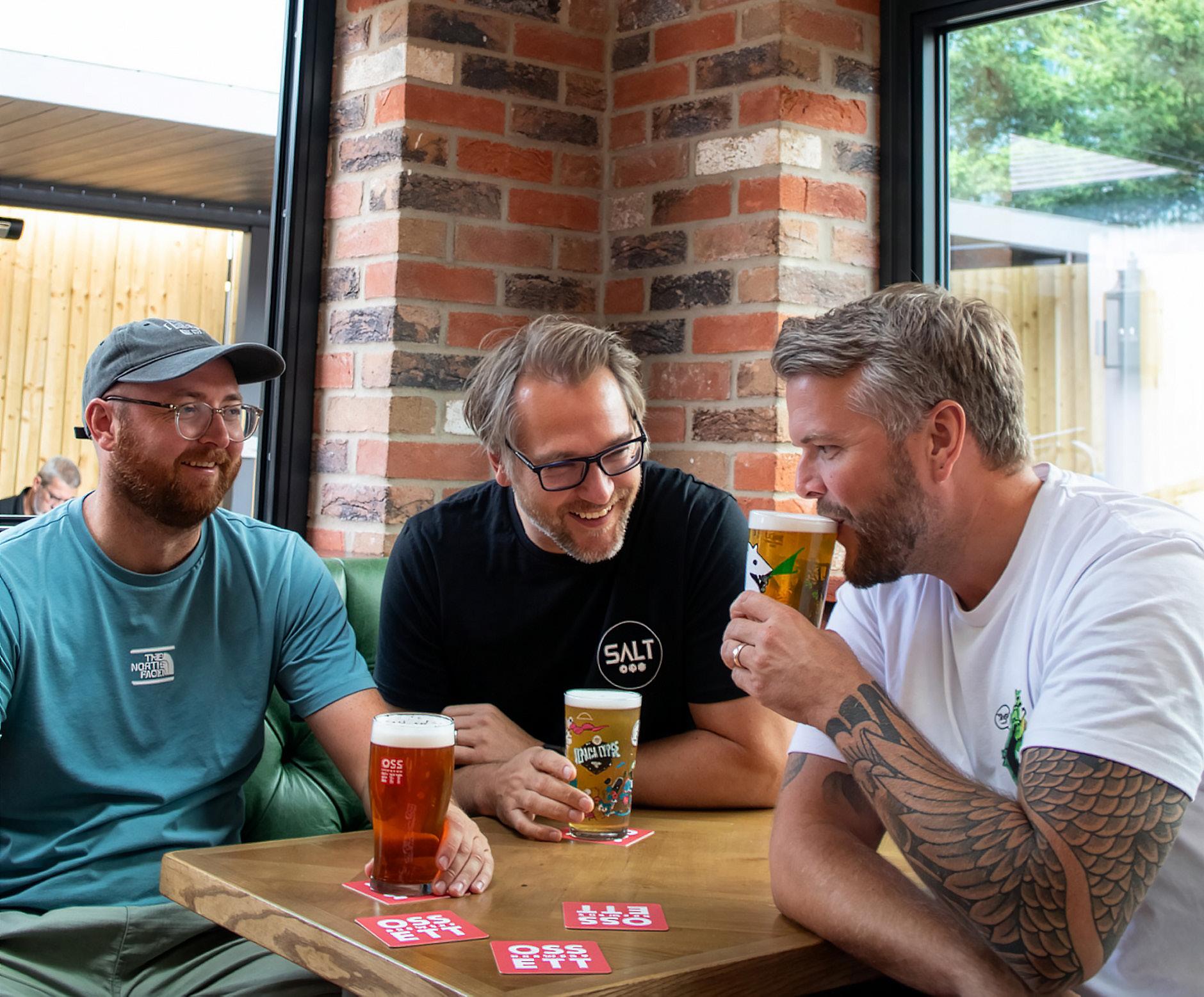
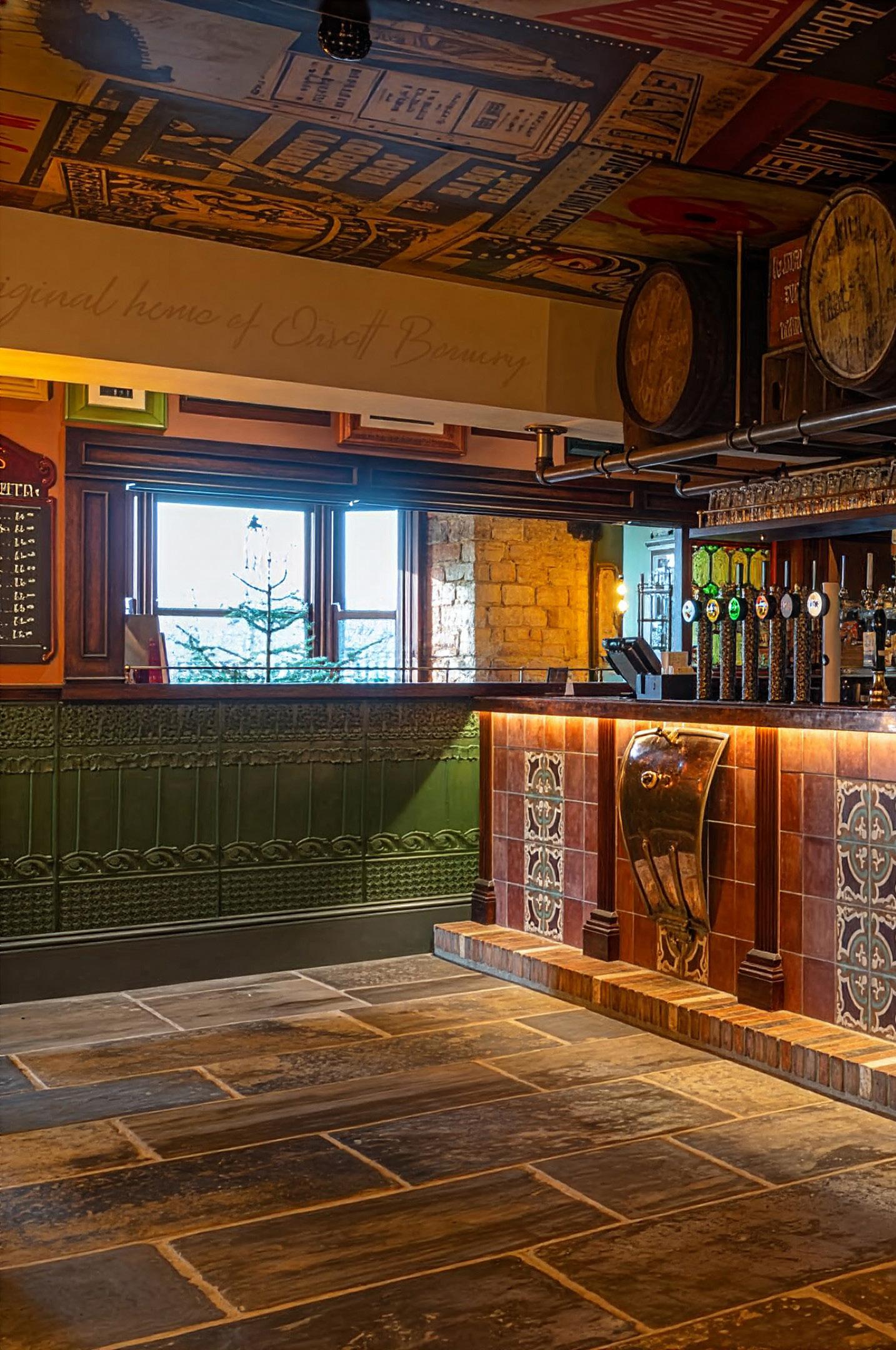
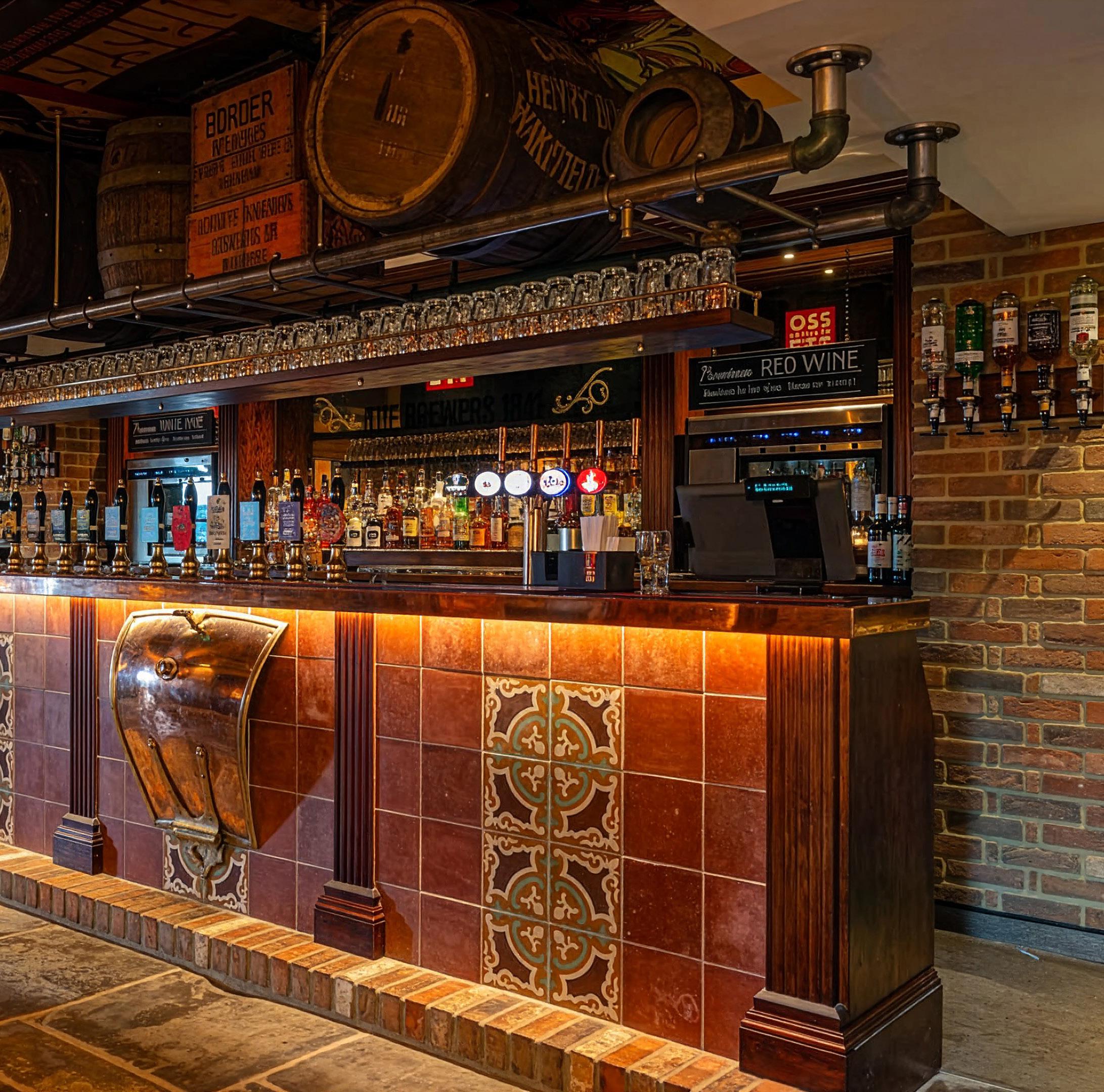
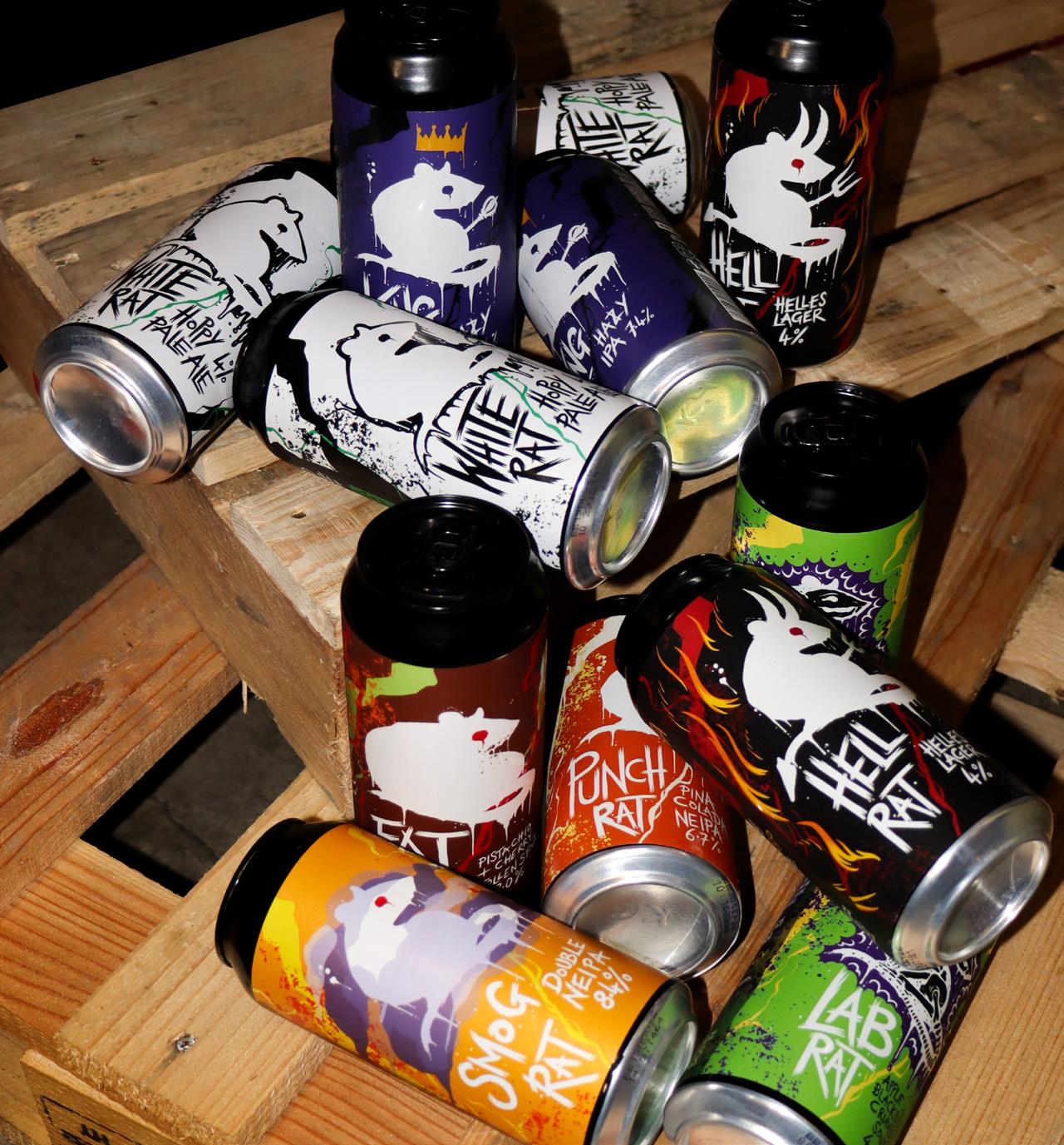
similar model, combining brewing with hospitality to create unique, localised experiences. It is a format that reinforces both authenticity and freshness.
Looking ahead, the strategy is clear and focused.
For Ossett Brewery, the priority is scale. “We want to make White Rat the most powerful cask brand in the UK,” Edd declares. “Everything we are doing is geared towards that –building distribution, increasing awareness, and expanding into new formats.”
For SALT, the emphasis is on consolidation and selective growth. “It is about continuing to drive Alpacalypse and supporting it with complementary products. We have also entered the fruit lager category with Felt peach lager, which is gaining traction.”
Further innovation is already in the pipeline for SALT, along with plans to extend key products into retail.
“At the moment, Alpacalypse is on-trade only,” Edd says. “We are looking at bringing it into offtrade in the next couple of years.”
Ultimately, across both brands, the overarching ambition remains consistent.
“We want to be one of the strongest independent brewing and pub companies in the UK,” Edd concludes. “That means producing great beer, building strong brands, and getting them into as many hands as possible.
“We are not chasing rapid growth in site numbers. The focus is on investing in what we already have. For SALT and Ossett, we firmly believe there is a lot more potential to unlock.”
“WE WANT TO MAKE WHITE RAT THE MOST POWERFUL CASK BRAND IN THE UK”
WHILE SWEDISH COMPANY APL IS NOT A HOUSEHOLD NAME, IT OCCUPIES A QUIETLY CRITICAL ROLE WITHIN EUROPEAN HEALTHCARE.
As one of the continent’s largest manufacturers of extemporaneous pharmaceuticals, the Swedish stateowned company operates at the intersection of public health policy and advanced life sciences manufacturing.
Founded out of Sweden’s historic centralisation of pharmacy compounding, APL - or Apotek Produktion & Laboratorier AB - has evolved into a modern organisation. As CEO Erik Haeffler explained when we spoke to him over a year ago, the company’s roots stretch back decades. “Early in the 1970’s all pharmacies in Sweden were nationalised and starting in the 1980’s all compounding that took place in individual pharmacies was centralized into what later became APL.”
“With the deregulation of the pharmacy market in 2010 the retail and laboratory manufacturing parts of the centralised organisation were split up and APL became an independent organisation focused on laboratory manufacturing. As a consequence, APL has a dominant position for pharmacy compounding in the Swedish
market, with the opportunity to explore new areas and pursue innovative work.”
Today, with more than 600 employees and multiple production facilities across Sweden, APL has built its reputation on flexibility and precision. Its core business lies in producing customised medicines for patients whose needs cannot be met by standard, commercially available drugs. Alongside this, its contract development and manufacturing arm provides services to biotech and pharmaceutical companies, ranging from clinical trial materials to full-scale production. That foundation is now being reshaped by a series of significant developments between 2025 and 2026. These moves reflect both a response



alternative, enabling exact dosing and improved process reliability.
www.habnj.se
to global healthcare challenges and a strategic push to expand APL’s technological capabilities and international reach.
One of the most notable milestones came in June 2025, when APL acquired an 8,000 square metre penicillin production facility in Strängnäs. The purchase, backed by Swedish government funding, is part of a broader national effort to secure domestic pharmaceutical supply chains.
The rationale is clear. In recent years, medicine shortages and supply disruptions have exposed vulnerabilities in global production networks. Sweden, like many countries, has sought to rebuild local capacity for critical drugs, particularly antibiotics.
The facility was officially commissioned in September 2025. “The inauguration of our new facility marks an important step for Sweden’s pharmaceutical supply and preparedness. It strengthens Sweden’s national capacity in antibiotic manufacturing and APL has taken a central role
in ensuring access to vital medicines for the Swedish population,” stated APL.
Beyond its national significance, the move also enhances APL’s capabilities as a contract manufacturer. The addition of specialised production lines opens new opportunities to serve international clients requiring antibiotic manufacturing expertise.
While infrastructure expansion addresses supply security, APL is also investing heavily in the future of pharmaceutical production.
In January 2026, the company announced its first delivery of a compounded medicine produced using 3D printing technology, under the concept ExtempoPrint. This development signals a shift toward highly personalised treatments. Traditional compounding methods, such as manual capsule filling, can be labour intensive and less precise for low dose medicines. 3D printing offers a more controlled
“We are pleased to have reached this important milestone for ExtempoPrint. ExtempoPrint is an exciting model that suits compounding well. It enhances our abilitiy to fulfil APL’s public policy assignment and creates new opportunities to meet patient needs,” affirmed Erik Haeffler.
The first compounded medicine is a medication used to treat high blood pressure (hypertension) intended for paediatric use. The target patient group is children undergoing cancer treatment, in whom hypertension may occur. The benefits extend beyond accuracy. The automated nature of 3D printing improves safety for production staff and reduces variability in manufacturing.
APL is co-operating on this technology with CurifyLabs, a Finnish health tech company. The printers are part of CurifyLabs’ Compounding System Solution, which is already in use at several hospital pharmacies around Europe. Over time, APL plans to expand the range of formulations produced through ExtempoPrint, scaling the technology in line with demand.
In parallel with its technological and infrastructural investments, APL is also strengthening its position in the global pharmaceutical market. A key example is its role in supporting the U.S. launch of Pivya®, a pivmecillinam based antibiotic developed by Alembic Therapeutics.
Announced in February 2026, the launch marks APL’s involvement as the contract manufacturer responsible for formulation and packaging at its Strängnäs site. “We are proud that the project together with Alembic Therapeutics has reached this important milestone,” said Erik Haeffler.
“We manufacture pivmecillinam formulations for other markets, and we are excited to see Alembic bringing this product to the US market. This launch is also
an important acknowledgement of APL’s capabilities as a skilled contract manufacturer. We look forward to continuing our collaboration and supporting Alembic Therapeutics in the launch and supply of Pivya®.”
The significance of this development goes beyond a single product. It supports APL’s growing credibility as a contract development and manufacturing organisation on the global stage. By supporting a US market entry, the company demonstrates its ability to operate within one of the world’s most demanding pharmaceutical environments.
It is evident that APL’s recent trajectory highlights a careful balancing act. On one hand, it remains deeply rooted in its public policy assignment, ensuring access to tailored medicines and strengthening
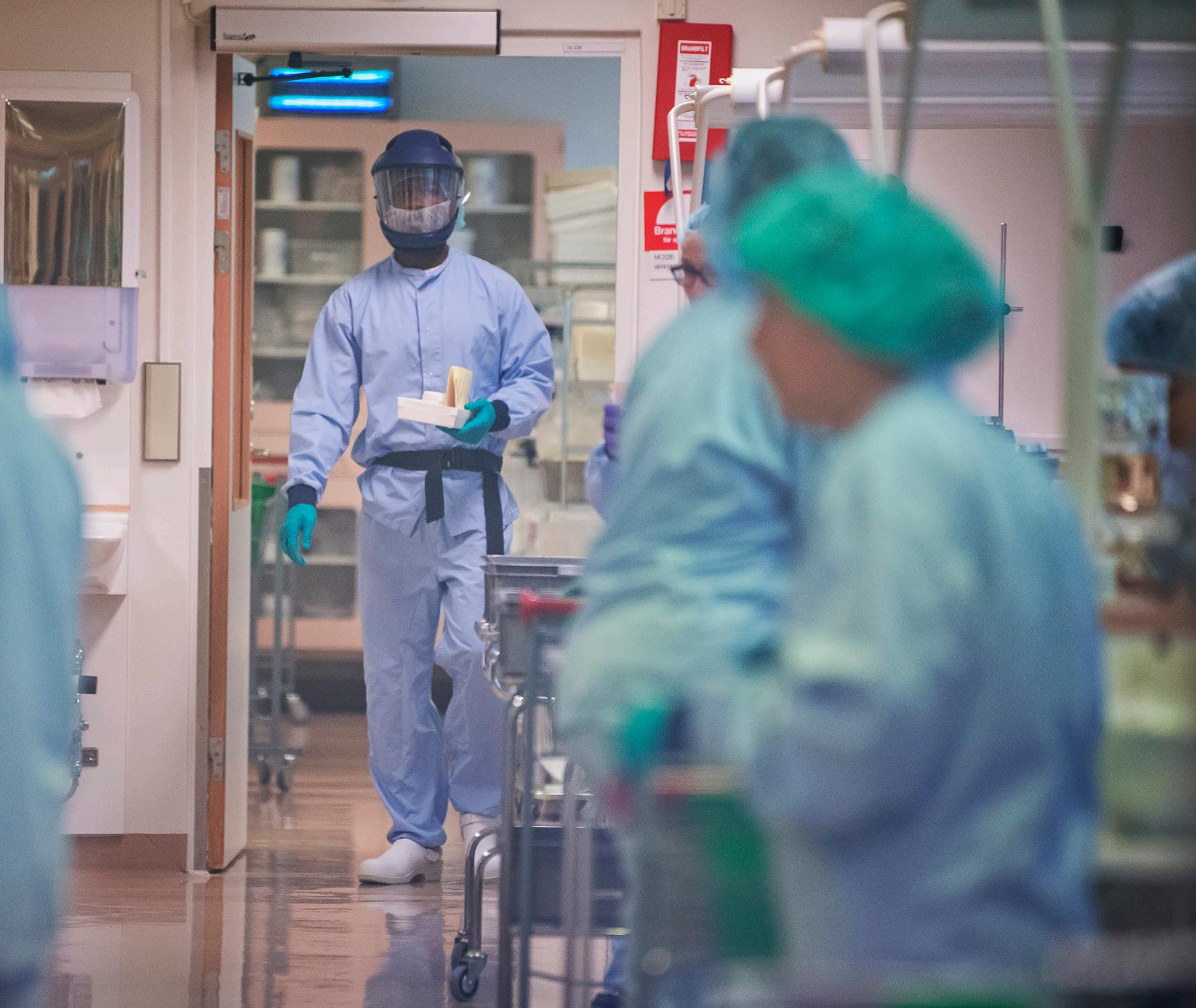
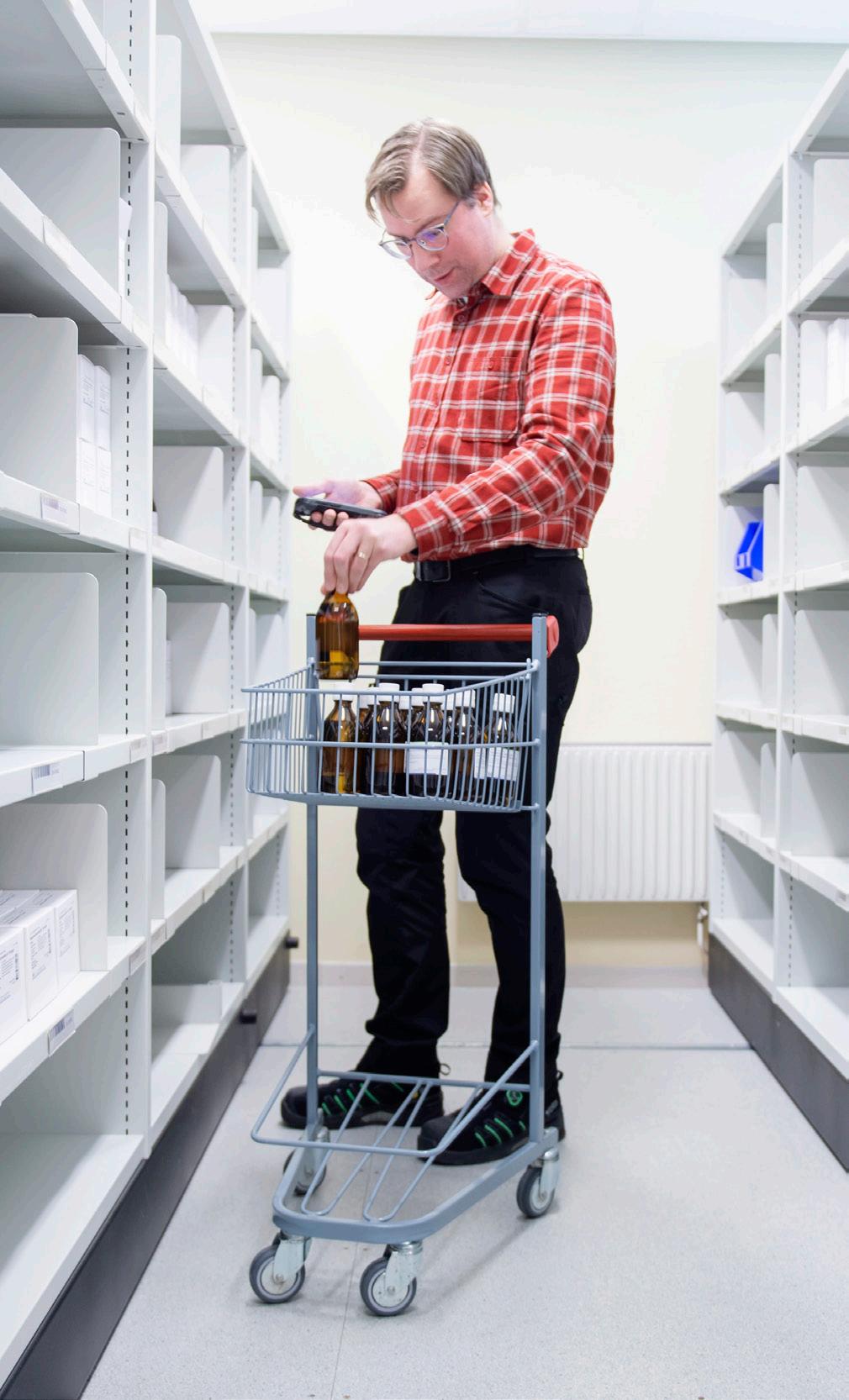
national preparedness. On the other, it is actively pursuing growth opportunities in the competitive global pharmaceutical market.
The developments between 2025 and 2026 illustrate how these objectives can align. Investments in facilities such as Strängnäs enhance both national resilience and commercial capability. Innovations like ExtempoPrint improve patient outcomes while opening new avenues for technological leadership. As the pharmaceutical sector continues to evolve, driven by personalised medicine and supply chain security, APL seems to be at the right place at the right time.
LICHTENHELDT IS A VALUABLE PARTNER IN A COMPLEX INDUSTRY.
Steady expansion, technical depth, and long-term partnerships combine at Lichtenheldt. The German contract development and manufacturing organisation (CDMO) has built its reputation on consistency and capability across non-sterile pharmaceuticals, with a clear focus on liquids and semi-solids. Growth has been deliberate, grounded in investment at its existing site and shaped by close collaboration with customers.
Lichtenheldt traces its origins back to 1948 in the Hamburg Metropolitan Area and has operated under its current ownership for more than four decades. Today, Managing Director Dr. Armin Jentsch sees the organisation as one that has evolved steadily, while remaining focused on its core competencies.
“Lichtenheldt is an established CDMO with a long history,” Armin explains. “We primarily focus on manufacturing liquids and semi-solids, and have all the key certifications for non-sterile drug manufacturing. Over the years, we have shown sustainable growth and are investing in the future here at our site.”
Investing locally is central to Lichtenheldt’s company strategy. Rather than expanding across multiple locations, the business is strengthening and scaling its existing operations in northern Germany. The aim is straightforward: to maintain quality, increase capacity, and stay close to customers.
“We are a one-stop shop,” Armin declares. “We are flexible enough to adapt to our customers’ ideas and demands, but still have the size to meet those demands at a high level, increasing production when needed.”
Lichtenheldt’s flexibility extends across the full lifecycle of a product. Development, analytical services, bulk manufacturing, packaging and logistics are all handled in-house. For customers, this reduces complexity and risk, particularly when scaling from early-stage development through to commercial production.
The model is proving especially effective as product requirements become more demanding. Lichtenheldt manufactures a wide range of drugs and pharmaceutical products including formulations, from mouthwashes and disinfectants to sprays, drops, creams and ointments. Increasingly, however, customers are seeking support with more complex formulations.
[Opposite Page]
Dr. Armin Jentsch, Managing Director, Lichtenheldt.
As part of this mission, Lichtenheldt carefully positions itself within a crowded CDMO market. While many competitors specialise narrowly, focusing on specific dosage forms or stages of the pharmaceutical value chain, Lichtenheldt has taken a broader approach.
“We see a stronger focus from our customers on more complex products,” Armin notes. “We are happy to assist in development and support them right from the beginning.
“We recently worked with a customer to refine and improve a semi-solid product, supporting development, certification and market entry. The collaboration began early and continued through scale-up. We assisted in
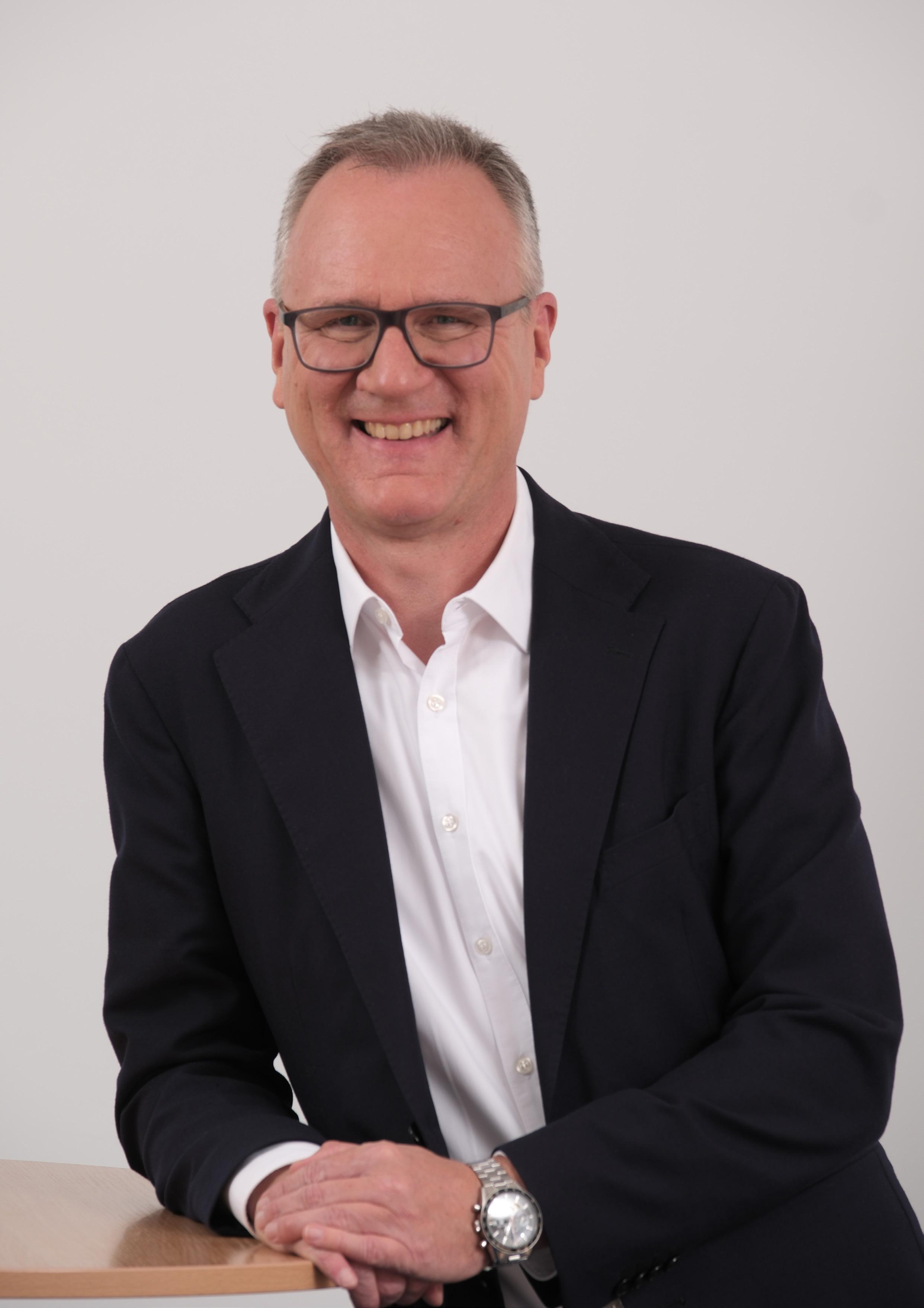
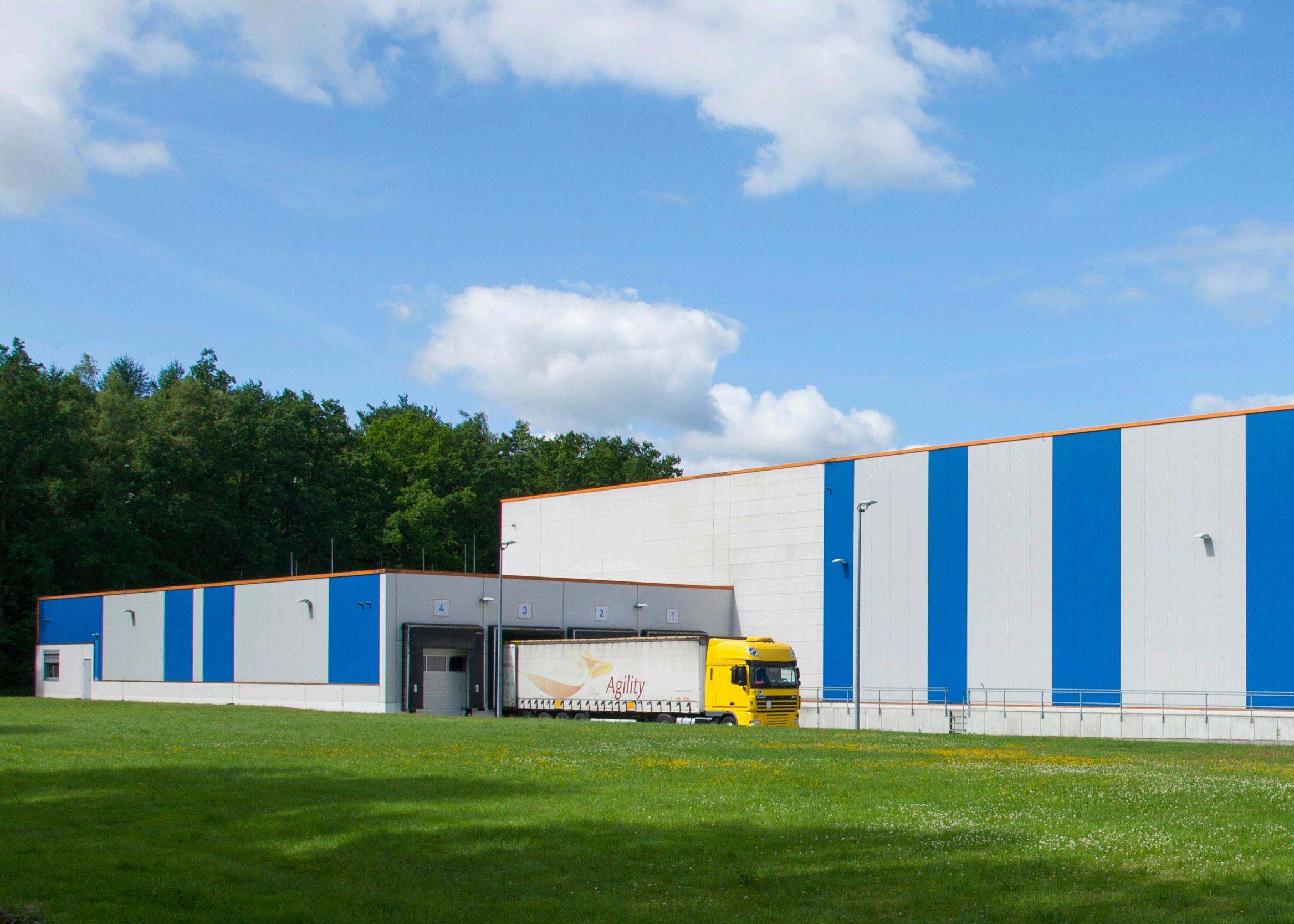
creating the product and getting all the necessary confirmations and certifications. Now it is marketed in the US, as well as several countries worldwide.”
As Armin suggests, Lichtenheldt has built numerous important partnerships over the decades. It is an endeavour that has underpinned the company’s growth strategy. Existing customers continue to expand their portfolios and geographic reach with Lichtenheldt, while new clients are drawn to the breadth of its services & proven track record. Supporting clients requires ongoing investment, particularly in capacity. That is where the company’s Lichtenheldt 2030 initiative comes in. Launched several years ago, the programme is designed to expand infrastructure, increase output and prepare the business for future demand.
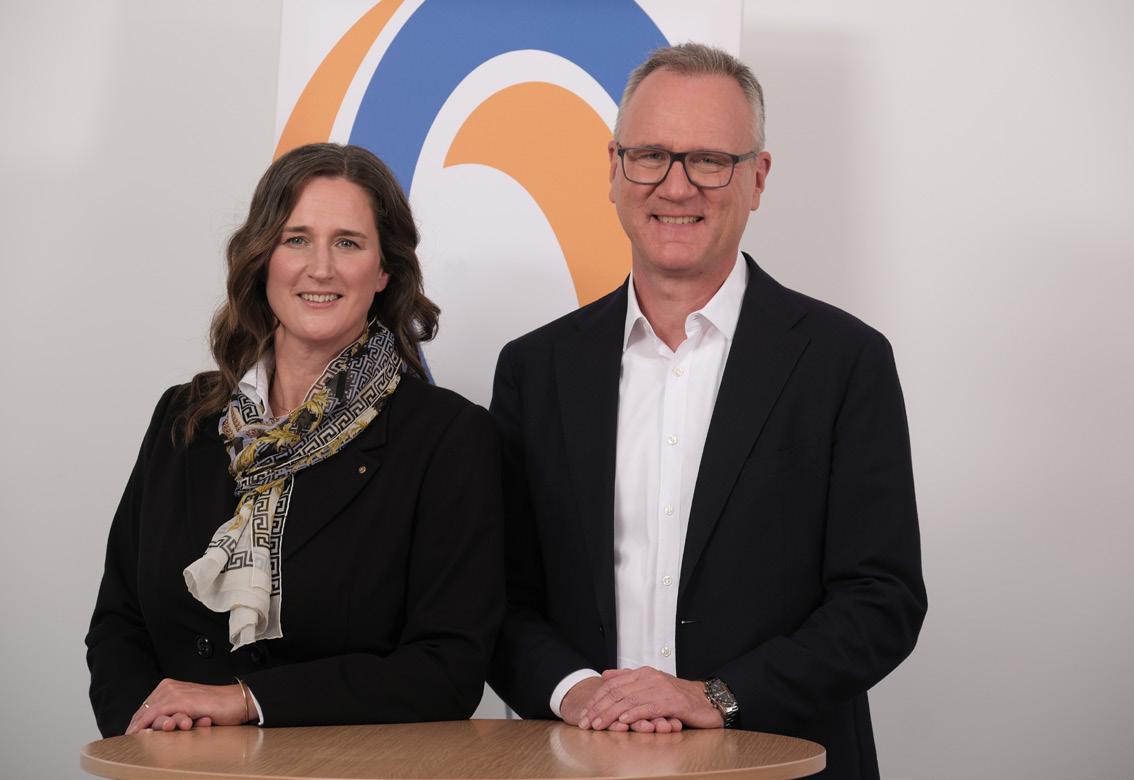
“We grow with our existing customers and take on new ones,” Armin says. “To do that, we need both quality and capacity.
“Recent developments include a new personnel facility and a dedicated warehouse for hazardous goods. A larger production expansion is
“WE ARE A ONE-STOP SHOP. WE ARE FLEXIBLE ENOUGH TO ADAPT TO OUR CUSTOMERS’ IDEAS AND DEMANDS.”
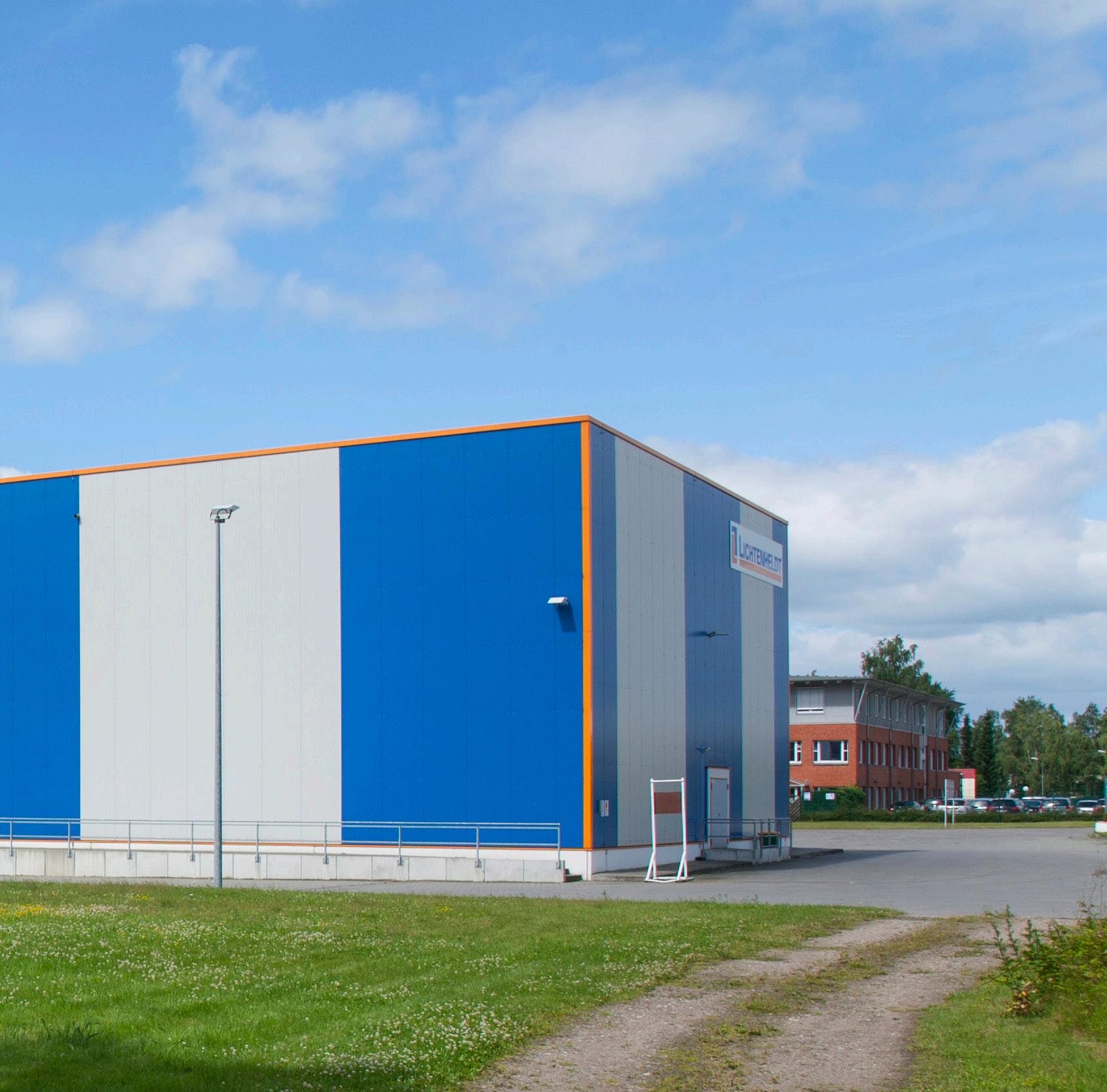
underway, adding space for three additional production lines. The scale of investment runs into several million euros and is entirely focused on our current site.”
From culture to investment, Lichtenheldt’s emphasis on driving quality remains constant. Operating in a GMP-driven environment, the company is subject to rigorous oversight from European and international regulators, including the US Food and Drug Administration.
“Quality is mandatory,” Armin asserts. “Authorities come here and take a close look at what we do. That is part of our daily business.”
Alongside regulatory expectations, customer requirements are also evolving. One clear trend is internationalisation. Even when
clients are based in Europe, their products are increasingly destined for global markets.
“We see the internationalisation of our customers,” Managing Director Andrea Schulz-Ayecke acknowledges. “With that, we need the capacity and expertise to support them.”
Building that level of expertise depends heavily on people. While investment in equipment and facilities is essential, Lichtenheldt places equal importance on workforce development.
“We put a lot of effort into the qualification of our employees,” Andrea comments. “We are lucky to have an experienced second management level
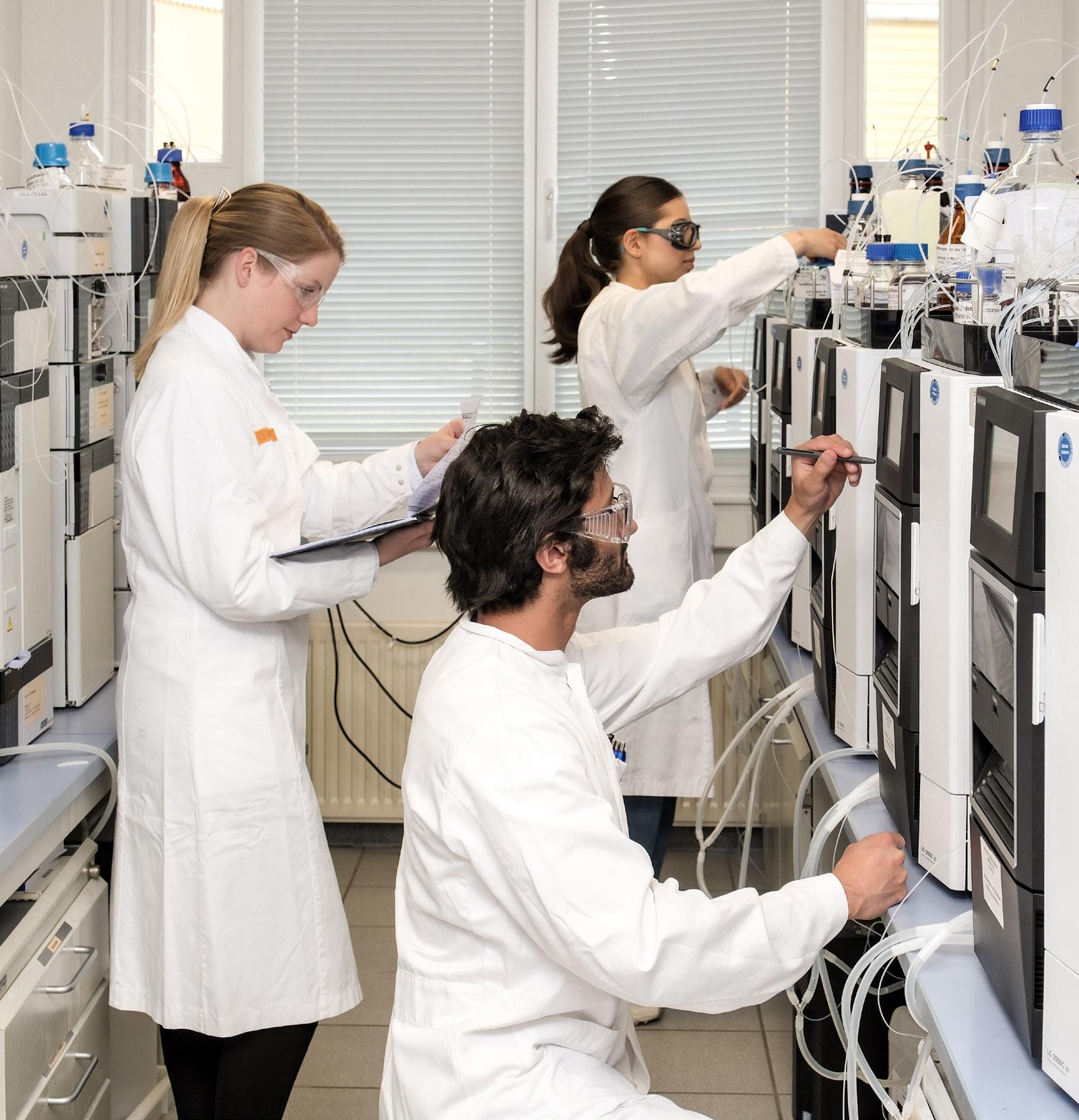
and a professionally qualified workforce.”
Training and continuous development are ongoing priorities. As production technologies evolve and product complexity increases, maintaining a skilled workforce becomes critical to staying competitive.
Technology also plays a growing role. The company is currently exploring the use of artificial intelligence in selected areas.
“We are trying to implement AI solutions in different departments,” Andrea remarks. “For example, in planning, to optimise supply chain
and production processes. There are possibilities that can benefit both us and our customers.”
Technological adoption is measured rather than wholesale at Lichtenheldt.
The focus is on practical applications that improve efficiency and decisionmaking, rather than technology for its own sake.
Meanwhile, the regulatory landscape continues to grow more complex. Beyond traditional pharmaceutical compliance, companies are facing additional requirements
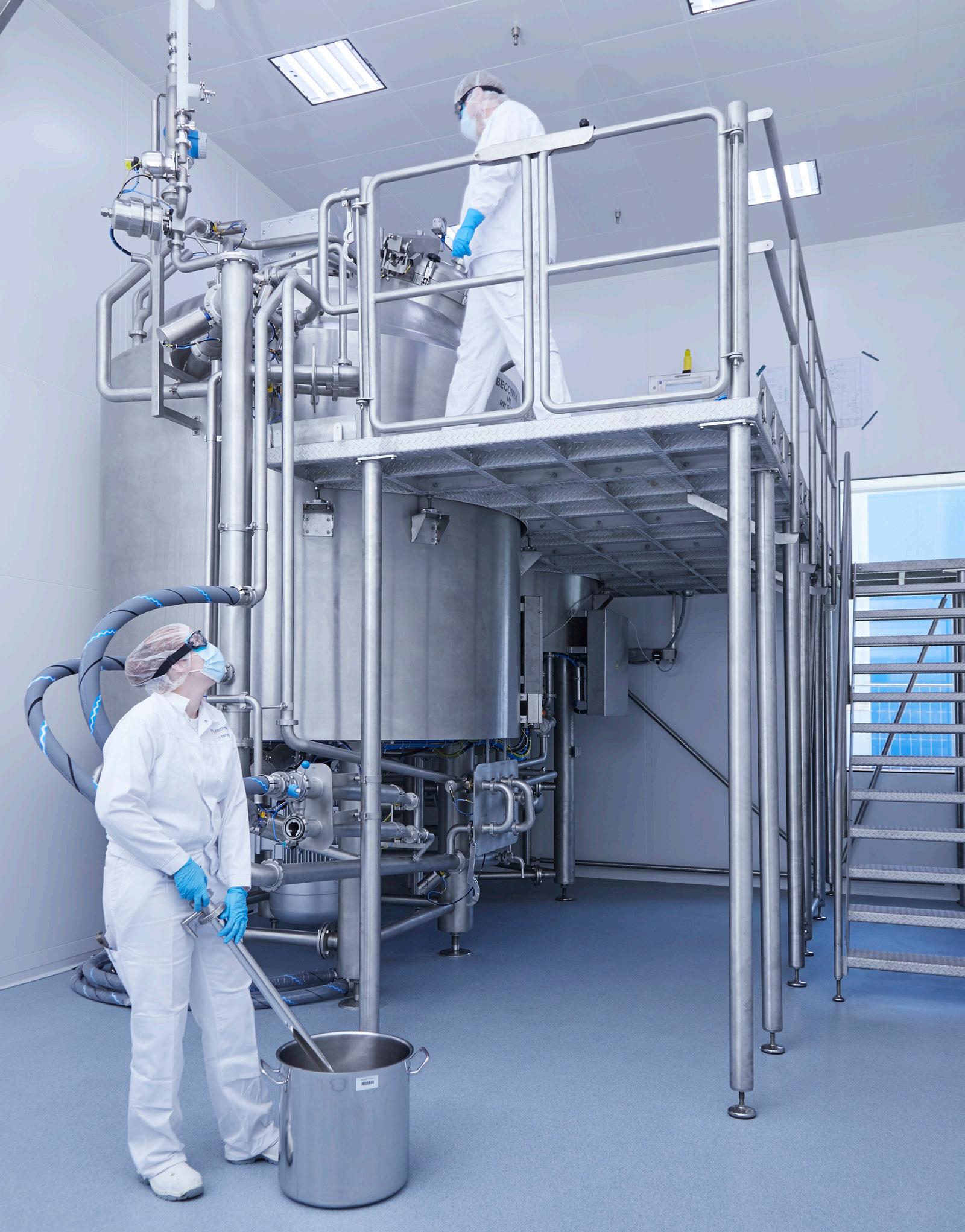
linked to sustainability, cybersecurity, and construction standards.
“We are used to operating in a highly regulated market,” says Armin. “But we see more and more regulatory issues coming into play.
“We do not disagree with the intentions behind these regulations,” he adds, “but the way they are implemented
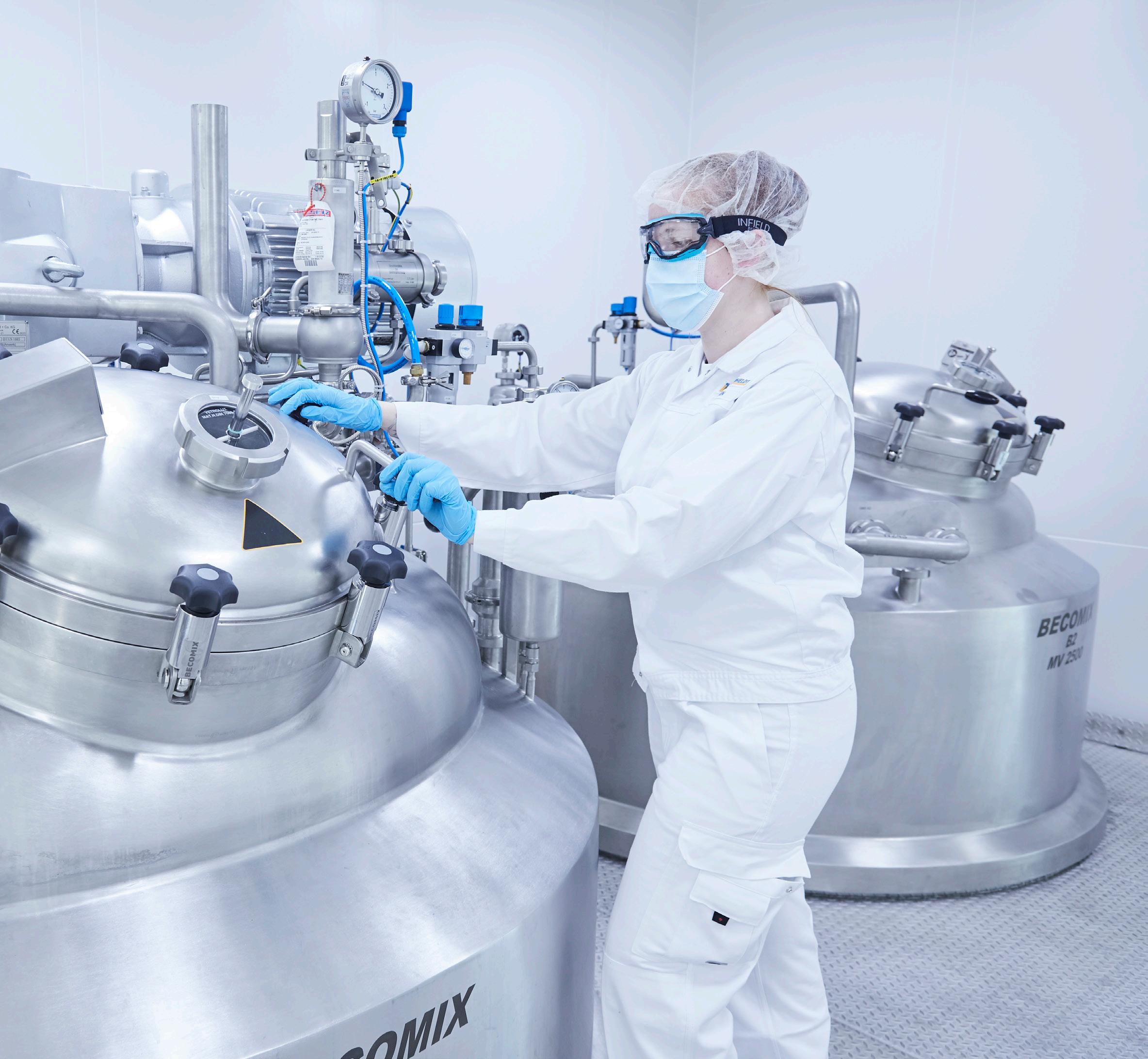
can put strain on the company in terms of time, cost, and personnel.”
Despite these challenges, Lichtenheldt’s direction of travel is clear. The organisation will continue to expand its capabilities within liquids and semi-solids, broadening its portfolio while staying within its core areas of expertise.
“WE WILL GROW WITH EXISTING CUSTOMERS AND TAKE ON NEW ONES. AT THE SAME TIME, WE ARE SET TO BROADEN OUR PRODUCTION PORTFOLIO WITHIN OUR FOCUS AREAS.”
“We will grow with existing customers and take on new ones,” Armin concludes. “At the same time, we are set to broaden our production portfolio within our focus areas.
“Listening to customers remains central to our approach. Their evolving needs shape investment decisions and service development. Listening to customers really helps us see this company’s potential.”
ITALY-HEADQUARTERED OLON IS SHARPENING ITS COMPETITIVE EDGE BY DOUBLING DOWN ON ONE OF THE MOST CONSEQUENTIAL SHIFTS IN MODERN DRUG DEVELOPMENT: THE RISE OF COMPLEX THERAPIES.
Olon is a global partner in the development and manufacturing of active pharmaceutical ingredients (APIs) for both CDMO and generic markets. From antibody-drug conjugates to high-potency active pharmaceutical ingredients, the company provides flexible, scalable solutions tailored to each project’s specific requirements. Its facilities feature multi-purpose and dedicated production lines designed to handle varying levels of containment, including ultrahigh-containment for high-potency and highly toxic compounds.
With more than 300 APIs, 14 manufacturing sites, and a global R&D network, Olon has long been a reliable partner across both CDMO and generic markets. Yet the latest wave of investments reflects a strategic pivot. Rather than simply expanding capacity, the company is redesigning its footprint to support increasingly sophisticated molecules and production processes at industrial scale.
At the centre of this shift is a clear recognition that the pharmaceutical pipeline is evolving rapidly. Biologics, conjugates, and highly potent compounds are no longer niche segments but central pillars of innovation. Olon’s response
is to build an ecosystem that can handle the full lifecycle of these therapies, from early development to commercial manufacturing, within a single integrated network.
In France, the Saint-Julien facility is nearing completion of a new bioprocess development suite designed for upstream and downstream scale-up of recombinant proteins, including monoclonal antibodies and ADCs. The same site will also double its bioconjugation capacity, enabling both clinical and commercial production.
This expansion is not occurring in isolation. It builds directly on earlier investments
at the Rodano site in Italy, where the company has developed payload and linker synthesis capabilities. Together, these facilities create a continuous manufacturing chain that spans toxin production, conjugation, and final drug substance.
The strategic significance of this integration cannot be overstated. By managing the entire ADC manufacturing process within a single organization, Olon reduces coordination risk, simplifies regulatory documentation, and accelerates timelines. For pharmaceutical companies navigating complex clinical pipelines, this level of consolidation offers both operational efficiency and strategic reassurance.
Beyond ADCs, Olon is also expanding its high-potency API capabilities more broadly. The company has recently completed an ultra-highcontainment production line capable of handling highly toxic compounds at scale. With containment levels reaching OEB6 and batch sizes ranging
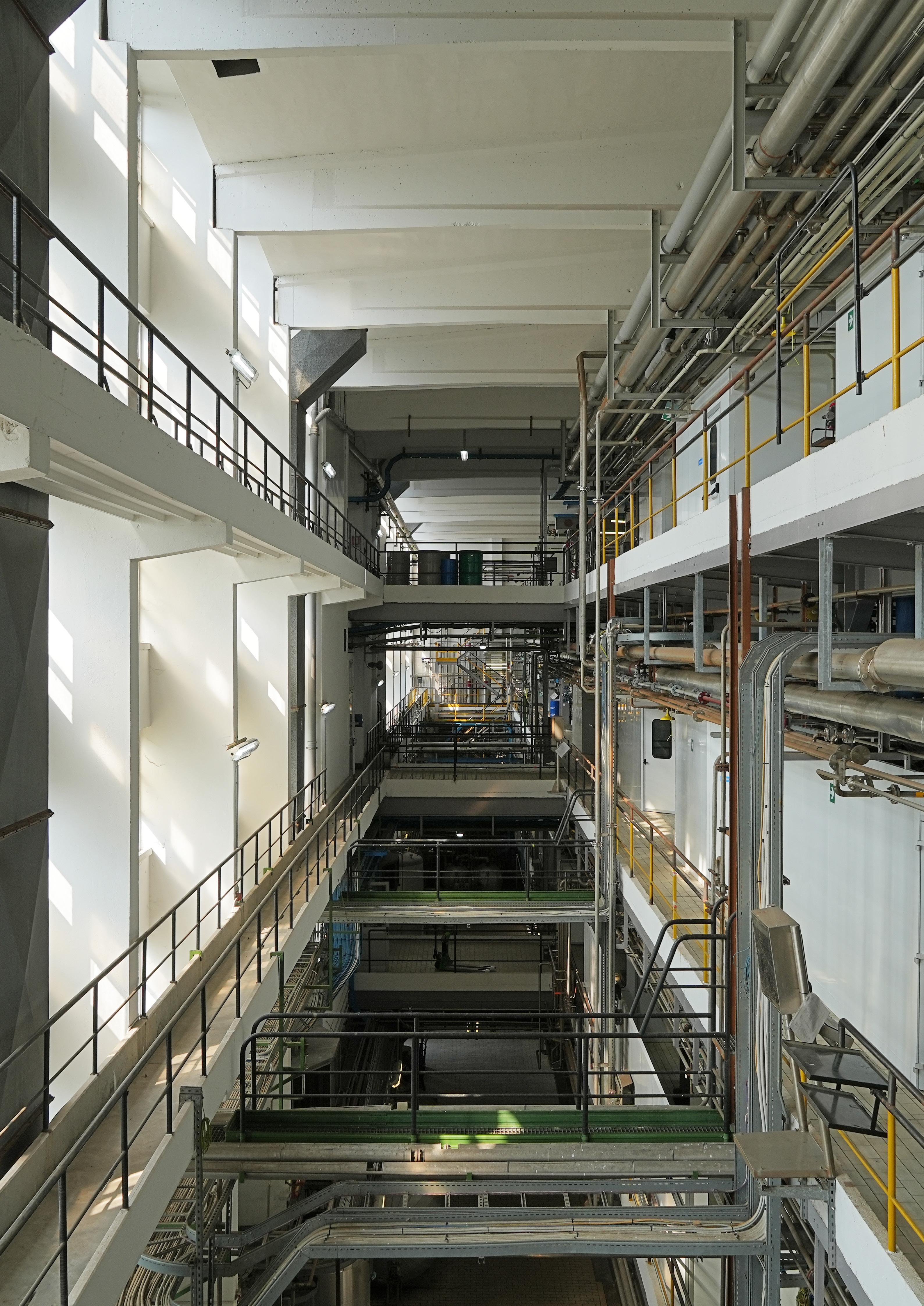




from tens to hundreds of kilograms, the facility positions Olon among a select group of manufacturers capable of supporting the most demanding oncology and specialty drug programs.
In Italy, investments are targeting microbial fermentation, chemical synthesis, and high-potency manufacturing. These upgrades are designed to provide greater flexibility for clients moving from Phase II trials into latestage development, where manufacturing capacity often becomes a critical constraint.
India plays a complementary role in this strategy, with expanded API production aimed at strengthening supply continuity. In an era where geopolitical and logistical disruptions can ripple through global supply chains, this diversification is increasingly essential. Meanwhile, in the United States, Olon is
enhancing its scale-up and integrated manufacturing capabilities to meet demand for domestic or nearshore production.
Maurizio Sartorato, vice president of the BioTech Division, Olon, noted in a press release: “The expansion of capabilities across multiple sites, together the continued strengthening of our operations in Italy, supports greater flexibility in managing development and scale-up activities for complex therapies.”
Perhaps the most forwardlooking element of Olon’s 2026 strategy is its emphasis on sustainable manufacturing. While environmental considerations have long been part of industry discourse, they are now becoming operational imperatives, driven by regulatory expectations and corporate commitments.
Olon’s partnership with Austrian biotechnology company myBIOS exemplifies this transition from principle to practice. The collaboration focuses on methanol-free fermentation using the myPichia platform, which replaces traditional methanol induction with non-toxic alternatives while maintaining comparable protein yields.
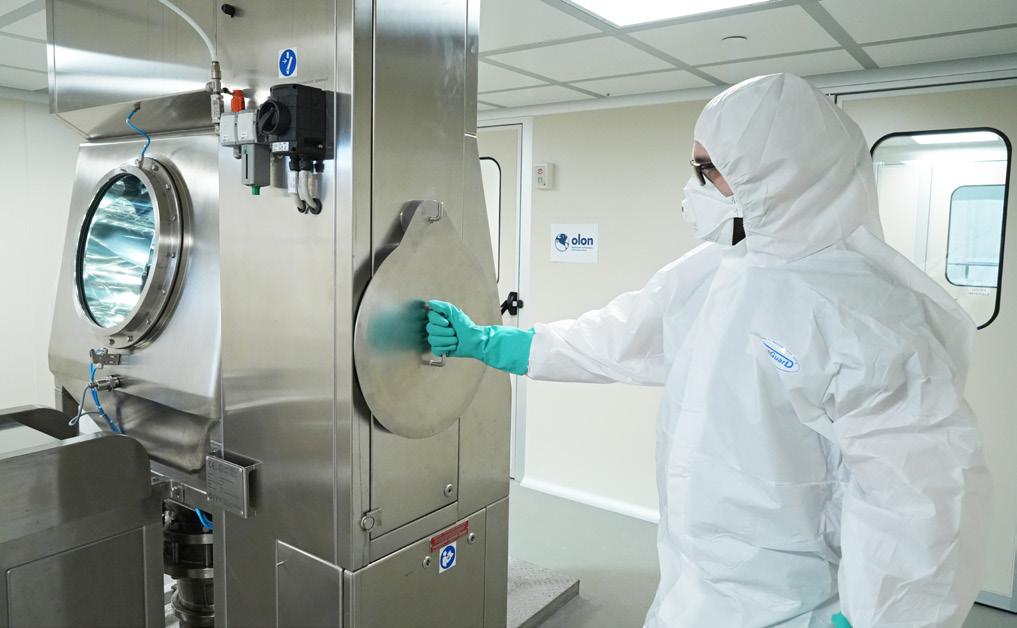
The implications are significant. Conventional fermentation processes involving methanol can introduce safety risks, regulatory complexity, and environmental burdens. By eliminating methanol, the new approach simplifies regulatory documentation, reduces site safety requirements, and improves overall environmental performance. Crucially, this is not a laboratory-scale experiment. Olon is leveraging its decades of fermentation expertise and industrial infrastructure to bring the technology to commercial scale.
“This partnership strengthens our ability to provide customers with manufacturing solutions that are not only innovative but also sustainable,” said Andrea Conforto, S&M – VP CDMO Biotech, Olon. “It also allows us to bring environmental benefits to our own products and internal pipeline. Sustainability is at the heart of how we operate, guiding our decisions and driving continuous improvement across everything we do.”
The company’s focus on green biocatalysis and sustainable protein production also aligns with its broader capabilities in microbial fermentation and biomanufacturing. Through its biotech division, Olon supports applications ranging from pharmaceuticals to food, cosmetics, and specialty materials, demonstrating the cross-industry relevance of these technologies.
At its core, Olon’s 2026 development plan is about mastering complexity. Whether in the form of ADCs, high-potency compounds, or advanced fermentation
processes, the company is investing in the capabilities required to handle the most challenging aspects of modern drug manufacturing.
This approach reflects a clear understanding of where the industry is heading. As therapeutic modalities become more sophisticated, the barriers to entry in manufacturing are rising. Technical expertise, regulatory compliance, and operational integration are no longer differentiators but prerequisites.
Olon’s response is to build depth rather than breadth. By focusing on high-value, high-complexity segments, the company is positioning
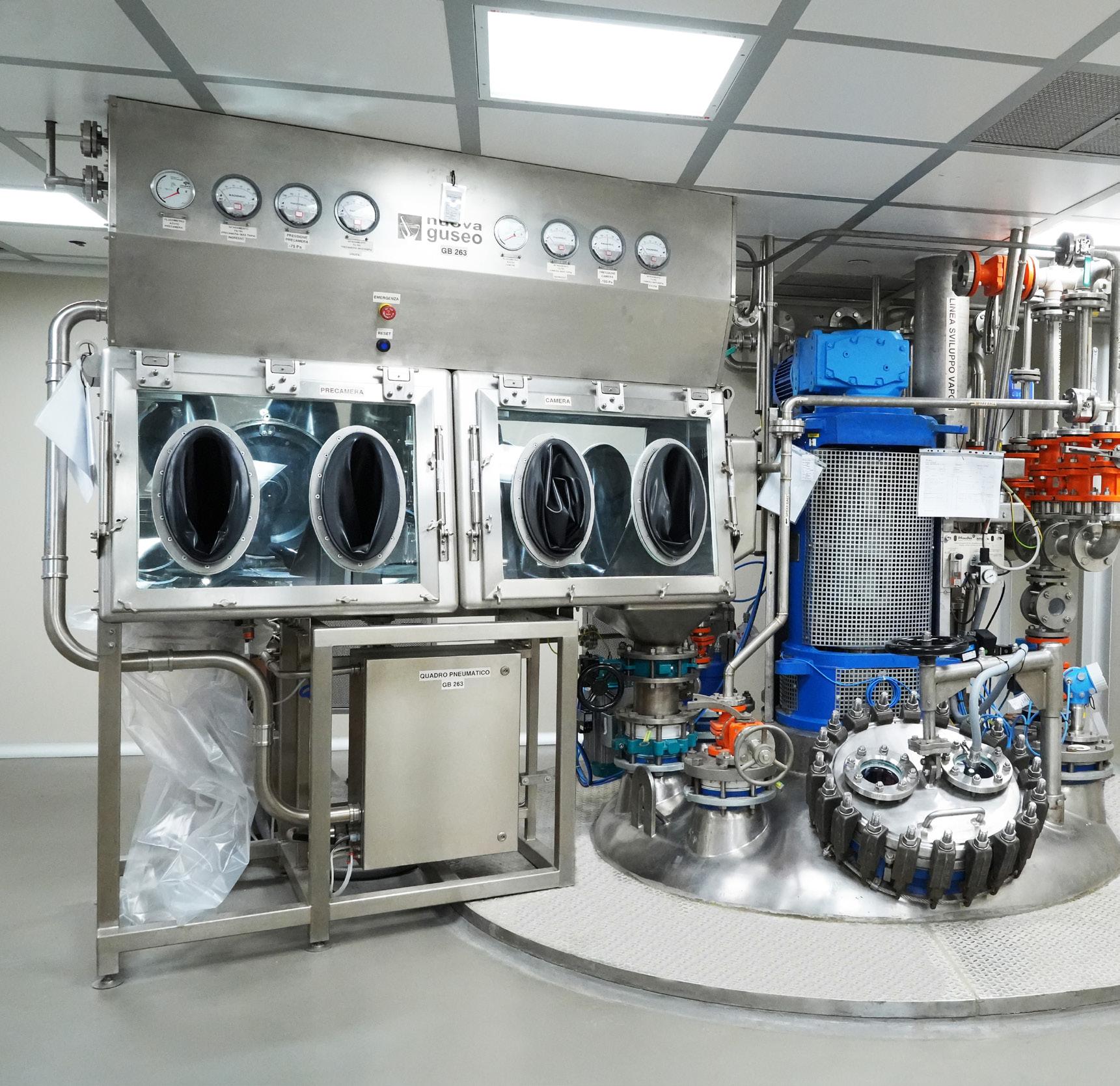
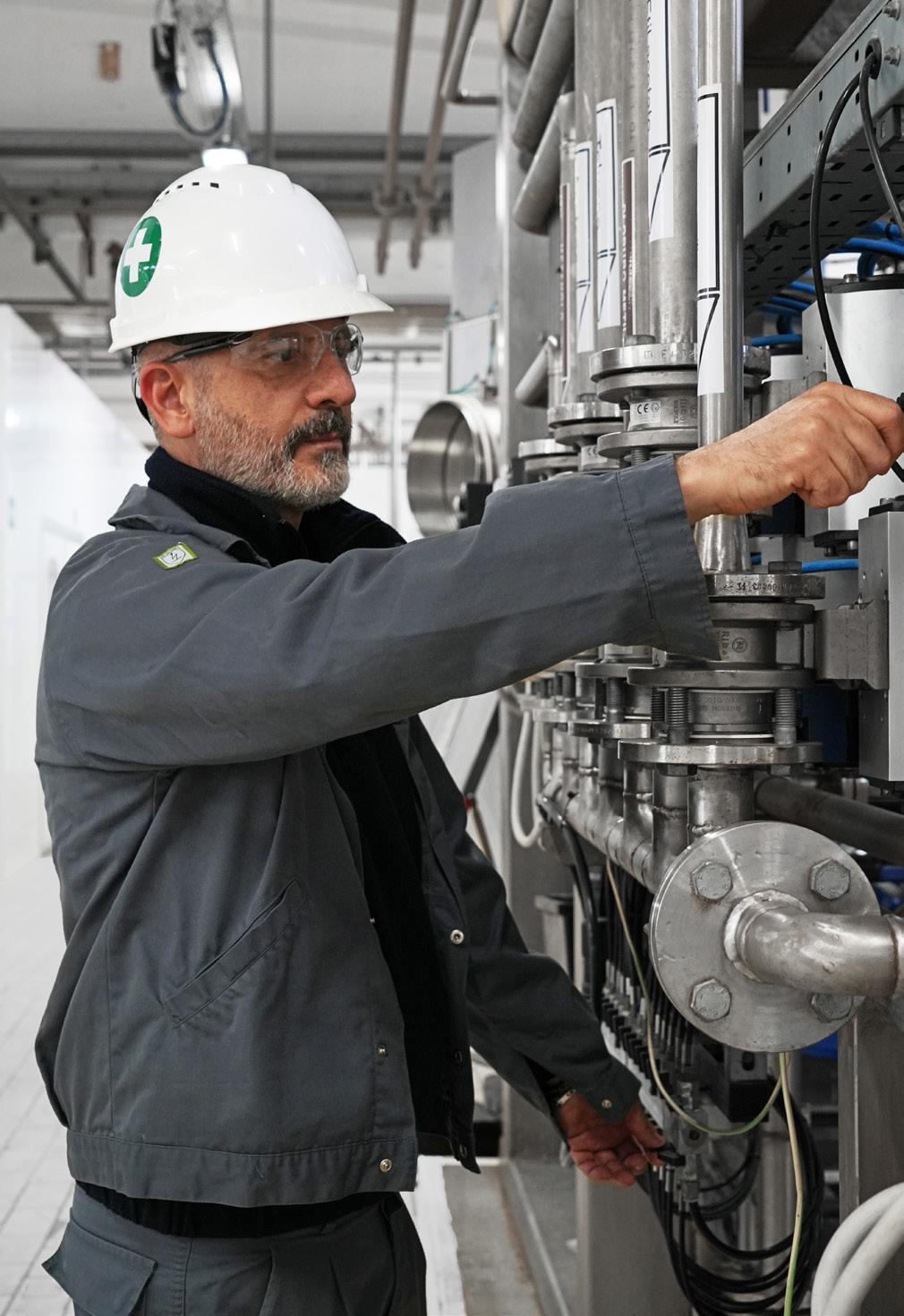
itself as a partner of choice for pharmaceutical companies navigating the frontiers of innovation.
At the same time, it is maintaining its strength in generics, where its extensive portfolio and cost-effective production capabilities continue to play a vital role in supporting global healthcare systems. This dual focus allows Olon to balance innovation with accessibility, ensuring that advanced therapies and essential medicines alike can reach the market efficiently.
As the pharmaceutical landscape continues to evolve, the ability to integrate science, scale, and sustainability will define the next generation of industry leaders. Olon’s latest investments suggest that it is not only responding to this shift but actively shaping it.

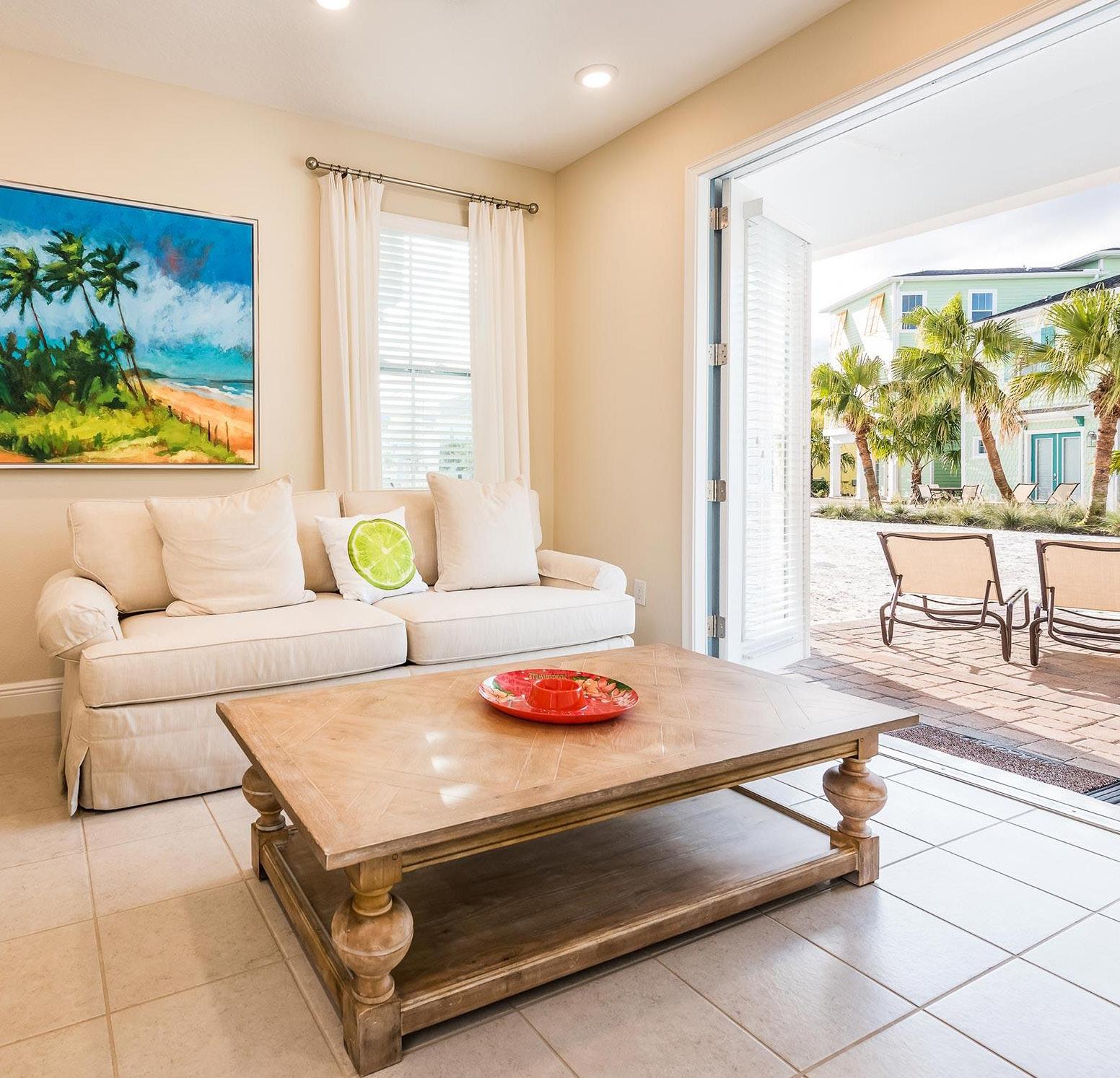
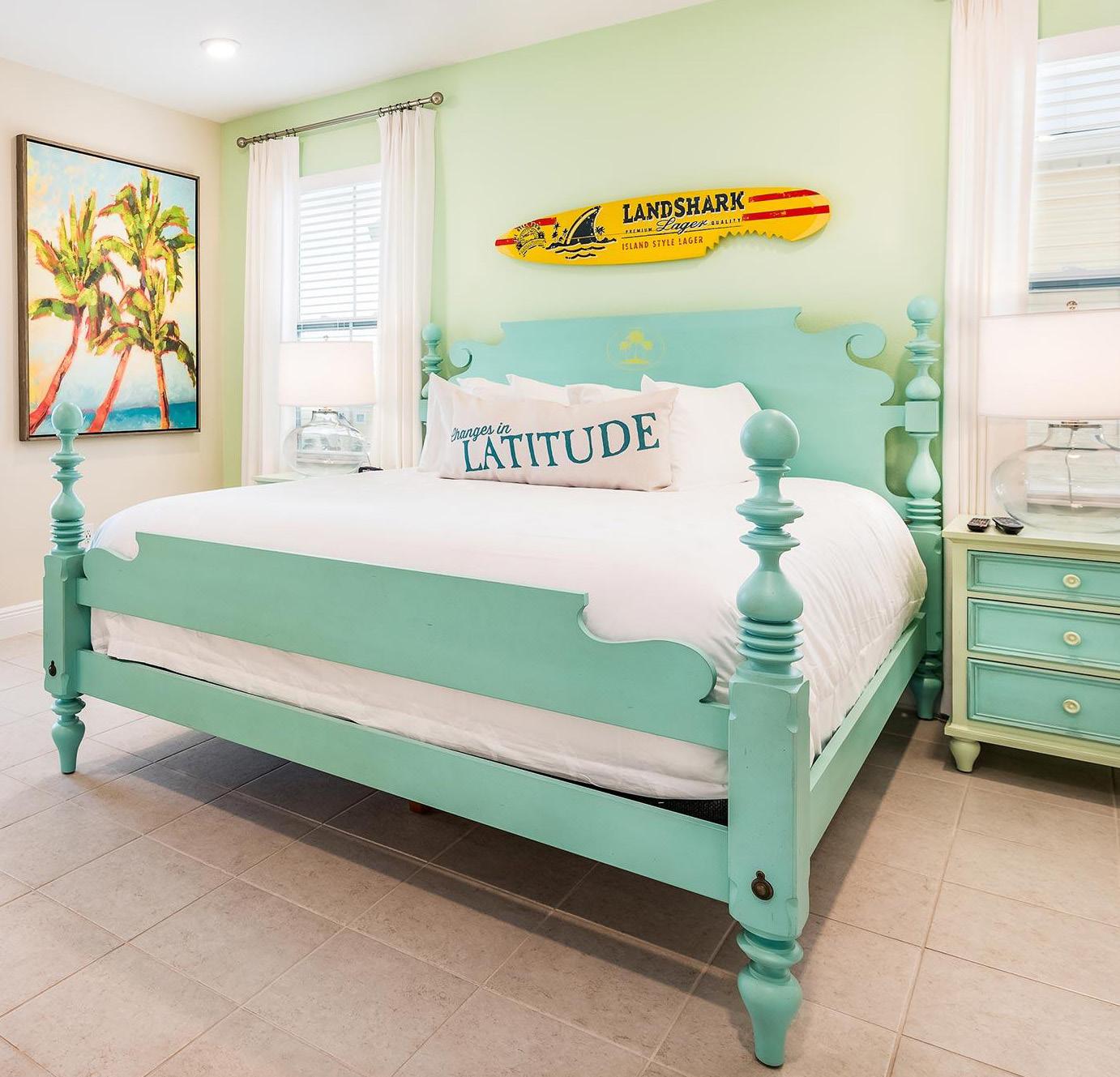
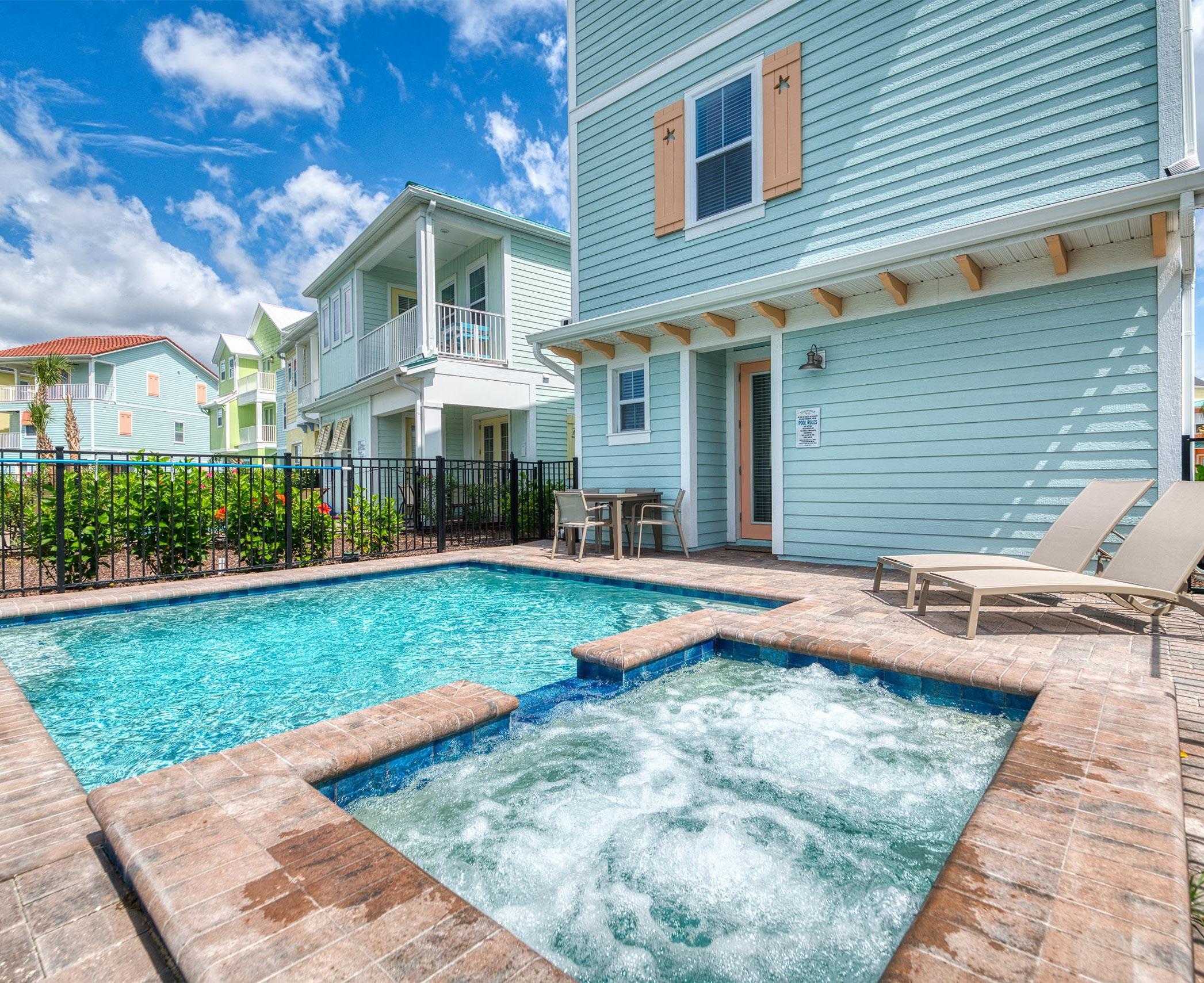

PROJECT
BY: JACK BIBBY
Demand for spacious, flexible stays is reshaping hospitality. Rentyl Resorts meets that need by combining the comfort of home with full resort amenities, entertainment, and professional management.
Founded in Orlando, Florida, by CEO Nick Falcone, Rentyl has expanded from a single property to nearly 100 resorts, representing over 10,000 units. By managing development, branding, and operations in-house, the company delivers a consistent, fully integrated experience for owners and guests alike.
“Rentyl Resorts is a brand and management company specialising in what I would call ‘alternative accommodations’,” says Nick. “That includes houses, townhomes, condos, apartments and other non-traditional formats. We couple those with traditional hotels and resorts to create large compounds of different products that people can rent in a resort setting.”
Rentyl operates at the point where real estate and hospitality meet. It is a model designed to give guests more space without losing access to services, while
giving developers a more flexible and efficient way to deliver returns.
At the same time, Rentyl directly manages and brands a smaller portfolio of around 10 assets. Recently, the company has taken a significant shift in this direction.
“We’ve gone away from the distribution model and really started to focus on the full management and branding of properties,” Nick explains.
“We are active across the full lifecycle of a resort, from land acquisition through to daily guest experience. Development, construction,
branding and management all sit within the same structure.”
Rentyl’s full turnkey solution is supported by advanced inhouse capabilities. For example, Rentyl runs its own software platform, marketing agency, and call centre, all focused specifically on its portfolio.
“Development of our own specific software provides us with unique advantages compared to competitors,” Nick states. “Similarly, a dedicated marketing agency and call centre are invaluable.”
Such deep integration allows Rentyl to maintain consistency across different locations and
accommodation types, while also responding quickly to performance data and guest feedback.
An example of the model in action can be found at Sunset Walk in Orlando. The development combines a 265room hotel with more than 700 cottages and villas, all operating within a single resort framework. The residential units are sold to individual owners and then placed into a managed rental programme.
“These units become an extension of the hotel,” Nick remarks. “This specific site includes a condo hotel operating under the Embassy Suites brand, as well as retail, dining and entertainment. It’s a very large, interconnected, mixed-use project and we

Founded in 1989, Lodging Kit Company supplies operating supplies & equipment (OS&E) to hotels, resorts and other lodging facilities throughout the US and internationally.

We specialize in Room in a Box® kitted OS&E to streamline installations.


Our three distribution centers keep our products in close proximity to the majority of the major lodging markets in the US.
+1 800-328-8439 www.lodgingkit.com
manage the full environment, including a large entertainment district and a water park. We are the visionaries behind everything.”
Partnerships are also a key part of how Rentyl projects are delivered. The company works closely with established hospitality brands, adapting the structure of each relationship depending on the asset. These partnerships range from cobranding arrangements to licensing agreements, with a focus on adding value in every case.
“We believe that we can only be good at so many things,” Nick comments. “Surrounding ourselves with best-in-class is really important.”
Internally, Rentyl focuses on maintaining a consistent operating culture across its portfolio. Team structure, training and performance monitoring are all central to delivery.
“We aim to treat all our team members like family,” Nick says. “That culture and motivation goes a long way.”
Backed by the hard work of its team, Rentyl uses data to track guest sentiment and performance across its properties. Feedback is monitored continuously and used to adjust service delivery.
“We’re looking at feedback data on a minute-by-minute, hour-by-hour basis,” Nick reports.
“We’re just really committed to ‘our guests and their experience.”
Current market conditions are shaping Rentyl’s next phase of growth. Higher construction costs and tighter lending conditions might be limiting new
hotel development, but it those challenges are also creating new opportunities for acquisition and repositioning.
“We’ve been seeing a lot of distressed product coming up,” Nick reveals. “It means we are likely to see more renovation and repositioning in the near future, as opposed to new construction.
“We are currently targeting these opportunities, using an integrated model to upgrade assets and bring them under our management and branding platform. I’d like to do anywhere from 10 to 30 repositioning and acquisition deals in the next 24 to 36 months.”
At the same time, the use of residential units within resort developments continues to expand for Rentyl. Selling homes as part of a project and placing them back into a rental programme has proven to improve capital efficiency and reduce upfront investment.
“When you have residential as a component, you can sell that upfront and bring it back into the programme,” Nick affirms. “It lowers your equity requirements and allows deals to underwrite more easily.”
For Rentyl, this is not a new direction but a continuation of its core approach. The company is already positioned around residential hospitality, and the wider market is moving closer to that model.
In the longer term, the aim for Rentyl is to establish itself as the leading brand in its market segment.
“I do believe that people demand more than an Airbnb type of experience,” Nick declares. “They want that spacious accommodation, but they don’t want to sacrifice the resort experience.”
Rentyl’s model is built around this demand. By combining residential space with fullservice hospitality, the company is defining its role within a changing sector and building a platform designed to scale.

AMBITIOUS EXPANSION PLANS POSITION SIDES AS ONE OF BRITAIN’S FASTEST-GROWING MODERN RESTAURANT BRANDS.
In the crowded and fiercely competitive quick service restaurant sector, staying relevant is often harder than launching in the first place. Yet for Sides, the fast-casual fried chicken brand launched by the UK YouTube group the Sidemen, the story has evolved far beyond online hype. What began as a bold challenger concept has matured into a fast-growing hospitality business with serious operational ambition.
The company has achieved high popularity by combining massive influencer marketing with a highquality, customisable product and a fast-growing physical presence.
Unlike traditional fast food, Sides focuses on “fresh, never frozen” chicken, which is hand-tossed 120 times for maximum crispiness.
The menu focuses on high-quality ingredients, allows customers to pick their protein (chicken or plantbased) and customise it with seven distinct, bold flavour sauces.
With revenues now exceeding £52m including retail, Sides is entering a defining new phase.
The company has announced plans to open 15 new restaurants in 2026, accelerating an expansion strategy that reaches far beyond its existing UK footprint. Alongside domestic growth, the business is preparing to launch its second store in Singapore while also entering the UAE market for the first time.
The scale of the rollout reflects a business that has spent the last 12 to 18 months laying foundations for sustainable growth rather than chasing rapid expansion at
any cost. Leadership has focused on strengthening internal teams, refining operational systems and building the infrastructure required to support a significantly larger estate.
The company’s recent appointment of Nick Evans as Head of New Business Development signals further intent. Evans will play a key part in expanding the brand into new territories, bringing over 20 years of experience in hospitality, franchising and multi site operations. This includes more than a decade with Yum! Brands where he opened new restaurants across the UK and Europe and supported major franchise growth programmes.
“I’m genuinely thrilled to be joining Sides at such a pivotal moment in its journey,” he said. “Sides is an incredible brand with a powerful foundation, and the opportunity to help shape its next phase of growth is both a challenge and something that truly excites me.”
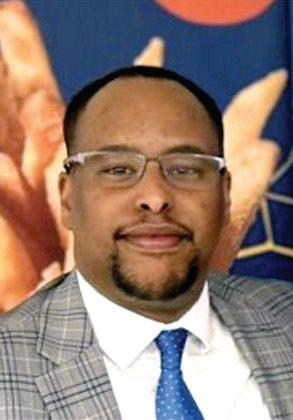
“At
Liban
LAMB WESTON
In today’s competitive foodservice landscape, success is defined by more than just great food. It requires innovation, consistency and the ability to build meaningful partnerships that drive long-term growth. At Lamb Weston, these principles are at the core of how we operate.
As one of the world’s leading suppliers of frozen potato solutions, Lamb Weston has built a reputation for combining product excellence with forward-thinking innovation. Our portfolio goes far beyond traditional fries. From our industry-leading Stealth Fries, designed to stay hotter and crispier for longer, to visually distinctive Criss Cuts and a wide range of premium coated and skin-on options, we continuously develop products that help operators perform better and stand out. This focus comes from understanding the real challenges our partners face. Maintaining quality during delivery, maximising hold times and delivering a consistently great customer experience are all critical. Our solutions are built with these needs in mind, ensuring that every portion served meets the highest standards.
What truly sets Lamb Weston apart, however, is how we work with our partners.
Our relationship with Sides, one of the UK’s most exciting and fastgrowing chicken brands, is a strong example of this in action. Sides has quickly built a loyal following through bold branding, a clear understanding of its audience and a commitment to quality. Its growth reflects a brand that knows how to connect with modern consumers.
For Lamb Weston, supporting Sides has meant going beyond the role of supplier and becoming a strategic partner. By working closely with teams across procurement, food development and marketing, we have been able to stay aligned and support the brand as it scales, without compromising on quality.
As Liban Jama - National Key Account Manager at Lamb Weston, explains, the relationship has always been rooted in collaboration and shared ambition. It is this approach that has enabled both businesses to grow together.
Our Criss Cuts are a strong example of how product innovation supports that journey. Their unique shape, texture and visual appeal help create a more engaging menu and a more memorable customer experience. In a market where presentation and shareability matter more than ever, this kind of differentiation is key.
At the same time, Lamb Weston’s broader portfolio, including Stealth Fries, ensures consistent performance across every site. Products that hold their crispness and quality during delivery are essential for modern foodservice, particularly as off-premise dining continues to grow.
As Jama highlights, Sides’ willingness to innovate and its clear understanding of its customers make it an ideal partner. That mindset creates the right environment for meaningful collaboration and longterm success.
For Lamb Weston, partnerships like this represent the future of foodservice. By combining product innovation with close collaboration, we are able to help brands not only meet expectations, but exceed them.
As Sides continues its impressive growth journey, Lamb Weston remains committed to supporting that momentum. Bringing together great products, industry expertise and a shared ambition to succeed.
Because in today’s market, success is not just about what is on the plate. It is about the strength of the partnership behind it. www.lambweston.eu


























richsauces.com








“I’m passionate about bringing our bold flavours, culture and energy to new locations and new communities across the UK and internationally and about creating fresh experiences that give people even more reasons to fall in love with Sides.”
Aaron Moore Saxton, managing director at Sides, commented: “We are incredibly excited to welcome Nick to Sides. He brings a wealth of experience and strategic insight that will be instrumental in delivering our ambitious 2026 growth plans. We’re seeing incredible momentum in the UK and rising demand internationally, and new leadership will help us strengthen our presence across the UK while accelerating our entry into key global markets.”
However, despite its international ambitions, Sides remains firmly committed to its
British roots. The company takes particular pride in being “Made in Britain”, sourcing food products within the country wherever possible and building relationships with domestic suppliers.
Recruitment also follows a localfirst philosophy. As new restaurants open across the UK and overseas, Sides prioritises hiring within local communities, helping create employment opportunities while embedding each site within its surrounding area.
Operationally, Sides has adopted a partnership-led approach to expansion. The business works with preferred national and regional partners for the design, build and fit-out of stores, allowing projects to scale efficiently without compromising quality or consistency. As expansion

accelerates, those relationships will become increasingly important in delivering multiple openings across different territories simultaneously.
That operational readiness distinguishes Sides from many emerging restaurant brands that struggle to scale effectively. Growth in hospitality is rarely just about demand. The real challenge lies in maintaining standards as complexity increases. Every new location adds pressure across recruitment, logistics, training, procurement and customer service.
Rather than pursuing aggressive growth immediately after its initial success, the company has deliberately invested time into strengthening the business behind the scenes. The result is a more mature organisation entering its next phase with clearer structures, stronger leadership and improved operational resilience.
International expansion also represents an important evolution for the brand. The upcoming UAE launch introduces Sides to one
of the world’s most competitive and dynamic foodservice markets, where global operators compete for highly discerning consumers. Success there would significantly elevate the company’s international profile. Meanwhile, continued growth in Singapore reinforces confidence in the brand’s overseas appeal. Expanding within an existing market demonstrates that Sides is not simply testing international waters, but actively building a long-term global presence.
Sides’ success reflects more than product popularity alone. The business has understood the importance of creating a modern hospitality brand capable of resonating across both physical and digital channels. In today’s market, restaurants are no longer judged solely on menu quality. Brand identity, convenience, online visibility and customer experience all play equally important roles.

Sides has benefited from strong visibility and cultural relevance, but the company’s current trajectory suggests a business increasingly focused on longevity rather than short-term momentum. Crucially, the company appears to recognise that sustainable growth depends on maintaining standards while expanding rapidly.
The decision to invest heavily in people, systems and partnerships before accelerating rollout demonstrates a measured and commercially mature approach.
The next chapter for Sides could prove transformative.
Fifteen new UK restaurants would significantly increase the
company’s domestic presence, while expansion into the UAE and further development in Singapore strengthen its position as an emerging international player. Few hospitality brands successfully bridge the gap between social relevance and operational substance. Fewer still manage to scale internationally while retaining a clear sense of identity. Sides now has the opportunity to demonstrate it can achieve both. For a company that has spent the past year quietly building its foundations, the coming period looks set to be anything but quiet.
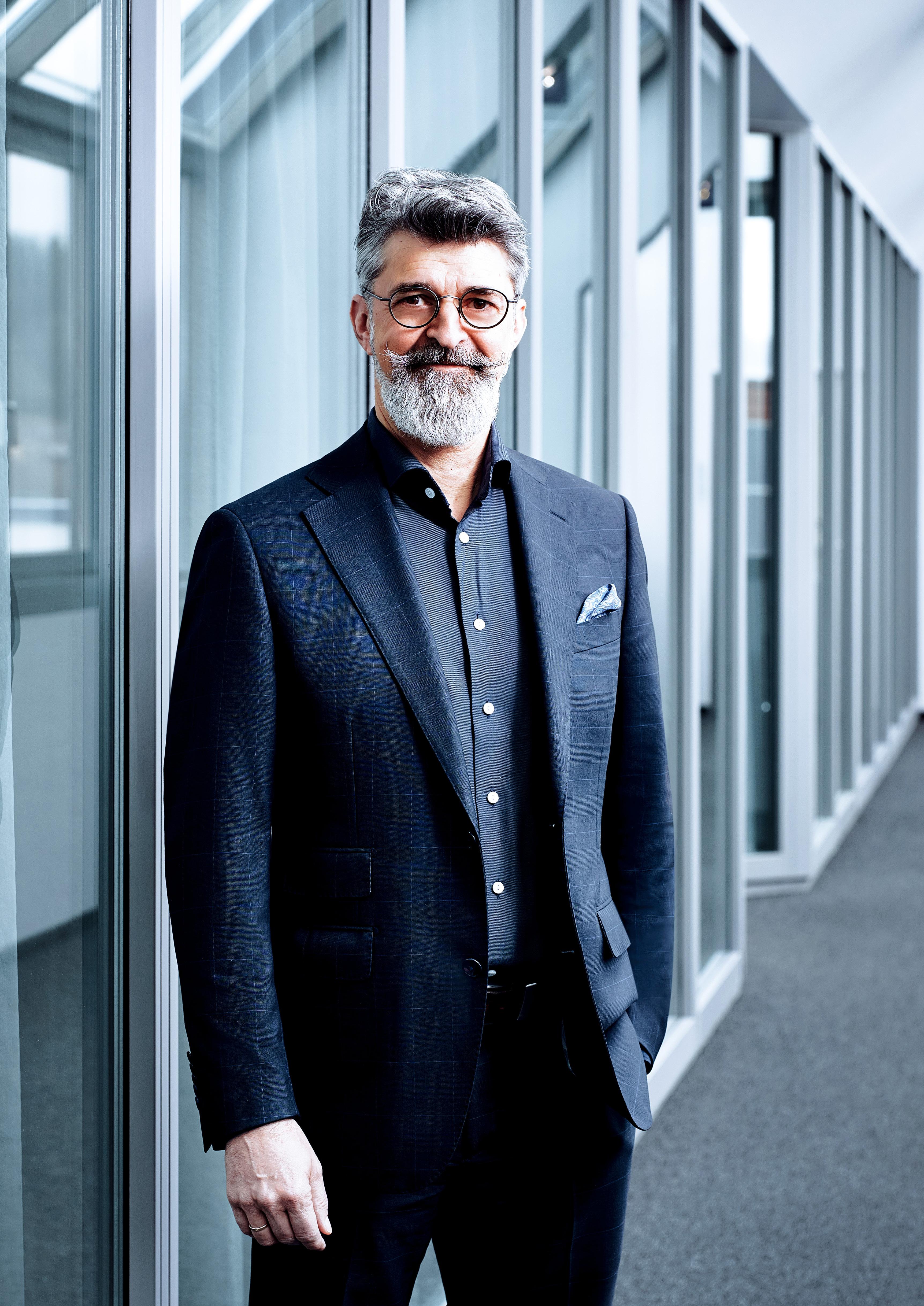

BIZERBA’S BUSINESS UNIT INDUSTRY PROVIDES MANUFACTURERS WITH UNMATCHED VISIBILITY AND CONTROL FOR FINISHED PRODUCTS.
Production does not end when a product is packed. For many manufacturers, the most important checks happen immediately afterwards. Weight must be correct, labels must be accurate, seals must hold, and every item must meet specification before it leaves the line. This is the space where Bizerba’s Business Unit Industry operates.
Bizerba is 160 years old this year, so we are part of a grand tradition,” says Fred Köhler, Managing Director – Business Unit Industry. “We began in the retail space, where we are known for our scales and slicers, but our Industry unit is a far newer addition to the company.
“The Industry division focuses on what happens primarily at and around the end of the packaging process. Instead of manufacturing the product, our systems check, label and verify it. That includes, among other things, weighing, applying labels, inspecting for defects and ensuring packaging is correct for distribution.”
From a technical point of view, Industry at Bizerba is split into static and dynamic systems. Static systems are used for testing and internal processes, whereas dynamic systems are installed directly into production lines, where products are
moving continuously. These technologies are also used in intralogistics and OEM applications, extending Bizerba’s Industry expertise beyond classic production lines.
The work is detailed and repetitive, but critical. Products must meet strict tolerances and labels must feature correct information and traceability codes. Even small errors can lead to waste or rejected batches.
“While our systems are very good at checking weight and delivering uniformity, they also function to detect contamination and help consumers to stay safe,” Fred states. “With the help of a wide range of vision systems, including cutting-edge cameras and sensors, we can assess whether seals are properly closed and whether labels are applied correctly. Clients rely on us to safeguard product quality.”
Max Schlatterer GmbH & Co. KG
Robert-Bosch-Str. 9 | 89542 Herbrechtingen | Germany
Phone: +49 7324 150 | info@esband.de | www.esband.de

Since 2006, HM Systems and Bizerba have forged a powerful partnership rooted in trust, shared vision, and a strong commitment to advancing industrial labeling. What began as a straightforward supplier relationship has developed into a strategic alliance, where both companies elevate each other’s strengths.
HM Systems proudly supplies Bizerba with state-of-the-art, high-speed labelling machines and integrated solutions, while also leveraging Bizerba’s premium label materials for its innovative HM Linerfree system. This synergistic collaboration creates a unique offering: industrial-grade machinery combined with the highest quality label materials on the

HM’s patented Industry 4.0 Print & Apply solutions are utilizing Bizerba’s premium materials portfolio — including Thermotop labels, virtually indestructible PPE labels, and removable-adhesive variants.
Our partnership transcends borders. HM Systems distributes Bizerba label materials globally, while HM labeling machines are integral to Bizerba solutions across multiple continents. Together, we deliver the exceptional quality that customers expect and deserve.
After more than two decades, our foundation remains steadfast: innovation, reliability, and the deep-rooted trust that comes from evolving, innovating and succeeding together.
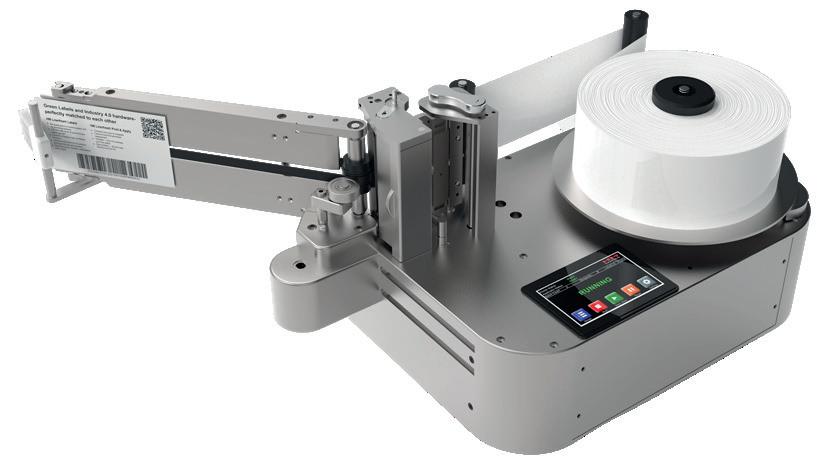
When you picture a perfect day in production you want: Precision, consistent product flow and zero unplanned downtime – that is exactly what Esband delivers.
For more than 75 years, Max Schlatterer GmbH & Co. KG and its Esband brand have stood as a synonym for truly endless belts.
Based in southern Germany, we combine decades of experience with a global customer base to deliver the right solution for every application. What sets Esband apart is our exclusive manufacturing process, which allows us to create truly endless belts with remarkable precision and durability. This results in long lasting drive and conveyor belts, as well as a wide selection of garniture and suction tapes suitable for a broad range of industrial processes.
For example we supply Bizerba as a long term partner with checkweigher belts that ensure precise weighing results and dependable production performance. Beyond checkweighing, our portfolio for the food industry includes belts for sausage transport, squeeze belts, vacuum timing belts, and silicone pressure rollers designed for many stages of food processing.
For production managers and quality teams, the real value of Esband lies in the reliability and consistency our belts bring to everyday operations. With no splice points or seams, our solutions help minimize unplanned downtime, stabilize process performance, and maintain consistently accurate results –leading to smoother workflows, fewer disruptions, and greater confidence at every step.
You want in? Discover your endless solution with us! www.esband.de
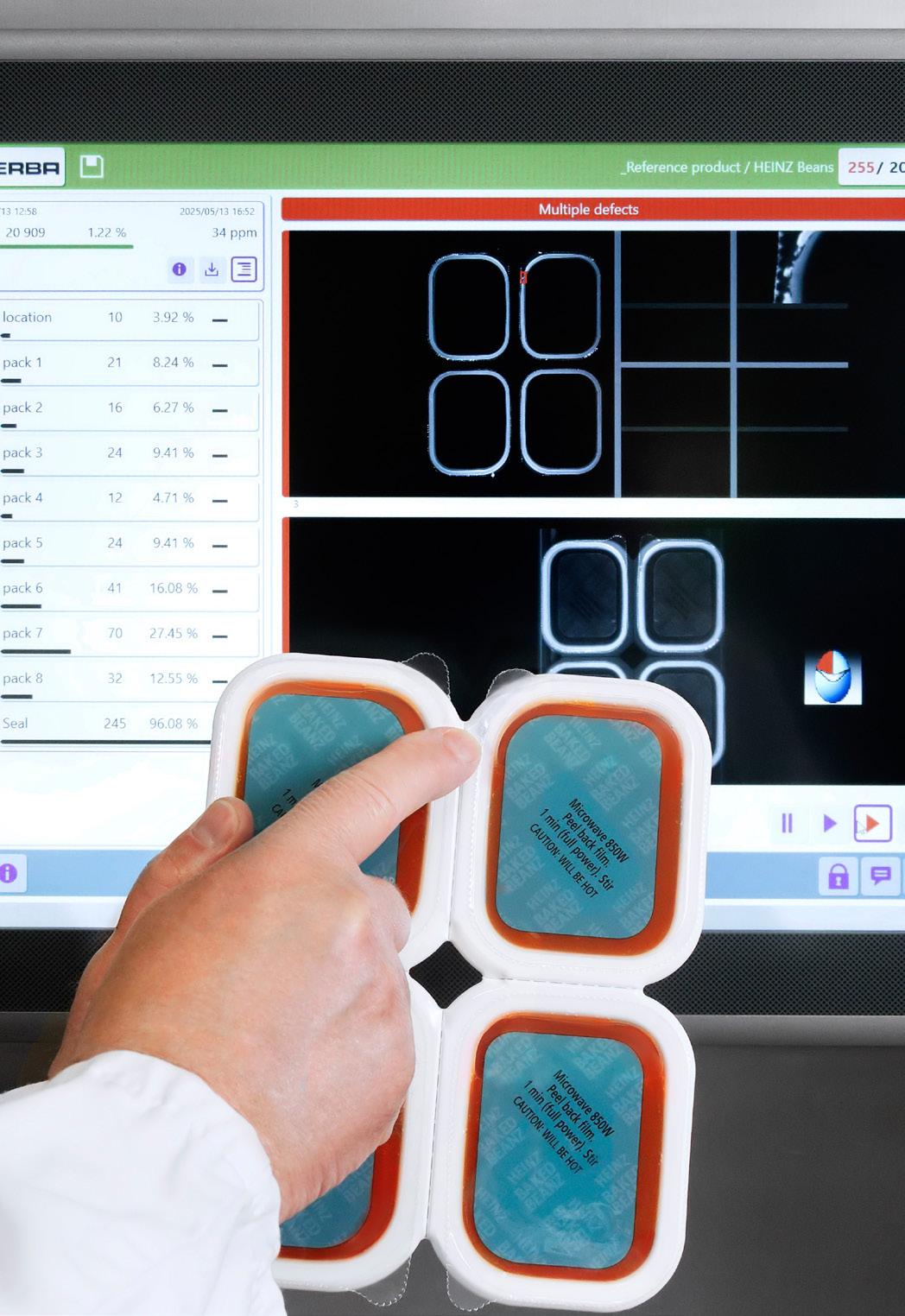
A recent project in cheese production shows how these systems come together as part of a comprehensive package. In the case of cheese production, blocks of the product are taken from storage and placed on a conveyor. They are weighed and checked for contamination before being sliced. After slicing, the portions are packed into trays and sealed.
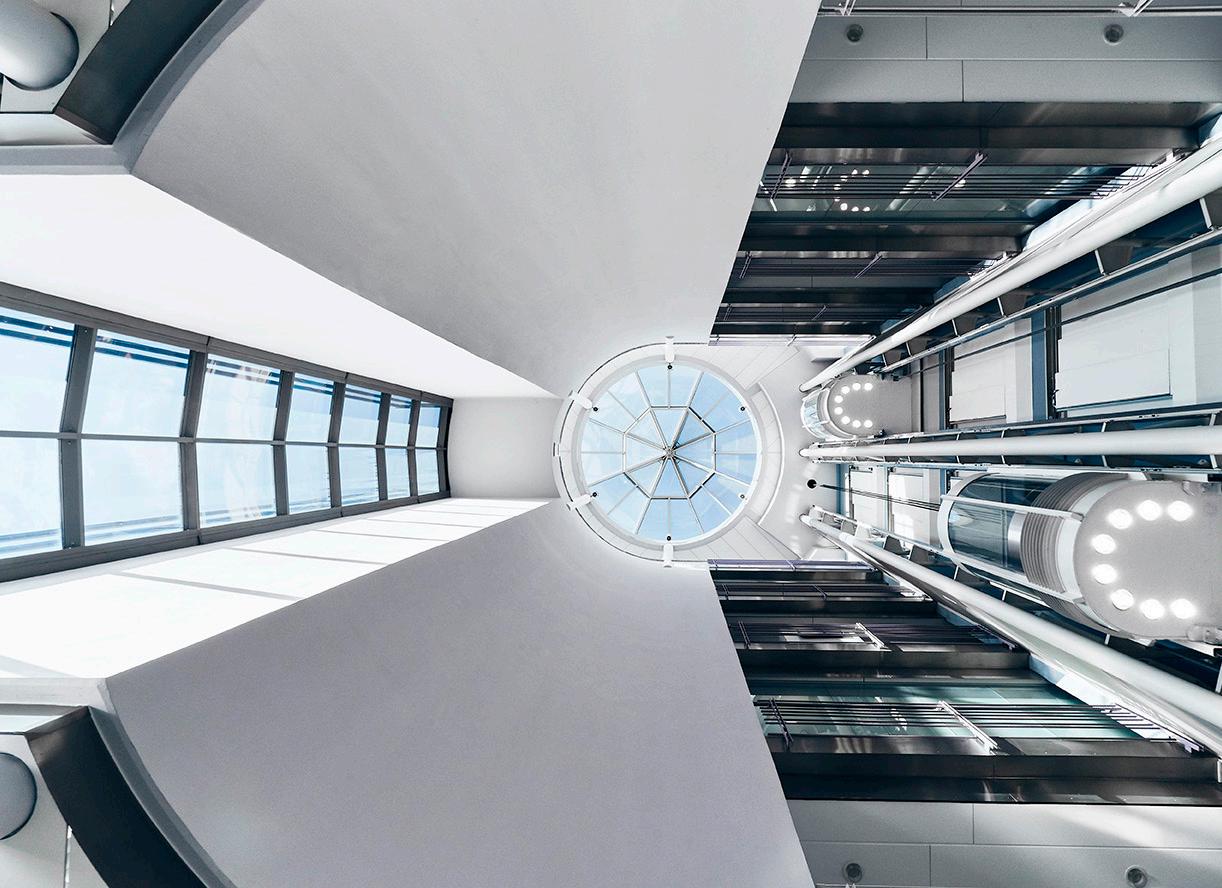
At this point, Bizerba’s inspection process begins again. The system doublechecks whether the correct number of slices is in each pack, whether the weight is accurate, and whether packaging integrity is preserved. Labels are then applied and verified before the products move further down the line.
“We utilise leak detection technology to verify that packaging is airtight,” Fred remarks. “This is especially important for products stored in modified atmospheres, where even a small defect can reduce shelf life.
“Alongside checking, our systems also provide feedback. If something is not right, adjustments can be made immediately. In turn, this helps reduce waste and keeps production consistent.”
Bizerba’s approach is based on continuous inspection rather than occasional checks.
Traditional sampling methods only test products at intervals, which can allow problems to go unnoticed for a long time.
“If you make a sample test only every two hours, and something happens between checks, you throw two hours of work away,” Fred explains. “Our intention is to focus on full visibility and 100% control.”
In support of its desire to give customers complete control over their production and output, Bizerba is moving away from selling individual machines and towards providing complete systems. The aim is to combine different inspection technologies into a single setup that fits each customer’s production line.
“It’s about engaging directly with the client to see what they really need,” Fred reports. “We
want to work closely with our customers, collaborating to help them evolve with support from our intelligent, modular systems.”
Software will play a key role in the shift Fred describes.
Data from across the line can be collected and displayed in one system, giving operators a clear view of performance and quality. It also allows issues to be traced back if needed.
Sustainability is another factor shaping the development of Bizerba’s Industry unit. Modern customers are constantly looking for ways to reduce waste, both in packaging and production, with a particular focus on the use of recyclable, standardized packaging materials, particularly paper.
Of course, sustainability is an inbuilt quality of Bizerba’s operation. Machinery from the Industry unit is designed to last.
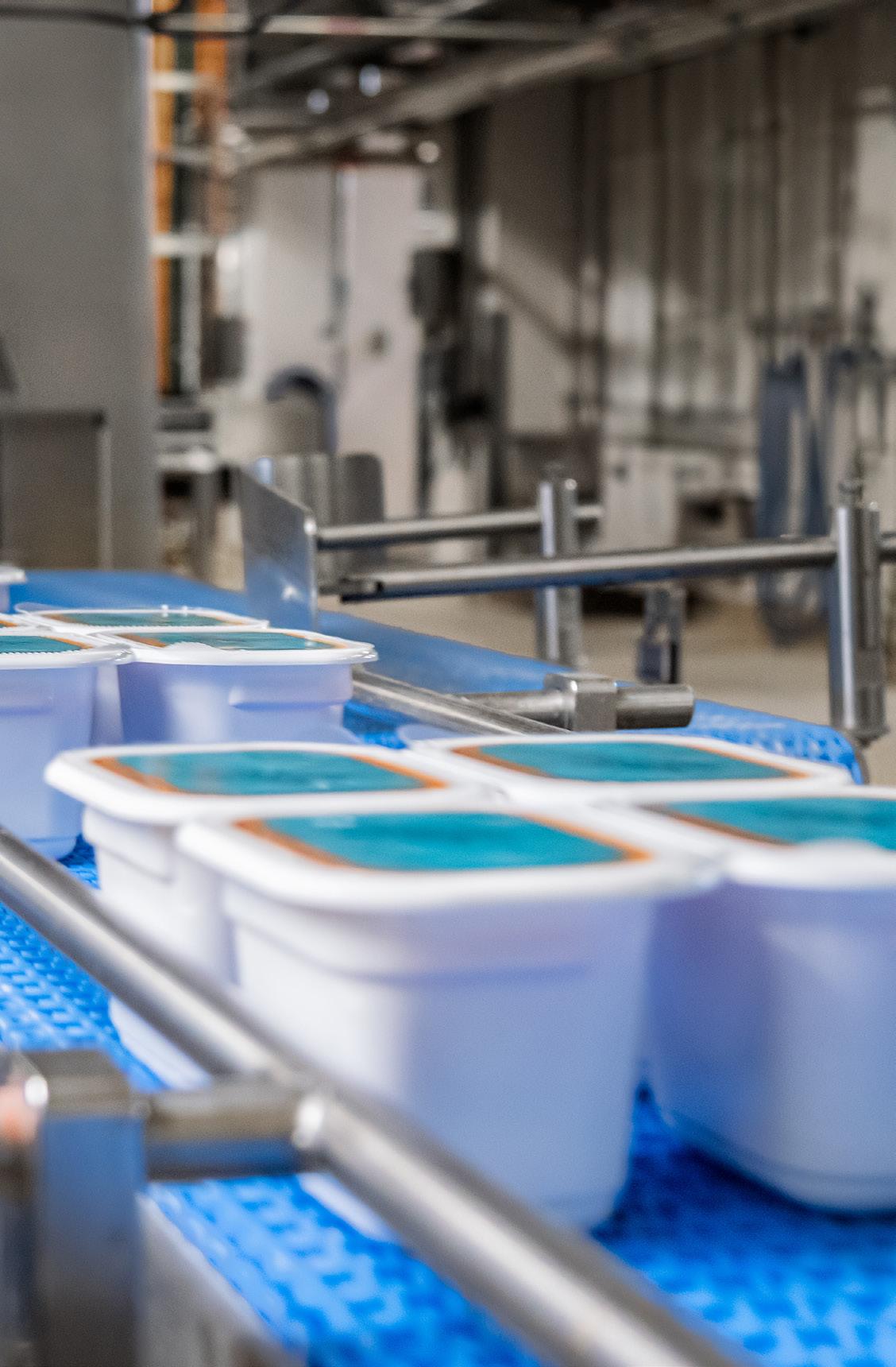
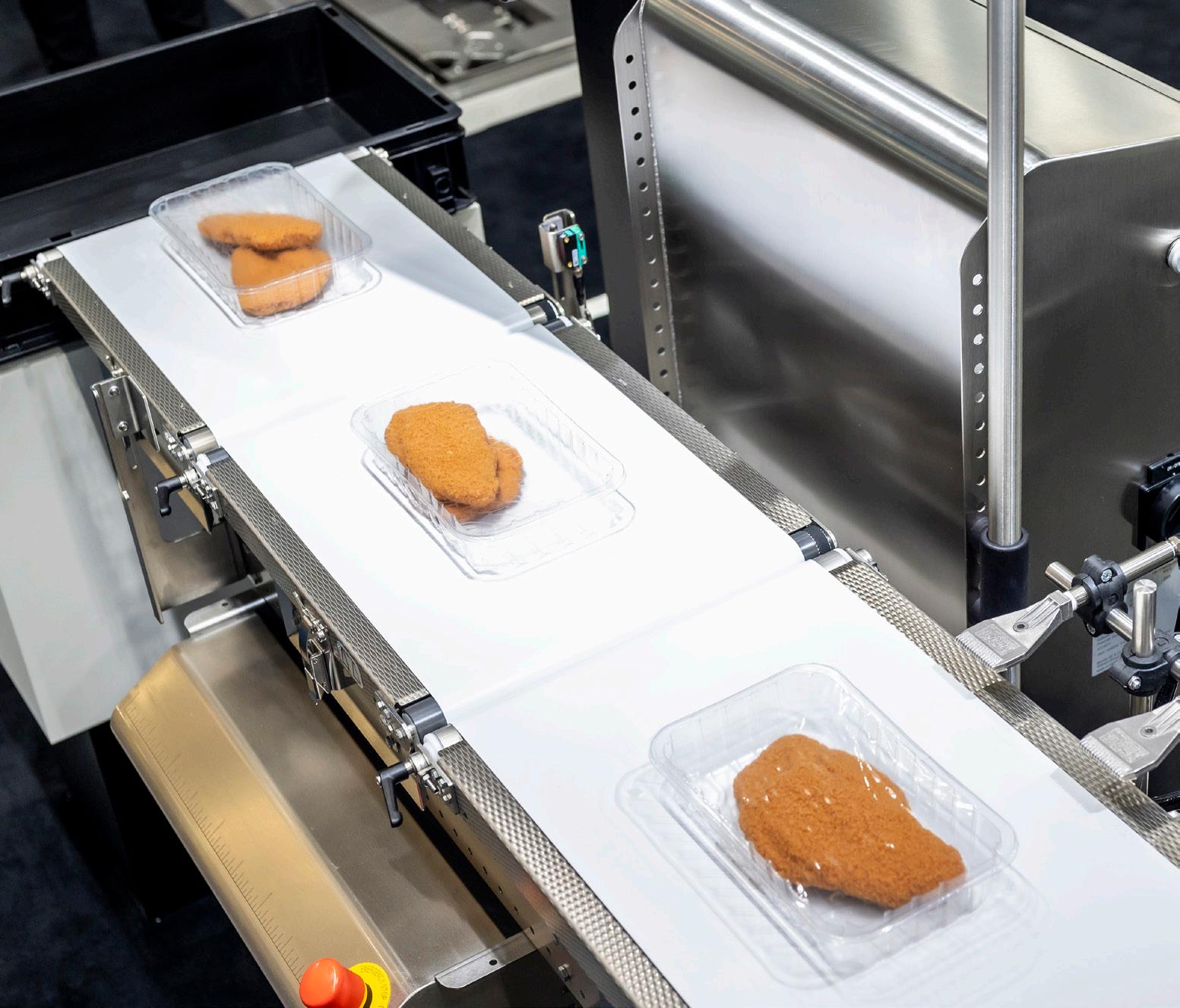
“Many of our systems remain in use for many years, with upgrades extending their lifespan,” Fred declares. “We are very pleased to have customers who have had their Bizerba machines for 15 or 20 years. In the spirit of sustainability, we also embrace equipment refurbishment, with old machines often being resold rather than replaced.”
“WE WANT TO WORK CLOSELY WITH OUR CUSTOMERS, COLLABORATING TO HELP THEM EVOLVE WITH SUPPORT FROM OUR INTELLIGENT, MODULAR SYSTEMS.”
Looking ahead, Bizerba’s focus is on expanding the impact of its technology, while improving ease of use. Artificial intelligence is currently being introduced to support inspection and simplify operations, while new sensor systems are being developed to improve detection and further expand machine capabilities.
At the same time, Bizerba’s Industry unit is set to explore the possibility of new industries, including cosmetics and pharmaceuticals, where similar inspection requirements apply.
“When we look to the future, I see service as a really important part of our offer,” Fred asserts. “With a global network of technicians –nearly 1,000 around the world – we will be there to support our systems in operation, both onsite and remotely, and significantly reducing response times.
“We also have digital tools in development to support our team, including new breakthroughs with predictive maintenance. These systems monitor equipment and identify potential issues before they lead to downtime, meaning clients can expect our solutions to be more efficient than ever.”
For manufacturers, the final stages of production are often the most demanding. Every product must be correct before it leaves the facility. Bizerba’s Business Unit Industry is built around that requirement, so that every item is checked, controlled, and ready for the next step of the journey.
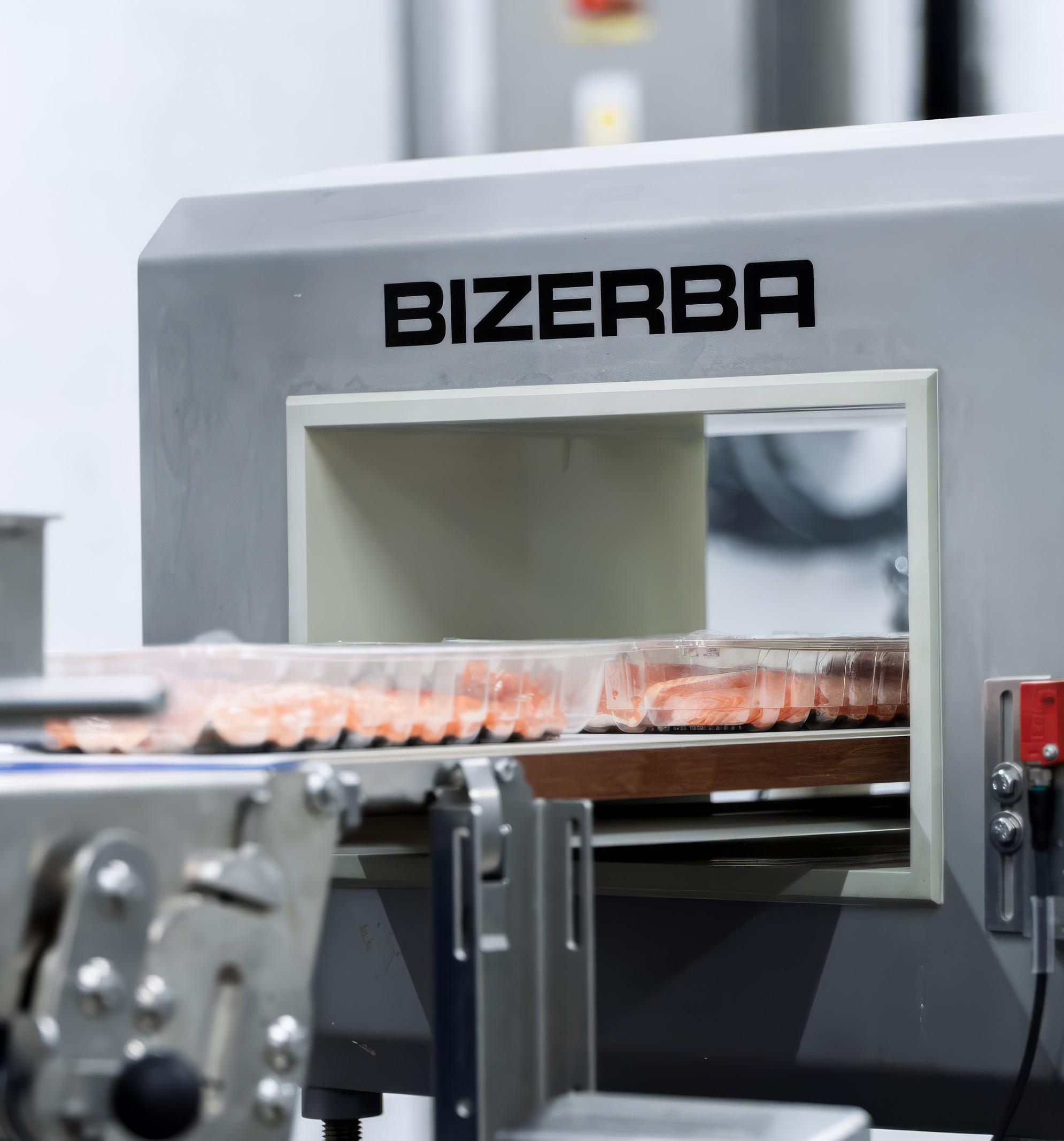
EMTECH HATCHERY SYSTEMS COMBINES ENGINEERING RIGOUR WITH BIOLOGICAL EXPERTISE TO DELIVER PRECISE, HIGH-PERFORMANCE INCUBATION SOLUTIONS WORLDWIDE.
Hatching begins long before the shell breaks. In modern poultry production, the process is no longer left to chance thanks to EmTech Hatchery Systems – a company that ensures every hatch is carefully engineered for the best possible results.
Founded in 2014, EmTech has built its reputation on the science behind incubation and the engineering required to deliver it reliably at scale. For Managing Director Ken Baker, the mission was clear from the outset.
“We set out to restore confidence,” Ken says. “To deliver high-performing, reliable, energy efficient systems that meet the demands of modern poultry production.”
EmTech was not created as a speculative start-up but as the result of decades spent within the hatchery sector.
Ken’s own career began in 1991, working on incubation equipment before moving through technical and leadership roles. Alongside Co-Founder Mike Osmond, EmTech quickly became
recognised for its understanding of both the mechanics and the biology of the hatchery process.
“We developed a strong understanding of incubation, together with environmental controls,” Ken explains.
“Ventilation, chilled water systems, energy management –it all plays a part.”
This foundation allowed EmTech to enter the market with a clear proposition. Rather than competing on cost, the business would focus on performance. Rather than simplifying systems, it would refine them.
From a small initial project in the UK, growth followed. Within two years, EmTech was delivering projects internationally. Today, around 85 percent of the company’s revenue comes from exports, with installations spanning Europe, the Americas, Africa and Asia.
Ken Baker, Managing Director, EmTech Hatchery Systems.
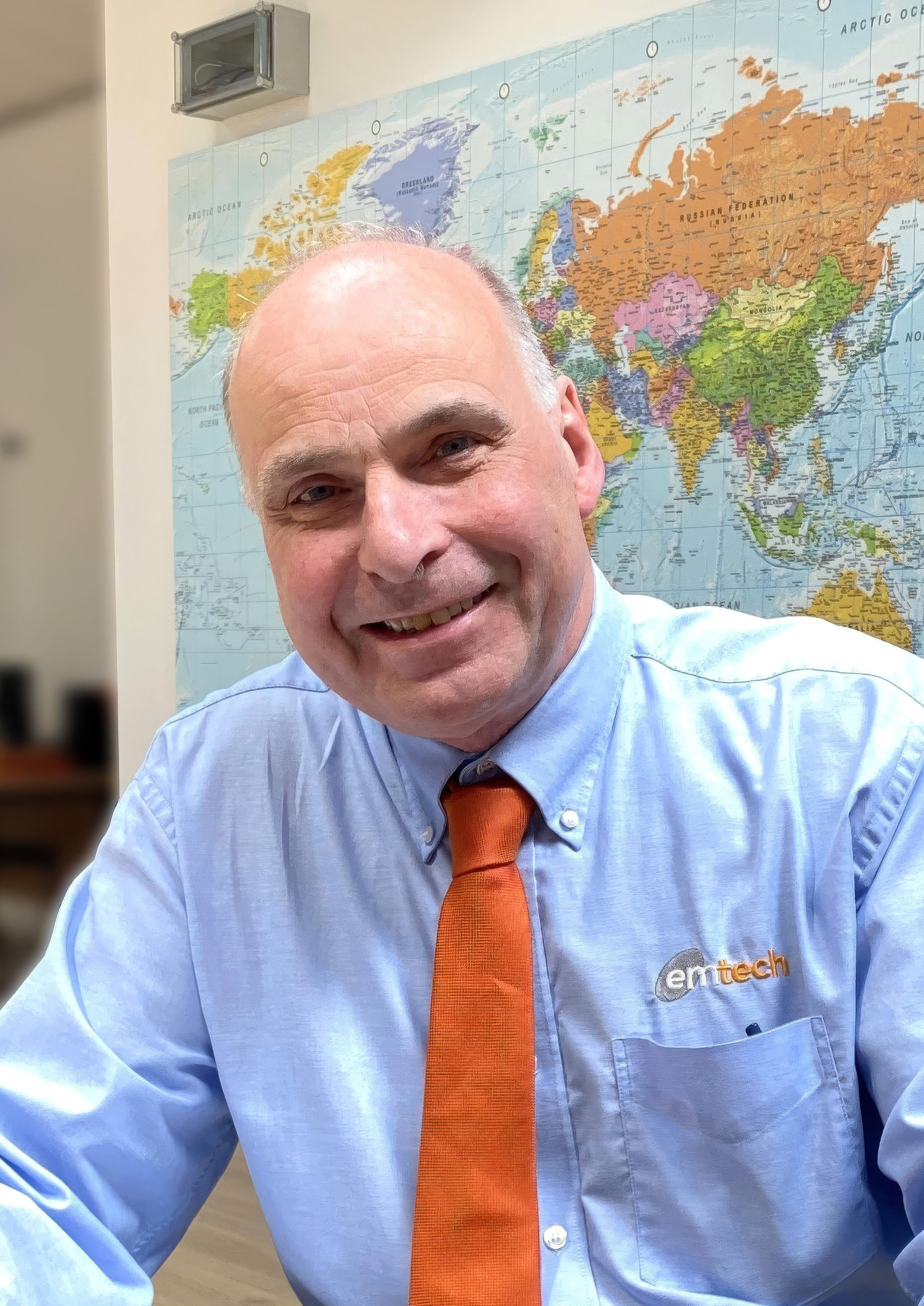

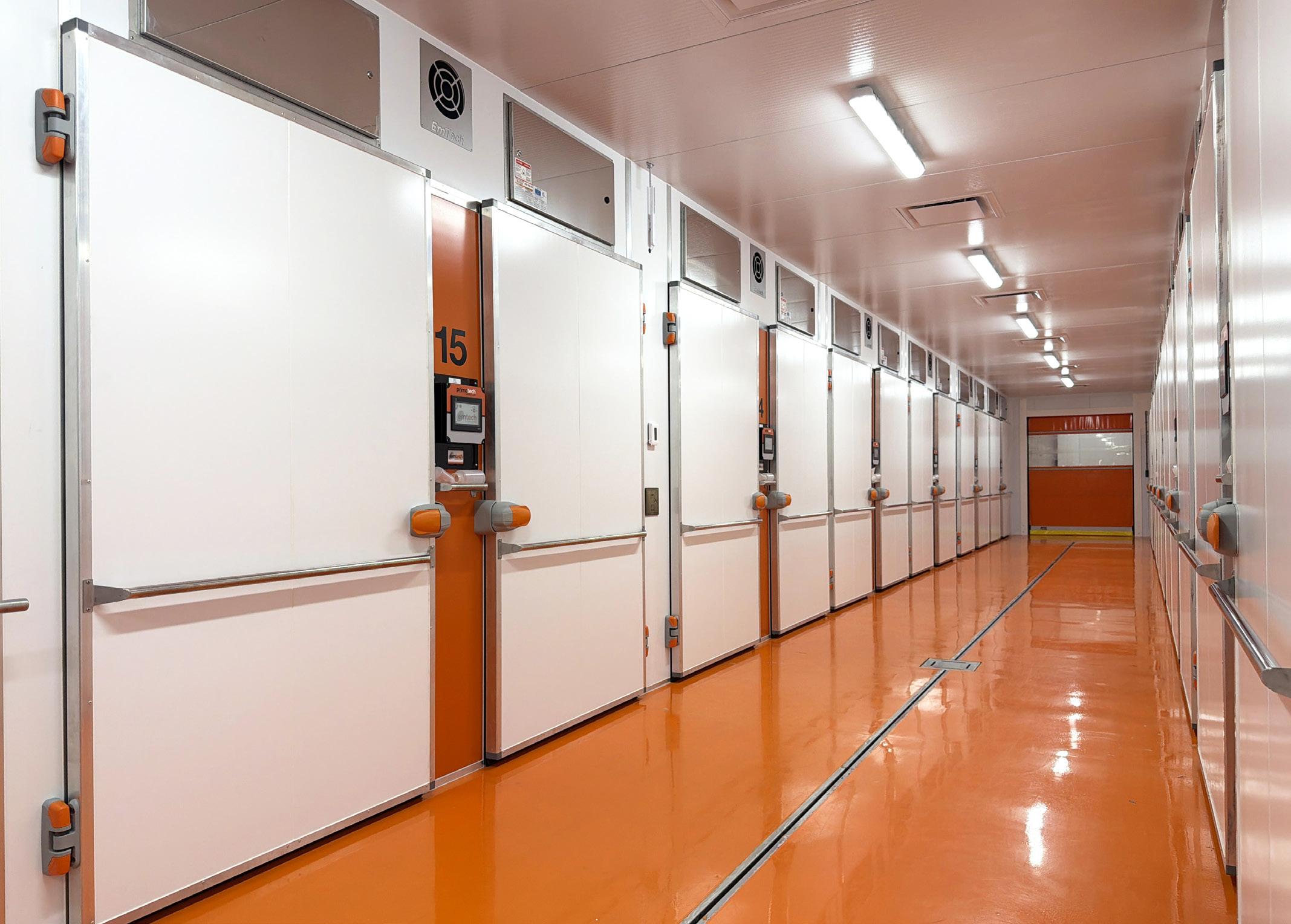
“The quality and performance of our installed base is what has gained us the reputation we have today,” Ken states. “It is supplemented by a disciplined approach to engineering.”
EmTech designs and manufactures its own equipment, allowing the business to maintain close control over quality and specification. Recent investment in a new 55,000 square-foot facility has further strengthened that capability, bringing more production in-house and reducing reliance on external suppliers.
EmTech’s cutting-edge new site integrates production, logistics, and customer training, supporting both current output and future growth. Technology, however, is only part of the story. The company’s approach is shaped as much by biological understanding as by mechanical design.
“Incubation is our passion,” Ken says. “We understand how important that process is.”
It is an understanding distilled into a simple but uncompromising focus: temperature control. While hatchery systems involve multiple variables, EmTech views temperature as the defining factor in achieving consistent results.
“Temperature is king,” Ken asserts. “If you control temperature properly, you control the outcome.”
This principle underpins the company’s system design. EmTech equipment is engineered to maintain highly uniform temperatures across the entire egg mass, minimising variation and ensuring a tight hatch window. The result is improved chick quality and greater predictability for producers.
The company summarises this approach through a set of internal performance metrics, but the objective remains straightforward: reduce variability, improve consistency, and deliver outcomes that customers can rely on.
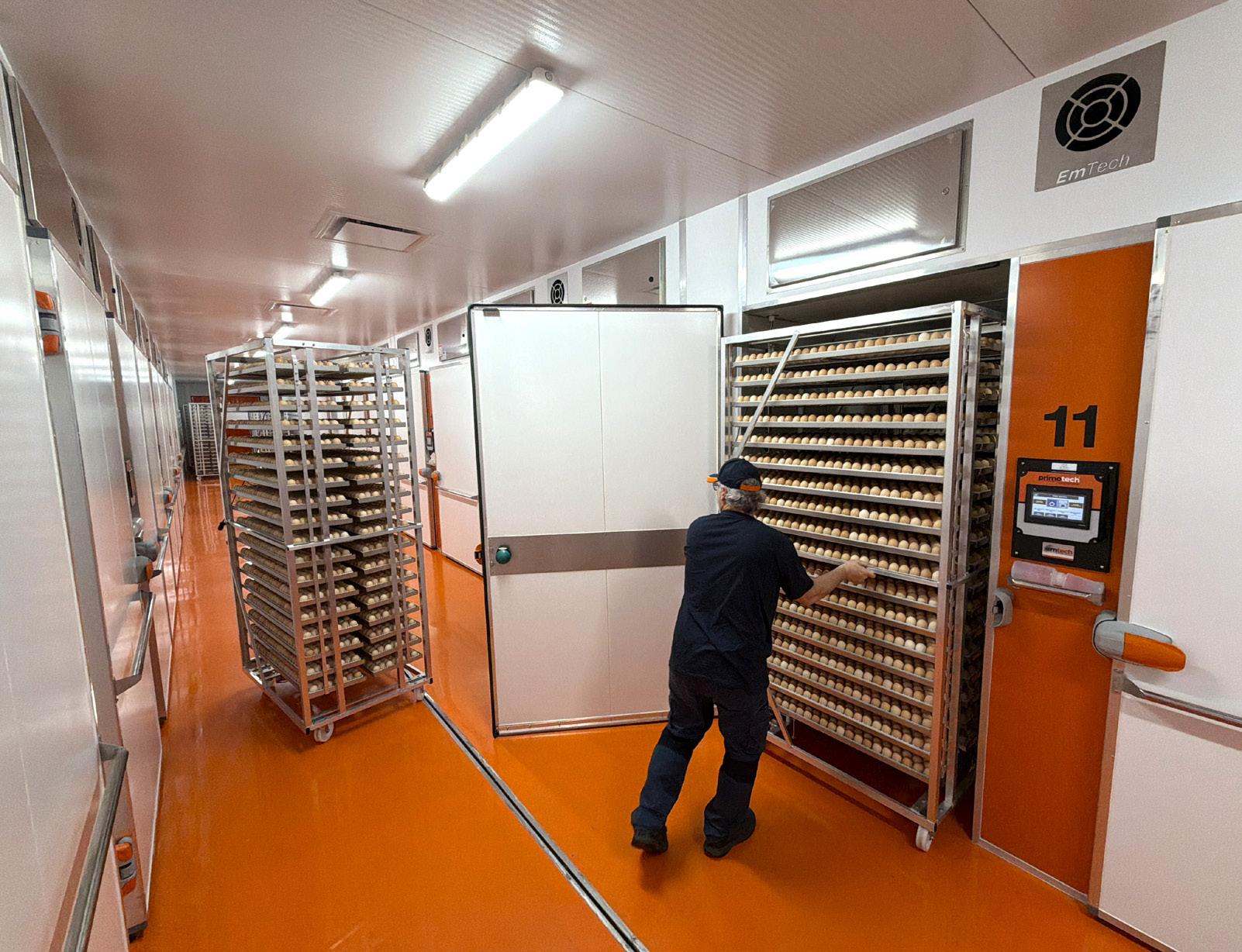
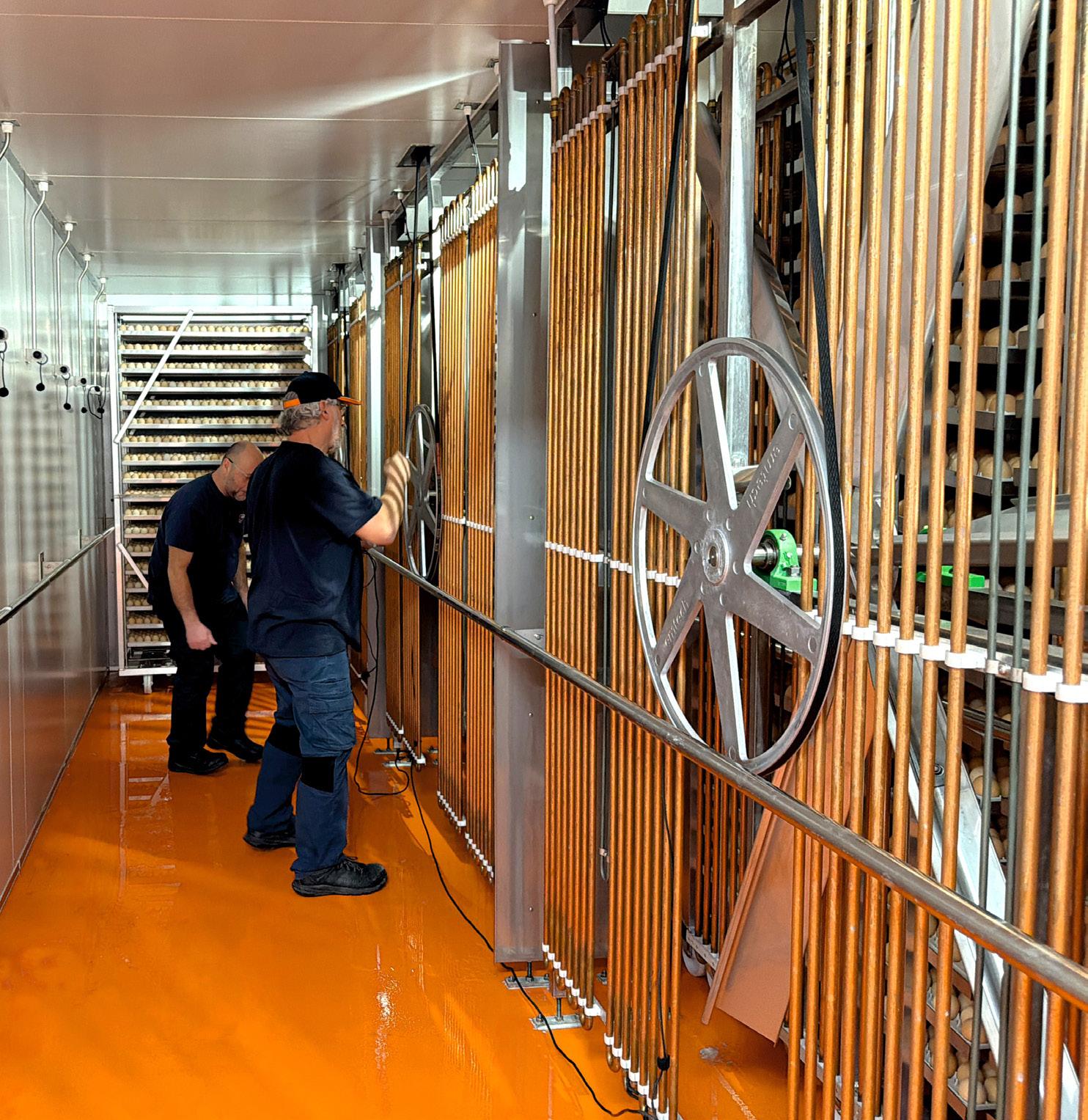
EmTech’s passion and experience shapes the company’s stance on wider industry trends. One area of growing debate within the sector is early feeding within hatcheries, where some systems introduce feed and water immediately after hatching. EmTech, however, takes a more traditional view.
“Hatcheries are for incubating and hatching chicks,” Ken remarks. “If the incubation process is correct, the chick does not need feed and water at that early stage.
“At EmTech, we address root causes rather than compensating for inconsistencies. By maintaining precise environmental conditions to achieve a short hatch window, we eliminate the need for corrective measures later in the process.”
Alongside performance, energy efficiency has become an increasingly important focus for EmTech. Rising costs and sustainability pressures are pushing hatchery operators to look for solutions that reduce consumption without affecting output. EmTech has responded by integrating heat recovery
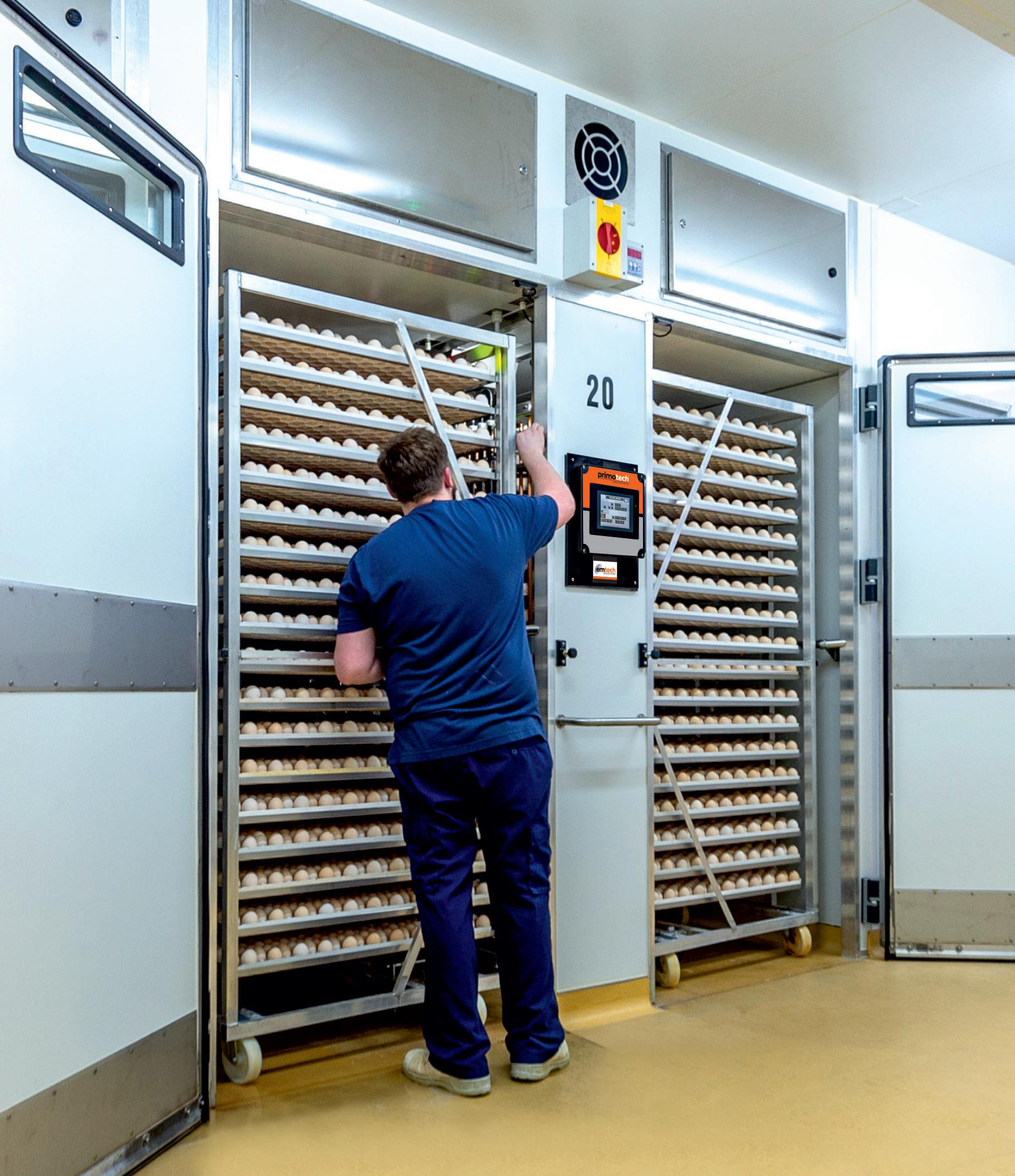
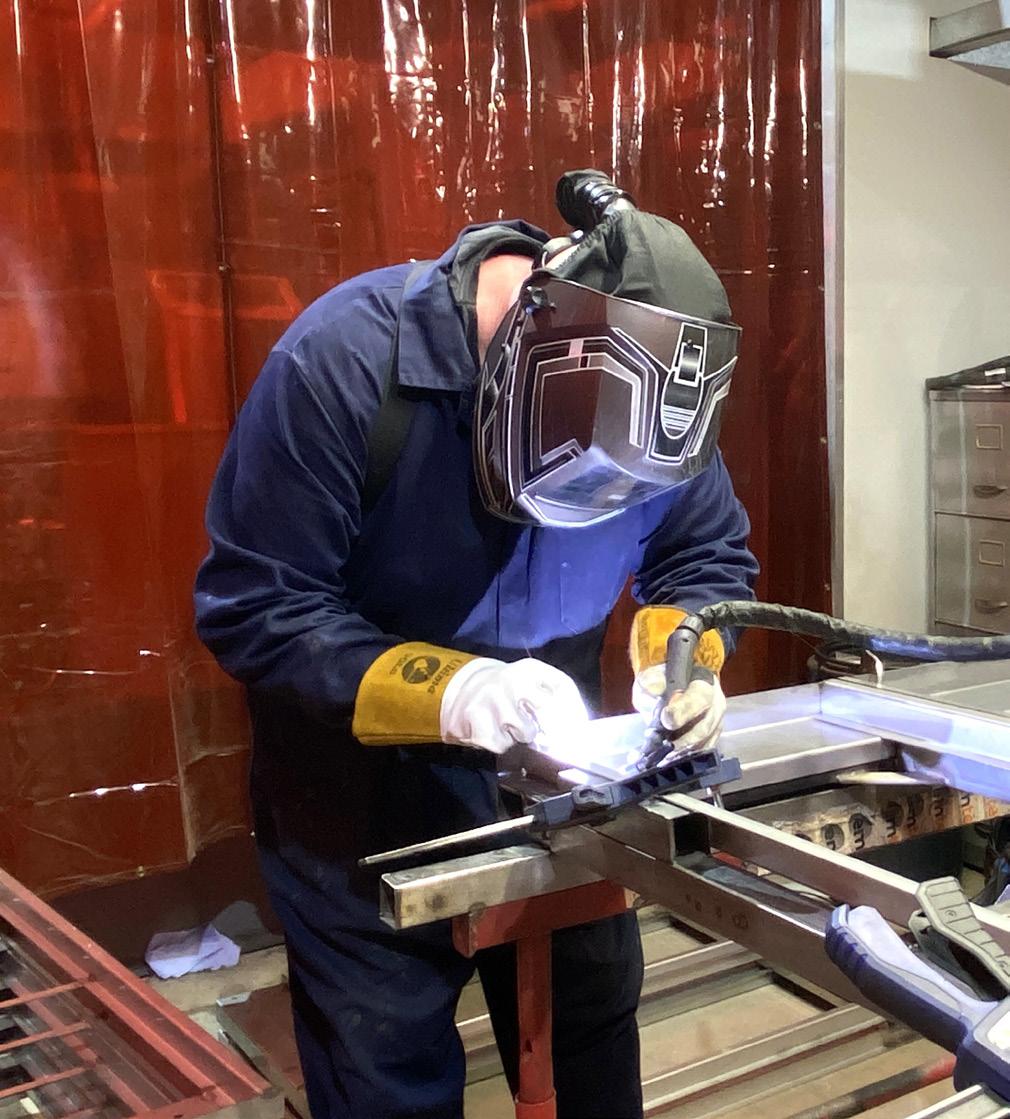
systems into its designs. These systems capture the heat generated by developing embryos and reuse it within the hatchery environment.
“We use that energy to heat incoming air,” Ken reveals. “It reduces the need for external heating and improves overall efficiency. As well as aligning us with a growing demand for resource optimisation and better environmental responsibility, our approach reinforces EmTech’s position as a technology-led supplier rather than a commodity manufacturer.”
Unsurprisingly, considering the company’s reputation, EmTech’s global footprint continues to expand. Strong activity in markets such as Pakistan, the Philippines, and the Middle East is complemented by growing opportunities in the Americas. A network of regional sales managers and agents supports this expansion, providing local expertise and faster response times.
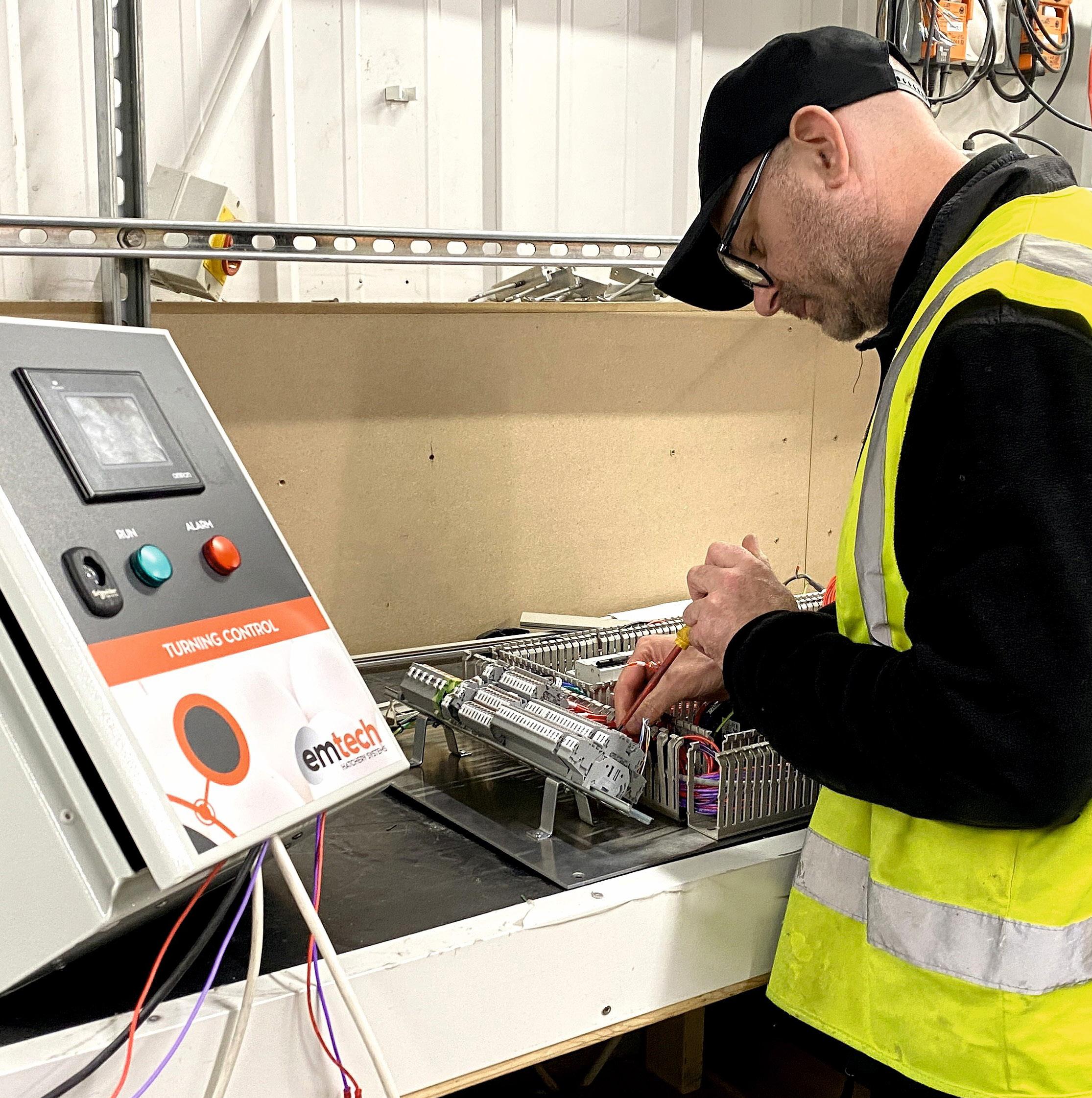
“We are seeing significant traction in the Americas,” Ken affirms. “That is a key area for our future growth. We are highly adept at maintaining both new and established relationships with major industry players, delivering projects across multiple continents.”
Despite the company’s ongoing growth, EmTech remains grounded in its original values. For instance, the business continues to invest in its people, recognising that specialist knowledge and experience are critical in such a niche sector.
“We are a company of traditional values,” Ken declares. “Our people are vital to our success.”
As the organisation evolves, balancing technology with human expertise remains a priority. Automation and efficiency improvements are part of the strategy, but not at the expense of skills and craftsmanship.
Looking ahead, the direction of travel is consistent with the company’s origins. Continued expansion, further investment in manufacturing and ongoing product development will support EmTech’s growth. At the same time, its core focus will remain unchanged: precision, performance, and reliability. In an industry where small variations can have significant consequences, that focus provides a clear point of difference.
“WE ARE SEEING SIGNIFICANT TRACTION IN THE AMERICAS. THAT IS A KEY AREA FOR OUR FUTURE GROWTH.”
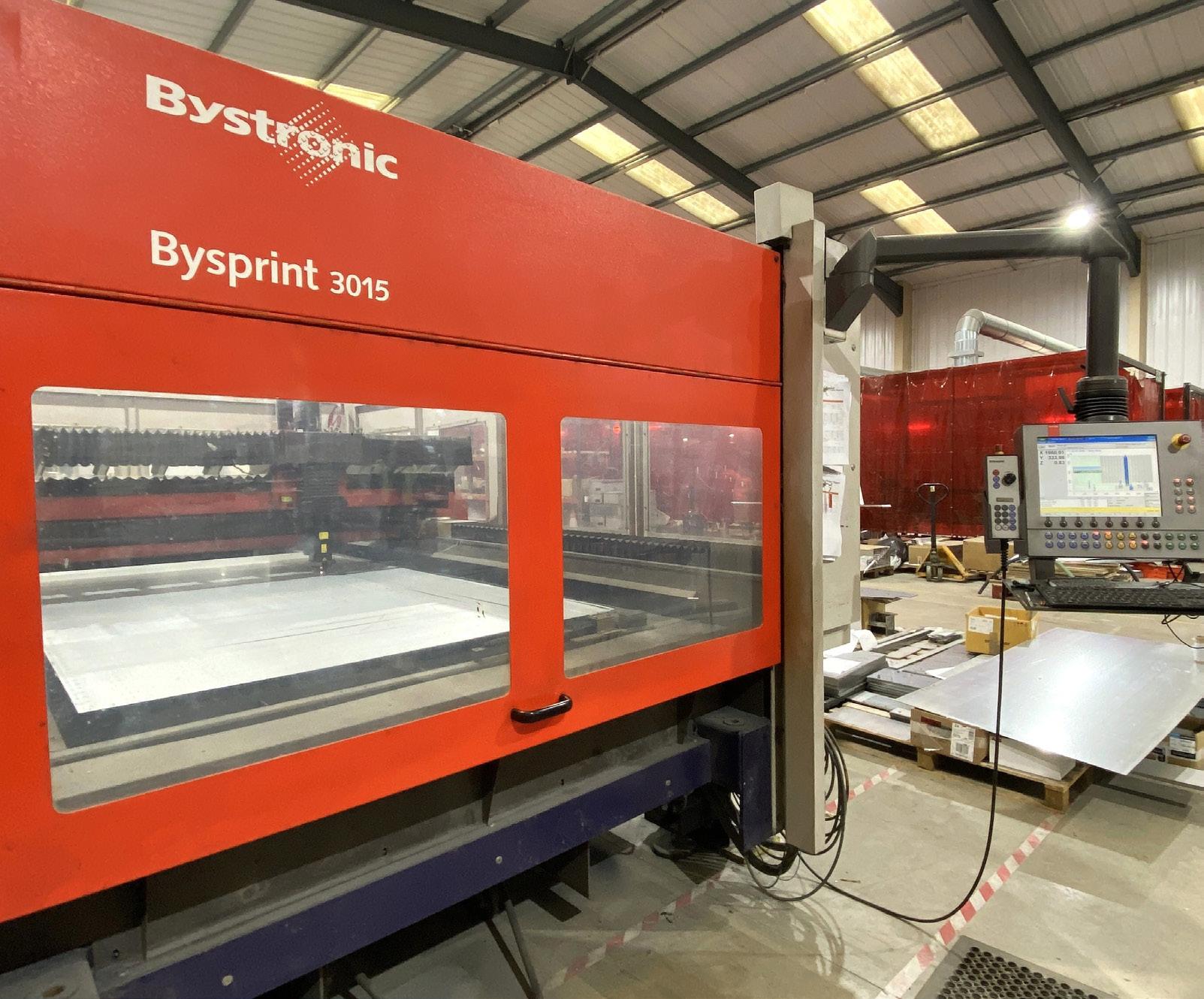
WEARABLE SOLUTIONS, FACILITATING SAFE AND SECURE OPERATIONS FOR CLIENTS ACROSS NUMEROUS GLOBAL MARKETS.
Against the backdrop of three Welsh mountains, Peter Jones ILG operates with a clear sense of identity. The landscape surrounding its facilities has even influenced the company’s branding, with the three peaks acting as inspiration for the company’s logo and ownership structure.
Peter Jones was founded in 1967,” begins Managing Director Christopher Davidge. “We are always asked if the company is named after Peter Jones from Dragon’s Den, but I have to tell people that the Welsh dragon is the only dragon connected to our business.”
Almost 60 years since the company launched, Peter Jones is still owned and operated by its founding family. Christopher oversees company operations, working closely with Ownership to help Peter Jones expand its reach. What defines the company today is not just what it produces, but how it produces it.
“We do everything inhouse,” Christopher explains. “We design our own tooling, manufacture it in the UK, mould the parts here, and carry out textile design and conversion ourselves. Nothing is outsourced. That’s a big part of what makes us different.”
This integrated model is supported by Peter Jones’ sister company, JC Moulding, which provides plastics expertise and allows the business to maintain control over both design and production. Across its sites, Peter Jones employs more than 100 people and continues to grow its capabilities in line with demand.
At the centre of Peter Jones’ product range is the Klick Fast system, a carrying solution designed to securely attach devices to clothing and equipment. Originally developed for radios, it has since been adapted for a wide range of wearable technologies.
“The Klick Fast system has been used for more than 20 years,” Christopher says. “It’s now in over 50 countries, from Australia and Hong Kong through to Europe and the United States.”
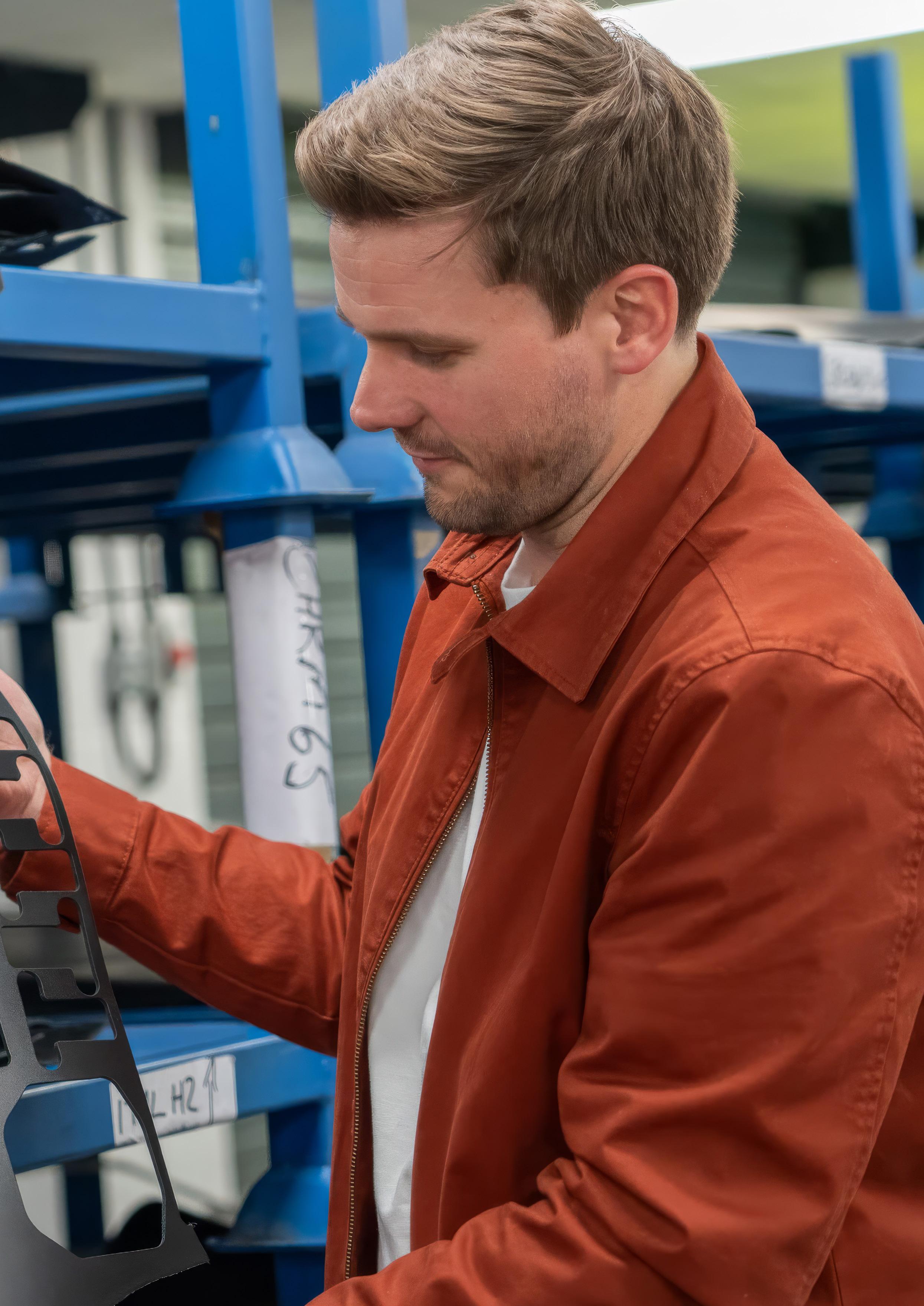
At AR Digital, we’re proud to partner with Peter Jones, supporting a business that shares our commitment to quality, reliability, and exceptional customer service. Our relationship is built on a shared belief that strong, well-supported infrastructure enables great businesses to thrive.
Through our work together, we deliver a fully integrated range of services, including print management, IT support, and telecoms solutions. By bringing these services together under one roof, we provide Peter Jones with reliable technology and seamless communication systems, helping the team operate efficiently and stay focused on what they do best – serving their customers.
Looking ahead, we remain committed to continually evolving our services to meet the changing needs of modern businesses. As technology advances and customer expectations grow, having a dependable partner becomes increasingly important. We take a proactive approach, regularly reviewing systems, identifying opportunities for improvement, and implementing solutions that enhance performance, security, and scalability- ensuring Peter Jones is well-supported both now and in the future.
Partnerships like this are about more than just services; they’re built on collaboration, trust, and a shared vision for long-term growth. We’re proud to play a role in supporting the continued success of Peter Jones and look forward to strengthening our relationship as the business continues to evolve.
www.ardigital.co.uk
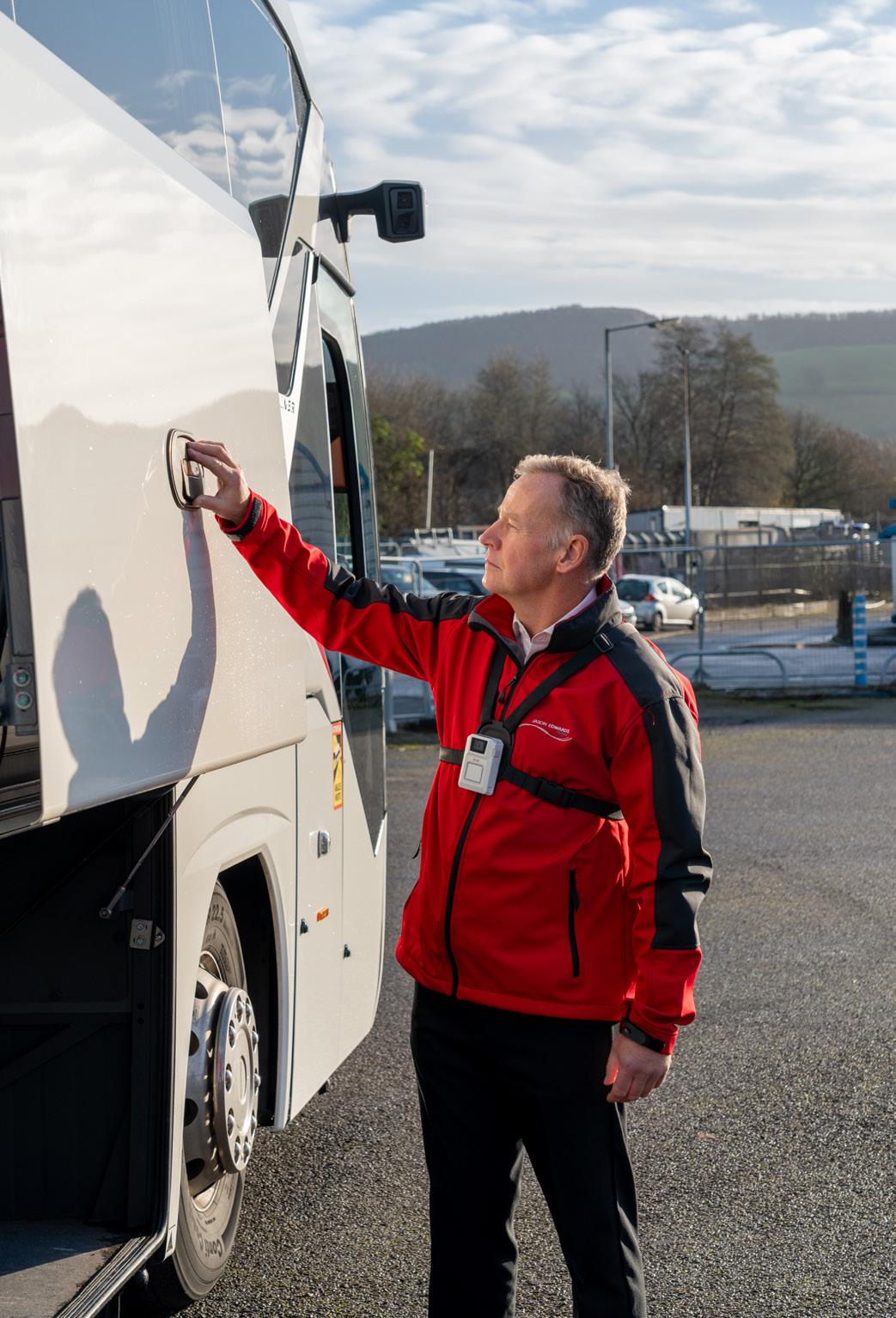
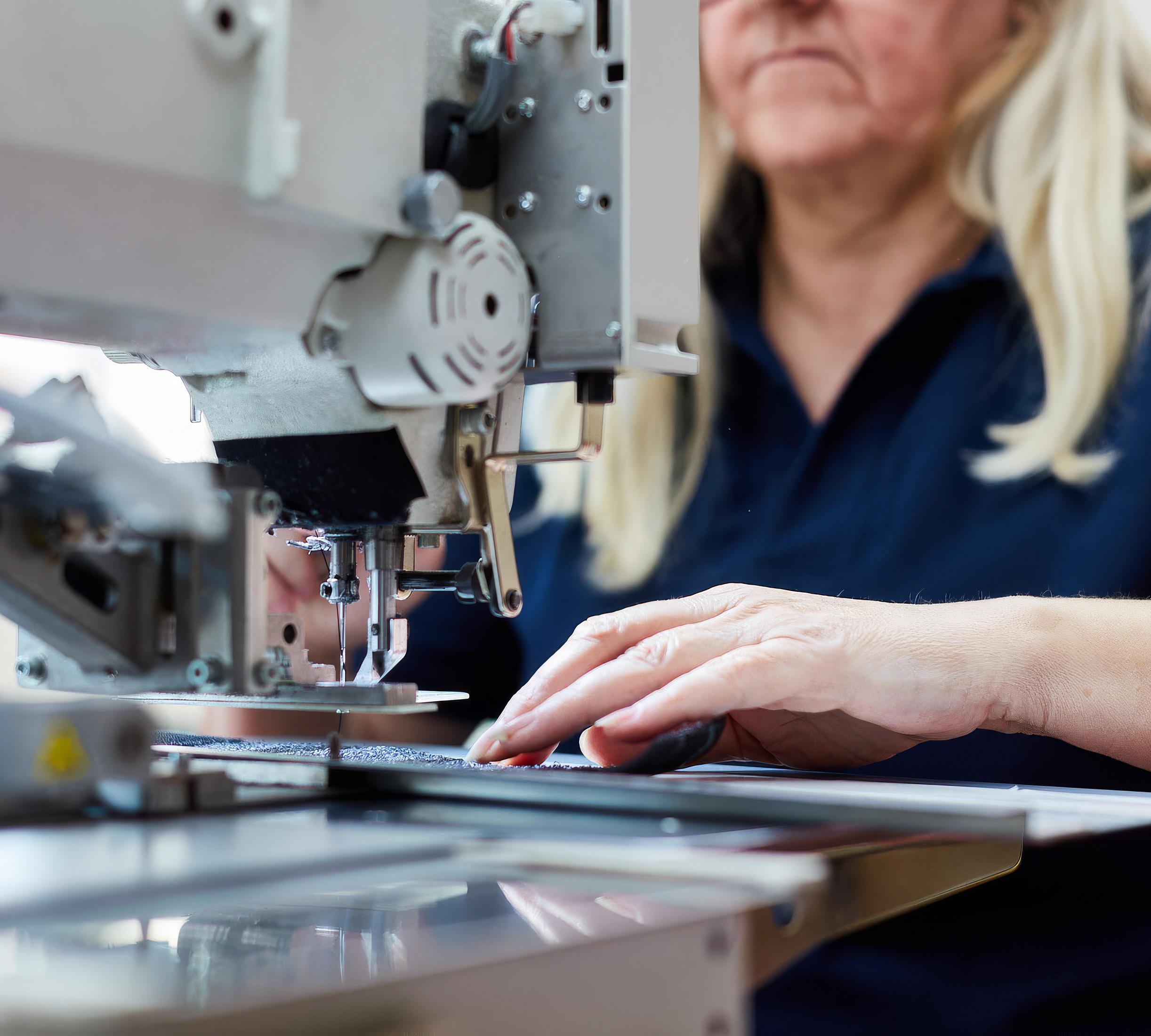
Kick Fast’s applications are broad. It is currently used by police forces and government agencies, as well as in retail, construction, and private security. Body cameras, gas detectors, and communication devices all rely on the product’s reputation for secure and practical carrying.
Despite Peter Jones’ success, the widespread adoption and visibility of the company’s products can still serve as a surprise to Christopher.
“I was in Las Vegas recently and saw security wearing our product on Fremont Street,” Christopher elaborates. “Then I saw it again in a retail store. You don’t always know exactly where our solutions will end up, so it’s good to see them out in the real world.”
International markets are playing an increasingly important role for Peter Jones. Exports now reach more than 50 countries, and recent performance has marked a shift in the company’s balance of business.
“The first quarter of 2026 was the first time exports have been ahead of the UK,” Christopher remarks. “The UK is still very important to us, but we’re putting more focus on Europe and the US for growth.”
That focus reflects both market conditions and product demand. In many cases, the growing uptake of wearable technology is following patterns already established in the UK.
“The UK is quite advanced when it comes to body camera adoption,” says Christopher.
“Other countries tend to follow, but there are different regulations and barriers to overcome.”
Body-worn video has become a central driver of activity for Peter Jones. Once limited to public safety, it is now becoming more common in everyday environments.
“You see body cameras everywhere now,” Christopher notes. “They’re in shops, on transport, at events. They’re used as a deterrent and for recording incidents.”
Peter Jones has responded by refining its product offering to suit these new environments. For instance, a recently developed system has been designed specifically for private enterprise users.
“It allows body cameras to sit closer to the body – around 65 percent closer,” Christopher says. “That improves comfort and stability, which is important for people wearing them all day.”
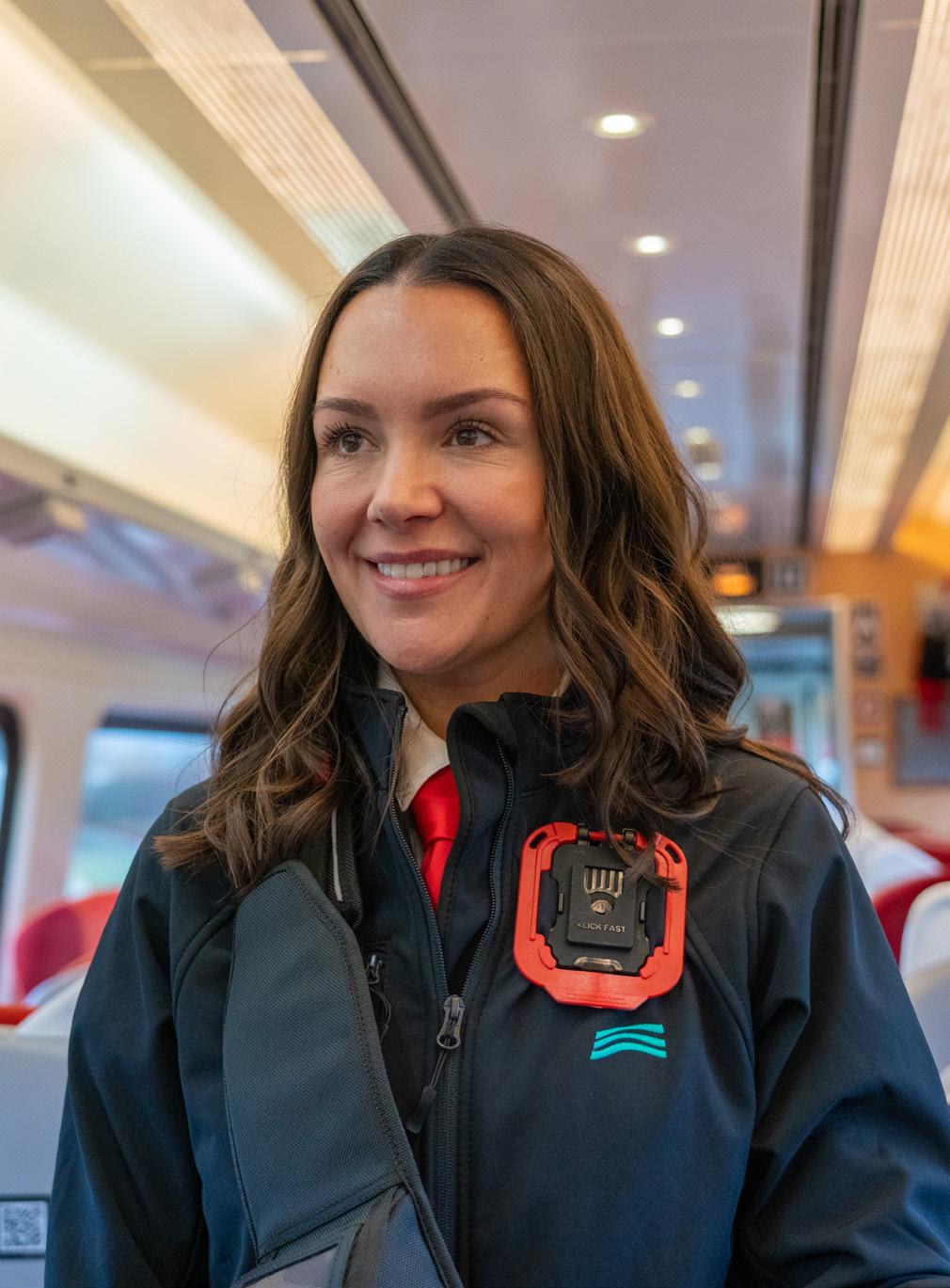
Product development is not limited to performance. Environmental considerations are becoming more prominent, reflected in the introduction of the Delta range.
“We’ve created a fully recyclable range,” Christopher reveals. “Products can be returned to us and turned back into new items using our inhouse processes.”
This initiative is linked to a broader commitment to social responsibility. Each product in the Delta range contributes to mental health charity Mind in Gwent, recognising the pressures faced by many end users.
“Our industry can be quite intense, especially in security and public safety,” Christopher states. “We wanted to give something back to those sectors.”
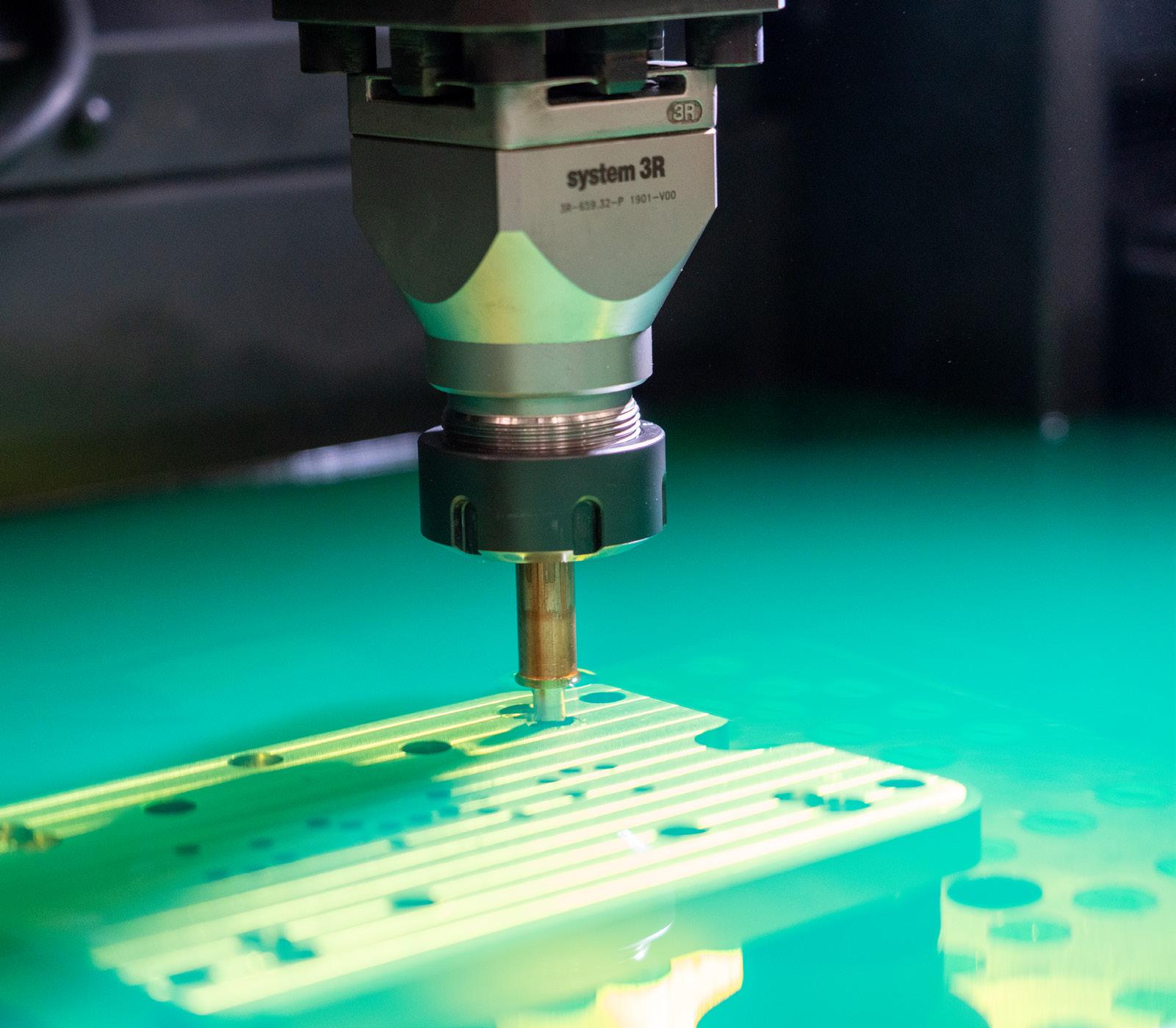
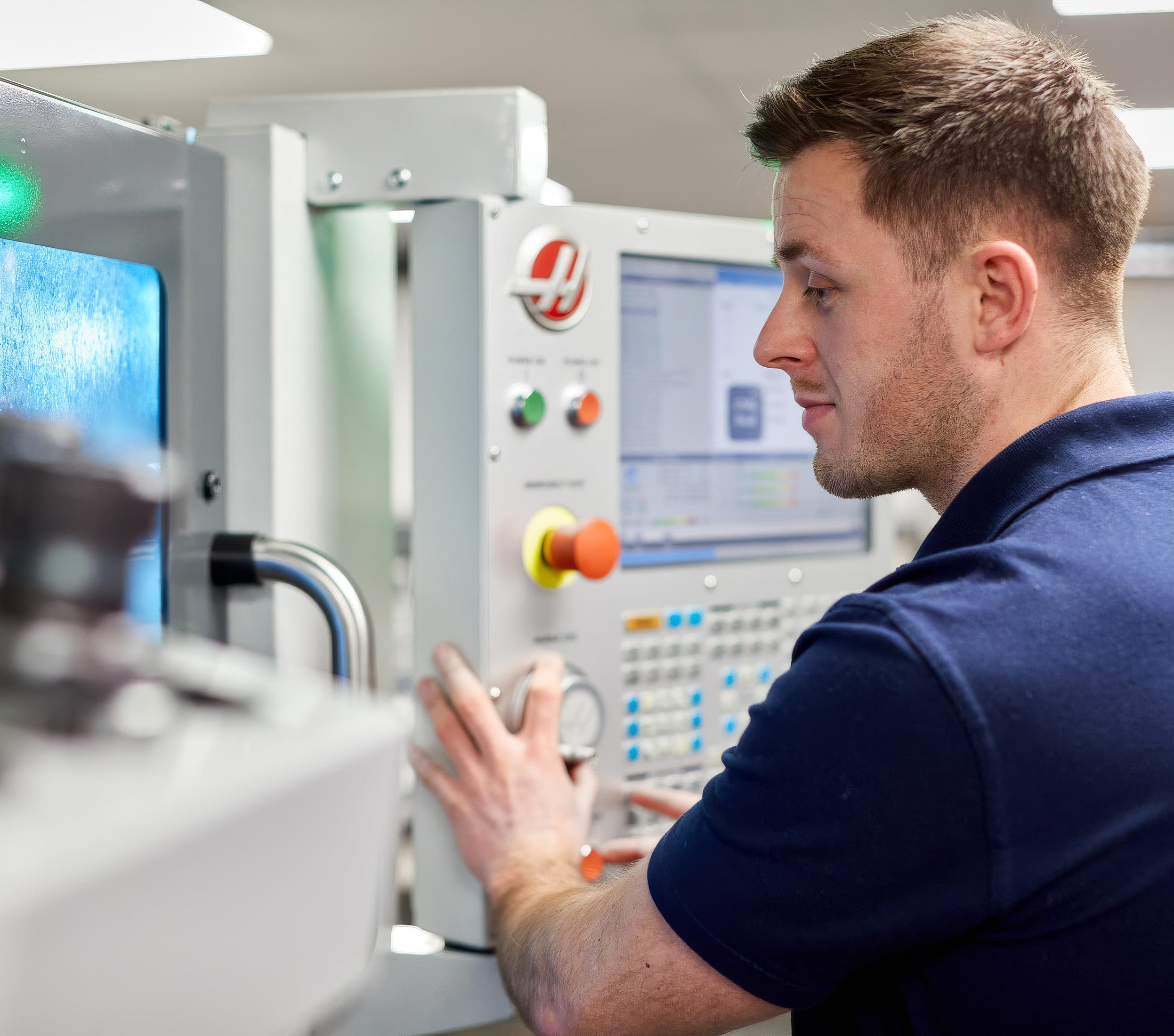
The nature of Peter Jones’ work means that attention to detail remains a constant across the business. The environments in which the company’s products are used leave little margin for error, and that is reflected in internal decision-making.
“We recently had a batch of pepper spray holders ready to go,” Christopher recalls. “One of the team spotted that the slide was slightly sticky and said it couldn’t be sent out. Their view was that it could be protecting someone, so it had to be right.
“As a result, the batch in question was held back and adjusted before release. Our staff understand where the products are going – they take pride in what they do and they’re careful about it.”
Community involvement is another area where a sense of responsibility is evident at Peter Jones. The company maintains close links with local schools and organisations, particularly through STEM initiatives.
“We bring students into our facilities and show them what we do,” Christopher explains.
“They get to see everything from moulding to textiles to 3D printing. It gives them a proper understanding of the process.”
Charitable activity is embedded in day-to-day operations at Peter Jones. Alongside support for Mind in Gwent, the business works with a cancer charity in Cardiff and runs regular fundraising events.
“We hold events like bacon roll mornings, fun runs, and sponsored cycles,” he reports.
“The company supports it, but it’s really driven by the staff. They want to get involved.”
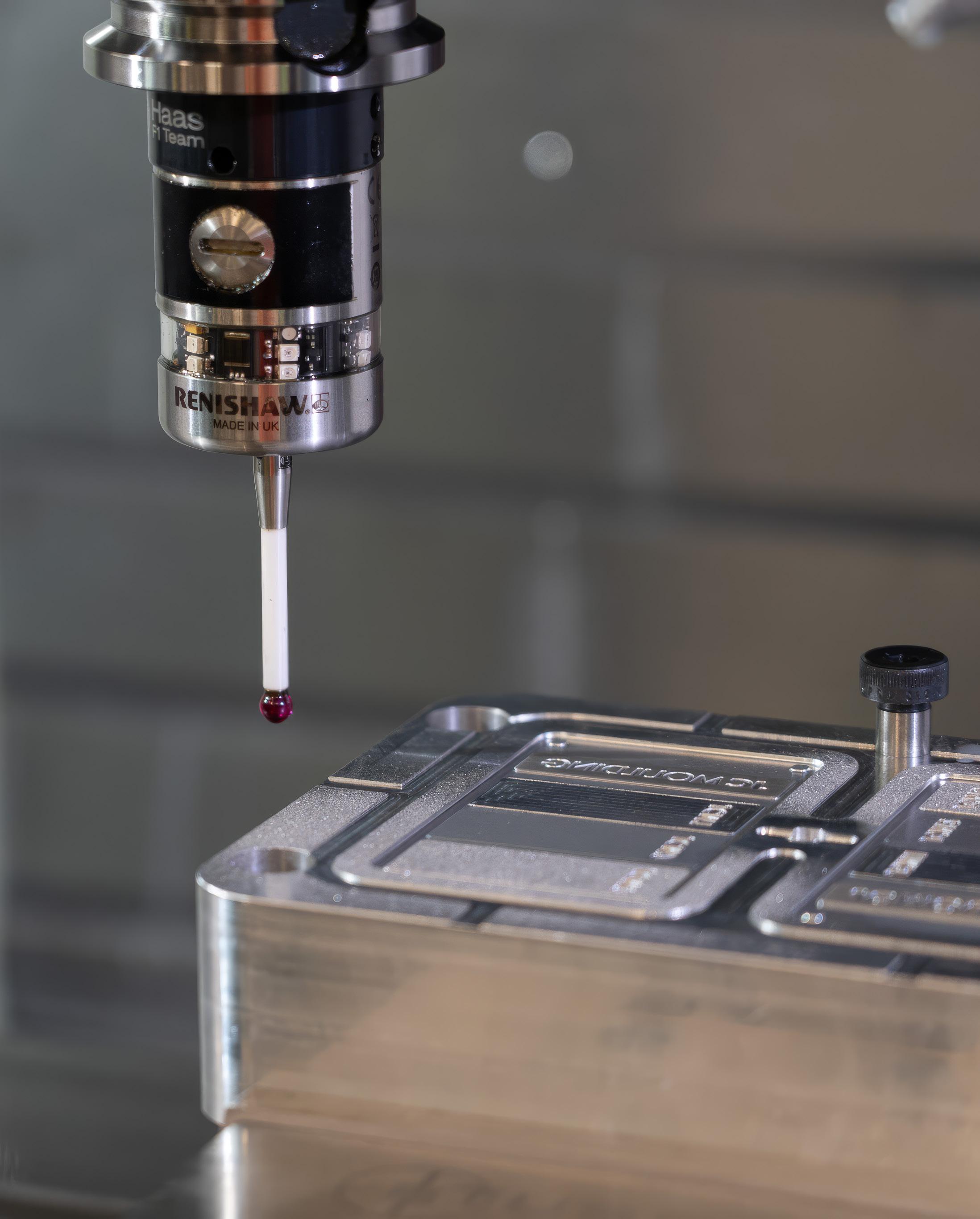
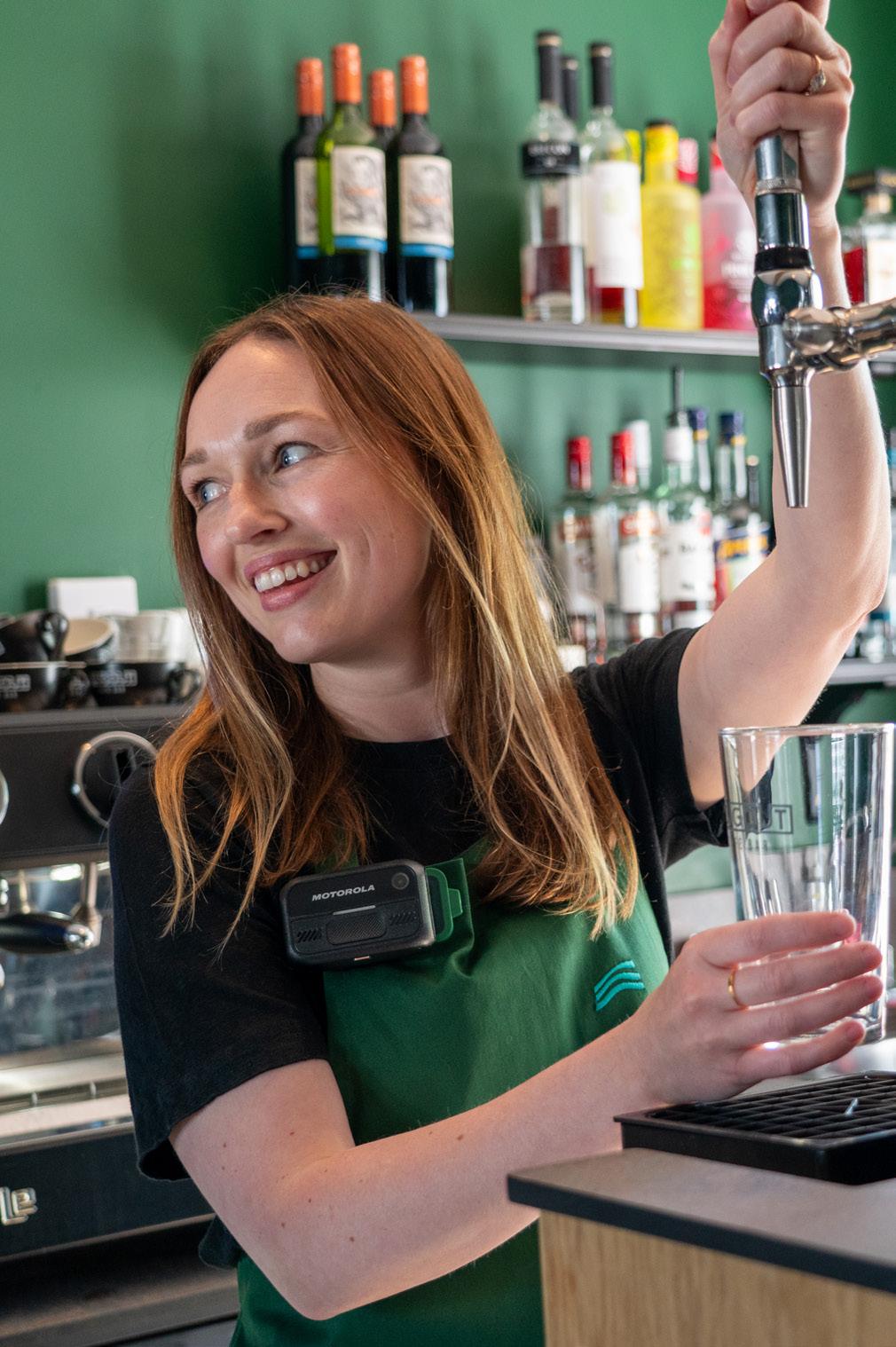
Future plans at Peter Jones centre on expanding into new markets, while adapting to changes in technology and demand. The US and Central Europe are key areas of interest, particularly as new regulations emerge.
“In parts of the US, there are laws coming in around personal panic buttons,” Christopher says. “That creates new demand for wearable solutions, and we’re looking at how we fit into that.”
Internally, the business is adjusting to larger order volumes and more complex requirements.
“We’ve gone from orders of 100 units to 10,000 units,” Christopher concludes. “That changes how you operate. We’re looking at automation and robotics to support that, while still keeping our quality levels high.”
Despite those changes, the fundamentals remain consistent. Peter Jones continues to design and manufacture in Wales, maintaining control over its processes while supplying customers around the world.
JACK BIBBY
Stephen Harpur does not believe in waste. If you have ever heard the phrase “One man’s rubbish is another man’s treasure,” Stephen Harpur is that other man. “I prefer to call it a ‘misallocated resource,’” Harpur tells us.
Harpur has made himself a career out of monetising what other people call waste. It has proved to be a profitable area to work in, as well as one that helps to fight climate change and reduce carbon emissions.
“Our new products are generally designed to ensure that we have a healthy planet five generations from now,” Harpur says. “Our legacy business generates significant cashflow that we direct towards developing intellectual property for innovative new products in the future.”
Those legacy products come from Progressive Planet’s previous incarnation, Absorbent Products. Established in 1989, Absorbent Products made a name for itself manufacturing clean, safe, absorbent products around the animal health sector derived from diatomaceous earth, zeolite, and bentonite. Last year, the company brought a new kind of lightweight cat litter to the market.
Progressive Planet to have the greatest positive environmental impact.
Currently, Harpur has recognised that the company’s efforts are best focused on the cement industry. The most commonly used cement is known as Portland cement, a limestonebased cement that has been the foundation of the construction industry, often literally, since the early 19th century. However, using that cement accounts for approximately 7% of the greenhouse gases humankind produces every year.
“When you take limestone and heat it up to 900% Celsius, the phase change that creates results in an output that is 56% cement, 44% CO2,” Harpur explains. “How do you get 900 degrees Celsius? Burning hydrocarbons that, by definition, are full of carbon and release even more CO2.”
[Opposite Page]
Stephen Harpur, CEO, Progressive Planet.
But the company chooses which products to develop and bring to market based not only on profitability, but on what will allow
What Harpur calls “the nastiest hydrocarbon” is coal, where burning a single metric ton results in 2.2 metric tons of CO2.
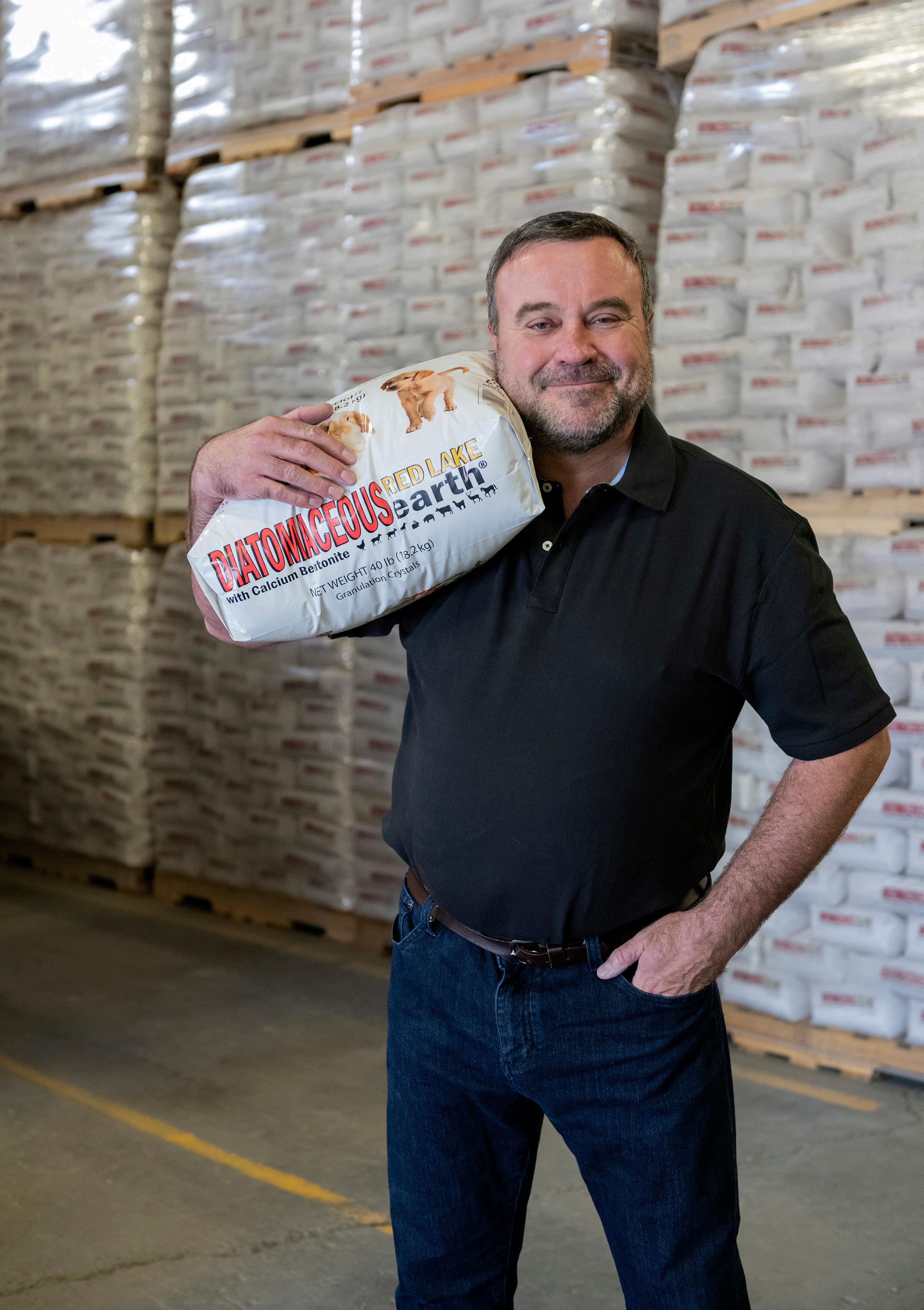
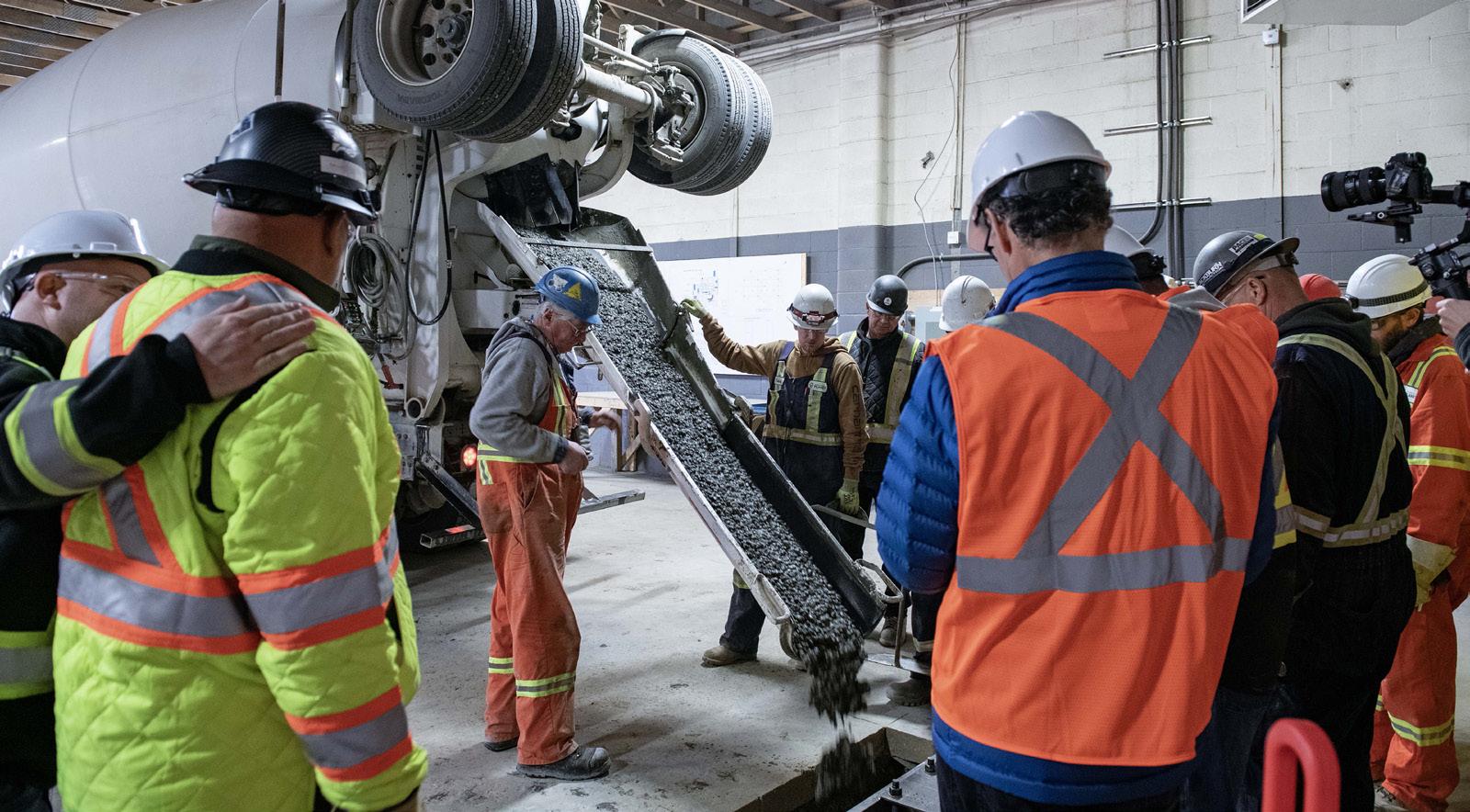
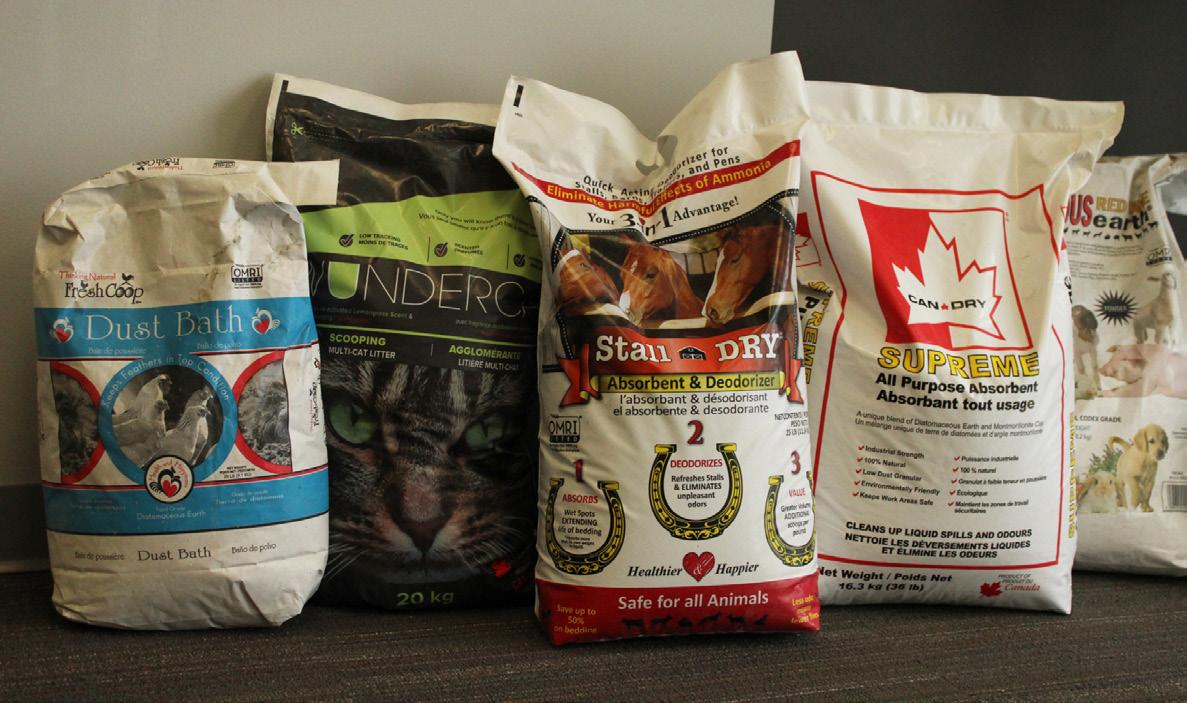
“Cement is especially egregious when you burn the coal to make the cement and this is still prevalent worldwide,” Harpur says.
Progressive Planet has made it its mission to develop alternatives that can do all the jobs that Portland cement can do, without the massive carbon dioxide emissions. Fortunately, others had already done the work, a long, long, long time ago.
“The Ancient Romans figured out how to make a form of concrete thousands of years ago,” Harpur points out. “The Pantheon in Rome has no cracks or rebar, even after all this time.”
Using those Ancient Roman techniques as a guide, Progressive Planet has devised two sustainable alternative cements. The first if PozGlass, a cement made from 100% recycled glass, inspired by a 2,000-yearold recipe for Roman Cement which used volcanic ash particles from Pozzuoli, Italy. The second
is Planet LCD, which is based on limestone calcined diatomite. It is a material can replace up to 50% of Portland cement while maintaining compressive strength in mortar cube tests meeting ASTM C618 requirements.
If the idea of using recycled glass to create cement seems unorthodox, that is because that is exactly how Harpur likes it.
“When I encourage our staff, I never say ‘Think outside the box.’
That’s too traditional! I tell them to think outside the triangle!” Harpur says. “We encourage people to find solution through innovation.”
But while PozGlass and Planet LCD are both innovative responses to the issues around Portland cement, they share a common challenge that Progressive Planet will need to overcome. And it is an ironic one for a company that used to be named Absorbent Products.
“These materials absorb more water than Portland cement,” Harpur says. “And while our main product line is creating absorbent products, you don’t want cement to be absorbent! So, we had to figure out how to reduce water demand in our alternative cements.”
To address that challenge, Progressive Planet brought on board the Japan-based independent technical consultant, Doctor Gerhard Albrecht. Albrecht had spent years developing plasticisers and water reducers that can be added to cement to reduce the amount of water it absorbs.
“We encouraged this highly successful gentleman at the height of his career to join this tiny company focusing on cement’s water demand,” Harpur tells us.
Currently, Progressive Planet has a team of three PHDs working on the problem, including Albrecht, and the company’s other experts, Doctor Doug Brown and Doctor Laurie Donnelly. Together, they have developed solutions that Harpur is visibly excited about, with the goal of successfully replacing 50% of Portland cement weight-for-weight, with extraordinary compressible strength results at a fraction of Portland cement’s CO2 output.
And it will do all this while monetising resources others would call waste.
“Both of these alternative cements monetise waste streams, moving us towards a more circular economy,” Harpur says.
But the sustainability of the cement is about more than how many emissions are released during its manufacturing process.
“The carbon footprint of cement is monitored through a ‘Lifecycle Assessment Number’ derived by independent engineering firms to monitor how much CO2 you generate to make one metric ton of product,” Harpur says.
Where it takes 990 kilograms of CO2 to produce 1,000 kilograms of Portland cement, current figures for PozGlass cement are less than 250 kilograms of CO2 for the same volume. The figures for Planet LCD are still being analysed but already look promising.
“Enormous energy goes into melting silica into glass, but then the glass goes to landfill,” Harpur points out. “We can turn that into PozGlass cement and use that cement to build structures that last centuries.”
Talking to Harpur, it is clear that he’s used to thinking in timelines of centuries, and that is reflected in his plans for Progressive Planet’s future.
“My vision is for us increase the size of our supply chain and vertically control our assets in the ground,” says Harpur. “I am not anti-mining. A lot of people are until they realise you can’t have a cell phone, a house, electricity, or copper without mines for those critical minerals, but I have strong convictions around responsible mining.”
Next, Harpur has plans to procure the necessary material supply chains to allow Progressive Planet to replace cement while expanding into new geographic areas, looking for mineral resources that could last for centuries or even millennia, just like the Roman concrete that inspired him.
“Every structure in Rome was made from limestone, volcanic ash or a combination of the two,” Harpur says. “We want to develop sustainable materials globally, starting with our first expansive efforts in the USA, followed by Europe, and South America. You are much more sustainable with a structure that lasts 2,000 years than one built to last five decades.”
From PozGlass™ to Planet LCD™, our patent-pending cements replace up to 50% of Portland cement without sacrificing strength and with a fraction of the carbon footprint. They also use materials which others call "waste."

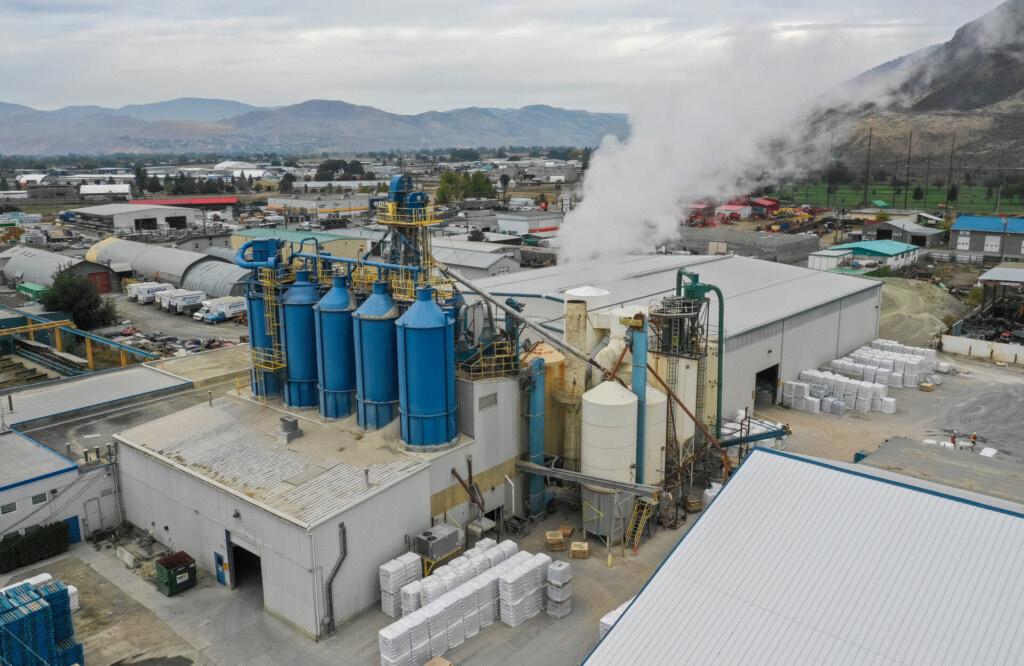
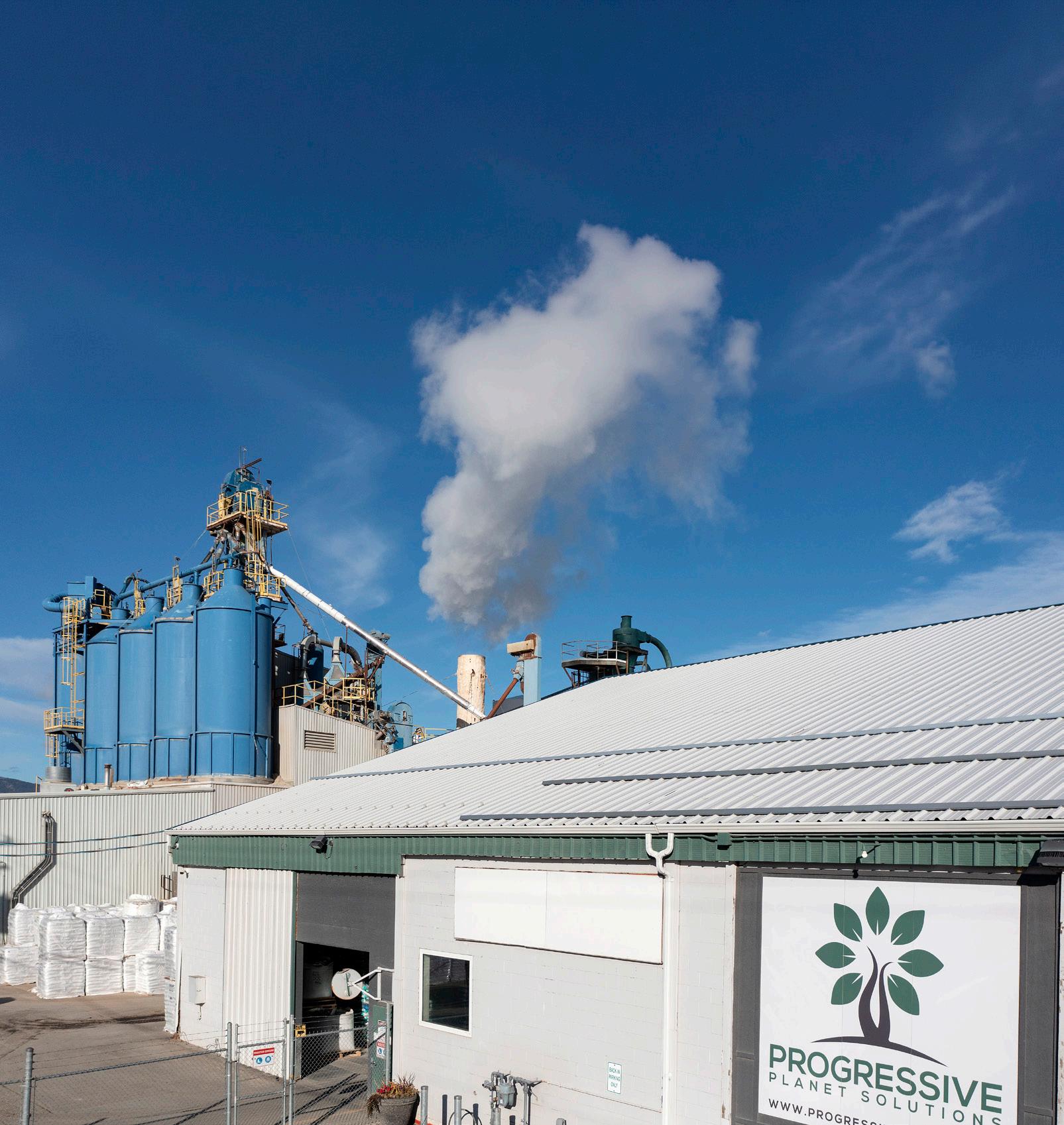
SETRAB IS KNOWN FOR THE HIGH QUALITY, PRECISION NATURE OF ITS ENGINEERING, BUT AS IT ADDRESSES THE OPPORTUNITIES THAT COME WITH THE ELECTRIFICATION REVOLUTION, IT IS SET TO ACHIEVE EVEN MORE.
A great deal of engineering is about making sure heat goes to the right places – so places that are supposed to be cold, stay cold, and places that are supposed to be hot, stay hot. This is Setrab’s bread and butter. The Swedish manufacturer specialises in high performance air and liquid based heat exchanges designed to meet the needs of demanding Thermal environments.
Our core competencies lie around the critical domains of Thermal management, reliability, efficiency, and compact packaging,” says Eman Stanezai, Setrab’s CEO. “The company was founded in the 1960s by two families with a passion for racing and high performance. This passion for technology and high performance became part of Setrab’s DNA.”
Setrab’s products are used globally across the motor sports, industrial hydraulics, and power generation sectors. They are also increasingly receiving business around electrification and systems related to that.
“We combine our longstanding experience with heat transfer technology and our continuous development in real world operating conditions,” Stanezai explains.
The company operates in Sweden, with sites in Poland for manufacturing both low and high volumes, as well as access to even larger production sites in China.
“We stand out through our high thermal efficiency and proven durability,” says Stanezai. “We are optimised for high-performance racing cars, and other demanding environments. We deliver stable performance under high pressures, temperature cycling and vibrations. We use designs with optimised geometries to balance heat transfer against pressure drop.”
Setrab is able to build for these environments because it takes an engineering approach to every one of its projects. It offers customers not just parts from a catalogue, but comprehensive customisation and system advice that ensures its customers receive coolers specifically designed and optimised for the conditions and applications they will be addressing.
It is an approach that puts Setrab in prime position to address rapidly moving technological marketplaces.
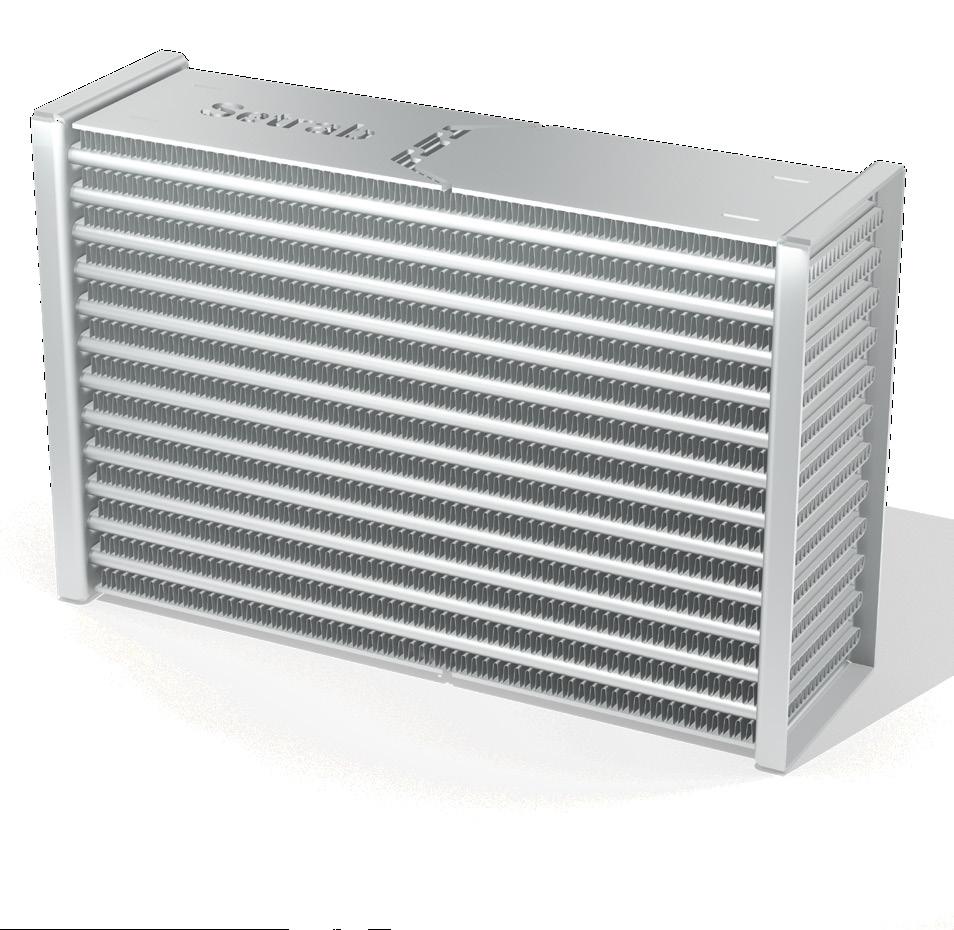
Eman Stanezai, CEO, Setrab.

www.fertingertubes.de
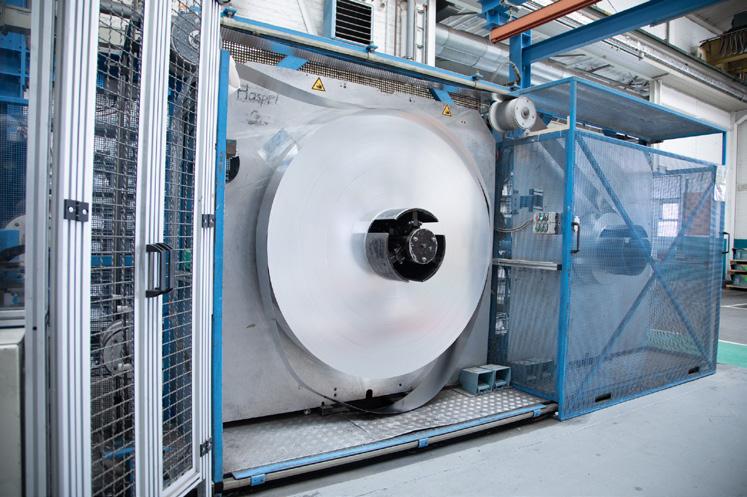
Fertinger Tubes GmbH
Leverkuser Str 65 42897 Remscheid
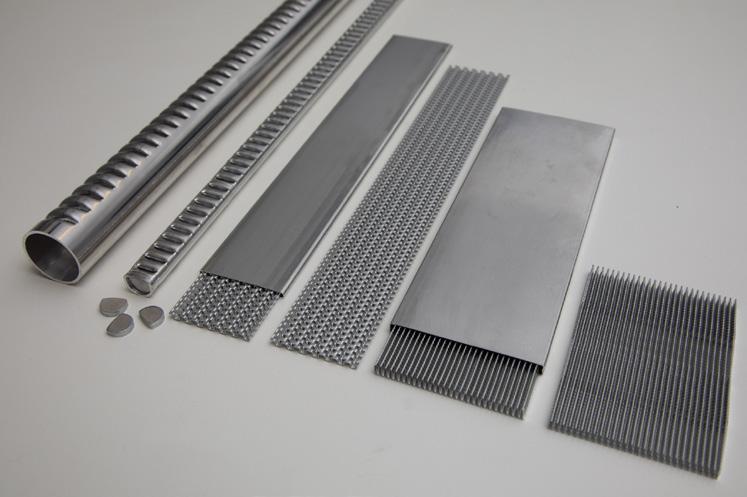
PRECISION IN ALUMINUM - Innovation for the future
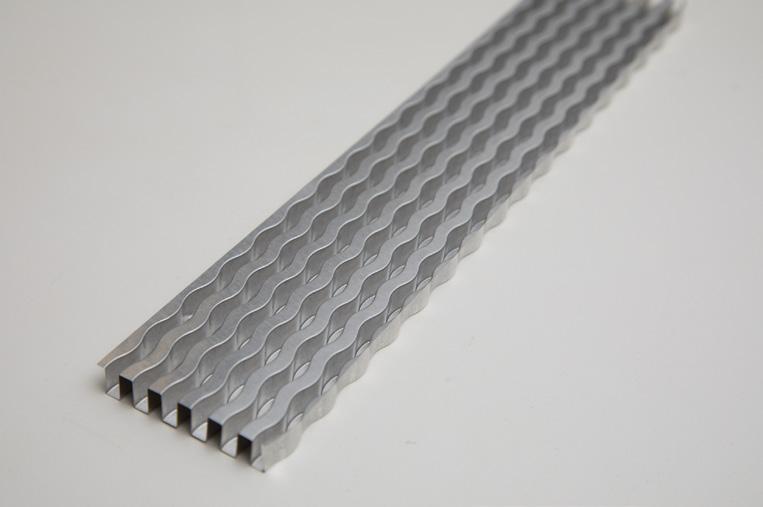
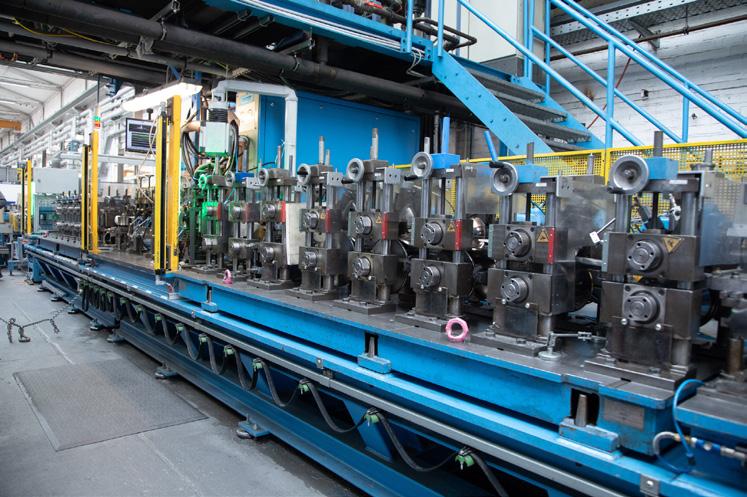
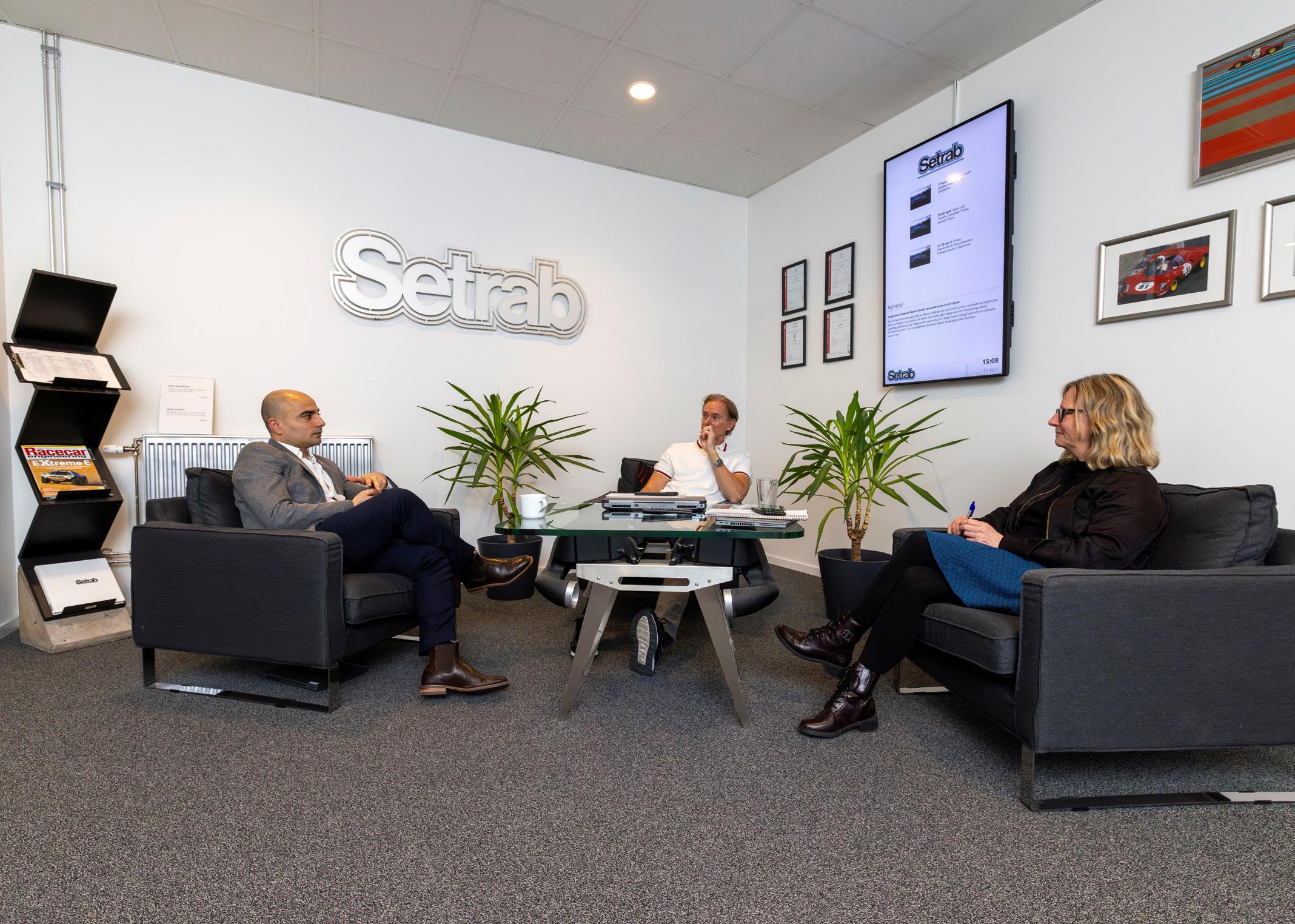
“If you look at the business and market for the automative sector, which has been a main focus for Setrab for the last 40 years, it is moving very rapidly,” Stanezai reminds us. “New technology is coming through, including vehicle electrification among many others.”
Electrification brings new challenges to Setrab. The electric vehicles demand a narrower span of temperatures than vehicles based on internal combustion engines. Setrab has responded by expanding its development focus to address system thermal management, alternate flowing and higher efficiency requirements so that it is able to give the best results in the conditions required for battery storage and charging stations.
“It is a process that has involved design revisions and close technical collaboration with customers from early on in the development process,” says Stanezai. “It has brought us closer to the other side of the world, specifically China where EV technology has advanced further than in Europe and the US.”
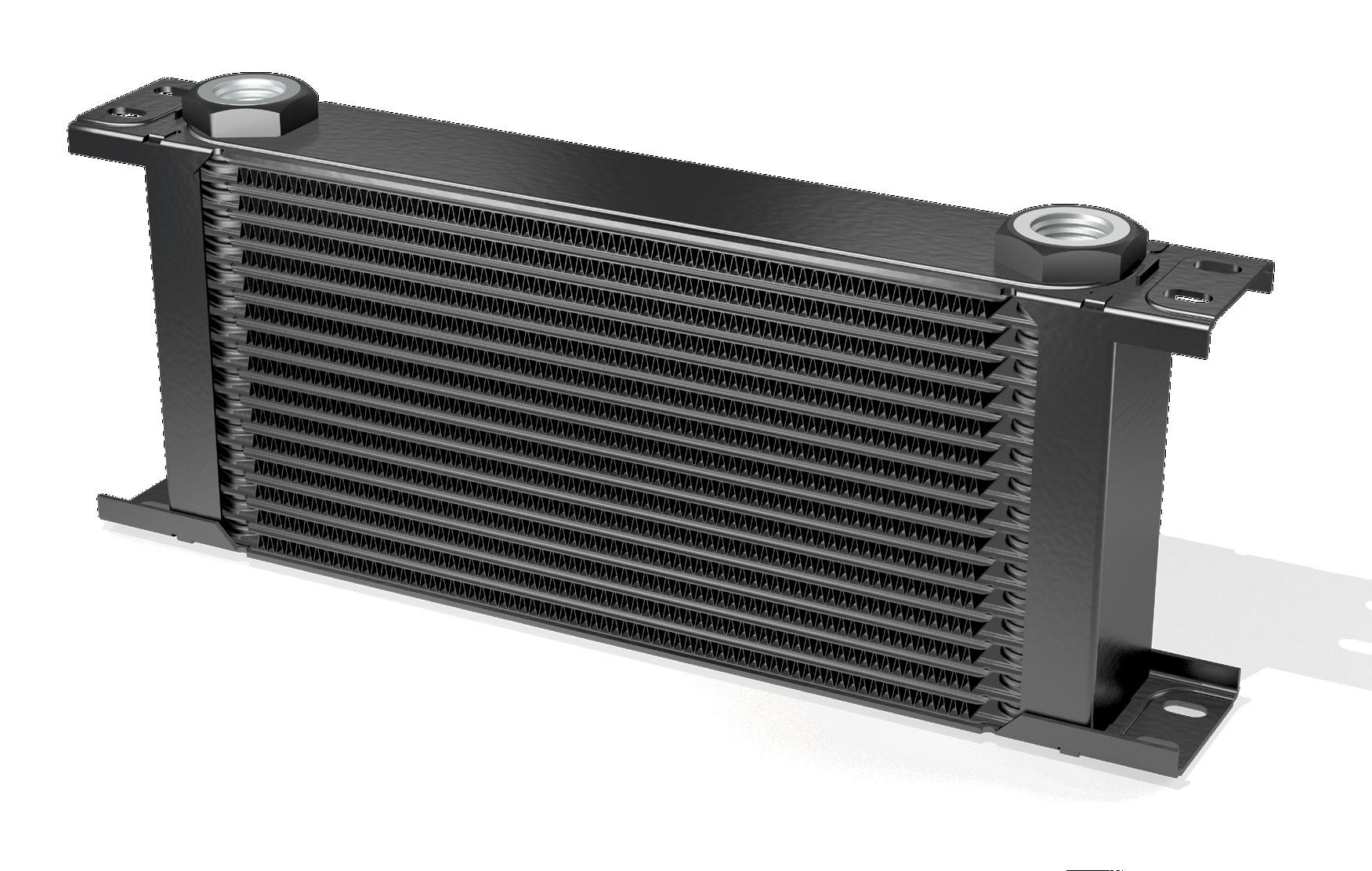
Where China has worked with high volume, low cost production, Setrab has specialised in low volume, high efficiency, high end products. In the post-Covid world, with the supply chain issues that the pandemic brought with it, businesses the world over are pivoting to local production, and the current geopolitical situation has only made that a higher priority. This creates an opportunity for Setrab to collaborate with its Chinese parent company to build further production sites in Europe and the United States.
“This will be a unique opportunity for Setrab to not only offer a high quality, high end product, but also cut the cost of manufacturing, creating high quality, cost efficient products to our customers,” says Stanezai.
Setrab has been collaborating closely with its partners to bring in the latest technologies and adapt them to the European market, utilising not only its inhouse expertise, but that of its suppliers and customers.
That said, Setrab’s in-house expertise is extensive. It is not uncommon for staff to stay with the company for 20 years or more.
“One of the reasons for that is, like I said, the people who work at Setrab have a passion for technology and performance,” Stanezai tells us. “That passion is very unique for a small company with a familial culture like ours.”
That passion is what Setrab looks for in its recruitment processes. As Stanezai explains, the company looks for technical competence but also wants people who will love spending time with the culture Setrab has built, where they can be part of a family with a very flat organisation structure.
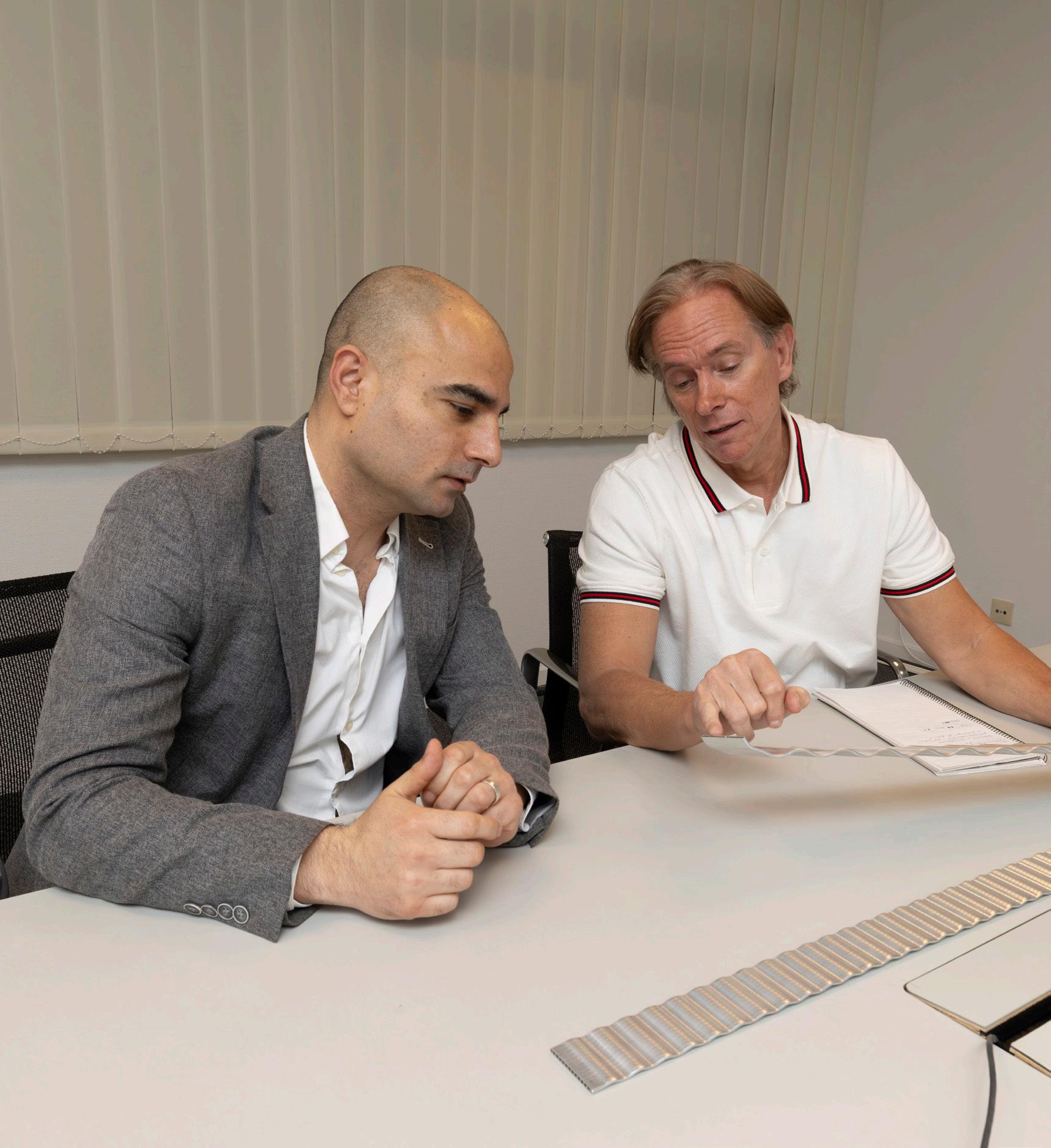
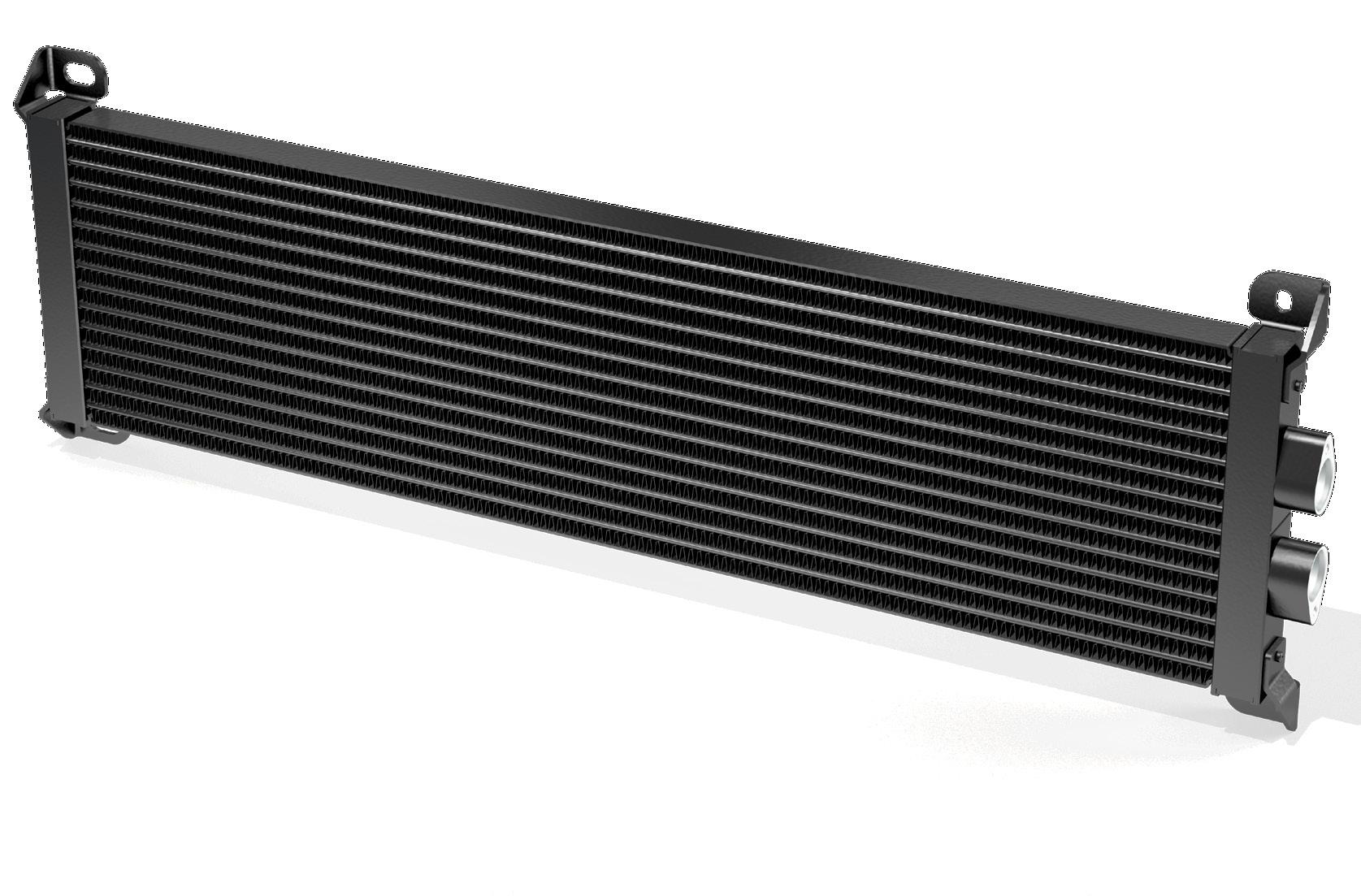
“It’s a company that is very approachable with short communication channels, from the CEO, all the way to the production staff,” he says. “We can talk closely with production staff and the customers, working in cross-function projects that give every employee what they need to take on the different challenges we face.”
In the face of those challenges, Setrab will continue to grow, driving efficiency and seeking out new opportunities.
“Industrial electrification charging infrastructure will provide a lot of opportunities,” says Stanezai. “Based on our experience and know-how, we foresee Setrab expanding in the coming years from automotive to new business areas. We are looking at stationary energy storage and developing the infrastructure for charging stations for everything from personal vehicles to fleets of logistics trucks and buses. It will be an area we increasingly focus on with the goal of acquiring greater market share. With the help of our engineering teams here, access to research and development in China, and our ability to produce locally in Europe, the United States and China, there is a very bright future ahead for Setrab’s expansion.”
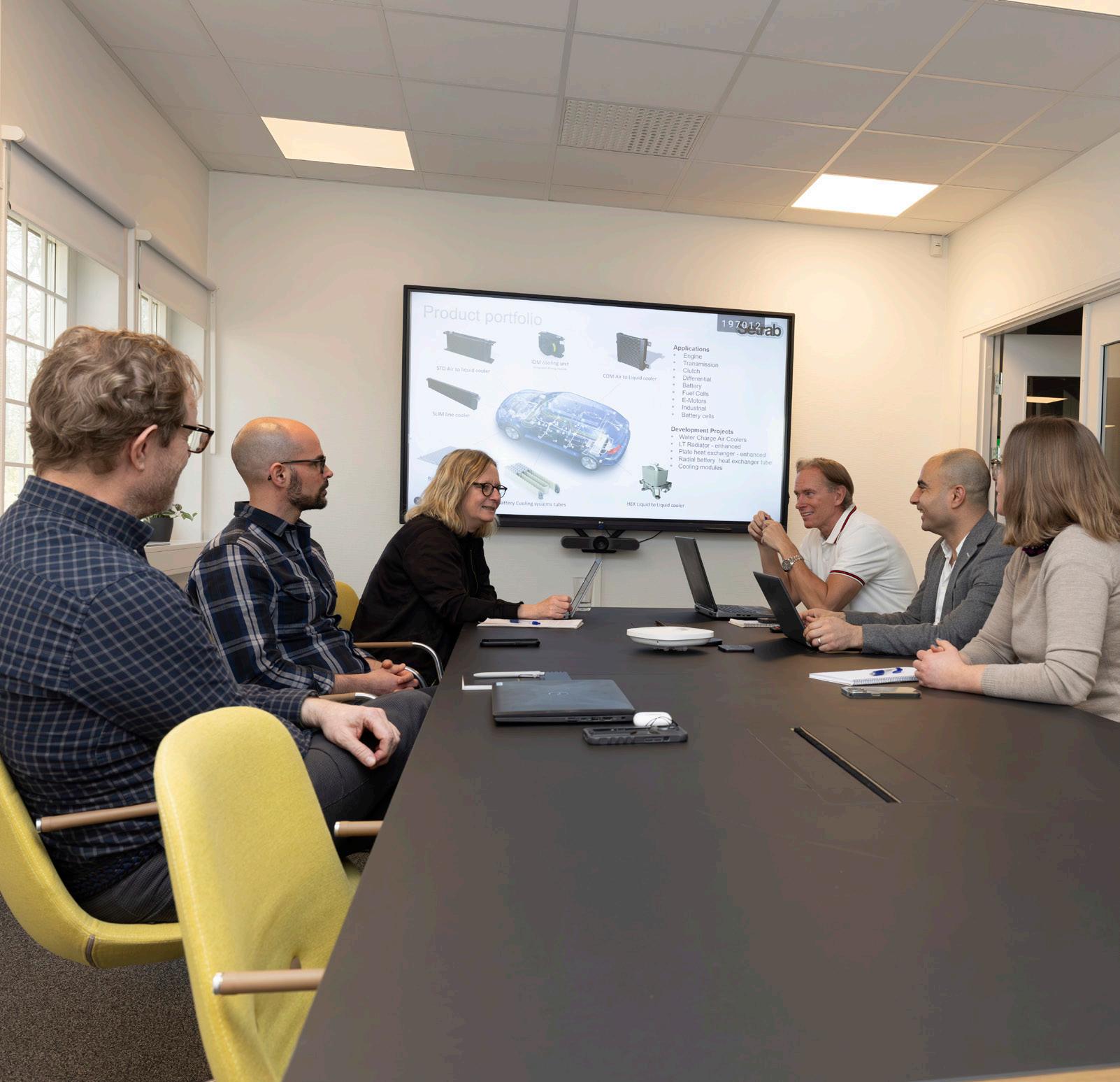
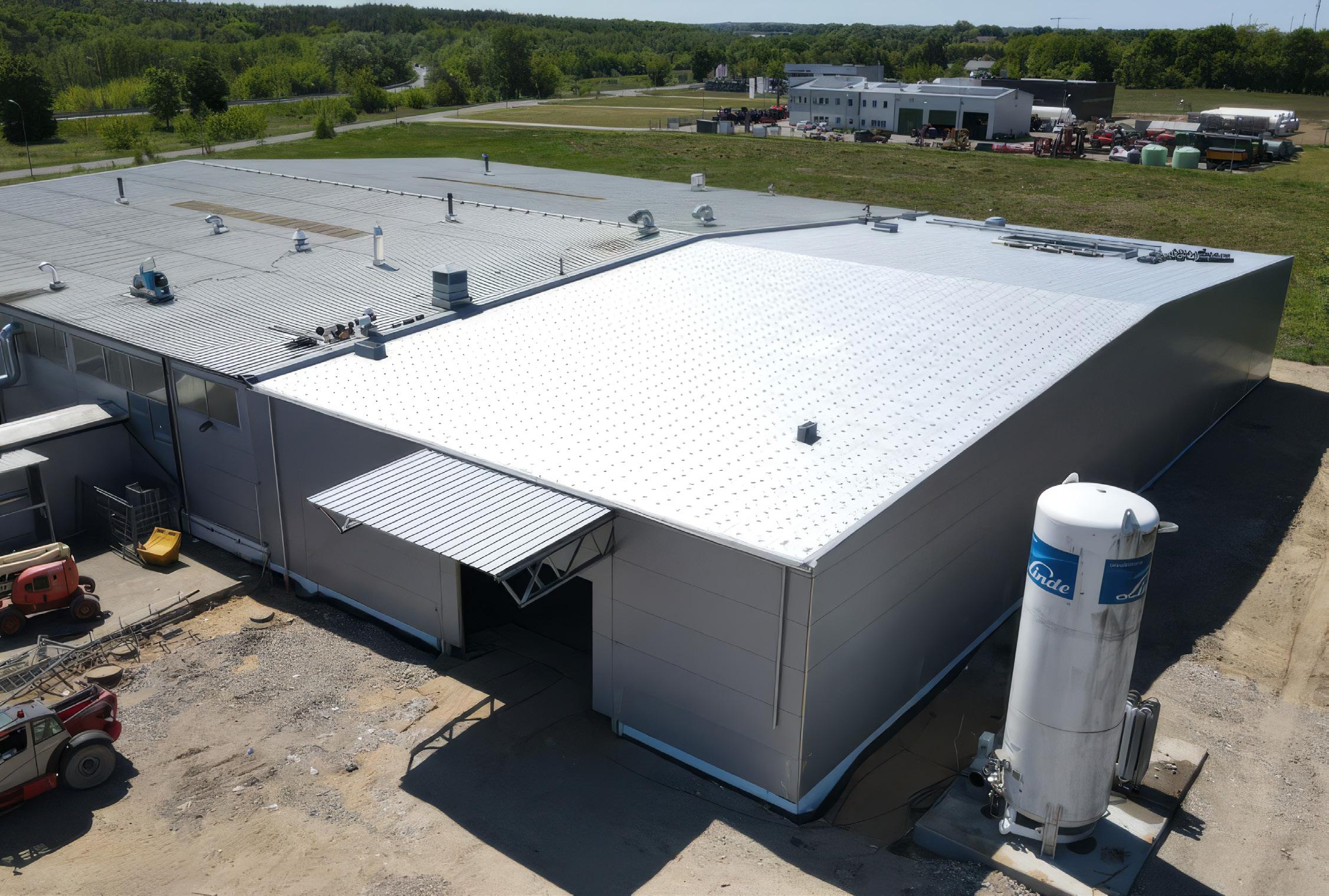
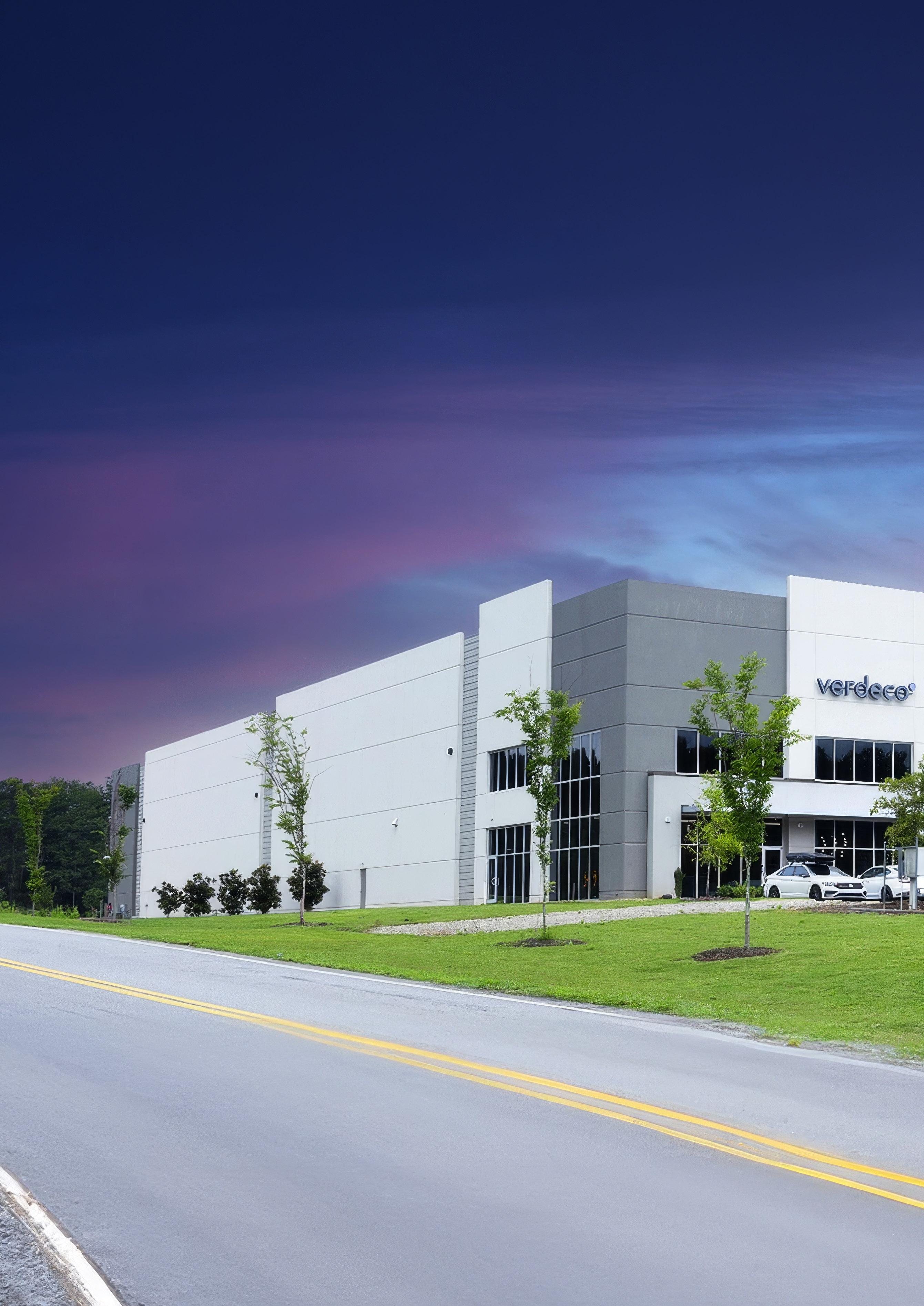
PROJECT MANAGED BY: OLIVER GRAHAM
In a market where sustainability is proclaimed loudly but funded poorly, one company has stayed the course, outlasted its competitors, and is now positioned to lead the industry’s recovery.
With a capacity of 200 million pounds per year, Verdeco is one of the USA’s largest manufacturers of Recycled Polyethylene Terephthalate (rPET), operating state-of-theart manufacturing facilities across California, Indiana, and Greenville, South Carolina. The company’s flagship facility alone produces 6.5 tons per hour — among the highest output rates in the industry globally. Verdeco is a critical pillar of the effort to bring genuinely sustainable materials into the consumer goods supply chain.
“Most of the big players are interested in capacity, but at the same time we also compete based on the consistency and quality of the materials we produce,” says George Dadiani, CEO of Verdeco. “Our position in the market has been established through capacity, quality, and consistency, as well as the expertise of the professional, experienced team we have had in place since 2012.”
Verdeco’s roots trace back to PTP Group, the Cypriotregistered company that operates the largest plastic recycling facility in the Czech Republic. Verdeco was

established when PTP Group expanded into the United States in 2012, opening its first facility in California — a plant that remains the operational blueprint for everything the company has built since.
“Our first plant was built in California when we launched in 2012, and we still have the majority of the people with us today who started here back then,” Dadiani says. “We nurtured them, educated them, and their contribution has been instrumental as we have grown and expanded the model we created in California across new locations.”
Sustainability is big business — in theory. Packaging across every consumer category is adorned with statistics about recycled content and environmental commitments. But for the recycled plastics industry to be viable, those commitments need to be backed by fair commercial terms.
“The brands that announce ambitious sustainability goals are often the same ones unwilling to pay a fair price for the product they are advertising on their packaging. That places companies like ours in a very difficult position,” Dadiani points out.
The challenge has been compounded by a prolonged period of depressed virgin plastic prices, which prompted many large brands to quietly defer their sustainability targets.
“Big brands decided to postpone their sustainability initiatives because the price of virgin plastics was so attractive,” Dadiani tells us. “It forced companies like ours to absorb significant losses while continuing to invest in the infrastructure the industry will ultimately need.”
The consequences have been severe. Several major competitors — including Evergreen Recycling — were forced to cease operations entirely. Today, only four or five
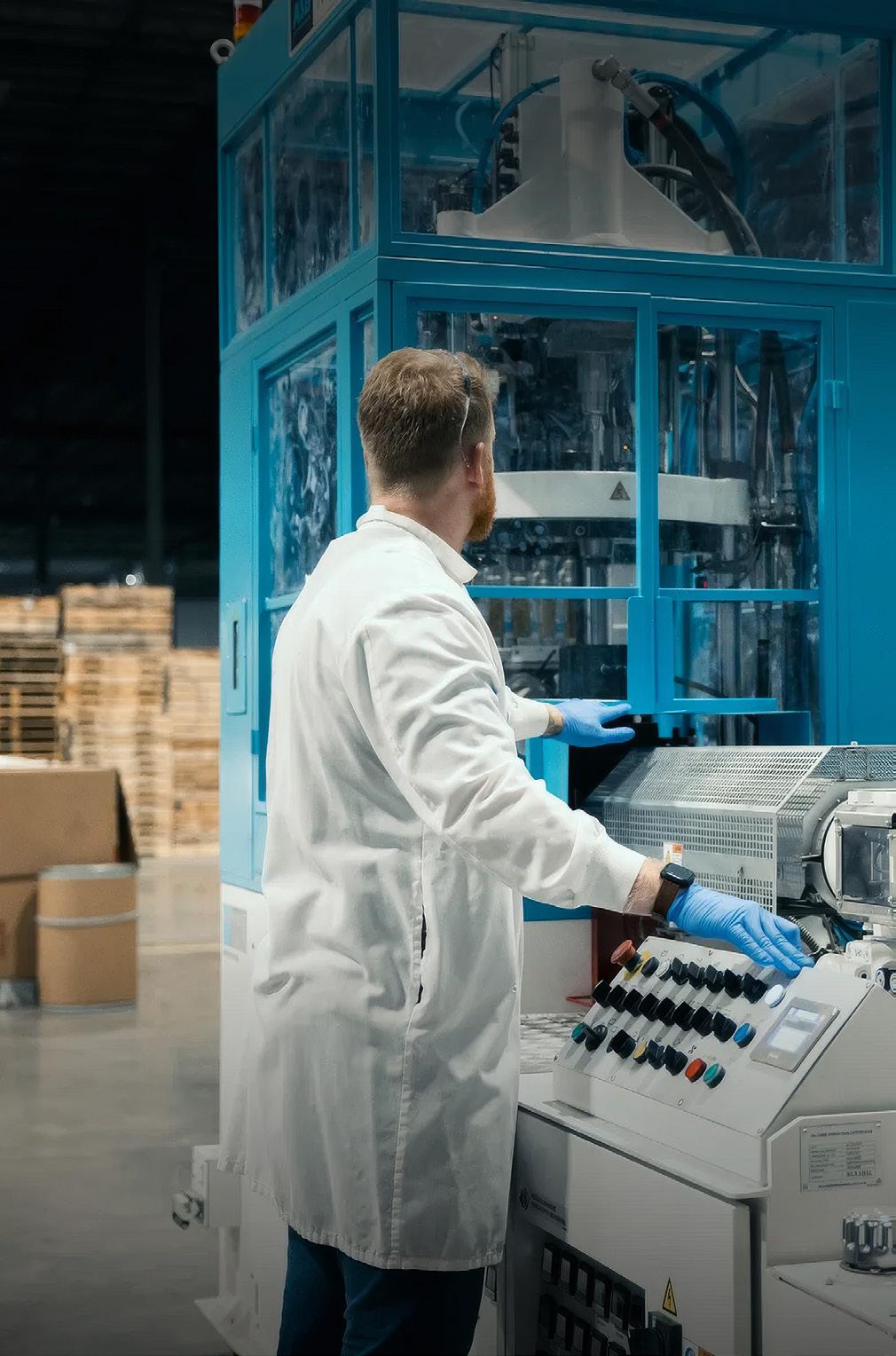
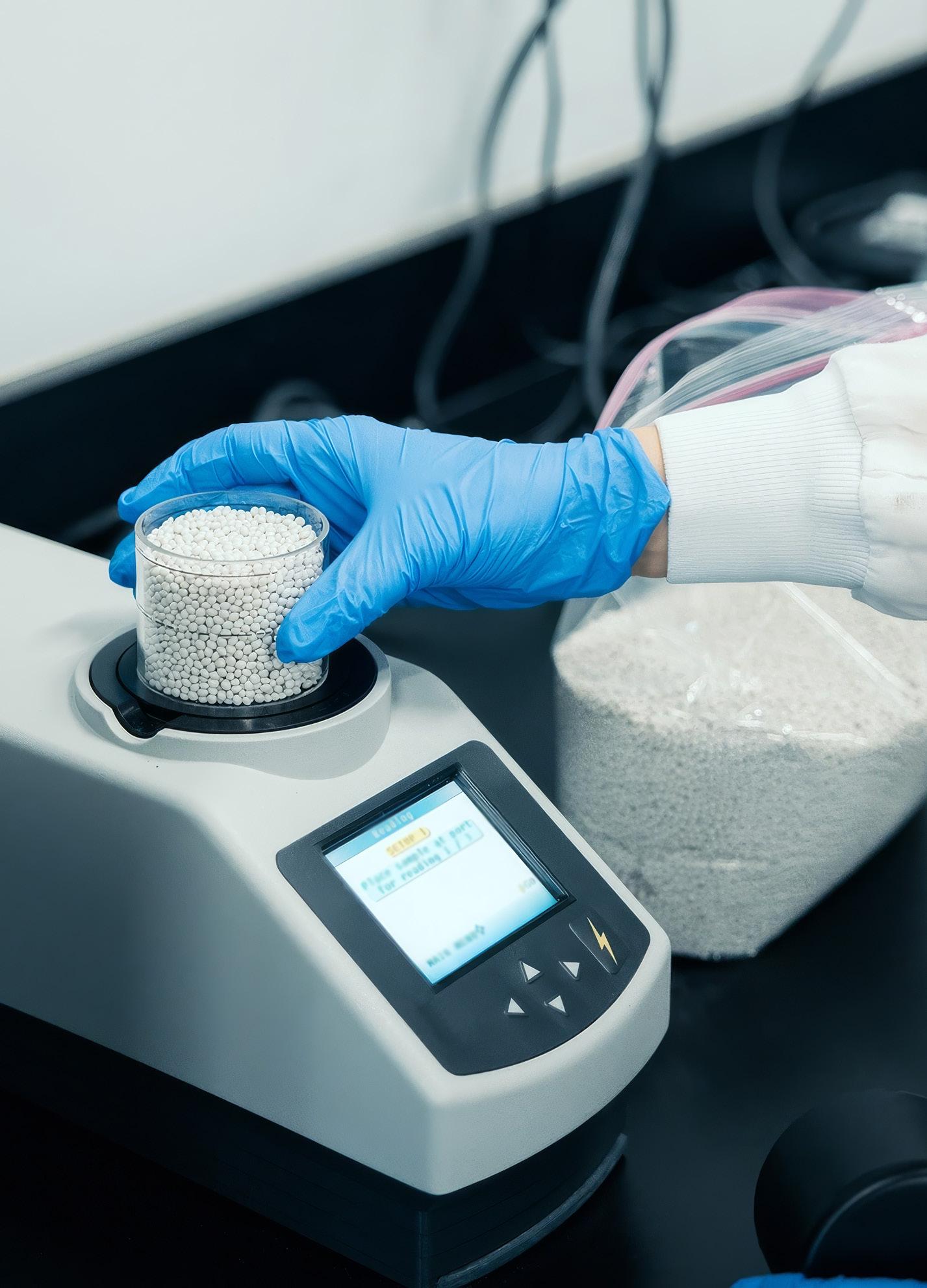
significant players remain in the US recycled plastics sector, with even established names such as Alpek curtailing their recycling operations.
Verdeco was among those strong enough to weather the storm, sustained by a base of loyal customers who maintained their commitments rather than chasing short-term savings.
“That helped us stay the course and minimise our losses,” says Dadiani. “We built relationships based on integrity, and those relationships proved their value during the most difficult period this industry has seen.”
The market has since shifted decisively. Geopolitical developments have driven virgin PET prices from 54 cents
per pound to 84 cents — a 56% increase — fundamentally changing the economics of the sector and reigniting demand for rPET.
“Now the same buyers are returning to recycled materials,” Dadiani points out. “But the lesson needs to be learned: If brands continue to push suppliers on price to the point of insolvency, there will be no recycled plastics industry left to supply them. This is not a sustainable dynamic for anyone.”
Dadiani is direct about what is at stake. Brands cannot credibly market themselves on environmental credentials while simultaneously undermining the economics of the suppliers who make those credentials possible.
“Brands are declaring that they will increase their use of recycled materials while simultaneously pushing suppliers on price to the point of bankruptcy,” he explains. “If that continues, there will be no recycled material available to use. It is a reality the industry needs to confront openly.”
While the market context has been challenging, Verdeco’s internal strategy has remained consistent: invest in people, reward expertise, and build a team that thinks like owners.
As Dadiani puts it, “We appreciate creativity and intellectual capability in our people. We want problem
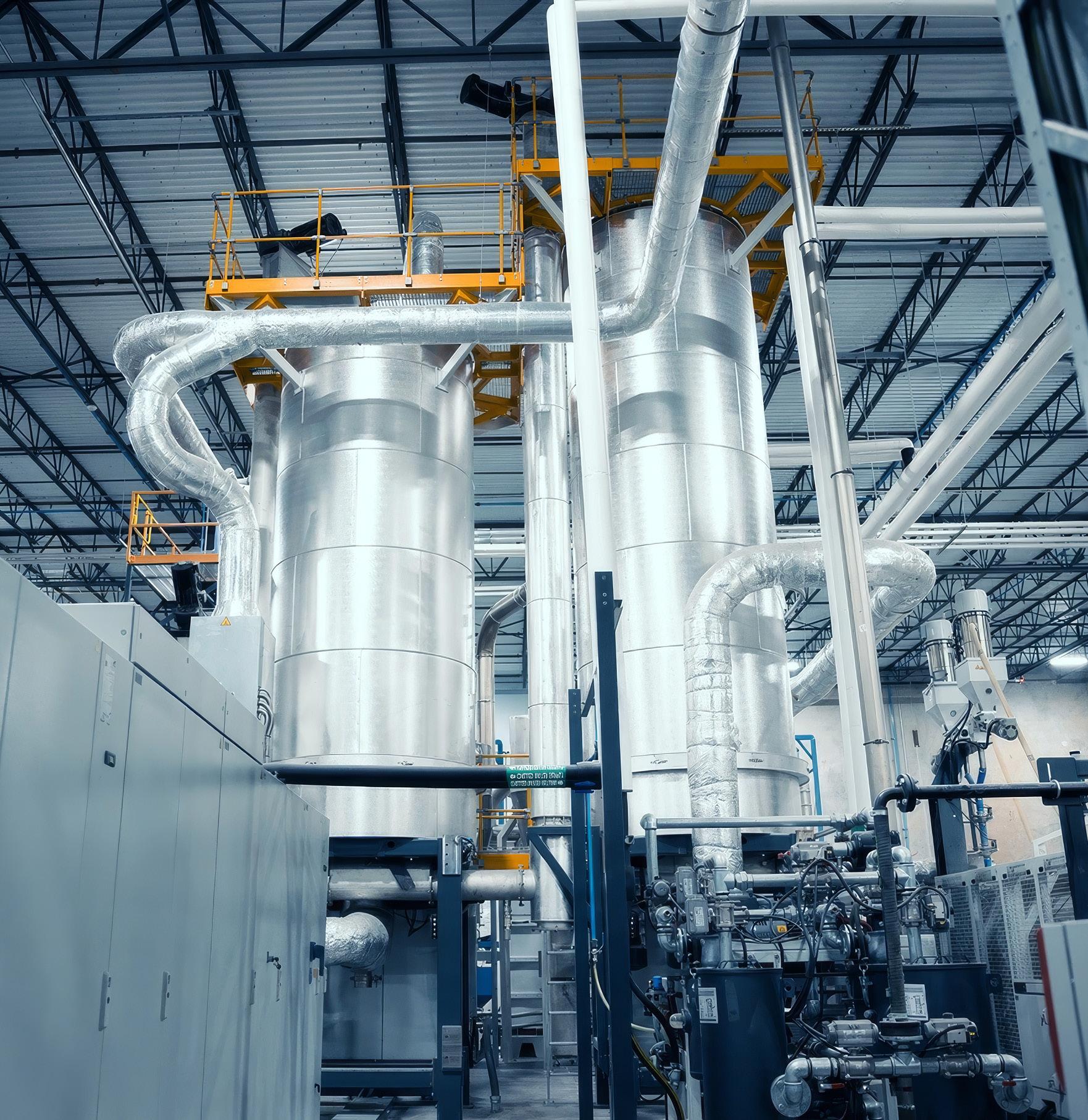
solvers. When we look to hire, we are prepared to pay top dollar for people who bring real solutions. During interviews, I always ask candidates: ‘What is your superpower?’ The answer tells us everything.”
That philosophy has produced results. Verdeco enters this market recovery from a position of operational strength, with April sales volume up 60% relative to March and break-even projected for May.
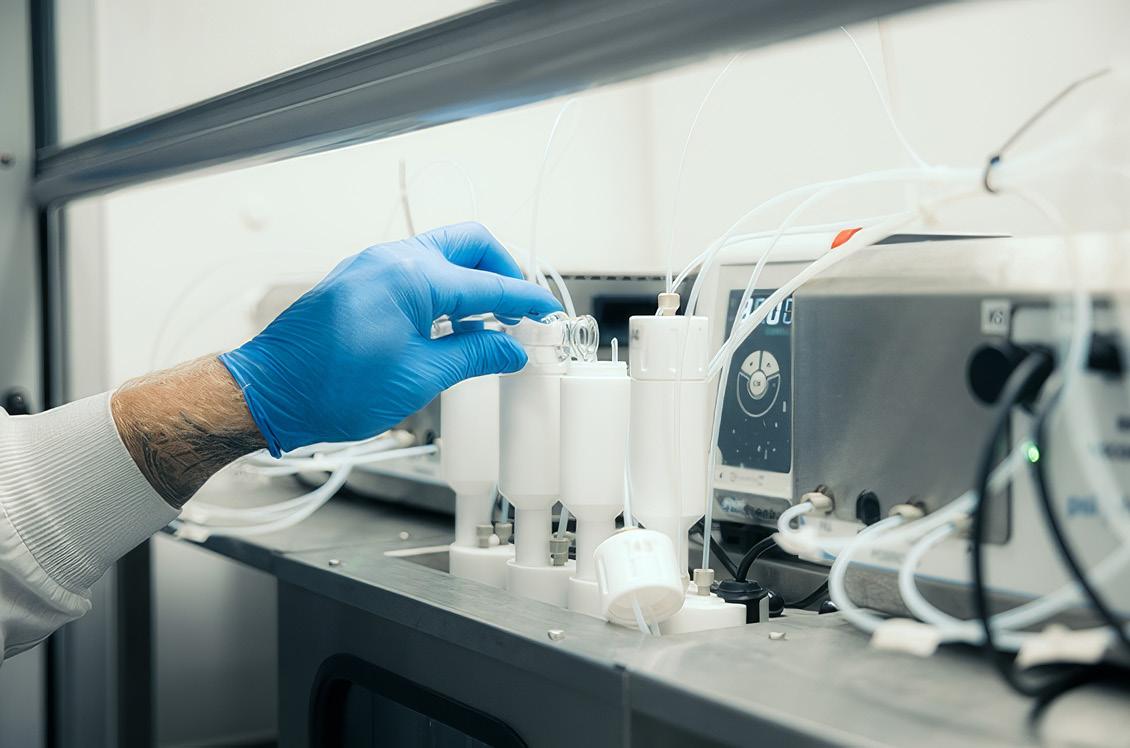
“We want to capitalise on this moment,” Dadiani says. “Demand is increasing, our facilities are performing, and we are well positioned to serve the brands that are now — rightly — returning to recycled materials.”
Central to Verdeco’s growth trajectory is its flagship new facility — among the largest rPET manufacturing plants in the world — currently being qualified by major brands and key supply chain partners.
“It is massive, clean, and new — unlike anything else in the world,” says Dadiani proudly. “Our goal is to keep this facility fully utilised while producing the best rPET resin on the market. We have built the infrastructure. Now it is time to fill it.”
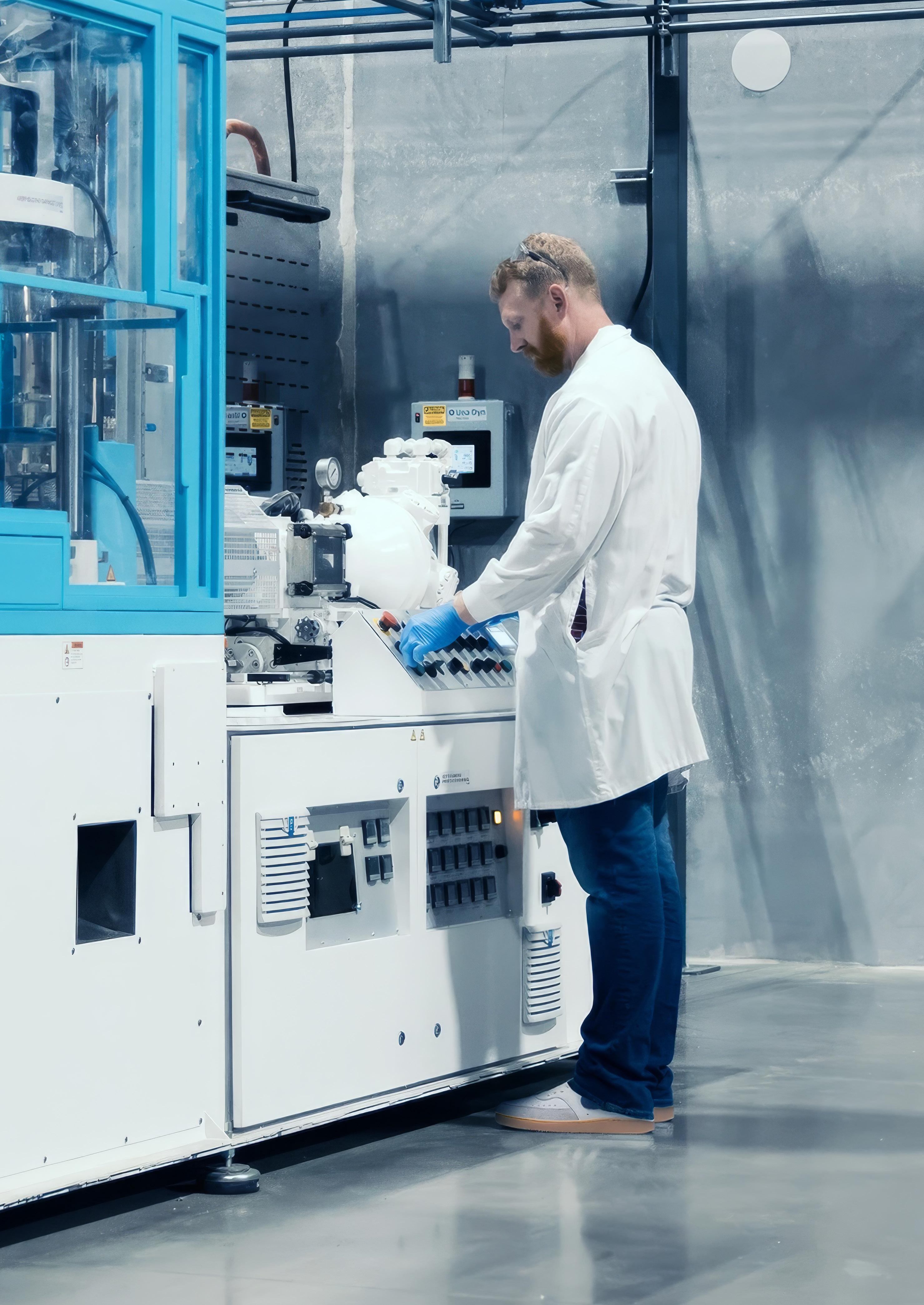
CONTINUING
The Weatherite Group has been doing business since 1972, when it was founded by John Whitehouse and his then business partner Lou Simmonds Since then, the business has grown and evolved into a widely respected HVAC manufacturer, navigating a changing economy, evolving technology and, last time we spoke with them, the Covid-19 pandemic.
Throughout all of that, Weatherite has been designing and building equipment at its West Midlands facility through its own in-house HVAC systems expertise.
“That manufacturing knowledge is invaluable when assessing whether equipment can be refurbished or needs replacing,” says Mark Powell, Managing Director of Weatherite Air Conditioning Ltd. “We’re still family-owned after 50+ years, which means we take a long-term view. We’re not chasing short-term saleswe want relationships that last decades.”
Weatherite’s expertise comes not just from longevity, but technical depth. With over 200 skilled staff and a strong apprenticeship pipeline, the firm is positioned to handle everything from initial survey and feasibility through to manufacture, installation, and ongoing maintenance with genuine expertise.
It is a proudly British company and part of Made in Britain, with deep roots in the West Midlands region where it has made its home. Its manufacturing facility is in West Bromwich, where it recruits locally, running apprenticeship programs to bring young people into skilled engineering careers.
Mark is passionate about this, telling us, “That local connection matters. It means we understand the markets we serve, and we’re invested in the region’s success.”
That said, from its West Midlands base, Weatherite is able to operate across the wider UK and Europe, with the scale and reach to support major projects anywhere.
“It’s about combining that local accountability with national capability,” Mark adds. “Our clients get the responsiveness of a regional specialist backed by the resources of a substantial family business with over 200 staff.”
The firm operates across the commercial sector including retail, healthcare, telecoms, commercial offices, and data centres sectors, serving clients who value quality, longevity, and performance.
“We’re particularly focused on building services consultants and facilities managers who are under pressure to extend asset life, improve efficiency, and reduce carbon,” continues Mark.
That expertise in building new HVAC units can also be turned to making old ones as good as new.
As Mark points out, business operations often depend on extending the life and improving the reliability of existing HVAC equipment. As a market leader in comprehensive air handling unit refurbishment solutions. Weatherite’s expertise enables it to refurbish AHUs from any manufacturer, restoring performance, reliability, and efficiency.
This is a cost-effective solution when a full AHU replacement is not required, minimising disruption and downtime as much as possible as work is carried out on critical HVAC equipment. At the same time, relatively simple upgrades can often
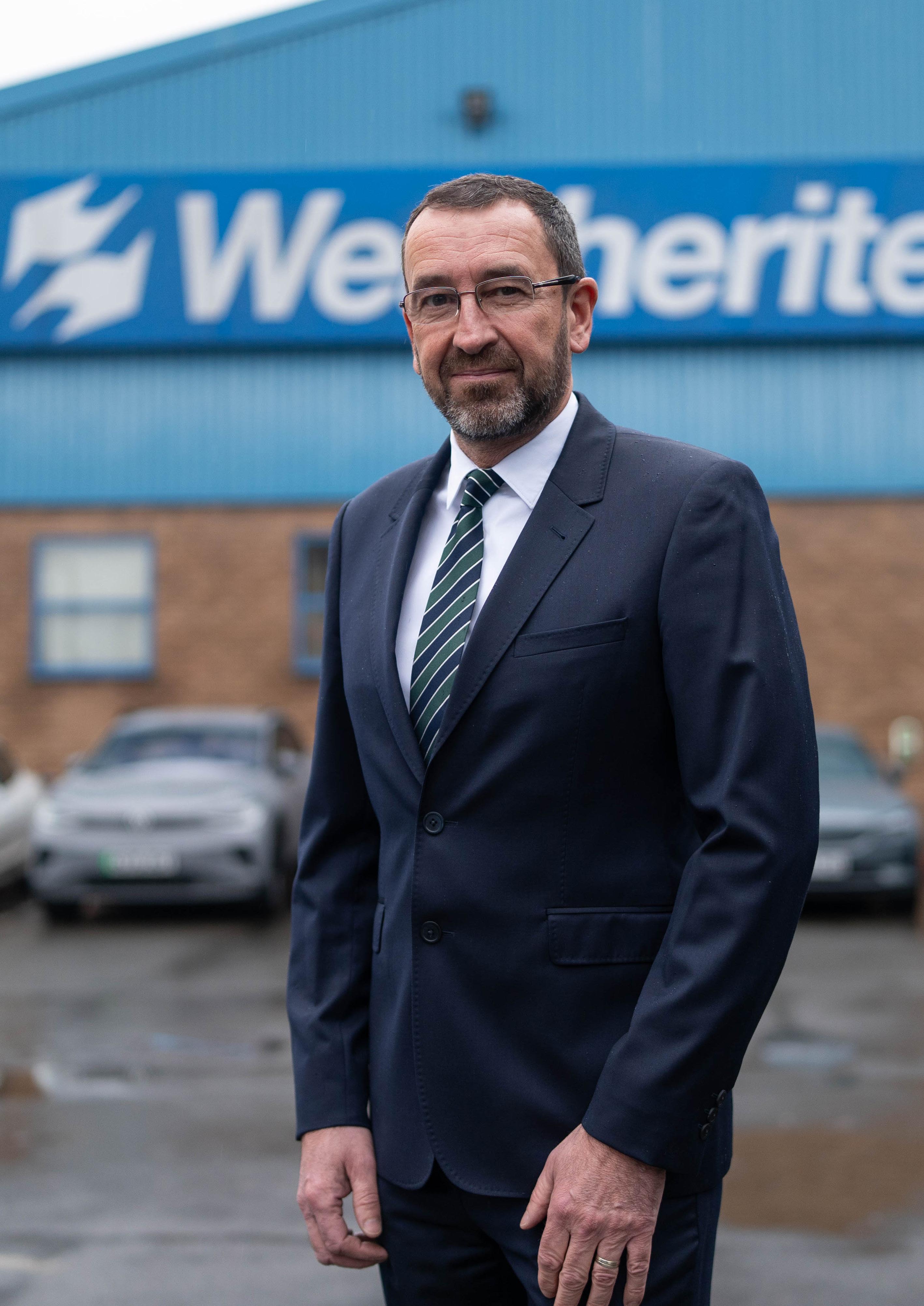
deliver substantial reductions in operating costs while providing a rapid and demonstrable return on investment.
AHU refurbishment can introduce the latest energy-saving components at a significantly lower cost than a full replacement, reducing energy consumption by up to 40%. It also extends the lifespan of the AHU, ensuring continued peak performance with reduced running costs, and leads to less downtime and improved air quality.
More than that, refurbishment can act as a form of future proofing against improved regulations and higher standards, from healthcare ventilation requirements such as HTM 03-01 to BS EN 1886 casing performance standards. Through refurbishment potential issues are identified earlier and compliance is ensured.
This is alongside benefits such as reduced energy costs and support for clients’ sustainability goals.
But sometimes refurbishment is not enough. Sometimes you need the newest technology on the market. To meet the need of those customers, Weatherite has developed its new Advanced Low Charge R290 Fully Packaged Heat Pump Unit.
“We are extremely proud to introduce this cuttingedge R290 heat pump to the market,” said Michael Boyles, Weatherite’s Sales Director. “It’s the result of intense research and development, conducted in collaboration with leading UK academic institutions. Our goal was to develop a low-carbon system that doesn’t just meet

Filterite are proud to have been supporting Weatherite for over 30 years and that our Air Filter products have been installed within their Air Handling Units on many prestigious contracts over this period.
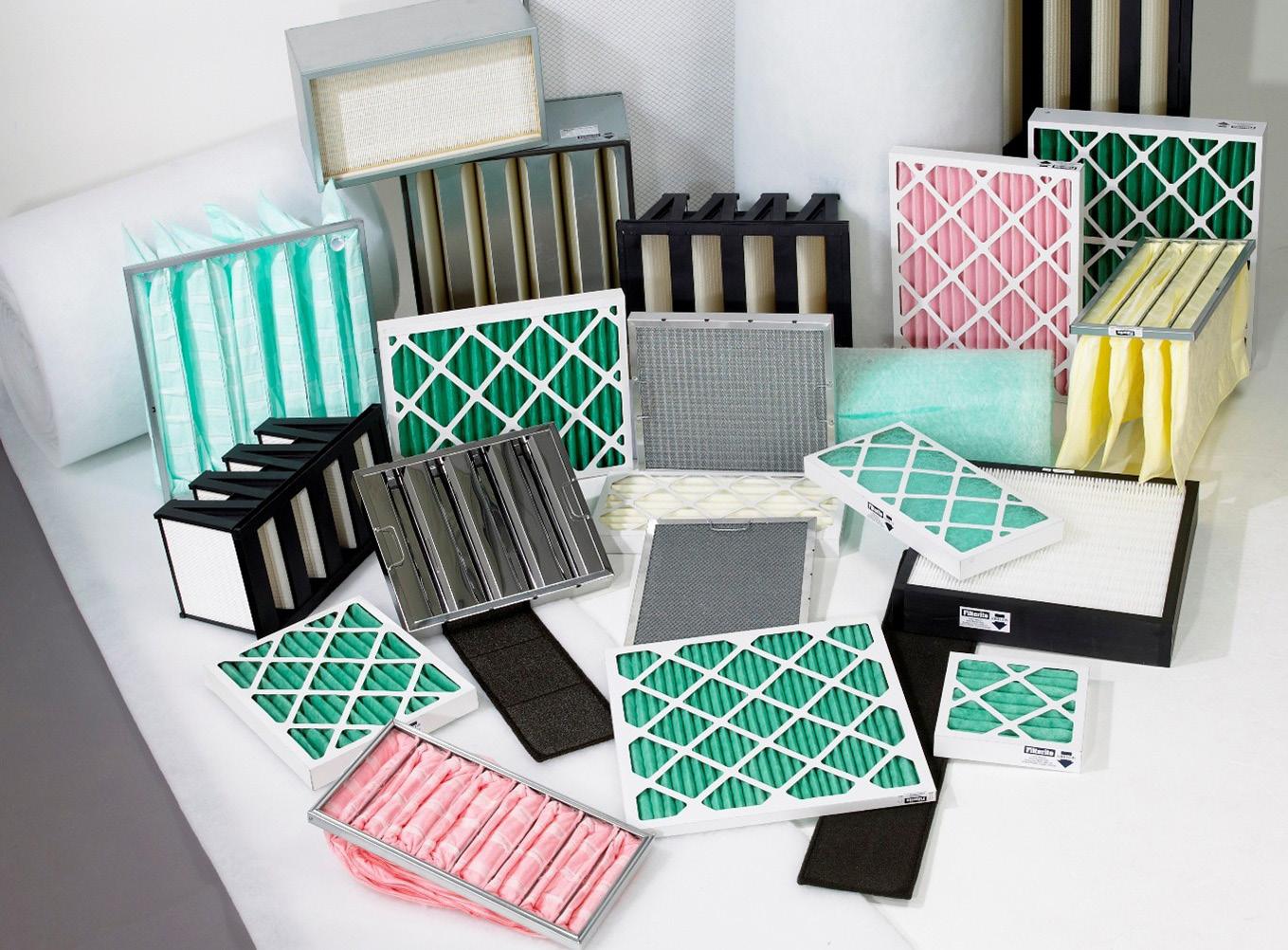
Filterite Ltd, Harolds Court, Saxon Business Park, Bromsgrove, Worcs, B60 4AD
+44 (0)1527 836201 sales@filterite.co.uk www.filterite.co.uk
regulatory standards but sets a new benchmark for safety and real-world efficiency.”
The R290 Heat Pump Unit could not have come at a better time. Environmental regulations are tightening, especially around the phase-down of highGWP (global warming potential) synthetic refrigerants under the F-gas Regulation.
As an alternative, businesses are looking to propane (R290), but it is an alternative that comes with safety concerns, particularly around its flammability. It is a challenge that Weatherite has approached head on. The firm’s new unit has been designed meticulously to provide maximum safety while never compromising on efficiency, cost-effectiveness, or scalability.
“This positions the product as a serious contender for organisations looking to decarbonise their heating and cooling infrastructure while future-proofing their operations,” Mark tells us.
At the heart of this new system is a fully integrated and highefficiency heat pump utilising R290. With fully hermetic compressors, optimised heat exchangers, an advanced defrost cycle management system and a custom-developed multifunctional safety architecture, it represents the future of HVAC technology. It also represents a fresh approach across Weatherite as a company.
“We are bringing Weatherite into the 21st century without losing what makes us effective,” Mark continues. “On the customer side, we’re making it easier for consultants and clients to engage with us digitally - better access to technical data, project updates, and performance information. Digital surveys, thermal imaging,
and performance monitoring help us give clients accurate feasibility assessments quickly. The HVAC industry has been slow to modernise in some areas, so that’s an opportunity for us. Clients want data driven recommendations, not guesswork.”
Moving forward, Mark is positioning Weatherite Air Conditioning as the UK’s leading specialist in Bespoke AHU Manufacturing. He wants the company to continue to excel in new build projects but also sees real growth opportunity in the refurbishment market.
“In three to five years I want Weatherite to be the first call
when a facilities manager or consultant has an ageing AHU that needs expert assessment and refurbishment,” adds Mark “We have got over 50 years of manufacturing expertise and more than 200 staff. We are here to deliver both new systems and bring tired equipment back to peak performance.”
Weatherite is working towards these goals the same way it always has, by investing in its people and capabilities.
“We are also modernising our customer engagement making it easier for consultants and facilities teams to access our expertise early in their decision-making process,” Mark says. “The key is demonstrating what’s possible
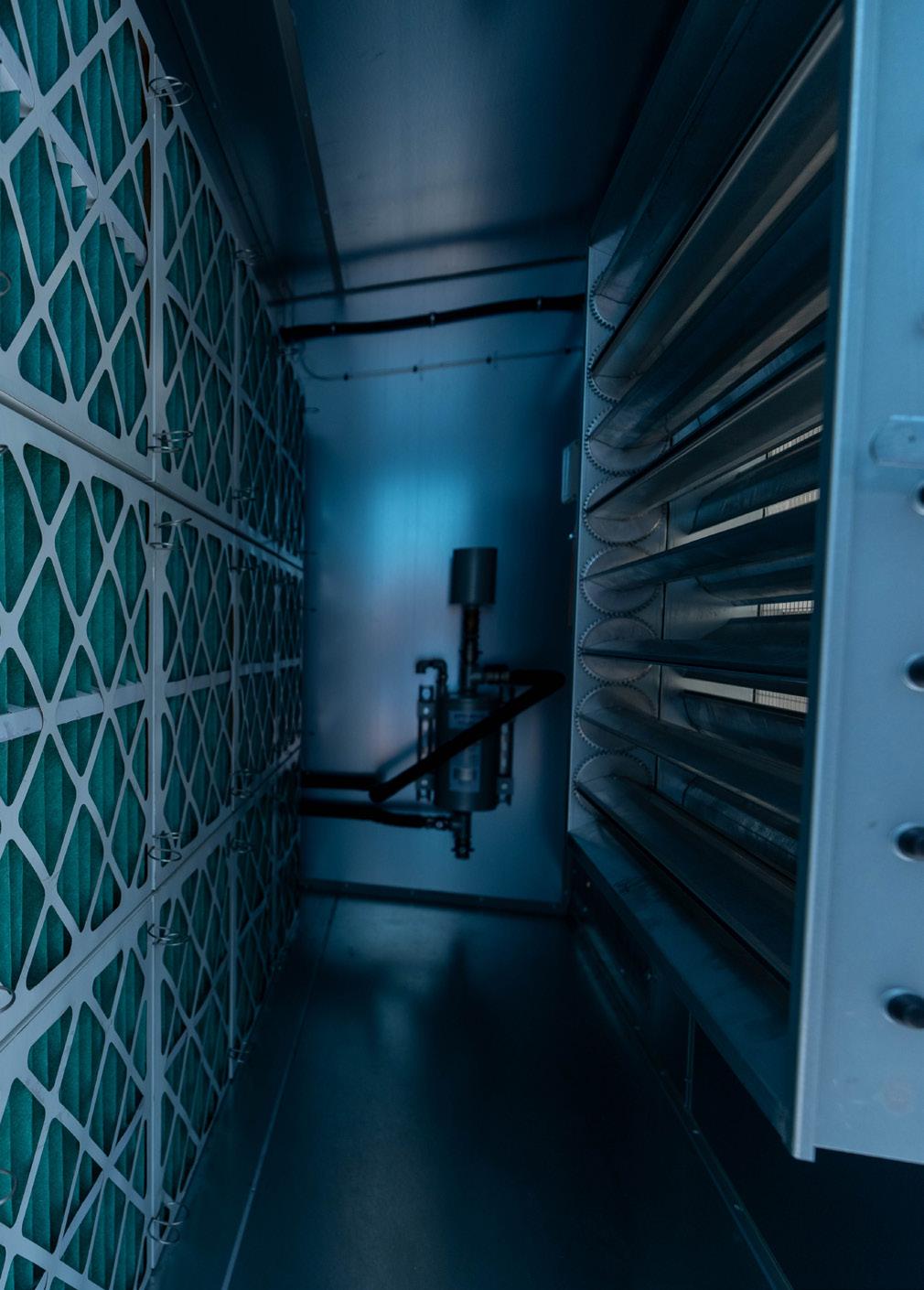
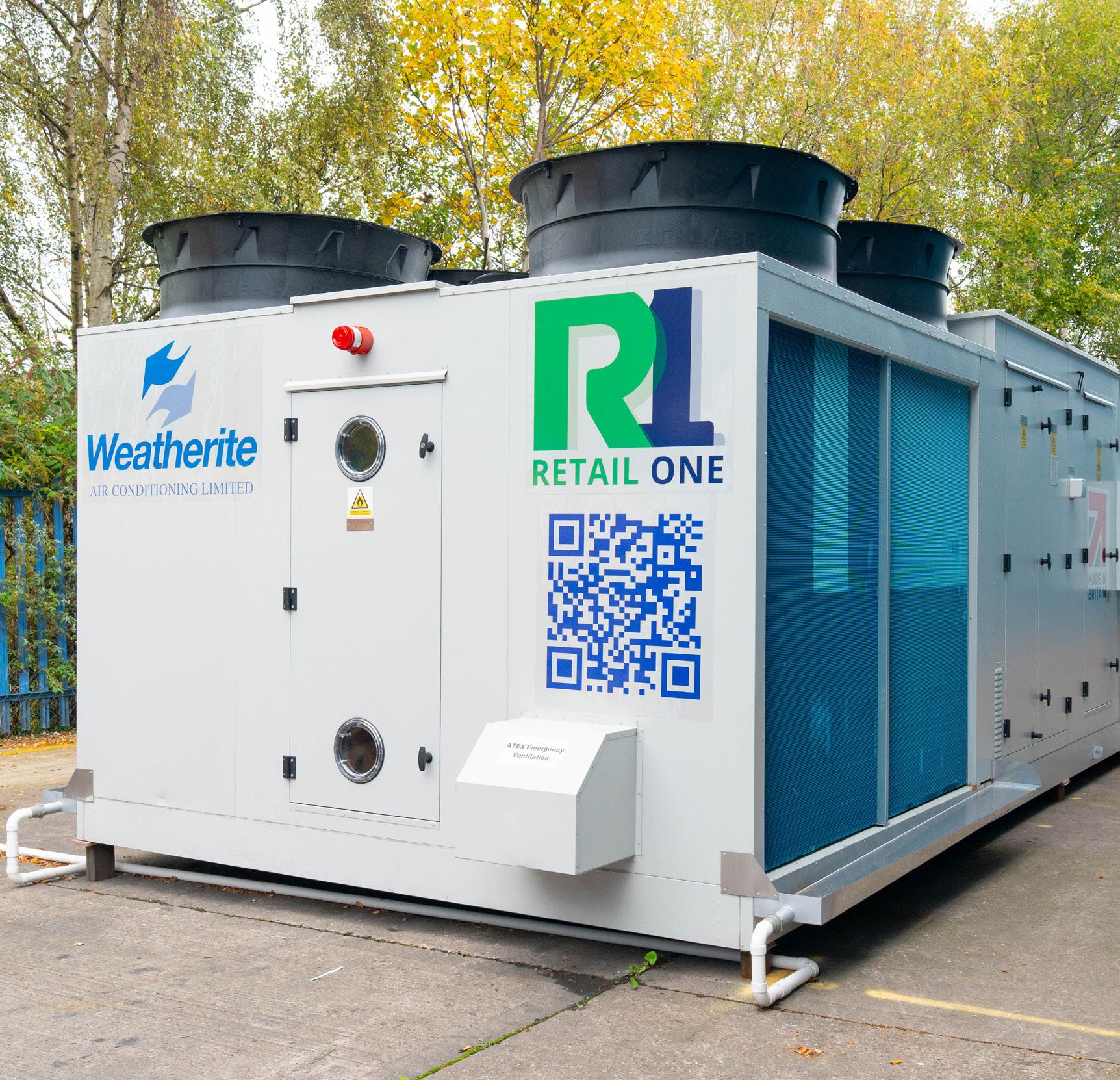
with refurbishment. Projects like our recent John Lewis Solihull AHU refurbishment show we can deliver complex upgrades that extend equipment life by decades, improve efficiency, and do it with minimal disruption.”
It is a strategy that will help Weatherite pursue organic growth, building its reputation and deepening its client relationships. And at the same time, it will continue to invest in its Oldbury manufacturing facility to increase capacity and improve efficiency.
“That gives us the flexibility to handle both new build projects and the bespoke work that refurbishment often requires,” says Mark. “We’re also investing in people - growing our technical teams and expanding our apprenticeship programme. The refurbishment market needs skilled engineers who can diagnose problems, design solutions, and execute complex upgrades. We’re building that capability now so we’re ready as the market grows.”
Wurtec started out with a simple mission: to build better tools for contractors installing or servicing elevators. Four decades on, that focus still defines the business, even as the company’s offering has expanded far beyond its original scope.
There’s nobody out there globally that does what we do with the same commitment and focus,” begins Founder & CEO Steve Wurth. “It opens a lot of doors for us. Elevator contractors talk to us because they know we are specialists with a knowledge of the necessary products and tools.”
When clients contact Wurtec for initial discussions, those conversations often lead to something broader. The company is built as much on solving problems as it is on supplying individual products.
“If you have a problem in the elevator industry and you’re in our market, call Wurtec and we’re going to help you solve that problem,” Steve says. “We’re not the cheapest, but our long history of reliable service speaks for itself –especially in an industry where delays and mistakes can be costly.”
Wurtec’s first major product acts as a good example of how the company’s approach to business translates into design. Previously made from wood, Wurtec created a 100% aluminium false car (a solution that acts as a moving platform inside an empty elevator shaft during installation). The aluminium false car was a high-performing, adjustable alternative to its wooden counterpart, and the product’s longevity is such that it is still sold today, largely unchanged.
“We believe that if you solve a problem properly, the product will last,” Steve comments. “Though we have evolved over time, that concept still applies today.”
As Steve suggests, while Wurtec began as a mechanical engineering business, its product range has progressed significantly. Electronics, hydraulics and software now play a major role.
“We’ve become very sophisticated. We’re building electronic products, softwaredriven products, products that access the internet.
“The shift towards digital has been one of the most important developments in the industry in recent years. It is also one of the fastest growing parts of our business.”
A clear example of modern innovation at Wurtec is the company’s communication system for elevators, developed in response to updated safety codes in the United States. These regulations state that passengers trapped in an elevator must be able to communicate with the outside world through voice and text, while also allowing responders to view the inside of the car.
“It was way more complicated than the previous code that just required a telephone,” Steve remarks. “It’s firmware, hardware, software, and a webbased platform. It’s almost like designing a smartphone and putting it in an elevator.”
For Wurtec, the project marked a significant step forward in capability. It also showed how the company can adapt to a changing market.
Alongside product development, Wurtec promotes a structured way of working. Known internally as The Wurtec Way, it sets out how elevators should be installed using the company’s tools and systems.
“Installing an elevator can be hard, complicated, and potentially dangerous,” Steve points out. “If you follow The Wurtec Way, however, you’re going to be efficient, you’re going to be safe, and the end result should be of the highest quality.”
Different types of elevators require different approaches,
but the principle remains consistent. The aim is to combine efficiency, safety and quality in a repeatable process – backed, of course, by Wurtec’s specially designed tools.
At the same time, Wurtec is allowing itself to be guided by the latest industry trends. One of the most significant of these trends has been the move towards machine room-less elevators.
“Historically, elevator systems required a dedicated machine room, often located at the top of a building,” Steve says. “Today, much of that equipment can be housed in the elevator shaft itself.
“It has been a big evolution. You can still get to the top floor, but you don’t need that structure on top of the building anymore.
“The change reduces material usage and construction complexity. It also alters how

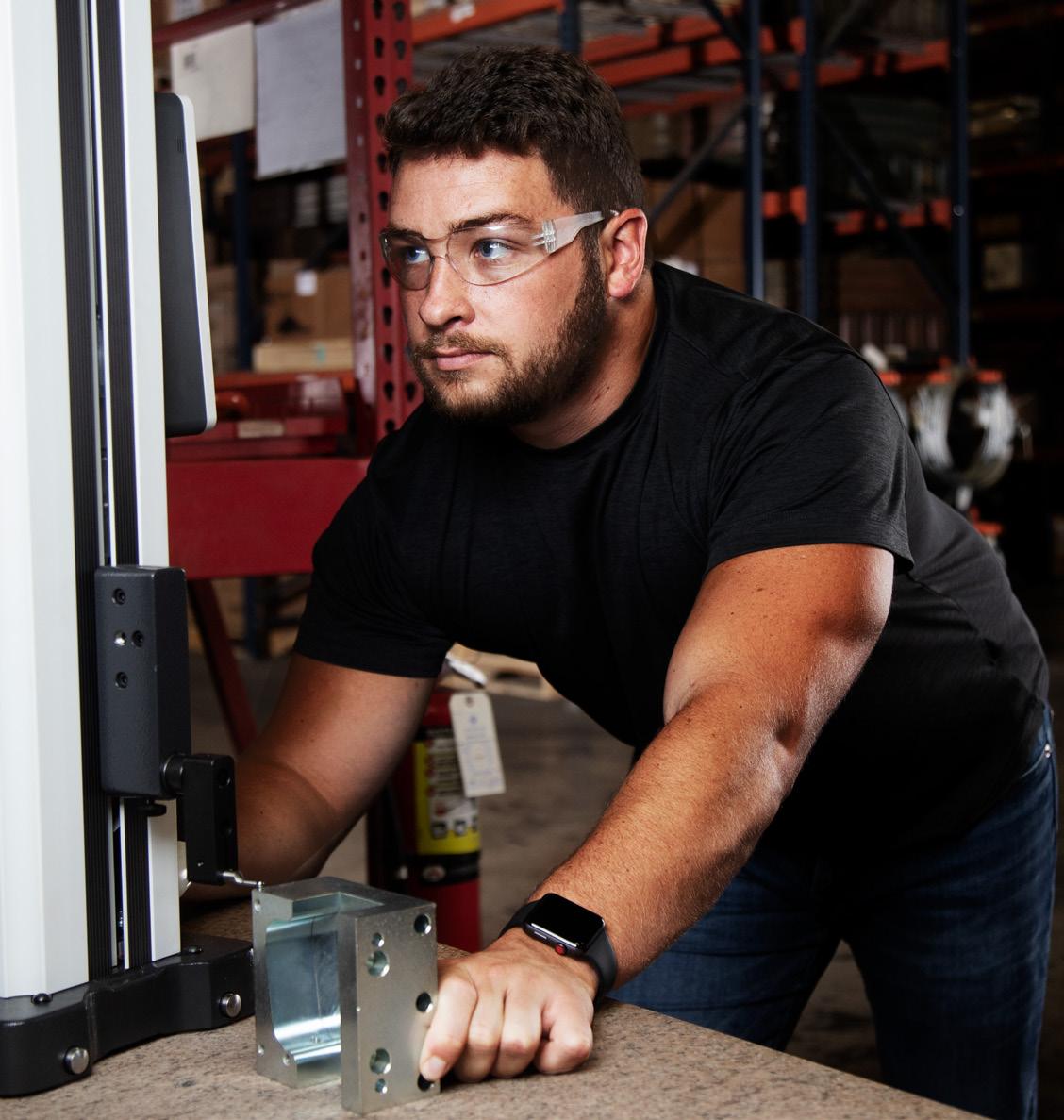
elevators are installed, which in turn creates new demands for tools and systems.”
Another shift has arisen from ownership changes within the industry. Private equity firms have increasingly acquired independent elevator companies, altering how purchasing decisions are made.
“We have to modify our approach,” Steve reveals. “It’s different dealing with a private equity-owned firm compared to an owner sitting across the table.”
Despite these changes, the pace of innovation in the sector remains measured. Regulations and safety codes play a major role in determining how quickly new ideas can be implemented.
“It’s not a fast-moving industry,” Steve reports. “We’re very code-driven, so sometimes we can only move as fast as the codes move.”
Even so, incremental improvements continue to shape the market. Modern elevators use less material, weigh less and deliver similar or improved performance compared to earlier generations.
“Modern elevators probably weigh a third of an elevator built in the 1930s,” Steve notes. “And they operate just as well.”
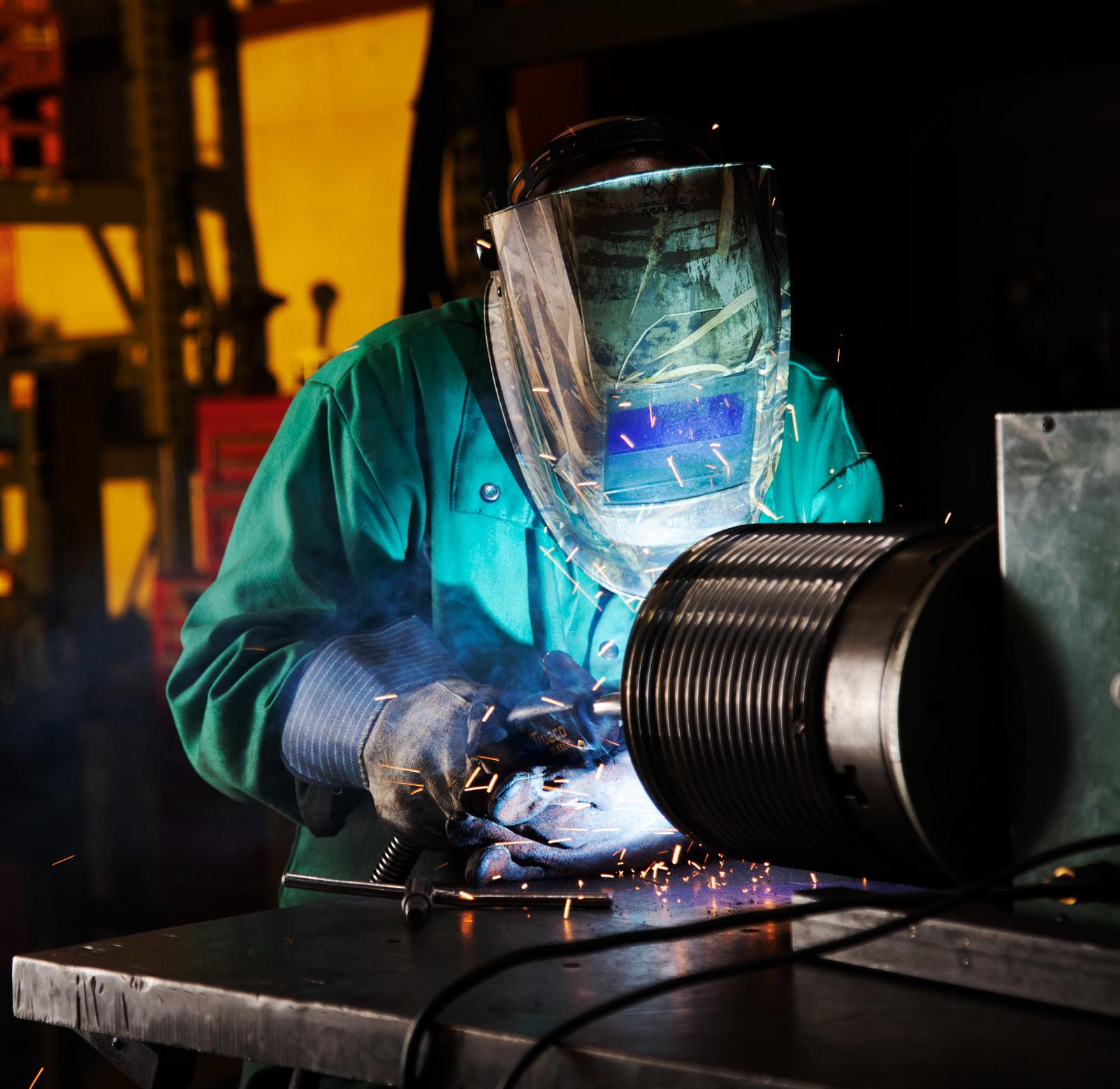
Internally, Wurtec places as much emphasis on people as it does on products. The company has received multiple awards through the years and was recently named, once again, among Toledo’s Top Workplaces.
“It’s the highest honour we receive each year,” Steve says, “because it’s given to us by the employees.
“People ask how we do it, but it’s simple. We hire people who align with our values and we look after them. If you take care of your people, they will take care of your customers. An organisation with that approach can really flourish.”
Though Steve downplays his role, strong leadership has also been key to Wurtec’s
ongoing success. The company is always on track thanks to clear planning cycles that cover longterm strategy through to shorter operational targets.
“We set five-year goals, oneyear goals, and then break that down into 90-day sprints,” Steve affirms. “It makes us very effective as an organisation.”
Steady growth
Looking ahead, Wurtec envisions steady growth rather than rapid expansion. Importantly, the fundamentals of the market remain strong, driven by global urbanisation and the continued need for vertical transport.
“If you live in an urban environment, you tend to build up,” Steve says. “And if you build up, you almost always have to have an elevator.
“We expect the market to grow at a consistent rate, but we believe we can double or triple that pace. If we can constantly hit annual 15% growth rates, we like our position.”
Future growth will likely include a stronger focus on subscription-based products and selective acquisitions. Digital systems, in particular, are expected to play a larger role in the overall Wurtec portfolio.
As Steve alludes to a number of prospective ideas for Wurtec’s future, what’s for certain is that ownership of the company will remain within the family for the foreseeable future.
“This company is not for sale,” Steve concludes. “We are an organisation built on practical understanding, technical capability, and longterm relationships – that will not change. I’ve got a great team here, and I expect to be the conductor of this band for a little while longer.”
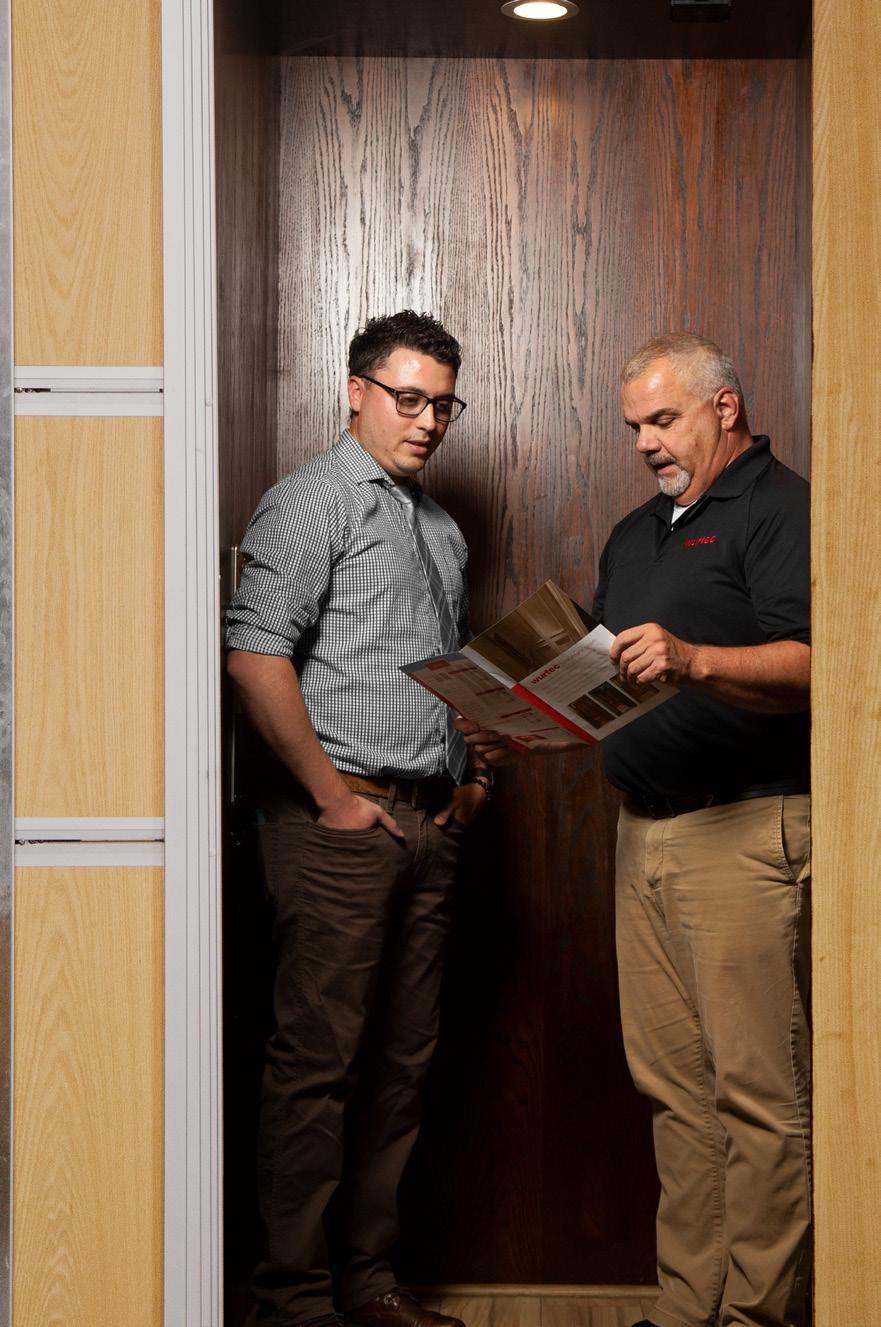
GOLD FIELDS GHANA, ONE OF THE LARGEST PRIVATE SECTOR COMPANIES IN GHANA, IS INCREASING FOCUS ON ITS FLAGSHIP ASSET.
In Ghana’s Western Region, where dense forests meet vast mineral wealth, Gold Fields Ghana stands at a pivotal moment. Long recognised as one of the country’s most influential mining operators, the company is now navigating a significant transition that signals both the end of an era and the sharpening of a new strategic focus.
For more than two decades, Gold Fields Ghana has been synonymous with large-scale gold production in the Ashanti Gold Belt. Controlling 90 percent of both the Tarkwa and Damang mines, with the Government of Ghana retaining a 10 percent free-carry interest, the company has played a central role in shaping the country’s mining sector. Its impact extends well beyond production, contributing to employment, infrastructure, and community development across the region.
Today, however, the spotlight has shifted to a defining development. The Government of Ghana has awarded the Damang mine to a local operator following a competitive tender process, marking a decisive move towards
increased domestic participation in the mining industry. For Gold Fields, this represents a carefully managed exit from an asset it has operated since 2002, alongside a renewed emphasis on its flagship Tarkwa mine.
The decision not to renew Gold Fields’ lease at Damang reflects a broader national strategy. Authorities are seeking to deepen local ownership and ensure that Ghanaian companies play a more prominent role in the sector. The selected bidder demonstrated both financial capacity and technical expertise, meeting stringent requirements set out by regulators. The transition is expected to preserve jobs and maintain production, while testing the ability of locally backed firms to manage large-scale operations.

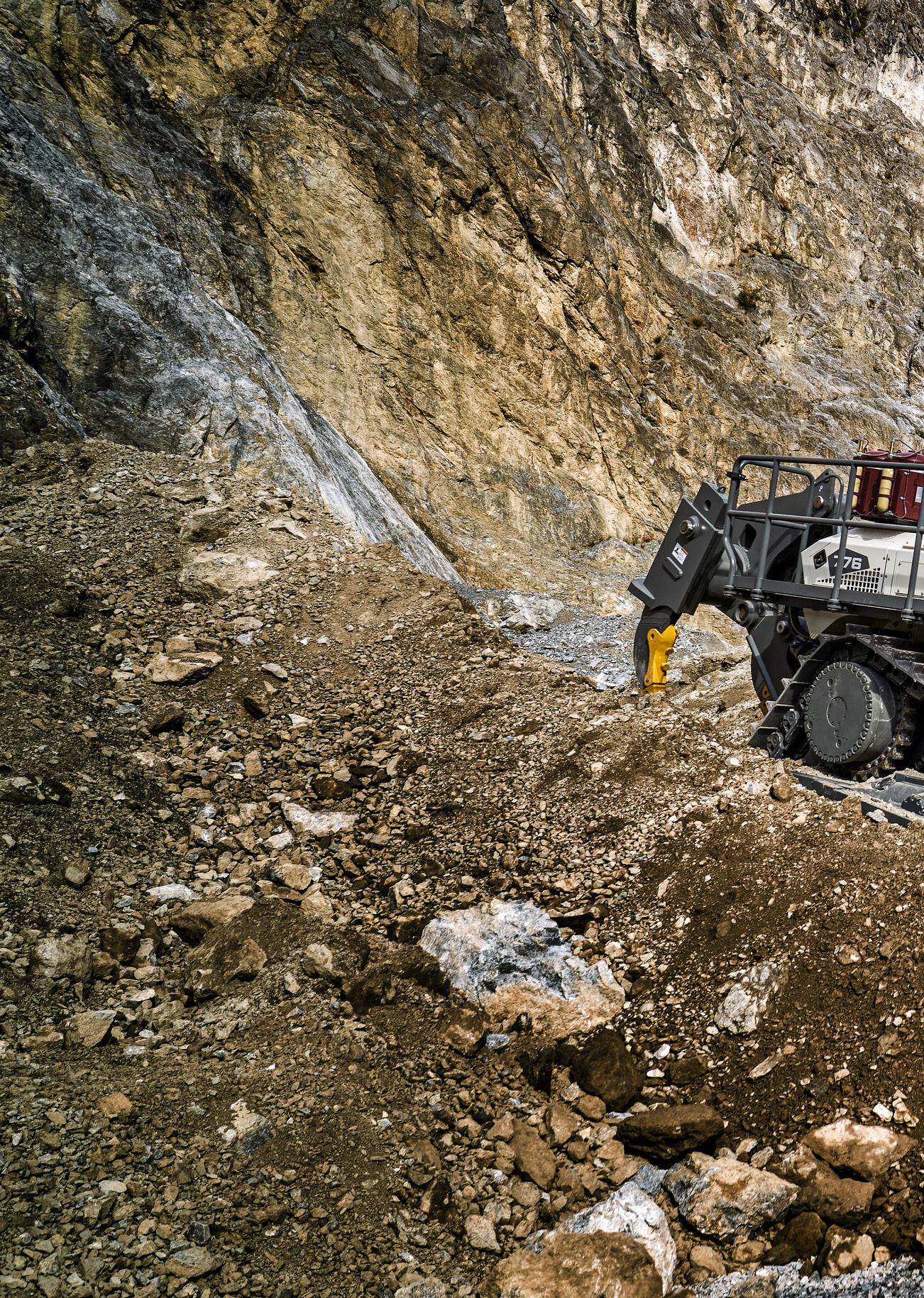
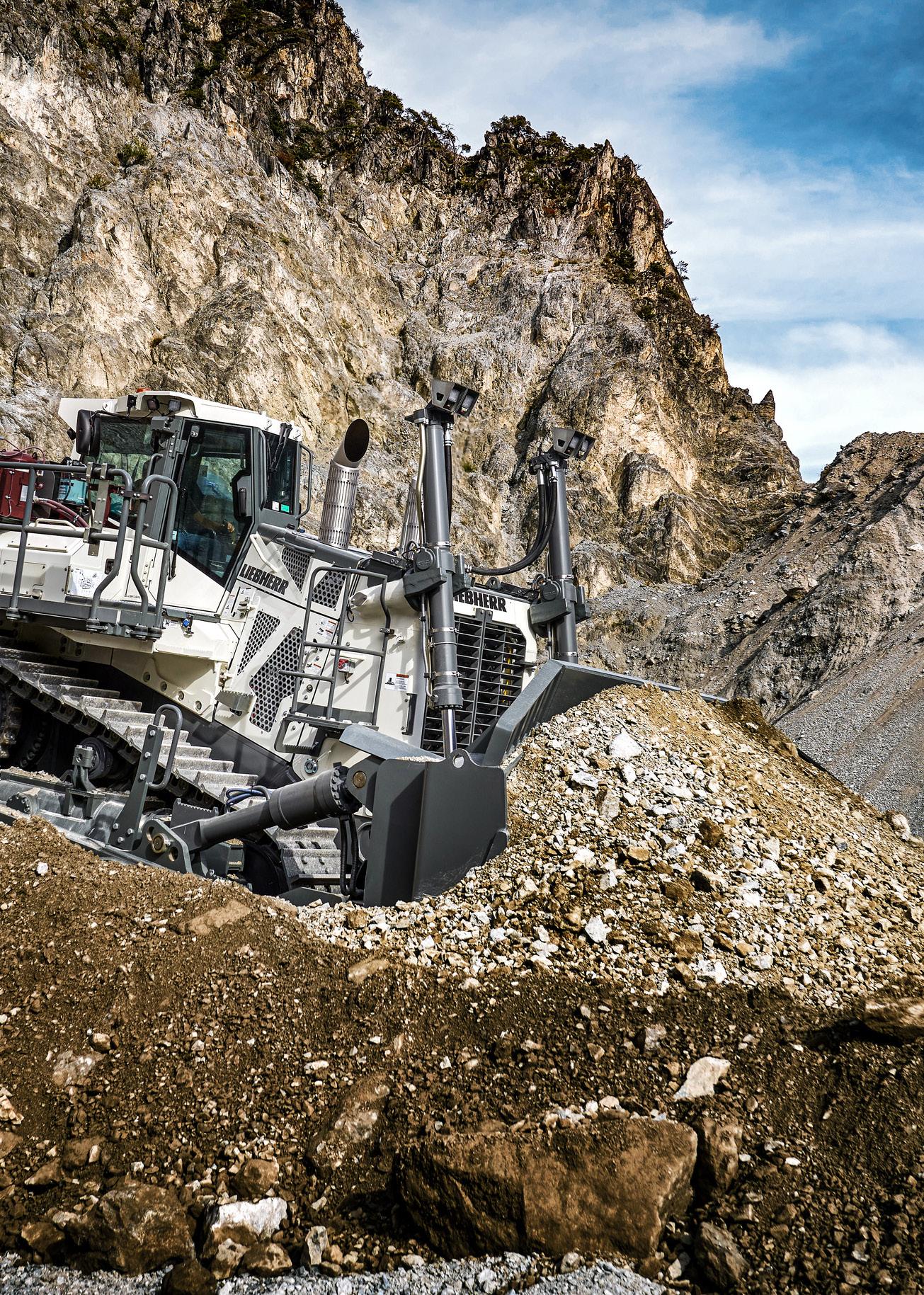
Largest Indigenous Integrated Contract Mining Company*, Delivering Value and Growth.
Innovation | Transformation | Transparency
Engineers & Planners Company Limited (“E&P”) is the largest indigenous mining contractor in Africa and has provided contract mining services to leading mining companies across Africa, including gold and iron ore mines in Ghana & Liberia.
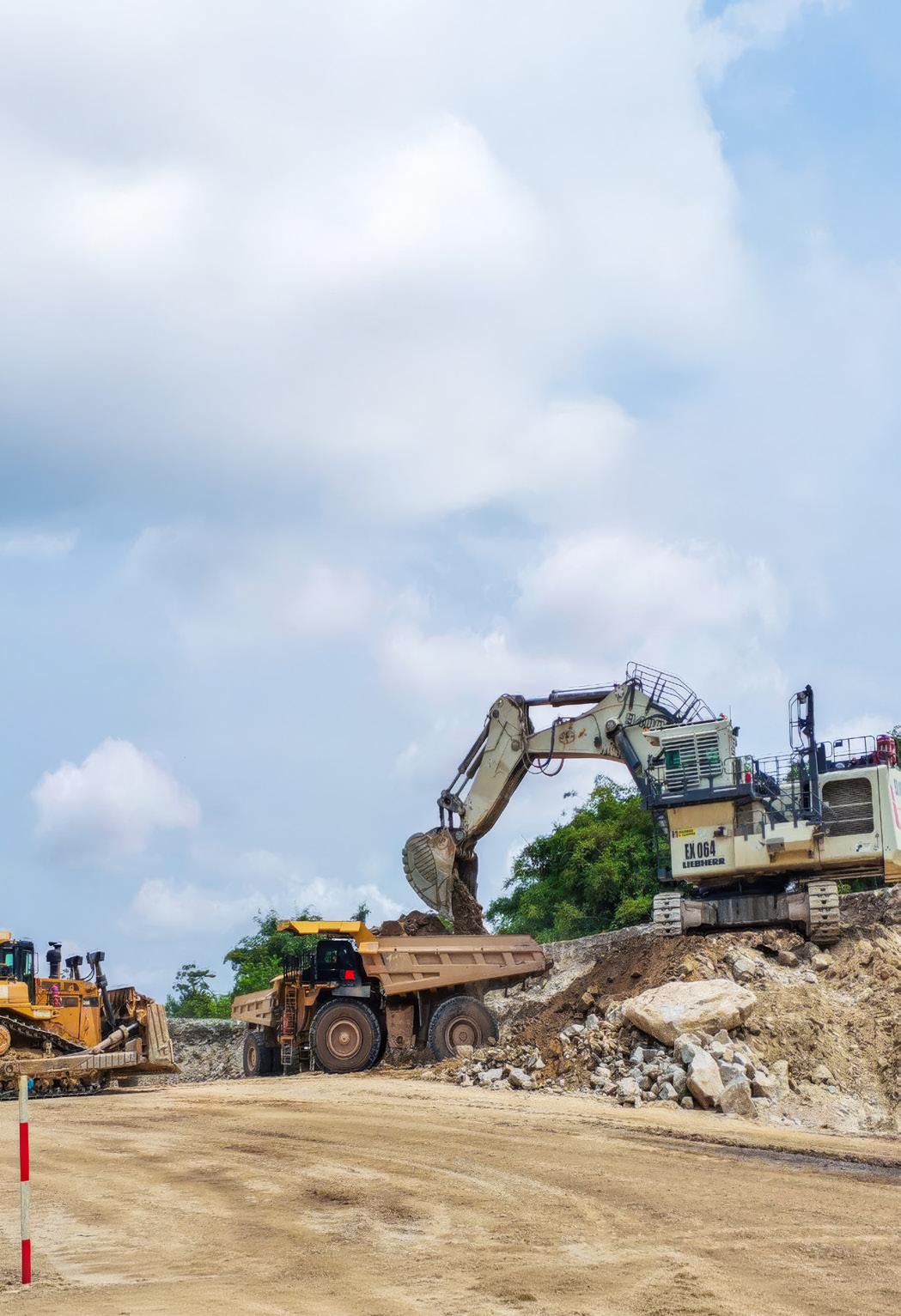
(+233) 0 302 764 649 info@engplanners.com www.engplanners.com


While the Damang transition marks a significant shift, it also allows Gold Fields to consolidate its focus on Tarkwa, widely regarded as one of the most important gold assets in West Africa. Acquired in 1993, Tarkwa has evolved into the company’s flagship operation in Ghana and remains the single largest mine in the country.
The scale of Tarkwa is formidable. Producing over 500,000 ounces of gold annually, the mine delivered 551,000 ounces in 2023 alone, supported by proven and probable reserves of more than four million ounces. Investment at the site has been extensive, involving selective surface mining techniques and a substantial fleet of heavy equipment, including excavators, dump trucks and drill rigs. Processing capacity is equally impressive, with more than 14 million tonnes of ore treated in a single year.
“ACQUIRED IN 1993, TARKWA HAS EVOLVED INTO THE COMPANY’S FLAGSHIP OPERATION IN GHANA AND REMAINS THE SINGLE LARGEST MINE IN THE COUNTRY.”
Yet Tarkwa’s significance goes beyond output. Located in a town often referred to as the “Golden City,” the mine is deeply embedded in the local economy. It supports thousands of livelihoods directly and indirectly, while reinforcing Ghana’s position as a leading gold producer on the African continent.
Gold Fields Ghana’s contribution to national development has been substantial. Through taxes, royalties, and procurement, the company has generated significant economic value. At the same time, its investments in infrastructure have delivered lasting benefits, including major projects such as the Tarkwa-Damang road and the refurbishment of local sports facilities.
Central to this legacy is the Gold Fields Ghana Foundation. Established in 2004, it has invested more than $109 million in host communities, focusing on education, healthcare, water and sanitation, agriculture, and infrastructure. As the first mining company foundation of its kind in Ghana, it set a benchmark for corporate social responsibility in the sector.

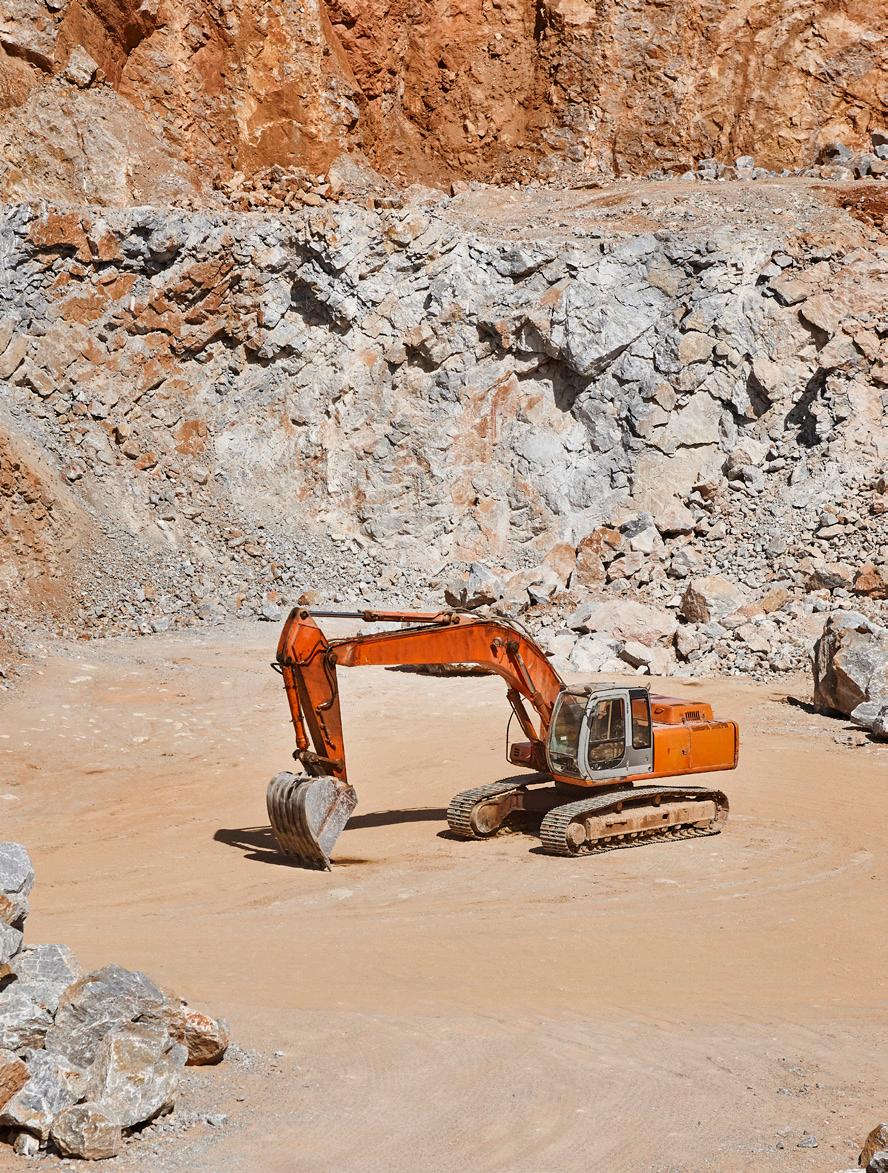
Recently the company has announced that The Gold Fields Ghana Foundation, in partnership with World Vision Ghana, is handing over a 160 litre capacity water facility to the Damang community — resolving a long standing water challenge and bringing relief to hundreds of households.
An investment of US$326,000 has gone into making this possible. “This project adds to the small town water systems already provided by the Foundation and reflects our commitment to community wellbeing and sustainability,” says the company.
Environmental stewardship has also been a defining feature of Gold Fields’ operations. At Damang, the conversion of a closed tailings dam into agricultural land exemplifies a commitment to sustainable land use and community benefit. Across both sites, robust water management and rehabilitation programmes have reinforced the company’s environmental credentials.
These efforts have not gone unnoticed. Gold Fields Ghana has received multiple accolades at the Ghana Mining Industry Awards, including recognition for environmental management, innovation, and local content. Such honours highlight the company’s ability to balance operational performance with responsible mining practices.
At the same time, Gold Fields has sought to address broader industry challenges, particularly around diversity and inclusion. Increasing female participation remains a priority, with initiatives designed to remove barriers and expand access to all roles, including leadership positions.
As the company moves forward, the strategic importance of Tarkwa becomes even more pronounced. With a life of mine extending around a decade and strong production fundamentals, it offers a stable platform for sustained value creation.
As such, the departure from Damang, while significant, does not diminish Gold Fields
Ghana’s standing. Instead, it signals an evolution in both corporate strategy and national policy. For Ghana, the transition represents an opportunity to build local capacity and redefine ownership structures within the mining industry. For Gold Fields, it is a moment to refine its portfolio and concentrate on high-performing assets.
In many ways, this turning point encapsulates the broader dynamics shaping Africa’s resource sector. Governments are seeking greater participation and value retention, while international operators adapt to changing regulatory and economic landscapes.
For Gold Fields Ghana, the path ahead is clear – the company is entering a new chapter, defined by focus, resilience, and an enduring connection to one of Africa’s richest gold regions. By leveraging the strength of Tarkwa and maintaining its commitment to sustainability and community development, Gold Fields Ghana is well positioned to remain a key player in Ghana’s mining future.

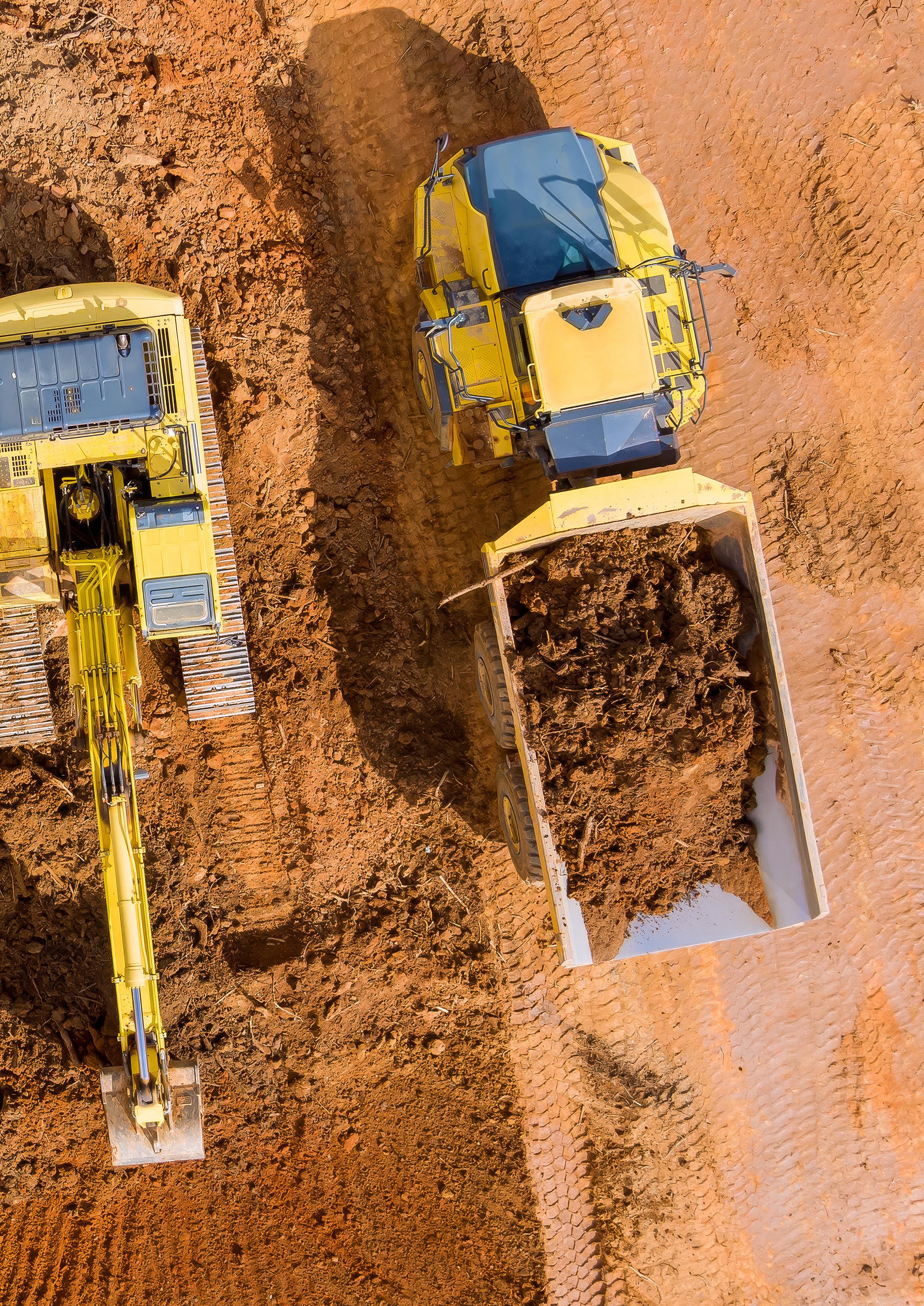
If I ask you to imagine horse riding apparel, the odds are you will imagine a fairly formal outfit in black, white, navy, or brown. From the very beginning, Equestrian Stockholm has worked to set itself apart from that.
questrian Stockholm is a premium horse equipment and riding apparel brand. It has established itself with apparel and equipment that can outcompete other brands in terms of functionality, but they are also setting social media on fire with their unique looks, bringing new colours and styles to the world of equestrian sports.
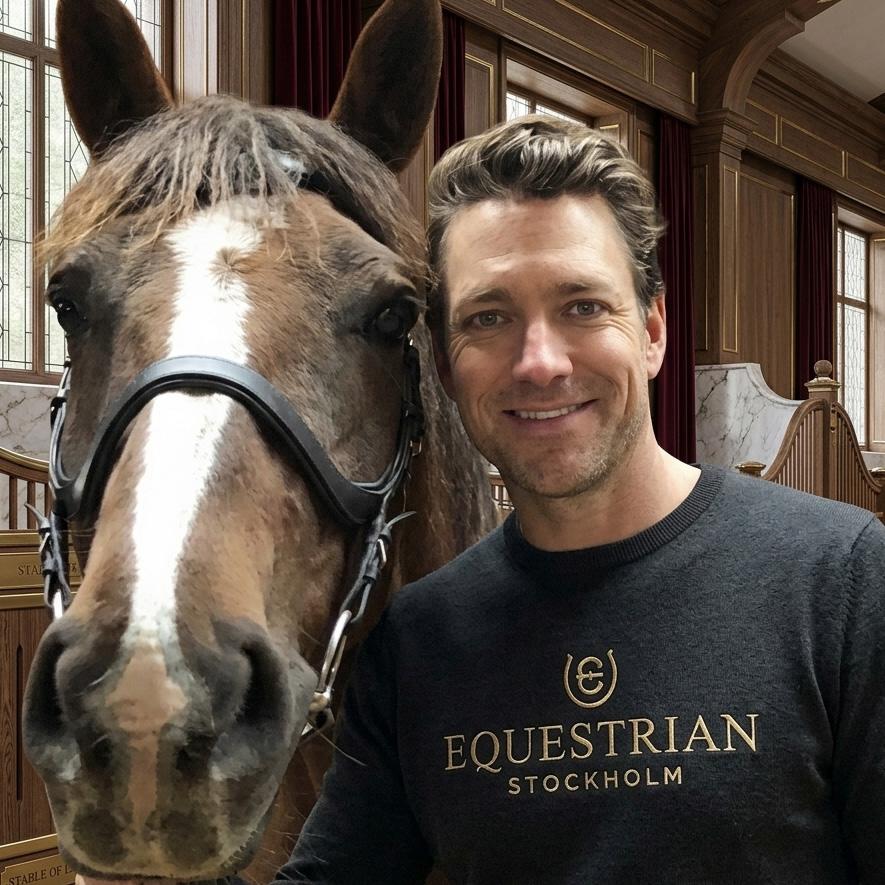
But Equestrian Stockholm is not just about how horse riders look, it is also about who can ride.
“Our founder, Johanna von Sydow, was a perennial runner-up in every competition, and she saw firsthand that if you don’t have huge sponsors or are actually born on a farm, it’s tough to compete,” says Harald von Sydow, CTO of Equestrian Stockholm. “She wanted to do something for the equestrian sport. She wanted to give others the chances she didn’t have herself.”
As well as using her own experience on horseback to help develop Equestrian
Stockholm’s products, she used the company to sponsor up-and-coming riders who did not have corporate backing or inherited wealth to help get them into the industry.
“She got them exposure, dressed rider and horse up very nicely in matching sets, and brought her energy, designs and innovative thinking to giving these new up and coming riders exposure,” says von Sydow. “She wanted to help young aspiring riders achieve their dreams. That is the basis of the company, and from there we have continued to provide innovative, functional apparel and equipment that keeps our competitors at bay.”
Equestrian Stockholm is a business, and it needs to make a profit, but alongside this, the company runs two other charitable campaigns. This allows the business to donate to a charitable foundation for women’s entrepreneurship, and its breast cancer foundation through Ride Against Cancer, channelling Equestrian Stockholm’s profits into cancer research.
“We’re here to make an impact, and to make the equestrian world look better while doing it,” says von Sydow.

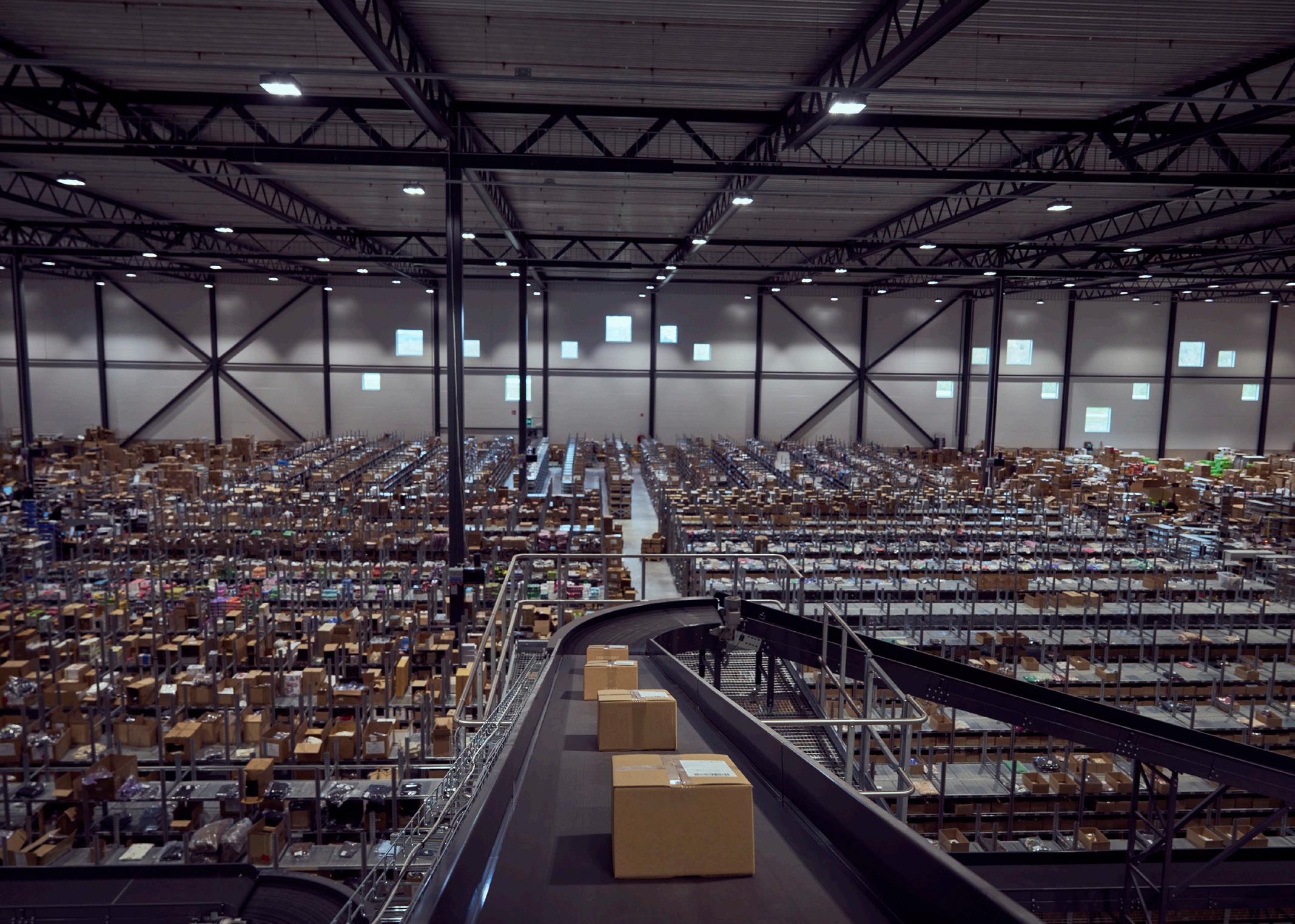
Postpac is a Nordic third-party logistics provider specialising in transaction-intensive flows. The company offers integrated solutions across fulfilment, warehousing, packaging, distribution, and value-added services (VAS).
Strategically located in southern Sweden, Postpac enables efficient distribution across the Nordics and the wider European market, while also supporting global logistics needs.
“3PL som fungerar” — logistics that simply works.
When it comes to moving goods across borders, simplicity is the ultimate competitive advantage. Link Logistics has spent more than two decades proving exactly that, connecting businesses to smarter, faster and more responsible transport solutions worldwide.
Founded in 2002 in Denmark, Link Logistics has grown from a specialist courier provider into a full-service logistics partner operating across 18 locations in six countries, including Denmark, Sweden, Norway, the Netherlands, Poland and the United States. Today, the company manages over two million shipments annually for more than 2,500 clients, serving both B2B enterprises and fast-growing e-commerce brands.
The company’s strength lies in its ability to simplify complex supply chains. Through its proprietary MyLink platform, clients gain real-time visibility across every shipment, whether it travels by air, ocean, road, or rail. Compatible with all major ecommerce and ERP systems, the platform ensures seamless integration from checkout to delivery.
Link Logistics offers a comprehensive suite of services: express and parcel delivery across Europe, global freight forwarding, warehousing and pick-andpack fulfillment, and tailored solutions for businesses with unique logistics requirements. Every client is assigned a dedicated contact, ensuring proactive communication and rapid response times.
Holding AEO certification and with a growing team of 380 logistics professionals, Link Logistics combines digital efficiency with genuine personal service - a combination that remains rare in the industry.
Whether you are shipping a single pallet or managing a complex international supply chain, Link Logistics makes it simple.
www.linklog.com | info@linklog.com
For five decades, Postpac has quietly played a role behind the scenes of some of the Nordic region’s most dynamic brands. As a trusted third-party logistics partner, the company combines precision, reliability, and a deep understanding of its clients’ needs to deliver seamless logistics solutions in an increasingly fast-paced world. Operating from a modern facility in southern Sweden, Postpac is well positioned to support distribution across the Nordics and the wider European market. The company handles millions of shipments each year with a consistent focus on quality and care. Every stage—from fulfilment and warehousing to distribution and system integration—is designed to ensure that products arrive exactly as intended, reinforcing the value of the brands they represent.
At the heart of Postpac is its emphasis on relationships. By working closely with each client, the company develops tailored logistics solutions built on trust, transparency, and long-term collaboration. This approach allows Postpac to remain agile while maintaining the high standards expected in premium and lifestyle-driven industries. In addition, Postpac’s flexible infrastructure and experienced team enable the company to adapt quickly to changing market demands. This ensures that clients benefit from reliable logistics solutions that evolve alongside their business. Sustainability is a natural part of this philosophy. The company’s climate-neutral facility reflects a commitment to responsible growth. With a heritage built on reliability and a forward-looking mindset, Postpac remains a partner of choice for brands that value quality, consistency, and attention to detail.
www.postpac.se
It does that by coming to market with a unique vibe, colours and innovative thinking around form, function and design.
“There’s a clear direction to the brand. You see it in the colours, but also in how we think about form, function, and design,” von Sydow explains.
“There’s a strong balance between aesthetics and functionality, with materials that enhance performance while supporting the horse. We keep moving. Because the reality is, within a year, there will be copycats. So staying ahead isn’t optional, it’s the job.”
Johanna von Sydow, CEO, Equestrian
Stockholm.
Equestrian Stockholm is able to do this because, throughout the company, its people are as passionate about horses as its human customers.
“Around 80% of our team are equestrians themselves,” says von Sydow. “At the same time, we’re closely connected to a

wider community of riders. We stay in dialogue with them, and when we see opportunities to improve or gaps we can fill, we’re open to exploring new ideas.”
With that large team of enthusiastic, passionate experts in place, Equestrian Stockholm is able to experiment with different materials, styles and functionality to make sure it achieves the outcomes it is looking for.
“It’s a long process before anything reaches launch,” says von Sydow. “There are multiple rounds of testing and feedback, and it can take up to three years
from initial idea to finished product.”
Finding people with the knowledge and passion necessary to develop these products is not a problem.
“They find us!” von Sydow laughs. “People want to combine their passion with their work, and that’s often when you see the best results. Many of our team use the products daily, which makes them a natural part of the development and feedback process. There’s a genuine drive to refine and improve the sport, and that’s reflected in how we work.”
But Equestrian Stockholm’s work does not end with developing the product. It needs to acquire the right materials and get the finished products to market.
“Product planning and logistics are a challenge for many companies,” says von Sydow. “We work with production across ten different countries, so when something is disrupted in the supply chain, it takes time to adjust. That puts a lot of emphasis on getting the volumes right from the start. When introducing a product innovation, we need to assess its potential carefully and align our forecasting with how we manage production and logistics.”
Throughout the process, there is never any compromise on quality.
“To build the brand, we work with the best, and we’re selective about our partners,” says von Sydow. “As users of our own products, quality is non-negotiable. We carry out factory acceptance tests before shipment, and continue with quality control at our warehouses. Attention to detail is key. There shouldn’t be a single thread out of place.”
“Products our customers bought ten years ago can still be used today,” says von Sydow. “They’re made to last. That same attention to detail runs through everything we do, from warehousing and logistics to our partners and creative work.”
Today, Equestrian Stockholm is already a global brand, and von Sydow foresees the company extending its reach even further.
“Products our customers bought ten years ago can still be used today,” says von Sydow. “They’re made to last. That same attention to detail runs through everything we do, from warehousing and logistics to our partners and creative work.”
As well as being built to last, von Sydow also wants to make them available the world over
“We already have offices in southern Europe, and we want to continue getting closer to the end customer,” says von Sydow. “Our products are available globally, across Asia, Australia, South Africa, and North America.”
But however far the company’s reach extends, one thing remains the same.
As von Sydow says, “If you work with the best people, that really high premium quality will be visible in the end product. That is what our riders expect.”
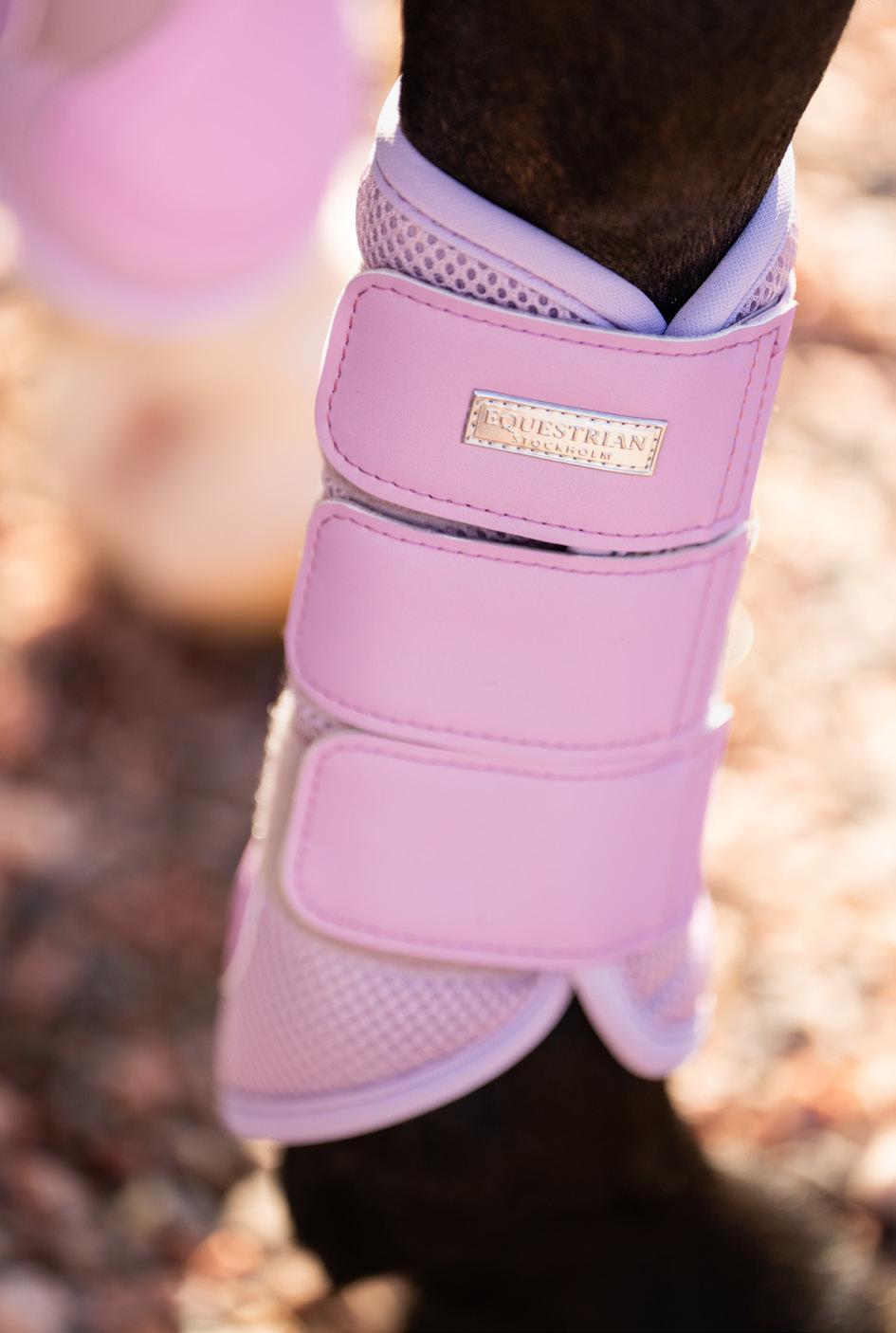

KNOWN FOR ITS RELIABLE, DAILY MARITIME OPERATIONS, HURTIGRUTEN IS A FIXED COASTAL SERVICE BLENDING FREIGHT, REGIONAL ACCESS, AND TOURISM.
Along Norway’s jagged western edge, ships still arrive as part of everyday life. These vessels deliver cargo, connect isolated towns, and carry passengers who rely on them as much as any road or rail line. At the centre of this network is Hurtigruten, a business that operates at the intersection of public service and global tourism.
Founded in 1893, Hurtigruten began as a governmentsupported coastal route designed to improve communication between remote communities. More than 130 years later, that original purpose remains intact. Hurtigruten vessels still call at dozens of ports along the Norwegian coastline, operating as a hybrid of ferry service, logistics provider, and cruise operator.
The core Hurtigruten offering differs sharply from the mainstream cruise model. Large ships designed for entertainmentled experiences dominate much of the global sector. Hurtigruten takes a narrower, more operational approach.
For one, the company’s ships are smaller, purpose-built vessels for navigating tight fjords, narrow channels, and exposed coastal waters. They follow a fixed route known as the Coastal Express, stopping
at 30-plus ports as they move between southern Norway and the Arctic north.
Cabins and onboard facilities on Hurtigruten ships are positioned around observation and immersion rather than spectacle. The experience is defined by proximity to the coastline. Ships travel through sheltered waterways, dock in working harbours and operate on schedules that align with local needs.
Structurally, this gives Hurtigruten a clear point of differentiation. The company is not selling escapism in the conventional sense, but access to a functioning coastal system.
Tourism built on authenticity
International demand for Hurtigruten services has grown steadily as travellers look for more grounded, experience-led itineraries. The organisation has leaned into this shift by framing its voyages as an extension of Norwegian life rather than a curated version of it.

Routes include the full Bergen to Kirkenes journey, shorter regional sailings, and themed voyages focused on seasonal phenomena such as the Northern Lights. Longer ‘Signature’ itineraries extend into Arctic destinations including Svalbard, with more time in port and guided excursions.
Food is positioned in a similar way. Hurtigruten’s ‘Coastal Kitchen’ concept sources ingredients along the route, linking onboard dining to local producers and regional supply chains. It is an initiative that strengthens the brand’s authenticity narrative while reinforcing relationships with coastal communities.
Many of the ports Hurtigruten serves are small, remote and difficult to access by road, particularly in winter. Consequently, the operator’s ships provide a consistent transport link for people, goods and services.

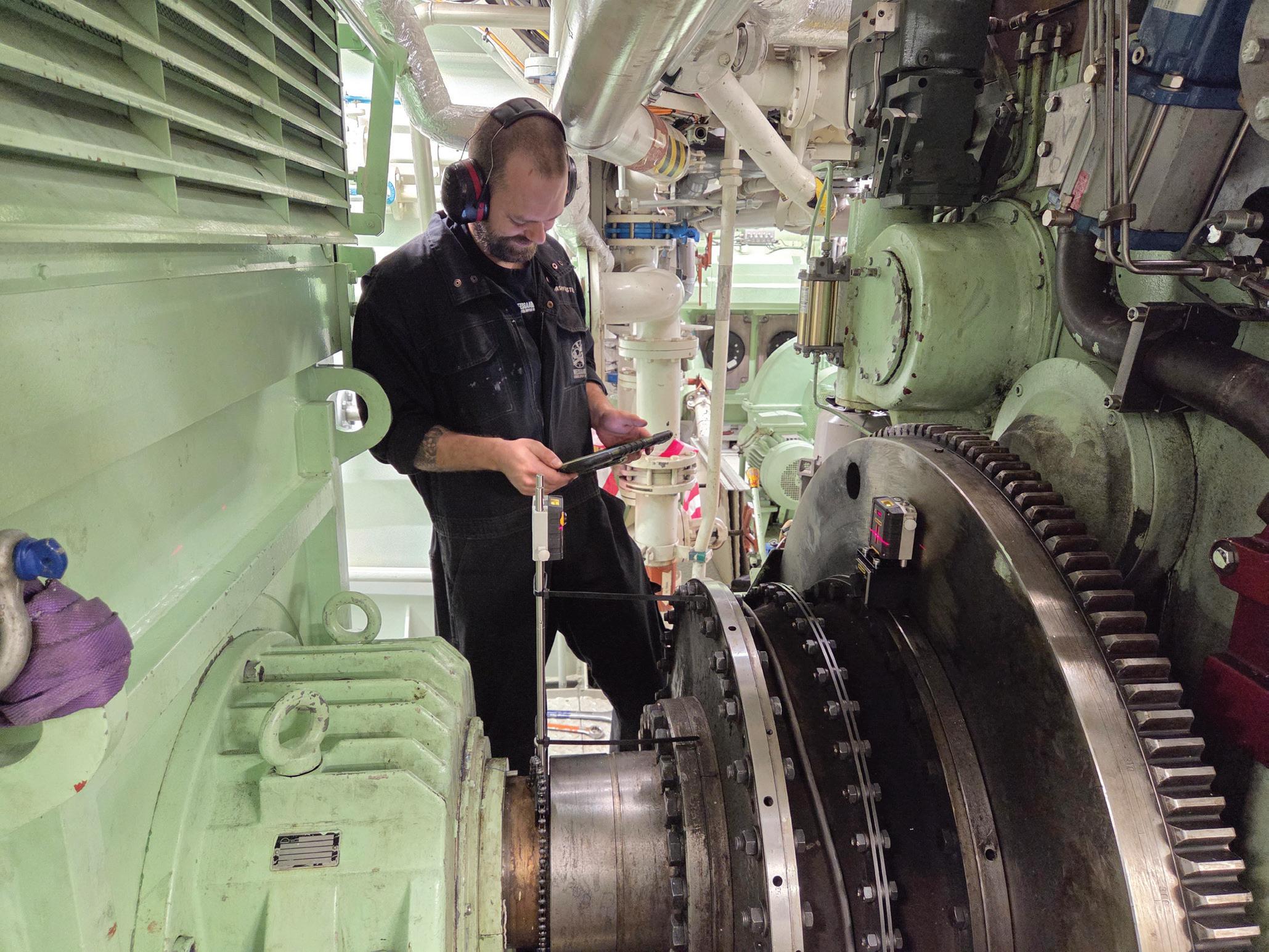
Weesgaard Mechanical Support
Safirvej 6
DK-9850 Hirtshals +45 69 15 57 48 info@weesgaardms.com www.weesgaardms.com
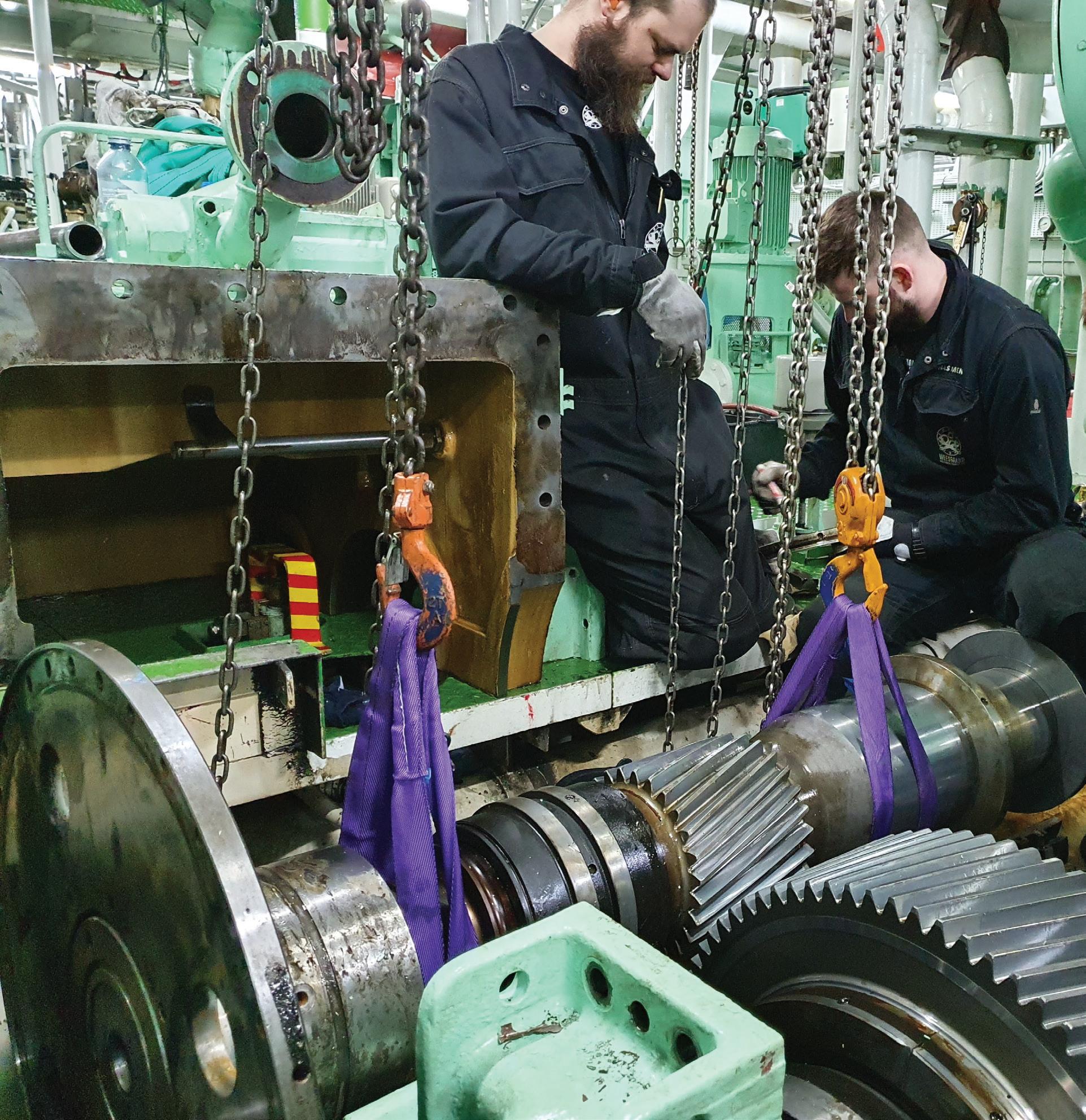
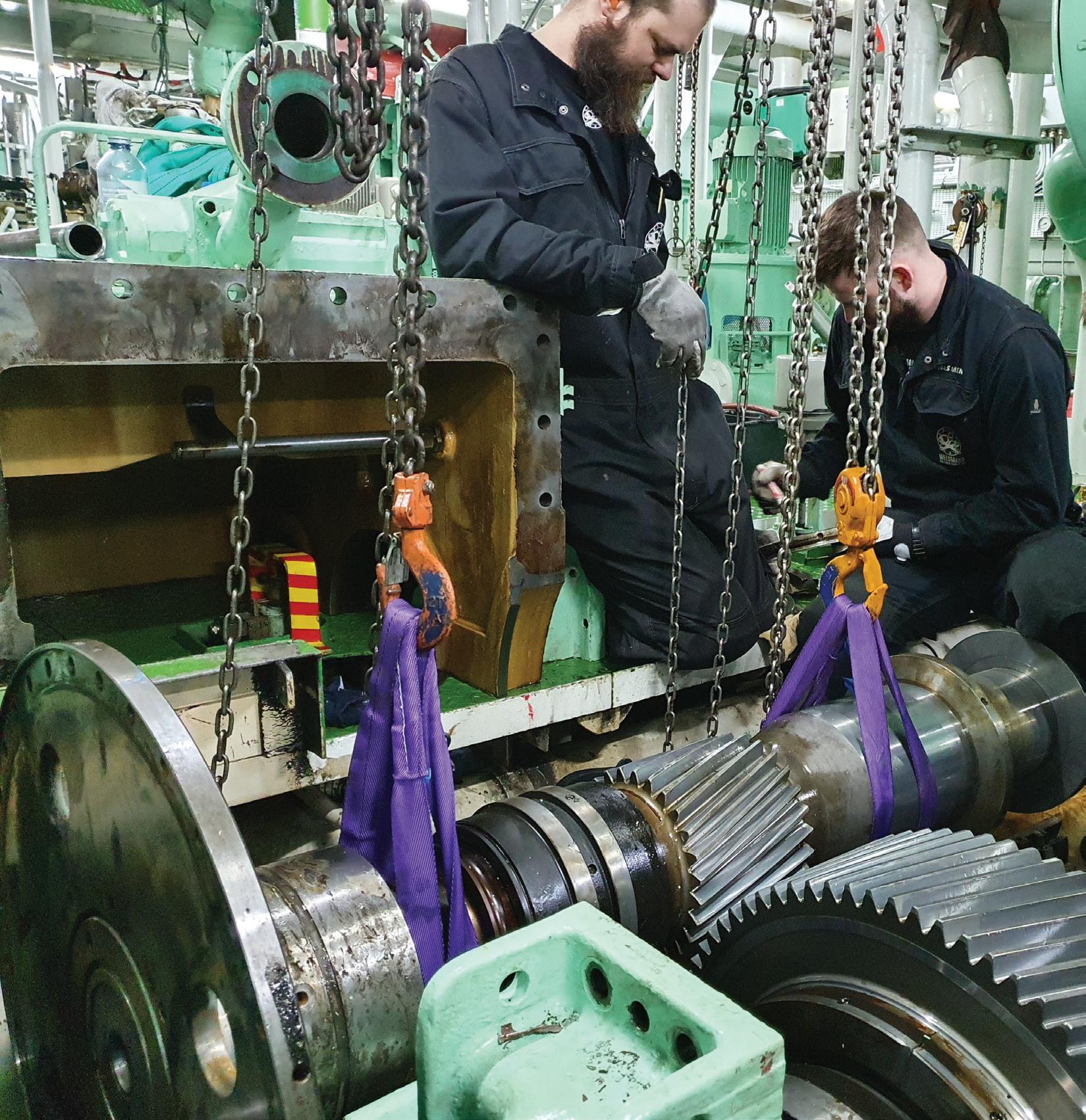
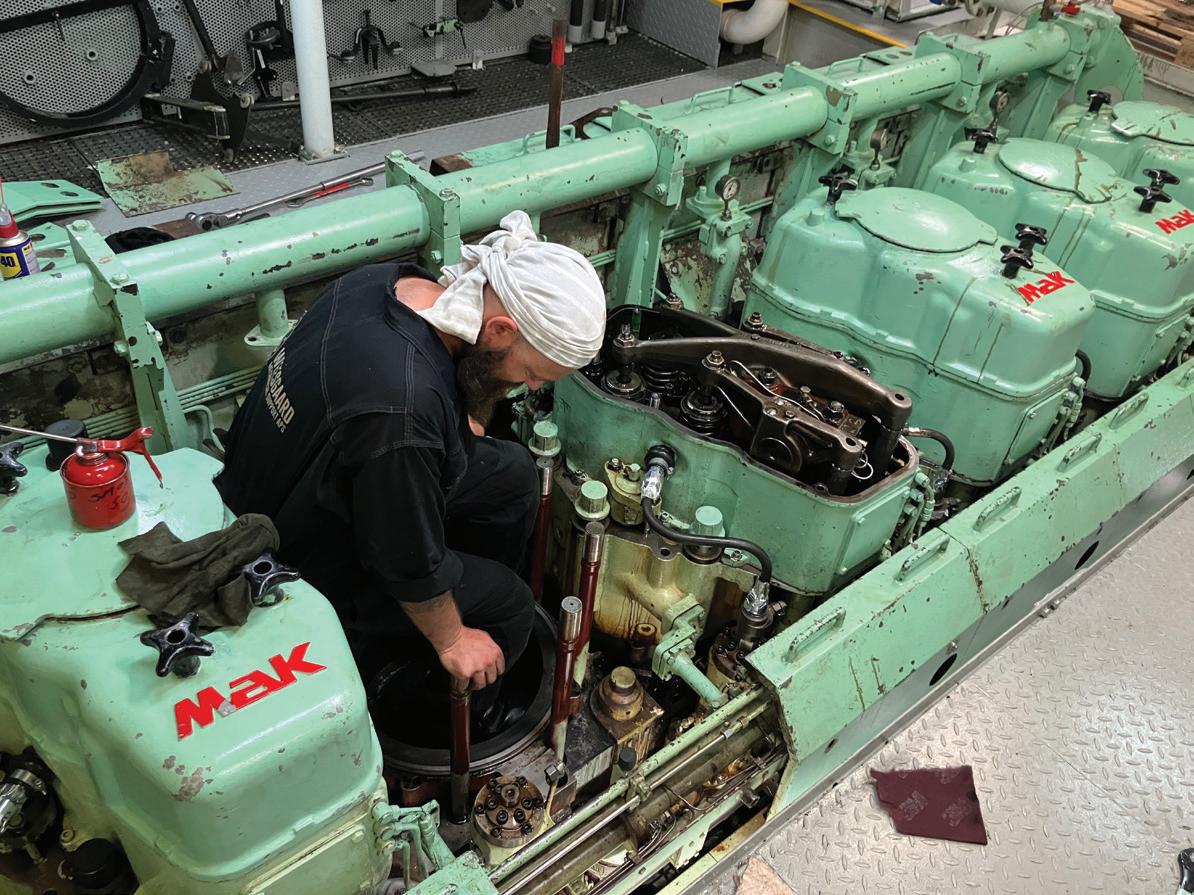
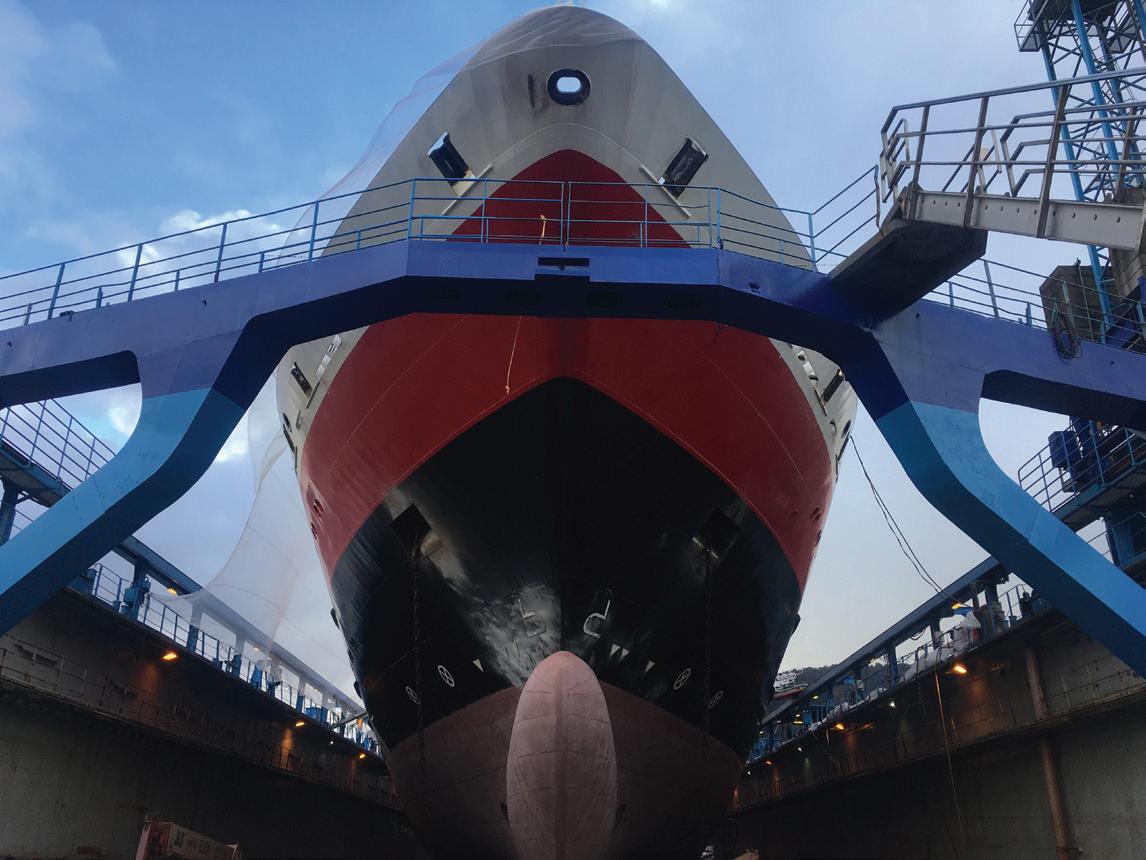
Weesgaard Mechanical Support is a small familyowned company, which is highly specialized in repair of four-stroke engines and gear boxes.
Our service engineers are of Danish origin only, flexible, safety-minded and have a wide knowledge within repair and service on all sizes of vessel.
Well-appointed 800 m2 workshop in Hirtshals, equipped with lathes machines and Chris Marine tools for overhaul of engine parts. Lifting capacity of 5 tons.
Huge outdoor space, with the possibility of storing bigger parts. A company that will deliver “quality on time” – 24/7-365 service.

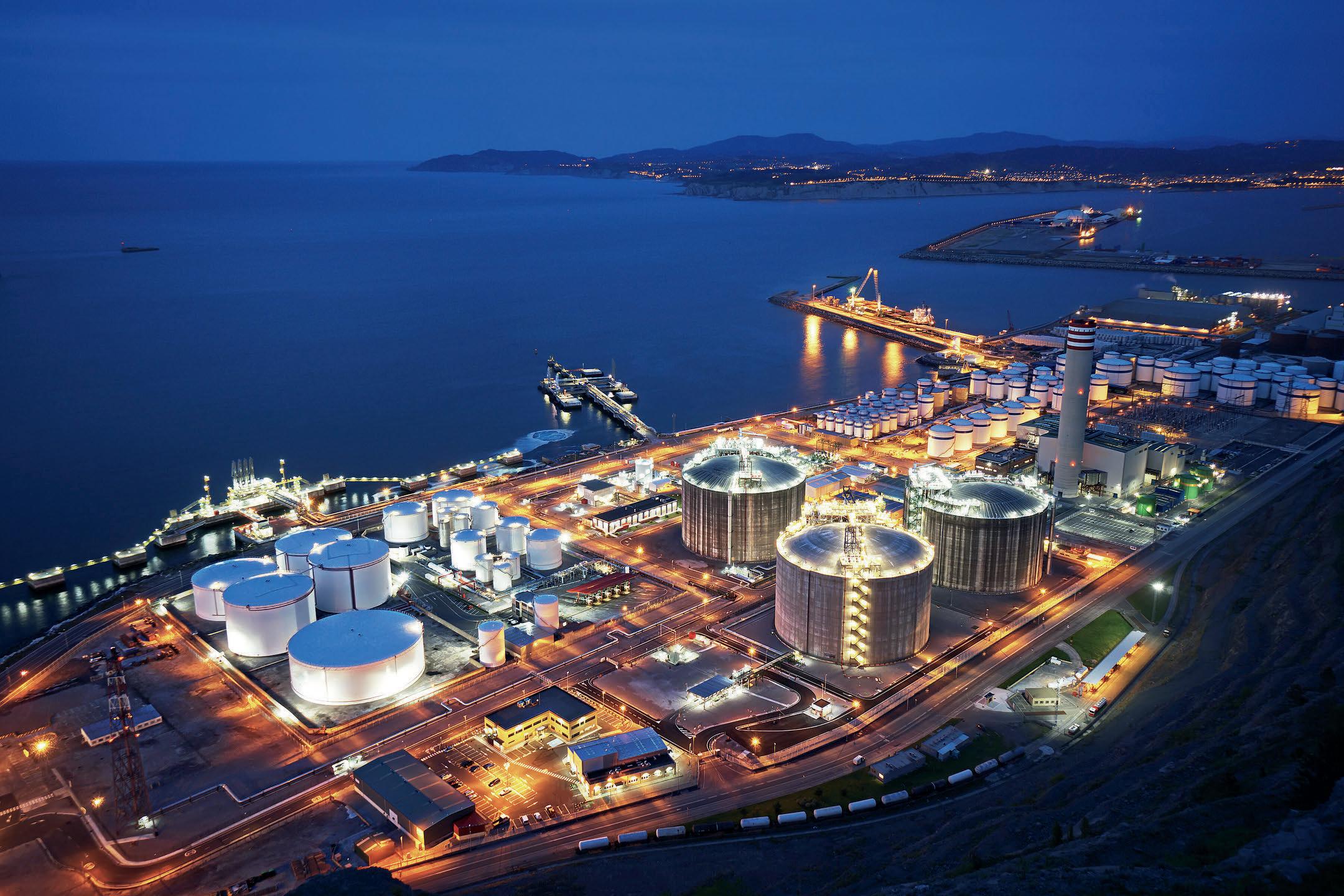
Phone: +47 947 98 049
Email: molde@baelgros no
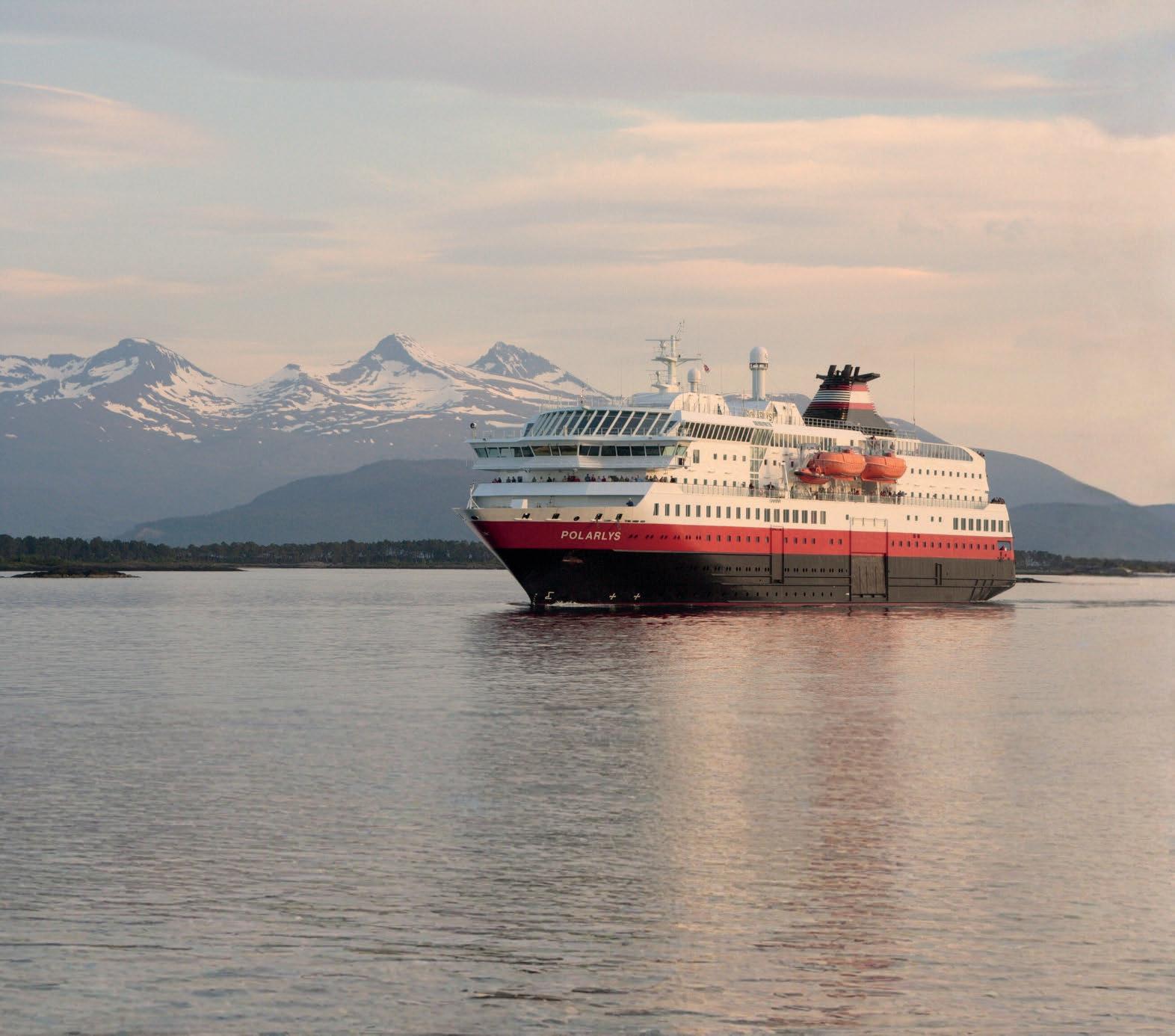
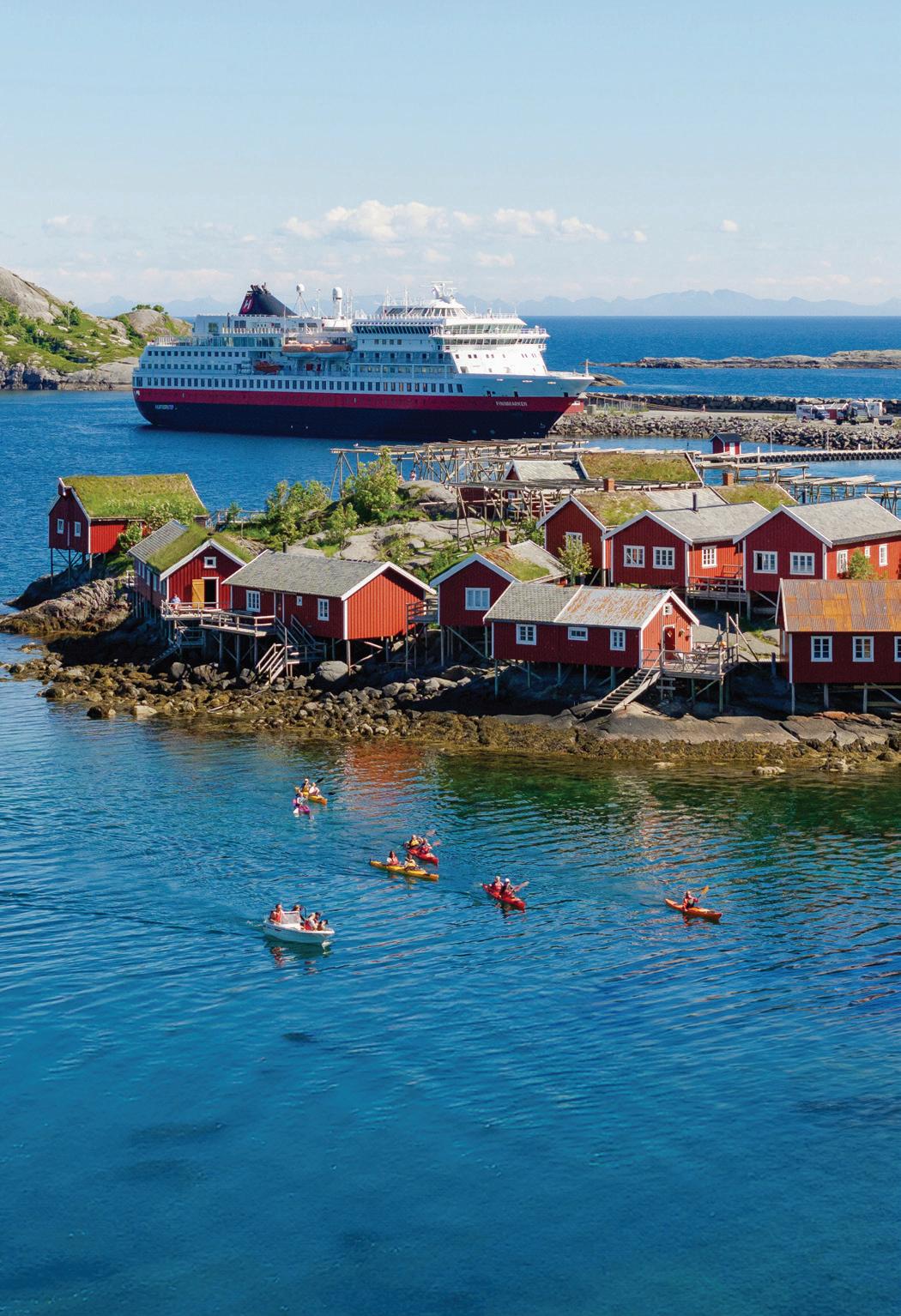
Passengers disembark into towns that are still functioning as working settlements, not purpose-built destinations. Excursions are typically local in nature, ranging from fishing and food experiences to guided cultural activities.
This dynamic spreads economic impact along the entire coastline instead of concentrating it in a handful of high-volume cruise ports. It also reduces the strain associated with overtourism, a growing concern in parts of the global cruise market.
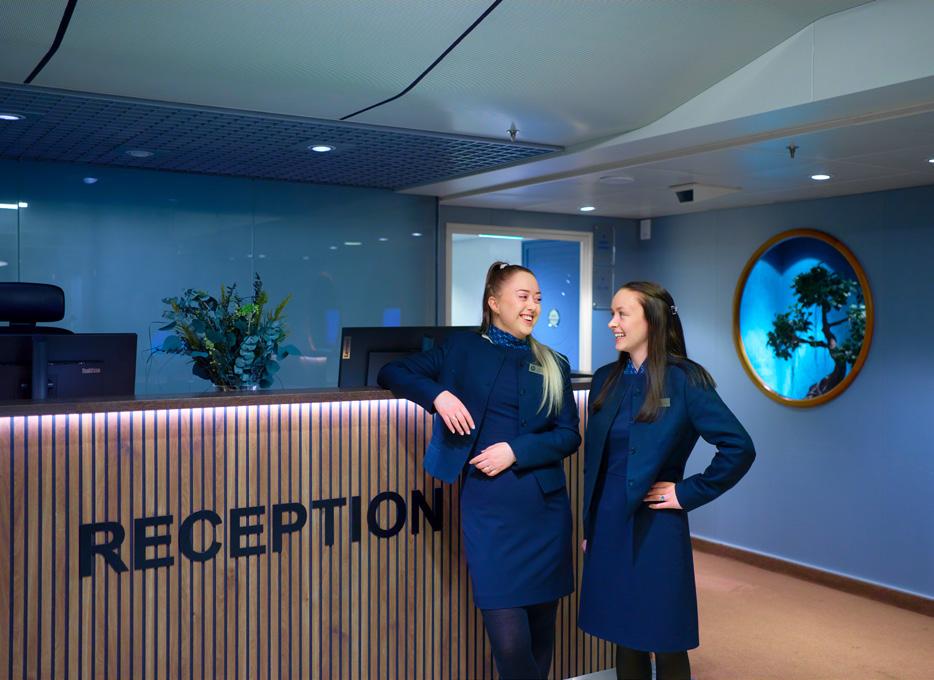
The model is not without complexity. Balancing commercial tourism with public service obligations requires tight operational control, yet the structure provides resilience. Hurtigruten is not wholly dependent on discretionary tourism in the way many cruise operators are.
Environmental pressure on the cruise industry has intensified over the past decade. Emissions, fuel use, and the impact of large vessels on fragile ecosystems are under increasing scrutiny.
Hurtigruten has positioned itself as an early mover in addressing these concerns. The
company has invested heavily in hybrid propulsion systems, reducing fuel consumption and emissions across parts of its fleet. It has also eliminated single-use plastics and committed significant capital to long-term decarbonisation projects.
Hurtigruten’s most ambitious initiative is its ‘Sea Zero’ concept. The project aims to deliver a zero-emission coastal vessel by 2030, combining battery power with wind-assisted propulsion and energy-efficient design.
Industry-wide progress remains uneven, but cruise demand continues to rebound strongly, even as environmental criticism persists. Hurtigruten’s strategy is to turn sustainability into a differentiator rather than a compliance requirement.
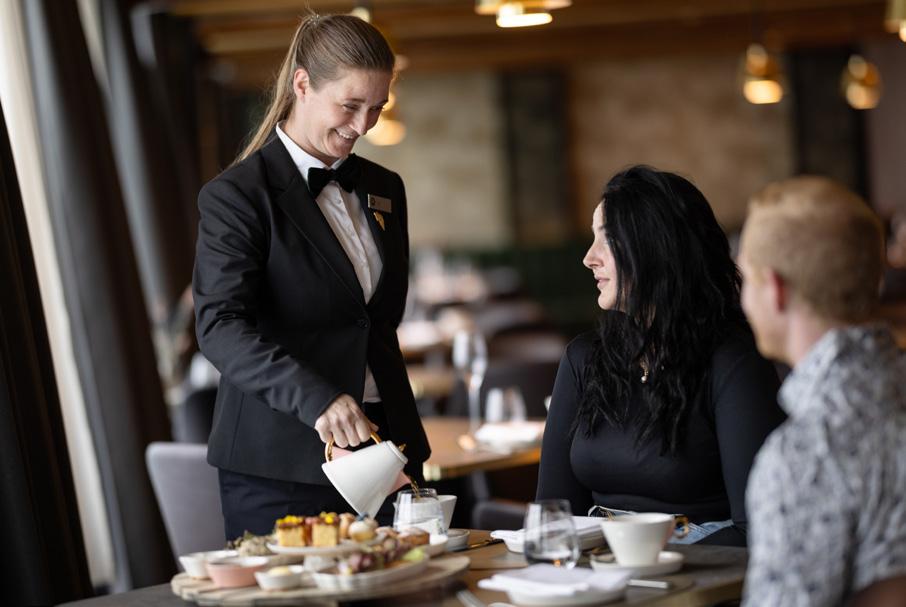
Scale has traditionally been the cruise industry’s primary growth driver. Larger ships deliver higher passenger volumes and stronger economies of scale.
However, Hurtigruten has taken the opposite approach. The company’s vessels remain relatively small, limiting capacity but enabling access to routes that larger ships cannot serve. That constraint shapes the operator’s commercial model. Growth comes from yield and differentiation rather than volume.


New itineraries, extended journeys, and bundled land experiences provide incremental revenue opportunities for Hurtigruten. Partnerships with rail and tour operators allow the company to build broader travel packages without expanding fleet size significantly. The result is a more controlled growth profile, as well as reduced exposure to some of the operational risks associated with mega-ship cruising, including port congestion, environmental regulations, and fluctuating demand for mass-market travel.
Few travel brands are as closely tied to a single geography as Hurtigruten. Norway is not just a destination within the organisation’s portfolio but the foundation of its entire proposition. Marketing, operations, and product development all align around a single narrative: access to the Norwegian coast as it is lived and worked. The company’s long history reinforces that message. It is positioned not as an entrant to the region, but as part of its fabric.
Looking ahead, Hurtigruten finds itself operating in a sector facing structural change. The company is responding through investment in cleaner technology and more specialised product development.
Hurtigruten is not trying to reinvent cruising – it is refining a model that has existed for more than a century. The Hurtigruten model connects communities first and welcomes travellers second. In a market often driven by scale and spectacle, that restraint stands out.

PROJECT MANAGED BY: JOHN HOLLIMAN
On the Gulf of Guinea, the Port of Cotonou is undergoing one of the most ambitious transformations in West Africa. Long regarded as the economic engine of Benin, the port handles the vast majority of the country’s external trade and generates a significant share of national revenue, making its evolution central to both economic resilience and regional integration.
Since 2018, a decisive shift in strategy has placed modernisation, operational efficiency and skills transfer at the heart of the port’s agenda. Backed by a partnership with Port of Antwerp Bruges International, the port authority has embarked on a comprehensive reform programme designed to reposition Cotonou as a competitive, technology-driven logistics hub serving not only Benin but also landlocked neighbours such as Niger, Burkina Faso and Mali.

At the centre of this evolution lies the 2021-2026 master plan, a structured investment programme built around twelve major projects. Together, these initiatives are reshaping infrastructure and embedding sustainability into the port’s long-term vision.
The master plan represents a coordinated response to decades of infrastructure strain and rising regional
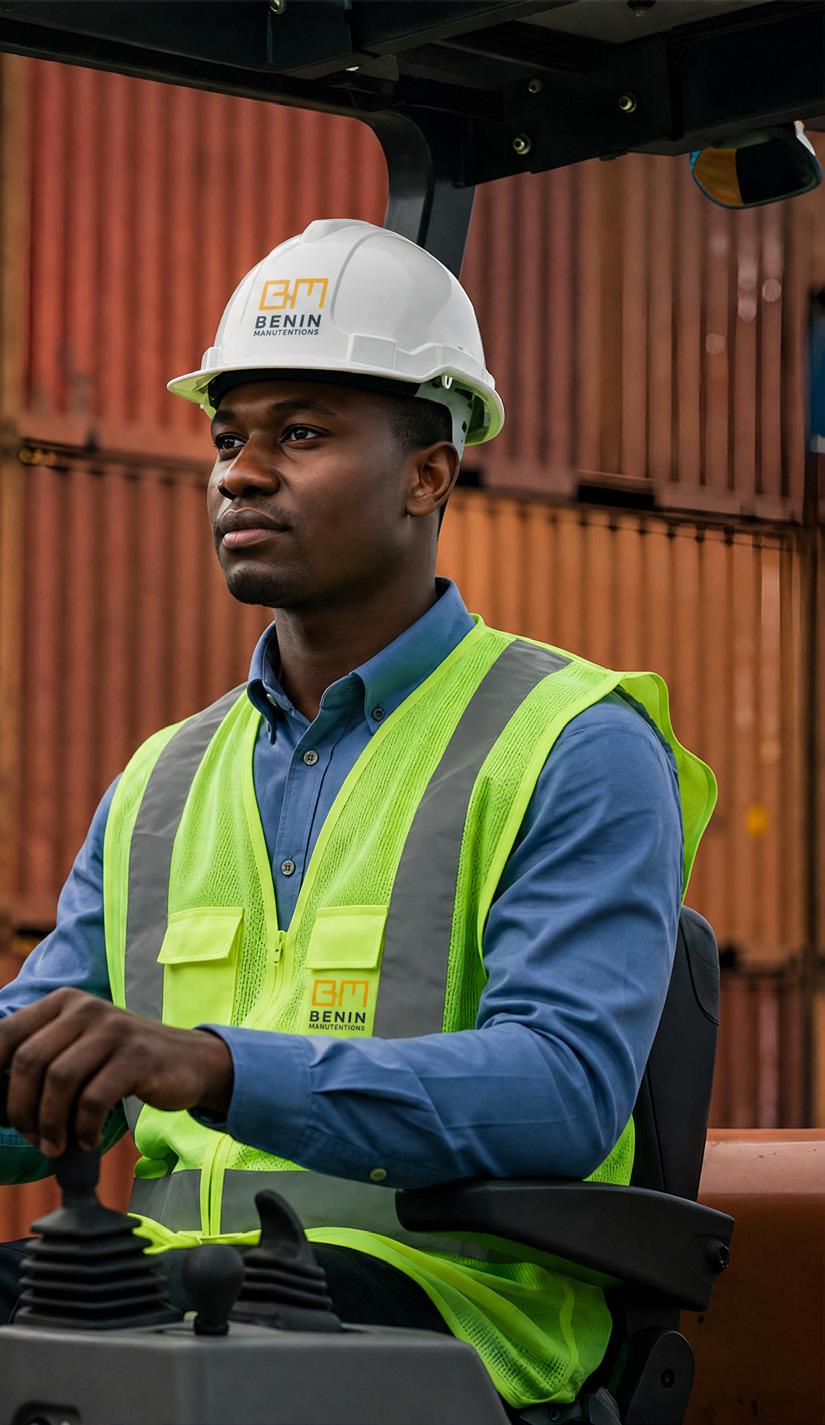
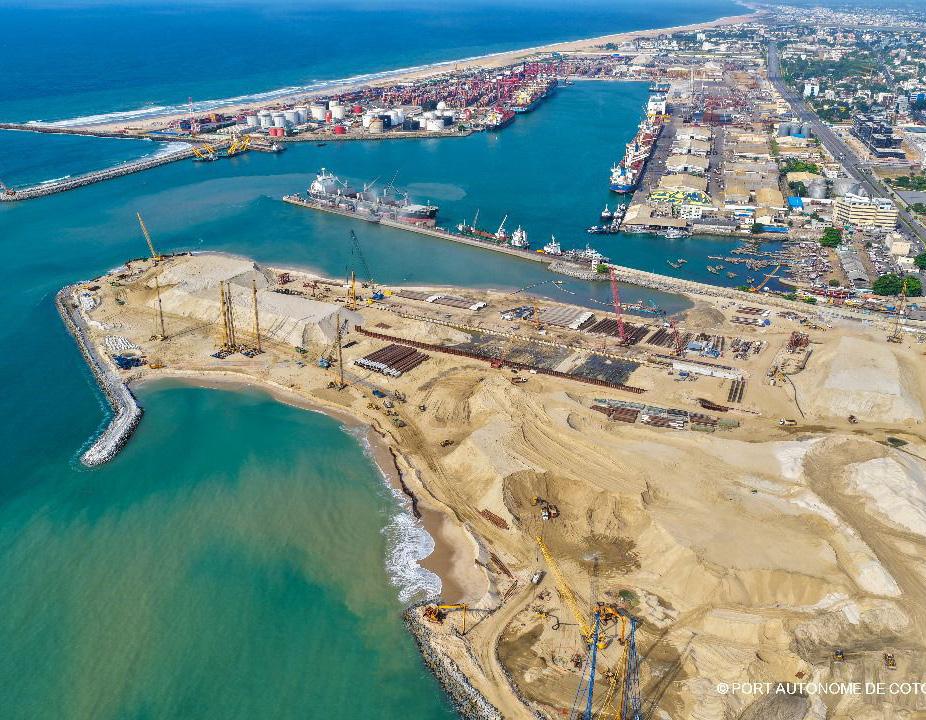
Kougblenou Building, OCBN Area, Cotonou, Benin
+229 01 65 75 75 75 contact@beninmanutentions.bj www.beninmanutentions.bj


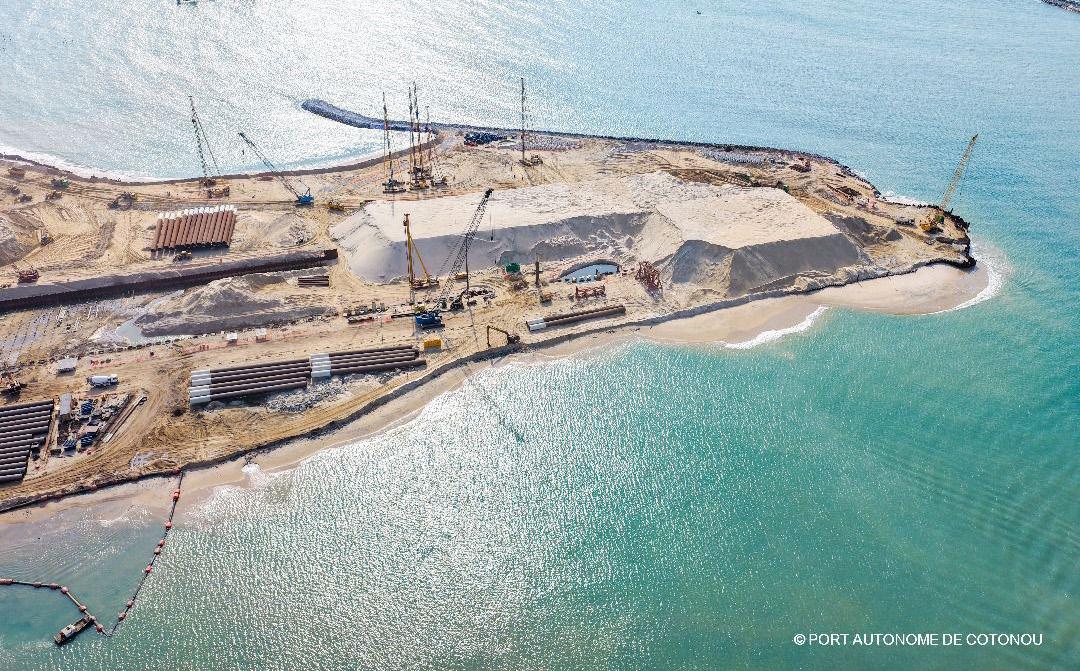
Benin Manutentions is a port operator, committed to developing efficient and reliable cargo handling services at the Port of Cotonou. The company offers a full range of services including cargo handling, container & RoRo operations, integrated logistics solutions and specialized port services.
Through its commitment to innovation, continuous investment and operational excellence, Benin Manutentions aims to become a trusted driver of maritime trade in Benin and across the West African sub-region.




In Cotonou, the future of modern port logistics is taking shape. Driven by two major projects at the heart of the Port of Cotonou, Benin Manutentions is undertaking an ambitious transformation that is already reshaping the port of tomorrow and reinforcing its ambition to become a leading logistics and port operator on the West African Atlantic coast. This momentum also reflects a national ambition: positioning Benin as a key hub for West African trade.
With approximately 1,100 metres of quay and around 27 hectares of yard area, Terminal 1 stands out as one of the most strategic projects. Designed to accommodate large-capacity vessels, it will optimize cargo handling operations and strengthen the competitiveness of the Port of Cotonou. At full capacity, it will handle up to 500,000 TEUs and 2 million tonnes of general cargo, reinforcing Cotonou’s role as a gateway to the hinterland and a regional trade platform. This terminal represents a new phase in port modernization, where speed, efficiency and reliability become essential standards.
TERMINAL
In the same dynamic, Terminal 5, currently under construction, will feature a 550-metre quay and 20 hectares of yard area, dedicated to bulk and RoRo traffic. It will be able to handle nearly 4 million tonnes of cargo and 300,000 Ro-Ro units. This strategic infrastructure will support the development of logistics corridors towards hinterland countries, reinforcing the regional role of the Port of Cotonou. Terminal 5 is not just an extension; it is a concrete response to the growing needs of a rapidly expanding hinterland and a guarantee of competitiveness for the decades ahead.
Beyond infrastructure and equipment investments, Benin Manutentions is building a vision: to make the Port of Cotonou a modern and competitive logistics hub capable of supporting regional and international trade growth. These projects, spanning both physical infrastructure and state-of-the-art equipment, reflect a clear ambition: building the port of tomorrow for Benin and West Africa. They contribute to job creation, the development of trade, and regional economic integration. More than a port, a new dynamic is emerging, and Benin Manutentions is one of its key architects.
www.beninmanutentions.bj
competition. Its twelve projects span physical expansion, operational optimisation and digital transformation, all aimed at increasing throughput, reducing delays and improving service quality.
Among the most visible developments is the construction of a new terminal in the eastern zone of the port. Known as Terminal 5, the facility adds around 20 hectares of capacity dedicated to bulk and general cargo, relieving pressure on existing infrastructure while opening new commercial opportunities.
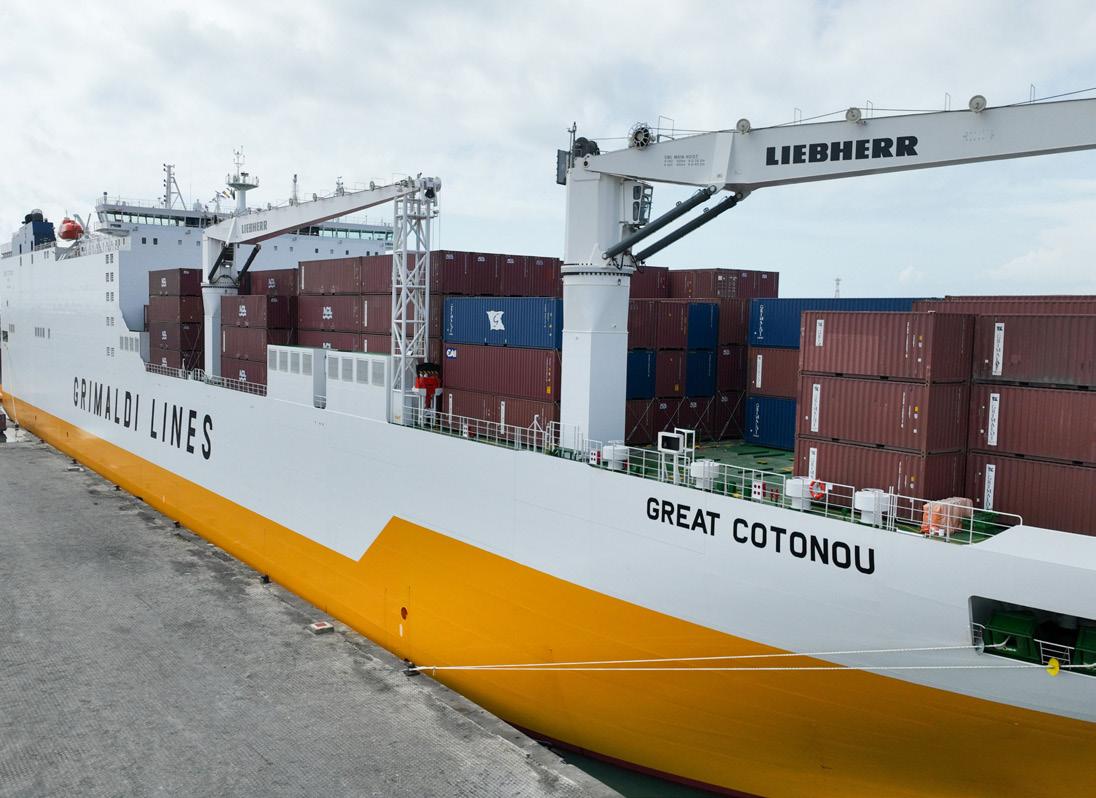
Equally significant are the marine works that underpin the port’s ability to accommodate larger vessels. These include the extension of quays, the deepening of the harbour basin and the enlargement of the turning circle. Such upgrades are essential for aligning Cotonou with international shipping standards and attracting higher-capacity vessels.
Recent milestones highlight the pace of progress. In early 2026, the completion of the first phase of expansion works delivered 400 metres of new quay infrastructure alongside
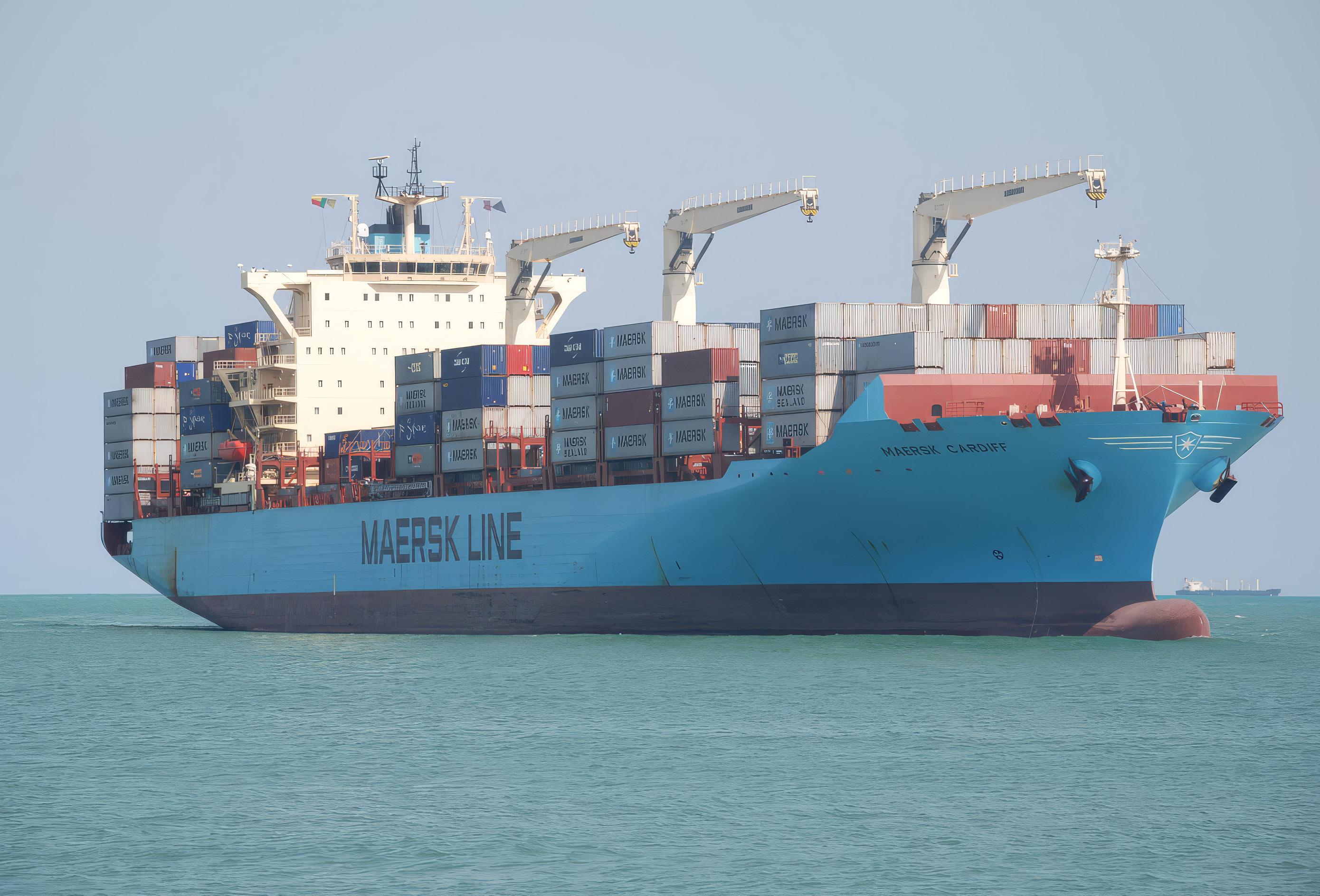
extensive rehabilitation of existing facilities. This phase alone involved thousands of tonnes of steel and large-scale paving works, underscoring the industrial scale of the transformation.
Beyond physical infrastructure, the programme includes the development of a logistics zone within the port perimeter. Designed as a centralised hub for logistics activities, this zone is expected to strengthen the port’s role as a gateway for regional trade corridors and enhance connectivity with inland markets.
While construction projects dominate headlines, the quieter revolution taking place at Cotonou is digital. The port’s leadership has placed strong emphasis on transitioning towards a smart port model, integrating digital tools to streamline operations, improve transparency and enhance decision-making.

Digitalisation is being applied across cargo handling, customs processes and traffic management, reducing bottlenecks and improving turnaround times. The smart port approach also aligns with broader governance reforms aimed at strengthening profitability and ensuring longterm sustainability.
Environmental considerations are increasingly central to the port’s transformation. The master plan incorporates measures designed to address climate risks, improve energy efficiency and protect surrounding ecosystems. Climate resilience has become a pressing priority, particularly given the projected
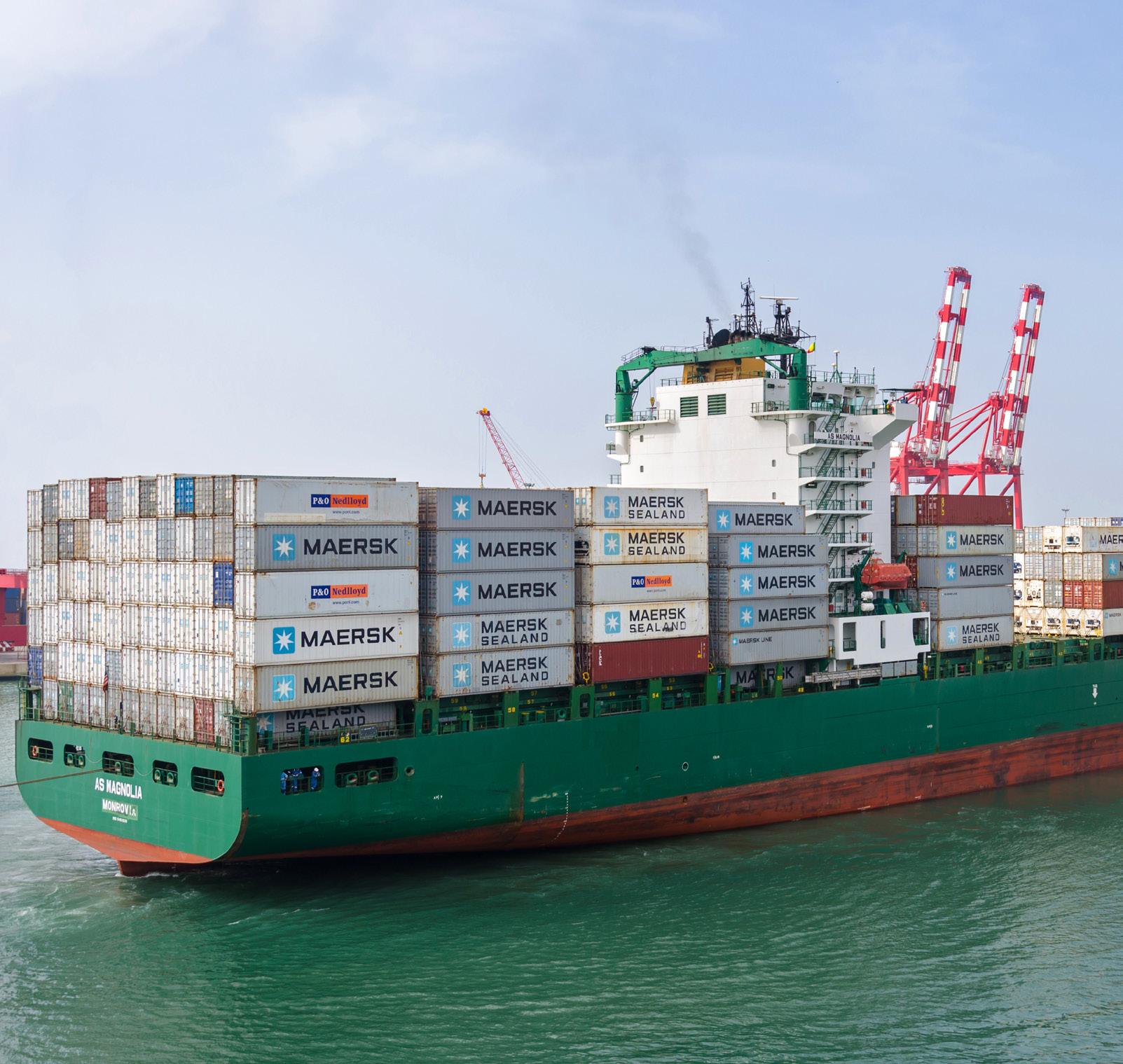
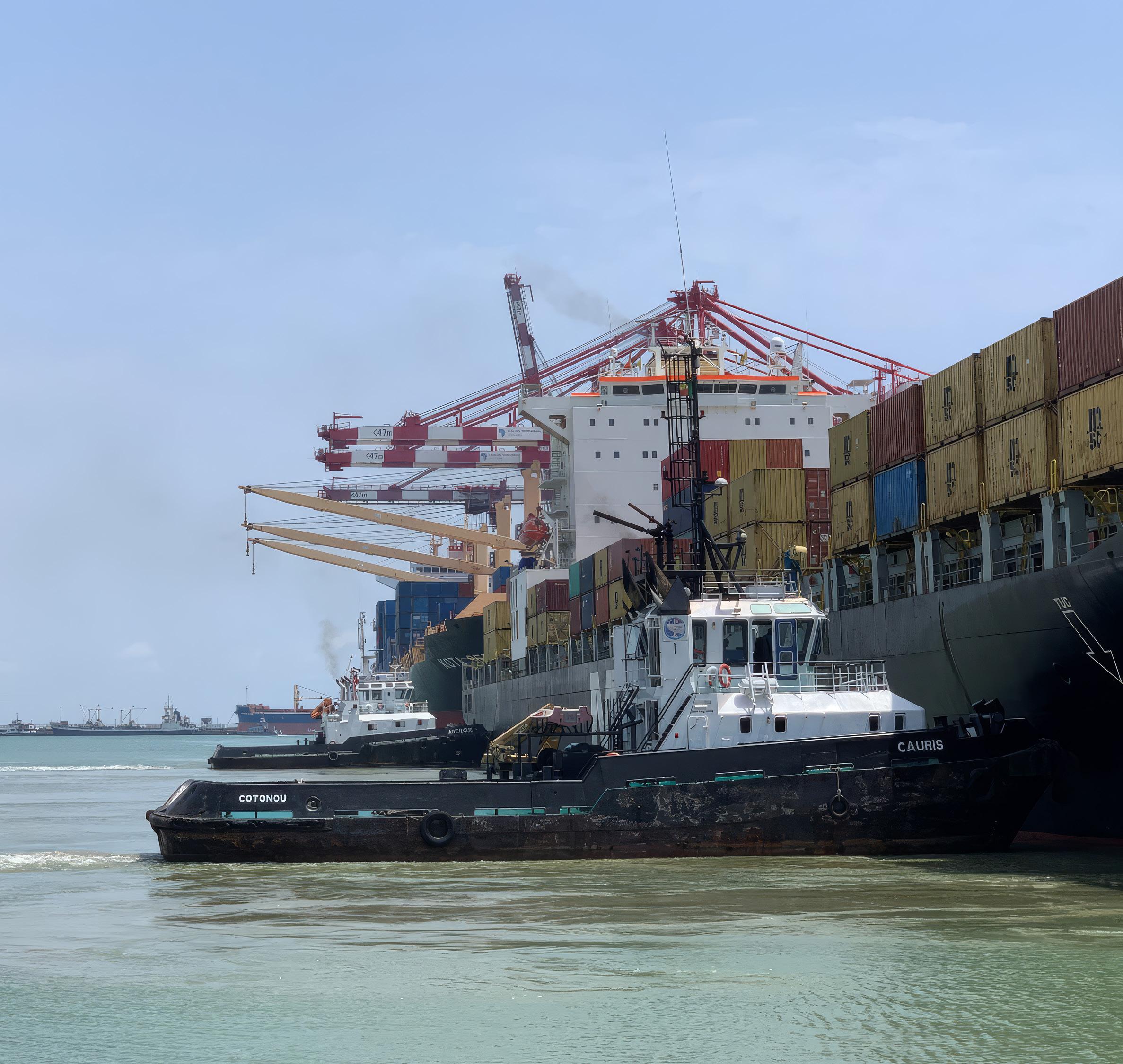
impact of rising temperatures on port operations. Studies indicate that without adaptation measures, heat stress could significantly reduce productivity and generate substantial economic losses over time.
In response, the port is implementing a range of adaptation strategies, from infrastructure reinforcement to operational adjustments that mitigate climate-related disruptions. These efforts are supported by international financing mechanisms, reflecting growing recognition of the need for climate-smart infrastructure. Sustainability initiatives also extend to the development of a new fishing port and associated facilities, aimed at modernising the sector while supporting local communities.
Tanger Med Engineering (TME) is a multidisciplinary engineering and consulting company specializing in port, logistics, and industrial infrastructure projects. The company supports clients across the entire project lifecycle – from early-stage strategy and feasibility studies to design, construction supervision, and operational optimization.
What makes TME unique is its strong foundation in real port operations, leveraging the experience of the Tanger Med port complex. This allows the company to combine technical engineering expertise with practical, operational insight.
TME works with public authorities, private operators, and investors on complex, large-scale projects, particularly across Africa and the Middle East, helping ensure that projects are not only welldesigned but also efficient, sustainable, and aligned with real-world constraints.
TME is not just a design consultant – it is an operator-backed engineering firm. What really sets us apart is that we combine high-level engineering expertise with real, hands-on experience from one of the largest port complexes in the world.
While many firms can design infrastructure, TME designs with operations in mind from day one –integrating logistics flows, safety, efficiency, and long-term performance into every project. This ensures that what we deliver is not only technically sound, but also practical, efficient, and ready to perform in real conditions.
On top of that, we offer end-to-end support – from strategy and feasibility all the way to implementation and asset management – which makes us a reliable partner for complex, large-scale port and industrial projects.

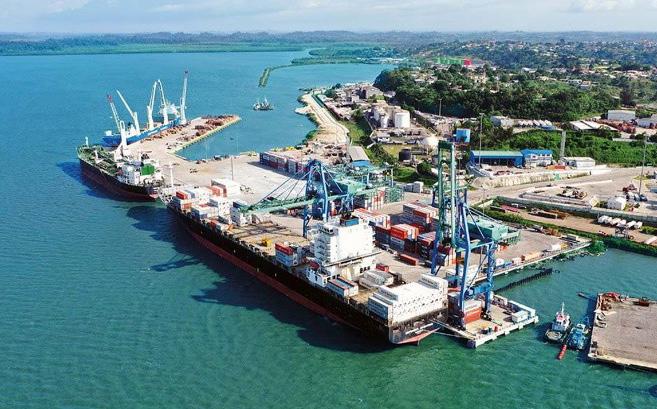
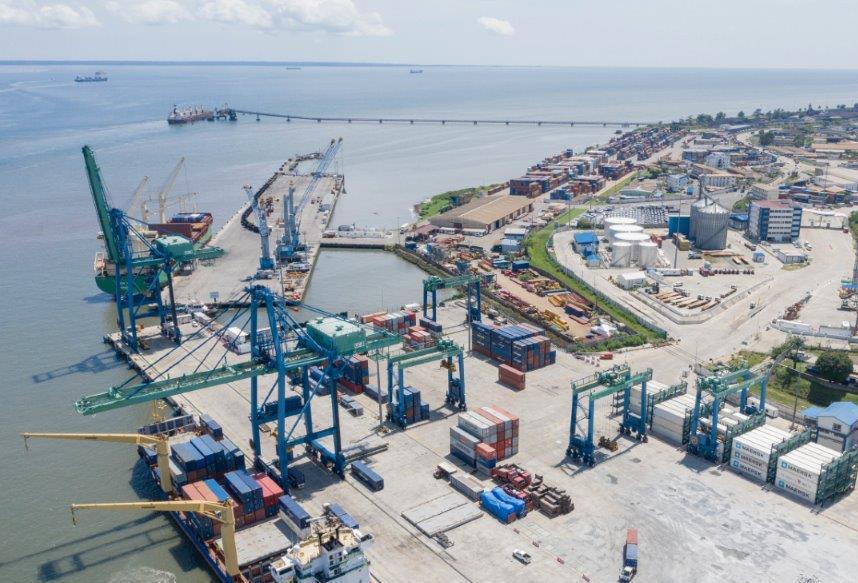
One good example of how TME adapts to challenges is through its work on complex port projects where operational constraints are critical.
For instance, in projects like the development and expansion of major port terminals, one key challenge is designing infrastructure that not only meets technical standards but also performs efficiently under real operational conditions – such as high traffic, safety requirements, and future growth.
TME addresses this by integrating operational expertise very early in the design phase. Instead of treating engineering and operations separately, the teams use tools like simulation, traffic forecasting, and digital modeling to test different scenarios before construction. This allows them to anticipate bottlenecks, optimize layouts, and reduce risks.
Another example is in equipment maintenance and performance: TME has adapted to the challenge of unplanned downtime in port operations by implementing IoT-based monitoring systems. These systems provide real-time data on equipment health, enabling predictive maintenance and significantly improving reliability.
In summary, the company’s approach to challenges is to combine engineering with data, simulation, and real operational feedback – ensuring solutions are both practical and resilient.
TME places a strong emphasis on attracting, developing, and retaining talent because its projects require both high technical expertise and real operational understanding.
In terms of recruitment, the company looks for multidisciplinary profiles – engineers and consultants who not only have strong technical skills but also understand the practical realities of port and industrial operations. There’s a clear focus on experience, adaptability, and the ability to work on complex, international projects.
To retain talent, TME offers exposure to large-scale, high-impact projects across different regions, which is very motivating for engineers. Employees are given real responsibilities early on, and they work in collaborative, multidisciplinary teams, which helps build both technical and professional skills.
When it comes to investing in staff, TME provides continuous learning opportunities through onthe-job experience, advanced engineering tools, and specialized training programs – including
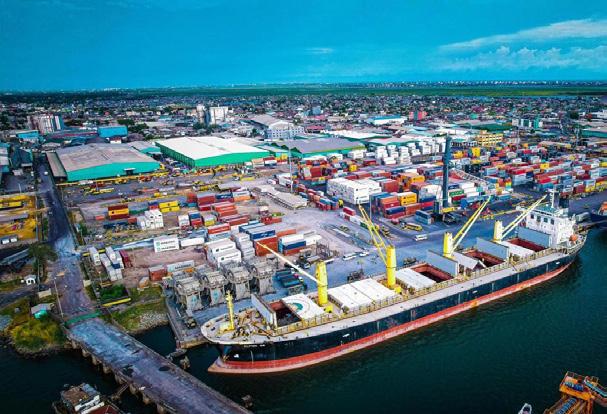
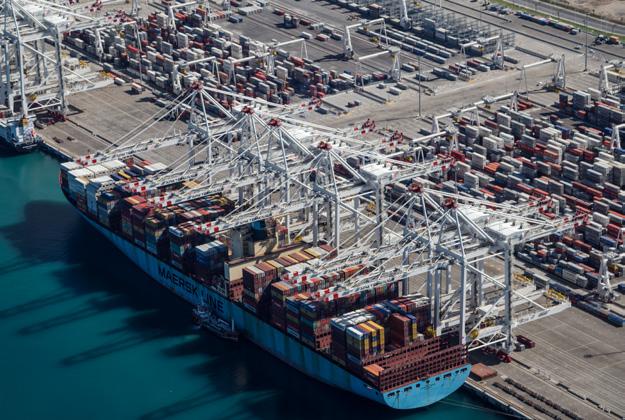
simulation-based training in port operations. The company also promotes knowledge sharing between senior experts and younger engineers, which helps accelerate development.
Overall, the approach is to combine challenging projects, continuous learning, and strong technical mentorship to build long-term careers within the company.
The future of TME is closely linked to the growth of global trade, port infrastructure, and industrial development, especially across Africa and emerging markets.
We see the company continuing to expand its role beyond traditional engineering consulting, becoming more of a fully integrated partner across the entire lifecycle of infrastructure projects – from strategic planning and feasibility studies to digital operations, asset management, and decarbonization.
A major direction for the future is digital transformation. This includes increasing use of data-driven tools, digital twins, and predictive analytics to improve the design, operation, and maintenance of ports and industrial systems. Sustainability is also a key focus, with growing emphasis on energy efficiency, electrification, and reducing carbon emissions in port operations.
Geographically, TME is expected to strengthen its international presence, particularly in Africa and the Middle East, where there is strong demand for large-scale infrastructure and logistics development.
Ultimately, the company’s future is about becoming a smarter, more digital, and more sustainable engineering partner, while continuing to leverage its unique operational expertise from the Tanger Med ecosystem.
Tanger Med Engineering
Port Tanger Med, TMPC, Sector 4, Oued Rmel, Fahs Anjra Province, Tangier, Morocco
+212 (0) 539 379 070 contact.tme@tme.ma www.tme.ma
Cotonou’s transformation is not occurring in isolation. Its strategic location at the intersection of major trade corridors positions it as a critical node in West Africa’s logistics network. The port serves as a primary gateway for several landlocked countries, facilitating the movement of goods across borders and supporting regional economic integration.
Investments in infrastructure and logistics are therefore closely tied to the development of hinterland connectivity, including road and rail links that extend the port’s reach deep into the continent. The logistics zone project, in particular, is expected to play a pivotal role in this regard, creating a platform for multimodal transport solutions and enhancing the efficiency of supply chains.
“COTONOU’S TRANSFORMATION IS NOT OCCURRING IN ISOLATION.”
An important feature of Cotonou’s evolution has been its partnership-driven approach. Collaboration with international operators has brought technical expertise as well as operational best practices.
The partnership with Port of Antwerp Bruges International exemplifies this model, combining local knowledge with international experience to drive innovation and capacity building. A key objective has been the transfer of skills to local staff, ensuring that the benefits of modernisation are embedded within the national workforce.
This emphasis on human capital is critical to the port’s long-term success. As infrastructure and technology evolve, the ability of local teams to manage and sustain these systems will determine the durability of the transformation.
The stakes for the Port of Cotonou are high. By increasing capacity, improving efficiency and enhancing competitiveness, the modernisation programme is expected to reinforce the port’s role as a driver of growth. It also aims to secure the sustainability of jobs within the port ecosystem, reflecting the broader objective of inclusive development.
Looking ahead, the completion of the master plan will mark the beginning of a new phase. With modern infrastructure, advanced digital systems and strengthened governance, Cotonou is positioning itself as a leading logistics hub in West Africa.
The journey is far from over, but the direction is clear. Through sustained investment, strategic partnerships and a commitment to innovation, the Port of Cotonou is not only transforming itself but also redefining its place in the regional and global maritime landscape. In doing so, it is moving steadily towards a future defined by both resilience and opportunity.
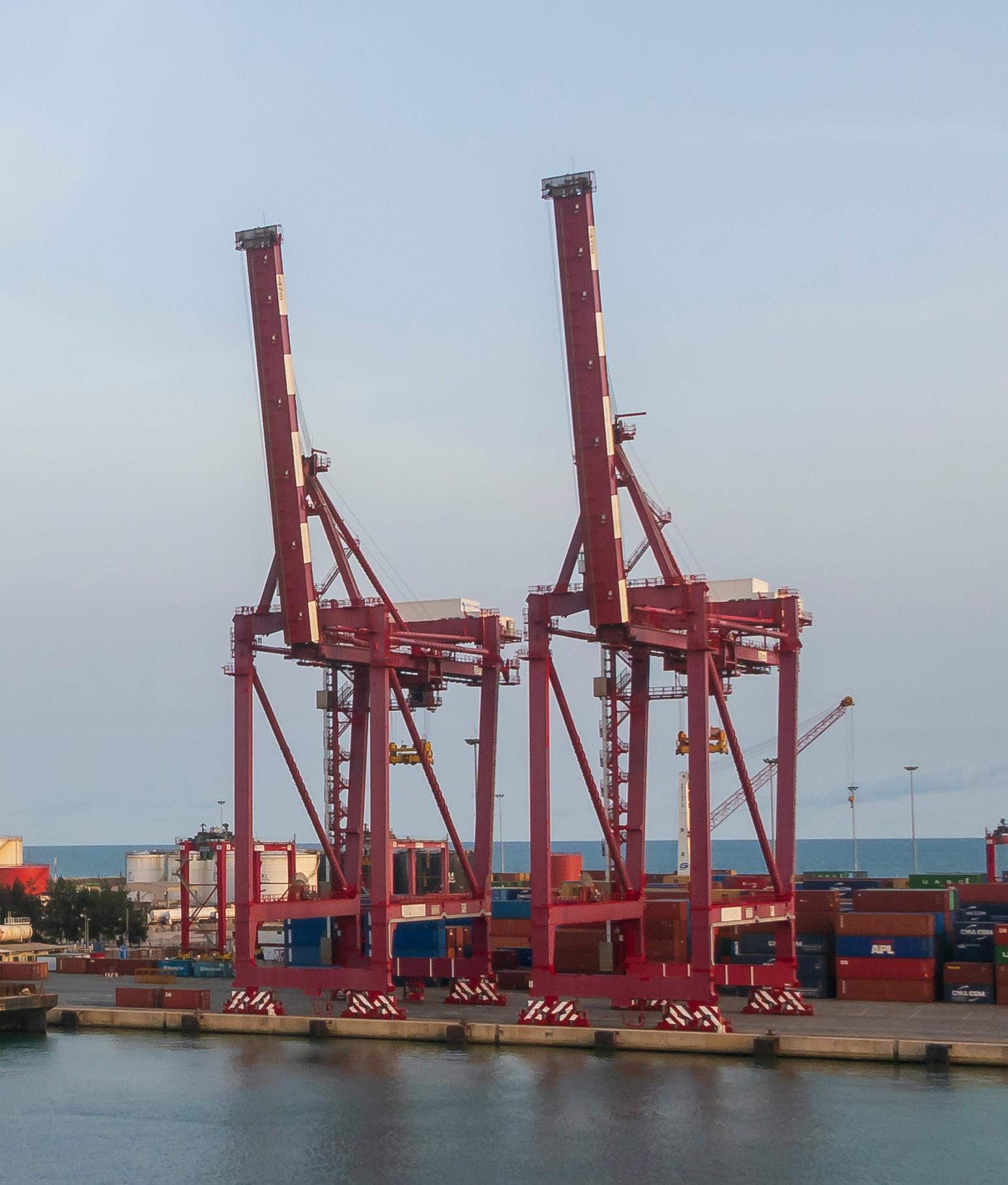

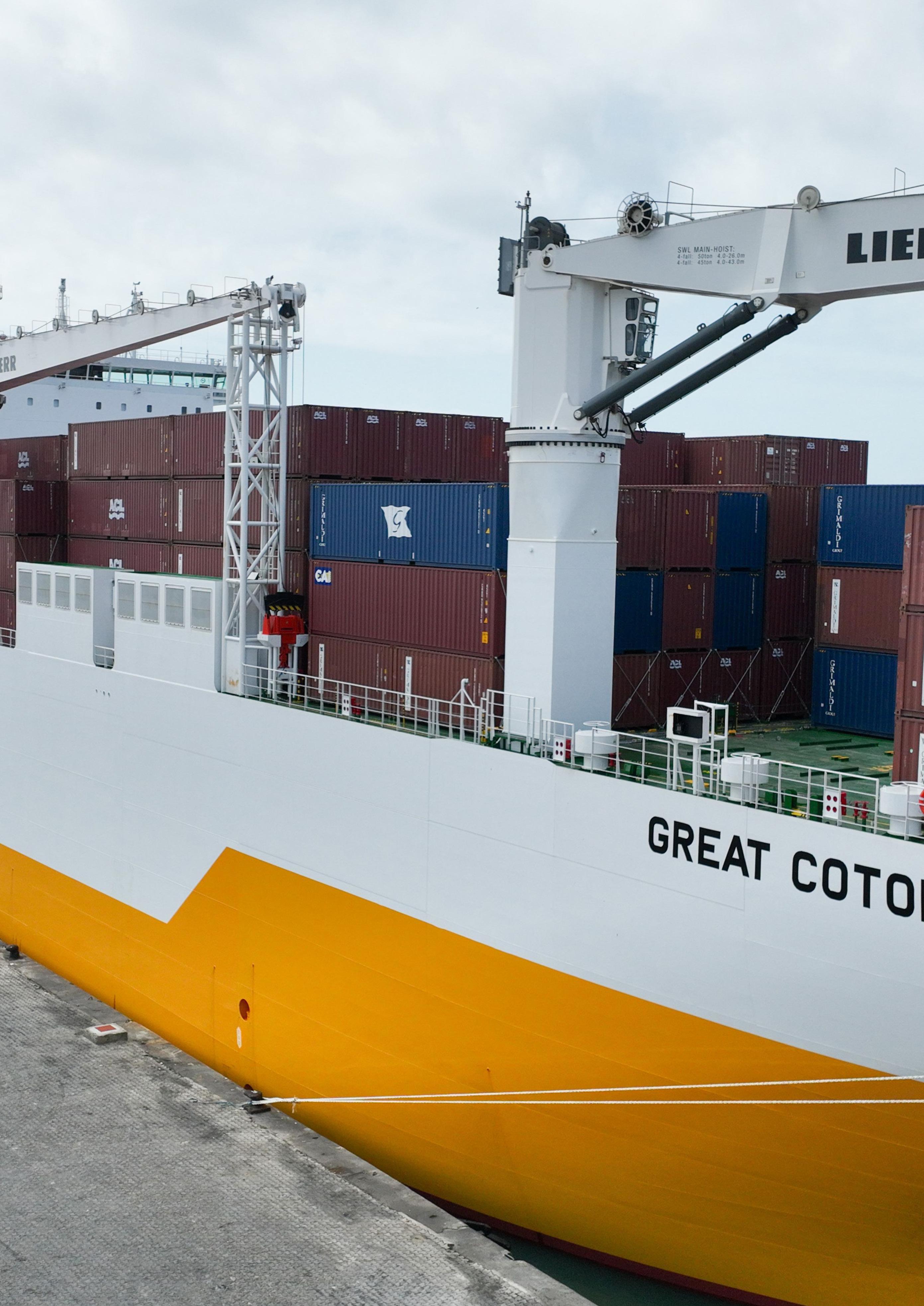
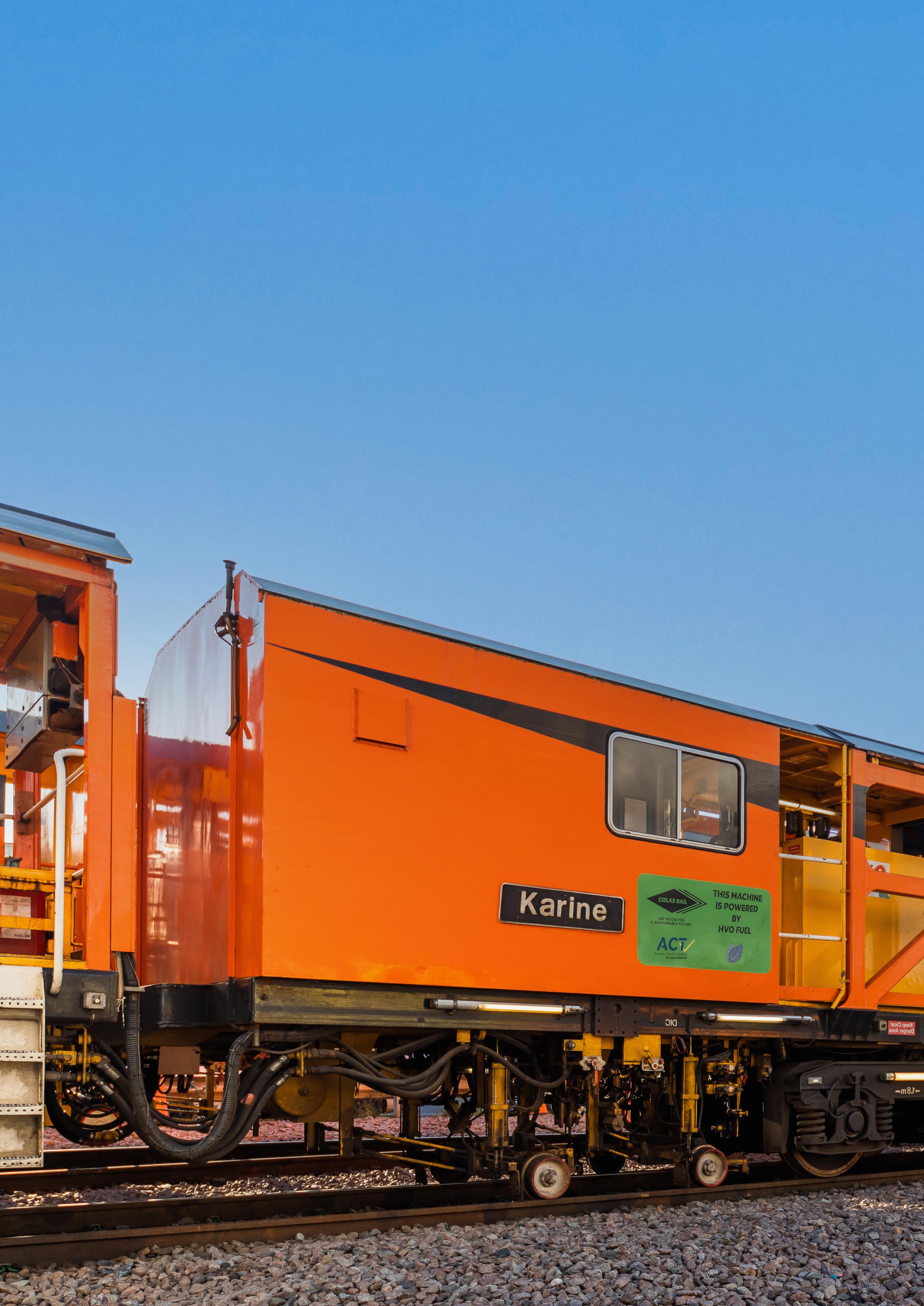
RAIL IS OFTEN LAUDED AS A SUSTAINABLE ALTERNATIVE TO ROAD TRANSPORT; COLAS RAIL UK IS HELPING TO ENSURE THE SECTOR IS UP TO THE TASK
PROJECT MANAGED BY: DECLAN JONES
Colas Rail UK is a leading rail infrastructure company, delivering excellence through a shared culture built on respect, commitment, pioneering and sharing. Operating across three business units, they are a Tier One contractor for Network Rail, providing turnkey solutions across the full rail lifecycle, from concept and design through to delivery, maintenance and renewal.
Their Infrastructure division plays a central role in the South Rail Systems Alliance (SRSA), an integrated partnership with Network Rail and AECOM delivering multidisciplinary projects across track, signalling, civils, power and telecommunications. This collaborative model enables efficient, high-quality delivery of complex schemes, including landmark projects such as Cambridge South station, the Westbury Junction 30-day possession, and the 7.1km full line renewal through the Severn Tunnel.

At the forefront of rail electrification, Colas Rail UK is delivering systemwide Overhead Catenary Systems for High Speed 2 (HS2), alongside the On Network Works programme at Old Oak Common—one of the UK’s most significant transport hubs.
Their growing Signalling & Telecommunications division strengthens their endto-end capability, delivering design, construction, testing and commissioning across a wide range of assets, including level
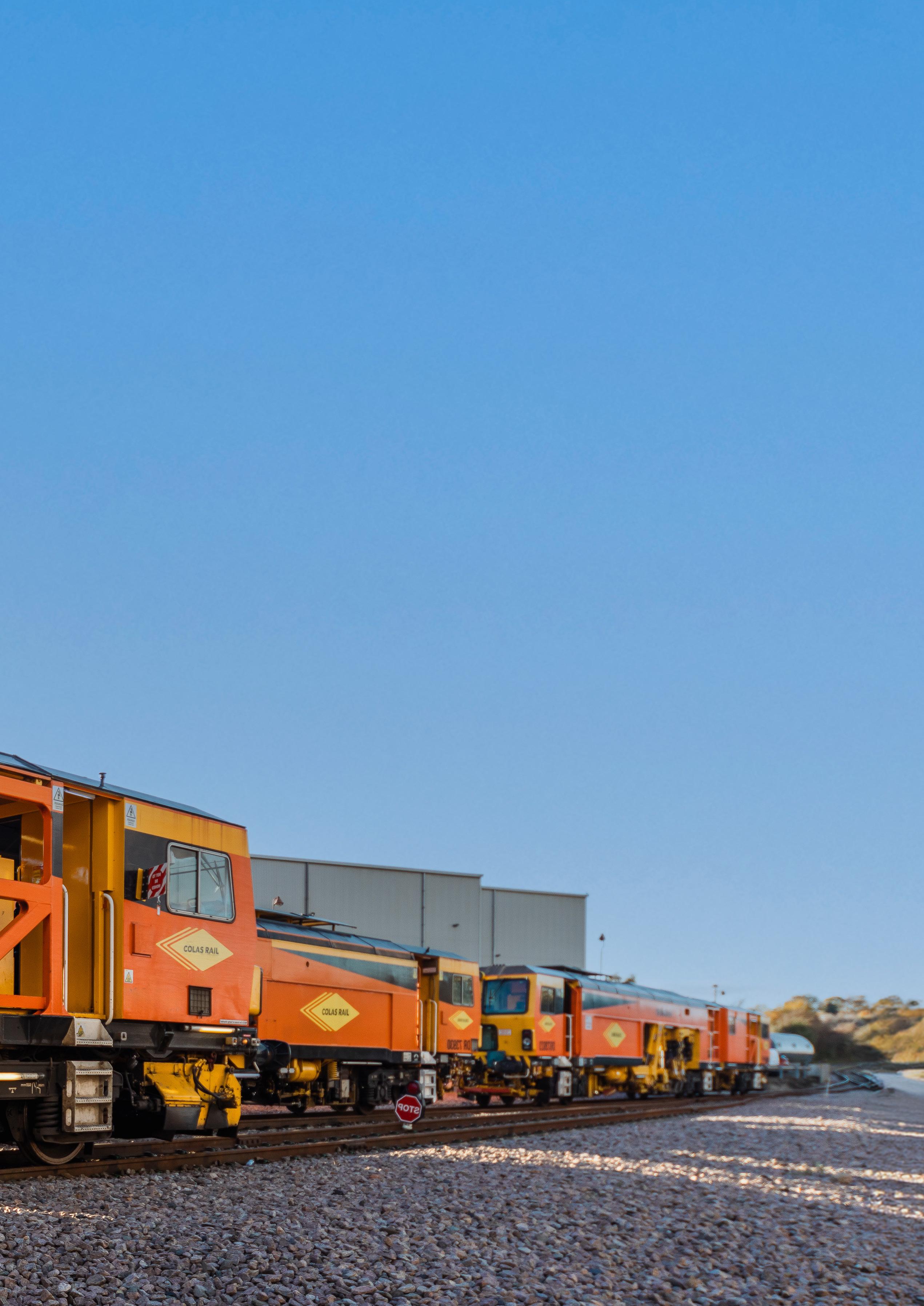
crossings and interlocking systems under Network Rail frameworks. This is complemented by their in-house Design & Survey teams, enabling integrated, efficient and innovative solutions.
The Rail Services division operates the UK’s largest fleet of On-Track Machines (OTM), supporting essential maintenance across the network. With a 28-strong fleet deployed nationwide and with an efficiency rate exceeding 99%, recognised for reliability and consistent delivery— reflected in their retention as a key supplier on Network Rail’s OTM framework in 2025.
Delivering a nationally recognised freight operation, awarded Gold and Silver Whistles in 2026 for excellence in performance and minimising delays. Alongside this, operating specialist plant, including one of only four Kirow 1200 cranes in the UK, capable of lifting up to 125 tonnes and recently upgraded to enhance performance and sustainability.
Their nationwide operations are underpinned by strategic depots and a 24/7 Operations Control Centre, using real-time tracking to improve efficiency, reduce delays and optimise cost for our customers.
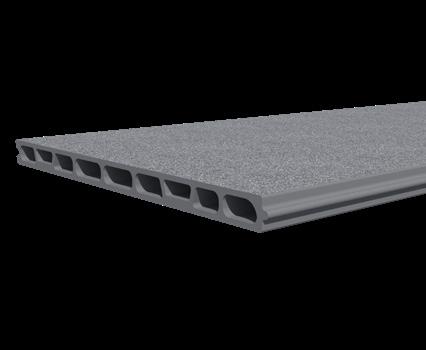

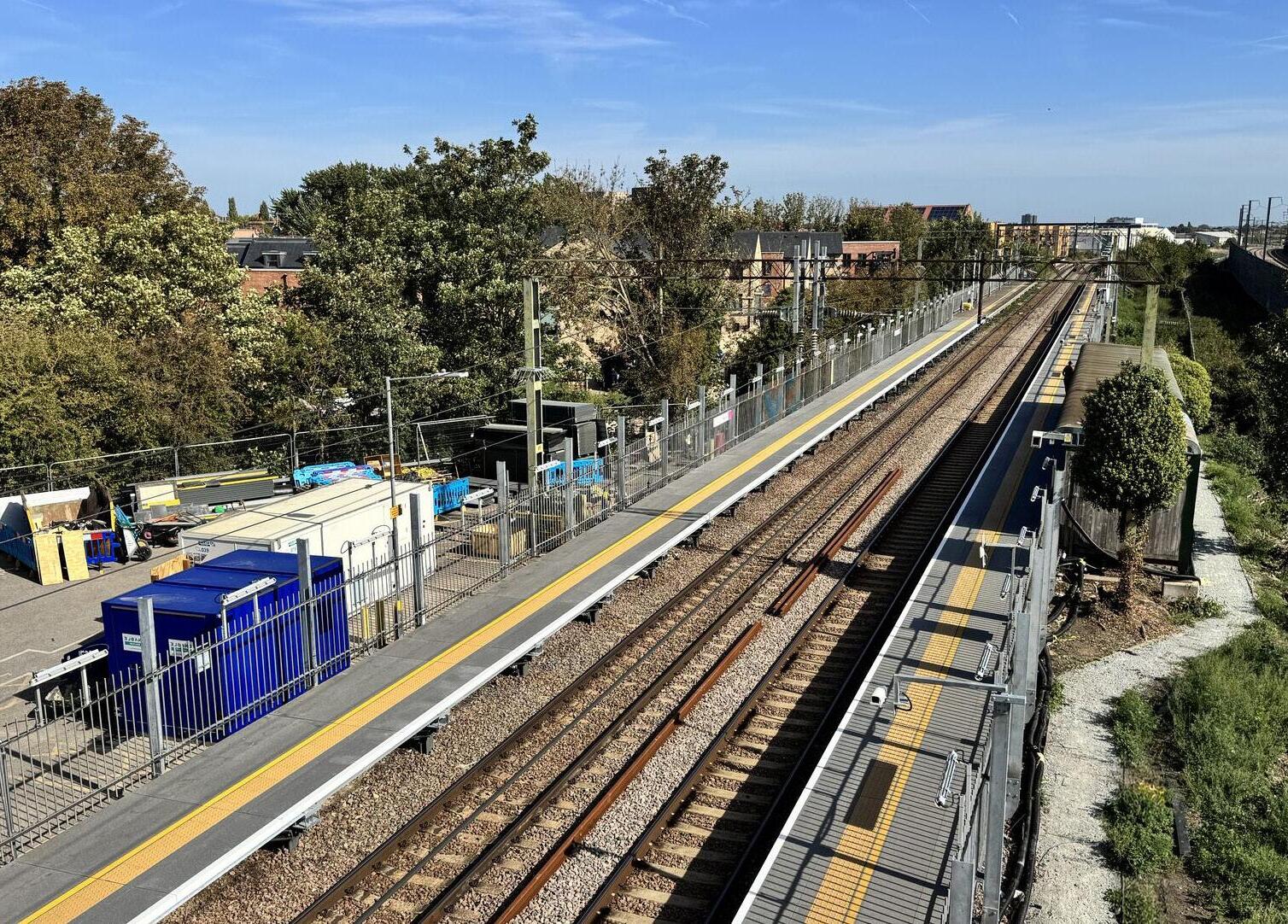

DURA COMPOSITES BRINGS WORLD’S LOWEST CARBON PLATFORM SYSTEM TO TRAM NETWORK FOR THE FIRST TIME
Appointed by Midland Metro Alliance, Dura Composites has successfully delivered a fully integrated temporary tram terminus on Moor Street Queensway in Birmingham City Centre, as part of the transformative Eastside Metro Extension.
As well as reducing congestion and improving connectivity in the area, the terminus serves as a critical link in preparation for the future HS2 Curzon Street Station. To help meet demanding programme timescales and tight site constraints, d² Dura Platform - the world’s lowest carbon composite station platform system - was selected for its rapid installation capability, low weight, and modular adaptability.
Its demountable design allows the platform to be removed and reinstalled at an alternative location once the full HS2 infrastructure becomes operational. Sustainability is more than just lowering carbon consumption; it’s about considering the whole lifecycle of a product, and the use of modular GRP panels helps to maximise asset lifecycle value and reduce material waste in the future. They’re also recyclable at end of use, bringing the region closer to its transport, regeneration and net-zero goals. Having established a strong track record of delivering sustainable platform solutions for mainline rail stations across the UK, this latest project demonstrates the system’s versatility and adaptability across different transport modes, opening new opportunities to support light rail expansion projects nationwide.
Find out more about d² Dura Platform here: www.duracomposites.com/platform


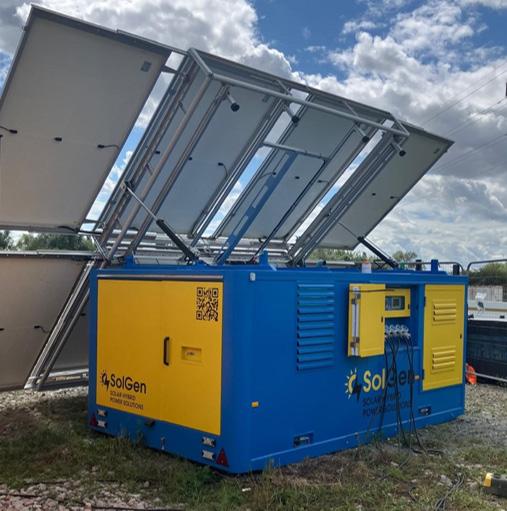
In urban rail, Colas Rail UK is delivering major transformation schemes such as the Midland Metro Alliance in the West Midlands, a circa £1bn programme and the UK’s largest light rail project. In addition to this they are also partnering with Coventry City Council to install the innovative Coventry Very Light Rail system, a lowercarbon alternative that reduces construction impact and supports sustainable and more affordable urban mobility.
Together, these capabilities position Colas Rail UK as a trusted partner in shaping the future of rail—delivering safer, smarter and more sustainable infrastructure at scale.
The journey so far can be seen through Colas Rail’s Carbon Reduction Plan via the QR Code.

At Colas Rail UK, decarbonisation is a business priority. Fully recognising the urgency of climate change and the rail industry’s critical role in enabling the UK’s journey to Net Zero by 2050. Rail is already one of the most carbonefficient forms of transport, for example, their freight services produce around 76% fewer emissions than road haulage for the same volume of material with the ambition to transform rail from a low-carbon solution into an ultra-low carbon one.
Driving this ambition is a clear, data-led strategy. As Head of Energy and Carbon, Daniel Ditri explains, “Around 26% of our emissions come from Scope 1 and 2 sources, primarily the fuel we use across our Rail Services operations, while 74% sits within our supply chain through Scope 3 emissions.”
To address this, Colas Rail UK has committed to the globally recognised Science Based Targets initiative, aligning with Network Rail’s ambitions. The business has set stretching targets: a 46.5% reduction in Scope 1 and 2 emissions, and a 30% reduction in Scope 3 emissions by 2030, against a 2019 baseline.
“With less than four years to go, we have made strong progress and have a clear pathway to achieving our targets,” Ditri adds.
While electrification remains the long-term solution, only around 40% of the UK rail network is currently electrified. This presents a challenge for freight and plant operations in the short term — one Colas Rail is actively addressing through innovation and collaboration.
A key focus is the transition to alternative fuels such as Hydrotreated Vegetable Oil (HVO), a drop-in diesel replacement derived from waste materials. HVO offers an 83–85% reduction in carbon emissions, but its success relies on rigorous supply chain assurance.
“Any HVO we use must meet the ZEMO renewable fuels assurance scheme, and we carry out additional verification with suppliers to ensure full compliance,” Ditri explains.
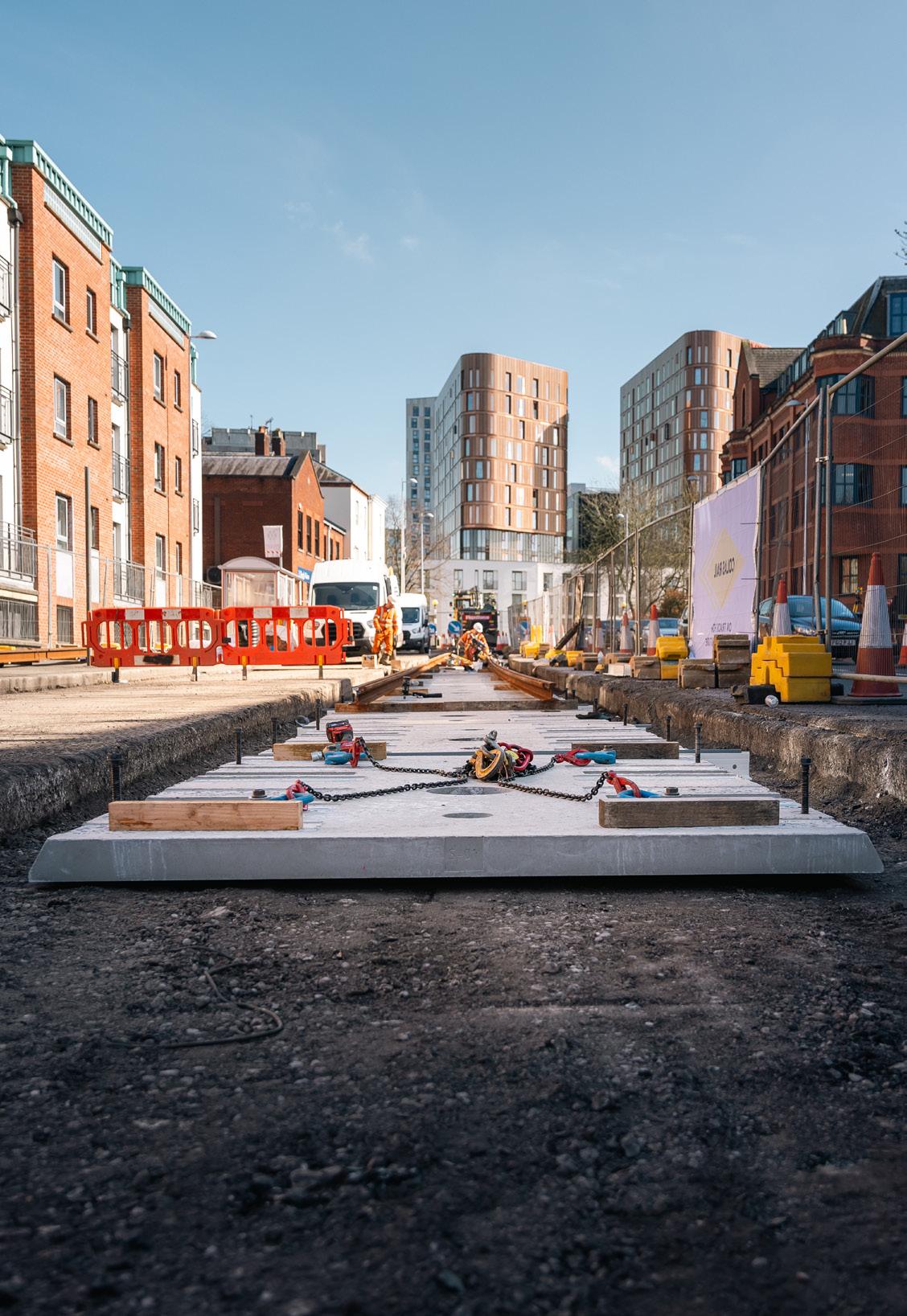
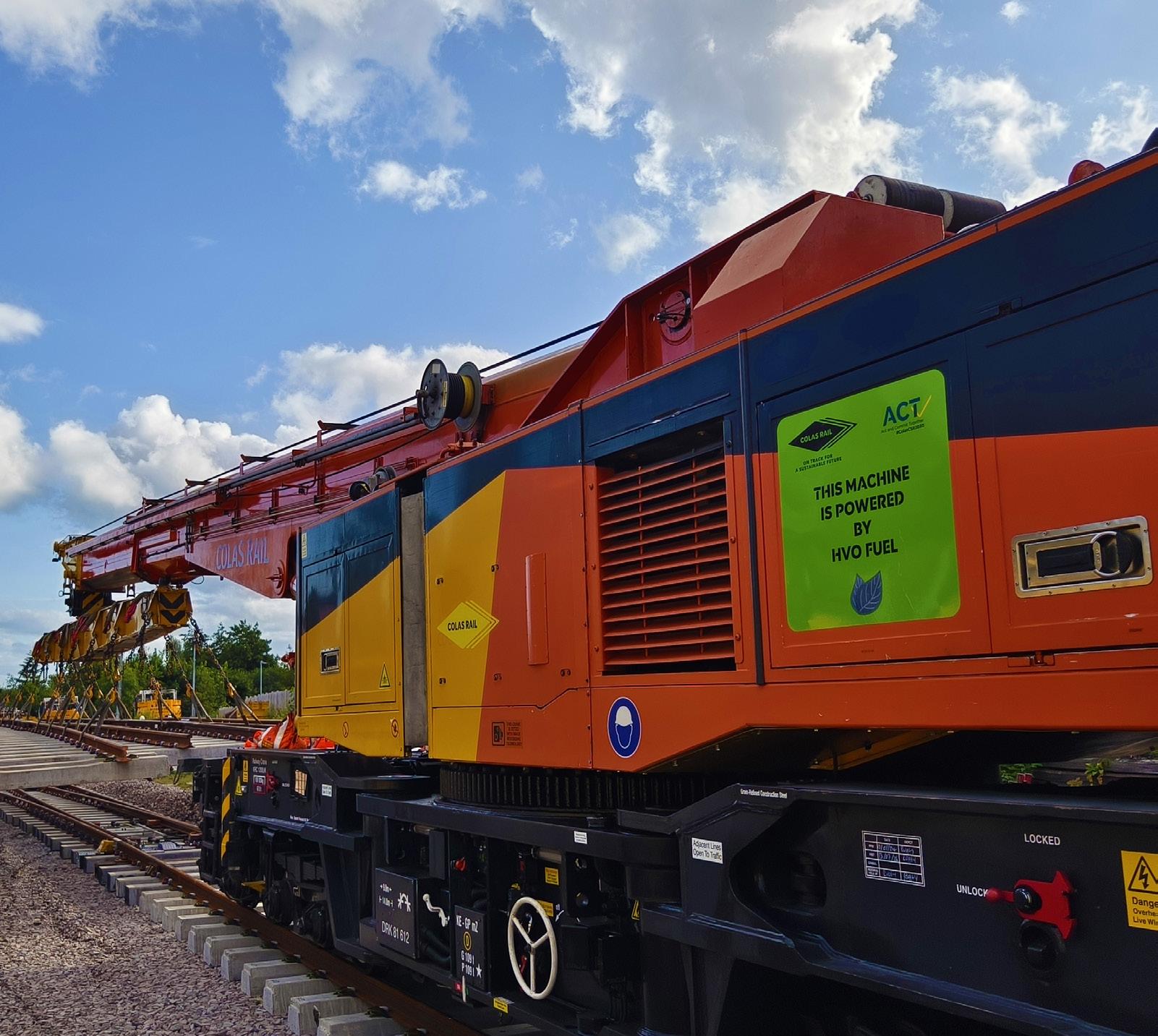
Colas Rail achieved 6% HVO usage last year, saving over 1,400 tonnes of CO₂e, with a target of 10% in 2026 and at least 40% by 2030.
Alongside this, the business is driving fuel efficiency improvements across its existing fleet. Working with SME innovators such as Engine Carbon Clean, Colas Rail is achieving efficiency gains of up to 13% — delivering both carbon and cost savings. “Replacing assets too early is not sustainable, so we are focused on maximising the performance of what we already have,” says Ditri.
Although site welfare and lighting represent a smaller share of Scope 1 emissions, Colas Rail is committed to becoming fully fossil-fuel-free in these areas by 2028. Through our Infrastructure division, partnerships with suppliers such as SolGen delivered solar-powered solutions, saving approximately 118 tonnes of CO₂e in 2025.
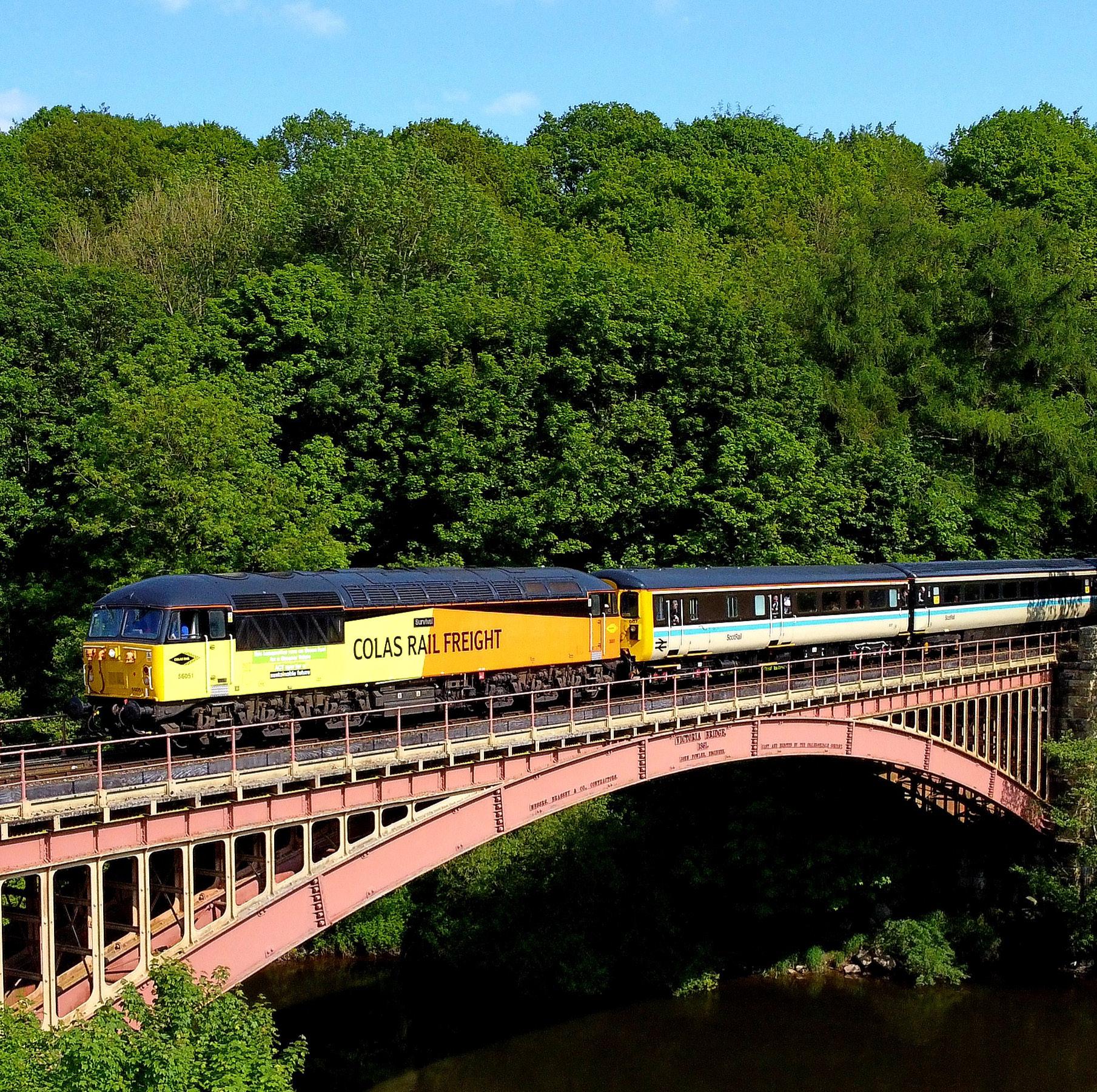
Achieving meaningful carbon reduction depends on the entire value chain. With supply chain emissions accounting for the majority of the company’s footprint, collaboration is essential.
“We can directly influence Scope 1 and 2, but our supply chain holds the key to reaching our Scope 3 targets,” Ditri notes.
This is driving tangible change. Colas Rail is increasing its use of low-carbon concrete, with cement replacement levels of at least 50% already used in major projects such as the Midland Metro Alliance — representing around 70% of all concrete procured, with a target of 95% by 2030.
The company is also investing in greener materials, including the procurement of low carbon rail for the Coventry Very Light Rail project, reducing emissions by up to 72% compared with conventional steel. In parallel, innovative materials such as Glass Reinforced Plastic (GRP) are being deployed, including the Temporary Tram Stop solution on MMA supplied by Dura Composites, delivering over 70% carbon savings alongside faster installation.
Beyond materials, Colas Rail actively engages its supply chain through its annual “Journey to Net Zero” conference, creating a platform to share innovation, showcase best practice and accelerate progress across the industry.
“Our ambition is clear: to build a fully sustainable business while continuing to deliver, grow and lead in our sector,” Ditri says. While challenges remain, particularly in the transition away from fossil fuels, the direction is clear. Long-term decarbonisation will depend on a fully electrified railway, supported by emerging technologies such as batterypowered plant and equipment. This transformation will require sustained investment, innovation and collaboration across the industry, but it is essential to delivering a resilient, low-carbon railway for future generations.
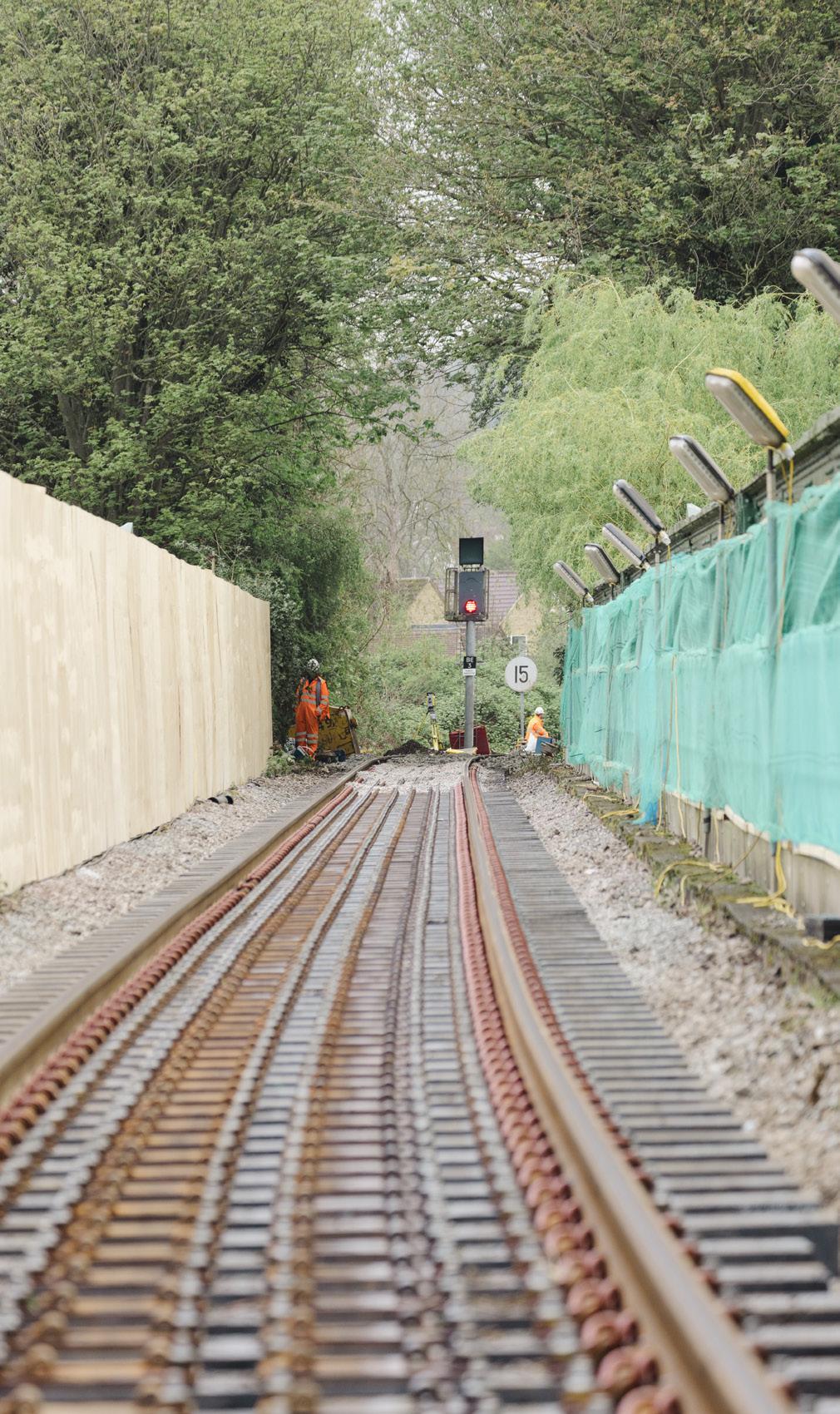
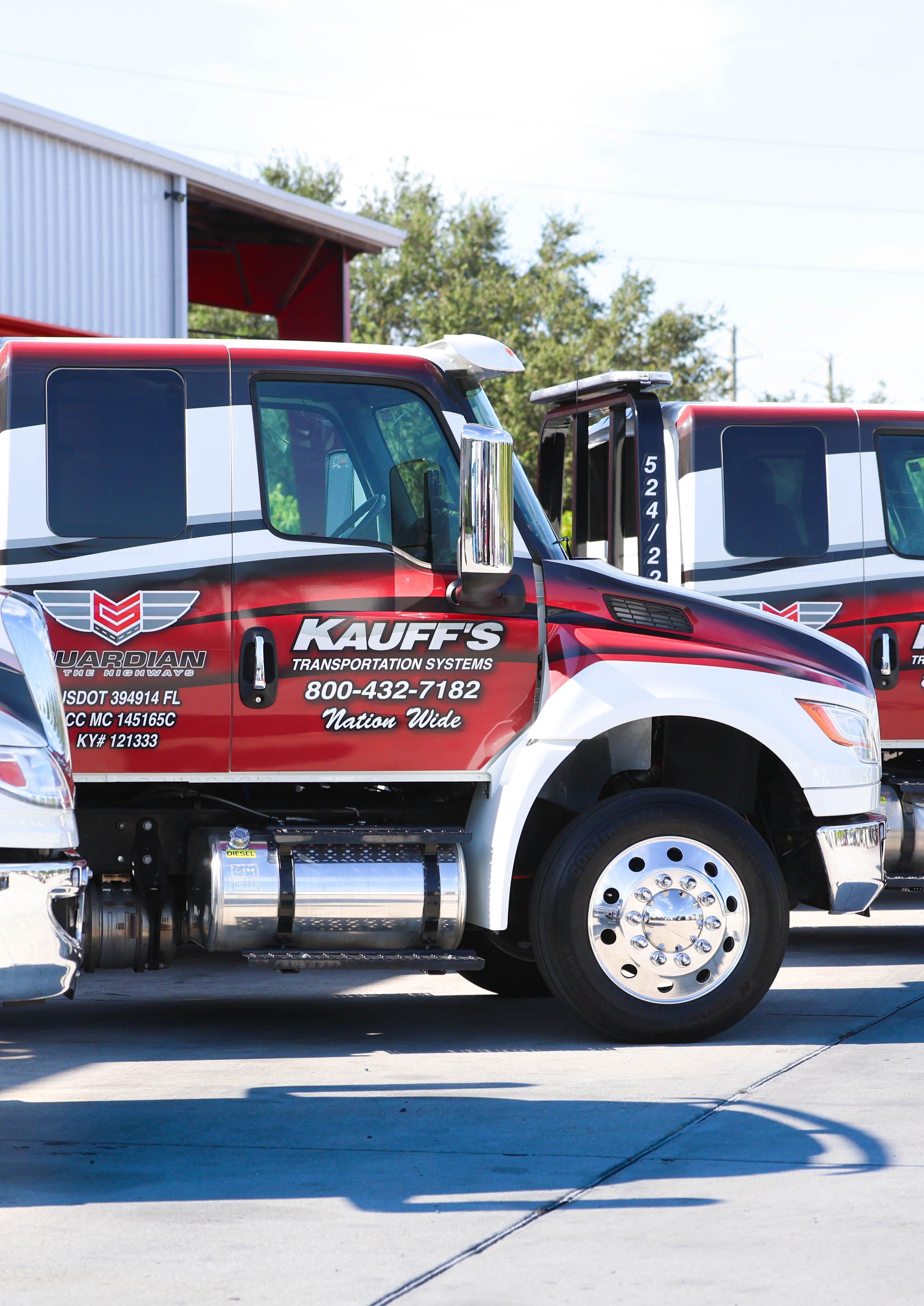
IT HAS ONLY BEEN 18 MONTHS SINCE WE LAST LOOKED AT GUARDIAN FLEET SERVICES, BUT IN THAT TIME THE FIRM HAS SEEN ASTONISHING GROWTH.
It has been a year and a half since we last spoke with Guardian Fleet Services, the largest towing, recovery and specialised transportation company in the United States. The firm boasted a fleet of more than 500 assets and a workforce of over 650 employees. In 2024, Guardian operated across Florida, Georgia, Kentucky, and Texas, with customers ranging from government entities and law enforcement services to commercial and retail customers.
LThomas Tedford, CEO, Guardian Fleet Services.
ast time we talked with Thomas Tedford, the Chief Operating Officer of Guardian Fleet Services, he told us how the company’s level of service and capabilities set it apart from the competition, and how it builds on that by investing in technology and equipment.
The company was founded in 2017 by Scotty Crockett and Geoff Russell through a merger of two Florida-based firms. It was the first of a series of mergers and acquisitions that would see Guardian Fleet Services grow into what it is today.
When we speak to Tedford again, Guardian Fleet Services’ tenth anniversary is on the horizon.
“It’s been an incredible year for us, in terms of growth and expansion of the company overall,” Tedford tells us. “We have grown and developed our teams, added multiple states
to the Guardian platform, along with multiple facilities across the board. We performed nine mergers last year, bringing on partnerships to the Guardian team. We have already performed another three mergers and partnerships this year.”
But as excited as Tedford is about the firm’s new assets, it is clear that what he is most proud of is the valuable assets the company has held onto.
“I think our biggest achievement is retaining our management team and building on our current staff, as well as expanding our leadership team in a way that allows us to position ourselves for the future,” says Tedford. “When you grow a company to six times the size it was in just three years, it is easy for things to get away from you if you don’t stay focused and have the right teams in place.”
With its strategy of growth through mergers, acquisitions and partnerships, Guardian Fleet Services has ensured it is poised for further growth, with the staff in place to support that journey.
Established in 1989 and based in Pinellas
ARCW Leavitt Insurance Services has partnered with Guardian Fleet Services for several years to design and manage their employee benefits program. Together, they’ve built a strategy that has earned national recognition. In 2023, Guardian Fleet Services received the Rosie Award from Health Rosetta for its employee health plan approach. In 2024, the program was honored with the Berkley Emcap Award of Distinction. That same year, the team shared its strategy at the Health Benefits Nation Conference, helping other employers see how quality coverage and affordability can work together. Guardian Fleet services has been nominated again in 2025 for another Risk Achievement Award from Berkley.
At the center of this success is a thoughtful plan design built around supply chain management principles. By collaborating with other likeminded employers and restructuring how care is purchased, Guardian Fleet Services reduced overall health plan costs by more than 20%. At the same time, employee deductibles were lowered to one-tenth of their previous levels.
Rather than accepting annual increases from fully insured carriers, Guardian Fleet Services took a different path. The company streamlined parts of the traditional insurance model, reduced unnecessary middle layers, and returned the value of those decisions directly to employees.
ARCW Leavitt is proud to support the employees of Guardian Fleet Services. The collaboration works because of the C-suite leadership and HR team’s commitment to challenging the status quo and pursuing a better solution — one that strengthens the long-term sustainability of the plan while protecting employees and their families. www.leavitt.com/arcw
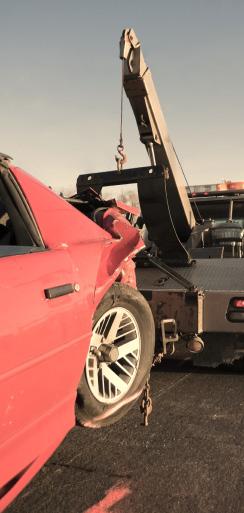
For years, we’ve proudly partnered with Guardian, managing their risk programs and growing alongside them. With 35 years as a premier independent insurance broker in the tow space, we bring unparalleled expertise and insight to every partnership. Whether you’re a valued client or exploring new opportunities, Kapnick is here to help you navigate risk and achieve growth together. Let’s build a stronger future—together.
“We have been performing seamless integrations through new mergers and partnerships in various markets across the company,” Tedford tells us “We have added a Vice-President of Mergers and Acquisitions to our leadership team, as well as a Vice-President of Sales and Marketing, a Vice-President of Capital Human Resources, a Vice President of Safety, and a Vice-President of Information Technology. We have added a National Training Director and grown our training team. We are building out the teams that perform support services for our facilities.”
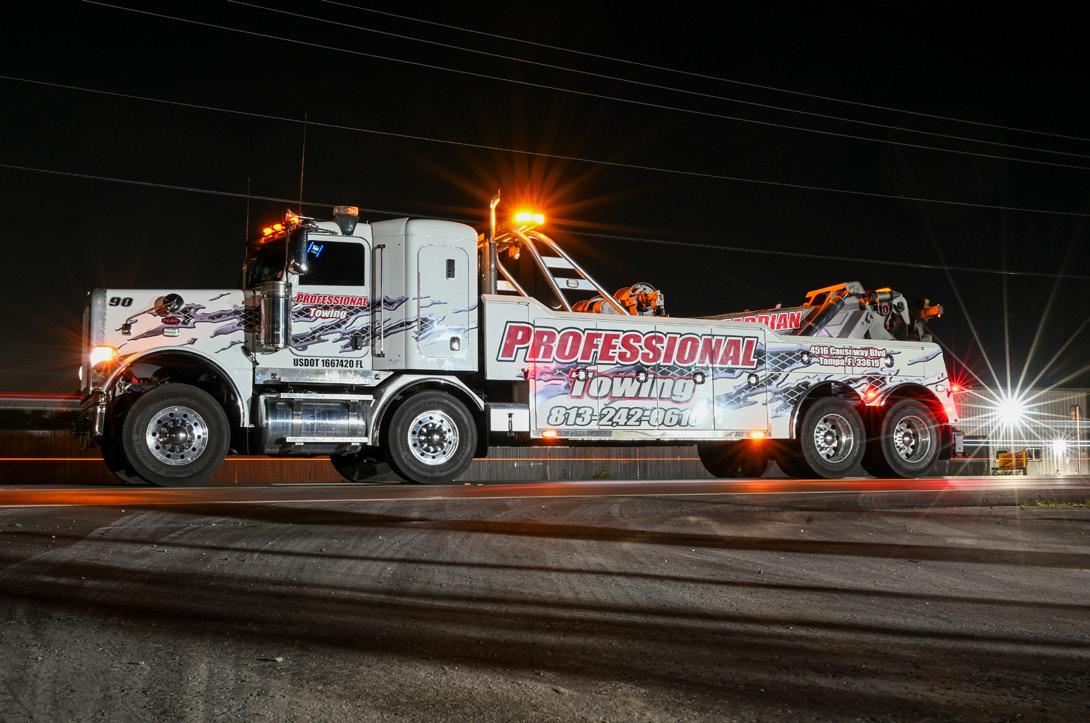
But with a growing company come growing challenges.
“Some days I feel like a fireman standing on a mountain with a hose!” Tedford admits.
“That’s what management and leadership are about at the end of the day, addressing issues and problems to create opportunities and solutions for all.”
The biggest challenge facing Tedford is the process of developing the seamless integration process that underpins Guardian Fleet Services’ accelerated growth, ensuring a healthy pipeline for the company going forward.
“Every day we deal with challenges around employees and retention and our day-today business models,” says
Tedford. “But just being able to keep up with the growth and size the organisation has grown to has been our biggest challenge.”
Indeed, from the 500 assets and 650 employees the company had last time we talked, Guardian Fleet Services has grown to a fleet of 1,100 assets and 1,200 employees across 57 facilities in seven states.
Tedford puts Guardian Fleet Services’ ability to manage that expansion down to “Good people and good leadership.”
“It’s all about people in our business,” says Tedford. “It comes down to having the
right people and the right staff, working together and building teams.”
Over the last year and a half, Guardian Fleet Services has been consolidating across its different markets, with its different elements working together to alleviate costs and continue to grow the business.
“We will continue to grow our footprint throughout the Eastern United States and the state of Texas,” Tedford tells us.
“We have a robust pipeline of future projects, with very viable candidates and real deals at the end of the day.”
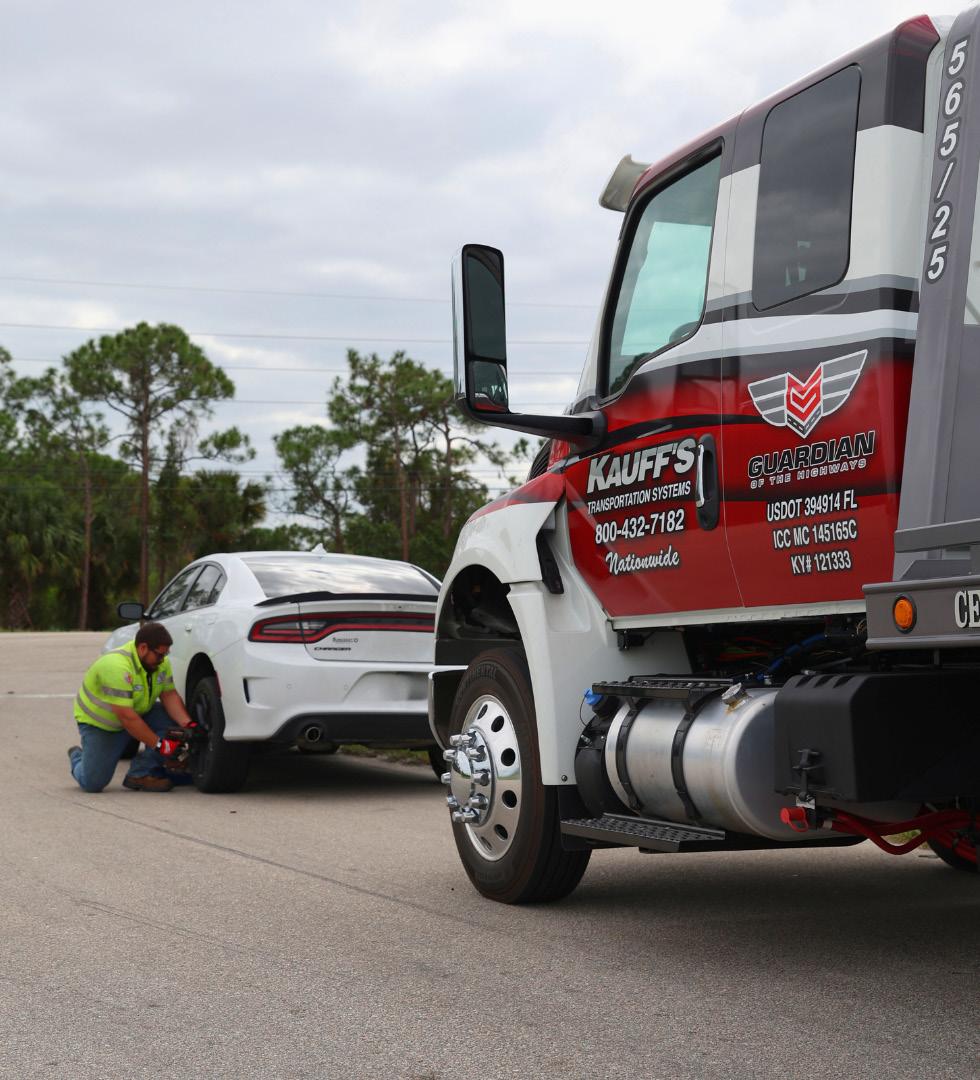
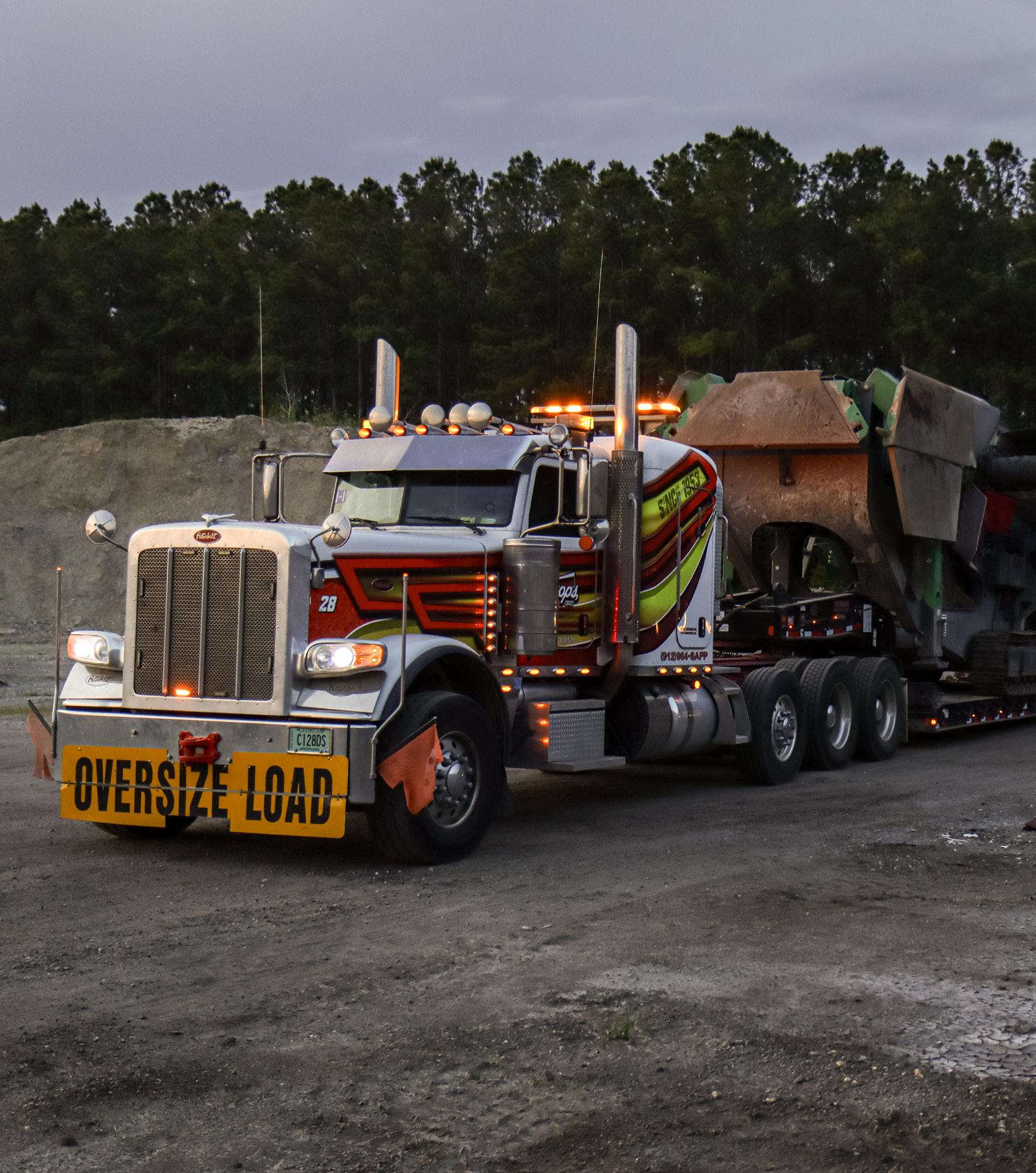
Since 2021, the company has grown six times its original size in terms of both annual revenue and performance, and it is set to continue in its role as a leader in the industry. Tedford believes the company will also continue to lead in terms of safety and service for municipal, commercial and retail customers.
Safety is a word that keeps coming up in our conversations with Tedford. Guardian Fleet Services’ story is one of growth, but more importantly, it is a story of growth in parallel with increased safety provisions and capabilities.
“Our goal is to build a larger, but safer company. That is what we have focused on,” Tedford says.
To that end, over the last year and a half Guardian Fleet Services has been developing a training department, recruiting and hiring an industry leader, Casey Burrows, to work directly with Guardian Fleet Services’ safety team. He has developed a training team beneath him, and the company is now running weekly classes on towing, recovery, and safety processes.
“It has really enhanced our operator structure and ability to perform,” Tedford tells us.
“If you look at our percentages of incidents and accidents, we have reduced those while continuing to grow the size of the company.”
While the material results of that project are already undeniable, Tedford is also adamant that it is an ongoing process.
“When we last talked, we had invested around $700,000 a year in our safety team,” Tedford says. “Today, that figure is north of $2.7 million. That is because we don’t think we can afford not to invest in that. Our operators are our most valuable asset. We need to teach them and protect them.”
This attitude is also visible in Guardian Fleet Services’ equipment investments, adding extra cameras, driver analytics,
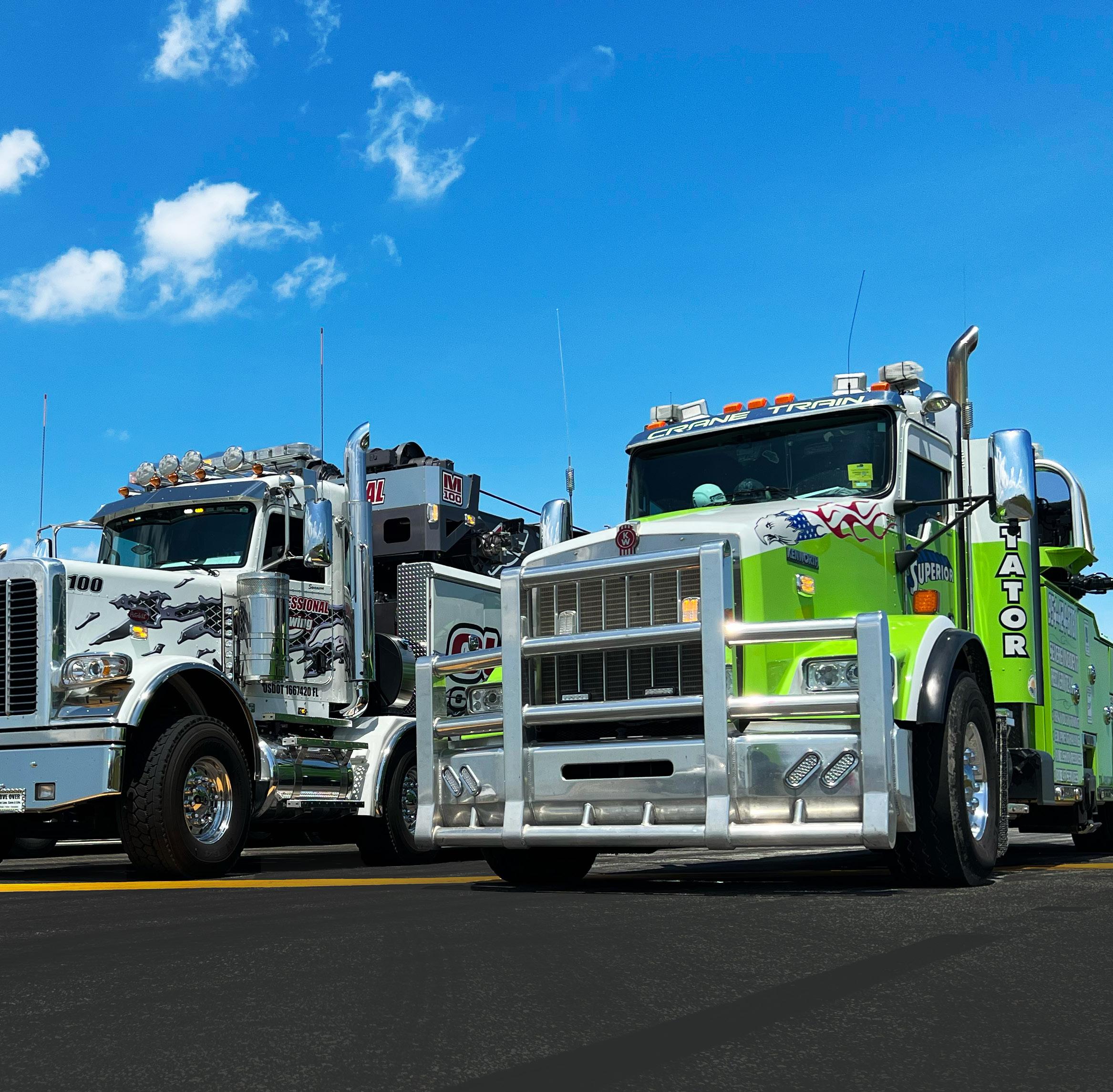
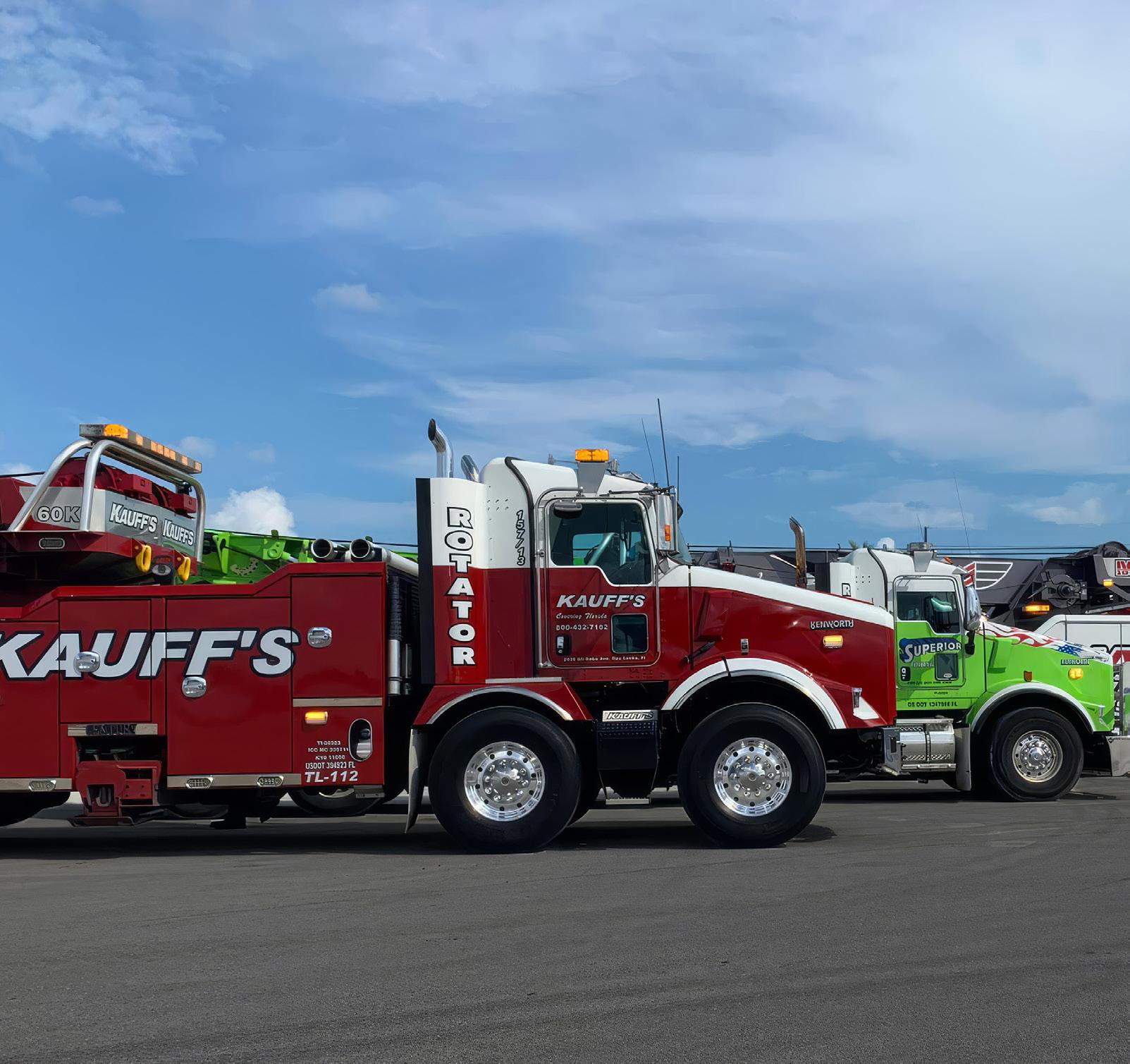
and safety mechanisms to its fleet of trucks. Tedford regards all of this as necessary to protect the company’s growing team.
“We are now in Florida, Georgia, Texas, Tennessee, Kentucky, Ohio and Indiana,” he says. “Our executive leadership agree that our most valuable asset is our people. We are consistently evolving our team and developing it to better support our growth and our customers. Without a proper foundation, nothing else works.”
“WHEN YOU GROW A COMPANY TO SIX TIMES THE SIZE IT WAS IN JUST THREE YEARS, IT IS EASY FOR THINGS TO GET AWAY FROM YOU.”


www.linkedin.com/company/ceo-media-group twitter.com/businessfocus_
