WE CAN DO MORE.
CCM has convened a Special Task Force on Reducing Gun Violence to make recommendations to the Governor and state legislature, and it starts with increasing the accountability for serious firearm offenses in our justice system.

2023
February

— Nonprofit Management — Public Healthcare Management — State & Local Government LEAD WITH INTEGRITY MASTER OF PUBLIC ADMINISTRATION fairfield.edu/MPA TRACKS AVAILABLE IN:
OFFICERS
President Thomas Dunn, Mayor of Wolcott
1st Vice President Laura Hoydick, Mayor of Stratford
2nd Vice President Michael Passero, Mayor of New London
DIRECTORS
Jason Bowsza, First Selectman of East Windsor
Jeff Caggiano, Mayor of Bristol
Mary Calorio, Town Manager of Killingly
Fred Camillo, First Selectman of Greenwich
Elinor Carbone, Mayor of Torrington
Paula Cofrancesco, First Selectman of Bethany
Justin Elicker, Mayor of New Haven
John A. Elsesser, Town Manager of Coventry
Carl P. Fortuna, Jr., First Selectman of Old Saybrook
Laura Francis, First Selectman of Durham
Joseph P. Ganim, Mayor of Bridgeport
Matthew Hoey, First Selectman of Guilford
Matthew S. Knickerbocker, Town Administrator of Wilton
Rudolph P. Marconi, First Selectman of Ridgefield
W. Kurt Miller, Chief Fiscal Officer of Ansonia

Edmond V. Mone, First Selectman of Thomaston
Maureen Nicholson, First Selectman of Pomfret
Michael Rell, Mayor of Wethersfield
Brandon Robertson, Town Manager of Avon
John L. Salomone, City Manager of Norwich
Caroline Simmons, Mayor of Stamford
Gerard Smith, First Selectman of Beacon Falls
Erin E. Stewart, Mayor of New Britain
Mark B. Walter, Town Administrator of Columbia
PAST PRESIDENTS
Luke Bronin, Mayor of Hartford
Michael Freda, First Selectman of North Haven
Neil O’Leary, Mayor of Waterbury
Herbert Rosenthal, Former First Selectman of Newtown
Executive Director, Joe DeLong
Deputy Director, Ron Thomas
Managing Editor, Kevin Maloney
Layout & Design, Matthew Ford Writer, Christopher Gilson



FEBRUARY 2023 | CONNECTICUT TOWN & CITY | 3 Connecticut Town & City © 2022 Connecticut Conference of Municipalities Inside this issue... EXECUTIVE COMMITTEE CCM STAFF Gun Violence Task Force 4 Education Funding 5 Peoposed State FY24 Budgets 6 2023 State Legislative Priorities 8 Wast Crisis 10 Annual Report 12 Research Corner: Non-Union Salary Increases 13 CIRMA News 20 News from Member Municipalities 22
89 Colony St., Meriden 203.379.0320 www.Luchs.com Civil Engineering Architecture Utilities Design Grant Writing Interactive 3D Design Construction Inspection
We Can Do More
Special Task Force recommendation aim to reduce gun violence
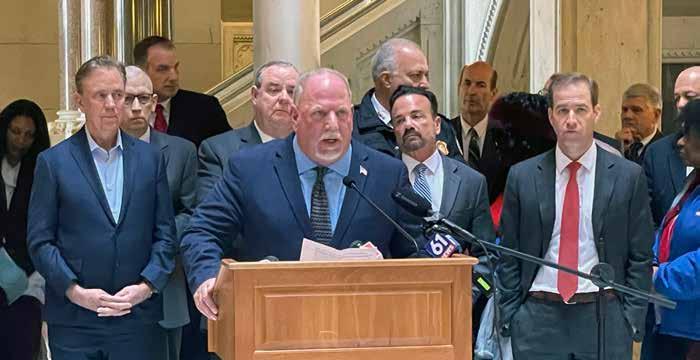
At the halfway point of January, the United States was on track to have nearly 50 mass shootings by the end of the month. There have been, already, well over 1,000-gun related deaths, approximately 10% of which were children 17 and under. Connecticut, a state with some of the strictest gun laws in the nation, is still not immune to this plague. We must act.
CCM has convened a Special Task Force on Reducing Gun Violence to make recommendations to the Governor and state legislature, and it starts with increasing the accountability for serious firearm offenses in our justice system. This means that individuals that are arrested with ghost guns, high capacity magazines not grandfathered in, stolen guns, or altered weapons exceeding current laws should be included alongside people who commit offenses such as shooting or threatening to shoot another individual.
In our criminal justice system, individuals who commit a serious firearm offense should have a set series of restrictions on pretrial release, probation, and parole availability. Offenders with past firearm convictions, or convictions for any crime carrying more than 10 years, should be required to post 30% of the bond in a rebuttable presumption that they are a risk to public safety. Individuals already on pre-trial release that are arrested for a new offense shall be detained and any bond posted shall be forfeited.
If convicted, a serious firearm offense should be added to the list of 85% crimes, where anyone convicted of an offense must serve at least 85% of their sentence before parole is considered. Law enforcement agencies or prosecutors may file an emergency petition against
parole if that individual threatens violence. If that parole is violated, the individual should be immediately remanded.
For those on probation, the task force suggests the probation officer shall seek a warrant for violation of probation, the individual shall be detained pending a violation of probation hearing, and the court shall hold a violation of probation hearing within 30 days. If the judge chooses not impose the balance of the suspended sentence following the evidentiary hearing, the judge must articulate findings why such individual does not pose a threat to public safety.
This will take a lot of work on behalf of our courts, but dedicated gun dockets in Waterbury, Fairfield and New Britain should help ease the burden on our existing dockets in Hartford and New Haven. As is the defendant’s right, trials should be held without delay – at least within one year of arraignment – and prosecutors may file a motion for an expedited hearing.
These are tough issues to tackle. And no one solution will allow us to claim victory over gun violence. This will be an ongoing issue before and after an act of violence has been committed.
As gun violence continues, we must define our boundaries of acceptability – attempts to skirt our gun laws must be considered serious firearm offenses. Individuals that pose a threat to public safety should not be able to become another statistic. Without action, 50 mass shootings a month is something we will have to get used to.
4 | CONNECTICUT TOWN & CITY | FEBRUARY 2023
Fully Funding Education A Smart Idea
Governor and Legislature must work with towns and cities on this issue
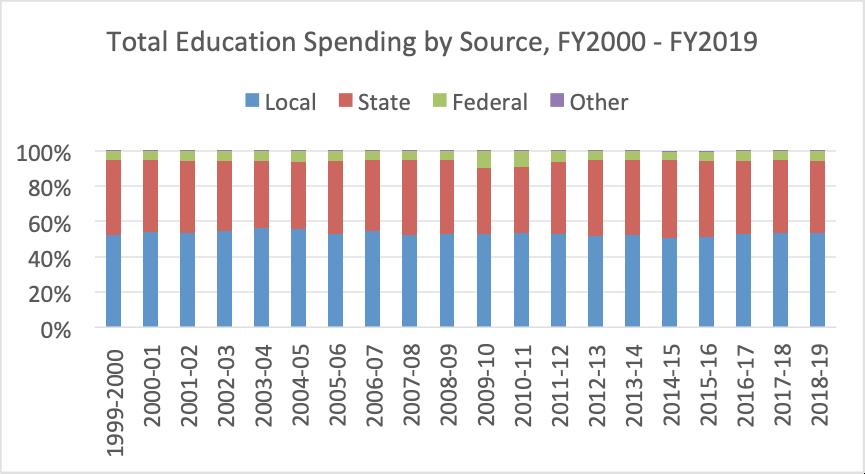
Municipal officials know all too well the cost of educating Connecticut’s children. It is felt acutely in the yearly budget and the local property tax. All together it is over $12 billion dollars a year and the state funds just half of that. CCM is asking that Governor Lamont and the legislature help municipalities by fully funding education throughout the state.
The Education Cost Sharing (ECS) Grant and the Special Education Excess Cost Grant are outdated While essential to the local education system, they are no longer aligned with local needs. This leaves municipalities underfunded. In regard to Special Education needs, this can and has had a dramatic impact on a towns ability to budget with any certainty.
The ECS grant does not account for all students due to systemic issues in the formula that diminish the aid to communities in need. English learners, students who are economically disadvantaged, and students navigating through their education in communities that experience concentrated poverty are not currently having their needs met.
Although ECS is currently in a ten-year time period that would see it fully-funded, this plan has not had the impact many would have liked to have seen. While it ultimately reaches the correct solution, by the time it gets there, it will be too late. Inflation has lately made an impact on the ability to buy critical resources – for every $10,000 spent in 2012, an additional $3000 would have to be raised today. That extra money has
to come from somewhere – and in Connecticut, it is the local taxpayer.
This is especially true for Special Education. Costs exceed $2.4 billion and continue to rise. Unfortunately, towns and cities pay for nearly two-thirds of these costs. And because the burden of providing this cost falls within a school district, if even one child moves from one town to another, there can be budget fluctuations in the tens to hundreds of thousands of dollars depending on the case. In smaller towns, this can represent a large percentage of their ability to take in property tax dollars.
Connecticut has one of the best local public-school systems in the country in spite of these budget shortfalls. It’s not hard to imagine the benefits our state would receive from fully funding our education system. Starting with the ECS and Special Education Excess Cost grants, the state can help towns and cities make improvements to their local schools, and partnering with school districts to create a new pipeline of paraprofessionals and teachers would be transformative. There are other issues to tackle – clean air in all classrooms, bridging the digital divide, and inspiring our students to view the classroom as a place they want to be. All that will come with strategic and intentional investment in our children. We look forward to working with the Governor Lamont and legislature to make it a reality.
FEBRUARY 2023 | CONNECTICUT TOWN & CITY | 5
Building A Budget
Municipalities need certainty and stability in inflationary times

With inflation at a nearly four-decade high, budgeting in 2023 is not going to be easy for anyone. From small families hit with the cost of eggs and fuel to municipalities looking at skyrocketing costs for goods that will move projects forward, it will be a difficult proposition to navigate. It is with this framing in mind that we look at the Governor’s proposed budget. Over the coming weeks and months, we look forward to working with the Governor and legislative leaders in the budget process, hoping to address many ongoing concerns for towns and cities.
We can start with the Governor’s acknowledgement in his budget address that the current education aid is insufficient to meet the needs of Connecticut’s students. Additional funding in the Education Cost Sharing grant is needed to bring school budgets to a place where towns and cities can continue to provide a world-class education. The proposed $135 million in additional funding is a start, we can and should do more for our students.
And we should also consider the Excess Cost Grant. Very few states have no dedicated special education funding, and Connecticut because of its cap on this grant only serves around 70% of eligible funds. Without stable funding of our education system, towns and cities cannot budget with any certainty.
The ability to budget with certainty will be afforded to the state government thanks to an agreement between the Governor and the legislative leaders to extend the
current budget guardrails. Installed during a time when Connecticut’s fiscal situation was not as positive as it is today, the bond cap, volatility cap, and increase to the state’s rainy-day fund have allowed our state the tools to get to where we are today. With a full rainyday fund, any expected or unexpected financial crisis should not affect municipal aid or taxes.
Thanks to our financial situation, it’s a shame that this budget does not do more to address the regressive nature of the property tax and provide municipalities with additional financial support or mandate relief. Faced with rising costs of doing everyday business, municipalities are stuck between a rock and a hard place in their budgets. True every year, but more so in a inflation-heavy economy, municipalities cannot afford to be burdened with costs associated with new unfunded mandates. Simply maintaining aid will not offset the impact of increased costs.
We look forward to working with the Governor and legislative leaders this year as with every year. With the rising costs of everything, we need to make priorities on education and the rising costs of housing that is driven by the regressive property tax in order to secure a fruitful economic future for our state. It will be a signal to residents and folks considering Connecticut that we’re serious about healthy budgets whether they’re created in the Capitol, the Town Hall or around a kitchen table.
6 | CONNECTICUT TOWN & CITY | FEBRUARY 2023
With a full rainy-day fund, any expected or unexpected financial crisis should not affect municipal aid or taxes.
WE DELIVER a full suite of support tools and analytics that integrates your data with that of your peers. Fully benchmarked. Standardized. Actionable.


YOU GET the whole picture without lifting a finger. Act faster and cost-effectively on Contract Negotiations, Economic Development, Budgeting, Pension and OPEB Management, CAPEX and Bond Financing.


 BOB CLARK BOB@PALIT Y .COM


TOWNFAQS ANALYTICS Dat a, at your f ingert ips. Analyt i cs, re ady to use. Si m ple. PALITY
P R O U D P A R T N E R O F Your BEST CHOICE for energy-savings success EnergiaSaves.com
State Legislative Priorities 2023
CCM is the voice of municipalities. And every year, we develop a legislative program that you, our members, developed, vetted and approved so that we can take that voice to the State Legislature and the Governor with the assurance of 168 towns and cities. We are proud to announce the 2023 Legislative Priorities that sets the foundation for work throughout this year’s long Legislative Session.
1. Increased Funding for Local Education
ISSUE: The current mechanism to provide education funding does not meet the needs of Connecticut’s student population and is overly reliant on local property tax revenue. The cost for public education in our state is over $12.3 billion with local property taxpayers burdened with more than 50% of that amount.
RECOMMENDATION: 1) Accelerate the phase-in of the Education Cost Sharing (ECS) Grant formula, and increase funding of other education programs; and 2) Increase funding for the Special Education Excess Cost Grant.
2. Address the Shortage of Paraprofessionals in School Districts
ISSUE: Local school districts are having a difficult time hiring paraprofessionals because of the lack of a skilled and certified workforce due to retirements and attrition.
RECOMMENDATION: Address the shortage of paraprofessionals by developing and funding an enhanced pathways program to increase the number of certified
paraeducators and increase the number of potential teacher candidates in the pipeline through the mentorship of paraeducators.
3. Increase PILOT Reimbursement to Municipalities
ISSUE: Property tax exemptions seriously erode the property tax base in many towns. Statewide, exemptions represent nearly 12 percent of the aggregated Equalized Net Grand Lists (ENGL). But this statistic seriously understates the issue for some communities. In 11 towns, exempt property, other than city-owned property, represents over 20 percent of the ENGL and in several the total is over 50 percent. While these are the most extreme cases, property tax exemptions affect every town in Connecticut, with the result that the taxes paid by non-exempt taxpayers are higher than they would be without the exemptions.
RECOMMENDATION: Fund current Payment in Lieu of Taxes (PILOT) at statutorily adopted levels.
4. Legal Notices
ISSUE: The requirement to publish full texts of certain documents and notices in newspapers is a costly mandate on towns and cities. During the Pandemic, the Governor issued an Executive Order allowing municipalities to publish meeting notices on their town’s website. While in effect, residents searched the town website for information on upcoming meetings and public hearings, which resulted in better attended meetings and greater public awareness and participation.
8 | CONNECTICUT TOWN & CITY | FEBRUARY 2023
Through long legislative session, we look forward to working with the Governor and State Legislature
For full details, make sure to read our full 2023 State Legislative Program pamphlet that you can find by going to our website: www.ccm-ct.org

RECOMMENDATION: Allow municipalities to publish legal notices on a town website, rather than a newspaper or an abridged version in a newspaper and the full copy on the town website.
5. Prevailing Wage Thresholds
ISSUE: Prevailing wage thresholds for renovations have not been updated since 1991. The results of adjusting the threshold that triggers the prevailing wage for renovations will allow local governments to make more efficient investments in infrastructure without increased reliance on revenue provided primarily by local property taxpayers. While the prevailing wage threshold was adjusted to $1 million for new construction it has not kept up with inflation.
RECOMMENDATION: Increased threshold for prevailing wage for new municipal projects to $3 million and increase the thresholds that trigger the prevailing wage mandate for remodeling, refinishing, refurbishing, rehabilitation, alteration or repair of any public works project from $100,000 to $500,000.
6. Firefighter/EMT Recruitment and Retention

ISSUE: The majority of Connecticut’s municipalities fire suppression services are provided by volunteer firefighters. In recent years, towns have struggled to attract and retain these volunteers to adequately meet the needs of residents. In addition, local EMS services have been plagued by decreasing emergency medical technicians (EMT’s), which has been exacerbated by –among other things - increasing training requirements.
RECOMMENDATION: Support a statewide legislative task force consisting of local CEO’s, local fire and EMS personnel, and state officials from DESPP and DPH, to (1) examine the factors associated with the firefighter and EMT shortage, and (2) develop recommendations to address these shortfalls. This review should examine:
a) Providing an income tax credit for volunteer firefighters;
b) Developing a pipeline from colleges and universities into these professions;
c) Offering tuition incentives for volunteers;
d) Streamlining certification and recertification for firefighters and EMTs;
e) Providing sustainable and consistent state-supported funding for training; and
f) Creating different training criteria for men and women to become certified firefighters and EMTs. There will also be several “Legislative Issues of Importance” that CCM’s Policy team will be keeping a close eye on. Shared Services, Extended Producer Responsibility (EPR), Transit Oriented Development, the Removal of Dead or Infested Trees, Local Mental Health Services, School Security, Workforce Housing, Complete Streets, and Virtual Net Metering Cap will all be on our radar throughout the session.
Rest assured, the voice of municipalities will be heard and we will be at the forefront of policy discussions in the 2023 legislative session.
FEBRUARY 2023 | CONNECTICUT TOWN & CITY | 9
Out With Yesterday’s Trash
New ideas needed to manage CTs waste problems

For years and years, Connecticut residents knew exactly what was happening with their trash. They put it on the curb, it was taken away, and that was all they had to think about it. Today that is no longer true. Especially after the closing of the trash-to-energy plant in Hartford, Connecticut is on the precipice of a crisis. Towns and Cities along with the State must decide how to move forward in an environmentally sound way.
As it stands, without MIRA – the Materials Innovation and Recycling Authority plant – hundreds of thousands of tons of trash are being shipped out of state each year. As Matt Knickerbocker put it in a recent op-ed on the subject, this is “irresponsible, expensive, and stressful to the environment.”
The state as a whole produces approximately 2.4 million tons of trash, and just over half of that is managed in-state. The question is how to decrease the amount of trash we produce and at the same time process all of our waste in-state. Fortunately, the State has convened several task forces and commissions, including many local leaders, to make recommendations on short-term and long-term goals.
Although made more difficult by the China Sword Policy, Recycling will always be a main component of reducing waste. But recycling in 2023 is not the same as recycling in 1970 or even 1990. Small changes such as taking glass out of the stream can increase recyclable materials in other streams (if a glass bottle breaks and embeds itself in cardboard, that cardboard is no longer recyclable).
There is a growing sentiment around the country that manufacturers should also take more responsibility in their packaging. Many will have noticed the move away from “packing peanuts” in their packages towards paper packing materials. The more consistently recyclable an item is, the less it will be turned away from
recycling plants. Over time, these efforts could drastically lower the bulk of trash towards more adaptable, reusable products.
If the goal is to minimize the tonnage of waste, there are no better efforts than to increase composting – either at home or as a service. CT&C has written extensively about efforts ranging from bulk buying home composting bins for residents to larger pilot programs like those in Middletown where food waste is separated out of the trash to be turned into fertilizer. As recently as November of last year, a new plant in Berlin can take food scraps and turn them into animal feed. This is just one way that we can recoup some of the costs of the recycle and reuse infrastructure. But overall, waste disposal has become a greater and greater expense. This is most painfully felt in the area of recycling. Again, citing Knickerbocker’s op-ed, Connecticut has “too much invested in our natural beauty and resources, our rivers, lakes and forests to let recyclables pile up in landfills.”
We must respond to this issue before it becomes a fullblown crisis. The Governor, our State Legislature, Town and City Leaders, and residents must all come together on solutions to ballooning waste. There is too much at stake to not come up with reasonable solutions. In some cases, this might be as simple as tossing food scraps in the backyard. In others, it might be asking businesses for help in reducing waste in packaging. What matters most is that we respond now so that in the future we don’t have to resort to less environmentally friendly measures.
10 | CONNECTICUT TOWN & CITY | FEBRUARY 2023





www.tighebond.com Engineering | Design | Environmental Consulting Streamline your banking with PeoplesBank Institutional Banking. As a leading provider of institutional banking we’ll provide you with exceptional service and quality products that will help you optimize your banking. Call us today and let us show you how we can help you streamline your institutional banking 413.493.7517 | 860.901.8266 Local bank service. Big bank solutions. Member FDIC/Member DIF FEBRUARY 2023 | CONNECTICUT TOWN & CITY | 11 Municipal IT Challenges. Solved. Managing Your IT Environment • Cybersecurity & Risk Management Remote Workflow & Collaboration • IT Migrations & Consolidations • IT Procurement Proven, trusted managed and professional IT services provider with a wide product portfolio that operates as an integrated arm of your municipality. Flagship Networks, Inc. 100 Beard Sawmill Rd., Suite 300 Shelton, CT 06484 203.538.0800 www.FlagshipNetworks.com CCM Directory AD 2022.indd 1 4/25/22 8:16 AM
Get Back To CTs Future
CCM’s Annual Report is on its way to your door
2022 is the year that Connecticut’s town and cities started getting back to the future. This was the message written all over CCM – relief funds and infrastructure investment, a steely-eyed focus on improving our schools – we started thinking about tomorrow for the first time in a few years. In our 2022 Annual Report we highlight all the ways that CCM helped our members help envision a better future for our state.
So let’s start at the end of the year. This theme was so important that we made it the theme of our annual CCM Convention held at the Mohegan Sun. Hundreds of municipal officials got together to network and learn through workshops and exhibitors.
The success was thanks in large part to the final gubernatorial debate that we held on November 1 in partnership with News Channel 8. The three candidates got on stage in front of an audience of municipal officials to discuss their vision for the state. Each candidate offered a different take on how to best move our state forward, but through their differences and civil discourse, the public was able to hear them respond to issues of concern to them.
It was one of our most exciting and successful conventions yet. We premiered our Civility Pledge, an ongoing effort to get members from around the state to do their part to foster respectful, civil engagement in their community and throughout Connecticut.
Many by now will have noticed a not-so subtle nod to a very popular 1980’s time-travel movie. But unlike those characters, the people of Connecticut are definitely going to need roads.
Thanks to the Infrastructure Investment and Jobs Act, those roads as well as bridges and other infrastructure are going to be seeing a major improvement.
CCM has contended that we need to make sure we’re looking at the information superhighway as well. Lack of equitable broadband access across all communities was striking during the pandemic, and now is the time to move on that. Students were left behind during periods of remote learning, and we need to make sure that they their families have affordable access to quality, high speed internet. CCM paired with partners in the State to offer a broadband survey that had thousands of respondents who came back with a clear message: It is no longer simply “nice-to-have” but an investment in the future.
Extending our technological infrastructure throughout Connecticut will not simply close the digital divide. It will open up many more avenues – we need to think about electric vehicles or EVs as the newest technological advancement. Building out EV chargers
throughout the state will not just help our state lead the way on this new technology, it will help our state decrease emissions and become more sustainable.
Of course, a main focus we are bringing with us into the next year is our work on education. For years we have argued that the state needs to help towns and cities maintain one of the best education systems in the country, ensure that every child has equitable access to that education, and make sure that teachers know that they are appreciated for all that they do. The future is something that we are simply excited about. Sometimes it feels like the future is a long way away and here right now. Sometimes in municipal governance you have to be planning for what’s going to happen in 10 years and also what’s going to happen over the next couple of days.
So let’s dream big. Here at CCM we’re planning for the future, which you will surely read about in the next sections. But we’re always asking what we can do for you, our members, today.
12 | CONNECTICUT TOWN & CITY | FEBRUARY 2023
Research Corner
The past few years have been an economic rollercoaster. Because of the pandemic, the economy ran to a full stop, only to chug along to record high inflation. While there is still some uncertainty, towns and cities still need to keep moving, and many members have wondered about salary increases for non-union members in FY24.
CCM conducted its first ever survey of Human Resource Departments on this issue and released a report.

Survey: Salary Increases for Non-Union Members in 2024
What are towns and cities planning for salary increases? CCM Research
According to respondents, the mean increase is expected to be around 2.75%, lower than the expected national average of 4.6% according to the Society for Human Resource Management.
Numbers for negotiated union increases for this coming year are not dissimilar. They show an average of 2.41% increase for the coming year across 172 contracts.
For more information, contact Max Friedman, Research Manager, at mfriedman@ccm-ct.org.
2.7%
2.5%
2.5%
2.0%
FEBRUARY 2023 | CONNECTICUT TOWN & CITY | 13
National Average 4.6%
Minimum Maximum
5.0% Mean Median Mode
CCM Goes To Washington
Yearly NLC conference puts municipalities at the fore
Early each year, the National League of Cities (NLC) holds their Congressional City Conference in Washington D.C. It is the largest gathering of local elected officials and staff in the country, and it is the ideal opportunity for attendees to network with their local, state, and federal peers. We are encouraging all members who can to attend this year’s Congressional City Conference from March 26-28.
NLC is a bipartisan organization focused on connecting officials to local government solutions, and the conference attendance reflects this fact. In terms of local government size, small towns to large cities and everything in between are represented.
To register, visit CCC.NLC.org.
Here’s What You Can Expect:
INFORMATIVE WORKSHOPS
The conference will include sessions and learning opportunities where you can gather tangible takeaways on important legislation, such as the American Rescue Plan Act, Infrastructure and Investment Jobs Act, Inflation Reduction Act, along with other topics, such as economic development, race equity, sustainability and the environment, leadership, along with public health and public safety.
DEVELOP NATIONAL MUNICIPAL POLICY
Policy and Advocacy Committees form the basis for NLC’s advocacy on matters of interest to municipal governments before Congress, the courts, and federal agencies.
Committee members include local officials from towns and cities across the country who are committed to discussing and influencing federal policy that has a direct and profound impact on local government operations.
The policy committees are as follows (descriptions are enclosed):
• Community and Economic Development
• Energy, Environment and Natural Resources
• Finance, Administration and Intergovernmental Relations
• Human Development
• Information, Technology, and Communications
• Public Safety and Crime Prevention
• Transportation Infrastructure and Services
CONSTITUENCY GROUPS
Constituency Groups are groups and networks within the National League of Cities (NLC) membership which share common interests and concerns. They have been established over the years to reflect the diverse interests and backgrounds of NLC’s membership, and they work collaboratively with NLC to contribute to leadership development, policy formulation, advocacy, and program activities. Group names and descriptions are enclosed.
*MEETING WITH THE CONNECTICUT SENTORS MURPHY AND BLUMENTAL
CCM has coordinated a joint meeting with Senator Blumenthal and Senator Murphy for Tuesday, March 28th. The meeting presents a unique opportunity to discuss federal issues of concern with our Senators.
CCM DINNER
CCM is arranging a dinner with Connecticut attendees, which will include a policy update and discussion with Dan DiSimone, Director, State of Connecticut Washington Office.
CCM will keep registered attendees apprised of the dinner and meeting details as the event nears
We look forward to seeing as many of you in Washington, D.C. as possible. If you have any questions on NLC or the conference, please contact Mike Muszynski at mmuszynski@ccm-ct.org; 203-500-7556.

14 | CONNECTICUT TOWN & CITY | FEBRUARY 2023









FEBRUARY 2023 | CONNECTICUT TOWN & CITY | 15 CCM’s research staff have the experience and resources to save you time and money. Take advantage of this important, free member benefit today. To make a research request contact our staff or log on to: ccm-ct.org/Resources/Research CCM Research Service Civil Engineering Architecture Utilities Design Interactive 3D Design Construction Inspection We re here to help... Specializing in municipal LOTCIP, MSAT and grant writing needs Luchs.com 203.379.0320 Historic Restoration of Waterbury City
Discount Prescription Drug Card Program
• Many CT residents face the challenge of high cost prescriptions. Through the CCM Prescription Discount Card Program, municipalities are now providing prescription savings to their residents who are without health insurance or a traditional pharmacy benefit plan, or have prescriptions not covered by insurance.
• This program is no cost to CCM-member municipalities and no cost to taxpayers. There are no limits on the use of the card – no income limits, no age requirements. Even some pet prescriptions are covered for medications that also treat a human condition.
• Average savings for CT residents has been 50%, with some participating towns and cities showing an average of 70% savings.
• Cards are mailed to residents and can also be accessed electronically through the CTRxdiscountcard.com website. These cards are automatically activated and can be used immediately at any participating pharmacy.

• The CCM Discount Card program offers real value, easy access, a large national pharmacy network and excellent customer support.


• Program start-up is easy and municipal promotion and administration is simple.
• Program marketing materials are provided at no cost to the town/city offices.
If your municipality is not part of the CCM prescription discount program service and you would like more information, please contact Alison Geisler, at 203-498-3029, or ageisler@ccm-ct.org.

16 | CONNECTICUT TOWN & CITY | FEBRUARY 2023
The Prescription Discount Card Program Is Saving Residents In Participating CCM-Member Towns And Cities Millions Of Dollars In Prescription Costs.
More Housing = Growth
CIRMA whitepaper shows explains Fair Housing Act
Tohear it from key stakeholders in state and local government, housing – and affordable housing at that - is crucial to the growth of our state. Housing stock is an important asset for any municipality, but it also has to be fair and equitable. CIRMA, in collaboration with Thomas Gerarde, Managing Partner at Howd & Ludorf LLC and Jim Tallberg, Managing Partner at Karsten & Tallberg, LLC, has written a whitepaper on the Fair Housing Act.
First signed into law in 1968 as Title VIII of the Civil Rights Act, the Fair Housing Act or FHA prohibits discrimination the purchase, sale, rental or financing of private and public housing based on race, skin color, sex, nationality, or religion with amendments to include disability and family status among protected classes. According to CIRMAs whitepaper, municipalities are prohibited from “Making decision
or creating regulations that make housing unavailable to persons if they fall into one of the protected classes.”
In 2021, this law was furthered by legislation signed into law by Governor Lamont. Under Public Act 2129, there are some key points that all municipalities need to understand, including on zoning, training, guidelines, and more. They cite rules surrounding Accessory Dwelling Units (ADU) as a “key takeaway.” These units – often housing within or on the property of single family homes – are growing in popularity as aging populations look to move close to family members or caregivers. Municipalities do have an opt-out provision, but “an affirmative burden will be placed on municipality that chooses to ‘opt-out’ of the ADU mandate.” These provisions can often be complex, and the first piece of advice CIRMA offers is to appoint a Fair
Housing Officer to become the first point of contact in these matters. In these cases, towns should always consult with their town attorney and CIRMA. Throughout the whitepaper, the authors make the case for early intervention rather than risking “extensive, costly litigation,” through examples of pre-application, Planning and Zoning Commission Hearing, and Reasonable Accommodation Request.
This is a complex and exhaustive Act with good reason for existing. We all want an inclusive and positive environment for growth within our State, because we want a State that works for its people. Housing is an enormous component of that. The CIRMA whitepaper will be an invaluable resource for towns and cities looking to advance their housing stock or simply make sure they are complying with law.
MUNICIPAL LAW GROUP

Kari L. Olson, Chair kolson@murthalaw.com
860.24 0.6085
Nan M Birdwhistell nbirdwhistell@murthalaw.com
Patricia L. Boye-Williams pboyewilliams@murthalaw.com
Michael J. Donnelly mdonnelly@murthalaw.com
Jodie L Driscoll jdriscoll@murthalaw.com
Salvatore G. Gangemi sgangemi@murthalaw.com
Robert E. Kaelin rkaelin@murthalaw.com
Bruce L. McDermott bmcdermott@murthalaw.com
Alfred E. Smith, Jr. asmith@murthalaw.com
Joseph D. Szerejko jszerejko@murthalaw.com
Nicholas W. Vitti, Jr. nvitti@murthalaw.com
FEBRUARY 2023 | CONNECTICUT TOWN & CITY | 17
O
C ONNE CT IC UT + M ASS A CH USETTS + NEW YORK
ering a dedicated and experienced team to meet the needs of our municipal clients Murtha Cullina LLP is proud to serve as General Counsel to CCM
MUR T HA LAW.COM
Welcome New Hires!
CCM adds DEI position and fills Training Coordinator role

Sofia Blenman joins CCM’s Human Resources department in the position of Diversity Equity & Inclusion Officer. In this role Sofia will be responsible for the operations and support of programs designed to foster a diverse workforce, cultivate an inclusive environment and enhance employee engagement. Sofia will also work with Rick Porth and the MRSC team to develop DEI training programs and workshops for CCM’s members.
Sofia, a resident of New Haven, joins CCM with almost 10 years of human resources experience with a focus on Diversity, Equity and Conclusion. Sofia received a Bachelor of Fine Arts in Music Business form the University of Massachusetts and Master of Science degree in Organization and Professional Communication from Regis
College. Prior to joining CCM, Sofia held the position of Assistant Director for the Afro-American Cultural Center at Yale University.


Danielle Walker joins CCM’s Municipal Resources & Service Center in the position of Training Coordinator. In this role Danielle will be responsible for a variety of duties and tasks relating to education and training workshops, CCM Convention and website and social media.
Danielle, a resident of Bridgeport, joins CCM with over 10 years of experience in education and community engagement. Daniel received a Bachelor of Arts in Sociology from Eastern Connecticut State University. Prior to joining CCM Danielle held the position of Community Coordinator for the United Way of Stamford.
For more information, please contact:
Mark J. Sommaruga
860.424.4388


msommaruga@pullcom.com

18 | CONNECTICUT TOWN & CITY | FEBRUARY 2023 @PullmanandComley @PullmanComley pullman & comley, llc pullcom.com • Cannabis • Charters and Ordinances • Community and Economic Development • Construction • Environmental/ Brownfields • Freedom of Information Act • Labor & Employment Law • Litigation • Municipal Law • Public Financing
Real Estate, Zoning & Land Use
School Law Serving the Legal Needs of Municipalities for More Than 100 Years
•
•
www.youtube.com/@CCM
FEBRUARY 2023 | CONNECTICUT TOWN & CITY | 19
better together. Now stronger than ever.
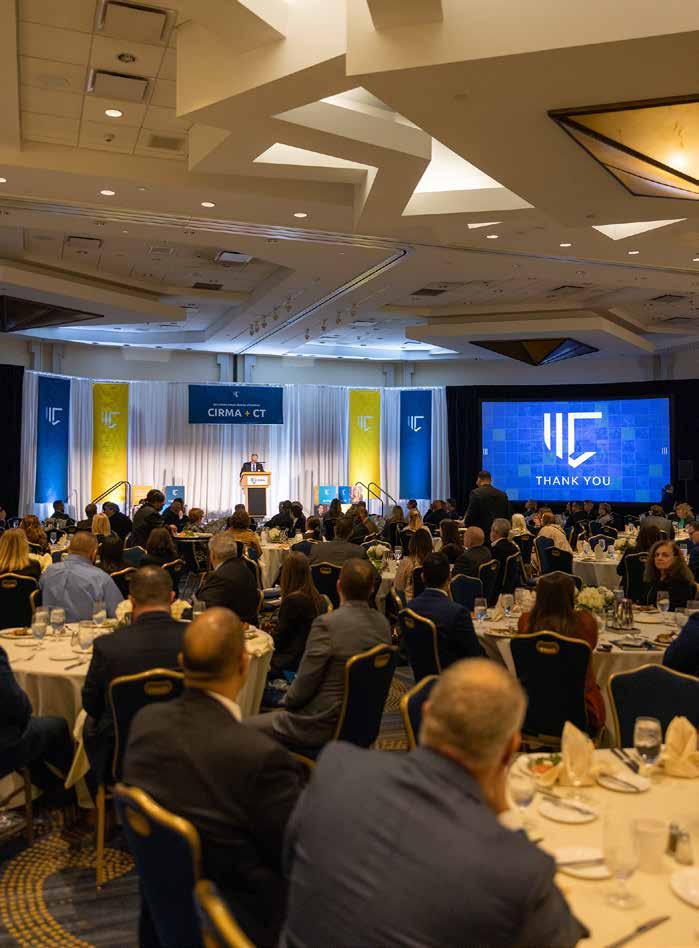
Thank you for joining us at this year’s Annual Meeting of Members. We hope you enjoyed your time with us. Please visit CIRMAEventHQ.org for event details including the 2023 Excellence in Risk Management Award winners. CIRMA + CT Always
CIRMA Community: Always Better Together, Now Stronger Than Ever
Connecticut Interlocal Risk Management Agency, CIRMA, held its 42nd Annual Meeting of Members on January 27, 2023, in Hartford, Connecticut. Over 200 employees, CIRMA members, board and committee members, and business partners celebrated the collective power and undeniable strength of the CIRMA Community. Attendees enjoyed learning about emerging and trending municipal topics, an awards program that celebrated selected risk management champions, and a slate of engaging and inspiring speakers.
David Demchak, CIRMA President and CEO, commended the CIRMA community for its unwavering commitment to Connecticut cities, towns, public schools, and local public agencies, “The long-term success we help our members achieve is not created overnight. Our partnership is a sustained endeavor. We take a long-term approach to delivering consistent, competitive, and dependable value to our members, and our accountability for each other has fortified over the years. Our shared mission—our mutual purpose, is the foundation of everything we do and remains critical to our longterm success.”
C IRMA announced its outstanding financial and operational performance. The organization retained over 98% of its membership over the last five years.
Members’ Equity increased by $77.4 million over the last five years, totaling $228 million and Members’ Equity Distribution reached $42 million spanning the last 12 years. CIRMA also achieved over $29 million in medical cost savings for its members through CIRMAcare ®, CIRMA’s medical care and cost management program.
“Our shared mission continues to stand the test of time and defines our roles in helping our members navigate all that can go wrong by remaining committed to doing what is right,” Demchak added.
S carlett Lewis delivered this year’s keynote presentation that concluded with not one, but two standing ovations from the audience. Lewis, author and founder of the Jesse Lewis Choose Love Movement most recently joined the Bloomberg 50 ranks with influential global figures such as Volodymyr Zelenskiy and Kentanji Brown Jackson, and remains a leading figure in both national and global efforts to reduce school and community violence. Lewis’s son, Jesse Lewis was murdered in the devastating Sandy Hook school shooting tragedy ten years ago.
CIRMA will host its next Annual Meeting of Members event in Hartford on January 26, 2024.
CIRMA Names 2023 Excellence in Risk Management Award Winners
Connecticut Interlocal Risk Management Agency, CIRMA, held its 42nd Annual Meeting of Members on Friday, January 27, 2023, in the heart of Connecticut’s state capital. The organization honored four Connecticut towns during the event as part of its Excellence in Risk Management Awards Ceremony. The awards program has honored risk management champions throughout the state for over four decades. Selected winners demonstrate thought leadership in risk management and personify the ingenuity, expertise, and tenacity required for long-term success.
C IRMA’s community of employees, members, and strategic business partners celebrated four accomplished CIRMA-member towns: Harwinton, New Canaan, South Windsor, and Windsor Locks. The award recipients were recognized for their creative problem-solving, excellence in and commitment to risk management, and notable success in fostering long-term organizational change within their communities—each received a
handsome crystal award and a $2,500 risk management grant from CIRMA.
“ CIRMA’s award recipients represent some of Connecticut’s best, brightest, and most devoted municipal leaders and teams. Risk Management is one of the core pillars of CIRMA’s Mission, and the Excellence in Risk Management Awards program allows CIRMA to honor its members who walk the talk and embody an unwavering commitment to delivering meaningful and innovative risk management initiatives ,” lauded Matt Knickerbocker, Town Administrator of Wilton and Chairman, CIRMA Board of Directors
Introduced in 1982, the Excellence in Risk Management Awards program was designed to celebrate CIRMA member accomplishments while increasing awareness of the risk management discipline.
Visit CIRMA.org to learn more about CIRMA’s Excellence in Risk Management Awards program and this year’s award honorees.
20 | CONNECTICUT TOWN & CITY | FEBRUARY 2023 2 | CONNECTICUT TOWN & CITY | FEBRUARY 2023
CIRMA
CIRMA
CIRMA Welcomes New Staff
CIRMA is excited to welcome the following group of achievers to its vibrant and committed community. “It’s our staff who help create our
Gabriel Arciniegas joins CIRMA as a Senior Workers’ Compensation Claims Representative. In his new role, Gabriel will apply his over 20 years of claims handling experience and skills by providing thorough claims handling on Workers’ Compensation claims of varying complexity.

A United States Navy veteran, Gabriel graduated from Troy State University with a Bachelor Degree in Criminal Justice.
Karen Austin joins the CIRMA Underwriting team as an Underwriting Operations Administrator. In this role, Karen assists the workflow processes including system maintenance and annual state filings for both liability and Workers’ Compensation pools.
Karen graduated from Messiah University joins CIRMA with over 24 years of experience in healthcare, life, workers’ compensation and commercial insurance and banking industries.

Alyssa Celetano recently joined CIRMA’s Liability Claims team as a Liability Claims Representative Trainee. In this role, Alyssa will provide municipal claims handling and investigations of varying complexity for several lines of business.
Alyssa received her Bachelor Degree in Communications from Westfield State University. She joins CIRMA with over six years of experience in marketing and customer service.
Carolyn Farrell joins CIRMA’s Liability Claims team as a Senior Liability Claims Representative. In this role, Carolyn conducts investigations of complex automobile, general liability, and professional lines claims with proper claims handling procedures.
Carolyn received a bachelor’s degree from the University of Rhode Island and brings over ten years of extensive claims handling experience in commercial auto lines.

innovative solutions and deliver on the promises we make to our members, every day,” said David Demchak, President and Chief Executive Officer of CIRMA.
Alycia Ortiz is the newest edition to CIRMA’s Finance team in the role of Accounts Payable Clerk. In this role Alycia is responsible for the daily processing of accounts payable and accounts receivables.
Alycia joins CIRMA with over seven years of progressive accounting experience and is well versed in full cycle accounts payable processing as well as accounts receivable, bank reconciliations and account management.

Trinity Pagan recently joined CIRMA’s Workers’ Compensation Claims team as their newest Claims Assistant. In this role, Trinity is responsible for providing administrative and technical support for the Workers’ Compensation Claims Representatives and to the unit’s managers.
Trinity is a highly motivated individual with exceptional customer service and problem-solving skills.


Daniel Provenzano joins CIRMA’s Underwriting Department in the position of Underwriting Technical Assistant Trainee. In his new role, Daniel will be responsible for providing technical assistance and customer service to the Underwriting Department and to CIRMA members.

Daniel received a Bachelor Degree in Finance from Southern Connecticut State University.
Joseph Wang is the newest addition to CIRMA’s Business Intelligence team in the position of Associate Software Engineer. In his new role, Joseph will collaborate with architects, developers, business analysts and third-party partners to deliver quality solutions.
Joseph recently graduated from New York University with a Bachelor Degree in Computer Science.

FEBRUARY 2023 | CONNECTICUT TOWN & CITY | 21 CIRMA
Gabriel Arciniegas
Karen Austin
Alyssa Celentano
Carolyn Farrell
Alycia Ortiz
Trinity Pagan
Daniel Provenzano
Joseph Wang
CIVIC AMENITIES
Sanctuary City
New Haven food orgs make the city a home
Food transcends boundaries - Everyone has to eat and thanks to organizations like CitySeed and Sanctuary Kitchen, New Haveners have robust options for their plate.
Cortney Renton, Executive Director of CitySeed and Naseema Gilson, Program Director of Sanctuary Kitchen joined the Municipal Voice, a co-production of the Connecticut Conference of Municipalities and WNHH 103.5 FM, to talk about how they support the community and the community supports them.
CitySeed has played a crucial role in New Haven’s food culture over the last two decades. The Farmers Markets have provided fresh, local food to New Haven residents in places that might have otherwise been called “Food Deserts.” Renton cautions that the food policy world is moving away from that terminology though, preferring to use the phrase “Food Apartheid.”
“Deserts,” she said, “are in and of themselves an abundant ecosystem. In the same way, labeling any particular neighborhood a ‘desert’ is ignoring a lot of the life and vitality that isn’t captured by traditional forms of data.”
It also implies an intentionality in our systems. CitySeed aims to be part of the change by accepting food programs like SNAP, WIC and Senior Programs. As food insecurity rose through the pandemic, SNAP redemption rose at the markets; showing the economic reality of many in New Haven.
The Farmers Markets are no doubt a crucial lifeline in the city, but CitySeed’s programs extend to efforts that can help people find access to opportunity.
One such initiative is CitySeed Incubates which aims to help new food-based businesses. The other is Sanctuary Kitchen at CitySeed, which just celebrated its 5th anniversary in 2022.
The idea for Sanctuary Kitchen was born out of supper clubs where a refugee or immigrant would prepare a meal and be able to tell their story. Today, that mission has expanded to include a culinary training program where refugees and immigrants learn culinary ESL and culinary arts to prepare them for jobs in New Haven’s diverse culinary tradition.

“New Haven’s a beautiful melting pot,” Gilson said, “and storytelling is a huge part of what we do because you can learn about somebody through their food.”
Gilson, who has recently earned a National Fellowship to work with other organizations that serve immigrants and refugees, said that this group is often overlooked after their arrival.
Two years ago, she had taken part in CCM’s Represen-
tation Matters two-day training held with the Campaign School at Yale. Gilson said that the training was helpful for her in being able to have the tools to help the chefs at Sanctuary Kitchen really be able to advocate for themselves and have a voice.
Thanks to this, Sanctuary Kitchen has counted people like Attorney General William Tong as supporters. Last year, at their anniversary gala, Tong presented each of the chefs in the first cohort with a commendation from his office.
This isn’t the only recognition that the organizations have received. They’ve also recently been awarded one of the first Community Investment Fund grants for over $1 million dollars.
Renton said that that money will be put to good use. “We’ve been busting at the seams at all of our different facilities,” she said, “we’ve built the programs, built the services, have this amazing team in place, and really need the hard infrastructure and physical space to make it happen.”
That growth is happening just in time.
Gilson reports that even despite COVID, they’ve been able to grow their team at Sanctuary Kitchen and are getting ready for a new cohort in February. Two of their chefs from the first cohort were promoted to leadership positions within the organization.
Renton said that it is an exciting time for not just CitySeed, but the City of New Haven.
“I feel like we are part of this boom that is happening right now of incredible organizations and projects –there’s just so much opportunity here.”
22 | CONNECTICUT TOWN & CITY | FEBRUARY 2023
Rocking In The Free World
Westport Library Studio might be one
Who knew that a library could rock so hard? In Westport you can enter Verso Studios, which they have billed as the “only public library to ever record, produce, and release a vinyl record.” And over the course of several days, things might get loud when they hold their annual Verso Fest to celebrate all things rock.
Verso Studios, part of the Westport Library is a full tilt recording studio with all the bells and whistles a musician could want. Designed by Rob Fraboni who had built Bob Dylan’s home Shangri La Studios in the 1970s and run by the sound engineer from the Space Ballroom, Travis Bell, it houses unique audio components, including the “Rolls Royce of studio consoles.” With Moogs, Fender Stratocasters, and a Gretsch 5-piece drum kit, things could get pretty loud – so much so that recording drums is only allowed after hours. Which is probably best for the readers in other areas of the library.
To properly celebrate, they started Verso Fest in 2022, and this year’s lineup is looking pretty incredible.

Kicking off the first day is Brooklyn-based Sunflower Bean, who has shared the stage with legendary artists like Beck, Interpol, and Pixies.

Friday will see the Smithereens, fronted by Marshall Crenshaw, who has filled in for the late Pat Dinizio, to run through their hits like “A Girl Like You.”

And finally, on Saturday April 1, two legends in their own rights – producer Steve Lillywhite who has recorded with the Rolling Stones, Talking Heads, Peter Gabriel, U2, Dave Matthews Band and Chris Frantz of the Talking Heads and the Tom Tom Club – will be in conversation as they “share some stories from the past on April Fool’s Day.”
The recording studio is open to anyone at $120 an hour or $900 for a day, while library cardholders get a discounted rate at $70 an hour or $550 for a full date. They also rent out a “library of things” to go along with your rock record – including a button maker to sell at a merch table.
In the growing definition of what a library could be, a rock studio seemed the least likely. It seems more likely a librarian will be telling you to shush than to crank up an amp. But Verso Studios and the yearly Verso Fest show that there’s a time and place for everything. For more information on the fest or the studios, you can visit: https://westportlibrary.org/services/verso-studios/
a kind in the US
FEBRUARY 2023 | CONNECTICUT TOWN & CITY | 23
CIVIC AMENTITIES
of
The Smithereens, Amilia K Spicer, DJ Miriam Linna
Sunflower Bean
ECONOMIC DEVELOPMENT

Learn more at: www.newhaventerminal.com
Across State Lines?
Regionalism could take on new meaning in Danbury
How often do you hear this one in the pages of CT&C – two towns agreeing to a mutual agreement so they can come to some savings or economic development. How often is that with a town across state lines? Danbury just entered into a rare interstate agreement that could mean benefits for both Connecticut and New York.
From a Patch article on the proposed agreement, Putnam Country Executive Mary Ellen Odell has been in talks with the City of Danbury to utilize the sewage treatment plant for a stretch of their Route 6 corridor.
According to the article, this particular area has sought development for many years, but the road borders a protected NYC reservoir.
“The Letter of Intent, signed by Danbury Mayor Esposito on Tuesday, broadly outlines the project in which a sewer line would connect 3.5 miles of commercially zoned land along the Route 6 corridor in the Town of Southeast to the City of Danbury’s sewage treatment plant.”
This treatment plant is in fact the John Oliver Memorial Sewer Plant that became an internet sensation in 2020.
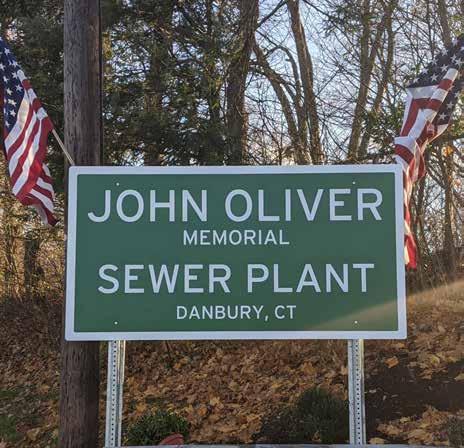
There were some concerns in the Hat City that helping their neighbors to the west would ultimately be a detriment to Danbury. But regionalism is far more nuanced than that. Of course, more businesses might open on the New York side, but as Vincent Tamagna, Project Manager for the project is quoted in the Patch
article – “It’s not like anyone will be building a large mall to compete with Danbury.”
In fact, growth on the other side of the state line could in the long run create more opportunities for housing, according to Tamagna. More housing in the greater Danbury Region, could mean more people coming over to Connecticut to shop at the mall or in our shops.
What remains to be seen is how this plan will work out. Although the letter of intent was signed, New York
officials still need to study the impact and develop a project, while in Danbury it needs the official ok from the City Council.
With nearly 30 towns and cities, or just over 15% of our towns bordering another state, is there room to imagine partnerships that benefit CT towns and cities that involve Massachusetts or Rhode Island too? For Danbury, even if all the economic development doesn’t happen on the CT side, it was an opportunity they didn’t want to let go to waste.
24 | CONNECTICUT TOWN & CITY | FEBRUARY 2023
The Economic Development section of CT&C is sponsored by New Haven Terminal, Inc.
DEVELOPMENT
Ivy League To Main Street
East Lyme looks once again to Yale Urban Design Workshop
CT&C is well aware of the value a main street provides its town. They are crucial centers of public gathering, economic development, and civic amenities. East Lyme is looking to an old partner in the Yale Urban Design Workshop in order to reinvigorate this crucial nexus of municipal life.
Founded 30 years ago at the Yale School of Architecture, the Yale Urban Design Workshop is a mostly student run design center that focuses on creating or fostering a sense of community in towns and cities. Their clients over the past three decades have reached as far as Jordan, Sweden and China, while the bulk of projects have been much closer to home.
East Lyme is no stranger to the Workshop. The Yale group has worked on projects in 1997 and 1998. The first on a general strategy that included the formation of
the Niantic Main Street group, and two other mural projects. This time around, the group was hired as part of a larger downtown revitalization efforts.
From an article in the Day, it was the Niantic Main Street group that decided to bring the Yale group back to help with the revitalization. For several months, representatives from Yale have been working on background research as well as engaging in talks with those who live and work in the area, per the Day article.
Two of the big decisions they will have to make moving forward is what to do about the old police station and the recently shuttered Niantic Cinemas, which have closed after seven decades in business.

The police station is a big concern for the town simply because the property has too many issues to
simply be reused. Mold, asbestos and lead paint make the costs overwhelming, as noted by First Selectman Kevin Seery. It is currently owned by Dominion Energy, but they are holding off on moving forward until the completion of the work.
The work is still in its early stages, and work will be ongoing throughout the spring, according to the Day. Their previous projects in East Lyme and around the state have shown successful, so many will be waiting with baited breath to see the path forward for their main street revitalization.
Only time will be able to tell if the work is going to be successful. But given the Yale Urban Design Workshop’s track record of success in Connecticut and in the world, this will certainly be a project worth remembering.
FEBRUARY 2023 | CONNECTICUT TOWN & CITY | 25
ECONOMIC
Skill
Up Program Brings Together Teacher and Student
Kysean Kellman of New Haven was working as a photographer in a seasonal position for a large company when he began to reconsider his career path and seek a more stable income.

His high school friend from Eli Whitney Technical High School in Hamden, Dyjah Hunter, a mechanical engineering student at the University of Connecticut and instructor with the Skill Up for Manufacturing program at Gateway Community College (GCC), suggested Kysean consider manufacturing. Hunter gave him an overview of the free five-week program, but his main takeaway from the conversation was that he would be working with metal. Still, Hunter’s enthusiasm for the program, which provides students with entry level industry credentials like OSHA 10 and LEAN Six Sigma, piqued his interest.
Possessing an interest in manufacturing, he decided to take the first step by signing up for the shortterm training, where he would soon learn about quality, parts inspection, and other topics. He found that manufacturing aligned with his long-term goals and was easier on his body, a factor that he considered after studying carpentry and working as a materials handler at Goodwill Industries in Hamden. Being open to trying new things, having patience and persistence, as well as a hunger for knowledge, Kysean, 19, found Skill Up to be a fit. The class provided reinforcement of complex concepts, taking
into account students with differing learning styles to deliver the course content in ways that crystalized new concepts.
Graduates of GCC’s Skill Up for Manufacturing are awarded 175 pre-apprenticeship hours for their training, 90 hours of which are hands-on, working on projects in the Eli Whitney Technical High School machine shop with Louis Roettger, the head of the machining department. Since 2018, the program has graduated twenty-two cohorts. A partnership with Workforce Alliance, GCC, Middlesex Community College, Eli Whitney Technical High School, and Vinal Technical High School, the program is designed to prepare the students with the skills necessary to begin a successful manufacturing career. The next cohort, beginning February 27, is actively recruiting.
Students work on employability skills and receive visits from local manufacturers currently hiring. The experience culminates with a virtual job fair where students meet and connect with employers. Students are prepped on what to expect and how to give a memorable first impression. Kysean found his breakthrough into the industry at Hobson & Motzer where he is employed as a machinist and will be participating in the upcoming CNC Bootcamp at GCC to reach his next goal of working as a CNC operator and programmer.
“Kysean definitely went beyond my expectations. Something I always look for in my students is
their willingness to learn. He would often seek extra help when needed to try to grasp the material. It’s important to learn the material and not just memorize answers,” Hunter said.
Program Coordinator Pam Walsh noted that students completing Skill Up training typically leave the program with multiple entry level job offers. She said that she has been particularly impressed with Kysean’s ambition.
“Kysean actively seeks out opportunities to further his knowledge toward a lifelong manufacturing career as a CNC machinist,” Walsh said.
For more information about Skill Up for Manufacturing at Gateway Community College, please call Pam Walsh at (203) 285-2142 or email pwalsh@gatewayct.edu.
26 | CONNECTICUT TOWN & CITY | FEBRUARY 2023
www.gatewayct.edu
EDUCATION The Education section of CT&C is sponsored by
Kysean Kellman
EDUCATION
All Day, Every Day
Waterbury adds 24/7 tutoring for students after pandemic learning gap
The pandemic is something we’re going to be talking about for a while. The effects are still ongoing, of course, but the after effects will continue to be felt in many areas. Education for instance has been impacted in ways that are still being realized. Waterbury Public Schools have partnered with Varsity Tutors to help give students a helping hand after several tough years.

All over Connecticut, students have fallen back in several key areas. According to the Department of Education, students in Grades 4 and 8 have seen declining scores in math and reading when compared to 2019. This is not just a Connecticut problem. Looking at 8th grade scores across the nation, only 10 states or territories saw scores remain the same from 2019, with the remaining 43 states or territories declining when it comes to reading. In Math the situation was direr – only two areas saw no change with 51 States or territories declining.
Recognizing this problem, Waterbury took the initiative to become more accessible to students. With 24/7 tutoring for students, any time a question arises, they can work with someone who will give them answers. That problem is multi-faceted and there are many areas of concern.
Part of the problem is the nationwide teacher short-
age. Speaking with WTNH, Brian Galvin of Varsity Tutors said that they have seen a growing trend of limited teacher interactions. With so many students per class, giving children the attention they need gets harder.
Another side is increased tardiness. Schools around the country have seen unexcused absences increase. Many towns and cities have focused attention on getting children back into the classroom, but both of these areas of concern speak to one primary issue: if a child has a question and there’s no one there to answer it, a teaching moment is lost.
With access 24/7, no student is left behind. They can contact a tutor with Varsity Tutors and work together on an issue. And it lessens the burden on the teachers who may be overwhelmed with demand and can’t offer that one-on-one learning experience that a child might need.
The final wedge of the past three years has been the digital divide. As our state has invested more and more in the infrastructure, breaking down the wall to better quality, lower cost access to high-speed internet, we can begin to focus on areas of importance.
Waterbury has asked itself what its children need and is meeting them where they are. Putting children first is always a great idea.
FEBRUARY 2023 | CONNECTICUT TOWN & CITY | 27
More Solar Panels
A good idea that hasn’t lost any shine
It’s 2023. Well into a technological revolution that has allowed us to adapt to new energy sources that are not only good for the environment but good for your wallet as well. Manchester is just the latest municipality to install solar panels on town buildings, and it’s likely that they won’t be the last.
Announced late last year, Manchester has put up solar panels on seven town buildings, mostly schools as well as the Water & Sewer Department. Schools are a common denominator in these projects because they usually do take up a lot of space with convenient flat roofs.
In their release on the project, they noted that the town expects to save over $100,000 in electricity every year. Over the 20-year lease period for the equipment, the savings will equate to millions of dollars, and could be more depending on how the markets respond. Most people saw a rising cost in their utilities this year.
This partnership is with the Green Bank through its Solar Municipal Assistance Program.

“The Solar Marketplace Assistance Program (Solar MAP) is the perfect program for towns or cities that don’t have the tools, resources or experience to pursue energy saving options with solar on their own.”
The program takes municipalities through the entire process in four easy steps: Engage, Design, Review, and Execute.
Broadly, they meet with the municipality and design a system based on your needs. Then after that is approved, the Green Bank solicits proposals and leads the project through completion.
The Green Bank pays for all the upfront costs, as they had done in Manchester, but they also own the solar array during the twenty year agreement. At the end of the lease, the town has the right to purchase the solar panels outright or enter into a new agreement with the Green Bank.
Solar Panels have an expected life over 20 years, with a common refrain of 25 to 30 years of usefulness. Every year the technology gets better, that lifespan can increase, so in a few years it might be that newer panels installed now can last beyond the advertised lifespan. This project is important for a multitude of reasons. One is that the barrier for entry is getting lower and lower each year. Right now through the Green Bank, you can save millions of dollars over the life of an agreement at no upfront cost.
Manchester itself understands this by partnering with the Green Bank Solar Municipal Assistance Program, but these are just retrofits. It bears saying that when they recently built a new school, it had factored green energy into the design. This won’t be the last project in CT where a town installs solar panels on a municipally-owned building.
28 | CONNECTICUT TOWN & CITY | FEBRUARY 2023 ENERGY
Energized Learning Experience
Hamden adds new HVAC with student help
At CCM, we’ve advocated for replacing HVAC systems in our public schools because of the important function they serve. Children simply learn better in healthier environments. But HVAC replacements have benefits anywhere they can be upgraded, including benefits to energy savings. Hamden was just able to secure funding for new HVAC units that will save them money long term.
In a program that combines education and energy, the town Engineering Department partnered with two interns from Hamden High School’s HECA Program (Hamden Engineering Careers Academy), Alexi Clouse and Ishnan Khan to draft the existing condition and start the design process, according to a press release from the town.
From that release, they say that HVAC units at the Town of Hamden Government Center are at the end of their operational lifespan of 20 years, and would need to be replaced.

Fortunately, in the time since they were last installed, the technology has improved to the point that they expect that “upgrading will result in approximately 25 percent energy savings, or a reduction in carbon emissions of at least 10 tons per year.”
Just to put that in perspective, that is $250 dollars in savings for every $1000 that would have previously been spent.
They will also be upgrading the exterior of the building, which they say will add to the energy savings. With the help of Congresswoman Rosa Delauro the town was about to secure $425,000 in federal funds for the project.
“It takes a great team of brilliant people to make a project come together,” Hamden Engineering Careers Academy Program Student Alexi Clouse said. “HECA greatly helped me improve my skills and allowed me to be successful during my internship. I am glad to have experience working on real world problems,” said
Hamden Engineering Careers Academy Program Student Ishnan Khan said, “I believe everyone needs to follow the path that leads to their passions, no matter how challenging or unique. Both HECA and this apprenticeship prepared me for the real world and inspired me to continue on my own journey. Truly grateful for this opportunity to serve my town.”
There will be obvious benefits to replacing their aging HVAC systems. Like in our schools, it will improve the air quality, and improve the daily lives of all that work in the building. But thanks to technological improvements, it will also help energy expenditures. In Hamden, that is a lesson to be learned, in their High School and Town Building.
FEBRUARY 2023 | CONNECTICUT TOWN & CITY | 29 ENERGY
Field Of Dreams
Miracle League building fields for all in Vernon and beyond
Everyone deserves to have fun. Part of growing up involves getting outdoors, participating in group activities and team sports, and living life. But many of our outdoor facilities are not built with inclusivity in mind. The Miracle League of Northern Connecticut has worked with the Cal Ripken Sr. Foundation to build one such field in Vernon.
The Miracle League announced a partnership with the foundation to construct a park at the Northeast School in Vernon, with the Foundation funding the actual park construction and assisting in fundraising efforts to maintain the field and add programming.
It will be what they call a “Miracle League Field,” one that “provides opportunities for children with physical and cognitive challenges to participate in recreational activities in an accessible, nurturing, and non-competitive environment where families can come together to cultivate new friendships and experience the joy of play.
Importantly, the field will be built with a “short turf” that is fully wheelchair accessible and cushioned, and the pitching mound and bases are painted onto the surface so that there are no raised obstacles.
All in all, “the goal is to make this field appear as
similar as possible to a typical little league field while allowing accessibility and safety for all.”
In addition to outfitting the field for baseball, there will be possible uses for soccer, kickball and lacrosse as well.
The Cal Ripken, Sr. Foundation was founded to “honor the legacy and life of Cal Ripken, Sr.,” one of baseball’s greats. The Foundation “prepares at-risk youth for life’s challenges by teaching them critical life skills such as teamwork, communication, work ethic, and respect.”
Miracle League Field would be able to host over 300 children with special needs according to their website, and over 1000 in Tolland County overall.

They hope to have up to six Miracle Leagues in the state of Connecticut. There are two other fields in Connecticut, one in West Hartford and one in East Lyme. There are over 200 miracles leagues nationwide.
It’s important that kids get out there, under the sun on a nice day. Participation in group activities is just part of growing up. Thanks to the Miracle League of Northern Connecticut and the Cal Ripken, Sr. Foundation, kids of all needs will have a place to grow and learn. But most importantly, have fun.
30 | CONNECTICUT TOWN & CITY | FEBRUARY 2023 ENVIRONMENT
ENVIRONMENT
Don’t Let A Good Idea Go To Waste
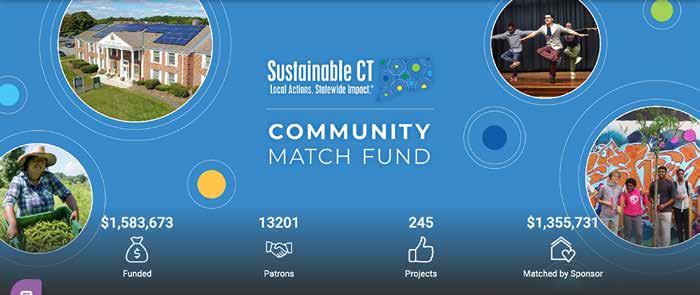
Sustainable CT Match Fund helps Southbury deal with trash
If you’ve followed CCM for the past several years, you know that we’ve kept an eye on the trash crisis unfolding in our state and beyond. We weren’t the only ones though, and Sustainable Southbury did a Sustainable CT Community Match Fund Grant to help tackle this issue.
Their reason for tackling trash is an obvious one then, and their plan is to go after food waste in trash first. That is becoming a more common thread throughout the state as municipalities and local organizations like Sustainable Southbury look for ways to lower the amount of trash they throw out.
“Gone are the days of throwing out our trash and never giving it a second thought,” they say on their donation page. “Our landfills are full, the Hartford trash burning plant has closed and many towns are now shipping trash out of state (expensive in both dollars and carbon emissions).”
They have decided that they will act instead of continuing to take stock in the problem.
Their reasons for going after food waste are becoming a common refrain:
• It makes up 22% of our trash
• Attracts rodents
• Increases methane in landfills
• Increases air pollution from trash burning & hauling
• Raises cost of disposal for all of us
That last one must have been a sticking point for
several dozen local residents as Sustainable Southbury was able to raise $6,785 from 83 supporters for a total of $12,875 with $6000 coming from the Sustainable CT Community Match Fund.
The funding will be used to educate local residents about reducing/eliminating food scraps in their garbage, to expand the food waste reduction program for food-based businesses in Southbury, and to start town-wide food scrap recycling pilots according to their press release on the successful funding round.
The inspiring thing about all of this is that Sustainable Southbury is run entirely by volunteers, and add to that the donations from the over-80 individuals, and you have a concerned community that is willing to step up to the moment.
They’ve also received three additional grants from the New England Grassroots Environmental Fund, the Community Foundation and the Tribury Rotary totaling an addition $6,740.
All it takes sometimes is a few dedicated individuals and the framework that Sustainable CT provides to help our towns and cities make the necessary changes for a sustainable future.
Like Sustainable Southbury, other organizations, nonprofits, individuals, municipalities and others in a Sustainable CT-registered town can look into a community match fund. Just email funding@sustainablect.org for more information.
FEBRUARY 2023 | CONNECTICUT TOWN & CITY | 31
Areas
Building A Game Plan
Greenwich Library Strategic Plan a model of success
The municipal library has been a trusty resource for town and city residents for decades since the first tax-supported library in Peterborough, New Hampshire. But has COVID changed all that? What does it mean to be a library in 2023? The Greenwich Library is asking itself those questions in their Strategic Plan 2023-2025.
CONNECTIONS
For them, the new starts with a goodbye, after nearly a decade of stewardship, Director Barbara Ormerod-Glynn has retired at the end of 2022. And in a way, the past several years have retired the old ways of doing things.
awareness-building to engage members in Library services and expand our use of volunteers. strategic, institutional approach to members connect with one another, background, age, or identity.
And that is reflected in their priorities cited in the Strategic Plan Document: “Recognizing our current transitional state and the forthcoming change in leadership, this plan calls for another comprehensive strategic planning effort to occur in 2025.”
They will assess their “Foundational thinking” while reconnecting with their membership after the pandemic.
a higher level of personalized connection to resources.
There are seven areas of focus: Community Connections, Patron Services, Technology, Programming, Collections, Space and Facilities, and Organizational Effectiveness.
modified services to best meet the
SERVICES and support current patron- and technologies.
Each of these areas of focus are divided into key points, deliverables and desired outcomes. In the first area, Greenwich is looking how to reconnect with their residents who were regular patrons before the pandemic, and reaching out to those who were not.

They want to market the Library as a “Place to access trusted advisors to help find reliable information.”
Greenwich residents have equitable technology.
Most folks over the pandemic social distancing have heavily relied on the internet to be their “librarians.” But as we have seen, there has been an equally huge insurgence of
5
55 COLLECTIONS
Reaching out to your local librarian is a way to find a welcoming environment and people you can trust to find your reliable information.



The process builds upon strategic plans that took place between 2012-2017 and 2018-2022. According to the current Strategic Plan, they assembled working groups to think about the “baseline conditions and potential priorities,” culminating in a meeting of all staff, members of their Friends groups, and Board of Trustees to hash out their ideas.
Fortunately, the library will be left in good hands as the plan takes shape. Deputy Director Joseph Williams has taken the reins to start 2023.
a. Ensure our collections reflect the Greenwich community’s diverse backgrounds and interests.
b. Promote our collections via related programming and partnerships.
6
66 SPACE AND FACILITIES
The lesson here is that good planning is consistent planning. Checking in on your department or institution on a regular basis will allow you to see where you need to improve, allow you to adapt, and most importantly, engage with those most important to you – members and employees. It’s a recipe for success, perhaps one you can find in a cookbook at the Greenwich Library.
a. Invest in targeted facilities improvements for Byram, Cos Cob, and Main.
32 | CONNECTICUT TOWN & CITY | FEBRUARY 2023 GOVERNANCE
PROGRAMMING
5 – 1 = Full Workweek?
Mansfield asks if four-day workweek works for residents
With each passing month, the four-day workweek is gaining steam. But for a municipality, how useful is it for residents? That is what Mansfield is trying to find out with a six-month pilot at town hall.
From January to June, Mansfield Town Hall will be open only four days during the week, while maintaining longer hours in the evening.
According to their website, they will be open Monday through Wednesday from 8:00 A.M. to 5:15 P.M. and Thursday from 8:00 A.M. to 6:30 P.M. – with exceptions for the Mansfield Public Schools central office, Eastern Highlands Health District, and Resident Troopers Office, as well as facilities like the library and senior center.
Many initiatives to implement the four-day workweek is piloted by organizations looking to study the impact on the employee. A global study by a group calling themselves 4 Day Week have suggested that companies that trial the shortened workweek had a positive impact on “company performance, productivity, and employee wellbeing,” according to reporting by the BBC, as the UK has been home to many such trials.
Of 70 firms, BBC said that 60 were going to keep the four-day workweek because employees were happy about the change.
Mansfield flips that equation to ask if they could still deliver everything that they need to on the shortened
schedule.
Mansfield Town Manager Ryan Aylesworth seems to think that they will.
Quoted in the Willimantic Chronicle, he said, “More and more organizations, more and more municipalities are implementing four-day workweeks.
“The benefits are certainly noteworthy for employees, i.e. work life balance, the ability to have more consecutive days off for things that are conducive for family life, for leisure activities. But also, our working hypothesis is that this is not just an employee-centered initiative, but actually a means for us to improve our service delivery to residents.”
Notably, this is accomplished with their longer work days. And unlike pilots in other fields, municipalities often adopt a schedule where employees work a longer shift to make up for the lost day. In this case, they’ll be open for approximately 38 hours.
As this idea catches on, it might become the norm in the same way that the two-day weekend caught on a century ago. In Maryland, lawmakers introduced a bill incentivizing the 32-hour work week without cutting pay with a tax credit.
Eventually, more places are going to have to wonder how it’s affecting their customer base. In the case of Mansfield, the very fact that they’re asking shows that they’re putting their constituents at top of mind.
FEBRUARY 2023 | CONNECTICUT TOWN & CITY | 33 GOVERNANCE
& INFRASTRUCTURE
Built on Track
Amid price swings, best practices are key for municipal construction
by Thomas Lambert, Pullman Comley
Amid price swings, best practices are key for municipal construction
While building a new school, fire department or public works facility is never easy, Connecticut municipalities have faced more challenges than usual over the past three years.
Materials and labor prices continue to rise rapidly in a nation gripped by inflation and a supply chain still reeling from the pandemic and global unrest. And the labor shortage many contractors are facing makes it much harder to remain on a target schedule.
Pullman & Comley construction litigation attorney
Thomas Lambert says it’s now more important than ever for Connecticut municipalities to follow best practices in order to keep construction projects on track. Below are five specific suggestions he has for municipal leaders embarking on construction projects.
1. Review insurance policies carefully
Municipal leaders are likely familiar with the ins and outs of insurance policies their town or city has taken out to mitigate risk on a given project, but how carefully do they look at the policies carried by the contractors that have been hired?
“Insurance policies held by the contractors on the project are just as important as the coverage held by the municipality,” says Lambert. “Oftentimes the contractors themselves may not be up to speed on their own policies, so it’s up to those managing the project to examine them closely and make sure that any eventuality is covered one way or another.”
2. Allocate risk
Contracts with third parties such as builders and architects should spell out who shoulders the burden if factors outside of everyone’s control drive up prices. Many contracts were found to be unclear on this when the Covid-19 pandemic hit or when inflation made materials more expensive, creating a host of problems.
“Failing to address risk in a contract can lead to all sorts of claims,” Lambert explains. “Even if the claims are invalid, they can prove a major hindrance to a project.”
3. If taking state funding, follow state guidelines
“Grant funding from the state is often what allows municipal projects to proceed in Connecticut,” says Lambert. “But it’s important to remember that with grant funding comes grant responsibility.”
While municipal ordinances may govern construction projects, state rules oftentimes supersede them. For example, many grants require that state guidelines must be followed during the RFP/RFQ process, which means using the state’s contractor portal. As the project progresses, it’s important to follow notification and approval requirements because failing to do so means payments could be withheld.
Those managing the project should be familiar with the relevant state offices such as Connecticut’s Office of School Construction Grants & Review. “The worst-case scenario is to discover an oversight or that the project deviated from its final plans and to have state funds held back when the project is already near completion,” says Lambert.
4. Account for maintenance
Especially in a climate like Connecticut, where temperatures range from 0-100, maintaining completed projects requires effort and funding. Typically preventative dollars go further than waiting for a crisis to build up.
“Warranties for the construction and materials often require diligent maintenance,” Lambert points out. “When a project is completed, take a moment to celebrate; then begin the ongoing project of protecting that asset through maintenance.”
5. Avoid over-promising and under-scoping
“While the budget of a municipal construction project may incur sticker shock at every stage of review, managing those reactions is easier than dealing with an inadequate facility five or 10 years down the road,” says Lambert. “You also don’t want to be too optimistic about how far the budget will stretch and find the project overextended very quickly.”
During the budgeting and scoping phase, it’s important to consider long-term scenarios such as population growth or decline, or how the surrounding environment could shift with additional development and climate change. Municipal construction projects have a longer horizon than private-sector projects, typically.
34 | CONNECTICUT TOWN & CITY | FEBRUARY 2023
HOUSING
Making Attentive Drivers
Towns and cities deal with distracted and dangerous drivers
Across Connecticut, towns and cities are asking themselves what they can do to quell the dramatic increase in traffic deaths. The most common tactic municipalities have used is a tactic known as traffic calming. Here are two common and popular ideas that have been proposed around the state:
The Roundabout:
CT&C has written before about the Roundabout, but they are still a foreign concept to many American drivers. That’s likely because they’re much more common and popular across the sea. But in a new master plan, West Hartford might be adopting the measure at one of their riskiest intersections.
The intersection at Main Street and Farmington Avenue is the site of common crashes due to the size and number of vehicles that pass through it. A roundabout won’t decrease the number of vehicles, but it will force them to consider what’s happening in front of them.
What roundabouts actually do is force drivers to pay attention. At a normal intersection, there aren’t any objects in the way, until there’s another car. A distracted driver could assume there’s nothing to worry about. But with a roundabout, drivers are forced to consider each next move because they simply cannot go straight.
Drivers should be paying attention, but we know they always aren’t.
Dealing with the Stroad:
In Hamden, they are asking what they can do about the Stroad. A portmanteau of the words Street and
Road, it is a place where low speed street functions meet high speed thoroughfares of roads. This can be a dangerous mix.
Both Dixwell and Whitney Avenues fit this definition at certain stretches and they have become the site of a majority of the town’s motor vehicle accidents.
The solution is often to make the stroad less like a road and more like a street. In partnership with their legislative delegation, Hamden is asking questions like – What if we cut down the width of lanes? And Can we make it easier to cross the street?
In an article from the New Haven Register on the plans, some folks are cited saying that they believe this will create more traffic, as well as that most accidents are caused by speeding drivers. Which raises a final question – are people who are caught in traffic ever speeding?
Conclusion
The idea of traffic calming often means to make driving more difficult so individuals pay more attention to the road, and making infrastructure more available to pedestrians. But there’s a whole toolbox of traffic calming solutions – many of which are available at the Project for Public Spaces website https://www.pps. org/article/livememtraffic
In West Hartford and Hamden, they are looking for traffic calming solutions because they need to. But they aren’t alone. Towns and cities around the state – especially since the pandemic – have been asking themselves what can they do. There are options, and they can let the roads do the talking.
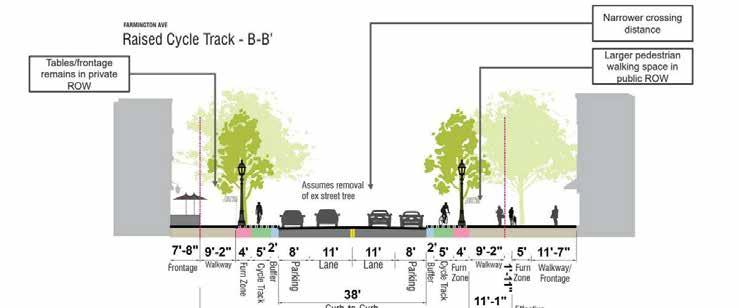
FEBRUARY 2023 | CONNECTICUT TOWN & CITY | 35
HOUSING & INFRASTRUCTURE
PUBLIC SAFETY
Protecting Our Children
Madison Public Schools put on “Campus Shield”
There’s no doubt that children’s safety is a top priority in our public schools, equal to the charge of educating them. But the question of what measures to put in place in 2023 is different than at any other time in history. Madison public schools adopted Campus Shield as one facet of response in their public schools.
Manufactured by National Protective Systems, Inc. (NPSI), Campus Shield is a panic button system not unlike those you would imagine as part of a bank’s safety system. The system works on RF technology – the same kind used by first responders – but just because this technology has been used before doesn’t mean that this idea isn’t innovative. In fact, Madison Public Schools is the first school district in the country to install Campus Shield according to a press release from the company and town.
And there’s a lot of thought that went into this decision: through regular evaluation of safety systems, Madison was looking for a technology that was more reliable than an aging system of hard-wired panic buttons, but many of the most popular alternatives didn’t match their high expectations.
The two most popular alternatives, Phone Apps and WiFi systems, were considered unreliable from the outset. Like so many places, cell coverage is inconsis-

tent and there could be no risk of a cry for help going unsent because of a lack of coverage. WiFi networks suffer some of the same inconsistencies as cell phone networks, and the off-chance that power was cut to them, they’d fail altogether.
Fortunately, RF technology is a consistent communication tool. That is precisely why it is trusted by first responders across the country. NPSI also says that it has a few other benefits such as reliable GPS, easy single press usage, and zero interference on town or school networks.
Tom Scarice, Superintendent of Madison Public Schools said, “We selected Campus Shield because we found it addressed the main concerns we had with competitive systems: reliability and ease of activation.
“We now know that no matter where you are on campus, even under extreme duress, help is one press of a button away.”

This is the peace of mind Madison public schools was looking for in choosing a response system. Within seconds, the Madison Police dispatch enter will receive the request for help.
In a crisis, time is a valuable resource. With Campus Shield, Madison Public Schools will garner precious response time.
36 | CONNECTICUT TOWN & CITY | FEBRUARY 2023
CAT Burglars
Shelton helps thwart catalytic converter thefts
Despite recent strides in protecting car owners, catalytic converter thefts are still a problem. The Shelton Police Department has implemented a new tracking method to help residents feel safe in the event that their car is vandalized.
Why are people stealing these car parts instead of just the cars? And what do they do? For starters, catalytic converters are an important part of the emissions control in your vehicle. They take pollutants and convert them into natural gases and other common – and safe – chemicals.
In order to do this, they use “metallic catalysts” such as rhodium, palladium, and platinum to perform these chemical reactions. And this explains why they are being stolen. According to an article in USA Today, rhodium can fetch as much as $20,000 per ounce, with the other two reaching around $3,000 and $1,000 per ounce respectively.
Thefts of catalytic converters in-
creased by 325% over the pandemic, according to that USA Today article, and Connecticut was no exception.
Rather than stealing a whole car, catalytic converters are easy to transport and aren’t easily trackable – but Shelton’s system will help in identifying these parts on the black market.
The CATGUARD/CATEtch system is a sticker that you apply to your catalytic converter that registers your cars part to a law enforcement database. Scrap dealers are able to access this system as well to ensure that if a part is being sold, it’s being sold intentionally.

One of the drawbacks of a sticker though is that you would be able to remove it. This system has a unique technology that renders that criticism moot.
According to their website: “Two ultra-destruct labels, laser cut with a unique code and the URL of a secure, accredited data-
base - the International Security Register (ISR) – are applied to a catalytic converter and will break into pieces If an attempt is made to remove them. In addition, a fluid that etches into metal is applied to the labels so that even if they are removed, the code and URL will remain clearly readable.”
Shelton purchased these kits for residents, 150 of them, and decided to start with seniors in town. They hope that in addition to helping catch thieves after the fact, the stickers will be a sign to prevent the theft in the first place.
While folks can still drive their cars without the catalytic converter, it can be noisy and would likely cause the car to fail an emissions test. Not only that, but they are expensive to replace. Today, this aftermarket system is a great start, and the Shelton Police Department is helping out their seniors by getting them in first. Perhaps one day, car manufacturers will install a system like this on the production line.
FEBRUARY 2023 | CONNECTICUT TOWN & CITY | 37 PUBLIC SAFETY
A catalytic converter is an exhaust emission control device that converts toxic gases and pollutants in exhaust gas from an internal combustion engine into less-toxic pollutants by catalyzing a redox reaction.
SOCIAL WELFARE
Can We Just Be Civil?
Adapted from Skippy Mesirow, at NLC’s CitiesSpeak Blog
Many local leaders decided to sign our Civility Pledge, which we started at our 2022 Annual Convention. There’s a recognition that action is required to make our politics less toxic and threatening in order to get folks to engage.
This article, adapted from the National League of Cities CitiesSpeak Blog, offers points on how to deescalate tension and improve dialogue as elected leaders from Skippy Mesirow, Founder of the Elected Leaders Collective and Aspen City Councilperson.
Follow this six-step-method and be empowered to reverse the trend. Results for your community will increase. When you are met with hostility:
1. Mind the Gap
Upon receiving incoming hostility, wait and listen deeply without thinking of your response. Let the speaker fully finish. Once they finish count to 5 in your head or take three deep breaths. Don’t worry, they will wait, and the silence will allow the respondent to settle and help them hear your words.
2. Ask a Question
Focus on the comment that triggered you most and inquire to clarify. A helpful prompt is “What I heard you say is ___, by this do you mean ____?”
3. Demonstrate Understanding
With your inquiry resolved and a dialog established, summarize the speaker’s perspective and rationale. Then ask, “am I understanding this correctly?”
4. Honor the Speaker
With shared understanding confirmed, thank the speaker from a genuine place. An example is “I appreciate you coming forward and sharing your valuable
time with us and respect your care for our community.” If there are elements of their comments you agree with, honor those, “I agree that _____.” Seek commonality no matter how small.
5. Share your Why
Now it is time for you to respond. Be honest, frank, transparent and share your rationale. “I hear what you are saying, I have taken it into account. With that…I believe this because _____.” Ask them if they can understand your perspective, if not agree. This will not always be possible. No matter what, thank them for engaging openly and honestly with you.
6. Follow Up
Find their contact information and thank them for their time at a later date. Close by opening the door to engage with you further on their terms.
Write these six bullets on a notecard and keep it in front of you at Council meetings to increase the likelihood of practicing this skill several fold.
It is this easy and it will take patience and perseverance. Don’t expect to get it right on the first or tenth try. Reactivity is normal and long entrenched patterns take time to unlearn. That’s OK, you’re human, so appreciate that in yourself. In practicing these six steps you will lower your stress, anxiety and burnout. You will provide a fruitful framework for others to follow. Your community will heal – slowly- and the results you seek in policy and outcomes will follow as a byproduct.
This is part of our work at the Elected Leaders Collective, an organization dedicated to ‘Healing our Politics”. We do mental health and well-being training for elected officials, staff and other mission-driven public sector workers. To learn more, visit them online at www.electedleaderscollective.com,
38 | CONNECTICUT TOWN & CITY | FEBRUARY 2023
Hartford Branford Haddam Fairfield Milford Mystic Stonington Simsbury Windham Ansonia Ashford Avon Bantam Beacon Berlin Bethany Bethel Bloomfield Bolton Bozrah Bridgeport Bridgewater Bristol Broad Brook Brookfield Brooklyn Burlington Canton Chaplin Cheshire Chester Colchester Colebrook Collinsville Columbia Cornwall Coventry Cromwell Danbury Danielson Durham Eastford Easton Ellington Enfield Georgetown Glastonbury Greenwich Groton Guilford Hamden Higganum Killingworth Lebanon Ledyard Litchfield Madison Mansfield Marlborough Middlebury Middlefield Middletown Moodus Moosup Morris Naugatuck Newington Newtown Niantic Norfolk Norwalk Norwich Orange Plainfield Pomfret Poquonock Portland Prospect Putnam Redding Roxbury Salem Scotland Sharon Sherman Somers Southbury Southington Stafford Stamford Sterling Stratford Terryville Tolland Torrington Wallingford Waterbury Weston Willimantic Willington Winchester Winsted Wolcott Woodbury EastGranby EastHaddam EastHampton EastHaven EastLyme EastWindsor NewBritain NewCanaan NewFairfield NewLondon NewMilford NorthStonington SouthWindham SouthWoodstock WestHartford WestHaven OldSaybrook CIVILITY Hartford Granby Branford Haddam Hampton Fairfield Windham Ashford Avon Bantam Beacon Berlin Bethany Bethel Bloomfield Bolton Bridgewater Bristol Brookfield Burlington Chaplin Cheshire Chester Colebrook Collinsville Columbia Cromwell Danbury Darien Durham Eastford Enfield Georgetown Glastonbury Greenwich Groton Guilford Hamden Higganum Killingworth Ledyard Litchfield Madison Mansfield Marlborough Meriden Middletown Montville Moodus Naugatuck Newington Newtown Niantic Norfolk Norwich Pawcatuck Plainfield Pomfret Portland Prospect Redding Rocky Salem Salisbury Scotland Sharon Sherman Southbury Southington Stafford Stamford Stratford Terryville Thompson Tolland Torrington Trumbull Voluntown Wallingford Waterbury Waterford Watertown Westport Willimantic Winsted Wolcott Woodbridge EastGranby EastHaddam EastHampton EastHaven EastWindsor NewCanaan NewLondon NewMilford NorthStonington SouthWindham SouthWindsor SouthWoodstock WestHartford WestHaven WestSimsbury OldSaybrook CIVILITY Hartford Branford Canaan Haddam Hampton Milford Mystic Stonington Simsbury Andover Ansonia Ashford Avon Bantam Barkhamsted Beacon Bethany Bethlehem Bloomfield Bozrah Bridgeport Bridgewater Brooklyn Canterbury Canton Chaplin Cheshire Clinton Colchester Colebrook Columbia Cornwall Coventry Cromwell Danbury Danielson River Derby Easton Ellington Essex Farmington Goshen Groton Guilford Harwinton Hebron Kent Killingworth Lebanon Ledyard Litchfield Madison Manchester Middlebury Middlefield Middletown Monroe Moodus Moosup Morris Newington Niantic Norfolk Norwalk Oakville Orange Oxford Plainville Plymouth Pomfret Portland Preston Prospect Putnam Redding Ridgefield Rocky Roxbury Scotland Seymour Sharon Shelton Sherman Somers Southington Stamford Sterling Suffield Terryville Thomaston Thompson Trumbull Washington Waterbury Watertown Wauregan Westbrook Weston Wethersfield Willimantic Willington Wilton Winchester Wolcott Woodbury EastGranby EastHaddam EastHampton EastHartford EastHaven EastLyme NewBritain NewCanaan NewFairfield NewHartford NewHaven NewMilford NorthBranford NorthHavenNorthGranbyNorthGrosvenordale NorthStonington WestHartford WestHaven OldLyme OldMystic OldSaybrook CIVILITY If you’re interested in CCM’s Civitlity Pledge, visit ccm-ct.org/Resources/CCM-CARES/Civility-Pledge
50/50 Campaigns Goals Are 100%
East Hartford realizes a more equitable democracy through programming

The goal of realizing a more equitable democracy is spreading. Towns and cities are realizing the need for increased racial and gender representation in their ranks in order to create a more equitable democracy. In a new initiative, East Hartford is partnering with the Hartford Region YWCA on a 50/50 Campaign to increase civic participation amongst marginalized communities.
The 50/50 Campaign was spearheaded by the YWCA Hartford Region as “an initiative to promote gender equity and racial diversity on municipal boards and commissions.”
They provide education for community members and encourage them to “participate in the decision-making process, and help improve the quality of life for women, those who identify as women, children, and people of color.”
The 50/50 name stems from their efforts to focus 50% on working with municipalities to reform policies, processes and practices to make them more equitable, and 50% on the community to ensure their voices are heard.
Currently, they are piloting this program with the City of Hartford, the Town of Bloomfield, and the Town of East Hartford.
In a public notice about the program, East Hartford encouraged folks to apply for several positions in town. These included Board vacancies on Planning and Zoning, Economic Development, Inland-Wetlands, Commission on Service for People with Disabilities, and Commission on Culture on Fine Arts. They created a very brief infographic – just six easy steps – to become a board member.
The 50/50 Campaign was in part devised as an answer to the passage of Public Act No. 21-49, that itself responded to the Secretary of
r e a r e g i s t e r e d v o t e r t o a p o l i t i c a l p a r t y .
F i l l o u t t h e E x p r e s s i o n o f I n t e r e s t f o r m a t w w w . e a s t h r t f o r d c t . g o v / b c a p p l y
R e t u r n i t t o t h e M a y o r ' s O f f i c e o r y o u r p o l i t i c a l p a r t y c h a i r .
R e c e i v e t h e e n d o r s e m e n t o f y o u r p o l i t i c a l p a r t y
B e v o t e d o n b y t h e T o w n C o u n c i l
the State’s Report on Gender and Racial Composition of Connecticut State Boards and Commissions in mid-2020.
CCM believes deeply in this mission. In that same year, CCM began its CCM CARES series which raised the voices of local officials of color. In turn, we partnered with the Campaign School at Yale University for Representation Matters. It is in its third year, helping hundreds of interested folks learn the ins and outs of running for office or serving on boards or commissions.
This is one of the most crucial proj-
G e t s w o r n i n a t t h e T o w n C l e r k ' s O f f i c e t o b e c o m e a v o t i n g m e mb e r o f y o u r c h o s e n B o a r d & C o m m i s s i o n .
ects in Connecticut and the country right now. The 50/50 Campaign quotes the late Congresswoman Shirley Chisholm, the first African American woman elected to congress, “If they don’t give you a seat at the table, bring a folding chair.”
It is about time that we started making the table bigger and more inclusive and stopped making people bring their folding chairs. Thanks to efforts like the 50/50 Campaign and its pilot partners, there’s more people than ever working to make that table as inclusive as ever.
FEBRUARY 2023 | CONNECTICUT TOWN & CITY | 39 SOCIAL WELFARE
V O L U N T E E R W I T H U S ! J O I N A B O A R D O R C O M M I S S I O N I N 6 E A S Y S T E P S : V i s i t t h e t o w n w e b s i t e a t w w w . e a s t h a r t f o r d c t . g o v / b o a r d s t o v i e w v a c a n c i e s I f y o u f i n d o n e t h a t i n t e r e s t s y o u , f e e l f r e e t o a t t e n d a m e e t i n g f i r s t ! M a k e s u r e y o u a
High Quality Internet Is Coming
Towns and Cities can expect investment in coming years
After years of naming the issue, the United States Commerce Department is kicking off an investment in equitable broadband internet. This will be a boon to areas of need – particularly underserved urban areas and rural areas that have no access at all. In what Senator Richard Blumenthal calls a “down payment,” the first grant is going to go to a planning phase where the Department of Energy and Environmental Protection will study the needs and possible implementation of broadband needs.
The Office of Policy and Management (OPM) was charged last year with developing a “comprehensive map of broadband accessibility and adoption by December 1, 2022.”
From their work, it shows that major portions of Connecticut’s Northwest Corner simply does not have access to quality high speed internet, with pockets elsewhere in the state including some notable patches in the East.
CCM partnered with OPM on one facet of this study by surveying individuals through our network to better understand the barriers to high speed internet.
For some residents of Connecticut, the barrier isn’t just a lack of access – meaning their neighborhood isn’t served – but a lack of equitable access. Internet might be available in their area, but it is not affordable or it is slow and unreliable.
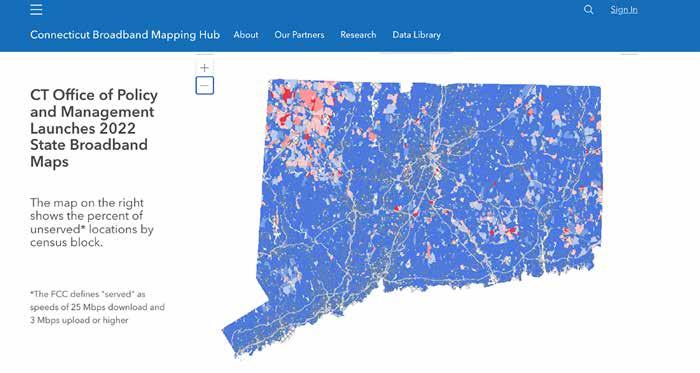
This early funding is a step in the right direction to helping our state reach full broadband access. And as noted, it is simply the start of funding. According to reporting from the CT Mirror, our state can expect $100 million in additional funding over the next five years. Quoted in their article, both Senator Blumenthal and the head of the National Technology and Information Administration said that the funding is contingent on learning how we are going to use it, with the latter explicitly saying “Before we write a $100 million check, we want to see a plan for how you’re going to spend it.”
Officials argued that simply getting internet connectivity to these underserved areas is not enough. Without the hardware to connect to the internet, connectivity alone is not useful. Around $750,000 is going to providing internet-enabled devices to “historically disenfranchised groups.”
This is an extremely important investment. As noted in the CT Mirror and several other sources, this movement to reach all of Connecticut with good quality high speed internet is akin to getting America electrified in the early 1900s. And, hopefully, one day we will look back in a time and place where everyone is connected and wondered how people lived without it.
For more information on the OPM study, you can visit this website:
https://ctbroadband-ctmaps.hub.arcgis.com/
40 | CONNECTICUT TOWN & CITY | FEBRUARY 2023
TECHNOLOGY



800.294.6837 | WinterEquipment.com | Join us online: This is Leroy
He knew he should have ordered his snow plow wear parts from Winter Equipment this year. There are lots of good reasons:
Winter is now offering its high quality replacement steel blades to dealers and users
carbide blades
compositions to
conditions
can supply cutting edges with custom hole patterns and sizes and in ½" x 6", 5 ⁄ 8 " x 6", ¾" x 6" blade size
save money with Winter! We offer 5 ⁄ 8 " blades for the price most
paying for ½"
drop shipping of orders over $10,000
Leroy ordered from the supplier he’s used before –with overpriced parts, average service and longer lead times. Don’t be Leroy. Order your Winter Equipment 2022 Catalog TODAY. Go to WinterEquipment.com/catalog or call 800.294.6837 080222 Connecticut Town and City Half Pg Ad.indd 1 8/2/22 9:32 AM Read the 2022 Directory of Products & Services at issuu.com/ccm_ct
We offer steel or
with multiple steel
suit any
We
You
are
Free
Instead,
I Can Do That
Norwalk partners with Verizon for AI Learning Lab
Anyone following the news has heard about the new artificial intelligence bots. Our future won’t be one of using AI, but working alongside it. So it’s important that we start thinking about what that future will look like. In Norwalk, AI, with virtual reality and augmented reality, has become part of the school curriculum.
The Verizon Innovative Learning Lab, a partnership with Verizon, Heart of America and the J. Orin Edson Entrepreneurship + Innovation Institute at Arizona State University, will be coming to Norwalk Public Schools.
Verizon writes that “selected schools receive wraparound support through technology, connectivity, professional learning, and access to a national community of more than 500 schools.”
“Schools receive financial and professional learning support for a full-time coach focused on helping teachers design and deliver hands-on learning experiences.”
This kind of hands-on learning is going to be crucial as we prepare students for future careers.
Currently, there has been a spate of articles on what we currently call software – things like ChatGPT and Bing’s new AI search – that communicate like living human beings. These stories are only just the tip of the iceberg of where companies like Google, Microsoft and others are when it comes to Artificial Intelligence.
Drug & Alcohol Consortium
The implications for real world learning are vast as well. One principal from Norwalk was cited in the Norwalk Hour, stating that a student could enhance a report about Ancient Rome by going to the learning lab and experiencing the city in Virtual Reality.
With this kind of technology, the possibilities are truly endless.
Superintendent Alexandra Estrella said in a news release that Norwalk Public Schools “are fortunate to not only add one but three Verizon Innovative Learning Labs to Norwalk Public Schools,”
“These learning labs will offer our scholars a state-ofthe-art facility to utilize the latest technology that will prepare them for careers in today’s top industries as well as the jobs of tomorrow. We thank Verizon for this wonderful partnership with Heart of America and Arizona State University and for entrusting our schools and our staff to offer these invaluable tools and skills to our scholars.”
Currently, only the three schools in Norwalk are participating in this program, and applications for this upcoming cohort are closed. But it might be worth looking into for future consideration. As we’ve seen over the past couple of months with ChatGPT and AI, the future is going to be here much sooner than we might have expected.
Complete, Cost Effective, and Convenient!
The Drug & Alcohol Testing Consortium, a program of the Connecticut Conference of Municipalities, offers many benefits to your municipality.
Comprehensive Coverage
Covers all testing associated with DOT regulations, plus the services of a medical review officer, substance abuse professional, training, record keeping, and more.
For more information contact Beth Scanlon, (203)946-3782 | bscanlon@ccm-ct.org.

42 | CONNECTICUT TOWN & CITY | FEBRUARY 2023
TECHNOLOGY
With miles of responsibility... only the testing should be random


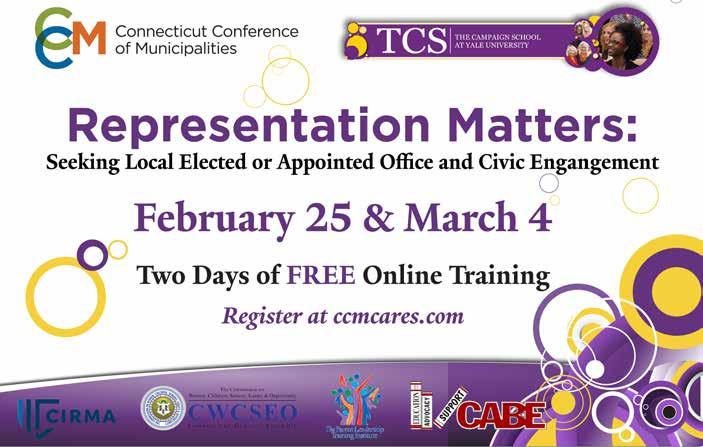
Attorneys and Counselors at Law Representing Municipalities Throughout Connecticut For Over 45 Years www.berchemmoses.com •Municipal litigation •Employment law •Land use and zoning •Development •A ordable housing •Public utilities •Eminent domain •Urban & Economic Development •Open-door public meetings •Ordinance drafting •Public purchasing – bidding requirements •Referenda •Elections •Drafting and enforcing regulations •Regulatory compliance With more than 30 attorneys in two locations, we assist numerous Connecticut towns and cities with: Westport 1221 Post Road East, Westport, CT 06880 Phone: 203-227-9545 Milford 75 Broad Street, Milford, CT 06460 Phone: 203-783-1200
EASY AS 1-2-3
Take the following steps to identify improvements and implement projects that add up to real savings for your community.
1 2 3
Eliminate contracting hurdles by leveraging ESC’s status as a pre-approved provider of energy efficiency retrofits and cost savings services with the Connecticut Department of Administrative Services.
Capitalize on a variety of incentive programs offered by local utility providers working with ESC to support project implementation, including interest-free financing for up to one million dollars per municipality.
Schedule a no cost, no obligation energy efficiency evaluations with ESC to review existing facility conditions, analyze utility usage and summarize recommendations and associated costs. ENERGY SAVINGS: esccontrols.com/ccm 18 Jansen Court, West Hartford, CT 06110 860-953-8800 esccontrols.com
