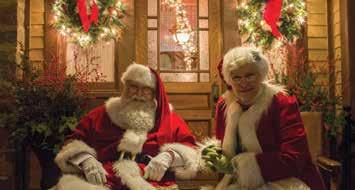
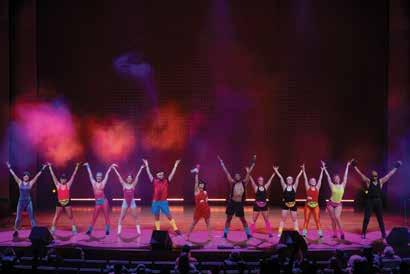
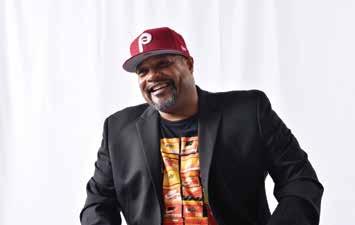
EIGHT NIGHTS, SCHMEIGHT NIGHTS! Break Out the Manischewitz! Old Jews Telling Jokes: The Hanukkah Edition is Coming for the Holidays
THE GREAT OUTDOORS by
Jeff Senterman
CALENDAR OF EVENTS
CATSKILL MOUNTAIN FOUNDATION 2025 PERFORMING ARTS SEASON
MOUNTAIN CINEMA INDEPENDENT FILM SERIES
DONATE TO THE CATSKILL MOUNTAIN FOUNDATION
SUGAR MAPLES CENTER FOR CREATIVE ARTS 2025 SNEAK PEEK
INDEX OF ADVERTISERS
DISTRIBUTION
Catskill Mountain Foundation
EDITORIAL DEADLINE FOR NEXT ISSUE: December 5
The Catskill Mountain Region Guide is published 12 times a year by the Catskill Mountain Foundation, Inc., Main Street, PO Box 924, Hunter, NY 12442. If you have events or programs that you would like to have covered, please send them by e-mail to tafts@catskillmtn.org. Please be sure to furnish a contact name and include your telephone number and e-mail address. To receive submission guidelines send a request to tafts@catskillmtn.org.
The liability of the publisher for any error for which it may be held legally responsible will not exceed the cost of space ordered or occupied by the error. The publisher assumes no liability for errors in key numbers. The publisher will not, in any event, be liable for loss of income or profits or any consequent damages.
The Catskill Mountain Region Guide office is located at 7971 Main Street, Hunter, NY 12442.
The magazine can be found on-line at www.catskillmtn.org by clicking on the “Magazine” button, or by going directly to issuu.com/catskillmtnregionguide
Alpine Endeavors/Marty Molitoris, Belleayre Mountain, T.M. Bradshaw, Laurence Braun, Didecs, Gracie’s Restaurant, Helsmoortel Realty, Jessie’s Harvest House, Michael Koegel, KUBA, Greg Madden, Maude Adams Theater Hub, Max Oppen, Pancho Villa’s Mexican Restaurant, Paul Schwartz, Jeff Senterman, SKI NY, Scott Snell, Studio Minimale, Sullivan County Visitor’s Association, Margaret Donsbach Tomlinson, Ulster County Tourism.
ADMINISTRATION & FINANCE
Candy McKee
Tyleane Benjamin, Hillary Morse & Ashley Olney
PRINTING
Catskill Mountain Printing Services
7,500 copies of the Catskill Mountain Region Guide are distributed each month. It is distributed free of charge at tourist information offices, restaurants, lodgings, retailers and other businesses throughout Greene, Delaware and Ulster counties, and at the Empire State Plaza Visitor Center in Albany.
Home delivery of the Guide magazine is available, at an additional fee, to annual members of the Catskill Mountain Foundation at the $100 membership level or higher.
All rights reserved. Reproduction in whole or part without written permission is prohibited. The Catskill Mountain Region Guide is not responsible for unsolicited manuscripts. All photographic rights reside with the photographer.
THE CATSKILL MOUNTAIN FOUNDATION 7971 MAIN STREET, P.O. BOX 924 • HUNTER, NY 12442
Whether you’re a winter warrior or a winterphobe, New York’s Sullivan Catskills is for you and offers a mix of cold-weather fun or indoor relaxation just 90 minutes from New York City.
Winter here can be exhilarating, relaxing, or both. A great way to embrace winter and chill out is by spending a few days at the newly opened Driftwood Ranch Resort. Located in White Lake, just a few miles from Bethel Woods Center for the Arts, this Montana-style horse and cattle ranch (currently in a soft-opening phase) offers you all the trapping of a Western lifestyle without the travel time. You can go horseback riding or hiking and watch daily life on the ranch unfold as cowboys care for livestock and train horses. You can even feed the longhorns. Cowboy owner Steve Dubrovsky tells us they love bagels! Accommodations include rustic, luxurious, and spacious suites with modern conveniences suitable for remote work.
Holiday Mountain Ski and Fun Park—now under new ownership of the Taylor family, long-time skiers, and local business owners—offers all-new trails, chairlifts, a learning center, and 12 snow tubing lanes. Long-term plans include 17 ski and snowboarding trails and a mountain of family adventure every season.
Ice fishing is a popular pastime when the lakes and ponds freeze over. Layer up in moisture-wicking clothing, including a
warm jacket, gloves, a hat, and insulated pants. Don’t forget your ice auger to drill holes and a set of tip-ups to drop your fishing line in the water. Most importantly, make sure the ice is at least four inches thick. Weather conditions permitting, don’t miss the popular King of the Ice contest on White Lake in February.
Put on a set of snowshoes to get your heart rate pumping on the trails. Trailkeeper.org can help you find trails that are suitable for various fitness levels. Another popular activity is eagle-watching on the shores of the Upper Delaware River. Up to 200 eagles winter here. The Sullivan Catskills Dove Trail is worth a tour in winter. The trail honors the 50th anniversary of the 1969 Woodstock Music and Art Fair held in Bethel and features 75+ handpainted dove sculptures. During your tour, you can stop in the quaint downtowns and at the craft breweries, wineries, distilleries, and cideries on the award-winning Good Taste Beverage Trail. There’s always Catskill-icious food. Some have live music, and one includes a trek up picturesque Beer Mountain.
If winter is a time for soul searching, introspection, and selfcare, or you just hate the cold, this area, long known as a haven for well-being, boasts wellness resorts, fitness centers, yoga and pilates studios, massage therapists, and naturalists.
Hemlock Neversink is a Foster Supply Hospitality project (Kenoza Hall, The DeBruce, and The Arnold House). The facility
sits on a 230-acre property, once called the New Age Health Spa. The reimagined 33-room facility beckons guests to experience Catskills restoration with an all-inclusive experience that includes access to 12 treatment rooms, a meadow-view gym, an indoor pool, hot tubs, saunas, a steam room, a sun deck, and a relaxation room. There are outdoor tennis courts and a goat sanctuary on the property to connect and engage with the animals. Outdoor trails are plentiful, and creative crafts and workshops promise rejuvenation and self-discovery. Mindful, healthy eating is at the core of Hemlock’s restaurant, Bittersweet. Says co-founder Kirsten Foster, “Our vision of wellness isn’t about achieving perfection. It’s about achieving happiness, having fun, and feeling restored.”
There are many options for health and wellness in the Sullivan Catskills—pamper yourself at Awana Spa at Resorts World Catskills or the Hemlock Spa at Kenoza Hall, or find wellbeing at The Chi Hive Studio in Narrowsburg, Mountaindale Yoga & Wellness, The Yoga Space, Somewhere in Time Retreat, Jurni Healing in Cochecton, or the Salt Cave at Crystal Connection.
There’s great family fun to cure your cabin fever at the Kartrite Resort and Indoor Waterpark where it’s always a balmy 84 degrees inside to enjoy the water rides and waterslides. There’s also arcades, 3D gaming, and virtual reality. There are 324 suites and eight dining options. Villa Roma Resort and Conference Center— with a fine selection of rooms and suites— features an indoor pool, game room, sports complex, bowling alley, bounce houses, and racquetball. Or try downhill skiing, snowboarding, and tubing. There are nearly a dozen dining options and cocktail lounges. Roscoe Mountain House is planning a bevy of winter activities. Check their website, RoscoeMountainClub.com, for updates.
Interested in a romantic couple’s winter escape? Consider a boutique inn. Many are located near the hip towns of Narrowsburg, Callicoon, Livingston Manor, Roscoe, and Mountaindale including Kenoza Hall, The Boarding House at Seminary Hill Cidery, The Stickett Inn, Chatwal Lodge, and Callicoon Hills. Plan to spend the weekend or take advantage of a discounted mid-week visit. For details on a cozy winter getaway, visit SullivanCatskills.com.
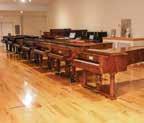
Piano Performance Museum
Featuring the Steven E. Greenstein Collection
The pool at Hemlock Neversink. Photo by Laurence Braun, courtesy of Sullivan Catskills
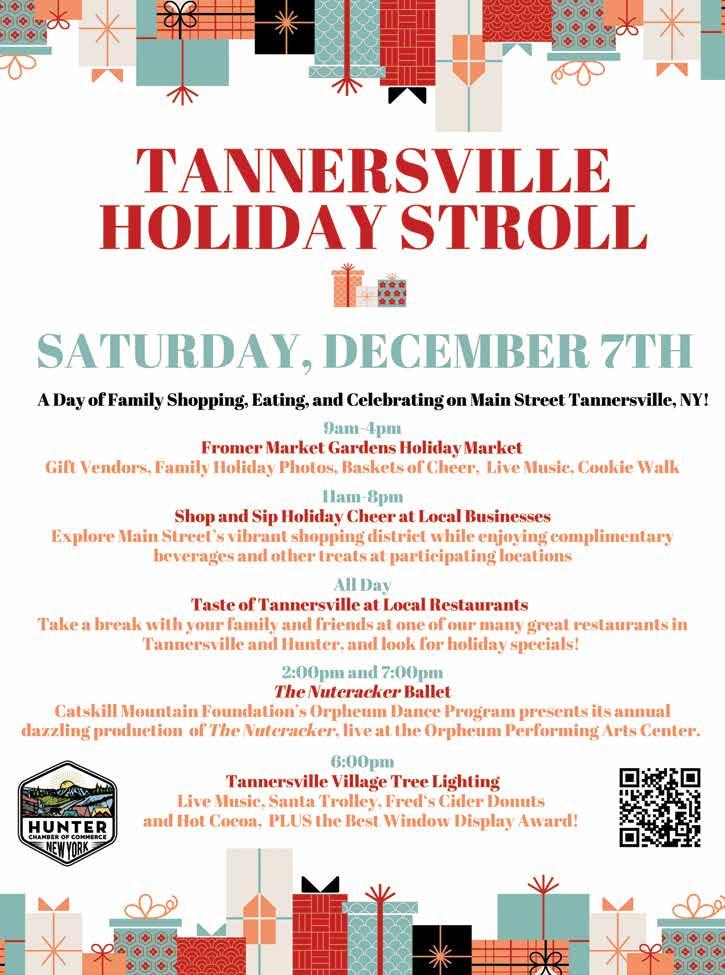
TANNERSVILLE HOLIDAY STROLL
Did you know that Tannersville has the highest elevation of any mountain town in the entire state of New York? So it shouldn’t come as too much of a surprise that the village will transform itself into a miniature North Pole on Saturday, December 7 as they celebrate the annual Tannersville Holiday Stroll.
The Holiday Stroll is Tannersville’s unofficial opening-day holiday celebration where visitors and locals alike can stroll down the town’s Main Street and encounter a variety of holiday-themed special events, give-aways, decorations and unique dining and shopping opportunities.
This year’s event promises to be larger than previous celebrations. “Tannersville has seen a higher than normal fall visitor rate this year,” says Amy Scheibe, events coordinator for the Hunter Chamber of Commerce. “This annual event beautifully showcases the hospitality of our little village, from food, to entertainment, to incredible shops and recreation,” she added.
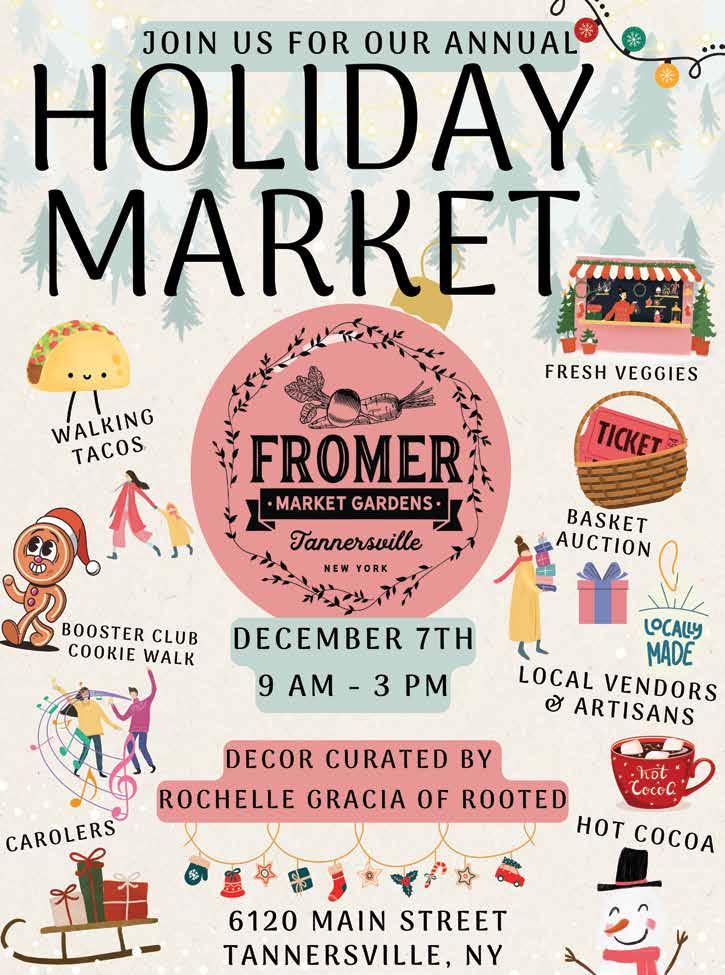
The festivities begin at Fromer Market Gardens on Saturday morning at 9:00 am, at their annual holiday market. The market will feature live music, free hot chocolate and cookies, and everyone will have a chance to get a “Snow Globe” photo taken with their loved ones. It will also be a festive scene to do some unique
holiday shopping; local purveyors will be selling homemade chocolates, wreaths, jewelry, local honey and maple syrup, spirits from Cooper’s Daughter distillery, one-of-a-kind ornaments, home decor, pet gifts, there’s even going to be a raffle. The kids will love the cookie walk, where you can treat yourself to an array of home-made cookies, and the local Booster Club will be providing their ever-popular “walking tacos.” And if you want to know what a walking taco is and how you eat one, you’re just going to have to show up and see for yourself.
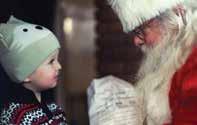
Of course, Santa will be making a special guest appearance, we’re still working on Mrs. Claus and Rudolph, but hey, you never know!. This year he’ll be at Mama’s Boy Burgers from 1:005:00 pm. Everyone is welcome to stop by, sit on the big man’s lap, tell him what you want for Christmas and take pictures. There will be a donation jar next to Santa’s candy canes, where you can make a cash donation to the local food pantry.
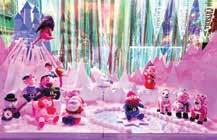
Then check out all of the store windows up and down Main Street, as many restaurants, shops and other businesses will be participating in Tannersville’s annual Christmas window display contest. The last few years have been pretty exciting as shop owners go all out to compete for the most festive window displays,
Saturday, December 7, 2:00 & 7:00 pm Sunday, December 8, 2:00 pm Saturday, December 14, 2:00 & 7:00 pm Saturday, December 15, 2:00 pm
which in previous years have featured beautiful winter landscapes, downhill skiers, and the entire cast of the Rankin/Bass Rudolph the Red-Nosed Reindeer television special.
As you wander down Main Street admiring the windows, you’ll notice that over the past 5-10 years Tannersville has grown considerably, with many great restaurants, shops and services, which is great news for visitors and locals alike. The town is humming these days, especially during the holidays. Celebrated fine dining restaurants have sprung up all over the mountaintop, as well as many new casual food and snacking options. (Don’t forget that there are also fantastic restaurants in Haines Falls and Hunter, each about a 5 minute drive.) The new eateries mingle with the popular favorites, which means a larger variety of options.
There is also quite a few more shopping options in town these days. While Tannersville has always been an antiquing destination, there are now trendy new gift shops and home furnishings stores, as well as places to buy games, puzzles and books for kids and adults; outdoor gear, flowers, second-hand clothing, candles and there’s even a place to get that Botox touch-up you’ve been meaning to get to.
Now, if all of this strolling, window-gazing and shopping has left you feeling a bit peckish, a handful of places will be providing free hot drinks and snacks to keep you fortified along the way. The Pantry will be giving out free holiday cookies and Mama’s Boy will be serving free hot chocolate all day. If you like your freebies to be more interactive, Rustic Mountain will be hosting a gingerbread house-making party (while supplies last) and serving hot cider and candy, and Camp Catskill will be offering camping and hiking demos and serving hot cider.
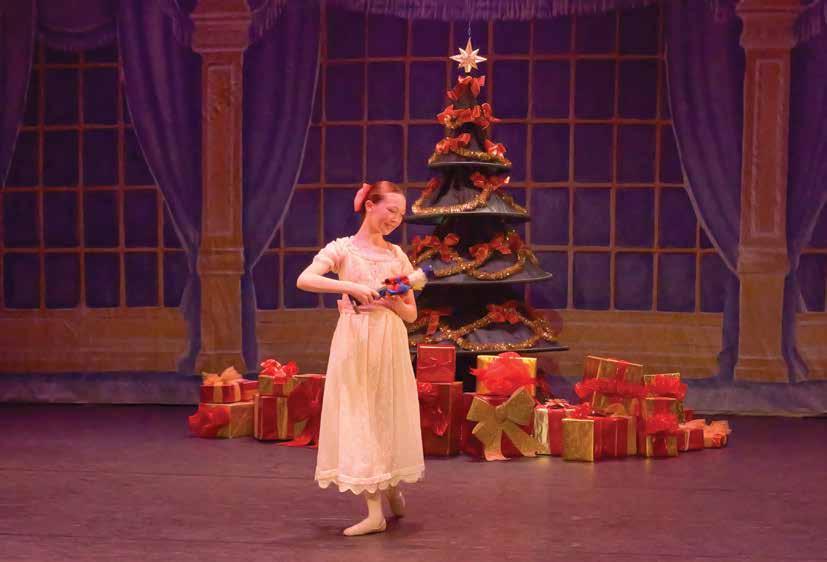
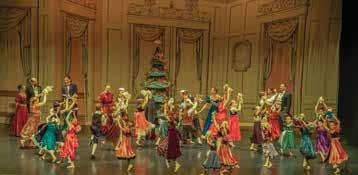
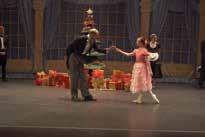
But the day is not all about shopping and filling your bellies, there’s art being offered as well. You have two opportunities that day to see The Catskill Mountain Foundation’s production of The Nutcracker at The Orpheum Performing Arts Center. Now in it’s ninth year, this production of the Orpheum Dance Program has become a holiday favorite in the Catskills and the Hudson Valley. Featuring local dancers and children alongside professional and pre-professional dancers from Joffrey Ballet School New York and Ballet Hispánico School of Dance, this gorgeous and nostalgic production has become one of the finest Nutcrackers in upstate New York. The opening performances are on the day of the Holiday Stroll, December 7. There’s a matinee at 2:00 pm, followed by an evening performance at 7:00 pm. Don’t fret, if you’re too busy shopping and eating your way down Main Street, performances run Saturdays and Sundays through December 15—visit catskillmtn.org for dates and times, and to purchase tickets.
And lastly, stick around for the village tree lighting at 6:00 pm, featuring a local caroling group who will lead you, and your friends and family in all of your favorite Christmas Carols (be prepared to sing!), Fred’s Donut Shop will be providing their renowned apple cider donuts and hot cocoa, and the Best Holiday Window Display award will be presented to the most deserving holiday window display. The prize? A trophy and very important bragging rights. There’s a also a rumor going around that the Santa Trolley might swing by as well.
After the tree lighting, many participating restaurants and stores will be extending their hours to accommodate diners and shoppers. And lucky you! You’re already in the middle of town.
THE SKI NY SKI & RIDE PASSPORT PROGRAM
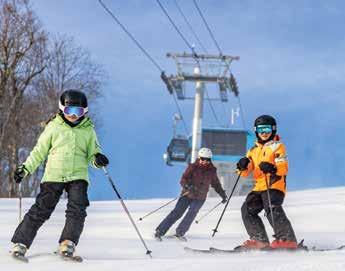
The SKI NY Passport Program-Kids Ski Free is back for the 2024-2025 Season! New this year is the program is good for 3rd, 4th and now 5th graders too … plus more ski areas are accepting it during holiday periods! Like in the past the Passport is valid seven days a week except for holiday periods at certain ski areas as noted. A full participation list, along with any exclusions, can be found at iskiny.com/ski-ride/ski-ny-ski-ride-passportprogram. In the Catskill Mountains, the Passport is accepted at Belleayre Mountain, Holiday Mountain, Plattekill Mountain, and Windham Mountain Club. Reservations are not required, but see the participating ski area list for specifics.
The program offers free skiing for your 3rd, 4th and 5th graders with an adult ticket purchase, and can be used up to two times per participating ski area. You do not need to be a New York resident to participate—kids from any state are welcome! A valid adult ticket purchase is one on the ski area website or at the ticket window and includes season passes as well. It does not include rentals or lessons. There are currently 31 participating ski areas in the program this season, with more to be added as the season progresses.
Since the 1999-2000 ski season, the SKI NY Ski & Ride Passport program has helped get over 50,000 kids to ski or snowboard with their families. The program has introduced a new generation to the lifelong activity of skiing and riding as well as creating family memories as a sport that everyone can enjoy.
These days, when kids spend most of their time in front of a screen inside, this sport encourages them to get outside and enjoy winter. It also gets parents who may have an interest in skiing or snowboarding to enjoy the sport with their kids or get them back on skis or boards if they haven’t been on them since before starting their family. It has been noted that children who start skiing or riding when they are young typically turn into skiers for life.
At the end of the 2021-22 ski season, over 500 parents responded to a survey given by SKI NY about how their kids enjoyed the program and if they would call themselves avid skiers. In almost all responses the parents noted that the kids enjoyed the program and would call themselves skiers for life. In fact, kids who started in the program in the inaugural year when it was called the “4th Grade Ski & Ride Passport Program” are now having their kids go into the program too!
Photo courtesy of Belleayre Mountain
During 2020-21, while other states stopped their kids’ programs, the SKI NY Board of Directors saw how important it was to get kids outside in the fresh air as a form of physical activity that they may not have been getting with schools shuttered. The Board decided to continue the program on weekdays only because of capacity concerns. Since many kids were learning from home instead of schools and parents were also working from home, parents were more flexible to take the kids skiing & riding during the week when crowds were less. This also gave the kids an outlet of having fun outside since all organized sports leagues and other facilities were shut down. Over 1,400 kids were able to take advantage of the program during the pandemic season and stuck with it since! Apply for the program at iskiny.com by clicking on the button that says “Click Here for Details and to Apply!”. During the process parents will upload proof of their child being in 3rd, 4th or 5th grade, provide a photo, and pay the $45 processing fee.
This year once again the Passport is a digital “card” that you can show on your phone or print off to take with you to the ski area and will include a photo of your child that you upload during the application on the Passport. Once your application is processed you will be emailed your Passport “digital card” that you can print or show on your phone. It is also available in your profile on our Passport system so you can access and email it to yourself anytime you wish.
Passport cards will arrive via email. It is also available in your child’s profile anytime too. Once you receive your Passport in
your email you can show the PDF on your phone or print and take with you to the ski area. The ski area will record the 16 digit number and once approved will give your child a ticket when you purchase one. If you purchase your ticket ahead online just take your child to the ski area with the Passport and present with your ticket at the ski area ticket window or guest services for redemption.
There are no refunds—regardless of injury, weather or other factor and other items beyond our control. There will be no credits given for the next season.
If there are questions about the program send an email to passport@iskiny.com.
At the iskiny.com website there are full details on the program, including a full list of participating ski areas and frequently asked questions. The website also includes the latest ski conditions and mountain information, as well as safety information including the “Your Responsibility Code” that all skiers and riders should read and understand to ski and ride safely.
For over 20 years SKI NY has been helping encourage a new generation of skiers and riders to enjoy the great sport of skiing and riding. As we enter the second generation the future looks bright for New York skiing and riding. To find out more information about the program and New York skiing in general go to iskiny.com.
BIG PRODUCTIONS IN A LITTLE TOWN
By T.M. Bradshaw
In 1892, a group of businessmen in Stamford proposed building an opera house. Summer tourism in Stamford had been growing for over a decade and a theater space would fill a number of needs, both for entertaining the village’s many summer guests from out of town and community functions all year long. The proposed building was to be 50 x 90 feet, three stories high, with a basement. The first floor was to be retail space for three stores. The auditorium itself was to have a 22-foot ceiling and removable chairs so that the space could be used for other functions, such as dances and fairs. As reported by the November 22 Mirror-Recorder that year, two-thirds of the estimated $12,000 construction cost had already been subscribed, with a target completion date of June 1893. The opera house was to be built on Railroad Avenue where the Hamilton House barns stood. As one Hamilton House barn still stands on that site, clearly that never happened.
Two years later the December 11 Mirror-Recorder published an editorial on the need for and advantages of having such a
venue. “If a town of 1,200 people can afford to be incorporated, have two or three parks, a dozen or two big boarding houses, water works, sewerage, electric lights, a good school and two newspapers, and can’t afford $10,000 for a nice opera house then the editor is mistaken in the public spirit which governs Stamford.” Perhaps so, because it didn’t happen for another six years.
In 1899 another site was chosen, behind the Main Street bank. The choice may seem odd, but the number of Stamford businesses had grown along with the tourist population and some deeper lots had second functions. In October of that year, those interested in building an opera house met and also organized themselves into a Board of Trade. The plan for the opera house was to be like the Oneonta theater, but 20 feet wider. This plan also had more seats than the original: 1,500, which could grow to 2,000 if the stage area was utilized. The acoustics in the new theater were said to be exceptionally good. As of June 1900, the expected seats were yet to arrive, so J. D. Dean went to Kingston
Interior of the Stamford Opera House from the 1901 Stamford souvenir booklet
in search of them. He found them parked on a siding, billed to the Kingston Board of Trade. Dean had them properly redirected and they were quickly installed. These followed the original plan of removable seats—units of several attached wooden folding chairs that made either reconfiguring or removing them simple. The Harpersfield Historical Society has at least one set of the chairs in its collection.
Charles Huiest of Troy, New York, created the curtain and scenery: two interiors, a kitchen and a parlor; two exteriors, a street and a forest glen; and a drop curtain of a local scene in Stamford’s Churchill Park. According to the website curtainswithoutborders.org, work done by Huiest is as good as that of the larger scenic studios in Boston, New York, and Chicago.
The July 21 and 28, 1900 editions of the Hobart Independent reported on the opening, noting that special excursion trains with late evening returns would run between Stamford and Oneonta to accommodate theater-goers wishing to see the first production, Belshazzar, a biblical tale of ancient Babylon. Similar excursion trains connected other villages to Stamford for the event. The Independent further reported that the people of Pine Hill were annoyed, resenting Stamford’s attempt to lure tourists from other villages and had torn down the Belshazzar posters and squelched information about the excursion trains.
Other events at the venue in 1900 included a ball, a fair to benefit Sacred Heart Church, and a lecture series presented by Stamford Seminary that included art, music, and a magician. A “cakewalk” presented by the waiters of the Rexmere Hotel was
Stamford Opera House from the 1904 Stamford souvenir booklet, behind the former bank building that fronts on Main Street
Full cast of the 1914 production of H. M. S. Pinafore
declared a disappointing fizzle by the August 31 Delaware County Dairyman that year. Governor Theodore Roosevelt spoke at the opera house on October 23. In November, people gathered to hear election results received at the railroad station by telegraph and then telephoned to the opera house.
In 1901 there was a vote to authorize the village to buy the opera house. It had cost $11,000 to build but would be offered to the municipality for $3,500; the vote was 46 for the plan, 69 against. A stone walk was added to the property in 1902. The village eventually did buy it.
For New Year’s Eve and New Year’s Day, 1903/1904, local talent presented the comic opera The Chimes of Normandy, a translation of the French Les cloches de Corneville, directed by Prof. Thomas Peaslee.
Touring acting companies and musicians played at the Stamford Opera House, but many of the productions continued to feature the talents of local people. The list of local entertainments was varied. In addition to dances, concerts, lectures, and large meetings, they also used the space for basketball games. Two games, as reported by the Oneonta Daily Star on January 28, 1921, saw the girls’ team from the State Normal School playing against the girls from Stamford Seminary and the Delhi Aggies playing the “regular” Stamford team—presumably by regular, the newspaper article was referring to boys.
July 1919 saw the opera house leased to William Smalley of Cooperstown. Smalley used the space to show films on every weeknight that it wasn’t in use for local entertainments. Shows were at 7:30 and 9:15, with the ticket prices of 11 and 17 cents, both prices including war tax. The following spring he contracted for another two-year lease.
Smalley ran 17 theaters and several dance pavilions in Central New York. An operation of that size required multiple
managers and Smalley sometimes shuffled staff around the region.
The Oneonta Daily Star reported on June 26, 1923, that “Smith McGregor has assumed the management of Stamford Opera House for Mr. Smalley, being transferred here from St. Johnsville.” In 1924, Smalley purchased a lot to build another theater in Stamford. At that time he also leased the Rip Van Winkle theater at the west end of the village.
Crime crept in here and there. In 1914, during a performance of Gilbert & Sullivan’s H. M. S. Pinafore, thieves lifted $15.20 from the pockets of coats left in the opera house cloak room.
In 1927, William Joseph Duffy of Kingston, under the assumed name Jean LaMar, contracted with Jack Goodwin, the manager then of the Smalley organization in Stamford, to put on a dance at the opera house featuring LaMar’s French Society Orchestra of Twelve. Duffy/LaMar never actually had an orchestra of his own, but hired musicians as needed for events, musicians who often then had to pursue Duffy/LaMar to get paid. He printed and sold tickets for the dance, appropriating the money for himself. The theater honored the fraudulent tickets and Goodwin had Duffy/LaMar arrested on a charge of larceny. According to an item from the Glimmerglass Daily, Duffy/LaMar was sentenced to 30 days during which time his mental state was to be assessed; his family had pleaded on his behalf that he had mental issues that compelled his behavior.
The Stamford Opera House was razed in 1954.
Information not attributed to a specific newspaper is from copious notes kept by Daisy DeSilva in her index of Stamford’s people, places, and businesses. The Daisy DeSilva/Anne Willis Collection is now housed at the Stamford Library.
T. M. Bradshaw shares other thoughts on history at tmbradshawbooks.com.
Left: Partial cast of the 1914 production of H. M. S. Pinafore. Right: Back cover of the playbill for H. M. S. Pinafore
The Arboretum at Bard College
By Margaret Donsbach Tomlinson
In 2004 Bard College recognized the importance of the many beautiful trees on its campus, some of which date to before its founding in 1860, by hiring professional horticulturist Amy Parrella. Her work and that of Bard alumna and trustee Betsey Ely led to the campus being accredited as an arboretum in 2007.
Perhaps the oldest tree on campus is a red and silver maple hybrid (Acer rubrum x saccharinum); it would have been a century old when the American Revolution began. Many trees native to the Hudson Valley grow at Bard, including American birch (Fagus grandifolia), black gum (Nyssa sylvatica), black maple (Acer nigrum), pin oak (Quercus palustris), red maple (Acer rubrum), sourwood (Oxydendrum arboreum), sweet gum (Liquidambar styraciflua) and American larch (Larix laricina).
The trees and other plantings at Bard give students a beautiful and healthful campus. They also serve the general public. To become an accredited arboretum, a site must have at least 25 different species or subspecies of trees and woody shrubs, must have a plan for maintaining and labeling them, and must provide access to the public. Bard is a level II arboretum, with 100 or more labeled species, a formal collections policy, and enhanced educational programs like the Story Stroll, a free meadow walk featuring pages from the children’s book We Are All Wonders by R.J. Palacio posted along a mowed pathway. Its programs also include a trial garden where in 2025 Bard students will begin
growing new flower and vegetable varieties to test their suitability for Hudson Valley gardens.
Another new initiative is a Native Plant Propagation Program. Teaming up with Vassar College, Bard will collect and save seeds from its many native trees, shrubs and other plants. Some are rarely available in nurseries today, like black maples (Acer nigrum), whose sap can produce high-quality maple syrup, and black gum trees (Nyssa sylvatica), which offer shade in summer, scarlet fall color, and small blue-black fruits relished by native birds from robins and catbirds to bluebirds and cedar waxwings. Plants from seeds collected at Bard and elsewhere will be grown at Vassar’s new Native Seed Nursery; its goal is to increase the availability of native plants adapted for our Hudson Valley climate and growing conditions. In just a few years, gardeners may be able to find more of these native species in local nurseries.
Members of the public are welcome to visit the Bard campus and arboretum in Annandale-on-Hudson, about 17 miles south of Catskill on the east bank of the Hudson River. Almost 1,200 acres in all, the campus is open daily from sunrise to sunset.
Margaret Donsbach Tomlinson enjoys gardening in Catskill. She also writes a weekly Substack series, The Generous Garden, online at mtomlinson.substack.com.
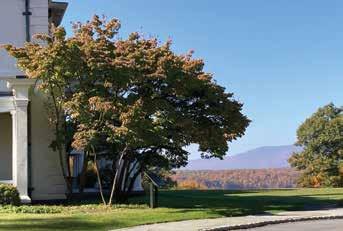
A large, old Viburnum nudum “Winterthur” at the 1899 Blithewood mansion at Bard frames a view across the Hudson River to the Catskill Mountains.
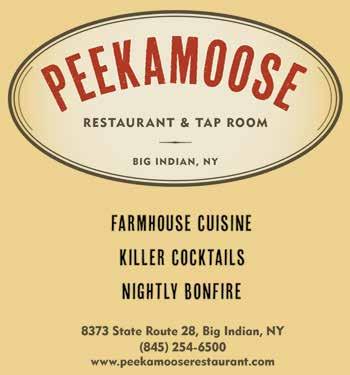
THE PEEKAMOOSE RESTAURANT AND TAP ROOM
By Michael Koegel
Back in my highfalutin, expense-account days living in Manhattan, I had a favorite go-to restaurant: The Gramercy Tavern. It’s a cheerful, welcoming space; great vibe, hip, but not pretentious, with consistently excellent food. Every time I ate there I felt like I was treating myself, so I went as often as I could. Entering the front room of that restaurant, with its bustling bar against one wall, giant windows looking out onto 20th Street, and the colorful handwritten chalkboard signs, you just felt the celebration in the air. Colorful murals of Warhol-esque fruits and vegetables acted as banners announcing the meal you were about to enjoy; you were guided past side-tables heavy with towers of cheese and mind-blowing flower arrangements. The servers, clad in white shirts and aprons, were gregarious, knowledgable and efficient. The food was seasonal and fresh. The place always felt like it was harvest time, regardless of the season.
Danny Meyer, the preeminent New York restaurateur whose innovation and philosophies have been a major influence to a generation of restaurant owners, produced this room. Meyer set out to create an entire experience for the diner which he felt was made up of three equal and essential components: food, service
and atmosphere. To this day, the front room of the Gramercy Tavern hits all the right notes every time.
Sure, you could sit in the more formal dining room in the back with its white tablecloths, dim lighting, and slightly elevated menu, but you always felt a little bit like you were missing out on the party; the festivities were happening up front. It was my favorite room in Manhattan, and where I had my farewell dinner before moving to The Catskills.
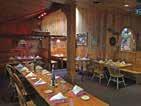
Incredibly, the first night we dined out after moving to Big Indian in the Catskills, we stumbled into The Peekamoose. The front room of The Peekamoose, which is also the bar, has a very rustic, authentic vibe. A translucent mural of a light green forest scene behind the bar sets the tone, solid wooden banquettes line the walls, intimate high tops fill the center the room, and there is a even little cubby off to one side with only a few tables that feels like a private party room. People are always eating at the bar. Cocktails are shaken, meals are being shared, everyone seems very content. The service is gracious and friendly without ever being intrusive. The food is hearty rustic fare, made with seasonal ingredients sourced from small local farms.
All photos courtesy of Peekamoose Restaurant and Tap Room
The main dining room serves a different menu, but you can order from either if you ask. This room is more spacious, with eclectic art, some of it very architectural. In fact, the entire restaurant has a very tactile feel to it; you want to touch everything. The dining room might be slightly quieter than the bar, but it’s not stuffy, there’s not a single white table cloth in sight.
I like to think of The Peekamoose as The Gramercy Tavern of the Catskills.
And that’s no coincidence.
Devin and Marybeth Mills, the owners, were both restaurant professionals in Manhattan when they met. Devin, the Chef, has worked in the kitchens of Eric Ripert’s Le Bernadine, The Hudson River Club, and yes, the Gramercy Tavern, where he worked in all stations of the kitchen but was primarily known as the restaurant’s saucier. Marybeth, who serves as the face of the restaurant and runs front of house operations, has worked as either manager or operations manager at a variety of fine dining establishments known for their hospitality and service such as Picholine and Remi.
That first night we ate at The Peekamoose back in, what, 2005?, Marybeth greeted us at our table and walked us through the menu. We introduced ourselves as her new neighbors (we lived within walking distance), and she immediately sat down to chat with us. Every time we ate there after that, she sat with us for a few moments and chatted about who-knows-what. We always left feeling seen, like we had received special treatment and we
were, just by being us, VIPs. I’m sure that every diner who has walked into the Peekamoose at one time or another has a similar story to tell.
Marybeth attributes both her and Devin’s proclivity for restaurants and hospitality to their childhoods. Each of them coming from large families, she explained, they were rarely afforded to opportunity to go out to dinner, but when they did it was always a special occasion, “That feeling of how special it was to go out to dinner has remained with both of us,” she said, “and we want our guests to have that experience.” It might also be that since Devin was born on Christmas Day and Marybeth’s birthday is New Year’s Eve, they’ve got celebrating in their blood.
Marybeth and Devin always knew that they wanted to open their own restaurant back in the days when they were working in other people’s restaurants. They looked in Brooklyn and Jersey City but the rents were prohibitive. Then, visiting relatives in the Catskills one day—Devin went to high school in Haines Falls—they drove by a vacant, rundown restaurant on Route 28 and saw the “For Sale” sign out front. “The place had been empty for years,” says Marybeth, “it was full of raccoons and bugs. But it had this really good energy, you know? The space had been a successful restaurant before and you could feel that.”
They scrounged up the money to buy the place and moved into the ramshackle apartment above the restaurant and got to work. “We lived on tuna fish sandwiches,” she said. “There were days when we either had money to eat or to buy a can of paint, and we always bought the paint. We were never that broke, but we were never that happy.” They raised walls and ceilings, and repurposed any salvageable objects they found. One of Marybeth’s proudest decorating inspirations is what she calls her Louise Nevelson wall. While staring at a blank wall in the back of the restaurant, Marybeth nailed every found objects she could find to the wall: tools, pieces of broken furniture, then she painted the entire wall a monochromatic grey. It’s still there.
It might be hard to remember, but back in January of 2005, when the Peekamoose opened, dining out looked a lot different than it does today, from the cellophane-wrapped miniature breadsticks, to the iceberg lettuce salads with a single cherry tomato, to a bowl of corn that had spent the past few months in the deep freeze. The Peekamoose changed all that in the Catskills. They were culinary pioneers; the OG farm-to-table restaurant back in the day when farm-to-table actually meant farm to table.
Devin’s philosophy in the kitchen is a simple one: let the ingredients speak for themselves, and never serve precious or pretentious food. He calls it “Farmhouse Cuisine.”
Since everything is fresh it has to be local, and the Peekamoose is committed to not only using small farms, but to work-
ing with farms that might not otherwise compete with larger operations. They get their micro-greens from RSK Farms in Prattsville, which refers to itself as a “boutique farm stand,” and their poultry and some of their meats come from Snowdance Farm, an environmentally friendly, socially responsible farm in Sullivan County. They are also quite proud of their selection of local draft beer from local breweries like West Kill Brewing, Arrowood Farms, and Catskill Brewery.
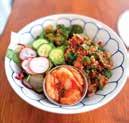
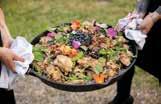
On the Monday night we ate in the front bar, the place was mobbed. Still, in all of the chaos, we still had our cocktails ive minutes after we sat down. I had a cocktail named “Tattooed Genius” because I liked the name, and because it’s main ingredient was bourbon. For starters Andrew had the grilled cucumber, I think because neither of us had ever seen it on a menu before. The cucumbers were sliced vertically which showed off the char marks, and were served with feta cheese, lime and fresh mint, a very refreshing salad. I got what I always get as a starter there, the 12 Ingredient Chopped Salad; I don’t know what the 12 ingredients are and I don’t know what it dressed with, but I think it’s the perfect salad.
I had a perfectly cooked piece of Arctic Char, which is a light fish somewhere between salmon and trout. Andrew had the Housemade Gnudi with a fresh tomato puree, pine nuts and pecorino/romano. The gnudi were light and soft, an the tomato puree was mild but flavorful, a very light pasta dish.
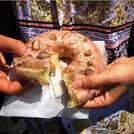
For dessert, Andrew had the Steamed Carrot Cake. It was shaped like a tall Christmas pudding, and was somehow steamed before it arrived at the table so that the entire cake was warm and moist. He was still talking about that dessert the next day. I had the Brioche Donut which came covered in a warm chocolate glaze and the center was filled with ice cream, so that you had to eat it with a spoon. A donut you have to eat with a spoon? I’m all in.
And finally, what kind of a name is “Peekamoose?”
“Everyone told me that it was a terrible name and we should change it,” said Marybeth. “But we wanted a name that was playful and didn’t take itself too seriously. I looked at all the names of the mountains and thought, ‘I’m not calling it Thomas Cole.’ ‘Peekamoose’ means ‘talking water’ and I liked that.”
Any downside to the name? “Yeah,” she said, “people keep giving me moose-themed presents. I’ve got tons.”
The Peekamoose Restaurant and Tap Room is located at 8373 NY-28 in Big Indian. They are open Thursday, Sunday and Monday from 5:00 pm to 9:00 pm, and on Fridays and Saturdays until 10:00 pm. They take reservations for the main dining room, but the bar and outdoor seating area first come, first served. For reservations go to PeekamooseRestaurant.com. Note, Marybeth and Devin give their staff time off before the holidays, so they will be closed December 9 through December 18.
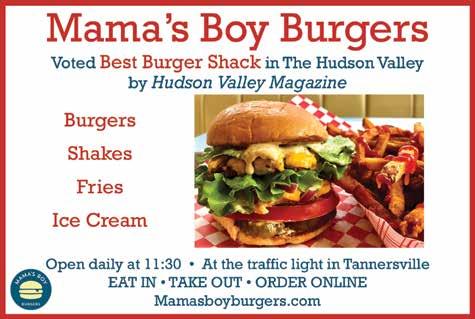
Michael Koegel is a writer, director and producer. He owns Mama’s Boy Burgers in Tannersville.
Celebrate THE HOLIDAYS IN THE CATSKILLS!
ART GALLERIES
Clouds Gallery
1 Mill Hill Road
Woodstock, NY 12498
cloudsofwoodstock.com
845 679 8155
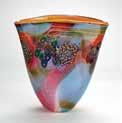
A contemporary craft gallery representing the finest in American Crafts including handblown glass, handmade sterling silver and gold jewelry, as well as ceramics and more. A well curated collection of both functional and sculptural items, unique one of a kind jewelry pieces and decorative items. Whether you are looking for a Wedding, Birthday, Anniversary, Holiday, or special occasion gift, we can help you find the perfect one. Located in the center of town, Clouds Gallery has been a staple of the Woodstock community for 50 years.
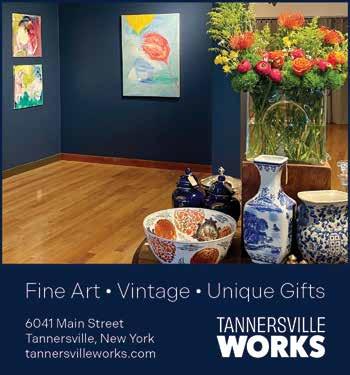
Tannersville Works
6041 Main Street
Tannersville, NY 12485
tannersvilleworks.com
518 589 4017
Tannersville Works is the leading art destination in the Northern Catskills. Immerse yourself in a unique and inspiring creative experience at our stun-
ning gallery, dedicated to bringing the best of contemporary art to our Catskills community. Our gift shop also features a thoughtful collection of new and vintage items including, fine art, beautiful housewares, apparel, hand-crafted candles, jewelry, bespoke gifts, and so much more!
Windham Fine Arts
5380 Main Street
Windham, NY 12496
windhamfinearts.com
518 734 6850
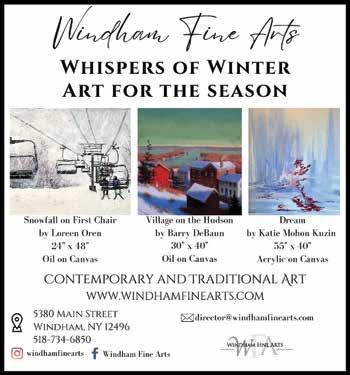
Windham Fine Arts (WFA) is a contemporary art gallery located in the heart of the Catskills, at the base of Windham Mountain Club. Now in its 22nd year, WFA represents more than 60 artists showcasing a diverse collection of original paintings, photography and sculptures. The gallery offers 3,000 square feet of curated artwork exhibited in inspiring landscapes, abstracts, figuratives, Hudson River School style and more. Windham Fine Arts—a unique gem of artistic inspiration. Open 12:00–5:00 pm. Consultation for custom artwork is available.
ART INSTRUCTION
Woodstock School of Art
2470 Route 212
Woodstock, NY 12498
woodstockschoolofart.org
845 679 2388
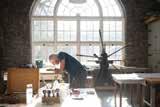
The Woodstock School of Art (WSA) offers excellence in fine art instruction, inspires creativity in a welcoming community, building on its rich artistic lineage and unique historic setting. Our goal is to provide students (ages 11 – adult) throughout the region, NYS, and beyond with instruction in drawing, painting, printmaking, encaustic, and sculpture through studio and online courses led by professional artists.
Sugar Maples Center for Creative Arts
34 Big Hollow Road
Maplecrest, NY 12454
sugarmaples.org
A program of the Catskill Mountain Foundation, Sugar Maples Center for Creative Arts offers short term adult workshop programming in ceramics, painting, drawing, fiber arts and weekly classes in ceramics and fiber arts during the summer season, as well as year-round short courses for adults and youth in ceramics, painting, and drawing.
Catskill Mountain Foundation’s Piano Performance Museum
7971 Main Street
Hunter, NY 12442
catskillmtn.org
518 263 2063
The Catskill Mountain Foundation’s Piano Performance Museum is the home of the Steven E. Greenstein Piano Collection, a one-of-a-kind collection of historic pianos and musical artifacts. A destination unlike any other in the United States, the Piano Performance Museum offers a unique glimpse into the development of pianos in Europe and America over the past four centuries. Open on Fridays and Saturdays 11:00 am to 3:00 pm by appointment.
Ulster Savings Bank
68 Mill Hill Road
Woodstock, NY 12498
ATM available Ulstersavings.com
845 679 8384
Ulster Savings Bank is a locally focused and operated mutual savings bank with locations throughout the Hudson Valley. As a bank with no stockholders, our profits are reinvested back into the communities we serve. We are proud to be
the recipient of numerous community awards reflecting our belief that helping community changes lives. We invite you to stop by our location in historic Woodstock and say hi to branch manager Alexis Nastaszewski. Experience the local difference with US and bank where you matter. Briars & Brambles Books
BOOKSTORE
Route 296 & South Street
Windham, NY 12496
briarsandbramblesbooks.com
518 750 8599
Your go-to Indie Bookstore in the heart of the Catskill Mountains. Briars & Brambles Books is a dream come true for owner & Windham resident, Jen Schwartz. Jen has combined her love of books with her experience as a long-time library volunteer and past library board president to create an inviting, knowledgeable and professional atmosphere. The team understands that being a bookseller involves so much more than simply “selling books” and is committed to providing unparalleled personal attention.
Photo by Jeff Langford
BUTTERNUT SQUASH SOUP
Recipe courtesy of Chef Phil DiFalco
Jessie’s Harvest House, Tannersville
2 tablespoons butter
1 small onion, chopped
1 stalk celery, chopped
1 medium carrot, chopped
2 medium potatoes, cubed
1 medium butternut squash, peeled, seeded, and cubed
holiday RECIPE
1 (32 fluid ounce) container chicken stock
1 pint heavy cream
salt and freshly ground black pepper to taste pumpkin seeds for garnish cinnamon (optional)
In a large soup pot, melt butter over medium heat. Add onion, celery, carrot, potatoes and squash and cook until lightly browned (about 5 mins).
Pour in enough chicken stock to cover vegetables and bring mixture to a boil over medium-high heat.
Once boiling, stir in the heavy cream slowly. Cover pot and allow it to a simmer. Cook until vegetables are tender (about 40 mins).
Transfer soup to a blender and process until smooth.
Return to pot and stir any remaining stock in to reach desired consistency.
Season with salt & pepper. Garnish with pumpkin seeds and cinnamon if desired.
Serve & Enjoy!
CAR DEALERSHIP
Thorpe’s GMC
5964 Main Street
Tannersville, NY 12485
thorpesgmcinc.com 518 589 7142
Thorpe’s unmatched service and diverse GMC inventory have set them apart as the preferred dealer in Tannersville. With a full-service team of sales and service professionals, visit them today to discover why they have the best reputation in the area. They offer one of the largest GMC inventories in New York, and their trained sales staff will help you every step of the way.
COMMUNITY RESOURCES
Main Street
Community Center
5494 NY-23
Windham, NY 12496
mainstreetcenter.org 518 734 4168
The Main Street Community Center strives to build a caring, welcoming and inclusive environment to benefit all of the communities on the Mountain Top. Centrally located in Windham, the building contains multiple rooms, including two bathrooms (one is handicap accessible), a large sitting area, a conference room, individual workspaces with computer monitors and a large screen TV, free WIFI, access to printers, and a studio for creative activities. The Artist’s Hideaway
provides individual lockers for artists to safely store their supplies. There is plenty of on site parking. The Center has an ever increasing offering of classes, programs, and events for people of all ages.
Phoenix Web Collective
7947 Main Street
Hunter, NY 12442
phoenixwebcollective.com 518 628 5101
Mutual aid resource on the mountain!
Local artist shop, makers’ space, and our free mart, where you can get gently used and vintage clothing, home goods, food, toys, books, music, movies, jewelry, electronics, and more for free or pay-what-you-can. We also host small events and workshops. All are welcome!
FARMS & FARM PRODUCTS
Pure Catskills purecatskills.com
A buy local campaign developed by the Watershed Agricultural Council to improve the economic viability of the community, sustain the working landscapes of the Catskills and preserve water qual-
ity in the NYC Watershed. Pure Catskills works to promote hundreds of farm, forest and local businesses throughout the Catskill Region. Search their website for local products, or pick up a copy of the Guide to Pure Catskills Products!
FISH & SEAFOOD
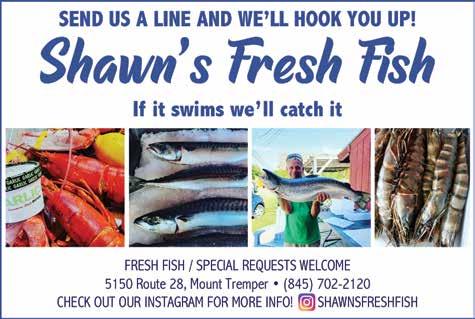
Shawn’s Fresh Fish
5150 Route 28
Mount Tremper, NY 12457
On Instagram: @ShawnsFreshFish 845 702 2120
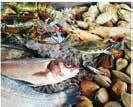
Located at the Migliorelli Farm Stand. We carry a large selection of fresh fish and seafood. Also, try our fresh made soups, salads and locally smoked fish. Requests welcomed.
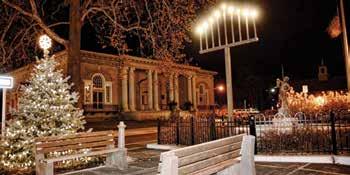
Holiday on Huguenot
Street.
Photo courtesy Ulster County Tourism
FLORIST
The Blumen Haus Florist
Prattsville Plaza: 14520 Main Street
Prattsville, NY 12468
theblumenhausflorist.org
Find Us on Facebook 518 248 4743
A locally owned and operated floral boutique dedicated to creating stunning floral arrangements and providing exceptional service to our customers. What sets us apart is our commitment to quality and personal attention. We select the freshest, most vibrant blooms from local growers and global markets to ensure that each arrangement is of the highest quality. Our experienced florists have an eye for detail and a passion for creating unique, eye-catching designs that will exceed your expectations.
GARDEN & NURSERY
9W & Van Kleecks Lane
Kingston, NY 12401
AugustineNursery.com
845 338 4936
Since its beginnings in 1974, Augustine Nursery has grown to become one of the leading residential and commercial landscape design firms and the “nursery of choice” among high-end landscape architects, inde-
Augustine Nursery
pendent contractors and discerning homeowners. We offer a stunning selection of larger scale, estate-grade trees, shrubs and plants. We also offer a full menu of nursery services, from planning and design to installation and dress finish for greenscapes and hardscapes.
Gardens by Trista
176 Polen Hill Road
Gilboa, NY 12076
gardensbytrista.com
607 588 6762
Gardens by Trista is a full service landscape company focused on providing each client with the individualized landscape or garden of their dreams. We know each property and client holds their own unique essence which we use to transform the land and its elements into their personalized landscape. We strive to fulfill the needs of each and every customer, whether it be a complete design/build for new construction or help with an existing garden that needs a rejuvenation. We also have an extensive garden maintenance division to help keep your landscape and garden in pristine condition.
HARDWARE
Houst Hardware
4 Mill Hill Road
Woodstock, NY 12498
housthardware.com
845 679 2115
Shop local with Houst Hardware, independent and family owned for over 90 years. For all your projects, Houst Has IT. Benjamin Moore Paints, Equipment Rentals, Tools, Plumbing, Electrical, Organic and Heirloom Garden Seeds, Organic Soils and Fertilizers, Housewares, Weber grills, Seasonal products, Camping and Toys. Everything you need for work and play.
Windham Hardware
5390 Main Street
Windham, NY 12496
518 734 4433
Wawarsing Wassail
General hardware, housewares, plumbing, electrical supplies, window and screen repair, paint supplies, garden supplies, and keys made. Built as a Hardware store in 1887, the Hardware has been here for the residents of Windham, and those who come to visit, for over 120 years. Windham Hardware has been in the Lawrence family for 44 years, and we’re proud to be a part of this community.
Helsmoortel Realty
Thomasine, the owner and broker of Helsmoortel Realty, is a life-long resident of Ulster County. She currently resides in Saugerties. When not working in her Real Estate business, she enjoys traveling, walking on the beach and her goldendoodle pup.
She is an Accredited Buyers Agent, Seniors Real Estate Specialist,Eco Broker, Graduate Realtor Institute and Short SaleSpecialist. She has been a member of Ulster County Board of Realtors, director for the Board of Realtors and has been a Director on the MLS Board. Thomasine is recognized as a Recipient of the Five Star Professional Real Estate Agent Award and Ulster Counties “Realtor of the Year” .
Thomasine has strong ties to the community with a passion for the Boys and Girl Club, SPCA, Family of Woodstock and past director of the local Special Olympics & The Kingston Hospital Foundation Board/ Executive Board. She loves her home town and all it has to offer.
Thomasine has over twenty five years of experience which makes her uniquely qualified to list and market your home for sale or to locate the right home to purchase. She stands by “Real Estate will be the best investment you will ever make”.
Helsmoortel Realty is located at 148 Burt Street in Saugerties.
For more information, visit helsmoortelrealty.realestate or call 845 246 9555.
LIVE PERFORMANCES
Catskill Mountain Foundation
Performing Arts
Doctorow Center for the Arts
7971 Main St., Hunter, NY 12442
Orpheum Performing Arts Center
6050 Main St.
Tannersville, NY 12485
catskillmtn.org
Ticket line: 518 263 2063
Our 2024 Performing Arts season was filled with music, dance, and theater … and we’re not done yet! Our spectacular season wraps up in December with six performances of The Nutcracker, a production of the Orpheum Dance Program in collaboration with Joffrey Ballet School New York, Ballet Hispanico, and Aquila Theatre. Performances are December 7-8 and December 14-15. The Maude Adams Theater Hub, a program of the Catskill Mountain Foundation, will host their FREE Holiday Spectacular on December 20. Tickets are on sale NOW for our 2025 events: check out the schedule starting on page 74 of this issue of the Guide
LODGING
Belleayre Lodge
15 Hostel Drive
Pine Hill, NY 12465
belleayrelodge.com
845 254 4200 or belleayrerentals@gmail.com
Belleayre Lodge is located min-
utes from Belleayre Ski Center in the hamlet of Pine Hill. The eleven vintage modern cabins are warm and welcoming and range from studios with kitchenettes to two and three bedroom cabins with full kitchens. Guests enjoy outdoor amenities; fire pit, and salt water hot tub. The lodge room is open daily for pool, games, and relaxation.
845 338 0400 • 800 780 7234
Best Western Plus
Uptown Kingston
Off NYS Thruway Exit 19 503 Washington Avenue Kingston, NY 12401
bwpkingston.com
A modern, full-service hotel located less than a mile from I-87. Situated within walking distance to the Stockade District and trendy uptown Kingston shops, restaurants and attractions. On-site amenities include First Capitol Bistro, a heated indoor saltwater pool, and complimentary WiFi & breakfast. Explore all of the outdoor activities that the Catskills and Hudson River are famous for, including the Ashokan Rail Trail, Mohonk Preserve, and more, from one convenient location. Hiking enthusiasts will love the Mohonk Preserve Hiking Experience. Ski nearby at Belleayre, Hunter or Windham.
Photo by Paul Schwartz
Greenville Arms
11135 State Route 32
Greenville, NY 12083
greenvillearms.com 518 966 5219
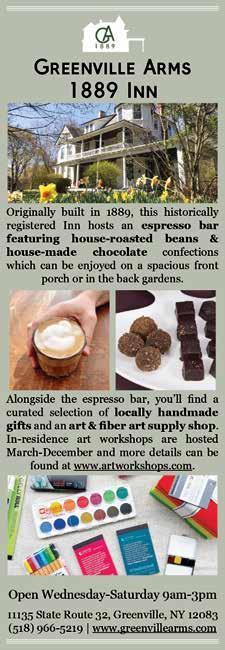
Originally built in 1889, our historically registered Inn is situated on six acres of gardens, lawns, and woodlands. The Queen Anne Revival-style main house, renovated Carriage House, and recently constructed Cottage building are host to 16 guest rooms open year-round to guests. Every guest room is uniquely decorated with a blend of antiques and modern amenities. A hot, cooked-to-order breakfast is included with each room.
Hampton Inn
1307 Ulster Avenue
Kingston, NY 12401
Kingston.hamptoninn.com
845 382 2600
Additional location in New Paltz:
4 S. Putt Corners Road
New Paltz, NY 12561
Newpaltz.hamptoninn.com
845 255 4200
Our hotel is near I-87, with several restaurants within walking distance. Historic Downtown Waterfront and Uptown Kingston are both just four miles away with many local shops and dining options. Spend some family time at the Dutchess County Fairgrounds, seven miles away. An hour drive or less from 3 popular ski mountains. Unwind in our indoor saltwater pool. Enjoy complimentary hot breakfast and free WiFi.
Windham Manor
1161 Co Rd 10
Windham, NY 12496
windhammanor.com 518 944 1448
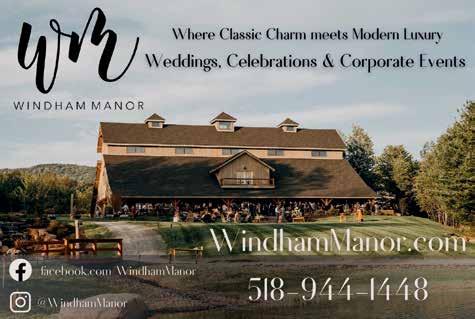
Windham Manor is the premiere wedding and event venue in The Catskill Mountains. Our 45-acre property features The Manor House, a Victorian Estate with 12 beautiful guest suites. The property also boasts The Barn, a luxurious space which can hold 300+ guests for dinner, dancing, seminars, and other events, and two incredible outdoor ceremony spaces—The Lawn and The Enchanted Forest. Call us to set up a tour or schedule on our website!
MASSAGE & WELLNESS
Illuminating Wellness/
Mountain Top Massage illuminatingwellness.care 518 718 4228
Transformative therapeutic massage practice combines elements of many of the healing arts such as Acupressure, Reflexology, Reiki, Chiropractic adjustment and many forms of Asian and Thai massage. BioPhoton Light Therapy – Biontology is a European healing process that detoxes, neutralizes and resets the body so that healing begins. This practice finds the root cause of any symptom-producing malady and neutralizes it, raising the body’s immune system, the key to your health. (biontology.com).
PUMPKIN BREAD
Recipe courtesy of Gracie’s Restaurant, Leeds
This recipe couldn’t be easier to throw together, and just the smell of it baking is almost as good as the taste! We like to finish this pumpkin loaf with a thick maple glaze and some toasted pumpkin seeds to make it a little more dessert-like, but it’s also perfect without any garnish.
Preheat oven to 350 degrees F.
holiday RECIPE
1-3/4 cups bread flour
1/4 cup + 1 tbsp all purpose flour
1-1/4 tsp baking powder
3/4 tsp baking soda
1/4 tsp ground cloves
1/2 tsp ground nutmeg
1/2 tsp ground cinnamon
3/4 tsp salt
1-3/4 cups granulated sugar
1 cup pumpkin puree
2 eggs
1/2 cup vegetable oil
1 tsp vanilla extract
Combine dry ingredients (flour, baking powder, baking soda, spices and salt) in a medium size mixing bowl.
In a large mixing bowl, combine sugar and pumpkin puree. Add eggs and whisk until smooth. Whisk in vegetable oil and vanilla extract until fully combined.
Add dry ingredients to the pumpkin puree mixture and gently stir to combine. Mix just until the flour is fully incorporated, but do not over-mix.
Pour batter into a greased 9x5 loaf pan (alternatively, you can line the pan with parchment paper), and bake for 45-55 minutes or until a toothpick or cake tester inserted into the center of the loaf comes out clean or with just a few moist crumbs.
Allow the loaf to cool in the pan for about 15 minutes and then carefully transfer to a wire rack to cool completely. Coat with Maple Glaze and sprinkle toasted pumpkin seeds on top.
Maple Glaze:
1 cup confectioners sugar
2 tbsp maple syrup
1-2 tbsp milk or water
1/2 tsp vanilla extract pinch of salt
In a medium bowl, whisk together the confectioners sugar and maple syrup until smooth. Slowly add the milk or water, a little bit at a time, until the desired consistency is reached. Stir in the vanilla extract and salt. Drizzle over the top of your pumpkin loaf once completely cool!
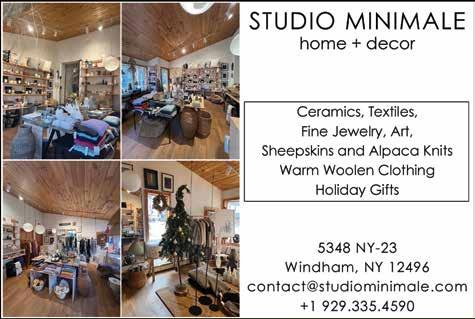
Studio Minimale
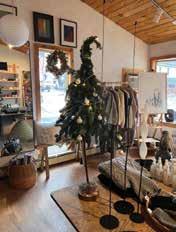
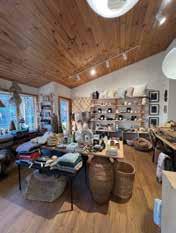
Studio Minimale is a charming boutique located on Main Street in Windham, offering a unique selection of handmade items crafted by local artisanal artists. Our focus is on high-quality products . At Studio Minimale, you will find a delightful array of home decor, clothing, accessories, and jewelry, each piece thoughtfully curated to bring a touch of artistry to your life.
As a sweet spot for shopping, we pride ourselves on providing a warm and inviting atmosphere where customers can explore a variety of unique offerings. Whether you’re searching for the perfect gift or a special treat for yourself, our collection is designed to inspire and delight. Here every item has a story, and our goal is to connect you with pieces that resonate personally.
During the holiday season, Studio Minimale transforms into a festive wonderland, featuring seasonal products that capture the spirit of the festivities. From high-quality herbal teas to handcrafted chocolates, our seasonal offerings are perfect for gifting or enjoying at home. Each product is selected for its exceptional quality and artisanal appeal, making them ideal for those looking to add a touch of luxury to their celebrations.
At Studio Minimale, we celebrate the beauty of artisanal craftsmanship and strive to create an experience that feels both personal and special. Whether you’re a longtime resident of Windham or just passing through, we invite you to visit us on Main Street. Discover the joy of supporting international artists while finding unique treasures that will enhance your home and wardrobe. Come explore, and let Studio Minimale be your go-to destination for all things beautiful and handmade.
Visit Studio Minimale at 5348 State Route 23 in Windham. For more information, visit studiominimale.com or call 929 335 4590.
MOVIE THEATER
Catskill Mountain Foundation’s
Mountain Cinema
7971 Main Street
Hunter, NY 12442
catskillmtn.org
518 263 4702
Hollywood, foreign & independent films just a mile west of Hunter Mountain and a short drive from Windham. Shows running Friday through Sunday. Also available for rental.
Sunflower is dedicated to providing products you can feel good about sharing with people you love. Prioritizing working with local farms, families, and business, Sunflower is devoted to providing clean and sustainably sourced food, 100% organic produce and a selection of carefully curated items that fit all dietary needs.
Catskill Mountain Foundation
7971 Main Street Hunter, NY 12442
catskillmtn.org 518 263 2000
Now in its 26th year, the Catskill Mountain Foundation, Inc. is a nonprofit organization which offers a variety of programs and workshops centered on the arts. It owns and runs The Orpheum Performing Arts Center, The Doctorow Center for the Arts (which includes the Mountain Cinema, a performance space, and the Piano Performance Museum), Sugar Maples Center for Creative Arts, a Natural Agriculture farm and the Guide Magazine. The Foundation has long term partnership programs with The Joyce Theater Foundation, Works & Process at the Guggenheim, the National Dance Institute and Catskill Mountain Shakespeare, and is also home to the Hunter International Music Festival, The Academy of Fortepiano Performance, the Orpheum Dance Program, and the Maude Adams Theater Hub.
Windham Foundation windhamfoundation.org info@windhamfoundation.org 518 734 9636
Our mission is to enhance and enrich our community by providing charitable grants for historical preservation, the arts, education, recreation, and initiatives deemed to make Windham
an extraordinary place to live, work, and visit. Established in 2004, the Windham Foundation is run by an all-volunteer Board. Donations are tax deductible.
PHOTOGRAPHER
Images of the Northern Catskills by Francis X. Driscoll
A frequent contributor to the Guide magazine, Francis X. Driscoll is an award-winning nature photographer whose work involves total immersion in a setting so that he might capture that rare glimpse. His primary subject is the Catskill Forest Preserve. He shares his craft with others by leading hikes, conducting workshops and giving private instruction.
Whether you’re dealing with a leaky faucet, a clogged drain, or a plumbing emergency, we’ve got you covered. Our team of experienced and licensed plumbers, our commitment to quality craftsmanship, prompt service, and customer satisfaction sets us apart. Explore our website to discover our wide range of services, from plumbing repairs and installations to maintenance and inspections. We take pride in using the latest industry techniques and high-quality materials to ensure reliable and long-lasting solutions for all your plumbing needs. We offer quick response times and strive to complete every job efficiently and effectively.
RADIO STATIONS
WIOXRADIO.ORG on computers and smartphones
WIOX Community Radio—where public access meets public service to build public trust. WIOX programming is wildly diverse, live and local, and non-commercial, broadcasting from the Catskill Mountains region of upstate New York in the heart of the New York City Watershed. WIOX talk and music programs range from farming to brewing to cooking, forestry to healthcare, Rock to Pop, Bach and Goth, Blues, Folk, Country, Americana, Jazz and Salsa. WIOX: produced and supported—by you!
WRIP 97.9FM
wripfm.com
Streaming at rip979.com
RIP 97.9 is the radio voice of the Mountaintop and Valley. Broadcasting 24/7 with the equivalent of 6,000 watts of power, we are the only radio station covering the entire region between the Hudson Valley and Oneonta. WRIP is independently owned and operated. WRIP is heard on these FM frequencies: 97.9 in Windham & Hunter, 97.5 in Durham & Greenville, 103.7 in Catskill & Hudson, 104.5 in Stamford & Delaware County, and streaming worldwide at rip979.com.
REAL ESTATE
Brainard Ridge Realty
237 South Street
Windham, NY 12496
brainardridge.com
518 734 5333
Specializing in Windham Mountain and the surrounding area for over 35 years. Visit our web site at brainardridge.com for a variety of listings both on and off the mountain: Homes, Townhomes, Rentals and Land. Whatever your needs we are here for you. Call us today!
Photo by Fran Driscoll, francisxdriscoll.com
Coldwell Banker—
Timberland Properties
TimberlandProperties.com
CatskillPremier.com
Margaretville: 845 586 3321
Boiceville/Mt. Tremper: 845 657 4177
Delhi: 607 746 7400 • Stamford: 607 652 2220
Sidney: 607 604 4394 • Roscoe: 607 290 4130
Start your real estate career today! Unrivaled agent support & the best training in the region. Call or email to learn more: Debra G. Danner, Licensed Associate Real Estate Broker/ Branch Manager: 518 937 0924 or Debra.Danner@Timberlandproperties.net.
Gallagher
& Company
6 Mitchell Hollow Road
Windham, NY 12496
gallagherandcompany.com 518 734 3300
Gallagher & Company is a national professional real estate services firm, specializing in commercial and industrial real estate with an emphasis on New York State properties and luxury resort homes. Our Windham, New York office specializes in Sales and Rentals of residential and vacation properties. Gallagher and Company also manages the Quads condominium development comprising 67 units, and the Crystal Pond Townhomes development, a 97 unit planned development, both located in Windham.
Grist Mill Real Estate
265 Main Street
Saugerties, NY 12442
gristmillrealestate.com 845 246 3200
Our real estate office in the heart of the historic village of Saugerties is highly regarded by clients and customers alike, known for their strong market expertise, exemplary individual service, and an enviable familiarity with what makes the Catskills such a desirable place to live. Although we serve our local community, our largest sales market is NYC, and more recently primary homes for residents from Orange, Westchester, Rockland, and Dutchess Counties. Knowledge of the Saugerties market in particular is the most important service we offer our customers.
Helsmoortel Realty
148 Burt Street
Saugerties, NY 12477
helsmoortelrealty.realestate 845 246 9555
Helsmoortel Realty has been offering professional and friendly service for over 20 years. We are perennial “Top Producers” and also have earned the “5 Star Professional Award”. We care very much about our buyers and sellers and work towards seamless transactions. Our business has been primarily based on referrals, which we feel is the biggest compliment of all. We are big enough to compete and small enough to care.
Carol Shaw, Broker/Owner
Shaw Country Realty
5359 State Route 23
Windham, NY 12496
518 734 3500
I have been a real estate broker in the mountain top area for nearly four decades, representing buyers and sellers, as well as dealing with various types of properties. With our many years in the industry, Shaw Country Realty has built a strong network, deep understanding of the market trends, and a keen ability to match buyers with suitable properties and help sellers navigate successful transactions.
Windstar Realty Group
5316 State Route 23
Windham, NY 12496 518 734 6600
85 Main Street Stamford, NY 12167 607 442 4000
windstarrealty.com
Windstar Realty Group is a full-service Real Estate Agency serving the Greene, Columbia, Schoharie, Otsego, and Delaware County areas of NY. The Catskill region offers the perfect balance of adventure and serenity—you owe it to yourself to choose the best team in the area to represent your real estate needs! Whether you are buying or selling a home, property, or business in the Upstate NY area, Windstar Realty Group is the agency for you! We have the most well-rounded team in the region.
Catskill Center for Conservation & Development
43355 Route 28
Arkville, NY 12406
catskillcenter.org
845 586 2611
Since 1969, the Catskill Center has led the effort to protect the more than 700,000 acres of the Catskill Park and Catskill Forest Preserve. Their mission is to protect and foster the environmental, cultural,and economic well-being of the Catskill Region.
Catskill Visitor’s Center
5096 State Route 28
Mt. Tremper, NY 12457
catskillsvisitorscenter.org
845 688 3369
Your gateway to Catskills, where you can learn about the vast outdoor recreational opportunities in the area as well as discover the cultural and natural history of the Region. The center features educational exhibits along with maps, books, gear, and gifts, as well a friendly and knowledgeable staff.
Greene County Economic Development Corporation
411 Main Street
Catskill, NY 12414
greenecountyedc.com
518 719 3290
Your gateway to establishing your business in Greene County. Their team connects entrepreneurs, developers, and corporate leadership with resources, municipalities, and investment incentives for job-creating businesses.
Sullivan County Tourism
SullivanCatskills.com
1 800 882 CATS
Looking for a unique getaway?
Whether you’re a winter warrior or a winterphobe, New York’s Sullivan Catskills is for you and offers a mix of cold-weather fun or indoor relaxation just 90 minutes from New York City. Winter here can be exhilarating, relaxing, or both.
Ulster County Tourism VisitUlsterCountyNY.com
As the holiday season approaches, life’s velocity increases towards a whirlwind of festive activities, bustling gatherings, and last-minute preparations. Before you are overwhelmed in the merriment, why not pause and escape with your partner or best friends? Ulster County, in the heart of the Hudson Valley, offers the perfect retreat, where scenic beauty, fine dining, boutique shopping, and luxurious accommodations await— find your peaceful haven before the holiday rush.
RESORT
Windham Mountain Club
19 Resort Drive
Windham, NY 12496
windhammountain.com
1 800 754 9463
Windham Mountain Club is a premier multi-generational, four-season resort in the Northeast, located in the Great Northern Catskills, two and a half hours north of New York City. In 1960, Windham started as a private club before becoming a public mountain.
Boasting 285 skiable acres across 54 trails and serviced by 11 lifts (four of which are high speed), the mountain offers an award-winning Ski and Ride School, lodging, on-mountain dining, a tubing park, and world-class alpine and freestyle competition teams.
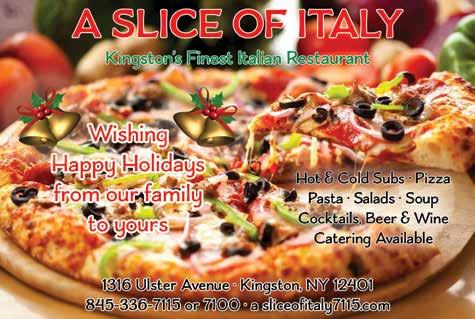
A Slice of Italy
1316 Ulster Avenue
Kingston, NY 12401
asliceofitaly7115.com
845 336 7115
The finest Italian dishes, pizza, hot and cold subs, salads and more made with the freshest ingredients and served with five star customer service. Full bar featuring a range of red and white wines, bottled beers, beers on tap and liquor. We also cater, and pride ourselves on being able to deliver our quality restaurant dishes right to your door. Whatever the event, no matter how many or how few, we are there for you. Open Monday through Saturday from 11 am to 10 pm, closed on Sundays.
Angela’s Pizza
1923 Ulster Avenue
Lake Katrine, NY 12401
angelaspizzarestaurant.com
845 382 2211
Angela’s is more than just pizza! Soups, salads, pastas, subs, wraps, Italian dinners, desserts & more. … But, yeah, our pizza is dang awesome, too! Try our specialty pies or build your own! Open every day 11:00 am to 10:00 pm. Eat in or take out, and delivery is available. Catering is also available: let us bring our delicious food to your next event! Angela’s mobile app— available on both Android and iOS devices—is designed
just for you. Get instant access to online ordering, Angela’s Loyalty Program, coupons, dining & catering menus, wing flavors and much more! Download the app today!
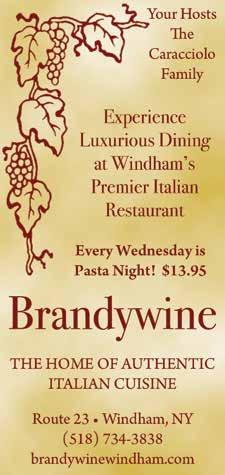
Brandywine
11157 State Route 23
Windham, NY 12496
brandywinewindham.com 518 734 3838
For the past 35 years, this full-service Italian restaurant has offered great food and impeccable service. Share wonderful memories with your loved ones as we fill your table with delicious Italian cuisine. Born and raised in Southern Italy, owner Louis Caracciolo mastered the art of Italian cookery, and passed it on to his son Joseph, who has continued that art and tradition as chef in the restaurant. We know the formula to capture the rich flavor of your favorite Italian dishes.
Cafe Mornings and Market
43270 Route 28
Arkville, NY 12406
cafemornings.com
hello@cafemornings.com
845 869 5138
A new family-run Korean café and market offering breakfast, lunch and dinner Korean-style meals made from family recipes. Try our Ceremonial Grade Matcha and always fresh Espresso at our coffee and matcha bar right on Route 28 in Arkville. Now offering natural organic wine, Asian beer and cocktails during brunch! Find
something unexpected in our market from curated gourmet pantry products to unique gifts & home and kitchen goods.
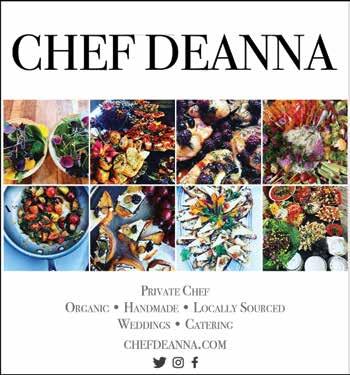
Chef Deanna
1645 County Highway 6
Bovina Center, NY 13740
chefdeanna.com
Weddings and special event catering, with delivery available for larger events! Chef Deanna is on the cutting edge of the sustainable food. Surrounded by farmers and local food makers, Chef Deanna creates beautiful dishes using her Sicilian heritage and her love of everything sweet and savory.
Gracie’s Luncheonette
969 Main Street
Leeds, NY 12451
graciesny.com 518 943 9363
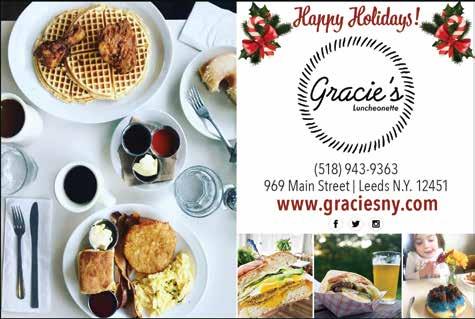
Diner-style burgers, fried chicken sandwich, loaded fries and donuts are our signature menu items. All of our breads, pastries and desserts are made in house every day. We make all of our own condiments and even our own cheese. We buy whole beef from Josef Meiller’s farm in Pine Plains, NY and we grind our own special blend for our burgers and cut our own steaks. We also cure and smoke our own bacon, pastrami and other meats. All ingredients are all sourced as locally as possible. The potatoes for our French fries are even grown right in Catskill at Story’s Farm and hand-cut daily!
holiday RECIPE
1 cup water
2 1/2 tablespoons sugar
1/2 teaspoon salt
2 tablespoons vegetable oil
1 cup all-purpose flour
Vegetable oil (for frying)
1/2 cup sugar (for coating)
1 teaspoon ground cinnamon (for coating)
Prepare the Dough:
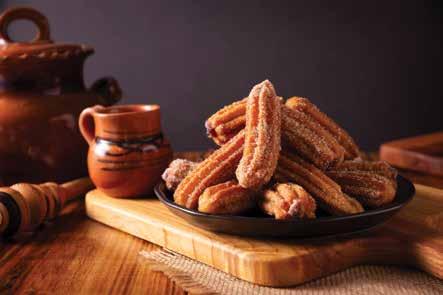
MEXICAN CHURROS
Recipe courtesy of Pancho Villa’s Restaurant, Tannersville
In a small saucepan, combine the water, sugar, salt, and 2 tablespoons of oil. Bring it to a boil over medium heat.
Once boiling, remove the saucepan from heat and stir in the flour. Mix quickly until a smooth dough forms and pulls away from the sides of the pan.
Heat the Oil:
Heat vegetable oil in a deep pan to 350°F (175°C). It’s important the oil is hot enough for frying but not too hot to burn.
Prepare the Cinnamon Sugar:
In a separate bowl, mix the sugar and cinnamon for coating. Set aside.
Shape the Churros:
Transfer the dough into a piping bag fitted with a large star tip.
Pipe 4-6 inch strips of dough directly into the hot oil. Use scissors to cut the dough from the tip. Be careful when piping, as the oil is hot.
Fry the Churros:
Fry the churros in batches until golden brown, turning them occasionally to cook evenly. This usually takes about 2-3 minutes per side.
Coat the Churros:
Remove the churros from the oil and place them on paper towels to drain the excess oil.
While still warm, roll the churros in the cinnamon-sugar mixture to coat them completely.
Serve:
Serve your churros warm, ideally with a side of chocolate sauce, caramel, or scoop of ice cream!
Photo: Sergio Hayashi
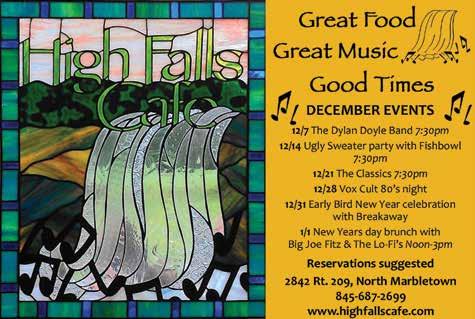
High Falls Cafe
2842 Route 209
North Marbletown, NY 12484
highfallscafe.com
845 687 2699
Family owned and chef operated since 2005. Scratch kitchen, our dishes are made to order using fresh ingredients. Daily specials. Live music and events weekly. Reservations are highly suggested. Open for lunch Tuesday through Saturday 11:30 pm to 5 pm, dinner 5 pm to 9 pm. Sunday breakfast 9 am to 1 pm and lunch 1 pm to 3:30 pm. Bar open later all nights and closes at bartenders discretion. Closed on Mondays. Check out our menus and event calendar at highfallscafe.com or like us on Facebook for daily updates at facebook.com/ highfallscafe1
Jessie’s Harvest House
5819 Main Street
Tannersville, NY 12485
jessiesharvesthouse.com 518 589 5445
Jessie’s Harvest House Restaurant and Lodge is a welcoming & cozy place to gather, featuring a delicious menu of American-style cuisine and elevated comfort foods, with locallysourced ingredients, a friendly tavern, and rustic country lodging. Familyowned & family-run, we love to share all the freshest foods our area has to offer! Catering is available.
La Cabaña Mexican
Restaurant & Bar
966 Main St.
Fleischmanns, NY 12442
lacabanarestaurantny.com
845 254 4966
Family owned and operated, La Cabaña is rich in tradition and authenticity. Our dinners are individually prepared with the freshest ingredients available. You’ll find all of your favorites on the menu, from enchiladas, burritos, tacos, chimichangas and flautas to chile relleños, carne asada, nachos and quesadillas to traditional desserts such as flan, fried ice cream and churros. Vegetarian options are available.
Mama’s Boy Burgers
6067 Main Street
(at the traffic light)
Tannersville, NY 12485
Mamasboyburgers.com
518 589 6667
Established in 2015, Mama’s Boy Burgers was voted the “Best Burger Shack” in the Hudson Valley by Hudson Valley Magazine. We are all about fresh and local ingredients. Our burgers are made from local, black Angus beef from a farm 6 miles away. Our seasonal produce comes from Story Farms, our ice cream is made in the Hudson Valley. We also offer vegetarian and vegan options. Eat In, Take Out or Order Online.
Pancho Villa’s Mexican Restaurant
6037 Main Street
Tannersville, NY 12485
panchovillamex.com
518 589 5134
The Best Mexican Food this side of the Border! Pancho Villa’s is owned and operated by the Oscar and Patricia Azcue family. They have been proudly serving authentic Mexican food on Main Street in Tannersville since 1992. Rooted in tradition, their passion is sharing great food and good company. All of the traditional Mexican favorites are served here, from enchiladas and burritos to chimichangas and flautas...plus great margaritas and daiquiris! Open every day except Tuesday.
Peekamoose
Restaurant & Tap Room
8373 State Route 28
Big Indian, NY 12410
peekamooserestaurant.com
845 254 6500
Devin and Marybeth Mills hail from some of New York City’s finest restaurants, including the famed Gramercy Tavern. Seeking to move closer to the farms supplying their menu, they have beautifully restored this country farmhouse set among the Catskill Mountains. The restaurant supports local growers by changing the menu daily, using the freshest ingredients available.
Camp Catskill
6006 Main Street
Tannersville, NY 12485
campcatskill.co
518 303 6050
Your destination for sustainable gear & gifts, including clothing, footwear, backpacks, and hiking gear. Our mission is to help you feel good about what you buy, what you wear, and the gear you use (and reuse) in the wild. Having the right gear lets you spend more time outside in nature, which in turn connects you directly to the importance of preserving the natural wonders of our world. We work with brands that care about their impact on the planet and its people, and we donate 1% of our revenue to environmental nonprofits here in the Catskills.
Catskill Mountain Foundation Gift Shop
6042 Main Street
Tannersville, NY 12485
518 589 7500
Operated by the Catskill Mountain Foundation and located next door to the Orpheum Performing Arts Center, our shop features a curated selection of home decor items and gifts from around the Region and around the world. Open Friday through Sunday and holiday Mondays from 11 am to 6 pm.
The Garden of Stone
5444 State Route 23
Windham NY 12496
gardenofstone5444@gmail.com
Shop our eclectic selection of cast stone pieces for your garden and home. We hand-cast animal statuary, birdbaths, angels, gnomes and more. We offer fresh-cut flowers by the stem or bouquet and can help with your special event. Shop for houseplants and unusual items–vintage and new. Browsing is encouraged!
Kenco Outfitters
1000 Hurley Mountain Road
Kingston, NY 12401 atkenco.com
845 340 0552
Our story started in 1982 with own-
er Bill Kennedy selling gear out of mother Libby’s station wagon with help from dad Harry, and now we have grown into over 20,000 square feet of outdoor recreation, clothing, and footwear retail. From pickleball paddles to kayak paddles, workboots to water sandals, camping gear to housewares, Kenco has a little of almost everything. If you want to get outdoors, we have you covered. Located on the corner of Route 28 and Hurley Mountain Road. We want to be your favorite store.
The Knitting Room
11111 State Route 23
Windham, NY 12496
theknittingroomny.com
518 768 1944
Co owned by long time friends May and Zairi, The Knitting Room is a yarn store specializing in locally produced and hand dyed yarn. Come touch gorgeous yarn and stay to knit or crochet over a cup of hot cocoa, latte or tea. We offer beginner and advanced classes, and help starting new projects. With gorgeous views of Windham Mountain and a great atmosphere, any afternoon spent at The Knitting Room is guaranteed good fun in fantastic company.
Moose Crossing
1 Reservoir Rd.
Shokan, NY 12481
rustic-cabin.com
845 657 9792
Casual, rustic and country Adirondack-style furniture, home furnishings, home decor, accessories, gifts and collectibles. Hand-crafted, made-InAmerica wood furniture and furnishings for your home, lodge or cabin. Jewelry, blankets, pillows, rugs and clothing in Native American, Western and country motifs and styles. The best selection of nature-inspired items from artisanal craftsmen located locally and from around the country.
The Nest Egg
84 Main Street
Phoenicia, NY 12464
thenesteggcountrystore.com
nesteggshop.com
845 688 5851
An old-fashioned country store in the heart of the Catskill Mountains, offering relaxed shopping and mountain hospitality. You’ll find lots of specialty and artisan crafted foods here, from local maple syrup, honey, jams, jellies and preserves, to nostalgic candies and gourmet chocolate, to gourmet peanut butter, and more! Your source for mountain clothing and souvenirs, including Minnetonka Moccasins, t-shirts & sweatshirts, local area books and hiking maps, candles, soaps, incense, jewelry, toys, puzzles, games and souvenirs. Our home-made delicious fudge is worth the trip! Owner Robin Kirk’s family has owned The Nest Egg since 1968.
Studio Minimale
5348 State Route 23
Windham, NY 12496
studiominimale.com
929 335 4590
Gift shop featuring ceramics, textiles, fine jewelry, art, sheepskins, alpaca knits, and more. At Studio Minimale, we believe selecting the right items helps to cultivate a home that soothes your everyday stresses. We source unique, hand-made-with-love products from around the world and from local artisanal makers that offer the highest quality and integrity. Our goal is to curate products that are sustainable, made from natural and ethically sourced materials with fair trade in mind.
L & G Roofing & Construction
6 Mitchell Hollow Road
Windham, NY 12496
windhamroofs.com 518 734 4488
Trust is the key when hiring a roofing contractor. At L&G Roofing and Construction, we strive to be a roofing contractor who has built the trust of our entire community. Our reputation is our most important asset, and we are proud to be one of the highest rated contractors around. When it comes time for your next roof, be sure to call to see all that we have to offer.
SKI NY
61 NY-296 Windham, NY 12496 iskiny.com 518 750 8030
Ski Areas of New York, Inc. is dedicated to the continued growth of the New York snow sports industry by working on behalf of its membership through legislation, marketing, and education to enhance public awareness of snow sports in New York. SKI NY is also the sponsor of the Passport Program, which offers free skiing for your third, fourth and fifth graders with an adult purchase at select ski areas.
MENLA | Dewa Spa
375 Pantherkill Road
Phoenicia, NY 12464
menla.org
Menla is a hidden oasis in the heart of the Catskill mountains. Featuring wellness and spiritual retreats as well as exclusive getaways, and the world-class Dewa Spa. Immerse yourself in the magic of pristine mountain forests. Explore hiking trails, encounter wildlife, and discover a rich tapestry of wellness experiences and activities. Dewa Spa’s unique architecture and Tibetan accents evoke peace and tranquillity. Eastern and Western treatments, such as Tibetan KuNye massage, herbal baths, Shirodhara, sounds baths, energy readings, and customized facials are a few of the lavish therapies found at our spa.
Skin Concept
61 NY-296
Windham, NY 12496
skinconceptwindham.com
518 750 8030
Here at Skin Concept, we provide medical aesthetics and relaxation treatments for the entire body, for self care, pampering and health improvement. We offer customized facials, massages, body treatments and infrared sauna. At the clinic you can buy professional skin care products. Environ and DMK, and the best quality of European brand supplements.
Woodstock Infusions
104 Mill Hill Road
Woodstock, NY 12498
woodstockinfusions.com
845 684 5257
At Woodstock Infusions, we are dedicated to a wellness mission centered around our core principles: “move, sweat, nourish, hydrate.” These essential pillars of a successful wellness agenda are supported by our state-of-the-art yoga and pilates infrared-heated studio, organic smoothie café, and comprehensive IV therapy center. Share the gift of self-care this holiday season at Woodstock Infusions! Our gift cards can be used for invigorating hot fitness classes, IV infusions, vitamin shots, and tasty organic treats at our Smoothie Cafe. Go to our website www.woodstockinfusions.com and join our community today!
WINE & LIQUOR
Olivia’s Wine & Spirits
128 South Street
Windham, NY 12496
oliviaswineandspirits.com
518 750 8026
Wine connoisseur Robert Giordano has traveled the world learning about wine, and brings his vast knowledge and passion for wines from all over the world to Windham. Olivia’s Wine & Spirits offers a diverse selection of wines at a variety of competitive price points, as well as a variety of bourbons, whiskeys, and other liquors. Open every day.
IMAGES OF THE NORTHERN CATSKILLS
By Francis X. Driscoll
My work is available for purchase at:
Tannersville Antiques & Artisans: 518 589 5600
Rustic Mountain Antiques: 518 589 1202
Smitty’s Nursery: 518 734 3489
Town & Country Liquors
330 Route 12
Saugerties, NY 12477
townandcountryliquorstore.com 845 246 8931
Our selection of wines and spirits is among the best in the Hudson Valley. Our friendly helpful staff is here to assist you in finding the right beverage: we have a huge selection of wines and spirits from all over the world.
Windham
Wine & Liquors
5448 State Route 23
Windham, NY 12496
518 734 3474
Windham Wine & Liquors is the Mountaintop’s premier destination for the best offerings of wines and spirits since 2003. Our ever-expanding selection is sure to please every palate and price range. Let us help with your special event or gift. Visit us at the west end of town. Open every day of the year except Christmas Day.
Woodstock Wine & Liquor
63 Tinker St.
Woodstock, NY 12498
woodstockwineandliquor.com
845 679 2669
Located in the heart of Woodstock, WW&L is a family-owned, lovingly curated boutique shop with more than 1000 different wines, spirits, sakes and ciders to choose from. Customers discover a focus on local wines and spirits, naturally and sustainably produced wines from around the world, in an inviting, non-pretentious environment. Respecting tradition while celebrating innovation. Check out the free in-store tastings and order through woodstockwineandliquor.com for pickup or free local delivery.
WOODWORKING
WoodLab … From Tree to Table
5316 State Route 23
Windham, NY 12496
woodlabslabs.com
518 734 5700
Our one-of-a-kind tables incorporate the unique characteristics of Parota and Monkey Pod slabs, imported from Costa Rica. Coveted for their exotic beauty, these rare, large species wood slabs are hand-selected, allowing us to create family heirloom dining and office tables.
A JOURNEY THROUGH THE CATSKILL MOUNTAINS
By Greg Madden
This year, I am breaking my own cardinal rule by blowing past Thanksgiving (my favorite holiday: turkey stuffing pies, no commercialism just friends and family) to write about the coming December holidays during early November. That is the reality of writing each month and the publishing world and its timetable. Please forgive me as I attempt to forgive myself.
This fictitious reflection is to share how some families enjoy each other and the holidays as both residents and visitors of our region.
We begin our snowy holiday cheer in a made-up town of Elk Haven, NY at the highest peak of the Catskills, with visions of sugarplums dancing everywhere, as well as in our heads.
December has arrived in its own quiet, magical way. Snow is blanketing our peaks, transforming the forested slopes into a winter wonderland. Elk Haven is alive with the twinkling of holiday lights strung along its narrow streets, and the scent of evergreen and cinnamon are decking our halls. For generations, several families once again gather in Elk Haven for holiday celebrations, some as visitors and others as longtime residents, to partake in cherished traditions that have been passed down or adopted over time.
Our first family, the Blackwoods who live downstate, annually return to the Catskills as a cherished family tradition beginning with Daniel Blackwood, who’d first fallen in love with our
Four Family Holiday Celebrations
mountains as a wee child. Every year, he brings his family back to Elk Haven, staying at the very same lodge they have rented for decades. They love returning to this dwelling, near the icy, and often skateable, Echo Lake. This living space is as much a part of their family holiday celebration as any of its human members, holding vivid memories of challenging jigsaw puzzle attempts and fireside stories.
On the first morning of their stay, Daniel, his wife, Sarah, and their three children, Mia, Liz and Jonah, set off for their ritual sunrise hike up Red Point Trail. The trail is always quiet save for the occasional chirp of winter birds or the crunch of their boots in the snow. Once at the top, they share thermoses of hot cocoa, pouring a little extra into one special mug they called the “Catskill Cocoa Toast.” Holding that mug, each family member takes turns saying what they were most grateful for that year, a way to mark the start of their holiday week with gratitude and reflection.
Once they return from their hike, the Blackwoods head down to the annual “Elk Haven Winter Festival.” The town square is transformed into a scene from a snow globe, complete with ice sculptures, carolers, and even the scent of roasting chestnuts. The kiddos always beg to ride the sleigh pulled by a team of sturdy Percheron horses, an intelligent draft horse originating from western France, often larger than a Clydesdale. The sound of
Kingston Snowflake Festival.
Photo by Scott Snell, courtesy of Ulster County Tourism
bells jingling as they ride through the snow-covered streets make them feel like they are in a storybook, and inserted right here in the December 2024 Guide, they are.
At night, back at their cabin, the family settles around the cavernous fireplace with their hands clasped around mugs of warm mulled cider. This year, Sarah has prepared a special story. It was one about the old legendary folklore of the Catskills. She speaks of spirits in the woods, ancient trees that whispered hushed secrets, and the snowflakes that carry well wishes. The Blackwood children huddle closer to their parents, caught up in the mystery of the mountains they have come to love dearly.
First time visitors, the Hayes family are looking for a new holiday tradition so they take a recommendation from new friends and choose our Catskills. They recently moved from Columbus, Ohio to rural Pennsylvania, only a few months ago. For them, the mountains were a fresh adventure. December has always meant neon city lights and department store displays, but here, the landscape feels more like a painting come to life for them.
Nina Hayes, her husband Mark, and their two teenagers, Will and Ellie, are staying at a charming log cabin resort just outside of town. On their first night, the family gathered on the porch to admire the brilliance of the stars, which seem so much closer than they had in the city. The silence, broken only by the crackling of the fire pit, has them feeling peaceful and connected to something much larger than themselves, within a quiet calm.
Inspired by the Catskills natural beauty, Nina starts a new tradition for her family: a “Holiday Letter to the Mountains.” Each of them is given a piece of paper to write down something they want to release along with something they hope for in the year to come. They fold the letters into small stars and hang them
on a branch in front of the cabin, letting the wind carry their hopes and dreams higher. The kids grumble a bit, but as they write, they fall silent, swept up by the peace and the beauty of their immediate surroundings. The Catskill experience is healing, both centering and grounding and more.
The next day, they venture into Elk Haven for the town’s holiday scavenger hunt. Will and Ellie, initially reluctant tweens, quickly find themselves caught up in the fun, sprinting from one historical landmark to the next as they decipher clues and learn about the town’s rich heritage and history. They end the day at a small bonfire on the edge of the town square, where the locals invite them to join in the singing of traditional winter songs. It is a simple evening, yet Nina knows that the experience will live on in their memories for years to come.
The Sampsons are a family that divides their year between the Catskills and Manhattan. For the past few winters, they come up early in mid-December, escaping the city’s holiday rush to celebrate in a more serene and natural setting. Their children, Max and Lily, love the change of pace, and over the years, they have created their own unique blend of traditions.
One of their favorite rituals is the “Elk Haven Winter Challenge,” an annual competition between Max, Lily, and their parents that includes everything from snowball-throwing contests to “speed-sledding” down the nearby hills. Max always insists on creating elaborate “obstacle courses” for their sleds, while Lily’s main goal is to come home with as much snow in her hair as possible.
As twilight falls silhouetted by the Catskill peaks, they return to their holiday home and make a sumptuous dinner entirely from scratch. The Sampsons follow a tradition of cooking a dish from each family member’s heritage, filling their table with
Photo courtesy of Ulster County Tourism
unique flavors from Polish pierogies to a Feast of the Seven Fishes. With no phones allowed, they eat by candlelight, sharing stories of their favorite memories from the past year—a tradition that honors their ancestors and the current generation.
One morning, before exchanging gifts, the family dresses up in matching plaid shirts and ski pants and they drive to a quiet trail just outside of town. They hike through the snowy woods to a small clearing where they decorate their special “wild woods Christmas tree.” It is a small fir they’d claim as their own years ago, adorning it with garlands made of popcorn, cranberries, and homemade ornaments. Their “tree in the woods” had become a symbol of their time in the Catskills, a reminder of family connection combined with the magic of nature. It was their “Charlie Brown”-esque holiday tradition.
In contrast to the above families, the Abrams family has lived exclusively in Elk Haven for generations. They own the town’s bakery, beloved by all and named Abrams Cake & Coffee, known for its rich chocolate babka and gingerbread houses, crafted with astonishing detail. For the Abrams crew, December is a time of bustling business, but also of joy and community.
Sam Abrams, the patriarch, runs the bakery alongside his wife, Miriam, and their two children, Rachel and Levi. Every December 23, they close early to host the town’s “Bake for Blessings” event, a tradition Sam’s grandmother had started in the 1960’s.
Residents gather within the warmth of the bakery with aprons donned to bake treats for the local nursing home and nearby shelter. Little kids decorate cookies covered in confection, while the adults share stories and laughs over the flour-dusted counters and sipping eggnog with nutmeg and cinnamon.
After that, the Abrams family again enjoys their own private ritual. They bundle up and walk to the old apple orchard on the edge of town. Once assembled, they place small birdseed ornaments on the branches of trees. The ornaments are shaped like stars, hearts, and even little gingerbread people, strung with red ribbons. Rachel jokes that it is her “secret wish-making place,” while Levi asks for one more story about the snowy owls that live in the nearby woods and fly about at night. Their ritual is simple, but for the Abrams family, it is a grounding reminder of the small acts of kindness that holds their beloved community together.
As the season progresses, these families find their paths crossing. The Abrams family invites the Hayes family to help bake cookies for the town’s “Bake for Blessings” event, a gesture that meant the world to the newcomers. Daniel Blackwood joined the Sampsons’ outrageous snowball competition while showing his kids how to construct the perfect snow fort, and Sarah shared a hot toddy with Nina on the sidelines.
As the families celebrate and share their own heritages and traditions, the snow began to fall softly, all four families gathered in the town square for the lighting of Elk Haven’s grand holiday tree. The children sing songs and carols for the season with their voices ringing clear in the frosty air, while their parents huddle
together, exchanging stories of how they each found their way to this precious little haven .
For the residents, it is a time to strengthen bonds; for the visitors, it is a seasonal sense of belonging to our Catskills. They all watch as the lights flickered on, illuminating the town against the mountain backdrop, casting a glow on each family and their hopes for the new year ahead.
As the night winds down, the families slowly part ways, each heading back to their homes, lodges or cabins, their hearts full of warmth and joy. In the glow of the lights, it is clear that they have shared something precious: the knowledge that, whether as visitors or residents, they are part of the magic of our Catskills, held together by the anchor of our mountains, along with their traditions, and the love they share that makes the holiday season here so unforgettable.
As we all pause to give thanks this holiday season, let us all remember to look out for those without family or the elderly, who often feel the emptiness of the holidays. Please reach out and add these folks to your annual traditions and they will multiply your own bounty and blessings.
Finally, please stay and shop locally in our Catskill hamlets for sumptuous holiday meals and explore the unique local gifts available to all and especially frequent our remarkable local businesses and advertisers.
Happy, Merry Ho Ho’s to us all.
Greg Madden is a freelance writer, public relations, branding and marketing specialist who practices ancient healing modalities like Tui-Na Medical Massage and BioPhoton LightTherapy. More at www.IlluminatingWellness.care.
Frosty Fest. Photo courtesy of Ulster County Tourism
EIGHT NIGHTS, SCHMEIGHT NIGHTS!
Break out the Manischewitz!
Old Jews Telling Jokes: Hanukkah Edition is Coming for the Holidays!
ld Jews Telling Jokes, by Peter Gethers and Daniel Okrent, which recently graced the stage at the Doctorow Center for the Arts in October, is back by popular demand! Old Jews Telling Jokes: Hanukkah Edition! is coming to Hunter for a holiday revival this December. It’s bound to be a happy, merry, and non-denominationally good time! Come for the room full of laughter and music, and stay to kill a few hours without having to talk to your in-laws.
Old Jews… is an oddly moving and brilliantly witty anthology of some of the best jokes and tales collected from the East Coast’s oldest and grumpiest Jews. What began in 2009 as a website documenting the stories of native New Jerseyans and New Yorkers over 65, quickly grew into, for a time, one of YouTube’s biggest channels.
Now add some pumpkin spice, a few candles, and some freshly collected holiday humor, and what do you get? Old Jews… Hanukkah Edition, that’s what! This retelling of the recently popular phenomenon promises to bring back all the dry, sardonic comedy it became known for, plus a whole slew of refurbished holiday jokes and music.
Jake Shipley, Assistant Creative Director at the Maude Adams Theater Hub, will be returning as director of the project, much to the chagrin of the community. “He’s hiding somewhere in the theater and he won’t leave,” said one concerned local. Shipley is a comic and actor who has stolen the hearts, and wallets,
of local audiences. In earnest, Shipley is very proud to present and share with you round two of these wonderful and classic jokes.
“This community has such a wealth of talent and love, the performers here never fail to entertain and enrapture. It’s the perfect way to end the year. I can’t believe I get to be so lucky as to share it with audiences, twice,” says Shipley.
Reprising their roles as well are cast members like the beloved Gary Falk, Deacon Michael McDonald, and the charming Ginger McMahon. Additionally, Lisa Harrow, another local performer, will be joining the cast in spreading holiday cheer and subtle judgment of your choice in clothing. This performance is sponsored by the Maude Adams Theater Hub and produced by Amy Scheibe.
Alongside the two acts of one liners and sprawling setups will be a table of free food and beverage. Wine, latkes, and leftover Christmas cookies are some of the nosh to look forward to. Additionally, there will be a talkback after the show to speak with the cast and share some of your favorite jokes.
Whatever your faith, there’s something for everyone to enjoy this December at Old Jews Telling Jokes: Hanukkah Edition! The show runs for two nights on Friday, December 27 and Saturday, December 28. Join us at the Doctorow Center for the Arts, located at 7971 Main Street in Hunter, New York. Tickets are $25 adults/$20 seniors, and are available at catskillmtn.org or by calling 518 263 2063.
THE GREAT OUTDOORS IN THE CATSKILLS
By Jeff Senterman
As the year comes to an end, this is a good time to think back on adventures you have enjoyed in the Catskills and consider all of the hard work that has gone into making your experience more enjoyable in the great outdoors. In addition to the land management staff for major landowners, there is an army of volunteers who spend thousands of hours every year maintaining the trails, fire towers and lean-tos of the Catskills. These hardworking volunteers partner with land managers such as the New York State Department of Environmental Conservation (DEC), New York City Department of Environmental Protection (DEP) and many smaller landowners who open their lands to public recreation.
Many of the organizations that help manage these volunteers and work towards improving the Catskills are small nonprofits that rely on donations and gifts from individuals who care about the Catskills. That support translates directly into the protection and preservation of the Catskills!
Hikers, Walkers and Mountain Bikers: Be Alert During Seasonal Hunting Seasons
Regular (rifle) season for deer hunting runs through December 8. Bow season for deer hunting picks up on December 9 and runs through the end of the year, with exceptions for the holidays.
There are also seasons for turkey, bear, bobcat and other small mammals. For all the details about hunting seasons, the New York
State Department of Environmental Conservation (NYSDEC) maintains a website at dec.ny.gov/things-to-do/hunting/seasons with extensive seasonal information on all of the different hunting seasons, their geographic areas and additional information for both hunters and those who wish to recreate during the fall hunting season.
Hikers, walkers and anyone planning on being in the woods who is not a hunter, should always be aware of the hunting regulations in the area where they are recreating and should always wear blaze orange during hunting seasons to reduce the risk of any incidents.
Don’t forget to watch your pets too! Dogs should be wearing blaze orange when they are in the woods with you during hunting seasons and should always remain under your control (preferably leashed) to avoid incidents.
Catskill Park Trail Conditions
Local recreational opportunities are always changing in the Catskill Park, and by visiting the Catskills Visitor Center’s Trail Conditions page, you can stay on top of those changes. Staff at the Visitor Center are regularly posting updates related to the Catskill Park, Catskill trails, Catskill campgrounds and camping, Catskill boating, and more at catskillstrailconditions.com.
A view of Blackhead, Black Dome, and Thomas Cole mountains
Photo by Max Oppen.
Catskill Park Coalition Priorities for 2025: You Can Help Support the Catskills!
The Catskill Park Coalition represents dozens of organizations who work in and care for the Catskill Park and the surrounding Catskills region. Every year the Coalition prepares priorities for the upcoming NYS budget and advocates for equitable funding of the Catskill Park and Catskills communities. Many of the members of the Coalition partner with New York State, local governments, and other stakeholders to implement critical Catskill Park programs to conserve open space, steward our existing recreational resources, protect and improve water quality, promote responsible forest stewardship, build community resilience, and create new trails and public access.
The Coalition knows that investments in the Catskill Park protect our natural resources, support important jobs for our region, and provide clean drinking water protection for millions of New Yorkers. The priorities for the Coalition in the upcoming NYS Budget affirm tourism opportunities, natural resource protections, clean water, public health protections, climate resilience, recreational access, job creation, and quality of life for residents of and visitors to the Catskill Park.
• Public Safety and Catskill Park Management: The NYSDEC must be adequately staffed, including new staff in the Division of Lands and Forests and annual Forest Ranger Academies, and the Catskill Park Coordinator role must be adequately funded. Aid to Localities funding of $100,000 is necessary for Catskill Park Stewardship Programs by Catskill Mountainkeeper and Catskill Center.
• Environmental Protection Fund (EPF): Fund the Environmental Protection Fund at $400 million. Within the EPF, maintain existing funding lines for the Catskills including: $12 million Forest Preserve line; $250,000 line for the Catskills Visitor Center; $200,000 line for Catskill Science Collaborative; $500,000 for the “Save the Hemlocks” initiative; and $300,000 in dedicated Catskills funding for Smart Growth Grants.
• Supporting Local Economies: Support Catskills communities by investing in projects with direct community benefits. Improve cellular service, support construction of the U&D Rail Trail, expand affordable housing, and improve trail connectivity to downtown main streets.
What can you do to help? Contact your local elected officials (the Governor, State Senators, and State Assemblymembers especially) and let them know that you support the Catskill Park and the priorities of the Catskill Park Coalition. It doesn’t matter where in New York you live, but your elected officials need to know you support the Catskills!
Also, make plans to take part in Catskill Park Day! Organized annually by the Catskill Center as co-Chair of the Catskill Park Coalition, the 2025 Catskill Park Day will be held this February, with details to follow. This day is an opportunity for supporters of the Catskills to have their voice heard in Albany and to make a difference in the support and funding that the Park receives. For more information visit catskillcenter.org/ advocacy.
#RecreateResponsibly in the Catskills
Time in nature, and outdoor recreation has proven to be essential for all.
Especially during uncertain times, all of us, from seasoned outdoor enthusiasts, to families heading out to their local park for the first time, can turn to community and simple reminders about how to safely & responsibly recreate outdoors while caring for one another.
The Recreate Responsibly guidelines came together to offer a starting point for getting outside to keep yourself and others safe while working to maintain access to our beloved natural spaces.
Read on to learn the primary tips on how to responsibly recreate outdoors. Each edition of the guidelines have been developed by bringing together topline issues and experts to distill key concepts that when implemented, build a community of care in the outdoors.
Learn more at recreateresponsibly.org
Know Before you Go
Check the status of the place you want to visit for closures, fire restrictions, and weather.
Plan and Prepare Reservations and permits may be required. Make sure you have the gear you need and a back-up plan
Build an Inclusive Outdoors
Be an active part of making the outdoors safe and welcoming for all identities and abilities.
Respect Others
There is space for everyone and countless outdoor activities. Be kind to all who use the outdoors and nature differently.
Leave No Trace
Respect the land, water, wildlife, and Native communities. Follow the seven Leave No Trace principles.
Learn more at LeaveNoTrace.org
Make It Better
We all have a responsibility to sustain the places we love. Volunteer, donate, and advocate for the outdoors.
Catskills Hiking Guides with the Hiker Trash Husbands on YouTube and the Web
Looking to explore the trails of the Catskills (and beyond) before you hit the trail? My husband and I have a YouTube channel showcasing our hiking adventures in the Catskills and beyond! You can find The Hiker Trash Husbands on YouTube at youtube. com/thehikertrashhusbands. If you’re in the Catskills and have cable provided by MTC, you can catch our videos on CatskillsAir, MTC Channel 1.
For the two of us, The Hiker Trash Husbands is not only a way to show friends and family our hiking adventures, but an effort to provide positive LGBTQ+ representation in the hiking world, while providing the general public with useful hiking information and guides. We love to showcase our own hiking adventures, along with other queer outdoors folks. You can learn more about our efforts, along with detailed hike descriptions and hiking guides, by visiting our website at hikertrashhusbands.com.
Visit the Catskill Park’s Visitor Center
Located at 5096 Route 28 in Mount Tremper, the Congressman Maurice D. Hinchey Catskills Visitor Center (CVC) is the official visitor center for the Catskill Park. A program of the Catskill Center, staff are available at the CVC with information, maps and all the advice needed to plan a Catskill adventure. From December 1 through March 31, the CVC is open Friday through
Monday from 9:30am to 4:00 pm. Visitors can get their Catskill questions answered in person, get the beautiful and useful Catskill Map and Guide, browse tourism materials, and shop at the CVC’s gift shop that includes hiking maps, regional books, and much more. CVC staff are also available to answer questions about the Catskills and the Catskill Park via email at info@catskillcenter.org or phone at 845 688 3369 during normal business hours.
In addition, there are 1.5 miles of trails on the CVC’s grounds and the 80-foot tall Upper Esopus Fire Tower, offering unrivaled views of the surrounding mountains and Esopus Creek valley.
Visitors can explore the ever expanding resources available online for the CVC on the web at catskillsvisitorcenter.org, the CVC’s Facebook page at facebook.com/catskillsvisitorcenter, and the CVC on Instagram at @catskills.visitor.center.
Catskill Park Advisory Committee
The Catskill Park Advisory Committee (CPAC) was established to facilitate communication within the Park and consists of representatives from local governments and organizations chaired by the Catskill Center. Meetings are held quarterly and are open to the public. If you’d like to learn more, join the mailing list or attend the next meeting, please email the Catskill Center at at cccd@catskillcenter.org with CPAC in the subject asking to be added to the mailing list.
Give Back to the Catskills
The natural beauty, the majesty of the mountains, the protection of the Catskill Forest Preserve, the region’s natural and cultural resources, all need your help! By supporting the work of the Catskill Center, you support: stewardship of our Catskill Park and its vast natural resources; the Center’s collaborative spirit as we convene, create partnerships and facilitate discussions that benefit the region; and the Center’s work to support education, arts and culture throughout the Catskills.
To support the work of the Catskill Center, become a member online through their website at www.catskillcenter.org/donate or donate by mail: Checks made out to the “Catskill Center” can be mailed to Catskill Center, PO Box 504, Arkville, NY 12406.
Jeff Senterman is the Executive Director of the Catskill Center for Conservation and Development in Arkville, NY, a member of the Board of Directors for the Catskill Watershed Corporation, and the Central Catskills Chamber of Commerce. Jeff graduated with a degree in Environmental Science from Lyndon State College and worked for many years as an Environmental Planner in New England before coming back to New York and the Catskills working in the nonprofit sector.
Photo by Alpine Endeavors/Marty Molitoris Courtesy of Ulster County Tourism
The MOUNTAIN CINEMA
Open Friday-Monday
MOANA 2
After receiving an unexpected call from her wayfinding ancestors, Moana journeys to the far seas of Oceania and into dangerous, long-lost waters for an adventure unlike anything she has ever faced. 11/29-12/1 & 12/6-12/8
THE OUTRUN
After living life on the edge in London, Rona attempts to come to ter ms with her troubled past. Hoping to heal, she returns to the wild beauty of Scotland’s Orkney Islands where she grew up. 11/29-12/1
WICKED
After two decades as one of the most beloved and enduring musicals on the stage, Wicked makes its way to the big screen as a spectacular two-part cinematic event this holiday season. 11/29-12/1 & 12/6-12/8
MEMOIR OF A SNAIL
A bittersweet memoir of a melancholic woman called Grace Pudel - a hoarder of snails, romance novels, and guinea-pigs. 12/6-12/8 & 12/13-12/15
FLOW
Cat is a solitary animal, but as its home is devastated by a great flood, he finds refuge on a boat populated by various species, and will have to team up with them despite their differences. 12/20-12/22 & 12/27-12/29
CALENDAR OF EVENTS
This is just a sampling of all of the events in the Catskills this December.
To request that your event be included in future calendars, please email tafts@catskillmtn.org
Please call ahead or visit the website for each event to confirm details, including any admission costs.
ONGOING
Delhi Winter Farmers Market
The Delhi Farmers Market has an amazing line up of dedicated farmers, bakers, makers and more. Each week they bring their best with a wide selection of goods. You will find a variety of your kitchen staples—fresh bread, farm fresh cheeses, vegetables, jams, poultry and more. To help ward off the cold, you will find crocheted apparel, distilled spirits, amaryllis bulbs, and homemade pie. If you’d like to add sparkle and shine to your winter, there are unique jewelers at the market.
Location: Delhi American Legion, 41 Page Avenue, Delhi Hours: Every Wednesday, 9am-2pm
Phoenicia Winter Farmers Market
Phoenicia Farmers Market is a volunteer-led movement to increase access to locally-grown foods in the Town of Shandaken. We bring together local farms, artisanal makers, full-time residents, and seasonal visitors to a weekly market to shop, learn, gather, and compost. EBT/SNAP Benefits are accepted.
Location: Pine Hill Community Center, 287 Main Street, Pine Hill
Hours: Every Sunday, noon-4pm
Online Meditation with Bushel
Bushel is hosting online meditation sessions that include guided meditation, group interaction, and support. New sitters and seasoned sitters are welcome. Meditation sessions are free and open to all, but donations are welcome to support this program.
Location: Join via Zoom
Hours: Monday-Friday, 6:30-7:00 am More Info & Zoom Link: bushelcollective.org/meditation-calendar/
Magic On Main—
An Intimate Parlor Experience
Join Magician Sean Doolan for a magic show in his private library located in a historic building on Main Street in Windham. Sean will weave his personal story of transitioning from a trial lawyer to a magician in interactive magical routines. In this parlor show, By reservation only, no walkins. Dates and times subject to change without notice, see website for updated calendar.
Location: 5428 NY Route 23 (Main Street), Windham
Dates & Times: Check website for most up-todate schedule
More Info: MagicOnMainWindham.com
THROUGH DECEMBER 1
Alan Michelson: Prophetstown
Artist Alan Michelson (Mohawk, Six Nations of the Grand River) presents a site-responsive exhibition throughout the historic artist’s home and landscape including the first complete American display of Prophetstown, 2012; the first New York display of Hanödaga:yas (Town Destroyer), 2018; and video and other mixed media installations.
Location: Thomas Cole National Historic Site, 218 Spring Street, Catskill Days: Saturdays & Sundays
More Info: thomascole.org
THROUGH DECEMBER 14
Instructors Exhibition
This show features Woodstock School of Art instructors exhibiting in a wide range of media.
Location: Robert H. Angeloch Gallery, Woodstock School of Art, 2470 Route 212, Woodstock Gallery Hours: Monday-Saturday, 9:00 am-3:00 pm
More Info: woodstockschoolofart.org
THROUGH
DECEMBER 15
One Foot Square:
ACC Members Small Works Exhibition
ACC’s annual winter members’ exhibition, small works at smaller prices. Artwork will be on view and for sale during the Victorian Stroll and holiday season. This exhibition of affordable artworks showcases ACC member artists and supports them through direct sales.
Location: Athens Cultural Center, 24 Second Street, Athens
Opening Reception:
December 6, 5:00-7:00 pm
Gallery Hours: Saturday & Sunday, 12:00-5:00 pm
More Info: athensculturalcenter.org
THROUGH DECEMBER 28
Iyengar Yoga with Carolyn Christie
The Iyengar method of learning and practicing asanas engages the mind as well as body. With breath as conditioner, the mind as the seeker, Iyengar yoga practice gives strength mobility to the body, stability to the mind. Open to all; class is for all levels. Fee payable to instructor.
Location: Bushel Collective, 106 Main St, Delhi
Time: Saturdays, 10:00-11:30 am
More Info: bushelcollective.org
THROUGH DECEMBER 29
Peace, Love & Lights
Peace, Love & Lights powered by Healey Brothers is back and better and brighter than last year! From Black Friday until New Year’s Eve, experience the sparkling brilliance of our light show, winding through 1.7 miles of the beautiful Bethel Woods grounds from the comfort of your car. Just turn off your headlights and follow the magical glow. Please Note: Dates, times, and location are subject to change at any time.
Location: Bethel Woods Center for the Arts, 200 Hurd Rd., Bethel
More Info: bethelwoodscenter.org
THROUGH JANUARY 5, 2025
Holiday Invitational Exhibit plus Members’ Group Show
A holiday invitational exhibit.
Location: Longyear Gallery, 785 Main Street, Margaretville
Gallery Hours: Friday-Sunday and holiday Mondays from 12:00-5:00 pm
More Info: longyeargallery.org
THROUGH JANUARY 10, 2025
Art on the Line
All art will be hung, unframed, on a line through the Community Center. All mediums accepted. In an effort to support local artists during the holiday season and encourage the gifting of art, all works will be priced at $100.
Location: Main Street Center, 5494 County Route 23, Windham
More Info: mainstreetcenter.org
THROUGH JANUARY 11, 2025
2024 Community Photo Show
This annual exhibition is a celebration of creativity where photographers can show and even sell their work!
Location: Headwaters Arts Center, 66 Main St, Stamford
More Info: roxburyartsgroup.org
Nancy Campbell, “View from Clermont Lane,” gouache on paper
CATSKILL MOUNTAIN FOUNDATION
TRANSFORMING LIVES THROUGH THE ARTS
THANK YOU TO OUR FUNDERS & SUPPORTERS!
Catskill Mountain Foundation is supported in part by New York State Council on the Arts, the Greene County Cultural Fund administered by the Greene County Legislature, The Jarvis and Constance Doctorow Family Foundation, The Royce Family Foundation, The Samuel and Esther Doctorow Fund, The Orville and Ethel Slutzky Family Foundation, Platte Clove Bruderhof Community, Bank of Greene County Charitable Foundation, The Greene County Youth Bureau, Marshall & Sterling Insurance, All Souls’ Church, Stewarts Shops, Windham Foundation, and by private donations.
7971 Main Street, Village of Hunter 518 263 2001 • www.catskillmtn.org
Glimpses of Our Landscape— Black and White and Color
A duo-show featuring work by Amy Silberkleit and Natalie Wargin. The stark intricacies of Amy Silberkleit’s lithograph prints and the fantastical elements of Natalie Wargin’s paintings explore the magic and wonder of the forest.
Location: Roxbury Arts Center, 5025 Vega Mountain Rd, Roxbury
More Info: roxburyartsgroup.org
DECEMBER 1
DCCF Holiday Craft Fair
The Dutchess Community College Foundation
Holiday Craft Fair, which celebrated its semicentennial anniversary in 2022, offers Hudson Valley locals and visitors the opportunity to shop small (and support handmade!) Thanksgiving weekend. The foundation is now partnering with Quail Hollow Events in the promotion and organization of the decades-old fair.
Location: Dutchess Community College, 53 Pendell Road, Poughkeepsie
Times: 10:00 am-4:00 pm
More Info: quailhollow.com
Holiday Gift Sale! Local Artisans
Creative Wares
Stop in New Paltz and get your holiday shopping on! Handcrafted jewelry, pottery, herbal body products, knitwork, artwork for all ages, and MORE!
Location: 122 Main Street, New Paltz Time: 11:00 am-7:00 pm
More Info: facebook.com/ events/1071953091171060/
Bethel Woods Holiday Market
This holiday season, shop a wide selection of unique holiday gifts and support regional vendors and beyond during the Holiday Market at Bethel Woods in the beautiful Sullivan Catskills of New York.
Location: Bethel Woods Center for the Arts, 200 Hurd Rd., Bethel Time: 12:00-6:00 pm
More Info: bethelwoodscenter.org
Free Concert:
Asiya Korepanova, piano & organ
Asiya Korepanova is a pianistic powerhouse hailed as a “tremendously gifted pianist who exhibits a singular affinity for Rachmaninoff’s Russian romantic idiom and possesses the blazing technique to fully realize his distinctive scores” (South Florida Classical Review). A
herald of an enormous repertoire encompassing over 60 piano concertos and solo works ranging from the early Baroque period to music of living composers, Asiya is a quintessential completist. She finds unique joy in performing complete collections of works such as the 24 Liszt Etudes or the entire Well-Tempered Clavier by Bach. Her emotionally charged and colorfully nuanced performances have gained her the admiration of audiences and resulted in many repeat engagements.
Location: First Presbyterian Church & Stamford United Methodist Church, 96 Main St, Stamford Time: 3:00 pm
More Info: friendsmusic.org
The Marc Black Band
The Marc Black Band comes to Colony for a dynamic night of folk and blues.
Location: Colony, 22 Rock City Rd., Woodstock Time: 7:00 pm
More Info: colonywoodstock.com
DECEMBER 1-31
Whispers of Winter: Art for the Season
Windham Fine Arts presents, shhhhhhhh, “Whispers of Winter: Art for the Season.” Step into the serene beauty of winter with our December art show. This collection captures the quiet magic of the season, from snow-blanketed villages along the Hudson to vibrant scenes of skiers at Windham Mountain. Highlights include the latest by artist Loreen Oren, known for transcending viewers to chairlifts and high peaks and Barry DeBaun with his depiction of Saugerties, in the “Village on the Hudson.” Katie Mahon Kuzin, charms us with soft pinks and blues and the ethereal beauty of winter in “Dream.” Art for the season is here, at Windham Fine Arts—where it’s warm, beautiful, and waiting for you.
Location: Windham Fine Arts, 5380 Main Street, Windham
More Info: director@windhamfinearts.com, 518 734 6850, or windhamfinearts.com
DECEMBER 4
Rosemary’s Baby
A young wife comes to believe that her offspring is not of this world. Waifish Rosemary Woodhouse (Mia Farrow) and her struggling actor husband Guy (John Cassavetes) move to a New York City apartment building with an ominous reputation and odd neighbors Roman and Minnie Castavet (Sidney Blackmer, Ruth Gordon). When Rosemary becomes pregnant she becomes increasingly isolated, and the diabolical truth is revealed only after Rosemary gives birth. (dir. Roman Polanski, U.S, 1968, 136m)
Location: Orpheum Theatre, 156 Main Street, Saugerties
More information: upstatefilms.org
Gary Hoey - Ho Ho Hoey Rockin’ Holiday Tour
Get ready to rock around the Christmas tree with Gary Hoey’s Ho Ho Hoey Rockin’ Holiday Tour.
Location: Colony, 22 Rock City Rd., Woodstock Time: 7:00 pm
More Info: colonywoodstock.com
Georgianna Koulianos Design
DECEMBER
5
Sonny Rock’s Pro Jam
An amazing night of music, friends, food and more!
Location: Colony, 22 Rock City Rd., Woodstock Time: 7:00 pm
More Info: colonywoodstock.com
DECEMBER
6
First Fridays Athens
The Athens Cultural Center opens its doors to celebrate the rich tapestry of culture and creativity that defines our community. Best of all, it’s absolutely free to attend! Discover new exhibitions, connect with fellow art enthusiasts, and unwind with a refreshing drink in hand.
Location: Athens Cultural Center, 24 Second Street, Athens Time: 5:00-7:00 pm
More Info: friendsofathens.org
First Fridays Catskill
Stroll Main Street, Catskill on the 1st Friday of every month. Local shops are open late, most until 8 pm, offering specials like sips & snacks, pop-ups, music, discounts, and FUN!
Location: Main Street & Bridge Street, Catskill
More Info: firstfridayscatskill.com
Walton First Fridays
Local shops in Walton stay open late with deals and events for the community to enjoy!
Location: Walton
More Info: instagram.com/waltonfirstfridays
Kingston Snowflake Festival
An array of holiday-themed performances, exhibitions, entertainment, and open stores offering treats and warm beverages to all visitors.
Location: Uptown Kingston
Time: 6:00 pm
More Info: kuba.network/snowflake
Bossa Blue Presents
James Taylor: ReIMAGINED
Enjoy James Taylor: ReIMAGINED presented by Bossa Blue.
Location: Colony, 22 Rock City Rd., Woodstock Time: 7:00 pm
More Info: colonywoodstock.com
“Foreign Policy Implications of the Election”
Ambassador Fred Hof and Malia Du Mont and Prof. of History Karin Riedl on Foreign Policy Implications of the Election.
Location: D&H Canal Historical Society, 1315 Rte 213, High Falls
Time: 7:00 pm
More Info: canalmuseum.org
Puss N Boots
Puss n Boots is an American alternative country band from Brooklyn, New York, formed in 2008 that consists of members Norah Jones, Sasha Dobson and Catherine Popper.
Location: Bearsville Center, 277-297 Tinker Street, Woodstock
Time: 8:00 pm
More Info: bearsvilletheater.com
DECEMBER 6-8
Live Theater: Always, Patsy Cline
Based on true events, it gives you an inside look at her personal life through her enduring friendship with an adoring fan, Louise Seger—a friendship that started in a Texas honky-tonk in l961 and continued until Patsy’s death. This musical play (with a live Honky-Tonk Band), complete with down home country humor and true emotion includes many of Patsy’s unforgettable hits … 27 songs in all.
Location: Rosendale Theatre, 408 Main Street, Rosendale
Time: Friday & Saturday at 7:30 pm, Sunday at 4:00 pm
More Info: rosendaletheatre.org
DECEMBER
6-22
A Christmas Carol
This captivating adaptation by Lou Trapani weaves together the timeless tale of redemption with an enchanting array of classic Christmas carols. Join us for this spectacular rendition of Charles Dickens’ beloved classic, where the themes of redemption, compassion, and the spirit of Christmas come alive through brilliant performances and delightful music.
Location: The CENTER for Performing Arts at Rhinebeck, 661 Route 308, Rhinebeck Days & Times: Friday & Saturday @ 8:00 pm; Sunday @ 3:00 pm
More Info: CenterforPerformingArts.org
DECEMBER 7
Tannersville Holiday Stroll
A day of family shopping, eating, and celebrating on Main Street in Tannersville. Featuring the Fromer Market Gardens Holiday Market, Shop and Sip Holiday Cheer at local businesses, Taste of Tannersville at local restaurants, and the Village Tree Lighting at 6:00 pm! Plus don’t miss 2:00 & 7:00 pm shows of The Nutcracker at the Orpheum!
Location: Main Street, Tannersville
Family Friendly Winter Feature Film: The Goonies
This classic film about a band of adventurous kids who take on the might of a property developing company which plans to destroy their home to build a country club. When the children discover an old pirate map in the attic, they follow it into an underground cavern in search of lost treasure but come up against plenty of dangerous obstacles along the way.
Location: Phoenicia Playhouse, 10 Church St, Phoenicia Time: 2:00 pm
More Info: phoeniciaplayhouse.com
Claudia Zanes with special guest
Elena Moon Park
This unique holiday show is a musical celebration inspired by the Christmas sing-alongs that Grammy Award winner Dan Zanes and jazz vocalist/music therapist Claudia Zanes experienced every year while growing up in New Hampshire.
Location: Bethel Woods Center for the Arts, 200 Hurd Rd., Bethel Time: 4:00 pm
More Info: bethelwoodscenter.org
Winter Walk
Visit us at Hudson’s favorite winter street festival rain or shine! Take an evening stroll down the mile-long length of historic Warren Street and come have a cider donut on us! And learn a little about the Hudson-Athens Lighthouse.
Come join Andrea Maddox and the Hey Y’alls for a night of rockin’ tunes under the glow of The Neon Moons.
Location: Colony, 22 Rock City Rd., Woodstock Time: 7:00 pm
More Info: colonywoodstock.com
Larry Campbell + Teresa Williams
Larry Campbell and Teresa Williams bring their distinctive blend country, folk, blues, and rock to the Bearsville Theater.
Location: Bearsville Center, 277-297 Tinker Street, Woodstock Time: 8:00 pm
More Info: bearsvilletheater.com
The Helm Family Midnight Ramble ft. Michelle Willis
The Helm Family Midnight Ramble is a musical tribute to the founding songbook of Rock and Roll. Michelle Willis is a Canadian singer, songwriter and musician based in New York City. After building an impressive resume touring in two bands led by David Crosby, supporting jazz/funk collective Snarky Puppy in their tours across the globe, and collaborating with a range of artists.
The Ulster Dance Company’s annual performance of A Christmas Carol is an interpretation in ballet of the well-known Charles Dickens novel. It has been performed at UPAC for the past 25 years and continues to entertain and inspire audiences during the holiday season.
Location: Ulster Performing Arts Center, 601 Broadway, Kingston
Time: December 7 @ 7:00 pm, December 8 @ 2:00 pm
More Info: bardavon.org
DECEMBER 7-8 & 14-15
The Nutcracker
The Catskill Mountain Foundation’s Orpheum Dance Program presents the world’s favorite ballet, The Nutcracker. Now in its ninth year, the CMF Nutcracker has become a holiday favorite of residents of the surrounding Catskills and Hudson Valley. Dancers from Joffrey Ballet School New York will be featured in major roles the first weekend, and dancers from Ballet Hispanico School of Dance will be featured the second weekend.
Location: Orpheum Performing Arts Center, 6050 Main Street, Tannersville
Time: December 7 & 14 @ 2:00 & 7:00 pm; December 8 & 15 @ 2:00 pm
More Info: catskillmtn.org
DECEMBER 7, 14 & 21
Holiday Market at Peace, Love & Lights
This holiday season, shop a wide selection of unique holiday gifts and support regional vendors and beyond.
Location: Bethel Woods Center for the Arts, 200 Hurd Rd., Bethel
Time: 12:00-9:00 pm
More Info: bethelwoodscenter.org
DECEMBER 8
The Rock and Roll Playhouse Plays Music of Taylor Swift + More for Kids
The Rock and Roll Playhouse presents a concert for kids and families, sharing the music of Taylor Swift with a new generation of music lovers.
Location: Bearsville Center, 277-297 Tinker Street, Woodstock
Time: 12:00 pm
More Info: bearsvilletheater.com
It’s a Wrap
It’s A Wrap explores one woman’s final decision to end her life on her own terms. With raw emotion and dark comedy, the film offers an intimate reflection on the complexities of autonomy, family, and saying goodbye. At the center of the documentary is Grandma Haya, a fiercely independent woman battling progressive terminal cancer. As they navigate the preparations for her final goodbye, her daughter (and the film’s codirector) Miri recognizes this as her last chance to solve some lingering mysteries. (dir. Amit Miller and Miri Urman, Israel, 2022, 56 min.)
Location: Orpheum Theatre, 156 Main Street, Saugerties
Time: 1:30 pm
More information: upstatefilms.org
DECEMBER
10
LA LOM
Don’t miss LA LOM’s musical mastery.
Location: Colony, 22 Rock City Rd., Woodstock Time: 7:00 pm
More Info: colonywoodstock.com
DECEMBER
11
Hereditary
Following the death of the Leigh family matriarch, Annie and her children uncover disturbing secrets about their heritage. Their daily lives are not only impacted, but they also become entangled in a chilling fate from which they cannot escape, driving them to the brink of madness. (dir. Ari Aster, U.S, 2018, 127m)
Location: Orpheum Theatre, 156 Main Street, Saugerties
More information: upstatefilms.org
Enrolling in Forest Carbon Markets
Join us to learn about the importance of forest ecology, forest carbon and the benefits available to forest owners who prioritize forest carbon in their management practices. This webinar will focus on forest carbon programs for landowners and factors to consider when enrolling in forest carbon markets. Forest owners will learn about the financial benefits available to those who successfully enroll in a forest carbon market and fulfill their management goals. Learn how you can manage your woods in a way that is beneficial to both you and the planet. This webinar is the last of a 3-part webinar series, which have all been recorded and will be made available.
Location: Online. Register to receive link. Time: 12:00 pm
More Info: ccecolumbiagreene.org
Cherish the Ladies: Celtic Christmas
Cherish the Ladies, one of America’s most heralded Irish music ensembles, is celebrating 40 years! They have won the hearts of audiences worldwide with their rousing blend of traditional music, captivating vocals, and propulsive step dancing. To quote The Boston Globe: “It is simply impossible to imagine an audience that wouldn’t enjoy what they do.” Since their inception, they have toured the world performing thousands of concerts from the White House to the Olympics, recorded multiple critically acclaimed albums and an Emmy award winning PBS television program, “An Irish Homecoming”.
Robert Schneider is an Austin, Texas based musician and former lead singer of the rock band Ugly Americans. Steve Poltz is a founding member of the indie-rock band the Rugburns and collaborated on several songs with singer Jewel.
Location: Bearsville Center, 277-297 Tinker
Street, Woodstock
Time: 8:00 pm
More Info: bearsvilletheater.com
DECEMBER
12
Eldorado Slim (ft. members of Little Feat, Gregg Allman Band and more)
Come rock out with Eldorado Slim.
Location: Colony, 22 Rock City Rd., Woodstock Time: 7:00 pm
More Info: colonywoodstock.com
Andrew Marlin Stringband
Andrew Marlin is a songwriter and multi-instrumentalist based out of Chapel Hill, NC. His latest solo record, Phthalo Blue, is out now! Marlin has produced six albums of original works of American roots music with Watchhouse, has formed the bluegrass group Mighty Poplar and regularly contributes instrumental performances to other artists and albums.
Embark on a holiday-tasting adventure as Bethel Woods Executive Chef Joel Trocino prepares 12 unique dishes inspired by the holiday classic, The 12 Days of Christmas.
Location: Bethel Woods Center for the Arts, 200 Hurd Rd., Bethel
Time: 6:00 pm
More Info: bethelwoodscenter.org
Headwaters Hangouts
Headwaters Hangouts offers creators of all disciplines the opportunity to work on expression in new and different ways in a social setting. A workout for your creativity and an opportunity to meet other local creators, Headwaters Hangoutsare free and open to everyone.
Location: Headwaters Arts Center, 66 Main St, Stamford
Time: 6:00-8:00 pm
More Info: roxburyartsgroup.org
Son Little w/Tonina
Don’t miss Son Little playing an intimate solo set.
Location: Colony, 22 Rock City Rd., Woodstock Time: 7:00 pm
More Info: colonywoodstock.com
Marky Ramone’s Holiday Blitzkrieg Playing The Ramones Classics
The former drummer of the Ramones plays Ramones classics during the holiday season.
Location: Bearsville Center, 277-297 Tinker Street, Woodstock
Time: 8:00 pm
More Info: bearsvilletheater.com
Willie Watson
Willie Watson is an American singer-songwriter, guitarist, banjo player, actor and founding member of Old Crow Medicine Show.
Join us as we follow the enchanted adventures of young Clara from a lavish Christmas party, to a battle with an evil Queen Mouse, through a winter wonderland of snow and ice, and then to the magnificent Land of Sweets where she meets the Sugar Plum Fairy and Cavalier with entertainment from delightful dances from around the world!
Location: Ulster Performing Arts Center, 601 Broadway, Kingston
Time: December 13 @ 7:00 pm, December 14 @ 4:00 pm, December 15 @ 2:00 pm
More Info: bardavon.org
DECEMBER 14
Second Saturday Trunk Sale
Shopping for a Cause! Presented by Cultivate Catskill: Come for the selling, shopping, and socializing!
Location: Greene County Water Street Parking Lot, situated behind the Greene County office building
Time: 9:00 am-1:00 pm
More information: cultivatecatskill.org
Terrarium Workshop
Join a Master Gardener volunteer to learn how to make your own terrarium to bring home with you. This will be a “hands-on” workshop.
Location: Extension Education Center, 479 Route 66, Hudson
Time: 10:00 am
More Info: ccecolumbiagreene.org
Athens Victorian Stroll
Families and friends gather for a free, fun-filled day in celebration of the annual Athens Victorian Stroll. Up and down the historic village’s Second Street and all around town, businesses, residents and community organizations host family-friendly activities, free goodies to eat and entertainment galore, with nods to Athens’ past.
Location: Athens Cultural Center, 24 2nd St, Athens
Time: 1:00-5:00 pm
More Info: athensculturalcenter.org
Nefesh Mountain - Love & Light Holiday Show
Join us for a magical evening filled with love, light, and holiday cheer with Nefesh Mountain. Location: Colony, 22 Rock City Rd., Woodstock
Time: 7:00 pm
More Info: colonywoodstock.com
Holiday Show:
How the Grinch Stole Christmas
An evening of interactive storytelling and cabaret! Join us for this Holiday Spectacular and season closing party complete with fun prize giveaways!
Location: Phoenicia Playhouse, 10 Church St, Phoenicia
Time: 7:00 pm
More Info: phoeniciaplayhouse.com
Mihalidaze
For Mihali, music behaves much like a living being. It grows, it matures, and it changes with
a sentient consciousness and with whims of its own. And just like music, the Vermont-based singer, songwriter, guitarist, and co-founder of rock outfit Twiddle continues to evolve, using his gift as one of the strongest modern-day songwriters, guitarists and performers to bring healing vibes and unforgettable songs to the world.
Location: Bearsville Center, 277-297 Tinker Street, Woodstock Time: 8:00 pm
More Info: bearsvilletheater.com
DECEMBER
14-15
Madeline’s Christmas
The celebrated children’s book Madeline’s Christmas by Ludwig Bemelmans comes to life on stage as a delightful holiday musical with book and lyrics by Jennifer Kirkeby and Music by Shirley Mier. “In an old house in Paris that was covered with vines, lived 12 little girls in two straight lines...” So begins this treasured holiday children’s story recounting the praises of a fearless young girl who, though seeming demure, rises to the challenge of caring for her fellow boarding school housemates and saves the day.
Location: Woodstock Playhouse, 103 Mill Hill Road, Woodstock
Time: December 14 at 7:00 pm, December 15 at 2:00 pm
More Info: woodstockplayhouse.org
DECEMBER 14 & 21
Dinner with Santa
Santa Claus is coming to town… and your table! Enjoy a festive buffet dinner with your family, friends and Santa!
Location: Bethel Woods Center for the Arts, 200 Hurd Rd., Bethel Time: 4:00 pm & 6:00 pm seatings
More Info: bethelwoodscenter.org
DECEMBER 15
Gingerbread Build & Sip
Gather your friends and put your decorating skills to the test! Enjoy constructing your dream candy creation while sipping delicious regional wines.
Location: Bethel Woods Center for the Arts, 200 Hurd Rd., Bethel Time: 6:30 pm
More Info: bethelwoodscenter.org
Rubblebucket
Rubblebucket is an American art-pop and indierock band from Brooklyn, New York.
Location: Bearsville Center, 277-297 Tinker Street, Woodstock
Time: 8:00 pm
More Info: bearsvilletheater.com
Wednesday (Solo) + Cryogeyser (Solo)
A Wednesday song is a quilt, a patchwork of portraits of the American south, disparate moments that somehow make sense as a whole. Karly Hartzman, the songwriter/vocalist/guitarist at the helm of the project, is a story collector as much as she is a storyteller. Rat Saw God, the Asheville band’s acclaimed record, is ekphrastic but autobiographical and above all, deeply empathetic. Half-funny, half-tragic dispatches from North Carolina unfurling somewhere between the wailing skuzz of Nineties shoegaze and classic country twang, that distorted lap steel and Hartzman’s voice slicing through the din.
A “metal fetishist” (Shin’ya Tsukamoto), driven mad by the maggots wriggling in the wound he’s made to embed metal into his flesh, runs out into the night and is accidentally run down by a Japanese businessman (Tomorowo Taguchi) and his girlfriend (Kei Fujiwara). The pair dispose of the corpse in hopes of quietly moving on with their lives. However, the businessman soon finds that he is now plagued by a vicious curse that transforms his flesh into iron. (dir. Shinya Tsukamoto, Japan, 1989, 77m)
Location: Orpheum Theatre, 156 Main Street, Saugerties
More information: upstatefilms.org
DECEMBER 19
Jim Norton: Now You Know
Jim Norton is an American comedian, radio personality, actor, author, and television and podcast host. Norton has been the co-host of the podcast UFC Unfiltered with Matt Serra and the morning radio show Jim Norton & Sam Roberts on SiriusXM Radio since 2016, and The Chip Chipperson Podcast since 2017.
Location: Bearsville Center, 277-297 Tinker Street, Woodstock
Time: Early show at 7:00 pm.
Late show at 10:00 pm
More Info: bearsvilletheater.com
Free Movie: The Wizard of Oz
This famous adaptation of the fantasy novel by L. Frank Baum proved to be a launching pad for the career of child star Judy Garland. Garland’s performance as Dorothy—a girl trying to navigate the mysterious land of Oz with the help of a wild cast of characters—is one of the most well-known and celebrated in the history of family-oriented films. The Wizard of Oz is also celebrated for its groundbreaking use of Technicolor and unforgettable musical numbers. While it has become a mainstay on television during the holiday season, its many charms and visual flair are best experienced on the big screen.
Location: Ulster Performing Arts Center, 601 Broadway, Kingston Time: 7:30 pm
More Info: bardavon.org
DECEMBER
20
Maude Adams Theater Hub’s Holiday Spectacular!
As the days grow shorter and a chill fills the air, there’s no better way to warm your heart than celebrating with Maude Adams Theater Hubs annual Holiday Spectacular. Come celebrate with our local talented community; featuring soloists, community choir, holiday readings, poems, HTC’s children’s choir and dance troupe, our town historian, the Greene Room Players’ Songbirds and much more. Let the holiday spirit fill you up as we join together for this beautiful community event. Make sure you visit the SPTO’s bake sale in the lobby. The show is FREE, but reservations are strongly suggested.
Location: Doctorow Center for the Arts, 7971 Main Street, Hunter Time: 6:00 pm
More Info: catskillmtn.org
Bearly Dead - The Grateful Dead Touring Tribute
Join us for a groovy night of jamming to the tunes of the Grateful Dead with Bearly DeadThe ultimate tribute band!
Location: Colony, 22 Rock City Rd., Woodstock Time: 7:00 pm
More Info: colonywoodstock.com
DECEMBER
20-21
Elizabeth Mitchell and Amy Helm Present The Sounding Joy
Our twelfth annual Christmas show, featuring national legends and community treasures. A benefit for the Washbourne House, Family Of Woodstock’s shelter for survivors of domestic violence.
Come jam out with the vocal talents of Carly Pearl and Ashley Suppa.
Location: Colony, 22 Rock City Rd., Woodstock Time: 7:00 pm
More Info: colonywoodstock.com
DECEMBER
22
Santa’s Workshop
Delight in crafting activities alongside Santa and his helpers as he gets ready for Christmas! Children can enjoy meeting with Santa, cookie decorating, light refreshments, building holidayinspired crafts, and more.
Location: Bethel Woods Center for the Arts, 200 Hurd Rd., Bethel Time: 4:00 pm
More Info: bethelwoodscenter.org
DECEMBER 25
Black Christmas
As winter break begins, a group of sorority sisters, including Jess (Olivia Hussey) and the often inebriated Barb (Margot Kidder), begin to receive anonymous, lascivious phone calls. Initially, Barb eggs the caller on, but stops when he responds
threateningly. Soon, Barb’s friend Clare (Lynne Griffin) goes missing from the sorority house, and a local adolescent girl is murdered, leading the girls to suspect a serial killer is on the loose. But no one realizes just how near the culprit is. (dir. Bob Clark, Canada, 1974, 98m)
Location: Orpheum Theatre, 156 Main Street, Saugerties
More information: upstatefilms.org
DECEMBER
26
Fiddler On The Roof (1971) (A Sing Out Loud Evening!)
The Rosendale Theatre once again celebrates one of the most beloved musical film experiences of all time! Sing out loud to your heart’s content! Free Chinese nosh for everyone (while they last)! Topol repeats his legendary stage performance as “Tevye the Milkman” who is constantly challenged by poverty, prejudice and his daughters’ romantic entanglements in a small Russian village at the beginning of the twentieth century. All with FULL THEATRE SOUND on the BIG SCREEN!
Location: Rosendale Theatre, 408 Main Street, Rosendale Time: 6:00 pm
More Info: rosendaletheatre.org
DECEMBER 27
Jeffrey Gaines
Join us for a powerful performance from Jeffrey Gaines.
Location: Colony, 22 Rock City Rd., Woodstock Time: 7:00 pm
More Info: colonywoodstock.com
DECEMBER 27 & 28
Old Jews Telling Jokes: The Hanukkah Edition Old Jews Telling Jokes, by Peter Gethers and Daniel Okrent is back by popular demand! Old Jews Telling Jokes: Hanukkah Edition! is coming to Hunter for a holiday revival this December. It’s bound to be a happy, merry, and non-denominationally good time! Come for the room full of laughter and music, and stay to kill a few hours without having to talk to your in-laws. Location: Doctorow Center for the Arts, 7971 Main Street, Hunter Time: 6:30 pm
More Info: catskillmtn.org
DECEMBER 28
Rick Danko Birthday Celebration ft. Professor Louie & The Crowmatix
Come celebrate Rick Danko’s birthday with Professor Louie & The Crowmatix.
Location: Colony, 22 Rock City Rd., Woodstock Time: 7:00 pm
More Info: colonywoodstock.com
DECEMBER 29
Eggy - Reflections: An Eggy New Years Run Eggy’s music traces the full spectrum of emotions, evoked by a life well-lived alongside friends well-loved. Aligning together in 2016, they have captured the ears of listeners across the USA and beyond. Following the release of their 2019 debut record, Watercolor Days, the band has toured constantly, performing in over 40 states.
Save the dates for our annual New Year’s Weekend. Workshops, singing, dancing, jamming, and a festive finale - in a winter wonderland.
Location: The Ashokan Center 477 Beaverkill Rd, Olivebridge
More Info: ashokancenter.org
DECEMBER 30
Trot to 2025
A fun, healthy, family-friendly way to close out the year on the right foot. Delight in strolling through our 1.7-mile light show followed by an after-party at the Market Sheds! Guests can enjoy a complimentary t-shirt, finisher beverage and access to the post-race party featuring warm fires, live music, and more!
Location: Bethel Woods Center for the Arts, 200 Hurd Rd., Bethel Time: 5:00 pm
More Info: bethelwoodscenter.org
DECEMBER
31
New Year’s Eve Dinner & Dance 2025
Ring in 2025 with a delightful mix of swing, cajun, contras, squares, and more.
Location: The Ashokan Center 477 Beaverkill Rd, Olivebridge
More Info: ashokancenter.org
Lee Fields New Year’s Eve
Celebrated soul singer Lee Fields has announced his plans to ring in 2025. The artist, known for his larger-than-life stage presence and specific knack for entertaining a room, will turn up at the Bearsville Theater.
Location: Bearsville Center, 277-297 Tinker Street, Woodstock Time: 8:00 pm
More Info: bearsvilletheater.com
The Helm Family Midnight Ramble ft. New Year’s Eve ft. Roche Collins
The Helm Family Midnight Ramble is a musical tribute to the founding songbook of Rock and Roll. Born inside the hallowed walls of Levon Helm Studios in Woodstock, NY, the Midnight Ramble has preserved and furthered Levon Helm’s legacy for nearly two decades, playing the iconic music of The Band, and Levon Helm. Location: Levon Helm Studios, 160 Plochmann Lane, Woodstock Time: 8:00 pm
More Info: levonhelm.com
PURCHASE TICKETS AT CATSKILLMTN.ORG
2025 PERFORMING ARTS SEASON
SATURDAY, JANUARY 11 AT 7:00PM
PRINCESS LOCKEROOO AND THE FABULOUS WAACK DANCERS WITH A DANCE BATTLE!
Presented in partnership with Works & Process at the Guggenheim.
Orpheum Performing Arts Center
Get moving in the New Year with Princess Lockerooo, hailed by The New York Times as the “Queen of Waacking”. Direct from performing on Dancing With the Stars: Soul Train Night, and following a sold out performance with Works & Process at Lincoln Center, Princess Lockerooo will share the history of Waacking, teach a mini lesson, and her company The Fabulous Waack Dancers will perform culminating in a dance battle, all before headlining the Guggenheim Rotunda as part of the Works & Process Underground Uptown Dance Festival. In the 1970s, a dance form called waacking was born in the Black gay underground clubs of Los Angeles. Inspired by old Hollywood films and distinguishable by its rotational arm movements, posing and emphasis on expressiveness, waacking entered the mainstream becoming a global dance phenomenon associated with Toni Basil, performed on “Soul Train” by dancer and pioneer waacker Tyrone Proctor, Princess Lockerooo’s teacher. It eventually was picked up by celebrities and even featured on tour with Diana Ross.
SATURDAY, JANUARY 18 AT 7:00PM
NELLA: A CONCERT INSPIRED BY ANDALUSIAN AND VENEZUELAN MUSICAL ROOTS
Doctorow Center for the Arts
Born in Venezuela, Nella rapidly rose to international fame thanks to her powerful voice and undeniable presence. Merging Venezuela’s folkloric roots, modern production element, and inspiration from Andalusia, Nella’s music echoes globally.
FEBRUARY
12-16
V-SEASON
Maude Adams Theater Hub Catskill Mountain Foundation
Doctorow Center for the Arts
FEBRUARY 12 & 15 AT 7:00PM
Barefoot in the Park by Neil Simon
FEBRUARY 13 AT 7:00 PM & FEBRUARY 15 AT 2:00 PM
Ms. Holmes and Ms. Watson, Apt. 2B by Kate Hamill
FEBRUARY 14 AT 7:00 PM & FEBRUARY 16 AT 2:00PM
Bell, Book and Candle by John Van Druten
V Season: What do a witch, two newlyweds, and a famous sleuth have in common? MATH’s 3rd Annual V Season: three plays that will transport you from your mid-winter blues and into small worlds of wonder.
Princess Lockerooo and The Fabulous Waack Dancers at Works & Process’s Underground Uptown Dance Festival at Lincoln Center on January 12, 2024. Photo: Lawrence Sumulong
Nella
INTERNATIONAL FORTEPIANO SALONS
ONLINE MUSIC AND IDEAS: COMING TO THE TABLE
Yi-heng Yang, Maria Rose & Patricia García-Gil Hosts
Streaming LIVE on Facebook and YouTube
The International Fortepiano Salon’s Spring 2025 series will explore the relationship between music, ideas, culture, and historical keyboard music, exploring how historical pianos, its music and practitioners have been carriers of culture, politics and meaning. We will be discovering unknown music, celebrating new and underrepresented voices, and having thoughtful discussions which deepen the variety and richness of the classical musical community.
SUNDAY, FEBRUARY 9 AT 2:00PM BLACK HISTORY MONTH: A PALACE OF LOVE AND POWER
Guest Artist: Jean-Bernard Cerin
Our February 9 Salon, held in conjunction with Black History Month, welcomes guest artist Jean-Bernard Cerin, associate professor at Cornell University and multi-faceted singer and scholar. Cerin will visit with us and present portraits and performances of 18th-20th century composers from the African Diaspora, including Ignatius Sancho, Juste Chanlatte, Eugene Descourtilz, Carmen Brouard, Joseph Bologne, and Chevalier de St. Georges, on early to modern pianos.
SUNDAY, MARCH 9 AT 2:00PM
WOMEN’S HISTORY MONTH: SO YOU THINK YOU CAN PLAY THE HAMMERKLAVIER? DOMESTICITY AND THE KEYBOARD
SUNDAY, MAY 18 AT 2:00PM
ASIAN AMERICAN PACIFIC ISLANDER MONTH: SILENCE AND TRANSFORMATION
www.internationalfortepianosalon.com
SATURDAY, FEBRUARY 22 AT 7:00PM
GLIMMERGLASS OPERA HOUSE: OPERA FAVORITES CELEBRATING GLIMMERGLASS’S 50TH ANNIVERSARY
Presented in partnership with Glimmerglass Opera House. Orpheum Performing Arts Center
The Glimmerglass Festival—a one-of-a-kind summer destination since 1975—blends innovative, world-class opera and musical theater with a relaxed atmosphere and a beautiful lakeside setting in Cooperstown, NY, less than two hours from Tannersville. Experience the amazing voices of Glimmerglass Festival artists in concert with Artistic & General Director Rob Ainsley in a thrilling program of opera favorites, musical theater showstoppers, and highlights from the upcoming 50th Anniversary season.
SUNDAY, MARCH 2 AT 2:00PM
THE VANISHING ELEPHANT CAHOOTS THEATER
Orpheum Performing Arts Center
Opu, a young boy in Bengal, dreams of one day becoming an elephant trainer. When he befriends Janu, an Asian Elephant, their friendship is the first step on an adventure so huge, it spans decades and continents. On their separate paths they face many challenges – fearsome encounters, stormy seas and strange new worlds. Years in the future, Opu, now an old man, hears that world famous magician Harry Houdini will vanish an elephant, live on stage in New York City. Could it really be Janu, Opu’s old friend, so far from home? He too must bravely make the long journey into the unknown to find out.
Cahoots Theater: The Vanishing Elephant.
Photo by Melissa Gordon
Jean-Bernard Cerin
SATURDAY, MARCH 8 AT 2:00PM CONCERTS & CONVERSATIONS
MUSIC FROM AMERICA’S GILDED AGE
ANTHONY BONAMICI, FORTEPIANIST
Piano Performance Museum
Doctorow Center for the Arts
Anthony Bonamici will perform a series of pieces by the American composer John Knowles Paine, who was the first music professor at Harvard University. In 1861, he was appointed Harvard’s first University organist and choirmaster. At the end of the episode “A Long Ladder” (S01E04) of the HBO television series The Gilded Age, in a scene set in New York in 1882, the Boston Symphony Orchestra is shown under the composer’s direction performing Paine’s Symphony No.2. Anthony will perform on the 1824 William Geib Square Piano, the 1829 Conrad Graf Concert Grand, and the 1842 John Broadwood Semi-Grand.
SATURDAY, MARCH 22
BALLET HISPANICO’S TALENTED YOUNG DANCERS
A PERFORMANCE OF WORKS FROM THE REPERTORY AND A NEW WORK
Orpheum Performing Arts Center
Dancers of Ballet Hispanico’s Pa’lante Program will perform a unique program under the Ballet Hispanico model, giving them valuable opportunities on the beautiful Orpheum stage while inspiring and entertaining audiences of all ages. The Pa’lante Program is made up of Scholars and Apprentices who train and perform as the second company of Ballet Hispanico. This residency will serve as an intensive rehearsal period for these young dancers, supporting the work of preparing repertory for performance—including new work created especially for them.
SATURDAY, MARCH 29 AT 7:00PM
PASSION FRUIT DANCE COMPANY: DIMENSIONS
Presented in partnership with Works & Process at the Guggenheim and American Dance Festival
Orpheum Performing Arts Center
New York City-based Passion Fruit Dance Company brings their immersive street dance theater blend, putting into full effect the Orpheum’s recent technical upgrades. See the culmination of a technical residency for “Dimensions” prior to the work’s world premiere at American Dance Festival. Led by director and choreographer Tatiana Desardouin, don’t miss this multi-disciplinary experience featuring dance, live music, live painting, animation, body casting, and VJing, inspired by the photography of Lauriane Ogay.
SATURDAY, APRIL 5 AT 2:00PM
THE SCATTERING BY EMILY COATES
Presented in partnership with Works & Process at the Guggenheim Orpheum Performing Arts Center
Former member of the New York City Ballet, dancer and choreographer Emily Coates’s new performance project sources George Balanchine’s brief history beyond the metropolis to reflect on how the body and spirit of a choreographer scatters, living on in unexpected places, starting with his arrival in America in 1933. Coates, working with Ain Gordon (direction and dramaturgy), Derek Lucci (performer), Charles Burnham (musician-composer), and Melvin Chen (pianist), collages misplaced and overlooked archival traces and transmissions of Balanchine and related artists into a new whole. The poignancy of Coates’ time at the Orpheum is underscored by Catskill Mountain Foundation board member in memoriam Jacques d’Amboise, a dance icon and New York City Ballet principal dancer who worked closely with George Balanchine, called Hunter home for seven decades, and who’s legacy continues with the National Dance Institute’s annual summer program on the mountain top. The Scattering will premiere at Works & Process at the Guggenheim in Fall 2025.
SATURDAY,
MAY 3 AT 7:30PM PERICLES
Doctorow Center for the Arts
Catskill Mountain Shakespeare is excited to launch its second Catskills-wide Touring Production of Pericles in the spring of 2025! From March 24 to May 3, 2025, Catskill Mountain Shakespeare will tour to local middle schools, high schools, libraries, and other community venues throughout the Catskill Region. CMS is one of 40 recipients in the country of the prestigious Shakespeare in American Communities grant, a program of The National Endowment for the Arts in partnership with Arts Midwest. Head to catskillmountainshakespeare.com for more information!
Anthony Bonamici
SATURDAY, MAY 10 AT 7:00PM
AYODELE CASEL
RENOWNED TAP DANCER CASEL PERFORMS WITH POETS, DANCERS AND MUSICIANS
Presented in partnership with The Joyce Theater Foundation.
Orpheum Performing Arts Center
Renowned tap dancer and choreographer Ayodele Casel, her team of collaborators, poets, dancers, musicians, and director Torya Beard will be in residence with Catskill Mountain Foundation and will present excerpts from works-in-process developed during their residency.
SATURDAY, MAY 17 AT 2:00PM
ORPHEUM DANCE PROGRAM COMMUNITY BALLET CLASS ANNUAL RECITAL
Victoria Rinaldi
Orpheum Dance Program Director
Orpheum Performing Arts Center
The Orpheum Dance Program Community Ballet Class is a year-round program of ballet instruction for children of all ages which includes an annual student dance recital and participation in two ballets each year–A Midsummer Night’s Dream and The Nutcracker. All performances take place at the Orpheum Performing Arts Center in Tannersville, NY. The recital showcases the work of all students of Director, Victoria Rinaldi and can also include alumnae who have joined acclaimed ballet companies or who are studying dance at major universities. Ms. Rinaldi is a former ballerina with the New York Metropolitan Opera ballet corps.
FRIDAY-SATURDAY, MAY 16-17
SPRING PRODUCTION
Maude Adams Theater Hub
Catskill Mountain Foundation
Doctorow Center for the Arts
RESIDENCY: MAY 26-JUNE 8
ACADEMY OF FORTEPIANO PERFORMANCE FESTIVAL
Doctorow Center for the Arts academyfortepiano.org
An annual event celebrating the works of famed early composers performed on historical keyboards from the Piano Performance Museum.
Directors: Audrey Axinn, Maria Rose
MAY 28-30
WORKSHOP ON MAINTAINING HISTORICAL PIANOS, HARPSICHORDS, AND CLAVICHORDS
Directors: Masayuki Maki and Richard Hester
SATURDAY, MAY 31 AT 7:00 PM FACULTY AND GUEST ARTIST CONCERT:
SATURDAY, JUNE 7 AT 7:00 PM
STUDENT CONCERT
SUNDAY, JUNE 29 AT 3:00PM
OMNY TAIKO
Orpheum Performing Arts Center
OMNY Taiko Drummers return to the mountaintop to again share their eagerly anticipated performances with the greater Catskill Mountain community. OMNY Taiko’s mission is to foster a culture of community and support through the art of Japanese taiko drumming to impact and connect our global society. The sound of the taiko drum is as pure and as fundamental as the heartbeat and has the power to connect ourselves with those around us and with the universe at large. As such, we seek to develop and share with the audience our abilities as taiko players—rhythm, movement, teamwork, and spirit—and to promote taiko drumming through performances in the New York area and beyond.
JULY 3-6
THE LITTLE MERMAID
Maude Adams Theater Hub
Catskill Mountain Foundation
Orpheum Performing Arts Center
Join MATH under the sea over the 4th of July weekend as they tell the beloved tale (pun intended) of a girl who yearns to see the world. Community actors of all ages come together to create magic through acting, puppetry, and plenty of whimsy and pluck.
SUNDAY, JULY 13 (TENTATIVE
DATE)
STARS OF BALLET: DANCERS FROM THE NEW YORK CITY BALLET
Orpheum Performing Arts Center
The star dancers from the New York City Ballet return to the mountaintop for a new annual tradition presented in partnership with Works & Process at the Guggenheim. The performance is under the Direction of New York City Ballet Principal Adrian Danchig-Waring.
Ayodele Casel. Photo by by Patrick Randak
JULY 12-13, 16-20, 24-27
ROMEO & JULIET
Outdoors & in the tent behind the Big Red Barn catskillmountainshakespeare.com
In July of 2025, Catskill Mountain Shakespeare is proud to bring its Main Stage Production to the Catskill Mountain Foundation’s Red Barn. This professional, outdoor production will be accompanied by workshops, talkbacks, and outreach events to fully engage the community in the power of Shakespeare. Catskill Mountain Shakespeare endeavors to enrich the lives of residents in the rural Catskills by introducing Shakespeare, innovative theatrical productions, and affordable and artistic outreach programming to the community. Head to catskillmountainshakespeare.com for more information!
SATURDAY, JULY 19 AT 7:00PM NATIONAL DANCE INSTITUTE
MOUNTAINTOP SUMMER
RESIDENCY PERFORMANCE
Orpheum Performing Arts Center
National Dance Institute (NDI), founded by Jacques d’Amboise, brings its award-winning dance program to the Catskill Mountain Region, with a two-week residency for children in Grades 3 – 8. Under the Artistic Direction of NDI choreographer Dufftin Garcia, the children will participate in high energy dance classes and choreography workshops accompanied by live music. The program culminates in a performance onstage at the Orpheum Performing Arts Center featuring the dancers and live music set against a backdrop of colorful banners created over the many years of the collaboration between NDI and the Catskill Mountain Foundation. This is a high-energy event that draws large crowds every year!
JULY 20 & JULY 26-27
THE OLD FRIENDS, BY HORTON FOOTE
Doctorow Center for the Arts hortonbythestream.org
The Old Friends is a play by Horton Foote about buried jealousies and loves that are rekindled when a hometown beauty returns to Harrison in 1965. The play is set in Harrison, the fictional town modeled after Horton Foote’s own hometown of Wharton, TX. Some say that going to a Horton Foote play is like catching up with family, friends and enemies at a family reunion.
JULY 31-AUGUST 10
HUNTER INTERNATIONAL MUSIC FESTIVAL
Doctorow Center for the Arts huntermusicfestival.com
A unique, immersive, ten-day music festival with solo and chamber music performances by renowned faculty and guest artists and talented students.
FRIDAY, AUGUST 1 AT 7:00 PM
THURSDAY, AUGUST 7 AT 7:00 PM
WAEL FAROUK: TWO SOLO PIANO CONCERTS Virtuoso pianist Wael Farouk will perform the complete Scriabin Piano Sonatas over two concerts.
FRIDAY, AUGUST 8 AT 7:00 PM FACULTY CONCERT
SATURDAY, AUGUST 9 AT 7:00 PM
GUEST ARTIST CONCERT: PARKER QUARTET
Praised by the Washington Post for “exceptional virtuosity (and) imaginative interpretation” Parker Quartet is Internationally recognized for their “fearless, yet probingly beautiful” (The Strad) performances, the Grammy Award-winning Parker Quartet has distinguished itself as one of the preeminent ensembles of its generation, dedicated purely to the sound and depth of their music. They are renowned for their fresh and unique approach to the great classics while being passionate ambassadors for music of our time. Inspired performances and exceptional musicianship are hallmarks of the Quartet, having appeared at the world’s most illustrious venues since its founding in 2002.
SALONS AND YOUNG ARTIST CONCERTS DURING THE RESIDENCY: Details to come soon!
Parker Quartet. Photo by Beowulf Sheehan
Catskill Mountain Shakespeare
National Dance Institute
SATURDAY, AUGUST 2 AT 2:00 & 7:00PM
SUNDAY, AUGUST 3 AT 2:00PM
A MIDSUMMER NIGHT’S DREAM
Orpheum Dance Program
Victoria Rinaldi, Director
Featuring dancers from The Joffrey Ballet School New York, Aquila Theatre and Orpheum Dance Program Student Dancers
Orpheum Performing Arts Center
This unique production, conceived by former Metropolitan Opera ballerina Victoria Rinaldi, in partnership with The Joffrey Ballet School New York and Aquila Theatre transports the audience to an enchanted wood to witness what hilarity unfolds, when fairies meddle with the love lives of mortals.
SATURDAY, AUGUST 16 AT 2:00PM
CONCERTS & CONVERSATIONS
LOUISE FARRENC: 18TH CENTURY
RENOWNED FRENCH COMPOSER AND CHAMPION OF WOMEN’S EQUALITY
PATRICIA GARCIA GIL, FORTEPIANIST
Piano Performance Museum
Doctorow Center for the Arts
Patricia Garcia Gil is a Postdoctoral Associate and Artist in Residence at Cornell Center for Historical Keyboards. Patricia will return to the Piano Performance Museum and perform a program of works by Louise Farrenc in commemoration of the composer’s 150 anniversary of her death in 1875 Patricia will perform on the 1829 Conrad Graf, the 1870 John Broadwood and the 1873 Erard. The music will be accompanied by readings poetry and other literary works.
RETREAT: SEPTEMBER 8-14
PERFORMANCE: SATURDAY, SEPTEMBER 13
THE SINGER SONGWRITER’S OASIS
LED BY GREG DAYTON AND MARLON SAUNDERS
Orpheum Performing Arts Center
SATURDAY, OCTOBER 4
ORPHEE MUSIQUE
Doctorow Center for the Arts
Created in France, the Orphée Musique Association offers practical training and performing opportunities to young musicians who are entering a professional career. Once a year, they hold a very special event both in Paris and in New York: “7 days 7 concerts”, during which a chosen artist will play seven days in a row, in seven different places; all different programs.
SATURDAY, OCTOBER 18 AT 2:00PM
CONCERTS & CONVERSATIONS
STEPHANIE SCHMIDT AND ROBIN MORACE, FORTEPIANISTS
Piano Performance Museum
Doctorow Center for the Arts
While completing a piano performance M.M. in Lincoln, NE, Stephanie Schmidt discovered the artistic joys of performing on historical keyboards––and has continued to “look back” ever since. Though progressing towards a traditional piano D.M.A. at the University of North Carolina in Greensboro, she spends a great deal of time practicing and performing on old and interesting pianos from the mid-1700s to the mid-1800s. Robin Morace holds degrees in performance and composition from SUNY Fredonia, where he studied piano with Fr. Sean Duggan, and is a recent graduate of the doctoral program at UNC Greensboro, where he studied modern piano and historical keyboard instruments with Andrew Willis.
SATURDAY, OCTOBER 25 AT 7:00PM
RENNIE HARRIS PUREMOVEMENT: AMERICAN STREET DANCER (2025) BY RENNIE HARRIS
Presented in partnership with The Joyce Theater Foundation. Orpheum Performing Arts Center
American Street Dancer will explore and honor the contribution of Street dancers to the general field of dance, while simultaneously honing in on the most revered and featured movement and aesthetic of Street dance: “Foot-work.” American Street Dancer will feature styles from four different prominent American cities, including: New York City (Afro-Cuban/Salsa), Detroit, Michigan (Jitting), Chicago, Illinois (Chicago Footwork) and Philadelphia, PA (GQ).
Rennie Harris. Photo by Osamu Inouye
Photo by Paul Schwartz
SATURDAY, NOVEMBER 8 AT 2:00PM
CONCERTS & CONVERSATIONS
19TH CENTURY WOMEN COMPOSERS FROM LATIN AMERICA
JULIAN JENSEN, FORTEPIANIST
Piano Performance Museum
Doctorow Center for the Arts
Julian Jensen will perform a program featuring mid to late 19th century music by women composers from Latin America. Julian began conducting and piano lessons at an early age. Since those days, he has toured the world as an accomplished performer and passionate music teacher with the purpose to use music to improve the community and the world.
SATURDAY, NOVEMBER 29 AT 7:00PM
WINDHAM FESTIVAL CHAMBER
ORCHESTRA: FAURE AND FRIENDS
ALEXANDER PLATT, MUSIC DIRECTOR
SPECIAL GUEST, ROBERT MANNO
Sponsored by the Mapleside Fund in honor of Dr. John Farber. Orpheum Performing Arts Center
Members of the choral ensemble ARS CHORALIS join the Windham Festival Chamber Orchestra for a beautiful and reflective evening, sharing music of some of the favorite composers of the family in whose memory the concert is sponsored. Music Director of the Maverick Concerts in nearby Woodstock, Alexander Platt is honored to follow in the footsteps of Robert Manno as Conductor. Windham Festival Chamber Orchestra was formed in 2000 by conductor Robert Manno and has performed at the Windham Civic Center, the Doctorow Center for the Arts and the Orpheum Performing Arts Center. The orchestra is comprised of the finest musicians from the New York area and includes current and former members of some of the world’s most esteemed orchestras and ensembles.
SATURDAY, DECEMBER 6 AT 2:00 & 7:00PM
SUNDAY, DECEMBER 7 AT 2:00PM
SATURDAY, DECEMBER 13 AT 2:00 & 7:00PM
SUNDAY, DECEMBER 14 AT 2:00PM
THE NUTCRACKER
Orpheum Dance Program
Victoria Rinaldi, Director
Featuring dancers from The Joffrey Ballet School New York, Ballet Hispanico Student Dancers, and Orpheum Dance Program Student Dancers
Orpheum Performing Arts Center
The CMF Nutcracker, now in its tenth year, has become a holiday favorite of residents of the surrounding Catskills and Hudson Valley. Featuring ballet stars of the future, this spectacular production has become one of the finest Nutcrackers in upstate New York. This year, Orpheum Dance Program Director, former Met Opera ballerina Victoria Rinaldi, will partner with the Joffrey Ballet School New York and Ballet Hispanico who will provide corps de ballet dancers and dancers for star roles.
FRIDAY, DECEMBER 19
HOLIDAY SPECTACULAR
Maude Adams Theater Hub
Catskill Mountain Foundation
Doctorow Center for the Arts
This December, the community gathers once more to sing, read, and share in the seasonal spirit for the 3rd Annual Holiday Spectacular. All are welcome to be a part of the performance, and tickets are free!
OUR VENUES
DOCTOROW CENTER FOR THE ARTS 7971 MAIN STREET HUNTER, NY 12442
ORPHEUM PERFORMING ARTS CENTER 6050 MAIN STREET TANNERSVILLE, NY 12485
Alexander Platt
The free midweek movie nights that the CMF hosted during the summer were very successful, with great attendance and lots of participant interest and enthusiasm. Mountain Cinema Independent Film Series restarts this program in January, curated by Caitlin McColl, who has been leading the Lexington Film Festival for the past 2 years.
Mountain Cinema at the Doctorow Center for the Arts 7971 Main Street Hunter, NY 12442
Discover, Discuss, and Watch Cinema in the Catskills, Featuring Local Makers and Places View schedule at www.catskillmtn.org
Variable (dir. Jamie Kennard)
Variable chronicles the 10 year journey of two brothers as they attempt to backcountry ski the Adirondack 46ers—a rugged collection of 46 mountains rising to 4,000ft and higher—in a quest to become the first to ski all 81 of the classic high peaks of the Catskill and Adirondack Mountains. The duo face an uphill battle skiing to the summits, navigating through complex terrain of ice, rock, thick trees, and a seesaw of harsh and unpredictable winter conditions. Mountain Gazette called their accomplishment “a New York skiing achievement like no other.” COMING IN JANUARY
Your support matters and makes everything we do possible!
EACH YEAR, THE CATSKILL MOUNTAIN FOUNDATION
• Presents and hosts more than 20 performances and lectures
• Offers free or subsidized arts programs that are enjoyed by hundreds of local children.
• Hosts arts residencies bringing many artists to our community for extended stays.
• Operates the Catskill Mountain Foundation Gift Shop, featuring a curated selection of books and gifts from around the Region and the world.
• Publishes the monthly Guide magazine, distributed throughout the Catskill Region, and in Albany.
• Is the home of the Piano Performance Museum, a rare collection of historic playable pianos.
• Runs a dozen studio arts programs, with students from around the U.S.
• Shows more than 100 films on our three screens in Hunter.
YES! I would like to help the Catskill Mountain Foundation in its mission to bring the arts to the Mountaintop
Please accept my donation of: $
All donors are listed in our playbills and receive our weekly e-mail updates. Scan to make a donation online!
q Primary Address
Name 1:
Name 2 (if joint membership): Address: City:
q Secondary Address
q Check if this is a new address.
Please make your check payable to: Catskill Mountain Foundation PO Box 924 • Hunter, NY 12442
Become an “Angel of the Arts”: Make this a monthly gift I would like to donate $__________ monthly.
q Check Enclosed q Visa q Mastercard q AmEx Card # Exp. Date CVV Billing Zip Code Signature
You may be able to double your contribution if you work for or are retired from a company that has a matching gift program. To make your match, simply obtain a form from your company’s Matching Gift Coordinator and send it along with your contribution.
SUMMER 2025 WORKSHOPS & PROGRAMS SNEAK PEEK!
At Sugar Maples Center For Creative Arts, we’re excited to announce our upcoming season of workshops and events in the idyllic hamlet of Maplecrest, New York. Immerse yourself in our spacious, light-filled studios while cultivating your artistic skills in our welcoming and supportive community. Our beautiful campus awaits you.
Our commitment to humanism, the environment, and cultural stewardship remains steadfast. We believe that art is a powerful tool for fostering connection, and a deeper appreciation for our world. Our workshops are designed to inspire; tell your unique story through a variety of media.
We are looking forward to sharing with you a rich program of opportunities to study with internationally renowned faculty including:
Yael Braha is a dynamic, young ceramic artist of North African descent whose unique vessels blend graceful movement with surfaces that speak volumes about natural flow, and the ancient connection between form and abstract imagery. In 2021, she received the Multicultural Fellowship Award from the National Council on Education for the Ceramic Arts (NCECA).
Basket-making grows from Cael Chappell’s love of global weaving traditions. Years before weaving his first basket, Cael founded Baskets of Africa, a fair-trade company committed to economic empowerment for basket weavers from over 20 countries. He currently serves as President of the Board for the National Basketry Organization.
Arthur González is an internationally exhibiting figurative sculptor with over fifty one-person shows in the last forty years, including eight in New York City. Gonzalez is an unprecedented four-time recipient of the National Endowment of the Arts Fellowship within a ten-year period.
One of our prized visiting faculty, Nathan Loda, returns in 2025 to teach his profound approach to realist painting. Inspired by the Hudson River School philosophy, Loda recently taught for the University of Georgia in Cortona, Italy.
Cyrus Highsmith wrote and illustrated the acclaimed primer, Inside Paragraphs: Typographic Fundamentals. He received the Gerrit Noordzij Prize for extraordinary contributions to the field of typography. Highsmith’s type foundry, Occupant Fonts, became a brand of Morisawa. Writing helps binds us together so no matter the paths our lives and forms of communication take.
This year, we host the indomitable and much cherished California author/sculptor, Vince Montague. His exquisite and hybrid memoir, Cracked Pot, a broken chronicle of grief and art, was recently published by Latah Books.
These are just a few of the many exciting workshops and programs we’re offering this summer. To learn more and register, please visit our website in January 2025 at www.catskillmtn.org/sugar-maples-center-for-creative-arts/