DRAM FINE


ISSUE FIFTEEN | FREE
Restaurateur Tony Singh’s love affair with the water of life


There have been a fair number of industry insiders who have widened my appreciation of, knowledge of, and love for, whisky. In fact there are so many that it would be impossible to mention them all here.

However, there have been some in particular who have challenged my preconceptions and, in doing so, developed my understanding of our national drink. One of those is the outspoken Mark Reynier, the counter-culture disrupter and innovator who took received wisdom head-on while making a success of rejuvenating Bruichladdich on Islay.

Mark came from a wine background and, as well as discarding lots of Scotch whisky’s most treasured shibboleths, he also imported some of winemaking’s central tenets, most notably the obsession with terroir. In doing so he also changed attitudes to
chill-filtration, natural colouring and barley provenance, in the process forever altering the industry in Scotland.


Reynier is now taking that same can-do attitude to the booming worlds of Irish single malts and rum. Intrigued, we sent Robbie Armstrong to see what he’s up to. I promise you’ll find the resulting interview absolutely fascinating (or your money back!)
EDITOR Richard BathThe well-known drinks writer makes his C&S debut with a full-strength interview with the enfant terrible of whisky, Mark Reynier.
Another C&S debutant, the whisky writer, tastings host, musician and Keeper of the Quaich looks at the trend towards heritage grains and oak casks.







Editor: Richard Bath Design: Grant Dickie Production: Andrew Balahura, Megan Amato
Chief Sub-Editor: Rosie Morton


Staff Writer: Morag Bootland


Contributing Editor: Blair Bowman


Contributors: Dr Brooke Magnanti, Mark Littler, Federica Stefani, Geraldine Coates, Peter Ranscombe, Robbie Armstrong, Johanne McInnis, Felipe Shrieberg






Email: editor@caskandstill magazine.com
ADVERTISING


Head of Drinks Division: John Boyle jboyle@caskandstill magazine.com Tel: 0131 551 7911 PUBLISHING

Publisher: Alister Bennett, Fettes Park, 496 Ferry Road, Edinburgh EH5 2DL. Tel: 0131 551 1000
Published by Wyvex Media Ltd. While Cask & Still is prepared to consider unsolicited articles, transparencies and artwork, it only accepts such material on the strict understanding that it incurs no liability for its safe custody or return. The views and opinions expressed in this magazine do not necessarily reflect those of Wyvex Media Ltd.

The Cabrach Trust celebrated the start of construction work on its distillery with a party at The Glenfiddich’s Malt Barn venue. The trust hopes the distillery will help breathe new life into The Cabrach, a remote part of Moray. Whisky production is due to resume in the area next winter for the first time in 170 years. Grant Gordon, the trust’s chairman and a member of the Gordon family that founded and runs Glenfiddich, says: ‘To bring together many of the wonderful whisky community is cause for celebration in itself. That we are able to mark the incredible progress made in recent months towards bringing malt whisky production back to The Cabrach is doubly satisfying. We thank everyone who helped us enjoy the occasion and we look forward to welcoming them to the home of a completed and fully-functioning Cabrach Distillery in years to come.’ cabrachtrust.org





Archaeologists from the National Trust for Scotland have unearthed the remains of the former Glenlivet Distillery on Speyside. The team uncovered three fire pits that would have been used for the copper stills, timber-lined vats and receivers. The dig is part of the ‘Pioneering Spirit’ project. Derek Alexander, the trust’s head of archaeology, says: ‘Despite the site having been intentionally dismantled when the distillery was relocated in 1859, we have been surprised by the level of preservation of some of its structural elements. It is still possible to trace the main activities within the still house and there were even some wooden elements surviving that must be around 200 years old.’ nts.org.uk

Kingsbarns distillery in Fife has chosen Kate Bradley as its production operator. Born in Ardnamurchan in the West Highlands, Bradley will support distillery manager Peter Holroyd in selecting and managing the casks, including those for the distillery’s single malt, Balcomie. Peter says: ‘During the interview process, Kate’s love and passion for whisky really shone through, and her knowledge of the industry was second to none. I am in no doubt that Kate will do an amazing job.’ kingsbarnsdistillery.com
A new independent whisky bottler has created a comic strip to accompany its inaugural release. MaltyVerse’s first ‘Agent W’ bottle is a 30-year old Scotch whisky from the lost Cambus distillery. Only 550 comic books have been printed to accompany the maiden bottles, which are priced at $399 each. MaltyVerse chief executive George Koutsakis has created the Agent W stories, which have been drawn by illustrator and MaltyVerse art director Carl Harrison. maltyverse.com
Kelsey McKechnie has been named as The Balvenie Distillery’s latest ‘malt master’. McKechnie became an apprentice malt master four years ago at the age of just 26, having joined the company as a technical graduate in 2014. The first bottle to carry McKechnie’s signature is The Balvenie Sixty, a single cask that was aged for six decades and which was bottled to mark fellow malt master David Stewart’s 60th anniversary with the distillery. ‘My apprenticeship at The Balvenie taught me many things, but particularly about patience, collaboration and perseverance,’ she says. thebalvenie.com

WS01: BORDERS MALT & RYE

Blended Scotch, 40%, RRP £40
The first release from The Borders Distillery’s experimental ‘workshop series’ is a small-batch of rye grain spirit matured in the same fresh-fill bourbon casks as the company’s malt.


LOCH LOMOND 54 YEAR OLD
Single Malt, 41.1%, RRP £24,000


Only 55 bottles of Loch Lomond Distillery’s oldest single malt have been produced. The spirit began maturing in a refill American oak hogshead in 1967 before being moved into a refill European oak sherry hogshead in 1994.


Islay Single Malt, 51%, RRP £190
With phenol levels above 170 parts per million, Hypernova is Ardbeg’s smokiest whisky ever. Distilling director Bill Lumsden says: ‘We wanted to really push the boundaries this time and boldly go where Ardbeg has never ventured before. A hypernova is a collapsing star explosion.’
Jewellery maker Laings has formed a new partnership with The Dalmore whisky. Under the deal, the jeweller will serve The Dalmore’s 12-yearold single malt at its showrooms throughout the UK. Laings already serves Lanson Champagne at its sites in Edinburgh, Glasgow, Cardiff and Southampton. The Dalmore was founded in 1839, with Laings following in 1840. laingsuk.com
Blended whisky brand Chivas Regal commissioned three artists to transform the storage tanks at its Strathclyde grain distillery in Glasgow into murals. Michael Corr, Molly Hankinson and Rogue One created images of three local heroes – artist Margaret Macdonald, musician Tom McGuire, and Mark Coyle, who overcame his restricted mobility. The murals were produced in partnership with local firm Artpistol Projects. chivas.com/en/stories/ strathclyde-mural





This glamorous whisky bar is named after King Edward VII, the eldest son of Queen Victoria. ‘Bertie’ had a reputation as a bit of a hedonist and this bar is the perfect place to indulge yourself.

With a different bottle of whisky for each day of the year, they are arranged like books on library shelves and filed by flavour profile.
thefifearms.com/eat-drink/berties-bar

Have you always loved whisky?
I haven’t. I fell out of love with it when I was 17 because I drank too much whisky that I’d stolen from the drinks cabinet and got really ill. Then when I was 30 I had to retrain myself to like it. Travelling around the world working as a chef, as a Scotsman, I was expected to drink whisky. But the smell of it would make me want to boak!
Do you remember the first time you tried it?
I hated it. It was horrendous. My dad and my uncles would drink it and you know two fingers of whisky is measured horizontally, well a Punjabi two fingers is vertical! And that’s what they drank. But I hated my first beer too, that’s just the way it is.
Do you have a favourite dram?
I always try one and then it’s my favourite until I try the next one. Then that’s my favourite. At the moment I’m drinking a Duncan Taylor ten-year-old blended for Meldrum House. It’s great for cocktails because it’s got a bit of spice. If I’m making cocktails then I’ll always use a blended whisky. Blended whiskies get a bad rap but they are great for cocktails. I love a bit of spice and I love a bit of smoke. I love an Islay whisky too. If you like complex flavours then you will love whisky. There’s so much to explore.
When do you like to partake in a dram?
There’s nothing better at the end of a hard day. If you open a bottle of wine then you know you’re going to tan it, but with a nice dram which might cost £15, sitting there sipping it there’s no doubt you’ll enjoy it more. I normally drink whisky with a couple of drops of water or maybe a bit of ice. I think this
by Morag Bootlandwhole macho thing of drinking it neat has done a huge disservice to the drink. Even a couple of drops of water opens it up and makes it accessible. We need to tell people!
Where’s the most memorable place you’ve ever drunk whisky?
It was on the Isle of Jura. It was sunset and we were down by the water and we’d just bought some crab from a fisherman. Jura is a fine dram. I visited the distillery and had been around the ones on Islay. That was back before distilleries were the experience that they are now.
What would you say to anyone who claims they don’t like drinking whisky? A pet hate of mine is when you go into a bar and there’s 50 million whiskies there and you ask the bartender what they like and they say, ‘I dinnae like whisky’. Wrong answer! There are so many people who come to this country and want to try out our national drink and you should have something to tell them so that they can try it out and enjoy it. It is the magic of someone giving a recommendation. If you’re just coming into it try out a nice Whisky Mac, put some spicy ginger beer in it.
Have you tried any whiskies made outside of Scotland?
I’m a fan of Japanese whisky and I recently tasted a very nice English whisky. But Scotch whisky is still the best for me. It’s all about the terroir, where else has the water come off a burn? It’s like the French with their Calvados and they’ll tell you that everything else is rubbish. But whisky is right at the top.
If you love complex avours then you will love whisky
Dram fine: Tony Singh enjoys a wee nip and the view at the rooftop bar at Edinburgh’s Moxy Hotel.


Left:
Right:
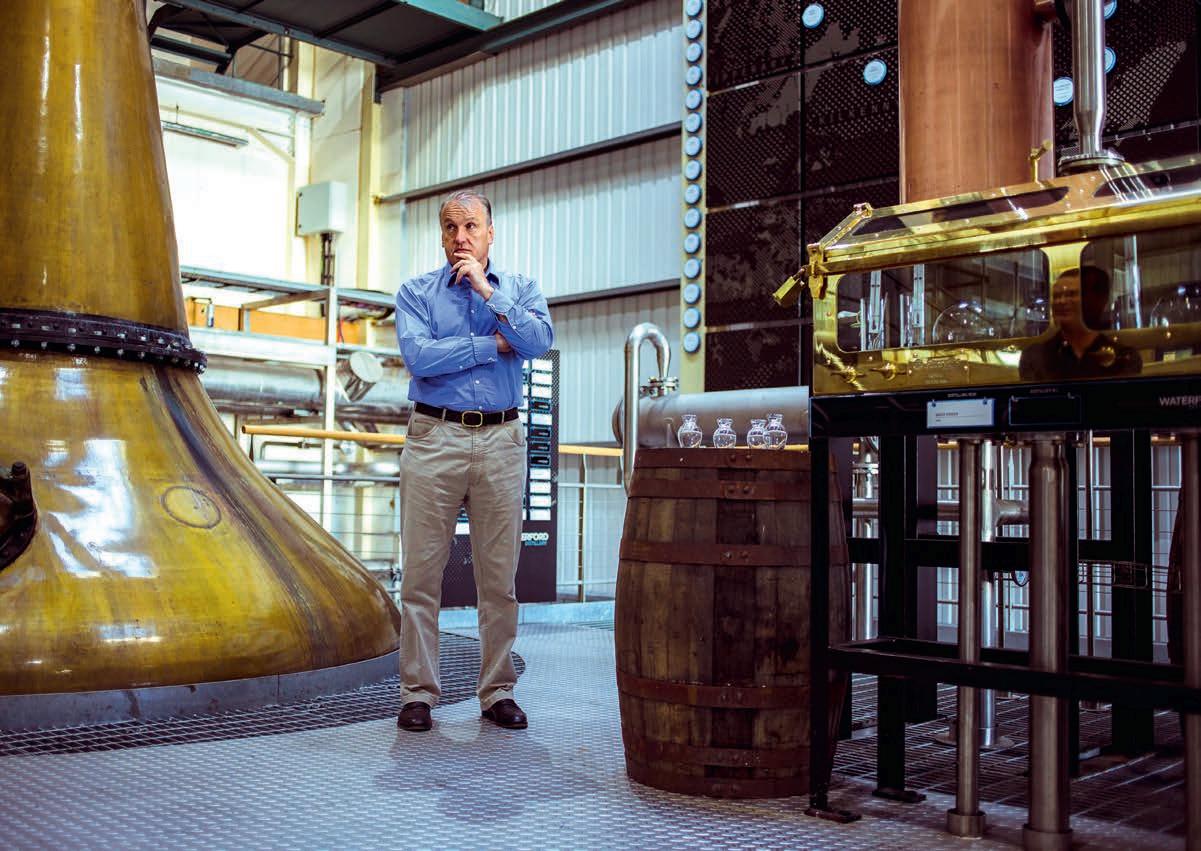
Mark Reynier. One of Waterfront’s biodynamic growers, Trevor Harris, shows off his barley.


Mark Reynier’s notions of terroir – and the associated non-chillfiltration, natural colouring and barley provenance – revolutionised Scotch whisky. Now he’s shaking up rum and Irish single malt



 Written by Robbie Armstrong
Adecade ago, Mark Reynier was sitting outside Bruichladdich nursing his wounds, the distillery having recently been sold to the French spirits group Rémy Cointreau for £58 million. Reynier had been the sole board member to vote against the sale.

He had successfully resurrected the Islay distillery since buying it from Whyte & Mackay in 2000. After seven years of silence, spirit had run from the stills in 2001, followed by over a decade of experimentation, innovation and – for some – perturbation, with Reynier as CEO.
‘One summer’s evening, a glorious evening – I can remember it was one of those Hebridean days where you can see for miles, we were looking over Lochindaal over the North Channel to the coast of Antrim, Northern Ireland – we were talking about some issue we’d had with barley,’ Reynier explains.
He was sitting with the distillery’s general manager, the late Duncan McGillivray, who had worked at Bruichladdich since 1974. Staring out across the water, he
explained to Reynier that the best barley he’d seen in his 40-year career came from the south of Ireland. Unbeknownst to McGillivray, he had planted the seed in Reynier’s mind for his next venture – born of the idea that his next distillery would make whisky from quality barley grown in more hospitable climes than the Hebrides.

Just over ten years on, and Reynier is sitting on his couch with his two dogs, Badger and Mimi, on a windy Monday morning in Edinburgh. Badger is old enough that Reynier remembers him jumping all over the barrels at Bruichladdich. More sedate nowadays, Badger is snoring away as Reynier talks expansively of past and present projects.
A third-generation wine merchant, Reynier began his career in London in the eighties as a cellar manager. Before long he was importing wine from Burgundy, the region famed for its patchwork network of micro-terroirs. Swapping wine for whisky, in 1996 he set up independent bottler Murray McDavid (named after his Scottish
grandparents) and bottled single malts.
In 2000, Reynier and a band of private investors successfully purchased Bruichladdich for £6 million. Under the helm of master distiller Jim McEwan – who had worked at Bowmore since the age of 15 – and the aforementioned McGillivray, the distillery surpassed all expectations, reaching worldwide acclaim under the straplines, ‘We believe terroir matters’ and ‘Progressive Hebridean Distillers’. They won Distillery of the Year four times between 2001 and 2007.
They began to speak about nonchill-filtration, natural colouring and, as their new spirit came of age, the origin of their barley. The distillery went from strength to strength, launching Botanist Gin, Octomore, The Organic and Port Charlotte, as well as Islay Barley and Bere Barley bottlings. Known for its bold, brash marketing, a bewildering number of special releases and limited bottlings, its methods were at times rubbished or contradicted by the big beasts of the whisky industry.
Some questioned why it was worth paying attention to the provenance of barley, when the nuances of flavour, many argued, would be destroyed by the distillation and maturation processes. The outspoken Reynier in turn pointed to their reliance on a commodity product selected solely for yield, often imported from as far afield as Ukraine or Canada.
Today, many of Reynier’s arguments appear to have been won. Many more single malts now state ‘non-chill-filtered and natural colour’ on their labels. Single malt, as a share of global whisky sales, is pushing
10%, and a focus on quality barley, selected for flavour rather than yield, is


increasing.
Not satisfied with having transformed Bruichladdich into a global player – pre-empting the single malt boom and prompting industrywide debates in the process – Reynier has now turned his attention to County
Waterford in Ireland. The eponymous distillery was founded on the site of a former Guinness brewery in 2015.

‘Unashamedly influenced by winemakers, we to the heart of not only this project, but in fact all of Reynier’s enterprises: an unwavering focus on distilling and maturing products – or Waterford styles it – of terroir.
the world’s greatest obsessively bring the same intellectual drive, methodology and rigour to barley – the very source of malt whisky’s complex flavour,’ Waterford proclaims on its website. This gets produce as
SOME QUESTIONED WHY IT WAS WORTH PAYING ATTENTION TO THE PROVENANCE OF BARLEY
Clockwise from top left:
Waterford Distillery, founded by Mark Reynier, was built on the site of a former Guinness brewery; Mark inside Waterford; Waterford Distillery agronomist Grace O’Reilly; during the barley harvest.
McGillivray, who died in March 2020, and had first spoken to Reynier about the quality of southern Ireland’s barley, would be credited on their first ever bottling, Pilgrimage, released later that year. From the 35 farmers whose barley Waterford buys each year, to the numerous single-farm distillations they’ve already released, (as well as biodynamic, organic and peated Irish barley bottlings), Waterford is fast becoming one of the world’s most exciting new distilleries. Indeed, it recently featured on Drinks International’s most admired whiskies list.
The distillery is also gaining praise and steam at a time when Irish whiskey itself is gathering momentum – its whiskey sales have grown 180% in the last decade and it is forecast to overtake Scotch in the US. Reynier, though, sees Waterford as distinct from their peers: they double distil in Scottish pot stills and only use malted barley. The clue is also on every bottle: Irish Single Malt Whisky
‘We make single malt whisky from Irish barley because it’s best distilled the Scottish way with Scottish stills – so





I’m only interested in double Scottish distillation and the best quality barley possible,’ he explains.
There is a logical continuation between the philosophies that underpin Bruichladdich, Waterford and now Renegade Rum, his $28 million Grenadian distillery which began production in 2020. At Renegade, the focus is on ‘terroir-derived single cane rum’ on an island that Reynier describes as having a ‘schizophrenic, volcanic, positively Burgundian geology’. Similar to rhum agricole, it is made using pure sugar cane juice rather than molasses.
The rum is ‘individually harvested, milled, distilled, matured and bottled entirely on Grenada’ – a feat few in the unregulated world of rum can boast

of. ‘Pre-cask’ unaged rum has already hit the market, and the first aged expressions are starting to appear as ‘Études: a terroir study of rum’. Renegade has entered the market at a propitious time: rum is undoubtedly starting to have its moment in the sun, with sales having surpassed £1 billion a year in the UK, accounting for a bigger market share than whisky.
For the hour or so of our interview Reynier talks tirelessly, scarcely coming up for air as he discusses everything from Victorian Boby malt mills to the farmers that grew barley for Islay whisky for the first time since the First World War. But the one topic that he keeps circling back to is terroir.
‘Terroir is a very simple thing, and people seem to get their knickers in a twist about what it means and what the inference is,’ he says. ‘It’s very simple. It’s the three-dimensional interaction of the microclimate, the soil and the topography on a plant. Not a person, not a distillery, not a technique, not a place – on a plant. If you are going to distil something and the primary raw ingredient is barley or sugar cane, how that plant grows is going to influence how those flavours are, and the more variable growing conditions, hillside slopes, climatic conditions, soil types – that’s going to influence the flavour compound composition,’ he adds.




‘Terroir is inextricably linked in my book to traceability. You have to prove that you’ve got a terroir but having the proof is not enough.


You’ve got to be able to share it. So really a terroir

needs to be traceable and you have to be transparent.
‘Otherwise I could be making it up – the industry does, they’re very good at it,’ he says. ‘We have that little equation that we call ‘real provenance’, or ‘provenance²’ equals terroir plus traceability over transparency. And that underpins the whole thing,’ he says, before explaining at length the importance of the blockchain technology they use at Waterford and Renegade to verify ‘the whole signature right from the field to the bottle’.
Perhaps one of Reynier’s proudest achievements is the landmark study Waterford funded – a joint venture with Enterprise Ireland, Teagasc, Oregon State University, Minch Malt and independent whisky analysts Tatlock & Thomson. It proved, using gas chromatography, that there were more than 42 different flavour compounds detectable in distilled new make spirit, half of which were ‘directly influenced’ by the barley’s terroir.

Detractors are still waiting to see the results on aged spirit, so the terroir debate might not be settled quite yet. Reynier, however, is showing no signs of letting up –just Google the words ‘whisky and terroir’ for proof. So what is it that places Reynier ahead of the curve in every endeavour? His willingness to do it the hard way? A focus on authenticity, traceability and flavour? Pure chance? All of the above? Whatever it is, it seems to be working.


No eye rolling please, it needs to be said. There is one area that the whisky industry is hell bent on improving, innovating and changing: packaging.
Are they not familiar with the old adage, ‘If it isn’t broken, leave it be?’ Some will say, ‘Aye, but what’s your issue with a well-made tin or a nice label?’ Nothing. However, the cost, extravagance and waste associated with all of these fairly recent changes has tumbled cork-first down the Alice in Wonderland Mad Hatter hole and quiet I shall not be.
Are the Grants trying desperately to keep up with the Vuittons? Will Richard Patterson be appearing at next year’s Whisky Exchange show, whipping a 75-year-old diamond encrusted Dalmore bottle into a demister, pointing at people gleefully covered in whisky fog and promising them a new Aston Martin?
Stop the roller-coaster please, I really need to get off. It’s not to say that whisky makers from 100 years ago didn’t have their own styles with regards to the type of bottle or label. In fact, when checking the trusted Google web machine, it says that packaging started to change
during the post-WWII age of mass production and consumption. Factors like the decrease in the cost of parts and labour, a massive change in manufacturing efficiencies, diminished barriers to free trade and a booming global supply chain suddenly allowed people to buy goods that were once prohibitively expensive. By the late-50s this led to the highest levels of employment and rising incomes for the everyday middle class family.
Boom! In strides advertising. There to help products be so different and appealing that they fly off the shelves. A case in point? In 1961 Glenfiddich hired Hans Schleger (designer of the iconic London Transport bus stop sign) to create their unique triangular whisky bottle. Are they one of the first pioneers? Well, it is still one of the most recognised and distinctive whisky bottles in the world.
Over the next 30 years companies introduced special tins with intricate lead crystal glassware, limited edition boxes or distillery series. By the mid-2010s, rebranding had taken flight with more than half of the companies changing labels, bottles, boxes and logos. Mind you, the Glen Scotia Disco Cow set, which was a colourful and

Whisky brands are among the worst offenders when it comes to extravagant packaging, but is it really necessary?
McInnis
bizarre, new and improved design choice, quickly went the way of the dodo bird, so I can’t help but wonder if the geniuses who thought of the campaign might have had a little too much of their own amber nectar during the planning process.
Since 2017, extravagant, elaborate packaging and branding has exceeded the amount of Twittersphere bloggers. A 60-year-old whisky deserves a hand-blown Italian designed bottle and luxurious velvet mahogany case. However, big brands are selling mediocre whiskies under the umbrella of special release ranges or new and improved branding. Bottle labels and boxes are designed by famous graphic artists depicting mythical beasts and flashy colours. Companies are announcing the shape of the bottle and iconic image is changing, but it’s still the same fantastic whisky inside. If that is the case why are they charging £10-£25 more?

This brings me to my final point: the newly redesigned bottle inside a box, inside the silk-lined bigger box that also contains a book about the artist’s process, all packed inside an even more colourful, artistic, extravagant box with gold ribbons? What am
The Scotch Whisky Association’s 2020 environmental strategy report stated that the most challenging target for reduction is packaging. ‘The main driver is continued consumer demand for premium products,’ say the SWA, and yet they are proud to state that 94% of industry packaging is reusable or recyclable. If I tried to reuse all the bottles, boxes, tins, bells, whistles, corks and glassware I would be running a museum within five years.
I don’t need a collaborative Peter Arkle box or a Bowmore hour-glass. What I need is for the whisky industry to stop hiding under the guise that the consumer wants their premium products branded and packaged at super premium prices. Inflation and the cost of living is quickly eating up any extra money we have, so how about you forget the fancy artist, reduce the marketing and packaging madness and (with the savings acquired) knock a few pounds off the product instead?
It might also be nice to stop putting the responsibility of your SWA sustainability and environmentally-friendly promises directly into our rubbish bins.
I supposed to do with all those things after I’ve actually consumed the whisky?
Big brands are selling mediocre whiskies as special release ranges


Forget pouring a dram into that peppercorn sauce to smother your steak – chefs and distillers are coming up with some thoroughly modern food and whisky matches
Written by Peter RanscombeWind the clock back to the seventies and eighties and pairing whisky with food used to be a simple game. Diners were delighted with a Scotch sauce to pour over their haggis-stuffed chicken balmoral or a wee dram drizzled through their cranachan.
How times have changed. The advent of nouvelle cuisine and the brigade of chefs marching onto the gogglebox with their cookery programmes has meant that restaurant goers are no longer content with the classics.
They want sprays, they want foams, they want spheres. Fortunately, chefs are continuing to innovate by bringing modern food and whisky matches to the table as well.
Mathew Sherry, chef de cuisine at Number One at The Balmoral Hotel in Edinburgh, works with Cameron Ewen, the whisky ambassador in the hotel’s Scotch bar, to develop matches. ‘We always look at it in the same way, as if we were pairing something more traditional and accessible with food, such as wine,’ says Sherry.


‘We start by looking at the flavour profile of the dish and then for the perfect flavour and aroma profiles of the whisky that we think will match. Once narrowed down, we look at the levels of sweetness, smoke and richness that the whisky can bring to the dish before a decision is made.’
One of Sherry’s favourite ingredients for whisky pairing is the humble tomato. ‘The beautiful tomatoes from the






 From left: Mathew Sherry from The Balmoral; food and whisky pairings have extended well beyond traditional whisky sauces.


























Isle of Wight pair really well with a grain whisky such as Hedonism by Compass Box – the vanilla and citrus flavours of the whisky work really well with the beautiful fresh and clean-tasting acidity of the tomatoes,’ he says.

‘With our hand-dived Isle of Jura scallop, smoked roe and leek chowder dish, I’ve found that an Inchgower 14-year-old works incredibly well. The coastal saltiness from the whisky complements the smoked roe, and the deep caramelisation of the scallop is offset fantastically with the soft and light Inchgower.’
From
Not every idea works though. ‘I’ve previously tried to compress cucumber in Macallan 12-year-old double cask to match with some beautiful smoked salmon,’ he said. ‘Unfortunately, the cucumber was not my best idea and we ultimately moved away from it.’

At the other end of the M8 motorway, the Scotch Malt Whisky Society (SMWS) has proved that it’s not just surf and turf that can be matched to a dram; it worked with Mono, a vegan café that opened in Glasgow’s Merchant City in 2002, to create six plant-based tapas pairings. The SMWS is famous for giving its bottles descriptive names, rather than identifying the distilleries behind the labels.
‘The tasting notes for each of the society’s whiskies are unique and make it exciting when it comes to matching whisky with fresh produce,’ explains Anne McWilliam, head chef at Mono. ‘The beauty of the society’s flavour
profiles is that they can be matched with a broad range of ingredients.’
Her culinary creations included: fennel arancini and caponata chutney paired with a ‘spicy and dry’ Scotch in which ‘the aniseed and cheesy character of the dish is brought to life with the woody, spicy notes of the whisky’; jackfruit tibs with kik alicha – an Ethiopian stew – ‘packing a spicy punch with its cayenne and roasted pepper’ matched with a ‘sweet, fruity and mellow’ whisky that ‘takes the dish to a
mellower level, adding a fruity sweetness to the palate’; and Goan curry with chickpeas, potatoes and coconut served with a ‘juicy, oak and vanilla’ dram –with the coconut bringing ‘harmony and balance’ to the pairing.
Restaurant tasting menus paired with individual wines have become as common as scallops on black pudding or truffle shavings on pasta, but Scott Davies – the head chef at The Three Chimneys restaurant on Skye – has gone in a different direction. For the eight-course tasting menu he’s been serving during October and November, he teamed-up with the nearby Isle of Raasay distillery.
His banquet opened with aldersmoked trout paired with a Champagne cocktail featuring Raasay’s ex-Bordeaux red wine single cask whisky, followed by oyster and cauliflower panna cotta with langoustine and crispy oyster, accompanied by the distillery’s special
IT’S NOT JUST SURF AND TURF THAT CAN BE MATCHED TO A DRAM


release, which was finished in oloroso and pedro ximénez sherry casks.
Duck fat confit salmon with foraged Skye mushrooms was served alongside an unpeated ex-rye whiskey single cask, while Vatten Farm lamb haggis with Jerusalem artichokes took to the table with an unpeated virgin Chinkapin oak single cask. After that roasted prime rib of Vatten beef with onion fondant, horseradish and beef fat brioche was matched to a peated ex-rye whiskey single cask.
To finish, bitter chocolate and smoked hazelnut praline was unveiled with Chinkapin peated whisky, and a whisky sour jelly with Raasay single malt appeared in a Three Chimneysstyle smoky Old Fashioned cocktail. If that doesn’t demonstrate whisky’s versatility then I don’t know what will.
While McWilliam and Davies chose a cornucopia of complexity for their matches, some Scotch brands have opted for very specific pairings. Tamdhu teamed up with Brindisa to hold jamón and whisky tastings at its Spanish delicatessen in London’s Borough Market.

James Robinson, Brindisa’s ham expert, selected four examples of jamón
from the Iberian Peninsula – Guijuelo, Dehesa de Extremadura, Jabugo and Los Pedroches. The meats were matched with Tamdhu’s Quercus Alba Distinction, which was aged in first-fill American oak sherry casks.
‘To be honest, I was sceptical initially, but – once you started to try the variety of jamón and the whisky –it just worked,’ admits Gordon Dundas, Tamdhu’s brand ambassador, who hosted the events. ‘The strength of the whisky and the marbled fat in the ham combined really well as a base, and then the different jamóns from the regions gave different pairings.’
The ‘creamy sweetness of the whisky’ complemented the ‘oily, juicy, earthy nuttiness of the jamón’, according to Dundas. ‘Sublime,’ was his summary.
Away from ham, what other unusual pairings has Dundas tried over the years? ‘I’ve done many – Peking duck and sherry whisky, cheese is a great combination in a complimentary and contrasting way, but – for me – seafood and whisky is such a great combination and oysters particularly.
And any howlers? ‘One stands out, which was burritos and whisky – nah, did not work!’
It’s not just Scotch that’s getting chefs excited these days either. Adam Handling, the Scottish chef who won his first Michelin star back in February [2022] for Frog in London’s Covent Garden, teamed up with The Craft Irish Whiskey Company to mark St Patrick’s Day.

‘The rule book needs to be torn up,’ Handling says. ‘Because if we constantly look at the rule book and only make something within those parameters, we’re never going to make anything that is out of the ordinary.’
Handling took The Taoscán –an Irish whiskey that was aged in American oak bourbon barrels and oloroso sherry casks and then split and finished in tawny port pipes and barrels made from chestnut wood – and paired it with Scottish lobster for his ‘Celtic Cousins’ menu to toast St Paddy’s Day.
‘The port and chestnut flavours of The Taoscán are incredible – it really works and nobody else has ever done it before,’ he adds. ‘I’m very excited to pair this with a smoky lobster dish.
‘The two together are phenomenal. Me being Scottish, I’ve never worked with an Irish whiskey, but we are Celtic cousins at the end of the day and Taoscán is Gaelic for dram.’
The initial link-up went so well that Handling added an oyster and Taoscán pairing to his menu at Ugly Butterfly, his restaurant and bar near St Ives in Cornwall. The whiskey is introduced to the dish using a pipette – one of those wee droppers made famous by high school science lessons – to add its notes of oak and roast chestnut.
Above: Tamdhu and jamón are a match made in heaven.It’s time to dial up the showmanship by adding a little artistry to your cocktails with The Alchemist’s show-stopping recipes

SERVE IN: Wine glass or iridescent cup

30ml pink grapefruit gin
15ml (1 tbsp) of simple sugar syrup
2 dashes of orange bitters
20ml of pink grapefruit juice
1 dash chocolate bitters
50ml of Prosecco





50ml of soda water
Grapefruit wedge to garnish Ice cubes/crushed


METHOD: Place some ice cubes in your glass, then add the gin, sugar syrup, bitters and grapefruit juice. Stir and top with the Prosecco and soda water, then top with crushed ice and garnish with a grapefruit wedge to serve.


SERVE IN: Rocks glass
45ml bourbon
20ml maple syrup


1 dash of Bitter Truth Jerry Thomas Bitters (or other aromatic bitters) 25ml filtered water

Ice ball Conical flask Smoke gun Woodchips
METHOD: Pour the bourbon, maple syrup, bitters and filtered water into the conical flask and smoke with woodchips (you will need a smoke gun or smoked water for this). Leave for a minute to infuse. Place the ice ball in the rocks glass and pour the infused mix over the top.


SERVE IN: Rocks glass


25ml bubblegum syrup
5ml (1 tsp) grenadine 40ml apple juice

40ml cranberry juice
15ml (1 tbsp) fresh lime juice

½ tsp soy lecithin Ice cubes
3-4 dry ice pellets (optional) Conical flask/jam jar
METHOD: Pour the bubblegum syrup, grenadine, apple juice, cranberry juice, lime juice and soy lecithin into a shaker and add ice cubes. Shake and strain into a conical flask or jam jar. Fill the rocks glass with ice cubes and place the dry ice (optional) on top. Do not drink the dry ice. This creates bubbles when the cocktail is poured over the ice. Serve.


SERVE IN: Punch glass/tankard





2 tsp demerara sugar





15ml Grand Marnier
10ml (2 tsp) Cointreau


Pinch ground cinnamon & nutmeg
30ml golden rum
25ml watermelon syrup
60ml pineapple juice
15ml fresh lime juice
Crushed ice, enough to fill your glass
Cinnamon stick for garnishing

METHOD: Heat the sugar in a small saucepan (on medium) until it begins to caramelise, then add Grand Marnier while still over the heat (the Grand Marnier will ignite). Once flaming, sprinkle in the cinnamon and nutmeg to create sparks. Add the rum, watermelon syrup, pineapple juice and lime juice. Fill your glass with crushed ice and pour over the golden liquid. Garnish with a cinnamon stick.
SERVE IN: Large petri dish or rocks glass
30ml bourbon 30ml cognac 10ml (2 tsp) Cointreau 10ml (2 tsp) chocolate cookie syrup
1 dash chocolate bitters
1 dash orange bitters Ice cubes
Piece of orange glass to garnish
METHOD: Pour the bourbon, cognac, Cointreau, syrup and both types of bitters into a Boston shaker along with some ice cubes. Stir for 30 seconds to mix and dilute, then strain into the glass and lay the piece of orange glass on top. Serve with a teaspoon and smash the orange glass and drink. Smashed it.
TO MAKE THE ORANGE GLASS: You will also need round, heat proof disc-shaped silicone moulds. Ours are 15cm, but you can use any size large enough to sit on top of your glass.
450g isomalt 2 ½ tsp orange flavour drops
METHOD: Place the isomalt in a small saucepan over a medium heat and stir until it melts down. Add the orange flavour drops. Once melted, turn off the heat and allow the mixture to cool slightly for 30 seconds. Careful, this will be very hot. Then pour into the moulds. Wait 30 minutes for the mixture to cool, then carefully move the moulds around to allow even coverage. Transfer to the fridge for 3 hours to cool and set. Once set, carefully remove the orange glass. Store in an airtight container, separated by sheets of baking paper. These are incredibly fun to smash!
Did someone say potions class? The Alchemist is a true master in dark arts and molecular mixology with theatre and immersive experiences at its core. If you would like to find out more about their offerings, or explore their UK venues, please visit The Alchemist website. www.thealchemist.uk.com; Instagram/Twitter: @TheAlchemist











 Written by

There are now over 250 Canadian distilleries making a whole range of different spirits, including whiskies, but the eight largest distilleries make up over 95% of the whisky produced in Canada. When most people think of Canadian whisky they might think of legacy whiskies and brands such as Crown Royal, Canadian Club and Seagram’s.


However, it’s a very exciting time for Canadian whisky with lots of fascinating and innovative approaches to be discovered across the country, including several new distilleries in the planning stages.
For example, Two Brewers Distillery, deep in Yukon, are using casks that previously aged maple syrup (could this be more Canadian?) to finish their whisky. It is

made from both standard mash and sour mash and matured for 27 months.
Black Fox Farm and Distillery in Saskatchewan are looking at terroir and sustainability in their approach to whisky making. I recently tried their delicious Single Grain Canadian whisky made with Triticosecale (a hybrid grain combining both wheat and rye), it’s jammy and sweet but also earthy and spicy and deceptively moreish.
Clockwise from top right: Two Brewers Distillery’s Alan and Bob enjoy a dram by their casks; Two Brewers’ Classic and Peated single malts; Black Fox Farm and Distillery are using Triticosecale, a hybrid grain; Canadian legacy whiskies, Black Fox Farm and Distillery’s Single Grain Canadian whisky.
hybrid and sweet but also
Blair Bowman
From hybrid grains to cask ageing that’s sure to appeal to anyone with a sweet tooth, there’s so much more to Canadian whisky than the old classics
LOTS OF INNOVATIVE APPROACHES ARE TO BE FOUND ACROSS THE COUNTRY


As well as rural distilleries dotted around the country, the province of British Columbia, in particular Vancouver and on Vancouver Island, has seen a real flurry of activity from new distilleries setting up in recent years. Shelter Point Distillery, which opened in 2011 on Vancouver Island, has a wide range of different expressions. They are currently showcasing different cask influences on their single malt whisky, including their Smoke Point edition which is matured in casks that have been smoked with driftwood from the shoreline and native woods around the distillery.


Still Head Distillery, also on Vancouver island, has been making a whisky called ‘B-word’. Basically it’s a bourbon, but they can’t legally call it that as bourbon is a protected product and can only be made in the USA. As the crow flies, the distillery is only about 20 miles from the US/Canada border, but those are the rules. Canadians are famously polite and certainly wouldn’t want to upset their American neighbours! This bourbon-style whisky has a mash-bill of 63% corn, 27% malt and 10% rye. It is aged for three years in new oak barrels, and sounds absolutely delicious.
Odd Society Spirits in Vancouver is another distillery that has been using ex-maple syrup casks to age both a rye


whisky and malt whisky. Their rye whisky is matured for up to four years in small 30-litre maple syrup casks. For their malt whisky, aged in maple syrup casks, they went all-in and smoked the malted barley using maple wood. Unfortunately most of these smaller distillers are not exporting to the UK (yet) but I’m very taken by the idea of these maple syrup malts and hope to get to try them soon.
Odd Society have also done some interesting experiments with imported Scottish peated malt and peated malt grown in the Pacific Northwest, distilled in batches and bottled separately to allow consumers to

compare and contrast the differences in the peat.
There are quite a few other distilleries in Canada making use of both 100% locally grown barley and grain but also occasionally importing Scottish peated malt. Anohka Distillery in Alberta is one example, which only opened in December 2021 but has already been distilling with local malt as well as importing 75ppm (parts per million) peated Scottish malted barley.
A distillery with strong Scottish links is Macaloney’s Island Distillery (formerly known as Macaloney’s Caledonian Distillery). The owner Graeme Macaloney, originally from Scotland, emigrated to Canada thirty years before setting up his distillery. Founded in 2016 and using Forsyth’s stills, Graeme also had the guidance


I AM VERY TAKEN BY THE IDEA OF THESE

















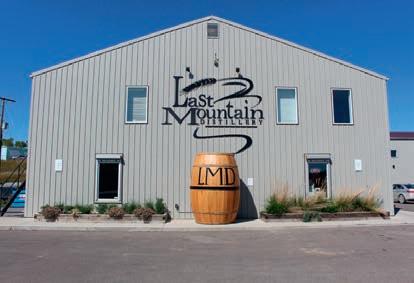
Clockwise from top left: Macaloney’s Island Distillery’s Forsyth stills; Graeme Macaloney; Last Mountain Distillery’s Pile O’ Bones; Last Mountain Distillery; Last Mountain Distillery’s Smokey Single Malt.

from the late Dr Jim Swan when setting up. However, in 2021 he ended up in hot water with the Scotch Whisky Association (SWA) who argued that his products could be misleading to consumers. It became a bit of a contentious battle, but in the end was settled out of court earlier this year. The compromise being that Graeme could continue to use his surname Macaloney, but had to drop the use of the word Caledonian and any other references on his products to Scottish place names.
The SWA also allowed a grace period whereby he could sell the remaining bottles of the contentiouslynamed whisky. I was fortunate enough to have a Zoom whisky tasting with Graeme Macaloney last year and the whole range is of a very high quality. You can certainly see how the influence of the wood policy from Jim Swan has helped shape their single malt whiskies.
Several breweries have joined in the whisky boom in Canada, including previously mentioned Two Brewers in Yukon, but others like Troubled Monk Brewery in Alberta, winners of the 2016 World Beer Cup, are now
also getting into whisky in a big way too. Their Grain Henge whisky series, described as a ‘New World Single Malt’, really keeps the focus on the malt. Their Meeting Creek edition uses a mashbill of 2-row, amber, crystal, brown and chocolate malts.


Collaboration seems to be a big part of the Canadian whisky scene and other distilleries such as Last
Mountain distillery in Saskatchewan have created a ‘cask exchange’ programme with a handful of local Saskatchewan breweries. Their freshly dumped whisky casks are ‘loaned’ to the breweries for ageing their beers and then returned to Last Mountain to finish their whiskies again.


So, it’s clear to see that Canada is experiencing a boom in new wave whisky. With several hidden gems and enormous amounts of potential, it’s certainly one to watch.

COLLABORATION SEEMS TO BE A BIG
Some say there’s nothing new in Scotch whisky. It’s time to think again.

When it opened its doors to the public on Tuesday 1 May 2018, The Borders Distillery in Hawick breathed new life into an industry that, in the Scottish Borders, had ceased to exist for nearly two centuries. The Borders Distillery broke ground in November 2016 and, in just 17 months, a distillery emerged that bridges Victorian engineering and modern-day technology, sustainability and community spirit.
Their ambition is to run the mostqualified distillery in Scotland – a place where ‘everyone can do everything’. Their talented team of distillers can turn their hands to every aspect of running the distilling operation – from milling and mashing, through fermentation and distillation, and on to filling casks and racking them in their warehouses. And on top of all that, they don’t have any tour guides at The Borders Distillery – instead it’s the distillers themselves who show their visitors around.
At The Borders Distillery they only use locally grown Scottish Borders barley, all harvested from 12 farms lying within 35 miles of Hawick. This helps to keep the delivery of their barley as eco-friendly as possible, whilst also supporting the local economy.
Once at the distillery, the barley begins the journey of its transformation into a spirit – the whole process of which happens in the building. Their distillery was designed to create an environment that would allow for sustainable distilling, and they are able to keep a watchful eye on the entire production process of the barley, from seed to spirit.
In 2019, they distilled a small batch of rye spirit and matured it in the same fresh-fill bourbon casks as the malt, to create a remarkable and aromatic whisky blend, Borders Malt & Rye. This is the first Blended Scotch Whisky to leave the Scottish Borders since 1837, and the first expression of the Workshop Series from the Borders Distillery. Blended at 63.8% Single Grain and 36.2% Single Malt, each WS:01 Borders Malt & Rye bottle is individually numbered with only 5,988 released for sale in the UK.

COLOUR: Soft gold.
NOSE: The rye dominates with warm spice and toasted wood. Reduced, the fruits emerge.
PALATE: Warming with velvetlike creaminess. Warm from the over baked fruit tart in buttery shortcrust pastry. Butterscotch sauce over golden syrup sponge.
FINISH: Warm with a custard-like softness.
Commenting on the launch, managing director John Fordyce, said: ‘The spiciness of the rye combined with the Borders malt, which is rich with fruit and vanilla, makes this a very approachable blend with character and depth.

‘The Workshop Series,’ he added, ‘is about respecting the rules but challenging the status quo. A rye-based blend is exactly that – it’s innovative, it’s inventive and it gives a taste of what is to come as part of the Workshop Series.’
Bottled without filtration at 40% ABV. Available to shop on The Borders Distillery website and in their Hawick visitor centre.
To find out more about The Borders Distillery, please visit their website at www.thebordersdistillery.com. Alternatively, please call 01450 374330 or follow them on Instagram @thebordersdistillery.






 Source: Scotch Whisky Association figures for 2021. www.scotch-whisky.org.uk


I‘m sure I don’t need to remind you of the strict rules surrounding the production of Scotch whisky. The rules set out in Scotch Whisky Regulations 2009 are clear and leave little room for misinterpretation. However, there are definitely a few examples of what we will call ‘nefarious practices’ in the production of Scotch whisky that don’t often get talked about and could be considered skirting the rules, shall we say…
This sounds a bit crude and you won’t find much about it if you try to Google it. I’ve only ever really heard it spoken about by very old and senior figures in the whisky industry, but even then they’ve been a bit coy about it.
Basically if a cask dips below 40% ABV while it is maturing it can no longer legally be called Scotch whisky as 40% is the legal minimum strength. This can happen naturally during maturation as the Angels’ Share typically reduces both ABV and spirit by around 1% per year, give or take. Every cask is unique though and other factors such as humidity, air pressure and temperature can all influence the ABV of the spirit in the cask.


So, what do you do if you are a distillery and find an old cask that has dipped below 40%? Well, there are really only two options available. Option one is perfectly legitimate and that is to blend that cask with another of a higher ABV to bring the relative strength back up. Option two is the odd sounding, highly irregular and probably illegal ‘cold fingering’.

illegal ‘cold fingering’.

Essentially, as far as I understand it, a special superchilled metal rod is inserted into the cask through the bung hole, and the water molecules in the whisky will freeze before the alcohol freezes. The rod is then pulled out of the cask with the frozen ice crystals extracted, therefore pulling the ABV of the cask back up. Sneaky right? Now, I’m not accusing any distilleries of using this method but it would certainly be a way to resolve the problem of an under strength cask.
problem of an under strength cask.



When it comes to rules and regulations there are few as strict as those which control the production of Scotch whisky. But rules are made to be broken...


During fermentation some distilleries have pretty active fermentations which can lead to a lot of foaming and bubbling in the washbacks. There are several ways to deal with this, with some distilleries choosing only to partially fill their washbacks to give plenty of headspace to allow for foaming. For example, Bladnoch Distillery have 26,000L washbacks but only charge these with 23,000L of wort.


When visiting a distillery you may have also seen washbacks that have a ‘switcher blade’ mounted on the inside of the washback near the top. It’s a bit like an upside down helicopter blade that rotates to cut the foam that is expanding near the top of the fermenter. These can be tricky to clean though.


The final option to settle down a violent and overly active fermentation is the use of an antifoaming / defoaming agent which are typically silicone based. A small amount is poured into a washback if the fermentation is looking too active and could spill over the top, resulting in waste and spillage.
Historically I believe that many distilleries just used unscented soap flakes which achieved the same thing. Interestingly, this is often glanced over as in some interpretations of Scotch Whisky Regulations 2009, Paragraph 3, Clause (h) states: ‘to which no substance has been added except – (i) water; (ii) plain caramel colouring; or (iii) water and plain caramel colouring’. Anyway, it definitely happens, but I think everyone just accepts this and glances over the fact that it could be an additional substance.


Interestingly, at the Cotswolds Distillery in England they have taken the decision to add a small knob of butter to act as their natural antifoam agent, but in doing this it means their whisky is not suitable for vegans.


When maturing whisky in Scotland, casks have previously been used to mature something else. Typically this will have been bourbon or sherry, but sometimes wines or dessert wines.


Before new make spirit or whisky (for re-racking or finishing) can be added to the cask it should be completely empty of residual liquid. However, to keep a cask as fresh as possible some residual bourbon, sherry or wine might be left in the cask to stop it from drying out.


According to guidance on casks from the Scotch Whisky Association, ‘If a cask has previously contained any liquid other than Scotch Whisky, the cask must be thoroughly drained before it is filled with Scotch Whisky. Failure to empty the cask thoroughly would mean that flavouring is being added to the Scotch Whisky, which is illegal.’
to know if it was totally empty or not? Also, it’s
it is odd sounding, highly irregular and probably illegal



 Written by Felipe Schrieberg
hen he was studying distillation in the UK, Westland Distillery founder Matt Hofmann repeatedly heard the same claim from industry figures – when it comes to the flavour profile of whisky the grain feedstock used to produce it contributes almost nothing. What matters most, according to these experts, is yield –how much alcohol can be extracted from the grains in order to make whisky.


WMatt Hofmann repeatedly heard the

how its ingredients – including oak for maturation –

inspired by the places they come from. This means questioning every facet of how whisky is made and how its ingredients – including oak for maturation –are sourced. The result? These pioneers have opened
up a new frontier of flavour.

However, a new generation of distillers, including
However, a new generation of distillers, including Hofmann, have been rejecting this previously accepted paradigm and are creating phenomenal new whiskies
They are forsaking traditional supply chains that prioritise commercial-scale production and damage arable land in favour of doing business in a way that encourages grain diversity and sustainable methods of production in the face of a changing global climate. For most of these distillers, it starts with rethinking how grains are procured, and each one is doing it differently.


production in the face of a changing global climate. For

A new generation of distillers are realising the potential of locally-sourced ingredients that are sustainable and less damaging to the planet

THIS MEANS QUESTIONING EVERY FACET OF HOW WHISKY IS MADE
Clockwise from above: Nautilus, TOAD’s still; PiggyBack Six-Year-Old from WhistlePig; Fettercairn Distillery; John Letts; heritage rye field with crop weeds.


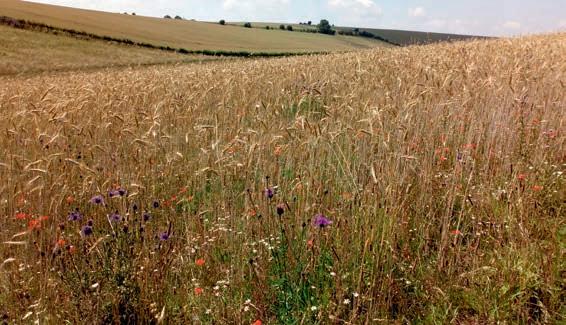
At single malt distillery Westland, based in Seattle, Hofmann is experimenting with different heritage barley varietals. Not only is he looking for new flavours but he wants varietals that are able to grow well in the northwest of the US by the Pacific coast using sustainable techniques, and he is collaborating with local farmers and maltsters to do so, which in turn leads to interesting whiskeys.
‘Let’s take the versatility that we have with smaller maltsters to do unique one-off varietals,’ he says. ‘Let’s do farm to farm explorations. We can do vintage explorations and batches that are so small, they make up just a week’s worth of production. The cost might be higher when you do it that way but also you get something that is completely unlike anything else in the world.’
On the opposite side of the country in Vermont, farm distillery Whistlepig is slowly creating a selfsufficient operation. The distillery will be fully solar-powered by the end of the year and it has dedicated 300 acres of its 500-acre territory to grow its own rye, corn and barley. Though it currently sources most of its whiskey from Canada (the company was founded in 2007 and the distillery was completed in 2015), the new Piggyback six-yearold rye includes whiskey made from grains grown on-site.
‘It’s a kind of rejection of the notion that nature can be controlled,’ says TOAD’s head of whisky, Charlie Echlin. ‘Instead of trying to manipulate it to get the best results, John and our farmers are farming in harmony with natural processes.’
These are just a few of many examples. Though the methods are different, the ultimate goal is to improve the soil health, or at least prevent the degradation of the land, that whisky’s grains are grown on. The lower yield of heritage grains (thus higher cost) is, believes a new generation of distillers, worth it for the authenticity and taste.
old rye includes whiskey made from grains grown botanist John Letts oversees a unique method of together also planted with clover to create a healthy mini-
Across the Atlantic in England, Oxford’s The Oxford Artisan Distillery (TOAD) has one of the most radical approaches to sourcing grains in the whisky industry. Working with eight different farms, seven in Oxfordshire, TOAD’s archeobotanist John Letts oversees a unique method of growing many varietals of heritage grains together in fields, including rye, wheat and others that are also planted with clover to create a healthy miniecosystem. There is no spraying of chemicals or tilling, and the soil is left healthier as a result.
At the opposite end of the whisky-making process some distillers are also thinking about how oak used for maturation can be locally and responsibly sourced. In Scotland, Whyte and Mackay’s master whisky maker and blender Gregg Glass is managing the company’s Scottish oak programme. Though Scottish oak has barely ever been used for whisky maturation, he is working with the Fasque Estate where W&M’s Fettercairn distillery is based to harvest and process oak trees for casks (the estate also has two sawmills), while also planting new trees to eventually create a self-sustaining distillery forest. W&M’s distilleries Dalmore, Jura, Tamnavulin and Fettercairn all have whisky currently maturing in Scottish oak.
currently maturing in Scottish oak.
Whistlepig is also growing its own oak on the farm, and using it for its whiskey casks. Vermont oak is particularly unique, according to head of whiskey development Liz Rhoades.


oak is particularly unique, according to head of


than latewood each year,’ she says. ‘That means we
char that translates to a lot of caramelisation and
‘Because we’re in a cooler climate for a longer period of time, our oak builds up more earlywood than latewood each year,’ she says. ‘That means we get more wood sugars and more lignins and less tannins. Combined with our proprietary toasted char that translates to a lot of caramelisation and a vanilla and smoke profile. I call it campfire and toasted marshmallow.’
Moments from the Scottish Highland Distillery where we dream up our delicious whiskies, lies our boutique hotel Glenmorangie House.
Here, in remote and beautiful surroundings, we welcome you into Glenmorangie’s wonderful world. Unwind in technicolour bedrooms inspired by our single malt’s flavours. Forage in the secret garden for cocktail ingredients. Gaze at the stars after dinner over a dram. The door to our sensory playground is open to whisky lovers old and new... how soon can you come? Find
Moments from the Scottish Highland Distillery where we dream up our delicious whiskies, lies our boutique hotel Glenmorangie House. Here, in remote and beautiful surroundings, we welcome you into Glenmorangie’s wonderful world. Unwind in technicolour bedrooms inspired by our single malt’s flavours. Forage in the secret garden for cocktail ingredients. Gaze at the stars after dinner over a dram. The door to our sensory playground is open to whisky lovers old and new... how soon can you come? Find
Moments from the Scottish Highland Distillery where we dream up our delicious whiskies, lies our boutique hotel Glenmorangie House.


Here, in remote and beautiful surroundings, we welcome you into Glenmorangie’s wonderful world. Unwind in technicolour bedrooms inspired by our single malt’s flavours. Forage in the secret garden for cocktail ingredients. Gaze at the stars after dinner over a dram. The door to our sensory playground is open to whisky lovers old and new... how soon can you come?


It’s little surprise that her favourite Whistlepig is the 15-Year-Old rye, which is finished for one to two years in those Vermont oak casks.

to two years in those Vermont oak casks.

Beyond the unique aromas and flavours provided by Vermont oak, Whistlepig is one of the few distilleries in the world that has made a fully grain to glass whiskey. Its Beyond Bonded Farmstock release only uses its own grains, spirit and oak. It’s even watered down with its own well water.


successfully also means distillers become agronomists, foresters and biologists. It requires understanding, not just in the technical side of whisky making, but also the distillery’s role in maintaining a holistic balance with the local communities and ecosystems they are based in and expressing that through their drams.


At Westland, Hofmann was thrilled to


At Westland, Hofmann was thrilled to discover a rare local oak species, the Garryana, that he’s used to create a special limited-edition series that’s released every year. The distillery only builds casks from naturally-fallen Garryana trees and works with a local forestry NGO to plant new Garryana saplings. Though tricky to source, the casks are worth it. Hofmann says Garry oak provides darker flavours than more traditional white American oak.

All these examples illustrate how drawing on local influences leads to unique whiskies. Doing so


‘By leaning into this, you get a much more compelling sense of place,’ says Hofmann.
‘You get a product that is unique in a world where new distilleries are opening up all the time everywhere. That’s how you stand out.
‘It also means that you push the genre further forward and in an old and conservative industry like whiskey, that’s a very exciting place to be.’
From top: Westland Garryana American Single Malt Whiskey Fifth Edition; WhistlePig’s 15-Year-Old rye.


 Written by Federica Stefani


In every corner of Scotland new distilleries are opening, developing cutting-edge techniques and taking the world of whisky to new frontiers. But how did we get here?
If many eyes are pointed towards the future of whisky, others believe that it is just as important to uncover its roots. Whisky producers are enlisting help to dig up secrets from the past and uncover domestic, often illicit, production hidden in the remote landscapes of the Highlands, away from the excise men’s gaze.

Darroch Bratt is an archaeologist for Historic Environment Scotland, and has been working on a PhD project with the University of the Highlands and Islands on the origins and history of distilling and whisky production in the Scottish Highlands and Islands.
Darroch’s research combines historical and archaeological sources. ‘I was trying to work out why the whisky industry has emerged as it has, how it has been integrated into the modern economy and its role in the development of modern Scotland,’ he says.
A passion for whisky honed by working behind the bar at Fiddler’s restaurant in Drumnadrochit, Darroch, originally from Glenurquhart, went on to study anthropology and then a masters in archaeology, before successfully applying for a PhD in 2017.
‘I got really interested in the history and culture,’ he says. ‘I suppose you could call it a people’s history of whisky.’
Darroch uses archives alongside fieldwork. However, looking for something which was always meant to remain secret is not always easy. ‘Some of the sites are quite small and unimpressive,’ he says, ‘but it’s the social story behind them that is fascinating.’
Some discoveries from the days of widespread illicit distilling offer a unique insight into the communities where they were based. ‘There is an element of communality to how people distilled,’ he says. ‘The sites were small and didn’t need to house anything permanently. I found records for Strathglass that said
that there were as many as 52 operations at one time, although there were only five stills. This is the extent to which people were sharing resources.’
Women were highly involved in the distilling process from early on, while landlords would at times turn a blind eye, or actively lobby for less harsh legislation regarding illicit distillers. ‘Most communities in the Highlands were surviving, to an extent, on whisky distilling and smuggling. Landlords were complicit because they were benefitting from the rent – which they could increase by threefold at times,’ says Darroch.
He discovered an element of storytelling around modern Highland communities. ‘When you tell people that you are studying illicit distilling, almost anyone whose family is from the Highlands will tell you about a site they know, or a family story relating to it.’
Darroch is not the only one digging into the past. Archaeologists from the National Trust for Scotland, in partnership with Glenlivet are excavating sites around the Speyside distillery. Darroch is quick to point out that whisky is a small world in which collaboration is key. ‘It’s such an important industry for Scotland now – so understanding where it’s come from is critical.’
Archaeologist Darroch Bratt is uncovering the history of clandestine illicit whisky distilling which for centuries was widespread in the Highlands
Learn from yesterday, live for today, hope for tomorrow: Darroch Bratt searches for illicit distilling sites in the Highlands.


there is an element of communality to how people distilled


Befuddled by the dizzying range of drinks on offer? Feel the fog of confusion lift with our nine-page guide to what the real experts drink


ith the turn of the season upon us, there is no better time of year for a dram of Glenfarclas. The 105 Cask Strength whisky is described as smooth yet punchy, creating a perfect festive treat with notes of sherried fruit, sweet toffee, and rich spiciness.


In 1968, Chairman George S Grant (fourth generation), in search of Christmas presents for friends and staff, selected and bottled a cask that turned out to be 105 proof – which is the equivalent of 60% ABV. The dram was so popular that George decided to sell it as the very first cask strength whisky on the market. A perfect whisky to enjoy this winter with friends and family just as George did himself back in 1968.


As winter approaches, the Visitor Centre remains open Monday to Friday between 10am and 4pm and Glenfarclas continue to welcome visitors for both tastings and distillery tours. As is an annual tradition, the Visitor Centre will open for one day between Christmas and New Year on 29 December from 11am to 3pm, where Glenfarclas invite guests to join them for a dram and mince pie in their famous Ship’s Room.
Glenfarclas will be offering a limited number of tours on 29 December. If you would like to book, get in touch with the Glenfarclas Visitor Centre (visitorcentre@glenfarclas. com). For more information (including Christmas opening hours) please see www.glenfarclas.com








49.99 46

A welcome return for this limited release from the Contrasts range – a lighter Benromach, matured in first-fill bourbon barrels. The distillery has just two pot stills, so to create this expression there is an additional distillation in the spirit still.


NOSE: Fresh tropical fruits and toasted malt with soft smoke in the background.

PALATE: Light-bodied with flavours of ripe bananas, poached orchard fruit and a honey sweetness.


FINISH: A long finish with the subtle smoke lingering with citrus zest and green apple.


SINGLE MALT
81 46


Matured in American and Spanish oak, this Speyburn has a great depth of flavour with cask influence and distillery character balanced very well.


NOSE: Sherry dominates with exotic flavours of figs and incense. These sherry notes are fresher than most with real depth.
PALATE: The palate offers the same sherry dominance but with distillery character peering through. Hints of walnut and black pepper give a savoury edge to all the sweetness.
FINISH: Finally there is still sweetness but the finish is well peppered and distinctly spicy.


WHISKY AMBASSADOR AT GORDON & MACPHAIL, SOUTH STREET, ELGIN www.gordonandmacphail.com


600 48
A rich and well-aged expression from Balvenie which has been matured in a combination of European and American oak before being married together in a tun.

NOSE: Balvenie’s honeyed sweetness is there on the nose with fresh ginger, cinnamon and plum jam.
PALATE: A great depth of flavour with sweet fruity notes of pineapple and mango with molasses and rich vanilla. The oak influence adds gentle winter spices which harmonises with the sweet flavours.
FINISH: Long and sweet with lingering spicy notes from the oak.
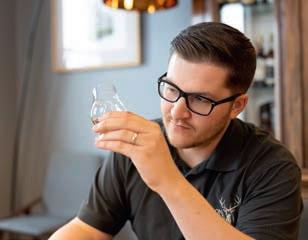
Based in the company’s spiritual home in Elgin, Fraser has been the Whisky Ambassador at Gordon & MacPhail South Street since 2018. A massive fan of whisky – especially blends –this year marked Fraser’s first appearance at the Scottish Field Whisky Challenge.
Immerse yourself in the art of our whisky making. In the company of our passionate guides, see how we use barley, water, wood and time to bottle the taste of our imagination.


Find out more about our experiences. glenmorangie.com/visit-us


40 46
Non-chill filtered – natural colour. Matured in American oak and Guyanese demerara rum barrels.
NOSE: Sweet, caramelised sugar with pineapple, banana and coconut notes coming through. Maritime scent.


PALATE: Rich sweetness of hot fudge, caramel and treacle. A perfect balance with the sweet, banana and coconut. Some sweet peach on the palate, very pleasant.

FINISH: Medium finish with maritime notes and a perfect amount of spice.


ISLE OF SKYE SINGLE MALT

450 45.8

Single malt, predominanty matured in American oak hogsheads with some European oak refill.
NOSE: Lovely fudge and tablet notes with bananas soaked in syrup. Aged oak and umami notes.


HIGHLAND SINGLE MALT


102 48.4
One of only 344 bottles – charged from a sherry puncheon. A single cask bottling for Douglas Laing.
NOSE: Sweet toffee and creme caramel. Hot fudge sauce and buttered raisins.
PALATE: Hot bananas, barley sugar boiled sweets. Milk chocolate and red fruits.
FINISH: Warm, medium finish of toasted oak and toffee pudding.
OWNER OF THE PIPER BAR AND WHISKY ENTHUSIAST www.thepiperbar.com

PALATE: Floral and sweet, salted caramel with the heat and spice of black pepper and chillies. Citrus fruit and chocolate. Coastal notes and smoky notes are noticeable.
FINISH: Sweetness enhanced with smoke with a medium to long finish.
Gillian has owned the award-winning Piper Whisky Bar in Glasgow for eight years and is incredibly passionate about whisky. She is a collector and is currently experimenting with some casks. She also enjoys exploring food and whisky pairings.














SINGLE MALT


80 56.6

The second annual release of this small batch distilled Bunnahabhain has a higher strength than the 2021 version. Flavours appear more intense with hints of chocolate, spice and dried fruits to the fore.


NOSE: More spice on both the nose and palate as well as a note almost reminiscent of orange marmalade.
PALATE: Dried fruit note is bold consisting of raisins, dates, figs and apricots, balanced with a lovely note of toasted oak.

FINISH: Long with a spicy, fruity edge.
SINGLE MALT
38.99 46

The new Smokehead Unfiltered has been released as a specialist retail exclusive. As the name would suggest it packs a powerful (unfiltered) peaty punch!


NOSE: Heavy thick smoke. Earthy with notes of stout, ginger, and vanilla.

PALATE: Mouth coating with heavy black smoke, nutty with pepper and subtle chocolate.
FINISH: Nicely drying with walnut and medicinal notes.


SINGLE MALT
46.2 For anyone lucky enough to sample Batch 4 you will not be disappointed – it’s another excellent dram! The beach of Traigh Bhan is known locally as the ‘Singing Sands’.
NOSE: Rising aromas of herbal pine and fennel flow into sharp notes of citrusy lime sorbet and medicinal lozenge, while eucalyptus and saddle soap follow on the breeze.
PALATE: An intense wave of wood smoke crashes over the palate, leaving ripples of decadent dark chocolate and ground coffee in its wake. Sweeter notes of lemon curd and peanut brittle cut through the swell to reveal delicate hints of creamy raisin fudge and hazelnut.
FINISH: Sweet and peat collide with creamy vanilla fudge, dark cocoa powder, and a warm, woody clove tingle. A sharp, intense, and satisfyingly long finish.
OWNER, ROBBIE’S DRAMS WHISKY MERCHANTS, AYR robbieswhiskymerchants.com
Robbie’s Drams Whisky Merchants is an independent family-run business, situated in the seaside town of Ayr. Fine character, great whisky since 1984. Here Robin selects some of his favourite Islay malts on the market.
If you’re looking to escape the hustle and bustle of the big city and enjoy some of the most breathtaking and unspoiled scenic views, head straight south. After a few hours of driving past luscious forests, awe-inspiring hills, and the picturesque coastline, hereabouts nicknamed “The Scottish Riviera”, you will end up in a charming little village called Bladnoch. The town is best known for the 25-mile-long Bladnoch river and the historic Single Malt Whisky Distillery that sits right atop.
Established back in 1817 and referred to as “The Queen of The Lowlands” by the locals, the distillery was making approximately 230,000 litres of alcohol annually. In 2015 the company was acquired by an Australian entrepreneur David Prior, who completed an extensive refurbishment of the distillery and visitor centre. Today Bladnoch Distillery produces over 1,5 million litres of whisky a year and holds titles of and southernmost whisky distillery in Scotland and the oldest privately owned Scotch distillery in the world.
Bladnoch

Single Malt Scotch Whisky is matured in a variety of di erent casks, such as Bourbon, Sherry, red wine, new and American oak, ranging from NAS (non-age statement) to 30 yeard old Single Malt expressions. Nosing di erent makes from the Bladnoch range, you will find notes of sweet floral grass, fresh-cut apples, thick vanilla fudge, raisins, cinnamon, Seville oranges, campfire smoke, almonds, and chocolate.


Find out more about Bladnoch Single Malt Scotch Whisky at www.bladnoch.com











Bladnoch has had a tumultuous history since 1817. The most recent mothballing was around 2010 but ahead of its reopening in 2017 three releases from the old stock came onto the market: Samsara, Adela and Talia. Thankfully production is back in full swing and new releases keep coming!











NOSE: Stewed apples, honey and fresh baked bread.

PALATE: Orange zest, vanilla and spicy cloves.
FINISH: Medium with jammy fruit, caramel and a touch of baking spice. Not your typical Lowland whisky!
DUCHESS OF ISLAY @DUCHESSOFISLAY www.duchessofislay.com


Daftmill is fairly new to the whisky scene (having produced its first whisky in 2005) but is already turning heads. Everything that goes into their whisky comes from their farm and all waste from the whisky goes back into the farm. It’s sustainability and the ‘circle of life’ at its best.
Apples, pears and a touch of summer rain on cement.

Fresh cut grass, Granny Smith apples and oatmeal at first but then nutmeg and cinnamon burst through.


FINISH: Long with spices slowly melting into a warm vanilla finish. Keep an eye on new releases from this distillery.

AUCHENTOSHAN 12 YEAR OLD

SINGLE MALT SCOTCH WHISKY 40 40
Founded in 1823, Auchentoshan was nearly destroyed during WWII when over 1,000 bombs were dropped in two days. The distillery was miraculously spared but several warehouses were destroyed. A crater left by one of the bombs holds the distillery’s cooling water.

NOSE: Light and fresh with a sweet floral nose.
PALATE: Toasted walnuts, sugared tangerines and ginger.
FINISH: Short finish with vanilla and raisins make this an easy, crowd-pleasing whisky.
Amanda is a whisky collector, writer and social media creator who educates and entertains new and old generations of whisky drinkers.








Natural colour and non-chill filtered. This is a heavily sherried blend of malt and grain whiskies.







NOSE: Toffee, caramel, raisins and spices. Citrus with berries.
PALATE: Coffee and chocolate with more spice and a subtle hint of chilli.
FINISH: Good length with more spice.




320 43.8
A blend of seven rare whiskies plus Port Ellen.
NOSE: Vanilla, baked apples and a delicate smokiness with crème brûlée.


PALATE: Light smoke, apple tart and sweet notes with an oaky spice.
FINISH: Long and smoky, hints of fruity sweetness.


OWNER, ROBERTSONS OF PITLOCHRY www.robertsonsofpitlochry.co.uk


70 43
Made with malt from the Yamazaki, Hakushu and Chita distilleries. From five different types of cask and blended by master blender Shingo Torii.
NOSE: Berries, apple and layers of honey.
PALATE: Creamy butter with caramelised fruits, with warming spice.
FINISH: Spice, muscovado sugar and a hint of citrus.
Ewan bought Robertsons of Pitlochry in 2013, an award-winning whisky shop and tasting room. Robertsons have their own range of single cask whiskies and a gin. A warm welcome is always on offer and friendly advice readily available at Robertsons of Pitlochry
Founded in 2016, Mr Alba is an Independent whisky bottler specialising in bottling single cask malt whisky from Scotland.
They are constantly on the lookout for exceptional casks of Scottish single malt, from any distillery, at any age, and in any cask. They take pride in preserving the integrity of the whisky we bottle, so everything is bottled at cask strength, without chill filtration or colouring.
Mr Alba International Trading Company Limited was incorporated in the UK and was successfully approved by HMRC as ‘Registered Owners of Duty Suspended Goods held in Excise Warehouse’ and a ‘Duty Representative’ in the UK. Mr Alba’s main business includes single cask Scotch trading, bottling and exporting.

They are currently seeking BUY a large quantity of SINGLE CASK single malt whisky, at any age, from any distillery, and at a fair price.
If you wish to raise some capital and have a cask/ casks you would like to sell, please contact Sarah for a no obligation chat by emailing mralbawhisky. scot@hotmail.com or phoning 07897 693 716.

ENGLAND
99 52


Another top release from the Lakes, this distillery is fast becoming the English distillery of choice among collectors and connoisseurs.

NOSE: Aromas of fruit cake, gingerbread, stewed plums and dark chocolate greet us from the start. It’s constantly sweetening, blueberry bubblegum and treacle toffee buns.


PALATE: Rich and full bodied on the palate. It’s very floral with some Turkish delight leading to cherry pie, red lace liquorice and strawberry sauce. Very soft and very sweet once water is added.


FINISH: Sweet tobacco with some Chinese spice, aniseed and a touch of soy.


KYRO MALT RYE FINISH FINLAND 49 47.2


This expression is a standout rye whiskey that is full of sweet and spicy notes that are bound to impress. Youthful though very interesting and showing enough character to suggest it’s one to keep an eye on.
NOSE: Aromas are initially rich and sweet with sugared almond, marzipan, melting brown sugar and under ripe bananas. This is against a strong cereal led backdrop. With a bit of time it develops some honey notes and water releases a light smoke, more like wet ash.
PALATE: Flavours are nutty, the marzipan is still strong, and it’s quite dry but freshens further by adding a drop of water, releasing coconut milk.
FINISH: The finish has classic pear drops with some earthy oak, light coal tar and dry grass.
NEW ZEALAND 125 52
Some very interesting releases from these guys, again it’s a distillery in its infancy but one to watch, they are making some really good stuff.
NOSE: Tropical fruit aromas fill the senses with pineapple, mango and peach, followed by chocolate limes, banoffee pie and some heathery notes.
PALATE: Flavours are sweet, reminiscent of fruit cocktail syrup with gooseberry and yellow grape. Though it is also malty and nutty.
FINISH: The finish is dry, almost chalk-like, with a touch of white pepper and rocket leaf. It requires a bit of water.
Over the last 20 years, Scotch whisky has emerged as one of the leading alternative asset classes.

Cask Trade do things differently; it’s an extraordinary cask business. With over 100 combined years in the industry, the team has a passion for the liquid and treat casks as a whisky and not just a commodity.


Cask Trade is a moving marketplace for buying and selling casks that is open to all. Purchasing a cask is a journey, and they’ll be with you the whole way, including when you’re ready to exit the market.
Owners of every cask they sell, Cask Trade is a stockist and not a broker which gives customers a 100% transactional guarantee, and the peace of mind that they will manage, sample and quality control from day one.
As one of the few companies in the industry that is based and fully licensed in the UK and with relevant certification, you know that your cask is in safe hands.
Cask Trade believes that compliance creates clarity, and understands that alternative assets need to be managed by a reputable company. The company prides itself on


transparency and invites anyone to visit the Cask Trade tasting room on Regent Street in London.
They have an unrivalled inventory, with spirits for all levels of budget and strategy goals. As they are constantly buying and selling casks, the stock list rotates regularly, giving you a wide range of tastes and ages to choose from.


Cask Trade are also excited to announce their exclusive partnership with the pioneering rum powerhouse, Renegade Rum! They have an exclusive agreement for the sale of rum casks from the Renegade Distillery for the next three years.
Start your whisky journey with Cask Trade today: visit www.casktrade.com, call 0203 746 3030, or email info@casktrade.com








94.99 52.5

When Tomas Estes died last year, we lost one of the giants of the tequila world, but the Ocho Single Barrel Añejo 2019 was one of his last projects and a fitting legacy to remember him by.

by.
Roasted pineapple and almonds seasoned with sea salt, pepper and poached pears in elderflower syrup.

NOSE:
Like a delicious fruit salad – melon, strawberry, redcurrant and grapes again drizzled with that floral syrup.
PALATE:


FINISH: A lovely drying, pink peppercorn spice comes through with some dried pineapple.


celebrate one of golf’s less well known heroes, Kummel. Beloved in clubhouses around the country and even known as ‘putting mixture’ to some!


NOSE: Caraway (the principle botanical) dominates, but you also get liquorice, mint and Bombay mix.


PALATE: The liquid version of the Bombay mix with pieces of candied liquorice through it beloved by Indian restaurants of my youth.
FINISH: The lovely silky, light syrup mouthfeel slides away leaving a light clove and pepper note.


19.99 17


From the birthplace of vermouth, Piemonte, Cocchi’s red Vermouth di Torino is rightly legendary. This white variant is much newer, but no less spectacular. It will make your martinis really sing!
NOSE: Wonderfully fresh with apple, melon and honeysuckle married to some herbal spice.
PALATE: Still that bright fruit, but with added citrus, mint and cardamom.
FINISH: Very clean. This is really drinkable on its own, with some elderflower tonic or in a martini or bamboo cocktail.

MANAGER, LUVIANS BOTTLE SHOP, ST ANDREWS www.luvians.com
Luvians opened its St Andrews store in 1996 and has been at the forefront of promoting craft beer, wines and spirits in Fife ever since. Archie runs the shop’s constantly evolving list, which includes a broad selection of whiskies and spirits.
The
Their story starts with a number and ends in a remarkable collaboration.
Deep in the bonded warehouse of Annandale Distillery a compelling discovery was made – cask number 529. Inside, the very best of their finest unpeated single malt.
Made with just three ingredients – malted barley, water and yeast –these have been expertly distilled in Annandale’s unique twin copper spirit stills. The whisky has been matured in a once-used ‘fresh’ bourbon cask made from American oak, providing a subtle richness, depth and complexity, as well as ensuring its individuality of flavour.
The unpeated single malt whisky – named CALLUM 529 – has sweet, creamy vanilla and caramel hints on the nose, supported by oak and malt undertones, while suggestions of
orchard fruits and hay bring a fresh scent that cuts through the sweetness.
Upon tasting, its sweetness has creamy toffee, salted caramel and chocolate notes, accompanied by hints of cinnamon and cardamom, while subtle low tannins provide the perfect touch of astringency to flawlessly balance the flavour.
A unique and special whisky needed an equally unique bottle. Enter Callum Design, headed by Ian Callum CBE, kindred spirits in attitude and approach with Annandale Distillery owner David Thomson. Their brief was to pour the same measure of craft and care into the outside, as Annandale Distillery have on the inside. Free to create without restraint their response sends ripples through convention.
Re-imagined, traditional materials combine with cutting edge modelling
to create an intriguing ceramic as unique as the liquid itself. It is exquisite on the eye, rewarding to the touch, and smooth and gentle on the palate.
Breaking with tradition, the single cask, single malt Scotch whisky is enclosed within a ceramic bottle designed by Callum. Ceramic provides new textures and visuals unfamiliar in today’s whisky offering, while being a neutral material that has no impact on the spirit’s distinct, respected flavour.
The bottle features hand-crafted ripples and is finished in a deep, dark navy-blue glaze. Each bottle is personally signed and numbered by Ian Callum CBE, making every bottle unique.


Limited to just 230 bottles –RRP £350. Get yours now at annandaledistillery.com

Cask and Still Magazine | 65


Top distillery visitor centres


theglenturret.com ARDBEG DISTILLERY Islay Tel:
ardbeg.com LINDORES DISTILLERY Newburgh, Fife Tel:
GLENFIDDICH
glenfiddich.com THE BORDERS
lindoresabbeydistillery.com ISLE OF RAASAY DISTILLERY Raasay Tel:
Dufftown Tel: 01340
glengrant.com NC’NEAN DISTILLERY Drimnin, Lochaline Tel: 01967 421698 ncnean.com ANNANDALE DISTILLERY Annan Tel: 01461
JOHNNIE WALKER PRINCES STREET Edinburgh Tel: 0131 376 9494 johnniewalker.com


Here’s your chance to meet the team who know a great dram when they taste one (Clockwise from front left)
National Retail Manager, The Whisky Shop








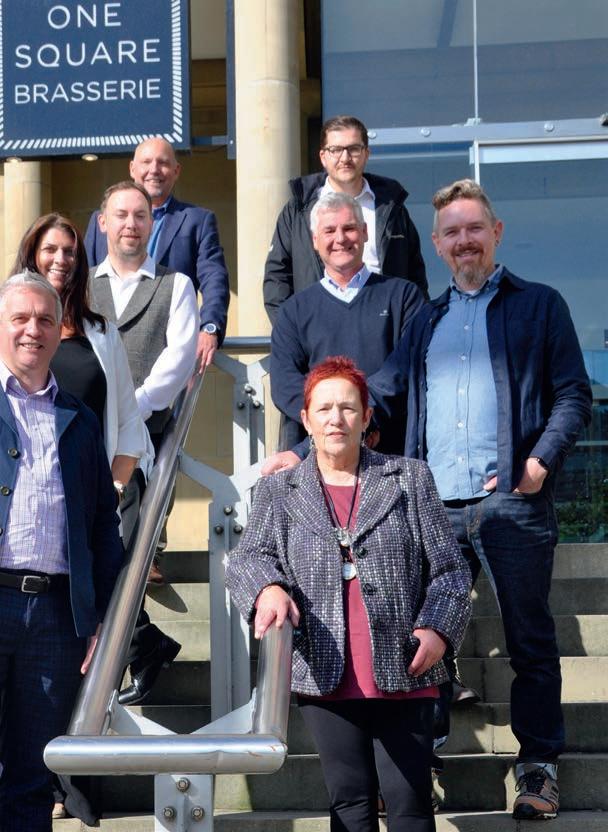





Darren has been advising customers of The Whisky Shop for more than 20 years and has been involved with the Whisky Challenge since its second year in 2001. He has always championed it as the ultimate whisky contest.
Owner, Piper Whisky Bar
With 250 whiskies on offer, Gillian takes care of bespoke whisky tastings in the bar. Gillian has owned the award-winning bar
about whisky. She is a collector and is General Manager, The Carnegie has spent 15 years working in distilleries in the lowlands, before moving north in 2016 to open The Carnegie Whisky
Cellars in Dornoch. Michael is passionate
Whisky Ambassador at Gordon & MacPhail, South Street, Elgin in the company’s spiritual home in Elgin, Fraser has been the Whisky Ambassador at Gordon & MacPhail South Street since 2018. A massive fan of whisky (especially blends) this year marked Fraser’s first appearance at the Scottish Field
Company is one of the co-founders of
of Curly Coo Bar in Stirling,
Robin has spent his entire working life in the licensed trade and was one of the first people in the country to launch a whisky festival –
Owner, Robertsons of Pitlochry took over the running of Robertsons of Pitlochry in 2013. As a family-run business, his focus is always on customer service, spending time talking to customers

























The design, brand recognition and overall form lures you in. But it’s the drinking experience that hooks you. The glass rests well in your hand and brings the best out of your whisky.
 Erik Eriksson - Sweden - School teacher






































There’s nothing quite like escaping from the cold into the warm sanctum of a bar stocked with all the drams you could possibly dream of. Filled with bottles from distilleries across the country and offering a lovely atmosphere to enjoy them in, these whisky bars are the best of the best. Whether you find yourself in the city, by the coast or on an escape to the country, these bars allow you to indulge in the amber nectar in the perfect surroundings.
Islay
Tel: 01496 840 277 ballygrant-inn.com
CURLY





Stirling Tel: 01786 447 191 curlycoobar.com


Aberlour
Tel: 01340 871 488 dowanshotel.com
THE
Glasgow Tel: 0141 248 4427 bonaccordpub.com
WHISKI ROOMS Edinburgh Tel: 0131 225 7224 whiskirooms.co.uk

Dornoch
Tel: 01862 810 216 dornochcastlehotel.com

THE BALMORAL SCOTCH BAR Edinburgh Tel: 0131 524 7142 roccofortehotels.com


THE PIPER WHISKY BAR


Glasgow
Tel: 0141 552 1740 thepiperbar.com
Aberdeen
Tel: 01224 212 373 cascnation.com
ARTISAN RESTARANT &
Wishaw Tel: 01698 373 893 artisan-restaurant.com
s custodians of The Glenturret, the distillery has a responsibility and duty to move towards a more sustainable, environmentally friendly future. With this and the well-being of The Glenturret team in mind, the decision was made to replace the Mash Tun in order to reduce the environmental footprint and increase production in a sustainable way in the years ahead.
The Glenturret has always been passionate about protecting its traditional values. In 2019, distillery manager Ian Renwick was asked to look at increasing the distillery production whilst ensuring that the integrity of The Glenturret’s by hand and heart approach was maintained. Ian appointed local engineers Allen Associates, who are industry leaders in process design, to look at opportunities to make sustainable changes whilst increasing volume. Ian and the team spent several years designing a new process for the distillery that involved replacing our previous Mash Tun. It was recognised that the old Mash Tun’s design had several limiting factors. The process was far from energy efficient, it required high volumes of water and created unnecessarily high levels of waste. Mashing was incredibly labour intensive for the team, and it also limited the ability to process certain types of malt.
The new Mash Tun at The Glenturret has a capacity of 1.9 tonnes and in terms of production increase, the new process will give the distillery scope to moderately increase their volume in the future. However, the ambition for this project has always been about moving towards a more
sustainable future. The Glenturret, as always, will continue to concentrate on quality over quantity and respect traditional values, upholding small batch production.
Overall, installing the new Mash Tun took approximately five months with construction starting on the 31 January 2022 and commissioning began on the 27 June 2022. No waste was sent to landfill during the project.
The new Mash Tun has formed part of several sustainable upgrades to the distillery this year, with £1.4m having been invested into additional energy-saving processes so far. The Still House now features new efficient heating systems for both the Wash Still and Spirit Still. The distillery has also invested in a brand new Wash Still preheating arrangement that will help to contribute to energy savings.
There are several other projects ongoing that will allow The Glenturret to further reduce the impact on the environment, whilst retaining the integrity of the distillery’s distinctive new make spirit.
The Glenturret will always operate as a small batch distillery as they value the traditional approach to whisky making, however it is clear that the distillery is forwardthinking and continues to seek out opportunities as they arise in the future.

To find out more about The Glenturret Distillery please phone them on 01764 656565, email enquiries@theglenturret.com, or visit their website: www.theglenturret.com


hisky bottle prices have been making headlines since the 1980s. Despite that, there is no complete list of world record prices for bottles of the water of life.
In this article we introduce the very first comprehensive history of world record whisky bottle prices.
In 1979 Macallan hired a new marketing director and by the early 1980s they were ready to introduce the world to their exceptional single malt. In 1983 they released the Anniversary Malt 25-Year-Old, followed by the 50-Year-Old Anniversary Malt in the same year. The work of their incredible marketing efforts of that time meant they were the forerunners in the premium single malt world, a foundation that still serves them well today.
Distilled in 1928 and matured at Macallan for 50 years, it survived World War Two and multiple difficult times in the market, yet the 50-Year-Old Anniversary Malt was released at just £50. In a market still dominated by blends a 50-Year-Old single malt was almost unheard of and £50 a bottle was expensive. Nevertheless in 1983, the same year as its release, a bottle of Macallan
1928 50-Year-Old was sold at Christie’s for £1,100. This was an astronomical price at the time. Even in today’s market, a bottle selling at auction for 22 times its RRP within 12 months of release would be an achievement. The result was so impressive that it took until 1991 for the record to be broken.
In the early days of these records The Macallan were dominant, and from 1983 to 2002 The Macallan held the world record bottle price.
In 1991 The Macallan 50-Year-Old Anniversary Malt lost its mantle to a bottle of The Macallan 1926 60-Year-Old which sold for £6,375. Between 1996 and 2002 the record was broken three

more times, each time by another bottle of The Macallan 1926 60-YearOld. During this period the record climbed steeply, jumping from just over £6,000 in 1991, to £12,000 in 1996, then £15,000 in 2001 and £20,150 in 2002.
2002: Dalmore take a surprise lead 2002 finally saw the (temporary) end of The Macallan’s monopoly over the records. Surprisingly at the time, it was Dalmore who came to claim the world record crown from The Macallan 60-Year-Old. In 2002
the Dalmore Kildermorie 62-Year-Old sold for £25,878, a pretty astounding sum for a bottle from a distillery that only released one regular 15 year old single malt at the time. This bottle was one of just 12 individually named decanters, 11
of which were sold and one was kept by the distillery.
The Kildermorie 62-Year-Old Dalmore would hold the record for five years. In 2017 the same bottle would temporarily snatch its crown back as the market hit another milestone, but ten years earlier, 2007 was Bowmore’s time.

In 2007 a Bowmore bottle from 1850 sold for £29,400 to a private collector who outbid the Bowmore distillery. Surprisingly, this is the only Bowmore whisky on the list. More so is that the authenticity of the bottle was somewhat contentious.
The whisky was hailed as bottled in 1850 by W&J Mutter, making it almost undoubtedly a one of a kind find. Following the auction, doubts were voiced over the authenticity of the bottle. Archivists at the Scottish Brewing Archive implied aspects of the bottle suggested a bottling date sometime during the 1890s. Nothing was confirmed, although even if that is the case, today £29,400 would be a modest figure to pay for an 1890s Bowmore.
In 2011 Glenfiddich took the world
record when the 1955 Janet Sheed Roberts Reserve 55-Year-Old sold for £46,850 at Bonhams, smashing Bowmore’s 2007 record by more than £17,000. There were only 11 bottles of this incredibly rare whisky, which held the world record price for five years.


Glenfiddich broke its own record in 2016 as the secondary whisky market started to become the one we recognise today. The Glenfiddich 1937 64-Year-Old sold for £68,500, breaking Glenfiddich’s previous record by £21,650 and smashing its pre-sale estimate of £35,000. There were only 61 bottles available when it was released in 2001.
It is worth noting here that there were three sales that we have excluded from our results. In 2012 another Glenfiddich 1937 64-Year-Old sold for £59,350 at a charity sale, then in 2014 a Macallan 64-Year-Old in Lalique Decanter sold for £288,000 at a charity sale and a Macallan ‘M’ Lalique six-litre decanter sold for £477,405. We have excluded the two charity auctions as charity sales are renowned for creating anomalously high results, plus the Macallan Cire Perdue is 1.5L. Similarly, the ‘M’ decanter has been excluded because of its non standard bottle size.
2017: A Dalmore first December 2017 would see The Dalmore, The Kildermorie 62-Year-Old retake the crown for one last hurrah. It made news when it sold for £114,000 – the first standard sized bottle to sell for over £100,000.
This important milestone would mark the start of a whole new era of whisky investment.
2018: The Macallan 1926 60-YearOld Widely held as the peak in the overall market, 2018 would see the world record broken three times. Dalmore’s six-figure milestone would be dwarfed
as the million pound milestone was resoundingly broken in November 2018. Even more impressively, this transformation from thousands to millions would all be done by one bottle: The Macallan 1926 60-Year-Old.
The Macallan 1926 60-Year-Old is arguably the most famous whisky on this list and is the current world record holder. There are five different versions of it, all of which have held the record at one point.
Originally bottled in 1986, there were just 40 bottles produced from cask #263, which was laid down in 1926 and matured for 60 years.
Sixty-year-old whisky was groundbreaking for the 1980s and The Macallan knew this whisky needed suitable reverence. Bespoke labels were commissioned: 12 from Peter Blake, 12 from Valerio Adami, while the others were apparently held back to have personalised labels. Two were sold blank, and one was specially commissioned by Fortnum and Mason to be hand-painted by Michael Dillon. Either 12 or 13 of the remaining stock were eventually rebottled as part of the Fine and Rare range in 2004, which potentially leaves one bottle unaccounted for – exciting stuff.
On to the records. The Peter Blake bottling was the first of these iconic
bottles to hold the record in 1991. Valerio Adami’s design then held the record from 1996 to 2001 when the record was taken by two unlabelled bottles in 2001 and 2002. As an aside, in today’s market it is pretty incredible to think that a completely unbranded bottle was able to hold the world record price.
We then didn’t see this Macallan in the records for 16 years, but by 2018 the appetite for Macallan was back.

In May 2018 Bonhams Hong Kong broke the record twice in one sale – first for a Peter Blake and then £814,081 for a Valerio Adami edition. The Adami bottles are more scarce than some of the others as at least two are known to have been drunk or destroyed. But even so, that is a rise of almost three quarters of a million in just six months.
common. In the iconic but somewhat standard livery of The Macallan’s Fine and Rare series it is arguably the least striking too. It is this last point though, that makes it intriguing, because the bottle is needed to complete a set of the 1926 bottles for any brave soul aiming to compile a collection of all 57 Fine and Rare bottles.
Regardless, in October 2019 The Macallan Fine and Rare 1926 60-Year-Old broke the world record by £300,000, taking the new record to £1.5 million. At the time of writing this record still stands. We have since seen the Fine and Rare bottle at auction, and it continues to command million pound prices, but as yet no bottle has broken the 2019 record.
In 2022 alone we saw the release of the Glenlivet 80-Year-Old Gordon & Macphail, and The Macallan Reach 81-Year-Old. Prior to that we have seen increasing numbers of 60 year plus releases by different distilleries, Macallan included, however none of these modern releases have come close to reaching the record. This suggests that age alone isn’t going to create a new record.
sale, with the hammer plus premium setting the bottle
The growth wasn’t finished though, October 2018 saw the record go to Bonhams Edinburgh for another Valerio Adami bottling, although their £848,750 record would stand for less than two months. The sale of the rarest of all the 60-Year-Olds was set for the end of November by Christie’s London, a one-of-one bottle handpainted by Michael Dillon which was necessary to create the only possible set of this whisky. Christies London oversaw the first seven-figure sale, with the hammer plus premium setting the bottle at £1,200,000.


Just the
The most astounding thing about 2018 was the speed of the change. Just eleven months after the record passed six figures a £100,000 bottle of whisky had become barely noteworthy
In October 2019, 11 months after the last record had been set, Sotheby’s London had The Macallan 1926 Fine and Rare Label in their sale. With a pre-sale estimate of only £350,000£450,000 this was the only version of the 1926 Macallan that hadn’t yet held the world record.
The Macallan 1926 60-Year-Old Fine and Rare is the most modern of the different editions of this series and at 13 bottles it is also the most
The records have all been held by bottles from very limited edition series, which does seem to suggest that scarcity is as important as age and vintage. Regardless, we now wait with bated breath to see which bottle will hold the record next.

Cask 88: small, independent, family owned and lovers of Scotch whisky. Its aim is to take consumers on a journey from cask to glass by uniting them with the most prized of rare treasures: their own cask of Scotch whisky.


Until recently, casks were almost exclusively traded within the whisky industry itself, and private cask ownership was barely seen at all. But it turns out that there are many lovers of whisky who want to become more intimately involved with the life of their favourite spirit –and that is something that Cask 88 can help with.
Over the last decade Cask 88 has built up relationships within the Scotch whisky industry that give them access to exquisite casks of maturing whisky at all ages, from all over Scotland. It was thus one of the first companies in the world to sell single casks of whisky in their entirety to private buyers on a broader scale.
As Scotch whisky matures, it must remain under bond in an HMRC accredited warehouse – something the great majority of people don’t have access to. Cask 88 has agreements with many bonded warehouses, as well as exclusive use of a beautiful and spacious dunnage warehouse space in Speyside, enabling it to act as a custodian of casks on behalf of its customers. Under our care, each cask is properly tracked, insured, stored and maintained, freeing its owner to focus on the existential questions of what they want their whisky to become, and to decide when it has matured enough.
When you become the owner of a cask of whisky, you can guide its maturation, and choose its final form when you decide that it is time to bottle. Maturing casks can be re-racked; transferring the whisky into another cask to grant it new flavours; and samples can be drawn to taste how the maturation is progressing. Settle in, because some maturations can stretch on for decades – waiting for the right moment. You might even make a trip to visit a cask while it matures.
Every cask is unique, an individual snowflake, and single cask bottlings crystallise a moment in time. Some people bottle their cask to create a uniquely-branded whisky to celebrate a wedding, or stock a personal bar. Meaningful anniversaries, company milestones, the birth of a child – all are occasions worthy of a unique whisky!

The style and form this bottle takes is entirely up to personal choice – Cask 88 has a team of designers and artisanal friends in the right places to ensure that the bottles look just right. Sometimes they can’t resist the temptation and bottle up one of their favourite whiskies themselves. Independent bottling breathes life into whisky, and they want to create whiskies that mean something personally to their team and their clients.


Cask 88: whisky enthusiasts who went the whole hogshead; building up the experience and connections that are needed to be able to oversee the safe journey from cask to glass. This is an open invitation to take the journey.
If you’d like to start a conversation with a member of the team, then please don’t hesitate to be in touch. You can find out more about cask ownership, and Cask 88’s range of independent bottlings, at www.cask88.com. Cask sales: 0131 226 7048


 Written by Geraldine




Somewhere in a dusty old file on my bookshelves is a copy of an original price list for Beefeater Gin in the 1880s. It details all the different kinds of flavoured gin the Burroughs company then made – orange, lemon, lovage, sloe, cherry, ginger, damson and rue amongst them.
Most gin distillers did the same, making a vast range of fruit gins, cordials and liqueurs in addition to the standard London Dry. Over time the list was shortened until only sloe gin remained in the flavoured category. Customers, apart from the traditional huntin’, fishin’, and shootin’ set, were no longer interested in flavoured gin, they wanted the plain stuff for their cocktails and their martinis. By the 1970s only a handful of distillers even made sloe gin to cater to countryside living.
countryside living.
Fast forward to now and what
a different story it is. Over the past few years everyone has been experimenting, from relative newbies like Four Pillars with their olive leaf flavoured gin to stalwarts like Beefeater with their peach and raspberry. You’re nowhere if you haven’t at least got a pink gin and 21stcentury price lists feature flavours that range from the relatively sedate, like blackcurrant, to the completely out there. Black thistle mist flavoured gin anyone?
So, what precisely is a flavoured gin and how are they made? The well-respected IWSR Drinks Market Analysis defines a flavoured gin as ‘any high‐strength gin that has additional flavouring’. The clue here is ‘high-strength’ and mercifully we seem to have sped through the fad of sticking anything in a bottle and calling it gin.
Thanks to vigorous action on the part of the industry body, The Gin Guild, the difference between a flavoured gin and a gin liqueur is now well understood by consumers and, even more usefully, by producers themselves. If it’s bottled at at least 37.5% ABV it’s a gin: under that magic number it’s a liqueur.

All manner of flavoured gins have hit our shelves over the last few years, but what does the future hold for the increasingly eclectic world of mother’s ruin?
Coates
Many distillers use their standard gin as the base, macerating fruit in it for several weeks to add flavour and usually adding extra sugar. Some fruits are notoriously difficult to deal with, especially soft fruits like strawberry. Others, like Sipsmith and Edinburgh-based Pickerings Gin, distil the flavours they want into the spirit.


Marcus Pickering of Pickerings Gin tells me that the fruit and spice ingredients for their two basic variants, Strawberry & Black Pepper and Lime & Ginger, are placed into a gauze bag that is hung inside the still.

‘That way we embed the flavour without needing to scrub out the still every time,’ he says. ‘When we make our Brussels Sprout Gin the distillery stinks for days.’ Yes, Brussels Sprout Gin is among a variety of limited edition seasonal flavoured gins and it’s a best-seller every Christmas. Although it’s a bit of a Marmite product, like Brussels sprouts themselves, it is surprisingly drinkable –herbaceous and slightly sweet and still very recognisably gin. It’s back this December but, be warned, it sells out fast.
In the spirit of innovation that still rules gin, Ray Clynick of Oro Gin has come up with a completely new technique to flavour gin. A chemist by training, his method involves using nitrogen and pressure to basically force the liquid into freeze-dried strawberries and then release the pressure to extract the pure
essence of the flavour. His Oro Strawberry Gin launched this summer and has already won awards.
Pink gin is the big seller for many brands. It comes in all manner of shades, from the merest blush to cerise, and incorporates a variety of fruit flavours including rhubarb, strawberry, raspberry, cranberry, cherry and pink grapefruit. The big brands have really muscled in on what was once a bit of a niche product with both Gordon’s Pink and Beefeater Pink doing extremely well. In fact rumour has it that Gordon’s Pink is now the UK’s best selling gin having overtaken Gordon’s London Dry at the volume end of the market.
The attraction of pink gin, particularly for women, is obvious. When mixed with tonic water it looks pretty, it’s sweeter and it acts as an entry level gin for those who really don’t like
the traditionally strong juniper taste of London Dry. The Pink Gin Fizz, a mix of flavoured gin with Prosecco, is a particular hit with young women.


Nowadays citrus-flavoured gin is increasingly the thing and Silent Pool’s Rare Citrus Gin, made with exotic citrus fruits such as yuzu and pomelo, was recently voted the best flavoured gin in a Good Housekeeping survey. Orange is becoming the new pink with big brands like Tanqueray’s Flor de Sevila now in the UK’s top ten by volume. Alongside the big boys, smaller Scottish distilleries are producing excellent orange gins with Caorunn Scottish Blood Orange and Edinburgh Gin’s Orange and Basil Gin ahead of the pack in terms of flavour.


Or, you could make it yourself. Like sloe gin or indeed any fruit flavoured gin, orange gin is easy to make and does not require any specialist equipment. For blood orange gin just take eight blood oranges, roughly chopped into slices. Pour 750 ml of normal gin into a large Kilner jar, add 55 grammes of sugar, then layer your orange slices in the liquid. Leave for a couple of weeks, stir occasionally and there it is.


has dramatically transformed the range of flavoured gins the new. There seems to be a fall in the number of new flavours
Much of the great gin boom has been driven by the emergence and success of flavoured gin and in 2021 it was estimated to comprise roughly 40% of the total gin market. It seems now that the jury is out on whether this momentum can be sustained. Experimentation with new flavours and new techniques has dramatically transformed the range of flavoured gins available. Some believe a saturation point has been reached and that consumers no longer respond to the buzz of the new. There seems to be a fall in the number of new flavours coming to market and consumers buying the existing ones. Possibly there is no more new and we have all the flavours we need now.
But the upside of that for the die hard juniper fans amongst us is the belief that the whole thing has come full circle and, post-pandemic, people are returning to the traditional London Dry style. However, given the vast changes in gin over the last twenty years, it would be a brave person indeed who ventured to predict what’s next in the world of gin.





45 57


Made by our friend Yva of the Jaunty Camper Gin company in Strathaven. Her gins are inspired by her travels around Scotland and further afield, in her campervan Jasmine. She uses dulse seaweed, from her family hometown of Kyle of Lochalsh, as a key botanical in her gins, as well as pistachio nuts as a nod to Jasmine. The Feisty Biker (Yva is also a bike enthusiast) is distilled with the addition of purple basil for an extra savoury hit making this gin perfect for martini aficionados and red snapper lovers.







aficionados and red snapper lovers.
NOSE: Pine fresh, subtle spice.
PALATE: Piney juniper, savoury herbs, salty-sweet umami.

FINISH: Long and warming with cardamom hints.
36 40
This gin is made at Peebles Hydro in the Scottish Borders and has a very unusual backstory. It was made to commemorate the restoration of the Hydro after a fire destroyed it in the summer of 1905. Being Islay whisky fans, we love a bit of smoke and love the flavour that it adds to this gin.
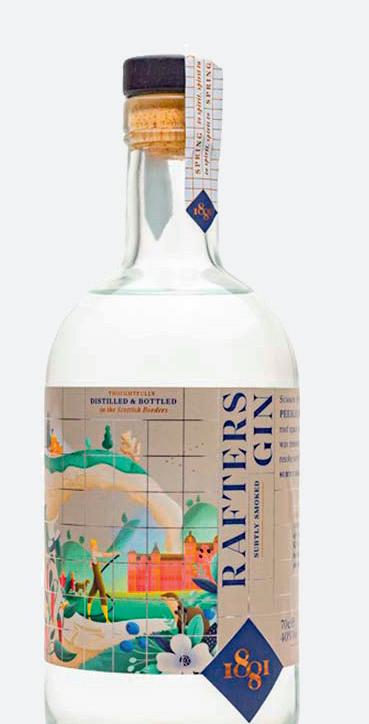
NOSE: Sweet but subtle wood smoke and light citrus.
PALATE: Juniper and citrus, warming woodsmoke, hints of savoury smoked cheese followed by juicy grapefruit notes.
FINISH: Lingering smoke and gentle spice.
37 41
This was one of the first gins that made us realise how different London Dry styles can be. It’s made in Leith, Edinburgh and was made to stand out from the crowd, in flavour and in design. The key flavour in this one, for us, comes from the Sichuan pepper corns giving the gin a sherbet-like effervescence contrasting with dry earthy notes.
NOSE: Fresh, grassy and floral.
PALATE: Juniper, sweet spice, anis, subtle earthiness and a sherbet-like effervescence.
FINISH: Slightly bitter, woody warmth and fragrant spice.
Jen and Rachel founded The Grail in Doune in 2018 having worked in the industry for a number of years at distilleries, whisky shops and festivals. Today you can find them at the Callander Drinks Company which they opened in 2020. They also have a YouTube whisky channel.

Come and experience the first legal distillery on an island rooted in centuries of illicit distilling.
Enjoy a warm Hebridean island welcome at our brand new, award-winning visitor centre, and discover our signature Isle of Raasay Single Malt and zesty Isle of Raasay Gin. Every drop of spirit is produced, matured, and bottled on the Isle of Raasay; an island of only 161 people.


A product of passion, prowess, and provenance. Tradition and contemporary thinking combined.
Visit our website to discover our winter packages and offers.


This year has seen some major improvements to Borodale House including a brand new visitor centre, bar area and restaurant. We are excited to now be offering evening meals, serving locally sourced produce, including some of the best seafood and game anywhere in the world in a setting of similar standing. Our winter distillery package for 2 people includes:
Accommodation in one of our luxury rooms

Welcome drink served upon arrival in the lounge – choice of Isle of Raasay G&T or a dram
A Scottish breakfast each morning of your stay
Production tour of the distillery with whisky, gin and chocolate tasting
Pre-dinner signature Isle of Raasay cocktail

3 course evening meal served in the Gathering Room overlooking Isle of Skye • An opportunity to explore the spectacular island of Raasay! For more information please feel free to contact our team on bookings@raasaydistillery.com or visit our website.


erhaps when you think of vermouth you think of Leonard Rossiter dropping a Cinzano down Joan Collins’ décolleté. Or the dusty bottle your parents kept at the back of the drinks cupboard, uncertain what to do with it. Certainly vermouth is a somewhat unloved tipple these days, when gin and whisky are doing their usual cracking business and real ale continually reaches new heights.
But let me make the case for that once fashionable wine ‘suffused with herbs and spices,’ for not only is vermouth long overdue a reassessment, but for the discerning it offers a variety of drinkable options in every season.
The appeal of a vermouth for me has always been its chameleon character. Is there another bottle behind the bar that can do so much in so many concoctions? Rosso or bianco, sweet or extra dry, French, Spanish or Italian. Served long with soda as aperitifs, neat with a twist as digestifs, or perfectly at home in countless cocktails.
Naturally, given my family background, I lean towards Italian, and red. A Grassotti, served in a 1950s powder-pink-and-gold glass, reminiscent of the little jewels in pastille boxes my grandfather carried in his front shirt pocket. It drinks like port but hits like grappa, with surprising ginger and rhubarb notes that would lengthen beautifully into a Manhattan, and plays perfectly with its countryman Campari in a standard Negroni cocktail.
Or maybe Chambery is calling your name, and the Dolin blanc with big floral top notes, peel, and the surprising hint of quinine behind its moderately sweet palate because vermouth is always at home with anything bitter. This I’d
pair with whatever woody herbs are still lurking in your garden, a crushed blade of rosemary, the lemon thyme you forgot about two planting seasons ago. If I was feeling playful, perhaps a soda and frozen forest fruits instead of ice, in order to watch blueberries travel up and down in the glass.
You can’t escape the domination of Martini & Rossi on the supermarket shelves and for good reason: the extra dry is classy and clean, and paired with Aperol does the Spritz proud. You may think of the Aperol Spritz as a summertime drink, suitable for snacks and people-watching on the Piazza del Campo, sipped while families promenade their blackclad grandmothers around the square before dinner and bright afternoon shades down into luscious Tuscan evening.
You wouldn’t be wrong, but for so many generations orange has been the favoured way to bring cheer to long winter nights and with good reason. The sweet smell and bracing bitterness remind us of the deep darkness at a time when the year is stretched to its breaking point and the glorious season is yet to come. It is a drink of laughter and memory, far more complex in nature than its recent popularity would suggest.
While the juggernaut of craft spirits has also produced the unfortunate side effect of a generation of drinkers who prefer martinis so dry that at best they waved to the vermouth bottle across the bar, and at worst even jettisoned the gin for vodka.

No real version of this iconic cocktail skips the vermouth and in my house the choice can only be Noilly Prat. A dash of bitters of course, and Angostura if you must, but as a born and bred Southerner it was always Peychaud’s at home, with its strong anise that bolsters the vermouth – then some fat green olives, or if we’re very lucky, the small nutty brown ones my father-in-law cures in a 14th-century barn near Pontremoli.
As the world reawakens from a long postpandemic incubation, let our drinks reflect that outward-looking spirit that brings the best of the world’s ingredients to our homes in such an appealing, and infinitely quaffable, package.


This sweet, red expression is made in the Scottish Borders from Italian wine and local barley. Bergamot, on the nose, fruity and herbaceous on the tongue.

Made using sloe berries from their Sussex Estate, this favourite Negroni ingredient is bursting with blackcurrant, caramel and
sweet vermouth has been made in Bordeaux since 1872. This is the oldest aperitif in the Lillet range and is packed with candied orange, honey, pine and exotic fruit flavours.



ST. BERNARDUS EXTRA 4


3 4.8


A pale golden ale from this great Belgian brewer who specialises in Abbey style beer. It is bottled with extra hops.





NOSE: Slightly malty with floral notes along with strong yeasty notes and a touch of banana.
PALATE: Malty and fresh, with a yeasty blast followed by some bitterness from the hops, making the finish feel balanced and moreish.


FINISH: A lovely example of a lighter style of Belgian ale.


5.10 5


A lager margarita mash up with lime, orange and salt. Produced in Leith by an excellent and consistent brewer.
NOSE: Biscuity malt notes with a big whack of lime.
PALATE: Fresh and limey with some rounded malt notes and a touch of orange on the finish. The salt brightens the flavour making everything pop. The finish is long and round with just a touch of sweetness from the orange.

FINISH: Refreshing and balanced, really well put together.


CO-OWNER, THE GOOD SPIRITS CO., GLASGOW www.thegoodspiritsco.com

3.40 5.1
A speciality from Bamberg, this brewery is the last to have its own maltings, which produce a wonderfully smoky style of beer.
NOSE: Up front a big smoky aroma, with more than a hint of smoked ham. A touch of caramel rounds out the nose.
PALATE: Rich, malty and smoky. With treacle toffee and that touch of smoke drying out the finish.
FINISH: A classic style that is perfect on a cold night.
Matt can usually be found at the helm of The Good Spirits Company on Glasgow’s Bath Street, hosting monthly whisky, gin and cocktail tastings.

No sooner have the last Lindr machines of the festival season been packed away, it’s time to dust off your tuxes and ball gowns for the awards season. In any other field of the drinks industry, this is a chance to kick back with pals and enjoy the reward of a job well done. Yet for some reason it’s the snarkiest time of year in brewing.
To many, it’s not cool to enter awards, it’s even less cool to win them, and the results serve as validation for not entering. The yearly conversations are tiresome: ‘Best lager in the country? They don’t even make the best one in the industrial estate.’ ‘Aye, obviously they won, they’ve a contract with the sponsor.’ So on, and so forth.
I myself have made many of the arguments against beer awards. The credibility of judging is often an issue. Despite there being a formally accredited professional certification for Beer Judges (the Beer Judging Certification Program), judging is usually expected to be done free of charge, and without expenses reimbursed, even at some of the global competitions. In regional events, entrants often end up on the judging panel, purely by way of being local, into beer, and willing to do a day’s work in exchange for a slap-up meal.
Even with little to no judge reimbursement, running awards costs money. Venue hire for tasting sessions, staffing, infrastructure, and of course the big meal at the end, don’t come for free. Even with significant sponsorship, most competitions have to charge an entry fee to cover their costs. This model, rather cynically, is
written off by many in the industry as ‘pay to play’. Understandably, breweries with this view don’t end up entering the awards, leaving a reduced field, and through sheer mathematics, it’s rare for any brewery that does enter to go home without at least a bronze.
Irritatingly, these two issues are inextricably linked in a vicious nosedive. Quality brewers, who don’t feel they should pay to enter or win awards hold back. Subsequently, there’s less money in the pot, and established judges turn down the gig, rightly unwilling to work for free for organisations that turn over significant cash. Substandard products end up scooping up more of the awards, denting the credibility of the organisers further.
In other areas of the drinks industry medals are worn with pride. Producers understand it’s a marketing investment to enter, and reap the rewards when their bottle has a gold sticker on it.
I won’t kid myself into thinking that the commentariat in these sectors don’t throw shade around the DMs when gongs are handed out. But there is a genuine sense of pride and respect when they are. If competitors are picking up medals and you aren’t, it’s time to sharpen up and come home with the goods next year.
I’d love to see the beer industry find a path back to awards credibility. Structure the business of competitions to properly compensate professional judges for their time. Prove to the cool kids that there will be a return on the investment in their quality product. Properly recognise the talent within our incredible industry. If we in beer can’t celebrate ourselves properly, nobody else will.
‘If we in beer can’t celebrate ourselves properly, nobody else will’
Written
In his first C&S column, Joe Dick takes a stand on the lack of credibility in brewing awards ceremonies
When I was 13, I bought my dad a whisky miniature. It was a Laphroaig, and I remember reading about the meaning of its name and being fascinated by it – this was how it all started.
When I was 16 my friends went inter-railing around Europe and I went ‘ScotchRailing’ instead, and visited distilleries. Before I left, my father said that I couldn’t go to Scotland without drinking whisky, so we had a whisky together (a Glenmorangie 10). He said it was probably the best investment he’s ever made as since then I always bring back a bottle to him.
In 1993 I was fresh out of the Royal Guard in Denmark and looking for a summer job, so I started working as a guide at Glenfiddich Distillery. I did that for a few summers, and was offered a job as a guide leader, and then became William Grant & Sons’ first global brand ambassador.
After my work experience in Scotland, in 1993, I co-founded the Danish Malt Whisky Academy – a Danish association for people interested in whisky. Nowadays there are many more small groups for whisky enthusiasts.


Denmark is a mature malt market: there is an incredible knowledge in the market, in terms of what is unique about the distilleries here.


It’s those people interested in whisky who built the distilleries in Denmark – an example is Stauning, which was founded by nine friends in 2005. Now they have funding from Diageo, and they make a fantastic rye whisky. Another important distillery is Braunstein, named after the two brothers who founded it. They are based south of Copenhagen.


Several years ago, at one of my tastings, I met a man who wanted to set up his own distillery and asked me for advice. He went on to found Fary Lochan Distillery. He went to great lengths to secure stills from Forsyths in Dufftown, whereas most other distillers would have stills made in Germany, or use former Cognac stills. However he wanted the whisky to have a uniquely Danish side, so he used locallysourced nettles to smoke the barley in some of the batches. Then, there are organic distilleries like Thy, who are looking at old Danish grain types. There is room for nerdiness!


From 70 spirit distilleries in Denmark, around 30 produce whisky. This comes from the traditional production of akvavit, some of which is matured in casks, so the skills and equipment were already there.

Among the Nordic countries, Denmark is the only one that is a free alcohol market (Sweden, Norway and Finland all have monopoly shops, the only places where alcohol is legally sold).
The biggest seller in Denmark is undoubtedly blended whisky, and Irish whisky Tullamore Dew is the best seller because Irish coffee is an incredibly popular drink.
One practice is also to freeze a bottle of whisky – as we would do with akvavit – then pair it with traditional Danish food like smørrebrød and herrings.
There are more and more young people getting interested in whisky, and more whisky festivals. There’s one in Copenhagen and one in Jutland too. There’s one in Copenhagen and
Jens Tholstrup, whisky fanatic, drinks distributor and first global brand ambassador for William Grant & Sons, is our guide to the Danish whisky scene


The Globe Inn, established in 1610, has been named the most historic pub in Scotland. It is best known for being the favourite how (meeting place/pub) of Scotland’s national poet Robert Burns. However, it is more than just a Mecca for Burns a cionados. At The Globe Inn you can enjoy award-winning food created by our Michelin-experienced chefs. The menus re ect the season and make the most of fresh local produce, showing why The Globe Inn was named Dumfries & Galloway Restaurant of the Year.


www.globeinndumfries.co.uk
The Globe Inn, 56 High Street, Dumfries Call 01387 323010
