. . . a wonderful read for 26 years! ABSOLUTELY PRICELESS! SPRING 2023 Carolina Mountain Life TM It’s Spring! read us online at cmlmagazine.online
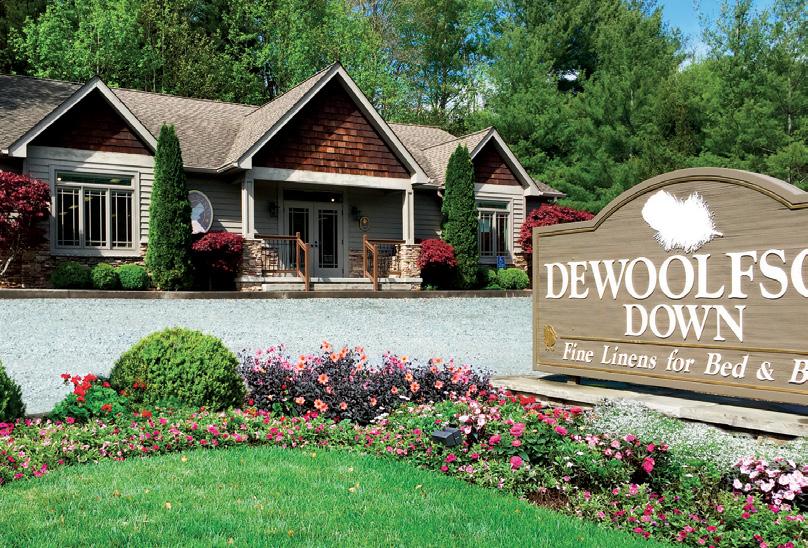
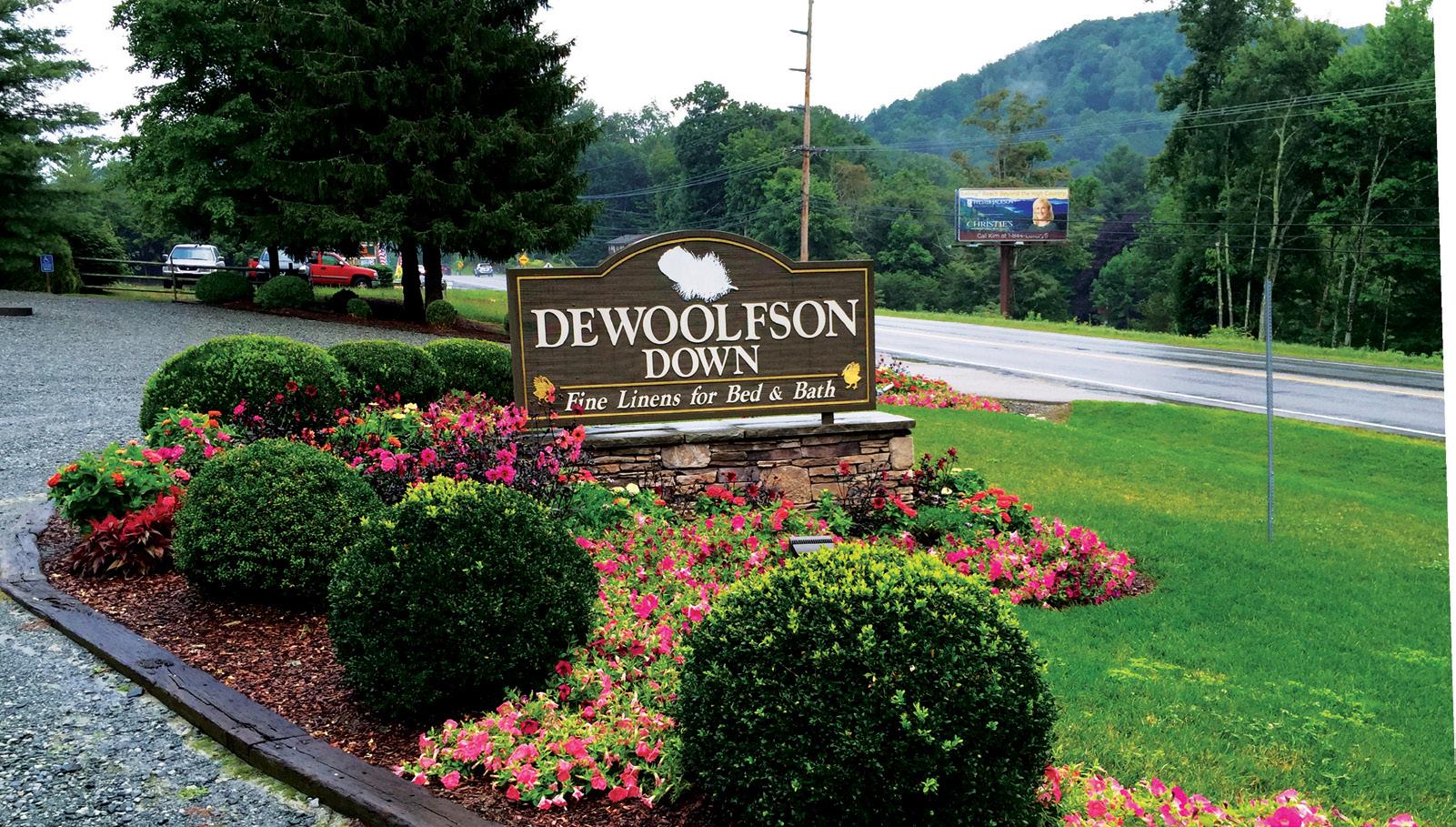







Etoile by Yves Delorme of France and other fine bed and bath linens from Italy, Austria, Belgium, Switzerland, and around the world. World’s finest downproof fabrics European white goose down fills Meticulous construction © 2006-2023 DEWOOLFSON Down Int’l., Inc. Between Boone & Banner Elk 9452 NC Hwy. 105 S 828.963.4144 dewoolfso nLinens.com ©
® Making each COMFORTER AND PILLOW JUST FOR YOU! years!
2023 Yves Delorme Flores, Etoile











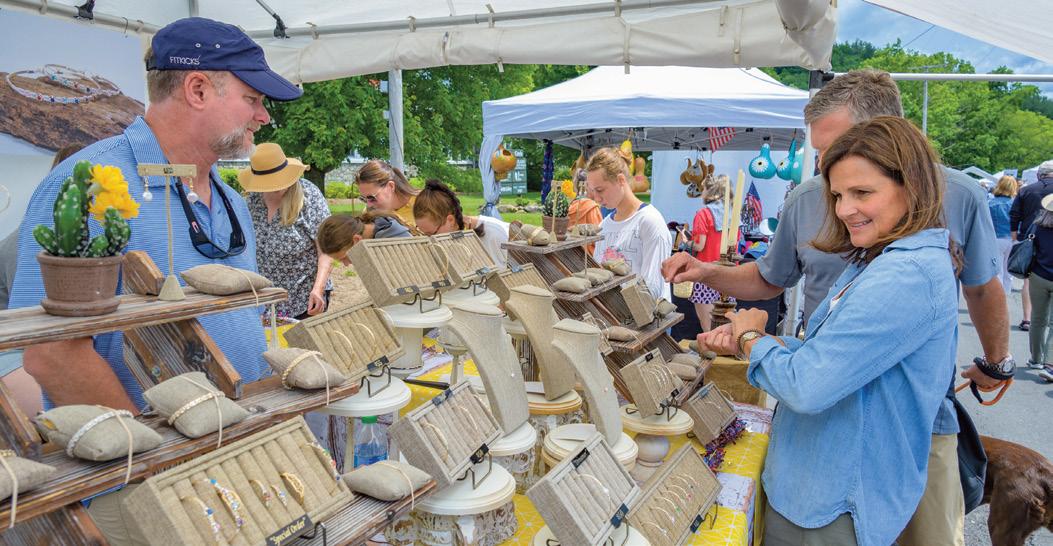













10 a.m. - 5 p.m. each day Historic Banner Elk School • 828-898-5398 Art Greene ON THE
2023 BAND LINE-UP
May 29 (Memorial Day)
Woodie & The String Pullers
June 7 Lucky Strikes
June 14
The Harris Brothers
June 21 Delta Fire
June 28
Smokin’ Joe Randolph
July 5
July 12 The
July 19 The
August
August 9
The Rewind
August 16
August 23
August 30
Sept 4 (Labor Day)
5:30 – 9 PM Sugar Mountain Golf Club Deck | 1054 Sugar Mountain Drive Band schedule subject to change. Go to SeeSugar.com/summer-concerts or call 828-898-1025 for the latest info.
Free Admission | Weekly Food Specials Wednesdays Starting June 7 Plus Memorial Day and Labor Day
Opal Moon
Rockabillys
Collective
July 26 TBD
2 Preston Benfield Band
Soul Benefactor
Split Shot
The Night Move Band
Tanya & The Roadrunnerz



6 — Spring 2023 CAROLINA MOUNTAIN LIFE “Elevate Your Taste in Wine” Visit our Website: linvillefallswinery.com to see our schedule of Events, Live Music, & Food Trucks! The Perfect Weather for a Great Adventure—Guaranteed! Inside A Mountain O Constant 52 year-round • Guided tours • Explore our Gift Shop Visit our website for hours and recommended safety precautions Linville Caverns 19929 US 221 North, Marion, NC 28752 Between Linville & Marion, just 4 Miles South of the Blue Ridge Parkway www.linvillecaverns.com 800-419-0540














CAROLINA MOUNTAIN LIFE Spring 2023 — 7 CAROLINA MOUNTAIN LIFE Spring 2023 — 29 CAROLINA MOUNTAIN LIFE Autumn 2021 — 15 215 Boone Heights Dr., Boone • 960 Main Street, Blowing Rock bbandminteriors@gmail.com • www.thebeeandtheboxwood.com • 828.386.6212 HOME • GARDEN • GIFTS Southern Charm in the High Country BesuretovisitBOTHlocations!

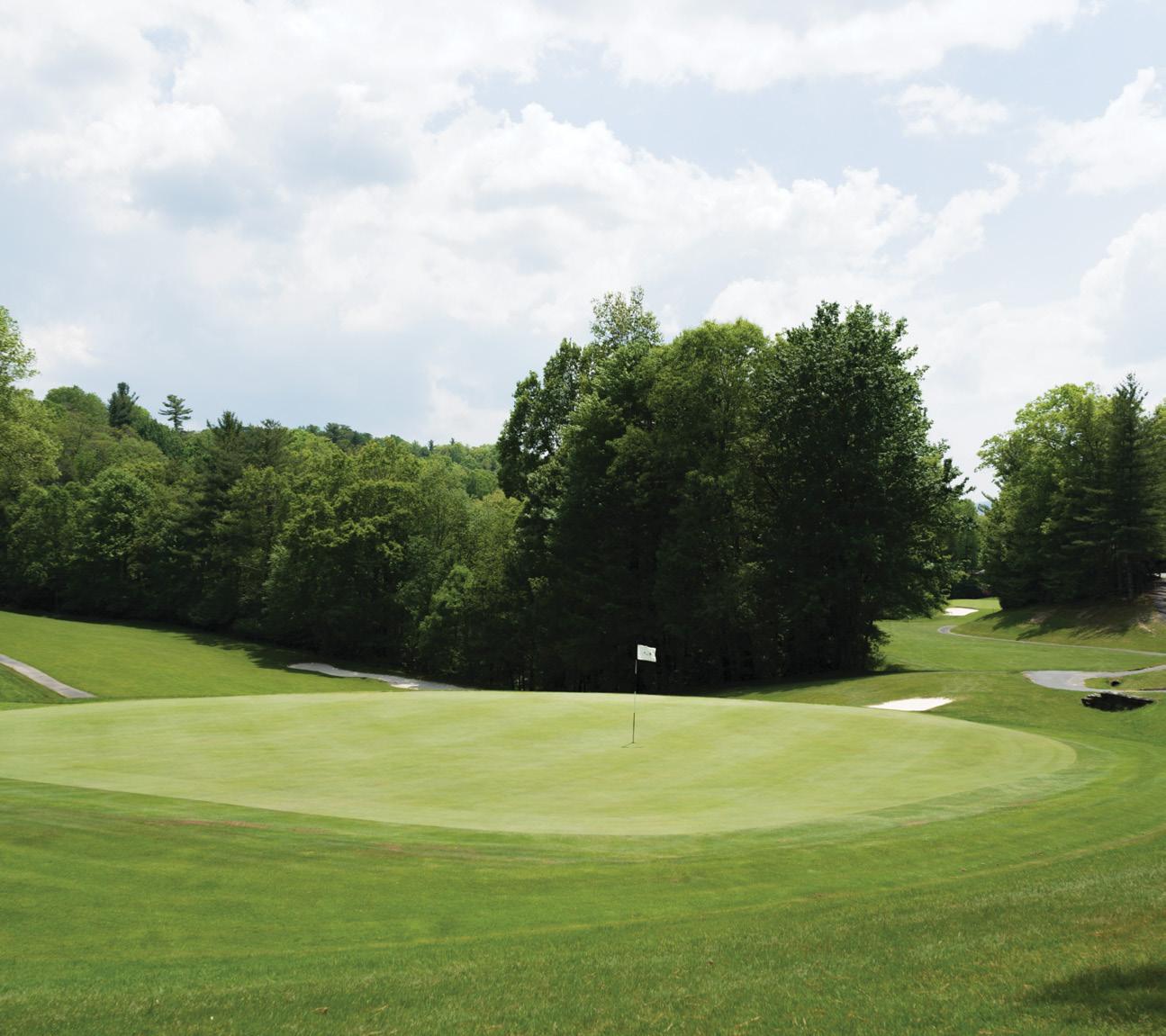

-“Mountain golf at its finest” –David H. “Best in the mountains” –Gary G. “I adore this golf course!” –Roger Y. The beauty of the Blue Ridge Mountains is the fitting backdrop to a unique and storied layout. Dramatic and challenging but still accessible to all players. Linville Land Harbor Golf Club is a true hidden gem that’s about to become your new favorite mountain golf course. linvillelandharborgolf.com (828) 733-8325 A MAGNIFICENT COURSE EVERYONE CAN ENJOY! OPEN TO THE PUBLIC.
Cover by Meagan Goheen
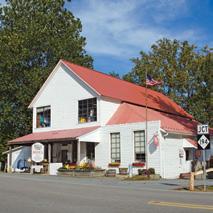
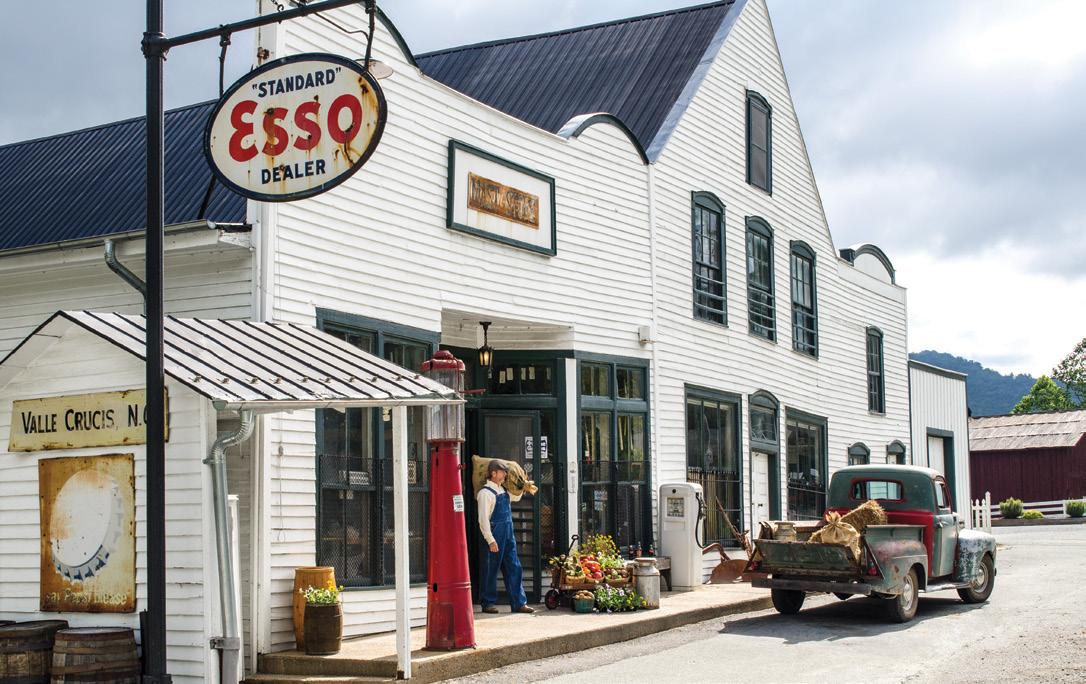
Meagan has been working with the family CML business since she was seven years old. She loves the creative expression of photography and relishes in styling and shooting our recipe images. Meagan, with assistance from her two daughters, captured this shot at The Mustard Seed Market in Blowing Rock.
What’s Inside:
20 .........Regional Happenings & Featured Events
 By CML Staff
26 .........Through the Lens
By Skip Sickler
30 .........Grandfather Mountain Highland Games
By Steve York
35 .........Barter Theatre at 90
By Keith Martin
43 .........Applause in Appreciation of Denise Ringler
By Keith Martin
45 .........Live Music!
By CML Staff
47 .........MerleFest: Music, Moments, & Memories
By Keith Martin
49 .........Plein Air Artist Earl Davis
Special to CML
52 .........The Crossroads of History & Creativity
By Tamara S. Randolph
61 .........Bird Watching in the High Country
By Paul Laurent
77 .........Spirt Ride Kentucky Derby
By Pan McCaslin
80 .........Saved by a Salamander
By Julie Farthing
83 .........Learning Life Skills and Service
By Ginny Walters Brien
87 .........Mayor Brenda Smith Lyerly
By Steve York
89 .........Jason Miller: Building a Better World
By Trimella Chaney
91 .........Oasis: 45 Years of Help and Hope
By Elizabeth Baird Hardy
109 .......Say “Cheese”… and Celebrate
By
Steve York
111 .......Eggstra! Eggstra!
By Gail Greco
Cultural Calendar with Keith Martin…32
Book Nook with Edwin Ansel…56
Movie Review with Elizabeth Baird Hardy…57
Notes from Grandfather Mountain 59
Blue Ridge Explorers with Tamara S. Randolph…63
Trail Reports by CML Staff…66
Fishing with Andrew Corpening…69
Golf Guide with Tom McAuliffe…71
Blue Ridge Parkway News…75
Hardy on History with Michael C. Hardy…84
Community and Local Business News 93
Local Tidbits 98
Resource Circle with Tamara S. Randolph…101
Health with Kim S. Davis…103
Wisdom and Ways with Jim Casada…105
Restaurant Guide…116
Recipes from the CML Kitchen with Meagan Goheen…120
CAROLINA MOUNTAIN LIFE Spring 2023 — 9




10 — Spring 2023 CAROLINA MOUNTAIN LIFE PATAGONIA | ARC’TERYX | OBOZ | SHERPA | OSPREY | SALEWA | NEMO SMARTWOOL | DEUTER | SALOMON | BLACK DIAMOND | BIG AGNES BOONE • 139 S. Depot St, Boone, NC • 828.355.9984 BLOWING ROCK • 921 Main St., Blowing Rock, NC • 828.295.4453 WEST JEFFERSON • 08 A South Jefferson Ave., West Jefferson, NC 28694 • 336.846.5888 YOUR COMPANION FOR ADVENTURE SINCE 1971

13

12 — Spring 2023 CAROLINA MOUNTAIN LIFE miraclegrounds.org | (828) 733-2247 8 Fountain Circle | Crossnore, NC 28616 Recharge. Purchase fine coffee, specialty drinks, breakfast, lunch, and dessert today to help support the children of Crossnore.
Babette McAuliffe, Publisher & Editor in Chief

Deborah Mayhall-Bradshaw, Design Director Kathy Griewisch, Account Manager
Meagan Goheen, Marketing Manager
Tamara S. Randolph, Editor Keith Martin, Cultural Arts Editor
Contributors:
Edwin Ansel, Ginny Walters Brien, Rebecca Cairn
Jim Casada, Trimella Chaney, Nan K. Chase, Andrew Corpening, Kim S. Davis, Julie Farthing, Brennan Ford, Morgan Ford, Gail Greco, Elizabeth Baird Hardy, Michael C. Hardy, Annie Hoskins, Rita Larkin, Amanda Laurent, Paul Laurent, Tom McAuliffe, Pan McCaslin, Cindy McEnery, Skip Sickler, Landis Taylor, Doug Winbon, and Steve York.
PUBLISHER’S NOTE


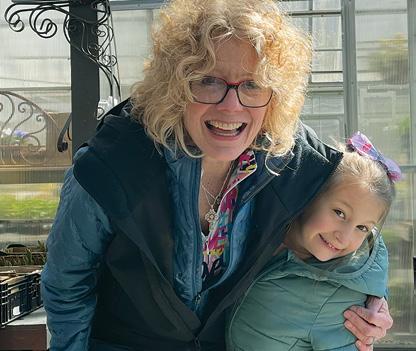
While I was hunting for plants and helping with the cover shoot, Meagan captured this moment of me enjoying the spring day with my granddaughter.
know how you react or respond to music, but I can say that music moves me, literally . . . Whether I am listening to my favorite Beatles song, “Here Comes the Sun,” or listening to Vivaldi’s “Spring Concerto” from the Four Seasons.
Idon’t
So, with laptop in hand and a warm sunny day in the mountains I decided to pen this note outside, with the daffodils in bloom and the sweet soft grass as my chair, and turn on Spotify to Vivaldi. As I reflect on winter’s passing and spring’s arrival, it seemed to be the perfect accompaniment to writing.
In fact when I look online about Vivaldi’s Concerto No. 1 in E Major, I find that this movement has been translated as follows:
“Joyful spring has arrived
The birds greet it with their cheerful song, And the brooks in the gentle breeze, Flow with a sweet murmur.”
It goes on to describe the violins mimicking the sounds of chirping birds and babbling brooks, and then changing tone as if a thunderstorm has arrived.

The crescendo of triumphant music reminds me of our mountain springtime with flowers bursting through the hard crusted winter earth. Slowly, but surely, the buds are appearing on all the trees, and I notice robins en masse looking for food. The music so amazingly replicates our mountain spring that I wonder if the birds have an ear to this symphony emanating from my cell phone.
So there I go, waxing poetic about Spring’s arrival—but having lived here since 1977, spring is truly welcomed, like an old worn App State short-sleeve t-shirt that replaces one of my favorite Merino wool sweaters. The nice thing is that I don’t ever truly put winter clothes away. I find there will always be those delightful spring and even summer nights, while listening to music at one of the many outdoor concerts, where the cool breeze dictates a warmer garment.
I chose to stay in the mountains after graduation from App State for many reasons and one is the true distinction between each of the four seasons. They always seem to imitate parts of life with their various weather changes, from the wind chill in the winter (and yet fun in the snow), to the warmth of the sun and outdoor sports beckoning our attention. But spring—oh spring—you come just in the nick of time, heralding in all that our mountains have to offer, on trails, along riverbanks, and just within view outside our windowpanes. The place also comes alive with our summer residents and the many offerings for theatre, music and art that are elevated to what one might find in a metro area.
There is a pulse that is evident. Ask me to describe it to a tee? I think instead I would suggest that you comb these pages to get a glimpse into what you can experience here in our mountains. The abundance of cultural events, outdoor activities, shopping, and dining are quite honestly amazing for our area. We hope this issue takes you to new places and that the rebirth of spring, in all aspects, will replenish you.
A publication of Carolina Mountain Life, Inc.
by Carolina Mountain Life Magazine, Inc. All rights reserved. Contents may not be reproduced in whole or in part without written permission from the Publisher.
©2023
Share us with a friend! CML is published 4 times a year and is available by subscription for $35.00 a year (continental US) Send check or money order to: Carolina Mountain Life, PO Box 976, Linville, NC 28646 livingcarolina@bellsouth.net CMLmagazine.online 828-737-0771 CAROLINA MOUNTAIN LIFE Spring 2023 — 13 Carolina Mountain Life TM












14 — CAROLINA MOUNTAIN LIFE Spring 2023 Nothing compares to the majestic Jack Nicklaus golf course, private airport, fly fishing, equestrian center, tennis and social events. But what makes Elk River truly special is the camaraderie the members enjoy with each other every day. Call 828.898.9773 | Visit ElkRiverClubNC.com | Located in Banner Elk, N.C. As a 501(c)(7) private, member-owned club, Elk River Club membership is limited and by invitation only. ENJOY A NICE DRIVE IN THE MOUNTAINS DISCOVER EXCELLENCE ELEVATED. June 10-11 Avery Community Center at Heritage Park, Newland, NC July 14-16 | August 11-13 Sugar Mountain Resort, Village of Sugar Mountain, NC July 14-16 & August 11-13 4501 Tynecastle Hwy, Unit 14 | Banner Elk, NC 828-898-5605 COUNTY North Carolina Make Your Way to... Arts, crafts, food & entertainment for the whole family! Platinum Partners Gold Partners Silver Partners AveryCounty.com
Behind the Curtain at CML ...
Gail Greco
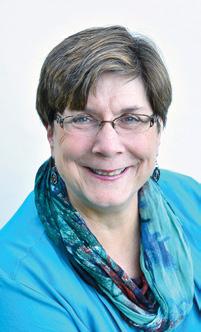
Friends laugh, ‘She sleeps around.’ But, “No joke,” grins Gail, who has stayed at hundreds of bed-andbreakfasts worldwide, showcasing their hospitality in 16 cookbooks, dozens of magazines, and PBSTV’s award-winning Country Inn Cooking series she hosted and produced. But she loves sleeping at home best, “Writing about the High Country, so rich in character, natural beauty, food, and talented folks,” she brags. Mega publisher HarperCollins asked her to write, Afternoon Tea is the New Happy Hour, which she produced in her Blowing Rock kitchen, photographing recipes with ingredients and props from area farms and shops.

Pan McCaslin
A move to the High Country from the Mississippi Delta of Arkansas brought Pan, her husband and their Labrador mix to the Valle Crucis community. Pan holds a BA in English Literature and a MA in Theology from Sewanee, and degrees in Nursing and Counseling from the University of Arkansas. Pan is a contributor to six books of daily meditations, enjoys interviewing nonprofit organizations for freelance articles, and serves on the Board of the Episcopal Women’s History Project. She divides her volunteer hours between supporting Hospitality House of NW NC, a local shelter agency, reading, and connecting with family.

Skip Sickler
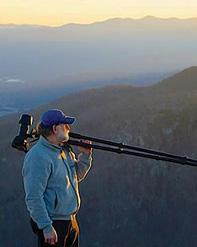
Skip began photography in 1971 when his parents gave him a 35 mm camera for Christmas. He maintained his photographic interest while working as a Park Ranger in the National Park Service; as a wilderness guide/instructor with Outward Bound; and as a trainer for various groups and teams. Skip considers himself still a student and continually seeks to see the world around him with “fresh eyes.”
“Since my earliest memories, I have sought solace in the outdoors,” says Skip—he continues to be inspired and awed by the natural world. He invites you to join him in the protection and preservation of wild areas, “where nature lives and survives by the ingrained rules written in its DNA and the natural processes that have shaped our fragile blue spaceship, planet Earth.”
CAROLINA MOUNTAIN LIFE Spring 2023 — 15
E A R T H T O S K Y P A R K
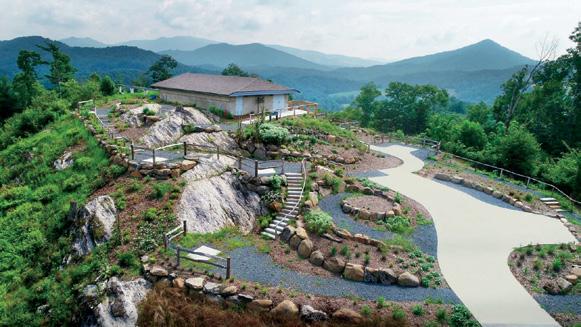
O b s e r v a t o r y S i t t i n g a t a n e l e v a t i o n o f 2 , 7 3 6 f e e t , t h e B a r e D a r k S k y O b s e r v a t o r y p r o v i d e s a n o p p o r t u n i t y t o e x p e r i e n c e t h e w o n d e r s o f t h e u n i v e r s e V i e w t h e m o o n , p l a n e t s , a n d s t a r s t h r o u g h t h e l a r g e s t p u b l i c t e l e s c o p e i n N C o r s i m p l y s t a r g a z e u n d e r t r u l y d a r k s k i e s a t a n i n t e r n a t i o n a l d a r k s k y c e r t i f i e d p a r k
P l a n e t a r i u m V i s i t o r s c a n e x p e r i e n c e t h e w o n d e r s o f t h e n i g h t s k y d u r i n g d a y l i g h t h o u r s . T r a v e l t h r o u g h t h e s o l a r s y s t e m o r l e a r n a b o u t t h e e c o s y s t e m s o f E a r t h i n t h e c o m f o r t o f a z e r o - g r a v i t y c h a i r . L a s e r L i g h t s h o w s a r e a l s o a v a i l a b l e o n t h e w e e k e n d s s o b e p r e p a r e d t o g r o o v e t o y o u r f a v o r i t e t u n e s .

B e s u r e t o c h e c k o u t T h e G o o d o f t h e H i v e m u r a l o n t h e e x t e r i o r o f t h e p l a n e t a r i u m ! 6 6 E n e r g y E x c h a n g e D r


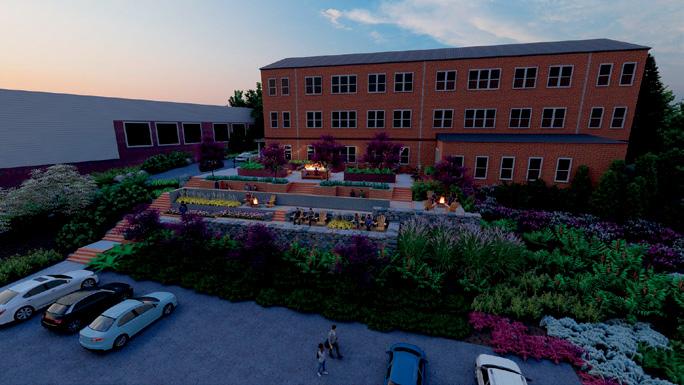
T h e B l u e R i d g e B o u t i q u e H o t e l i s a f i f t e e n - m i n u t e d r i v e f r o m t h e M a y l a n d E a r t h t o S k y P a r k a n d i s c e n t r a l l y l o c a t e d t o C h r i s t m a s t r e e f a r m s , s h o p p i n g , s k i s l o p e s , a n d a r e a r e s t a u r a n t s . T h e t h i r d f l o o r i s n o w o p e n , m a k i n g a t o t a l o f 3 2 a v a i l a b l e r o o m s t h a t a r e e a c h n a m e d f o r a n a r e a d e s t i n a t i o n B u i l t i n 1 9 2 1 , t h e h o t e l i s h o u s e d i n a f o r m e r e l e m e n t a r y s c h o o l b u i l d i n g S i t t i n g a b o v e t h e T o e R i v e r , a f o o t b r i d g e c o n n e c t s t h e b u i l d i n g t o d o w n t o w n S p r u c e P i n e E n j o y a l l t h e m o d e r n a m e n i t i e s i n t h i s h i s t o r i c b u i l d i n g


u r n s v i l l e ,
w w w m a y l a n d e d u / e s p

N C 2 8 7 7 7 8 2 8 7 6 5 0 3 9 1



w w w b l u e r i d g e b o u t i q u e h o t e l c o m
MOUNTAIN LIFE
6 6 E n e r g
E
c
N C
y
x
h a n g e D r . B u r n s v i l l e ,
B
B L U E R I D G E B O U T I Q U E H O T E L A c c o m m o d a t i o n s N C 2 8 7 1 4 8 2 8 4 7 0 7 5 8 4
2 0 3 P i n e b r i d g e A v e S p r u c e P i n e ,
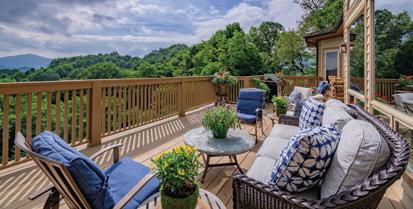
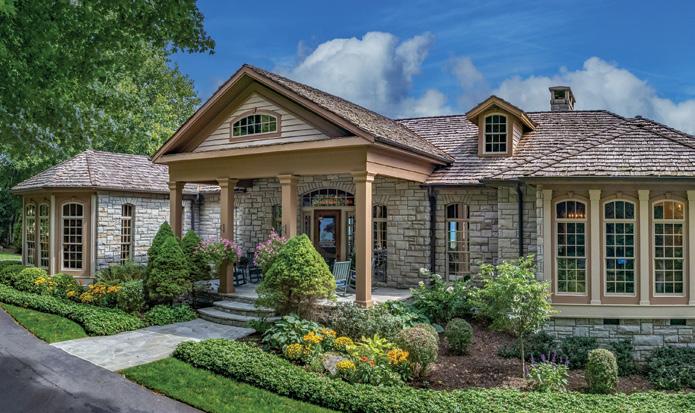
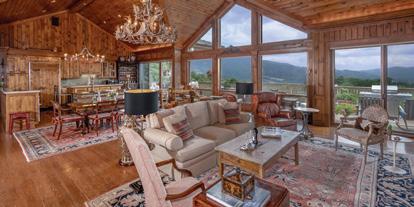
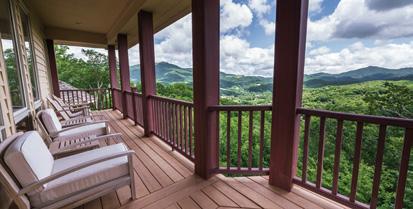
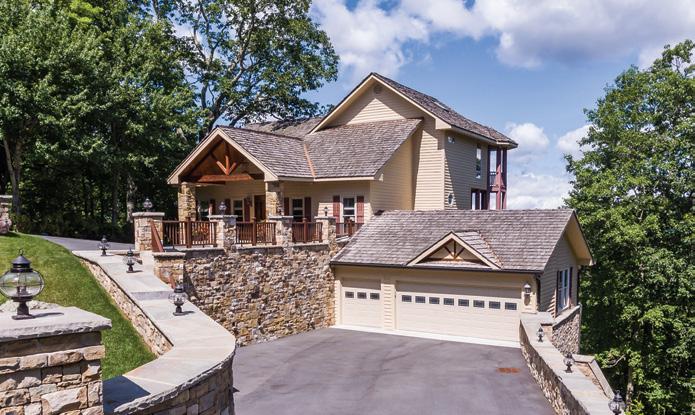

CAROLINA MOUNTAIN LIFE Spring 2023 — 17 Springtime in the mountains is truly spectacular. As the snow melts away we see clear skies and fresh blooms. Enjoy the crisp mountain air from the wraparound deck of your new High Country home. If mountain living is your dream, at Engel & Völkers Banner Elk, we have the local expertise and resources to make it a reality. With localized expertise and an international network, we are the leading residential real estate resource. Contact us today to discuss all your real estate needs. SPRING IN THE MOUNTAINS ©2023 Engel & Völkers. All rights reserved. Each brokerage independently owned and operated. Engel & Völkers and its independent License Partners are Equal Opportunity Employers and fully support the principles of the Fair Housing Act. Engel & Völkers Banner Elk 610 Banner Elk Highway . Banner Elk . NC 28604 . +1 828-898-3808 Learn more at bannerelk.evrealestate.com $2,850,000 950 EQUESTRIAN DRIVE $1,699,000 1044 ELK RIVER PARKWAY CONTACT ENGEL & VÖLKERS BANNER ELK AND MAKE YOUR MOUNTAIN MOVE A REALITY.
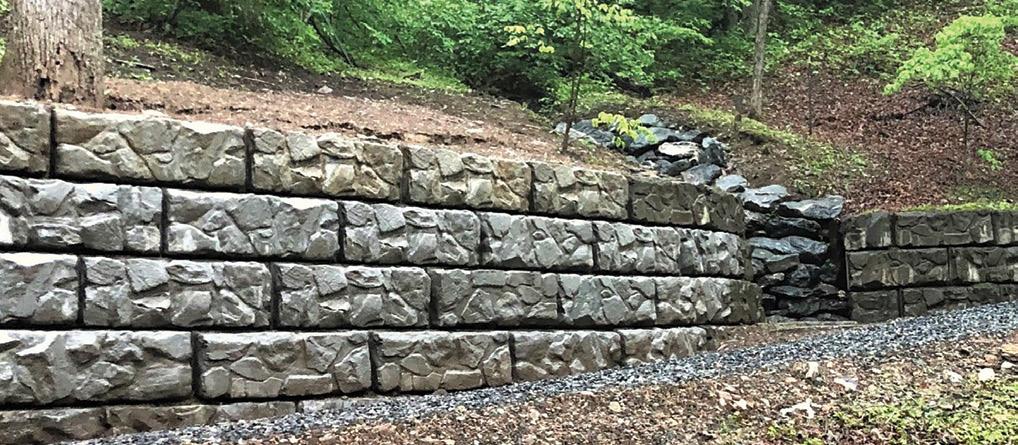




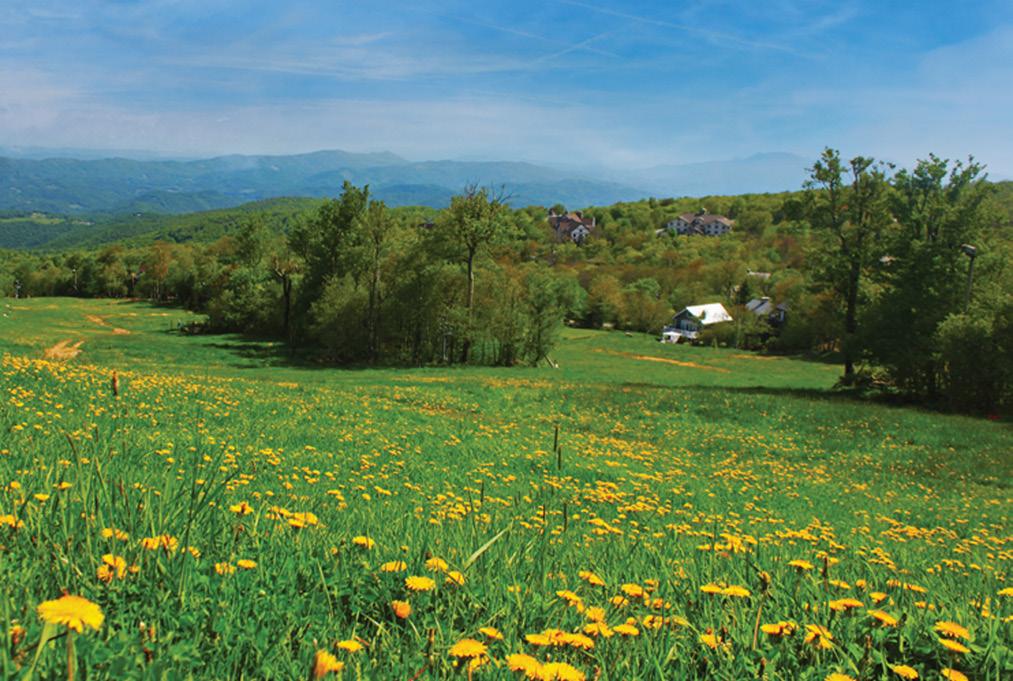


18 — Spring 2023 CAROLINA MOUNTAIN LIFE Choose the most convenient and versatile structural wall retaining system—one that can be installed quickly and trusted to last. We also customize LOCK ROCKS in various colors and sizes to meet the needs of any project. Because we manufacture our products locally in the high country, we keep your construction costs lower and offer personalized service. Add LOVEN to your next construction project! loCk rocks Our rock-faced retaining wall system adds value and beauty to any landscaping or structural use. by Loven Casting Company Serving the High Country and Beyond Call 828-575-5793/828-284-1031 www.LovenCasting.com Hiking Biking Fishing Birding Kayaking And come summer, don’t miss our Farmers’ Market every first friday of each month. beechmtn.com Spring Into Action



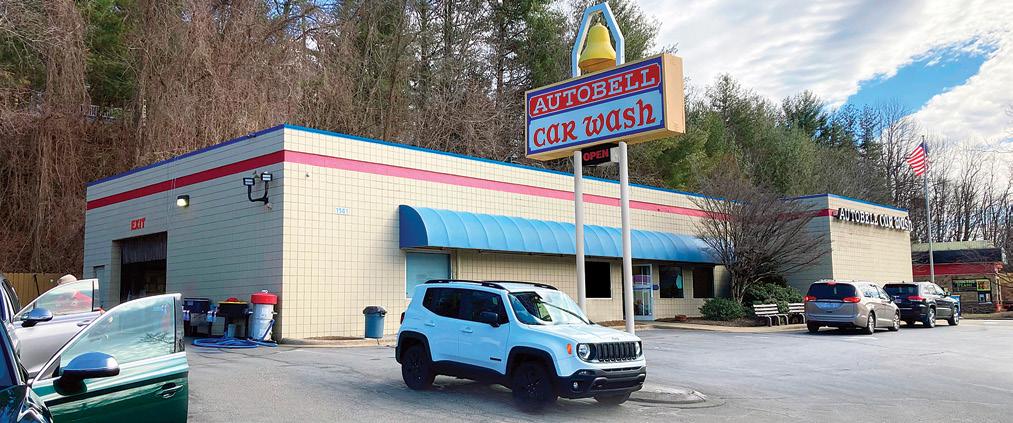

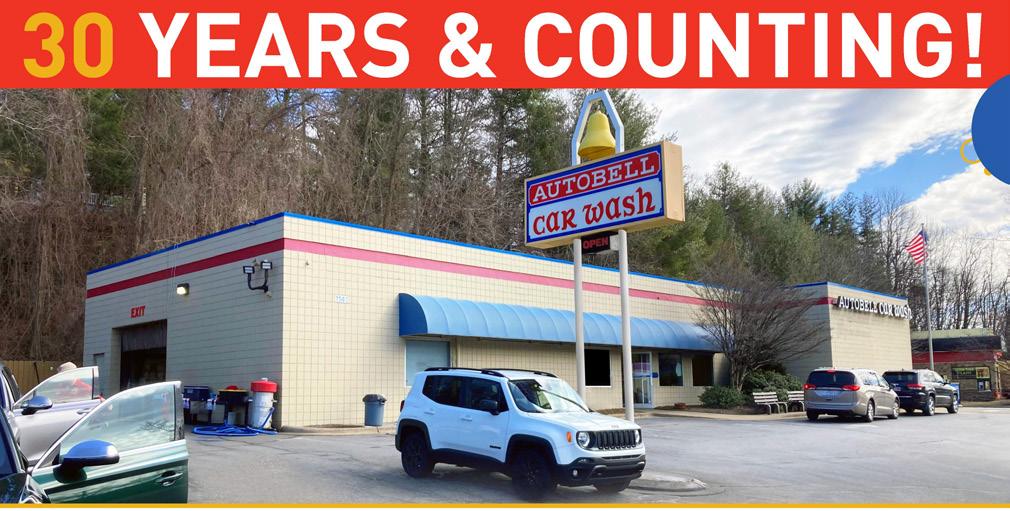

CAROLINA MOUNTAIN LIFE Spring 2023 — 19 FIND YOURSELF CENTURY 21® Mountain Vistas Locally owned and operated for over 35 years in the High Country C21MV.com | 202 Southgate Dr. Suite 19 | Boone, NC | 828-264-9111 IN THE BLUE RIDGE MOUNTAINS Search for your new home here Each office is independently owned and operated As a thank you for letting us be part of the Boone community for 30 years, we're offering one month of ANY Unlimited'" Car Wash plan for ONLY $5! Scan the QR code for more information on how to take advantage of this offer. Autobell® provides a high-quality car wash experience including interior and exterior cleaning while focusing on the people and the cars they love. In addition, we are committed to environmental protection and conservation, treating 100% and recycling up to 100% of our wash water through technologically advanced equipment. LIMITED TIME OFFER valid through 12/31/2D23 for NEW app Unlimited'" customers only. Cannot be combined with any other offer or discount. Plan will renew at full retail price until cancellation. Must apply coupon code when purchasing Unlimited plan in the Autobell" app. Visit Autobell.com for full App Unlimited terms and conditions. Scan the QR code to get offer
REGIONAL HAPPENINGS | REGIONAL HAPPENINGS
April
Merlefest
| April 27-30 in Wilkesboro, NC
One of the premier music festivals in the High Country AND the nation, Merlefest serves as an annual homecoming for musicians and music fans. Held on the campus of Wilkes Community College in Wilkesboro, Merlefest was founded in 1988 in memory of the late Eddy Merle Watson, son of American music legend Doc Watson. For more on the history of the event and this year’s festival details, see our feature article on Page 47. Merlefest.org
Spring Fling | April 29
in Newland, NC
The 3rd annual Spring Fling takes place at the Riverwalk in Newland from 10 a.m. –4 p.m. Enjoy a Saturday stroll along the water, do some early Mother’s Day shopping at the craft tents, and partake in a variety of festival food. Event sponsored by “Friends of Newland.” Facebook: thetownofnewland
Fire on the Mountain Blacksmith Festival
April 30 in Spruce Pine, NC
Fire on the Mountain is an annual celebration of the art of the blacksmith that is always held the last Saturday in April in Downtown Spruce Pine, NC. The event is
a partnership between Spruce Pine Main Street, Penland School of Craft, and Toe River Arts. Each year, the festival contains blacksmith demonstrations, blacksmith vendor booths, a youth and adult forge-off, a hands-on tent, kids’ activities, food and more! Originating in 2007 as a local festival, it was originally called “Hammerin’ on the Toe.” Over time it has grown into one of the largest blacksmith festivals on the East Coast. Fire on the Mountain takes place 10 a.m. - 4 p.m. and is free. Facebook: FireOnTheMountainFestival
Beech Mountain Spring Happenings
April - June in the Town of Beech Mountain, and Beech Mountain Resort, NC
Visit Beech Mountain this spring and enjoy all that the mountain has to offer, including these select activities: Canoe and fish at Buckeye Lake; hike along a vast network of hiking trails known as the Emerald Outback; pig out on pizza and play mini golf at the Brick Oven Pizzeria; fly a kite and share a picnic in the Beech Mountain Kite Field; cycle the mountain on 51 miles of road cycling routes; mountain bike on 12 trails with over 18 miles of biking terrain; visit the one and only Fred’s General Mercantile and peruse the store’s seemingly endless selection of goods and gifts
for everyone; go birding at one of the many great wildlife viewing areas; get active at the Buckeye Recreation Center, where you can play basketball, volleyball, tennis and more; and participate in Mile High Yoga at Beech Mountain Resort (beginning June 4). The Resort’s Summer Concert Series is one of the largest events in the area. It features ticketed concerts mid-June through August headlined by big-name touring acts. Visit the Beech Mountain Visitor Center in person for more on each of these activities. Or go online at Beechmtn.com and www. beechmountainresort.com.
May
North Carolina Butterfly Festival
May 6 in Hudson, NC
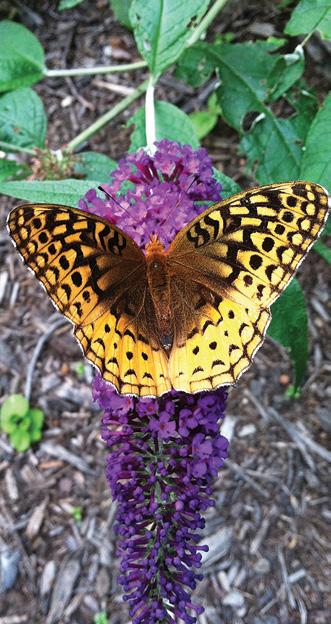
The 39th annual Butterfly Festival takes place the first Saturday in May, and this popular festival is Caldwell County’s oldest. Enjoy the many craft vendors and artists’ performances. As in past festival weekends, the event includes an annual “Butterfly Pageant,” a Cruise In for auto enthusiasts, a parade of antique and classic cars, music, and street dancing. The festival runs 9 a.m.–4 p.m. www.ncbutterflyfest.com

20 — Spring 2023 CAROLINA MOUNTAIN LIFE
Spring Fling / Newland NC Butterfly Festival / Hudson NC
HAPPENINGS | REGIONAL HAPPENINGS
The Coolest Corner Ashe Bash | May 6 in Jefferson, NC
The Ashe County Chamber of Commerce will again sponsor this completely free and family-friendly musical celebration from 7-10 p.m. for High Country residents and visitors to the region. This year’s concert will feature The Steel Wheels, and Presley Barker, and will be held at the Ashe County Government Complex, located above Bojangles in Jefferson. A variety of food vendors will be serving treats on site. Shuttle service to the venue will be provided from designated areas nearby. Guests are invited to bring a chair; no alcohol or pets allowed. ashechamber.com
Saved by a Salamander Day | May 20 in Grassy Creek, NC
To share the significance of the New River, the small town of Grassy Creek, and the remarkable hellbender salamander, The Old Store at Grassy Creek is hosting the Saved by a Salamander Day on Saturday, May 20, from 12 to 5 p.m.
Conservation of the New River in Ashe County has a rich and successful history, one that deserves to be remembered and celebrated. The day’s events will highlight success stories, teach guests about conservation efforts, and inspire us all to enjoy the New River and its wonderful wildlife for years to come. From paddling outings to
workshops to music, the organizers have a full day planned. Visit www.savedbyasalamander.org/events and also see our feature article on page 80.
Art in the Park | Beginning May 20 in Blowing Rock, NC
Find gifts and works for personal collections, functional beauties like furniture and cutlery, and wearable art like handcrafted jewelry and textiles. Enjoy mingling with award-winning and acclaimed artisans at these juried shows, curated to present a wide variety of mediums. Artists’ tents line Park Avenue right in downtown Blowing Rock so attendees can enjoy proximity to other shopping, as well as dining options and local parks. Additional Saturday dates include June 10, July 15, August 12, September 9, and October 7, with hours of 10 a.m.-5 p.m. rain or shine. Make a weekend of it, and stay for the outdoor Concert in the Park that follows each Art in the Park on Sundays! blowingrock.com/artinthepark/
Art on the Greene | Begins May 27-28 in Banner Elk, NC

This series of fine art shows takes place on the grounds of the Historic Banner Elk School in downtown Banner Elk. The first event kicks off Memorial Day weekend, with additional shows July 1-2 (Fourth of July weekend), August 5-6, and September
2-3 (Labor Day weekend). Art on the Greene highlights works from local and regional artists representing a variety of media, such as ceramics, glass, metal, wood, watercolor, acrylics and oil. Enjoy the many shops and restaurants within walking distance of the festival. And if you’re in town for a long weekend, don’t miss the Thursday evening concerts in Tate-Evans Park, every Thursday beginning June 22 at 6:30 p.m., sponsored by the Banner Elk Chamber of Commerce. www.townofbannerelk.org/artonthegreene, bannerelk.com, www.bannerelk.org
Artists in Residence at Edgewood Cottage | Begins May 28 in Blowing Rock, NC
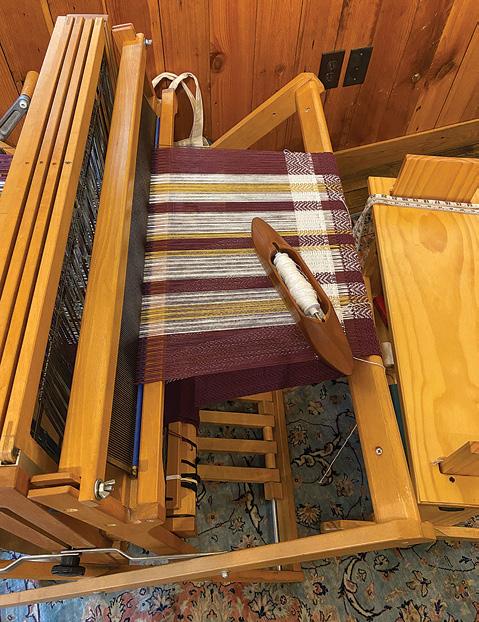
Charming Edgewood Cottage, the restored original home and studio of renowned American artist Elliott Daingerfield, opens its doors every summer to welcome local juried artists. Each artist shows, tells and sells their art to visitors from near and far.
What makes this experience so different? When you come to Edgewood, you’ll see many of the artists creating their art, either on the porch or inside this intimate Cottage. They look forward to meeting you, talking with you about their processes and art, and answering any questions you might have.
continued on next page
LIFE Spring 2023 — 21
CAROLINA MOUNTAIN
Our region is bustling with all kinds of activities related to art, food, music, nature, history, sports, and more—welcome Spring! Following is just a sampling of some of the exciting events in store for residents and visitors to our area.
Artists in Residence / Blowing Rock NC
Art on the Greene / Banner Elk NC / Photo by Todd Bush
REGIONAL HAPPENINGS | REGIONAL HAPPENINGS
This year, 31 different artists will share the Cottage—two a week, every week— from Memorial Day weekend through September 10, from 10 a.m. to 5 p.m. daily. Their work includes, but is not limited to, photography, ceramics, watercolor, acrylics, wood working, folk art, oil painting, fiber art, drawing, leather goods, and porcelain. Art lovers of all interests and budgets are welcome to these free open studio events. For a detailed schedule and sample artwork, go to artistsatedgewood.org
This Artist-in-Residence program is sponsored by the Blowing Rock Historical Society. For more information, go to www. blowingrockhistoricalsociety.com.
Sugar Mountain Spring Happenings: May-June in the Village of Sugar Mountain, and Sugar Mountain Resort, NC
One of the Mountain’s newest annual spring events is the Food Truck Festival on Saturday, May 27 (skisugar.com/food-truckfestival/). Eat to your heart’s content from 11 a.m. until 7 p.m. Get discounts on tickets to ride the Summit Express chairlift when you purchase from a food truck (minimum purchase required). Visitors to Sugar Mountain Resort will enjoy Chairlift rides for the entire Memorial Day weekend from 10 a.m. until 6 p.m. Rides aboard the Summit Express shuttle bikers and foot-passengers to the mountain’s peak, and the Easy Street lift services a beginner-level gravity skills trail for bikers only. After the special Memorial
Day weekend, the bike park resumes Bike Park & Scenic Chairlift Rides June 30 - September 4. Visit skisugar.com/bikepark/ for specific days, hours and times. Sugar Mountain’s Grillin’ and Chillin’ Concert Series begins on Memorial Day, May 29, and then every Wednesday June-August, and on Labor Day seesugar.com/summer-concerts/. And calling all golfers and tennis players: don’t miss some of the best public golf and tennis in the High Country—the golf season begins in late April, and the tennis season in mid-May. After each day of play, head to the popular Caddyshack Café’. Visit SeeSugar.com and Skisugar.com for all the spring happenings at Sugar Mountain!
June
Liberty! | Beginning June 2-3 in Elizabethton, TN
The Official Outdoor Drama of the state of Tennessee—Liberty!—launches its 44th season at Sycamore Shoals State Historic Park in Elizabethton, TN, and continues every weekend in June (June 9–10, 15-17, 22–24) beginning each evening at 8 p.m. in the Fort Watauga Amphitheater. Tennessee’s official outdoor drama is presented by a cast of local performers against the backdrop of Fort Watauga. Liberty! portrays the significant history of Sycamore Shoals

during the late 18th century and highlights the influential series of events that unfolded during that time. The 2023 season will also mark the 13th year for Carter’s Store, a venue named in honor of the original store opened by pioneers Carter and partner William Parker shortly after they arrived on the frontier in 1771. A fine menu of mouthwatering treats will be offered each evening for Liberty! guests. During your visit to Sycamore Shoals, plan to go to the Friends of Sycamore Shoals award winning interpretive museum. friendsofsycamoreshoals. org/liberty
Avery County Summer Fest
June 10-11 in Newland, NC
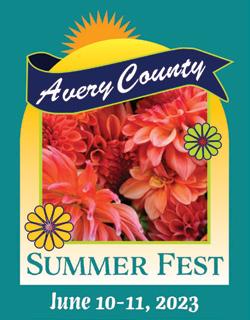
The first annual Avery County Summer Festival was such a big hit that it returns this year on June 10! The second annual Summer Fest, sponsored by the Avery Chamber of Commerce, takes place at the Avery Community Center at Heritage Park, also known as the home of the Avery County Fair (661 Vale Road, Newland, NC 28657). At the festival, you can shop for wares of all types—from functional craft to fine art—at a variety of vendor tents, and take home a piece of Avery County. And the kids will love the “bouncy house” and other fun activities! The event runs from 9 a.m. to 5 p.m. both Saturday and Sunday. averycounty.com
Boonerang | June 15-17 in Boone, NC
Boonerang is a music and arts festival in downtown Boone (free on Friday and
22 — Spring 2023
MOUNTAIN LIFE
CAROLINA
Avery County Heritage Festival Newland NC
NC Rhododendron Festival / Bakersville NC
Liberty! / Elizabethton TN
HAPPENINGS | REGIONAL HAPPENINGS
Saturday). The festival includes multiple concert stages, primarily made up of artists with Boone connections. Other festival highlights include local food and beer, a vendor market, a kids’ zone, silent discos, and afterparties. See CML’s Cultural Calendar in this issue for more information, and visit www.boonerangfest.com.
NC Rhododendron Festival | June 16-18 in Bakersville, NC
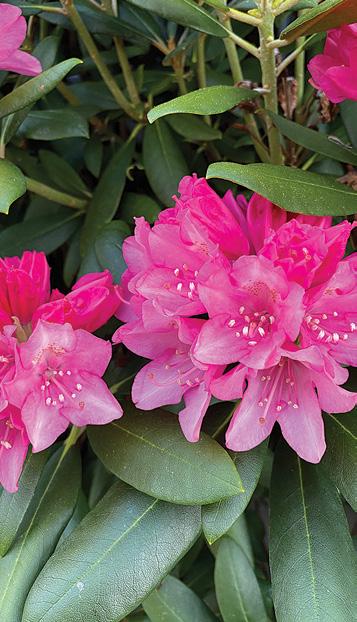
The NC Rhododendron Festival is in its 76th year, drawing hundreds of visitors from all over the region. This event features the Rhododendron Festival Pageant, a Craft Fair with food vendors, children’s activities, and live music throughout the day, as well as a classic car show, a 10K run, and one of the largest square dance events in NC! On Friday and Saturday nights during the Festival, grab your partner and your friends for the Rhododendron Square Dance on Main Street in downtown Bakersville. Festival hours and details at www.ncrhododendronfestival.org
Roan Mountain
Rhododendron Festival | June 17-18 in Roan Mountain, TN
The Roan Mountain Citizens Club presents their 76th Rhododendron Festival at Roan Mountain State Park, located at the foot of Roan Mountain. The annual festival heralds in the blooming of the famous Catawba Rhododendron along the highlands of the Roan. You’ll find handmade crafts,
food, and a variety of traditional music, plus demonstrations of old-time traditions. The world’s largest natural rhododendron gardens grow atop 6,000-ft Roan Mountain and the shrubs are in peak bloom during late June. www.roanmountain.com/rhododendron-festival/
Avery County Heritage Festival

June 24 in Newland, NC
Hosted by the Avery County Genealogy Society, you’ll find craftspeople, genealogists, authors, performers and plenty of fun in the Newland town square in downtown Newland (Schultz Circle). The Heritage Festival is free, and entertainment includes a full lineup of musicians and cloggers. Hours are 9 a.m. to 3 p.m. that Saturday. www.averycountymuseum.org/heritage-festival/
“Good Fields” Appalachian Food & Farms Festival | June 24 in Vilas, NC

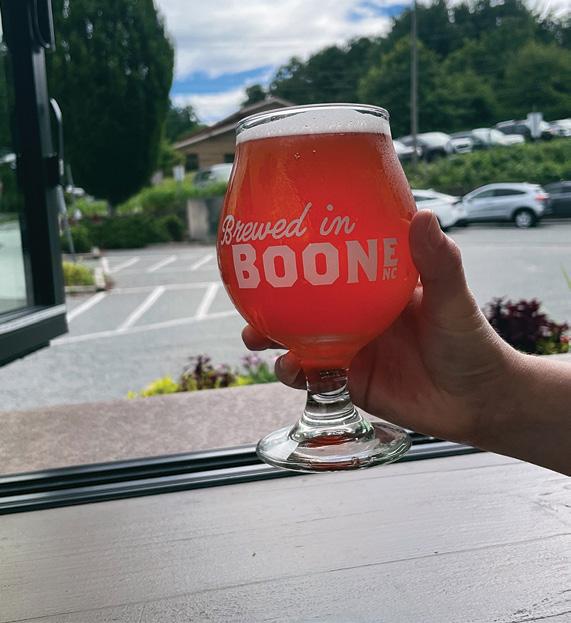
One of our area’s newest food festivals, raising awareness of the importance of local farms, is drawing attention from some of the region’s top culinary minds. Hosted at the 150-year-old Shipley Farms in Vilas, tucked away in the hills just a few miles west of Boone, Good Fields will highlight the region’s rich agricultural heritage, with 12 top chefs from across the state drawing from Shipley Farms and other local farm products, Appalachian food and culture and their own inspirations to create their dishes. Good Fields brings together chefs and farmers along with live bluegrass
music, local craft beer and wine, vendors, and more.
Good Fields will help support local food and farms, donating a percentage of proceeds to the Appalachian Sustainable Agriculture Project, Piedmont Culinary Guild, the NC Choices initiative of the Center for Environmental Farming Systems, and the Watauga High School chapter of Future Farmers of America. Ticket details can be found at the Good Fields website, www. GoodFieldsNC.com
July
Christmas in July | June 30-July 1 in West Jefferson, NC
The Christmas in July Festival celebrates the Christmas tree industry and mountain heritage with arts, crafts, and local entertainers representative of the region. This year the event kicks off on June 30, marking the 35th year for Ashe County’s longestrunning festival. A large stage in the middle of downtown West Jefferson will be the hub for several excellent bands, including Cane Mill on Friday evening. Food vendors will also be open on Friday evening, so bring the family for dinner and to enjoy the music. Also bring your dance shoes and plan to shag to the sounds of live Beach Music. continued on next page
CAROLINA MOUNTAIN LIFE Spring 2023 — 23
Boonerang / Boone NC
Good Fields / Vilas NC
REGIONAL HAPPENINGS | REGIONAL
On Saturday, July 1, the Ashe County Farmers Market will open at 7 a.m., offering a variety of handmade items, fresh produce, and baked goods. Then at 9 a.m., the festival craft vendors and local non-profits will open along Jefferson Avenue, leaving sidewalks clear for walking and browsing the shops. Ashe County Arts Council will host children’s activities, performers will be roving the streets showcasing their magical talents, and Santa & Mrs. Claus will arrive straight from the North Pole. Music, storytelling, and more will continue throughout the day. For more information on the music lineup, food vendors, and updates on the festival, follow the festival organizers on Facebook: Christmas In July Festival or visit www.christmasinjulyfestival.com
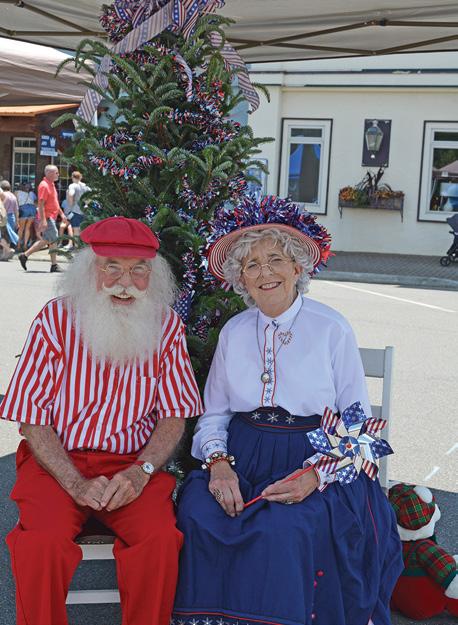
Independence Day Celebrations
July 1-4 throughout the Region
Parades, fireworks, kids’ activities, fun runs, food, beverages, live music and more! Find links to alll our area Chambers of Commerce, TDAs and Visitor Centers at cmlmagazine.online/cml-community/chambers-ofcommerce/
Be sure to pick up the Summer issue of CML Magazine for a complete look at Regional Happenings taking place July through September, 2023.
Sugar Mountain Summit Crawl
July 4 at Sugar Mountain Resort
Run, hike, climb, or crawl from the ski lodge to Sugar Mountain’s 5,300-foot peak by way of the grassy slopes. seesugar.com/ july-4th/
Grandfather Mountain Highland Games
July 6-9 in Linville, NC
Thousands of kilt-clad Scots make their way to MacRae Meadows for their annual gathering and games. You and your family can sample Scottish music, dancing, foods, costumes, field games and much more. See CML’s article on the Highland Games in this issue, and visit gmhg.org.
Avery County
Fine Art & Master Crafts Festival

July 14-16 and August 11-13 at Sugar Mountain Resort

These juried festivals will feature an eclectic gathering of unique hand-crafted wares from select artists and crafters. averycounty.com
For Your Spring and Summer Calendar
Some of the best resources for checking event listings, updates and changes are our local Chambers of Commerce, Tourism Development Associations, and Visitors’ Centers. Be sure you visit the following websites before planning your visit to take advantage of all that our region has to offer.
Abingdon Visitors Center: visitabingdonvirginia.com
Ashe County Chamber of Commerce: ashechamber.com
Avery Chamber of Commerce: averycounty.com
Banner Elk Chamber of Commerce: www.bannerelk.org
Beech Mountain TDA: beechmtn.com Blowing Rock Chamber of Commerce: blowingrockncchamber.com
Boone Chamber of Commerce: www.boonechamber.com
Burnsville-Yancey Chamber of Commerce: https://www.yanceychamber.com
Caldwell County Chamber of Commerce: www.caldwellchambernc.com
Johnson County, TN, Chamber of Commerce: www.johnsoncountytn.org
Mitchell County Chamber of Commerce: mitchellcountychamber.org
Morganton Chamber of Commerce: www.downtownmorganton.com
Sugar Mountain TDA: seesugar.com
Wilkes County Chamber of Commerce: www.wilkeschamber.com
24 — Spring 2023 CAROLINA MOUNTAIN LIFE
Christmas in July West Jefferson NC
Avery County Fine Art & Master Crafts Festival Village of Sugar Mountain NC / Photo by Todd Bush
Events & Music at Old Grassy Creek NC
Discover exceptional mountain living

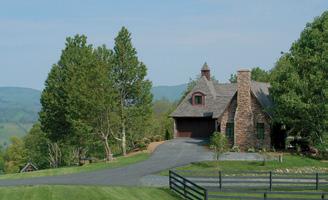
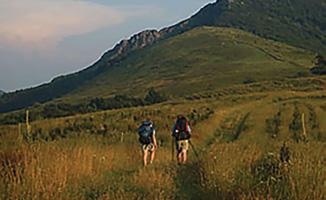
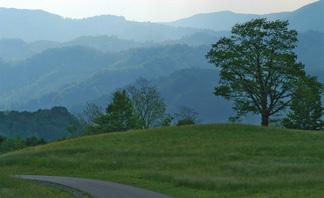

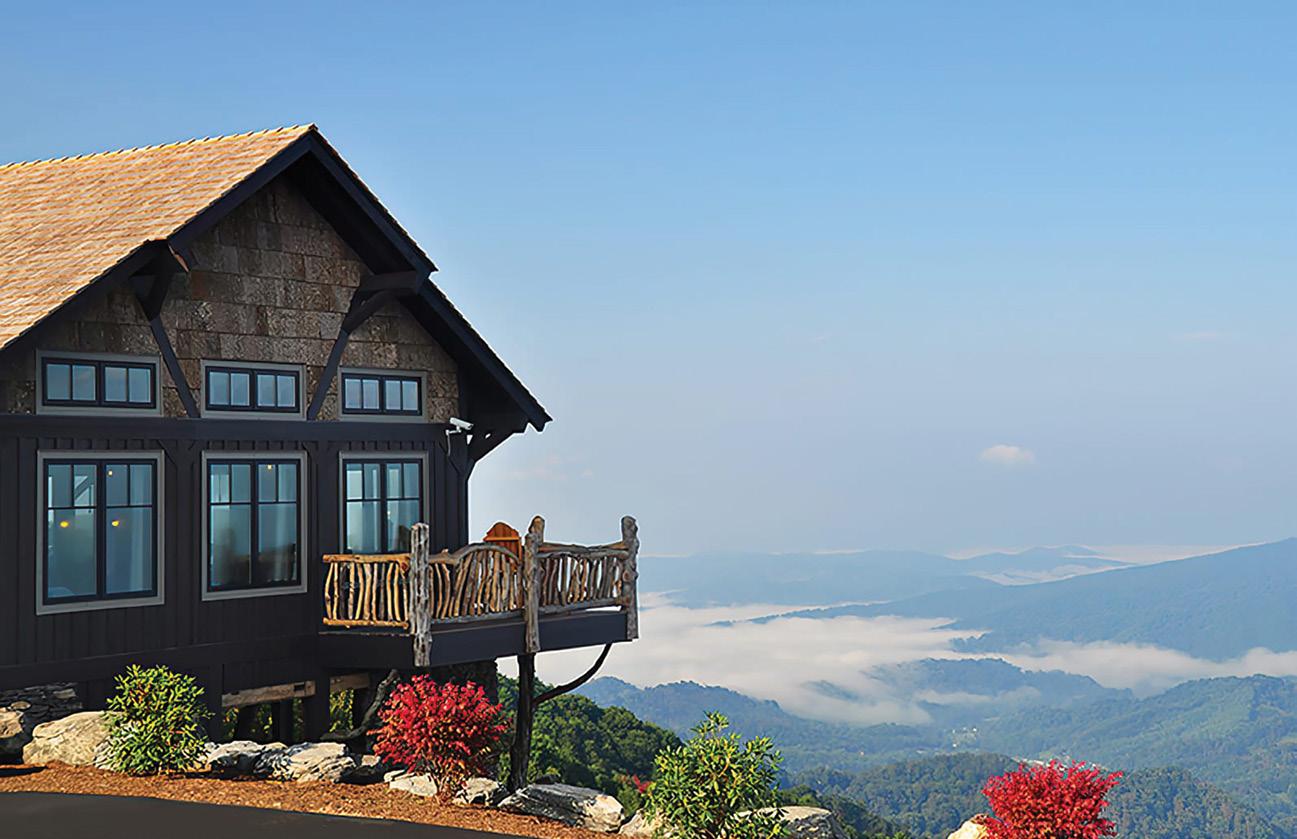
Imagine a stunning refuge where the mountains of North Carolina and Tennesse meet featuring the area’s highest elevations with sweeping views of lush valleys and blue-capped peaks. Sunalei is known for its fantastic amenities, gorgeous custom homes, and dedication to conserving the pristine natural setting. Located just off 421, between Boone and Mountain City next to Elk Knob State Park, Forest at Sunalei continues this tradition with a limited number of homesites - the perfect setting for your ideal mountain retreat.
Clubhouse, Fitness Center, Hiking Trails and more Homesites from the $90s with In-House Financing available Explore the community at SunaleiForest.com For homesite sales and information
tour

CAROLINA MOUNTAIN LIFE Spring
to
• info@brri.net • www.brri.net © 2023 Forest at Sunalei. Prices and specifications are subject to change without notice. Photos are representative.
or
schedule a
828.262.4646
Through the Lens
By Skip Sickler
There is a lyrical, cyclic nature at work in our world. Existing since the beginning of time, we are bound by the rhythms of the natural world. The cycle of a day into night, and back again; the dark, mysterious forces of the unseen unknown, giving way to the familiar, as the rays of golden light bring into sharp-focus what was once hidden. The cycle of the moon; growing ever so slightly each night until it reaches full-moon, its climax. It bursts forth in respondent glory at the exact time the sun sets in the western sky. Receding slowly each night, it rises later and later until it enters a few days of dark nights, a period of seemingly restfulness; as if, to gain strength and energy for the next show. There, too, is the march of the seasons: winter, spring, summer and fall—each one important in its own right, but each one also dependent upon the others—a sequence that adds meaning to our
annual walk on planet Earth. Over time, these seasons become a lifetime.
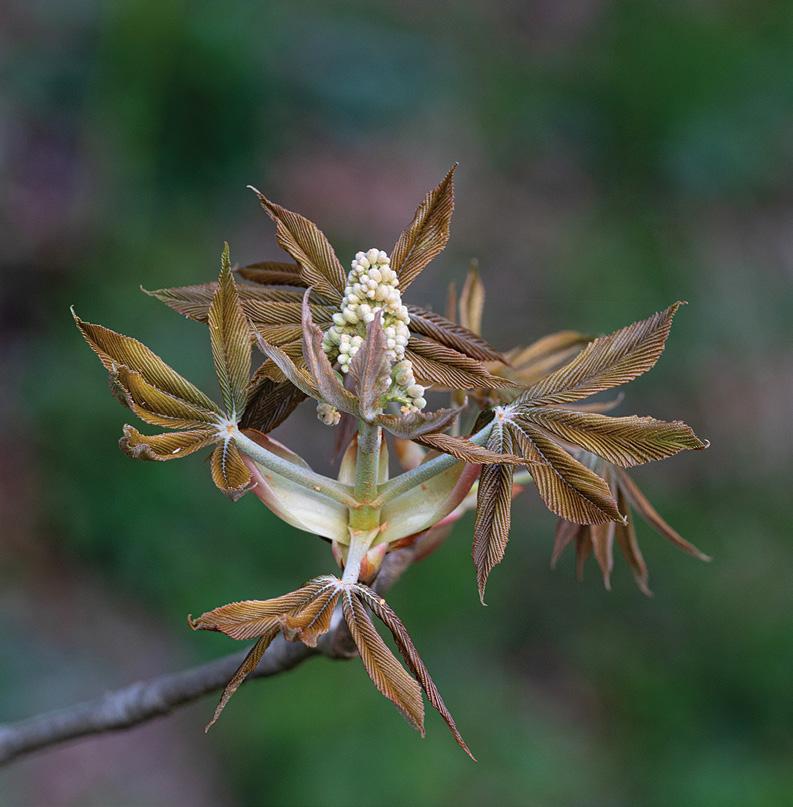

As I reflect on the nearing of my seventieth birthday, my life has borne witness to these same cycles: not just physically, but metaphorically as well. Though I greatly enjoy winter sojourns; those quiet walks in a world muted by sifting snow, the sharp edges of texture and contrast softened. The welcome gentleness of dormant nature soothes my own rough edges and allows me to slow down and take stock. But, as winter marches resolutely on, I begin to dream more frequently of spring and the impending rebirth it brings. The winter respite is ushered away by trumpeting change. The Earth warms with lengthening days. New growth emerges. Spring is a bridge, a transition spanning the divide between the guarded barrenness of winter and exuberant abundance of summer.
“Spring is for more than just a changing of the seasons; it’s a birth of the spirit.”
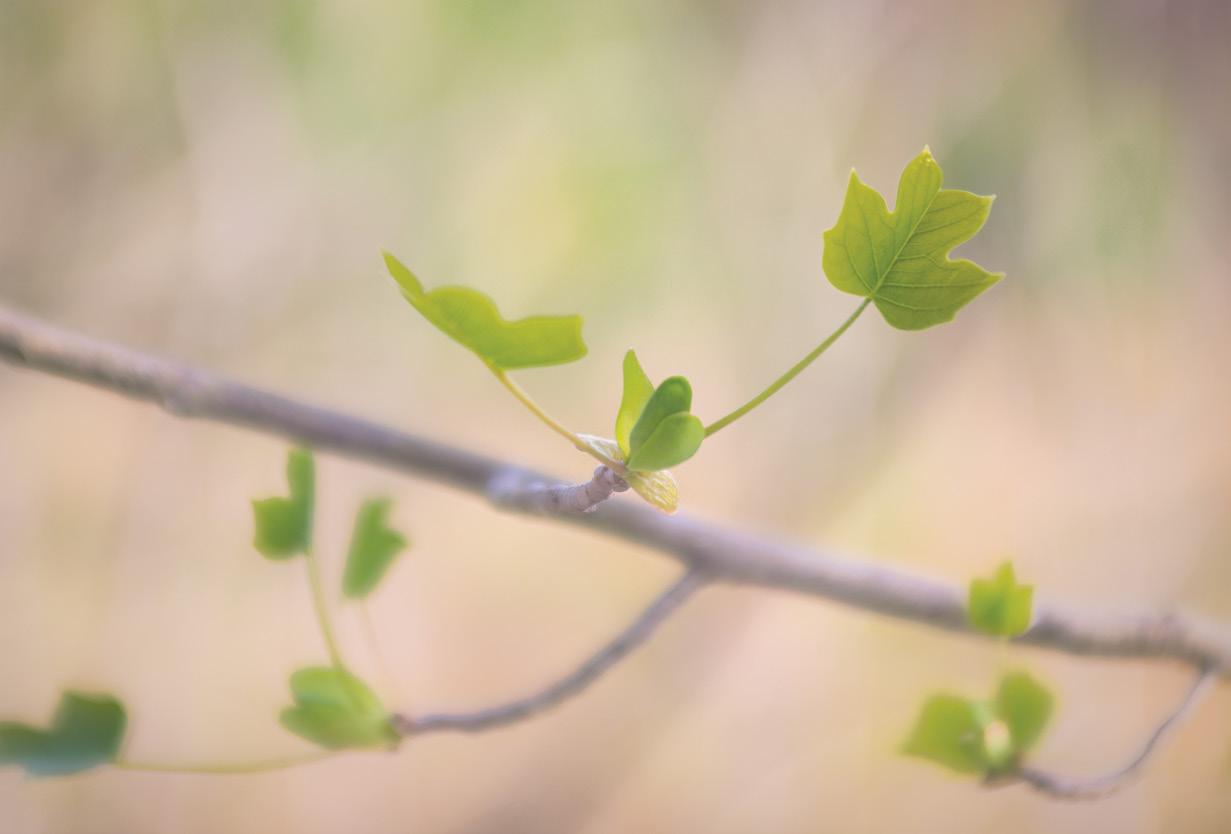 — Toni Sorenson
It is this spirit I eagerly await each year. Spring is a renewed belief of the great possibilities that lie ahead. It is the time I excitedly anticipate: the time, once again, to explore the forests, streams and fields in the southern Appalachian Mountains. After months, dreaming and waiting for its appearance, I experience the vibrant colors as the rush of new growth spreads from the lower reaches to the upper elevations of the high country—my home. The bursting open of tiny buds reminds me of the grand march-of-life on this tiny pale blue water planet. Though I am reminded of my own smallness, I am also reassured of great abundance ahead. This reassurance bolsters my spirit. I belong. All is well; life is good.
26 — Spring 2023
MOUNTAIN LIFE
CAROLINA
Spring
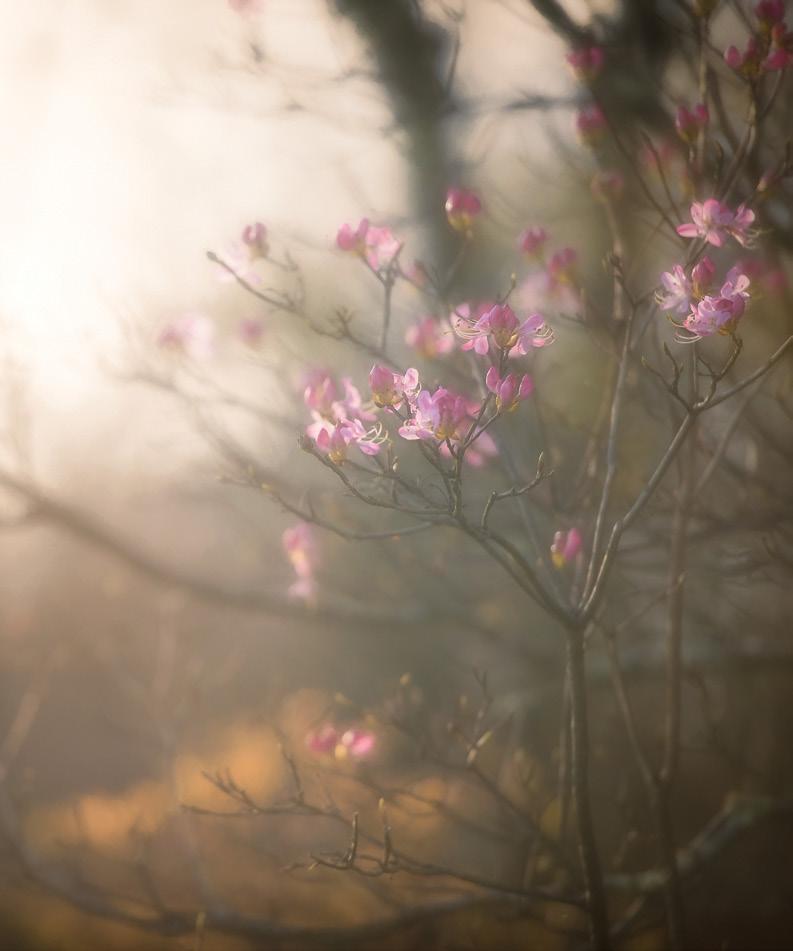 By Skip Sickler
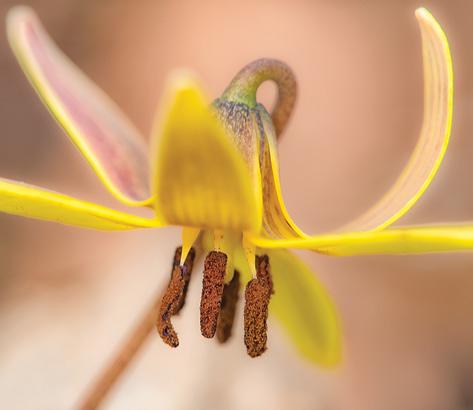
Just, when you are beginning To question Spring will ever come. And, you close your eyes
Just for a moment
A short minute, or so Of inattention is all the time needed For Spring, Roaring like a lion, Swaggering and strutting
Just so full of its self, Like an infant For the first time
Discovering it can stand Alone, unsupported And, you look into its face, With surprise and amazement, And witness its joy and delight Spring comes shouting, For all to hear, Look what I did, Just look at me!



CAROLINA MOUNTAIN LIFE Spring 2023 — 27






28 — Spring 2023 CAROLINA MOUNTAIN LIFE Contemporary art l Free admission Six galleries l Changing exhibitions tvca.org de’Angelo DIA,
10-6 MON-THURS; 10-7 FRI-SAT; 11-5 SUNDAY • 661 WEST KING ST • DOWNTOWN BOONE • 828-264-8801 GET TICKETS ONLINE: Downtown Boone, 697 W. King St. (across from Post Office) • VillageJewelersLtd.com • 828-264-6559
Pia Kakeisha
Available Homes | Custom Homes & Homesites | The Meadows A Four-Season Private Community With World-Class Amenities Schedule your Discovery Tour to begin a life well-lived. ExploreBRMC.com | sales@brmountainclub.com | 828.352.8235 Live Where Adventure Finds You. Adjust Your Altitude. Change Your View. ELEVATION: GPS LOCATION: 4,080 FT 36.157739, -81.598806 Obtain the Property Report required by Federal law and read it before signing anything. No Federal agency has judged the merits or value, if any, of this property. This information shall not constitute a valid offer in any state where prior registration is required. © 2023 Blowing Rock Resort Venture, LLC.
Grandfather Mountain Highland Games:
 By Steve York
Thehaunting and rousing sound of Scottish Highland bagpipes and the music of talented traveling Celtic minstrels ringing across MacRae Meadows and rising up spontaneously from the campgrounds each July give voice to the spirit of the annual Grandfather Mountain Highland Games and Gathering of Scottish Clans. And these sounds remind us of the long and deep tradition of Scottish heritage which was transplanted and took root here in the highlands of North Carolina beginning in the early 1700s. This July will again re-enliven that spirit as we celebrate the official 67th annual Games.
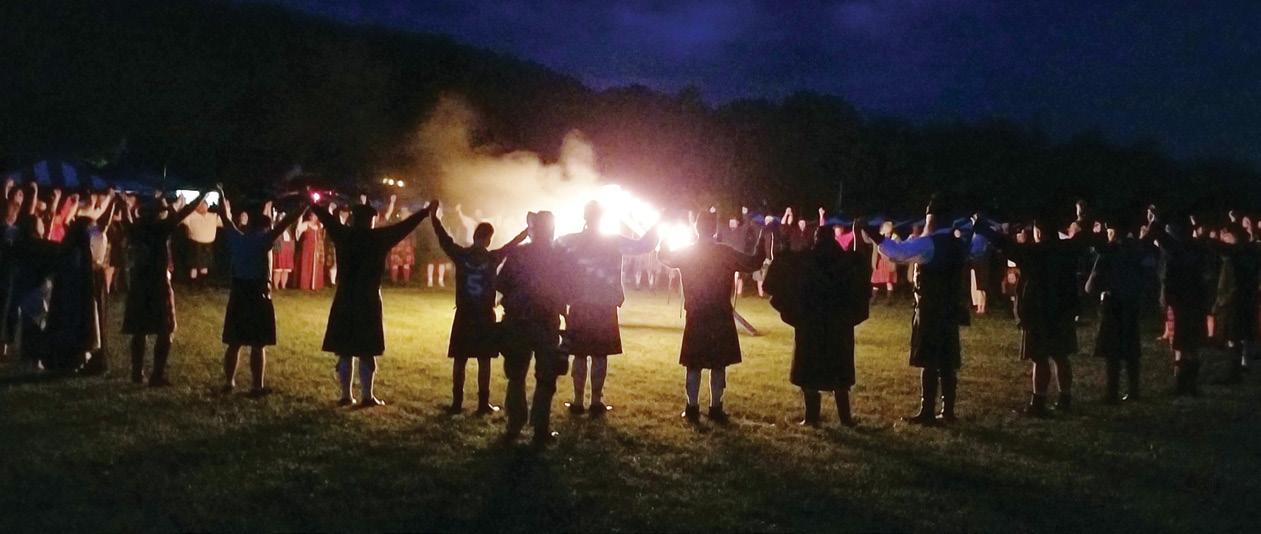
This year’s Games on July 6-9 will follow the grand tradition and pageantry of past Games…officially beginning with the almost ethereal Torch Light Ceremony Thursday evening all the way through the Sunday morning Kirkin’ worship service, the grand Parade of Tartans and the official Closing Ceremonies. This final event brings musicians and Games officials marching out upon the lawn of MacRae Meadows Sunday afternoon in dedication and song, all ending with “Auld Lang Syne” as they ceremoniously march off the field.
In between those opening and closing ceremonies there’s an entire weekend of traditional Scottish athletic competitions, marching Pipe and Drum parades, rows of individual Clan tents, music competitions, Scottish apparel and souvenir vendors, food tents, Celtic band concerts and more. If you’re planning to attend, be sure to book your accommodations early.
GMHG Board Director Steve Quillin has proudly announced that there will
be 14 Clan Societies on the field this year holding their annual meetings and celebrating 50 years, as Clans founded the Games in 1973. The designated Honored Clan this year will be the Cochrane Clan. They will march at the head of the Parade of Tartans and be led by their Chief and Honored Guest, Iain Alexander Douglas Blair Cochrane, 15th Earl of Dundonald. Quillin also noted that the Games will once again host the Atlantic International Open Highland Dance Championship competition this year.
Meanwhile, Music Director E.J. Jones confirms the return of many favorite musicians as well as new performers. After taking a year off to get married and honeymoon at Stonefield Castle in Scotland last July, Kirk McLeod is bringing back a Games’ favorite, Seven Nations, for a special performance at the Friday Night Celtic Rock concert. Also back by popular demand is Glasgow, Scotland’s own Albannach band with their crowd-rousing, tribal driving drums and bagpipe. They will be performing in Grove Two and topping off the Friday night Celtic Rock lineup.
New performers include North of Argyll in Grove Two on Friday night, plus Scotland-born singer/guitarist Mike Ogletree. Jones also notes the return of popular Will MacMorran, the Sean Heely Band, fiddler/singer Hanna Seng, the cello and fiddle duo of STRATHSPAN with their new piper, Cathleen Nixon, and worldrenown Ed Miller in Grove One presenting some of the most beautiful renditions of Scottish songs ever heard in North America.
A Wee Farewell to Sandy Jones /1938-2023
Our mountain community received the sad announcement of the passing of Sandy Jones on March 5, 2023. Very much the heart and soul of the Grandfather Mountain Highland Games piping tradition, Jones was both beloved and revered by all GMHG pipers as well as pipers from around the world. He was also the inspiration and personal instructor for many of the Scottish Highland Bagpipers you’ve heard play for decades at our own Grandfather Games and at many other Scottish heritage events.
Three of the many warm and detailed tributes honoring his legacy can be found at the Grandfather Games website, www. gmhg.org, the North American Academy of Piping and Drumming site, www.naapd. org and Pipes/Drums at www.pipesdrums. com. Here we offer reflections shared by just a wee few members of his vast Grandfather Games family.
“Sandy was recruited by GMHG founder Mrs. Agnes Morton to bring piping to the fore at the Games. Since then, he has been our Director of Piping, long-serving member of the Board, the 10th President of the Highland Games, a Trustee and a consistent Ambassador for GMHG. He was a teacher, a judge, a mentor, and my friend. We at GMHG will miss him. He was an anchor to our past, and a guiding light to our future. Sandy loved the Grandfather Mountain Highland Games like no other. He was one of our own, and I shall not see the like of Sandy Jones again. Goodbye old friend.” —Steve Quillin,
30 — Spring 2023 CAROLINA MOUNTAIN LIFE
“And we’ll play all the way, hey, hey hey…we’ll play all the way back home.”
Torchlight Ceremony / Photo by Steve York
GMHG Board President (excerpts from his website tribute)
“We all come to crossroads in our lives. If we are lucky, there might be someone there to help us through those many crossings. I was extremely lucky…Sandy was there for all of mine. When I was a young teenager Sandy took me in like another father and my piping mentor. Throughout the years I stayed in touch and always wanted him to be proud of me. I hoped to never let him down. He never let me down. Just a quiet confident nod from the man was all I needed to know I was on the right path. I cherished his opinion. Now it is my time to give a nod back to the man that has meant so much to so many of us.” Kirk McLeod, Seven Nations Band/Piping Student of Jones
“My late husband, Alec, worked together with Sandy on the Board of Directors of the Grandfather Mountain Highland Games for years. And, as regular Games attendees and supporters, we both grew very close to him. Sandy worked for decades with piping at the Games. He was a legend, [serving as pipe major for] the U.S. Air Force Pipe Band and the Citadel Pipe Band. And all the while, he was a softspoken, warm and kind person respected by all.” — Brenda Lyerly, Banner Elk Mayor

“Sandy was greatly well-known as a teacher, piping judge and an administrator. But, long before that, he was an authentic and consummate performer of pipe music who, for years, led a band and toured the world. To all of us Grove and Stage musicians he was the original touring performer. He was courageously and proactively kind and would seek people
out to tell them what he appreciated about them. He wanted as many people as possible to experience the fun and fulfillment of playing music for their friends and family. He was and will remain forever a role model for how musicians can do good for the world.” —E.J. Jones, Grandfather Games Music Director/Piper Jones Band Founder P.S. There’s a sort of cosmic coincidence or profound providence at work in the selection of the opening title for this Grandfather Mountain Highland Games story. They are lyrics written by E.J. Jones of the Piper Jones Band and borrowed (with permission) from a song called “On the Road,” featured in their Take to the Skies CD.
Curiously, this title was chosen several days prior to the passing of Sandy Jones, yet they could not be more fitting. The song sings of the life of traveling Celtic minstrels, joyfully playing their music, whether before an audience, while on the road in between gigs or while driving back home. A grand piper himself, Sandy was also a true traveling minstrel, and his spirit will ever inspire these Games. Poetically speaking, Sandy Jones has now taken to the skies, playing his way back home.
For tickets, detailed schedules, maps, and information on lodging, parking and shuttle busses, visit the Grandfather Mountain Highland Games website at www.gmhg.org. And be sure to pick up the summer issue of CML for additional highlights and up-to-date listings on the Grandfather Mountain Highland Games.



CAROLINA MOUNTAIN LIFE Spring 2023 — 31
Sandy Jones / Courtesy of GMHG
Massed Bands play during the Parade of Tartans
Highland Dance Competition
Photo by Steve York
Spring Productions and Festivals in Full Bloom on Local Stages
 By Keith Martin
Noted author Jessica Harrelson opined that “Spring adds new life and new beauty to all that is.” That popular quote is an apt description of the upcoming season of production on local stages as performing arts organizations expand their programming throughout the High Country and beyond. Plays, musicals, concerts, and dance offerings are filling theatres and concert venues near and far with an endless stream of exciting programming.
Here are several of the events that have been announced from now through midJune, listed alphabetically by producing company, with many more to be announced shortly. PLEASE NOTE that all the performances, dates, and times are subject to change; readers are strongly encouraged to check individual websites and/or the theatre box offices for the most current information.
See you at the theatre!
The DEPARTMENT OF THEATRE AND DANCE at Appalachian State University is celebrating the week of Shakespeare’s birthday with his 1599 comedy As You Like It from April 26 through 30 in the Valborg Theatre on campus. Professor Derek Gagnier has been involved with over thirty productions of the Bard of Avon’s plays, and this production will be the 12th that he has directed. Wow.
As You Like It follows its heroine, Rosalind, as she flees persecution in her uncle’s court and seeks to reunite with her exiled father. She is accompanied on her journey by her loving cousin, Celia, and their flamboyant jester, Touchstone. The trio disguise themselves and find safety and eventually love in the Forest of Arden. During their stay, all three grow in understanding of human nature as they look through the lenses of their disguises and empathize with the rustic people of the forest. The play features a variety of memorable characters, including shepherds, wrestlers and, most notably, the melancholy traveler Jaques, who speaks many of Shakespeare’s most famous speeches (such as “All the world’s a stage…” and “too much of a good thing…”).
The box office numbers are 828-262-4046 or 800-841-2787 and their website may be found at TheatreandDance.AppState.edu
As stated previously, we’ve given up previewing the dozens of offerings each month at the APPALACHIAN THEATRE OF THE HIGH COUNTRY (ATHC) and are focusing on the highlights. Concert wise, Slocan Ramblers take to the Doc Watson stage on May 11. Rooted in tradition, fearlessly creative and possessing a bold, dynamic sound, the Slocans have become a leading light of today’s acoustic music scene. June 2 brings Town Mountain and Brooks Forsyth to the Town of Boone from Asheville. This popular group is the sum of all its vast and intricate influences, a bastion of alt-country rebellion and honkytonk attitude pushed through the hardscrabble Southern Appalachian lens of its origin.
ATHC has followed up their popular Local Night @TheApp series with a new monthly Cabaret Night @TheApp, hosted by karaoke aficionado JV Williams. Transformed into an elevated karaoke venue, the Community Room of the App Theatre features the High Country’s most extensive collection of over 60,000 karaoke tracks. Simply come and enjoy, or sign up to perform your favorite song. Performers are featured on a first come, first served basis and sign-ups will be accepted on the evening of the event. A cash bar is available featuring a selection of soda, wine, local brews, sweets, and their famous popcorn. Upcoming Cabaret Night events take place on both April 29 and May 27.
And then there are the films, whose screenings return the 1938 Art Deco venue to its original roots. Quite cleverly, ATHC Executive Director Suzanne Livesay and her colleagues have set a movie theme for screenings of classic and popular films, which are listed by month with a representative selection. For example, April features the Fantasy Favorites “Lord of the Rings” and “The Never Ending Story” while Mobster May showcases classics such as “The Godfather” series. June
Jams brings music-themed titles like “LaLa Land.” You get the idea, but a full listing may be found on their new, user-friendly website. You’ll notice a smattering of clever, date appropriate events on the schedule, such as a Cinco de Mayo celebration and a screening of “Star Wars” on “May the Fourth Be with You” day. For more info, go to AppTheatre.org.
The ASHE COUNTY ARTS COUNCIL has many upcoming events on the stage of their intimate Ashe Civic Center, including Songwriters in Concert 2023 on April 22, featuring Grammy Lifetime Achievement Award winner Tom Paxton, who wrote songs that everyone from Pete Seeger to Dolly Parton to Johnny Cash recorded. Tom will be joined by Grammy winners Cathy Fink and Marcy Marxer, along with Bernard Ebb Songwriting Contest winner Crys Matthews.
From April 21 through 23, Fink, Matthews, and Paxton will be instructors during the Ola Belle Reed Songwriting Retreat honoring Reed as a songwriter, storyteller, and humanist who used her craft to build community and love. On May 11, acclaimed performer and tribute artist Jim Curry will star in Take Me Home: The Music of John Denver, a tribute to the music of the late multi-platinum winner, one of the most beloved singer/songwriters ever to grace the stage. For tickets and information, visit AsheCountyArts.org
The ASHE COUNTY LITTLE THEATRE is producing the musical version of Mel Brooks’ Young Frankenstein from June 22 through 25 in the Ashe Civic Center. Based on the 1974 comedy film of the same name, the stage show is a parody of the entire horror film genre, especially the 1931 Universal Pictures adaptation of Mary Shelley’s Frankenstein and its 1935 and 1939 sequels, Bride of Frankenstein and Son of Frankenstein. The music and lyrics are by Brooks, who co-wrote the book with Thomas Meehan. For tickets and information, visit AsheCountyArts.org.
32 — Spring 2023 CAROLINA MOUNTAIN LIFE CULTURAL CALENDAR
Town Mountain at Appalachian Theatre
Nobody’s Business at Boonerang
At the BARTER THEATRE (see feature story in this issue), several recently opened shows still hold sway on their venerable stages. “Something wicked this way comes…” as Barter’s resident company tackles Shakespeare’s Macbeth until May 2. Returning home from battle, the victorious Macbeth meets three witches on the heath. Driven by their disturbing prophecies, he sets out on an ambitious path to take the crown—a plan that leads to murder and madness.
An original musical tale of “America’s First Family of Country Music,” the Carters, runs through May 20. Written by Doug Pote, Keep on the Sunnyside follows A.P. Carter as he convinces his wife, Sara, and his sister-in-law, Maybelle, to record with him at the Bristol Sessions. A.P. has no idea he is about to change his life—and the world—forever. Barter promises that audience members will tap their toes to Carter Family favorites like “Bury Me Under the Weeping Willow,” “Keep on the Sunnyside,” “Wildwood Flower,” and “Will the Circle Be Unbroken.”
Adding to that line-up is Skeleton Crew, a “genius” of a play by MacArthur Fellowship winner Dominique Morisseau, with performances from May 4 through June 4, barely a year after its Broadway debut. The story follows an auto factory on the brink of closure in 2008 Detroit, Michigan, with brilliantly written scenes and compelling character arcs. It is the third part of Morisseau’s Detroit Project, inspired by African American playwrights, which also includes Paradise Blue and Detroit ‘67. It is produced as part of Barter’s Black Stories Black Voices Initiative, which is featured in the March 2023 issue of American Theatre.
From June 3 through August 20, Barter puts on its dancing shoes for Footloose, a 1998 musical based on the 1984 film of the same name. The music is by Tom Snow, lyrics by Dean Pitchford and Kenny Loggins, and book by Pitchford and Walter Bobbie. When our protagonist, Ren, and his mother leave Chicago for the rural community of Bomont, he finds himself at odds with most everyone,
including the powerful Reverend Moore, over the town’s ban on… dancing. For more information, and to take a virtual tour of the historic “State Theatre of Virginia,” visit Barter’s website at BarterTheatre.com.
The BLUE RIDGE COMMUNITY THEATRE has yet to confirm a location or date but has announced that Horton Foote’s The Trip to Bountiful will be their next production. It’s a brilliant play by a prominent American writer, so check out their website for more info at BlueRidgeCommunityTheatreNC.com
The second annual BOONERANG MUSIC & ARTS FESTIVAL takes place from June 15 through 17 on six different stages and venues in Boone, NC. This free downtown street festival is a community homecoming that brings Boone-connected artists and fans together every third week in June “to Boonerang back to the place we love.”

The App Theatre will host a Doc Watsonthemed ticketed concert on Thursday the 15th, Friday will feature a free evening concert and a silent disco, and Saturday is a day-long event that includes multiple live music stages, a vendor market, a kids’ zone, a dance lot, an international fest, a silent disco, and more. Boonerang is a free event on Friday and Saturday and no tickets are required for admission to concerts and vendor areas. The only money you’ll need is what you plan to spend on food, beverage, merchandise, and swag.
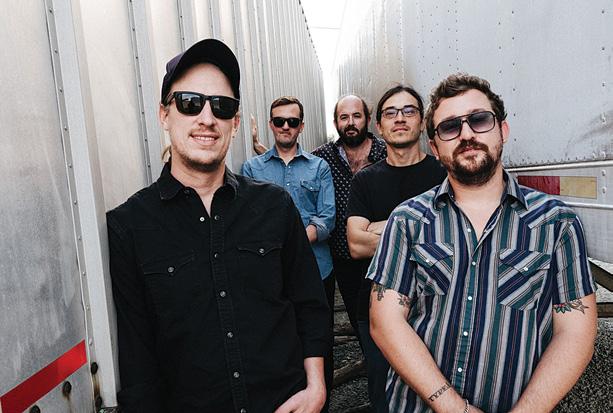
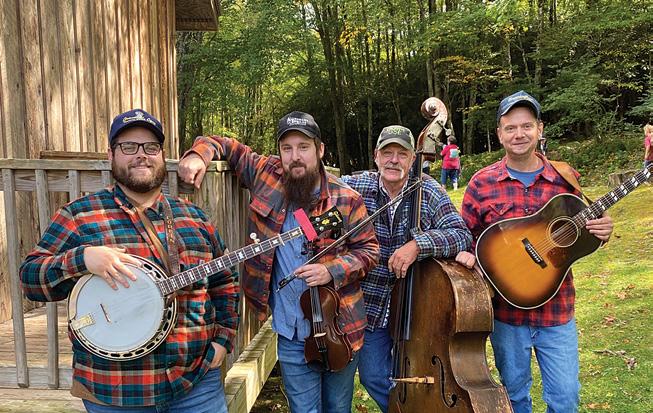
Twenty musical acts are confirmed for the 2023 edition of Boonerang and include Asheville-based, born-in-Boone funk outfit Yo Mama’s Big Fat Booty Band, bluegrass icons the Larry Keel Experience, blues-and-soul rockers (and App State alums) Abby Bryant & The Echoes, wife-and-husband roots duo Zoe & Cloyd, and classical-inspired folk purveyors the Kruger Brothers Dr. Bacon, Jonathan Scales Fourchestra, DaShawn Hickman, Liam Purcell & Cane Mill Road, Will Easter and the Nomads, Ashley Heath and Her Heathens, Carolina Reapers, Possum Jenkins,


Banana da Terra, Supatight, Clint Roberts & The Holler Choir, Jeff Little Trio, Nobody’s Business, Crys Matthews and the Burnett Sisters Trio also join the 2023 lineup. For more details on each artist or group, visit the festival’s very comprehensive website at BoonerangFest.com.
The CITY OF MORGANTON MUNICIPAL AUDITORIUM (CoMMA) is presenting the 25th Anniversary Tour of the longest-running American musical in the history of Broadway: Bob Fosse’s Chicago A universal tale of fame, fortune, and “all that jazz” with one show stopping Kander and Ebb song after another and the most astonishing choreography and dancing you’ve ever seen. Honored with six Tony Awards, Two Olivier Awards, a Grammy, and tens of thousands of standing ovations. CoMMA says that “you’ve got to come see why the name on everyone’s lips is still...Chicago.” Note that there is only one performance on May 2, 2023. Tickets are available at www.commaonline.org or at 800-939-SHOW (7469).
ENSEMBLE STAGE in the Historic Banner Elk School will soon announce a summer slate of four productions, plus a to-be-determined children’s theatre offering, and a full range of education and outreach programs. It started in March with Theater Master Classes for Kids in first through fifth grades with a session on “General Drama,” but continues April 22 with a focus on “The Voice,” and on May 13 with “Movement for the Stage.” A children’s show (always heavy on audience participation) will take place at 11 a.m. on the Saturday mornings of June 10, July 8 and 29, and August 12 with a title to be announced shortly. In addition, a Theatre Adventure Camp for Kids will take place from June 26 through 30.
While few details are available as of press time, their production season begins with a comedy version of Dr. Jekyll & Mr. Hyde from June 16 through 25, followed by the mystery City of Dreadful Night in July, the
CAROLINA MOUNTAIN LIFE Spring 2023 — 33
on
page CULTURAL CALENDAR
Continued
next
Count Basie Duo at High Country Jazz Festival
Emmet Cohen at High Country Jazz Festival
Reggie Buie at High Country Jazz Festival
drama A Texas Romance in August and a comedy-thriller To Die For in August. For production information and tickets, visit EnsembleStage.com or call 828-414-1844.
Last year, the inaugural HIGH COUNTRY JAZZ FESTIVAL (HCJF) brought to fruition the decades-long dream of local musician Todd Wright: a collaborative project to host exceptional and engaging jazz experiences that will attract regional audiences. The festival raised funds to support arts and education programs of the Appalachian Theatre, App State Jazz Studies Program, and Boone Sunrise Rotary, programs that sustain and enrich our High Country home. The second year of HCJF, taking place from June 9 through 11, means that it will now be an annual event. And this year they’ve booked quite a line-up!
The legendary Count Basie Orchestra makes their App Theatre debut on opening night with their 18-piece big band, one of the most prominent jazz performing groups of the swing era. The group was founded by Count Basie in 1935 and survived long past the Big Band era itself and the death of Basie in 1984. It continues under the direction of trumpeter Scotty Barnhart.
On June 10, the Emmet Cohen Trio is led by the winner of the 2019 American Pianists Awards and the Cole Porter Fellow of the American Pianists Association. Cohen has appeared in varied international jazz events, including the Newport, Monterey, Detroit, North Sea, Bern, Edinburgh, and Jerusalem jazz festivals, as well as the New Orleans Jazz and Heritage Festival and the 2014 Sochi Winter Olympics in Russia. He performed at the Village Vanguard, the Blue Note, Dizzy’s Club Coca-Cola, Birdland, Jazz Standard, London’s Ronnie Scott’s, Jazzhaus Montmartre in Copenhagen, Lincoln Center’s Rose Hall, the Cotton Club in Tokyo, and the Kennedy Center.
Winston-Salem’s own Reggie Buie Group closes out the HCJF in concert at Chetola by the Lake in Blowing Rock on Sunday, June 11. Buie began his music studies at the American
Conservatory of Music in Chicago and attended Florida A & M University where he was a member of the famed “Marching 100” playing the clarinet. While in Miami, he earned credits on albums with national recording artists Timmy Thomas, and Nicole. His group’s versatility and ability to move effortlessly between soft background music, performing jazz standards, music for dancing, or delivering passionate jazz performances and improvisation are hallmarks of their live concerts. For more info and additional events, go to HighCountryJazzFestival.org
Over at LEES-MCRAE COLLEGE in Banner Elk, the 2023 Season of FORUM kicks off the first of eight concerts on June 19 with Broadway Baritone: William Michals in Concert with Friends. Organized in 1979 by a small group of summer residents for the purpose of bringing a stimulating series of cultural programs to the area, FORUM has grown significantly and embarks on its 44th year of providing both cultural enrichment and wholesome entertainment to the community.

Starring at Lincoln Center as Emile De Becque in the landmark revival of Rodgers and Hammerstein’s South Pacific, Broadway and concert star William Michals made his Broadway debut as “The Beast” in Disney’s Beauty and the Beast, and later returned to play Gaston in the same production. His career has continued in such roles as Javert in Les Misérables, Billy Flynn in Chicago, Don Quixote in Man of La Mancha, Harold Hill in The Music Man, Captain von Trapp in The Sound of Music, the title role in Phantom, and most recently appearing in Bright Star on Broadway. For tickets, please visit lmc.edu/ community/forum.
The SCHAEFER CENTER PRESENTS series by Appalachian State University’s Office of Arts and Cultural Programs is welcoming a quartet of internationally acclaimed musicians for a globally-inspired performance on April 22 with Béla Fleck (banjo), Zakir
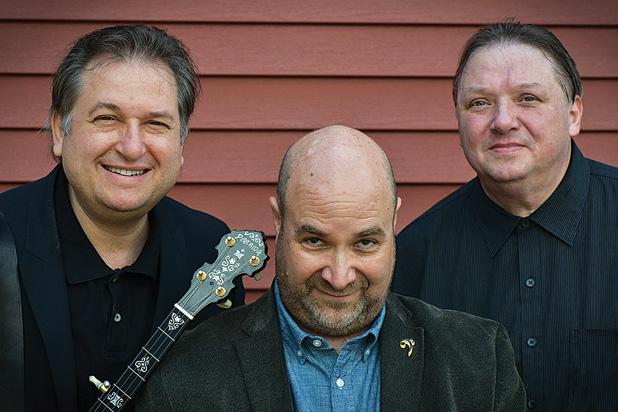
Hussain (tabla), Edgar Meyer (double bass), and special guest Rakesh Chaurasia (bansuri – Indian flute). These gentlemen move from bluegrass to Western classical to Indian classical to jazz with music that transcends description—ineffable, indefinable, and beautiful. For tickets, go to TheSchaeferCenter.org or call the Box Office at 828-262-4046.
TWEETSIE RAILROAD is North Carolina’s first theme park, opening on the Fourth of July in 1957. Known primarily as a Wild West adventure park with amusement rides and a petting zoo, Tweetsie features stunning three-mile long train rides aboard a historic, coal-fired, narrow gauge steam locomotive. From a performing arts perspective, Tweetsie is a major employer of professional talent and produces 21 performances of a half-dozen live entertainment and stage shows each day. A sampling of offerings includes the CanCan Dancers, Country Clogging Jamboree, Hopper and Porter’s Musical Celebration, The Magic Show and the ever-popular Sunset Show. Just as the cowboys ride off into the sunset at the end of the movie, Tweetsie’s entertainers mosey into the Palace for one last show at the end of the day, featuring performers from every show at Tweetsie Railroad together on one stage. The 2023 season runs from April 8 to October 29 with varying dates and schedules; for more information, visit www.Tweetsie.com or call 800-526-5740.
THE JOHN A. WALKER COMMUNITY CENTER on the campus of Wilkes Community College (WCC) in Wilkesboro has one event remaining on their current season, but it’s a good one. On May 12, they will present Sail On: A Tribute to The Beach Boys. This tribute band plays all the Beach Boys’ classic hits, plus some treasures from the group’s extended catalog, recreating the soundtrack from “Endless Summer” completely live and in rich detail. The box office number is 336-838-6260 with additional information available online at www.WalkerCenterOnline.org
CULTURAL CALENDAR 34 — Spring 2023 CAROLINA MOUNTAIN LIFE
Kruger Brothers at Boonerang
Chicago at CoMMA
Barter Theatre at 90

BarterTheatreReview
The State Theatre of Virginia Celebrates a Landmark Anniversary
By Keith Martin
For decades, critics and historians have debated exactly which company began the vibrant regional theatre movement in America. Many cite the 108-year-old Cleveland Playhouse in Ohio, which began in 1915, while others insist it was Chicago’s Goodman Theatre, which was founded as a school in 1925.
“The Texas Tornado” Margo Jones and her incorporation of Theatre ’47 in Dallas (in 1947) is often mentioned, as is her Houston counterpart, Nina Vance, who established the Alley Theatre that same year. Still others argue the title belongs to Arena Stage in Washington, DC, founded in 1950 by Zelda and Tom Fichandler, longtime champions of the movement. The debate goes on and on.
But to all the above, I say “Poppycock!” The very definition of the regional theatre movement is the production of live, professional theatre by a resident company outside of a major metropolitan area, which disqualifies all the above. The one, truly accurate answer can only be… Barter Theatre, “The State Theatre of Virginia.”
On Saturday, June 10, 1933, Barter Theatre opened its doors under the direction of founder Robert Porterfield, proclaiming, “With vegetables you cannot sell, you can buy a good laugh.” The price of admission was 40 cents or an equivalent amount of produce. Four out of five theatregoers paid their way with vegetables, dairy products, and livestock.
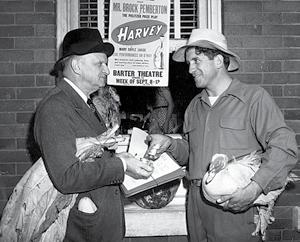
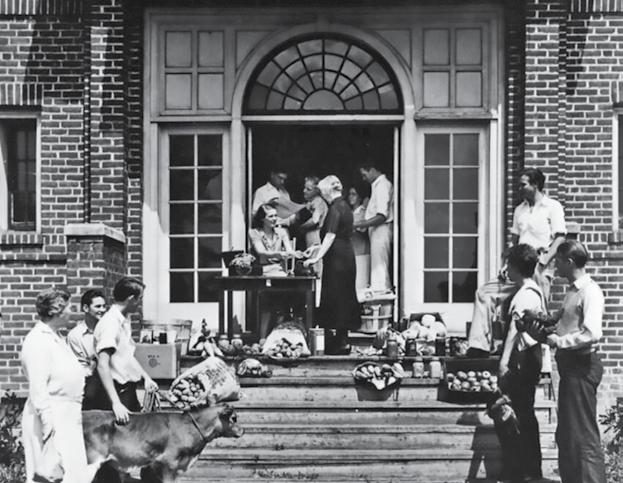
To the surprise of many, all the seats for the first show were filled. The concept of trading “ham for Hamlet” caught on quickly. At the end of the first season, the Barter Company cleared $4.35 in cash, two barrels of jelly, and a collective weight gain of over 300 pounds. Today, at least one performance a year celebrates Barter’s history by accepting donations for Feeding Southwest Virginia. “Barter Days” happen in the month of June as an annual birthday celebration. This year the date is June 10, 2023.
The storied history of Barter Theatre buildings predates the company. In fact, the earliest theatrical event known to occur was a production of “The Virginian” on January 14, 1876, the proceeds of which were used for facilities and repairs. In 1890, the Sons of Temperance transferred the building’s title to the Town of Abingdon, to be used as a town hall for the benefit of the citizenry.
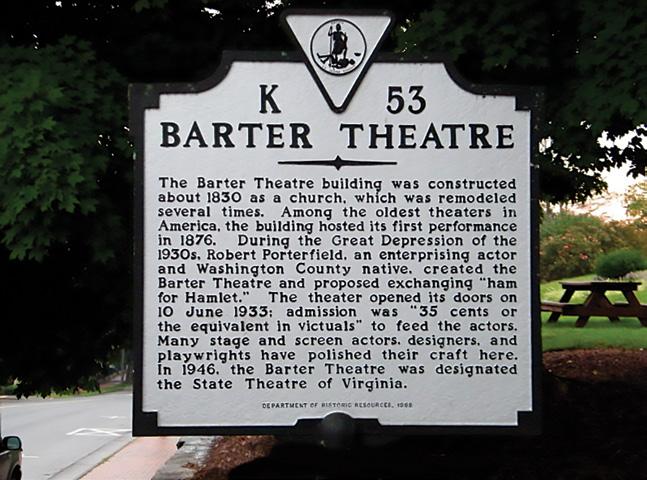
In addition to offices, the town used the building as a fire hall. Until 1994 a fire alarm was stationed on the roof of Barter Theatre and sounded as needed at any time, day or night. When the fire siren sounded during a Barter performance, the actors were instructed to freeze their position on stage and to resume the action when the alarm concluded.
Many of the interior furnishings in the theatre were salvaged from the Empire Theatre of New York City before its
destruction. When Robert Porterfield learned that the Empire, constructed in 1875, was slated for destruction he was given one weekend to remove furnishings and equipment for use at Barter. Porterfield and his crew came away with $75,000 worth of seats, lighting fixtures, carpeting, paintings, and tapestries. The lighting system at the Empire, designed and installed by Thomas Edison, was used at Barter Theatre through the mid-1970s.
Barter’s Smith Theatre, previously known as Barter Stage II, was constructed in 1829 as a Methodist church. After a fire in 1914, only the main building of the church remained standing; it was later used by the Martha Washington College as a gymnasium and a storage area. In 1961, the building was renovated by Barter Theatre as a small theatre, with major improvements made in 1973 and again in 1985. Additions included a lobby and the Jessie Ball DuPont Memorial Theatre Garden.
In January 2020, Katy Brown became only the fourth Producing Artistic Director in the theatre’s venerable history and the first woman to lead the organization. Hardly a newcomer, Katy arrived in Abingdon as an actor in 1998, became Artistic Director of the Barter Players touring company in 2000, and served as Associate Artistic Director and Head of Casting in 2006 before succeeding Richard Rose three years ago.
Continued on next page
CAROLINA MOUNTAIN LIFE Spring 2023 — 35
© 2010 MarkerHistory.com
Bartering at the Barter Theatre
Barter Theatre Founder Robert Porterfield
Under her leadership, Barter was recently featured in a PBS documentary and a cover story in American Theater. When asked to reflect on the Barter’s 90th Anniversary year, their current season, and about theatre in general, here is what Katy wrote:
“One of my favorite things about theatre is that it is the art form of RIGHT NOW. It is like us: Balanced between all that’s come before and all that will be. In the theatre, whether the story is ancient or brand new, it is always being told for right now...and right now...and right now.
“And what is it that we so badly need in the right now as we look at all we’ve come through together, and what lies ahead? The same thing that the characters in all of Barter’s plays this season need: Hope. We need defiant hope to get us through the hardest times. We need heartfelt hope that sees that something wonderful is possible. That’s what we are here to celebrate this year: The school kid hope of an older man looking for romance at 80. The ambitious hope of the Macbeths who will stop at nothing to seize the crown.
“The hopes for love in Sense and Sensibility, the yearning hope for belonging and freedom in Footloose, the hopeful dream for justice in 1930s small-town Alabama, and the hope that Santa is real and working at Macy’s. Running through every play is that very real spark and the incredible adventures it provokes each character to take.
“It’s hope that started this theatre back 90 years ago: The hope that professional theatres could exist outside big cities. The hope that people could value story in the same way they value food. The hope that hunger of the stomach and hunger of the heart could both be satiated by a play.
“I invite you to come and celebrate 90 years of Barter’s great hope and the wild hope that lives in every one of us right now... and right now… and right now.”
Katy concluded her remarks with an invitation to CML readers and her audience: “See you at the theater!”
Please see the CML Cultural Calendar for a listing of the Barter’s current productions.




36 — Spring 2023 CAROLINA MOUNTAIN LIFE 66 Pershing St, Newland, North Carolina 828-733-8148 / shannonseiz@gmail.com / theconsignmentcottagewarehouse.com Open Wednesday - Saturday 10-5, Year Round The ConsignmentWarehouseCottage “From Classic Traditional To Unique Eclectic, and Everything In Between!”
Located in the Historic Banner Elk School 185 Azalea Circle | Banner Elk, NC 28604 art@BEartistsgallery.com Please visit our website at BEartistsgallery.com for hours of operation and event listings We’re on the Blue Ridge Craft Trails! www.blueridgeheritage.com Visit our website at CMLmagazine.online Carolina Mountain Life TM










CAROLINA MOUNTAIN LIFE Spring 2023 — 37 ASHE BASH 2 0 2 3 T h e C o o l e s t C o r n e r A FREE musical extravaganza featuring a n d P r e s l e y B a r k e r 1 5 0 G o v e r n m e n t C i r c l e , J e f f e r s o n , N C f a m i l y - f r i e n d l y * n o a l c o h o l * n o p e t s Scan for more events
only name you need to know in mountain real estate”
you get serious about wanting superior, knowledgeable service in buying or selling real estate in our beautiful High Country, then contact Banner Elk’s oldest brokerage firm.
43 years
in
local real estate
CELEBRATING 43 YEARS OF OUTSTANDING SERVICE ® John D. Davis, III Owner/Broker 828.898.9756 (o) • 828.260.1550 (c) PO Box 336, 161 Silver Springs Dr. Banner Elk NC 28604 www.BannerElkRealty.com 828.865.3000 | APPTHEATRE.ORG | p e r f o r m a n c e s a t a h i g h e r l e v e l D O W N T O W N B O O N E May 11 - THE SLOCAN RAMBLERS June 2 - TOWN MOUNTAIN June 9-11 - HIGH COUNTRY JAZZ FESTIVAL
“The
When
Put
experience
our
market to work for you!
A Sneak Preview of Hot Performances on Cool Summer Nights
By Keith Martin
Sometimes the best story ideas are suggested by our devoted readers. Two years ago, one of our seasonal residents bemoaned the fact that they arrived in the High Country after some of the events profiled in our spring cultural calendar had already taken place. In addition, many of our readers tell me they like to plan far in advance so that they can get the best seats the minute they go on sale, and before they sell out… and believe me, they will. To that end, their request for a “sneak preview” of coming attractions is granted below, events that we will feature in greater detail is our summer issue. In the meanwhile, websites are listed, resources to which you may turn for additional information. Be sure to tell them that CML sent you… and enjoy!
AN APPALACHIAN SUMMER FESTIVAL
(AASF) has by far the most programmatically diverse line-up you’ll find in our entire region, and while their 39th season wasn’t completely announced until after we went to press, here is a sampling of the dozens of events you will see on their stages. For a final listing of all their various offerings, go to AppSummer.org Tickets may be purchased online, in person at the Schaefer Center box office, or by calling 828-262-4046.
The AASF Popular Music Series will feature An Evening with Leslie Odom, Jr. on June 24. The Tony and Grammy Award-winning star of Hamilton (the stage musical and HBO+ movie in the role of Aaron Burr) is also known for his roles in the television series Smash and Person of Interest, as well as the films Red Tails, Murder on the Orient Express, Harriet, The Many Saints of Newark, and Glass Onion. For his portrayal of singer Sam Cooke in One Night in Miami..., Odom earned nominations for the Academy Award, BAFTA Award, Screen Actors Guild Award, and Golden Globe Award for Best Supporting Actor. He was nominated

for the Oscar and Golden Globe for writing the original song “Speak Now.”
That concert will be followed on July 8 by another Tony Award-winning star, the incomparable Lea Salonga. The Filipina singer/actress is best known for supplying the singing voices of two Disney Princesses (Jasmine and Mulan), and as a recording artist and television performer. At age 18, Salonga rose to international recognition when she originated the lead role of Kim in the musical Miss Saigon in the West End and won the Laurence Olivier Award for Best Actress in a Musical. She then reprised the role on Broadway, winning the Drama Desk Award, Outer Critics Circle Award, and Theatre World Awards before making history as the first Asian actress to win a Tony Award.
Other artists on the Popular Music Series include John Oates on July 14, Keb’ Mo’ on July 22, and the previously announced Darius Rucker on July 29. The Broyhill Chamber Series will include Apollo’s Fire on June 28, the Calidore String Quartet on July 5, Strings for Peace on July 12, and Garrick Ohlsson on July 26. Classical programming is highlighted on July 1 with the Rosen-Schaffel Competition for Young and Emerging Artists, and on July 9 when the Eastern Music Festival performs with violinist Gil Shaham.
The Reduced Shakespeare Company returns to AASF with their side-splitting production of The Complete History of Comedy (Abridged) on July 16 and the remarkable Dance Theatre of Harlem graces the stage of the Schaefer Center on July 20. This year, AASF will showcase international films by female directors on June 27, and July 11, 18 and 25, and visual arts enthusiasts should mark their calendars for the Turchin Center Exhibition Celebration on July 7 and the popular Rosen Sculpture Walk on July 15. For additional details, visit AppSummer.org
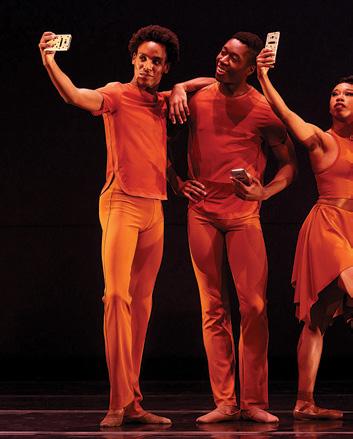
The APPALACHIAN THEATRE OF THE HIGH COUNTRY is adding two or three events per week to the largest line-up of programming in our neck of the woods and is on track to present or produce over 250 offerings this year. For a complete schedule of everything (concerts, film screenings, and performances), go to AppTheatre.org.

BARTER THEATRE continues their spring repertory programming with Macbeth, Sunny Side, and Skeleton Crew (see Cultural Calendar) but adds four unique summer productions on two different stages in Abingdon, VA. Kate Hamill’s comic take on Jane Austen’s Sense and Sensibility runs through August 19, while Stephen Brown’s clever, offbeat comedy Country Girls carries the tagline “revenge ain’t all it’s cracked up to be” and is being performed through August 12. Stephen King’s novel about fan obsession, Misery, is adapted for the stage by author William Goldman and will have audience members on the edge of their seats beginning August 24. In addition, Christopher Sergel’s adaptation of Harper Lee’s novel To Kill a Mockingbird will explore prejudice, compassion, and the courage to do what is right from September 2 through November 4. Finally, beginning September 15, the classic boardgame Clue comes to life onstage in a Sandy Rustin play based on the movie screenplay by Jonathan Lynn with additional material from Hunter Foster and Eric Price, and with original music by Michael Holland. For more info, visit Barter’s website at BarterTheatre.com.
Having shattered attendance records last summer with their production of Shrek: The Musical, BEANSTALK COMMUNITY THEATRE is “off to see the Wizard” this season when they return to the Appalachian Theatre from July 20 through 22 for the beloved family classic,
38 — Spring 2023 CAROLINA MOUNTAIN LIFE
DTH Company in Higher Ground at AASF
Photo by Theik Smith
Footloose at Barter Theatre
Leslie Odom, Jr. at AASF
CULTURAL
Photo by Tony Duran
CALENDAR
The Wizard of Oz. This beloved tale, in which a Kansas farm girl travels over the rainbow to discover the magical power of home, has entertained audiences for generations. Based on the classic motion picture with music and lyrics by Harold Arlen and E.Y. (Yip) Harburg, this musical is a must-see event for family audiences from a theatre that knows them all too well. For more info, visit www.BeanStalkNC. com and for tickets, go to AppTheatre.org.
LEES-McRAE FORUM continues programming throughout the summer months with Symphony on the Mountains on June 26 followed by a series of tribute concerts including Forever Simon & Garfunkel on July 3, Sail On, The Beach Boys Tribute on July 10, Chris Ruggerio recounting the golden age of rock ‘n roll on July 17, How Sweet It Is! stars Steve Leslie celebrating the music of James Taylor on July 24, A Band Called Honalee singing about the legacy of Peter, Paul, and Mary on July 31, and Orlando Transit Authority honoring the Chicago “Blood, Sweat, and Tears” songbook on August 7.
CML writers are not supposed to have favorites on their beats, but LEES-McRAE SUMMER THEATRE is always at the top of my list because of their perfect blend of classics, contemporary works, and original musicals written and produced in-house. This year is no exception as they follow the theme, “A love letter to North Carolina,” with Red, White and Blue Ridge Variety Show, a combination of music, dancing, comedy, and patriotic songs. There are only two performances: June 30, and July 2. It is followed by the charming musical Bright Star from July 6 through 11. Inspired by a true story and featuring the Tony®-nominated score by Steve Martin and Edie Brickell, it a sweeping tale of love and redemption set against the rich backdrop of North Carolina in the 1920s and ‘40s, with an
uplifting theatrical journey that holds you tightly in its grasp.



The highlight of their season is the world premiere musical The [W]right Sister from July 23 through 29. It is written and directed by Dr. Janet Speer with music and lyrics by Tommy and John Thomas Oaks; this creative trio has collaborated on numerous projects, including America’s Artist: The Norman Rockwell Story, From the Mountaintop: The Edgar Tufts Story, and The Denim King: The Moses Cone Story. For their newest musical, they found the life of Katharine Wright to be a compelling subject with a captivating story. The [W]right Sister proves how strong a sister’s love and sacrifices can be, even during the most difficult of times. For tickets or information, just visit lmc.edu/ summertheatre or call 828-898-8709.
HORN IN THE WEST, the nation’s third oldest outdoor drama, opens their 71st season on June 27 under the direction of a new artistic director, Darrell King. Audience members will recognize King from his portrayal of the indefatigable Preacher Sims for over a quarter century. This Revolutionary War drama brings to life the famous frontiersman Daniel Boone and the hardy mountain settlers of this region in their struggle to preserve their freedom during the turbulent years before and during the war for independence. While there, be sure to allow time to visit the Hickory Ridge History Museum. Info at 828-264-2120 or at HornInTheWest.com.
The Daniel Boone Amphitheatre will also be the location of the theatre-for-youth production of MUTZ-MAG, an original play by Boone native Clarinda Ross. Based on the Appalachian folktale as told by her mother, noted storyteller Charlotte Ross, and Dr. Cratis Williams, Mutz-Mag is a funny tale of a plucky girl who uses her smarts and her trusty Case Knife to keep one step ahead of a Witch, a
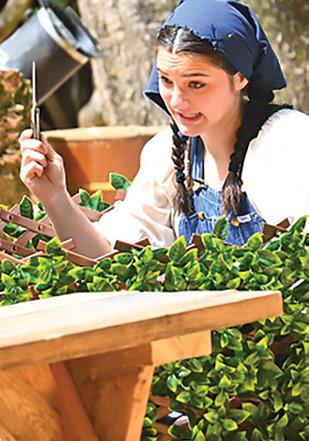
Giant, and her ne’er-do-well stepsisters. This kind and smart youngster makes her own happy ending with nary a prince in sight. The show is cleverly directed by the alwaysreliable Julie A. Richardson with performances on select Wednesdays and Saturdays from July 19 through August 9. More info is available at HornInTheWest.com/Mutz-Mag
The Benton Hall Community Arts Center in North Wilkesboro is home to the dynamic WILKES PLAYMAKERS, an avocational theatre that welcomes everyone in front of or behind the curtain. They have a year-round season, but their summer offerings include Wes Martin and Krissey Browder’s adaptation of the classic children’s tale The Princess and the Pea with performances slated for June 2, 3, 4, and 9, 10 and 11.
It will be followed up by Jeremy Desmon’s cleverly titled Cyrano de Burger Shack: A Pop Musical. In this updated, modern-day version of Edmond Rostand’s Cyrano de Bergerac, Cyrano is king of the local Burger Shack, but he can’t seem to win the love of his best friend, Roxanne. When Roxanne confesses her crush on the new burger-flipper, Christian, Cyrano decides that playing Cupid is better than sitting out of the game. Performances take place September 8, 9, 10 and 15, 16, 17. Ticket information for both productions is available at WilkesPlaymakers.com. Their box office phone number is 336-838-PLAY (7529).

CAROLINA MOUNTAIN LIFE Spring 2023 — 39
Skeleton Crew at Barter Theatre
CULTURAL CALENDAR
Lea Salonga at AASF Mutz-Mag at Horn in the West
“Sometimes the best story ideas are suggested by our devoted readers...”




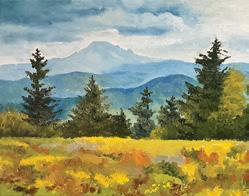
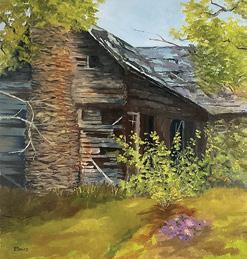
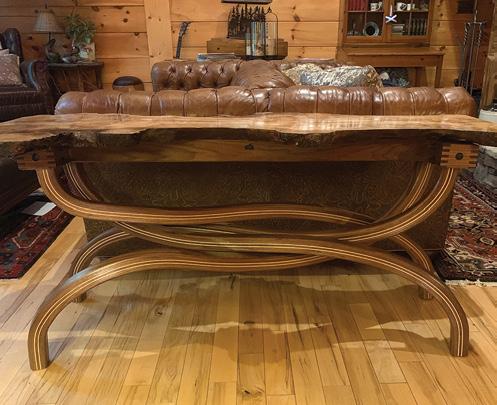








40 — Spring 2023 CAROLINA MOUNTAIN LIFE JERKY • SEASONINGS • HOT SAUCES Open Daily in Historic Valle Crucis & Tanger Outlets, Blowing Rock 828-260-6221 | www.JerkyOutpost.net OIL PAINTINGS BY EARL DAVIS ARTIST IN RESIDENCE EDGEWOOD COTTAGE Main Street, Blowing Rock across from the churches July 3-9, 9am-5pm www.earldavisfineart.com 10% off with this ad — Since 1980 www.flemingwoodcraft.com / 828-278-9194 By Appointment Only A DIVISION OF FLEMING WOOD & ROD, LLC. CUSTOM HANDCRAFTED FURNITURE CarltonGallery SPRING GROUP EXHIBITION: THE POETRY & POWER OF ABSTRACTION May 27 thru July 15 | Opening Reception May 27, 2-5pm MID-SUMMER GROUP EXHIBITION: DIVERSE IMAGININGS IN LANDSCAPES July 29 thru September 15 | Opening Reception July 29, 2-5pm AUTUMN GROUP EXHIBITION: THE RESONANCE OF PRESENCE October 7 thru November 15 | Opening Reception October 7, 2-5pm WINTER GROUP AND SMALL WORKS EXHIBITION: November 24 thru April 30 HOLIDAY OPEN HOUSE NOV 24 & 25, 10-5 A GALLERY FILLED WITH EXQUISITE GIFTS www.CarltonGallery.com | 10 miles south of Boone Grandfather Mtn.Community 10360 Hwy 105 S., Banner Elk, NC 28604 | 828.963.4288 | Tues-Sat 10-5, Sun 11-5 Celebrating 41 Years!
STEWART HUGHES CARR BRAITMAN
Replica of Wright Brothers Biplane Takes Flight in Banner Elk
Woodworkers Construct 1909 “Flyer” for LMC Summer Theatre
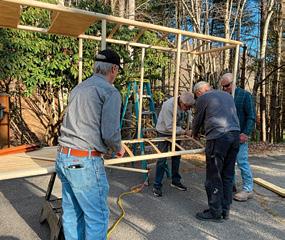
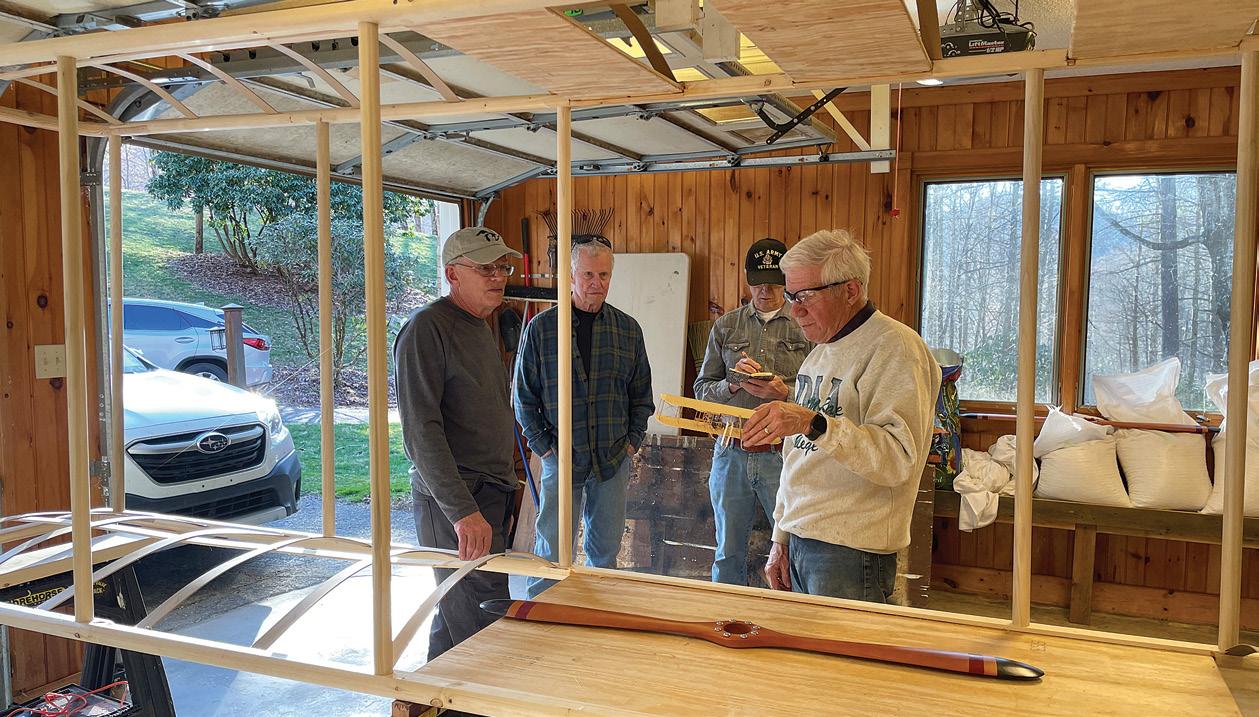
There are two things y’all need to know about High Country theatre icon Janet Speer. First, she always gets what she wants because, secondly, “people just can’t say no to her.”
Always a stickler for authenticity, “Doc” Speer has enlisted (more accurately, “conscripted”) the talents of local woodworkers to build an exact one-half scale replica of one of the original 1909 Series Wright Flyers for the Lees-McRae Summer Theatre world premiere musical The [W]right Sister. See our summer preview article for a description of the production.
“As my collaborators Tommy and John Thomas Oaks were working with me on an early draft of the show,” said Speer, “the flyer became a focal point at the end of the first act. Coincidentally, I happen to know four gentlemen with exceptional
woodworking skills, and none of them hesitated when asked for assistance.”
The quartet of volunteers consists of, alphabetically, Bill Dicks, a professional sign maker whose artistry is on display throughout the region, and the only nonretiree in the group. Larry Fisk was a heating contractor and is putting those skills to work fabricating a mock-up of the engine and gears like those that propelled the original flyer. Dr. Dick Larson is a former vascular surgeon and Marine fighter pilot who, in retirement, is a furniture maker. He also spearheaded the recent expansion of Feeding Avery Families as the organization’s Executive Director. According to Speer, Larson is “the mover and shaker of the group” in whose garage the biplane is being constructed. Woodworker hobbyist Larry Zimmer is a former chemist and technology business manager currently working on the flyer’s frame. Larson estimates that as many as 200 man hours of
By Keith Martin
labor will be needed to complete the project... to Janet’s specifications.
The one thing that they have in common with Speer is their membership in the congregation of Banner Elk Presbyterian Church. “It’s fabulous,” she said after seeing their handiwork for the very first time. “They’re like little kids building a model airplane, only on a much larger scale. I’m thrilled that this is a community effort; it’s added an incredible dimension to the production.”
Speer also sought the assistance of four historians from all over the country to make sure both the script and the flyer were authentic to the period. All these unique efforts will be seen onstage when The [W]right Sister takes flight from July 23 through 29. For tickets or information, visit lmc.edu/summertheatre or call 828-898-8709.
CAROLINA MOUNTAIN LIFE Spring 2023 — 41
Left to right: Larry Zimmer, Bill Dicks, Larry Fisk, Dick Larson


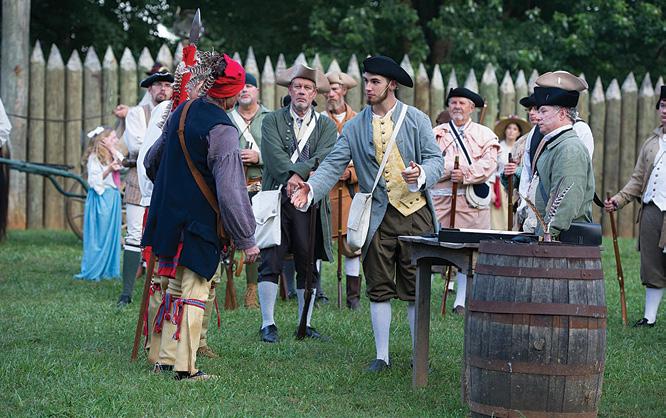


42 — Spring 2023 CAROLINA MOUNTAIN LIFE ARTIST STUDIO GALLERY Sally Nooney Fine Art Paintings Glass Creations & Heirloom Jewelry Scenic Hwy 194 South Midway between Valle Crucis & Banner Elk Tuesday thru Saturday 10-5 828-963-7347 • Nooney@skybest.com sallynooney.com Commissions Invited! Frank Nooney Furniture Restoration, and Antiques at the Gallery, next door Sycamore Shoals State Historic Park presents the 44th season of Liberty! The Saga of Sycamore Shoals See the late 18th century history of Sycamore Shoals come to life in the Fort Watauga Amphitheater each night at 8 pm! Friday/Saturday - June 2, 3, 9, & 10 Thursday - Saturday - June 15,16, 17, 22, 23, 24 Tickets: TheLibertyDrama.com Held at the state park amphitheater in Elizabethton, Tennessee Park and Event Information: 423-543-5808 tnstateparks.com/parks/sycamore-shoals | friendsofsycamoreshoals.org
Applause in Appreciation of Denise Ringler
By Keith Martin
Since November 1994 there has been a quiet but powerful force of nature at work behind the scenes at Appalachian State University, first as Director of Marketing and Public Relations for the Office of Cultural Affairs, An Appalachian Summer Festival (AASF) and Farthing Auditorium, then as Director of Arts & Cultural Programs and, since 2016, Director of Arts Engagement.
During her remarkable 28-plus-year tenure, an estimated 1,000 events have been presented as part of AASF, the Schaefer Center Presents Series, the APPlause! K-12 Performing Arts Series, and the Turchin Center for the Visual Arts. Although she will quickly give credit for these successful events to the members of her team, and deservedly so, there is one person whose unwavering leadership has made it all possible…
Denise Ringler
After the conclusion of the 2023 Summer Festival, Denise will retire. On the occasion of her well-deserved retirement, CML reached out to her friends, colleagues, volunteers, and supporters; here are their sentiments, edited only for length and clarity.
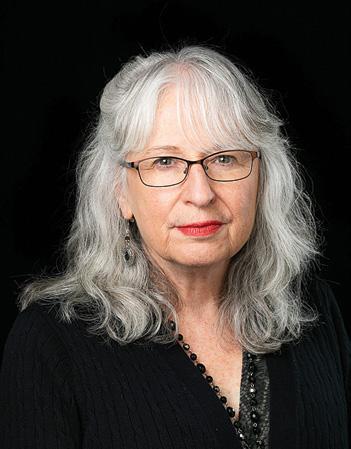
“We are fortunate to have known Denise Weissberg Ringler for over 50 years, having served as church youth counselors in St. Petersburg, Florida, where she grew up, and were thrilled to reconnect when she moved to Boone. Denise has done an amazing job working with patrons and
sponsors, taking AASF to new levels and recognition as one of the best festivals in the country. From a delightful teenager to retirement, we have always held Denise in the highest regard; our accolades about her would fill pages.” – Faye and John Cooper, Mast General Store
“Denise has carried on Appalachian’s legacy of access to high-quality art programs for our campus and greater Boone Community. She has built meaningful and lasting relationships across the region that will benefit the university and the community for years to come.” - Dr. Sheri Everts, Chancellor, Appalachian State University
“As far back as we can remember, Denise has been synonymous with AASF. We are extremely grateful for her ability to support the mission of the festival and provide quality programming. She has been a stabilizing force in a crazy arts world, a great thinker and listener who is highly respected by her peers. We look forward to seeing her in the audience enjoying the fruits of her labors; there is always a seat for her right next to us.” – Nancy and Neil Schaffel, longtime AASF supporters
“I find it difficult to describe someone who is so nice, efficient, competent, trustworthy, intelligent, reliable, constant, unselfish, honest, honorable, faithful, loyal, and dependable as Denise. A wonderful human being, she is uncommonly modest, humble, unassuming, reserved, and talented beyond measure. We all have the utmost
respect for Denise and wish her well, but she will be missed.” - Robert
E. (Bobby)
Snead, Former Vice Chancellor for Development and Founder, An Appalachian Summer Festival, 1984
“Denise inspires us with her persistent, positive attitude and determined work ethic. Her constant support encourages confidence, and she makes everyone around her feel heard and valued. Selfless and humble, Denise works out front and behind the scenes striving for excellence in the workplace. She has a heart of service and unwavering commitment to her job, family, and friends. We are blessed to be in her orbit.” –
Jenny Lucas Miller, Chair, AASF Advisory Board
“As the time approaches to begin another exciting chapter of your life, remember to take that much-deserved curtain call, hear the thunderous applause, take a bow, and know you not only provided quality entertainment, but enriched lives by providing a wide array of top quality cultural experiences. You have carved love and appreciation for the arts in their hearts and everyone will be better citizens thanks to you. Well done, dear friend!” –
Roseanne and Ken Peacock, former Chancellor, Appalachian State University
“Once I joined the AASF, Denise was quick to engage Barry and me by introducing us to wonderful folks who also enjoyed Continued on next page
CAROLINA MOUNTAIN LIFE Spring 2023 — 43
“Team Ringler,” pictured here at a recent holiday party, works tirelessly behind the scenes coordinating logistics for dozens of events each and every season.
and appreciated the arts. Her leadership skills brought magic to the festival she has worked so hard to champion. Denise is a shining example of how to manage a great organization, reinforcing all the positivity working with volunteers as partners… lessons learned from a seasoned, deeply caring, and engaging person named Denise Ringler.” – Lynn Eisenberg, Past Chair, AASF Advisory Board
“Denise managed to be sure that each arts area, be it music, theatre, dance, visual arts, or film, is appropriately represented during the AASF, then convincingly and very successfully garnered the necessary financial support. It has always seemed to us as if Denise regarded her position as far more than a responsibility, more like a ‘mission’ to the arts at Appalachian. Someone will succeed Denise; we can’t think anyone could replace her.” – Kay and Frank Borkowski, former Chancellor, Appalachian State University
“Not only is Denise the most diplomatic person we know, but she also has a heart of gold. She is very compassionate when anyone has a problem, listens carefully, and handles every situation in a beautiful manner. Her appreciation for the arts
is fantastic. She has been able to scout out new talent and gave them their beginnings before they became stars.” – Sue and Steve Chase, friends and AASF patrons
“Denise is a team-oriented leader who works every day to ensure her team can achieve their highest goals. For decades, Denise’s leadership has enabled her team to elevate the arts in our community, extend the breadth and depth of the arts offerings at App State and ensure school children have access to the visual and performing arts.” - Hank Foreman, Vice Chancellor of External Affairs and Chief of Staff, Appalachian State University
“Denise’s spark for creativity and passion for the arts has built a program at our university that will continue and grow for years. And her fingerprints on the organization, its staff, and board composition will be her legacy that will long speak of her dedication and care for students, faculty, community, and far beyond. I am glad to be counted among those that will remain grateful for her many years at App State.” –Kent Tarbutton, Past Chair, AASF Advisory Board
“Denise has been our dear friend and mentor for more than 20 years. We learned

with and from her and value her kind, generous spirit and that stubborn streak that drives her to stick up for the shy kid in the corner or draw out the person in the meeting who isn’t sure what to say or how to say it. She’s always got your back, and we’ll always have hers.” – Sarah Alice Heustess and Megan Hayes, friends and co-workers
Appropriately, CML has saved the last words in this tribute for the beloved Ms. Ringler, knowing she would never allow that to happen in real life. All best wishes from all your adoring fans.
“I can’t begin to express my gratitude for the opportunity to serve in this role for the past 28 years. I’m excited about the bright future of the arts engagement area, based on the certainty that it will continue to grow and flourish, given the enormous talent, expertise, and dedication of the university leadership and staff, as well as the vision and extraordinary generosity of the many supporters and stakeholders who nurture and sustain the arts at Appalachian. The friendships and unbreakable ties I’ve enjoyed with this ‘family’ will remain with me always.”
— Denise Ringler
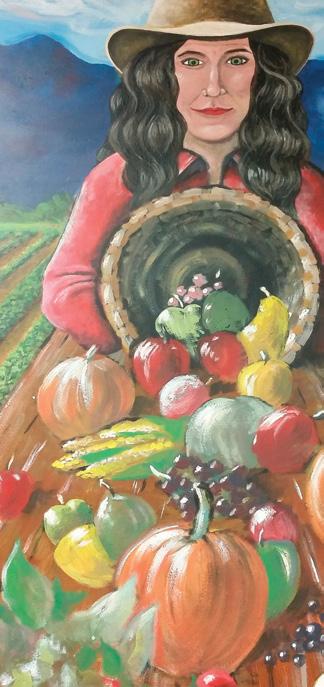
44 — Spring 2023
MOUNTAIN LIFE
CAROLINA
GET TICKETS ONLINE: BOONERANGFEST.COM JUNE 15-17, 2023 LIVE MUSIC ARTS MARKET LOCAL FOOD & BEER KIDS ZONE SILENT DISCO DANCE LOT Boone’s Donate-What-You-Can Community Cafe “Where Everybody Eats” 617 W. King Street Across from Mast Store Lunch Mon-Fri, 11-2 farmcafe.org
Live Music!
Regional Events and Venues that Feature Live Music:

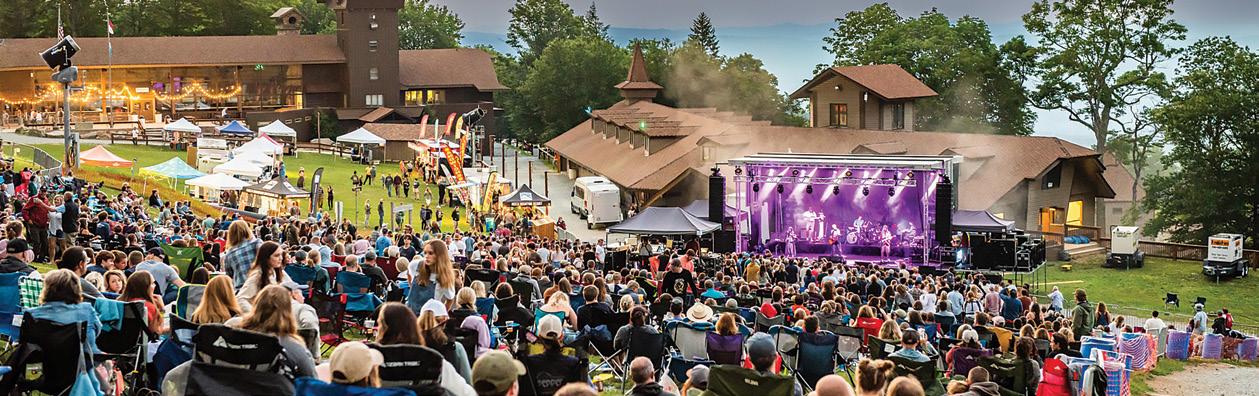
n Boonerang Music & Arts Festival, www.boonerangfest.com
n High Country Jazz Festival, www.facebook.com/HighCountryJazzFest/
n Saloon Studios Live, saloonstudioslive.com
n Blowing Rock Concerts in the Park, blowingrock.com/concertinthepark/
n Banner Elk Concerts at Tate Evans Park, www.bannerelk.org/concerts-in-the-park.html
n Merle Fest, merlefest.org
n Back Street Park Concert Series, ashechamber.com
n Coolest Corner Ashe Bash in Jefferson, NC, ashechamber.com/ashe-bash.php
n Music in the Valle at Valle Crucis Park, vallecrucispark.org/music-in-the-valle/
n Orchard at Altapass, altapassorchard.org
n Sugar Mountain Summer concerts/Grillin’ and Chillin’, seesugar.com/summer-concerts/
n Jones House Cultural and Community Center in Boone, www.joneshouse.org
n Music on the Lawn at The Inn at Ragged Garden, www.ragged-gardens.com
n Banner Elk Winery, www.bannerelkwinery.com
n Beech Mountain, Live Music at 5506’, www.beechmountainresort.com
n Beech Mountain Resort 2023 Summer Concert Series, www.beechmountainresort.com/summer-concert-series-2023/
n Grandfather Vineyard, www.grandfathervineyard.com
n Linville Falls Winery, www.linvillefallswinery.com
n Lost Province Brewery in Boone, lostprovince.com
n Villa Nove Vineyards, Johnson County, TN, www.facebook.com/VillaNoveVineyards/
n Watauga Lake Winery, Johnson County, TN, waterfrontgroupwatauga.com/watauga-lake-winery/
n Chef’s Table, bannerelkvillage.com/chefs-table/
n Stonewalls Restaurant, www.stonewallsrestaurant.com
n Banner Elk Café, Lodge and Tavern, www.bannerelkcafe.com
n Bayou Smokehouse, www.facebook.com/BayouSmokehouse/
n Blind Elk Tap Room, www.facebook.com/BlindElk
n Crossnore Jam, Crossnore Drive, Crossnore 828-733-0360
n Green Park Inn, greenparkinn.com
n Highlanders Grill, www.facebook.com/Highlandersbannerelk
n Pedalin’ Pig BBQ, www.thepedalinpig.com
n Famous Brick Oven Pizzeria, www.famousbrickoven.com
n Casa Rustica, casarustica1981.com
n Shoppes on the Parkway, shoppesontheparkway.com
n Timberlake’s Restaurant at Chetola Resort, chetola.com/dining-2/
Event Calendars to Consult:
High Country Host, highcountryhost.com/ home | Good regional event calendar covering Banner Elk, Beech Mountain, Blowing Rock, Boone, Sparta, Sugar Mountain, West Jefferson, and Wilkesboro.
Blue Ridge Music Trails, www.blueridgemusicnc.com | Good calendar for music events across western North Carolina, with a focus on Americana styles like bluegrass, old-time, blues, and more.
Explore Boone, www.exploreboone.com | Brings you the most updated list of entertainment and events, from area festivals to workshops to sporting events and nightlife. Check their calendar for all the things to do in Boone and surrounding areas during winter, spring, summer, and fall.
Chambers of Commerce — Ashe, Avery, Blowing Rock, Banner Elk, Boone, Beech, Morganton, Wilkes, Mitchell, Abingdon, VA, and Johnson County, TN | Visit www.CMLmagazine. online at the bottom of our CML community page for direct links to our local Chambers of Commerce and their event calendars.
For more information on live music in our region, check out Regional Happenings, Cultural Calendar, and Tidbits in this issue of CML, and sign up for our e-newsletters at www.CMLmagazine.online.
CAROLINA MOUNTAIN LIFE Spring 2023 — 45
ENJOY COUNTLESS PERFORMANCES AT VENUES ALL OVER THE CML REGION. CHECK OUT THESE SOURCES:
Beech Mountain Summer Concert Series
Boonerang










46 — Spring 2023 CAROLINA MOUNTAIN LIFE 46— Spring 2023 CAROLINA MOUNTAIN LIFE
Mica_CML ad 3_2023.indd 1 C M Y CM MY CY CMY K Barter_KOTSS_CML_Quarter.pdf 1 3/22/23 11:26 AM 828.898.8709 | lmc.edu/summertheatre | Online Ticket Sales Open April 20 2023 Hayes
NC
DAVID ROSS
Auditorium, Broyhill Theatre Banner Elk,
June 30 & July 2 July 6–12 July 23–29
Photo
by Gabriel Vanover
“We are about the music, moments, & memories!”
Wilkes Community College Hosts 35th MerleFest April 27 – 30
By Keith Martin
MerleFest, considered one of the premier music festivals in the country, serves as an annual homecoming for both musicians and music fans. Held on the picturesque campus of Wilkes Community College (WCC) in Wilkesboro, North Carolina, MerleFest was founded in 1988 in memory of the late Eddy Merle Watson, son of American music legend Doc Watson. Now in their 35th year, MerleFest is a celebration of “traditional plus” music, a unique mix of music based on the traditional, roots-oriented sounds of the Appalachian region, including bluegrass and old-time music, a vision later expanded to include Americana, country, blues, rock, and other styles.
The festival hosts hundreds of artists, performing on 12 different stages during a four-day event. The annual celebration has become the primary fundraiser for the WCC Foundation, funding scholarships, capital projects, and other educational needs.
As their website proudly proclaims, “We are about the music, moments, and memories!”
“The music of MerleFest was best explained by Doc Watson himself: ‘When Merle and I started out we called our music ‘traditional plus’, meaning the traditional music of the Appalachian region plus whatever other styles we were in the
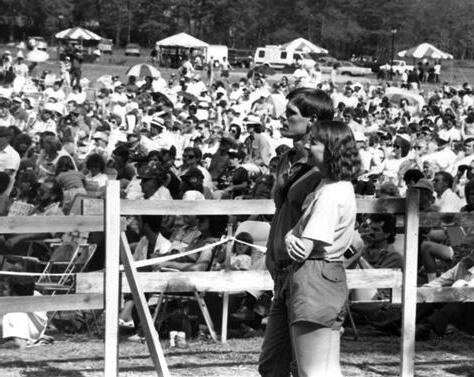
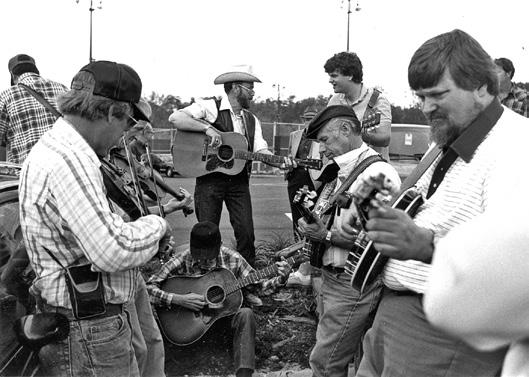
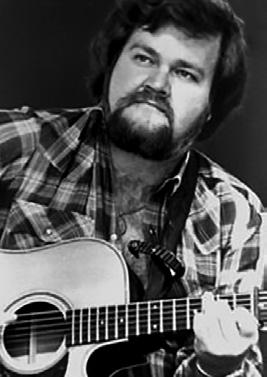
mood to play. Since the beginning, the people of the college and I have agreed that the music of MerleFest is ‘traditional plus.’
“The moments of MerleFest are those unique experiences that only happen during the festival. It may be two musicians you never expected to see collaborating, a shooting star over the Watson Stage during an evening’s closing set, or that one set that seems to have touched everyone in the audience.
“The memories of MerleFest include the memory of Eddy Merle Watson, who we honor each day with “The Tribute to Merle” and the new memories we create each year we come together to celebrate MerleFest. Fond memories we will always cherish are those of Doc and his unending contributions to the festival, the college, and the music world. At MerleFest, fans would always flock when Doc graced the stage with his amazing flat-picking style, rich baritone voice and humble presence… a presence that will always be missed.”
New Festival Director Plans to Build on Existing Values and Traditions
After 21 years as Executive Director of Events and Hospitality at WCC, including 15 years as festival director, MerleFest’s Ted Hagaman retired at the end of 2022. Wes Whitson was named to succeed him in 2021 and spent the last year working

under his mentor to facilitate the smoothest possible transition.
Hagaman said, “Wes has been very involved in MerleFest for the past five years, and I am confident he will do an outstanding job leading the festival. I feel very good about the future of MerleFest and the wonderful team we have assembled to carry it forward.”
In an announcement about his appointment, Whitson said, “I couldn’t be more excited for the opportunity to serve WCC and our community through MerleFest,” stated Whitson. It’s an honor to contribute to that effort and I look forward to building on the great tradition of giving back that MerleFest has established over the years.”
When asked by CML how he felt about taking over as festival director and his plans for MerleFest, Whitson replied, “I love coming to work every day, and have since my first day at Wilkes Community College. Thankfully my newer role hasn’t changed that. We have an amazing team and truthfully, I’m just trying to keep up with them and do my part the best I can. I was a fan long before I had a role with MerleFest. I have the benefit of that prospective to carry with me on my path as Director. With my history from a fan
Continued on next page
CAROLINA MOUNTAIN LIFE Spring 2023 — 47
Wes Whitson
Eddy Merle Watson
Entertaining Music Series
2023 Season
Hayes Auditorium, Broyhill Theatre
All performances begin at 5 p.m. and 7:30 p.m. lmc.edu/forum
perspective and a great team I feel confident I’m in the right place at the right time to help carry MerleFest forward.

Broadway Baritone: William Michals in Concert with Friends
June 19
Symphony of the Mountains
June 26
Forever Simon and Garfunkel
July 3
Sail On, The Beach Boys Tribute
July 10
Chris Ruggiero
July 17
How Sweet It Is!
July 24
A Band Called Honalee
July 31
Orlando Transit Authority Honors Chicago
August 7
“As far as my vison, I want to continue to build on the values and great traditions so many have worked to establish over the years. ‘MF’ is family friendly, community oriented, and we strive to honor the Watson legacy in everything we do. All past and future decisions will be based off serving those values that were established in the beginning. And it’s worked, so if it isn’t broke don’t fix it.
“I see MerleFest continuing for decades to come, growing in the ways we can help our students and the broader community. At the same time, I see MerleFest progressing at pace with the ever-evolving music industry at both the local and national level to give our fans something new each year and providing a home for the traditional styles as well.”
For tickets and a complete listing of festival events, please visit www.MerleFest.org.
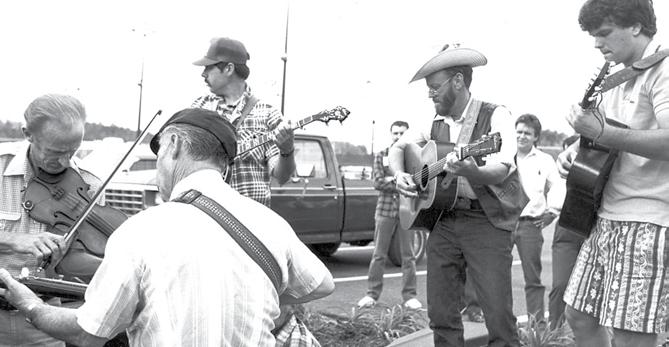

For season ticket information, call 828.898.8748 or email forum@lmc.edu.
Post Office Box 649 Banner Elk, NC 28604
CAROLINA MOUNTAIN
48 — Spring 2023
LIFE
Conversations with a Plein Air Painter
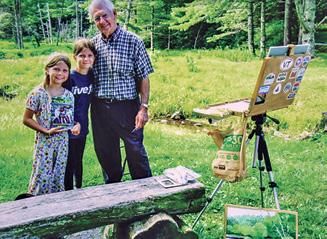
Special to CML
“An artist in front of an easel draws people like honey draws flies!” So says Earl Davis, a local artist who paints on a regular basis at Bass Lake in Blowing Rock and is called by various titles: artist, author, doctor (Ph.D.), reverend. Davis is a familiar sight in spring, summer, and fall in the Blowing Rock area and at places along the Blue Ridge Parkway as he enjoys plein air painting—plein air is a French term which simply means painting out in the open air rather than in the studio.
With his home in the Aho area, he is close to some premier painting scenes like Cone Manor, Bass Lake, Price Lake and the overlooks of the Blue Ridge Parkway. Davis took up plein air oil painting about three years ago. He was painting the gorgeous scene toward Grandfather Mountain from Raven Rock overlook on the Parkway in one of his first efforts at “on the scene” painting when a passing motorist stopped and watched him work for two hours, then purchased the painting. He’s been hooked ever since.
CML: As someone who began painting later in life, what led you to pick up a paint brush?
Davis: Decades ago I took up glassblowing as a hobby, creating lacy glass ships, swans one can fill with colored water, delicate flowers and such—also known as “lamp work.” But every time my collection of glass turtles, deer, ships and other pieces were dusted, something would be broken.
So I decided to take up oil painting. While I have no formal training, I’ve taken workshops from prominent artists such as Mark Boedges and Albert Handell. In 2015, I decided to enter a painting in a Watauga Arts Council art show just for kicks. Pat Collins, a summer resident and a fine watercolor artist, was the judge of the show and awarded my work with 2nd place. More importantly she encouraged me to apply for the juried Artist in Residence program of the Blowing Rock Historical Society. I did, and have now participated for several years.
CML: While many painters enjoy the solitude of plein air painting, you often set up your easel and canvas at popular spots in the High Country where people feel compelled to watch you paint and engage in conversation. Talk about what “a day in the life of a plein air painter” looks like for you.
Davis: When I paint at a venue such as Bass Lake, I usually bring a framed painting to which I am putting finishing touches from a previous day’s work; once finished, I prop it up near my easel as I begin a new painting. I have conversations with dozens of folks, and often the conversation is similar; after inquiring if they can see the work in progress, the next question is usually “How long have you been an artist?” or “Have you been painting all your life?” Often folks ask about purchasing
either the finished work or the one on the easel. As conversations with walkers and watchers develop, I explain that I am first a minister, then an artist. I’ve been a pastor or interim pastor of churches in six states, before I “retired” to the Blowing Rock area.
CML: So you’re technically retired from your career as a minister, yet as a painter you find opportunities to continue your ministry?
Davis: I consider myself an “unsuccessfully retired pastor.” Since moving here I have had 16 interim pastorates. And while painting, I make a lot of new friends. Folks may start off talking about the painting I am working on, yet often the conversation moves over to talk about faith, about problems the person is having, or sorrows they are working through. I think it is because while some folks may not feel being so open to their pastor, they can share their troubles with an old man in clothes splattered with paint who is creating a beautiful painting.
CML: How to do you seek out new subjects and locations for these beautiful paintings you create?
Davis: I love painting landscapes of all kinds, primarily Blue Ridge landscapes, but also scenes from national parks. My wife, Pegeen, and I have in recent years
Continued on next page
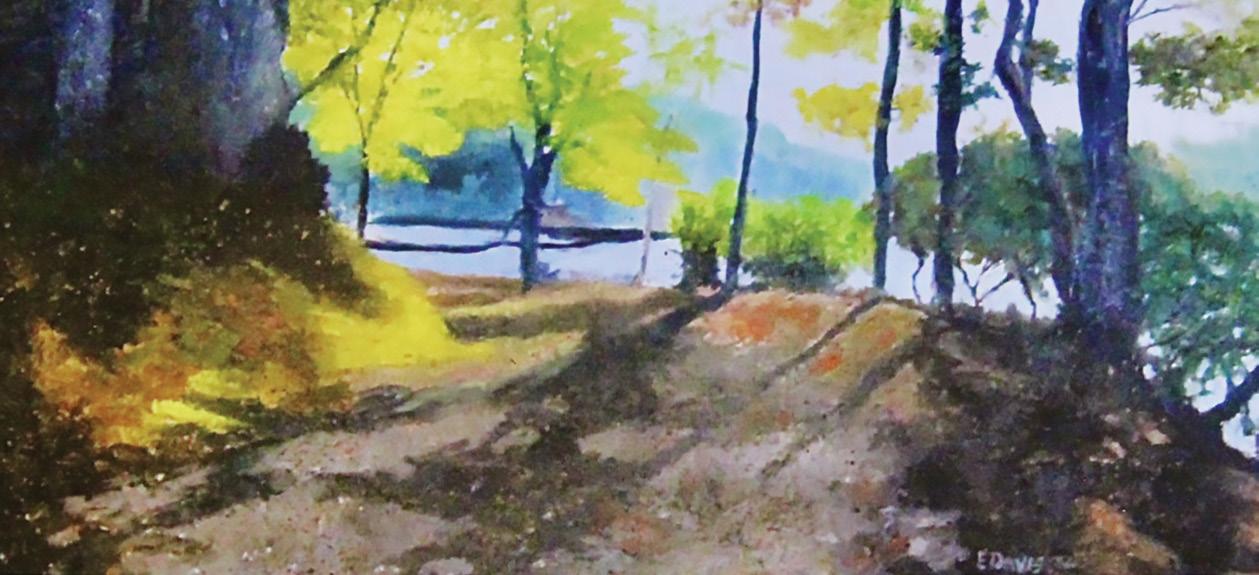
CAROLINA MOUNTAIN LIFE Spring 2023 — 49
Inset: Davis with two new friends he met while painting at Bass Lake—children often are gifted a copy of Vinegar Tales: Stories of the Blue Ridge for Children, which Davis wrote years ago for his grandchildren.
Early Stroll (Bass Lake)
visited national parks in the spring and fall, hiking and photographing for planned paintings. Here in our Blue Ridge area, until my hiking buddy passed away a couple years ago, I hiked several times each week. In addition to enjoying each other’s company and scouting out locations for plein air sessions, he and I would get into conversations with other hikers on the trails. We got some strange looks when it came out that we were a retired minister and a retired CIA operative!
CML: You sometimes can be seen with a group of other artists painting “on the scene”—tell us more about this endeavor.
Davis: In the spring two years ago, I organized a group of painters of various

mediums—oil, watercolor, acrylic—to paint together once a week in plein air. The group started with four artists, and we now have over a hundred members of the group. In the spring, summer, and fall about twenty painters gather each Wednesday morning and paint at some location from about 9 a.m. until noon. We might meet at places such as Bass Lake, Cone Manor, Daniel Boone Native Gardens, Price Lake picnic grounds, Grandfather Vineyard, the Cascades on the Parkway and other places. Artists of all skill levels are heartily invited to join us.
CML: Aside of encountering you during a plein air session, how can CML readers get to know and enjoy your work?


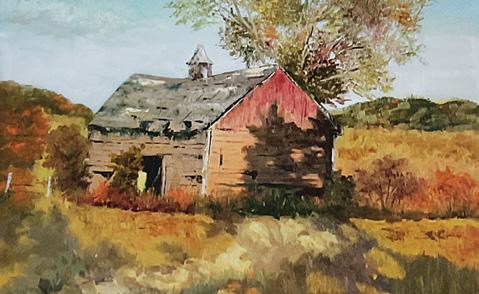


Davis: I will be an Artist in Residence at the Edgewood Cottage again this summer during the week of July 2-9. Everyone is invited to drop by, peruse my art, and get acquainted. I also display work on my website at earldavisfineart.com and at several galleries: Ashe Custom Framing and Gallery in West Jefferson, Lovill House Inn in Boone, and also down on the coast at Calabash in Sunset River Marketplace gallery.
The Artists in Residence program runs Memorial Day weekend through September 10, 2023, with new artists every week. Visit www.artistsatedgewood.org for a full schedule. Edgewood Cottage is located at Main Street & Ginny Stevens Ln. in Blowing Rock (next to Blowing Rock Art and History Museum).




50 — Spring 2023
MOUNTAIN LIFE
CAROLINA
Downtown West Jefferson, NC www.FlorenceArtSchool.org • 336.846.3827
& HERITAGE CRAFT WORKSHOPS GALLERY & ART SUPPLIES
FINE ART
Wilson Creek Autumn Walk (Bass Lake)
New Art at the Historic Banner Elk School Downtown Banner Elk www.BEartistsgallery.com Signs of Spring... umm When it matters... MOUNTAIN JEWELERS SINCE 1985 Between the 2 stoplights in Newland NC Thursday, Friday & Saturday 10am until 6pm 828.733.0186 || MountainJewelersNC.com
I’ve Seen Better Days
...showcasing Chef’s Table, “Banner Elk’s little hidden gem of fine dining.”




Our Chef’s Table features gourmet fine dining with new tapas, sushi, cocktail menus, private dining, veranda, and VIP seating. Visit our website for our live entertainment schedules!

The Village of Banner elk
CHEF’S TA BLE
The Village of Banner Elk has something for everyone’s tastes—traditional Italian, gourmet fine dining, and international cuisine. And don’t miss our famous Sunday Brunch at Sorrento’s Bistro! We have indoor and outdoor entertainment, stocked bars, a wine room, a cigar lounge, exclusive NFL and college sports viewing, private dining, art galleries, karaoke, a family-friendly arcade and Banner Elk’s best billiards! Call 828.898.5214 for reservations.



CAROLINA MOUNTAIN LIFE Spring 2023 — 51
in the heart of Downtown Banner Elk, NC
Special Events & Catering: Corporate Events,
Dining Parties
Sorrento’s Bistro | Chef’s Table | Barra Sports Bar | Arcade BannerElkVillage.com 140 Azalea Circle, Banner Elk, NC
Weddings, VIP
Call 828.898.5214 | Email Sorrentoscatering@gmail.com
Mountain City, Tennessee
The Crossroads of History & Creativity
By Tamara S. Randolph
Trains and railroads have been the source of artistic inspiration for more than a century. That holds true in Johnson County, Tennessee, where celebrated country and old-time musicians have spun big hits for years, including Train Forty-Five, written by the influential, near-blind fiddler G.B. Grayson, and New River Train, recorded by Doc Watson, Fred Price and Clint Howard.
“Oh, you oughta been uptown, and seen that train come down, heard that whistle blowin’ a hundred miles Wee-hoo.”
In some respects, both trains and music have helped put picturesque Mountain City, TN, “on the map.” The county seat and one of the highest valleys in Tennessee, Mountain City is home to historic rail lines and legendary musicians that continue to inspire a culture of creativity, even decades after their heyday. The small town’s present-day artistic community—to include musicians, visual artists, craftspeople, writers, actors, documentarians, and other creatives—is as vibrant as ever.
For lovers of music, art and history, plan a spring outing to downtown Mountain City, approximately a half-hour drive from Boone, NC. By walking or driving through roughly 12 town blocks you’ll glean an understanding of a small Appalachian community’s rich cultural heritage while also being introduced to a pool of talent seen in the likes of larger cities.
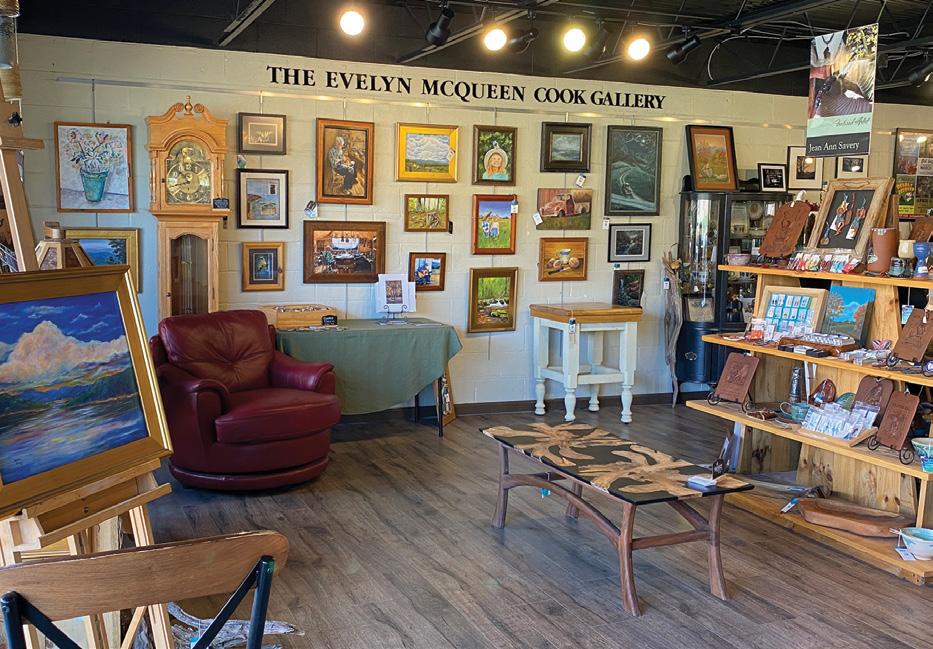
Your starting point is the Johnson County Center for the Arts at 127 College Street. Behind the brick and glass façade is an expansive arts and crafts gallery with room for workshops and lectures, an area for musical performances, a coffee/ pastry counter, and a walk-in makers’ space where anyone can enter and access a variety of free resources to create original artwork.
If you’ve never heard of the Johnson County Center for the Arts, it may be due to its relatively short existence—the Center has been around only since 2017. As with any great achievement, first there must be an initial vision. Add an unswayable commitment, hard work, a strong team, and a VERY supportive community and—over time—that vision becomes a reality.

“We started the Art Center nearly six years ago and it has grown and helped so many artists, children, seniors, veterans— in our community and beyond,” begins Temple Reece, the Center’s Assistant Director, and a prolific artist herself. Along with Cristy Dunn, the Center’s Executive Director, and also a well-established artist, the two lead the 501c3 nonprofit organization and share a passion for bringing members of the community together through teaching, encouraging, and supporting a variety of art forms and experiences.
“We’ve been friends for over twentyfive years and share similar artistic interests,” says Reece about her relationship
with Dunn. Prior to the opening of the Center for the Arts, the two artists worked together on a number of projects, including Long Journey Home, an annual celebration of traditional music and arts that takes place every Labor Day weekend in Mountain City.
“Several of us became interested in starting an arts center, including Evelyn Cook, who founded the Long Journey Home event eight years ago, and Russell Love, Celia Pennington, Mona Alderson, Terri Morris, Betty Brown and Anne Perry,” Reece explains. She said they all mulled over the idea for a year or so, but things really moved fast once they found a suitable space.
“When we settled on our current space, there was no electricity, no bathroom—it was an empty shell storage building.” She said they had to transform the building from the ground up, and it all came together in about four months. Members of the community chipped in to help, and while the building was under renovation, they held fundraisers and drummed up donations. “At the same time, we began work on a big community art project—the mural of the 1925 Fiddlers’ Convention that you see on the side of the Center. It was a busy and exciting summer!”
Today, the Center is a hive of activity and Reece and Dunn continue to build public arts programming while also
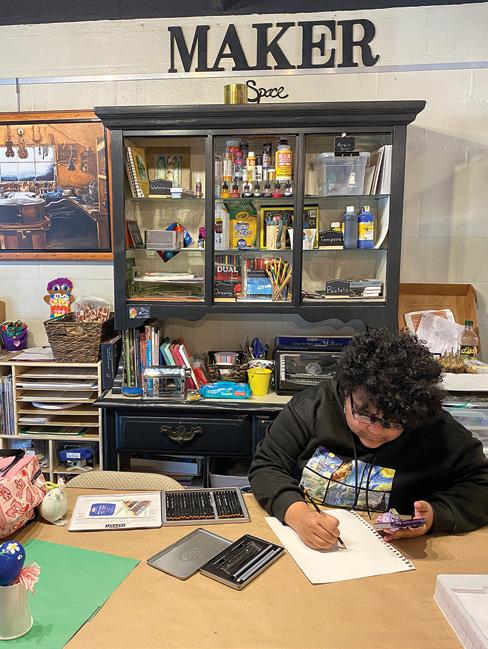
52— Spring 2023 CAROLINA MOUNTAIN LIFE
Local artist A’jionna Reece at the Maker Space inside the Center
The Evelyn McQueen Cook Gallery at the Johnson County Center for the Arts
dedicating time to their own art. Reece’s favorite medium is oil and you’ll find many of her works displayed throughout the gallery. “Creating art brings me joy and is a way of life for me. I work primarily in oils en plein air and in studio with a focus on my East Tennessee home—the beautiful mountains, people and heritage.” Reece is also a nationally certified and licensed Counselor with 30-plus years’ experience. As art became more dominant in her life, her desire to help people carried through to her creative realm. “I teach classes and provide art supplies to children through my program, Sunshine and Smiles.” Through this special program, young artists can participate in community shows and gain confidence, meet professional artists and benefit from mentorships.
“Temple supports other artists and the Arts and serves our community in countless ways,” shares Cristy Dunn, who, like Reece, embraces this vision for greater access to the arts. Dunn emphasizes that the Center strives to include people from underserved populations. “Our staff and volunteers receive training in Title VI and Disability Etiquette, and we work hard to maintain a culture of inclusion.” Dunn worked as a math and art teacher for more than a decade prior to her role as Executive Director of the Art Center, and has been making art since she was a young girl. The gallery showcases many of her traditional
oil portraits, as well as her popular nature paintings.
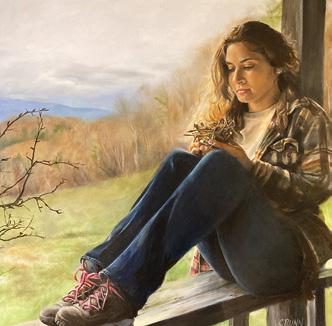
Locally, Dunn is also well known for her role in the creation of the murals that adorn buildings around town. In fact, it was Dunn who guided the 1925 Fiddlers’ Convention project, recruiting twenty local artists of all ages and levels of ability to recreate an iconic photograph taken during Johnson County’s first Old Time Fiddlers’ Convention.
Which brings us back to trains and music, the primary themes represented on the walls of multiple old buildings along The Mural Mile in downtown Mountain City. Both Reece and Dunn have taken serious interest in breathing new life into the downtown blocks by visually representing the town’s cultural heritage for all to see. A stone’s throw from the Center is the first mural on the Mile: “Black Smoke a Risin’ and It Surely is a Train,” a composition depicting the famous Lopsided 3 Train, completed by Reece in 2018. You can practically hear that whistle blowin’. Nearby is the eye-catching “Clarence Tom Ashley: Our Original Mountain Minstrel.” This scene shows music legend Ashley singing to his pony—always the first listener of his newly written songs. The Ashley mural was the very first on the “Mile,” completed by Dunn in 2013. Reece and Dunn have also worked together on several murals, including “I’ll Fly Away,” completed in 2021. It
is the first “interactive mural” in Mountain City—think of it as a selfie-station that brings out the angel in everyone.
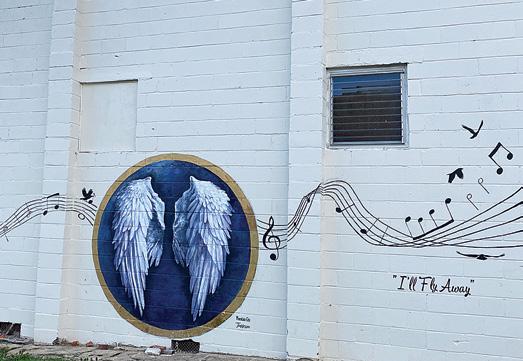
All in all, there are currently eight murals along the Mile, each telling its own sweet story of days gone by in small-town eastern Tennessee. In 2022, the first bronze sculpture in Johnson County—the Fiddlin’ Fred Price Memorial Sculpture—was completed by Val Lyle, and is located in front of the Center. You can see this new sculpture and pick up a map of the Mural Mile while you’re at the Johnson County Center for the Arts. You can also find other materials and information on the many arts opportunities available to residents, visitors and the greater High Country community. From seasonal workshops, summer camps, and monthly art shows, to musical performances, Old Time Jams on the Pickin’ Porch, heritage tours and the annual Long Journey Home festival (September 2-4, 2023), there’s something to interest everyone—so “All Aboard!”
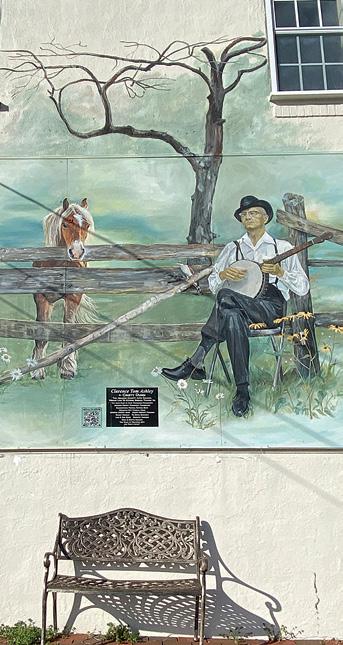
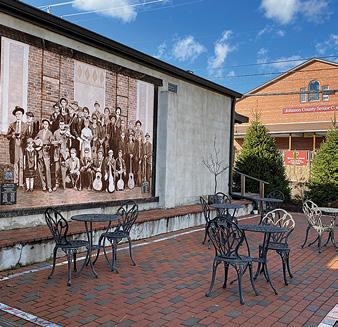
The Johnson County Center for the Arts is open Tuesday, Wednesday, Thursday and Friday from 10 a.m. to 5 p.m., and on Saturday from 10 a.m. to 2 p.m. Visit www.jocoartcenter.org for more information. To view additional art by Temple Reece and Cristy Dunn, visit www.templereece.com and www.cristydunn.com.
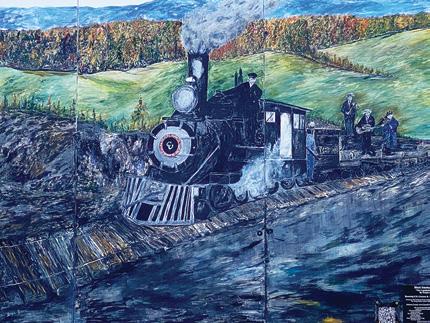
CAROLINA MOUNTAIN LIFE Spring 2023 — 53
I’ll Fly Away – Mural by Cristy Dunn and Temple Reece Black Smoke a Risin’ - Mural by Temple Reece
Clarence Tom Ashley Mural by Cristy Dunn
Artwork by Cristy Dunn
Artwork by Temple Reece
The 1925 Fiddlers’ Convention Mural by 20 community artists
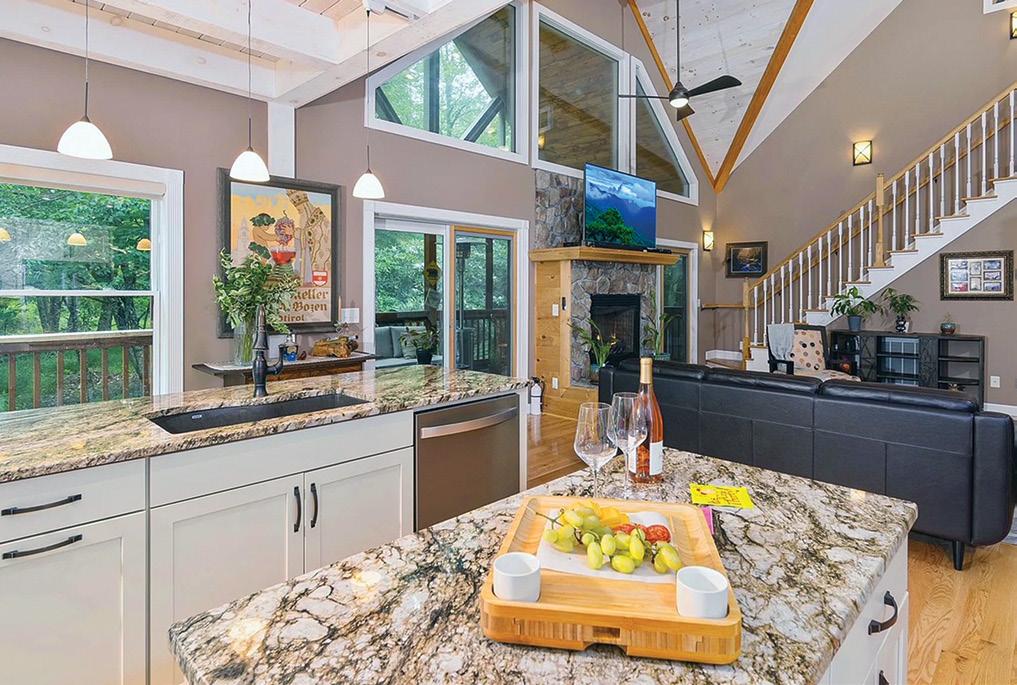




54 — Spring 2023 CAROLINA MOUNTAIN LIFE 1710 Linville Falls Hwy Newland, NC 28646 Meetings by appointment. Please call 828.737.0040 www.classicstoneworksinc.com Classic Stone Works Countertop Fabricator & Tile Showroom NOW on Main St! Unique Accents for your Home & Patio, Mirrors Creative Wall Decor, Clocks, Lamps Accessories in all price ranges 828.295.3330 www.gregoryalans.com 1151 Main Street Blowing Rock, NC 619-964-0038 | www.thetwistedtwigantiques.com | www.facebook.com/TheTwistedTwigAntiques thetwistedtwigantiques@gmail.com | Hours: Tuesday - Saturday 10:30am-4:30pm 100 High Country Square Unit 90 Banner Elk, NC 28604 on Tynecastle Hwy
Oh paper, beloved paper!
Even as e-books, online magazines, TikTok, Twitter, and Taboola
Try to shove you aside…. you are there.
What do all those millions of once-living trees –Splintered now by industrial chainsaws – mean to me
Ode to Paper


(Always there for me)
By Nan K. Chase
If only I can hold you in my hands, caress you, Sweet, sweet paper product.
Do you know how I crave the feel of you?
Lustrous, as a magazine whose colorful cover Draws me farther and farther inside, Whose pages, so smooth, beckon me To slide my fingers up to the corner and Turn the page, or fold down the edge, or Yea, even rip you out to save, to send or file.


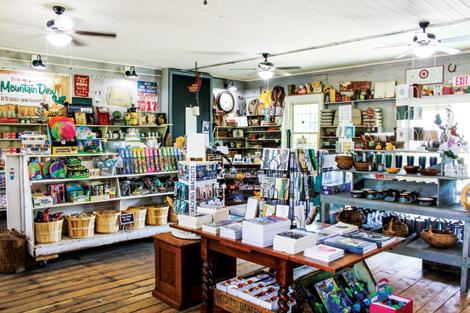
The everyday feel of newsprint, Old friend of mine, never grows stale no matter how Pass the years. The news is fresh each dewy morn, The crossword puzzle and the advice column Remain yet evergreen, awaiting my attention and awe. The puns, the sage advice, the crimes and punishments. Etched they are upon your pulpy dermis, or at least Stamped onto your fibers with eco-friendly soy ink.
What means a gift without gift wrapping?
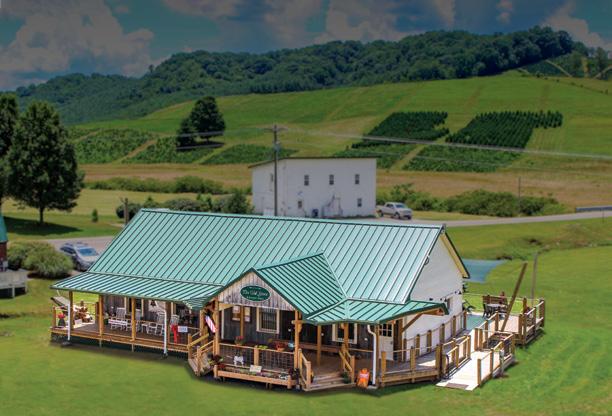
How can a birthday be a birthday, a baby shower
Truly be loosed from the skies of affection, or a Christmas tree be fully clothed…without paper?
Whether it be delicate tissue paper, heavy kaolin-coated ostentation, Tacky gift bag of demi-cardboard, or inane
Xmas-themed snowmen and snowflakes, flimsy-foiley, What surprise is not more delightful than when hidden
Within your mysterious folds?
Paper, you ageless wonder, you cradle inside your multiple layers
The pressed flowers from long ago dreamy afternoons among Billowing fields of color. Those wildflower petals may fade
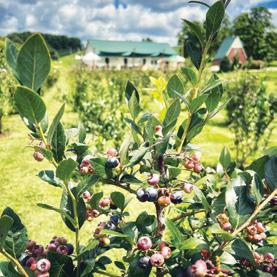
In hue, but the memories remain ever bright, like the sun.
Would my mother’s handwritten recipe cards of yore –

And the cookbooks I received as a bride – mean as much
If they hadn’t been stained, perhaps preserved, by decades
Of mess: tomato sauce, cake batter, grease, blood mayhap?
Could my grandfather have napped in the back yard
With a computer terminal lying atop his face for shade?
Think I not! Would I have smacked my naughty puppy
With an expensive laptop when she chewed up a precious book?
Never! And would I deign to level a wobbly chair with a smartphone, Or doodle with sharp pen upon an e-book reader when bored in class?
Nay. Those are jobs for paper, and substitutes
There are not in this evolving world of electronic ease.
The simplest paper of all is most precious, like you, Dear one. Envelopes sent from lives past, protecting Intimacies committed to small sheets of paper for the ages. Just letters written in pencil or ink, neatly folded, enclosing glimpses Of times long gone: black-and-white photos printed on crinkle-cut Slick paper – grandparents our grandchildren resemble but will never know,
Locks of hair from heads now resting underground. Mementos that Don’t exist in virtual clouds. Paper touched by hands we have touched, Though be they lost in time. Each one a love note to you, oh paper.
Book Nook
The Other Dr. Gilmer
Benjamin Gilmer, Author Ballantine Books, Publisher
—Reviewed by Edwin Ansel
Bring a Book, Take a Book
at the Historic Banner Elk School
“First, do no harm.”
I thought I knew what it means. It’s what they teach to doctors, right? Your patient has entrusted you with his health, even his life. Be conservative. When it doubt, it’s better to do nothing than to cause new problems. In any case, it’s a doctor thing.
A doctor, and importantly, a family doctor, and for all of us up in the High Country, a neighbor, shows us differently. In 2009, Dr. Benjamin Gilmer joined the Mountain Area Health Education Center (MAHEC) at Cane Creek, a rural clinic located near Asheville, NC. The clinic was founded by another man named Gilmer, a Dr. Vince Gilmer. Though they share that family name, these men are not related. Dr. Benjamin Gilmer was brought in to run the clinic because several years earlier the other Dr. Gilmer had killed his father and was ultimately tried and convicted for the murder. The coincidence of their names is a tiny seed of connection that ultimately led Dr. Benjamin Gilmer to become deeply involved with the fate and well-being of Dr. Vince Gilmer and to share this personal history with us in an unusual and important book, The Other Dr. Gilmer.
Dr. Benjamin Gilmer shows us through his own actions that the old motto “First do no harm” can and should be much more than a part of medical training. For any doctor it may apply far beyond the doctor-patient relationship, and could be better expressed, “Do not participate in harm to any person.” In this case, the evidence used to convict Dr. Vince Gilmer included expert medical testimony as to his mental health that turned out to be wrong. As a result, he has been serving a sentence of life in an ordinary prison despite his proven mental illness. A proper sentence for such a person would be confinement to a mental hospital, at least. Dr. Benjamin Gilmer resolved not to shrug off this injustice, and not, by his inaction, to be complicit in it, but to do his utmost to see real justice done. In other words, though the other man was not his patient, he took it upon himself to see that unjust harm was not inflicted on him.
Dr. Benjamin Gilmer’s story also shows how that old motto can guide all of us. His quest came to the attention of Sarah Koenig, a journalist with National Public Radio (NPR). In time, she produced an episode entitled “Dr. Gilmer and Mr. Hyde” for the program This American Life (No. 492, April 12, 2013). Within days, Benjamin Gilmer was receiving letters from around the country from people who wanted to help. From doctors, lawyers and donors who, like Dr. Benjamin Gilmer, did not have a professional relationship with the prisoner, but who, like him, resolved not to be complicit in an injustice against a fellow citizen. Ultimately, a team was assembled and a legal petition was made seeking clemency for Dr. Vince Gilmer. Because we are all in this together, right?
Right. We are. If we choose to be. A notion that floats in my head is that our Great Nation is also a great experiment in human nature. There are few constraints in our culture, and we’re free to be as good, and as bad, as we like. Taking the glass as half full, it is wonderful that we citizens are free to step up and look after one another, to challenge authority if that’s what’s needed. In a way, the most important part of the book may be the “Acknowledgements,” where Dr. Benjamin Gilmer notes the beautiful acts of so many splendid fellow citizens. Well done, you all.
Follow the latest news on the author’s efforts at benjamingilmer.com. Pick up your copy of The Other Dr. Gilmer at local booksellers, online, or at your local library or Book Exchange.

We offer books to swap, magazines, WiFi, puzzles, book discussion groups, music jams, and children’s programs throughout the year. Stop by and see us this season!
Open All Year
Tuesday-Friday 10-4
Saturday 1-4 (May - October)
For a full schedule of events, visit:
www.bannerelkbookexchange.com

Avery Animal Hospital

Small Animal Medicine
Surgical Services
CO2 Surgical Laser
Hill’s Science Diet & Prescription Diets
In-house Laboratory Therapy Laser Treatments
Cozy Boarding
Dr. Brent Jewell
828-733-9810
351 W. Mitchell Street Newland, NC 28657
56 — Spring 2023 CAROLINA MOUNTAIN LIFE
BOOK NOOK
The Big Picture Show
All Quiet on the Western Front: A Haunting Film Echoes a Local Tragedy
By Elizabeth Baird Hardy
In the waning hours of World War I, on November 11, 1918, soldiers eagerly looked forward to the promised end of the hostilities, but many would never know the peace for which they longed. The armistice was set to take effect at the eleventh hour of the eleventh day of the eleventh month, yet the conflict continued until that time, and thousands of men died just short of that eleventh-hour benchmark. One of those men was a local, Jesse Staton, who was living in Cranberry, NC, when he enlisted on September 19, 1917, and joined Company M of the 321st Infantry Regiment, 81st Division. His first major engagement was November 11 when his regiment charged the trenches near Grimscourt, France, and twenty-three-year-old Staton was killed by shell fragments, making him one of 2,728 men, on both sides of the conflict, who died on the last day of the war.
Staton, and the nine million other soldiers and sailors who fell in “the war to end all wars,” were very real people whose tragic stories have inspired numerous fictional treatments. One of the best-known is All Quiet on the Western Front, the 1929 novel by Erich Maria Remarque. The story of a disillusioned German solider and the war that consumes him and his friends has had a powerful impact both in print and its three different film adaptations. The latest, from Netflix, is Swiss director Edward Berger’s gritty and heartbreaking vision of the horrors of war. Although Berger’s award-winning film is not a close adaptation of Remarque’s novel, much of the spirit of the text remains as we follow young Paul Baumer and his friends from their school to their eager enlistment to the mud and blood of the trenches to the last moments before the Armistice, a peace that ends the war but fails to save the film’s characters. The messages about the futility of war and the way it dehumanizes those involved are as clearly portrayed on screen as they are on the page.
Berger’s approach is a fascinating one, employing startling visual and auditory images that aptly demonstrate how the film earned Academy Awards for Cinematography, Production Design, and Score. From the opening scenes, which juxtapose natural processes with the horrors of war and the treatment of soldiers as mere cannon fodder whose empty uniforms will be washed, mended, and filled with more bodies to be wasted, war is clearly portrayed as contrary to the natural order, a violation of creation. The effect is accentuated by the jarring soundtrack, frequently incorporating blaring notes that sometimes appear to be diegetic elements within the film and other times are clearly non-diegetic pieces that only the audience can hear. Soldiers sing, laugh, and share their dreams, then just as suddenly swear or scream in terror, sorrow, or pain.
The film also profoundly portrays the startling contrasts between the lives of the soldiers and those who make the decisions that will either doom or save them. While the soldiers in the trenches peel potatoes and eat a goose stolen from an angry French farmer, the delegations debating the end of the conflict enjoy wine and fine foods at ornate tables. The images of mud and death are contrasted
with scenes of nature or of clean, tidy rooms where men in elaborate uniforms sign snowy sheets of paper.
Although the film is dubbed into English from its original German, that is seldom a barrier, and the fact that this story is told in its original language adds to its poignancy. The remarkable cast ranges from wide-eyed Felix Kammerer, making his screen debut, to well-known international star Daniel Brühl, each beautifully conveying the horrors of war and the people who experience it. Every performance is powerful, emphasizing the human cost of war even as the extraordinary visual effects allow for horrifyingly realistic images.
Although the violence and language make this film one that is certainly not for all audiences, it is one that tells a story that will deeply affect viewers and inspire thought and conversation. Winner of four well-deserved Academy Awards, including best International Feature Film, All Quiet on the Western Front is a powerful piece worthy of critical acclaim.
Avery County’s Jesse Staton, like many of the characters in All Quiet on the Western Front, never lived to see the end of the war. His remains didn’t even return to the United States until May 1921. His grave, in the Cranberry Cemetery, is half a world away from those cold and muddy trenches in France, but, with films like All Quiet on the Western Front, we can all remember the true cost of war, the lost young men of every country.

CAROLINA MOUNTAIN LIFE Spring 2023 — 57 BIG PICTURE SHOW
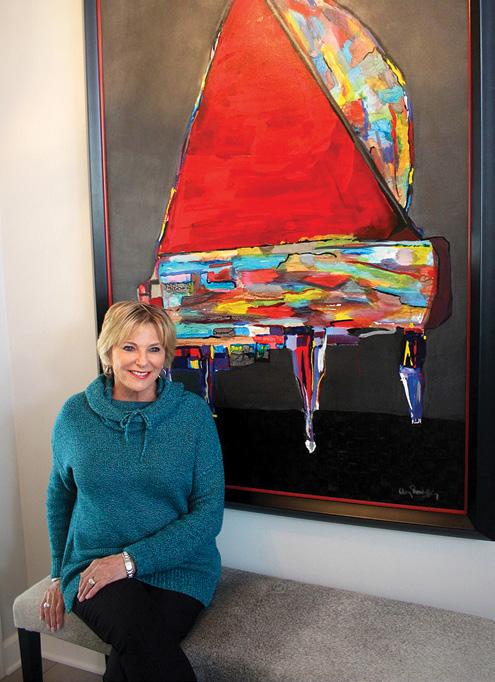


58 — Spring 2023 CAROLINA MOUNTAIN LIFE It’s All About The ART Gallery Opening Late Spring - Banner Elk Amy Reshefsky, Artist & Proprietor 561-289-4542 Olga Davies, Curator HOME FURNISHINGS, ECLECTIC ART, SPA LOTIONS, GLASSWARE, GOURMET FOOD TO GO, COCKTAIL ACCESSORIES, JEWELRY, UPSCALE GAMES, FIRESCREENS, HOSTESS GIFTS, PUZZLES, PURSES, PILLOWS P.J.S, CLOTHES, BABY GIFTS, CASHMERE, COFFEE TABLE BOOKS, COOKBOOKS, AND TRAVEL BOOKS, THROWS BLANKETS, ART LAMPS, GINGER JARS, CANDLES, CHARCUTERIE BOARDS . . . Feather your nest NC Mountains: 4004 Hwy 105, Suite 1, Banner Elk, NC 28604 828.898.4449 Charlotte: 1530 East Blvd., Charlotte, NC 28203 704.332.3731 Key Largo: One Barracuda Ln., Key Largo, FL 33037 305.440.2135 www.abodehomedesign.com @abodebymtm | @marytobiasmiller abode home mary tobias miller interior design June 8, 9, 10 Courtney Douglas The perfect present –stationary & gifts in paper June 28, 29, 30 Claire & Jennifer Tyler With sweaters for every occasion July 6 ,7, 8 Zonnie Sheik 36 years with BJ’s Magnificent Jewelry July 13, 14, 15 ALGO of Switzerland Nicholas will be here with fall merchandise August 8, 9, 10 Daniella Ortiz Exquisite handbags in every color August 24, 25, 26 Ed-it NY Edward Guski 5th trunk show with BJ’s A little bit of everything August 31, Sept. 1 & 2 Zonnie Sheik will return if you missed July September 21, 22, 23 ALGO of Switzerland He is bringing Spring clothing this time Claire & Jennifer Tyler Knitwear End of Sept. / First of October (We will notify you) 2023 Trunk Shows RESORTWEAR Located at 145 Main St, Banner Elk for 45 years. 828.898.4229
...notes from the Grandfather Mountain Stewardship Foundation
Learn more and plan your visit at www.grandfather.com.
Spring Events at Grandfather Mountain
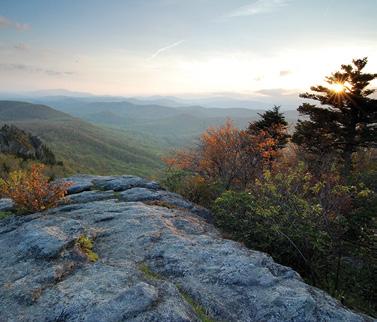
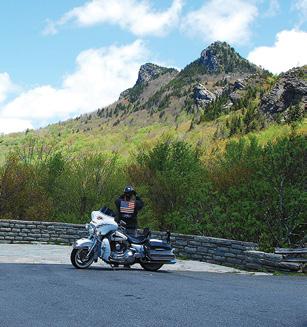
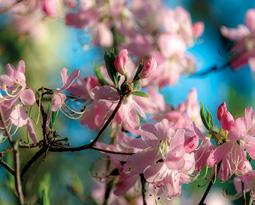
Mark your calendars for these fun events that help you explore, understand and value the wonders of Grandfather Mountain.
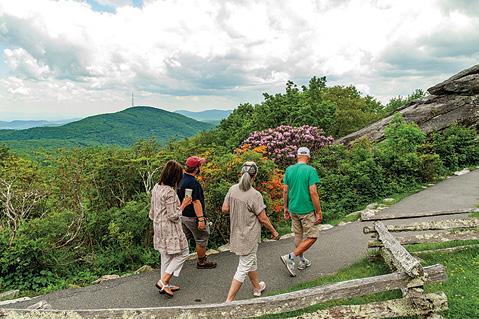
April 1 – 30 | Dollar Days
A special “Dollar Days” rate of $5 per person is extended to those who live or work in Alleghany, Ashe, Avery, Mitchell, Watauga or Wilkes counties, along with their guests traveling in the same vehicle. Students attending a local college or university are also eligible for the discount. Tickets must be booked online in advance. Proof of local employment, residency or school affiliation must be presented upon arrival.
April 1 | Daily Programs Begin
During your visit, attend one of our Daily Programs presented by Grandfather Mountain animal habitat curators and park educators. These fascinating interpretive programs such as “Keeper Talks” and “Animal Encounters” are included in admission and run every day April – October, weather permitting.
April 23 | Grandparents’ Day
A day of fun and interactive programs meant to be attended by the whole family! Bring your grandchildren…or grandparents(!)… and explore nature together!
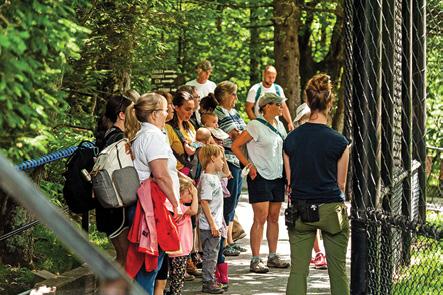
Included in admission.
May 27 – June 4 | Rhododendron Ramble
A short, guided daily stroll at 2 p.m. that highlights Grandfather Mountain’s rhododendron species and blooms—their history, attributes and the roles they play in the mountain’s ecological communities. The easygoing walk takes approximately 20 minutes and is fit for all ages. Included in admission.
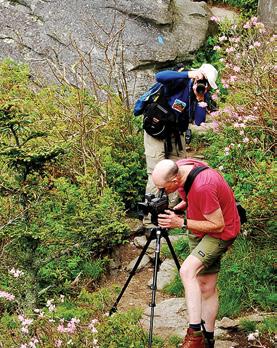
June 3 | National Trails Day
From 11 a.m. to 2 p.m., there will be a variety of interpretive tables and programming at the Woods Walk on topics such as how to plan a hike, Leave No Trace, essential items needed in a backpack and more. At least one guided hike will be offered. This year has been declared the Year of the Trail by the N.C. Legislature. Included in park admission.
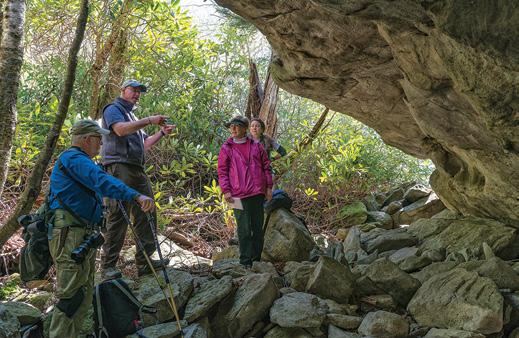
June 4 | All-Day Rhododendron Ramble
Celebrate the rhododendron blooms with guided rambles, crafts for kids and special displays. Rambles, or guided walks, will take place at 12 p.m., 1 p.m. and 2 p.m. during the all-day ramble. Included in park admission.
June 9 - 11 | Nature Photography Weekend
This popular shutterbug weekend includes presentations from top nature photographers, hands-on breakout sessions, a friendly contest and the rare opportunity to photograph the mountain’s spectacular scenery and native animals before and after regular business hours. Additional cost.
June 14 | Animal Birthday Party
Help us celebrate the birthdays of our resident animals with games, contests, crafts and surprises! Millie the Bear will make special appearances throughout the day. Included in admission.
June 17 | BioBlitz
Grandfather Mountain Stewardship Foundation staff joins N.C. State Parks and other conservation agencies to survey the unique ecology on the mountain. A BioBlitz is a communal citizen-science effort to record as many species within a designated location and time period as possible. Park guests are invited to join us for a special day of programming that will run alongside the BioBlitz. Included in admission.
Spring 2023 — 59
GRANDFATHER NOTES
SpringatCliffsideOverlook
Nature WeekendPhotography
RhodoRamble
Guided Hike
Photo by Skip Sickler
Spring at Half Moon Overlook
PinkShellAzalea PhotobySkipSickler
Daily Program Keeper Talk

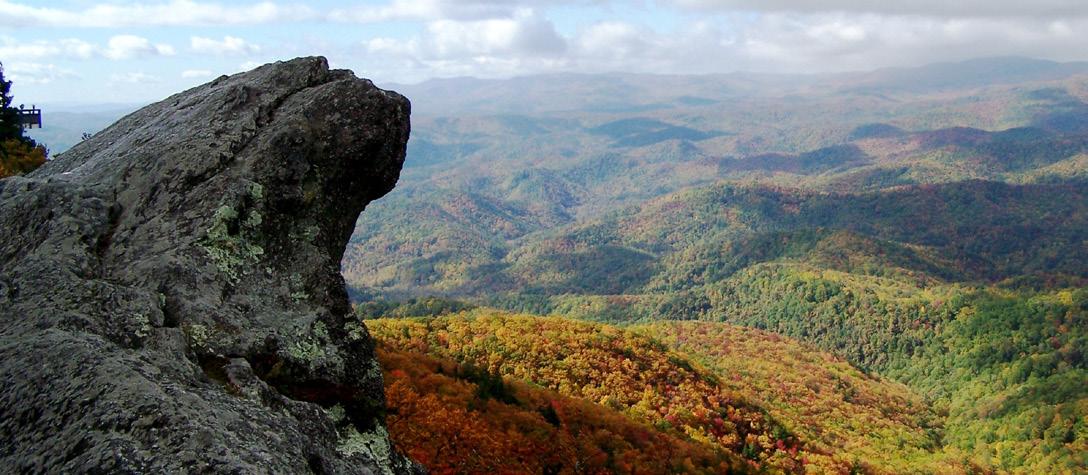


60 — Spring 2023 CAROLINA MOUNTAIN LIFE Visit Plan your Spring Getaway! Be sure to visit 828.295.7111 • Rock Road, B lo wing Rock NC • TheBlowingRock.com Nor th Carolin a ’ s O l dest T r avel Attraction, Since 1933 “Enjoy the Legend” The Blowing Rock NORTH CAROLINA’S OLDEST TRAVEL ATTRACTION, SINCE 1933 432 The Rock Road, Blowing Rock, NC 28645 828.295.7111, TheBlowingRock.com “Enjoy the Legend” CRITTER FRIENDLY Panoramic views Observation towers Short walking trails Photo gallery Gift shops GET TICKETS ONLINE: Axe & Knife Throwing Great Place for Par ties!
Bird Watching in the High Country
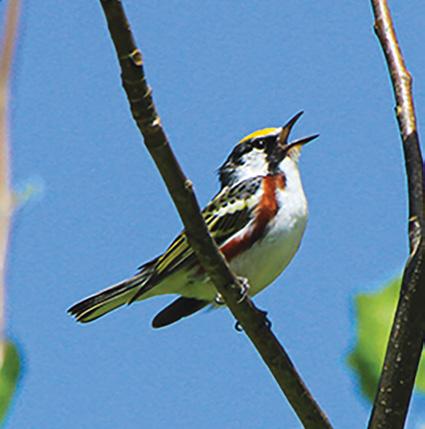
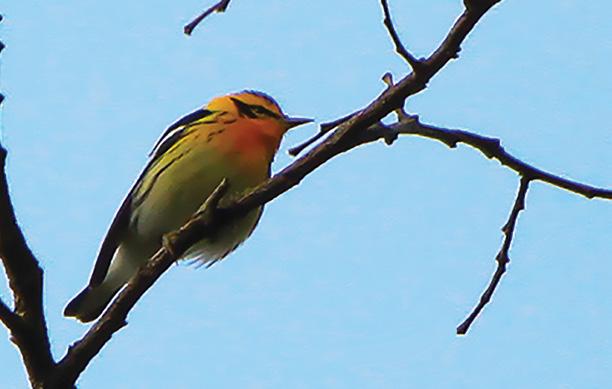
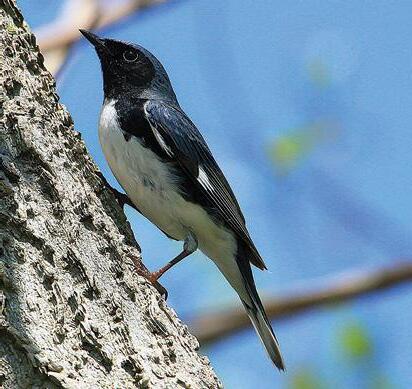 By Paul Laurent / Photos by Amanda Laurent
Theair feels cool and crisp as we hike between house-sized boulders strewn across the steep slopes of Grandfather Mountain. The red spruce and Fraser fir trees covered in moss smell strongly of Christmas on this cool May morning. Many people who make this strenuous hike say it feels like walking through an enchanted forest that should be home to gnomes and fairies when you reach the higher elevations. The bubbly songs of Winter Wrens and Hermit Thrushes echo through the forest, but the bird we are searching for is much harder to find. Listening carefully, we can hear a different song drifting through the trees — much higher and thinner than the excited chatter of Wrens and Thrushes — it’s the breeding call of a Brown Creeper. This morning’s birding tour began at 6:30 a.m. at the base of the Profile Trail in Grandfather Mountain State Park. Our guests are here to see this small and very hard-to-find bird singing in his breeding territory — something very difficult to experience in the South. Today we can hear several of them singing from the tree tops. Brown Creepers are incredibly well camouflaged, with mottled brown backs and white bellies that are usually hidden as they furtively climb tree trunks in search of insect larvae. We finally see one working its way up the trunk of a large fir, and we get to
watch as it flutter-falls its way down to the base of the next tree — looking more like a falling leaf than a bird.
This brief look at a small, brown bird might not seem worth the three hours of hiking, but this is no ordinary little brown bird, and this is no ordinary mountain! Brown Creepers normally nest far to the north in the deep forests of Canada, and only migrate to the Carolinas in the winter. The high, rugged peaks of the North Carolina High Country are one of the only places in the south where you can find Brown Creepers in the springtime. The habitat in these southern highlands has far more in common with Nova Scotia than Charlotte, which you can see on the horizon on clear days. There are dozens of species of birds that can be found breeding here that you would normally expect to find nesting in the far north.
One of the most amazing things about our mountains is just how old they are. When you walk through the woods here you can feel the weight of ages hanging on the slopes. These mountains may not be as tall as they once were (Grandfather Mountain was once taller than Mount Everest!) but they have witnessed eons of change. Oceans rose and fell, continents collided and then drifted apart, dinosaurs wandered their slopes, then mammoths, then bison,
elk and beaver, and eventually early humans began coming to this ancient land looking for hunting grounds in the warmer seasons. Ice ages came and went, but the glaciers never quite reached these southern peaks. This is what makes the High Country such a remarkable place for bird watching. As the glaciers pushed plants and animals out of the north, they settled in what is now the Carolinas. When the glaciers retreated and temperatures warmed, those northern species began to recolonize their traditional ranges — except for here in the High Country. The cooler weather caused by the higher altitude combined with the rocky, mountainous terrain to make a habitat very similar to the far north, and some of these traditionally northern birds began breeding here instead.
The Brown Creepers singing at the top of Grandfather Mountain are just one of the harder to find northern residents. Common Ravens can be seen daily cartwheeling above the Blue Ridge Parkway, and Dark-eyed Juncos are the most common bird in many areas here, but are found nowhere else in the Southeast except in winter. But the most stunning examples of northern birds breeding here in the High Country have to be the warblers.
continued on next page
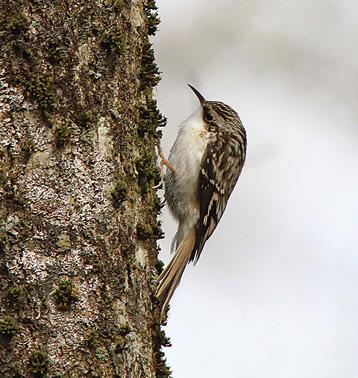
CAROLINA MOUNTAIN LIFE Spring 2023 — 61
Blackburnian Warbler
BrownCreeper
Black-throated Blue Warbler
Chestnut-sidedWarbler
This family of tiny and colorful birds has long enthralled bird watchers across North America. Most of these remarkable birds usually breed in Canada, and then embark on incredible migrations to Central and South America for the winter, only to return to Canada in spring to breed again and continue the cycle. There are 37 species of warblers that can be found in North Carolina, but in most of the state they are seen only for a few weeks each fall and spring as they pass through on their migration. We are fortunate to be able to see these stunning creatures all summer long!
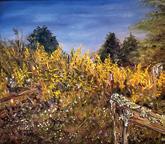
A walk around Trout Lake outside of Boone in the spring gives you a good chance to see Canada Warblers, Blackthroated Blue Warblers, Black-throated Green Warblers, Chestnut-sided Warblers, Ovenbirds (named for their oddly shaped nest that looks remarkably like a tiny pizza oven made of twigs on the forest floor), Hooded Warblers, Louisiana Waterthrushes, and many other species in just a few hours. The stunning Blackburnian Warbler can be found nesting near Julian Price Lake, and the incredibly rare Goldenwinged Warbler can be found breeding just north of Boone.
The brilliant colors that male warblers sport each spring is reason enough to get a pair of binoculars. A male Blackburnian Warbler looks like a four-inch fireball of orange and black as he bounces from treetop to treetop. The darker colors of the Black-throated Blue Warbler seem dull until he emerges into the sunlight to show off his royal blue back and dark throat, with a bright white belly and wing patches to nicely accent both colors.
Warblers are stunningly beautiful, and they make some of the most incredible journeys on earth. Many of the over 200 species of birds found in the High Country will migrate for the winter. Some may only fly a few hundred miles, others travel thousands of miles each year, crossing oceans and continents before returning to the same spot to breed the following year. Of the 184 species of birds we have documented at Valle Crucis Community Park, 115 can also be found in Costa Rica. When my amazing wife Amanda and I lead birding tours to Costa Rica each winter, we often see lots of birds that could have easily spent the summer in Banner Elk or stopped by our house on their way south from Canada! It can be a bit strange to lead a tour in October in
the High Country and see Yellow-throated Vireos, Black-and-White Warblers, Tennessee Warblers, Broad-winged Hawks, Yellow Warblers, and Chestnut-sided Warblers — then see those same species on a tour in Costa Rica in November!



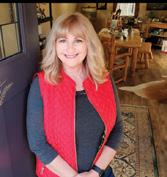
Birds connect us to the rest of the world and are among the most incredible creatures on earth. They are the descendants of dinosaurs that now come to our bird feeders and poop on our windshields. Whether we take people birding in the High Country or the jungles of Costa Rica, we try to show how these beautiful creatures connect the world, and how many depend on special places like the North Carolina High Country to continue to thrive.
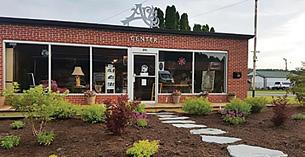

Paul and Amanda Laurent are expert birders and naturalists. They offer small group and private guided birding tours in the High Country, Costa Rica, and many other amazing places across the country and around the world through their business Epic Nature Tours. Learn more at www. EpicNatureTours.com or email them at info@EpicNatureTours.com.
62 — Spring 2023 CAROLINA MOUNTAIN LIFE
Visit Johnson County Center for the Arts CRISTY DUNN FINE ART cristydunn.com TEMPLE REECE STUDIO 411 templereece.com
Cristy Dunn Executive Director
127 College Street., Mountain City, TN • jocoartcenter.org
Temple Reece Assistant Director
Devoted to Wildlife: The May Wildlife Rehabilitation Center
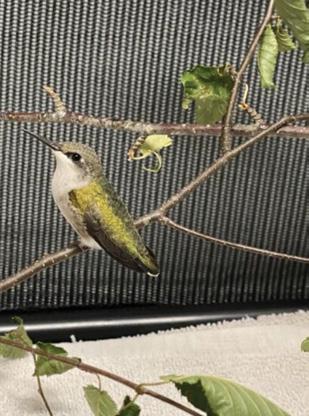
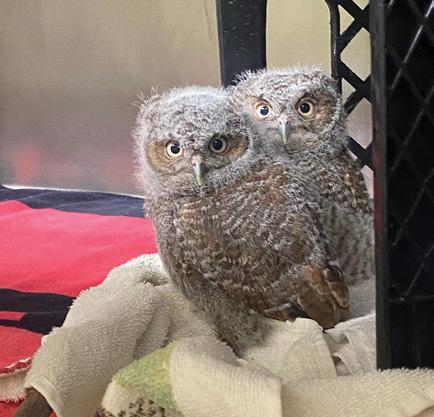
—A Year in Review
By Tamara S. Randolph
Last summer, I sat in the audience with a group of children and their families and listened to one of the many public presentations that Lees-McRae students from the May Wildlife Rehabilitation Center (MWRC) delivered at the town park in Banner Elk, NC. The two speakers that day brought along a couple of wildlife ambassadors—a great-horned owl and an Eastern indigo snake—both of whom were there to help educate us humans about their respective species.
“Ultimately, these wild ambassadors have a very important job,” says Nina Fischesser, Director of the May Wildlife Rehabilitation Center at Lees-McRae College. “They inspire people to want to protect the very homes and ecosystems that these animals live in, and support the important work that we do to heal the ones who need a second chance.”
As one of the only wildlife rehabilitation centers located on a college campus, the primary mission of the MWRC is “to both care for injured animals and educate the next generation of rehabilitators.” I asked Director Fischesser and Dr. Amber McNamara, Assistant Professor and Veterinarian, to shed some light on what happens behind the scenes at the May Wildlife Rehabilitation Center. Who are your patients? How many animals are treated each year? How do students participate in the care of these animals? Here we share their answers to these questions, along with some additional statistics from the Center’s 2022 Impact Report*.
The Patients
One might first like to know how animals end up as patients at the Center and where they come from. “The reasons people bring them to us are endless,” explains Fischesser. Some patients are orphaned babies, while many have been struck by vehicles, attacked by outdoor cats, and even entangled in barbed wire or trapped between the metal bars of bird feed holders. In 2022, the majority of patients
came from Watauga and Avery counties, while others were transported from Buncombe, Mitchell, Burke, Caldwell, Wilkes, McDowell, Ashe and Catawba counties.
n A total of 1,222 wildlife patients were admitted to the Center in 2022, representing 117 unique species.
n Of the animals taken in, nearly 60% were birds, while 36.8% were mammals, 3.2% were reptiles, and less than 1% were amphibians.
n The Top 13 Patients by Species (and the number admitted): Virginia Opossum (167); Eastern Cottontail (101); Mourning Dove (56); Eastern Grey Squirrel (50); Eastern Screech Owl (50); White-tailed Deer (48); American Robin (35); Northern Cardinal (32); Eastern Box Turtle (32); Red-tailed Hawk (29), Eastern Bluebird (29), House Finch (29) and Carolina Wren (29).

n The highest in-house patient total on any given day was 175 patients!
n While many animals have a relatively short stay at the Center (a hummingbird was treated and released within minutes), one patient—a red-tailed hawk that had been hit by a truck— stayed 456 days before being released in October of 2022.
n The smallest patient was a tiny ringneck snake, weighing 0.7 grams.
n The largest patient was a young whitetailed deer, likely hit by a car, weighing more than 60 pounds.
n 2022 saw five new species admitted: Wood Frog, Eastern Kingsnake, Wilson’s Snipe, Lesser Scaup, and Sanderling.
Of course, the ultimate goal is to return as many animals as possible to their wild habitat once they have been treated and rehabilitated. According to Dr. McNamara, “During 2022, the MWRC received 1,222 wildlife patients and, thanks to the efforts of the clinic’s students, staff, and volunteers, we were able to rehabilitate and release 598 animals back to the wild.”
Student Involvement
Wildlife Biology and Pre-Veterinary Medicine students comprise a large portion of the rehabilitative operations at the center. Over the course of their training at Lees-McRae, they learn and then implement all aspects of wildlife rehabilitation, eventually becoming mentors to younger students.
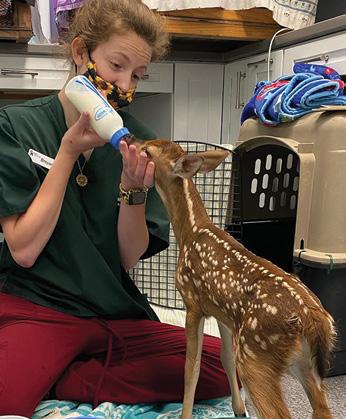
In 2022, 41 students completed the summer clinical program, which was a record for the college. During the program, these students became more proficient in wildlife medicine, baby care, patient evaluation, husbandry, and wildlife education. Students also delivered 71 formal public programs to schools, at festivals, and in other settings, such as the Banner Elk Park, and they participated in conferences and symposiums, including the Wildlife Rehabilitators of North Carolina’s annual symposium, and the North Carolina Wildlife Medicine Symposium. A total of 29 students graduated from Lees-McRae in 2022 with a major in Wildlife Biology and a specialization in Wildlife Rehabilitation.
This spring, beginning on Saturday, May 20, you and your family can meet some of these Lees-McRae students and the Centers’ wildlife ambassadors when they kick off a new season of presentations at the amphitheater in Banner Elk’s Tate-Evans Park. Presentations will take place every Friday and Saturday at 1 p.m. and are open to the public (no dogs near wildlife presentations, please). Your participation is a great way to support the important work of the MWRC and to show your devotion to our local wildlife.
If you find an injured or orphaned wild animal this spring, call the MWRC at 828-898-2568. Follow them on Facebook at BlueRidgeWildlifeInstitute, and donate online at https://www.lmc.edu/giving/.
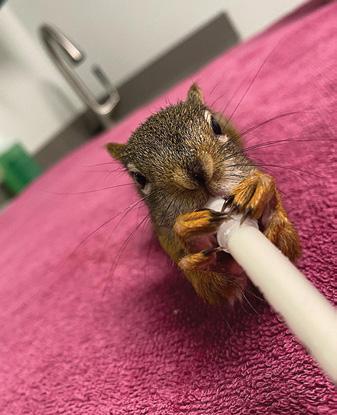
CAROLINA MOUNTAIN LIFE Spring 2023 — 63 BLUE RIDGE EXPLORERS
(*All statistics are from January 1, 2022 through December 31, 2022. Photos by Dr. Amber McNamara and Lees-McRae students, l to r: fledgling Eastern screech owls, red squirrel being syringe-fed formula, juvenile Ruby-throated hummingbird, young Virginia opossum receiving acupuncture treatment, white-tailed deer fawn being fed by Breyanna Mathis)
67th ANNUAL GRANDFATHER MOUNTAIN
HIGHLAND GAMES



& Gathering of the Scottish Clans

JULY 6 - 9, 2023 AT MACRAE MEADOWS, LINVILLE NC

Come join the fun and excitement of the Games. There will be dance competition, athletic competition, piping and drumming, sheep herding, music in the Groves on Friday, Saturday and Sunday, concerts Friday and Saturday nights, Worship Service and Parade of Tartans on Sunday, and children’s activities each day. www.gmhg.org

64 — Summer 2017 CAROLINA MOUNTAIN LIFE
appalachianapothekary.com (828) 265-7591 10543 Highway 105 South suite 2 Banner Elk, NC 28604 Tea Room | Cultural Gifts Store | Healing oils | High end crystals | Soaps




CAROLINA MOUNTAIN LIFE Spring 2023 — 65 West Jefferson, NC • 336-246-5647 | Boone, NC (at Boone Mall) • 828-266-1401 | TheCarolinaCabinStore.com Fully stocked for immediate delivery “It’s more than furniture, it’s a lifestyle” High Quality Furniture at Affordable Prices 1108 S Jefferson Avenue, West Jefferson, NC • 336-219-0301 | TheCarolinaCabinStore.com Email: cabinstore@earthlink.net FURNITURE AND DECOR MANY STYLES OF OUTDOOR FURNITURE, RUGS, ARTWORK, FIRE PITS, AND MUCH MORE!
furniture in stock
Polywood
Trail Reports: Spring 2023
By CML Staff
Does your family enjoy hiking, biking, horseback riding, paddling and exploring our region of the world? Follow our “Trail Reports” in each issue for some of the latest developments on trails and public lands, and to learn about opportunities throughout the area.
North Carolina Year of the Trail
The celebration is underway as we observe 2023 as the North Carolina Year of the Trail, a series of events and happenings that encourage North Carolinians to get out on the hiking, biking, paddling and horseback riding trails throughout the state. NC Year of the Trail is the largest statewide celebration of trails and outdoor recreation in North Carolina history; it commemorates the 50th anniversary of the 1973 North Carolina Trails System Act, which instituted a State system of scenic and recreation trails.
Examples include the iconic Mountains to Sea Trail which crosses the state, the Appalachian Trail that meanders through our mountain region, the Yadkin River State Paddle Trail in Elkin, and the Overmountain Victory State Trail, which traces the steps of Revolutionary War soldiers.

There are also networks of local and regional trails across the state that are open to the public, including trails on thousands of acres of US Forest Service and National Park Service lands, and miles and miles of trails in our amazing system of State Parks. You’ll even find a series of wine and beverage trails.
Year of the Trail celebrates North Carolina’s vast and diverse collection of trails and encourages all of us to enjoy healthy outdoor fun and magnificent landscapes, while recognizing our role as champions of these special resources.
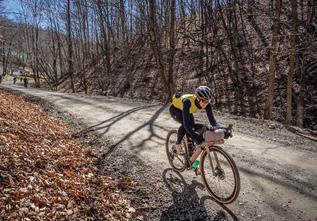
You’ll find Trail events in local communities throughout the state during 2023. National Trails Day is June 3, and many communities will hold special celebrations that day. Explore the website at GreatTrailsNC.com for options.
Damacus, Virginia: “Trail Town USA”
Damascus is a small town in Southwest Virginia with a big claim to fame: seven nationally known trails intersect within town limits. The Appalachian Trail enters Virginia just a few miles south of town, then runs through the Town Park and down the sidewalk of Main Street. Damascus is also home to a large portion of the Virginia Creeper Trail.
The Appalachian Trail Conservancy (ATC) and the Town of Damascus recently opened the new Damascus Trail Center. Located in the middle of downtown, the Trail Center is ideally positioned to greet visitors of three of the area’s most renowned National Trails, including the Appalachian National Scenic Trail (A.T.), the Overmountain Victory National Historic Trail and the Virginia Creeper National Recreation Trail.
“Damascus has always been an iconic part of the Appalachian Trail experience, so it’s hard to imagine a more appropriate place for the new Trail Center to call home,” said Sandra Marra, President and CEO of the ATC. “We are excited to work with the Town to ensure the Damascus Trail Center provides opportunities for hikers, bikers, and adventurers of all ages and experience levels to better enjoy and care for our irreplaceable great outdoors.”
The Trail Center, located at 209 West Laurel Avenue in Damascus will serve as a regional hub for outdoor recreation. Here, you can find exhibits and programming; learn more about
the history, resources, and opportunities in the region; participate in stewardship opportunities, outings, and workshops; and pick up hiker hangtags (for thru-hikers on the A.T.). For current hours, visit www.visitdamascus.org/ damascus-trail-center.html.
Foothills Conservancy’s Latest Conservation Projects
Foothills Conservancy of North Carolina announced significant progress toward the purchase and permanent protection of a 332acre parcel of land in Blowing Rock, NC that contains the headwaters of the Johns River and is part of an iconic view seen from The Blowing Rock attraction, U.S. 321 and other locations within the town limits of Blowing Rock.
The property is positioned on the Blue Ridge escarpment, partially located in both the Blowing Rock and Globe communities of Caldwell County, and is part of the viewshed corridor of the immediate sweeping and magnificent mountainous panorama. The Johns River, a major tributary of the Catawba River, begins on the property, and the land harbors a number of significant natural communities and threatened plant and animal species documented by the North Carolina Natural Heritage Program. Future plans for the property will include the design of a public use trail along the upper elevation section of the property.
Foothills Conservancy also recently acquired 93 acres along one-and-a-half miles of Wilson Creek, a nationally-designated Wild and Scenic River in Caldwell County, from Duke Energy, and subsequently recorded a conservation easement held by the North Carolina Land and Water Fund to permanently protect the land and water resources.
66 — Spring 2023
MOUNTAIN LIFE TRAIL REPORTS
CAROLINA
Grayson Gravel Traverse Trail NC Year of the Trail
“Foothills Conservancy is proud to permanently protect another large segment of Wilson Creek,” said Executive Director Andrew Kota. “As a National Wild and Scenic River, Wilson Creek is an important outdoor recreation area for Caldwell County and our region, and a significant watershed conservation area for our land trust as we and our partners continue to protect water quality in the Catawba River’s headwaters.” www.foothillsconservancy.org
Blue Ridge Conservancy Adds Exceptional Property to Grandfather Mountain State Park
Blue Ridge Conservancy (BRC) recently added 24 acres to Grandfather Mountain State Park, bringing the Conservancy’s total additions to the park to 400 acres. Located in the Grandfather Mountain Natural Area, the land has been in the Berry family for over 100 years, and the family is thrilled to see it protected in perpetuity.
"When I built the home I’m living in now, I realized my dream of moving back up here. I didn’t realize I would totally fall in love with this place. I knew I couldn’t have the property developed,” says landowner Butch Berry. “When I approached BRC and [Executive Director] Charlie Brady I found the perfect solution; I could sell it to someone who would care as much about this land as I do. My grandfather, Hardy Berry, purchased this property in 1921 and I’m positive that he would be happy that it will be taken care of."
The property includes the headwater springs of the Watauga River and excellent examples of both Northern Hardwood Forest and High Elevation Red Oak Forest natural communities. “BRC focuses on high priority
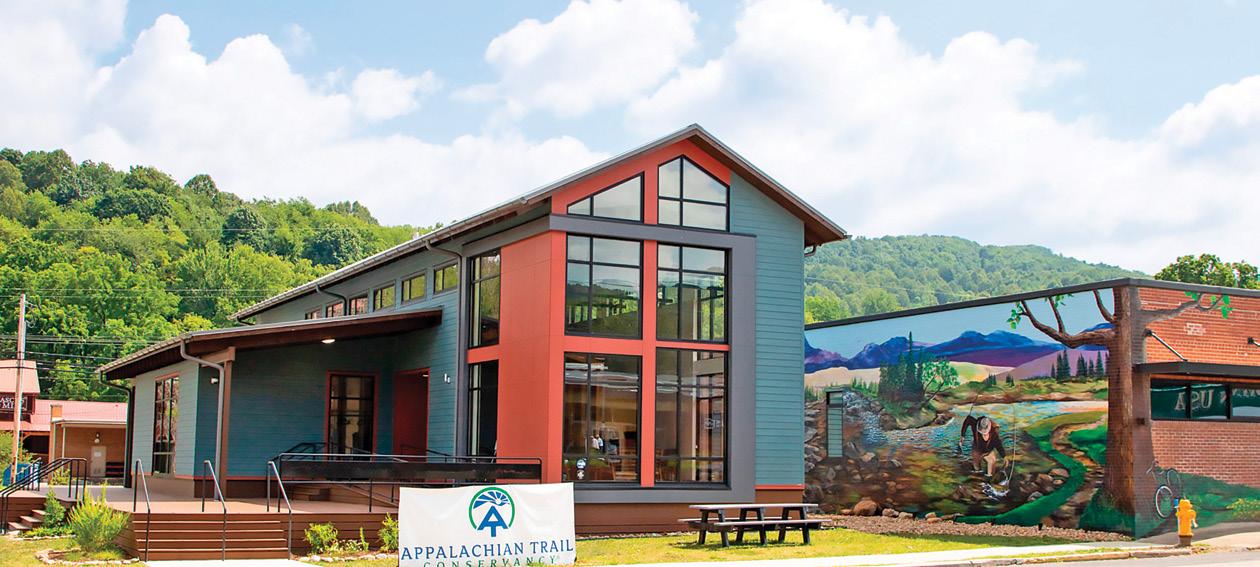
conservation land in our service area,” stated Eric Hiegl, BRC’s Land Protection & Stewardship Director. “We continue to work in our Greater Grandfather Mountain Conservation Area, where BRC has protected 2,300 acres of land.” Funding for this acquisition was provided by the North Carolina Land and Water Fund (NCWLF) and Parks and Recreation Trust Fund (PARTF).
"Grandfather Mountain State Park is fortunate to have partners like BRC working with us to protect the natural resources that surround Grandfather Mountain State Park and across the High Country,” said Andy Sicard, Grandfather Mountain State Park Superintendent. We value all the members involved with making this tract possible and for the added protection of land and natural resources this adds to the park." blueridgeconservancy.org, www.ncparks. gov/state-parks/grandfather-mountain-statepark
Updates on The Mountains-to-Sea Trail
Friends of the Mountains-to-Sea Trail (MST) have some exciting news for hikers. After more than a year in development, the MST is now available on FarOut, the world’s leading trail app. This fully interactive app lets you see your location on the trail route and record your trips, view elevation profiles and topography, find trail amenities using detailed waypoints, post and read comments about trail updates and conditions, check in with friends and family, and more.
The app works on your iPhone, Android, computer, or tablet. Once you’ve done the initial set up, it’s available offline so you can use it anywhere, even if you don’t have cell service. faroutguides.com/mountains-to-sea-trail/.
Friends of the Mountains-to-Sea Trail also share that the organization is seeking volunteers. “We need people with a wide variety of skills and interests to build and care for this beautiful trail—from trail building to tabling at events to fundraising and trail maintenance.” Want to get involved? Go to mountainstoseatrail.org/get-involved/ for more information.
Virginia’s Gravel Traverse Trail: The Next Big Thing
Off-road bicyclists looking for the next fitness challenge are in for a special treat, thanks to a complete mapping of the new 72-mile Grayson Gravel Traverse Trail that links two existing—and much tamer—bike trails: the Virginia Creeper Trail and the New River Trail State Park.
Both of those older, scenic “rails to trails” routes are conversions of defunct Southwest Virginia railway lines to recreational uses. The Virginia Creeper runs 34 miles from Abingdon to the small town of Damascus, while the New River Trail begins in little Fries (pronounced Freeze) and runs 45 miles to Pulaski, with a 12mile spur up Chestnut Creek to Galax. The new Gravel Traverse Trail, however, uses a network of Virginia’s well-maintained “mixed-surface” back roads—dirt, gravel, and in some cases paved—over the Commonwealth’s most rugged and mountainous terrain. The views are spectacular…and riders often will have the roads all to themselves.
A website provided by Virginia’s Grayson County tourism office gives prospective riders all the information they need for a safe and satisfying bike adventure through a wonderland
continued on next page
CAROLINA MOUNTAIN LIFE Spring 2023 — 67 TRAIL REPORTS
Damascus Trail Center
of unspoiled wilderness. Cyclists will need to plan carefully for this new backroad experience, for there are long expanses of roadway through lightly populated areas. Cell phone service is limited, as is access to drinking water and repair shops. And while there are places to camp or lodge for the night, as well as places to eat or buy groceries, cyclists will need to know where to look and in some cases how to make reservations.
The simplest, most direct route is the 72mile mile one-way trip heading west to east, that is, from the Creeper Trail campground in Whitetop to Fries; that’s basically downhill, although with significant climbs along the way. There are places with steep 15 percent grades. In addition, the trail mapping includes a few loop options that take cyclists into fresh countryside. These range from 143 miles to 150 miles for multi-day staging.
Since cyclists may meet the occasional car, truck or tractor as they ride, they should be sure to wear bright safety clothing. Wide tires are recommended to cope with uneven gravel surfaces, and, yes, e-bikes are allowed.
Before hitting the road, check with local tourism offices along the way, as towns like Independence, Fries, Galax, and Pulaski will be hosting an ever-expanding range of cultural events. Those include music, festivals, wildflower walks and more. And note: local brewpubs are expanding to help quench thirst at the end

of a long day. www.graysoncountyva.com/ business/grayson-gravel-traverse-bike-route/
Road Riders, Mark Your Calendars!
Several annual cycling events are scheduled for this summer and fall, and all require advance registration, including Blood Sweat and Gears (BSG), The Blue Ridge Brutal, and the 24th Annual Cycle NC Mountains to Coast Ride.

From humble beginnings, BSG has grown into one of the North Carolina High Country’s premier cycling events. Starting and finishing in historic Valle Crucis, home of the Mast General Store, BSG offers incredibly scenic views, epic climbs, and some of the best cycling that North Carolina has to offer. This year’s event takes place on June 24. Learn more and register at www.bloodsweatandgears.org.
The Blue Ridge Brutal Bike Ride in Ashe County, NC, is scheduled for Saturday, August 19, so now is the time to register for this popular ride. Because of construction on the Blue Ridge Parkway, the routes have changed again this year—but with new routes come new views! All of the rides—25, 50, 70 and 100 miles—have steep elevation gains and can be considered challenging to strenuous. However, you can mix the pain with the joy of riding through some of the most beautiful scenery in North Carolina. blueridgebrutal.org
The 24th Annual Cycle North Carolina “Mountains to Coast” Tour is a fully supported

cross-state bicycle tour of North Carolina. The event began its inaugural trek in 1999 and has attracted participants from all 50 states and eight countries, stopped overnight in over 100 North Carolina towns, traveled more than 5,000 miles on the scenic back roads of North Carolina and passed through nearly 700 North Carolina communities. This year’s tour takes place September 30 through October 7, and will begin in Banner Elk, NC. Find out more and register at www.ncsports.org
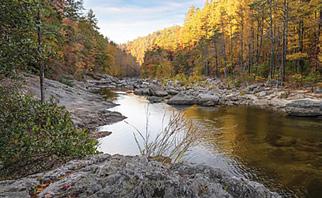
68— Spring 2023 CAROLINA MOUNTAIN LIFE
Berry Land becomes part of Grandfather Mountain State Park Johns River Headwaters, Blowing Rock
Wilson Creek, Foothills Conservancy
Just a Reminder
By Andrew Corpening
Now that spring has come to the High Country many anglers, both locals and visitors, want to wet a line and fish for trout. And the spring is a great time to fish since many local streams are stocked regularly by the North Carolina Wildlife Resources Commission (NCWRC). If you are from the Piedmont or Coastal Plain and have an inland fishing license, this is all you need. However, when fishing the delicate mountain trout streams, with limited access points, there are additional rules, both written and unwritten, that you need to know.
The first, as mentioned, is that you need a fishing license. Purchasing a fishing license is not only the right thing to do but can also save you the cost of a hefty fine if the Game Warden pays you a visit. A 10-day resident license is $9 and non-resident 10-day is $23. A resident annual license is $25 and $45 for non-residents. This is very reasonable considering what some of the neighboring states charge.
Another thing to remember is that there are several different designations for trout streams. These range from Hatchery Supported, where you can use any kind of bait and keep seven trout with no size limit, to Fly Fishing Only, and Catch and Release, which is self explanatory. The NCWRC marks the streams with diamond shaped signs. These signs display the designations plus the rules. If you do not abide by these rules, your pocket book could become much lighter if you are caught. To review the complete rules, get a copy of the Regulations Digest published yearly by the NCWRC or online at ncwildlife. org. Of course, always obey No Trespassing signs.
Now that the written rules have been covered, there are some unwritten rules that need to be considered. Most avid trout fishers know the unwritten rules but visitors and people new to the area need to be made aware. Due to the small size and, unfortunately, limited access to most of the mountain streams, simple common courtesy is important for everyone’s fishing enjoyment.
The number one rule of fishing etiquette is to not crowd other fishermen. If you get to
the river and someone is already fishing in your favorite hole, respect him or her and go to another location. One thing to do before moving on is to ask them if they are fishing upstream or downstream. If they are fishing upstream, you do not have to be too far downstream to avoid disturbing them. However, if you move upstream of the person, go well upstream so you don’t scare the trout the other fisherman is approaching. Just reverse these guidelines if the other person is fishing downstream.
Some of these unwritten rules also apply to the non-fisherman. If your children want to wade or splash around in the water, make sure they are well away from someone fishing. This also applies if you are playing fetch with your dog in the river. Give the fisherman some space.
Fishermen also need to be courteous to the landowners along the rivers or streams. If the property does not have “No Trespassing” signs, which in North Carolina read “Posted,” the landowner likely does not mind you crossing their property to get to the river. But if you want to keep crossing their property you need to use some common sense. Do not park where you are blocking the road or driveway. If you have to open a gate to cross the land, make sure to close it. Once at the river, stay in the water or on the edge of the bank. Disturb as little as possible. Follow these rules and chances are the land will continue to be open to fishermen.
One of the main reasons people “Post” their land is litter. This should be obvious, but unfortunately it is very common to see candy wrappers, bait containers, fishing line, and other trash along the stream bank. Don’t litter, and if you see litter, pick it up and take it with you when you leave. This is not only an unwritten rule, it is the law. The Game Warden can fine you for littering as well as fishing violations. And the fine for littering is much higher than most of the fishing fines. And speaking of “Posted” land, it never hurts to ask. Some landowners don’t mind you fishing if you politely ask for permission. If you explain that you are catch and release fishing in a way where you can release the
trout with minimal damage, some will allow you to use their land. Or, you might get permission if you offer to bring a couple of fish to the property owner if fishing regulations allow keeping some.
If you are fishing for food, it is recommended that you fish Hatchery Supported waters. These streams are stocked by the State for the purpose of supplying trout to eat. You can keep seven trout from these rivers, but if you only need a couple for dinner don’t take the maximum allowed. Trout are best when cooked as soon as possible. They are never as good after being frozen.
Many people who fish for food use bait such as worms, corn, or commercial scented lures. As long as you are on Hatchery Supported Rivers, this is fine. But if you are planning to release the fish do not use bait. The trout swallow it too deeply to be released unharmed. Also remember that the only rivers where bait or lures with treble hooks can be used are the ones designated Hatchery Supported.

One final note on using bait: if you are using corn, do not dump it in the river when you have finished fishing. You may think that you are simply feeding the trout but actually you may be killing them. Trout, like humans, don’t digest corn well. Corn can actually block the trout’s digestive system and kill them. Take the leftover corn, and the can, and dispose of it properly.
If everyone would abide by these written and unwritten rules, fishermen, landowners, and others that use the streams will get along fine. Common courtesy is the “Golden Rule” of fishing etiquette. Remember this.
CAROLINA MOUNTAIN LIFE Spring 2023 — 69 FISHING
CAROLINA MOUNTAIN LIFE Spring 2023 — 69





70 — Spring 2023 CAROLINA MOUNTAIN LIFE TURN OVER A NEW LEAF Drive Forever Call Member & Guest Services for a tour! 828-387-4208 opt. 1 beechmtn.club Join Us! CLUBS, PUTTERS, BALLS, SHOES , REGRIP, AND REPAIRS TOM'S CUSTOM GOLF 828.260.3107 tommycustomgolf@gmail com CALL US NOW FOR THE BEST PRICES IN THE HIGH COUNTRY!! Gift Certificates available!Dropship directlytoyou!
Golf Guide
By Tom McAuliffe
A successful winter season with low snowfall totals and timely weather portend healthy turf and excited staffs and crews at High Country golf facilities. Here’s a quick guide to the neighborhood offerings.
Public Courses
Linville Land Harbor—Linville
Michael Hayes, Operations manager
Willow Valley—Boone, NC
Architect Tom Jackson (nine holes)
Beech Mountain Club—Beech Mountain, NC
Loren White, PGA / Architect Willard Byrd
The Boone Golf Club / Kyle Grove Photography
Architects Tom Jackson (A-9 Ernie Hayes)
Long-time private enclave between Linville and Pineola open to public. Fabulous putting surfaces. 828-733-8325
www.linvillelandharbor.com
Boone Golf Club—Boone, NC
Tom Adams, PGA
Architect Ellis Maples / Revision Rick Robbins
‘Must play’ Mountain Standard in 64th season. A mountain classic by Ross protégé Ellis Maples. Opened 1959, the Boone Golf Club proved a primary driver to growth of summer tourism in the High Country.

828-264-8760
www.boonegolfclub.com
Mountain Glen—Newland, NC
David Burleson, Golf Director
Architect George Cobb
Burleson keeping things familiar in Newland following Sam Foster’s retirement. Play volume at historic highs at a layout you could play everyday and be glad of it. 828-733-5804
mountainglengolfclub.com
Sugar Mountain Golf Club—Sugar Mountain, NC
Tom McAuliffe, Golf Director
Architect Frank Duane
Dynamite par 64. Everyman’s golf club in a land of giants. Shoot par here and chances are you can shoot par anywhere, but still a place for all skill levels. A little bit better every year and that says a lot. 828-898-6464
www.seesugar.com
Mt. Mitchell Golf Club—Burnsville, NC
Jim Floyd, Golf Director
Architect Fred Hawtree
Spectacular property just off the Blue Ridge Parkway at milepost 344 at Hwy. 80 to Burnsville. Group getaway lodging specialists. For the day or the week. Toe River trout fishing, food and beverage excellent. Since 1975. 828-675-5454 / www.mountmitchellgolf.com
One of Jackson’s earlier creations, he’s now a member of the Carolinas Golf Hall of Fame. The Little Green Monster is an exceptional par three course. 828-963-6865
https://www.facebook.com/WillowCreekNC/
Mountain Aire Golf Club—West Jefferson, NC
Architect/Committee, Revisions Dennis Lehmann
Popular Ashe County stop, driving range, good course, good folks in the pro shop.
Philip Shepherd carrying bright torch in Hagel family tradition enters his 12th season at the helm. 336-877-4716
www.Mountainaire.com
Grassy Creek Golf Club—Spruce Pine, NC
Bruce Leverette, PGA
New Ownership in place. Visit the Mitchell County mainstay and find out what all the locals love about Grassy Creek. What golf is all about. Pro Bruce Leaverette and Supt. Howard McKeithen over 45 years keeping golf real in Spruce Pine. 828-765-7436
www.grassycreek.com
Resort Clubs with Lodging Access to Golf
Hound Ears Club—Blowing Rock, NC
Peter Rucker, PGA,
App State alum begins 41st year at fabled club.
Architect George Cobb / Revisions Tom Jackson Private club with golf available for guests lodging in Clubhouse accommodations and via Qualified Member Home Rentals. A very special and playable golf course. 828-963-4321 / www.houndears.com
Jefferson Landing Country Club & Resort
Jefferson, NC
Dan Stepnicka, PGA
Architect Larry Nelson/Dennis Lehmann
Course access for members and on-site lodgers—great golf getaway for your group.
Outside play welcome per space available. Call for tee times. Beautiful Ashe County classic. Clubhouse dining. 1-800-292-6274 / www.visitjeffersonlanding.com
Eastern America’s Highest Town at 5,506’. Ridge Top layout with views of five states, including Kentucky when the Blue Moon is full. Pro Loren White calls the mountain home from storied Kingsmill Resort of Williamsburg, VA. Private access accompanied by member. Temporary membership transfer in qualified housing only. 828-387-4208 ext. 201 / www.beechmtnclub.org
Private Clubs/Members & Guests Only
Some clubs below may offer short-term rental membership privileges with club or member sponsorship.
Grandfather Golf & Country Club—Linville, NC
Chip King, PGA–Golf Director Emeritus
Jonah Cox, PGA
Architect Ellis Maples 828-898-4531
Blowing Rock Country Club—Blowing Rock, NC
Andrew Glover, PGA
Architect Donald Ross, Seth Raynor Revisions Tom Jackson and more recently BRCC revisions by Ross specialist Kris Spence a big hit. 828-295-3171
Elk River Club—Banner Elk, NC
Dave Ambrose, PGA
Architect Jack Nicklaus/Bob Cupp 828-898-9773
Linville Ridge Club—Linville, NC
Brent Allen, PGA
Architect George Cobb / Revisions Bobby Weed
“Eastern America’s Highest Golf Course” 828-898-5151
Diamond Creek—Banner Elk, NC
Joe Humston, PGA
Architect Tom Fazio 828-898-1800
Linville Golf Club—Linville, NC
Bill Stines, PGA
Architect Donald Ross
Revisions Robert Trent Jones, Sr., Bobby Weed. Longtime public access to historic Eseeola Lodge now member and guests only. 828-733-4311 / www.eseeola.com
CAROLINA MOUNTAIN LIFE Spring 2023 — 71 GOLF GUIDE











72 — Spring 2023 CAROLINA MOUNTAIN LIFE experience the ASHE COUNTY ARTS COUNCIL www.AsheCountyArts.org West Jefferson,NC 336.846.2787 Enriching the cultural life of the mountain region of NC with STUDIO TOUR, LIVE MUSIC, GALLERY CRAWL & more! Visit our website to find out more about events in the arts: A Store from Days Gone By... BRINKLEY HARDWARE — ESTABLISHED 1903— 828-733-2107 Downtown Elk Park, NC Mowers, Tillers, Mulch & Garden Supplies Furniture, Bedding, and Much More!
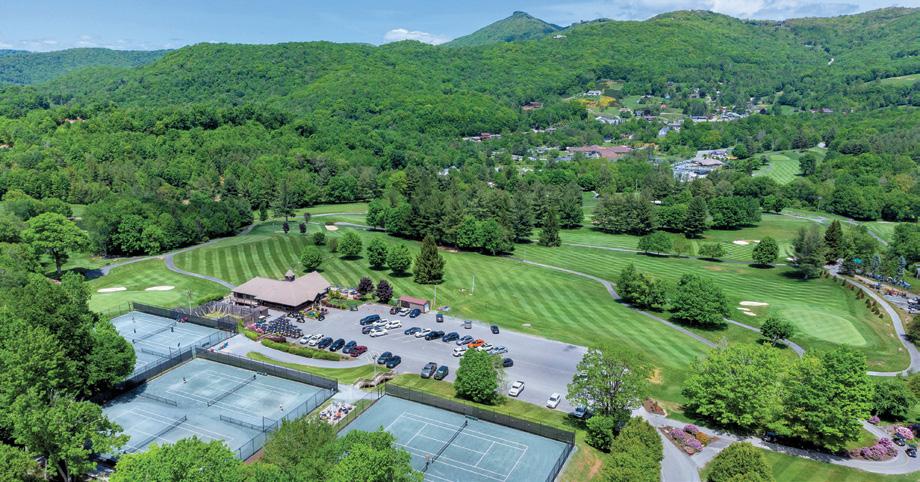
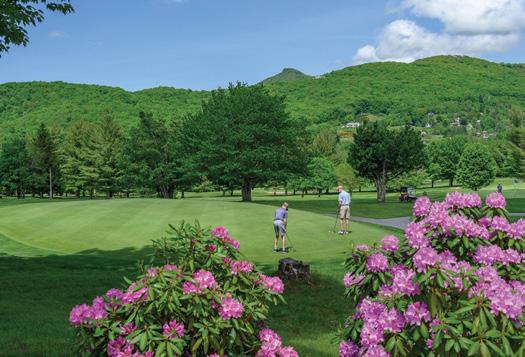
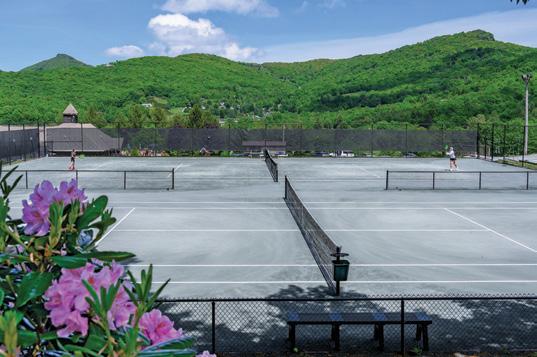
CAROLINA MOUNTAIN LIFE Spring 2023 — 73 Go to SeeSugar.com to plan your visit! Meticulous public tennis courts of fast-dry, Har-tru clay. Men’s, women’s, and mixed friendlys. SeeSugar.com/tennis | 828-898-6746 Sugar Mountain Tennis Club 18-hole public golf course with an immaculate putting surface that maximizes every vista. SeeSugar.com/golf | 828-898-6464 Sugar Mountain Golf Club 4 Delicious food on the outdoor deck with mountain views. SeeSugar.com/caddyshack-cafe | 828-898-1025 Caddyshack Café
WE ARE FULLY INSURED AND PROVIDE CERTIFICATES OF INSURANCE.
Hunter’s Tree Service, Inc.


Hunter’s Tree Service, Inc. has served the High Country since 1980. Our mission is to provide you with skilled tree care and outstanding customer service, while caring for one of your most valuable resources. As your complete tree specialist, we offer a range of services:
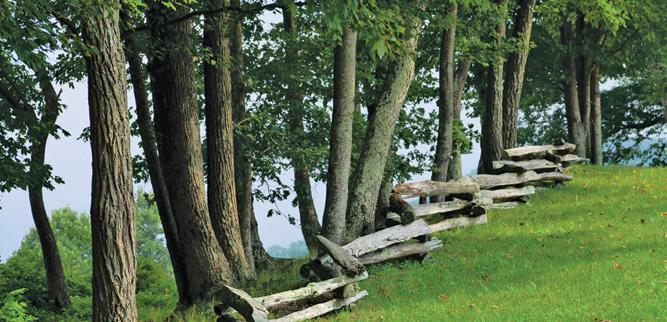
Pruning
View enhancement
Tree removal
Stump grinding
Bucket truck service
Crane service
Cabling
Lightning protection
Pre-construction consultation
Disease and pest control
POB 1674, Banner Elk NC 28604 / 828-733-3320 or 828-953-5094
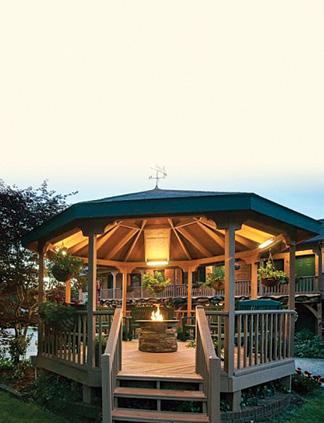








74 — Spring 2023 CAROLINA MOUNTAIN LIFE a t u r d a y , A u g u s t 1 9 W e s t J e f f e r s o n , N C 2 5 , 5 0 , 7 0 , o r 1 0 0 M i l e s u s T h e A s s a u l t o n M t . J e f f e r s o n ( o p t i o n a l ) w w w . B l u e R i d g e B r u t a l . o r g Indoor Air Quality Maintenance Ductless Systems 828-963-5962 www.BannerElkHeatandAir.com
Pumps
Air Conditioning
Heat
Furnaces
hunterstreeserviceinc.com
Hemlock Inn A Blowing Rock Tradition – Open Year Round –Walk to downtown shopping & dining Easy driving to many area attractions 18 uniquely designed rooms 828-295-7987 | HemlockInn.net 134 Morris Street
PHOTO BY TODD BUSH
Spring Awakenings on the Blue Ridge Parkway
By Rita Larkin
The Blue Ridge Parkway’s busy spring season is underway. Here are tips and tidbits to help you make the most of the adventures the park offers.
Wildflower Blooms
Among all 400+ national park sites, the Parkway is one of the most diverse when it comes to plant varieties. Spring is the ideal time to explore this bounty as blooms pop up starting in the lower elevations and moving to the peaks. From mid-April through June, you can expect to see buttercups, Crested Dwarf Iris, Solomon's Seal, Bloodroot, Pinxter Flower, Trillium, Foam Flower, Bluets, and many more varieties. For more information, visit BRPFoundation.org/ explore-blue-ridge-parkway.
Parkway Visitation in 2022
Once again, the Parkway ranked as the most visited national park in the country. According to the National Park Service, the scenic route welcomed an estimated 15,711,004 recreation visitors in 2022. The scenic route saw more visitors than Grand Tetons, Grand Canyon, Yellowstone, and Yosemite national parks combined for the same year. To avoid the crowds, visit the Parkway earlier or later in the day during the week, rather than weekends. Great Smoky Mountains National Park hosted 12,937,633 visitors, while Shenandoah National Park saw 1,449,301.
Blue Ridge Music Center Concert Series


The Blue Ridge Music Center’s annual summer concert series features a stellar lineup of bluegrass, country, Americana, and folk performers. The shows are hosted at 7 p.m., Saturdays, Memorial Day through Labor Day, in the spacious outdoor amphitheater at milepost 213 on the Parkway near the North Carolina/Virginia state line. This year’s performers include Lonesome River Band, Watchhouse (formerly Mandolin Orange), Amythyst Kiah, Sam Bush Band, Jeff Little Trio, Sierra Ferrell, The Kody Norris Show, Doc at 100: A Doc Watson Tribute Concert, and the Steep Canyon Rangers. For tickets, visit BlueRidgeMusicCenter.org.
The Bluffs Restaurant
The Bluffs Restaurant at Doughton Park, milepost 241 on the Parkway, will reopen for the season on Friday, May 26, with a new team in charge of operations. Cal Ledbetter of The Bluffs Restaurant, LLC, will manage the restaurant. The dining establishment will be open from 8 a.m. to 7 p.m., Sunday, Monday, Tuesday and Thursday, and 8 a.m. to 8 p.m., Friday and Saturday. It will be closed on Wednesdays. The menu will feature perennial homestyle favorites, nutritious sandwiches and snacks, and a diverse seasonal variety of specials. Learn more at BluffsRestaurant.org.
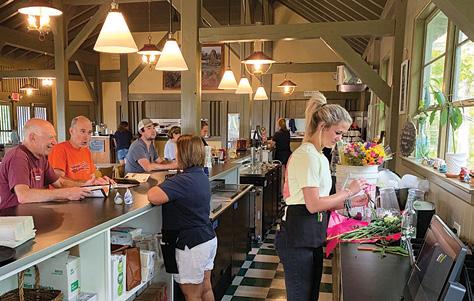
Parkway License Plates Make a Difference
In 2022, North Carolina drivers raised $552,771 for Blue Ridge Parkway projects and programs by purchasing the state’s specialty license plate. The plate also provided funds for the Department of Transportation’s wildflower program, which beautifies highways with beds of blooms. To get a Parkway plate for your car or motorcycle, visit GetThePlate.org.

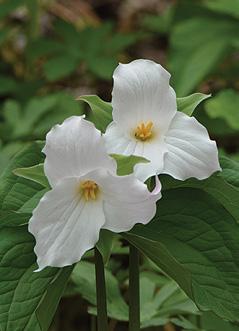
BLUE RIDGE PARKWAY
CAROLINA MOUNTAIN LIFE Spring 2023 —
75
Amythyst Kiah
The Bluffs Restaurant
Trillium Grandiflorum Phlox
Courtesy Blue Ridge Parkway, National Park Service










76 — Spring 2023 CAROLINA MOUNTAIN LIFE Furniture • Appliances Small Household Items • Books Clothing & Accessories 1/2 Off on clothing every Saturday! Donations welcomed. Pick up available for furniture and appliances Thank you for your continued support 828-262-5029 877 West King Street, Boone NC Open Mon-Sat, 9am-5pm SPONSORED BY RESORT AREA MINISTRIES GET TICKETS ONLINE: Blowing Rock Souvenir Sportswear Area’s Largest Selection of Hats & Shirts Be Sure to Visit Sunset Sweets & Heats (over 500 hot sauces) Jewelry Hershey’s Dip Ice Cream Gifts Life Is Good T-Shirts 9am-9pm Mon-Sat | 10am-8pm Sun Main St., Blowing Rock | 828-295-9326 Read us online at www.CMLmagazine.online Everything Under One Woof! • Apparel, Accessories, Collars & Leashes • Frozen Raw & Freeze-Dried Foods High Quality Dog & Cat Food Homemade & USA Sourced Treats Toys for Training & Play • Holistic Supplements Try Our Self-Wash Service! Leave the bath time mess to us. Our self-service facility is perfect for any size, age or breed. 828.898.5625 176 Shawneehaw Ave. Downtown Banner Elk NC www.mybestfriendsbarkery.com
Dustoff those Fascinators and Derby hats. Bring out the seersucker suits, bowties and fancy dresses. It’s time to gather with friends, new and old, for the 2023 Spirit Ride Kentucky Derby Party. Hosted by Spirit Ride Therapeutic Riding Center, this year’s event will be held at the newly renovated Equestrian Center at Elk River on May 6, from 4 to 8 p.m. Ticket holders will again enjoy an evening of laughter, great food, nonstop music, red carpet photos, derby-centered activities and an opportunity to learn about the dedicated work of the Spirit Ride professional staff and volunteers.

On hold since 2020, the annual fundraiser for Spirit Ride NC helps underwrite scholarship funds for the Equine Facilitated Learning (EFL) services offered without charge to the families of children with disabilities referred for services. One of Spirit Ride’s core values is the belief that every child who can benefit from a relationship with an equine partner should have that opportunity. And who better to help serve as this year’s Triple Crown Corporate Sponsor but Spirit Ride’s newest neighbor in Valle Crucis, Hidden Hills Equestrian Center owned by Louise and Scott Sullivan.
“We so missed holding the Derby Parties during the Pandemic,” expressed Spirit Ride Therapeutic Riding Center’s Executive Director Patty Adams. “But we are back, and this year’s event is full of activities for everyone to have a great time.” Classic Mint Juleps, bourbon, beer and wine from Lost Province in Boone and the Banner Elk Winery, paired with Elk River’s Executive Chef Wayan Sutriasa’s creative Derby fare, will whet one’s appetite for both a live and quality silent auction.
Along with watching the 149th Running of the Kentucky Derby, guests can purchase “Derby Dollars” to buy extra drinks or chance tickets for the winning horse. Derby Dollars can also be used for the raffle or to attend a bourbon tasting hosted by Beech Mountain Bourbon Society. Other activities include therapeutic riding demonstrations, red carpet photo ops with Cindy McEnery,
Spirit Ride Kentucky Derby Party
By Pan McCaslin, with
or tapping one’s foot to Gravel-n-Grit’s mix of blues, classic rock and country. Contests for the best dressed couple and the best hat are a tradition at the Derby Party as are the swag bags full of goodies.
This year, general ticket holders can upgrade to VIP status for reserved seating as well as access to the VIP lounge with private viewing of the therapy demonstrations, the “Run for the Roses,” and an express line for Red Carpet photos.
“ ‘Believe in Infinite Possibilities’ undergirds all our work,” stated Adams, who brings over fifteen years of experience in special education and extensive training as a board-certified equine interaction professional. Adams and her husband, Craig, Chairman of the Board of Directors and CEO, believe that private, individualized instruction based on a proven, scientific approach are exactly what allows them to not limit their beliefs.
“A large part of Spirit Ride’s success is due to great working relationships with local educators, pediatricians, occupational therapists, and mental health counselors,” Adams added. “They refer clients to us who they feel would most benefit from the opportunity to experience equine-assisted activities and offer input throughout the child’s time as a client.”
Equine Assisted Activities are designed to foster learning and personal growth skills for self-esteem, social interaction, boundary setting and for deepening identified cognitive and physical goals. For example, balance and cognitive skills are built through the movement and sensory stimuli of sitting on a horse, but “the connection between the spirit of the horse and the client is the special ingredient which improves the measurable outcomes and success of Equine Facilitated learning,” shared Adams.
Lacey Costner, mother of Jake, Spirit Ride’s first and continuing client, shared, “Without Spirit Ride, my son Jake would not have been able to walk.” She continued, “The work with the Spirit Ride staff enabled Jake to build his core strength, balance, fine motor and cognitive skills and
Photos by Cindy McEnery
was so much a part of his success.” Costner stressed that the children served by Spirit Ride are not the only beneficiaries. “Spirit Ride offers a support system for not only the children, but the parents and family as well. Parents can go and be understood, accepted and find community.”
Early in the pandemic, due to her son’s immune system, Costner related Jake was unable to have face to face services, but he did get to Face Time with his horse on a regular basis. Now she is grateful that this type of therapy is conducted safely outdoors and Jake just feels like he is having fun. She also related that her daughter, a high school student, now serves as a volunteer team member for another client. “She understands how important Therapeutic Riding is for identified children,” said Costner.
The mission of Spirit Ride Therapeutic Riding Center, a 501(c)3 not-for-profit organization, is to provide children with a wide array of diagnoses the opportunity, through equine-assisted services and educational activities, the opportunity to learn, grow and strive to become their ideal selves. All accepted clients are provided services free of charge.
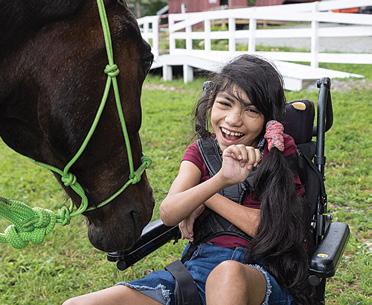
“We couldn’t operate without a team of volunteers and donors,” Adams stated. “There are always jobs for anyone who would like to get involved—from mucking stables, to assisting with therapy teams, to supporting the work of the board or sponsoring one of our therapy horses.”
Director of Exceptional Children Services for Watauga County Schools, Dr. Mike Marcella, a volunteer at Spirit Ride and a member of Gravel-n-Grit, who will provide music for the Derby Party shares, “Patty and Craig Adams offer a gift to the community by sharing Spirit Ride with children and their families at no cost. Let’s make sure we show them our support and keep them here for many years to come.”
Information about staff members, both human and equine, volunteer opportunities, tickets for The Spirit Ride Kentucky Derby Party, and the story of Spirit Ride are shared on the website at spiritridenc.org.
CAROLINA MOUNTAIN LIFE Spring 2023 — 77





78 — Spring 2023 CAROLINA MOUNTAIN LIFE Everything a general store used to be ... and more! Sherpani • Columbia • Kavu Merrell • Wolverine • Croakies Wigwam • Sorel • Teva Norpro • Whistle Creek While at Freds ... Stop in and Visit The Wildbird Supply Co. & Fred’s Backside Deli Evergreen • Leanin’ Tree Two’s Company • Nature Planet Locally crafted houses & feeders and so much more! – Celebrating our 44th Year! –Visit us at Eastern America’s highest town 828-387-4838 501 Beech Mountain Parkway Beech Mountain, NC www.fredsgeneral.com The High Country's premier Copper fabrication facility Specializing in custom interior and exterior design Zinc, Brass, Stainless, and Mild steel 5004 NC-105, Banner Elk |704.838.6666 elevatedmetals@gmail com The Best Local Insurance Agency FORTNER INSURANCE AGENCY — 1919-2023 — Newland • Spruce Pine • Banner Elk • Burnsville www.fortnerinsurance.com THE BEST LOCAL INSURANCE AGENCY CITY • 000-000-0000 www.bestinsuranceagency.com Find out how you can save money with Auto-Owners Insurance multi-policy discounts. Fall into savings...
Play Ball!
Bigfoots step up to the plate for their third season.
By Steve York
Bigfoots
Baseball has big news on two fronts this year. First, it’s their third season as the High Country’s true baseball “home team,” proudly at home at Appalachian State University’s Beaver Field at Jim and Bettie Smith Stadium in Boone, North Carolina. And they start the 2023 season with two excellent season records to build on.
Their first year of play took to the field in the midst of COVID, yet pulled in great crowds, along with 26 wins and only five losses. The team’s second season saw them winning 28 games, with 12 losses and two ties. By any standard, that’s an amazing trackrecord and sets the stage for another great season. Find their thirdseason schedule, including game times, elsewhere on this page and online at www.bigfootsbaseball.com.
The second big news item is that our own hometown team is now a proud member of the Coastal Plain League (CPL). That’s a very big deal for our Bigfoots’ status. And to put that big deal in perspective, here’s a little history via the league’s website:
The original Coastal Plain League competed from 1937 to 1941, and then, like most of baseball’s other minor leagues, suspended operations due to World War II. It would later return in 1946 and continue to operate through 1952. The CPL returned once more in 1997 to fill a void in summer baseball. While there were many summer leagues in operation at the time, there wasn’t really one located in the Southeastern United States.
Thus, the CPL was reborn.
From a historical perspective, it’s worth noting that some of the classic North Carolina ballparks from those early years—now part of the current CPL—helped spawn the careers of baseball legends like Babe Ruth, Ted Williams and Cal Ripken, Sr. Today’s CPL includes teams from North Carolina, Georgia, South Carolina and Virginia and features top-ranked college players from across the nation.
According to CPL reports, the league has rapidly grown to be among the premier summer collegiate baseball leagues in the U.S. It’s also important to note that the CPL is highly ranked by Major League Baseball scouts, with 1,750 alumni drafted by Major League teams in recent years and 163 players making it to First Teams.

With the addition of the Bigfoots, the CPL now boasts 14 teams throughout the southeast. “We’re very excited to be adding the Boone Bigfoots to the Coastal Plain League for the 2023 season,” said CPL Commissioner Chip Allen. Allen also noted that, as a family-friendly team, the Boone Bigfoots are a perfect fit for the CPL. And in the words of Bigfoots founder, Bob Wilson, “Boone Bigfoots are excited to be joining an elite league like the CPL and can’t wait to bring even more excitement, entertainment, and great baseball to the league and to the High Country. 2023 is going to be an amazing season. It’s time to Pump it Up!”

2023 HOME GAME SCHEDULE
Home Games Begin at 6:30 pm (or 4:30 pm on Sundays) at Beaver Field at Jim and Bettie Smith Stadium
Saturday, May 27 vs Lexington County Blowfish
Sunday, May 28 vs Uwharrie Wampas Cats
Tuesday, May 30 vs Carolina Disco Turkeys
Friday, June 2 vs Forest City Owls
Sunday, June 4 vs Asheboro Zoo Keepers
Thursday, June 8 vs Forest City Owls
Saturday, June 10 vs HP-Thomasville Hi-Toms
Sunday, June 11 vs Carolina Disco Turkeys
Tuesday, June 13 vs Catawba Valley CV Stars
Friday, June 16 vs Forest City Owls
Sunday, June 18 vs HP-Thomasville Hi-Toms
Tuesday, June 20 vs Catawba Valley CV Stars
Friday, June 23 vs Martinsville Mustangs
Tuesday, June 27 vs Holly Springs Salamanders
Thursday, June 29 vs Forest City Owls
Sunday, July 1 vs HP-Thomasville Hi-Toms
Tuesday, July 4 vs Forest City Owls
Friday, July 7 vs Holly Springs Salamanders
Sunday, July 9 vs Catawba Valley CV Stars
Wednesday, July 12 vs HP-Thomasville Hi-Toms
Friday, July 14 vs Asheboro Zoo Keepers
Sunday, July 16 vs Lexington County Blowfish
Monday, July 17 vs Forest City Owls
Tues, July 18 & Wed, July 19 Coastal Plain League Allstar Show
Thursday, July 20 vs Martinsville Mustang
Saturday, July 22 vs Forest City Owls
Sunday, July 23 vs Uwharrie Wampas Cats 4pm
Friday, July 28 vs Forest City Owls
Monday, July 31 vs Catawba Valley CV Stars
Tuesday, Aug 1 vs Martinsville Mustangs
Thursday, Aug 3 vs HP-Thomasville Hi-Toms
Saturday, Aug 5 vs Asheboro Zoo Keepers
Aug 6-12 Pettit Cup Playoffs
CAROLINA MOUNTAIN LIFE Spring 2023 — 79
A Community, a River, and the Salamander That Saved Them
By Julie Farthing
There is a place where the land rolls upward towards the clouds then gently down again like waves in an ocean. Lush land, carpeted with acres of Christmas trees and gravel roads that meander by centuryold barns and a crystal clear stream that sparkles in the sun.
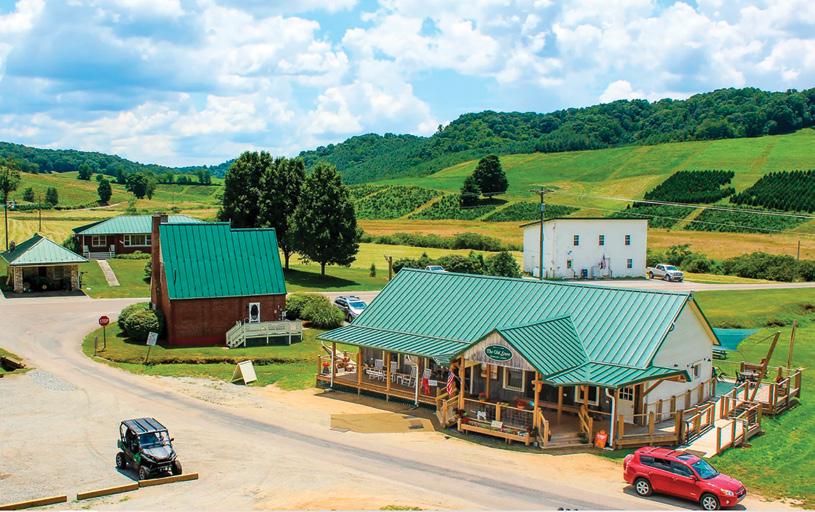
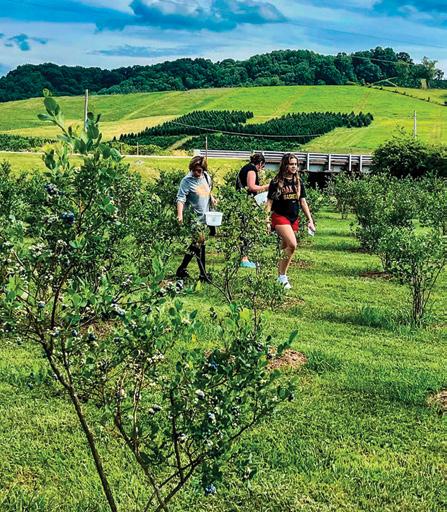
The place is Grassy Creek, North Carolina, named for the tributary that flows into the North Fork of the New River in Ashe County. You can literally throw a rock across the state line into Virginia. Established in the late 1700s by the affluent Greer family, its landscape was once dotted with plantation homes, schools, stores, churches and a post office. Other families were soon drawn to its beauty—with surnames of Jones, Cox, Pierce, Young, and Hash, just to name a few—and later buried in cemeteries scattered on the rolling hills and fertile bottom land that made this region the perfect spot to set down roots.
And then there is the river. The New River, wide and shallow, sometimes lazy, sometimes swift. At 300 million years old, it is hardly new, believed to be the second oldest river in the world behind the Nile. Its pristine waters flow north, one of only a few rivers in the U.S. that does so, traveling 320 miles until it joins the Kanawha River in Charleston, West Virginia. The even older mountain ranges that the New River
traverses contain mineral-rich soils resulting in a wide diversity of rare plants and aquatic species, one of them being the star of our story: Cryptobranchus alleganiensis, better known as the “hellbender.”
These mottled brown and gray salamanders with their slimy, wrinkled skin, eel-like tail and flat head with beady eyes are probably why early settlers would say “it was a creature from hell where it’s bent on returning!” Also called the Allegheny alligator snot otter, and devil dog, it is the largest salamander species in North America.
In the 1970s, Grassy Creek, the New River and the hellbender were on the brink of destruction when the Appalachian Power Company proposed a dam that would flood over 40,000 acres of the New River Valley. Elizabeth Underwood, Director of the New River Conservancy, headquartered in West Jefferson, explains the importance of the community banding together to save the river and ancestral land listed on the National Registry of Historic Places.
“At the time we were the National Committee for the New River to preserve the headwaters from being flooded by the dam,” says Underwood. “In 1976, The Old Store at Grassy Creek was on the Registry, and that was a pivotal point because the dam would have flooded buildings in
the historic district. And of course there were the endangered species—including the salamander. This was a big reason for the political advocacy generated by so many people through the states of North Carolina and Virginia, and so ultimately Gerald Ford signed the National Wild and Scenic Status for this section of the river to the Virginia line.”
The historic store Underwood refers to first opened its doors more than 120 years ago when agriculture in Grassy Creek was at its height. In 1976, when the community was fighting a big corporation, current owners John and Kathy Chefas were planting their first Christmas trees in Hart, Michigan.
A decade later, John was traveling with his brother through Ashe County in search of the popular Fraser fir trees. When he stumbled across Grassy Creek, he fell so in love with the land that he bought the original Greer farm, where John and Kathy soon relocated their Hart-T-Tree Farms operation. Today they manage the business along with their daughter, Carrie McClain, who explains how her father saved the old store which had sat vacant for decades after many of Grassy Creek’s younger generations sought work in larger cities.
“He was going to knock it down, it was in such disrepair,” McClain says of the old general store. “When he discovered it was
80 — Spring 2023 CAROLINA MOUNTAIN LIFE
Pick your own blueberries in June - August
The Old Store at Grassy Creek
on the historic registry he decided to restore it. The reason that Grassy Creek was put on the historic register was the residents trying to stop the power plant from damming the New River.”
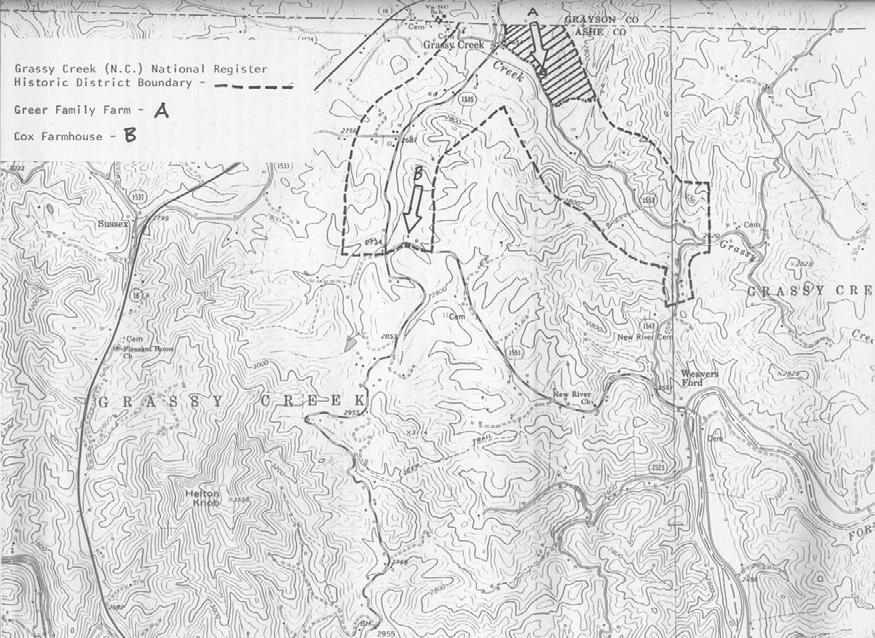
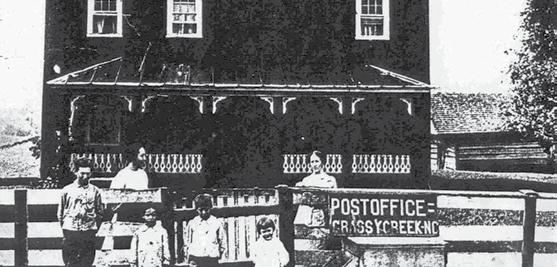
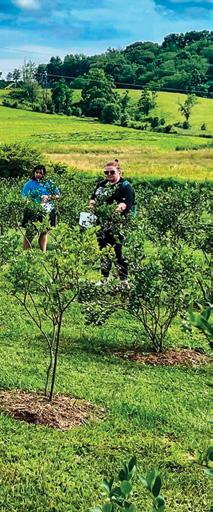
There were many reasons to save the river, but some locals still say it was the hellbender that made folks in Washington sit up in their seats a bit after learning of the huge primeval salamander lurking beneath rocks on river bottoms in western North Carolina. “There is always this myth that Grassy Creek was saved by a salamander but what stopped the dam from being built was the designation of the New River as a Wild and Scenic River, and maybe the hellbender had a big part in that,” adds McClain.
James Watson, staff member at The Old Store and an avid herpetologist, knows a thing or two about the elusive creature. There is a replica by the cash register so real that I can almost imagine slime spilling off its body. “This area in the southern Appalachians is the most diverse area for salamanders on the entire planet,” says Watson.
“Hellbenders are special as they are not the prettiest, but they are the biggest and the most well known in the area—the record is 29 inches in length. People say the hellbender was the reason to stop the dam; it was definitely part of the reason. From
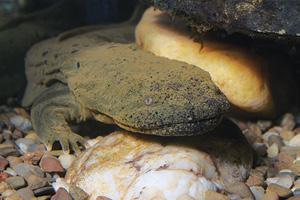
the biologist point of view, biodiversity was very important to maintaining the health of the river. The dam would have destroyed hundreds and hundreds of miles of habitat for the hellbenders. They only survive in the cleanest, most untouched water on the planet.”
The Chefas family completely revived the old store in 2020, paying homage to its original footprint and bringing it back to its former splendor. Most of the decor is from the original store, including brand-new clothes that had been boxed up when the store closed in the ‘60s. The store features craft items from local artisans, books, gifts, as well as local foods. A corner is dedicated to education on the local Christmas tree industry and the history of the community, including the iconic Virginia-Carolina School that was one of the only schools in the country that shared operations between two different states. “During this time we got to meet so many older residents, many in their eighties, and we felt a bit of responsibility to share their story and share the history that we have inherited,” said McClain of the restoration.
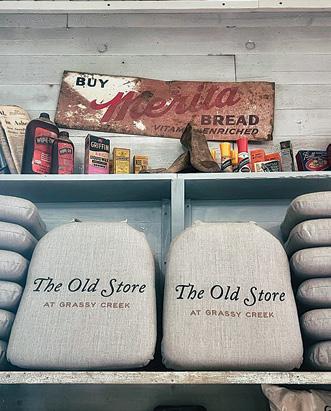
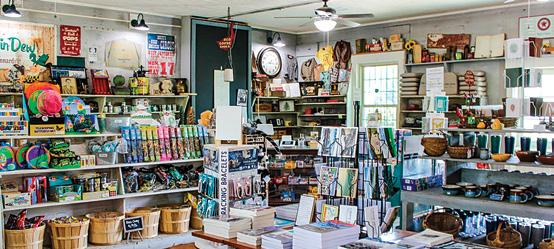
To share the significance of the New River, Grassy Creek, and the hellbender, The Old Store at Grassy Creek is having a Saved by a Salamander Day on May 20, 2023. There will be events throughout the day focused on education and conservation,
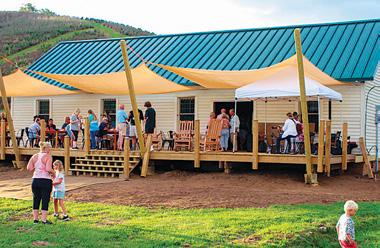
and in celebration of the hellbender and river, with an emphasis on the importance of keeping the New River clean.
In 1998, because of its historical, economical, and cultural importance, President Clinton designated the New River as one of the very first American Heritage Rivers. The New River Gorge National Park and Preserve in West Virginia became one of the newest parks of the U.S. National Park Service in 2020.
Elizabeth Underwood of the New River Conservancy will be at the May 20th event, and hopes folks come out to Saved by a Salamander Day to learn more about the river and the hellbender. “The salamanders are a great indicator species indicating the health of the river. You take out one species and you can destroy that whole web that’s created by our ecosystem. We have a lot to be thankful for and we have a lot of work ahead of us.”
For information on The Old Store at Grassy Creek and Saved by a Salamander Day, visit www.theoldstoregrassycreek.com. To learn how you can help preserve the New River, visit www.newriverconservancy.org.
CAROLINA MOUNTAIN LIFE Spring 2023 — 81
Events at Old Grassy Creek
Grassy Creek Post Office at Aquilla Greer home
Hellbender-photo by Brian Gratwicke
Old boundary map
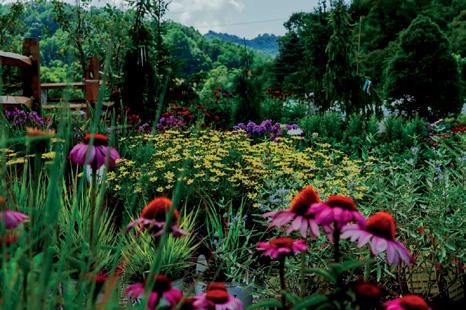



82 — Spring 2023 CAROLINA MOUNTAIN LIFE All Seasons offers a full variety of bulk landscape supplies and a broad assortment of plant material. www.allseasonssupply.com 828-416-0134 118 Lonnie Henson Road Vilas, NC 28692 7 different varieties of mulch river rock decorative gravel creek stone boulders drainage rock specimen trees container shrubs Delivery Services Available ORDER ONLINE 920 Shawneehaw Avenue | Banner Elk, NC 28604 HARDINJEWELRY@GMAIL.COM | 828-898-4653 GABRIEL OFIESH July 20 through July 23 Thursday 1-5, Friday 10-5, Saturday 10-5, Sunday 1-4 EAT, DRINK, BE SOCIAL... Lunch • Dinner • Full Bar Tues-Sat, 11am-9pm 128 Pecan Street Abingdon, Virginia (276)698-3159
Mission School Taught Life Skills and Service
By Ginny Walters Brien
Itseems that every time one mission in Valle Crucis ends, a new one emerges. What started as a religious order in 1842 by Bishop Ives, morphed into a combined seminary and agricultural school, and then reopened as a boarding school for girls and day school for boys in 1892.
Thrift and simplicity were values the Valle Crucis Mission School encouraged from its start. At the private high school for girls who lived at the Valle Crucis Mission School in the 1930s, thrift meant helping with “homely” work—not only to learn life skills, but also to earn their keep as they prepared for college.
“Many church schools have religion, simplicity of life, and intellectual breadth,” Elizabeth McCracken wrote in 1938, “but these schools are expensive… Valle Crucis school is contributing to that solution.”
In the 1930s a herd of Holsteins and over 100 acres of apple trees became the Mission School’s primary sources of income, and the girls’ help with making cheese and applejack kept their tuition affordable. Work in the kitchen was the basis for lessons in food values and preparation.
The red barn that greets visitors today as they near the Valle Crucis Conference Center was central to daily work at the Mission School. Initially called the Dairy Barn, its basement had a cement floor to accommodate the Holsteins. The upper floor, which is now used for weddings and square dances, was the space where the apples were processed.
In 1914 the Mission School added a smaller building behind the Dairy Barn to use as an icehouse. Built close to a spring, its basement had six-inch stone walls and a
ceiling lined with cork to keep the temperature constant year round. This was where the Mission School girls made cheese and ice cream. Hollow columns two-feet square rose from basement to tin roof, providing ventilation for the upper floor, which stored the apples (12,000 bushels a year) until they could be processed in the larger barn. At that time people called the smaller barn the Apple Barn.
After the Mission School closed in the mid-1940s, the smaller barn was turned into storage space, and the school dormitory (1910-11) and Annex (c. 1920) were repurposed as a conference center.
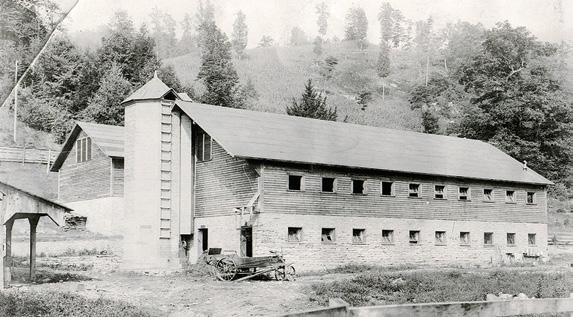
By the mid-1970s, several of the buildings had fallen into disrepair and there was talk of selling off the property. Bishop Henry of the Episcopal Diocese of Western North Carolina didn’t like the idea and suggested to Helen Whitener, his Diocesan Lay Youth Worker, that youth connections to the conference center could be the key to revitalizing the property.
Helen took up residence at the Mission School in 1973 and began envisioning a work-study ministry for high school students: during the summer, teens would come together to live in Christian community, learn about Appalachian life, and learn life skills by working with local farmers and assisting with repairs and renovations.
As Helen talked to youth around the diocese, the idea gathered momentum. One high school senior, having noticed the worn state of the porches and floors, commandeered a flatbed truck and convinced a friend to help him pry up the tongue and groove flooring of a gym that was being torn down, and hauled it up the
mountain. Youth volunteers used the purloined lumber as flooring in the top floor of the smaller barn as they converted it into a bunkhouse in the summer 1974.
For the next eight years, seventy-four teens from up and down the east coast lived and worked together on the conference center property, learning about Appalachian life by working on tobacco and Christmas tree farms, renovating buildings, baking bread, making dulcimers, and mowing grass the old-fashioned way— with a scythe. They helped clear the last of the apple orchards from the hill leading up to the annex, used lye and elbow grease to strip the mantles in the Mission House (1896) down to the wood, and did service work through the local Project on Aging.
Fast forward fifty years… twenty-five of those who took part in the summer youth program recently returned to the conference center to reflect on what they’d gained from their time together: an experience of the sacred, an appreciation for hard work and Appalachian culture, and a desire to give back. Which brings us to today, with these 60- and 70-year-olds reconvening in May 2023 to renovate the original Apple Barn (the Bunkhouse), this time to transform the upstairs into a meeting space that looks over the valley and an updated sleeping space for small groups. A new mission to meet a new need.
CAROLINA MOUNTAIN LIFE Spring 2023 — 83
Ginny Walters Brien participated in the Valle Crucis Summer Youth Program in 1975, ‘76, and ‘79, and served as program director in 1981 and ‘82. To learn more about the conference center, visit vcconferences. org; find the history page at https://vcconferences.org/ history.
Holsteins sheltered downstairs in what was originally called the Dairy Barn (front right) and apples were processed on the upper floor. The smaller white barn in the background was originally called the Apple Barn, and later named “the Bunkhouse.” That building is being renovated this spring by people who participated in a youth program at the conference center in the 1970s and ‘80s. (Note: Today the red barn is known as the Apple Barn.)
Toe River Valley Hotels and Inns
Driving through the small communities of the Toe River Valley in the N.C. counties of Avery, Mitchell, and Yancey, it might seem hard to believe that there was once a plethora of inns and hotels in the High Country. Many were built long before the era of the automobile, some even before the arrival of trains. Travelers came from across the country to enjoy the natural wonders of the High Country, and these spots gave them a place to stay.
Old English Inn
It is unclear just when the Rowe family built the Old English Inn—most likely right after the American Revolution. According to one article, the property was owned by James Bailey who, in 1866, sold it to Isaac English. The cabin expanded over time. There was also a mica-grading structure added to the original structure. The Old English Inn survives today as a private residence and is believed to be the oldest and largest log structure in the state of North Carolina.
Nu-Wray Inn
Constructed in the new county of Yancey in 1833, the Nu-Wray Inn is one of the oldest in the western part of the state. Originally, it had eight rooms and was a trading post operated by Bacchus Smith. Then it was purchased by Milton Penland, and in 1870, by Garrett D. Ray. It was known as the Ray Hotel for decades. Due to its location right in the heart of Burnsville, the hotel witnessed much of the town’s history. Among the famous figures rumored to have stayed at the Nu-Wray are Mark Twain,
Thomas Wolfe, Christopher Reeve, Elvis Presley, and Jimmy Carter. The Nu-Wray Inn is currently undergoing renovations. The new owners are looking forward to opening the doors to the public for many years to come.
Cloudland Hotel
Probably the most famous of the longgone hotels in the Toe River Valley area was Cloudland Hotel. Constructed on Roan Mountain, half of the hotel was located in Mitchell County, half in Tennessee. In 1877, the hotel’s creator, entrepreneur John Wilder, directed the first twenty-room, spruce-log structure to be built. The second, much larger frame structure was built nearby and opened in 1886. This structure, officially known as Cloudland Hotel, had 166 rooms. Visitors arrived via the East Tennessee and Western North Carolina Railroad (ET&WNC) at the Roan Mountain station, where a hack took them up the mountain. Cloudland Hotel was steam-heated, a necessity considering its location 6,394 feet above sea level. There was a dance hall and golf course. On staff were a doctor, baker, butcher, and barber. For a variety of reasons, including expensive maintenance and a short open season, Cloudland closed soon after the turn of the century and was abandoned. Eventually, an auction was held, and people purchased furniture and apparatus. Parts of the foundation and a historical marker commemorate the hotel at Roan Mountain State Park.
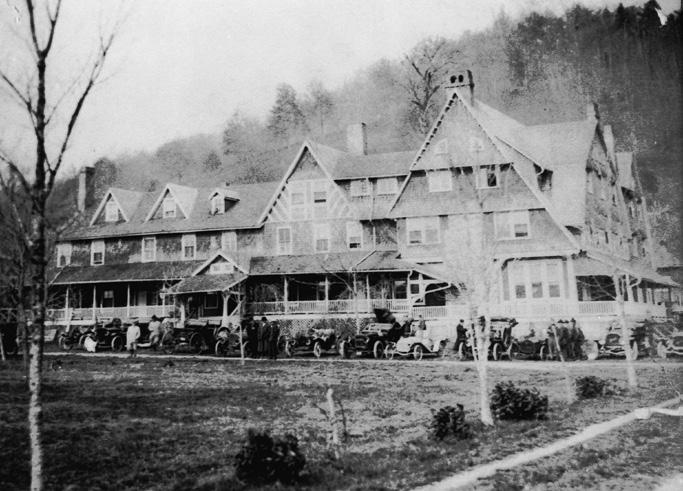
Altapass Inn
At times in the early twentieth century, a railroad created an entire town. The town of Altapass was founded because of the Clinch-
By Michael C. Hardy
field Railroad. Altapass “was the premier tourist stop on. . . the Clinchfield Railroad, with a golf course, two resort hotels, and a railroad boarding house.” The Altapass Inn was one of those resort hotels. A guest could “stand on [a] mountain top, over 3,000 feet above the sea level, and commune with the weeping souls above.” In 1913, the area was promoted as “Altapass Inn Above the Land of the Sky.” In 1916, it was the “Queen of the Summitland.” The Inn boasted modern plumbing, a bowling alley, billiards, trap shooting, a house physician, and a ballroom with orchestra. The Inn was sold to a Florida investment group in 1925. Demand to stay at one of the premier resorts in the Blue Ridge was so great in 1926 that the Inn opened a month early. Unfortunately, the Altapass Inn caught fire on May 19, 1926 and was never rebuilt.
Banner Elk Hotel
The Banner Elk Hotel, built around 1856, was a home for Edwin Banner, and was later purchased by Lorenzo Dow Lowe. With the growth of Banner Elk, the owners saw a need to provide lodging for people coming to enjoy the cool summers, the trout fishing, and hunting in the winter months. For fifty years, the Banner Elk Hotel entertained guests. The hotel stopped serving boarders in 1973. It was added to the National Register of Historic Places in 2000, but even that designation did not save it. The hotel was razed by several fire departments in training exercises.
Topliff Hotel
Opening in 1901, Spruce Pine’s Topliff Hotel was constructed by Mr. Z. Taylor Phillips. He named the establishment the Umatilla
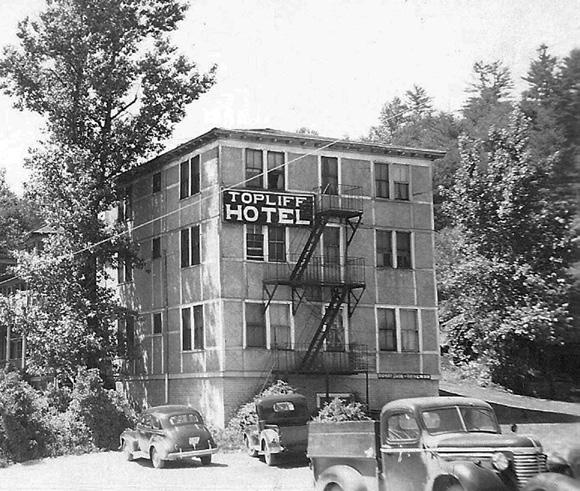
84 — Spring 2023 CAROLINA MOUNTAIN LIFE
The original Eseeola was lost in a fire. (Avery County Historical Museum)
HARDY ON HISTORY
The Topliff Hotel was the community hub in Spruce Pine. (Daniel Barron)
House. In 1917, Phillips placed the Umatilla House up for sale, stating it was the only hotel in town and had thirty rooms, a small cottage, and private water works. The property was purchased in 1920 by C.H. Topliff, who enlarged it with a three-story wing and changed the name. In addition, the Topliff Hotel had a grand ballroom and several offices and hosted many civic groups, like the Rotary; it was also the local bus terminal. On August 6, 1948, the hotel caught fire and was destroyed.
Pinnacle Inn
Banner Elk was a happening place in the 1920s. People flocked to the hamlet in the summer months to enjoy all the amenities that the mountains offered. Visitors could stay at the Banner Elk Hotel or the Old Turnpike Inn. As the country struggled through the Great Depression years, Lees-McRae Institute saw an opportunity, and in 1932 chose to open the Tennessee Dorm in the summers as the Pinnacle Inn. The opening of the Pinnacle Inn also provided an opportunity for female students to earn money for the upcoming school year and gain business experience by serving as Inn staff. When the school became co-ed, the male students worked as porters, maintained the golf course, swimming pool, tennis and croquet courts, and worked on the farm. At the time, the Pinnacle was declared the highest resort in elevation east of the Rocky Mountains. The resort offered tennis, croquet, hiking, boating, fishing, and access to the college’s library, but no dancing. The Pinnacle Inn closed in the 1960s. The Tennessee Residence Hall is undergoing restoration in 2023.
Eseeola Inn/Lodge
The community of Linville was created in 1891. While there were several inns, the centerpiece was the Eseeola Inn. With its chestnut bark exterior, there was nothing quite like it. The Eseeola was one of the finest establishments in Western North Carolina but struggled in the beginning. It took a few years before the right clientele were attracted to the Lodge. Eseeola offered golf, archery, fishing, lawn bowling, and horseback riding. Eventually the building grew, able to provide accommodations for 110 guests. There was a physician and telephone operator when the hotel was open. On Sunday, June 28, 1936, the Eseeola caught fire and was a total loss.
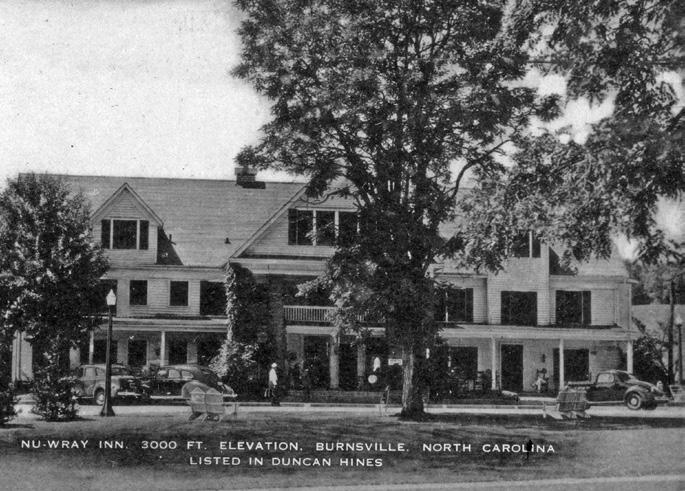
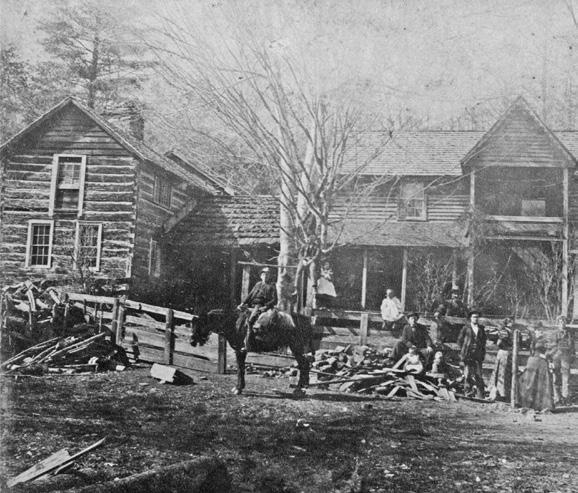
Reservations for the upcoming season were moved to the Chestnut Lodge, located directly across from the Eseeola Inn. This structure was built in 1929, and after the 1936 fire, it was renamed the Eseeola Lodge. The Eseeola Lodge is still in operation today.
Michael C. Hardy is the author of twenty-five books, hundreds of articles, and over 1,200 blog posts. He is widely recognized for his local and state-wide histories and for his award-winning works pertaining to North Carolina history. He is the 2010 North Carolina Historian of the Year. Being released in late 2023 is The Hidden History of the Toe River Valley. You can learn more about Michael at www.michaelchardy.com.
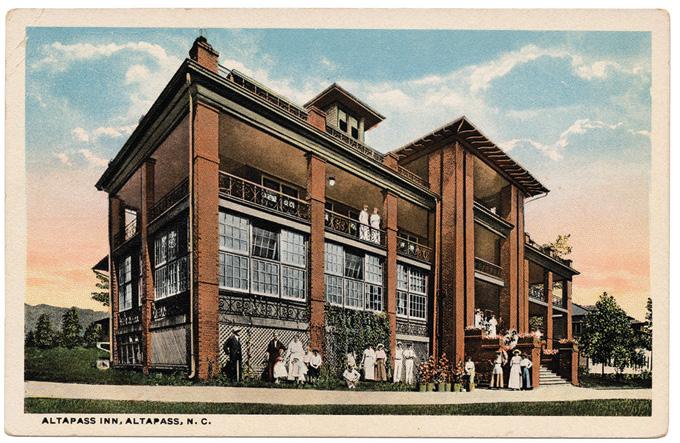
CAROLINA MOUNTAIN LIFE Spring 2023 — 85
HARDY ON HISTORY
The Nu-Wray Inn in Burnsville is one of the oldest standing inns still in use. (Michael C. Hardy)
The Old English Inn, in the late 1800s, boasted not only rooms, but a mica-grading house. (Michael C. Hardy)
The Altapass Inn was somewhat futuristic looking for the early twentieth century. (Michael C. Hardy)
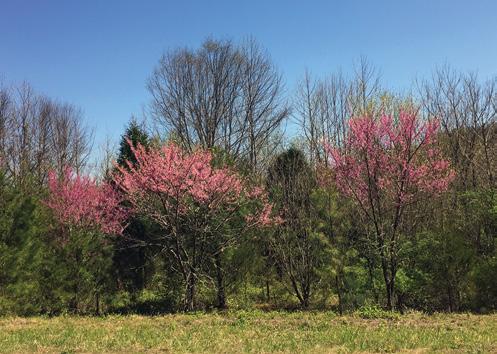






86 — Spring 2023 CAROLINA MOUNTAIN LIFE www.BlueRidgePropaneNC.net for information and bill pay 828-733-3603 | blueridgepropanenc@gmail.com Avery County’s only locally owned full-service propane company Member of the Better Business Bureau Sales & Services | Firelogs | Space & Wall Heaters Tankless Water Heaters | Outdoor Fire Pits “Proudly serving the High Country since 1992” “Deliveries You can Count on for your Home and Business” 41 Years of Service Serving the High Country for all electrical Needs Sales, Installation & Sevice for all Generators 828-963-6997 GlenDavisElectric.com 8742 NC-105, Boone, NC 28607 avery, watauga, and ashe counties Serving Western NC with Excellence and Innovative Solutions Three NC Locations to Serve You: Linville • Winston-Salem • Lake Norman/Mooresville averyheating.com / 1600 Linville Falls Hwy, Linville, NC 28646 / 828-733-5842 Ask about 10% off your next repair call!
Mayor Brenda Smith Lyerly
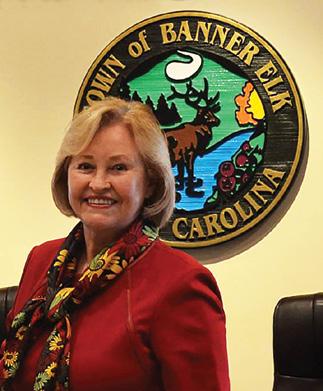
Onany given morning, if you’re out and about in downtown Banner Elk, there’s a good chance you’ll run into the town’s mayor, Brenda Lyerly, walking her small Scottie named McKenna around the Greenway trails at Tate Evans Park. Lyerly’s morning dog walk is a daily ritual which has become a very familiar sight around town, almost as iconic a sight as the bronze Elk statue proudly gracing the sidewalk and grounds in front of the Historic Banner Elk School.
Over the years, there have been eight Scotties (and one English Mastiff) who have been part of the Lyerly family, equally beloved by Brenda Lyerly and her late husband, Judge Alexander Lyerly (see adjacent feature on Judge Lyerly). These daily constitutionals with her dogs have become a great way for Lyerly to get up close and personal with her community.
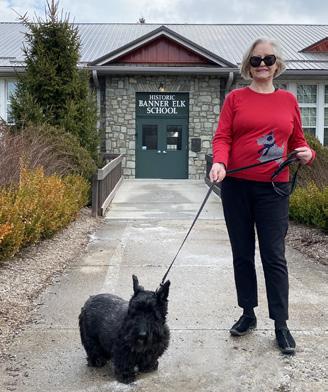
“I am a people-person and like to be out talking with them,” she noted. “My dog helps. We walk around where I can be easily accessible. People like being able to ask me about town issues. If I don’t have an answer, I find it. This also gives me the pulse of the community and its concerns. And, if someone wants to pet my dog, that’s an opportunity to ask if they are visiting and where they’re from,” she added.
Given the chance, Lyerly will also boast to visitors of everything that’s great about Banner Elk: its pedestrian-friendly sidewalks; its municipal park and Robbins
Amphitheater; the many shops, restaurants, and attractions; the Historic Banner Elk School with its Book Exchange, BE Artists Gallery, Ensemble Stage Theatre and more; the annual October Woolly Worm Festival; Lees-McRae College; and the Corner on Main public space with its stone Clock Tower.
So, how did this energetic, Scottieloving “people-person” wind up becoming mayor of a major regional tourist destination like Banner Elk? “I can’t say that I always wanted to be a mayor. My life just took me here,” Lyerly noted.
A native of southern Illinois, oldest of five siblings and the first of her generation to attend college, Lyerly graduated the University of Houston in 1975 with a Bachelor of Arts degree in Journalism. While there, she met and married Alexander (Alec) Banner Lyerly who was majoring in Law at the South Texas School of Law. Alec was a native of Banner Elk and anxious to “move back to his mountains” (as he affectionately called them). So, following their graduations and marriage in 1975, the newlyweds packed up and headed for the hills of North Carolina.
Back in the High Country, the Lyerlys moved into the historic Banner family home and immersed themselves deeply within the culture of the community. Alec pursued his career in law with the Kelly Johnson firm until being elected N.C. District Court Judge for the 24th Judicial District in 1980 and appointed Chief District Court Judge in 1994, a position he held until his retirement in 2014.
By Steve York

Meanwhile, Brenda Lyerly worked for several businesses in banking and real estate. Anecdotally, while working for the real estate office of Grandfather Golf and Country Club in 1976, Hugh Morton came in one day and said, “I need to borrow a stringy-headed girl for a while.” With that, he took Lyerly to Grandfather Mountain and stood her up on a high rock. “The wind that day was in excess of 100 miles per hour. With wind velocity, it was 161 mph,” noted Lyerly. “Hugh Morton told me to smile and snapped a picture. That photo ended up going out all across the AP news wire.”
Before long, Lyerly landed a position with App State’s Vice Chancellor for Business Affairs; that position provided tuition-free classes which led to her graduating with a Master’s Degree in Higher Education in 1985. From there she advanced to Dean of Admissions at LeesMcRae, then later returned to App State’s Office of Admissions. She also served as a Student Retention Specialist with Mayland Community College, and ultimately wrapped up her 30-year academic career in 2011 as Senior Director of Admissions for App State.
Throughout those years before becoming Mayor, Lyerly grew increasingly interested in public service. “While an App State student, I became involved with Hospitality House,” Lyerly recalled. “Kay Borkowski, wife of App State’s then Chancellor, started the Hearts of Hospitality as
CAROLINA MOUNTAIN LIFE Spring 2023 — 87
Continued on next page
“I love my job. I wouldn’t want to be mayor anywhere else than Banner Elk.”
Brenda on Grandfather Mountain
Photo by Hugh Morton
Lyerly with McKenna
Mayor Brenda Lyerly
MAYOR LYERLY: Continued from previous page an auxiliary. She introduced me to the world of the homeless and that was an eye-opener. I became Chair of the auxiliary before joining and becoming Chair of the Hospitality House Board.
“My interest in elected offices began in 1983 when I was appointed to the Banner Elk Planning Board,” she said. “Then, in 1985, I was appointed to the Board of Adjustments. Those experiences gave me confidence to run for Town Council when Vance Lecka left. I was unanimously voted to fill his term in 1987.
“During this period, I was greatly influenced by then-Banner Elk Mayor Charles VonCanon,” continued Lyerly. “He spent considerable time in Raleigh promoting Banner Elk and would occasionally invite me to join him. So, when he was about to retire from the Board of the Region D Council of Governments (now the High Country Council of Governments), he asked me to take his place. I did and have been on it ever since.”
After retiring from App State, Lyerly realized that she would have the time to run for and serve as Banner Elk’s mayor. She was already Vice Mayor when then Mayor Deka Tate had decided to retire. So, Lyerly fulfilled the remainder of Tate’s term. Then, in 2012, she ran for and was elected as Mayor, an office she’s continued to hold for eleven years.
Lyerly’s resume and track record of public service experience is extraordinary. She served on and/or held leadership roles in dozens of organizations, among them the Banner Elk Town Council, Greater Banner Elk Heritage Foundation, the Banner Elk and Avery County Chambers of Commerce, the Woolly Worm Committee, Kiwanis Club, Avery County Advisory Board for the Women’s Fund of the Blue Ridge, Habitat for Humanity, Resort Towns and Convention Cities Board, and the High Country Council of Governments (for 27 years). And she’s received numerous awards for that service.
As for Banner Elk’s progress during her time as Mayor, Lyerly is quick to credit Banner Elk’s Town Council members, Town Manager plus all Police, Fire, Town Hall and municipal personnel for their mutual dedication to the town’s best interests. She also piles praise on the entire community, including locals who always support one another and seasonal residents who have created foundations to help fund people in need.
Despite her own credentials and accomplishments, if you were to ask Lyerly who was most influential in her becoming and continuing as Banner Elk’s mayor, she would quickly reply, “I must credit my late husband, Alec, for all his encouragement. He was a life-long resident and very involved in the community. I think I took on that cause as well and have loved every minute of it.”
CAROLINA MOUNTAIN
Tributes to Judge Robert Alexander (Alec) Banner-Lyerly
By Steve York
By any measure, Chief District Court Judge Lyerly of Banner Elk, North Carolina, was blessed with a very rich, inspired and inspiring personal and professional life, a blessing he paid forward all the way up to his passing on Tuesday, December 13, 2022.
From his early days as educator, to serving as a Houston, Texas, Legal Aid attorney, then moving to the local law firm of Kelly Johnson, followed by 34 years as N.C. District Court Judge and Chief District Court Judge for the 24th Judicial District until his retirement, Lyerly’s judicial legacy was stellar.

Concurrently, he started and was President of the Avery Kiwanis Club; was President of the Avery Chamber of Commerce; served as a Charlotte Diocese Catholic Church Deacon; was a teacher of juvenile law; co-authored a book on child pornography predators; chaired the Crossnore School Board’s Education Committee, receiving their Distinguished Service Award; and was a proud supporter of the Grandfather Mountain Highland Games (GMHG).
Being of Scottish heritage, the “Games” were his passion, having attended the first one as a child with his grandmother and returning with family yearly thereafter. As GMHG Board President Steve Quillin noted, “Alec was a long-time member of our Board of Directors, including a term as President and having finished his Games career as a Trustee Emeritus. Alec and his loving wife, Brenda, were both my personal friends and great supporters of the Games. I can honestly say the Games are poorer for his loss.”
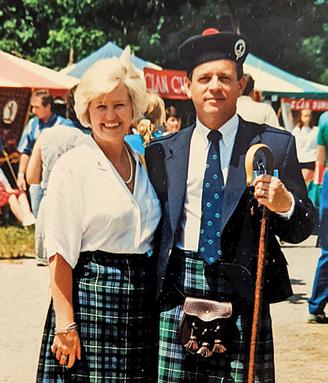
As for his distinguished judicial career, “I first met Judge Lyerly as a young attorney fresh out of law school,” said F. Warren Hughes, Retired District Court Judge. “He was a mentor and confidante for every young lawyer who came through the 24th Judicial District. His soft voice and quiet demeanor belied his firm control of a courtroom. We should all endeavor to leave a legacy of love, compassion and fairness like Alec Lyerly.”
Attorney Stacy ‘Four’ Eggers added, “As a third-generation attorney, I grew up listening to my father’s and grandfather’s stories about court events. They always spoke of Judge Lyerly with great respect. While practicing law in front of him, I learned that effective advocacy didn’t mean raising your voice, or theatrics. He exemplified a judicial trait appreciated by all trial lawyers…consistent and equal application of the law to the facts. Having practiced law for over twenty years, I must say the world needs more Alec Lyerlys on the bench.”
And, most personally, “Alec had qualities that I truly loved and admired including his quick wit, his kindness to others regardless of status, his thoughtful decisionmaking and his deep religious faith,” added Alec’s loving wife and Banner Elk Mayor Brenda Lyerly. “I credit Alec with helping me with my confidence. He always told me I could do anything I put my mind to and was always proud of my accomplishments. Alec also said he wouldn’t have achieved all he attained had I not been by his side. I think we made a good team.”
88— Spring 2023
LIFE
Judge Alexander Lyerly
Mayor and Judge Lyerly at Grandfather Mountain Highland Games
“You’re going to be a teacher” is the unexpected statement Jason Miller’s Art History professor said to him on graduation day from Washington and Lee University in 2000. Understandably, this surprised the newly-minted graduate who was headed to the School of Architecture at NC State University to pursue a master’s degree in Architecture with plans for a career in private practice. Fourteen years later Miller recalled this prescient statement when accepting the UNC Board of Governors Excellence in Teaching Award for Appalachian State University, and again five years later when he received the UNC BOG system award for Excellence in Teaching. This talented man with boyish charm, self-deprecating humor, and global intelligence is now serving as an associate dean of Appalachian State University’s College of Fine and Applied Arts (CFAA). How did this happen?

After earning his graduate degree, Miller began work with Gluck+, an architect-led design-build firm based in New York City. A client contacted the firm about building a home in the Aho section of Watauga County. Gluck associates contacted the App State Building Sciences program searching for local help coordinating a 15,000-square-foot residential building project. Soon the NY office interviewed Jason Miller, the Watauga County boy now working in New York as an architectural designer, and selected him to their design and construction team. Upon arrival in Boone for the first of several months-long stints on the project site, Miller was asked to teach an evening class at App State by his graduate school friend and Building Sciences professor, Chad Everhart. The next semester he was asked to teach four classes; thus began his unexpected yet impactful teaching career.
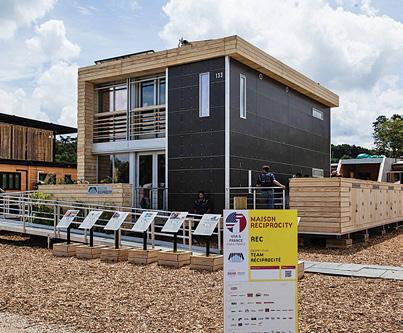
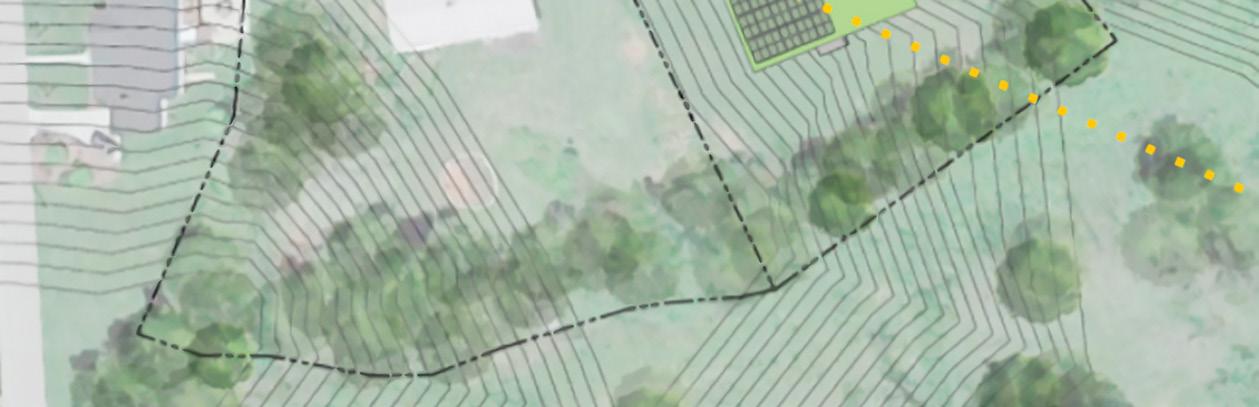
Miller’s advancement from adjunct
Building a Better World
By Trimella Chaney
instructor to tenured faculty member, and program director to associate dean, is a direct result of his creativity, inclusivity and interdisciplinary philosophy of teaching. “If you’ve got a roomful of just architects, you’ve got a hot mess!” laughs Miller. He firmly believes that integration between architecture, engineering, and construction yields the best possible results. And he has results to back up this philosophy. Miller served as Faculty Director of Construction on The Solar Homestead Team, App State’s entry in the US Department of Energy’s Solar Decathlon in 2010-2011. The team received numerous contest awards, including the coveted People’s Choice Award. In 2013-2014 Miller served as the Faculty Director of Design for Maison Reciprocity, App State’s entry for the Solar Decathlon Europe held in Versailles, France. Once again, while competing against other institutions with Colleges of Engineering, Architecture, and Design, Appalachian State University was recognized in numerous categories and earned First Place in Electrical Energy Balance, a testament to the balanced approach to design, construction, and performance. Clearly this philosophy is working!
Miller is very proud of the accomplishments of students and colleagues in the College of Fine and Applied Arts, especially when their successes have continued even during the pandemic while in-person classes were not possible. The Department of Sustainable Technology and the Built Environment now boasts 800 majors and is clearly bringing much attention as well as collegial respect to the University. Jason Miller continues to be an active faculty member while also using his administrative talents in the CFAA Dean’s office. He frequently delivers workshop lectures, records podcasts, publishes professional articles, mentors students, and serves on juries for
graduate schools. His most recent assignments include representing the College and its departments during major building renovation projects to Wey Hall and Edwin Duncan Hall while recruiting students and supporting program development for the new App State at Hickory campus. Yes, Jason Miller has an abundance of creative energy and a broad skill set to make things happen.
But where is his happy place? He chuckles and admits, “I’m a boy of the woods.” He quickly explains, “Not in a thrill-seeking or extreme sport sort of way, but I enjoy the peacefulness of a soft breeze....the sensory aspects of the woods.” He admits to being “too driven, too overcommitted” at times and needing reset time. He seeks to achieve a work/life harmony, rather than a work/life balance. Harmony is a key concept in his thinking, both professionally and personally. “Collaboration. Silos should be broken at the level of education,” he explains. “A building doesn’t come together with one architect or designer, one engineer, or one builder. It takes a collection of voices, of perspective, of expertise. It takes a village. In a successful project all the stakeholders work together effectively. My hope is that the Department of Sustainable Technology and the Built Environment, and all the departments in the College of Fine and Applied Arts, will continue to lean into and lead in areas of applied integration and interdisciplinary collaboration.”
Jason Miller has a strong desire to follow his curiosities. He is a visionary who has been privileged to work with a group of visionaries who focused on sustainability long before it was part of mainstream culture.
His professor was correct. Jason Miller, teacher, professor, mentor, architect, designer, and administrator is teaching us to create a better world.
CAROLINA MOUNTAIN LIFE Spring 2023 — 89
Maison Reciprocity, App State’s entry for the Solar Decathlon Europe held in Versailles, France
Miller with Chancellor Everts, upon receiving the UNC Board of Governors Excellence in Teaching Award, 2019 / Courtesy of Appalachian State University
IT TAKES A
Many Blue Ridge Energy employees work behind the scenes to provide safe, continuous electricity. Each person and department brings their A-game.
From system operators, who monitor and control the flow of electricity, to an IT team that secures the power delivery and communication systems, to customer service representatives who assist members online or by phone, every team member plays a vital role in keeping you safely and reliably energized.
TO POWER YOUR HOME

OASIS Celebrates 45 years of Hope and Help
By Elizabeth Baird Hardy
In1978, a group of concerned High Country community members came together to form an organization with the mission of providing survivors of domestic violence with emergency shelter, case management, social support, and necessary resources, while also creating community educational opportunities.




Today, that organization, OASIS, continues to be a critical asset serving those in need in Avery and Watauga counties, making sure that victims of violence and survivors of partner abuse can move past the trauma they have experienced and leave behind dangerous circumstances with the tools they need to create a safe and promising future for themselves and their children.
Sara Crouch, Director of Community Programs for OASIS for the past four years, found herself drawn to this remarkable organization, in part, due to its truly meaningful work and the idea that “everybody knows somebody” who has been affected by issues that are often kept hidden, preventing them from being addressed. Bringing experiences with violence and abuse from the shadows into the light is a vital part of OASIS’s mission. “My role offers a really beautiful way to speak to the community,” says Crouch. Although she stresses that everyone on staff has a specific reaction to the many opportunities provided by OASIS, “For me, the most rewarding aspect is talking to people in
our community about the dynamics and realities in a way that shows compassion for everyone involved.” Sometimes, she acknowledges, that means asking “scary questions” in order to remove the barriers of shame and stigma which can lead to victim-blaming and can prevent real healing; however, she is heartened by experiences like a recent high school conversation in which a teenage boy asked what he should do if he saw himself being drawn to exert power and control over another individual. “He wants to help break the cycle, to not be like what he’s seen.”
For those who want to prevent intimate partner violence, events like this high school conversation offer a compassionate environment for discussion and honesty. That same compassion drives the many opportunities and resources offered by OASIS to those fleeing abusive situations and violence. Housing is a major concern for these survivors, but other issues, like childcare, employment, and counseling, are essential. In some cases, relocation is necessary. While OASIS is focused on Avery and Watauga counties, survivors from outside the service area have sometimes been moved to this region for their safety and privacy.
In recent years, the need for OASIS has grown. Just before the pandemic, both Wilkes and Yancey Counties lost their domestic violence agencies, and OASIS has helped to fill those gaps. The catastrophic
effects of the pandemic have had unique impacts upon the population served by OASIS, as childcare and employment opportunities have changed, shifted, or disappeared, and the problems of isolation and control, often central factors in abusive situations, became more pronounced with lock-downs, unemployment, and illness. In many ways, Crouch says, the crises of the past few years have sharpened the tools of abusers even while making it more difficult for victims to seek help.
OASIS is now looking toward the future. While, in the past, approximately one hundred individuals have been served each year in the shelter program, those numbers are growing to between 125 and 150 a year, and OASIS has increased its housing program. Housing continues to be a pressing need, as many survivors cannot afford to rapidly relocate from a dangerous environment, so OASIS will continue to explore new housing possibilities, even as COVID resources are phased out. This year, OASIS will be providing extended resources for Spanish speakers, increased and expanded education and prevention programs, and new healthy relationships programs for middle school students in Avery County.
With so many needs and so many expanding resources, support for OASIS is essential. There are many ways to help the mission of OASIS. On the organization’s website, visitors can make a secure financial
Continued on next page
CAROLINA MOUNTAIN LIFE Spring 2023 — 91
donation. “We can literally use money anytime,” Crouch says, stressing how financial contributions allow a speedy and flexible response to emergencies or needs not covered by grants or other sources. The website also features a detailed list of specific items needed by clients and their families, along with a link to the Amazon Wishlist. That way, those who want to donate can do so most effectively. Checks and gift cards are also welcome and can be contributed through the OASIS website.

There are many other ways to help support OASIS. To help spread the word about the resources and impact of OASIS, those who want to help this vital organization can invite an OASIS staff member to speak at a church or civic group meeting. Volunteers are also needed for a wide array of activities from childcare and translation to clerical duties and posting fliers.
One of best ways to support OASIS and to learn about its lasting impact and continuing mission will be at the annual Midnight at the OASIS. This dazzling evening will be hosted at the beautiful Appalachian View venue on July 27 and will feature great food from Gadabouts Catering and terrific live music. Midnight at the OASIS will provide the opportunity to honor the amazing people who have supported OASIS as advocates along with the survivors who have demonstrated the courage to find support. While honoring the impressive past of OASIS, the event will also look to the future. As Crouch stresses,
it will be a “great chance to remember the past and shine a light on the path toward the future…We are looking to the future because we plan to be there.”
Corporate Sponsorships are one of the best ways to get involved with Midnight at the OASIS, and both businesses and individuals are encouraged to visit the OASIS website to find out more details on tickets and sponsorship opportunities.

The website is also the place for anyone who might need any of the many services OASIS provides, including access to emergency housing and childcare, links to employment and healthcare resources, and a 24-hour Crisis Support Line with Avery, Watauga, and Spanish-speaking lines available. Anyone who is experiencing a crisis related to sexual assault, abuse, or intimate partner violence is encouraged to take advantage of the many tools OASIS offers in its quest to secure a violence-free future for everyone.
Although OASIS has certainly grown over the past 45 years, with a wider scope of service and many more resources to help the High Country, it is still, in many ways, the same organization it was at its founding, as its core values have remained, rooted in the quest to prevent violence and protect its victims as they seek a brighter future.
To learn more about OASIS, including how to find services, volunteer, donate, or purchase tickets for Midnight at the OASIS, visit oasisinc.org, call (828) 264-1532, or email admin@oasisinc.org.
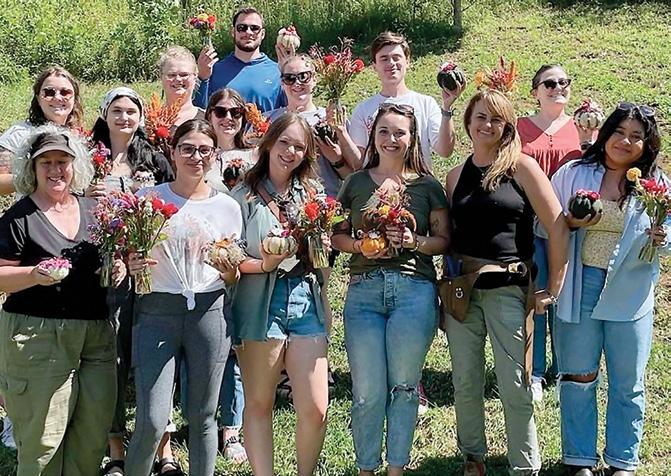
92 — Spring 2023 CAROLINA MOUNTAIN LIFE
OASIS staff and volunteers work to build a brighter future for people who have experienced violence and abuse.
GET TICKETS ONLINE: 3874 NC HWY 16S Jefferson, NC 28640 336-246-3066 info@zaloos.com www.zaloos.com ZALOO’S CANOES Canoes, Kayaks & Tubes Since 1976 Celebrating 47 Years on the New River
“READ ALL ABOUT IT...”
Community & Local Business News
AMOREM: Quality, Compassion, Support
AMOREM, formerly Burke Hospice and Palliative Care and Caldwell Hospice and Palliative Care, is currently in the public phase of its $8 million capital campaign to build a patient care unit in the High Country. The organization, which has served the High Country for more than nine years, has already raised more than $4.7 million towards the capital campaign through corporate and private donors.
“For four decades we have been committed to serving the physical, emotional and spiritual needs of terminally ill patients and those who they love,” said CEO Cathy Swanson. “Seeing a growing need for a patient care unit in the High Country, the state approved our request for a Certificate of Need to build a seven-bed patient care unit.”
The High Country requested that AMOREM build a patient care unit in their community because, without one, patients and their families must drive more than an hour to reach the closest patient care unit. AMOREM’s Legacy Caldwell opened the first patient care unit in the state in 1989, granting them the most experience in hospice in-patient care in North Carolina.
“Our family didn’t know the impact that a hospice patient care unit could have on our lives until the need for one suddenly arose in 2019,” said Capital Campaign Co-chairperson Evalyn Pierce. “Our father was thankful for the compassion and support shown not only to him, but to our family. This inspired our effort to bring a patient care unit to the High Country in his memory.”
The new 8,460-square foot patient care unit will have seven beds with a full-time local staff dedicated to providing compassionate end-of-life care for residents of Ashe, Avery and Watauga counties. The home-like environment will provide large patient rooms and comfortable family areas in a peaceful setting just off Archie Carroll Road on Moonstruck Lane in Boone.
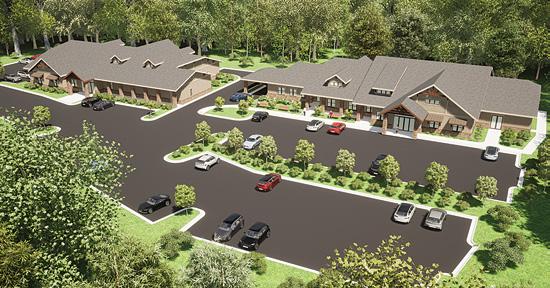
“We have been overwhelmed with the tremendous support we have received from the High Country communities,” said Kerri McFalls, AMOREM’s vice president of community engagement. “Being a non-profit hospice organization, the gifts we receive toward this capital project allow us to continue to focus on patient care. AMOREM provides care to anyone, regardless of their ability to pay.”
There are still several named gift opportunities available for donors including reception areas, covered entries and other opportunities. Contact McFalls at 828-754-0101 or kmcfalls@amoremsupport.org to learn more about named gift opportunities. To learn more about the High Country Capital Campaign and to make your tax-deductible gift, visit www.amoremsupport.org or call 828-754-0101. Your gift is an act of love. Image: Rendering of new High Country Patient Care Unit
Kiwanis of Banner Elk Award Woolly Worm Grants
Kiwanis of Banner Elk is dedicated to helping the youth in our community. Over the past 40 years the Club has given out over a million dollars in grants to help organizations that focus on our area’s youth. In recent months, members of the Kiwanis of Banner Elk have had the privilege of giving out grants that were made available through the Woolly Worm Festival in October, 2022, and the Party in the Park Duck Races last July.
Some of these grants were awarded to the teachers of Avery County, with funds going toward a variety of resources to help teachers and students, including library books, 4th and 5th grade workbooks focused on the NC math core standards, slides to see living specimens under a microscope, math games, a piano, and jump ropes, to name a few.
“It is wonderful to know that the grants will go to support a variety of educational and recreational needs for the children of Avery County,” said Ann Wolf, President of Kiwanis of Banner Elk.
Grants have also been awarded to the D.A.R.E. program at the Sheriff’s office and to Holston Camp, YMCA, Feeding Avery Families, Boy and Girl Scout troops, the Key Club at Avery High school, and the Banner Elk Fire Department. Kiwanis of Banner Elk remains very involved with the Reading is Fundamental (RIF) program. Last year each student attending a local elementary school was given five books to take home for their personal library. “We also started a program at Banner Elk Elementary that is expanding this year to all the elementary schools, which provides each 5th grader going on to Middle School with a hard cover book,” Wolf added. Learn more about how you can get involved with Kiwanis of Banner Elk by visiting bannerelkkiwanis.org Photo: Kiwanis members Ann Wolf, Tammy Woodie, and Laura Cohn award a check to Freedom Trail Elementary in Elk Park, NC.

CAROLINA MOUNTAIN LIFE Spring 2023 — 93
Continued on next page
“READ ALL ABOUT IT...”
Community & Local Business News
Lees-McRae College Becomes Nation’s First BearWise® Recognized Campus
Wildlife biologists with the N.C. Wildlife Resources Commission recently recognized Lees-McRae College in Banner Elk as the first BearWise campus in the United States. BearWise is a national education program that was developed by bear biologists to provide science-based resources and solutions for living responsibly with American black bears.
BearWise encourages residents, businesses and communities to take proactive actions to avoid conflicts with bears. Some states, including North Carolina, are adopting formal recognition programs for BearWise communities, in which these communities formally commit to securing attractants and following the BearWise Basics to keep bears wild and people safe.
“By becoming a recognized BearWise campus, Lees-McRae College is addressing the human-bear conflicts occurring on campus, which will help keep bears wild and students, faculty and staff safe,” said Wildlife Commission Black Bear and Furbearer Biologist Colleen Olfenbuttel.
“It is also significant as Lees-McRae College prides itself on giving back to the community, and becoming BearWise will serve as a regional model for how to live responsibly with bears in the High Country of North Carolina.”
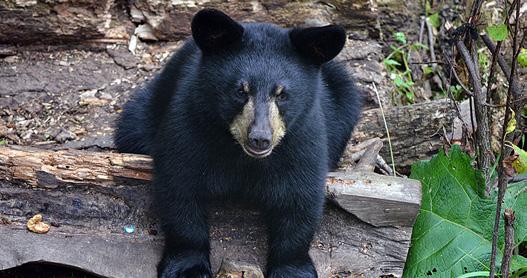
• As a BearWise campus, Lees-McRae College officials committed to implementing new reporting procedures for bear sightings and interactions through their emergency management webpage. They also are securing attractants on campus by:
• Rearranging trash receptacles to minimize access for bears.
• Phasing in bear-resistant trash receptacles around campus.
• Purchasing trash compactors to minimize garbage in dumpsters.
• Replacing dumpster lids with a sturdier metal option to keep bears out.
“The most important reason to become a BearWise community is to protect both our human population and local black bears,” said Lees-McRae College Executive Director of Campus Operations HD Stewart. “BearWise is a perfect partner for Lees-McRae because our emphasis on experiential learning and caring for local wildlife means our students are inspired to see the success of the program.”
Learn more about how to become a recognized BearWise community or business at the Wildlife Commission website www.ncwildlife.org/Promotion/ bearwise and BearWise.org. To learn more about Lees-McRae College, visit lmc.edu or call 828-898-5241. Photo: American Black Bear Cub, by Tina Shaw, U.S. Fish & Wildlife Services
Introducing The Cabin Store Outdoor
The Cabin Store Outdoor is an extension of the original Cabin Store Home Furnishings, a popular retailer conveniently located in both West Jefferson and Boone, NC. The natural surroundings of the High Country offer opportunity for year-round, fourseason enjoyment. The store’s comfortable outdoor furniture is available in distinctive styles, textures and colors, all well suited for active mountain living.
“We are proud to bring our clients the same outstanding quality and affordability in outdoor furniture that we offer for interior spaces,” said owner Sheila Gentry. “We are the High Country’s exclusive dealer for Polywood, American handcrafted, recycled furniture in a wide variety of styles including Adirondack chairs, classic rockers, dining tables and chairs, and pub and counter tables with stools—also, comfortable deep seating including sofas, chairs and loveseats.”
According to Gentry, Polywood products provide durability in the varying mountain climates and offer a 20-year warranty. Their easy drop-ship and quick-ship programs make ordering effortless. Additionally, the Cabin Store Outdoor offers teak, eucalyptus, cedar log, and rattan furnishings, which give any outdoor space a warm and cozy feel. “Our exclusive Lloyd Flanders all-weather vinyl wicker collection is made to the highest standards and finished with a polyester resin based paint to withstand the warm summers and cold winters.”
To complete your space, add texture and a pop of color with an outdoor rug, lighting and other decor pieces. A fire pit is also a great option to lend warmth and ambiance to your personalized design style. “We are passionate about assisting our clients in creating unique, comfortable and affordable spaces that they will enjoy with family and friends for years to come!”
The Outdoor Store is open Monday through Saturday 10 a.m. -5:30 p.m., and is located at 1108 South Jefferson Ave. in West Jefferson (336-219-0301). The two Cabin Store locations are: 1101 S Jefferson Ave, West Jefferson, NC 28694 (336-246-5647), and 1180 Blowing Rock Rd. (behind the Boone Mall), Boone, NC 28607 (828-266-1401). Facebook:/CarolinaHappyShack/

94 — Spring 2023 CAROLINA MOUNTAIN LIFE
High Country Pain Relief: Making Futuristic Healthcare Technology a Reality in the High Country
Imagine your life with 50% less pain or even… pain free! Dr. Derrick Denman is no stranger to pain. A healthcare provider since 1988 he’s treated over 17,000 patients and now provides SoftWave Tissue Regeneration Therapy in addition to, spinal decompression, PEMF (Pulsed Electromagnetic Field) therapy and customized peripheral neuropathy treatments at High Country Pain Relief, located in the Shops@Shadowline in Boone.

His longevity in practice has been fueled by one consistent passion ignited at sixteen years old: help patients naturally! Dr. Denman, a Chiropractic Physician realized long ago, that pain and suffering are unique and each cause is different. Utilizing safe and effective therapies for decades, he welcomes patients who want to prevent surgeries, or rely less on cortisone shots or opioid-based pain management programs. His practice helps those who’ve given up hope due to failed treatment options offered elsewhere.
Known simply as, “Dr. D” he offers a revolutionary treatment to help those who need it most: those suffering from nerve pain and debilitating injuries, both chronic and acute. It’s the very same treatment that alleviated his own chronic shoulder injury, plaguing him for 20 long years. That treatment is called SoftWave TRT.
Surprisingly, Dr. Denman saw his pain reduced to a fraction in about five weeks and encouraged his wife to undertake the same form of treatment time. She’d been suffering from degenerative disc disease, and long rides in the car had become unbearable. Much like Dr. Denman, she too experienced transformational improvement after just eight consecutive sessions.
SoftWave TRT (Tissue Regeneration Therapy), uses patented technology to reach an injured area at the cellular level to successfully turn on the body’s natural healing process. Dr. Denman’s inspiring journey shines a light on those who may have lost hope, fearing the permanency of pain and suffering, due to injury or long term illness.
SoftWave Therapy is a non-surgical, non-invasive procedure, used to treat knee, shoulder, lower back & sciatica pain, chronic plantar fasciitis, any tendonitis and other chronic or acute conditions. There’s no lengthy recovery period, virtually no side effects or time off work!
High Country Pain Relief is offering a $49 New Patient Special to determine if you qualify for this Futuristic Healthcare Technology. Call 828-3861888, or visit them at HighCountryPainRelief.com, or 240 Shadowline Drive Ste. A6, Boone, NC 28607.
Craftsman Cabinets & Furniture: Made in America
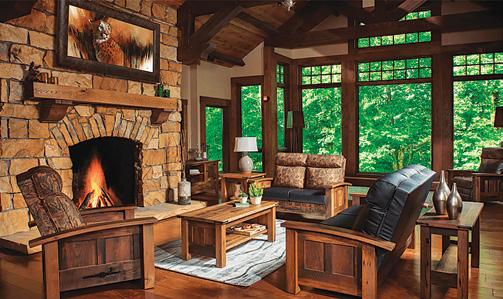
Two years ago, in the middle of a global pandemic, business partners Charles Sparks and Brian Barlow decided to take a risk and open up a new furniture store in Hudson, NC. The store was originally called Craftsman Market, and their concept was simple—focus on selling only high-quality furniture and décor items that are made in America.
“COVID really showed us the importance of supporting American workers and craftsmen,” said Mr. Sparks, “and you simply can’t beat the quality of American made furniture.” So, the two set out to find the best local craftsmen and build relationships with several Amish builders in Ohio and Pennsylvania.
“The quality and attention to detail of the Amish is simply unmatched,” explained Mr. Barlow. “In addition, Amish built furniture can be completely customized to a customer’s specifications—you can choose the wood species, the size, the finish, the fabric—your options are virtually limitless.”
Now that their business has become established, the two owners have decided to expand into Amish built custom cabinetry. “As we began delivering furniture to customers’ homes, we noticed that in many cases the quality of the kitchen cabinetry we were seeing did not match up to the standards of their new furniture,” said Mr. Sparks. “So, we reached out to our Amish builders and discovered that many of them are able to build custom cabinets in addition to their furniture.”
The two business partners have spent recent weeks remodeling their store and have added several kitchen and vanity displays to show the quality of what their Amish builders can deliver. “You won’t see cabinets of this quality in your local big box store, or even at many custom cabinet builders,” said Mr. Barlow. “We can build cabinets from Maple, Hickory, Cherry, Oak, or even 100-year-old barn wood, so your options are really endless. We also offer live edge wooden and/or epoxy countertops, and other features that make our kitchens stand out from our competitors.”
Their new store opened in April with an updated name: “Craftsman Cabinets & Furniture.” The two feel the new name better represents their core offering and are looking forward to showing off all the hard work they have put in over the past several months.
“If you haven’t shopped with us before, we think you will be surprised that a store like this can be found in our area,” said Sparks. “And if you have shopped with us, we think you will be even more surprised at the transformation that’s taken place in our store.”
Craftsman Cabinets & Furniture is located at 2994 Hickory Blvd in Hudson, NC (28638), right off Highway 321 between Hickory and Blowing Rock. Sparks and Barlow can help you design the furniture and/or cabinets of your dreams. www.craftsmanmarket.com
CAROLINA MOUNTAIN LIFE Spring 2023 — 95 Continued on next page
“READ ALL ABOUT IT...”
Community & Local Business News
Opening Late Spring: It’s All About The ART Gallery

What if you could weave your past into your future? Six years ago, artist Amy Reshefsky had that exact thought after tearing up her older painted canvases only to recreate them as new Mosaic tapestries. As a creative Amy is continuously evolving, learning, exploring, and experimenting with different artistic styles and mediums to redefine her paintings that express her dazzling vibrant spirit, eternal youth, and joie de vivre.
Her diversity of artworks attracted the attention and art representation of John Richards, owner of Mobilart, a highend Furniture and Decor company, in order to create the perfect fusion between art and groundbreaking design. In 2020, Reshefsky revamped herself as the host of the “Let’s Talk Art” show on Brooklyn TV, where she interviewed a variety of local and international artists weekly. Throughout her creative career, Amy created numerous commissioned works and donated many art pieces to public and charitable venues around the world. Her most recent donations include four musical mosaic pieces contributed to the Rosen Concert Hall at Appalachian State University, and additional work to the Temple of the High Country. While Amy is spending more creative time in North Carolina these days, her artwork can be seen in many interior design showrooms and homes across the U.S., Canada and Europe.

No matter what the backdrop, Reshefsky approaches art as she does life: with energy, excitement and a determination to share her passion. She brings this special set of values and skills to her latest venture, It’s All About The ART Gallery, a new art venue in downtown Banner Elk that will feature Amy’s work as well as the artwork of a number of select artists. Olga Davies joins Amy as Curator of the new gallery, which will open late spring. It’s All About The ART Gallery is located at 163 Shawneehaw Ave, Banner Elk, NC 28604. For more information, call 561-289-4542. Photo: Tree of Life by Amy
Back to Their Roots: The Mustard Seed’s Plan for the 2023 Season
This upcoming season, the Stewart family is growing in management at the Mustard Seed locations in Blowing Rock, NC. Founders and owners Robb & Danielle Stewart started the business in 1992. Since then, the Mustard Seed has grown into one of the largest garden centers in North Carolina with a mission of bringing fresh plants and decor to the High Country. Their second location, Mustard Seed Home, opened in 2022 with a new selection of furniture and decor in Blowing Rock proper. “Our mission at Mustard Seed Home is to bring curated and eclectic goods to the Blowing Rock market. We have a diverse collection of items created by local artisans, as well as unique finds from vendors across the world. Mustard Seed Home changes seasonally with items ranging from homewares, kitchen decor, artwork, rugs, candles, bath & body, wellness, pottery, furniture, craft cocktails, and more.”
The Mustard Seed begins its 32nd year of business with three family members merging into management positions to support the company during the 2023 season. The Stewarts’ eldest son, Ian Stewart, will begin his third year as the Operations Manager. Daughter Hannah Stewart will now manage floral design, and custom container and plant purchasing. “Our team creates elegant arrangements for events, home decor and centerpieces, and custom gifts. We also offer fresh seasonal bouquets for sale at the shop for a special gift.”
In addition, daughter-in-law Madeline Stewart has moved into the business’s marketing and sales management position as well as lead buyer for both locations.
“It’s a dream to have our family working together in the business,” said Danielle. “The girls and I have spent the past few months curating products and purchasing new styles for the shops. Our goal for the 2023 season is to return to the roots of who and what the Mustard Seed Market is to our customers. We’ve designed a combination of curated antiques, unique gifts, and exclusive decor for interiors and exteriors at the garden center.”
In addition to the family’s expansion in the company, Operations Manager Ian Stewart has initiated new technology and resources to increase consumer experience at both shops. They have invested in a new point-ofsale system for a seamless checkout experience. They have also added two mobile registers for checkout outside at the garden center.
“Our goal this season is to reduce customer wait time in line and provide multiple areas for people with large carts or items to check out without entering the garden center shop,” said Ian. “We are also launching a loyalty program to give back to our customers and say thank you for shopping at a local, family-owned business.”
The Mustard Seed Market is located at 5589 US HWY 321-S in Blowing Rock, NC. Mustard Seed Home is located at 312 Green St. in Blowing Rock. For more information contact Madeline Stewart at Madeline.mustardseed@gmail.com. www.themustardseedmarketnc.com
96— Spring 2023 CAROLINA MOUNTAIN LIFE
Reshefsky
















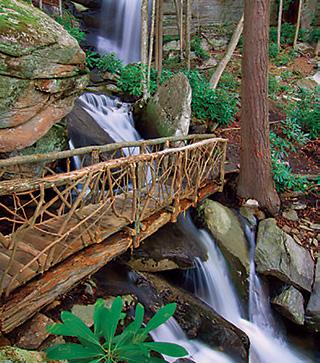
CAROLINA MOUNTAIN LIFE Spring 2023 — 97 Stop by for great allergy remedies! 107 Estatoa Ave. Newland / 828-733-0061 Military Surplus Knives • Tools Camping & Sporting Goods Collectibles & More VotedBest of theBest inAveryCounty 2021/2022 “Your Military & Outdoor Store” 150 Linville St., Newland NC 28657 828-733-3600 SHOPPES AT FARMERS • DOWNTOWN BOONE, NC • 828-264-8801 Sugar Mountain Nursery LANDSCAPE CONSULTING & DESIGN CENTER Residential & Commercial Licensed Contractor | 47 Years Experience Landscape design, installation, to include: garden, hardscapes, ponds, and trails. – 125 Varieties of plant material –675 Pineola St/194 S, Newland 828-733-2819 | www.sugarmtnnursery.com
recreation such as biking, fishing, rafting and camping. Due to the lack of waste infrastructure, high traffic, and ecological abuse, a team of devoted volunteers have started a non-profit to keep the river clean. Learn more at www.blowingrockmuseum.org
Welcome to the Arthur Planetarium!

Broadway Bound
The Carolina Snowbelles, the High Country’s precision dance troupe, are traveling to New York City to take part in the annual Project Dance Times Square event April 21 – 23. The 20-member troupe is appearing in an open air dance concert in Times Square on Broadway at 44th Street as artists from around the world gather to inspire joy and hope to those who happen upon their stage.
Founded by former Radio City Music Hall Rockette Cheryl Cutlip, the troupe trains for three hours weekly and appears in local parades, community and theatre performances, and as far away as Washington, DC, where they performed on the Millennium Stage at the Kennedy Center for the Performing Arts.

At the Blowing Rock Art and History Museum
On April 27, BRAHM presents Wild & Scenic: A Clean Wilson Creek at the intersection of Art and the Environment, a short documentary about Wilson Creek, followed by a talk after the film. Wilson Creek is located in Caldwell County, NC, and is known for its wild and scenic beauty but has had a history of ecological destruction due to timber harvesting. Now the area is used by many from all over the state for daily outdoor continued...
The Glenn and Carol Arthur Planetarium, located at the Earth to Sky Park in Burnsville, NC, is wowing audiences with traditional astronomy shows and other STEM education shows, all underneath a 36-ft projection dome. The planetarium is a multi-use destination for visitors, residents, school children, and Mayland Community College students. Now through May, catch the following programs: Legends of the Night Sky: Perseus and Andromeda (Saturdays at 2 p.m.); From the Earth to the Universe (Saturdays at 4 p.m.); and James Webb Space Telescope: the Story Unfolds (Sundays at 2 p.m.). Learn more at www.mayland.edu
W.A.M.Y.’s Denim and Diamonds
W.A.M.Y. Community Action’s mission is to break the cycle of poverty by partnering with families and communities to provide the disadvantaged the support and tools they need to become self-sufficient. They invite you to attend their Annual Event, Denim & Diamonds, on Thursday, May 18, 6-10 p.m in Banner Elk, NC. Enjoy music and dancing by Mohr Fun Entertainment, a live auction hosted by Jesse Miller, and award-winning food from Gadabouts Catering. Visit WAMYcommunityAction.org .

Spring into ART at the Turchin Center!
The Turchin Center for the Visual Arts at App State proudly presents three new Spring Exhibitions, which include: artist Signe Stuart, with cut paper works and drawing/sculpture hybrids; Renee Cloud & de’Angelo DIA, two creatives who have come together for a site-specific installation with text art, mixed media, and more; and the 20th Annual Appalachian Mountain Photography Invitational, which exhibits six Appalachian photographers. Details at tcva.org, or on Facebook @TurchinCenter.

Gideon Ridge Receives Trip Advisor Award
“Spectacular views and outstanding food and service! Unusual offerings, well prepared and executed.” This is just one of the hundreds of comments listed on Trip Advisor, and a reason why Trip Advisor, with their 2022 Travelers’ Choice Best of the Best Awards, ranked The Restaurant at Gideon Ridge in Blowing Rock, NC, as #1 Date Night Restaurant and #2 Fine Dining Restaurant in the US. The restaurant also ranks as the #11 Date Night Restaurant globally. It is the only North Carolina restaurant honored in either respective category this year. Find out what all the buzz is about: www.gideonridge.com
 Photo: Artist Signe Stuart at Turchin
98 — Spring 2023 CAROLINA MOUNTAIN LIFE
YMCA Playground Gets a Facelift!

The Williams YMCA of Avery County Playground is currently being upgraded. These upgrades will include removing the current playground and mulch and replacing them with new equipment and fall pads that will be accessible for all ages. The playground will be closed until construction is complete. Follow their progress at www.ymcaavery.com and Facebook@ williamsymcaavery. Your friends at YMCA say, “Thank you for being patient, as we work to enhance the playground for all the youth of Avery County!”
New Office for the Boone Area Chamber
The Boone Area Chamber of Commerce is now open and welcoming visitors in their new office location at the Greenway Commons Office Building, located at 579 Greenway Road, Suite 101, in Boone. “We are excited for you to see our new space and begin connecting and engaging with us as we embark on our 74th year of service to member businesses and organizations here in Boone and the High Country.” Boonechamber.com
Mica Gallery Expands
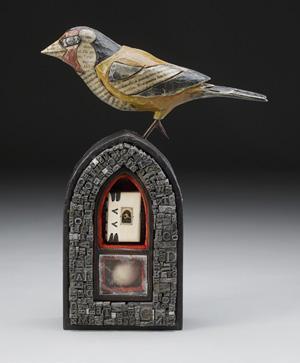
On April 1, Mica Gallery reopened with 25 guest artists. “This year,” reports president Robbie Bell, “Mica members wanted to grow the gallery’s outreach, assist more artists, and present a wider range of media so characteristic of Western NC.” continued...
Avery County Habitat for Humanity

A lot has happened at the Avery County Habitat for Humanity over the past several months. The organization welcomed Melanie Burgin as the organization’s new Executive Director last fall, and over the winter, volunteers and staff worked on Critical Home Repairs, with support from Lowe’s Home Improvement. In March, volunteer teams began arriving from all over the country—from Michigan to Florida—to help build new Habitat homes and structures. If you know of a group who lives outside of the High Country but may be interested in serving and/ or staying for a week in the Appalachian Mountains, share information about The Gilmer Retreat Center, Avery County Habitat for Humanity’s accommodation center. Go to www.gilmercenter.com for more information, and learn more about Avery Habitat projects at www.averycohfh.org
Farm Café Classic Disc Golf Tournament

On May 20, up to 90 participants will grab their discs and head to Ashe County Park for the 2nd Annual Farm Café Classic. All ages and skill levels are welcome to play this 18-hole course and try their hand at bringing home the grand prize trophy!
Shotgun Start is at 10 a.m. and a food truck will be on site. All proceeds benefit F.A.R.M. Café and its mission… to build a healthy and inclusive community by providing high quality and delicious meals produced from local sources, served in a restaurant where everybody eats, regardless of means. Learn more at farmcafe.org.
Camp Yonahlossee Celebrates Its Centennial
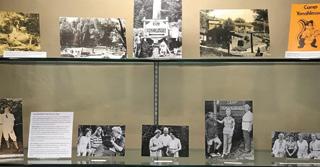
Camp Yonahlossee, once located near Blowing Rock, NC, was a summer camp for young women that operated from 1923 to the late 1980s. This year marks the 100th anniversary of the founding of Camp Yonahlossee and a Centennial Celebration and reunion are in the works for June 9-11. An exhibition of Yonahlossee archived material is located at the Appalachian State University Belk Library (see photo below). For information on all the Centennial reunion events, lodging options, and more email brennalilajane@gmail.com, or call 919-667-5996.
Save the Date! Symphony by the Lake
The Symphony by the Lake at Chetola has long been considered the “centerpiece” of the summer season in Blowing Rock. This year’s event will be held July 21, and the theme will be “From the Alps to the Appalachians.” Returning this year is The Symphony of the Mountains, joined by special guest musicians, The Kruger Brothers. Beth Snapp will open the evening. Learn more and purchase tickets at symphonybythelake.com.
Visit the new gallery website www.micagallerync.com and plan a trip to the gallery at 37 Mitchell Avenue, Bakersville, NC, near Penland School of Craft. Open daily, Monday through Saturday 11 a.m. to 5 p.m., and Sunday noon-5 p.m.
Photo: Daniel Essig’s Mixed Media Sculpture at Mica
CAROLINA MOUNTAIN LIFE Spring 2023 — 99
In 2021, the state granted AMOREM’s request to build a hospice patient care unit for Ashe, Avery and Watauga counties. Please consider a tax deductible donation to make this a reality. Donate today or learn more at 828.754.0101, www.amoremsupport.org/donate or scan here! Shops@Shadowline





Testimonial
“ After several knee injuries and a bad left shoulder that caused me severe pain at night, I heard Dr. D talk about his “Miracle Machine.” I had to give it a try. After the very first treatment on SoftWave TRT, I had zero pain.


—Brad H.

100 — Spring 2023 CAROLINA MOUNTAIN LIFE FORMERLY BURKE HOSPICE AND PALLIATIVE CARE & CALDWELL HOSPICE AND PALLIATIVE CARE AMOREM NEEDS YOUR HELP TO BRING more quality more compassion more support TO THE HIGH COUNTRY? YOUR GIFT IS AN ACT OF LOVE “The creation of a thousand forests is in one acorn.” —Ralph Waldo Emerson 828.754.0101 l 1.844.4AMOREM WWW.AMOREMSUPPORT.ORG
$49 New Patient Special (includes consultation, examination & first treatment) Each Treatment Plan is 8-Consecutive Visits
nearHARRISTEETER PatientsNationwidehave a90%satisfactionrate!
Get Relief! Call NOW! 828.386.1888 HighCountryPainRelief.com 240 Shadowline Drive Ste. A6 Boone, NC 28607 Disclaimer: G.S.
to purchase additional treatment you have the legal right to change your mind within three days and receive a refund.”
90-154.1 “If you decide
Resource Circle: Building Life Skills to Create Food Security
By Tamara S. Randolph
What if today you could eat just one meal? Not because you’re dieting, but because that is all you can afford. What would that meal consist of? Where would it come from? And what would you and your family do if you lost access to your primary food providers?
For many of us, it’s hard to imagine this scenario. Yet for some of our neighbors, food scarcity is a real issue, and one that affects all ages. In fact, many school-age children get more of their sustenance at school than at home. In Avery County, NC, greater than 50 percent of school children rely on free or reduced priced lunches. And a school lunch might be the only meal a child eats in a day.
While kids are often the ones who suffer the most from food insecurity, we’ve learned that they can also be a major part of the solution when given the opportunity. Here in our mountain counties, a number of programs are being launched that aim to help young people grow up with the skills they need to sustainably secure their own food.
A Blueprint for Success
One such program is under way at Riverside Elementary School, located at the lower end of Avery County near the Mitchell County line. To address a real need, the school’s staff, together with a lengthy roster of community partners, have introduced a signature program to teach students how to grow and preserve their own food, to recognize our region’s agrarian heritage, and to minimize food scarcity in our communities.
Whitney Baird, Principal of Riverside and the Elementary Curriculum Director for the district, was born and raised in Avery County. “I grew up around gardening and planting a variety of plants… vegetables, flowers, and fruit trees,” said Baird, who has been a key organizer of the recently implemented agriculture program at Riverside. “My family loved to can or freeze our garden vegetables, make fruit jams, as well as make homemade applesauce each year.”
When she became the school’s principal, she knew this program would become a
priority for Riverside. “We wanted our young citizens to appreciate and utilize our natural resources.” And she knew that the long-term results would lead to a more secure food supply for students AND their families, “because when you educate students, you educate their families.”
It Takes a Village
Initial legwork for the project kicked off in fall of 2019; stakeholders were identified, grants and funding were procured, county partnerships were established, materials were purchased, and 14 raised beds and a greenhouse were built on the school grounds. Help came from numerous entities, including the Avery County Cooperative Extension Center, the Avery County Government and School Board, Riverside parents and teachers, the High Country Charitable Foundation, the Kiwanis Club Banner Elk Foundation, Camp Linn Haven, Lees-McRae, and a long list of very generous businesses, individuals, and organizations who volunteered labor and donated dollars and materials.
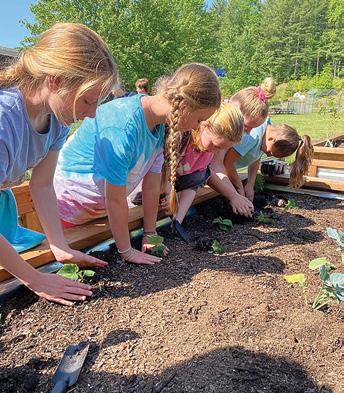
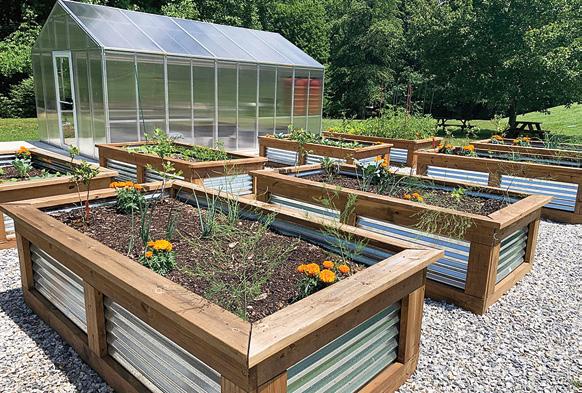
And then there are the ultimate champions of the program—the kids—dozens of Pre-K through Fifth grade students eager to learn… to roll up their sleeves and submerge their fingers beneath the dirt, to water and weed daily, to harvest vegetables they started from seed, to realize the bliss of “making” their own food.
“You put a trowel in their hands and they’re happy,” shares Bobbie Willard, widely known as “Mrs. Bobbie” and a former Extension Agent involved with 4-H Youth Development through the Avery County Cooperative Extension Center. “At first, the younger kids want to put everything in one hole,” but she says they are quick learners at the monthly planting classes that take place during and after school. Many of Riverside’s students also participate in the 4-H Homesteader Club, an afterschool program, where they learn additional skills, such as fishing, inoculating mushroom logs, food preservation and more. “Afterschool opportunities also offer a way to
bring parents into the process and build community,” added Willard.
Cultivating a Special Experience
In an area where farming goes back many generations, the agricultural program is a perfect fit for Riverside. It offers a unique experience for grade-schoolers and their families, and is already gaining in popularity. For example, the 4-H afterschool program has doubled in just one year, with each session now attracting 20-32 students. Growth means that more people harvest the benefits, figuratively and literally.
The first big food harvest occurred last summer, and again in the fall. Broccoli, cabbage, cucumbers, squash, zucchini, tomatoes, pole beans, pumpkins, and sunflowers were some of the main crops, and even when the kids were on summer break, the bounty made it to Riverside families.
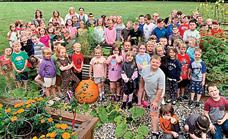
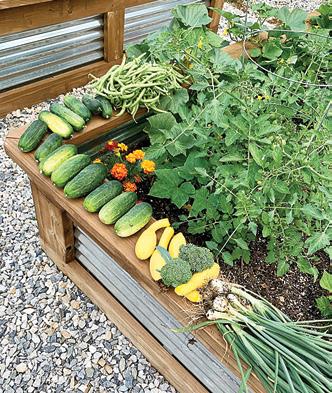
This spring, additional garden beds are being installed for blueberries, and more varieties of apple trees are being planted. Several grants have recently been awarded, which means that this summer the school hopes to complete an outdoor classroom, as well as a fence and barn structure. Riverside’s wishlist includes adding a few small farm animals, a chicken coop to house some of the chicks the students (including the 2nd graders) are beginning to rear, a larger fruit orchard, a Farmers’ Market run by students, and a drive-through produce stand for parents.
“This has been a tremendous team effort by our community, parents, staff, and donors to make this initiative a reality for our students,” says Baird. “We continue to be amazed at the support and devotion.”
You can follow Riverside’s progress on their Facebook page at ACSRiversideElementarySchool and at the Avery County Schools website, www.averyschools. net. To learn more about volunteer opportunities or to contribute to the Riverside Outdoor Learning Fund, call the school at 828-737-5600.
CAROLINA MOUNTAIN LIFE Spring 2023 — 101 RESOURCE CIRCLE
Summer 2022 harvest Riverside students
If you are at risk for heart disease or heart failure or are experiencing minor symptoms, schedule a consultation today.






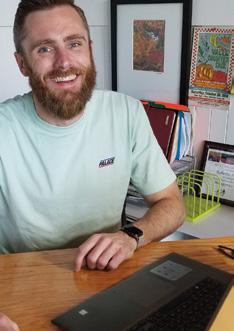
102 — Spring 2023 CAROLINA MOUNTAIN LIFE COMPU-DOC Computer Repair I.T. Consultant • Network Securities
Windows/Mac
Security Cameras
Phone Systems Alex Kohler 828-260-3306 atkohler@compudocnc.com GENERAL REAL ESTATE FEATURING HEADWATERS & THE RESERVE Chris Wotell, Broker-in-Charge: 828-260-1366 Jim Fitzpatrick: 828-898-3257 4501 Unit #6 Tynecastle Hwy. Banner Elk | www.peakrealestatenc.com apprhs.org/heart 828-264-9664
Regional Healthcare System continues to raise the bar for heart and vascular care in the High Country. Our
•
•
•
Appalachian
team is committed to promoting health in the High Country and simply making life better
ARHS Heart & Vascular Center - Ashe Department of Watauga Medical Center located inside Ashe Memorial Hospital 200 Hospital Avenue, Segraves Hall 1 Jefferson, NC 28640 Grandfather Specialty Clinic Operated by Watauga Medical Center located inside Sloop Medical Office Plaza 436 Hospital Drive, Suite 210 Linville, NC 28646 Heart & Vascular Center of Watauga Medical Center Operated by Watauga Medical Center 336 Deerfield Road Boone, NC 28607
A New Era of Healthcare Delivery: Watauga Medical Center Opens New Patient Care Tower
By Kim S. Davis
The vision to elevate healthcare to new heights began in 2019—and on March 20, 2023, the Schaefer Family Patient Care Tower at Watauga Medical Center officially opened its doors, fulfilling Appalachian Regional Healthcare System’s (ARHS) commitment to providing exceptional healthcare for the High Country region.
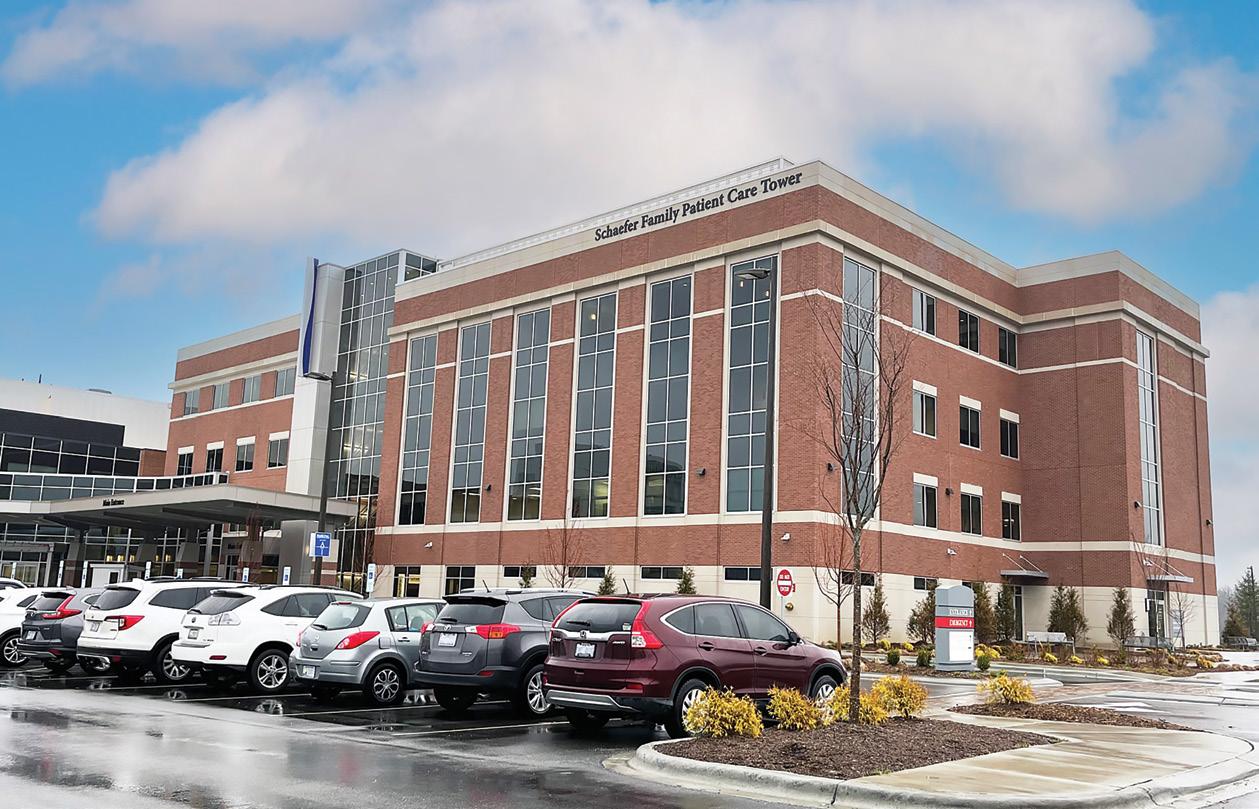
Named in honor of the generous philanthropic gift from Bonnie and Jamie Schaefer—and family members, Marla Schaefer and Steve Weishoff—the new Schaefer Family Patient Care Tower contains forty-eight modernized patient rooms, an expansive six-suite surgery center, an imaging and diagnostic suite, a co-located Heart and Vascular Center, a new Intensive Care Unit, a new central energy plant and a multitude of technological enhancements.
Chuck Mantooth, President and CEO of ARHS commented, “We were proud to receive our first 5-star CMS rating in 2020. However,
our board (of trustees) saw an opportunity to take us to the next level with this new facility. Even amidst the pandemic they never wavered in their decision to go forward, and future generations will benefit from their wisdom.”
Upon visiting the new patient care tower visitors will immediately notice the “openness” and “non-hospital feel” of this new facility. Mantooth added, “The old hospital rooms were small and dated. The new patient rooms are spacious and bright. All of the rooms have significantly larger windows offering beautiful views of the mountains.”
The new patient care tower was designed specifically to improve patient flow, safety, and privacy—all of which are cornerstones of healthcare excellence in the 21st century. The Emergency Department, imaging, diagnostics and surgery suits are all located within close proximity to ensure time-saving and efficient care continuity.
More than a New Building
Beyond brick and mortar construction ARHS also made significant investments in technology and equipment.
The imaging center features a new 256-slice CT scanner (one of only nine in North Carolina) that can scan the heart in 1.5 beats, and a high-resolution 3D mammography system (the only system of its kind in western North Carolina). The new transformative MRI scanner will allow ARHS to perform advanced subspecialty imaging for cardiac and prostate conditions. This technology will allow ARHS providers to detect, monitor, and treat disease progression like never before.
ARHS has also made investments in automated and real-time digital in-room and door displays to elevate the patient experience while also improving staff and patient communication, satisfaction, and safety. The MEDI+SIGN electronic patient room white -
Continued on next page
CAROLINA MOUNTAIN LIFE Spring 2023 — 103
HEALTH
boards replace traditional dry-erase boards in the patient rooms to focus on communication enhancements while substantially reducing the staff workload. The staff-facing door displays provide an overview of the patient’s care plan, risks, and other precautions to the healthcare team. Clear and concise information on the MEDI+SIGN Emergency Department whiteboards highlight items such as tests ordered, average turnaround times and lab status.
The six new operating rooms incorporate a state-of-the-art Steris Operating Room Integration System to allow surgeons and surgical staff to perform intricate surgical procedures. The new 4K definition surgical displays, including wall displays and large format displays, mount to surgical light arms, equipment columns, and walls in order to show close-up, crisp views of the patient’s surgical site.
ARHS will also begin utilizing an EPIC Electronic Health Record (EHR) system throughout the new patient care tower. EPIC is a premier EHR system recognized throughout the country that allows hospitals and healthcare systems to collaborate with continuity to deliver more efficient, innovative and improved care. Through an affiliation with UNC Health, ARHS will also launch a new, dynamic patient portal called MyChart. These technology upgrades will allow patients to interact with their healthcare providers and offer additional features that were not available with ARHS’s previous EHR systems.
Watauga Medical Center: Recognized as a Top Hospital

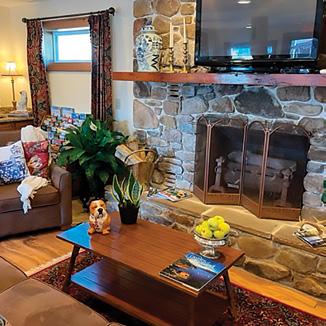
In 2020 Watauga Medical Center received its first ever 5-star rating from the Centers for Medicare & Medicaid Services (CMS). CMS is a federal agency within the United States Department of Health and Human Services that administers the Medicare program and works in partnership with state governments to administer Medicaid, the Children’s Health
Insurance Program, and health insurance portability standards.
Watauga Medical Center also received Healthgrades recognition for the following clinical areas:
n Outstanding Patient Experience Award™ (2022, 2023)
n Patient Safety Excellence Award™ & Top 10% in the US (2019-21)
n Coronary Intervention Excellence Award™ & Top 10% in the US (2020)
n 5-Star for Treatment of Heart Attack (2019-2020)
n 5-Star for Treatment of Heart Failure (2020)
n America’s 100 Best Hospitals for Orthopedic Surgery™ (2020)
n Orthopedic Surgery Excellence Award™ & Top 10% in the US (2019-21)
n 5-Star for Hip Fracture Treatment for 2 Years in a Row (2019-20)
n Gastrointestinal Surgery Excellence Award™ (2021)
n Gastrointestinal Care Excellence Award™ (2021)
Healthgrades evaluates hospital performance using objective quality measures including clinical outcomes and patient safety, as well as patient experience.
Watauga Medical Center was also awarded with a hospital safety grade of “A” for Fall 2022 by The Leapfrog Group and recognized as one of the Top Rural Hospitals in the U.S. for 2021 and 2022 due to safe and effective treatment protocols and high patient experience scores. Only 13 rural hospitals in the U.S. received this award in 2022—and Watauga Medical Center was one of just two hospitals in North Carolina to receive it.
ARHS Needs Your Support
The Appalachian Regional Healthcare Foundation has launched a $20 million capital campaign called “Higher Elevation” in 2022 to
supplement the $160 million investment that ARHS is making in facilities, equipment, technology and infrastructure.
To date, ARHS has raised $12 million toward its $20 million fundraising goal.
Elements of the campaign include support for the following areas:
Family Medicine Residency Program to attract and retain physicians in the High Country so everyone has better access to care Women’s Health Center for Excellence to focus on providing care for female patients including routine women’s care, PAPs, mammograms, reproductive health, pre and postnatal care—along with diagnosis and treatment of other illness and disease.
WMC Patient Care Tower to provide our community with a modern, spacious facility which incorporates state-of-the-art technology and cutting edge treatment modalities.
Integrated Orthopedic and Sports Medicine Program to promote and ensure healthy, active lifestyles.
Heart and Vascular Center to provide comprehensive 24/7 cardiac and stroke interventions during life-threatening circumstances.
Rob Hudspeth, Senior Vice President of System Advancement and President of the Appalachian Regional Healthcare Foundation added, “This historic investment by our healthcare system—together with $20 million in transformational philanthropy from our community—will fuel our future and ensure the highest quality care right here in the High Country. With your help, ARHS can make its award-winning care even better, while providing patients and their loved ones with the comfort they deserve.”
If you would like to learn more about the priorities of the Higher Elevation campaign or simply want to make a donation, please visit higherelevation.apprhs.org or contact the ARHS Foundation at 828-262-4391.
(828)

104 — Spring 2023
LIFE
CAROLINA MOUNTAIN
HEALTH
“Almost 100 years of exceptional hospitality. The Inn offers cozy, homestyle accommodations including king rooms, double queen rooms and two-bedroom suites. Located in downtown Newland, within walking distance of great dining and shopping. Convenient to the high country’s best attractions including Grandfather Mountain, Linville Falls, Banner Elk, Sugar Mountain and many more!”
742-1763 | Newland, NC | theinnatshadylawn.com
The Simple Joys of a New Gardening Season
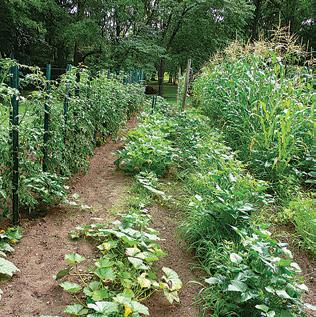
When you consider the twelve months of the year in the High Country, no matter how you twist, turn, or mentally configure matters, there’s not a great deal positive to be said about February. Typically it’s grey, grim, sodden or snowy, and a time when depression can come a-creeping and the elusive malady mountain folks variously and colorfully describe as cabin fever or the mollygrubs can lay a firm hold on a corner of a man’s soul. Maybe my beloved Grandpa Joe put it best, in his pithy way, when he said: “It’s a good thing February only has 28 days. A body couldn’t stand any more of it.”
Yet he was never someone given to overly much grousing, and after he moaned a bit about what he called “the miseries” and the general nastiness of February, he’d switch gears to a far cheerier topic and begin discussing plans for a new gardening season. Those joys embraced a number of areas. There were always two or three seed catalogs that had come in the mail and offered photographs as bright as the landscape was barren. While Grandpa and Daddy bought most of their seeds locally, usually those catalogs would feature one or two promising new items that proved irresistible even for the most pinched of pockets. The colorful mail order offerings would likely be lying alongside a farmer’s almanac or two that had been given away by local businesses such as the Farmers Federation or drugstores. Delving into their pages enabled Grandpa to plan plantings in conjunction with the signs, for he religiously adhered to the time-honored tradition of putting seed
By Jim Casada
in the ground when the Zodiac said the timing was most propitious.
Added to those considerations, which were given a degree of deliberation worthy of Aristotle (not that Grandpa Joe would have had a clue as to the identity of that ancient eminence), was a work plan for how the garden was to be laid out. It wasn’t committed to paper, but Grandpa knew exactly where every crop had been planted the previous growing season and understood, through decades of accumulated wisdom, the importance of crop rotation. He never said as much, but I always suspected that in younger days he had experienced the ruination of once fertile land through planting corn year after year. It was certainly something that was common among mountain folks in yesteryear.

Alongside this pondering on practical matters there was plenty of what Grandpa called “dreamin’ and schemin’.” This thinking, some of it wistful and all of it wishful, was a fine way to occupy the coming days and weeks. It was all part of the elaborate, joyful process leading to putting in the year’s garden.
Still, while seeds in the ground and sprouts beginning to show might be weeks away, along with whimsical flights of fancy there was plenty of work to be done. Far from being what folks might have described as dreaded or “off putting,” these initial efforts connected with another season of gardening were reason for pure delight. The first came with an odiferous, arduous task—cleaning out the hen house and spreading chicken
manure across the expansive garden ground. It was a task that set noses to running with ammonia fumes as flat shovels scraped the chicken droppings from the ground and loaded them into a wheelbarrow. Spreading the manure across fields required considerable care because, unlike cow or horse droppings, it was what Grandpa described as “powerful rich.” As he put it: “You’ve got to be careful or you’ll burn up your crops. A small application of chicken droppings will go a long way.”
All the while during these preparatory weeks, weather was watched with considerable care. Whenever there was a spell of a few days without rain and Grandpa’s astute prognostication instincts told him fair weather would hold, he contacted a local AfricanAmerican preacherman who specialized, in this season of the year, in readying gardens for planting. This delightful fellow, ever carrying a toothy grin as he waged constant war against sin, supplemented his meager income from pulpit duties and fed his large family by doing all sorts of work.
He owned a pair of plow mules, the necessary tools of the trade (turning plow, middlebreaker plow, stock plow, planter, and harrow), and a work ethic second to none. How I loved to watch him going about his business—mules plodding patiently along, reacting in an “in step” manner that would have done any marching band proud as they heeded each command of “whoa,” “gee,” or “haw.” It was a delightful prelude to getting in a garden.
Continued on next page
CAROLINA MOUNTAIN LIFE Spring 2023 — 105
Seed Catalogs / Courtesy of Library of Congress
The plowing, always covering the ground twice—first with the deep digging mold board followed by a change to the middlebreaker plow. Then came a careful pass over everything with a steel-toothed harrow. In the end the garden spot was left wonderfully smooth and friable, with the chicken manure which had been spread a few weeks earlier perfectly mixed and mingled with the rich bottomland soil. The smell of that newly
plowed ground was a perfume that no aromatic derivative of costly ingredients such as ambergris, no dab of Chanel No. 5, could come close to matching. The only thing I can think of that was possibly headier or more appealing would have been the scent in the air after an evening rain laid the dust of that same earth in midsummer.
Men and mules, mold boards and middlebreakers have long since given way to tractors and tillers, but the essence of “putting in” a garden remains as timeless and thrilling as ever. There’s something about the whole process which soothes the soul and lifts the spirits. Maybe a thought expressed decades ago by a local character everyone knew simply as “the plant lady” captures the joys produced by getting hands in the good earth and the process of being an integral part of ever returning spring. This widow woman raised and sold all sorts of plants in a jumbled assortment of greenhouses and raised beds strewn across her expansive back yard. One day I was browsing through her labyrinth of offerings in search of a couple of new varieties and overheard a conversation she was having with another customer. The female customer nodded her head in my direction and said: “He’s a university professor, you know.”
The good plant lady so gifted with a


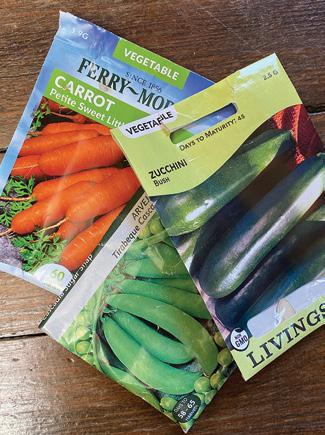
green thumb shook her head and said. “No, he’s really just an old hillbilly dirt dauber.” I may have been paid a greater compliment at some point in my life, but if so it doesn’t come to mind. The arrival of each new gardening season affords all of us the opportunity to revert to the ways of our forebears and become “dirt daubers.” Whether individual efforts involve nothing more than a raised bed or two for a few tomato plants, decorative flower beds scattered around the house, or a sizeable garden that will, properly managed, produce enough vegetables that come summer neighbors hide when they see you coming with another bag full of zucchini, the delight remains. It is enduring, endearing, and a grand reminder of our links to the land. To be a gardener is to be wonderfully blessed, and I know of nowhere that oneness with the earth has greater meaning than in the fecund soil of the High Country.
Jim Casada is a full-time freelance writer and the author of numerous books. His latest work, coauthored with Tipper Pressley, is due out in early May. Titled Celebrating Southern Appalachian Food: Recipes & Stories from Mountain Kitchens, it offers more than 200 recipes linked to a love of land and a way of life as it has long existed in the High Country. To learn more or order copies, visit his website at www.jimcasadaoutdoors.com.
106 — Spring 2023 CAROLINA MOUNTAIN LIFE
WISDOM AND WAYS
...where everyday is a Farmer’s Market! fresh produce locally baked goods moravian pies • quiches boiled peanuts • pickles Fresh Seafood • Local Meat Jams • honey • cheese & crackers artisan crafts & unique gifts Open Daily 10am-6pm Yummy Weekly Specials 828.963.8254 Hwy 105 South, Foscoe NC owned & operated by LETT-US PRODUCE Wholesale Supplier of Fine Produce Est. 1993 • Boone NC 828.963.7254
Spices - Seasonings - Teas - Infused Salts and Sugars - Gourmet Gifts The Spice and Tea Exchange Downtown Blowing Rock Downtown West Jefferson 828-372-7070 336-846-8327
A “Savory Sampling” of Two New Books
CML Magazine is fortunate to work with writers who are committed to crafting great stories and sharing their well-honed expertise with our readers. We’re pleased to announce that two of our long-time contributors, Jim Casada and Gail Greco, have recently released food and beverage books that will appeal to all who want to learn more about agricultural heritage and experience first-hand how quality ingredients can become palate-pleasing creations.
CMLcontributor and award-winning book author Jim Casada offers his latest long work, Recipes and Stories from Mountain Kitchens – Celebrating Southern Appalachian Food, in partnership with author and photographer Tipper Pressley. We invite you to preview the following excerpt from Chapter 10—Spring Vegetables, and try out one of the chapter’s delicious seasonal recipes:

The season’s first meal featuring any vegetable or fruit is invariably welcomed with gustatory warmth, but this is particularly true of spring. After months of relying on canned, dried or frozen foods, longterm keepers such as winter squash, or items from grocery store shelves that never achieve the same standards of deliciousness as vegetables fresh from the garden, spring brings pure culinary joy. The recipes that follow offer a savory sampling of eats linked to earth’s annual reawakening as it takes place in the Appalachians.
Asparagus Casserole
Much like the situation with rhubarb, asparagus is a perennial normally relegated to a location where it can be productive year after year with minimal care—occasional infusions of manure, weeding combined with mulching to allow it to grow without competition and due diligence to avoid disturbing the roots come plowing time. A properly maintained asparagus bed will remain productive for many years, and the tender shoots offer a springtime treat of sheer joy. Whether stewed with a bit of butter, steamed, grilled, coated in olive oil and prepared in the air fryers that have of late become all the rage or as the central ingredient in a casserole (the recipe offered here), asparagus is an upscale vegetable that does wonderfully well in high-country gardens.
30 spears of fresh asparagus (or one large can)
3 hard-boiled eggs, sliced
1 cup grated sharp cheddar cheese
White Sauce:
2 tablespoons flour
2 tablespoons butter
¼ teaspoon salt
¼ teaspoon black pepper
1½ cups Carnation milk
Blend flour, butter, salt, black pepper and Carnation milk. Cook in a double boiler, stirring until thickened and smooth. Alternate layers of asparagus, eggs, cheese and sauce. Bake in a 350-degree oven for 20 minutes.
n Order Recipes and Stories from Mountain Kitchens (released in early May) at www.jimcasadaoutdoors.com.
CML Contributor and best-selling book author Gail Greco released her latest work this April: Afternoon Tea is the New Happy Hour. Inside, you’ll find out how and why tea time has become more than a mid- to late-day ritual. From dainty parlor events to modern-era bars, tea has created its own happy hour for millennia. It also offers a soul-restoring time-out we need in a fast-paced world.
The pages of Afternoon Tea are filled with easy-to-follow recipes to create tea sandwiches, scones, breads, cakes, dips, and, of course—tea. Greco also shares cooking and serving tea tips, tea etiquette, insight into the differences between using tea bags, a tea kettle, and loose leaves, and the lingo used by tea connoisseurs. Whether you’re throwing a vintage tea party or looking for high tea food ideas, there’s something for everyone.
Here, we offer an excerpt from the book, including an easy and nutritious option for your afternoon tea:

With all the tea choices, knowing the tea basics will help you decide what to serve in your cuppa. A cuppa is an endearing reference to a cup of tea or coffee in a teacup, mug, glass, or any drinking vessel. The tea plant and how its leaves are processed determine the tea that ends up in your cuppa. The same is true with herbal teas—also called elixirs or tisanes—made up of herbs, roots, barks, seeds, or fruits. There are a large variety of teas available and the benefits of true teas are fascinating.
Ginger Date Tea
Makes: 2 servings
Use fresh ginger root to enhance this botanical tea by boiling ginger until it releases the slightly peppery-sweet aroma. It’s great for any tea party or middle-of-the-day pick-me-up.
2 tablespoons shaved fresh ginger root
4 cups water
Fresh juice from half of a lemon
1 generous tablespoon date syrup
Place ginger and water in a medium saucepan and bring to a boil. Lower heat to medium-low and simmer for 15 to 20 minutes or until liquid becomes fragrant.
Strain and stir in the lemon juice and date syrup and serve.
n Gail includes her own food photography, which showcases the happy hour crowd pleasers. The author will sign her just-released book at Sweetwater Escape Kitchen in Zionville, NC, on May 21 from 2-3:30 p.m. during a special tea presented by Blue Ridge Women in Agriculture to honor its “Founding Mothers.” You can also order copies of Afternoon Tea is the New Happy Hour online at Barnes & Noble or Amazon.
CAROLINA MOUNTAIN LIFE Spring 2023 — 107
THE HIGH COUNTRY'S DESTINATION GARDEN CENTER SINCE 1992

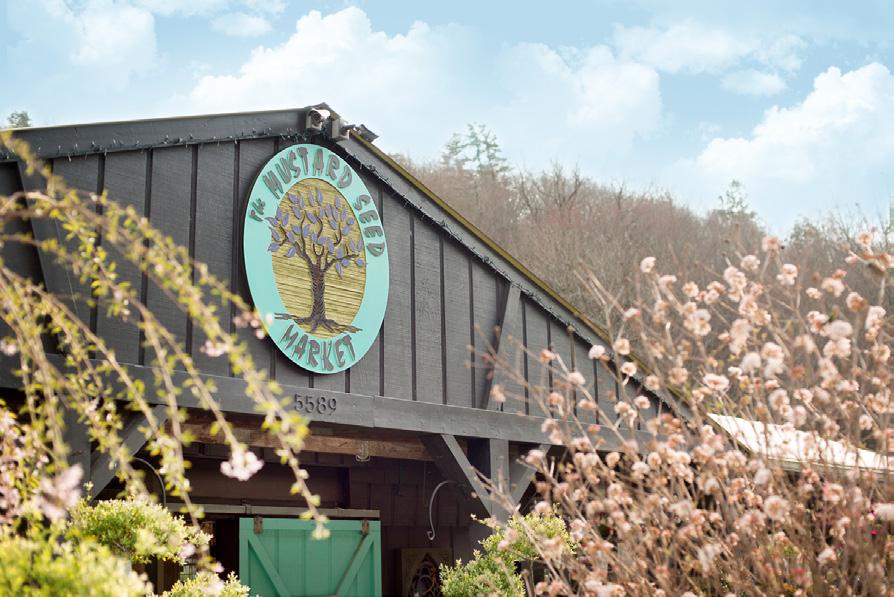


SPRING IS HERE!
The Mustard Seed greenhouses are filled with seasonal annuals and perennials to create beautiful colors and textures in your garden We also offer a large assortment of shrubs, trees, houseplants, seasonal decor, and gifts from local artisans and curated vendors Come see why the Mustard Seed Market has been a shopping destination in the North Carolina mountains for over 32 years!
108 — Spring 2023 CAROLINA MOUNTAIN LIFE
Full Design Service | Over 38 years experience | 11 miles from Boone, 5320 Hwy 105 South, Banner Elk | Open All Year, Mon-Sat, 10-5 | 828.963.6466
Beautiful Handmade Furniture | Full line of Outdoor & Patio Furniture | Home Accessories
5589 US HWY 321-S Blowing Rock, NC 28605 | Monday-Saturday 9am-6pm
Say “Cheese”…and Celebrate!
By Steve York
AsI write this story, I’m happily munching my way through a plastic tub of the most-coveted white curd cheese bites from English Farmstead Cheese. And as a famous potato chip advertising slogan used to say, “Becha can’t eat just one.” Yep…open the tub and throw all dietary discipline out the window!
So, what’s the big news about English Farmstead Cheese? Saturday, May 6, 2023 marks their big 10th-year anniversary celebration. And that celebration includes on-site vendors, potters, a woodworker, a bread-maker, a jam-maker, hot dogs, and a splashy array of products from each of these local artisans, all of whom have their products featured in the retail store throughout the year.
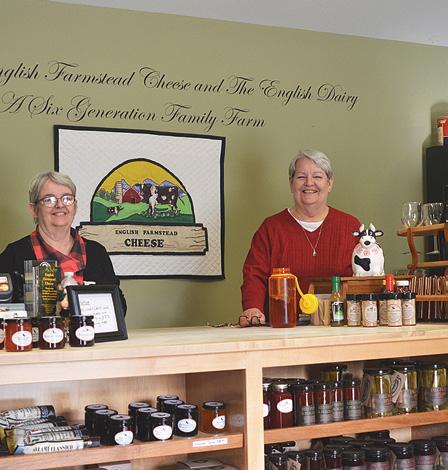
Oh yeah…almost forgot. This is mainly a celebration of CHEESE—lots of cheese, farm-fresh and farm-made cheese from farm-raised cows; happy, well-fed dairy cows you’ll see all over the adjacent family farmland!
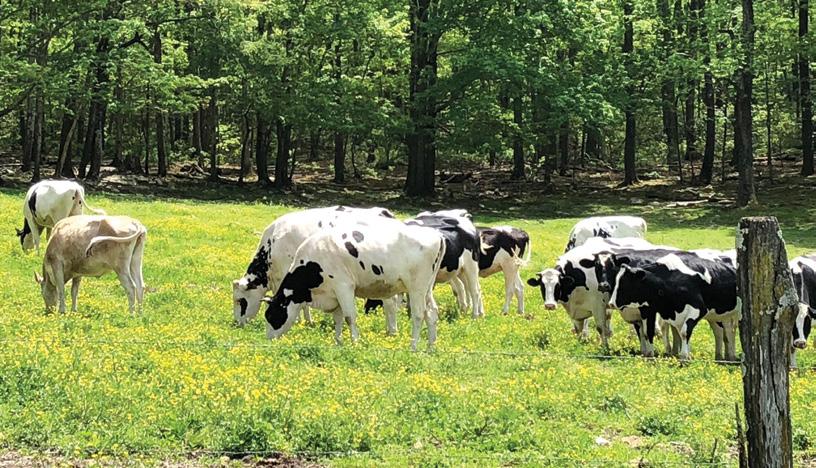
Because their cheeses are so much in demand, their little retail store and cheesemaking kitchen—located about 20 miles north of Marion on US-221 N—has become a sort of unofficial “visitor and welcome center” for travelers heading up the mountain on that ever-winding scenic route towards the High Country. And that’s also because, along with all the cheeses and other “goodies” inside, you’ll find a very warm and sunny “Welcome!” from Susan English, sister Luanne Graham, and/or other store personnel, plus
a display of helpful brochures promoting various area and regional attractions.
For a little background, I asked Susan English about how all this got started. “We’re a sixth generation, large English family farm that began in the mid-1800s,” she explained. “The property was eventually divided into two parts with the current dairy and retail store covering 250 acres, some of which is on the other side of Hwy 221 and connected by a tunnel so that the cows can move back and forth when grazing. The family-run dairy began operating in 1926. But our retail and wholesale cheesemaking didn’t open until May 18, 2013.”
Day-to-day retail operations are managed by the above-mentioned family members, plus part-time helpers, an area delivery driver and their wholesale distributor. The larger dairy farm operation is run by Susan’s husband, Terry, his brother, and his brother’s son, along with additional part-time help.

My next question was about Susan’s inspiration to start a retail and wholesale business. “I had been making cheeses at home in my kitchen for personal use and would share them with family and friends,” she recalled. “They often encouraged me to start making it to sell. But, of course, you can’t sell ‘homemade’ cheeses commercially. You have to have a professional setup that meets all regulations for making and selling food products. So, I decided to take the big leap of faith and turn my cheesemaking hobby into a real business.
“We began as just a retail store with
a few wholesale customers at first,” she continued. “In fact, the wholesale side was really a happy accident driven mostly by word-of-mouth. Now, our wholesale business has grown to about 55 percent of our total sales and we continue to get wholesale inquiries.”
Since cheesemaking traditions are honored and vary worldwide, I wanted to know the origins of her recipes. “Our spreads come from our own recipes; recipes I first create at home and then offer in our store. But the other cheeses are primarily created from traditional Wisconsin cheesemaking recipes. We offer ten spreads—six of which are seasonal—and eight types of hard cheeses, including cheddars, gouda, buttercup, flavored jack cheeses and, of course, our curd. All of our other products like jams, jellies, honey, crackers, bagel chips, ice cream, pickles, hot sauces, meats
Susan English /
MOUNTAIN LIFE Spring 2023 — 109
Photo by Pamela Mumby CAROLINA
continued on next page
Susan English and sister Luanne Graham
Photo by Pamela Mumby
and specialty items, like cutting boards and pottery, are locally made exclusively within western North Carolina,” added Susan.

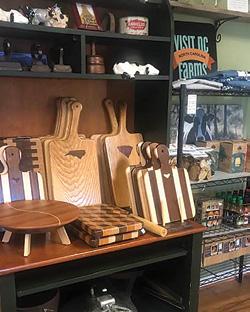
Occasionally, English Farmstead Cheese will be on site with their products at various events such as the Asheville Cheese Fest, plus at local wineries as part of their wine club and wine pairing events. Otherwise, their items are available for sale at Maw’s Produce in Foscoe, at Linville Falls Winery year-round, at Grandfather Winery in the summer, and on the menu at Booneshine Brewing Company in Boone.
English Farmstead Cheese’s retail shop is open only on Fridays and Saturdays from 10 a.m. to 4 p.m. But it’s amazing how many people stop to shop and how many bags of cheeses and other treats end up going out the door. In fact, it isn’t impossible that they may run out of some cheeses during a busy retail day.
You can keep up with their ongoing events and specials on Facebook and you can always call direct at 828-756-8166. Remember, their big 10th anniversary celebration is Saturday, May 6, 10 a.m. until 4 p.m. And, frankly, anytime you’re up and down Hwy 221 is a perfect time to celebrate CHEESE!
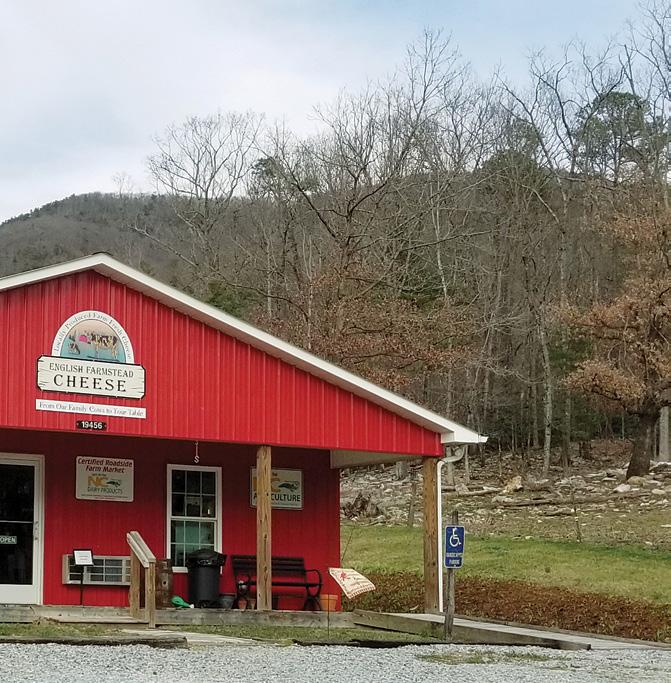
110 — Spring 2023 CAROLINA MOUNTAIN LIFE
Beside Mountain Grounds Coffee & Tea, Grandfather Center, Tynecastle 3990 NC Hwy 10 5 S. Suite 9, Banner Elk, NC 28604 • 828.898.9633 design@design105.com • DistinctiveCabinetryDesign.com We specialize in extraordinary kitchens! For extraordinary people ...like you. elegant living... TIMELESS VALUE
Eggstra! Eggstra!
We’ve Always Got ‘Em—Chickens, Ducks, and Quail … Oh Lay!
Story and Photos by Gail Greco
“The present was an egg laid by the past that had the future inside its shell.”
Eggs and springtime share the promise of rebirth. So this grace note from 20th century anthropologist and folklorist Zora Neale Hurston is timely, and challenges conventional wisdom that nothing is perfect. I reflect, the egg is!
From scrambling up meals du jour or creaming omelets and pouffing custards to fluffing meringues, binding fats with liquids, structuring sauces, and disguising themselves undercover to leaven our baked sweets and savories, eggs take a beating…. but they can’t be beat!
May is National Egg Month, officially kicking off the egg season when increased daylight hours boost hens’ productivity. Eggs give their all. But the recent avian chicken flu and eggflation put a poke in our yolk, dripping egg on our face “for taking eggs for granted,” avows North Carolina Cooperative Extension Agent and Dietician Margie Mansure.
The United Egg Producers (a national co-op of farmers “promoting responsible egg production”) fears a spring/summer repeat from diseased seasonal bird migration, and expects egg prices to remain high—of particular concern to “families on fixed and low-incomes,” reports Mansure, who offers alternatives such as protein-rich beans and whole chickens, not pricier parts. Yet eggs, she says, even at a higher price, are “still the best value around.”
Mansure’s recent pasta cooking class at Watauga County Agricultural Center in Boone required two dozen eggs, costing $18—an unplanned chunk of her budget, she now calculates when designing classes such as one coming up: Plant Forward “We’re humbled, so we adjust.”
Catherine Reczek, Boone’s Be Natural Market owner, saw empty shelves at area supermarkets, whereas at her market—a full-scale health-foods grocery—stock was at times low, but still plentiful from her main source, Mountain Memories Farm in nearby Elk Creek, VA. “We had to raise prices a bit, but just to cover costs so we could still do our part for the community. Many people are fussy about their eggs, wanting to know where they came from.”
Local farmers (unaffected by bird flu) came to the rescue to fill trickle-down demand, agrees Michelle Dineen, Watauga County Farmers’ Market manager, with eggs from farms such as Creeksong in Zionville, Mountain Roots in Lansing, and her own Sunshine Cove Farm (quail eggs) in Valle Crucis.
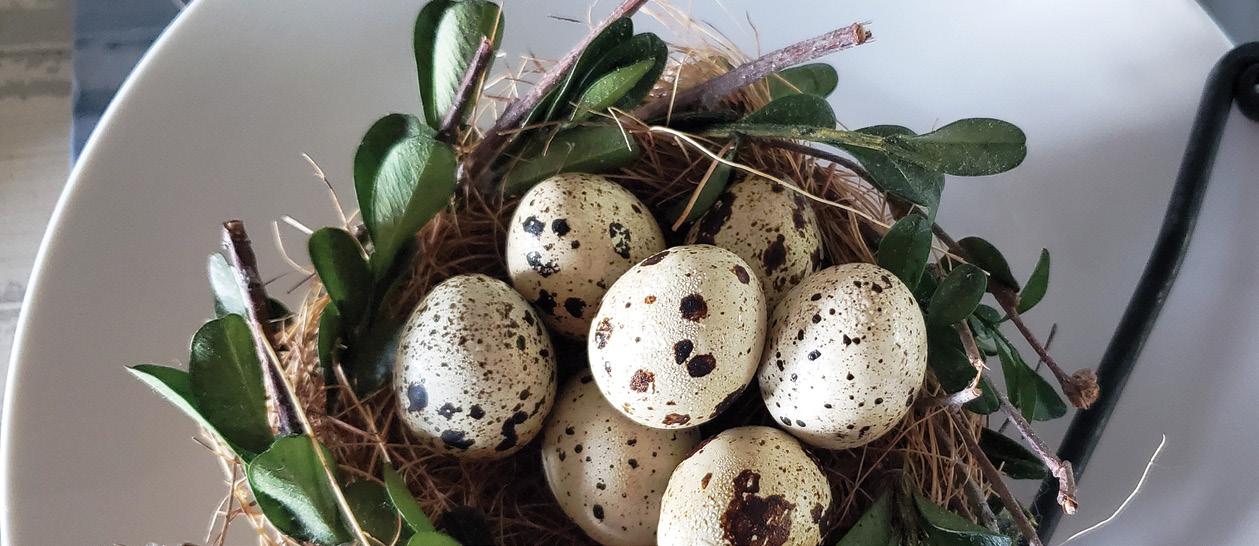
Abby Willis of Stick Boy Bread in Boone relates: “The general egg-buying public was more affected than us. Vendors continue to raise costs to us, but we aren’t raising prices.” Stick Boy’s cakes, scones, muffins, croissants, and pastries use a whopping 180 dozen eggs minimum each week. Eggs for ‘plate breakfasts’ and sold by the carton at the Stick Boy Kitchen location “are hard to keep in stock.”
Out-and-About Yolklore
Eggs are the fourth most purchased grocery item after bread, meats, and peanut butter, according to the U.S. Department of Labor Statistics. But not all eggs are alike. In shells of ivory, brown, blue, green—with deep mango-colored yolks—our local eggs are abundantly more nutritious than those from stuffy, confined farm factories where egg season is forced every day.
As they scratch the dirt, strutting their feathers—stencil-like lacy, polka-dot perky, and bold stripey—our chicks rock like models, flaunting their designer plumage on the High Country’s grassy terroir runways. So social media, lampooning eggs as so elusive that a gift of a dozen is more romantic than jewelry, may have gotten it right for this town anyway!
For Heritage Homestead Dairy in Crumpler, it’s duck eggs that are suddenly in demand at the farmers’ market. “Flu-fear sent people trying and liking them,” reports farmer Carol Coulter, who can’t keep them in stock. Larger than chicken eggs and creamier, a dozen duck eggs are only 50 cents more this spring, because of higher feed costs. And the foraging Coulter does to find the eggs is free with purchase, included in the price, as she doesn’t have her ducks-in-a-row—thankfully! The waterfowl waddle freely, laying eggs under brush. “I get out quickly to beat the crows, who love
continued on next page
CAROLINA MOUNTAIN LIFE Spring 2023 — 111
Quail eggs from Sunshine Cove Farm
them, too,” she grins. Hmm...talk about supply-chain issues!
Maw’s Produce in Foscoe also acquired new customers for their fresh-from-thechicken eggs, reports manager Christina Musumeci. The Blue Ridge Women in Agriculture’s mega, local-only Food Hub in Boone reported a supply blip, only to have Daybreak Homestead (Triplett) and Shenanigans (Deep Gap) jump in with regulars like Happy Hens (Lansing), Moffitt-Toolan (Wilkesboro), and Springhouse Farm (Vilas) in offering their eggs. “We’re lucky our farms provide us with such a nutrientdense food,” applauds Hub Manager Taylor Campbell.
Thinking Like an Egghead
In Lessons in Chemistry (Barnes & Noble’s charmingly briny 2022 Book of the Year), cooking show host Elizabeth Zott instructs her Snoopy-cool German Shepherd, named Six-Thirty, "Never crack
eggs on the side of a bowl. It increases the chance of shell fragments...bring a sharp thin knife down on the egg as if you’re cracking a whip. See?" We're unsure if Six-Thirty, who otherwise offers caring insights throughout the novel, appreciates this tip, but we do, so here are a few more eggy ideas to consider!
Nothing quite replaces fresh cooked eggs—frittatas, benedicts, et al—but think useful copycats for other applications. I swap ricotta for eggs to hold together meatballs, and so as not to waste a whole egg, I use those just-enough, teeny quail eggs, or a brush of milk for an egg wash. My pasta carbonara employs heavy cream for the eggs, with the bacon and Parm maintaining the dish’s hallmark flavor and texture.
Boone’s eightpointfive prepared-foods Chef/Owner Ross Aglialoro looks to vegan techniques for egg-less cooking, such as a blend of flax seeds and water as a binder; same with applesauce. He uses the liquid from chickpea cans (aquafaba) to whip up

egg whites and create ice cream. “Think oils, like sunflower, for egg emulsification,” instructs the chef, who’s also kitchen manager of Boone’s F.A.R.M. Cafe.
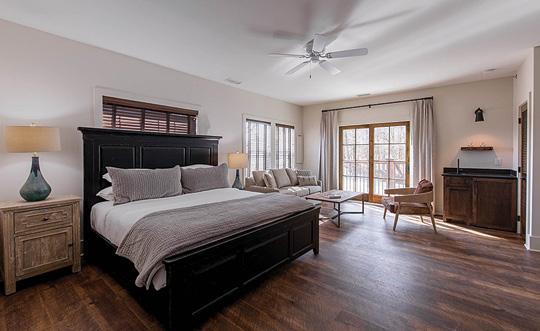

A fun riff on egg substitutes was widely reported recently when a man stole 200,000 chocolate Cadbury-brand eggs that police dubbed “an eggstravagant theft,” according to The New York Times. So, it popped in my head that Boone fine-artisan chocolatier Beth Westfall (Westfall Chocolates at Food Hub and Peabody’s Wine and Beer) could create chocolate eggs for a convenient, egg-less ‘egg’ dessert!
It’s hard to argue against the egg’s perfection since new life comes from an egg. Around forever, there are always futures in eggs as Zora Neale Hurston suggests. So don’t put all your eggs in one basket—a rally in the markets may yield you double yolks, proving eggs are indeed all they’re cracked up to be!
112 — Spring 2023 CAROLINA MOUNTAIN LIFE
Cooking up an egg from Maw’s Produce
www.blowingrockmanor.com 567 Main Street Blowing Rock, NC 28605 828-414-2800
Eggs from Creeksong and Mountain Roots Farms
Translating Burgundian Wine Labels Leads to Added Appreciation
By Kim S. Davis
French AOC laws cover where grapes are grown, which grape varietals can be grown, production methods, minimum levels of alcohol, maximum yields, harvesting and vinification methods.
as the terroir. Limestone soils among rolling hills, steep valleys, or rocky outcrops bring out the exclusive minerality, complexity, and classic flavors to the wines of Burgundy.
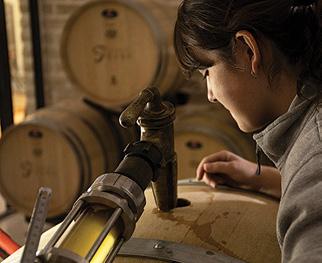
If you enjoy great wine and appreciate how it complements food, introduce your palate to wines from the Burgundy Region of France. Many consumers tend to shy away from French wines because the labels can be confusing unless you understand what you are reading. French wines are named for their regions instead of the variety of grape, and the information on their labels provides wine lovers with a much more detailed description of the delicious juice within each bottle. Hopefully after reading this article, you will want to taste for yourself what makes wines from Burgundy and each of its main subregions* so distinct and exceptional.
In France, the wine industry is highly regulated and certain varieties of grapes can only be grown in certain regions. There is a classification system that was established in the mid twentieth-century to ensure wine authenticity. French wine classifications include Vin de Table, Indication Geographique (IGP) and Appellation d’ Origine Contrôlée (AOC). Unlike other regions in France, all wines from Burgundy are AOC wines, indicating the strictest of the classifications.
There are more than one hundred approved appellations (growing areas) in Burgundy, and Burgundian wines also have four additional classifications: Regional—accounting for the region where they are produced (Burgundy); Villages—specific villages located within each of the sub-regions where the vineyards are located; Premier Cru—specific vineyards within these villages that, based on historic data, are considered exceptional (some of the best); and Grand Cru—which are the ultimate in Burgundy wines, made solely from vineyards historically designated as the very best places to grow grapes in the region.
The wines of Burgundy range from some of the most expensive on the planet to delicious affordable choices. In order to select what is in line with your preferences, there are a few things to know about the region. While Burgundy may be a small wine region geographically, it is huge on influence and accolades in the wine world.
The two main grape varietals produced in Burgundy are pinot noir and chardonnay, but others are permitted by law to be grown there, such as the more rustic varieties of gamay and aligoté. While the wines in each of the subregions are made from the same grape varietals, it is the diversity of the geography and climate that give each sub-region a distinct flavor. That distinction, based on the make-up of the soil and unique landscapes, is known
Slightly more than half of the wines produced in Burgundy are Regional wines known as Bourgogne Rouge made with pinot noir, or Bourgogne Blanc made with chardonnay. These wines can be made with grapes grown anywhere in Burgundy and are usually more fruity and light. If you enjoy bubbles, Crémant de Bourgogne is a sparkling wine made using both of these grape varietals.
Just over a third of all wines cultivated in Burgundy make up the Villages classification. There are forty-four village-specific wines named after the towns where the grapes are sourced, and they tend to be a little more complex than the Regional wines. Look for names such as Pouilly-Fuissé, Nuits-StGeorges, Santenay, Givry, and Macon-Villages.
The top tier wines from select vineyards within the villages are labeled as such, with those in the top two to ten percent labeled as Premier Cru or 1er Cru wines. There are six hundred and forty plots or vineyards in Burgundy that have this highly regarded designation. Grand Cru wines come from only thirty-three elite plots that have earned this acclaimed title and make up the top one percent of wines in Burgundy. About sixty percent of the Grand Cru vineyards are dedicated to pinot noir production.
After becoming more familiar with the wines of Burgundy, you do not have to travel
continued on next page
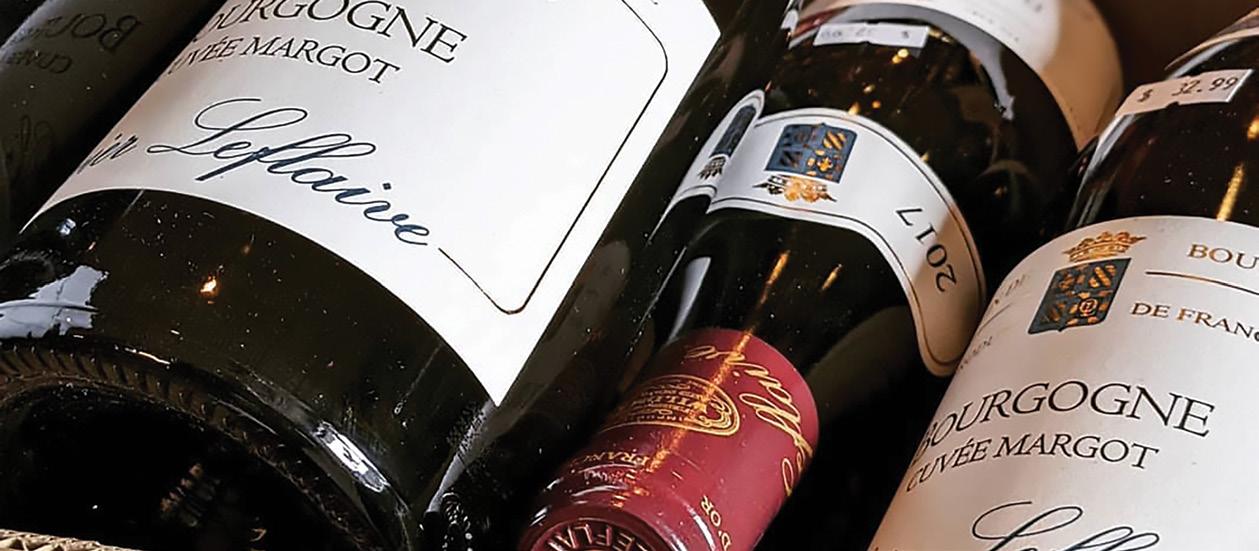
CAROLINA MOUNTAIN LIFE Spring 2023 — 113
Peabody's Wine and Beer Merchants
www.bourgogne-wines.com
Apple Hill Farm Store


“Get
all the way to France to select a few bottles to sample. The High Country is home to several knowledgeable and helpful wine purveyors who can assist you with your new-found knowledge to ensure you choose the best wines for your palate. Depending on your location within the area, Erick’s Cheese and Wine in Banner Elk, Peabody’s in Boone, and Sunset and Vine in Blowing Rock are well stocked and ready to guide you on your journey through Burgundy’s exquisite wines.
The Five Regions of Burgandy

*Four of the five Burgundian sub-regions encompass approximately 74,000 acres of vineyards spread out north to south over seventy-five miles between the French towns of Dijon and Mâcon. You may want to compare selections from the various sub-regions below to explore their diverse complexities:
Chablis - Furthest north along Serene River, isolated from the other sub-regions, known for its crisp white unoaked chardonnay, the only wine produced in the region.
Côte de Nuits - Just south of the city of Dijon, home to twenty-four of the Grand Cru vineyards, mostly situated along the eastern slopes of the Saone River Valley; over eighty percent of vineyards produce pinot noir, with the remaining wines either chardonnay or rosé. Agricultural real-estate in this region is some of the most expensive in the world and one of their exclusive Pinot Noirs could set you back thousands of dollars; less pricey options include Village wines from Brochon, Premeaux-Prissey, Fixin, and Corgoloin.
Côte de Beaune - Named after the village at the hub of the Burgundian wine industry. These wines are very different from northern neighbors; chardonnay is more prevalent here with seven of the eight Grand Cru plots dedicated to this white varietal— better known names include Corton, Corton-Charlemagne, and Montrachet. Some Côte de Beaune Village and Premier Cru wines such as Puligny-Montrachet, Santenay, and St. Aubin are amazing less expensive wines. Note: Together, the Côte de Nuits and Côte de Beaune make up the Côte d’Or, meaning Golden Slope.
Côte Chalonnaise - Farther south between the villages of Chagny and Saint-Vallerin. The village of Bourzeron is one of the only places you can sample aligoté, the other white grape grown in Burgundy. Bubbly fans should check out Cremant de Bourgogne from the village of Rully, made using the traditional Champagne-Methodoise.
Mâconnais - The most southerly region of Burgundy, influenced by a warmer climate and more fruit-forward chardonnay. The most popular wine of this region is from the area of Pouilly-Fuissé, a wide expanse of vineyards in the shadows of Mont Solutre known for its affordable and appetizing white wines.
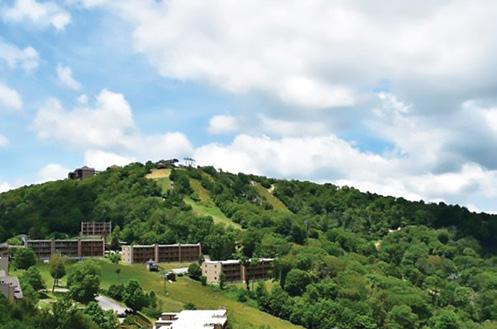
Vézelien Dijon Lyon Avallon Clamecy Clamecy Vézelay Le Creusot Paray-le-Monial N80 N 79 Dijon Auxerre CÔTE DE NUITS CÔTE
BEAUNE CÔTE CHALONNAISE & COUCHOIS MÂCONNAIS CHÂTILLONNAIS Lyon CHABLIS & GRAND AUXERROIS Buxy Montagny-lès-Buxy St-Vallerin Jullylès-Buxy St-Gengouxle-National Cluny Berzéle-Chatel Berzéla-Ville Sologny Milly-Lamartine Pierreclos SerrièresVergisson Solutré-Pouilly Chasselas Leynes St-Vérand St-Amour Bellevue La Chapellede-Guinchay Romanèche-Thorins Mercy Vermenton 114 — Spring 2023 CAROLINA MOUNTAIN LIFE
DE
back in touch with what's real.” Largest selection of alpaca yarns & accessories in the High Country. Summer Hours: Mon - Sat 10-4; Sun 12-4 Banner Elk, NC | (828)963-1662 www.applehillfarmnc.com Enjoy summer breezes at 4900 ft when you visit Sugar Ski & Country Club’s year-round resort. Efficiency • Efficiency w/loft • 1 & 2 bedroom Condos with WiFi and access to hiking/biking trails. Clubhouse with indoor pool. Sauna, hot tub and fitness room. Tennis and Pickleball Court. 100 Sugar Ski Drive Banner Elk NC 28604 800.634.1320 SugarMountain.com VISIT SKYBEST.COM OR CALL 1-800-759-2226 TO SIGN UP. *Restrictions may apply. Heading to your Mountain Home? Weekender Internet SkyBest Streaming TV 12 Mbps from Friday at noon to Monday at noon Only $18/mo.! Stream the most popular local TV networks live for less! Packages start at only $31/mo.!
Spring Farmers’ Markets
Our local Farmers’ Markets are open for business! Pick up everything from vegetable starts, to fresh seasonal vegetables, to meats and cheeses, to flowers and crafts, and much more. This convenient directory will help you find a market near you—enjoy the best of what our region has to offer! Please be sure to confirm dates/times with your markets of choice prior to scheduling a trip.
Abingdon, VA Farmers Market
Saturdays 8 a.m. - 1 p.m., April – October
Tuesdays 3 – 6 p.m. April - September
Corner of Remsburg Dr. and Cummings St. in downtown Abingdon, VA
Alleghany, NC Farmers’ Market
Saturdays 9 a.m. - 1 p.m.
May - October
Crouse Park in downtown Sparta, NC
Ashe County Farmers’ Market
Saturdays 8 a.m. - 1 p.m.
April – October

108 Backstreet, West Jefferson, NC
Avery County Farmers’ Market
Thursdays 4 - 6:30 p.m.
185 Azalea Circle, Banner Elk, NC
Historic Banner Elk School Parking Lot
Beech Mountain Farmers’ Market
First Fridays - 2 - 6 p.m.
June through October
Public Parking Lot on Beech Mountain, NC
Blowing Rock Farmers’ Market
Thursdays 3 - 6 p.m.
May 18 - September 28
132 Park Ave., Downtown Blowing Rock, NC
Johnson County Farmers’ Market
Saturdays May thru October, 9 a.m. to Noon
Ralph Stout Park in Mountain City, TN
King Street Farmers’ Market
Tuesdays 4 - 7 p.m.
May - October
126 Poplar Grove Connector, Boone, NC
Lansing Farmers’ Market
Fridays 1 - 5 p.m. Through October
Lansing Creeper Trail Park, 114 S Big Horse Creek Rd, Lansing, NC
Morganton Farmers’ Markets

Saturdays 8 a.m. - Noon
May-October
300 Beach St., Morganton
Wednesday Mini Market, 11 a.m. - 2 p.m.
May-October
111 North Green St. Morganton, NC
Watauga County Farmers’ Market
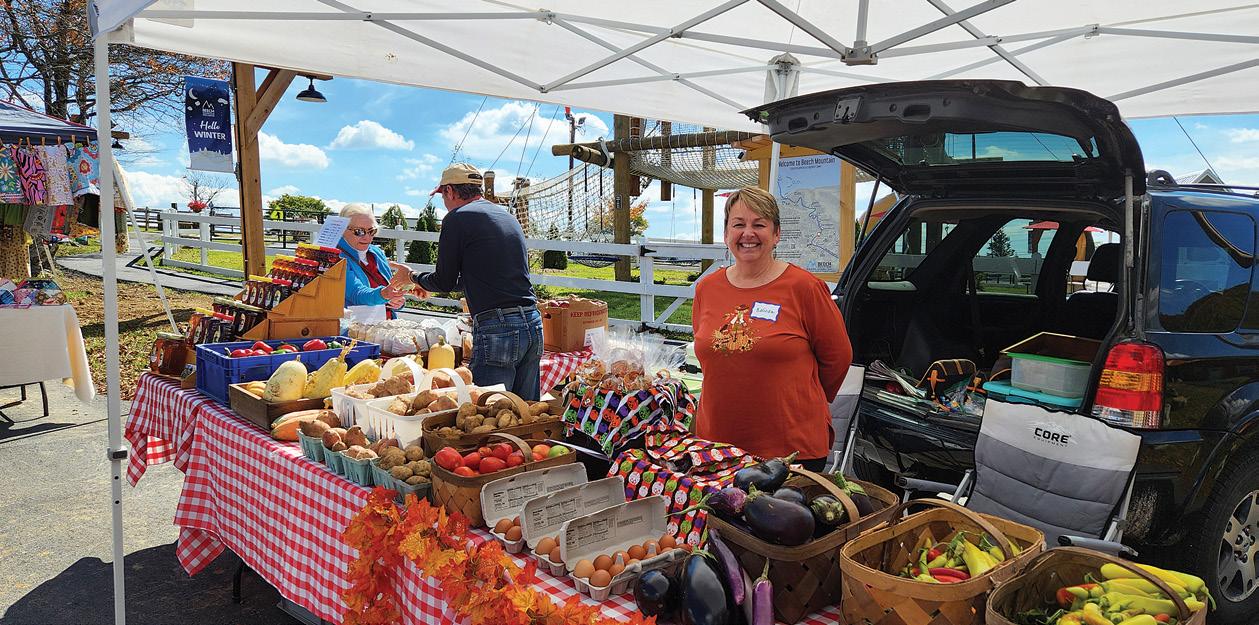
Saturdays April thru Oct, 8 a.m. - 1 p.m.
Saturdays November 9 a.m. - 1 p.m.
591 Horn in the West Dr, Boone, NC
Wilkes County Farmers’ Market
Saturdays 7:30 a.m. - Noon,
Tuesdays 3:30 - 6:00 p.m.
April 22 - September
Yadkin Valley Marketplace in N. Wilkesboro, NC
High Country Food Hub
Order fresh, local foods online and pick them up at one of six convenient locations throughout Ashe, Avery, and Watauga Counties. And don’t forget to pick up your copy of their brand new cookbook! www.highcountryfoodhub.org
CAROLINA MOUNTAIN LIFE Spring 2023 — 115
Beech Mountain Farmers’ Market
RESTAURANT GUIDE
Banner Elk Café, The Lodge and The Tavern
324 Shawneehaw Ave S Highway 184
Banner Elk, NC 28604
828.898.4040, 828.898.3444
www.bannerelkcafe.com
“BE CAFÉ – The Best Burger in the Mountains is hand-patted 100% beef and served with your choice of toppings and a side.”
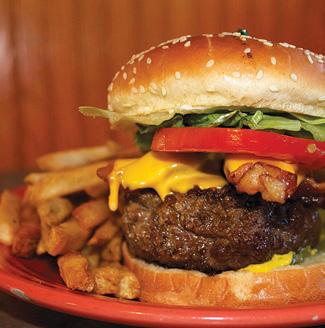
The Best Cellar
203 Sunset Drive Blowing Rock, NC 28605 828.295.3466
www.ragged-gardens.com/best-cellarrestaurant
“Sea Scallops seared and served over a sauté of shiitakes and spinach; finished with a drizzle of cucumber wasabi sauce and toasted sesame seeds is a great way to start your meal.”

Famous Brick Oven Pizzeria
402 Beech Mountain Parkway
Beech Mountain, NC 28604 828.387.4209
www.famousbrickoven.com
“This is a second-generation pizza shop that is a ‘must stop’ in the High Country. Featuring handcrafted dough and fresh ingredients, all to make world class pizzas.”

Gideon Ridge
202 Gideon Ridge Rd
Blowing Rock, NC 28605
828.295.3644
www.gideonridge.com
“Dine al-fresco on the terrace or in the intimate European styled dining room with long-range mountain views. The menu changes daily, giving the Culinary Team the unique ability to only use the best ingredients available from local farms.”
116 — Spring 2023 CAROLINA MOUNTAIN LIFE
Bayou Smokehouse & Grill Restaurant
130 Main Street East, Village Shops Banner Elk, NC 28604 828.898.8952
www.facebook.com/BayouSmokehouse
“Serving authentic Cajun and Texas cuisine in a casual, comfortable atmosphere.”

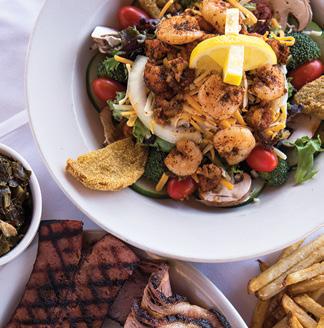
Sorrento’s Italian Bistro
140 Azalea Cir SE Banner Elk, NC 28604 828.898.5214
bannerelkvillage.com/sorrentos-italianbistro/
“Mrs. A’s Crab Cake sautéed in our secret lobster cream sauce.”

Spring
Fine food, friendly service, great atmosphere—you’ll find it all at our High Country restaurants this spring!
Here, we feature a selection of popular dining establishments and showcase some of our favorite chefs’ specialties.

Casa Rustica
1348 NC-105
Boone, NC 28607
828.262.5128
casarustica1981.com
“Italian Antipasto is a great starter to sautéed medallions of chicken, sundried tomatoes and fresh mushrooms in a creamy Dijon sauce with fresh pasta.”

501 Beech Mountain Pkwy Beech Mountain, NC 28604
828.387.4838
fredsgeneral.com
“Fred’s Backside Deli serves breakfasts, sandwiches, homemade soups (especially Margie’s Chili) and salads, beverages, including beer and wine, and freshly made desserts.”
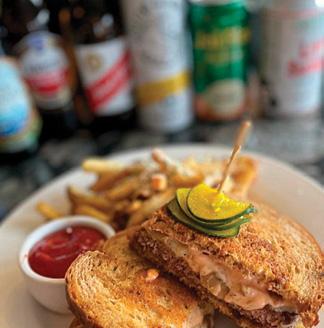

Gamekeeper Restaurant
3005 Shulls Mill Rd
Boone, NC 28607 828.963.7400
gamekeeper-nc.com
“The Gamekeeper features a selection of perfectly prepared game, fish and vegetarian selections using humanely farm-raised meats, and locally grown organic produce.”
And…
Holy Smokes BBQ
3363 Beech Mountain Parkway Beech Mountain, NC 28604 828.387.4200
www.facebook.com/Holysmokesnc/ Blowing Rock Ale House 152 Sunset Drive, Blowing Rock, NC 28605 828.414.9600
blowingrockbrewing.com
Lost Province Brewing Company 130 N Depot Street, Boone, NC 28607 828.265.3506
Stonewalls
344 Shawneehaw Ave S
Banner Elk, NC 28604
828.898.5550
www.stonewallsrestaurant.com
“Stonewalls in known for its prime rib, seafood and gourmet steaks but don’t forget about this Chicken Oscar that is second to none.”

128 Pecan St SE
Abingdon, VA 24210
276.698.3159
www.128pecan.com
“At 128 Pecan, if you know our name, you know where to find us. Serving fresh, American cuisine that is simply good, quality eats. As grandma always said, ‘Food is the ultimate expression of love.”
lostprovince.com
Highlander’s Grill & Tavern
4527 Tynecastle Hwy, Banner Elk, NC 28604 828.898.9613
www.highlandersbannerelk.com
continued on next page
Fred’s Backside Deli
— 117
CAROLINA MOUNTAIN LIFE Spring 2023
Jack’s 128 Pecan
SPRING RESTAURANT GUIDE: Continued from previous page
Elk River Depot 6460 Banner Elk Hwy , Elk Park, NC 28622
828.742.1980
www.facebook.com/elkriverdepot
Stick Boy Kitchen
211 Boone Heights Drive, Boone, NC 28607
828.265.4141
www.stickboybread.com/kitchen
The Chef’s Table
140 Azalea Cir SE, Banner Elk, NC 28604 828.898.1940

bannerelkvillage.com/chefstable/
The Italian Restaurant
2855 Linville Falls Hwy, Pineola, NC 28662 828.733.1401

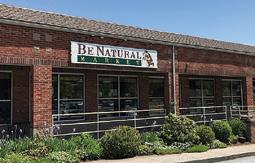
www.theitalianrestaurantnc.com


Reid’s Cafe & Catering
4004 NC-105 Suite #8
Sugar Mountain, NC 28604
828.898.9200 | reidscafeandcatering.com

Pedalin’ Pig
4235 Hwy 105 S Banner Elk 28604
2968-A Hwy 105 Boone NC 28607
Banner Elk: 828.898.7500
Boone: 828.355.9559
Blowing Rock: 828.295.3651

www.thepedalinpig.com
Carolina BBQ

500 Pineola Street, Newland, NC 28657
828.737.0700
www.carolinabbqnewland.com
F.A.R.M. Café
617 W King Street, Boone, NC 28607
828.386.1000 | farmcafe.org
Cobo Sushi Bistro and Bar
161 W Howard Street Boone, NC 28607
828.386.1201 | cobosushi.com
Bistro Roca
143 Wonderland Trail, Blowing Rock, NC 28605 828.295.4008 | www.bistroroca.com
Hellbender Bed and Beverage 239 Sunset Drive Blowing Rock, NC 28605 828.295.3487
www.hellbender.bar
118 — Spring 2023 CAROLINA MOUNTAIN LIFE Mon.-Sat. 9-7:30, and Sun. 12-6 273 Boone Heights Drive, Boone, NC 28607 Across from the Wellness Center 828-262-5592 • www.benaturalmarket.com Your LOCAL source for Organic & Fresh Foods, Bulk, Produce, Supplements and so much more! Let Us Shop For You! Website Curbside Pickup Monday to Sunday “Just Be” B
Fresh Ingredients Handcrafted Dough ~ WORLD CLASS PIZZAS ~ 402 Beech Mountain Pkwy, Beech Mountain, NC 28604 www.famousbrickoven.com . 828-387-4209 BAKERY . FULL BAR ARCADE/MINI GOLF Mon-Sat 10:30am - 9pm, Sun 11pm - 6pm 828-737-0700 carolinabbqnewland.com Catering for 50 - 1200 people! In Downtown Newland
The Best Chicken Tenders Hands Down! “
“
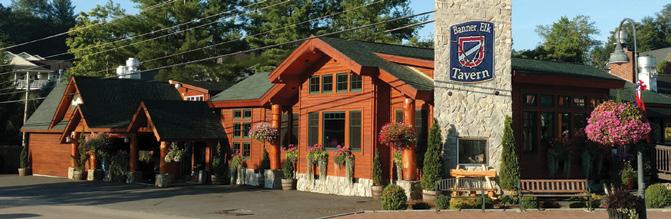
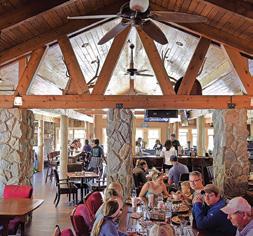




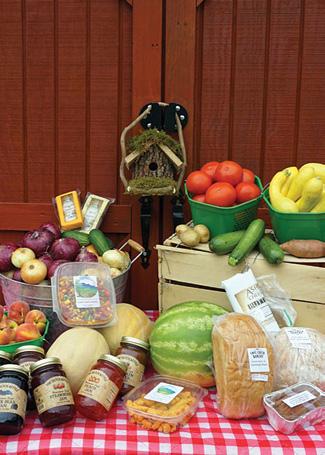

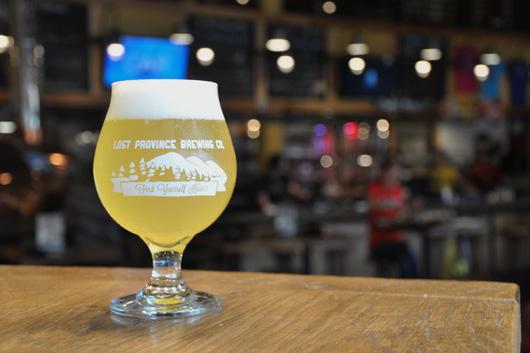




CAROLINA MOUNTAIN LIFE Spring 2023 — 119 Gather for a Good Time! The Banner Elk Cafe and The Lodge Espresso Bar & Eatery Are Under One Roof! Open 7 days a week for breakfast, lunch and dinner! Daily Drink & Food Specials Expansive Menu Indoor & Outdoor Dining Large Bar with Comfortable Seating ...and a Warm Fireplace! Trivia | Karaoke | Live Music 828-898-4040 Schedule & Specials: Facebook, Instagram and at www.bannerelkcafe.com Located in the Heart of Banner Elk Fresh Produce, Raw Honey, Jams and jellies, and much more. OPEN 7 DAYS A WEEK May-November 3979 Mitchell Ave, Linville NC - Award WinningCraft Beer brewed in Downtown Boone, NC with water from the headwaters of the New River 1ostprovince.com Visit our 2nd location Lost Province at Hardin Creek Brewery & Taproom -Now Open-
Prosciutto-wrapped Chicken with Ricotta and Peas and served with a Lemon Shallot Sauce

INGREDIENTS
½ cup frozen peas, thawed
¼ cup ricotta
¼ cup freshly grated parmesan
Zest of 1 small lemon
¼ tsp red chili flakes
¼ tsp garlic powder
¼ tsp onion powder
4 chicken breasts
¼ tsp kosher salt
¼ tsp freshly ground black pepper
12 thin slices of prosciutto
1 TBSP olive oil
LEMON SHALLOT SAUCE
½ cup dry white wine
1/3 cup freshly squeezed lemon juice
¼ cup minced shallots
4 TBSP unsalted butter, cubed
¼ tsp kosher salt
¼ tsp freshly ground black pepper
DIRECTIONS:
Preheat oven to 350 degrees
Add the peas to a medium bowl and slightly smash, add ricotta, parmesan, lemon zest, chili flakes, garlic powder, onion powder and stir to combine; set aside.
Butterfly the chicken breast, place parchment paper or plastic wrap on top and pound it until it is about ¼-inch thick. Season with salt and pepper.
Divide the ricotta mixture even among chicken surfaces; roll each chicken breast and wrap the chicken breast in prosciutto.
Heat a large ovenproof skillet over medium-high heat. Add the oil and swirl to coat the skillet. Add the chicken to the skillet and sear on both sides. Transfer to the oven until the chicken is cooked through, about 15-20 minutes.
Meanwhile, add to a medium sauce pan your white wine, lemon juice and shallots over medium heat and cook for about 5 minutes or until about 4 TBSP of liquid remain.
Turn off heat, add cubed butter and swirl to combine.
Served over chicken.
120 — Spring 2023
MOUNTAIN LIFE RECIPES
CAROLINA
Photo by Meagan Goheen
Strawberry Cream Cheese stuffed French Toast

INGREDIENTS
1 loaf challah bread
4 large eggs
1 cup whole milk
½ cup heavy cream
1 TBSP honey
¼ tsp ground cinnamon
1 tsp vanilla extract
¼ tsp salt
4 TBSP butter
STRAWBERRY CREAM CHEESE FILLING
¼ cup heavy cream
8 oz cream cheese (softened)
3 TBSP honey
1 cup of strawberries, small diced
DIRECTIONS:
MAKE THE STRAWBERRY CREAM CHEESE FILLING:
To a medium size bowl add the softened cream cheese, heavy cream and honey and beat with an electric mixer on high until light and fluffy. Gently fold in the strawberries until combined.
MAKE THE CUSTARD:
In a large pan whisk together the eggs, milk, cream, honey, vanilla, cinnamon and salt until well combined.
Cut the challah loaf into thick slices, about 1 ½ inches (6 slices total).
On the top of each slice of bread carefully slice a pocket without cutting all the way through.
Fill the pocket with the cream cheese mixture without overstuffing it.
Soak the filled bread slices in the custard mixture for about 5 minutes turning halfway through.
Heat 2 tablespoons of butter in a griddle over medium heat. Cook for about 3 minutes each side, or until golden brown. Work in batches to not overcrowd your pan.
From CML’s Kitchen
made with love!
Serve warm with maple syrup, sliced strawberries and a dust of confectioners sugar (optional)
CAROLINA MOUNTAIN LIFE Spring 2023 — 121
RECIPES
Recipes by Meagan Goheen
Photo by Mia Goheen






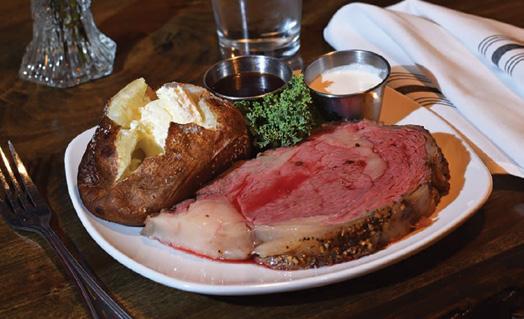
122 — Spring 2023 CAROLINA MOUNTAIN LIFEE 828-898-5550 344 Shawneehaw Ave. South, Banner Elk stonewallsrestaurant.com 2 0 2 2 Avery County’s Dining Catering • Dinner nightly from 5pm • Offering both indoor and outdoor dining • Live music Friday & Saturday nights • Private room available • Locally owned and operated • “Avery County Chamber Business of the Year” The High Country’s Premier Steak & Seafood Restaurant The High Country’s Best Choice for Event Catering 2 0 2 2 • Creativity, passion and culinary excellence • Parties of all sizes • In-home catering • Fully insured and licensed • Largest mobile kitchen in the High Country 828-898-5550 344 Shawneehaw Ave. South, Banner Elk stonewallsrestaurant.com
Best
Lodging
Event Venue
The High Country’s Best
Vacation Rentals
• One main lodge and three cabins with mountain views
• 1-4 bedrooms available
• Event barn, outdoor pavilion, open field, meandering streams, and ponds all onsite
• Located in the heart of Sugar and Beech Mountains, with proximity to all High Country attractions
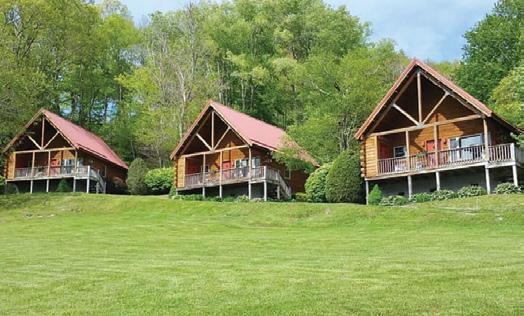
• Pet-friendly
828-898-3115
64 Cornerstone Cir, Banner Elk cornerstonerentals.com
The High Country’s Best Space for
Gatherings
• Vacations, weddings, family reunions, church events, and business retreats
• Newly built barn with 1,700 sq. ft., and 18-ft. high ceilings
• Barn equipped with a complete catering kitchen

• Climate controlled barn
• 1,750 sq. ft. outdoor pavilion with fire pit
• Lodge and cabin rentals

• Fields, streams, and ponds
828-898-3115
64 Cornerstone Cir, Banner Elk thebarnatcornerstone.com

DINING
CATERING LODGING
EVENT
|
|
VENUE
2 0 2 2 2 0 2 2
Banner Elk Winery & Villa







Experience Luxury in the High Country’s Original & Most Acclaimed Winery









Savor award-winning wine and pamper yourself at The Villa, a luxury B&B. Spend your days exploring the local golfing, fishing, and skiing. Or recharge with a spa treatment and a glass of wine in front of the magnificent stone fireplace.




A weekend getaway, corporate retreat, family vacation, engagements, elopements, rehearsal dinners, or special events...it’s the perfect place to relax, re-inspire, and rejuvenate – both inside and out.
BA YOU µ Hiigh Country of North Carolina The e Heart of T e x as The Soul of Louisiana in the Bayou Smokehouse & Grrill Restaur ant Gener al Store Downtown Banner Elk (828) 898-TxLa (8952) 124 — Spring 2023 CAROLINA MOUNTAIN LIFE
BannerElkWVSep/Oct2012.indd 1 8/14/12 10:56 AM
• Weddings • Special Events • Corporate Retreats • Family Reunions 135 Deer Run Lane, Banner Elk, NC 28604 828.898.9090 www.BannerElkWinery.com
Come spend the day!
Amy Brown, CPA Certified Public Accountant 828.898.7607
Avery County Chamber of Commerce




“New Location” 828.898.5605 / www.averycounty.com
Creative Interiors by Darlene Parker 828.898.9636


Encore Travel 828.719.6955 www.encoretravelltc.com
Hero’s Axe House 828-898-4376 / www.herosaxehouse.com

Highlanders Grill & Tavern Open 7 Days a Week 828.898.9613
Mother Ocean Market 828-974-2259
Peak Real Estate “New Location” 828.898.1880
www.peakrealestatenc.com
Salon Suites at Tynecastle • SALON M 828.260.3791


Shooz & Shiraz A Shoe & Wine Salon at The Dande Lion
Sky Mountain Nail Bar 828.783.9393
The Dande Lion Ladies Apparel, Shoes, & Accessories 866.222.2050 and 828.898.3566


Truist Financial 828-292-9219 / www.Truist.com
Valle de Bravo Mexican Grill valledebravomexicangrill.net 828.898.4949
Walgreens Pharmacy 828.898.8971
SPACE AVAILABLE! For Leasing Information
Please Call 828.898.6246
SHOPPING • DINING • BUSINESS • At the Corner of Hwy 105 & 184 Tynecastle Hwy. • Banner Elk








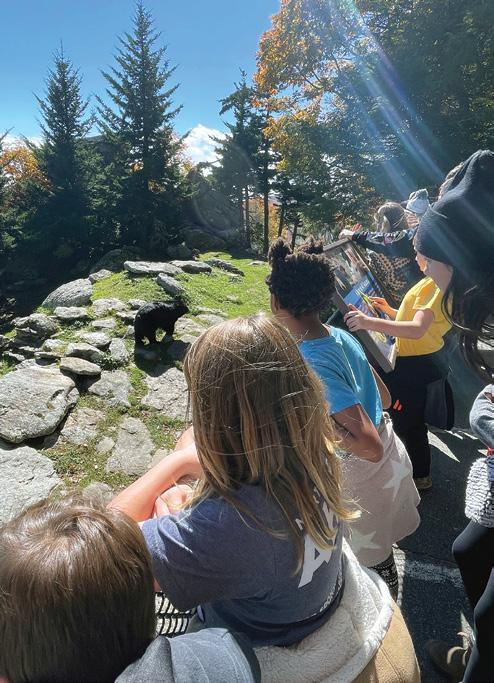

The Region’s Largest & Finest Selection of WINE & BEER Since 1978 1104 Hwy 105 • Boone, NC 828-264-9476 www.PeabodysWineAndBeer.com 126 — Spring 2023 CAROLINA MOUNTAIN LIFE Our 6th generation family farm makes farm- fresh cheese on site from our own happy dairy cows. Our farm store also offers other local goods! 828-756-8166 Fri-Sat, 10am-6pm, year-round 19456 US 221 North (.5 miles south of Linville Caverns) Marion, NC 28752 828-832-6366 • www.highcountrycaregivers.com Providing advocacy, support, and education for kinship caregivers and their families.
SUSHI BISTRO AND BAR
Monday-Saturday
Dine-In: 4pm - 10pm | TOGO: 4pm - 8pm

161 Howard Street, Boone 828-386-1201 | www.cobosushi.com

AFTER ALL, LIFE IS SHORT AND TIME REALLY DOES FLY
10 wonderfully comfortable bedrooms with evening turndown service Serving Dinner Tuesday - Saturday from 5:30pm - 8pm Reservations Required Dining & Cocktails Alfresco and the view...
202 Gideon Ridge Road, Blowing Rock, NC, 28605 gideonridge.com / 828-295-3644

food be thy medicine and medicine be
ULTIMATE KITCHEN DESIGN We Make Beautiful Kitchens Affordable! 828-260-2592

ultimatekitchendesign.com

INTELLIGENT CHOICES FOR THE COMMON CRAVING
Lunch: 11 AM to 3 PM. | Dinner: 5 PM to 10 PM.

Sunday Brunch: 11 AM to 3 PM.
143 Wonderland Trail, Blowing Rock, NC 28605 bistroroca.com / 828-295-4008
—
Gideon Ridge Inn
CAROLINA MOUNTAIN LIFE Spring 2023
127
“Let
thy food.”
—Hippocrates


CAROLINA MOUNTAIN LIFE Spring 2023 — 129 3005 SHULLS MILL ROAD BETWEEN BOONE & BLOWING ROCK | (828) 963-7400 ADVANCE RESERVATIONS STRONGLY RECOMMENDED gamekeeper-nc.com EMU VENISON ELK BISON MOUNTAIN TROUT BOAR DUCK AN ADVENTURE IN FINE DINING AAA FOUR DIAMOND RATING SINCE 2007 BOOK YOUR SESSION Banner Elk: 4235 Hwy 105 South Banner Elk, NC 28604 828.898.7500 Boone: 2968-A Hwy 105 Boone, NC 28607 828.355.9559 Blowing Rock: 8304 Valley Blvd. Blowing Rock, NC 28605 828.295.3651

130 — Spring 2023 CAROLINA MOUNTAIN LIFE 58 Abode Home 60 Adventure Damascus 82............. All Seasons Landscape Supply & Garden Center 100........... Amorem 125 Amy Brown CPA 37 An Appalachian Summer Festival 102 Appalachian Regional Healthcare System 64 Appalachian Apothekary & Tea Room 37 Appalachian Theatre of the High Country 114 Apple Hill Farm 102 ARHS Heart & Vascular Center-Ashe 37............. Ashe Bash 72 Ashe Arts Council 37 Ashe Co Chamber of Commerce 97............. Ashe Memorial Hospital 19 Autobell Car Wash 56 Avery Animal Hospital 14,125 ...... Avery County Chamber of Commerce 86 Avery Heating & Air Conditioning 56............. Banner Elk Book Exchange 119 Banner Elk Café, Lodge & Tavern 74 Banner Elk Heating & Air 37............. Banner Elk Realty 4 Banner Elk TDA 124 Banner Elk Winery & Villa 51............. Barra Sports Bar 46 Barter Theatre 124 Bayou General Store 124........... Bayou Smokehouse & Grill 36,50 BE Artists Gallery 118 BE Natural Market 70............. Beech Mountain Club 18 Beech Mtn TDA 127 Bistro Roca 58 BJ’s Resort Wear 74............. Blue Ridge Brutal 90 Blue Ridge Energy 29 Blue Ridge Mountain Club 86............. Blue Ridge Propane 25 Blue Ridge Realty & Investments 79 Boone Bigfoots 44............. Boonerang Music & Arts Festival 72 Brinkley Hardware 40 Carlton Gallery 118........... Carolina Barbeque 126 Casa Rustica Restaurant 19 Century 21 Mountain Vistas 51............. Chef’s Table 54 Classic Stone Works 127 COBO Sushi Bistro & Bar 102 Compu-Doc 123........... Cornerstone Cabins 11 Craftsman Cabinets & Furniture 125 Interiors by Darlene Parker 62............. Cristy Dunn, Fine Artist 12 Crossnore Communities for Children 2 Dewoolfson 3 Dianne Davant Interiors 110........... Distinctive Cabinetry of the HC 60 DoItInDamascus.com 54 Doe Ridge Pottery 128........... Eagles Nest Winery 40 Earl Davis-Artist 78 Elevated Metals 14 Elk River Club 125........... Encore Travel 17 Engel & Völkers 126 English Farmstead Cheese 46............. Ensemble Stage 42 Explore Boone 118 Famous Brick Oven Pizzeria 44............. F.A.R.M. Café 40 Fleming Woodcraft 50 Florence Thomas Art School 10............. Footsloggers 25 Forest at Sunalei 78 Fortner Insurance 48............. FORUM at Lees-McRae College 78 Fred’s General Mercantile 129 Gamekeeper 127........... Gideon Ridge Inn 86 Glen Davis Electric 131 Grandfather Mountain 64............. Grandfather Mountain Highland Games 70 Grandfather Vineyard 102........... Grandfather Specialty Clinic 54 Gregory Alan’s 82 Hardin Jewelry 102........... Heart & Vascular Center of Watauga Medical Center 74............. Hemlock Inn 125 Hero’s Axe House 126 High Country Caregivers 100........... High Country Pain Relief 48 High Mountain Expeditions 125 Highlanders Grill & Tavern 74 Hunter’s Tree Service 58............. It’s All About the ART Gallery 82 Jack’s 128 Pecan 40 Jerky Outpost 62............. Johnson Co Center for the Arts 46 Lees-McRae Summer Theatre 42 Liberty! The Saga at Sycamore Shoals 76 Life Store Insurance 6............... Linville Caverns 6 Linville Falls Winery 8 Linville Land Harbor 119........... Lost Province Brewing 18 Loven Casting Company 97 Lucky Lily 132 Mast General Store 106........... Maw’s Produce 16 Mayland Community College 46 Mica Gallery 125........... Mother Ocean Market 50 Mountain Jewelers 108 Mustard Seed Market 76............. My Best Friend’s Barkery 28,44,60,76,92,129........Mystery Hill 97 Pack Rats 126........... Peabody’s Wine & Beer 102,125 Peak Real Estate 129 Pedalin’ Pig BBQ 119........... Pixie Produce 97 Premier Pharmacy 76 Ram’s Rack Thrift Shop 119........... Reid’s Cafe 72 Root Down 42 Sally Nooney Artist Studio Gallery 125........... Salon Suites at Tynecastle 5, 73 SeeSugar.com 125 Shooz & Shiraz 125........... Shoppes at Tynecastle 125 Sky Mountain Nail Bar 114 Skyline/Skybest 51 Sorrento’s Bistro 119........... Stick Boy Bread Co 122 Stonewalls Restaurant 122 Stonewalls Catering 5, 73 ......... Sugar Mountain Grillin’ & Chillin’ 73 Sugar Mountain Golf & Tennis 97............. Sugar Mountain Nursery 114 Sugar Ski & Country Club 60 Sundog Outfitter 76............. Sunset Tee’s & Hattery 108 Tatum Galleries & Interiors 62 Temple Reece, Studio 411 123........... The Barn at Cornerstone 7 The Bee & The Boxwood 60 The Blowing Rock 65............. The Cabin Store 65 The Cabin Store Outdoor 36 The Consignment Cottage Warehouse 125 The Dande Lion 104 The Inn at Shady Lawn 112........... The Manor 55 The Old Store at Grassy Creek 28 The Shoppes at Farmers 106........... The Spice and Tea Exchange 54 The Twisted Twig 5,73 The Village of Sugar Mountain 70............. Tom’s Custom Golf 125 Truist Financial 28 Turchin Center for the Visual Arts 127 Ultimate Kitchen Design 125........... Valle de Bravo Mexican Grill 128........... Villa Nove Farm & Vineyard 28 Village Jewelers 125 Walgreens Pharmacy 128........... Watauga Lake Winery 72 Wealth Enhancement Group 102 YMCA of Avery County 92............. Zaloo’s Canoes, Kayaks & Tubes
OUR SPONSORS:
Folks come to Grandfather Mountain for all sorts of reasons — from a family getaway to the thrill of the Mile High Swinging Bridge. But after a day on the mountain, and some hands-on time in the new Wilson Center For Nature Discovery, everyone leaves inspired. grandfather.com

Get outside. Get Inspired.
Never Cease GRANDFATHER MOUNTAIN ® NEW Wilson Center for Nature Discovery NOW OPEN
Wonders