

NOVEMBER 2022 A Winning season for CCA A business model facelift at northstate packing plant honoring our veterans




THE CENTRAL CALIFORNIA MARKETING CENTER TURLOCK LIVESTOCK AUCTION YARD OFFICE: 209 634-4326 • 209 667-0811 10430 Lander Ave., Turlock, CA P.O. Box 3030, Turlock, CA 95381 www.turlocklivestock.com TLAY REPRESENTATIVES MAX OLVERA ...................... 209 277-2063 STEVE FARIA ...................... 209 988-7180 JUSTIN RAMOS................. 209 844-6372 JOHN LUIZ............................ 209 480-5101 JAKE BETTENCOURT......... 209 262-4019 TRAVIS JOHNSON ...........209 996-8645 TIM SISIL 209 631-6054 JOHN BOURDET ................ 831 801-2343 CELESTE SETTRINI............831 320-1527 MATT MILLER..................... 209 914-5116 BRANDON BABA .............. 209 480-1267 BUD COZZI 209 652-4480 EDDIE NUNES ..................... 209 604-6848 CALL TO LEARN MORE ABOUT CONSIGNING YOUR CATTLE TO UPCOMING WVM EVENTS! When marketing calves at TLAY, don't forget how essential the 2nd round of shots is. Make sure to include a modified live vaccination! FOLLOW US ONLINE FOR WEEKLY SALE REPORTS AND SALE DATES AT WWW.TURLOCKLIVESTOCK.COM OR ON OUR FACEBOOK PAGE! WATCH LIVE AND BID ON LMAAUCTIONS.COM JOIN US FOR THESE FALL ROUND UP SALES! NOV. 29 - RENO, NV PLUS,MARKYOURCALENDARSFOR TUESDAY,DECEMBER6•9A.M. SPECIAL FEEDER SALE & CUSTOMER APPRECIATION DAY 17 th Anniversary FALL FEEDER SPECIAL SALE TUESDAY , NOVEMBER 8 FEATURING LARGE RUNS OF TOP QUALITY WEANED CALVES FROM REPUTABLE CALIFORNIA CATTLE PRODUCERS!



Joinusforour finalevent oftheyear! WATCH, LISTEN AND BID ONLINE AT WWW.WVMCATTLE.COM THIS SALE WILL FEATURE AN EXCELLENT SELECTION OF STOCKERS, FEEDERS AND BREEDING STOCK! WATCH OUR SIMULCAST ON DISH 998 SILVER LEGACY RESORT CASINO • RENO, NV CONSIGNMENT DEADLINE NOVEMBER 10
TURNING THE PAGE
by CCA President Tony Toso

They say time flies when you are having fun, and as I am writing my last column as president it seems like these past two years have moved faster than the blink of an eye.
First off, I would like to thank the great folks who I have had the honor of crossing paths with during my term, and for always making me feel welcome at the various meetings and dinners that I have so enjoyed attending. It has been a great experience traveling the state and seeing many old friends and making some new ones along the way and it has been my pleasure serve the members of this organization as we worked on the issues that matter most to our families and operations.
The California Cattlemen’s Association has accomplished a great deal these past two years and we simply couldn’t have done it without such a dedicated staff nor without the committed member leaders who have so generously given their time. Though I am quite certain you are aware of the talented staff we have working on our behalf, I would be remiss to not to express my sincerest thanks to Billy Gatlin and the entire staff for a job well done.


Legislatively, CCA staff and member leadership has maneuvered our way through the Sacramento lawmaking red tape to see four CCA-sponsored priority bills signed into law. In 2021 we made progress on fire issues with the signing of SB 332 which incentivizes the use of prescribed fire by minimizing prescribed fire practitioners’ exposure to liability. In addition, AB 1103, the Livestock Pass program, which establishes a statewide framework for county “Livestock Pass” programs to safely provide livestock producers access to their ranches during wildfires and other emergencies, was also signed into law. These were two huge wins in 2021 not only for ranchers across the state, but really for all of California. While we still have some bugs to work out, and still have much work ahead of us, these bills were a great start down the path of working on, and being a part of, helping mitigate wildfire risk.
In 2022, your association stepped up once again as we were able to get two more priority, CCA-sponsored bills signed into law. Just recently the governor signed AB 2415, the Agricultural vehicle exemption from Basic Inspection of Terminals, or the “BIT” program bill that was carried
by Assembly member Tom Lackey. AB 2415 extended, by three years (until 2026), the current agricultural vehicle exemption from CHP’s BIT program. Additionally, the governor also signed SB 880, the UCCE water diversion measurement courses bill, carried by Sen. John Laird. This law now permanently authorizes UCCE water measurement instructional courses, that allow ranchers with water diversions of 100 acre-feet per year or more to self-certify as “qualified individuals” for purposes of installing, maintaining and calibrating water measurement devices required by SB 88. Without these UCCE courses, diverters would be required to hire professional engineers or contractors at costs estimated to be about $1,800 - $15,000 per diversion.
In addition, the officer team, executive committee, and standing/subcommittee leaders along with staff, have worked diligently on other important issues like fake meat, greenhouse gas emissions, plant-based school lunch incentives, price discovery and transparency in live cattle markets, and dealing with the antics of animal rights activists.
It takes plenty of work and some very dedicated people to help keep clearing the way for the California ranching community to try and stay profitable. That said, a big thanks goes out to my fellow officers Steve Arnold, Rick Roberti, Trevor Freitas, Sheila Bowen and Bev Bigger, for a job well done. I also want to wish Steve the best of luck as our new president, and I know we will be in good hands with his experience, leadership and dedication to our industry.
Finally, I would like to encourage all our members to join us this Nov. 30 through Dec. 2 for convention, as we head back to the Nugget in Sparks, Nev. The policy development that leads to results like we have seen over the years needs grassroots input from you. It’s a tougher fight each year to preserve and protect our family ranches and operations, and the legislative climate in California won’t be getting easier anytime soon. So please join us in Sparks and be a part of honoring and protecting our great ranching heritage here in California.
4 California Cattleman November 2022
CALIFORNIA CATTLEMEN’S ASSOCIATION 1221 H Street Sacramento CA 95814 (916) 444-0845 ______________ Since 1917
UPCOMING CCA


Volume 105, Issue 10 ASSOCIATION PERSPECTIVES CATTLEMEN’S COLUMN 4 Outgoing president optimistic for future BUNKHOUSE 8 Reaching across the aisle YOUR DUES DOLLARS AT WORK 10 CCA sees productive legislative session RANGELAND TRUST TALK 14 Keeping it in the family NATIONAL PERSPECTIVE 24 Time to vote BEEF ABROAD 26 Beef tops $1 billion again SPECIAL FEATURES Charolais junior field day 18 4-H livestock judging back on in Golden State 20 Packing plant sees new business model 22 Two years later: reflecting on devastation 28 Paying back our veterans 30 READER SERVICES Obituaries 32 Cattlemen's Report 34 Buyers’ Guide 36 Advertisers Index 42 NOVEMBER 2022 SERVING CALIFORNIA BEEF PRODUCERS SINCE 1917 Bolded names and businesses in editorial represent only current members of the California Cattlmen’s Association or California CattleWomen, Inc. For questions about your membership status, contact the CCA office at (916) 444-0845. The California Cattleman (#8-3600) is published monthly except July/August is combined by the California Cattlemen’s Association, 1221 H Street, Sacramento, CA 95814, for $20/year, or as part of the annual membership dues. All material and photos within may not be reproduced without permission from publisher. Periodical postage paid at Jefferson, MO. National Advertising Group: The Cattle Connection/The Powell Group, 4162-B Carmichael Ct, Montgomery, AL 36106, POSTMASTER: Send address changes to: California Cattleman, 1221 H Street, Sacramento, CA 95814
& CCW EVENTS This month's cover photo was taken by Larry Gevein the Owens Valley near Bishop. If you have a photo that you think would look great on the cover of this publication, contact the CCA office at (916) 444-0845 or e-mail magazine@calcattlemen.org. NOV. 30 – DEC. 2 106th CCA and CCW Convention and California Cattle Industry Tradeshow The Nugget Resort & Casino, Reno DEC. 16 Lassen County Cattlemen’s Fall Meeting Honey Lake Valley Grange Susanville
2022
& CCW ANNUAL CONVENTION + TRADESHOW

EVENT REGISTRATION
Full registrations start at $250 for CCA/CCW members and $100 for Young Cattlemen’s Committee members. All events except the Cowbelle of the Year Lunch and CCA/CCW Awards Banquet are included in full registrations. Cowbelle of the Year Lunch, CCA/CCW Awards Banquet and CattleFax Breakfast tickets may be purchased separately.


To register visit https://calcattlemen.org/convention2022 and complete your registration online or download a mail-in form. Call the CCA office at (916) 444-0845 to register over the phone.
HOTEL RESERVATIONS
The CCA room block at the Nugget Casino Resort is open! To make your reservations in the group block visit our event page at https://calcattlemen.org/convention2022 or call the Nugget Casino Resort directly at (800) 648-1177 and mention the group code GCCA22
ENTERTAINMENT AND MORE
There will
FEATURED SPEAKERS


In addition to the
visit the
meet all the
read
BRIAN
NOV. 30 - DEC. 2 • NUGGET CASINO RESORT • SPARKS, NEV.
CCA
be no shortage of chances to connect with both California and Nevada ranchers at this year’s event. Come to the Tradeshow Welcome Party on Wednesday to
exhibitors, enjoy catching up with friends and dance to music from the Buck Ford Band! STEPHEN KOONTZ CATTLE MARKETS Stephen Koontz, a professor in Colorado State University’s Dept. of Ag and Resource Economics, is a 2022 general session speaker.
BLEDSOE WEATHER OUTLOOK Having grown up on a ranch, meteorologist Brian Bledsoe knows how vital weather is to agriculture. He will provide a weather outlook. WEATHER OUTLOOK SPONSORED BY
featured convention speakers included here,
2022 convention page on our website to
speaker biographies and find out who else will be providing updates at policy meetings, media trainings and more. 6 California Cattleman November 2022
WEDNESDAY, NOVEMBER
8 am - 5 pm CRT Board Meeting
9 - 10 am Tradeshow Exhibitor/Allied Industry Meeting
10 am - Noon CCA Officer’s Meeting
11 am - Noon YCC Networking in the Tradeshow
Noon - 9:30 pm Tradeshow Open
Noon - 2 pm Calif. Cattlemen’s Foundation Board


1 - 2:30 pm CBCIA Board Meeting
2 - 3 pm CCA Finance and Membership Meeting
2:30 - 4 pm Media Training
2:30 - 4 pm CCW Executive Committee
3 - 4 pm Cattle-PAC Meeting
3 - 4 pm YCC Meeting
4 - 5:30 pm Opening General Session
5:30 - 6:30 pm Allied Industry Wine & Cheese Reception
6:30 - 9:30 pm Tradeshow Welcome Party
6:30 - 7:30 am
Prayer Gathering
6:30 - 7:45 am Advanced Media Training
7 am - 1 pm Calif. + Nevada Cattle Industry Tradeshow
7 - 8 am Breakfast in the Tradeshow
7 - 8 am LMRF Meeting
7 - 8 am CCA Fire Subcommittee Meeting
7 - 10 am Bloody Mary Bar
8 - 9 am CCW Executive Committee Training
8 - 10 am General Session #2
9 - 10 am CCW Heritage Meeting
10 - 10:30 am CCA/NCA Federal Lands Speaker

10 - 11 am CCW Meet and Greet with Standing Committee Chairs
10 am - Noon CCA Cattle Health & Well-Being
10 am - Noon Cattle Marketing & International Trade


10:30 am - Noon CCA Federal Lands
11:15 am - 2:15 pm Cowbelle of the Year Lunch
Noon - 1 pm Lunch in the Tradeshow
-
-
pm
Presidents Lunch
Session #3
Noon
1
Past
1
2 pm General
2 - 4 pm Cattlemen’s Poster Session 2 - 4 pm CCA Property Rights & Environmental Management 2 - 4 pm CCA Agriculture & Food Policy/Tax and Credit 2:45 - 5 pm CCW Workshop 3 - 4 pm Social Media Training 3 - 4 pm CCA Tax & Credit (Policy Breakout) 4 - 5 pm CBCIA Producer Education 4 - 5 pm Local Cattlemen’s Meeting 5 - 6 pm CCA President’s Reception 6:30 - 10 pm CCA & CCW Reception & Awards Banquet
30TH FRIDAY, DECEMBER 2ND THURSDAY, DECEMBER 1ST CCA & CCW SCHEDULE FULL CONVENTION DETAILS AVAILABLE AT CALCATTLEMEN.ORG REGISTRATION PRICES INCREASE 11/18 NO REFUNDS WILL BE AVAILABLE TUESDAY, NOVEMBER 29TH 11 am - 5 pm CCA Scholarship Interviews COLIN WOODALL NATIONAL UPDATE Colin Woodall, CEO of the National Cattlemen’s Beef Association, will share about NCBA’s recent efforts in Washington, D.C. and beyond. KAITLYNN GLOVER PUBLIC LANDS Public Lands Council and NCBA Natural Resources Exec. Director Kaitlynn Glover will go over natural resources and public land issues. MICHELE PAYN CCW WORKSHOP The California Cattlemen’s speaker for Thursday’s CCW Workshop is author and advocate Michele Payn, CSP, of Cause Matters Corp. BRETT STUART GLOBAL OUTLOOK Brett Stuart with Global AgriTrends, a firm focused on research, analysis and forecasting of the global ag sector, will lead a general session. PATRICK LINNELL CATTLEFAX UPDATE Patrick Linnell is giving the CattleFax Outlook at Friday’s breakfast, a favorite presentation at convention year after year. November 2022 California Cattleman 7
A WINNING STRATEGY
SUCCESS REQUIRES REACHING ACROSS THE AISLE
by CCA Executive Vice President Billy Gatlin


CCA scored some major victories for ranchers in the 2022 legislative session. Highlights include two CCAsponsored bills as well as several other supported bills signed by the Governor, and we defeated or favorably amended every bill we opposed (for more information, see page 10). In addition, the Legislature and Governor continue to invest additional resources in making California more fire resilient and making it easier to execute more prescribed fire. The narrative around grazing continues to become more positive with lawmakers discussing the environmental benefits of grazing and looking to expand grazing for fuel load reduction throughout the state.
This success can largely be attributed to CCA’s leadership direction and execution of a successful lobbying strategy. Most importantly, none of this could have been accomplished without the investment and support of all CCA members. Your investment and engagement have paid and will continue to deliver huge dividends. Together we are fighting to secure a strong future for California’s ranching families. Not only are we fighting but we are winning.
Other important allies in this fight have been legislators that support California’s ranching community and believe that cattle production is essential to California’s future. This group includes both Republicans and Democrats but is primarily made up of Democrats. In 2022, there were 19 Republican members in the 80-member State Assembly, requiring us to secure votes from at least 22 Democrats for every piece of legislation we were seeking to pass or defeat. Every legislative victory we secured was not only bipartisan but had more Democratic votes than Republican votes. The same is true for the State Senate where Republicans only have nine of the 40 seats.
In prior columns I have gone into detail about the mega majorities that Democrats hold in both the State Assembly and Senate as well as holding every statewide office. I have also detailed how the recent redistricting process has solidified that dominance for the next decade. So, I will not go into detail here but will reiterate this key point: CCA’s future legislative successes will be the result of a bipartisan group of lawmakers primarily made up of Democratic lawmakers.
A critical component to building a bipartisan coalition of legislators to achieve legislative success is helping to elect candidates that support cattle production in the state. Every year, CCA’s Cattle-PAC invests in candidates that we know will support ranchers once they are elected. We know that Republican and Democratic candidates
will not support our position on every issue but have been extremely successful in identifying and electing candidates that will be with us most of the time. Electing candidates that are supportive rather than hostile towards cattle production has been critical to our collective success.

One of the biggest opportunities we have been able to capitalize on is helping to elect more moderate Democratic candidates over their more progressive Democratic opponents. We have not given up on working with progressive Democrats, and even count a few of them as our allies. But as we work to educate these progressive members about California cattle production our most immediate and clearest path to victory is with moderate Democrats.
In the 2022 Primary and General elections we have identified over two dozen Republican and Democratic candidates running in competitive elections that we believe will support CCA on our issues once elected. Cattle-PAC has invested in their campaigns, and we are confident that after the Nov. 8 election we will have a solid coalition of legislators that value cattle production in California and will support our legislative efforts. Not only are we growing the size of our coalition, but we are helping to elect candidates who will be champions for the causes we care about most.
California’s ranching families are vital to our state’s economic and environmental future. That simple fact is not a partisan issue. It’s why CCA’s leadership over the last decade has endeavored to build relationships with Republicans and Democrats. Our future depends on bipartisan support.
While we have secured some major victories, our fight is far from over. This is an ongoing battle. It’s been a battle waged since CCA was formed in 1917 and will continue long after us. But for now, we are the stewards of this fight and I am proud of all that we have accomplished together. It takes all of us. Together we will achieve many more great things in 2023.
8 California Cattleman November 2022
BUNKHOUSE


THD © CLM REPRESENTATIVES Jake Parnell .......................... 916-662-1298 George Gookin .................. 209-482-1648 Rex Whittle 209-996-6994 Mark Fischer 209-768-6522 Kris Gudel 916-208-7258 Steve Bianchi ..................... 707-484-3903 Jason Dailey ........................ 916-439-7761 Brett Friend 510-685-4870 Tod Radelfinger 775-901-3332 Bowdy Griffen 530-906-5713 WEDNESDAY WEEKLY SCHEDULE Butcher Cows ....................................8:30 a.m. Cow-Calf Pairs/Bred Cows ..... 11:30 a.m. Feeder Cattle 12 p.m AUCTION MARKET Address 12495 E. Stockton Blvd., Galt, CA Office........................................... 209-745-1515 Fax ............................................... 209-745-1582 Website/Market Report www.clmgalt.com Web Broadcast www.lmaauctions.com Upcoming Western Video Market Sale and Last WVM Sale of ‘22: November 29 CATTLEMEN’S FALL SPECIAL FEEDER SALES SELECT WEDNESDAYS AT 12 P.M. November 9 • November 16 November 30 • December 7 December 21: Last Sale of ‘22 Visit our Website for Details: www.clmgalt.com CLM ANNUAL BRED COW & REPLACEMENT FEMALE SALE AND Galt, California of Saturday, November 5 bulls 54rd Annual Central California W rld Parnell’s THD © ‘WORLD OF BULLS’ SALE SATURDAY, NOVEMBER 5 FEMALES SELL AT 9:30 A.M. LUNCH SERVED AT 12 P.M. BULLS SELL AT 12:30 P.M. Featuring Bulls from Reputable Breeders from California, Oregon and Idaho ANGUS • HEREFORD • CHAROLAIS • GELBVIEH BALANCER • LIM-FLEX • RED ANGUS • SIMANGUS November 2022 California Cattleman 9
by CCA Vice President of Government Affairs Kirk Wilbur
California’s 2021-22 Legislative Session gaveled to a close late on Aug. 31, after which Governor Newsom spent the month of September feverishly signing into law or vetoing hundreds of bills sent to his desk by legislators.
In 2021 – the first year of the session – the California Cattlemen’s Association enjoyed a great deal of success, with CCA-sponsored Assembly Bill 1103 (Dahle) and CCA-sponsored Senate Bill 332 (Dodd) both signed into law, among other significant victories. SB 332 reformed prescribed fire liability laws which had previously disincentivized the application of “good fire,” while AB 1103 established a statewide framework for county “Livestock Pass” programs that give ranchers emergency access to their ranches (programs which more than a dozen counties have adopted in the subsequent year).
CCA built on those successes in the second year of the Legislative Session, with two CCA-sponsored bills being signed into law by Governor Newsom on Aug. 29, the vast majority of CCA-supported bills being signed into law by the end of September and with CCA successfully killing or favorably amending every bill the Association opposed this year.
Below are the details of every bill CCA lobbied in 2022.
CCA-SPONSORED LEGISLATION

WIN - SIGNED INTO LAW
AB 2415 (Lackey) – Agricultural vehicle exemption from Basic Inspection of Terminals program

The Basic Inspection of Terminals (BIT) program requires commercial trucking fleets to have their vehicles, maintenance records and driving records inspected by the California Highway Patrol at least once every six years. Even minor violations can result in severe consequences,
including suspension of a Motor Carrier Permit. In 2016, CCA-sponsored AB 1960 (Lackey) exempted agricultural vehicles from BIT inspections through Jan. 1, 2023. AB 2415 extends the BIT exemption for agricultural vehicles an additional three years, until Jan. 1, 2026, during which time CCA will seek further extension of the exemption –perhaps permanently.
WIN - SIGNED INTO LAW
SB 880 (Laird) – Water measurement selfcertification
In 2015, the Legislature required water rights holders to install a water measurement device on any water diversion greater than 10 acre-feet per year. State Water Resources Control Board (SWRCB) regulations required these measurement devices to be installed by a “qualified individual,” defined for diversions greater than 100 acre-feet per year as a professional engineer or certified contractor – whose services cost upwards of $1,800$15,000 per diversion. In response, CCA sponsored AB 589 (Bigelow) in 2017, which allowed ranchers to self-certify as a “qualified individual” to install their own measurement device upon successful completion of a UC Cooperative Extension measurement course. AB 589 was set to sunset next year, but SB 880 makes these courses permanently available to water diverters.
OTHER CCA-PRIORITY LEGISLATION
WIN - CCA SUPPORTED - SIGNED INTO LAW
AB 267 (Valladares)/AB 211 (Comm. on Budget) – CEQA exemption for fuel reduction projects
Under current law, fuel reduction projects undertaken on federal lands to reduce wildfire risk are exempt from California Environmental Quality Act (CEQA) analysis when those projects have undergone equivalent review
10 California Cattleman November 2022 YOUR DUES DOLLARS AT WORK
under the National Environmental Policy Act. AB 267 sought to extend the exemption an additional three years, until Jan. 1, 2026. While AB 267 was ultimately placed on the Senate’s inactive file, its provisions were incorporated into the public resources budget trailer bill, AB 211 (Committee on Budget). AB 211 in fact substantially improves upon AB 267, extending the CEQA exemption through January 1, 2028, and removing several bureaucratic requirements previously tied to the exemption.
WIN - CCA SUPPORTED (AS AMENDED) - SIGNED INTO LAW
AB 558 (Nazarian) – School meals: Child Nutrition Act of 2022
As introduced, AB 558 would have provided financial incentives to local educational agencies to provide “plantbased food options” and “plant-based milk options” over conventional meat and dairy options in school meals. CCA succeeded in getting the plant-based meal provisions amended out of AB 558 in the Senate. As a result, the bill merely allows non-school aged siblings of an enrolled student to receive a breakfast or morning snack through the School Breakfast Program. Given these amendments, CCA moved to a support position on the bill.
CCA SUPPORTED - HELD IN ASSEMBLY APPROPRIATIONS COMMITTEE
AB 1773 (Patterson) – Williamson Act subvention payments
AB 1773 would have appropriated $40 million from the General Fund in the 2022-23 Fiscal Year “to make subvention payments to counties…in proportion to the losses incurred by those counties by reason of the reduction of assessed property taxes.” While one iteration of this year’s budget bill would have appropriated $25 million for Williamson Act subvention payments, those funds were ultimately repurposed for the Department of Conservation’s Sustainable Agricultural Land Conservation program in the version of the Budget signed into law.
WIN - CCA OPPOSED - HELD ON ASSEMBLY FLOOR
AB 2201 (Bennett) – Groundwater extraction permit: verification
AB 2201 would have required a well permitting agency to post a well permit application on its website for at least 30 days prior to approval and would have conditioned permit approval upon a finding that the proposed well
is unlikely to interfere with nearby wells. CCA opposed AB 2201 because it would needlessly delay permitting of groundwater wells by at least 30 days, potentially endangering human and animal health when existing wells run dry. While AB 2201 passed both houses, it failed to receive a concurrence vote in the Assembly on the final day of Session.
CCA SUPPORTED - HELD IN ASSEMBLY APPROPRIATIONS COMMITTEE
AB 2479 (Wood) – Forest restoration and protection: wildfire prevention

AB 2479 sought to hold the California Department of Forestry and Fire Protection (CAL FIRE) accountable for promised investments in prescribed fire, requiring CAL FIRE to detail how it would increasingly utilize prescribed fire to treat at least 50,000 acres per year by 2025 and how it would achieve “historic fire frequencies” and maintenance of “desirable fuel loads” by 2030. The bill also sought to prioritize forest restoration investments on lands with “permanent, enforceable mechanisms,” such as lands with conservation easements.
CCA SUPPORTED - HELD IN ASSEMBLY APPROPRIATIONS COMMITTEE
AB 2613 (R. Rivas) – Solid waste cleanup grants for farmers and ranchers

CalRecycle operates the Farm and Ranch Solid Waste Cleanup and Abatement Grant Program to assist in the cleanup of illegal dumping on agricultural lands. However, the program is oversubscribed and program funds may be used by cities, counties and other public entities to cleanup parcels zoned for agriculture but which are not actively used for agricultural purposes. AB 2613 would have created a pilot program enabling farmers and ranchers to directly access cleanup funds via grants distributed to cities, counties and resource conservation districts and would have prioritized funding for cleanup of active agricultural operations.
WIN - CCA OPPOSED - HELD IN SENATE APPROPRIATIONS COMMITTEE
AB 2649 (C. Garcia) – Natural Carbon Sequestration and Resilience Act of 2022
AB 2649 would have established a goal of sequestering 60 million metric tons of carbon dioxide equivalent on
November 2022 California Cattleman 11
...CONTINUED ON PAGE 12
...CONTINUED
natural and working lands by 2030 and 75 million metric tons by 2035. The bill did not detail a path to achieve those rigid benchmarks, though, opening the door to onerous regulations and financial impacts California’s working lands stewards. Instead of AB 2649, AB 1757 (C. Garcia) was signed into law, requiring the Natural Resources Agency to establish “an ambitious range of targets for natural carbon sequestration” through 2045 – targets which will be vetted through a stakeholder process to better ensure that they are practical and achievable.
WIN - CCA OPPOSED - HELD IN ASSEMBLY AGRICULTURE COMMITTEE
AB 2764 (Nazarian) – Moratorium on Commercial Animal Feeding Operations
Sponsored by radical animal rights group Direct Action Everywhere (or “DxE”), AB 2764 would have prohibited the creation or expansion of “commercial animal feeding operations” with annual revenues over $100,000 – effectively an outright moratorium on such operations (as originally introduced, the bill sought to similarly prohibit development and expansion of slaughter facilities). The bill was contrary to state and federal efforts to strengthen and expand the beef supplychain, and CCA was able to ensure that the legislation did not so much as receive a policy hearing in the California Legislature.
WIN - CCA-SUPPORTED (AS AMENDED)SIGNED INTO LAW
SB 856 (Dodd) – Wild pigs: validations
SB 856 seeks to reduce the state’s population of wild pigs by implementing an annual hunting validation authorizing the take of any number of wild pigs. Unfortunately, as originally introduced, SB 856 severely limited private property rights, prompting CCA to oppose the bill. For instance, the bill initially limited farmers’ and ranchers’ ability to take property damaging pigs at nighttime, when pigs are most active. The legislation also initially sought to outlaw enclosed hunting preserves – businesses some ranchers utilize to supplement ranch income, and which serve wounded warriors and others unable to engage in conventional hunting activities. CCA negotiated amendments ensuring that landowners may immediately take propertydamaging pigs at any time and “grandfathering” existing hunting preserve operations, allowing CCA to support the bill.
WIN - CCA -SUPPORTED - SIGNED INTO LAW
SB 926 (Dodd) – Prescribed Fire Liability Pilot Program: Prescribed Fire Claims Fund
Last year, CCA supported the appropriation of $20 million in the Budget Act of 2021 to fund a prescribed fire claims fund administered by CAL FIRE. This year’s SB 926 implements and operationalizes the Prescribed Fire Liability Pilot Program to administer the claims fund, detailing how prescribed burners and landowners
may apply for – and be awarded – coverage for losses resulting from permitted prescribed fires. The legislation complements last year’s CCA-Sponsored SB 332 (Dodd), which immunized prescribed fire practitioners and landowners from liability for costs incurred by CAL FIRE in suppressing escaped prescribed fires.
CCA-SUPPORTED HELD IN ASSEMBLY APPROPRIATIONS COMMITTEE
SB 977 (Laird) - California Conservation Ranching Incentive Program
A follow-up to last year’s CCA-supported SB 322 (Laird), which failed to advance out of the Senate Appropriations Committee, SB 977 would have established the California Conservation Ranching Incentive Program. This program would have provided block grants to government agencies, nonprofit organizations and other “eligible entities” to support landowners’ efforts to enhance, restore and preserve California rangelands.
OTHER BILLS OF INTEREST
NO CCA POSITION - SIGNED INTO LAW
SB 54 (Allen) – Solid waste: reporting, packaging and plastic food service ware.
This bill seeks to reduce the amount of plastic used in single-use packaging and food service ware, and to ensure that such products sold in California are recyclable or compostable. While CCA took no position on SB 54, the Association worked with the author’s office to ensure that the bill does not conflict with packaging requirements under the Federal Meat Inspection Act and other federal laws and that there is a “health and safety” exemption for packaging which come into direct contact with raw meat products. Passage of SB 54 prevented a plastics recycling ballot initiative from appearing on the November 2022 ballot.
LOOKING AHEAD
While it is worth reflecting on the substantial CCA victories of the 2021-22 Legislative Session, the nature of California politics – and a full-time Legislature –means that CCA cannot rest on its laurels.
This month’s election will see at least 35 new legislators elected to the Legislature’s 120 total seats, and CCA will have to hit the ground running educating those new members about California ranching and CCA’s priorities.
On Dec. 5 the Legislature will convene for an organizing session, during which legislators will be sworn in and elect legislative leaders. Additionally, Governor Newsom last month announced that he will also call a special session of the Legislature on Dec. 5 with the purpose of considering a windfall profit tax on oil companies in response to high oil prices the Governor calls “price gouging.”
Early in January the 2023-24 Legislative Session will begin in earnest – throughout which CCA will work tirelessly to advance the priorities of California’s cattle producers.
12 California Cattleman November 2022
FROM PAGE 11
FARMING FOR OUR FUTURE
The future comes fast. You plan, you adapt, you innovate, because that’s what keeps you in business and what keeps this country fed. And we’re here to help for all the tomorrows to come.
WE ARE FARM CREDIT
A nationwide network of customer-owned associations supporting rural communities

agriculture with reliable, consistent
and financial services.
FarmCreditAlliance.com
November 2022 California Cattleman 13American AgCredit CoBank Farm Credit West
and
credit
(855) 611-4110 toll free
marriage. And while the family grew, so did the ranch. They slowly pieced together separate parcels until the mid-1900s. Today, the ranch’s rolling grasslands span more than 4,000 acres.


For nearly 175 years, the entire family has worked hard to keep the ranch together, surviving through the Great Depression, market crashes and the loss of family members. While the ranching industry is not for the faint of heart, the unification and family bonds fostered by the land have made all of the hardships worth it for this family.
Over the years, multiple family members have left the area – some going just down the road to Clovis, while others moved out of state to pursue higher education, advance careers, and start their own families.

TALK
14 California Cattleman November 2022
RANGELAND TRUST
During the cleanup day, the family members swapped memories of their time out on the land and talked about how the lessons they learned on the ranch have helped mold them into the people they are today.
The families made their livings by mining, teamster hauling, ranching and farming.
together to conserve the property with the California Rangeland Trust. The decision was one that took the family a long time to make, but ultimately, they decided it was the best way to ensure the ranch remained intact for future generations.

While previous generations ran cattle on the landscape, today’s generation leases the grazing land, but not to just anyone, to another family member. Tamara (Preston) Cantrelle, a member of the seventh generation, runs cattle on the ranch with her husband and their daughter. Together, the Catrelles own and operate Cantrelle Livestock, selling cattle, stockdogs and horses.
Tamara said, “This land is valuable, and it makes really great feed for my cattle, but I am just glad that I get to continue on the land that my family started all those years ago.”
Prior to pandemic, the entire extended family would join together for an annual family picnic. They used that time to share stories and memories, enjoy the property, and catch-up with one another. After a two-year hiatus, the family returned to the land and reunited this spring, involving the younger generations in a ranch “cleanup day.”
“I think it is really important for these younger generations to get out on this land,” Laurie said. “We keep losing our older generations, so we need them to carry on, on the land.”
Jason Adair, Laurie’s son, remembers visiting the ranch as a child. Engraved in his mind are fond memories of

exploration and adventure. Though he doesn’t make it out as often as he once did, Jason encourages his children to visit the ranch with Laurie so they can create their own special childhood memories, just as he did.
“Only a small fraction of the world is lucky enough to stand on and interact with land like this,” Jason explained. “My kids may not understand the importance of these experiences yet, but they will.”
The same sentiment rings true throughout the family. During the cleanup day, the family swapped memories of their time out on the land and talked about how the lessons they learned on the ranch have helped mold them into the people they are today.
“I may live in the city, but this place gives me a sense of immense freedom, and to know that this land that I love is preserved, is amazing,” expressed Ken Smith, a member seventh generation of the family.
Each generation has had their own experiences on the Oakvale Ranch, but there is one thing that has remained consistent: each generation holds a deep appreciation for the land and a desire to stay connected to it.
“You may think you own the land, but really the land owns you,” Nadine said. “It is our job now to ensure this legacy on the land doesn’t end with us.” By partnering with the Rangeland Trust to conserve this stunning property, the family is ensuring their roots will remain firmly planted forever.
November 2022 California Cattleman 15
USDA Provides Payments of nearly $ 800 Million in Assistance to Help Keep Farmers Farming


On Oct. 18, the U.S. Department of Agriculture (USDA) announced that distressed borrowers with qualifying USDA loans have already received nearly $800 million in assistance, as part of the $3.1 billion in assistance for distressed farm loan borrowers provided through Section 22006 of the Inflation Reduction Act (IRA). The IRA directed USDA to expedite assistance to distressed borrowers of direct or guaranteed loans administered by USDA’s Farm Service Agency (FSA) whose operations face financial risk.


The announcement kicks off a process to provide assistance to distressed farm loan borrowers using several complementary approaches, with the goal of keeping them farming, removing obstacles that prevent many borrowers from returning to farming and improving the way that USDA approaches borrowing and servicing. Through this assistance, USDA is focused on generating long-term stability and success for distressed borrowers.
“Through no fault of their own, our nation’s farmers and ranchers have faced incredibly tough circumstances over the last few years,” said Agriculture Secretary Tom Vilsack. “The funding included in today’s announcement helps keep our farmers farming and provides a fresh start for producers in challenging positions.”
Work has already started to bring some relief to distressed farmers. As of today, over 13,000 borrowers have already benefited from the resources provided under the Inflation Reduction Act as follows:
• Approximately 11,000 delinquent direct and guaranteed borrowers had their accounts brought current. USDA also paid the next scheduled annual installment for these direct loan borrowers giving them peace of mind in the near term.


• Approximately 2,100 borrowers who had their farms foreclosed on and still had remaining debt have had this debt resolved in order to cease debt collections and garnishment relieving that burden that has made getting a fresh start more difficult.
In addition to the automatic assistance already provided, USDA has outlined steps to administer up to an additional $500 million in payments to benefit the following distressed borrowers:
• USDA will administer $66 million in separate automatic payments, using COVID-19 pandemic relief funds, to support up to 7,000 direct loan borrowers who used FSA’s disaster-set-aside option during the pandemic to move their scheduled payments to the end of their loans.

• USDA is also initiating two case-by-case processes to provide additional assistance to farm loan borrowers. Under the first new process, FSA will review and assist with delinquencies from 1,600 complex cases, including cases in which borrowers are facing bankruptcy or foreclosure. The second new process will add a new option using existing direct loan servicing criteria to intervene more quickly and help an estimated 14,000 financially distressed borrowers who request assistance to avoid even becoming delinquent.
More details on each of the categories of assistance, including a downloadable fact sheet, are available on the Inflation Reduction Act webpage on farmers.gov.
16 California Cattleman November 2022 Due Diligence Assistance / Budgeting Site & Improvements Assessment Conservation Easement Opportunities Advising for USDA NRCS Federal Cost-Share Incentives Programs USDA NRCS Technical Service Provider # 04-4096 Design / Installation Oversight / Final Check-Out CONSERVATION PROJECT Planning / Management / Coordination Solar Water Pumping Systems Design & Installation Enhancement Projects / Equipment Evaluation / Range Management Assessments www.freitasrangelandimprovements.com P.O. Box 2479 Livermore, CA. 94551 Jed Freitas 925.580.6415 Licensed/Bonded/Insured Rangeland Improvements LLC Specializing in Truck and Livestock Scales Established in 1959, Scales NW offers a wide range of equipment, from precision lab balances to high capacity rail scales, as well as certified scale service and installation. Contact Steve Orr for more information today! Email: steveorr@scalesnw.com Phone: (503) 510-3540 www.scalesnw.com • (800) 451-0187 Scales NW is proud to serve: California Idaho Montana Nevada Oregon Utah Washington AD_POWELL_LivestockTruckScale.indd 1 1/11/2018 1:35:26 PM


MonDay, december 19 • 12 noon annual Famoso Opportunity bull and female sale 150 Fancy Heifers, Bred Cows and Cow-Calf Pairs, 50 Top Quality, Semen- and Trich-Tested Service Age Bulls from Reputable Producers plus A Good Run of Stockers and Feeders featuring Western stockman’s market DWIGHT MEBANE 661 979-9892 JUSTIN MEBANE 661 979-9894 Frank Machado ....................................................... 805 839 8166 Bennet mebane......................................................... 661 201 8169 Office .................................................................................. 661 399-2981 WEBSITE www.westernstockmansmarket.com 31911 Highway 46, mcfarland, california Your Southwest Livestock Market Leader DON’T MISS THIS OPPORTUNITY TO BUY OPEN HEIFERS, BRED COWS, PAIRS & BREEDING BULLS AT THE PERFECT TIME OF THE YEAR! Brand Them and Turn Them Out at the Start of the Grass Season THD ©
A GREAT DAY TO LEARN
California Charolais Association puts on field day hosted by Broken Box Ranch


 by CCA Associate Director of Communications Maureen LaGrande
On Sept. 15 the crackling gravel under car tires caravanning behind one another was the sound leading up to the Broken Box Ranch Feedlot in Williams. In these cars eager participants were there to attend a field day put on by the California Charolais Association.
With close to 45 participants including, 4-H, FFA and collegiate level students in attendance the event started with California Charolais Association President, Robert Bianchi, Gilroy, introducing the tour’s host Jerry and Sherry Maltby, Williams, and guest speaker American International Charolais Association Executive Vice President Clint Rusk.
When asked why the Charolais Association put on the event, Chris Bianchi, Gilroy, shared, “It was a way that we could all get together, catch up and provide an educational component to others.”
To start the day off, all attendees were given a note card and led to a pen with six bulls. Here they were asked to judge and place the bulls in the order in which they felt they ranked.
Once everyone was done judging and placing the bulls, Rusk shared his ranking of the animals. He explained that when observing the bulls, he judges them based on their weight, muscle, structure, soundness and performance. “You want a bull that looks like Arnold Schwarzenegger,”
said Rusk. Rusk noted some other factors to take into consideration when judging bulls are their joints, scrotal circumference and ones that offer a bit of bone.
Participant, Grace Airola, Oakdale, was the only one who placed the bulls in the correct order and was awarded for her judging skills. With the judging complete, Maltby led everyone over to see his feeding tubs, where he explained how his animals were fed on the lot.

For the last leg of the tour, everyone hopped onto hay bales on the back of the flatbed to tour the feedlot and pastures. Maltby, explained that what is now the feedlot, was originally part of the rice ranch that surrounded them. He shared that they took out a few fields to turn into the pasture and a feedlot.
The trucks stopped at each pen where they were able to observe the livestock including some of Maltby’s bulls he takes to sales or for private treaty. Attendees were able to learn about the durability of the Charolais breed and Maltby’s herd of Gyulais (Wagyu + Charolais crosses).
To end the day, all the participants were able to enjoy lunch and a chance to speak with one another at the Maltby’s home.
18 California Cattleman November 2022
Participants loaded up on the truck to tour the Broken Box Ranch Feedlot.
Sherry Maltby with granddaughter Avery
California Charolais Association President Robert Bianchi welcoming everyone to the event
Jerry Maltby sharing information about the Charolais breed
HEREFORD FEEDOUT PROGRAMS OFFER VALUABLE INSIGHT TO PRODUCERS


Feedout programs give producers valuable information, tools to bring back to their operations. Hereford producers stand behind their products by knowing their genetics. The American Hereford Association (AHA) annual feedout programs provides participants with carcass information to keep their operations moving in a positive direction.
“The information that participants gain from the program has really helped them to make better decisions,” says Trey Befort, AHA director of commercial programs. “Whether it’s genetic selection or herd health, the feedout programs have given them a lot of data and information that they can set as a benchmark for their operations. If they need to work on carcass weight, ribeye area, or marbling — any of those carcass traits that we can directly measure — they can get that information.”
The programs also generate unique marketing avenues. Feedout participants gain access to the U.S. Premium Beef (USPB) grid, so cattle can qualify as candidates for the Certified Hereford Beef® brand.
“To have access to the U.S. Premium Beef program through National Beef is really a great benefit of the program. It’s an industry-leading marketing program that provides extra value for Hereford-influenced cattle, and participants can gain a lot from being rewarded for quality,” Befort says.
The Association offers opportunities for both adults and juniors. Adults can participate in the Hereford feedout program, and juniors in the National Junior Hereford Association (NJHA) Fed Steer Shootout. All cattle entered are fed at HRC Feedyards in Scott City, Kansas, and both programs offer valuable insight.


“It really gives an opportunity for our members to gain the education and experience in the cattle feeding industry and learn about a different part of the industry that they might not be familiar with,” Befort says.
Ultimately, the feedout


programs help establish the advantage of Hereford genetics in the marketplace and give producers tools to improve their operations. AHA Executive Vice President Jack Ward says these improved genetics are moving the breed forward.
“We see commercial producers today understanding the value of heterosis and the value of adding Hereford genetics to their cow herds, increasing in efficiency, fertility, longevity,” Ward says. “And, of course, you always get a great disposition when you add Hereford genetics.”
Western


November 2022 California Cattleman 19
States Reno, Nevada November 30 - December 3 Don’t miss THE EVENT of the fall. Reno, Nevada herefordreno.com Sale 4:00 PM in Main Arena Consignments from Western Hereford Breeders offering 30 Lots Friday.December 2 SHOW HEIFERS | BRED HEIFERS | HERD PICKS PREGNANCIES | FLUSHES | EMBRYO PACKAGES SCHEDULE 11/30 WEDNESDAY Cattle Check in Showmanship - 12:00 PM 12/1 THURSDAY Jr Show - 9:00 AM American Hereford Association Commercial Cattlemen Seminar - 6:30 PM 12/2 FRIDAY Pen Bull Show, Open Bull Show - 9:00 AM Sale Preview and Social 3:00 pm Hereford Reno Sale and Social - 4:00 PM 12/3 SATURDAY Open Heifer Show - 9:00 AM FOR SHOW INQUIRIES, Brian Gallagher, chair 253-261-9968 Scott Holt, vice president 208-850-1329 FOR ANY SALE INQUIRIES AND SALE BOOK REQUESTS, text or call Jared Patterson 208-312-2386
4-H ANIMAL JUDGING IN CALIFORNIA
Farm Credit sponsorships help sendCalifornia teams to national competitons
from the Farm Credit Alliance
After a two-year COVID-induced pause, 4-H animal judging returned this year, and if the state program coordinator has anything to say about it, the program will be bigger and better than ever next year.
Laurie L. Fringer, the 4-H community education specialist for U.C. Cooperative Extension in Madera, was recently asked by state 4-H leaders to take over as their animal science coordinator. She said the 4-H members were really excited that the program resumed this year.
“4-H members are excited to actually be out and doing things and attending activities and events. They’re at the fairs, activities and going to in-person state leadership programs instead of having to use Zoom. They’re excited to have in-person contact again,” Fringer said.
“We learn by doing, so when COVID-19 prevented us from meeting in person, it really threw 4-H members a curve ball. We had to revamp a lot of our programming, and of course had to deal with the schools trying to do the same thing.”
Fringer said the state 4-H program is working to get contests in other fields up and running in the 2023 program year. She noted that there was a poultry team competition this year and the champion team will be competing in the national Avian Quiz Bowl in November.
Keith Hesterberg, President and CEO of Fresno Madera Farm Credit, said everyone at Farm Credit is excited that the judging competitions have resumed.
“Farm Credit has been sponsoring California 4-H for more than 20 years,” Hesterberg said. “Our sponsorships help pay for teams to compete in national events, which is such a great opportunity for these hard-working young people. We’re so pleased that the competitions have been resumed and look forward to continuing our support.”
Besides Fresno Madera, participating Farm Credit institutions
supporting 4-H are American AgCredit, CoBank, Colusa-Glenn Farm Credit and Farm Credit West. The organizations are part of the nationwide Farm Credit System – the largest provider of credit to U.S. agriculture.
Mark Littlefield, President and CEO of Farm Credit West, said it’s vital to support organizations like 4-H because they represent the future of farming in the Golden State.

“4-H has expanded its reach into citizenship, healthy living and STEM, but agriculture remains a core area,” Littlefield said. “Many of the members focusing on livestock, poultry and plant science will put their skills to work in the future to expand and improve farming practices, and we are pleased to be able to help support its mission.”
Fringer said Farm Credit's support allows 4-H youth who may not have been able to attend otherwise, participate in state and national-level competitions that showcase their leadership skills, public speaking skills, critical thinking skills
20 California Cattleman November 2022
The California 2022 4-H champion livestock judging team consisted of ( from left) Moriah Marshall, Myah Davidson, Joey Stefani and Elana MacFarlane, and was coached by Liza Stefani. They are members of the Ophir 4-H Club in Placer County.
and their ability to defend/justify a decision based on the information given.
She said 4-H is working to expand the number of contests 4-H students can participate in so they have exposure to developing skills at the national level and engage in deeper learning opportunities to support their development. The more opportunities created for California 4-H members, the better prepared they’ll be for securing college and career opportunities in the future.
“My goal is to have regional events prior to state contests to build on,” Fringer said. “If we’re going to send a team to represent California to nationals, I want them to have the mindset that they are going to do their best. For that to happen, they need experience.”
To that end, she’s drawing on her long involvement with FFA – her daughters were both active in that organization from a young age – to involve 4-H members in FFA judging contests early in the year, prior to the big statewide Agricultural and Environmental Sciences Field Day at U.C. Davis in early March.
Fringer and her enthusiastic committee members are also working with four-year and community colleges to allow 4-H members to participate in fall judging competitions. They are also promoting these contests in different parts of the state, in the south San Joaquin Valley, Southern California and the Central Coast for now.
“Our contests are open to everyone statewide, but it


can be hard for someone in Imperial County to come up to Chico State for animal judging. We are trying to get kids from all over the state participating,” she said.
As a veteran FFA parent, Fringer said the competitions not only provide invaluable life lessons for students, they also are great networking opportunities.
“Besides all the work raising the animals, students gain speaking skills because after the judging, they have to defend their placing – give a set of reasons why they placed where they did,” she said.
Students are graded on such things as the animal’s market-readiness or, if raised for breeding, their health and structure to give an idea of what kind of offspring they will produce. And it’s a lifestyle as well.

“Members will tell you they are in the barns and pens before school and again at night after sports and dinner. It’s a lifestyle and they love it. With my girls, some of their best friends are other competitors from all over the state or even other states that they met at contests at the college level. I don’t think you get that with any other type of contest,” she said.
For 2023, Fringer said they expect to have horse judging, hippology, the equine speaking contest, dairy cattle and poultry judging, the Avian Quiz Bowl and livestock judging events to qualify for national 4-H competitions. They are working to revive the Livestock Quiz Bowl as well.

November 2022 California Cattleman 21
Q-Catch 8600 SqueezeHydraulic Calf Chute • Easy to operate scissor style tailgate • Tilts with hydraulics to 78 degrees • accommodate up to 800 lbs. calves • 4 fold down doors for access to calf when in chute position • Push pull operation with no adjustment required • Cam Slam Latch Design on gates • Double anti backing ratchets • Rubber coated fibre glass anti backing bar • 3 different head restraint options Modesto (209) 538 7070 Merced (209) 723 0704 Susanville (530) 257 5176 Yerington (775) 463 5577 “Everything for the Farmer and Rancher” Fertilizer Feed Livestock Equipment Crop Protection Pasture Seed Livestock Supplements Seed Animal Health Fencing & More!
SAME FACILITY. NEW NAME. BIG PLANS. Nexus Beef Packing Plant at the center of it all
by CCA Associate Director of Communications Maureen LaGrande
Earlier this year the Nexus Beef Packing Plant officially opened its doors for business. Located in Yreka, Calif., the reopening of the former Belcampo Beef Packing Plant has brought excitement to producers within the northern part of the state. Keith Nantz, the managing partner of the plant has been working day and night to get all operations running in tip top shape. In September, Nantz sat down with CCA staff who visited the processing plant to share all this feature covers about Nexus Beef Packing Plant and Nantz’s vision for it.
Before becoming part of the processing sector of the industry, Keith Nantz, owner of Nexus Beef Packing Plant, ran a small cow calf operation in Oregon. Today, in addition to running the Nexus Beef Processing Plant, Nantz runs cattle under a separate entity called Nexus Beef.

Running his own livestock is what led Nantz to pursue the processing side of the beef business a few years ago. During the onset of the COVID pandemic, Nantz found it challenging as a producer to access an open facility to process and pack his livestock. The struggle at this time led him and his business partner, Miles Curtis to find a small USDA plant that had closed in Odessa, Wash. He and Curtis purchased it in May 2020.
From running cattle, to running a plant
After purchasing the plant in Odessa, “I let go of everything I had in Oregon,” shared Nantz. He sold his livestock, dropped everything he was doing and moved to Washington. “The morning I was moving, I was taking my final test for HACCP training, finished, hopped in my
truck and away I went.” The plant had no employees or equipment. Here he was able to learn about starting a plant from the ground up. Meeting standards, building additions and searching for equipment for the facility all helped to prepare him for this next step up the ladder in the realm of processing.
In addition to building the plant with the right equipment, Nantz worked diligently to build a working team to properly run the facility. “Something I am very passionate about is people,” shared Nantz. His mindset and drive helped to form a strong, group dynamic. Open communication, work ethic and company incentives at the plant in Washington allowed Nantz to have full trust in the team running the day-to-day operations without him always being present.
The plant in Odessa is called Limitbid Packing in reference to the commodity trading term limitbid. Choosing the name Nexus was also done with intention, as the word nexus is the connection or linking of two or more objects.
Assembling the Yreka Plant
With the operations at the Washington facility under Nantz’s belt, the purchase of the plant in Yreka came about in the phrase of, “right time and right place.” The sale of the plant became final in May of this year.
Once the plant was purchased, Nantz made the decision to move from Washington to one of the recently purchased Nexus properties in Weed to be closer to the operation and build the Nexus Beef Packing Plant team. Nantz who is strongly passionate about leadership, shared how important it is to him to create a good culture within Nexus as well
22 California Cattleman November 2022
as a good relationship with the community of Siskiyou County.

To continue on with unified efforts of community, all of the original Belcampo staff members were kept on the team. During his first few weeks at Nexus, Nantz sat back and observed how the facility was run. By doing this Nantz says he was able to see the process in which the plant ran and how he could incorporate what they were currently doing with new ideas.
While the plant currently processes about 30 head a week, Nantz is adjusting the facility for expansion. To accommodate larger numbers, holding pens with troughs are being built back behind the plant to accommodate cattle to be dropped off before the scheduled processing day. The addition of the pens also allows for an easier drop off location for any sized truck and trailer. When asked about the plant’s future goals, Nantz hopes to eventually be able to process 300 to 350 head a week.
Even with goals of expansion, Nantz makes it clear that Nexus is not trying to compete with the bigger packing facilities. “People come at it as we are going to stick it to the big boys. I don’t care they’re not on my radar at all,” Nantz said. “My competition is me yesterday, I’ve got to be better today than I was yesterday.”
The goal of Nexus is to support the local area and be a part of the niche markets such as direct to consumer. With supporting those around them, Nantz also took the time to learn more about regenerative agriculture. By doing this there is more opportunity for conversations with producers on how to ensure continued success.
“Running a processing plant is not for the faint of heart,” Nantz said. There are a lot of rules, regulations and USDA standards a plant must follow to ensure that everything being processed is safe for consumption. The considerations of obstacles, how to adapt to them and find success is always running through Nantz’s mind. With lots of changes and upgrades occurring in the plant, Nantz is not afraid to try something new adding, “If you’re not failing from time to time, you’re not trying hard enough.”
Community Connections
Not only is the Nexus Plant an exciting venture
for the owners and staff, but also for producers in the area who are looking to process their livestock. When Belcampo closed its doors, those who previously utilized the facilities were nervous about the plants future and where they would now take their livestock, shared Grace Woodmansee, University of California Cooperative Extension Livestock and Natural Resource Advisor for Siskiyou County. Before the Yreka plant reopened, the closest processing facility to Siskiyou County was in Oregon.
Kristina Walker of StarWalker Organic Farm in Fort Jones. offering beef and pork direct to consumers, shared what a huge deal it is for Nexus to open and be a USDA certified organic processing facility. Previously, StarWalker had been shipping their animals all the way to a certified organic facility in Fresno to be processed. The county itself is home to a handful of direct-toconsumer producers who ship their meats all over the state and across the nation. Being that they sell direct, these producers have an amplified interest in the plant remaining open. To learn more about a few of the Siskiyou County ranchers with direct-to-consumer businesses, read part two of this series in next month’s issue of California Cattleman.
In addition to processing Nexus’ beef cattle herd and cattle from across the northwest, a priority for Nantz and Nexus Beef Packing is to continue ensuring there is time and the option for local producers’ cattle to be processed at the plant. Being a livestock producer himself, Nantz wants the Nexus facility to be accessible to the community, livestock from fairs and surrounding producers. He understands the dire need for these facilities and what a huge impact they have on the livelihoods of those that use it. Nexus has also been looking into export certification and verification so that meats processed in the facility can be shipped internationally.
It appears the opening of Nexus has brought a new light to town and all those who will utilize the plant. Nantz has enthusiasm for the employees, community, producers and the plant. It could be a vital addition to the industry for Northern California and surrounding beef producers.
November 2022 California Cattleman 23
EXERCISING YOUR RIGHTS: GET OUT AND VOTE
From drought to inflation, cattle producers are facing many challenges, so being informed of the latest industry information and legislative activity is critical to our success. The United States government also has tremendous influence on our success. Election day is approaching, and I know that you are sick and tired of seeing and hearing campaign commercials. That whole aspect of our election process just seems to get worse and more ridiculous each cycle. Regardless, it is a part of trying to get elected in America. However, do not let your disdain for the process keep you from participating. I need you to get out and vote!
Control of both the U.S Senate and House of Representatives is up for grabs, and I believe both parties still have a fighting chance. Democrats and Republicans have had primary and special election success they believe will bolster their positions going into the general election. All it takes to change that, though, is a three-second soundbite that reflects poorly on the party or the candidate. Late October and early November surprises have changed the course of some elections in our nation’s history. It is not over until election day, and as we have seen over the past several elections cycles, there is no guarantee we will have all the races called on election night.
Congressional control becomes even more important during a mid-term election. President Biden wants to maintain Democrat control of Capitol Hill so he can keep moving forward with his political agenda. The Democrat leadership in Congress believes they have delivered on many of the President’s priorities and deserve another two years of control. They are also looking at the 2024 presidential election cycle and the need to show more wins to get four more years of a Democrat in the White House.
The Republicans see an opportunity to capitalize on last year’s withdrawal from Afghanistan, gas prices, food prices, overall inflation, the border crisis and even California’s decision to stop selling gas-powered vehicles. They want to offer an alternative and hope they can get enough supporters to come along and vote for them. Republicans believe that their views of governing are more attractive right now and look at last November’s success in Virginia’s gubernatorial race as proof.
Now, I realize that many of you just read that and wondered why I did not make some sort of prognostication
about who will win. While we can have our strong beliefs, to win in Washington you must have friends in both parties. From Republican Frank Lucas in Oklahoma to Democrat Jim Costa in California, we have friends on both sides of the aisle willing to step up and fight for us. That is why, regardless of the outcome, NCBA will continue to work with all Members of Congress to advance our policy positions. As the head of our D.C. office, Ethan Lane, likes to say, “we are in the friend making business.” While that statement may seem simplistic, the ability to work both sides of the aisle is based on relationships. That is why we have a full-time presence in our nation’s capital. Relationships take time and effort to build, and in Washington, face-to-face interaction is still the preferred method to make this happen.
We start building our relationships when these Members of Congress are just candidates looking for the chance to serve. We bring them to our office on Pennsylvania Avenue and talk about our industry and find out what they know, or do not know, about cattle and beef production. These relationships prove critical when it is time to vote on a piece of legislation and we ask them to support us. If you wait and reach out to a Senator or Representative for the first time just to ask for their vote, you will be sorely disappointed in the outcome.
We stand ready to work with Congress, regardless of who is in charge. It will be easier, though, if you get out and vote for cattle-friendly candidates who are willing to step up and help us fight for your right to stay on your land and produce cattle and beef without the government making it even harder than it is. The process of voting varies from state to state, so be sure to take the time to review your polling location and the time it is open, check your mail-in ballot deadlines, vote early, or request your absentee ballots early enough to get them in. Every vote counts, and you need to make sure you are exercising your right to have your voice heard. Vote!

24 California Cattleman November 2022
NATIONAL PERSPECTIVE
from the National Cattlemen's Beef Association
John,
Allan


Tom
www.teixeiracattleco.com | 3867 NW Lower Bridge Way Terrebonne, OR 97760 | 805-448-3869 | cattle@thousandhillsranch.com
& Cee Teixeira Allan’s Cell: 805-310-3353
Heather, Nathan, Joseph & Ben Teixeira John’s Cell: 805-448-3859 Heather’s Cell: 805-448-3869
Hill Tom’s Cell: 541-990-5479 Thank you to our customers, family and employees for a great 27th annual sale by the sea! We could not do this without You. We are blessed! We would love for you to join us in terrebonne, oregon on president’s day 2023 for our performance plus bull sale. we look forward to seeing you next year! hank You for your support of Teixeira Cattle Co. The Teixeira Families
WIDESPREAD GROWTH MAKES BEEF TOP $1 BILLION
percent. This included a sharp decline in beef variety meat exports (mainly tongues and skirts), which fell 46 percent to 3,964 mt. Through August, Japan remained the leading volume destination for U.S. beef exports at 212,198 mt, down 2 percent from a year ago, while export value increased 11 percent to $1.67 billion. Japan is the leading value destination for U.S. beef variety meat exports, and while January-August exports were down 8 percent in volume (37,545 mt), export value climbed 28 percent above last year’s record pace at $379.4 million.
Other January-August results for U.S. beef exports include:
August beef exports to Taiwan rebounded from a down month in July but were still 7 percent lower than a year ago in both volume (6,008 mt) and value ($65.8 million). Through August, exports to Taiwan remain on a record pace in 2022, climbing 15 percent to 47,865 mt, valued at $561.5 million (up 36 percent).

Led by growth in Egypt and the United Arab Emirates, August beef exports to the Middle East reached 5,691 mt, up 85 percent from a year ago, while export value more than doubled to $28.3 million (up 114 percent). For beef muscle cuts, August exports were the second highest since 2013 (after May of this year) at 2,098 mt, up 114 percent, while value increased 132 percent to $219 million. Fueled by
fed slaughter, down 7 percent from a year ago, but the JanuaryAugust average was still up 23 percent to $471.18. Exports accounted for 15.6 percent of total July beef production and 13.4 percent for muscle cuts only, down from 16.4 percent and 14.2 percent, respectively, in August 2021. The January-August ratios were 15.5 percent and 13.3 percent, each up about onehalf percentage point from a year ago.

26 California Cattleman November 2022
BEEF ABROAD


November 2022 California Cattleman 27 Cheatgrass isn’t something you have to live with. Get up to 3.5x more forage production with Rejuvra® herbicide.* Powered by a novel active ingredient, Rejuvra stops cheatgrass before it germinates. With just one application, you’ll get four years of control so nutritious forage can thrive. Invest in your land. Invest in your livelihood. Invest in your legacy. Stop the cycle of cheatgrass Get up to four years of control with Rejuvra® herbicide. Scan to find out more *Forage response is variable and dependent on individual site conditions. Individual results may vary. ALWAYS READ AND FOLLOW LABEL INSTRUCTIONS. Follow label and stewardship guidelines to limit impact to non-target native species. Environmental Science U.S. Inc., 5000 CentreGreen Way, Suite 400, Cary, NC 27513. For additional product information, call toll-free 1-800-331-2867. www.envu.com. Not all products are registered in all states. Envu and the Envu logo are trademarks and Rejuvra ® is a registered trademark owned by Environmental Science U.S. Inc. or one of its affiliates. ©2022 Environmental Science U.S. Inc. VM-0922-REJ-0095-A-R2
REFLECTIONS REFLECTIONS ON A TRAGEDY A LOOK AT THE PROGRESS TWO YEARS POST-FIRE
by Past CCA President Dave Daley
EDITOR'S NOTE: This article is a follow-up to the oneyear progress and initial aftermath accounts of the Bear Fire that occurred in the fall of 2020. Those articles appeared in the November 2020 and November 2021 issues of the California Cattleman. The North Complex Fire, which included the Bear Fire, started Aug. 17, 2020 and burned until Dec. 3, 2020. Today it remains California's sixth largest wildfire in modern history and the deadliest of 2020.

With wildfire being a constant issue of concern for CCA's legislative and regulatory affairs efforts, the author has made his own family's ranching tragedy an opportunity to push for change with lawmakers and public lands officials.
Two years ago to the day I received a call that the Bear Fire (part of the North Complex Fire) had jumped the Middle Fork of the Feather River and was tearing through our cattle range, between La Porte and Feather Falls heading towards Oroville. I will never forget that day or the weeks that followed. Everything destroyed. Sixteen people killed in the town of Berry Creek and the entire little town obliterated. The community of Feather Falls was destroyed. Hundreds of our cows, all the wildlife and the incredible ecosystem above Lake Oroville were completely erased. Forever.
I have visited other post-fire landscapes throughout California (those scarred by the Dixie, Thomas, Creek, Caldor fires and others). Those fires were horrific, but I have never seen anything of the intensity of the Bear Fire. Literally nothing alive. Steep terrain, winds that exceeded hundred-mile gusts at times, massive fuel loads...and the devastation was complete. There were areas where the burnt pine needles were literally at right angles from the tree –charred in place by the incredible winds.
So, what has changed in two years? There has been some progress in the discussion to reduce fuel loads through prescribed fire, thinning, grazing and timber management – but the conversation has resulted in little action. The good: There are more prescribed fire associations being organized; the California Cattlemen’s Association led a legislative effort to create an “Ag Pass for Livestock,” loosely based off my experience trying
to gain access to my range to protect livestock during the Bear Fire, that has been signed into law by Governor Newsom; legislation was passed and signed limiting liability for prescribed fire practitioners; and there is increasing recognition (and data) that grazing to reduce fuel loads can lower fire intensity. Good. But it is not nearly enough.
I have been having conversations with legislators and regulators in Sacramento and Washington, D.C., who have begun to recognize the scope of the problem that is devastating the West. Talk is cheap, but at least acknowledging the challenge with some bipartisan agreement provides a slim ray of hope. Yet, there are still no projects at scale – landscape level projects that truly could change the trajectory of destruction.
I see local prescribed fire associations that are excited to do a 20-acre control burn! I applaud their enthusiasm and it is a start, so I am not being critical of the effort, but it is a drop in the proverbial bucket. We spend resources to meet and map and study and discuss and form groups to study it again. Sorry – that is a waste of precious resources (people, time and dollars) that should be at work on the landscape. As I said two years ago...DO SOMETHING. Please. Ask those who live and work on the land for solutions.
28 California Cattleman November 2022
Unloading cattle in the mountains before the fire.
I have yet to see meaningful resources directed to the post-fire management landscape. What about government programs to assist private landowners and state and federal land management agencies with post-fire cleanup, recovery and reforestation? Many of these lands are left with dead timber, only to have brush sprout in the deadfall, creating yet another massive fuel load. Timely post-fire management would allow these lands to become natural fuel breaks to prevent the next megafire. Why haven’t we actively applied the proven tools of prescribed fire, replanting, timber management and grazing?
It is almost as if once it is burnt, the government ignores the problem and focuses resources elsewhere.
To be blunt, the government has created impossible legislative and regulatory barriers (the California Environmental Quality Act and National Environmental Policy Act, for example) that bureaucratize the rapid deployment of resources to even rebuild communities, let alone the landscape.
Paradise, the town destroyed by the 2018 Camp Fire just received word of federal funding to rebuild infrastructure … four years later! And yet, the natural lands – the water, the forests, the wildlife and the people that live there – are forgotten. And yet those lands belong to all of us. I wish there was some consideration given to our ecosystems that literally support us all. Out of sight, out of mind? Tragic.
Cattle ranchers can be part of the solution if resources are provided to help them create significant fuel breaks to give first responders a real chance. As a collective, cattle ranchers own or manage over 38 million acres of rangeland in California. As a group, they are the largest property owners and managers in the state.
We took a small “test” group of cows back to the Plumas National Forest this year. It has been ugly and difficult. It is not the spectacular beauty of the Sierra Nevada that we have loved forever. But it was important to all my family to continue. My kids (not kids anymore) were as adamant as me and said, “we're going.” The cows are doing fine on the limited recovery we are seeing on the allotment, and we hope to be able to take our full permitted numbers again next year.
But the contrast between the checkerboard of private and federal lands is shocking. Sierra Pacific Industries (our landlord on half the range) has aggressively removed the burnt timber for the past two years and has replanted millions of trees. The Forest Service has done nothing. The Plumas National Forest just released a very small timber sale of a few hundred acres along the only primary government road in the range. The dense canopy of burnt trees has been standing dead for two years, waiting for a big north wind when the black giant trees will all fall at once. There is no value in the timber and no mills that have room to take the logs. The federal lands are a massive deadfall waiting to burn again. At least 35,000 acres of devastated federally owned land are completely untouched in my grazing allotment alone! Bureaucracy doesn't work. The wheels are too slow, the hurdles too high and the result can be seen in any of these post-fire landscapes on federal and state land.
We burnt over 4 million acres in 2020, and 2.5 million acres last year, and I expect we will exceed that this year. Once it's burnt, it is forgotten. I won't forget the Bear Fire. Ever.

Our cows are starting to calve in this blackened landscape. I saw several baby calves today. The beautiful forest of my childhood and the generations who came before is no more. The dead trees stand as silent beacons and reminders of our arrogance and ignorance. The roar of silence echoing down the dead canyons has replaced the constant murmur of life. We created this devastation and have no one to blame but ourselves. Not listening to the land. Not listening to the wisdom of the past. It saddens me.
And the three-day-old calf that we found amid that devastation two years ago that I gave to my baby granddaughter, Juni? I saw that young cow in the mountains today. We took that orphan and raised her on a bottle. This past May she went back to the land where she was born during that hellish maelstrom. How did she make it when hundreds of others did not? We will never know. Juni, now two years old, was with us when we unloaded her young cow in the mountains. Juni won't quit either.
Resilient? Ranchers define the word.

November 2022 California Cattleman 29
Unloading cattle in the mountains earlier this year. Juni’s bottle calf two years after finding her post-fire.
BECAUSE WE HAVE BEEN BLESSED Gratitude & Service for those Who Serve

MY WHY
Hello from Parkfield, population 18 and the earthquake capital of the world. I am June Silva Kester, many of the readers of this publication are people I would consider close friends. As many of you know, I live on a beautiful ranch and raise cattle, kids and grapes. My husband Kevin and I have our grandchildren living and playing on the ranch. The grandkids represent the seventh generation of our ranching family.
Besides my faith, family and livestock, I have a huge respect and need to give back to all our men and women in the military, veterans or currently enlisted. I thank them every chance I get; if you look military or are in a uniform, I am the lady that comes up and says, “God bless you for your service to our country.”
Because I have been so richly blessed by the freedoms in our country, I feel it is my duty to give back to our service men and women and I am asking for your help in that endeavor through a couple of different causes I am passionate about.
MY CAUSES
The Mighty Oaks Foundation started on a ranch next to ours in Parkfield. It is a faith-based organization that is about saving lives, restoring families and changing legacies. These programs take place all across America, on military bases, at outposts and on rural ranch lodges. Each facility allows these men and women to appreciate the peace of nature and have an “unplugged” experience. Thanks to Cattlemen and Cattlewomen, chefs at these facilities prepare healthy and nutritious meals.

We also started taking in our first responders. It is estimated that 21 veterans and first responders a day take their own lives because they aren’t getting the help they need. Please help us find as many men, women and families as we can, is all I ask from you. Also, Mighty Oaks Warrior Programs have helped thousands of men, women, families and marriages.
I have witnessed the healing of our men and women riding on the back of a horse on these
magnificent ranches. Please help me find them, too, to help get them into one of these life-changing programs.

Honor Flight is a national organization and as of May 2022, we will have transported 250,000 deserving Veterans to their memorials in D.C., at no cost to them.

I have had the honor of being the guardian for six World War II and Korean War veterans so far. I can tell you there is no greater feeling than to serve the men and women who have kept our great nation free.
I hope you will join me in showing gratitude and hospitality for the men and women who have sacrificed for our well-being and safety here at home.
30 California Cattleman November 2022
Three generations of Kevin and June Kester's family.
by June Silva Kester
REFERRALS

I would appreciate anyone who is reading this to help me with these two organizations. Each one is a 501(c)(3) non-profit that gives Veterans and currently enlisted military, a trip of a lifetime, at no cost to them. For some, it is a life changing trip.


Help me find veterans who have not gone to Washington, D.C., to see the memorials that have been built in their honor. We need to find them today, as we are losing 600 veterans a day. There are 130 Honor Flight hubs all over the United States that are waiting to take our fine Veterans. We just need to find them and get them signed up to go. On my first flight as a guardian, there was a 102-year-old veteran, so age is not a factor if they want to go!

We ask that you, your family members, neighbors and friends from church thank our veterans for their service to our country and then ask them if they have been on Honor Flight. I will do the rest. We just need a way to contact them, so I can find the closest hub to where they live. Again, it does not cost them a dime and never will.
CONTACT

November 2022 California Cattleman 31
I am humbled to be a volunteer for both of these organizations and plan on helping with both until there is no longer a need. Please go to the Honor Flight and Mighty Oaks Warrior programs websites to learn more. With your help, we can provide the assistance needed for the Veterans and first responders who have and do defend our freedoms. TOGETHER, WE CAN MAKE A DIFFERENCE IN SO MANY LIVES! PLEASE CONTACT: JUNE KESTER, (805) 434-7616 OR SERVINGALLHEROES@GMAIL.COM LEARN MORE AT WWW.MIGHTYOAKSPROGRAMS.ORG OR WWW.HONORFLIGHT.ORG
In Memory
Robert Michael Palm, 76, of Parkfield,passed away on Sept. 3, 2022. Robert was born on Oct. 7, 1945, to Victor and Helen Palm in Paso Robles where he was raised with his older brother Kenneth. Robert led a happy, productive, full life where he was a staple in community events like the Paso Robles Trail Ride and California Mid-State Fair Stockyard beer boot. Robert never retired, he managed cattle and farming for Quail Run Ranch in Parkfield for the last 19 years. His greatest joys in life were his family and lifelong friends. He is survived by his beloved wife Peggy Palm, children Jimmy Palm, Cory Velasquez (Glen), Josh Palm (Callie), Robert Heer, and Dawn Zahn (Jeff), and grandchildren Gavin Velasquez, Tori Palm, Dylan Palm, Viggo Velasquez, Caleb Palm, Emily Heer, Andrew Heer, and Cody Felix (Seleyna) and greatgrandchildren Inez Felix and Avery Felix. To know him was to love him he will be missed and remembered for his generosity, humor, kindness and love.
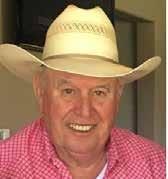
In lieu of flowers, a donation can be made in Robert’s name to Hospice, American Cancer Society, or Justin Cowboy Crisis Fund.
A Celebration of Life was held on Oct. 7 at the Mid-State Fairgrounds in Paso Robles.
Jerry Ichord
Jerry Edward Ichord passed in peace on Aug. 26, at the age of 87. He was born in Modesto in 1934 to James Ichord and Marguerite Ichord (Peck).
Jerry attended the small country school, Milnes Elementary, and graduated from Oakdale High School in 1952. Jerry was quite the athlete in high school where he led the Oakdale Mustangs to many victories in baseball and football. He married his wife Joyce of 68 years and the two of them raised their three daughters, Candy, Cheryl and Shelly. While raising his family Jerry worked several jobs as a milkman, a meat-delivery truck driver, and a cattle buyer for a meat company while raising cattle on the side. Soon he began cattle ranching full time on his ranch in Jamestown and after years in the business was named San Joaquin/Stanislaus County Cattleman of the Year.
Over the years Jerry enjoyed playing softball, golfing and fishing with friends. He loved to gather with family and friends and reminisce about the good old days. He enjoyed camping in the Sierras and trips to southern California with his family and traveled to South Carolina, Mexico, Alaska, Hawaii and Australia with Joyce. He was a member of the California Cattlemen’s Association, the Oakdale Saddle Club, the Oakdale Golf and Country Club and the Community Methodist Church of Oakdale.
Jerry was preceded in death by his daughter Candy and granddaughter Lindsay. He is survived by his wife Joyce Ichord, his brother Bill Ichord, his children Cheryl Dillwood and Shelly Ichord, his eight grandchildren and his six great-grandchildren. Jerry will always be remembered for his friendly smile, being a man of his word and his love for life. A Celebration of Life at the Oakdale Golf and Country Club on Sept. 23.
New Arrivals

Wesley McFarlane
Wesley Craig McFarlane made his entrance into the world on Sept. 24, 2022. His parents, Zach and Missy McFarlane, were overjoyed he decided to arrive just in time for Cal Poly’s 66th Annual Bull Sale. Wesley weighed 8 pounds, 1 ounce and was 20.25 inches long. Grandparents are Karen Moore of Orland, Debbie and Jim Dudley of Morro Bay and Randy Arseneau of San Luis Obispo.
Jack Curran
Jack Henry Curran was born on Sept. 27, 2022 to Taylor Curran and Savannah Molina. He weighed 7 pounds, 9 ounces and measured 19.75 inches long. Jack’s happy grandparents are Tim and Jill Curran from the Circle Ranch in Ione and Debbie and Fred Meyers of Hamilton, Mont.


32 California Cattleman November 2022
Robert Palm
– WESTERN POLY PIPE, LLC –HDPE PIPE FOR RANCH & FARM WATER SYSTEMS DELIVERY AVAILABLE • (925) 240-3643 GOOD SERVICE COMPETITIVE PRICES RANCHER-OWNED Western Poly Pipe —lifetime pipe—
UCANR hires more fire advisors to address growing threat to California communities


In late September, the University of California Cooperative Extension announced the hiring new individuals across the state to aid in the fire-fighting needs that have plagued California in recent years.
The roles these fire advisors have will include promoting the use of prescribed fire to help restore fire adapted landscapes. They will also prioritize community education, applied research and partnership building efforts that are based on scientifically informed ways to help communities mitigate, prepare for and recover from wildfire.
These indivduals, educated specifically in the nature of wildfire and the management of lands to prevent catastrophic fires, will allow more expertise to reach more places across the state, University of California Agriculture and Natural Resources will continue to hire more fire advisors to cover the state and help communities prepare for one of the most devastating climate-fueled threats.
With wildfires a constant danger as drought grips California, these five highly-skilled UC Cooperative Extension experts have joined the organization since early May:
• Katie Low: statewide fire coordinator (and also serving Nevada and Placer counties)
• Alison Deak: fire advisor serving Mariposa, Fresno and Madera counties



• Tori Norville: fire advisor serving Sonoma, Napa and Marin counties

• Barb Satink Wolfson: fire advisor serving Monterey, San Benito, Santa Clara and Santa Cruz counties
• Luca Carmignani: fire advisor serving Los Angeles and Orange counties


These positions – as well as other recent additions in agriculture and natural resources fields – are made possible by California's commitment, as reflected in the state budget, to improve the lives of residents in the face of a changing climate.

This robust team of fire experts provide broad knowledge and practical advice on a wide range of topics, including fire hazard mitigation, fire ecology, prescribed fire, wildland fire research, forest and wildlife management, and climate change effects.
Although their specific areas of expertise vary, all the new fire advisors are dedicated to helping residents and community groups across California become more fireaware, adapted and resilient. They share vital information on how Californians can prepare homes, landscapes and property for wildfire.
November 2022 California Cattleman 33 STEGALL est. 1995 Thank you! to all who bought at our inaugural bull sale! Connect with us on ocial media and our website or contact us the old-fashioned way with an email or a phone call. Todd Stegall: 530-713-8755 | 3455 Grover Ave, Colusa, CA, 95932 tmstegall@gmail.com | www.stegallcattle.com STEGALL CATTLE CO. STEGALL est. 1995 ivate eaty Angus and Red Angus Bulls O ering Now Available All bulls sell with a one-year guarantee! Contact Todd For More Information
2022


34 California Cattleman November 2022 STEGALL CATTLE CO. INAUGURAL BULL AND FEMALE SALE SEPT. 18, COLUSA, CA Col. Randy Baxley 45 BULLS $4,140 19 SPRING BORN HEIFERS $2,026 BEEF SOLUTIONS BULL SALE Bruin Ranch and Circle Ranch SEPT. 22, IONE, CA Col. Rick Machado 72 SIMANGUS BULLS $5,725 46 ANGUS BULLS $7,972 MCPHEE RED ANGUS PRODUCTION SALE SEPT. 24, LODI, CA Col. Rick Machado 48 RED ANGUS BULLS $4,917 30 OPEN FEMALES $2,233 20 FALL HEIFER PAIRS $3,218 TURLOCK LIVESTOCK AUCTION YARD'S CALIFORNIA BREEDERS BULL SALE OCT. 1, TURLOCK, CA Col. Rick Machado 73 TOTAL BULLS $4,115 66TH ANNUAL CAL POLY BULL TEST SALE OCT. 2, SAN LUIS OBISPO, CA Col. Rick Machado 62 TOTAL BULLS $6,230 18 MULTI TRAIT ANGUS $6,911 21 CALVING EASE ANGUS $6,583 11 GROWTH ANGUS BULLS $6,090 10 HEREFORD BULLS $4,560 2 RED ANGUS BULLS $ $5,500 TRAYNHAM RANCHES PRODUCTION SALE OCT. 2, FORT KLAMATH, OR Col. Eric Duarte 31 FEMALE LOTS $6,879 49 BULLS $4,500 20 COMMERCIAL SPRING BRED HEIFERS $1,800 SILVEIRA BROS. 'PARTNERS FOR PERFORMANCE' FEMALE SALE OCT. 8, FIREBAUGH, CA Col. Rick Machado Managed by Matt Macfarlane Marketing 37 SHOW HEIFERS $9,455 EZ ANGUS RANCH FEMALE SALE OCT. 8, PORTERVILLE, CA Col. Steve Dorran Managed by Cotton & Associates 68 LOTS $25,290 VINTAGE ANGUS ‘GENETIC GOLD’ PRODUCTION SALE OCT. 9, MODESTO, CA Col. Steve Dorran 84 LOTS $25,777
FALL BULL & FEMALE SALE RESULTS & AVERAGES 16TH ANNUAL 9 PEAKS RANCH ‘FIRST CHOICE’ BULL SALE OCT. 12, FORT ROCK, OR Col. Eric Duarte 119 ANGUS BULLS $6,744 LAMBERT RANCH'S BULL BULL SALE WITH SUNBRIGHT ANGUS & WESTWIND ANGUS OCT. 15, OROVILLE, CA Col. Rick Machado 24 HEREFORD BULLS $5,260 10 ANGUS BULLS $4,260 Dusty and
Shanna DeBraga, Red Bluff
at
the Lambert Ranch
Bull Sale in Oroville.
Kyle Daley, Talor Fulfer, Dave Daley in Oroville on Oct. 15.
know that private dream property you have always wanted?


HOA or any type of restrictions? Located not far from some of the greatest entertainment in Missouri - fishing, boating, canoeing and camping. Located near the great city of Springfield!

beautiful acres. Located on a paved road. The acreage is fenced with 5-strand barbed wire with metal posts with home surrounded by white 3-rail fence. The old barn has a class of its own. Two ponds on the property, one large pond and one smaller, spring-fed pond.

gorgeous remodeled farmhouse is move-in ready!

the welcoming large front porch, you enter a gorgeous living area with a beautiful fireplace (with a wood burning insert). Meticulously decorated for enjoyment of entertaining or just kicking back.
From the warm wood flooring (tile in some places) to the fantastic kitchen (with a huge dinning area), you can't go wrong! The three bedrooms are all large and roomy, terrific storage areas. Spacious laundry room. Two nice bathrooms. Big deck with a great view. Above ground pool has a nice deck built for ease of use and enjoyment.This is a fantastic property that most people would deem their paradise on earth.
November 2022 California Cattleman 35 HAY • VET SUPPLIES • RX • GATES • PANELS • AND MORE! WITH A WIDE RANGE OF PRESCRIPTION AND ANIMAL HEALTH PRODUCTS. ...OUR PRICES, SERVICE & SELECTION CAN’T BE BEAT! Stop In or visit us online to see how we can help you! (530) 347-5077 • 3748 Main St. Cottonwood, CA 96022 • www.shastafarmequipment.com Check out our new line of ArrowQuip products! Financing Available! Shipping available statewide! You
NO
77+/-
The
From
CONTACT US TODAY! Rose Eskridge Realty, LLC roseeskridge@aol.com | 417-860-4663 CATTLE PROPERTY BEAUTIFUL HOME, PRIVACY, ROOM TO ROAM! 77 ACRES | $650,000 Niangua, MO


36 California Cattleman November 2022 California Cattlemen’s Association Thank you for a tremendous sale season! CALL US FOR INFORMATION ABOUT OUR PRIVATE TREATY CATTLE OR OUR ANNUAL BULL SALE! 82914 Milburn Ave • Anselmo, NE 68813 KENNY & DIANNE READ 1485 SW King Lane • Culver, OR 97734 Ranch: (541) 546-2547 Cell: (541)480-9340 E-mail: barkdranch@msn.com visit us online at: www.barkdangusranch.com Look for our “Distinctly Different” Angus bulls annually at Red Bluff and Modoc Bull Sales! BAR KD RANCHBAR KD RANCH Elevating Angus to Greater Horizons VISIT US AT WWW.DONATIRANCH.COM! 916.712.3696 • 916.803.2685 jj@barrangus.com Angus RAnch Annual Bull Sale: Sat., September 1, 2018 Inaugural Female Sale: Mon., October 15, 2018 Tim & Marilyn Callison Owners Chad Davis 559 333 0362 Travis Coy 559 392 8772 Justin Schmidt 209 585 6533 Ranch Website www.ezangusranch.com Thank you for your support in 2022! services for all your on-the-ranch needs Ranch Buyer’s Guide THANK YOU TO OUR 2022 BULL BUYERS!


November 2022 California Cattleman 37 LOOK FOR US AT LEADING SALES IN 2022. Scott & Shaleen HoganH R (530) 200-1467 • (530) 227-8882 Gerber, CA Registered Angus Cattle Call to see what we have to offer you! RED RIVER FARMS 13750 West 10th Avenue Blythe, CA 92225 Office: 760-922-2617 Bob Mullion: 760-861-8366 Michael Mullion: 760-464-3906 Simmental – SimAngus™ – Angus Offering bulls at California’s top consignment sales! Call today about private treaty offerings! O’NEAL RANCH BULLS OFFER THE COMPLETE PACKAGE O’NEAL RANCH — Since 1878— Gary & Betsy Cardoza PO Box 40 • O’Neals, CA 93645 (559) 999-9510 Join us at the annual “Performance Plus” Bull Sale in O’Neals on Sept. 6, 2022 GROWTH • PERFORMANCE ADAPTABILITY • CARCASS Hoffman Bomber 8743 SIRE: Casino Bomber N33 MGS: S A V Final Answer 0035 VDAR Mirror Image 6207 SIRE: W R A Mirror Image T10 MGS: BCC Bushwacker 41-93 CONTACT US ABOUT SEMEN FROM THESE IMPRESSIVE SIRES... • Calving Ease with Growth • O’Connell Aviator 7727 SIRE: Musgrave Aviator MGS: R B Tour Of Duty 177 VDAR PF Churchhill 2825 SIRE: VDAR Churchill 1063 MGS: VDAR Really Windy 4189 Joe Sammis • (530) 397-3456 122 Angus Rd., Dorris, CA 96023 h (775) 691-1838 • honeranch@frontier.com HONERANCH.COM PERFORMANCE-TESTED EFFICIENT, QUALITY ANGUS BULLS NOW AVAILABLE! You can take to the bank! O’Connell ranch Call us about females available private treaty. Join us Sept. 9 for our annual Black Gold Bull Sale! DAN & BARBARA O’CONNELL 3590 Brown Rd, Colusa CA (530) 458-4491 Nathan, Melissa & Kate Noah (208) 257-3686 • (208) 550-0531 (530) 385-1570 E-mail...............................tehamaranch@gmail.com Thanks to our buyers at the 48th Annual “Generations of Performance” Bull Sale John Teixeira: (805) 448-3859 Allan Teixeira: (805) 310-3353 Tom Hill: (541) 990-5479 A FAMILY TRADITION www.teixeiracattleco.com | cattle@thousandhillsranch.com Angus and SimAngus Ca le Thank your to all our buyers for your support this year!


38 California Cattleman November 2022 Dwight Joos Ranch Manager P.O. Box 1019 • Simi Valley, CA 93062 805-520-8731 x1115 • Mobile 805-428-9781 dwight.joos@pwgcoinc.com Simi Valley, CA pwgillibrandcattle.com P.W. GILLIBRAND Cattle Co. Horned and Polled Hereford Genetics Private treaty bulls available or watch for our consignments at Cal Poly! THANK YOU TO OUR 2022 SALE SUPPORTERS! Call us today for information on private treaty bulls or females. MCPHEE RED ANGUIS 14298 N. Atkins Rd • Lodi, CA 95248 Nellie, Mike, Mary, Rita & Families Nellie (209) 727-3335 • Rita (209) 607-9719 website: www.mcpheeredangus.com 11500 N Ambassador Drive, Suite 410 | Kansas City, MO 64153 | (816) 842-3757 | aha@hereford.org Chris Beck • 618-367-5397 79337 Soto Lane Fort Rock, OR 97735 Ken 541.403.1044 | Jesse 541.810.2460 ijhufford@yahoo.com | www.huffordherefords.com “Breeding with the Commercial Cattleman in Mind”3L Registered Hereford Cattle & Quarter Horses Annual Sale First Monday in March 42500 Salmon Creek Rd Baker City, OR 97814 Ranch: (541) 523-4401 Bob Harrell, Jr.: (541) 523-4322 THANK YOU FOR YOUR SUPPORT AT OUR 2022 BUTTE BULL SALE! JOIN US IN ALTURAS IN FEBRUARY 2023! Oroville, CA LambertRanchHerefords.com CONTACT US FOR CATTLE AVAILABLE PRIVATE TREATY OFF THE RANCH “THE BRAND YOU CAN COUNT ON” REGISTERED HEREFORD CATTLE BARRY, CARRIE & BAILEY MORRELL Barry: (530) 6825808 • Carrie: (530) 218-5507 Bailey (530) 519-5189 morrellranches@yahoo.com 560 County Road 65, Willows CA 95988 Call us about our upcoming consignments or private treaty cattle available off the ranch. OFFICE@VINTAGEANGUSRANCH.COM WWW.VINTAGEANGUSRANCH.COM Bulls and females available private treaty! SEEDSTOCK PRODUCER SINCE 1978 Greeley Hill, CA • La Grange, CA Stephen Dunckel • (209) 591-0630 www.tumbleweedranch.net twd@tumbleweedranch.net TUMBLEWEED RANCHES Leading Angus & Ultrablack© Genetics Put your business here! Call Matt Macfarlane (916) 813-0113





November 2022 California Cattleman 39 OFFERING HEREFORD BULLS BUILT FOR THE COMMERCIAL CATTLEMAN Jim Mickelson (707) 481-3440 THE DOIRON FAMILY Daniel & Pamela Doiron 805-245-0434 Cell doiron@spanishranch.net www.spanishranch.net THD © SPANISH RANCH Your Source for Brangus and Ultrablack Genetics in the West! Vaccines Medicines Mineral Supplements Antonia Old • (209) 769-7663 antonia.old@animalhealthinternational.com ...and more! Reliable products you are looking for with the dependable service you need. LITTLE SHASTA RANCH Stan Sears 5322 Freeman Rd. Montague, CA 96064 (530) 842-3950 Genetics That Get Results! Call anytime to see what we can offer you! OMF EPIC E27 Owned with Owned with Oak Meadows Farms & Schooley Cattle. SONS AVAILABLE IN 2021-2022 2015 AICA Seedstock Producer of the Year Feedlot • Rice • Charolais Jerry & Sherry Maltby www.brokenboxranch.combbr@citlink.net PO Box 760 Williams, CA Mobile: (530) 681-5046 Office (530) 473-2830 CHAROLAIS Bobby Mickelson (707) 396-7364 P.O. Box 2689 • Petaluma, CA 94953 California’s Leading Producers BALD MOUNTAIN BRANGUS, SONORA (209) 768-1719 RUNNING STAR RANCH, LINCOLN (916) 257-5517 SUNSET RANCH, OROVILLE (530) 990-2580 DEER CREEK RANCH, LOS MOLINOS (541) 817-2535 THE SPANISH RANCH, NEW CUYAMA (805) 245-0434 GLASGOW BRANGUS, RAMONA (760) 315-7172 for Brangus, Ultrablacks & Brangus Optimizers Call a breeder near you today for more information! TUMBLEWEED RANCHES, GREELEY HILL (209) 591-0630


40 California Cattleman November 2022 3300 Longmire Drive• College Station, TX 77845 (800) 768-4066 • (979) 693-0388 fax: (979) 693-7994 e-mail: info@bovine-elite.com (208) 345-3163 knipeland.com Lostine Timber Tract - OR 9,772± acres of timber and grazing land $9,319,000. 1,198± acres with creek frontage offered separately. $1,438,260 Cascade Timber Ranch - ID Timbered ranch with meadows, creek, and ponds. Ranch has great hunting, and a private lease on 20,000 more acres. $5,350,000. Or buy part. $2,970,000 KNIPE LAND COMPANY JMM GENETICS JORGE MENDOZA • (530) 519-2678 jmmawss@gmail.com 15880 Sexton Road, Escalon, CA • A.I, CIDR & heat synchronization • Extensive experience • Willing to Travel • Well-versed in dairy & beef pedigrees Full Service A.I. Technician & Semen Distributor REAL ESTATE GENETICS Watkins Fence Company Over 25 years serving California, Utah and Southern Idaho specializing in oil pipe • chain link • barb wire (805) 649-1568 Lic # 773420 shane@watkinsfence.com WWW.BARALEINC.COM (888) 258-3333 • Williams, CA Matt Zappetini (530) 526-0106 mzappetini@baraleinc.com “PERFORMANCE THROUGH ADVANCED NUTRITION” Performance Through Advanced Nutrition Ranch Deliveries Available with our Truck and Forklift! We also offer custom formulations to meet your specific nutritional needs! We offer blends that contain: Molasses Zinpro® Performance Minerals Availa® 4 Added Selenium Yeast Rumensin® Available Premium Livestock Feeds • Mineral Mixes with Ranch Delivery • • Hi Mag - Fly Control - Rumensin - Custom Mixes • • Complete Feeds and Finish Mixes • Williams, CA Matt Zappetini (530) 526-0106 mzappetini@baraleinc.com www.baraleinc.com • (888) 258-3333 Do you own cattle? You don’t need it, but should still support the California Cattlemen’s Association Do they graze in areas where Anaplasmosis is a problem? YES NO Do you want to prevent the effects of the disease including severe anemia, weakness, fever lack of appetite, depression, constipation, decreased milk production, jaundice, abortion and possibly death? YES You don’t need to SHOULD YOU ORDER THE ANAPLASMOSIS VACCINE? Anaplasmosis is an infectious parasitic disease in cattle, spread primarily by ticks and blood sucking insects like mosquitoes. The killed anaplasmosis vaccine protects cows and bulls of any age from infection and requires a booster given 4 to 6 weeks after the initial vaccination. Find out below if you should order the vaccine! ORDER TODAY BY CALLING (916) 444-0845! Available in 10 or 50 dose bottles 10 dose bottles: $8.50 per dose 50 dose bottles: $7.50 per dose *10 dose minimum and $10 flat rate shipping SOLD ONLY TO CALIFORNIA CATTLEMEN’S ASSOCIATION MEMBERS NO (Consult your local veterinarian to find out) NO YES


Fight Back Against Lack of Rainfall With PRF! DROUGHT? WE’VE GOT YOU COVERED “We are very happy with the results of the PRF program over the past ten years. It has become part of our management strategy here on the ranch. Give WSR a Call Today.” Likely Land and Livestock wsrins.com | 877-920-8500 | Lic #0B48084 WSR is an equal opportunity employer. WE OFFER DIFFERENT PROGRAMS TO KEEP YOU IN BUSINESS DURING GOOD AND BAD TIMES! SERVING ALL SERVING ALL 48 MAINLAND STATES. ENDORSED BY CURRENT PROGRAMS •Pasture, Rangeland & Forage (PRF) NO PREMIUM DUE AT SIGNING! •Livestock Risk Protection (LRP) •Fire Insurance •Livestock Mortality •Life Insurance • Workers Compensation USDA’S PASTURE, RANGELAND & FORAGE (PRF) PROGRAM HELPS OFFSET YOUR LOSES DURING A LACK OF RAINFALL! over years

42 California Cattleman November 2022 Advertisers’ Index Amador Angus .......................................................... 36 American AgCredit ................................................... 13 American Hereford Association ................................. 38 Animal Health International ...................................... 39 Bar Ale ...................................................................... 40 Bar KD Ranch ............................................................ 36 Bar R Angus ............................................................... 36 Bayer/Rejuvra ............................................................ 27 Bovine Elite, LLC ....................................................... 40 Broken Box Ranch ..................................................... 39 Buchanan Angus Ranch ............................................. 36 Byrd Cattle Company ................................................. 36 Cattlemen's Livestock Market ...................................... 9 Chico State College of Ag ........................................... 39 CoBank ...................................................................... 13 Conlin Supply Co., Inc. .............................................. 15 Dal Porto Livestock .................................................... 36 Dixie Valley Angus ............................................... 36, 43 Donati Ranch ............................................................. 36 EZ Angus Ranch......................................................... 36 Farm Credit West ....................................................... 13 Freitas Rangeland Improvments ................................ 16 Fresno State Ag Foundation ....................................... 39 Genoa Livestock ......................................................... 38 Harrell Hereford Ranch ............................................. 38 HAVE Angus .............................................................. 37 Hogan Ranch ............................................................. 37 Hone Ranch ............................................................... 37 Hufford's Herefords ................................................... 38 JMM Genetics ............................................................ 40 Kessler Angus ............................................................ 37 Knipe Land Company ................................................ 40 Lambert Ranch .......................................................... 38 Little Shasta Ranch .................................................... 39 McPhee Red Angus .................................................... 38 Morrell Ranches ......................................................... 38 Noahs Angus Ranch ................................................... 37 O'Connell Ranch ........................................................ 37 O'Neal Ranch ............................................................. 37 P.W. Gillibrand ........................................................... 38 Pacific Trace Minerals ................................................ 39 Red River Farms ........................................................ 37 Rose Eskridge Realty.................................................. 34 Sammis Ranch ........................................................... 37 Scales Northwest ........................................................ 16 Schohr Herefords ....................................................... 38 Shasta Farm an dEquipment ...................................... 34 Sierra Ranches ........................................................... 39 Sonoma Mountain Herefords ..................................... 39 Spanish Ranch ........................................................... 39 Stanislaus Farm Supply .............................................. 21 Stegall Cattle Co. ........................................................ 33 Stepaside Farms ......................................................... 37 Tehama Angus Ranch................................................. 37 Teixeira Cattle Co. ................................................ 25, 37 Tumbleweed Ranches................................................. 38 Turlock Livestock Auction Yard ................................... 2 Vintage Angus Ranch ................................................. 44 Watkins Fence Company 40 West Coast Brangus Breeders ..................................... 39 Western Poly Pipe ...................................................... 32 Western State's Hereford Show ................................... 19 Western Stockman's Market ....................................... 17 Western Video Market ................................................. 3 Wraith, Scarlett, Randolph Insurance ........................ 41


“PERFORMANCE, GROWTH & CARCASS GENETICS” Lee Nobmann, owner Morgon Patrick, managing partner 8520 5th Ave E., Montague CA 96064 (530) 526-5920 • morgon@nobmanncattle.com join us for the inaugural Dixie Valley angus production sale january 14, 2023 Siskiyou GoldenFairgrounds, Yreka, ca CED BW WW YW CW MARB RE $M $W $F $G $B $C +9 +0.9 +94 +171 +80 +1.91 +0.92 84 91 120 115 235 389 Sterling R O I AAA 20156799 Tattoo: 1140 Sire: G A R Home Town MGS: Hoover No Doubt Featuring sons of these and other industry greats! CONNEALY CONFIDENCE PLUS G A R HOME TOWN watch for these early sale standouts... CED BW WW YW CW MARB RE $M $W $F $G $B $C -4 +4.0 +106 +193 +99 +1.94 +0.98 60 85 142 80 222 348 Sterling Plus 1127 AAA 20156786 Sire: Connealy Confidence Plus MGS: Basin Payweight CED BW WW YW CW MARB RE $M $W $F $G $B $C +10 -0.2 +88 +145 +56 +1.11 +1.06 91 91 86 81 167 308 Sterling Witchita 1154 AAA 20158686 Sire: G A R Wichita MGS: Styles Upgrade J59 CED BW WW YW CW MARB RE $M $W $F $G $B $C +1 +1.2 +83 +156 +77 +1.10 +0.93 48 69 127 77 204 313 Sterling Reliant 1115 AAA 20156774 Sire: G A R Reliant MGS: Diablo Deluxe 1104 CED BW WW YW CW MARB RE $M $W $F $G $B $C +6 -0.5 +84 +144 +53 +1.08 +0.87 107 95 85 76 161 316 Sterling Enforcer 1162 AAA 20156805 Sire: S S Enforcer E812 MGS: Styles Upgrade J59 CED BW WW YW CW MARB RE $M $W $F $G $B $C +9 +1.7 +66 +132 74 +1.31 +0.87 40 72 125 188 213 316 Sterling Reliant AAA 20285894 Tattoo: 1205 Sire: G A R Reliant MGS: Jindra Stonewall CED BW WW YW CW MARB RE $M $W $F $G $B $C +4 +3.2 +92 +160 +87 +1.15 +0.86 74 80 134 79 213 350 Sterling Peyton AAA 20285934 Tattoo: 1195 Sire: E W A Peyton 642 MGS: V A R Generation 2100 CED BW WW YW CW MARB RE $M $W $F $G $B $C +2 +3.7 +90 +165 +80 +1.23 +0.93 80 77 142 82 208 350 Sterling Plus 1137 AAA 20156762 Sire: Connealy Confidence Plus MGS: Basin Payweight INDICATES TOP 1% OF THE ANGUS BREED FOR THAT TRAIT also join us Nov. 9, 2022 for the deadwoo d and isabel y69 genetics online sale!


V A R CONCLUSION WHEN YOU REACH A CONCLUSION, you get:• Outstanding Beef Bull Phenotype • Pedigree Mateable to Most of Today’s Females • Remarkable CED and BW to Growth Spread • Superior Carcass Merit • Excellent Scrotal • Amazing Docility • Foot Improver • Extra Muscle • Outstanding PAP Score • Proven Dam with More Than $10 Million in Progeny Sales JIM COLEMAN, OWNER DOUG WORTHINGTON, MANAGER BRAD WORTHINGTON, OPERATIONS MIKE HALL, BULL SERVICES (805) 748-4717 2702 SCENIC BEND, MODESTO, CA 95355 (209) 521-0537 • WWW.VINTAGEANGUSRANCH.COM OFFICE@VINTAGEANGUSRANCH.COM ADHEMAR JR., TIM AND RAFAEL ARELLANO PO BOX 582993 • ELK GROVE, CA 95758 TIM (916) 826-3063 | ADHEMAR JR (916) 416-2805 WWW.ARELLANOBRAVOANGUS.COM ARELLANOBRAVOANGUS@GMAIL.COM HABLAMOS ESPAÑOL CONTACT ORIGEN, ABS OR ARELLANO BRAVO TO PURCHASE SEMEN. CED BW WW YW SC DOC CLAW ANGLE PAP CEM MILK +14 +0 +96 +174 +1.22 +30 +.46 +.48 -.43 +10 +28 CW MARB RE $M $W $F $G $B $C +79 +.99 +1.10 +61 +86 +113 +76 +190 +307 VAR Conclusion 0234 • +*19697625 +*KCF Bennett Summation [AMF-CAF-XF] • +*Sandpoint Blackbird 8809 [AMF] EPDs As of 10/19/22 First calves are hitting the ground this fall and the reports are in and the calving ease is real! The first 20 birth weights recorded have moved his birthweight EPD to 0!
