MARCH 2024

CALIFORNIANS SHINE AT CATTLECON 2024
ANGUS & AGRICULTURE IN THE O’CONNELL FAMILY
SIMMENTAL BREAKS DOWN BULL SELECTION


THE OFFICIAL PUBLICATION OF THE CALIFORNIA CATTLEMEN’S ASSOCIATION

Jake
George
Rex Whittle 209-996-6994
Mark
Kris
Steve Bianchi 707-484-3903
Jason Dailey ............................... 916-439-7761
Brett Friend .................................. 510-685-4870
Tod Radelfinger 775-901-3332
Fax
Website/Market
Wednesday, April 3
Wednesday, April 17 Wednesday, May 1

THURSDAY,

2 California Cattleman March 2024
SALES
Join
Ringside at
ANNIVERSARY FEEDER
FEEDER
FEEDER
EVERY WEDNESDAY
Us
12 p.m.
SALE Wednesday, March 6 SPRING
SALES
REPRESENTATIVES
CALIFORNIA
Parnell ................................ 916-662-1298
Gookin ......................... 209-482-1648
Fischer .............................. 209-768-6522
Gudel ................................... 916-208-7258
WEEKLY SCHEDULE
Cows 8:30 a.m.
Pairs/Bred Cows 11:30 a.m.
Cattle .............................................. 12 p.m. AUCTION MARKET 12495
STOCKTON
209-745-1515
Bowdy Griffen .......................... 530-906-5713 WEDNESDAY
Butcher
Cow-Calf
Feeder
E.
BLVD., GALT, CA Office..............................................
.................................................. 209-745-1582
56 years of excellence IN marketing cattle
CONSIGN TO THESE
WESTERN VIDEO
Report ......... www.clmgalt.com Web Broadcast ............ www.lmaauctions.com Celebrating
CALL TO
UPCOMING
MARKET SALES:
Consignment
THURSDAY, APRIL 11 WVM HEADQUARTERS, COTTONWOOD, CA
Deadline March 25
Consignment
MAY 2 HARRIS RANCH, COALINGA, CA
Deadline April 17


Join us live or online at these spring events! WATCH, LISTEN AND BID ONLINE AT WWW.WVMCATTLE.COM TOP QUALITY CATTLE AND LAMBS FEATURED IN THESE SALES FROM THE WEST’S LEADING PRODUCERS! APRIL 11 MAY 2 MAY 23 WVM HEADQUARTERS | COTTONWOOD, CA JOIN US FOR OUR BIGGEST SALE OF THE SPRING! HARRIS RANCH RESORT | COALINGA, CA WVM HEADQUARTERS | COTTONWOOD, CA CONSIGNMENT DEADLINE: MAY 15 CONSIGNMENT DEADLINE: APRIL 3 • BROADCAST AND CATALOG WILL BE ON WVMCATTLE.COM CONSIGNMENT DEADLINE: APRIL 16 • SIMULCAST ON DISH 998

CALIFORNIA CATTLEMEN’S ASSOCIATION
3841 North Freeway Blvd., Suite 130
Sacramento, CA 95834
PRESIDENT
Steve Arnold, Santa Margarita
FIRST VICE PRESIDENT
Rick Roberti, Loyalton
SECOND VICE PRESIDENTS
John Austel, Boulevard
Frank Imhof, Pleasanton
Mike McCluskey, Red Bluff
TREASURER
Beverly Bigger, Ventura
EXECUTIVE VICE PRESIDENT
Billy Gatlin
VICE PRESIDENT OF GOVERNMENT AFFAIRS
Kirk Wilbur
DIRECTOR OF FINANCE
Lisa Brendlen
DIRECTOR OF COMMUNICATIONS
Katie Roberti
ASSOCIATE DIRECTOR OF COMMUNICATIONS
Maureen LaGrande
MEMBERSHIP & EVENTS COORDINATOR
Gracie LeCheminant
OFFICE ADMINISTRATOR
Katherine Dickinson
PUBLICATION SERVICES
OFFICE & CIRCULATION
CCA Office: (916) 444-0845
Fax: (916) 444-2194
MANAGING MAGAZINE EDITOR
Stevie Ipsen | (208) 996-4922 stevie.ipsen@gmail.com
ADVERTISING SALES/FIELD SERVICES
Matt Macfarlane | (916) 803-3113 m3cattlemarketing@gmail.com
BILLING SERVICES
Lisa Brendlen lisa@calcattlemen.org
SERVING CALIFORNIA BEEF PRODUCERS SINCE 1917
Bolded names and businesses in editorial represent only current members of the California Cattlmen’s Association or California CattleWomen, Inc. For questions about membership status, contact the CCA office at (916) 444-0845.
The California Cattleman (Publication #8-3600) is published monthly except May/June is combined by the California Cattlemen’s Association, for $20/year, or as part of the annual membership dues. All material and photos within may not be reproduced without consent of publisher.
Periodical postage paid at Lubbock, Texas, 79402. Publication # 8-3600 National Advertising Group: The Cattle Connection/The Powell Group, 4162-B Carmichael Ct, Montgomery, AL 36106 (334) 271-6100.
POSTMASTER: Send address changes to: California Cattleman, 3841 North Freeway Blvd., Suite 130 Sacramento, CA 95834
WWW.CALCATTLEMEN.ORG
UPCOMING EVENTS
Humboldt/Del Norte Dinner Dance
March 9
Humboldt Co. Fairgrounds | Ferndale
Fall River/Big Valley Cattlemen’s Spring Meeting
March 9
Intermountain Fairgrounds | McArthur
California CattleWomen Spring Meeting
March 10
Lake Natoma Inn | Folsom
Steak & Eggs Breakfast
March 13
Sutter Club | Sacramento
San Joaquin/Stanislaus Cattlemen’s Meeting
March 14
Waterloo Restaurant | Stockton
San Luis Obispo County Cattlemen’s Meeting
March 20
Paso Robles Event Center | Paso Robles
Glenn/Colusa Cattlemen’s Meeting
March 21
Maxwell Inn | Maxwell
4 California Cattleman March 2024
ISSUE
MARCH 2024 VOL. 107,
4


• Pasture, Rangeland and Forage (PRF) Lack of Rainfall • Livestock Risk Protection (LRP) for Market Volatility • Livestock Mortality • Grassland Fire Insurance • Life and Health Insurance • Farm and Ranch Policies • Workers Compensation • Whole Farm Revenue Protection (WFRP) EndoRsEd by 877-920-8500 wsrins.com CA Lic #0b48084 WSR is an equal opportunity employer. over years THE RIGHT TOOL FOR THE RIGHT JOB build a Risk Management Toolbox That Can do It All At WsR Ranch Protection, we are your one-stop shop for all your insurance needs. Count on us to provide the right tools you will need to properly equip your Risk Management Toolbox ConTACT us TodAy! wsrins.com | 877-920-8500


CONTENTS
ASSOCIATION PERSPECTIVES
8
10
14
34
44
CATTLEMEN’S COLUMN
First quarter of 2024 keeps CCA officers on the go
DUES DOLLARS AT WORK
CCA assesses budget priorities and legislative bill introductions
BUNKHOUSE
Documenting California on fire
COUNCIL COMMUNICATOR
Promoting your product to the masses
RANGELAND TRUST TALK
Time honored tradition on the Nakagawa Ranch

38
16
ALL


March 2024 California Cattleman 7
SPECIAL FEATURES
MIND
SUNSHINE STATE OF
CCA well represented at Cattle Industry Convention
FOR AGRICULTURE IN
& INDICES
trends over
BLUFF RECAP Scenes and results from best of the
event
THE FAX 2024 Market Outlook from CattleFax
42 ON THE COVER
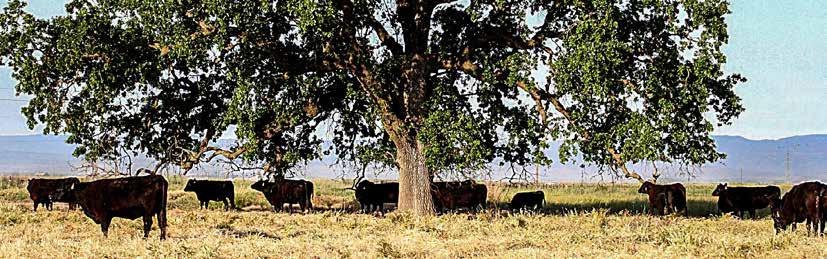
this Angus and Simmental feature issue, the cover photo of commerical Angus cattle was taken in the Bay Area near San Jose by photographer Andrei Stanescu.
REPORT Sales results from spring bull sales RANCH FAMILY ROUNDUP Obituaries and new arrivals BUYER’S GUIDE Services from breeders and beef industry experts ADVERTISING INDEX 49 50 52
READER SERVICES 46 24 58 24
THE O’CONNELL FAMILY Angus bulls covering cows of all breeds EPDS
Simmental reminds of
time RED
West
GET
16 38
In
CATTLEMEN’S
52
© Sue Graue
CATTLEMEN’S COLUMN GREETINGS FELLOW CATTLEMEN AND FRIENDS
by CCA President Steve Arnold
We’re well into 2024 and things are looking real good here on the central coast of California. We are having an average rainfall for our area but it is leveraged by the record rains we enjoyed last year. The residual moisture from last year is showing up now in runoff and standing water. I know other areas of the state have had their issues but I think we will all take it in stride.
CattleCon 2024
California Cattlemen and CattleWomen were in Orlando, Fla. the first part of February for the Cattle Industry Convention and meetings for the National Cattlemen’s Beef Association (NCBA). Our organization was well represented with a pretty large contingency of folks. It was a fairly quiet meeting as there were no really challenging issues. Our CCA staff get a lot of respect during these meetings in that they have been in place for some time, and have a good grasp on policy issues. It also helps that they have established relationships with NCBA staff and their peers serving as staff for other states. Billy Gatlin and the other state executives are able to work out most potential disputes before the committee meetings start. At the very least we know what the big players, Texas, Kansas, Nebraska, etc., are thinking on any given issue.
Legislation
The legislation cycle in California has begun anew. It is that time of year that Billy, Kirk Wilbur and Jason Bryant review all the introduced bills. Considering there were roughly 2,700 bills introduced last year you can see this is a bit of a challenge. As most of you know both Billy and Kirk have an extensive background with the legislative structure and are well connected with
key players. Obviously this helps immensely if CCA needs help putting coalitions together for whatever reason. I can’t say enough to do justice to their abilities in Sacramento.
Fire

CCA will continue to address the issues surrounding fire. At this point, this issue is touching everyong, in that you’ve either been burned or your insurance has gone out of sight. Some have experienced both. The state has become so regulated it is hard to control burn or graze our way out of this mess. Insurance has become almost unjustifiable economically at this point. These are high hurdles but we will continue forward toward a reasonable solution.
Predators
We will also push hard to reinstate funding for the wolf problem. The current funding ran out the first of the year as most of you know. CCA is helping build a coalition that may help with funding considerations during this year’s May revise. This will be a priority.
The local association spring meetings are ramping up through this month and next and I look forward to meeting with many of you and learning about the topics that matter most to you and how CCA can help. As always, if there is anything specific that you want addressed in more detail please let Billy or me know.

8 California Cattleman March 2024


(209) 847-8977 www.conlinsupply.com Oakdale, CA 576 Warnerville Rd. Follow the Sign! Join animal health experts and manufacturer representatives for this spring event! Shop our comprehensive selection of health and handling equipment, products and services by industry-leading manufacturers! SEMI-ANNUAL HEALTH & HANDLING SALE WEDNESDAY, APRIL 3 | OAKDALE
YOUR DUES DOLLARS AT WORK
CCA PRIORITIZES BUDGET ADVOCACY AHEAD OF POLICY BILL INTRODUCTION DEADLINE
by CCA Vice President of Government Affairs Kirk Wilbur
Friday, Feb. 16 was the deadline by which California legislators had to introduce new bills to be considered in the 2024 legislative year. As of press time – three days before the deadline – 1,020 new bills had been introduced in the legislature this year. There is typically a flurry of bill introductions in the final days before the deadline, and this year has been no exception: on just the Tuesday before the deadline, legislators introduced 172 new legislative measures. Given that trend, at press time well over 1,500 new legislative proposals were projected to be introduced in the Legislature in 2024.
In addition to new bills, any legislation introduced in 2023 which progressed out of its chamber of origin by the end of January – socalled “two-year bills” – remains viable in the second year of the 2023-24 Legislative Session. Dozens of those measures remain active in the Capitol.
CCA staff has monitored every bill introduced in the Legislature this year, and fortunately no major red flags have yet emerged (CCA has nevertheless engaged early on several bills to stave off potential unintended consequences for the livestock industry).
CCA will continue vigilantly monitoring this year’s legislative measures. In addition to nearly one-third of this year’s bill load likely being introduced in the days following press time, “spot bills” (non-substantive bills that effectively serve as placeholders for policy amendments to be filed at a later date) can be amended through

March 11 and substantive legislation can be “gutand-amended” to completely change a bill’s intent at virtually any time throughout session.
CCA will provide an early overview of our 2024 legislative priorities in the April edition of California Cattleman. In the meantime, below is a brief overview of CCA’s legislative efforts in the first two months of the year.
Two-year bills

Bills that survived part of the legislative process in 2023 but did not advance to the Governor’s desk for a signature or veto may be taken up this year as two-year bills. However, those bills had to at least advance out of their chamber of origin by the end of January to remain viable. With that house-of origin deadline behind us, below are updates on several two-year bills that CCA lobbied in 2023:
• CCA-opposed AB 554 (Gabriel): Died on Assembly Floor
This bill would have given radical animal rights groups standing to sue ranchers in civil court alleging violations of anti-animal-abuse statutes. Given that many of these groups believe that routine animal husbandry practices constitute animal abuse, activists could have sought to set new legal precedent in civil courts or to simply file bad-faith suits to force settlements from livestock producers. CCA succeeded in stalling the bill on the Assembly floor last year, where it officially died on Jan. 31.
• CCA-opposed AB 429 (Bennett): Died in Assembly Water, Parks & Wildlife Committee
AB 429 would have restricted the approval of groundwater well permits in certain overdrafted groundwater basins. CCA opposed the measure because it undermined the Sustainable Groundwater Management Act’s guarantee of local control and would have increased costs and regulatory burdens for ranchers. A related
10 California Cattleman March 2024
...CONTINUED ON PAGE 12


CED


March 2024 Ranches Ranches Gary Ward (775) 790-6148 Katie Ward (916) 990-4818 Follow us on FaceBook GARY WARD & FAMILY Call email f a sale book. Matt Macfarlane | 916-803-3113 (cell) E-mail: m3cattlemarketing@gmail.com www.m3cattlemarketing.com 18TH ANNUAL BULL SALE Saturday MARCH 16 Watch and bid online for FREE! Go to www.dvauction.com to register...it’s as easy as 1, 2, 3... 1. Complete and submit the form on “Create New DVAuction Account” 2. Apply for bidding by clicking “apply for bidding” in the upper left of your screen, at least 24 HOURS PRIOR to the auction 3. Tune into the sale and make your purchases! You will receive an e-mail message to activate your account. Once the account has been activiated, be sure to log back in prior to the sale to confirm your profile has been set up correctly. For questions, contact Western Video Market at wvm@wvmcattle.com or DVAuction at support@dvauction.com. DVAuction Help Desk (402) 316-5460 (Customer Service) P.O. Box 1404, Gardnerville, NV 89410 E-mail: wardranches24@gmail.com Ranch: 1155 Foothill Rd., Gardnerville Your Sierra Nevada Source fering the largest selection Age-Advantage Angus Bulls to sell in the state. 60 LONG-AGED FALL YEARLING BULLS Including a tremendous selection of calving-ease bulls. ULTRASOUND, DNA, FERTILITY AND PERFORMANCE-TESTED VIEW THE BULLS BEFORE THE SALE AT CLAROT FEEDLOT, IN MODESTO, CA. CALL JOE (209) 678-5030 Join us at the Ranch 1155 Foothill Road, Gardinerville, NV Lunch 11:30 AM - Sale 1:00 PM CONNEALY EMERALD
*19257149
BW WW YW MILK CW MARB RE $B $C +6 +0 +63 +123 +20 +38 +.92 +1.12 +165 +285 MILK Connealy Confidence Plus x Connealy Armory WARD RANCHES WAS BUILT TO PROVIDE SUSTAINABLE ANGUS GENETICS IN THE GREAT BASIN AND BEYOND. Our foundation females and natural service sires hail from two of the most respected cattelmen in the West - David Medeiros and David Dal Porto. We have added some of the most proven and highly accurate multi-trait sires to our AI program for nearly 20 years in order to produce cattle that flourish in tough conditions. Call to setup a time to preview the bulls ahead of the sale. AUCTIONEER: Eric Duarte (541) 533-2105 SIRES INCLUDE: CASINO BOMBER N33
*18658677
AAA
CED
AAA
BW WW YW MILK CW MARB RE $B $C +12 -1.5 +79 +130 +26 +66 +.84 +90 +177 +298 KM Broken Bow 002 x DPL Upward L70
...CONTINUED FROM PAGE 10
measure regulating groundwater extraction permits, CCA-opposed AB 1563 (Bennett), advanced to the Senate Governance and Finance Committee last year – and thus remains viable as a two-year bill – but has not moved since the author canceled a committee hearing on the bill in July.
• CCA-opposed AB 460 (Bauer-Kahan) and AB
1337 (Wicks): Still viable
AB 460 is a wide-ranging bill which would provide the State Water Resources Control Board increased enforcement authority over water rights – including a 20-fold increase in daily fines for violations of water rights terms or curtailment orders. AB 1337 would give the SWRCB the ability to curtail any water rights – including pre-1914 and riparian rights – even in non-drought years.
While both CCA-opposed measures advanced to the Senate last year and thus remain viable as two-year bills, CCA does not anticipate the bills to be taken up this year. Both measures were held by their authors in the Senate Natural Resources and Water Committee last year amid concerns that they did not have the votes needed to pass out of the committee.
• CCA-supported AB 408 (Wilson): Still viable
This $3.65 billion climate bond act includes a trio of provisions which would provide a total of $155 million for prescribed grazing and grazing infrastructure. AB 408 is among a handful of climate bond proposals pending in the Legislature; legislators are likely to negotiate these proposals and ultimately place one compromise climate bond before voters on the November ballot.
Budget advocacy
Last month’s California Cattleman overviewed the Governor’s Proposed Budget for Fiscal Year 2024-25 and provided a preview of CCA’s budget priorities for this budget cycle.
Over the past month, CCA has been pushing hard within the Administration and Legislature to ensure that the Association’s funding priorities are reflected in the Governor’s “May Revise” of the Budget and included in the final budget which must be passed by the end of June. Below are the details of CCA’s three highest budget priorities.
Wolf/Livestock Compensation Program Funding
On Jan. 12, the California Department of Fish and Wildlife announced that the $3 million
allocated to the agency in 2021 for a wolf/livestock compensation program had been fully expended. In anticipation of funding running out, CCA membership at the 2023 Annual Convention directed Association staff to seek an additional $15 million in program funding to be available through June 30, 2029.
On Feb. 6, CCA sent a letter to the Governor’s Office and to officials at the California Natural Resources Agency, CDFW and California Department of Food and Agriculture formally requesting that wolf compensation program funding be included in this year’s budget. Crucially, CCA was joined in that request by Defenders of Wildlife, demonstrating that a compensation program has broad support among ranchers and wolf advocates alike (California Farm Bureau is also a co-signer).
In addition to compensating ranchers for livestock losses caused by wolves, the program furthers the Department’s goal of reducing wolf/ livestock conflicts by financially supporting implementation of non-lethal deterrence measures, and that avoidance of conflicts directly benefits wolves.
While gray wolves are often thought of as only impacting northeastern California, a pack has now established itself in southern Tulare County and dispersing wolves have ventured as far west as Del Norte County and as far south as Ventura County. In total, CCA staff identified 17 legislative districts with connections to gray wolves, including a dozen Democrats (among them Senate President pro Tempore Mike McGuire (D-Healdsburg) and Assembly Speaker Robert Rivas (D-Hollister)). In mid-February, CCA staff met with each of these offices and with both chambers’ relevant budget subcommittees to push for wolf/livestock compensation program funding in this year’s budget.
The need for that funding became even more apparent on Feb. 12, when CDFW released 31 depredation investigation reports dating back to August 2023. Those reports identified 16 confirmed incidents of livestock depredation by gray wolves, totaling 22 cattle and lambs killed or injured by wolves.
Wildfire and Forest Resilience
As detailed in the February edition of California Cattleman, wildfire and forest resilience funding was left relatively unscathed in the face of a projected $38 billion budget shortfall. Of $2.8

12 California Cattleman March 2024
billion allocated across four years in recent years’ budgets, Governor Newsom in January proposed only $100.7 million in cuts, retaining $2.7 billion for wildfire and forest resilience projects.
Nevertheless, CCA joined with a coalition known as the Wildfire Resilience Working Group this year to highlight the importance of continued funding for these essential fire-resilience programs. In particular, the coalition emphasized broad support for continued investments in prescribed fire, including $5 million to fund the development and coordination of a prescribed fire training center and $2 million in additional funding for the University of California Department of Agriculture and Natural Resources’ Fire Network.
Opposition to Funding Research on Alternative Protein Products
A group of legislators has pushed for $1020 million in the 2024-25 State Budget and $50 million in the forthcoming climate bond to promote “alternative protein research and development at the University of California.” CCA is lobbying legislators and the Administration to oppose this request for several reasons.

Firstly, the proposal continues to advance misleading claims about the climate benefits
of alternative protein products. As the New York Times has observed, producers of alternate protein products do not disclose “the total amount of greenhouse gas emissions across all of [their] operations, supply chains or consumer waste. They also do not disclose the effects across all of their operations on forests or how much water they use.” CCA has a long track record of correcting the legislative record about the climate impacts of meat production and its plant-based competitors and will continue to educate lawmakers on this topic throughout the budget cycle.
Additionally, CCA strongly believes that venture capitalists and corporate shareholders that stand to profit from the plant-based products generated by such research should bear the responsibility for its funding. As the legislators themselves note, plant-based alternatives generate $1.4 billion in domestic sales annually, with six of the top seven revenue-raising companies headquartered in California.
CCA will continue to push our budget priorities ahead of the May Revise and the June 30 Constitutional deadline for the Legislature to pass the Budget. Stay tuned for next month’s California Cattleman for a deeper look on CCA’s policy priorities in the 2024 legislative year.

CALCATTLEMEN.ORG/EVENTS MIDYEAR MEETING more details available at JUNE 26-27 • NUGGET CASINO RESORT NEW THIS YEAR: CCA NIGHT @ THE RODEO Meeting registrations include a ticket to the Reno Rodeo’s Wednesday night performance at the Reno Livestock Event Center! Call (800) 648- 1177 and use the code “GCCAM24” to reserve your room at the Nugget Casino Resort.
BUNKHOUSE STORIES FROM CALIFORNIA CATTLE COUNTRY: CALIFORNIA ON FIRE
by California Cattlemen’s Foundation Associate Director of Communications Ryan Donahue
For 2024 we are taking a novel approach for the Stories from California Cattle Country podcast. For the uninitiated, the California Cattlemen’s Foundation produces a bi-weekly podcast intending to introduce the general public to the people and practices of California ranches and dairies providing information and assuaging common misconceptions. To date we have produced over 60 episodes and are nearing 24,000 downloads for the podcast.
In our first two seasons we sought to highlight individual producers where we would talk about their operations, history, and legacies. This year we are focusing on five subject areas critical to ranchers and urbanites alike. It is our belief that ranching operations are on the front lines of many problems whether predators, flood, food systems, political policies, responsible land management or wildfire – subjects critical to every Californian. In this portion of the series, we are taking a deep dive into wildfire and its effect on all Californians through the lens of California ranchers and experts on the subject.
Our first subject area is wildfire. Many of the most devastating wildfires in California have occurred in the last five years. A changing climate which is elongating the fire season in addition to huge fuel loads caused by mismanagement has turned the state into a tinder box. Though 2023’s fire season was not as intense as years prior it appears to be an anomaly. Fire behavior has increasingly intensified destroying structures and even taking lives. In our third episode of this series, Bodega Bay rancher Mike Furlong talks of seeing a fire burning only being stopped by the Pacific Ocean. The fire activity in the area, which sees a good amount of precipitation, has been so active recently it is hard for Mike to recall which fire did what.
From Cal Fire:

“The 2024 fire season in California presents a mixed scenario due to diverse climatic conditions. January is likely to see above normal precipitation in the north, shifting to below normal from February to March. Southern California, influenced by weakening El Niño conditions, expects cooler temperatures and more rainfall through spring. However, the state’s snowpack is critically low at 30 percent of normal. This imbalance raises concerns about potential drought conditions worsening if El Niño’s wetter effects don’t materialize. The season’s outlook calls for vigilant monitoring and preparedness, as these varied weather patterns may lead to differing fire risks across regions.”
More than half of California’s 33 million acres (about twice the area of South Carolina) of forest is managed by the federal government which can often be hamstrung by red tape and bureaucrats. Many of California ranches exist in the Wildland Urban Interface (or WUI) often first encountering these areas of concern but recently increasingly Californian’s not involved in agriculture are being affected.
So far, we’ve spoken with Dave Daley of Daley Ranch, California rancher and deputy fire chief for the Santa Barbara Fire Department Anthony Stornetta , Bodega Bay rancher Mike Furlong and County Director and Livestock Range Management Advisor Dr. Stephanie Larson. More to follow. The subject on deck is predators.

14 California Cattleman March 2024

Feeder Meeting
May 22-23 | San Diego Hilton Bayfront
REGISTER TODAY AT CALCATTLEMEN.ORG
Feeder Council Producer Member $350
Includes access to all meetings, breakfast and lunch on Thursday and one ticket to Thursday night’s dinner event.
Industry Partner $450
Includes access to all meetings, breakfast and lunch on Thursday and one ticket to Thursday night’s dinner event.
Additional Thursday Dinner Tickets $150
Limited tickets. It is recommended to purchase additional tickets prior to the event.
No refunds for registration will be available after 4/30. Registration prices will increase after 5/17.
Make your hotel reservations through the CCA group rate at calcattlemen.org or by calling 1-800-Hiltons and mention group code CCAF.
2024 TITLE SPONSORS


DINNER SPONSOR


March 2024 California Cattleman 15
Orlando Sun Shines on Golden State Ranchers
6 CALIFORNIA HIGHLIGHTS FROM CATTLECON 2024
 by CCA Director of Communications Katie Roberti
Thousands of cattle producers, ranching families, and allied industry partners were “Onward to Orlando” for the 2024 CattleCon early in February. Formally known as The Cattle Industry Convention and National Cattlemen’s Beef Association Trade Show, 2024 marked the first time “CattleCon” was used as the official event name.
Californians turned out to attend the event once again. Last CattleCon, California had the second-highest attendance (behind Colorado) from states west of Texas. This year over 100 attendees traveled from the Golden State.
Throughout the multiple-day event, Californians, including CCA leadership and staff, attended policy meetings, networking events, award ceremonies, general sessions with keynote speakers (including a CattleFax update), educational demonstrations, and more. The 8.5-acre tradeshow, with over 350 companies exhibiting, was also a valuable destination for attendees.
“The tradeshow is more than just a tradeshow,” Kristin Torres, NCBA Executive Director of Meetings and Events told AgNewsWire. “We try to make the whole thing an experience.”
Educational offerings such as Cattlemen’s Colleges, cattle handling demonstrations, receptions for networking, and shopping were other tradeshow highlights.
With meetings and activities happening throughout the week, many Californians were recognized for their achievements and played a crucial role in executing the work that had to be done in Orlando, Fla. Here is a roundup of how California producers and leaders were honored at the 2024 CattleCon and have impacted the industry.
1. Hart Ranch Wins Environmental Stewardship Award
Each year at CattleCon, up to seven regional winners are announced for the Environmental Stewardship Award Program (ESAP). “Established in 1991, ESAP celebrates outstanding land stewards in the cattle industry. Regional ESAP winners come from every corner of the country and undertake stewardship efforts unique to their environment, landscape, and resources.”
This year, six regional awards were presented. One of those awards went to the Hart Ranch of Montague, as they were honored as the ESAP Region Six winner. Only some years is a California operation selected as Region Six consists of California, Arizona, Utah, Nevada and New Mexico.
At the Environmental Stewardship Awards Program Reception on Thursday evening of CattleCon, Blair, Susan, and Alex Hart accepted the honor. The cow-calf operation has a mission of “building a sustainable, holistic property

16 California Cattleman March 2024
stewardship program that allows for equal economically viable ranching operations and wildlife habitat enrichment based on scientifically proven, environmentally sound management practices.”
“Stewardship is not just second nature, but a core value that ensures our livelihood, honors our heritage and provides an opportunity for future generations,” Blair Hart of the Hart Ranch said. “We see our place as part of the ecosystem, not in spite of it.”
The Hart Ranch is now being considered alongside the other 2023 ESAP regional winners for the national award. The overall winner will be announced in April at NCBA’s Legislative Conference in Washington D.C. Flip to page 32 of this publication to learn more about why the Hart Ranch is deserving of this prestigious award and scan the QR code to watch the ESAP video that was created on the family and about the ranch in Little Shasta Valley.
2. San Diego Rancher takes home Advocate of the Year Award and 1st Place Recipe
In the 2023 May/June issue of the California Cattleman, you may remember reading a piece written by San Diego County cattle rancher Alli Fender. In that feature, Fender shared her excitement about being selected for the Beef Checkoff Masters of Beef Advocacy’s Trailblazer Program. Fast forward a few months, and Fender was honored at CattleCon with the Masters of Beef Advocate of the Year Award.
“Through her advocacy efforts, and as a member of the Trailblazers advocacy program, Fender has grown her presence on social media where she works to educate those wanting to learn about the beef industry,” NCBA announced. “Fender sets a positive example for other beef advocates by sharing her journey in ways that connect with people outside of her immediate beef community. Alongside sharing experiences from ranch life and information about caring for cattle, her advocacy efforts often include beautifully photographed beef meals and information about how beef is raised sustainably.”
Since the award was created in 2017, Fender is the third Californian to win. In 2020, Kiah Twisselman Burchett won the award, and Markie HagemanJones was the 2021 Advocate of the Year.
Throughout CattleCon, Fender shared about her advocacy efforts
in the “Cattle Chats” educational booth in the tradeshow and partook in media interviews with RFD-TV and other outlets. Look for a full interview with Fender about the efforts that led to her being recognized as the Masters of Beef Advocate of the Year to be published in the April California Cattleman.
In addition to being named advocate of the year, Fender also won the inaugural National Cattlemen’s Beef Association’s Beef It Up Recipe Contest. Her Picadillo Appetizer recipe was dished up for CattleCon’s Tradeshow Welcome Reception attendees. Snag the Picadillo Appetizer recipe on page 32 of this issue.
3. CCA VP of Government Affairs Wins 2nd Place in the BEEFit 5k
CCA’s Vice President of Government Affairs Kirk Wilbur’s impressive record on defeating bad bills is well known amongst members. However, the longtime staff member’s dedication to running is also a popular topic members chat with Wilbur about at CCA events and local cattlemen’s meetings. At this year’s CattleCon, Wilbur once again competed in the BEEFit 5K. Coming off of a third-place win at the 2023 race in New Orleans, Wilbur climbed one spot and took home a second-place medal. The top three runners were the same attendees as the previous year.
Wilbur finished the 3.1 miles in 20 minutes and 36 seconds. He will likely continue his quest for first place at the 2025 BEEFit 5k in San Antonio, Texas.
...CONTINUED ON PAGE 18


March 2024 California Cattleman 17
The Hart Ranch received the Region VI Environmental Stewardship Award.
Alli Fender was honored with the Masters of Beef Advocate of the Year Award.
CCA’s Kirk Wilbur took second place in the CattleCon 5k.
©
© NCBA © NCBA
CCA First Vice President Rick Roberti being interviewed for Cattleman to Cattleman.
NCBA
4. California Producers Carry Out Leadership Duties
CCA members currently serve in many ways on national committees, task forces, and boards. Past CCA and NCBA President Kevin Kester, Parkfield, remains involved with various efforts for NCBA. Mike Williams, Acton, is the chair-elect for the U.S. Roundtable for Sustainable Beef.
Of note for this event, Mike Smith, Selma, led the meeting for region six consisting of California, Nevada, Arizona, Utah, and New Mexico attendees. These regional meetings bring attendees together to share wins, issues and other news relevant to producers in neighboring states. At the 2023 CattleCon, Smith was elected as the region’s Federation Division Chair. He will serve as chair for one more year.
Past CCA President Tony Toso, Hornitos, also guided a meeting as NCBA’s International Trade Committee Vice Chair. A top issue discussed in this committee meeting centered around USDA’s decision to allow beef imports from Paraguay into the U.S. last year.
“NCBA has repeatedly raised concerns with USDA over Paraguay’s history of foot-and-mouth disease (FMD) and the outdated information used to justify Paraguay’s access to the U.S. market,” NCBA said in a press release last fall. “NCBA is concerned that USDA’s failure to use information from recent site visits in the risk assessment may pose great risk to the safety of the U.S. cattle herd.”
Toso says imports from the South American country remain a concern and NCBA will continue to oppose this until updated audits and diligence are performed.
In addition to being vocal on imports from Paraguay, Toso says NCBA leadership has been watchful on European Union green agendas and alternative proteins, including cell-cultured products. The committee also discussed exports being down and imports being up primarily due to low supply numbers in the U.S. Additionally, Toso says there are low expectations for Congress and the Biden Administration to pursue emerging markets and trade agreements in the coming months due to it being an election year.
5. Cal Poly Student Wins National Scholarship
Grace Anderson, a Cal Poly, San Luis Obispo student, was selected as a 2023 Beef Industry Scholarship Recipient. Anderson and nine other students were honored by the National Cattlemen’s Foundation at the Best of Beef Awards ceremony during a general session at CattleCon.
“Introduced in 1989 and sponsored by CME Group, the scholarship identifies and encourages talented students who play a vital role in the future of food production,” The National Cattlemen’s Foundation explains. “Students studying education, communication, production, research or other areas related to the beef industry are eligible to apply for the annual scholarship program.”
To receive the $1,500 scholarship, Anderson had to submit a letter of intent highlighting future career goals within the industry and an essay that described a solution to an issue the beef industry is facing, in addition to supplying two letters of recommendation and completing other requirements.
6. California natives tackle top policy issues in D.C.
For those interested in policy, attending the D.C. Issues Update at CattleCon is the best way to catch up on the many issues NCBA’s staff in Washington, D.C., is tackling. Vice President of Government Affairs Ethan Lane led the conversation with the D.C. team during this session on Wednesday morning. The staff introduced themselves and the issues they work on before discussing priorities in each policy area more in-depth. This year, joining the D.C. staff on the stage for this update were two Californians—NCBA’s Director of Animal Health and Food Safety Policy, Rebecca Barnett, and NCBA’s Associate Director of Government Affairs, Kelsea Kemp.
Barnett hails from the small town of Adin in Modoc County. She now spends her days in D.C. working on traceability, fake meat and other priorities. Listen to season four, episode three of Sorting Pen: The California Cattleman Podcast to hear more about her journey to working on Pennsylvania Avenue and the topics she is currently focused on, including traceability.
Kemp is also a native Californian, from Chico, who attended Cal Poly, San Luis Obispo. She works on processing capacity issues and tax policy in the D.C. office.
NCBA released policy priorities at this year’s CattleCon. To see NCBA’s full list of priorities, check out page 48 of this publication.
• Secure reauthorization of the animal health provisions in the Farm Bill and advocate for expanded funding of the National Animal Vaccine and Veterinary Countermeasures Bank to protect against Foot and Mouth Disease.
• Defend the U.S. cattle industry against radical animal activist groups that want to end cattle production, including the Beef Checkoff.
• Fight against misguided Endangered Species Act rules and any expansion of bureaucratic red tape under the National Environmental Policy Act.
• Preserve family farms and ranches for future generations by advocating for essential tax relief for cattle producers.
CattleCon 2025 will be held Feb. 4-6 in San Antonio. Details such as contest deadlines, hotel blocks, and more will be announced later this summer at convention.ncba.org.

18 California Cattleman March 2024 ...CONTINUED FROM PAGE 17

March 2024 California Cattleman 19


More scenes from the Sunshine State


20 California Cattleman March 2024
June and Kevin Kester at the Friday Night Event with the Bellamy Brothers at Universal Studios.
NCBA CEO Colin Woodall talking with chair-elect for the U.S. Roundtable for Sustainable Beef Mike Williams.
Paul Roen, Tracy Schohr, Carolyn Roberti and Justin Oldfield catch up after the Sustainability Forum.
UC Davis Graduate and NCBA Senior Director of Sustainability Samantha Worth at the Sustainability Forum.
Alli Fender sharing her advocacy story at the Cattle Chats” educational booth in the tradeshow.
A handful of the Californians in attendance at the regional meeting on Tuesday.
Carolyn Roberti, Tony Toso, Rick Roberti, Tim Koopmann and Jessie Larios representing California at the NCBA Board of Directors Meeting.
The D.C. Issues Update led by NCBA’s staff.
© AG News Wire
© NCBA
© NCBA
© NCBA
© NCBA
© NCBA
ZOETIS PROGRAM BENEFITS FFA CHAPTERS NATIONWIDE THROUGH COMMUNITY SUPPORT
Veterinarians and animal health distributors continue to show support to the next generation of agriculture through the Zoetis Industry Support Program. From Feb. 1 through April 30, 2024, customers may designate a portion of sales from eligible Zoetis Cattle and Equine products to their local FFA chapters. Last year, more than $375,000 was donated to 1,175 FFA chapters with over 25,000 students benefiting from the contributions.
FFA chapters use the program funds in a variety of ways from helping to defray travel and event costs to funding community projects and scholarships. Christy Schuler, an FFA advisor in Bridgeport, Neb., used funds to purchase FFA jackets for new student members. “It’s a special way to welcome members into the chapter and show them the opportunities that they have in FFA and agriculture. They will make so many memories wearing those jackets.”
“As an organization, we are committed to supporting the next generation of agriculture and recognize the vital role that FFA plays in shaping tomorrow’s leaders,” said Jared Shriver, Senior Vice President, Head of Livestock, Equine and Platinum Performance at Zoetis. “The Industry
Support Program provides our customers a unique way to support this mission in their own backyard. We’re proud to have continued this program with the National FFA Foundation and our customers for over 15 years.”
Schuler echoed the importance of community engagement and support. “The community is what built the [FFA] program and the community is what keeps it going.”
“These contributions make it possible for FFA to provide teachers and advisors with resources that have a lasting impact,” added Lori Randle, Senior Regional Director of the National FFA Foundation. “The Industry Support Program is a great example of building support for local FFA chapters and supporting the next generation of leaders in agriculture.”
The 2024 Industry Support Program started Feb. 1, 2024, and will conclude April 30, 2024. Zoetis customers have until May 5, 2024, to enroll and designate their preferred FFA chapters. To learn more about the program and how to contribute, please contact your local Zoetis representative or visit ZoetisUS.com/ IndustrySupport.


March 2024 California Cattleman 21 NEW 25LB. SIZE! FIRST THING I’VE GOT TO DO IS SQUIRREL. AND THEN I’VE GOTTA SQUIRREL. AND AFTER SQUIRREL, I NEED TO SQUIRREL. WE HAVE YOUR BACKS, BARNS AND BOTTOM LINES. *Rozol ground squirrel bait is a restricted use pesticide Ground squirrels distracting you from your daily to-dos? Minimize the squirrel moments with Rozol Ground Squirrel Bait.* REGISTERED FOR USE IN: CA, ID, NV, UT & WA








 Musgrave Sky High
CED 8 $B 141
Exciting
Mahogany Prime
Style son!
KR
No Limit Beautiful balance & HOT
Riverstone Vegas Cool
Casino son Lazy JB Ego NWSS
Champion!
Conley
sire!
S&R Stability Style son with extras!
Connealy Scotchman Powerhouse with top % EPDs!
Collison Alpha Exciting, bold, and complete! Silverias Heritage 2022 Am Royal Champion!
9 Mile One of a Kind CED 17 HB 212
Northline Tucker HOT, NEW TC Reds release!
KCW Cotton’s Yellowstone CE outcross back to Cotton
Showtime Game Over Awesome Marksman son!
H Montgomery Making champions!
Bar CK Red Empire Calving ease & elite API! RED HOT!
Rocking P Private Stock ‘22 Ft. Worth and ‘21 NAILE Champ!
Revolution NEW - +180 API SJW Exit 44 Exciting NEW sire of champs! Reckoning Creating champs & $$ with his first
KBHR
crop!
WOOD Ruthless NEW Relentless son!
WLE Copacetic CE 11 API
W/C Night Watch CE 18 API 151 Only One SFI Platinum
CARD Compass Calving ease by True North
107
son-cool!
DUEL Icon JBOY One For All
You Proof Business Done Right 1OAK THF On the Brink HOT PB Maine! Public Enemy NEW, powerful IGWT son! In God We Trust A MUST USE TURNING POINT SON!
Kung Fu Panda Dam is famous Bremer 960!
WB Pendleton
Sire of high sellers & champions!
STAG Good Times Ultra Hot 24 Karat x Style x Phyllis!
Silveiras Forbes ‘21 Cattlemen’s Congress Champion!
Silveiras Haras Primal Primo’s exciting, fancy full sib!
TREMENDOUSLY SOUND WITH HAIR! 2021 ROV SHOW BULL OF THE YEAR! % MAINE CALVING EASE! Knock Knock THF
Hill Valley Reckoning Outcross to Style & First Class with extra mass, look & structure!
CALVING EASE!
Conley South Point 8362 2020 NWSS Champion Bull!








 BNWZ Executive Decision ‘23 NAILE Supreme Champ!
PVF Blacklist Ultra-stout ‘must use’ Insight son!
Bushs Wingman NEW outcross/performance/profile sire with CE!
Youngdale Defiance Canada’s finest genetics!
Silverias Convoy 2022 CC Res Champ & ROV Jr Bull of the year!
Closing Time Ultra stout, deep Good Times son!
Jensen Virtual Exciting Primo son: ‘21 Champ @ IA State Fair & MN Beef Expo!
BNWZ Paisley ‘24 Cattlemen’s Congress Reserve Champion!
BNWZ Dignity NEW & exciting Insight son!
Bieber Stockman
Exciting calving ease, EPDs, & look!
MANN Pinnacle New & exciting maternal bro to Red Box!
NIO Progressive Awesome John Wick son!
OG CFCC Honor Roll ‘23 AM Royal Champion!
Showtime No Limit 88X x TCC Diana - AWESOME!
GHC Reagan Top Calving Ease & Marbling!
Redemption Hot Resource Son!
BOY Outlier Show Bull of the Year!
Lover boy Extremely popular calving ease Simmy!
Clear Advantage Vantage Point x Sugar C4. Awesome EPDs!
TJSC Coping With Destiny ‘24 Cattlemen’s Congress Supreme Champ!
SO Remnant ‘24 Cattlemen’s Congress Res Champ! Hot Remedy son!
W/C Red Bird Exciting Bankroll x Angel!
WHF/JS Woodford Exciting 3/4 by Firesteel x Summer donor. Multiple time CHAMP!
W/C Bet On Red Hot red sire at W/C & G-!
CARD Crossover HOT Chi genes!
FSF Perfection Hottest Shorthorn Show Sire!
JSF Ronan Outcross calving ease with look!
Tricked Out New Sensation by HIA!
Here 4 Good HIA son @ VanHove’s!
BNWZ Executive Decision ‘23 NAILE Supreme Champ!
PVF Blacklist Ultra-stout ‘must use’ Insight son!
Bushs Wingman NEW outcross/performance/profile sire with CE!
Youngdale Defiance Canada’s finest genetics!
Silverias Convoy 2022 CC Res Champ & ROV Jr Bull of the year!
Closing Time Ultra stout, deep Good Times son!
Jensen Virtual Exciting Primo son: ‘21 Champ @ IA State Fair & MN Beef Expo!
BNWZ Paisley ‘24 Cattlemen’s Congress Reserve Champion!
BNWZ Dignity NEW & exciting Insight son!
Bieber Stockman
Exciting calving ease, EPDs, & look!
MANN Pinnacle New & exciting maternal bro to Red Box!
NIO Progressive Awesome John Wick son!
OG CFCC Honor Roll ‘23 AM Royal Champion!
Showtime No Limit 88X x TCC Diana - AWESOME!
GHC Reagan Top Calving Ease & Marbling!
Redemption Hot Resource Son!
BOY Outlier Show Bull of the Year!
Lover boy Extremely popular calving ease Simmy!
Clear Advantage Vantage Point x Sugar C4. Awesome EPDs!
TJSC Coping With Destiny ‘24 Cattlemen’s Congress Supreme Champ!
SO Remnant ‘24 Cattlemen’s Congress Res Champ! Hot Remedy son!
W/C Red Bird Exciting Bankroll x Angel!
WHF/JS Woodford Exciting 3/4 by Firesteel x Summer donor. Multiple time CHAMP!
W/C Bet On Red Hot red sire at W/C & G-!
CARD Crossover HOT Chi genes!
FSF Perfection Hottest Shorthorn Show Sire!
JSF Ronan Outcross calving ease with look!
Tricked Out New Sensation by HIA!
Here 4 Good HIA son @ VanHove’s!
Chosen
How Great Thou Art NEW, most exciting HIA son at Rodgers Cattle!
1 HIA ultra-stout son
I
King Cobra HIA extremely fancy son
Am Here Hot chrome!
Sparks will Fly with the HOTTEST Sires now available! (573) 641-5270 for a free directory or view online at cattlevisions.com
Red Rocky 2 (Red Hot!)
SCC SCH 24 Karat HOTTEST sire in the land!
2022 Ft. Worth Champion!

O’CONNELL
RANCH
ANGUS FOR GENERATIONS TO COME
by CCA Associate Director of Communications Maureen LaGrande
When it comes to a set of boots everyone has a pair that they prefer over another. This preference may be based on durability, fit, size, looks and comfort. Just like a pair of boots, ranchers have a preference when it comes to finding the right “fit” of livestock to use in their operation.
The Angus cattle breed originating from Scotland made its way to the United States in 1873. At the time livestock commonly were all horned, so those who had the opportunity to see the few Angus in the states were intrigued by their naturally hornless appearance. By the late 1800s, more Angus cattle were being imported to the United States. As the breed gained momentum and popularity amongst cattlemen the American Aberdeen-Angus Breeders Association was created in the early 1900’s and shortened in the 1950s to the American Angus Association (AAA).
To run a purebred Angus operation an owner must keep detailed records of their animal’s lineage, submit health data and continually keep these records up to date to ensure the most accurate information to those in search of a purebred animal to add to their herd.
Angus producers Dan and Barbara O’Connell, Colusa along with their children Daniel and Shayleen have been building upon their operation ever since Shayleen began raising animals as a youth, and the family has been selling their animals for the last 29 years.
The O’Connell’s operation got its start when Dan and his daughter Shayleen were walking around the beef barn at the local county fair when they stumbled upon a cow-calf pair. Dan turned to Shayleen and asked, “Is this something you’d be interested in doing?” Shayleen looked at the animals, then at her dad and said, “Sure!”
From there the pair spent their time researching the different breeds, and their traits and looked for what would best fit their needs. “We knew nothing when we started, it was a whole new world,” said Shayleen. Once they decided upon Angus, it was off to the sale yard where she purchased her first two Angus heifers in 1986. While their daughter’s interest in raising purebred livestock was a new venture, both Dan and Barbara growing up had been around livestock. Dan’s grandfather had managed a cattle ranch in Rio Vista and Barbara had grown up on a small dairy. They had cattle in their blood. Shayleen began to show her animals at the local fair, state fair, Cow Palace, and jackpots. Gaining knowledge, showing experience and forming relationships with others who raised Angus, the family’s aspirations grew to expand the herd.
In the beginning, the O’Connell’s had some females but due to limited pasture space, did not expand the herd until they purchased their home surrounded by some acreage just outside of Colusa. Today they run their cattle on five different owned and leased properties throughout Colusa County. All of their females are artificially
24 California Cattleman March 2024
© Sue Graue
inseminated and put out with high-quality bulls for any additional cleanup. On the ranch, all females are fall calvers, with the goal that all bulls are born as early as possible during the summer months so they will be long yearlings by the time their sale comes up in September.
As their operation grew, the O’Connell’s partnered up with fellow small-scale Angus outfits to host a bull and female sale, known as the Black Gold Sale, held the second Thursday in September at the Colusa County Fairgrounds. The sale would continue for 25 years. While in the early days of their annual sale, the O’Connell’s offered females, they now only sell them via private treaty at the ranch and focus on their bulls that go through the sale. Due to COVID, the sale was moved from the fairgrounds and things started to change. The family now sells their bulls in conjunction with the Donati Ranch Bull Sale, still on the second Thursday of September.
While the operation may not be as large as others, the family prides themselves on the quality of their animals. “Our operation strives for quality over quantity,” said Shayleen. The O’Connell’s hard work on genetic compatibility and quality over the years has paid off. One of their bulls, “Sunpower” was purchased by ST Genetics and has been featured in multiple Semen catalogs across the United States.
As a family operation, each member plays a crucial role in the day-to-day tasks of managing a purebred operation. Shayleen does all the paperwork, data entries and spends the time to pick out bulls that match each of their females individually the best. “She’s good at figuring out the sire pairings with our cows,” says Daniel. With her knowledge of the bull’s pedigree, she picks and understands that when looking to purchase an animal, buyers have different opinions on what they need for their herd, Shayleen is able to manufacture a high-quality bull for their customers.
A lot of time is dedicated to picking sires, looking at industry trends, the commercial and purebred world, and finding animals that mesh well with their cows. As times and demand for specific traits change, the family has remained focused on calving ease, growth, marbling, quality structure and feet. With their buyers in mind, the family strives to “provide the highest quality product to complement their buyer’s operations and breeding goals,” shared Daniel.
Daniel serves as the main point of contact for the operation and public outreach to market their animals. He keeps in touch with other breeders, previous buyers and potential buyers. This communication helps O’Connell to understand clients’ needs and provide them with a durable bull that will fit their operation. Daniel also personally delivers the bulls they sell to buyers. “We follow up with all our customers to see how the bulls are doing and provide them with any
support they may need,” said Dan.
To keep up with industry trends, current challenges and triumphs, Daniel is BQA Certified and is actively involved in different associations. He serves as Glenn-Colusa Cattlemen’s President, California Beef Cattle Improvement Association’s (CBCIA) President, and is an active CCA member.
With five grandchildren as the future of the operation, the family takes pride in sustainability and the preservation of natural resources and rangelands. “Our goal is to leave a legacy behind for our children to continue with the business,” shares Daniel. With the understanding of what a crucial role rangeland accessibility and conservation plays in many a rancher’s operation, Dan sat on the Board of Directors for the California Rangeland Trust for 12 years and currently sits on the Emeritus Council. “Dan represents the best of California’s rancher conservationists. Bringing a wealth of knowledge about property taxes and the inner workings of county government from his time as a county assessor, Dan’s contributions to the California Rangeland Trust have been invaluable. Throughout his longstanding service on the Board of Directors and Emeritus Council, he has helped dozens of ranching families permanently protect their working lands for future generations,” shared California Rangeland Trust’s CEO, Michael Delbar
“Conservation and preserving the Western way of life have been at the forefront of our minds and actions,” said Daniel.
Running a cattle operation, farming and involvement with local and state-level associations, the O’Connell’s possess a wide range of knowledge that they pass on to others through educational experiences. Barbara served as an educator for 40 years and is actively involved in the Glenn-Colusa CattleWomen’s Association and California CattleWomen Inc. Over the years the
...CONTINUED ON PAGE 26

March 2024 California Cattleman 25
© Sue Graue
O’Connell Ranch Angus bulls at the annual Donati Ranch and O’Connell Ranch Bull Sale.
...CONTINUED FROM PAGE 25
family has hosted many ranch tours to schools, intercity mothers and cattlemen from different states. Their tours consist of showing visitors how the animals are cared for, and the nutritional benefits of beef and to help them better connect what they see in front of them to their dinner plate. Educational experiences provide a small glimpse into the importance of agricultural production and is an eye-opening experience. Barbara shared how a student at the end of the farm tour turned to her and said, “I didn’t realize how hard you people work to feed us.”
The hard work Barbara has and still puts into educating others about the importance of the beef industry has not gone unnoticed. Barbara has been recognized for her efforts by the California Cattlewomen’s Association (CCW) and was awarded the 2015 ANCW National Educator of the Year award by the American National Cattlewomen’s Association (ANCW). The O’Connell’s operation has also been recognized by other associations for their livestock. In 2012 they were selected as the CBCIA’s Seedstock Producer of the Year and Dan was awarded 2022 Cattleman of the Year by the Glenn Colusa Cattlemen Association.
When asked why the O’Connell’s chose and have stuck with Angus over all these years, they highlighted the multiple qualities the breed offers including calving ease, growth, carcass quality and maternal instincts to name a few. People involved with the breed have also made a positive impact on the family’s operation. “I think the American Angus Association does a great job of supporting their cattlemen and anytime we need any help or anything, we can talk to them,” said Dan.
Raising livestock is no easy feat, droughts, floods, market shifts, feed costs and pure luck continuously factor into a rancher’s operation. While at times there may be obstacles, there are many triumphs to being involved in the cattle business, some of which include the connections made along the way. Barbara shared that one of the highlights of being an Angus producer has been, “the wonderful people we met through the AAA and at different livestock industry-related events.”
Dedication, patience, and willingness to adjust are all factors to be considered while raising livestock. When the family reaches the end of the bull sale there is a sigh of relief that another successful sale is complete. After the sale, Shayleen shared that her kids asked, “Why is the sale such a big deal to you?” She explained that to reach sale day, almost two and a half years of work, decisions, and fate lead up
to those final moments of the sale. While it may just be another sale for those who attend, for the O’Connell’s, it is a finish line celebrating and recognizing the time it took to produce these quality animals for other operations and knowing that the animals raised on their ranch are helping to build a cattle herd for others. When reflecting upon the success of their operation, “It boils down to hard work, faith and love of family,” said Daniel. If you are in the market to add Angus to the herd, the Donati Ranch Bull Sale with O’Connell Ranch will take place Thursday, Sept. 12, 2024 or you can reach out to Daniel at (530) 632-3902.
Regardless of what breed a producer chooses to “fit” their operation, Angus have made their mark in the states and still stands as a trustworthy breed amongst ranchers.


26 California Cattleman March 2024
Ranch and farm tours hosted by the O’Connells educate others about the care of animals, agriculture and the nutritional benefits of beef.
Daniel, Barbara, Dan and Shayleen O’Connell.
© Sue Graue


O’NEAL RANCH since 1878 Gary & Betsy Cardoza PO Box 40 • O’Neals, CA 93645 (559) 999-9510 | OnealRanch.com LINZ EXEMPLIFY CONNEALY CONFIDENCE PLUS X RB TOUR OF DUTY 177 GAR DISCOVERY X CONNEALY CONFIDENCE PLUS POSS RAWHIDE POSS MAVERICK X POSS EASY IMPACT 0119 ONLY OUR BEST WILL SELL TUESDAY SEPTEMBER. 10TH! Featuring sons of these leading AI sires... E B WILDCAT Mark your calendars for Tuesday, Sept. 10, 2024! Also selling top-performing sons of... BW WW YW MILK RE MARB $B $C -0.3 +84 +136 +28 +0.75 +0.97 +196 +316 BW WW YW MILK RE MARB $B $C +1.2 +79 +146 +27 +1.07 +1.37 +225 +335 BW WW YW MILK RE MARB $B $C +0.7 +77 +140 +25 +0.88 +1.47 +228 +371 AT THE RANCH, EAST OF MADERA SAV EMBLEM • MOGCK ENTICE • JINDRA ENCORE • MUSGRAVE 316 EXCLUSIVE
READY TO TRANSFER
CONSIDERATIONS TO SIMPLIFY ET & IVF PROCESSES
from Trans Ova Genetics

Embryo transfer and In Vitro Fertilization are powerful tools for extending the impact of superior cattle genetics. Based on decades of experience with advanced reproductive technologies, Trans Ova Genetics has compiled the following recommendations to ensure a successful program.
Make Heat Detection a Priority
Heat detection is the most controllable factor in a producer’s cost per pregnancy. Proper detection is more vital for an ET program than traditional AI programs.
Acceptable heat detection methods:
Avoid solely relying on palpation or ultrasound to identify qualified recipients, a corpus luteum (CL) is present from day 5 – 18 of the heat cycle, as the day of heat cannot be accurately determined.
Visual detection
• Watch for 15 minutes minimum; both morning and evening.
• Walk calmly among recipients to encourage activity.
• Record whether recipient stood to be mounted or was riding only.
• Heat date is first detection period that the recipient stood to be mounted.
Activity monitoring system
• Heat date is considered period of highest (peak) activity
Timed embryo transfer
• Industry recommended synchronization protocol that does not require heat detection
• Heat date is the time that timed A.I. is recommended
While heat detection is highly recommended, you never rely solely on heat detection aids such as chalk, paint or patches, as they may yield a high percentage of false heats.
Needles and Injections
• Follow your Trans Ova Genetics schedule that is set up for the donor and recipient.
• Use a clean 1 1⁄2 inch, 18 or 20-gauge needle
when administering intramuscular hormone injections.
• Give hormone injections intramuscularly (unless otherwise noted) in the neck
• Do not give hormone injections successively in the same location.
• Give injections every 12 hours.
Nutrition
• Make sure donor cattle and recipient cattle are maintaining or gaining (preferred) good body condition; a body condition score (BCS) of 4 to 6 is recommended for beef and 3 to 4 for dairy.
• Discuss a suitable nutrition plan with a veterinarian or nutritionist. Vaccinations
• Work with a veterinarian to discuss the best vaccination options for your situation and geography.
• Consider reproductive/respiratory virals such as IBR, BVD (types I and II), BRSV and P13; a 5-way Lepto; a 7-way Clostridial; and a parasiticide in the vaccination process.
• Ideally, donor and recipient cattle should not be treated with antibiotics or steroids during the superovulation setup process. Please consult with a veterinarian if antibiotics are needed while a donor is set up for superovulation or to be implanted.
• Do not administer modified- live vaccines within 30 days of the target day of estrus.
Facilities
• Use a heavy-duty squeeze chute that is protected from the sun and outside elements for transfers and any donor collection procedure.
• When doing frozen embryo transfers, a covered area next to or near the chute should be available for the embryologist to thaw embryos. If the chute is in an open area, there should be space nearby for the embryologist or embryology team vehicle to park as they will likely have vital tools and equipment that needs to be easily accessible.
• If you plan on freezing any IVF embryos, please let us know ahead of time. This allows embryos
28 California Cattleman March 2024
...CONTINUED ON PAGE 30

California Cattleman 29 At Trans Ova Genetics, we’re empowering breeders to build a tomorrow that exceeds expectations. We provide the complete toolbox of services you need to create a legacy of excellence. Today’s choices shape tomorrow’s success. Choose Trans Ova Genetics and leave a lasting legacy for the next generation. For a full list of locations, visit www.transova.com TODAY IS YOUR OPPORTUNITY BUILD THE TOMORROW YOU WANT. embryo transfer • in vitro fertilization • sexed semen Donor Housing • recipient options • Genetic Preservation • Cloning
to remain in the lab and is beneficial for efficiency and embryo quality and handling.
• If the situation calls for freezing fresh embryos on farm, we require a location that has ample electricity, temperature controlled and is free of dust and sunlight.
Working with a Co-op Herd?
Using an outside cooperative herd is often a way for cattle producers to capitalize on ET technology without having to take their own cattle out of production. This involves sending their embryos or donor cattle to the cooperative location for embryos to be transferred into the cooperative’s cows. The live calves that result become the property of the embryo owner after weaning and a fee is paid to the cooperative for the use of the cow and cost of her care.
Co-op considerations
• Every client should sign a client service agreement detailing all aspects of the arrangement. All contact information should be provided for ease of communication and billing purposes.
• Most embryologists prefer that client’s embryos are sent to them for safe keeping instead of to the co-op herd. This makes their paperwork, planning, and organization more efficient and aids in a successful implant day.
What to expect from the Embryologist?
• An embryologist will be in contact prior to the transfer day to arrange details.
• Requests for embryos to be brought on farm must be made in advance.
Day of Transfers
Organization is imperative for both the cattle owner and the embry transfer team on transfer day to ensure the process runs smoothly and no mistakes are made.
• A list with the number of implants and matings should be ready for the embryologist.
• Copies of the day’s transfers and procedures should also be supplied to the embryologist in advance.
• Optimal time for movement of recipient females is 1-2 days after implantation. Movement between day 10 and 30 should be avoided if possible. If movement is necessary it should occur in cooler periods of the day and in low stress environments. Pregnancy should be established after day 40.
Because of the time, money and resources involved with advanced breeding technologies, carefully asking questions and making any clarifications with your embryologist prior to beginning the in vitro fertilization or embryo transfer process can ensure you have a positive experience and glean the herd improvment results these technologies can provide in growing and improving your beef herd.


30 California Cattleman March 2024 ...CONTINUED FROM PAGE 28
ANNUAL BULL SALE
MARCH 16 — 2024—

“Iron Lorenzenen bulls and genetics have improved our herd quality with strong growth and high carcass calves. With their ‘Buy Back’ program, Sam’s been the high bidder the last 3 years to recapture the value in these cattle.”
Johnathon, Dillion and Richard White - White Catle Company, Atwater, CA

“We've been buying Iron Lorenzen bulls for several years focusing on calving ease. Now, we sleep nights with quality, unassisted calving! These bulls hold up very well on our high desert ranch.”
Dan Otley, Riddle Ranch, Diamond, OR


“Using high maternal bulls from Iron Lorenzen has helped our program reach the Top of the Market on Superior for our replacement heifers and bred cows. Casey and Nicki Miller, our next generation, will keep this success going for our operation.”
Greg Haydal, Casey & Nicki Miller Milliron Triangle Ranch – Miles City, MT
CAPTAIN 057 Russ & Tara Young t Sam Lorenzen 541.215.2687 t Trent Wright 541.620.0553 t Tucker Wright SOLD $2,800 - 45 BRED COWS - 1200#s
$317.00 - 90 CALVES - 575#s
BULL BUYERS SPOTLIGHT
SOLD
HART RANCH RECOGNIZED AS 2024 NATIONAL ESAP AWARD WINNER

The Hart Ranch, in Montague, was selected as a regional winner of the 2023 Environmental Stewardship Award Program (ESAP). The farm was recognized by the National Cattlemen’s Beef Association during CattleCon24 in Orlando, Fla.
“Cattle producers from coast to coast are committed to preserving natural resources for future generations,” said NCBA President Todd Wilkinson. “It is an honor to recognize these regional winners who utilize innovative practices and epitomize environmental stewardship.”
Established in 1991, ESAP celebrates outstanding land stewards in the cattle industry. Regional ESAP winners come from every corner of the country and undertake stewardship efforts unique to their environment, landscape and resources. The selection committee determined winners based on eligible applications received from six of the seven regions. The 2023 Environmental Stewardship Award Program Regional Winners are:
Region I: Tuck Farms, Moneta, Virginia
Region II: JB Ranch, Immokalee, Florida
Region IV: G Bar C Ranch, Rosston, Texas
Region V: Tower Rock Ranch, LLC, Mansfield, Washington
Region VI: Hart Ranch, Montague, California
Region VII: Bartholomay Kattle Kompany, Sheldon, North Dakota
“The Hart family’s impact is reverberating beyond their own ranch as the community is recognizing the value of proactive conservation through the Harts’ leadership and is exploring their own paths to a more sustainable future,” said Ann Willis, California regional director of American Rivers. “Their community leadership and locally driven solutions are essential to creating the positive change we need to sustain the environment and help communities thrive.”
Hart Ranch, located in northern California, has a mission of building a sustainable, holistic property stewardship program that allows for equal economically viable ranching operations and wildlife habitat enrichment based on scientifically proven, environmentally sound management practices. The cow-calf operation, founded in 1852, is dedicated to landscape and watershed rejuvenation, demonstrating the tremendous positive impacts a well-managed
cow herd and grazing program has on the environment.
Through strategic partnerships with various organizations and state and federal agencies, the Hart family has improved on-farm water efficiency and soil health while simultaneously bettering anadromous fish species habitat through the voluntary dedication of senior, cold-spring water rights to critical streams. And they have integrated sustainable timber management with regenerative grazing practices to maximize carbon sequestration in Klamath River watershed headwater regions. These actions have benefited not only the endangered and non-threated species that call the Hart Ranch home, but also the Hart Ranch cow herd with increased carcass quality and yield grades in the final product.
“Stewardship is not just second nature, but a core value that ensures our livelihood, honors our heritage and provides an opportunity for future generations,” said Blair Hart with Hart Ranch. “We see our place as part of the ecosystem, not in spite of it.”
ESAP is generously sponsored by companies and federal agencies who share the cattle industry’s commitment to caring for the environment and protecting natural resources. Sponsors including U.S. Department of Agriculture Natural Resources Conservation Service, Corteva Agriscience, and U.S. Fish and Wildlife Service partner with NCBA to promote environmental stewardship throughout the beef supply chain. For more information, visit www. environmentalstewardship.org.

32 California Cattleman March 2024
WYOMING CATTLEMAN NAMED NEW NCBA PRESIDENT
Mark Eisele, a Wyoming rancher, ascended to the role of NCBA president during the 2024 Cattle Industry Convention, held this week in Orlando, Fla. Eisele, along with his wife, Trudy, and their children, operate the historic King Ranch near Cheyenne, Wyo., grazing both public and private lands.
The 2024 NCBA officer team, approved by the NCBA Board of Directors, took office at the end of this year’s convention. Buck Wehrbein of Nebraska was named president-elect and Gene Copenhaver of Virginia was elected vice president. Kim Brackett of Idaho was elected chair of the NCBA Policy Division and Skye Krebs of Oregon was elected policy vice chair. Dan Gattis of Texas and Nancy Jackson of Mississippi were elected as chair and vice chair, respectively, of the NCBA Federation division. Brad Hastings of Texas will continue to serve as NCBA treasurer.
Eisele’s focus during his time as president is to advocate for opportunities to strengthen the industry for future generations and for producers’ freedom to operate.
“I manage both public and private lands and am often asked why protecting public land ranching is important. Aside from it being a part of how we raise cattle in the West, it’s also an important place to draw a line in the sand. If public lands are closed to cattle, or we’re regulated to the point that we can’t run cattle on public lands, it will only be a matter of time before activists end up on the doorstep of every farmer and rancher in the country, looking to restrict private property and water rights. I want NCBA to make sure that can’t happen,” he said.
During the year ahead, Eisele also expects to tackle ongoing Farm Bill negotiations as NCBA works to secure reauthorization of animal health provisions, expand the accessibility and funding of risk management and disaster relief programs, and protect voluntary conservation programs. the Death Tax, will also be top of mind.
He expressed his commitment to advocating for producers in all segments of the industry. Eisele sees the year ahead as an opportunity to pay back the efforts of those who came before him. Acknowledging the influence of past leaders, Eisele explained that it’s critical for cattle and beef industry leaders to step up and lead while taking on the challenges of the future. “I believe in this industry. I believe in its people. I want to meet as many members as I can and hear stories about good things that have
happened. I also want to hear stories about bad things that are occurring so we can find ways that NCBA can support our members and help solve the problems they face.”
“For me, one of the most meaningful things in my whole world is to have my family, my kids, my grandkids on the ranch with me. One of the reasons I want to serve, and do what I’m doing, is for my family. I also want to repay the mentors who gave me a leg up in the industry. And I’d like to do something significant with my time here on the planet. The agricultural landscape is evolving, and I am confident that with the same spirit that has carried our association through the last 125 years, we will continue to thrive, innovate and lead,” Eisele said.
SHOULD YOU ORDER THE ANAPLASMOSIS VACCINE?
Anaplasmosis is an infectious parasitic disease in cattle, spread primarily by ticks and blood sucking insects like mosquitoes. The killed anaplasmosis vaccine protects cows and bulls of any age from infection and requires a booster given 4 to 6 weeks after the initial vaccination. Find out below if you should order the vaccine!
Do you own cattle?

You don’t need it, but should still support the California Cattlemen’s Association
Do they graze in areas where Anaplasmosis is a problem?
Do you want to prevent the effects of the disease including severe anemia, weakness, fever lack of appetite, depression, constipation, decreased milk production, jaundice, abortion and possibly death?

You don’t need to


March 2024 California Cattleman 33
YES NO
YES
ORDER TODAY BY CALLING (916) 444-0845! Available in 10 or 50 dose bottles 10 dose bottles: $8.50 per dose 50 dose bottles: $7.50 per dose *10 dose minimum and $10 flat rate shipping SOLD ONLY TO CALIFORNIA CATTLEMEN’S ASSOCIATION MEMBERS NO (Consult your local veterinarian to find out) NO YES
QUIZZES, PODCASTS, RECIPES AND MORE BEEF COUNCIL CAMPAIGN OFFERED BIG SAVINGS, PRO TIPS AND FUN FOR CONSUMERS
by California Beef Council Manager of Producer Education & Engagement Makenzie Neves
To cap off 2023’s integrated marketing campaigns, the California Beef Council (CBC) orchestrated a holiday promotion designed to keep beef top-of-mind during the holiday season. Collaborating with The Story Studio, a division of Hearst Media, the CBC crafted four compelling native content stories and complemented them with a mini-podcast series. Adding a retail component to the campaign, the CBC incorporated a cash-back beef offer through the shopping app Checkout 51 and strategically placed digital ads through inMarket. This omnichannel marketing approach delivered compelling holiday-focused content coupled with significant savings to California consumers, driving beef demand while also offering practical tips, advice, and entertaining ideas for the holidays.
Native Content Story Performance
The four native content stories—with topics ranging from ways to use leftovers to how to smoke a strip roast, and features like the “Will Your Kid Eat This?” quiz and a budget quiz for pairing number of dinner guests and budget with recipes--made an impact on consumers, achieving 26,320,652 impressions and 80,012 engagements. What’s particularly noteworthy is the average time spent by readers — an impressive 3 minutes and 13 seconds, three times the typical time-spent-on-page for this type of campaign, attesting to the value of both the content and the beef savings offer.
These stories, housed on SFGate and KCRA, were strategically promoted across high-engagement platforms, including Food Network, Simply Recipes, LA Times, Bon Appétit, Food & Wine, Martha Stewart, and others, ensuring a widespread reach. Links within the stories directed readers to the CBC’s
cash-back offer on Checkout 51, expanded recipe content, past CBC native stories, and links to episodes of the CBC’s mini-podcast series.
Mini-Podcast Series
New for 2023, the CBC produced a podcast series in conjunction with holiday content. The mini-podcast series featured food blogger Whitney Bond, and garnered 6,363 downloads in just five weeks, with 6,136 listens to date. “How to Smoke a Holiday Roast” emerged as the most downloaded episode, closely followed by “Beef Appetizers for your Holiday Meal.” This audio content added a dynamic element to the campaign, appealing to consumers seeking a different and engaging way to learn about cooking and hosting during the holidays. While the podcast episodes are linked within the native stories, the podcast is also available across all major podcast platforms.
Checkout 51
The Checkout 51 component of the campaign saw impressive engagement numbers, with 15,703 consumers adding beef to their shopping list within the app or online. California consumers were able to save $3 on a $15 or more purchase of fresh beef for the holidays by using the Checkout 51 mobile app or at Checkout 51 online. A 43 percent redemption rate resulted in 6,685 redemptions, showcasing the effectiveness of the cash-back beef offer. The

34 California Cattleman March 2024 COUNCIL COMMUNICATOR
return on investment (ROI) of $4.16 further underlines the campaign’s success. Top retailers where California consumers purchased beef and redeemed the rebate through Checkout 51 included Costco, Safeway, Vons, Albertsons, and Food4Less.
All holiday native stories included a call-to-action (CTA) encouraging readers to click through to the beef rebate offer, adding a strategic and actionable element to the content.
inMarket
Through inMarket, the CBC was able to serve clickable full-screen mobile ads to grocery shoppers in-store and meat purchasers shopping at home based on inMarket’s location-based targeting data. Ads highlighted beef for the holidays with a click-through to the CBC’s Checkout 51 beef offer. This campaign segment garnered 2,533,153 impressions and 5,040 ad clicks, and the display ads-strategically aimed at home chefs, food enthusiasts, and known beef and meat purchasers using inMarket’s first-party shopper data-provided an additional layer of targeting precision.
“The CBC produces three-to-four integrated marketing campaigns each year,” said Annette Kassis, the CBC’s Director of Consumer & Brand Marketing. “Each of these campaigns integrates targeted media outreach across multiple platforms combined with a compelling beef offer, and all campaigns provide metrics and valuable shopper insights. But our holiday campaign is a little different…it’s a chance to add an extra level of engagement with consumers by providing them with ideas for entertaining, fun ways to decide what’s on their holiday menu, and new ways to think about holiday planning.”
The metrics and positive consumer engagement generated by this type of campaign demonstrate its effectiveness. “And besides,” Kassis added, “who doesn’t love a good online quiz?”
SAN DIEGO COUNTY CATTLE PRODUCER WINS RECIPE CONTEST AT 2024 CATTLECON
Flying F Ranch’s Alli Fender of Santa Ysabel, was awarded first place in the inaugural National Cattlemen’s Beef Association’s Beef It Up Recipe Contest at the 2024 CattleCon in Orlando, Fla. Fender’s winning Picadillo Appetizer was served as the appetizer at the tradeshow welcome reception and will be featured on the website for Beef. It’s What’s For Dinner. The second-place winner and Thursday’s lunch in the NCBA Trade Show was a recipe for Asian Beef Bowls from Darcy Sexson of Stanfield, Ore. Chuck Roast Sliders from Adam Wackel of Crete, Neb. won third place in the contest and were served as Friday’s lunch in the trade show.
Alli Fender’s Picadillo Appetizer
Ingredients:
1 lb. ground beef
2 tablespoons of olive oil
1 medium large yellow onion diced
6 garlic cloves finely chopped
½ bell pepper diced
1 tablespoon ground cumin
3 small potatoes peeled and cut in small pieces
¾ cup dry white wine
½ cup whole green olives stuffed w/ pimentos
½ cup raisins
¼ cup capers drained
16 ounces of tomato sauce
Salt and pepper to taste
Directions:
• In a large cast iron at medium high heat, brown the ground beef with a 1/2 tbsp or so of cumin and a dash pepper, drain off any excess grease, and set aside in a separate bowl. In the same cast iron, decrease heat to medium and add 2 tbsp of olive oil and cook the diced onion until translucent.
• Add the chopped garlic and cook until almost golden.
• Mix in the bell pepper, 1/2 tbsp cumin, dash of pepper and pinch of salt.
• Add the chopped potatoes and cook for about 5 minutes.
• Add the ground beef and the wine, let the liquid reduce.
• Add raisins and tomato sauce when the potatoes are starting to soften.
• Cook for 5-10 more minutes and then add the olives and capers.

• Continue cooking over medium heat, stirring occasionally, until the potatoes are ready. If the sauce thickens too much, you can add some more wine or a little bit of water. Taste and adjust any seasonings: salt, pepper, cumin or additional olives and capers.
March 2024 California Cattleman 35
2024 STOCKMANSHIP & STEWARDSHIP LOCATIONS ANNOUNCED FROM COAST TO COAST
It’s time to mark your calendars for 2024 Stockmanship & Stewardship events! In February, four Stockmanship & Stewardship locations were announced. Event registration for these valuable educational opportunities will open late spring.
2024 Stockmanship & Stewardship dates and locations:
• August 23-24, Richfield, Utah
• August 28-29, Lancaster, Wisconsin
• October 25-26, Hamburg, New York
• October TBD, Fresno, California
Stockmanship & Stewardship is a unique educational experience for cattle producers featuring low-stress cattle handling demonstrations, Beef Quality Assurance (BQA) educational sessions, facility design sessions and industry updates. Producers can become BQA certified, network with fellow cattlemen and women, participate in hands-on demonstrations led by animal handling experts including Curt Pate and Dr. Ron Gill, and learn cutting-edge techniques. The program is sponsored by the


National Cattlemen’s Beef Association (NCBA), Neogen, and the Beef Checkoff-funded National Beef Quality Assurance program.
“Neogen is dedicated to the advancement of human and animal well-being through science and technology,” said Elizabeth Wonsowski, livestock director of marketing at Neogen. “As a leader within the beef industry and proud partner of cattle ranchers and beef production, we recognize the important role that education and resources play in helping the cattle industry continue to grow in a healthy and sustainable way. We are proud to support NCBA and the Beef Checkoff through the Stockmanship & Stewardship program. Together, we can fuel a brighter future of global food security.”
For more information about Stockmanship & Stewardship, visit www. StockmanshipAndStewardship.org. Cattle producers attending a Stockmanship & Stewardship event are eligible for reimbursement through the Rancher Resilience Grant. To apply for a grant to cover registration and hotel costs, visit: www.ncba.org/producers/rancher-resilience-grant.





36 California Cattleman March 2024 Due Diligence Assistance / Budgeting Site & Improvements Assessment Conservation Easement Opportunities Advising for USDA NRCS Federal Cost-Share Incentives Programs USDA NRCS Technical Service Provider # 04-4096 Design / Installation Oversight / Final Check-Out CONSERVATION PROJECT Planning / Management / Coordination Solar Water Pumping Systems Design & Installation Enhancement Projects / Equipment Evaluation / Range Management Assessments www.freitasrangelandimprovements.com P.O. Box 2479 Livermore, CA. 94551 Jed Freitas 925.580.6415 Licensed/Bonded/Insured Rangeland Improvements LLC Specializing in Truck and Livestock Scales Established in 1959, Scales NW offers a wide range of equipment, from precision lab balances to high capacity rail scales, as well as certified scale service and installation. Contact Steve Orr for more information today! Email: steveorr@scalesnw.com Phone: (503) 510-3540 www.scalesnw.com • (800) 451-0187 Scales NW is proud to serve: California Idaho Montana Nevada Oregon Utah Washington AD_POWELL_LivestockTruckScale.indd 1 1/11/2018 1:35:26 PM
$RANCH
• All sale bulls’ averages rank in top 13%.
• Mothers calve every year in 45 days or they are gone.
• All sale bulls’ averages rank in top13% for Fertility.
• All sale bulls’ averages rank in in 10% for Teat and Udder.
$Profit
• All sale bulls’ averages rank in top 8% .
• Balanced trait selection for Life Cycle Efficiency, moderate size, post weaning growth, carcass merit and low PAP.
$Feeder
• All sale bulls’ averages rank in top 13%.
• Feed Efficiency Testing since 2010.
• Every bull feed efficiency tested.


Bar T Bar Ranches Annual Bull Sale April 13, 2024 at 1:00 p.m. (PDT) Southern Balancers, Balancers, Gelbvieh & Angus Crater Ranch Headquarters · Winslow, Ariz. Bulls200Sell! Herd Consultant Lee Leachman (970) 568-3983 Seedstock Marketing Bob & Judy Prosser (928) 380-5149 Kristin Hovey (970) 485-0974 info@bartbar.comm BAR T BAR RANCHES CA T TLE Utilize the most proven database in the industry for traits that go directly to your bottom line and give you a marketing advantage.
You Can Wean More Calves Per Cow Exposed on the Range! Bulls out of the most proven range cow herd in the Southwest. Simple numbers you can trust. March 2024 California Cattleman 37
EPDS AND INDICES TO MAKE DECISIONS FOR BULL PURCHASES
 by Chad Russell, doctorate student and Matt Spangler, Ph.D., University of Nebraska–Lincoln
Until the development of expected progeny differences (EPD), most purchasing decisions of bulls were based on phenotypic measurements and features as an estimate to how that bull’s calves would perform. Phenotypes (P) are the combination of genetics (G) and environment (E); (P = G + E). There are components of genetics that aren’t heritable, such as the unique combination of genes that results in hybrid vigor, or inbreeding suppression. These gene combinations will
influence an animal’s own phenotype, but won’t be passed down to their offspring. EPD estimates only the heritable genetic component of that animal. So why would you want to make a purchase decision just on the genetic merit?
For an example, let’s look at the relationship between an animal’s own birth weight and the portion of that phenotype related to their genetic merit for birth weight. If you were to take two bulls whose EPD for birth weight were -1.0 and -4.0 lbs. and you breed your herd to both of these bulls, in a hypothetical situation where the calves have the same environment, the equation P = G. As a result, the second bull’s calves would on average be 3 lbs. lighter at birth, all other factors equal, which may reduce the number of problematic births caused by dystocia.
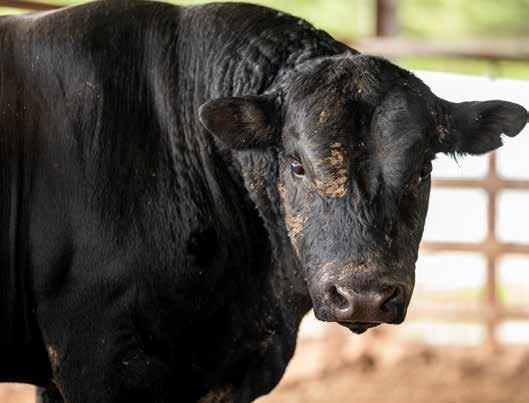
But that single birth weight you see in the catalog for that bull is influenced by his environment and his unique gene combinations, which aren’t heritable. Was he treated differently than other bulls, or weighed later or as soon as he hit the ground? EPD predictions use his own birth weight record as well as records from his half-sibs, parents, and any relevant
...CONTINUED ON PAGE 40 38 California Cattleman March 2024





Today’s industry pays big for heavy fat steers, but your pocketbook demands smaller cows. What to do?
The answer is clear, dependable data and the courage to bypass traditional straightbreeding.
Simmental-influenced cows are an average 74 lb. lighter at maturity than Angus-sired counterparts.a
Meanwhile, packers pay $20 to $34 more for SimAngusTM and Simmental-sired steers than English-sired calves.b Finally, raise efficient cows and high-performance calves. The proof is in the data – and the cash.
406-587-4531 • simmental.org STAND STRONG SIMMENTAL aUSMARC, Zimmerman, M., et al., “Breed and heterotic effects for mature weight in beef cattle,” J. of Anim. Sci., Vol. 99, 2021. Adjusted for sire sampling, Angus was the heaviest at maturity among the 16 breeds evaluated. Solutions are deviations from Angus. YW EPDs were extracted from genetic evaluations conducted in 2019. Estimate of MWT differences at 6 years of age. The study considered 108,857 weight records from 5,156 crossbred cows sired by 787 bulls. bEffect of sire breed group on carcass value of feedlot cattle harvested through Tri-County Steer Carcass Futurity Cooperative, Lewis, Iowa, 2002 to 2018. Odde, K. & King, M. (March 2021). Kansas State University. Relationships Among Sire-Breed Group, Calf Sex and Year Group on Carcass Traits. Breeds represented in the English-sired group: Angus, Red Angus, South Devon, Hereford and Shorthorn.
CLARITY IS CASH
LIGHTER COWS
MORE PER CARCASS
74lb.
$20+
genetic information — such as breed, birth year, comparisons to contemporaries, genomics, and pedigree — to better estimate his true potential and prevent over- or underestimation based off of just his own birth weight record.
Similarly, we are able to improve the accuracy of the estimate of his potential by using records from his progeny. However, it takes time for his calves to hit the ground, and a risk is being taken by using him for breeding when the accuracy is lower. Enter genomic testing. By identifying markers in his DNA that play major parts in his performance, we can incorporate information that is equivalent to already having 20 calves on the ground. This provides an increase in accuracy that may alleviate some risk from breeding a bull to your cows and not getting what you want.
These influences on phenotypes hold true for all heritable traits, which leaves a lot to consider when buying a bull. In order to make it simpler, we have indices such as the All Purpose Index ($API) and Terminal Index ($TI) that take into account many EPD and combine them in one value expressed in dollars of profitability predictions among bulls. These indices estimate profitability when a percentage of daughters remain in the herd as replacements and other calves are terminal ($API), or a strictly terminal system ($TI), depending on what your operation needs to meet its goals.
This bull sale season, study the numbers to ensure you select the heritable portion of what you see and pay attention to economic indexes to select for profitability of future genetics.
Adding a DNA test to your decision is like knowing...
• 25+ calving ease scores
• 22 birth weights
• 25+ yearling weights
• Stayability/productivity records on 15 daughters
• 6 carcass weights
• 10 marbling scores
• 8 ribeye measurements
All this from a test you can complete before you wean the calf
“Incremental increase in accuracy”
As more information is known on an animal, the accuracy of the EPD increases.
This information includes an animal’s own records; family information, such as parents and siblings and their records; genomics; and eventually progeny. Genomic information for BW adds an equivalent of 22 progeny records. For example, if a bull had a BW EPD of 2.0 lbs. and an accuracy (Acc) value of 0.15., the associated possible change (PC) is 2.5 lbs. Therefore, we would expect his “true” BW EPD to be between –0.5 and 4.5 lbs. (2.0 2.5) 68% of the time. If genomics are added, the accuracy might increase to 0.45 and the possible change will drop to 1.7, leaving a range for his “true” BW EPD between 0.3 and 3.7.


40 California Cattleman March 2024 ...CONTINUED FROM PAGE 38

THE CHIEF REWARD OF HYBRID VIGOR IS OBTAINED THROUGH THE CROSSBRED COW. SimAngusTM Seedstock • Tim & Jill Curran (209) 765-1815 • (209) 765-0450 Email: circleranch@volcano.net • www.CircleRanch.net 9/26/2024 • Ione, CA 100 SimAngus bulls • 70 Angus bulls Beef Circle Ranch Ranch Solutions Fall Roundup Bull Sale 110 SimAngusTM Bulls 75 Angus Bulls From Bruin Ranch selling & Maternal DON’T RANCH WITHOUT IT!Heterosis Beef Solutions Bull Sale • Sept. 26, 2024 • Circle Ranch • Ione, CA March 2024 California Cattleman 41



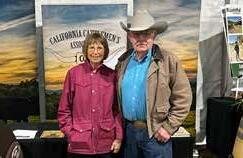


42 California Cattleman March 2024
Col. Rick Machado and Tehama Angus’ Kevin Borror catch up between events.
Longtime Red Bluff Bull & Gelding event supporters Adam Owens and Jerry Owens.
CCA member Karen and Duane Fredericksen in the trade show.
CCA 2nd Vice President Mike McCluskey and longtime member Rich Ross at the CCA booth in the trade show.
Ellington, Mason (center) and Brad Peek awarded scholarship funds honoring industry and education advocate Andy Peek.
Justin Wright exhibits a bay gelding that went on to be the Champion Stock Horse.
The crew of auctioneers, ringmen and breed representatives for the bull sale, horse sale and stock dog sale.
Terry Cotton and Col. Jake Parnell take bids at the 83rd annual Red Bluff Bull Sale.
The Champion Stock Dog was consigned by Tom Richards and sold to Legacy Pro Rodeo.
Record-breaking high selling stock dog consigned by Henry Van Ornum and sold to Elwood Ranches for $50,000.
The Kudlac Family at Kudlac Herefords consigned the Supreme Champion Bull.
© Crystal Amen
© Crystal Amen
© Crystal Amen
© Crystal Amen
still making it happen after 83 years!
RED BLUFF STAFF
B.J. Macfarlane Sale Manager
Marianne Brownfield, Bull & Dog Secretary
Trish Suther, Gelding Secretary
BULL, GELDING & STOCK DOG AUCTIONEERS
Col. Rick Machado
Col. Trent Stewart
Col. Max Olvera
Col. Eric Duarte
Pedigrees read by Col. Eric Duarte and Matt Macfarlane
2024 HALTER CHAMPIONS BY BREED
Supreme Champion & Champion Hereford – Kudlac Herefords, Grants Pass, Ore.
Reserve Supreme Champion – The England Ranch, Powell Butte, Ore.
Champion Angus – The England Ranch, Powell Butte, Ore.
Champion Charolais – Reis Livestock, Gridley
Champion Polled Hereford – Chico State Beef Unit, Chico
Champion Simmental – Cole Cattle Company, Hamlin, Texas
Champion SimAngus and AOB – Check X Livestock, Powell Butte, Ore.
Champion Balancer – Cardey Ranches, Turlock
Champion Brangus – Louie’s Cattle Service, Burns, Ore.
Champion Maine Anjou – Brocco Show Cattle, Petaluma
Champion Red Angus – K Bar Ranches, Central Point, Ore.
Champion Shorthorn – Cardey Ranches, Turlock
2024 RANGE-READY CHAMPIONS BY BREED
Champion Overall Range Ready & Angus – Peerless Ranches, Prineville, Ore.
Champion Calving Ease – Shandar Angus Ranch, Payson, Utah
Champion Balancer – Cardey Ranches, Turlock
Champion Charolais – Cardey Ranches, Turlock
Champion Hereford – Kudlac Herefords, Grants Pass, Ore.
Champion SimAngus – T& S Livestock, Gerber
Champion Simmental – EV Show Cattle, Wilton
2024 SPECIAL AWARD WINNERS
Consignor of the Year - Shandar Angus Ranch, Payson, Utah
Ideal Jack Owens Range Bull – Broken Box Ranch, Williams
Red Bluff Bull Sale • 259 Bulls averaged $6,147
RED BLUFF GELDING SALE
Champion Cow Horse – Walt & Mary Vermedahl, Flagstaff, Ariz.
Champion Cutting Horse – Reagan Glenn, Paso Robles and Harry DeHaan, Filer, Idaho
Champion Snaffle Bit – Tucker & Tina Robinson, Shandon
Champion Conformation – Will Pennebaker, Wilton
Champion Head Horse – Walt & Mary Vermedahl, Flagstaff, Ariz.
Champion Heel Horse – Gary Scheer, Santa Ynez
Champion Stock Horse – Walt & Mary Vermedahl, Flagstaff, Ariz.
Craig Owens Ideal Stock Horse – Andrea Feeney, Willows
65 horses averaged $21,976
RED
BLUFF STOCK DOG SALE
Champion Stock Dog - Bobbie Jean, consigned by Tom Richards sold to Legacy Pro Rodeo for $21,000
High-Selling Stock Dog - RC LUEE, consigned by Henry Van Ornum sold to Elwood Ranches for $50,000
13 dogs averaged $12,288


March 2024 California Cattleman 43
Supreme Champion & Champion Hereford Bull - Kudlac Herefords
Champion Charolais Reis Livestock
Champion All Other Breeds & SimAngus Check X Livestock
Res. Supreme Champion & Champion Angus Bull - England Ranch
Join us again in 2025! Tehama District Fairgrounds Red Bluff, California
Champion Red Angus K Bar Ranches
Champion Polled Hereford Chico State Beef Unit
Champion Stock Horse owned by Walt & Mary Vermedahl and exhibited by Justin Wright.
© Amen Photography
Champion Range Ready Bull Peerless Ranches
Jack Owens Ideal Range Bull Broken Box Ranch
RANGELAND TRUST TALK
NAKAGAWA RANCH
A STORY OF UNWAVERING RESILIENCE
by Madison Goss, Communications Specialist for California Rangeland Trust
Yokichi Nakagawa immigrated to the United States from Hiroshima, Japan, in 1904 in pursuit of the American dream. He sought to acquire his own land and live out his days farming with his family.
“My grandfather had a strong interest in farming, specifically in vineyard management, and he was determined to make a living doing that in America,” Glenn Nakagawa, Yokichi’s grandson, explained.
Unfortunately, American land policies at the time prevented Asian immigrants from owning land, but this did not deter Yokichi. For 37 long years, he held on to his aspirations while starting a family and establishing himself as a prominent figure amongst the Japanese American community.
On Dec. 5, 1941, his dream was realized when his United States-born son, Percy Nakagawa, was able to sign the deed on a 425-acre ranch in Acampo. But sadly, this realization was short-lived, at least temporarily.
Just two days after signing the deed, the infamous attack on Pearl Harbor, and the events that followed, postponed the family’s chance to establish themselves on the land. This represented a dark time in American history.
Within five months of the attack, and following Franklin D. Roosevelt’s executive order authorizing the relocation of many Japanese Americans, the family was tragically forced to leave their ranch behind and enter an internment camp. While most families that were relocated lost everything, leaving behind whatever they could not carry, the Nakagawas
were fortunate enough to entrust their land to a friend until they could return.
After four grueling years, the family was finally allowed to return to Acampo in 1946 and start piecing their lives back together. Unfortunately, the land they had left behind was no longer the haven it once was – most of the property had gone unmanaged during their time away. The Nakagawa family banded together to restore the ranch back to its original glory and get their business off the ground by planting Tokay grapes and a variety of squash.
For a few years, things went well. But in 1953, their serenity was cut short when both Yokichi and Percy passed away on a fishing trip. The family had to, once again, pick up the pieces and find a way to trudge on after the loss of two generations of patriarchs.
Yokichi’s daughter, Miyoko, stepped up to take over the operations, and she did so successfully for 52 years. Under her leadership, the family and


44 California Cattleman March 2024
businesses continued to grow.
Today, the Nakagawa family legacy lives on through Glenn and his wife, Keiko. Together, they have managed the ranch since the early 2000s. Though the family dream is still the same, some of the operations have shifted. The fields that were once squash and grapes are now planted with oat and alfalfa hay. The family has also prioritized conservation efforts to ensure that the family’s legacy will live on through the land.
In 2007, they established the Nakagawa Preserve through a conservation easement on 280 acres of their Acampo ranch to protect the property from potential future development. Keiko explained, “Farm and ranch land is disappearing right in front of our eyes; [the easement] was just the right thing to do.”
With the funds received from the sale of the easement, the family needed to figure out how to invest the money back into their business. If not utilized properly, they would lose money.
For years, Glenn commuted to the Acampo ranch passing by acres of open space and grazing ground along the way. One day, he noticed that a 380-acre cattle ranch in Valley Springs, was up for sale, and he just knew that is where the money should go.
After careful consideration, the Nakagawas decided to purchase the property and execute a 1031 exchange. This transaction allowed them to swap one real estate investment for the other to defer paying capital gains tax and reinvest their money into other projects.
With the new property being comprised of mostly grassland and oak woodlands, the family saw the opportunity to break into a new enterprise, cattle ranching. It was only after a chance encounter with a Wagyu beef producer that Glenn and Keiko decided to pay homage to their heritage by raising their own herd of this unique Japanese-born breed. For over ten years, the Nakagawas have successfully raised highquality American Wagyu cattle and sold their beef and cattle all over the state and across the country by marketing their products primarily by word of mouth and through their website.
Glenn proudly shared, “It is a business built on a good product and an honest sale!”
According to a recent study done by the American Farmland Trust, California is on track to lose approximately 797,000 acres of
agricultural land by 2040. Due to the region’s proximity to the Stockton and Bay Areas, Glenn and Keiko started to feel development pressure, as much of the open land around them was being sold off and sub-divided. Wanting to act, they decided to conserve their Valley Springs ranch, just as they had done with their Acampo ranch. They approached the California Rangeland Trust to hold the conservation easement.
Together, the Nakagawas and the Rangeland Trust, with funding from the California Strategic Growth Council’s Sustainable Agricultural Lands Conservation (SALC) Program in collaboration with the Department of Conservation and the Natural Resources Conservation Services (NRCS), were able to conserve the Valley Springs ranch in its entirety in August of 2023, ensuring that the land will remain a working ranch.
“It is not about the money for us; it is more important than that,” Keiko affirmed. “Before we disappear, we want to honor who came before us and ensure there is still something for those after us.”
In the face of war, internment, and personal tragedy, the Nakagawa family has persevered. Their ranch, remaining as one of the last Japanese American-owned agricultural enterprises in the United States, stands as a symbol of their unwavering resilience. And though Yokichi has passed on, his indomitable spirit will continue to live on through the land and in his family’s hearts forever.

March 2024 California Cattleman 45
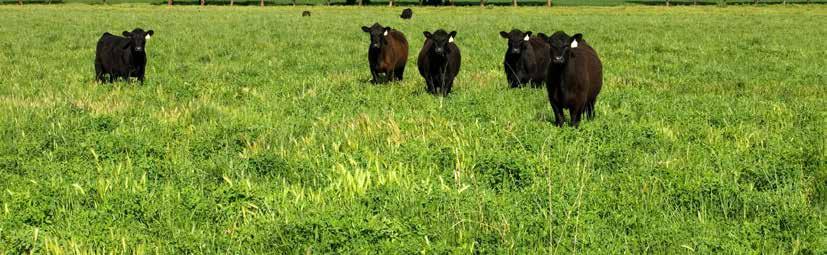
CATTLE MARKET OUTLOOK 2024
from CattleFax
The popular CattleFax Outlook Seminar, held as part of the 2024 Cattle Industry Convention and NCBA Trade Show in Orlando, Fla., shared expert market and weather analysis.
The smallest beef cow inventory in the last 50 years, coupled with historically strong demand, led to the highest average fed cattle and calf prices in 2023. As reduced cattle numbers and beef production continue over the next three years, leverage and profitability will continue to favor cattle producers.
Despite record prices, expansion will likely be delayed once again. Lingering drought, high input costs, limited labor availability, high interest rates, and market uncertainty all serve as headwinds against growing the cowherd. The current cattle cycle anticipates slower and more prolonged expansion, with heifer retention causing a supply decline with expected lows in fed slaughter by 2026. Higher cattle prices and reduced feeding costs will continue to improve margins for cow-calf producers for the next several years, a muchneeded improvement to drive expansion as weather patterns allow, according to CattleFax.
After several months watching El Niño’s influence on the global weather pattern, Meteorologist Matt Makens said the El Niño event that placed moisture on the South and Southeast is fading away and La Niña is showing signs of making a rapid return.
“During the next several weeks, we will continue to see strong and wet storm systems move across the central and southern states. Increased odds for snow and cold as far south as Texas will mean possible impacts on calving and wheat,” he said. “Take this moisture now and make the most of it; look for a good start to this grazing season overall but be mindful that drought conditions will increase for the Southern Plains during summer and fall as we see our pattern change quickly.”
As La Niña’s influence grows, increased heat
and drought-related issues are expected for the Central and Southern Plains. The moisture pattern will favor the northern tier of states and the Ohio to Tennessee Valleys.
Kevin Good, vice president of market analysis at CattleFax, reported that U.S. beef cow herd declined 2 percent with inventories at 28.2 million head at the beginning of this year.
“Though drought conditions did improve in many regions, over a third of the cow herd was affected by drought in 2023, causing limited heifer retention and more liquidation in some regions. This will limit growth to the cow herd near-term,” Good said.
Cow and bull slaughter is forecast to be 6.5 million head in 2024, down around 800,000 head, from 2023. CattleFax predicted feeder cattle and calf supplies outside of feedyards will be 1 million head smaller than 2023 at 24.1 million head.
Commercial fed slaughter in 2024 is forecast to decline by 750,000 to 24.8 million head. Cattle on feed inventories began 2024 up about 2% at 11.9 million head. Good noted, “Though inventories may remain somewhat elevated for a few months, they are expected to decline

46 California Cattleman March 2024
significantly through the second half of the year.”
After about a 1.3-billion-pound decline in 2023, beef production is expected to be down another billion pounds in 2024 to total about 25.9 billion pounds. The decline in production in 2024 will lead to a 1.7-pound decline in net beef supply to 56 pounds per person.
Mike Murphy, CattleFax chief operating officer, forecasted the average 2024 fed steer price at $184/ cwt., up $9/cwt. from 2023. All cattle classes are expected to trade higher, and prices are expected to continue to trend upward. The 800-lb. steer price is expected to average $240/cwt., and the 550-lb. steer price is expected to average $290/cwt. Utility cows are expected to average $115/cwt., with bred cows at an average of $2,600/cwt.

“When thinking about what demand looks like, we need to think about what our consumer looks like with the U.S. economy being the driving factor going into 2024,” Good said. “Though inflation has moderated, consumer debt and interest rates, cheaper alternative proteins, and economic uncertainty may limit spending and impact purchasing decisions.”
2024 USDA All-Fresh Retail Beef prices are expected to average $7.90/pound and, while higher beef prices may soften consumer purchasing habits, Good predicted the consumer preference for the quality, consistency and safety of U.S. beef will continue to support relatively strong demand. “Premiums for higher quality beef should remain as consumers have shown a willingness to pay for Choice grade or better beef.”
Global protein demand has continued to rise around the world and tighter global protein supplies should broadly support prices in 2024. U.S. beef exports saw large declines in 2023, down about 13 percent and another 5 percent decline is expected in 2024, driven by smaller U.S. production and higher prices. Japan and South Korea remain the top U.S. beef export destinations.
Troy Bockelmann, CattleFax director of
protein and grain analysis, said National Dec. 1 on-farm hay stocks were up 6.9 perent from a year-ago at 76.7 million tons with hay prices averaging $220/ton in 2023. “Another good hay crop needs to be seen in 2024, to help rebuild stocks from the lows in 2022 and return prices to a more historically normal range. The first half of 2024 will likely see prices supported at more elevated levels before dropping by roughly $30/ton following harvest.”
He noted that corn stocks-to-use are at just under 15 percent and should keep the market below $5.50/bu. with a yearly average price of $5.00/bu. expected. “Overall, when thinking about watch items for 2024, look at March perspectives planting report, soybean exports, and the total principal crop acres.”
On the energy front, Bockelmann said that, for 2024, not much will change. He said crude oil is expected to average around $80/barrel and noted that the geopolitical environment will be the driver of price relative to oil markets.
Randy Blach, CattleFax chief executive officer, concluded the session with an overall positive outlook, and noted that the current cattle cycle will be much slower and prolonged compared to the last as heifer retention has not yet started on a nationwide basis. He expects the peak in cattle prices is likely to occur in 2025-2026 and, in the meantime, industry profitability will continue to swing in favor of the cow-calf producer as excess feeding and packing capacity chases a declining supply of feeder cattle and calves.
March 2024 California Cattleman 47

2024 NCBA POLICY PRIORITIES
NCBA’S POLICY FOCUS FOR 2024 IS TO CONTINUE NAVIGATING THE INTENSE LEGISLATIVE GRIDLOCK IN WASHINGTON, D.C. AND HOLD THE LINE AGAINST ALL FEDERAL POLICIES THAT COULD DAMAGE THE OPERATIONS OF U.S. CATTLE PRODUCERS.
ADVANCE NCBA’S FARM BILL PRIORITIES
Secure reauthorization of the animal health provisions in the 2018 Farm Bill and advocate for expanded funding of the National Animal Vaccine and Veterinary Countermeasures Bank (NAVVCB) to protect against Foot and Mouth Disease (FMD).
Expand access to risk management and disaster relief programs within the Farm Bill, to support financial stability for producers.
Protect and fund EQIP, CSP, and other voluntary conservation programs that incentivize sciencebased, active management of our natural resources.
Defend against the addition of a livestock title. Gentry and Kade Gudel, Wilton, pick up a consignor award for Gudel Cattle Company at the Great Basin Bull Sale, in Fallon on Feb. 17.
DEFEND AGAINST POLICIES THAT HURT CATTLE PRODUCERS
Defend the U.S. cattle industry against radical animal activist groups that want to end cattle production, including the Beef Checkoff.
Preserve family farms and ranches for future generations by advocating for essential tax relief for cattle producers.
Ensure that all labeling requirements for fake meat products are fair and accurate.
Protect producers from burdensome emissions reporting requirements.
Preserve existing permitting standards for beef producers under the Clean Water Act.
Combat overly restrictive Packers & Stockyards rules to ensure producers have the freedom to market their cattle however they want without the fear of frivolous litigation.
Fight against misguided Endangered Species Act rules and any expansion of bureaucratic red tape under the National Environmental Policy Act (NEPA).
Push for further hours-of-service flexibility and continue delaying ELD requirements for livestock haulers.
Work with USDA to implement reforms to the “Product of the USA” label that promotes voluntary, verified, and trade-compliant labeling that returns more value to producers.
Push to expand market access for U.S. beef exports and fight for equivalent animal health and food safety standards for imported beef.
48 California Cattleman March 2024
NATIONAL CATTLEMEN’S BEEF ASSOCIATION 1275 Pennsylvania Avenue NW, Suite 801 Washington, D.C. 20004 202.347.0228 | @BeefUSA
63rd
CATTLEMEN’S REPORT
Feb. 4, Klamath Falls, Ore.
Col. Eric Duarte
100 bulls
12 open heifers
BAR KD RANCH AND LAMBERT RANCHES’
MODOC BULL SALE
With guest consignor Bar KD Ranch Feb. 9, Alturas
Col. Eric Duarte
6 Hereford bulls
Col. Jered Shipman
AgMarketing, LCC
154 bulls
EZ ANGUS RANCH Feb. 11, Myrtle Creek. Ore.
Col. Jake Parnell
28 fall Angus bulls
HOFFMAN
Col. Rick Machado, Col. Joe Goggins, Col. Dennis Metzger
48 Hereford


160
March 2024 California Cattleman 49
HORSE
Annual KLAMATH FALLS BULL &
SALE
......................................................................... $4,837
$4,117
........................................................ $4,875
Angus
$6,301
SimAngus bulls ..................................................... $5,583
39
bulls
3
Feb.
WERNING CATTLE COMPANY
13, Emery, S.D.
Inovation
$10,592
donors ...................................................................... $29,250
bred heifers $7,683
2
102
.................................................... $6,721
bulls ....................................... $5,072
25 yearling Angus
Feb.
Neb.
RANCH SPRING BULL SALE
16, Thedford,
18-month-old
$9,214 22
bulls $7,375
Hereford
$7,005
Angus
$9,031 GREAT BASIN BULL SALE Feb. 17, Fallon, Nev.
Jake Parnell Managed by M3 Marketing
bulls........................................................................... $5,325 25th annual TEIXEIRA CATTLE COMPANY Feb. 19, Terrebonne, Ore.
Trent Stewart
bulls.....................
Hereford 2-year-old
156
yearling bulls
104
yearling bulls
Col.
168
Col.
Angus bulls ......................................................... $6,793
2024 California Cattleman advertisers are represented in this sale report.
Only
Gentry and Kade Gudel, Wilton, pick up a consignor award for Gudel Cattle Company at the Great Basin Bull Sale, in Fallon on Feb. 17.
The sale crew at the Modoc Bull Sale in Alturas: Jim Settle, Logan Ipsen, Col. Eric Duarte, Kenny Read, Steve Lambert, Clayton Lambert and John Dickinson.
McGiffin
Mac
and Scott Runels at Teixeira Cattle Company’s Bull
Sale
in Terrebonne, Ore.
IN MEMORY
BOB FOSTER

Sheldon Robert
“Bob” Foster, 93, of Oroville, passed away peacefully at his ranch on Jan. 21, after a brief illness. He was born on Nov. 25, 1930 in Chico, to Genevieve Duensing and Sheldon Leonard Foster.
Bob was the descendant of Butte County pioneer families. Bob was a third-generation cattleman, following in the footsteps of his parents and grandfather, and the family is still actively engaged in cattle ranching on property homesteaded by the Foster and Elliott families. Bob’s early childhood was spent living in the winter months on the family’s original homestead property in Hamlin Canyon east of Durham.
After a near-fatal case of pneumonia that delayed his starting school by one year, Bob completed his entire education in Durham, graduating from high school in 1949. Due to the difficulty in traveling from the ranch location to Durham during the winter months, the family acquired a home on Goodspeed Street, where Bob and his mother Genevieve stayed during the week and then returned to the ranch on weekends.
In high school, Bob was active in FFA showing steers and participating in chapter activities. During high school he sustained a knee injury while working with his FFA project steer that meant he spent almost two years on crutches. After high school, Bob continued to work with his parents and grew his own operation, leasing properties as they became available.
After the death of his father Sheldon in 1958, Bob took over running the ranch begun by his grandfather. He dedicated his life to his livelihood and providing for his family. Bob was a skilled horseman, and could turn his hand to almost any practical skill, including welding, carpentry and electrical work. He spent a few years working for Durham Pump during the early 1950s, and also worked part-time for rice farmers in the Richvale area, all in an effort to continue to grow his ranch.
Bob had an incredible work ethic and was a lifelong stockman, actively working on his beloved ranch until the very end of his life.
Bob married Carol Wheelock in 1960, welcoming daughter Kay two years later. While the marriage did not last, Bob and Carol remained on good terms throughout their lives. As Bob continued to grow his cattle ranch during the 1950s, he began summering cattle in the Greenville and Taylorsville areas in Plumas County, first leasing pasture, and eventually purchasing
his own property. He loved the area and was a respected member of the ranching community in both Plumas and Butte Counties, admired for his devotion to his ranch and family.
Bob met the love of his life, elementary school teacher Nancy Rae Rossi in the mid 1960s. She was an avid horsewoman that had spent most of her childhood in the Chico area where her father William Rossi was regional manager for Pacific Bell. They married in August 1969 in the historic Methodist Church in Greenville.
Nancy became Bob’s lifelong partner in all aspects of life, and loved being a rancher’s wife. They were devoted to each other, and he provided for Nancy’s well-being as she dealt with a seizure disorder that she developed in her early forties, and again was her caregiver during her battle with cancer that ended her life.
In addition to Kay, Nancy and Bob had two children, Mark R. Foster and Holly A. Foster. As an adult, Bob became active in the Butte County Cattlemen’s Association, serving as a director for many years. He was recognized as Butte County Cattleman of the Year in 1986.
He was a long-time member of the California Cattlemen’s Association, Butte County Farm Bureau and California Farm Bureau Federation. Bob also served on the Agricultural Advisory Committee for Butte Community College, and was active in other groups that contributed his lifelong passion of cattle ranching.
In addition to his busy ranch life, Bob was an avid hunter who enjoyed deer hunting on the property where he had spent his entire life. He loved fly fishing on the West Branch of the Feather River where he and his mother and stepfather summered their cattle in Coon Hollow and Snag Lake.
Bob was well-liked for his integrity, charm and dry sense of humor. Bob is survived by his children Kay Nelms (Jay), Mark Foster (Brigitte), and Holly Foster; grandchildren Rochelle Hugaboom (Ed), Amy Denlay (Keaton), Adam Nelms (Ashley), Sheldon Foster, and Sawyer Foster; great-grandchildren Chet Nelms and Colter Nelms; brother-in-law William G. Rossi (Shelly); nephew William F. Rossi (Kriztin) and niece Allison Rossi Ferrasci (David).
Bob was preceded in death by his parents, and wife Nancy. In lieu of flowers, memorial contributions may be made to Butte County CattleWomen’s Scholarship Fund (designate Scholarship) 495 Stimpson Road, Oroville, CA 95966. There will be a private internment and a celebration of Bob’s life will be held Sunday, April 7, 2024 at Robert Foster Ranch, 2521 Williams Road in Oroville, at 2:30 p.m.
50 California Cattleman March 2024
ROBERT BUSHNELL

Bob Bushnell passed away at his home in Granite Bay at the age of 91. He enjoyed a lifetime of working in agriculture. A graduate of UC Davis Veterinary School in 1956, Bob was the UC Extension Beef Veterinarian and then transferred to the Extension Dairy Veterinarian position later in his career. While working in beef cattle he played a major role in the start of Foothill Abortion research. He also assisted in the development of the Redwater vaccine. While working with dairy farms, he was a recognized leader on bovine mastitis, milk quality and dairy food safety. Under his direction, the first California mobile laboratory for investigation of mastitis/foodsafety problems was established at the School of Veterinary Medicine, where procedures were developed for controlling mastitis in the field. He received an agricultural engineering award for establishing new dairy industry standards for sanitation, modern milking, and pasteurization equipment.
He was honored by the UC Davis School of Veterinary Medicine 2017 Distinguished Achievement Award. He also received the 1994 Distinguished Service Award from the American Association of Bovine Practitioners for his many years of service and contribution to dairy cattle health, and a safe and wholesome milk supply.
He enjoyed working with fellow researchers and students at the UCD Veterinary School and cherished the relationships he had with producers in the beef and dairy industries.
After retirement, Bob purchased a rice and row crop farm in Colusa to continue his love of agriculture. He also volunteered time in Armenia after the fall of the Soviet Union to rebuild their animal agriculture industry.
He was loved and treasured by his family of 5 children, 10 grandchildren and a wife of 70 years.

Vernon “Don” Flanigan was born Aug. 17, 1934, and passed Dec. 23, 2023. He was born to Lem and Tressie Flanigan in Chandler, Okla. In 1945, the family relocated to Oakland, when Lem was drafted to war. Don, never leaving his cowboy heritage, entered his first rodeo at 15. This embarked his 20year rodeo career with many accomplishments along the way. Don served as the Vice President of the Rodeo Cowboys Association (RCA) and the board of directors for several years.
While rodeoing during the 60s and on through 70s, he raised his family in Danville. During this time, he worked as a Brand Inspector for Contra Costa County. In 1970, he and his brother, Burl, opened a western store, Flanigan’s Frontier Shop. While managing the store, he also ran a commercial cattle operation with Jack Sparrowk on the Blackhawk Ranch. In 1981 Don met Jack Harris and they made an instant connection through this connection began a 40-year partnership buying cattle for Harris Feeding Company.
Don embodied a true person who believed “The harder I work, the luckier I get.” Honestly, the rest is history.
Don is survived by his wife Patricia, daughters Donna Flanigan and Charlene Paulo, son-In-iaw Joseph Paulo, granddaughter Kori DeJean, great granddaughter Maizie DeJean and Button, his beloved dog.

To share your family news, obituaries, weddings and birth announcements, please contact the CCA office at (916) 444-0845 or e-mail magazine@calcattlemen.org.
March 2024 California Cattleman 51
SHARE YOUR FAMILY NEWS!
for
Systems Fair Prices . Good Service . Rancher Owned · Durable, efficient alternative to PVC · We have installed miles of HDPE and can visit with you about your projects · We offer a full line of fusible HDPE pipe up to 6" in continuous reels and up to 48" in sticks plus all the fittings DELIVERY THROUGHOUT THE WEST CALL TODAY: 925-204-2424 Cattlemans Assoc.qxp_Layout 1 6/9/23 12:36 PM Page 1
DON FLANIGAN
HDPE
Ranch Water


52 California Cattleman March 2024 CALIFORNIA CATTLEMEN’S ASSOCIATION THANKS TO ALL OUR BULL AND FEMALE BUYERS. WE HOPE TO SEE YOU AGAIN SEPT. 6, 2024 CALL US FOR INFORMATION ABOUT OUR PRIVATE TREATY CATTLE OR OUR ANNUAL BULL SALE! Anselmo, Nebraska KENNY & DIANNE READ 1485 SW King Lane • Culver, OR 97734 Ranch: (541) 546-2547 Cell: (541)480-9340 E-mail: barkdranch@msn.com visit us online at: www.barkdangusranch.com Look for our “Distinctly Different” Angus bulls annually at Red Bluff and Modoc Bull Sales! BAR KD RANCH BAR KD RANCH Elevating Angus to Greater Horizons VISIT US AT WWW.DONATIRANCH.COM! September 19, 2024 Mark your calendars for the Heritage Bull Sale Sept. 8, 2024! 916.712.3696 • 916.803.2685 jj@barrangus.com Angus RAnch Annual Bull Sale: Sat., September 1, 2018 Inaugural Female Sale: Mon., October 15, 2018 Tim & Marilyn Callison Owners Chad Davis 559 333 0362 Travis Coy 559 392 8772 Justin Schmidt 209 585 6533 Ranch Website www.ezangusranch.com Annual Bull Sale: Sept. 7 - Farmingtom Annual Production Sale: Oct. 12 - Porterville SERVICES FOR ALL YOUR ON-THE-RANCH NEEDS Ranch Buyer's Guide ANGUS Join u s at our annnual bull sale September 12! 925-250-5304


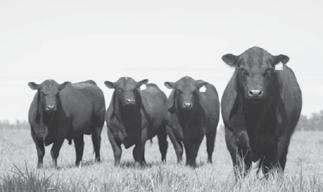



LOOK FOR US AT LEADING SALES IN 2024. Scott & Shaleen Hogan H R (530) 200-1467 • (530) 227-8882 Gerber, CA Registered Angus Cattle Call to see what we have to offer you! RED RIVER FARMS 13750 West 10th Avenue Blythe, CA 92225 Office: 760-922-2617 Bob Mullion: 760-861-8366 Michael Mullion: 760-464-3906 Simmental – SimAngus™ – Angus Offering bulls at California’s top consignment sales! Call today about private treaty offerings! O’NEAL RANCH BULLS OFFER THE COMPLETE PACKAGE O’NEAL RANCH — Since 1878— Gary & Betsy Cardoza PO Box 40 • O’Neals, CA 93645 (559) 999-9510 THANKS TO OUR 2023 “PERFORMANCE PLUS” BULL BUYERS! GROWTH • PERFORMANCE ADAPTABILITY • CARCASS Hoffman Bomber 8743 SIRE: Casino Bomber N33 MGS: S A V Final Answer 0035 VDAR Mirror Image 6207 SIRE: W R A Mirror Image T10 MGS: BCC Bushwacker 41-93 CONTACT US ABOUT SEMEN FROM THESE IMPRESSIVE SIRES... • Calving Ease with Growth • O’Connell Aviator 7727 SIRE: Musgrave Aviator MGS: R B Tour Of Duty 177 VDAR PF Churchhill 2825 SIRE: VDAR Churchill 1063 MGS: VDAR Really Windy 4189 Joe Sammis • (530) 397-3456 122 Angus Rd., Dorris, CA 96023 h (775) 691-1838 • honeranch@frontier.com HONERANCH.COM PERFORMANCE-TESTED EFFICIENT, QUALITY ANGUS BULLS NOW AVAILABLE! You can take to the bank! O’Connell ranch Thanks to all our 2023 bull buyers! Contact us year-round to see bulls and females available on the ranch! DAN & BARBARA O’CONNELL 3590 Brown Rd, Colusa CA (530) 458-4491 Nathan, Melissa & Kate Noah (208) 257-3686 • (208) 550-0531 YOUR BUSINESS COULD BE HERE! CALL MATT MACFARLANE AT (916) 803-3113 TO LEARN MORE. March 2024 California Cattleman 53


54 California Cattleman March 2024 Dwight Joos Ranch Manager P.O. Box 1019 • Simi Valley, CA 93062 805-520-8731 x1115 • Mobile 805-428-9781 dwight.joos@pwgcoinc.com Simi Valley, CA pwgillibrandcattle.com P.W. GILLIBRAND Cattle Co. Horned and Polled Hereford Genetics Private treaty bulls available or watch for our consignments at Cal Poly! THANKS TO ALL OUR 2023 BUYERS! WE HOPE TO SEE YOU AGAIN IN 2024. John Teixeira: (805) 448-3859 Allan Teixeira: (805) 310-3353 Tom Hill: (541) 990-5479 A FAMILY TRADITION www.teixeiracattleco.com | cattle@thousandhillsranch.com Angus and SimAngus Ca le Call us today for information on private treaty bulls or females. MCPHEE RED ANGUIS 14298 N. Atkins Rd • Lodi, CA 95248 Nellie, Mike, Mary, Rita & Families Nellie (209) 727-3335 • Rita (209) 607-9719 website: www.mcpheeredangus.com 11500 N Ambassador Drive, Suite 410 | Kansas City, MO 64153 | (816) 842-3757 | aha@hereford.org Chris Beck, Manager • 618-367-5397 Bob Coker • 916-539-1987 visit us online at: www.genoalivestock.com Top performance Hereford genetics —Horned and Polled— Thanks for your support in 2023! To view bulls and females available at the ranch, contact us anytime! Registered Hereford Cattle & Quarter Horses Annual Sale First Monday in March 42500 Salmon Creek Rd Baker City, OR 97814 Ranch: (541) 523-4401 Bob Harrell, Jr.: (541) 523-4322 THANK YOU FOR SUPPORTING THE ANNUAL MODOC BULL SALE! JOIN US IN THE FALL FOR THE BUTTE BULL SALE! Oroville, CA LambertRanchHerefords.com CONTACT US FOR CATTLE AVAILABLE PRIVATE TREATY OFF THE RANCH “THE BRAND YOU CAN COUNT ON” REGISTERED HEREFORD CATTLE BARRY, CARRIE & BAILEY MORRELL Barry: (530) 6825808 • Carrie: (530) 218-5507 Bailey (530) 519-5189 morrellranches@yahoo.com 560 County Road 65, Willows CA 95988 Call us about our upcoming consignments or private treaty cattle available off the ranch. OFFICE@VINTAGEANGUSRANCH.COM WWW.VINTAGEANGUSRANCH.COM Bulls and females available private treaty! SEEDSTOCK PRODUCER SINCE 1978 Greeley Hill, CA • La Grange, CA Stephen Dunckel • (209) 591-0630 www.tumbleweedranch.net twd@tumbleweedranch.net TUMBLEWEED RANCHES Leading Angus & Ultrablack© Genetics HEREFORD RED ANGUS (530) 385-1570 E-mail...............................tehamaranch@gmail.com Thanks to all this year's bull buyers! Contact us any time to see how we can help you with your bull and female needs. To lean more about the association, contact western regional field representative colt cunningham at 918-978-8779


March 2024 California Cattleman 55 OFFERING HEREFORD BULLS BUILT FOR THE COMMERCIAL CATTLEMAN Jim Mickelson (707) 481-3440 THE DOIRON FAMILY Daniel & Pamela Doiron 805-245-0434 Cell doiron@spanishranch.net www.spanishranch.net THD © SPANISH RANCH Your Source for Brangus and Ultrablack Genetics in the West! Vaccines Medicines Mineral Supplements Antonia Old • (209) 769-7663 antonia.old@animalhealthinternational.com ...and more! Reliable products you are looking for with the dependable service you need. 2015 AICA Seedstock Producer of the Year Feedlot • Rice • Charolais Jerry & Sherry Maltby www.brokenboxranch.com bbr@citlink.net PO Box 760 Williams, CA Mobile: (530) 681-5046 Office (530) 473-2830 Bobby Mickelson (707) 396-7364 California’s Leading Producers BALD MOUNTAIN BRANGUS, SONORA (209) 768-1712 RUNNING STAR RANCH, LINCOLN (916) 257-5517 SUNSET RANCH, OROVILLE (530) 990-2580 DEER CREEK RANCH, LOS MOLINOS (541) 817-2335 THE SPANISH RANCH, NEW CUYAMA (805) 245-0434 GLASGOW BRANGUS, SANTA YSABEL (760) 789-2488 for Brangus, Ultrablack & Brangus Optimizers Call a breeder near you today for more information! TUMBLEWEED RANCHES, GREELEY HILL (209) 591-0630 CHAROLAIS MULTI BREED ANIMAL HEALTH BRANGUS YOUR BUSINESS COULD BE HERE! CALL MATT MACFARLANE AT (916) 803-3113 TO LEARN MORE. marcia@kunde.com | www.sonomamountainherefords.com


3300 Longmire Drive• College Station, TX 77845 (800) 768-4066 • (979) 693-0388 fax: (979) 693-7994 e-mail:
info@bovine-elite.com
knipeland.com
(208) 345-3163
Ranch
total sf luxury
on
with
irrigated,
Grade Farm -
acres with cultivated
timber,
2 outbuildings, and
KNIPE LAND COMPANY EST 1944 SALE MANAGEMENT & MARKETING PHOTOGRAPHY & VIDEOGRAPHY ORDER BUYING PRIVATE TREATY SALES PRODUCTION SALE RING SERVICE ADVERTISING M3CATTLEMARKETING@GMAIL.COM (916) 803-3113 M3 MARKETING Watkins Fence Company Over 25 years serving California, Utah and Southern Idaho specializing in oil pipe • chain link • barb wire (805) 649-1568 Lic # 773420 shane@watkinsfence.com WWW.BARALEINC.COM (888) 258-3333 • Williams, CA Matt Zappetini (530) 526-0106 mzappetini@baraleinc.com “PERFORMANCE THROUGH ADVANCED NUTRITION” Performance Through Advanced Nutrition Ranch Deliveries Available with our Truck and Forklift! We also offer custom formulations to meet your specific nutritional needs! We offer blends that contain: Molasses - Zinpro® Performance Minerals - Availa® 4 - Added Selenium Yeast - Rumensin® Available Proudly Featuring Conventional Non-GMO Certified Organic Sales Representatives: Matt Zappetini (530) 526-0106 Tracy Lewis (530) 304-7246 1011 Fifth Street Williams, CA. 95987 888-473-3333 info@baraleinc.com WWW.BARALEINC.COM Premium Livestock Feeds • Mineral Mixes with Ranch Delivery • • Hi Mag - Fly Control - Rumensin - Custom Mixes • • Complete Feeds and Finish Mixes • Williams, CA Matt Zappetini (530) 526-0106 mzappetini@baraleinc.com www.baraleinc.com • (888) 258-3333 WANT TO SEE YOUR BUSINESS ADVERTISED HERE? KEEP YOUR BUSINESS LISTING IN FRONT OF YOUR DIRECT AUDIENCE YEAR ROUND. ONE-TIME ANNUAL PAYMENT. CHANGE YOUR AD ANYTIME. RESERVE YOUR BUSINESS SPACE TODAY! CONTACT MATT MACFARLANE (916) 803-3113 OR E-MAIL: M3CATTLEMARKETING@GMAIL.COM GENETICS REAL ESTATE NUTRITION MARKETING FENCING 56 California Cattleman March 2024
Enterprise Executive
Near Joseph Oregon 17,088±
home
235± acres
a creek, 200± acres
3 pivots, second home, and Wallowa mountain views. $13,777,000 Gilbert
Idaho 379±
land,
a pond, a spring,
power nearby. $1,372,500

Step 1: CCA Membership
Calves under 6 months of age are not counted.
Stockers pay at ½ the total number of stockers owned each year or minimum dues, whichever is greater.
Statewide Allied/Feeder Associate $220 (includes Feeder Council Associate, Allied Industry membership and second membership. Second membership does not include Allied Industry voting rights.)
Statewide Stewards of the Land $150 (Available to non-producers that own land on which cattle could or are run.)
CCA Supporting Member $100 (Available to non-producers who support the industry.)
Young Cattlemen’s Committee $ 25
Must own fewer than 100 head of cattle.
Must be 25 years of age or younger or a full-time student
Applicant’s Birth Date:_______________
-ORif over 25 years of age
Applicant’s expected date of Graduation:


March 2024 California Cattleman 57
P M F Cattle Numbers Dues 2500 & Over $1,765 1600-2499 $1,275 1000-1599 $970 800-999 $725
$615
$325
500-799
300-499 $460 100-299
0-99 $240
A M F C N -V M
Y C M N -V
M
NAME(S): RANCH/BUSINESS NAME: ADDRESS: CITY: STATE:
E-MAIL
PRIMARY
________________________________________________________________
DO YOU WANT TO RECEIVE OUR WEEKLY LEGISLATIVE E-MAIL BULLETIN? Yes No Recruited By_________________________ N C ’ B A REGULAR MEMBERSHIP Cattle Numbers Dues 2001 + *Fair Share is base dues plus incremental dues over 2001 head at $$.4053 per cow/calf 1751-2000 1501-1750 1251-1500 1001-1250 $2,027 $1,760 $1,493 $1,227 751-1000 501-750 251-500 101-250 $960 $693 $480 $320 0-100 $160 ASSOCIATE INVESTMENT: $160 (Individual supporting members without cattle ) C B C I A MEMBERSHIP CBCIA is an affiliate of CCA and is a producer driven organization that fosters beef cattle improvement and economical production based on information and education. Regular Members: $35 Associate Members: $35 Young Cattlemen: $ 5 MEMBERSHIP APPLICATION 3841 N. Freeway Blvd., Suite 130 Sacramento, CA 95834 916-444-0845 (Office) · 916-444-2194 (Fax) www.calcattlemen.org
ZIP:
ADDRESS:
PHONE:
________________________________________________________________
Other Optional
Payment LOCAL ASSOCIATON MEMBERSHIP: (Circle up to four below) CCA $ NCBA $ CBCIA $ Local (All) $ TOTAL $ Payment Options: □ Check payable to CCA □□ Amador-El Dorado-Sac $20.00 Humboldt-Del Norte $15.00 Monterey County $25.00 Santa Clara $25.00 Ventura County Butte $10.00 Inyo-Mono-Alpine $25.00 Napa-Solano $20.00 Shasta County $20.00 Yolo County Calaveras $10.00 Kern County NA Plumas-Sierra $10.00 Siskiyou County $10.00 Yuba –Sutter Contra Costa -Alameda $25.00 Lassen County $20.00 San Benito $20.00 Sonoma-Marin $10.00 Fall River-Big Valley $25.00 Madera County $30.00 San Diego-Imperial $10.00 Tahoe $15.00 Fresno-Kings $20.00 Mendocino County $30.00 San Joaquin-Stanislaus $5.00 Tehama County $20.00 Glenn-Colusa $20.00 Merced-Mariposa $30.00 San Luis Obispo $30.00 Tulare County $5.00 High Desert $25.00 Modoc County $25.00 Santa Barbara $25.00 Tuolumne County $10.00 $35.00 $25.00 $25.00 Card #___________________________________ Exp______/________ CVV__________________ Name on Card ____________________________ Signature ________________________________ $2,027 + fair share*
Step 2:
Dues Step 3: Total


58 California Cattleman March 2024 ADVERTISING INDEX Amador Angus Ranch 52 American Hereford Association 54 American Simmental Association 39 Animal Health International 55 Bar Ale Premium Livestock Feeds .. 56 Bar KD Ranch 52 Bar R Angus 52 Bar T Bar Ranches ....................................... 37 Bovine Elite LLC 56 Broken Box Ranch 55 Buchanan Angus Ranch ........................... 5 Byrd Cattle Company 52 Cattle Visions 22, 23 Cattlemen’s Livestocl Market ................. 2 Chico State College of Agriculture 55 Circle Ranch 41 Conlin Supply Company, Inc. ................. 9 Dixie Valley Angus 52, 59 Dal Porto Livestock 19, 52 Donati Ranch .................................................. 52 EZ Angus Ranch 52 Freitas Range Management 36 Fresno State Ag Foundation 55 Genoa Livestock ............................................ 54 Harrell Hereford Ranch 54 HAVE Angus 53 Hogan Ranch 53 Hone Ranch 53 Iron Lorenzen Cattle 31 Kessler Angus 53 Knipe Land Company 56 Lambert Ranches ........................................ 54 Liphatech 21 M3 Marketig 56 McPhee Red Angus ................................... 54 Morrell Ranches 54 Noahs Angus Ranch 53 O’Connell Ranch ........................................... 53 O’Neal Ranch 27, 53 P.W. Gillibrand Cattle Co. 54 Pacific Trace Minerals ................................ 56 Ranch Casino Angus 19 Red River Farms 53 Sammis Ranch 53 Scales NorthWest 36 Schohr Herefords 55 Sierra Ranches................................................ 55 Sonoma Mountain Herefords ............. 55 Spanish Ranch 55 Stepaside Farm 53 Tehama Angus Ranch 54 Teixeira Cattle Company 54 Trans Ova Genetics ..................................... 29 Tumbleweed Ranch................................... 54 Vintage Angus Ranch 54, 60 Ward Ranches 11 Watkins Fence Company 56 West Coast Brangus Breeders 55 Western Poly Pipe ........................................ 51 Western Video Market................................. 3 WSR Insurance 5


Lee Nobmann, owner Morgon Patrick, managing partner (530) 526-5920 • morgon@dixievalley.com www.dixievalley.com • follow us on facebook! Private treaty bulls always available on the ranch. Montague, CA PERFORMANCE, GROWTH & CARCASS GENETICS DIXIE VALLEY DIXIE VALLEY THANK YOU TO OUR NEW AND REPEAT BUYERS AND THOSE WHO BID! YOUR TRUST IN OUR PROGRAM IS INSTRUMENTAL IN WHAT WE DO... STERLING CRAFTSMAN 310 THANK YOU TO OUR GREAT BASIN BULL SALE BUYERS! DARREN LEWIS GOODWIN RANCH FORTUNE TRIANGLE S RANCH RICHARD BASS HORSESHOE V SLAGOWSKI RANCHES MASINI RANCH CROSS 7 LIVESTOCK CED BW WW YW RADG MILK CW MARB RE $M $W $F $G $B $C +1 +3.9 +73 +128 +0.31 +29 +69 +0.79 +1.10 +92 +67 +116 +67 +183 $329 15% 15% 5% 2% 15% 4% AAA #: 20681139 DOB: 2/23/23 Sire: Connealy Craftsman MGS: LD Capitalist 316 A SPECIAL THANK YOU TO FORTUNE TRIANGLE S RANCH FOR YOUR PURCHASE OF STERLING GRAFTSMAN 310, THE TOP-SELLING $25,000 BULL OF THE GREAT BASIN BULL SALE WATCH FOR MORE STANDOUT BULLS AT THE DIXIE VALLEY BULL SALE SEPT. 20 AT CATTLEMEN’S LIVESTOCK MARKET IN GALT AND AT THE CAL POLYBULL TEST OCT. 6!


JIM COLEMAN, OWNER DOUG WORTHINGTON, MANAGER BRAD WORTHINGTON, OPERATIONS 2702 SCENIC BEND, MODESTO, CA 95355 (209) 521-0537 • WWW.VINTAGEANGUSRANCH.COM OFFICE@VINTAGEANGUSRANCH.COM JOIN US ONLINE Live Online Auction SALE BOOK ONLINE AT WWW.ANGUS.ORG MARCH 19, 2024 • 4 P.M. PST 5 P.M. MST | 6 P.M. CST | 7 P.M. EST • SIRES REPRESENTED • FF Rito Ambitious...................... $C 421 - 1% BNWZ Validity ............................ $C 394 - 1% GAR Gridmaker ......................... $C 398 - 1% Baldridge Heatseeker ............... $C 390 - 1% POSS Winchester ...................... $C 400 - 1% VAR Cornerstone ...................... $C 380 - 1% E&B Wildcat................................ $C 371 - 1% SG Salvation .............................. $C 367 - 1% HPCA Veracious ........................ $C 388 - 1% LWF Tonker................................. $C 358 - 1% FOR THE 2024 SPRING EDITION Embryo Sale
