CALL TO CONSIGN TO THESE WESTERN VIDEO MARKET SALES: February 28 – Cottonwood, CA
CONSIGNMENT DEADLINE: FEBRUARY 20
March 21 – Cottonwood, CA CONSIGNMENT DEADLINE: MARCH 13
April 10 – Cottonwood, CA or Coalinga, CA
CONSIGNMENT DEADLINE: MARCH 24
May 1 – Cottonwood, CA or Coalinga, CA CONSIGNMENT DEADLINE: APRIL 15
CA TRIED and TRUE Angus Genetics
TURAS, CA
3841 North Freeway Blvd., Suite 130 Sacramento, CA 95834
PRESIDENT
Rick Roberti, Loyalton
FIRST VICE PRESIDENT
Mike Williams, Acton
SECOND VICE PRESIDENTS
John Austel, Boulevard
Steve Lambert, Oroville
Anthony Stornetta, Atascadero
TREASURER
Beverly Bigger, Ventura
EXECUTIVE VICE PRESIDENT
Billy Gatlin
VICE PRESIDENT OF GOVERNMENT AFFAIRS
Kirk Wilbur
DIRECTOR OF FINANCE
Lisa Brendlen
DIRECTOR OF COMMUNICATIONS
Katie Roberti
Modoc Bull Sale
ASSOCIATION PERSPECTIVES
18 42 22 30
CATTLEMEN’S COLUMN
New officer brings unique insight
DUES DOLLARS SERVING YOU
CCA analyzes Newsom’s proposed 2025 state budget
BUNKHOUSE
What’s not to love about a dream job?
FOUNDATION FOCUS
Providing resources to help in your advocacy efforts
PUBLIC LANDS
National Public Lands Council 2025 issues outlook
44 46 50
COUNCIL COMMUNICATOR
Checkoff helping promote heart healthy beef
HERD HEALTH
Finding an edge in your calf-raising game plan
PROGRESSIVE PRODUCER
Considering sexed semen as option for expansion and improvment
SPECIAL FEATURES
BACK IN ACTION
Los Angeles County rancher returns to CCA Leadership
FACE-TO-FACE OPPORTUNITY
Steak & Eggs event and Lobby Day give CCA members one-on-one experience with lawmakers
LOYALTY PAYS
Hereford breeders seeing payoff for commitment to breed
COMMERCIAL SUCCESS
Cattlemen share experience with Hereford genetics
HOPE AFTER DISASTER
Resources for mental and physical wildfire recovery
RANCH FAMILY ROUNDUP
Obituaries and new arrivals
BUYER'S GUIDE
Services from breeders and beef industry experts
As spring grass sprouts, love is in the air for cattlemen and cattlewomen up and down the Golden State. For Hereford breeders everywhere, love and maternal instinct are commonplace as shown in this month’s cover photo taken by EmHolk Photography. As in year’s past, this February issue features the latest news from the American Hereford Association.
CATTLEMEN’S COLUMN
FIRED UP ABOUT SERVING YOU NEW OFFICER BRINGS UNIQUE PERSPECTIVE TO CCA’S LEADERSHIP TEAM
by CCA Second Vice President Anthony Stornetta
Hello, my name is Anthony Stornetta, I live in San Luis Obispo County, with the help of my wife Denise and our 12-year-old daughter Chiara we run cow/calf operations in San Luis Obispo and Monterey Counties. My family has been here on the Central Coast for five generations and my wife is a seventh generation farmer from the San Joaquin Valley.
I have been involved with San Luis Obispo County Cattlemen’s Association for many years and been very fortunate to have had some great mentors and peers from the industry teach me so much along the way. It is this comradery and passion that drives our state producers to always do better. The producers that came before us have given so much to our local, state and national organizations, it is this servant leadership that has made our industry so successful. It is now time we carry the torch and work off of the foundation they have set for us. Because of this, a priority for me, and I know other CCA officers as well, is looking into succession planning and getting the next generation involved. We look forward to soliciting input from all of you on what you see as some of the priorities that can prepare us for the future.
In addition to the above, membership is key and getting producers involved is paramount for sustainability of our industry and our legacy. There are a lot of producers in the state who are
not members and we need to communicate to all of them, the benefits of being a member and get them involved. On a daily basis CCA staff is working with our legislature, and other stakeholders protecting producers from overreaching regulations, water restrictions, grazing, fire and assisting with countless pathways to market our product.
As I write this column, I am watching the Palisades and Eaton Fire in Southern California destroy large landscapes and flatten entire cities. I also heard Governor Newsom say, “This happens a lot,” we should not be saying this and we should be working on every mitigation at our disposal to stop these disasters. Hopefully there will be opportunities in the near future where we can be part of discussions that identify some specific and achievable goals to minimize California’s destructive wildfires.
I believe removing red tape for increased prescribed fire and cattle grazing across our diverse landscapes are some of those answers. Being proactive and preventing destruction
...CONTINUED ON PAGE 12
around our vulnerable communities by grazing is a solution and should be a priority.
There is not enough water or fire personnel to extinguish fires of this scale, prevention is the only tool.
The subject of wildfire will never go away and with the recent destruction that occurred down in LA I think that there will be some opportunities for our industry to help make a positive impact. I know that this is nothing new to any of us and we have all lived through fire, maybe now there will be enough noise to make change. It is very unfortunate that the destruction in LA had to occur when we have been profoundly communicating these concerns all along. With fire, comes insurance concerns and many of us have met with Insurance Commissioner Lara. We will see what opportunities come of this and how we can be a part of those conversations.
In closing, I would say that keeping our legacy alive and doing anything necessary to assist with making our children successful in this business would be another one of my top
priorities. We need to continue to have open, professional conversations with our local, state and national policy makers. These relationships have been established by the many CCA officers before us. We have to find ways to limit more overreaching policy that impacts our daily operations and our bottom line. If this fails we have to be creative and find other means to get our point across and make change. I look forward to the opportunity of serving all of you and getting to find out what some of your priorities are to make you successful.
Fall in Love with
INGREDIENTS:
2 lbs. ground beef: 80/20 ground beef for the perfect balance of flavor and juiciness.
3/4 c. Italian breadcrumbs: seasoned breadcrumbs have extra flavor, but Panko bread crumbs will work too.
2 eggs: to bind the meatloaf so it doesn’t fall apart when you cut it.
1/2 medium onion, chopped: Chopped onions add extra flavor to the meatloaf, pre-cooking them makes sure the flavor isn’t too strong.
MEATLOVERS MEATLOAF
2 tablespoons butter: for sauteeing onions
3/4 c. milk: for mixing ingredients into a loaf. Seasonings: 2 tablespoons of fresh parsley adds a bright, fresh flavor while Italian seasoning are savory and aromatic. Of course, salt and pepper are essential for any recipe, and they help bring out the flavors of the other ingredients.
Sauce: 1/2 c. chili sauce, 1/2 c. ketchup and 2 tablespoons brown sugar, combined.
COOKING:
Preheat oven to 350 degrees. Soften chopped onion in a pan with butter. Combine all ingredients (minus sauce ingredients) in a bowl. Form into a loaf on a baking sheet. Top with the meatloaf sauce and bake until bubbly.
NOTE: The 2 lb meatloaf recipe below cooks at 350°F for about 55-65 minutes or at 375°F for 45-55 minutes. Use a meat thermometer to ensure it reaches an internal temperature of 160°F.
www.spendingwithpennies.com
Pictured: H
BACK IN THE SADDLE
Los Angeles County’s Mike Williams rejoins CCA Officer Team
by CCA Associate Director of Communications Maureen LaGrande
The California Cattlemen’s Association officer team consists of a president, a first vice president, three second vice presidents and a treasurer. In order to be considered for the office of president, an officer must serve as first vice president, and often serves as a second vice president as well. These offices are held for a two-year term and do not have to be served in consecutive years. In the January edition of the California Cattleman, readers heard from newly appointed second vice presidents Steve Lambert, Oroville, and Anthony Stornetta, Atascadero. Continue reading to learn more about returning officer and new first vice president, Mike Williams, Acton. Returning officers also include president, Rick Roberti, Sierraville, second vice president John Austel, Boulevard, and treasurer Bev Bigger, Ventura.
When people hear of Los Angeles County, the first thing that comes to mind for many are the iconic spots such as Hollywood, the Santa Monica Pier and Rodeo Drive. However, for newly appointed CCA First Vice President Mike Williams, Los Angeles County serves as home to his cattle operation and the chance to provide education and leadership to cattle ranchers up and down the state. Mike and his wife Lynda operate Diamond W Cattle Company, a cow-calf/ stocker operation. While they are first-generation ranchers, agriculture runs deep in both of their family trees.
A familiar face to the association, Williams previously served as one of CCA’s Second Vice Presidents from 2015-2017 and has continued to be an active member. During his time in office, Williams learned about the vital role CCA, and its officers play in supporting the ranching community of California. “I gained skills and
knowledge as second vice president,” said Williams. “Over the last several years, I have also worked with the California Beef Council and the U.S. Roundtable for Sustainable Beef (USRSB), giving me a better perspective of the overall industry that I might not have had the chance to acquire.”
Currently, Williams serves as the 2024-2025 chair of the USRSB, having previously served on the USRSB’s board of directors. His involvement
...CONTINUED ON PAGE 16
“ I love ranching, and I love ranchers. ”
—MIKE WILLIAMS CCA FIRST VICE PRSIDENT
in the USRSB has led Williams to enlighten others about the importance of sustainability and how ranchers just like him can make those little changes to their operations to ensure that their ranch will continue on for future generations. Additionally, Williams has sat on the board of directors and currently serves as 2024-2025 chairman of the California Beef Council (CBC) and sat on the board of directors for the California Cattlemen’s Foundation (CCF).
From his participation in CCA and the officer team, Williams took his experience and helped form the Los Angeles County Cattlemen’s Association in late 2017. Since the local association’s induction, Williams has served as president and continues to help maintain the local association and its membership.
With a plethora of additional industry involvement, since he first served on the CCA officer team, Williams is ready to hit the ground running in this new role. One of his goals is to bring educational opportunities to ranchers across the state and provide them with a set of tools, ideas, and concepts that will assist ranchers in being more profitable and productive.
One of Williams’s biggest focuses is the utilization of sustainable grazing practices. Williams shared how government officials and the public’s attitude toward grazing has shifted in recent years with the realization that grazing has helped to mitigate wildfire.
“I think that there is great potential for grazing opportunities for ranchers on both private and public lands,” said Williams. “I want to assist ranchers in finding ways to take advantage of these opportunities.”
Looking back on the last 10 years to when he first was in office, Williams sees all the changes that have taken place, noting that there is a huge difference in the industry today compared to 2015. Williams shares how today the nutritional concept of beef is more talked about, versus his first time on the officer team, and the addition of groups to help promote and educate the general public on the industry has made tremendous strides.
“I think that the formation of the California Cattle Council (CCC) has created tremendous opportunities for producers and has made a difference with the programs they have formed and how we communicate with the public in
general,” said Williams.
The development of the California Cattlemen’s Foundation (CCF) was another big addition and change compared to Williams’s first time in office. Williams shared how impressed he was with the work the foundation does in creating educational materials and resources, emphasizing the importance of ranching in California and providing real-life stories from ranchers.
“Thanks to the efforts of CCA and these other organizations, there is an opportunity for change and new possibilities,” said Williams. “It is nice to be on the offense for a change.”
For those in the association who have yet to meet Williams, he would like you to know how much he cares about the industry and the people involved in cattle production.
“In this role, I am able to associate with some of the most competent and capable people,” said Williams. “I have been around executives, government officials and people with power and I don’t think they can hold a candle to the average rancher.”
While there are many things for ranchers to be thankful for in the industry right now, Williams recognizes that there are still challenges that are current and on the horizon for ranchers.
“I think predators, water and environmental concerns regarding cattle’s impact on water and climate change are obstacles we must be aware of moving forward,” said Williams.
Williams added how there are quite a few unintended consequences from regulations that could also affect cattle producers, such as regulations on trucks, cars and off-road vehicles. Even though some of these issues don’t directly impact livestock producers at the moment Williams believes that it is important to keep tabs on these emerging regulations so that producers can be in the best position to face them.
As his time in office kicks off Williams looks forward to all that will come his way over the next two years.
“I’m excited to work with people around the state and hopefully get to know more of our membership, visit and interact with those looking to learn more about the association.” Said Williams. As the spring tour meetings for local associations begin and upcoming CCA events in the future months, be sure to say hello to Mike!
To contact Mike, call the CCA office at (916) 444-0845.
YOUR DUES DOLLARS AT WORK BUDGET WATCH
NEWSOM RELEASES INITIAL 2025-26 FUNDING PLAN
by CCA Vice President of Government Affairs Kirk Wilbur
The California Constitution requires the Governor to submit a proposed budget to the Legislature each year by Jan. 10. Governor Gavin Newsom usually revels in announcing the proposed budget himself, providing an animated and rather in-the-weeds overview of his initial spending proposal in front of the cameras, aided by nothing more than a flashy PowerPoint presentation.
This year, however, the proposed budget’s release looked much different. Newsom was absent from the proceedings – while he’d initially planned to be at former President Jimmy Carter’s state funeral in Washington, D.C., the Governor was instead stationed in Los Angeles County overseeing the state’s response to the devastating fires that ignited three days earlier. Instead, Department of Finance Director Joe Stephenshaw stepped in, seated in front of a thick binder to provide a more subdued overview of the Administration’s fiscal plan.
Newsom’s spending plan for Fiscal Year 2025 – which runs July 1, 2025 through June 30, 2026 – totals just over $322 billion, and Stephenshaw projected a small budget surplus of just $363 million. While that surplus is extremely modest,
it is better than expected coming on the heels of two consecutive deficit years and with long term projections forecasting shortfalls into 2030.
Despite the rosierthan-expected budget outlook, the proposed budget “maintains the planned withdrawal of approximately $7.1 billion from the” Budget Stabilization Account – or the State’s rainy day fund – that was factored into last year’s budget outlook.
To fund climate-related programs, the proposed budget in part relies on the $10 billion Climate Bond (Proposition 4) approved by voters in November, proposing to tap $2.7 billion of those funds in Fiscal Year 2025. Of that $2.7 billion, Newsom proposes spending more than $1 billion on “Safe Drinking Water, Drought, Flood & Water Resilience,” $325 million on “Wildfire & Forest Resilience,” $134 million on “Climate Smart Agriculture” and the remainder on other climaterelated expenditures.
While the proposed budget is short on groundbreaking General Fund investments in climate programs, it importantly would not cut any additional funding from the $54 billion appropriated in the 2022 budget to be spent over a period of five years, a sum which is now closer to $45 billion after cuts in recent years.
Wildfire and Forest Resilience
Of the $325 million in Proposition 4 funds dedicated to wildfire and forest resilience, the greatest sum, $82.2 million, would be allocated to fuels reduction and forest conservation initiatives under CAL FIRE’s Forest Health Program, aimed at “reducing fuels, reintroducing beneficial fire, restoring degraded areas, and conserving threatened forests.”
$59.1 million of the state’s wildfire and forest resilience budget would go to CAL FIRE’s Wildfire Prevention Grants Program to provide fire prevention grants to at-risk communities, and $33.4 million would be earmarked to prioritize wildfire resilience on 3.8 million acres of state-owned lands.
In addition to Proposition 4 funding, Newsom proposes spending $39.3 million in General Fund
dollars “for various wildfire and forest resilience projects and programs, including defensible space, home hardening, reforestation, and wood utilization,” and additional wildfire resilience funding is available from prior multi-year budget allocations.
Lawmakers have elected to address the recent Los Angeles wildfires – projected to be the costliest wildfires in U.S. history – outside of the usual budget process. Instead, Governor Newsom on Jan. 13 issued a proclamation expanding the scope of a current special session of the legislature to include wildfire response and preparedness (the special session, originally limited to funding the Department of Justice to pursue litigation to ‘Trump-proof’ the state, kicked off on Dec. 2, 2024).
Pursuant to Governor Newson’s proclamation, special session legislation was filed on January 20 to provide up to $2.5 billion from the General Fund for disaster response efforts in Los Angeles communities burned by the Palisades and Eaton Fires, including for “assessment and remediation of post-fire hazards such as flash flooding and debris flows” and to conduct air and water quality testing.
As of press time the legislation had not been acted upon, but legislators were expected to take up the bills quickly in budget committees and on the floor of each chamber in the second-to-last week of January. The funds would be available immediately upon the bills being signed into law by Governor Newsom.
Drought, Flood and Water Resilience
As noted above, Governor Newsom proposes spending $1 billion from the 2024 Climate Bond to fund drought, flood and water resilience projects. Nearly one-quarter of that sum would be earmarked to provide grant funding to projects that “support dam safety and reservoir operations, such as funding for repairs, rehabilitation, and enhancements.” Another $173.5 million is proposed for flood management projects, including the construction, repair and replacement of levees throughout the state.
In addition to Proposition 4 funding, the Governor’s initial spending plan proposes $173.5 million from the General Fund “to improve water storage, replenish groundwater, improve conditions in streams and rivers, and complete various water resilience projects and programs.”
Other Budget Categories
Other topics of particular interest to cattle producers in the proposed budget include suggested spending for “Biodiversity and Nature-Based Solutions” and for “Climate-Smart Agriculture.”
Nature-based solutions identified by the California Natural Resources Agency can include habitat enhancement through livestock grazing, funding voluntary conservation easements and other projects benefiting cattle producers. Governor Newsom’s Proposed Budget would allocate $286 million in Climate Bond funding and $20.7 million from the General Fund for biodiversity and nature-based solutions, including $176 million for easements, habitat enhancement and other projects benefitting wildlife.
The Governor proposes allocating $134 million from the Climate Bond and $40.6 million from the General Fund for various “ClimateSmart Agriculture” projects, including $37.6 million for the California Department of Food and Agriculture’s State Water Efficiency and Enhancement Program, which funds irrigation efficiency on farms and ranches, and $35.9 million for the Healthy Soils Program.
Next Steps
The Governor will release a “May Revise” of his Budget later this year when the state has a clearer outlook on tax revenues after the April 15 income tax filing deadline and Budget negotiations between the Legislature and Administration will continue through the Legislature’s June 15 deadline to act on the Budget. CCA will be actively tracking budget advocacy and negotiations in Sacramento and will keep members apprised as our fiscal priorities take shape.
TONY TOSO TO LEAD NCBA’S TRADE COMMITTEE IN 2025-2026
On Jan. 22, the National Cattlemen’s Beef Association (NCBA) announced that Mariposa County, California rancher Anthony “Tony” Toso will serve as chair of the association’s International Trade Committee. Initiated in 1898, NCBA is the oldest and largest national trade association representing America’s cattle farmers and ranchers.
“With his experience in running a cattle operation and working as an agricultural appraiser, Tony Toso is the best person to advocate for international trade and new marketing opportunities for America’s cattle producers,” said NCBA Policy Division Chair Kim Brackett. “Our policy committee leaders serve NCBA by helping us develop the association’s policy book—a collection of policy positions that guide NCBA’s advocacy in Washington, D.C. This grassroots policy process ensures that cattle producers are the ones making decisions on NCBA’s priorities. Tony’s experience will be extremely valuable as NCBA pushes to open new markets and deliver U.S. beef to global consumers.”
As a grassroots organization, NCBA policy committees provide a venue for cattle producers to discuss issues facing the cattle industry and pass policy resolutions that direct the association’s advocacy efforts in Washington, D.C. The International Trade Committee has jurisdiction over NCBA policies involving imports and exports, trade agreements, and foreign market access.
Toso is involved in his family’s cattle ranch in central California. The ranch grazes cattle on private land, but also holds a federal grazing permit and leases grazing access from the U.S. Bureau of Land Management. Additionally, Toso works as an Accredited Rural Appraiser and conducts appraisals and brokerage services for agricultural real estate. In 2020, he won the Agricultural Appraiser of the Year award from the California Chapter of the American Society of Farm Managers and Rural Appraisers (ASFMRA) and in 2019 he received the prestigious Chapter Service Award. Toso previously served as president of the Mariposa County Farm Bureau, president of the Merced-Mariposa Cattlemen’s Association, president of the California Cattlemen’s Association, and vice chair of the NCBA International Trade Committee. He is also the immediate past president of the American Society of Farm Managers and Rural Appraisers.
“As a past president of the California Cattlemen’s Association, Tony Toso brings a long history of leadership and volunteerism to his
new position as chair of the NCBA International Trade Committee,” said California Cattlemen’s Association Executive Vice President Billy Gatlin. “California’s cattle producers know how important trade agreements and market access are for receiving top dollar for our highquality beef. We are pleased to see Tony in this new position advocating for cattle farmers and ranchers in every state.”
Policy committee leaders serve a two-year term expiring at the end of 2026. To learn more about NCBA’s grassroots policy process, visit ncba.org/policy.
2025-2026 NCBA COMMITTEE LEADERSHIP
Agriculture and Food Policy
Jeff Schafer, chair (North Dakota)
Eric Jennings, vice chair (South Dakota)
Cattle Health and Well Being
Barbara Jackson, chair (Arizona)
Troy Shelby, DVM, vice chair (Oklahoma)
Federal Lands
Alisa Ogden, chair (New Mexico)
Lesley Robinson, vice chair (Montana)
International Trade
Tony Toso, chair (California)
Will Mayfield, vice chair (Tennessee)
Live Cattle Marketing
Mike Drinnin, chair (Nebraska)
Bruce Mershon, vice chair (Missouri)
Property Rights and Environment
Barb Cooksley, chair (Nebraska)
Leroy Startz, vice chair (Texas)
Tax and Credit
Jeff Magee, chair (Mississippi)
Thomas Bryant, vice chair (Florida)
Additionally, NCBA made appointments to the NCBAPAC Committee and the Resolutions Committee.
NCBA-PAC is the political arm of the association while the Resolutions Committee provides technical review of policy resolutions moving through other committees. The NCBA-PAC Committee leaders will take office following the Cattle Industry Convention in San Antonio in February.
Political Action Committee
Charlie Swanson, vice chair (Oklahoma)
Resolutions Committee
Margaret Ann Smith, chair (Virginia)
Cary King, vice chair (Kentucky)
LOVING WHAT YOU DO CCA HOLDS A SPECIAL PLACE IN STAFFER’S HEART
by CCA Associate Director of Communications Maureen LaGrande
LOVE. A word that encompasses the month of February and for many, celebrates the coveted holiday, Valentine’s Day. Ever since I was a little girl, roses, red hearts filled with chocolates and cheesy Valentine cards were things I always looked forward to. Yet, as I have grown older, the term love means so much more. I have found that what I cherish and love most are my family, friends, dog and those with whom I interact in my daily life.
With this being the February California Cattleman, I found it fitting to share with you all the things I LOVE about the California Cattlemen’s Association and its members.
I love how every week, I get to walk into my office, where I continue to find the best ways to communicate with our membership whether that be over the phone, email, print materials, or social media. The world of communication is forever changing with technological advances, creating new ways in which I can communicate with you. I work my hardest to learn of the new trends and find ways to incorporate them into my materials.
I love hearing input from our members about our communications materials and learning of what works for them, what they like and don’t like. By hearing your thoughts, I can better shape the communications materials I send out to fit your needs.
I love when CCA members call the office to speak to me, whether that be regarding an upcoming event, a story in the magazine, or just a simple hello. Hearing your happy voices always puts a smile on my face.
I love writing stories for the monthly California Cattleman magazine. Each month I get to write about cattle producers’ operations and the improvements they continue to make as they push toward the future of livestock production. Writing these stories, I have learned so much about CCA’s membership and have been educated on topics that I previously did not know much about such as processing facilities and direct-to-consumer marketing to name a few.
I love sending out the e-newsletter California Cattleman Weekly every Monday evening. This e-newsletter includes updates from CCA, a list of any upcoming CCA and industry events and industry news that is pertinent to livestock producers. Anyone can subscribe to receive the weekly e-newsletter and if you currently do not receive it but would like to, shoot me an email and I will get you subscribed!
I love sharing photos of our membership, highlighting CCA wins, and promoting CCA events on our social media channels. During CCA events you will most likely see me carrying my camera around and snapping pictures. Please don’t hesitate to ask me to take a photo of you, it is always a pleasure to capture these fun CCA event moments!
I love getting to see my coworkers every week in the office, all of who are working diligently to
ON PAGE 24
Family Values.
advocate for our members. While our staff may be small, we work well as a unit.
I love interacting with CCA’s Executive Committee. As ranchers just like you, the executive committee continually strives to provide educational opportunity, support and leadership to the members of the Association.
I love attending CCA events and local association tour meetings. These outings allow me the chance to catch up with our members and hear from industry leaders who speak at our events. Our 44th CCA Steak and Eggs Breakfast and Lobby Day is approaching on Wednesday, March 12 and you are invited to attend! Visit page 26 to learn more about the importance of the breakfast and how to RSVP.
I love seeing firsthand how much our members care about their livestock, the environment, natural resources and the future of the industry. Your voices are so important when it comes to CCA advocating on your behalf. By sharing with us your triumphs, challenges and thoughts, we can make educated decisions on how to best approach the various facets that impact you and your operations.
Now that I have shared with you what I love about the Association, I want you to take the time to reflect on what you love. Maybe for you, love is looking out your front door and seeing a green field scattered with grazing cattle, your family working alongside you on the ranch or a medium rare grilled ribeye steak on your dinner plate. Regardless of what you choose to love, there is something for everyone. Continue to love the land, cattle, and all the joys that come with the ranching lifestyle.
May your hearts be filled in the month of February with rain, a hint of green grass, and happy cows. If you ever have a communications question, please contact me at maureen@calcattleman.org.
I look forward to seeing you all at CCA events in the months to come!
Love, Maureen
SHOULD YOU ORDER THE ANAPLASMOSIS VACCINE?
Anaplasmosis is an infectious parasitic disease in cattle, spread primarily by ticks and blood sucking insects like mosquitoes. The killed anaplasmosis vaccine protects cows and bulls of any age from infection and requires a booster given 4 to 6 weeks after the inital vaccination. Find out below if you should order the vaccine!
Do you own cattle?
You don’t need it, but should still support the California Cattlemen’s Association
Do they graze in areas where Anaplasmosis is a problem?
Do you want to prevent the effects of the disease including severe anemia, weakness, fever lack of appetite, depression, constipation, decreased milk production, jaundice, abortion and possibly death?
You don’t need to
EVERY BULL SELLING COMES COMPLETE WITH:
• Full genomic enhanced EPDs and multipurpose indexes
• Rigorous breeding soundness evaluation including a sort for feet, legs, and disposition
• Individual performance gain data with ratios
• First year breeding season guarantee on functional fertility
BREAKFAST MEETING
Steak & Eggs and Lobbying Day provide one-of-a-kind experience
by CCA Associate Director of Communications Maureen LaGrande
Each spring, cattlemen and cattlewomen make their way to the Sacramento for the wellattended CCA Steak and Eggs Breakfast and Lobby Day. The breakfast held at the Sutter Club is so much more than just a breakfast, it provides the opportunity for cattle ranchers to connect and share their stories with legislators from all over the state. Meeting and conversing with legislators who work diligently on the state’s behalf helps to give them a better understanding of what ranching entails and the significant impact ranchers have on the food supply, forage management and environment.
The breakfast and lobby day also serves as an educational experience for CCA members in attendance. Guest speakers from various state agencies and legislative offices partake in the breakfast morning program. Last year, at the 43rd breakfast, attendees heard from Assemblyman Jim Wood and California Natural Resources Agency Secretary Wade Crowfoot. Membership and events coordinator Gracie LeCheminant is in charge of planning the breakfast and shared how excited Senators, Assemblymembers, and legislative staff are to attend the breakfast. “Not only do they enjoy being able to sit down and visit with cattle ranchers, but they also enjoy the delicious breakfast and get to take home a cowboy hat,” said LeCheminant.
To prepare for their morning of meetings over at the Capitol Annex Swing Space, CCA’s Vice President of Government Affairs Kirk Wilbur provides an overview of what the Association’s legislative affairs team has been working on and details what legislation the
Association supports and opposes. Informative fact sheets on California ranching are also passed out so that when members begin their meetings, they can share them with the legislators and staffers they meet throughout the day.
Cindy Tews, Fresno learned of the breakfast when she saw an advertisement for the event in the California Cattleman magazine and thought to herself, “I can go do that!” When asked what made her decide to attend Tews shared, “I felt the need to represent Fresno County because this is where we ranch.”
Having attended the breakfast for nearly 20 years Tews has seen firsthand the event’s effect
...CONTINUED ON PAGE 28
“This is the one day a year ranchers have the chance to leave the ranch and talk to the decision makers of our state about issues that they face on a daily basis. ”
—GRACIE LECHEMINANT CCA MEMBERSHIP & EVENTS COORDINATOR
44 th CCA STEAK & EGGS BREAKFAST
March 12, 2025 | Sutter Club, Downtown Sacramento
CCA is excited to invite CCA members to the 44th Steak and Eggs Breakfast + Lobby Day. Plan to be in Sacramento Wednesday March 12. Breakfast starts at 8am!
WHAT TO EXPECT:
This breakfast is typically attended by dozens of elected officials, numerous legislative staff, and many CCA members and serves as an important platform to discuss issues important to California ranchers. Over breakfast, enjoy sharing about your ranch while meeting representatives. Following the breakfast, you will head across the street to the state Capitol to continue conversations about ranching in California. CCA will arrange private meetings with your legislative representative to enable you to voice your concerns directly to the member or one of their representatives. Your participation is critically important, as this forum provides a priceless opportunity to share your opinions and concerns about the current and future state of ranching in California.
HOW TO ATTEND:
The breakfast will be at the Sutter Club, 1220 9th St., Sacramento, CA 95814. There is no cost to attend however, RSVPS are required. Email CCA’s Events and Membership Coordinator Gracie LeCheminant at gracie@calcattlemen.org or call (916) 444-0845 to RSVP.
on both legislators and ranchers. While the event has remained the same, Tews shared that she has seen an increase in attendance of both the CCA membership and legislators over the years.
“It seems with the resurgence of the romanticism of the western lifestyle more people want to come to learn more about it,” said Tews.
As a cattle producer, Tews recognizes the importance of attending the breakfast and lobby day to make contact with those who govern the state.
“I feel having the ability to have an eye-to-eye relationship, even if it’s once a year opens the door for us as a group to circle back individually and connect through email or a phone call with the legislators and their staffers,” said Tews. In addition to legislative connections, Tews added that by participating in the event she has been able to become further acquainted with fellow CCA and staff members.
Making sure that the future generation is exposed to industry opportunities, Tews has included local youth when she participates in
these events. Her youngest niece began traveling with Tews when she was nine and delivered the invocation at the breakfast for multiple years. After having both of her nieces tag along, Tews began to include attendance at the breakfast as part of her intern program. Having these young adults participate, Tews’ goal is to help them realize the power of their voice and know that their vote counts just as much as a seasoned person’s vote. “One of my favorite parts about attending the breakfast is seeing my nieces give the invocation, seeing other youth attendees blossom, and seeing reserved ranchers opening up when speaking to legislators,” said Tews.
The meetings CCA members attend at the Capitol Annex Swing Space are scheduled by LeCheminant. While the coordination and planning of each meeting leading up to the event can at times be stressful, the positive results and connections made by the membership make all the time spent scheduling worthwhile. “It is so rewarding watching our members have meetings with state leaders to discuss issues we are facing in the industry and at the local level,” said LeCheminant. “Watching our members strive to make a change throughout the entire day and beyond is what I enjoy most about the breakfast.”
For those on the fence about attending the breakfast and lobby day, just remember your voice matters! Tews encourages members to open up and talk about their stories, share what they’d like to see changed, and things that they’d like to remain the same. “It is very easy for the general public to feel a disconnect from where their food comes from, so having the opportunity to not only share a meal with the people who make decisions on behalf of our state but then to also visit them in their office at the capitol for further discussion is the perfect chance to tell the true story of what cattle ranching is really about here in the golden state,” said LeCheminant.
The 44th Steak and Eggs Breakfast and Lobby Day will take place on Wednesday, March 12. Breakfast will start at 8 a.m. at the Sutter Club. Once breakfast concludes, CCA members will make their way over to the Capitol Annex Swing Space to meet with legislators and representatives from their districts. RSVPs for the breakfast are required. To RSVP email membership and events coordinator Gracie LeCheminant at gracie@calcattlemen.org or call the CCA office at (916) 444-0845.
FOUNDATION FOCUS
FIVE YEARS ASSISTING RANCHERS RTAP HELPING YOU NAVIGATE COMPLEX ISSUES
by Noah Lopez for the Rancher Technical Assistance Program
The Rancher Technical Assistance Program (RTAP) is about to enter its fifth year serving California’s cattle producers. RTAP’s goal for 2025 is to expand our service by providing more assistance to more ranchers on more issues. Although the program has grown and evolved significantly in the last five years, its core function remains the same: help California ranchers navigate complex regulatory, environmental and business issues. RTAP does this at no direct cost to the rancher because it is funded by the California Cattle Council and provided by the California Cattlemen’s Foundation. The California Cattle Council is truly a program for ranchers by ranchers. Since this is your program, it’s only appropriate to provide an update briefly taking a look at where we’ve been, where we are, and where we hope to go.
RTAP DIRECT
RTAP’s services can be organized into two main categories: RTAP Direct and RTAP Resources. RTAP Direct is assistance provided directly to individual producers on a specific issue. In most instances, a rancher will call or email us looking for assistance with a specific issue. The RTAP team which consists of Noah Lopez and Jack Rice with occasional help from others, aims to identify and answer questions with the goal of helping the rancher navigate the issue or situation. This usually involves researching the issue, organizing and synthesizing the research, and presenting solutions or options to move forward. The goal is to provide the rancher with information they can understand and act on.
In its five years, the types of RTAP Direct issues have run the gambit, ranging in everything from transportation regulations to grant programs, and estate planning questions to neighbor disputes. The variety has been immense, though perhaps this should not be surprising in a state with a regulatory and business landscape as complex as California. It’s also not surprising that many of the inquiries seem to follow seasonal patterns or react to current events. For example, during the 2021-22 drought, RTAP received countless inquiries about water right curtailments and every January RTAP fields questions about water rights reporting prior to the Feb. 1 reporting deadline. Likewise, after a major fire, RTAP often receives inquiries about federal disaster assistance programs and disaster tax deferment. When new regulations are enacted, such as the recent California Air Resources Board, (CARB) Clean Truck Check, RTAP receives questions about requirements and compliance.
When tracking issues, we try to organize them into these general categories: Water, Land, Tax, Air & Transportation, Wildlife & Conservation, and Assistance Programs.
However, many RTAP Direct inquiries don’t fit neatly into any of these categories, so we categorize these issues as “Other.” Over the last five years, the “Other” category has included all kinds of interesting and unique questions. We’ve helped ranchers grapple with things like the liability of volunteers riding on the ranch, how the US drought monitor makes its determinations, what to do when insurance carriers drop the ranch policy because of fire risk, how to fix a faulty GPS map location, how to comply with slaughter and sale regulations for direct to consumer marketing, and even what to do when the neighbors bull keeps jumping the fence. If we aren’t the right team to help navigate the issue, we’ll do our best to provide contacts for the appropriate person to help.
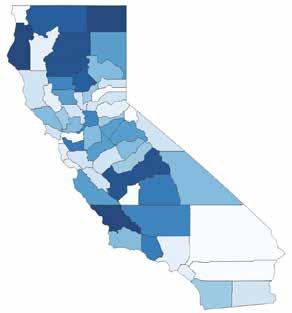
The geographical distribution of RTAP Direct inquiries has also been broad. RTAP has received inquiries from 50 of California’s 58 counties (though we’re not holding our breath for an inquiry from San Francisco County). The images on page 32 demonstrate the variety of issues and geographical reach of RTAP Direct.
Sometimes these RTAP Direct issues are handled in a 10-minute phone call, other times it requires extended correspondence and work. Either way, RTAP is available to all cattle producers and we work to provide detailed and ongoing assistance on all questions, whether simple or complex.
Over the last five years we have also been able to significantly improve RTAP Direct’s efficiency and effectiveness. We have developed an evergrowing “issues library” with research, resources, and professional contacts relevant to each question or issue. When we receive an inquiry regarding an issue we have already dealt with, the library helps us avoid the need to duplicate work and allows us to provide timely and thorough assistance. RTAP Direct continues to be the primary service provided by the program with the goal of acting like a researcher or “helpline” for ranchers across the state.
RTAP RESOURCES
Another key component of RTAP is general information we call “RTAP Resources.” RTAP
...CONTINUED ON PAGE 32
BAKER ANGUS RANCH
FEBRUARY 22
Our age-advantaged bulls are available in volume! These bulls out of top sires can increase consistency and marketability in your calf crops.
As the second-largest registered Angus cowherd in Oregon calving out 600-plus females a year, you get the Advantage of only the cream-of-the-crop! The top 50% of our bulls have extremely large contemporary groups to increase predictability, consistency and quality for our customers, and are from a cowherd that has been around for nearly 40 years.
Ruthless culling for feet and legs, plus structure gives you the Advantage when it comes to bull selection. Our bulls are extremely athletic. They run in big pastures over the summer after weaning. They are developed in extremely large lots that require them to travel up and down hills over rocky, hard ground everyday between a high-roughage feed source and water to ensure soundness and longevity.
Our intense AI program utilizes the most current and sought-after genetics in the Angus breed, with herdsires infused and utilized that rival the most popular AI sires in the breed for genetic value and potency.
Volume and repeat discounts are available, and delivery is free. Bulls are backed by a Zoetis HD50K DNA evaluation, ultrasounded with complete performance and fertility evaluation, and backed by an industry best guarantee. Many bulls qualify for the CAB Targeting the Brand Program.
Resources have ranged from articles and factsheets to guidebooks and webinars with the goal of assisting a broad group of ranchers. In 2024 we hosted two webinars accompanied by factsheets and guidebooks. The first was a “2024 Fire Outlook & Update” webinar which included a fire season outlook from CalFire and a disaster assistance program recap from the Farm Service Agency (FSA). The webinar was accompanied by an RTAP factsheet about assistance programs available to ranchers post-fire.
RTAP also hosted a webinar on labor laws and regulations relevant to ranchers. In response to several RTAP Direct inquiries across the state, RTAP contracted with an attorney specializing in agricultural labor law to host “From Pastures to Payroll: Tackling Labor Issues on California Cattle Ranches.” This webinar was accompanied by a comprehensive guidebook covering the requirements for ranchers with employees.
As with the labor webinar, most RTAP Resources are often instigated by RTAP Direct inquiries. The goal is to create relevant and useful resources for ranchers dealing with common issues. While information about many issues is often readily available online, it can be difficult and time-consuming to sort through and pull out the sections relevant to California ranchers. RTAP Resources aim to do this. RTAP’s written resources can be found on the California Cattlemen’s Foundation’s website at www. calcattlemenfoundation.org/rtap.
IMAGE 1. THE PROPORTION OF RANCHER-RELATED REGULATOR ISSUES RTAP HAS ASSISTED CALIFORNIA RANCHERS WITH.
WHERE WE’RE GOING
RTAP’s goal in 2025 is to expand its service by providing more assistance to more ranchers on a wider array of issues. Historically, RTAP has grown through a combination of traditional marketing (advertisements, articles, etc.), sharing at industry events (local association meetings, conventions, etc.), and word of mouth. While these avenues have proven to be important tools in making sure ranchers are aware of the program, we are working to develop new and effective ways of ensuring that when a rancher has an issue they remember RTAP is there to help. We also hope to continue expanding the types of issues we can help with. Every week we seem to hear of new and interesting issues that California ranchers face. While some of these challenges may be unique, some are likely shared by other ranchers across the state. Our goal in 2025 is to make sure that ranchers know we can help with all kinds of problems.
If you have ideas for ways that RTAP could improve its service by expanding the types of issues we work on or ideas for how to reach more California ranchers, please let us know. We’re always looking to improve and we need your feedback to do that. Likewise, if you have an issue or question you’d like assistance with, please contact us. We’re here as a resource to California ranchers and would love to go to work on your behalf. RTAP can be reached by phone at (916) 406-6902, by email at: rtap@wrstrat.com, or found online at: calcattlemenfoundation.org/rtap.
IMAGE 2. WHERE ASSISTANCE HAS BEEN REQUESTED. THE DARKER THE BLUE, THE MORE INQUIRIES RTAP HAS RECEIVED.
•
•
•
•
sons
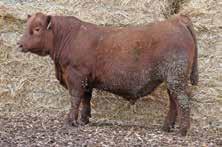
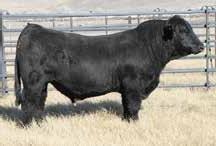
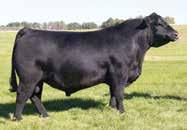
Connealy Craftsman, Sitz Stellar 726D, Square B True North 8052, Poss Rawhide, DB Iconic G95, Mill Brae Benchmark 9016, HHR Jailbreak H111, LT Firesteel
Cherry Creek Blue Collar G275 Baldridge SR Goalkeeper Deer Valley Wall Street
Lot 8 by Connealy Craftsman
BOLSTERING SELECTION ACCURACY
Results demonstrate Hereford breeder committment
from the American Hereford Association Annual Report
American Hereford Association (AHA) members continue making extraordinary genetic improvement within individual programs and across the breed.
Fiscal Year 2024 (FY24) highlighted the cumulative power of pioneering breed improvement programs.
For instance, the breed’s one-of-a-kind National Reference Sire Program (NRSP) celebrated 25 years of testing young Hereford sires with the mainstay NRSP herd, Olsen Ranches, Harrisburg, Neb.
The NRSP underscores the commitment and ability to make specific breed improvements. All of the most recent steers from Olsen Ranches graded Choice and Prime. These calves were sired by 14 different bulls, randomly magted by artificiall insemination (AI) to the Olsens’ straightbred commercial Hereford cows.
Calves in the Olsen herd are born JuneJuly, weaned October-November and then roughed on winter pastures with little to no feed supplement until the feeding trial in June. Likewise, cows receive no supplement except in extreme weather conditions. The Olsens emphasize feed efficiency and place downward genetic selection pressure on mature cow size and milk. They use sires that are breed average for growth, but above breed average for calving ease. Among sires that fit these criteria, they
select for as much end-product merit as is available. In 1999, steers from the program averaged high Select/low Choice. This year, they averaged high Choice/low Prime.
More broadly, the NRSP is the linchpin of Hereford’s genetic evaluation, in part because the program quickly proves the genetic merit of promising young Hereford sires.
Progeny from multiple NRSP sires comprise contemporary groups of 300 head or so. Faster proof with more accuracy also stems from the pedigree relationships between the bulls that are tested. NRSP sires influence 7 percent of the more than 2 million AHA performance pedigrees. Since its inception, 500 Hereford sires have been tested through the NRSP. Olsen Ranches have collected individual animal feed intake data since 2010. They began collecting individual water intake data last year.
Hereford breeders continue making targeted progress without sacrificing the breed’s hallmark feed efficiency, maternal ability, docility and longevity.
EMBRACING PRECISION
Much of the credit for the breed’s exemplary genetic progress goes to breeders’ unwavering commitment to utilize tools offering the most
Feeder Meeting
May 21-22 | Hilton San Diego Bayfront
REGISTER TODAY AT CALCATTLEMEN.ORG
Feeder Council Producer Member $325
Includes access to all meetings, breakfast and lunch on Thursday and one ticket to Thursday night’s dinner event.
Industry Partner $425
Includes access to all meetings, breakfast and lunch on Thursday and one ticket to Thursday night’s dinner event.
Additional Thursday Dinner Tickets $160
Limited tickets. It is recommended to purchase additional tickets prior to the event.
No refunds for registration will be available after 3/28.
Registration prices will increase after 3/10.
ACCOMMODATIONS
The Room block is now open! Make your hotel reservations through the CCA group rate at calcattlemen.org or by calling 1-800-Hiltons and mention group code CATTLE
TENTATIVE SCHEDULE AT A GLANCE
May 21
Wednesday Afternoon: CCA Feeder Council Board Meeting
Wednesday Evening: Welcome Party
May 22
Thursday: Meeting with speakers and industry updates
Thursday Evening: Dinner
accurate genetic prediction available. In other words, U.S. Hereford breeders remain willing to adopt new technology as it becomes available. Consider AHA members increasing the use of DNA testing over time (see Table 1). AHA members submitted an estimated 36,874 DNA tests in FY24, a staggering 30.8 percent more than the previous year. Nearing the end of calendar year 2024, there were nearly 240,000 genotypes on file with the association.
AHA secured DNA testing cost relief for members in FY24 via a new age-based cost structure. DNA testing animals up to 6 months of age costs $30. Today, AHA members’ price of utilizing a 100K density genotype chip — considered the gold standard for genotype panels — is 70 percent less than it was in 2012. Keep in mind, besides enabling genomic-enhanced expected progeny differences (GE-EPDs), DNA also offers the significant advantage of verifying parentage. Correct parentage is the basis for any accurate EPD calculation.
and nitrogen excretion data are being collected from calves resulting from the Olsen NRSP herd. Research results thus far suggest sire differences account for the majority of variation in methane and nitrous oxide production. Potential genetic selection tools for these and related traits are made possible by NRSP’s structural design.
TABLE 1. HEREFORD GENOTYPING OVER TIME
PROVING HEREFORD HETEROSIS ADVANTAGES
AHA continued its multi-year research project with the University of Illinois in FY24 to evaluate and document the production advantages of F1 black baldies compared to black Angus peers. This project leverages previous AHA research efforts and will result in a comprehensive analysis of the entire life cycle, including lactation and maintenance energy requirements.
AHA also completed work with the University of Tennessee to quantify the economic advantage of Hereford heterosis, modeling the economic difference between breeding a Hereford bull or an Angus bull to commercial Angus cows over 10 years and retaining replacement females. Results of the analysis demonstrate the significant economic advantages of using a Hereford bull, due to the breed’s inherent genetic advantages incorporated with complementary crossbreeding and the resulting maternal heterosis.
GENETICS AND SUSTAINABILITY
The AHA’s ongoing collaborative research project with Colorado State University and AgNext continues to explore sire differences for traits related to the carbon footprint. Specifically, individual cattle methane emission
This one is in elite company when it comes to $CHB and IMF. His dam 8140 is a full sister to Guardians mother and they have the ability to pass so much carcass quality to offspring while still maintaining maternal excellence. This horned bull should be in high demand.
C 8019 SHERMAN 4196 ET
Without question this will be a pen bull for Denver and one that will have many fans. He has the body and build that we are looking for and a cow family behind him that makes him so easy to tie to and use hard as a herd sire. We feel this is one of the best Sherman sons available and some outcross genetics.
C 8019 GUARDIAN 3343 ET
This Guardian son comes from a long line of great cow families being out of donor dam 8019. She is also the mother of a previous high selling bull Key West who is producing great females. Not only does he have the maternal package but he also is in the top 2% of the breed for $CHB and top 4% for IMF.
One of the best options in the offering for a double digit calving ease sire but still has the carcass numbers to put out a great set of feeding cattle. He is out of a first calf heifer that goes back to the Bailee cow family. Moderate sized, dark red and has lots of rib shape and muscle shape.
C 1101 ARLO 4201 ET
One of 3 full brothers in this offering sired by Arlo and out of the high selling female 1101 to GKB cattle in Texas. Some of his brothers have slightly better genomics but we feel this ones phenotype is the best. She is one if the breeds highest CHB cows that goes back to 8140 who is Bell Heirs full sister. Dark red and lots of pigment for generations.
C REPUBLIC LAD 4165
This herd sire rises to the top of his contemporary group and is a true representation of the quality of the Republic sired cattle. He is out of a first calf heifer who is now a donor dam after weaning this bull with a 121 ratio. His EPD profile is so balanced where maternal and carcass traits are both combined into a phenotypic package that makes him so easy to find in a pen.
C SHERMAN 4189
This Sherman son should be on everyone’s short list. The nice thing about him is both young and old cattlemen can appreciate this kind. He is dark red and smooth made with just the right amount of size and shape. He was named Reserve Champion overall bull in Reno and we feel he will be the kind for the long haul.
C 79H SHERMAN 4202 ET
This will be a pen bull for Denver and he will anchor a strong set that have not only the phenotype and look but also the EPD values that are in demand. Study his calving ease and birth values but then he is able to tickle a 200 $CHB. He is dark red and has the ability to enhance any breeding program and take it to the next level.
This one is a true genetic powerhouse on paper with jaw dropping indexes for both maternal and carcass quality. He has the highest combined value of any bull in the offering and is out of our strongest cow families. Tess 0166 has made a name for herself at a young age as she was also the donor dam of the high selling bull in the 2024 sale and the high selling Angus female in the fall sale. CCC 0166 CRAFTSMAN 3223 ET
C VALS CUDA 4162
HIGHLIGHTING COMMERCIAL SUCCESS
from the American Hereford Association Annual Report
In 2024, the American Hereford Association broadened its growing focus on sharing how commercial producers across the U.S. add profit potential to their operations with Hereford genetics. Team Hereford visited commercial users of Hereford genetics in nine states during Fiscal Year 2024 (FY24), gathering photo and video assets at each stop, while documenting individual stories shared in its publication, Baldy Advantage, news releases and other Association promotions. These are examples of the comments:
“They’re (F1 baldy) an overall commercial mother cow that generates money year after year. We have a lot more luck with an F1 cow — weaning weights, breed-backs, efficiency; and they’re easy fleshing as far as maintaining them.”
— Daniel Shuler, Shuler Farms, Trenton, Mo.
“She has all of the maternal heterosis that you would want going into a cow herd. She has the ability to cross with any type of bull somebody would want to use. Going from a Bos Indicus to a Bos Taurus, even a Continental, all of them will work and will complement well.”
— Alan Kelley, Kenansville Cattle Co., Kenansville, Fla.
“I really believe in the Hereford breed. I love the maternal instincts, their conformation and disposition, but, more than anything, I’m after pounds.”
— Kody Woodward, Dupree, S.D.
“We found those cattle to be fertile under these conditions, to milk well, raise their calves and maintain their condition for us. In this area, breedback is always about the most important thing that occurs with our cattle, and if they don’t breed back, they’re gone.”
— Bill Wilhelm, 21 Ranch, Sundance, Wyo.
The team also captured stories of Certified Hereford Beef® customers and consumers at a range of events, highlighting the importance of putting individual producer faces and names with the product.
Spreading the word
With the launch of the new website in 2024, all of this information became easier for AHA members and others to find. For instance, current and potential users of commercial genetics can find comprehensive breed research, programs and related resources with a single click of the “Commercial” tab.
AHA members can click the “Media” tab and find a gateway to media assets created for them to use — photography and videography, artwork, publication inserts and more — all supporting the breed’s cohesive message.
AHA communications also continued to harness the power of social media in FY24 to magnify the breed’s message. Through content the Hereford message reached 1.8 million accounts through Facebook and Instagram, nearly double from FY22. The message continues to focus on the value of Hereford genetics in the commercial industry.
USDA ANNOUNCES KEY DEPARTMENT POSITIONS IN WASHINGTON, D.C.
The day after the inauguration of the 47th President of the United State, the U.S. Department of Agriculture announced the names of the following individuals who will hold senior staff positions in Washington, D.C. These appointees have been selected to implement President Trump’s America First agenda, ensuring that the needs of America’s farmers, ranchers, and producers remain a top priority.
In addition to these key roles, President Donald Trump tapped Texas-born Brooke Rollins, to serve as the next secretary of the Department of Agriculture. As of press time, Rollins was set to tesify Jan. 23 before the Senate Agriculture Committee. The panel’s confirmation hearing is a vital chance to ask her about her stance on farm subsidies, food prices and other key issues. Rollins is the president and CEO of the conservative think tank America First Policy Institute, or AFPI. Her previous roles include serving as policy director for Texas then-Gov. Rick Perry, a Republican, followed by leading the Texas Public Policy Foundation, another conservative group. She also held a top domestic policy role in the first Trump administration. She is a former state FFA officer and her children exhibit livestock. CCA will keep members apprised on Rollins’ confirmation as the new presidential administration evolves.
Chief of Staff of the USDA
Kailee Tkacz Buller will serve as Chief of Staff of the U.S. Department of Agriculture. Most recently, Kailee served as the President & CEO of the National Oilseed Processors Association and the Edible Oil Producers Association. Previously, Kailee served as Chief of Staff to the Deputy Secretary of Agriculture and held numerous leadership roles across the Department in the first Trump Administration. Governor Youngkin appointed Kailee as the 8th Congressional District Representative of the Virginia Board of Agriculture and Consumer Services, and she holds a Bachelor of Arts in Political Science from the University at Buffalo.
Deputy Chief of Staff
Preston Parry will serve as Deputy Chief of Staff of the U.S. Department of Agriculture. Preston most recently served as Strategic Assistant to the President & CEO at the America First Policy Institute. During the first Trump Administration, he was the Executive Assistant to the Director of the Domestic Policy Council, where he supported
operations and served as Policy Coordinator and primary liaison to the Office of the Staff Secretary. Previously, Preston was an Associate Director in the White House Visitors Office. A native of Tucson, Arizona, Preston holds a degree in Political Science from Utah Valley University.
Chief of Staff to the Deputy Secretary and Senior Advisor to the Secretary for Food, Nutrition and Consumer Services
Jennifer Tiller will serve as Chief of Staff to the Deputy Secretary and Senior Advisor to the Secretary for Food, Nutrition and Consumer Services. Most recently, Jennifer served as the Deputy Staff Director for the House Committee on Agriculture and holds graduate degrees from Marist College and Syracuse University.
Principal Deputy General Counsel of the USDA
Ralph Linden will serve as the Principal Deputy General Counsel of the U.S. Department of Agriculture. Ralph served in various capacities in the Office of the General Counsel from 1982 until 2021, including serving as an Acting Deputy General Counsel during the first Trump Administration. He is a graduate of the University of Notre Dame School of Law.
Deputy Director of Communications of the USDA
Audra Weeks will serve as Deputy Director of Communications of the U.S. Department of Agriculture. She previously served in the first Trump Administration as Deputy Press Secretary of the U.S. Department of Agriculture before joining the national press team for President Trump’s 2020 re-election campaign. Audra later served as Press Secretary to U.S. Sen. Roger Marshall and most recently specialized in crisis and issues management for food and agricultural clients in the private sector. She holds a Bachelor of Science in Agricultural Education and Communication from the University of Florida, a Master of Science in Agricultural Economics from Purdue University, and a Master of Business Administration from Indiana University.
White House Liaison for the USDA
Dominic Restuccia will serve as the White House Liaison for the U.S. Department of Agriculture. He previously served as a legislative assistant for U.S. Representative Mike Bishop and U.S. Senator Mike Lee. Dominic is from Michigan and is a graduate of Hillsdale College.
PUBLIC LANDS
PLC WORKING TO MAKE 2025 A BIG YEAR FOR FEDERAL LANDS RANCHERS
by Garrett Edmonds, director, Public Lands Council
The 118th Congress was one of the least productive legislative sessions in modern history and 2024 will be known as a year of extreme partisan gridlock in Washington. Yet, at the end of 2024 and the start of 2025 we saw major policy movements, showing that the tide is turning, and this year is already shaping up to be one of the busiest years for substantial policy advancement in recent memory.
The Public Lands Council is working proactively with the new Congress and Administration to secure regulatory relief, increase grazing flexibility, and safeguard grazing rights for generations to come. PLC is working diligently to make 2025 a big year for federal lands ranchers.
In November of last year, the House Natural Resources Subcommittee on Federal Lands held a hearing in support of several bills that PLC has championed to expand the use of livestock grazing as a tool to reduce wildfire risk, make grazing permits more responsive to range conditions, and remove regulatory barriers for the maintenance of critical infrastructure. California rancher and PLC member Sherri Brennan testified in the House Natural Resources Subcommittee on Federal Lands in support of Rep. Doug LaMalfa’s (CA) bill that would require the Secretary of Agriculture, through the Forest Service, to develop a strategy to increase utilization of livestock grazing as a means of wildfire risk reduction. Brennan’s support comes from her personal experiences during the 2013 Rim Fire that burned 257,171 acres in Tuolumne County. She testified that this bill would make it easier for the Forest Service to prevent catastrophic wildfires by utilizing federal lands ranchers and targeted grazing to create fuel breaks to change fire behavior and strategically reducing fire risk. PLC is working with Congress to swiftly reintroduce this bill and further build out coalitions among lawmakers to see them move forward during the 119th Congress.
Brennan’s work advocating for this bill is a great help towards enacting PLC’s 2025 policy priorities. PLC will be focusing on several policy priorities including:
• Protecting producer access to voluntary
conservation tools to support their long history of science-based resource stewardship.
• Keeping working lands working by protecting family farms from undue regulatory burdens under the Endangered Species Act, NEPA, the Clean Water Act and many more.
• Removing bureaucratic barriers to voluntary, science-based innovation and responsible resource management.
This is a unique time of opportunity for federal lands ranchers to get these much-needed priorities across the finish line. There are more Western lawmakers holding key leadership positions in the House and Senate that are close friends to ranchers and that PLC has worked with for many years. Rep. LaMalfa was elected as the new chairman of the Congressional Western Caucus at the end of 2024.
PLC is excited to continue working with the new Chairman as he leads the powerful caucus that was founded out of the need to unite Members of Congress from the West to fight undue federal interference with rural, agricultural, timber, water, energy and hunting values that are the foundation of the domestic economy and American heritage.
There is also new leadership in the Senate with Sen. John Thune (SD) ascending to Senate Majority Leader and Sen. John Barrasso (WY) moving up to Majority Whip and Sen. Mike Lee (UT) serving as Chair of the Senate Energy and Natural Resources Committee. These leaders know the key issues impacting the grazing community and know how to get this important work done.
The 119th Congress is well underway, and PLC is focused on working with the Trump Administration, House, and Senate to restore transparency to the federal rulemaking process and promote grazing flexibility as the best tool in the toolbox for land and wildlife conservation. Ranchers are in dire need of regulatory relief and PLC is excited to make meaningful progress in streamlining the federal permitting process to improve the health of America’s vast rangeland in the 119th Congress.
COUNCIL COMMUNICATOR
FEBRUARY IS HEART HEALTH MONTH HOW CHECKOFF DOLLARS MAKE A DIFFERENCE
from the California Beef Council
February is American Heart Health Month, an ideal time to highlight how beef fits into a heart-healthy dietary pattern for consumers. For California ranchers, it is also a chance to see how their Beef Checkoff dollars are driving vital consumer research and education to showcase beef as a nutritious, heart-healthy choice.
The Role of Beef in Heart Health
Beef is a nutrient powerhouse, packed with protein, iron, zinc, and B vitamins. Research confirms that lean beef not only complements but also enhances heart-healthy dietary patterns. For example, the Beef in an Optimal Lean Diet study, published in the American Journal of Clinical Nutrition and funded by the Beef Checkoff, found that participants who ate 4 to 5.4 ounces of lean beef daily as part of a Dietary Approaches to Stop Hypertension (DASH)style diet maintained healthy cholesterol levels. Another Beef Checkoff-funded study demonstrated that a Mediterranean-style diet incorporating lean beef can help reduce total cholesterol, LDL cholesterol, and blood pressure, showcasing beef’s versatility in cardiovascular health.
Additionally, a randomized controlled trial published in The Journal of Nutrition and funded by the Beef Checkoff found that individuals can include up to 6 ounces of lean, unprocessed beef daily in a healthy dietary pattern without
increasing risk factors for heart disease or diabetes. This evidence shows that beef can support overall health as part of a balanced diet and lifestyle.
Putting Checkoff Dollars to Work
The California Beef Council (CBC) works to ensure that these research findings reach consumers in meaningful ways. Using resources like BeefItsWhatsForDinner.com, the CBC provides recipes certified by the American Heart Association that show how to pair beef with other heart-healthy foods such as vegetables, fruits, whole grains, and low-fat dairy to create nutritious, balanced meals. These recipes highlight lean cuts like sirloin, tenderloin, and eye of round, offering consumers practical ways to include beef in balanced meals.
Additionally, the CBC is working with health professionals to provide science-based information about how beef plays a significant role in a heart-healthy dietary pattern. Some of these efforts include putting on a culinary workshop training, medical office outreach, and networking with health professionals at various industry conferences.
A Win for Producers and Consumers
Promoting beef as a heart-healthy choice benefits both producers and consumers. For ranchers, it demonstrates how Beef Checkoff dollars are being used to build consumer trust and highlight beef’s nutritional value. For consumers, it provides confidence that beef can be a flavorful, nutrient-rich part of their goals to living a hearthealthy lifestyle.
As February brings heart health to the forefront, beef can play a key role in balanced, nutritious diets. Thanks to the strategic use of Beef Checkoff dollars, California ranchers are helping consumers make informed food choices that support long-term health and wellness.
HERD HEALTH
CREATE A CALF HEALTH AND MARKETING EDGE IN YOUR HERD
from Purina Mills
Quality nutrition and health protocols combined with progressive management is an equation to help deliver low-risk, high-value calves.
Value-added programs help prepare cattle for the feedlot by giving calves a strong start with nutrition and health. A complete nutritional foundation, comprehensive vaccines and quality dewormers prime calves to meet their genetic potential from weaning to the rail. This valueadded program also provides the opportunity to capture more value for calves throughout the production cycle – from cow/calf producers to cattle buyers.
The Purina® Plus feeder calf program is backed by Purina’s expert nutritionists and dealers, along with support from industry leading animal health companies. Here is what industry allies are saying about Purina® Plus and the benefits of optimizing calf health:
Why are high-risk calves such an issue in the beef cattle market?
“High-risk calves are more likely to succumb to disease and environmental challenges, leading to a higher prevalence of morbidity and mortality outcomes,” says Nathan Pyatt, Ph.D., beef technical consultant, Elanco Animal Health. “High-risk calves require different management strategies, including nutrition, prevention, therapy, and labor time and cost. Ultimately, they are less likely to perform at their genetic potential until this risk period is mitigated.”
Mitch Blanding, DVM, associate director of beef
technical services, Zoetis, shares that high-risk calves come with a cost.
“Because of their previous management, these calves are more likely to develop Bovine Respiratory Disease (BRD),” Blanding says.
“Bovine Respiratory Disease is one of the most common and costly diseases affecting the U.S. cattle industry. In fact, the U.S. feedlot industry estimates an annual loss as high as $1 billion due to loss of production, increased labor expenses, pharmaceutical costs and death from Bovine Respiratory Disease.”
And, it’s time for the industry to change, according to John Hutcheson, Ph.D., director of cattle technical services and ruminant nutritionist, Merck Animal Health.
“As an industry, we must continually improve,” says Hutcheson. “Calves need to be better prepared for transitions from the home place through the auction system and on to a backgrounder or a feed yard, ultimately to the beef processor.”
How important is weaning nutrition when it comes to enhancing health protocols like vaccination and deworming?
“Nutrition is the foundation for immune health,” says John M. Davidson, DVM, DABVP, senior associate director of beef cattle professional services, Boehringer Ingelheim Animal Health. “Quality nutrition helps support a strong immune system and remain resilient
...CONTINUED ON PAGE 48
through the challenges and stress calves endure like weaning, transportation and co-mingling. Inadequate nutrition from limited protein and energy or low trace mineral status can negatively impact a calf’s ability to respond properly to vaccines. Weaning nutrition is vital to help ensure the efficacy of the health protocols we administer.”
“Immune response is dependent on nutrients,” Reinhardt shares. “Minerals like zinc, copper and manganese can help calves mount a more robust response. If a calf’s mineral status is good, the immune system can do what it’s supposed to do. When calves are shorted on minerals, health protocols may not work the way you expect.”
“Putting an emphasis on pre- and poststress nutrition helps enable cattle to defend against pathogenic challenges and optimize effectiveness of intervention strategies such as vaccination protocols,” adds Pyatt. “Healthy, highperforming feeder cattle command a premium in today’s beef business. Input and labor costs are on the rise, and proven technologies and strategies — like those outlined in Purina® Plus — help maintain calf health and enable cattle to perform at their genetic potential and improve profit potential in each segment of the industry.”
What value does Purina® Plus provide to cow/ calf producers and cattle buyers?
“Purina® Plus allows cow/calf producers to tie into something greater than themselves,” says Reinhardt. “It is a way to truly document you’ve done the right things. It benefits everyone from the small producer to the larger commercial herds. Buyers benefit by having a program that includes nutrition to support vaccine and deworming protocols. It’s a complete package.”
Blanding agrees that the program offers a win-win for everyone involved.
“Selling cattle with a history in a verified preconditioning program, like Purina® Plus, provides transparency to buyers because the program documents which products were administered and when,” says Blanding. “Buyers appreciate the benefits of healthy cattle as auction market sales data demonstrates an increased value of a recognized and reputable preconditioning program.”
For Davidson, the program offers a playbook on raising calves for the next production stage.
“The fundamentals of any
value-added program help producers and their veterinarians understand which products are best placed to help a calf address the challenges of moving through market channels,” says Davidson. “It’s a playbook on using time-tested products to support cattle immune responses. Health translates into better performance, and that is what we’re all targeting.”
Confidence is a top-selling point, adds Hutcheson. “It is the confidence cattle are on a great nutrition program, are immunized and their immune system is functional. Those are the type of calves that can go onto the next phase of production with very few problems. Buyers are willing to bid higher for those cattle.”
What advice do you have for producers who want to add more value to their calves?
“If cattle are unhealthy when they reach the feedlot, it has a devastating impact on performance and profitability,” says Reinhardt. “Ensuring optimum nutrition at weaning and before feedlot arrival helps optimize animal performance and profit potential. Value-added nutrition programs can be a huge bonus to the cattle owner and feedlot producer.”
“When you participate in value-added programs, make sure you’re committed,” advises Hutcheson. “Calves should be in good condition, immunized, be dehorned and castrated and healed from those procedures. Share information on your genetics and take part in the Beef Quality Assurance program. Taking a few extra steps can mean there is more revenue at the end.”
Davidson recommends working closely with your veterinarian to implement a program suited to your operation’s goals.
“When you have a close working relationship with a veterinarian to consult and seek feedback on health programs, it can have a profound impact on health. The result is a high-quality calf,” says Davidson. “This is the right direction for our industry.”
BALANCEMore EXTREMES LESS
ABC Madame Pride 0217
Her son by Musgrave Blackjack 2155 sells
ABC Madame Pride 2527
Her ET sons sell
Allen G375 ET progeny sells
PROGRESSIVE PRODUCER USING SEXED SEMEN TO NAVIGATE THE GENETIC FORK IN THE ROAD
by Garrett Ulmer, University of Tennessee beef cattle genomics graduate student
Some cattle are excelling at rapidly producing a high-quality end product; however, they are usually not the low maintenance females that producers want to have in their cow herd. Similarly, the ideal bull for producing replacement females may not produce high-value feeder or carcass cattle.
Rather than focusing our breeding goals on being heavily terminal or primarily maternal, sexed semen allows commercial herds of all sizes to “take both roads.” Intentionally making quality replacement females while maximizing terminal value from non-replacement animals.
Kenny Wells from ABS Global detailed innovations in this space during the Advancements in Producer Education breakout session. The session was part of the 2024 Beef Improvement Federation (BIF) Symposium.
Wells emphasized that competing industries have already capitalized on creating breeding programs which allow them to achieve maximum profitability. Pork producers leverage optimized genetic lines along with maternal and terminal heterosis to increase in product value of offspring.
Dairy farmers have refined their maternal unit for milk production with female sexed semen while also making use their former byproduct, dairy steers, by utilizing terminal beef genetics.
Sexed semen is not just a tool for dairy producers, beef operations can use it to meet maternal and terminal goals within the same calf crop. During his presentation, Wells discussed
ways that ABS has deployed sexed semen in beef settings. One example is the 60/40 Sync Program, which builds on the idea of segmenting your cow herd so that your most fertile cows are bred to produce your replacement heifers, while the rest will produce a more terminal animal.
The 60/40 Sync Program works by synchronizing and fitting all females with an estrus detection aid, just as recommended for fixed-time artificial insemination (AI) protocols. Females that display estrus with fully activated patches, usually around 60 percent, are then time AI bred with female sexed semen from maternally designed bulls. The remaining females that have not displayed estrus, around 40 percent, are time AI bred with conventional semen from terminally focused bulls and all cows are exposed to a terminally oriented sire for clean-up.
This program aims for the resulting calf crop to be made up of 35 percent maternally designed heifer calves to retain in the herd and 65 percent terminally focused animals, the majority of which are steers, to market.
Wells discussed how the strategic use of sexed semen could allow even very small producers to implement a structured crossbreeding program by using different breeds of bull as maternal and terminal sires. Programs like the 60/40 also have long-term reproduction benefits within herds. It allows the most fertile cows to have heifer calves born early in a calving season.
...CONTINUED ON PAGE 52
GENETIC EDGE BULL
Saturday • March 8, 2025 • 11 a.m. Idaho Falls, Idaho
The Riverbend Ranch Advantage
...CONTINUED FROM PAGE 50
This “head start” results in older replacement females that conceive earlier and have heavier calves throughout their productive lives.
Wells was clear that even though this program may not maximize pregnancy rate to AI, it does create the opportunity to generate the “right” calf from every mating.
Wells’ presentation discussed a multi-year demonstration of the 60/40 program between ABS and the Bair Ranch in central Montana. The study assigned 250 cows to either a control group, which followed a fixed-time AI protocol using conventional semen, or a test group, which implemented the 60/40 Program.
Over four years of data collection, the Bair Ranch averaged 25-30 percent of the calf crop being maternally designed heifers resulting from sexed semen — exceeding the ranch’s target of 2324 percent to keep as replacements every year. Key takeaways included that female sexed semen resulted in an average of 9 percent heifer calves and that female sexed and overall pregnancy rates in the 60/40 test group were lower than those of conventional semen. Their work also indicated that the 60/40 program reduced the relative proportion of calves being born in the first interval when compared to the control. However, more 60/40 calves were born in the second calving interval, suggesting that 60/40 sync likely doesn’t significantly impact the length of the calving season.
Wells was clear: For the 60/40 program to work, producers must choose the right genetic inputs for their respective programs. With sexed semen, producers can adjust areas of their herd that previously they could not: more selection pressure can be applied to terminal traits
without throwing maternal quality out of balance, and maternal traits can be selected for without reducing terminal profitability. The implementation of crossbreeding also allows for significant increases in efficiency through heterosis, particularly for lowly heritable maternal traits such as fertility and health.
Taken together, 60/40 Sync Program provides a framework for a more efficient, sustainable, and resilient breeding system. The concept laid out by Wells represents a flexible and adaptable strategy for producers to focus on making fertile, feed efficient, and moderate replacement females while enhancing growth and carcass quality on their terminal calves.
Specializing in Truck and Livestock
Scales
Farm Bill could highlight help available to producers in wildfire aftermath TAKING A TOLL
by Trina Kleist, University of California Davis
The people who produce our food need support – especially in the areas of mental and physical well-being – to recover from increasingly widespread wildfire, scientists have found. The federal Farm Bill could help, but it is languishing in Congress (an extension of the previous Farm Bill was passed in late December 2024).
Postdoctoral researcher Natalia Pinzon Jimenez used surveys to hone in on the experiences of ranchers and farmers impacted by wildfire. Pinzon recently earned her Ph.D. at UC Davis and produced her findings with a team that included Leslie Roche, a professor of Cooperative Extension in the Department of Plant Sciences.
The team surveyed more than 500 ranchers and farmers affected by wildfires between 2017 and 2023. Pinzon recently summarized her findings in this research report. She also recently launched a website, Wildfires & Agriculture, based on her findings. Its goal is to help producers become more resilient to fire by providing tools, improving research and effecting policy.
Financial and technical assistance also matter, but are secondary, said the producers who participated in the surveys.
“The No. 1 wildfire impact for ranchers is on their physical and mental health,” said Tracy Schohr, a research team member and livestock and natural resources advisor in Plumas, Sierra, and Butte counties with UC Agriculture and
Natural Resources (Schohr earned her master’s degree with Ken Tate, also a professor of Cooperative Extension in the department.)
“This underscores the need for future United States Department of Agriculture disaster programs to prioritize physical and mental health and emphasizes the importance of USDA investment in training staff and partners in trauma-informed approaches to aid farmers and ranchers affected by disasters,” Schohr argued. In addition to being scorched by wildfire, farmers and ranchers are on the front lines of wildfire response, both on their properties and
...CONTINUED ON PAGE 56
“The No. 1 wildfire impact for ranchers is on their physical and mental health.”
—Tracy Schohr
UCCE Livestock & Naturual Resources Advisor
PERFORMANCE
Selling Sons of time tested Performance Sires
Added Pounds & Pay Weight
Red Meat Yield
PROVEN
26 Years of Close-Out Data Collection 2023 Ranch Raised Charolais Heifers Data
132 Head, 150 Days on Feed
16% Prime and 81% Choice
All Yield Grade 1, 2, & 3s
Dressed at 64%
Less Health Risk ABILITY
15 Years of RFI Testing
Maximizing Average Daily Gain (ADG) Minimizing Feed Intake
in their communities. When it’s not wildfire season, they manage future risks by reducing fuel loads on their properties, installing offgrid systems and water storage, planning for wildfire response and training employees, Pinzon reported.
Need for greater awareness of help available
While producers were optimistic about their chances of recovering from wildfire, Pinzon found they have a limited financial safety net supporting them. Most producers relied on personal savings to recover from significant losses. Small producers, those using organic or sustainable practices, beginning producers, first-generation producers and people renting their land all had fewer resources, including crop insurance.
In addition, 78 percent of farmers and 58 percent of ranchers did not use financial assistance offered through the USDA to cope with disasters, Pinzon reported. Many didn’t even know such assistance is available, or they reported the application process was too difficult.
All those pressures led to a quarter of the respondents admitting they had considered shutting down their operations.
Pinzon pointed to the federal Farm Bill as a source for funding greater collaboration between the USDA and on-the-ground organizations such as Cooperative Extension. The aim would be “to raise awareness, expand access to assistance programs and provide science-based solutions for wildfire recovery,” Pinzon recommended.
Pinzon’s work is part of a larger, statewide effort to use surveys and interviews with ranchers and farmers to understand their needs, direct scientific inquiry and develop solutions to their problems.
The team includes the University of California, UC ANR, federal, state and local agencies, producer organizations and private individuals. The surveys go back to 2011 and were conducted by Roche and a network of colleagues.
Farmers and ranchers: Learn what you can do
You can prepare for wildfire on your land. Get free, online information through Farmer Campus, co-founded by Pinzon with support from the USDA. Start by downloading your Wildfire Preparedness Workbook at: https://farmercampus.com/fires/#workbook. It includes practical, hands-on activities to help you get your operation ready to survive a fire.
SIRES INCLUDE:
WARD RANCHES WAS BUILT TO PROVIDE SUSTAINABLE ANGUS GENETICS IN THE GREAT BASIN AND BEYOND. Our foundation females and natural service sires hail from two of the most respected cattelmen in the West - David Medeiros and David Dal Porto. We have added some of the most proven and highly accurate multi-trait sires to our AI program for nearly 20 years in order to produce cattle that flourish in tough conditions. Call to setup a time to preview the bulls ahead of the sale.
RANCH FAMILY ROUNDUP
IN MEMORY
Jackie Davis passed away peacefully, in his sleep with his wife, Chris and his dog Jessie by his side in December 2024. He spent his last days surrounded by his family and close friends at home, with a fire in the fireplace, watching his cattle and football, just as he wanted. He was 88 years old
Jackie was born in 1936 in McFarland, to George and Velma Davis and raised in Delano.
He purchased his first Polled Hereford heifers and pen of steers in 1950. They would become his main project for his American Farmer Degree which he received in 1954. He traveled to Kansas City by train to receive the prestigious award. After graduating from Delano High School, he farmed with his father, George, from 1954 to 1960, in the San Joaquin Valley, where they raised cotton, alfalfa, potatoes, corn and a few cattle.
Taking his small herd with him, he left the family farm in 1960 to embark upon what would become his lifelong career in cattle, going to work as a herdsman for longtime breeder, Vanderhoof Polled Herefords. He worked with the cow herd, show cattle and raised bulls for bull sales.
In 1963 he went to work for the very successful entrepreneurial businessman, G.D. Turnbow of who would have an enormous impact on Jackie’s life in agriculture. Jackie began working for Mr. Turnbow as the manager developing the registered Polled Hereford unit. Eventually managing the entire cattle unit, consisting of 200 head of registered Polled and Horned Hereford cattle, over 2,500 head of commercial cattle, the 5,000 head feedlot, and a bull test on 15,000 acres in Chowchilla. Under Jackie’s guidance, using the herd to artificially inseminate over 1000 head of cows yearly, they provided approximately 66 percent of the entire cumulative testing for the Gold Seal Sire Program at the American Polled Hereford Association, providing data on birth, weaning and yearling weights, as well as the final carcass data on the cattle fed out in their feedlot. His work at Triangle T paved the way for his being named “Breeder of the Year” by the California Beef Cattle Improvement Association (CBCIA).
During this time, he and his good friend, Jerry Biggs, pooled their cattle and formed their partnership of JJ Polled Herefords. Their wonderful friendship and collaboration would help form the beginnings of what would become known as the California/Nevada Junior Polled Hereford Association. Opportunities came in 1976 when Jackie left Triangle T Ranches to become a Partner/Manager with Antonio Mountain Ranches in Lincoln.
Ultimately, leaving Antonio Mountain Ranches in 1979 to start Davis Cattle Service, a “full service, cattle management company,” where he served as a cattle consultant assisting with herd management decisions, promoting, syndicating, and merchandising some of the elite “changer” females and bulls of the Hereford breed, traveling into 45 states and Canadian Providences. At this time, one of his largest clients, Glenn Nobmann, would offer him an opportunity to move to the beautiful wine country of Napa, to manage and build Napa Valley Polled Herefords overlooking the Napa Valley. While building the ranch, he managed the registered Polled Hereford cattle, began the on-site donor program, embryo transplant facility, and bull test for their bulls, as well as their customers.
With the support of Glenn Nobmann, he accepted the appointment to the Board of Directors for the American Polled Hereford Association in Kansas City in 1985, serving as the Chairman of the Board in 19901991, navigating through some of its roughest waters. Honored for his devotion to the industry, he was inducted into the American Hereford Association Hall of Fame in 2013.
Jackie judged county and state fairs, jackpot shows, and National Hereford shows, in Denver and Fort Worth. He served as a Board of Director for the California-Nevada Polled Hereford Association from 1972-1985 and President in 1975, 1978 and 1998-2009, he was named Breeder of the Year in 2001. Locally he served on the Lincoln Farm Foundation. Also, on the Tahoe Cattleman’s Association Board since 1999, where he was named Tahoe Cattleman of the Year in 2003 and received the Legacy Award in 2023.
A proud Cal Poly Bull Test Consignor since 1979, Jackie was inducted into the Cal Poly Bull Test Hall of Fame in 2006. He believed strongly in “paying it forward” and has given a “leg up” to many young people in the industry over the years.
Having a beautiful voice, he was known to break out in song upon entering the kitchen, after a long day working cattle. The twinkle in his eye could soften any heart and brighten any day. He treasured his family and many lifelong friendships and will be remembered fondly for his dry wit, easy disposition, and no-nonsense approach to life.
Jackie was preceded in death by his parents, George and Velma; sister Marie; previous wives, Sandy and June; grand-daughter Niki; and stepson, Blake. Left to cherish his memory are his wife Chris of 45 years; children, Cindy (Mike), Craig (Lillian), Stephanie (Pat); bonus children, Lisa (Richard), Frank (Christina); stepchildren, Carla, Jennifer; grandchildren, Anthony (Kimberly), Nicholas, Kelsy, Aiden, Cooper; great grandchildren, Nathaniel, Rorrick and James. Cousin Evon, Aunt Kay, Neice Sue, Nephew Tim.
A Celebration of Life for Jackie was held Jan. 11 at the Placer County Fairgrounds.
JACKIE DAVIS
Improving an d Ad va ncing the Fa mily Legacy
FIELD DAY • Friday, April 11
Utilize the most proven database in the industry for traits that go directly to your bottom line and give you a marketing advantage.
BULLS THAT TRULY MAKE A DIFFERENCE!
$RANCH
• All sale bulls’ averages rank in top 12%.
• Mothers calve every year in 45 days or they are gone.
• All sale bulls’ averages rank in top 15% for Fertility.
• All sale bulls’ averages rank in top 18% for Teat and Udder.
$PROFIT
• All sale bulls’ averages rank in top 5%.
• Balanced trait selection for Life Cycle Efficiency, moderate size, post weaning growth, carcass merit and low PAP.
$FEEDER
• All sale bulls’ averages rank in top 6%.
• Feed Efficiency Testing since 2010.
• Every bull feed efficiency tested.
RANCH FAMILY ROUNDUP
IN MEMORY
Pam Giacomini, 66, of Hat Creek, died Dec. 29, 2024 at home.
Pamela Ann Thompson was born Oct. 21, 1958 in Redding to her parents, Robert and Lois Opdyke Thompson. She grew up with her older brother and sister on the family ranch originally settled by her greatgrandparents in 1903. Pam was active in 4-H and FFA, showed livestock at the Intermountain Fair and won awards at the local, regional and state levels. She graduated from Fall River High School in 1976.
In the summer of 1975, while attending a statewide Regional FFA Officer Leadership Conference, Pam first kindled a relationship with Henry Giacomini from Ferndale who at that time was State FFA President. They dated for three years while never living near each other. Pam attended Chico State from 197678. She and Henry were married on August 12, 1978 at the ranch in Hat Creek and celebrated their 46th anniversary this year. Their devotion to each other has always been apparent to everyone who has known them.
Following their graduation from Cal Poly, San Luis Obispo in 1980, she with a degree in Agricultural Journalism, Pam and Henry moved to Humboldt County and took over Henry’s family dairy business. Pam worked off the farm while actively partnering with Henry on it. Their son, Wade, arrived in 1985. During their time in Ferndale they were actively engaged in the local community and made significant improvements on the dairy, receiving the first Humboldt County Dairy of the Year Award in 1984.
After eight years in Ferndale the young family shifted from dairy cows on the coast to beef in the mountains, acquiring the cattle business at Hat Creek Hereford Ranch from Pam’s parents. They established HP Livestock and proceeded to grow their cattle numbers and added leased properties to support them, eventually reaching 60,000 acres. It was a true partnership, and they became known in the community as the “dynamic duo.” Henry and Pam were the first to introduce innovative pasture management systems that have now been widely adopted in the area. In 2007 they introduced Hat Creek Grown which they operated as a consumer direct beef sales business. In 2024 they were named one of three finalists for the California Leopold Conservation Award which is annually presented
nationwide to “landowners who demonstrate exemplary dedication to land, water, and wildlife management on private, working lands.”
Pam held many interests and never engaged in anything at which she was not determined to excel. Her pursuits included time as an FFA Advisor and judging team coach, high school and college instructor, professional photographer, and as partner with her sister, Kathy, at Century 21 Big Pines Real Estate. She was a graduate of the California Agricultural Leadership Class XXI in 1993, and obtained her Master’s Degree in Agriculture from Cal Poly in 2003.
Pam’s interest in agricultural advocacy and politics led her to rewarding work with the California Farm Bureau Federation; nine years as a Regional Field Representative and four as Director of Governmental Affairs in Sacramento focusing on livestock, public lands and associated environmental issues. She also engaged in leadership and service including the California Board of Forestry and Fire Protection. Pam was elected to represent District 3 on the Shasta County Board of Supervisors from 2013 to 2016. In 2016 she received the prestigious Common Threads North Award, “presented to a Northern California woman in agriculture who has made a difference in their communities and our world through service.”
Pam is survived by her husband Henry, son Wade, sister Kathy (Howard) Lakey, mother-in-law Elsie Giacomini, sisters- and brothers-in-law Alice Thompson, Pete (Libby) Giacomini, and Dan (Pat) Giacomini, and numerous cousins, nieces, nephews and their families. She was preceded in death by her parents, her brother, Robert Thompson, Jr., and her father-in-law, Donald Giacomini.
A celebration of Pam’s life was held Jan. 18, 2025 at George Ingram Hall, Intermountain Fairgrounds, McArthur, California. Contributions in Pam’s memory be directed to Mayers Healthcare Foundation, P.O. Box 77, Fall River Mills, CA 96028.
To share your family news, obituaries, weddings and birth announcements, please contact the CCA office at (916) 444-0845 or e-mail magazine@calcattlemen.org.
PAMELA GIACOMINI
Beloved father, grandfather, great grandfather, Bob Macfarlane, Cottonwood, passed on after a short fight with cancer on Dec. 29, 2024.
Bob was born in Duncan, Victoria Island, British Columbia, Canada on June 22, 1946. He was the youngest of five children. His father Andy, a Scottish immigrant and lifelong dairyman, brought his family to Washington state when Bob was 12 and then on to California while working and managing some of the top dairy herds in each the region. Bob’s interest in livestock peaked while attending Galt High School and was active in playing multiple sports and FFA.
His love of livestock led him to California State University, Chico, where he was on a successful livestock judging team in the late 1960s, coached by the infamous “Hutch” Hutchings.
He met and married Linda Campbell on April 23, 1968, in Santa Rosa. Through the years, Bob has worked with and for some of the top registered cattle operations throughout the west. He was an astute showman and was known throughout the industry for being competitive and for his tremendous knowledge and professionalism in the care, presentation, feeding, handling and exhibition of cattle of various breeds.
He was a field man for the Polled Hereford Association which led him to a nearly 20-year employment working for the Hot Springs Ranch Hereford operation in Salmon, Idaho and Yerington, Nev. While there he had multiple very successful production sales through the years and showed cattle for them across the Western U.S. with many American Hereford Association’s Register of Merit wins to his credit.
He and Linda also ran a large Corriedale sheep flock for owner Dorsey McLaughlin and had many National Champions throughout the years at the Midwest Stud Ram Sale in Sedalia, Mo. He also loved judging livestock shows across the U.S. and particularly loved judging junior shows and working with youth in livestock. After the dispersion of the Hot Springs Ranch he relocated his family back to California and managed the Sacramento County Fair for several years. He owned and ran Echo Valley Feed in Auburn, after leaving the fair industry and then went back into cattle production and worked for Wintun Ranch, Lincoln;, Colyer Herefords, Bruneau, Idaho; and Salt Creek Ranch of Hat Creek.
In 2005 he was lured back to the fair industry and was hired to manage the Intermountain Fair in McArthur and did so until his retirement. The combinations of his passion for livestock production, his fair and exposition experience, and dedication to his community, youth and rural way of life are what have made Bob natural fit to succeed in that position.
Into retirement Bob remained active in the cattle industry until his recent decline in health, partnering with his son, B.J., on a Hereford seedstock and club calf operation in Cottonwood.
He was proudest of his four children and their accomplishments. Heather Macfarlane Thomas, and Chuck, Matt and B.J .Macfarlane have all followed in his footsteps and are all are involved in the cattle industry in one aspect or another.
One of his greatest joys was seeing his children compete growing up in a multitude of activities. Various athletic fields, 4-H and FFA contests and the showring is where you would find him with the biggest smile and swelling with pride. They competed in wrestling, baseball, football, basketball, softball and anything else they could with Bob screaming encouragement and instruction from the sideline or voicing his opinion of officiating as he rarely missed an event or activity. His love of showing cattle exposed them to cattle exhibitions all over the country and their successes were many.
His favorite show to attend and compete at was the National Western Stock Show in Denver, Colo. He was proud to have exhibited there over the span of over three decades. Bob also had a great love of fourlegged creatures and he always had a dog at his side, his most beloved being his Border Collie Meggy that everyone in the livestock industry knew well as he took her to everything he did, never leaving his side until she passed.
Bob’s hobbies included cheering loudly for the Boston Celtics, Los Angeles Rams and the Los Angeles Dodgers. He also greatly enjoyed fishing and photography and leaves behind many beautiful photos to his credit he had taken over the years.
Bob was known for having a tenacious work ethic, high tolerance for pain, outstanding integrity and relentless drive to achieve a successful outcome in everything he did. He was fiercely loyal to those that were in his circle. He was a man of actions and not words. He was modest and selfless and had no worries in sacrificing himself for the betterment of someone he cared about. He had a wicked sense of humor and a contagious laugh that was as big as he was. He loved to teach and share his experiences, especially with youth in livestock. He worked hard but played hard as well as nothing in his life was done half-heartedly. If he was in, he was all in.
Bob is survived by his wife, Carolyn Barnes, whom he married April 13, 2024, along with his four children and their families; daughter Heather Macfarlane Thomas (Darrin) of Sutter; granddaughters Andrea and Amanda Thomas; son Chuck Macfarlane (Mimi) of McArthur; grandsons Owen, Ian and Will Macfarlane and Brady Macfarlane and granddaughter Charlee Macfarlane; son Matt Macfarlane (Heather) of Loomis, and granddaughters Makenzie and Mazie Macfarlane and grandsons Jackson Scorza and Christian Scorza; son B.J. Macfarlane (Melissa) of Cottonwood, and granddaughters Addison, Ellis and Maddox Macfarlane. He is also survived by his brother David Macfarlane and his family of Palmer, AK.
A Celebration of Life was held Jan. 20, at the Tehama District Fairgrounds. Memorial donations can be made to the California Beef Expo in memory of the Robert Macfarlane Memorial Scholarship Fund. Please send to 6810 Canada Rd, Gilroy, CA 95020.
RANCH FAMILY ROUNDUP
IN MEMORY
BOB MOLLER
It is with deep sorrow that we announce the passing of our beloved husband, father and friend, (Bob) Frederick Robert Moller III, who left us on Dec. 15, 2024, at the age of 90.
Born on Nov. 25, 1934, in Oakland, Bob dedicated his life to learning and helping others to help themselves. He attended UC Davis where he met his wife Claudia (Mike) Moller. They shared 67 cherished years together before her passing. During the courtship Bob joined the U.S. Army and was stationed in Hawaii. Mike came to stay with him, and they started a family. Upon returning to the states Bob and Mike grew their family and built a construction company that spanned decades.
Bob was a proud father of two children Steve Moller and Lindy Moller, both deceased. He was a beloved figure in their lives and will be deeply missed
Throughout his life, Bob had a passion for engineering and construction. He was first to help a friend figure out a new and different way to complete a project. After retirement Bob and Mike built a successful cattle ranch starting with purebred Simmental cattle and ending with a commercial Angus herd.
Bob was involved in the community with being a board member of the local cattlemen’s associations in Shasta and Contra Costa Counties. They hosted countless events and fundraisers at their home throughout the years to support local and state organizations and representatives.
Bob worked his entire life, embodying a strong work ethic and dedication. He will be remembered as a friend to many.
A Celebration of Life will be held for Bob Feb. 1 in Palo Cedro. Memorial donations in his honor can be made to: SCCA Memorial Youth Lending Program, P.O. Box 494123, Redding CA 96049.
NEW ARRIVALS
SAMUEL STARR
Shane Starr and Laura Snell welcomed Samuel Harrison Starr on Dec. 14, 2024. Samuel was 7 pounsd and 18 3/4 inches long. He joins two-year-old big sister June. Grandparents are Mark and Cindy Snell, Norwalk, Iowa and John and Sam Starr, Oroville.
CAROLINE FULFER
Caroline Jean Fulfer arrived to parents Talor and Kate Fulfer, Alturas, on Jan. 8. Caroline was also welcomed by brother Callahan and grandparents are Dave Daley, Cyndi Daley, both of Oroville and Jeff and Cindy Fulfer, Bieber.
Longtime Scott Valley resident Robert Edward March passed away on Dec. 24, 2024. He was 85 years old. Robert passed away peacefully with his wife and family by his side at the Madrone Hospice House in Yreka. We lost so much: a husband, father, cow papa, great grandfather, brother, uncle and a wonderful friend to all.
Robert was born on June 25, 1939 in Oakland, to Edward and Susannah March. He grew up in Walnut Creek, and attended schools in the area, graduating from Pleasant Hill High School in 1957. While attending high school, he met Rita, and they started going “steady” in 1955. Robert was an all-round athlete, playing football, basketball and running track in high school. He joined the US Navy right after graduation, and served two years of active duty at the Pearl Harbor Submarine Base as a submariner, earning his “fins” on the two submarines he was assigned to. During his tour, Robert played baseball for the Navy. Both his commanders and coaches described him as a leader, being conscientious, respected, hardworking, and a fit athlete, along with being relied on by his shipmates and teammates. He completed his tour of duty in 1959.
Robert was not a native of Scott Valley, but as a young teenager, he visited the area and knew he would return one day to call it home. Shortly after returning to Walnut Creek from the Navy, he proposed to Rita. He put a ring on her finger, and headed straight back to Scott Valley.
Robert and Bob Dean, his life long best friend (still to this day)rented a little cabin up old Etna, both working odd jobs, hunting, fishing, and hiking the beautiful mountains that the valley offered. The trips didn’t always go as planned, as they would laugh about years later. This did make lifetime memories with good laughs. Robert returned to Walnut Creek long enough to marry Rita, his sweetheart and the love of his life on May 21, 1960. The next day they loaded up and headed back to Scott Valley, where for almost 65 years they had a beautiful life together as husband and wife.
Throughout his life, Robert worked in the woods, drove logging trucks and retired from International Paper. During that time, he dabbled in cattle, pigs and horses. It was a life he truly enjoyed. In 1972, Robert and Rita, along with their three children, moved from Etna to the ranch on Island Road, establishing the 5M Bar Ranch. After his retirement from International Paper, he went into being a rancher and farmer full time. He raised pigs, cattle, grew crops and learned the industry with much help from Tony and Skip Hanna. Robert was named the 2010 Siskiyou County
Cattleman of the Year, being the 56th stockman since 1955. Robert was involved with Harris Ranch Beef since 1998. He became very successful with his cattle production and their program. It was a very proud moment in his career.
Rita and Robert worked very hard on their dream, and it came true. A beautiful home and amazing memories. Robert loved his home, the smell of hay, animals, the snow capped mountains, and being on his tractor or horse. He was content being on the ranch and raising his family, along with teaching them life long lessons. His children and grandchildren agree that it was the best way to grow up.
He enjoyed working with the Scott Valley Pleasure Park, helping with the calf rides, being a 4-H swine leader, coaching little league and intramural basketball. He also played town team basketball and fast pitch baseball. It has been said that not many could hit off his pitches.
His life truly was his wife and family. He enjoyed his friends and a good conversation. He was an honest and humble man, and would never boast about his successes. He was a character who loved to laugh and pull a good prank. His smile and open wide laugh will never be forgotten. He was a role model to many a young mind. He enjoyed watching the young cowboys, cowgirls and athletes grow.
Robert was proud of the life he and Rita created. Proud of his children, and lit up when his grandchildren and great grandchildren were around. His family and friends were so important to him. He leaves a legacy of being a loved, respected and honored man to all. We were all blessed to be part of his life.
Robert is survived by the love of his life, Rita; his children Debbie March (Alan), Michael March and Susan Henninger (Larry); his grandchildren Brandon McEwen (Shimla), Allison March, Levi White, Brit March (Spencer), Todd Bartlett (Hailee) and Shelby Bartlett; great grandchildren Elliott Bartlett, Scout Bartlett, Season Bartlett, Tristan Bartlett, Carson McEwen and Caleb McEwen; his brother Bill March (Marcie); numerous nieces and nephews, and special people Edward Bartlett and Lori March. He was preceded in death by his parents, Edward and Susannah March, and his sister, Susanna Farnsworth.
Per his wishes, he requested a small family gathering. We will lay him to rest in the near future, next to his parents and his sister. He will receive full military honors at the Etna Cemetery.
The family would like to express their sincere thanks for all the love and support during this difficult time. A special thanks to Dr. David Wilson and the staff for their loving care, and to the Madrone Hospice House. May his influence, honesty and sense of humor and lessons live on in all of us.
“Vestal Ranch is a fifth generation family owned ranching and farming operation located in the beautiful Fall River Valley, growing wild rice, orchard grass hay and running approximately 300 commercial Angus pair on 10,000 acres.
Our cattle have grazed rocky mountainous allotments in the summer and dry feed supplemented with hay in the winter since the 1870s. 20 years ago, Vestal Ranch made the decision to improve their herd genetics, soundness and calving ease. Vintage Angus was the logical decision.
Over the last two decades, our calves have excelled to the top of the market for weaning weights and carcass performance with repeat buyers. Our cows milk well, are feed efficient, structurally sound and have excellent maternal instincts.
The Vintage Angus program is top notch. Excellent customer service combined with outstanding genetics will keep us coming back to purchase our bulls.”