

December 2022 looking to 2023 Financial advice for uncertain times ag community rallies through tough loss


82nd Annual 2 0 2 3 S C H E D U L E T u e s . J a n u a r y 2 4 : R a n g e - R e a d y B u l l S h o w W e d . J a n u a r y 2 5 : H a l t e r B u l l S h o w T h u r s . J a n u a r y 2 6 : G e l d i n g S i f t a n d D r y W o r k W V M F e e d e r / R e p l a c e m e n t F e m a l e S a l e F r i . J a n u a r y 2 7 : S t o c k D o g s - F i n a l W o r k 4 5 t h A n n u a l S t o c k D o g S a l e & 6 1 s t A n n u a l G e l d i n g S a l e S a t . J a n u a r y 2 8 : 8 2 n d A n n u a l R e d B l u f f B u l l S a l e R e d B l u f f B u c k i n g B a t t l e w w w . r e d b l u f f b u l l s a l e . c o m (530) 527-2045 MARK YOUR CALENDARS! PLUS PLUSHUGE WESTERN HUGE WESTERNTRADE SHOW! TRADE SHOW!


THURSDAY, JANUARY 5, COTTONWOOD CONSIGNMENT DEADLINE: DECEMBER 28 THURSDAY, JANUARY 26, RED BLUFF PLEASE JOIN US FOR THESE EARLY 2023 EVENTS! IN CONJUNCTION WITH THE RED BLUFF REPLACEMENT FEMALE SALE CONSIGNMENT DEADLINE: JANUARY 18 Wishing you and your family health & happiness this holiday season! WATCH, LISTEN AND BID ONLINE AT WWW.WVMCATTLE.COM ALSO WATCH FOR TOP SHEEP AT SELECT 2023 EVENTS!
CALIFORNIA CATTLEMEN’S ASSOCIATION
______________
Since 1917
1221 H Street
Sacramento CA 95814
(916) 444-0845
OFFICERS
PRESIDENT
Tony Toso, Hornitos
FIRST VICE PRESIDENT
Steve Arnold, Santa Margarita
SECOND VICE PRESIDENTS
Sheila Bowen, Glennville

Trevor Freitas, Tipton
Rick Roberti, Loyalton
TREASURER
Beverly Bigger, Ventura
STAFF
EXECUTIVE VICE PRESIDENT
Billy Gatlin
VICE PRESIDENT OF GOVERNMENT AFFAIRS
Kirk Wilbur
DIRECTOR OF FINANCE & EVENTS
Lisa Brendlen
DIRECTOR OF COMMUNICATIONS
Katie Roberti
ASSOCIATE DIRECTOR OF COMMUNICATIONS
Maureen LaGrande
OFFICE ADMINISTRATOR
Katherine Dickinson
PUBLICATION SERVICES
OFFICE & CIRCULATION
CCA Office: (916) 444-0845
Fax: (916) 444-2194
MANAGING MAGAZINE EDITOR
Stevie Ipsen
(208) 996-4922
stevie.ipsen@gmail.com

ADVERTISING SALES/FIELD SERVICES
Matt Macfarlane (916) 803-3113
m3cattlemarketing@gmail.com
BILLING SERVICES
Lisa Brendlen lisa@calcattlemen.org
LOVE FOR OUR LIFESTYLE
by CCA President-Elect Steve Arnold
Winter is upon us, and here in California that brings a particular winter work schedule for most cattlemen. Familiar winter chores include feeding on cold winter mornings, checking water trough lines for frozen broken pipes, and for those of us on the Central Coast, branding season. More than just work, these winter chores represent a lifestyle carried on by generations of cattle ranching families. They also have an upside. Feeding on those cold frosty mornings bring cattlemen close to the animals they care for.
Long days in the branding corral bring family and neighbors together. It is not unusual to see several generations working side by side, beloved old horses helping the younger kids learn how to rope and good dogs enjoying the excitement but waiting for the barbeque. After a long day of hard work, it is customary to spend time enjoying a meal together. That meal usually includes old family recipes that have been handed down, and you can bet the blessings that are said over those meals will be asking for the rain.
When I join my family in the branding corral this year, I will be a senior member of the crew. I will be watching my kids and grandkids do most of the physical work while I direct traffic. It seems like yesterday, in that same corral, I watched my grandfather organize the process while my dad gave me direction on what to do as I learned to rope. Time has changed so much, but what I cherish most are the many traditions still
practiced by generational families like ours.
It is a great honor for me to have the opportunity to represent these families and the cattle industry as the president of the California Cattlemen’s Association. I want to thank our outgoing president Tony Toso for his dedication to this organization. I will continue working with the amazing CCA team to be a voice for you regarding issues that affect our industry and our way of life.

California has seen decades of government policies that have resulted in high crime rates, high prices and increased regulation. Each and every year the California State Legislature contemplates thousands of pieces of legislation. Many of these bills do not affect our industry, but some do. CCA will be working hard to provide regulators, elected officials and the public with information while lobbying support for our industry. We need to be telling our story. We need our fellow citizens to understand how cattlemen and women work to utilize the natural landscape to produce protein rich food, while maintaining open space and wildlife habitat. I look forward to working with all of you to help promote our industry statewide.
You can reach me at (805) 235-7840.
I hope you all have an enjoyable holiday season! From my family to yours, we wish you a very Merry Christmas!
SERVING CALIFORNIA BEEF PRODUCERS SINCE 1917

Bolded names and businesses in editorial represent only current members of the California Cattlmen’s Association or California CattleWomen, Inc. For questions about your membership status, contact the CCA office at (916) 444-0845. The California Cattleman (Publication # 8-3600) is published monthly except July/August is combined by the California Cattlemen’s Association, 1221 H Street, Sacramento, CA 95814, for $20/year, or as part of the annual membership dues. All material and photos within may not be reproduced without permission from publisher.
National Advertising Group: The Cattle Connection/The Powell Group, 4162-B Carmichael Ct, Montgomery, AL 36106, (334) 271-6100.
POSTMASTER: Send address changes to: California Cattleman, 1221 H Street, Sacramento, CA 95814
ON THE COVER
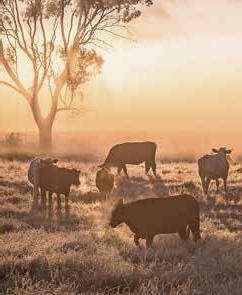
While readers prepare to turn calendar pages over to 2023, we all have our fingers crossed that Mother Nature is preparing to turn on her proverbial faucet to deliver much needed rains to western rangelands. With some late fall rains already being seen, ranchers remain hopeful that early cold temperatures across much of the state mean more moisture and snowpack is on the way.
Thank you to Robert Caucino for providing this month's cover photo.


Do you have a photo you think might work on the cover of this publication? Contact us at magazine@calcattleman.org to learn how you can submit photos!
Volume 105, Issue 11
PERSPECTIVES CATTLEMEN'S COLUMN 4 Where we've been and where we are going BUNKHOUSE 6 Fire of a different kind YOUR DUES DOLLARS AT WORK 8 On to 2023 NATIONAL PERSPECTIVE 12 Searching for sustainability PUBLIC LANDS 18 Public lands ranchers benefitting the public BEEF AT HOME AND ABROAD 20 Annual USMEF convention VET VIEWS 24 Genetic research changing how we see pinkeye SPECIAL FEATURES Sound financial advice from Farm Credit 16 Mitigating risk in the year ahead 26 Scott Valley comes together amid loss 28 READER SERVICES Obituaries 29-31 Advertisers Index 38 DECEMBER 2022
ASSOCIATION
UPCOMING EVENTS
JAN. 22-28, 2023 RED BLUFF BULL AND GELDING SALE Tehama District Fairgrounds Red Bluff FEB. 1-3, 2023 CATTLE INDUSTRY CONVENTION AND NCBA TRADE SHOW New Orleans, La.
ANOTHER COLUMN ON FIRE
by CCA Director of Communications Katie Roberti

By the time this magazine is in your hands, your mailbox will likely also be filled with Christmas cards, catalogs for holiday shopping and maybe even a few packages with presents you will scheme to hide from your family. I’ll be filled up from all the conversations and time spent connecting with the great people involved in this Association at our Annual Convention in Reno. The CCA office at 1221 H St. will be packed away, and we’ll be ready to begin the next chapter of history at a new location in the coming weeks, and the start of 2023 will only be weeks away.
I can’t think of a year that has gone faster than 2022 has for me. Wasn’t December only a few months ago? Maybe you feel the same way. Don’t get me wrong, I am a fan of all things Christmas, the recent storms in the Sierra and I look forward to what the new year will bring, but it is still hard to believe.
While 2022 went fast, it also came with plenty of work, opportunities, headlines and some personal fun. In May, I visited Chicago for the first time with my brother and friends—a bucket list item for me, as we saw the Dodgers play the Cubs and toured Wrigley Field. To better explore downtown Chicago (and take a break from eating all the popcorn, deep-dish and hot dogs the city has to offer), we made plans to do an architecture boat tour on the Chicago River, which runs through the center of the city. Although an architecture tour may sound dull to some (I was skeptical), it turned out to be one of my favorite parts of the trip. It was a great way to see Chicago and learn more about the city’s history—most of which I can’t remember now, but one story did stick with me.
Toward the end of the tour, our guide pointed out where the Great Chicago Fire of 1871 started and shared the myth of how the fire ignited. For decades the blame was placed on a cow kicking over a lantern, a story still being told well over a century later.

According to an article from NBC Chicago last year, “…historians say there is no evidence that the massive blaze that destroyed a huge swath of Chicago and displaced about a third of its residents began when Catherine O'Leary's cow kicked over a lantern.”

Devastatingly, the myth still ruined O’Leary’s life.
“Indeed, nobody puts much stock in that story these days,” the article continues to say. “In 1997, the Chicago City Council went so far as exonerating the cow and its owner.”
As our tour guide told the story, I immediately thought, “Wow, cows being blamed for something
they didn’t do isn’t a new thing?”
Each of us in the cattle industry could come up with lists of stories or issues that we’ve heard in which cattle are falsely accused of something they didn't do or are at least overly blamed. Monitoring the news every week this past year, I can think of a few examples that pop up repeatedly. Stories citing cows as an issue are frustrating to read, and I know they are easy to get upset about. Reassuringly not every story I find while monitoring is negative. There are many positive stories. But when a bad one comes up, that can be challenging to remember.
On the architecture boat tour, I was sensitive to hearing about a cow taking the blame because I care about the subject, and monitoring negative press on cows is part of my daily routine. Realistically, probably no one else got off that boat thinking about the cow’s image. It can become easy to think everyone focuses on the same headlines we
6 California Cattleman December 2022
BUNKHOUSE
read. However, a lot is going on in the world every day. Headlines change quickly, and I believe people focus on what news matters to them most. This isn’t to say our industry should ignore every unfavorable piece of press that comes our way. I think it means we have to choose which ones to respond to wisely and effectively, something our team has strived to do this entire year. If a story isn’t gaining the attention of the mainstream media or reaching the masses, there’s a decision to be made on whether responding is worth our time or if it will take time away from other priorities. Sometimes, we risk spreading false narratives or negative press further by engaging. I'm constantly working on achieving the balance of knowing when to engage and when to decide to sit back and monitor.





As we head into the new year, know that while we might not always be visibly engaging in news or


responding to headlines you may read, CCA and the California Cattlemen’s Foundation are monitoring it all. We will be correcting misinformation when we can, frequently having conversations about when to act and taking on this responsibility full-heartedly.




It is unfortunate that Catherine O'Leary and a cow were wrongly blamed for the Great Chicago Fire. But should a myth like that start today in California, we would be prepared to correct it and engage immediately.

If there is ever a concern, please reach out to me at katier@calcattlemen.org or call the office at (916) 4440845. I welcome any news or story you would like the Foundation to monitor. (For the record, I also welcome any Christmas greetings you have to send.) Merry Christmas, happy holidays and I look forward to working with you in the new year!
Happy Holidays from our
outfit to yours!
December 2022 California Cattleman 7
may we all remember the reason for the season
OUTSIDE THE LEGISLATIVE SESSION WITH EYES FIRM ON THE FUTURE
by CCA Vice President of Government Affairs Kirk Wilbur

Ranchers calling into the CCA office in the fall often ask if the Association’s government affairs work slows down after the legislative session comes to a close. The answer is that it doesn’t slow down, it just looks different.
The 2021-22 Legislative Session came to a true end on Sept. 30, the date by which Governor Gavin Newsom was required to sign or veto any legislation advanced to his desk by the Legislature by the end of the prior month. The 202324 Legislative Session will begin in earnest on Jan. 4, 2023 (though there will be a Special Session beginning Dec. 5 to consider a windfall tax on oil and gas companies).
There’s no less work to do from October through December, the work is just different – and to some extent a little more focused and less hectic than the legislative year.
Those three months provide lobbyists and other government affairs advocates opportunities to follow-up on legislative mandates, tackle long-gestating regulatory issues and to gear up for the legislative session to come.
This November, for instance, your CCA government affairs team worked tirelessly to advance the ball on a wide variety of policy priorities outside of the Legislature (in addition to monitoring the 2022 General Election and how it will shape the upcoming Legislative Session).
In the first days of the month, CCA joined a two-day meeting of the Wildfire Resilience Working Group in Sacramento to identify forest health and fire prevention policies that could enjoy widespread support and to gameplan how those policies might be effectuated in 2023 via legislation, the State Budget or regulatory reforms.
CCA has been active in the Wildfire Resilience Working Group since its inception in 2020. The Working Group is a “big tent,” including advocacy organizations representing tribal interests, land trusts, environmental groups, public health advocates, laborers and other interests. Given the diversity of the group, there are a great many issues upon which we disagree. Where these disparate interests can find common ground on wildfire resilience policy, though, our shared priorities carry extra weight with state policymakers.
In the past couple years, the Working Group has come together to successfully advocate for significant State Budget
allocations for forest health and wildfire resilience and to promote the use of prescribed fire and cultural burns, among other priorities.
The Wildfire Resilience Working Group has aligned with CCA’s efforts to reform liability laws that have historically disincentivized controlled burns, including 2021’s CCAsponsored SB 332 (Dodd) – which shields prescribed burners and landowners from liability for funds expended by CalFire in extinguishing an escaped burn under certain circumstances – and efforts to stand up a Prescribed Fire Claims Fund via the 2021 Budget and this year’s SB 926 (Dodd).
During the early-November meeting in Sacramento, the Working Group outlined several potential priorities for the 2023 legislative year, including continued funding for forest resilience and the Prescribed Fire Claims Fund, potential improvements to the Air Resources Board’s Smoke Management Guidelines to improve deployment of prescribed fire and exploring potential reforms to California Environmental Quality Act and National Environmental Policy Act (NEPA) permitting requirements.

The Wildfire Resilience Working Group will continue to meet monthly over the coming year, and the priorities identified in early November will help form the foundation of our collective lobbying efforts over that time.
Challenges presented by NEPA took center stage the following week, when CCA, other agricultural trade associations, ranchers and representatives of the U.S. Forest Service’s Pacific Southwest Region (Region 5) met in Sacramento for a Region 5 Grazing Committee meeting organized by University of California Cooperative Extension. The meeting’s purpose was for attendees to understand the scope of vacant grazing allotments within
8 California Cattleman December 2022
YOUR DUES DOLLARS AT WORK
...CONTINUED ON PAGE 10
The future of agriculture lies in our youth. We’re here to help with programs and services focused on supporting the next generation of young, beginning and small farmers.

December 2022 California Cattleman 9 American AgCredit CoBank Farm Credit West
FOR OUR FUTURE
A nationwide network of customer-owned associations supporting rural communities and
with reliable, consistent credit and financial services. FarmCreditAlliance.com (855) 611-4110 toll free
FARMING
WE ARE FARM CREDIT
agriculture
Region 5 and to brainstorm solutions to shift those areas into active grazing permits.
Several valuable insights were gleaned from the Region 5 Grazing Committee meeting. For instance, Region 5 reports that of the 213 USFS grazing allotments throughout the state which are currently vacant, 42 have undergone NEPA analysis – the bureaucratic hurdle that most commonly stands in the way of activating those allotments. Region 5 also reminded participants of a statutory categorical exclusion, signed into law in 2014, which allows a grazing permit to “be categorically excluded from the requirement to prepare an environmental assessment or an environmental impact statement under” NEPA if “the issued permit… continues the current grazing management allotment.” This exclusion has only been used once throughout the West in the past seven years, but has the potential to streamline NEPA on active allotments if properly utilized – which would free up resources to conduct NEPA on vacant allotments in order to move them into active status.
Participants discussed several strategies to move the needle on activating vacant allotments, including identifying grazing permittees to graze the 42 NEPA-analyzed vacant allotments referenced above, educating line officers and district rangers regarding available categorical exclusions and contracting with third parties to complete NEPA analysis (among numerous other potential avenues for progress). The Region 5 Grazing Committee will continue to meet – including at the CCA Annual Meeting and again in
March – to further explore activating vacant allotments and addressing other issues on Forest Service lands.
As of press time, two other consequential meetings had not yet taken place. On Nov. 17, CCA staff appeared in Redding to urge the Department of Fish and Wildlife to adopt a Pay-for-Presence Wolf-Livestock Compensation Program. That meeting was convened after CCA, the California Cattlemen’s Foundation, California Farm Bureau Federation and California Wool Growers in June demanded that such a program be set-up to compensate producers under a $3 million allocation made in the 2021 State Budget.
Finally, on Nov. 18, CCA joined a call with CalFire and other stakeholders to discuss administration of the State’s Prescribed Fire Claims Fund, established by CCA-supported SB 926 (Dodd) this year. That legislation dictates that CalFire “collaborate with other relevant state agencies, cultural fire practitioners, and burn bosses to establish guidelines governing the program and administration of the fund.”
Given the role that CCA has played in supporting the Claims Fund, advocating for prescribed fire and promoting the training of state-certified burn bosses, CalFire is eager to have the Cattlemen’s perspective as it builds out the fund.
The above is a sampling of some particularly consequential meetings just in the early part of November, to say nothing of the everyday advocacy CCA engages upon at the local, state and federal levels on behalf of California’s beef producers.
Certainly there’s no shortage of work to be done for California’s cattlemen while the Legislature is in recess – but that work is a welcome change of pace from the frenetic work of the Legislative Session!
THE BLM WELCOMES PUBLIC COMMENTS ON PROPOSED MINERAL EXPLORATION PROJECT IN IMPERIAL COUNTY
The Bureau of Land Management is seeking public comments on mineral exploration for gold within the Picacho Area of Critical Environmental Concern (ACEC) at the Oro Cruz Pit Area, in the Cargo Muchacho Mountains, Imperial County. The Project would result in minor surface disturbance and measures would be taken to prevent unnecessary or undue degradation during project operations.
The proposed project by SMP Gold Corp. includes constructing permanent and temporary access roads, making existing road improvements, creating helicopter landing pads, installing drill pads, and creating a staging area. The surface disturbance on BLM-managed land from the proposed exploration activities is approximately 20 acres. The project would be completed within a two-year period, which includes the reclamation at each drill site.
Most of the proposed drilling locations will occur within areas that have been previously disturbed by a mining project that concluded in 1996 with reclamation completed in 1999. The Picacho ACEC encompasses 183,970 acres of BLM-managed public land and contains important cultural resources and historic properties,
including the Tumco historic gold mining district. The Picacho ACEC also serves as a critical habitat for the desert tortoise and a movement corridor for wildlife species, including bighorn sheep and mule deer.
The BLM will host a virtual public informational meeting via Zoom on Wednesday, Nov. 30 from 4-5 p.m. PST. Please register in advance at: https://bit.ly/3V05jj2. The informational meeting will provide details on the project and the National Environmental Policy Act process. Written or oral comments made during the meeting will not be considered as formal public comment.
Public input on the proposed project is due by Dec. 16. Public comments may be submitted through ePlanning at: https://bit.ly/3Ej3tEd; by fax at 760-337-4490, Attn: Mayra Martinez; by mail to Bureau of Land Management, Attn: Mayra Martinez, 1661 S 4th St., El Centro, CA 92243; or by email to: mymartinez@blm.gov. Please add “Oro Cruz Exploration Project” in the email subject line.
Environmental documents, maps and other information is on the Oro Cruz Exploration Project ePlanning website: https://bit.ly/3Ej3tEd.
10 California Cattleman December 2022 ...CONTINUED FROM PAGE 8


Aaron Cell: (541) 633-3284 Rebecca Cell (541) 771-4151 P.O. Box 38, Fort Rock, OR 97735 AARON AND REBECCA BORROR www.9peaksranch.com Merry Christmas New Year! THANK YOU, FRIENDS AND BULL BUYERS, FOR YOUR SUPPORT OF OUR PROGRAM IN 2022! MAY THE YEAR AHEAD BRING JOY AND PROSPERITY TO YOU AND YOURS. — The 9 Peaks Ranch Family and a bright
GOOGLE: SEARCH BEEF SUSTAINABILITY
As I talk to cattle producers throughout the country, I’m frequently asked why NCBA talks about sustainability. I know this word can generate alarm bells, but NCBA has embraced this topic because sustainable exactly describes American cattle production. It is our duty to share the sustainability story of our industry and help to keep the media, policymakers and consumers informed with the most accurate, science-based information of beef sustainability.
The daily practices you employ on your farm or ranch contribute to cattle industry sustainability, whether you associate the word with them or not. All of us in the industry have a connection to land and our businesses would not survive unless we cared about protecting healthy grasses, rich soils and clean water. All these practices ensure that our way of life can continue for generations — that’s sustainability.
Recently, NCBA learned that Google was implementing a new search feature that would steer consumers away from beef. If someone Googled a recipe, the feature would show the carbon emissions associated with the recipe and how those emissions could change depending on the main ingredients used. As you might expect, beef is at the top of the list for protein-related emissions in this feature. Through singling out carbon emissions, this Google feature will mislead consumers into believing that they should not choose beef as a sustainable part of a nutritious diet. This search feature is flawed for many reasons, but at the top of the list is Google’s failure to account for the full, sciencebased picture of the sustainability of beef production.
To create this feature, Google is relying on data from the United Nations, which pulls from a few different sources to provide a general estimate of carbon emissions per kg of food. In any of these instances, beef will always come out looking to be the most impactful food option and this is primarily due to the methodology used to estimate carbon dioxide equivalent emissions, placing a higher weight on the short-lived greenhouse gas, methane, than the long-lived carbon dioxide. However, in a system as complex as beef production, a short-sighted view on greenhouse gas emissions is misleading and, frankly, dangerous.
As soon as we heard about this issue, NCBA contacted Google and the media about our concerns with this feature. We pushed back on the claim that Google’s feature would improve “sustainable” eating by highlighting all the conservation practices that cattle producers employ. We also argued that true sustainability is about more than just carbon in the atmosphere; it’s about protecting land, strengthening rural communities, and feeding a hungry world with the high-quality protein that is beef.
When NCBA released sustainability goals last year,
we recognized that measuring true sustainability means considering the entire impact of beef on the environment and society. While emissions play a role — and the science consistently proves that the U.S. has the lowest greenhouse gas emissions from cattle of any country in the world — sustainability should also reflect beef’s value to the environment. For example, cattle grazing improves grassland soil health and helps grasses store more carbon. Grazing also reduces wildfire fuels, which protects communities throughout the country. Since 1975, American cattle producers have reduced emissions by more than 30% while producing more beef per animal. The result is fewer emissions with more beef to feed the world.
As a protein source, beef plays an important role in our diet. Beef provides essential nutrients like vitamin B12, folate and iron, which are especially important for growing children and pregnant women. The cattle industry also supports the livelihoods of hundreds of thousands of Americans, not only producers, but also truck drivers who haul cattle, feed producers, equipment manufacturers, veterinarians and more.
Keeping rural communities strong, feeding the world, and caring for our nation’s land is sustainable in my book. All these practices ensure that our way of life can continue for generations to come, and that is the pinnacle of sustainability.
Unfortunately, only a small number of Americans ever see a farm or ranch, and the media has spread the myth of “factory farming.” To combat this narrative, we use words like sustainability to talk about the hard work and dedication that goes into raising cattle. While companies like Google may have billions of dollars to spread their message, we have the truth and data on our side.
Every day, NCBA is fighting back against the falsehoods being spread about the cattle industry. We’re in the trenches so you don’t have to be, and you can focus on what you do best: raising the highest quality beef in the world. Thank you for placing your trust in NCBA. By being a member, you’ve shown that you have our backs in this fight.

12 California Cattleman December 2022
NATIONAL PERSPECTIVE
from the National Cattlemen's Beef Association President Don Schiefelbein



MonDay, december 19 • 12 noon annual Famoso Opportunity bull and female sale 150 Fancy Heifers, Bred Cows and Cow-Calf Pairs, 50 Top Quality, Semen- and Trich-Tested Service Age Bulls from Reputable Producers plus A Good Run of Stockers and Feeders featuring Western stockman’s market DWIGHT MEBANE ........................................................ 661 979 9892 JUSTIN MEBANE ........................................................... 661 979-9894 Frank Machado ....................................................... 805 839-8166 Bennet mebane 661 201-8169 Office 661 399-2981 WEBSITE ..................... www.westernstockmansmarket.com 31911 Highway 46, mcfarland, california Your Southwest Livestock Market Leader DON’T MISS THIS OPPORTUNITY TO BUY OPEN HEIFERS, BRED COWS, PAIRS & BREEDING BULLS AT THE PERFECT TIME OF THE YEAR! Brand Them and Turn Them Out at the Start of the Grass Season THD © December 2022 California Cattleman 13
Wall Street Regulator Wades into Beef Business
from the National Cattlemen's Beef Association
The U.S. Securities and Exchange Commission (SEC) was founded at the height of the Great Depression when massive swings in the New York Stock Exchange made Americans fearful of investing in the stock market. The SEC’s mission is simple: protect investors; maintain fair, orderly and efficient markets; and facilitate capital formation.

Most Americans never interact with the SEC. While the SEC is tasked with regulating the financial markets that many Americans are invested in (through retirement, 401K or brokerage accounts), only the top investment firms, publicly traded companies and major shareholders are regulated by the agency. That is, until SEC Chairman Gary Gensler came along.
Gary Gensler was appointed SEC Chair in 2021, just a few short months after President Biden took office. Since becoming chair, Gensler has made ESG investing a top priority. ESG refers to environmental, social and governance, and it is the idea that investors should review a company’s climate policies, social and workforce practices, and corporate ethics and governance standards as part of determining whether the company is a good investment. ESG is controversial, with opponents arguing that the ESG metrics prioritize company politics over purely economic decisions.
While the SEC, members of Congress and investors have been debating ESG for some time, the cattle industry became involved when the SEC proposed a controversial, sweeping climate disclosure rule in March 2022.

Under the rule, all publicly traded companies would have to disclose their direct (scope 1), energy/electricity use (scope 2), and supply chain (scope 3) greenhouse gas emissions. By requiring the inclusion of scope 3 emissions, the SEC stepped far beyond its jurisdiction and placed a mandate on private companies like farms and ranches. Any cattle producer whose beef is eventually sold by a publicly traded restaurant or retailer could be liable for reporting greenhouse gas metrics from their operation.
This proposed rule poses a multitude of issues for cattle producers. First, there is no way to measure greenhouse gas emissions on the farm or ranch level, and the federal government already admitted as much. Second, the SEC is a financial sector regulator with no understanding of agriculture. The SEC’s divisions include corporate finance,
economic risk and analysis, enforcement, examinations, investment management and trading and markets. None of those divisions are equipped to handle agricultural or environmental issues, and the SEC would have to increase staff to even handle the amount of new data being requested. Third, the rule is a massive invasion of producer privacy. Court cases like American Farm Bureau Federation v. EPA have established the precedent that farmers and ranchers have the right to maintain data privacy, and this proposed rule would force the release of confidential information.
“The SEC is tasked with regulating large publicly traded companies and major investors, not private businesses like cattle operations,” said NCBA Chief Counsel Mary-Thomas Hart. “Immediately after the rule was released, NCBA launched a campaign to tell the SEC to stick to regulating Wall Street, not main street. NCBA also submitted technical comments with a large coalition of other livestock and agricultural organizations sending the same message.”
Through NCBA’s grassroots campaign, cattle producers submitted more than 7,460 comments to the SEC commissioners and members of Congress. This sends a strong message to policymakers that their decisions will have an impact on rural America.
NCBA also emphasized that other federal agencies already provide climate metrics for the cattle industry. The Environmental Protection Agency’s greenhouse gas inventory has consistently indicated that direct emissions from cattle account for just 2 percent of total greenhouse gas emissions. The U.S. Department of Agriculture also maintains lifecycle assessments that provide more than enough climate data to satisfy the SEC.
Now that the SEC has proposed this rule, the agency is required to review the comments they have received. This includes thousands of comments from cattle producers as well as investment industry advocates, environmental lobbyists and others. After the agency reviews the comments, the rule will be finalized and placed in effect.
“The SEC’s decision to wade into agriculture, beyond the bounds of its constitutional jurisdiction, is remarkable,” Hart said. “Regardless, NCBA will continue being an advocate for the cattle industry and we thank you for partnering with us to stop overreaching climate rules on farms and ranches.”
14 California Cattleman December 2022
10 years of hitting the genetic improvement mark
Better genetics are quickly becoming the hero to developing sustainable, efficient cattle herds. As producers seek reliable genetics to improve efficiency and carcass quality, animals with genomic information provide opportunities to reach goals at a faster pace.

In 2022, the American Hereford Association (AHA) reaches a milestone of 10 years for using genomicenhanced expected progeny differences (GE-EPDs) in its genetic evaluation. By blending conventional EPDs with genomic data gathered from DNA testing, GEEPDs have a significantly higher success rate in predicting progeny performance. Shane Bedwell, director of breed improvement for the Association, explains the benefits.
“Commercial producers — they’re buying a wellrounded bull that has the guesswork taken out of it. The amount of breed improvement those producers can make in buying a bull that has its data captured at an early stage in life, they have a great leg up,” Bedwell says. “The possible change of a young sire becomes minimized drastically when you’re buying a bull that has all of the phenotypic and genomic data included in its EPDs.”
Commercial cattlemen who buy bulls with GE-EPDs — or producers who request cattle to be genotyped — will mitigate future risk in their breeding programs. The more genomic information they have, the more accurate genetic predictions and expressed phenotypes become. The accuracy of GE-EPDs on unproven animals are equal

to 20 progeny records on average, depending on the trait.
“When our producers request an animal to be genotyped, they get lots of information,” says Jack Ward, AHA executive vice president. “If all of the parents are there, they get a parent verification. They get all of the genetic abnormalities tested for. Then, we produce a genotype that is used in the evaluation to help predict the EPDs and make them more reliable.”
The AHA was one of the first to develop and market genomic predictions, and Hereford breeders saw the improvements after applying the technology to their herds. Since then, the Baldy Maternal Index (BMI$) increased 43 percent, the Brahman-Influenced Index (BII$) increased 55 percent, and the Certified Hereford Beef Index (CHB$) increased 10 percent.
But 10 years is only the beginning for applying genomic technology to trait selection. Ward expects there to be more EPDs added in the future that will help the breed and its producers select for sustainable genetics in the industry.
“When you talk about sustainability and effects on the environment, I believe there is either going to be a trait in terms of an economic index or an EPD that will help us predict those genetics that are less harmful to the environment, or have a better effect on it,” Ward says. “I think the sky is the limit on what we might do."
December 2022 California Cattleman 15 TURLOCKLIVESTOCK AUCTIONYARD 209 634-4326 • 209 667-0811 10430 Lander Ave., Turlock, CA P.O. Box 3030, Turlock, CA 95381 www.turlocklivestock.com MAX OLVERA ............................ 209 277-2063 STEVE FARIA 209 988-7180 JUSTIN RAMOS....................... 209 844-6372 JOHN LUIZ 209 480-5101 JAKE BETTENCOURT............... 209 262-4019 TRAVIS JOHNSON .......... ......209 996-8645 TIM SISIL .................................. 209 631-6054 JOHN BOURDET ...................... 831 801-2343 CELESTE SETTRINI............831 320-1527 MATT MILLER........................... 209 914-5116 BRANDON BABA 209 480-1267 BUD COZZI ................................ 209 652-4480 EDDIE NUNES ........................... 209 604-6848 TLAY REPRESENTATIVES SPECIAL FEEDER SALE & CUSTOMER APPRECIATION DAY TUESDAY, DECEMBER 6 • 9 A.M. SALE FEATURES 1,500 TOP QUALITY CALVES AND YEARLINGS AND 150 PAIRS AND BRED COWS FROM ACROSS CALIFORNIA! TurlockLivestockAuctionYardwishesyoua MerryChristmasandablessedNewYear! JOIN US RINGSIDE FOR OUR 17 TH ANNIVERSARY THE CENTRAL CALIFORNIA MARKETING CENTER
by Dr. David M. Kohl for Farm Credit West


An uncomfortable economic environment is becoming the norm. Whether it is high inflation, increasing interest rates or volatile prices of inputs and outputs, the uncertainty can be overwhelming. While these realities, layered on top of unpredictable weather and issues finding enough productive labor, can be challenging economically, they can also take a mental toll. Here are some strategies and wisdom drawn from decades of managing through uncomfortable events in this type of economic environment.
MANAGING THE CONTROLLABLES
There is an old saying that is very appropriate in today’s economic environment: manage the controllable variables and manage around the uncontrollable ones. Wasted energy and time focused on events happening in Washington D.C., Moscow and Beijing can place your business and attitude in a downward spiral. Preparing your business with a well-thought-out, written business plan that is referred to throughout the year can allow one to develop focus on the controllables. Development of written business, family and personal goals can provide the proverbial North Star — a compass to navigate through turbulent economic seas. Analogous to shooting foul shots in front of a screaming crowd, the business plan allows you to focus over the rim and follow through with your fundamentals. Then, you will make about 80 percent of your foul shots (unless you are Steph Curry who makes 90 percent), putting the business odds in your favor.
Just-in-time versus just enough In recent years, programs implemented for inventory efficiency or just-intime management were popular for both small and large businesses. With recent supply chain issues, a new term called “just enough” is in vogue. Examine your possible weak links, including the supply of parts, inputs and possible substitutes as a game plan for operations. Whether it is a crop or livestock enterprise, timing can often be linked to the bottom-line margin as a result of production yields and quality. Plans A, B, C and D can provide the depth chart for operating in a quickly changing world.
SCENARIO PLANNING
A good set of financial spreadsheets that will test production, input costs and price scenarios can provide the financial and economic outcome guardrails. This not only keeps the business out of the financial “ditch,” but can be used to bring objective rather than emotional decisionmaking to abrupt, uncomfortable changes as they occur. As the Federal Reserve raises interest rates, financial sensitivity testing for loans with variable interest rates will need to be
examined. The key is do not wait until the end of the year to compare projected cash flows to actual results. Quarterly, monthly and, in some cases, weekly reviews of cash flow results compared to projections will be necessary in this period of inflation and uncertainty.
WORKING CAPITAL CASH BRIDGE
I chuckled the other day when a leading financial program indicated that “cash is trash,” particularly in an inflationary environment where buying power is reduced. However, in an uncomfortable economic environment, working capital and cash can be a powerful bridge to head off economic adversity, and it allows the business to capitalize on opportunities. In both of these instances, working capital and cash can actually generate high rates of return as working capital can sometimes preserve wealth and provide the opportunity to purchase discounted assets. Whether it is a nation, business or household, financial liquidity is often the chokepoint. If you want to sleep well at night, a stockpile of working capital and cash could be a remedy to improve flexibility.
SUPPORT NETWORK
Strong economic health, similar to personal medical health, requires a support network. This is why having a team of formal and informal advisors, including your lender, can be a very valuable and useful strategy. This support network can provide insight for the uncomfortable decisions, but also assist in maintaining your focus. Just like an assistant coach provides support, an advisory team can assist in confirming or correcting mechanical and fundamental flows in your business and operational strategies and actions.
Finally, take time to shut down your technology and reflect, or meditate, during the day. Exercise, both physically and mentally, to energize both the body and the mind. Watch your diet and get enough sleep or take power naps to refresh. Whether it is another individual or an animal, using a good support network can be a significant facet in your life. When you are able, providing this support to others in the agriculture industry can be a very powerful endorphin.
16 California Cattleman December 2022


Fight Back Against Lack of Rainfall With PRF! DROUGHT? WE’VE GOT YOU COVERED “We are very happy with the results of the PRF program over the past ten years. It has become part of our management strategy here on the ranch. Give WSR a Call Today.” Likely Land and Livestock wsrins.com | 877-920-8500 | Lic #0B48084 WSR is an equal opportunity employer. WE OFFER DIFFERENT PROGRAMS TO KEEP YOU IN BUSINESS DURING GOOD AND BAD TIMES! SERVING ALL SERVING ALL 48 MAINLAND STATES. ENDORSED BY CURRENT PROGRAMS •Pasture, Rangeland & Forage (PRF) NO PREMIUM DUE AT SIGNING! •Livestock Risk Protection (LRP) •Fire Insurance •Livestock Mortality •Life Insurance • Workers Compensation USDA’S PASTURE, RANGELAND & FORAGE (PRF) PROGRAM HELPS OFFSET YOUR LOSES DURING A LACK OF RAINFALL! over years
PUBLIC LANDS PERMITEES A VITAL PART OF BEEF CATTLE INDUSTRY
by National Cattlemen's Beef Association Chief Executive Officer Collin Woodall
The United States government owns and manages roughly 640 million acres, which is approximately 28 of the nation’s land. In Nevada, for example, a little over 80 percent is federally owned. Most of the public land is managed by the Bureau of Land Management, the U.S. Fish and Wildlife Service, the U.S. Forest Service and the National Park Service. Fortunately, legislation passed in the 60s and 70s requiring multiple use on these lands, so every citizen has the chance to experience these vast parts of our country. Tourism is a big part of multiple use allowing for hiking, biking and camping, but multiple use also means that these lands can be used for energy, timber and livestock production. As you can imagine, there are many activist groups that support public access to the great outdoors, but bristle at the thought of grazing cattle on “their” land. This sets the stage for conflict, especially as activist groups, such as the Western Watersheds Project, work to have livestock production restricted or removed from public lands.

The Public Lands Council (PLC) was established in 1968 to be the voice for cattle and sheep producers who operate with federal grazing permits. The voices who only want access to public lands for recreational use are loud, but cattle industry leaders at the time knew we could be effective in countering that rhetoric. NCBA has been a proud member of the Public Lands Council since it was formed. We share staff, office space and a commitment to protect grazing access. The president of PLC also serves as an ex-officio member of our Executive Committee. Public lands ranchers are faced with the same challenges as every other cattle producer. However, they have the additional challenge of trying to raise cattle with government agencies looking over their shoulder, dictating the terms of their operations and threatening the loss of their permit if they do not follow the guidelines exactly as written. Given that significant numbers of cattle graze on public lands, their challenges can ultimately have an impact on overall beef production in the United States.
Experience shows that activist groups like to push their anti-grazing efforts on permittees first in hopes they can get sympathy from government agencies and the recreational users. If they are successful in those efforts,
they use it as a playbook to take on producers on private lands. This is why it is important to protect our access to public lands and stop the activists before they can do even more harm. We do that by promoting the benefits of grazing. We all know how responsibly managed grazing can increase the health of pastures and rangelands. The same is true of federal lands and may be even more important given some of the marginal conditions found in the West. Grazing permits are not free. Producers pay the U.S. government for the access these permits provide and the government also receives the benefits from grazing such as improved range health, overall landscape aesthetics and protecting open space.
Grazing permittees help provide and protect critical habitat for many species with high conservation needs. The Greater Sage Grouse is just one example of many critters that have benefited from enhanced and improved habitat thanks to the efforts of cattle producers. Over seven million acres of Sage Grouse habitat have been restored or conserved by public lands ranchers. Hikers and bikers are not doing that. Grazing permittees also help maintain migration corridors utilized by thousands of mule deer, elk and other species. Responsible grazing also helps to fight invasive species. Cheat grass plagues western states, but grazing helps mitigate its spread by promoting growth of perennial grasses. Fire suppression may be one of the greatest benefits grazing provides for these lands, local communities and the government’s firefighting budget. Cattle grazing on public lands helps remove the buildup of excess grass and other fuels that cause wildfires to spread quicker and burn hotter. We cannot forget that public lands ranchers are also the lifeblood of their local communities. Recreation alone is not going to sustain these towns. The Department of the Interior estimates that public lands ranchers contribute $1.5 billion a year to local economies across the western U.S.
While activists and some within the Federal agencies continue to work against us, NCBA and PLC will keep fighting for producer access to public lands. Our permittee members are sustaining local communities, improving the land, and protecting against wildfires while constantly worrying about some hiker leaving a gate open.
18 California Cattleman December 2022
PUBLIC LANDS
The 2023 Cattle Industry Convention & NCBA Trade Show, Feb. 1-3, 2023 in New Orleans will be the premier education experience, drawing more than 1,000 attendees every year and includes two days of learning, idea sharing and networking.
Cattlemen’s College begins Tuesday, Jan. 31 with trending hot topics, the latest in grazing as well as live cattle handling demonstrations. The day’s activities conclude with an evening reception offering an opportunity for everyone to gather with friends and reconnect.
There are 18 sessions and six educational tracks to choose from on Wednesday including reproduction technology, herd health, practical nutrition management, better beef business, sustainable grazing and the latest in genetics.
Prior to joining the North Carolina Chamber of Commerce as general counsel, Starling served as the Chief of Staff to U.S. Secretary of Agriculture Sonny Perdue where he coordinated execution of the Secretary's policy agenda for the U.S. Department of Agriculture. Starling focused on regulatory and deregulatory initiatives and acted as a point of contact for stakeholders throughout agriculture and rural communities. He also served as a principal agriculture advisor to the President of the United States at the White House, chief of staff, lead agriculture advisor, and chief counsel for U.S. Sen. Thom Tillis, and general counsel when Tillis was Speaker of the House in the North Carolina legislature.
Each year, the Cattlemen’s College agenda is developed based on feedback from producers, and their comments drive the program.
Cattlemen’s College sessions feature industry leaders tackling innovative topics. Attendees can look forward to hearing about advocacy in action from panelists Brandi Buzzard Frobrose, Debbie LyonsBlythe and Carrie Mess; learning about the economic benefits of grazing from Myriah Johnson, Ph.D.. Farm Credit Services; understanding cattle behavior with Dean Fish, Ph.D., and Lily EdwardsCallaway, Ph.D.; experiencing the “Hundred Dollar Difference” with Dusty Abney, Ph.D., Cargill Animal Nutrition; and learning factors impacting commercial bull selection decisions from Troy Rowan, Ph.D., University of Tennessee.
With so much information presented, it is nearly impossible to experience all Cattlemen’s College has to offer in


person. To make it easier to access content, all sessions will be recorded and available for registered attendees to watch at any time in the future. To register, select the Education Package, which is the best value and combines admission to the convention and Cattlemen’s College. For more information, visit https://convention.ncba.org/.
Cattle producers attending Cattlemen’s College are eligible for reimbursement through the Rancher Resilience Grant. To apply for a grant to cover registration costs and two nights hotel, visit www.ncba.org/producers/rancher-resilience-grant.
December 2022 California Cattleman 19
Cattle Industry Convention & NCBA Trade Show THD © Becky Tekansik© CLM REPRESENTATIVES Jake Parnell 916-662-1298 George Gookin ....209-482-1648 Rex Whittle 209-996-6994 Mark Fischer ........ 209-768-6522 Kris Gudel 916-208-7258 Steve Bianchi...... 707-484-3903 Jason Dailey 916-439-7761 Brett Friend ........... 510-685-4870 Tod Radelfinger 775-901-3332 Bowdy Griffen...... 530-906-5713 WEEKLY WED. SCHEDULE Butcher Cows 8:30 a.m. Pairs/Bred Cows 11:30 a.m. Feeder Cattle 12 p.m. AUCTION MARKET 12495 E. Stockton Blvd., Galt, CA Office 209-745-1515 Fax 209-745-1582 Website www.clmgalt.com Broadcast www.lmaauctions.com UPCOMING 2023 WESTERN VIDEO MARKET SALES: January 5 from Cottonwood, CA January 26 from Red Bluff, CA SPECIAL FEEDER SALE WED., DECEMBER 7 Join Us Ringside at 12 p.m. SPECIAL PAIR AND BRED COW SALE WED., DECEMBER 14 Follow Us on Facebook for Featured Consignments SPECIAL FEEDER SALE CUSTOMER APPRECIATION LUNCH WED., DECEMBER 21 Last Special of 2022 and Annual CLM Customer Appreciation Lunch NO SALES SO OUR CLM FAMILIES CAN CELEBRATE THE HOLIDAYS ON: DECEMBER 28 AND JANUARY 4 JOIN US FOR OUR FIRST SALE OF 2023 WED., JANUARY 11 THD ©
2023
BEEF AT HOME AND ABROAD
CONFERENCE CONCLUDES WITH ELECTION OF OFFICERS, OVERVIEW OF TRADE LANDSCAPE
from the U.S. Meat Export Federation


The U.S. Meat Export Federation (USMEF) Strategic Planning Conference wrapped up Friday in Oklahoma City with the election of a new officer team. Dean Meyer, a corn, soybean and livestock producer from Rock Rapids, Iowa, is the new USMEF chair.
In addition to raising corn and soybeans, Meyer’s diversified operation – which he oversees with his three sons – includes a cattle feedlot and a farrow-to-finish hog facility. This provides him with a deep appreciation of the diverse range of agricultural sectors that make up USMEF.
“USMEF is a very unique organization where a corn grower from North Dakota, a cattle feeder from Texas and a soybean farmer from Indiana can pull together to market the same product,” Meyer said. “I’ve seen the momentum growing in the way these sectors work together, and my goal is to enhance that even more. Wearing several different hats, I have a broad perspective – and this organization is my passion.”
Meyer became involved with red meat exports through the Iowa Corn Growers Association, where he served as a director and as Iowa Corn’s USMEF representative. During his time in the USMEF leadership, Meyer has had several opportunities to visit major export markets and share details of his farming operation with importers, distributors and everyday consumers. His farm was also recently featured in a video campaign promoting U.S. beef in Japan.
“It was really an honor to showcase my family and my farm, and to educate Japanese consumers on how we sustainably raise our livestock and crops,” he said. “Our customers overseas love the quality and safety of U.S. red meat, but they want more than that. They want to know the story behind these
products and details on how they are produced. Having the opportunity to tell that story and engage with these customers has been a very positive experience.”
Meyer succeeds outgoing USMEF Chair Mark Swanson of Fort Collins, Colo., founder of food safety and management consulting firm Tru Grit KGMS Enterprises LLC. Minnesota pork producer Randy Spronk will serve as USMEF chair-elect in the coming year, while the vice chair is Steve Hanson, a cattle rancher from southwestern Nebraska. The newest USMEF officer is Secretary/Treasurer Jay Theiler, executive vice president of corporate affairs for Agri Beef, based in Boise, Idaho.
Friday’s closing business session offered attendees a comprehensive overview of the Biden administration’s current trade initiatives and their potential impact on red meat exports. Longtime U.S. trade negotiator Sharon Bomer Lauritsen, who is now a trade policy consultant with AgTrade Strategies, LLC, praised her successors for their efforts to address trade barriers that limit U.S. agricultural exports. But she questioned the degree to which the Biden administration has prioritized agricultural trade, noting that Congress still has yet to confirm the nominees for USTR chief agricultural negotiator and USDA undersecretary for trade.
“So it’s hard to get that political push for agriculture when it’s not the priority that it has been in prior administrations – including the Obama administration,” Bomer Lauritsen said.
She spotlighted tense relations between the U.S. and China but noted that the vast Chinese market still holds tremendous opportunities for U.S. agricultural exports.
“I think it’s important to try and separate food trade, and to calm some of the rhetoric we’re seeing in our own politics related to China,” she said. “While I know that your industry is having some difficulties with China, I would still argue that the Phase One Agreement that we negotiated is a huge success.”
Bomer Lauritsen closed by emphasizing the critical
20 California Cattleman December 2022
Incoming USMEF Chair Dean Meyer addresses members in Oklahoma City.
need for U.S. agriculture to remain engaged on U.S. trade policy.
“If you’re not there speaking up, you’re never going to see any positive changes,” she said. “You must engage with people at the civil service level – where I was – as well as with your elected officials in Congress and your foreign country counterparts, or things won’t get fixed.”
On Thursday, the conference focused on the 45th anniversary of USMEF’s inaugural office in Tokyo. The session showcased the value the U.S.Japan trade partnership delivers for the U.S. red meat industry, highlighting marketing initiatives and future opportunities. Japan has consistently been the leading value destination for U.S. red meat exports and 2022 is no exception, with shipments through September topping $3 billion.
Masayoshi Kinoshita, director of meat marketing and trade policy for Japan’s Ministry of Agriculture, Forestry and Fisheries, kicked off the discussion with an historical overview of meat supply and demand in Japan. Kinoshita recounted his positive experiences in working with USMEF and described the challenges Japan faces in its domestic production, leading to an expanded role for imports in meeting the country’s growing demand for red meat.
A panel discussion featuring USMEF-Japan staff was moderated by USMEF Vice President of Economic Analysis Erin Borror and included Japan Director Takemichi Yamashoji, Marketing Director Satoshi Kato and Taz Hijikata, consumer affairs director. The session centered on Japan’s value to the U.S. red meat industry as a trusted and reliable customer, and the potential for further growth as consumers in nearly every age group continue to shift from high-priced seafood consumption toward animal proteins.
Value as a trading partner goes beyond its billions of dollars in annual purchases, displaying a tremendous appetite for cuts and variety meats that are underutilized in the United States. This demand delivers value back to livestock producers and to every level of the U.S. supply chain.
“Japan is importing $20 worth of beef tongue from every animal this year and its purchases of skirts and hangers adds $10.45 to each fed animal in the U.S.,” Borror explained. “Japan also accounts for more than percent of U.S. pork loin production and about 13 to 15 percent of our picnic production through its demand for ground seasoned pork.”
Panelists described recent marketing initiatives developed to promote new applications and uses for underutilized cuts and variety meats in Japan’s foodservice and retail sectors. Longstanding industry relationships are key to USMEF’s ability to introduce and test new applications in the Japanese market. This year, for example, marketing programs have targeted the foodservice sector with promotions for fried pork loin, new pulled pork recipes utilizing the picnic and new U.S. beef recipes for Japan’s fast-growing yakiniku sector.
“Inflation and a weakened yen have tightened consumer budgets and the market is very receptive to trying affordable protein options,” said Yamashoji. “We are conducting promotions at foodservice and retail, and these new recipe ideas are reaching millions of consumers through social media.”
Thursday’s activities also included meetings of USMEF’s standing committees, which allow members to receive updates on issues impacting specific sectors. Members of the USMEF Feedgrains and Oilseeds Caucus were treated to an appearance by Oklahoma Secretary of Agriculture Blayne Arthur. She welcomed USMEF’s first-ever meeting in Oklahoma and praised the state’s agricultural organizations for their role in expanding global demand for U.S. red meat.
Global production forecasts, export projections, market access challenges and logistics updates were among the agenda items in breakout sessions for the Pork and Allied Industries Committee, Beef and Allied Industries Committee and Exporter Committee. One presentation that received particular attention was a panel discussion by USMEF’s directors in Korea, South America and the ASEAN region on convenience-driven trends in product packaging.
The Exporter Committee and Pork and Allied Industries Committee collaborated on a resolution requesting that USDA and the Office of the U.S. Trade Representative make it a top priority to reach regionalization agreements with key trading partners related to African swine fever and other foreign animal diseases. The resolution notes that when implemented in cooperation with state animal health officials, these agreements can be a critical tool for mitigating trade disruptions in the event of an animal disease outbreak.
Former U.S. Trade Representative Robert Lighthizer, who spearheaded key trade agreements achieved under the Trump administration, was honored with USMEF’s Michael J. Mansfield Award. The USMEF Distinguished Service Award was presented to Where Food Comes From co-founder Leann Saunders.

December 2022 California Cattleman 21
From left: USMEF Chair Dean Meyer, Chair-elect Randy Spronk, Vice Chair Steve Hanson and Secretary Treasurer Jay Theiler.
Fall Supreme Court Session Opens with WOTUS Case
On the morning of Oct. 3, Chief Justice of the United States John Roberts opened the Supreme Court’s fall session with 13 words: “We will hear argument first this morning in Case 21-454, Sackett v. EPA.” With these words, the court considered a case challenging one of the longest standing environmental issues impacting the cattle industry — the definition of “Waters of the United States (WOTUS).”
Despite WOTUS’ impact on the cattle industry, the case at the Supreme Court has nothing to do with cattle or even agricultural production. Eighteen years ago, Michael and Chantell Sackett purchased a lot in Idaho and planned to build their dream home. As construction began, the Environmental Protection Agency (EPA) and U.S. Army Corps of Engineers arrived on the scene and ordered them to halt, arguing that their land contained a wetland adjacent to jurisdictional navigable waters, qualifying the wetland as “navigable water” under the Clean Water Act. Over the following years, the Sacketts sued EPA with their case eventually reaching the Supreme Court this year, asking the Supreme Court to decide, once and for all, which test should be used when determining Clean Water Act jurisdiction over wetlands.
The answer to that question has implications far beyond the Sacketts’ home. In the last 50 years, cattle producers have experienced numerous, often conflicting definitions of WOTUS. On average, the federal government has changed the definition of WOTUS every 3.8 years since the Clean Water Act’s passage in 1972, leading to decades of uncertainty.
“The Supreme Court’s decision in Sackett v. EPA could finally provide certainty for cattle producers by solidifying where the EPA’s proper jurisdiction lies,” said NCBA Chief Counsel Mary-Thomas Hart. “NCBA has long fought for a consistent WOTUS definition that offers clarity to producers.”
The limits of federal water regulation have been hotly contested since passage of the Clean Water Act in 1972, involving numerous rulemakings and Supreme Court cases. In 2015, following the Supreme Court’s fractured Rapanos decision, the EPA created a widely overreaching definition that subjected nearly every water feature — including isolated features and areas that only held rainwater — to federal jurisdiction. Some of the common water features that fell under the 2015 WOTUS rule included grassed waterways, prairie potholes, rainwater, snow melt, small creeks, dry washes, drainage ditches, isolated wetlands, vernal pools, coastal prairie wetlands, pocosins, waters within a 100-year floodplain, and waters within 4,000 feet of a high tide line or ordinary high-water mark.
“The 2015 WOTUS rule was a massive jurisdictional overstep. A water feature that you can step over, a feature that only holds water when it rains, or a feature with no impact on downstream water quality should not be regulated by the federal government,” Hart said.
During the Trump Administration, cattle producers saw relief from the onerous 2015 WOTUS rule with the finalization of the Navigable Waters Protection Rule (NWPR). The NWPR limited the definition of a WOTUS to substantial bodies of water, like oceans, large lakes,
tributaries that run during a typical year or seasonally, and directly abutting wetlands. While the NWPR was not perfect, it was substantially better than the 2015 WOTUS rule. NCBA supported the NWPR and intervened in several court cases to uphold it before it was struck down by a U.S. District Court in Arizona.
Even before the District Court struck down the Navigable Waters Protection Rule, the Biden Administration made their intentions clear to craft yet another regulatory WOTUS definition. The Biden Administration’s proposed rule does not go as far as the 2015 rule but removes longstanding bipartisan agricultural exclusions that prevented isolated water features on farms and ranches from falling under federal jurisdiction. NCBA submitted technical comments calling for the reinstatement of those agricultural exclusions while also launching a grassroots campaign to add producer voices to the conversation.
“We were pleased to see over 1,700 cattle producers send comments to the EPA reminding them that an overreaching WOTUS rule would be harmful to their operations. Our staff in Washington have told the EPA every day that farmers and ranchers need flexibility out in the country, but letters from producers proved that point,” Hart said.
As the Biden administration finalizes their WOTUS rule, NCBA has urged EPA and the Army Corps to pause its rulemaking until the Supreme Court reaches a decision in the Sackett case.
“If the EPA releases a rule now and the court makes a decision in 2023, the rule will almost certainly have to be amended,” Hart said. “This only adds to the longstanding uncertainty cattle producers have faced for decades.”
The October oral arguments are the fourth time the Supreme Court has considered the definition of WOTUS, but new justices have joined the bench since the last WOTUS case. For six of the nine justices the WOTUS issue has come before them.
“The makeup of the court is very different from the last several WOTUS cases, and we’re cautiously optimistic for a positive ruling, but we also need to remain focused on pressing agency policymakers and Congressional leaders to craft a long-term WOTUS solution,” Hart said.
To ensure that cattle producers’ voices were heard in the non-agricultural Sackett case, NCBA submitted an amicus brief to the court arguing for a new legal test to determine whether a feature is a “water of the U.S.” NCBA’s test would combine the existing significant nexus test and the relative permanence test to create even more narrow WOTUS conditions. Following NCBA’s argument, a WOTUS definition should exclude isolated features (like prairie potholes), exclude ephemeral features (water that only flows when it rains), and maintain agricultural exclusions for features like stock ponds, prior converted cropland, and farm ditches.
Now that oral arguments are complete, we look forward to the court reaching a verdict. In the meantime, NCBA will continue defending cattle producers from overreaching environmental rules — like WOTUS — that threaten the success of farms and ranches.
22 California Cattleman December 2022


December 2022 California Cattleman 23 Dan Freitas Siskiyou (530) 598-1233 Chris McKoen Klamath (541) 891-8920 Eddie Ginochio Modoc (530) 640-5272 Todd Mueller Lakeview (541) 417-0132 Ed Bailey Lassen (530) 347-5051 Find us on facebook for our market report and news about special sales and upcoming events! 3877 County Road 99W Orland, CA 95963 | (530) 865-4411 | Wade Lacque, Manager • (530) 570-0547 Thank you to all of our customers who made our 70th anniversary year a great success!
GENOME SEQUENCING OF MORAXELLA BOVIS OPEN DOORS FOR INTERVENTIONS AGAINST 'PINKEYE'
from the USDA's Agriculture Research Service
Scientists have revealed that there are two different variants, or genotypes of Moraxella bovis (M. bovis), a bacterium known to cause pinkeye in cattle. This finding helps scientists understand how different types of M. bovis cause infection in livestock and can help develop preventative measures to protect U.S. cattle against this common disease.

Cattle pinkeye, or bovine infectious keratoconjunctivitis, is a very contagious eye infection that causes redness, itchiness, pain, and discomfort in the eyes of affected animals. Severe cases can result in blindness and impair weight gain in calves, and thus are a concern for animal well-being and have negative economic impacts on the beef industry in all parts of the U.S.
USDA Agricultural Research Service (ARS) and University of Nebraska-Lincoln (UNL) scientists sequenced and compared the genomes of a collection of M. bovis variants and found that they consisted of two major genotypes. They identified DNA differences between the genotypes. In addition, they found substances that can potentially be used as targets to control the disease.
"We found major differences in virulence factors between the two genotypes," said Emily Wynn, ARS research microbiologist. "For example, M. bovis has a toxin, called hemolysin toxin, which it uses to penetrate the eye. We found that the two genotypes have different versions of the toxin. This difference and others among the collection of M. bovis variants could mean that there are variations in their ability to cause disease."
In addition, the scientists identified proteins (substances) located on the outer membrane of the cell of the bacteria.
"The specific location of these proteins makes them available to the host immune system because they are located on the outer membrane. Proteins that are unique to one or both genotypes can be used as a target to develop specific preventative actions against any of the genotypes, if necessary," added Wynn.
This is important because for years scientists have been closely looking at another substance in this bacterium to develop interventions against the disease, called pilin proteins. Pilins facilitate the attachment of M. bovis to the eye. However, using pilins to develop interventions could be tricky.
"The pilin gene of M. bovis can undergo an inversion," said Mike Clawson, ARS research molecular biologist at the U.S. Meat Animal Research Center in Clay Center, Neb. "This is where parts of the gene flip and are rearranged on the bacterial chromosome. As a result, a newly formed pilin gene is created that encodes a new protein version of itself, which helps M. bovis avoid recognition by the immune system. Pilin gene
inversions have been thought to be a relatively rare process. However, we saw evidence that multiple M. bovis strains were undergoing the inversions during our study. This makes the pilin gene a challenge to use as a target and emphasizes why the outer membrane proteins identified in this study are an important discovery."
The team sequenced M. bovis strains isolated from cattle from 17 U.S. states and one Canadian province that were assembled by Dustin Loy, UNL professor and veterinary diagnostic microbiologist.
"The first finished genome of M. bovis was produced by this collaboration on an experimental strain in 2018," said Loy. "Since then, we haven't seen much progress in comprehensive sequencing of this bacterium until this study between ARS and UNL."
Loy has dedicated years of research to understanding this infectious disease, collecting samples directly from veterinarians working with cattle—for testing and identifying variabilities between the strains.
"This disease is often overlooked. Still, it is the most frequently reported disease in beef breeding cows and second in calves. Our work recognizes the economic impact this causes to beef producers," added Loy.
The team commemorates collaborative research on pinkeye that goes back approximately 58 years with the groundbreaking work of ARS researcher George Washington Pugh Jr., who was the first black scientist in the agency, and made major advances in understanding the role of M. bovis in pinkeye. More recently, UNL published a collaborative study with ARS assessing immunological responses and the effectiveness of vaccines to protect cattle against diseases associated with these bacteria.
24 California Cattleman December 2022
VET VIEWS
Moraxella bovis Gram-stain.Image of Moraxella bovis Gram-stain. (Photo courtesy of Dustin Loy, University of Nebraska-Lincoln)
Cattle Feeders Hall of Fame inductees and industry award winners will be honored on Jan. 31, 2023, during the 14 th annual banquet, which precedes the 2023 Cattle Industry Convention and NCBA Trade Show in New Orleans, Feb. 1-3. The Cattle Feeders Hall of Fame was established in 2009 to honor the exceptional visionary men and women who have made lasting contributions to the cattle-feeding industry.
Hall of Fame inductees for 2023 include Jerry Adams with Adams Land and Cattle in Broken Bow, Nebraska, and the late Ed Barrett of Barrett Crofoot Feedyards in Hereford, Texas. Thomas “Dee” Likes, former CEO of the Kansas Livestock Association, will receive the Industry Leadership Award, and Terry Wegner with Drinnin West Cattle Co. will receive the Arturo Armendariz Distinguished Service Award.
“Cattle feeders continue to play a key role in making the United States the world’s most efficient producer of safe, quality beef,” said Cliff Becker, senior vice president, Farm Journal, and Cattle Feeders Hall of Fame board member. “The 2023 inductees exemplify the visionary leaders who have made lasting contributions to the cattle-feeding industry.”
Attendees of the Cattle Feeders Hall of Fame banquet will find it convenient to stay in the Big Easy for the Cattle Industry Convention and NCBA Trade
Show, which starts the next day. The annual convention features important industry meetings, motivational speakers, valuable education, entertainment, a massive trade show, producer recognition and much more.
Cattle Feeders Hall of Fame banquet tickets are $200 per person in addition to convention registration. All proceeds from banquet ticket sales and corporate sponsorships benefit future Hall of Fame initiatives.
For more information about the 2023 Cattle Industry Convention and NCBA Trade Show and to purchase tickets to the Cattle Feeders Hall of Fame banquet, visit convention.ncba.org. For more information about the Cattle Feeders Hall of Fame and 2023 inductees, visit www.cattlefeeders.org.
Over the years, America's cattle feeders have played a key role in making the United States the world’s most efficient producer of safe, quality beef. The Cattle Feeders Hall of Fame was established in March 2009 to honor exceptional visionary men and women who have made lasting contributions to the cattle-feeding industry.
The purpose of the Cattle Feeders Hall of Fame is to celebrate the rich traditions of the cattle-feeding industry and recognize individuals who have devoted their careers to preserving its mission and improving production practices.
1.
Combine Seasoning ingredients; press evenly onto all surfaces of beef Strip Roast.

2. Place roast on rack in shallow roasting pan. Insert ovenproof meat thermometer so tip is centered in thickest part of beef, not resting in fat. Do not add water or cover. Roast in 325°F oven 1-1/4 to 1-1/2 hours for medium rare; 1-1/2 to 1-3/4 hours for medium doneness.
3. Meanwhile prepare Wine Sauce. Heat olive oil in large nonstick skillet over medium heat until hot. Add mushrooms and shallots; cook and stir 6 to 9 minutes or until mushrooms are tender and browned. Remove from skillet; keep warm. Add 3/4 cup broth and wine to skillet; cook and stir over medium heat 12 to 16 minutes or until reduced to 1 cup. Combine remaining 1/4 cup broth and cornstarch in small bowl. Whisk cornstarch mixture and pepper into wine mixture; bring to a boil. Cook 1 minute or until sauce thickens, stirring occasionally. Remove from heat; add thyme and mushroom mixture. Season with salt, as desired.
4. Remove roast when meat thermometer registers 135°F for medium rare; 145°F for medium. Transfer roast to carving board; tent loosely with aluminum foil. Let stand 10 to 15 minutes. (Temperature will continue to rise about 10°-15°F to reach 145°F for medium rare; 160°F for medium.)
5. Carve roast into slices; season with salt, as desired. Serve with Wine Sauce.
December 2022 California Cattleman 25
GREEN PEPPERCORN CRUSTED STRIP ROAST WITH RED WINE SAUCE Home for the
Ingredients: 1 beef Strip Roast (3 to 4 pounds) Seasoning 1 tablespoon green peppercorns 2 teaspoon granulated garlic 2 teaspoon kosher salt 2 teaspoon freshly ground black pepper 1 teaspoon lemon peel Wine Sauce 2 tablespoon olive oil 4 ounces slicec cremini or button mushrooms 1/4 cup finely chopped shallots 1 cup beef broth 1 cup Cabernet Sauvignon 1 tablespoon cornstarch 1/4 teaspoon cracked black pepper 1 teaspoon fresh thyme kosher salt Directions:
Cattle Feeders Hall of Fame Announces 2023 Inductees
Holidays
Preheat oven to 325°F.
MORE WORRY FREE IN 2023
Agricultural producers can now change election and enroll in the Agriculture Risk Coverage (ARC) and Price Loss Coverage programs for the 2023 crop year, two key safety net programs offered by the U.S. Department of Agriculture (USDA). Signup began Monday, and producers have until March 15, 2023, to enroll in these two programs. Additionally, USDA’s Farm Service Agency (FSA) has started issuing payments totaling more than $255 million to producers with 2021 crops that have triggered payments through ARC or PLC.
“It’s that time of year for produces to consider all of their risk management options, including safety-net coverage elections through Agriculture Risk Coverage and Price Loss Coverage,” said FSA Administrator Zach Ducheneaux. “We recognize that market prices have generally been very good, but if the ongoing COVID-19 pandemic, frequent catastrophic weather events and the Ukraine war have taught us anything, it’s that we must prepare for the unexpected. It’s through programs like ARC and PLC that FSA can provide producers the economic support and security they need to manage market volatility and disasters.”
2023 ELECTIONS AND ENROLLMENT
Producers can elect coverage and enroll in ARCCounty (ARC-CO) or PLC, which provide crop-by-crop protection, or ARC-Individual (ARC-IC), which protects the entire farm. Although election changes for 2023 are optional, producers must enroll through a signed contract each year. Also, if a producer has a multi-year contract on the farm and makes an election change for 2023, they must sign a new contract.
If producers do not submit their election by the March 15, 2023 deadline, their election remains the same as their 2022 election for crops on the farm. Farm owners cannot
enroll in either program unless they have a share interest in the farm.
Covered commodities include barley, canola, large and small chickpeas, corn, crambe, flaxseed, grain sorghum, lentils, mustard seed, oats, peanuts, dry peas, rapeseed, long grain rice, medium and short grain rice, safflower seed, seed cotton, sesame, soybeans, sunflower seed and wheat.
WEB-BASED DECISION TOOLS
In partnership with USDA, the University of Illinois and Texas A&M University offer web-based decision tools to assist producers in making informed, educated decisions using crop data specific to their respective farming operations. Tools include:
Gardner-farmdoc Payment Calculator, a tool available through the University of Illinois allows producers to estimate payments for farms and counties for ARC-CO and PLC.
ARC and PLC Decision Tool, a tool available through Texas A&M that allows producers to obtain basic information regarding the decision and factors that should be taken into consideration such as future commodity prices and historic yields to estimate payments for 2022.
2021 PAYMENTS AND CONTRACTS
ARC and PLC payments for a given crop year are paid out the following fall to allow actual county yields and the Market Year Average prices to be finalized. This month, FSA processed payments to producers enrolled in 2021 ARC-CO, ARC-IC and PLC for covered commodities that triggered for the crop year.
For ARC-CO, producers can view the 2021 ARC-CO Benchmark Yields and Revenues online database, for

26 California Cattleman December 2022
RISK AND
COVERAGE GIVING PEACE OF MIND
THE YEAR AHEAD
AGRICULTURE
PRICE LOSS
IN
from the USDA's Agriculture Research Service
payment rates applicable to their county and each covered commodity. For PLC, payments have triggered for rapeseed and peanuts.
For ARC-IC, producers should contact their local FSA office for additional information pertaining to 2021 payment information, which relies on producer-specific yields for the crop and farm to determine benchmark yields and actual year yields when calculating revenues.
BY THE NUMBERS


In 2021, producers signed nearly 1.8 million ARC or PLC contracts, and 251 million out of 273 million base acres were enrolled in the programs. For the 2022 crop year signed contracts surpassed 1.8 million, to be paid in the fall of 2023, if a payment triggers.

Since ARC and PLC were first authorized by the 2014 Farm Bill and reauthorized by the 2018 Farm Bill, these safety-net programs have paid out more than $34.9 billion to producers of covered commodities.


CROP INSURANCE CONSIDERATIONS


ARC and PLC are part of a broader safety net provided by USDA, which also includes crop insurance and marketing assistance loans.
Producers are reminded that ARC and PLC elections and enrollments can impact eligibility for some crop insurance products.
Producers on farms with a PLC election have the option of purchasing Supplemental Coverage Option (SCO)
through their Approved Insurance Provider; however, producers on farms where ARC is the election are ineligible for SCO on their planted acres for that crop on that farm.
Unlike SCO, the Enhanced Coverage Option (ECO) is unaffected by an ARC election. Producers may add ECO regardless of the farm program election.
Upland cotton farmers who choose to enroll seed cotton base acres in ARC or PLC are ineligible for the stacked income protection plan (STAX) on their planted cotton acres for that farm.
MORE INFORMATION
For more information on ARC and PLC, visit the ARC and PLC webpage or contact your local USDA Service Center.
USDA touches the lives of all Americans each day in so many positive ways. In the Biden-Harris administration, USDA is transforming America’s food system with a greater focus on more resilient local and regional food production, fairer markets for all producers, ensuring access to safe, healthy and nutritious food in all communities, building new markets and streams of income for farmers and producers using climate smart food and forestry practices, making historic investments in infrastructure and clean energy capabilities in rural America, and committing to equity across the Department by removing systemic barriers and building a workforce more representative of America. To learn more, visit usda.gov.
USDA is an equal opportunity provider, employer and lender.
December 2022 California Cattleman 27 Due Diligence Assistance / Budgeting Site & Improvements Assessment Conservation Easement Opportunities Advising for USDA NRCS Federal Cost-Share Incentives Programs USDA NRCS Technical Service Provider # 04-4096 Design / Installation Oversight / Final Check-Out CONSERVATION PROJECT Planning / Management / Coordination Solar Water Pumping Systems Design & Installation Enhancement Projects / Equipment Evaluation / Range Management Assessments Rangeland Improvements LLC www.freitasrangelandimprovements.com P.O. Box 2479 Livermore, CA. 94551 Jed Freitas 925.580.6415 Licensed/Bonded/Insured – WESTERN POLY PIPE, LLC –HDPE PIPE FOR RANCH & FARM WATER SYSTEMS DELIVERY AVAILABLE • (925) 240-3643 GOOD SERVICE COMPETITIVE PRICES RANCHER-OWNED Western Poly Pipe —lifetime pipe—
#SCOTTVALLEYSTRONG SISKIYOU COMMUNITY BANDS TOGETHER THROUGH LOSS


 by Regina Hanna, Crown H Cattle Co
Scott Valley is located in the rugged mountains of Siskiyou County at the top of the state. Known for its scenic vistas, ranches and farms, the rural folks here are very much the outliers of what it means to be a Californian. These proud and welcoming people also fiercely support and celebrate their community. In a moment’s notice they’ll repair a driveway for a neighbor, cook a month’s worth of meals for a sick family, or raise thousands of dollars to send FFA kids to Washington, D.C.
The strength of Scott Valley was most recently felt supporting the Isbell Family. Their son, Miles, battled brain cancer for two years. Scott Valley rolled up its sleeves and held numerous fundraisers to support the family and pediatric cancer research. If you Google #MilesTheBrave, you’ll see an 11-year-old boy who inspired people around the world to live each day to its fullest, give back to their community, always look for the bright side and rock
out to “Don’t Stop Believin’” by Journey, his theme song.
Sadly, Miles passed away on Oct. 21, 2022, surrounded by family and friends. Local rancher and business owner, Mary Heffernan, who helped spearhead Miles’ celebration of life writes, “Community. Miles inspired us in so many waysbut what we saw time after time during his fight against brain cancer was the ways he brought our community together for good.”
The big hearts, strong hands and neighborly-devotion of Scott Valley was evident on Saturday, Nov. 5, when the community gathered to commemorate the vibrant life of Miles Isbell. There were more than 1,200 people in attendance at his celebration of life. It was held in a friend’s hay barn and continued into the evening with lantern lights and his favorite music filling the sky. As Miles’ parents, Joy and Bradley Isbell, share, “If you don’t have a #ScottValleyStrong, go build it!”
EDITOR'S NOTE: In the November issue of the California Cattleman, we kicked off a series of stories from Siskiyou County starting with a feature on the opening of the Nexus Beef Packing Plant in Yreka. Given the widespread communication being shared by ranchers in the Siskiyou County and beyond about Miles’ story and celebration, the California Cattleman editorial team made the decision to plug this story in the series. In the next issue of this magazine, look for the third feature of this series to highlight a few Scott Valley ranchers with direct-to-consumer businesses—including Regina Hanna with Crown H Cattle Co.
28 California Cattleman December 2022
Photos courtesy of Della Hayden, Circle Bar Co.
Young friends and family served as Miles' Pall Bearers.
Community members gathered to grieve together the night prior to the service and below, friends wait in line to pay their respects the morning of Miles' funeral.
In Memory
After a two year battle with brain cancer, Miles John Isbell passed away at home on Oct. 21, surrounded by family and friends. Throughout his battle “Miles The Brave'' inspired people around the world with his perseverance and strength to live each day to the fullest, give back to their community, always look for the good even in the darkest of times and “Don’t Stop Believin.”
Miles was born on April 18, 2011 in Yreka, and he entered the world with a smile that never faded. He grew up in Scott Valley – where he truly learned what it means to be #scottvalleystrong.

Miles’s early school years were spent at Eileeny’s daycare where he met many of his first true lifelong friends. He then attended Fort Jones Elementary School from kindergarten through 5th grade and began his first year of middle school at Scott Valley Junior High this past fall. There wasn’t a child or educator who knew Miles who didn’t feel loved by him. He truly was a friend to all, and to know him was to know friendship. Miles worked hard at school and became an avid reader.
Miles always had a creative side which was showcased in his artwork and hundreds of Lego creations. One of his photographs was featured in a gallery in San Francisco and purchased to raise funds for pediatric cancer research. From an early age, he loved listening to and creating music. Miles learned how to play the guitar and took to the stage many times to sing his favorite 80s songs with friends, solo, or even with a band.
Miles loved a good joke and making people laugh. He was fearless in his pursuits and his expression of who he was. He committed to growing a mullet for over a year in order to be the authentically perfect MacGyver for Halloween. The mullet stayed with him for another Halloween, and he even had it permed before the first day of school.
Although Miles truly loved his friends, he shared an even deeper love for his family. His brother, parents, grandparents, aunts, uncles, and cousins meant the world to him, and no one enjoyed a family gathering like Miles.
Miles took to running at an early age and earned a spot in the 100 mile club in the first grade with Mrs. Dean. He raced in many events in Siskiyou County with his friend Peter, some even as long as six miles. Miles earned a spot on the Scott Valley Dirt Dogs travel baseball team,
and if enthusiasm could win any game, they would have had a solid record thanks to Miles alone. He was an avid fisherman and hunter. Many a good hunting or fishing tale was shared with his brother and buddies Wyatt and Finn. Miles loved to snowboard. He also swam for the Scott Valley Sharks swim team. Miles enjoyed board games, was quite the pool shark, and became pretty good at poker.
Miles was a natural leader. He was a student senator at school and President of his Fort Jones 4H Club. During his membership in 4H, he raised hogs for the county fair, participated in marksmanship, and enjoyed the cooking class.
The last two years provided Miles with many opportunities due to the graciousness of others; in return, he showed the world how to live life and love your community. Miles helped raise funds for Angel Flight West and was honored at the Endeavor Awards for his heroism and bravery. He was also committed to supporting the construction of the new Olsrud Family Women's and Children's Hospital in Medford, Oregon. Asante was his second home for two years and not only helped try to save his life but also his spirit. He was excited for the new facility because of the improvements it will bring in the future for kids like him. He and his brother donated thousands of dollars of their own money from profits from their 4H animals and inspired thousands of others, including their friends, to do the same. As the Miracle Kid, he helped raise over 3 million dollars in one night for this cause.
In the last month of his life, Miles earned two additional titles. Etna High School students crowned him honorary football Homecoming King, and he was officially given the title of Lord Miles John Isbell after generous friends bought him and his brother some land on a Scottish estate.
Miles was welcomed into heaven by his older brother Paul Isbell, grandfather Terry Weekley, and greatgrandparents Cora Madole, Orin “Doc” Madole, and Anna Andrews. He is survived by his immediate family Bradley, Joy, and Carter; his grandparents John and Marcia Isbell and Carol Weekley; and his aunts, uncle and cousins, including Raylene, Jess, Mason and Shelby Lang and Vanessa Weekley. He will also be missed by numerous other family members and his precious dog and loyal companion Charlee.
A celebration of life was held on Saturday, Nov. 5 at the Sweezey Ranch in Etna. A graveside burial followed at the Fort Jones Cemetery where he will be laid to rest with his great-grandparents and older brother Paul.
Donations in Miles’s name are welcomed to the Asante Foundation www.asantefoundation.org/Miles or Scott Valley Scholarships www.scottvalleyscholarships.org
December 2022 California Cattleman 29
MILES ISBELL
MIKE CHRISMAN
Phillip Michael Chrisman, 78, of Visalia, passed away on Oct. 11, surrounded by family and friends.

Mike was born to parents Ira ‘Jack’ and Charlotte Chrisman on Sept. 24, 1944, in Visalia as the fourth generation on the family farm and cattle ranch.
He attended Mt. Whitney High School, graduating in 1962. He then attended the University of Arizona, where he met and married the love of his life, Barbara Paul, in 1964.
He earned his degree in Agronomy from The University of Arizona in 1966 before coming home to Tulare County to join Chrisman Ranch and pursue his passion for farming and cattle ranching. Ten years later, he returned to University of Arizona to pursue his master’s degree in Agricultural Education.

Mike complimented his farming and ranching heritage with a long record of public service. He served as Gov. Arnold Schwarzenegger’s Secretary of Natural Resources from 2003 until 2010. As a member of Gov. Schwarzenegger’s cabinet, Chrisman served as the governor’s chief adviser on issues related to the state’s
natural, historic and cultural resources.
Prior to that, he served as Chief of Staff for Assemblymen Bill Jones, and was appointed by Governor Pete Wilson to serve as Undersecretary of California Department of Food and Agriculture. In addition, Mike proudly served on numerous local and state boards, commissions, and trade associations over his lifetime, leaving a behind a deep legacy of agricultural and natural resource leadership.
Mike is survived by his son Josh (Julie Chrisman), daughter Jessica (Chris Nelson), granddaughter Kendall Chrisman, grandsons Tate, Dane and Dirk Nelson and Seth Chrisman, and brother Steve Chrisman. He was preceded in death by his loving wife, Barbara, in which he cherished their 56 years of marriage, and his parents Ira ‘Jack’ and Charlotte Chrisman.
It was Mike’s wish to be cremated so that his ashes would forever be a part of the land he loved and be joined with his wife Barbara’s ashes for eternity on their historic foothill ranch in Drumm Valley.
The memorial service to spread Mike’s ashes will be a private ceremony with his immediate family. In lieu of flowers, donations can be made in Mike’s name to Sequoia Riverlands Trust by mail at 427 S. Garden Street, Visalia, CA 93277, or online at www.sequoiariverlands.org.
learning Italian, and playing on his excavator.
Harry Kilgore Bosworth was born Sept. 3, 1938 to Marie (Glaser) and Obed Bosworth. As a fourth generation Geyservillian, Harry attended Geyserville Schools, graduating in 1956 and then joined the Army hoping to become a mechanic and see Europe. Instead, he was stationed in Alabama and West Texas and trained in electronics. After discharge he came home, took classes at the Santa Rosa Junior College and joined the Jaycees.
In 1966, he was introduced to Karen Dunlavy and they married the following year. Together they built their life in Geyserville with their two daughters Rachel and Gretchen. They bought a ranch and Harry operated many local businesses including: Bosworth Electronics, Bosworth Hardware, Geyserville Water Works, Bosworth & Son Store and Olive Hill Cemetery.
Unofficially known as the Mayor of Geyserville, Harry was very active in his community. He served on many boards including: Geyserville School Board, Chamber of Commerce, Kiwanis, Odd Fellows, Fire Department Board, Friends of Lake Sonoma, Community Foundation and Historical Society.
Harry had many hobbies that included: Racing crackerbox boats, racing dirt bikes, fly fishing, driving large animal teams (Sonoma County Trailblazer member),
Harry lost the battle with Lymphoma on November 8, 2022. He is survived by his wife of 55 years, Karen, his daughters Rachel (Dean Prat) and Gretchen (Brian Crebs), and his granddaughters Morgan and Amy Crebs, his brother Charles Beers and several nieces and nephews. He is preceded in death by his sister Louise Bosworth Davis.
In lieu of flowers, please make a donation to any of the above Geyserville organizations.
A celebration of life services will be held on Saturday, Dec.10, 1 p.m. at The Geyserville Oriental Hall.
30 California Cattleman December 2022
In Memory
TO SHARE YOU FAMILY NEWS — OBITUARIES, WEDDINGS AND BIRTH ANNOUNCEMENTS — PLEASE E-MAIL YOUR INFORMATION TO: MAGAZINE@CALCATTLEMEN.ORG OR CALL THE CCA OFFICE AT (916) 444-0845 share your news!
HARRY BOSWORTH
Thomas David Bengard, age 85, passed away peacefully on Nov. 12, 2022, following a lengthy battle with Alzheimer’s disease. He was surrounded by his family at his home on the ranch in Salinas.

Tom was truly one of a kind. He was a successful entrepreneur and influential in both the produce and cattle industries. He had a reputation for being genuine, honest, fair and good to work with. Tom had an easy smile and a twinkle in his eye that made people feel comfortable, and his laugh was contagious. He was always on the go and looking for others to join him. Tom was dearly loved by his family and his friends and he will be missed.
A lifelong resident of Monterey County, Tom was born on May 3, 1937 in Bitterwater to Chris and Dorothy (Eade) Bengard. The family later moved to King City where Tom grew up with his two older brothers Wesley and Darrel “Nick”. Tom was active in 4-H and FFA, sports, and the community. He raised sheep, one year taking the Grand Champion Lamb to the fair. He made All-League for Football and he was the Student Body President at King City High School.
Tom loved the outdoors and he enjoyed hunting, fishing and riding around the ranch checking cattle with his family. As a young man, Tom worked alongside his brothers in the family’s walnut orchard and they also harvested grain. He developed a love for agriculture at an early age and decided that he wanted to pursue a career in it. After graduating from high school, Tom attended UC Davis where he majored in Agricultural Economics.
While at Davis, Tom joined the Phi Delta Theta Fraternity where he made many life-long friends, most importantly Bruce Sconberg, who introduced him to his future wife. Terry Sconberg came to Davis in 1958 and she and Tom were soon a pair. They married on March 5,1959 and were together for over 60 years until her passing. Tom and Terry were partners in life, raising three children and starting a farming and ranching enterprise that kept them busy throughout their years.
After fulfilling his military obligations, Tom began his farming career in Salinas. He started out with field crops, growing beans, potatoes and beets. He had some success and by the early 1970s he was growing more high-value row crops, such as lettuce and broccoli. He formed Tom Bengard Ranch, Inc. and became vertically integrated. Tom was soon harvesting, packing, selling and shipping produce in cartons with his own labels. During the decades that followed, Tom entered into numerous strategic partnerships and expanded and diversified his farming business throughout California and into Arizona, Florida and Mexico. He was chairman of the Grower-Shipper Vegetable Association and he served on the Board of Western Growers Association for many years.
The cattle business was another endeavor that Tom and Terry pursued together. They started out with 150 cows in 1973 on the family’s home ranch in Salinas. Over the years, they built it up to a commercial herd of 2,500 Black
Angus cows on ranches they purchased in Monterey, San Benito, Tehema, Shasta and Plumas counties in California and Klamath Falls, Oregon. In 2014, Tom was named Monterey County’s Cattleman of the Year.
Tom loved the western traditions that were a big part of his upbringing in the Salinas Valley. He enjoyed brandings, rodeos and being a member of Rancheros Visitadores where he made many friends. While in R.V., he served as Camp Captain for El Campo de Los Bustardos. The trail rides, parties and activities surrounding these events were some of the best of times.
The Bengard’s connection to UC Davis remained a part of their life for many years. Tom served on the Deans Advisory Council for the UC Davis College of Agriculture, the UC Davis Chancellors Club, and the Cal Aggie Foundation. Tom’s close friendships with his brothers from the UC Davis Phi Delta Theta Chapter lasted throughout his life. He and Terry hosted numerous fundraisers and gettogethers at their home for these groups and many others throughout the years.
The secret to Tom’s success is that he had vision, a strong work ethic, good intuition, and he was able to take advantage of the opportunities that came his way. He was humble, friendly, honest and he treated others with kindness and respect. Tom was not afraid to take a risk, and truth be told, he usually had a little luck on his side. He was a good manager and he knew how to build a team. Many valued and trusted employees that worked for him over the years became a part of his family.
Tom knew how to work, but he also knew how to have fun. He was always up for an adventure and he never turned down a hunting, fishing, skiing or snow-mobiling trip with the guys. Tom was a man’s man and he loved the great outdoors. He enjoyed trips to Tahoe with his family and friends - skiing in the winter and boating in the summer were some happy memories for him and his family. He lived a full life and he did what he wanted to do.
In his later years, he mostly wanted to be with Terry and his family out enjoying the ranches that he was so proud of. He loved taking the kids along with him to hunt, shoot squirrels or just ride around checking cattle. These were all great opportunities for him to share his wisdom and tell his story. The conversation usually started out with “Let me tell ya something” and went on from there. He will be fondly remembered by his family for being kind, wise, humble, generous and fun!
Tom was preceded in death by his parents, beloved wife and his brothers Wesley and Darrel Bengard. He is survived by his children, Bardin (Pam) Bengard, Tracy (Paul) Pezzini, and Tom (Louise) Bengard, all of Salinas; 10 grandchildren, Bridget (Chris) Rotticci, Bardin (Stephanie) Bengard, Sarah Bengard, Christian (Lucy) Bengard, Haley (Mason) Mallory, Wesley Pezzini, Michael Bengard, Jamie Bengard, Owen Bengard and Nick Bengard; and six great grand-children.
A private family service will be held at the ranch. In lieu of flowers, the family asks that you make a donation in Tom’s memory to Alzheimer’s Disease Research Foundation, UC Davis College of Agriculture, the California Rodeo or the Salinas Valley Fair Heritage Foundation.
December 2022 California Cattleman 31
Tom Bengard


32 California Cattleman December 2022 California Cattlemen’s Association Thank you for a tremendous sale season! CALL US FOR INFORMATION ABOUT OUR PRIVATE TREATY CATTLE OR OUR ANNUAL BULL SALE! 82914 Milburn Ave • Anselmo, NE 68813 KENNY & DIANNE READ 1485 SW King Lane • Culver, OR 97734 Ranch: (541) 546-2547 Cell: (541)480-9340 E-mail: barkdranch@msn.com visit us online at: www.barkdangusranch.com Look for our “Distinctly Different” Angus bulls annually at Red Bluff and Modoc Bull Sales! BAR KD RANCH BAR KD RANCH Elevating Angus to Greater Horizons VISIT US AT WWW.DONATIRANCH.COM! 916.712.3696 • 916.803.2685 jj@barrangus.com Angus RAnch Annual Bull Sale: Sat., September 1, 2018 Inaugural Female Sale: Mon., October 15, 2018 Tim & Marilyn Callison Owners Chad Davis 559 333 0362 Travis Coy 559 392 8772 Justin Schmidt 209 585 6533 Ranch Website www.ezangusranch.com 2022 Female Sale: Oct. 10, Porterville services for all your on-the-ranch needs Ranch Buyer’s Guide THANK YOU TO OUR 2022 BULL BUYERS!





December 2022 California Cattleman 33 LOOK FOR US AT LEADING SALES IN 2022. Scott & Shaleen Hogan H R (530) 200-1467 • (530) 227-8882 Gerber, CA Registered Angus Cattle Call to see what we have to offer you! RED RIVER FARMS 13750 West 10th Avenue Blythe, CA 92225 Office: 760-922-2617 Bob Mullion: 760-861-8366 Michael Mullion: 760-464-3906 Simmental – SimAngus™ – Angus Offering bulls at California’s top consignment sales! Call today about private treaty offerings! O’NEAL RANCH BULLS OFFER THE COMPLETE PACKAGE O’NEAL RANCH — Since 1878— Gary & Betsy Cardoza PO Box 40 • O’Neals, CA 93645 (559) 999-9510 Join us at the annual “Performance Plus” Bull Sale in O’Neals on Sept. 6, 2022 GROWTH • PERFORMANCE ADAPTABILITY • CARCASS Hoffman Bomber 8743 SIRE: Casino Bomber N33 MGS: S A V Final Answer 0035 VDAR Mirror Image 6207 SIRE: W R A Mirror Image T10 MGS: BCC Bushwacker 41-93 CONTACT US ABOUT SEMEN FROM THESE IMPRESSIVE SIRES... • Calving Ease with Growth • O’Connell Aviator 7727 SIRE: Musgrave Aviator MGS: R B Tour Of Duty 177 VDAR PF Churchhill 2825 SIRE: VDAR Churchill 1063 MGS: VDAR Really Windy 4189 Joe Sammis • (530) 397-3456 122 Angus Rd., Dorris, CA 96023 h (775) 691-1838 • honeranch@frontier.com HONERANCH.COM PERFORMANCE-TESTED EFFICIENT, QUALITY ANGUS BULLS NOW AVAILABLE! You can take to the bank! O’Connell ranch Call us about females available private treaty. Join us Sept. 9 for our annual Black Gold Bull Sale! DAN & BARBARA O’CONNELL 3590 Brown Rd, Colusa CA (530) 458-4491 Nathan, Melissa & Kate Noah (208) 257-3686 • (208) 550-0531 (530) 385-1570 E-mail...............................tehamaranch@gmail.com Thanks to our buyers at the 48th Annual “Generations of Performance” Bull Sale John Teixeira: (805) 448-3859 Allan Teixeira: (805) 310-3353 Tom Hill: (541) 990-5479 A FAMILY TRADITION www.teixeiracattleco.com | cattle@thousandhillsranch.com Angus and SimAngus Ca le Thank your to all our buyers for your support this year!



34 California Cattleman December 2022 Dwight Joos Ranch Manager P.O. Box 1019 • Simi Valley, CA 93062 805-520-8731 x1115 • Mobile 805-428-9781 dwight.joos@pwgcoinc.com Simi Valley, CA pwgillibrandcattle.com P.W. GILLIBRAND Cattle Co. Horned and Polled Hereford Genetics Private treaty bulls available or watch for our consignments at Cal Poly! THANK YOU TO OUR 2022 SALE SUPPORTERS! Call us today for information on private treaty bulls or females. MCPHEE RED ANGUIS 14298 N. Atkins Rd • Lodi, CA 95248 Nellie, Mike, Mary, Rita & Families Nellie (209) 727-3335 • Rita (209) 607-9719 website: www.mcpheeredangus.com thank you to our 2022 Buyers! 11500 N Ambassador Drive, Suite 410 | Kansas City, MO 64153 | (816) 842-3757 | aha@hereford.org Chris Beck • 618-367-5397 79337 Soto Lane Fort Rock, OR 97735 Ken 541.403.1044 | Jesse 541.810.2460 ijhufford@yahoo.com | www.huffordherefords.com “Breeding with the Commercial Cattleman in Mind” 3L Registered Hereford Cattle & Quarter Horses Annual Sale First Monday in March 42500 Salmon Creek Rd Baker City, OR 97814 Ranch: (541) 523-4401 Bob Harrell, Jr.: (541) 523-4322 THANK YOU FOR YOUR SUPPORT AT OUR 2022 BUTTE BULL SALE! JOIN US IN ALTURAS IN FEBRUARY 2023! Oroville, CA LambertRanchHerefords.com CONTACT US FOR CATTLE AVAILABLE PRIVATE TREATY OFF THE RANCH “THE BRAND YOU CAN COUNT ON” REGISTERED HEREFORD CATTLE BARRY, CARRIE & BAILEY MORRELL Barry: (530) 6825808 • Carrie: (530) 218-5507 Bailey (530) 519-5189 morrellranches@yahoo.com 560 County Road 65, Willows CA 95988 Call us about our upcoming consignments or private treaty cattle available off the ranch. OFFICE@VINTAGEANGUSRANCH.COM WWW.VINTAGEANGUSRANCH.COM Bulls and females available private treaty! SEEDSTOCK PRODUCER SINCE 1978 Greeley Hill, CA • La Grange, CA Stephen Dunckel • (209) 591-0630 www.tumbleweedranch.net twd@tumbleweedranch.net TUMBLEWEED RANCHES Leading Angus & Ultrablack© Genetics


December 2022 California Cattleman 35 OFFERING HEREFORD BULLS BUILT FOR THE COMMERCIAL CATTLEMAN Jim Mickelson (707) 481-3440 THE DOIRON FAMILY Daniel & Pamela Doiron 805-245-0434 Cell doiron@spanishranch.net www.spanishranch.net THD © SPANISH RANCH Your Source for Brangus and Ultrablack Genetics in the West! Vaccines Medicines Mineral Supplements Antonia Old • (209) 769-7663 antonia.old@animalhealthinternational.com ...and more! Reliable products you are looking for with the dependable service you need. LITTLE SHASTA RANCH Stan Sears 5322 Freeman Rd. Montague, CA 96064 (530) 842-3950 Genetics That Get Results! Call anytime to see what we can offer you! OMF EPIC E27 Owned with Owned with Oak Meadows Farms & Schooley Cattle. SONS AVAILABLE IN 2021-2022 2015 AICA Seedstock Producer of the Year Feedlot • Rice • Charolais Jerry & Sherry Maltby www.brokenboxranch.com bbr@citlink.net PO Box 760 Williams, CA Mobile: (530) 681-5046 Office (530) 473-2830 CHAROLAIS Bobby Mickelson (707) 396-7364 P.O. Box 2689 • Petaluma, CA 94953 California’s Leading Producers BALD MOUNTAIN BRANGUS, SONORA (209) 768-1719 RUNNING STAR RANCH, LINCOLN (916) 257-5517 SUNSET RANCH, OROVILLE (530) 990-2580 DEER CREEK RANCH, LOS MOLINOS (541) 817-2535 THE SPANISH RANCH, NEW CUYAMA (805) 245-0434 GLASGOW BRANGUS, RAMONA (760) 315-7172 for Brangus, Ultrablacks & Brangus Optimizers Call a breeder near you today for more information! TUMBLEWEED RANCHES, GREELEY HILL (209) 591-0630
Timber Tract - OR 9,772± acres of timber and grazing land $9,319,000. 1,198± acres with creek frontage offered separately. $1,438,260


Timber Ranch - ID Timbered ranch with meadows, creek, and ponds. Ranch has great hunting, and a private lease on 20,000 more acres. $5,350,000. Or buy part. $2,970,000


3300 Longmire Drive• College Station, TX 77845 (800) 768-4066 • (979) 693-0388 fax: (979) 693-7994 e-mail: info@bovine-elite.com (208) 345-3163 knipeland.com

36 California Cattleman December 2022
Lostine
KNIPE LAND COMPANY JMM GENETICS JORGE MENDOZA
jmmawss@gmail.com 15880
• A.I, CIDR & heat synchronization • Extensive experience • Willing to Travel • Well-versed in dairy & beef pedigrees Full Service A.I. Technician & Semen Distributor REAL ESTATE GENETICS Watkins Fence Company Over 25 years serving California, Utah and Southern Idaho specializing in oil pipe • chain link • barb wire (805) 649-1568 Lic # 773420 shane@watkinsfence.com WWW.BARALEINC.COM (888) 258-3333 • Williams, CA Matt Zappetini (530) 526-0106 mzappetini@baraleinc.com “PERFORMANCE THROUGH ADVANCED NUTRITION” Performance Through Advanced Nutrition Ranch Deliveries Available with our Truck and Forklift! We also offer custom formulations to meet your specific nutritional needs! We offer blends that contain: Molasses Zinpro® Performance Minerals Availa® 4 Added Selenium Yeast Rumensin® Available Premium Livestock Feeds • Mineral Mixes with Ranch Delivery • • Hi Mag - Fly Control - Rumensin - Custom Mixes • • Complete Feeds and Finish Mixes • Williams, CA Matt Zappetini (530) 526-0106 mzappetini@baraleinc.com www.baraleinc.com • (888) 258-3333 Do you own cattle? You don’t need it, but should still support the California Cattlemen’s Association Do they graze in areas where Anaplasmosis is a problem? YES NO Do you want to prevent the effects of the disease including severe anemia, weakness, fever lack of appetite, depression, constipation, decreased milk production, jaundice, abortion and possibly death? YES You don’t need to SHOULD YOU ORDER THE ANAPLASMOSIS VACCINE? Anaplasmosis is an infectious parasitic disease in cattle, spread primarily by ticks and blood sucking insects like mosquitoes. The killed anaplasmosis vaccine protects cows and bulls of any age from infection and requires a booster given 4 to 6 weeks after the initial vaccination. Find out below if you should order the vaccine! ORDER TODAY BY CALLING (916) 444-0845! Available in 10 or 50 dose bottles 10 dose bottles: $8.50 per dose 50 dose bottles: $7.50 per dose *10 dose minimum and $10 flat rate shipping SOLD ONLY TO CALIFORNIA CATTLEMEN’S ASSOCIATION MEMBERS NO (Consult your local veterinarian to find out) NO YES NUTRITION
Cascade
• (530) 519-2678
Sexton Road, Escalon, CA
NAME(S):
ADDRESS:
RANCH/BUSINESS NAME:
CITY: STATE: ZIP: E-MAIL ADDRESS: PRIMARY PHONE:
Step 1: CCA Membership
P M
F
Cattle Numbers Dues

2500 & Over $1,765 1600-2499 $1,275 1000-1599 $970 800-999 $725 500-799 $615 300-499 $460 100-299 $325 0-99 $240
Calves under 6 months of age are not counted.

Stockers pay at ½ the total number of stockers owned each year or minimum dues, whichever is greater.
A M F C
N -V M
Statewide Allied/Feeder Associate $220 (includes Feeder Council Associate, Allied Industry membership and second membership. Second membership does not include Allied Industry voting rights.)
Statewide Stewards of the Land $150 (Available to non-producers that own land on which cattle could or are run.)

CCA Supporting Member $100 (Available to non-producers who support the industry.)


Y C M
N -V M
Young Cattlemen’s Committee $ 25
Must own fewer than 100 head of cattle.
Must be 25 years of age or younger or a full-time student
Applicant’s Birth Date:_______________ - ORif over 25 years of age
Applicant’s expected date of Graduation:
________________________________________________________________ ________________________________________________________________ DO YOU WANT TO RECEIVE OUR WEEKLY LEGISLATIVE E-MAIL BULLETIN? Yes No Recruited By_________________________ N C ’ B A REGULAR MEMBERSHIP Cattle Numbers Dues 2001 + $1,900 + .38/per head 1751-2000 $1,900 1501-1750 $1,650 1251-1500 $1,400 1001-1250 $1,150 750-1000 $900 501-750 $650 251-500 $450 101-250 $300 0-100 $150 ASSOCIATE MEMBERSHIP: $100 (ASSOCIATES CANNOT OWN CATTLE) C B C I A MEMBERSHIP CBCIA is an affiliate of CCA and is a producer driven organization that fosters beef cattle improvement and economical production based on information and education. Regular Members: $35 Associate Members: $35 Young Cattlemen: $ 5 MEMBERSHIP APPLICATION
Step 2: Other Optional Dues Step 3: Total Payment LOCAL ASSOCIATON MEMBERSHIP: (Circle up to four below) CCA $ NCBA $ CBCIA $ Local (All) $ TOTAL $ Payment Options: □ Check payable to CCA □ □
Dorado-Sac $20.00 Humboldt-Del Norte $15.00 Monterey County $25.00 Santa Clara $25.00 Ventura County
Inyo-Mono-Alpine $25.00 Napa-Solano $20.00 Shasta County $20.00 Yolo County
$10.00 Kern County NA Plumas-Sierra $10.00 Siskiyou County $10.00 Yuba –Sutter
$25.00
County $20.00 San Benito $20.00 Sonoma-Marin $10.00
$25.00
County $30.00 San
$10.00 Tahoe
$5.00
$20.00
Tulare County $5.00
$25.00
County $10.00 $35.00 $25.00 $25.00 Card #___________________________________ Exp______/________ CVV__________________ Name on Card ____________________________ Signature ________________________________
1221 H Street Sacramento, CA 95814 916-444-0845 (Office) 916-444-2194 (Fax) www.calcattlemen.org
Amador-El
Butte $10.00
Calaveras
Contra Costa -Alameda
Lassen
Fall River-Big Valley
Madera
Diego-Imperial
$15.00 Fresno-Kings $20.00 Mendocino County $30.00 San Joaquin-Stanislaus
Tehama County
Glenn-Colusa $20.00 Merced-Mariposa $30.00 San Luis Obispo $30.00
High Desert $25.00 Modoc County $25.00 Santa Barbara
Tuolumne
Advertisers’ Index
9 Peaks Ranch 11
Amador Angus 32
American AgCredit ................................................................... 9
American Hereford Association 34

Animal Health International 35
Bar Ale Premium Livestock Feeds 36
Bar KD Rancg 32
Bar R Angus ............................................................................. 32
Bovine Elite LLC 36
Broken Box Ranch 35
Buchanan Angis Ranch .......................................................... 32
Byrd Cattle Company 32
Cattlemen's Livestock Market................................................ 19
Chico State College of Ag 35
CoBank 9
Conlin Supply Company, Inc. ................................................ 23
Dal Porto Livestock 32
Dixie Valley Angus 32, 39
Donato Ranch 32
EZ Angus Ranch 32
Farm Credit West ...................................................................... 9
Freitas Rangeland Improvements 27
Fresno State Ag Foundation 35
Genoa Livestock ...................................................................... 34
Harrell Hereford Ranch 34
HAVE Angus ............................................................................ 33
Hogan Ranch 33
Hone Ranch 33
Hufford's Herefords................................................................. 34
JMM Genetics 36
Kessler Angus 33
Knipe Land Company 36
Lambert Ranch 34
Little Shasta Ranch .................................................................. 35
McPhee Red Angus 34
Morrell Ranches ...................................................................... 34
Noah's Angus Ranch 33
O'Connell Ranch 33
O'Neal Ranch ........................................................................... 33
Oland Livestock Commission Yard 23
P.W. Gilibrand Cattle Company 34
Pacific Trace Minerals ............................................................. 35
Red Bluff Bull and Gelding Sale 2
Red River Farms ...................................................................... 33
Sammis Ranch 33
Schohr Herefors 34
Sierra Ranches ......................................................................... 35
Sonoma Mountain Herefords 35
Spanish Ranch 35
Stepaside Farms 33
Tehama Angus Ranch 33
Teixeira Cattle Co. ................................................................... 33
Tumbleweed Ranches 34
Turlock Livestock Auction Yard 15
VF Red Angus .......................................................................... 34
Vintage Angus Ranch 34, 40
Watkins Fence Company ........................................................ 36
West Coast Brangus Breeders 35
Western Poly Pipe 27
Western Stockman's Market .................................................. 13
Western Video Market 3
Wraith, Scarlett and Randolph Insurance 17
38 California Cattleman December 2022


December 2022 California Cattleman 39 “PERFORMANCE, GROWTH & CARCASS GENETICS” Lee Nobmann, owner Morgon Patrick, managing partner 8520 5th Ave E., Montague CA 96064 (530) 526-5920 • morgon@nobmanncattle.com MERRY CHRISTMAS FROM OUR RANCH TO YOURS! THANKS YOU FOR SUPPORTING OUR PROGRAM IN 2022! AS THE SUN SETS ON 2022, WE SEND WARM HOLIDAY GREETINGS WITH HOPES FOR A WHITE, WET NEW YEAR! CONTACT US TODAY ABOUT BULLS NOW AVAILABLE PRIVATE TREATY! ALSO WATCH FOR OUR FEMALE SALE AGAIN IN APRIL 2023


JIM COLEMAN, OWNER DOUG WORTHINGTON, MANAGER BRAD WORTHINGTON, OPERATIONS MIKE HALL, BULL SERVICES (805) 748-4717 2702 SCENIC BEND, MODESTO, CA 95355 (209) 521-0537 • WWW.VINTAGEANGUSRANCH.COM OFFICE@VINTAGEANGUSRANCH.COM Wishing you the Simple joys of a Life Blessed With peace, freedom & friendship. Merry Chiristmas from all of us at Vintage Angus Ranch
