

MAY/JUNE 2023 INSIGHT ON RANGE AND MARKET CONDITIONS YOUNG PRODUCER BLAZES TRAILS PRF INSURANCE AND IT’S PLACE IN 2023 THE OFFICIAL PUBLICATION OF THE CALIFORNIA CATTLEMEN’S ASSOCIATION
Jake and Molly with Ben, Parker and Jack
1968-2023
New owners Jake and Molly Parnell and family are proud to continue the same tradition with business as usual at CLM.

Top consigments from throughout California and Nevada will be showcased during these upcoming special sales and bred cow & pair sale ...
CLM
REPRESENTATIVES
Jake Parnell 916-662-1298
George Gookin 209-482-1648
Rex Whittle.......................... 209-996-6994
Mark Fischer ....................... 209-768-6522
Kris Gudel ............................. 916-208-7258
Steve Bianchi 707-484-3903
Jason Dailey 916-439-7761
Brett Friend 510-685-4870
Tod Radelfinger .................. 775-901-3332
Bowdy Griffen ....................530-906-5713
WEDNESDAY WEEKLY SCHEDULE
Butcher Cows 8:30 a.m.
Cow-Calf Pairs/Bred Cows 11:30 a.m.
Feeder Cattle ........................................ 12 p.m.
AUCTION MARKET
12495 E. STOCKTON BLVD., GALT, CA Office........................................... 209-745-1515

Fax 209-745-1582
Website/Market Report ... www.clmgalt.com
Web Broadcast www.lmaauctions.com
CLM SPRING & SUMMER SPECIAL FEEDER SALES
Wednesday MAY 10
Monday MAY 22**
Wednesday JUNE 7
Monday JUNE 12**
Wednesday JUNE 21
Wednesday JULY 19
**AES CATTLEMEN’S SPECIAL SALE
CLM ANNUAL BRED COW & PAIR SALE
Saturday JULY 29 11 a.m. Featuring 250 Bred Heifers from Rancheria Land & Livestock and
UPCOMING WESTERN VIDEO MARKET SALES

May 25 – Cottonwood, CA
June 8 – Cottonwood, CA
July 10, 11 and 12 – Reno, NV
2 California Cattleman May/June
2023


TOP QUALITY CATTLE AND SHEEP FEATURED THIS SPRING FROM THE WEST’S LEADING PRODUCERS! We hope to see you at one of these events! WATCH, LISTEN AND BID ONLINE AT WWW.WVMCATTLE.COM COTTONWOOD, CA CONSIGNMENT DEADLINE MAY 17 COTTONWOOD, CA CONSIGNMENT DEADLINE MAY 31 SILVER LEGACY RESORT, RENO, NV SIMULCAST ON DISH CHANNEL 998 • CONSIGNMENT DEADLINE JUNE 22
VOL. 106, ISSUE 5
CALIFORNIA CATTLEMEN’S ASSOCIATION

3841 North Freeway Blvd., Suite 130
Sacramento, CA 95834
PRESIDENT
Steve Arnold, Santa Margarita
FIRST VICE PRESIDENT
Rick Roberti, Loyalton
SECOND VICE PRESIDENTS
Sheila Bowen, Glennville
Frank Imhof, Pleasanton
Mike McCluskey, Red Bluff
TREASURER
Beverly Bigger, Ventura
EXECUTIVE VICE PRESIDENT
Billy Gatlin
VICE PRESIDENT OF GOVERNMENT AFFAIRS
Kirk Wilbur
DIRECTOR OF FINANCE & EVENTS
Lisa Brendlen
DIRECTOR OF COMMUNICATIONS
Katie Roberti
ASSOCIATE DIRECTOR OF COMMUNICATIONS
Maureen LaGrande
OFFICE ADMINISTRATOR
Katherine Dickinson
PUBLICATION SERVICES
OFFICE & CIRCULATION
CCA Office: (916) 444-0845
Fax: (916) 444-2194
MANAGING MAGAZINE EDITOR
Stevie Ipsen | (208) 996-4922 stevie.ipsen@gmail.com
ADVERTISING SALES/FIELD SERVICES
Matt Macfarlane | (916) 803-3113 m3cattlemarketing@gmail.com
BILLING SERVICES
Lisa Brendlen lisa@calcattlemen.org
SERVING CALIFORNIA BEEF PRODUCERS SINCE 1917
Bolded names and businesses in editorial represent only current members of the California Cattlmen’s Association or California CattleWomen, Inc. For questions about membership status, contact the CCA office at (916) 444-0845. The California Cattleman (Publication #8-3600) is published monthly except May/June is combined by the California Cattlemen’s Association, for $20/year, or as part of the annual membership dues. All material and photos within may not be reproduced without consent of publisher.
Periodical postage paid at Lubbock, Texas, 79402. Publication # 8-3600
National Advertising Group: The Cattle Connection/The Powell Group, 4162-B Carmichael Ct, Montgomery, AL 36106 (334) 271-6100.
POSTMASTER: Send address changes to: California Cattleman, 3841 North Freeway Blvd., Suite 130 Sacramento, CA 95834
MAY/JUNE 2023
WWW.CALCATTLEMEN.ORG
UPCOMING EVENTS
Cattle Feeders Meeting
May 24-26, San Diego

https://calcattlemen.org/event/2023-feeder-meeting/
CCA & CCW Midyear Meeting
June 21-22
https://calcattlemen.org/event/2023-midyear-meeting/

Fall River-Big Valley Cattleman
Calf Scramble and “Sweet 16” Team
Branding
Sept. 2-3
4 California Cattleman May/June
2023
Costing the industry more than $10 million annually, Foothill Abortion — formally known as Epizootic Bovine Abortion, or EBA — has robbed profits from ranchers for almost 100 years as the leading cause of calf loss in affected areas of the Western United States.

Until now.
After years in development and testing, the new Foothill Abortion Vaccine is available from Hygieia Biological Laboratories. The Foothill Abortion Vaccine has been shown to protect more than 95% of animals from the disease when administered as directed. Administration is safe, simple and proven to give your heifers a strong start for greater productivity.
Contact
Jenna Chandler
May/June 2023 California Cattleman 5 Announcing the new vaccine from Hygieia Labs: Your Foothold
Foothill Abortion. HYGIEIA BIOLOGICAL LABORATORIES P.O. Box 8300, Woodland, California 95776 USA
530-661-1442
hygieialabs.com
Against
T:
| |
Protect your investment and promote your profitability. Ask your local veterinarian if the Foothill Abortion Vaccine is right for your herd, or contact Hygieia Labs to learn more. at Hygieia Labs for additional information.
Jenna Chandler, EBA Product Manager 916-769-2442 | jenna@hygieialabs.com
F: 530-661-1661
CONTENTS
ASSOCIATION PERSPECTIVES
8
10
14 42 22
48
CATTLEMEN’S COLUMN

Feeder meeting educating regional cattle feeders in San Diego.
BUNKHOUSE
10 years working for you
DUES DOLLARS AT WORK
Legislative session leads to lots of late nights for CCA staff


FOUNDATION FOCUS
Offering free transportation regulation materials to producers
NATIONAL PERSPECTIVE
Fake meat doesn’t add up
YOUNG PRODUCER
UC Young Cattlemen offer A.I. class

CHIMES
San Luis Obispo museum features ranching exhibit during meat month
52 18 14
SPECIAL FEATURES
WSR STILL SERVING YOU
AUCTION 46
MARKET DIRECTORY 38


ROUNDUP

arrivals

ON THE COVER
May/June 2023 California Cattleman 7
Positivity
and
MARKETING INSIGHT
amid wild weather
slow grass growth
Crop insurance
in
Perry planning Fresno State retirement TRAILBLAZING Meet Alli Fender 18 38
has a place even
good water year FOND FAREWELL
RANCH FAMILY
Obituaries and new
BUYERS’
ADVERTISING
34 54 READER
62 30
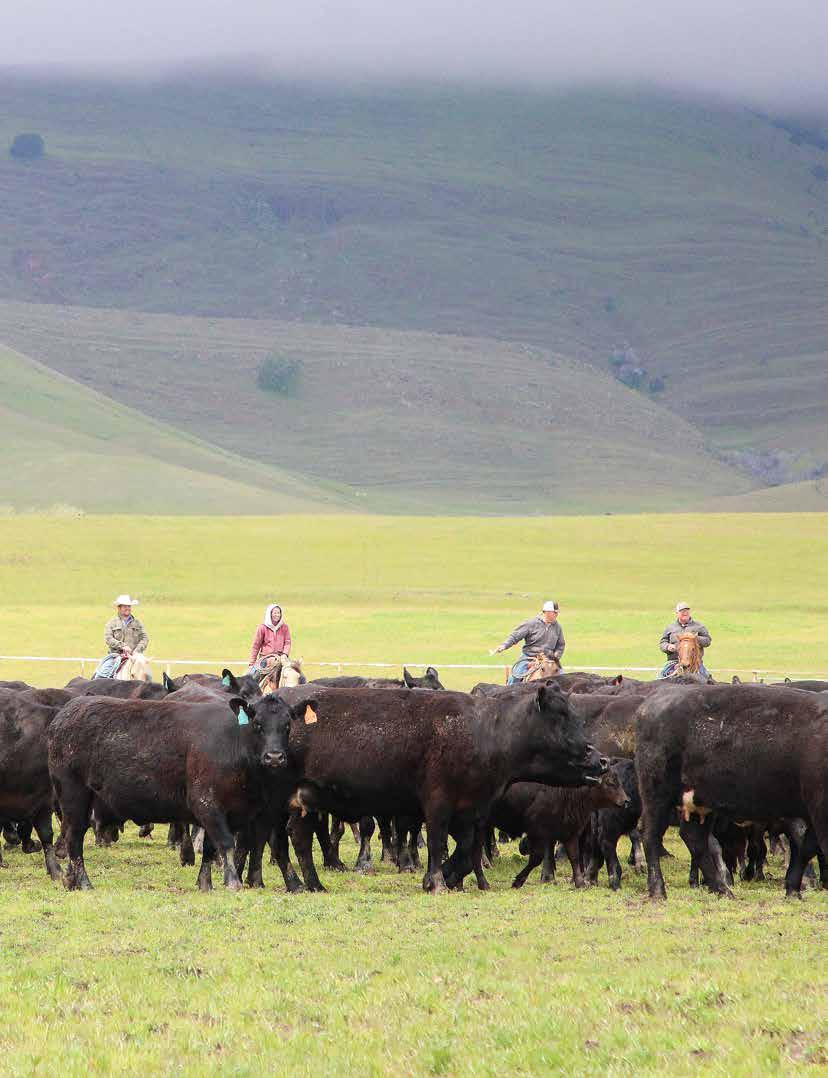
In an atypically green spring, cattle ranchers across the state are weaning, branding and preconditioning calves for what is anticipated to be an optimistic marketing season, as portrayed in this issue’s cover photo, taken by CCA Associate Director of Communications Maureen LaGrande at Doug and Judy Parker’s ranch near Williams. 46
GUIDE
INDEX
SERVICES
56
CATTLEMEN’S COLUMN
ANNUAL MEETING PRESENTS EDUCATIONAL OPPORTUNITIES FOR ROBUST CATTLE FEEDER COMMUNITY
 by CCA Feeder Chair Joe Dan Cameron
As we come into May every year, something that myself and many California cattle producers and feeders from all over the state look forward to is our annual California Cattlemen’s Association Feeder Council Meeting. The Feeder Council consists of producers who feed and finish cattle throughout the state of California. While California is no longer one of the top cattle feeding states in the nation, we still have a vibrant industry located throughout the central part of the state and Imperial Valley. It is still a great place to feed cattle due to our temperate climate, ample cattle supply and proximity to beef packers.
As cattle feeders in California, it can feel like there is a continuous target on our backs be it environmental issues, state policy, animal rights activism, and the high cost of doing business. Feeder Council staff and board work diligently to fight for our feeder members and hit these challenges we face every day as producers head on. The Feeder Council is always working for its members in their local areas on issues that are county driven as well as issues that affect the whole state of California. Some of the more current issues the Feeder Council has helped producers with are rail disruptions throughout the state with the Union Pacific, new groundwater monitoring rules in the Imperial Valley and fighting for or against different legislation that will have significant impact on feeders in this state, just to name a few.
This year’s Feeder Council meeting will take place May 24 to 26 at the Marriot Marquis in San Diego. During the meeting we will hear from a wide range of speakers who will share their views on the cattle industry, markets, current research and government policy.
The Feeder Council meeting gives cattle feeders and producers from all over the state a chance to network with fellow producers, allied industry affiliates, researchers and to hear from a group of presenters covering a wide range of topics that are important to our industry. We start off Wednesday night with a great welcome reception, presentations all day Thursday, then a cocktail reception and dinner. Friday morning the Feeder Council will have our annual business meeting where we will develop policy needed on issues affecting California Cattle Feeders.
There will be feed yard and cattle feeder attendees from all over the state at the meeting
as well as many feeders from Arizona. Allied industry associates, including pharmaceutical reps, commodity brokers, veterinarians, nutritionists and sale barn representatives all attend this meeting. It is a great place to network and meet people from all sectors of the cattle industry.
Included on the meeting agenda are: Patrick Linnell the director of cattle market research from Cattle-Fax giving his outlook on the cattle, beef and commodity markets throughout the world. Kori Dover a registered dietician with the California Beef Council giving us a presentation on what the Beef Council is working on. Brad Johnson, Ph.D., from Texas Tech University will be presenting on implant changes coming in June from the FDA. Spencer Prosser from MP Agrilytics will be giving us a cattle market analysis focused on the West Coast. Tracey Erickson from Certified Angus Beef will be presenting on Beef x Dairy cross cattle supplying CAB brands. Michelle CalvoLorenzo, DVM, from Elanco will be presenting on Livestock welfare: A different perspective to address issues and prevent activist threats. Rob Atwill, DVM, from the Western Center for Food Safety at UC Davis will let the feeders know about the completion of a study that was published on airborne pathogens in proximity to beef cattle feedlots in the Imperial Valley. Gregg Doud, the vice president of global situational awareness & chief economist for Aimpoint research will be presenting on geopolitics, trade, and global markets.
Every year after the Feeder Meeting, I get comments from attendees who say it’s one of the best meetings they attend because of the wide variety of topics discussed. Whether you’re a rancher who feeds cattle, a calf raiser who is selling calves to go on feed, a backgroundergrower who starts cattle here on feed in California that will be finished out of state, I highly encourage you to get involved in the Feeder Council and to attend our annual meeting.
8 California Cattleman May/June 2023


Upcoming Specials Western stockman’s market YOUR nhtc approved marketing location THD © DWIGHT MEBANE ....... 661 979-9892 JUSTIN MEBANE ......... 661 979-9894 Western stockman’s market 31911 Highway 46, mcfarland, california 661-399-2981 • www.westernstockmansmarket.com Your Southwest Livestock Market Leader Frank Machado ..... 805 839-8166 Bennet mebane....... 661 201-8169 b famoso spring and summer Stocker and Feeder Sales EVERY MONDAY IN MAY, JUNE AND JULY Featuring Large Runs Calves and Yearlings from Local and West Coast Ranches feeder specials May 15 - May 22 - May 29 June 5 - June 12 Annual SpeciaL bred cow sales Monday, June 12, 12 p.m. Monday, July 17, 12 p.m. Featuring 3- and 4-Year-Old Angus Cows Bred to High-Powered Angus Bulls and More 58th famoso female & all-breed bull sale TOP BULLS & FEMALES: SATURDAY, OCT. 14 FRIDAY, OCT. 13: Famoso Western Stockman’s Market Invitational Horse Sale, 6 p.m. May/June 2023 California Cattleman 9
10 YEARS WORKING FOR THE BEST PEOPLE CALIFORNIA HAS TO OFFER
 by CCA Vice President of Government Affairs Kirk Wilbur

By the time you read this I will have celebrated 10 years at the California Cattlemen’s Association.


There’s a story I like to tell about interviewing at CCA back in May of 2013. I’d been out of law school for about a year, and it had been six months since I had passed the California Bar Exam. But the job market in 2012 and 2013 wasn’t great (a fact distressingly highlighted at my graduation by keynote speaker Tani CantilSakauye, then-Chief Justice of the California Supreme Court), and I’d spent the months since taking the Bar Exam unemployed.
When I stumbled upon the job listing for CCA’s Membership & Office Administrator position, it did not strike me as my dream job. But it did strike me as a paying job, so it got added to the long list of job applications I had submitted. Unlike most of those applications, though, this one elicited a response; just over 24 hours later, CCA Executive Vice President Billy Gatlin offered me an interview.
Ultimately, of course, I ended up being offered and taking the job. I’d subsequently learn that Lisa Brendlen, CCA’s Director of Finance, had lobbied against Billy offering me the job –she reasoned that I was over-qualified, was just looking for a quick paycheck and that I’d quickly leave for greener pastures. CCA would be back at square-one hiring for another Membership & Office Administrator.
I love telling this story mostly because it tends to embarrass Lisa, which is no easy feat. But what typically gets lost in the telling is that Lisa was absolutely right – I had no intention of sticking around, but I badly needed to start earning some money (as evidence of that, I accepted the offer just 65 minutes after Billy emailed it over). I figured I’d just jump ship once a ‘better’ job offer came in.
So what changed that I’ve now been at the Association for a decade?
For one, CCA’s Midyear Meeting took place at Thunder Valley Casino in Lincoln just a month after I started. I met dozens of you, and to my pleasant surprise you greeted me with open arms despite me not knowing the first thing about ranching (then-CCA President Tim Koopmann used to tell folks he’d taught me which end of a cow was which, and that’s not far from the truth; I’ve picked up a thing or two in the 10 years since!).
At Thunder Valley I met Lassen County’s Jack and Darcy Hanson, two of the kindest
...CONTINUED ON PAGE 12
10 California Cattleman May/June 2023 BUNKHOUSE
Left: Then CCA President Tony Toso recognizes CCA staff at the 2022 CCA Convention. At right, Kirk Wilbur testifies at a legislative hearing in April 2023.
CONTRACOSTA-ALAMEDA&SANJOAQUIN-STANISLAUS COUNTY CATTLEMEN’S ASSOCIATIONS’ FEEDER SALES


41stAnnual Showcase Feeder Sales
SATURDAYS
MAY 20 • JUNE 3 • JUNE 24
ALSO SELLING CATTLE FROM THESE CATTLEMEN’S ASSOCIATIONS: MERCED-MARIPOSA, SANTA CLARA, NAPA-SOLANO, MADERA, CALAVERAS TUOLUMNE, FRESNO-KINGS, SAN BENITO & TAHOE
FEATURING A SPECIAL SECTION OF NHTC-CERTIFIED, ANGUS-SIRED CALVES AS WELL AS A RED ANGUS AND CHAROLAIS SECTION
THESE EVENTS WILL INCLUDE SOME OF THE BEST CALVES CALIFORNIA HAS TO OFFER, SO WHETHER YOU ARE ENROLLED IN A SPECIAL PROGRAM OR NOT, THESE SALES ARE FOR YOU!
SPRING ROUND UP SPECIALS
TUESDAYS, MAY 16 & MAY 30 AND TUESDAYS JUNE 6 & JUNE 13: SPRING FEEDER SALES SHOWCASING CALVES AND YEARLINGS FROM SMALL PRODUCERS WITH 50 HEAD OR LESS AT 9 A.M.
SALE DAY IS PAY DAY!
WATCH LIVE AND BID ON LMAAUCTIONS.COM
REPORTS AND NEWS ABOUT UP-TO-THE-MINUTE SALE DATES AT WWW.TURLOCKLIVESTOCK.COM OR ON OUR FACEBOOK PAGE!
TURLOCK LIVESTOCK AUCTION YARD OFFICE: 209 634-4326 • 209 667-0811 10430 Lander Ave., Turlock, CA P.O. Box 3030, Turlock, CA 95381 www.turlocklivestock.com TLAY REPRESENTATIVES MAX OLVERA 209 277-2063 STEVE FARIA ............................ 209 988-7180 JUSTIN RAMOS....................... 209 844-6372 JOHN LUIZ 209 480-5101 JAKE BETTENCOURT............... 209 262-4019 TRAVIS JOHNSON .......... ......209 996-8645 TIM SISIL .................................. 209 631-6054 JOHN BOURDET ...................... 831 801-2343 CELESTE SETTRINI..................831 320-1527 MATT MILLER 209 914-5116 BRANDON BABA .................... 209 480-1267 BUD COZZI 209 652-4480 EDDIE NUNES ........................... 209 604-6848 CALL TO CONSIGN CATTLE TO UPCOMING WVM EVENTS! JOIN US MAY 25 & JUNE 8 IN COTTONWOOD ND JULY 10-12 IN RENO! When marketing calves at TLAY, don't forget how essential the 2nd round of shots is. Make sure to include a modified live vaccination!
FOLLOW US ONLINE FOR WEEKLY SALE
THE CENTRAL CALIFORNIA MARKETING CENTER
May/June 2023 California Cattleman 11
...CONTINUED FROM PAGE 10

people I’m likely to ever meet. Jack Lavers and Hugo Klopper showed me a good time at the bar. Several of you – I won’t name names – endearingly hazarded your best attempts at karaoke.
I came away from that event realizing these are good folks.
A lot has changed since then. Nine months later, when there was an opening for the Director of Government Affairs, Billy agreed to let me put my legal education to use (so Lisa was proven right about one thing – it was back to square one hiring an administrative assistant). After Justin Oldfield successfully lobbied to pass the Cattle Council Law and left CCA to helm that organization, Billy took another chance on me and offered me the position of Vice President of Government Affairs.
The trust and leadership Billy provides is part of the reason I’ve been so loyal to the Association this past decade (and I suspect the same is true of my coworkers). In addition to providing me those opportunities for growth, Billy has largely trusted me and CCA’s contract lobbyist, Jason Bryant, to get the job done and to get it done well. There’s no micromanagement, but when we want his input or advice – or need to leverage his relationships in the Capitol community – he’s eager to assist.
Our small office is also a lot like a tightknit family (and not in the trite way you usually hear from mega-corporations).

Between CCA and the California Cattlemen’s Foundation there are only seven of us, 10 if we count folks who contract with CCA and the foundation (and we should count them, because they’re also very much part of the family!). We joke with each other just as I tease my own siblings, but at the end of the day we trust one another, rely on one another and unwaveringly we have one another’s backs.


The work is difficult and can sometimes feel grueling, but it matters, and you all make your appreciation well-known in every interaction. It’s truly rewarding.
And the membership is great even

outside of the work we do. Scott Violini will often call me early in the morning or late in the evening – and that’s fine, because he’s usually just calling to shoot the breeze for a bit. After any given Gonzaga Bulldogs game during March Madness it’s now tradition for me to get on the horn with Rick Roberti to chat about the game (and any time I see his wife, Carolyn, she’s sure to sneak me some candy). The first thing many of you ask when you see me is how my run streak is going, and I genuinely appreciate your support for my silly little hobby.

I’d like to recognize more of you who have made this a job worth having for a decade, of course, but there is a word limit to these articles! Just know that I appreciate every last one of you.
So yes, Lisa was absolutely, 100 percent right back in May of 2013 when she suggested that the association should be cautious about hiring a law graduate to answer the phones. But I’ve stuck around for a decade simply because at CCA I’ve had the pleasure of working with and working for the best people in the State of California.
12 California Cattleman May/June 2023
Specializing in Truck and Livestock Scales Established
a wide
of equipment,
precision lab balances to high capacity rail
as well as certified scale service and installation. Contact Steve Orr for more information today! Email: steveorr@scalesnw.com Phone: (503) 510-3540 www.scalesnw.com • (800) 451-0187 Scales NW is proud to serve: California Idaho Montana Nevada Oregon Utah Washington AD_POWELL_LivestockTruckScale.indd 1 1/11/2018 1:35:26 PM
in 1959, Scales NW offers
range
from
scales,


SATURDAY MAY 20 Cattlemen’s Livestock Market Galt, CA | 1:00 pm JOHN DICKINSON 916-806-1919 JAKE PARNELL 916-662-1298 LUKE PARNELL 805-431-1267 info@parnelldickinson.com FOR SALE BOOK TEXT ADDRESS TO: 916-806-1919 WATCH AND BID ONLINE AT: David J. Holden 38 Montana Ave. • Oroville, CA 95966 (530) 736-0727 • wstwind@hotmail.com www.westwindangus.com WESTWIND RANCH ANGUS Hertlein Cattle Co., Farmington, CA Stepaside Farm, Sanger, CA Eagle Grip Cattle Co., Denair, CA Popovits Family Ranch, Valley Springs, CA Grieb Ranch, Arroyo Grande CA Mark & Ida Higgins, Adin CA Easterly Romanov Ranch, Sheridan, CA Hutchings Cattle Co., Fallon, NV Summit Breeders: Linz Blackcap Dual 5244-9701 [DL Dually x RB Active Duty 010] Due 9/19/23 to Virginia Tech Statesman (+352 $C) CED BW WW YW Milk CW MA RE $M $B $C 7 0.3 92 167 24 74 .76 .73 71 170 284 Featuring 70 lots of quality Angus genetics FALL BRED HEIFERS • FALL BRED COWS • SPRING PAIRS • HEIFER CALVES • ELITE HEIFER PREGNANCIES Westwind Blackbird DJH 159 [VAR Stone Cold x Westwind Stealth] Due 8/1/23 to Poss Rawhide (+339 $C) CED BW WW YW Milk CW MA RE $M $B $C 6 1.2 70 137 31 67 .7 .81 69 175 296 Poss Elmaretta 648 [Connealy Power Play x All Around] Granddam of the $290,000 Poss Pendleton that sold this past spring. Offering a fall heifer calf pregnancy by BA7 Oaks Bold Ruler Featuring the progeny and Service of: Basin Jameson 1076 B A R Dynamic Poss Deadwood Hoffman Thedford Virginia Tech Statesman G A R Freedom SITZ Incentive 704H HPCA Veracious Poss Rawhide SG Salvation V A R Conclusion 0234 T/D Doc Ryan 049
YOUR DUES DOLLARS AT WORK
THE BUSIEST WEEK IN APRIL
by CCA Vice President of Government Affairs Kirk Wilbur
The month of April is perhaps the busiest in California’s full-time legislature.
This early in the year, the Legislature has yet to weed out many of the more-than-2,600 bills introduced by the mid-February bill introduction deadline. And with an end-of-April cutoff for policy committees to consider and act upon any bill that might have a fiscal impact upon the state, there’s real urgency by the end of the month to hear each of those bills in increasingly-lengthy committee hearings. (The deadline for policy committees to act on non-fiscal bills is just one week later.)
To put it simply, the last two weeks of April are a marathon for legislative advocates, including your CCA government affairs team.
Fortunately for California’s cattlemen, the long hours and tireless efforts invested by CCA in late April have shown some promise for the Association’s legislative priorities. Below is a snapshot of CCA’s lobbying achievements in just one week in April, from Tuesday, April 18 through Monday, April 24.
AB 1197 (Hart)
Assembly Bill 1197, authored by Assemblyman Gregg Hart (D-Santa Barbara), would amend the Agricultural Protection Planning Grant Program, which provides planning grants to “Conserve California’s most productive farmlands and ecologically important rangelands.”

Assemblyman Hart has described the bill as a “measure to identify and map local food producers that are doing the important work of supporting and feeding local communities” and to “support efforts to connect small family farms to…necessary resources” and bolster local economies.
Unfortunately, AB 1197 defined a “local food producer” in part as an agricultural producer who “Farms on 500 acres or less across all properties,” effectively eliminating all commercial livestock producers from the grant assistance available under the bill.
Heading into the April 19 hearing of the
Assembly Agriculture Committee, CCA was the only organization to raise concerns about this limiting definition. Fortunately, in response to CCA’s advocacy Assemblyman Hart committed to the Committee that he would work with CCA to craft amendments which would address our concerns.
In light of this commitment, AB 1197 passed out of the Agriculture Committee; CCA is in the process of working with the Assemblymember’s office to craft the amendment conceptually agreed to in committee.
SB 485 (Becker)
CCA was lobbying SB 485 weeks before Senator Josh Becker (D-San Mateo) even introduced the bill. As initially introduced, the bill sought to establish a program within the California Air Resources Board (CARB) to incentivize enteric fermentation emissions reductions from all livestock through the use of feed additives and directed CARB to set a regulatory target for adoption of such feed additives.
Ahead of an April 24 hearing in the Senate Agriculture Committee, CCA and the Western United Dairies had secured several favorable amendments to the bill, including eliminating CARB’s ability to set a target for feed additive adoption because these initially non-binding targets are often used to justify subsequent legal mandates. The bill had also been shaped to establish a truly voluntary, incentives-based approach favored by dairy producers.
CCA remained opposed to the bill, however, due to its inclusion of beef cattle on feed. Most research and development on methaneemissions-reducing feed additives has been focused squarely on dairy cattle, and emissions reductions achieved for dairy cattle do not directly translate to beef cattle due to differences in breed and diet. Additionally, there are market disincentives to enrolling in a CARB program, as many out-of-state beef processors will not accept
14 California Cattleman May/June 2023
cattle fed emissions-reducing additives due to concerns about their impact upon quality grade.
CCA’s government affairs team lobbied the Senate Agriculture Committee throughout the weekend leading up to the Committee’s 10am hearing on Monday, April 24 and secured proposed committee amendments that limited the bill to dairy cattle. Senator Becker accepted those amendments in Committee, allowing the bill to pass out and move on to the Senate Appropriations Committee.
Moving forward, CCA will closely track the bill to ensure that the amendments we secured remain in the bill.
AB 554 (Gabriel)
Sponsored by the Animal Legal Defense Fund, AB 554 would allow a Society for the Prevention of Cruelty to Animals (SPCA) to file lawsuits in civil court “to enforce any law relating to or affecting animals.” While the sponsors have framed this as a mere ‘clarification’ of existing law, it is not clear that SPCA’s currently have standing to sue in civil courts. Instead, SPCA’s may typically provide an animal abuse complaint to a prosecutor, who will then evaluate whether the law has been broken and whether there is sufficient evidence to prosecute before filing a case in criminal court.
AB 554 is particularly concerning for two reasons. First, it removes an unbiased prosecutor from the equation, allowing an SPCA to directly file suits in civil court based on their interpretation of what constitutes animal abuse or neglect. Secondly, California law allows any group of 20 citizens to incorporate as an SPCA – meaning that any radical animal rights group or anti-animalagriculture activists could directly sue ranchers in civil court.
Because AB 554 would amend the Corporations Code, it was set for hearing April 24 in the Assembly Banking & Finance Committee, which has jurisdiction over corporations. In the week leading up to the hearing, CCA met with the committee chair, staffers representing every member of the Committee, the Committee consultant and the Republican consultant (among others!) in a full-court press of opposition to the bill.
On April 24, CCA provided lead opposition testimony in the Banking & Finance Committee. And clearly CCA’s advocacy had made an impact. Several committee members expressed their genuine desire that the bill not negatively impact animal agriculture, and Assemblymember Gabriel (D-Woodland Hills) clarified during his presentation of the bill that “this bill is in no way meant to impact production agriculture in the State of California.”
Ultimately AB 554 passed out of the Banking & Finance Committee, but the concerns expressed by committee members and the author’s suggestion that he would work with CCA to address those concerns position the Association well to secure favorable amendments moving forward.
LOOKING AHEAD
CCA has taken positions on dozens of bills so far this Legislative Session, so the three favorable developments reflected above merely skim the surface of the Association’s lobbying efforts. Throughout the week of April 18-24, CCA also lobbied on several other bills (for instance offering opposition testimony to a trio of bills that would significantly disrupt California’s water rights framework).
But these substantial developments on three priority bills within just a matter of days underscore the respect that legislators have for California’s cattle producers and the power you wield in Sacramento.

The legislative session is still young. Many fiscal bills must still face appropriations committees which will be looking to tighten purse-strings amidst projections of a significant budget shortfall. Nearly all bills must also be vetted anew in a second chamber of the legislature before the fates of remaining bills are ultimately determined by Gov. Gavin Newsom at the end of the legislative year.
The developments above are a promising sign of CCA’s success this year. Your government affairs team will work tirelessly in the months ahead to achieve CCA’s legislative goals.
May/June 2023 California Cattleman 15
Registration Prices
Registrations include access to all meetings on Wednesday and Thursday, lunch on Wednesday, dinner at the Pioneer Museum on Wednesday and breakfast on Thursday.

FULL REGISTRATION: $200
YOUNG CATTLEMEN’S COMMITTEE (YCC) REGISTRATION: $125


DINNER AT THE PIONEER MUSEUM: $75
The last day to pre-register is Wed., June 14. All registration prices will be increased onsite. No registration refunds will be given after Wed., May 31.
Room Reservations
Our group room block for this event at the Paso Robles Inn is now open! Rates are $149/night.


To make your reservations call (805) 238-2660 and mention “California Cattlemen’s Association.”

16 California Cattleman May/June 2023
BOOK W/ THE PASO ROBLES INN AT (805) 238-2660 Visit ww.calcattlemen.org/events or call the CCA office at (916) 444-0845 to register today.
Call today to make your hotel reservations with CCA’s group rate. Rates start at $149/night
REGISTER ONLINE OR CONTACT THE CCA OFFICE
Tentative Schedule
TUESDAY, JUNE 20, 2023
2pm - 4pm California Cattlemen’s Foundation
4:30pm - 6pm Officer Meeting
4:30pm - 6pm CCW Executive Meeting
WEDNESDAY, JUNE 21, 2023
8 am - 4pm Registration Open
8am - 9am A CA Cattlewomen Heritage Foundation, Inc. 9am - 11am Fire Subcommittee
- 12pm Leadership Series
- 12:30pm Lunch
- 1pm Allied Industry Council Meeting

REGISTRATION PACKAGES
Full Registration (CCA/CCW Member) $200
Includes access to all meetings on Wednesday and Thursday, lunch on Wednesday, dinner at the Pioneer Museum on Wednesday and breakfast on Thursday.
Dinner at the Pioneer Museum (Add on) $75

Please note dinner tickets are included in each registration package. This option is available for those who would only like to attend Wednesday night’s dinner.
Young Cattlemen’s Registration $125
Includes access to all meetings on Wednesday and Thursday, lunch on Wednesday, dinner at the Pioneer Museum on Wednesday and breakfast on Thursday.
PLEASE NOTE REGISTRATION REFUNDS WILL NOT BE GIVEN AFTER WED. MAY 31.
Name(s) attending:
THURSDAY, JUNE 22, 2023
6am - 7am
Register online at https://calcattlemen.org/events or mail form to the CCA office at 3841 N. Freeway Blvd., Suite 130, Sacramento, CA 95834.
Local affiliation:
Payment Method:

Check made payable to the Calif. Cattlemen’s Association
Card #: Exp. /
Cardholder’s Name:
Cardholder’s Phone:
Billing address: City/State/Zip:
11:30am
12pm
12pm
1:30pm
1:30pm
3pm
4:30pm
5:45pm
7:00pm
11am
11:30am - 12:30pm CCW Board Meeting
- 1pm Cattle-PAC
- 3pm CBCIA
- 3pm General Session
- 4pm Cattle Health
- 5:30pm Local Presidents
- 7:00pm CCA Presidents Reception
CCA Dinner
# Tickets $ Amount TOTAL
Christian Fellowship 6:30am - 7:30am Breakfast 7am - 8am CCA Nomm. Comm. 8am-9am Federal Lands 9am - 10am PREM 10am - 11am Ag Policy/Marketing/Tax and Credit Committee 11:30am - 12:30pm CCA Board Meeting
CCA & CCW MIDYEAR MEETING
LOOKING UP marketers optimistic following long winter and late grass growth
 by Managing Editor Stevie Ipsen
If there is anything California cattle producers know, it is to expect the unexpected. Following years of persistent drought and worries that without a good winter, making it another summer would be nearly impossible, residents’ prayers were answered with something they desperately needed – moisture...then more rain and more snow, until some prayers for moisture turned to prayers that the moisture would stop. With rangelands more adequately charged than they had been in the better part of a decade and live cattle prices predicted to continue to rise throughout 2023, beef producers across the west were smiling. But like the usual ebb and flow of the ranching climate the early excitement for a great spring marketing season were put on hold as mother nature’s cool temperatures persisted much later than California is typically known for. Now that the grass has gotten it’s growth, we contacted auction managers and marketing minds in various regions of California to see what 2023 marketing looks like in their respective areas of the Golden State.
RANDY BAXLEY

Visalia
Livestock Market
RoundupCattle.com
South Central California
REGIONAL WEATHER:
It’s no secret we had a wet winter. We’ve been waiting for one for a few years but in a lot of ways this one gave us more than we could handle. With down fences, washed out roads, it set guys back quite a bit. In most of February when we usually see grass start to come on, we were still seeing nighttime lows in the 30s. Once it warmed up, it seemed like the grass grew a foot a day. It put us about 30 days behind on marketing. At the time we were normally having our second big sale, we were just getting the first of the sale calves delivered. Now we are in a bit of a catch 22 situation because after such deep inventory cuts last year and so much feed, there are less cattle to handle all this grass. Less cattle is also what has led to the high market.
MARKET INSIGHT:
So far, 2023 prices have been great. I am of the belief we will see the market soften as the heat comes later in the summer. Last year good prices lasted through the summer but that isn’t typical. I think it will still be really good but not as record-breaking as we are seeing in early May. The heat risk of delivering calves to the midwest in the heart of summer usually leaves buyers less aggressive. Even with the low inventory we have now, I think we will see some of that. For me, the moral of the story is if you have 650 pound calves, I see zero reason to wait for them to weigh 750 pounds before selling them. You will probably make the same in the end. I also advise buyers to always invest in good, balanced genetics and good vaccination programs. Not only are you setting your operation up for more success in the future, you are also setting yourself up to fetch the best prices the market will allow, even down the road when prices aren’t this high.
18 California Cattleman May/June 2023
JIM WARREN
101 Livestock Market
Central Coast California
REGIONAL WEATHER:
After the last few years we really needed some rain and we were fortunate to get quite a bit of rain over the winter. It also stayed cold though so the grass took a while to come on. Ranchers fed every bit of hay knowing the grass would start growing any minute. It has finally taken off and we have a lot of feed.
MARKET INSIGHT:
We saw a lot of cattle liquidated last year due to drought. Not just in California, but all over the country. With inventory so low, the market should be good no matter what, and the operations that have cattle left to sell should be in good shape. I’m exceptionally optimistic for the programmed cattle that are double backed with good genetics. They should fetch a premium any time but in a good market they should do really well.
MAX OLVERA
Turlock Livestock Auction Yard
Central California
REGIONAL WEATHER:
Turlock Livestock Auction
Yard customers cover a large swath of Central California, the Bay Area and the Sierra Foothills and by in large, our customer base had a great winter. When we get a good winter like that it is typical for the spring grass to get a slow startIn some areas it was too wet, which is a rarity here in California. But now that it has dried out and warmed up we should see some good feed to come back to later in the season.
MARKET INSIGHT:
I can’t say enough how happy I am for livestock producers right now. It’s not very often that we see a great grass year and a great market at the same time. I’ve suspected the market would be good but I have underestimated it. We are seeing a demand for cattle of all classes of cattle. The competitive bidding process is really something to behold right. The right buyers are showing up for the right producers. The programmed cattle (NHTC, GAP level 4, etc.) that are on a quality vaccination program are typically going to bring the best prices, whether cattle are bringing $1/pound or $3/pound, so I always advise producers to make good genetic and program investments to see the best buyers turnout for them year after year.
JUSTIN MORA
Humboldt Auction Yard
Northern California Coast
REGIONAL WEATHER:
For an area that actually benefits from a drier winter, the winter of 2022-2023 was the worst on record since 1989. That was the last time it took aircraft to deliver hay to stranded cattle – until this year when CalFire and military helicopters delivered hay to cattle that ranchers couldn’t reach because of
snow, mud and washed out roads. For about a week the hay (courtesy of Valley Pacific) was dropped by aircraft. Because there are still cattle that ranchers haven’t been able to get to, the total death loss of cattle in the hills isn’t yet known. For some it may be significant. But with grass now popping, things are starting to look up.
MARKETING INSIGHT:
We are in a regionally-challenged area where getting cattle in and out has always presented challenges, which is why our producers in this area go the extra mile to raise high quality calves on good vaccination programs. With calves raised in very cool and comfortable conditions, we need the buyers who take them to know they are going to perform where ever they are going and that the freight is going to be worth it in the end. After waiting for a market this good to hit, it’s unfortunate we had a hard winter and that ranchers here in the hill country lost cattle. We just hope that the postives in the current marketing climate outweigh the battle we had to get here. We’re still hopeful for a good marketing season.
GARY NOLAN
Western Video Market
Eastern & Western Sierra
REGIONAL WEATHER:
Being from Nevada, I am no stranger long winters. But this year really wreaked havoc for guys in Northern Nevada, Southern Idaho and parts of the Northern Sierra. They paid $300/ton for hay and winter just kept coming. Ranches that typically sold cattle in April had to let light calves go in February just to stop the hay trucks from coming. Now that spring is here and the grass is growing, things seemed to have leveled off.
MARKETING INSIGHT:
In Coalinga at the Western Video Market event on May 5, we saw a real barn burner but I am not sure we will see sales at quite that level all summer. Prices should be good but I don’t think packers will pay that much all summer and feedlots can’t afford to. When you drive down through California right now, there aren’t many cattle to be seen. It makes you realize how low the inventory is. With inventory down substantially, we will see pretty good prices for a while yet.
REED MARTINEZ
Modoc Livestock Auction


Northern High Desert California
REGIONAL WEATHER:
Snowpack in the high desert was really good (or bad, depending on how you view it) this year. For the first time in a long time, winter weather showed up on time and lasted well past what we usually see. Cattlemen had to feed longer than usual but at least hay prices should be better when it comes time to restock.
MARKETING OUTLOOK:
Producers always look forward to marketing time but they don’t always know what to expect. For the first time in a long time, I think producers of all kinds are expecting good things. Usually good prices are short-lived but I think this time, we might see it last a little longer. It will be exciting to see how prices hold up. For the few guys who were able to hold onto some replacements last year, selling calves now would be a great reward.
May/June 2023 California Cattleman 19
ECONOMIC IMPACT STUDY SHOWS LIVESTOCK AUCTIONS IMPORTANCE TO RURAL VITALITY; $2M IN TOTAL VALUE-ADDED DOLLARS TO COMMUNITY

A 2023 economic impact study, which updated a study from 2017, found that livestock auction markets continue to be important for the growth and vitality of rural communities. The study of an average, fixed-facility livestock auction market revealed that the market provides approximately $2 million in total value-added dollars to its local community. This result is up from $1 million identified in the 2017 Livestock Marketing Association (LMA) Economic Impact Report.
The case livestock auction market, located in a rural Missouri town with a population of less than 5,000, sells all classes of cattle in a weekly sale. The auction market was selected as a representative example of LMA member-livestock auctions based on type of operation, gross sales of livestock, rural location of market and population of city. LMA represents 85 percent of the livestock auction markets in the United States, with cattle being the largest per-head species sold through livestock auction markets annually (32 million head, per
2020 USDA P&S Annual Report data).


Key findings also revealed that the market studied provides 17 jobs, generating $888,000 in labor income to the community’s economy. Additionally, the market contributes $447,000 in local taxes and $108,000 in federal taxes. Of the total value-added number, contributions were also made by the on-site café, which further provides labor income, state, local and federal taxes.
“Livestock auction markets today remain critical to helping our rural communities continue to thrive,” said Kristen Parman, LMA Vice President of Membership Services. They generate a competitive sale environment which results in cash for local livestock producers. That cash equals dollars spent in town and investments back into their businesses and operations.”
In collaboration with LMA, the study was completed by Decision Innovation Solutions in Urbandale, Iowa.
20 California Cattleman May/June 2023


WHETHER YOU PREFER TO MARKET YOUR CATTLE THROUGH THE AUCTION MARKET, LIVE INTERNET AUCTION OR PRIVATE CATTLE LISTING, WE HAVE YOU COVERED! Also watch for daily sale listings five days a week ROUNDUPCATTLE.COM, with live Internet auctions monthly. SALES EVERY WEDNESDAY! 733 North Ben Maddox Way Visalia, CA 93292 YOUR COMPLETE MARKETING SERVICE TEMPLETON RECEIVING YARD: 4350 RAMADA DRIVE, TEMPLETON, CA (805) 434-8334 BUELLTON RECEIVING YARD: 2201 JONATA PARK RD, BUELLTON,CA (805) 835-8990 2 TRUCKS PER WEEK FROM TEMPLETON AND BUELLTON TO VISALIA! WATCH & BID LIVE AT WWW.LMAAUCTIONS.COM • VISIT US ONLINE AT WWW.VISALIALIVESTOCK.COM Visalia Livestock Market SEPTEMBER 17 29 th annual CATTLEMEN'S SELECT BULL & FEMALE SALE JUNE 24 FALL CALVING FEMALE SALE CONSIGNMENT INFORMATION: RANDY BAXLEY, (559) 906-9760 OFFERING 750 HEAD OF FANCY YOUNG FALL CALVERS! EXPECTING.... 60 ANGUS • 50 RED ANGUS • 5 SIMANGUS • 5 HEREFORD BULLS PLUS 150 HIGH-END REPLACEMENT FEMALES!
FOUNDATION FOCUS
RTAP OFFERING GUIDE TO CALIFORNIA TRANSPORTATION REGULATIONS
 by Noah Lopez for the California Cattlemen’s Foundation

The Rancher Technical Assistance Program (RTAP) team, Jack Rice and myself, receive a wide array of calls. In the two years since the California Cattle Council first funded this project through the California Cattlemen’s Foundation, we have explored all kinds of issues. Often we have to dive deep into the nuances of regulatory requirements, grapple with understanding funding opportunities and assistance programs, and research various environmental, business and other questions to answer questions.
This means that we are on the constant lookout for useful resources regarding these issues; compiling and collecting things like helpful websites, FAQs, and fact sheets. One such resource we have repeatedly relied on is CCA’s “California Livestock Transportation Regulations” fact sheet. This fact sheet is a source of wellorganized information and was always the first file opened when a producer reached out with a transportation regulation question.
The fact sheet, published in 2016, provided a comprehensive overview of state and federal regulations, covering everything from permitting and licensing to weigh stations and air quality. However, as the last seven years have brought new regulations and changes to old regulations, RTAP and the CCA team decided it was time for an update. We reviewed each section, examining the relevant code and making changes where necessary. It may come as no surprise that the area with the most change was the “air quality” section, given California’s focus on reducing vehicle emissions.
The air quality section now includes a detailed overview of the California Air Resources Board’s Truck and Bus regulation. This regulation, first adopted in 2008, regulates diesel vehicles with a Gross Vehicle Weight Rating (GVWR) over 14,000 pounds. It requires that, beginning in 2023, such vehicles must have engines with model years of 2010 or newer. Non-compliant vehicles will be denied registration from the DMV. While exclusions exist for some vehicles, such as most pickups used exclusively for non-commercial activity, the regulation certainly impacts cattle producers with heavy duty diesel trucks manufactured prior to 2010. A low-use vehicle exemption is also available for vehicles which operate fewer than 1,000 miles and 100 hours
per calendar year, though many producers have reported the limitations of this exemption are too restrictive to be worth pursuing.
After this addition and more, the resulting new document ended up being three pages longer than the old one. The increase in length speaks to the staggering amount of regulatory requirements that California ranchers face in the area of transportation alone. To better reflect the length of the new document, we decided to restructure it as a guidebook and renamed it “A Rancher’s Guide to California Livestock Transportation Regulations.”
The guidebook can be found online at www. calcattlemenfoundation.org/rtap. If you would like a FREE hard copy, contact the RTAP team and we will send you a copy in the mail. While the guide is extensive, there are bound to be issues and questions it does not address. Please feel free to reach out to the RTAP team with any questions. We can be reached at rtap@wrstrat.com or at (916) 409-6902.
22 California Cattleman May/June 2023
CALL THE RTAP TEAM AT (916) 409-6902 TO HAVE A FREE GUIDE BE MAILED TO YOU AT NO COST OR CHECK OUT THE FULL GUIDE ONLINE AT CALCATTLEMENFOUNDATION.ORG/RTAP


May/June 2023 California Cattleman 23 REPRESENTATIVES SALES EVERY THURSDAY AT 9 A.M. Providing competitive bidding for your livestock sales for 70 years! Dan Freitas Siskiyou (530) 598-1233 Chris McKoen Klamath (541) 891-8920 Eddie Ginochio Modoc (530) 640-5272 Todd Mueller Lakeview (541) 417-0132 Ed Bailey Lassen (530) 347-5051 Find us on facebook for our market report and news about special sales and upcoming events! 3877 County Road 99W Orland, CA 95963 | (530) 865-4411 | Wade Lacque, Manager • (530) 570-0547 Our family business is continuously evolving with the times to help your family business succeed today and in the future! STANDS OUT IN ITS FIELD It’s easy to see why Ritchie Waterers stand out from the competition. And it’s not just because they’re red and yellow. Find out how at ritchiestandsout.com
AG LEGACY TODAY DECIDES TOMORROW
by Tracy Schohr, University of California Cooperative Extension, and Kasey DeAtley, Ph.D., California State University, Chico
A legacy is the summation of a lifetime of achievement and how that lifetime will be remembered. The Ag Legacy Symposium on Feb. 25, held at the Chico State Farm brought together ranchers, farmers and agri-business owners to prepare for the next generation of managers and owners. The event featured sessions on legal aspects, financial topics, political factors, family dynamics, and provided real life scenarios for participants to consider incorporating into their succession plan. This feature is the first of three on the event, highlighting lessons from fellow farmers and ranchers presented at the symposium.
The symposium began with raw emotion and stark reality, “we have seen tragedy all around us, and watched as fellow ranchers have been wrapped in grief while trying to carryon the family business,” stated co-host Kasey DeAtley, Ph.D., Chico State Professor and fellow rancher during the opening address. “It was hard time for me as executor of my grandparent’s estate and they had it set up well. I can’t imagine how hard it is when the planning is not good.”
Planning an Ag Legacy should include discussions of:

1. Values and life lessons
2. Personal possessions of emotional value
3. Fulfilling final wishes and instructions
4.Ownership of financial assets and real estate
5. Management succession
“If the discussions between generations do not cover all five components of a legacy, the legacy transfer will not be completed successfully,” said symposium presenter John Hewlett, Extension Ranch/Farm Management Specialist at the University of Wyoming.
When you begin to plan the 5 areas listed above, it can naturally invoke a lot of feelings and emotions. It may seem heard to discuss, hard to take action, hard to put pen to paper, but don’t lose YOUR Ag Legacy because it was “hard”. Frankly the government and courts don’t care and that is who wins when you fail to plan!
“There is no right or wrong answers” stressed Jeff Tranel, Colorado State University Extension, but you must do something. “The answer today might not be the same tomorrow.” Your Ag Legacy plan can evolve with changes in internal family dynamics, business economics, along with adapting to changing government legislation and tax codes.
The most important question poised to participants was – Are you willing to jeopardize the legacy of your family business? That is your business, just know the consequences. Creating your Ag Legacy should not be done alone, figure out the best people to help you, and choose an advisor that can coach you and your family through the process. Gather information, connect with fellow farmers and ranchers, analyze that information, and use a team of trusted advisors – accountant and lawyer
24 California Cattleman May/June 2023
- to write your Ag Legacy plan. It will be hard, but what will be harder is for your children and grandchildren to watch the government decide the script for your legacy while lawyers and the government make financial gains.
A keystone feature of the Ag Legacy symposium was fellow farmers and ranchers sharing their personal Ag legacy heartaches, triumph and lessons learned. Tim Koopmann, Deb Cockrell and Ryan Schohr opened up their family businesses to share tips, success and their individual passion to urge fellow farmers and ranchers to have the hard discussions they may be avoiding and put the pen to paper write their own Ag Legacy.
DESIRES AND DOCUMENTS
Deb Cockrell, Modoc County rancher and agritourism business operator shared about the importance of doing things before it is too late. The Cockrell family has an Angus cattle operation in Northern California and offers guests lodging to tourists to enjoy country living. The four grown children of Deb and her late husband Will Cockrell are involved in different facets of the agriculture industry and are partners in the family ranching operation.
Cockrell shared how she and Will sat the kids down after they completed college and had careers of their own to talk about the ranch future. She shared that as a parent, the gift we give them is to make sure they are taken care of and not left with a burden.
Cockrell discussed the importance of family meetings and getting issues out on the table. However, not everyone manages a business with business meetings…but find the right way, time, and place to talk about your agriculture legacy (that is not before Christmas dinner).


“Your desires and documents should not be a secret, communicate with your family. Everyone has different family dynamics that can throw kinks, but find a way to talk” stated Cockrell. “You never know when illness or a horrible accident may happen, you need to be prepared in advance.”
In 2019, Will was tragically diagnosed with pancreatic cancer and passed away in the spring of 2022. Cockrell had a warning to expedite a plan for the unavoidable.
“You must be prepared, if he would have been in a tragic accident, we would have been given no time at all,” she shared.
the Cockrells had started their succession planning years before his cancer diagnosis, but the diagnosis made them go on defense. They worked with advisors to make sure everything was complete. The Cockrell’s have implemented a variety of strategies, including Limited Liability Corporations (LLCs), Trusts, DMV transfer on death, Bureau of Livestock ID cattle brands registered to trust, Pay on Death (POD) beneficiaries on accounts, and the like as part of their Ag Legacy Plan.
Reflecting back on the past months with a personal goal to complete everything in the year following her husband’s passing, Deb shared; “Emotions can make it hard to concentrate, hard to make decisions, and you are faced with a lot of decisions to make. BE PREPARED.”
COMMUNICATION AND CONSERVATION
Tim Koopmann’s 850-acre family ranch in the middle of California’s Bay Area, is nestled between a golf course named after an endangered species, commuter-packed Interstate Highway 680 and ranchettes on what used to be working rangelands. The Koopmann Family has been a victim of the estate tax not once, but twice. In 1968, his grandfather had a tragic accident saving horses and fell victim to a train crash, passing away with no will or documentations. Tim watched his father get sick with worry and stress. The Koopmanns were forced to fire sale hundreds of acres at below market prices to meet tax obligations to save the main ranch.
“The toughest thing to say is…. You are going to die, let’s talk about it,” said Koopmann. “It is a tough thing to do, a lot of people don’t get to it…. including my family. My dad died of a heart attack, and we began the struggle to pay the estate tax AGAIN.”
On the second round, the estate taxes on the small working ranch, in an area with some
....CONTINUED ON PAGE 26
May/June 2023 California Cattleman 25
of the nation’s most expensive land, reached nearly $750,000. Tim shared the outcome was looking bleak, but at the eleventh hour, a sale of the ranch was averted through the utilization of conservation easement.
“I am proud that our family’s ranching legacy will never be surrendered to development,” said Tim Koopmann. “We used a conservation easement as a tool to deal with a lack of estate planning by my parents. The most lucrative livestock I have ever raised are California Tiger Salamander, and the little critters saved the ranch.”
Koopmann noted, a conservation easement is not for everyone, but it is a tool in the toolbox to consider when you are planning your Ag Legacy.
“Don’t find yourself or put your kids in my position – DO SOMETHING,” advocated Koopmann. “I have taken a much different approach to estate planning and communication with the next generation – to sustain future generational transfers. I swear my kids will not have to go through what my dad and I went through, but I still have a lot to do.”
Tim shared how the ranch currently has multiple absentee partners, and the challenge that can present for him today, but the number of absentee partners will double for his children if he can’t identify a solution to streamline the business ownership model.
TEAM, TALENT AND TRAJECTORY
Ryan Schohr is the 6th generation to farm and ranch in Northern California. The Schohr Family farming operation was established in 1861. The diversified family farm currently produces sushi rice, walnuts, hay and commercial cattle, in addition to managing wildlife habitat, alpine forestland, and off-farm investments. Schohr discussed the hard lessons from a lack of good estate planning by his great-grandmother that can never be rectified. In the 1980’s his parents were raising a young family and struggling to navigate the previous generations poor estate planning, high interest rates, depressed agricultural markets and leveraged family buyouts.
Today, his family works with a team of talented advisors to actively plan for generational transfers, volatile markets, and unfavorable public policy, to keep the operation steadfast and growing for the next generation. Schohr shared about the team he and his family work with, including family business consultants, accountants and attorneys. He also shared about the important role his “personal board of directors” contributes (trusted friends and business partners), that he calls for advice and success strategies for his Ag Legacy. This “Personal Board” presents him with different business outlooks, provides real-life case scenarios
to learn from, and challenges him to become a better farmer, businessman and family man.
“You can’t do it alone, use a team of advisors, if you do it alone your odds of failure are greater,” said Schohr. As part of his presentation, Schohr urged attendees to put pen to paper. Attendees were asked to name their personal board of directors, identify who would manage the ranch and farm business activities inside (office), outside (field/cattle) and who would be a visionary for the future of the agricultural business. Also, to write down the contacts and resources to make the operation run smoothly if something tragic should happen – the contact for leases, veterinarian, cattle marketers, bankers, forage insurance agent, etc. These should not remain only in your head! Share them with the team that will carry out your legacy while making your farm and ranch function.
“I am confident that if something happened to me today, that my 8-year-old son and my wife will be taken care of, the government will not take the farm, the farm will continue to grow crops because of the team we have in place, and my son can be the 7th generation to successfully operate and grow the farm,” shared Schohr.
TODAY DECIDES TOMORROW
The session brought together multiple generations from farms and ranches across Northern California to learn, share and connect. The day was a day to start building and refining Ag Legacy Plans, discussing challenges, while sharing dreams, hopes and aspirations.
“This event was a great opportunity for farmers and ranchers to get knowledge and insight from a diversity of high caliber speakers,” stated Jane Roberti, Roberti Ranch. “This is something that every family needs to get done, and the experiences shared by fellow farmers and ranchers will help improve our family Ag Legacy Plan.”
Future Ag Legacy events are being planned for later this year and in 2024. If you are interested in learning more about these events, please https://surveys.ucanr.edu/survey. cfm?surveynumber=40630.
The event was hosted by DeAtley and Dr. Eric Houk, California State University, Chico and Tracy Schohr, University of California Cooperative Extension, with support from Chico State Young Cattlemen’s Association. Sponsorships for the event were from the California Beef Cattle Improvement Association, Butte County Cattlemen’s Association and USDA-NIFA Grant.
The information shared in this article are from personal accounts and is provided for informational purposes only and should not be construed as legal or tax advice on any subject matter. You should not act upon any such information without first seeking qualified professional counsel on your specific matter.
26 California Cattleman May/June 2023
25
...CONTINUED FROM PAGE

NCBA FILES COMMENTS ON TRACEABILITY RULE

On April 19, the National Cattlemen’s Beef Association (NCBA) filed comments on the U.S. Department of Agriculture’s (USDA) proposed rule “Use of Electronic Identification Eartags as Official Identification in Cattle and Bison” to emphasize the importance of electronic animal identification to protect the cattle industry from the threat of a foreign animal disease. USDA’s proposed rule would apply to cattle 18-months or older only when moving interstate.
“An outbreak of a foreign animal disease in the United States, like foot-and-mouth disease (FMD), would be catastrophic to the cattle industry and our way of life,” said NCBA President Todd Wilkinson, a South Dakota cattle producer. “Traceability is about risk protection and ensuring we have the tools to quickly identify and respond to an outbreak while strengthening consumer trust in our high-quality beef. Our comments emphasize the importance of protecting the U.S. cattle herd from the threat of a foreign animal disease while also protecting producers’ private data, limiting the cost of tagging devices, and operating at the speed of commerce.”
Without a national traceability system in place, the impact of a foreign animal disease outbreak would be magnified. For example, an FMD outbreak in the United States would lead to an immediate stop of all livestock movement for at least 72 hours. Most major export markets would close to U.S. beef and the estimated economic impact could be as high as $228 billion.

A traceability system
SHOULD YOU ORDER THE ANAPLASMOSIS VACCINE?
Anaplasmosis is an infectious parasitic disease in cattle, spread primarily by ticks and blood sucking insects like mosquitoes. The killed anaplasmosis vaccine protects cows and bulls of any age from infection and requires a booster given 4 to 6 weeks after the initial vaccination. Find out below if you should order the vaccine!
supports cattle producers quickly returning to normal operations after a disease outbreak. Traceability data would allow producers in lowrisk areas to resume transporting cattle, while helping animal health officials stop the spread of disease in high-risk areas. A traceability program also helps expedite the return to an FMD-free designation, which is beneficial for trading relationships and consumer trust in beef. Do
you own cattle?
You don’t need it, but should still support the California Cattlemen’s Association

Do you want to prevent the effects of the disease including severe anemia, weakness, fever lack of appetite, depression, constipation, decreased milk production, jaundice, abortion and possibly death?
You don’t need to

28 California Cattleman May/June 2023
Do they graze in areas where Anaplasmosis is a problem? YES NO
YES
ORDER TODAY BY CALLING (916) 444-0845! Available in 10 or 50 dose bottles 10 dose bottles: $8.50 per dose 50 dose bottles: $7.50 per dose *10 dose minimum and $10 flat rate shipping SOLD ONLY TO CALIFORNIA CATTLEMEN’S ASSOCIATION MEMBERS NO (Consult your local veterinarian to find out) NO YES


May/June 2023 California Cattleman 29 ESTABLISHED 1950 Visit us online at www.dpyauction.com 16575 S. HWY 33 • DOS PALOS, CA 93620 located 1/8 mile south of Hwy. 152 on Hwy 33 WEEKLY SALE SCHEDULE MONDAYS: DAIRY, FEEDERS, SLAUGHTER BULLS & COWS THURSDAYS: SLAUGHTER BULLS & COWS SALE INFORMATION OFFICE.............................. 209 387-4113 JOEL E. COZZI .................209 769-4660 JOEL A. (JOEY) COZZI 209 769-4662 JAROD COZZI ..................209 587-6082 JUSTIN COZZI 209 710-7906 FIELD REPRESENTATIVES GARRETT JONES ..........209 710-7904 DOUG GALLAWAY ..........209 617-5435 MIKE VIEIRA 209 761-6267 Saturdays May 27 & June 17 starting at 12:30 p.m. Join us at These upcoming Special Feeder Sales Find and follow us on facebook! tulare county stockyard dinuba, ca SMALL ANIMALS EVERY FRIDAY 10 A.M. FEEDERS EVERY FRIDAY 12:30 P.M. BULLS & COWS EVERY FRIDAY 2:30 P.M. MARK YOUR CALENDARS FOR THE LEACHMAN BULL AND FEMALE SALE OCTOBER 28 9641 Avenue 384, Dinuba, CA 93618 (559) 591- 0884 • tularecountystockyard.com Jon Dolieslager • Owner
WSR INSURANCE SERVICES
WHO WE ARE & WHAT WE DO
The California Cattlemen’s Association (CCA) partners with WSR Insurance Services (WSR) to assist CCA members with all their insurance needs. WSR’s commitment to their customers and the cattle industry make this partnership a winwin for CCA members.
Over the years WSR has helped hundreds of CCA members with their Pasture, Range, Forage (PRF) insurance needs. With over a century of experience, WSR continues to work to provide CCA members with insurance packages tailored to their needs in the cattle and ranching business. Check out this feature from the WSR team to learn how you can benefit from WSR’s competitive pricing and best in the industry customer service.
WSR Insurance Services is one of the oldest and largest independently owned insurance agencies in Northern California. Since 1917, we’ve dedicated ourselves to providing our clients with the highest quality insurance products and services – on local, regional and national levels! We represent a wide variety of insurance company partners that help us deliver a full line of insurance products and services to our clients. Our knowledgeable staff of insurance professionals tailor these programs, giving you superior protection at a price that makes bottom-line sense. We offer the highest quality products and services to protect both your business operations and personal protection needs.
Insurance can be complex. Our professionally trained staff take pride in providing the best possible service to our customers. We listen to each of our clients and address their specific needs. Our insurance staff knows the importance
of understanding the clients’ requirements, guiding them through product selection, updating/changing policies and addressing all other requests as they arise. We like to think we “spoil” our clients by offering customized solutions and personal attention. It’s our goal to exceed all expectations.
At WSR Insurance, our agents have deep roots in the farming and ranching industry—making it a natural fit for our people to work with California ranchers and producers. With our team’s diverse agricultural backgrounds, we recognize the risks and hazards that may pop up unexpectedly. WSR incorporates solid risk management strategies to help minimize your operations exposure. We provide a variety of products to help manage your insurance needs, including but not limited to:
•Pasture, Rangeland and Forage (PRF)

•Livestock Risk Protection (LRP)
•Apiculture Rainfall Insurance (APIC)
•Whole Farm Revenue Protection (WFRP)
•Pasture Fire insurance
•Animal Mortality
•Farm and Ranch Liability
•Workers’ compensation
•Life Insurance
•MPCI Crop Insurance
With more than 100 years behind us, WSR prides ourselves on creating a solid, dependable and reliable foundation for our partners. At the end of the day, it’s our business to ensure you stay in business.
Three of WSR’s owners come from deep ranching roots. Jim Vann comes from six
30 California Cattleman May/June 2023
...CONTINUED ON PAGE 32
from Wraith, Scarlett andRandolph Insurance Services


• Pasture, Rangeland and Forage (PRF) Lack of Rainfall • Livestock Risk Protection (LRP) for Market Volatility • Livestock Mortality • Grassland Fire Insurance • Life and Health Insurance • Farm and Ranch Policies • Workers Compensation • Whole Farm Revenue Protection (WFRP) EndoRsEd by 877-920-8500 wsrins.com CA Lic #0b48084 WSR is an equal opportunity employer. over years THE RIGHT TOOL FOR THE RIGHT JOB build a Risk Management Toolbox That Can do It All At WsR Ranch Protection, we are your one-stop shop for all your insurance needs. Count on us to provide the right tools you will need to properly equip your Risk Management Toolbox ConTACT us TodAy! wsrins.com | 877-920-8500
...CONTINUED FROM PAGE 30 generations of ranching history, his mother, Caroline, is an “Owens” from the historic Red Bluff ranching community. Additionally, Matt Griffith grew up ranching in Williams. His aunt and uncle, Judy and Doug Parker were awarded the California Beef Cattle Improvement Association’s 2021 Commercial Producers of the Year. Finally, Stephanie Myers comes from four generations of ranchers, with her father, Denny Hoffman, having been inducted into the Hereford Hall of Fame in 2019. With the ranching knowledge of these three agents and the rest of the company’s team, WSR has a strong connection to California ranchers and an understanding of the risks incorporated within the industry.
For this feature, we’d like to focus on two, timely products that are pertinent within the ranching industry.
Livestock Risk Protection (LRP)
LRP provides a safety net protecting against livestock markets instability. When the Chicago Mercantile Exchange (CME) final index number falls below the coverage selected, an indemnity is owed. Coverage amounts are determined by using the futures and options prices from the CME group. With a LRP contract, producers can pick the number of head they want to insure and the length as well as the coverage price of the contract.
Something we love about this policy is that it is very flexible and can be tailored to fit most operations.
As of press time, we are seeing current offers approaching the all-time highs of 2014. At WSR, our agents watch the daily offers and compare them to the CME final index to come up with safe, reliable risk management strategies to help insure an operations profitability focusing on the months when cattle are to be sold.
Pasture Fire Insurance
WSR offers comprehensive Pasture Fire Insurance that protects deeded, leased, Bureau of Land Management, US Forest Service and state ground. This has been a popular product due in part to its flexibility and coverage options. You do not have to insure all your acres and can choose a coverage amount of protection ranging from $1-$20 per acre.
Example of a California Fire Policy
5,000 acres @ $20 per Acre Coverage = $100,000 in Protection
$100,000 in Protection X 2.5 % for Premium = $2,500 Premium Cost
Fire event occurs burning 3,000 acres of the 5,000 covered, policy issues an indemnity of $60,000 minus the deductible of 5 acres ($100) = $59,900 indemnity issued.
What our customers say
“We are very happy with the results of
the PRF program. It has become part of our management strategy here on the ranch. Give WSR a call today,” Past CCA President Billy Flournoy, Likely Land and Livestock, said.
“WSR’s knowledge and service is exceptional. These have been very valuable tools for our operation in these new times, to help mitigate risk. Highly recommend to anyone,”Donald Doverspike, Hotchkiss Company, said.
How to reach us
For more information on the services WSR Insurance provides, please go to www.WSRins.com. There you will find multiple lines of insurance products as well as our weekly weather forecast that focuses on an agricultural perspective. There is an inquiry page under our Farm & Ranch tab, that upon submission a WSR agent will review and reach out to you.
We also provide timely updates and information on our WSR Ranch Protection social media pages. Please consider giving our accounts a follow at @wsrranchprotection. Also, wherever you listen to podcasts, be sure to subscribe to our podcast “WSR Unscripted” to get to know our people, policies and hear more about all things WSR.
BIDWELL AND KRESGE HONORED BY NORTH STATE PEERS
Fall River-Big Valley Cattlemen’s Association was proud to recently present Cattleman of the Year and Tophand of the Year awards to Mark Bidwell and Jerry Kresge
In addition to these awards, the Fall River-Big Valley Cattlemen’s Association wants to invite all cattlemen to mark their calendars for two local events on the horizon. The annual calf “Scramble” on Sept. 2. Followed by the very exciting annual Cowboy “Sweet 16” Team Branding Sept. 3. Both events will be held at the Intermountain Fairgrounds in McArthur. For information call (530) 640-0703.

32 California Cattleman May/June 2023
FRBV Cattlemen of the Year was presented to Mark Bidwell (far left), Hat Creek, pictured with wife Debbie Bidwell. Top Hand of the Year was presented to Jerry Kresge (far right), Alturas, pictured with his wife Carmen Kresge.


Sonoma-Marin • Lake • Mendocino County Cattlemen SUMMER FEEDE R SALES Join Us in Petaluma, California Saturdays JUNE 17 • JULY 8 • JULY 22 PETALUMA LIVESTOCK AUCTION YARD, INC. THD © Leland Mora 707-845-7188 Max Olvera 209-277-2063 Jake Parnell 916-662-1298 PRE-REGISTRATION IS REQUIRED No Consignments Will Be Accepted on Sales Days Now Accepting Consignments Justin Mora 707-845-7388 Humboldt Livestock Auction Yard Turlock Livestock Auction Yard Cattlemen’s Livestock Market in partnership with
2023 CALIFORNIA CATTLEMAN
OFFICE (831) 726-3303
WEBSITE www.101livestock.com
E-MAIL ................................ 101@101livestock.com
CONTACTS
Callie Whitney (831) 726-3303
Monty Avery (831) 720-3701
Bob Donati .....................................(805) 245-3105
Jeannie Coefield
Ty Warren
Lonnie Weaver
801-1428
801-7817
477-3329
OFFICE (209) 745-1515
E-MAIL info@clmgalt.com
WEBSITE www.clmgalt.com
CONTACTS
Jake and Molly Parnell, Owners . (916) 662-1298
CATTLE AUCTION........................... Wednesday
MEMBERSHIPS ....... NCBA, CCA, LMA, CLAMA
OFFICE (209) 387-4113
WEBSITE ........................... www.dpyauction.com

CATTLE AUCTION Monday
MEMBERSHIPS ......................... CCA, CLAMA
AUCTIONEERS Jim Warren
UPCOMING EVENTS
Join us for specials on May 15, June 5, June 19, July 19 and July 31. See ad on page 20
AUCTIONEERS Jake Parnell, Brian Pachaco, Mark Fischer
UPCOMING EVENTS
CLM will feature large runs of calves and yearlings during special feeder sales and county cattlemen’s sales May 10, May 22, June 7 and June 12 Join us July 29 for our annual Fall Calving Cow Sale. Visit www.clmgalt.com for an up-to-date list of upcoming events and market reports.


CATTLE AUCTION Monday and Thursday

MEMBERSHIPS .............. NCBA, CCA, LMA, CLAMA
AUCTIONEERS Doug Gallaway and Garrett Jones
UPCOMING EVENTS
Holding special upcoming feeder sales Friday, May 27 and June 17. See our ad on page 29 for details.
MEMBERSHIPS ...............NCBA, CCA, LMA, CLAMA
AUCTIONEERS Clint Haglund
UPCOMING EVENTS
Join us for auction sales every Monday and Thursday for dairy, beef and feeder cattle. See our ad on page 49.
34 California Cattleman May/June 2023
33, Dos Palos,
16575 S. Hwy
CA 93620
Joel E. Cozzi 209 769-4660 Joel A. (Joey) Cozzi 209 769-4662 Jarod Cozzi 209 587-6082 Justin Cozzi 209 710-7906 Garrett Jones 209 710-7904 Doug Gallaway 209 617-5435 Mike Vieira 209 761-6267
CONTACTS
OFFICE (209)
(209)
(209)
847-1033 FAX
847-4425 CONTACT Easton Haglund
988-5031 CATTLE AUCTION..........Monday and Thursday
6001 Albers Road, Oakdale CA 95361
(831)
(805)
(707)
4400 Hwy 101, Aromas, CA 95004 12495 East Stockton Blvd. Galt, CA 95632
AUCTION MARKET DIRECTORY
FEATURING CALIFORNIA LIVESTOCK AUCTION YARDS WHO HAVE ADVERTISED THEIR SERVICES IN THIS ISSUE HUMBOLDT
AUCTION YARD, INC.

MODOC AUCTION YARD
Hwy 299 W, Alturas, CA 96101
OFFICE (707) 725-5188
FAX (707) 725-9822
E-MAIL humboldtauction@hotmail.com
CONTACTS
Lee Mora (707) 845-7188
Justin Mora (707) 845-7388
CATTLE AUCTION Wednesday

MEMBERSHIPS ......................... CCA, CLAMA
AUCTIONEERS Lee Mora Justin Mora
UPCOMING EVENTS
The Mora family invites you to join them ringside every Wednesday in Fortuna. Celebrating 55 years in the auction business!
OFFICE (530) 233-3442
CONTACTS
Reed Martinez (530) 640-0148
CATTLE AUCTION February to August: first and third Saturdays; September to February every Saturday.

MEMBERSHIPS ......................... CCA, CLAMA
UPCOMING EVENTS
Call us for dates on special feeder sales. See our ad on page 53.
P.O.
OFFICE (209) 862-4500 FAX (209) 862-4700
CONTACTS
John McGill (209) 631-0845
CATTLE AUCTIONS Tuesday and Thursday
MEMBERSHIP CCA, LMA, CLAMA
AUCTIONEERS .......................... John McGill
UPCOMING EVENTS
Currently accepting cattle for Tuesday and Thursday sales plus Western Video Market sales from Cottonwood on May 25 and June 8. For details see our ad on page 53
OFFICE (530) 865-4527 FAX (559) 582-6261
CONTACTS
Wade Lacque, Manager (530) 570-0547

Dan Freitas (530) 598-1233
Chris McKoen ................................(541) 801-8020
Eddie Ginochio ...............................(530) 040-5212
Todd Muller.....................................(541) 417-0192
Ed Bailey (530) 347-5051
CATTLE AUCTION .....Thursday
MEMBERSHIP CCA, LMA, CLAMA
AUCTIONEERS Wade Lacque
UPCOMING EVENTS
Call us for details. Also see our ad on page 23. Join us Thursdays at 10 a.m. for our regular beef sales. Also check us out on Facebook!
May/June 2023 California Cattleman 35
603 S. 3rd Street, Fortuna, CA 95540 ORLAND LIVESTOCK COMMISSION YARD
Box 756 • 2011 E, Stuhr Rd., Newman, CA 95360 P.O. Box 96 3877 Hwy. 99 West, Orland, CA 95963
OFFICE (559) 582-0404
FAX (559) 582-6261
WEBSITE www.overlandstockyard.com

CONTACTS
Jason Glenn (805) 550-9893

Doug Belezzuoli .............................(559) 816-2806
Ben Renteria ..................................(805) 674-1505
Dustin Burkhart ............................. (661) 378-3504
Jim Sili (661) 340-6848
OFFICE ..........................................(559) 591-0884
WEBSITE...............www.tularecountystockyard.com

CONTACTS
Jon Dolieslager (559) 358-1070
AUCTIONEER Jon Dolieslager
CATTLE AUCTION Monday and Thursday
MEMBERSHIPS NCBA, CCA, LMA, CLAMA
UPCOMING EVENTS
Watch for our feeder specials May 22, June 5 and June 19 with a big bred cow sale June 5 ! See our ad on page 41 for details!
OFFICE (209) 634-4326
FAX (209) 634-4396
WEBSITE ......................... www.turlocklivestock.com
CONTACTS
Max Olvera (209) 277-2063
Steve Faria (209) 988-7180
BEEF SALE DAYS...Tuesday, Wednesday & Friday
OFFICE (661) 399-2981
FAX (661) 399-0177
WEBSITE......www.westernstockmansmarket.com

CONTACTS
Dwight Mebane ..............................(661) 979-9892
Justin Mebane ................................(661) 979-9894
Frank Machado (805) 839-8166
Bennet Mebane (661) 201-8169
OFFICE (559) 625-9615
FAX (559) 625-9012
WEBSITE www.visalialivestock.com
CONTACTS
Randy Baxley .................................(559) 906-9760
CATTLE AUCTION ........Wednesday
BEEF SALES EVERY FRIDAY AT NOON WITH COWS AT 2 P.M.
Join us for Special Feeder Sales in May and June. Mark your calendars for the Leachman Bull and Female Sale Oct. 29.
MEMBERSHIPS... NCBA, CCA, LMA, CLAMA
AUCTIONEERS ..Max Olvera, Steve Faria, Eddie Nunes, Jake Bettencourt
UPCOMING EVENTS
Join us May 20, June 3 and June 24 for our Cattlemen’s Special Showcase Feeder events and May 16, May 30, June 6 and June 13 for our special feeder sales.. See our ad on page 11 for details.
BEEF SALE DAY ................................... Monday Butcher Cows at 10:30 a.m./Feeders at 12:30 p.m.

MEMBERSHIPS ..................... NCBA, CCA, LMA
UPCOMING EVENTS
Watch for large runs of calves and yearlings in May and June with bred cow sales June 12 and July 17. Visit us online for the most up-to-date information. See our ad on page 9 for details.
MEMBERSHIPS ......... NCBA, CCA, LMA, CLAMA
AUCTIONEERS Randy Baxley
CATTLE AUCTION
Join us for weekly sales and take advantage of our transporation options from the Central Coast! Join us June 24 a fall bred cows sale and Sept. 17 for our annual Range Ready Bull Sale.
10430 Lander Ave., Turlock, CA P.O. Box 3030, Turlock, CA 95381
31911 Hwy. 46, McFarland, CA 93250
tulare county stockyard
10565 9th Ave, Hanford CA 93230
733 North Ben Maddox Way Visalia, CA 93279
Just one buyer means just one price.
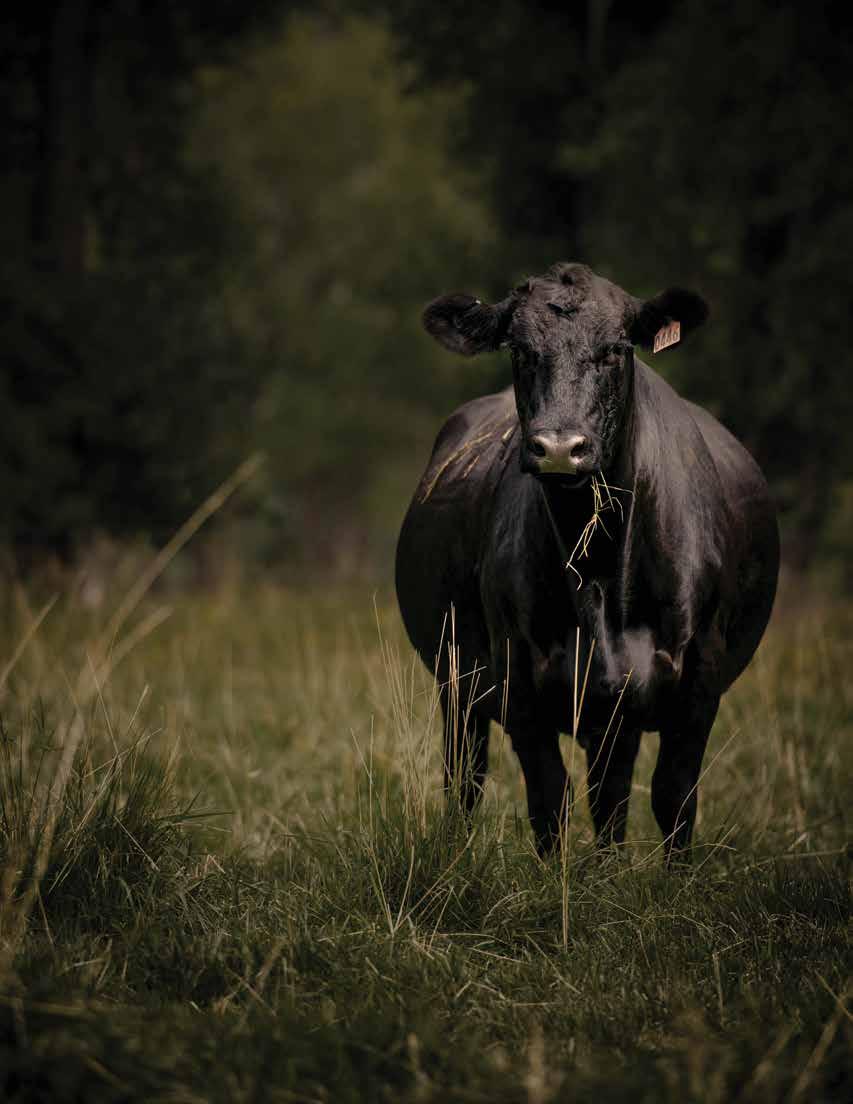
YOU DESERVE MORE.
We know your passion and we know your business. We’re here to help guarantee competition — Every single time.
 California Livestock auction Markets Association
THE NEXT CHAPTER
Bidding farewell as Perry Plans Retirement
by CCA Associate Director of Communications Maureen LaGrande
As the spring semester comes to an end at California State University, Fresno (Fresno State), the Jordan College of Agricultural Sciences and Technology is saying goodbye to longtime department of animal sciences and agricultural education faculty member and beef unit enterprise manager Randy Perry, Ph.D., Prather. For the past 32 years Perry has dedicated his time, knowledge and hand to students, livestock producers, ranchers and family. While he is retiring, Perry’s devotion to Fresno State, the agriculture industry and hundreds of students have and will continue to leave an everlasting mark.
Born and raised in Newman, Perry’s college career began at Merced Junior College where he was a member of the livestock judging team while taking animal science classes. Once finished at Merced he transferred to California Polytechnic State University, San Luis Obispo (Cal Poly), to pursue his bachelor’s degree in animal science. With a bachelor’s degree under his belt, Randy then attended Kansas State University (KSU), Manhattan, Kan., where he received his master’s in animal science focusing on reproductive physiology research in beef cattle. Perry also completed his doctorate in the impacts of nutrient development in heifers.
Throughout the course of his education Perry had several mentors including, Bill Jacobs, Frank Fox and Mike Hall, Nipomo at Cal Poly. Hall got to know Perry well during his time at Cal Poly and participation in various campus activities such as the Cal Poly Bull Test. “He was an outstanding student, who was involved in everything,” Hall said.
At KSU, Larry Corah, Guy Kiracofe and Jeff Stevenson also played a large role in Perry’s studies. He also looked up to beef producers, Jay

Robinson and Walt Hunsaker.
Once finished with his doctorate, Perry left Kansas to begin his career in the Jordan College of Agriculture’s Animal Sciences and Agricultural Education Department at Fresno State. In the department, Perry has taught a range of beef related courses throughout his time on staff including, beef cattle production, advanced beef management and animal reproduction to name a few. At the university in addition to serving as a faculty member he has also held multiple leadership roles over the last three decades. Perry served as department chair for a number of years. Additionally, he has led as the beef unit supervisor and Young Cattlemen’s Association advisor.
When Perry first started his teaching career at Fresno State, the college had approximately 250 students studying in the animal science and agricultural education department. At the time Perry taught a majority of the beef related classes in the animal science department. With program expansion and increased interest in the field of animal science at the university, there are now more than 800 students in the department, many more classes offered and multiple lecturers and faculty members. Perry still teaches the advanced beef course and animal reproduction. Of all the courses taught in his career, Perry says animal reproduction has been his favorite.
Early on in his career at Fresno, Perry, along with students conducted research on the San Joaquin Experimental Range, owned by the US Forest Service and University of California Cooperative Extension. The research focused on a commercial cow herd and genetic comparisons in British cattle and Brahman influenced productivity. He also conducted carcass testing for producers collecting progeny data from different sires for Angus breeders. Through this study,
38 California Cattleman May/June 2023
Perry had the opportunity to not only connect with industry producers but also expose his students to scientific research that aided in improving the beef industry.


In 1993, he helped start the Red Wave Classic Jackpot, a livestock show put on by students at the college and a program that will continue to have an impact long after Perry’s retirement. The idea for the jackpot came from students who proposed the idea to Perry and fellow faculty members. At first Red Wave was held in the pavilion on campus, but as the show gained participation and expanded upon livestock species, the show moved over to the Big Fresno Fairgrounds and just celebrated its30th anniversary.


Perry played a vital role in the day-to-day operations of Fresno State’s beef unit helping to guide and oversee the unit’s student managers. Steven Pozzi, one of three student managers during his time at Fresno State, details how Perry was there for the managers. Pozzi explained he taught them about the different facets of running the beef unit including, managing irrigated pasture rotations, creating feed rations and working with veterinarians to schedule semen tests and other health related checks for the cattle.
“Dr. Perry did a great job helping to get students prepared, for their future and enabled us to talk about ideas and help to create opportunities of our own.” Pozzi said.
Kris Gudel, Wilton, a past student of Perry’s, now brings his cattle to Fresno State’s Private Treaty Bull Sale. The annual sale allows producers to bring their bulls to the university farm to be fed out and then sold private treaty along with Fresno State’s livestock. Gudel shared even now as a producer, he still calls on Perry when he has questions regarding his livestock.
In addition to the students he has taught through the school’s beef unit, as the Fresno State Young Cattlemen’s Association (YCA) main advisor, dozens of club members over the last 30 years have also had the opportunity to learn and gain from Perry’s extensive knowledge and passion for beef cattle. Now leading the club along with co-advisors, Ryan Person, Clovis, and Amanda McKeith, Fresno, he continues to help oversee the students and YCA activities. Over the years Perry has taken students to the annual CCA and CCW Convention, helped with club BBQ fundraisers and events to help expose students to the industry and those who work in it.
“Working with the students is the most enjoyable part for me and will be what I miss most,” Perry says.
Looking back to his very beginnings at the college, he shares how the children of previous students from his early years teaching have started walking through his classroom doors—a testament to the time Randy has put in at Fresno State.
Perry’s son, Colby, shares how his father sees his past
...CONTINUED ON PAGE 40
May/June 2023 California Cattleman 39
...CONTINUED FROM PAGE 39
students now teaching or working in a related field. Many of them attribute Randy Perry in helping them to get to where they are in their careers today.
Perry shares that being involved in the industry and interacting with producers and students has been his biggest accomplishment. His career at Fresno has contributed to the impact made on his students and helped them to find their niche in the industry. One piece of advice Randy leaves his students with is to “never give up.”
Macy Perry, Randy’s only daughter, on occasion would tag along with her dad to the beef unit as well as help at many BBQ events put on at the school or local cattlemen’s events. She detailed how her father is always willing to help and give back to others with whatever a student or group may need—whether that’s educating young minds during his career or devoting time to his community, the Big Fresno Fair, producers, ranchers, industry groups such CCA, or investing in his family. His honesty is what Macy says she admires most about her father.

“I think it’s something that the students admire about him as well,” Macy’s brother, Colby added explaining how selfless and always willing to lend a hand his father is. “It’s hard for him to say no.”
Even with his busy schedule at Fresno State, Macy details how her dad always made it a point to be there for his family. “We weren’t a family who played sports. Our thing was showing cattle,” Macy said. Both her parents were educators who were busy but always found time to be there for all of the kids’ livestock shows growing up. “I’m proud of him to be so loyal to Fresno State since 1990. It’s a testament to the impact he’s had on students, the community and the beef industry over the last 32 years,” Macy said. “He is someone you can count on, look to for inspiration and be dependable.”

Friend and fellow CSU colleague, Chico State Farm Administrator Dave Daley, Ph.D., Oroville, details how he appreciates Perry’s approach to not only livestock and education but just his personality in general. “He’s just a straight shooter, something that’s not easy to find in the field of education. He steps in and tells you what he believes, it’s refreshing,” Daley said.
According to Daley, Randy has brought a depth of knowledge and experience to the industry in the purebred sector, bull development and breeding programs as well as to the minds of all his students over the last 32 years. “He will be missed in our educational world but will remain a valued member of the beef community out West,” Daley said. With retirement soon in his sights, Perry plans to move out to Oklahoma, where his wife Susan, son Austin, daughterin-law Harlie, grandson Banks, Macy and Colby all currently reside and are eager for him to join them there. Randy says he is looking forward to spending time with them, helping his son Austin with his cow herd and working on his and Susan’s new home.

“I am really happy for him. It’s been a long career at Fresno State and he’s ready to take the next step in his life with his family,” Colby said. “I’m excited to see what he does next.”
Congratulations on your retirement, Dr. Perry! CCA thanks you for your commitment, leadership and dedication to bettering California’s cattle industry and ranching community. Hats off to you.
40 California Cattleman May/June 2023
REMINDER TO GET PRESCRIPTIONS FOR USUAL OVER-THE-COUNTER CATTLE HEALTH PRODUCTS
June 11, 2023 is a date livestock producers have been made aware of for quite some time. This date is the designated time which antimicrobial drugs that were previously available to many livestock producers over the counter will no longer be available without a current veterinary prescription.

The U.S. Food and Drug Administration (FDA) issued this new Guidance for Industry (GFI) regarding the marketing status of antimicrobial drugs for food animal medicine in June 2021, giving veterinarians and livestock producers two years to make plans for the change. That time is now upon us.
GFI #263 specifies that all “medically important” antimicrobial drugs – antibiotics that are approved for use in both human and animal medicine – shall be brought under veterinary oversight.
Products that traditionally could be purchased by anyone over-the-counter (OTC) now will be available by prescription (Rx) only by a licensed veterinarian. That means antibiotics like penicillin and oxytetracycline no longer will be available in most feed and farm stores nationwide.
In addition to injectable products, the new
rules apply to other livestock medications like calf boluses and lactating and dry-cow mastitis tubes.
However, the prescription status does not require that these products be purchased directly from a veterinarian. The FDA notes that, while certain state requirements also may apply, you may be able to buy prescription animal drug products from various suppliers or distributors.
Those transactions will require a valid prescription provided by a licensed veterinarian, with whom you have a veterinarian-client-patient relationship (VCPR).
A prescription has already been required for many livestock antibiotics. In 2013, FDA introduced a Guidance for Industry document, called GFI 213. Over three years, it phased in veterinary oversight in prescribing medically important antimicrobial drugs used in the feed or drinking water of foodproducing animals. The drugs had previously been available over the counter.
For questions or concerns about this next phase of prescription regulation impacting livestock owners, it is advised to develop a plan with you veterinarian before June 11.

May/June 2023 California Cattleman 41 feeder specials Featuring: 275 head of fancy fall bred heifers from Grimmius Cattle. A.I. bred to calve within 30 days. Foothill and Anaplaz vaccinated. 100 head of fall calving cows aged 5 to 7 years. Foothill and Anaplaz exposed. Plus many other great opportunities from local consignors! JASON GLENN • (805) 550-9893 DUSTIN BURKHART • (661) 378-3504 BEN RENTERIA • (805) 674-1505 JIM SILL • (661)340-6848 SAM AVILA • (559) 554-4499 10565 9TH AVE., HANFORD, CA 93230 • WWW.OVERLANDSTOCKYARD.COM • OFFICE (559) 582-0404 Monday 4 p.m. PACKER COWS AND BULLS Monday & Thursday 11 a.m. & 5 p.m. FEEDERS IN THE MORNING WITH PACKER COWS AND BULLS LATER video sale the last Thursday of the month MAY 22 • JUNE 5 • JUNE 19 JOIN US WEEKLY! JOIN US FOR OUR SPECIAL BRED COW SALE JUNE 5 AT 3 P.M.!
THE FAKE MEAT NARRATIVE DOESN’T ADD UP
by Todd Wilkinson, NCBA President


Cell-cultured meat or, as I like to call it, “fake meat” is having a moment in the media again as a lab-grown chicken product is getting closer to restaurant menus and store shelves. The fact that I have to reference fake chicken in this column makes my stomach turn, but this is what we’re up against. These fake meat ventures receive significant investment up front and try to capitalize off of a narrative that they’re better than the real thing. We’ve seen fake meat products that sit on grocery store shelves untouched, like the Beyond Meat crap and companies that have stock prices that spike initially and then plummet, leaving investors high and dry. It’s all because fake meat companies can’t seem to grasp that their environmental arguments are as fake as their product and ultimately because consumers prefer real beef. The continued high demand for our real beef products proves it. The cell-cultured stuff is different than the fake meat we compare to dog food, but it’s still important to make sure we get ahead of the stories being spun by these fake meat ventures.
Cell cultured meat is grown in a lab from animal stem cells that are fed a mixture of vitamins, fats, sugars and oxygen. Sounds real appetizing, doesn’t it? The people in lab coats growing this stuff say it’s a scientific quest to feed the world, protect animals and cut down on greenhouse gas emissions. These companies can certainly pursue this lab grown goop, but
it must be labeled for what it is – a lab grown, cultured product. I think it’s important to poke holes in their story and, I’ll admit, I have fun doing it. A recent interview I did on this topic focuses on two things: correcting the sustainability and welfare falsehoods that these companies spread and reinforcing our policy position on the matter.
How many ranchers have brought that calf into the house or shop to protect them from bad weather? Farmers and ranchers go to great lengths to keep livestock comfortable and cared for. Tell me you can get that from something grown in a lab.
The sustainability story of our industry remains paramount in fighting false information. Cattle farmers and ranchers have been dedicated to environmental stewardship for generations. We are committed to continued improvement and innovation, and to producing high-quality beef for generations to come. Lab grown products are not environmentally superior to cattle, and if cattle are removed and replaced with this stuff, a number of ecosystem services will be lost. Cattle play a key role in maintaining healthy soils, sequestering carbon, preventing wildfire and preserving the habitats of hundreds of animals, insects and plants. Do we really want to take cattle off the land and have it turned into housing developments? I don’t think so.
Our policy position is to make sure this cell-cultured crap is clearly identified if it ever hits grocery store shelves or restaurant menus. We’re not afraid to compete with a new product, and I think this is hardly a competition when compared to real beef, but we want to make sure there’s a distinction. People have the right to expect truthful and accurate food product labels. The term “beef” should only be applicable to products derived from livestock raised through natural means by farmers and ranchers, not something that is artificially produced in a lab.
42 California Cattleman May/June 2023 NATIONAL STAGE


RESERVE YOUR AD SPACE TODAY! CONTACT MATT MACFARLANE M3CATTLEMARKETING@GMAIL.COM • (916) 803-3113 RESERVATION DEADLINE: JULY 1, 2023 Share your products & services in one of the most respected beef magazines in the business and the only publication that works exclusively for the California beef industry and puts your ad dollars back to work for you! Reach your direct target audience with our most anticipated issue of the year! Reach readers in California plus thousands more across the west, including Nevada, Oregon, Idaho, Arizona, Utah and Washington! COMING AUGUST 2023
CCW HOLDS REGIONAL MEETING IN FALLON, NEV.
by Callie Martinez, American National CattleWomen Region VI Director

The American National CattleWomen Region VI Meeting met in Fallon, Nev. March 23 to 25 at the Rafter 3C Event Center. Region VI covers Arizona, California, Idaho, Nevada, New Mexico, and Utah. This region meeting was hosted by California, and the WIRED Program was hosted by Nevada CattleWomen.
The region meeting kicked off on Thursday, March 23 with a media training and hands on learning activity facilitated by Chandler Mulvaney, Director Grassroots Advocacy & Spokesperson Development, National Cattlemen’s Beef Association. Chandler got us all thinking with his opening of “Today is Going to Be a Day You’ll Never Forget.” From here he gave us key words to remember: simple and visual. He said each opportunity can be blank canvas to paint a memorable difference. Chandler had us work through a Getting Started: Advocacy 101 activity, and encouraged us to share with others. We also need to remember what makes a good story. We need to keep in mind what we want them to know. How we want them to feel. Then lastly, what do
I want them to do?
We were honored to have the American National CattleWomen President-Elect Ruth Coffey, from Oklahoma come out and participate in our meeting. She is the fifth generation cattle rancher, and runs a ranch operation with her husband, Chuck Coffey, former Chair of the Certified Beef Board. She is passionate about our industry and definitely encouraged new members to get involved by volunteering to serve on a committee.
Thursday afternoon, we had two excellent Ag Education speakers: Denise Stewardson, Utah State University Extension, and she shared about the excellent variety of online resources in regards to STEM Education which can be used across the United States. All of the lesson plans are online. She makes a tab specifically for every program that she presents at. Barb Downey, Downey Ranch, Inc., gave a fantastic presentation on cattle reproduction, and how we can incorporate this into classroom visits or field days. The more hands on learning the lessons the better.
44 California Cattleman May/June 2023
All in attendance also had the opportunity to hear about Livestock Risk Protection and Fire Insurance for Grassland, from Quinn Briggs and Britney Creamer, of Wraith, Scarlett, and Randolph. It was very neat to hear that over half of the agents at WSR, are involved with production agriculture. They gave an excellent presentation on Livestock Risk Protection which is fixed when you purchase a contract, no margin calls and not upfront costs! It was highly recommended to just complete the application as it is free. The Grassland Fire Protection deadline is June 1, with a 15-day lag time, then you are covered throughout the year. The following lands are eligible: deaded, leased, BLM, Forest Service and state leases. Also be sure to insure all or part of your ground, as the payments are based on acres burnt.
Our Region VI business meeting took place on the afternoon of March 23 and was facilitated by ANCW Vice President Nikki Weston, Utah. The first item of business was the election of ANCW Region VI Director, which was held
by Callie Martinez prior to the meeting and following the election Callie will serve for two years. Nikki also went over all of the foundation chairs, as we needed to replace the open position on the membership committee. Jeri Roen, California CattleWomen President was nominated and accepted. We also filled positions on Ways and Means, as Callie was serving on the committee. Annalyn Settlemyer agreed to serve.
A big thank you goes out to all of our meeting sponsors: The following companies were Silver level sponsors: Alltech, Animal Health Express, Arizona State CowBelles, Inc., California Beef Council, California Cattlemen’s Association, CKP, Lamar and Melanie Fowle-Nelson, Utah CattleWomen, Zenith Agribusiness Solutions and Zoetis. Also, thank you to the WIRED Sponsors: Adode Insurance, AgriWebb, Allflex & Merck Animal Health, American Ag Credit, CKP Insurance, DATAMARS Livestock, Frank Turner & Sons Farms, Molly MFG, Inc. – Silencer; Multi Min, The Nevada Rancher, WSR Insurance and Zoetis.


May/June 2023 California Cattleman 45 HUMBOLDT AUCTION YARD, LLC Fortuna, California FOUNDED IN 1968 JUSTIN MORA (707) 845-7388 603 S 3RD ST, FORTUNA CA 95540 AUCTION EVERY WEDNESDAY SPECIAL SALES AS ANNOUNCED LEE MORA (707) 845-7188 PROUDLY FAMILY OWNED AND OPERATED!
Due Diligence Assistance / Budgeting Site & Improvements Assessment Conservation Easement Opportunities Advising for USDA NRCS Federal Cost-Share Incentives Programs USDA NRCS Technical Service Provider # 04-4096 Design / Installation Oversight / Final Check-Out CONSERVATION PROJECT Planning / Management / Coordination Solar Water Pumping Systems Design & Installation Enhancement Projects / Equipment Evaluation / Range Management Assessments Rangeland Improvements LLC www.freitasrangelandimprovements.com P.O. Box 2479 Livermore, CA. 94551 Jed Freitas 925.580.6415 Licensed/Bonded/Insured
Blazing Trails
Meet: Alli Fender, proud california rancher
 by Alli Fender, a California National Trailblazer Program Representative
Wait, San Diego has cattle? Yes, we do! Growing up in the back country of San Diego naturally raises an eyebrow when someone asks the basics upon meeting me, “Where are you from?” And, “What do you do?” Then I answer, “I’m from San Diego, and I raise black Angus beef cattle on my family’s historic cattle ranch.” Then, more profound questions start pouring in. I guess that is how I became more inclined to share more about my story and what I do personally as a rancher in Southern California, I went to a community college in San Diego, and my classmates always thought I was from Texas or Montana when I explained a little about my family’s ranch. Once they realized I grew up just an hour away, I became known as the “cowgirl” to most of my “city friend groups.” Naturally, I had to talk about cattle and beef in a light that made sense to those who asked me these questions.
I had a fantastic childhood. I watched my dad and uncles milk cows daily, chasing my brother and cousins all over the ranch. I got hurt and got back up again, rode horses through every inch of the property and swam in the ponds in the summer. It is what every kid dreams of. From a young age, I knew the ranch was my heart and something I promised to protect.
My husband, Bryce, and I were married on
Mesa Chiquita Ranch, the ranch I grew up on. Our wedding gift from my dad was ten bred heifers, which started our herd.
After a few weeks of doodling on the couch, we finally settled on three brands to send off to the state. The brand that was selected for us was “The Flying F.” This was meaningful to Bryce and I because it was designed as a spin-off of my grandpa’s brand.
As our herd grew and we learned more about our cattle, we started getting questions from our family members and friends about if we sold steaks and burgers. I had never really dove into that idea until the questions kept coming, and there was a void to fill. My family’s business was originally a dairy and then converted to a cow-calf operation. So, this was foreign territory for us to look into. However, we kept back four steers in 2020 and experimented with feeding out our beef and selling custom-cut beef shares. That is how our small-scale direct-to-consumer beef business was created. We called the business Flying F Ranch.
When we started our direct-to-consumer business model, I shared a lot of the behind-thescenes of our new business endeavors on social media and our blog on our website, flyingfranch. org. This led to me sharing about up-cycling by-
46 California Cattleman May/June 2023
products like spent beer grain to our feeder steers, how the land and livestock work synergistically, herd health protocols and recipes to try with uncommon cuts of beef. Later, I went through the Beef-Checkoff funded Masters of Beef Advocacy Program (MBA) offered through NCBA to learn even more about the cattle life cycle and deepen my knowledge to share with my customers and consumers everywhere.
In 2021, we sold some of our original herd and bought a set of registered black Angus. We wanted to utilize the “quality not quantity” mindset to diversify our business and create the best carcass traits possible for our beef program. It has been very successful and we love the end product of our beef. I started to share more about how vital genetics are for our program. I talk about topics like artificial insemination techniques, carcass traits and why all of this matters on the dinner plate.
I was nominated as the San Diego County CowBelle of the Year in 2022 and had the opportunity to attend my very first California Cattlemen’s Association’s Convention in Reno. I went to the media training seminar that was hosted by the California Cattlemen’s Foundation and led by Chandler Mulvaney, the National Cattlemen’s Beef Association’s Director of Grassroots Advocacy and Spokesperson Development. He had the group do a few mock interviews, and we were asked questions on the spot with a prop camera and microphone. This piqued my interest because I love talking to my local consumers about the beef production's ins and outs and advocating for our industry, especially in San Diego County. I feel like I have a job to accomplish by creating more understanding of the importance of cattle to our ecosystem, diets, and heritage.
I was surprised to get a phone call from Chandler back in February that I was selected to represent California as a Trailblazer for 2023. The Trailblazer program is essentially a level up from the MBA program, which is funded by NCBA, a contractor of the Beef Check-off.
Throughout this year, the group of selected individuals will be trained to have innovative conversations with the public and media while correcting myths and advocating for the beef industry. There are 10 diverse participants this year for this unique experience and I am very excited about our first in-person training in Denver, at the beginning of May.
I am proud to represent the Golden State and highlight that California is worth fighting for regarding agriculture and livestock production. According to the California Department of Food and Agriculture, California’s agricultural abundance includes more than 400 commodities. We produce over a third of the country’s vegetables and three-quarters of the country’s fruits and nuts. Regarding cattle, California dairy products bring in $7.57 billion, and beef cattle
bring in $3.11 billion. The bottom line, we feed a lot of people. I feel responsible for highlighting our state as a top food producer and pioneering the trails of knocking out developing issues we face.

It is going to be an exhilarating experience this year as a Trailblazer. I am honored to be selected as one of ten people in the United States. I will learn about tools and techniques to add to my skill set as a spokesperson for the beef industry. If you have any questions or need help in any way for sharing your own story or if you are faced with current issues on your ranch or farm, please contact me. I am happy to bring it up within the Trailblazer program to collaborate to share the good word about cattle and beef production in California.
About Trailblazers
The Checkoff-funded Trailblazers program was created in 2021 to support the efforts of the National Cattlemen’s Beef Association, a contractor to the Beef Checkoff, in identifying, recruiting, empowering, and engaging with advocates in the beef community. The program will provide a train-the-trainer model to support state beef councils and partner organizations in mobilizing a cadre of spokespeople who are equipped to have tough conversations and seek solutions in telling the beef story.
May/June 2023 California Cattleman 47
– WESTERN POLY PIPE, LLC –HDPE PIPE FOR RANCH & FARM WATER SYSTEMS DELIVERY AVAILABLE • (925) 240-3643 GOOD SERVICE COMPETITIVE PRICES RANCHER-OWNED Western Poly Pipe —lifetime pipe—
HANDS ON LEARNING BREEDING CLINIC AT UC DAVIS SHOWS STUDENTS, PRODUCERS ROPE OF A.I.

 by Marissa Fischer for the California Cattleman
Like many things temporarily halted by the COVID-19 pandemic, the Artificial Insemination (A.I.) Clinic hosted by the UC Davis Young Cattlemen’s Association was no exception. But thanks to the hard work and dedication of the YCA members, it is back and better than ever. What was once an annual event is now hosted twice a year to accommodate as many participants as possible.
The A.I. Clinic is a three-day learning event fully coordinated by the UCD Young Cattlemen’s members. Planning such a hands-on, highly involved, and highly demanded event requires much work and preparation long before participants arrive to Davis. The planning process starts months in advance and is said to be extremely rewarding for the planning committee to watch it all come to fruition.
Ashland Williams, junior Animal Science major and YCA officer said, “Planning such a stressful and time-consuming event and then seeing the participants having a great time and learning something new was an amazing experience and made the hard work well worth it.”
Students are tasked with coordinating dates with veterinarian availability, advertising, purchasing supplies, meal preparation and serving, cattle receiving, shipping, and care, and customer service ensuring all participants have a great experience. Support and guidance are offered by YCA advisors and beef unit managers where needed, but ultimately this a fully student run event.
Throughout the threeday course hosted this March, participants were taught by a team of veterinarians from the UC Davis Livestock Herd Health Services. The clinic included classroom time discussing the process of artificial insemination, synchronization protocols, safe and proper semen handling techniques, important safety factors, equipment
requirements, A.I. sire selection and more.
The goal of this clinic is to provide a learning opportunity for participants to feel more informed and confident about the entire reproductive process in cattle. Participants then had the opportunity to spend time practicing passing an A.I. gun through a repro tract to allow for better understanding and feel before working with live cattle. Gloria Cortes, junior animal science major, YCA officer, and A.I. clinic participant said, “My favorite learning experience was practicing the techniques taught in the classroom on the repro tracts provided. We are very fortunate to have the opportunity to practice our personal styles before going in a live cow.”
All three days participants were able to work with the live cattle and by the end of the course they had each successfully passed an A.I. gun and received their certification. Throughout the live cattle work, participants had the ability to talk and connect with one another as well as with the veterinarians who provided expert advice to each individual. The overall clinic size is kept small, capped around 25 people to ensure the veterinarians are able to work with everyone and it is a quality learning experience for the
48 California Cattleman May/June 2023
YOUNG PRODUCER
Participants practicing the skills they learned in the clinic.
participants. Many expressed how great their learning experience was, despite the wet and wild weather, and equally, how they enjoyed connecting with one another. This clinic’s participants included ranchers, students, vet technicians and other professions.

The UC Davis YCA officer team would like to extend their sincere thanks to all who supported them through the planning and execution of this A.I. Clinic. Especially the veterinarians, staff technicians, beef unit managers, and CBCIA for their time and contributions, and Cargill for the continued support throughout the years by graciously donating the cattle used. Also, a huge thank you to all of those who participated this past March and previously. UC Davis YCA greatly appreciates your dedication to learning and improving your skills and our industry as well your support of our program.

The next A.I. Clinic will be hosted in the late summer/early fall in Davis. For anyone interested in participating, please be on the lookout for advertising through social media, California Cattlemen’s Association, and an email list. If you wish to be put on the email list or have any questions about the UC Davis YCA, please reach out to davisyoungcattlemens@gmail.com. This list will simply inform you of the date set and other details pertaining to the next clinic, it does not guarantee you a spot. Reservations are first come first serve once the registration process has been announced.


The UC Davis Young Cattlemen’s have many exciting things up their sleeve and being committed to hosting this A.I. clinic twice every year is one of them. Not only is it a great learning opportunity for the students to acquire skills pertaining to event planning and networking in the industry but it is also a great opportunity for our industry members to learn new skills, improve our beef cattle herd genetics, and connect with the youth and future of our industry. These students work extremely hard to provide a quality experience and show off all there is to offer at UC Davis. “I highly recommend this clinic to anyone who has an interest in cattle production,” says Ashland Williams. Hope to see you in Davis in the fall!

May/June 2023 California Cattleman 49
The March A.I. Clinic participants
6001 Albers Rd | PO Box 2138 | Oakdale, CA 95361 (209) 847-1033 AUCTION SALES EVERY MONDAY AND THURSDAY DAIRY | BEEF | FEEDER CATTLE EASTON HAGLUND (209) 988-5031
UC Davis Young Cattlemen’s Officers L to R: Ashland Williams, Arianna Guerrero, Alexis Avila, Gloria Becerra, Courtney Snell, Max Sadowski and Mackenzie Severns.
DRIVING BEEF SALES THROUGH E-COMMERCE
As consumers continue to turn to online ordering for their grocery shopping needs, the National Cattlemen’s Beef Association, a contractor of the Beef Checkoff, is partnering with national retailers and foodservice operators to encourage consumers to put more beef in their baskets and on their plates.
In all, 64 percent of consumers say they are ordering groceries online, with 44 percent of consumers including fresh beef in those grocery orders. When it comes to foodservice, online ordering has become overwhelmingly popular, with 80 percent of consumers saying they order meals online and 70 percent using online ordering for burgers.

To ensure that beef’s positive message is reaching existing customers as well as new online buyers, NCBA and the Beef Checkoff partner with national grocery retailers for e-commerce efforts. Ads inspire consumers to purchase beef throughout the year. In addition, beef is front and center with consumers ordering meals online through e-commerce campaigns with restaurants, food delivery services and foodservice distributors.
Digital ads capture consumers’ attention
through attractive beef photography showcasing seasonally relevant cuts and the Beef. It’s What’s For Dinner. logo. Retail ads do not contain coupons but merely inspire consumers to add beef to their cart – either digitally or in-store. The ads are placed on the retailer’s website and app, as well as placed on popular lifestyle sites and occasionally a retailer’s social platforms such as Pinterest.
For foodservice campaigns, ads are created to highlight limited time beef offers. Beef Checkoff funds are utilized only for advertising, and any offers or discounts are 100 percent funded by the foodservice partner. The food delivery service and restaurant partners track sales data to show how beef sales increased over the course of the campaign.
One of the biggest advantages of e-commerce promotions is the ability to show actual sales and results. A recent “back to school” e-commerce campaign with a national mass merchandiser promoted beef through digital ads, both on the retailer’s website as well as popular consumer lifestyle sites that led back to the retailer’s beef landing page. The nearly two-month promotion resulted in $11.6
50 California Cattleman May/June 2023
by the National Cattlemen’s Beef Association, a contractor of the Beef Checkoff
million in incremental beef sales, 30.5 million ad impressions and a return on ad spend of $49. That means that for every one Checkoff dollar spent on the campaign, $49 was returned in incremental beef sales.
In addition, a December 2022 holiday e-commerce campaign with a national mass merchandiser promoted beef through digital ads. The promotion resulted in $4 million in incremental beef sales, 37.8 million ad impressions and a return on ad spend of $13.45. In total, 12 state beef councils and the Northeast Beef Promotion Initiative provided additional funding to increase ad exposure within their states.
A foodservice promotion with Uber Eats and a national burger chain resulted in a 200 percent increase in burger orders the week of the promotion, and an impressive 10 percent increase in beef sales. A partnership with a broadline foodservice distributor served consumers and foodservice operators beef ads
online during their ordering process, and the two-month campaign drove an increase of 32 percent in cases of beef sold.
E-commerce promotions go beyond national campaigns. State beef councils also have the opportunity to partner with NCBA to increase digital ad placements within their states or in major media markets. More than 20 states have contributed funds to participate in retail e-commerce efforts over the past year.
Overall, e-commerce efforts continue to drive beef sales. Partnerships with national supermarket chains, mass merchandisers and club stores resulted in more than $30 million in incremental beef sales in the past year.
“We’re excited about the positive impact our e-commerce efforts have on beef sales,” said Jill Rittenberg, senior executive director of B2B engagement at NCBA. “We are looking forward to executing new and innovative campaigns in the coming months.”
May is Beef Month Where did the delicious Tri-Tip originate?

On the central coast of California lies the town of Santa Maria known for its mouth-watering barbecued Tri-Tip, prepared predominantly with simple seasonings and a touch of traditon.
In the early 1800’s the cattle industry was the foundation of California’s economy. Every spring, Santa Maria Valley rancheros would gather to help each other brand their cattle. The host would prepare a Spanishstyle barbecue for his vaqueros (America’s first cowboys) after a long day of work. The beef was barbecued over a red oak fire and served with Pinquito beans, bread and salsa.
In the 1950’s Bob Schutz, a meat cutter from California’s central coast, began using one of the muscles from the bottom sirloin and prepared it
Santa Maria style. He recognized that using all the bottom sirloin for stew meat or ground beef as had been tradition, might be a waste of a good cut. Schutz called his new cut a “TriTip” because of its triangular shape. This popular cut has since become synonymous with Santa Maria style barbecue and is undeniably a California tradition.

the originate? town of Santa barbecued Tri-Tip, seasonings and a the foundation Santa Maria Valley other brand their Spanish-style barbecue after a long day red oak fire and salsa. from California’s muscles from the style. He sirloin for stew meat might be a waste of “Tri-Tip” because of synonymous with undeniably a California Susie Q’s Brand in Santa Maria Valley TRI-TIP California’s Cut May/June 2023 California Cattleman 51
Information provided by Susan Righetti of Susie Q’s Brand in Santa Maria and Richard Chenowith of the Santa Maria Valley Historical Society-Museum.
SLO CATTLEWOMEN CELEBRATED RANCHER MONTH THROUGHOUT COUNTY
by Nicole Nicholson, San Luis Obispo CattleWomen
With a New History of Cattle Ranching Exhibit, February was Proclaimed San Luis Obispo County Cattle Ranching Month in San Luis Obispo, County! On Feb. 7, in conjunction with National Meat Month, San Luis Obispo County Cattlewomen (SLOCCW) presented a resolution to their county’s board of supervisors that would designate February as San Luis Obispo County Ranching month. The politically diverse board was overwhelmingly supportive of the initiative with many of the supervisors proclaiming and recognizing the importance of ranching to the local economy.
After SLOCCW’s Cattlewoman of the Year, Sarah Kramer was recognized, the board was able to hear a bit from President Tracy Nicholson about how involved women are in ranching, not just in SLO County but across the country.
In conjunction with the new resolution, SLO CattleWomen wanted to highlight the organization’s 250 years of Cattle Ranching in San Luis Obispo County display at the Pioneer Museum in Paso Robles. The intent of the display was to showcase the impact that cattle ranching and the beef industry have had on California over the last 250 years.
Winning the prestigious Walt Rodman Award at the California Cattlemen’s Convention in December, creation of the exhibit was facilitated and chaired by long time SLOCCW member, museum board member, and cattle rancher, Kathy Loftus.

The museum exhibit walks viewers of all ages through the history of cattle ranching dating back 250 years. A timeline of ranching history highlighting key periods such as the Mission Period (1769-1832), The Golden Age of the Rancho (1833-1848), Gold Rush Brings Americans (1849-1852), The Rancho Period (1853-1884), The Railroad comes to San Luis Obispo County (1885-1901) and the Diversification of the Rancho (1901-present) are represented along with saddles, tack, and equipment from each period for patrons to see.

On the back wall of the exhibit, there are three glass display cases showcasing two of the most famous cowboys from the county. Their biographies, photos, and even their Visalia saddles are on display! Above these cases are over 70 old photos of the ranchos, cowboys and vaqueros from the county dating from 18821960. Each photo has the ranch name, cowboy or vaquero’s name, and the year printed on it.
To complement the display, San Luis Obispo County Cattlewomen have added a stand with brochures from the Beef Council. The most popular brochure is “Pairing Beef with Wine” because many visitors come to Paso Robles for its world renown wineries. For children, the cattlewomen have provided educational, beef coloring books and crayons to take home.
Both displays are so popular that restocking is now constantly needed. SLOCCW wanted to ensure that this was a display that everyone
52 California Cattleman May/June 2023
CHIMES
could enjoy. The exhibit was created to be inclusive and to last for decades to come. Thousands of people of all ages and backgrounds will view this exhibit at the Pioneer Museum in the coming years. Using realia and printing information on metal, making the content of the display accessible to both youth and elderly visitors. For example, the display’s large print makes the information much easier to read for those with a visual impairment. Equipment and artifacts are displayed low enough for children and those with mobility challenges to view them up close without difficulty. Lastly, the display is the only exhibit that is not roped off, allowing visitors to view it up close. This makes viewing and moving freely about the exhibit easier for all visitors but especially those who might be using a wheelchair, cane, walker or mobility scooter.
Most importantly, the exhibit’s intent was to be as educational and informative as possible. The exhibit itself addresses two different California Common Core History and Social Sciences state


standards for fourth grade. This alignment of the exhibit with the state standards reinforces and adds to what fourth grade students are learning about the mission-rancho period. Hundreds of students from local schools will be able to go beyond a textbook and take a peek into what life was like during this time, while learning about the role that cattle played in our history! The presentation of information in timeline format aligns with California Common Core fourth grade language arts standards as well, making the display a cross- disciplinary learning experience. Though the display has only been completed for a few months, it has been a huge success. Some of the direct quotes from visitors include, “What an informative display!” “The display is so bright and inviting.” “This is the best!” “We had no idea the importance of cattle ranching.” “I am so glad our area still has cattle ranching.” “This should be a traveling display and go up and down the state!” “This display will be seen by visitors from all over the world!”

May/June 2023 California Cattleman 53 2011 e stuhr rd. • newman, ca Beef Sales 3:30 p.m. Tuesday & Thursday yearlings, calves, cull cows & bulls replacement females CALL FOR DETAILS ON UPCOMING SPECIAL SALES OR TO CONSIGN TO THE NEXT WESTERN VIDEO MARKET SALE JOHN MCGILL: (209) 631-0845 OFFICE: (209) 862-4500 FAX: (209) 862-4700 Serving Cattle Producers From Northeastern California, Southern Oregon and Western Nevada Reed Martinez (530) 640-0148• Office (530) 233-3442 P.O. Box 760 •Hwy 299 W, Alturas, CA 96101 Auction Yard REGULAR
FEBRUARY TO AUGUST: THE FIRST AND THIRD SATURDAYS SEPTEMBER TO JANUARY: EVERY SATURDAY
SALES
IN MEMORY
COL. JACK PARNELL
Col. Jack Callihan Parnell was born May 7, 1935, in Leavenworth, Wash. He passed away April 30, at home on the Parnell Ranch in Sandpoint, Idaho.

Jack grew up on his father’s dairy. His life and work ethic began there. Jack went on to work for Crystal Creamery. He owned and operated Regal Janitorial Service. He later became a field editor for Pacific Stockman, Stockman Weekly and produced and published the California Cattleman magazine.
He was a renowned livestock auctioneer, Director of the California Department of Fish and Game, Secretary for the California Department of Food and Agriculture, Deputy Secretary of the United States Department of Agriculture, a government relations advisor, and Founder/ Chairman of Auburn Bank of Commerce.


In addition to all the positions Jack held during his career he found time to serve many different community and agriculture causes. He served as a board member for: Farmers Insurance, Chairman of the Board for Neogen Corporation, Chairman of the Board for Siller Brothers Incorporated, American Angus Association, California Production Credit Association, President of the California Angus Association, President of the 20th District Agriculture Association/ Gold Country Fair, member of Pacific Fisheries Management Council and member of the California Air Resource Board.
Jack was voted California Livestock Man of the Year by the Grand National Rodeo and Stock Show and California Chamber of Commerce. Jack owned and operated Dunipace Angus Ranch/ Parnell Ranch Clydesdales. He was inducted into the Clydesdale Breeders of the United States Hall of Fame and was founder of the Draft Horse Classic in Grass Valley. In addition to his love of ranching, he also owned and operated family businesses that complemented the ranch: Headquarter House Restaurant, Headquarter House Country Meat Shop and Angus Hills Golf Course.
Jack authored three books espousing his philosophy and beliefs. My Name is Ramsey, The Old Apple Tree and Friends, The Old Apple Tree Talks “Happiness.”
Whether in a board room or in Washington, D.C., he couldn’t wait to get back to his ranch. Mowing hay, checking cows, harrowing a pasture, or watching the Clydesdale foals develop, he was happiest on the land.
From a humble beginning to becoming
a successful businessman his greatest accomplishments were being a beloved husband, father, grandfather, great grandfather, with many extended family members and friends. He touched all our lives in different ways and will be missed.
His faith and love for his Lord and Savior Jesus Christ has served him well. He’s home.
“My Thoughts” by Jack
During your journey there will be events that you don’t understand but they are all very important and necessary. They mold us into the person that we will become. Whether you think it good or bad, have faith! Our Great Creator is using these events to very carefully weave the delicate fabric of your life and character.
A Celebration of Life for Jack will be held at the Parnell Ranch, Sandpoint, Idaho, Sept. 16, 2023 at 2 p.m.
God bless you, Papa. He sure blessed us with you. We love you.
54 California Cattleman May/June 2023
IN MEMORY NEW ARRIVALS
Charles Odell Fuller, a beloved father, husband, and grandfather, passed away peacefully on April 4, 2023, at the age of 66. Born on October 21, 1956, in Owasso, Okla., he was the son of the late Paul O’Dell Fuller and Dorothea Ann Courtney.

Charles was a devoted family man, known for his warm smile, hard work ethic, and unending kindness. He leaves behind his loving wife of 46 years, Joyce Fuller, and their children Jennifer Russell, married to Robert Russell and residing in Murfreesboro, Tenn., and Brandon Fuller, married to Ashley Watts and living in Union City, Okla. He was an adoring grandfather to Madden, Riley, Walker, Korbin and Denton.
Charles is survived by his cherished siblings: Susan Fritts and husband George, of Owasso, Okla.; Mary Moreland and husband David, of Collinsville, Okla.; Rosella Moreland and husband Dan, of Tyro, Kan.; David Fuller and wife Michelle, of Bernice, Okla.; Emily Ott and husband James, of Berniece, Okla.; and Leland Fuller and wife Jennifer, of Joplin, Mo.
In his free time, Charles was an avid outdoorsman who loved to travel and explore new places, from hunting in the Rocky Mountains to scuba diving in the Caribbean. Charles also enjoyed sharing these passions with his grandchildren, constantly introducing them to new experiences. As a family man, he loved treating his children and their families to incredible adventures, creating lasting memories together.
Charles was an accomplished employee at Cargill Protein for over 42 years, demonstrating unwavering dedication and passion for his work. He was respected by colleagues for his expertise and known for his willingness to lend a helping hand. A dedicated volunteer, Charles generously gave his time to Habitat for Humanity for over 14 years, serving on the board of the habitat Fresno Chapter for six years. His commitment to the organization was a testament to his compassionate spirit and desire to make a positive impact on the lives of others. Who he was at Cargill and habitat was an extension of his church and faith.
Charles possessed a strong sense of faith and was a long-time member of CrossCity Church. He lived his life guided by his beliefs and left a lasting impression on all those fortunate enough to have known him. Charles’s life was a testament to the power of love, kindness, and faith. He will be profoundly missed by all who knew him, but his legacy will live on in the hearts of those he touched. The family kindly asks that donations be made to Habitat for Humanity, an organization near and dear to Charles’ heart.
To share your family news, obituaries, weddings and birth announcements, please contact the CCA office at (916) 444-0845 or e-mail: magazine@calcattlemen.org.
AUGUSTUS KINGDON
Travis and Vanessa Kingdon, Taylorsville, welcomed Augustus Samuel Kingdon on March 23. He weighed in at 7 pounds 6 ounces and was 21.5 inches long. Grandparents are Brian and Heather Kingdon, Taylorsville, and Bill and Dana Power, Modesto.
CALLAHAN FULFER
Callahan Robert Fulfer was welcomed by parents Talor and Kate Fulfer on March 23. “Cal” weighed 6 pounds, 13 ounces and was 20 inches long. He is the third grandchild of Dave Daley and Cindy Daley and the second grandchild of Jeff and Cindy Fulfer.

CALLAGHAN SEEMAN
Callaghan Richard Seeman was born to Tele and Merrily Seeman, Wells, Nev., on April 25. At 6 pounds, 12 ounces and 19 inches long, grandparents are Monty and Merry Pearce, Wells, Nev., and Richard and Judith Seeman, Superior, Mont.


DALLAS HAINES
Cody and Alyssa Haines, Clovis, welcomed daughter, Dallas Noelle on May 6. She weighed 9 pounds, 21 inches and joins big brother Weston. Grandparents are Tony and Danette Toso, Hornitos and John and Tracy Haines, Waxatachie, Texas.
WEDDING BELLS
Megan Huber and Jamie Hill were wed in celebration with family and friends in an intimate celebration at the Acre Resort in Cabo San Lucas, Mexico, on April 28. The bride, is a former CCA employee and is a branch manager for AgWest in Central Point, Ore. The groom is a tug boat captain on the West Coast. The couple has made their home in Central Point.
May/June 2023 California Cattleman 55
CHARLES FULLER
HUBER & HILL


56 California Cattleman May/June 2023 CALIFORNIA CATTLEMEN’S ASSOCIATION JOIN US FRIDAY, SEPT. 1 FOR OUR ANNUAL ANGUS BULL SALE! CALL US FOR INFORMATION ABOUT OUR PRIVATE TREATY CATTLE OR OUR ANNUAL BULL SALE! Anselmo, Nebraska KENNY & DIANNE READ 1485 SW King Lane • Culver, OR 97734 Ranch: (541) 546-2547 Cell: (541)480-9340 E-mail: barkdranch@msn.com visit us online at: www.barkdangusranch.com Look for our “Distinctly Different” Angus bulls annually at Red Bluff and Modoc Bull Sales! BAR KD RANCH BAR KD RANCH Elevating Angus to Greater Horizons VISIT US AT WWW.DONATIRANCH.COM! 32st annual Bull Sale Sept. 21, 2023 in Denair Join us at the Heritage Bull Sale Sept. 10! 916.712.3696 • 916.803.2685 jj@barrangus.com Angus RAnch Annual Bull Sale: Sat., September 1, 2018 Inaugural Female Sale: Mon., October 15, 2018 Tim & Marilyn Callison Owners Chad Davis 559 333 0362 Travis Coy 559 392 8772 Justin Schmidt 209 585 6533 Ranch Website ................. www.ezangusranch.com Join us for upcoming production sales: BULL SALE: SEPT. 9, FARMINGTON FEMALE SALE: OCT. 7, PORTERVILLE SERVICES FOR ALL YOUR ON-THE-RANCH NEEDS SEPT. 9, 2021 • WILLIAMS, CA Ranch Buyer's Guide ANGUS Join us Sept 14, 2023 in Oroville for our annual Bull Sale!





LOOK FOR US AT LEADING SALES IN 2023. Scott & Shaleen Hogan H R (530) 200-1467 • (530) 227-8882 Gerber, CA Registered Angus Cattle Call to see what we have to offer you! RED RIVER FARMS 13750 West 10th Avenue Blythe, CA 92225 Office: 760-922-2617 Bob Mullion: 760-861-8366 Michael Mullion: 760-464-3906 Simmental – SimAngus™ – Angus Offering bulls at California’s top consignment sales! Call today about private treaty offerings! O’NEAL RANCH BULLS OFFER THE COMPLETE PACKAGE O’NEAL RANCH — Since 1878— Gary & Betsy Cardoza PO Box 40 • O’Neals, CA 93645 (559) 999-9510 Join us at the annual “Performance Plus” Bull Sale in O’Neals on Sept. 12, 2023 GROWTH • PERFORMANCE ADAPTABILITY • CARCASS Hoffman Bomber 8743 SIRE: Casino Bomber N33 MGS: S A V Final Answer 0035 VDAR Mirror Image 6207 SIRE: W R A Mirror Image T10 MGS: BCC Bushwacker 41-93 CONTACT US ABOUT SEMEN FROM THESE IMPRESSIVE SIRES... • Calving Ease with Growth • O’Connell Aviator 7727 SIRE: Musgrave Aviator MGS: R B Tour Of Duty 177 VDAR PF Churchhill 2825 SIRE: VDAR Churchill 1063 MGS: VDAR Really Windy 4189 Joe Sammis • (530) 397-3456 122 Angus Rd., Dorris, CA 96023 h (775) 691-1838 • honeranch@frontier.com HONERANCH.COM PERFORMANCE-TESTED EFFICIENT, QUALITY ANGUS BULLS NOW AVAILABLE! You can take to the bank! O’Connell ranch Call us about females available private treaty. Mark your calendars for September 14, 2023 and join us in Oroville for our annual bull sale with Donati Ranches! DAN & BARBARA O’CONNELL 3590 Brown Rd, Colusa CA (530) 458-4491 Nathan, Melissa & Kate Noah (208) 257-3686 • (208) 550-0531 YOUR BUSINESS COULD BE HERE! CALL MATT MACFARLANE AT (916) 803-3113 TO LEARN MORE. May/June 2023 California Cattleman 57
John
(530) 385-1570
E-mail...............................tehamaranch@gmail.com


Mark you calendars for our 49th Generations of Performance Bull Sale. Sept. 15 in Gerber! To lean more about the association, contact western regional field representative colt cunningham at 918-978-8779


(805) 448-3859

Allan Teixeira: (805) 310-3353

Tom Hill: (541) 990-5479

SEEDSTOCK PRODUCER SINCE 1978


Leading Angus & Ultrablack© Genetics
Bulls and females available private treaty!

TUMBLEWEED RANCHES
Greeley Hill, CA • La Grange, CA Stephen Dunckel • (209) 591-0630 www.tumbleweedranch.net twd@tumbleweedranch.net
58 California Cattleman May/June 2023 Dwight Joos Ranch Manager P.O. Box 1019 • Simi Valley, CA 93062 805-520-8731 x1115 • Mobile 805-428-9781 dwight.joos@pwgcoinc.com Simi Valley, CA pwgillibrandcattle.com P.W. GILLIBRAND Cattle Co. Horned and Polled Hereford Genetics Private treaty bulls available or watch for our consignments at Cal Poly! JOIN US SEPT. 7 FOR OUR ANNUAL BULL SALE IN LAGRANGE!
Teixeira:
and SimAngus Ca le Call us today for information on private treaty bulls or females.
ANGUIS 14298 N. Atkins Rd • Lodi, CA 95248 Nellie, Mike, Mary, Rita & Families Nellie (209) 727-3335 • Rita (209) 607-9719 website: www.mcpheeredangus.com 11500 N Ambassador Drive, Suite 410 | Kansas City, MO 64153 | (816) 842-3757 | aha@hereford.org
Beck, Manager • 618-367-5397 Bob Coker • 916-539-1987 visit us online at: www.genoalivestock.com Top performance Hereford genetics —Horned and Polled— ANNUAL BULL & FEMALE SALE Monday, Sept. 11, 2023 at the ranch 640 Genoa Land, Minden NV 89423 79337 Soto Lane Fort Rock, OR 97735 Ken 541.403.1044 | Jesse 541.810.2460 ijhufford@yahoo.com | www.huffordherefords.com “Breeding with the Commercial Cattleman in Mind” 3L Registered Hereford Cattle & Quarter Horses Annual Sale First Monday in March 42500 Salmon Creek Rd Baker City, OR 97814 Ranch: (541) 523-4401 Bob Harrell, Jr.: (541) 523-4322 THANKS FOR YOUR SUPPORT OF OUR MODOC BULL SALE IN 2023! JOIN US IN OROVILLE OCT 21 FOR OUR BUTTE BULL SALE EVENT Oroville, CA LambertRanchHerefords.com CONTACT US FOR CATTLE AVAILABLE PRIVATE TREATY OFF THE RANCH “THE BRAND YOU CAN COUNT ON” REGISTERED HEREFORD CATTLE BARRY, CARRIE & BAILEY MORRELL Barry: (530) 6825808 • Carrie: (530) 218-5507 Bailey (530) 519-5189 morrellranches@yahoo.com 560 County Road 65, Willows CA 95988 Call us about our upcoming consignments or private treaty cattle available off the ranch. OFFICE@VINTAGEANGUSRANCH.COM WWW.VINTAGEANGUSRANCH.COM
A FAMILY TRADITION www.teixeiracattleco.com | cattle@thousandhillsranch.com Angus
MCPHEE RED
Chris
HEREFORD
RED ANGUS





May/June 2023 California Cattleman 59 OFFERING HEREFORD BULLS BUILT FOR THE COMMERCIAL CATTLEMAN Jim Mickelson (707) 481-3440 THE DOIRON FAMILY Daniel & Pamela Doiron 805-245-0434 Cell doiron@spanishranch.net www.spanishranch.net THD © SPANISH RANCH Your Source for Brangus and Ultrablack Genetics in the West! Vaccines Medicines Mineral Supplements Antonia Old • (209) 769-7663 antonia.old@animalhealthinternational.com ...and more! Reliable products you are looking for with the dependable service you need. 2015 AICA Seedstock Producer of the Year Feedlot • Rice • Charolais Jerry & Sherry Maltby www.brokenboxranch.com bbr@citlink.net PO Box 760 Williams, CA Mobile: (530) 681-5046 Office (530) 473-2830 Bobby Mickelson (707) 396-7364 California’s Leading Producers BALD MOUNTAIN BRANGUS, SONORA (209) 768-1712 RUNNING STAR RANCH, LINCOLN (916) 257-5517 SUNSET RANCH, OROVILLE (530) 990-2580 DEER CREEK RANCH, LOS MOLINOS (541) 817-2335 THE SPANISH RANCH, NEW CUYAMA (805) 245-0434 GLASGOW BRANGUS, SANTA YSABEL (760) 789-2488 for Brangus, Ultrablack & Brangus Optimizers Call a breeder near you today for more information! TUMBLEWEED RANCHES, GREELEY HILL (209) 591-0630 CHAROLAIS MULTI BREED ANIMAL HEALTH BRANGUS YOUR BUSINESS COULD BE HERE! CALL MATT MACFARLANE AT (916) 803-3113 TO LEARN MORE.
Enterprise Executive Ranch - Oregon 17,088± total sf, luxury home on 235± acres with a creek, 200± acres irrigated, 3 newer pivots for irrigation, and a manager’s home. Was $15,479,000 Now $13,777,000


Howerton Spring Ranch - Idaho 422± acres with 141± acres in pasture, and the balance in timbered hills and draws. Interior roads and water for stock. $2,650,000


60 California Cattleman May/June 2023 3300 Longmire Drive•
TX
(800) 768-4066 • (979) 693-0388 fax: (979) 693-7994 e-mail: info@bovine-elite.com
PRICE REDUCTION!
College Station,
77845
(208) 345-3163 knipeland.com BIG
KNIPE LAND COMPANY EST 1944 SALE MANAGEMENT & MARKETING PHOTOGRAPHY & VIDEOGRAPHY ORDER BUYING PRIVATE TREATY SALES PRODUCTION SALE RING SERVICE ADVERTISING M3CATTLEMARKETING@GMAIL.COM (916) 803-3113 M3 MARKETING Watkins Fence Company Over 25 years serving California, Utah and Southern Idaho specializing in oil pipe • chain link • barb wire (805) 649-1568 Lic # 773420 shane@watkinsfence.com WWW.BARALEINC.COM (888) 258-3333 • Williams, CA Matt Zappetini (530) 526-0106 mzappetini@baraleinc.com “PERFORMANCE THROUGH ADVANCED NUTRITION” Performance Through Advanced Nutrition Ranch Deliveries Available with our Truck and Forklift! We also offer custom formulations to meet your specific nutritional needs! We offer blends that contain: Molasses - Zinpro® Performance Minerals - Availa® 4 - Added Selenium Yeast - Rumensin® Available Proudly Featuring Conventional Non-GMO Certified Organic Sales Representatives: Matt Zappetini (530) 526-0106 Tracy Lewis (530) 304-7246 1011 Fifth Street Williams, CA. 95987 888-473-3333 info@baraleinc.com WWW.BARALEINC.COM Premium Livestock Feeds • Mineral Mixes with Ranch Delivery • • Hi Mag - Fly Control - Rumensin - Custom Mixes • • Complete Feeds and Finish Mixes • Williams, CA Matt Zappetini (530) 526-0106 mzappetini@baraleinc.com www.baraleinc.com • (888) 258-3333 WANT TO SEE YOUR BUSINESS ADVERTISED HERE? KEEP YOUR BUSINESS LISTING IN FRONT OF YOUR DIRECT AUDIENCE YEAR ROUND. ONE-TIME ANNUAL PAYMENT. CHANGE YOUR AD ANYTIME. RESERVE YOUR BUSINESS SPACE TODAY! CONTACT MATT MACFARLANE (916) 803-3113 OR E-MAIL: M3CATTLEMARKETING@GMAIL.COM GENETICS REAL ESTATE NUTRITION MARKETING FENCING
MEMBERSHIP APPLICATION
NAME:
E-MAIL ADDRESS: PRIMARY PHONE:
DO YOU WANT TO RECEIVE OUR WEEKLY LEGISLATIVE E-MAIL BULLETIN? Yes No Recruited By_________________________
Step 1: CCA Membership
Statewide Allied/Feeder Associate $220 (includes Feeder Council Associate, Allied Industry membership and second membership. Second membership does not include Allied Industry voting rights.)
Statewide Stewards of the Land $150 (Available to non-producers that own land on which cattle could or are run.)
Y C M
N -V M
Young Cattlemen’s Committee $ 25
Must own fewer than 100 head of cattle.
Must be 25 years of age or younger or a full-time student
Calves under 6 months of age are not counted.
Stockers pay at ½ the total number of stockers owned each year or minimum dues, whichever is greater.
CCA Supporting Member $100 (Available to non-producers who support the industry.)
Step 2: Other Optional Dues
CBCIA is an affiliate of CCA and is a producer driven organization that fosters beef cattle improvement and economical production based on information and education.


ASSOCIATE MEMBERSHIP: $100 (ASSOCIATES CANNOT OWN CATTLE)
$ 5
LOCAL ASSOCIATON MEMBERSHIP: (Circle up to four below)

Applicant’s Birth Date:_______________ - ORif over 25 years of age
Applicant’s expected date of Graduation:
Step 3: Total Payment

P M F Cattle Numbers Dues 2500 & Over $1,765 1600-2499 $1,275 1000-1599 $970 800-999 $725 500-799 $615 300-499 $460 100-299 $325 0-99 $240
A
C
M F
N -V M
NAME(S): RANCH/BUSINESS
ADDRESS: CITY: STATE: ZIP:
________________________________________________________________ ________________________________________________________________
N C ’ B A REGULAR MEMBERSHIP Cattle Numbers Dues 2001 + $1,900 + .38/per head 1751-2000 $1,900 1501-1750 $1,650 1251-1500 $1,400 1001-1250 $1,150 750-1000 $900 501-750 $650 251-500 $450 101-250 $300 0-100 $150
C B C I A MEMBERSHIP
Regular Members: $35
Young
Associate Members: $35
Cattlemen:
1221 H Street Sacramento, CA 95814 916-444-0845 (Office) 916-444-2194 (Fax) www.calcattlemen.org
CCA $ NCBA $ CBCIA $ Local (All) $ TOTAL $ Payment Options: □ Check payable to CCA □ □ Amador-El Dorado-Sac $20.00 Humboldt-Del Norte $15.00 Monterey County $25.00 Santa Clara $25.00 Ventura County Butte $10.00 Inyo-Mono-Alpine $25.00 Napa-Solano $20.00 Shasta County $20.00 Yolo County Calaveras $10.00 Kern County NA Plumas-Sierra $10.00 Siskiyou County $10.00 Yuba –Sutter Contra Costa -Alameda $25.00 Lassen County $20.00 San Benito $20.00 Sonoma-Marin $10.00 Fall River-Big Valley $25.00 Madera County $30.00 San Diego-Imperial $10.00 Tahoe $15.00 Fresno-Kings $20.00 Mendocino County $30.00 San Joaquin-Stanislaus $5.00 Tehama County $20.00 Glenn-Colusa $20.00 Merced-Mariposa $30.00 San Luis Obispo $30.00 Tulare County $5.00 High Desert $25.00 Modoc County $25.00 Santa Barbara $25.00 Tuolumne County $10.00 $35.00 $25.00 $25.00 Card #___________________________________ Exp______/________ CVV__________________ Name on Card ____________________________ Signature ________________________________
Advertisers’ Index

62 California Cattleman May/June 2023
101 Livestock 20 Amador Angus Ranch .......................................................................... 56 American Hereford Association 58 Animal Health International 59 Bar Ale Premium Livestock Feeds 60 Bar KD Ranch ............................................................................................. 56 Bar R Angus 56 Bovine Elite LLC 60 Broken Box Ranch 59 Buchanan Angus Ranch 56 Byrd Cattle Company ............................................................................ 56 Cattlemen’s Livestock Market 2 Chico State College of Ag 59 Conlin Supply Co., Inc. 29 Dal Porto Livestock ................................................................................. 56 Dixie Valley Angus 56, 63 Donati Ranch 56 Dos Palos Y Auction Yard 29 EZ Angus Ranch 56 Farmers Livestock Market .................................................................. 49 Freitas Rangeland Improvements 45 Fresno State Ag Foundation 59 Genoa Livestock 58 Harrell Hereford Ranch ........................................................................ 58 HAVE Angus................................................................................................. 57 Hogan Ranch 57 Hone Ranch 57 Hufford’s Herefords 58 Humboldt Auction Yard....................................................................... 45 Hygieia Laboratories 5 Kessler Angus 57 Knipe Land Company 60 Lambert Ranches..................................................................................... 58 Livestock Marketing Assocition ...................................................... 37 M3 Marketing 60 McPhee Red Angus 58 Memoriy Ranches .................................................................................... 27 Mobile Cattle Marketing 33 Modoc Auction Yard 53 Morrell Ranches ........................................................................................ 58 NewMan Stockyards 53 Noahs Angus Ranch 57 O’Connell Ranch 57 O’Neals Ranch 57 Orland Livestock Commission Yard 23 Overland Stock Yard 41 P.W. Gillibrand Cattle Co. 58 Pacific Trace Minerals ............................................................................60 Red River Farms 57 Ritchie Industries 23 Sammis Ranch ........................................................................................... 57 Scales Northwest 12 Schohr Herefords 59 Sierra Ranches ............................................................................................ 59 Sonoma Mountain Herefords 59 Spanish Ranch 59 Stepaside Farms ....................................................................................... 57 Tehama Angus Ranch 58 Teixeira Cattle Co. 58 Tulare County Stock Yard .................................................................... 29 Tumbleweed Ranches 58 Turlock Livestock Auction Yard 11 Vintage Angus Ranch 58, 64 Visalia Livestock Market 21 Watkins Fence Company 60 West Coast Brangus Breeders 59 Western Poly Pipe 47 Western Stockman’s Market ............................................................... 9 Western Video Market 3 Westwind Ranch Angus 13 Wraith, Scarlett & Randolph Insurance ...................................... 31
O ffering sons of breed-changing sires





WITH CHART-TOPPING MATERN AL AND CARCASS TRAITS including sons of...

Dixie Valley
VINTAGE ANGUS RANCH


To a committed and dedicated customer
“Robert G. Brunker Livestock started purchasing bulls from Vintage Angus about 20 years ago. I always maintained that you will spend more to acquire a Vintage bull, however, in the long run it all comes back when you market your calves to a potential buyer and they learn that the calves were sired by Vintage bulls. With an outstanding reputation for quality of stock, genetics, calving ease and weight gains Vintage Angus bulls have always proved a beneficial outcome for me. Vintage has the customer service and integrity necessary to keep their customers coming back and happy.”
– Bob Brunker


DOUG WORTHINGTON, MANAGER BRAD WORTHINGTON, OPERATIONS MIKE HALL, BULL SERVICES • (805)748-4717 2702 SCENIC BEND, MODESTO, CA 95355 (209) 521-0537 WWW.VINTAGEANGUSRANCH.COM OFFICE@VINTAGEANGUSRANCH.COM
A special “Thank You” from
A family owned and operated cow/calf ranch in Oakdale, CA ROBERT G. BRUNKER LIVESTOCK
30 th Annual “Carcass Maker” Bull Sale Thursday, Sept. 7, 2023 LaGrange , CA
Eska and Bob Brunker
