


SUMMER IN THE FOREST IN THE LINE OF FIRE LEGISLATIVE EDUCATION FEEDER MEETING RECAP THE OFFICIAL PUBLICATION OF THE CALIFORNIA CATTLEMEN’S ASSOCIATION JULY 2024

CALIFORNIA REPRESENTATIVES
Jake Parnell ................................ 916-662-1298
George Gookin ......................... 209-482-1648
Rex Whittle 209-996-6994
Mark Fischer 209-768-6522
Kris Gudel ................................... 916-208-7258
Steve Bianchi ............................707-484-3903
Jason Dailey 916-439-7761
Brett Friend 510-685-4870
Tod Radelfinger ........................ 775-901-3332
Bowdy Griffen .......................... 530-906-5713
WEDNESDAY WEEKLY SCHEDULE
Butcher Cows ..........................................8:30 a.m.
Cow-Calf Pairs/Bred Cows ........... 11:30 a.m.
Feeder Cattle .............................................. 12 p.m.
AUCTION MARKET
12495 E. STOCKTON BLVD., GALT, CA Office.............................................. 209-745-1515
Fax .................................................. 209-745-1582
Website/Market Report ......... www.clmgalt.com Web Broadcast ............ www.lmaauctions.com

Top Consignments from throughout California and Nevada will be Showcased during These Upcoming Special Sales ...
CLM
SUMMER SPECIAL FEEDER SALES
Wednesday JULY 17
Wednesday AUGUST 14
CLM
ANNUAL BRED COW & PAIR SALE
Saturday JULY 27
– EARLY CONSIGNMENTS –
1 Load of Fancy Foothill- and Anaplas-raised, Bred Heifers from Renz Ranches
2 Loads of Young, Fall-calving, Bred Cows –Foothill-run and Bred to Angus Bulls
3 loads of 3- and 4-Year-Old Cows, Wintered on Pacheco Pass, Bred to Riverbend Angus bulls 15 Stemple Creek Ranch Bred Heifers
50 Bred Heifers from Duane Martin Jr. Livestock

UPCOMING WESTERN VIDEO MARKET SALES
July 8, 9 and 10 – Silver Legacy Casino Resort, Reno, NV Online Catalog: www.wvmcattle.com
August 12 – Little America, Cheyenne, WY Consignment Deadline: July 25
September 10 – Haythorn Ranch, Ogallala, NE Consignment Deadline: August 22
2 California Cattleman July 2024
livestock marketing leader
California’s


Consignment Deadline: July 25 Little America - Cheyenne, WY August 12-13
Consignment Deadline: August 22 Haythorn Ranch - Ogallala, NE September 10


July 2024 California Cattleman 3 Name, Not a Number Follow us Contact Us www.wvmcattle.com wvm@wvmcattle.com (530) 347-3793 Market where you’re a Watch all of our sales on wvmcattle.com Join us for our biggest sale of the year! Watch on www.wvmcattle.com Simulcast on DISH 998 Silver Legacy Casino Resort
NV
8 - 10
- Reno,
July

CALIFORNIA CATTLEMEN’S ASSOCIATION
3841 North Freeway Blvd., Suite 130
Sacramento, CA 95834
PRESIDENT
Steve Arnold, Santa Margarita
FIRST VICE PRESIDENT
Rick Roberti, Loyalton
SECOND VICE PRESIDENTS
John Austel, Boulevard
Frank Imhof, Pleasanton
Mike McCluskey, Red Bluff
TREASURER
Beverly Bigger, Ventura
EXECUTIVE VICE PRESIDENT
Billy Gatlin
VICE PRESIDENT OF GOVERNMENT AFFAIRS
Kirk Wilbur
DIRECTOR OF FINANCE
Lisa Brendlen
DIRECTOR OF COMMUNICATIONS
Katie Roberti
ASSOCIATE DIRECTOR OF COMMUNICATIONS
Maureen LaGrande
MEMBERSHIP & EVENTS COORDINATOR
Gracie LeCheminant
OFFICE ADMINISTRATOR
Katherine Dickinson
PUBLICATION SERVICES
OFFICE & CIRCULATION
CCA Office: (916) 444-0845 Fax: (916) 444-2194
MANAGING MAGAZINE EDITOR
Stevie Ipsen | (208) 996-4922 stevie.ipsen@gmail.com
ADVERTISING SALES/FIELD SERVICES
Matt Macfarlane | (916) 803-3113
m3cattlemarketing@gmail.com
BILLING SERVICES
Lisa Brendlen lisa@calcattlemen.org
SERVING CALIFORNIA BEEF PRODUCERS SINCE 1917
Bolded names and businesses in editorial represent only current members of the California Cattlmen’s Association or California CattleWomen, Inc. For questions about membership status, contact the CCA office at (916) 444-0845.
The California Cattleman (Publication #8-3600) is published monthly except May/June is combined by the California Cattlemen’s Association, for $20/year, or as part of the annual membership dues. All material and photos within may not be reproduced without consent of publisher.
Periodical postage paid at Lubbock, Texas, 79402. Publication # 8-3600
National Advertising Group: The Cattle Connection/The Powell Group, 4162-B Carmichael Ct, Montgomery, AL 36106 (334) 271-6100.
POSTMASTER: Send address changes to: California Cattleman, 3841 North Freeway Blvd., Suite 130 Sacramento, CA 95834
UPCOMING DATES & EVENTS
Cattlemen’s Foundation Online Media Training
July 17, 7 p.m., Scan this QR Code to save your spot!

Public Lands Council Annual Meeting September 17-19
Grand Junction, Colo.
CCA Scholarship Deadline October 1
CCA & CCW Convention Dec. 4-6, 2024
Grand Sierra Resort, Reno, Nev.

4 California Cattleman July 2024
JULY 2024 VOL.
107, ISSUE 6
WWW.CALCATTLEMEN.ORG

Announcing the new vaccine from Hygieia Labs:
Your Foothold Against Foothill Abortion.
Costing the industry more than $10 million annually, Foothill Abortion — formally known as Epizootic Bovine Abortion, or EBA — has robbed profits from ranchers for almost 100 years as the leading cause of calf loss in affected areas of the Western United States.
Until now.
After years in development and testing, the new Foothill Abortion Vaccine is available from Hygieia Biological Laboratories. The Foothill Abortion Vaccine has been shown to protect more than 95% of animals from the disease when administered as directed. Administration is safe, simple and proven to give your heifers a strong start for greater productivity.
Protect your investment and promote your profitability. Ask your local veterinarian if the Foothill Abortion Vaccine is right for your herd, or contact Hygieia Labs to learn more.
HYGIEIA BIOLOGICAL LABORATORIES
P.O. Box 8300, Woodland, California 95776 USA
Contact Jenna Chandler at Hygieia Labs for additional information.
Jenna Chandler, EBA Product Manager 916-769-2442 | jenna@hygieialabs.com
T: 530-661-1442 | | hygieialabs.com
F: 530-661-1661
July 2024 California Cattleman 5


CONTENTS
ASSOCIATION PERSPECTIVES
8 10 14
52 16 24
CATTLEMEN’S COLUMN
Insight from CCA Fire Subcommittee ahead of fire season
BUNKHOUSE
Make some noise
DUES DOLLARS AT WORK
Midyear update on CCA legislative efforts
YOUNG PRODUCERS
Collegiate cattlemen around the state
HERD HEALTH
Avoiding heat stress ahead of breeding season
COUNCIL COMMUNICATOR BQA is the right way

28 8

SPECIAL FEATURES
HEART TO HEART Q&A
Talking with Asm. Gregg Hart
SUMMER IN THE FOREST
Ranching on public lands
LAND MATTERS
Ag land values snapshot
BORN LEADER
Mike Williams selected to lead sustainability roundtable
HERD-LANDSCAPE MATCHING
Benefitting cow herds and natural resources
GRADUATE RECOGNITION
Hats off to elite young beef enthusiasts
FEEDER MEETING
Cattlemen take on San Diego
SPECIAL GUEST
Ranch family welcomes Bay Area lawmaker
A WESTERN AFFAIR
Rangeland Trust celebrates fruits of their labor


As the summer heat arrives, land managers plan ahead to combat the wrath that Mother Nature is frequently known for. This photo, from Grace Guthrie, reminds us that the

July 2024 California Cattleman 7
20 34 ON THE COVER
on
health. RANCH FAMILY ROUNDUP Obituaries and new arrivals BUYERS’ GUIDE ADVERTISING INDEX 58 READER SERVICES 62 60 46 34 40 EVENTS
public lands that many California ranchers rely
also rely on the grazing of livestock for optimum forest
54 38 50 28 56 38
CATTLEMEN’S COLUMN IN THE LINE OF FIRE
BE READY TO FIGHT FIRE BEFORE THE FIRST SPARK
by CCA Fire Subcommittee Chairman Anthony Stornetta
As I write this column, some of us are in areas where fire season has already been declared. On the other-hand there are still areas where the grass is just now losing its live fuel moisture and falling into those parameters where it will soon be readily available to burn.
Hopefully by this time we have all engaged in a little pre-fire season planning, some of this planning can be completed at home and not engage anybody else, but many times there are many parts to the puzzle for this planning phase. Not only is it a good idea to discuss a plan with your family in the unfortunate event a fire occurs on your ranches, but communicating these plans with your neighbors or local public safety officials is a good idea too. Good relationships and partnerships are key to having the most successful outcome once a fire occurs.
A lot of us are hopefully very familiar with defensible space and home hardening, if not visit Cal Fire’s home hardening page for conducting a selfassessment of your ranch. Above and beyond this, things to consider around the ranch may include some of the following ideas.
Ensure good access to roads around the ranch for yourself, family and employees so areas can safely be traversed in the event of fire. Conditions will be smoky and everyone will likely be in a hurry. Another benefit that graded roads provide is a natural fire break to stop or slow a fire. Some fires will naturally die out at well maintained roads, with all vegetation removed. Other times this is a good place to make a stand for ground firefighting resources and even when aerial firefighting equipment such as tankers are looking at opportunities to try to make a stand and box the fire in. Roadways provide great opportunities for laying down retardant and reinforcing containment lines. I know that a lot of times grading roads is associated with extra costs, but this is a small price to pay for safety and providing every opportunity to stop a fire.
It is also important to have a good plan and communicate it to your family and employees so they can safely escape fire prone areas. Communicate decision points and discuss when it is safe to engage the fire and try to extinguish, but also know when to disengage and when to leave the area to avoid getting trapped or hurt.
Good relationships with local public safety agencies are important, at a high level, invite them to your local cattlemen’s and cattlewomen’s meeting. Create open dialogue with them about how you can help each other in the event of a fire. Becoming a familiar face prior to a fire occurring is very important. Initiating a conversation with some of the local fire officials at these meetings will provide the
opportunity for you to also invite them to your ranch for further discussions.

Many fire agencies will jump at the opportunity to come out to your ranches and conduct fire planning. Spring time is the best because you can see all of the local influences of the wind. When grass is tall, and supple, it moves with the wind and gives fire agencies a great tool for determining fire spread, wind influences due to local canyons and aspect, as well as topographic challenges located on your ranch.
Many of us ranchers have equipment such as water tenders, dozers and graders on site. Discuss this with your local fire agencies and how you can help if a fire does occur. I have seen countless times privately-owned equipment make a quick stop prior to any fire resources arriving on scene.
Other important items to cover when having your local fire agency out for a ranch visit is accessibility to water and locations for refill, how to work pumps or generators if needed for pumping, also point out access, egress roads and gates. Communicate hazards such as shallow pipelines, propane storage and low-lying boggy areas to stay away from. Some fire agencies conduct road grading on large ranches to improves access for fire equipment and to establish fuel breaks, have this discussion to see if this is offered. Talk to them about the possibility of initiating prescribed fire on your ranch as well. Fire agencies look forward to opportunities to conduct live fire training and this could benefit you as well as them with improving pasture and removing hazardous, invasive fuel beds.
Other reasons for having good relationships with local public safety is to assist with timely access in the event of a fire, an Ag Pass is great for large fires with many resources assigned and is the formal process when interacting with law enforcement from multiple jurisdictions. Many times, getting to know your local law enforcement early establishes the trust that is needed to allow quick access during the initial attack phases of the fire. Although this may not always work, it is usually pretty successful.
In closing, your CCA Fire Subcommittee is made up of a diverse group representing the entire state, if there is ever anything you would like us to look into please feel free to contact me. Fire insurance, prescribed fire and forest management remain some of our top priorities, but we will always assist with local issues as well, just reach out.
8 California Cattleman July 2024

calf Angus heifers
Lawrence Ginochio • 15 1st calf Angus heifers
Renz Ranches - 35 1st calf Angus heifer
Art Anderson • 40 1st calf Angus and black/white face heifers
RM Livestock • 70 Angus and Angus cross 1st calf heifers
Gilliland Livestock • 200 Angus and SimAngus 1st-4th calf heifers and cows
Haydn Myer Ranch • 20 2nd & 3rd calf cows
J and T Ranch • 70 Angus and black/white face 5-7 year old cows
Pennington Ranch • 65 2nd and 3rd calf Angus and black/ white face cows
Seever Ranch • 25 running age fall calving cows
Females are foothill & anaplaz exposed or vaccinated. Watch for bull information at sale time.
MIDSUMMER
JULY 16 • AUGUST 6 AUGUST 20 • SEPTEMBER 3 CALL TO CONSIGN TO UPCOMING


THE CENTRAL CALIFORNIA MARKETING CENTER WATCH LIVE AND BID ON LMAAUCTIONS.COM TURLOCK LIVESTOCK AUCTION YARD OFFICE: 209 634-4326 • 209 667-0811 10430 Lander Ave., Turlock, CA P.O. Box 3030, Turlock, CA 95381 www.turlocklivestock.com When marketing calves at TLAY, don't forget how essential the 2nd round of shots is. Make sure to include a modified live vaccination! FOLLOW US ONLINE FOR WEEKLY SALE REPORTS AND NEWS ABOUT UP-TO-THE-MINUTE SALE DATES AT WWW.TURLOCKLIVESTOCK.COM OR ON OUR FACEBOOK PAGE! FALL-CALVING FEMALE SALE OF THE YEAR! 18TH ANNUAL CALIFORNIA CATTLE PRODUCERS FEMALE SALE SATURDAY, AUGUST 3 • 10 A.M. FEATURING AN OUTSTANDING LINEUP THAT INCLUDES OVER 800 FEMALES FROM: TLAY REPRESENTATIVES MAX OLVERA 209 277-2063 STEVE FARIA ............................ 209 988-7180 JUSTIN RAMOS 209 844-6372 JOHN LUIZ.................................. 209 480-5101 JAKE BETTENCOURT............... 209 262-4019 TRAVIS JOHNSON ......209 996-8645 TIM SISIL .................................. 209 631-6054 JOHN BOURDET ...................... 831 801-2343 CELESTE SETTRINI..................831 320-1527 MATT MILLER........................... 209 914-5116 BRANDON BABA .................... 209 480-1267 BUD COZZI ................................ 209 652-4480 Dal Porto Livestock • 20 1st calf Angus heifers John Ginochio • 20 1st
IN
CHEYENNE,
10,
July 2024 California Cattleman 9
UPCOMING
FEEDER SPECIALS
EVENTS: JULY 8-10
RENO, NEV | AUG. 12-13 IN
WY SEPT.
OGALLALA, NE.
BUNKHOUSE
BRIGHT LIGHTS, BIG GOALS
ENCOURAGING RANCHERS TO MAKE SOME NOISE
by CCA Director of Communications Katie Roberti
We are battling the world for oxygen. I don’t mean the chemical element. I mean our messages. Every story, fact, news, etc., put out into the world today faces fierce competition to capture people’s attention. Unfortunately, messages about ranching and beef production aren’t exceptions to the hurdles of effectively communicating today. But there’s still good news for the ranching community. And that is in a world of fake news, fake meat and fake lips, ranchers and the products they produce are anything but fake. Ranchers have real stories to tell, and I truly believe this gives us an incredible advantage. This truth has never been more evident to me than on a recent trip.
For the bulk of the last decade, there’s been no place I’ve wanted to explore more than Manhattan. It was not Manhattan, Kan., although I enjoyed visiting that charming college town and seeing the nearby Flint Hills a while back. New York, New York’s borough of Manhattan— the setting of my favorite Christmas movies and TV sitcoms, home of the streets I admire every Thanksgiving morning, one of the fashion capitals of the world, the lyrics of songs I know by heart and the list goes on and on—is the place that’s been at the top of my bucket list and is the city in which I recently had this revelation.
Upon arriving, it didn’t take long to confirm that this city is as magical, grimy and vibrant as I had dreamed. Within an hour of being in

Manhattan, though, one thing struck me most: This city is loud.
This was most apparent in Times Square. I did enjoy the quietness of the West Village and other neighborhoods, so this is not to say the entire island is roaring. But Times Square appears to be screaming—always. Next to this column, I wish I could embed a video I recorded from my first walk through Times Square because I don’t know how to adequately explain the volume of noise and the intense, colorful imagery that overwhelmingly fills Times Square. These chaotic blocks of concrete jungle were a critical reminder for me that to successfully reach people with these real messages about the importance of cattle ranching in California, it will take strategy, authenticity and ALL of us working together.

We may not have the dollars to be on a Times Square billboard, but we do have the technology to reach people on social media, and the California Cattlemen’s Foundation, with support from the California Cattle Council, is using those platforms to connect with Californians living in
...CONTINUED ON PAGE 12

10 California Cattleman July 2024


SUMMER STOCKER & FEEDER SALES EVERY MONDAY IN JULY Featuring Large Runs Calves and Yearlings from Local and West Coast Ranches
MonDAY, July 15, 12 p.m.
SMOOT RANCH CONSIGNMENT: 120 head of fancy, 3- and 4-year-old Angus, fall-calving cows AI-bred to top Angus bulls, including SS Niagara Z29, 714, 625 and EWA King William 9141.
JOHN MARK AUSTEL RANCH CONSIGNMENT: 40 head of fancy, 1-iron, home-raised Angus first-calf heifers, bred to low-birth weight Leachman Angus bulls – foothill-exposed and anaplas-exposed.
ALSO: 100 head of Angus and mixed-English, fall-calving, bred cows from Carrizo Plains hot weather country. PLUS MANY MORE BY SALE DAY
Don’t miss this opportunity to buy these local bred cows and profit on this record-high calf market next year.
MonDAY, August 12, 12 p.m. Watch for Consignment Details on Social Media
FRIDAY, OCTOBER 18: Famoso Western Stockman’s Market Invitational Horse Sale, 6 p.m.
59th famoso female & all-breed bull sale
Saturday, October 19 Bull Sale Consignment Deadline: September 15
Featuring 200 Reputation Bulls from Top California Breeders, plus 300 Fancy, Bred Females


Western stockman’s market YOUR nhtc approved marketing location THD © DWIGHT MEBANE ....... 661 979-9892 JUSTIN MEBANE ......... 661 979-9894 Western stockman’s market 31911 Highway 46, mcfarland, california 661-399-2981 • www.westernstockmansmarket.com Your Southwest Livestock Market Leader Frank Machado ..... 805 839-8166 Bennet mebane....... 661 201-8169
annual
bred cow sales
‘Opportunity’
THD © July 2024 California Cattleman 11
our state’s more populated cities. If you haven’t already, please follow @calresilient on TikTok, Instagram and Facebook to engage in the daily truths we share about why California is more resilient with cattle ranches. Please invite your friends, neighbors and social media acquittances to be part of this community discussing how we can build a more resilient California for the benefit of all.
Additionally, not every person can or has a desire to share about their ranch or farm on social media, and that’s okay. However, almost every rancher I know has a smartphone full of photos of their grandkid’s first branding, the wildlife they saw on their ranch or a stunning sunrise they admired horseback. These are the moments that need to be documented and shared with those who know nothing about ranching, and we want to share them for you on CalResilient. I can’t be on every California ranch to capture these stories, but I can help tell your story if you’re willing to share your multimedia content.
You might question if your videos or photos are good enough for us to use on CalResilient. They probably are, but to help you become confident, the California Cattlemen’s Foundation is hosting a virtual media training focused on capturing the content you see daily. Whether you want to know how to take better images and videos for your personal or business social media pages or learn how to contribute to CalResilient’s content, I hope you will join us!
The free, one-hour
training will be on July 17 at 7 pm. To participate, scan the QR code or visit calcattlemenfoundation. org/webinars.
In the meantime, to share your ranching videos and photos with us to be considered for use on CalResilient’s social media, please email the files to media@calcattle.org. Nothing you send will be posted until you’ve seen a preview of the post. I’d also love to hear your ideas and feedback on CalResilient and the other work the California Cattlemen’s Foundation is doing to share your stories. Please call me at (916) 4440845 to connect.
I was raised on a ranch and still live in the country, and I loved my visit to New York City. It makes me think that if I can appreciate the energy, chaos and mess of the city (acres of scaffolding and rats in the subway included), it can’t be far off to assume New Yorkers and other urbanites might love the peace, silence and beauty of California ranches—they just need to know why it exists first. And that’s precisely why I hope you will become part of the work the California Cattlemen’s Foundation is doing to achieve just that.
Virtual Media Training for Ranchers
How to Capture the Content you see Daily

Featuring a Q&A with California ranchers who have thousands of social media followers
Wed. July 17 @ 7 PM
Whether you want to know how to take better images and videos for your personal or business social media pages or learn how to contribute to CalResilient’s content, join us for this free, one-hour training.
Scan the QR code to save your spot!
This webinar is hosted by the California Cattlemen’s Foundation with support from the California Cattle Council


12 California Cattleman July 2024 ...CONTINUED FROM PAGE 10


July 2024 California Cattleman 13 Celebrating TEHAMA ANGUS RANCH - 50 TH ANNUAL Golden Anniversary GENERATIONS OF PERFORMANCE BULL SALE 9.13 1 PM AT THE RANCH, GERBER, CALIFORNIA TEHAMA ANGUS RANCH 23820 TEHAMA AVE. GERBER, CA 96035 BRYCE BORROR 530-526-9404 of bull sales Watch and bid online for FREE! Go to www.dvauction.com to register...it’s as easy as 1, 2, 3... 1. Complete and submit the form on “Create New DVAuction Account” 2. Apply for bidding by clicking “apply for bidding” in the upper left of your screen, at least 24 HOURS PRIOR to the auction 3. Tune into the sale and make your purchases! You will receive an e-mail message to activate your account. Once the account has been activiated, be sure to log back in prior to the sale to confirm your profile has been set up correctly. For questions, contact Western Video Market at wvm@wvmcattle.com or DVAuction at support@dvauction.com. SALE MARKETING: Matt Macfarlane 916-803-3113 (cell) m3cattlemarketing@gmail.com AUCTIONEER: Rick Machado 805-501-3210 BULL VIDEOS AND LIVE BIDDING SALE DAY M587 Sitz Resilient 10208 x Woodhill Blueprint Square-hipped, big-topped and outstanding balance in person and on paper. Build a cowherd around him. WR 119 - YR 107 - IMF R 100 - RE R 117 DAM WR 2@115 YW 2@106 CW MARB RE $M $W $F $G $B $C +56 +1.01 +.98 +94 +88 +90 +73 +163 +305 CED BW WW YW MILK DOC CLAW ANGLE +4 +1.5 +81 +135 +33 +27 +.34 +.40 AAA *20824476 BD: 01-31-2023 M683 Woodhill Authentic x Tehama Patriarch F028 A calving-ease, high-marbling bull with a value-added, high maternal pedigree. His donor dam is a full sister to the ST Genetics $75,000 Sire, Tehama Testament! WR 105 - YR 104 - IMF R 150 - RE R 96 DAM WR 2@105 YW 2@105 CW MARB RE $M $W $F $G $B $C +39 +1.12 +.68 +96 +78 +72 +79 +150 +291 CED BW WW YW MILK DOC CLAW ANGLE +11 +.2 +64 +114 +35 +25 +.35 +.46 AAA *20776981 BD: 02-19-2023 M625 Sitz Virtue
S S Niagara Z29 One of the most powerfully constructed and impressive individuals we have produced. Extra length, three-dimensional and stout. The maternal side is for real! Flush and paternal brothers sell. WR 112 - YR 112 - IMF R 114 - RE R 113 - DAM WR 4@106 YW 4@105 CW MARB RE $M $W $F $G $B $C +65 +.44 +.92 +65 +86 +101 +43 +144 +252 CED BW WW YW MILK DOC CLAW ANGLE +11 +.7 +84 +145 +33 +27 +.45 +.52 AAA *20867527 BD: 02-04-2023 Featuring these powerful individuals OVER 80 YEARS IN THE REGISTERED ANGUS BUSINESS A proven program with multi-generational, cutting-edge genetics from a balanced-trait cow herd built for longevity, productivity and profit.
Spring
90 Fall
Dam of M587. Dam of M683.
x
150 THOROUGHLY EVALUATED ANGUS BULLS SELL 60
Yearlings -
Yearlings Dam of M625.
YOUR DUES DOLLARS AT WORK
A MID-YEAR TEMPERATURE CHECK ON CCA’S LEGISLATIVE PRIORITIES
by CCA Vice President of Government Affairs Kirk Wilbur
June is an eventful month in the State Capitol: it is the month during which most bills passed out of the Assembly are first considered in the Senate (and vice-versa), and it is also the month in which most two-year bills – those which passed out of their chamber of origin in the first year of a legislative session but which progressed no further – are taken back up in the second chamber.
Additionally, assemblymembers tend to be more deferential toward assemblymembers’ bills and senators tend to be more deferential to their fellow senators. Many bills receive much harsher scrutiny – and face greater uphill climbs – in the ‘second house.’
This dynamic contributed to a trio of significant CCA wins in early June, with a two-year bill that would have upended water rights enforcement being significantly watered down, another two-year water rights measure being abandoned altogether and a proposal to restrict groundwater well drilling getting shot down in committee for a third consecutive year.
AB 460 Substantially Amended
Assembly Bill 460, introduced by Assemblymember Rebecca Bauer-Kahan (D-Orinda), in the first year of the 2023-24 Legislative Session, quickly became one of CCA’s primary lobbying targets in 2023, as the sweeping bill contained numerous threats to water rightsholders. Given that the author was then-Chair of the Assembly Water, Parks and Wildlife Committee, these threats were particularly significant.
As introduced, AB 460 would have allowed any “interested party” to bring a complaint to the State Water Resources Control Board (SWRCB) alleging that a water rightsholder had violated a curtailment order, water quality objective or the terms of a water right. The bill then would have allowed the SWRCB to bring an “interim relief proceeding” against the individual accused of that violation. If the Board determined that “the matter is urgent,” the bill would have allowed the agency to dispense with the requirement to provide adequate notice of the enforcement proceeding prior levying fines. Finally, if the SWRCB were to issue an interim relief order, the bill would have authorized fines of
$10,000 per day of violation and $5,000 for each acrefoot of water diverted in violation of the order.
The bill was a direct response to a muchpublicized 2022 incident in which a northern California water association diverted water for agricultural use in violation of a curtailment order issued by the SWRCB. While the diverters had very real concerns regarding the health and well-being of their livestock, the conversation around the incident largely centered on comments made in the media that it was more economical for water users to violate the curtailment order – for which the State could impose only a $500-per-day fine – than to continue suffering the effects of water unavailability.

CCA had numerous concerns with the legislation as introduced. While it may make sense for a downstream, senior water rightsholder to be able to bring a complaint to the Board, allowing any “interested party” to petition the SWRCB for an alleged violation of the Water Code was ripe for abuse by radical environmental groups which have for years fought before the Water Board and in the courts to put an end to livestock grazing in California. Dispensing with the notice requirement raised significant concerns relative to constitutional rights to due process. The bill’s scope was also excessively broad – for instance, it would have rendered directly enforceable water quality objectives typically intended only for planning purposes.
CCA and a wide array of water agencies and agricultural interests aggressively fought AB 460 as it worked its way through the Assembly. Finally, CCA and other opponents notched a significant win in late June of 2023 when BauerKahan pulled the bill from a hearing in the Senate Natural Resources and Water Committee when it had become clear the measure lacked sufficient support to pass out of that Committee.
Having advanced out of its house of origin last year, however, AB 460 remained eligible to be taken

14 California Cattleman July 2024
up in the Senate this year as a two-year bill.
On June 3 of this year, Bauer-Kahan revived the measure. But the bill had been significantly narrowed: gone from the bill were the “interested party” provision, the “interim relief proceeding” and the broad scope of the bill’s application. Amendments taken last year also halved the peracre-foot fine for unlawful diversions, from $5,000 to $2,500.
In its amended form, the bill only increases base fines for violations of the Water Code from $500 per day to $1,000 per day and adds new fines – for violations of curtailment orders only – not to exceed $10,000 per day of violation and $2,500 per acre-foot unlawfully diverted.
While increased fines under AB 460 remain troubling, there is significant political will in Sacramento to disincentivize violations of curtailment orders, and a bill that narrowly addresses those penalty amounts is far better than a far-reaching measure that fundamentally alters water rights enforcement.
Additionally, several factors mitigate the threat of AB 460’s enhanced penalties. Firstly, the Board has enforcement discretion. For instance, in recent droughts the SWRCB has declined to enforce curtailment orders against unintentional, de minimis diversions to livestock stock ponds (and amendments remove the greatest threat to this enforcement discretion: the “interested party” provision). Secondly, amendments taken on June 12 clarify that the Board may levy fines less than $10,000 per day in its discretion. This is crucial considering existing Water Code section 1848(d), which provides that, in issuing penalties, the SWRCB “shall take into consideration all relevant circumstances, including…the extent of harm caused by the violation, the nature and persistence of the violation, the length of time over which the violation occurs, and the corrective action…taken by the violator.”
With recent amendments taken to narrow AB 460 and protections in place to avoid exorbitant SWRCB fines, CCA was able to remove opposition from the measure, and is now neutral on AB 460.
AB 1337 Quietly Perishes
Under current law, pre-1914 and riparian rights can only be curtailed under emergency regulations when a drought emergency has been declared for successive dry years.
Last year’s AB 1337 would have provided the SWRCB statutory authority to curtail any water rights – including pre-1914 and riparian water rights – at any time, regardless of drought emergency status. The bill would have given the SWRCB
unfettered curtailment authority, and as a result would have jeopardized ranchers’ ability to plan their ranching operations based on forecasts of water availability.
As with AB 420, AB 1337 was held by its author last year in the Senate Natural Resources and Water Committee when it appeared the author did not have the votes to advance the measure out of the Committee, and remained eligible to move forward this year as a two-year bill.
However, as reported by Politico, Wicks’ office confirmed on June 11 that the bill would not move forward this year, a significant win for California’s senior water rightsholders.
AB 2079 Fails in Committee
This year’s Assembly Bill 2079 was Assemblymember Steve Bennett’s (D-Ventura) third consecutive attempt to place a near-moratorium on drilling of new groundwater wells for agricultural or industrial use throughout much of California.
AB 2079 would have required a local permitting agency to provide 30 days’ notice to the public, local Groundwater Sustainability Agencies and nearby landowners prior to approving any new “large-diameter, high-capacity well” (that term was somewhat misleading, though, as it was defined to apply to any well with a diameter greater than eight inches and which would produce more than two acre-feet of water annually). The bill would have also required a local agency to deny a well permit for any “large-diameter, high-capacity well” proposed within a quarter-mile of any domestic well or within a quarter-mile of an area that has subsided half a foot or more since January 1, 2015.
As with Assemblyman Bennett’s prior two efforts – 2023’s AB 1563 and the prior year’s AB 2201 – this year’s measure has failed to become law. The bill failed on a razor-thin 5-6 vote at a June 11 hearing of the Senate Natural Resources and Water Committee, with legislators criticizing the bill’s onesize-fits-all approach and potential impacts to the agricultural and industrial sectors.
Given his track record over the past three years, it is entirely possible that Assemblyman Bennett revives the effort again next year. CCA remains ready to lobby the issue.
Looking Ahead to Next Month
As of press time, the Legislature and Administration had not finalized the details of the 2024-25 State Budget and the various budget trailer bills that implement the Budget’s provisions. The August edition of California Cattleman will provide details on these bills and their impacts upon California’s ranchers.

July 2024 California Cattleman 15
YOUNG CATTLEMEN’S COLUMN
GETTING TO KNOW YOUNG CATTLEMEN’S GROUPS ACROSS THE GOLDEN STATE
by CCA Associate Director of Communications Maureen LaGrande
Anyone can be a California Cattlemen’s Association member. Whether you’re just starting out, have an established operation, are an affiliate, or just want to learn more about California’s beef cattle industry. Becoming a CCA member provides many benefits, educational opportunities and industry connections. Those under 25 years of age or are a full-time student are eligible for the Young Cattlemen’s membership. Through this membership, young individuals can attend events, gain experience and increase their knowledge.
Colleges and universities statewide have established Young Cattlemen’s Associations (YCA). These schools currently include: California State University, Chico; Feather River College, Quincy; University of California, Davis, California State University, Fresno; and California Polytechnic State University, San Luis Obispo. While there are many similarities throughout the clubs, there are also unique opportunities that each offers to their members. The five college’s club presidents share all about their clubs below.
California State University, Chico Club President Riley Taylor
How long have you been a member of Chico State’s YCA?
I have been a member for two years. How many students are a part of your club?
We have around 20 to 25 members.

Who is your advisor?
Kasey DeAtley
What are some events, programs, etc. that your club partakes in?
Every semester we have a tri-tip sandwich fundraiser, which is a popular event. We also help other clubs with cooking dinners for their events and lunches.
How often do you have meetings?
Meetings are hosted once a month. We serve dinner at every meeting and work to bring in guest speakers from different facets of the industry.
As a YCA member, what have you liked the most about the club?
Being involved with others who are passionate about the industry and learning more about opportunities in the industry.
Why should a prospective college student join YCA?
If you love beef cattle and livestock, you should join YCA!
Feather River College, Quincy Club President Brendan Mendosa
How long have you been a member of FRC’s YCA?
I’ve been a member of the club for two years. How many students are a part of your club?
We have 25 active members.
Who is your advisor?
J.P. Tanner
What are some events, programs, etc. that your


16 California Cattleman July 2024
Chico State YCA members grilling on campus.
2023-2024 Chico State YCA officer team.
Feather River College YCA officers with community members.
club partakes in?
We work with the Plumas-Sierra Cattlemen’s Association and help them out with their dinners and the Sierra Valley Art and Ag Trail event. How often do you have meetings?
We host monthly meetings for our members and the officers meet a few times throughout the month to plan for these meetings.
As a YCA member, what have you liked the most about the club?
Being able to meet other members and help promote the club to spread knowledge and opportunities to other students who are interested in learning more about the industry. Why should a prospective college student join YCA?
If you are interested in the beef industry, YCA is a great place to meet kids that want the same things. As a member, you get the chance to see how different operations are run and have the opportunity to participate in a variety of meetings and partake in showing FRC’s bulls.
University of California, Davis Club President Ashland Williams
How long have you been a member of UC Davis’s YCA?
During my sophomore year in my sustainable agriculture class, a YCA member stood up and presented about the club inviting us to come to the next meeting. Everyone at the first meeting was so welcoming and kind and made me continue to go back, it changed my entire college experience.
How many students are a part of your club?
About 70 students are registered members and we see around 40 at each meeting.
Who are your advisors?
Marissa Fisher is our faculty advisor as well as graduate students Sharissa Anderson, Madison Kindberg and Sebastian Mejia Turcios.

What are some events, programs, etc. that your club partakes in?
We hosted our first job fair this year for students which was a great event. We also host an Artificial Insemination clinic in the fall and spring and this year we are hosting an end-of-year YCA fundraiser in Woodland.
How often do you have meetings?
Our officers meet once a week on Mondays to discuss upcoming events and plan monthly meetings for our members. For members we host a meeting once a month and incorporate a learning experience into each meeting. The idea behind this is to give our members a well-rounded idea of all that the agriculture and livestock industry has to offer. We also have a fun game at the end of each meeting for our members to partake in.
As a YCA member, what have you liked the most about the club?
I love how open everyone is to new ideas and new people. Everyone is so receptive in our club and always trying to get people involved. We have a group of freshmen who are amazing. As a member, we also have the chance to attend the CCA Convention and go on industry-related tours.
Why should a prospective college student join YCA?
I think that if a student wants to pursue a career within the livestock industry, they should join the club. We provide so many networking opportunities, meeting professors and industry workers.
California State University, Fresno Club President Regina Schneider
How long have you been a member of Fresno State’s YCA?
I have been a member and officer for three years serving as secretary, social media chair and now president.
...CONTINUED ON PAGE 18

July 2024 California Cattleman 17
Feather River College YCA members help at a Plumas-Sierra Cattlemen event.
UC Davis’ YCA group at the 2023 CCA & CCW Convention in Sparks, Nev.
How many students are a part of your club?
Throughout the year we have about 80 students involved with about 30 to 40 attending each meeting.
Who are your advisors?
Ryan Person and Amanda McKeith.
What are some events, programs, etc. that your club partakes in?
We often help other on-campus university clubs by barbecueing for their events. We also attend the Cal Poly Bull Test dinner and sale because we think it’s important for our members to interact with other members from the various clubs.
How often do you have meetings?
During the fall we have meetings once a month and in the spring,we have them every other month. Our meetings usually consist of hearing from industry representatives and local cattlemen about industry issues and things that up and coming cattle producers should be educated on.
As a YCA member, what have you liked the most about the club?
As a member my favorite part has been meeting other students who care about the industry, in addition to getting to go to the annual CCA Convention in December where our members learn a great deal about aspects of the ranching industry.
Why should a prospective college student join YCA?
It’s an easy club, we don’t expect that much out of our members, we try to put meetings together that are easy to attend, serve food and provide an opportunity for students to speak with each other about the industry and make connections that can aid them in future internships and careers.

California Polytechnic State University, San Luis Obispo Club President Emily Erhke
How long have you been a member of Cal Poly’s YCA?
I have been a member for four years. How many students are a part of your club?
We have 64 members and see about 30 at each meeting.
Who are your advisors?
Aaron Lazanoff, San Luis Obispo and Zach McFarlane, Ph.D.
What are some events, programs, etc. that your club partakes in?
In the fall we put on a benefit dinner to raise funds for our club that coincides with Cal Poly’s Bull Test & Sale, we also invite other young cattlemen’s clubs to the event so we can network. Aside from our dinner, we also help San Luis Obispo County Cattlemen with events and send a large group of our members to the annual CCA convention.
How often do you have meetings?
We host our meetings once a month and bring in fellow ranchers, CCA officers and advocates for the industry to speak at our meetings.
As a YCA member, what have you liked the most about the club?
I’ve enjoyed serve as a leader for one of the college of agriculture’s clubs and the connections I’ve made with others involved in the industry.
Why should a prospective college student join YCA?
We feed our members fantastic dinners once a month! There’s so much opportunity to get involved, meet new people and learn about an industry that has so much to offer. Whether or not you are involved in agriculture, this club is a great place to learn.

18 California Cattleman July 2024 ...CONTINUED FROM PAGE 17
Fresno State YCA at the annual CCA & CCW Convention at the Nugget Resort in 2023.
Cal Poly’s YCA group at the annual bull test dinner in October 2023.


APPLICATIONS FOR THE 2024 CCA SCHOLARSHIPS ARE BEING ACCEPTED NOW THROUGH OCTOBER 1, 2024. APPLY TODAY!
In 2023, CCA awarded over $49,000 in scholarships to students studying agriculture.
Livestock Memorial Research Fund Scholarship • CCA Allied Industry Scholarship • Tom Grimmius Memorial Scholarship • Hank Stone Memorial California Beef Cattle Improvement Association Scholarship
Learn more about the 2024 requirements for applying & download the CCA Scholarship application at calcattlemen.org/scholarship.
APPLY
BY OCT. 1st

HEART TO HEART
Q&A with Santa Barbara Assemblyman Gregg Hart
 by CCA Director of Communications Katie Roberti
Assemblymember Gregg Hart (D-Santa Barbara) joined the California Legislature in January 2023. In that time, he’s gone out of his way to work with CCA’s Government Affairs Team and get to know ranchers. In this Q&A, read about the priority issues Assemblymember Hart is working on in Sacramento, how he shares about rural issues with his colleagues from urban districts, and more.
The answers in this Q&A have been edited for brevity and clarification. To hear the entire interview specifically intended for California beef producers and the ranching community, listen to season 4, episode 10 of Sorting Pen: The California Cattleman Podcast
QCan you tell me little bit about your background, how you got to the Assembly and why you wanted to represent your community?
AWell, the answer to the last part of that question is almost obvious, because it’s one of the most beautiful parts of California. When I tell colleagues up here in Sacramento that I represent Santa Barbara and South San Luis Obispo County, they just look at me and say, what, did you win the lottery or something? And I feel that way every day.
I’ve been living in Santa Barbara County virtually my whole life and have done business in the county and ran a childcare center for 20 years. I’ve been involved in local government and community service, because that was a really important value in my family life. I found a niche serving my community, and I get tremendous gratitude from that. And I have great pride in all the things that everybody’s doing in our community to support each other and to really create an amazing place where people give back. Being in the state legislature is an honor, and I take this job very seriously and really work hard at it. It’s not easy getting back and forth between Santa Barbara and Sacramento, but it is well worthwhile. And best part of my week is when I fly back and come over the mountains in Santa Barbara County and look out at the Channel Islands and realize this is my home, and I’m really proud to represent this area.
QI’m sure legislators think you won the lottery, but I’m also sure they ask, why did you leave? Why would you come to Sacramento?
AThat’s a legitimate and great question, and the answer is that there are so many issues that affect my community and all of us in California that the legislature has to deal with.
A lot of the conversation in Sacramento is dominated by the Los Angeles area and the Bay Area, because that’s where the bulk of the California population is. Despite that, there are important other places in California, like the Central Coast, that need to have representation and need to have our issues elevated when the discussions are happening here in the state capitol. So, we created a Central Coast Caucus that has the members from Ventura County, Santa Barbara County, San Luis Obispo County, Santa Cruz, San Benito, and Monterey Counties, that area between Los Angeles and San Francisco.
We have 10 members who are both from the Senate and from the Assembly. It has really been a big addition, I think, to raise the visibility of our part of the state of California and the issues that we face. Ranching is one of the big industries across the Central Coast that deserves a highlight and more emphasis. Having this vehicle with the Central Coast Caucus has made a big difference here in the work that I’m doing in the Capitol and something I’m very proud of.
20 California Cattleman July 2024
QApproaching the year and a half mark of your first term in the Assembly, what priority issues have you focused on so far in Sacramento?
AWell, sadly, the very first thing that I had to confront with when I came to Sacramento were some of the natural disasters that we had back in January of 2023. They had tremendous impacts in my district and I immediately was asked by the local governments to help get the governor to declare a disaster and have that translated into federal action too. That was so important to be able to get the resources of the state and federal government to our local community to help out with the response. From that moment forward, it was just full speed. We had a number of bills that were successful. We got eight bills to the governor’s desk, and he signed them all. I’m proud of that work. In addition to that, we were in a little better fiscal situation last year, so we were able to secure some much-needed funding for local community projects.
QYou’ve gone out of the way to work with our government affairs team and address CCA’s concerns on multiple bills already. For example, earlier this session, you addressed a concern of ours on Assembly Bill 2761 to ensure that reducing toxins in packaging does not impose requirements that conflict with regulations from the United States Department of Agriculture and the U.S. Food and Drug Administration.
Last year, you also took amendments on Assembly Bill 1197, and although that ended up being held in the Appropriations Committee in the Assembly, had it passed, it would have made grants under the Agricultural Protection Planning Grant Program, available to maintain and steward local food producers. How did that bill come about, and why did you decide to take that bill on?
AWell, I really appreciate the relationship that I have with the California Cattleman’s Association. It is a really effective organization, and the interest of ranching families and farming families in my district is really paramount. It’s one of the most important industries in the district. So, when the Community Alliance for Family Farmers came to me to talk about ways we could directly support all family farmers, I was excited about the bill. There are so many challenges from climate change to wildfires to droughts that are impacting our small farms, and I don’t think the state of California does enough to help. We have a lot of regulatory challenges that come down from the legislature, so we need to help on the other side of the coin. We need to possibly make state grants available to local small family farms. Working with
CCA, we were able to find the right language to make sure that the bill was inclusive of cattle operations.
Unfortunately, the bill wasn’t successful, but I’m determined to find a way. We need to figure out a way to elevate the local small operators and to give them the opportunity to be able to sell their products directly to consumers and to be more visible to consumers.
QAnother big concern in your district is fire. A while ago, you met with our chair of the CCA Fire Subcommittee, Anthony Stornetta, who is also the Deputy Fire Chief of Operations for the Santa Barbara County Fire Department and a rancher. What did you leave with from that conversation and others like it with ranchers in your district, and what are some of the takeaways that you have for reducing the risk of wildfire in your district?
AFundamentally, the challenge for California is that wildfire is part of our ecosystem. Fire is the way that the natural system is sustainable, and yet what we’ve been doing for the past hundred years of suppressing fires has really contributed to make those fires more catastrophic and more consequential.
So we need to reintroduce more prescribed burning around the state to make sure we can manage the fuel load. We also need to recognize how critically important grazing is to managing our ecosystems and to provide the open space habitat that allows other species to thrive and protects us from wildfires.
One of the best examples of that was down in my district along the Gaviota Coast, the Santa Barbara Land Trust has a conservation easement on some property there along the coast, and they got a state grant to do a pilot program to demonstrate the effectiveness of grazing and wildfire prevention. For a very modest investment, they did an area of their property and grazed it to reduce the wildfire risk.
Sure enough, within a year, a major fire came through their property and destroyed most of the property in a really significant way. But the dramatic difference between the area that had been grazed and the area that wasn’t just highlighted how effective that strategy is and how cost effective it was. The areas that didn’t have the benefit of the grazing operation sustained millions of dollars of impacts from the fire. You could almost see right away that the area that had been grazed was going to recover very quickly and had no really catastrophic effect.
I think it’s a great demonstration of what we need to be doing more of, being ahead of the game, providing the support and the resources
July 2024 California Cattleman 21
...CONTINUED ON PAGE 22
to cattle operations and other ranchers who are doing the great stewardship on the land that helps hold on to water and sequester carbon and really practice regenerative agriculture in a sustainable way. Fire is the tip of the spear of the challenges that we’re facing with climate change and we need to be adaptive to that reality and support the programs that are the most effective and grazing is one of the most effective tools we have.
Q
What are some other top concerns farmers and ranchers in your district have been voicing to you?
AI know you hear this too all the time, access to water is a big concern around the state of California. Climate change is making that issue more challenging. As we go from the drought to flood cycle, there are obviously regulatory business burdens on all businesses in California, but particularly on agricultural operations.
One of the most interesting things that I didn’t know about but has been raised to me as a challenge for local farmers and ranchers in Santa Barbara County is that there is no USDA livestock slaughter facility in Santa Barbara County. Ranchers who want to do this have to go long distances transporting their product to other parts of the state to be able to be certified. That just increases greenhouse gas emissions and extra costs to the operation. So, we’re working with the Santa Barbara County Food Action Network and Rep. Carbajal to try and get the USDA to provide the facilities more locally. That would make that problem less onerous on local ranchers. I’m hopeful that we’re going to be successful. It’s a challenge working through Congress to make those kind of changes, but each one of these are pieces of the puzzle to make life easier for ranchers who are trying to make a livelihood and a living and provide food to California residents.
QHow do you ensure your colleagues in California’s Legislature from more urban districts, with fewer ranchers and farmers, understand rural issues and needs?
AThat is such a great question, and that really is key to my job, to try and make the issues that we are facing in the Central Coast real to my colleagues here in the legislature. So much of our work is relationship driven. When people trust you and you have a reputation for being a straight shooter, they give you the benefit of the doubt and listen more carefully when you’re talking.
One of the things that I’ve found really effective is inviting people down to my district, because it is so special and folks many times
have not been to the Central Coast. I think bringing them down, taking them around to show the diversity of the Central Coast and to give them the firsthand experience of being on the land and being in these communities helps to frame the reality of the place that I live and represent and the issues that we face.

I’ve gone myself and visited their districts too, which I think is important as well for me to understand how diverse the state of California is. All of us as colleagues in the state legislature, knowing each other better, knowing our communities and understanding how we’re interconnected and reliant upon each other is important to do in our job in the legislature.
QOver your years of public service, what is something you have learned about ranching in California that you think CCA should prioritize sharing with other members of the legislature?
AI think that CCA does a great job of bringing people together, and the Steak and Eggs Breakfast is a wonderful example of that. It’s a fun event. People look forward to it every year and it’s a great opportunity to connect. All those things matter.
But something I think is a great opportunity is a potential alliance between the environmental community and the ranching community in the regenerative agriculture space. There’s so much going on with climate change and the new science that we’re learning, but the longstanding practices that ranchers have developed over time to protect the land and to conserve resources and sustain the water that’s on the property, those lessons need more attention in the environmental community. I think sometimes folks who are in the urban areas get disconnected from those issues and don’t understand them as well as they should. But there’s a great opportunity to, again, to bring people onto the land and to show that ranching and farming can support and protect our natural resources and really is critical to doing that as we go forward in this dynamic climate change.

22 California Cattleman July 2024 ...CONTINUED FROM PAGE 21

July 2024 California Cattleman 23
HERD HEALTH CHECK
CURBING HEAT STRESS
WATER, SHADE AND THE RIGHT NUTRITION CAN
HELP MITIGATE HEAT STRESS IN CATTLE
from Purina Animal Health
The weather report says it’s going to be a scorcher, and sure enough – the temperatures start steadily climbing. Cattle start grouping in shady spots. A few cows start panting to stay cool. The flies settle in. And, suddenly, you’ve got a herd struggling with heat stress. The heat may be unavoidable, but you can take proactive steps to mitigate its impact on your herd. First, let’s look at the dangers of heat stress in cattle.
WHEN TEMPERATURES RISE
Cattle have sweat glands, but it’s not a very efficient way for them to cool off. Instead, they rely on respiration, or opening their mouths and panting, to help them dissipate heat. When it’s 80 degrees or hotter out, their ability to regulate their own temperature becomes a big challenge. You start to see behavior changes – more time in the shade, less time grazing and increased water consumption.
To make the heat even more challenging:
• A cow’s rumen activity naturally increases body heat. Fermentation occurs in the rumen, producing heat as bacteria break down and digest forages.
• Cattle seek shade to help keep cool. Grouping up in the shade sometimes has the reverse effect and creates a lot of radiant heat between cows.
• The thermometer might read 90 degrees, but the temperature in the middle of the group could be much hotter.
• Crowded cattle attract more flies, causing animals to move even closer together to protect themselves.
• Animals with dark hides have a higher risk of suffering heat stress than those with lightercolored hides.
• Suddenly your herd feels overheated and cattle are less likely to graze.
WHEN GRAZING STOPS
Forage is the number one nutrition source for cows on pasture. If they aren’t grazing as much during a heatwave, they’re probably not meeting their cattle nutrition requirements.
When cows don’t get adequate nutrition, they’re at risk of:
• Losing body condition
• Taking longer to rebreed
• Producing less milk for their growing calf
• Generating a weaker immune response to health challenges
LONG-TERM FERTILITY CONSEQUENCES
If cattle are too hot to graze, they may also be too hot to consume mineral at target intake levels. If you’re using a fly control mineral and intakes are below target levels, cows no longer benefit from it because they aren’t getting a full dose of fly control.
Curb heat stress in cattle by planning for proper shade, water and the right nutrition program

24 California Cattleman July 2024


Sonoma-Marin • Lake • Mendocino County Cattlemen FALL BRED COW & PAIR SALE ALSO SELLING 10 ANGUS AND 10 SIMANGUS BULLS S ervice-Age Purebred Bulls that are Ready to Work PETALUMA LIVESTOCK AUCTION YARD, INC. Saturday AUGUST 24 Watch for Consignments in the August Issue Humboldt Livestock Auction Yard Turlock Livestock Auction Yard Cattlemen’s Livestock Market in partnership with THD © Leland Mora 707-845-7188 Max Olvera 209-277-2063 Jake Parnell 916-662-1298 PRE-REGISTRATION IS REQUIRED No Consignments Will Be Accepted on Sales Day Now Accepting Consignments Justin Mora 707-845-7388 Join Us in Petaluma, California Inaugural July 2024 California Cattleman 25
FIGHTING MISGUIDED GRAZING IMPACTS
IN SAGE GROUSE MANAGEMENT
On June 13, the Public Lands Council (PLC) filed comments on the Bureau of Land Management’s (BLM) draft Environmental Impact Statement (EIS) and draft Resource Management Plans (RMP) related to Greater Sage-Grouse habitat management.
“The Greater Sage-Grouse has been a political football for decades and it needs to stop. The science clearly shows that livestock grazing on public lands helps sage grouse populations by protecting important habitat and increasing available forage,” said PLC President and Colorado rancher Mark Roeber. “Instead of fully embracing grazing as a management tool, BLM proposes huge restrictions on grazing and range improvements, and instead seems more willing to draw arbitrary ACEC lines on a map and call it a day. Ranchers have cared for America’s western landscapes and wildlife since the 1800s – we are a conservation solution, not an inconvenience to be removed from the landscape.”
Over the last 90 days, BLM repeatedly denied requests for comment extensions, including one submitted by PLC and our partners, despite uncertainty in other rules that will have a direct impact on these sage grouse plans. PLC will continue advocating for the positive role of cattle grazing in sage grouse conservation and will fight to protect access and ranchers’ permits on BLM lands.



26 California Cattleman July 2024 Joey 209-765-1142 Mike 209-531-4893 Riley 209-968-3006 Modesto, CA Steve & Jean Obad 209-383-4373 - cell Merced, CA Diamond Oak Cattle Roger & Andy Flood 530-534-7211 • Oroville, CA Flood Bros. Cattle Greg Mauchley & Sons 435-830-7233 • Bothwell, UT Double M Ranch SALE MANAGED BY & SALE BOOK REQUESTS Matt Macfarlane 916-803-3113 m3cattlemarketing@gmail.com m3cattlemarketing.com Mark St. Pierre 209-233-1406 • El Nido, CA Pedretti Ranches Bullseye Breeders Bull Sale September 18, 2024 • Wednesday at 1:00 PM Gonsalves Ranch Bull Development Center, Modesto, CA Selling 75 Angus, SimAngus and Hereford Bulls Watch and bid online for FREE! Go to www.dvauction.com to register...it’s as easy as 1, 2, 3... 1. Complete and submit the form on “Create New DVAuction Account” 2. Apply for bidding by clicking “apply for bidding” in the upper left of your screen, at least 24 HOURS PRIOR to the auction 3. Tune into the sale and make your purchases! You will receive an e-mail message to activate your account. Once the account has been activiated, be sure to log back in prior to the sale to confirm your profile has been set up correctly. For questions, contact Western Video Market at wvm@wvmcattle.com or DVAuction at support@dvauction.com. DVAuction Help Desk CE BW WW YW MILK MG UDDR TEAT +8.1 +.7 +63 +97 +23 +55 +1.20 +1.30 CL 1 Domino 175J CW MARB RE $BMI $BII $CHB +86 +.65 +.16 +433 +554 +175 CED BW WW YW MILK DOC CLAW ANGLE +7 +2.2 +79 +143 +13 +30 +.36 +.38 Sterling Pacifi c MARB RE $M $W $F $G $B $C +1.33 +.57 +56 +53 +115 +83 +197 +312 Angus Sires KCF Bennett Summation - LAR Man In BlackSydgen Enhance - G A R Proactive - EXAR Monumental 6056BSS Niagara Z29 SimAngus Sires CCR Wide Range 9005A - Hook’s Bounty 6B hereford Sires CL 1 Domino 9109G 1ETGB L1 Domino 0119H - GB L1 Domino 0121H Gonsalves Ranch AUCTIONEER Rick Machado 805-501-3210 Your Baldy Building Headquarters! ANGUS SIMANGUS HEREFORD 2024 OFFERING FEATURES HERD SIRE EZAR SALVATION 2077 AAA 20353573 OWNED WITH EZ ANGUS RANCH & TWIN PINE ANGUS SIRE: SG SALVATION X MGS: EXAR MONUMENTAL 6056B SPLIT CREEK ANGUS JEREMY & CATHY STRAND TEHAMA COUNTY, CA JEREMY: (530) 200-6146 | CATHY: 916-768-5019 WWW.SPLITCREEKANGUS.COM CED BW WW YW CW MB REA $M $W $F $G $B $C 3 2.9 78 129 64 1.64 1.00 75 65 110 106 216 355 ANGUS GENETICS FROM SPLIT CREEK ANGUS
TRAIT EXCELLENCE
BALANCED
STETSONS & BOOTS RETURN TO SAN DIEGO
2024 CCA FEEDER MEETING
by CCA Director of Communications Katie Roberti

It’s become a tradition that for a few days every May, cowboy boots and cowboy hats fill the streets of downtown San Diego for CCA’s Annual Feeder Meeting. Once again, this year’s event brought feeders, producers, allied industry members, experts, and others to “America’s Finest City” the week before Memorial Day to network, hear the latest industry updates and more.
The event began on the afternoon of Wednesday, May 22, with a CCA Feeder Council business meeting. To the delight of many in the room, a handful of young producers and new faces were in attendance. The meeting is an opportunity to review any emerging concerns, news or ideas from feeder members.
Most notably, a new CCA Feeder Council Chair was elected at this business meeting as the conclusion of the 2024 Feeder Meeting marked the end of a two-year term for current chairman Joe Dan Cameron, Brawley. Superior Cattle Feeders’ Mike Sulpizio, Brawley, moved from vice chair to CCA’s Feeder Council Chair. Jack Hoekstra, Oakdale, was nominated and elected as the Council’s Vice Chair for the next two years.
“Working with Joe Dan is always a pleasure, and I thought he put together a great meeting,” Sulpizio said following the event.
During the business meeting, a conversation on considerations for future Feeder Meetings, including speakers, locations, and activities, also took place. The Feeder Council is committed to continuing to plan and make each Feeder Meeting the best it can be, as the event’s attendance is growing and it remains a gathering that attendees find valuable.
“It’s always nice to gather and catch up with our neighbors away from the feed yard in a great location like San Diego! Next year, I would like to incorporate more topics on genetics, specifically in the Angus-Holstein cross area,” Sulpizo said.
One popular idea welcomed by the group was returning to Petco Park for a Padres game as an
activity at a future Feeder Meeting.
Following the business meeting, the event officially commenced with a welcome party, sponsored by Boehringer Ingelheim, at a restaurant outside Petco Park. This year’s kickoff reception honored the memory of John Silva, DVM, who was no stranger to CCA’s Feeder Meeting or California’s cattle industry.
“He has been a staple in our industry for many years, and we lost him to pancreatic cancer about a month before the meeting,” Sulpizio said.
The opportunity to honor Silva was the highlight of this year’s event for the new Feeder Council Chair.
Following an evening of networking, conversating and remembering Silva, a complete program of presentations, outlooks and updates awaited attendees on Thursday. Roland Fumasi, Head of RaboResearch Food and AgriBusinessNorth America presented “A New, Old World. Increasing Protectionism, Elevated Inflation, and Elevated Rates.” President of Beckett Consulting, Johnathan Beckett, Ph.D., gave an update on the 2024 State of the Science Summit, which focused on reducing methane from animal agriculture and was held at UC Davis earlier in May. The State of the Science Summit aims to “identify opportunities for collaboration and research that can help the dairy and beef industries meet climate goals.”
Two speakers who gave attendees plenty of statistics and data to consider were CattleFax Market Analyst Patrick Linnell and Spencer Prosser of MP Agrilytics LLC, as they both presented cattle and beef market outlooks. The word “sustainability” also found its way into the title of multiple presentations. However, even with overlap in some subject areas, one attendee noted how none of the presentations seemed repetitive. “Ensuring Environmental Sustainability is Grounded in Farm Profitability” was the title of
28 California Cattleman July 2024
...CONTINUED ON PAGE 30
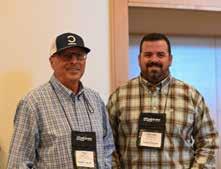


Boehringer Ingelheim ‘s
gives the Welcome Party a thumbs up.

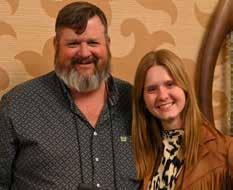


July 2024 California Cattleman 29
Mesquite Cattle Feeders’ Paul and Joe Dan Cameron
El Toro Land and Cattle’s Blake Plourd and Cameiro Heifer Ranch’s Darren Ysseltein
Juan Rodriguez
Elanco’s Courtney Lawerence and JBS USA’s Sarah Klopatek
Imperial Valley cattle feeder John Moiola and his daughter Ellie
Attendees Carlos McDonough, Aldo Ramirez, Carlos Serrano and Antonio Moreno
Kemin’s Patricia Thompson with Zoetis’ Natalie Koopmann
This meeting marked the end of Joe Dan Cameron’s time as CCA Feeder Council Chair.
VSI’s Steve Gardner with Merck’s Bret Davis and Woody Melton
talk that Elanco Animal Health’s Vice President of Global Farm Animal Innovation and U.S. Farm Animal Marketing’s Katie Cook gave. UC Davis alumna and past CCA scholarship recipient Sarah Klopatek, Ph.D., presented “Beef Sustainability: Reality, Challenges, & Systematic Tradeoffs.” Klopatek is now the chief livestock scientist at JBS USA, working out of Greeley, Colo. Having attended Feeder Meeting as a student in years past, Klopatek revealed as she came to the podium that it was a full circle moment for her as many in the room had supported her in one way or another through her academic career and research projects.
Another out-of-state speaker was the National Cattlemen’s Beef Association’s Vice President of Government Affairs Ethan Lane. Lane flew into San Diego from the East Coast to give an update on NCBA’s efforts “defending the cattle industry’s values in a rudderless political environment” in Washington, D.C. This was arguably the timeliest talk of the day, given that as Lane was speaking on Thursday morning, the House Agriculture Committee back in Washington, D.C., was in a committee room marking up the House Republican draft of the long-awaited Farm Bill. Later that evening, NCBA commended the House Agriculture Committee for passing the Farm Bill.
“Cattle producers are thankful that the House Agriculture Committee has advanced a Farm Bill that delivers on the needs of rural America,” said NCBA President and Wyoming rancher Mark Eisele. “This Farm Bill protects the cattle industry from foreign animal disease, supports producers’ voluntary conservation efforts and safeguards our food supply, recognizing that our food security is national security. On behalf of cattle farmers and ranchers across the country, thank you to Chairman Thompson and the House Agriculture Committee for passing this bill. I hope the full House will take the next step and pass this bill soon.”
In addition to highlighting the Farm Bill, Lane also gave insights on what the rest of this Congress will look like and talked about the upcoming presidential election. To hear
a conversation on many of the subjects Lane spoke on at Feeder Meeting, listen to “Season 4, Episode 11, Sorting through the Farm Bill, election, EID tags and more with NCBA’s VP of Gov. Affairs Ethan Lane” on Sorting Pen: The California Cattlemen Podcast.
Thursday’s educational program wrapped up with a special presentation from a retired Navy SEAL Captain. Drawing from his 26-year naval career, Tom DeJarnette shared what he knows about building trust and high-performance teams and how many of his takeaways from SEALs can relate to the beef industry. DeJarnette also shared his perspectives on a recent episode of Sorting Pen, which can be listened to on popular streaming platforms, including Apple Podcasts and Spotify.
As the 2024 program concluded following DeJarnette’s speech, the evening was filled with conversation as attendees enjoyed a cocktail reception sponsored by Life Products, Inc. and dinner at a steakhouse sponsored by Laird Manufacturing.
“I believe our 2024 Feeder Meeting went great overall,” CCA’s Membership and Events Coordinator Gracie LeCheminant said following the event. “I received a ton of positive feedback from attendees regarding the Wednesday night welcome party sponsored by Boehringer Ingelheim, all of the speakers, and the Thursday night dinner sponsored by Laird Manufacturing.”
Feeder Meeting is one of the events LeCheminant, who is approaching one year of working for CCA, is responsible for planning and executing with the help of CCA Feeder Council members and CCA’s Lisa Brendlen and Billy Gatlin
“With this being my first Feeder Meeting, I genuinely enjoyed meeting people from this side of the industry and learning more about how we can best serve them,” LeCheminant added. “I am really looking forward to taking what we learned from this year’s event to make next year’s Feeder Meeting even more enjoyable for attendees.”
The 2025 Feeder Meeting will be May 21-22 at the Hilton San Diego Bayfront. Watch for more event details to be announced at: calcattlemen.org/events in early January.

30 California Cattleman July 2024
FROM PAGE 29
...CONTINUED
Superior Cattle Feeders


July 2024 California Cattleman 31
Farrah and Trevor Freitas representing Mendes Calf Ranch
Attendees Julie and Bill Barnett
Networking is a key part of this annual event.
Roland Fumasi, Head of RaboResearch Food and AgriBusiness-North America
Ethan Lane, NCBA Vice President of Government Affairs
Retired Navy Seal Cap. Tom DeJarnette
Spencer Prosser of MP Agrilytics, LLC


Bently Ranch
$90,000,000
12,369.69 ± Acres | Douglas County, NV
• 6,046 irrigated acres
• Senior water rights from Carson River
• 34 pivots, 7 domestic wells, 9 AG wells
• Premium alfalfa, wheat, rye, barley, & oat

Buckeye Creek Ranch
$14,950,000
9,493 ± Acres | Colusa County, CA
• Currently leased for cattle & hunting
• Can run 400 pair of livestock
• Trophy blacktail deer, quail, turkey, pig
• Home, lodge, pool area, barn, arenas

Adobe Valley Ranch
$5,300,000
5,733.29 ± Acres | Stanislaus County, CA
• Cattle ranch for over 120 years
• Runs 100 pair year-round
• Year-round pond, 2 creeks, & springs
• In the Williamson Act; lower property taxes

Palo Escrito Ranch
$17,700,000
8,811 ± Acres | Monterey County, CA
• Fully functional cattle operation
• 200 pair year-round or 400 pair April-Sept.
• Intricate stock water system
• In the Williamson Act; lower property taxes

Constantia Ranch
$10,999,999
4,872.24 ± Acres | Lassen County, CA
• 1,325 irrigated acres; 3,547 ac of dry pasture
• 12 center pivots, 1 lateral
• Alfalfa, corn, small grain, & teff hay crops
• Supports 100 pair over a 6 month season

|
|

D-K Ranch
$15,000,000
5,176.13 ± Acres | Tulare County, CA
• Over 1 mile of Kaweah River frontage
• Over 1/2 mile of Kaweah Lake frontage
• Can support 300 ± cow/calf pairs annually

Winter Falls Ranch
$7,300,000
1,455 ± Acres | Shasta County, CA
• Two homes, two story barn, build sites PENDING PENDING
• Cattle, hay, wild rice,& waterfowl hunting
• 525 acres in hay, 120 acres irrigated pasture, 168 acres of wild rice
• Has run up to 500 head; depending on hay

PENDING
GGA Cuyama Ranch
$4,500,000
3,065 ± Acres | Santa Barbara County, CA
• Working cattle ranch in San Luis Obispo & Santa Barbara Counties
• Working corrals & roping arena
• Ample water with two wells
Morrison Ranch
$4,095,000
3,840 ± Acres | San Luis Obispo Co., CA
• Run 150-200 pair for the season
• Multiple newer stock water tanks & troughs
• Two wells, several springs, & creeks
• In the Williamson Act; lower property taxes
Todd Renfrew
Owner/Broker DRE#01838294
NV20151620313
•
Farms • Ranches • Recreation
Timber • Vineyards • Luxury Estates • Homes & Cabins
32 California Cattleman July 2024

Circle C Ranch
$3,750,000
1,311 ± Acres | Modoc County, CA
• Supports 120 cows & 400 steers May-Oct
• 325 ± irrgated acres for hay & grazing
• Four miles of Ash Creek bisect the ranch
• Premium X-3A hunting zone

Baccala Ranch
$2,999,999
5,956.06 ± Acres | Tehama County, CA
• Working cattle ranch for over 100 years
• Runs about 150 pair for the season
• Currently leased out for cattle & hunting
• Multiple creeks, springs, & wells

Espinoza Ranch
$2,725,000
835.28 ± Acres | Tuolumne County, CA
• Currently run cattle on the ranch
• 6 natural springs & spring fed ponds
• 5 wells; two 900-gallon storage tanks
• Multiple homes, cabins, & outbuildings

Reese Reservoir Ranch
$3,490,000
748.06 ± Acres | Shasta County, CA
• Currently run cattle on the ranch
• Massive 25-acre lake with bass fishing
• Two creeks, four wells, numerous reservoirs
• Home with 360-views, new shop building

Washington Creek Ranch
$2,950,000
637.37 ± Acres | Lander County, NV
• 500 water-righted acres
• 300 acres cultivated; can add 200 acres
• 6 pivots, 1 wheel line
• Full line of equipment included

Antelope Valley Farm
$2,495,000
640 ± Acres | Lander County, NV
• Produces high-quality alfalfa
• 500 irrigated acres
• 5 AG wells, 4 Zimmatic pivots
• 50’ X 60’ shop, home, detached garage

Morales Ranch
$3,000,000
1,843.68 ± Acres | El Dorado County, CA
• Used for cattle grazing; cattle lease in place
• Large stocked pond & East Big Canyon Creek
• Livestock pens, squeeze chute, feeders
• Home, 4-car garage, barn, workshop, & shed

South Creek Ranch
$2,750,000
336.91 ± Acres | Sierra County, CA
• Working hay & cattle ranch
• Adjudicated water rights for 288.10 acres
• Runs 60+ head of pairs
• 200 acres of irrigated meadow hay

RR Ranch
$1,500,000
1,796 ± Acres | Shasta County, CA
• Winter grazing ranch
• Historically run 200 pair
• Multiple ponds & watering holes; 1 well
• Large metal pole barn

info@caoutdoorproperties.com | www.CaliforniaOutdoorProperties.com | 707.455.4444 SOLD PENDING PENDING July 2024 California Cattleman 33

SUMMER IN THE PINES
MULTI
GENERATIONAL
RANCHING FAMILIES DEPEND ON AND CONTRIBUTE TO HEALTHY PUBLIC LANDS
by CCA Associate Director of Communications Maureen LaGrande
Throughout the state of California, livestock can be seen in the pasture, rangelands and in the forest. While not all ranchers may own property in the forest, some acquire a permit that allows them to run their livestock for a given period of time on land managed by the United States Department of Agriculture (USDA), U.S. Forest Service. According to the U.S. Forest Service there are 515 active grazing allotments in California.
Dependent upon, weather, location and feed, ranchers commonly winter and summer their cattle in two different locations. The reason for this is to let the land that the cattle had grazed on during the previous season take time to replenish itself for the following year when the cattle return. Some other reasons for moving the animals to different locations are due to the operations calving season as well as weather conditions for the area in which the rancher lives, For instance those who reside in the valley will run their animals near their home in the winter, but during the summer when temperatures reach close to triple digits, having a place to take their cattle where the temperatures are a little cooler, serve as a nice break for both the rancher and animal.
Grace Guthrie, Porterville, the seventh generation of the Guthrie Ranch shares that her family has been taking livestock to the Summit Allotment in the Giant Sequoia National Monument since 1895 when her great great great grandfather began moving livestock there during the summer months.
On a normal year, the Guthrie family bring their cattle to the allotment in July and move them home from September to early October. The exact dates ranchers are allowed to bring their animals on to the permit is communicated through local Forest Service staff in which the allotment is located. Just like having a good relationship with neighbors, it is crucial to openly communicate and follow rules when running cattle on someone else’s land. “We always respect
the dates that they give us,” said Guthrie.
Once an allotment is obtained, getting the livestock up to the designated area is a large job in itself. In May all the animals are at the home ranch where they are gathered and hauled to the Tyler Creek Ranch which is the mid-point between the home place and the allotment. Guthrie shares that once the animals arrive at Tyler Creek they stay there for the month of June. As July rolls around the family gathers the cattle in the fields and pushes them up the chute. The chute is a wide trail with fences on both sides that leads up the hill to the allotment.
“I love the whole process, even though it’s a lot of work,” said Guthrie. Throughout the summer the Guthrie’s go up about every two weeks to check on their cattle to make sure the animals are in good health and are in the right spot.
A perk of running animals on the allotment is knowing that there will be accessible feed for the cattle upon their arrival. “If we have a bad feed year, we don’t have to immediately purchase hay, we can rely on the fact that we have feed on the permit,” said Guthrie.
When the cattle arrive at the allotment the area in which they reside is fenced in and borders the Tule River Reservation. Keeping animals in their specified area is important so that animals do not invade others’ property or get mixed up with other animals.
“We have had a really good relationship with our local forest service workers,” said Guthrie.
The Forest Service and Tule River Reservation came to an agreement that the Forest Service would provide the fence and all materials needed and that the reservation would provide the labor to put the fence in. As the permit holder, the Guthrie’s job is to maintain and fix the fence as needed during and upon their return to the permit.
“Every year some of our employees, my dad
34 California Cattleman July 2024
and I go up for about a week to check and fix the fences,” said Guthrie.
While there are many positives to having an allotment, there are also many worries for those that hold them. Having run cattle on the permit for the last 100-plus years, the Guthrie family not only understands the importance of good land management but sees the impacts of not having access to the allotment when it is needed most. “It’s been such a nice way to grow up and go up every summer on my horse and see this beautiful scenery,” adds Guthrie.
The Guthrie’s have not been able to take their cattle to the allotment the last two summers due to the damages to the fences from the aftermath of the Windy Fire in 2021, a fire in which they lost some animals but, luckily the Guthries were able to gather and move out most of their animals. “We were fortunate that the few animals that we weren’t able to gather were smart and went into the meadow during the burn,” said Guthrie. In order to take their cattle back, the fences between the reservation and the allotment lines must be rebuilt and debris from the burn needs to be cleared. “With the fencing issues, it’s going to be harder and harder for us to get up to and use the permit,” stated Guthrie. The unsureness of when they will be able to head up the hill again and see firsthand the severe damage fires can cause


on these once lush meadows is concerning for Guthrie not only in the present day but for the future of the allotment and her family’s operation.
“Every time I go up there and I just cry, thinking my kids won’t see the forest the way I got to see and enjoy it,” said Guthrie. Some other worries for the family include the potential of future fires, droughts and the new wolfpack are all cause for concern.
As Guthrie waits for the fences to be repaired, she shared that after the events of the Windy Fire having an evacuation plan in place is crucial. Today, various counties throughout the state have implemented the Ag Pass Program. The program is a training that ranchers can complete to allow them when permitted by law enforcement to access their animals in the event of a disaster in areas that may be restricted to the public. The allotment holds a special place in Guthrie’s heart, and her hope for the use of the allotment to carry on to future generations remains strong.
While the guidelines and rules of running livestock on an allotment remain similar for all ranchers who utilize the Forest Service program, there are a few differences in the terrain where the animals subside and how the rancher holding the permit chooses to run their operation.
Gabe Fogarty, Lone Pine, helps manage his family’s operation, the Spainhower Anchor Ranch alongside his mother, wife, and children. During the summer, their cattle are moved up to the Monache and Fish Creek allotment in the Inyo National Forest. Fogarty’s great-grandfather obtained the permit in 1929 and the family has continued to go ever since.
The Fogarty’s permit allows them to bring animals in around July 1 and move them out by the end of September. Even with the provided dates of when to take cattle up the mountain,
...CONTINUED ON PAGE 36

July 2024 California Cattleman 35
The meadow in which the Guthrie’s permit was located before compared to the view of the meadow after the Windy Fire.
The meadow in which the Guthrie’s allotment was located before the fire. John Guthrie, Grace’s dad, riding to the allotment.
Mother Nature still has a hand in when ranchers can gain access to these permits. Due to the last few years of high precipitation and snowfall in the higher regions, the Fogarty’s dates have varied due to the snow melt. During the 2023 summer season the family was not able to take their cattle up due to the snow and water damaging the fencing.
The Fogarty’s process of getting prepared for the trip to the allotment starts with going up approximately a month before the cattle arrive and fixing any fences that have been damaged during the winter months. Once fences are fixed the Fogarty’s start moving their cattle which consists of a cattle drive where they start in Lone Pine and take three days to make it to Olancha. Fogarty shares that the warmer temperatures make for a slow drive and that they don’t move very far in distance each day. On this drive, there are about 10 people in tow to help move the livestock along. Once the cattle make it to Olancha they will stay there for two weeks before making the final two-day drive over the crest to the allotment.
One of the biggest challenges for the Fogarty’s is getting the cattle up to the permit. The drive from Olancha up to Monache is pretty tough and at least 12 if not more people are needed to help keep the cattle moving. The slope to get up to the Monache is a steep-sided canyon that is narrow and rocky. To ensure that the livestock and fellow ranchers have an easy journey, the move is conducted on foot so that a trail can be cleared for the animals as they go up and go a slow and steady pace to ensure the utmost safety of the animals.
Once at the allotment, Fogarty will stay up there all summer in a cabin and is joined by his wife and children.
“We basically move up here for the summer,” says Fogarty. Fogarty’s mother and cousins also make the trip up a few times throughout the summer to help when they have busy days.
When it comes to advantages of having a summer allotment, Fogarty shares that there are a lot. The feed is good and the cattle do well.
“They gain weight well in the summer and gives our winter country a chance to grow and have feed when we come out of the mountains,” said Fogarty.
The area in which the cattle reside is a widespread meadow that allow the animals to graze in various sections ensuring that now area is overgrazed and provides time for regrowth. Aside from the good feed and cooler temperatures, the Fogarty family works hard to interact with the local Forest Service employees and provide opportunities for them to visit the allotment to see the cattle in action.
“We get along with the Forest Service and
communicate well with one another, we’ve had a good relationship for a long time,” said Fogarty. Another potential hazard the family considers when their cattle are at the allotment is the chance of wildfire. While the family has been fortunate enough to not encounter major fire damage in recent years, it is always a threat that they must consider when taking livestock to the allotment and having a plan if a fire were to occur.
As the summer comes to an end the Fogarty’s gather the cattle, and the family rides through every meadow to ensure they get all their animals penned and ready to make the journey home. Since the cattle have the freedom to roam it takes two to three trips to gather all the animals and move them back to the home ranch for the winter.
Livestock grazing is a tool to prevent wildfire and overgrowth. Ranchers care about their animals, the forest and want to continue to see these areas flourish for future generations. As stewards of the land, ranchers like Guthrie and Fogarty continue to be resilient and push forward through any obstacle in their way. “It’s very important that people are aware of the benefits of cattle in the forest and that the animals aren’t the ones harming it,” said Guthrie.


36 California Cattleman July 2024 ...CONTINUED FROM PAGE 35
While at the allotment, the Fogarty’s call this cabin their home for the summer months.
Gabe along with his wife and two children spend their summer up at the allotment.
RESULTS MATTER
Buy BYRD bulls and rise to the top with our
their
23rd

Tom and Carol Schene with Dan Byrd
The Singleton Family of Roseburg, OR, has bought only BYRD bulls for the past 20+ years. Their 125 head of 2022-born calves, fed by Painted Hills Natural Beef, and harvested at Tyson, graded 100% Prime & Choice – with 71% of those grading Prime!
The Schene & Singleton families have built a tremendous following for their consistent, highly feed-efficient cattle with the bred-in ability to repeatedly grade high Choice & Prime. Their calves sell great and harvest even better! At Byrd Cattle Company, we’re honored to be the genetic supplier to some of the very best families in this business.

Just like with all customers who buy exclusively BYRD bulls, Dan spends hours on the phone promoting the Schene & Singleton cattle to our vast network of feeders, marketing cooperatives and other breeders from coast to coast and border to border who are willing to pay a substantial premium for cattle with BYRD blood behind them.
If you want to maximize your net income, buy BYRD bulls and get help selling your calves for top dollar. We work tirelessly with reps for video, Internet and auction yard sales, and again in 2024 have placed a significant portion of our loyal customers’ calves. At BCC, you don’t just buy a bull, you buy a part of our program and the added value and buyer confidence we have worked hard to establish for over 35 years.

DAN BYRD 530-736-8470 TY BYRD 530-200-4054 BYRDCATTLECOMPANY@GMAIL.COM Post office Box 713 • Red Bluff, CA 96080 Byrd cattle company llc Angus Bull & Female sale
un-rivaled marketing assistance
unique genetics!
The Singleton Family : Nash, Ciera, Doug, Jennifer, Terra and Gage
and
As
exclusive bull supplier, we were excited to see the Schene Enterprises consignments dominate the May
Western Video Market sale – just look at the total gross dollars per head!
Los Molinos rancH, Los Molinos, Ca 50 Elite Registered Female Lots Sell at 12 p.m. 130 Bulls Sell at 2 p.m Commercial Females Sell at the Conclusion of the Bull Sale CATALOG & VIDEOS ONLINE MID-AUGUST: www.byrdcattleco.com LOT HEAD SEX WEIGHT PRICE TOTAL GROSS $$/HEAD 534A 69 Steers 750 $289.00 $2,167.50/head 535 120 Steers 890 $256.00 $2,278.40/head 536 50 Steers 1,010 $241.00 $2,434.10/head 537 120 Heifers 850 $251.00 $2,133.50/head
Friday, September 6 THD © THD © July 2024 California Cattleman 37

REAL CONSIDERATIONS FOR CURRENT AG LAND VALUES
Compiled by AgWest Farm Credit 2024 Land Values Market Snapshot
According to AgWest Farm Credit’s latest Land Values Market Snapshot report, high interest rates, water concerns and lower commodity prices are three drivers that may influence land values in 2024. Land values are reportedly stable to slightly increasing, with demand frequently outpacing the available inventory. Market participants for land include a combination of local operators, absentee operators and institutional investors. Developers remain a player in the market, but acquisitions for development have decreased due to ongoing elevated interest rates. Some areas are reporting slightly longer listing times for properties.
Overall, land values remain relatively stable to slightly increasing across Washington, Oregon, Montana and Idaho (see chart below). The slight decrease in Montana is more indicative of fewer high-quality or high-amenity properties being sold rather than a decline in property values. Land value trends are mixed in California. Central

Coast premium vineyards and high-quality vegetable/strawberry land values appear to be increasing and offsetting declines in the Central Valley, where falling commodity prices have led to a decline in values for walnut and table grape acres. In Arizona, sales activity has slowed (no new sales noted since Q4, 2023) and marketing times are extended due to high interest rates, softening commodity prices and decreasing irrigation water supply in some regions.
LAND VALUE CONSIDERATIONS
Interest rates – During Q1 2024, high interest rates were one of the most frequently reported deterrents to land acquisition. Greater instances of creative financing such as owner-carried notes have been reported. See the quarterly economic update for a more in-depth analysis of interest rates.
Residential – The housing market in most areas continues to cool, largely due to high interest rates. A cooling market may lead to fewer developments and alleviate upward price pressure on agricultural lands, particularly those surrounding population centers. Lower prices have yet to be seen as agricultural lands remain in high demand.
Availability – Inventories of agricultural land are low in much of AgWest’s territory, which continues to bolster values despite elevated interest rates. The exception is California, where reports indicate that supply is outpacing demand.
Farm income/commodity prices – USDA forecasts average 2024 net farm income on a national level will fall 25 percent year over year to $116 billion. While this may disincentivize prospective buyers, the relationship between land values and commodity prices in recent years has been weak as many perceive land as a stable, long-term investment. The outlook for commodities is mixed. Little if any negative impacts on agricultural land values have been seen by verified sales, except in certain isolated regions. Visit our Industry Insights Webpage for more information and market updates.
38 California Cattleman July 2024
THOUSANDS
AVERAGE LAND VALUES
OF DOLLARS PER ACRE
Water Supply – California and
Arizona
– California Central Valley growers banked millions of acre-feet of water in 2023, replenishing over-drafted aquifers (when groundwater use exceeds recharge). The Sustainable Groundwater Management Act may lead to strict pumping restrictions and hefty fees in certain regions. Falling water levels at Lake Mead and limited flow on the Colorado River led to severe shortage declarations in 2023. All Colorado River user states and Native American tribes continue with contentious negotiations over water rights and use cutbacks under pressure of looming federal intervention by the U.S. Bureau of Reclamation. Water supply uncertainty and rising interest rates are reducing activity in the speculative/investment market for agricultural land, although the full effect cannot be determined yet.


Drought – Snowpack and precipitation levels in the West are mixed. Most states show fewer areas under abnormally dry, moderate, severe and extreme drought conditions compared with a year ago. While strong winter storms alleviated drought concerns throughout much of AgWest’s territory, year-to-date precipitation is well below average across Washington, northern Idaho, Montana and parts of Arizona. In winter 2023/ spring 2024, California’s snowpack reached 100 percent of its April 1 average, although there is some concern about premature melting due to a shorter winter and rising average temperatures. Extended drought conditions have the potential to negatively impact land values as farm profitability is challenged.
CURRENT CALIFORNIA CONSIDERATIONS FOR AGRICULTURAL LAND
• Water availability, particularly access to surface water, is the primary driver of land values in the San Joaquin Valley. Pumping restrictions and state intervention will increase the importance of groundwater recharge. Secondary drivers include rising interest rates and falling commodity prices.
• Declining commodity prices are beginning to put downward pressure on land values in the San Joaquin Valley, notably in the tree nut and table grape sectors. This trend is also present in tree nut orchard values in the Sacramento Valley.
• Listing times are increasing as supply outpaces demand, a trend that has been
compounded by the liquidation of a large vertically integrated stone fruit grower/packer based in Fresno and Tulare County and the market exit of a large pistachio grower and a tree nut investor group. Tens of thousands of additional acres are on the market.
• Dairy facility demand is decreasing due to weak domestic markets. There is a limited pool of buyers and they prefer newer, more efficient facilities. Less efficient facilities are typically purchased and redeveloped into feed cropland.
• Increased orchard plantings over the last several years reduced available land for sale in the Sacramento Valley, leading to higher land values. More recently, this trend is slowing as commodity prices fall. Rice ground values are diverging on opposite sides of the valley – westside values are trending lower due to water supply curtailments while east-side values are trending higher due to relative water security.
• Premium wine grape vineyard values in the Central Coast remain strong despite demand challenges in the U.S. wine industry. However, established winery sales activity appears to be slowing.
• The supply of Central Coast irrigated cropland capable of vegetable and strawberry production is very limited and in high demand, particularly in the Santa Maria Valley. Properties are usually directly marketed to a well-known buyer/lessee pool and typically sell quickly, keeping values elevated.
• Imperial Valley land values remain stable as large, regional growers look to expand operations and investors seek high-seniority rights to the Colorado River to hedge against water risk.
July 2024 California Cattleman 39
DROUGHT MONITOR: WESTERN U.S. RELEASED JUNE 13, 2024
U.S.

A SEAT AT THE TABLE BAY AREA LEGISLATOR VISITS RANCHING FAMILY
from the California Cattlemen’s Foundation
In March, Assemblymember Timothy Grayson took his seat at the 43rd CCA Steak & Eggs Breakfast. Joining him at the same table that morning were Sierra Valley ranchers Rick and Carolyn Roberti. The annual breakfast event put on by the California Cattlemen’s Association and California Cattlemen’s Foundation is an opportunity to do exactly this—bring legislators and regulators together to meet California cattle ranchers and learn about the value of ranching in the Golden State. There is no way of knowing where the introductions at each table may lead or what seeds are being planted for future visits during these breakfast conversations. This year, however, the discussions at a few tables pleasingly led to multiple legislators visiting cattle ranches in the weeks following the breakfast.
Assemblymember Grayson, a Democrat representing a district in the suburbs of the Bay Area, is one of those legislators. Less than two months after the breakfast and the invitation for a ranch tour, he traveled north beyond his district lines and outside of the halls of Sacramento to visit Roberti Ranch in Plumas County.
“I am very appreciative of Assemblymember Grayson for making the time for this visit, taking an interest in our part of the state, and having a desire to see what we do,” Rick said. “It was special to learn about him, share about our ranching lifestyle and come to find out we have a lot more in common than one may expect.”
Upon arriving at the ranch via motorcycle, views of cattle grazing welcomed him as he drove through Sierra Valley. This time of year, more and more truckloads are returning cattle to the valley for summer.
Vastly different from Concord, Antioch and the other communities of the North Bay and East Bay that Grayson represents, this ranch tour, hosted by the California Cattlemen’s
Foundation with support from the California Cattle Council, was an opportunity for the legislator to learn more about the importance of ranching in the state he’s serving. The member was also eager to hear about the challenges, opportunities, and needs of this region of California.
“In a state as diverse as California, we know not all legislators are aware of the important work ranchers are doing every day throughout the state,” California Cattlemen’s Foundation Director of Education Lisa Brendlen said. “This tour was an exciting way to give Assemblymember Grayson a first-hand look at many of the ways ranchers are stewards and for him to see the beauty of California ranches.”
After introductions with the family and hearing a little history of the 100-year ranch, the tour moved to the corral as Rick and Carolyn’s son Weston brought a cow into the chute. Here, the Assemblymember could see a cow close-

40 California Cattleman July 2024
The Roberti Family sits down at their kitchen table to discuss their way of life with Assemblyman Timothy Grayson.
up and how ranchers handle and care for their cattle. Weston demonstrated how shots are given, explained why cattle have brands and ear tags and showed some of the technological advancements California cattle ranchers are utilizing to maximize efficiency and handle their animals in the most humane ways. A few of the best practices the family uses from the Beef Quality Assurance guidelines were also highlighted here before heading out to see the pastures and farming side of the operation.
With Sierra Valley sitting in the path of the Pacific Flyway, the member saw hundreds of birds and waterfowl while driving around the ranch. Rick, who has a lifelong love for wildlife, has made it a priority to create multiple spaces on the ranch where species can thrive including ponds, bird boxes, and nesting habitats.
“I always had good, positive thoughts about the industry, especially ranching. But this has taken it over the top,” Assemblymember Grayson said during the tour. “What you have done with the land, your passion with wildlife and preserving areas of land for wildlife is just absolutely amazing. You have cared for your land and become a steward that has preserved this. I’m in absolute awe.”
In addition to showing how ranchers care for more than just cattle on the millions of rangelands they manage throughout the state, driving around the ranch also led to conversations on water, predators, the numerous benefits of well-managed cattle grazing, and the current challenges rural communities face. With the surrounding mountains of the valley having burned in multiple wildfires in the last five years, including in the mega Dixie Fire, the impacts of recent catastrophic wildfires were also touched on including the difficulties of securing insurance.
“It’s obvious that it’s not about a paycheck to you. This is about life,” Grayson said. “You obviously have a passion and a love.”

After the tour, the group gathered around the dining room table with other members of the Roberti family who live and work on the ranch. Conversations continued over tri-tip, salad, Swiss polenta and homemade sausage.
“This is an incredible operation,” Assemblymember Grayson said before the tour was over. “I’m so glad I sat at the table [at Steak & Eggs breakfast] with you all.”
“With the sun shining, green grass growing, snowcapped mountains surrounding the valley and the infamous Sierra Valley wind even holding off for the tour, we couldn’t have asked for a nicer day to get to know the member and share what we do,” Carolyn said. “It was an honor to host Assemblymember Grayson.”
Following lunch, Assemblymember Grayson left with factsheets in hand, reinforcing positive messages about ranching in California including the ecological, environmental, and economic benefits. Brendlen collaborates with the California Cattle Council team and the Foundation’s communications staff to deliver these factsheets and messages to key officials throughout the year.
Additionally, organizing ranch tours like this and being a resource to help guide conversations before, during and after visits, are top job priorities for Brendlen’s role at the Foundation. She is currently working to schedule more tours on ranches to educate other officials about the benefits and value of cattle ranching to California’s environment and economy.
“I’m thankful to work with ranchers who are generous of their time and willing to open their ranch gates to share with leaders like Assemblymember Grayson,” Brendlen said. “I am thrilled about the connections made here today and looking forward to executing more ranch visits like this.”
Ranchers interested in hosting a tour for the California Cattlemen’s Foundation, please contact Lisa Brendlen at lisa@calcattle.org.

lawmaker.
July 2024 California Cattleman 41
Weston and Rick Roberti talking about cattle processing, parasite control and vaccinations with the inquisitive
Assemblymember Grayson with Lisa Brendlen of the California Cattlemen’s Foundation and Carolyn and Rick Roberti at the Roberti Ranch.
FOREST SERVICE SEEKS PUBLIC COMMENT ON DRAFT GUIDANCE FOR OLD GROWTH MANAGEMENT ON NATIONAL FORESTS
On June 21, the U.S. Department of Agriculture’s Forest Service is taking the next step to advance President Biden’s commitment to conserve old growth forests by publishing a draft environmental impact statement for the proposed national old growth forest plan amendment. The proposed amendment is now available 1 in the Federal Register, and will be open for public comment for 90 days following publication.
The purpose of this amendment is to provide consistent guidance for the stewardship, conservation, and recruitment of old growth across national forests. The proposed amendment highlights the importance of proactive stewardship actions in managing threats to old growth forests, and to reduce wildfire risk, considering current and emerging climate-driven threats. It also calls for adaptive management strategies to be developed using local, geographically relevant information and the best available science, including Indigenous Knowledge.
“Recent scientific analysis shows us that many old-growth forests are under significant threat from climate change,” said Agriculture Secretary Tom Vilsack. “The Forest Service’s plan will help safeguard these iconic stands of trees through science-based management and conservation strategies that can be adapted to unique local circumstances on national forests. USDA is looking forward to receiving feedback on today’s draft proposal from Tribal, state and local governments, industry partners, conservation organizations, and many others; all of whom will be critical partners in the forest management and conservation actions needed to ensure the maintenance and growth of old-growth forests into the future.”
“Old growth forests are important to our ecosystems by capturing carbon, and contributing to clean air, soil, water and diverse habitats,” said Forest Service Chief Randy Moore. “Old forests also provide other benefits like subsistence and cultural uses, outdoor recreational opportunities and sustainable local economic development. The proposed old growth amendment will provide guidance that can be adapted locally to support multiple uses, including proactive stewardship of old forests to reduce wildfire risk and create longterm resilience in a changing climate.
At President Biden’s direction, the Forest Service and the Department of the Interior’s Bureau of Land Management (BLM) completed the first-ever nationwide inventory of old and mature forests, and developed definitions for more than 200 forest types in the United States. This initial inventory report showed that the BLM and
Forest Service manage approximately 32 million acres of old growth and 80 million acres of mature forests on federally managed lands, for a total of 112 million acres. Old-growth forests represent 18 percent and mature forest another 45% of all forested land managed by the two agencies.
The Forest Service also recently finalized The Mature and Old Growth Threat Analysis, which identifies threats to mature and old growth forests on Forest Service and BLM lands. The report informed the Forest Service’s proposed national amendment and highlights the urgent need for action, suggesting current management is not responsive enough to address disturbances driven by climate change such as wildfire, insects and disease.
The Forest Service evaluated Tribal and public input from the initial scoping period, which closed Feb. 2. Extensive feedback from a diverse range of audiences was vital in the development of the draft environmental impact statement and were incorporated into the proposed action and used to develop alternatives. The agency will continue to learn from the input and feedback received during this public comment period, as well as through ongoing Tribal roundtables and consultation sessions, and dialogue with cooperating agencies, and state and local governments.
This work is part of larger agency efforts to support healthy, resilient forests and ecosystems by integrating climate change considerations into all aspects of planning and operations to support healthy resilient forests and ecosystems. The work is consistent with the Inflation Reduction Act which directed $50 million to fund old growth conservation and stewardship as well as Executive Order 14072, Strengthening the Nation’s Forests, Communities, and Local Economies, issued by President Biden on April 22, 2022. It also supports the Forest Service’s Wildfire Crisis Strategy and Reforestation Strategy. In addition, USDA announced updates to its Climate Adaptation Plan earlier today, in concert with other agencies acting to advance climate resilience.
Throughout the comment period, the Forest Service will conduct public engagements and field tours, including virtual information sessions. The agency will also continue formal consultation with Tribes, and work with state and local governments, conservation districts and other cooperating agencies. Additional information on engagement opportunities is available on the Forest Service National Old Growth Amendment website. To comment on this issue, visit: https://www.federalregister.gov
42 California Cattleman July 2024


BAR R ANGUS CRAIG & J.J. REINHARDT JJ: 916-712-3696, jj@barrangus.com CRAIG: 916-803-2685 BAR R FOREVER 3008 2/17/23 HA Forever X Connealy Absolute Power TRI T PACIFIC 643 3127 1/31/23 Sterling Pacific 904 X Silveiras Ten X 3034 TOLEDO PACIFIC 745 3113 1/17/23 Sterling Pacific 904 x Westwind 10X Power DJH BAR R FREEDOM 3R03 2/9/23 G A R Freedom x Byergo Black Magic 3348 CED BW WW YW MILK MARB RE $M $B $C 8 1.2 67 118 14 1.03 0.84 56 173 280 CED BW WW YW MILK MARB RE $M $B $C 9 1.5 73 127 16 0.71 0.25 63 136 239 September 8 Selling 70 Spring & Fall Yearling Bulls join us at our new location Bar R Angus 13550 Meiss Road near Sloughhouse, CA Bull Videos/Sale Book Link: ParnellDickinson.com SALE BOOK REQUESTS: TEXT 916-806-1919 SALE MANAGEMENT
Dickinson
Jake Parnell
Luke Parnell ..............................
S u n Tri-T Farms/ Toledo Ranches John, Kelli & Lane Toledo: 559 972-8991 toledoranches@gmail.com The Reinhardt and Toledo Families are carrying on the tradition of the Heritage Bull Sale started by the Nelson Family. Plan to attend the sale this year at Bar R Angus. CED BW WW YW MILK MARB RE $M $B $C 10 1.8 89 155 23 1.03 1.37 65 211 339 CED BW WW YW MILK MARB RE $M $B $C 7 -1.2 60 110 35 1.02 0.93 66 155 267 July 2024 California Cattleman 43
John
916-806-1919
916-662-1298
805-431-1267










44 California Cattleman July 2024 AS GOOD AS THE BEST, BETTER THAN THE REST! Our ranch has always been family owned and operated, with a focus on raising low input, efcient females who do their job of producing sound, high performing, multi-trait bulls with the commercial cattleman in mind. Our bulls and females are stacked with generations of performance that will provide more dollar value for less dollar input. www.mcpheeredangus.com SOMETHING FOR EVERYONE Bulls: Age advantage spring long yearlings, fall yearlings Females: Open fall yearlings SEPT EMBER 28 2024 over 53 years raising JOIN US AT THE RANCH IN LODI! 14298 N ATKINS RD LODI, CALIFORNIA 95240 RITA: 209-607-9719 ROYCE: 209-712-8116 INFO@MCPHEEREDANGUS.COM WWW.MCPHEEREDANGUS.COM


Performance Plus Bull Sale Our bulls are bred with traits that matter to you the commercial cattleman... O’NEAL RANCH BULLS OFFER THE COMPLETE PACKAGE! GROWTH • PERFORMANCE • ADAPTABILITY • CARCASS O’NEAL RANCH since 1878 Gary & Betsy Cardoza PO Box 40 • O’Neals, CA 93645 (559) 999-9510 | OnealRanch.com O’Neals Solution 2394 KG SOLUTION 5041 X JINDRA ACCLAIM LINZ EXEMPLIFY 71124 X MOGCK BULLSEYE ONLY OUR BEST WILL SELL TUESDAY, SEPTEMBER 10TH! Featuring 85 outstanding bulls like these! O’Neals Exemplify 2389 Mark your calendars for Tuesday, Sept. 10, 2024! CED BW WW YW MILK RE MARB $B $C 8 0 64 119 20 1.02 0.90 179 279 JOIN US AT THE RANCH, EAST OF MADERA LUNCH AT 11 A.M. | SALE AT NOON 2024 SALE BULLS SIRED BY ANGUS BREED LEADERS LINZ EXEMPLIFY • KG SOLUTION • SAV EMBLEM • EXCLUSIVE • POWER PLAY • JINDRA ENCORE • DEER VALLEY TESTAMENT • O’Neals Emblem 2398 S A V EMBLEM 8074 X BASIN PAYWEIGHT 1682 CED BW WW YW MILK RE MARB $B $C 12 -1.2 72 127 30 1.01 0.66 177 282 CED BW WW YW MILK RE MARB $B $C 0 3.4 68 121 34 0.85 0.60 137 221 July 2024 California Cattleman 45


NATURAL BORN LEADER WILLIAMS TO LEAD SUSTAINABLE BEEF ROUNDTABLE
by CCA Associate Director of Communications Maureen LaGrande
The U.S. Roundtable for Sustainable Beef (USRSB) consists of stakeholders throughout every sector of the beef supply chain, including producers, allied industry, processors, retailers and civil society. These sectors collaborate to support, advocate and communicate sustainability across the beef supply chain while continuously working to make improvements for the future. Anyone who is involved or a part of the supply chain can be a member of and participate in the USRSB by filling out a membership application and expressing interest to learn more about the organization.
Early on in its formation, the USRSB’s main objective was to define the meaning of sustainability and what sustainability looks like across the beef supply chain. In the early stages of defining sustainability the definitions throughout the sectors were very different. Over time and conversation, the group came to a shared understanding of what sustainability looked like across the supply chain. With the definition of sustainability and its goals outlined, the USRSB has continued to build upon this definition and provide resources to the beef supply chain to educate, communicate and help find ways to better improve upon each sector’s operation.
For the producer/stocker sector, the definition of sustainability is, that a well-run ranch is a more sustainable ranch. This means that when ranches implement good management practices, grazing strategies and plan for the future, they are working towards being sustainable. Regardless of what sector an individual is from, the USRSB has gathered a wide range of resources and documents that exhibit sustainability and how the various sectors involved can utilize this information when working with outside and government agencies.
Mike Williams, Acton, a cow-calf producer, first heard about the USRSB when he served as one of CCA’s Second Vice Presidents in 2016. At the time Williams shared that the word “sustainability” was a term that bothered him due to its past use of putting ranchers down. He then asked CCA Executive Vice President Billy Gatlin about the group and learned that CCA was a part of the
USRSB and was a participant in the organization. Gatlin shared with Williams that the CCA member who had been representing the Association could no longer participate and asked if Williams would be interested. Williams agreed to take the seat and from there “I began to attend meetings and serve as an advocate for other ranchers,” shared Williams.
The leadership of the USRSB consists of the board of directors, which comprises 20 board members spread equally across each sector. Leadership roles on the board of directors include the chair, chair-elect, secretary/treasurer and the past chair. The general assembly includes those who are members, working groups and committees that make up the taskforces. Having such a diverse yet connected group of individuals serving and bringing ideas to the table provides the USRSB with a well-rounded view of the industry and its practices.
While Williams’s initial reason for joining the USRSB was to ensure that the work of the USRSB would not hurt the producer, he began to attend meetings and discuss sustainability with other producers and helped to create the framework for the USRSB. “The other producers at these
...CONTINUED ON PAGE 48

CCA member Mike Williams speaks in the Agriculture and Food Policy Meeting at the 2023 CCA Convention.
46 California Cattleman July 2024

ANGUS RANCH
SELLING 210 BULLS
This year’s offering includes 160 long-yearlings and 50 fall yearlings. Bulls sell performance-tested with complete DNA evaluation, vaccinated for anaplas and tested PI-negative for BVD. We offer FREE DELIVERY to California and surrounding states. Every bull selling is backed by the EZ Angus Breeding Guarantee!


A.I. SIRES REPRESENTED IN

July 2024 California Cattleman 47 ADDITIONAL
OFFERING: •
•
•
• SG
•
• Tehama
LIVE BROADCAST WITH INTERNET BIDDING ON SUPERIOR LIVESTOCK TEXT JOHN DICKINSON TO REQUEST A SALE BOOK: 916 806-1919
THE
VAR Conclusion 0234
PCC Horizon 025
DB Iconic G95
Salvation
T/D Doc Ryan 049
Tahoe B767
EZ Angus’ Tejas Ranch • 22950 Milton Road, Farmington, CA Lunch: 11:30 a.m. • Sale: 12:30 p.m. with Live Broadcast on Superior BASIN JAMESON 1076 SIRE: Basin Deposit 6249 DAM: Basin Joy 9140 (EXAR Monumental 6056B) EZAR STEP UP 9178 SIRE: G A R Big Step K715 DAM: Basin Lucy 4261 (EXAR Denver 2002B) 23 SONS SELL
SAT., SEPTEMBER 7 35 SONS SELL • Virginia Tech Statesman • EXAR Guru 8719B • EZAR Gettysburg 1061 • Connealy Clarity • LAR Man In Black • Basin Safe Deposit 9324 21984 Avenue 160 Porterville, CA 93257 ANGUS RANCH Tim & Marilyn Callison Owners Chad Davis .............................................. 559 333-0362 Justin Schmidt 209 585-6533 Austin Flynn ............................................ 559 361-9701 SALE BOOK & BULL VIDEO LINKS ONLINE: WWW.EZANGUSRANCH.COM SALE MANAGEMENT John Dickinson ........................................... 916 806-1919 Jake Parnell ............................................... 916 662-1298 CED BW WW YW Milk CW MA RE $M $B $C 5 2.4 79 139 29 62 1.42 1.02 82 202 344 CED BW WW YW Milk CW MA RE $M $B $C 9 1.6 105 168 31 79 1.48 .72 87 199 345
meetings were very smart, capable and interested in protecting the producers’ ability to continue ranching and to keep their options open,” said Williams. Interactions with other producers who were involved with the USRSB, helped Williams to understand that the Roundtable’s purpose wasn’t an effort to control ranchers, it was an effort to try and improve processes and provide support throughout the supply chain. “The quality and caliber of the producers I met and worked with through my interactions on the Roundtable brought me a great deal of comfort. It was the interactions with the other sectors such as retail, packer and civil society is where the real magic happened,” said Williams. These interactions helped all those serving to better understand one another and the challenges that their sectors faced.
After serving as a representative of CCA, the USRSB approached Williams and asked if he would be interested in serving as an alternate for the board seat in the producer sector, which eventually led him to sit on the board. As his two-year term on the board was coming to an end, the USRSB asked Williams if he would serve as chair-elect of the board, a commitment that would lead him to become chairman-elect the following year. Williams will serve as the USRSB Chairman for the 2024-2025 term.
During his time on the board and adding input on the framework for the USRSB, Williams shares, “Now that we have the framework and goals set, I would like to see these efforts come to fruition.” By utilizing the USRSB’s resources, producers can view them and analyze the metrics, to help them decide what works best for sustaining their operation. “Sustainable ranching is better ranching, better grazing management, better management of your resources, your efficiency, yield and managing your cattle,” said Williams.
If a producer were to set goals and improve their efficiency in their own cattle operation as well as financially, Williams believes that they would become a more stable producer. “If a producer can work towards improving safety for employees, better stockmanship, and better cattle handling skills, they would see progress across the board,” said Williams. While understanding that producers strive to have a strong operation, they generally have an idea of where there may be weak spots. “If we can provide the knowledge and resources, we can help producers become more sustainable and help the industry overall. I’d like to see these programs help ranchers become better ranchers,” shared Williams.
In conversation with other producers on the topic of sustainability, Williams hears many say, “We are sustainable, we’ve been around for generations,” a statement which to a point Williams knows to be true, but the key for producers and the USRSB now is to ensure that sustainability can carry on into the future through adjusting and adapting to conditions that affect the industry. “Ranchers are very good at adjusting, we don’t ranch the same now as we did in the 50s’, we all have to modify and continue to grow,” said Williams.
As a first-generation rancher, who had seen his grandparents not be able to keep their operation afloat, Williams understands the importance of being sustainable and finding ways to push on. “When I graduated high school there were a million and a half cattle operations in the United States, now there are less than 700,000, and over half of the ranchers weren’t sustainable and didn’t make the cut.” Shared Williams.
If a producer wants to learn more about the USRSB and get involved the best way to do this is to visit: https://www.usrsb.org. “The people who work for and serve on the board of the USRSB are very capable and are working on behalf of other producers’ interests,” said Williams. The website has several modules on grazing management and sustainability, providing a deep dive into the framework documents and giving a detailed explanation as to what the USRSB’s mission and goals. Williams is also happy to serve as a resource to those who the USRSB encourages them to reach out. As Williams’s term as chairman begins, he is ready for the exciting year ahead.
Upon learning of Williams’s appointment as chairman of the USRSB, here is what fellow producers shared about Williams on Facebook!
“Congratulations Mike. Just the right guy to be there for the industry.”
“Congratulations Mike! The Roundtable is in good hands.”
“Congratulations, we need to promote our Stewardship and Sustainability.”
“Congratulations Mike, quite the commitment, thank you for stepping up and doing this.”
“Thank you for your dedication to serving the beef community.”
“Mike is a true leader. He brings out the best in people to achieve their untapped potential. Great choice.”
48 California Cattleman July 2024 ...CONTINUED FROM PAGE 46


Presents the 68th Annual bull sale October 6, 2024 Cal Poly’s Escuela Ranch, San Luis Obispo, CA 68 Years of Performance-Tested Bulls DIRECT INQUIRES AND SALE BOOK REQUESTS TO: Featuring Black and red ANGUS AND HEREFORD BULLS @cpbulltest @calpolybulltest Zach McFarlane, Ph.D. Beef Cattle Specialist (805) 756-2685 zmcfarla@calpoly.edu Aaron Lazanoff Beef Operations Manager (805) 801-7058 alazanof@calpoly.edu There is no better trait than feed efficiency in my mind. The bottom line is that it makes producers money. - Jeff Clark Business Development at C-Lock Inc. & 2010 Bull Test General Manager “ ”

CONSERVATION CELEBRATION
RANGELAND TRUST HOSTS CONSERVATION EASEMENT
CELEBRATION ON THE YATES RANCH
by Madison Goss for the California Rangeland Trust
When the California Rangeland Trust successfully conserves a portion of California’s working lands, it is cause for a celebration— another win in the fight to keep ranchers ranching and stave off future development and conversion of these important ranchlands in the Golden State.
On Friday, April 19, a luncheon was held in honor of the recently completed conservation easement on the Yates Ranch, a 500-acre working cattle ranch owned by the Yates family in Calaveras County. Staged in an idyllic setting filled with lush green grasses, old oak trees, and cattle grazing in the distance, 60 guests were treated to a first-hand look at responsible land stewardship in action
“It is always a great day when we can get people out on the land to see the incredible work that our landowner partners are doing on a daily basis,” Rangeland Trust Chief Executive Officer, Michael Delbar stated. “The Yates family’s decision to conserve their land is an example of ranchers caring for the land today, so that it will be there to benefit all of us now and in the future.”
Upon arrival, attendees enjoyed a delicious lunch prepared by local barbeque joint, Tin Roof BBQ. While feasting on a spread of garlic rubbed tri-tip, sweet smoky beans, and fresh salads, a brief program commenced. Delbar kicked things off by talking about the history and purpose of the Rangeland Trust, its roots to the California Cattlemen’s Association, and its
continued commitment to helping the ranching industry remain viable, while simultaneously protecting rangeland and its natural resources for people and wildlife alike.
Following Delbar’s introduction, Samantha Yates, one of the owners and managers of the ranch, shared her family’s journey as firstgeneration ranchers and their reason for wanting to conserve the property.
“It gives my family peace of mind knowing that no matter how long down the road, there will always be rangeland here in this everdeveloping world. It means the world to us knowing our piece of ground will never see cement poured over it.”
The conservation easement on the Yates Ranch was completed with funding from the Natural Resources Conservation Service’s (NRCS) Agricultural Conservation Easement Program (ACEP) and the California Strategic Growth Council’s Sustainable Agricultural Lands Conservation Program (SALC) in collaboration with the Department of Conservation (DOC). SALC is part of the California Climate Investments, a statewide initiative that puts billions of Cap-and-Trade dollars to work reducing greenhouse gas emissions, strengthening the economy, and improving public health and the environment – particularly in disadvantaged communities. Representatives from both NRCS and DOC were present at the celebration.
“It is important for people to understand
50 California Cattleman July 2024
the value of these lands,” stated David Shabazian, Director of the DOC, during his remarks. “Everyone depends on these lands for a myriad of reasons, including food, shelter, fresh water, clean air, energy, and more. The SALC program, along with other conservation programs, are working to ensure that we will always have these working spaces.”
The event capped off with Delbar presenting the Yates family with a custom sign for their ranch. The sign will stand at the front entrance of the property to mark the family’s admirable decision to voluntarily conserve this special piece of productive rangeland in Calaveras County.
The collaborative conservation project on the Yates Ranch demonstrates a successful public-private partnership between a ranching family, state and federal agencies,

To
and a qualified agricultural land trust. While helping a dedicated ranching family achieve their dreams of voluntary conservation, this conservation agreement is also protecting the public interest by safeguarding the natural resources and ecosystem benefits that come from private land stewardship.
“These efforts are important to recognize and celebrate,” explained Delbar. “We are proud of the collaboration that came together to see this project to the finish line, and we look forward to continuing to work with the Yates family as they continue to own and care for this spectacular property.”
The Rangeland Trust is thankful to everyone who came out to enjoy the beautiful day, support the Yates family, and celebrate protecting another critical piece of California’s rangeland forever.


This collaborative conservation project demonstrates a successful public-private partnership that is helping to protect the public interest through private land conservation.
July 2024 California Cattleman 51
celebrate the closing of the conservation easement, the California Rangeland Trust, in partnership with the Yates family, hosted a luncheon on the land.
Michael Delbar, Rangeland Trust CEO, led a short program, sharing the work that the Rangeland Trust does to help California ranching families achieve their conservation goals.
California Department of Conservation Director, David Shabazian, spoke on the conservation values rangelands provides to communities throughout the state.
COUNCIL COMMUNICATOR BEEF QUALITY ASSURANCE CERTIFICATION CARE FOR LIVESTOCK, REASSURANCE
FOR CONSUMERS
by California Beef Council Director of Producer Education Mackenzie Neves
In the competitive landscape of beef production, ensuring quality and safety standards is not just a choice; it is a necessity. With consumers becoming increasingly concerned about their food’s origin and production methods, beef producers must prioritize transparency and accountability. A crucial step in this process is getting Beef Quality Assurance (BQA) certified, to not only enhance the producers’ reputation but also to be equipped with the tools and knowledge to open doors to operational benefits.
The BQA program, funded by the Beef Checkoff and managed by the California Beef Council and the UC Cooperative Extension Service, sets a standard for beef production practices. BQA certification equips producers with the knowledge and tools to implement industry standard practices throughout the production chain, from cow-calf to stocker/backgrounder to feedlot operations. Covering topics like animal care, herd health, transportation, nutrition and environmental stewardship, BQA helps producers raise better beef so consumers can feel even better about buying it.
Today, 41 percent of consumers say they have become more concerned with sustainability. BQA certification serves as a badge of credibility, assuring consumers that the beef they are purchasing not only meets stringent quality and safety standards but also provides them with a sense of confidence and security. Beef Checkoff-funded research revealed that positive perceptions of how cattle are raised improved by 26 points after learning about BQA.
Many retailers, processors and export markets prioritize sourcing beef from BQAcertified producers. More branded beef programs are using BQA certification to verify their commitment to animal care. Certified Angus Beef and Sysco recently launched a “Raised with Respect” campaign highlighting the shared commitment to supporting farmers, ranchers and the entire beef community. By investing in BQA training, the partnership elevates the cattle industry’s work to address consumer concerns, reinforce trust and ensure future demand for beef.
Beef Quality Assurance is not just about producing high-quality beef; it is also about minimizing risks and liabilities associated
with food safety and animal welfare. BQAcertified producers are equipped with the knowledge to identify and address potential hazards, reducing the likelihood of foodborne illnesses and other safety incidents. By adhering to BQA guidelines, producers demonstrate their commitment to mitigating risks and safeguarding both consumers and their businesses.
Last year, 963 California beef producers were certified through the BQA program. With innovations and improved industry practices, producers should renew their certification every three years. BQA certifications can be earned both online or at an in-person training.
In an era of heightened consumer expectations and market scrutiny, beef producers must prioritize quality and transparency to thrive. Becoming BQA-certified is more than just a checkbox. By embracing BQA principles, producers elevate the standards of their own operations and contribute to the sustainability and reputation of the entire beef industry.
To learn more about the BQA program or to earn your certificate, visit www.BQA.org.

52 California Cattleman July 2024


SELLING 70 YEARLING
ANGUS BULLS


commercial cowman in mind!
• PERFORMANCE AND DNA EVALUATED
• ANAPLAZ VACCINATED
• COMPLETE BREEDING SOUNDNESS EXAM
• 110% SATISFACTION GUARANTEED!
These cow herds stem from some of the great Registered Angus programs in the country: 9 Peaks Angus of OR, Hoffman Ranches of NE, and Stucky Angus of KS.
Bulls on test and available for viewing at Clarot Farms, Joe Clarot, Modesto, CA. Call Joe, 209-678-5030, to stop by and see them!

Other sires include: Sterling Confidence Plus 804, Tehama Patriarch, Sitz Resilient 10208, BJ Surpass, G A R Sunbeam, Sitz Intuition, Connealy Cool 39L.


California Cattleman Montague, CA Kenny and Megan Elwood, owners Will Harrison, manager 530-355-4447 Jared Patterson, consultant 208-312-2386 Inaugural Fa Bu Sale ELWOOD ELWOOD RANCH Watch and bid online for FREE! Go to www.dvauction.com to register...it’s as easy as 1, 2, 3... 1. Complete and submit the form on “Create New DVAuction Account” 2. Apply for bidding by clicking “apply for bidding” in the upper left of your screen, at least 24 HOURS PRIOR to the auction 3. Tune into the sale and make your purchases! You will receive an e-mail message to activate your account. Once the account has been activiated, be sure to log back in prior to the sale to confirm your profile has been set up correctly. For questions, contact Western Video Market at wvm@wvmcattle.com or DVAuction at support@dvauction.com. DVAuction Help Desk (402) 316-5460 (Customer Service) CONTACT THE SALE MANAGER TO REQUEST A SALE BOOK: Matt Macfarlane 916-803-3113 m3cattlemarketing@gmail.com AUCTIONEER: Rick Machado 805-501-3210 BULL VIDEOS AND LIVE BIDDING SALE DAY ELWOOD RANCH RANCH PARNELL ANGUS RANCH Jake and Molly Parnell and Family Sacramento, CA 916-662-1298 BE SURE TO LOOK UP THE ELWOOD RANCH CONSIGNMENTS, AS WELL AS THOSE REPRESENTED BY CATTLEMAN’S LIVESTOCK MARKET, JAKE PARNELL, ON THE JULY WESTERN VIDEO MARKET, RENO, NV. OCTOBER 4, 2024 1 PM - RED BLUFF FAIRGROUNDS RED BLUFF, CALIFORNIA
FEATURING SONS OF THE LEADING BALANCED-TRAIT BULLS IN THE BREED. Maternay focused and raised with the
CW MARB RE $M $W $F $G $B $C +45 +1.21 +.47 +92 +56 +95 +76 +171 +314 CED BW WW YW MILK DOC CLAW ANGLE +11 -1.0 +59 +115 +24 +18 +.35 +.41 TEHAMA TESTAMENT CW MARB RE $M $W $F $G $B $C +87 +.65 +.66 +122 +77 +129 +52 +181 +357 CED BW WW YW MILK DOC CLAW ANGLE +1 +3.3 +92 +152 +19 +21 +.05 +.12 ELLINGSON PROLIFIC CW MARB RE $M $W $F $G $B $C +66 +1.19 +.69 +62 +86 +112 +76 +188 +306 CED BW WW YW MILK DOC CLAW ANGLE +16 -2.9 +89 +156 +27 +17 +.51 +.46 B A R DYNAMIC

MATCHING HERDS TO LANDSCAPE Supporting animal growth and ecological needs
by Emily C. Dooley for the UC Davis News and Media Relations
Not all cattle are the same when it comes to grazing. Some like to wander while others prefer to stay close to water and rest areas.
Recognizing those personality differences could help ranchers select herds that best meet grazing needs on rangelands, leading to better animal health and environmental conditions, according to a new paper from the University of California, Davis, published in the journal Applied Animal Behaviour Science.
“Cattle can actually be beneficial for the rangelands,” said lead author Maggie Creamer, who recently earned her Ph.D. in animal behavior at UC Davis. “Vegetation in rangelands actually need these kinds of disturbances like grazing.”
Ranchers can add elements to the rangeland such as water, mineral supplements and fencing to influence where cattle graze, but little research has been done on how those efforts affect individual cows. Considering personalities could save money.
“If you’re spending all this money to add a management tool in order to change the distribution of your animals, that’s a huge cost to ranchers,” said Creamer. “Thinking about other tools, or selecting certain animals with these grazing traits, might be a better way to optimize the distribution on rangeland rather than spending a bunch of money for something that may ultimately not pan out for all your animals.”
EFFECTS OF GRAZING
Livestock graze on an estimated 56 million acres in California, and healthy rangelands host native vegetation and animals, foster nutrient cycling and support carbon sequestration.
Uneven grazing can degrade water quality, soil health and habitats. Optimizing grazing — including the even spread of cow pies — can improve the ecosystem while also reducing fuel loads for wildfires.
To better understand individual grazing patterns, researchers went to the UC Sierra Foothill Research and Extension Center in Browns Valley and tracked 50 pregnant Angus and Hereford beef cows fitted with GPS collars.
THE RESEARCH
The cattle, which were tracked from June to August over two years, had access to 625 acres of grasslands and treed areas ranging in elevation from 600 to 2,028 feet. In the second year, a new watering site was added at a higher elevation.
Across the two years, the cows showed consistent and distinct grazing patterns even when water sources changed. Age and stage of pregnancy did not affect patterns, though cattle tended to clump near water and rest sites on hotter days.
The cows that ventured into higher elevations and farther from watering sites had
54 California Cattleman July 2024
more variability in their grazing patterns than those that stayed at lower elevations near water. That suggests it may be harder for non-wanderers to adjust to some landscapes.
“Thinking about the topography of your rangeland and your herd of cows can benefit both the animals and the sustainability of the land,” said Creamer, who next month begins work as a postdoctoral scholar in North Carolina.
GAUGING PERSONALITIES
Keying in on personality type may sound difficult, but the researchers also found some clues as to how to pinpoint the wanderers and homebodies. Unlike cattle at feedlots, the breeding cow population, especially on rangelands in California and other western states, live largely “wild” lives and are rarely handled, say for vaccinations and weaning.
Research due to be published later this year found that paying attention to individual cow reactions during those events can help determine personalities. The cows that appeared more passive during those handling interactions tended to be nomadic.
“We found that you can maybe predict those hill climbers if you kind of look at how they act when the veterinarian or rancher handle them,” said senior author Kristina Horback, an associate professor in the Department of Animal Science at UC Davis.
INFORMING PRACTICES
For ranchers, the findings could be invaluable, said Dan Macon, a livestock and natural resources Cooperative Extension advisor in Placer and Nevada counties for UC Agriculture and Natural Resources.
“Any time we can improve our understanding of cattle behavior, particularly at the individual level, it can improve how we handle livestock and manage the landscape,” he said.
Macon said that during the recent drought, it was hard to get cattle into higher country, but if ranchers could have selected the nomads, it may have saved money in terms of ranch labor and other efforts.
“If you ask a rancher who has been attentive to their cattle over many years, they know the personalities,” Macon said.
For Creamer and Horback, the research opens new doors into understanding herd behavior and dynamics, one that could be a cheaper alternative to high-tech solutions.
“Animal science tends to look overlook the mind of the animal when searching for solutions to challenges,” Horback said. “It’s always been a direct line to genetics for immunity or nutrition, but nothing about the mind of the animal. And that’s such a loss. There’s so much we can learn from behavior in the end. ”
The Russell L. Rustici Rangeland and Cattle Research Endowment supported the research.





LEGENDARY SINCE 1971





ROZOL GROUND SQUIRREL BAIT
Build your legacy with the legendary Rozol® Ground Squirrel Bait. Brought to you by Liphatech Ag, your Most Valuable


July 2024 California Cattleman 55
effective
control. Rozol Ground Squirrel Bait is a restricted use pesticide. WE HAVE YOUR BACKS, BARNS AND BOTTOM LINES. NEW 25LB. SIZE!
Partner for
rodent
The future is NOW
Each year, CCA recognizes graduates from each of California’s major university agriculture programs. The following students were nominated and selected by their university professors for their standout performances during their undergraduate career.
Not only has each of these 2024 graduates excelled in the classroom, they have also went above and beyond by seeking involvement in their school’s

REGINA SCHNEIDER
Sloughhouse
ANIMAL SCIENCE
Working for National Republican Congressional Committee, and on family’s cattle and farming operations

Placerville
ANIMAL SCIENCE
Will to return to family’s cow-calf operation and pursue a career in animal science

extracurricular opportunities. Most importantly, each of these students has plans to continue on to a career still directly related to the beef industry.
CCA members should be pleased to see the future of our industry being so dedicated to their cause and to the agricultural way of life. CCA extends congratulations to the class of 2024 for the perseverance they have shown in working to obtain an education!


JON BUTTREY Merced AG SYSTEMS MANAGEMENT
Working for AGCO and plans to continue ranching and rodeo

GRACE MILLER Arcata
AGRICULTURE COMMUNICATIONS
Pursing career in communications as an agriculture advocate

LAPERE Porterville
ANIMAL SCIENCE
Working toward a career in agriculture sales


JESSICA FRILEY Brawley
AGRICULTURAL SCIENCES
Pursing a Juris Doctorate Degree at McGeorge Law School

ERKHE Arbuckle
AGRICULTURAL SCIENCES
Interning with the California Rangeland Trust

BLAKE SIMONIN Atascadero
ANIMAL SCIENCE
Will be working as an auditor for IMI Global

LACK Porterville
AGRICULTURE BUSINESS
Hopes to build a career in animal nutrition and feed sales

KNIGHT Camarillo
AGRICULTURE BUSINESS
Pursuing a Master’s in Environmental Science & Management at Cal Poly
56 California Cattleman July 2024
MADISON
COLBY
LEA THOMAS
EMILY
AUDREY
20 24 class of HERE’S TO YOU


ALEXIS AVILA Eureka
ANIMAL SCIENCE & MANAGEMENT
Will be pursuing a career within the livestock industry


AGRICULTURE BUSINESS
Planning to return to the family cattle ranch

GLORIA BECERRA-CORTES Reedley
ANIMAL BIOLOGY
Will be attending UC Davis School of Veterinary Medicine in the fall

CARLY CASTELLO Plant Science
ANIMAL SCIENCE
Pursuing a career working for Gowan Seed Co.

MIA REYES Sanger
INTERNATIONAL AG DEVELOPMENT
Will be pursuing a career in sustainable agriculture research and extension


BARKER East Nicolaus AGRICULTURE SCIENCE & EDUCATION
Plans to teach agriculture mechanics at the high school or college level

Perris
ANIMAL SCIENCE
Planning to attend grad school at University of Wyoming

ALBERTO LOPEZ GERARDO Banning
ANIMAL SCIENCE
Accepted to a Feedyard management internship with University of Nebraska Lincoln

Healdsburg
ANIMAL SCIENCE
Attending grad school in Agricultural Education from UC Davis

AGRICULTURE BUSINESS
Working as a field representative in Idaho
July 2024 California Cattleman 57
ADAM BLALLOCK Millville
MITCHELL
BRYAN VALLEJO
JESUS
RYLEE TAYLOR Weaverville
ASHLAND WILLIAMS
IN MEMORY
MARDEN WILBER
CCA PRESIDENT 1995-1996

Harrison Marden Wilber, Jr., Clements, a devoted ranching industry advocate and former president of the California Cattlemen’s Association (CCA) passed away Dec. 30, 2023, after several valiantly fought health trials.
Marden was born in February 1936 to Harrison Marden Wilber, Sr., and Helen Eloise Hare WIlber and was a cattleman all his life. A graduate of University of California, Davis, he found success by embracing new ideas, working with others, and giving back to his community.
In the 1960s and 1970s, Marden owned and operated the El Mar Angus herd of purebred Angus cattle. In 1969, he was awarded the American Angus Association’s “Picture Bull of the Breed” and was named California’s Outstanding Young Farmer.
Lifelong Angus breeder Abbie Nelson, Wilton, was also a longtime acquaintance of Marden and Kendra. Both being passionate about ranching preservation and the Angus breed were commonalities they had.
“Marden was an occassional customer at our annual bull sale and often came to support us in one way or another on sale day,” said Nelson. “But we worked much more often together on the industry advocacy side of things. Marden always showed up for CCA and it’s related organizations. His leadership inspired a lot of people to get involved.”
Marden married Kendra Lane and the couple had two children, Tim and Tomme Jo.
In 1978, he established a partnership with his father-in-law Kenneth Lane. They started Lane Ranches, a successful cow-calf and stocker operation. In 2003, Wilber was honored as the California Livestock Man of the Year at the 59th Grand National Rodeo, Horse and Stock Show. Marden was always a leader in environmental stewardship. He originated and directed flood control projects, and implemented an Agricultural Water Conservation Program.
Alongside his wife Kendra, Marden ran Lane Ranches, in San Joaquin, Amador and Calaveras counties. Tim and Tomme Jo not only worked alongside their parents, they embraced the western culture and lifestyle and carried on the family legacy through their own career pursuits and hobbies. The pride Kendra and Marden had in their children was only amplified with the arrival of granddaughter Kendall. Kendall and Marden were buddies in everything they did and he was her number one cheerleader.
She recalls memories of him being up for anything she wanted to do. “He would say, ‘I’m in, let’s go,” and off we would go,” Kendall said.
In addition to Marden’s support of CCA, he was instrumental in helping CCA leadership get the California Rangeland Trust off the ground, a cause that he and Kendra were passionate about.
Marden is also credited with the guidance of bringing the California Beef Cattle Improvment Association (CBCIA) under the CCA umbrella to ensure the success and longevity of the educational arm of beef production in California.
There are several definitions of the word “legacy,” but as CCA evolves and its beloved leaders move on, the best description of a legacy is simply a lasting impact. While CCA members bid Marden farewell late last year and his loss is deep, the presence he brought will be felt for generations to come.

58 California Cattleman July 2024
JIM VAN TASSEL

William Earl Van Tassel Jr., age 93 of Linden, passed away on May 2, 2024. William (Bill) was born in Woodland, on Dec. 27, 1930. He was preceded in death by his parents Atha and William Van Tassel Sr. and sister Virginia Hammond.
He is survived by his wife of 63 years Marilyn, daughters, Nancy (Rick) Lopez, Carol (George) Alves and sons, William (Vicki) Van Tassel, Robert Van Tassel and Jim (Kim) Van Tassel. Eight Grandchildren - Nathan & Brett Lopez, Dustin Alves, Lindsay (Alves) Gogna, Jillian (Van Tassel) Carnes, Luke Van Tassel, Ellie Van Tassel and Ezra Van Tassel, as well as 13 greatgrandchildren.
Bill attended college in Susanville where he studied to be a gunsmith. After college, he joined the US Navy and flew fighter planes off the USS Oriskany with the Fighter Squadron 122 during the Korean War. He was honorably discharged in 1967 from the Navy Reserve with Four Air Medals: China Medal, Korean Service Medal, United Nations Medal, and National Defense Medal. After serving active duty in the Navy, Bill became a commercial airline pilot for United Airlines and flew from 1955 to 1988.
In 1972, Bill decided to pursue his lifelong dream of being a cattleman and moved his family to a ranch in Linden, where he continued to fly and grow his cow-calf operation. In 1991, he received the CBCIA Commercial Producer of the year award from the California Cattlemen’s Association.
A special thank you to Hospice of San Joaquin for their incredible service and support.
WEDDING BELLS
THOMAS & PICKERING
Liz Thomas and Jake Pickering were wed on May 18 in Red Bluff surrounded by family and friends. The bride is the daughter of Chuck and Jeanne Crain, Red Bluff. The groom is the son of Kevin and Tina Pickering of Oroville. The bride is employed by Build with Ferguson in Chico and the groom works for the Western Ag Reporter. The couple have made their home in Gerber.





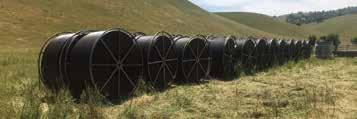
July 2024 California Cattleman 59
HDPE for Ranch Water Systems Fair Prices . Good Service . Rancher Owned · Durable, efficient alternative to PVC · We have installed miles of HDPE and can visit with you about your projects ·
DELIVERY THROUGHOUT THE WEST CALL TODAY: 925-204-2424 Cattlemans Assoc.qxp_Layout 1 6/9/23 12:36 PM Page 1 Due Diligence Assistance / Budgeting Site & Improvements Assessment Conservation Easement Opportunities Advising for USDA NRCS Federal Cost-Share Incentives Programs USDA NRCS Technical Service Provider # 04-4096 Design / Installation Oversight / Final Check-Out CONSERVATION PROJECT Planning / Management / Coordination Solar Water Pumping Systems Design & Installation Enhancement Projects / Equipment Evaluation / Range Management Assessments www.freitasrangelandimprovements.com P.O. Box 2479 Livermore, CA. 94551 Jed Freitas 925.580.6415 Licensed/Bonded/Insured Rangeland Improvements LLC
We offer a full line of fusible HDPE pipe up to 6" in continuous reels and up to 48" in sticks plus all the fittings


60 California Cattleman July 2024 CALIFORNIA CATTLEMEN’S ASSOCIATION JOIN US SEPT. 6, 2024 AT THE RANCH IN LOS MOLINOS FOR OUR ANNUAL BULL SALE! CALL US FOR INFORMATION ABOUT OUR PRIVATE TREATY CATTLE OR OUR ANNUAL BULL SALE! Anselmo, Nebraska VISIT US AT WWW.DONATIRANCH.COM! September 19, 2024 Mark your calendars for the Heritage Bull Sale Sept. 8, 2024! 916.712.3696 • 916.803.2685 jj@barrangus.com Angus RAnch Annual Bull Sale: Sat., September 1, 2018 Inaugural Female Sale: Mon., October 15, 2018 Tim & Marilyn Callison Owners Chad Davis 559 333 0362 Travis Coy 559 392 8772 Justin Schmidt 209 585 6533 Ranch Website www.ezangusranch.com Annual Bull Sale: Sept. 7 - Farmington Annual Production Sale: Oct. 12 - Porterville SERVICES FOR ALL YOUR ON-THE-RANCH NEEDS Ranch Buyer's Guide ANGUS Join u s at our annnual bull sale September 12! 925-250-5304 ED & CARLENE JOSH, TIFFANY & FAMILY AMADORANGUSFARMS@GMAIL.COM


LOOK FOR US AT LEADING SALES IN 2024. Scott & Shaleen Hogan H R (530) 200-1467 • (530) 227-8882 Gerber, CA Registered Angus Cattle Call to see what we have to offer you! RED RIVER FARMS 13750 West 10th Avenue Blythe, CA 92225 Office: 760-922-2617 Bob Mullion: 760-861-8366 Michael Mullion: 760-464-3906 Simmental – SimAngus™ – Angus Offering bulls at California’s top consignment sales! Call today about private treaty offerings! O’NEAL RANCH BULLS OFFER THE COMPLETE PACKAGE O’NEAL RANCH — Since 1878— Gary & Betsy Cardoza PO Box 40 • O’Neals, CA 93645 (559) 999-9510 THANKS TO OUR 2023 “PERFORMANCE PLUS” BULL BUYERS! GROWTH • PERFORMANCE ADAPTABILITY • CARCASS Hoffman Bomber 8743 SIRE: Casino Bomber N33 MGS: S A V Final Answer 0035 VDAR Mirror Image 6207 SIRE: W R A Mirror Image T10 MGS: BCC Bushwacker 41-93 CONTACT US ABOUT SEMEN FROM THESE IMPRESSIVE SIRES... • Calving Ease with Growth • O’Connell Aviator 7727 SIRE: Musgrave Aviator MGS: R B Tour Of Duty 177 VDAR PF Churchhill 2825 SIRE: VDAR Churchill 1063 MGS: VDAR Really Windy 4189 Joe Sammis • (530) 397-3456 122 Angus Rd., Dorris, CA 96023 h (775) 691-1838 • honeranch@frontier.com HONERANCH.COM PERFORMANCE-TESTED EFFICIENT, QUALITY ANGUS BULLS NOW AVAILABLE! You can take to the bank! Nathan, Melissa & Kate Noah (208) 257-3686 • (208) 550-0531 Old Stage Angus JOIN US THIS FALL FOR The Performance Advantage Bull sAle in Hanford! MYRON SCHOTANUS 559-804-4997 oldstageangus.com July 2024 California Cattleman 61 JOIN US FOR OUR ANNUAL BULL SALE: TUESDAY, SEPT 10 AT THE RANCH NEAR MADERA O’Connell ranch Join us Sept. 12 in Oroville for our annual bull sale! DAN & BARBARA O’CONNELL 3590 Brown Rd, Colusa CA (530) 632-4492

SPLIT CREEK ANGUS


RED ANGUIS



62 California Cattleman July 2024 Dwight Joos Ranch Manager P.O. Box 1019 • Simi Valley, CA 93062 805-520-8731 x1115 • Mobile 805-428-9781 dwight.joos@pwgcoinc.com Simi Valley, CA pwgillibrandcattle.com P.W. GILLIBRAND Cattle Co. Horned and Polled Hereford Genetics Private treaty bulls available or watch for our consignments at Cal Poly! JOIN US FOR OUR ANNUAL BULL SALE SEPT. 5 IN LAGRANGE! John Teixeira:
Allan
Tom Hill:
A FAMILY TRADITION
| cattle@thousandhillsranch.com Angus and SimAngus Ca le Call us today for information on private treaty bulls or females. MCPHEE
14298 N. Atkins Rd • Lodi, CA 95240 Rita 209-607-9719 and Royce 209-712-8116 website: www.mcpheeredangus.com Chris Beck, Manager • 618-367-5397 Bob Coker • 916-539-1987 visit us online at: www.genoalivestock.com Top performance Hereford genetics —Horned and Polled— ANNUAL BULL & FEMALE SALE Monday, Sept. 9, 2024 at the ranch 640 Genoa Land, Minden NV 89423 Registered Hereford Cattle & Quarter Horses Annual Sale First Monday in March 42500 Salmon Creek Rd Baker City, OR 97814 Ranch: (541) 523-4401 Bob Harrell, Jr.: (541) 523-4322 “THE BRAND YOU CAN COUNT ON” REGISTERED HEREFORD CATTLE BARRY, CARRIE & BAILEY MORRELL Barry: (530) 6825808 • Carrie: (530) 218-5507 Bailey (530) 519-5189 morrellranches@yahoo.com 560 County Road 65, Willows CA 95988 Call us about our upcoming consignments or private treaty cattle available off the ranch. OFFICE@VINTAGEANGUSRANCH.COM WWW.VINTAGEANGUSRANCH.COM Bulls and females available private treaty! SEEDSTOCK PRODUCER SINCE 1978 Greeley Hill, CA • La Grange, CA Stephen Dunckel • (209) 591-0630 www.tumbleweedranch.net twd@tumbleweedranch.net TUMBLEWEED RANCHES Leading Angus & Ultrablack© Genetics HEREFORD RED ANGUS (530) 385-1570 E-mail...............................tehamaranch@gmail.com Thanks to all this year's bull buyers! Contact us any time to see how we can help you with your bull and female needs. JEREMY & CATHY STRAND TEHAMA COUNTY, CA JEREMY: (530) 200-6146 | CATHY: 916-768-5019 WWW.SPLITCREEKANGUS.COM
(805) 448-3859
Teixeira: (805) 310-3353
(541) 990-5479
www.teixeiracattleco.com
Contact us about cattle available private treaty and watch for us at the West’s best consignment events!


Leading Producers

SPANISH RANCH


July 2024 California Cattleman 63 OFFERING HEREFORD BULLS BUILT FOR THE COMMERCIAL CATTLEMAN Jim Mickelson (707) 481-3440 THE DOIRON FAMILY Daniel & Pamela Doiron 805-245-0434 Cell doiron@spanishranch.net www.spanishranch.net THD ©
Your Source for Brangus and Ultrablack Genetics in the West! Vaccines Medicines Mineral Supplements Antonia Old • (209) 769-7663 antonia.old@animalhealthinternational.com ...and more! Reliable products you are looking for with the dependable service you need. 2015 AICA Seedstock Producer of the Year Feedlot • Rice • Charolais Jerry & Sherry Maltby www.brokenboxranch.com bbr@citlink.net PO Box 760 Williams, CA Mobile: (530) 681-5046 Office (530) 473-2830 Bobby Mickelson (707) 396-7364
BALD MOUNTAIN BRANGUS, SONORA (209) 768-1712 RUNNING STAR RANCH, LINCOLN (916) 257-5517 SUNSET RANCH, OROVILLE (530) 990-2580 DEER CREEK RANCH, LOS MOLINOS (541) 817-2335 THE SPANISH RANCH, NEW CUYAMA (805) 245-0434 GLASGOW BRANGUS, SANTA YSABEL (760) 789-2488 for Brangus, Ultrablack & Brangus Optimizers Call a breeder near you today for more information! TUMBLEWEED RANCHES, GREELEY HILL (209) 591-0630 CHAROLAIS MULTI BREED ANIMAL HEALTH BRANGUS marcia@kunde.com | www.sonomamountainherefords.com KNIPE LAND COMPANY (208) 345-3163 Your connection for scenic ranches and fertile farmland in the Northwest. Buying or selling, we can help. Call us today or visit knipeland.com to discover our quality properties. info@knipeland.com REAL ESTATE WWW.BARALEINC.COM (888) 258-3333 • Williams, CA Matt Zappetini (530) 526-0106 mzappetini@baraleinc.com “PERFORMANCE THROUGH ADVANCED NUTRITION” Performance Through Advanced Nutrition Ranch Deliveries Available with our Truck and Forklift! We also offer custom formulations to meet your specific We offer blends that contain: Molasses - Zinpro® Performance Minerals - Availa® 4 - Added Selenium Premium Livestock Feeds • Mineral Mixes with Ranch Delivery • • Hi Mag - Fly Control - Rumensin - Custom Mixes • • Complete Feeds and Finish Mixes • Williams, CA Matt Zappetini (530) 526-0106 mzappetini@baraleinc.com www.baraleinc.com • (888) 258-3333 NUTRITION
California’s
Advertisers’ Index



64 California Cattleman July 2024
Amador Angus Ranch ..........................................................................60 Animal Health International 63 Bar Ale.............................................................................................................. 63 Bar KD Ranch 60 Bar R Angus 60 Broken Box Ranch 63 Buchanan Angus Ranch 60 Bullseye Breeders Bull Sale 26 Byrd Cattle Company 37, 60 Cal Poly Bull Test & Sale 49 California Outdoor Properties 32, 33 Cattlemen’s Livestock Market ............................................................ 2 Chico State College of Ag 63 Conlin Supply Company, Inc. .......................................................... 44 Dal Porto Livestock 60 Dixie Valley Angus ........................................................................... 60, 63 Donati Ranch 23, 60 Elwood Ranch............................................................................................. 53 EZ Angus Ranch 47, 60 Freitas Rangeland Improvements 59 Fresno State Ag Foundation 63 Genoa Herefords 62 Harrell Hereford Ranch 62 HAVE Angus 61 Heritage Bull Sale 43 Hogan Ranch 61 Hone Ranch .................................................................................................. 61 Hygieia Laboratories 5 Knipe Land Co. ........................................................................................... 63 LiphaTech 55 McPhee Red Angus 44, 62 Mobile Cattle Marketing 25 Morrell Ranches 62 Noahs Angus Ranch................................................................................ 61 O’Connell Ranch ................................................................................ 23, 61 O’Neal Ranch 45, 61 Old Stage Angus 61 P.W. Gillibrand 62 Red River Farms 61 Rhoades Ranch ......................................................................................... 27 Schohr Herefords 62 Sierra Ranches 63 Sonoma Mountain Herefords 63 Split Creek Angus 26, 62 Split Creek Angus .................................................................................... 62 Stepaside Farm 61 Tehama Angus Ranch 13, 62 Teixeira Cattle Co. 62 Tumbleweed Ranch 62 Turlock Livestock Auction Yard.......................................................... 9 Vintage Angus Ranch ................................................................... 64, 62 West Coast Brangus Breeders 63 Western Poly Pipe 59 Western Stockman’s Market 11 Western Video Market 3


ddixie ixie VVALLEY ALLEY FEATURING: 100 ANGUS BULLS 60 YEARLINGS 40 LONG YEARLINGS Angus w w w . d i x i e v a l l e y . c o m L e e N o b m a n n ( 7 0 7 ) 2 0 6 - 4 1 1 5 J e s s i c a V i g i l ( 5 3 0 ) 2 6 2 - 5 4 3 3 He d B ll P t tials FOLLOW US ON SOCIAL MEDIA @DIXIEVALLEYANGUS Join us CATTLEMENS LIVESTOCK MARKET GALT, CA 30 BRED COMMERCIAL HEIFERS AI’D TO STERLING ROI *20811778
VINTAGE ANGUS RANCH


DOUG WORTHINGTON, MANAGER BRAD WORTHINGTON, OPERATIONS MIKE HALL, BULL SERVICES (805) 748-4717 2702 SCENIC BEND, MODESTO, CA 95355 (209) 521-0537 WWW.VINTAGEANGUSRANCH.COM OFFICE@VINTAGEANGUSRANCH.COM
TATTOO REG NO. SIRE CED BW WW YW CW MARB REA $W $F $G $B $C 3612 20822513 VAR Creed 10 0.6 84 155 85 1.26 1.48 94 138 92 230 379 3610 20789337 Kenny Rogers 13 -0.8 76 142 76 1.46 1.03 80 129 96 225 365 3609 20822511 VAR Creed 4 3.4 94 176 101 1.11 1.88 85 165 90 255 406 3602 20790925 VAR Creed 6 2.6 91 165 85 1.12 1.46 87 139 86 225 368 3569 20720855 Bold Ruler 5 2.5 95 163 95 1.27 1.18 104 138 86 225 389 3552 20720813 Bold Ruler 12 0.9 84 148 79 1.31 1.08 89 125 88 213 361 3405 20632554 Breakthrough 14 0.1 96 162 90 1.62 1.26 94 132 105 238 389 3347 20632510 Wildcat 8 1.5 88 159 83 1.31 1.27 86 133 93 226 377 3343 20604300 Exponential 8 2.2 92 165 86 1.31 0.87 86 129 90 219 359 3342 20603218 Statesman 12 0.5 76 141 74 1.28 1.04 81 131 86 217 361 3339 20603211 Huckleberry 10 0.8 69 120 67 1.61 1.15 66 121 106 226 364 3337 20604325 Man In Black 10 2.0 97 163 89 1.21 0.88 89 144 78 222 373 3308 20602134 Conclusion 10 1.2 87 147 84 1.09 1.06 85 139 77 216 358 3157 20590910 Exponential 11 0.8 87 150 80 1.44 1.00 89 127 97 224 375 3136 20584441 Exponential 11 1.2 97 172 96 1.50 0.79 103 145 92 236 400 3100 20584409 Breakthrough 12 0.5 86 154 84 1.72 1.18 92 127 110 237 382 3099 20600923 Salvation 12 1.5 75 127 71 1.86 1.14 78 115 118 233 360 3096 20584406 Breakthrough 8 0.8 84 144 77 1.42 1.51 84 128 101 229 377 3037 20584352 Breakthrough 12 0.0 74 129 72 1.36 1.55 74 121 99 219 364 3007 20584327 Breakthrough 16 -1.8 87 151 86 1.21 1.40 89 136 89 225 367 Thursday, Sept. 5, 2024 • La Grange, CA • 12 noon Call or e-mail to get on our sale book mailing list! 31 st Annual “CARCASS MAKER” BULL SALE DATA PREVIEW PRODUCING SIRES WITH “MULTI-TRAIT” EXCELLENCE! BIRTH WEIGHT EPD 0 or (-) = 45 Bulls (-) to +1 = 97 Bulls (-) to +2 = 175 Bulls under +3 = 246 Bulls $ COMBINED Top 1-5% = 100 Bulls Top 10% = 180 Bulls Top 25%= 259 Bulls All bulls average 321 $C VAR WILL OFFER THE LARGEST VOLUME OF HIGH QUALITY BULLS ON THE WEST COAST! SELLING 200+ BULLS IN 2024 ALL THE BULLS ON TEST FOR THE 2024 SALE ARE ABOVE BREED AVERAGE FOR $BEEF AND $COMBINED. VAR Breakthrough 3405 VAR Clarity 3376 VAR Salvation 3099 CED 14 WW 96 YW 162 $M 80 $C 389 BW1.4 WW 80 YW 150 $M 70 $C 353 CED 12 WW 75 YW 127 $B 235 $C 362
