APRIL 2023

FLOWERS BLOOM WHERE CATTLE GRAZE

CHAROLAIS GENETICS PACK ON THE POUNDS
INSIGHTS FROM STATE TREASURER

THE OFFICIAL PUBLICATION OF THE CALIFORNIA CATTLEMEN’S ASSOCIATION
CLM REPRESENTATIVES
Jake Parnell .......................... 916-662-1298
George Gookin 209-482-1648
Rex Whittle 209-996-6994
Mark Fischer ....................... 209-768-6522
Kris Gudel ............................. 916-208-7258
Steve Bianchi 707-484-3903
Jason Dailey 916-439-7761
Brett Friend ........................... 510-685-4870
Tod Radelfinger .................. 775-901-3332

Bowdy Griffen 530-906-5713
WEDNESDAY WEEKLY SCHEDULE
Butcher Cows 8:30 a.m.
Cow-Calf Pairs/Bred Cows ..... 11:30 a.m.
Feeder Cattle ......................................... 12 p.m
AUCTION MARKET
12495 E. STOCKTON BLVD., GALT, CA
Office........................................... 209-745-1515
Fax 209-745-1582
Website/Market Report www.clmgalt.com
Web Broadcast www.lmaauctions.com
New owners Jake and Molly Parnell and family are proud to continue the same tradition with business as usual at CLM. Top consigments from throughout California and Nevada will be showcased during these upcoming special sales ...

SPRING & SUMMER FEEDER SALES
WED., APRIL 5
WED., APRIL 26
WED., MAY 10
WED., JUNE 7
WED., JUNE 21
ANNUAL CATTLEMEN’S SPECIAL FEEDER SALES
MON., MAY 22
MON., JUNE 12
UPCOMING WESTERN VIDEO MARKET SALES

April 13 – Visalia, CA
May 4, May 25, June 8 – Cottonwood, CA
July 10, 11 and 12 – Reno, NV THD ©
2 California Cattleman April 2023
Jake and Molly with Ben, Parker and Jack


TOP QUALITY CATTLE AND SHEEP FEATURED THIS SPRING FROM THE WEST’S LEADING PRODUCERS! Joinuslive or online! WATCH, LISTEN AND BID ONLINE AT WWW.WVMCATTLE.COM HARRIS RANCH INN & RESTAURANT, COALINGA, CA CONSIGNMENT DEADLINE APRIL 19 • SIMULCAST ON DISH 998 WVM HEADQUARTERS, COTTONWOOD, CA WVM HEADQUARTERS, COTTONWOOD, CA CONSIGNMENT DEADLINE MAY 17
NOTE LOCATION CHANGES ON APRIL 13 AND MAY 4 EVENTS!
PLEASE
VOL. 106, ISSUE 4
CALIFORNIA CATTLEMEN’S ASSOCIATION
3841 North Freeway Blvd., Suite 130
Sacramento, CA 95834
PRESIDENT
Steve Arnold, Santa Margarita
FIRST VICE PRESIDENT
Rick Roberti, Loyalton
SECOND VICE PRESIDENTS
Sheila Bowen, Glennville
Frank Imhof, Pleasanton
Mike McCluskey, Red Bluff
TREASURER
Beverly Bigger, Ventura
EXECUTIVE VICE PRESIDENT
Billy Gatlin
VICE PRESIDENT OF GOVERNMENT AFFAIRS
Kirk Wilbur
DIRECTOR OF FINANCE & EVENTS
Lisa Brendlen
DIRECTOR OF COMMUNICATIONS
Katie Roberti
ASSOCIATE DIRECTOR OF COMMUNICATIONS
Maureen LaGrande
OFFICE ADMINISTRATOR
Katherine Dickinson
PUBLICATION SERVICES
OFFICE & CIRCULATION
CCA Office: (916) 444-0845
Fax: (916) 444-2194
MANAGING MAGAZINE EDITOR
Stevie Ipsen | (208) 996-4922 stevie.ipsen@gmail.com
ADVERTISING SALES/FIELD SERVICES
Matt Macfarlane | (916) 803-3113 m3cattlemarketing@gmail.com
BILLING SERVICES
Lisa Brendlen lisa@calcattlemen.org
SERVING CALIFORNIA BEEF PRODUCERS SINCE 1917
Bolded names and businesses in editorial represent only current members of the California Cattlmen’s Association or California CattleWomen, Inc. For questions about membership status, contact the CCA office at (916) 444-0845. The California Cattleman (Publication #8-3600) is published monthly except May/June is combined by the California Cattlemen’s Association, for $20/year, or as part of the annual membership dues. All material and photos within may not be reproduced without consent of publisher.
Periodical postage paid at Lubbock, Texas, 79402. Publication # 8-3600 National Advertising Group: The Cattle Connection/The Powell Group, 4162-B Carmichael Ct, Montgomery, AL 36106 (334) 271-6100.
POSTMASTER: Send address changes to: California Cattleman, 3841 North Freeway Blvd., Suite 130 Sacramento, CA 95834
APRIL 2023
WWW.CALCATTLEMEN.ORG

UPCOMING EVENTS
CCA Steak & Eggs Breakfast
May 16
CBCIA + CAA Tour
May 16-18
Central Valley, California
Mike Hall, 805-748-4717 | Abbie Nelson, 916-804-4990 https://calcattlemen.org/events

CATTLE FEEDERS MEETING
May 24-26, San Diego

https://calcattlemen.org/event/2023-feeder-meeting/
CCA & CCW Midyear Meeting
June 21-22
4 California Cattleman April 2023
REGISTER ONLINE OR CONTACT THE CCA OFFICE
Registration Prices
Registrations include access to all meetings on Wednesday and Thursday, dinner on Wednesday and breakfast and lunch on Thursday.
FULL REGISTRATION: $200
YOUNG CATTLEMEN’S COMMITTEE (YCC) REGISTRATION: $125


DINNER TICKET: $75
The last day to pre-register is Wed., June 14. All registration prices will be increased onsite. No registration refunds will be given after Wed., May 31.
Room Reservations
Our group room block for this event at the Paso Robles Inn is now open! Rates are $149/night.



To make your reservations call (805) 238-2660 and mention “California Cattlemen’s Association.”

April 2023 California Cattleman 5 Call today to make your hotel reservations with CCA’s group rate. Rates start at $149/night BOOK W/ THE PASO ROBLES INN AT (805) 238-2660 Visit ww.calcattlemen.org/events or call the CCA office at (916) 444-0845 to register today.
ASSOCIATION PERSPECTIVES
8 10 38
CATTLEMEN’S COLUMN

CCA sees positive results in first quarter of 2023

DUES DOLLARS AT WORK
CCA formulates plan of action for legislative efforts in 2023

14 22 26
BUNKHOUSE
Return to rangeland
VET VIEWS
H. Somni could be underlying culprint in various cattle problems
RANGELAND TRUST TALK

Honoring heritage by loving the land through generations
COUNCIL COMMUNICATOR
Holiday results show beef is cause for celebration for Californians
CONTENTS 18 10 ©ROCKING T PHOTOGRAPHY
SPECIAL FEATURES
18 34
WHERE THE FLOWERS GROW
Beef’ benefits to rangeland diversity


CROSSBRED BEEF
Charolais genetics put pounds on calves, money in wallets
TALKING WITH FIONA State Treasurer longtime admirer of ranching
READER SERVICES
39 40
30 45
46
CATTLEMEN’S REPORT Sales results from spring bull sales
BUYER’S GUIDE Services from breeders and beef industry experts
RANCH FAMILY ROUNDUP Obituaries and new arrivals
ADVERTISING INDEX

34
ON THE COVER
Following a wetter year than any in recent history, the grass is green across most of the state. This cover photo, shot by Rocking T Photography, demonstrates not just the good grass year that lies ahead but is also a perfect reminder of the stewardship ranchers provide for the state. Cattle producers contribute to the scenic vistas the state is known for but are also vital to the biodiversity of plant and wildlife, as highlighted by the feature story on page 18.
April 2023 California Cattleman 7
30
CATTLEMEN’S COLUMN
COMMON GOALS: CCA MEMBERS WORK IN VARIOUS WAYS TO REACH SAME DESTINATION
by CCA Second Vice President Mike McCluskey
Since the first of the year, I have had the opportunity to travel a bit to several county meetings. It has been great meeting new people and catching up with others. What amazes me is the diversity of locations and people and the different ways we all go about accomplishing the same goal: To be good stewards of the land and our livestock, to produce quality beef to feed the world and to constantly strive to improve.
All the meetings are different. Some small meetings to update the membership and large events that include the entire community. But they all are accomplishing the same thing. Each of these groups approach their strategies in a simila but somewhat different way. They review of the past year, a look ahead, recognition of accomplishments and fellowship. Fellowship is not exclusive to ranchers but it is strong in the industry. When disaster strikes, no matter our differences, we all come together, figure out how to help and get it done.
A recent example of this was in Humboldt County. A freak snowstorm came in and had cattle stranded in inaccessible locations without access to feed. Cattlemen, cattlewomen, local politicians, the sheriff and members of the community came together with a plan. That plan was to drop hay by helicopter to the stranded cattle. They contacted CDFA and the Coast Guard, got them on board and made it happen. That’s fellowship and that is a prime example of the people in our industry. We are resilient and we overcome obstacles that seem to be constantly put in our paths.
That brings me to the future, which is now. Our government and various other organizations are constantly putting more obstacles in our
path. Be it in the form of legislation, regulation, or taxation. This year is no different, a lot of legislation coming out of Sacramento that is going to put those obstacles in our path. Legislation on water rights, climate change, methane emissions from our cattle and much more. Generally more regulation comes with another cost to our operations, both monetary and productivity. As diverse a group that we are, CCA is a place where we can express our different opinions and come together with a plan to protect our industry, our heritage and our ranches.
I can’t say I have enjoyed speaking at these events, but I will get there. What I have enjoyed is listening to all the differing opinions on different topics. Hopefully, using that knowledge when asked to give direction to your CCA staff.
I look forward to getting out to more events and county meetings to hear from more of you. It is an honor to serve the industry that has supported myself and my family for many years. I look forward to many more successful years for the cattle industry in California. It is going to take all of us to come together to fight for what we love doing and I know we can be successful.

Hopefully we will meet somewhere down the road but if not feel free to contact myself or any other CCA officer. Or call the office in Sacramento with any concerns you may have. We will do our very best to help.

8 California Cattleman April 2023
CONTRACOSTA-ALAMEDA&SANJOAQUIN-STANISLAUS COUNTY CATTLEMEN’S ASSOCIATIONS’ FEEDER SALES


41stAnnual Showcase Feeder Sales
SATURDAYS
MAY 20 • JUNE 3 • JUNE 24
ALSO SELLING CATTLE FROM THESE CATTLEMEN’S ASSOCIATIONS: MERCED-MARIPOSA, SANTA CLARA, NAPA-SOLANO, MADERA, CALAVERAS TUOLUMNE, FRESNO-KINGS, SAN BENITO & TAHOE
FEATURING A SPECIAL SECTION OF NHTC-CERTIFIED, ANGUS-SIRED CALVES AS WELL AS A RED ANGUS AND CHAROLAIS SECTION
THESE EVENTS WILL INCLUDE SOME OF THE BEST CALVES CALIFORNIA HAS TO OFFER, SO WHETHER YOU ARE ENROLLED IN A SPECIAL PROGRAM OR NOT, THESE SALES ARE FOR YOU!
SPRING ROUND UP SPECIALS

TUESDAY, APRIL 18: SPRING FEEDER SALE FEATURING CALVES AND YEARLINGS
SATURDAY, APRIL 29: BURGERS AT THE BARN & SPECIAL WEIGH COW SALE AT NOON
TUESDAYS, MAY 2, MAY 16 & MAY 30 AND TUESDAYS JUNE 6 & JUNE 13: SPRING FEEDER SALES SHOWCASING CALVES AND YEARLINGS FROM SMALL PRODUCERS WITH 50 HEAD OR LESS AT 9 A.M.
SALE DAY IS PAY DAY!
WATCH LIVE AND BID ON LMAAUCTIONS.COM
FOR WEEKLY SALE REPORTS AND NEWS ABOUT UP-TO-THE-MINUTE SALE DATES AT WWW.TURLOCKLIVESTOCK.COM OR ON OUR FACEBOOK PAGE!


TURLOCK LIVESTOCK AUCTION YARD OFFICE: 209 634-4326 • 209 667-0811 10430 Lander Ave., Turlock, CA P.O. Box 3030, Turlock, CA 95381 www.turlocklivestock.com TLAY REPRESENTATIVES MAX OLVERA ............................ 209 277-2063 STEVE FARIA 209 988-7180 JUSTIN RAMOS 209 844-6372 JOHN LUIZ 209 480-5101 JAKE BETTENCOURT............... 209 262-4019 TRAVIS JOHNSON .......... ......209 996-8645 TIM SISIL .................................. 209 631-6054 JOHN BOURDET ...................... 831 801-2343 CELESTE SETTRINI..................831 320-1527 MATT MILLER........................... 209 914-5116 BRANDON BABA .................... 209 480-1267 BUD COZZI ................................ 209 652-4480 EDDIE NUNES ........................... 209 604-6848 CALL TO CONSIGN CATTLE TO THESE UPCOMING WVM EVENTS! JOIN US, IN VISALIA APRIL 13 AND COTTONWOOD MAY 4, MAY 25 AND JUNE 8! When marketing calves at TLAY, don't forget how essential the 2nd round of shots is. Make sure to include a modified live vaccination! THE CENTRAL CALIFORNIA MARKETING CENTER FOLLOW US ONLINE
YOUR DUES DOLLARS AT WORK
2023 LEGISLATIVE PRIORITIES BEGIN TO TAKE SHAPE
 by CCA Vice President of Government Affairs Kirk Wilbur
The first year of California’s 2023-24 Legislative Session is in full swing. By mid-February, state senators and assemblymembers had introduced 2,634 bills, and last month legislators began the process of vetting those bills in policy committees. During the month of April, CCA will remain busy lobbying bills in Assembly and Senate policy committees ahead of an April 28 deadline for those committees to consider all fiscal bills and a May 5 deadline to dispense with their non-fiscal workload.
The March edition of CCA’s Hot Irons newsletter provided a deep-dive into three high-priority bills likely to impact California’s cattle producers: AB 460 (Bauer-Kahan), relating to water rights enforcements, AB 554 (Gabriel), which would create a private right of action in civil courts for alleged violations of animal cruelty laws, and AB 1237 (Petrie-Norris), which seeks to incentivize veterinarians to practice in “veterinary underserved areas.” This column seeks to provide insights into an array of other bills CCA will be lobbying throughout 2023, but readers are encouraged to reference last month’s Hot Irons for details on those three priority bills.

CCA’s legislative priorities will undoubtedly evolve throughout the next five months of the Legislative Session, but below are details of several of the measures currently being tracked and lobbied by your CCA government affairs team.
WATER RIGHTS AND ENFORCEMENT
Given California’s historic drought and the recent series of atmospheric rivers that battered the state from late December through mid-January and again in mid-March, it is perhaps no surprise that water is top-of-mind for policymakers in Sacramento.
This Session’s focus on water rights, in particular, was highlighted by a Feb. 28 hearing of the Assembly Water, Parks and Wildlife Committee focused on “Adapting Water Rights to our 21st Century Climate,” during which witnesses discussed a number of ‘reforms’ to the state’s water rights system which have been proposed in several bills introduced this year.
Most significant among those bills is AB 460, which in short would allow any “interested party” to petition the State Water Resources Control Board (SWRCB) for an “interim relief order” regarding any alleged violation
of a water right, water right curtailment order or water quality objective, and which would allow the SWRCB to impose a $10,000 per day fine for violation of the order and an additional $5,000 fine for each acre-foot of water diverted in violation of the order.
While AB 460 is perhaps the most sweeping water rights bill this year, it is by no means the only.
One particularly concerning bill is SB 389, introduced by Senator Ben Allen (D-Santa Monica). SB 389 would allow the SWRCB to investigate the basis of claim for any water right and to rescind that water right if the Board determines that “diversion and use is not authorized under any basis of right.” This is particularly concerning because the bill places the burden of proof on the water right claimant to prove the existence and continuous exercise of their right, rather than upon the SWRCB to prove that no such right exists. For a pre-1914 water right, for instance, records may not be available both due to the age of the right and because, other than an Initial Statement of Diversion and Use, detailed records of such diversions have not historically been required. Additionally, because any water right
...CONTINUED ON PAGE 12

10 California Cattleman April 2023
April 2023 California Cattleman 11
isn’t something you have to live with. Get up to 3.5x more forage production with Rejuvra® herbicide.* Powered by an innovative active ingredient, Rejuvra herbicide stops cheatgrass before it germinates. With just one application, you’ll get four years of control so nutritious forage can thrive.
giving away 20 weather stations to monitor conditions from anywhere on your ranch. And enter to win a personal weather station to stay ahead of the elements. *Forage response is variable and dependent on individual site conditions. Individual results may vary. NO PURCHASE NECESSARY TO ENTER OR WIN. PURCHASE WILL NOT INCREASE CHANCES OF WINNING. Giveaway open only to ranchers, retailers and land managers who are legal residents of CA, CO, ID, MT, NV, ND, OR, SD, UT, WA or WY, age 18+, who complete and submit an online entry form, available at es.bayer.us/rejuvra-giveaway. Must enter between 2/13/2023 and 4/30/2023. Twenty entries will be selected to win one (1) ambient weather station per winner. Void where prohibited. Value of weather station: $210.00. Odds depend on no. of entries. For a copy of the Official Rules, visit https://www.us.envu.com/vegetationmanagement/range-and-pasture/portfolios-and-solutions/rejuvra/giveaway/terms-and-conditions. Restrictions may apply. Sponsor reserves the right to extend, modify or discontinue this giveaway at any time without notice. Sponsor: Envu Environmental Science – Range & Pasture, a Division of Environmental Science U.S. LLC, 5000 CentreGreen Way, Suite 400, Cary, NC 27513 ALWAYS READ AND FOLLOW LABEL INSTRUCTIONS. Follow label and stewardship guidelines to limit impact to non-target native species. Environmental Science U.S. LLC, 5000 CentreGreen Way, Suite 400, Cary, NC 27513. For additional product information, call toll-free 1-800-331-2867. www.envu.com. Not all products are registered in all states. Envu, the Envu logo and Rejuvra ® are trademarks owned by Environmental Science U.S. LLC or one of its affiliates. ©2023 Environmental Science U.S. LLC. Scan the code to enter. Break the cycle of cheatgrass for the long haul
Cheatgrass
We’re
....CONTINUED FROM PAGE 10
can be revoked under current law for any five-year period of non-use, a diverter would need to have sufficient evidence to affirmatively prove that they have never failed to divert water for any period of five years.
CCA will at a minimum seek to ensure that any burden of proof under SB 389 be shifted to the SWRCB to demonstrate that a valid right does not exist, rather than subjecting water diverters to an impossible evidentiary standard.
Assembly Bill 1337 (Wicks) would also have significant implications for pre-1914 and riparian water rights. Under current law, such senior water rights can only be curtailed pursuant to emergency regulations authorized by a gubernatorially-proclaimed drought emergency. AB 1337 would allow the SWRCB to curtail pre-1914 and riparian rights even during nondrought years – an unnecessary and alarming power grab.
Fortunately, there are also some potentially-positive bills regarding California’s water system which have been introduced this year. For instance, SB 361 (Dodd) would improve water availability forecasting by reactivating or updating existing stream gages and installing new stream gages throughout much of the state. This effort could improve the accuracy of water availability forecasts – diminishing the likelihood of overly broad curtailment orders –or improve data sources for the U.S. Drought Monitor. CCA’s primary goal in engaging upon SB 361 will be to ensure that the costs of this policy are borne by all Californians who would benefit from it, and not merely water rights holders who pay into the state’s water funds.
Greenhouse Gas Emissions
Over the past two decades the California Legislature has invested significant efforts into diminishing the state’s greenhouse gas (GHG) footprint via often-burdensome legislation and regulation, and 2023 is no exception.
Senator Scott Wiener (D-San Francisco) has reintroduced his Climate Corporate Data Accountability Act – which failed on the Assembly Floor late last year – as Senate Bill 253. The bill would require any company doing business in California with more
than $1 billion in annual revenues to extensively document and report all GHG emissions attributable to their business operations. Specifically, the bill would require such companies to report their direct emissions (“scope 1”), indirect emissions from any electricity purchased by the company (“scope 2”) and all GHG emissions from the company’s supply chain (“scope 3”).
While SB 253 would only directly implicate billion-dollar companies, the impacts upon cattle producers and other small businesses could be catastrophic if the bill were to become law. For a major restaurant chain to be able to report its scope 3 emissions, for example, the ranchers that raise the company’s beef would need to be able to quantify and report to the corporation GHG emissions related to their ranch –an extremely difficult and onerous requirement. Worse, if a ranch or other small business struggled to accurately quantify their emissions, it could lead companies required to report under SB 253 to terminate their relationships with these small businesses.
CCA also has significant concerns with SB 485 (Becker), which would provide authority to the California Air Resources Board (CARB) to incentivize ranchers to feed livestock feed additives demonstrated to reduce methane emissions from enteric fermentation. While the bill was still in “intent” form as of press time – meaning substantive language has not yet been amended into the bill – CCA has significant concerns about CARB further regulating within the area of livestock emissions. Additionally, feed additives are not yet widely available nor approved by the U.S. Food and Drug Administration, meaning any regulatory endeavors are likely premature.
CCA will be lobbying these bills and others throughout the year to ensure the most favorable business environment for California’s cattle producers. The bills detailed above are merely a handful of measures among dozens that CCA is actively tracking and working; stay tuned to CCA’s publications and the Sorting Pen podcast for further details on CCA legislative affairs efforts as the legislative session progresses.
Each mL contains 300 mg of oxytetracycline base (equivalent to 323.5 mg of oxytetracycline dihydrate).
For Use in Beef Cattle, Non-lactating Dairy Cattle, Calves, Including pre-ruminating (veal) calves BRIEF SUMMARY (For full Prescribing Information, see package insert.)
INDICATIONS:
NOROMYCIN 300 LA is intended for use in treatment for the following diseases when due to oxytetracycline-susceptible organisms:
Beef cattle, non-lactating dairy cattle, calves, including pre-ruminating (veal) calves: NOROMYCIN 300 LA is indicated in the treatment of pneumonia and shipping fever complex associated with Pasteurella spp., and Histophilus spp. NOROMYCIN 300 LA is indicated for the treatment of infectious bovine keratoconjunctivitis (pink eye) caused by Moraxella bovis, foot-rot and diphtheria caused by Fusobacterium necrophorum; bacterial enteritis (scours) caused by Escherichia coli; wooden tongue caused by Actinobacillus lignieresii; leptospirosis caused by Leptospira pomona; and wound infections and acute metritis caused by strains of staphylococcal and streptococcal organisms sensitive to oxytetracycline.
Swine: NOROMYCIN 300 LA is indicated in the treatment of bacterial enteritis (scours, colibacillosis) caused by Escherichia coli; pneumonia caused by Pasteurella multocida; and leptospirosis caused by Leptospira pomona.
In sows NOROMYCIN 300 LA is indicated as an aid in control of infectious enteritis (baby pig scours, colibacillosis) in suckling pigs caused by Escherichia coli.
PRECAUTIONS:
Exceeding the highest recommended level of drug per pound of bodyweight per day, administering more than the recommended number of treatments, and/or exceeding 10 mL intramuscularly or subcutaneously per injection site in adult beef cattle and non-lactating dairy cattle and 5 mL intramuscularly per injection site in adult swine, may result in antibiotic residues beyond the withdrawal time.
Consult with your veterinarian prior to administering this product in order to determine the proper treatment required in the event of an adverse reaction. At the first sign of any adverse reaction, discontinue use of the product and seek the advice of your veterinarian. Some of the reactions may be attributable either to anaphylaxis (an allergic reaction) or to cardiovascular collapse of unknown cause.
Shortly after injection treated animals may have transient hemoglobinuria resulting in darkened urine.
As with all antibiotic preparations, use of this drug may result in overgrowth of non-susceptible organisms, including fungi. The absence of a favorable response following treatment, or the development of new signs or symptoms may suggest an overgrowth of non-susceptible organisms. If superinfections occur, the use of this product should be discontinued and appropriate specific therapy should be instituted. Since bacteriostatic drugs may interfere with the bactericidal action of penicillin, it is advisable to avoid giving NOROMYCIN 300 LA in conjunction with penicillin.
WARNINGS:
Warnings: Discontinue treatment at least 28 days prior to slaughter of cattle and swine. Not for use in lactating dairy animals. Rapid intravenous administration may result in animal collapse. Oxytetracycline should be administered intravenously slowly over a period of at least 5 minutes.
CAUTION: Intramuscular or subcutaneous injection may result in local tissue reactions which persists beyond the slaughter withdrawal period. This may result in trim loss of edible tissue at slaughter.
Intramuscular injection in the rump area may cause mild temporary lameness associated with swelling at the injection site. Subcutaneous injection in the neck area may cause swelling at the injection site.
ADVERSE REACTIONS:
Reports of adverse reactions associated with oxytetracycline administration include injection site swelling, restlessness, ataxia, trembling, swelling of eyelids, ears, muzzle, anus and vulva (or scrotum and sheath in males), respiratory abnormalities (labored breathing), frothing at the mouth, collapse and possibly death. Some of these reactions may be attributed either to anaphylaxis (an allergic reaction) or to cardiovascular collapse of unknown cause.
To report a suspected adverse reaction call 1-866-591-5777.
Livestock Drug - Not for Human Use. Restricted Drug(s) California. Use Only as Directed.
Manufactured by:
12 California Cattleman April 2023
Lenexa,
66219 MADE IN THE UK Rev: August 2021 Version: I08 (oxytetracycline injection) ANTIBIOTIC Noromycin® 300 LA Approved by FDA under NADA # 141-143
Norbrook, Inc.
KS
33% ]


MORE HEAD TREATED PER BOTTLE*

It pays to compare labels when treating

seasonal diseases in catt le.


With its 33% lower volume dose per injection, *compared to 200 mg/mL oxytetracycline injectables, Noromycin® 300 LA (oxytetracycline 300 mg/mL) is your effective, broad-spectrum and economical antibiotic for seasonal diseases in beef cattle, non-lactating dairy cattle and swine. Stop by your local animal health provider or visit norbrook.com.


PREPARE FOR THE PRESCRIPTION-ONLY STATUS COMING SOON. SET A PLAN IN PLACE NOW TO ENSURE CONTINUED ACCESS TO NOROMYCIN® 300 LA.
Observe label directions and withdrawal times. Not for use in lactating dairy animals. Adverse reactions, including injection site swelling, restlessness, ataxia, trembling, respiratory abnormalities (labored breathing), collapse and possibly death have been reported. See product labeling for full product information.

1222-143-I08A
© 2023 Norbrook Laboratories Limited. All rights reserved. The Norbrook logos and Noromycin are registered trademarks of Norbrook Laboratories Limited. April 2023 California Cattleman 13
RETURNING TO RANGELAND: LAND REPURPOSING IN THE SAN JOAQUIN VALLEY
by Jack Rice for the California Cattlemen’s Foundation
So far, 2023 has us worried more about what happens when we have too much water, than too little. Atmospheric rivers, accumulating snow and saturated soils have us thinking about flooding more than subsidence. Add in widespread power outages, and for those of us in Humboldt County an earthquake, and it is no wonder everyone is buying emergency food kits.
While the precipitation is a blessing for our parched state and the food kits might not be a bad idea, we all know that the myriad of water issues haven’t gone anywhere. For the most part these issues all seem like threats that we have to battle against, but there may be opportunities amidst the adversity.
One such opportunity for the ranching community may be found in the concept of land repurposing.

It is generally acknowledged that implementation of the Sustainable Groundwater Management Act (SGMA) will result in some irrigated farmland being repurposed to another use that consumes less water. While I do not think many readers want to see land come out of production, the reality of land repurposing is no great surprise to many ranchers. For the past several decades ranchers have watched orchard developments migrating into the foothills, with many wondering just how long this would continue. I believe it is safe to say that in the San Joaquin Valley this era is over. Now the question is whether some of those orchards could go back to rangeland.
The term “land repurposing” is a relatively new addition to California’s water policy lexicon. Arriving a few years after passage of the SGMA in 2014, this new term reflects a challenging reality for many in agriculture, but may also offer some intriguing opportunities for cattle ranchers.
The basic principle is relatively simple: in certain areas of California, particularly areas without water districts delivering surface water, often called “white areas,” there is more land being irrigated than can be supported by available groundwater. The result has been declining groundwater levels and a “critically over drafted basin” designation by the California Department of Water Resources (DWR).
Until local agencies began developing Groundwater Sustainability Plans as required by SGMA, this imbalance was largely overlooked.
Once these plans were developed, however, it became apparent that change was inevitable.
As with finances, there are only two ways to balance an over drafted water budget: increase supply or reduce demand. Basins with the most significant groundwater overdraft generally plan on doing both. And while increasing supply must remain the primary objective, the reality is that a significant amount of currently irrigated land in the San Joaquin Valley will be repurposed to some other use that doesn’t use as much water.
Exactly how much land will be repurposed and to what use that land will be put is a question that has garnered a lot of attention recently.
In a 2019 report, the Public Policy Institute of California estimated that the total amount of land transitioning out of irrigated agriculture would be 500,000 – 750,000 acres. A study done for the Water Blueprint for the San Joaquin Valley estimates that without better water policies, up to 1 million acres may be fallowed because of reduced groundwater and surface water availability with an accompanying loss in farm revenue of $7.2 billion per year.
Exactly how much land actually ends up being repurposed will depend largely on water policy decisions that are beyond the scope of this article. Whether it is a few hundred thousand acres or a million acres will be determined by whether California takes immediate action to capture, convey, and store more surface water.
But even under the best scenarios, every informed water manager I have spoken with acknowledges that there is not enough water available to keep irrigated all the acreage that is planted. In areas without surface supply some land will be repurposed.
The question is, what will the land be repurposed to?
Numerous possibilities have been discussed including solar, groundwater recharge basins,
14 California Cattleman April 2023 BUNKHOUSE
...CONTINUED
ON PAGE 16
FEEDER MEETING
MARRIOTT
REGISTER TODAY AT CALCATTLEMEN.ORG!
Feeder Council Producer Member


Includes access to all meetings, breakfast on Thursday and Friday, lunch on Thursday and one ticket to Thursday night’s dinner event. PRICE: $350
Industry Partner




Includes access to all meetings, breakfast on Thursday and Friday, lunch on Thursday and one ticket to Thursday night’s dinner event. PRICE: $450
Additional Thursday Night Dinner Tickets
Limited availability. It is recommended to purchase additional tickets prior to the event. PRICE: $150
PRICES WILL INCREASE ONSITE. NO REFUNDS FOR REGISTRATIONS WILL BE AVAILABLE AFTER 4/30.

YOU TO OUR 2023 TITLE
THANK
SPONSORS
SPENCER PROSSER
DR. MICHELLE CALVO-LORENZO
SPEAKER BIOS AND LEARN MORE AT CALCATTLEMEN.ORG
DR. ROB ATWILL Elanco Animal Health MP Agrilytics LLC UC Davis
2023 FEEDER MEETING SPEAKERS READ
TRACEY ERICKSON PATRICK LINNELL GREGG DOUD CattleFax Certified Angus Beef Aimpoint Research
DR. BRAD JOHNSON Texas Tech University
MAY 24-26, 2023
BOOK YOUR HOTEL RESERVATIONS WITH CCA’S GROUP RATE. April 2023 California Cattleman 15
MARQUIS SAN DIEGO MARINA CALL (877) 622-3056 TO
...CONTINUED FROM PAGE 14


habitat, floodplains, riparian areas and rangeland. While we can expect to see all of these new uses occur, one report by the Public Policy Institute of California (PPIC) estimated that of the 535,000 acres they predicted would be repurposed, approximately 170,000 acres might be used for solar energy, floodplains and riparian corridors, intermittent wetlands, and San Joaquin desert habitat, leaving 365,000 acres with no clear future use.


Here is where there may be an opportunity for rangeland restoration. Wherever solar panels, recharge basins or other uses are not feasible, rangeland is an option that would provide multiple benefits to the local economy and environment.


Generally it is not economically feasible to convert an orchard to seasonal rangeland. However, when land is no longer irrigated because of groundwater allocations or because the landowner was paid to fallow land, rangeland restoration may be viable if there is financial assistance for fencing and other necessary infrastructure.
Recognizing that land repurposing of any type will require public investment, the legislature provided the California Department of Conservation with $90 million for a “Multibenefit Land Repurposing Program” to fund local projects. In 2022 DWR granted $40 million for multibenefit land repurposing projects in Madera, Kings, Tulare and Monterey Counties. While this program is very broad, it specifically lists transitioning irrigated land to “non-irrigated rangeland” as example project.


Much work remains to be done in figuring whether and how rangeland restoration may be part of the inevitable land repurposing that will occur in certain areas of California. All agriculture will continue to strive for improved water policies that will minimize how much irrigated farmland will be lost. Food security matters to us all. But the math seems clear, groundwater levels are dropping too much in certain areas and land repurposing will happen.
So, as we focus on the emergency of moment and hope for plenty of rain (but not too much too fast), keep in the back of your mind that a few acres of California could return to rangeland.


16 California Cattleman April 2023 – WESTERN POLY PIPE, LLC –HDPE PIPE FOR RANCH & FARM WATER SYSTEMS DELIVERY AVAILABLE • (925) 240-3643 GOOD SERVICE COMPETITIVE PRICES RANCHER-OWNED Western Poly Pipe —lifetime pipe— Due Diligence Assistance / Budgeting Site & Improvements Assessment Conservation Easement Opportunities Advising for USDA NRCS Federal Cost-Share Incentives Programs USDA NRCS Technical Service Provider # 04-4096 Design / Installation Oversight / Final Check-Out CONSERVATION PROJECT Planning / Management / Coordination Solar Water Pumping Systems Design & Installation Enhancement Projects / Equipment Evaluation / Range Management Assessments Rangeland Improvements LLC www.freitasrangelandimprovements.com P.O. Box 2479 Livermore, CA. 94551 Jed Freitas 925.580.6415 Licensed/Bonded/Insured

Growing in Harmony Wildflowers Bloom where Cattle graze
by CCA Associate Director of Communications Maureen LaGrande
Nestled away on the westside of Colusa County lies Bear Valley, a place where not many live but cattle graze and every spring wildflowers bloom. This much anticipated spring spectacle has been dubbed as the “super bloom.” While the flowers have been around for years with the help of cattle grazing, the knowledge of their beauty came to light with social media and media attention from publications such as The Sacramento Bee, SF Gate and San Francisco Chronicle.
While the valley is large, only a handful of people live there and get to experience all the good and bad nature has to offer on a daily basis. Summers are dry, hot, with little water and raise concern for wildfires. Winters are cold with the potential for snow. But the spring poses a time when the sun is shining, soft breezes blow, and dormant annual plants bounce back to life.
Emmett Rothweiler of Dixie Valley Ranch is in his sixth winter on the Bear Valley Ranch and over the years has interacted with the admirers who travel the distance to see the flowers.
126 miles North of San Francisco and 88 miles Northwest of Sacramento, Bear Valley can be reached off of Highway 20 going West towards Clearlake. The closest town with amenities is Williams, once on Highway 20 headed towards Bear Valley, the pavement quickly turns to dirt and there are little to no public restrooms, gas stations or phone service. Visitors who come to see the flowers pull over on the side of the gravel road to take in the scene. Along with the cattle, and occasional wild animal, some of the wildflowers that can be seen include Indian paint brushes, lupine, California Poppies, pepper weed and many more varieties.
Picnics, photo shoots, videos, endurance off road bike races and an array of other activities are centered around the bloom. Everyone is entitled to experience nature and the blooms beauty
but the ranchers whose cattle inhibit these hills still have a job do. Something not always initially evident to the public is the fact that the flowers are there because of the cattle and the ranchers proper grazing management practices. Ranchers work tirelessly to care for their livestock and maintain their land to ensure that it can produce feed for the cattle.
No workday for a rancher looks the same, some may be moving cattle to a new pasture, fixing fence, branding and shipping. When asked what challenges he and other ranchers face with the increased spring traffic, both Rothweiler and fellow rancher down the road, Jim Keegan, Williams, share how visitors don’t always realize that while the road may be public, it is utilized for pushing cows to a new pasture. Most visitors on the road are understanding and wait their turn as the cows move on by. Others who become frustrated with the roadblock tend to drive around the cattle being moved which at times can cause a frenzy.
Keegan whose family has been ranching in Bear Valley since the 1880s, shared how over the years, people wanted to get into the fields of flowers for a better view. With this in mind, Keegan chose to put a wildflower access gate on a piece of his property where people can safely enter, and not harm the fences. Before field access was available Keegan shared, “I’ve seen them go right under the NO TRESSPASSING sign.”
For the most part, those who visit are respectful and appreciative of the land, ranchers and cattle. Rothweiler shares how most of his interactions come about when visitors are jumping over his fence to get up close to the flowers. “I kindly ask them to get out of the pasture and explain to them that they stepped on the exact same flowers on the side of the public road to get over my fence.” From here

18 California Cattleman April 2023
Rothweiler starts conversation with them about the livestock and grasslands. Many of the nature-seekers he speaks to are intrigued to learn how the cattle help manage overgrowth and allow for the flowers to make their way to the surface. When given the chance to talk to the ranchers, visitors ask an array of questions such as, “Do the cows eat the flowers?” Keegan enjoys speaking with visitors, sharing the rich history of ranching in the valley and its natural ecosystem.
The “super bloom” provides a unique opportunity for ranchers to actively engage and educate the public in its naturistic setting. After visiting Bear Valley, Rothweiler feels those who come to see the flowers have a bit better of an understanding as to why the flowers are here and respect for the cattle. While he may only give them a brief explanation of the coexisting life between the cattle and the flowers, and how they depend on one another to flourish, they are able to walk away with new knowledge that can be shared with others. Between seeing the flowers in person and chatting with local ranchers, the public experience first-hand how cattle can provide a positive benefit to the land.

Each year it seems more and more people make their way out to see the flowers. “Last year, on one of the weekends it seemed like there were about 100 people up and down the road,” Rothweiler said. In the past, Keegan has hosted wildflower tours and has had his ranch featured on Home and Garden TV, Channel KCRA 3 and ABC 10, making Bear Valley a very popular place in the spring.
Cattle grazing where the flowers grow promotes biodiversity among the native and nonnative herbaceous plants. The benefits of grazing these lands are endless, keeping overgrowth at a minimum, habitat for wild
animals, reducing fuel for fires and allowing for the introduction of other plants. Both the Keegan and Bear Valley Ranch are conserved through the California Rangeland Trust. This ensures that the ranches will remain rangeland, providing homes for wildlife, livestock and herbaceous grasslands.
Lack of rain and brutally dry summers the last few years have caused the bloom to be short lived. On a good year, with steady rainfall and neutral temperatures the bloom usually lasts around three weeks or from mid-March to mid-April. The cold temperatures Bear Valley has faced this winter has led to little growth as of press time, but in the coming weeks flowers can be expected. “If we get some more rain and it starts to warm up, the bloom this year should be good. You can see that the flowers are trying.” Rothweiler said.
Serving as stewards of the land, ranchers continue to do the best they can for their livestock and the natural resources utilized to keep the land functioning for future generations. Keegan shared one thing he wishes people knew about cattle and cattle producers is how much they love taking care of the land, soil, water and air. Those who speak with Keegan, not only learn more about the land but also receive a true, full view of ranching.
Whether one looks at the wildflowers in Bear Valley through their phone screens or in person, the land and livestock that inhibit these places were there before the super bloom fans were. When visiting it is crucial to remember to be respectful of the plants, animals and those who live and work here. “We are stewards of the land; we are here to make the land better. If we made it worse, we would no longer have it,” Rothweiler said.
April 2023 California Cattleman 19
PARNELL FAMILY TAKES OWNERSHIP OF CATTLEMEN’S LIVESTOCK MARKET
Following 16 successful years as the manager at Cattlemen’s Livestock Market (CLM) in Galt, Col. Jake Parnell and his wife Molly Parnell have officially taken ownership of the auction yard, which as been owned by the Loretz family since 1968.
With the Parnell family having its own deep roots in the livestock marketing business, Jake and Molly Parnell say they look forward to keeping CLM the industry staple it has been for the Central Valley for the last five decades.
As one of the largest cattle yards in the state and the Western U.S., and after 55 years of operating the company, Frank Loretz made the decision to sell the business to Parnell and his wife, Molly.

Parnell said he does not anticipate the market will change much in its day-to-day business operations but he says he is looking forward to the opportunity to help producers improve their cow herds. Having worked as an auctioneer for purebred cattle production sales, in addition to his role at CLM, Parnell said he has the experience to help producers make their herd more profitable and he looks forward to lending that experience to customers.
CLM sells 100,000 head annually through its Wednesday afternoon sales and also serves as a

representative for Western Video Market, a role that will continue to be a priority focus for Parnell and the CLM team.
Parnell says he is especially enthused about the opportunity for his family to grow up in the same kind of business he did. With a father and grandfather as reputable auctioneers, Jake and Molly know the agriculture way of life for kids is second to none. The couple have three children — 8-year-old Jack and 7-year-old twins Ben and Parker — who the couple say they look forward to growing their involvement in the sale barn.
Molly Parnell is a success story in her own right. With a keen business acumen, Parnell is the president of Golden State Strategy Group, a legislative fundraising business based in Sacramento. Though Molly was not raised in the livestock business, her conservative roots and legislative background helped her embrace the livestock whole-heartedly.
Molly says she looks forward to spending sale day at the auction yard each week and lending her business experience to the family business while also continuing to foster relationships with the auction market’s loyal clientele.
20 California Cattleman April 2023


Upcoming Specials spring and summer stocker and feeder sales every monday in april, may and june Featuring Large Runs Calves and Yearlings from Local and West Coast Ranches Western stockman’s market YOUR nhtc approved marketing location THD © DWIGHT MEBANE ....... 661 979-9892 JUSTIN MEBANE ......... 661 979-9894 Western stockman’s market 31911 Highway 46, mcfarland, california 661-399-2981 • www.westernstockmansmarket.com Your Southwest Livestock Market Leader Frank Machado ..... 805 839-8166 Bennet mebane....... 661 201-8169 Annual SpeciaL bred cow sales Monday, June 12, 12 p.m. Monday, July 17, 12 p.m. Featuring 3- and 4-Year-Old Angus Cows Bred to High-Powered Angus Bulls and More 58th famoso female & all-breed bull sale Top Bulls & Females: Saturday, October 14 b famoso Mark Your Calendar April 2023 California Cattleman 21
Understanding Diseases Associated with Histophilus Somni
by Ronald K. Tessman, DVM, Ph.D., DACVIM, DACVPM, technical beef consultant, Elanco Animal Health
Histophilus Somni (H. somni), formerly known as Haemophilus somnus, is a nonencapsulated, gram-negative bacterium in cattle, most commonly infecting feedlot cattle. It is a major pathogen of the bovine respiratory disease (BRD) complex, along with Mannheimia haemolytica and Pasteurella multocida, making it an economically significant pathogen for the cattle industry. Although we most frequently associate H. somni with BRD, it also infects several other organ systems and is a causative agent for multiple other diseases that can be life threatening to cattle.


Historically, H. somni has been found predominately in Canada, but in the early 2000s, it started popping up more often in diagnostic lab isolations in the Midwest and down into the Plains States where there is a high concentration of feedyards. More recently, diagnostic labs in the Midwest and Southeast are seeing an uptick in the prevalence of H. somni in isolates from BRD submissions in the area.
Veterinarians and researchers have hypothesized why H. somni is becoming more widespread and increasingly prevalent, but there is not a clear culprit. Nonetheless, it is important for producers to work with their veterinarian to understand the diseases associated with H. somni, what signs and symptoms to look for, when and how to intervene and general management and prevention strategies.
H. somni is an opportunistic pathogen. It breaks down the mucosal membrane’s i.e., the protective lining of organs, ability to protect and provide immunity to an organ or organ system. Stress from weaning, transportation or inclement weather along with other factors can further compromise the animal’s ability to fight off infection, leading to a variety of neurological, cardiac and respiratory conditions including:
•Pneumonia or pleuritis
•Septicemia
•Thrombotic meningoencephalitis
•Myocarditis
•Tenosynovitis
•Polysynovitis
Septicemia occurs when H. somni enters the bloodstream,
triggering inflammation and the disruption of blood flow. TME is a neurological disease caused by H. somni that infects the brain. Myocarditis is a condition that causes inflammation of the heart muscle, and tenosynovitis and polysynovitis infect the joints and surrounding tendons causing severe inflammation. All can be life threatening and affect the overall health and well-being of cattle.
Other than BRD, these diseases caused by H. somni are hard to diagnose because infected cattle often show few clinical signs. Cattle with TME, myocarditis, septicemia and joint diseases may appear normal with sudden death being the only clinical sign. Once cattle are infected with H. somni, the disease progression can be very rapid. Other clinical signs that may be observed for TME are closed eyes, inability to get up from a lying position, fever or depression. Animals that can stand will be weak and may appear blind. Cattle experiencing myocarditis may show signs of heart failure, including cough, open mouth breathing and exercise intolerance. Since neurological and cardiac conditions caused by H. somni progress rapidly, usually leading to death within 24 hours without clinical signs, monitoring cattle for signs of respiratory disease is recommended. Respiratory disease often precedes other infections. Cattle with respiratory complications may exhibit high fevers, show labored breathing, ...CONTINUED ON PAGE 24
22 California Cattleman April 2023
VET VIEWS
Costing the industry more than $10 million annually, Foothill Abortion — formally known as Epizootic Bovine Abortion, or EBA — has robbed profits from ranchers for almost 100 years as the leading cause of calf loss in affected areas of the Western United States.
Until now.
After years in development and testing, the new Foothill Abortion Vaccine is available from Hygieia Biological Laboratories. The Foothill Abortion Vaccine has been shown to protect more than 95% of animals from the disease when administered as directed. Administration is safe, simple and proven to give your heifers a strong start for greater productivity. Protect your investment and promote your profitability. Ask your local veterinarian if the Foothill Abortion Vaccine is right for your herd, or contact Hygieia Labs to learn more.
P.O. Box 8300, Woodland, California 95776 USA
Jenna Chandler, EBA Product Manager 916-769-2442 | jenna@hygieialabs.com
T: 530-661-1442 | | hygieialabs.com
F: 530-661-1661
April 2023 California Cattleman 23 Announcing the new vaccine from Hygieia Labs: Your Foothold
Foothill Abortion.
BIOLOGICAL LABORATORIES
Against
HYGIEIA
Contact Jenna Chandler at Hygieia Labs for additional information.
...CONTINUED FROM PAGE 22
cough or go off feed.
Since H. somni is difficult to diagnose and is a causative agent for multiple diseases, it can be difficult to treat and control. Choosing an antibiotic labeled for H. somni and administering the appropriate dosage at the onset of clinical signs and symptoms can help mitigate the devastating impact of diseases caused by the pathogen. When using an antibiotic for treatment and control, practicing antibiotic stewardship is most important. Weighing calves is recommended to determine the correct dosage to ensure proper efficacy and avoid antibiotic resistance. Regardless of the antibiotic used, producers should continue to closely monitor calves and follow recommended protocol for retreatment.
In addition to treatment and control methods, management and prevention are key for reducing the occurrence and impact of H. somni in feeder cattle. Vaccinating calves with a modified live viral vaccine prior to transport and arrival to the feedlot can help build immunity to the viruses that can predispose to bacterial infection. Producers should also take steps to minimize stress in transportation by avoiding overcrowded trucks and reducing comingling and length of travel, if possible. Once they arrive at the feedlot, producers should provide the necessary support for a smooth transition by having clean pens, comfortable stocking density and fresh water and feed available. Producers may also consider categorizing cattle by risk level for disease upon arrival to allow for consistent monitoring and support to mitigate a disease outbreak. BRD usually occurs in the first 14 to 21 days in feeder cattle. However, diagnostic reporting shows that cattle infected with H. somni may have lateterm outbreaks between 30 and 60 days. Therefore, cattle at high risk may benefit from metaphylaxis treatment
with a long-acting antibiotic on arrival or when 10 to 20% of the group are showing signs of respiratory distress. Regardless of management and prevention strategies, it is crucial to continue monitoring calves and apply appropriate followup support and treatment.
H. somni can cause many life threatening and financially significant diseases in feedlot cattle. That’s why prevention tactics and management tools are key for reducing the occurrence of these diseases and their devastating impact on cattle health and producers’ investments.
cattle?

Do

Do you want to prevent the effects of the disease including severe anemia, weakness, fever lack of appetite, depression, constipation, decreased milk production, jaundice, abortion and possibly death?
ORDER TODAY BY CALLING (916) 444-0845! Available in 10 or 50 dose bottles 10 dose bottles: $8.50 per dose 50 dose bottles: $7.50 per dose *10 dose minimum and $10 flat rate shipping SOLD ONLY TO CALIFORNIA CATTLEMEN’S ASSOCIATION MEMBERS NO (Consult your local veterinarian to find out) NO YES


24 California Cattleman April 2023
you own
they graze in areas where Anaplasmosis is a problem? YES NO
Do YES
You don’t need it, but should still support the California Cattlemen’s Association
You don’t need to
SHOULD YOU ORDER THE ANAPLASMOSIS VACCINE?
Anaplasmosis is an infectious parasitic disease in cattle, spread primarily by ticks and blood sucking insects like mosquitoes. The killed anaplasmosis vaccine protects cows and bulls of any age from infection and requires a booster given 4 to 6 weeks after the initial vaccination. Find out below if you should order the vaccine!
STANDS OUT IN ITS FIELD


It’s easy to see why Ritchie Waterers stand out from the competition. And it’s not just because they’re red and yellow. Find out how at ritchiestandsout.com


April 2023 California Cattleman 25
FLENTGE RANCH: PROTECTING A FAMILY GIFT SO IT WILL KEEP ON GIVING
 by Madison Goss for the California Rangeland Trust
“It is a common story,” explained Steve Sinton, founding chairman of the Rangeland Trust and current emeritus council member. “Someone wants out, but that is part of the reason we decided to form the Rangeland Trust, to keep these California family ranches together.”
Ranchers are ardent conservationists that recognize the need to care for the land so it will take care of them in return. While a fundamental desire to safeguard the land and its natural resources holds true for most landowners that pursue conservation, selling their development rights can also provide significant financial relief for these ranching families. Conservation agreements can offer solutions to ranchers looking to pay off outstanding debt, invest in other business ventures to support the viability of their ranching operations, or buy out other family members that want to divest their interests. The latter was the case for the owners of the Flentge Ranch.
Just outside the community of Parkfield in Monterey County, California stands the Flentge Ranch—3,000 acres of rolling hills, vibrant grasslands, magnificent woodlands, and ancient oak trees. The ranch was established in the 1880s by Henry Flentge with his wife and four children. After Henry passed away in 1899, the land (hard work that went along with it) were left to his children. Although rewarding, ranching did not make for an easy life, and the Flentges put everything they had into making it work. Never
marrying or having children of their own, the four Flentge siblings worked day in and day out, just barely scraping by.
“The Flentges lived dirt-poor lives, but in doing so, they left no debt to us,” Kyler Hamann, current co-owner of the property, explained.
Myrtle Flentge, the last remaining Flentge sibling, passed away in 1972. After her passing, the ranch was left to multiple distant relatives: the Hamanns, Metzlers, and another set of cousins. Unfortunately, the other cousins had no connection to the ranch and quickly sold their portion, which included the original home, without notifying the Hamanns or Metzlers.

“Losing that piece of property was extremely disheartening for the family,” Kyler stated. “We lost such an important piece to our family heritage.”
In the early 2000s, Kyler feared that history would repeat itself when he noticed the Metzlers were spending less and less time out on the ranch. Rather than sit back idly and watch another piece of the Flentge Ranch disappear, Kyler and his sibling, Kris, also a co-owner of the property, began planning and researching potential avenues that would allow them to buy out their cousins.
As fate would have it, Kyler and Kris’s father, Duane Hamann, knew Steve Sinton through the local school board. Kyler started picking Steve’s
...CONTINUED ON PAGE 28
26 California Cattleman April 2023 RANGELAND TRUST
TALK
Myrtle Flentge on the Flentge Ranch near Parkfield in 1918. Flentge family decendents, including members of the Hamann and Metzler families, gathered on the Ranch.
200 FALL-CALVING, FIRST CALF, COMING 3-YEAR-OLDS
150 fancy Angus/Angus-cross & 50 fancy Red Angus/Red Angus-cross first calvers, calving at 32-months-old sell. They are ultrasound confirmed to calve between Sept. 15 and Oct. 15. They sell bred to 100% top-end, very balanced Ludvigson Stock Farms & Iron Lorenzen low-birth Red Angus bulls. All have complete DNA information through Zoetis INHERIT Select fertitlity testing for commercial females. Hand-selected from the top-end of 700 replacements, they orginiated from reputation ranches. They are foothill & anaplas vaccinated and on complete yearly vaccination & mineral programs. They have been running in the Sierra Mountain foothills for two seasons.
120 FALL-CALVING, ANGUS SECOND CALVERS
This fancy set of Angus second-calvers, originating from the GI Ranch, Paulina Ore., sell bred to high quality Angus bulls are due to start calving Sept. 10 to Oct. 15. They are foothill & Anaplas vaccinated and on a complete yearly vaccination program.
200 FANCY, YOUNG ANGUS & RED ANGUS FALL-CALVERS
These 2nd and 3rd calf, fall-calving cows all originated form four large Montana and Wyoming ranches. They are foothill vaccinated and on a yearly vaccination program. Bred to high-end Angus & Red Angus bulls, they will be ultrasound confirmed to calve between Sept. 15 and Oct. 15.
40

ANGUS, SECOND CALVERS DUE IN JUNE & JULY
Top-end females originated from two Montana ranches sell!

80 ANGUS-CROSS,


SECOND-CALF, FALL-CALVING COWS
Originating from two California ranches, these females were born and raised in tough foothill & anaplas country. Foothill vaccinated. They sell due to calve Sept. 1 to high-end Angus bulls.
40 3 TO 5-YEAR-OLD CALIFORNIA NATIVE PAIRS
One iron cows from foothill & anaplas country. Calves arriving January & February.

40 3 TO 4 -YEAR-OLD CALIFORNIA NATIVE PAIRS
3 & 4 year-old cows, foothill & anaplas exposed. Calves arriving January & February.


PLUS SEVERAL SMALLER BUNCHES OF YOUNG FALL CALVING COWS AND SPRING PAIRS. TRULY A GREAT OFFERING OF FANCY YOUNG REPLACEMENT FEMALES!
Sale Every Wednesday 733 North Ben Maddox Way Visalia, CA 93292 | (559) 625-9615
April 2023 California Cattleman 27 HAY • VET SUPPLIES • RX • GATES • PANELS • AND MORE! WITH A WIDE RANGE OF PRESCRIPTION AND ANIMAL HEALTH PRODUCTS. ...OUR PRICES, SERVICE & SELECTION CAN’T BE BEAT! Stop In or visit us online to see how we can help you! (530) 347-5077 • 3748 Main St. Cottonwood, CA 96022 • www.shastafarmequipment.com Check out our new line of ArrowQuip products! Financing Available! Shipping available statewide! Visalia Livestock Market ANNUAL BRED COW & PAIR SALE Lunch 12 p.m. • Sale 12:30 p.m. in Visalia, CA ||Watch & bid Online: DVAuction.com or LMAAuctions.com CONSIGNMENT INFORMATION: RANDY BAXLEY, (559) 906-9760 WWW.VISALIALIVESTOCK.COM 1,000 HEAD OF FANCY REPLACEMENT FEMALES SELL SAT., APRIL 22
brain to learn about conservation easements and how the Rangeland Trust may be able to help the family keep the ranch intact as they looked toward succession down the road.

Then in 2012, Kyler got the call he had been anticipating. The eldest Metzler cousin informed him that they were looking to sell. Fortunately, Kyler and his cousin had a great relationship, and although the Metzlers wanted out of the ranching business, they also wanted to make sure the Hamanns had their fair shake at acquiring the land.
“My cousin was actually the one that brought up the Rangeland Trust in that conversation,” Kyler recounted. “He told me to run the numbers and see if conserving both portions of the ranch would be a comparable sale price to buy them out.” Kyler returned to Steve to start the application process.
Once an application is received and approved, the Rangeland Trust immediately gets to work to secure funding for conservation, but because of funders’ priorities and the complex processes for grant submissions, the journey to secure funding can be a lengthy one. For landowners fighting to save their family ranches, time is not always on their side.
Kyler knew this and feared the time required to achieve conservation may deter his cousins from waiting until he and his family could come up with the cash to buy them out. But, understanding how much the property meant to the Hamanns and wanting to see the ranch stay in
the family and functioning as a working landscape forever, the Metzlers held off on putting their half of the ranch up for sale.
Once the conservation budget was finalized and the value of the conservation agreement was determined, Kyler went back to his cousin. The number was slightly less than what the Metzler’s portion of the ranch could have sold for on the open market, but Kyler’s cousin told him to continue with the conservation easement anyway.
Finally, in 2015, Kyler got the call he had been waiting for. It was the Rangeland Trust reaching out to inform him that the project was fully funded.
“I had to sit down where I was standing in the yard because I was overcome with relief and excitement,” Kyler exclaimed.
After a few short months, the conservation documents were signed, the Metzlers were paid, and the Hamanns became the sole owners of the Flentge Ranch. “Everyone has their own type of treasure, ours are these 360-degree views that were given to us,” said Duane.
The entire Hamann family recognizes the responsibility they have to care for the land, and they feel fortunate to be able to carry on the Flentge family legacy. Today, the ranch is a striking resemblance to what it looked like when Henry Flentge purchased the land over 140 years ago. It remains a place for cattle to graze, wildlife to roam, and families to gather, just as Henry always intended. And because of the determination of the Hamann family, it will stay that way for generations to come thanks to their partnership with the Rangeland Trust.
28 California Cattleman April 2023 ...CONTINUED
PAGE 26
FROM
In 2015, the Hamann partnered with the Rangeland Trust to conserve the Flentge Ranch near Parkfield.
WESTERN CHAROLAIS breeders
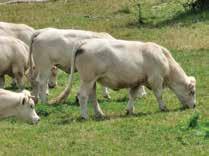
POUNDS =PROFIT
BAR 6 CHAROLAIS
Jim Ansbach
43861 Burnt Ranch Rd. Mitchell, OR 97750 (541) 462-3083
Annual Bull Sale • February 2024 • Madras, OR
BROKEN BOX RANCH

Jerry and Sherry Maltby PO Box 760, Williams, CA (530) 681-5046 Cell • (530) 473-2830 Office
BBR@citlink.net • www.brokenboxranch.com
Bulls available at Red Bluff, Fallon and off the ranch.
FRESNO STATE AGRICULTURE FOUNDATION
California State University, Fresno 2415 E. San Ramon, Fresno, CA
Randy Perry (559) 278-4793
http://fresnostate.edu/jcast/beef
Bulls available private treaty.
We believe strongly in the value of crossbreeding and the benefits of heterosis or hybrid vigor. Crossbred calves are more vigorous at birth, they are more resistant to disease and they have increased performance levels or weight gain. In addition, crossbred beef cows have higher fertility levels, they are also more disease resistant and they are superior in terms of longevity, an often overlooked but very economically important trait in a beef herd. These combined factors result in the generation of more total pounds of beef being produced from a commercial cowherd when crossbreeding is utilized.
We believe that Charolais bulls are the logical and best choice to use on the Angus-dominated commerical beef cowherd that currently exists in this country. They will infuse the benefits of heterosis and produce the “smokies” and “buckskins” that have been popular with cattle feeders and packers for decades.
Look for these Charolais breeders from throughout the West as your source for Charolais genetics available off the ranch or at leading California, Oregon and Nevada sales. .
JORGENSEN RANCH
Fred & Toni Jorgensen
25884 Mollier, Ave, Orland, CA (530) 865-7102
Contact us about all-around trait Charolais bulls available private treaty at the Great Basin Bull Sale in Fallon.

NICHOLAS LIVESTOCK CO.
Nicoli Nicholas 6522 Vernon Rd., Nicolaus, CA • (916) 813-2384

Breeding Charolais cattlsince 1959.

75 outstanding Charolais bulls available private treaty this year!
ROMANS RANCHES
Bill & Cindy Romans • (541) 538-2921
Jeff & Julie Romans • (541) 358-2905
romansranches@hotmail.com www.romanscharolais.com Annual Production Sale • March 2024 • Westfall, OR
April 2023 California Cattleman 29
BRED FOR
CHAROLAIS HELPING COMMERCIAL PRODUCERS KEEP AN EYE ON THE PRIZE
by Managing Editor Stevie Ipsen
For commercial cattle producers, who generally make the majority of their income once or twice a year when calves are sold, one theory always rings true: The more calves weigh, the bigger the paycheck. No matter the breed or the method of marketing, when you are paid by the pound, every pound makes a difference. For years, cattlemen and women raising beef animals have known that Charolais genetics will add pounds to calves, but today it seems there are more reasons than ever to consider implementing Charolais genetics into a beef herd, extra pounds are just icing on the cake.
All beef breeds have fought stereotypes over the years, whether justified or not. But through the implementation of strict culling criteria and the evolution of genetic evaluation tools, beef breeds are being tailored to create superior calves that meet the demands of niche markets and the needs of feeders, packers and consumers.
Fred Jorgensen of Jorgensen Ranch in Orland, knows all too well that Charolais cattle tend to come with an unfair set of stereotypes. The two main stereo types Charolais cattle face is the belief that they have poor dispositions and that their calving weights are too large for Charolais bulls to be used on cows of other breeds.
“No matter what breed you are raising, ranchers have the responsibility of raising cattle dispositions that are best suited for their needs,” said Jorgensen, who in addition to running a purebred Charolais operation also retired from a career as a representative for All West/Select Sires, making him as objective as any cattle owner. “For us, Charolais cattle are never difficult to work with because we don’t tolerate bad behavior and we breed for good dispositions.”
Jorgensen says he is familiar with a similar stereotype that existed Angus cattle when Angus cattle really arrived on the scene in the 1960s and became a direct rival of the then king of beef, the Hereford breed.
“Many people felt Angus cattle were terrible to work with – and some of them were. But it was quickly realized that if you don’t keep the feisty ones around, your overall herd demeanor is much more manageable and enjoyable to be around,” Jorgensen said.
Jorgensen said most of his bulls go to large commercial ranchers and he routinely gets feedback about their quiet demeanor, which further cements the widely-accepted truth that the way animals are raised has a lot to do with disposition. When considering stereotypes, Jorensen says it is important

30 California Cattleman April 2023
PART 3
BEEF
to remember that there is as much variation within breeds as there is in between breeds
As far as size goes, Jorgensen admits that Charolais bulls tend to produce bigger calves. Commercial cattlemen seek calves with more pounds at weaning but that doesn’t mean the calves have to be enormous at birth, he explains.
“Charolais bulls aren’t typically meant to be used on first-calf heifers,” he explained. “Their purpose is as a terminal cross on cows and most mature cows can handle a 100-pound calf with no problems.”
Current trends show that Charolais x Angus calves fetch impressive premiums in the sale ring and on the video. Jorgensen said selecting moderate birth weight bulls to cross on Angus cows, or vice versa, using Angus or Red Angus bulls on Charolais calves can reap great returns.
Feedyard operators have taken notice on what “smoky” or “buckskin” calves have to offer. Though not black-hided like many buyers prefer, the hybrid vigor that comes from Charolais and Angus/Red Angus genetics has proven to perform.
Research conducted by Kansas State University and Superior Livestock shows Charolais-sired steers sold through Superior Livestock video sales generated the highest dollar amount per hundredweight at weaning when compared to other major beef breeds. The research covered a seven-year period (2010-2016) of sales and included over three million head of feeder calves weighing about 580 pounds. This premium, when combined with added pounds at weaning due to heterosis, quickly sets the stage for added profitability.
While black-hided cattle have long been seen as desirable in feedyards and packing plants across the country, research from South Dakota State University (SDSU) gives producers of Charolais cattle and Charolais-influenced cattle reason to be excited.
There has never been much dispute about the value of heterosis, which occurs when two breeds are crossed. Generally, the best qualities of each animal are expressed in the offspring, resulting in an animal that is better than either of it’s parents.
Producers have come to realize that while Angus beef, as an example, may have superior marbling compared to continental breeds, Angus cattle are also generally lighter muscled and cutability often suffers when they are fed to greater slaughter weights. Crossing Angus cattle with a larger continental breed like Charolais can result in high-performing cattle without sacrificing carcass quality.
SDSU’s Zach Smith, Ph.D., and Warren Rusche, Ph.D., oversee the operations of two university facilities – a real-world feedlot and a ruminant nutrition center – and are responsible for ensuring accuracy of many research components.
Recent research reports from SDSU explains that in 2019, a cattle buyer for SDSU cattle buyer was tasked with purchasing cattle for university research. He found an impressive set of Charolais-influenced cattle. Uniformity in size, age, and finish are important in a research setting, and the buyer said that set of Charolais calves met those requirements.
The cattle used in SDSU research also needed to be adaptable to the harsh climate of eastern South Dakota and since these Charolais-influenced cattle were born
and raised in the area there was little concern about their ability to adapt to the environment.
After the first experience feeding these particular calves, the SDSU research team decided to purchase calves from the same ranch for subsequent projects, none of which focused on cattle breed. After the projects were concluded, the cattle were harvested and that is when researchers said highlights specifically tied to breed emerged.
Steer calves purchased in the fall of 2021 were finished to 1,475 pounds and harvested in July. July was particularly hot and yet the Charolais-influenced calves’ feed intake was not affected.
With more than 50 percent of the calves grading upper two-thirds Choice or Prime and only 17 percent at a Yield Grade 4 or 5. Only 12 percent of the cattle did not grade Choice or better. Furthermore, the heifers from this ranch graded even better than the steers.
The Charolais-sired calves were fed in Brookings, S.D., with black-hided calves meeting the same research criterion were fed simultaneously at the Southeast Research Farm. The cattle were fed through the summer, and their feed intake suffered during heat stress events. Because of the differences in how cattle responded to heat stress, the SDSU researchers are considering a limitation on the number of black-hided cattle on feed during the summer months.
Rusche says with the current year’s group of Charolais-influenced calves already on feed for research in Brookings, work is underway to ensure the next round of cattle brought into Brookings will be sourced from the same Charolais producer. The South Dakota rancher’s herd handling techniques coupled with the herd’s uniformity in size, age, and genetics, plus overall herd health at receiving made these Charolaisinfluence cattle ideal for research.
“Combining Charolais and Angus genetics to keep quality without having excess fat while maintaining feed efficiency has proven very effective. Small differences in feed conversion adds up in a hurry with the rising cost of feed,” Rusche said in his research writing.
In discussing the research performance of Charolais-influenced cattle with Jorgensen, he says his warm climate in Northern California is one where cattle can fall off of feed quickly. Furthermore, he feeds bulls in Yerington, Nev., throughout the summer, where temperatures can also test the appetite of growing feedlot calves
Jorgensen says a huge benefit of Charolais calves is their ability to grow and adapt in any environment.
“We have success with them here where it gets really hot but some of the most successful Charolais operations around are in the far north where they see winter conditions for months on end,” he said. “I’ve sold bulls into the most rugged parts of Nevada where the elevation makes winters really cold and summers are still very warm and our Charolais bulls hold up tremendously well.”
Jorgensen concluded, “We see evidence time and time again that shows when Charolais genetics are managed using the best available science, purebred calves and commercial Charolais-influenced calves often stack up against or surpass the performance of other breeds.”
April 2023 California Cattleman 31
FOR RANGE MANAGEMENT WITH OUTSTANDING YOUNG PROFESSIONAL AWARD


Modoc County Livestock and Natural Resources Advisor Laura Snell was recognized as the Outstanding Young Professional Award at the Society for Range Management’s 76th Annual Meeting in Boise, Idaho, in February. The Award is presented by the Society to an individual member or couple who have demonstrated extraordinary potential and promise as range management professionals. This award is presented as an encouragement for outstanding performance by young men and women entering the profession of range management.
As the Modoc Livestock and Natural Resources Advisor with the University of California Cooperative Extension in Alturas, one of the first issues Snell faced in her career was wild horses on public and private land. The population was 20 times over the appropriate management level in the county, but with collaboration and perseverance, it has been reduced from 4,000 to 2,000 and summer grazing has returned on public land. Snell developed the Colt Challenge after the 2019 wild horse gather to pair 4-H and FFA youth with wild horses for ground gentling and a chance to take home $3,000 in prizes. So far, this program has reached over 150 youth. She is part of the extension effort across the west collaborating to solve natural resource issues and strives to be the interface between private and public land managers.

Snell has mentored 11 seasonal interns in range management from 20182022 and developed a career building program to give early career employees opportunities to work with a diverse group of state and federal agency professionals and participate in a variety of research and extension projects. She became a member of the Nebraska Section SRM in 2009 as a student and after moving to California, she joined the Cal-Pac, Nevada, and PacificNorthwest Sections. She was
voted in as a director of the Cal-Pac Section and served from 2020-2022.
For the tremendous contributions to the science and management of rangeland ecosystems she has made, it is with great honor the Society of Range Management recognized Laura Snell with the Outstanding Young Professional Award.

32 California Cattleman April 2023
SOCIETY
• Pasture, Rangeland and Forage (PRF) Lack of Rainfall • Livestock Risk Protection (LRP) for Market Volatility • Livestock Mortality • Grassland Fire Insurance • Life and Health Insurance • Farm and Ranch Policies • Workers Compensation • Whole Farm Revenue Protection (WFRP) EndoRsEd by 877-920-8500 wsrins.com CA Lic #0b48084 WSR is an equal opportunity employer. over years THE RIGHT TOOL FOR THE RIGHT JOB build a Risk Management Toolbox That Can do It All At WsR Ranch Protection, we are your one-stop shop for all your insurance needs. Count on us to provide the right tools you will need to properly equip your Risk Management Toolbox ConTACT us TodAy! wsrins.com | 877-920-8500 21_12754_WSR_Tool_Box.indd 1 9/16/21 2:37 PM
SNELL HONORED BY
A CONVERSATION WITH CALIFORNIA STATE TREASURER FIONA MA
 by CCA Director of Communications Katie Roberti
In this Q&A, California State Treasurer Fiona Ma shares about her role as treasurer for the 5th largest economy in the world, how the State Treasurer’s office can help ranchers, how her curiosity has led to learning about California agriculture and why she makes it a point to be at CCA’s events, connect with California’s ranching community and more.
The answers in this Q&A have been edited for brevity and clarification. To hear the entire interview specifically intended for California beef producers and the ranching community, listen to season 3, episode 2 of Sorting Pen: The California Cattleman Podcast
QTell us a little about your background and how you got to where you are today serving as California State Treasurer.
AFiona Ma (FM): Let’s start with where I grew up. I was born in New York City, grew up on Long Island and went to school in Rochester. I didn’t even think about agriculture at all.
Then I moved to San Francisco back in 1988, and again, San Francisco is not a big agricultural producing city and county, so I didn’t think about it, except that you get your food from Safeway. When I got to the Legislature in 2006, one of my goals was to sit on as many committees as I could—all the meat and potatoes happens at the committee level, not on the floor. After two years in the Legislature, in 2009 I asked to sit on the agriculture committee and that’s really where my journey started.
Since then, I’ve done tours on the Reimer Ranch in Glenn County and Rankin Ranch in Kern County. Additionally, I recently went to Inyo with Mark Lacey and Tom Talbot and up to Billy Flournoy’s up in Modoc. Billy has been trying to get me up to his ranch since my first CCA Steak and Egg breakfast back in 2009.
I’ve learned a lot about the industry and how the ranchers are really amazing stewards of the land. Many of them are generational farmers and landowners that care about their property. Of course, this drought really has impacted them, which I especially saw up in Inyo and Modoc counties.
Now as the State Treasurer, I am the banker. All the revenues come into my office. Last year that was $3.2 trillion. I also invest the state’s idle funds and issue all the bonds for the state of California, the University of California, California State University and community colleges. I also chair thirteen boards, commissions and authorities that fund and finance affordable housing, charter schools, hospitals, children’s hospitals and grants, public transportation, green energy, etc.
QWhat does day to day as State Treasurer look like for you?
AEvery day is different. It starts with how much cash we get in. Then my job is chairing the different boards that I have. Every week there are different issues that we are addressing. On Thursday and Friday, I like to get out into the communities and that’s when I go on tours, visit businesses and more. This is a great job as long as you don’t like doing the same thing every day.
QAfter serving in the Assembly from 2006 to 2012, you were elected as California State Treasurer in 2018. What made you want to be California State Treasurer?
AI never thought that was going to be my path. 20 years ago, I got elected to the San Francisco Board of Supervisors and I really wanted to be in
34 California Cattleman April 2023
public service. That really tugged my heartstrings. I am a Certified Public Accountant with a specialty in real estate, however it turned out public service is my calling. Now that I am the Treasurer, I am actually using all of my educational degrees, my private sector experience and also my public sector experience. I think I am highly qualified for this job and feel very comfortable now as I am at the start of my second term.
QMany producers and CCA members have had the opportunity to meet you or at least hear you speak at CCA’s Steak and Eggs Legislative Breakfast over the years or, most recently, at our Convention this last year. Why have you made it a point to be at CCA’s events and to connect with California’s ranching community?

AIt comes down to food. I like to have my food grown in California where it is safe and fresh, and you can see where the food is grown. I think that is really, really important. I spent a lot of time when I was in the Legislature trying to protect the Williamson Act. I am disappointed that we stopped the subventions in 2010 and I hope that one day we will get back to it.
I also love riding horses. When ranchers approach me to come and visit, I’m always asking to ride a horse. It is just a different perspective seeing the property and talking to the ranchers and board of supervisors or city council members that come out with us when we are on horseback—it’s a captive audience. You can’t get on your phone, take a little break, etc.
I am just very curious and when there’s an issue, such as a drought, I want to know how it affects different industries.
QYou see the importance of connecting with rural communities. How can we get other political leaders in Sacramento and beyond, as well as urban Californians to engage with us as you have?
AWe have 78 fairgrounds in California. Invite your urban legislators to the fair. Let’s start there. I love going to the animal pens where all the FFA and 4-H kids are showing and are so proud. That is kind of where it started for me. I learned California grows over 400 different products and I thought where?
When the fair comes around, I don’t think people really appreciate it. The fair is one of the best, most affordable, familyfriendly activities still in California. Bringing your representatives to the animals, the petting zoo and where the livestock are is probably the best and my favorite, so you should encourage them to come. I think they will see that there are a lot of young
people that are engaged and who really care about cattle ranching. Secondly, invite them to a tour.
QWhat do you think the future of cattle ranching looks like in California in the next ten years?
A: A lot of family farmers, even the next generation, are actively involved. They need to continue to advocate at the legislature when there are legislative advocacy days. The California CattleWomen are amazing. They do a lot in the community. So for the women legislators, send the women! Send the people that look like that legislator down—that kind of breaks the barrier sometimes.
There are also a lot of young people now getting elected in the legislature. Young ranchers should come and do those legislative meetings. Set up those meetings yourself. You can explain to them how difficult agriculture is but how beautiful it is. Explain how it’s not consistent, it’s so dependent on the weather, how it really is truly an art and how ranchers really are entrepreneurs.
QHow do you and your office help ranchers and agricultural producers with any tax needs or issues they may have?
AWe have a lot of programs that help farmers and ranchers, either try to put in more green financing, through go green financing programs
...CONTINUED ON PAGE 36
April 2023 California Cattleman 35
Fiona Ma and staff meet with the Flournoy family near Alturas.
...CONTINUED FROM PAGE 35
that help them save money or through the small business programs coming from the USDA or the U.S. Small Business Administration. My office is trying to educate and get information out so that people don’t miss out on some of these grants, especially programs that came out of the pandemic.
QDo you have any examples of questions ranchers have called with before that you and your office have helped answer?

AI know when you are transporting cattle across state lines, the weight is different. If you’re putting cattle on in Nevada and driving them to California, the weight requirements are different. In this example, we should have conformity because it actually saves time, money, and greenhouse gases. When there are little things like that we should really fix, I will make the call to the Governor or whoever the legislator or agency is and let them know it doesn’t make sense.
Recently, my office helped another family that was going to lose their property because the parents left their property to the kids, but then the kids formed LLC. The assessor said that it was different even though it was the kids in an LLC to protect themselves. So, we did pass a law that recognizes that they are still the heirs. Sometimes we get those type of calls and we are able to fix them.
QAs we are early in 2023, what should listeners know about the state of California’s economy?
ADuring COVID I was kind of surprised that we had a surplus. How does that happen when everyone is home? Well, a lot was happening. People were still selling stocks. There were still IPOS. And people were home, so they didn’t leave the state. They were still buying things. We saw huge spikes in personal income tax as well as sales taxes. Now that things are slowing down, which is what the federal government wants by raising rates and slowing the economy down, it is slowing down and that’s why we have this deficit. Right now, it is an estimated deficit of about 22.5 billion dollars. Things could still improve this fiscal year. I’m hoping that once the feds stop raising rates that people will get back out there and start spending again, and that’s when we will see a change in the revenues of the state.
QIf you could go to a ranch anywhere in the state where would you want to go?

AInvite me to any county. I’m open to seeing and experiencing all sorts of new experiences.
Have further questions for California State Treasurer Fiona Ma? E-mail them to her at AskFiona@treasurer.ca.gov.

36 California Cattleman April 2023
Touring the Talbot family ranch with the Talbot and Lacey families.
Touring a ranch on horseback gives a completely different perspective.
STEAK & EGGS BREAKFAST
Sutter Club

May 16th
For the first time since 2019, CCA is excited to invite CCA members to the 42nd Steak and Eggs Legislative and Regulatory Breakfast + Lobby Day. Plan to be in Sacramento on Tuesday, May 16. Breakfast starts at 8am!

WHAT TO EXPECT:
This breakfast is typically attended by dozens of elected officials, numerous legislative staff, and many CCA members, and serves as an important platform to discuss issues important to California ranchers. Over breakfast, enjoy sharing about your ranch while meeting representatives. Following the breakfast, you will head across the street to the state Capitol to continue conversations about ranching in California. CCA will arrange private meetings with your legislative representative to enable you to voice your concerns directly to the member or one of their representatives. Your participation is critically important, as this forum provides a priceless opportunity to share your opinions and concerns about the current and future state of ranching in California.

HOW TO ATTEND:


The breakfast will be at the Sutter Club, 1220 9th St., Sacramento, CA 95814. There is no cost to attend but RSVPS are required. Visit calcattlemen.org/event/steakandeggs to RSVP.


California Cattleman 42
ND CCA
HOLIDAY CAMPAIGN RESULTS SHOW BEEF CONTINUES TO BE THE CENTER OF CELEBRATION
by California Beef Council Manager of Producer Relations Makenzie Neves
If the holiday meal should be a show-stopper, then the holiday campaign to drive beef demand should be just as memorable.
For 2022, the California Beef Council (CBC) worked with Hearst Television and The StoryStudio to create four digital native content stories that combined the lush graphics of high-end magazine design with Hearst’s digital capabilities to produce content that was engaging, interactive, reached our core target audience and, most importantly, drove demand for Beef during the holidays. From Nov. 1, 2022 through Dec. 28, 2022, we targeted adults ages 25 to 49 living in Los Angeles, San Diego, San Jose, San Francisco, Sacramento, Oakland/Hayward, Fremont, San Bernardino, Fresno, Bakersfield, Stockton/Modesto, Concord/Walnut Creek, Chico/Redding, Paso Robles, San Luis Obispo, Santa Barbara, Monterey/Salinas, Ventura, Long Beach, Anaheim, Santa Ana, Riverside, Irvine, Chula Vista, Moreno Valley and Fontana.
The campaign consisted of four original, engaging
articles on a crosssection of topics. Although one gender tracked higher in each story, all stories appealed strongly to both men and women:
• “Elevating the Kids’ Table” featured a fun array of appetizers that would be appealing to kids, and proved most popular with women ages 34 to 44.

“Ultimate Holiday Guide: A Rib Roast to Remember” featured popular food blogger Whitney Bond and walked readers through the preparation of a show-stopping, bone-in rib roast. This story resonated most with men ages 25 to 44.
• “Smoking in Action” used a quiz format that took readers to different results depending on how they answered questions about what cut of beef they’d choose, what kind of flavors and spices they like, how much time they have, and whether they prefer the classics or “dare to be different.” Results yielded a specific wood to use for smoking and a recipe that fit their quiz profile. Not surprisingly, this story appealed most to men ages 18 to 54.
• “An Inside Look at 21st Century Ranching” featured two California ranchers and took readers to the ranch to hear about how cattle are raised in California today. This piece saw the greatest reach and engagement with men ages 25 to 44.
Each story had a call-to-action (CTA) to encourage consumers to shop for Beef and earn $3 cash-back on a $15 or more beef purchase through the popular shopping app Checkout 51 or online. Over 19,500 California consumers added beef to their shopping list within the app over the campaign period. Of those, nearly 5,800 of them purchased beef, generating over $85,200 in beef sales at California retailers.
The four stories ultimately garnered 91,200 engagements and 22.6 million impressions for the entire campaign, and surpassed our target campaign goals by 42 percent for engagements and 182 percent for impressions. The stories were promoted across key websites of interest to our target audiences including: LA Times, Bon Appétit, Food & Wine, Martha Stewart, SFGate, Variety, Southern Living and many others.
38 California Cattleman April 2023 COUNCIL COMMUNICATOR
CATTLEMEN’S REPORT
THOMAS ANGUS RANCH
Baker City, Ore. • Feb. 28, 2023
Sale Managed by Cotto & Associates

Col. Rick Machado and Col. Trent Stewart
126 Angus bulls
BAKER ANGUS RANCH BULL SALE
Vale, Ore. • Feb. 26, 2023
Sale Managed by Matt Macfarlane Marketing
Col. Rick Machado 138 Angus bulls
ALLEN
North
Sale Managed by Matt Macfarlane Marketing Col.
$6,289
ROLLIN
BAR 6 CHAROLAIS COWMAN’S KIND BULL SALE with Wilson Cattle and Hay Madras, Ore. • Feb. 24, 2023
Col. Dennis Metzger 100 Charolais bulls .......................................................................... $4,430
BUCHANAN ANGUS RANCH BULL SALE with Country Inn Cattle and Santos Angus
Klamath Falls, Ore. • Feb. 26, 2023
Sale Managed by Matt Macfarlane Marketin
Col. C.D. “Butch” Booker
TRINITY FARMS
Wash. • March 4, 2023
Col. C.D. “Butch” Booker and Col. Kyle Colyer
HARRELL HEREFORD RANCH 45TH ANNIVERSARY SALE
Baker City, Ore. • March 7, 2023
Sale Managed by United Livestock Brokers
Col. C.D. “Butch” Booker and Col. Rick Machado
April 2023 California Cattleman 39
$6,127
55 Angus bulls $7,011 6 registered heifers $4,293
Bruneau,
137 Hereford bulls $7,146 75 Angus bulls $7,283 26 Hereford heifers $4,288 22 Angus heifers $4.016
COLYER HEREFORD & ANGUS PRODUCTION SALE
Idaho • Feb . 28, 2023 Col. C.D. “Butch” Booker and Col. Kyle Colyer
PRODUCTION
SALE Ellensburg,
153 SimAngus bulls $8,202 52 heifers $1,994
108 yearling Hereford bulls $8,285 34 2-year-old Hereford bulls $5,269 22 Angus bulls $7,989 33 registered Hereford heifers $2,868 80 commercial heifers $2,147 14 geldings $14,465 9 fillies $9,750
BROTHERS CATTLE
Powder, Ore. •
March 8, 2023
Rick Machado 52 Angus bulls $8.216 20 SimAngus bulls $7,013
ROCK GENETIC PARTNERS Pilot Rock, Ore. • March 10, 2023 Col. Joe Goggins 114 Angus bulls $6,783 20 Hereford bulls $5,363 RIVERBEND RANCH BULL SALE Idaho Falls, Idaho • March 11, 2023
Rick Machado and Col. Trent Stewart 489 Angus bulls $10,306
COVE RANCH BULLSALE Idaho Falls, Idaho • March 13, 2023 Col. Rick Machado 181 Angus bulls $7,610 60 registered females $3,524 39 commercial open heifers $2,000 ROMANS RANCHES CHAROLAIS BULL SALE Westfall, Ore. • March 14, 2023
Dennis Metzger 135 Charolais bulls $4,547 IRON LORENZEN CATTLE CO. Terrebonne, Ore. • March 18, 2023 Col. Trent Stewart 151 Red Angus and composite bulls $5,230 WARD RANCHES BULL SALE Gardnerville, Nev. • March 18, 2023 Col. Eric Duarte 52 Angus bulls $4,060
Col.
SPRING
Col.
Only 2023 California Cattleman advertisers are represented in this sale report.
Western Video Market’s Holly Foster with Superior Livestock’s Angela Vesco at the Riverbend Ranch’s Bull Sale in Idaho Falls, Idaho on March 11.


40 California Cattleman April 2023 CALIFORNIA CATTLEMEN’S ASSOCIATION JOIN US FRIDAY, SEPT. 1 FOR OUR ANNUAL ANGUS BULL SALE! CALL US FOR INFORMATION ABOUT OUR PRIVATE TREATY CATTLE OR OUR ANNUAL BULL SALE! Anselmo, Nebraska KENNY & DIANNE READ 1485 SW King Lane • Culver, OR 97734 Ranch: (541) 546-2547 Cell: (541)480-9340 E-mail: barkdranch@msn.com visit us online at: www.barkdangusranch.com Look for our “Distinctly Different” Angus bulls annually at Red Bluff and Modoc Bull Sales! BAR KD RANCH BAR KD RANCH Elevating Angus to Greater Horizons VISIT US AT WWW.DONATIRANCH.COM! 32st annual Bull Sale Sept. 21, 2023 in Denair Join us at the Heritage Bull Sale Sept. 10! 916.712.3696 • 916.803.2685 jj@barrangus.com Angus RAnch Annual Bull Sale: Sat., September 1, 2018 Inaugural Female Sale: Mon., October 15, 2018 Tim & Marilyn Callison Owners Chad Davis ..................................... 559 333 0362 Travis Coy 559 392 8772 Justin Schmidt 209 585 6533 Ranch Website www.ezangusranch.com Join us for upcoming production sales: BULL SALE: SEPT. 9, FARMINGTON FEMALE SALE: OCT. 7, PORTERVILLE SERVICES FOR ALL YOUR ON-THE-RANCH NEEDS SEPT. 9, 2021 • WILLIAMS, CA Ranch Buyer's Guide ANGUS Join us Sept 14, 2023 in Oroville for our annual Bull Sale!


April 2023 LOOK FOR US AT LEADING SALES IN 2023. Scott & Shaleen Hogan H R (530) 200-1467 • (530) 227-8882 Gerber, CA Registered Angus Cattle Call to see what we have to offer you! RED RIVER FARMS 13750 West 10th Avenue Blythe, CA 92225 Office: 760-922-2617 Bob Mullion: 760-861-8366 Michael Mullion: 760-464-3906 Simmental – SimAngus™ – Angus Offering bulls at California’s top consignment sales! Call today about private treaty offerings! O’NEAL RANCH BULLS OFFER THE COMPLETE PACKAGE O’NEAL RANCH — Since 1878— Gary & Betsy Cardoza PO Box 40 • O’Neals, CA 93645 (559) 999-9510 Join us at the annual “Performance Plus” Bull Sale in O’Neals on Sept. 12, 2023 GROWTH • PERFORMANCE ADAPTABILITY • CARCASS Hoffman Bomber 8743 SIRE: Casino Bomber N33 MGS: S A V Final Answer 0035 VDAR Mirror Image 6207 SIRE: W R A Mirror Image T10 MGS: BCC Bushwacker 41-93 CONTACT US ABOUT SEMEN FROM THESE IMPRESSIVE SIRES... • Calving Ease with Growth • O’Connell Aviator 7727 SIRE: Musgrave Aviator MGS: R B Tour Of Duty 177 VDAR PF Churchhill 2825 SIRE: VDAR Churchill 1063 MGS: VDAR Really Windy 4189 Joe Sammis • (530) 397-3456 122 Angus Rd., Dorris, CA 96023 h (775) 691-1838 • honeranch@frontier.com HONERANCH.COM PERFORMANCE-TESTED EFFICIENT, QUALITY ANGUS BULLS NOW AVAILABLE! You can take to the bank! O’Connell ranch Call us about females available private treaty. Mark your calendars for September 14, 2023 and join us in Oroville for our annual bull sale with Donati Ranches! DAN & BARBARA O’CONNELL 3590 Brown Rd, Colusa CA (530) 458-4491 Nathan, Melissa & Kate Noah (208) 257-3686 • (208) 550-0531 YOUR BUSINESS COULD BE HERE! CALL MATT MACFARLANE AT (916) 803-3113 TO LEARN MORE.


42 California Cattleman April 2023 Dwight Joos Ranch Manager P.O. Box 1019 • Simi Valley, CA 93062 805-520-8731 x1115 • Mobile 805-428-9781 dwight.joos@pwgcoinc.com Simi Valley, CA pwgillibrandcattle.com P.W. GILLIBRAND Cattle Co. Horned and Polled Hereford Genetics Private treaty bulls available or watch for our consignments at Cal Poly! JOIN US SEPT. 7 FOR OUR ANNUAL BULL SALE IN LAGRANGE! John Teixeira: (805) 448-3859 Allan Teixeira: (805) 310-3353 Tom Hill: (541) 990-5479 A FAMILY
www.teixeiracattleco.com | cattle@thousandhillsranch.com Angus and SimAngus Ca le Call us today for information on private treaty bulls or females. MCPHEE RED ANGUIS 14298 N. Atkins Rd • Lodi, CA 95248 Nellie, Mike, Mary, Rita & Families Nellie (209) 727-3335 • Rita (209) 607-9719 website: www.mcpheeredangus.com 11500 N Ambassador Drive, Suite 410 | Kansas City, MO 64153 | (816) 842-3757 | aha@hereford.org Chris Beck • 618-367-5397 79337 Soto Lane Fort Rock, OR 97735 Ken 541.403.1044 | Jesse 541.810.2460 ijhufford@yahoo.com | www.huffordherefords.com “Breeding with the Commercial Cattleman in Mind” 3L Registered Hereford Cattle & Quarter Horses Annual Sale First Monday in March 42500 Salmon Creek Rd Baker City, OR 97814 Ranch: (541) 523-4401 Bob Harrell, Jr.: (541) 523-4322 THANKS FOR YOUR SUPPORT OF OUR MODOC BULL SALE IN 2023! JOIN US IN OROVILLE OCT 21 FOR OUR BUTTE BULL SALE EVENT Oroville, CA LambertRanchHerefords.com CONTACT US FOR CATTLE AVAILABLE PRIVATE TREATY OFF THE RANCH “THE BRAND YOU CAN COUNT ON” REGISTERED HEREFORD CATTLE BARRY, CARRIE & BAILEY MORRELL Barry: (530) 6825808 • Carrie: (530) 218-5507 Bailey (530) 519-5189 morrellranches@yahoo.com 560 County Road 65, Willows CA 95988 Call us about our upcoming consignments or private treaty cattle available off the ranch. OFFICE@VINTAGEANGUSRANCH.COM WWW.VINTAGEANGUSRANCH.COM Bulls and females available private treaty!
PRODUCER SINCE 1978
Hill, CA • La Grange, CA Stephen Dunckel • (209) 591-0630 www.tumbleweedranch.net twd@tumbleweedranch.net TUMBLEWEED RANCHES Leading Angus & Ultrablack© Genetics HEREFORD RED ANGUS (530) 385-1570 E-mail...............................tehamaranch@gmail.com Mark you calendars for our 49th Generations of Performance Bull Sale. Sept. 15 in Gerber!
lean more about the association, contact western regional field representative colt cunningham at 918-978-8779
TRADITION
SEEDSTOCK
Greeley
To


April 2023 California Cattleman 43 OFFERING HEREFORD BULLS BUILT FOR THE COMMERCIAL CATTLEMAN Jim Mickelson (707) 481-3440 THE DOIRON FAMILY Daniel & Pamela Doiron 805-245-0434 Cell doiron@spanishranch.net www.spanishranch.net THD © SPANISH RANCH Your Source for Brangus and Ultrablack Genetics in the West! Vaccines Medicines Mineral Supplements Antonia Old • (209) 769-7663 antonia.old@animalhealthinternational.com ...and more! Reliable products you are looking for with the dependable service you need. 2015 AICA Seedstock Producer of the Year Feedlot • Rice • Charolais Jerry & Sherry Maltby www.brokenboxranch.com bbr@citlink.net PO Box 760 Williams, CA Mobile: (530) 681-5046 Office (530) 473-2830 Bobby Mickelson (707) 396-7364 P.O. Box 2689 • Petaluma, CA 94953 California’s Leading Producers BALD MOUNTAIN BRANGUS, SONORA (209) 768-1712 RUNNING STAR RANCH, LINCOLN (916) 257-5517 SUNSET RANCH, OROVILLE (530) 990-2580 DEER CREEK RANCH, LOS MOLINOS (541) 817-2335 THE SPANISH RANCH, NEW CUYAMA (805) 245-0434 GLASGOW BRANGUS, SANTA YSABEL (760) 789-2488 for Brangus, Ultrablack & Brangus Optimizers Call a breeder near you today for more information! TUMBLEWEED RANCHES, GREELEY HILL (209) 591-0630 CHAROLAIS MULTI BREED ANIMAL HEALTH BRANGUS YOUR BUSINESS COULD BE HERE! CALL MATT MACFARLANE AT (916) 803-3113 TO LEARN MORE.
3300 Longmire Drive• College Station, TX 77845
768-4066 • (979) 693-0388 fax: (979) 693-7994 e-mail: info@bovine-elite.com

Full Service A.I. Technician & Semen Distributor


• A.I, CIDR & heat synchronization


• Extensive experience
• Willing to Travel
• Well-versed in dairy & beef pedigrees


JORGE MENDOZA • (530) 519-2678
jmmawss@gmail.com
15880 Sexton Road, Escalon, CA
Enterprise Executive Ranch - OR 17,088± total sf, lodge-style luxury home on 235± acres with a creek, 200± acres irrigated, 3 pivots, a manager’s home, and gorgeous mountain views. $15,479,000
South Sun Valley Ranch - ID
690± acres fronts BLM with 285± irrigated. Manager’s home and 6 rental units are renting for $72,000/yr. $5,000,000


(208) 345-3163 knipeland.com

44 California Cattleman April 2023
(800)
KNIPE LAND COMPANY
EST 1944 JMM GENETICS
SALE MANAGEMENT & MARKETING PHOTOGRAPHY & VIDEOGRAPHY ORDER BUYING PRIVATE TREATY SALES PRODUCTION SALE RING SERVICE ADVERTISING M3CATTLEMARKETING@GMAIL.COM (916) 803-3113 M3 MARKETING Watkins Fence Company Over 25 years serving California, Utah and Southern Idaho specializing in oil pipe • chain link • barb wire (805) 649-1568 Lic # 773420 shane@watkinsfence.com WWW.BARALEINC.COM (888) 258-3333 • Williams, CA Matt Zappetini (530) 526-0106 mzappetini@baraleinc.com “PERFORMANCE THROUGH ADVANCED NUTRITION” Performance Through Advanced Nutrition Ranch Deliveries Available with our Truck and Forklift! We also offer custom formulations to meet your specific nutritional needs! We offer blends that contain: Molasses - Zinpro® Performance Minerals - Availa® 4 - Added Selenium Yeast - Rumensin® Available Proudly Featuring Conventional Non-GMO Certified Organic Sales Representatives: Matt Zappetini (530) 526-0106 Tracy Lewis (530) 304-7246 1011 Fifth Street Williams, CA. 95987 888-473-3333 info@baraleinc.com WWW.BARALEINC.COM Premium Livestock Feeds • Mineral Mixes with Ranch Delivery • • Hi Mag - Fly Control - Rumensin - Custom Mixes • • Complete Feeds and Finish Mixes • Williams, CA Matt Zappetini (530) 526-0106 mzappetini@baraleinc.com www.baraleinc.com • (888) 258-3333 WANT TO SEE YOUR BUSINESS ADVERTISED HERE? KEEP YOUR BUSINESS LISTING IN FRONT OF YOUR DIRECT AUDIENCE YEAR ROUND. ONE-TIME ANNUAL PAYMENT. CHANGE YOUR AD ANYTIME. RESERVE YOUR BUSINESS SPACE TODAY! CONTACT MATT MACFARLANE (916) 803-3113 OR E-MAIL: M3CATTLEMARKETING@GMAIL.COM GENETICS REAL ESTATE NUTRITION MARKETING FENCING
Anne Louise Owens, was born in Bakersfield on Feb. 18, 1964, to Ardisanne and Robert McDowell. She died peacefully at home on Feb. 10, 2023. She grew up and attended local grammar schools where she developed many talents. She attended North High School in Bakersfield where she became an all-star athlete in softball and volleyball, a talented flutist and singer. Her freshman year, she accompanied her band to state finals playing in the Rose Bowl game. She obtained her AA degree from Bakersfield Community College, while playing volleyball and pitching most of the games for their women’s fast-pitch softball team. Anne’s knowledge of these sports enabled her to coach various teams throughout the course of her life. She later finished her schooling in 1998, graduating from Simpson University with a BA in Psychology.
In the early 1990s, Anne followed her sales job with IBM and moved to Redding. In 1995, while living at Lake California, she met her future husband, Bert Owens, while riding at the equestrian center that was near his cattle operation. They were later married in 1996, where they worked together in building a home west of Red Bluff and continued to work together in their cattle ranching and crop insurance businesses.


Anne was a well-known community member. She co-founded the annual Tehama County Cattleman’s Winter Scholarship dinner for the Tehama County Cattlewoman, and an all-women’s sporting clay shoot, Shoot for Purpose. The event was held at Red Bank Outfitters for several years which supported women’s cancer research.
Anne enjoyed the ranching lifestyle. Especially, riding horseback alongside her family, raising Border Collie-McNab stock dogs, chickens, cattle and working in her garden. She was an eternal student of life. She worked hard to develop her skills as an accomplished chef, gardener, party planner, cattle rancher, wife, mother, partner, and friend. Beloved wife to Bert Owens and mother to her daughter, Mahlon Owens Anne is also survived by stepdaughter Jill and grandchildren Zane, McCoy and Paige, parents Bob and Ardisanne Turner, and siblings Crystal, Darrin, Denise, Loren, Jeff, Sandy, Steve and their families. We are all better off knowing her. It will be an absence that will be felt for the rest of our lives. Rest in peace dear, Anne.
The family is planning a private service. In lieu of flowers, donations can be made to: Appendix Cancer Pseudomyxoma Peritonei Research Foundation: ACPMP, 491 Baltimore Pike #177, Springfield, PA 19064.

WINSTON HUNT

Nate and Brienne Hunt, Lodi, welcomed a son, Winston Robert Hunt on March 8. Wintson weighed 7 pounds 14 ounces and was 19 3/4 inches long. Grandparents are Ted and Cinder Witt, Lodi.
Nathan and Danielle Lambert, San Jose, welcomed a son, Luke, on March 20. Luke weighed 8 pounds 8 ounces and was 20 inches long. He joins big brother Austin. Grandparents are Nancy and Dennis Buschak and Steve Lambert and Cindy Benjamin.


Bill and Danielle McDonald, Woodland, welcomed daughter Adelyn Joleen McDonald, on March 18. Adelyn joins brother Lane. Grandparents are Dennis and JoEllen Wood, Susanville and Billy and Aileen McDonald, Galt.
To share your family news, obituaries, weddings and birth announcements, please contact the CCA office at (916) 444-0845 or e-mail: magazine@calcattlemen.org.

April 2023 California Cattleman 45
ANNE
OWENS IN MEMORY NEW ARRIVALS
Established in 1959, Scales NW offers a wide range of equipment, from precision lab balances to high capacity rail scales, as well as certified scale service and installation. Contact Steve Orr for more information today! Email: steveorr@scalesnw.com Phone: (503) 510-3540 www.scalesnw.com • (800) 451-0187 Scales NW is proud to serve: California Idaho Montana Nevada Oregon Utah Washington AD_POWELL_LivestockTruckScale.indd 1 1/11/2018 1:35:26 PM
Specializing in Truck and Livestock Scales
LUKE LAMBERT
ADELYN MCDONALD

46 California Cattleman April 2023 101 Livestock Market .......................................... 25 Amador Angus Ranch ..................................... 40 American Hereford Association 42 Animal Health International 43 Bar 6 Charolais 29 Bar Ale Premium Livestock Feeds 44 Bar KD Ranch 40 Bar R Angus 40 Bovine Elite LLC................................................... 44 Broken Box Ranch ...................................... 29, 43 Buchanan Angus Ranch ................................ 40 Byrd Cattle Co. 40 Cattlemen’s Livestock Market 2 Chico State College of Ag 43 Conlin Supply Company, Inc. 20 Dal Porto Livestock 40 Dixie Valley Angus 40, 47 Donati Ranch ........................................................ 40 EZ Angus Ranch.................................................. 40 Freitas Rangeland Improvments ............... 16 Fresno State Ag Foundation 29, 43 Genoa Livestock 42 Harrell Hereford Ranch 42 HAVE Angus ........................................................... 41 Hogan Ranch ......................................................... 41 Hone Ranch 41 Hufford’s Herefords 42 Hygieia Laboratories 23 JMM Genetics 44 Jorgensen Ranch 29 Kern Catle Co. 17 Kessler Angus ........................................................ 41 Knipe Land Company ...................................... 44 Lambert Ranch .................................................... 42 Matt Macfarlane Marketing 44 Memory Ranches 33 Morrell Ranches 42 Nicholas Livestock 29 Noahs Angus Ranch 41 Norbrook 12, 13 O’Connell Ranch .................................................. 41 O’Neal Ranch ......................................................... 41 Pacific Trace Minerals ...................................... 44 Red River Farms 41 Rejurva 11 Ritchie Manufacturing 25 Romans Ranches.................................................29 Sammis Ranch ...................................................... 41 Scales Northwest 45 Schohr Herefords 43 Shasta Farm and Equipment 27 Sierra Ranches 43 Sonoma Mountain Herefords 43 Spanish Ranch 43 Stepaside Farms .................................................. 41 Stone Pointe Cattle ........................................... 47 Tehama Angus Ranch ..................................... 42 Teixeira Cattle Co. 42 Tumbleweed Ranches 42 Turlock Livestock Auction Yard 9 Vintage Angus Ranch 42, 48 Visalia Livestock Marker 27 Watkins Fence Company 44 West Coast Brangus Breeders .................... 43 Western Charolais Breeders .........................29 Western Poly Pipe ............................................... 16 Western Stockman’s Market 21 Western Video Market 3 Wraith, Scarlett, Randolph 32 ADVERTISING INDEX
Isabel 263
x Isabel
We have teamed up in support of the Western States Angus Association and Auxiliary with the donation of an open yearling heifer, sired by Poss Deadwood out of Baldridge Isabel E073 – an own daughter by Confidence Plus out of Baldridge Isabel Y69.



Sterling Isabel 263 (AAA +*20320886) currently ranks in the top 5% or better in the breed for CED, BW, MARB, $AxH, $G, $B & $C.


WESTERN NATIONAL ANGUS FUTURITY ANNUAL BENEFITLive Auction DIXIE VALLEY JOINT PRODUCTION SALE Friday, June 2 • Tecumseh, Nebraska Join Us Progeny Will Sell > Weaned Heifers > Bred Heifers > Cows > Pregnancies Baldridge Isabel Y69 For Sale Details and Features, Visit www.DixieValley.com Poss Deadwood + Baldridge Isabel Cow Family DIXIE VALLEY AND AUXILIARY Live Benefit Auction will be held prior to the Owned Grand Champion Female Selection during the Western Regional Jr. Angus Show on Friday, April 7, 2023.
Donation Heifer Sterling
E073 MONTAGUE, CALIFORNIA Lee Nobmann, Owner Morgon Patrick, Managing Partner, (530) 526-5920 Proud Supporter CATTLE COMPANY PAWNEE CITY, NEBRASKA Colton Schaardt, (402) 852-6735 MARB RE $W $F $G $B $C +1.54 +.68 +74 +100 +94 +194 +313 CED BW WW YW RADG MILK DOC ANGLE +15 -2.9 +68 +127 +.32 +34 +29 +.40 THD © FOLLOW US ON SOCIAL MEDIA Poss
Deadwood
Deadwood
Baldridge Isabel E318
VINTAGE ANGUS RANCH

To a committed and dedicated customer

A family owned and operated cow/calf ranch in San Ardo, CA


“We are a family owned & operated ranch located on the Central Coast of California where we run F-1 Braford & F-1 Brangus commercial mother cows. The Vintage Angus bulls are ideal for us to achieve hybrid vigor in our calves, which is proven to add pounds. The bulls acclimate to the arid climate, do a great job of covering the cows and maintain flesh throughout the year. Vintage takes outstanding care of their customers, stand by their bulls 100%, and it shows in the quality you get by purchasing these genetics. We appreciate the dedication to greatness at Vintage Angus.”

, DOUG WORTHINGTON, MANAGER BRAD WORTHINGTON, OPERATIONS MIKE HALL, BULL SERVICES • (805)748-4717 2702 SCENIC BEND, MODESTO, CA 95355 (209) 521-0537 WWW.VINTAGEANGUSRANCH.COM OFFICE@VINTAGEANGUSRANCH.COM
A special “Thank You” from
RANCH
AVILA
30 th Annual “Carcass Maker” Bull Sale Thursday, Sept. 7, 2023 LaGrange , CA
– Clay Avila
“Four Generations of Avilas” Alicia, Crystal, Jeff, Margaret, Dee Dee, Brooke, Reece and Clay.
