| 29 PR E S E N TE D BY
E D U C AT I O N U P D AT E
Raising Happier Kids:
A Few Simple Habits That Can Make a Big Difference FRANK SCHOFIELD
Logan City School District Superintendent
Parenting young children can sometimes feel like an endless exercise in managing the next problem: the spilled milk, the forgotten homework, the sibling argument, the meltdown in the grocery store, the soccer practice we are already late for. We spend so much of our energy trying to help our children become successful, responsible, and resilient that it can be easy to overlook a more fundamental question: How do we help our children become happy? According to Dr. Dave Schramm, family life extension specialist at Utah State University and author of Happy Hacks: 100 Science-Backed Ways to Boost Happiness, Reduce Stress, and Have a More Meaningful Life, happiness isn’t simply something children experience when everything goes their way. It is something families can intentionally cultivate through everyday habits, relationships, and choices. Dr. Schramm’s work draws on research in positive psychology and offers a surprisingly practical message for parents: We don’t have to create a perfect childhood for our children to help them develop greater well-being. Instead, we can help them develop habits that allow them to experience connection, gratitude, purpose, optimism, and resilience — even when life isn’t perfect.
HAPPINESS BEGINS WITH CONNECTION One of the most important ideas in Dr. Schramm’s work is also one of the simplest: children need connection. Connection includes emotional responsiveness, openness, and support,
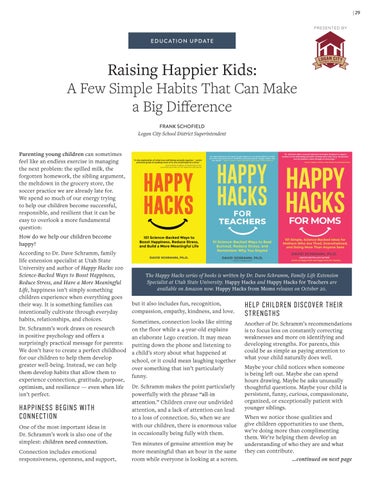
The Happy Hacks series of books is written by Dr. Dave Schramm, Family Life Extension Specialist at Utah State University. Happy Hacks and Happy Hacks for Teachers are available on Amazon now. Happy Hacks from Moms releases on October 20.
but it also includes fun, recognition, compassion, empathy, kindness, and love.
HELP CHILDREN DISCOVER THEIR STRENGTHS
Sometimes, connection looks like sitting on the floor while a 4-year-old explains an elaborate Lego creation. It may mean putting down the phone and listening to a child’s story about what happened at school, or it could mean laughing together over something that isn’t particularly funny.
Another of Dr. Schramm’s recommendations is to focus less on constantly correcting weaknesses and more on identifying and developing strengths. For parents, this could be as simple as paying attention to what your child naturally does well.
Dr. Schramm makes the point particularly powerfully with the phrase “all-in attention.” Children crave our undivided attention, and a lack of attention can lead to a loss of connection. So, when we are with our children, there is enormous value in occasionally being fully with them. Ten minutes of genuine attention may be more meaningful than an hour in the same room while everyone is looking at a screen.
Maybe your child notices when someone is being left out. Maybe she can spend hours drawing. Maybe he asks unusually thoughtful questions. Maybe your child is persistent, funny, curious, compassionate, organized, or exceptionally patient with younger siblings. When we notice those qualities and give children opportunities to use them, we’re doing more than complimenting them. We’re helping them develop an understanding of who they are and what they can contribute. ...continued on next page