The Magazine of Bus Equipment for the United States and Canada
When Bus Manufacturers Can No Longer Compete (by Larry Plachno)
The recent and very quick demise of Van Hool in Europe suggests that this might only be the tip of the iceberg. There already are substantial concerns about the deindustrialization of Europe. Meanwhile, things may not be much better on this side of the Atlantic.
Why Investing in Your Employees is Worth the Expense (by Amy Nixon)
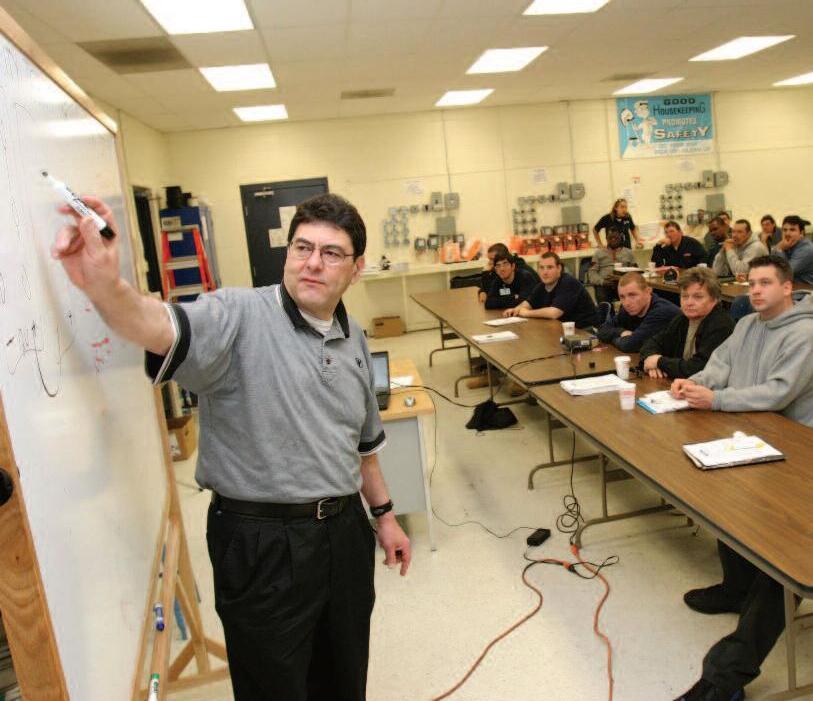
Amy Nixon’s thoughtful comments on the bus industry have previously appeared in these pages This time she points out that your staff can do more and better if they are trained and know more. When moving to something new, let your staff know the advantages of your new technology or procedures.
Eau De Bus (by Dave Millhouser)
That unusual smell may be annoying but it could also be an olfactory indication that something is not right with your bus The pros know that an unusual smell is often the first step is tracking down a current or pending problem It could be to your advantage to learn how things smell so you can identify developing situations.
Equipment News
CCW to Display Refurbished Bus at APTA Transfor m
C o m p l e t e C o a c h W o r k s ( C C W ) , t h e nation’s leading provider of transit bus and s u s t a i n a b l e t r a n s p o r t a t i o n s o l u t i o n s , h a s
a n n o u n c e d t h e y s h o w c a s e d a f u l l y
r e f u r b i s h e d m o d e l y e a r 2 0 0 8 G i l l i g
l o w - f l o o r b u s b e l o n g i n g t o t h e i r p a r t n e r,
C o r e Tr a n s i t o f C o l o r a d o , a t t h e r e c e n t
A m e r i c a n P u b l i c Tr a n s p o r t a t i o n A s s o c i ation (APTA) Annual Transfor m Conference
w h i c h t o o k p l a c e t h i s S e p t e m b e r i n A n a -
h e i m , C a l i f o r n i a
T h e b u s i s f ro m C o re Tr a n s i t ’s e x i s t i n g fleet and has undergone one of CCW’s signature refurbishment processes to extend the life of the bus beyond its original useful life This refurbishment process is one of the most cost-effective fleet strategies available in today’s market and represents Core Trans i t ’ c o m m i t m e n t t o p ro v i d e a w e l c o m i n g , a c c e s s i b l e , d e p e n d a b l e a n d r e w a r d i n g service
The model year 2008 Gillig 40-foot was c o m p l e t e l y re f u r b i s h e d w i t h t h e f o l l o w i n g major components installed in the bus:
• R e f u r b i s h e d C u m m i n s I S M R e C o n engine
• Rebuilt Allison B-500R
• USSC G2A series driver seat
• Reupholstered passenger seating with BusTextil fabric
• Upgraded Altro flooring
• Installation of an eight-camera video system by Apollo
• I n
conditioning system as the existing bus did not have any air conditioning
and lear n about the refurbished processes that make these vehicles like-new The APTA Transfor m Conference draws thousands of p
m across the country Complete Coach Works’ p re s
leadership in the industry and their ongoing mission to provide top-tier refurbished vehicles that are both reliable and environmentally-friendly
new bus deliveries or zero emission plans are stalled or in process The refurbishment process is a strategy that transit fleets need to employ to maximize their capital dollars as deliveries can occur in a fraction of the
incredibly excited to present Core Transit’s
, ” said Shah Remtulla, regional sales representative of Complete Coach Works “This is more than just a bus; it’s a symbol of our dedication to our customers and par tnership we have with customers like Core Transit in Colorado We invite everyone to come s e e h o w w e c a n b r i d
transpor tation needs ”
Visitors to the booth were able to explore
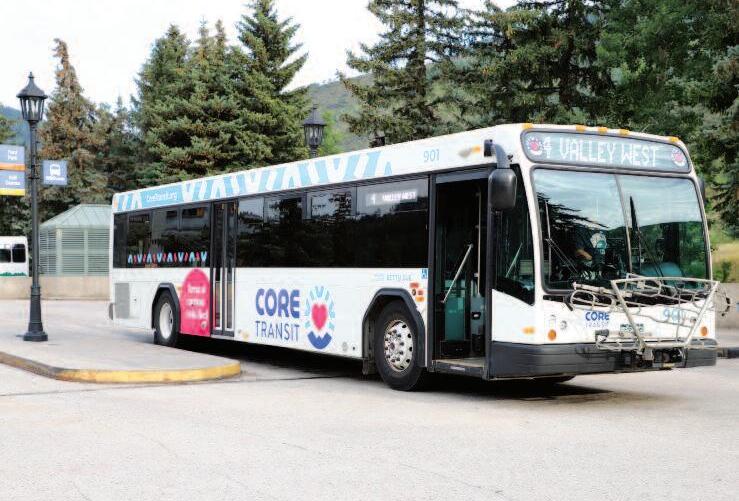
Complete Coach Works displayed a refurbished bus at the American Public Transportation Association’s Annual Transform Conference It was a 2008 low-floor Gillig belonging to Core Transit of Colorado The bus had undergone one of CCW’s signature refurbishments to extend the life of the bus beyond its original useful life
At Core Transit, we believe every journey s
experience The bus on display at the APTA Transform Conference showcases the commitment to moder n, rider-focused design, with upgraded seating, advanced technology and a refreshed look that embodies our w
rewarding service We’re proud to share this vision at the conference,” said Scott Robinson, Core Transit deputy director
Peter Pan Bus Lines Acquires 15 New MCI Motorcoaches M
roadside assistance and par ts suppor t, on S
15 new clean-diesel J4500 coaches to Peter Pan Bus Lines (Peter Pan), an iconic operator based in Springfield, Massachusetts
The delivery marks Peter Pan’s 45th MCI vehicle purchase in recent years to update a n d
h e company’s expansion in the Northeast Peter Pan recently announced a par tnership with M e
area
Peter Pan is one of the largest privatelyowned bus companies in the U S , operating an all-MCI fleet of more than 200 coaches and making more than 1,000 daily departures to more than 100 destinations across the Nor theast
“Peter Pan Bus Lines is growing fast by adding motorcoaches, routes, drivers and amenities to better serve our customers in Washington, D C , Baltimore, Philadelphia a n
y, chairman and CEO of Peter Pan “One thing that won’t change is our commitment to customer satisfaction with clean buses, professional drivers an on-time service ”
from MCI include advanced safety features,
modern amenities and the latest technology while staying true to Peter Pan’s spacious cabin design and signature interior Peter P a n c o n s i s t e n t l y r e l i e s o n M C I f o r n e w c o a c h e s , t e c h n i c a l s u p p o r t a n d re p l a c ement par ts to keep its operations running smoothly, reduce maintenance costs and p ro v i d e a n e x c e p t i o n a
u s t o m e r e x p e r ie n c e P e t e r P a n i s c u r re n t l y w o r k i n g w i t h MCI on a 2025 order to fur ther expand its fleet
“We love to be part of Peter Pan’s growth For decades, we have worked together to p ro v i d e c o a c h e s t h a t e n h a n c e t h e b r a n d and excel in ever yday service,” said Brent Maitland, vice president of MCI Private Sector Sales and Marketing “The relationship we have with the Peter Pan team pushes our product and support to be the best, and we truly appreciate working together ”
MCI is North America’s public and private market motorcoach leader Products include the luxur y J Series (an industr y best-seller for more than a decade), the workhorse D Series and the brand new zero-emission luxu r y a n d c o m m u t e r c o a c h e s : t h e b a t t e r ye l e c t r i c J 4 5 0 0 C H A R G E ™ , D 4 5 C R T CHARGE™ and D45 CRT LE CHARGE™ MCI also provides maintenance, repair, 24hour roadside assistance, par ts and technician training through the industr y’s only A u t o m o t i v e S e r v i c e E x c e l l e n c e ( A S E ) accredited and award-winning MCI Academy
Leveraging 450 years of combined experience, NFI is leading the electrification of mass mobility around the world With zeroemission buses and coaches, infrastructure a n d t e c h n o l o g y, N F I m e e t s t o d a y ’s u r b a n demands for scalable smar t mobility solutions Together, NFI is enabling more livable c i t i e s t h ro u g h c o n n e c t e d , c l e a n a n d s u stainable transpor tation
W i t h 8 , 7 5 0 t e a m m e m b e r s i n 1 0 c o u ntries, NFI is a leading global bus manufacturer of mass mobility solutions under the b r a n d s N e w F l y e r ® ( h e a v y - d u t y t r a n s i t buses), MCI® (motorcoaches), Alexander D e n n i s L i m i t e d ( s i n g l e - a n d d o u b l e - d e c k buses), Plaxton (motorcoaches), ARBOC® (low-floor cutaway and medium-duty buses) a n d N F I P a r t s ™ N F I c u r re n t l y o ff e r s t h e widest range of sustainable drive systems available, including zero-emission electric ( t ro l l e y, b a t t e r y a n d f u e l c e l l ) , n a t u r a l g a s and electric hybrid and clean diesel In total, NFI supports its installed base of more than 1 0 0 , 0 0 0 b u s e s a n d c o a c h e s a ro u n d t h e world
Vicinity Motors Enters Into Restructuring Plan
Vicinity Motor Corp (Vicinity or the Company), a Nor th American supplier of com-
Equipment News
agreement with its secured lenders to execute a workout and financial restructuring plan to address the previously announced demands from Royal Bank of Canada and Expor t Development Canada (the Secured L e n d e r s )
facilities to progress towards financial stability for the company
Vicinity and the Secured Lenders have agreed to the ter ms of the workout for the next 60 days, discussing with the Secured Lenders its revenues, debt structures and initiatives to reorganize During the period, the company will return to limited operations
Following financial concerns, Vicinity Motor Corp has entered into an agreement to develop a Restructuring Plan with creditors This 60-day plan will see Vicinity work to preserve the value of its assets, execute deliveries and facilitate parts support programs Vicinity has been active in building small transit buses that have become popular on the Canadian and U S markets
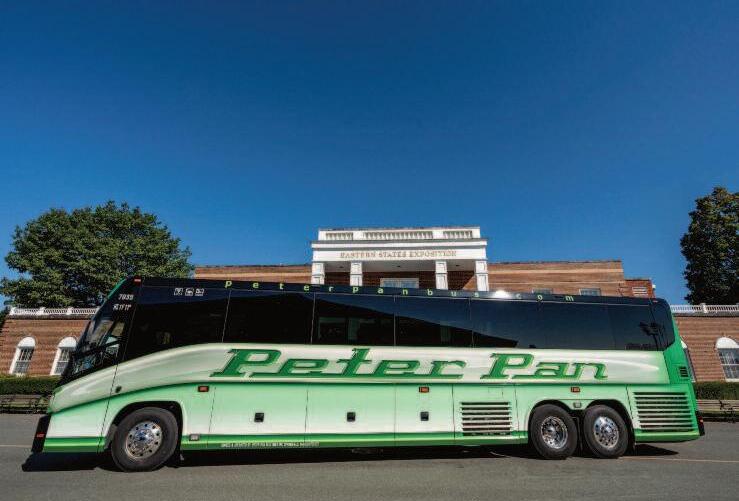
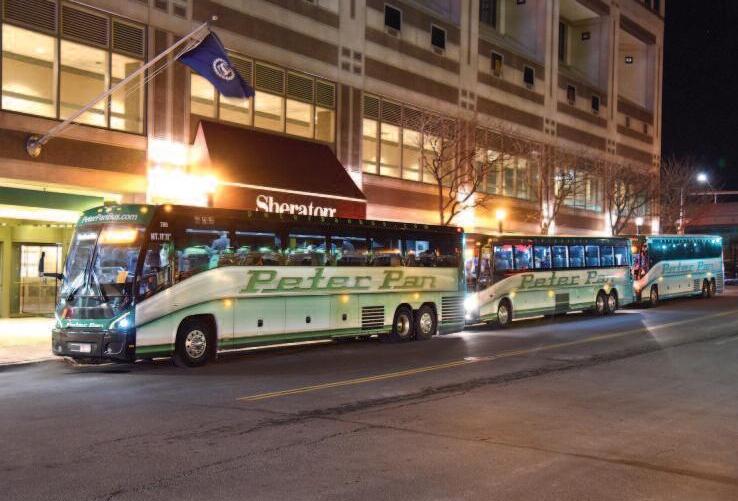
Peter Pan Bus Lines recently took delivery of 15 new clean diesel MCI J4500 coaches These new buses bring the Peter Pan fleet to an all-MCI fleet of more than 200 coaches. They will be used to support the company’s expansion in the Northeast in taking over Megabus routes
and the Secured Lenders will retain all rights previously asserted Prior to the conclusion of the period workout period, Vicinity expects to have entered into a restructuring plan that may include agreements for payment and creditor rights and protections
During this period Vicinity will work to pres e r v e t h e v a l u e o f
c u t e i n process deliveries and facilitate technical and parts support programs The company will continue to work closely with vendors, customers and par tners during this period as it endeavors to return to normal full operations within the 60-day period
“We are pleased to announce this supp o r t f r o m o u r c r e d i t o r p a
Vicinity plays in the passenger transportation industry and as a leader in Class 3 commerc
orders, including clean diesel and electric buses, provides a solid foundation for this w
Vicinity buses and industry metrics support accelerated development of our energy efficient transit bus product line while the Class 3 c o m m e r c i a l t
develop ”
Vicinity Motor Corp is a Nor th American supplier of electric vehicles for both public and commercial enterprise use The company leverages a dealer network and close relationships with world-class manufacturing partners to supply its flagship electric, CNG and clean-diesel Vicinity buses, as well as t h e V M C 1 2 0 0 e l e c t r i c t r u c k t o t h e
t and industrial markets For more information visit www vicinitymotorcorp com
City of Phoenix Orders 25 New Flyer Buses
NFI Group Inc (NFI), a leading independent bus and motorcoach manufacturer and a leader in zero-emission electric mobility solutions, on September 9 announced that NFI subsidiar y, New Flyer of America Inc (New Flyer) has been awarded a fir m order of 25 Xcelsior® hybrid-electric, 40-foot transit b u s e s f r o m t h e P h o e n i x P u b l i c Tr a n s i t Department (PTD) The order was added to New Flyer’s backlog for the second quar ter of 2024
PTD is the largest member of the Valley Metro regional public transportation agency, and provides transpor tation services in the city of Phoenix, the fifth-largest city in the United States PTD delivers more than 20 million annual revenue service miles across its bus and light-rail systems, with more than 21 5 million boardings a year Through the Transpor tation 2050 (T2050) plan and the Transpor tation Electrification Action Plan,
Equipment News
enhance transit connectivity across Phoenix and accelerate the transition to an all-electric fleet The purchase of these hybrid buses e
necessar y infrastructure and move closer to a fully zero-emission fleet
The buses included in this order will be the first New Flyer vehicles to include BAE Systems Gen3 modular power control system (MPCS) and traction motor This nextgeneration system represents more than 27 years of continuous innovation and incorporates lessons lear ned from applications a c
heavy-duty military vehicles The Gen3 system uses a simplified and compact design that delivers increased reliability and efficiency The upgraded MPCS and traction motor from BAE Systems uses fewer components, is easer to service and provides an improved passenger ride that is smoother and quieter
“New Flyer has been leading innovation in hybrid-electric mobility for over 25 years, and we continue to deliver advanced hybride l e c t r i c b
technology,” said Chris Stoddart, president, Nor th American Bus and Coach, NFI “Our par tnership with PTD has lasted 30 years because it is centered around a shared commitment to smar t transit solutions that help m
replace aging CNG and diesel buses cur-
change will deliver immediate reductions in greenhouse gas emissions for the agency and improved air quality for residents ”
Today, NFI supports growing North America cities with scalable, clean and sustainable mobility solutions through its mobility solution ecosystem, which includes buses
service; technology; workforce development and training; and vehicle financing NFI also
(VIC), the first and only innovation lab of its kind and dedicated to advancing bus and coach technology and providing workforce development Since opening in late 2017, the VIC has hosted more than 400 interactive events, welcoming 9,000 industr y professionals for EV and infrastructure training
Fullington Trailways Captures
Key Megabus Routes
Fullington Trailways, a leader in the transp
service offerings Following Megabus’s route eliminations, Fullington Trailways has successfully captured several critical routes, adding daily service between Pittsburgh, Philadelphia, Harrisburg, State College and New York City
T h
travel options for passengers and strengthens Fullington’s presence in the Nor theast t
are a testament to our commitment to deliv-
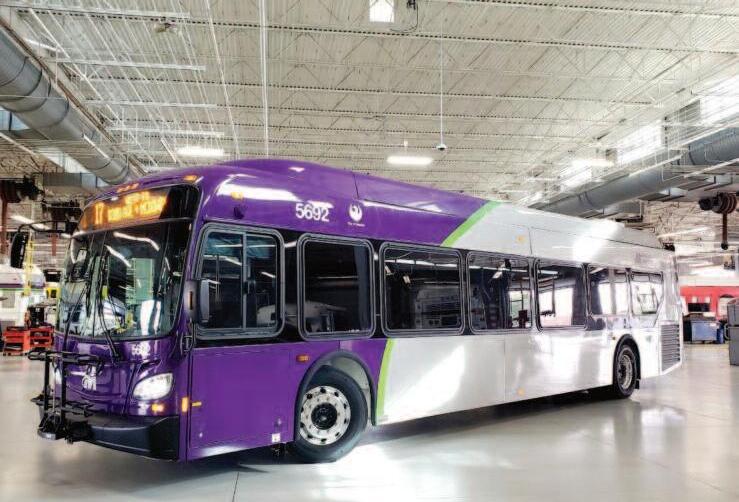
The Phoenix Public Transportation Department has ordered 25 Xcelsior hybrid-electric 40-foot transit buses from New Flyer These will be the first New Flyer vehicles to include BAE Systems Gen3 modular power control systems and traction motor Phoenix Public Transportation Department provides transportation services in the city of Phoenix, Arizona, the fifth-largest city in the United States
ering top-tier service,” said Jonathan Berzas, CEO of Fullington Trailways “We are seizing t h i s o p p o r t u n i t y t o e x p a n d o u r re a c h a n d continue our safety, comfor t and reliability legacy Our customers can trust that we will provide the consistent, high-quality service they deserve, especially as we approach the busy travel season ”
In line with this expansion, Fullington Trailw a y s i s a l s o e n h a n c i n g i t s s c h e d u
e t o i n c l u d e a d d i t i o n a l s e r v i c e s d u r i n g p e a k travel, such as the academic school year a n d m a j o r h o l i d a y s T h e n e w c o
c t i n g services will be powered by cutting-edge
t e c h n o l o g y f ro m Tr a n s c o r D a t a S e r v i c e s (TDS) of Jacksonville, Florida, enhancing efficiency, maximizing revenue and optimizing a seamless customer experience
P a s s e n g e r s c a n n o w e a s i l y a c c e s s t i c k e t s a n d u p d a t e d s c h e d u l e s t h r o u g h FullingtonTours com and Megabus com
FMCA Announces Rebranding Plan
To b e t t e r re f l e c t i t s m i s s i o n o f w e l c o mi n g a n d s u p
R
( F M C A )
Equipment News
revised name, as well as a timeline for the ro l l o u t o f t h e n e w b r a n d
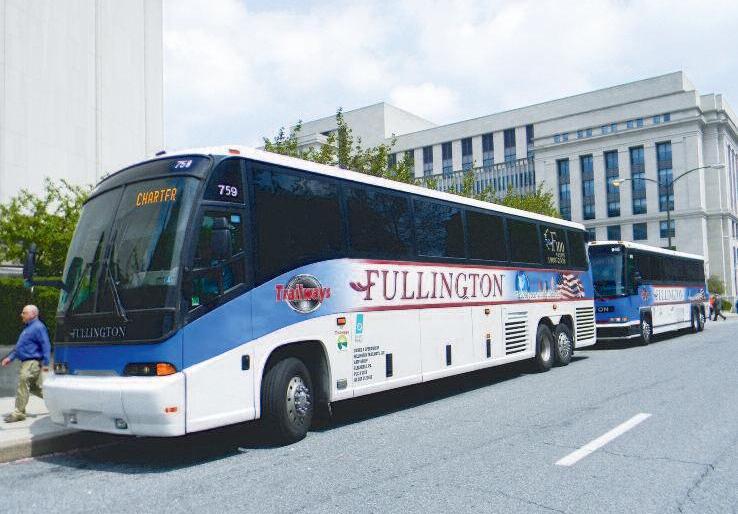
Fullington Trailways recently took over some Megabus routes in the Northeast Included is daily service between Pittsburgh, Philadelphia, Harrisburg, State College and New York City Founded in 1908, Fullington Trailways is a family-owned business offering a wide range of transportation services.
The new name retains the world “Family,” something that has been at the hear t of the association since its founding in 1963 and h a s b e e n p a r t o f t h e “ Yo u r RVi n g F a m i l y ” tagline the organization has used for several years For association members, “Family” goes beyond the conventional sense of the word and extends to the entire community
o f R V o w n e r s M a n y m e m b e r s d e v e l o p
c l o s e b o n d s w i t h t h e i r f e l l o w m e m b e r s –another type of “family” – tur ning strangers into lifelong friends and travel companions
T h e n e w n a m e a l s o i n c o r p o r a t e s “ RV, ” t o c l a r i f y t h e o r g a n i z a t i o n ’s f o c u s a s a n RV travel and lifestyle community
“We are excited to begin a new advent u r e a s F a m i l y R V A s s o c i a t i o n , ” F M C A National President Gary Miler said “For 60plus years, FMCA – now Family RV Associa t i o n – h a s b e e n h e l p i n g R Ve r s t o f o r m incredible connections with fellow RV travelers We want to make sure all RV are aware of the wonder ful oppor tunities and benefits membership brings Adopting a name that better describes our community makes perfect sense ”
F o r m o r e i n f o r m a t i o n a b o u t t h i s organization for RV owners, visit FamilyRVAssociation com
F a m i l y R V A s s o c i a t i o n i s t h e w o r l d ’s largest not-for-profit association for recreation vehicle (RV) owners The organization m a i n t a i n s i t s n a t i o n a l h e a d q u a r t e r s i n Cincinnati, Ohio, and currently has nearly 120,000 active members FMCA offers its
Equipment News
members a number of benefits, including a subscription to its bimonthly magazine, Family RVing; a medical emergency and travel assistance program valued at $200 per family; a tire purchasing program; group rates on a roadside assistance program, RV and auto insurance, and health insurance; discounted rates for RV tours and caravans;
a n d d i s c o u n t s o n m o b i l e I n t e r n e t a c c e s s plans Perhaps the most impor tant benefit of FMCA membership is the camaraderie and friendships that develop among people enjoying the common interest of RV travel
The organization can be reached at (513) 474-3622 or (800) 543-3622 and on the web at FamilyRVAssociation com
Peter Pan Bus Lines Takes Over Megabus Routes in Nor theast Corridor
Star ting on August 16, 2024, Peter Pan Bus Lines (Peter Pan), a family-owned company that has been in business for nearly 100 years, and Megabus have announced a partnership that will result in Peter Pan taking over all the Megabus routes in the Northeast and Mid-Atlantic states
Peter Pan will now operate those routes 24/7, including service to Washington, D C , B a l t i m o re , W h i t e M a r s
and connecting passengers to the 100 destinations the company already serves
In a recent interview, Peter A Picknelly, chair man and CEO of Peter Pan Bus Lines, noted, “We’re moder nizing our fleet, which
The Family Motor Coach Association recently announced that it will soon be doing business as Family RV Association When initially founded in 1963, members owned house cars and converted coaches but as time has gone on, more and more members own recreational vehicles The new name reflects this change to accommodate and encourage RV owners
Effective August 16, Peter Pan Bus Lines took over Megabus bus lines in the Northeast and MidAtlantic states Cities included are Washington, D C, Baltimore, White Marsh and Philadelphia with connections to more than 100 destinations Peter Pan recently reduced fares
hired 75 new drivers and purchased 45 new buses
includes better-designed seats, video and W i - F i T h e c o m p a n y h a s a l s o re l a u n c h e d
i t s a p p , e n a b l i n g p a s s e n g e r s t o e a s i l y
book their trips in advance and feature its
P E R K S p r o g r a m , w h e r e u s e r s c a n e a r n
f re e t r a v e l
P e t e r P a n i s m a k i n g t r a v e l m o re c o n -
v e n i e n t , e s p e c i a l l y f o r G e n - X a n d G e n - Z
r i d e r s “ W h a t p e o p l e w a n t i n a b u s c o m -
pany is really ver y simple,” suggests Pick-
n e l l y, t h e t h i r d - g e n e r a t i o n l e a d e r o f t h e
c o m p a n y “ T h e y w a n t a c l e a n b u s , a p ro -
f e s s i o n a l d r i v e r a n d o n - t i m e f r i e n d l y s e r-
v i c e I t s e e m s e a s y, b u t i t ’s re a l l y d i ff i c u l t
t o e x e c u t e a l l t h e t i m e I h a p p e n t o t h i n k
t h a t P e t e r P a n e x e c u t e s i t b e t t e r t h a n
m o s t ” T h e c o m p a n y re c e n t l y a n n o u n c e d a par tnership with Trailwways and a strateg i c a l l i a n c e w i t h A m t r a k I t a c t i v e l y f o r m s re l a t i o n s h i p s w i t h r i d e r s e r v i c e s l i k e U b e r
a n d Ly f t t o m a k e a l l a s p e c t s o f t r a v e l t h e y control or can influence more reliable and a ff o rd a b l e
Peter Pan Bus Lines is one of the USA’s largest privately-owned motorcoach companies, serving more than 100 communities i n t h e N o r t h e a s t c o r r i d o r T h e c o m p a n y offers daily express service in major metro areas such as Boston, New York, Philadelphia, Baltimore and Washington, D C
Holiday Tours Named IMG Operator of the Year
In a special ceremony held at the Clinton L i b r a r y i n L i t t l e R o c k , I M G p r o u d l y a n n o u n c e d H o l i d a y To u r s , b a s e d i n R a ndleman, North Carolina, as its 2024 Operator of the Year The accolade was celebrated in front of members and trade par tners of IMG
D a v i d B r o w n , C E O o f H o l i d a y To u r s , accepted the prestigious award on behalf of his entire team In his acceptance speech, Brown expressed gratitude, saying, “We are honored that Holiday has been named the 2 0 2 4 I M G O p e r a t o r o f t h e Ye a r T h i s achievement reflects the dedication of every Holiday team member and the invaluable collaboration with IMG Since joining in 2000, w e ’ v e b e n e fi t e d g r e a t l y f r o m t h e s h a r e d wisdom and support of IMG members This recognition motivates us to continue raising the bar in motorcoach services Our heartfelt t h a n k s g o t o o u r e m p l o y e e s f o r t h e i r e x c e l l e n c e a n d t o I M G f o r t h i s e s t e e m e d acknowledgement ”
J o i n i n g D a v i d B r o w n o n s t a g e w e r e
David and Jonathan Moody, president and vice president of Holiday Tours Both leade r s s p o k e a b o u t t h e i m m e n s e v a l u e I M G membership has brought to their business a n d h i g h l i g h t e d h o w t h i s a w a rd i s a t e s t ament to the exceptional work of their team m e m b e r s
Equipment News
IMG, at a special cerem o n y a t t h e C l i n t o n Library in Little Rock, a n n o u n c e d H o l i d a y Tours as its Operator of the Year David Brown o f H o l i d a y To u r s accepted the award on b e h a l f o f h i s t e a m Based in Randleman, North Carolina, Holiday To u r s j o i n e d I M G i n 2000
IMG President Bronwyn Wilson praised Holiday Tours, stating, “This is just a great recognition of a great company Holiday is a long-time member company of IMG and p r o v i d e s a n o u t s t a n d i n g c o m m i t m e n t t o IMG’s core values of safety, maintenance, training and customer service excellence ”
T h e e v e
par tnership with Turbo Images, who sponsored the Operator of the Year Award The wrap design presented to Holiday Tours celebrated the numerous destinations the company services, symbolizing their extensive reach and dedication
ZF Announces New TraXon 2 Hybrid Transmission
ZF’s Commercial Vehicles Solutions division continues to set the pace for commerc i a l v e h
l o p i n g a new hybrid transmission to fur ther suppor t the transition towards decarbonized mobility Forming part of the industry leading TraXon f
enable commercial vehicle operators to sign
still maintaining the capability advantages of a combustion engine
cars, ZF has the R&D capabilities to adapt t h
for commercial vehicles ZF’s ability to offer t
“In developing the TraXon 2 Hybrid, we demonstrate how synergies across our divisions enable us to address customer needs swiftly and flexibly to create viable technologies to decarbonize commercial vehicles efficiently,” said Professor Dr Peter Laier, m e m b e r o f t h e Z F
and responsible for the Commercial Vehicle Solutions Division
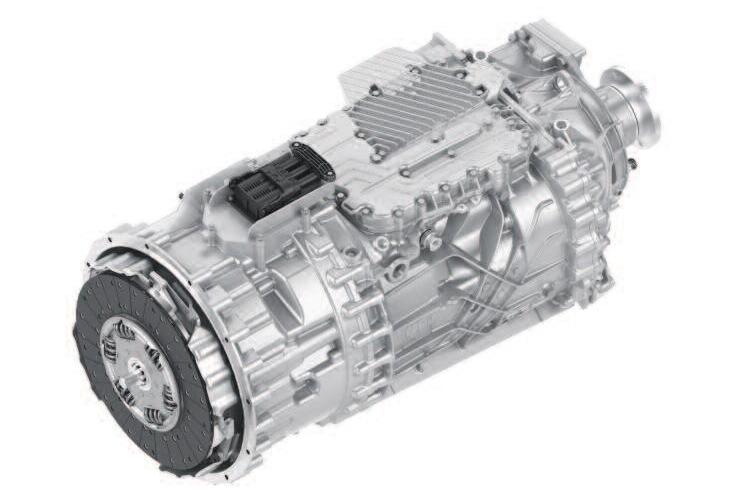
In its ongoing program of advancing decarbonized solutions, ZF recently introduced its new TraXon 2 Hybrid Transmission Designed for heavy commercial vehicles, the TraXon 2 Hybrid will enable operators to significantly reduce carbon emissions while still maintaining the capability advantages of a combustion engine ZF also offers other products with various solutions for commercial vehicles
“In doing so, we not only meet the shifting needs of the industr y but also position ZF as a strong and reliable partner that is setting the pace of transfor mation with a ver y flexible portfolio and a very flexible production ”
One key advantage for ZF is its extensive product portfolio which caters to the diverse needs and applications of commercial vehic l e s m a n u f a c t u r e r s a n d fl e e t o p e r a t o r s From the innovative vehicle motion control system cubiX to the launch of a full range of n e x t g e n e r a t i o n e l e c t r i c d r i v e s : Z F h a s always the ability to develop and industrialize innovation across its divisions – or even w i t h i n t h e C V S d i v i s i o n i t s e l f f o r d i ff e re n t m o b i l i t y a p p l i c a t i o n s T h i s e n a b l e s Z F t o offer attractive solutions for manufacturers to develop smarter, safer and more sustainable vehicles
This strength, combined with its broad por tfolio of products, has enabled the CVS d i v i s i o n t o re c o rd s t ro n g re s u l t s i n 2 0 2 3 , achieving organic growth of 20 percent, significantly outper for ming the market which grew by 15 percent
W i t h i t s n e x t g e n e r a t i o n e l e c t r i c d r i v el i n e s , Z F e l e c t r i fi e s a w i d e r a n g e o f c o mmercial vehicle applications by offering diff e re n t a n d t e c h n o l o g y o p e n s o l u t i o n s f o r b a t t e r y - e l e c t r i c o r f u e l c e l l v e h i c l e s I t s
E-Mobility Kit, which includes central drives, C e Tr a x 2 , a n d C e Tr a x d u a l , a s w e l l a s i t s electric axles, the AxTrax 2, AxTrax 2 dual and AxTrax 2 LF, provides ever ything man-
Equipment News
ufacturers need to produce zero emissions electric vehicles
The AxTrax 2 can even be integrated into a trailer, ZF’s latest concept that effectively converts an ICE powered truck-trailer combination into a hybrid The electric trailer can also extend the range of an electric vehicle The concept, which is awaiting regulator y approval, can save fuel emissions by up to 16 percent, and even up to 40 percent when the plug-in variant is used
Program at the ZF Global Technology Day
energy is used for recuperation, increases
SCALAR, ZF’s digital fleet orchestration
p
O
from SCALAR to measure the performance of their vehicles in real world settings The p
ZF’s cubiX vehicle motion control system for commercial vehicle applications translates driving instructions from vir tual driver systems into real vehicle motion commands
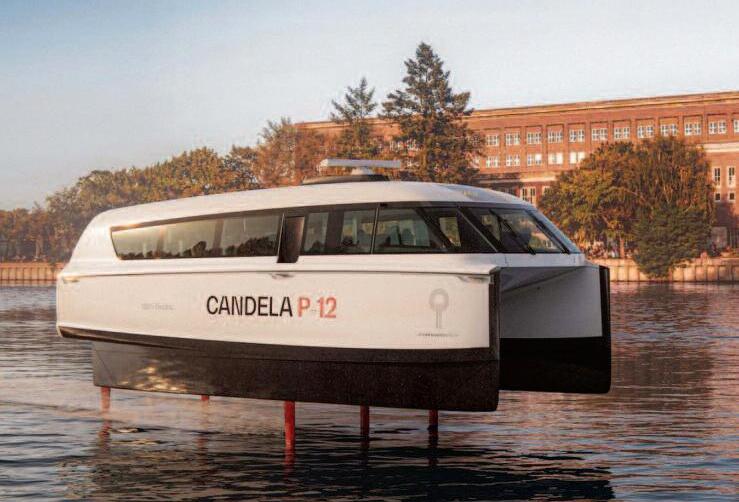
City transit may take on a new appearance with the P-12 Shuttle electric ferry line planning to cross Berlin’s Spree in 10 minutes This electric hydrofoil catamaran can connect two points quickly that otherwise would require a roundabout route on streets The vessel has been purchased by a company that already operates a fleet of shuttle vessels within the city
by the vehicle actuators This ensures vehic l e s t a b i l i t y, s a f e t y, p re c i s i o n a n d p e r f o rmance for CV configurations, including conv e n t i o n a l a n d e l e c t r i c T h e s y s
recently successfully tested in the field under real-life conditions with customers and partners, such as SAFE20 – a project for automated freight yard infor mation
T h e r e f o r e , Z F s i
implementation for customers thanks to its deep understanding and expertise for integration and system engineering, to enable re
Z
advanced safety systems Offering the commercial vehicles industry’s broadest product portfolio, ZF is uniquely positioned to supply these technologies, from individual components to full system-wide solutions Leveraging its safety platforms, ZF is able to supply the solutions required by customers to m e e t re g i o n a l s a f e t y re g u l a t i o n s Z F w a s also able to take advantage of its technical expertise like radar and camera from its passenger car divisions, another demonstration how ZF’s commercial vehicles division benefits form the shared competences from the other automotive divisions in the ZF Group
Berlin Gets Flying Electric Ferr y Traveling from Berlin’s eastern city center t o O b e r s c h u n
? That is impossible by car or S-Bahn Howe v e r, S w e d i
d e l a recently announced the sale of a Candela P - 1 2 e l e c t r i c h y d r o f o i l i n g f e r r y t o Funkhaus/Reederei Riedel, marking a watershed moment for zero-emission transport in Ger many
T h e P - 1 2 s h u t
i n e i s planned to connect the East Side Galler y, n e a r O s t a h n h o f , w i t h t h e c u l t u r a l h u b Funkhaus The electric hydrofoil catamaran, w h i c h c a n t r a v e l a t 2 5 k n o t s a c r o s s t h e Spree, is the fastest electric ship in the world and the first of its kind in Ger many “Berlin is a city with a lot of water, but this is hardly u s e d f o r t r a n s p o r t W e w a n t t o o p e n u p waterways for fast, emission-free transport We need that if we want to reduce emissions and congestion on the roads,” said Brigitte Junker from Candela
T h e S w e d i s h s h i p m a n u f a c t u re r C a nd e l a i s a p i o n e e r i n s u s t a i n a b l e w a t e r transport and the world’s first manufacturer o
f a l l , h a s b e e n d u b b e d a “ g a m e c h a n g e r ”
b y t h e m a r i t i m e i n d u s t r y, a s i t i s t h e fi r s t
e l e c t r i c v e s s e l w i t h b o t h l o n g r a n g e a n d
h i g h s p e e d , t h a n k s t o i t s e f fi c i e n c y F o r city waterways, the most impor tant aspect
o f t h e h y d ro f o i l t e c h n o l o g y i s t h e l a c k o f damaging wakes, which in Stockholm has e a r n e d i t a n e x e m p t i o n f ro m s p e e d l i m i t s
t h a t o t h e r v e s s e l s m u s t a d h e re t o
In Berlin, the vessel has been purchased by Funkhaus/Reederei Riedel, which already operates a fleet of shuttle vessels within the city “We would start with an hourly service,” s a i d U w e F a b i c h , t h e o w n e r o f R e e d e re i
R i e d e l a n d F u n k h a u s , a c u l t u r a l h u b a n d p o p u l a r v e n u e f o r c o n c e r t s , f e s t i v a l s a n d other cultural events With a 10-minute journ e y p e r r o u t e , t h e s c h e d u l e c o u l d b e expanded to two trips per hour in each direction
The issue with Berlin, as with other major cities, is rush hour traffic, says Uwe Fabich
T h o s e d r i v i n g f r o m t h e c e n t e r t o t h e Funkhaus must endure heavily congested streets “There is always a traffic jam Public transpor tation isn’t much better Tram Line 21, which heads in this direction, is one of t h e f e w B e r l i n t r a m l i n e s w i t h a 2 0 - m i n u t e frequency After getting off, there’s still a long walk to the Funkhaus,” says Uwe Fabich
This is how the idea to develop the area v i a w a t e r w a y c a m e a b o u t T h e R e e d r e i Riedel and Funkhaus are directly on the river With the P-12, investments in adapting dock infrastructure and charging will be negligi-
Equipment News
can handle existing dock heights from 0 2 meter to two meters high Its low energy use enables the P-12 to replenish its battery from a
hour
“Operating costs would be 90 percent lower than diesel ships due to the low energy c o
electric C-POD motors,” says Junker The high-speed ferry is also intended as a showcase for Berlin “It would be a per fect conn
Where the Spree and other waterways are wide enough, it could successfully compete with other modes of transpor t
Berlin has a long histor y of water transp
h
through the city It is one of the most beautiful
mostly unused for public transpor t
“With the hydrofoil technology, we hope t
emission commuting,” Junker concludes
More Solaris Hydrogen Buses for France
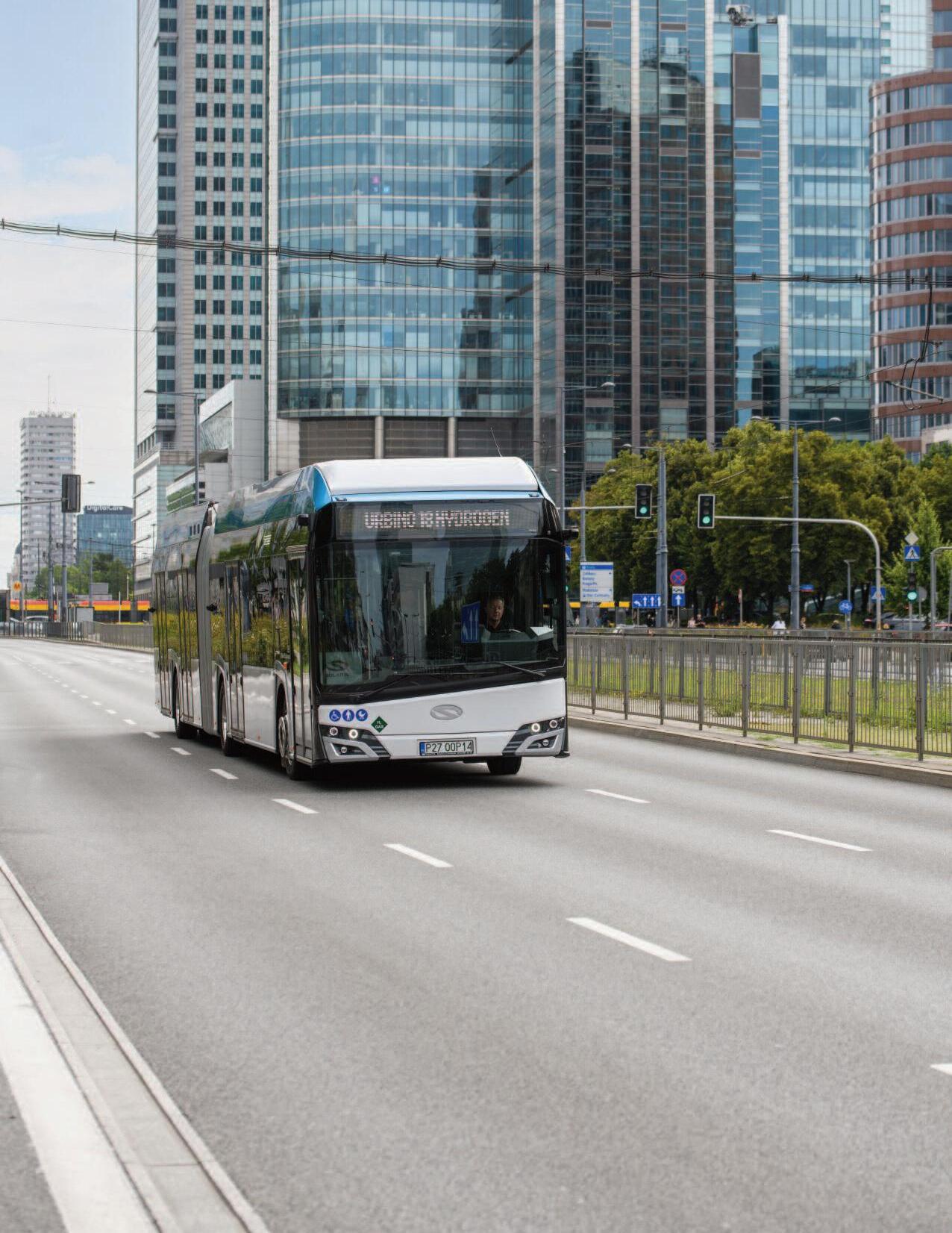
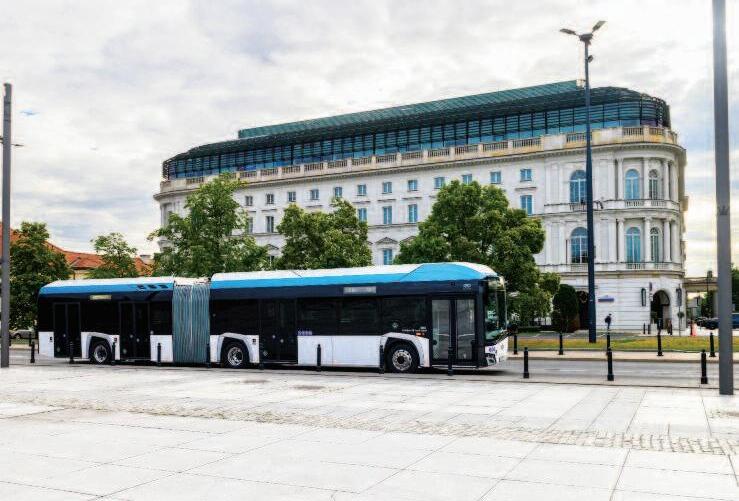
Solaris has won a prestigious order from the French market in recent days The producer will deliver eight articulated hydrogen b u s e s t o t h e c i t y o f B e l f o r t T h e 1 8 - m e t e r buses will be equipped with a state-of-theart hydrogen system, which, combined with
Solaris has received another order for hydrogen buses from France The City of Belfort in France has placed an order for eight Urbino 18-meter articulated buses powered by a state-of-the-art hydrogen system This is the third recent order for hydrogen buses for Solaris from the French market following four hydrogen buses ordered by Artois Mobilités and 22 buses for Île-de-France Mobiliés
a modular drive, guarantees optimal driving per for mance The Urbino 18 hydrogen will be delivered to the customer in the second half of 2025
mun du Territorie de Belfor t), which brings together transpor t operators in the region The ultimate operater of the new hydrogen buses will be the Régie des Transpor ts du Te r
“We are extremely proud to collaborate with SMTC in Belfor t and to supply the city with the high-tech, zero-emission hydrogen buses The Urbino 18 hydrogen are not only an innovative means of transpor t but also a step towards a sustainable future Thanks t
Belfor t will be able to enjoy cleaner air and modern, reliable public transport,” said Brice B
France
equipped with a state-of-the-ar t hydrogen system, which includes a 100 kW hydrogen fuel cell and composite tanks that can store more than 50 kg of hydrogen at a pressure of 350 bar Solaris High Power batteries will suppor t the fuel cell at times of peak electricity demand At the hear t of the drive will be a 240 kW electric motor The bus will also feature a modular drive system, which, by dispersing its components, allows for better u s e o f s p a c e o n t h e v e h i c l e ’s ro o
I
a l s o increases passenger space
In accordance with the latest regulations, the buses will comply with GSR2 standards, including a system that aler ts the driver to the presence of road users in the so-called “blind spot ” The ordered Urbino hydrogen buses will feature high-efficiency air conditioning with a heat pump function Additiona l l y, t h e b u s e s w i l l b e e q u i p p e d w i t h t h e e S C o
management system
T h i s i s t h e t h i r d o r d e r f
r h y d r o g e
b u s e s f r o m t h e F r e n c h m a r k e t i n r e c e n t m o n t h s , f o l l o w i n g t h e c o n t r a c t s f o r f o u r vehicles for Ar tois Mobilités and 22 buses
f o r Î l e - d e - F r a n c e M o b i l i t é s T h e u s e o f
h y d ro g e n t e c h n o l o g y i n p u b l i c t r a n s p o r t i s g a i n i n g i n c r e a s i n g p o p u l a r i t y, a n d S o l a r i s
National Bus Trader / October, 2024 • 11
Marcopolo Strengthens Its Operations in China
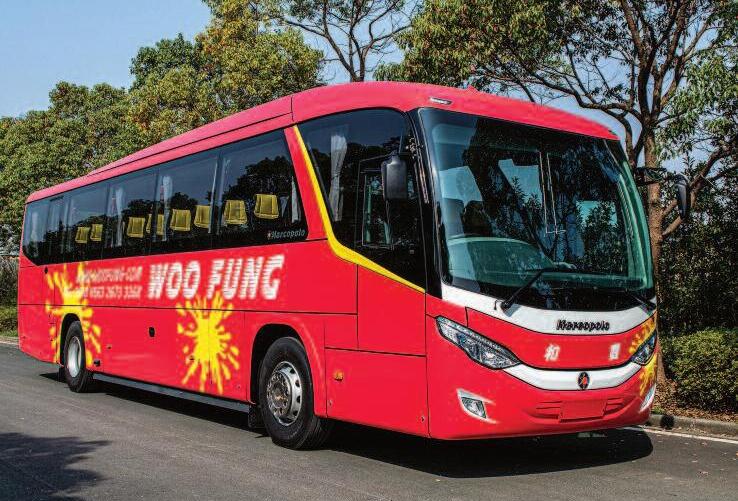
Marcopolo is one of the leading developers of mobility solutions, with factories in several countries around the world, including China, where it has already delivered 6 0 c o a c h e s t o H o n g K o n g a l o n e i n 2 0 2 4 The company has been supplying vehicles t o t h e re g i o n s i n c e 2 0 1 2 , m a i n l y A u d a c e family products, and in total almost 700 units have already been sold to this market
“The China plant is suitable for the serial production of several solutions developed by Marcopolo and this is possible thanks to the continuous investments we make in innovation and technology, both in countr y and i n t h e c o m p a n y ’s o t h e r o p e r a t i o n s , ” s a y s José Luis Moraes Goes, Marcopolo’s director of international operations and commercial foreign market
Since 2012 when the company star ted selling vehicles to Hong Kong, the product portfolio has undergone updates Currently, six different chassis options are offered to the market, both with European OEMs (origi n a l e q u i p m e n t m a n u f a c t u re r ) , a s w e l l a s with a Chinese chassis
“Whenever we think about producing or implementing something in a certain region, we make an analysis first to identify whether t h a t p l a c e h a s t h e n e c e s s a r y s t r u c t u re t o receive our new vehicles,” says Goes
“ A m o n g t h e re c e n t i n n o v a t i o n s d e v e loped by Marcopolo at the China plant is the A u d a c e F u e
C
Equipment News
impor tant events in the bus industr y – considered an innovation case for the company Two prototypes were assembled and both were subjected to extreme tests, which provided data collection that allowed optimization of the vehicles And it doesn’t stop there, we are already working on more prototypes using this technology,” he added
The work was developed in cooperation with Allenbus, responsible for the integration system, and Sinosynergy, developer of the fuel cell system
“ C o m m e r c i a l m o d e l s w i t h h y d r o g e n propulsion are considered sustainable alternatives in a world where the decarbonization process is increasingly evident in all sectors China is a market that invests in technologies of this nature and has a fleet of more than 20,000 commercial vehicles in operation, which demonstrates the vast field of oppor-
g Ehlers, CEO of Marcopolo China
I n a d d i t i o n t o A u d a c e F u e
, M a rcopolo invests in other electric and hybrid propulsion solutions, directly aligned with t
and its impacts There are about 1,000 vehicles in circulation in different countries, such as Argentina, Australia, Chile, China, Colombia, Costa Rica and Mexico
The strategy of strengthening the company’s performance in the international market also has the goal of expanding expor ts
Philippines and New Zealand To this end, t h e c
h local manufacturers, such as in East Africa, where Marcopolo collaborates with a body
barrier of import rights In Australia, the company has three plants in Melbour ne, Brisbane and Per th In South America, recent sales have been highlighted to Chile, Peru, Costa Rica, Uruguay and Ecuador
In addition to these markets, Marcopolo China can be a solution for specific products, such as hydrogen-powered vehicles
Another factor is the development of vehic
countries that are experiencing the growth of road travel and may need buses of certain m
always seeks to improve its designs in order to collaborate with the mobility segment
10 4 percent of net revenue, totaling Real 203 8 million ($36 7 million), while business in the international market represented Real 495 9 million ($89 6 million) of net revenue, 2 5 4 p e rc e n t o f t h
company in the period
Two Irizar Electric Buses for La Veloz
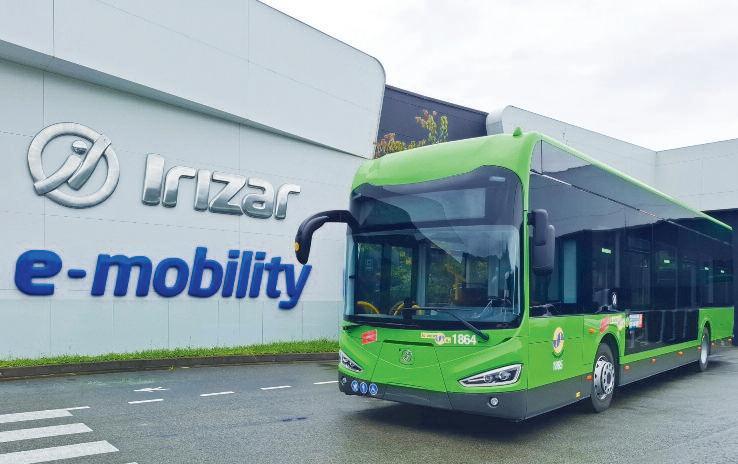
L a Ve l o z , a c o m p a n y b e l o n g i n g t o t h e Samar Group, will incorporate two new electric buses manufactured by Irizar e-mobility to their urban fleet The model they chose is the 12-meter-long Irizar ie bus Deliver y of the units is scheduled for the end of Sept e m b e r T h e y w i l l p ro v i d e s e r v i c e f o r t h e Rivas Vaciamadrid urban lines, which are managed by the Regional Transpor t Consor tium of Madrid
“After years of having a close relationship w i t h t h e S a m a r G ro u p i n t e r m s o f b u y i n g Irizar buses, the time has come to take the l e a p t o e l e c t r i c m
e-mobility for Spain and Por tugal
The Irizar ie bus stands out because of
Equipped with latest generation Irizar batt e r i e s , t h e b u s h a s
(four are reserved for people with reduced mobility – PRM), and it has spaces specifically designed for wheelchairs, which makes it accessible and guarantees smooth circulation inside In addition, there are charging points on both sides of the vehicle, located over the first axle, and it is compatible with the Combo 2 garage charging system
Marcopolo from Brazil has increasingly been supplying buses to countries around the world including China It has already delivered 60 coaches to Hong Kong in 2024 Marcopolo began selling buses to Hong Kong in 2012 and now offers several options including hydrogen fuel cell power
Acquiring these electric buses is par t of the Samar Group’s firm commitment to sustainability and respect for the environment
The company has set out to improve the air quality in the cities where they operate and move towards a completely electric fleet in t h e n e x t f e w y e a r s T h a t w i l l c o n t r i b u t e t o reducing their carbon footprint and promoting cleaner mobility
David Gutiérrez, a Samar Group repres e n t a t i v e , re m a r k e d , “ We ’ re d e l i g h t e d t o continue our commitment to innovation and respect for the environment, in line with the values of Irizar e-mobility These new electric buses mark a before and after in our urban transpor t services, not just in ter ms of sustainability but also in comfor t and safety ”
Three Bus Companies Mark Their Anniversaries with Setra
Bottenschein Reisen GmbH & Co KG, Christoph-Reisen, and Schörnig Reisen e K are all celebrating their anniversaries with t h e a c q u i s i t i o n o f S e t r a C o m f o r t C l a s s coaches
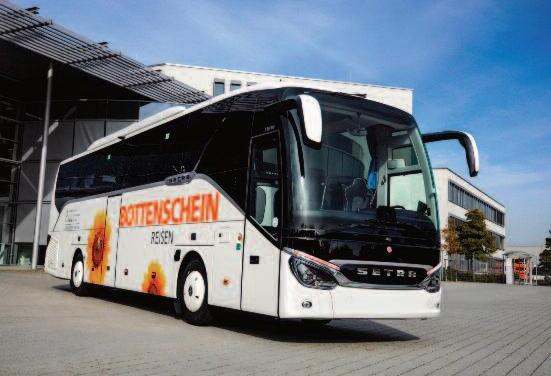
Bottenschein Reisen is bringing on a very special bus with a S 515 HD This is the 25th Setra that this company and its subsidiar y, Süddeutsche Verkehrslinien GmbH & Co KG, have added to their fleet within one year
T h e r e d e s i g n e d S e t r a C o m f o r t C l a s s coach offers space for 48 passengers, who can relax on seats with adjustable comfor t headrests as they travel throughout Europe
I n a p p r e c i a t i o n o f t h e i r w o r k , M a n a g i n g
D i r e c t o r H o r s t B o t t e n s c h e i n g a v e h i s employees free rein when it came to designing the ambience of the new bus
T h i s t w o - a x l e v e h i c l e h a s a l l t h e l a t e s t d r i v e r a n d s a f e t y a s s i s t a n c e s y s t
Equipment News
Irizar is providing two electric buses for use on the Rivas Vaciamadrid urban lines managed by the Regional Transport Consortium of Madrid The 12-meter Irizar ie buses will go to La Veloz, a company that is part of the Samar Group Each bus will have three doors and 30 seats with four seats reserved for people with reduced mobility
board, including Predictive Powertrain Control (PPC) Thanks to the predictive cruise control with topography recognition, drivers c a n n a v i g a t e t h r o u g h o u t E u r o p e w h i l e remaining environmentally conscious and economically efficient The centerpiece of this coach is the OM 470 six-cylinder in-line engine rated at 315 kW (428 hp), which is coupled to the fully automated 8-speed GO 250-8 MPS manual transmission
Bottenschein was founded in 1952 and h a s b e e n a c u s t o m e r o f t h i s U l m - b a s e d b
To
r s p re
mium, hiking, city and wellness trips as well
Bottenschein Reisen recently added this two-axle 48-passenger Setra S 515 HD to its fleet It is the 25th Setra the company has added within one year The coach has an OM 470-six-cylinder engine and the automated eight-speed GO 250-8 MPS manual transmission.
as gastro and adventure travel Club, companies and schools can also rent their buses for excursions W i t h a n S 5 1 6 H D , t h e b u s
p a n y Christoph-Reisen is bringing on its fifth new S
three-axle vehicle has 49 seats and offers the highest level of comfor t and safety with t h e l a
redesigned Setra ComfortClass bus, which is equipped with an OM 470 six-cylinder inline engine, in the 335 kW (456 hp) power output variant, and the fully automated GO 250-8 PowerShift bus transmission, trans-
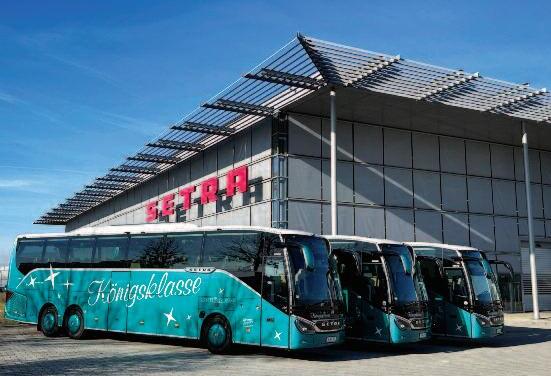
Schörnig Reisen acquired three Setra S 516 HD buses They are 13 meters (42 5 feet) long, come with 38 touring seats and will be used on longer tours The “Königsklasse” wording on the side translates into “Kings Class ” The company is celebrating its 100th anniversary.
por ts travelers to a wide range of destinations across Europe
Christoph Ecke acquired his first Setra, a S 5 1 7 H D , a s G e r m a n y ’s y o u n g e s t b u s operator in 2018 From this bus, Ecke, who w a s t r a i n e d i n a d m i n i s t r a t i o n , g r a d u a l l y expanded his travel program, and today he and his team offer customized student and group trips for clubs and enterprises, while also providing rail replacement bus services with a Setra F 415 LE business
On the occasion of its 100th anniversary, t h e b u s c o m p a n y S c h ö r n i g R e i s e n p u rc h a s e d t h r e e C o m f o r t C l a s s S 5 1 7 H D buses, expanding its fleet to a total of 16 luxur y coaches A total of 103 vehicles have been purchased over the past 100 years
The 13-meter-long, three-axle vehicles a re e a c h e q u i p p e d w i t h 3 8 t o u r i n g s e a t s with embroidered seat numbers as well as adjustable comfort headrests and leg rests The distance between the seats on luxur y buses is one meter With these three Setra buses, which will be used for trips to destinations including Morocco, Andalusia and L a p l a n d , t h i s c o m p a n y f r o m H a n o v e r i s expanding its own fleet of “Premium class” vehicles
In addition to optimum comfort, this enterprise opted to equip its new buses with all the driver assistance systems that the brand offers with regard to active safety As such, alongside the next-generation ABA 5 adaptive cruise control system and a 360-degree camera, these vehicles also have signal light
Equipment News
ensure that the vehicles are easily visible, even in fog and darkness
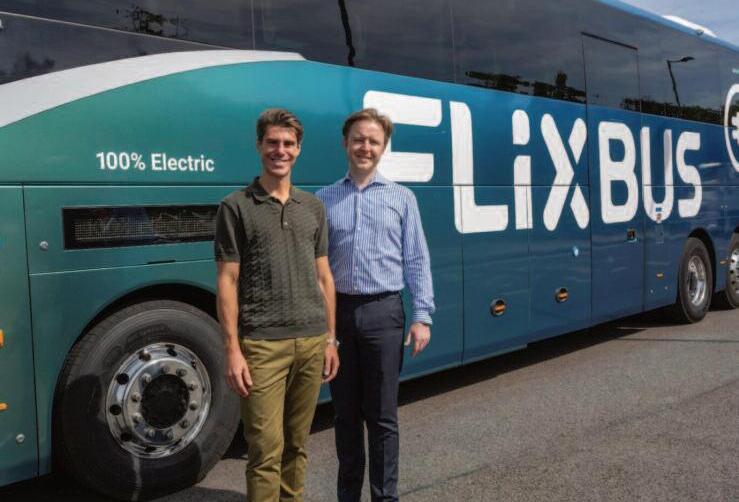
Cambridge Electric Coach Ser vice Travel tech company Flix is announcing the launch of a 100 percent electric longdistance coach service between Cambridge and London in partnership with Whippet and Zenob The electric vehicle will drive on a FlixBus route between Cambridge city cent e r, Tr
Finchley Road and Victoria Coach Station from August 14
The Yutong GTe14 offers the most up-todate electric coach vehicle technology, with zero emissions at the tailpipe The route is an almost 200 km (124 miles) round trip, and will be trialled for six weeks on Flix Bus’ longdistance coach network The news follows the launch of England and Wales’s first electric coach service pilot, unveiled by FlixBus earlier this year
Andreas Schorling, managing director
service, we’re thrilled to be trialling another zero-emission service as we build the largest coach network in the countr y ” The vehicle, provided by Pelican Yuton, will save 167kg of carbon emissions per day driven – two round trips – on this route compared to the average diesel-fuelled coach Whippet is the leading electric bus operator in Cambridge, providing the Universal university bus service as well as local bus routes
Jonathan Ziebart, UK managing director o f A s c e n d a l
y, commented: “Twelve months after launching the UK’s first privately-funded electric bus network, Whippet is delighted to be strengthening our position as early adopters of zeroemission coach technology as we launch C a m
’s
coach ”
The vehicle includes a toilet, USB charging points and free Wi-Fi for all customers as standard on Flix Bus services, as well as being PSVAR compliant, suppor ting travel for passengers in wheelchairs
Attending the launch, Deputy Mayor for Cambridge and Peterborough Anna Smith, said: “I want to congratulate Whippet and Flix Bus on this exciting new venture We’ve already seen the great success of electric buses in Cambridge City, but the opportunity t
longer journey is a real game changer I wish
outcomes closely ”
The electric vehicle has a batter y rating of 563kWh, and will be charged at Whippet’s Swavesey depot using infrastructure provided by Zenob Zenob will install its telematics onto the coach to capture data on the per for mance of the vehicle and on-board batter y This infor mation will be crucial for FlixBus as it develops its strategy to expand its electric coach services within their route network in the UK Zenob will also suppor t w
g e t h e eCoach, with a focus on implementing the optimal charging strategy
Steven Meersman, co-founder of Zenob , said: “With over 1,200 electric buses globa l l y, w e b r i n g o u r e x t e n s i v e e x p e r t i s e i n charging infrastructure, software and telema t i c s t o t h i s e C o a c h t r i a l w i t h F l i x B u s a n d Whippet We look forward to analyzing data such as the charging profile of the vehicle and exploring how more coaches serving long-distance routes can be suppor ted in the UK and around the world ”
FlixBus has 70 destinations on its UK network, alongside daily services to continental Europe Its network has achieved a 4 2 out of 5-star rating on TrustPilot, the highest of any scheduled coach service in the country The company was the first to bring an electric coach service to England and Wales in March 2024
P a re n t c o m p a n y F l i x , w h i c h o p e r a t e s in 44 countries across four continents, has piloted electric vehicles in several markets a n d a i m s
n e u t r a
y throughout Europe by 2040 “Flix champions sustainable travel and we are on a miss i o n t o d r i v e c h a n g e t o r e d u c e c a r b o n National Bus Trader / October, 2024 • 15
FlixBus recently launched trial electric bus service between London and Cambridge For the 145-mile round trip the service will use Yutong GTe14 electric coaches equipped with restrooms, USB charging plugs and Wi-Fi The initial trial will last for six weeks,
e m i s s i o n s n o t o n l y i n t h e U K b u t g l o b a l l y t h ro u g h p a r t n e r s h i p s l i k e t h i s o n e , ” c o nc l u d e d S c h o r l i n g
Wrightbus Shows Hydrogen Bus Wrightbus, the fastest-growing bus manu f a c t u re r i n t h e U K a n d E
, t o o k t h e w r a p s o ff t h e l
t e s t s t a g e
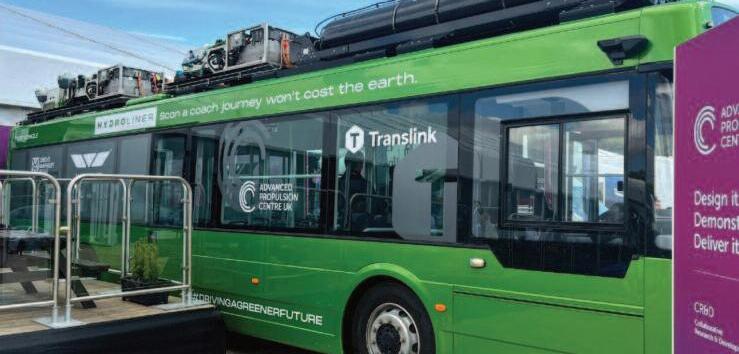
s h y d ro g e n c o a c h d e v e l o p m e n t f o l l o w i n g s u c c e s s f u l government funding CEO Jean-Marc Gales described the latest zero-emission coach iteration, a 300kw hydrogen coach demonstrator unveiled at the Cenex Expo, as a significant step forward in the road to decarbonize the public transport industry He said he was hugely grateful to the support of the Depar tment of Business and Trade, delivered through the Advanced Propulsion Centre UK (APC), and with par tners including Queen’s University Belfast and Symbio
“ F o r y e a r s , Wr i g h t b u s h a s l e d t h e w a y i n t r a n s p o r t i n n o v a
w o r l d ’s fi r s t h y d ro g e n - p o w e re d b u s a
d an award-winning batter y-electric version, now both sold all around the world,” JeanM a rc e x p l a i n e d “ B u t t h
Equipment News
u e t o plough enor mous amounts of time, money and effor t into staying ahead of the curve
“ W h i l
a real impact on public transpor t, we must tackle the decarbonization of coaches Yet t
we have worked heavily on creating a new driveline and our testing shows it can cover 1
Wrightbus has come a long say since it w
Bamford in 2019
O
Germany and a workforce heading towards 2
launched New Power, a manufacturing wing w
replaces them with EV power trains
Wrightbus recently displayed its new hydrogen bus at the Cenex Expo The company has offered both a battery bus as well as a hydrogen bus that is now sold around the world This new hydrogen bus model is expected to use a new driveline with a range of 620 miles on one fueling
Volvo Buses Receives Order for 31 Volvo 9700 Double-Deckers
P u b l i c t r a n s p o r t o p e r a
s h a s ordered 31 Volvo 9700 double-decker buses to be delivered to Gothenburg, Sweden, by the summer of 2025 Twenty-six of the buses will operate in express traffic in the city and five will run on an intercity route from nearby town Borås The double-deckers will join a fur ther 22 Volvo 9700 DD buses that Keolis already operates in and around the city The coaches will feature the recently launched B13R engine, offering fuel savings of up to nine percent and the possibility to use diff
operations
“We continue to build on our relationship with Keolis and are ver y pleased that they appreciate our upgraded Volvo 9700 DD,” says Key Account Manager at Volvo Buses Andrea Baljhagen
“One key factor is that the coaches have triple fuel flexibility and can be run on diesel, or biodiesel, HVO or RME that gives us flexibility to choose from That and the quality of the coaches and the positive experience we and the passengers have had with the previous Volvo 9700 DD was impor tant in the selection process for the new coaches,” says Karl Or ton, fleet director at Keolis
success in a tough and competitive market environment
“Even though our double-decker is quite new, we are taking market shares in this segment That proves that we have a very good premium product that is much appreciated b y t h e m a r k e t a n d t h e c u s t o m e r s
Baljhagen
The double-deckers are 4 25 meters high and 14 8 meters long and can carr y 75-80 seated passengers in these two configurations They are equipped with both camera view mirrors and the latest active safety syst e
, passengers and other road users The bodies for the Volvo 9700 DD will continue to be m a d e b
Finland
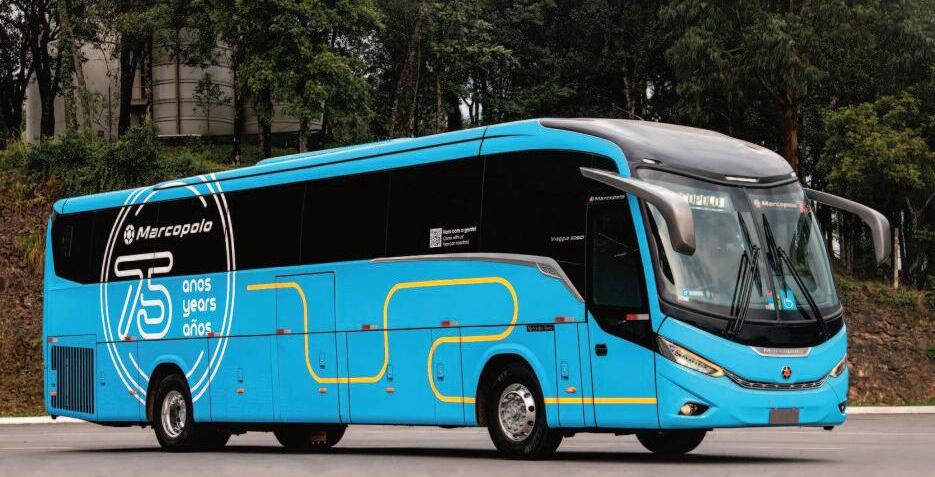
Marcopolo Launches Viaggio G8 1050
Marcopolo is launching the Generation 8 Viaggio 1050 bus in the Brazilian market
The model, with 50 units already sold, complements the brand’s line of buses, which
adiso 1200, Paradiso 1350, Paradiso 1600 LD and Paradiso 1800 DD models Genera
units of which 2,150 are double-decker mod-
Keolis recently ordered 31 Volvo 9700 double-deck buses for Gothenburg, Sweden Twenty-six of the buses will operate in express service while five will run on an intercity route to nearby Borås Bodies for the buses will be provided by Carrus Delta in Finland
els In addition, 850 were destined for the inter national market The success of buses in this category is due to factors such as the renewal of fleets by bus companies looking to increase passenger comfor t and safety
The Viaggio G8 1050 incorporates all the innovations and technologies introduced in the Paradiso models and provides operators with a new sophisticated and, at the same time, economical and efficient vehicle option for charter and tourism operations It stands
cient, lower fuel consumption and emissions, combined with greater thermoacoustic comfort, in addition to offering robustness, safety and low maintenance
A
cover (composite material), aluminum baff l e s a n d h a t c h a n d v i n y l - c o a t e d p o l y u r e t h a n e f r o n t d a s h b o a r d f o r b e t t e r f i n i s h a n d g re a t e r re s i s t a n c e
Exter nally, the Viaggio G8 1050 retains the distinctive design of the Generation 8 m o d e l s , w i t h a n A B S b o n n e t , f ro n t o p t i c s w i t h b u l b s ( L E D h e a d l i g h t s a s o p t i o n a l equipment) and round fog lights, as well as a new, wider screen and exclusive rear-view mirrors At the rear, the design is similar to that of the Generation 8, with brighter lights, new taillights and a new rear window
Internally, the Viaggio G8 1050 has a new lower front dashboard that provides greater visibility for the driver and a new cluster of i n s t r u m e n t s o n t h e d a s h b o a rd , m a k i n g i t easier for the driver to access the controls
Equipment News
The dashboard also got a new defogging system with 33 percent higher air speed
The model also incorporates a 4 3-inch m u l t i p l e x s
o p e r a t i o n via touchscreen and physical keys and also has a malfunction diagnosis system via bluetooth to make maintenance faster The keys on the dashboard are rubberized for durability and glow at night for improved visibility The auxiliar y keyboard at the bottom of the c
prefers not to use the touchscreen
Another distinguishing feature is the total separation wall, covered in vinyl for a better finish, greater durability and easier cleaning On the doors, the vehicle has a hinged door, with an optional sliding door, and a trolleyt
longer service life
received a new, 11 percent more efficient cooling system that allows the ideal temperature (thermal comfort) to be reached more q
with a new fastening system that ensures a b
tributes to a high level of internal noise The overhead console is also new and unique, with integrated volume control
It has a stronger and more uniform indirect internal lighting system, without compromising visual comfor t The project provides a cozy and yet functional environment, according to the application and service It also has LED reading lights and individual vents
The structure of the new Viaggio G8 1050 uses the concept of safety grommets on all t h e c o
resistant to impacts and rollovers – structural c o n c e p t R 6 6 0 2 V C A I
e optional FIA passive safety system to protect the driver’s cabin, with a triple “B” column structure that provides 78 percent less deformation than required by Brazilian standards I
speed of 40km/h, carried out in the test field
absorb energy, with controlled deformation, significantly increasing driver protection A
copolo’s engineering team was the optimization of the power stations, located in the luggage compar tment and on the front of the
maintenance
The Viaggio G8 1050 model presented at Lat Bus has a Mercedes-Benz O500 RS 1938 Euro 6 chassis, with a total length of 13,200mm, a width of 2,600mm and a height of 3,750mm, with capacity for 46 passengers in semi-sleeper seats, with reversible USB A and type C sockets and a seat belt
matic model
accessibility, 120,000 BTUs hot and cold air conditioning system, toilet at the back of the passenger area It has a fuel tank capacity of 500 liters, full LED headlights and front and rear fog lights, audio and video system with DVD with USB on the dashboard, three m o n i t
inches in size and microphone plug in the passenger area and for the driver, as well as a radio built into the multiplex q
Marcopolo is launching its Generation 8 Viaggio 1050 bus in the Brazilian market The Viaggio G8 1050 incorporates
duced with the previous Paradiso models New improvements include a n e w,
shield, exclusive
Bus Equipment People
MCI
Motor Coach Industries (MCI), a subsidiary of NFI Group Inc (NFI) and North America’s m o t o r c o a c h l e a d e r backed by reliable
i n - fi e l d t e c h n i c a l
e x p e r t i s e , 2 4 / 7
r o a d s i d e a s s i s -
t a n c e a n d p a r t s support, on August 26 announced the promotion of Steve Weiss to vice pres-
i d e n t o f N e w a n d Pre-Owned Coach
s a l e s f o r t h e M i d -
A t l a n t i c R e g i o n
S i m u l t a n e o u s l y,
E d d i e M o r e n o h a s
b e e n p r o m o t e d t o
N F I r e g i o n a l p a r t s manager to succeed Weiss
“ W i t h M C I ’s n e w - c o a c h m a r k e t l a r g e l y recovered, it is time to bring our sales team back to full strength,” s a i d To m Wa g n e r,
v i c e p r e s i d e n t o f
P r i v a t e S e c t o r
Sales, MCI “Steve already has strong r e g i o n a l r e l a t i o nships as the former NFI parts manager
a n d w i l l s e a m -
l e s s l y p r o v i d e
s a l e s s u p p o r t t o t h e M i d - A t l a n t i c
Region His extensive technical and p r o d u c t k n o w l -
e d g e w i l l g r e a t l y
b e n e fi t o p e r a t o r s of our J-Series and D-Series coaches
“ W e i s s ’ t e r r i t o r y i n c l u d e s D e l a w a r e , Maryland, New Jersey, Virginia, Washington, D C and Pennsylvania Since joining NFI Par ts in 2015, he has been instrumental in developing new business and broadening p r o d u c t l i n e s t o b e t t e r m e e t o p e r a t o r s ’ needs
Moreno, who has been with the company since 2016, star ted as a warehouse associate for the MCI Service Center in Blackwood, New Jersey For the past eight years, he has developed strong leadership skills a s h e m o v e d u p i n t h e c o m p a n y M o s t re c e n t l y, Moreno w a s t h e m a n a g e r o f t h e NFI Parts warehouse in East Brunswick, New Jersey
“Eddie brings a tremendous skill base and customer focus to his role as a regional parts manager,” said Tim Barnes, director of Private Market Sales, NFI Parts “Since he is joining Steve Weiss in the same region, it creates a seamless transition for our customers and ensures the highest level of service ”
“Eddie’s contributions will enhance the re l a t i o n s h i p - d r i v e n s t r
y MCI and NFI Parts over the years, delivering substantial value to our customers across coach sales, service and aftermarket parts,” added Bar nes
tional leadership skills will further strengthen a n d d
TBB,” said John O’Leary, president and CEO o f D T N A “ W i t h h i s v i s i o n a n
c approach to operations he will be a valuable asset to these already strong businesses –and help continue to pave the way to sustainable transpor tation ”
Reed holds an MBA from Michigan State University and ear ned a bachelor’s degree i
University
Reed will remain responsible for DTR and w i
successor is named
eddie mareno@nfi par ts
Daimler
(
position of president and CEO of Freightl i n e r C u s t
s i s C o r p ( F C C C )
a
B u s e s ( T B B ) ,
b e r 9 I n h i s n e w ro l e , Reed w i l l b e responsible for all
a s p e c t s o f t h e
T B B a n d F C C C
b r a n d s a t D T N A , including strategy, s a l e s a n d o p e r a -
t i o n s H e s u c -
c e e d s K e v i n Bangston, who was recently appointed CEO and president of Daimler Truck Financial Services (DTFS) Nor th America
R e e d , c u r r e n t l y p r e s i d e n
Tr u c k R
c k s
experience in the truck manufacturing indust r y H e j o i n
1 9 9 8 a s a custom application engineer for vocational trucks and has since held various leadership roles in product marketing and strategy, as well as pricing and P&L responsibility within D T N A Reed a
d e the company with Meritor Inc , where he held several senior leadership positions, including vice president of Global Business Development for Electrification
“We’re excited to have T J at the helm of these specialty vehicle business units His extensive industr y knowledge and excep-
Flix Nor th America
Flix Nor th America Inc , the parent comp a n
h
Surber , w h o
hound for nearly 30 years, will report to Kadir “Kai” Boysan, chief executive officer of Flix Nor th America
D u r i n g h i s t h r e e d e c a d e s w i t h G r e yhound, Surber has held various leadership roles, most recently serving as vice president of operations In his new role, he will be the top senior leader for the brand, overs e e i n g b u s o p e r a t i o n s , c u s t o m e r s e r v i c e operations, and maintenance and engineering He will ensure that Greyhound continues t o s o l i d i f y i t s l e a d e r s h i p p o s i t i o n i
distance bus travel and deliver exceptional service across its extensive network in the U S , Canada and Mexico
“ R o d n e y i s a h i
h - i m p a c t l e a d e r w i t h deep operational exper tise and extensive knowledge of Greyhound, making him the i d e a
a s achieved significant operational improvements through our investments in technology, fleet and service quality Rodney’s lead-
business further and positioning Greyhound to seize new oppor tunities for growth in the evolving long-distance travel landscape ”
“I am honored to step into this role during t h i s p i v o t a l t i m e o f g ro w t h f o r G re y h o u n d and Flix Nor th America,” said Surber “The operational integration and improvements we’ve achieved to date have laid a strong
Eddie Moreno
T J Reed
Steve Weiss
Bus Equipment People
f o u n d a t i o n , a n d I ’ m e x c i t e d t o l e a d o u r effor ts in driving even greater operational e x c e l l e n c e , p ro d u c t i n n o v a t i o n a n d c u stomer satisfaction Our goal is for Greyhound to become the benchmark for service quality and the long-distance bus travel experience in Nor th America, exemplifying excellence for other Flix par tners and the industr y ”
Surber’s appointment is part of a suite of measures designed to further enhance operations across Greyhound, including refining the regional structure of Greyhound’s field operations and centralizing customer service for both Greyhound and FlixBux under a single management team to ensure a consistent experience for customers nationwide
A s a m e m
work, Greyhound now provides a moder ni z e d o n b o a r d e x p e
b o o k i n g p ro c e s s a n d i m p ro v e d c u s t o m e r service Together Greyhound and FlixBus, through its trusted par tners, offer passeng e r s t h e m
n
n g affordable and sustainable transpor tation t o m o r e t h a n 1 , 8 0 0 d e s t i n a t i o n s a c r o s s N o r t h A m e r i c a q
When Bus Manufacturers Can No Longer Compete
by Larry Plachno
Over the years NATIONAL BUS TRADER has earned a reputation for in-depth editorial Many times we have tackled technical or complex topics in new and different areas This will be another venture into new and uncommon areas. While we will start with the bus industry, we will end u p t a l k
input and suggestions from our readers that we can use in future articles
There has been increasing concern over some bus manufacturers having difficulty competing in the marketplace We will start b y l o o k i n g a t t h i s i n E u ro p e a n d h o w i t i s impacting the bus and automotive industry. From there we will move to the United States and look at similar developments After that we will try to explain how we got here and offer some suggestions for dealing with this
Europe
The situation in Europe became obvious to the bus industry recently because of developments at Van Hool. Originally founded in 1947 by Bernard Van Hool to build muchneeded buses following World War II, the family-owned company grew to become a
had suffered substantial setbacks because
debt to four banks in the amount of
staying competitive because of the high cost of wages, utilities, taxes and other expenses
until Belgian transit operator De Lijn placed an order for 92 battery-electric buses with Chinese-builder BYD While there were suggestions that the order should have gone to local builder Van Hool, it was pointed out that the Van Hool bid was 20 percent higher than BYD This resulted in the appointment of a co-chief executive officer to help turn things around at Van Hool
trucks and transit bus manufacturing would be eliminated. However, the plan required someone to step forward to cover the cost of the reorganization and payments to the employees laid off. This did not happen so Van Hool went bankrupt and the assets were split in two directions
The recent and rather sudden bankruptcy of Van Hool in Europe was a sobering development for many in the bus industry. However, Van Hool may be only the tip of the iceberg since other bus manufacturers may be having difficulty competing. Europe is facing deindustrialization and there are problems in other places too VAN HOOL
What we are finding is that Van Hool is n o t a n i s o l a t e d s i t u a t i o n F o r y e a r s n o w coach manufacturing has been moving out of Western Europe to remain competitive by avoiding high wages and taxes. Some bus manufacturing has moved to Poland while well-known companies like MAN, Neoplan and Mercedes have moved their coach manu f a c t u r i n g t o Tu r k e y T h e c o n c e r n s g o f a r beyond buses There already are numerous groups and organizations concerned with the deindustrialization of Europe
heavy industry for decades. Rudolph Diesel developed his famous engine while working with M.A.N. in Germany. ZF, once known for its axles, steering and transmissions has been morphing into electronics and develo
Germany’s BASF, founded on the banks of the Rhine in 1865, announced the shutdown of their fertilizer plant in Ludwigshafen that i
jobs while investing $10 billion in a state-of-
the-art complex in China Perhaps the most eye-opening development is that Volkswag
unions are not pleased with this, but we have not seen any substantial concessions
In early July, Audi announced plans to restructure its Brussels plant, a move that
Members of trade unions of both Audi and
unions There was some question of whether they would protest the high wages and taxes that were making companies less competitive on the global market
Perhaps the most recent surprise was the
Founded in Netherlands in 2012, Ebusco is a recent startup that concentrates on batteryelectric buses. They have had some success in selling buses in several European countries but they are falling behind on their bus d e l i v e
delivery penalties that will further reduce their income. W
factors that make companies less competitive in the global market, there are other factors that are making a difference in Europe One of the most important is what has come to be called the Demographic Crisis which is the reduced birthrate among developed nations This is causing Europe’s population t
t s y o u n g w o r k f o r c e g r o w s smaller. It was noted that this is a particular problem in places like Germany where they n e e d t o m o v e i n n e w d i re c t i o n s b u t t h e i r engineers and technicians are ready to retire
In recent years Ireland saw an increase in business because of its young and vibrant workforce caused in part by its Catholic prolife traditions. However, the Irish recently accepted abortion that will eventually eliminate this advantage Meanwhile, China may never recover from its one-child policy as its workforce grows smaller Expectations are that some of China’s industry will move to India where they have a substantial workforce
Another problem has been the impact of C o v i d a n d t h e p a n d e m i c o
European businesses suffered from the pand e m
places, political leaders did not understand
Instead of creating policies and programs to help business get back on its feet, some went ahead and increased taxation that only made
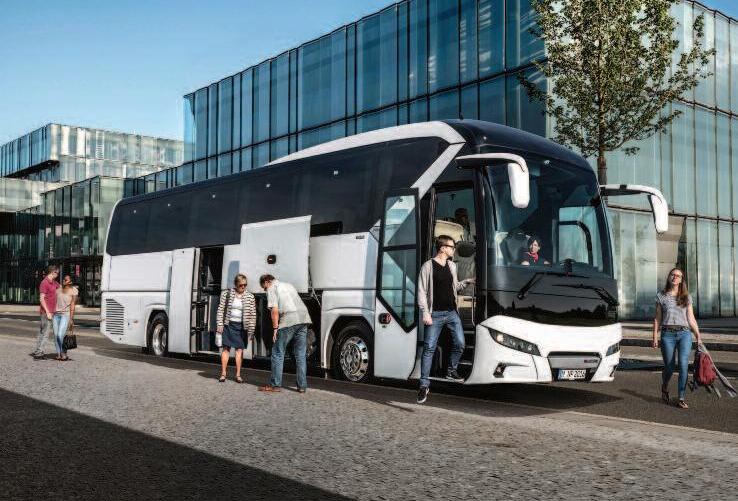
Several European coach manufacturers have already moved their production out of Western Europe to take advantage of lower wages and taxes. M.A.N., Neoplan and Daimler are among the companies now building coaches in Turkey Shown here is a M A N Tourliner built in Turkey M A N
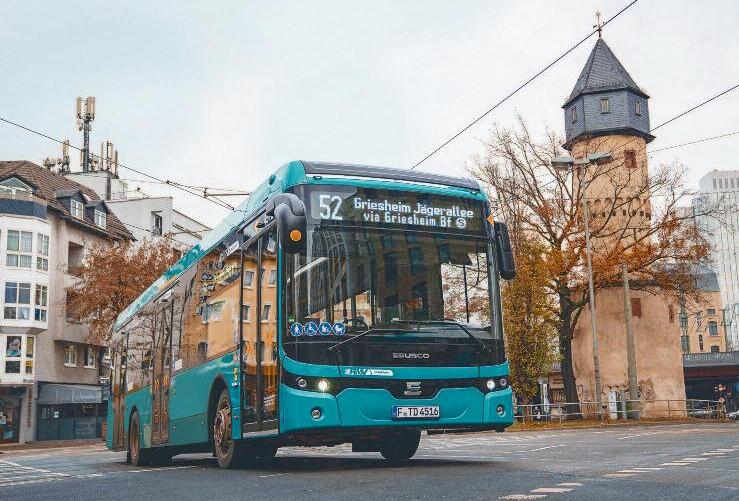
Ebusco is a relatively new European startup company specializing in electric buses. Founded in the Netherlands in 2012, the company has already built coaches running in several countries. The company recently announced that it suffered a loss of 54 7 million Euros in the first half of 2024 EBUSCO.
bined with the pandemic, has created major problems for some businesses
Europe has also been hit with utility problems and price increases. Much of Europe depended on Russia for natural gas This supply was cut with the war in the Ukraine Germany had already started moving away from nuclear power and did not have overwhelming success with solar farms The result has been an increase in utility costs for much of Europe In some locations, such as the UK, t h e i n c re a s e i n u t i l
post-pandemic inflation
Another factor that has had a major influence on costs and manufacturing has been the trend to going green Moving to batteryelectric cars and buses has been a major blow t o t h e E u r o p e a n e c o n o m y t h a t h a d b e e n heavily invested in vehicles and the internal combustion engine Bear in mind that electric cars and buses use electric motors that h a v e b e e n i m p r
e r t h e y e
s b u t retain the same technology used since the days of streetcars
What makes the trend to electric cars and buses different is the use of batteries instead of overhead wires While Europe is a leader in internal combustion engines, it is China that has been a leader in batteries. Hence, the move to electric vehicles tends to favor places that are ahead in battery production, l i k e C h i n a , a n d d i s f a v o r p l
i l y invested in the internal combustion engine, like Europe
Another concern about going green is the huge investment for even minimal progress. For example, today’s clean diesel engines produce only a tiny fraction of the pollution o f t h e i r p re d e c e s s o r s 2 5 y e a r a g o . H e n c e , replacing clean diesel buses with batteryelectric buses represents a huge investment for minimal advantage That same money could more effectively be spent elsewhere to reduce substantially more pollution for the same dollar spent It is interesting that E u r o p e i s a l r e a d y m o v i n g f r o m b a t t e r ye l e c t r i c b u s e s t o h y d ro g e n f u e l c e l l b u s e s because they seem easier to deal with and have greater range
United States
As a general rule, much the same influences that have impacted Europe have also been at work in the United States The turning point may have been as far back as 1956. That year the U S Department of Justice filed a n a n t i t r u s t s u i t a g a i n s t G M C , a n d t h re e other companies, charging that GM had built 8 4 p e rc e n t o f a l l b u s e s s o l d i n t h e U n i t e d States. The charges were never proven and t h e s u i t w a s f i n a l l y s e t t l e d b y a c o n s e n t decree many years later Some people sugg e s t t h a t t h e U n i t e d S t a t e s m a y h a v e s h o t itself in the foot on this one since GM began to move out of the bus business but no U S production stepped in to take its place for a n y l e n g t h o f t i m e G M b e
Detroit Diesel engine to other builders, discontinued coach production in 1980 and sold off its transit bus production in 1987
When GM exited the coach business, several new coach models were offered on the American market For a while we had some domestic coach production with the TMC v e r s i o n o f t h e M C I b u i l t i n R o s w e l
N
w Mexico; the Eagle in Brownsville, Texas and some Neoplan coaches built in Lamar, Colorado That production ended while coaches
were imported from other countries Today, the only remaining coach production left in the United States is the MCI coach finishing facility in Pembina, North Dakota – a location just barely in the United States.
plained that only two heavy-duty transit bus builders remain in the United States Novabus, a Canadian transit bus builder affili-
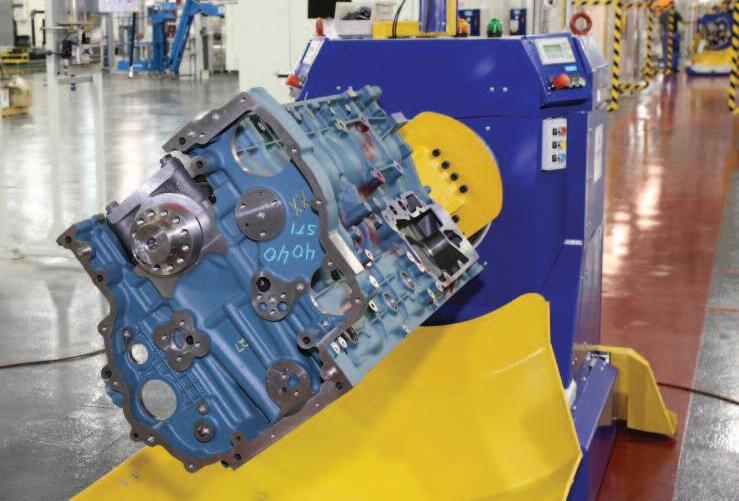
One of the biggest problems facing Europe is that the area has been a leader in heavy equipment for generations. Rudolph Diesel perfected his engine while working for M.A.N. and the area is known for engine, transmission, axles and vehicle production Shown here is a Detroit Diesel engine block in the manufacturing process DETROIT DIESEL
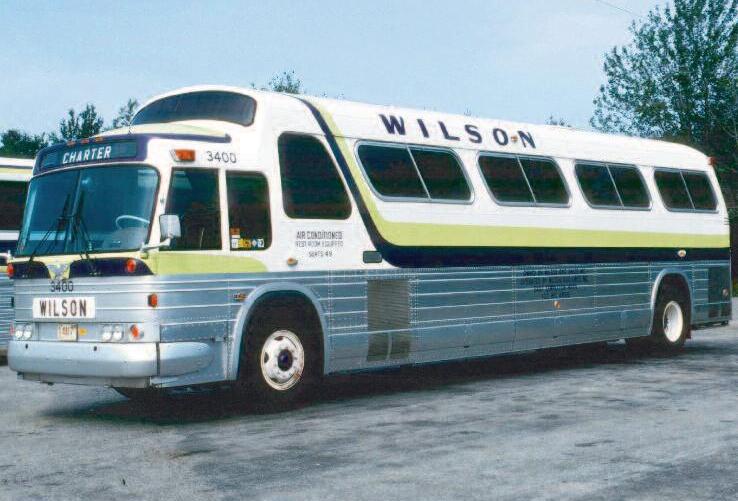
When General Motors left the bus building business in the United States, no U.S. builder took its place TMC, Eagle and Neoplan all built coaches locally for a while but eventually closed their domestic plants. Shown here is GM’s last coach model, the PD4905A. REDDEN ARCHIVES.
ated with Prevost and Volvo had been building transit buses for the U S market at their p l a n t i n P l a t t s b u r g h , N e w Yo r k . T h e y recently decided to pull back from the U S market and their facility in Plattsburgh will p r e s u m a b l y w i l l b e c l
longer needed
I n e a r l y 2 0 2 4 , R e v G r o u p a n n o u n c e d
p l a n s t o c l o s e i t s E l D o r a d o - N a t i o n a l b u s p l a n t i n R i v e r s i d e , C a l i f o r n i a . T h i s e l i m inated 425 jobs and got the company out of t h e t r a n s i t b u s b u s i n e s s T h e t h i rd re c e n t development was the bankruptcy of Proterra i n 2 0 2 3 P r o t e r r a h a d b e e n a b u i l d e r o f battery-electric buses and a supplier of batt e r i e s a n d c o n t ro
s y s t e m s F o l
n g t h e bankruptcy, the company was split into three parts. At this time the two remaining heavyduty transit bus builders in the United States are Gillig and New Flyer
M u c h o f t h e s a m e t h i n g s t h a t h a v e i n f l u e n c e d b u s p ro d u c
United States The Demographic Crisis has c u t i n t o t
have been an obvious shortage of workers in some areas including truck and bus driv e r s , p o s t a l w o r k e r s , re
and elsewhere Several employers are also concerned with a lack of health care worke
t e s a g e s
As in Europe, much business and industry in the United States has been negatively impacted by the pandemic Nearly half of t h e p r i v a t e b u s c o m p a n i e s i n t h e U n i t e d States went out of business and much of the of the remainder have been struggling The recent inflation has only made things worse A substantial portion of business and industry badly needs some relief so it can catch up and get back to where things were prior to the pandemic
Going green has also been a problem on this side of the Atlantic Some people suggest that the costs involved with going batteryelectric outweigh the benefits While there w a s a n i n i
t
n
y
a t t e r yelectric cars, that number has declined as the average auto owner shows no interest Ford re
tinue making pure battery-electric cars
n
How Did We Get Here?
A simple way to explain what happened i
States have enjoyed the best of two worlds for decades Our workers had the advantage of local jobs with good pay While, thanks to the magic of inexpensive container ships, we also had access to inexpensive products from other
countries like China with significantly lower wages What is now happening is that the global economy is expanding and places with lower wages are becoming competitive with our own business and industry
Inexpensive container shipping has been shrinking our globe It is increasingly easy t o s h
advantage of cheaper labor rates some distance away. I have been told that much of the Scandinavian fishing industry ships their f
h t
because of lower labor rates and then ships the product back to Scandinavia for sale The shipping costs are far less than the advantage of the lower wages
States
manufactur-
The industry was surprised by Protera’s
Novabus, a Canadian company, sold transit buses in the United States for many years Production was completed at Plattsburgh, New York to comply with Buy America provisions. Recently, Novabus decided to exit the United States market NOVABUS
Countries with low labor rates started by offering toys, electronics and other products found on store shelves. More recently, the Internet allowed people in other countries to compete with call centers, Web site design and other electronic services Thanks to inexpensive container shipping, these countries are now competing with local business and industry by offering automobiles, tractors, steel and virtually anything else A sobering example is that in the early 2000s, Germany pioneered modern solar panel technology and became the world’s largest producer However, the Chinese soon copied the German designs and flooded the market with cheap alternatives, thus eliminating the German solar panel market Unfortunately, it is not technology but labor rates that control markets
Suggestions and Solutions
The suggestions and solutions are pretty logical
We n e e d p o l i t i c a l l e a d e r s w h o u n d e rstand business, industry and competition in the global marketplace and can make decisions accordingly.
To k e e p o u r b
healthy and more competitive, we need to reduce corporate taxes to encourage more business and make it more competitive in the global marketplace
wages. Competition determines the value of work, not governments You cannot mandate higher wages when the competition has lower wages
We will probably have to reduce the size of government in order to put less burden on the population and business in order to become more competitive q
One of the big factors in all of this is that the economy of shipping by cargo ships has made our world smaller. Today, the cost of local wages and taxes may well be much more important than shipping distances. Our industry needs to compete with manufacturers from all
over the world which is why it needs low taxes in order to compete FREDDY FROM PIXABAY
W h y
I n v e s t i n g
i n Yo u r
E m p l o y e e s i s Wo r t h t h e
E x p e n s e
Iby Amy Nixon
n t o d a y ’ s e c o n o m y, s p e n d i n g y o u r resources on employee training and new t e c h n o l o g y m i g h t n o t b e a t t h e t o p o f your priority list as a business owner. However, did you know that employee training is one way to ensure employee retention?
A c c o rd i n g t o a p o s t o n L o r m a n ’ s We b site, “Seventy-four percent of employees are w i l l i n g t o l e a r n n e w s k i l l s o r e v e n g o t h ro u g h a re t r a i n i n g p ro g r a m i n o rd e r t o remain employable.”
Employer Expense or Investment?
According to Forbes, employee training
i s o f t e n v i e w e d a s a c o m p a n y e x p e n s e W h e n v i e w e d i n t h i s w a y, t r a i n i n g i s n o t seen as a means to retain employees, which
u l t i m a t e l y c o s t s l e s s t h a n t h e r e h i r i n g p ro c e s s . T h i s s h o r t - s i g h t e d m i n d s e t o n l y hurts the company in the long run
A c c o r d i n g t o T h e W a s h i n g t o n P o s t , e m p l o y e r s s h o u l d c o n s i d e r j u s t h o w e x p e n s i v e t h e r e h i r i n g p r o c e s s i s F r o m i n t e r v i e w i n g a n d o n b o a rd i n g t o t r a i n i n g
a n d d e v e l o p m e n t , t h e c o s t s c a n a d d u p q u i c k l y. N o t t o m e n t i o n , “ H i g h t u r n o v e r is associated with loss of productivity, cus-
t o m e r s e r v i c e i s s u e s , i m p a c t o n c o m p a n y culture and lower engagement,” the article s t a t e s
I n a d d i t i o n , L o r m a n ’ s We b s i t e s t a t e s , “Companies with unsatisfactory onboarding
Tony Pascarella, product support specialist and leading HVAC trainer, teaches students and customers at MCI’s regional training seminar at Pennco Tech in Blackwood, New Jersey Most company staff are willing to spend the time and make the effort to learn new things. This is important with buses where technology is continually moving ahead to new areas and systems. MCI
processes are twice as likely to experience employee turnover when compared to companies with more comprehensive training ” R e t a i n i n g e m p l o y e e s g r e a t l y r e d u c e s o r eliminates these costs When your employe e s ’ p r o d u c t i v i t y a n d q u a l i t y o f w o r k increases, so too can your profits.
A d o p t i n g n e w t e c h n o l o g i e s
n empower your employees and your business to thrive By fostering a culture of cont
grams, organizations can effectively equip employees with the skills they need.
Investing in your Employees
Okay, so you have decided that investing in training, technology and resources will pay off in the long run. How do you go about implementing these changes?
t h a t y o u face Acknowledge that administering new t e c h n
afraid of making mistakes or feel hesitant to change. Help them feel more comfortable by creating a welcoming environment where making errors is accepted as a necessary part of learning.
Take note of your employees’ individual w a y s o f l e a r n i n g . S o m e m a y b
visual aids, step-by-step directions, one-on-
more hands-on approach
N e x t , p r o m o t e l e a r n i n g . C r e a t e c u stomized training plans Adapt training plans to meet the needs of various learners Prov i d e o p t i o n s s u c h a s o n l i n e l e s s o n s , s e l fpaced learning modules, group workshops and one-on-one sessions F i r s t t h i n g s f i r s t , s t a r t w i t h w h a t y o u k n o w. B u i l d c o n f i d e n c e g r a d u a l l y b e f o re i n t r o d u c i n g m o r e a d v a n c e d t o o l s a n d training Provide opportunities for handso n t r a i n i n g . E n c o u r a g e e x p e r i m e n t a t i o n a n d e x p l o r a t i
Provide clear instructions. When introducing new technical concepts, use simple, j
understanding Promote teamwork Foster a culture of peer support where employees can learn from colleagues who are already p
Provide frequent assessments and constructive feedback to track progress. Recog-
n i z e a n d c e l e b r a t e a c h i e v e m e n t s t o b o o s t motivation and reinforce learning
Creating a Positive Work Environment
While employee training is essential, it i s n o t t h e o n l y f a c t o r t h a t p l a y s a r o l e i n retention
A s t u d y d o n e b y H a r v a r d B u s i n e s s
R e v i e w ( H B R ) f o u n d t h a t w h i l e 4 1 p e rc e n t of workers are contemplating quitting their job, 59 percent are not At surface level, this s e e m s o b v i o u s , b u t H B R t o o k i t o n e s t e p further They investigated why the 59 percent of people who are not thinking about quitting are staying in their positions. They found that the businesses who were keeping their employees had one common pract i c e : t h e y h u m a n i z e d t h e w o r k f o rc e . D i ff e r e n t d e p a r t m e n t s d i s p l a y e d t h i s differently, but some examples include creating a workplace culture, both virtual and i n - p e r s o n , a n d e m o t i o n a l l y e n g a g i n g i n one-on-one meetings rather than focusing o n l y o n w o r k - re l a t e d i t e m s
What does “humanizing the workforce” look like?
“ Yo u c a n ’ t f i x w h a t y o u d o n ’ t k n o w i s
b ro k e n , ” s a i d O n Yo u r M a r k Tr a n s p o r t ation’s President and CEO Mark Szyperski. “Take the time to listen to your employees and really hear their concerns and fears ”
Highlight the benefits of implementing n e w t e c h n o l o g y E m p h a s i z e t h e p e r s o n a l and professional benefits your employees will gain from mastering new skills Showcase opportunities for career advancement, expanded skill sets and increased efficiency P r a c t i c e e m p a t h y a n d p a t i e n c e R e m i n d your employees that mistakes will be made while they attempt to master new technology and efficiently implement it within their roles
O f f e r o n g o i n g s u p p o r t b e y o n d i n i t i a l t r a i n i n g M a k e re s o u rc e s , h e l p d e s k s a n d refresher courses readily available to ensure t h e t r a n s i t i o n t o t h e n e w t e c h n o l o g y i s a s seamless as possible
A d o p t i n g n e w t e c h n o l o g i e s c a n empower your employees and your business to thrive. By fostering a culture of cont i n u o u s l e a r n i n g , p ro v i d i n g a s u p p o r t i v e e n v i r o n m e n t a n d t a i l o r i n g t r a i n i n g p r ograms, organizations can effectively equip e m p l o y e e s w i t h t h e s k i l l s t h e y n e e d E m b r a c e t h e c h a l l e n g e o f m a s t e r i n g n e w technologies and equip your staff with the tools for success
A c c o rd i n g t o a s t u d y p u b l i s h e d b y t h e National Institute of Health, positive work environments promote employee commitm e n t E m p l o y e e c o m m i t m e n t c a n h e l p enhance the performance of employes, the s t u d y s t a t e s , b e c a u s e e m p l o y e e s s h o w a
higher level of performance when they are committed to their employer
“ S i m i l a r l y, e m p l o y e e s w i t h h i g h e r achievement-striving ability tend to show a higher level of task performance even in difficult situations,” the study concludes “Furt h
activities in organizational cultures are triggered under social exchanges, and positive b e h
Retraining employees to develop professional skills while fostering a workplace that promotes human connections are the leading forces in promoting employee retention These should work together to ensure that employees are satisfied with their manage-
Here we find a group of service technicians learning about new developments in the ABC-Van Hool product line. In this particular session, information centers around the new battery-electric coach from Van Hool Keeping up with new developments is important for your service staff ABC COMPANIES
Training can be helpful to your entire staff regardless of their duties in your company. Here we see a large group at a Prevost training session in Quebec In many cases, the training staff will also bring the training to your company location. PREVOST.
Eau De Bus
by Dave Millhouser
We w e r e a Tr a v e l i n g Ti m e Wa r p
d e
f o r h a
) T
re toddling northward towards our facility in New Jersey
Fifteen ancient GM “flat-bottom” transits sporting 6-71 Detroit Diesels and two-speed automatics roared up Interstate 95 at “flank speed,” occasionally exceeding 50 miles per hour on long downgrades. Desperate for drivers (otherwise yours truly would not have been on this jaunt), we had even drafted our lead mechanic for this winter trek.
About a hundred miles into the adventure, our lead mechanic smelled something strange and noticed liquid trickling from under the dash and dribbling down the aisle Simultaneously, he figured out that he was cold and getting colder
Then his temperature gauge pegged AND h i s h o t e
u
that the smell was antifreeze; the liquid he s
core The coolant that his engine needed to
gave up the ghost (a hissing white cloud of steam).
look for its source A clever mechanic would have known that losing cabin heat is a symptom of low coolant. Our guy was neither, and we sold the bus, on the spot, for scrap
You are guessing our target here is cooling systems Gotcha
It seemed a neat idea to discuss bus smells Part of your training is the pre-trip inspection, a
around their coaches at every stop – looking for puddles, parts falling off or other harbingers of disaster.
A good bus driver is attentive to both sounds and smells while driving Smelling something unusual can be an indication of trouble developing somewhere. It could be worthwhile to take a tour of the garage to smell diffferent fluids and components so you are familiar if something happens on the road PREVOST
Why not chunk Bussy B O into the mix?
F re q u e n t l y i m p e n d i n g d i s a s t e r ’ s e a r l i e s t hints are olfactory. Most of us recognize the distinctive smell of overworked brakes It is remarkably similar to the cooked clutches of ye good old days If you pick up that scent while driving, or stopped, and you have not been punishing your brakes, then something is wrong A stuck caliper or some other nastiness that, if ignored, can lead to a fire
If you notice a puddle under your parked coach, your bus may be marking its territory,
but more likely it is hemorrhaging some precious bodily fluid If it smells like water, it may just be AC condensate, but oil, power steering fluid, antifreeze and DEF each have unique aromas. They are not Eau de Bus. I
your shop folks to let you sniff around the garage You will get an education and some funny looks Do not taste stuff, some is toxic
know)
Electrical problems often have a unique aroma It is hard to describe, but once experienced, it is seared into your memory (pun intended)
In ye olden days, for a dense driver (like me), the first sign of a flat tire on a dual might be the distinctive scent of burning rubber. That is because the vibration normally associated with a flat is sometimes disguised by rough road (or the desperate hope that it is anything BUT a flat) Modern tubeless tires m a k
burning rubber is never good Gee, maybe it is just a frying belt S
flat, or bakes its brakes. Your lav may need service OR you are passing a sewage treatm
you do not know the source of an unusual smell, assume it is your problem until you c
Some smells require immediate action, while others are less urgent. A pungent lavatory is a problem that can wait a bit A flaming dual – not so much Like cats, tire fires have nine lives You want to kill them early and often (fires, not cats)
I n y e p r e - A C d a y s a n i n t e g r a l p a r t o f c o a c h “ c l i m a t e c o n t ro l ” w a s v e n t
front of the coach. In summer you opened t h
First, tailgating is bad A bit further back and Brill #2 would not have learned the second lesson; the fastest way to evacuate a bus is to squish a fresh skunk through its vent Third, when a manufacturer installs a screen over an opening, do not remove it. The distinction between inside and outside odors can be significant when skunks and ram air are involved. q
Jeff from ABC Companies goes through an engine compartment looking for problems. Often, an unusual smell will lead a technician to find and resolve a concern before it gets worse Learning what different smells indicate can be helpful to both service staff and drivers. ABC COMPANIES.
Sur vival and Pr osperity
by Ned Einstein
Electric Buses, Part 3: Technically Feasible Concepts
This is the third installment about the feasibility of electric buses, and the factors that render them so or not so
The first installment dealt with a small Midwest community that obtained its first e l e c t r i c s c h o o l b u s f o r f r e e , t h r o u g h a n u n u s u a l g r a n t p ro g r a m – a n d h a d a h a rd time figuring out how to handle it This challenge was compounded by the battery not w o r k i n g – a n d i t t a k i n g f ro m S e p t e m b e r until the spring for the manufacturer to fix it This experience was viewed differently by different members of the community. The costly charging station, amortized by a single v e h i c l e , w a s a n e x t r a v a g a n c e t h a t g re a t l y strained this community’s resources
The second installment dealt with Rhode Island’s difficult implementation of a small fleet of electric buses not justified by the trivial volume of pollution they saved, and compounded by an initial fleet whose batteries delivered a third of the holding capacity they promised Then a larger replacement fleet’s use was integrated into a land use project that was both costly and tricky politically, and forced some other controversial tradeoffs related to land use
All the vehicles were deployed on a single route – the state’s fattest – to “make the numbers look better ” Even with this concentration, this tiny fleet did not remotely justify the four $22 million charging stations needed to support it, particularly, as noted, g i v e n t h e i n fi n i t e s i m a l p e rc e n t a g e o f t h e State’s pollution its tiny fleet of clean-diesel buses contributed to it Expanding the system would make even less sense, since more charging stations would be needed
W h o s e “ s y s t e m d e s i g n ” and surrounding air quali t y m i g h t j u s t i f y a s i n g l e charging station.
This installment describes a city which currently does not deploy any electric buses, but whose “system design” and surrounding air quality might justify a single charging
station – all that would be needed to support the entire fleet I am talking about the Carson C i r c u i t Tr a n s i t S y s t e m i n L o s A n g e l e s County – a system I and two others designed in 1982, and which I redesigned in 1992. The
https://transalt com/wp-content/uploads/ 2018/08/carson circuit map big jpg The system’s current configuration may be seen a
/ C a rson Circuit Transit System#/media/File:C arsonCircuitRoutesPre2020 jpg (I did not d
shown, which does not connect to the system’s center, like the others; some local city council member drew it, with a crayon, on a large sheet of paper, and presented it at a c i t y c o u n c i
council chose to add it to the system – to
director of transportation).
Like issues noted in previous installments about electric buses the challenge of protecting the technical integrity of a transportation system designed b y group of experts f ro m t h
n i t i a t i n g innovations like electric buses. The terrific director of transportation in Carson in 1982, who shepherded the system through its first 25 years of operations, was a savant She survived the political environment surrounding her with a prize-winning amount of patience a n d t o l e r a n c e , a n d a n o v e r a b u n d a n c e o f physical meditation Yet, again, we are not even talking about electric vehicles. We are only talking about transportation officials protecting the integrity of their systems from interference by amateur politicians with no remote understanding of any principles of transportation (see https://transalt com/ content/principles-system-design/)
System Design
T h i s t e r m i n
l o g y i s a l m o s t e x t i n c t i n modern transit, largely reflecting the intrusion of route design software into the transp
increased replacement of decisions by technical experts with decisions by people with n o e x
i n https://transalt.com/content/principlessystem-design/) other than “working the ro b o t s ” a n d t h
straints of routing and scheduling software
Even within this difficult environment, electric vehicles might make some sense in
a city with a transportation system like the Carson Circuit As one can see from either graphic (this is easier to grasp from my map a t h t t p s : / / t r a n s a l t c o m / w p - c o n t e n t / uploads/2018/08/carson circuit map big.j pg), this is what is known as a “timed transfer pulse” system In this system, every route (except for the purple intruder) converges at the rear of a large mall at the city’s center – all at the same time, roughly every 35 minutes Passengers then have about five minutes to transfer to another route, if needed – a small, reliable transfer period that poses n o s i g n i fi c a n t i n t e r ru p t i o n o f s e r v i c e a n d allows one to get from one end of the City to another in, at most, an hour and 15 minutes.
From an electric bus perspective, this system’s routes would effectively require only a single charging station – although likely a l a r g e o n e w i t
c k charge need only keep the vehicle moving for 35 minutes Both factors are rare, if not unique, for a transit system. They do address the three key problems transit systems with electric vehicles face: The cost of charging s t
mileage each vehicle can travel on a single charge It would seem hard to optimize these variables better than in a system that did not possess the Carson Circuit‘s unique characteristics.
Cons and Caveats
At first glance, the pollution from a ninebus system with clean-diesel vehicles would seem to be an asterisk compared to the pollution from hundreds of thousands of vehicles operating within or passing through the city on three of Los Angeles County’s most c o n g e s t e d f r e e w a y s T h i s d o e s n o t e v e n include the heightened pollution in the city as thousands of rush-hour motorists use the city’s streets as shortcuts when the freeways become congested
That is only the narrow view – and a reason that a system like that being described s h o u l d i n c l u d e c o u n t y f u n d i n g a s w e l l a s city funding – reflecting the pollution characteristics of Los Angeles County as a whole One may argue about what percent of the c o u n t y ’ s t o t a l p o l l u t i o n i s c a u s e d b y t h e county’s 2,300 buses The fact that the overall pollution is so increasingly intolerable, the conversion of nine clean-diesel buses to electric buses relying on only a single charging station may justify its contribution – even
while a somewhat expensive one. That cost might be lessened if other regional buses can charge their vehicles during the in-between times at this single, nine-pump station – or use it for overnight and Sunday charging, when the Carson Circuit does not operate It could be further amortized if it could also c h a rg e a n o c c a s i o n a l a u t o m o b i l e – t h o usands of which park at the mall where the s y s t e m ’ s c e n t e r l i e s , a n d w h i c h i s f re e o f buses for 35 of every 40 minutes
Sur vival and Pr osperity
the vehicles plus the extravagantly expensive charging stations (often exceeding $20 million apiece) would not likely materialize in this 82-city political environment
cles (POVs) to electric is a necessity.
translate into far more charging time and far less mileage per charge At the same time, the technology to use a bus-oriented charging station to charge other types of vehicles is not likely fully developed. When it begins t o b e c o m e f e a s i b l e ,
are patently unfeasible now may begin to m
route and schedule designs that help amortize the cost of the charging stations – assuming we can actually design routes and schedu
greatest challenge of them all.
Interestingly also is the fact that the charging station would be adjacent to a huge mall – and the station might be super-charged itself from power otherwise used inside the mall. If such scaling is technically possible, and feasible, it will extend the capabilities of the buscharging station even further
Electric, Meh
Based on the three models illustrated in this and the former two installments, it is clear that electric buses make no sense practically a n y w h e re M u c h - n e e d e d e x c e p t i o n s m a y include cities like New York City or Chicago, where one must electrify virtually everything t o e n s u re t h e a b i l i t y t o b re a t h e e a s i l y t w o decades from now Even in these environments, routes would have to be reconfigured to reduce the number of costly charging stations. In contrast, there would be precious few opportunities in, say, Los Angeles County, to do this – where the routes spread out in all directions to cover a 4,084-square-mile area, with dozens of transit agencies rendering the type of coordination needed to justify even a handful of charging stations almost an impossibility in such an environment – not even considering the politics.
This might be possible with a king Los Angeles County does not have one, and the head of its transit system – the LACMTA – just let a nationwide broker manage its paratransit s y s t e m F i n d i n g m o r e t h a n a h a n d f u l o f opportunities in this type of environment – if any – would be a daunting task – except, ironically, for the Carson Circuit Yet there are a few local systems in this county – Long Beach, Santa Monica come to mind – as well as a few spots in the center of Los Angeles – where a charging station might be marginally justified i f ro u t e s a re c o n fi g u re d t o o p t i m i z e t h e i r usage Unfortunately, route configurations throughout this county are largely frozen in time – and the magnitude of route designs changes needed to optimize both the cost of
necessity At the same time, the enormous volume of traffic concentrated in urban envir
hours – could make the installation of hundreds of charging stations – or perhaps thous
borne of necessity Without that necessity, and the other benefits from not relying on finite fossil fuels, no fleet of electric vehicles could be justified given their costs We simply have no choice
The opinions expressed in this article are that of the author and do not necessarily represent the opinions of National Bus Trader, Inc. or its staff and management q
Ned Einstein is the president of Transportation Alternatives (www.transalt.com [1]), a p
Einstein (einstein@transit com) specializes in catastrophic motorcoach accidents
Statement of Ownership, Management and Circulation
Title of Publication: National Bus Trader Publication No 0194939X Date of Filing: 9/6/24 Issue Frequency: Monthly No of Issues Published Annually: 12 Annual Subscription Price: $30 U S , $30 Canada & International Complete Mailing Address of Known Office of Publication and Headquarters or General Business Office of Publisher: 9698 W Judson Road, Polo, Illinois 61064 Contact Person: Larr y J. Plachno. Telephone: (815) 946-2341. Full Name and Complete Mailing Address of Publisher, Editor and Managing Editor: Larry J Plachno, National Bus Trader, Inc , 9698 W Judson Road, Polo, Illinois 61064 Owner: National Bus Trader, Inc , Larry J Plachno, 9698 W Judson Road, Polo, Illinois 61064 Known Bondholders, Mortgagees, and Other Security Holders Owning or Holding 1 Percent or More of Total Amount of Bonds, Mortgages, or Other Securities: None Tax Status: Has not changed during the preceding 12 months Extent and Nature of Circulation: Total No. Copies: Average No. Copies Each Issue During Preceding 12 Months: 0; Actual Number Copies of Single Issue Published Nearest to Filing Date: 0 Paid and/or Requested Circulation: 1) Paid/ Requested Outside-County: Average: 0; Actual: 0 2) Paid/Requested In-County: Average: 0; Actual: 0 3) Paid distribution outside the mails: Average: 0; Actual 0 4) Paid distribution by other classes of mail: Average: 0; Actual 0 Total paid distribution: Average: 0; Actual 0 Free or nominal rate distribution: 1) Outside County: Average: 0; Actual: 0. 2) Incounty: Average: 0; Actual 0 3) Mailed at other classes through the USPS: Average: 0; Actual: 0) Outside the mail: Average: 0; Actual: 0 Total free or nominal rate distribution: Average 0; Actual: 0 Total distribution: Average: 0; Actual:0 Copies not distributed: Average: 0; Actual: 0 Total: Average: 0; Actual: 0 Percent Paid: Average: N/A; Actual: N/A Paid Electronic Copies: Average: 5,986; Actual: 6,154 Total Paid Print Copies + Paid Electronic Copies: Average: 5,986; Actual: 6,154. Total Print Distribution + Paid Electronic Copies: Average: 5,986; Actual: 6,154 Percent Paid (Both Print + Electronic): Average: 100%; Actual: 100%
Photographs
R
send in photographs of buses or equipment that may be of special interest to our readers. Please, include a list explaining what makes the pictured item different, unusual or interesting.
Since our “Curious Coachowner” column carries a great deal of information on Van Hool, we thought it might be a good idea to bring out a couple photos taken at the factory in Koningshooikt, Belgium that we will never see again
Right: Looking down the assembly line
w
. T h e supply and production staff at Van Hool were so competent that they could run d i ff e r e n t m o d e l s d o w n t h e s a m e l i n e and still get high quality The doubledecks may have been going to the U.S.
Below: The wire loom department was located on the second floor south of the main road Van Hool made its own wire
l o o m s a n d t h e n m o v e d t h e m d o w n t o production where the buses were being b u i l t E v e r y m o d e l w a s d i ff e r e n t s o i t took a little bit of skill to get the right wires in the right places.
photo. Picture
Number 310 of a Series
“ T h e C u r i o u s C o a c h o w n e r ” i s a q u e s t i o n a n d a n s w e r c o l u m n t h a t p ro v i d e s s i m p l e a n s w e r s t o s i m p l e q u e s t i o n s t h a t a re t o o shor t to warrant a full ar ticle or inclusion in one of our regular columns We will accept re a s o n a b l y s i m p l e t e c h n i c a l o r h i s t o r i c a l questions on coaches, buses or even conver ted coach shells by letter, fax, e-mail or phone If our staff is unable to answer them, w e w i l l c a l l u p o n o u r p a n e l o f e x p e r t s Names and addresses should be submitted w i t h y o u r q u e s t i o n s , b u t w e w i l l w i t h h o l d n a m e s f r o m p u b l i c a t i o n o n r e q u e s t W e reserve the right to modify questions to make them more useful to our readers
Q Do you know of any additional details on the Van Hool bankruptcy situation?
–– Several Readers
A While things were somewhat quiet immediately following the Van Hool bankruptcy, there has been more activity recently Van H o o l C E O F i l i p Va n H o o l h a s b e e n g i v i n g interviews to the press while other infor mation has sur faced As a result, we can now p i e c e t o g e t h e r a m o re d e t a i l e d re p o r t o n what led up to the Van Hool bankruptcy As expected, there were numerous factors and i n c i d e n t s t h a t c o n t r i b u t e d t o t h e “ P e r f e c t Stor m” leading to the demise of Van Hool W h a t i s o b v i o u s i s t h a t s o m e t h i n g s w e re more impor tant in how things developed
Van Hool entered the new decade of 2020 with good prospects Van Hool’s order book w a s f u l l f ro m t h e f ro n t t o t h e b a c k O t h e r
m a n u f a c t u re r s i n E u ro p e w e re r u n n i n g a t t o p s p e e d a n d Va n H o o l h a d s o l d 4 9 0 coaches in the United States
O rd e r s w e re u p a t b o t h t h e o r i g i n a l p l a n t
i n K o n i n g s h o o i k t , B e l g i u m a s w e l l a s t h e n e w p l a n t i n S k o p j e , N o r t h M a c e d o n i a
C E O F i l i p Va n H o o l h a d b r o u g h t o v e r a group of American bus operators in March to give them a tour of the Nor th Macedonia plant where the coaches sold in the United States were built Rumors circulating about a l o c k d o w n b e c a m e re a l i t y o n M a rc h 1 8 w h e n E u ro p e a n b o rd e r s c l o s e d b e c a u s e of the pandemic Van Hool had to send the Americans through Ger many and Switzerl a n d i n o rd e r t o g e t a ro u n d t h e l o c k d o w n and get them home
Almost immediately the pandemic became a negative impact on business Bus compa-
The Curious Coachowner
nies were shut down because of the pand e m i c a n d n o l o n g e r n e e d e d n e w b u s e s Some companies had star ted to go out of business Van Hool was hit with numerous order cancellations The company made the decision not to take legal action since many, if not most, of the cancellations came from past customers who were also struggling with t h e p a n d e m i c W h e re p
s s i b l e , Va n H o o l began reducing staff at both Koningshooikt and North Macedonia This became a difficult d e c i s i o n b e c
t h e s t a ff w e re friends and neighbors It did not help that labor costs went up 14 percent in two years W h a t m a d e t
because of the pandemic and inflation On a
re expensive The company began operating a
been sold at pre-pandemic prices but now c
d component costs and other factors Hence, there was a loss in ever y deliver y
Macedonia Because of decreased orders, t
0 a t t h e plant However, Ger man companies were in need of experienced welders, sprayers and electronics specialists They invited 200 employees to leave and move to Ger many A s a re s u l t , Va n H o o l w a s f o rc e d t o m
e some production from Nor th Macedonia to Koningshooikt where production costs were higher, thus increasing operating losses
The average individual may not realize how much the trend to batter y buses aided the Chinese manufacturers because they had experience with batteries and to some extent had cornered the battery market A promising batter y industr y had been emerging in Europe, but they still had to depend on the Chinese for their components What happened is that the supply of components from China slowed down and the prices went up Va n H o o l h a d o rd e re d
prices went up to 160,000 Euros and deliver y would now take two years This put Van Hool at a substantial disadvantage in competing with battery-electric buses As somew
h a t Europe is now moving from batter y-electric p
hydrogen is much easier to source locally and has the additional advantage of longer range than batteries
The company had been operating in the red since 2020 By the end of 2022, Van Hool o w e d a t o t a l o f 2 0 0 m i l l i
through the end of 2023 By that time things started to improve The order book for 2024 a n d 2 0
future star ted to look good
What caused a problem is that De Lijn, the l o c a l t r
9
builder BYD instead of from local supplier Van Hool While the management at De Lijn was chastised for not going with the local supplier, it was pointed out that Van Hool’s bid was 20 percent higher Much of this difference was caused by the price Van Hool had to pay for batteries and the higher cost of labor and taxes in Belgium A
ence working with companies to get them back on a profitable track Filip Van Hool did n o t o b j e c t b e c a u s e h e s a i d h e c o u l d u s e the additional help Zwaaneveld set about putting together a restructuring plan for Van Hool that would include reducing operations in Koningshooikt where wages and operating costs were high Transit bus production would be eliminated
To a large extent, this was easier said than done While the wages at Koningshooikt were high and hence a problem for Van Hool, laying off workers was not easily accomplished In addition to other things, the company would have to pay towards their unemployment in o rd e r t o s u b s t a n t i a l l y re d u c e s t a ff W h i l e numerous industrial companies in the area a n n o u n c e d t h a t t h e y n e e d e d a n d c o u l d absorb additional staff, many of these workers had been with Van Hool for years and were local friends and neighbors
F i l i p Va n H o o l m e n t i o n e d t h a t o n e o f t h e biggest problems they faced in trying to get financing to restructure the company was t h e n e w s m e d i a H e s a i d t h a t a s s o o n a s they walked out of a meeting, what was disc u s s e d w a s a l re a d y o n m e d i a We b s i t e s This created two problems One was that it b ro u g h t a d d i t i o n a l a w a re n e s s t o t h e Va n Hool problems just when they did not want o r n e e d p u b l i c i t y a n d a t t e n t i o n I t a l s o prompted creditors to take action One cred-
The Curious Coachowner
itor blocked the Van Hool account because of 10,000 Euros, forcing the company to take action in cour t
At the end it was Zwaaneveld who said that a rescue became impossible because of a Van Hool family inheritance dispute This brings up a whole different set of items and factors
Some people suggest that the seeds of Van H o o l p r o b l e m s w e r e s o w n b y f o u n d e r
B e r n a rd Va n H o o l i n t h e e a r l y d a y s o f t h e company He had 10 children; eight boys and two girls The boys were brought into the company that was originally called Van H o o l & Z o n e n I n t h o s e y e a r s i t w a s unseemly for ladies to get involved in manufacturing so the two girls were given proper ty and money, which apparently pleased them at that time
Having family members in different depar tments of the company must cer tainly have helped business in the early days However, while Ber nard Van Hool required that company stock remain with family members, he failed to set up management succession for the company When he died, management ended up being somewhat of a concensus of the brothers There were times when the brothers did not always agree
An interesting side note is that brother Jos tended to stay out of the bickering and disa g re e m e n t s H e c re a t e d w h a t w a s c a l l e d Department IV, Industrial Vehicles, that built tanks and tanker trucks It was kept separate from the buses and established on the far south end of the Koningshooikt complex It is interesting that when the end came, this was the part of the Koningshooikt operation that survived the best
Disagreements between the brothers came to a head in 1999 over management policy What transpired is that five of the brothers agreed to buy out the other three brothers The problem is that the second generation based the buy out amount on an average of three excellent years of sales multiplied by 10 As a result, the three brothers walked away with 180 million Euros F i l i p Va
problems The second reason is that when the families of the two Van Hool sisters heard of this, they too wanted to “cash out” for similar amounts This was impossible because of the lack of money so what transpired is that 60 percent of the company stock was sequestered pending resolving this issue This put some severe limitations on the comp a n y b e c
m p a n y no longer had control of its stock
In 2013, Filip Van Hool was made CEO of t h e c o m
and helped cut back on some of the family rivalr y However, it also meant that Filip Van Hool inherited the past problems of the com-
sequestered stock
No one wanted to do this because 60 perc e n t o f t h e c
n y s t o c k w a s sequestered Towards the end the families of the two sisters who had asked for a buy o u t a n d
There are two shor t postscripts to the Van Hool bankruptcy, one good and one sad
A few days after Van Hool declared bankr u p t c y F i l i p Va n H o o l re c e i v e d a c a l l f ro m the UK bus show in Blackpool He was told that Van Hool’s new Astron T16 model had been voted coach of the year
T h e o t h e r i s t h a t F i l i p Va n H o o l ’s
Denis had retired from the company At the
w o r k e d h a rd
S e v e r a l p e o p l e h a v e s u g g
s t e d t h a t t h i s was the kiss of death for Van Hool Two reasons are given One is that the company did not have this kind of money and had to borrow it and pay interest Had that money been retained it would have gone a long way to support the company through the pandemic
because of the high cost of labor and taxes i
What the creditors wanted was a company or financial institution to step in and provide an influx of money to get Van Hool through a re o r g a n i z a t i o n
BACK ISSUES
EVERY ISSUE IS NEW UNTIL YOU HAVE READ IT!
NATIONAL BUS TRADER continues to receive requests on the availability of back issues so that readers can either locate desired information or obtain missing issues
While they last, the following back issues are available Issues beginning with June, 1979 thru
c u r r e n t a r e $ 3 – U S , $ 4 5 0 – C a n a d a a n d $ 5 –International (US) each postpaid
Several issues are already “out of print,” hence we suggest that you indicate second choices We
r e s e r v e t h e r i g h t t o r e f u n d m o n e y i f i s s u e s requested are no longer available
q Vol II, No 7 June, 1979
q Vol II, No 10 September, 1979
q Vol III, No 4 March, 1980
q Vol III, No 5 April, 1980
q Vol III, No 6 May, 1980
q Vol. III, No. 9 August, 1980
q Vol III, No 10 September, 1980
q Vol. III, No. 12 November, 1980
q Vol IV, No 5 April, 1981
q Vol. IV, No. 6 May, 1981
q Vol IV, No 7 June, 1981
q Vol. IV, No. 9 August, 1981
q Vol IV, No 10 September, 1981
q Vol. IV, No. 11 October, 1981
q Vol V, No 2 January, 1982
q Vol. V, No. 3 February, 1982
q Vol V, No 6 May, 1982
q Vol V, No 11 October, 1982
q Vol V, No 12 November, 1982
q Vol VI, No 2 January, 1983
q Vol VI, No 5 April, 1983
q Vol VI, No 7 June, 1983
q Vol. VI, No. 9 August, 1983
q Vol VI, No 10 September, 1983
q Vol. VI, No. 11 October, 1983
q Vol VI, No 12 November, 1983
q Vol. VII, No. 5 April, 1984
q Vol VII, No 9 August, 1984
q Vol. VII, No. 10 September, 1984
q Vol VII, No 11 October, 1984
q Vol. VII, No. 12 November, 1984
q Vol VIII, No 2 January, 1985
q Vol. VIII, No. 4 March, 1985
q Vol VIII, No 6 May, 1985
q Vol VIII, No 7 June, 1985
q Vol VIII, No 8 July, 1985
q Vol VIII, No 10 September, 1985
q Vol IX, No 5 April, 1986
q Vol IX, No 6 May, 1986
q Vol. IX, No. 8 July, 1986
q Vol IX, No 9 August, 1986
q Vol. IX, No. 10 September, 1986
q Vol IX, No 12 November, 1986
q Vol. X, No. 2 January, 1987
q Vol X, No 4 March, 1987
q Vol. X, No. 5 April, 1987
q Vol X, No 6 May, 1987
q Vol. X, No. 9 August, 1987
q Vol XI, No 2 January, 1988
q Vol XI, No 3 February, 1988
q Vol XI, No 4 March, 1988
q Vol XI, No 5 April, 1988
q Vol XI, No 6 May, 1988
q Vol XI, No 11 October, 1988
q Vol. XI, No. 12 November, 1988
q Vol XII, No 2 January, 1989
q Vol. XII, No. 3 February, 1989
q Vol XII, No 4 March, 1989
q Vol. XII, No. 5 April, 1989
q Vol XII, No 6 May, 1989
q Vol. XII, No. 7 June, 1989
q Vol XII, No 10 September, 1989
q Vol. XII, No. 11 October, 1989
q Vol XIII, No 2 January, 1990
q Vol. XIII, No. 4 March, 1990
q Vol XIII, No 6 May, 1990
q Vol XIII, No 7 June, 1990
q Vol XIII, No 8 July, 1990
q Vol XIV, No 2 January, 1991
q Vol XIV, No 4 March, 1991
q Vol XIV, No 7 June, 1991
q Vol. XIV, No. 10 September, 1991
q Vol XIV, No 11 October, 1991
q Vol. XIV, No. 12 November, 1991
q Vol XV, No 2 January, 1992
q Vol XV, No 3 February, 1992
q Vol XV, No 4 March, 1992
q Vol XV, No 6 May, 1992
q Vol. XV, No. 7 June, 1992
q Vol XV, No 8 July, 1992
q Vol. XV, No. 9 August, 1992
q Vol XV, No 10 September, 1992
q Vol. XVI, No. 7 June, 1993
q Vol XVI, No 11 October, 1993
q Vol. XVI, No. 12 November, 1993
q Vol XVII, No 2 January, 1994
q Vol. XVII, No. 3 February, 1994
q Vol XVII, No 4 March, 1994
q Vol. XVII, No. 6 May, 1994
q Vol XVII, No 7 June, 1994
q Vol XVII, No 10 September, 1994
q Vol XVII, No 11 October, 1994
q Vol XVII, No 12 November, 1994
q Vol XVIII, No 2 January, 1995
q Vol XVIII, No 3 February, 1995
q Vol. XVIII, No. 4 March, 1995
q Vol XVIII, No 6 May, 1995
q Vol. XVIII, No. 8 July, 1995
q Vol XIX, No 2 January, 1996
q Vol. XIX, No. 3 February, 1996
q Vol XIX, No 4 March, 1996
q Vol. XIX, No. 8 July, 1996
q Vol XIX, No 11 October, 1996
q Vol. XIX, No. 12 November, 1996
q Vol XX, No 6 May, 1997
q Vol. XX, No. 6 May, 1997
q Vol XX, No 7 June, 1997
q Vol XX, No 8 July, 1997
q Vol XX, No 9 August, 1997
q Vol XX, No 10 September, 1997
q Vol XX, No 12 November, 1997
q Vol XXI, No 2 January, 1998
q Vol. XXI, No. 3 February, 1998
q Vol XXI, No 5 April, 1998
q Vol. XXI, No. 7 June, 1998
q Vol XXI, No 8 July, 1998
q Vol. XXI, No. 9 August, 1998
q Vol XXI, No 10 September, 1998
q Vol. XXII, No. 8 July, 1999
q Vol XXII, No 9 August, 1999
q Vol. XXII, No. 10 September, 1999
q Vol XXII, No 11 October, 1999
q Vol XXII, No 12 November, 1999
q Vol XXIII, No 2 January, 2000
q Vol XXIII, No 3 February, 2000
q Vol XXIII, No 4 March, 2000
q Vol XXIII, No 5 April, 2000
q Vol. XXIII, No.6 May, 2000
q Vol XXIII, No 8 July, 2000
q Vol. XXIII, No.9 August, 2000
q Vol XXIII, No 10 September, 2000
q Vol. XXIII, No.11 October, 2000
q Vol XXIII, No 12 November, 2000
q Vol. XXIV, No.3 February, 2001
q Vol XXIV, No 4 March, 2001
q Vol. XXIV, No.5 April, 2001
q Vol XXIV, No 6 May, 2001
q Vol. XXIV, No.7 June, 2001
q Vol XXIV, No 9 August, 2001
q Vol XXIV, No 10 September, 2001
q Vol XXIV, No 11 October, 2001
q Vol XXIV, No 12 November, 2001
q Vol XXV, No 2 January, 2002
q Vol. XXV, No. 3 February, 2002
q Vol. XXV, No. 4 March, 2002
q Vol. XXV, No. 5 April, 2002
q Vol XXV, No 6 May, 2002
q Vol XXV, No 8 July, 2002
q Vol XXV, No 9 August, 2002
q Vol XXV, No 11 October, 2002
q Vol. XXVI, No. 4 March, 2003
q Vol. XXVI, No. 6 May, 2003
q Vol XXVI, No 7 June, 2003
q Vol XXVI, No 8 July, 2003
q Vol XXVI, No 9 August, 2003
q Vol XXVI, No 10 September, 2003
q Vol. XXVI, No. 11 October, 2003
q Vol. XXVI, No. 12 November, 2003
q Vol XXVII, No 2 January, 2004
q Vol XXVII, No 3 February, 2004
q Vol XXVII, No 4 March, 2004
q Vol XXVII, No 5 April, 2004
q Vol. XXVII, No. 8 July, 2004
q Vol. XXVII, No. 9 August, 2004
q Vol XXVII, No 10 September, 2004
q Vol XXVII, No 11 October, 2004
q Vol XXVII, No 12 November, 2004
q Vol XXVIII, No 2 January, 2005
q Vol. XXVIII, No. 3 February, 2005
q Vol. XXVIII, No. 4 March, 2005
q Vol XXVIII, No 5 April, 2005
q Vol XXVIII, No 6 May, 2005
q Vol XXVIII, No 7 June, 2005
q Vol. XXVIII, No. 9 August, 2005
q Vol. XXVIII, No.10 September, 2005
q Vol XXVIII, No 11 October, 2005
q Vol XXVIII, No 12 November, 2005
q Vol XXVIV, No 2 January, 2006
q Vol XXVIV, No 3 February, 2006
q Vol. XXVIV, No. 4 March, 2006
q Vol. XXVIV, No. 5 April, 2006
q Vol XXVIV, No 6 May, 2006
q Vol XXVIV, No 7 June, 2006
q Vol XXVIV, No 8 July, 2006
q Vol XXVIV, No 9 August, 2006
q Vol XXVIV, No 10 September, 2006
q Vol. XXVIV, No. 11 October, 2006
q Vol. XXVIV, No. 12 November, 2006
q Vol XXX, No 1 December, 2006
q Vol XXX, No 2 January, 2007
q Vol XXX, No 3 February, 2007
q Vol XXX, No 4 March, 2007
q Vol. XXX, No. 5 April, 2007
q Vol. XXX, No. 6 May, 2007
q Vol XXX, No 7 June, 2007
q Vol XXX, No 8 July, 2007
q Vol XXX, No 9 August, 2007
q Vol XXX, No 10 September, 2007
q Vol. XXX No. 11 October, 2007
q Vol. XXX, No. 12 November, 2007
q Vol XXXI, No 1 December, 2007
q Vol XXXI, No 2 January, 2008
q Vol XXXI, No 3 February, 2008
q Vol XXXI, No 4 March, 2008
q Vol. XXXI, No. 5 April, 2008
q Vol. XXXI, No. 6 May, 2008
q Vol XXXI, No 7 June, 2008
q Vol XXXI, No 8 July, 2008
q Vol XXXI, No 9 August, 2008
q Vol XXXI, No 10 September, 2008
q Vol. XXXI, No. 11 October, 2008
q Vol. XXXI, No. 12 November, 2008
q Vol XXXII, No 1 December, 2008
q Vol XXXII, No 2 January, 2009
q Vol XXXII, No 3 February, 2009
q Vol XXXII, No 4 March, 2009
q Vol. XXXII, No. 5 April, 2009
q Vol. XXXII, No. 6 May, 2009
q Vol. XXXII, No. 7 June, 2009
q Vol XXXII, No 8 July, 2009
q Vol XXXII, No 9 August, 2009
q Vol XXXII, No 10 September, 2009
q Vol XXXII, No 11 October, 2009
q Vol. XXXII, No. 12 November, 2009
q Vol. XXXIII, No. 1 December, 2009
q Vol XXXIII, No 2 January, 2010
q Vol XXXIII, No 3 February, 2010
q Vol XXXIII, No 4 March, 2010
q Vol. XXXIII, No. 5 April, 2010
q Vol XXXIII, No 6 May, 2010
q Vol XXXIII, No 7 June, 2010
q Vol XXXIII, No 8 July, 2010
q Vol XXXIII, No 9 August, 2010
q Vol XXXIII, No 10 September, 2010
q Vol XXXIII, No 11 October, 2010
q Vol. XXXIII, No. 12 November, 2010
q Vol XXXIV, No 1 December, 2010
q Vol. XXXIV, No. 2 January, 2011
q Vol XXXIV, No 3 February, 2011
q Vol. XXXIV, No. 4 March, 2011
q Vol XXXIV, No 5 April, 2011
q Vol. XXXIV, No. 6 May, 2011
q Vol XXXIV, No 7 June, 2011
q Vol. XXXIV, No. 8 July, 2011
q Vol XXXIV, No 9 August, 2011
q Vol. XXXIV, No. 10 September, 2011
q Vol XXXIV, No 11 October, 2011
q Vol XXXIV, No 12 November, 2011
q Vol XXXV, No 1 December, 2011
q Vol XXXV, No 2 January, 2012
q Vol XXXV, No 3 February, 2012
q Vol XXXV, No 4 March, 2012
q Vol. XXXV, No. 5 April, 2012
q Vol XXXV, No 6 May, 2012
q Vol. XXXV, No. 7 June, 2012
q Vol XXXV, No 8 July, 2012
q Vol. XXXV, No. 9 August, 2012
q Vol XXXV, No 10 September, 2012
q Vol. XXXV, No. 11 October, 2012
q Vol XXXV, No 12 November, 2012
q Vol. XXXVI, No. 1 December, 2012
q Vol XXXVI, No 2 January, 2013
q Vol XXXVI, No 3 February, 2013
q Vol XXXVI, No 4 March, 2013
q Vol XXXVI, No 5 April, 2013
q Vol XXXVI, No 6 May, 2013
q Vol XXXVI, No 7 June, 2013
q Vol XXXVI, No 8 July, 2013
q Vol XXXVI, No 9 August, 2013
q Vol. XXXVI, No. 10 September, 2013
q Vol XXXVI, No 11 October, 2013
q Vol. XXXVI, No. 12 November, 2013
q Vol XXXVII, No 1 December, 2013
q Vol XXXVII, No 2 January, 2014
q Vol XXXVII, No 3 February, 2014
q Vol XXXVII, No 4 March, 2014
q Vol. XXXVII, No. 5 April, 2014
q Vol XXXVII, No 6 May, 2014
q Vol. XXXVII, No. 7 June, 2014
q Vol XXXVII, No 8 July, 2014
q Vol. XXXVII, No. 9 August, 2014
q Vol XXXVII, No 10 September, 2014
q Vol. XXXVII, No. 11 October, 2014
q Vol XXXVII, No 12 November, 2014
q Vol. XXXVIII, No. 1 December, 2014
q Vol XXXVIII, No 2 January, 2015
q Vol. XXXVIII, No. 3 February, 2015
q Vol XXXVIII, No 4 March, 2015
q Vol XXXVIII, No 5 April, 2015
q Vol XXXVIII, No 6 May, 2015
q Vol XXXVIII, No 7 June, 2015
q Vol XXXVIII, No 8 July, 2015
q Vol XXXVIII, No 9 August, 2015
q Vol. XXXVIII, No. 10 September, 2015
q Vol XXXVIII, No 11 October, 2015
q Vol. XXXVIII, No. 12 November, 2015
q Vol XXXIX, No 1 December, 2015
q Vol. XXXIX, No. 2 January, 2016
q Vol XXXIX, No 3 February, 2016
q Vol. XXXIX, No. 4 March, 2016
q Vol XXXIX, No 5 April, 2016
q Vol. XXXIX, No. 6 May, 2016
q Vol XXXIX, No 7 June, 2016
q Vol. XXXIX, No. 8 July, 2016
q Vol XXXIX, No 9 August, 2016
q Vol XXXIX, No 10 September, 2016
q Vol XXXIX, No 11 October, 2016
q Vol XXXIX, No 12 November, 2016
q Vol XL, No 1 December, 2016
q Vol XL, No 2 January, 2017
q Vol. XL, No. 3 February, 2017
q Vol XL, No 4 March, 2017
q Vol. XXXX, No. 5 April, 2017
q Vol XXXX, No 6 May, 2017
• UMA Motorcoach Expo in St Louis
• The Prize-Winning Aerocoach at the Museum of Bus Transportation
• Rochester City Lines Still Making, Preserving and Celebrating History
q Vol XXXX, No 7 June, 2017
• Industry History From UMA Shows – Installment I
• Extended Service Protection on Your Bus Fleet
• Bus History on a Wall
q Vol XXXX, No 8 July, 2017
• Vicinity – A Mid-Size Bus Success Story
• Prevost Conversion Shells for All Types of Coaches
• The Bus Accident in Red Lion, Delaware
q Vol. XXXX, No. 9 August, 2017
• “J” is for Jackpot with the 2018 J4500
• Industry History from UMA Shows – Installment II
• Book Review
q Vol. XXXX, No. 10 September, 2017
• Propane Continues to be Clean and Economical
• H&L Charter – The Best Comes in Small Packages
• Industry History from UMA Shows – Installment III
q Vol XXXX, No 11 October, 2017
• ABC & Van Hool Celebrate 30 Years
• Taking a Venture in Norfolk
•The Five “No’s” You Must Overcome to Sell Your Bus Business
q Vol XXXX, No 12 November, 2017
• MCI Reliability Rally 2017
• BusCon 2017 in Indianapolis
• Exit Planning Becoming More Complicated for Family-Owned Bus Businesses
q Vol. XXXXI, No. 1 December, 2017
• Complete Coach Works and the Carson Heritage
• The Busboys Vintage Bus Rally in Evansville, Indiana
• Virginia’s Commonwealth Coach and Trolley Museum Ravaged by Fire
• Re-Energizing the North American Diecast Model Bus Scene
q Vol XXXXI, No 2 January, 2018
• Prevost Again Moves Ahead in Support, Service and Parts
• New 2018 J4500 Highlights Busy Season for MCI
• Common Rail Technology and the GHG17 Volvo Engine
q Vol. XXXXI, No. 3 February, 2018
• Walking the Irizar Assembly Line in Ormaiztegi
• Busworld 2017 in Belgium
q Vol XXXXI, No 4 March, 2018
• UMA Motorcoach Expo 2018i
• Van Hool to Build Buses in Eastern Tennessee
• The New MCI D45 CRT LE
q Vol XXXXI, No 5 April, 2018
• Charging Ahead with Electric Buses
• Holiday Tours Puts Customers First
• How Chicago’s “Party Bus” Ordinance is Affecting
Bus Tourism
q Vol XXXXI, No 6 May, 2018
• The CHTC HT45 amd HT35 Coaches
• The Pacific Bus Museum – From Hobby to Formal Museum
• Twenty Tips on Hiring Bus Drivers
• Van Hool Builds Bus Factoryin Morristown, Tennessee
q Vol. XXXXI, No. 7 June, 2018
• MCI Academy Wins Fans Across Industry
• Where are the Buses Built? #1
• The Campaign Bus for the President of the Philippines
• The Penn Highway Transit Company
q Vol XXXXI, No 8 July, 2018
• Farber Continues Custom Coach Traditions
• Prevost’s New Flat Floor Slide-Outs
• Liberty Coach Busch Bus
q Vol XXXXI, No 9 August, 2018
• ZF Components for Electric Buses
• Museum of Bus Transportation Spring Fling Open House Success
• “Friends” of the NJ Heritage Center Takes Eight Vintage Coaches to the 2018 MOBT Spring Fling
q Vol XXXXI, No 10 September, 2018
• Van Hool’s CX35 – Small in Size, Big in Quality
• Diecast Model Buses Impress in a Big Way
• Master ’s Transportation – Where to go to increase your fleet quickly or temporarily
q Vol. XXXXI, No. 11 October, 2018
• ZF Technology Day in Friedrichshafen
• MCI’s 2018 Reliability Rally
• How Will Autonomous Cars Impact the Bus Industry?
q Vol XXXXI, No 12 November, 2018
• Peter Pan Celebrates 85 Years on the Road
• Clean Up Your Fleet with a Bitimec Wash-Bot
q Vol XXXXII, No 1 December, 2018
• Prevost Unveils New Features and New Possibility on the Volvo 9700 at UMA Expo
• MCI’s New J3500 – Small in Size, Big in Features
• The e GO Mover – Filling a Gap in Transportation with ZF Technology
• Giving Buses a Second Life at Complete Coach Works
q Vol. XXXXII, No. 2 January, 2019
• BusCon 2018 in Indianapolis
• Panorama Tours Keeps Things in the Family
• How Will Demand or Congestion Toll Pricing Impact Bus Operations?
q Vol XXXXII, No 3 February, 2019
• Test Driving the New Electric MCI J4500e CHARGE
• Stagecoach Group Sells Coach USA and Coach Canada
• The Story of the Australian Scenicruiser
q Vol XXXXII, No 4 March, 2019
• UMA 2019 Motorcoach Expo in Fort Lauderdale
• Angel Tours Celebrates 20 Years
• The Saga of #5496, a 1937 Yellow Coach Model 733
q Vol XXXXII, No 5 April, 2019
• Buses at the 2019 ABA Marketplace in Louisville
• Are Pre-Owned Coach Sales Declining?
• The Six Levels of Autonomous Vehicles
q Vol XXXXII, No 6 May, 2019
• Temsa North America Inc – Temsa’s Increased Support for the American Market
• MCI Launches Motorcoach Technician Apprenticeship Program
• 2019 Spring Fling Announced
q Vol. XXXXII, No. 7 June, 2019
• Looking Beyond the Driver Shortage to Demography and the Global Economy
• Are the Reasons for Coach Seat Belts Changing?
• The Passengers Left Behind – Take the Accessible Information Test
q Vol. XXXXII, No. 8 July, 2019
• Prevost Motorhome Expo
• Featherlite Luxury Coaches
• Emerald Luxury Coaches Unveils First H3-45 Conversions
• Ten Things to Consider When Choosing a Luxury RV
q Vol XXXXII, No 9 August, 2019
• NFI Group Acquires Alexander Dennis
• Getting the Glow – Take a look inside the “New Look” of Liberty
• Book Review – Chicago Motor Coach
q Vol. XXXXII, No. 10 September, 2019
• The 2019 Spring Fling in Hershey
• Congestion Pricing May Affect Bus Operators
• In the Beginning – The Bus Industry Prior to Regulation in 1935
• MCI debuts 2020 model line-up with a SNEAK PREVIEW of the battery-electric D45 CRTe LE CHARGE
at Bay Area Reliability Symposium on October 1
q Vol XXXXIII, No 1 December, 2019
• Temsa’s Redesigned TS 30
• BusCon 2019 in Indianapolis
• Hammond Transportation
q Vol XXXXIII, No 2 January, 2020
• Anchor Transportation – 30 Years and Counting in a Growing Nashville
• David Thomas Tours and Their Short Temsa Coaches
• Museum of Bus Transportation to Merge with Antique Automobile Club of America Museum
q Vol XXXXIII, No 3 February, 2020
• Busworld 2019 in Brussels, Part I
• Heroes’ Honeymoon
• Philadelphia to New York Every Half Hour
q Vol. XXXXIII, No. 4 March, 2020
• Busworld 2019 in Brussels, Part II
• The Changing Bus Industry
q Vol XXXXIII, No 5 April, 2020
• ABA Marketplace 2020 in Omaha
• Procedure and Liability After a Collision with an Automated Vehicle
• Impaired Drivers
q Vol. XXXXIII, No. 6 May, 2020
• Bringing Back the Bus Industry
• Bus Industry Suggestions from Shriver Insurance
• What Can Bus Companies Do To Reduce Insurance Costs During COVID-19?
• UMA Motorcoach Expo 2020 in Nashville
• Bus Preservation After the Merger
q Vol XXXXIII, No 7 June, 2020
• Grants, Loans and Programs to Help Transportation Companies Survive COVID-19 Business Disruption
• Time to Think Tours
• Motorcoaches Rolling for Awareness
q Vol XXXXIII, No 8 July, 2020
• What the IATR and Transportation Regulators are Doing to Respond to the COVID-19 Pandemic
• A Tribute to Kirwan Elmers and Custom Coach Corporation
• RiverLandings Motorcoach Resort, Where True Luxury Reaches New Heights
q Vol XXXXIII, No 9 August, 2020
• The Evolving MCI Product Line
• The Impact of COVID-19 on the Transportation Ecosystem
• Marijuana and Drivers
q Vol XXXXIII, No 10 September, 2020
• New Coach Review
• Seven Simple Steps to Show Your Customers You Are Open for Business
• Can Bus Operators Change to Survive?
q Vol XXXXIII, No 11 October, 2020
• Getting People Back on the Buses
• 10 Easy Ways to Update Your Web Site During COVID-19
• Didn’t See That Coming
• The Eucharistic Congress in Chicago
q Vol XXXXIII, No 12 November, 2020
• How Temsa Developed Their Programmable Electric Bus
• Can Bus Companies Get to and Survive in the “New Normal?”
• Talk’s Cheap – Let’s Play
q Vol. XXXXIV, No. 1 December, 2020
• Keolis Moves People
• Are Mergers the Answer?
• A Lesson from the Sea – Time to Choose a Strategy
• Now is Not the Time to Skip on Bus Maintenance
• The Small Business Reorganization Act – A New Option in Bankruptcy
Classified
Classified ad rate is $30 per issue for first 25 words, 25 cents for each additional word. Rate includes Internet access. Name, address, zip and phone number are not included in word count The total number of words in a classified ad can not exceed 70 Rates apply on each ad individually – the rate for multiple insertions is the total of each ad figured individually. Free classified ads are acceptable ONLY when submitted on or with your free classified ad certificate. Display advertising rates on request.
1 – BUSES WANTED
Seeking 102D3 converted by Custom Coach Prefer motor home interior with side aisle or semi-side aisle
Please provide details by e-mail to safety@busmag com or phone Larry at (815) 946-2341
6 – MOTOR HOMES FOR SALE
MCI MC5A ’67 (shell) 8V-71, 4-speed For sale to highest bidder Call (928) 358-6415 or (505) 71
AZ I
1991 Hawkins motorcoach 3208T CAT, 35 ft with all awnings Alcoa wheels, landing/docking lights, heated m
Asking $15,000 Contact Dallas in MI at (269) 591-2564 I 1956 Flxible coach – old conversion Phone (802) 9482886 in VT for details I
Please mention National Bus Trader when answering adver tisers
10 – PARTS AND
EQUIPMENT
6V-92T Detroit Diesel engine Fresh overhaul In storage Spent $4,700 Make offer Phone (815) 262-0587 in IL I
14 – NOTICES
Visit our 45+ vintage bus collection most Saturday morni
Transport Heritage Center ($30 annually) See/learn: www friendsnjthc org I
15 – MISCELLANEOUS
Author and Transportation Historian available to write “Your Story ” Company histories, vehicle memories or s
Phone, text or write: Stew Carter, PO Box 252, Silver Lake IN 46982; (314) 882-7859 I
Down The Road
Coming events of interest to readers of NATIONAL BUS TRADER Submissions for the department should be directed to the editor Unless otherwise indicated, events are not open to the general public.
The next. The future. It’s here, now. The All-New H3-45.